



Thick hair changes a lob in ways people underestimate. A one-length cut that looks crisp on finer hair can turn boxy at the shoulders, flare at the ends, or sit like a solid shelf if the weight line isn’t planned with care. That’s why lob haircuts for thick hair live or die on shape, not just length.
The sweet spot usually sits somewhere between the chin and the collarbone, but the real work happens inside the cut. Keep too much bulk and the style feels heavy by noon. Remove too much and you lose the dense, glossy edge that makes thick hair look expensive instead of wispy.
Some lobs are sharp and blunt. Some lean shaggy, some use invisible layers, and a few depend on a side part or a hidden undercut to stop the sides from puffing outward. Pick the wrong version and you’ll spend every morning flattening, re-bending, and cursing your blow-dryer. Pick the right one and the cut starts doing half the work for you.
Why Thick Hair and the Lob Work So Well Together
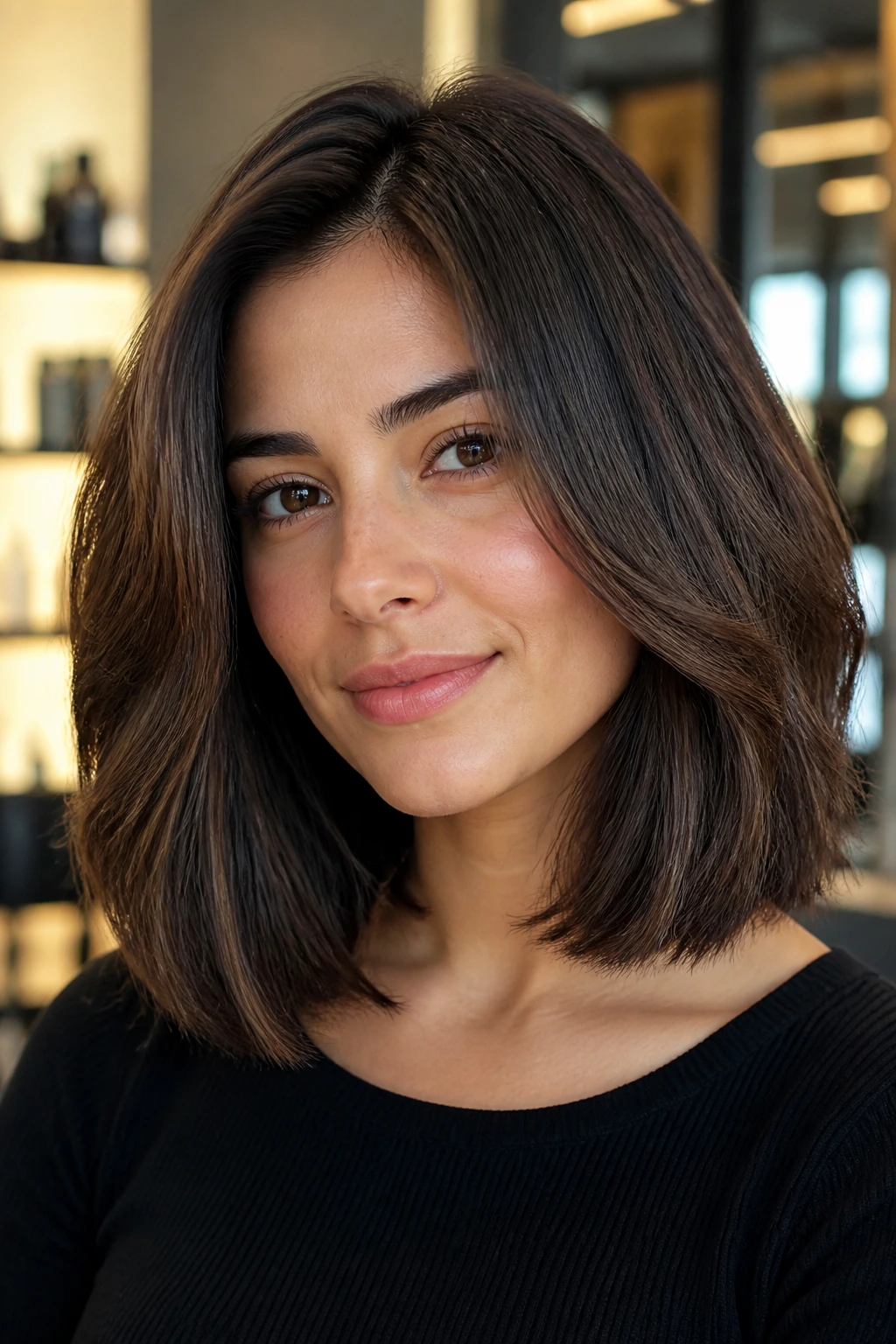
Weight gets redistributed instead of dragged down. Thick hair can pull itself flat at the roots and bulky at the ends at the same time. A lob puts the strongest line right around the collarbone, which keeps the shape visible without making the hair feel long and heavy.
The cut stays full even when you remove bulk. That’s the big advantage here. You can take out interior weight, add a few soft layers, and still keep a perimeter that looks rich and dense.
It dries faster than longer lengths. Not by magic. By physics. Less length means less water trapped in the ends, and less time spent holding a brush over your head like you’re training for a shoulder workout.
It works with straight, wavy, and curly textures. The same haircut reads differently on each one, which is exactly why it’s useful. A blunt lob on straight thick hair looks polished and crisp. The same shape on wavy hair gets a softer edge, and curls turn it into a rounded, springy frame.
It gives you room to choose your level of polish. Some people want a clean, blunt line. Others want movement. Thick hair can handle both, which is why this length range stays popular in salons.
1. Blunt Collarbone Lob
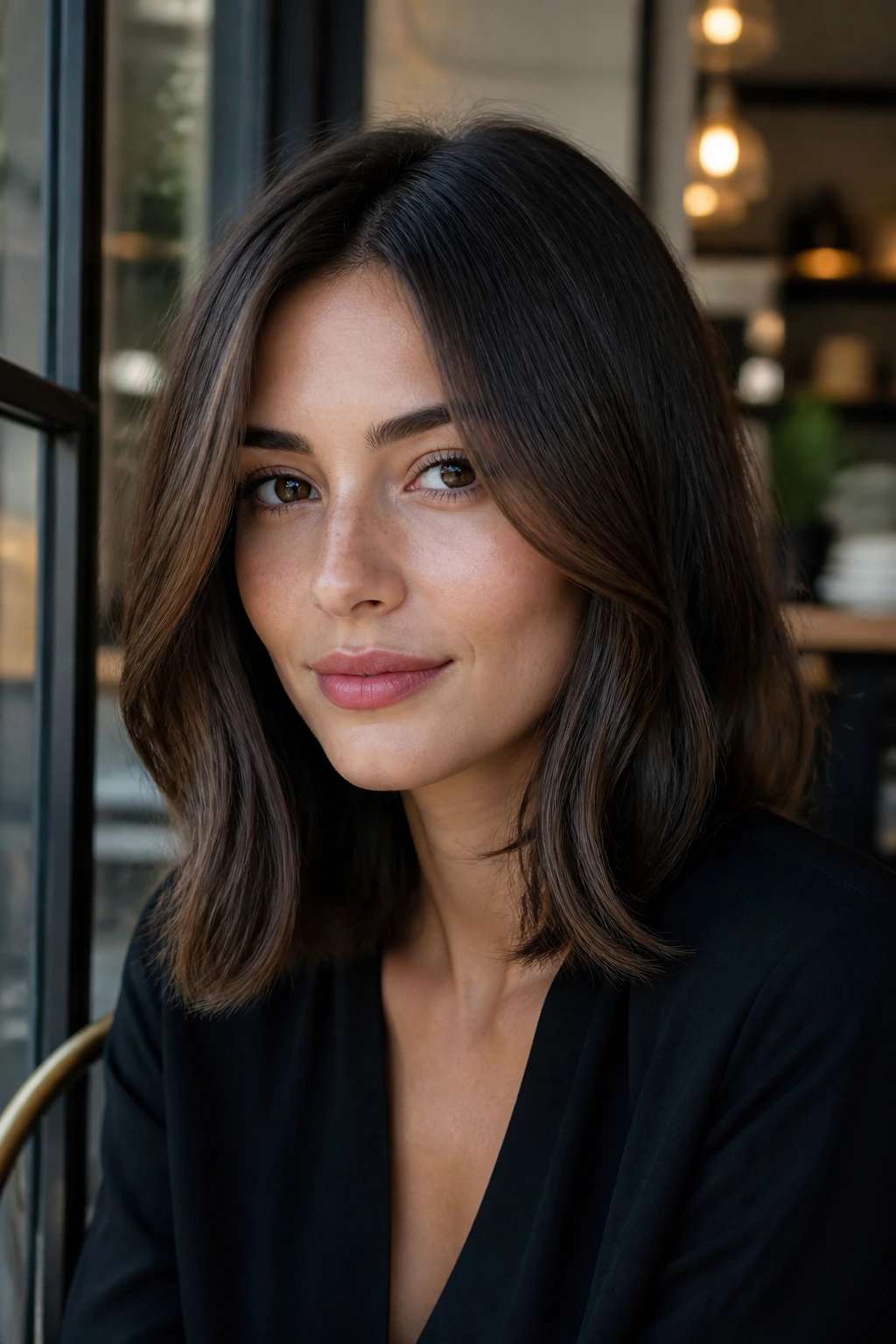
This is the cut that makes thick hair look expensive without trying too hard. The perimeter is kept clean and level, landing right at the collarbone so the ends have enough length to swing instead of puffing out. On dense hair, that blunt edge is a feature, not a compromise.
The shape works because it keeps the eye on one strong line. When thick hair is cut too softly at the ends, it can spread out and look wide. A blunt lob keeps the silhouette controlled, especially if your hair naturally grows in with a lot of body.
Ask for minimal layering through the interior and a precise finish at the bottom. If your hair is very dense, a stylist may slide-cut a tiny bit of the bulk from the inside without touching the perimeter. That’s the good move here. You keep the weight, but not the heaviness.
Best for: straight or slightly wavy thick hair that tends to pouf at the shoulders.
2. Soft A-Line Lob
A soft A-line lob is shorter in the back and gradually longer toward the front. On thick hair, that tiny bit of length in front keeps the cut from feeling square, while the shorter nape gives the back some lift so it doesn’t sit like a block.
Why it helps thick hair
The angle lets the front pieces fall forward and visually narrow the face. Meanwhile, the back loses enough weight to move better. You don’t need a dramatic wedge. A subtle slope is usually cleaner and easier to wear.
This shape is especially nice if your hair has a stubborn crown that lies flat and ends that want to expand. The longer front pieces create a line you can tuck behind the ear or wear forward on one side. It’s tidy without looking stiff.
- Keep the front no more than 1 to 2 inches longer than the back if you want a soft result.
- Ask for the angle to start below the cheekbone if you don’t want it to feel too sharp.
- A round brush and a quick bend at the ends make this cut behave.
3. Long Layered Lob
A layered lob is the answer when thick hair feels like a heavy curtain. The trick is not to shred the ends into pieces. The trick is to remove weight where the hair stacks on itself, usually through the mid-lengths and around the crown.
Long layers give the hair room to move without turning the perimeter stringy. That matters. Thick hair already has enough body. What it needs is direction. A few longer layers can stop the shape from ballooning and still leave enough density at the bottom to look full.
I like this version for people who wear their hair both straight and wavy. It’s one of the few cuts that can go from air-dried to brushed out without looking like two different haircuts. If your hair has a strong natural wave, keep the layers long and soft. Too many short pieces will jump out of the shape.
4. Face-Framing Lob
A face-framing lob is a solid choice if you want the cut to feel lighter around the front without losing thickness everywhere else. The face frame starts around the cheekbone or jaw and melts into the lob instead of stopping abruptly.
That matters on thick hair because the front is often where the bulk gets loud first. You know the look: one side flips, one side tucks, and suddenly the haircut is wearing you. Strategic face-framing pieces break that up and keep the line moving toward the collarbone.
The best version is soft, not chunky. Chunky front pieces can make thick hair feel dated fast. Ask for lengths that connect into the rest of the cut, with the shortest point chosen based on your face shape and how much you part your hair to one side.
A middle part makes this shape feel calmer. A side part makes it feel more lifted. Either way, the front does the flattering work.
5. Textured Shag Lob
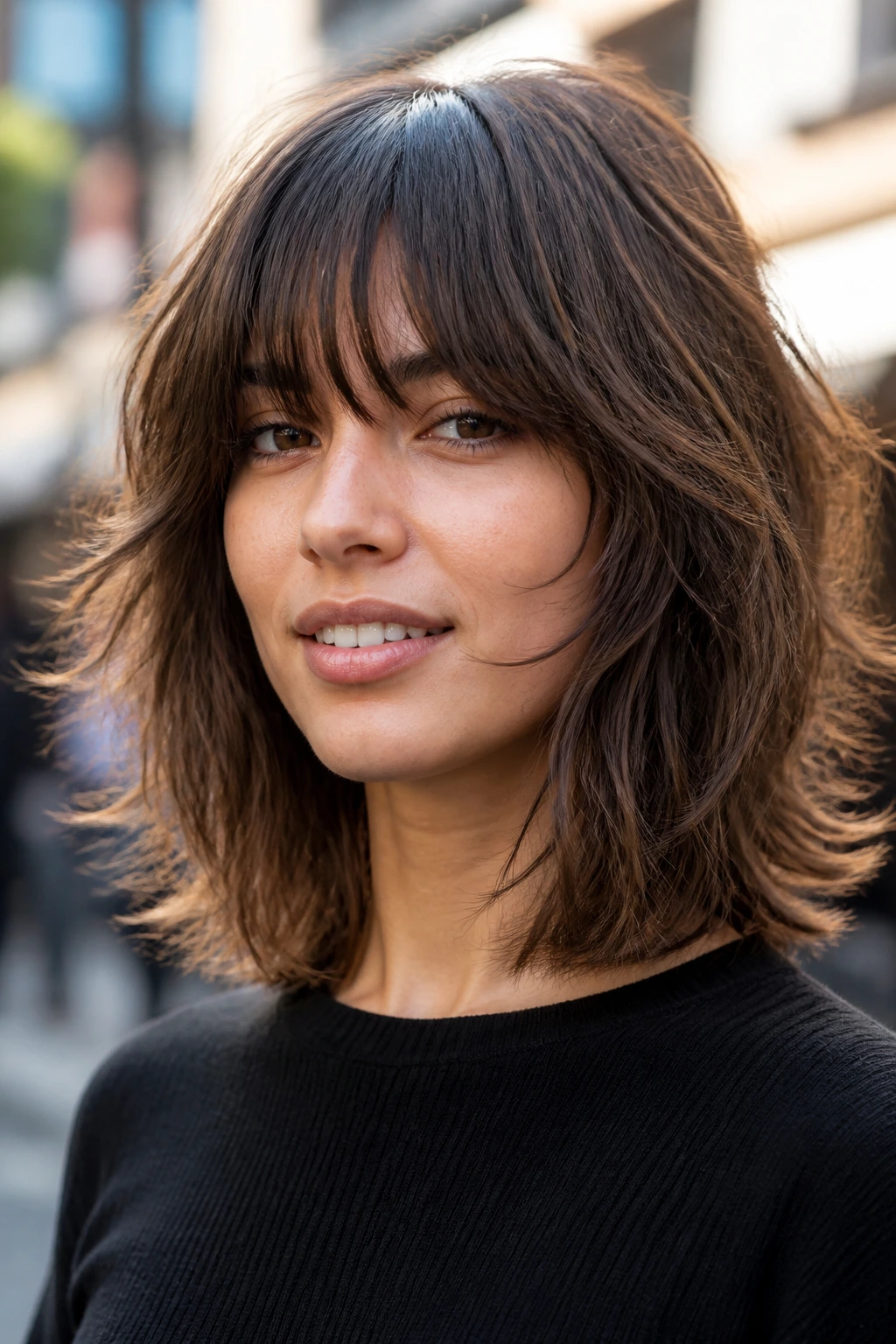
If your thick hair has natural bend, a shaggy lob can be a relief. This cut uses more disconnected layers and a looser outline, which keeps the shape from getting too round or too wide. It’s not a helmet cut. It’s a cut with air in it.
The key here is restraint. Thick hair can take texture, but too much slicing makes the ends fray and look fuzzy. A good shag lob has a deliberate outline and layers that kick in rather than explode outward. It should move when you shake your head, not frizz into a cloud.
This cut is a good fit if you like to scrunch in cream, diffusing your hair until it’s dry, and calling it a day. It also works when you want a less precious look. There’s something useful about a lob that looks better after the second time you run your fingers through it.
6. Inverted Lob
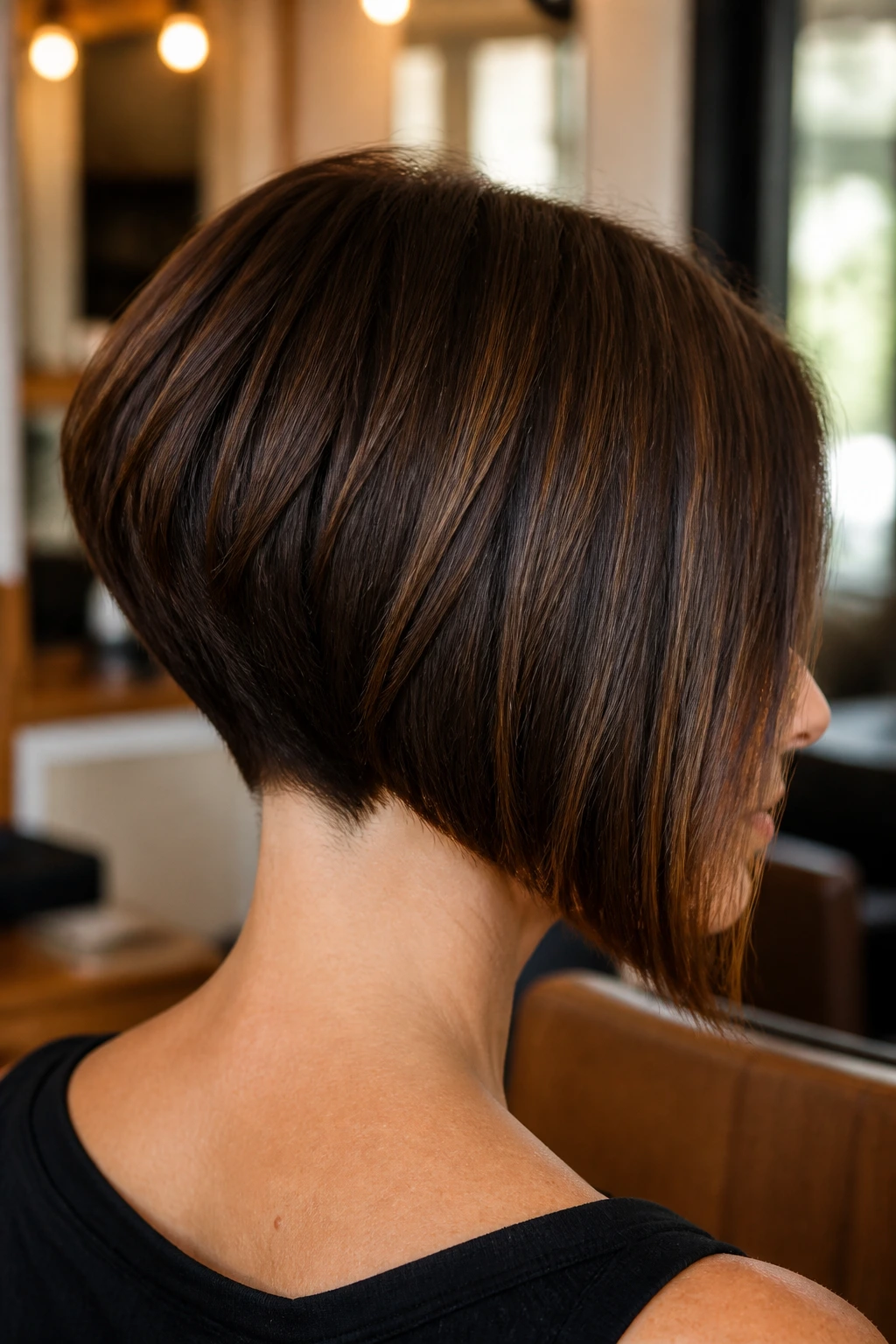
The inverted lob stacks a little shorter in the back and leaves more length in the front, which gives thick hair a strong angle without needing a dramatic chop. It’s sharper than a soft A-line, but still wearable if you don’t want a severe line.
What makes it different
The back is built with more graduation, which means the nape can sit closer to the head. Thick hair often needs that. Otherwise the back can puff out and make the whole cut feel wide at the neck.
The front stays long enough to skim the jaw or collarbone. That balance keeps the style from reading too old-fashioned or too severe. If you like a little polish and a little edge, this is the lane.
A small caution: the shorter back exposes the nape more, so the cut needs clean blending. If the graduation is sloppy, thick hair will show it immediately. There’s nowhere to hide.
7. C-Cut Lob
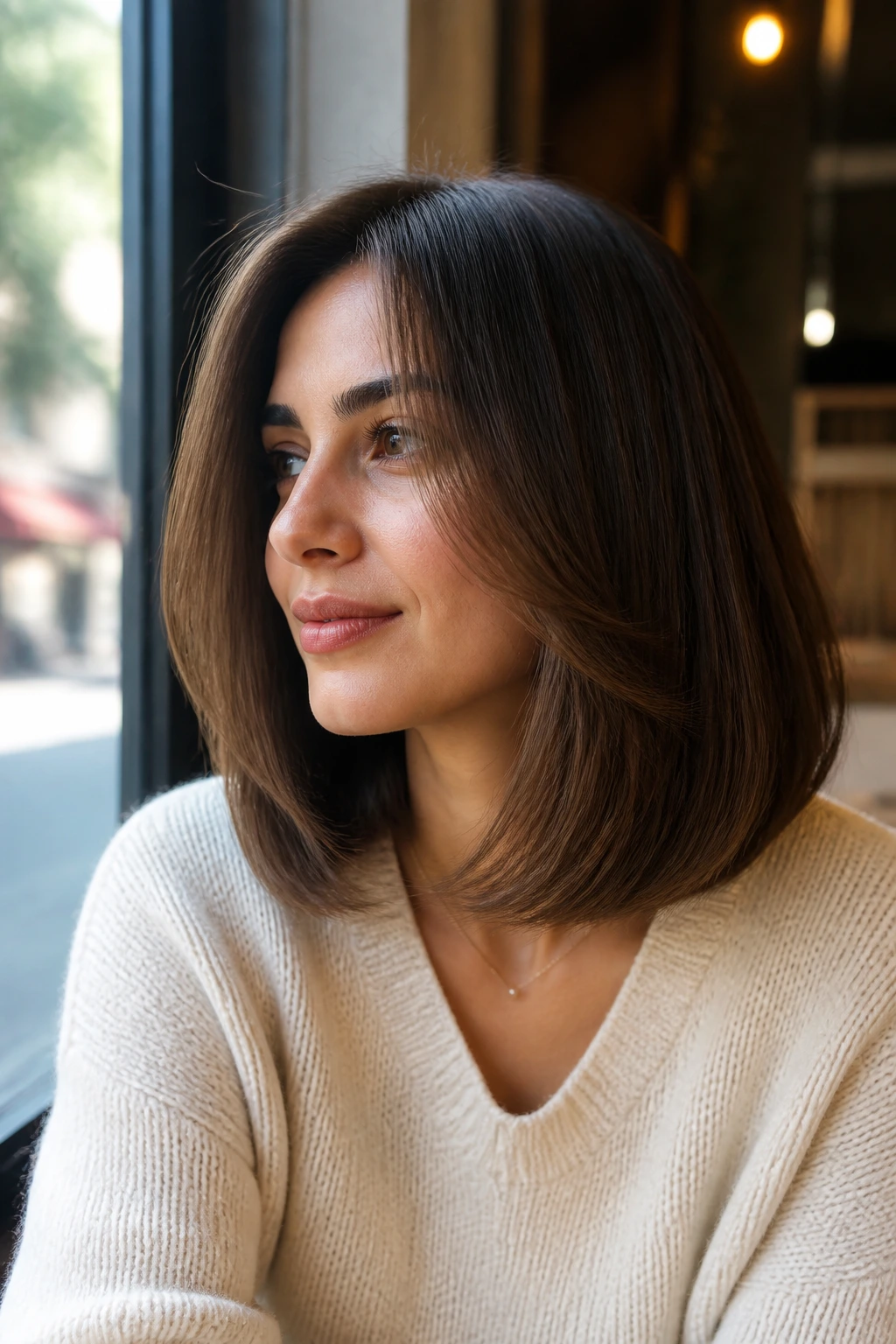
A C-cut lob curves gently around the face and shoulders, creating a soft arc instead of a straight shelf. On thick hair, that curve helps the cut feel more fluid and less blocky. It’s a subtle shape, but it changes the whole mood of the haircut.
The best thing about a C-cut is the way it moves when you turn your head. The front pieces bend inward a little, the back follows the line of the shoulders, and the shape feels connected. That’s useful for dense hair because it reduces the feeling that the cut is “stopped” at one hard line.
Ask for a rounded perimeter with face-framing that feeds into the front. You want a curve, not a layered waterfall. If you’ve got strong natural volume, this is one of the cleanest ways to keep it from spreading sideways.
8. Curtain Bang Lob
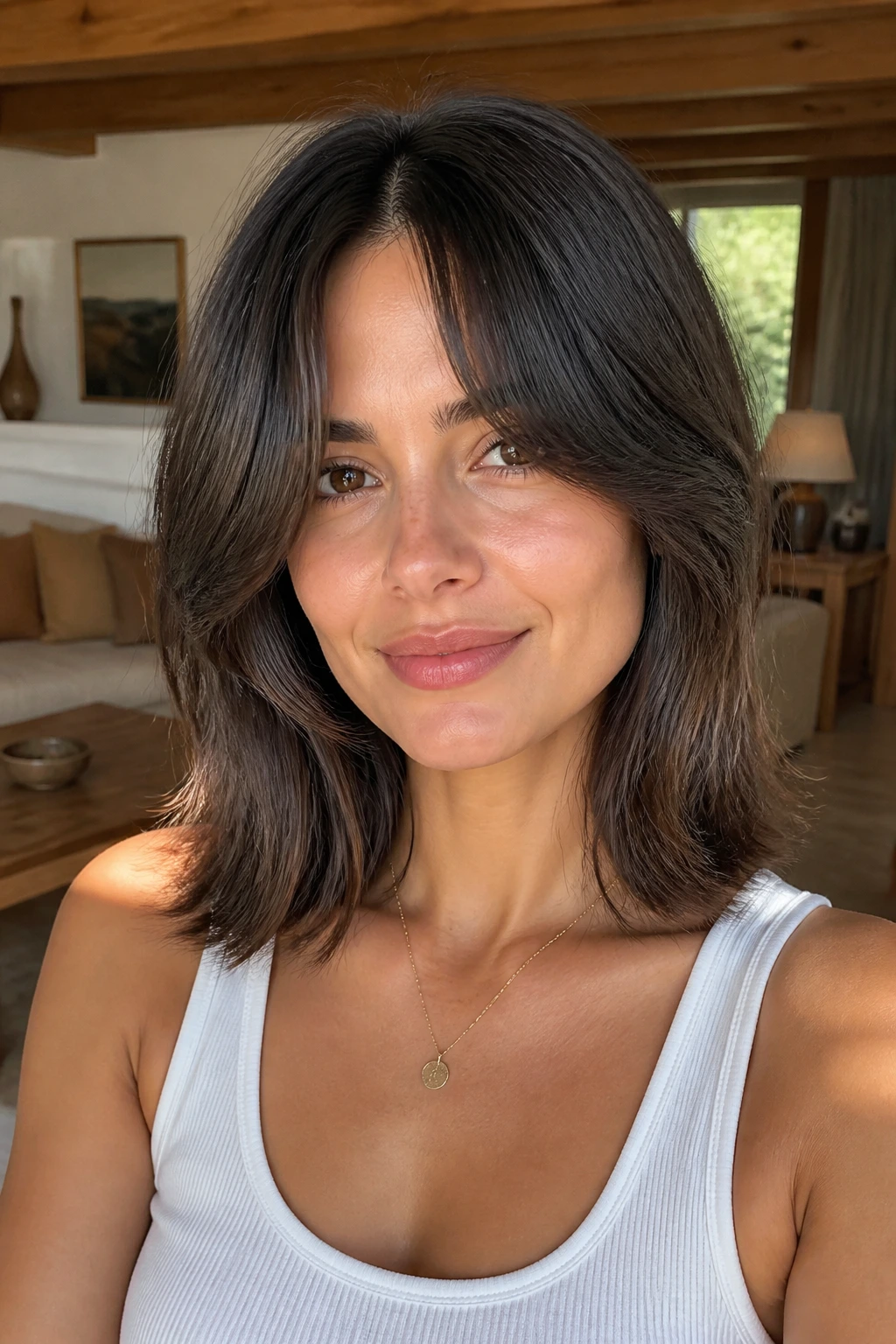
Curtain bangs and a lob are one of those pairings that keep showing up because they work. Thick hair has the density to support bangs without making them look sparse, and the lob keeps the rest of the shape from getting too heavy.
The bangs should open in the center and drift into the sides, not cut across the forehead like a heavy line. On thick hair, blunt bangs can feel too dense fast. Curtain bangs breathe. They let the front move and keep the cut from feeling top-heavy.
The practical bit
Ask for the shortest point to hit around the brow or upper cheekbone, then have the sides connect softly into the lob. If your hair is very thick, the fringe may need a little internal removal so it doesn’t sit like a thick curtain on your forehead.
This version is best if you like styling your front pieces with a round brush or a quick bend from a flat iron. It’s not the lowest-maintenance option in the list, but it gives a lot back when the shape is right.
9. Side-Part Swept Lob
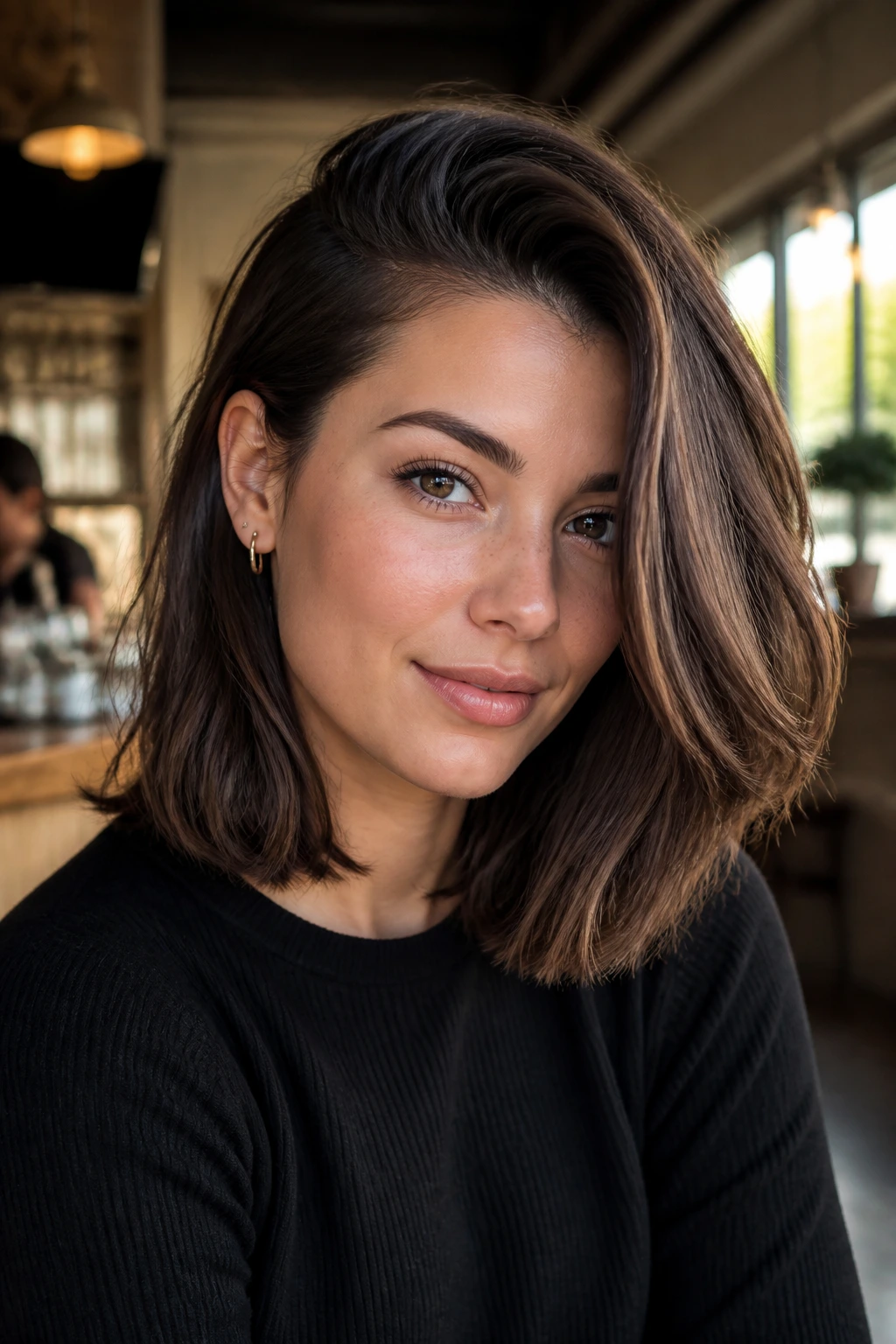
A side-part lob can save thick hair when the middle wants to puff up or sit too flat. Shifting the part moves weight off the center and gives the roots a more lifted shape on top. That alone can make the whole haircut feel lighter.
The side sweep works especially well if your hair grows with a natural cowlick near the front. Fighting that spot every morning is tedious. Lean into it instead. A strong side part gives the hair a built-in direction, and thick strands usually hold it better than finer ones do.
This cut looks good with a clean edge or a little texture. What matters is the balance. If one side has a little more face-framing, the part feels intentional instead of accidental.
10. Curly Lob With Dry Layers
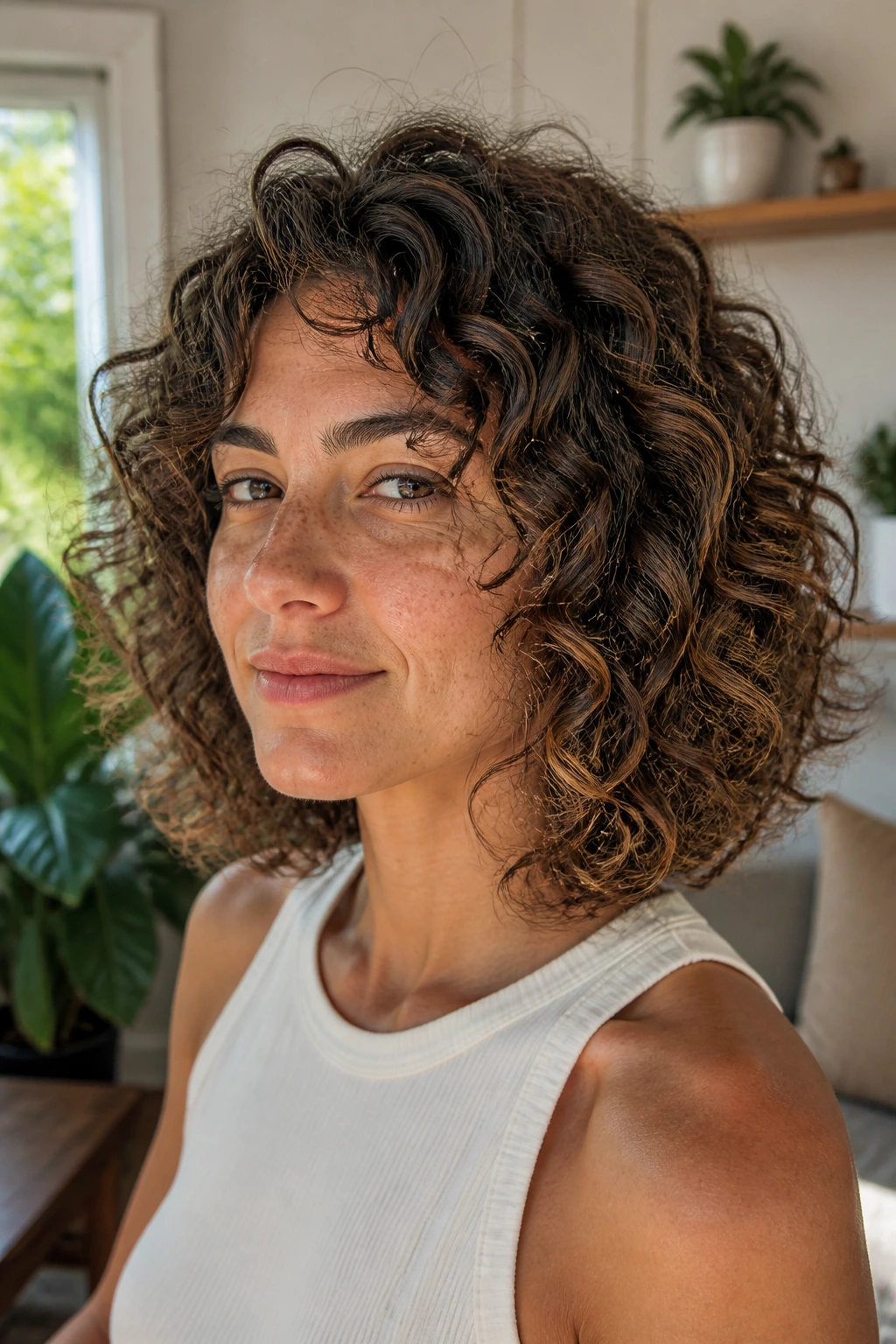
Curly thick hair needs a different touch. A dry-cut or curl-by-curl approach lets the stylist see where the curl lands when it’s in its real shape, not stretched out under tension. That matters a lot at lob length, where one inch can change the outline.
The best curly lob usually sits between the chin and the collarbone, with layers placed to keep the curls from stacking too high on the sides. Thick curls can mushroom if they’re cut too bluntly at one level. A little layering breaks that triangle.
Use this cut if your curls need room to spring but not so much length that the hair starts pulling at the roots. A good curly lob should look full and rounded, not puffy around the cheeks. That difference is mostly in the layer placement.
11. Invisible Layer Lob
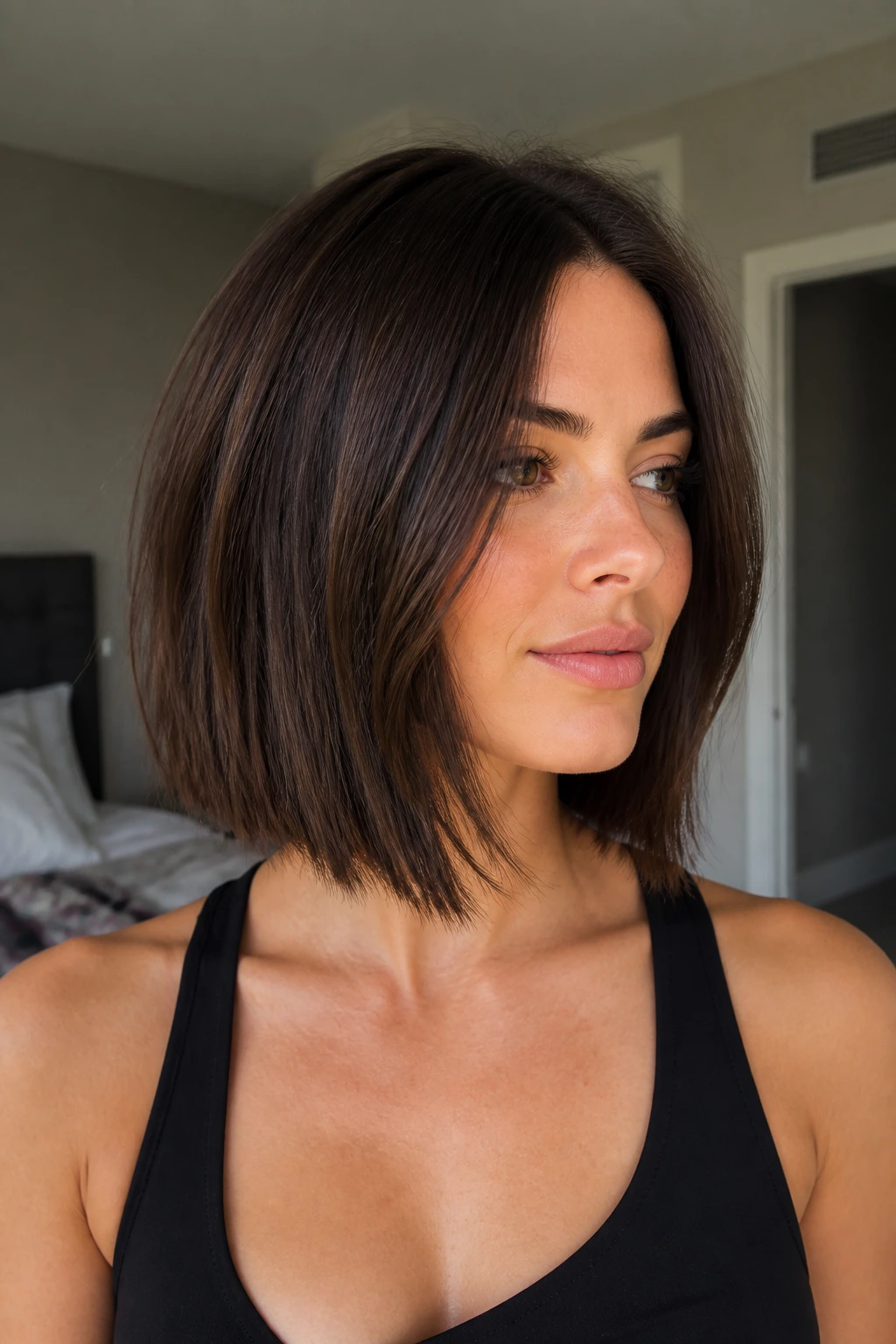
Invisible layers are the quiet heroes of thick-hair cuts. The perimeter still looks nearly one-length, but the interior has enough structure to keep the bulk from building up in one solid block.
This is a smart option if you want a fuller-looking lob with less daily fuss. It keeps the outside line clean, which is what most thick-haired people want anyway, while sneaking in movement where the hair needs it. The result is more swing, less heaviness.
The phrase to ask for is “weight removal inside, not at the edge.” That keeps the ends looking dense. If a stylist over-texturizes the bottom, thick hair can turn puffy in a way that’s hard to smooth out later.
12. Razor-Textured Lob
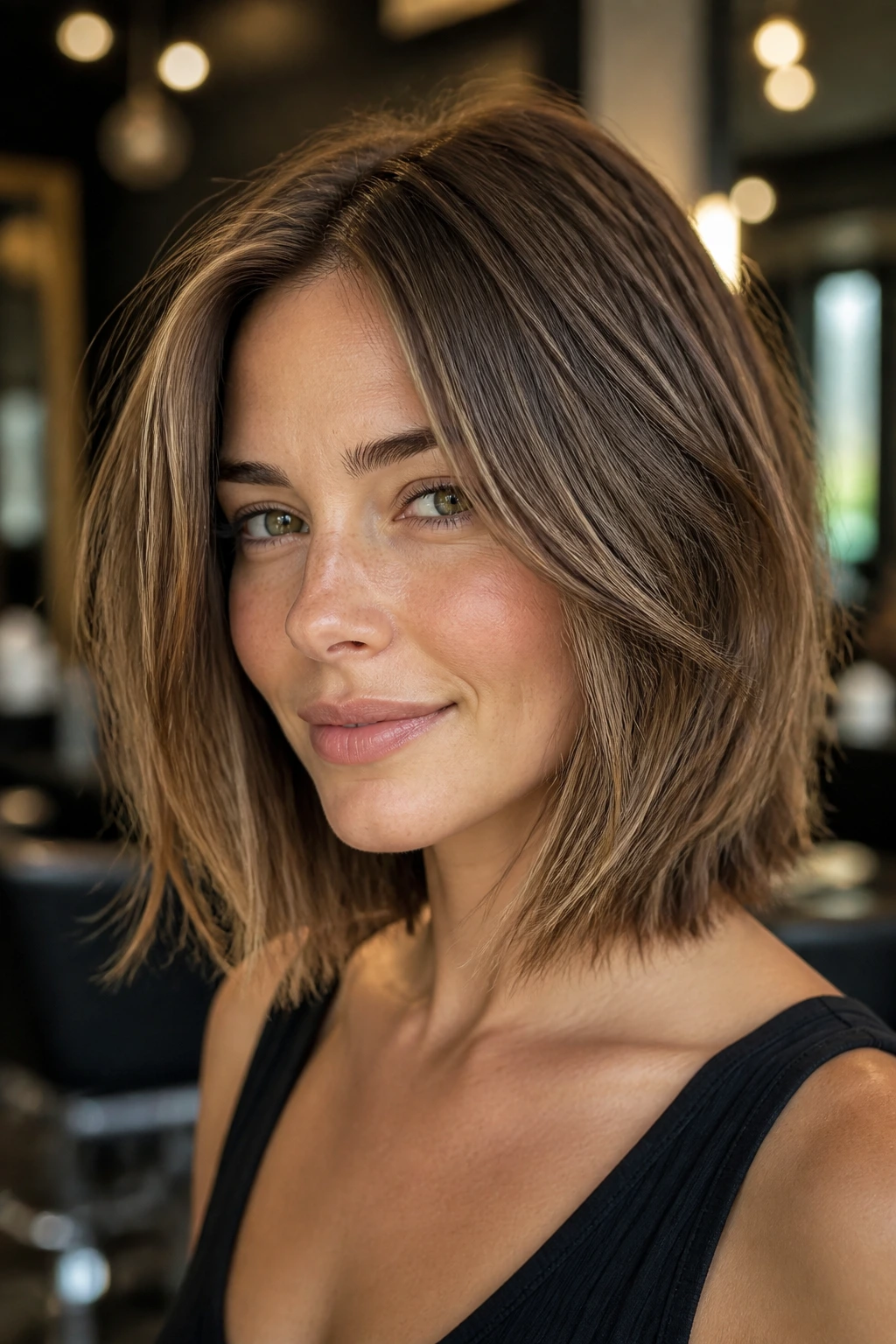
A razor-textured lob gives thick hair a softer, feathered edge. It can be gorgeous when done well, especially on hair that naturally falls straight or has a loose bend. The ends move more, the shape feels lighter, and the haircut doesn’t look cut with a ruler.
But this one takes a careful hand. Razor work on thick, coarse hair can fray the ends if the hair is too dry or if the blade is used too aggressively. That’s when you get the fuzzy halo no one asked for.
- Best for hair that’s smooth or only mildly coarse.
- Avoid heavy razor work if your hair already frizzes at the ends.
- Ask for soft feathering, not a hacked-up outline.
If you want softness without losing the lob’s clean length, this is a strong option. If your hair expands in humidity, keep the texture controlled.
13. French Girl Lob

The French-girl version of a lob is less about perfection and more about shape that looks relaxed on purpose. It usually lands around the collarbone with soft ends, a loose fringe or face frame, and enough movement to look as though you did not spend an hour negotiating with a round brush.
Thick hair suits this cut because the density gives it substance even when the styling is undone. A thin-haired version of this look can go stringy fast. Thick hair keeps it grounded.
The trick is to keep the outline clean enough that the style still has a plan. You want a little swing, not a shapeless mop. A soft bend at the ends and a few pieces around the face are often all it needs.
14. Center-Part Midline Lob
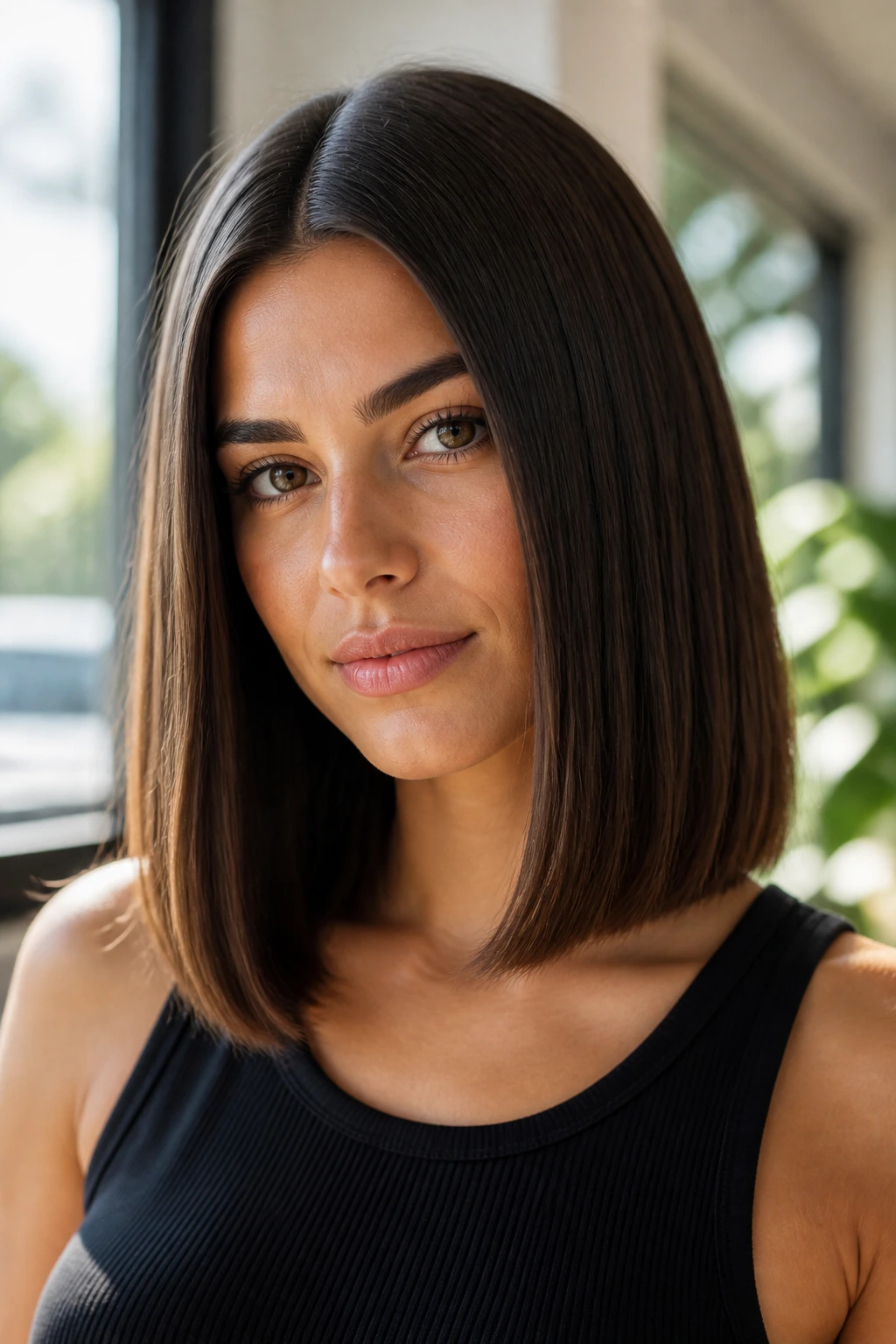
A center-part lob can look sharp on thick hair when the line is even and the perimeter is precise. It’s a clean, symmetrical shape that works especially well if your hair falls straight or with a gentle wave. The middle part lets the weight fall evenly on both sides.
That even distribution matters. Thick hair often feels bulky when one side has all the drama and the other side just sits there. A center part calms that down. It also helps the lob read longer and sleeker.
This is a good option if you like a low-maintenance outline and don’t want lots of face-framing. It looks especially good with a glassy finish or a soft blowout. If you wear it air-dried, keep the ends tidy so the middle part doesn’t show off every uneven bend.
15. Rounded Lob
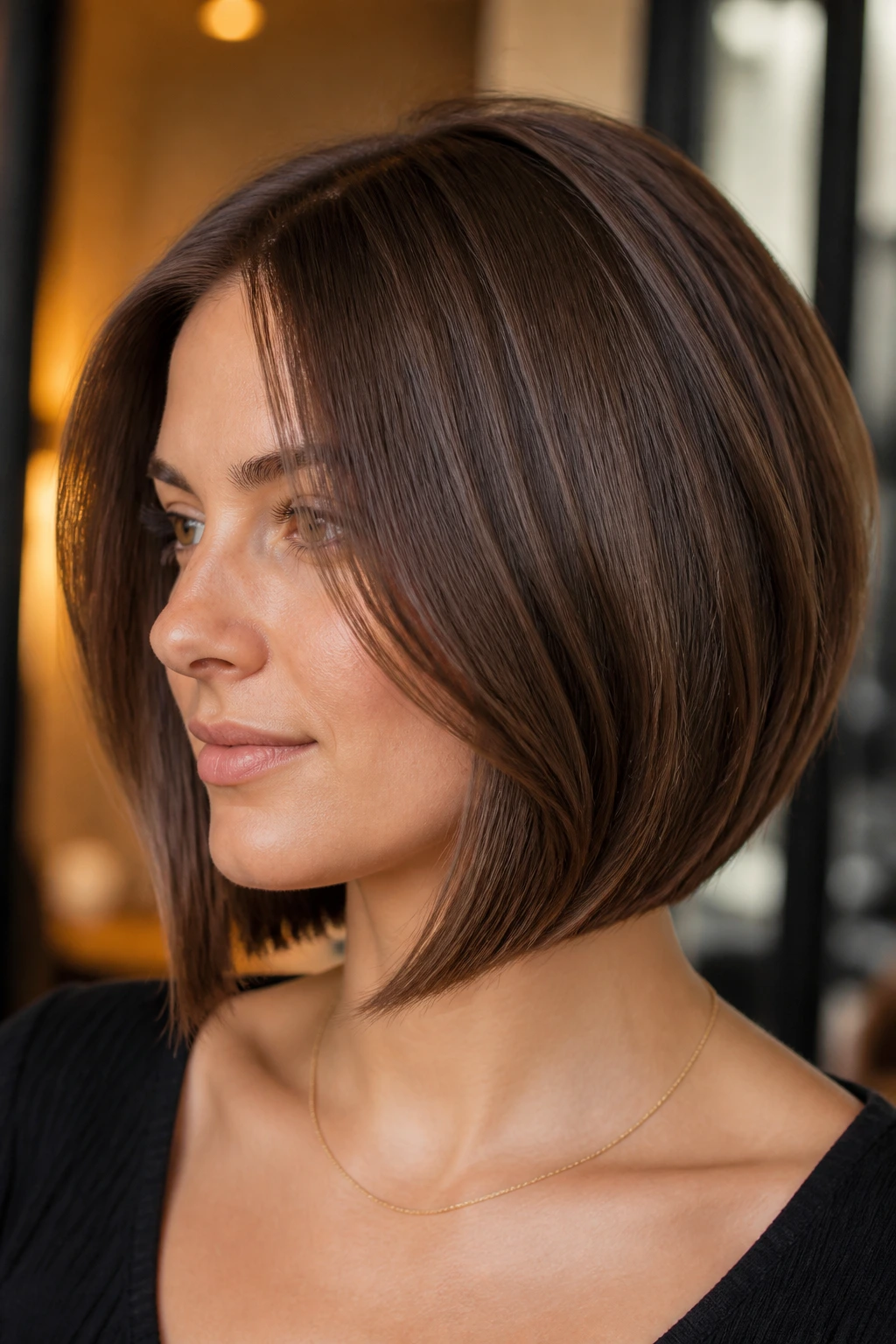
A rounded lob curves inward just enough to follow the shape of the jaw and neck. On thick hair, that rounded edge can prevent the ends from jutting out in a blunt shelf. The cut feels softer without getting floppy.
The shape works when the back is slightly shorter than the front and the ends are not over-thinned. Too much thinning ruins the rounded effect. You want the perimeter to hold together like a clean ribbon.
This is one of the best options if your thick hair tends to kick outward at shoulder length. The rounded form guides the hair back in toward the body. That little detail saves a lot of styling time.
16. Feathered Lob
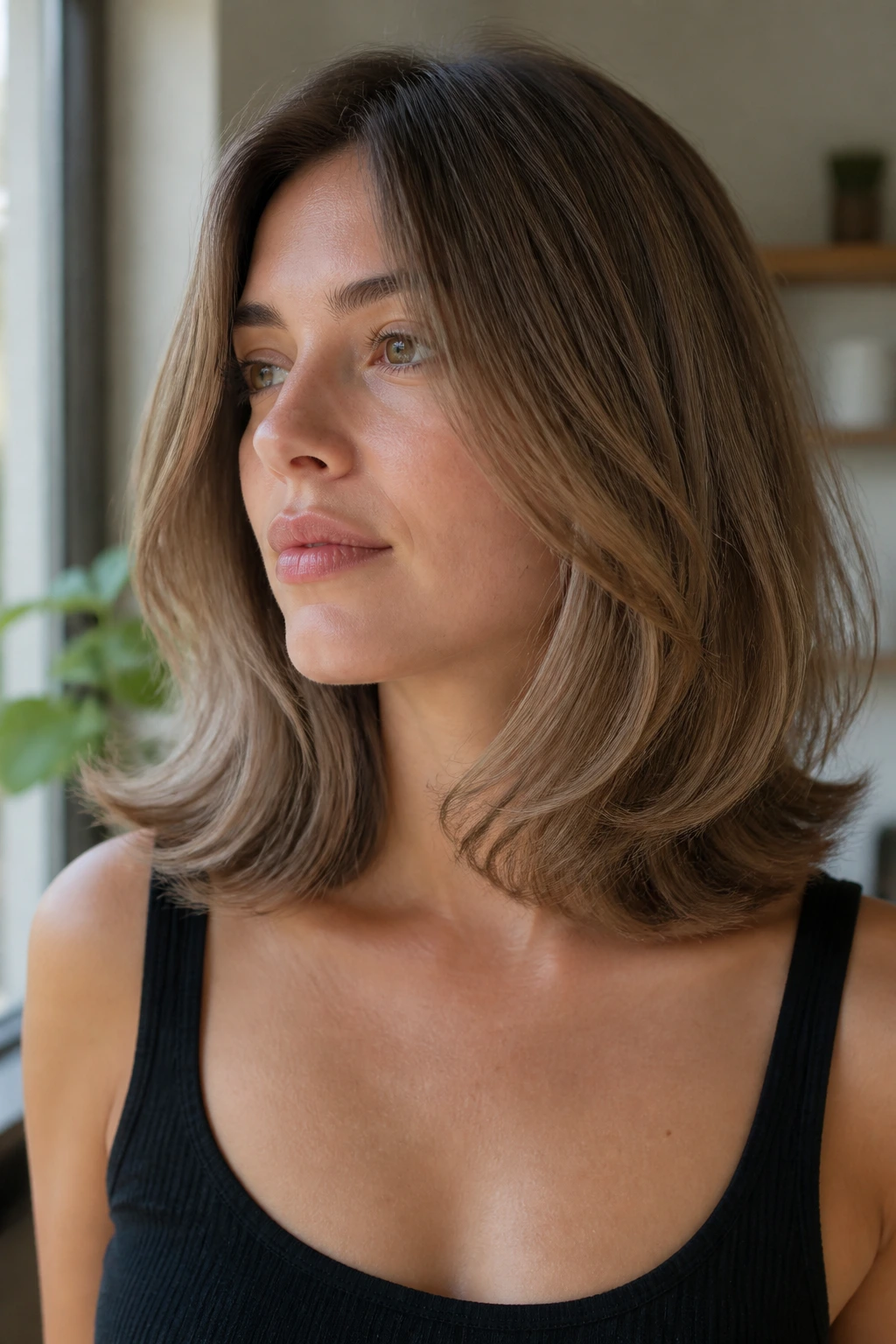
Feathering is old-school in the best way when it’s done with restraint. A feathered lob uses light layers and soft ends to keep thick hair from feeling dense from root to tip. The movement is gentle, not choppy.
Why it works
Feathered layers lighten the shape without making the cut collapse. That matters because thick hair needs support. If you strip out too much weight, you lose the full body that makes a lob look rich.
This version suits hair that’s somewhere between straight and wavy. It can be styled smooth, brushed out, or given a little bend with a flat iron. The cut itself does a lot of the visual work, which is always a nice trade.
17. Lob With Bottleneck Bangs
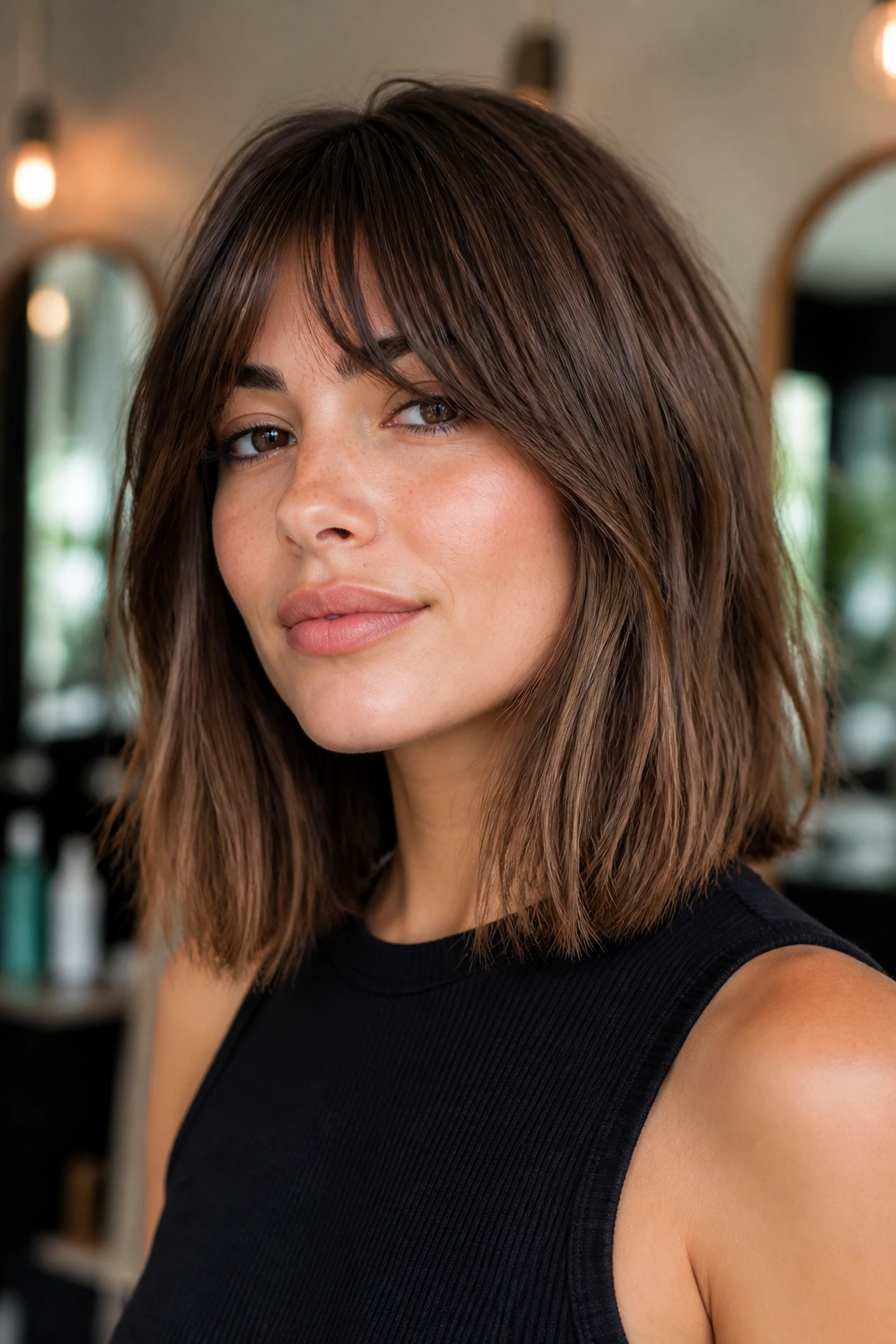
Bottleneck bangs are narrower at the forehead and widen slightly toward the cheekbones. On a thick lob, they soften the front without creating the dense, square look that blunt fringe can bring.
The shape opens the face in a nicer way than straight-across bangs if your hair has a lot of body. It also lets the rest of the lob stay full and clean. There’s less competition between the fringe and the rest of the haircut.
This works well if you want bangs but don’t want to be stuck with a heavy fringe every day. The bangs can be styled with a small round brush or air-dried with a little cream, and they blend into the lob instead of sitting on top of it.
18. Graduated Lob
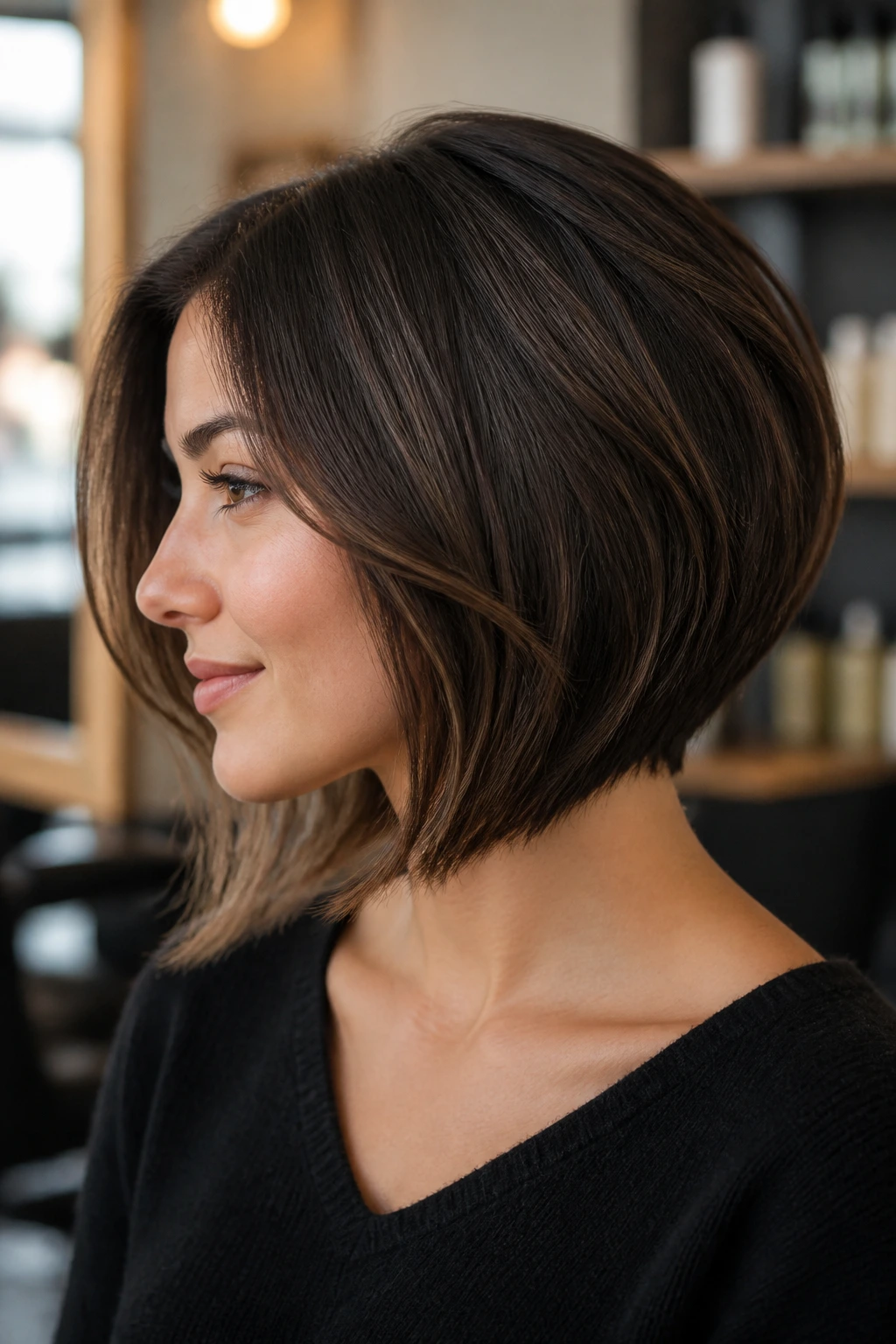
A graduated lob has a little more build-up in the back, which gives thick hair a controlled rise near the nape. It’s not as dramatic as an inverted bob, but it borrows enough shape to stop the back from looking bulky.
That small graduation can make a big difference if your hair grows dense at the crown and underneath. The cut sits closer to the head and removes the awkward “triangle” that thick hair sometimes makes at collarbone length.
It’s a tidy, structured option. If you like hair that looks intentional even when it’s not freshly styled, this is a smart choice. The back holds its line, and the front still has enough length to tuck behind the ear.
19. Hidden Undercut Lob
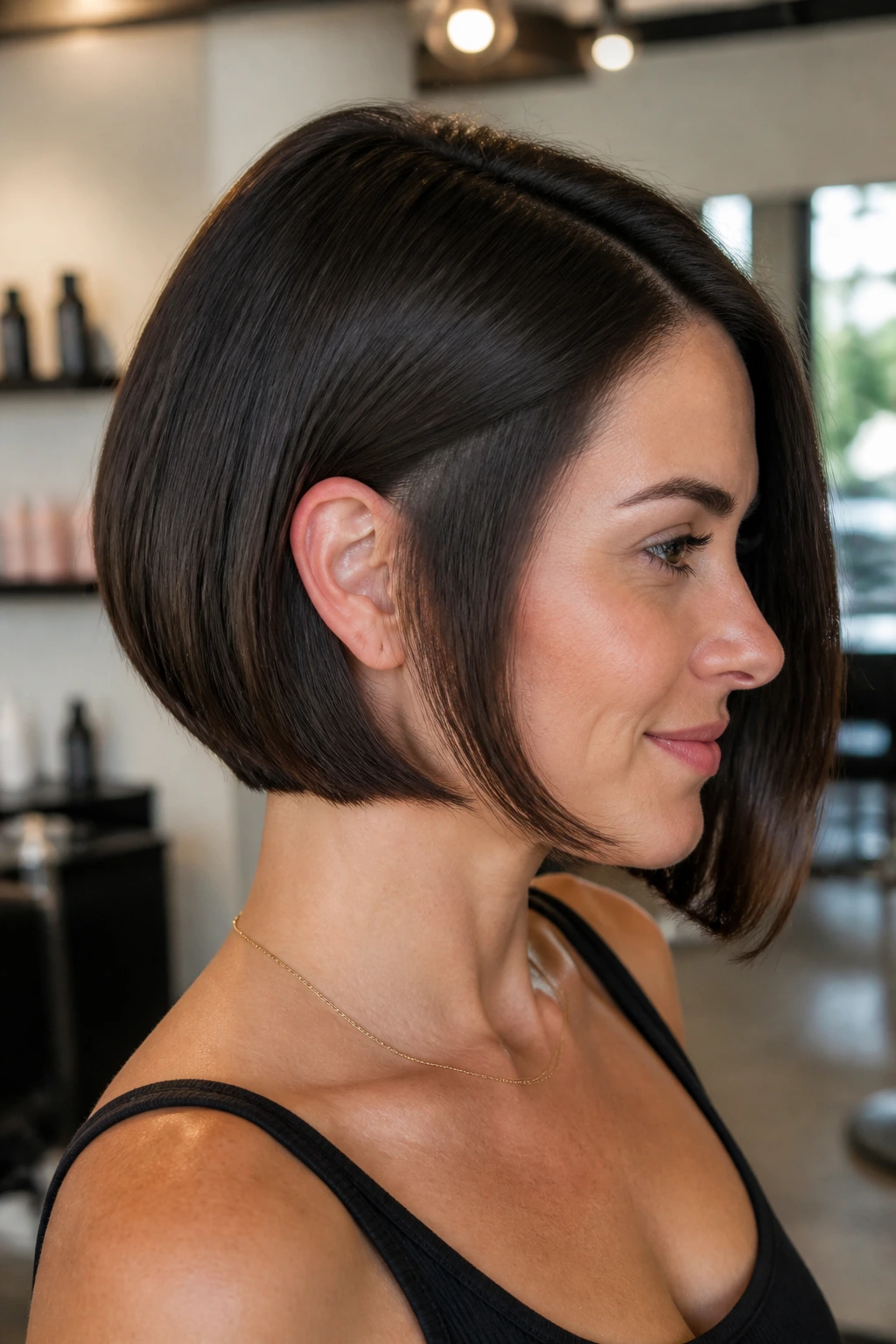
A hidden undercut is one of the most practical fixes for extremely thick hair. A small section underneath, usually at the nape, is removed so the top layer can lie flatter and move more easily. You don’t see the undercut unless the hair is lifted.
This is not about making the haircut edgy. It’s about making the whole shape wearable. If your hair is so dense that it blows up at the bottom or feels sweaty at the neck, a hidden undercut can take a surprising amount of pressure off the cut.
Use this when regular layering never seems to remove enough bulk. It’s especially helpful in hot weather or if you wear your hair half up often. The top still looks full. The underneath stops misbehaving.
20. Wavy Beach Lob
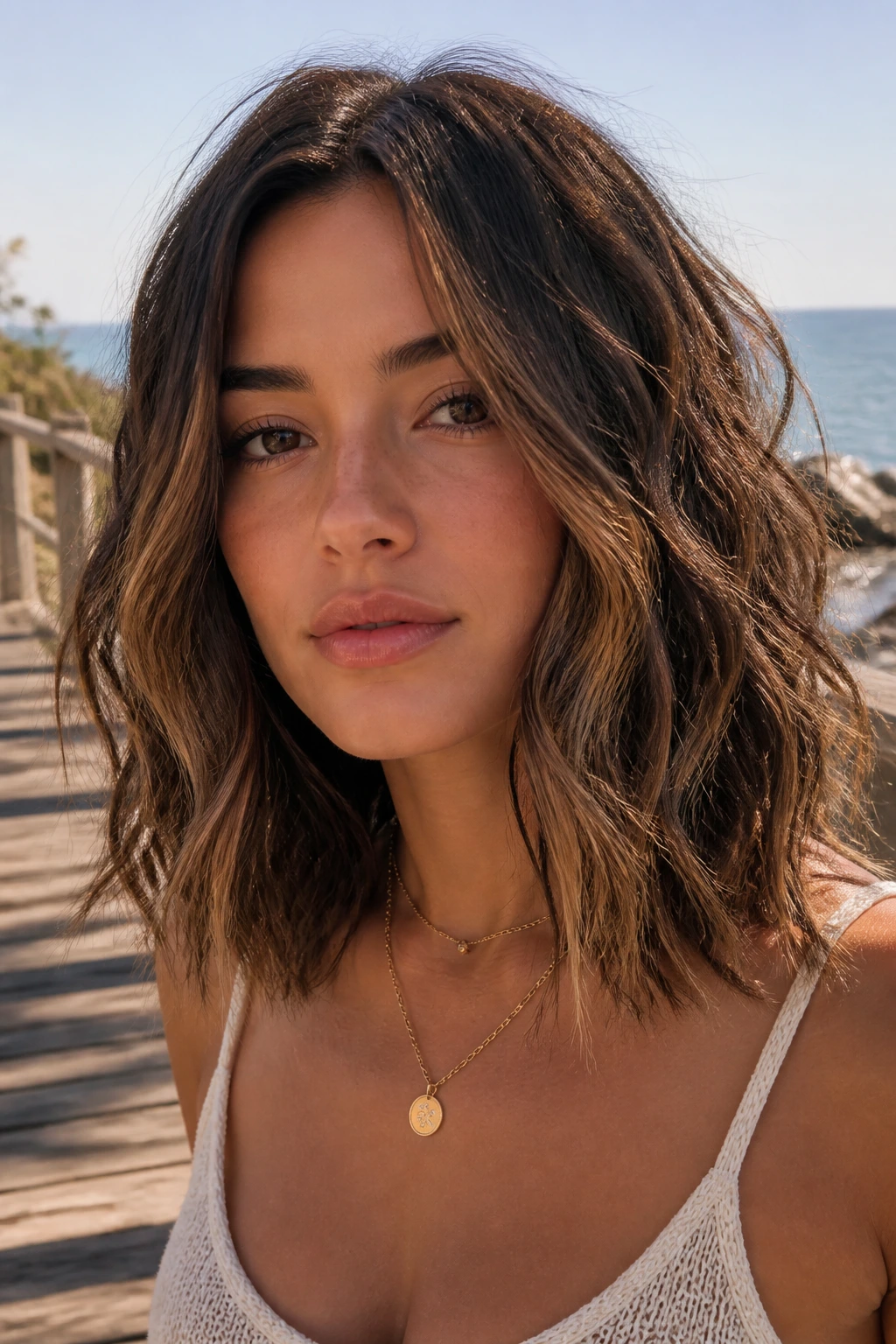
A beachy lob on thick hair has one major advantage: the hair already contains the body the style wants. The cut can be simple, because the texture does part of the styling for you. Long, loose bends land well at this length.
The danger is over-layering. Thick wavy hair does not need to be shredded to look airy. It needs the ends to stay together while a few layers create movement. A light, clean perimeter keeps the waves from turning into random fluff.
Use a salt spray or a light mousse, scrunch, then leave the ends a little imperfect. The haircut should still look like a haircut, though. Beachy doesn’t mean shapeless.
21. U-Shaped Lob
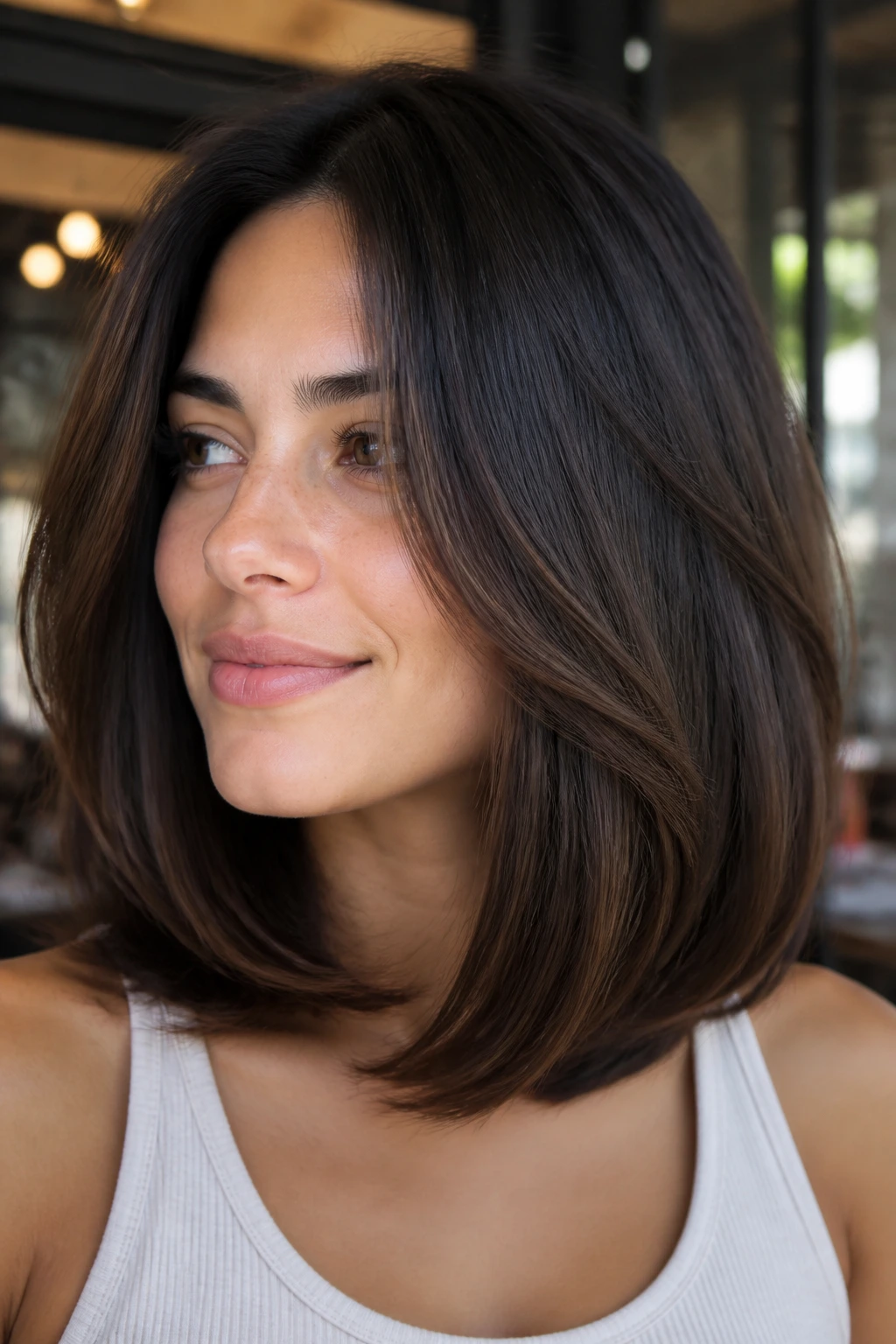
A U-shaped lob is softer than a blunt cut and more forgiving than a hard line. The back sits a touch shorter, and the sides curve down in a gentle U, which gives thick hair a rounded outline without taking away too much density.
This is a good middle ground if you want movement but don’t want to commit to layers everywhere. The U shape keeps the front longer around the face, which can visually slim the cut, while the back stays tidy.
Who it suits
It’s especially nice for thick hair that grows wide at the shoulders. The curve pulls the eye inward instead of outward. The result feels polished, not stiff.
22. One-Length Glass Lob
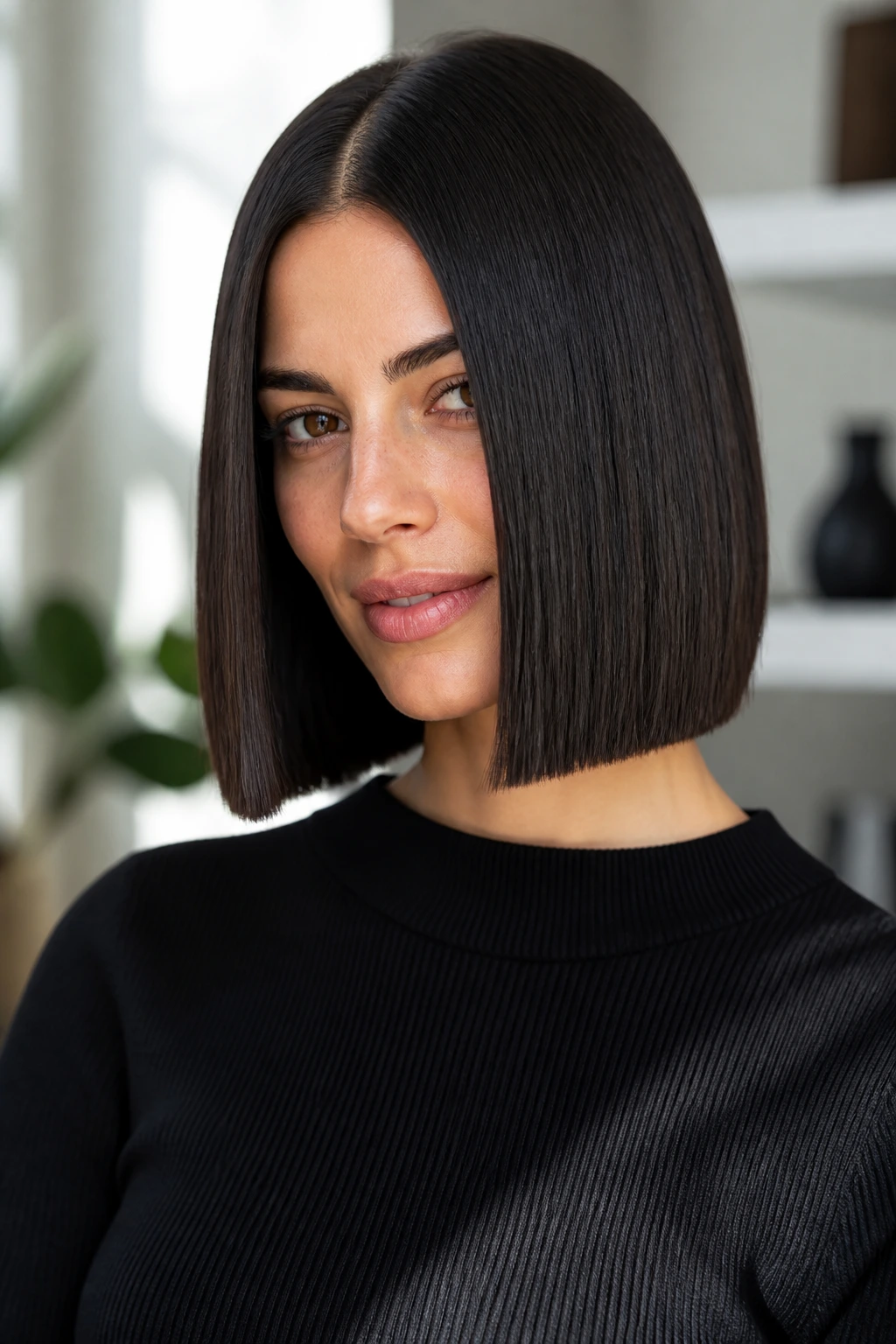
A glass lob is sleek, precise, and a little unforgiving, which is exactly why thick hair can look so good in it. The cut is blunt, the surface is smooth, and the finish is glossy enough to show every edge.
This style needs hair that can be blown out flat or straightened without losing its health. Thick hair has the raw material for it. The density makes the line look rich instead of thin.
The caveat is maintenance. A one-length glass lob shows split ends and uneven growth fast. If you love clean lines and don’t mind regular trims, though, it’s a beautiful way to wear a shoulder-length shape.
23. Soft Wolf Lob
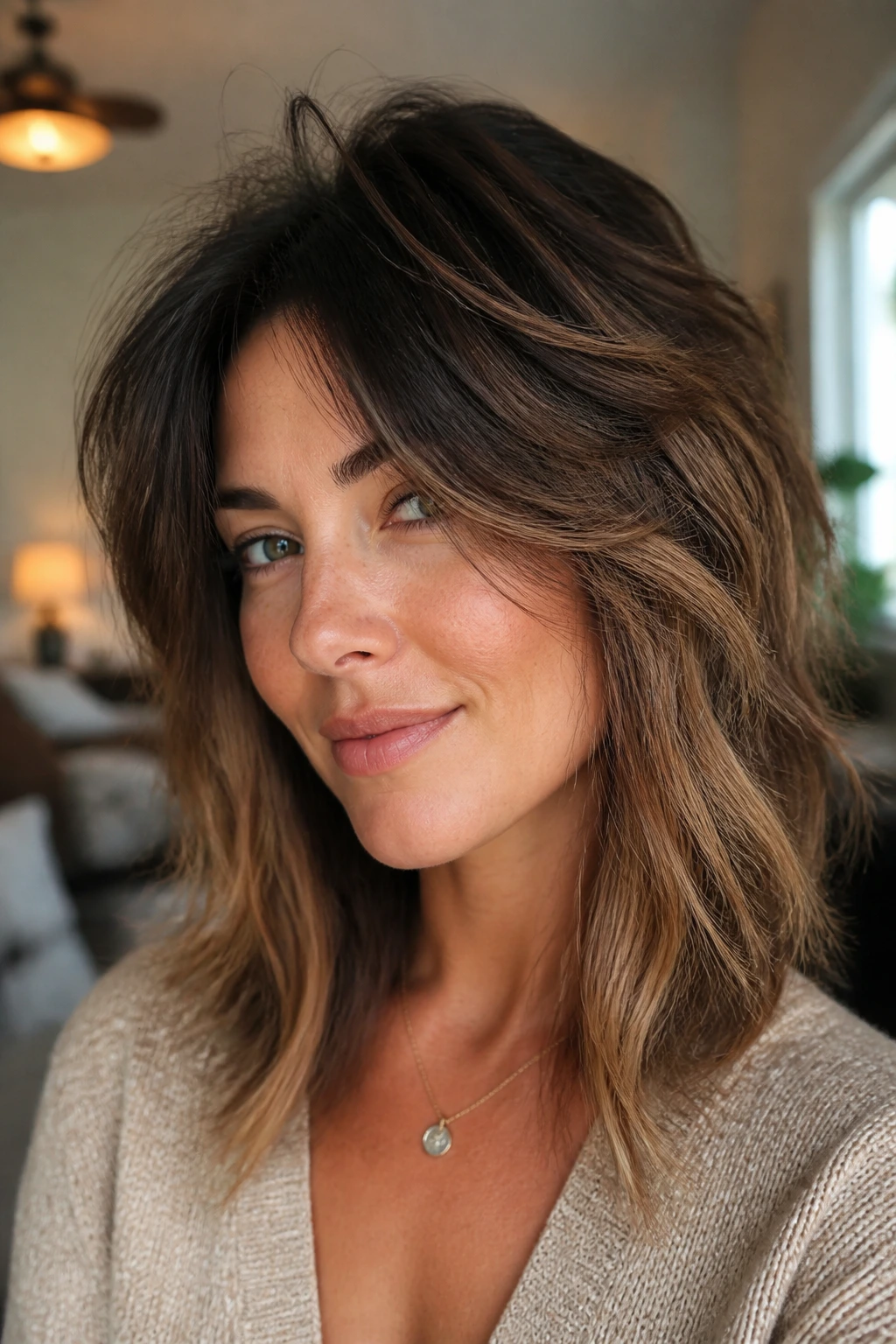
A soft wolf lob keeps the attitude of a wolf cut but reins it in for everyday life. The crown has more lift, the layers are shorter than a classic lob, and the ends stay long enough to keep the shape wearable.
This is the one for thick hair that wants movement but not total chaos. A full wolf cut can go too far on dense hair and turn the top into a mushroom. The softened version uses the same idea with less drama.
It works best when the top layers are light and the bottom still holds enough weight to anchor everything. If you like your hair a little undone and a little piecey, this is the playful option in the group. Not messy. Just loose enough to move.
Why a Lob Keeps Thick Hair From Spreading Out
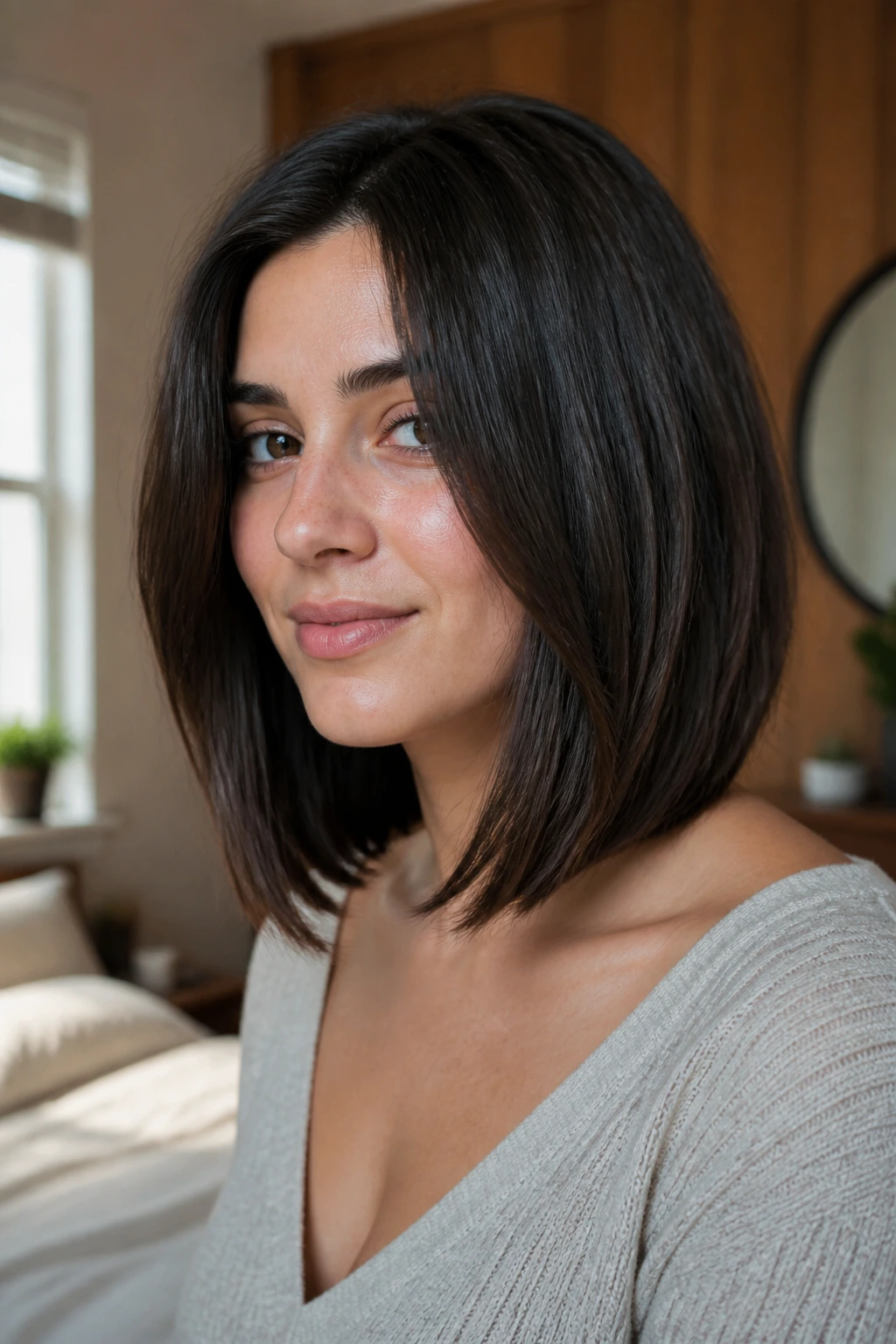
Thick hair doesn’t just sit there and behave. It expands. Sometimes at the roots, sometimes at the shoulders, sometimes at the ends where the weight line gets blunt and the hair starts to fan outward. A lob gives that density a shorter place to live, which makes the cut easier to manage without sacrificing body.
The length range matters more than most people think. Once hair gets much longer than the collarbone, the weight starts to pull hard, and the shape can look flat on top but bulky below. Cut it back into lob territory and the hair has less room to drag itself down or bloom out in awkward places.
There’s also a visual trick at play. Thick hair looks healthier when the outline is decisive. A clean lob reads as deliberate. Even when it’s textured, the length gives the eye a clear line to follow, and that’s half the battle.
How to Ask for the Right Lob in the Salon Chair
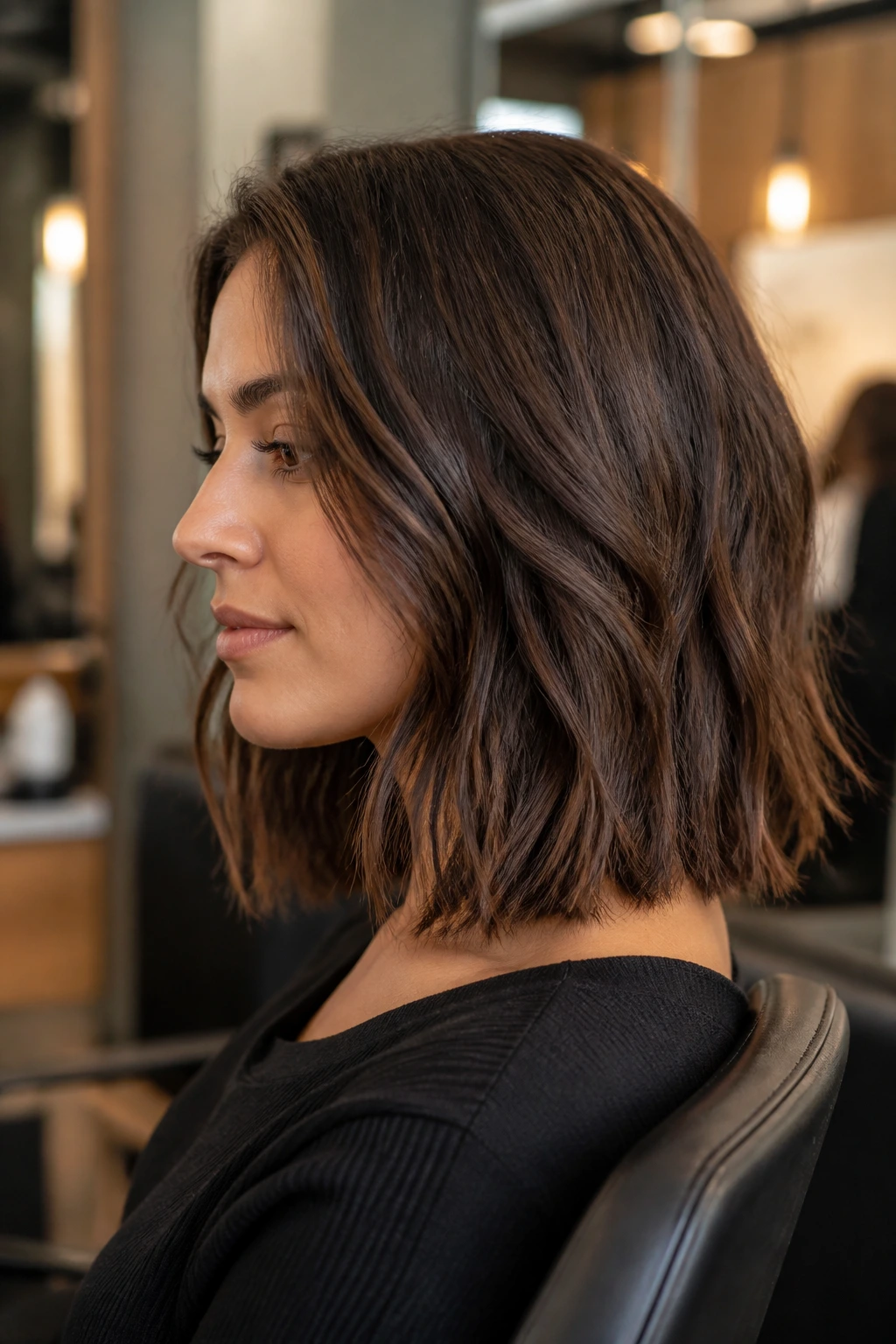
Bring photos. Two or three is enough, and they should all show the same length from different angles. A front shot, a side shot, and one photo with similar density to your own hair will tell your stylist far more than a screenshot of a celebrity with finer hair and a wind machine.
Say where you want the length to hit on your body. Collarbone, top of shoulder, just below the jaw. Those points change how the haircut sits. Thick hair at collarbone length can look much shorter once it dries and gains width, so be specific about how much shrinkage or bounce your texture has.
Tell the stylist how you wear it. Air-dried, blown smooth, curled, clipped back, pinned up. That matters because a lob for someone who air-dries thick waves is a different animal from a lob for someone who flat-irons every morning. Ask for “removal of bulk without collapsing the outline” if your hair is dense. That phrase saves a lot of back-and-forth.
Tools and Products That Make Thick Hair Behave
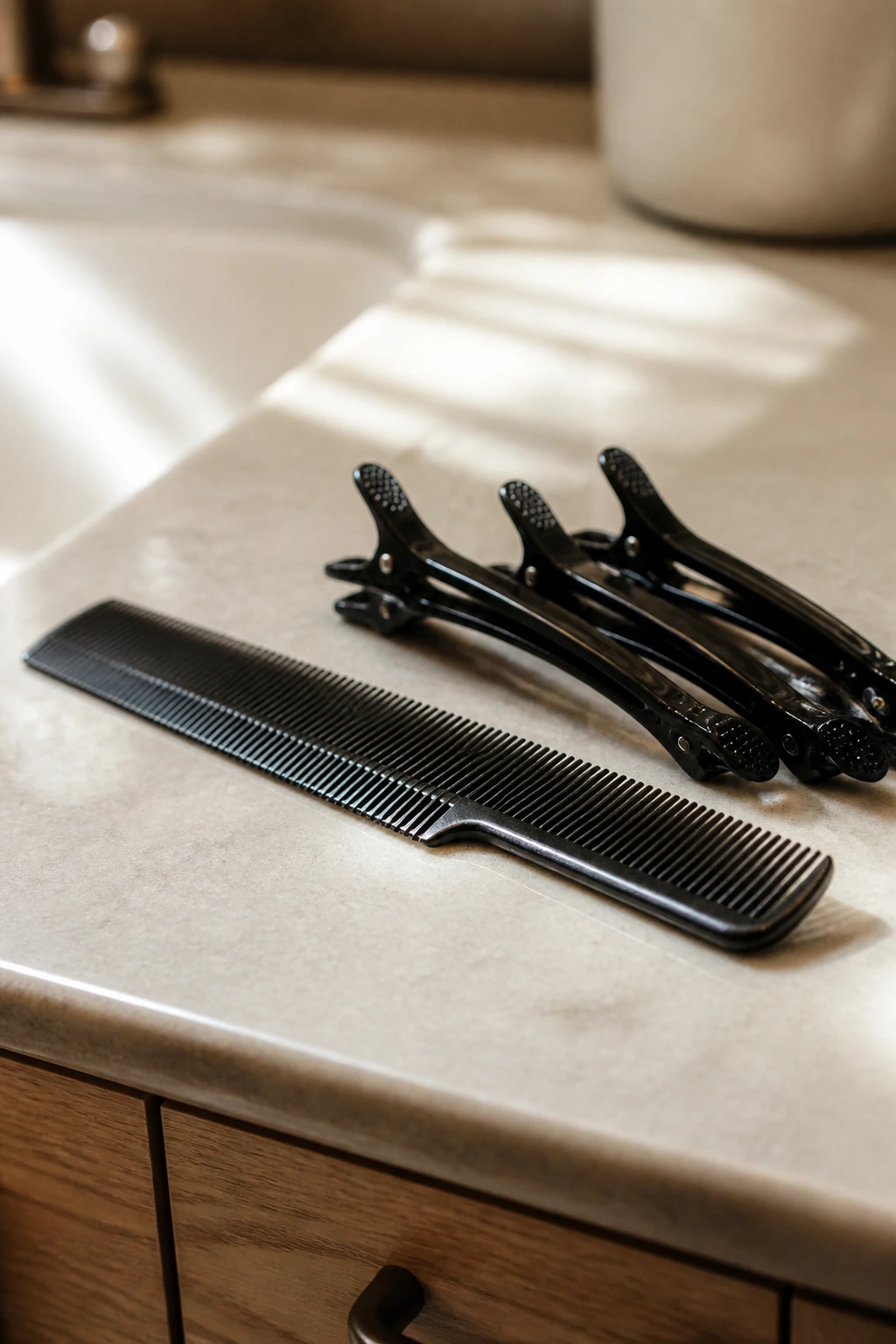
- A precision cutting comb: It helps the stylist keep the perimeter even, especially on blunt or one-length lobs.
- Sectioning clips: Thick hair needs clean sections or the cut gets muddy fast.
- A blow dryer with a concentrator nozzle: The nozzle keeps airflow focused so the surface smooths instead of puffing.
- A medium round brush: Useful for bending the ends under or giving the front a soft curve.
- A paddle brush: Better for smooth blowouts on blunt or U-shaped lobs.
- A wide-tooth comb: Good for detangling thick hair without ripping through the bulk.
- Leave-in conditioner: Keeps dense hair from feeling rough after every wash.
- Heat protectant spray: Non-negotiable if you blow-dry or flat-iron regularly.
- Root-lift mousse or spray: Helpful when thick hair collapses at the crown.
- Microfiber towel or T-shirt: Cuts down on friction and frizz after washing.
- Dry shampoo: Useful on day two or three when the roots start to feel heavy.
How to Wear These Cuts Without Fighting Your Hair
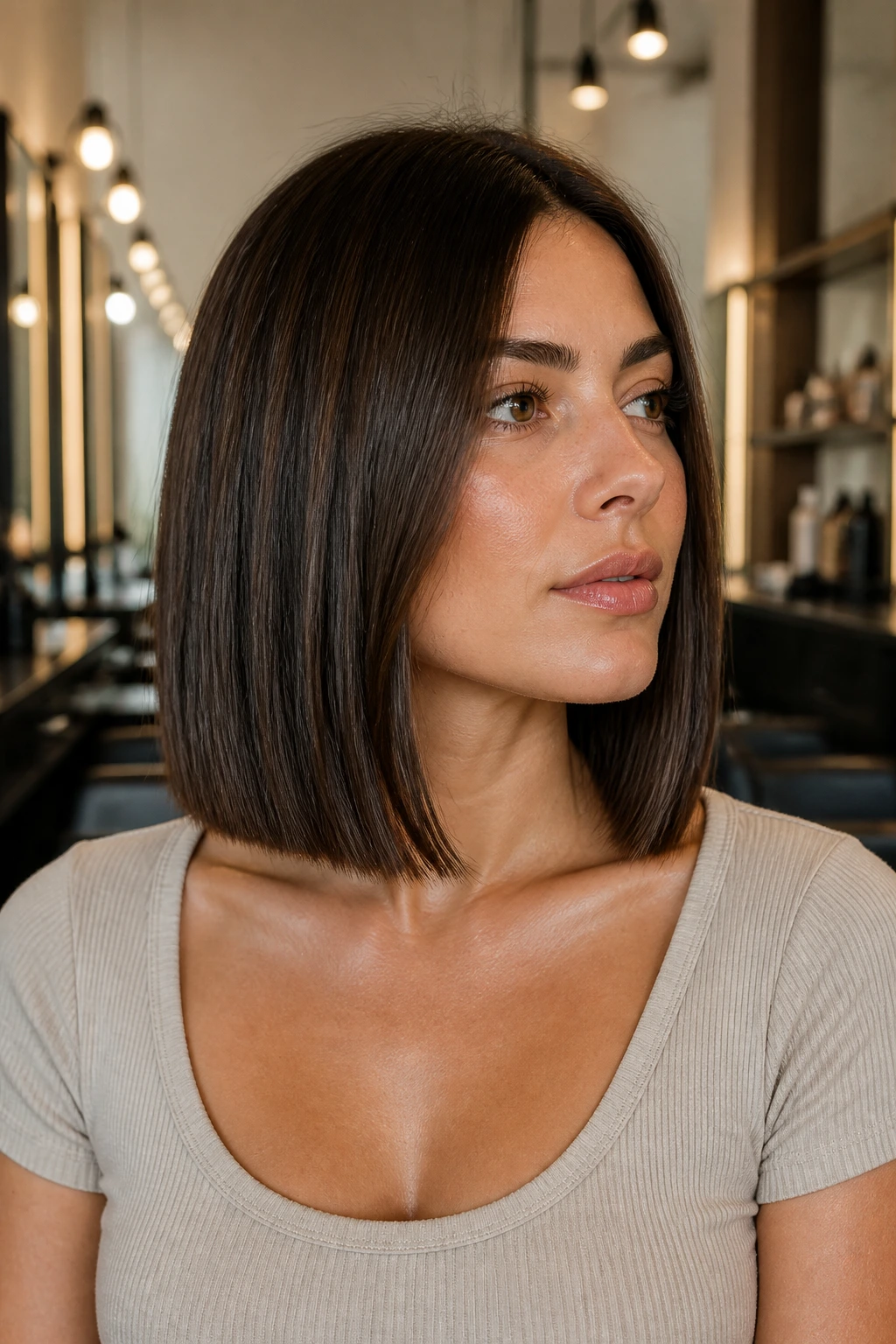
Air-Dried Finish: Thick wavy hair often looks best with a controlled air-dry. Put a small amount of cream through the mids and ends, scrunch once, then leave the top alone so it doesn’t dry in a dented shape. The goal is bend, not chaos.
Blowout Finish: If your hair is straight or coarse, a round brush and nozzle can make a blunt or rounded lob sit like it was cut yesterday. Aim the brush slightly under the ends and keep tension gentle. Too much pulling flattens the roots and flips the ends.
Second-Day Reset: On day two, mist the mid-lengths lightly with water, rework the front pieces, and hit the ends with a flat iron only if they’ve started kicking out. Thick hair usually keeps shape well, so you’re refreshing the line, not rebuilding the whole style.
Product Pairing: Creams and serums are good for smoother lobs. Mousses and sprays are better for layered or shaggier versions. If your hair is coarse, use less product than you think you need. Dense hair can swallow product and still feel dry.
Common Mistakes That Make Thick Hair Look Boxy
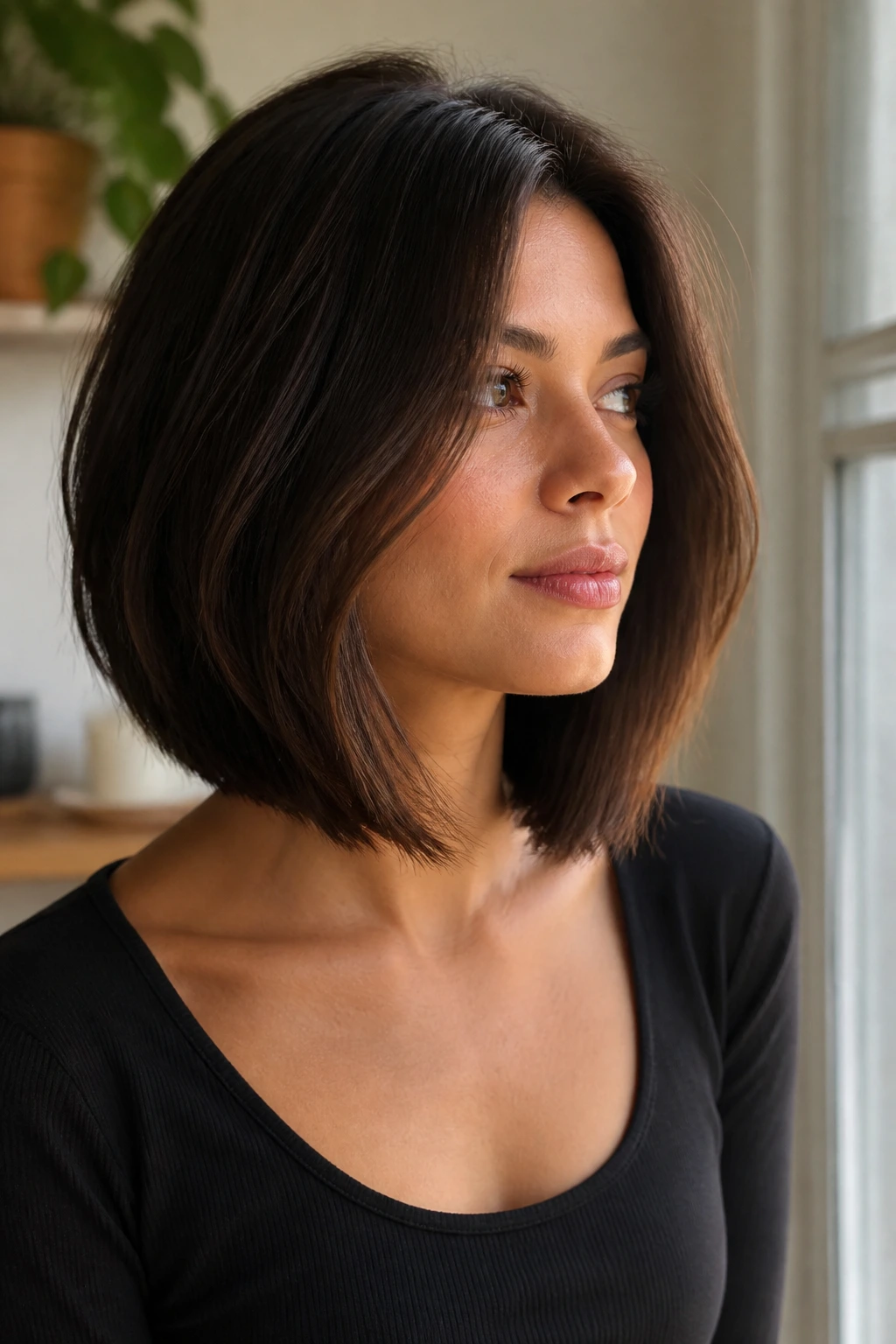
The biggest mistake is cutting thick hair too bluntly and too wide at the same time. The result sits out from the head like a shelf. A better cut keeps the bottom edge clean while removing some interior bulk so the shape can fall in.
Another one: too many short layers near the crown. That can create lift where you wanted support and make the top half look fluffy. Thick hair needs layers placed with purpose, not a lottery ticket. If the layers start too high, the haircut can feel wild.
Over-thinning with texturizing shears is a sneaky problem. The hair may feel lighter in the chair, but a week later the ends puff, frizz, or separate. On dense hair, you want weight removal in the right spots, not a chopped-up perimeter.
And please, do not ignore your hair’s natural part and bend. A center-part lob forced onto a strong side-part grow pattern will fight you every time. The cut has to respect the way the hair grows or you’ll spend your mornings arguing with it.
Variations Worth Considering If You Want More or Less Movement
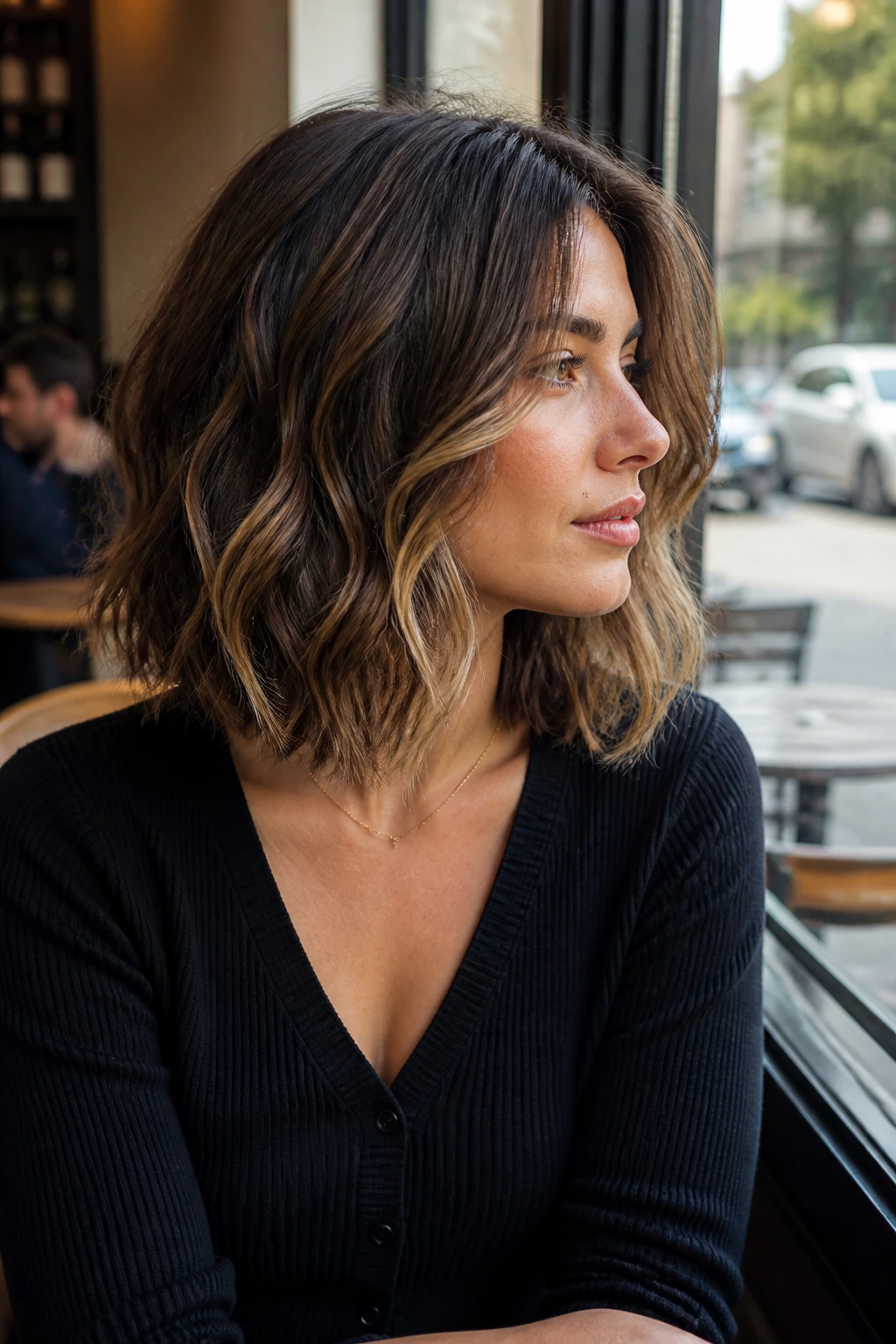
The Air-Dry Lob: Minimal layers, soft face-framing, and enough length to let waves settle naturally. This suits people who want the cut to behave with almost no heat.
The Blowout Lob: Cleaner lines, a rounded perimeter, and subtle internal removal so the style sits smooth after brushing. It’s the best pick if you like a polished finish and don’t mind a dryer in your hand.
The Curly Lob: Longer layers, dry cutting, and a perimeter that follows the curl pattern instead of forcing it flat. Good for dense curls that need spring without widening at the sides.
The Undercut Lob: Hidden nape removal for heavy, bulky hair that feels dense no matter how much the stylist takes off the surface. It’s a practical fix, not a fashion stunt.
The Fringe Lob: Curtain bangs, bottleneck bangs, or a soft side fringe paired with a collarbone lob. This version changes the whole mood of the haircut without asking you to lose much length.
Keeping the Shape Between Salon Visits
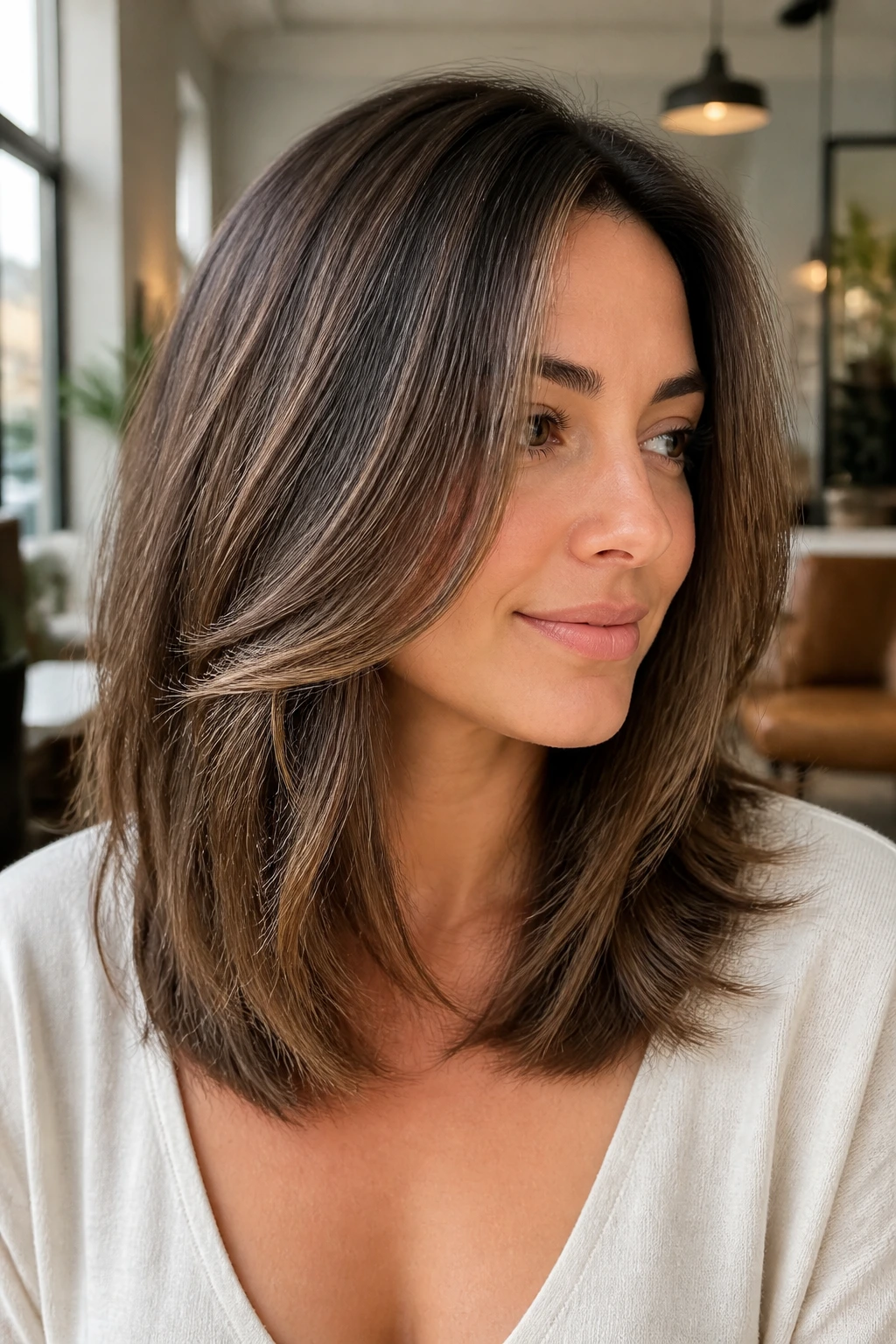
Thick hair grows out with a lot of visible change, so trims matter. For a blunt or glassy lob, plan on a cleanup every 6 to 8 weeks. If the cut has softer layers or a shagier edge, 8 to 10 weeks is usually fine. Let it go much longer and the shape stops reading as intentional.
Wash frequency depends on texture, but heavy, dense hair usually does better when the roots are cleaned before oil builds enough to flatten the crown. That may mean every 2 to 4 days, sometimes less often if your scalp is dry. Use conditioner from mid-length to ends, not all the way up the root unless your hair is very coarse and needs the slip.
At night, a loose clip or silk pillowcase helps the lob keep its bend. Thick hair gets bent and crushed in odd places when you sleep on it wet. If you wake up with a weird kick at the ends, dampen only the lower third of the hair and rework the shape with a brush or a flat iron on low heat.
Frequently Asked Questions About Lob Haircuts for Thick Hair
Will a lob make thick hair look thinner?
Not if it’s cut well. A lob removes length, not density, and that usually makes thick hair look more controlled without losing the fullness people actually like. The key is keeping enough weight at the perimeter.
Is a blunt lob or layered lob better for thick hair?
A blunt lob is better if you want a strong line and the least fuss. A layered lob is better if your hair feels heavy, bloated, or takes forever to dry. The right answer depends on whether your main problem is bulk or movement.
What length is best if my hair expands when it dries?
Collarbone length is often the safest place to start. It gives thick hair room to move without bouncing so short that it flips outward above the shoulders. If your hair has a lot of spring, a little extra length helps.
Can thick curly hair wear a lob without puffing out?
Yes, but the cut has to respect the curl pattern. Dry cutting or curl-aware layering keeps the shape from turning into a triangle. A heavy one-length cut on curls is where puffiness usually starts.
How often should I trim a thick-hair lob?
Every 6 to 8 weeks if the cut is blunt, and about 8 to 10 weeks if the shape is softer and more layered. Thick hair can hide growth for a bit, but the outline will start to lose shape sooner than you think.
Do texturizing shears help thick hair?
Sometimes, in the right hands. Used sparingly, they remove bulk from the right spots. Used too much, they leave the ends frayed and the surface fuzzy. That’s why the stylist matters so much here.
What if my hair is thick but fine in texture?
A cleaner, less aggressively layered lob usually works best. Fine-strand thick hair can collapse if too much weight is taken out, so the cut should keep density at the bottom while only softening the interior a little.
Can I still tie a lob back?
Usually, yes. A lob at collarbone length gives you small ponytails, clips, half-up styles, and low buns. If you need a full ponytail every day, ask for a slightly longer lob so you have more grab length.
The Shape That Makes Thick Hair Easier
A good lob doesn’t fight thick hair. It gives it a lane. That’s the real reason this cut keeps showing up in salon chairs: it can be blunt, curved, layered, shaggy, polished, or undone, and still keep a sense of shape when the hair has serious density.
If your hair has been living too long in the “too heavy, too wide, too much” category, a well-planned lob can change the way it behaves on ordinary days. Not every version needs a full styling routine. Some just need the right length and a careful hand through the interior.
Pick the shape that matches how you actually wear your hair, not the one that looks best in a vacuum. Thick hair is too good to fight all week.
