



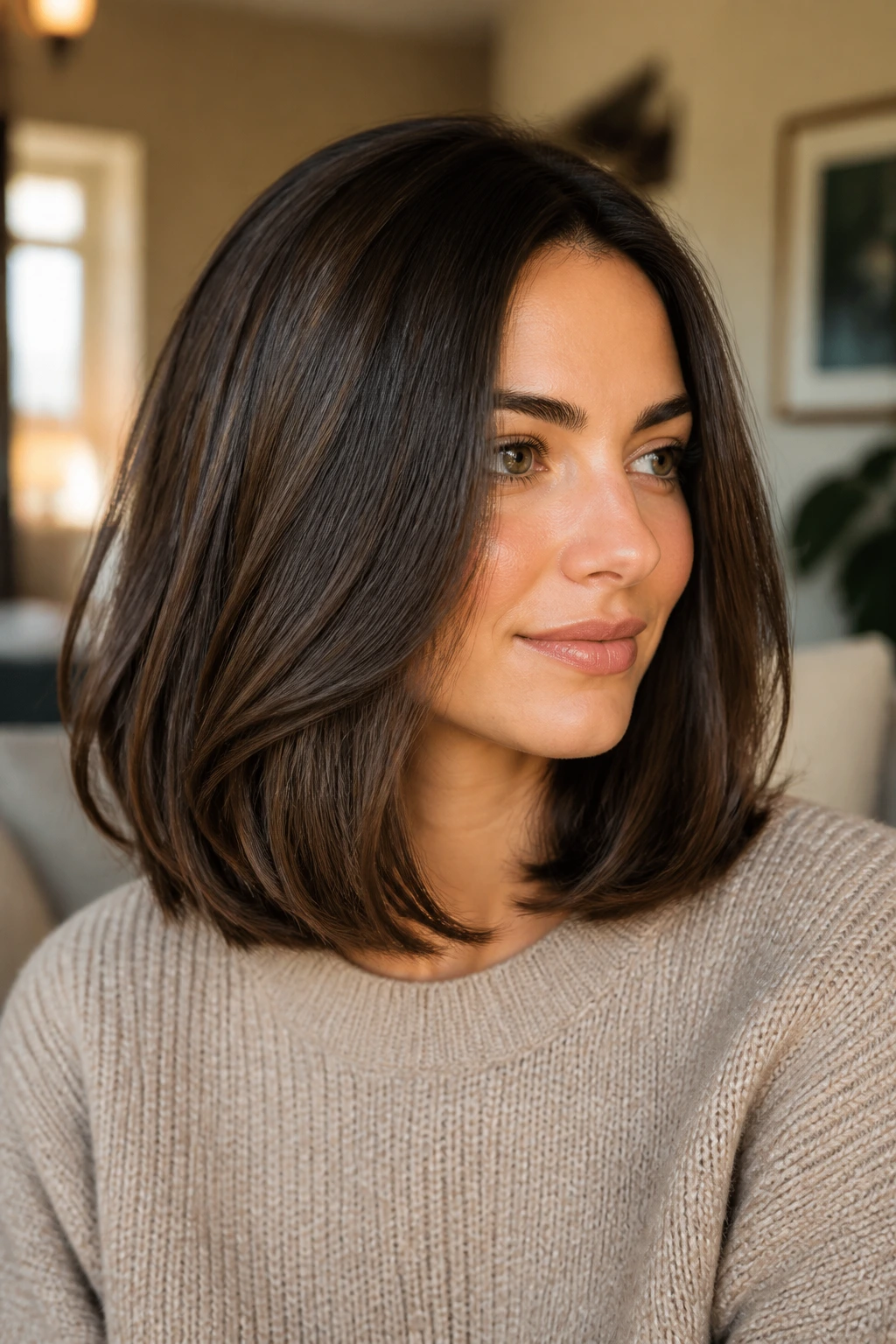
Thick hair and lob haircuts have an odd reputation. People act like you have to choose between a blunt, heavy line that looks chic for ten minutes and a layered cut that turns into a puffball by lunch. That’s a lazy false choice. A good lob on long thick hair can do both jobs at once: keep the hair looking full, but move the weight to a place that makes sense.
The sweet spot sits somewhere around the collarbone, maybe a touch below it, where thick hair can still swing and bend without dragging itself down. Too short, and the ends bounce out at the shoulders like they’re annoyed. Too many short layers, and the shape expands in a way nobody asked for. The trick is geometry, not aggression.
That’s why the best lob haircuts for long thick hair aren’t all the same cut with different names. Some keep the perimeter blunt and crisp. Some hide layers inside the shape. Some lean on bangs to break up the density around the face. A few are sleek and polished. A few are deliberately rough around the edges. The right one depends on how your hair falls, how much time you want to spend styling it, and how much bulk you’re willing to keep.
Why These 19 Lobs Work on Thick Hair
-
They control the weight line: Thick hair needs a place to sit, and a lob gives the ends a clean landing zone instead of letting them hang forever.
-
They keep fullness where it looks good: A long bob can remove drag without stripping out the density that makes thick hair look rich and healthy.
-
They solve shoulder weirdness: The collarbone and shoulder line are where thick hair often flips out or caves in, so these cuts are built around that problem.
-
They still work with real-life styling: Some of these lobs look better blown smooth, some look better air-dried, and some are meant to look a little undone. That’s useful, not lazy.
-
They grow out without looking broken: A lob gives you room to wait between trims. The cut can stretch a little and still look intentional.
1. Blunt Collarbone Lob
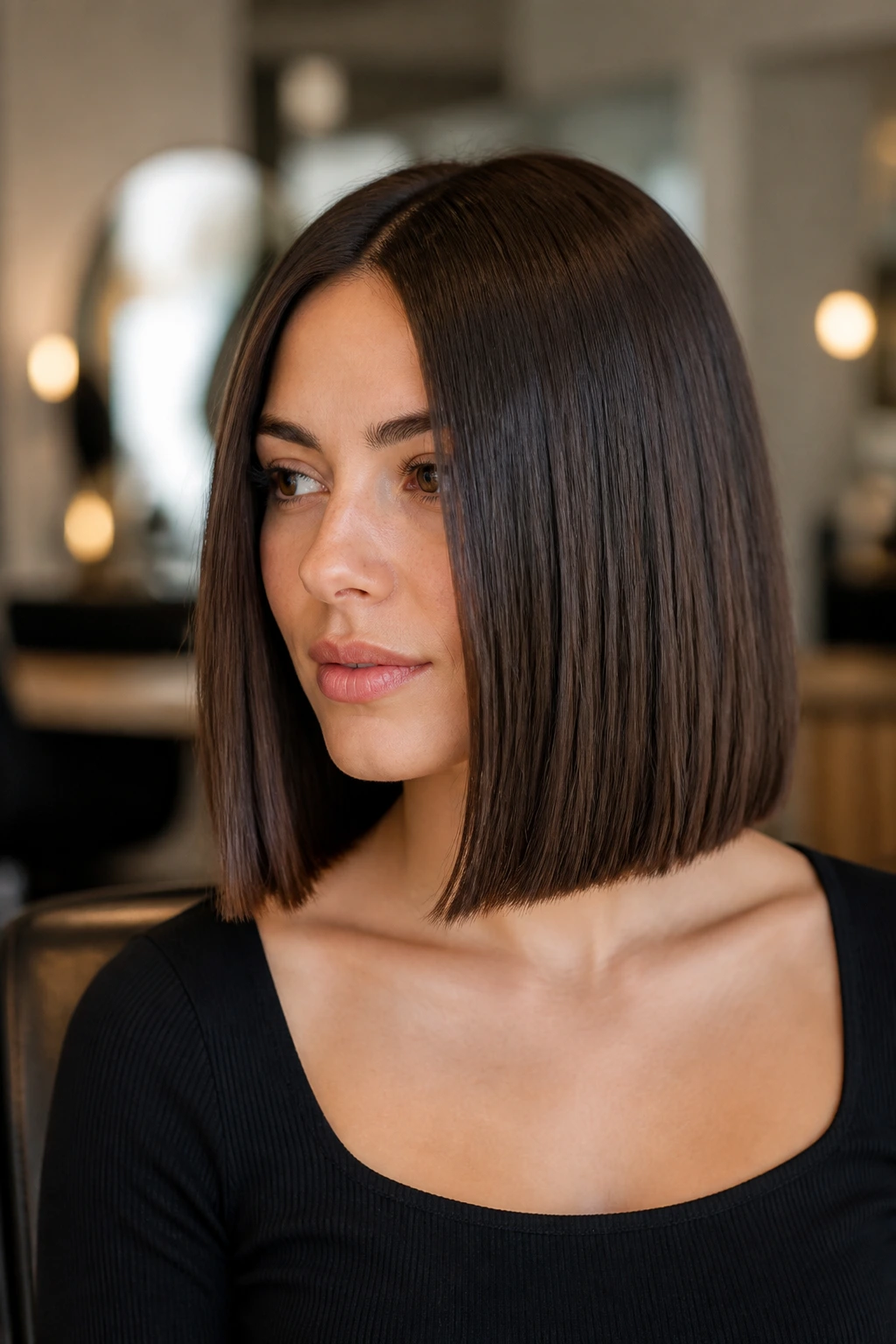
A blunt collarbone lob is the haircut that makes thick hair look expensive without trying too hard. The line sits straight across, usually grazing the collarbone or landing just below it, and that sharp edge uses the hair’s own density as part of the design. On fine hair, a blunt lob can look thin at the ends. On thick hair, it looks solid, almost architectural.
The key is restraint. If the stylist starts slicing layers into it because they’re nervous about weight, the whole point gets lost. Ask for a clean perimeter and only the lightest interior cleanup if your hair is extremely dense. The bluntness is the feature. It gives you that heavy, glassy swing when you blow it out, and even a quick air-dry keeps the shape from collapsing.
This cut is especially good if your hair already has a smooth bend or if you like wearing it straight. It also plays nicely with a center part, which keeps the line long and controlled instead of wide and fluffy.
2. Soft Layered Lob
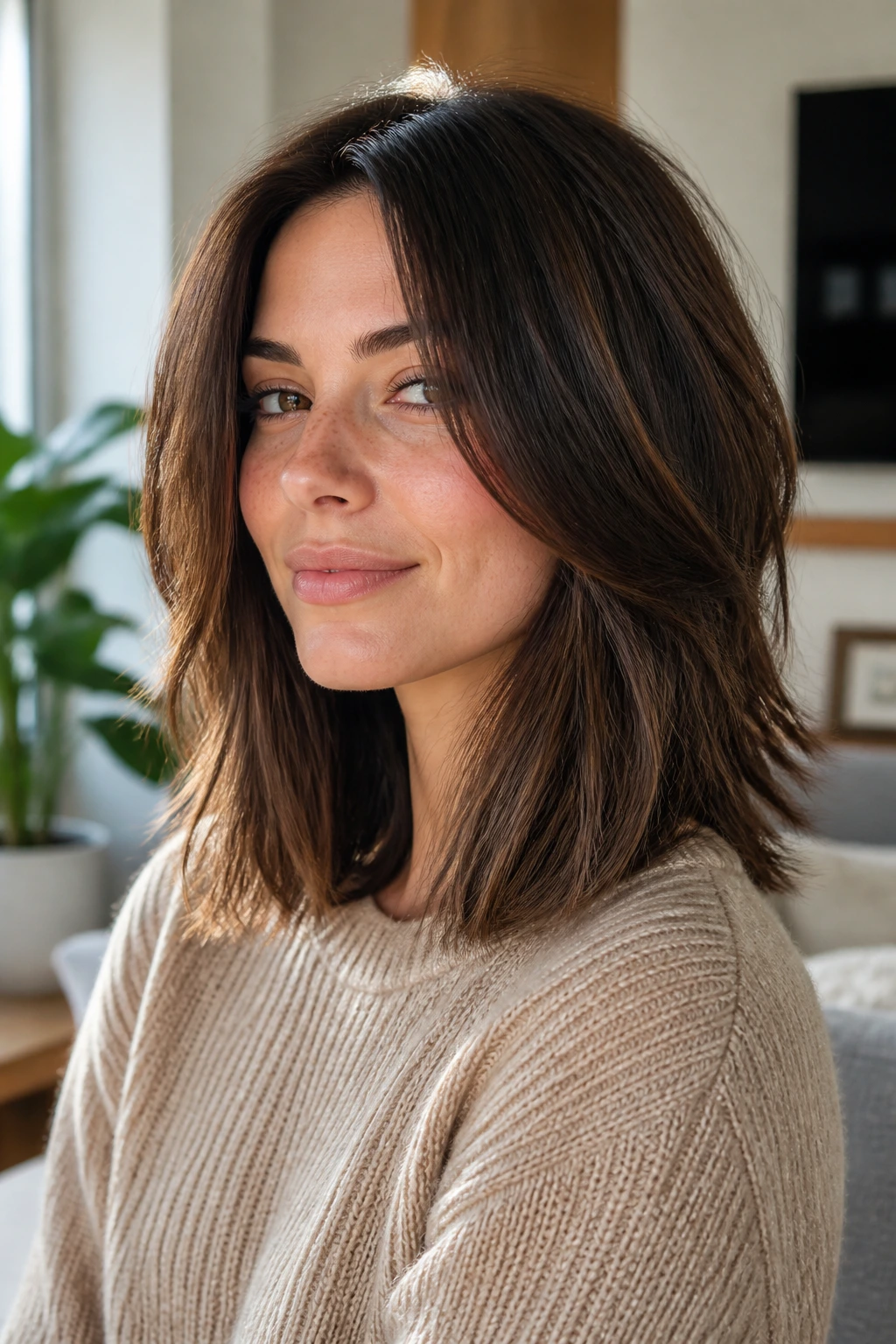
Want movement without turning your hair into a cloud? This is the answer. A soft layered lob keeps the outer outline of the cut intact but slips in longer layers below the cheekbone so the ends don’t pile up in one solid mass. On long thick hair, that tiny adjustment matters a lot. It changes the way the hair falls at the shoulders and keeps the shape from feeling boxy.
Where the layers should begin
Start them too high and the cut gets frisky in the wrong way. Start them lower, and the lob keeps its weight but loses the heaviness that makes thick hair drag. I like layers that begin somewhere around the mouth to chin range at the front and even lower in back, depending on how full the hair is. That keeps the top looking dense and the bottom looking lighter.
This version suits people who want to keep styling simple. A quick blow-dry with a round brush gives enough bend to show off the layers. Air-drying works too, especially if your hair has a bit of wave already. The whole cut feels softer than a blunt line, but it does not disappear into mush.
3. Angled Lob with Longer Front Pieces
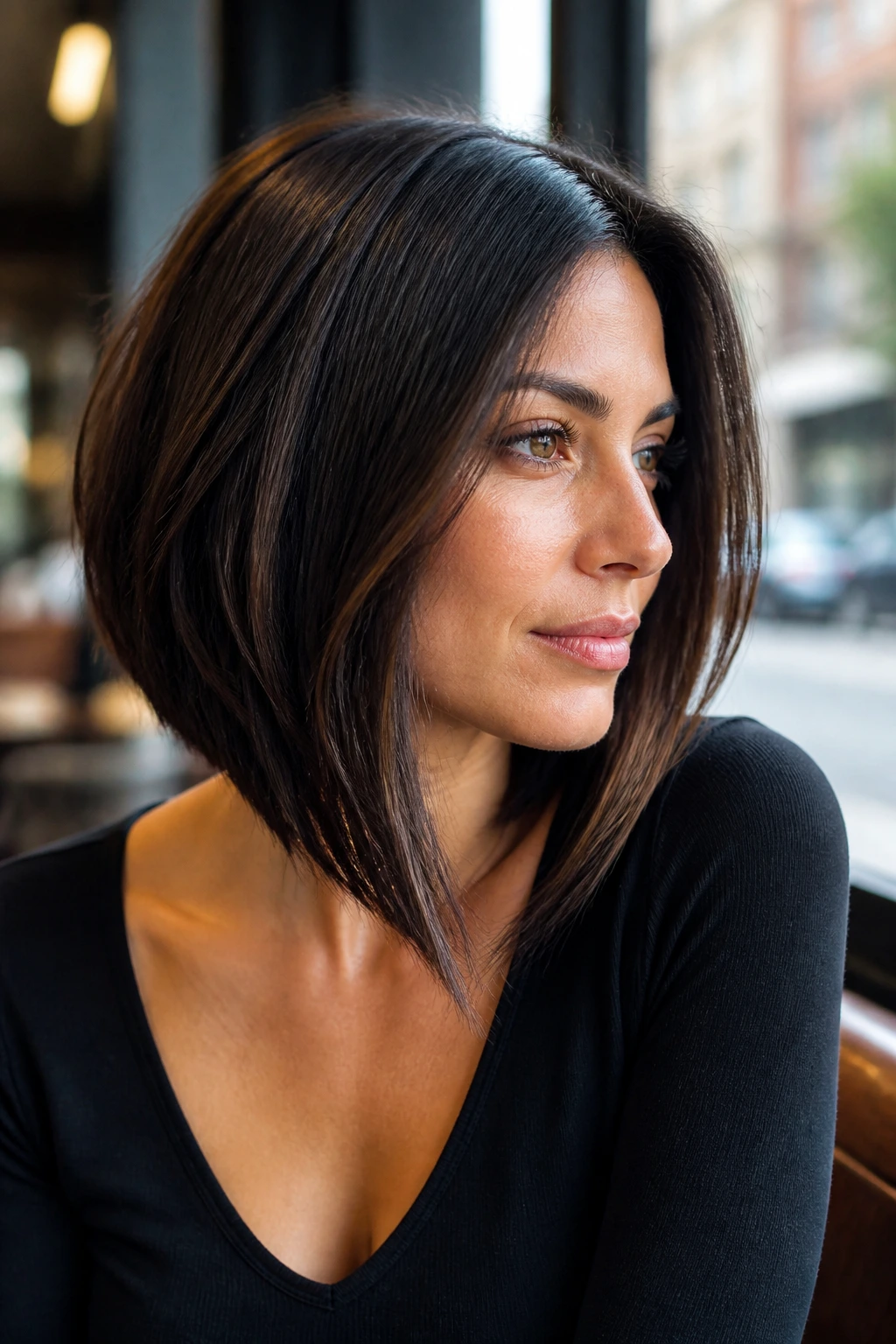
Angle changes everything. A slightly shorter back and longer front pieces give thick hair a built-in direction, which helps when the ends want to sit flat and heavy. The angle doesn’t need to be dramatic; even a subtle difference of an inch or two between back and front can make the hair feel more lifted and less blanket-like.
This is one of my favorite lob haircuts for long thick hair because it solves two problems at once. The shorter back removes some of the bulk that collects near the nape, and the longer front keeps enough length to skim the collarbone or even brush the top of the chest. That front length matters if you like tucking one side behind your ear or if your hair tends to puff outward at the jaw.
It also makes thick hair look more deliberate on day two. A little bend at the ends is fine. Actually, it helps.
4. Invisible Layer Lob
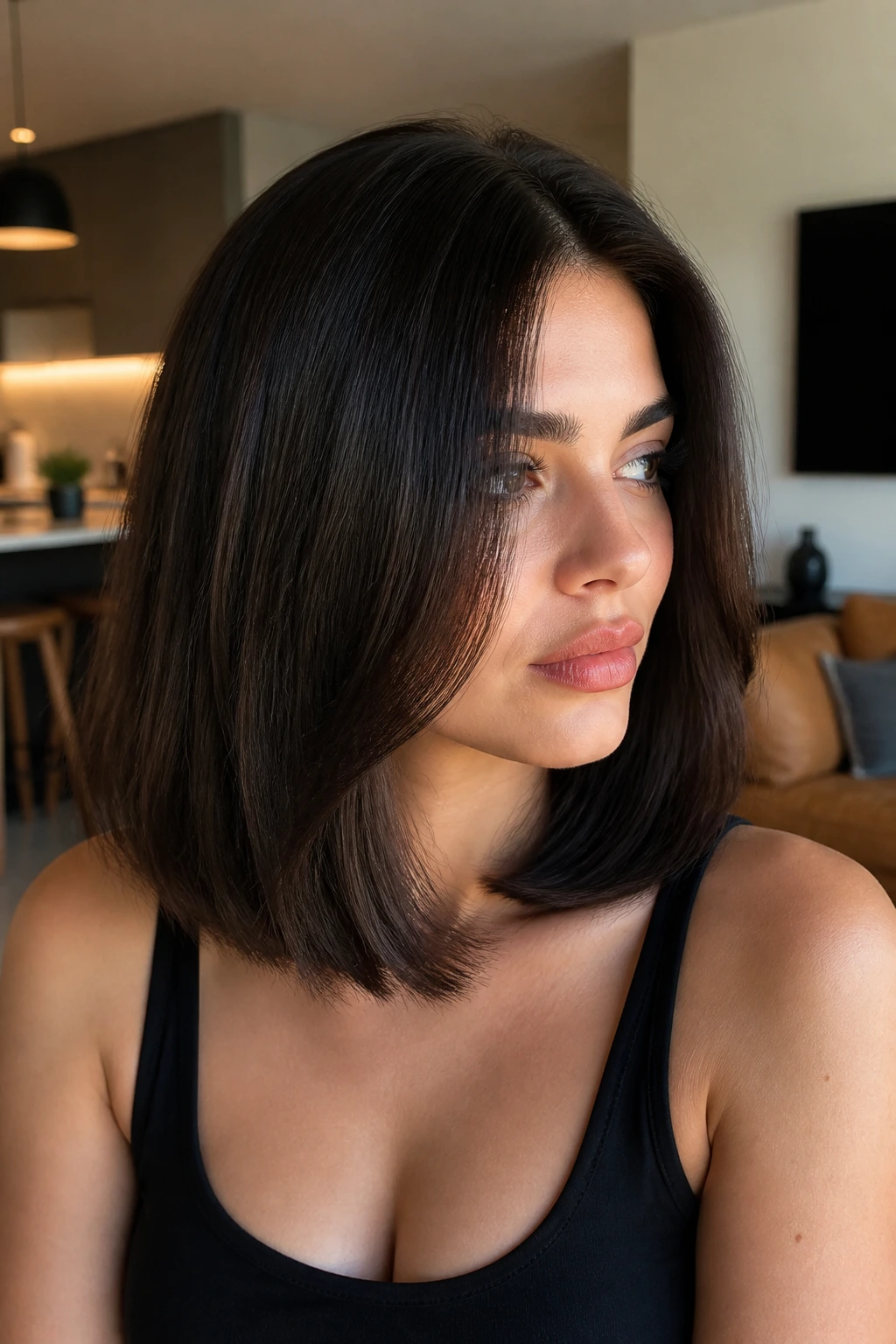
Invisible layers are the quiet fix for thick hair that needs less bulk but doesn’t want to look layered. The outside line stays blunt and clean, while the weight is removed from the inside of the haircut with longer internal sections. From the outside, the lob still reads as full. Under the surface, it behaves better.
That’s the difference between a haircut that looks good in the salon mirror and one that still looks good when you have not blow-dried it for three days. Ghost layers, as some stylists call them, help thick hair lie flatter through the middle without creating that choppy, overworked finish that can age a cut fast.
This is a strong choice if your hair is dense at the crown, the sides, and the back all at once. It gives you relief without announcing itself. Clean line. Less bulk. No drama.
5. Curtain Bang Lob

Curtain bangs soften a heavy lob fast, and on thick hair they do something even better: they break up the wall of hair around the face without stealing too much length from the rest of the cut. The fringe opens in the center, gets longer toward the cheekbones, and melts into the lob instead of sitting on top of it like a separate piece.
That matters if your hair feels crowded around the front. Thick hair can make the face look swallowed, especially when the perimeter is blunt and the part is centered. Curtain bangs fix that by creating a little breathing room at the front while still keeping the haircut polished. They’re also easier to grow out than a full, heavy fringe, which is one reason I recommend them so often.
Best styling note
Blow them forward first, then wrap them slightly away from the face with a round brush or a medium roller. If you let them dry straight down the middle, they can split in weird places. Give them shape while they’re damp and they’ll sit better all day.
6. Choppy Textured Lob
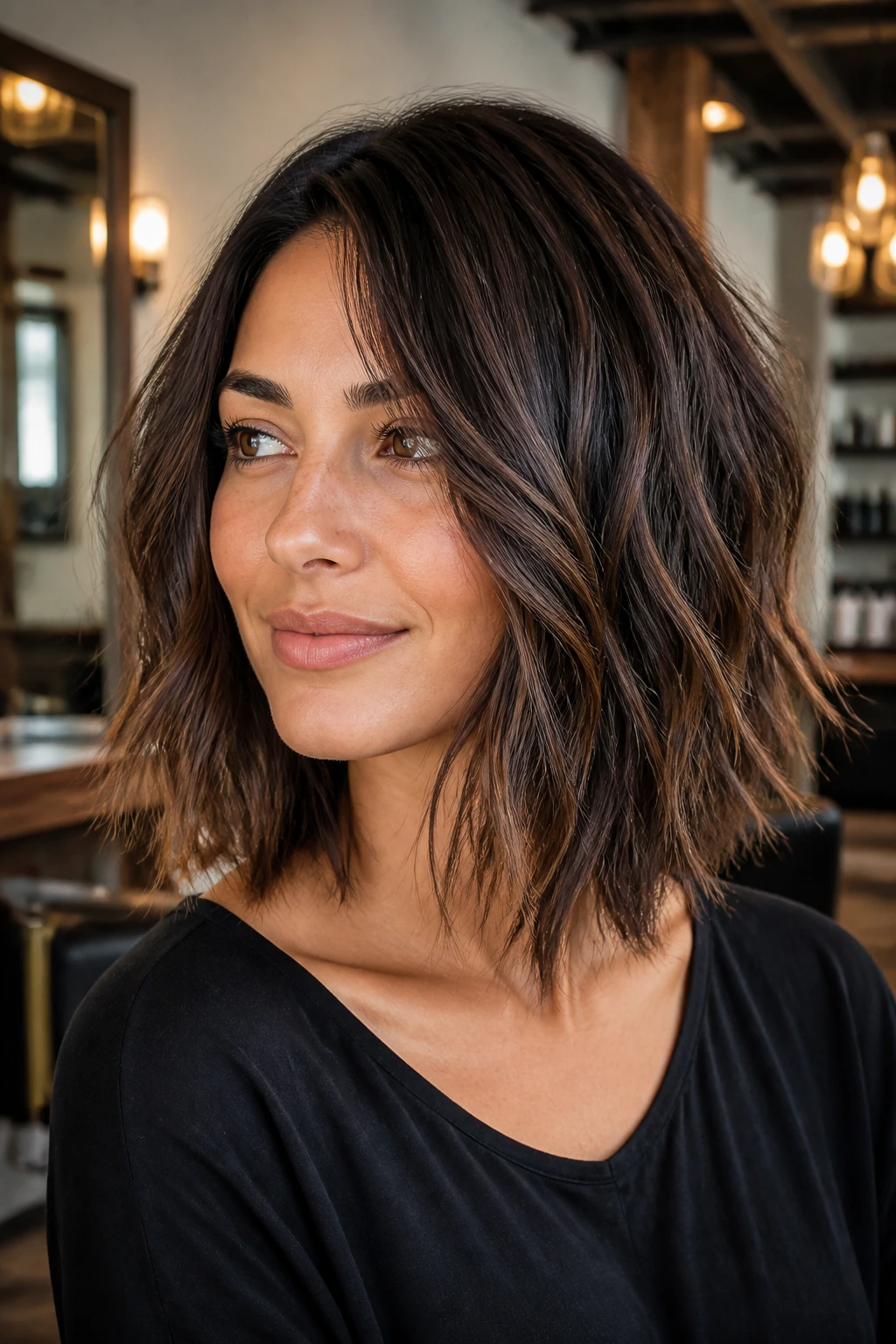
Choppy ends are not the enemy here. On the right head of thick hair, a textured lob can look airy without feeling thin, especially if the stylist uses point cutting or light texturizing to break up the ends. The cut still needs a perimeter, but that perimeter can be softened enough to keep the hair from forming a blunt shelf.
This works best for hair that already has some natural bend, because the texture adds life to the shape. If your hair is straight and coarse, you may need a little sea-salt spray or a bent blow-dry to get the effect to show. If your hair is wavy, this cut can make it look like you meant to style it, even when you barely touched it.
The one caveat: don’t let “texture” turn into “too many holes in the haircut.” Thick hair can take some breaking up. It cannot always take a lot of it.
7. Deep Side-Part Lob
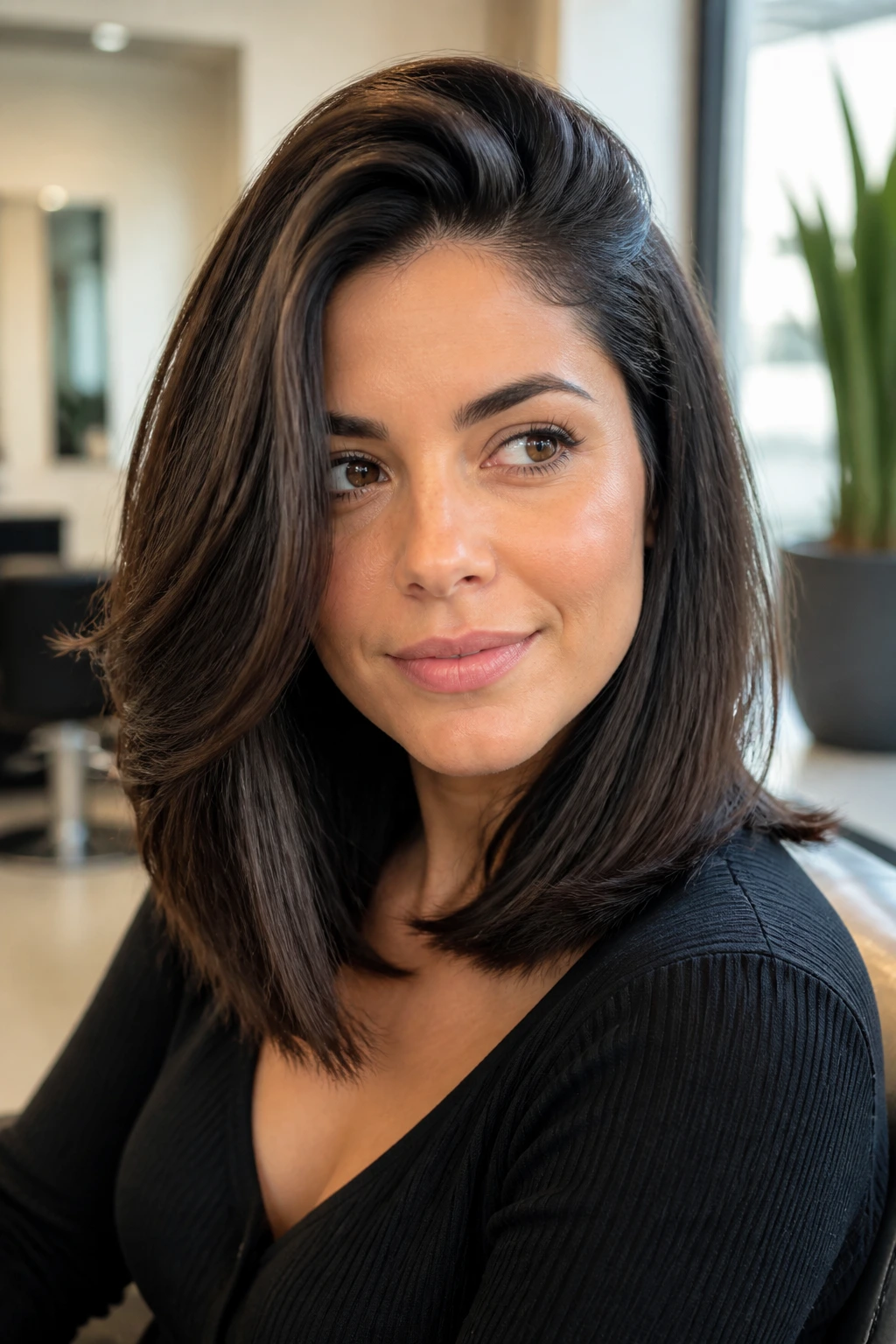
A deep side part is a blunt instrument—in the good sense. It shifts the weight of thick hair off the center line, gives the roots a little lift, and makes the whole cut feel less wide. On a long, thick lob, that simple change can make the haircut look cleaner without altering the actual length at all.
This style is useful when your hair gets flat at the crown but puffs at the ends. The side part adds volume where you want it and takes some pressure off the most crowded part of the head. It also softens the symmetry of a blunt cut, which can be a relief if your hairline is dense or your face shape benefits from a little asymmetry.
I especially like this on straight or slightly wavy thick hair. It gives you that glossy salon shape with less effort than a full blowout. And if your hair insists on parting a certain way anyway, work with it. Fighting a cowlick is a losing hobby.
8. Rounded Lob with Internal Layers
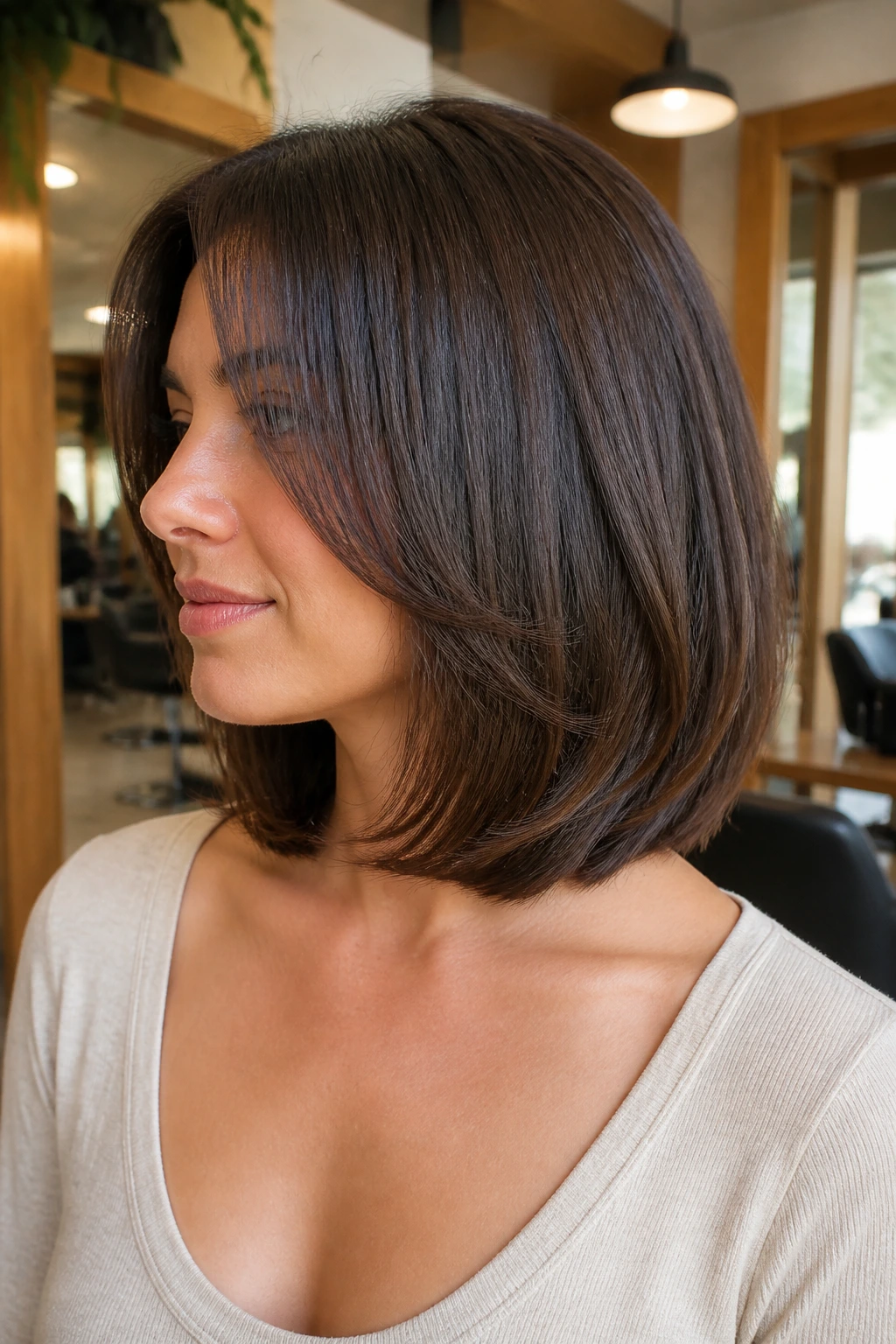
Rounded shapes keep thick hair from boxing out. A rounded lob curves slightly inward at the ends, which helps the cut sit closer to the body instead of flaring out at the shoulders. The internal layers keep the shape from looking too blocky, but the outer line still feels soft and full.
This is a good option if your thick hair tends to kick outward the minute it touches your shoulders. You know the look. The haircut starts neat, then by the second hour the ends are making little right angles all over the place. A rounded lob reduces that problem because the shape already wants to bend under.
It looks especially good with a smooth blowout and a medium round brush. You don’t need the ends to curl under hard. Just enough curve to keep the line tidy. That small detail is doing a lot of work.
9. Asymmetrical Lob
An asymmetrical lob does what a straight cut can’t: it introduces tension. One side is longer than the other, often by a subtle inch or two, and that shift pulls thick hair away from looking too uniform. The eye follows the line, which makes the haircut feel sharper and more modern without a huge styling commitment.
This cut is not for someone who wants their hair to disappear into the background. It has personality. It also gives thick hair a way to break up density if one side of the head is fuller than the other, which happens more often than people admit. Hair growth patterns are rarely perfectly even, and this cut can work with that instead of pretending symmetry is guaranteed.
If you wear glasses, tuck one side behind your ear, or like a side part that stays put, the asymmetry has real practical value. It keeps the shape visible when the hair moves around.
10. Razor-Cut Lob
A razor can save a thick lob, or wreck it. That’s the honest version. On coarse or very dense hair, a razor-cut lob can soften blunt ends and give the haircut a little movement that scissors sometimes struggle to create. The ends look feathered rather than chopped, which can be useful if your hair naturally feels heavy and stiff.
But the razor only behaves if the hair can take it. Very porous, frizz-prone, or delicate hair can get fuzzy fast with too much razor work. That’s why I only like this on hair that actually needs the softness, not on every thick head by default. A good stylist will know when to use the razor for shape and when to leave the perimeter cleaner.
The finish is the point here. The best razor lob doesn’t look shredded. It looks lighter. There’s a difference.
11. Glass Lob
The glass lob is all about control. The line is blunt, the finish is sleek, and the surface looks smooth enough to show every clean edge of the haircut. Thick hair is one of the few textures that can make this style look especially good, because density gives the line weight. It doesn’t read limp or over-processed. It reads deliberate.
This cut needs a stylist who can shape the perimeter cleanly and remove bulk only where it helps the silhouette. Styling matters just as much. A heat protectant, a paddle brush or round brush, and a flat iron with rounded plates will get you most of the way there. Finish with a light serum on the mids and ends, not the roots. Heavy oil will kill the shine by making the top look greasy.
If you like hair that feels neat, sharp, and a little dramatic, this is the one. It is not casual. That’s the appeal.
12. French-Girl Lob
French-girl texture looks casual, but the cut has to be precise. On thick hair, that usually means a lob with soft movement, a slightly imperfect edge, and maybe a fringe or face-framing bend that keeps the cut from looking too severe. It’s the kind of lob that looks better when it’s touched, bent, and lived in a little.
This style works best when the hair has some natural wave or when you’re willing to create one with a blow-dry or iron. The charm comes from the way the cut avoids stiffness. Thick hair can go from elegant to helmet fast if the shape is too exact, and this version dodges that. It keeps the fullness but breaks the line just enough to feel relaxed.
A little dry shampoo at the roots, a bend through the front pieces, and a messy tuck behind one ear can be enough. The cut does not need a lot of decoration. It just needs a good shape underneath the loose finish.
13. Bottleneck Bang Lob

Bottleneck bangs are the smartest fringe if you still want length around the face. They start narrow at the forehead, then widen gently near the cheekbones, which keeps thick hair from feeling overloaded around the front. The bangs give you shape without the blunt heaviness of a full fringe.
This pairing works because the bangs and the lob balance each other. The fringe pulls attention upward, and the lob keeps the rest of the hair grounded. If your thick hair tends to overwhelm your features, this cut gives you a cleaner frame without chopping the haircut into pieces.
Why they suit thick hair
A full, dense bang across thick hair can be a maintenance headache. Bottleneck bangs are lighter at the top and more forgiving as they grow, so they don’t need constant reshaping. They also blend well into curtain-like face pieces, which means the haircut grows out in a nicer way than a hard, straight fringe.
14. Shag Lob

A shag lob asks for confidence and good shears. It leans into movement, with more obvious layers and a slightly undone finish that can make thick hair feel lighter from the first hour after the cut. If your hair wants to expand, the shag gives it a place to do that on purpose.
This is the lob for someone who likes texture more than polish. It works beautifully with waves and curls because the layers keep the shape from forming a heavy triangle. On straight thick hair, it can still work, but you’ll usually need some texture spray or a rough blow-dry to make the layers show up.
I would not call this the low-maintenance option, even though people often do. It’s a specific look. If you want movement, edge, and a cut that does not feel precious, it earns its keep.
15. Face-Framing Lob
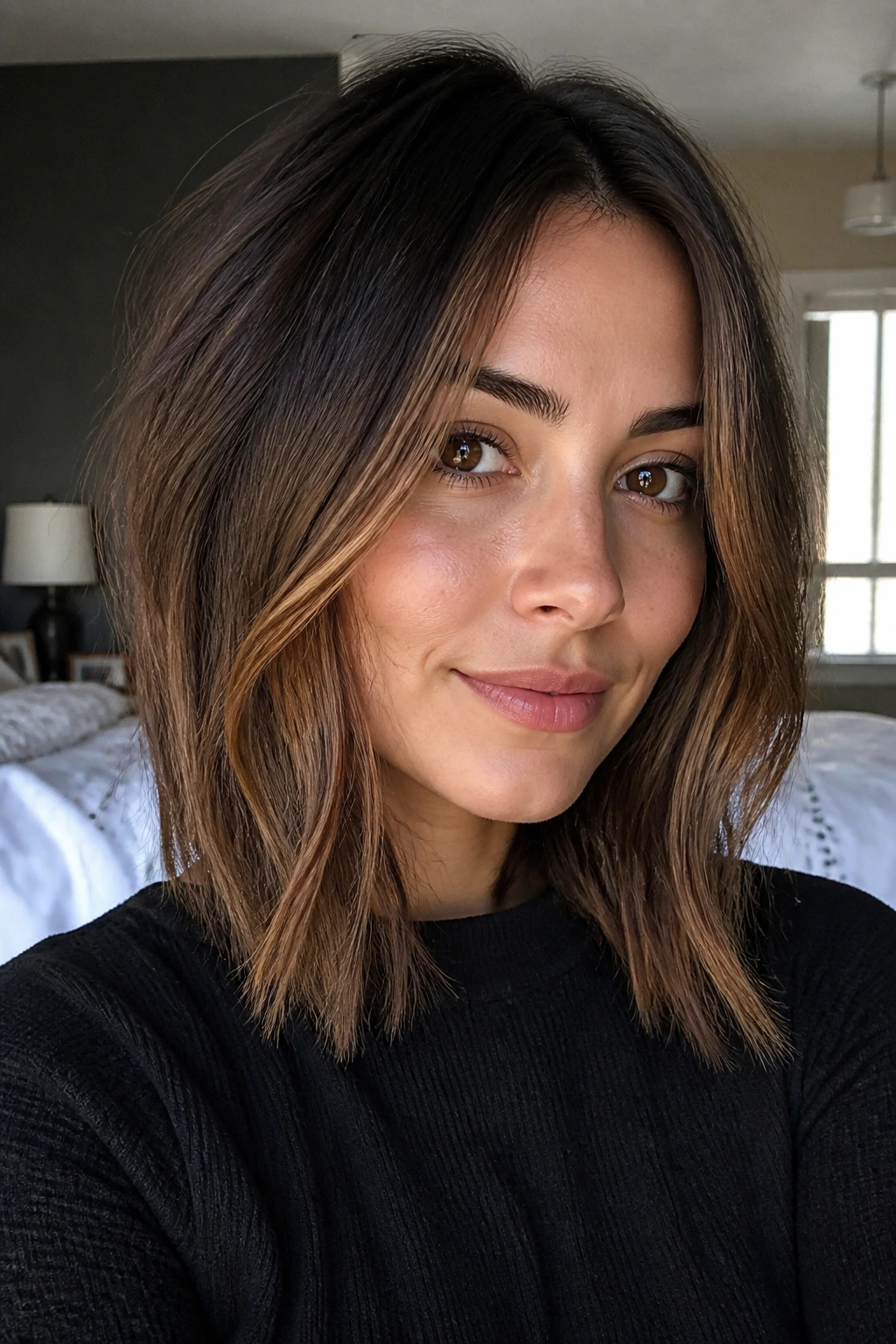
Face-framing layers are the low-stakes version of all this. The perimeter stays mostly intact, and the haircut gets just enough shaping around the front to soften the face and break up the density where thick hair tends to feel heaviest. It’s a smart move if you want change without committing to a full layered shape.
The best part? It keeps the lob easy to wear up or half up. You still have a strong outline, but the front pieces give the haircut a little motion. That motion matters when thick hair grows wide at the sides or when the front pieces fall all one length and crowd the cheeks.
This is the version I recommend when someone says they want to “do something” but also does not want to spend the next six months regretting it. Fair enough. The haircut stays friendly as it grows.
16. Curly Lob
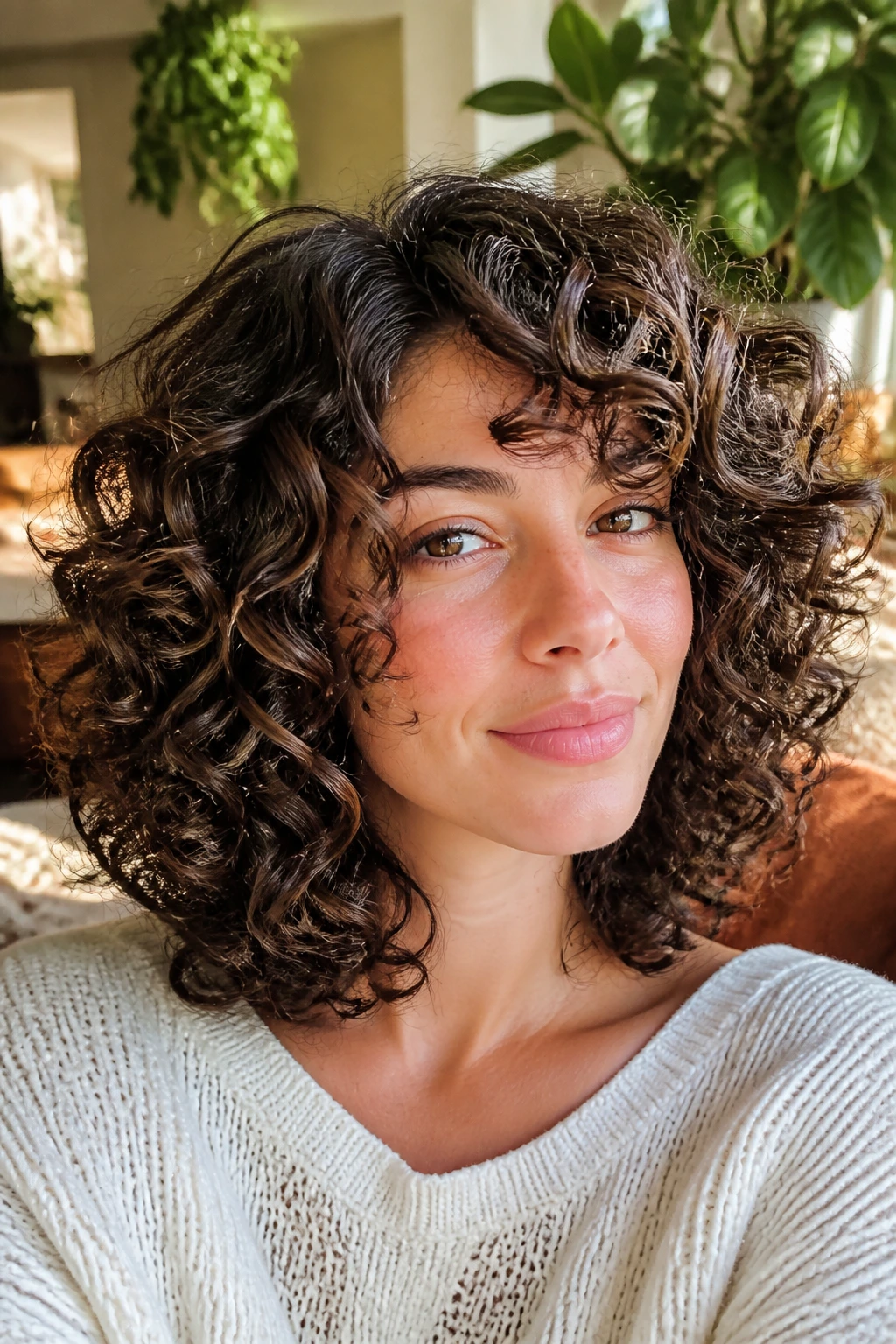
Curly thick hair needs a lob that respects the curl pattern. If the cut is done like straight hair, the shape usually turns into a pyramid, and nobody wants that. A curl-friendly lob is often cut with the curl in mind, sometimes dry, sometimes curl by curl, so the stylist can see how the hair sits when it dries.
The length should usually stay a little longer than you think, because curls spring up. The perimeter still matters, but the internal shaping matters just as much. You want the curls to stack in a way that looks round and intentional, not puffy at the sides and flat on top.
What to ask for
Tell the stylist how you wear your curls most days. Diffused? Air-dried? Brushed out? That answer changes the cut. A lob can look great on thick curls, but only if the haircut is designed for the texture that actually lives on your head.
17. Wavy Lob

Wavy hair and a lob length can do a lot of the work for you. The hair is long enough to fall in a soft bend, but short enough that the wave pattern doesn’t get dragged out by sheer weight. That balance is why the wavy lob feels so easy when it’s right. The cut gives the texture room to show up.
This version usually looks best with a perimeter that is tidy but not severe. A little softness at the ends lets the wave land naturally, especially around the shoulders. If the haircut is too blunt and the wave is strong, you can get that awkward flip-out on the bottom. If it’s too layered, the wave can look fuzzy. The sweet spot is somewhere in the middle.
A light wave cream, a diffuser, or even just a rough air-dry with a touch of serum can be enough. You’re not forcing shape. You’re letting the cut catch the texture that already exists.
18. Tuck-Friendly Lob
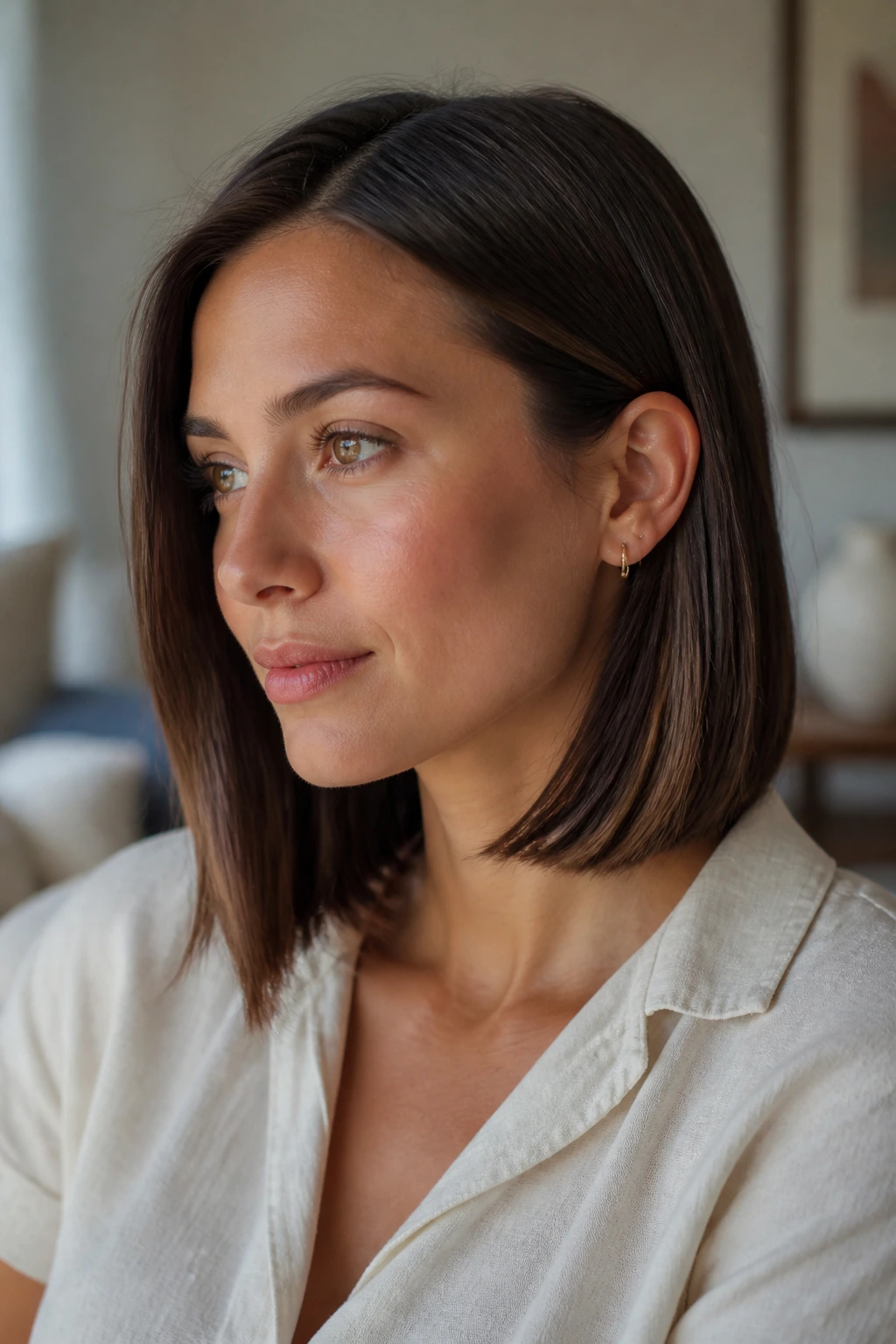
A lob that disappears behind the ear is underrated. Thick hair often gets bulky right at the jawline when it’s tucked, and that can make one side puff out in a way that looks accidental. A tuck-friendly lob keeps the corners softer, the front a little longer, and the weight distributed so the hair sits flatter when you push it back.
This cut is useful if you wear earrings, glasses, or one-sided tucks often. It also helps when you want the hair off your face but do not want to tie it up. The style stays neat enough to look intentional, which is harder than it sounds with dense hair.
A subtle curve at the front helps here. Too blunt, and the tuck can create a little ledge near the ear. Too many short layers, and you lose the clean line. The goal is easy, not fussy.
19. Hidden Debulk Lob
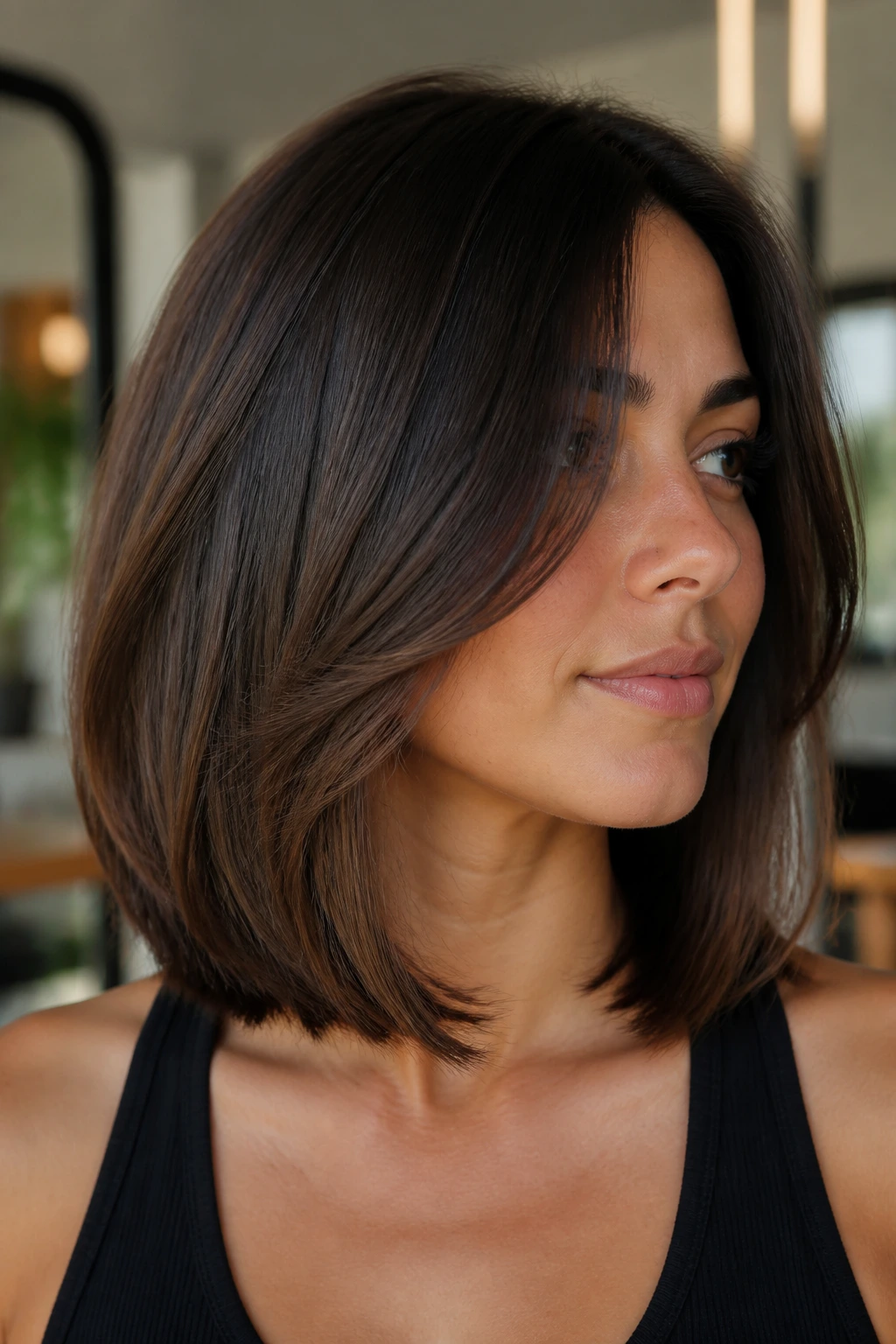
The most useful thick-hair lob is often the one that hides its debulking. This cut keeps the outside shape strong, but the stylist removes weight from underneath—sometimes with internal layers, sometimes with careful debulking, and in some cases with a hidden underlayer. The result is hair that feels lighter without looking chopped up.
That’s a lifesaver if your hair is dense from root to tip and tends to swell in humidity. A hidden-debulk lob keeps the top looking smooth while giving the bottom somewhere to go. It also reduces that heavy, shelf-like feeling thick hair gets when the entire length is cut to one dense block.
This is the version for people who are done wrestling with puffiness. Not done with fullness. That’s different. Just done with the bulk sitting in the wrong place.
How Thick Hair Changes the Lob Shape
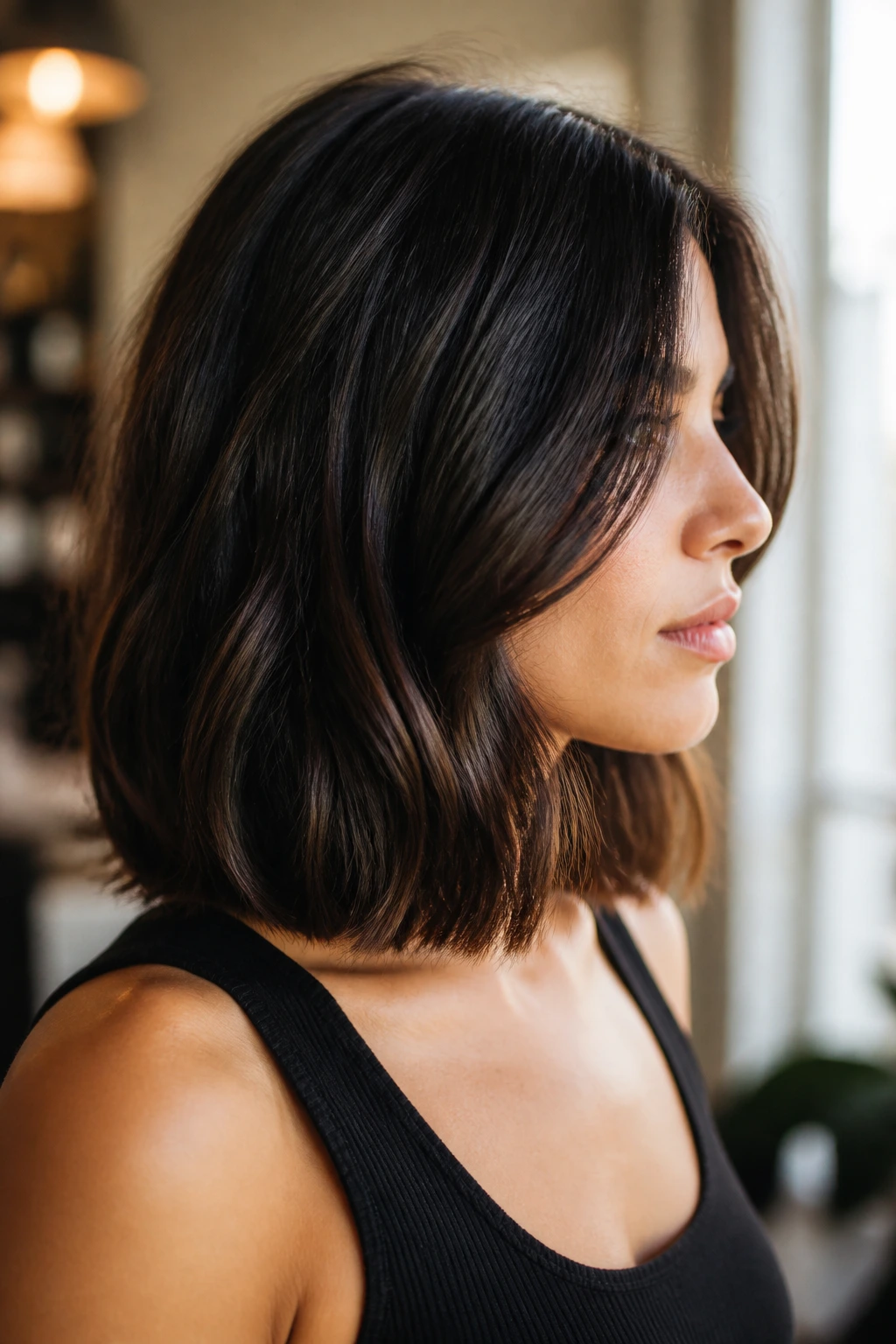
Thick hair is not one thing. Density, strand width, wave pattern, and growth direction all change how a lob behaves, and that’s why the same haircut can look clean on one person and boxy on another. A collarbone lob on thick straight hair can read sleek and heavy in a good way. The same cut on coarse wave can kick out at the shoulders and look wider than it should.
The collarbone is a useful landing zone because it gives the hair room to bend around the body instead of stopping hard at the jaw or hanging long enough to weigh itself flat. That said, shoulder contact matters more than most people realize. If the ends land right on the widest part of the shoulder, they tend to flip. A quarter inch above or below can change the whole look.
Perimeter first, then weight
The outer line of the cut tells the eye what shape to see. Internal layers decide how the hair sits underneath that line. Thick hair usually needs both, but in different amounts. A blunt perimeter with a bit of hidden weight removal is often cleaner than a lot of visible layering, especially if you want a lob that still feels full.
When fullness helps
Thick hair can hold shape better than most people expect. That’s why blunt and glass lobs work so well on it. The density gives the haircut structure. You are not trying to make the hair look thin. You are trying to make the shape honest.
How to Brief Your Stylist Without Talking in Circles

Bring photos, yes. But bring the right photos. A picture of a model with fine hair pretending to be thick hair is not useful, and a photo with a totally different curl pattern can send everyone on a wild goose chase. Show one or two looks you like, then point to the parts that matter: the length at the front, the amount of layering, the fringe, the texture.
Be specific about where you want the hair to land. Say collarbone, top of shoulder, just below the shoulder, or grazing the chest. “Long bob” is too vague when you have thick hair. The difference between one inch and two inches can change whether the ends flip or lie down.
A few phrases help a lot:
-
“Keep the perimeter strong.” That tells the stylist you want shape, not a shredded finish.
-
“Remove bulk underneath.” That’s a cleaner way to ask for internal debulking if your hair is dense.
-
“I wear it mostly straight / wavy / curly.” That tells them how the cut needs to live outside the salon chair.
And mention your problem spots. Cowlick at the nape? Hair that blows outward at the shoulders? Part that won’t stay put? Those details matter more than most haircut buzzwords.
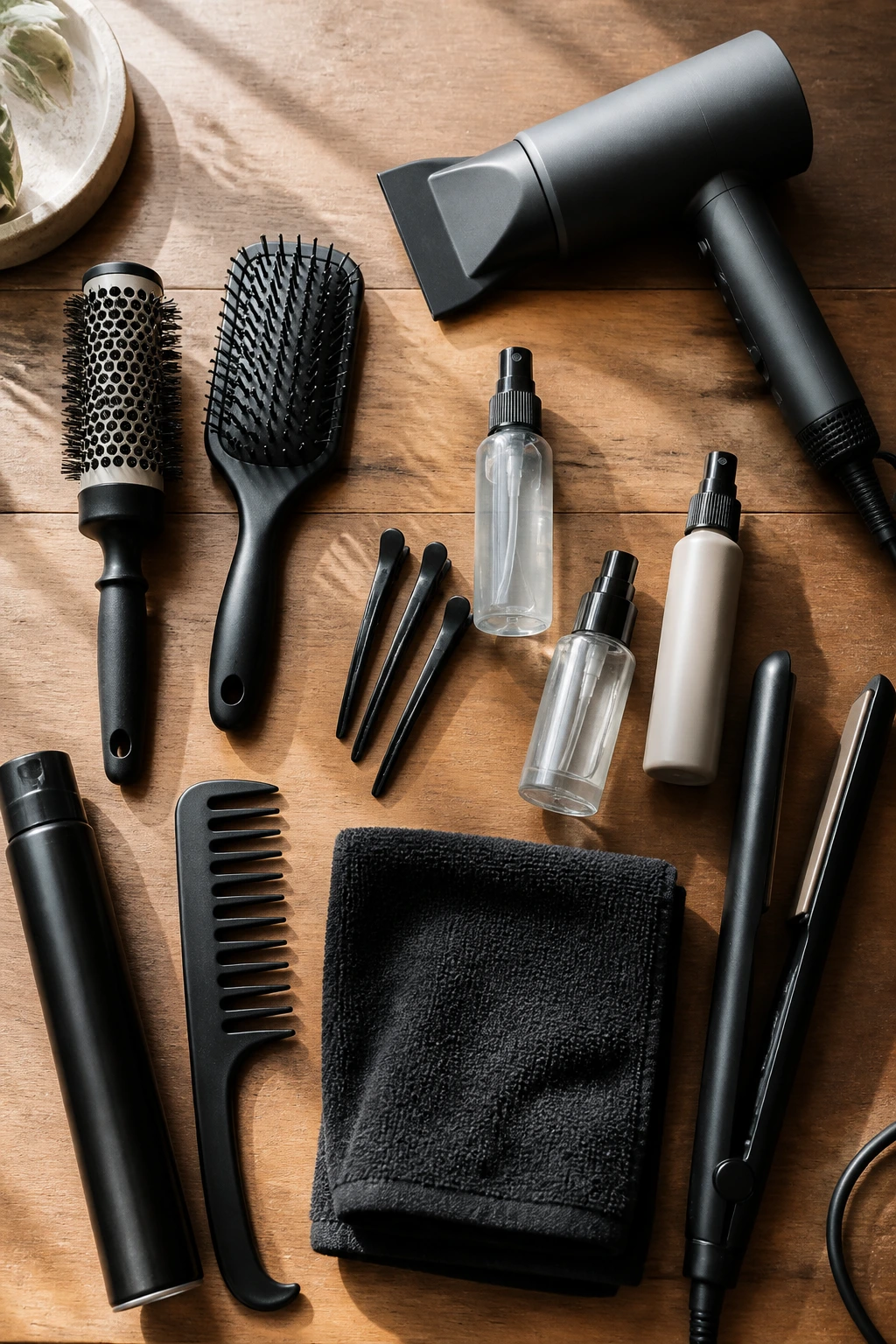
Tools That Make Styling a Lob Easier
-
Blow dryer with a nozzle attachment — The nozzle narrows airflow so you can direct thick hair into the shape you want instead of blasting it into frizz.
-
Medium round brush, about 1¼ to 1¾ inches — This size bends the ends under without making the lob look over-curled.
-
Paddle brush — Useful for smoothing a blunt or glass lob fast, especially when you want the cut to look flat and clean.
-
Sectioning clips — Thick hair gets unruly fast if you try to dry it all at once. Clips keep the sections orderly.
-
Heat protectant spray or cream — Mandatory if you flat iron or blow-dry often. Thick hair can take heat, but the ends still dry out.
-
Light smoothing serum — A few drops on the mids and ends calm flyaways without flattening the whole cut.
-
Texturizing spray or dry shampoo — Handy for shaggy, French-girl, or wavy lobs when you want the shape to look lived in.
-
Wide-tooth comb — Better than a fine comb for detangling thick hair when it’s wet and fragile.
-
Microfiber towel or T-shirt wrap — Cuts down on rough drying and keeps the surface from puffing up before you style it.
-
Flat iron with rounded edges — Optional, but useful if you want a sleek bend instead of a pin-straight finish.
Smart Styling Moves That Stop the Triangle Effect
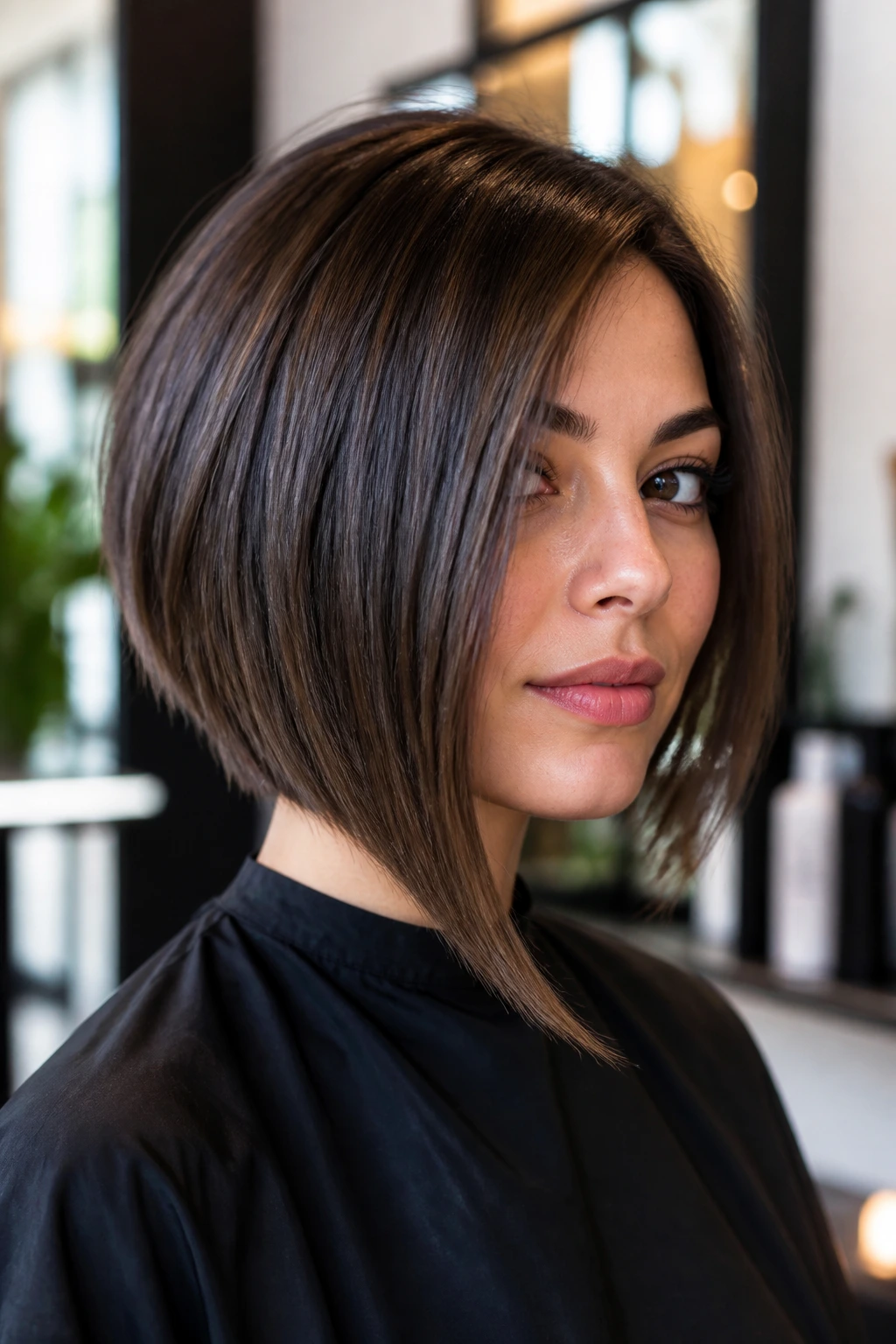
Blow-dry direction matters. Start at the roots and aim the nozzle downward along the hair shaft, then work the ends last. If you blast thick hair upside down for too long, you get root lift and bottom puff at the same time. Cute on a shag. Not so cute on a blunt lob.
Product placement matters too. Put smoothing cream or serum from the mid-lengths down, not at the roots. Thick hair often needs moisture, but the roots usually need movement, not weight. Too much product at the top kills the shape and makes the cut look flat in a greasy way.
Use the shoulders as a guide. If the ends are kicking out, bend them under with a round brush or a quick pass of a flat iron. Don’t keep piling on more spray. The cut usually needs direction, not more product.
Day two is its own job. Mist the ends lightly, re-bend the front pieces, and revive the crown with dry shampoo if needed. Thick hair can still look good between washes, but it needs a little structure back. A lob that is left to do nothing on day two starts looking bigger than you meant.
Common Mistakes That Make Thick-Hair Lobs Puff Out
-
Cutting the length right at the shoulder line — The ends hit the body and flip outward. Ask for the line a little above or below the shoulder so the hair has room to sit.
-
Layering too high around the chin — The haircut gets wide at the face and loses the clean lob shape. Keep the shortest layers lower if your hair is dense.
-
Using thinning shears like a shortcut — Too much thinning can leave fuzzy, see-through ends that frizz the minute humidity shows up. Internal weight removal is cleaner when it’s done carefully.
-
Ignoring your natural part and growth pattern — If your hair wants to part one way or kick at the nape, a cut that fights it will never sit right. Work with the pattern instead of pretending it doesn’t exist.
-
Going too short in the front if your hair is coarse — Coarse thick hair often needs more length in the front to hang properly. A front piece that looks cute in the mirror can sit like a helmet once it dries.
-
Saturating the hair with heavy oils — Thick hair does need moisture, but too much oil at the root or top can make the whole shape collapse. Keep the richer products down at the ends.
Variations and Alternatives for Different Routines
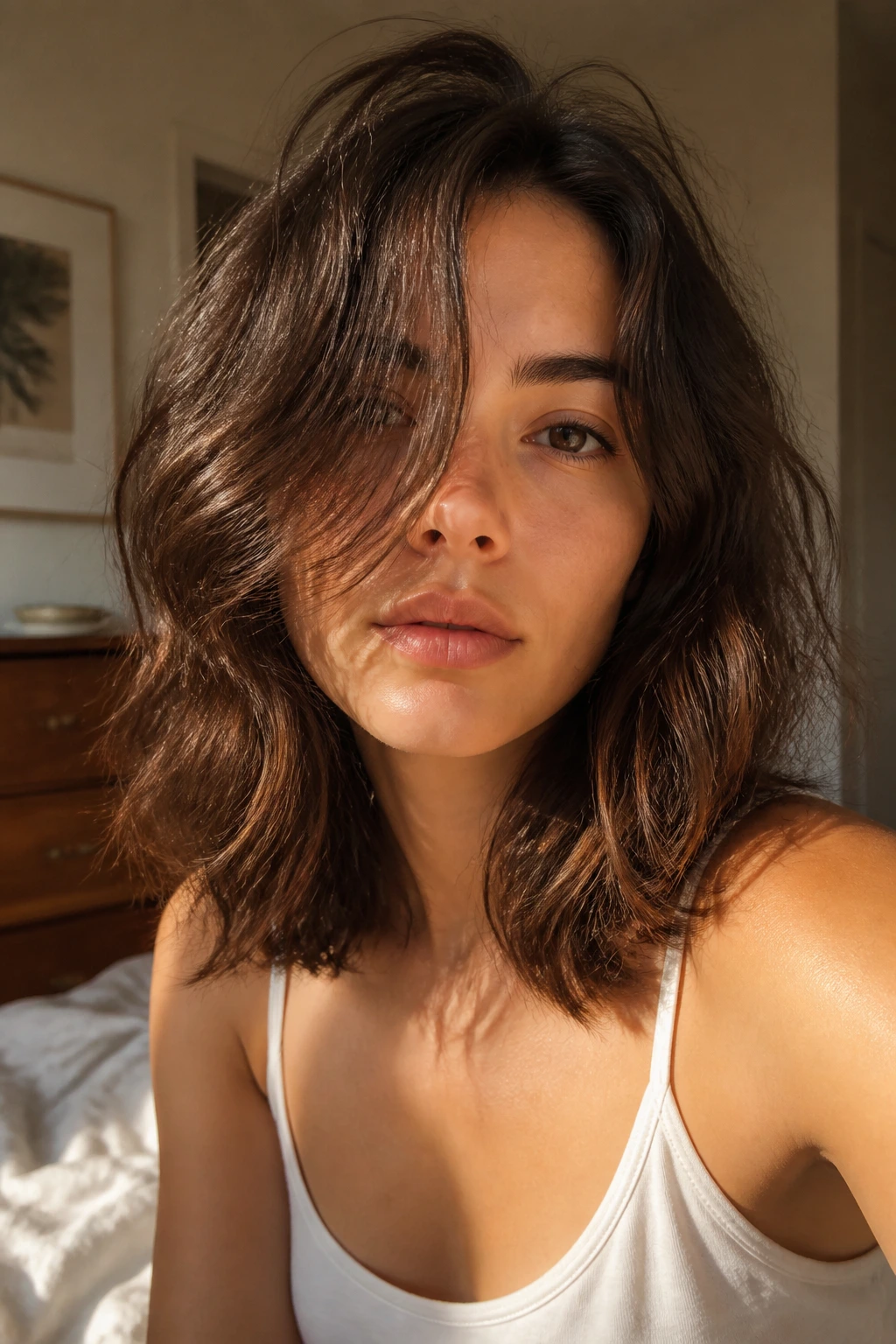
The Air-Dry Lob
Keep the perimeter soft, the layers long, and the fringe minimal. This version relies on natural texture and a small amount of curl cream or leave-in conditioner. It’s the easiest choice if you hate heat tools and your hair already dries into a decent wave.
The Polished Blowout Lob
Ask for a blunt or rounded perimeter with subtle internal shaping, then style it with a round brush and heat protectant. This is the most controlled version of the lob, and thick hair often looks especially rich in this finish because the line has weight.
The Curl-First Lob
For curly hair, have the cut shaped around the curl pattern instead of around a straight baseline. Keep the length long enough to account for shrinkage, and let the perimeter stay a little softer. This prevents the dreaded triangle and gives curls a rounder, more balanced body.
The Fringe-Forward Lob
Curtain bangs, bottleneck bangs, or soft face-framing fringe all fall into this camp. It’s the right move when your face feels swallowed by dense hair and you want the haircut to bring attention upward.
The Extra-Dense Lob
This one is for very thick hair that still feels heavy after a standard lob. Hidden underlayers or careful internal debulking lighten the shape without removing the visible fullness. It’s a smart fix when the hair keeps expanding at the bottom no matter what you do.
Care, Trims, and Maintenance
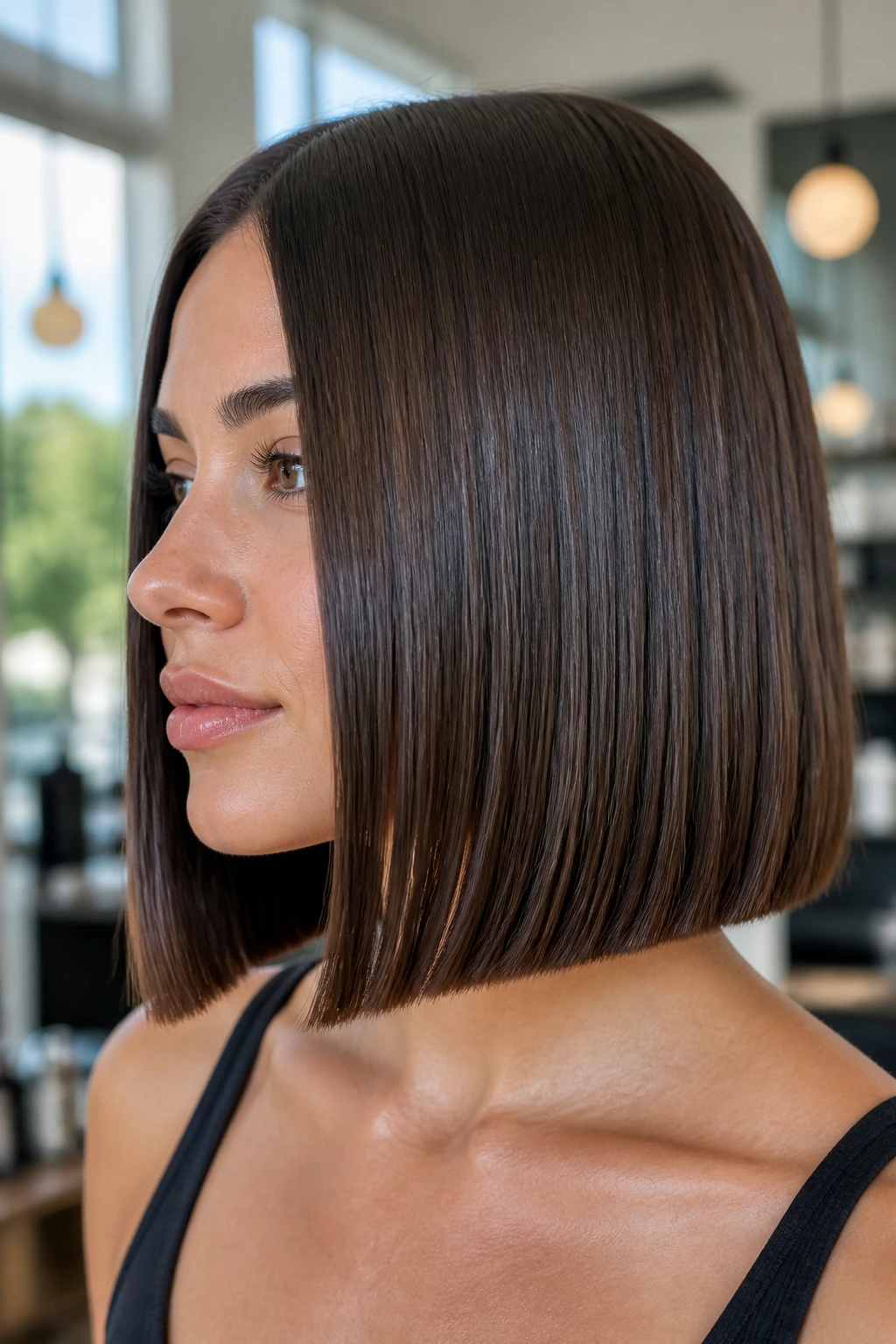
A blunt or glass lob usually wants a trim every 6 to 8 weeks if you want the outline to stay sharp. Thick hair shows split ends faster in those styles because the line is part of the whole effect. Once the ends go frayed, the haircut loses its clean edge.
Layered, shaggy, or face-framing lobs can go a little longer, often around 8 to 12 weeks, because the cut is softer by design. Bangs are a separate story. Curtain or bottleneck fringe often needs a small trim every 3 to 5 weeks if you want it to sit where it should instead of getting in your eyes and losing shape.
Sleeping habits matter more than people like to admit. A silk or satin pillowcase reduces roughness at the ends, and a loose low braid or a soft scrunchie can keep thick hair from turning into a knot ball overnight. If your lob is sleek, don’t go to bed with damp hair. It bends in weird places and can keep that bend for half the morning.
Product buildup can weigh thick hair down fast, especially if you use dry shampoo, texture spray, or a smoothing cream all in the same week. A clarifying shampoo every 2 to 4 weeks helps keep the lob from looking dull and waxy. Follow that with a conditioner just on the mids and ends, not the roots. The cut stays cleaner, and the shape behaves better.
Frequently Asked Questions

Which lob length is best for very thick hair?
Collarbone length is usually the safest place to start because it gives the hair enough weight to fall neatly without hanging so long that it drags and flattens. If your hair is especially dense or coarse, a cut that sits just above or just below the collarbone can be easier to control than one that ends exactly at the shoulder.
Is a blunt lob or a layered lob better for thick hair?
A blunt lob is better if you want a dense, polished line and your hair already has enough movement on its own. A layered lob works better if the hair feels heavy, bulky, or triangular. The right answer depends on whether your main problem is too much width, too much weight, or too little shape.
Will a lob make my thick hair look poofy?
It can, but only if the layers start too high or the cut lands right on the shoulder line without a plan. Thick hair puffs when it has nowhere to settle. If the stylist controls the perimeter and keeps the bulk in the right places, the lob usually looks more balanced, not bigger.
Can curly thick hair wear a lob without turning into a pyramid?
Yes, but the cut needs to follow the curl pattern instead of being carved like straight hair. A curl-specific lob should leave enough length for shrinkage and remove weight where the curls stack too wide. Dry cutting or curl-by-curl shaping often helps a lot.
How often should I trim a thick-hair lob?
If the shape is blunt or glassy, plan on every 6 to 8 weeks. Softer layers can last closer to 8 to 12 weeks. Bangs may need their own smaller trim between full haircut appointments, because fringe shows length changes fast.
Should I ask for thinning shears?
Only if the stylist knows exactly why they’re using them. Heavy-handed thinning can leave thick hair frizzy and see-through at the ends, especially in humidity. Internal debulking, point cutting, or careful slide cutting is often cleaner when the goal is shape, not just less hair.
What if my lob flips out at the ends?
That usually means the length is landing right on the shoulder or the cut has too much bluntness at the bottom. You can fix part of it by styling the ends under with a round brush or flat iron, but the real fix is often a small length adjustment at the next cut.
Can I still put a thick lob into a ponytail?
Usually, yes, but you may need a low ponytail, a half-up style, or a small claw clip instead of a high, tight one. Face-framing layers and bangs can make it easier to pull the hair back without it looking severe. If ponytail flexibility matters a lot, tell the stylist before they cut.
The Right Lob
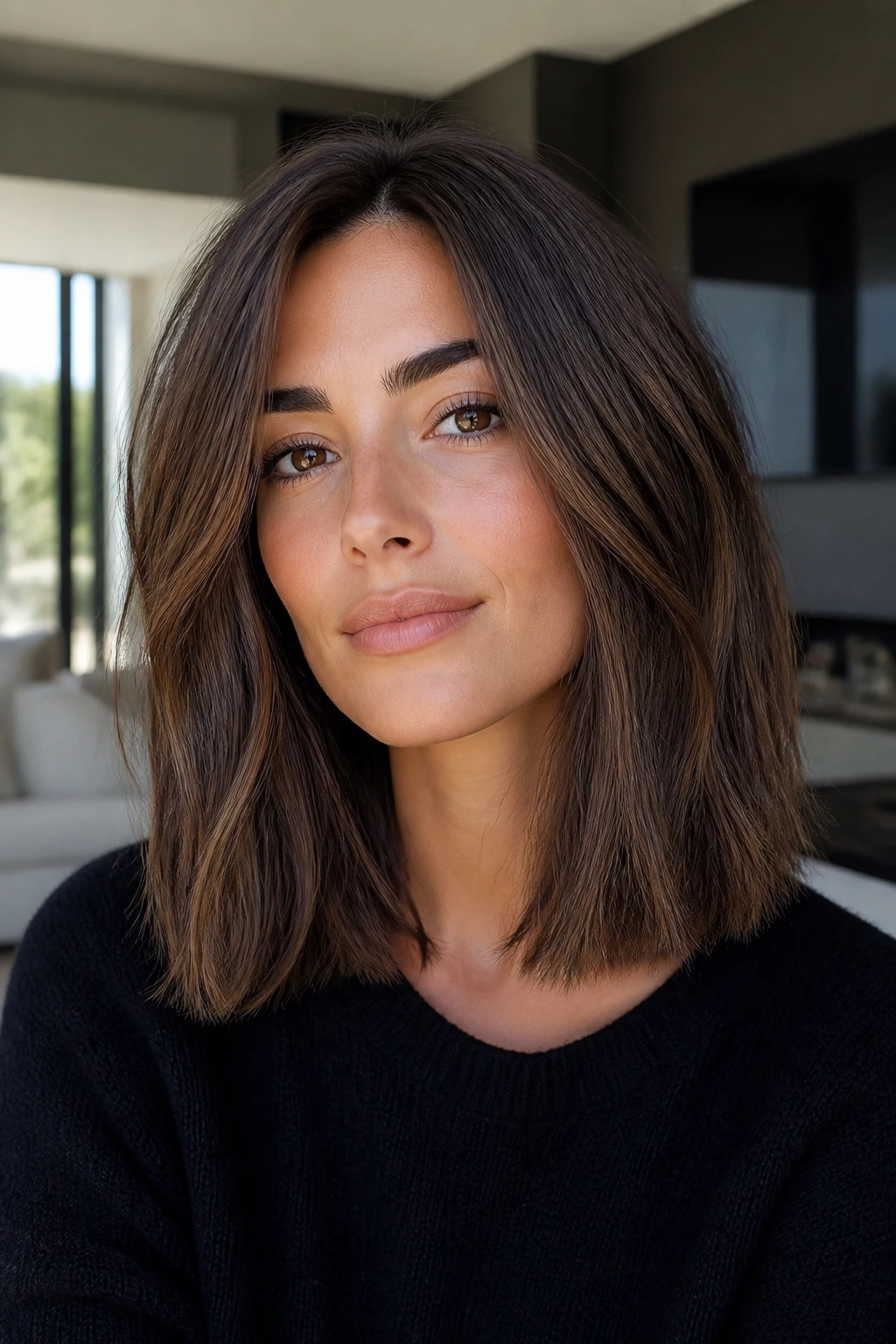
Thick hair does not need to be battled into submission. It needs a shape that respects the weight, the shoulders, and the way the ends actually move. A lob gives you that middle ground: enough length to feel like hair, enough structure to keep it from swallowing your face.
The best version is the one that matches your routine. If you like sleek and clean, go blunt or glassy. If you like movement, lean layered or shaggy. If your hair has a mind of its own, use bangs, internal layers, or a careful angle to steer it. Bring good photos, say where you want the length to land, and let the cut do some of the work for once.
