



A clean shave at the nape can change a bob more than another inch of length ever will.
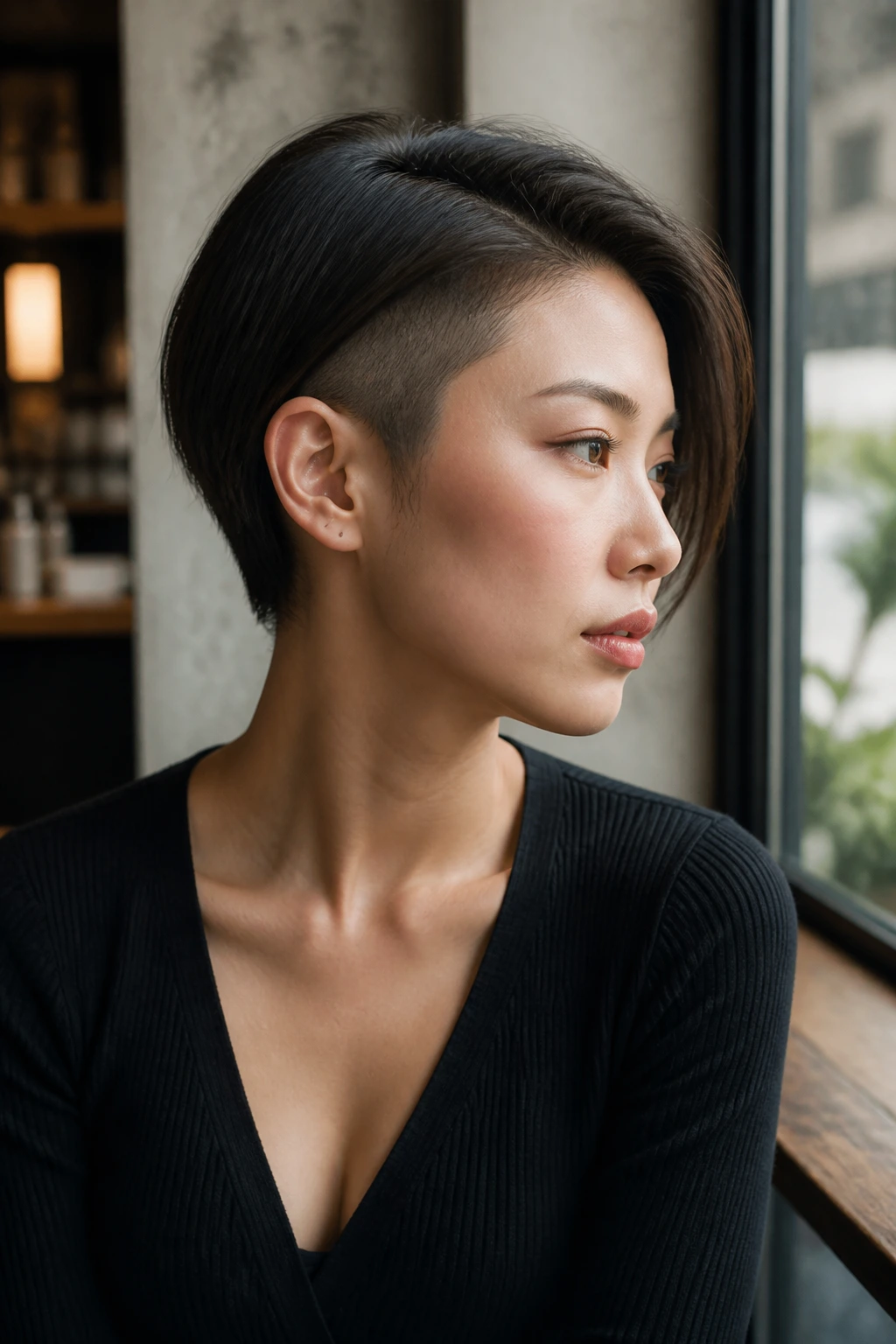
That is the quiet trick behind so many undercut styles for Asian women: remove the heavy hair where it piles up, keep the visible outline where it matters, and let straight, glossy strands do the rest. On dense hair, a half-inch of clipper work can stop the whole shape from ballooning at the collar. On finer hair, the same move can make the top fall flatter and feel lighter without looking choppy.
And the range is bigger than people expect. A hidden nape shave, a temple cut, a two-block shape, a soft mullet, a blunt buzz — they all live in the same family, but they behave very differently on the head. Placement matters. So does the guard length, the neckline, and whether you want the undercut to disappear when your hair is down or announce itself the moment you tuck it behind one ear.
Why These Cuts Earn Their Keep
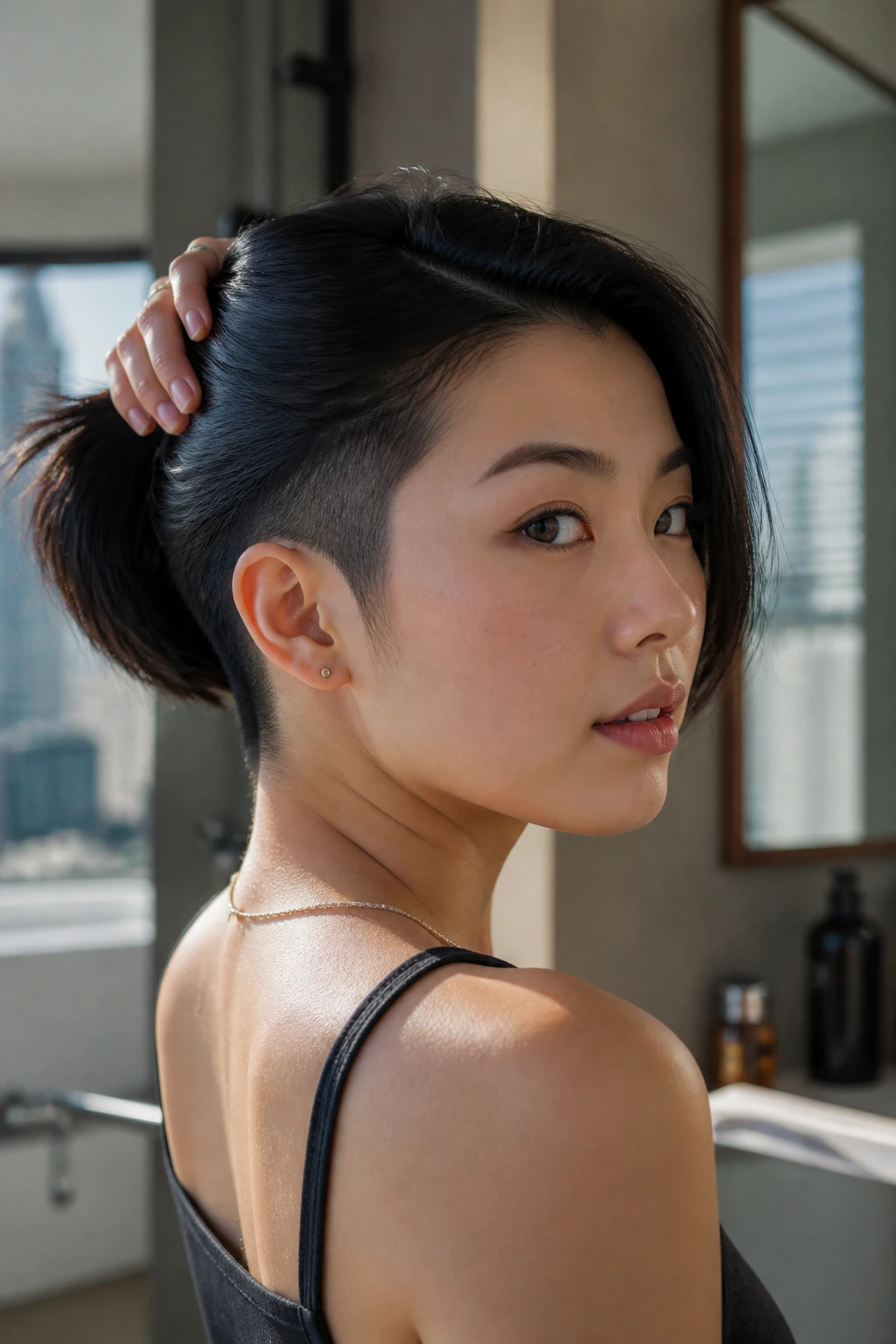
- Bulk Control: Taking out hair under the top layer removes the puff that straight, dense hair builds at the collar and behind the ears.
- Shape Without Sacrifice: You can keep chin length, shoulder length, or even long hair on top while changing the silhouette underneath.
- Sharp Contrast: Dark hair makes a clipped section read clean and deliberate, even when the shave is only a few millimeters long.
- Easy Grow-Out: Low nape and temple shaves hide under longer layers far better than a high skin fade.
- Style Range: The same cut can look neat at work, then feel bold the second you pin one side back.
1. Hidden Nape Undercut
A hidden nape undercut is the quietest way to steal bulk from thick, straight hair. Keep the shave below the occipital bone and ask for a rounded neckline, not a hard square corner. When the rest of the hair is down, the cut disappears; when you wear a low ponytail or a claw clip, the neck gets a little breathing room.
This is the version I’d point to first for anyone nervous about commitment. It changes the feel of the haircut without changing the front. On dark hair, even a #2 guard can make a heavy bob sit flatter at the back.
2. Temple Undercut
The temple undercut trims the dense triangle right in front of the ear, which is exactly where glasses, earrings, and tucked hair start to crowd each other. It keeps the side profile cleaner without exposing the whole side of your head. If your hair flares when you tuck it back, this little shave solves the problem fast.
Ask your stylist to blend the sideburn area softly so the grow-out doesn’t leave a blunt patch near the cheek. I like this shape on side parts and long bobs because it gives the face a little air without making the cut loud.
3. Ear-Pocket Undercut
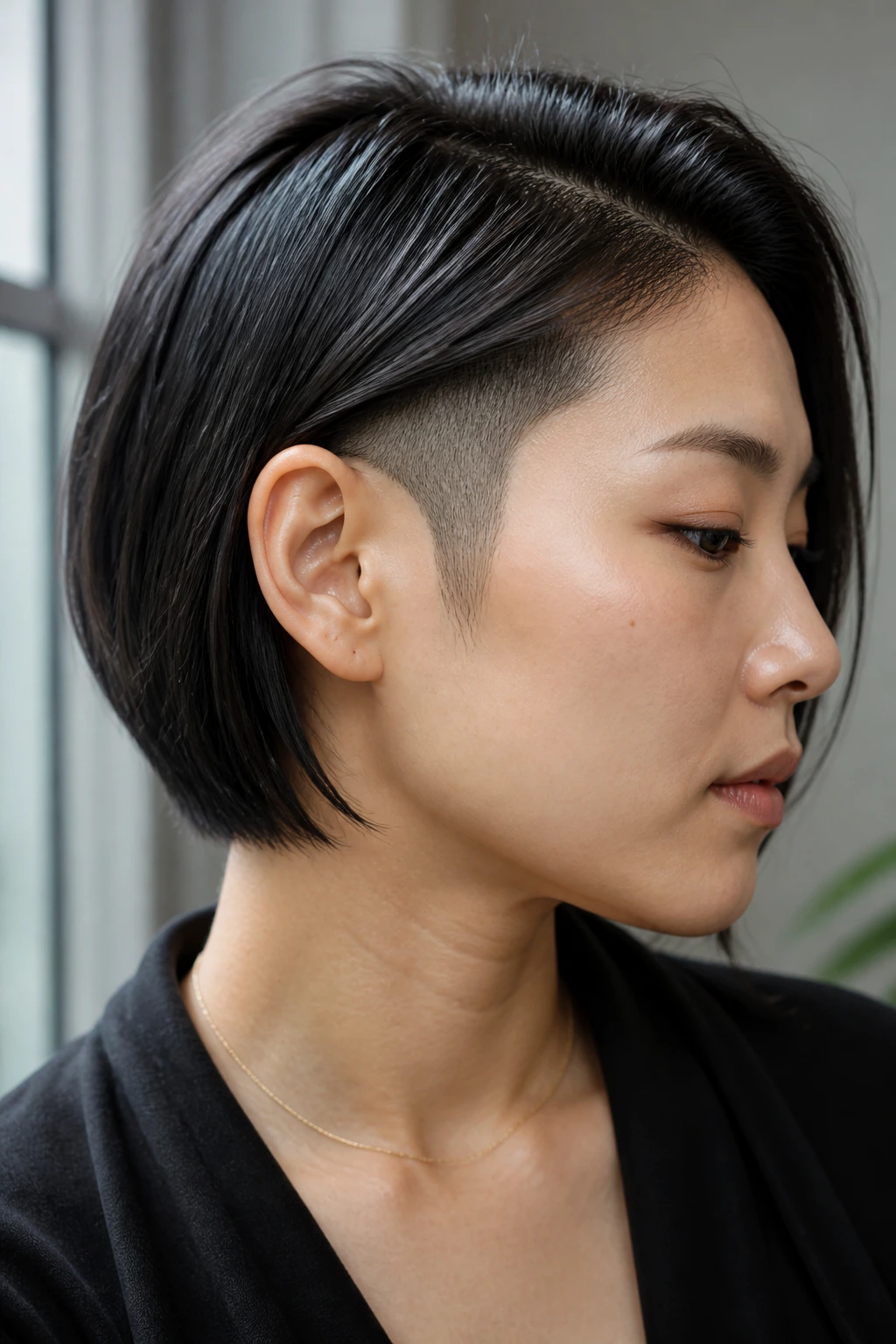
Think of the ear-pocket undercut as a small architectural fix. The hair behind the ear is clipped short in a crescent shape, so the side stops ballooning when wind hits it or when you tuck one side behind your ear. It is subtle enough for a conservative workplace, but it changes how the whole cut hangs.
This one is excellent for people who wear earrings a lot. The ear stays visible, the hair stops competing with the jawline, and the shape looks cleaner in profile. Keep the pocket low if you want it to stay hidden.
4. Two-Block Cut
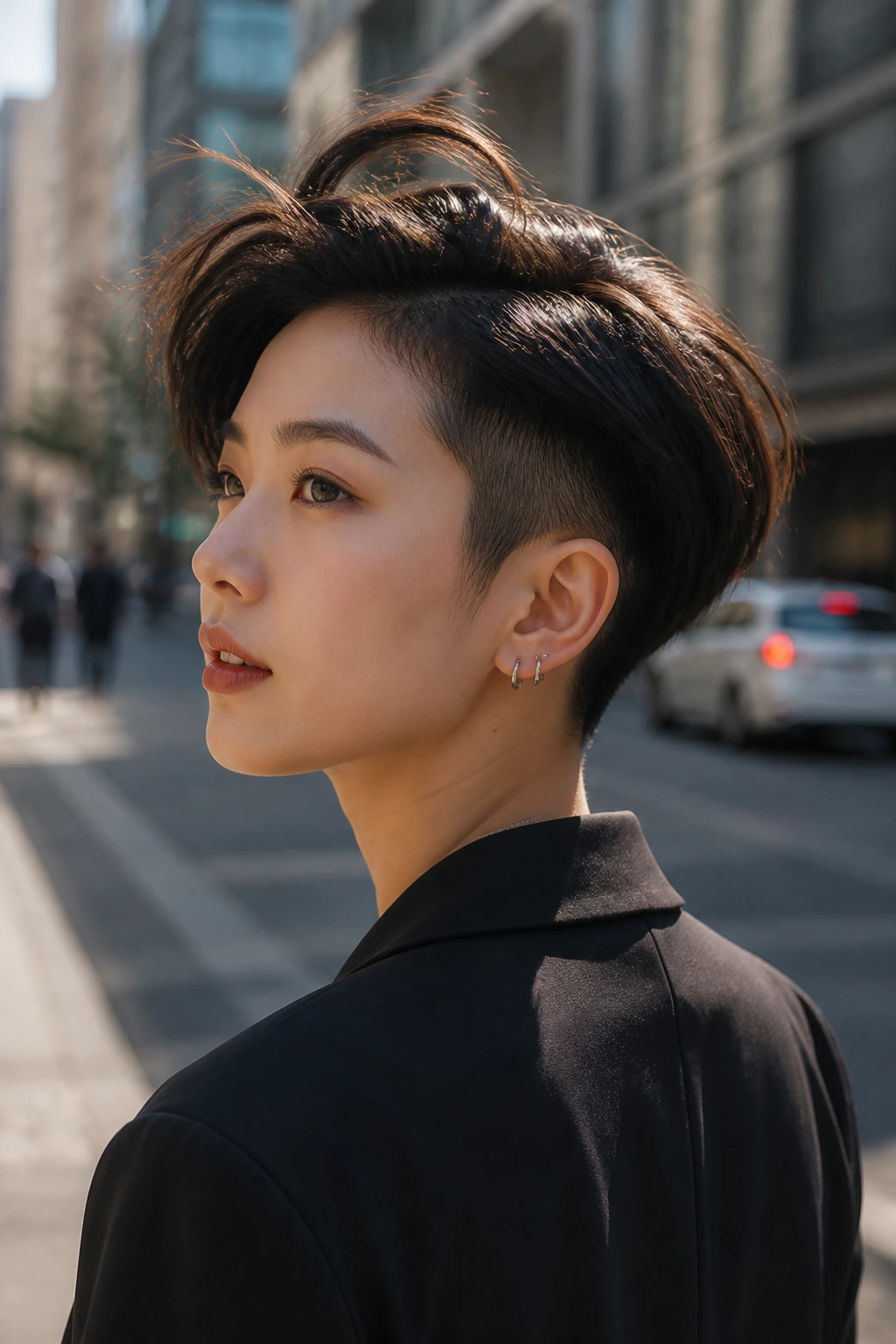
The two-block cut keeps the top heavy and the sides much shorter, which is why it works so well on dense hair that refuses to lie flat. The visible top still moves, but the lower half of the head stays controlled. On straight dark hair, the difference in length looks crisp without needing a lot of product.
- Top length: usually 3 to 6 inches, depending on how much movement you want.
- Sides and back: clipped short or tapered to remove weight.
- Best use: wear it parted, swept, or pushed back when you want the contrast to show.
If you like a cut that changes shape when you tuck it behind the ear, this is one of the best places to start.
5. Internal Bob Undercut
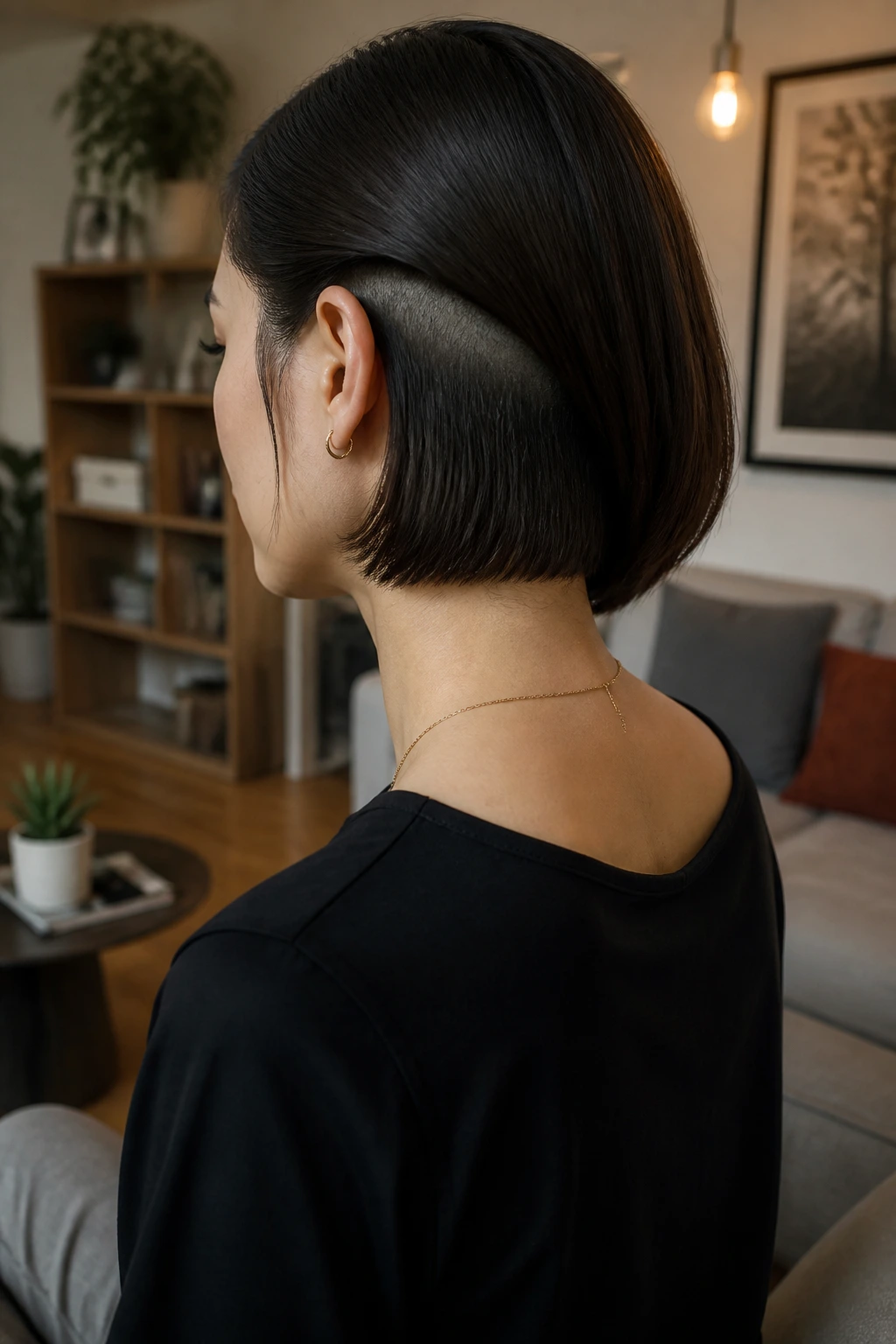
This is the fix for the bob that looks boxy by lunchtime. The outer line stays blunt and polished, but the hidden underlayer is removed so the bob drops closer to the head instead of puffing outward. That’s the whole trick. Nothing fancy. Just smart weight removal.
Ask for the perimeter to stay solid. If the stylist thins the visible edge too much, the bob can turn wispy and lose its clean line. The internal undercut should do the work quietly while the surface keeps its shape.
6. Curtain Bangs with Secret Shave
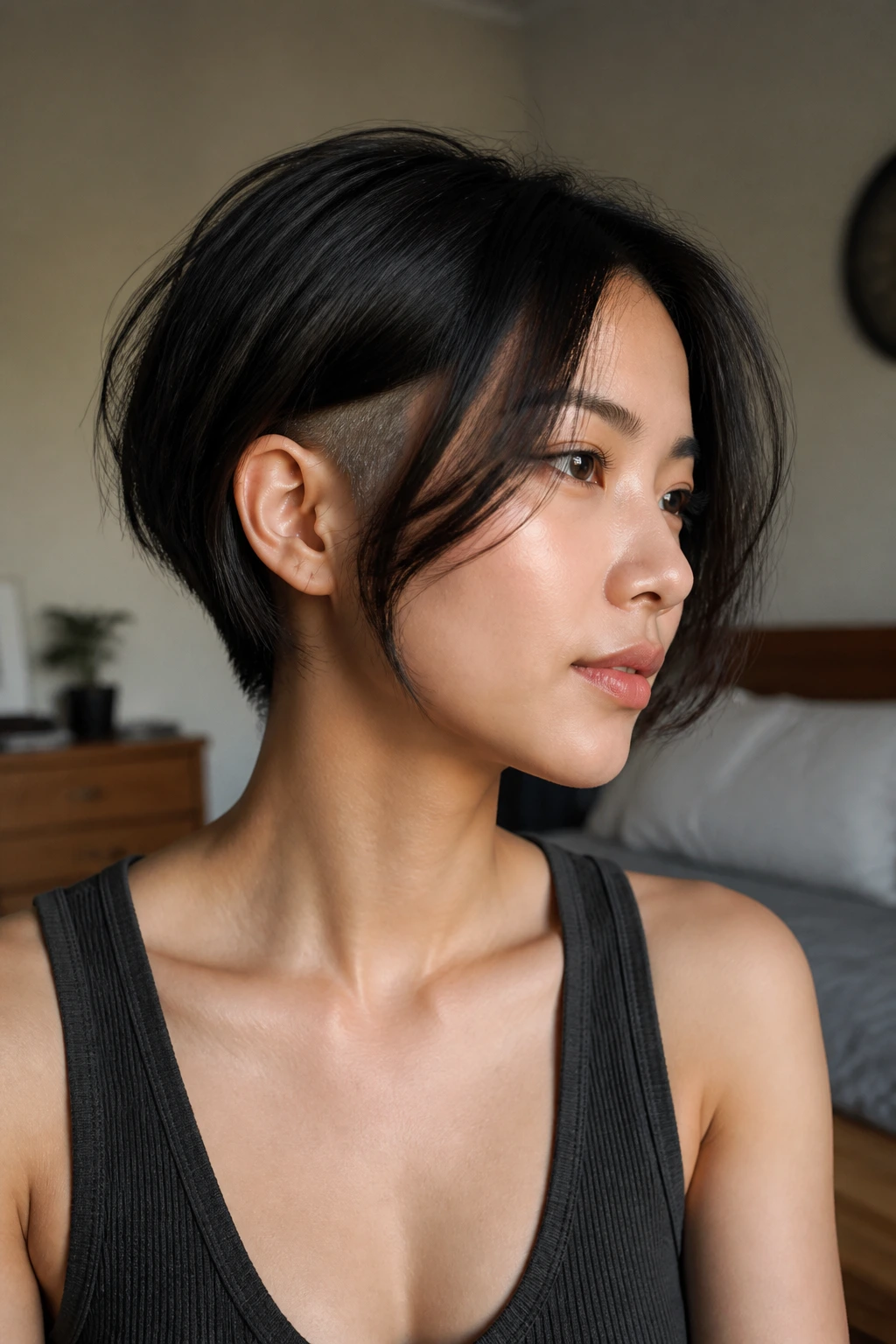
Want curtain bangs without the side bulk? Pair them with a hidden shave behind the ears and across the lower nape. The bangs get room to split and drape, while the rest of the cut stops collecting weight where it would otherwise sit heavy against the neck.
This is a good choice if you like soft movement in front but hate the feeling of hair crowding your jawline. Keep the shave low enough that it stays invisible when the bangs are out. The whole point is to keep the softness and lose the helmet effect.
7. Asymmetrical Bob with One-Side Shave
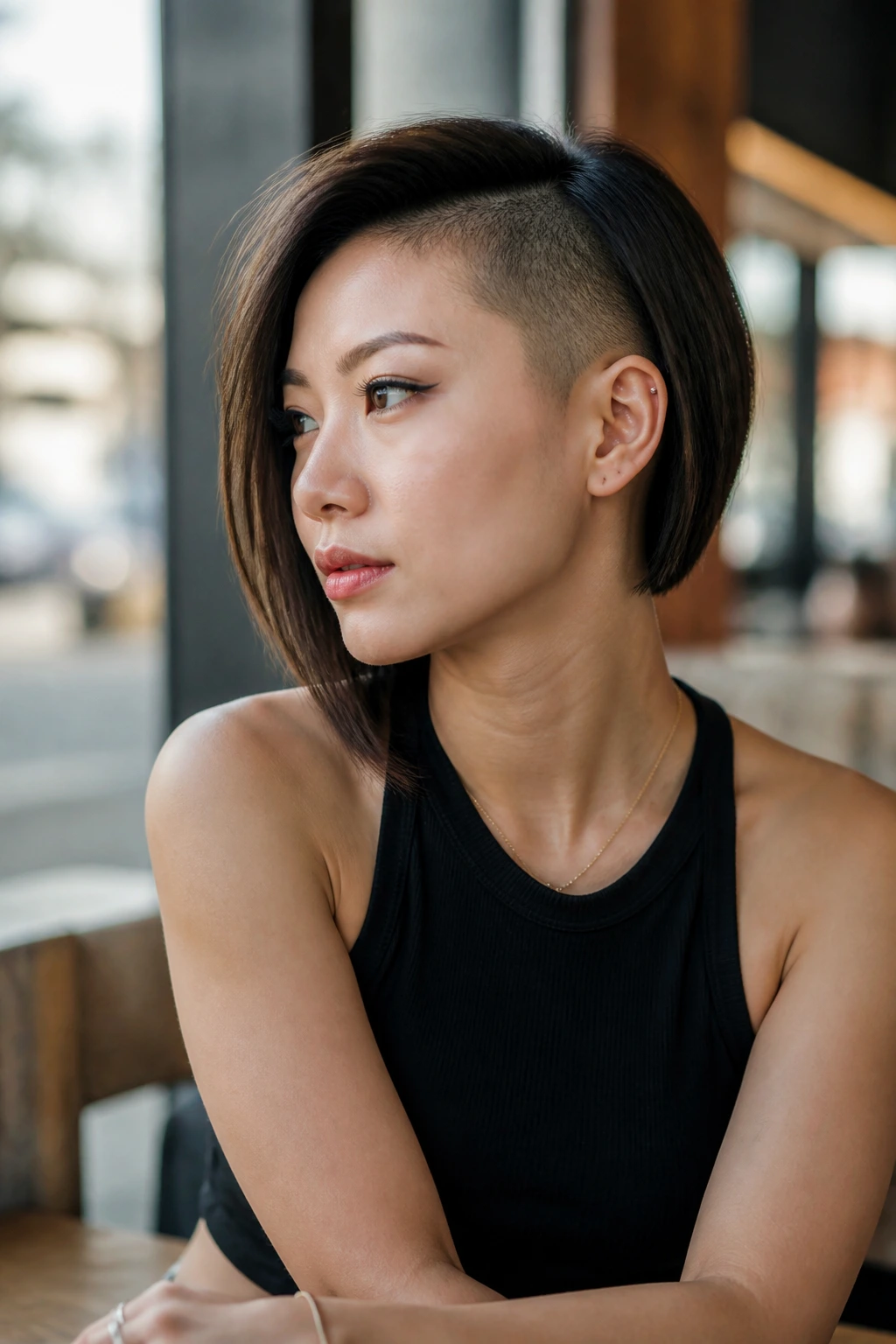
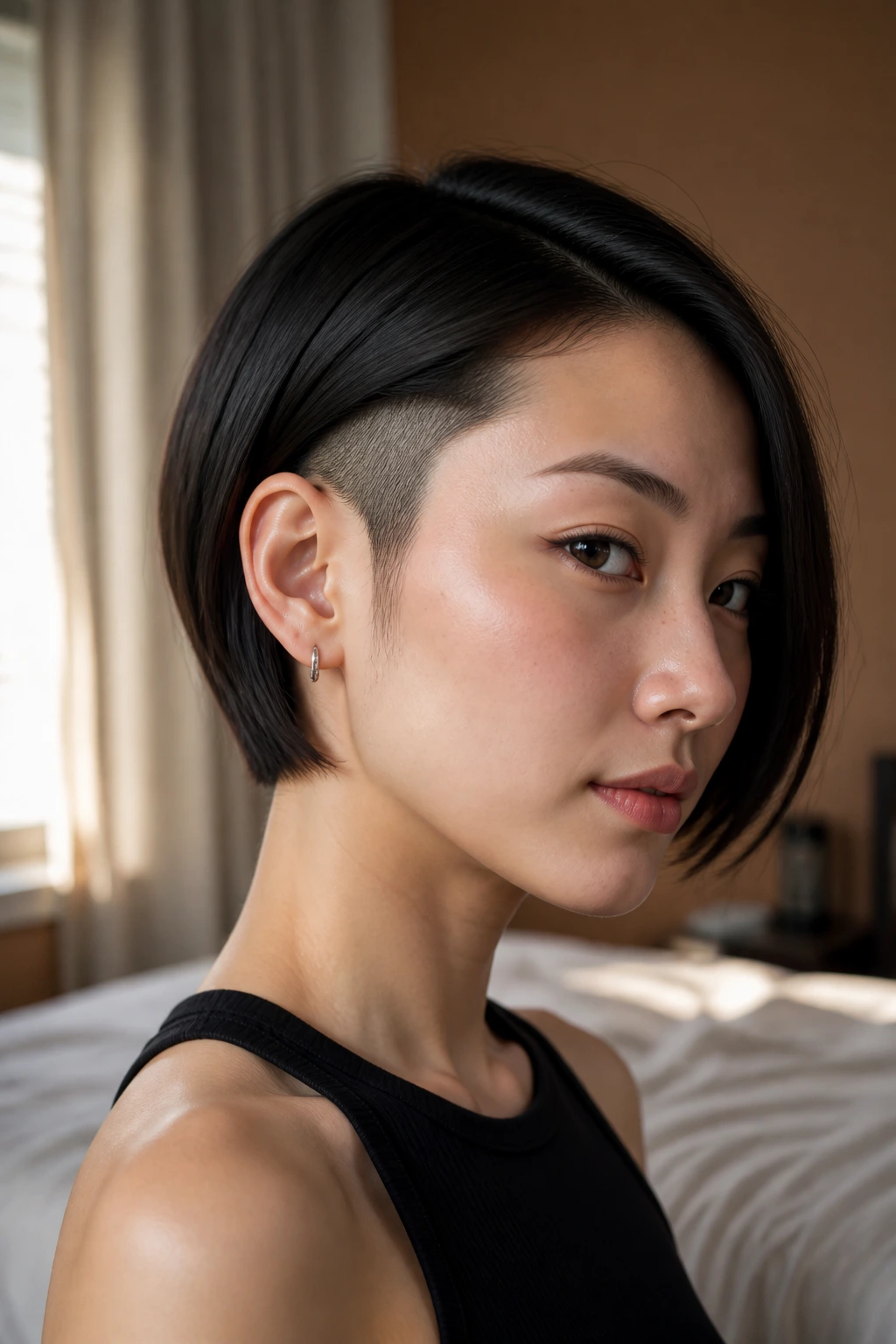
An asymmetrical bob with one side shaved gives you a strong angle from the first glance. One side stays longer and skims the jaw; the other side is clipped short enough to make the shape feel sharp. On straight hair, that contrast reads immediately.
This cut works because the longer side does the framing while the shaved side removes all the extra visual weight. It is especially nice if one side of your hair always fights the part line. Keep the longer side at chin length or a little below so the difference feels intentional, not accidental.
8. Pixie with Shaved Sides
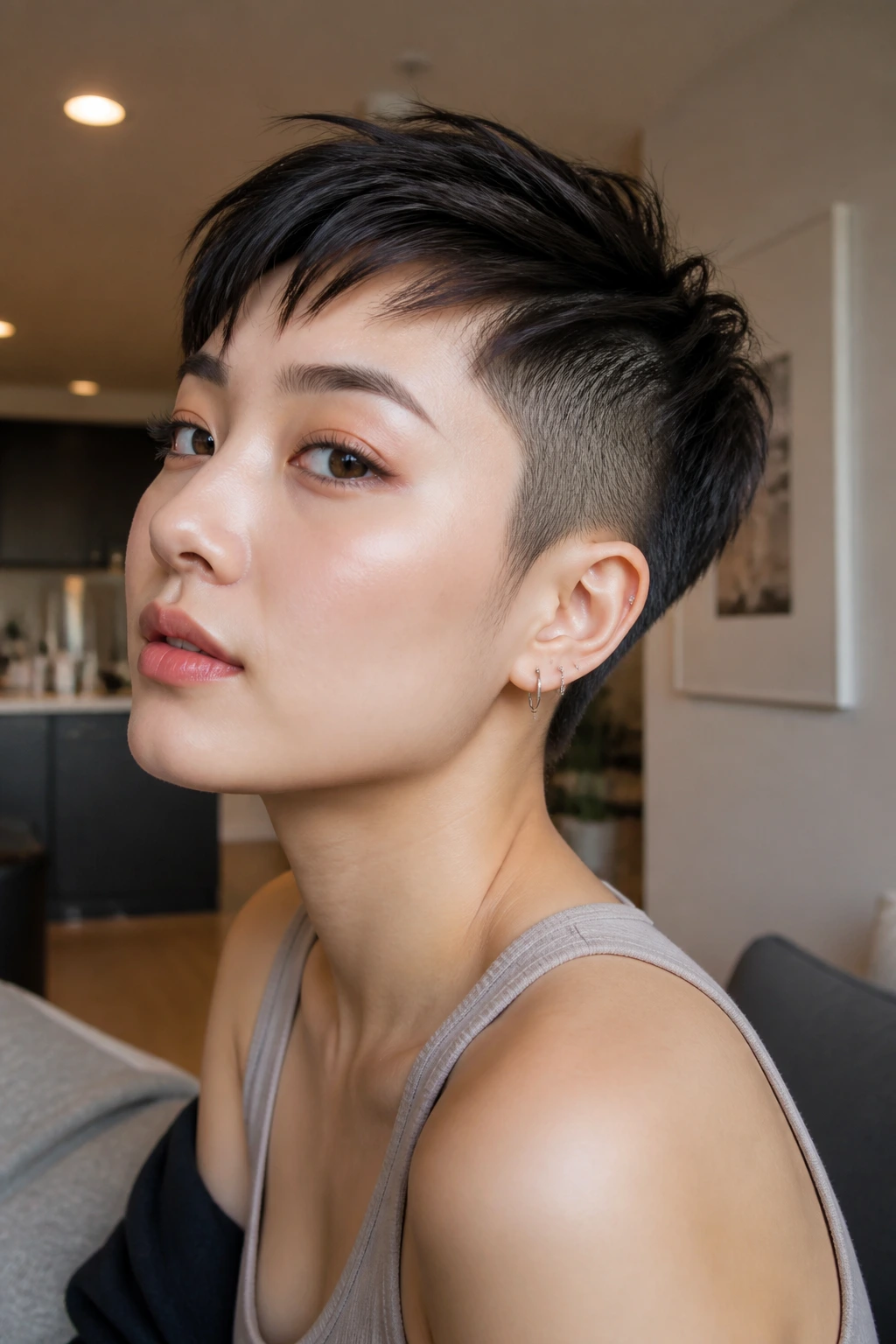
A pixie with shaved sides is the fastest way to open up the face without losing the softness of a top layer. The sides can be faded or clipped close, while the crown stays a little longer for texture and movement. On thick Asian hair, that top length keeps the cut from reading too severe.
I like this version when someone wants short hair but still wants a shape to style. The top can be swept forward, finger-combed to the side, or left messy with a dab of paste. Keep the sides soft if your hairline is very straight; a hard line can make the cut look harsher than intended.
9. Hime Cut with Hidden Undercut
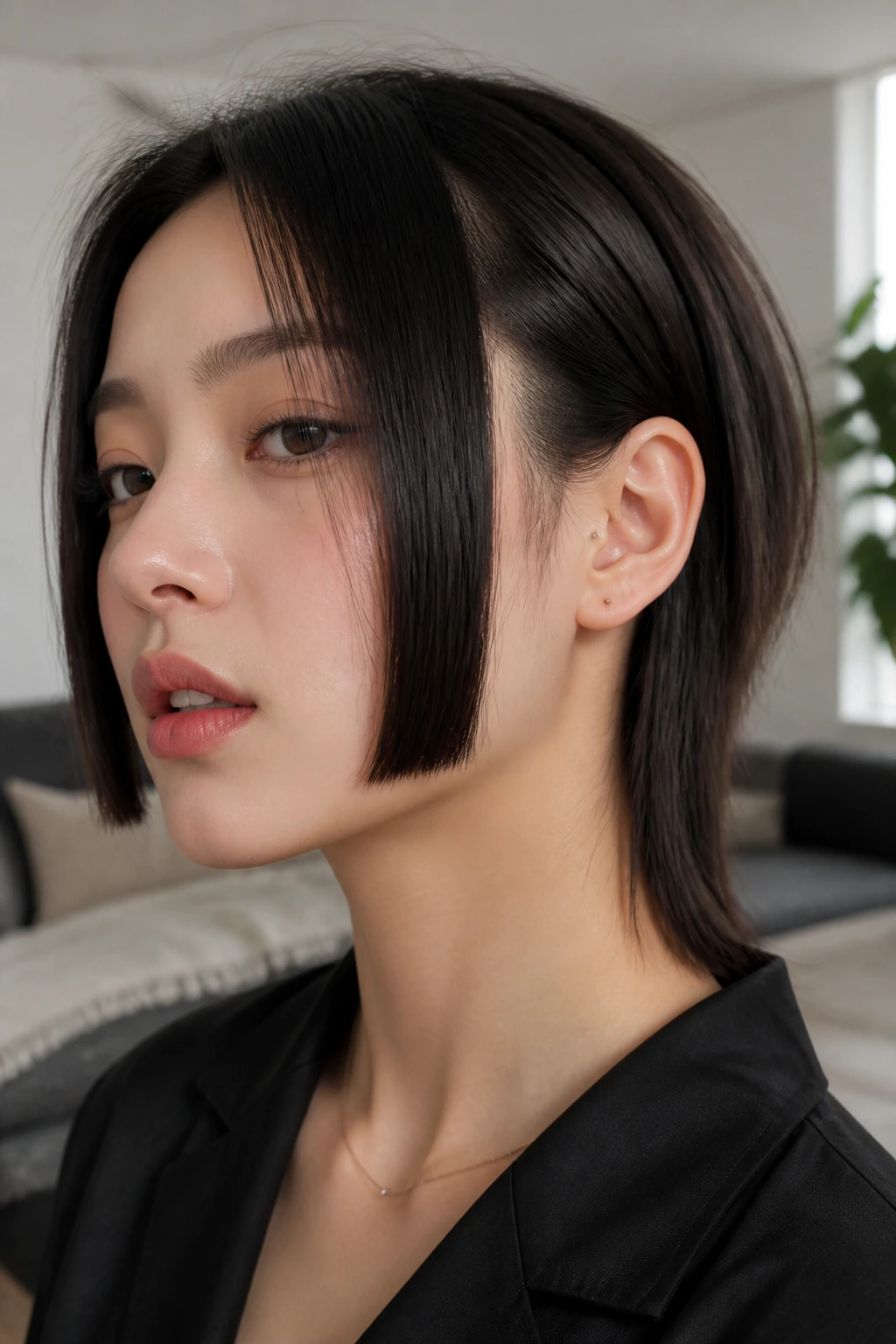
The hime cut depends on contrast: blunt cheek pieces, a straight fringe or center part, and longer lengths in back. A hidden undercut underneath keeps the lower section from puffing or flipping out, especially if your hair is dense and naturally smooth. That means the silhouette stays sleek instead of triangular.
This is a beautiful choice if you like clean edges and a more graphic shape. The undercut should not show in front; it just helps the long back layer fall better. Ask for the hidden shave to stay low so the face-framing pieces keep their crisp outline.
10. Soft Mullet
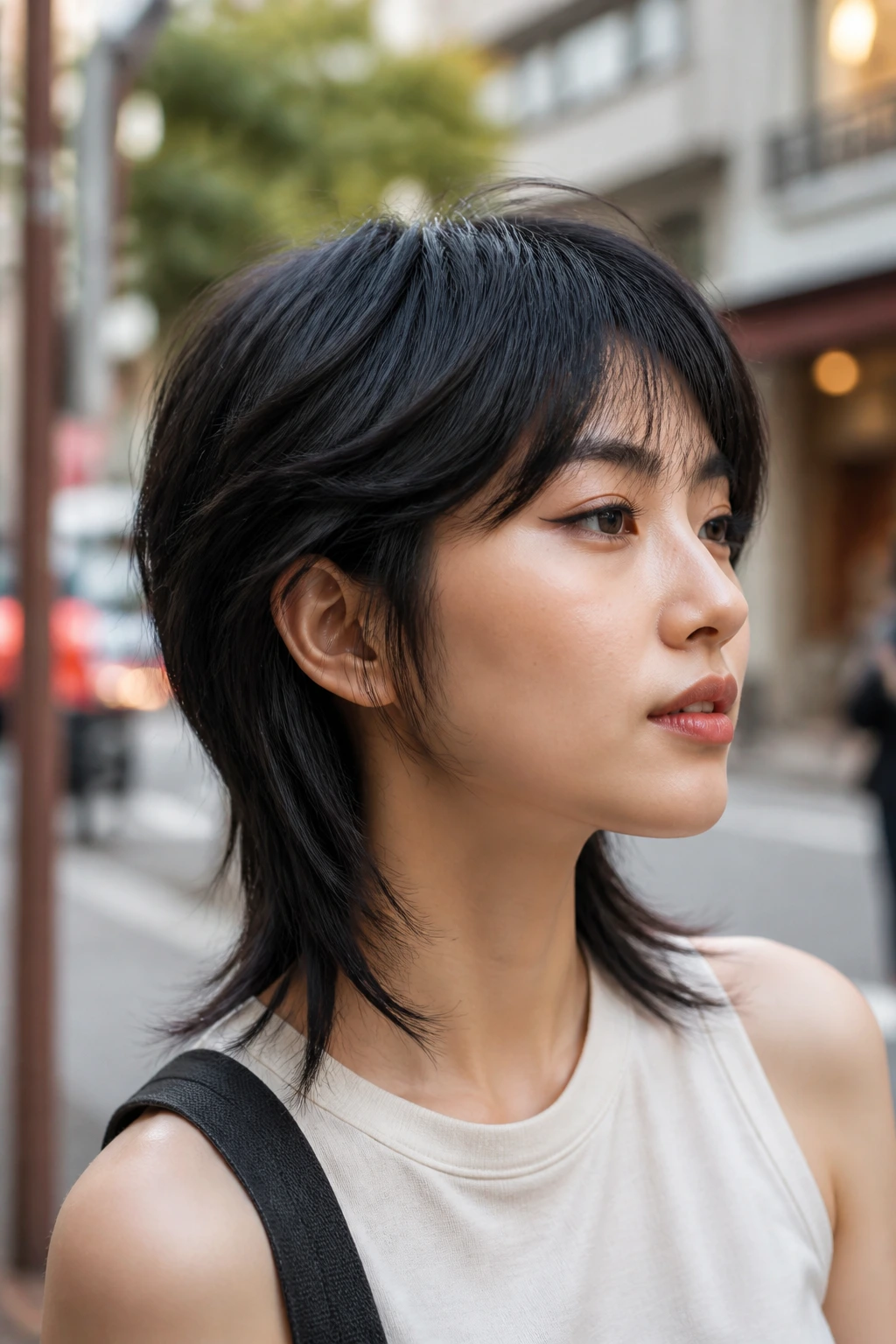
A soft mullet keeps the crown a little shorter, leaves the nape longer, and blurs the line between them with feathered layers. It sounds edgy, but the softer version is more wearable than people expect. The undercut element usually sits under the top layer, taking out weight that would otherwise make the back sit heavy.
This cut is good if you want movement without a lot of morning fuss. The top can be air-dried, scrunched, or blown back with a round brush. If your hair is very straight, ask for more texture at the crown and less at the ends so the shape doesn’t go flat.
11. Wolf Cut with Clean Nape
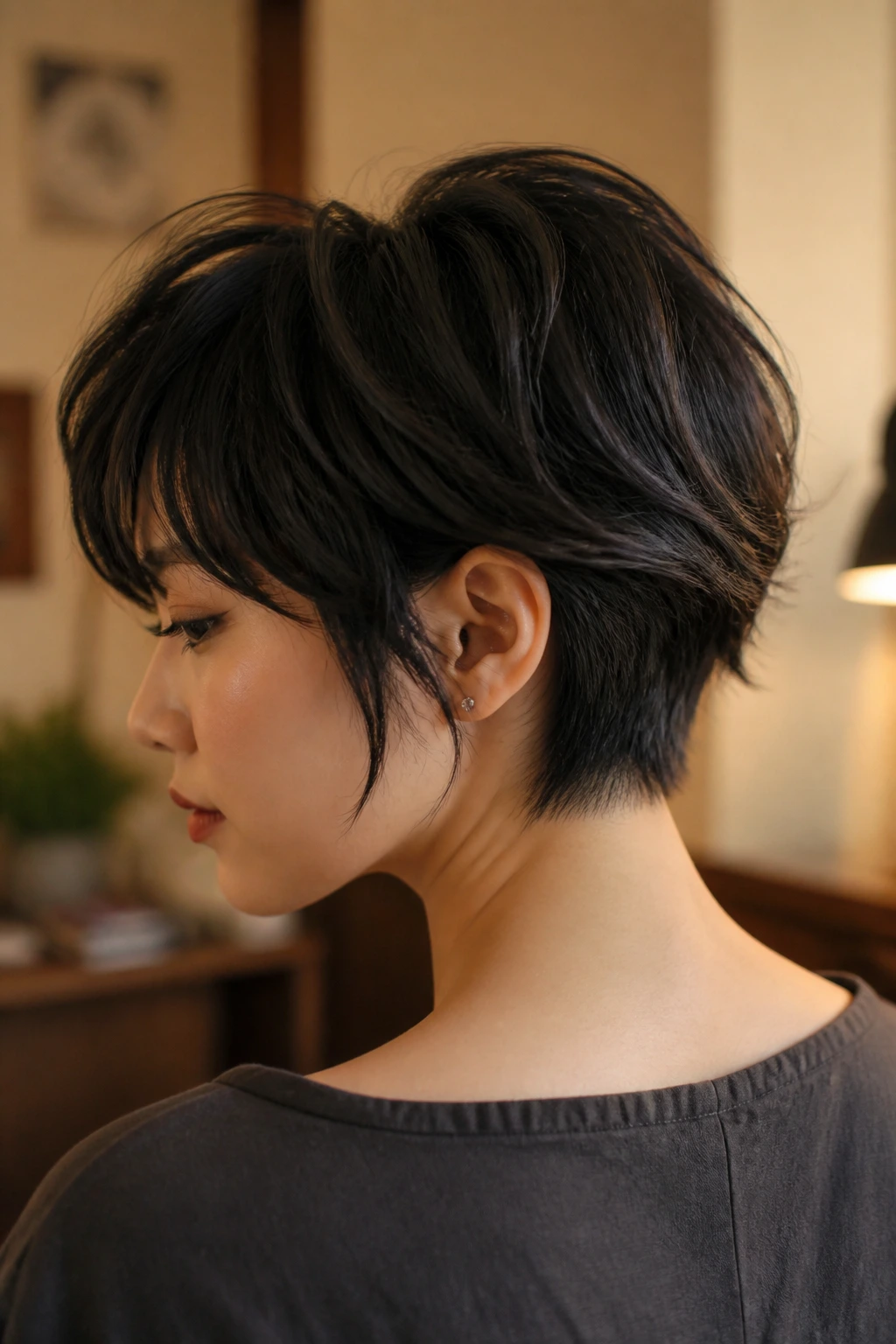
A wolf cut gets all the attention in the top half — choppy layers, volume, and movement — but the nape can turn into a thick shelf if the base is left alone. Cleaning out the lower back keeps the shaggy top from fighting the neckline. That small change makes the whole cut sit better.
This is one of those styles where a hidden undercut earns its keep. Without it, the back can look bulky even if the top is airy. With it, the layers move more freely, and the collar line feels lighter.
12. Shag with Underlayer Removal
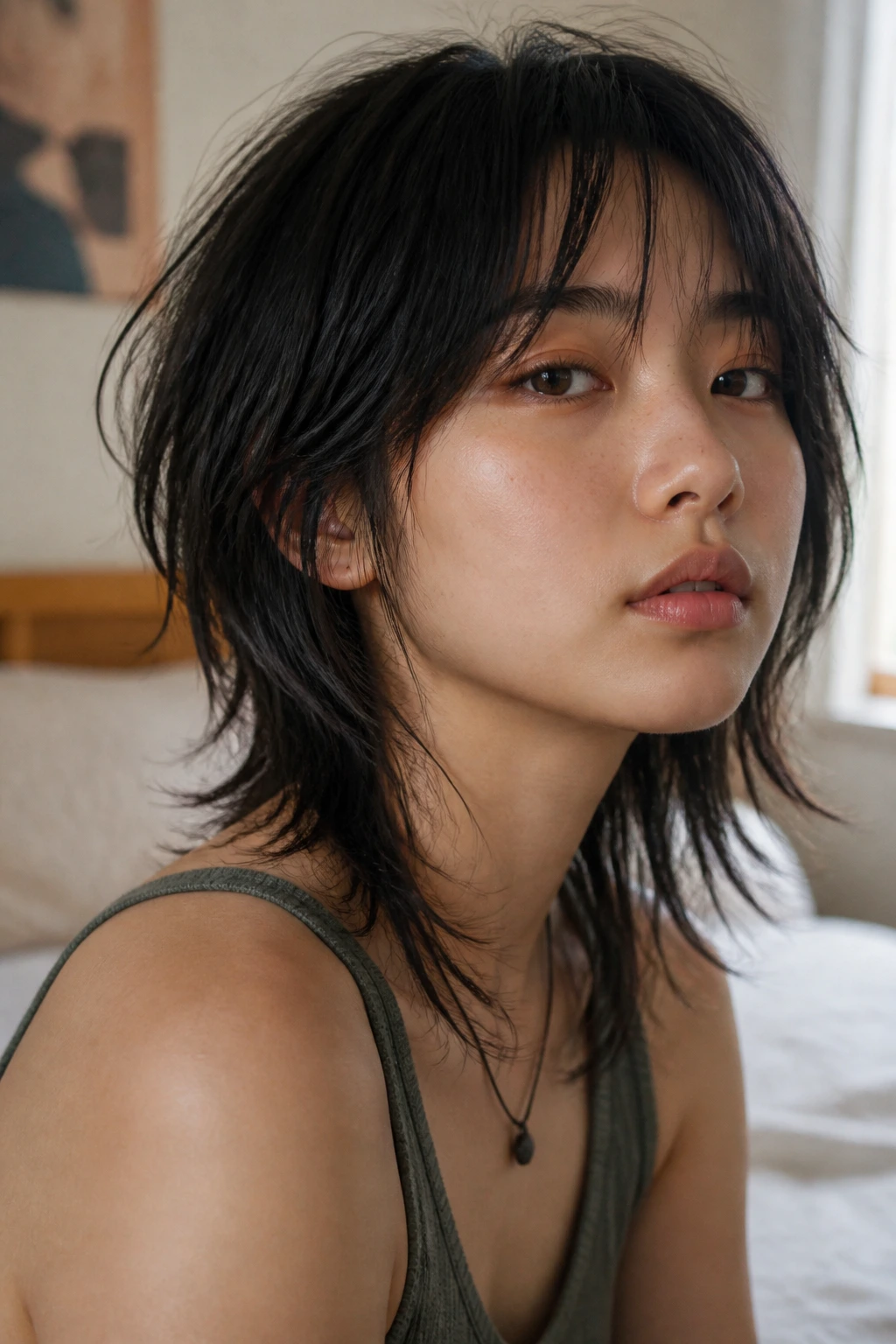
The shag is at its best when the layers move. On dense hair, though, the underlayer can hold too much weight and make the whole cut feel puffy around the ears and neck. Remove some of that hidden hair and the top starts to swing instead of sitting like a cap.
That’s why I like this version on straight or softly wavy Asian hair. You keep the relaxed, lived-in feel of a shag, but the silhouette stays closer to the head. If the ends get too thin, back off on the internal removal and keep the length a touch longer.
13. Curved V-Nape Undercut
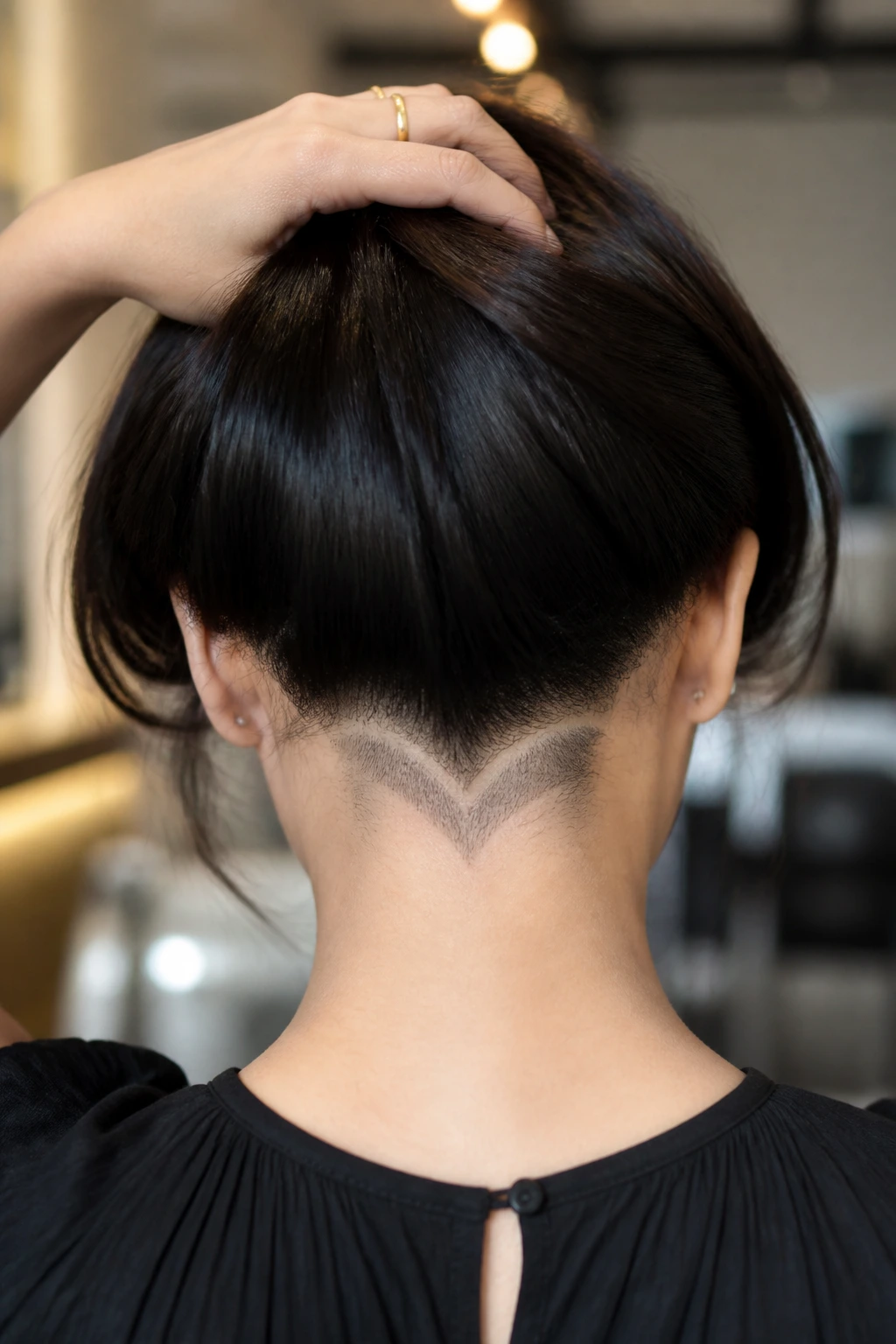
A curved V-nape undercut gives the back of the head a pointed but soft finish. Instead of a straight line, the shave dips into a V shape that looks deliberate when hair is pinned up. On long hair, it hides easily; on updos, it becomes a neat little detail.
This is one of the best options if you wear low buns or braided styles often. The V shape helps the hair fall neatly around the neck and makes the finish look more tailored. Keep the point shallow if your hair is fine — too deep, and the grow-out gets awkward.
14. Diagonal Side-Panel Shave
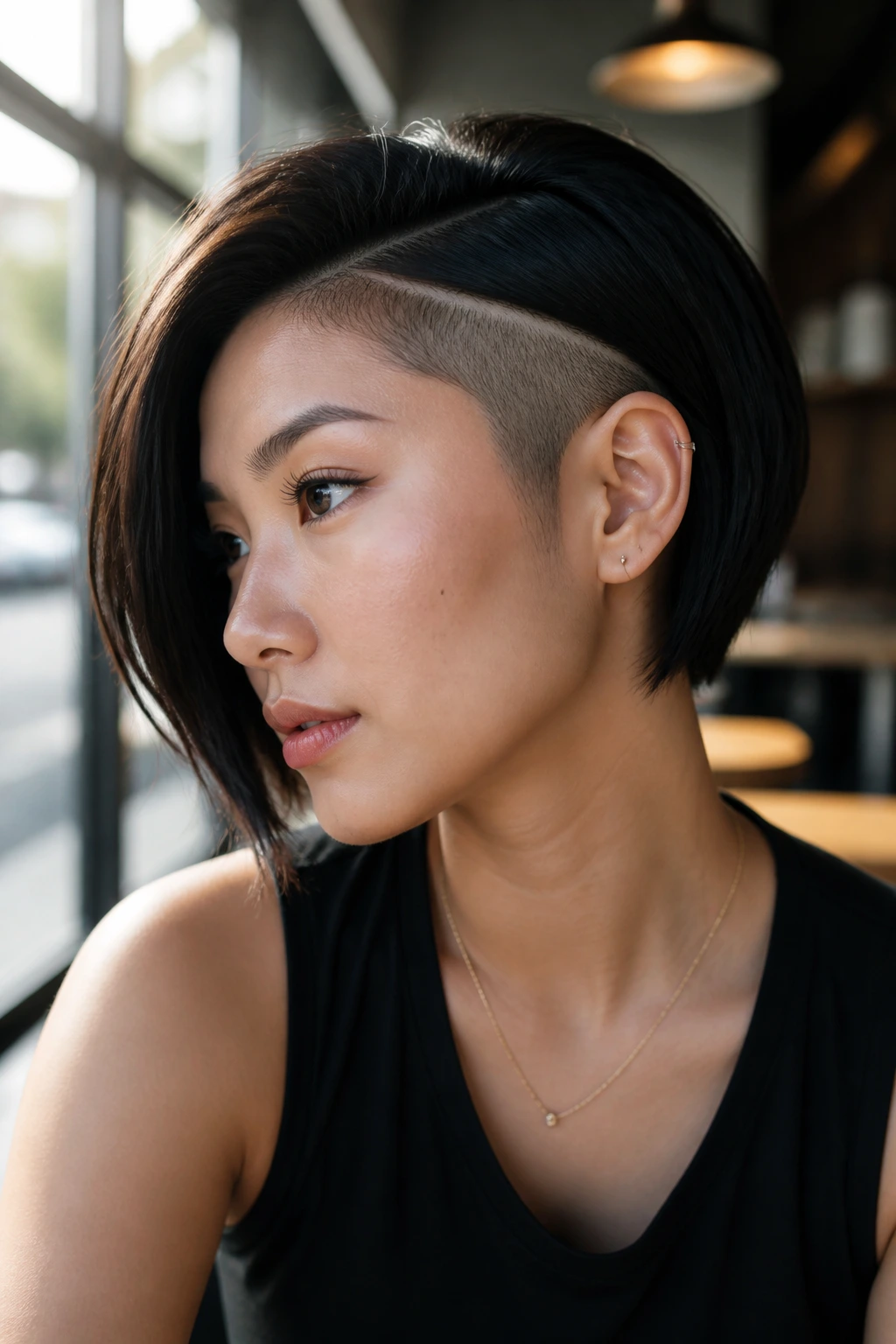
A diagonal side-panel shave slices from the temple toward the area above the ear, creating a line that looks more graphic than a simple hidden undercut. It works well when you want one visible statement without going full side shave. The diagonal line makes the face look longer and the haircut look sharper.
This style is a good bridge between subtle and bold. You can hide most of it with hair down, then let the angle show when you tuck one side back. I’d keep the top longer and the side blend clean so the diagonal reads as a design, not a mistake.
15. Blunt Micro-Bob with Hidden Underlayer
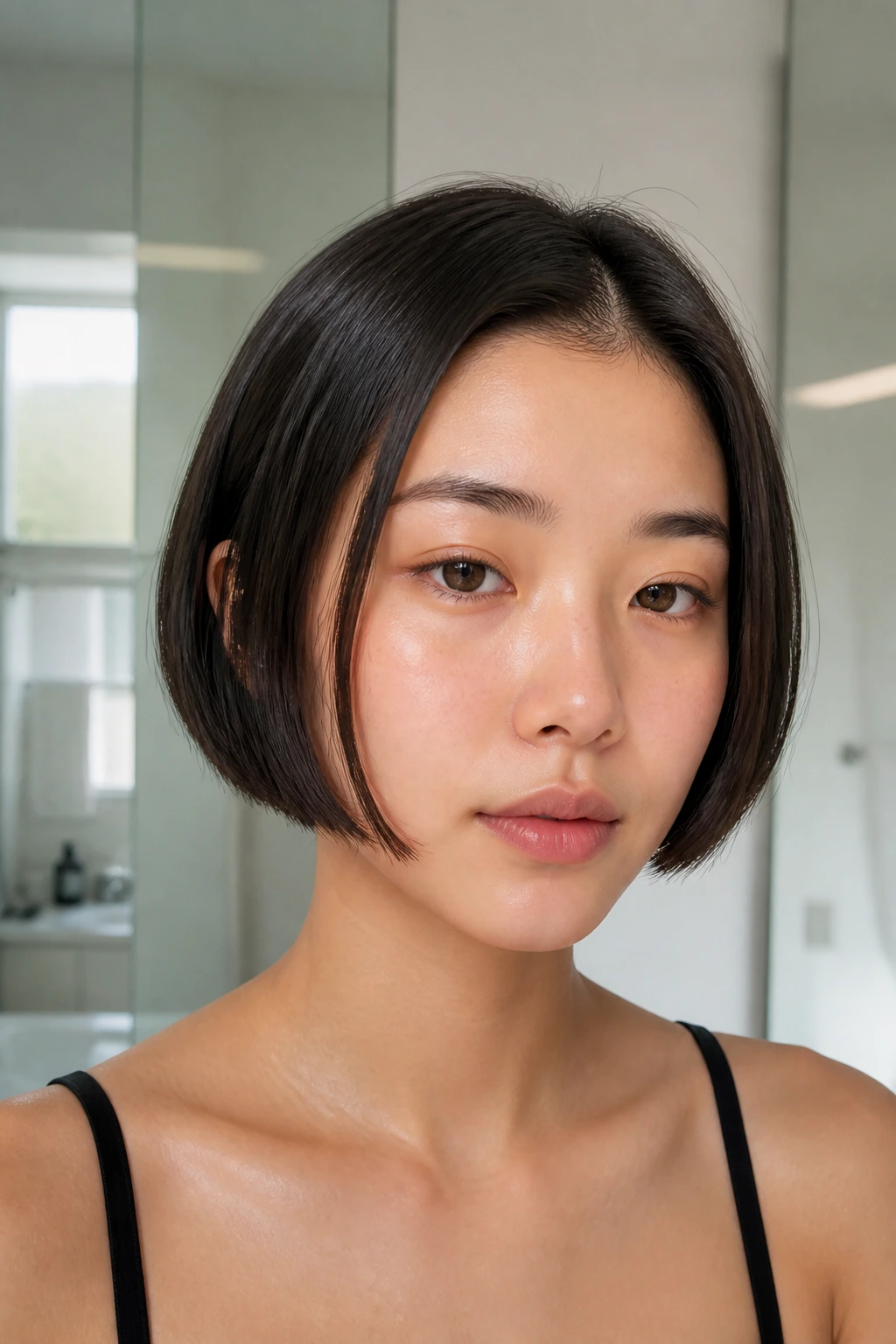
A blunt micro-bob sits right at the jaw or just below it, and it looks best when the outline is clean and heavy. The hidden underlayer is there to stop the bob from jutting out at the ends. Without that help, short straight hair can look too triangular.
- Top line: keep the perimeter blunt and even.
- Undercut area: remove only the internal bulk.
- Why it works: the visible edge stays sharp while the shape lies flatter against the head.
This is the kind of bob that looks polished with almost no styling. Blow-dry it smooth, tuck one side behind the ear, and let the undercut do the heavy lifting.
16. Lob with Nape Taper
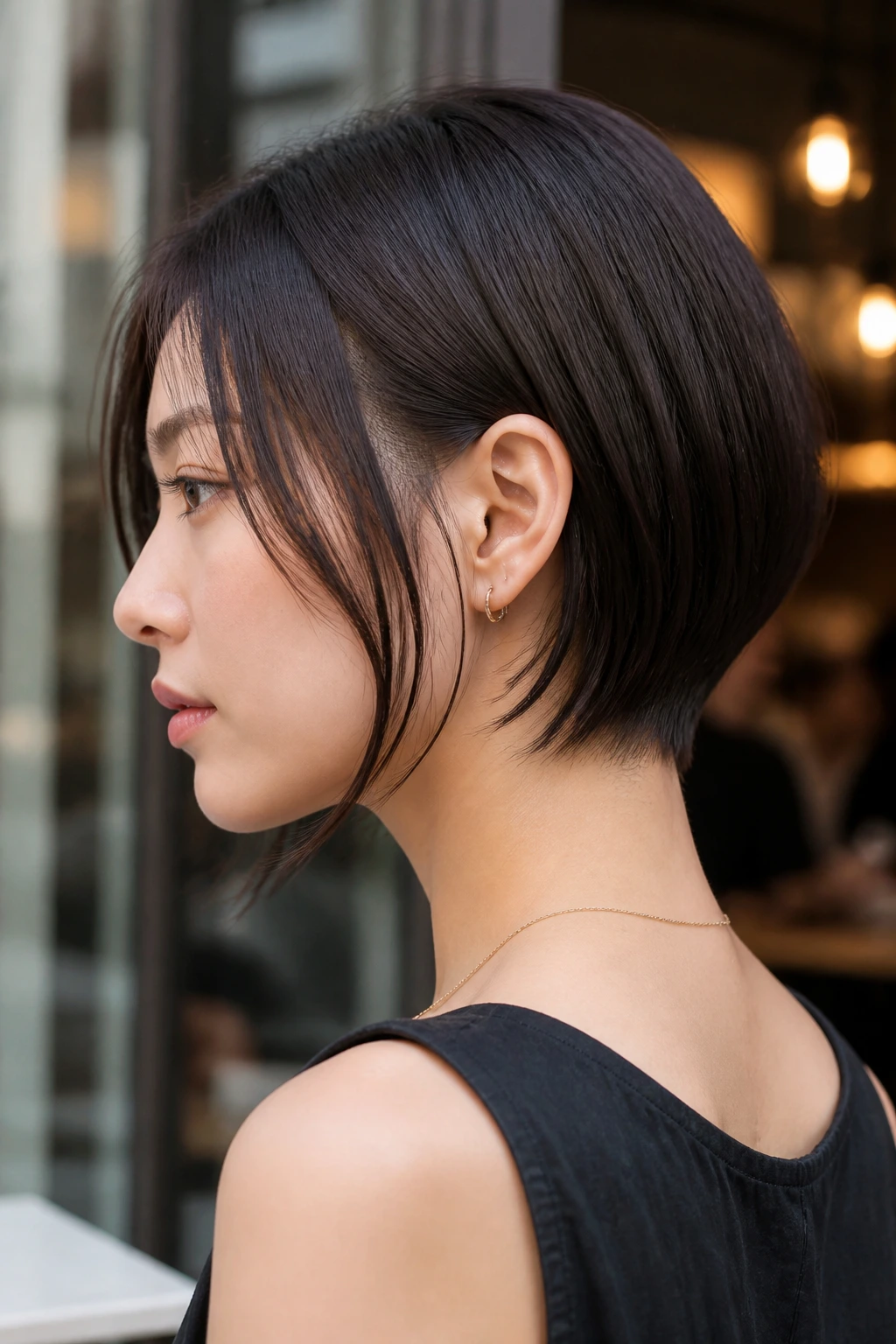
A lob with a nape taper keeps the length in front while softening the back where thick hair tends to mushroom. The taper can be very subtle — just enough to stop the collar area from sticking out. It is a smarter choice than a full shave if you want movement but not a dramatic reveal.
This version plays nicely with center parts and soft bends at the ends. The front pieces still frame the face, and the nape sits cleaner under coats, blazers, and scarves. If you want easy grow-out, ask for the taper to stay low and rounded.
17. Side-Swept Pixie Crop
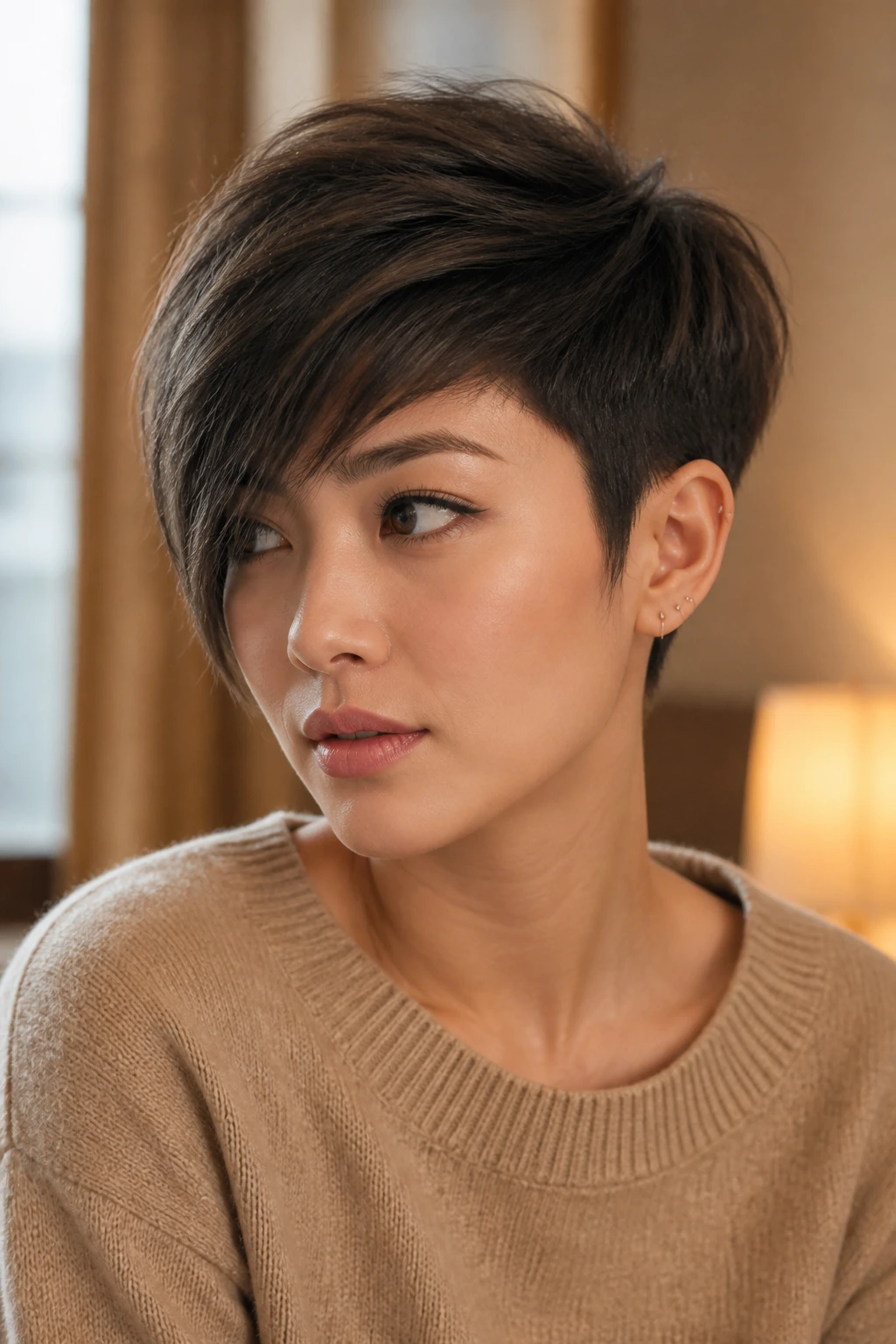
The side-swept pixie crop uses a long fringe to keep the front soft while the sides and back are clipped short. It’s a good shape for anyone who wants the convenience of very short hair but still likes a bit of movement around the eyes and cheekbones. The long sweep gives you styling options.
This works best when the top has enough length to bend, not just sit flat. Ask for texture at the crown and a soft taper near the ears. That keeps the cut from looking boxy, which is the main trap with very short hair on thick strands.
18. Tapered Crop with Long Crown
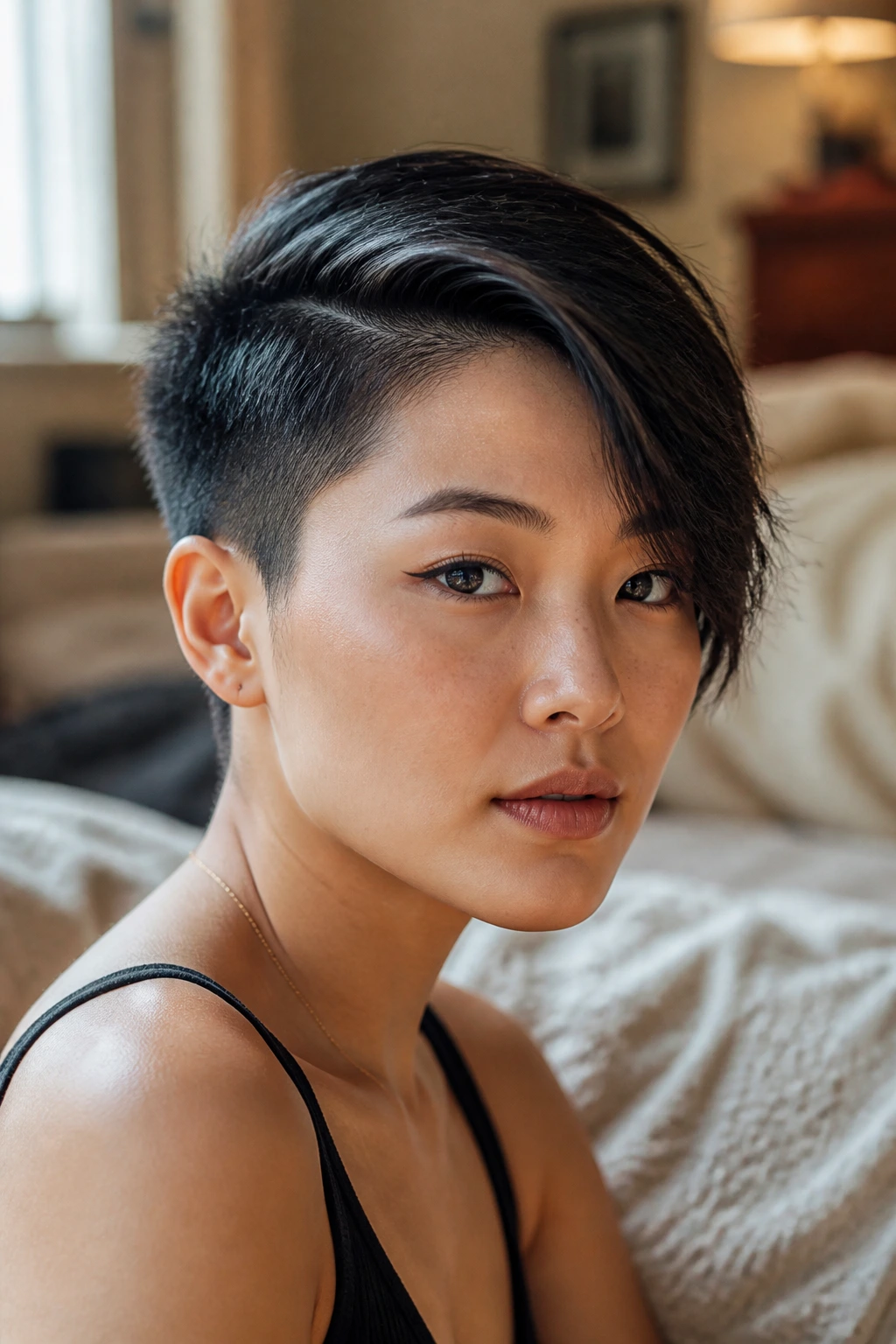
A tapered crop with a long crown is one of the most forgiving short cuts on dense hair. The sides and nape are cleaned up, but the crown stays long enough to push forward, part, or mess up with your fingers. It feels neat without looking severe.
I like this shape on people who are easing into shorter hair. The taper keeps the edges soft, and the longer crown gives the cut a little personality. If your hair is fine, leave the crown a bit longer than you think you need; fine hair loses visual weight faster than thick hair.
19. High-Contrast One-Side Shave
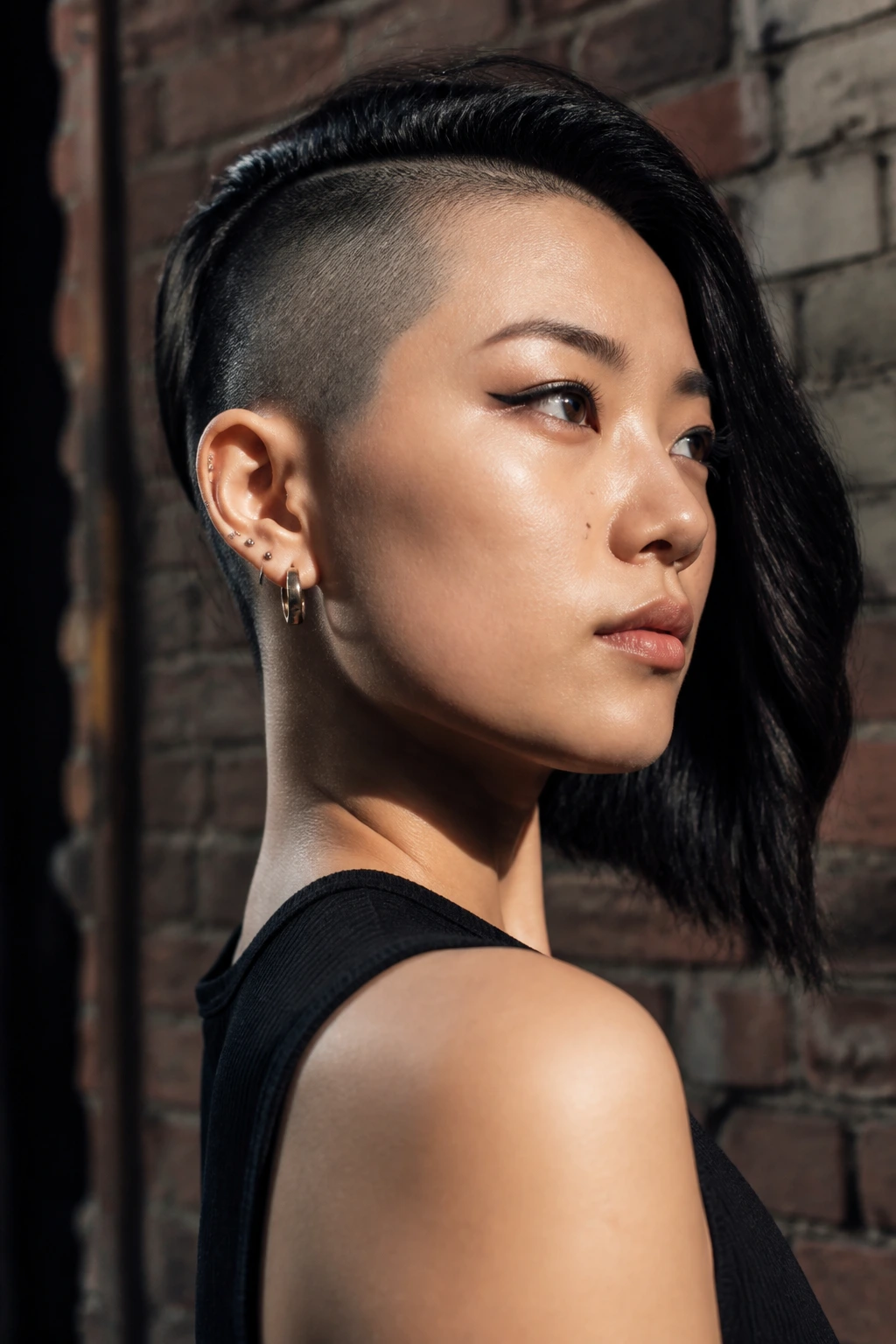
This one is pure attitude. One side is shaved much shorter than the other, and the contrast shows immediately, especially on dark hair. It works because the longer side softens the face while the short side brings the structure forward.
A high-contrast shave needs clean lines or it starts to look unfinished. Keep the long side smooth, tucked, or pinned back depending on the mood you want. If you wear glasses, check how the temple arm sits against the shaved side before you commit.
20. Shullet with Nape Undercut
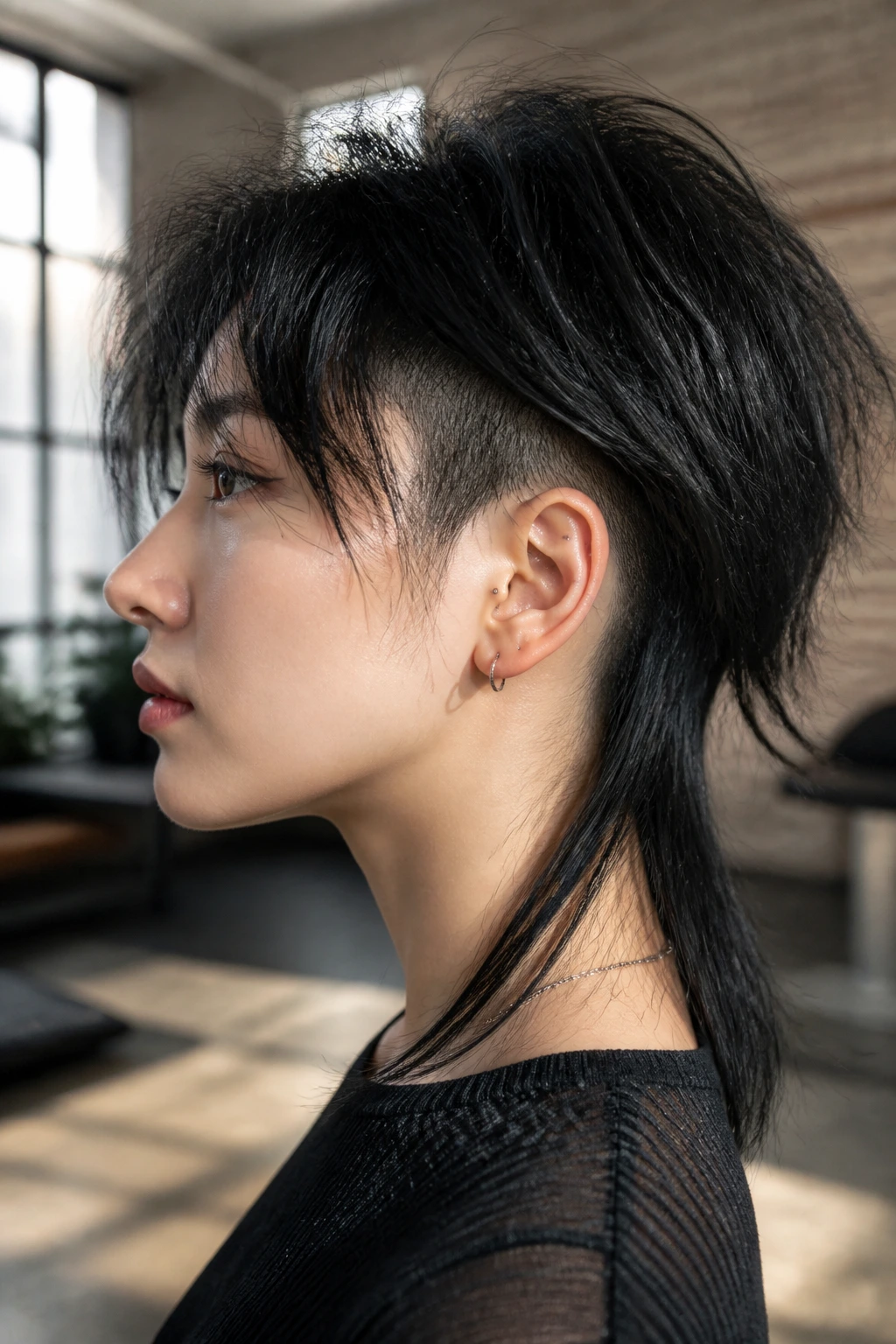
The shullet lives somewhere between shag and mullet, which means it needs shape control at the base. A nape undercut keeps the back from getting bulky while the layers above stay choppy and loose. That gives the cut some swing without the heaviness that can happen on thick hair.
This is one of the more playful options in the whole group. It has enough edge to feel current without becoming hard to style. The best version keeps the layers feathered and the nape neat, so the whole thing looks intentional from every angle.
21. Classic #3 Buzz Cut
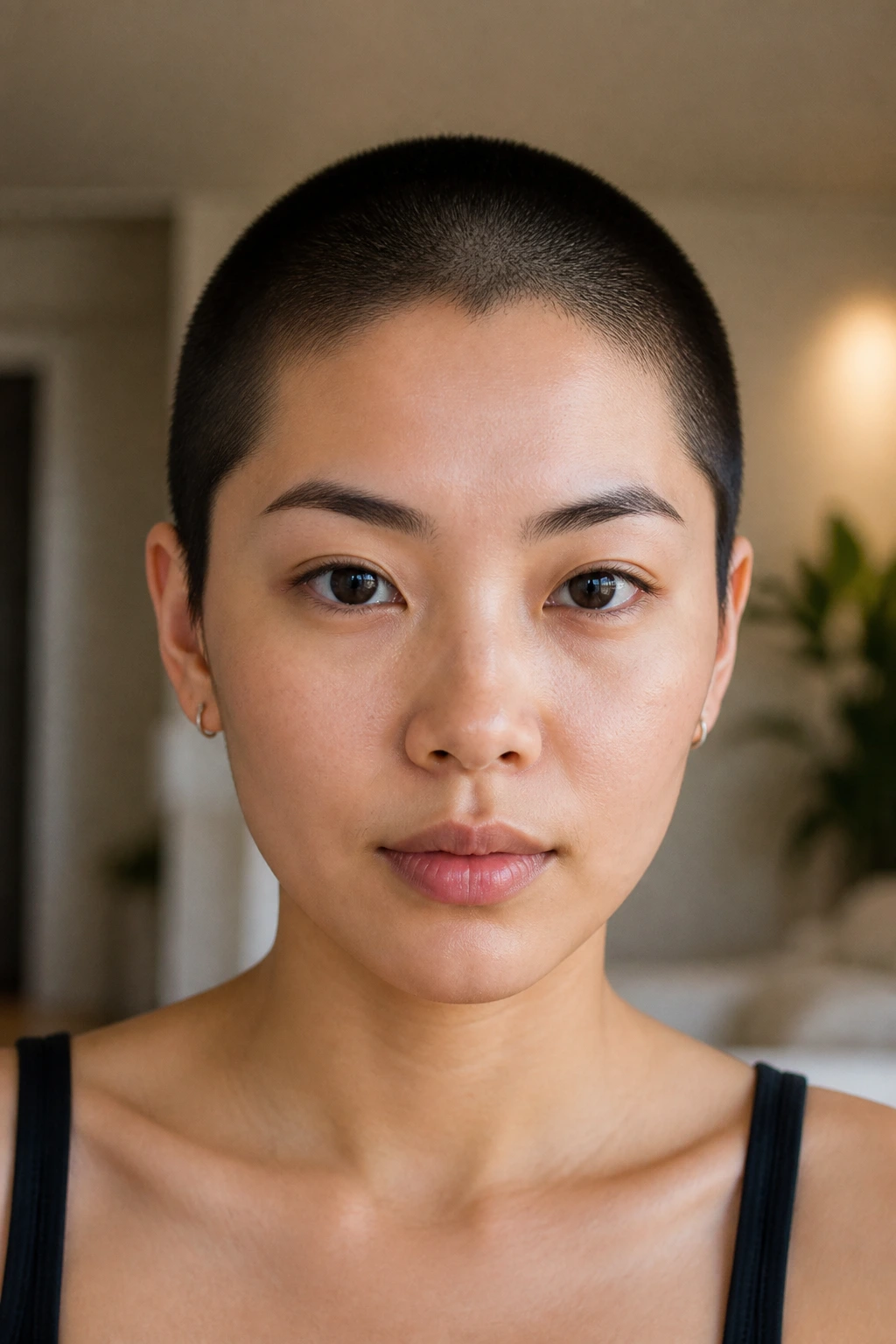
A classic #3 buzz cut leaves about 10 mm of hair on top of the scalp, give or take a little depending on the guard system. It is short enough to show the head shape, but not so close that every scalp detail becomes the main event. On dark hair, that length reads clean and uniform.
- Guard length: usually a #3 or around 10 mm.
- Best effect: very even, low-maintenance, no styling required.
- Watch for: cowlicks and uneven growth patterns, which show faster on short hair.
This is the cleanest, simplest version of the buzz. If you want a cut that dries in minutes and never argues with humidity, this is hard to beat.
22. Soft #4 Buzz Cut
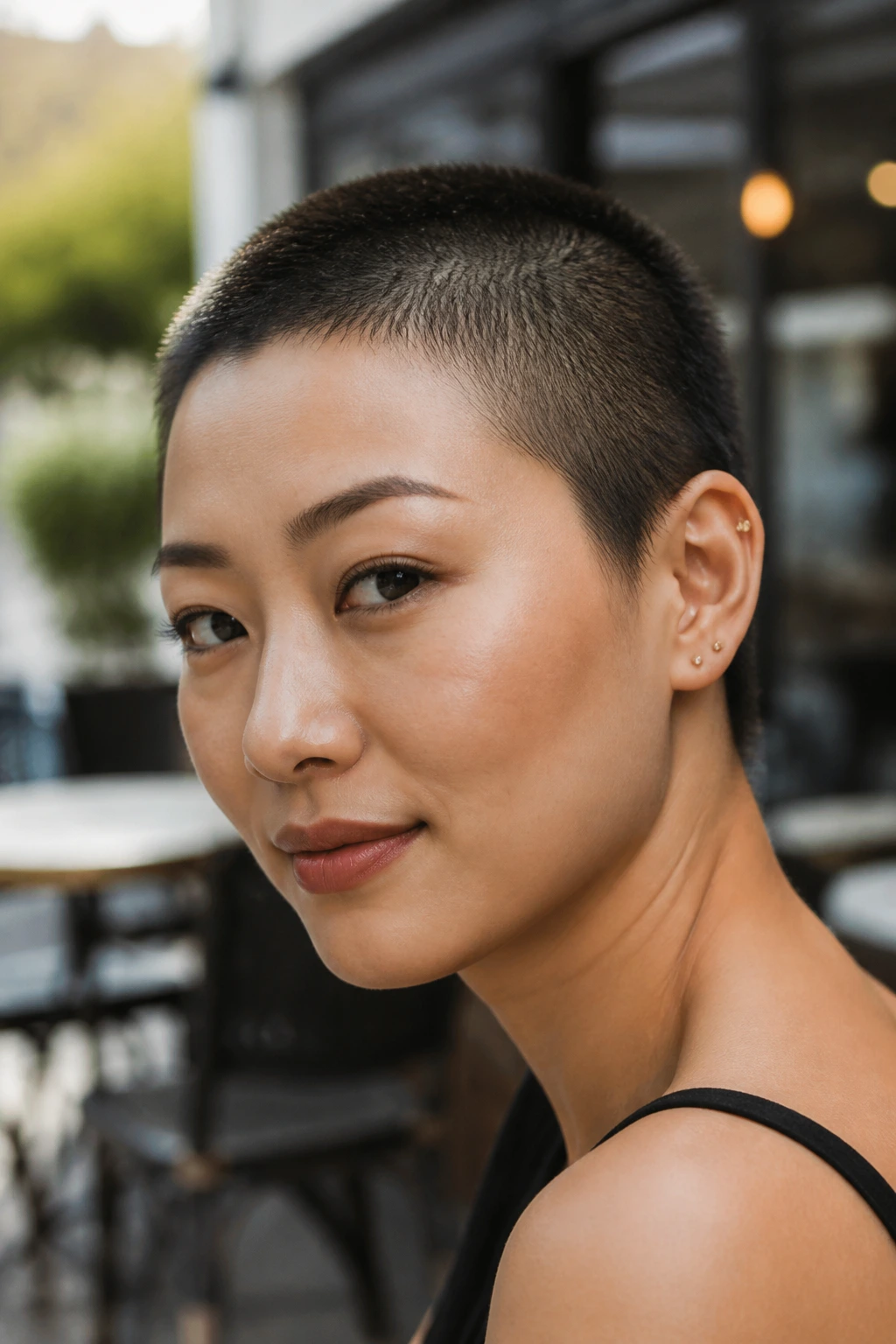
A #4 buzz cut keeps a touch more length, which softens the head shape and makes the grow-out less abrupt. That extra millimeter or two can matter if you want the short look without exposing every contour of the scalp. It also gives you a little more leeway if your hairline is uneven.
I recommend this version for first-timers. It looks intentional but not severe, and it’s easier to live with if you are still getting used to seeing a lot of face and neck. When the hair is dark, the shape stays crisp; when it is lighter, the extra length keeps it from disappearing.
23. Tapered Buzz with Longer Top
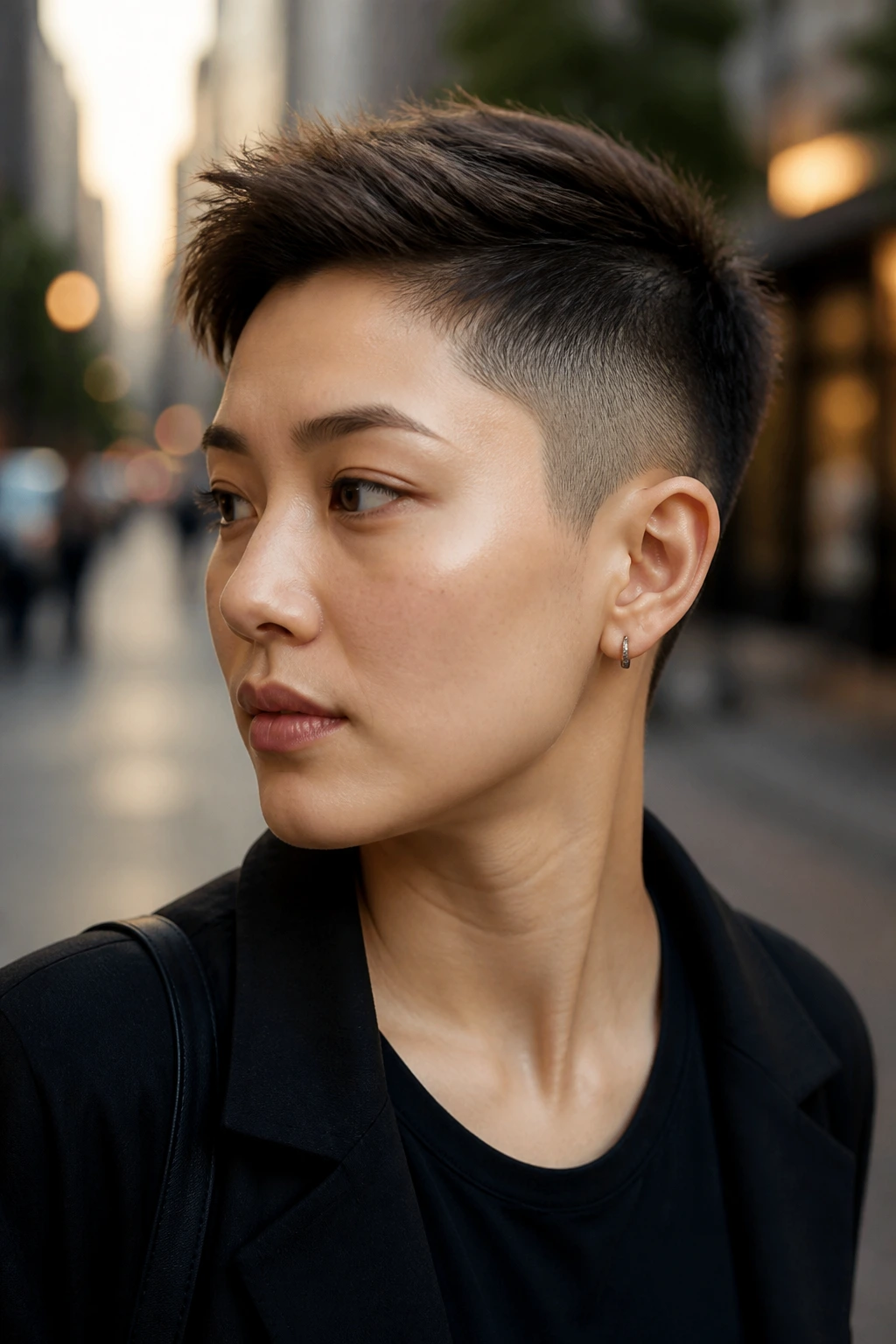
A tapered buzz keeps the sides and nape shorter than the crown, which gives the head a more sculpted shape than a one-length buzz. The taper can be subtle or obvious depending on how much contrast you want. It’s a smart middle ground if a full buzz feels too flat.
This version works especially well on heads with a strong crown swirl. Leaving a little more length up top helps the hair lay where it wants to lay instead of sticking straight up. Ask for a soft fade rather than a hard line if you want the look to stay elegant.
24. Buzz Cut with Hairline Design
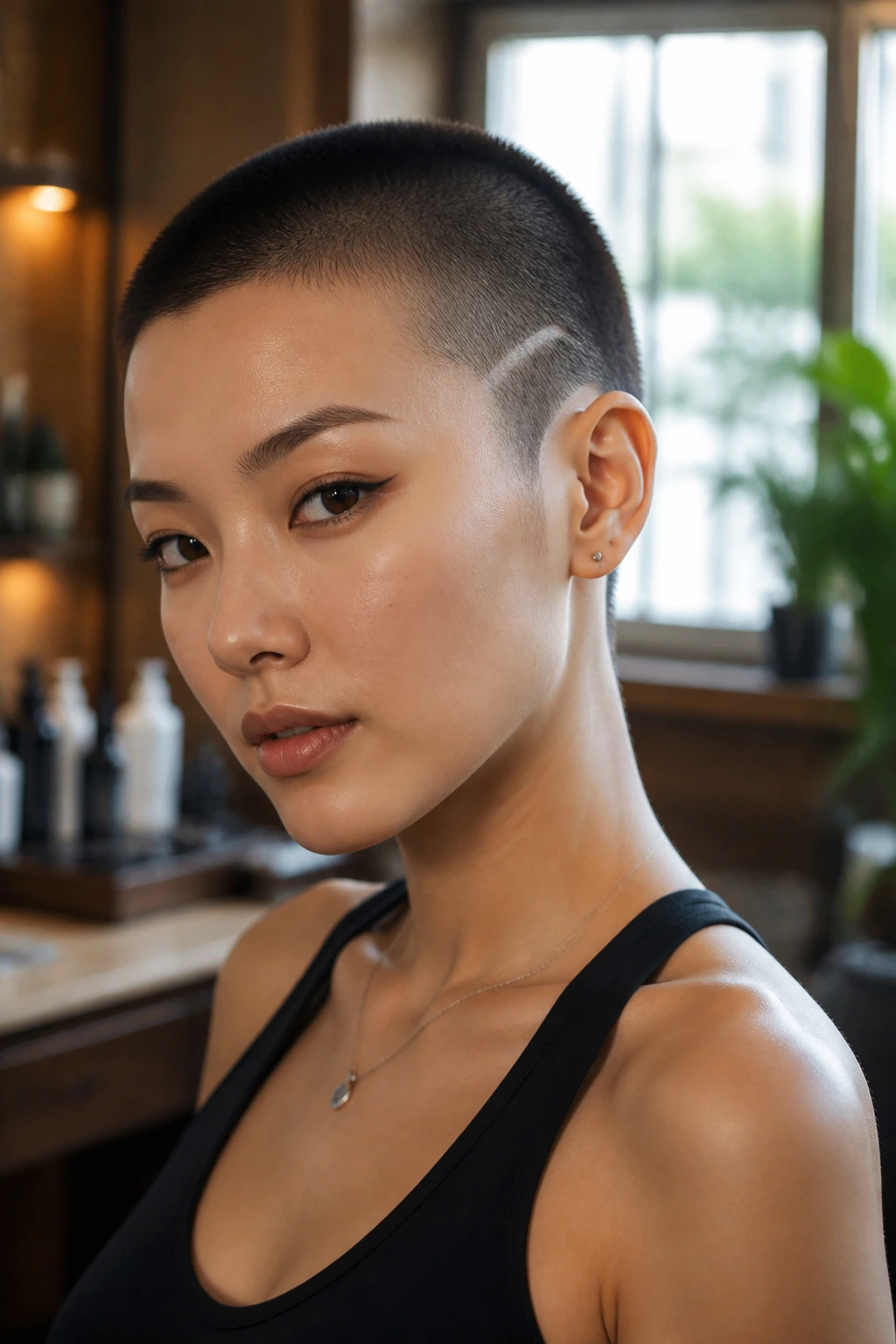
A hairline design buzz uses a clipped shape, line, or small geometric detail along one side or near the temple. It does not need to be elaborate to make an impact. Sometimes a single clean notch is enough.
The best version keeps the design small and controlled so it reads like a detail, not a costume. On dark hair, a thin line can stand out sharply. If you want something playful but not too loud, this is a good place to spend a little extra attention.
25. Platinum Buzz Cut
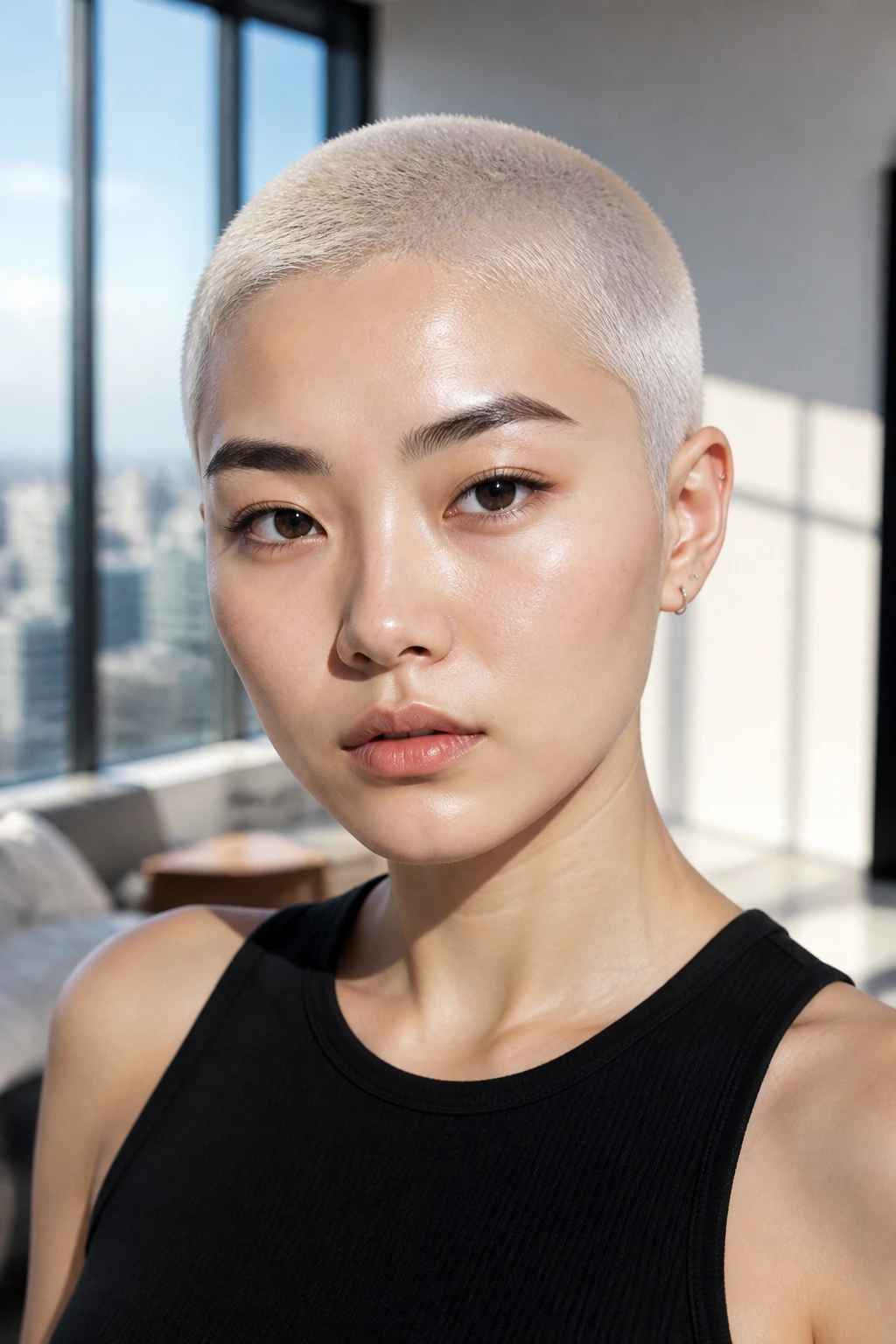
A platinum buzz cut turns the whole look into contrast — light hair, dark brows, clean scalp line, strong face shape. The cut itself is simple, but the color does the loud part. On Asian women with naturally dark hair, the result can be dramatic in a very graphic way.
This style asks for upkeep. Bleach needs careful handling, and the scalp should stay healthy underneath all that lightness. If you want the visual impact without constant styling, this is one of the few buzz cuts that can do it on its own.
26. Shadow-Root Buzz Cut
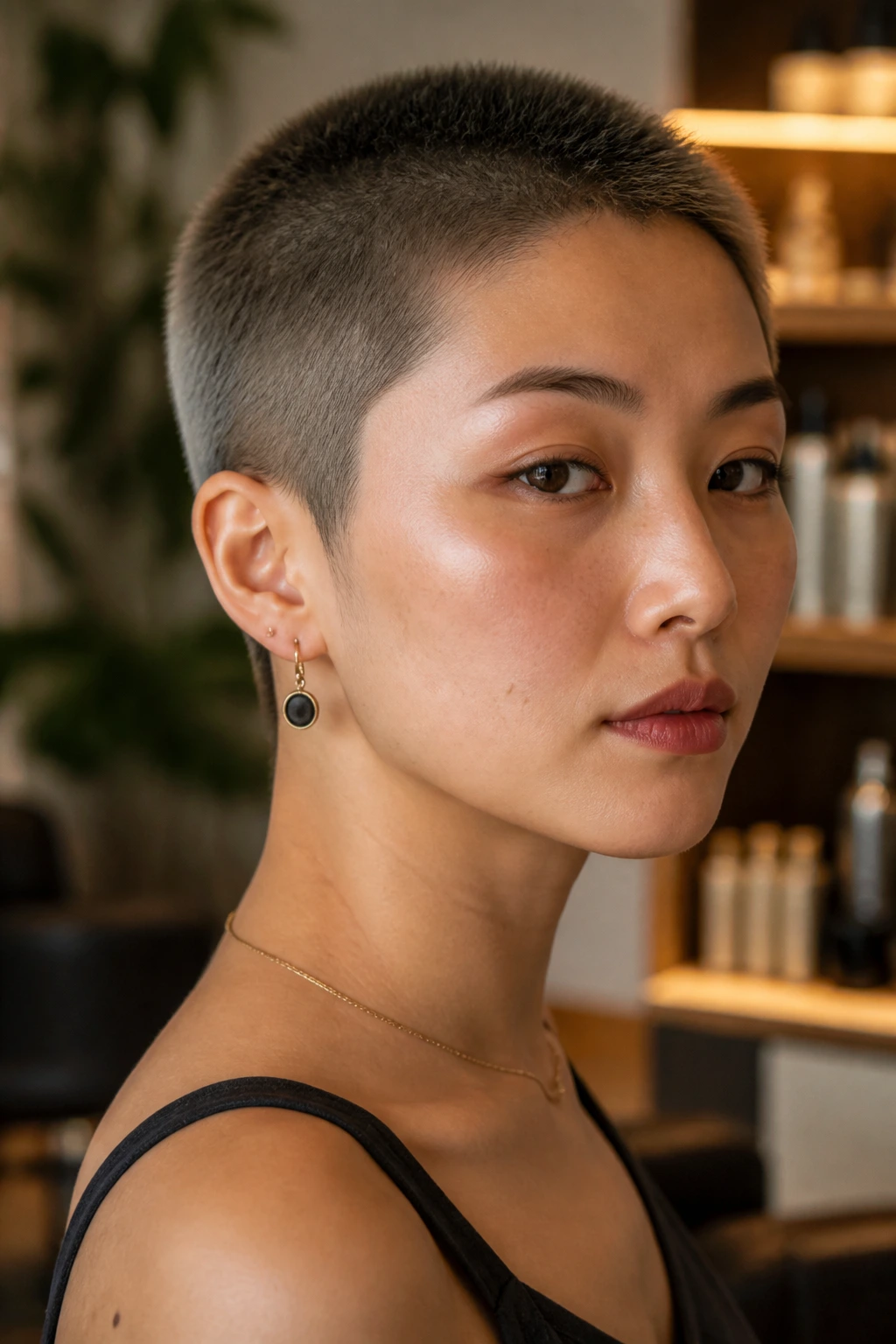
A shadow-root buzz cut keeps the base a little darker, which softens the transition from scalp to hair and makes the grow-out easier. The dark root also keeps the look from feeling over-processed. It is a better fit if you want a lighter color without the starkness of full platinum.
The root depth can be subtle or obvious. A soft shadow root gives you a few extra weeks before the color line starts to look obvious. That matters on a cut this short, where everything shows faster.
27. Two-Tone Buzz Cut
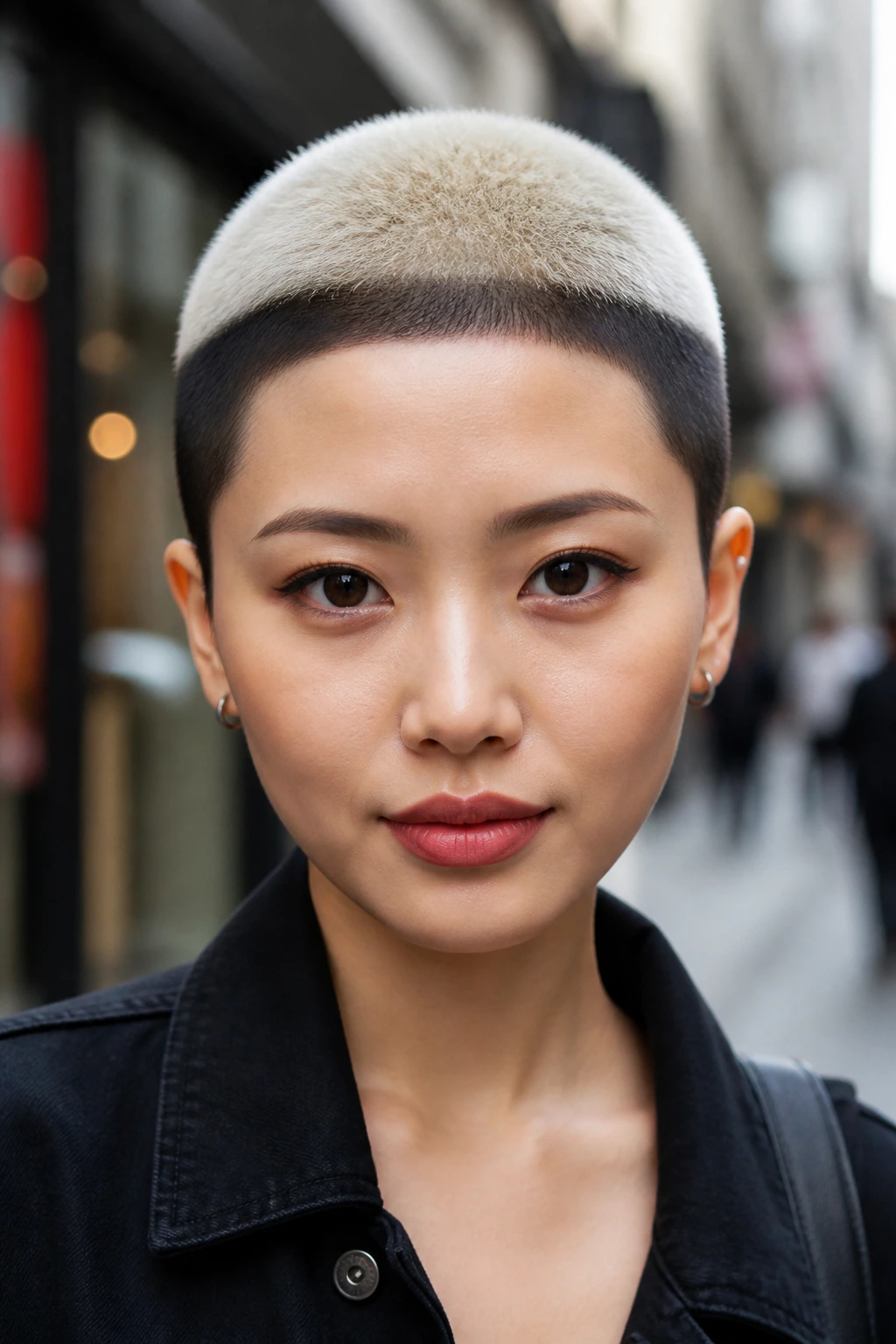
A two-tone buzz cut splits the look between two colors, usually dark underneath and lighter on top, or vice versa. Because the hair is so short, the color separation reads as a stripe or panel rather than blended highlights. That makes the cut feel graphic instead of soft.
This is a strong choice if you like fashion-forward hair with almost no styling. The trick is to keep the tones intentional and the maintenance plan realistic. If you hate regrowth lines, don’t make the contrast too extreme.
28. Buzz with Micro Fringe
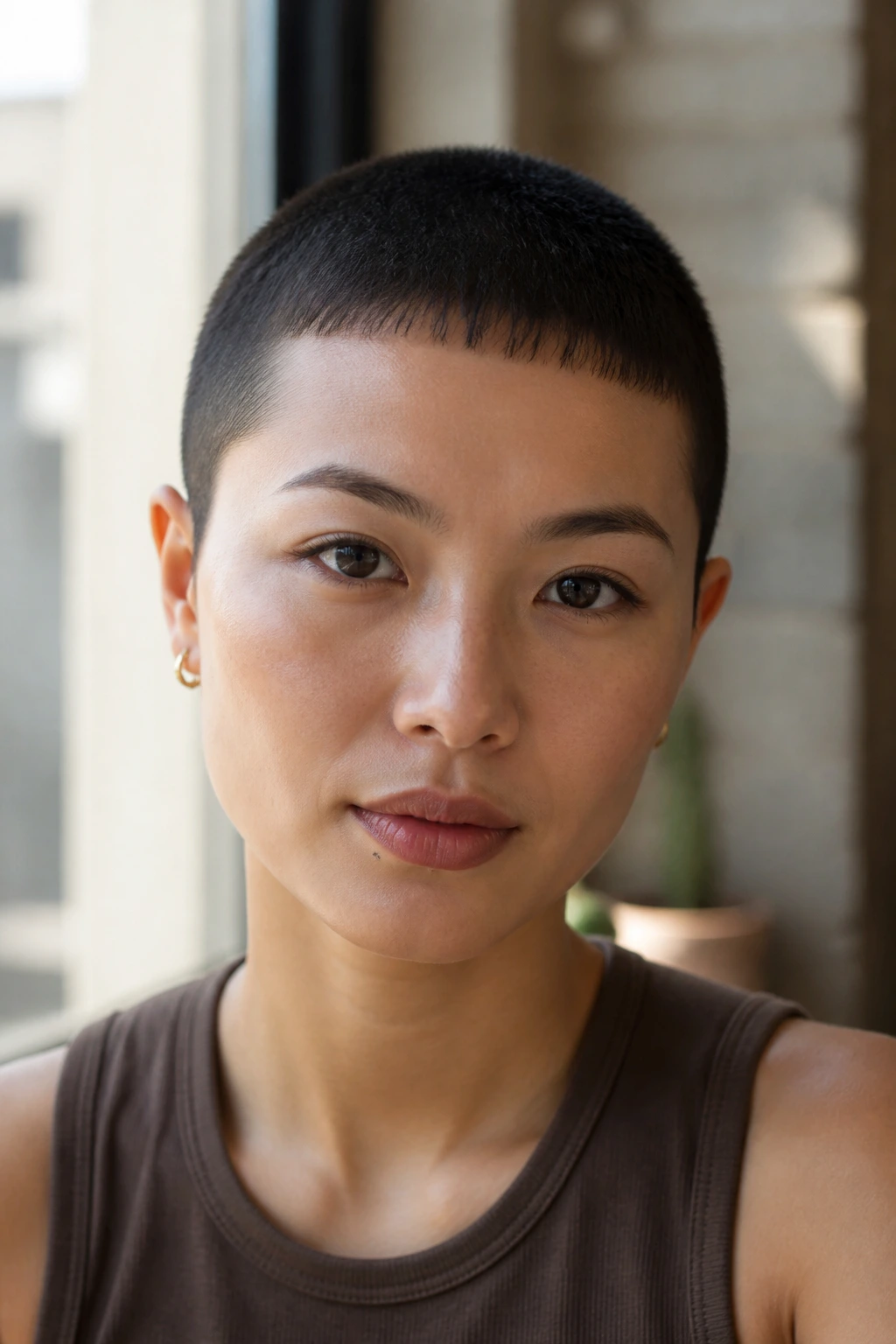
A micro fringe on a buzz cut leaves just enough softness at the front hairline to change the mood of the whole cut. The fringe can sit straight across or slightly feathered, and it keeps the forehead from being completely bare. That little bit of length changes the balance of the face.
I like this version for anyone who wants a buzz cut with a gentler front. It’s still short, still neat, but not as severe as a full one-length crop. If your hairline is uneven, the micro fringe can also help disguise it.
29. Crew Cut with Soft Edges
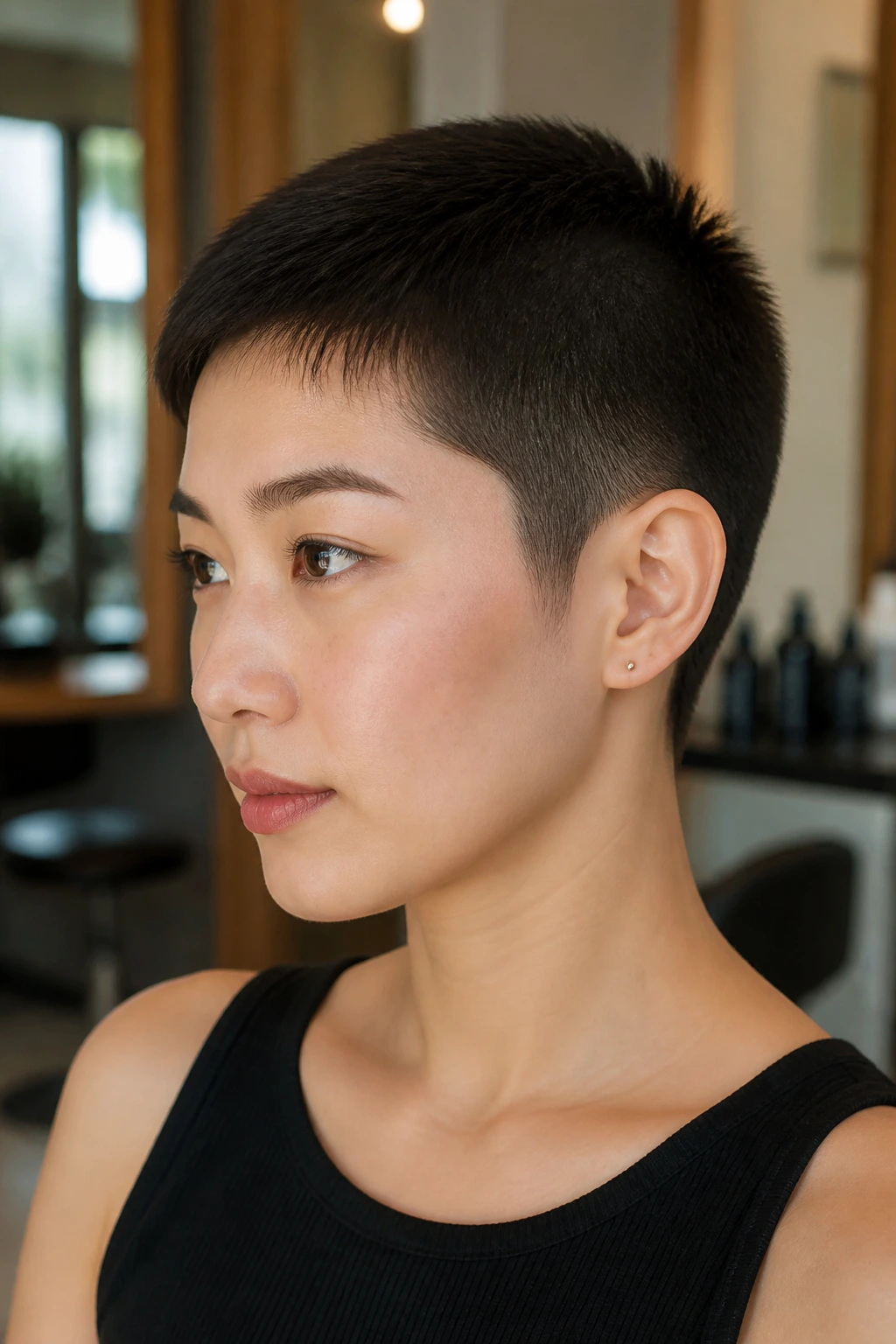
A crew cut is a little longer than a buzz and a little more shaped through the crown. Soft edges around the ears and nape make it feel cleaner on feminine features, especially when the top is just long enough to brush forward or to the side. It’s short, but not shaved to the bone.
This cut is a good compromise if you want low maintenance but still want a hint of styling room. The shape works well with dark hair because the contour stays visible without needing product. Ask for the sides to taper gently so the outline doesn’t box up as it grows.
30. Ultra-Short Crop with Blended Sides
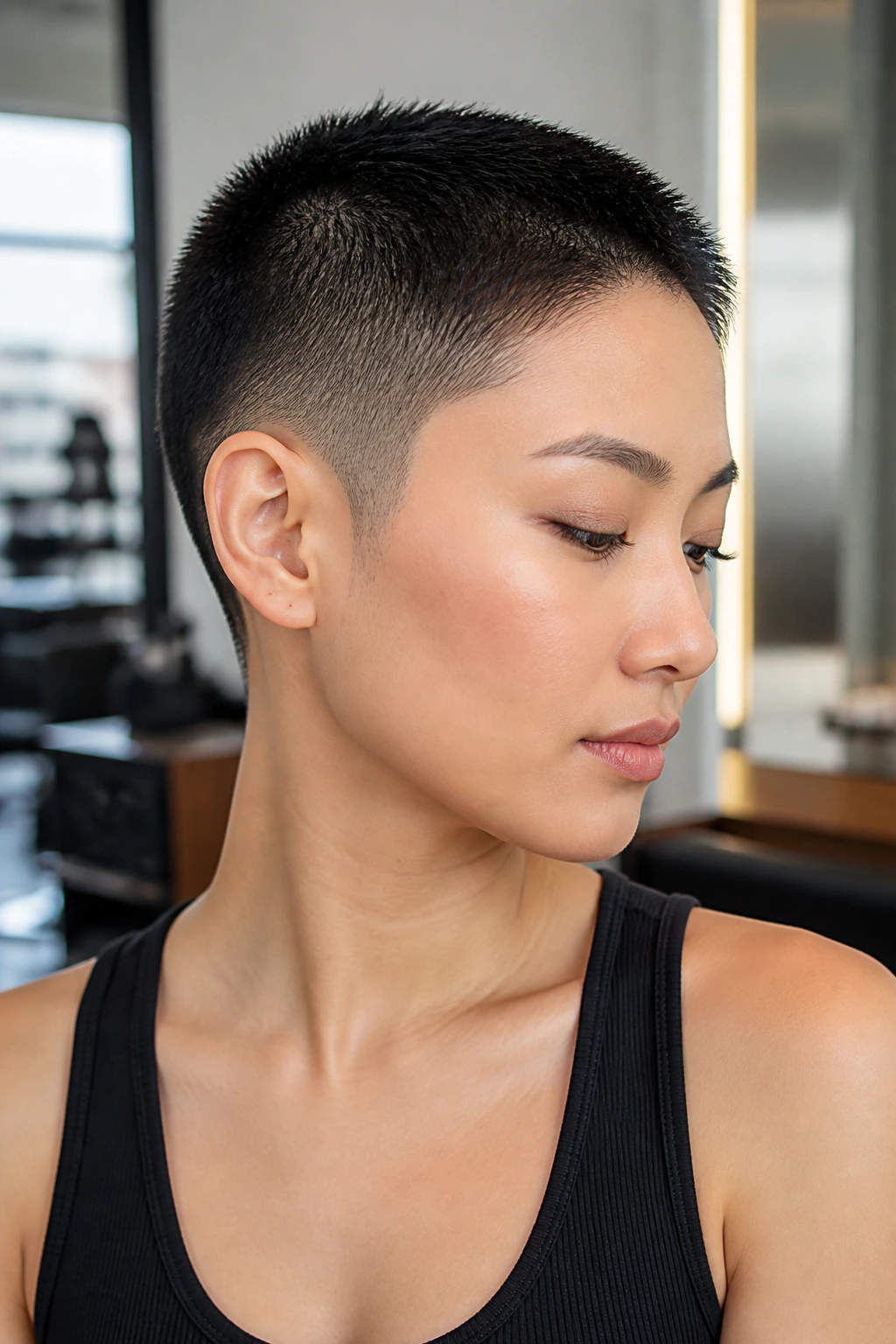
An ultra-short crop with blended sides sits between a buzz and a pixie. The top is clipped close, but the sides are blended so there’s no hard disconnect around the ears. That gives the haircut a softer finish than a flat buzz.
This is one of the easiest short cuts to live with if you are nervous about going all the way down. It keeps the head shape neat, the neck exposed, and the morning routine nearly nonexistent. If you want the shortest possible look without a stark clipper line, this is a solid choice.
31. Buzz with Longer Crown Panel
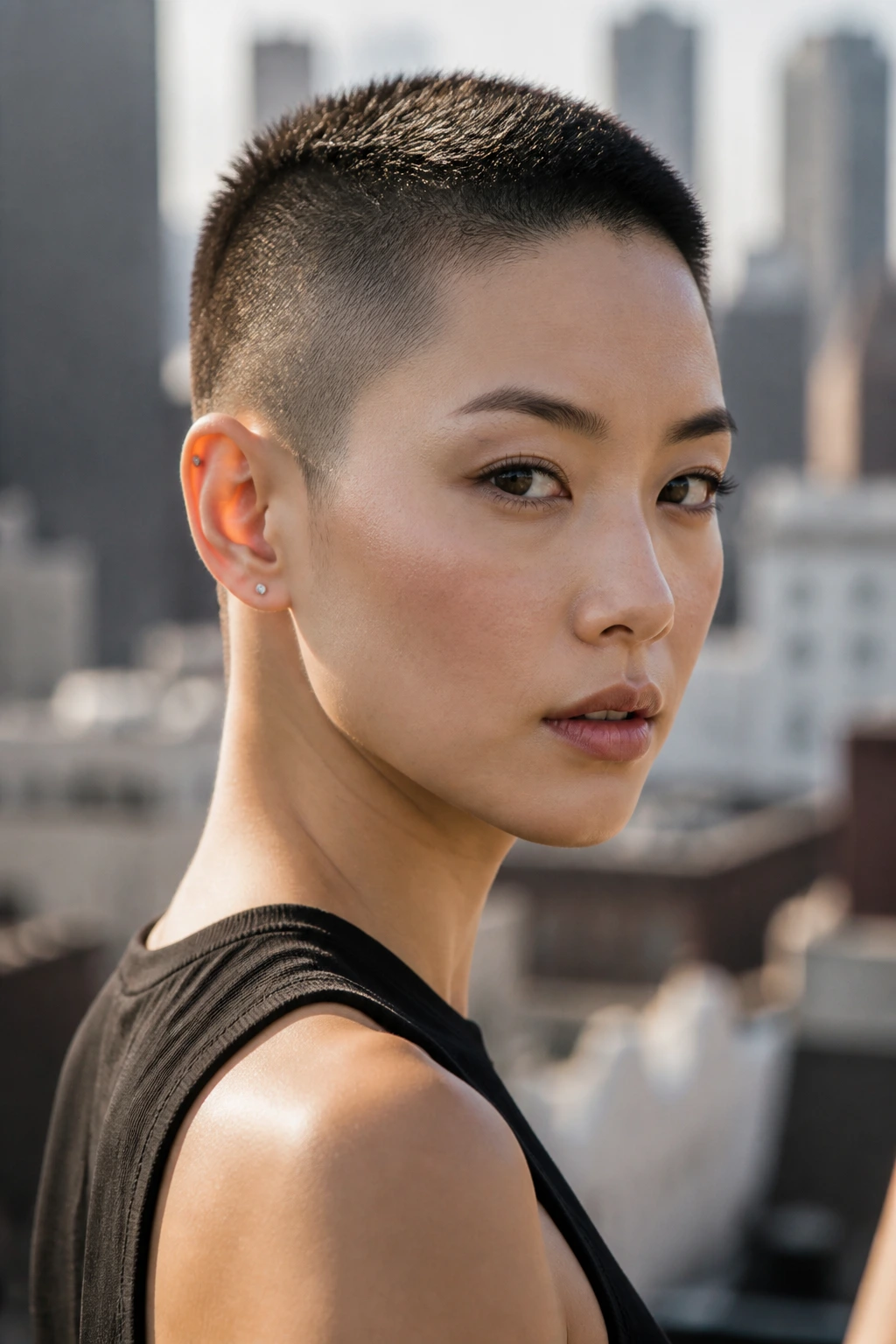
A longer crown panel leaves a strip of hair slightly longer through the middle or top of the head. The rest stays buzzed short, so the contrast creates a subtle ridge of movement. It’s a small detail, but it changes the silhouette enough to matter.
This version can look sporty, edgy, or neat depending on how the crown is styled. Comb it forward for softness or brush it back for more shape. Keep the panel only a little longer than the sides; too much difference and the cut starts to look uneven instead of deliberate.
32. Shaved Sides with Long Top Curls
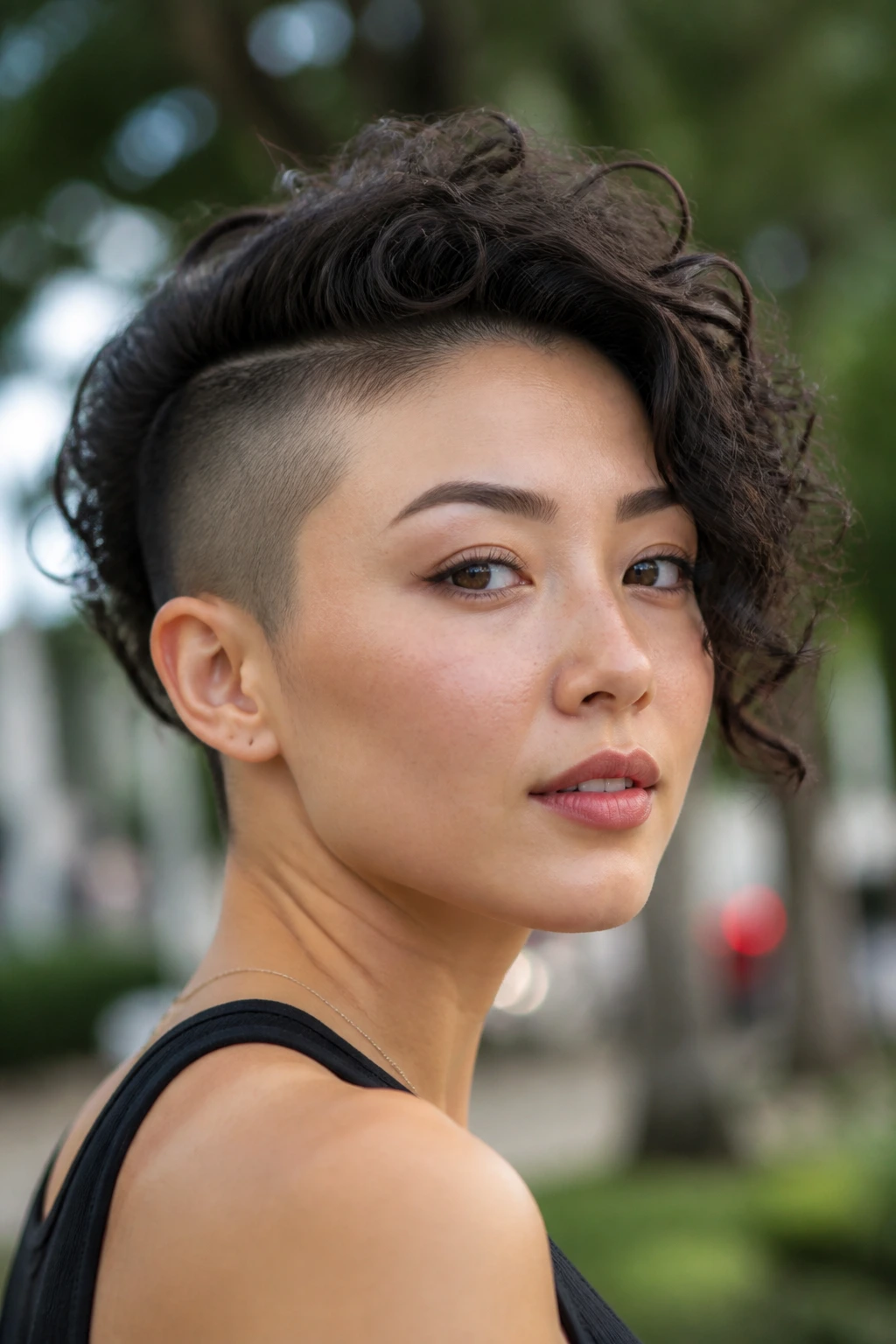
If your hair has been permed or naturally bends into waves, shaved sides can be a smart way to keep the shape from turning puffy. The top stays long enough to show the curl pattern, while the sides are clipped down so the shape stays close to the head. That contrast keeps the cut balanced.
This is a good option for anyone who wants texture without a lot of heat styling. The long top can be scrunched with mousse or left to air-dry, and the shaved sides keep it from expanding outward. If your curl pattern is loose, leave the top a touch longer so the shape still reads.
33. Wedge Bob with Hidden Undercut
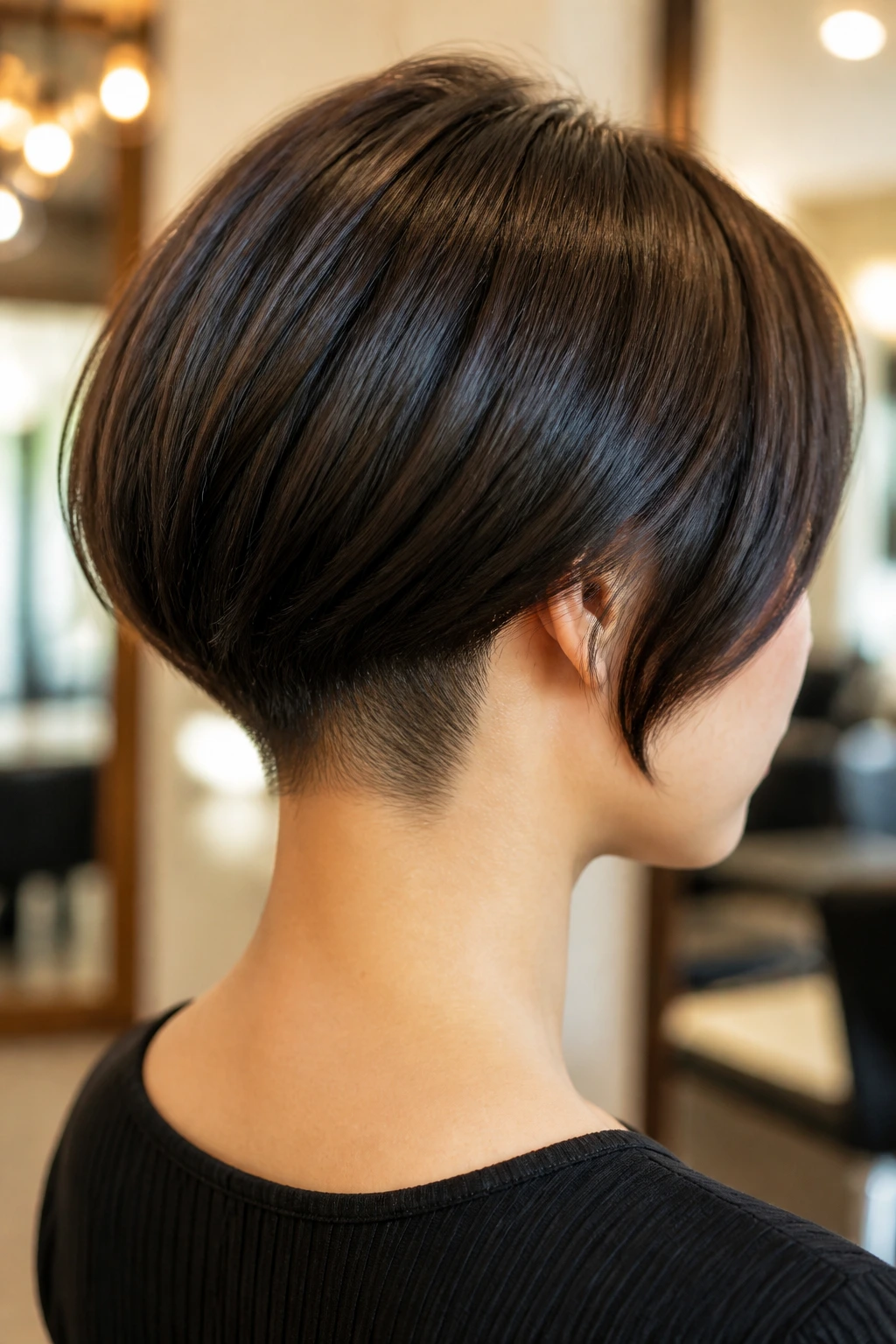
A wedge bob stacks weight toward the back and angles the front longer, which can make dense hair feel even fuller if the base is left untouched. A hidden undercut fixes that by removing some of the bulk under the stack. The visible shape stays strong, but the back doesn’t feel like a shelf.
- Back shape: stacked and rounded, not bulky.
- Hidden removal: tucked under the upper layers.
- Best result: a clean silhouette that still has that vintage bob firmness.
I reach for this idea when someone loves a bob but hates that triangle build-up at the neck. The undercut keeps the wedge from feeling too heavy.
34. Mixie Crop
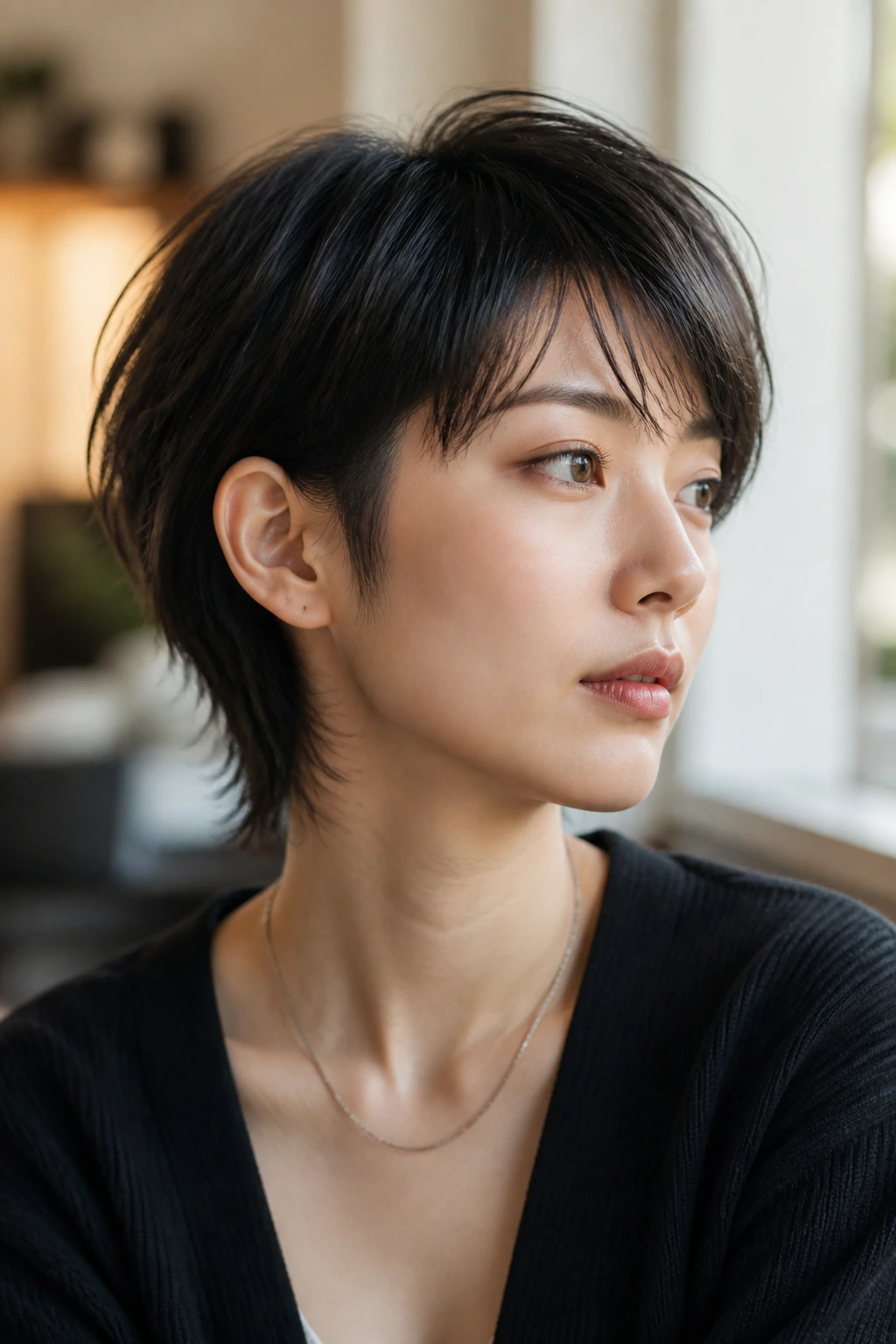
A mixie is the friendly cousin of a pixie and a mullet. The front and sides stay short, the back keeps a little more length, and the texture sits somewhere between neat and messy. It has enough edge to feel modern, but it does not demand perfect styling.
This is a good shape for women who want movement without losing the ability to tuck hair behind the ear. The mixie works especially well on straight Asian hair because the short crown and longer nape create a visible shape even without much product. Ask for softness around the face if you want it to feel less sharp.
35. Short Crop with Side Part
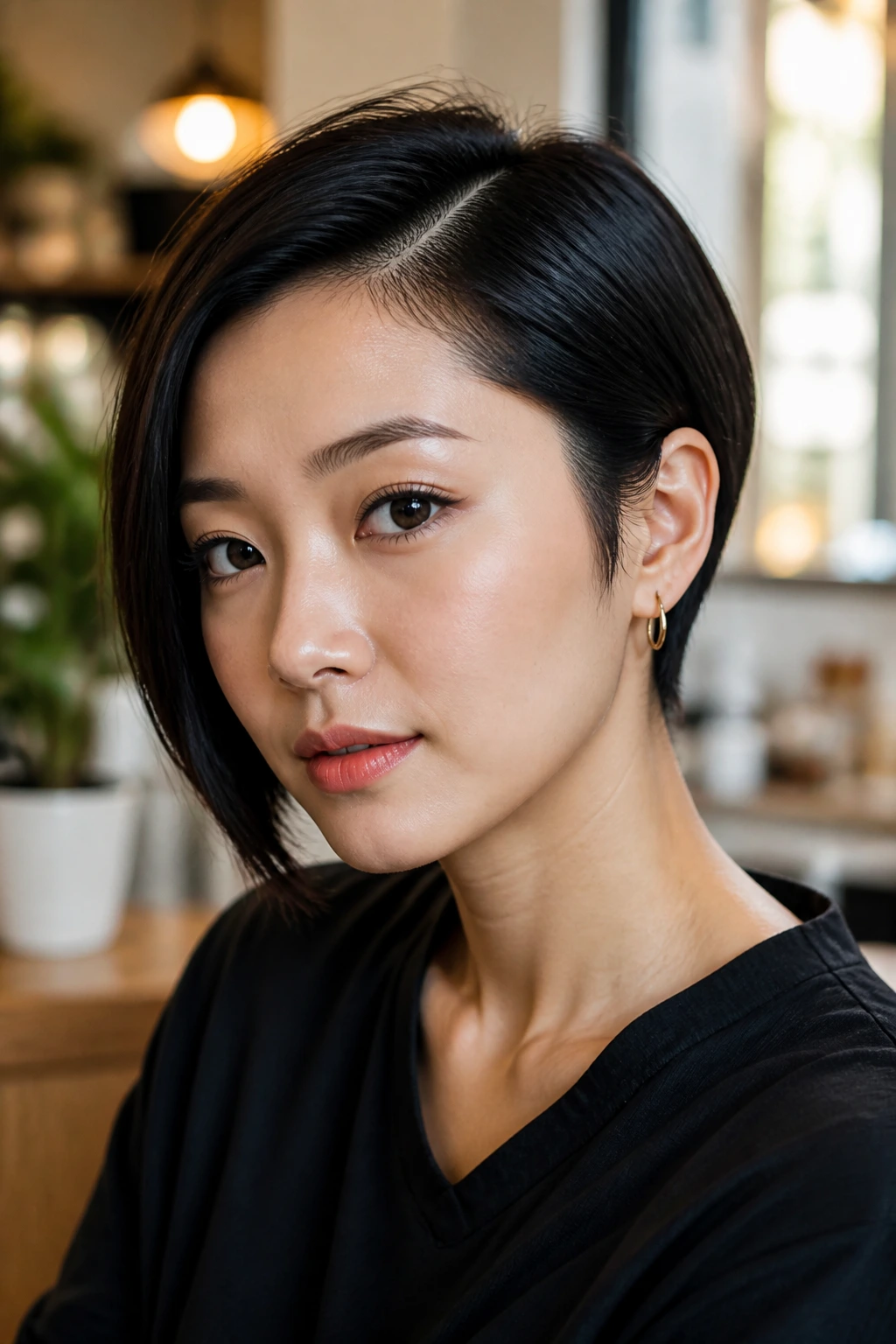
A short crop with a side part gives you a little styling direction without committing to a full fringe or a heavy top. One side can be slightly longer, which helps break up the straight line that dense hair sometimes creates. The part also gives the cut a more polished finish.
This version is useful if you still want the option to wear it neat. The side part can hide growth, soften a wider forehead, and make short hair feel a little more deliberate. If your hair wants to lie flat, keep the top textured and avoid stacking too much product at the roots.
36. Glossy Buzz Cut
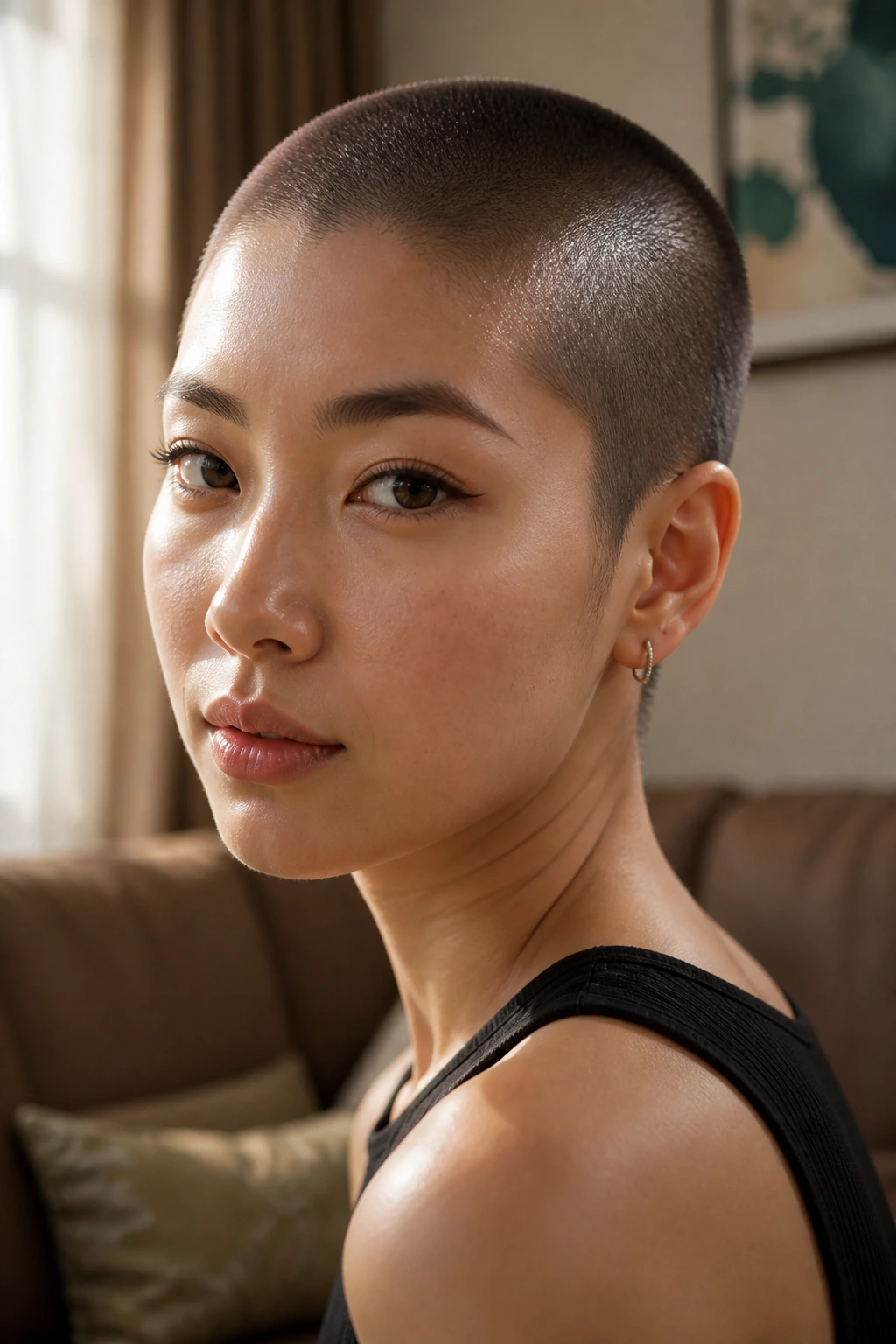
A glossy buzz cut leans into the shine of dark hair instead of fighting it. The cut stays short and even, but a tiny amount of serum or leave-in adds a satin finish that makes the shape look clean. Too much product is a mess; a drop or two is enough.
I like this cut when someone wants a polished short style rather than a matte, sporty one. The shine catches the light and makes the head shape read clearly. Keep the scalp healthy and the edges neat, because this style shows everything.
37. Soft Induction Cut with Lineup
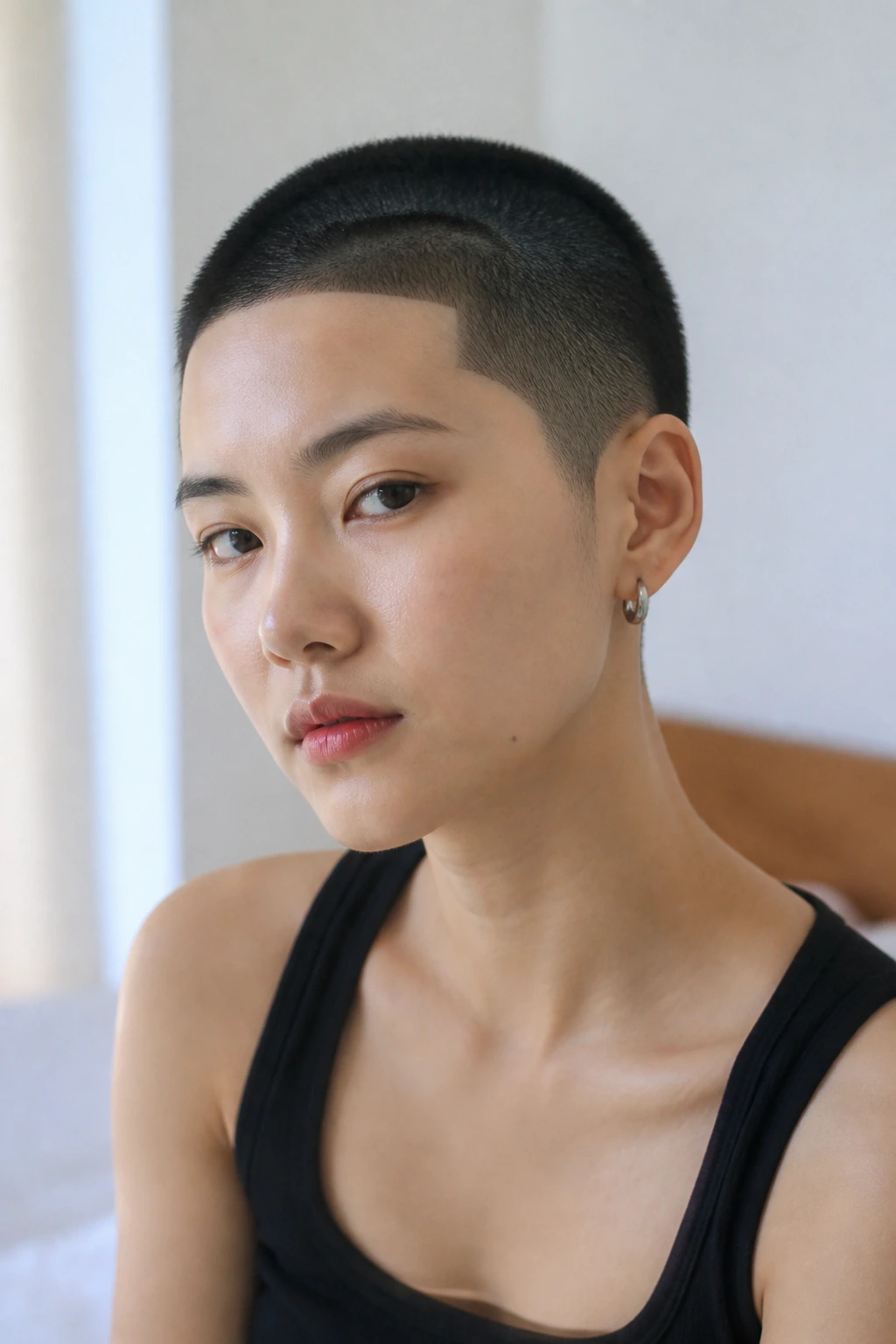
An induction cut is one of the shortest cuts you can wear without going fully skin-bare. A soft lineup around the hairline keeps it from looking accidental, and the result is neat, stripped back, and a little rebellious. It suits strong brows and tidy hairlines especially well.
This is not the cut I’d suggest as a first experiment unless you truly want to go very short. It is, however, one of the easiest shapes to maintain once you commit. A crisp neckline and clean temples matter more here than styling product ever will.
38. Pixie-Buzz Hybrid
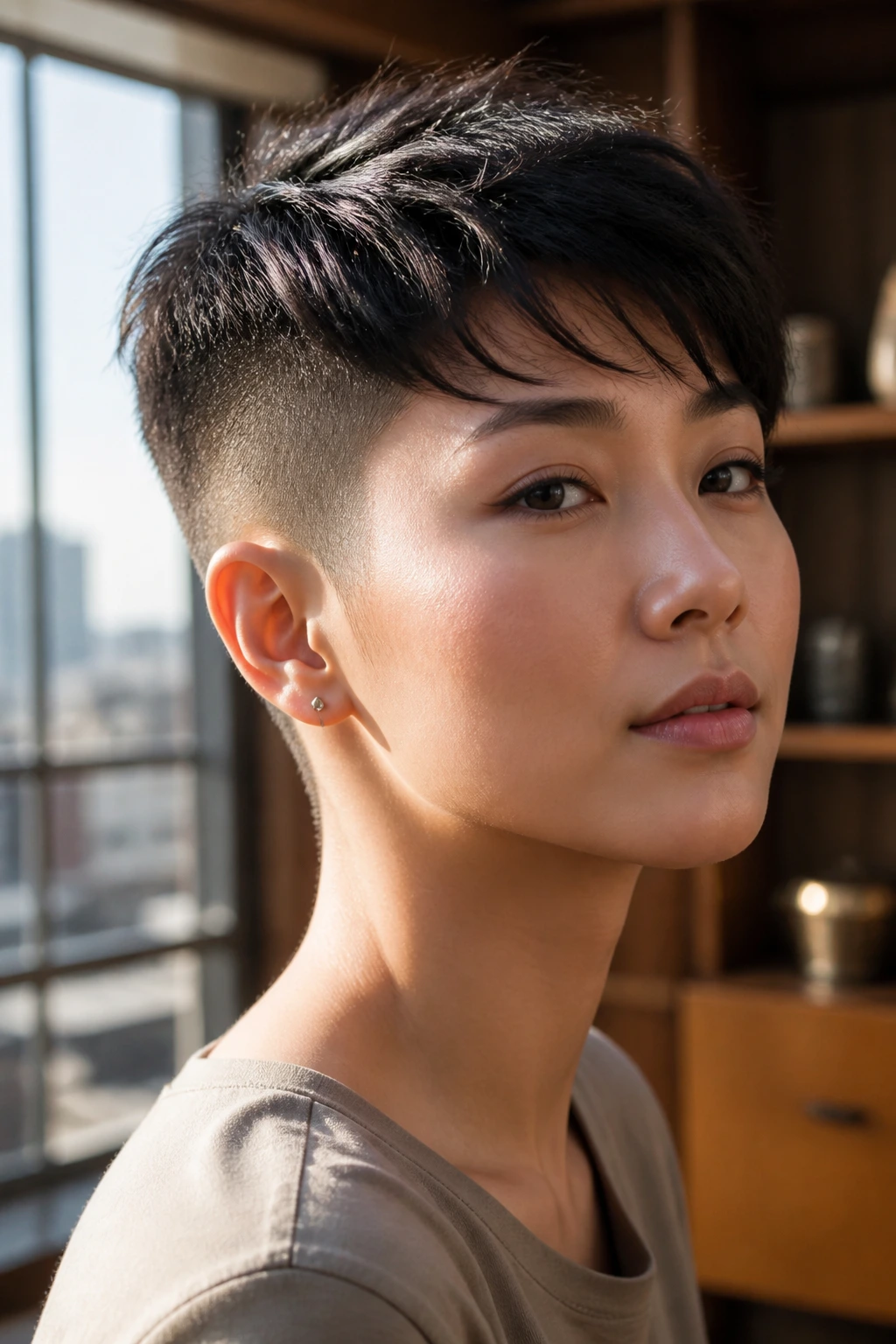
A pixie-buzz hybrid sits right between a close crop and a very short pixie. The sides are tight, the crown keeps a touch more length, and the front can be softened with a tiny fringe or a forward sweep. It gives you the neatness of a buzz with a little more face-framing.
This is a good bridge cut if you are not ready to lose all styling room. It grows out into a pixie cleanly and can be trimmed back into a crop without awkward stages. If you want a short haircut that still feels like it has some hair to play with, this one earns a look.
Why Straight, Dense Hair Makes These Shapes Read So Clean
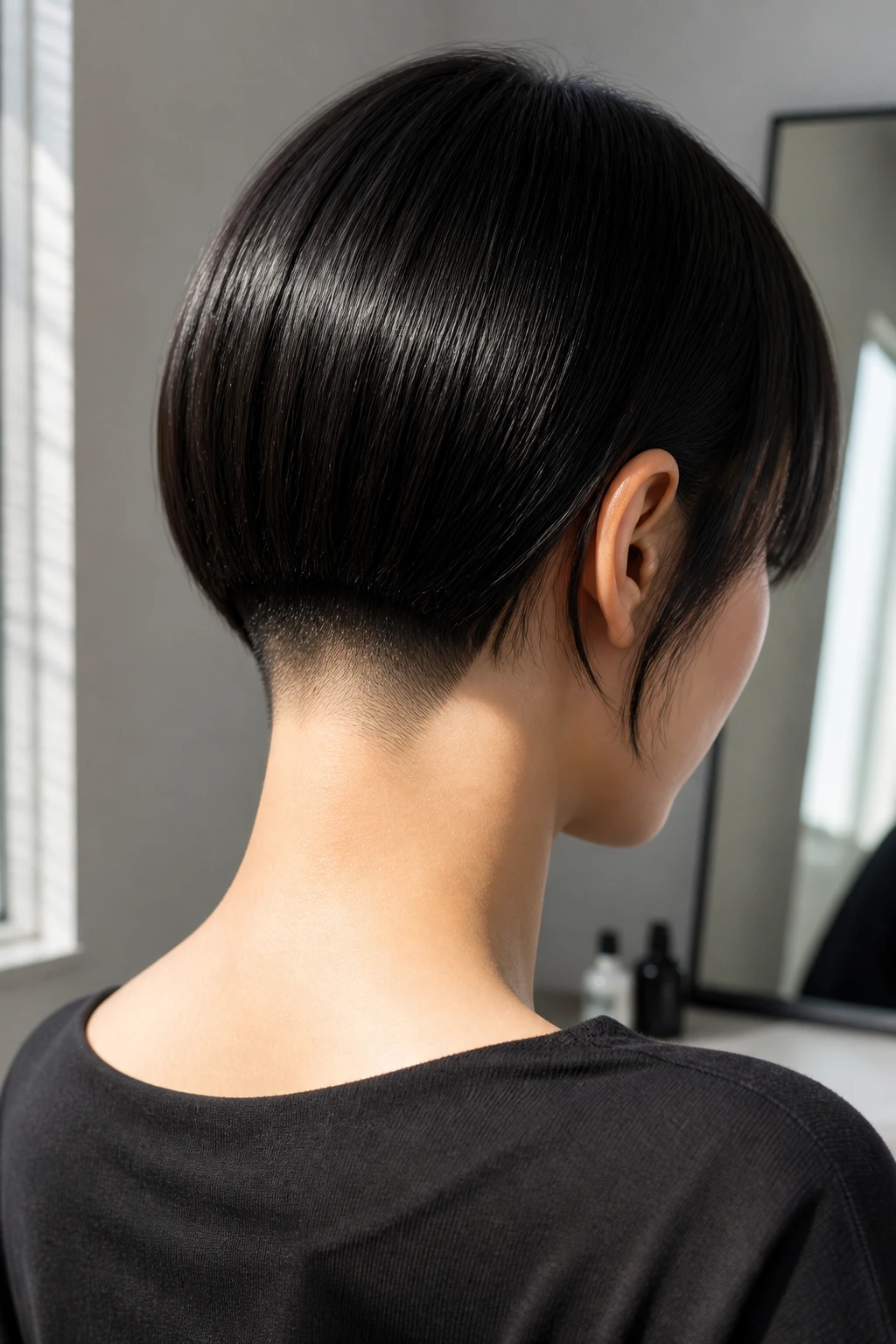
Straight, dense hair shows a haircut fast. A half-inch change at the nape is visible because the strands lie flat and reflect light in one clean line. That is why these cuts often look sharper on Asian women with darker hair: the outline is doing real work, not hiding under texture.
Bulk tends to gather in the same places over and over — behind the ears, at the collar, under the occipital bone, and around the lower crown. Remove hair there and the rest of the cut settles closer to the head. Leave too much length in those hidden zones and even a beautiful top layer can start to feel like a mushroom.
Fine hair can wear the same ideas, but the placement matters more. A skin-close shave can expose too much scalp if the hair is sparse. A soft taper or a longer guard often looks better because it keeps the shape visible without making the head feel bare.
Choosing Between Hidden Shaves, Exposed Sides, and Full Buzzes

Hidden shaves are the easiest to live with. They sit under longer layers, they disappear when the hair is down, and they let you keep the option of a polite-looking office style when you need one. If you are cautious, start there.
Exposed side shaves and one-sided cuts bring more attitude. They show when the hair is tucked, pinned, or swept to one side, which means you get a second haircut hiding inside the first one. They also grow out a little faster visually, so plan on more frequent cleanups.
Hidden and low-profile
Choose these if you wear ponytails, buns, or clips most days. They are the friendliest to grow out.
Partly exposed
Pick these if you want the cut to change when you tuck your hair behind the ear. That little reveal is half the fun.
Fully buzzed
Go here if you want the easiest morning routine and do not mind showing the shape of your scalp. Maintenance is simple, but the grow-out is visible fast.
What to Tell Your Stylist Before the First Snip
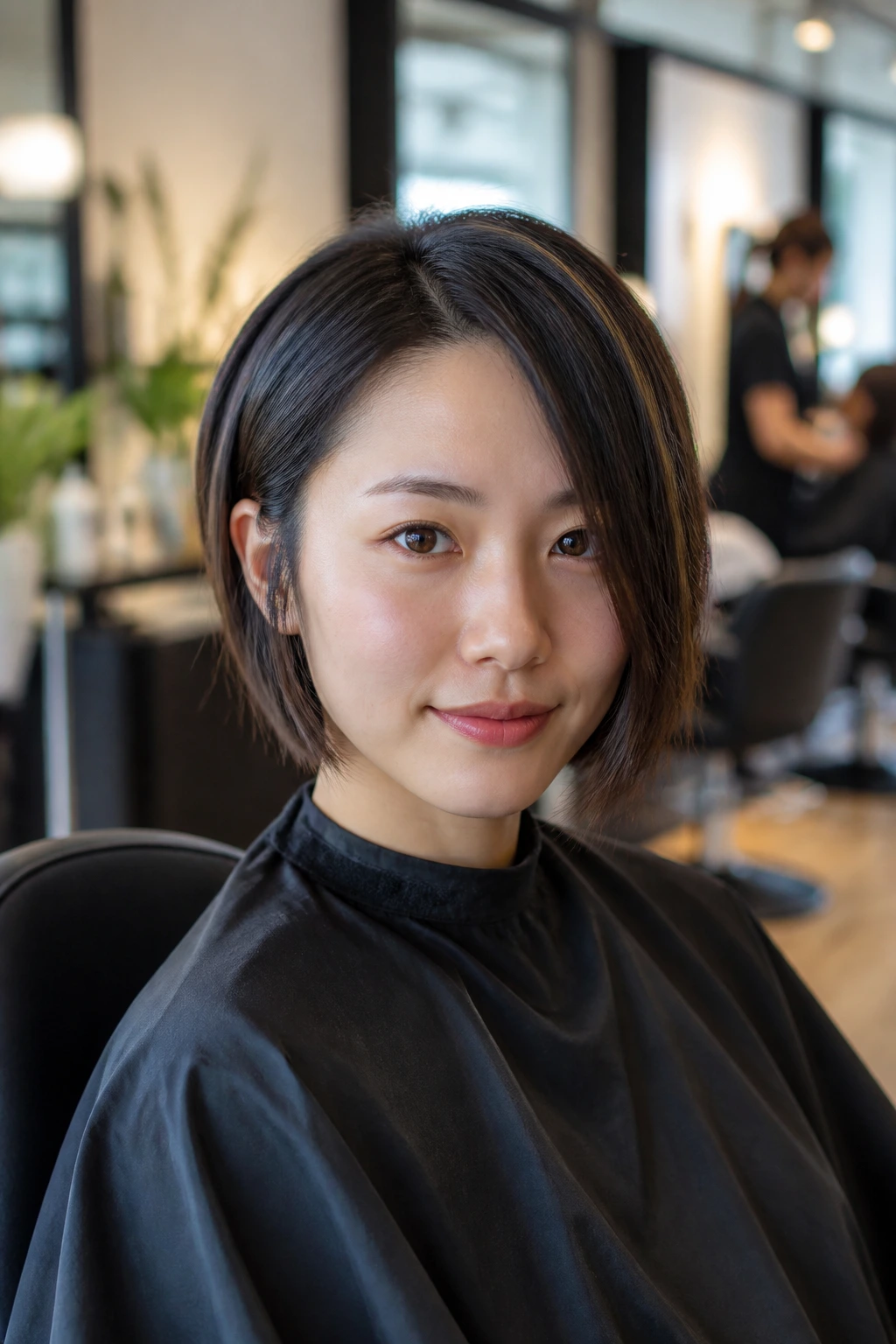
Bring photos, yes, but bring the right ones. Show the back, side, and front of the same cut if you can find them. One photo of a dramatic angle and another of a soft version is more useful than ten glossy pictures with no detail. The goal is not just inspiration; it is clarity.
Say the guard number out loud
If you want a hidden undercut, say whether you want a #1, #2, #3, or a soft taper. If you do not know, ask for the lightest version first. Hair grows back. A hard shave up high is harder to hide than most people expect.
Tell them how you wear your hair
Low ponytail, claw clip, side part, center part, tucked behind the ears — all of that matters. A nape cut that looks perfect with a bun can look odd when worn loose, and a temple shave that works with glasses may rub if the fit is off. Be annoyingly specific. It saves regret.
Mention cowlicks and whorls
Crown cowlicks, nape whorls, and uneven hairlines change how a buzz or undercut sits. A stylist who knows where the hair kicks out can leave a little extra length in the right place and avoid a puff that appears two days later.
Tools That Keep the Outline Sharp
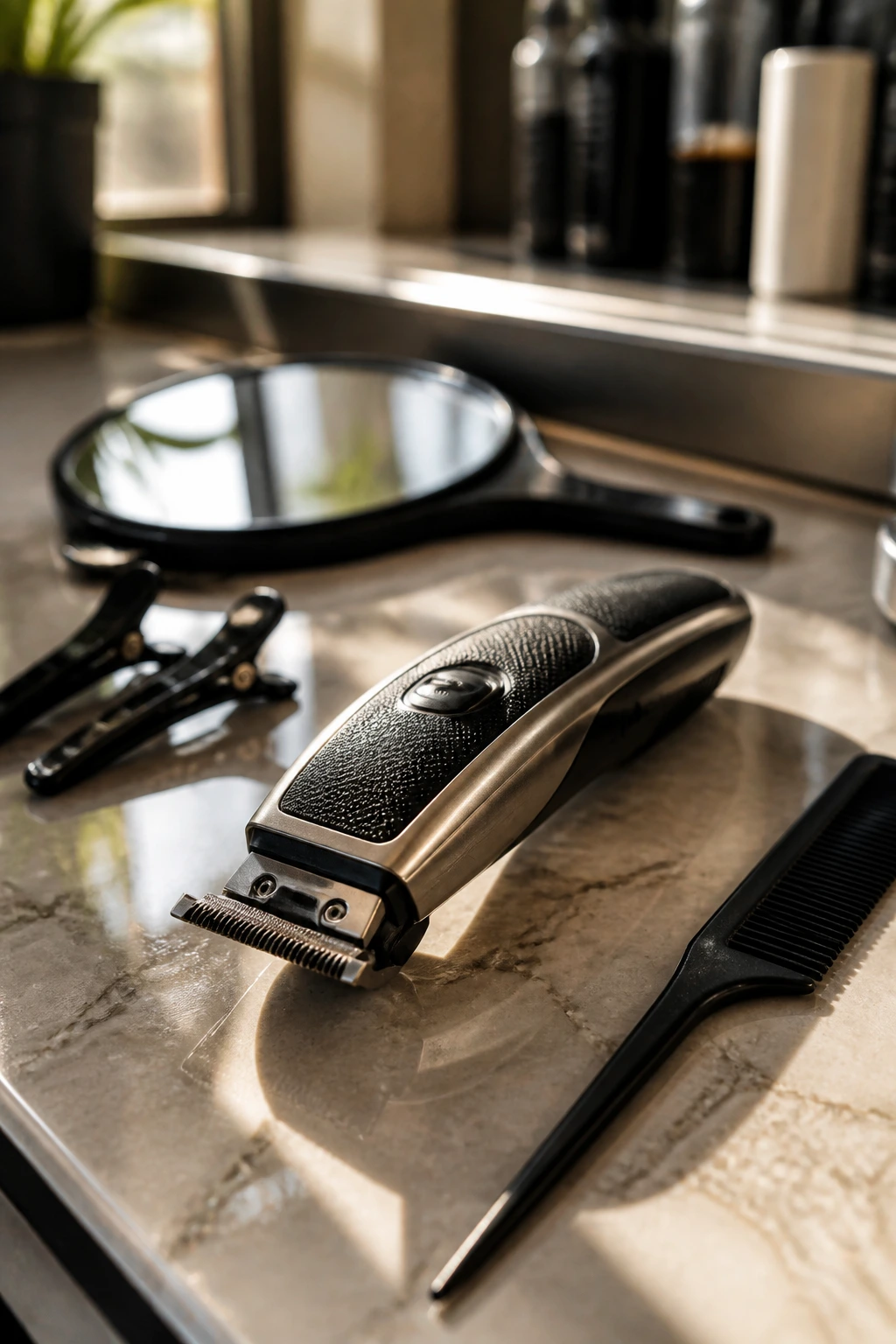
- Cordless trimmer with guards #0.5 to #4: Useful for neckline cleanup and keeping a buzz even between salon visits.
- Hand mirror: Non-negotiable if you want to check the back and sides without guessing.
- Tail comb and sectioning clips: Helpful for separating the top layer from hidden undercut areas before a cleanup.
- Blow dryer with a nozzle: Keeps the top smooth and pushes it away from the shave so the shape shows.
- Light styling cream or matte paste: Good for pixies, crops, and lobs; use less than you think.
- Scalp sunscreen or a hat: Very short cuts expose more scalp, and dark hair does not protect the skin.
- Sharp scissors, if you trim at home: Only for tiny dust-ups on the top; leave major clipper work to someone steady.
A dull trimmer is a bad bargain. It tugs, leaves uneven lines, and can make the neckline look fuzzy instead of clean.
How to Style These Cuts Without Making Them Stiff
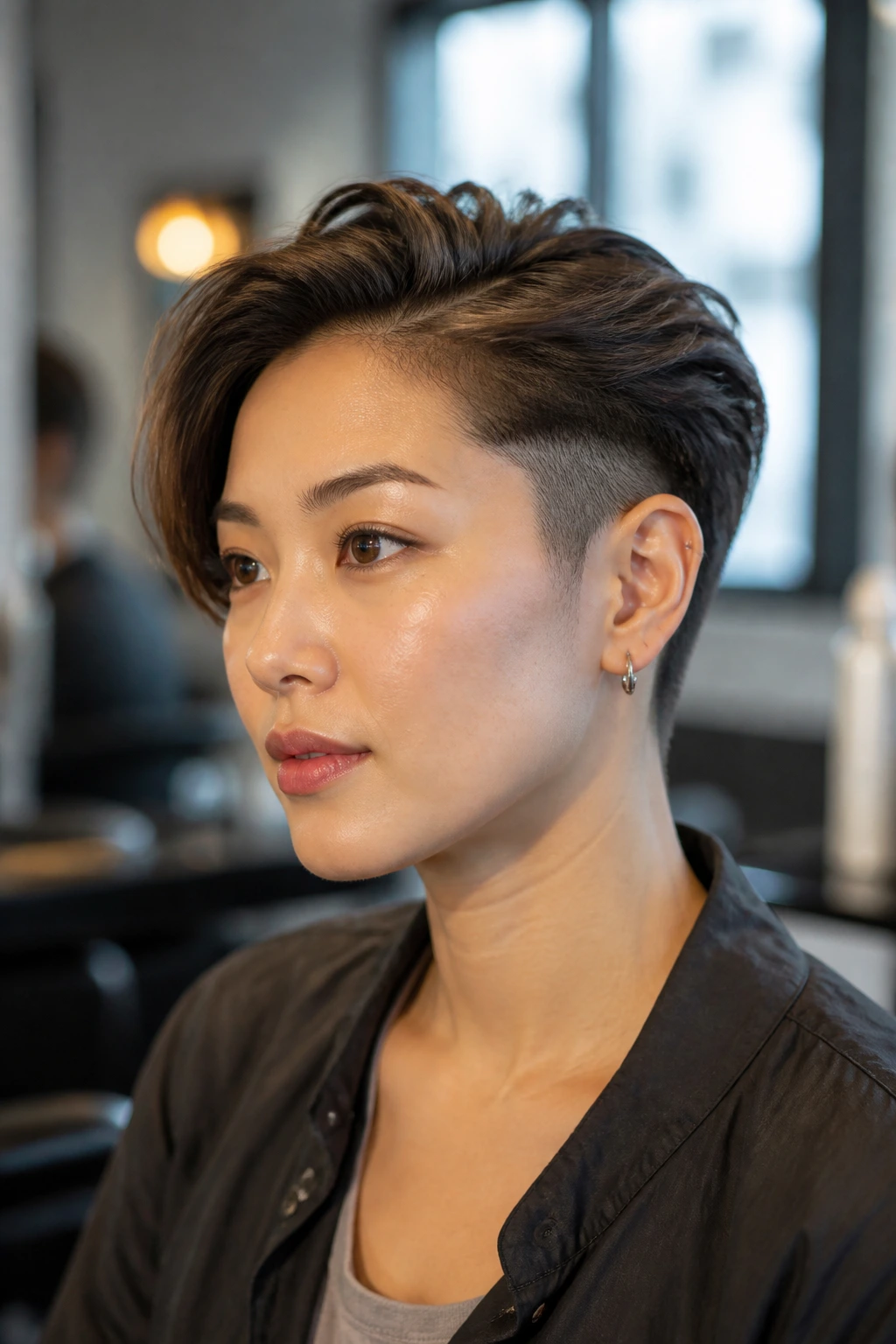
Hidden undercuts: Blow-dry the top away from the shaved area so the layers fall over the cut instead of clinging to it. A small round brush at the crown adds lift without turning the style into a helmet.
Buzz cuts: Use less product than you’d use on a pixie. A pea-sized amount of balm or nothing at all is usually enough. If you want polish, smooth a tiny bit of serum over the top and stop there.
Short crops and pixies: Put texture at the crown, not all over the head. Too much paste near the ears makes the shape crunchy. Keep the top soft and let the shaved areas stay clean.
Glossy dark hair: A drop of lightweight oil on the ends can keep the top from looking frayed. Avoid coating the scalp area. That turns a sharp cut into a greasy one in about ten minutes.
Common Mistakes That Make an Undercut Look Wrong
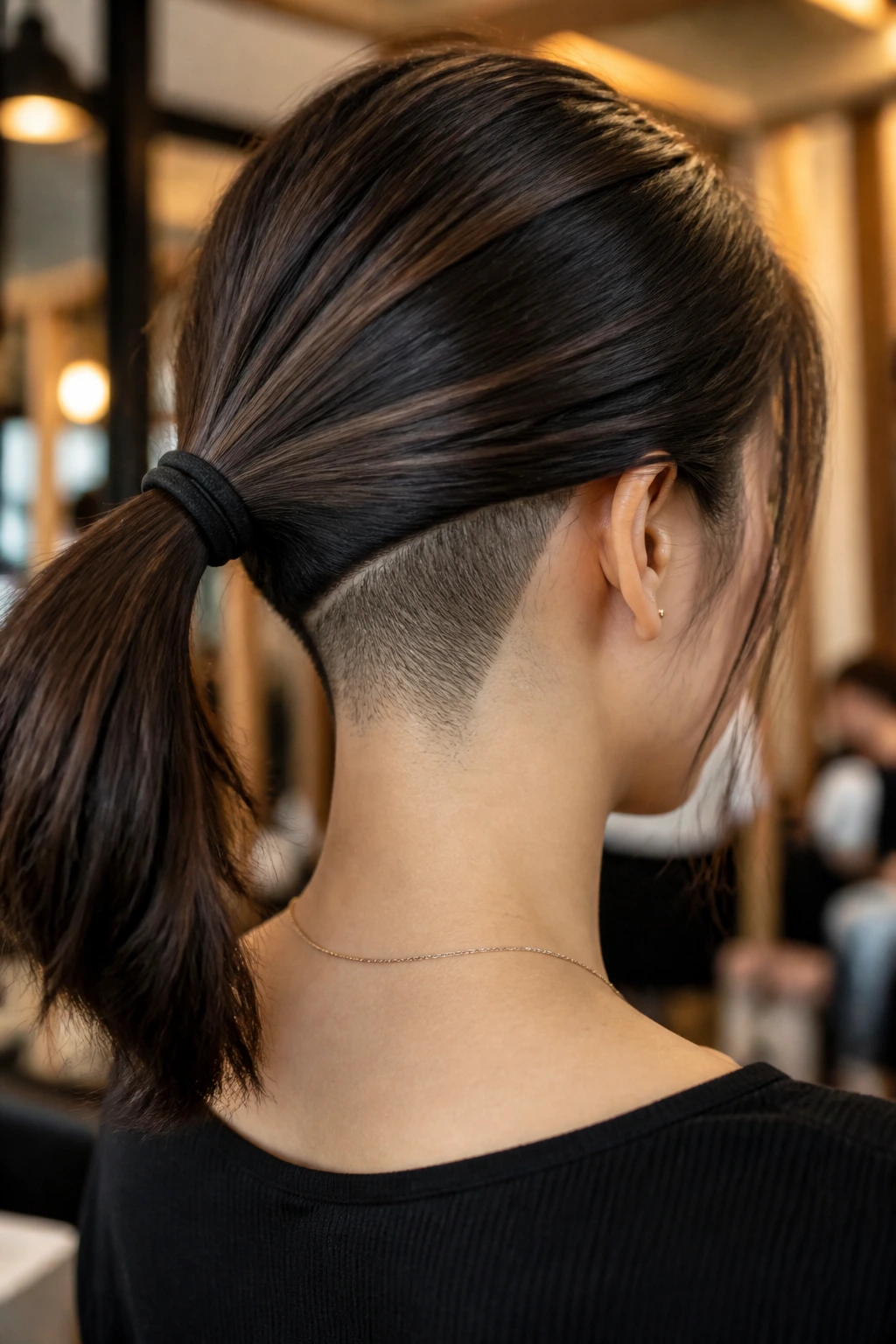
- Shaving too high on the head: The cut starts to show every time you change your part, and grow-out gets awkward fast. Keep the highest point below the area you actually want to hide.
- Thinning the top instead of removing the base: Scissor-thinning can make the ends look wispy while the bulk still sits underneath. If the problem is volume at the neck, the fix belongs lower.
- Ignoring the neckline shape: A square edge, a rounded edge, and a V shape all read differently. Pick one on purpose or the grow-out looks accidental.
- Using too much product on short hair: Paste, oil, and cream all show fast on a buzz or crop. Start with a tiny amount and add only if the hair still feels dry.
- Forgetting scalp care on buzz cuts: Short hair exposes more skin, which means dryness, flakes, and sun exposure show up more easily. A gentle shampoo and scalp sunscreen matter more here than people think.
- Going too dramatic on the first appointment: A skin shave or a high disconnect is exciting for about a week and then can feel hard to live with. Start softer if you are not sure.
Variations and Adaptations Worth Trying
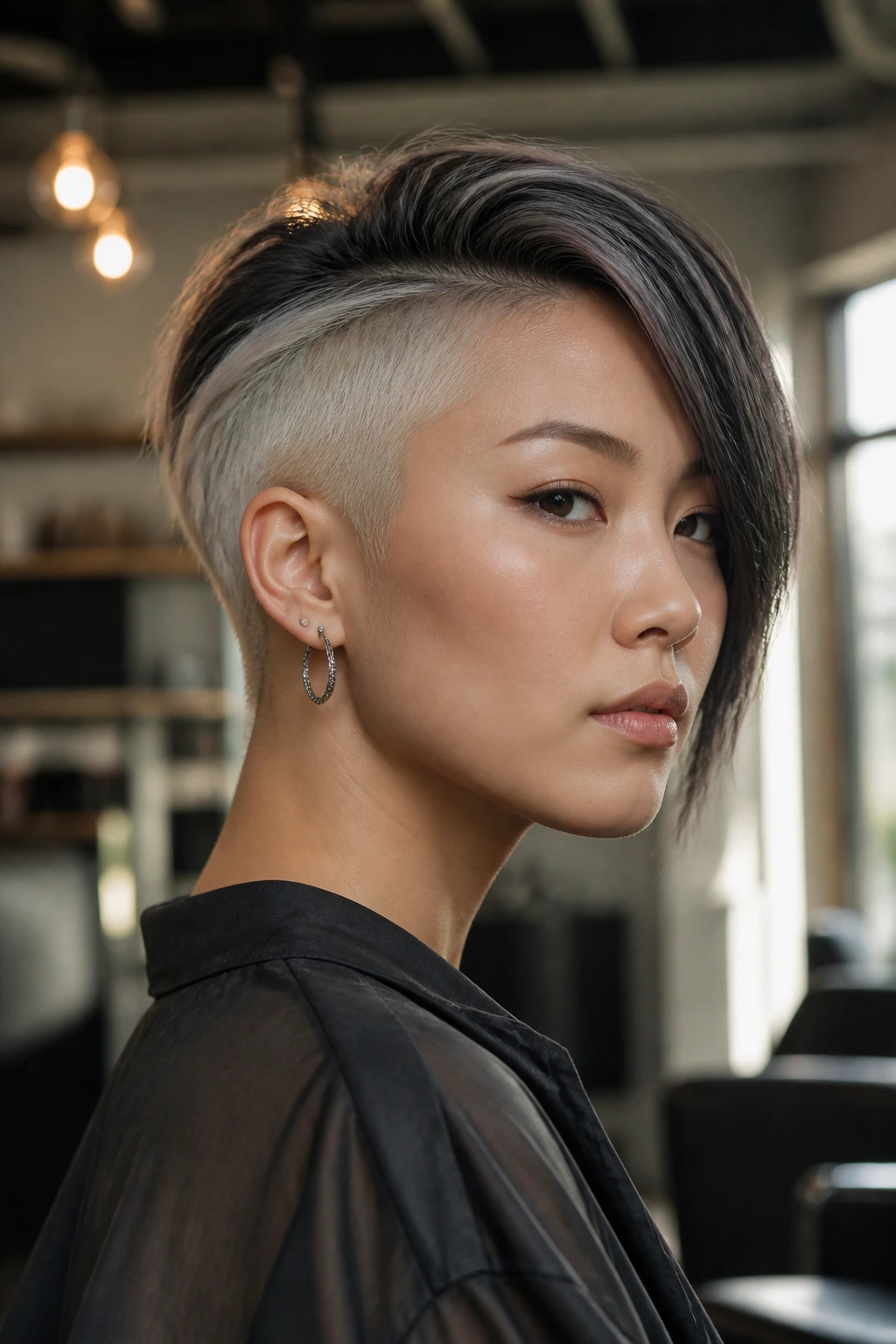
The Office-Safe Version: Keep the shave low and hidden, and ask for a soft taper at the nape instead of a hard skin fade. This works when you want the haircut to vanish under loose hair but still feel cleaner when pinned up.
The High-Contrast Version: Pair a visible side shave with blunt lengths on top, or go for a platinum buzz against dark brows. The contrast is the whole point, so keep the lines sharp and the styling minimal.
The Grow-Out-Friendly Version: Use a longer guard, keep the neckline rounded, and avoid shaving above the ear. This gives you a softer in-between stage when the cut starts to grow.
The Texture-First Version: If your hair is permed, waved, or naturally bent, leave more length on top and remove bulk only underneath. The texture carries the style; the undercut just keeps it from puffing out.
The Glasses-Friendly Version: Temple and ear-pocket shaves work especially well if you wear frames every day. They stop the arms of the glasses from fighting the hair at the sides.
Keeping the Shape Crisp Between Appointments
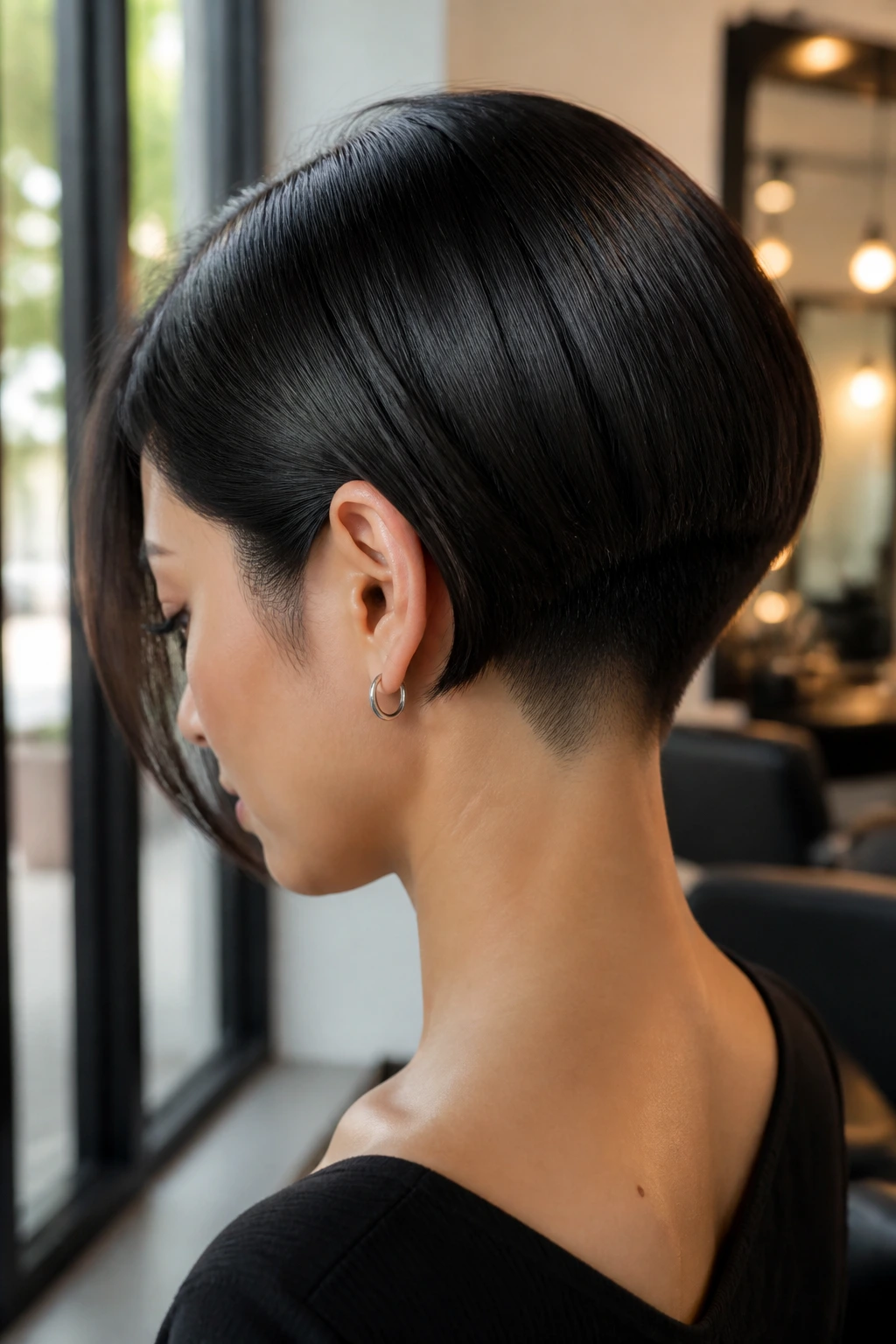
Hidden nape and temple shaves usually need a cleanup every 4 to 6 weeks if you want the line to stay neat. If you are happy with a blurrier finish, you can stretch that a little longer. Buzz cuts need more frequent attention — often every 2 to 3 weeks — because even a little growth changes the silhouette fast.
If you color a buzz cut, expect the roots to show quickly. A shadow root softens the regrowth line, while full bleach demands more upkeep. On a short crop, a small trim can matter more than a whole new style; the neckline and sideburns are what make it look fresh.
Grow-out without panic
The awkward stage is easier if you change how you wear the hair while it grows. A hidden undercut can be tucked into low buns, half-ups, or a side part. A buzz can move into a short crop, then a pixie, then a bob if you let the top stay a bit longer each time.
Frequently Asked Questions
What should I ask for if I want my first undercut to stay hidden?
Ask for a low nape undercut or a temple shave with a soft taper, and say you want it hidden when your hair is down. Bring one photo of the front and one of the back so the stylist knows where the line should disappear.
Will a hidden undercut show through thick straight hair?
Usually not if it sits low enough. Thick straight hair covers hidden shaves well, especially when the top layer is left long enough to fall over the base. The problem comes when the shave sits too high or the top is too short to cover it.
Can thin hair wear these styles too?
Yes, but the guard length matters more. Fine hair usually looks better with a soft taper or a slightly longer buzz, because a skin-close shave can expose too much scalp. A hidden nape cut can also work well if the top stays full.
How often do buzz cuts need trimming?
Most buzz cuts need a cleanup every 2 to 3 weeks if you want the shape to stay sharp. If you do not mind a softer outline, you can stretch that longer, but the grow-out shows quickly on dark hair.
Do undercuts work with wavy or permed hair?
Very much so. Waves and curls build volume fast, so removing weight underneath helps the shape sit closer to the head. Just leave a little extra length on top so the texture has room to move.
What if my hairline is uneven?
Do not force a harsh lineup if the natural hairline is irregular. A soft taper, micro fringe, or rounded neckline usually looks better and grows out more cleanly. The goal is shape, not pretending the hairline is perfectly straight.
Can I maintain these cuts at home?
Small neckline cleanups, yes, if you have a steady hand and decent trimmers. Major changes are better left to a stylist, especially on a high-contrast shave or any cut where the balance of the sides matters. A bad home buzz is obvious for weeks.
A Shape That Holds Its Edge
The best thing about these cuts is not that they are bold. It is that they solve a real hair problem while still giving you room to choose how visible the change should be. A hidden nape shave can disappear under long hair. A temple cut can sharpen glasses and side parts. A buzz can wipe the slate clean and make the face the main event.
Start with the version that fits your daily life, not the version that looks loudest in a photo. The haircut that behaves well when you tuck it behind your ear, tie it up, or let it grow out for a month is the one that earns its place.
