



The best Afro Mohawk hairstyles for Black women do something a lot of other styles never quite manage: they let your texture stay visible, on purpose, in a shape that feels sharp rather than unruly. The center strip can be soft, braided, twisted, puffed, or clipped up into height, while the sides stay neat enough to frame the face instead of swallowing it. That balance is the whole charm.
I’ve always liked the frohawk family because it doesn’t ask Black hair to pretend it’s something else. It works with shrinkage instead of fighting it. It works with density. It works with the fact that some mornings you want a style that looks thoughtful in five minutes and other mornings you want something that can hold gold cuffs, beads, or a dramatic side braid without falling apart by lunch.
And yes, there are a lot of versions. Some are soft enough for a desk job, some look better with statement earrings and a bold lip, and a few are built for braid-in, tuck-away convenience when you need your ends left alone for a while. The trick is knowing which shape gives you the cleanest line and the least scalp drama. That’s where the good ones separate from the ones that look cute for ten minutes and then start leaning sideways.
Why This Collection Feels Different
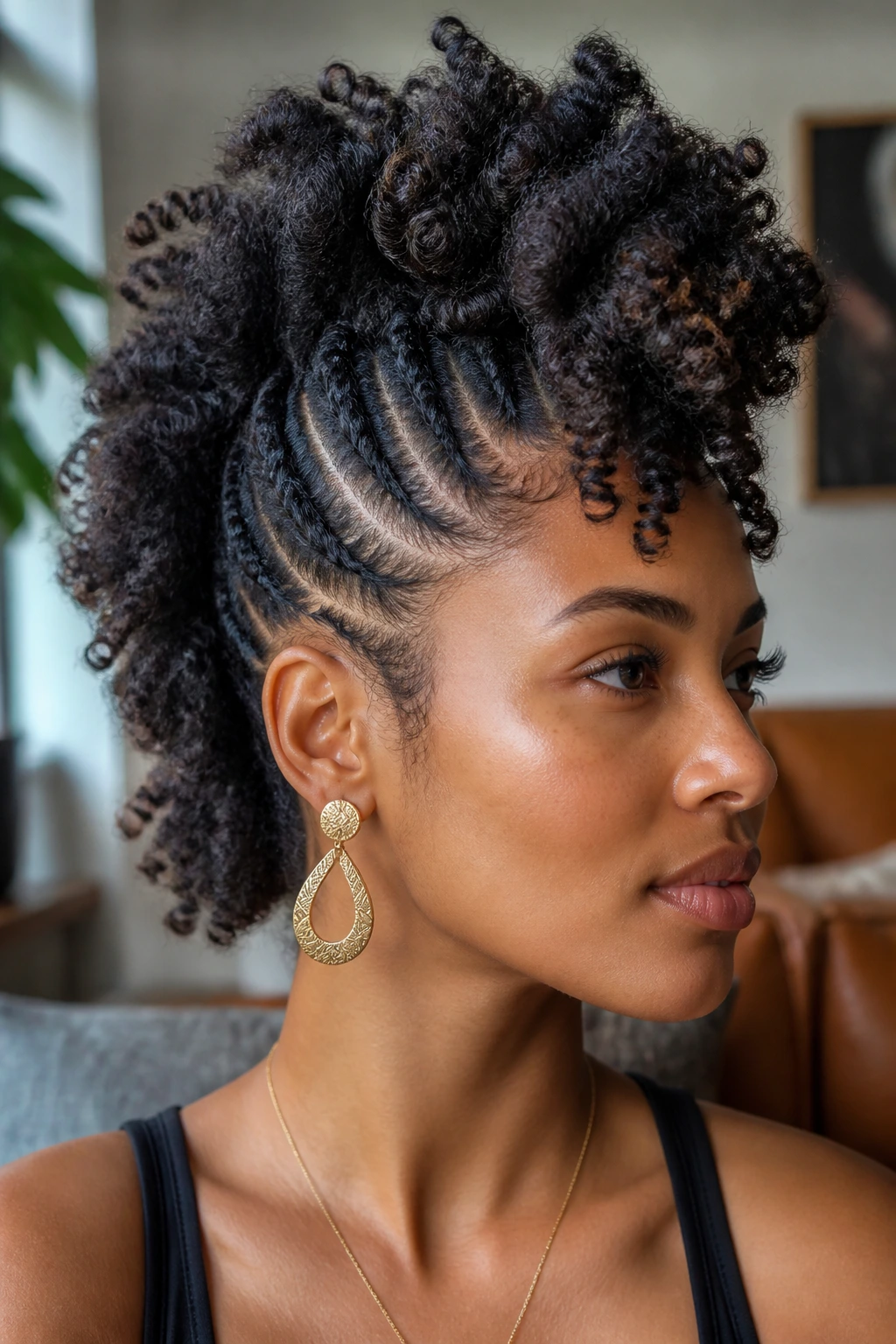
Texture-first styling: These mohawks let coils, curls, twists, locs, and stretched natural hair stay visible instead of forcing everything into one flat shell of gel.
Shape with range: You can wear the same frohawk idea as a soft puff, a braided center strip, a high crown, or a low swept style, depending on how much drama you want.
Protective options built in: Several of these looks tuck the ends away, reduce daily combing, and keep the fragile parts of the hair—especially the nape and edges—out of the line of fire.
Works at more than one length: A teeny frohawk on a TWA, a shoulder-length twist hawk, and a long Marley-hair version all live in the same family.
Easy to dress up or down: Add cuffs, beads, a scarf, or a clean part and the whole mood changes. That’s useful. More useful than people admit.
Face-framing by design: The center line pulls the eye upward, which can soften fullness at the cheeks and give the whole style a little vertical lift.
1. High Puff Afro Mohawk
A high puff frohawk is the cleanest answer when you want height without a braid appointment. Brush the sides upward with a little gel, gather the center at the crown, and let the puff keep its soft edge instead of forcing it into a tight knot. It’s one of those styles that looks polished from a distance and still reads like natural hair up close.
Why it works: The silhouette is simple, but it solves a lot of small problems at once. The sides stay controlled, the center keeps volume, and you don’t need a ton of extra hair. On hair that shrinks fast, a stretch the night before helps the puff sit higher and look fuller.
Watch for: Don’t over-slick the hairline. A frohawk should feel lifted, not scraped.
2. Tapered Cut Frohawk
A tapered cut does half the work for you. The sides are already short, the top has room to bloom, and the whole shape lands with less effort than a style that starts from scratch every morning. I like this version when the haircut itself is the statement.
There’s a nice honesty to it. The outline is clean, the texture stays visible, and the crown can be shaped with a little curl cream or sponge work without piling on product. If you want a frohawk that feels low-maintenance but still looks deliberate, this is the one I’d put near the top.
Best for: women who like regular cuts and want the mohawk shape built into the haircut.
Tip: keep the top slightly longer than the sides so the silhouette reads from every angle, not only the front.
3. Flat-Twist Mohawk With Puff Ends
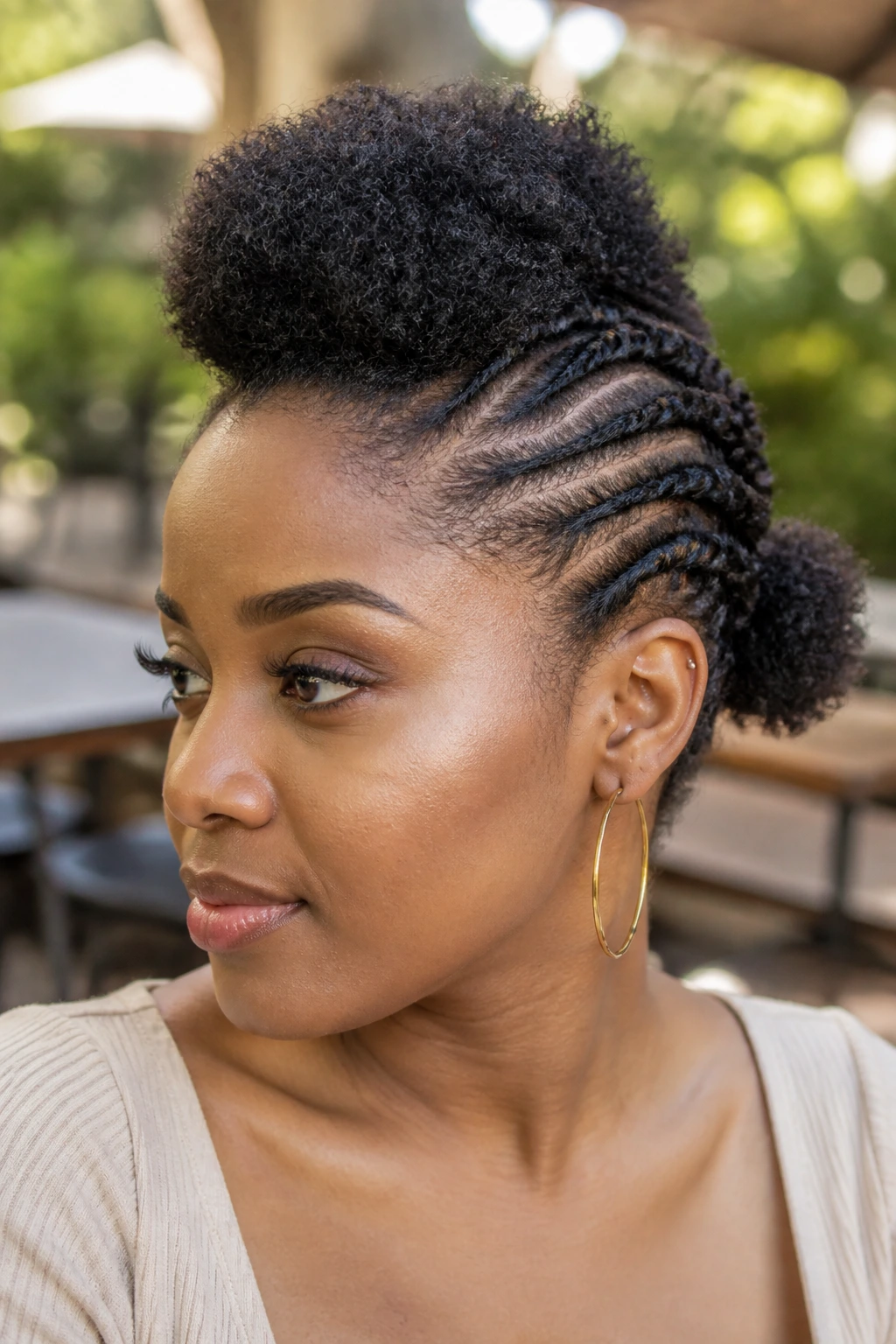
Why does this version look so put together? Because the flat twists do the job of steering the eye, and the puff ends bring the softness back. The sides are twisted flat against the scalp, the middle section stays raised, and the ends can be gathered into one puff or split into two small ones.
It’s a sweet spot between protective styling and a style that still moves. If you like wearing twists for a few days and then unraveling them for more texture, this one gives you both options. The twist pattern also keeps the center line neat, which matters more than people think.
A good side twist does not need to be tiny to look elegant. Medium-sized sections tend to hold better and are easier to refresh.
4. Bantu Knot Mohawk
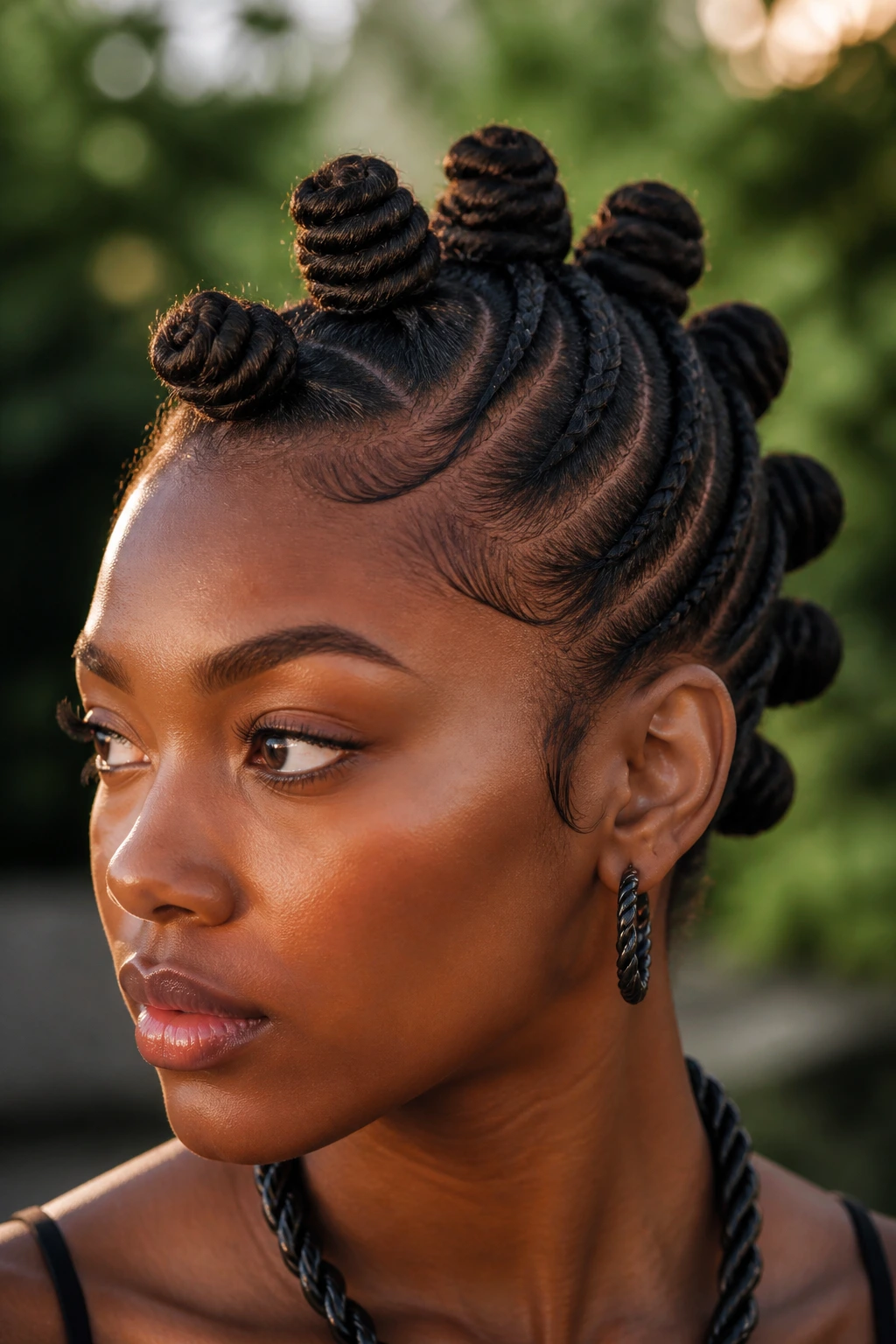
A row of Bantu knots down the center turns the frohawk into a little sculpture. The sides stay sleek or lightly braided back, and the knots stack through the middle like deliberate little domes. It’s playful, yes, but it’s also protective if your ends need a break.
I especially like this style on medium-length natural hair because it gives shape without needing a lot of stretch. Wear the knots as-is for a crisp look, then take them down later for a knotted-out curl pattern. That second-day reveal is half the fun.
Best for: weekends, concerts, and the kind of day when you want the hair to be the accessory.
5. Cornrow Sides, Full Afro Center
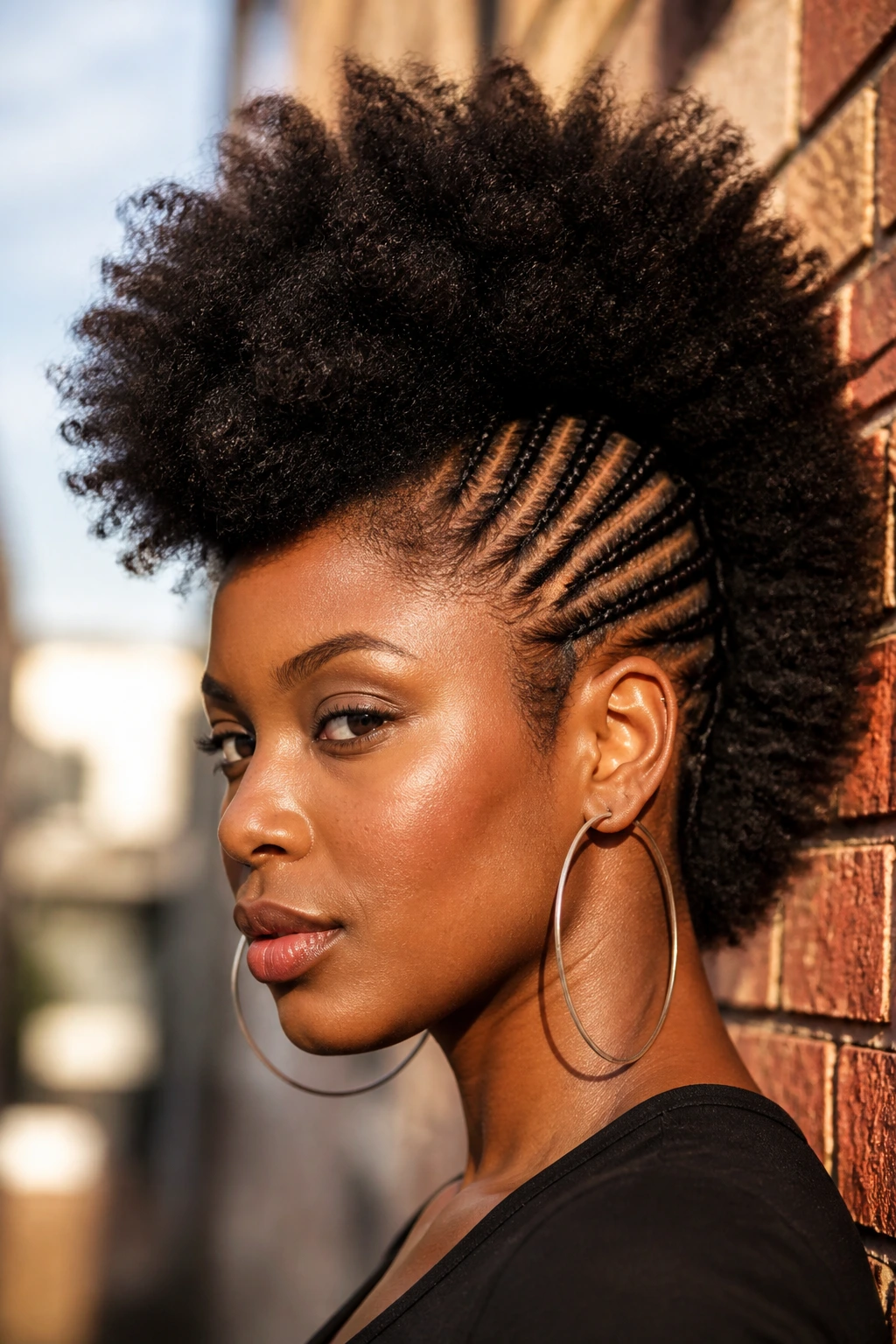
This is the frohawk when you want the center to be loud and the sides to stay quiet. Tight, medium-width cornrows run along the scalp and feed straight back, while the middle section is left full, stretched, and open. The contrast is the point.
Why it stays balanced
Cornrows on the sides keep the outline neat without flattening the whole head. The center afro can be picked out, fluffed, or lightly shaped with a pick, and the whole style holds a cleaner line than a full-out loose fro. It also gives you room to show off dense coils without making the sides fight the volume.
A small detail matters here: keep the cornrow tension even, not harsh. If the front starts to sting, the style is too tight. Good braids should feel secure, not smug.
6. Two-Strand Twist Frohawk
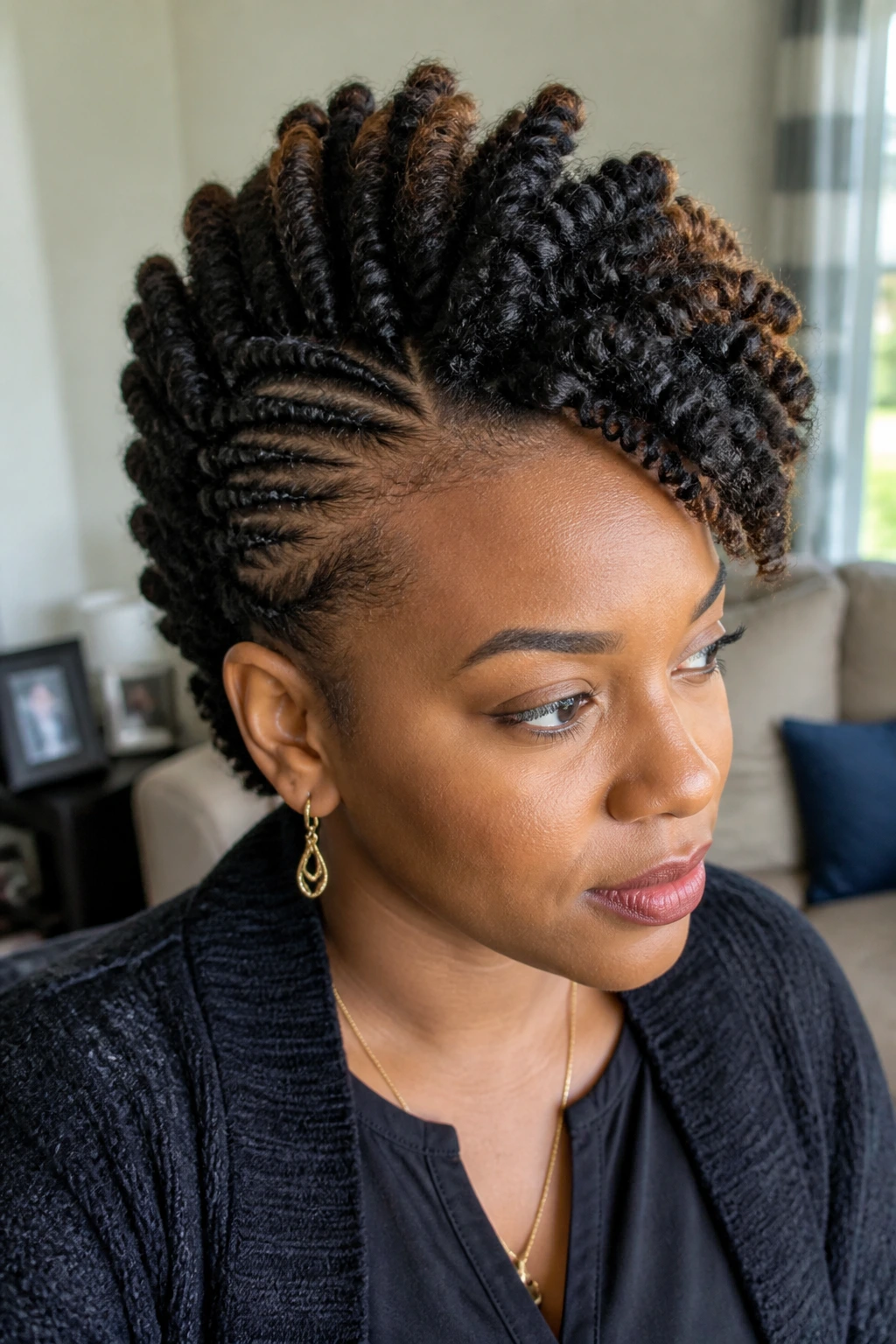
A two-strand twist frohawk has a softer personality than the braided versions. The twists are chunkier, the texture shows through more, and the center line keeps that fluffy, rope-like look that makes natural hair feel alive instead of shellacked. It’s a good choice when you want definition without stiffness.
What makes it different: twists tend to unravel into a flattering day-two texture, so the style can change character a bit as the week goes on. That’s not a flaw. It’s part of the appeal.
If your hair loves cream-based stylers, this is one of the best canvases. Just don’t overload the roots with product or the twist line gets muddy.
7. Shaved-Side Faux Hawk
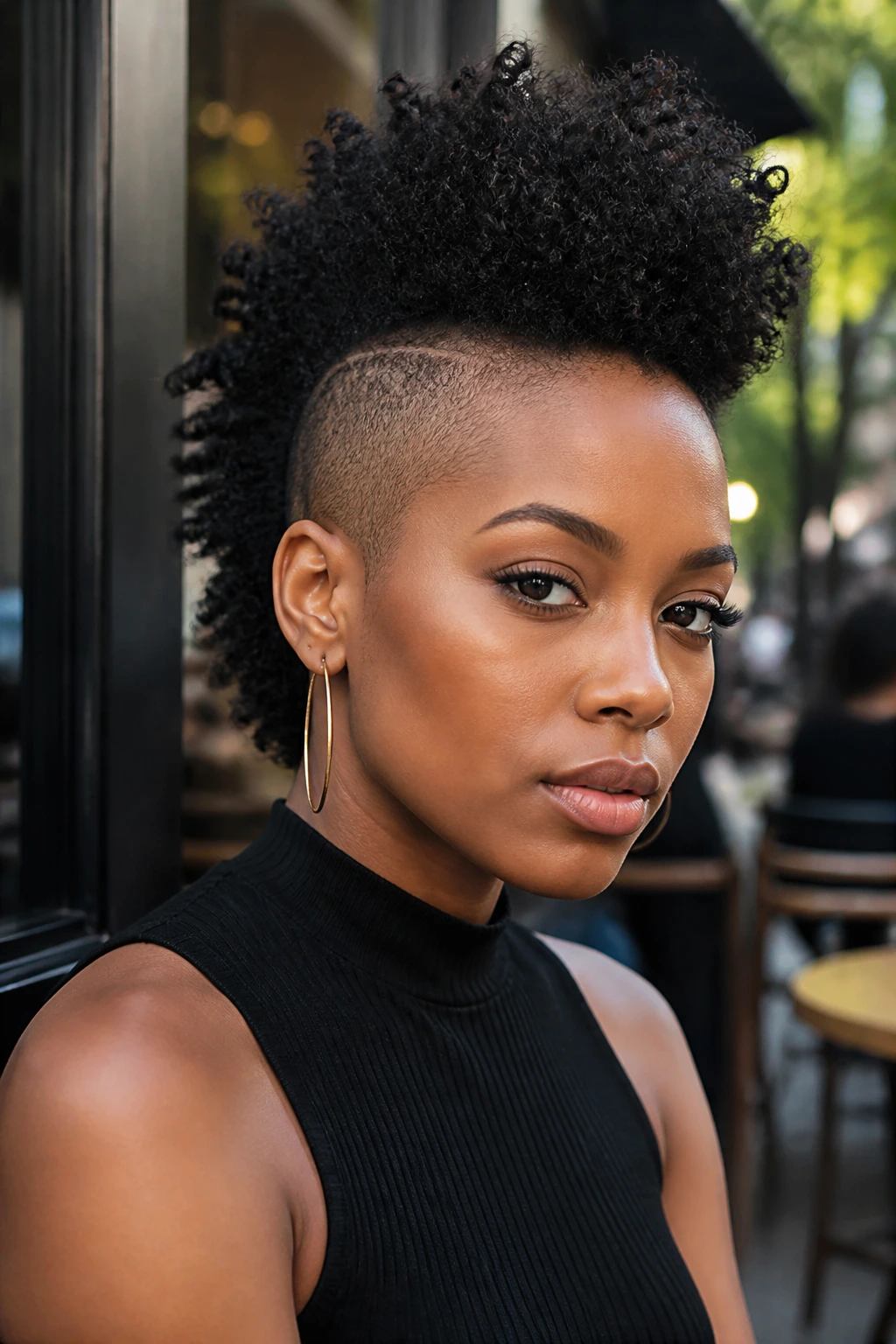
You do not need clippers to get the attitude of a shaved-side hawk. A faux hawk can fake the clean sides with tight braids, pinned flat sections, or slicked-back hair that hides the bulk underneath. The center stays high and dramatic while the edges stay close.
This version is for people who like sharper lines. It gives that nearly-edgy, almost-tailored look without committing to a real cut. I reach for this when I want the mohawk shape to read from across the room.
The only catch is tension. A faux hawk looks cool right up until the sides are dragged too tight. Leave a little give around the temples.
8. Feed-In Braid Mohawk
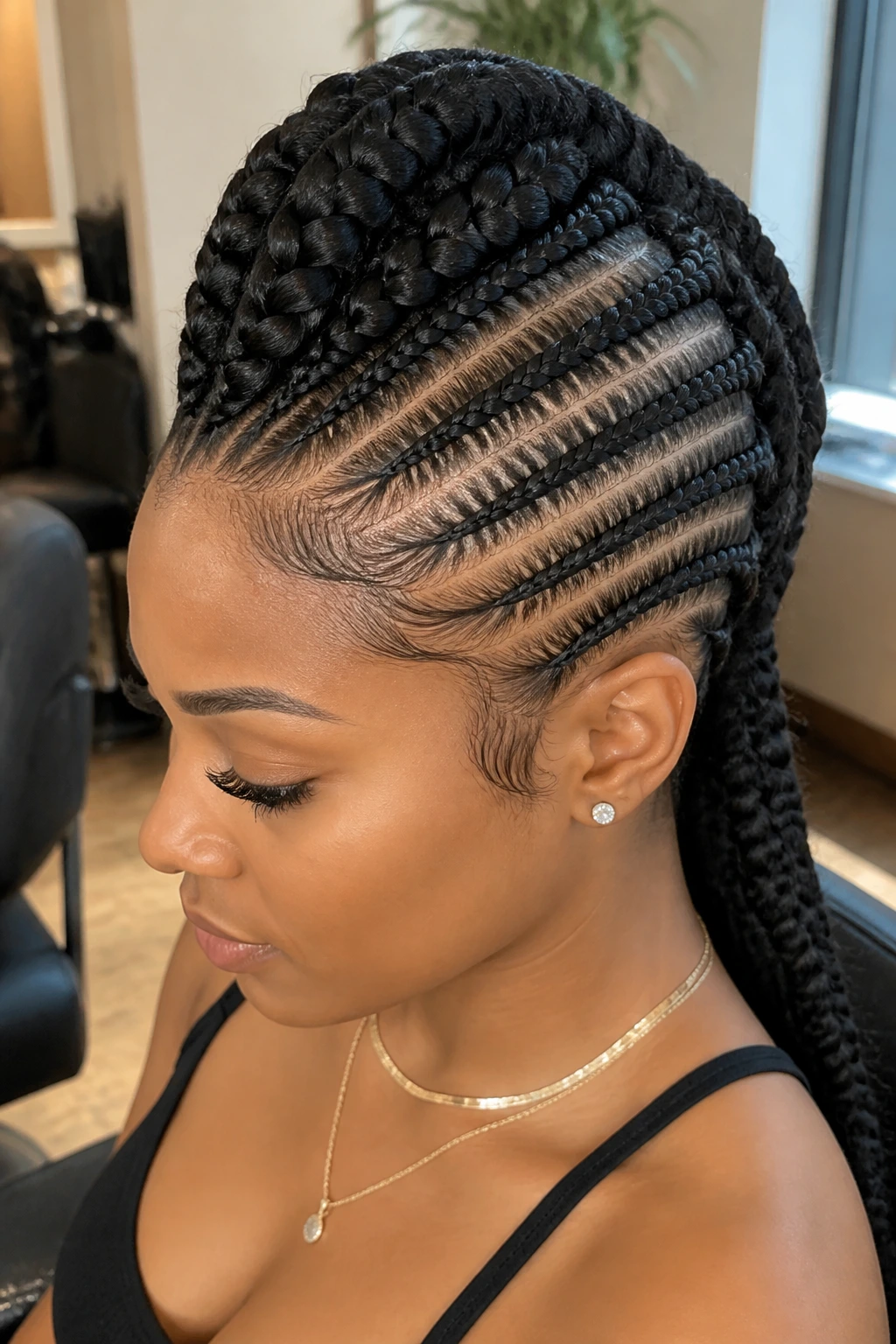
Feed-in braids make the frohawk look long, sleek, and expensive without actually needing expensive anything. The braids start small at the scalp, grow thicker as hair is fed in, and run down the center like a raised lane. That gradual build keeps the look smoother at the root.
This one is useful when you want length added without a heavy base. The feed-in method keeps the scalp line cleaner than a bulky braid starting point, and that detail matters if you wear the style for more than a few days. It’s also a smart way to protect ends.
If you like accessories, this is the perfect place for one or two cuffs, not a whole parade of them.
9. Defined Coil Frohawk
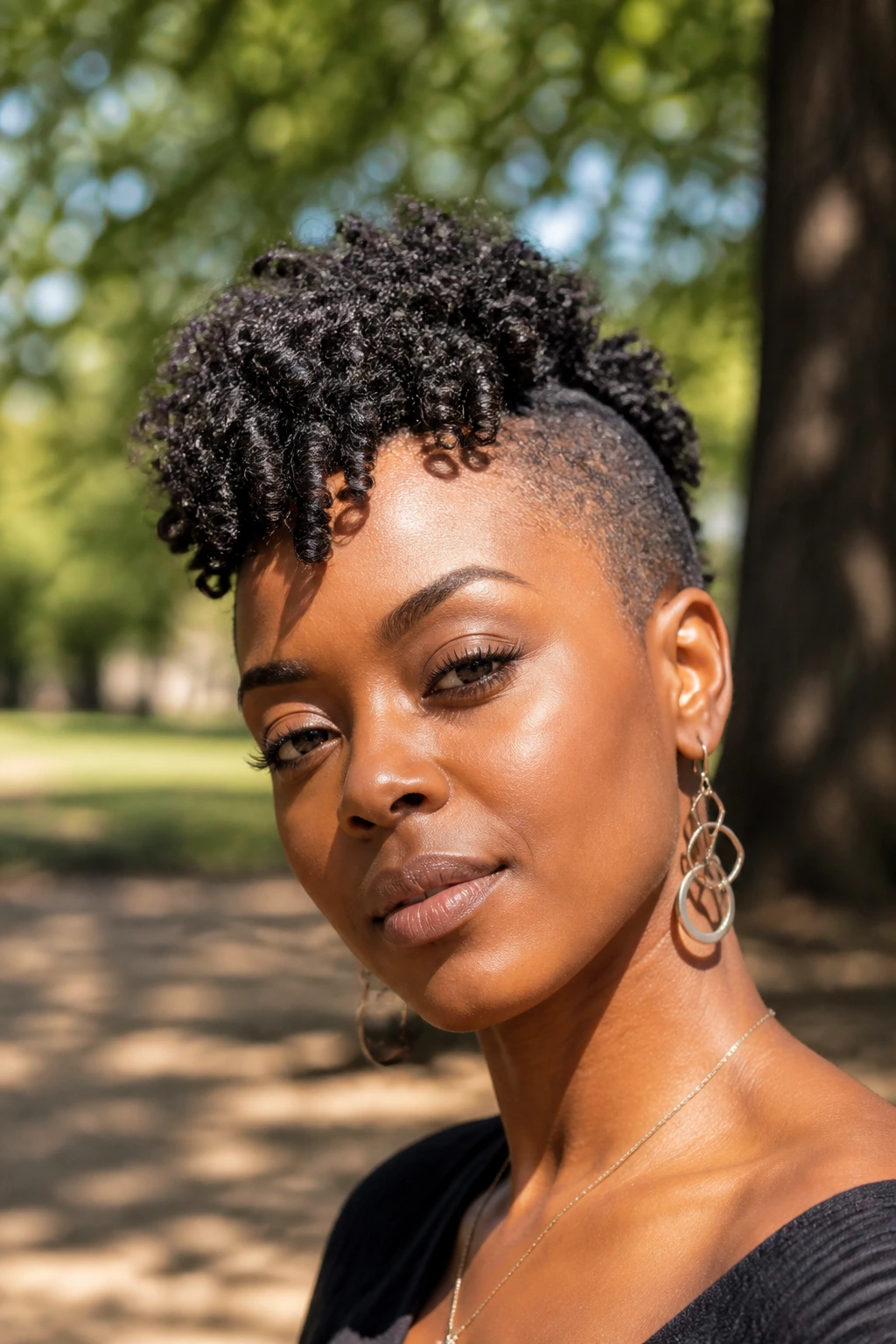
What if the frohawk shape is mostly there to show off your coil pattern? Then keep the coils defined and let the texture do the talking. Finger coils, shingled curls, or a wash-and-go shaped into a center ridge all work here, as long as the sides stay controlled.
Best for coil lovers
A defined coil hawk looks best when the hair is still springy, not weighed down. Use a light leave-in, a curl gel that doesn’t flake like chalk, and a diffuser if you want more lift at the crown. If your hair shrinks hard, stretch the middle with clips while it dries.
The result is less “fussy” and more “intentional texture.” Big difference.
10. Mini Puff Mohawk
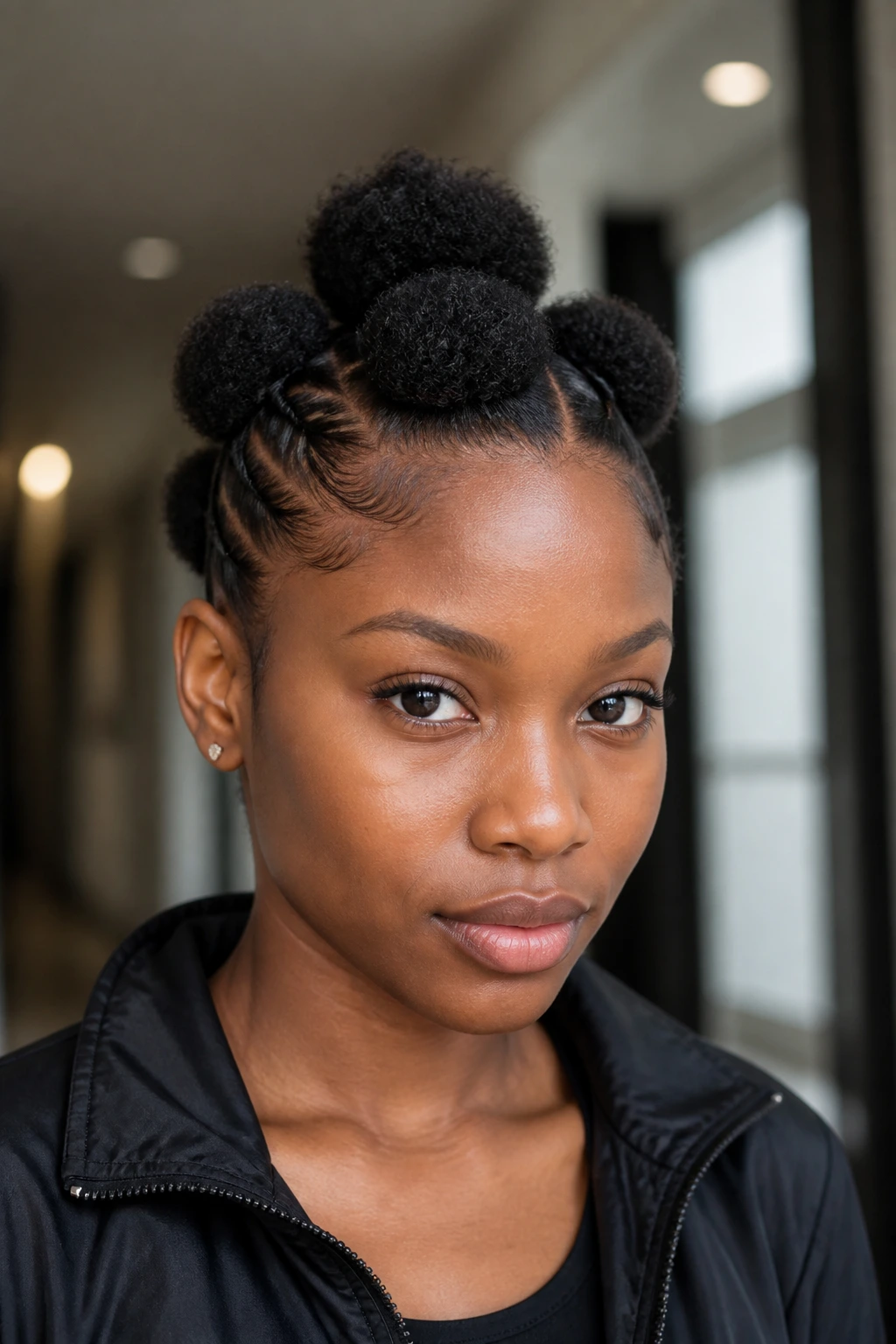
Small puffs can look more deliberate than one big puff, especially on shorter natural hair. Section the center into two, three, or even four mini puffs and keep the sides smooth or lightly braided back. The repeated shape gives the hawk a rhythm.
This style is excellent when you want height but not a single bulky mass at the crown. It also lets you show off density in stages, which can look charming in a way that a standard single puff doesn’t. I like it for school runs, errands, and any day when you want hair that looks cheerful without trying too hard.
Use soft elastics. Hard bands are how mini puffs start looking tired by noon.
11. Loc Mohawk
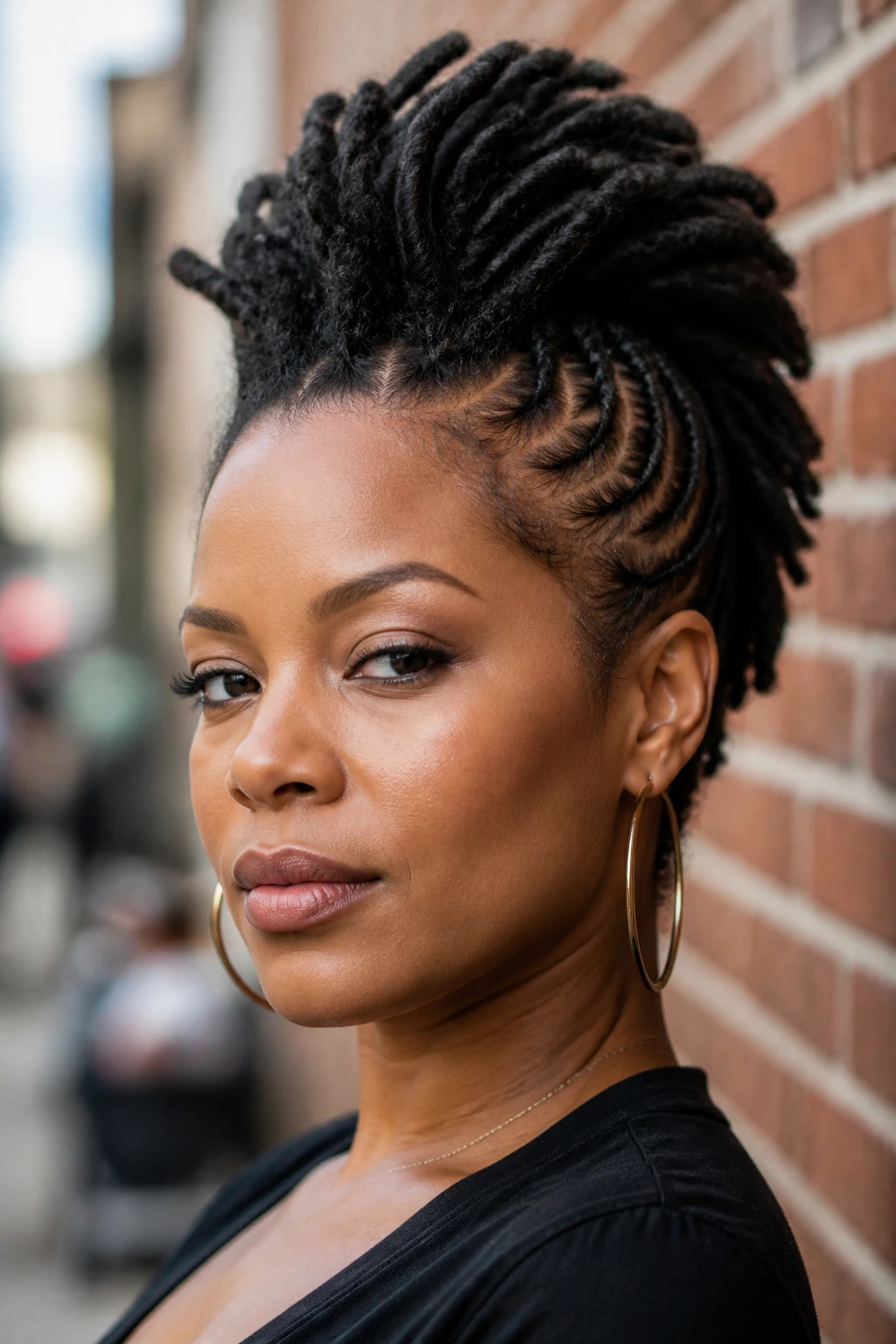
A loc mohawk has a clean shape almost built in. The locs can be swept to the middle and pinned, or braided into a center ridge that keeps the sides clear and the crown full. There’s less guessing involved because the locs already carry weight and structure.
The best versions don’t overload the shape. Too many accessories can crowd the silhouette, especially if the locs are thick. I usually like one statement piece—maybe a few cuffs near the front—or nothing at all. The shape itself is doing enough.
If your locs are long, pin the ends under instead of letting them sag in the back. That keeps the whole profile lifted.
12. Headband Mohawk
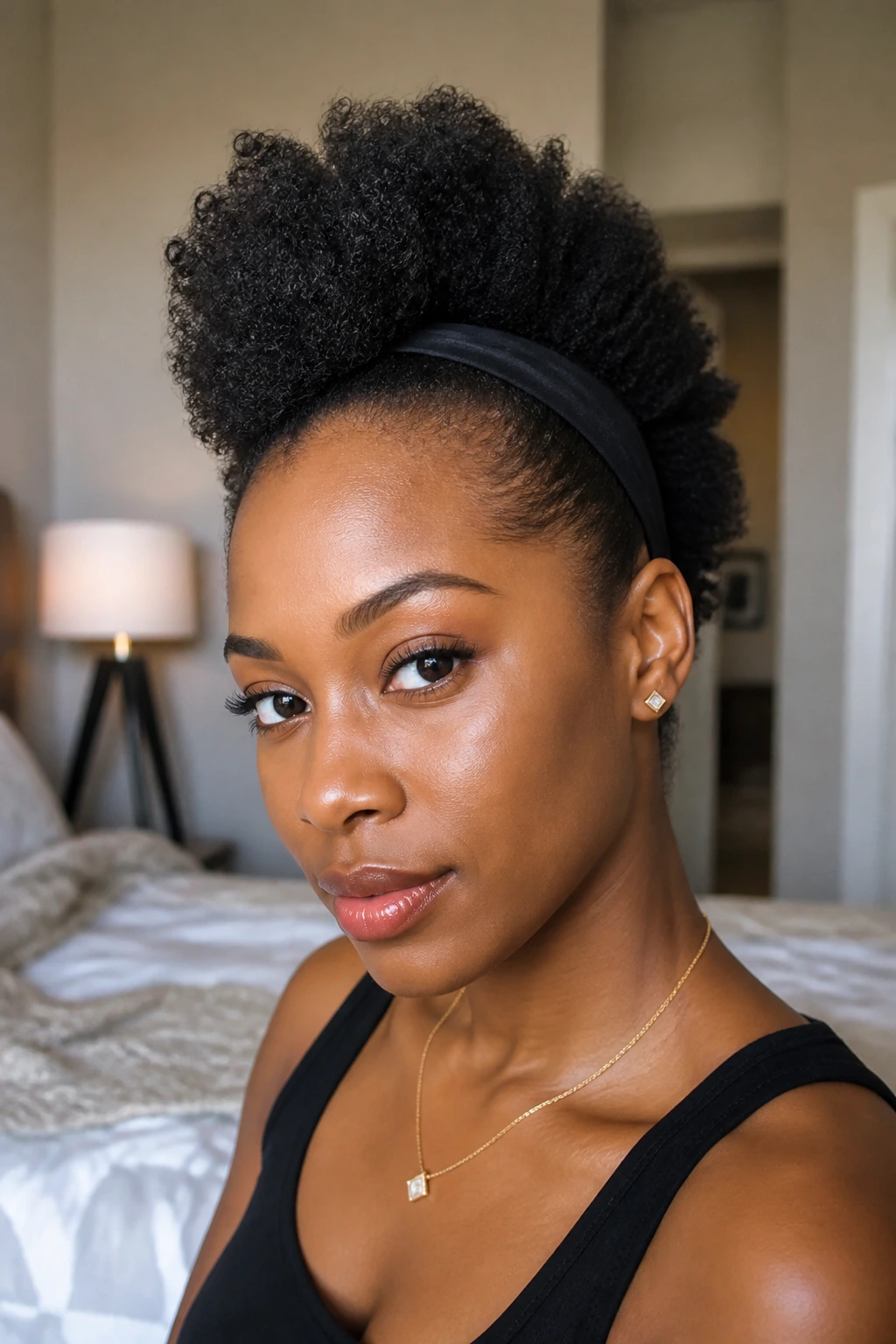
A stretchy headband can turn a regular natural style into a frohawk in about two minutes. Push the front hair up and back, place the band where the sides need to stay down, and let the center rise above it. It’s the last-minute answer that still looks thought-out.
This version is less about structure and more about speed. You can wear loose curls, a puff, or stretched hair under the band and still get the mohawk outline. It’s also handy on days when the hairline needs a rest from gels and brushes.
Choose a band that doesn’t dig in behind the ears. If it leaves a dent, it’s too tight.
13. Marley Hair Mohawk
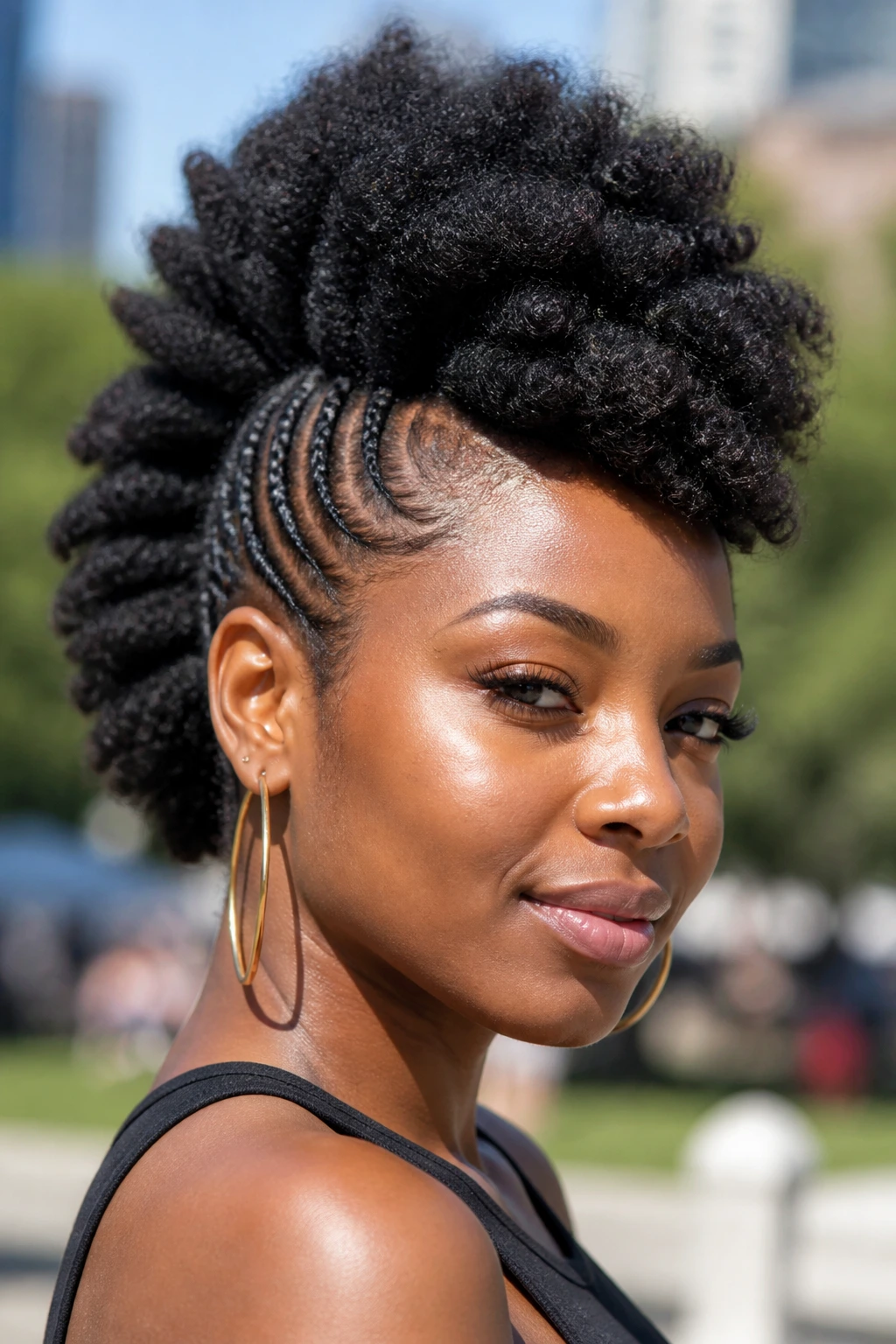
Marley hair gives the frohawk more cloud, more height, and a rougher texture that tends to blend beautifully with natural coils. The finish is less silky and more matte, which is exactly why it works. It reads like hair, not costume.
A Marley-hair hawk can be braided, twisted, or built into a puffed center strip. The texture holds shape without looking stiff, and that matters when you want a mohawk that feels full from the front and still soft enough to move. It’s one of my favorite options for a stronger silhouette.
Tip: pre-stretch the hair before installing it. The braid line lies flatter, and the finished style sheds less.
14. Side-Part Frohawk
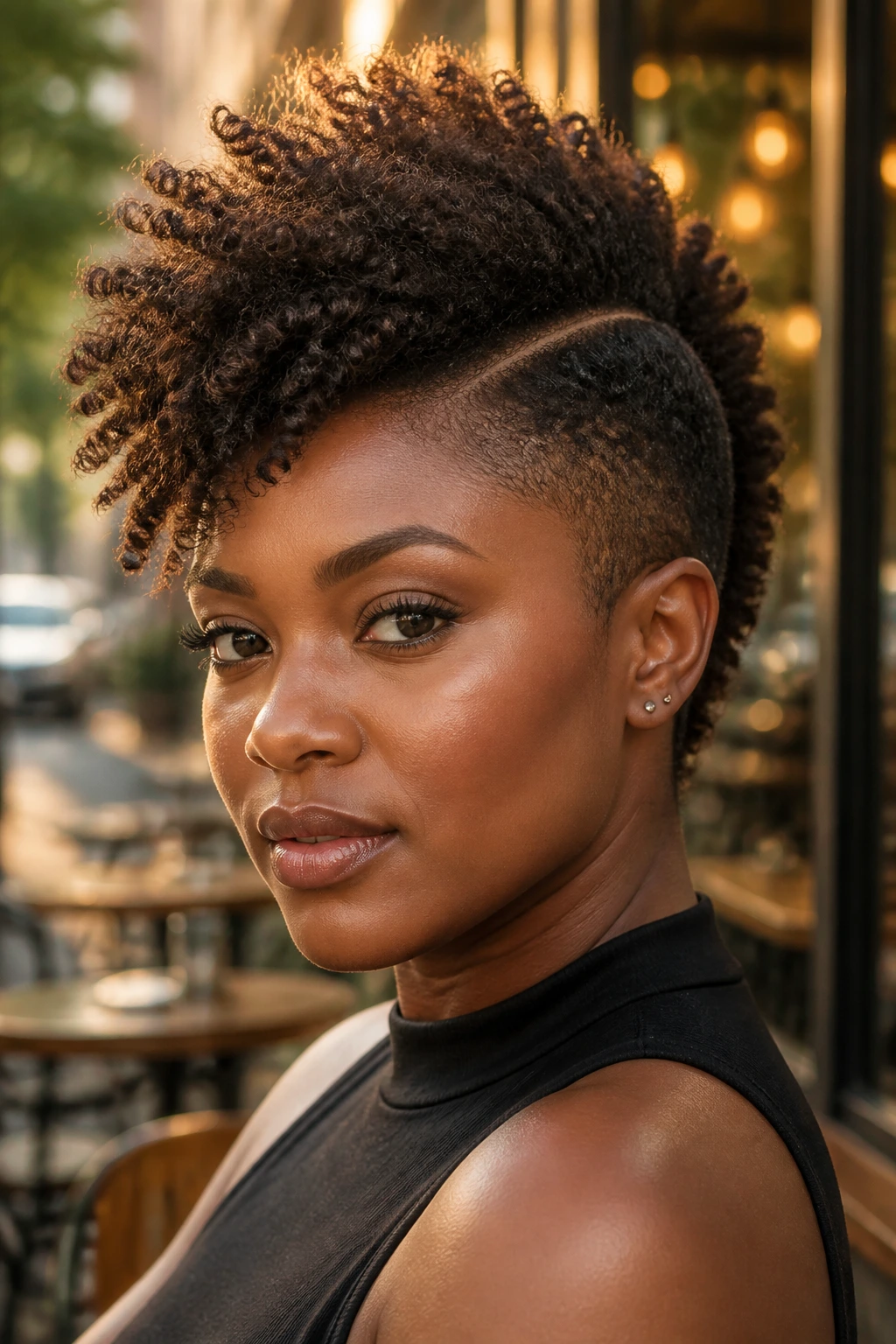
A side-part frohawk shifts the balance a little and makes the style feel less symmetrical, which can be a good thing. Instead of a straight center lane, the volume leans slightly to one side before rising back into the hawk shape. That tiny shift changes the whole mood.
It’s a nice choice when a centered style feels too rigid. A side part can soften the forehead, frame one cheekbone, or keep the look from feeling overly formal. If your face is naturally round, the offset shape can help lengthen it without any drama.
Keep the part clean, though. A messy part on a mohawk looks accidental.
15. Pineapple Mohawk
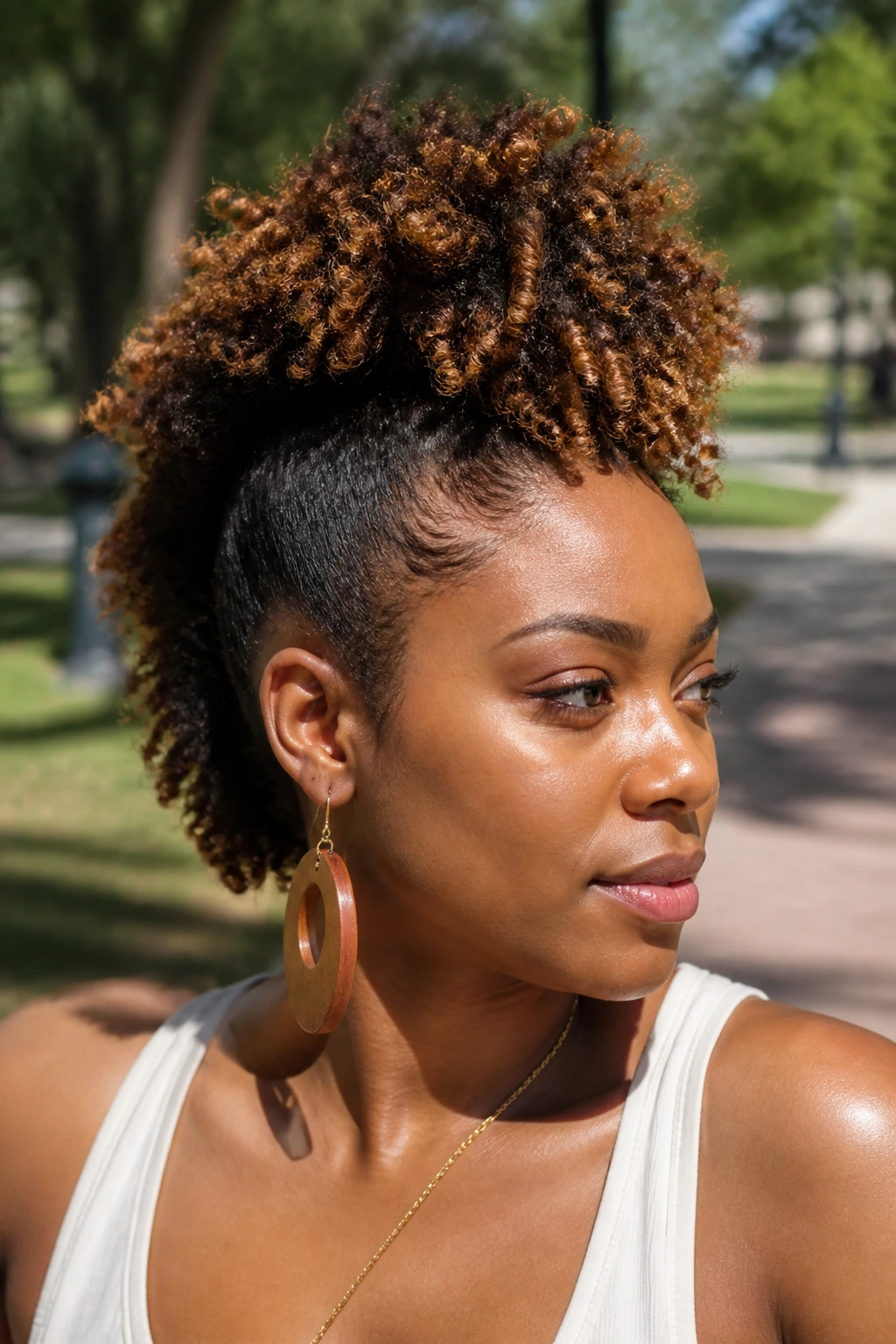
Can a pineapple become a mohawk? Yes, if you line up the ponytail or puff from front to back instead of letting it sit high and centered all the way around. The shape becomes a raised strip of curls that runs along the crown, while the edges stay flatter.
How to use it
This is a good rescue style for stretched curls or day-two wash-and-go hair. Use a soft scrunchie, keep the base loose enough to avoid a crease, and let the ends fan upward. If the front is too flat, lift it lightly with fingers instead of a brush.
The beauty of this look is that it feels casual but still has shape. That’s rarer than it should be.
16. Wash-and-Go Frohawk
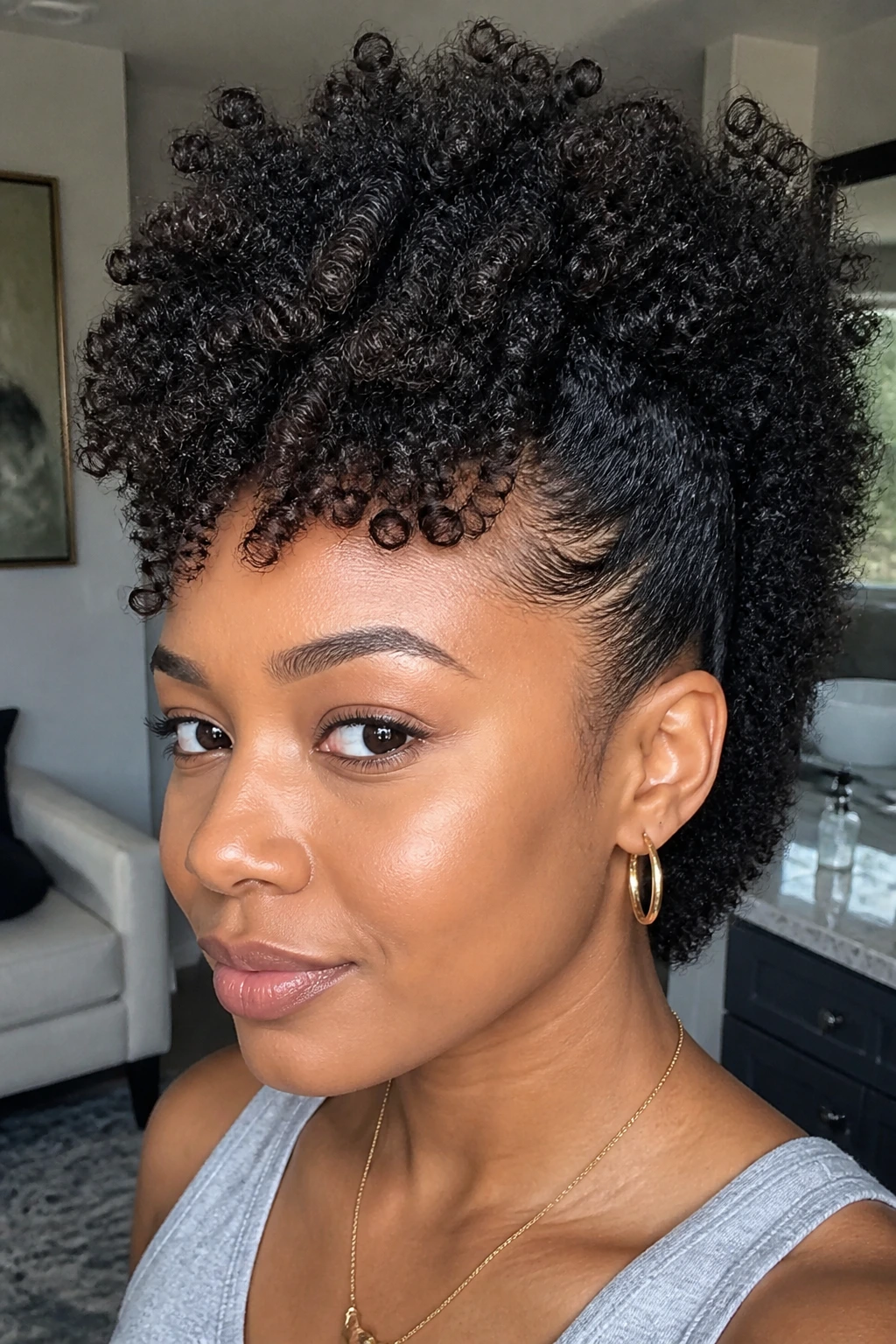
A wash-and-go frohawk is what happens when you let your curl pattern lead and then help it into a center shape with clips or pins. The front and sides stay neater, the middle keeps the biggest volume, and the whole thing looks like you didn’t fight it into submission. Because you didn’t.
I like this version when the hair has already dried into a good curl set and just needs a little direction. A touch of gel at the roots can keep the sides from puffing out too far, while the center gets a quick shake and lift. If you have coils that shrink a lot, this style often looks better on day two than on wash day.
Skip heavy creams here. They weigh the curls down and flatten the hawk.
17. Gold-Cuff Mohawk
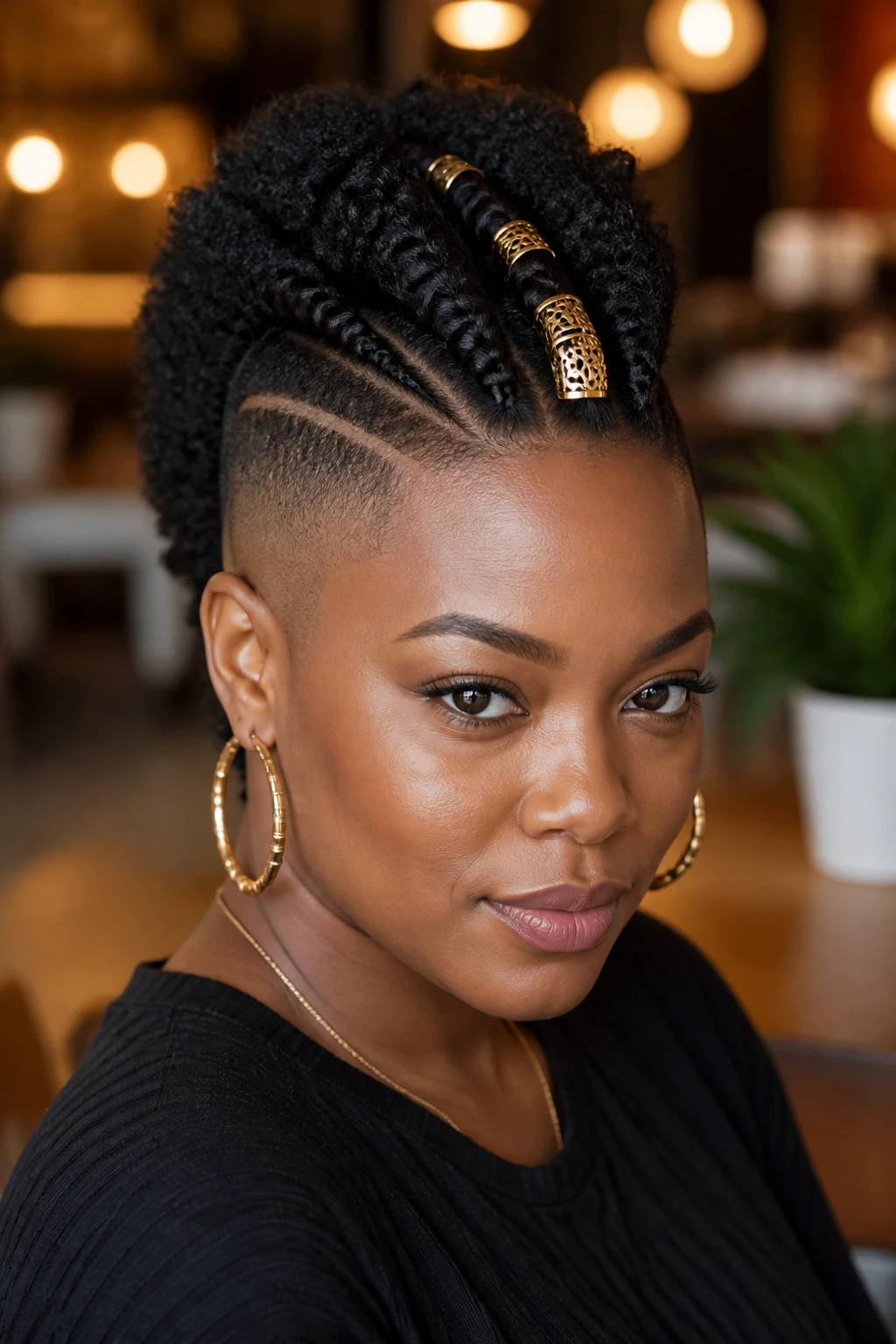
A gold-cuff frohawk makes even the simplest braid pattern feel dressed up. The accessories sit on the center braids or twists, catching the eye without needing a complicated installation. If the base style is clean, the cuffs do all the talking.
This is the kind of style I’d choose when the clothes are plain and the hair needs to carry a little more personality. One row of cuffs down the middle is usually enough. Too many and the whole look starts clanking.
A small rule I like: place the largest cuff near the front or crown, not buried in the back. It shows up better and gives the style a clear focal point.
18. Side-Swept Curly Mohawk
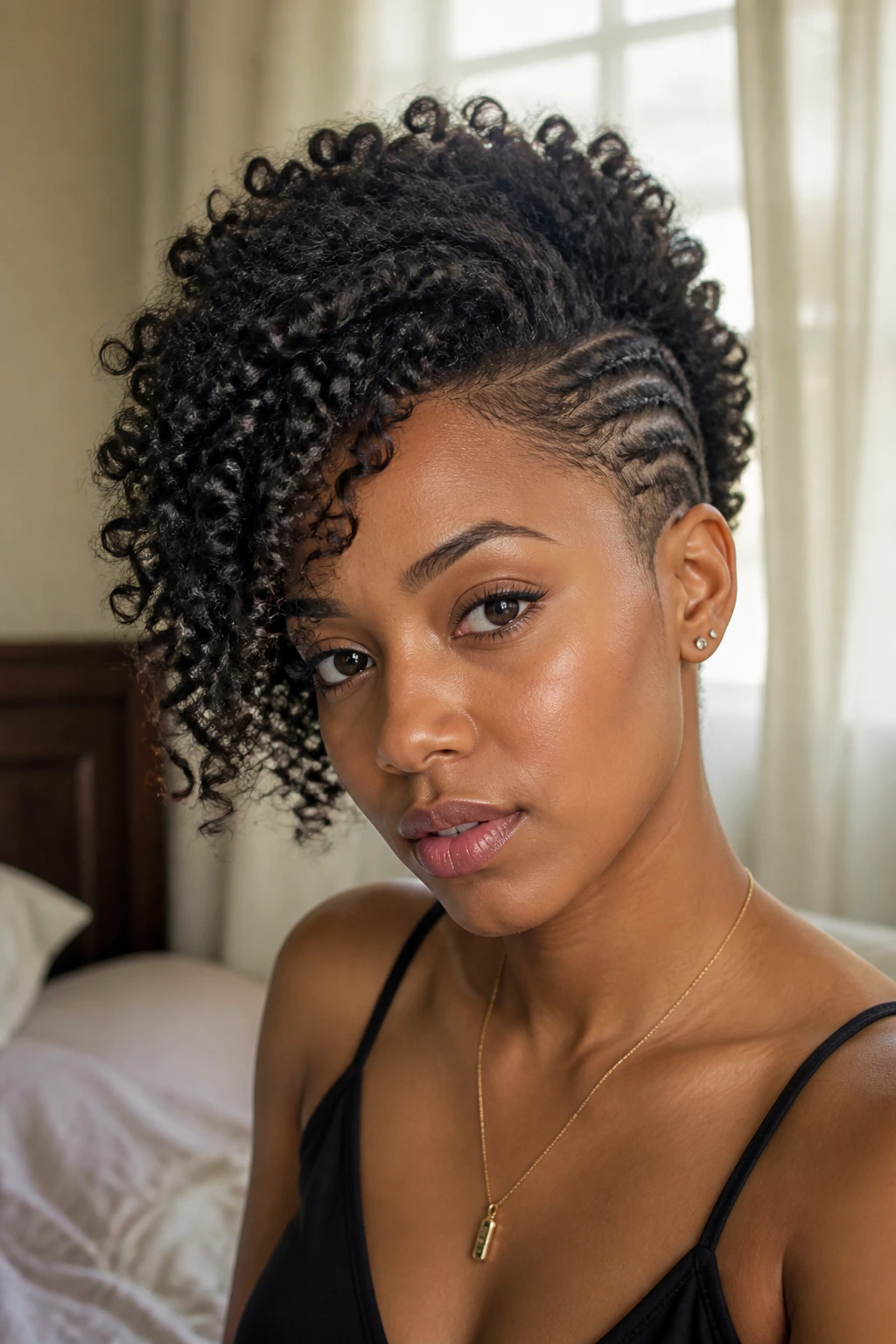
A side-swept mohawk softens the usual straight-up center line and lets the curls lean across the head before rising. The result is less hard-edged, more sweeping, and a little romantic without losing the frohawk identity.
It works especially well when you want texture on display but not a hard ridge. The hair can be pinned low on one side and fuller on the other, which is useful if one section of your hair is shorter or less cooperative. That asymmetry can save a style that would otherwise feel flat.
If your curls are defined, keep the side sweep loose enough that the shape doesn’t collapse into a side ponytail. That’s the line you’re trying not to cross.
19. Wedding Frohawk Updo
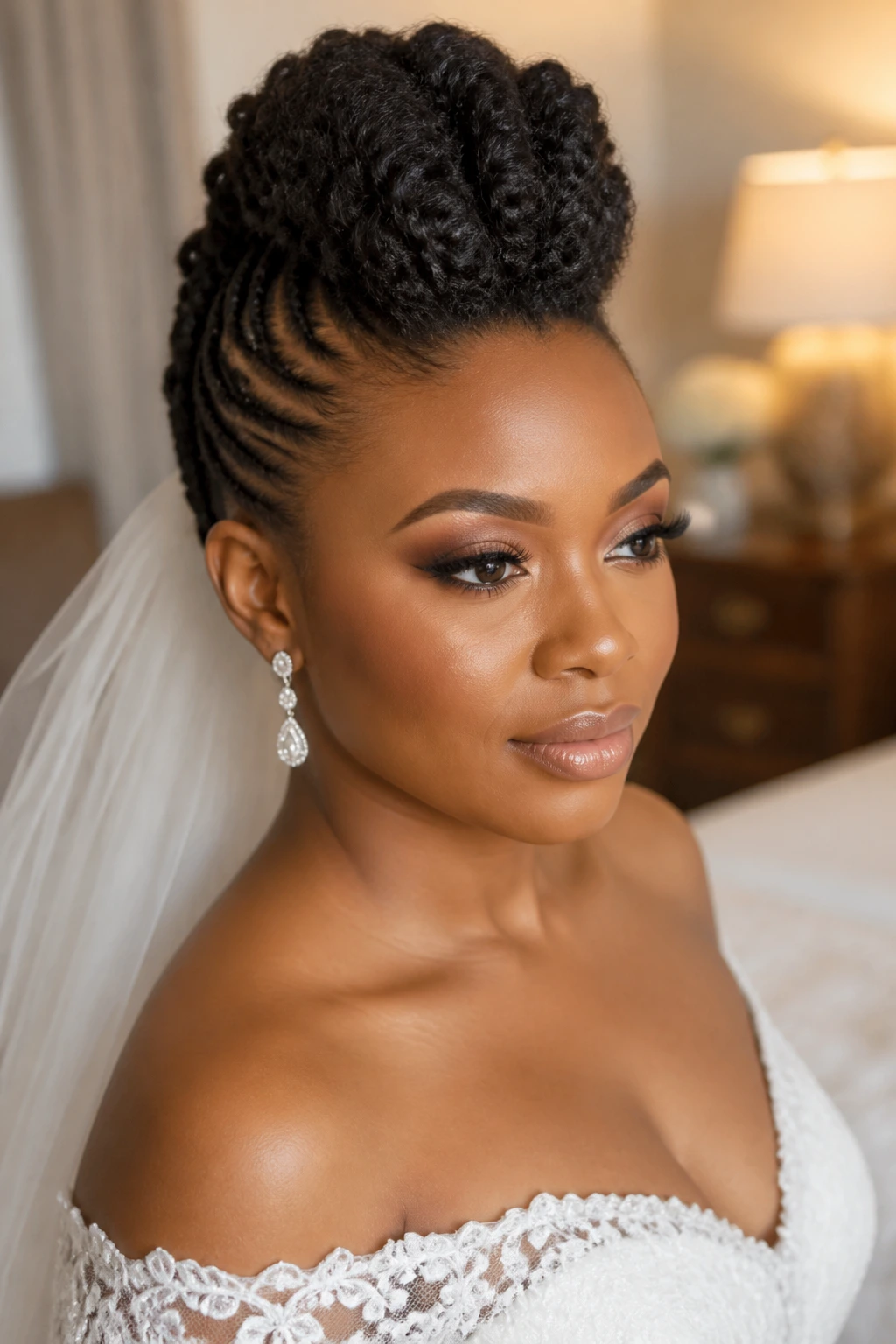
A wedding frohawk updo is all about control, shine, and hidden pins. The sides are usually braided, twisted, or smoothed back; the center is lifted into a formal shape that can sit high, curve low, or fold into loops. The best versions look elegant without turning into a helmet.
A little restraint helps here. You do not need every piece of hair to be slicked flat. A few soft tendrils near the temples can make the style feel human instead of overworked, and a veil or comb can tuck in cleanly if the structure is built well.
This is one of those styles where the back matters as much as the front. If the back is lumpy, everyone notices.
20. Short 4C Frohawk
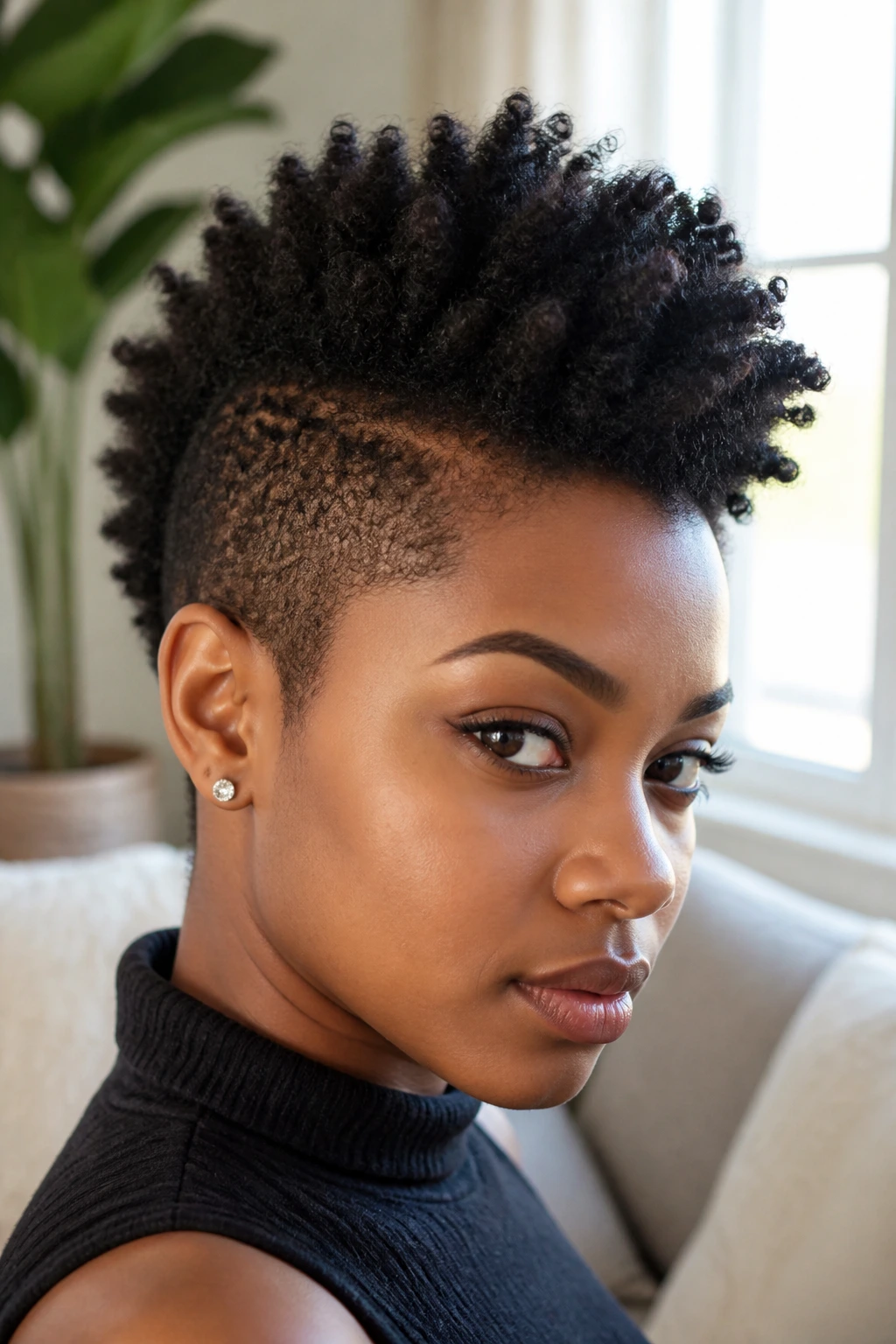
Short 4C hair can make a frohawk look especially good because the texture has so much natural lift. Use a sponge, finger-coil sections, or small flat twists along the sides to guide the shape, then let the crown rise where it wants to. Shrinkage becomes part of the architecture.
Why it flatters short coils
The tighter texture gives the hawk a crisp, dense outline even on short length. That means you don’t need extra hair or a long top to get a strong silhouette. A little curl cream, a little patience, and a pick at the crown are often enough.
I’d avoid drowning this style in thick butter. Short coils want definition, not weight.
21. Braided Crown Mohawk
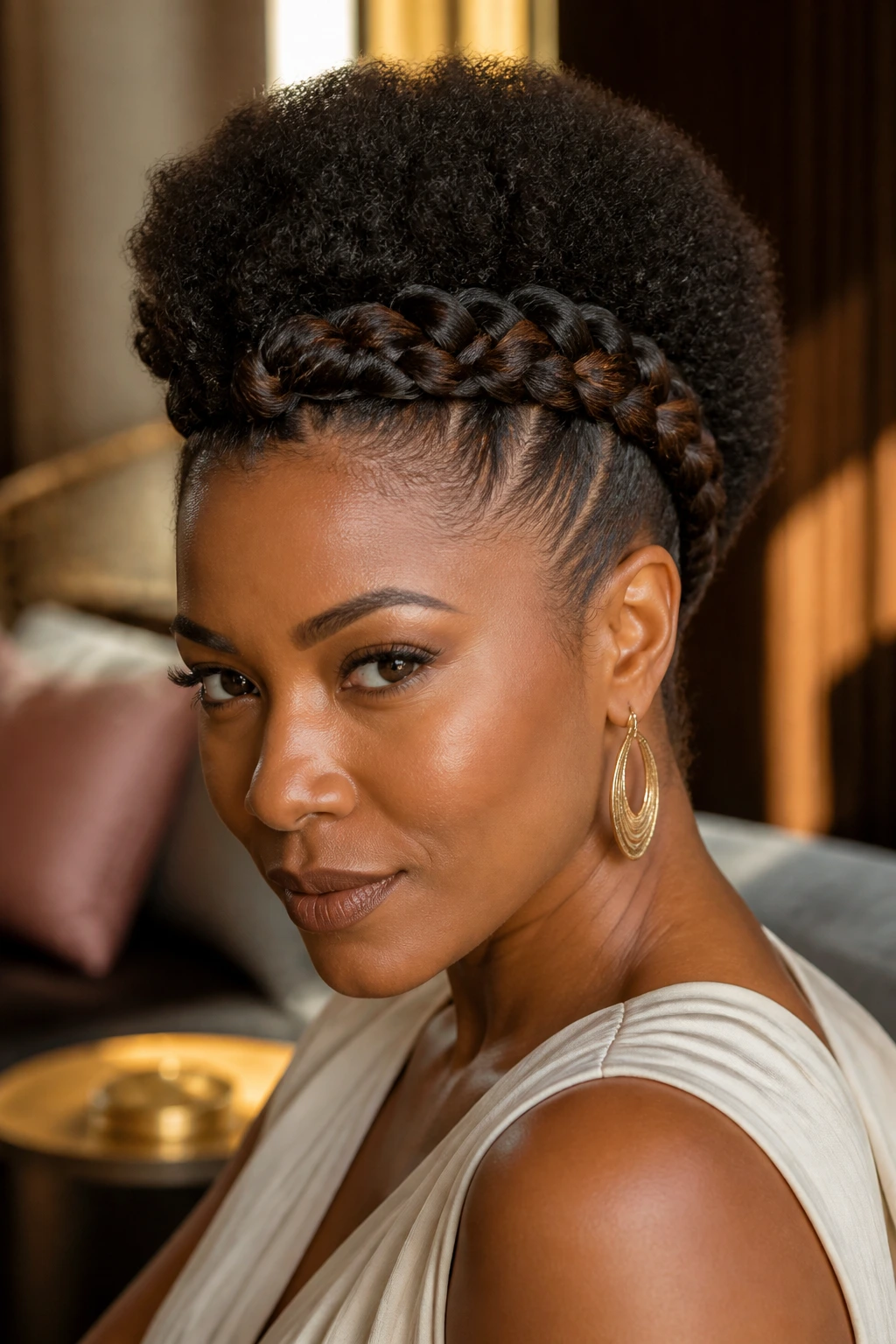
A braided crown frohawk wraps the sides into a halo-like braid path while leaving the middle raised. It feels regal without being stiff, which is a nice combination that many formal styles miss. The crown braid creates a border, and the center becomes the main event.
This is one of the more elegant versions because it uses the braid line to shape the face. The mohawk element is there, but it’s softened by that curved braid track. If you want a style that works with satin dresses and still feels rooted in natural-hair language, this one fits.
Keep the braid width even. A lopsided crown is visible from every angle.
22. Layered Twist-Out Mohawk
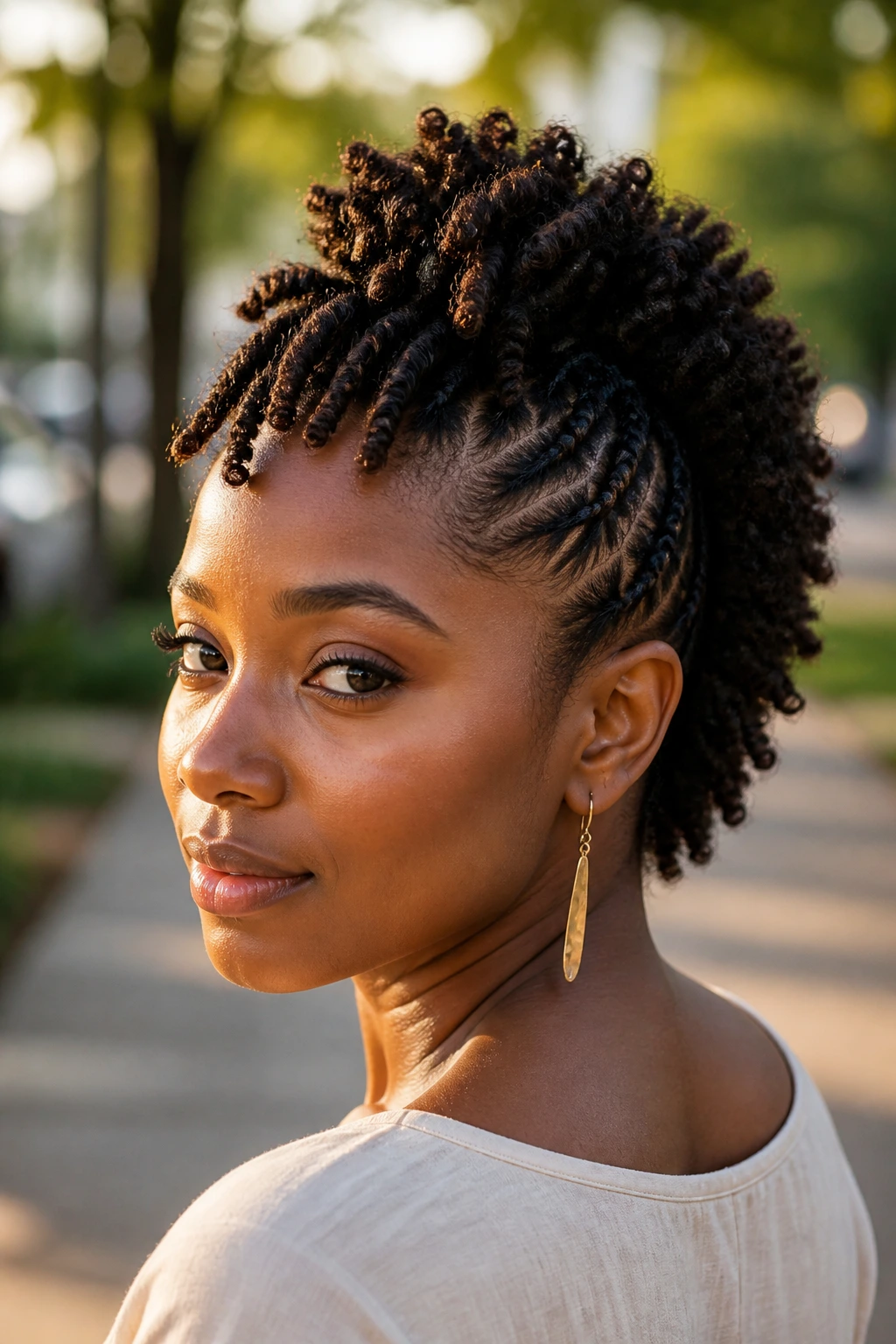
A layered twist-out hawk uses different twist sizes to build shape. Smaller twists near the front give control, medium twists in the middle add body, and the ends fluff out into the mohawk line. The layering is what keeps the style from reading like one big blur of texture.
It’s a smart method when your hair is long enough to pile up but you still want definition. Untwist only when the hair is fully dry—half-dry twist-outs go fuzzy fast. If the center wants to collapse, a few discreet pins beneath the curls can keep the ridge alive.
A twist-out hawk gets better as it settles. Day one is neat. Day two is often prettier.
23. Clip-In Faux Hawk
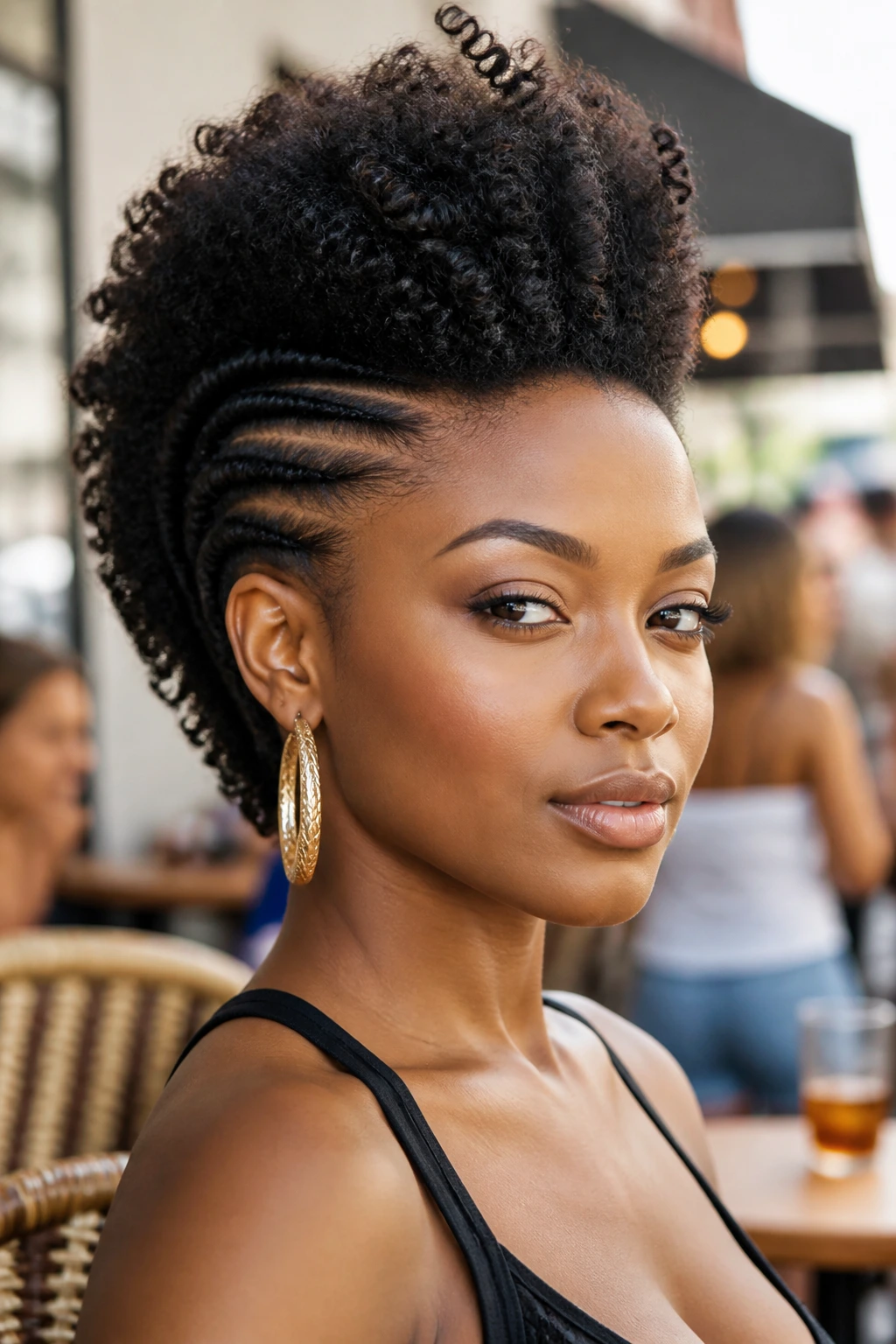
If your hair is fine, short, or in the awkward middle stage of growing out, clip-ins are not cheating. They are a tool. A clip-in faux hawk lets you build height and density where you want it, then take it all back out before bed.
The trick is matching texture. Coily clip-ins or kinky straight pieces tend to blend better than silky hair that looks like it wandered in from another planet. Place the clips where the center needs support, not all over the head, or the style gets bulky in the wrong places.
Best for: events, photos, and days when you want volume without a long install.
24. Color-Accented Mohawk
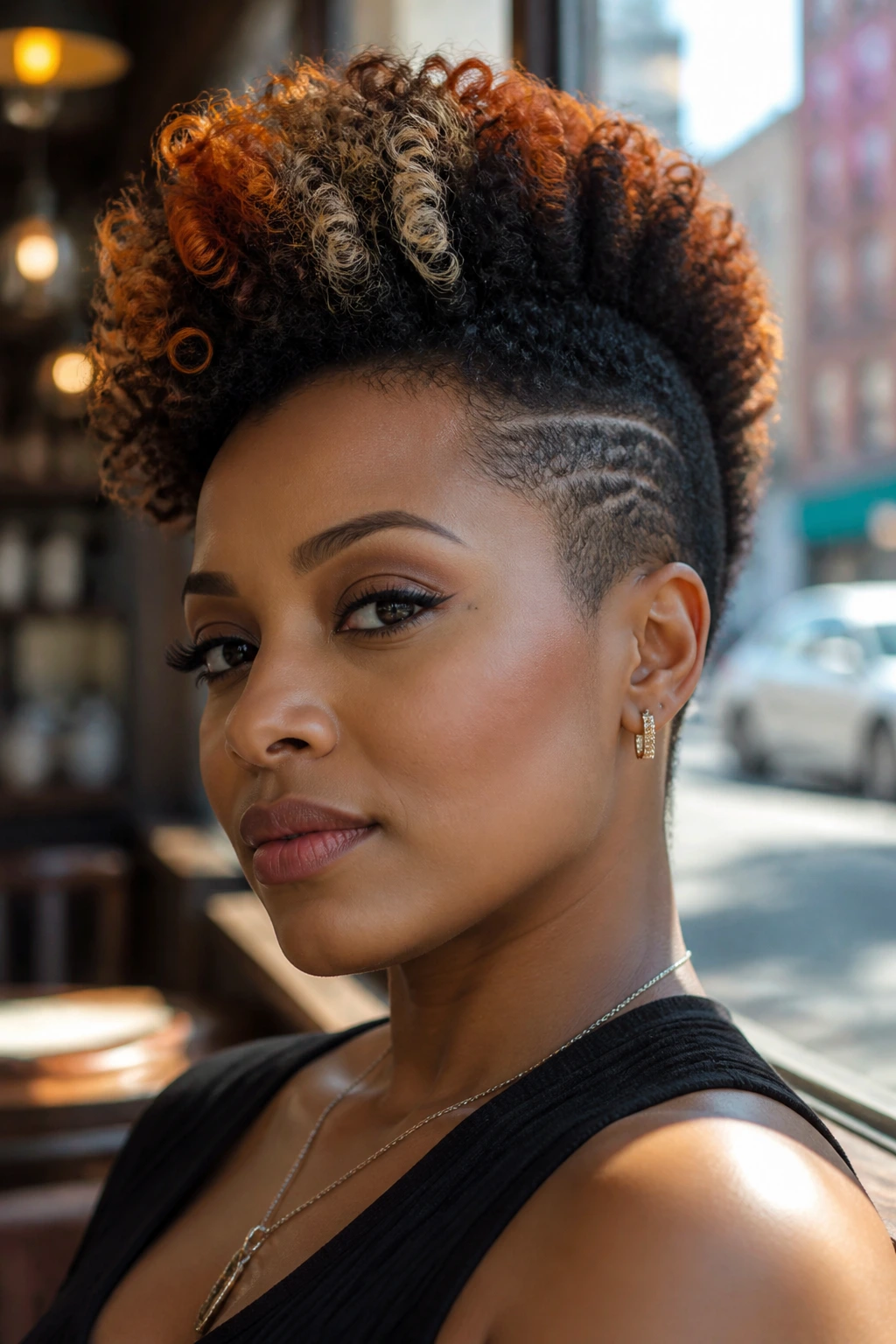
A color-accented mohawk doesn’t need a full dye job to work. A few copper ends, honey-blonde braids, or temporary color pieces in the center can change the whole look. The mohawk shape gives the color a lane to live in, which makes even a small accent feel noticeable.
I prefer temporary color waxes, clip-in color pieces, or extension hair when the style is meant for one weekend or one event. Bleach is a bigger commitment, and the hawk shape already brings plenty of personality. You usually don’t need both.
If the color is bright, keep the edges cleaner and the accessories fewer. The style already has enough going on.
25. TWA Frohawk
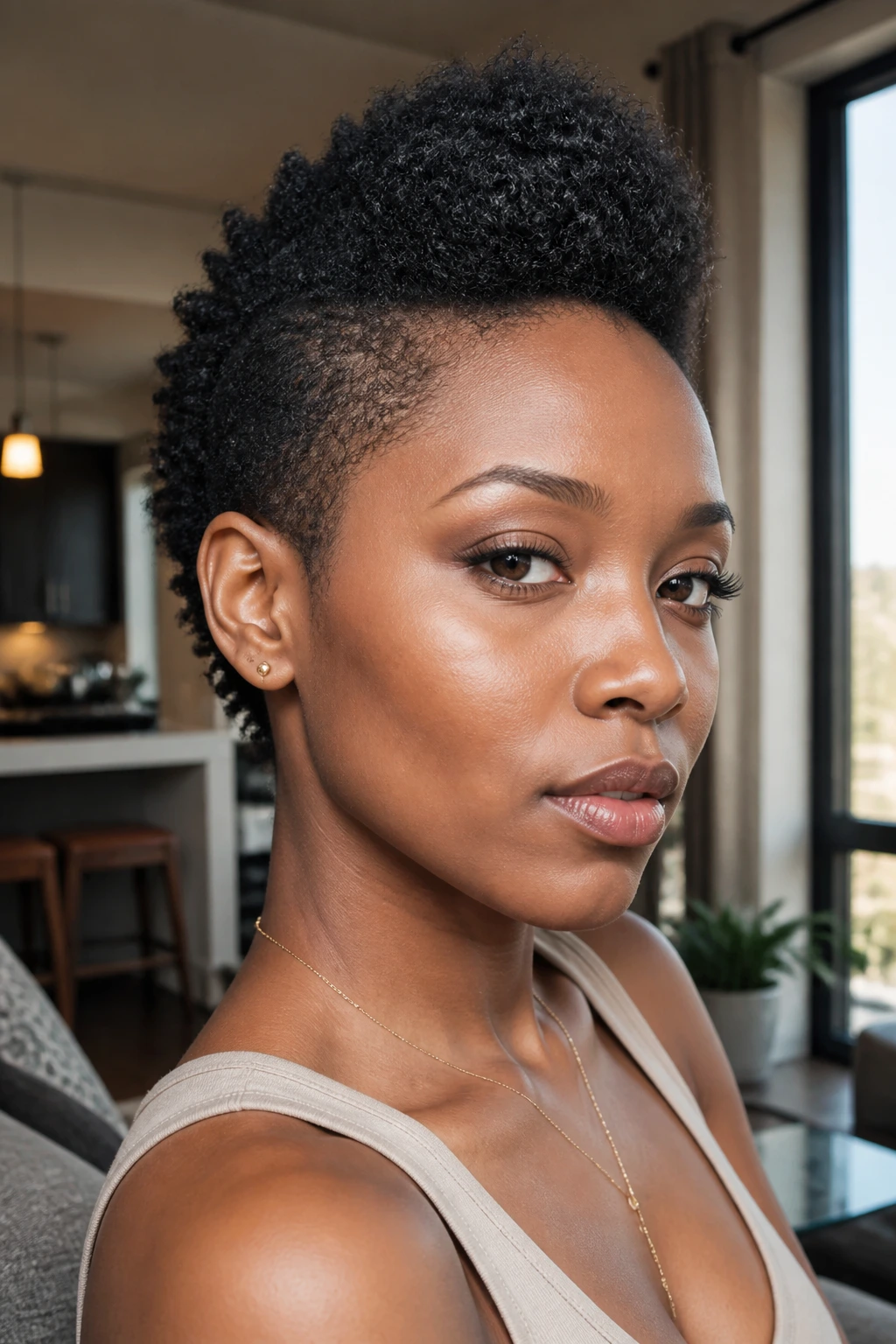
A TWA frohawk is proof that you do not need length to get shape. On a teeny weeny afro, the center can be picked upward with a small comb, while the sides stay brushed down or lightly gelled toward the back. The cut reads crisp because the texture is close to the head.
How to use it
This version loves light products and a careful hand. A curl sponge can add pattern, but don’t overwork the hair. Too much brushing on a TWA can make the style look thin rather than lifted, which is the exact opposite of what you want.
Short hair deserves structure too. Sometimes more, actually.
26. Rope-Twist Mohawk
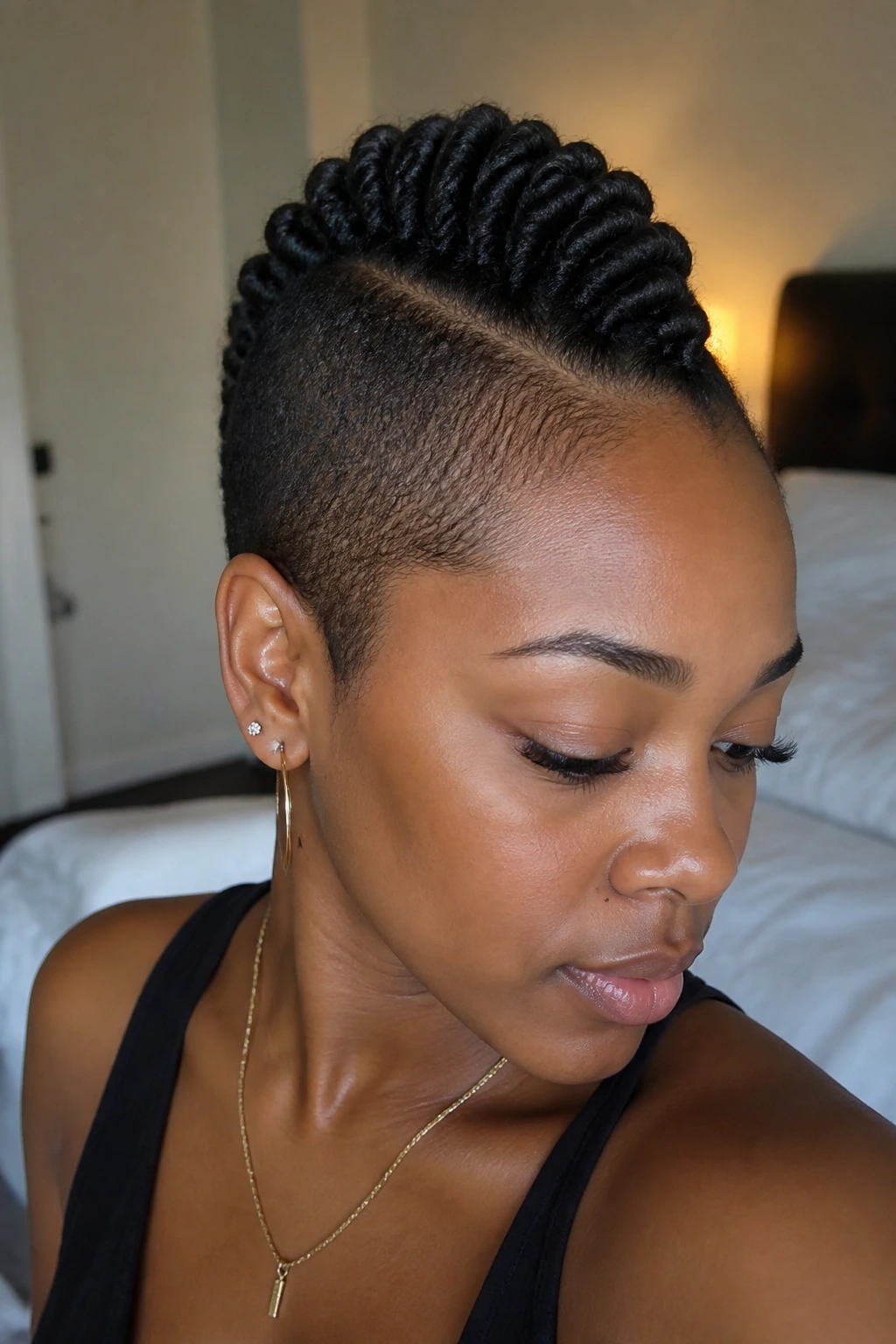
Rope twists create a neat center line with less visual noise than a loose twist-out. The strands wrap around each other tightly, which gives the hawk a smooth ribbed look and keeps the profile narrow. That’s useful if you want cleaner edges and less fluff around the face.
The style also tends to hold well overnight if you wrap it properly. A satin scarf over the sides and a loose pin at the top can keep the twist line from drifting. If the ends are tucked in, the whole thing reads sharper.
This one is especially good for medium-length hair that needs order more than volume.
27. Pompadour Frohawk
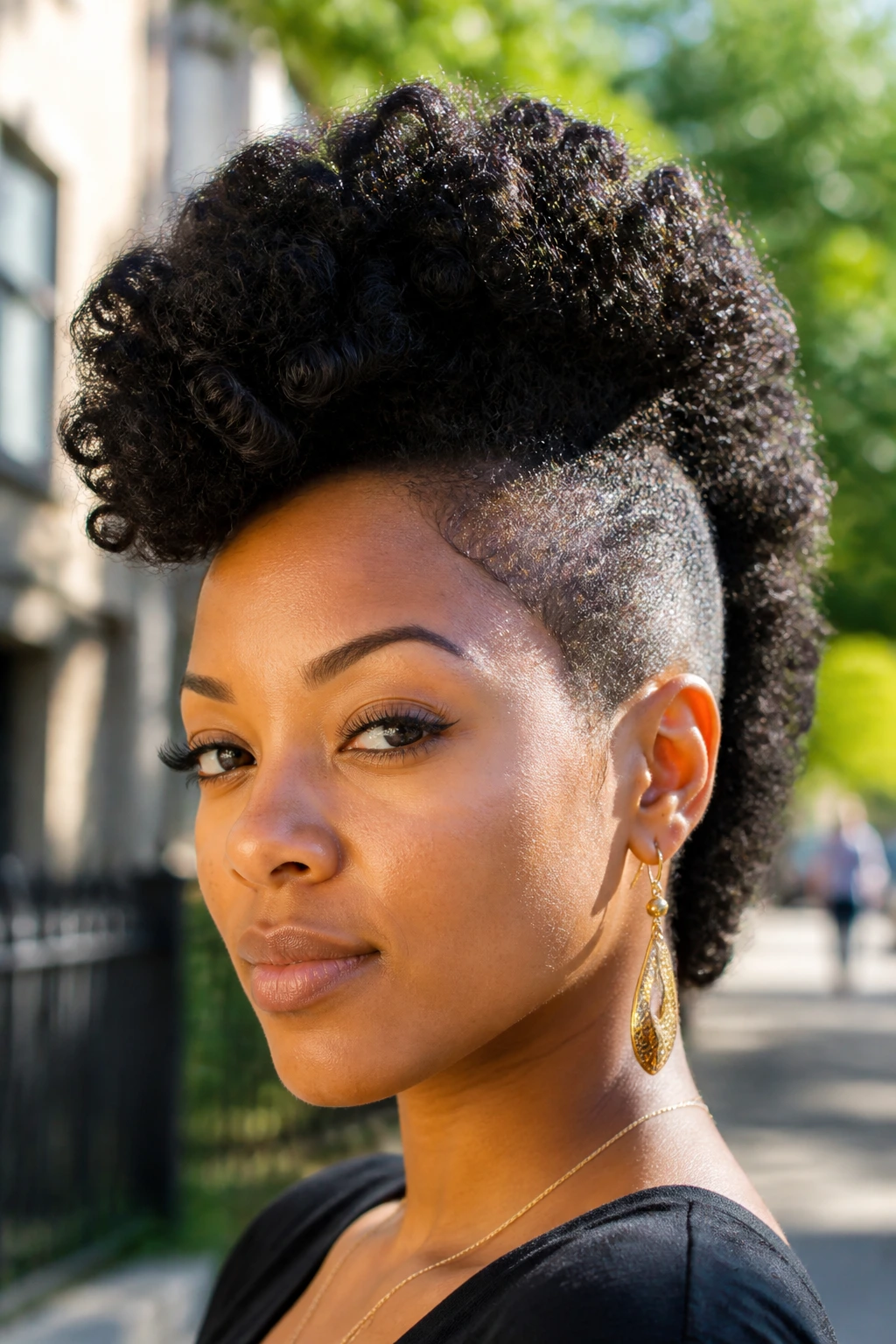
A pompadour frohawk borrows from vintage hair but keeps the texture rooted in natural curls. The front rises into a rounded lift, the sides stay close, and the center carries the drama. It’s a little glamorous and a little stubborn, which is exactly why it works.
What I like here is the face-framing. The lift at the front opens the forehead and gives the style a clear focal point before your eye travels back through the hawk. If your hair is thick, this shape can hold without a mountain of pins.
Don’t flatten the front with too much gel. A pompadour needs air.
28. Scarf-Wrapped Mohawk
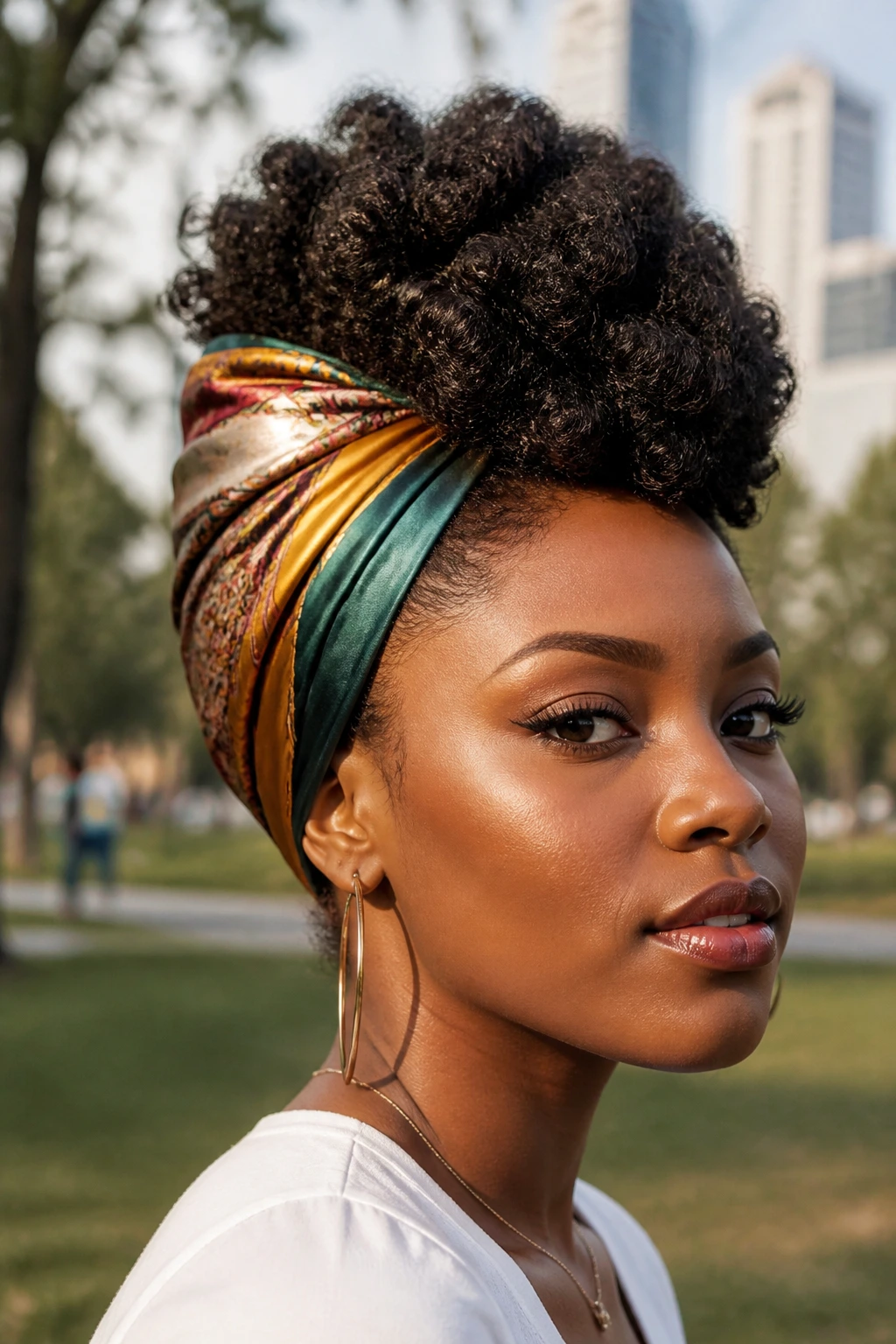
A scarf-wrapped hawk is a lifesaver on days when the hair needs protection and the style still needs to look finished. A silk or satin scarf can wrap the base, tie around the sides, or sit as a headband that frames the raised center. It turns a plain frohawk into something with personality.
This version is especially useful for refreshing an older style. The scarf hides frizz, softens the edges, and can make a puff or twist set feel intentional again. You can also use it to protect the front while leaving the rest of the style exposed.
Choose a scarf with enough width to anchor cleanly. A tiny strip tends to slide.
29. Puff-and-Braid Combo Mohawk
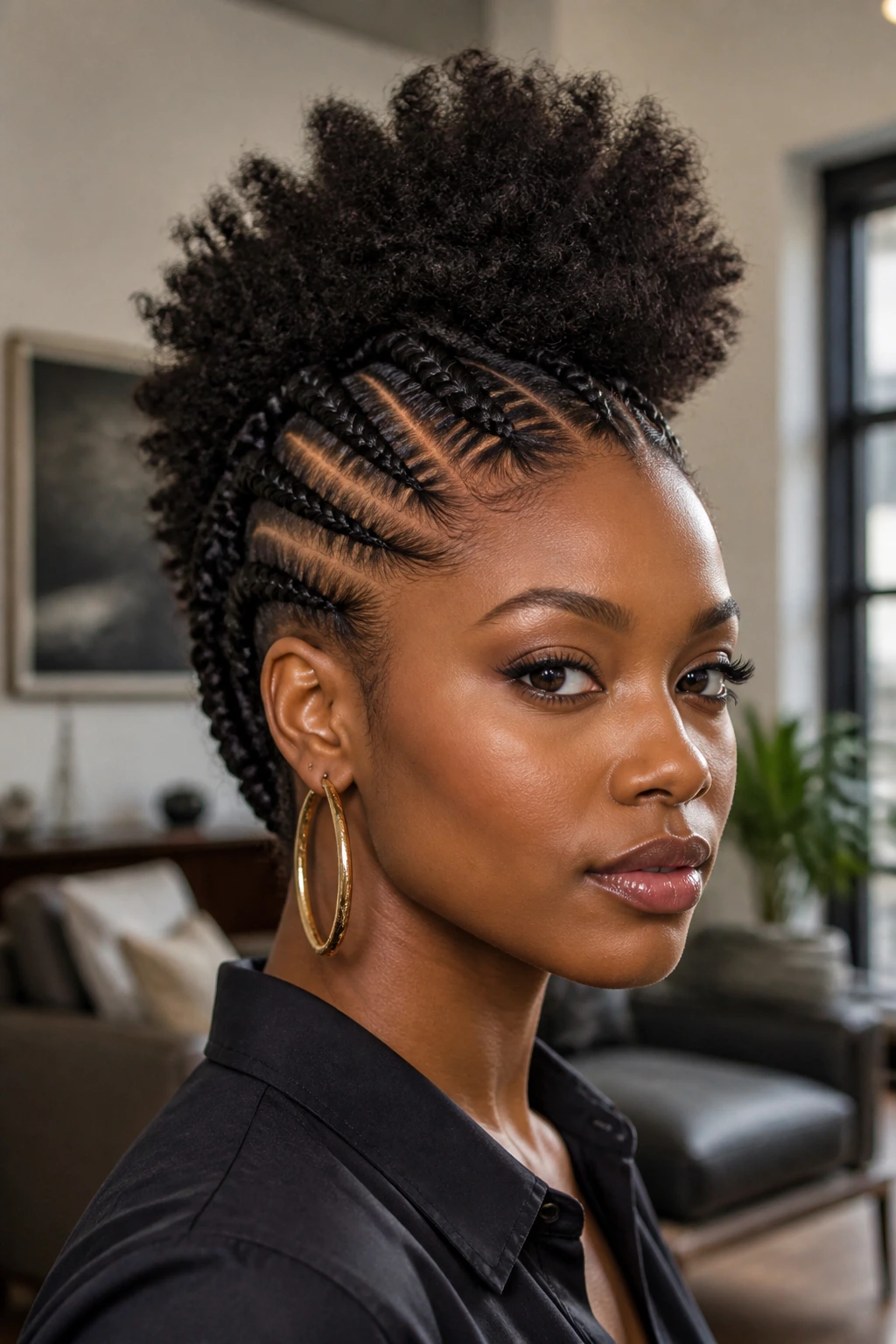
This one gives you the best parts of two styles. A braid section at the front or sides creates a strong line, and a puff in the middle adds volume where you want the eye to land. The combination keeps the look from feeling too stiff or too loose.
It’s a good compromise when you can’t decide between structured and soft. The braid controls the front, the puff keeps the crown alive, and the ends stay tucked enough to last a few days. If your hair is different lengths in different sections, this is especially forgiving.
A small elastic and a few hidden pins can make a big difference here. Don’t rely on one anchor point.
30. Sculpted Edges Mohawk
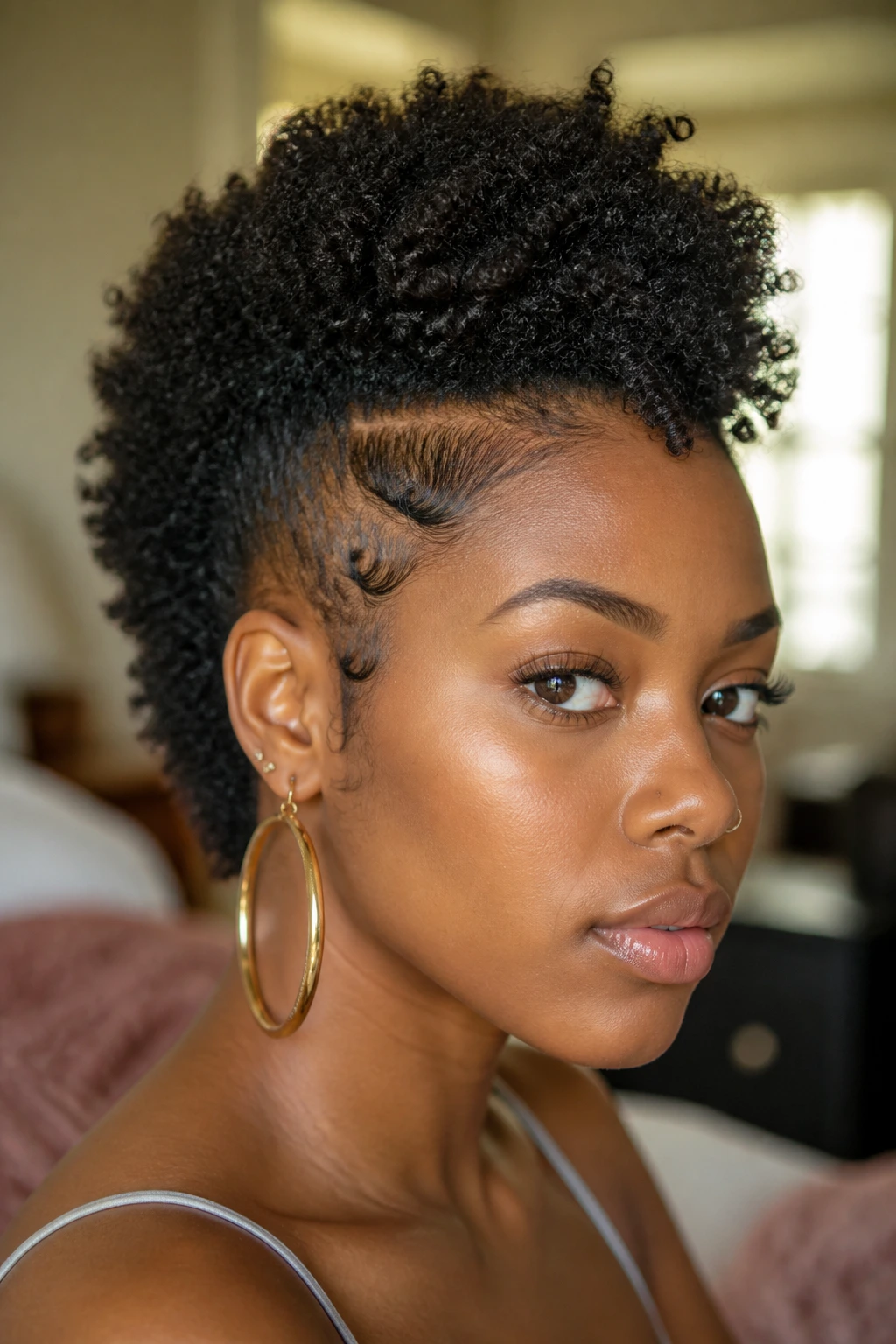
A sculpted-edges frohawk can look incredibly clean when the baby hair work stays light and controlled. A gentle swoop here, a small curve there. That’s enough. The edges should frame the face, not take over the style like they’re auditioning for a separate role.
I’m picky about this one. If the edge art is too busy, the frohawk loses its clean center line and starts looking crowded. A neat edge pattern should support the shape, not compete with it. That means soft gel, a small brush, and a little restraint.
If your hairline is sensitive, skip the swoops altogether and keep the line smooth. The style still works.
31. Jumbo Braid Mohawk
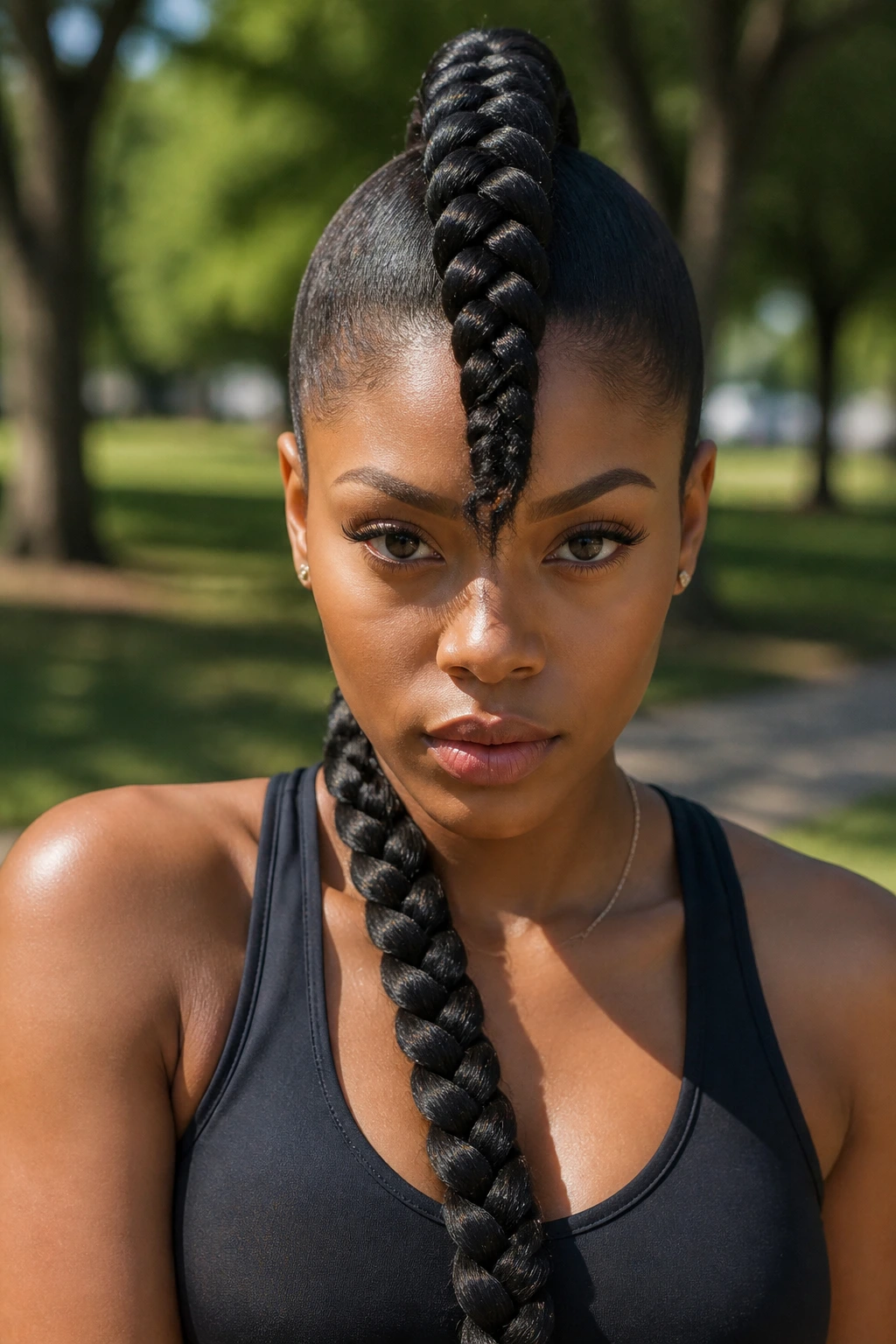
A jumbo braid down the center gives you that frohawk silhouette with almost no daily manipulation. The braid itself becomes the structure, which is useful if you want a week-long style that doesn’t ask much from your morning routine. It feels substantial without being fussy.
What makes it different
The braid creates one continuous shape, so the eye doesn’t have to jump from section to section. That makes the hawk look cleaner from the front and easier to maintain from the side. If you use Marley hair or another textured extension, the braid blends more naturally with coily hair than a shiny synthetic piece would.
This is a good option when you want a low-touch style that still reads bold. One braid. Big effect.
32. Beaded Statement Frohawk
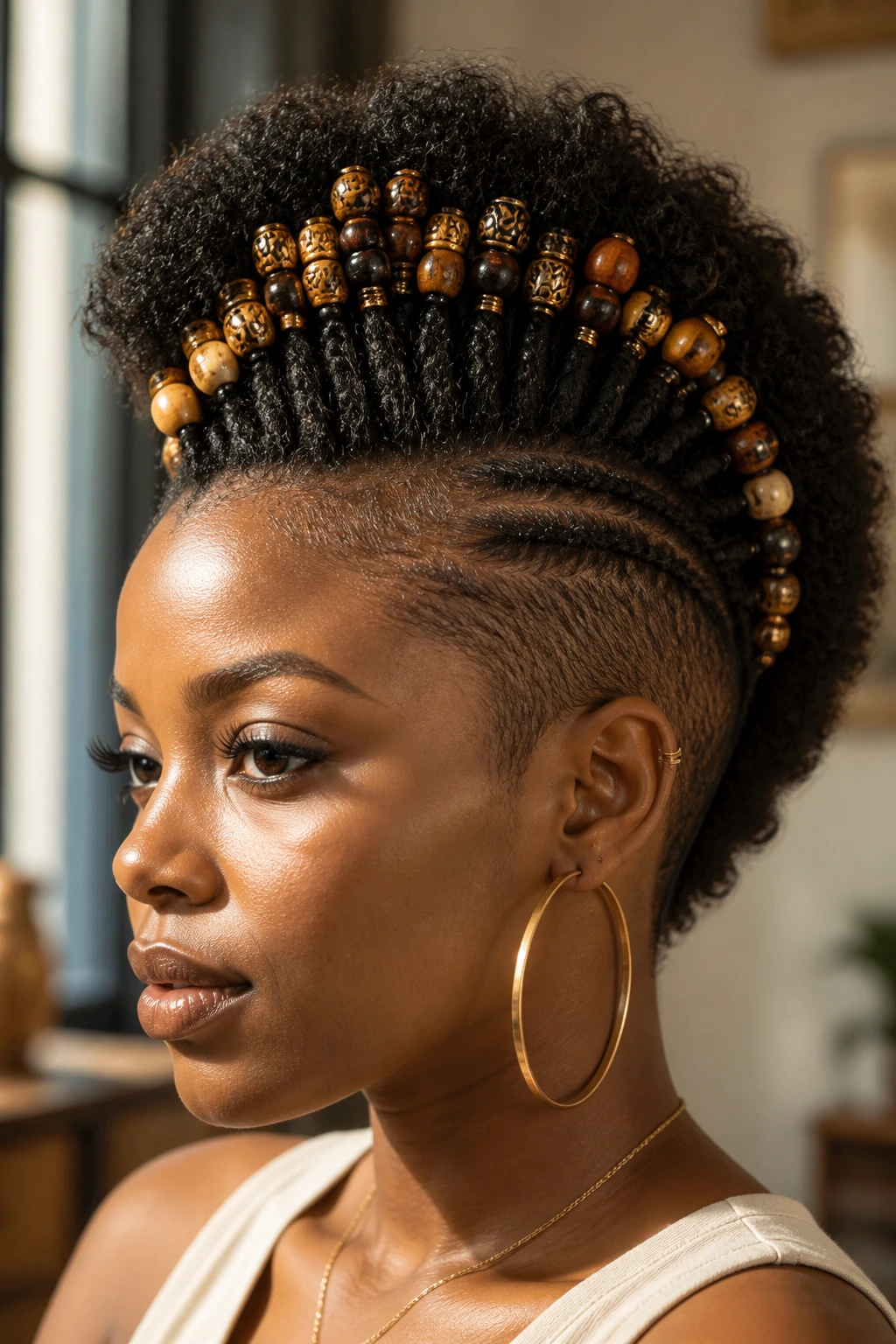
Beads make the final frohawk feel finished in a way that plain styles sometimes don’t. Whether they sit on the ends of braids, along the center strip, or clustered near the crown, they add weight, movement, and a little sound when you turn your head. That’s a small detail, but it changes the whole mood.
A beaded hawk works best when the base style is already solid. If the braid line is messy, the beads only make the mess louder. Use them where the structure is clean and let the accessories highlight the shape instead of hiding it.
I like this as the last style in the set because it says the quiet part out loud: a frohawk can be playful, polished, and unmistakably yours.
Why the Mohawk Shape Works So Well on Natural Hair
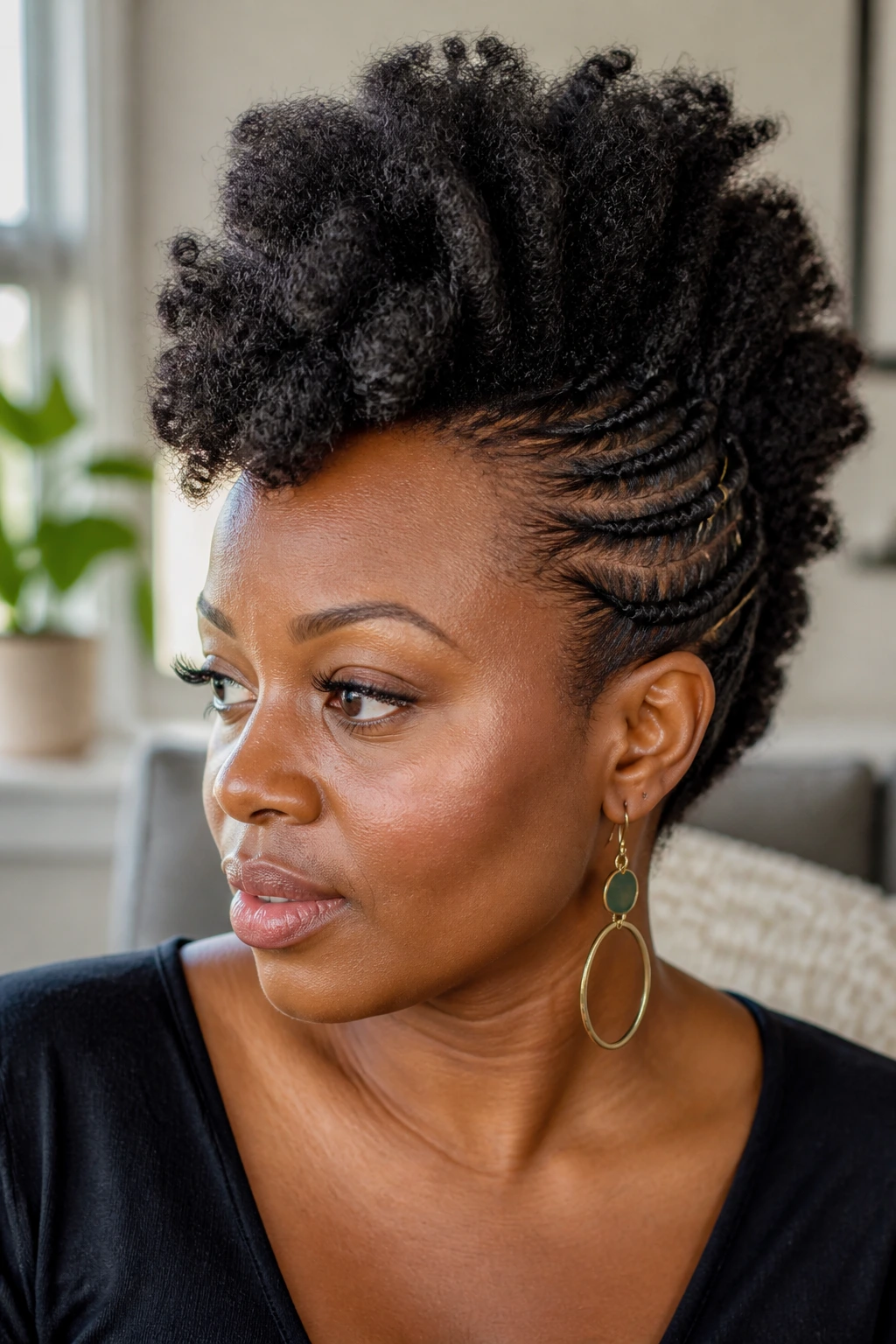
The frohawk makes sense because natural hair likes room. A mohawk silhouette gives the center volume a clear place to live, while the sides get a break from constant combing, brushing, and redoing. That matters more than it sounds like it should.
There’s also a practical benefit that gets overlooked. When the sides are braided, pinned, or slicked back in a controlled way, the style can handle shrinkage better than a loose shape that’s trying to be everything at once. The center strip becomes the focal point, which is useful when you want the face to look lifted or when you want a textured style to feel more polished.
And then there’s the freedom of it. Some days the center can be a puff. Some days it can be twists. Some days it can be locs, beads, or Marley hair. Same silhouette. Different attitude.
How to Wear the Shape Without Losing the Drama
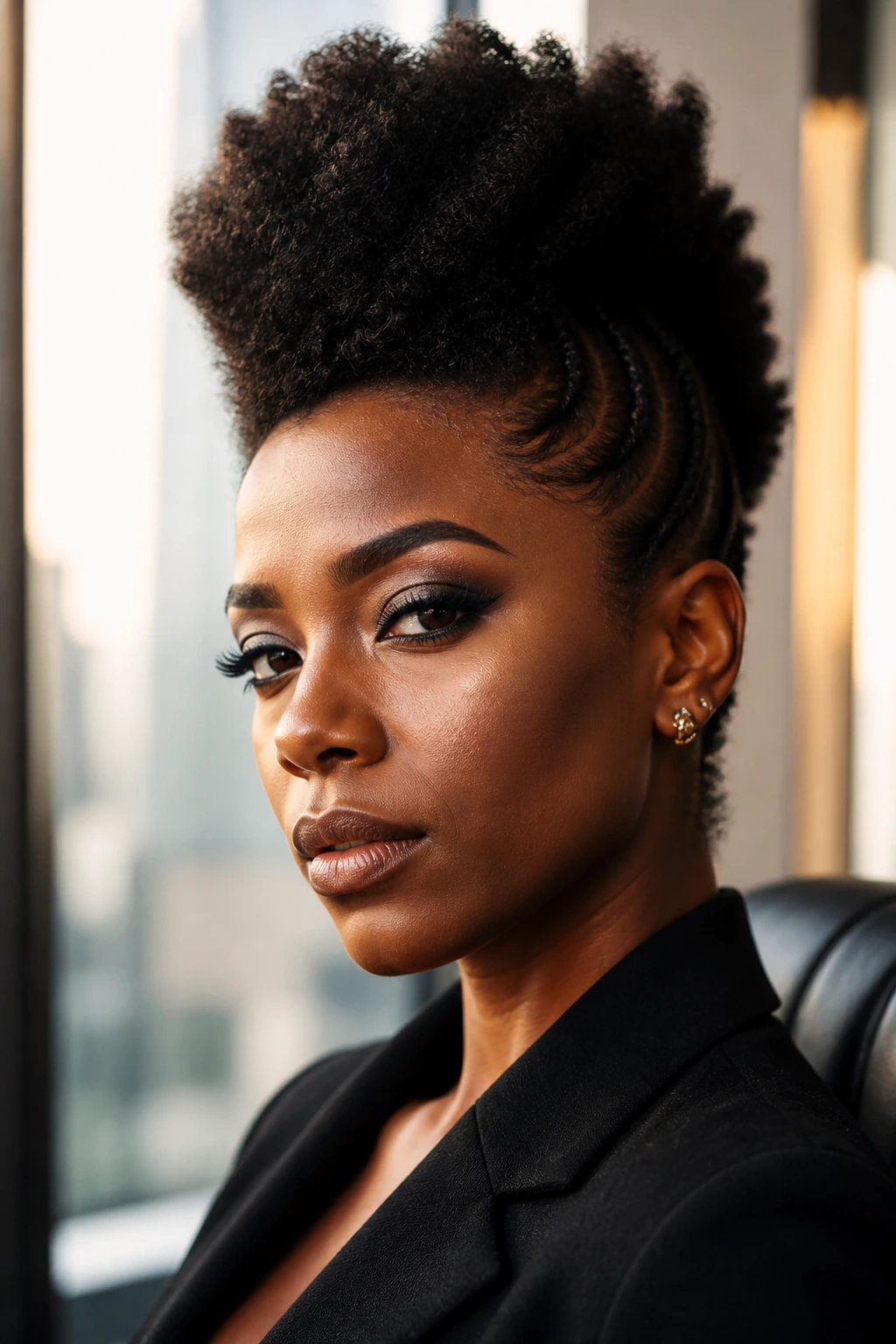
Workday: Keep the sides closer to the scalp and choose one clean center detail—one puff, one braid, or one twist lane. The look stays neat under a blazer or a collared shirt without going flat.
Weekend: Let the center breathe more. Add height, pick the curls out a little wider, or bring in a cuff or scarf. The shape can be looser when nothing else needs to hold it together.
Formal events: Use hidden pins, tighter base sections, and one polished accent. Gold cuffs, a low veil comb, or a clean braid line can keep the style from looking like it was assembled in the car.
Short hair: Build up the crown with sponge work, small twists, or a clipped center ridge. Shorter lengths usually look better when the shape is tight and intentional instead of oversized.
Long hair: Don’t let the length drag the style backward. Pin or tuck the ends so the height stays where you want it.
Tools That Make These Styles Easier
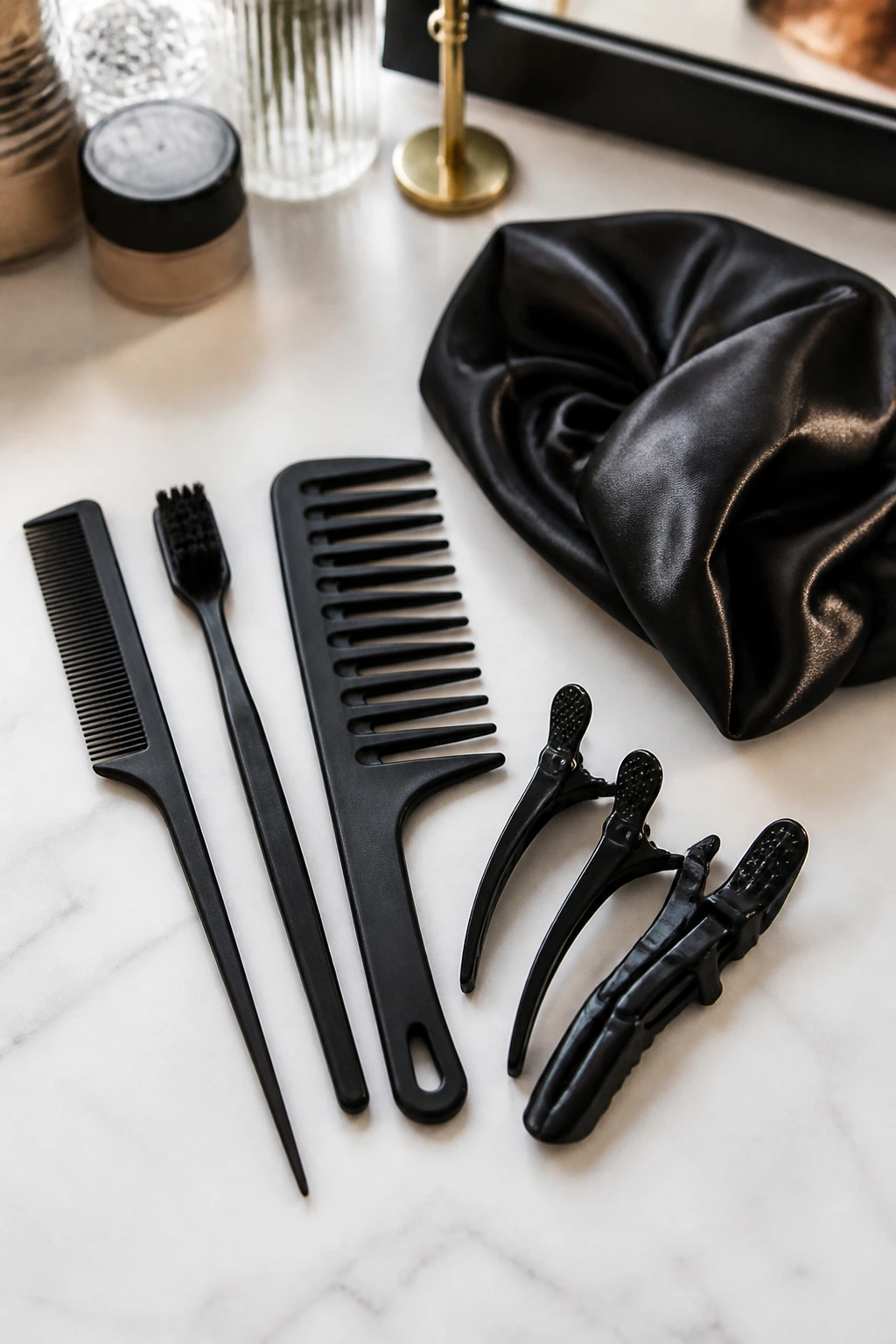
- Rat-tail comb: Helps create clean parts and lift sections without tearing through coils.
- Soft-bristle brush: Useful for smoothing the sides without scraping the hairline raw.
- Wide-tooth comb: Good for detangling stretched natural hair before sectioning.
- Duckbill clips: Keep the center section and side sections separated while you work.
- Satin scarf or wrap: Holds the sides down and protects the style overnight.
- Bonnet with enough room: A tight bonnet crushes puffs and twists; a roomy one does less damage.
- Small elastic bands: Best for mini puffs and sectioned styles, but use the kind that won’t snag.
- Bobby pins and hair pins: Hidden support matters in any style with lift.
- Edge brush: Helps with hairline smoothing when you want a cleaner frame.
- Handheld mirror: Worth having for checking the back, especially on braided or pinned hawks.
What to Buy for Hold, Shine, and Less Flaking

A good frohawk starts with products that match the style’s job. If the sides need to stay laid, look for a gel or edge control with real hold and a water base, because heavy pomades can sit greasy on the hairline and still fail by lunchtime. If the center is curly or coily, a foam or light styling cream often gives better shape than a thick butter.
For braids and twists, I’d choose extension hair that matches your texture and feels pre-stretched if possible. It lays better at the root and sheds less once installed. For accessories, matte cuffs and smooth pins usually work better than huge decorative pieces unless the style itself is very simple.
A tiny note on shine spray: use it lightly. A frohawk should look healthy, not drenched.
How to Keep the Shape Fresh Between Wash Days
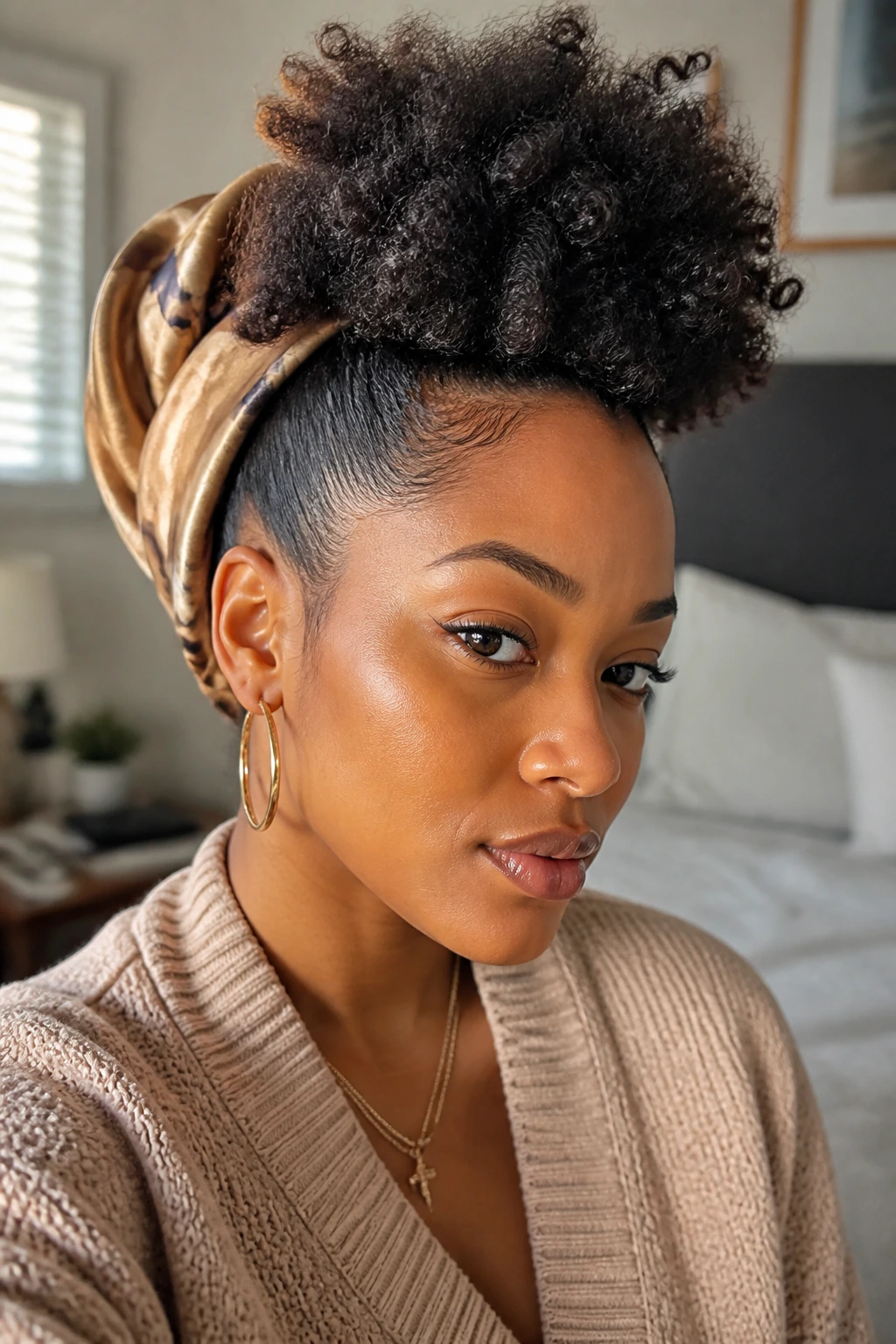
The best frohawks usually last longer when the night routine is boring and consistent. Wrap the sides with a satin scarf, then either pineapple the center or pin it loosely so the height doesn’t collapse. If the style includes puffs, put the puff itself in a loose satin bonnet or a large wrap that doesn’t flatten the crown into a crease.
For all-natural versions, a light mist of water mixed with a little leave-in can revive the center after a couple of days, but don’t soak it. Too much moisture on laid sides makes the gel soften and the shape blur. If the hairline starts to puff up, reapply a pea-sized amount of edge control and smooth it with a small brush. That’s enough.
Braided and twisted hawks usually last longer. About 5 to 10 days is a fair window for neat styles, while a looser puff may need a refresh every 2 to 4 days depending on texture and weather. If the scalp feels itchy, wash it gently at the roots with diluted shampoo and a pointed applicator bottle, then let the style dry completely before wrapping it again.
Common Mistakes That Flatten the Whole Look
-
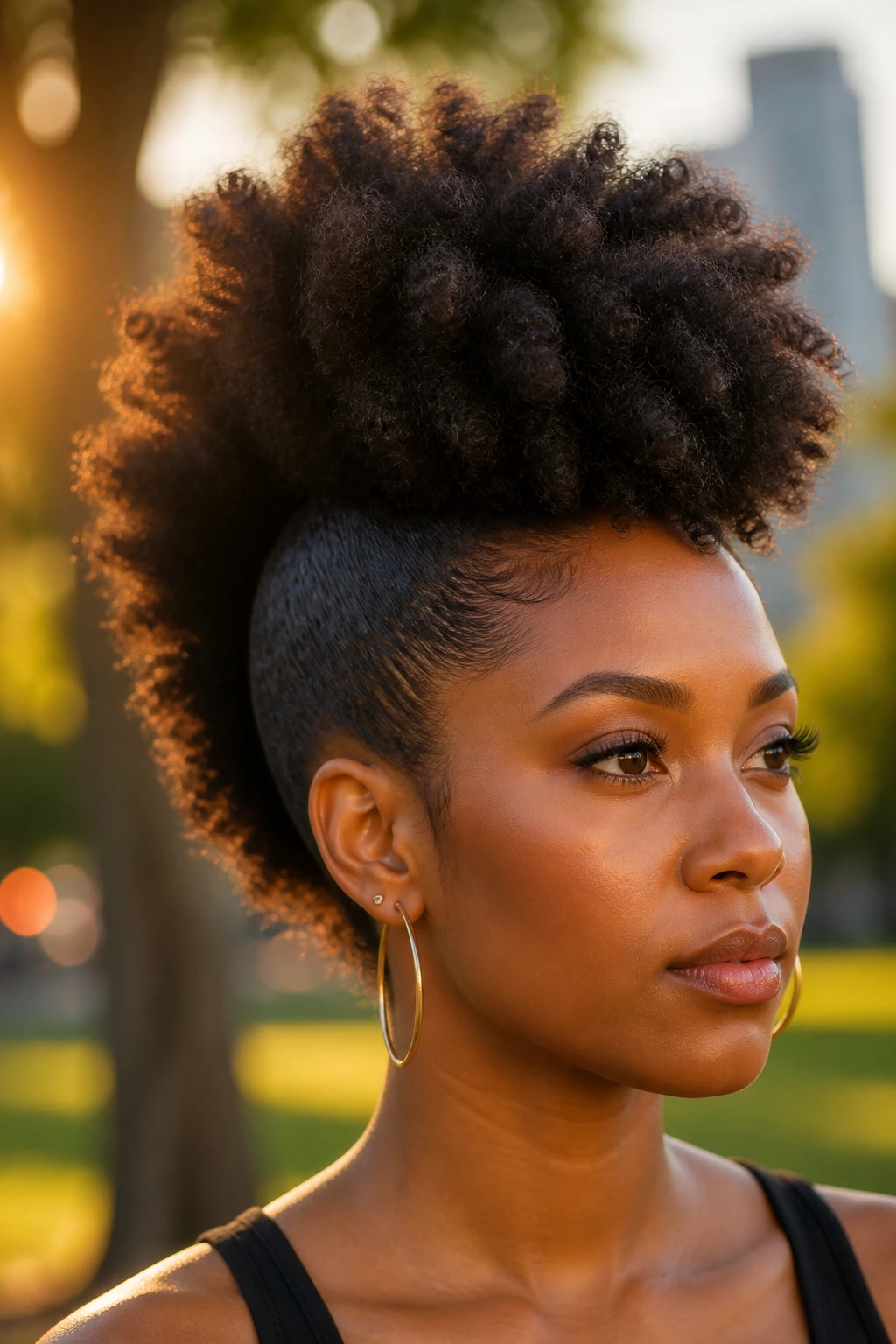
Brushing the sides too hard: The hairline gets stressed, and the style starts to look severe instead of clean. Keep the brush soft and stop once the hair is laid.
-
Skipping stretch or detangle work first: If the center is tangled and tightly shrunken, the hawk can turn lumpy. A quick twist-out, blow-dry on low, or simple stretching session makes the shape easier to build.
-
Using heavy product everywhere: Thick grease on the crown kills lift, and too much gel on the sides flakes when you touch it later. Use product only where it has a job.
-
Ignoring shrinkage: Hair that looks long enough when wet can pull up a lot once dry. Build the style with that in mind, or the mohawk will feel too small after an hour.
-
Crowding the style with accessories: One or two accents look sharp. Ten accents look busy. The shape needs breathing room.
Variations Worth Trying When You Want a Different Mood
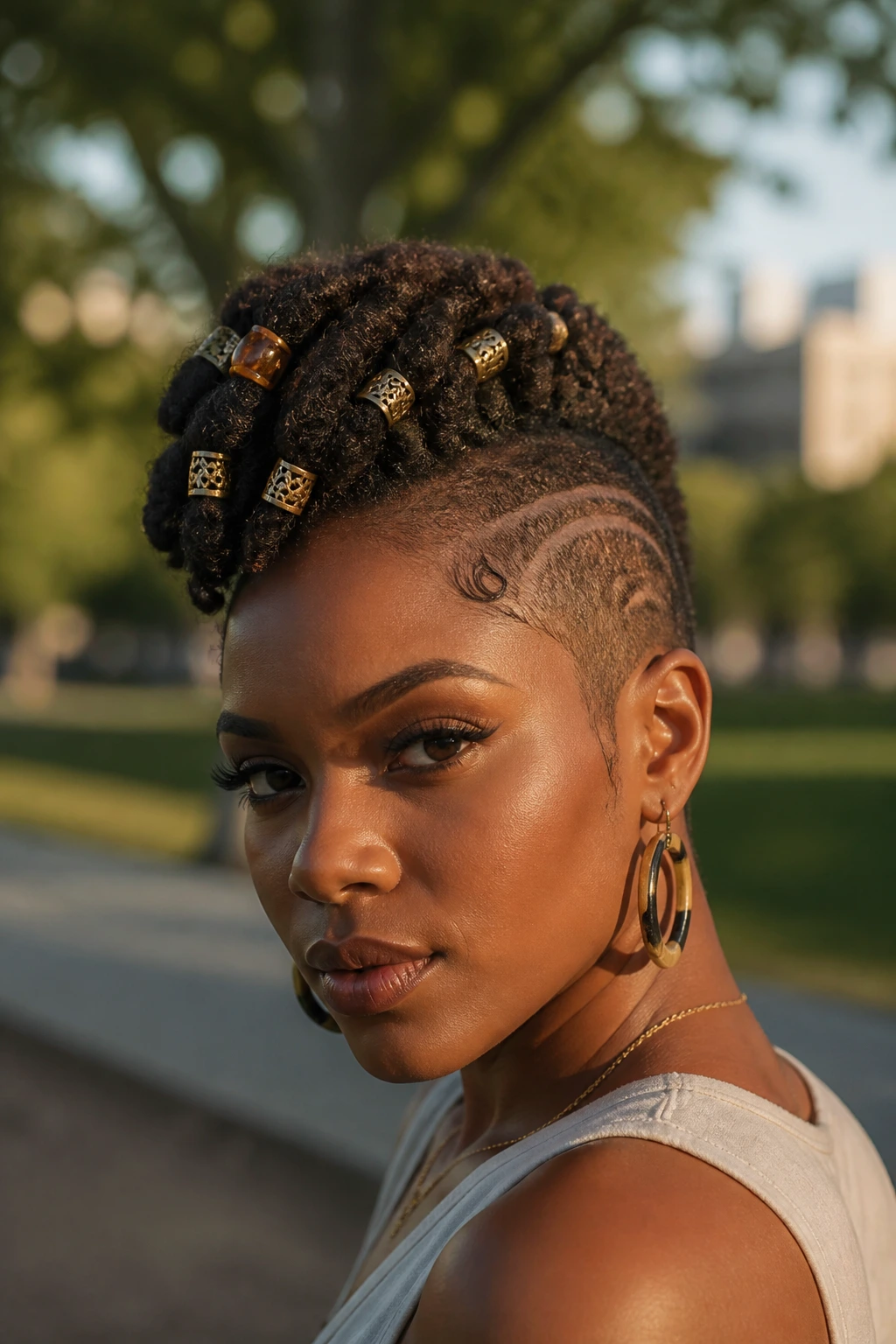
Soft and Simple Hawk: Keep the sides lightly slicked and the center as one puff or one twist-out. This version feels relaxed and works well with everyday clothes.
Braided Armor Hawk: Use cornrows, feed-ins, or flat twists on the sides and tuck the ends away. It’s the most protective version in the bunch and usually lasts the longest.
Big Drama Hawk: Add Marley hair, clip-ins, or a stretched twist-out to build more height. This is the one for events, photos, or any day when you want the silhouette to do the talking.
Short-Hair Mini Hawk: Build the shape with a TWA, sponge curls, or small puffs. It has less height, but the line can look crisp and modern.
Decorated Hawk: Add beads, cuffs, a scarf, or a color accent. Use this when the base style is simple and you want the finish to feel more personal.
Questions People Ask Before Wearing a Frohawk
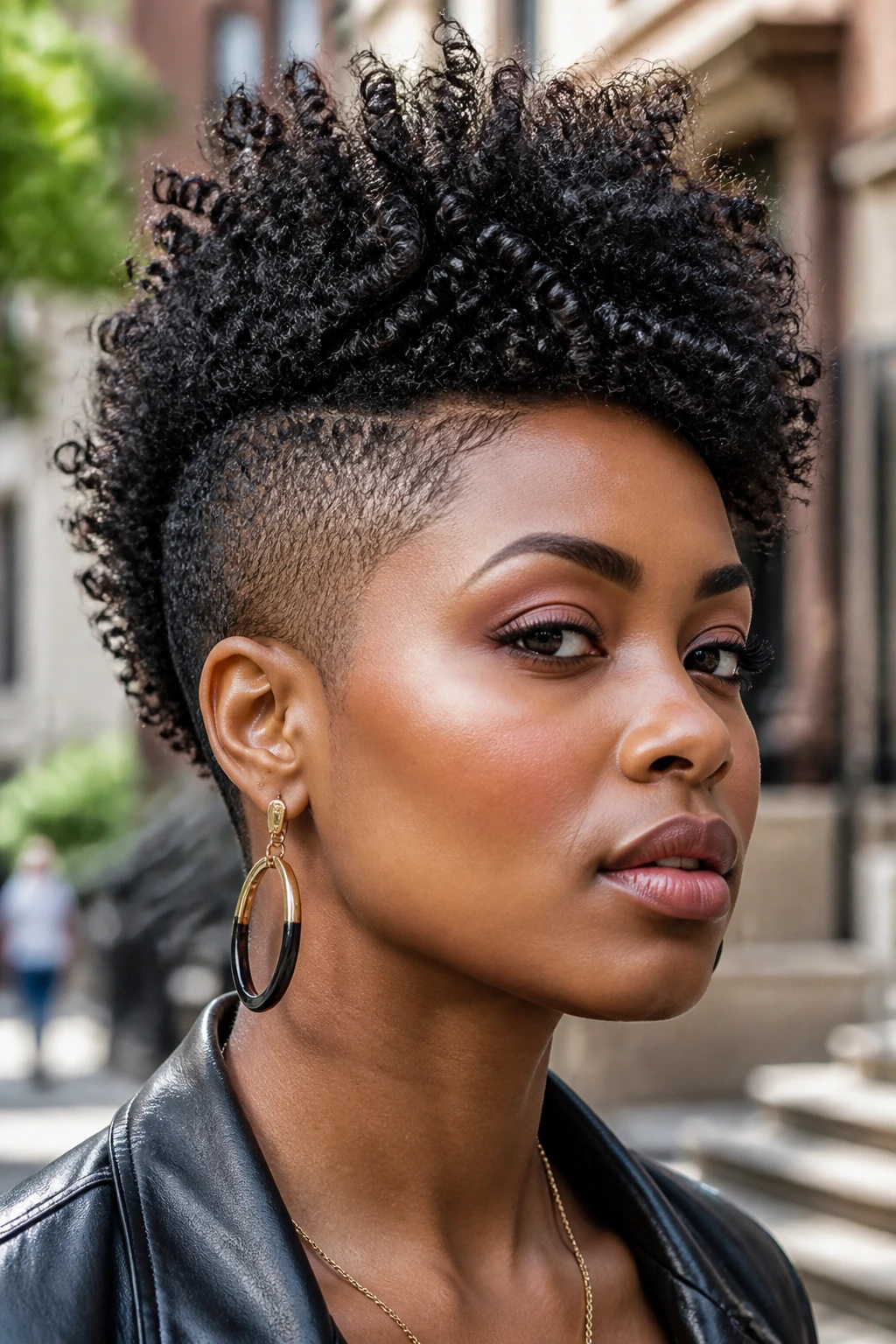
Can you do a frohawk on short natural hair?
Yes. A TWA, mini puff, or sponge-shaped coil hawk can work beautifully on short hair, especially if the sides are brushed back and the crown is given a little height.
Will a frohawk damage my edges?
Not if you keep the tension under control. The problem is usually not the style itself; it’s the brushing, pulling, or constant re-tightening at the hairline.
How long does a frohawk usually last?
Loose natural versions may last 2 to 4 days before needing a refresh. Braided, twisted, or loc-based versions can last 5 to 10 days, sometimes longer if your scalp stays comfortable.
What’s the best style if I want low maintenance?
A braided center hawk or a jumbo braid mohawk tends to ask for the least daily work. Once the base is installed, you’re mostly just protecting it at night.
Can I wear one to work or a formal event?
Absolutely. Keep the sides neater, choose a simpler center shape, and add only one accent if the setting is more polished. The style can go sharp, soft, or formal depending on the finish.
Why does my frohawk fall flat by midday?
Usually it’s one of two things: the hair was not stretched enough to hold the shape, or the product was too heavy and dragged the crown down. Try less cream and a little more structure at the base.
Can I do this style without heat?
Yes. Twist-outs, braid-outs, puffs, pin-ups, and sponge shaping all work without heat. Heat can help with stretch, but it is not required.
Why I Keep Coming Back to the Frohawk
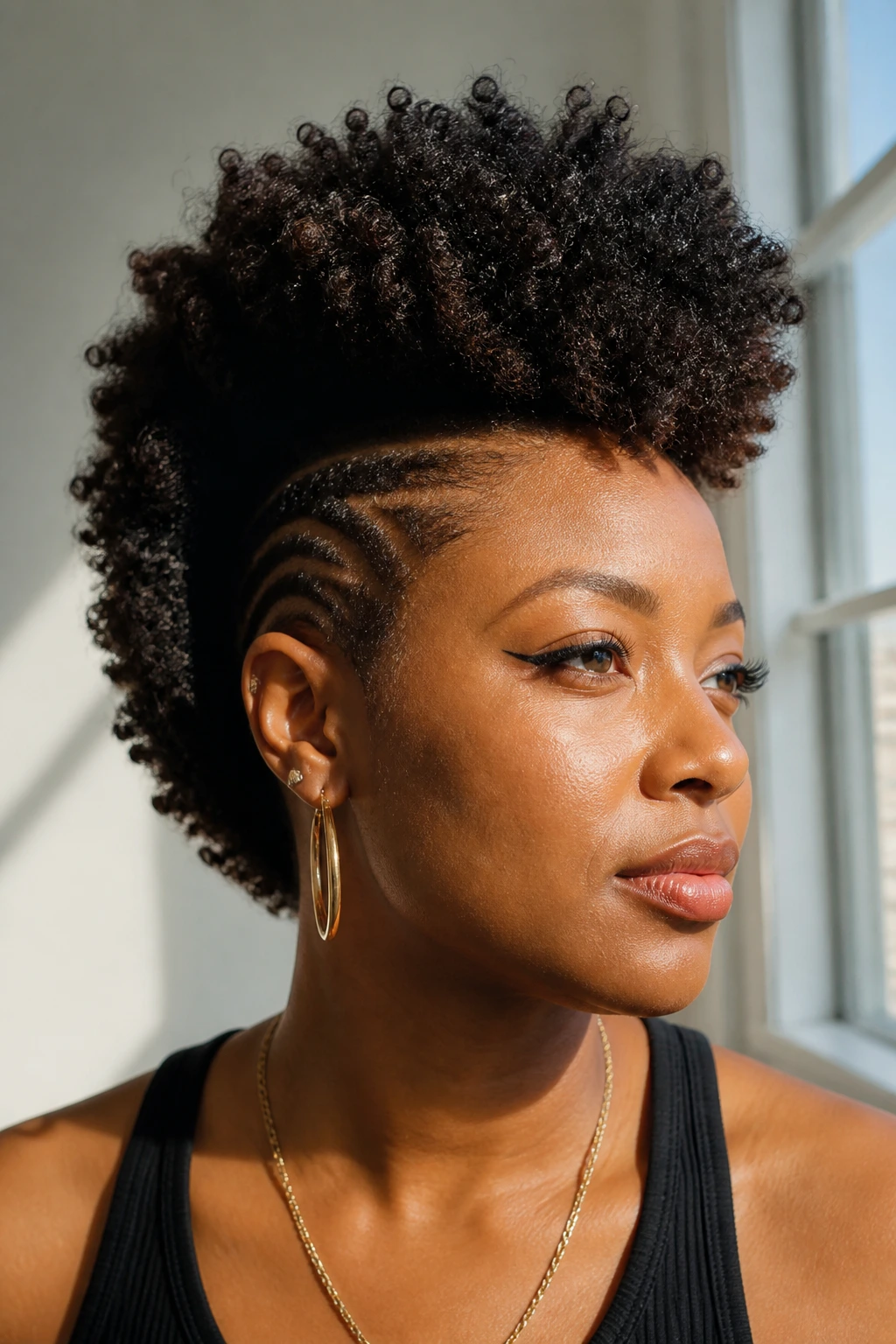
A good frohawk doesn’t make Black hair behave. It gives it a lane. That’s why the style keeps showing up in so many forms—puffed, braided, twisted, beaded, clipped, or cut short and left to stand on its own. The center strip gets to be dramatic, and the rest of the hair gets to breathe.
That balance is what makes these looks hold up over time. Not the accessories. Not the gel. The shape.
Pick the version that matches your length, your energy, and how much time you want to spend in the mirror. Then let the style do what it does best: pull the eye upward, hold texture in plain sight, and make the whole head feel intentional.
