



A good faux hawk can do more for a face than a neat, obedient haircut ever will. It lifts the center, narrows the sides, and gives the whole head a line that feels deliberate instead of heavy — which is exactly why faux hawk hairstyles for women over 40 keep showing up in real salons, not just on mood boards.
The shape matters because hair changes. Crown volume disappears a little faster. Ends get lighter. Temples can look wider when the sides sit flat. A faux hawk works with all of that instead of fighting it. You’re not forced into a shaved strip or a hard-edged punk cut. You can keep the softness, the length, the polish. You just move the eye upward.
And the best versions don’t look like they’re trying too hard. Some are sleek and quiet. Some are curly, braided, silver, or a little wild. A few take five minutes. A few need pins, a tail comb, and a patient hand. But the common thread is the same: they give the hair shape, and shape does a lot of the work for you.
Why These Faux Hawk Hairstyles Work So Well After 40
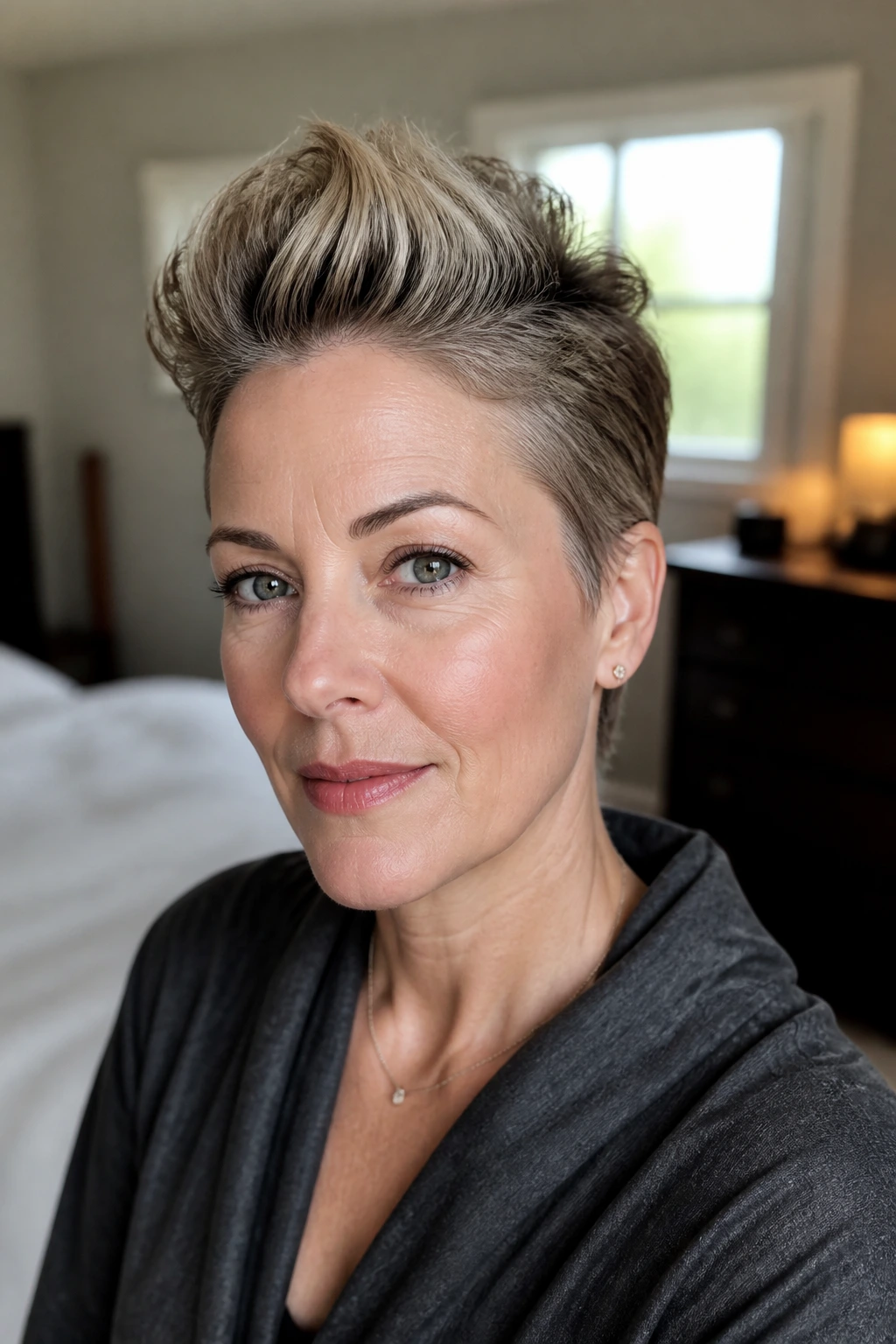
Crown lift does the heavy lifting: A little height through the middle of the head changes the whole silhouette, especially when the temples and sides are kept smoother and closer to the scalp.
The style respects real hair texture: Waves, curls, silver strands, and fine hair all look better when the center ridge is intentional instead of flattened into a plain shape.
You can control the drama: A faux hawk can be soft enough for lunch with friends or sharp enough for a black dress and earrings. Same structure. Different finish.
It works with shorter and longer cuts: Pixies, lobs, collarbone layers, and even long hair can all be coaxed into the shape with pins, teasing, or braiding.
The grow-out is forgiving: When the day is over, you’re not stuck with a permanent cut that only works one way. You can wash it out, pin it down, or change the part.
1. Soft Crown Faux Hawk
The soft crown faux hawk is the version I’d hand to someone who wants shape without attitude. It lifts the top just enough to give the hair a spine, then keeps the sides loose and touchable. Nothing about it feels stiff. That matters.
Why it works
It’s built with gentle teasing at the crown and a few hidden pins at the sides, so you get height without a hard ridge. A teaspoon or two of texturizing spray at the roots is usually enough. Anything more starts to look dusty.
- Best for: Fine to medium hair that collapses by noon.
- Use: A tail comb, light mousse, and two or three bobby pins.
- Finish: Matte, not crunchy.
Tip: Keep the crown rounded, not pointy. A soft oval shape reads polished; a sharp spike reads costume.
2. Sleek Side-Swept Faux Hawk
This is the polished one. If you want faux hawk hairstyles for women over 40 that can handle a blazer, a meeting, and dinner afterward, this is the lane. One side gets smoothed down closer to the head, while the top is brushed diagonally back instead of straight up.
The trick is tension. Blow-dry with a nozzle, direct the air from roots to ends, then flatten the sides with a light serum on the fingertips only. Don’t drown the hair. A pea-sized amount is enough, and the ends should still move when you turn your head.
I like this shape on straight or lightly wavy hair because it looks clean fast. It also behaves well on chin-length and shoulder-length cuts, where the side sweep can feel elegant instead of severe. A fine-tooth comb and a medium-hold hairspray are doing the work here, not a full can of cement.
3. Curly Faux Hawk with Tapered Sides
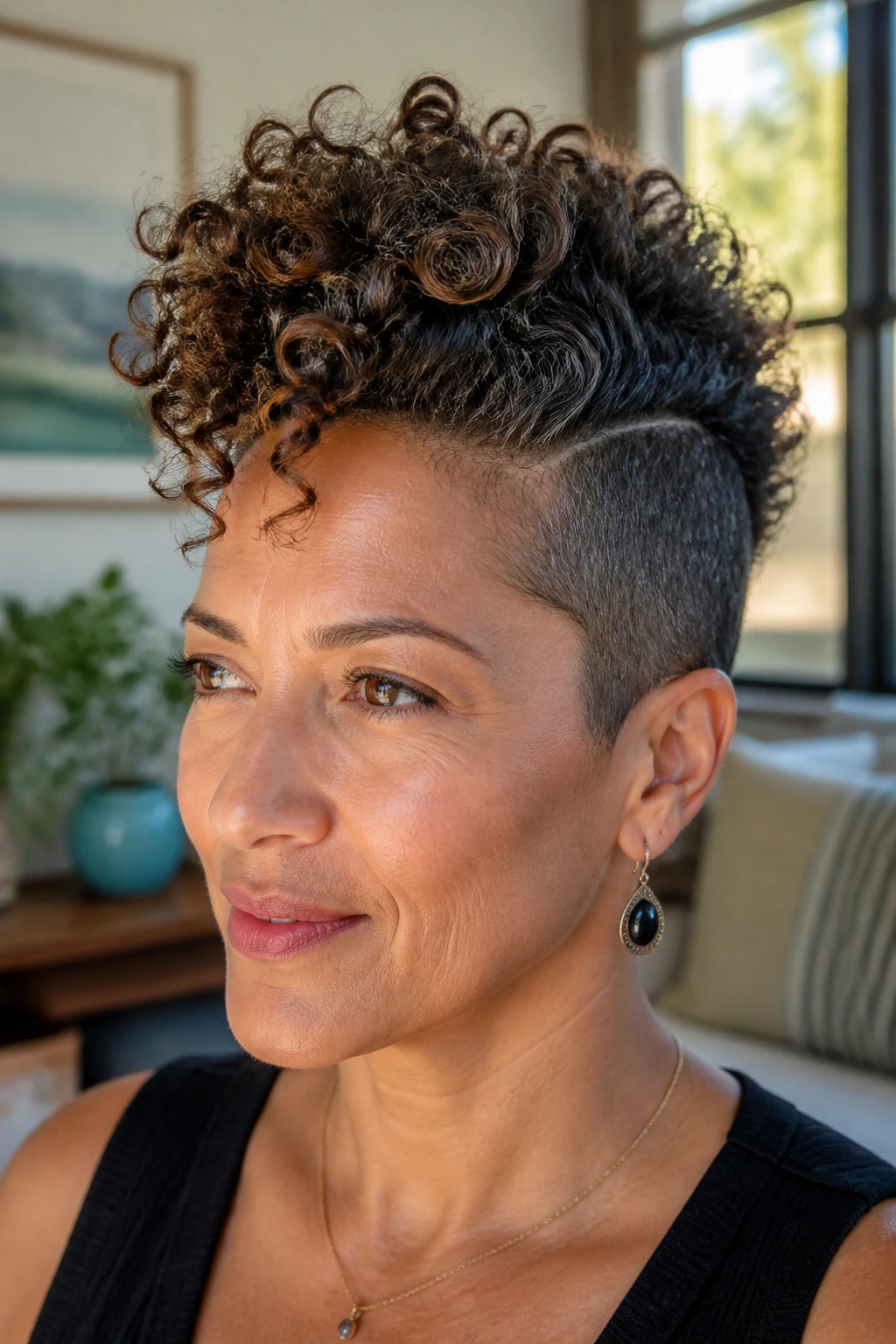
What happens when curls get the center spot? They steal the show, which is exactly the point. A curly faux hawk lets the curl pattern build upward through the middle while the sides are pinned, smoothed, or tapered close to the head.
How to wear it
Use curl cream on damp hair, then diffuse on low heat until the roots are dry and the curls hold their shape. A small amount of gel at the crown keeps the lift from puffing out before lunch. Once the hair is dry, scrunch out the cast with clean hands so the curls stay defined, not hard.
This version is especially good if your hair has a mix of curl sizes and a little frizz at the edges. The frizz becomes texture. The crown becomes the feature. That’s a much better deal than fighting every strand into obedience.
4. Pixie Crop Faux Hawk
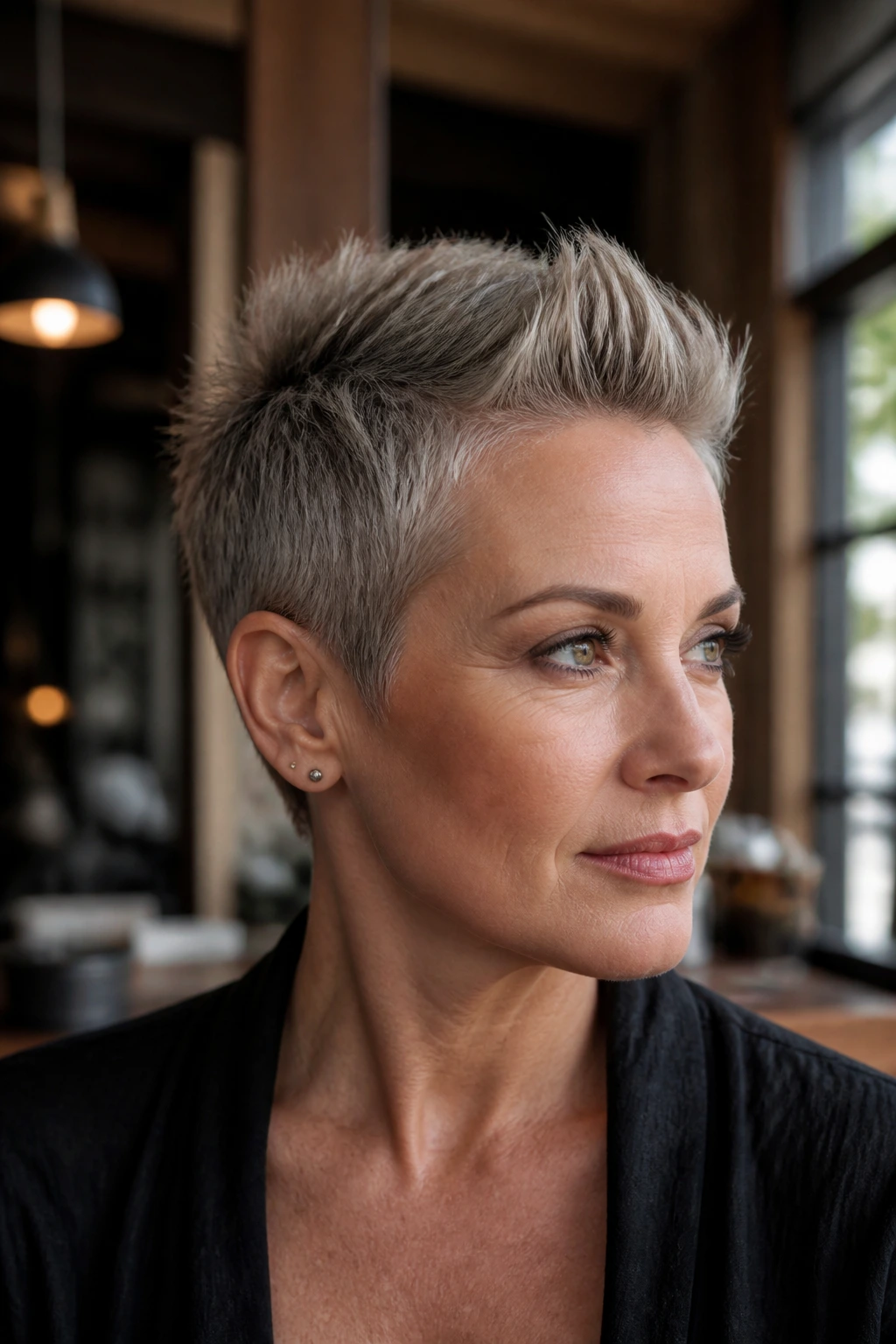
Short hair can still make an entrance. A pixie crop faux hawk pushes the top section upward and slightly forward, while the sides stay smooth enough to show the cut’s shape. It’s tiny, efficient, and sharper than people expect.
At this length, product choice matters more than product quantity. A dab of styling wax or paste warmed between the palms will let you piece the top into a narrow ridge without turning it greasy. Work from the crown forward with your fingers, then pinch the ends into a little lift.
- Use when: You want edge with almost no fuss.
- Best tool: A vent brush or even just your hands.
- Watch for: Too much paste. It collapses short hair fast.
The best pixie faux hawks leave some softness around the ears. That small bit of slack keeps the cut from feeling boxy.
5. Braided Temple Faux Hawk
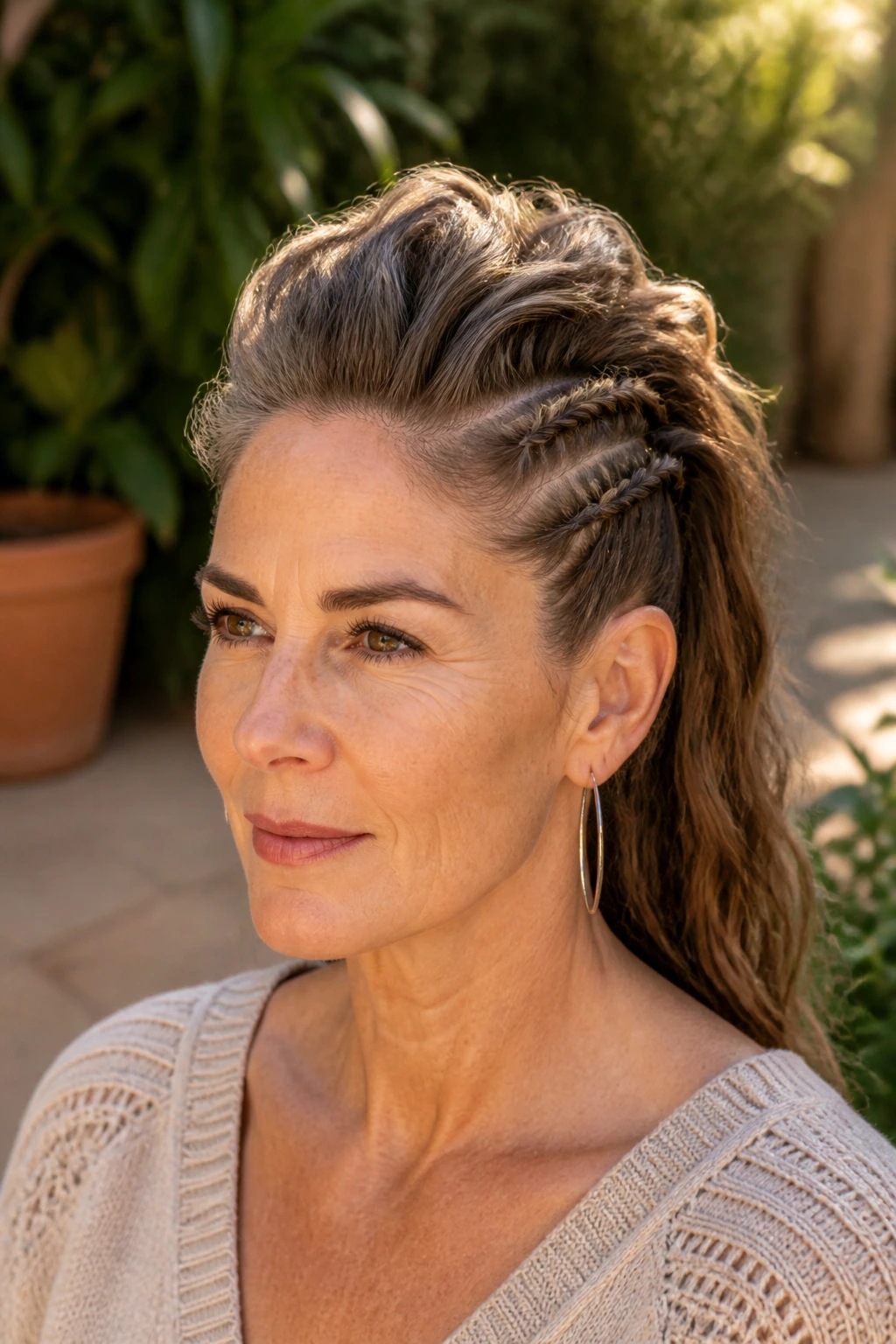
Braids change the whole mood. Two slim braids at the temples can pull the sides back and make the center section look taller, even before you tease a single root. It’s a smart move when you want the faux hawk shape to feel more refined than spiky.
Start with a center section from forehead to crown, then braid or twist each side toward the back and pin it where the section meets the ridge. A little tension is fine. A lot of tension makes the whole style look strained, especially around the hairline.
This works well for medium to long hair, and it’s one of the easiest ways to hide day-two roots. If the braids are small and close to the scalp, they also stay neat longer than loose side pieces. I’d call that a practical win.
6. Tall Pompadour Faux Hawk
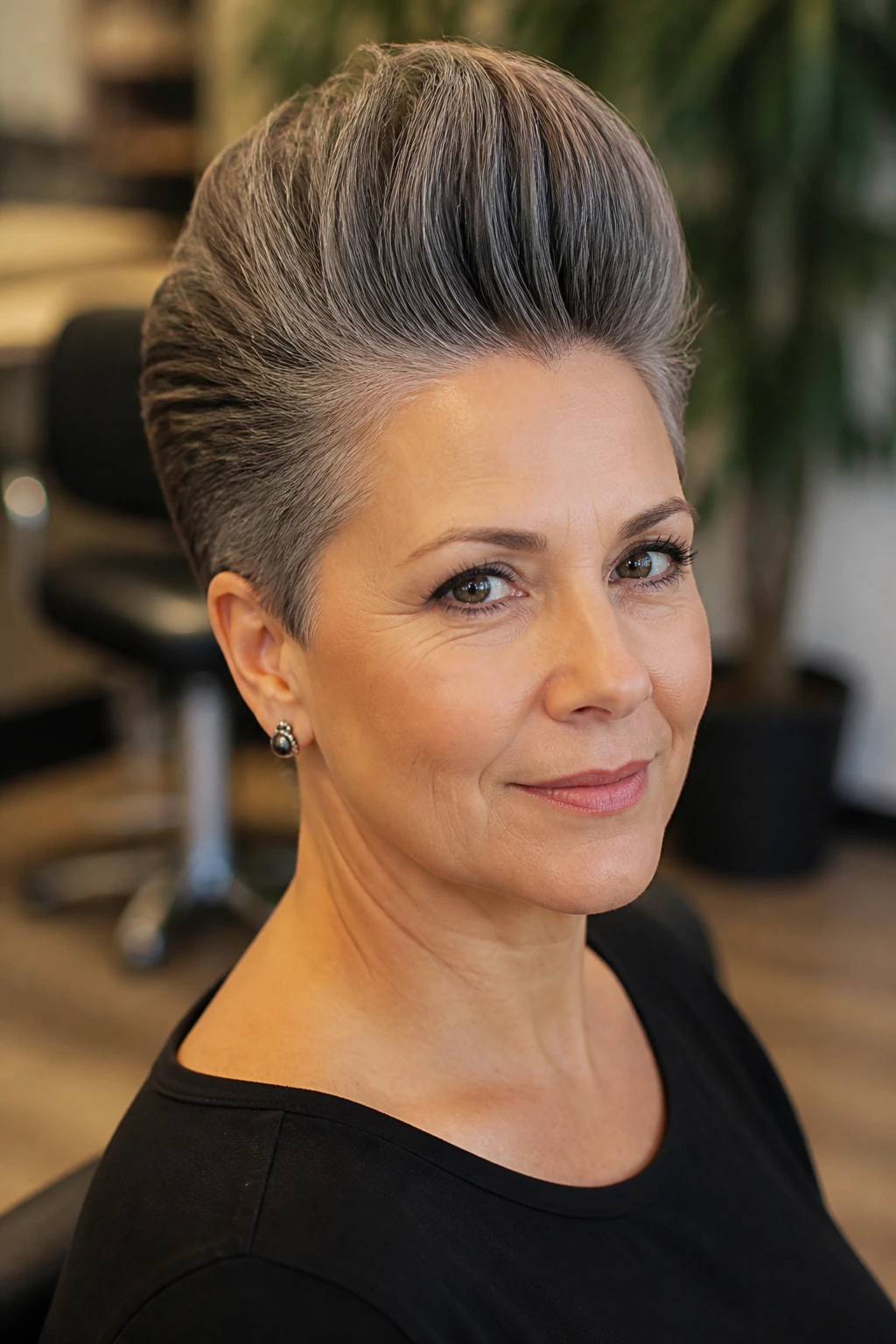
If you want height, this is the loudest version in the group. The tall pompadour faux hawk lifts the front and crown into one continuous sweep, so the whole style reads upward. It feels dramatic, but not messy when it’s done well.
Backcomb the crown in small sections, smooth the outer layer over the teased base, and lock it in with a flexible hairspray before the hair can fall. If you go too wide at the front, the shape loses its direction and becomes a puff. Keep the volume concentrated near the center line.
This version likes longer top layers and medium-density hair. Thin hair can do it too, but you’ll need more structure from root spray and maybe a couple of hidden pins. For a night event, it’s one of the few styles that genuinely changes your profile from across a room.
7. Textured Undercut Faux Hawk
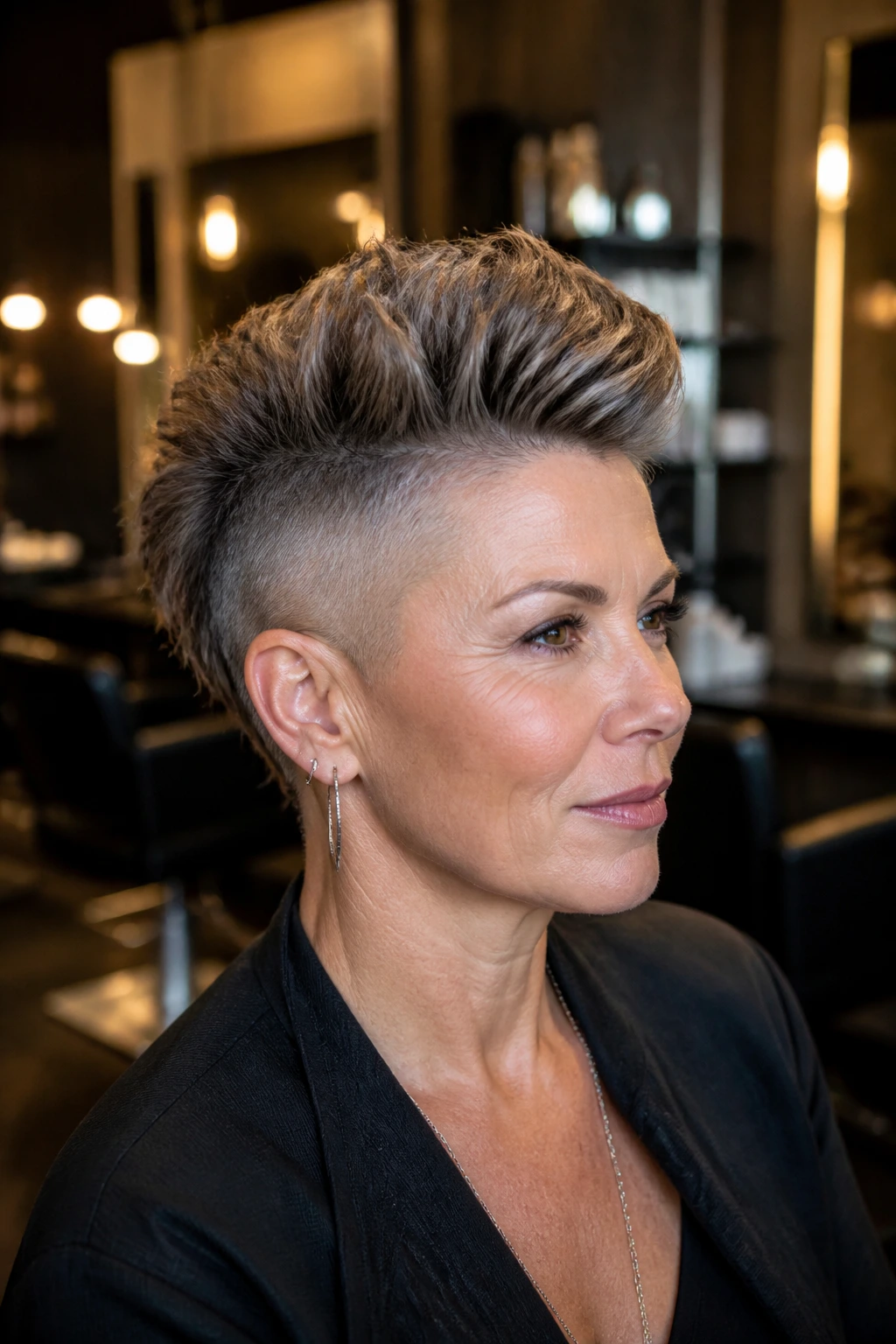
A textured undercut faux hawk gives you the feeling of a shaved-side style without actually committing to the cut. The sides are slicked close, the middle is teased or finger-styled high, and the ends stay rough enough to look alive.
Why it works
The shape does the talking. You don’t need perfect symmetry here; in fact, too much symmetry makes the look flatter. A matte paste through the top section gives the hair grip, while a stronger gel at the sides keeps the contrast clear.
- Best for: Short to medium cuts with layered tops.
- Tools: Tail comb, clip, blow dryer, strong-hold spray.
- Watch for: Ends that look separated in a bad way. Use product sparingly and warm it in your hands first.
This is the faux hawk for someone who likes a little edge without the permanent undercut.
8. Collarbone-Length Wavy Faux Hawk
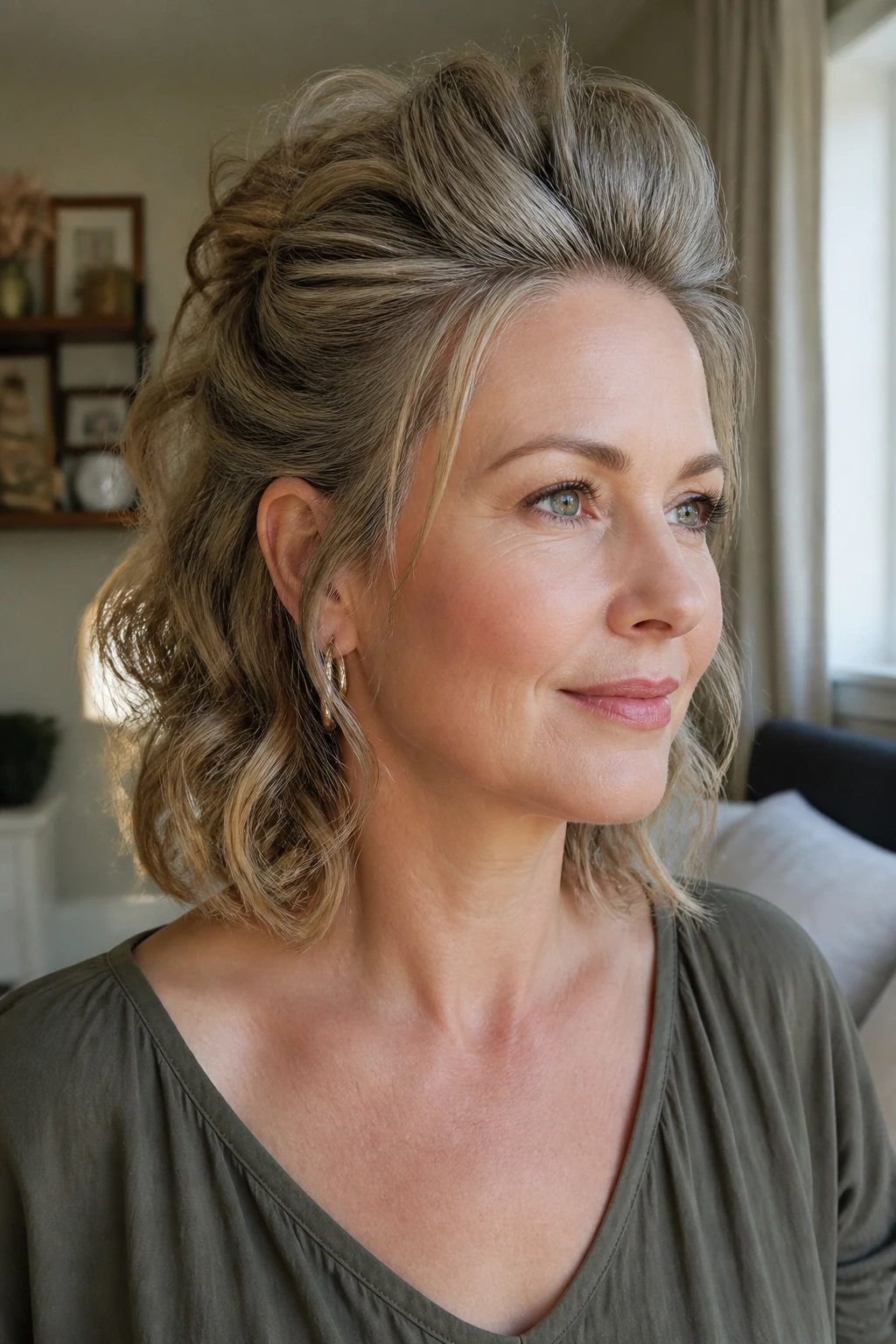
A collarbone-length faux hawk has a nice contradiction baked into it: the hair stays soft at the ends, but the top is pulled up enough to create a central ridge. Waves make the whole thing easier because they already bend in the right direction.
Pull the top section back loosely, twist once or twice, and pin it just behind the crown. Leave the lower lengths loose so they swing around the shoulders. A 1-inch curling iron can help if the hair is mostly straight; just wrap random sections away from the face and leave the ends slightly undone.
This style is one of my favorites for women who want a faux hawk but don’t want the full “statement” feeling. It’s clear without being harsh. The shape still reads, even when the rest of the hair stays loose.
9. Silver-Streak Faux Hawk
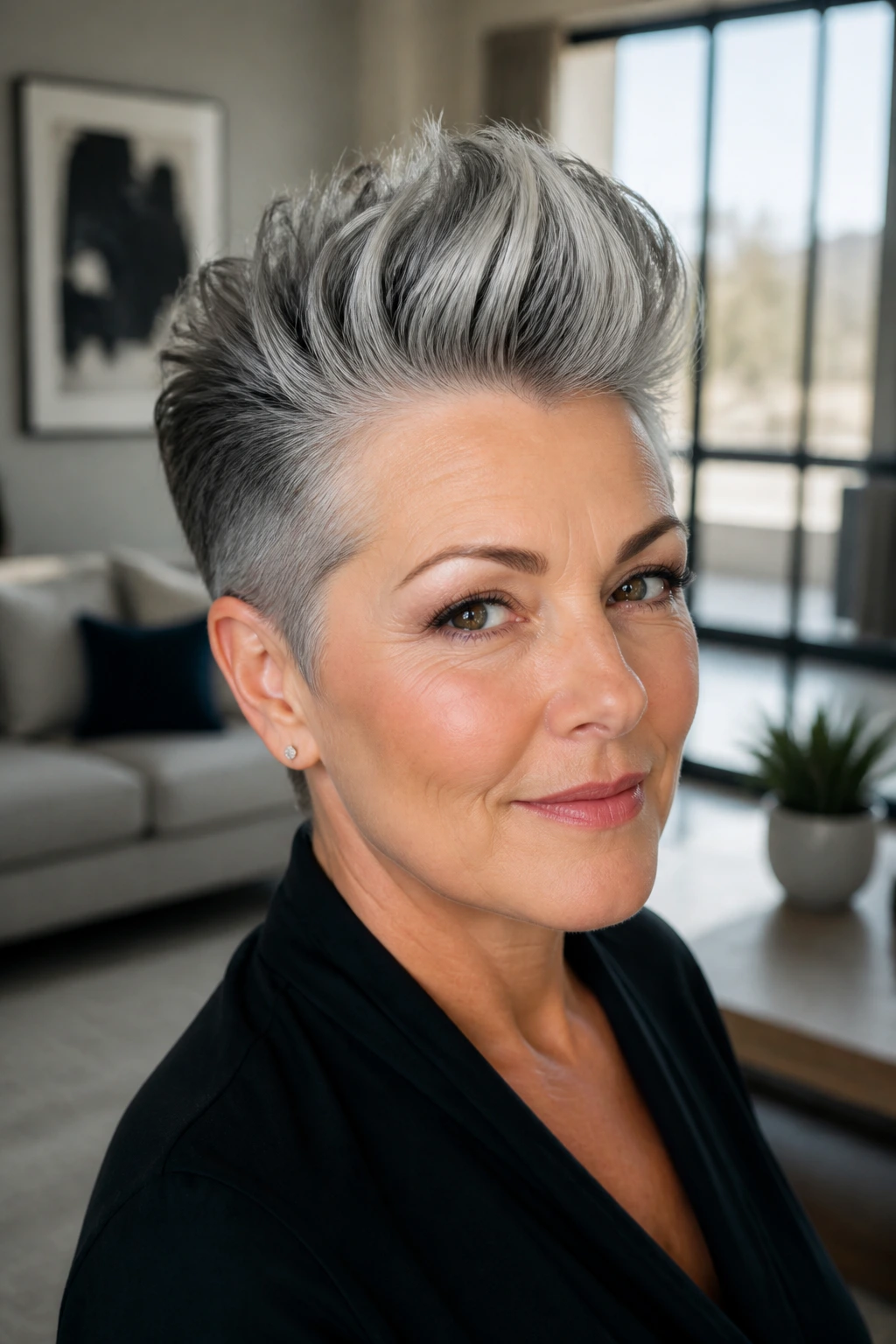
Silver and gray hair love this shape. The cool tones catch light along the raised center section, and the contrast between smooth sides and textured crown becomes more visible in a very good way. You don’t need to force drama when the hair already has it.
Use a lightweight mousse or root spray at the crown, then finger-style the top instead of brushing it flat. Silver hair can be a little dry, so skip heavy oils near the roots; they make the shape sink and separate. A bit of shine mist on the outer layer is enough.
This faux hawk works especially well when the gray is mixed through the front and temples, because the texture looks intentional rather than “grown out.” It’s a sharp shape on its own. On silver hair, it gets even sharper.
10. Low-Key Office Faux Hawk

Not every faux hawk needs to look like a concert ticket. The low-key office version keeps the crown lift under control, smooths the sides neatly, and avoids anything too piecey or tall. It still has the silhouette, just trimmed down.
Blow-dry the hair upward at the roots with a round brush, then pin the top back in a shallow curve. You want the lift to sit close to the head. Think one inch, maybe one and a half, not three. A soft-hold spray keeps it from moving too much while you work.
This is the one I’d choose when you want polish without the feeling that the hair is trying to have a personality crisis. It behaves well with glasses, collared shirts, and simple studs. Quiet, but not dull.
11. Choppy Spiky Faux Hawk
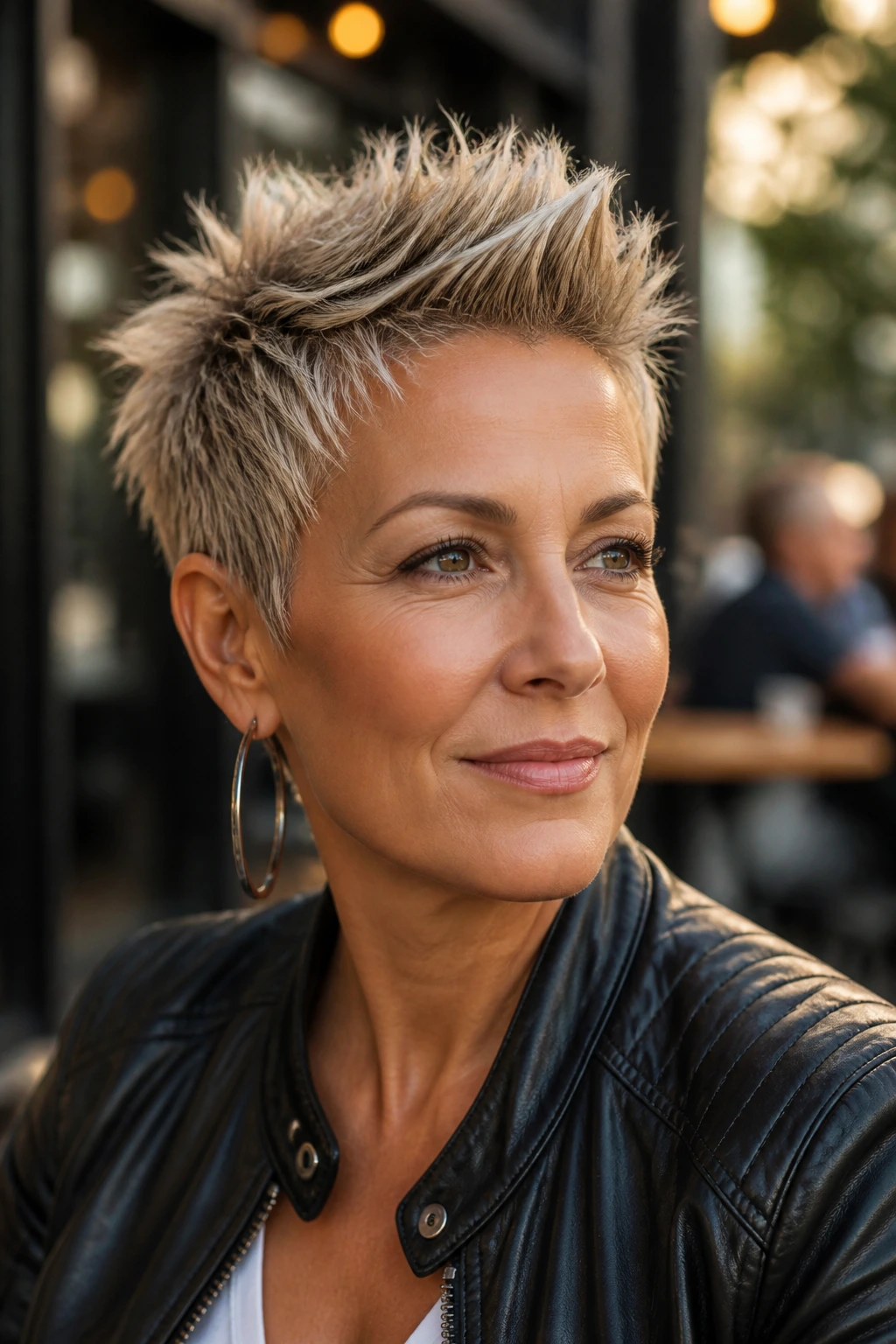
This version leans into texture. Choppy ends, short layers, and a little lift at the roots make the faux hawk look sharp without needing much height. It’s the right move if your hair already has some natural bend or if your cut has lots of short interior layers.
Work a tiny amount of paste through dry hair, then pinch the ends upward in small sections. The trick is to stop before everything becomes one solid lump. You want pieces, not a helmet.
- Good for: Thick hair that needs direction.
- Best finish: Matte or semi-matte.
- Avoid: Wet-looking gel. It kills the separation and makes the cut feel older, not cooler.
The shape looks best when it’s a little imperfect. That’s not a flaw. That’s the point.
12. Twist-Out Faux Hawk
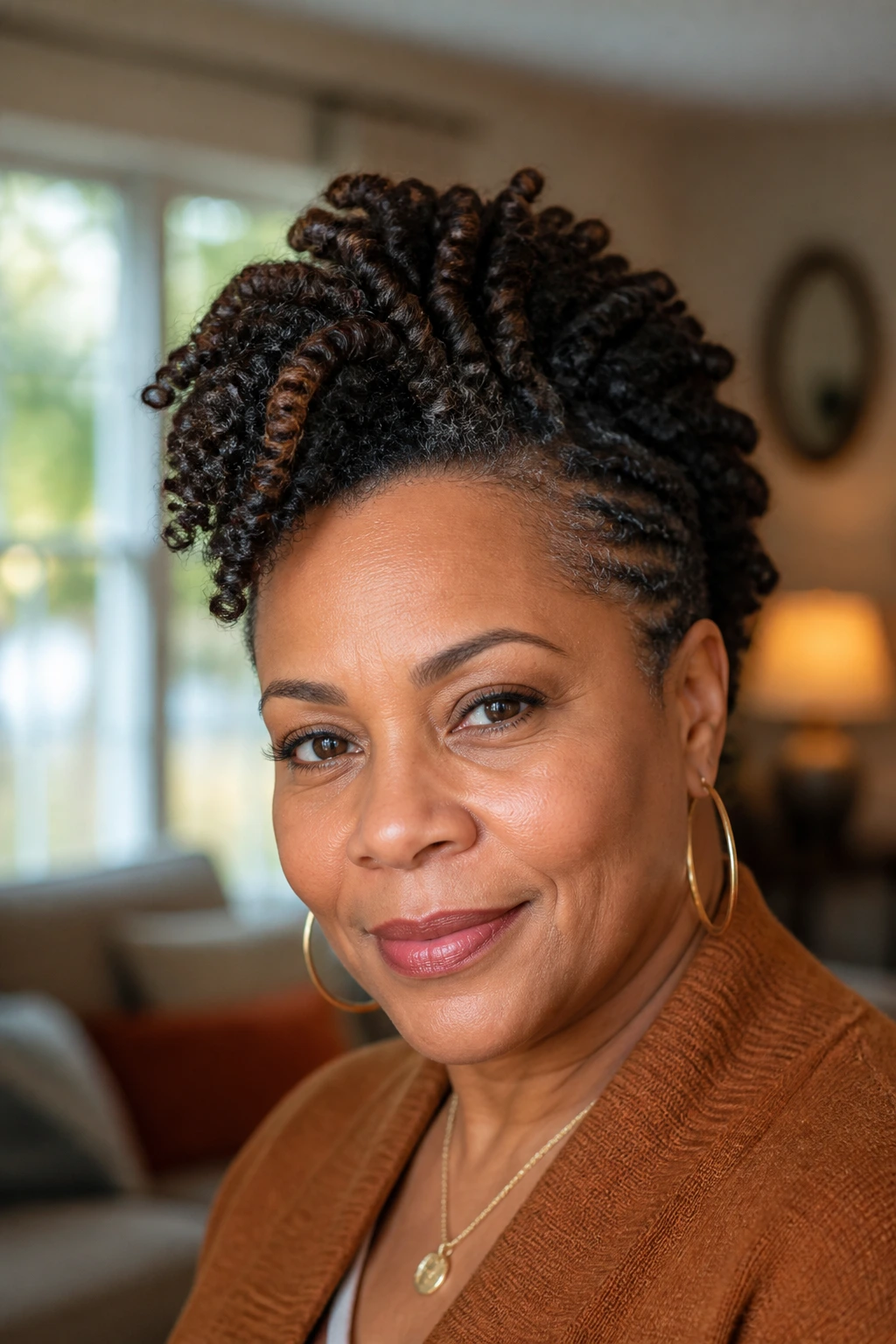
Can a twist-out become a faux hawk? Absolutely, and it can look gorgeous on natural hair. The center section keeps the most definition and height, while the sides are flattened or pinned to frame the face.
Set the hair in two-strand twists or small flat twists, let them dry fully, then separate the twist-out enough to build width through the crown. A little edge control at the temples can clean up the sides, but don’t overdo it. The contrast between the defined center and softer edges is what gives this style its shape.
How to wear it
Choose this when you want a textured, protective style that still feels styled. It works well with hoops, bold lipstick, and hair that doesn’t want a lot of heat. If the crown feels too wide, pull two or three twists from the back into a pin-up shape and leave the front fuller.
13. Half-Up Faux Hawk for Lob Length
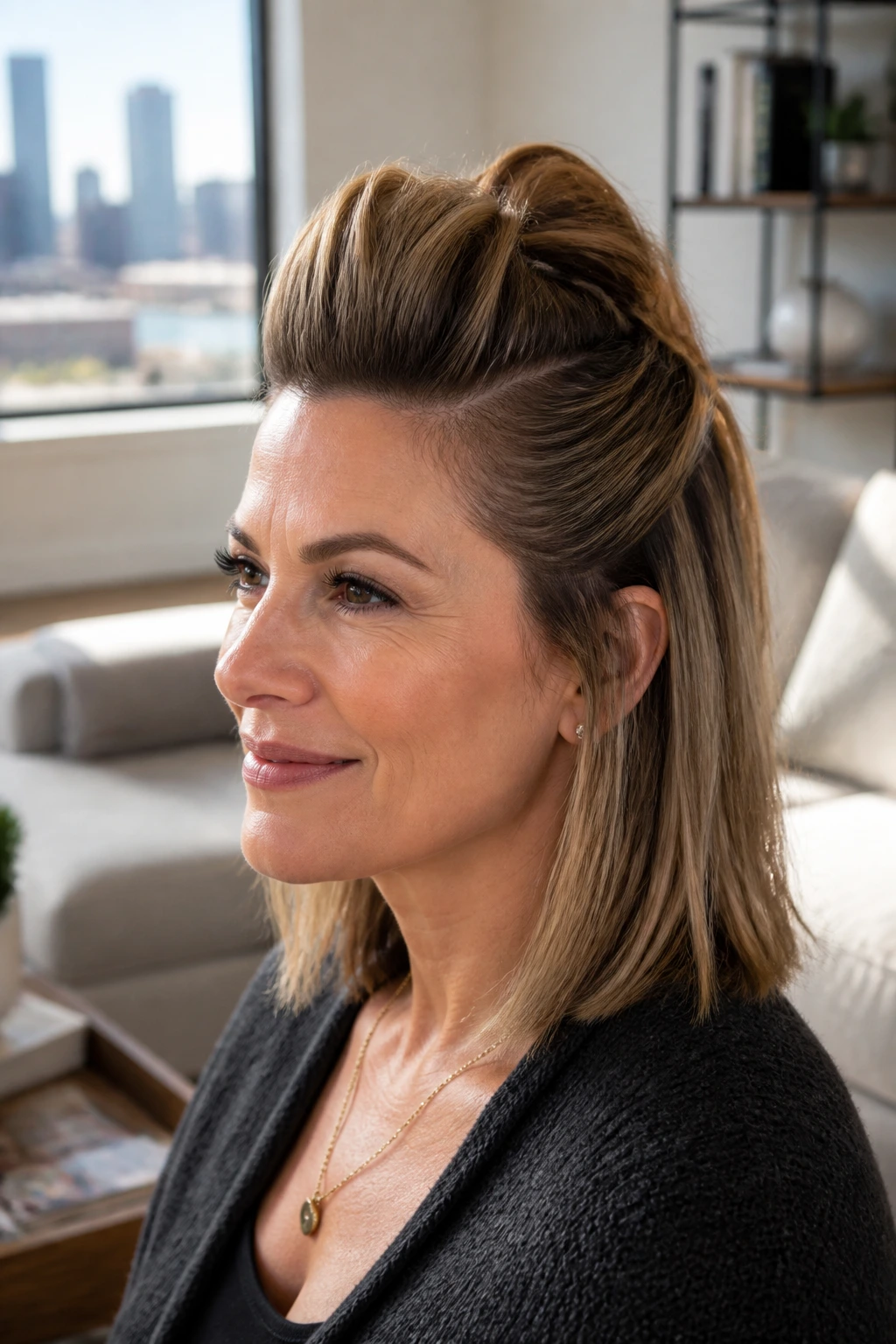
A lob is one of the easiest lengths for this shape because the hair has enough weight to stay neat and enough top length to build lift. Pull the upper half into a loose ridge, pin it at the crown, and let the lower half fall straight or softly waved.
The result lands between an updo and a loose style. That’s why it works. You get the faux hawk line without losing the swing of the haircut. A little teasing underneath the top section helps, but a deep side part can do half the job too.
This version suits women who like to keep their hair down but want the face-opening effect of an upstyle. It’s also one of the easier versions to redo in the car mirror if it flattens out. Not glamorous, maybe. Very practical, yes.
14. Tousled Bedhead Faux Hawk
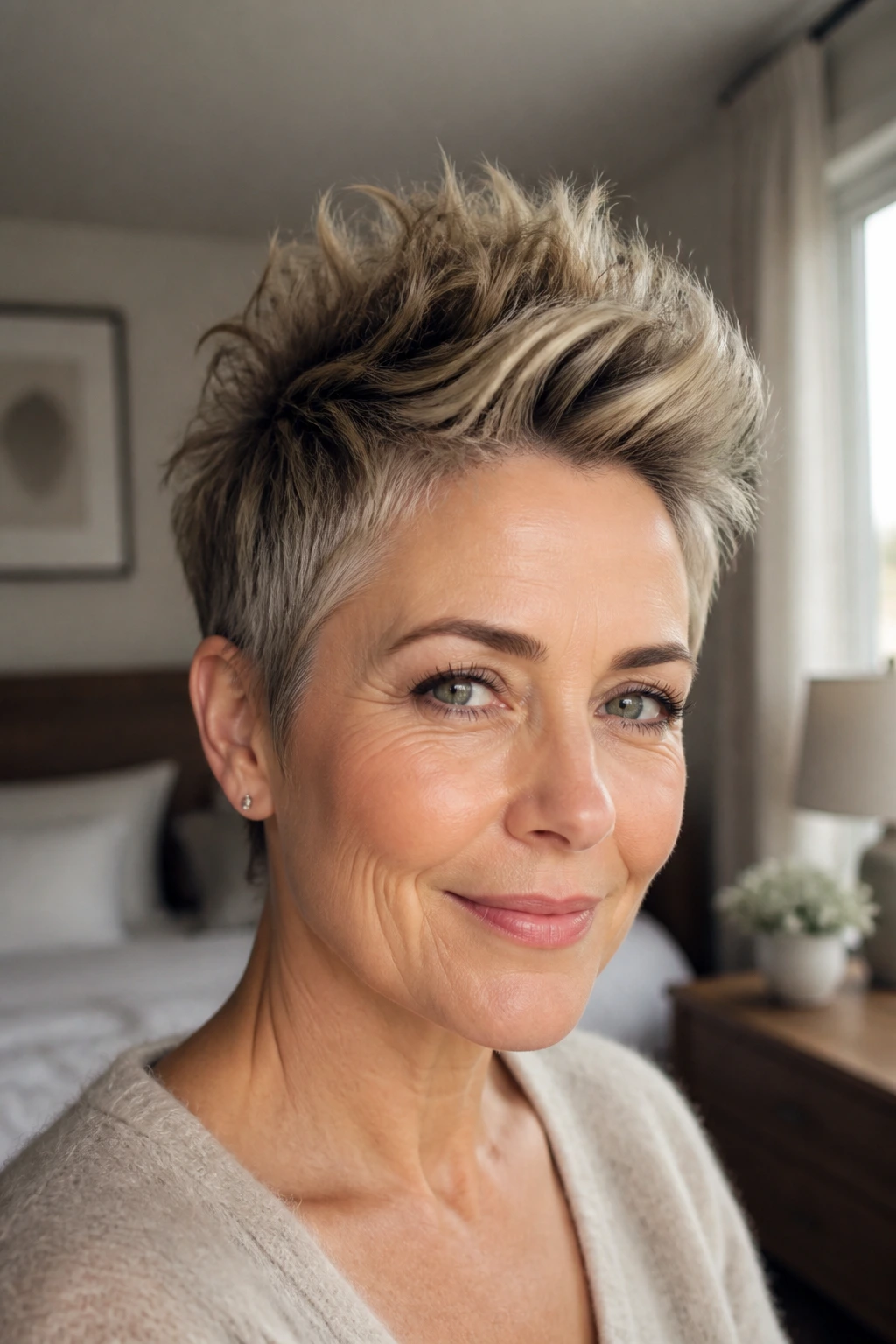
The tousled faux hawk is for the days when perfect hair feels like a bad joke. It builds the silhouette through messy texture, then leaves the ends loose so the style never looks overworked. There’s a difference between undone and careless. This one knows the difference.
A salt spray or texture mist on damp hair gives the crown grip. Scrunch, twist, air-dry, then lift the top section with your fingers and pin just enough of it to create a center line. Don’t smooth every flyaway. A few stray bits make the style breathe.
It’s one of the best casual versions in the group because the shape still reads from the front, even when the finish is relaxed. If your hair tends to fall flat after lunch, dry shampoo at the roots can bring it back without starting over. Easy enough, but not lazy.
15. Polished Evening Faux Hawk
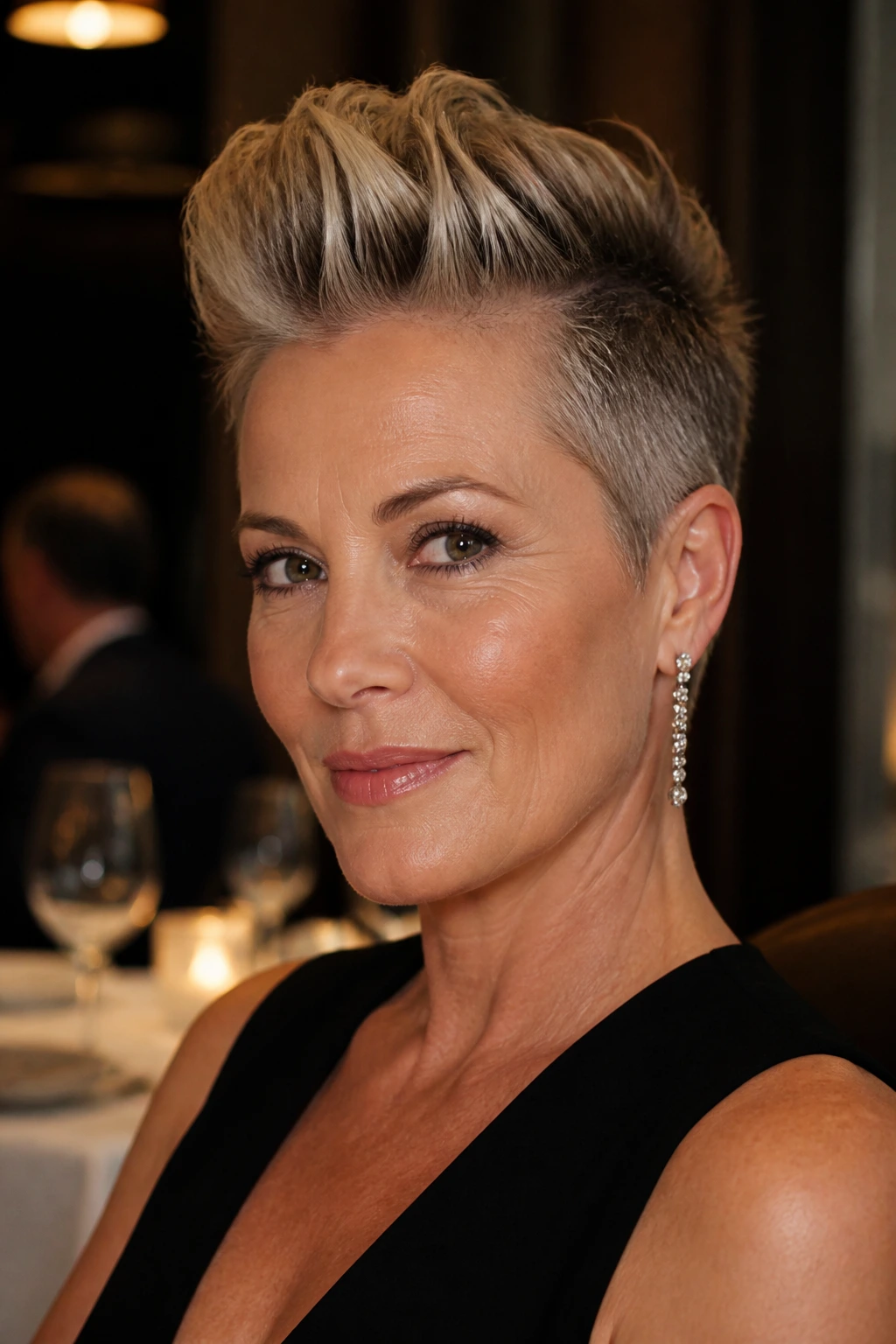
When the setting calls for shine, the faux hawk can clean up beautifully. The polished evening version uses sleeker sides, a more defined ridge, and a finish that reflects light without looking wet. Think dinner, not gym.
Section the hair carefully, smooth the sides with a light cream, and build the center ridge with a comb before you lock it in with hairspray. A decorative pin or two near the crown can make the whole style feel finished. I’d avoid anything too glittery unless the outfit is already simple.
This is the one that pairs well with a sharp neckline or earrings that need space around the face. It doesn’t need to be tall to feel dressed up. Clean lines are enough.
16. Natural-Hair Faux Hawk
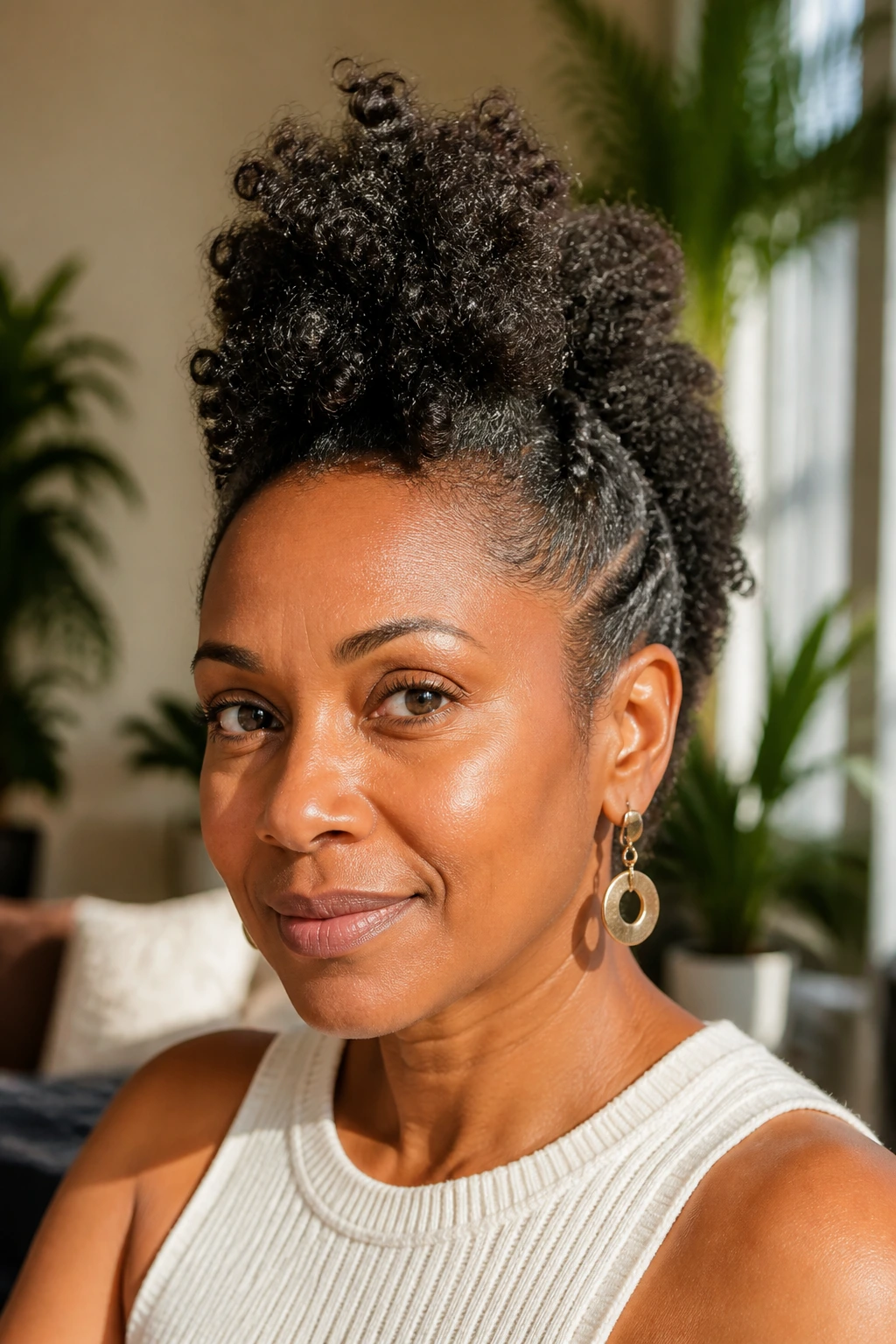
No heat required. A natural-hair faux hawk can be built from stretched curls, twists, or braid-outs, with the sides tucked in and the center pulled upward into a soft ridge. The shape protects the texture instead of flattening it.
Use a moisturizing cream on damp hair, then stretch the roots a little before pinning. If the hair is very dense, sectioning matters more than product. Too much cream near the roots makes the style sink, and nobody wants that. Light hold on the top, softness at the ends.
This version works in all kinds of settings because it can be dressed up or left casual. It also plays nicely with color, coils, and natural volume. The hair gets to look like itself. That’s the good part.
17. Chin-Length Faux Hawk
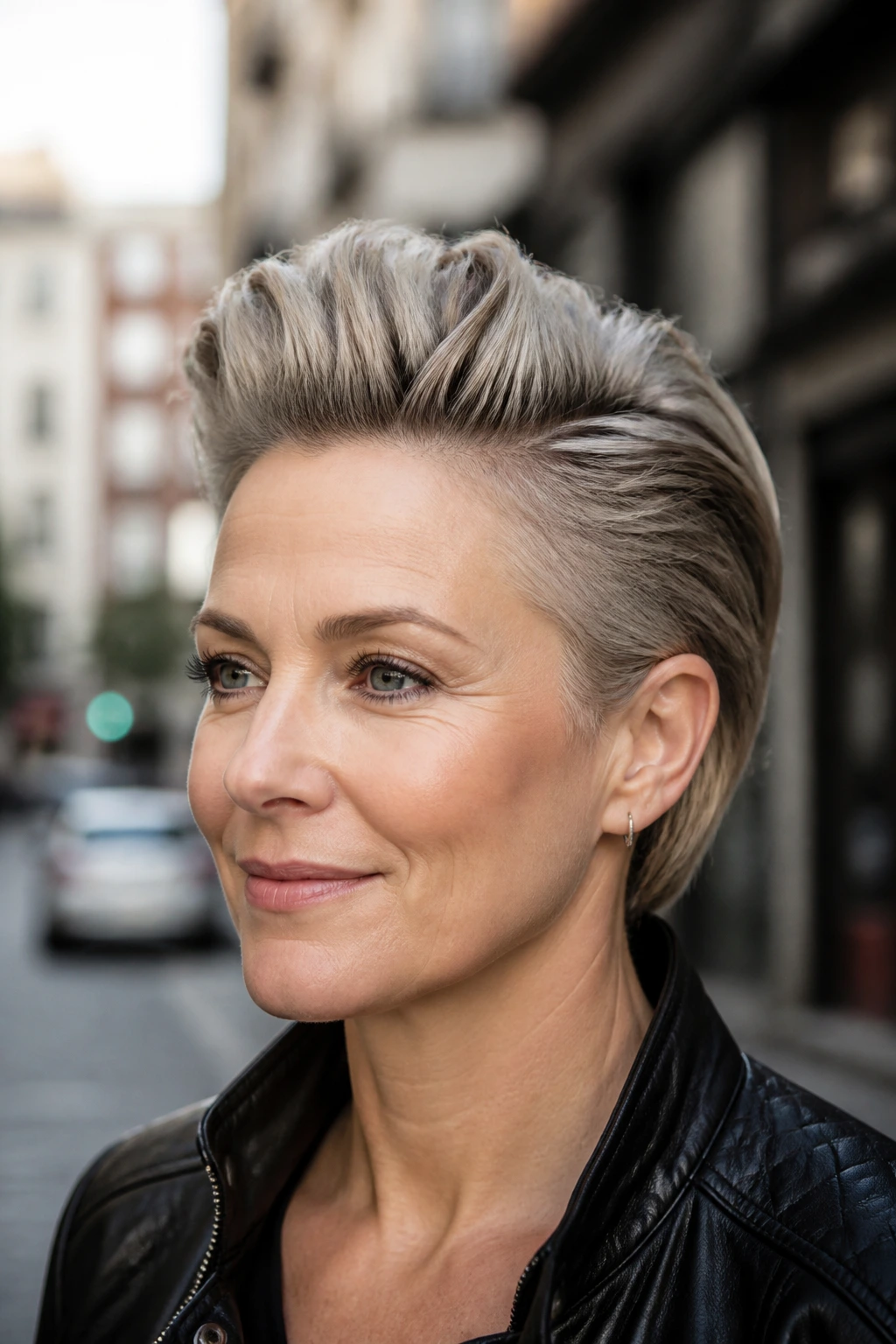
A chin-length cut can still pull off a faux hawk if the crown has enough lift. The sides stay tucked close, while the top is shaped upward and slightly forward to keep the hair from sitting like a helmet.
Use a teasing comb at the roots, then smooth the outer layer with a little styling cream. Shorter hair loves small tools here. A mini flat iron can help flip the front section back if the ends are stubborn. Just don’t overheat the same spot over and over.
Quick shape notes
- Keep the top section narrow.
- Leave a little softness near the ears.
- Use pins that match your hair color so the shape stays the focus.
This cut has a crisp, modern line when the lift is placed correctly.
18. Headband Faux Hawk
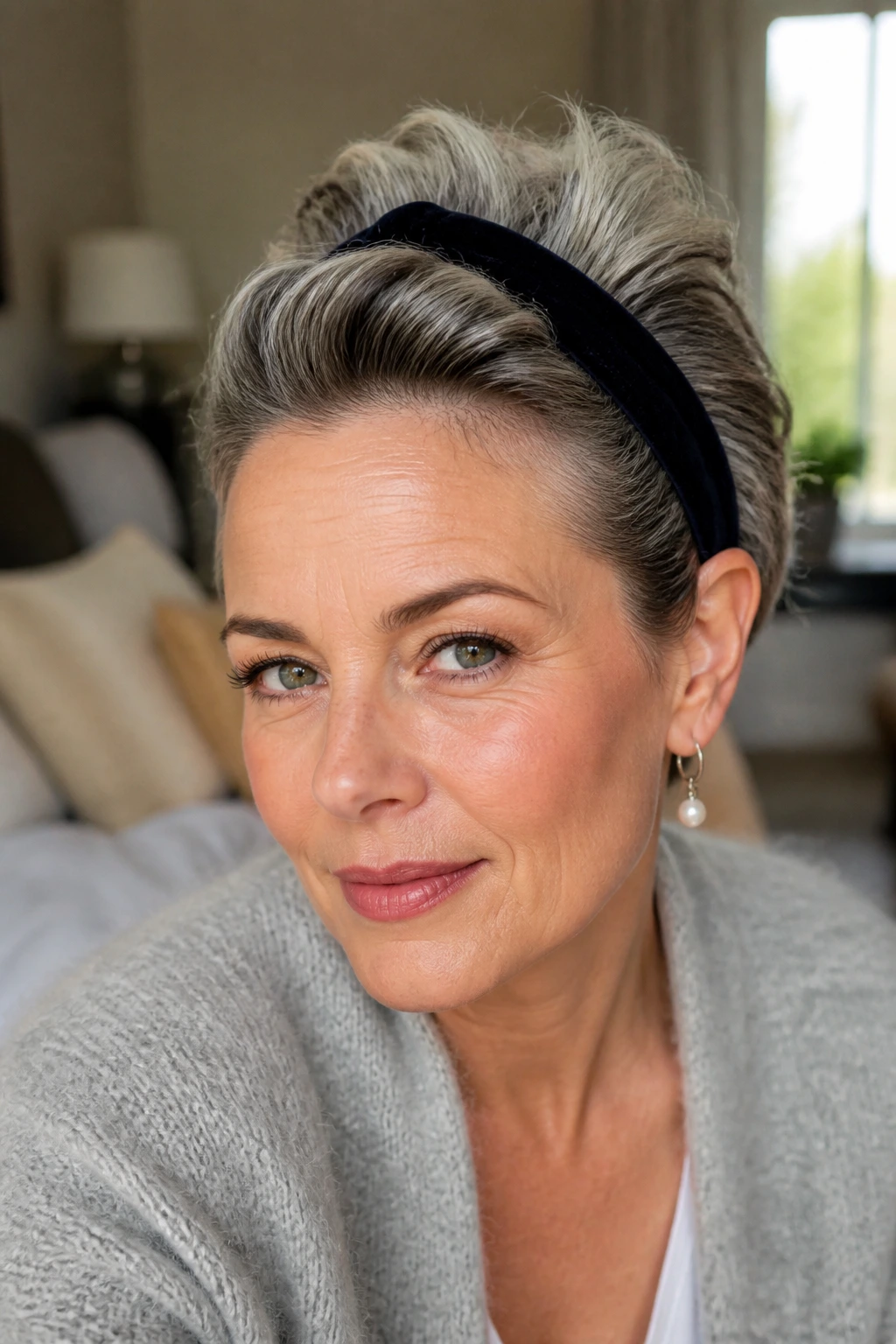
A headband does a lot more than hide a bad hair day. In a faux hawk, it can flatten the sides and push the crown up visually, which means you get the shape with almost no effort. Very useful. Slightly sneaky, too.
Choose a band with enough grip to stay put, then place it a little behind the hairline. Pull the top section forward gently before tucking it back over the band so the center has some height. If the hair is smooth, add a bit of dry texture spray first; otherwise the whole thing can slide.
This is a good version for travel, busy mornings, or humid weather when pins keep giving up. It also works with short and mid-length hair better than people expect. The accessory does part of the sculpting for you.
19. Curtain Bang Faux Hawk
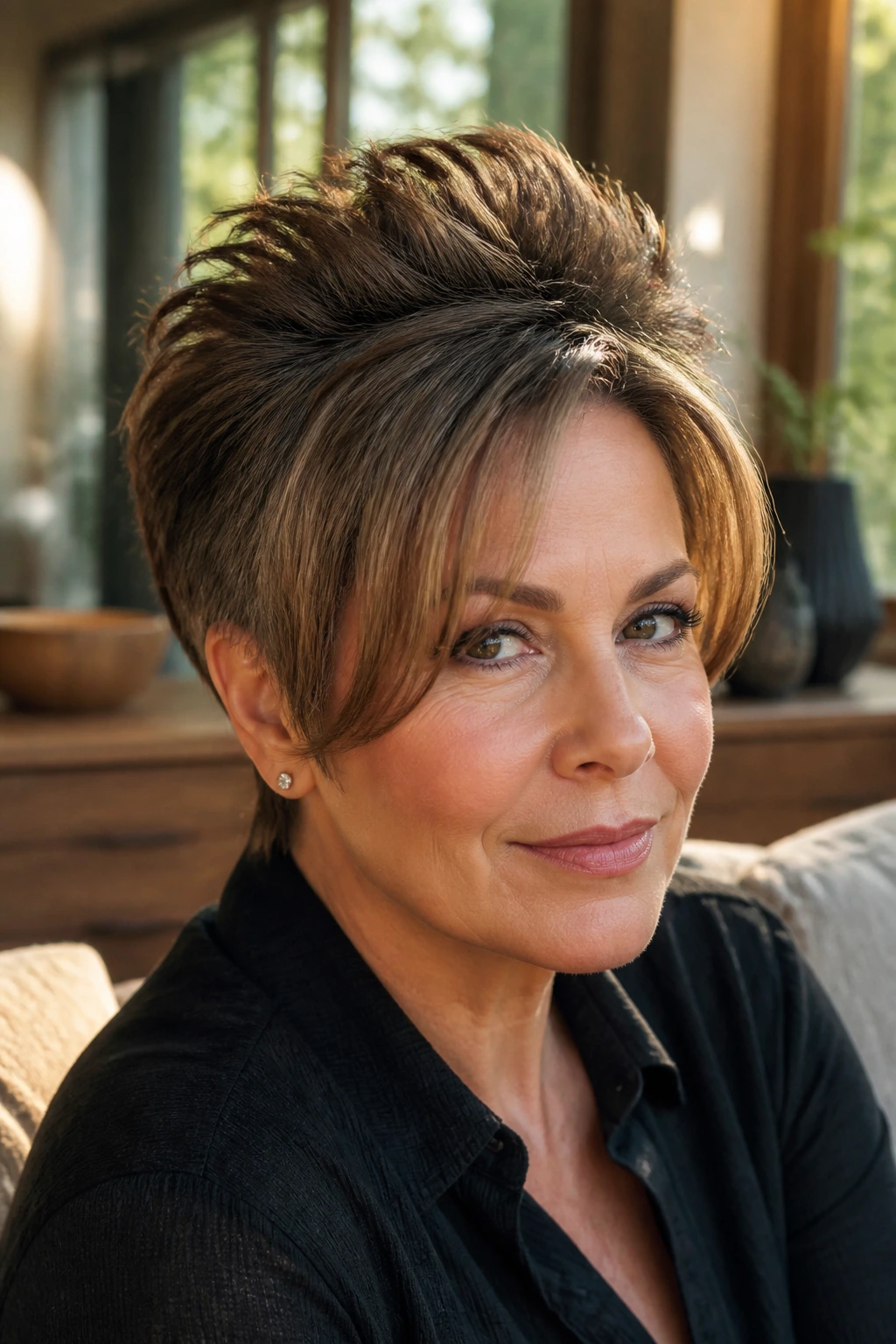
Curtain bangs and faux hawks get along because both shapes guide the eye toward the center. The bangs frame the face, then sweep back into the lifted top section so the whole style feels connected instead of chopped up.
Dry the bangs with a round brush first, pulling them away from the face and letting them curve softly at the ends. Then build the crown behind them. If the bangs are too heavy, the lift disappears. If they’re too airy, the forehead opens more than you may want.
This version is especially nice when you want face-framing softness without losing the edge of the center ridge. It has a little movement. It also keeps the forehead area from looking too severe, which is often the real problem with faux hawks that miss the mark.
20. Asymmetrical Faux Hawk
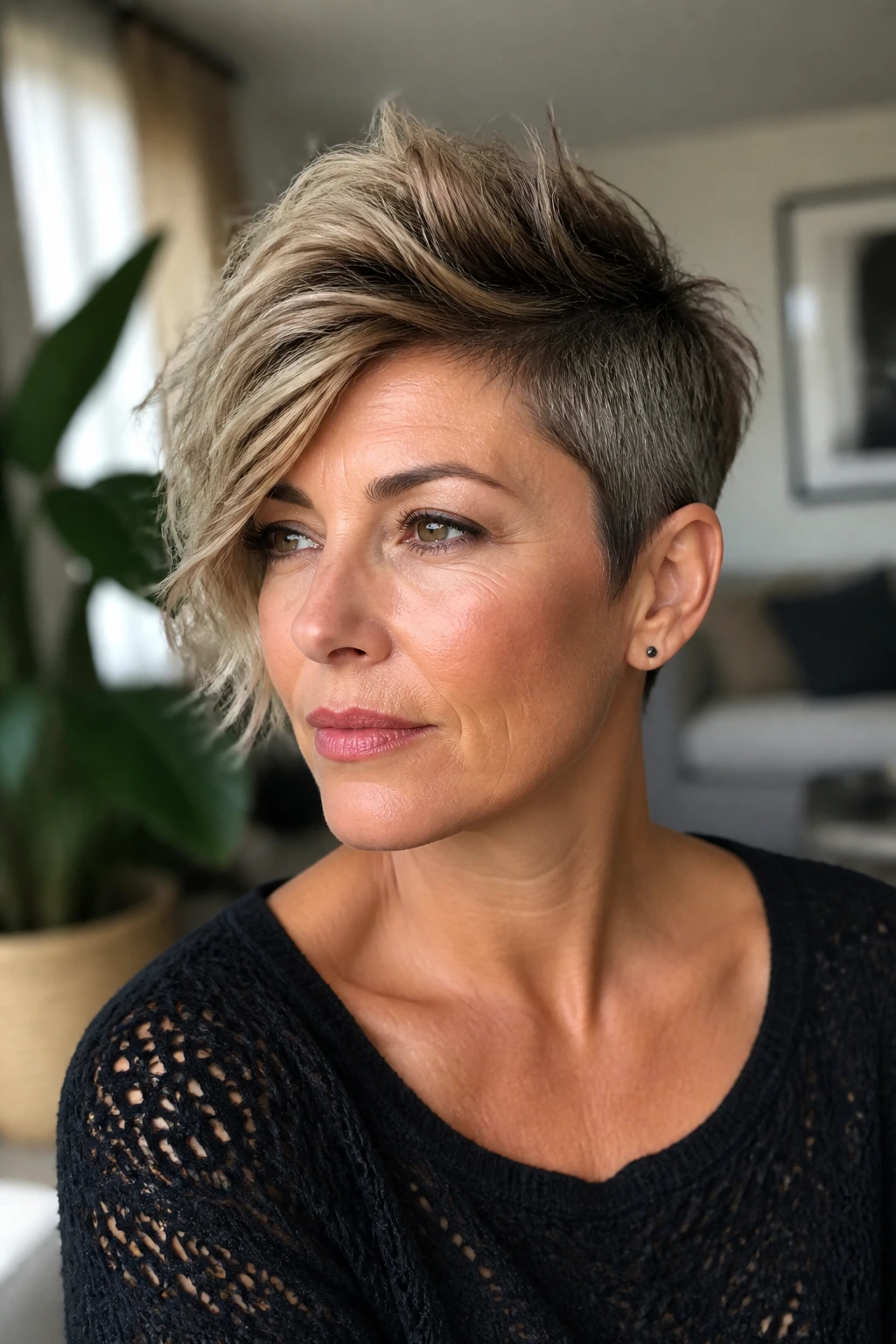
Why make both sides behave the same when one side can do something more interesting? An asymmetrical faux hawk keeps one side sleeker and the other a little fuller or more textured. The imbalance is the point.
This style works best when the top has enough length to sweep diagonally rather than straight back. Use pins to anchor the heavier side, then smooth the opposite side closer to the head. The result feels modern without asking for extreme height.
It’s a smart option if you like an edge but don’t want the look to feel too symmetrical or too sculpted. That irregular line can be flattering around the jaw, especially on rounder faces. A little asymmetry breaks up the shape in a good way.
21. Crown Braid Faux Hawk
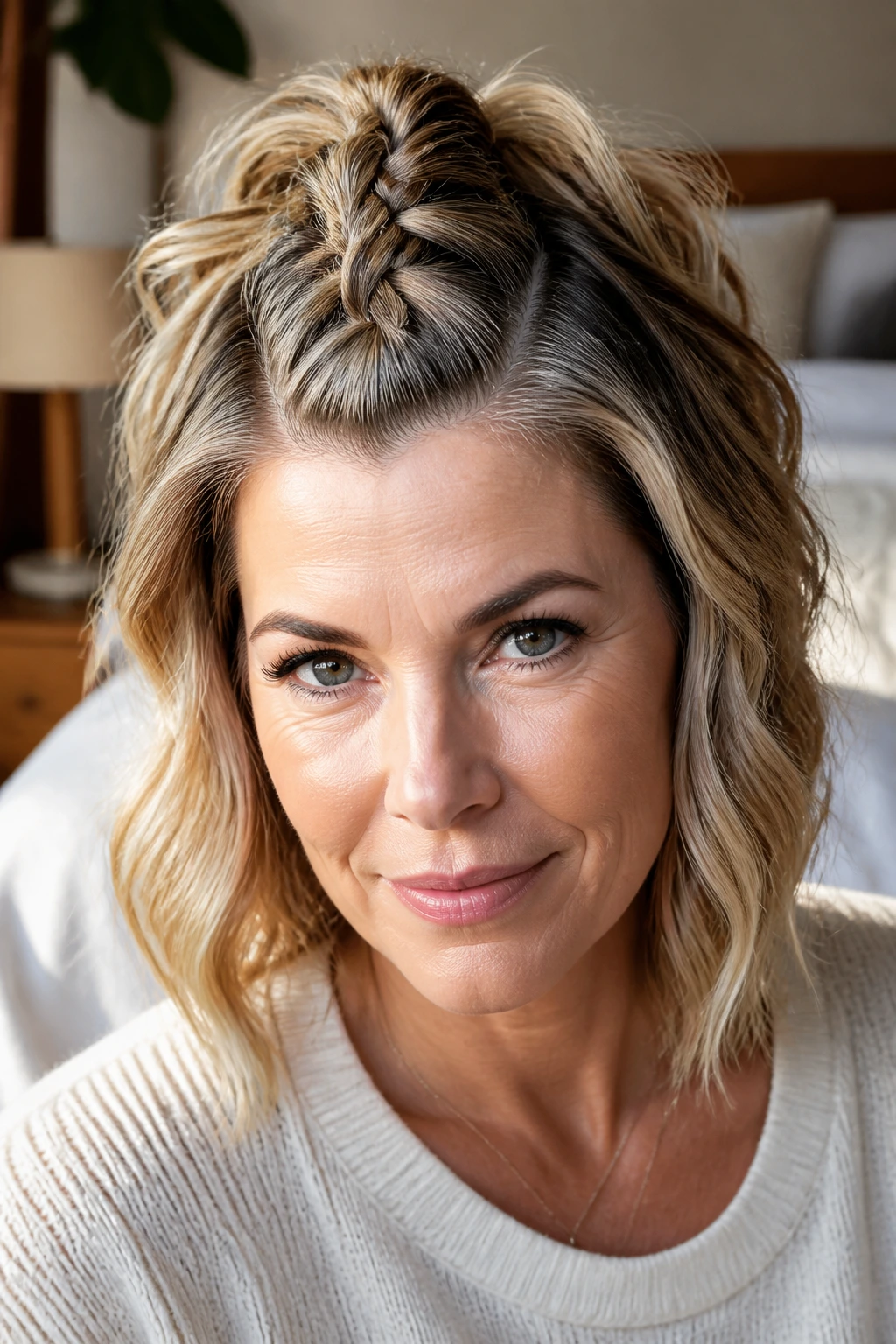
A braid down the center line gives this style a built-in spine. A crown braid faux hawk can be neat, romantic, or sharp depending on how tightly you braid and how much you loosen the edges after the braid is secured.
Start the braid at the front hairline or just behind it, then work backward along the center. Pin the braid at the crown and let the remaining hair fall around it or under it, depending on length. Loosen the braid slightly with your fingertips if you want more width and less severity.
This is one of the better choices for humidity or long days because the braid holds the shape together. It also reads well with a little more makeup or a structured outfit. The hair says you planned the look. It’s convincing.
22. Thick-Hair Faux Hawk
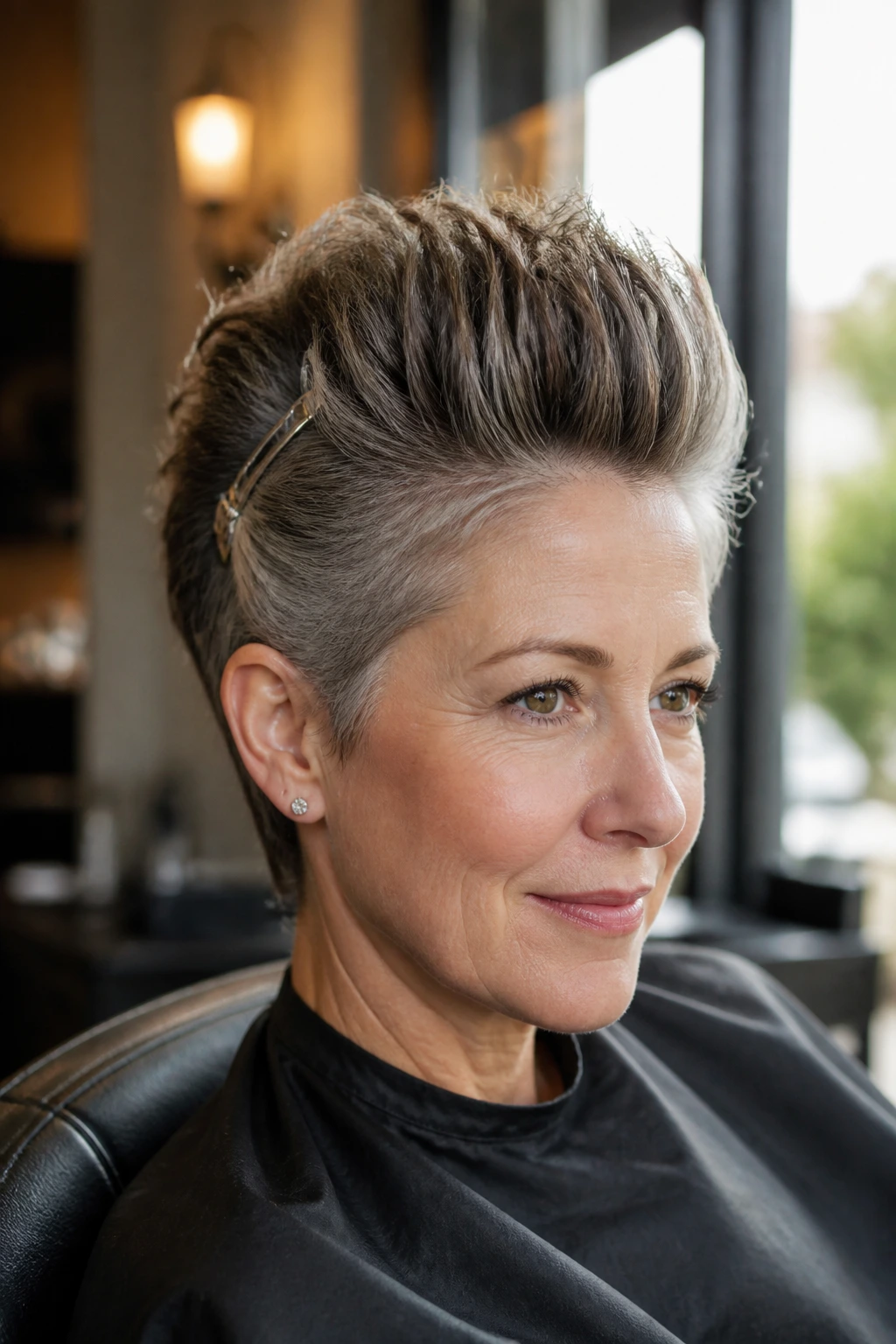
Thick hair gives you volume for free, but it also means the faux hawk can turn bulky if you don’t remove some weight first. The best version uses internal layering, controlled smoothing at the sides, and a ridge that’s narrow enough to stay clean.
Apply smoothing cream only to the sides and ends. Leave the root area of the center section with a lighter product so it can hold height. If you load thick hair with too much cream, the crown sinks under its own weight. It’s a familiar problem.
A strong clip or two helps hold the sides in place while you shape the top. This style looks best when the thickness is directed upward, not spread everywhere at once. You want structure, not a mushroom.
23. Fine-Hair Faux Hawk
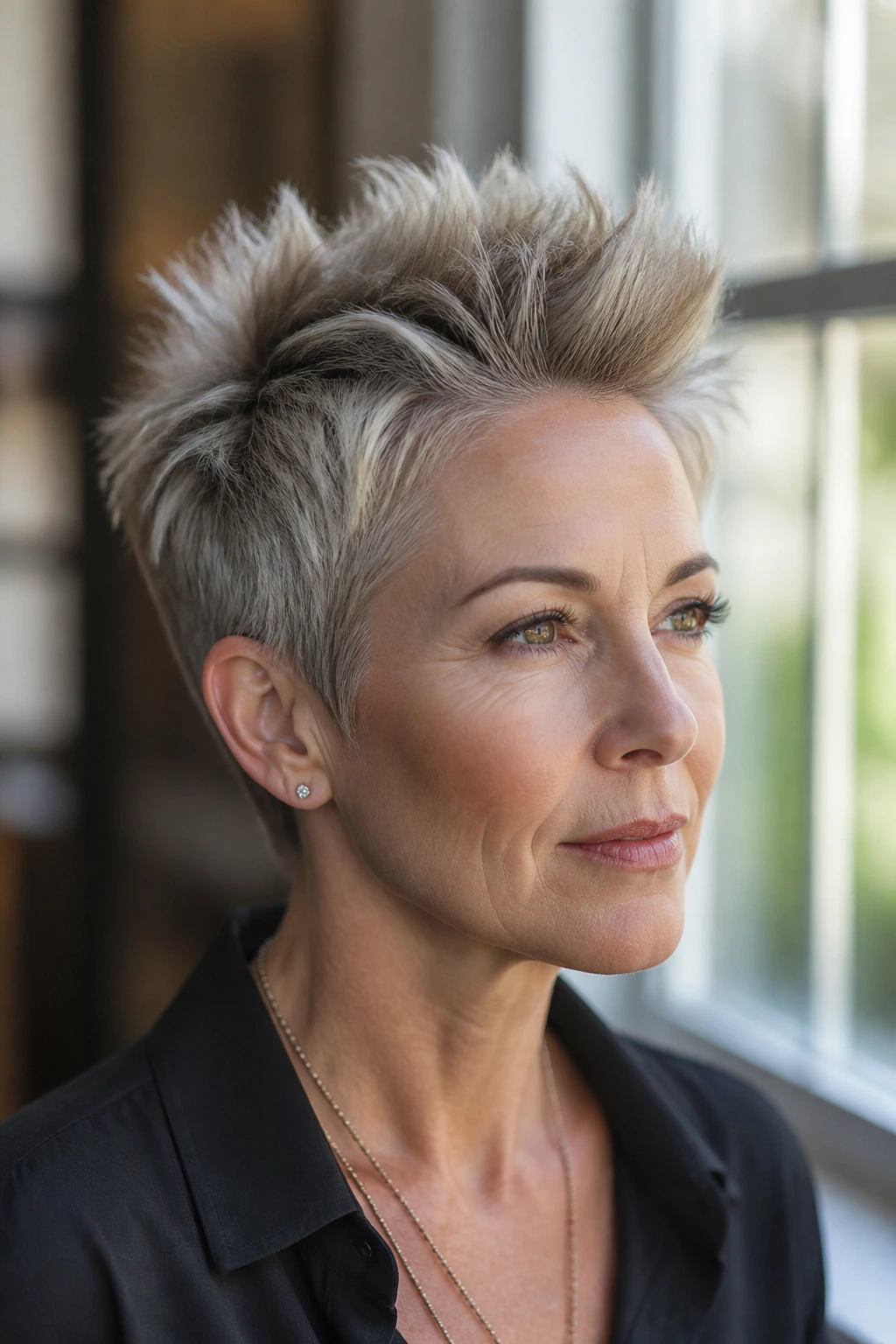
Fine hair needs a little extra help, and that help should come from the roots rather than the ends. The crown lift works because the eye sees height first, not density. That’s the whole trick.
Use root-lift spray on damp hair, then blow-dry upward with a round brush or even your fingers if the cut is short enough. Dry shampoo can come in after styling to give the crown a bit more grip. Skip heavy oils and rich creams at the roots; they flatten the shape before it starts.
- Best tools: Velcro rollers, teasing comb, and flexible hairspray.
- Best product style: Lightweight, not sticky.
- Best result: Soft height that holds for hours, not a stiff shell.
This is one of the styles where less product often means better shape.
24. Tucked-Side Faux Hawk
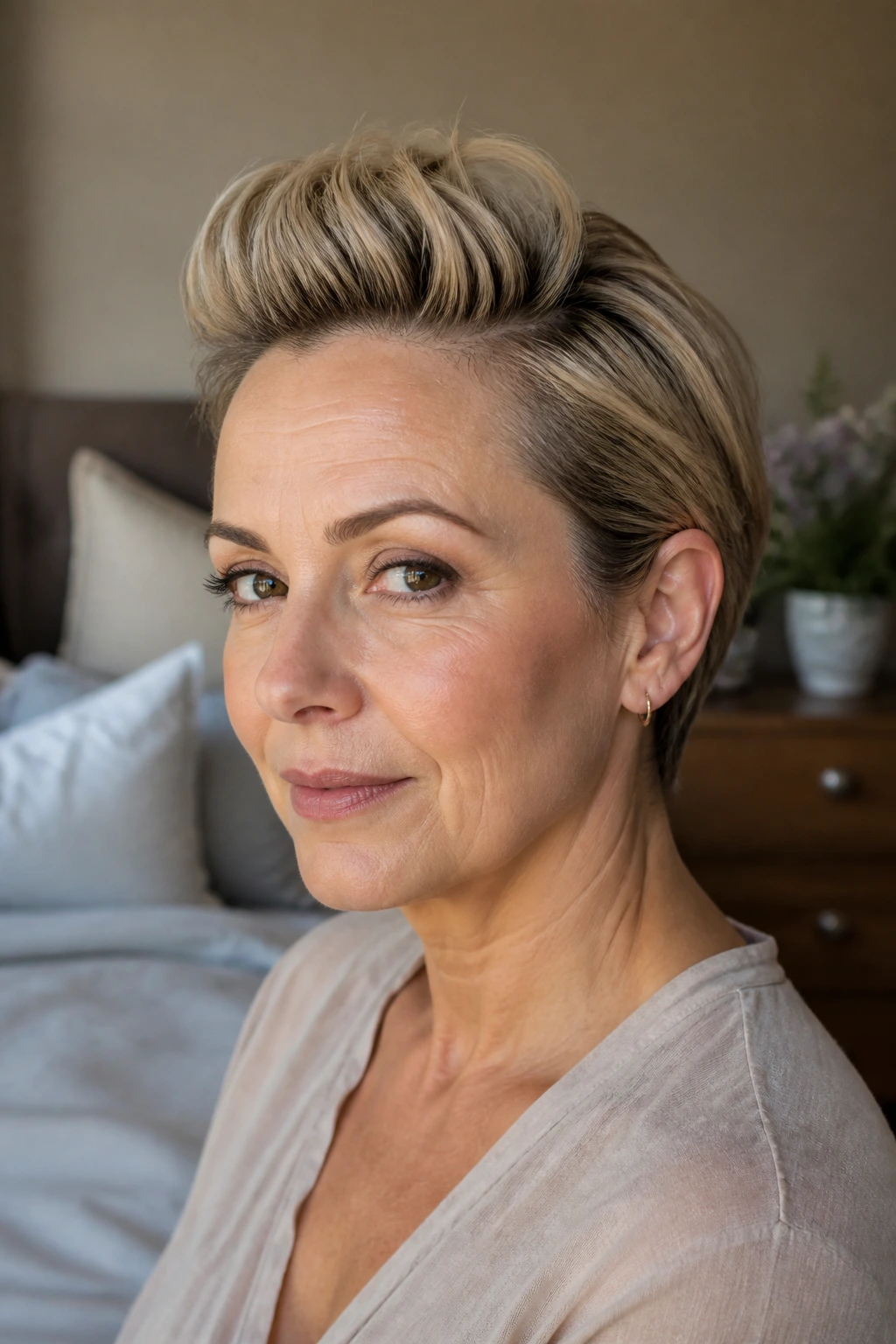
This one is almost suspiciously simple. Tuck the sides behind the ears, pin them low if needed, and let the center section stand slightly higher than the rest. That’s the faux hawk logic, stripped down to the bare minimum.
It works on straight hair, loose waves, and second-day blowouts. If you want more shape, twist the top back before you tuck the sides. If you want less drama, skip the teasing and let the natural root lift do the work. The beauty of this style is that it can be adjusted in one mirror check.
This is the version I’d keep in my back pocket for mornings that start badly. It takes minutes. It still looks intentional. That’s enough.
25. Locs Faux Hawk
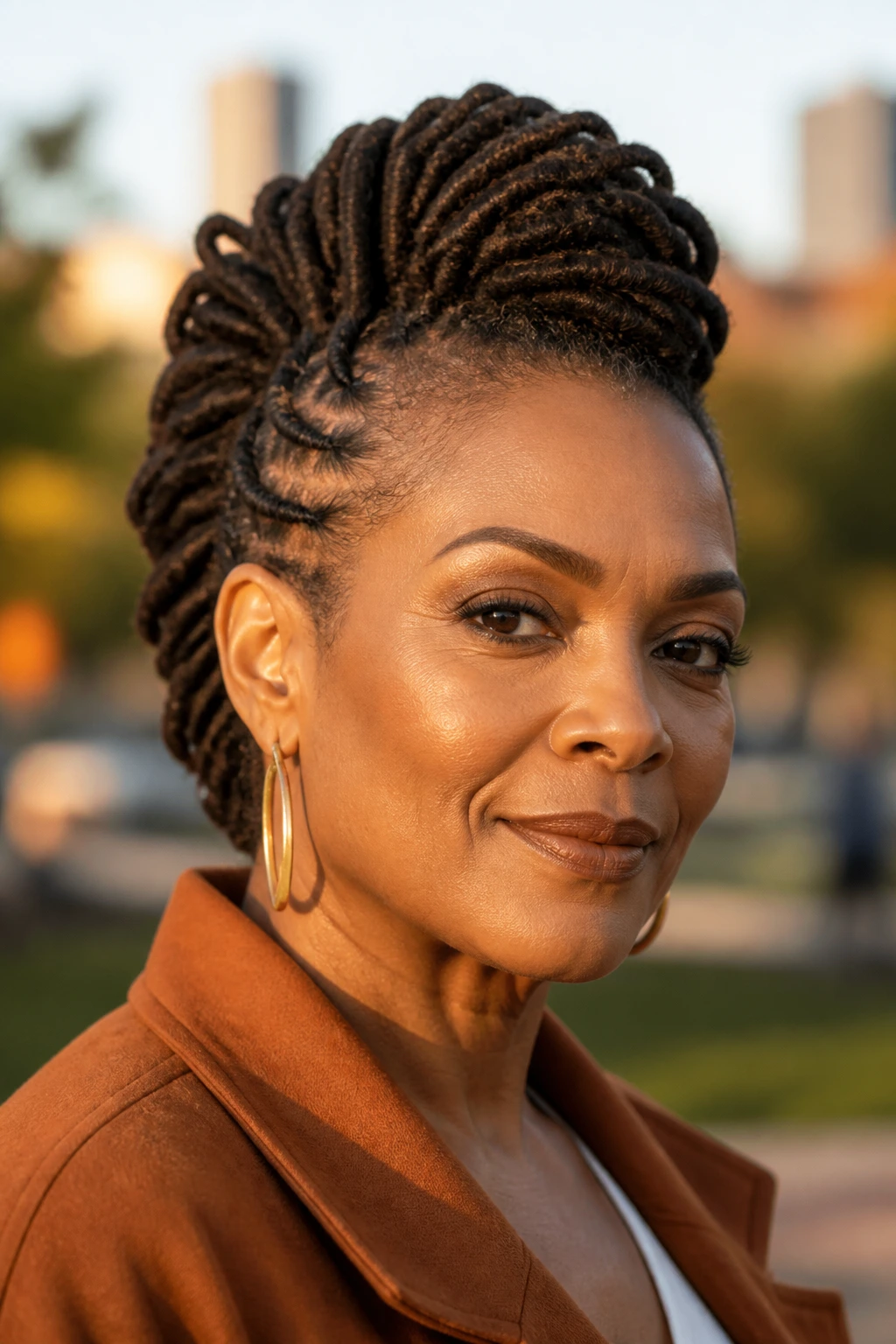
Locs can create a stunning faux hawk shape because the texture already has body and direction. Gather the locs toward the center, pin the sides back, and let the crown rise in a controlled strip from front to back.
Use clips that won’t snag the hair, and don’t force the locs into a shape that fights their weight. The silhouette should feel supported, not squeezed. A little edge control around the hairline can clean up the front, but the center section should stay full.
This style is strong, sculptural, and easy to personalize with cuffs, beads, or a simple wrap. It also holds up well once set, which is a nice bonus when you’d rather not touch your hair again all evening.
26. Gray-Hair Faux Hawk
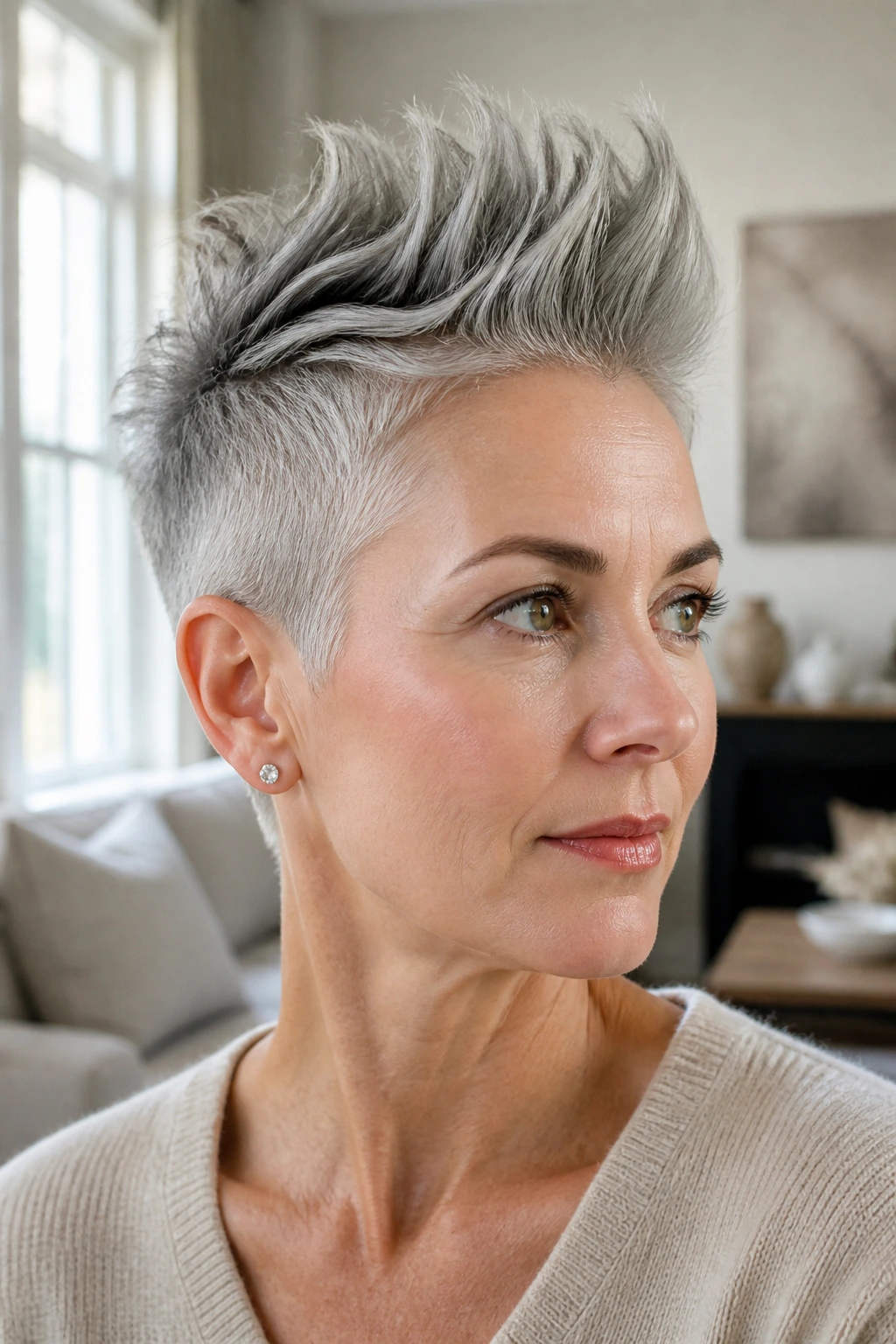
Gray hair has a crispness that makes this shape look clean fast. The center ridge picks up light, the sides can be smoothed down neatly, and the whole style reads confident without needing extra decoration.
A lightweight mousse or cream at the roots keeps the shape from becoming fluffy. Gray strands can be wiry, so a soft brush and a little patience help more than brute-force product. Shine spray on the outer layer gives the hair a healthier finish without flattening it.
This version is especially strong when the gray is mixed with silver, white, or darker streaks. The contrast gives the faux hawk more depth. You don’t need to hide the color. Let the shape work with it.
27. Finger-Wave Faux Hawk
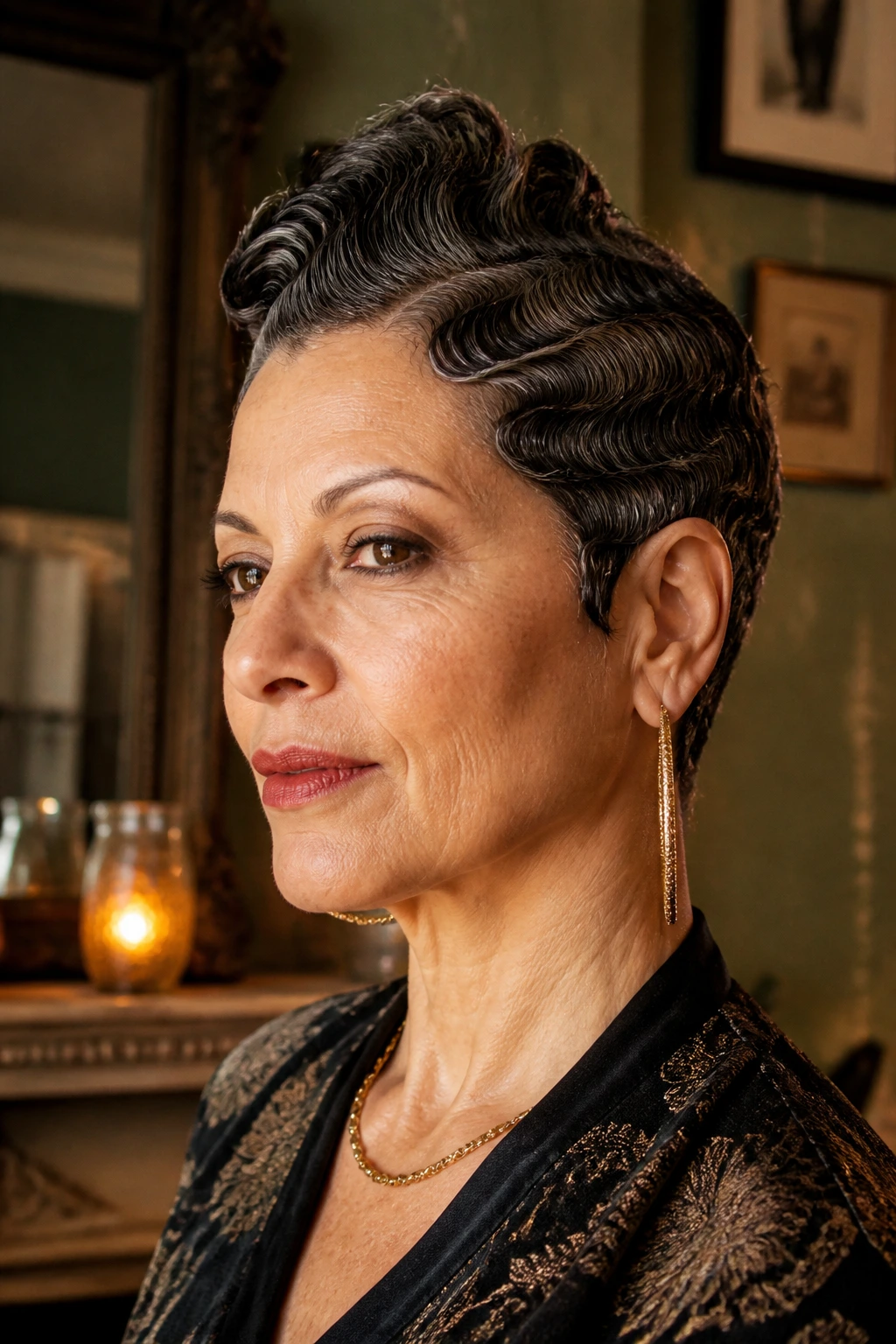
Finger waves and a faux hawk should not work this well together, but they do. The wave pattern keeps the sides close and elegant, while the top section stays lifted enough to keep the style from feeling old-fashioned. That contrast is what makes it interesting.
Set the sides with gel and a fine comb, then shape the top into a narrow ridge with a little more height. This takes patience. It also rewards patience. A soft-bristle brush can smooth out the surface without erasing the wave.
The look is strongest on short to medium hair, especially when the event calls for something polished but not predictable. If you like a nod to vintage styling without going full retro, this is a good place to land.
28. Low-Bun Faux Hawk
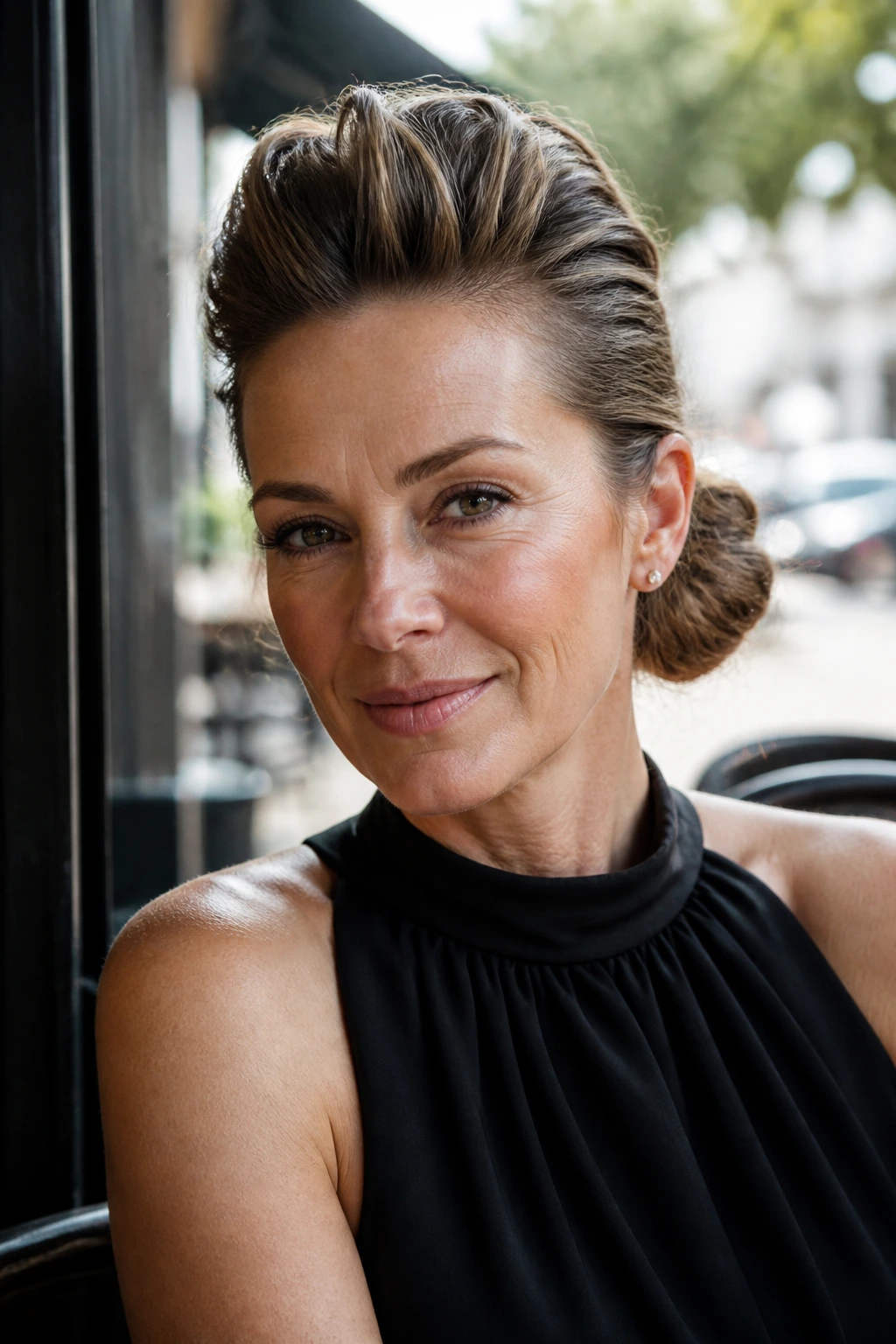
A low-bun faux hawk is the quieter cousin in the family. The center section rises toward the crown, then the back settles into a small bun or knot near the nape. The result gives you lift up top and control through the length.
This is a good choice when you want your hair out of the way but still want shape around the head. It’s especially handy for longer hair, because the bun keeps the ends contained and the lifted crown keeps the style from feeling plain. Add a little texture spray before you pin the top, and the bun won’t drag the rest of the style down.
If you want one faux hawk that can slide from daytime errands to a dressed-up dinner without a full redo, this one earns its keep.
What Gives a Faux Hawk Its Shape
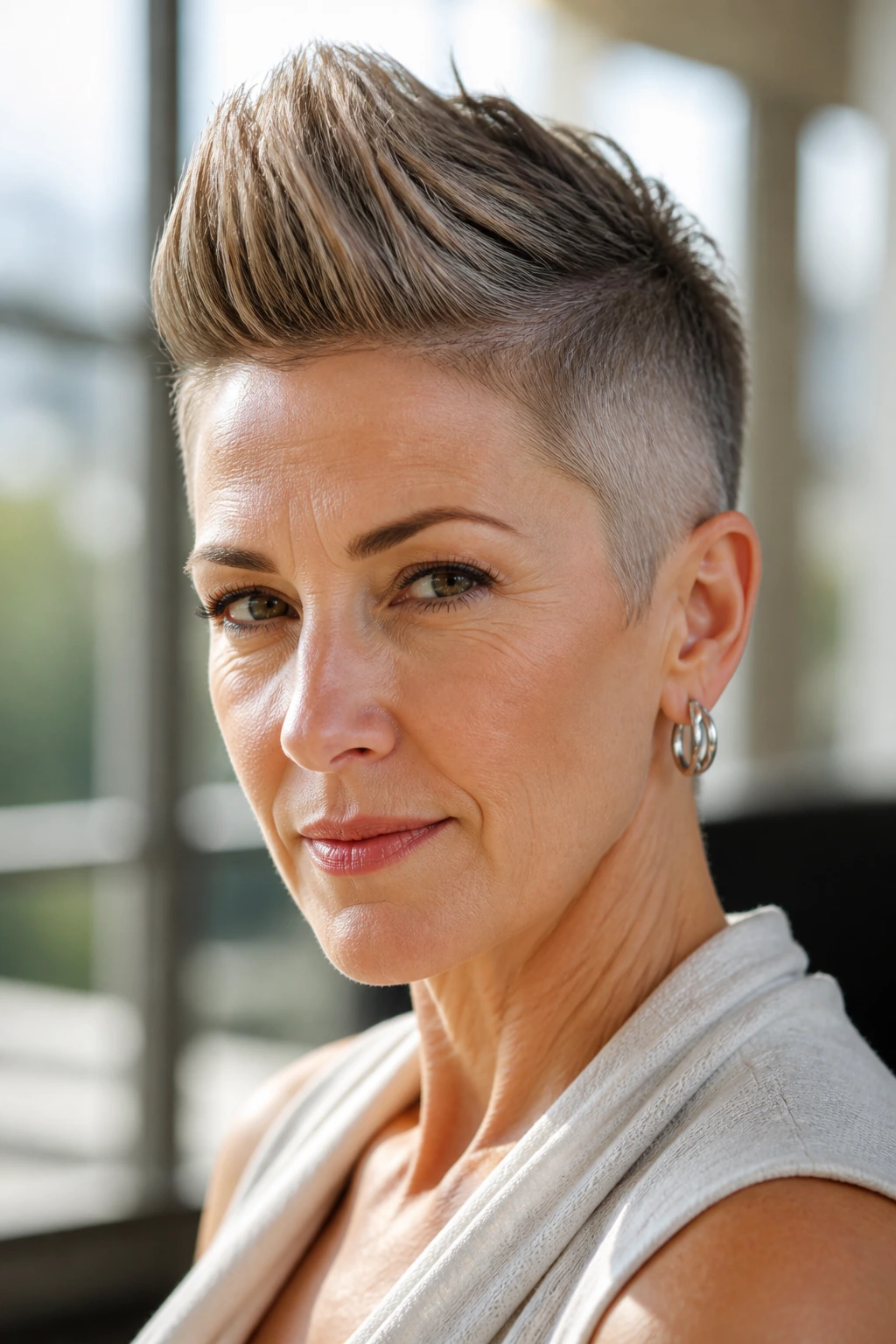
A faux hawk works because it changes where the eye goes. The hair at the sides is pressed, pinned, or braided inward while the center keeps height, texture, or both. That shift sounds small, but it changes the whole head shape. A flatter side makes the middle look taller. A taller middle makes the jaw and cheek area feel more open. It’s all about contrast.
The cut underneath helps, but the styling matters more than people think. Short layers at the crown make teasing easier. Longer top sections give you room to twist or braid. Thick hair needs debulking. Fine hair needs root lift. Curly hair needs definition before shape. The same idea changes depending on the texture, and that’s why there isn’t one “right” faux hawk.
The sweet spot is balance. Too much lift, and the style starts to feel theatrical. Too little, and it reads like a side-swept style with no point of view. Aim for a center ridge that’s clearly visible from the front, but still soft enough to move a little when you shake your head.
Tools and Products That Do the Heavy Lifting
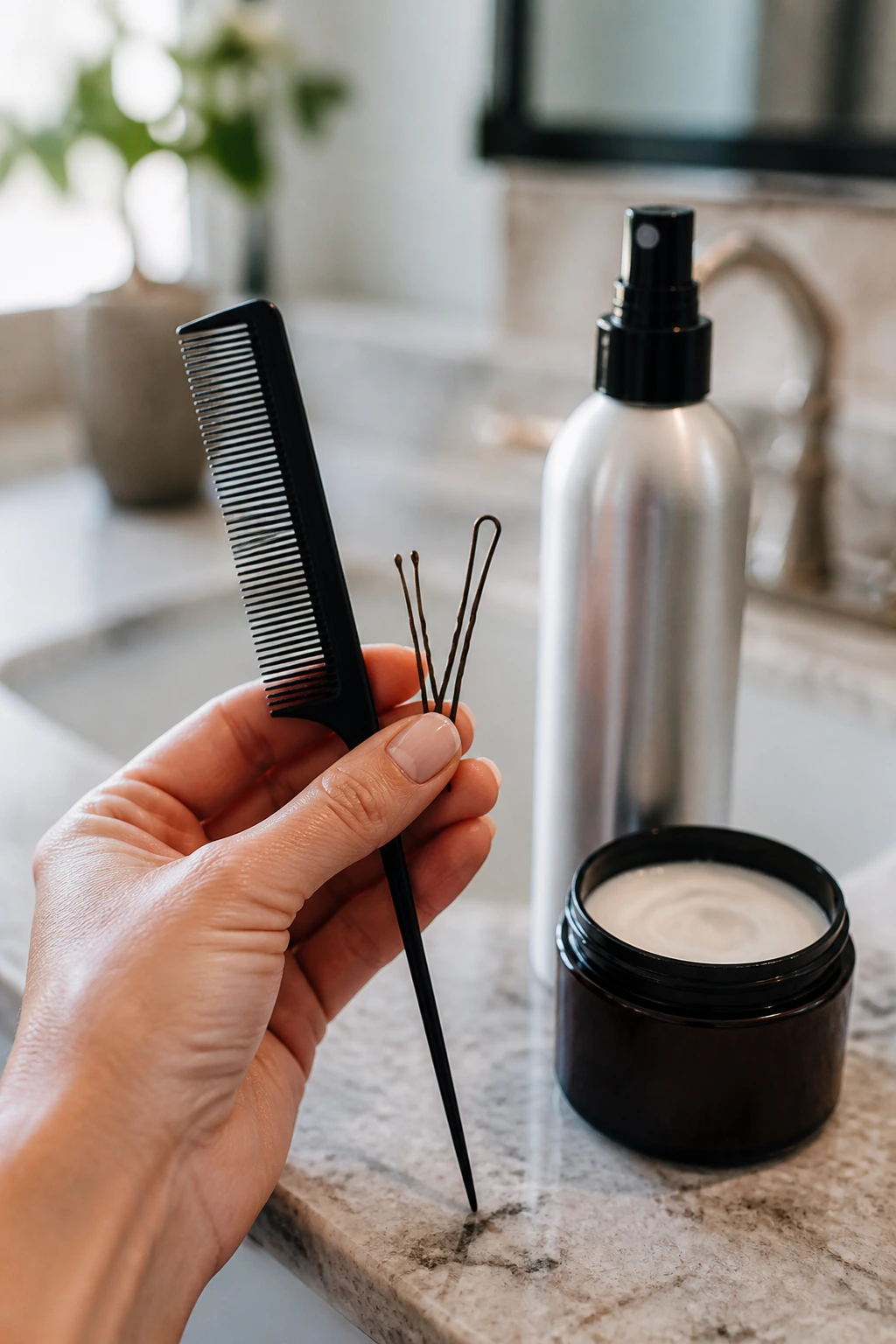
You do not need a drawer full of gadgets, but a few specific tools make faux hawk hairstyles for women over 40 easier to control.
- Tail comb: Useful for clean parting, teasing, and picking out the center section without tearing the hair.
- Bobby pins: Cross two in an X when you need the sides to stay put; that usually holds better than one pin alone.
- Texturizing spray: Adds grip at the roots, especially on fine or freshly washed hair.
- Mousse or root-lift spray: Better than heavy cream when you want height without collapse.
- Matte paste or styling wax: Best for pixies and short crops where the ends need direction.
- Flexible hairspray: Holds the shape without making it feel like a helmet.
- 1-inch curling iron: Helpful for lob-length and shoulder-length versions when the hair needs bend and lift.
- Blow dryer with nozzle: Makes a big difference if you want the sides smoother and the crown directed upward.
- Satin scarf or pillowcase: Not styling tools, exactly, but they keep the shape from flattening overnight.
If you only buy three things, make them a tail comb, a good hairspray, and the right product for your texture.
Choosing the Right Faux Hawk for Your Length and Texture
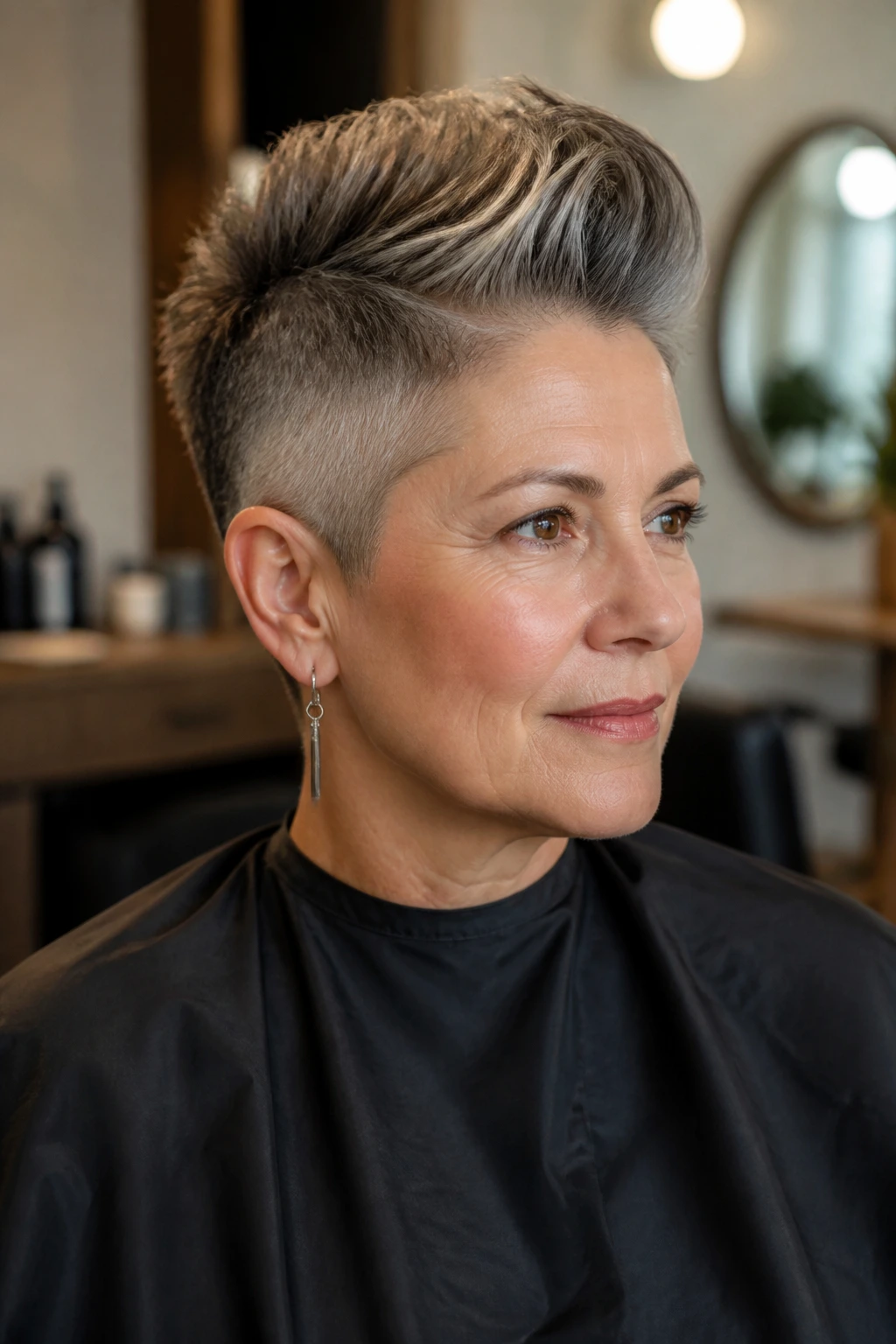
The smartest choice is not the flashiest one. It’s the version that matches your hair’s real habits. Fine hair usually needs a lower, cleaner ridge and lighter product. Thick hair can handle more drama, but it also needs more control at the sides. Curly hair looks best when the crown keeps definition, not when it’s brushed into submission. Gray hair often benefits from shine and softness in equal measure.
Length matters too. Pixie cuts and chin-length bobs work well with short, piecey faux hawks. Lobs can handle half-up shapes and braids along the crown. Shoulder-length hair opens the door to twists, waves, and low buns. Longer hair can do just about anything, but it needs more pinning because weight will try to pull the style down.
Face shape changes the math a little. Round faces often like height with some softness near the temples. Longer faces tend to look balanced when the lift is moderate and the sides stay a touch fuller. Strong jaws can handle a sharper ridge. Softer features often look good with a looser, less rigid finish. Nothing mystical there. Just proportion.
How to Wear These Styles to Work, Weekend Plans, and Dressy Nights

Everyday Finish: Keep the crown low and the sides soft. A little lift is enough to give the style shape without making it feel overbuilt.
Work Days: Choose sleeker versions like the side-swept faux hawk, the office version, or the tucked-side shape. These look clean with glasses, collars, and simple earrings.
Evening Events: Add height, shine, or a braid. A polished version can carry a dressy neckline better than a flat blowout because it keeps the face open.
Best Pairings: Hoop earrings, structured jackets, off-the-shoulder tops, and V-necks all sit well with the upward line of a faux hawk. Very busy necklines can fight the style.
How Much Height: One inch of crown lift is subtle. Two inches reads styled. More than that can start to feel theatrical unless the rest of the hair is balanced carefully.
The shape should match the rest of your outfit, not compete with it. That’s the difference between a style and a costume.
Pro Styling Moves That Keep the Crown Up
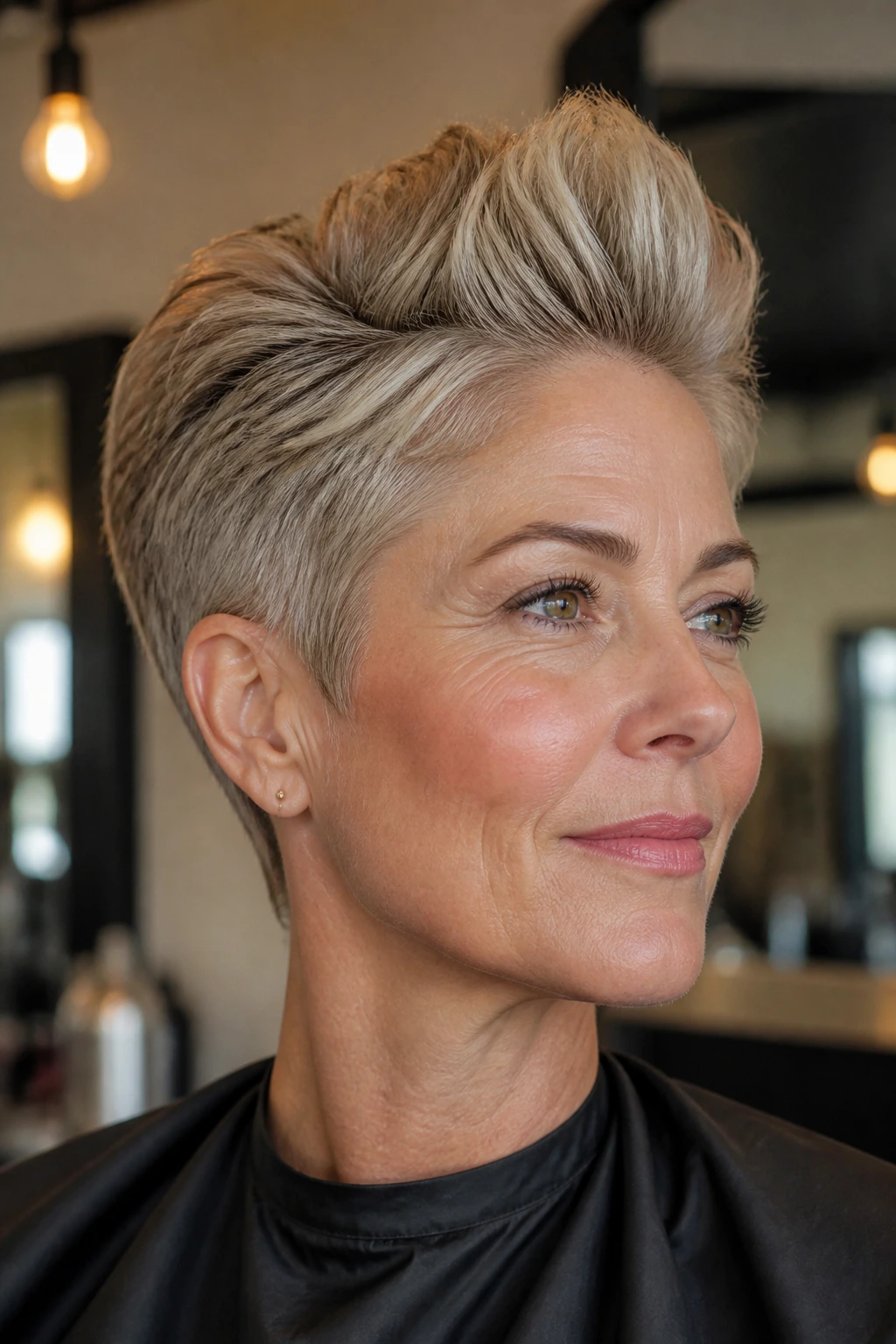
Texture Boost: Put dry shampoo or texturizing spray at the roots before you start styling, not after the hair has already gone flat. The grip lasts longer that way.
Pin Placement: Hide bobby pins under a small overlap of hair and cross them when the section needs more hold. A single pin near the crown often slips. Two usually behave better.
Softness Control: Leave a few face-framing pieces loose if the style starts looking too strict. That small break in the line keeps the faux hawk from feeling hard.
Heat Discipline: If you’re using a curling iron or flat iron, work in short passes. One slow pass beats three hot ones, and the ends stay smoother.
Finish Check: Turn your head side to side before you leave the mirror. If the ridge disappears in profile, you probably need either a little more lift or a better pin angle.
Common Mistakes That Flatten the Look
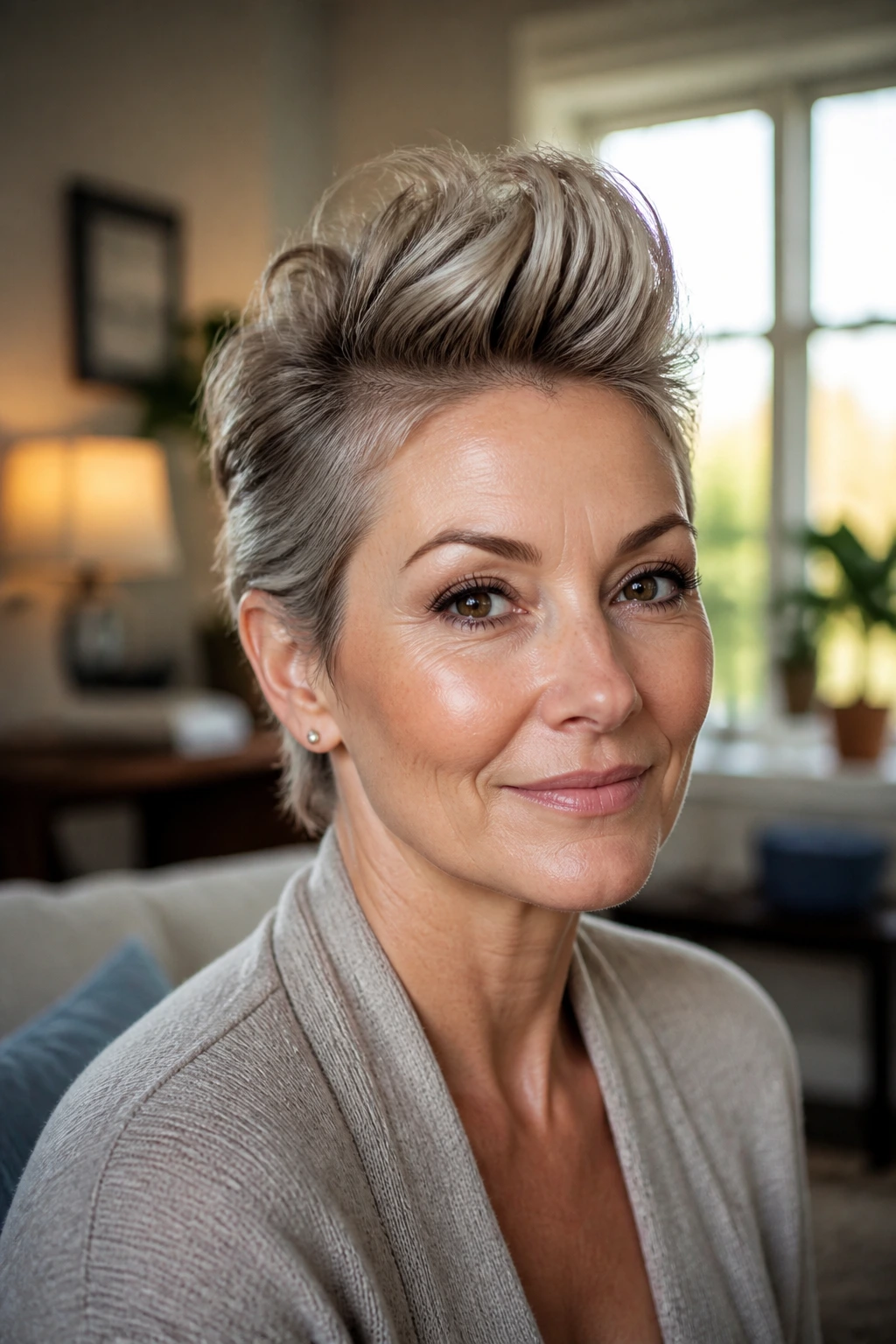
The biggest mistake is placing all the volume too far forward. When the lift sits right at the front hairline, the style can tip over and look like a puff instead of a ridge. Put the height slightly behind the front, closer to the crown.
Another common problem is too much product at the roots. Heavy cream, oil, or thick gel can make the hair collapse by lunchtime, especially on finer textures. Use less than you think you need. You can always add a touch more.
Smoothing the sides too hard is a third issue. If the temples are pulled tight, the style loses softness and can make the face look more severe than intended. Leave a little bend or texture near the ears.
People also forget to anchor the shape. If the center section is teased but not pinned underneath, it will drift sideways as the day goes on. Hidden pins are not optional if you want staying power.
And then there’s the too-perfect problem. A faux hawk needs a bit of movement. If every strand is shellacked into place, the style loses the lively part that makes it work.
Variations and Adaptations Worth Trying
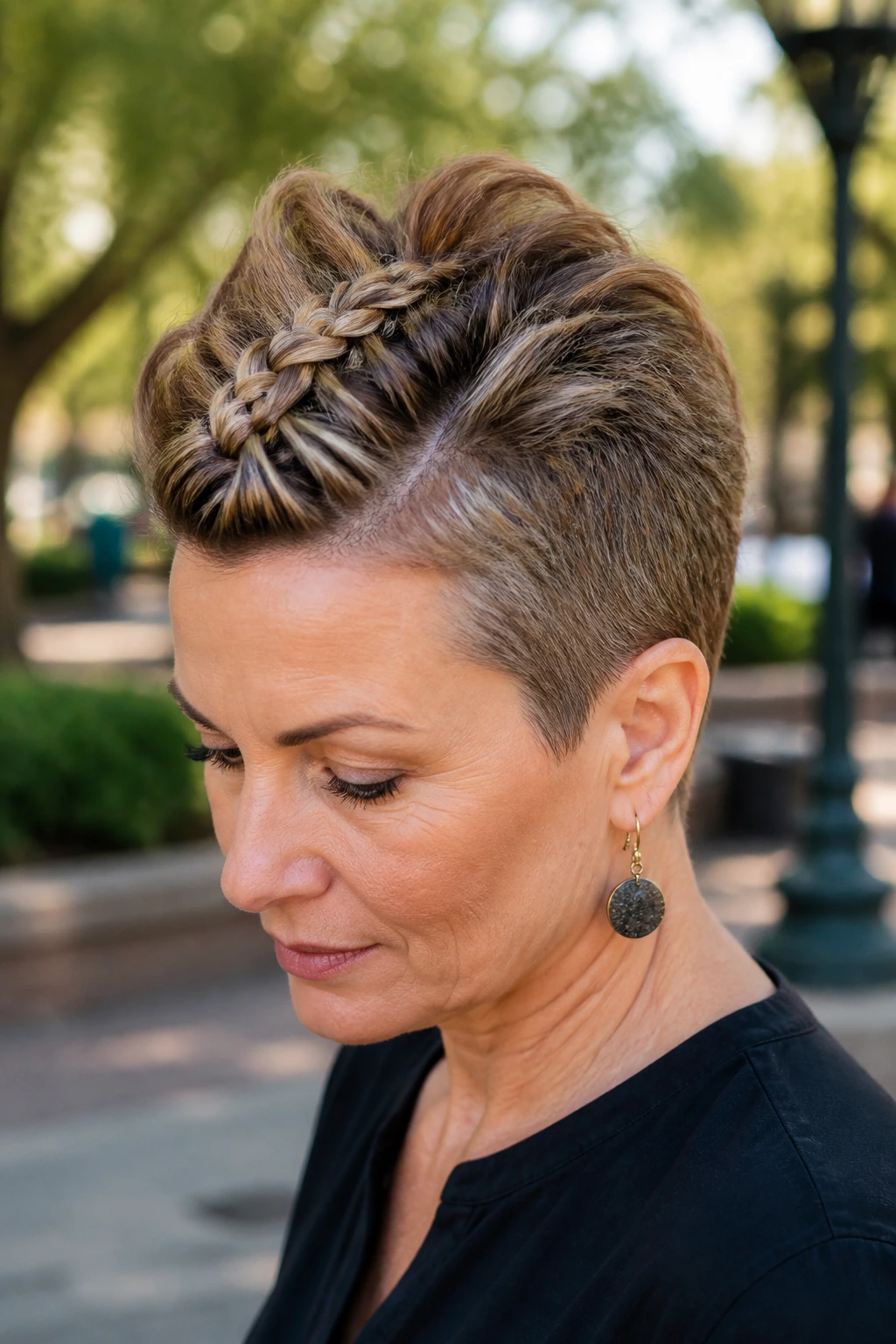
Soft-Volume Hawk: Keep the crown low, skip the tease, and rely on blow-dry direction and a few hidden pins. This is the gentlest version and works when you want shape without visible texture.
Braided Crown Hawk: Swap the teased ridge for a narrow braid down the middle. It’s excellent for humidity and long days because the braid keeps the structure from sagging.
Coil-Defined Hawk: Built on twist-outs, braid-outs, or defined curls, this version leans into texture instead of fighting it. Great when you want the style to protect the hair too.
Silver Shine Hawk: Use a light gloss spray and keep the product weight low so the silver or gray strands stay reflective and not sticky. This version looks crisp with short or medium hair.
Event-Ready Hawk: Add a decorative pin, tighten the ridge, and smooth the sides more than usual. It’s a simple change, but it turns the same silhouette into something evening-friendly.
Keeping Faux Hawk Hairstyles for Women Over 40 Fresh Between Washes
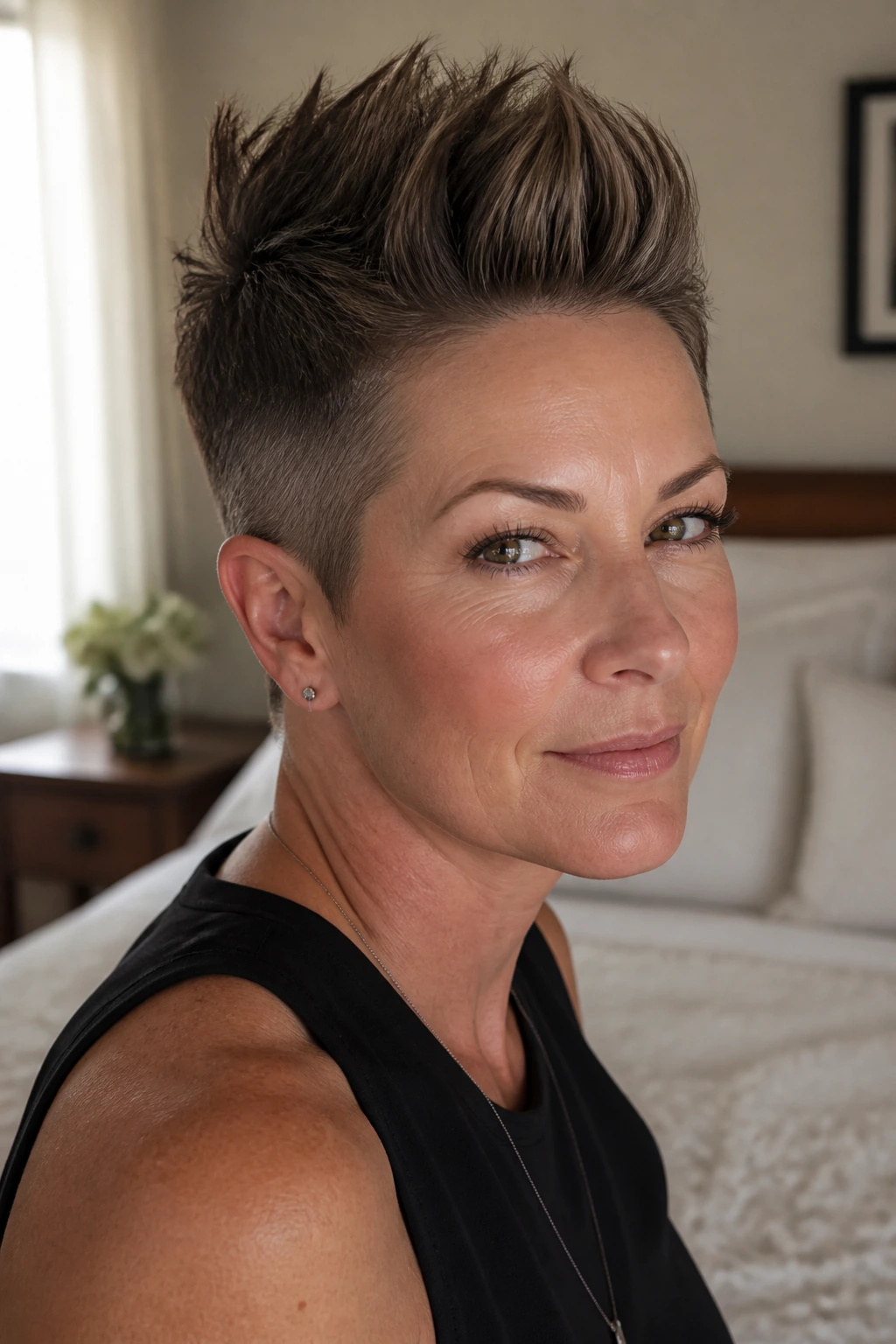
Most faux hawks look best on day one or day two, when the roots still have a little grip. After that, product buildup starts to weigh the crown down. A quick refresh can stretch the style, but there’s a point where a full wash is cleaner than fighting the hair.
For the overnight routine, use a satin pillowcase or wrap the crown loosely with a scarf so the center section doesn’t flatten completely. If you can sleep with the style supported, morning reset is much faster. For shorter cuts, even a loose head wrap helps. For curls or natural hair, keep the shape from being crushed rather than trying to fully preserve every strand.
On the second day, a small puff of dry shampoo at the roots and a few fingertip lifts can bring the ridge back. If the sides have escaped, re-pin them instead of restyling the whole head. For braided versions, smooth the braid line with a touch of cream on the fingertips and leave the rest alone.
If the hair feels sticky, stiff, or dull, wash it. Pushing product through a style one day too long is how the faux hawk starts to look tired. Clean hair at the roots gives the next style a better start.
Frequently Asked Questions
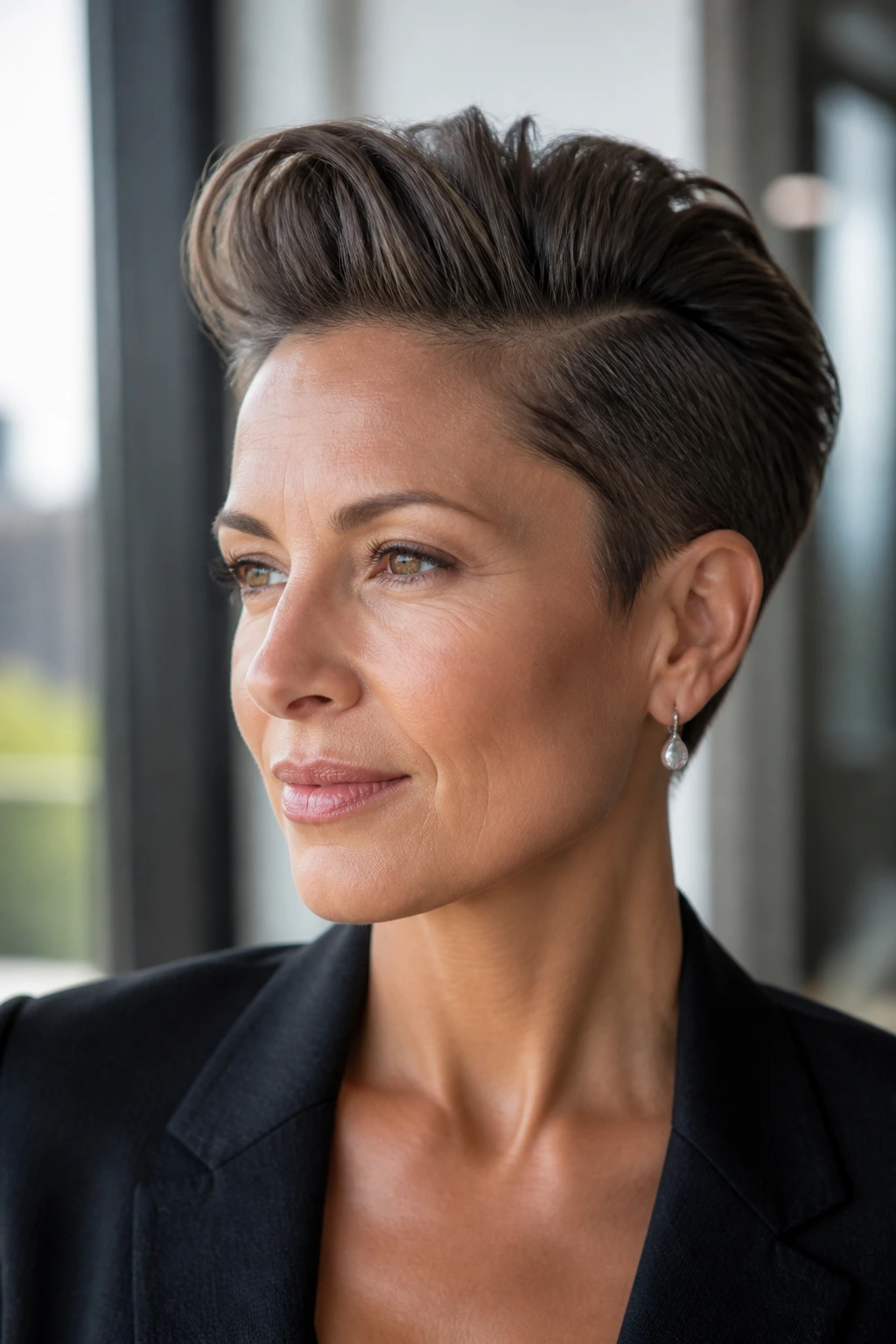
Will a faux hawk work on fine hair?
Yes, but the shape needs light products and smart placement. Fine hair usually does better with root-lift spray, dry shampoo, and a smaller crown ridge than with heavy creams or large amounts of teasing.
Can you do a faux hawk on short hair?
Absolutely. Pixie cuts, chin-length bobs, and cropped cuts can all make the shape with texture at the top and pins or smoothing at the sides. The shorter the hair, the more important it is to keep the ridge narrow.
How do you keep the style from looking too edgy?
Soften the sides and round the crown. A faux hawk reads harsher when the center is spiky and the sides are slicked tight, so leaving a little bend near the face helps the style feel more wearable.
Does gray hair look good in a faux hawk?
Gray hair often looks excellent in this shape because the contrast and shine show up more clearly. Use lightweight product so the strands stay airy, and skip anything that leaves a greasy finish.
What if the crown falls flat halfway through the day?
Flip the head forward, mist the roots with dry shampoo, and lift the crown with your fingers before re-pinning the side sections. If the hair is clean and silky, a tiny amount of texture spray before styling usually prevents the collapse in the first place.
Can you wear a faux hawk with glasses?
Yes, and the lower, softer versions tend to work best. Keep the sides neat but not tight around the temples so the frames and the hair do not fight each other.
Is this style only for straight hair?
Not at all. Wavy, curly, coily, and loc’d hair can all create a faux hawk with the right shaping. In textured hair, the center line often looks even better because it has natural body from the start.
Do you need a haircut to pull it off?
No, but the right layers make styling easier. If you’re asking your stylist for a faux-hawk-friendly cut, mention crown layers, some movement through the top, and sides that can be pinned or smoothed without bulk.
The Shape That Still Works
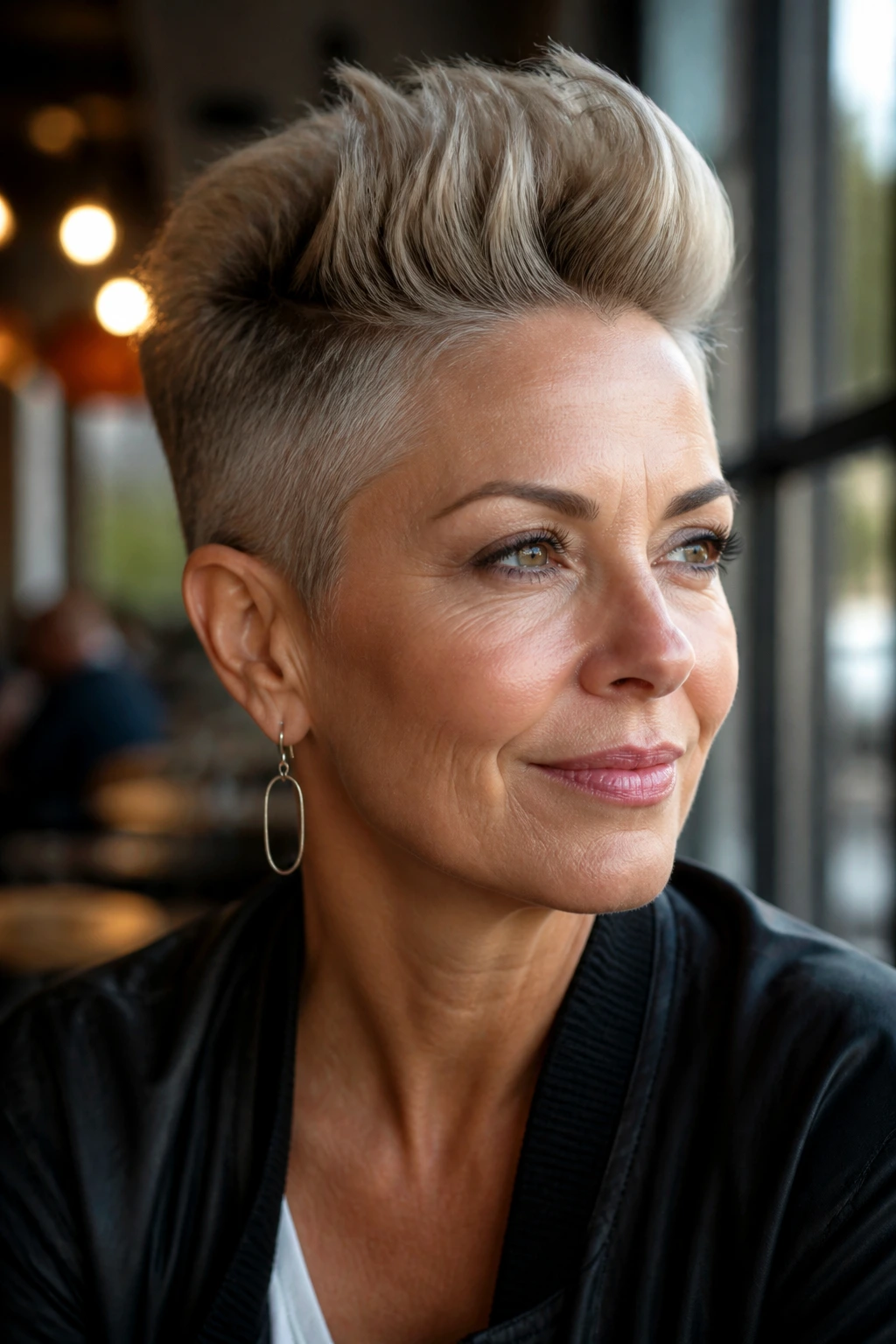
A faux hawk is one of those styles that keeps making sense because it solves a real problem: flat hair in the wrong places. It gives the crown some lift, it trims the sides visually, and it lets texture do something useful instead of just sitting there.
The best part is how flexible the shape is. You can keep it soft, polished, braided, curly, short, silver, or a little wild. Start smaller than you think, pin less hair than you planned, and let the ridge stay a touch imperfect. That’s usually where the good version lives.
