



A short shag haircut with choppy layers can do something a blunt bob almost never does: it keeps moving after you leave the chair. The ends separate, the crown lifts, the fringe falls in broken pieces, and the whole shape looks better when it’s a little imperfect. That’s the charm. Not neat. Alive.
What people miss is that a good short shag is built, not hacked apart. The best versions use point cutting, sliced layers, and a perimeter that still has enough weight to sit on the jaw, the ears, or the nape without puffing into a triangle. Too much thinning, and the cut starts to look wispy in the wrong places. Too little, and you get a boxy bob wearing a shag costume.
If you’ve ever said, “I want texture,” and walked out with a haircut that looked like it had lost a fight with a weed trimmer, you already know the stakes. The difference between a gorgeous shag and a strange helmet is where the weight gets removed, how the fringe is handled, and whether the layers are allowed to collapse into each other or stand in separate little pieces. That’s the whole game.
Why These Short Shags Stay Interesting
-
Built-in movement: Choppy layers keep the outline from lying flat against the head, which matters a lot on short hair where every millimeter changes the silhouette.
-
Less helmet, more shape: The right breakup around the crown and cheekbones stops a short cut from turning into one solid block.
-
Easier grow-out: A well-cut shag usually softens into a bob or lob instead of growing out like a shape mismatch.
-
Better air-dry potential: These cuts do not need a perfect blowout to look finished; a little bend and separation are often the point.
-
More room for personality: Curtain bangs, micro fringe, side bangs, and razor edges all change the mood without changing the basic short-shag formula.
1. Piecey Micro Shag
This one lives right on the edge between a pixie and a shag. The crown is chopped short, the fringe sits just above or right at the brows, and the ends are broken up enough that nothing feels solid for long. It has that “I did not overthink this” look that actually took a skilled hand.
Why it works
The micro length makes the choppy layers read clearly, especially around the temples and crown. On straight or slightly wavy hair, the shape gets lift without a ton of product, and that matters because overloading a short cut with cream can flatten the whole thing. This is the shag for someone who likes a little edge and does not want hair sitting on the neck.
Best for
- Fine hair that needs shape fast
- Wavy hair that likes to bend on its own
- People who want short hair but not a severe pixie
Styling note: A pea-sized amount of matte paste is enough. More than that and the piecey effect turns greasy by noon.
2. Chin-Length Razor Shag

A chin-length shag is the sweet spot for people who want short hair without giving up movement around the jaw. Razor cutting softens the perimeter so the ends don’t sit like a blunt shelf, and the choppy layers break up that heavy, helmety feeling some chin-length cuts get.
The best part is the swing. When you turn your head, the ends move in little slices instead of one big sheet. That’s what makes the shape look modern instead of dated. If your hair is medium density, this is one of the easiest ways to get texture without sacrificing enough length to feel radical.
Keep the layers subtle if your face is already narrow. Too much breakup at the sides can pull the shape in too far.
3. Soft Wolf Bob

This is the shag for people who want a little wolf-cut attitude without the full blast of mullet energy. The back stays compact, the top layers are shorter, and the sides drape into a bob length that still hugs the jaw. It looks slightly wild, but in a controlled way.
What I like here is the contrast. The crown gets lift, the neck stays neat, and the front pieces can be pushed forward or tucked behind the ear depending on the day. It’s a good shape if you like hair that looks better once it has been touched and moved around a bit.
If you want this cut to stay soft, ask for internal layering, not aggressive thinning at the ends. That keeps the bob part from getting stringy.
4. Feathered Shag with Curtain Bangs

A feathered shag with curtain bangs is a very specific kind of easy. The bangs split through the center, graze the cheekbones, and fold into the shortest layers without shouting about it. The result is airy, not heavy, and the whole haircut feels broader around the eyes and softer around the jaw.
What makes it work
Curtain bangs are doing half the work here. They give the front of the cut a gentle opening, while the choppy layers keep the body from sitting in one solid mass. This is one of the safer choices if you’re nervous about a shag looking too punk or too flat.
Good to know
- Ask for the bangs to be cut a little longer than you think you want.
- The shortest face-framing pieces should hit somewhere between the cheekbone and jaw.
- Blow-drying the bangs with a round brush makes the shape read cleaner.
Pro tip: If your hair has a cowlick at the front, do not cut the fringe too short. You’ll spend weeks arguing with it.
5. Curly Crop Shag
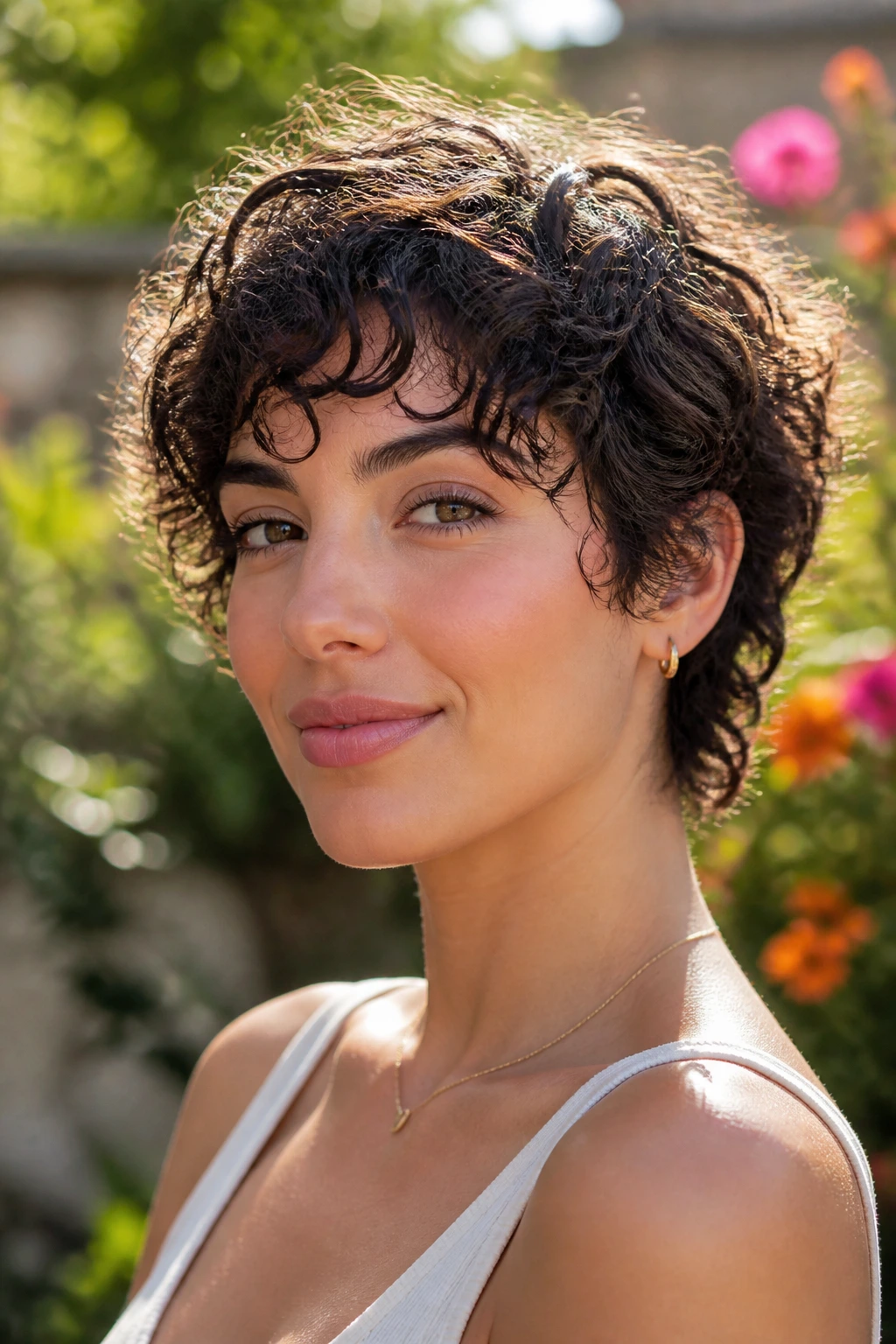
Curly hair and choppy layers can be magic together, but only when the cut respects the curl pattern. A curly crop shag is short, round, and full of little separated curls that stack over one another without puffing out into a triangle. The fringe can be curly too, which keeps the whole thing feeling intentional.
The main rule: cut it in a way that lets the curl spring back where it wants to live. Dry cutting is often the safer move because curly hair changes shape when it dries. A razor-heavy approach can fray some curls and make the ends fuzzy.
This is one of the best short shag haircuts with choppy layers if you like your curls visible, not flattened. Diffuse lightly, stop before the hair gets bone dry, and let the rest of the shaping happen as it settles.
6. Textured Pixie Shag
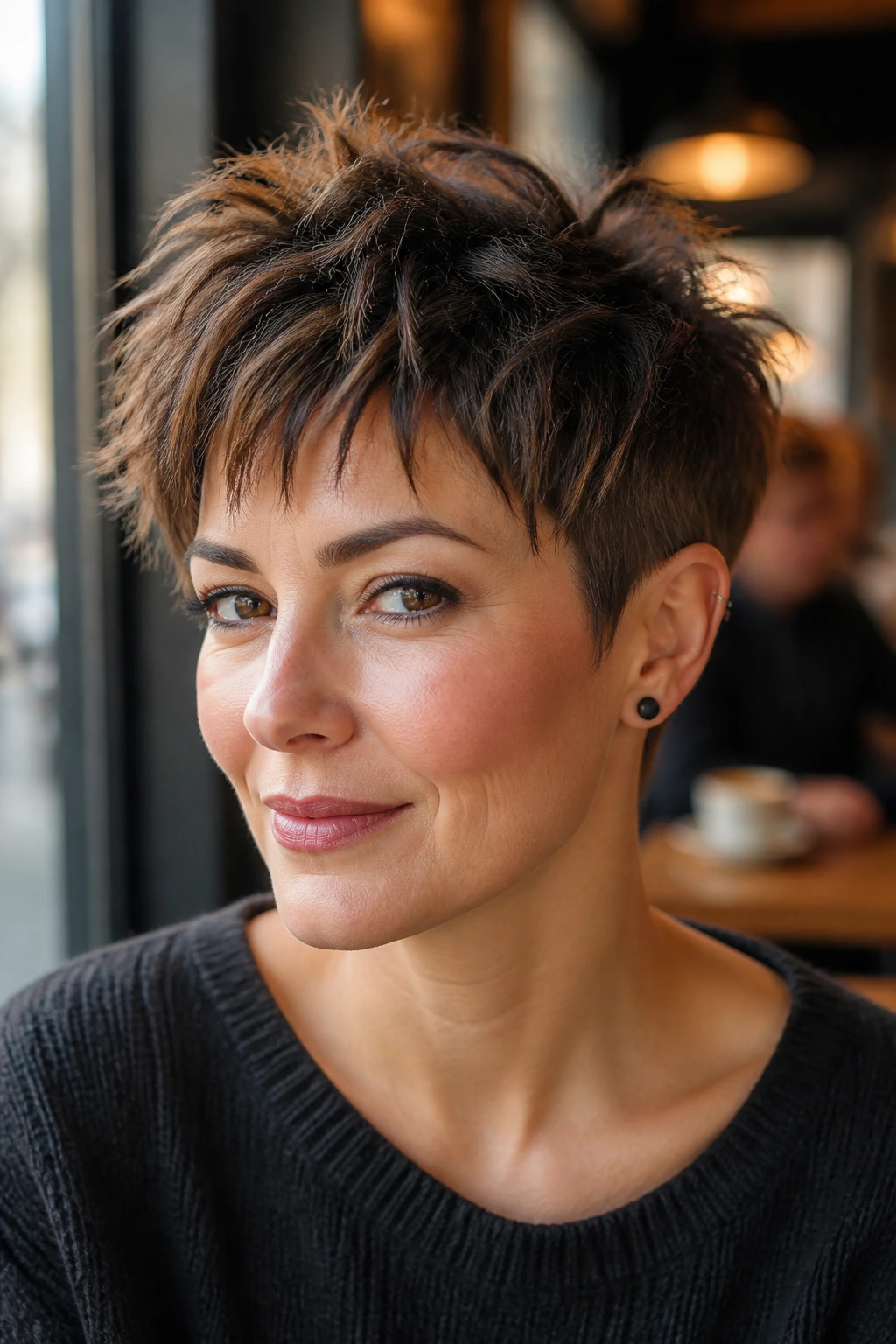
A textured pixie shag is the version for people who want the least length and the most attitude. The sides stay short, the crown is layered for lift, and the top is broken into little pieces that can be pushed forward, up, or sideways. It’s not a neat pixie. It has grit.
This cut works because it doesn’t try to disguise the shortness. It leans into it. The choppy layers keep the top from looking flat and the short back from looking severe. You can wear it glossy and polished, or rough it up with paste and let the texture do the talking.
Best if you’re okay styling your hair for five minutes instead of pretending you won’t. The five minutes matter here.
7. Rounded Shag Bob
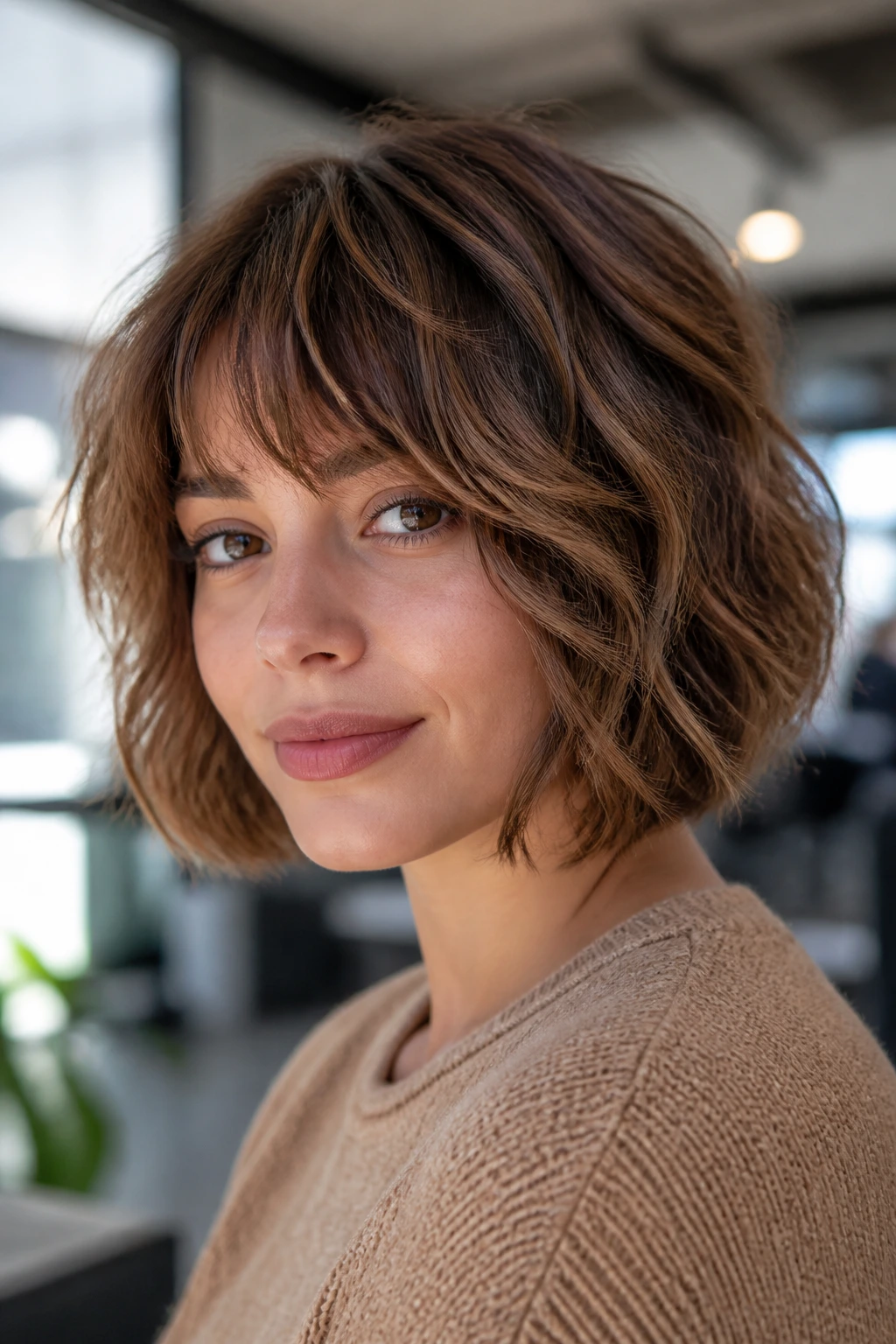
A rounded shag bob keeps the silhouette soft and curved, which is a nice change if you’re tired of angular cuts. The layers are still broken up, but they’re arranged to preserve a round outline through the sides and back. Think volume that arcs around the head instead of flaring out from it.
This shape is smart on longer faces because the width sits where you can see it. It also works well when you want a shag that feels polished enough for work but still has movement. The trick is to leave enough weight at the perimeter so the bob doesn’t collapse into wisps.
If your hair is very fine, keep the ends blunt enough to hold the outline. Too much texturizing and the curve disappears.
8. Razor-Cut Mullet Shag
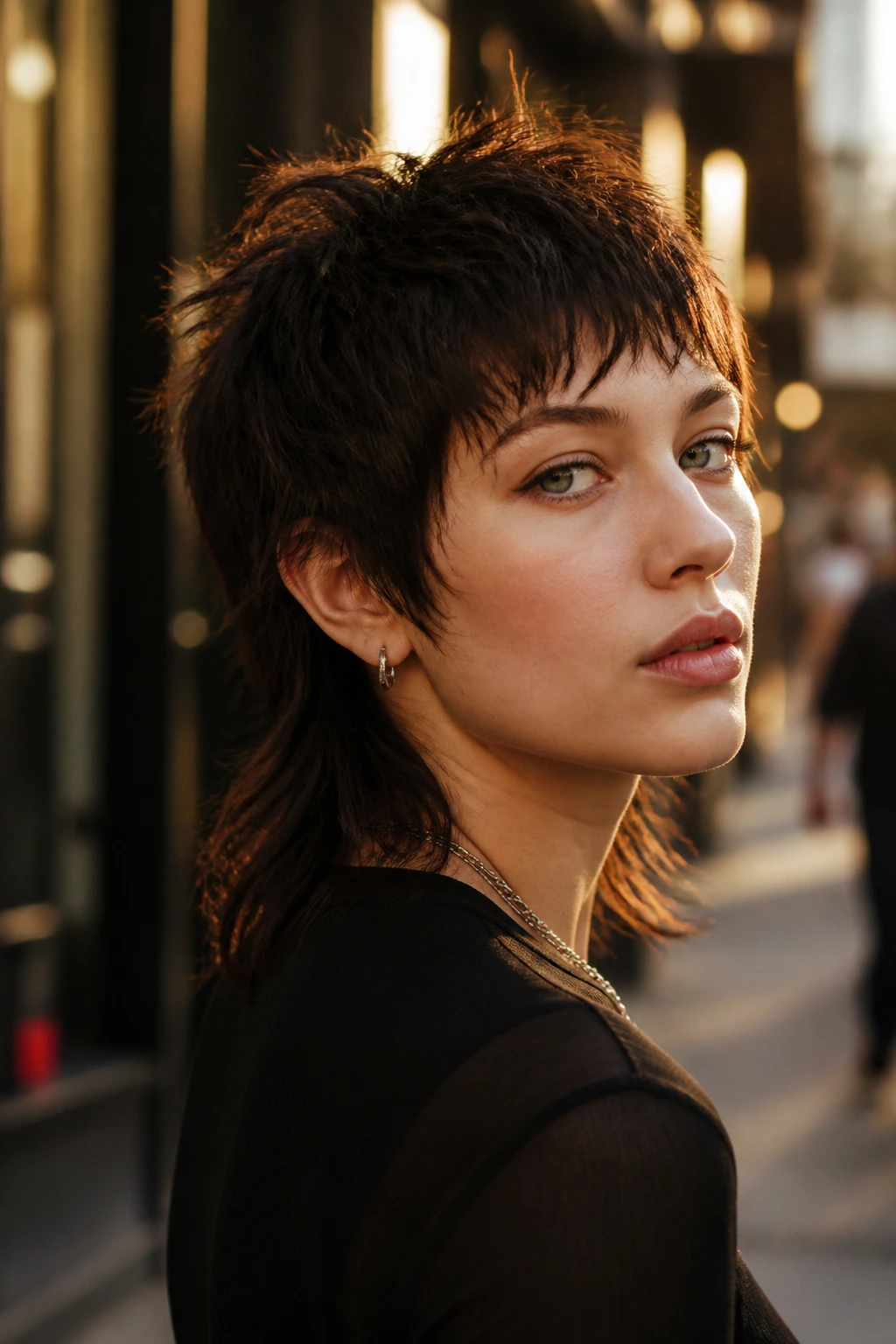
This is the bold one. The top and crown are short and choppy, the sides stay lighter, and the back keeps a little extra length so the shape can kick out with attitude. It’s shag first, mullet second, and that distinction matters. If the back is too long and the front too short, the whole thing becomes a costume.
The razor finish gives this cut its edge. You want the pieces to separate a little instead of sitting like smooth ribbons. It looks especially good on hair with natural bend, because the movement helps the shape feel deliberate instead of severe.
Not for anyone who wants a tidy neckline. That would be missing the point.
9. Grown-Out Bixie Shag

The bixie shag sits in the middle between a bob and a pixie, which is exactly why it’s so useful. The shape has a little sweep through the front, a short layered crown, and enough length at the sides to tuck behind the ear when you need a break. It’s one of the easiest transition cuts around.
Why it earns a spot
You get short hair without a hard line around the head. That matters if you’re growing out a pixie or testing the waters before a shorter chop. The choppy layers keep it from looking like a compromised haircut while it grows.
How to wear it
- Push the fringe forward for more edge.
- Sweep the top back for a cleaner look.
- Tuck one side and leave the other loose if you want a little asymmetry.
My opinion: This is the cut I’d suggest to someone who wants short hair but secretly wants an exit plan.
10. Wavy Collarbone Shag
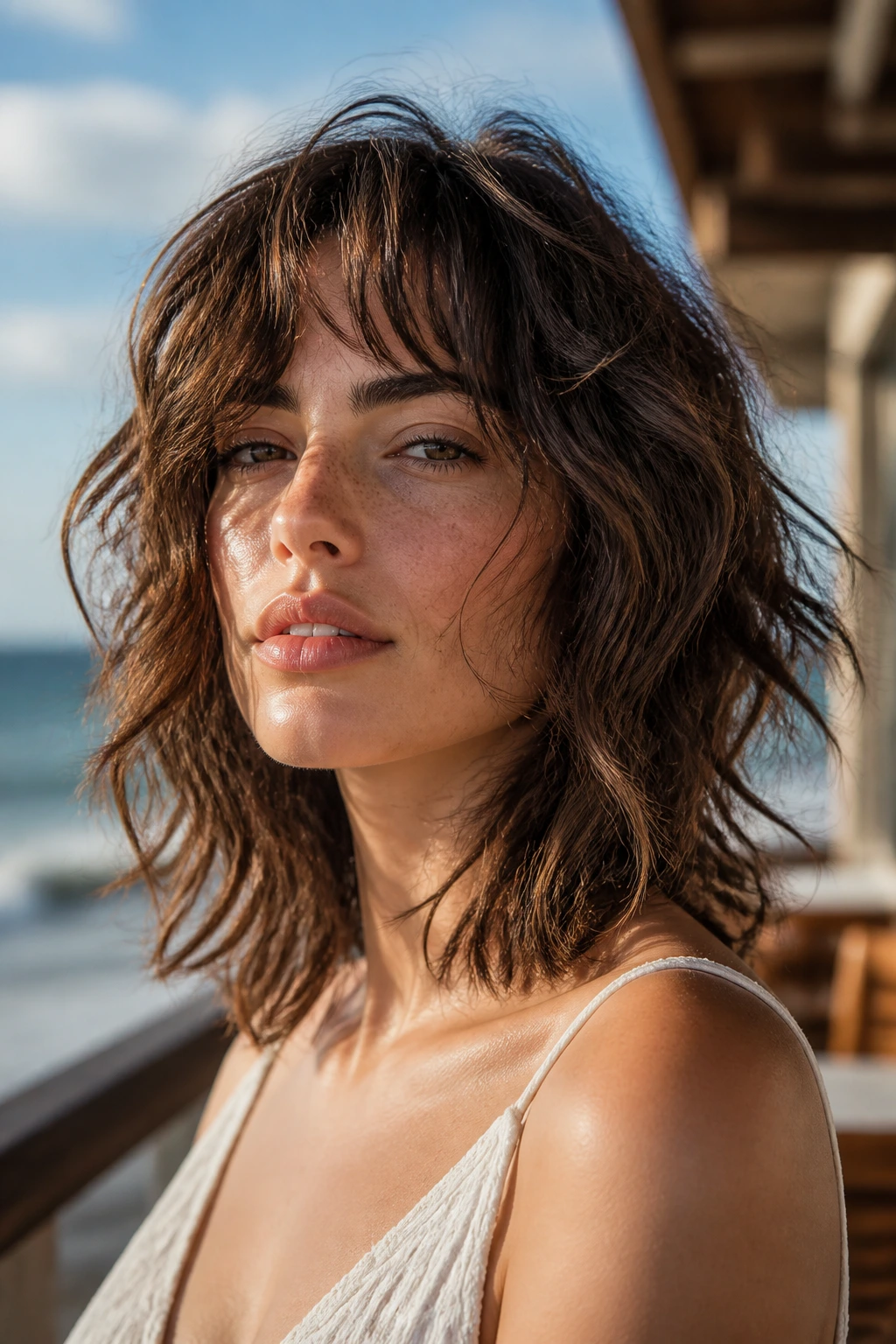
Yes, collarbone length is technically on the longer side of short, but this cut earns its place because the layers are short enough to feel airy and broken up. The length sits just at the collarbone, while the interior layers create that unmistakable shag texture. It’s less dramatic than a chin-length chop, and that is a feature.
For wavy hair, this cut is a sweet spot. The waves have room to bend, the layers keep them from forming one giant triangle, and the ends move enough to look alive without constant styling. If your hair tends to go flat at the roots, a little mousse and a rough-dry give the shape some help.
It’s the most forgiving option in the group. Also, probably the easiest one to grow into something else.
11. Choppy Side-Bang Shag

A side-bang shag changes the mood fast. Instead of curtain bangs opening in the center, the fringe sweeps to one side and breaks into pieces near the temple. That shift matters because it gives the haircut a little asymmetry and can soften a forehead or disguise a stubborn front cowlick.
The side bang also gives you more styling options than people expect. Wear it pinned back, tuck it behind the ear, or let it fall across the brow on a humid day and call it a day. The shag layers underneath keep the whole thing from becoming too formal.
If your face is round, this is a useful shape because the diagonal line draws the eye down and across. If your hair grows fast at the front, ask for the bang slightly longer than the immediate target.
12. Tapered Nape Shag
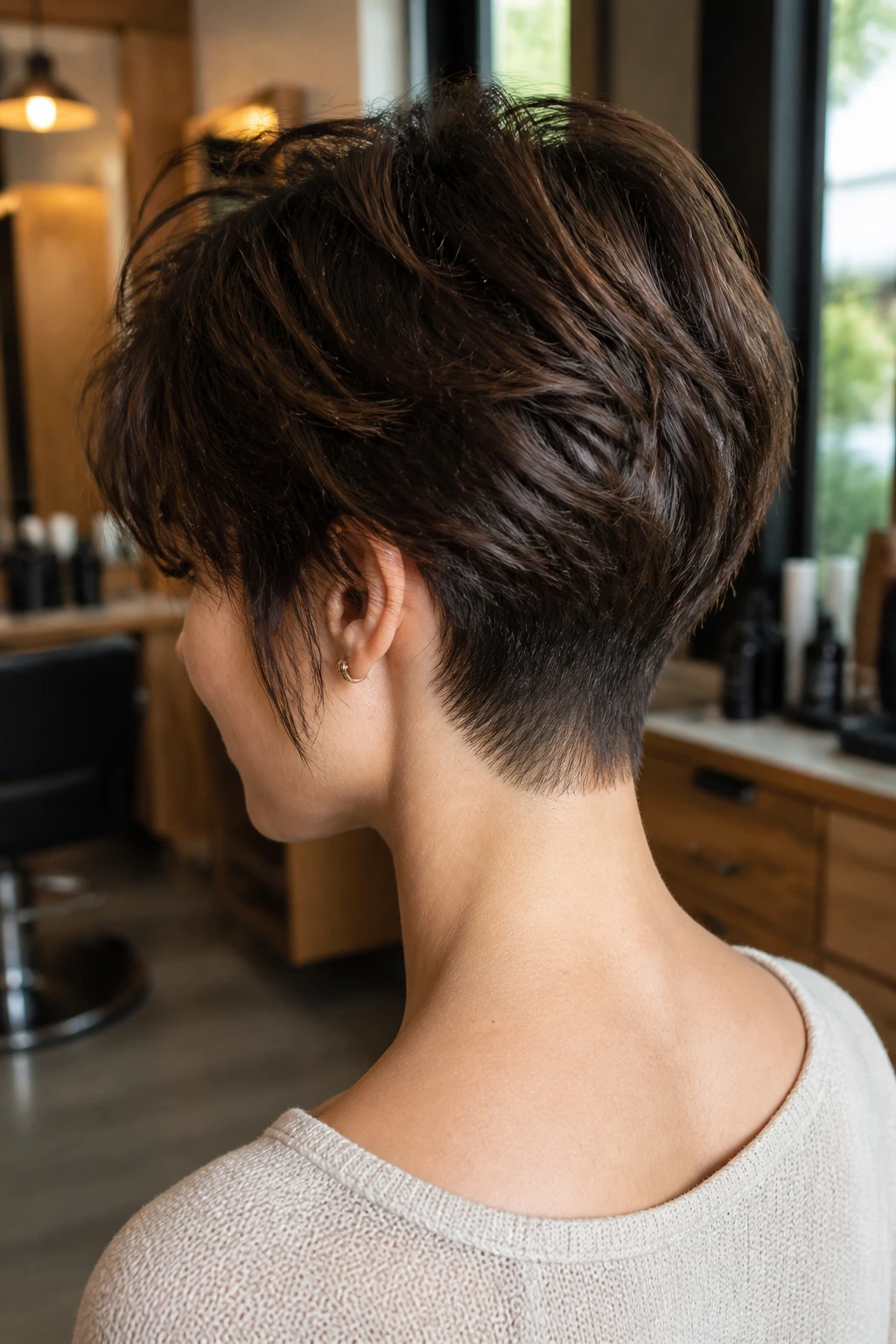
The tapered nape shag is all about the back of the head. The neckline is trimmed close and clean, while the top and crown stay shaggy and broken up. That contrast gives the haircut a neat base and a looser top, which is a smart move if you want short hair that doesn’t look fuzzy at the collar.
It’s a good cut for thick hair because the taper removes bulk where it builds up most. It also keeps scarves, collars, and sweaters from snagging on the back of the haircut. That sounds small. It isn’t.
The shape works best when the layers taper gradually, not in hard steps. You want the nape to hug the neck, not shout at it.
13. Tousled French Girl Shag

This is the short shag that looks as if it was cut after someone decided rules were optional, then styled with exactly one finger through the front. The fringe is airy, the ends are soft and piecey, and the overall impression is light rather than heavy. It’s a little romantic, a little lazy, and very dependent on texture.
What makes it different
The French-girl version keeps the layers subtle enough that the haircut doesn’t look overbuilt. The perimeter still has shape, but the shagging lives mostly through the crown and face-framing pieces. That keeps the silhouette from collapsing into a flat rectangle.
Best styling move
A bit of texture spray at the roots, then a quick scrunch with the hands. That’s it. If you make it too perfect, you lose the point.
14. Thick-Hair Undercut Shag
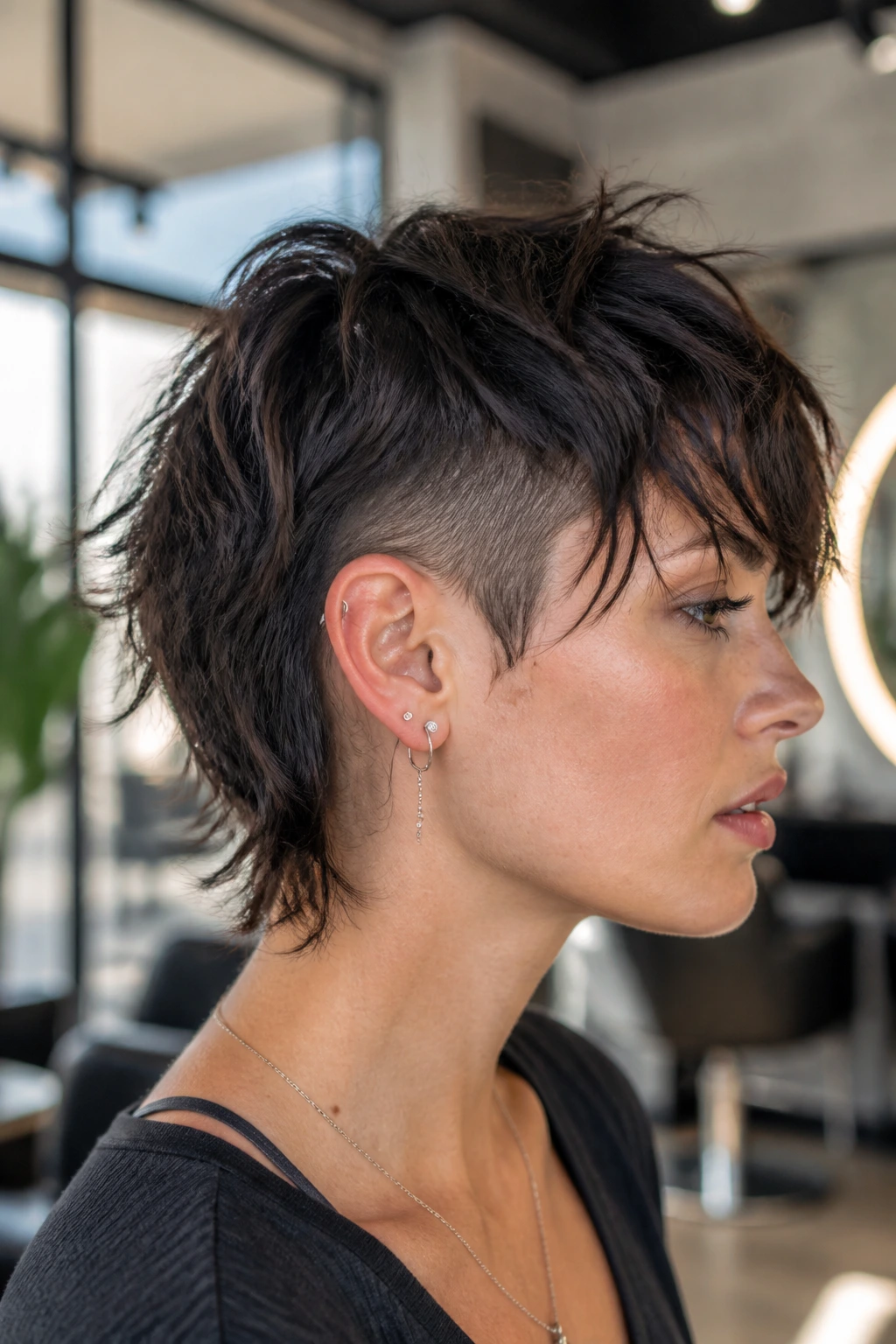
Thick hair can wear a shag beautifully, but only if the interior bulk gets handled with care. An undercut shag removes weight from underneath, often around the nape or lower back, so the top layers can sit down instead of ballooning out. You still get the shag movement, just without the extra mass.
This cut is especially useful if your hair takes forever to dry. Less hidden bulk means less time under the dryer and less swelling at the ends. The visible layers can stay choppy and strong while the underside does the quiet work.
Ask for the undercut to stay hidden if you want a softer look. If you like a little edge, let the shorter area show when you tuck your hair up.
15. Fine-Hair Airy Shag

Fine hair needs a careful hand. Too many layers too high up, and the ends can start to look see-through. The airy shag keeps the perimeter strong while adding soft movement near the crown and around the face, so the hair feels lighter without losing the outline.
This cut works because it creates lift where the eye notices it first. The crown gets a bit of separation, the fringe stays soft, and the ends don’t get shredded into nothing. I’d choose this over heavy thinning every time. Heavy thinning on fine hair is how you end up with three wisps and regret.
Small rule
Ask for texture through the interior, not the last half-inch of the ends. That keeps the shape believable.
16. Salt-and-Pepper Shag
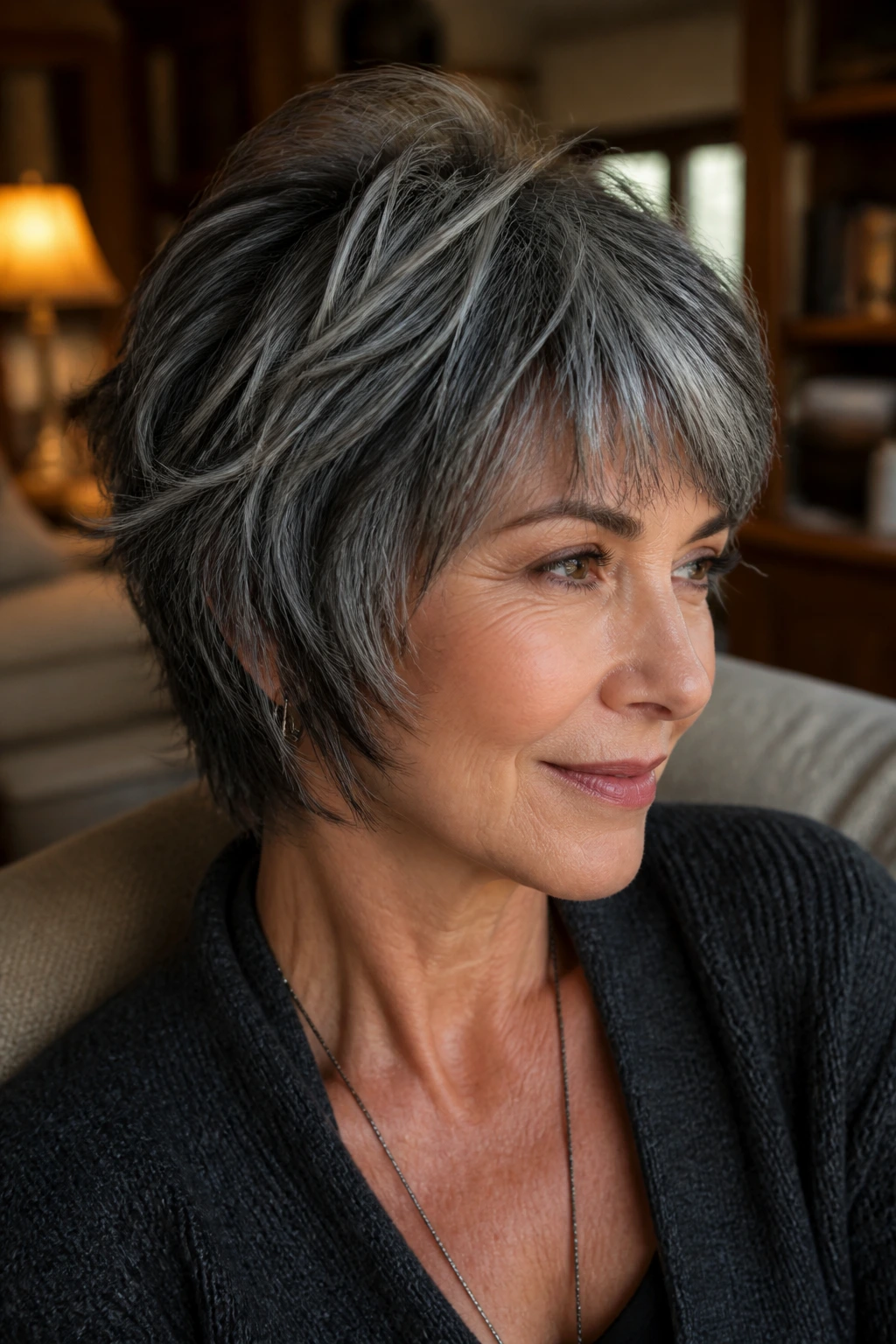
Gray and mixed-tone hair looks especially good in a short shag because the layers show off the color shifts. The silver pieces catch separation in the layers, and the darker strands keep the cut from turning flat. The result is less “trying to hide” and more “this haircut knows exactly what it’s doing.”
A salt-and-pepper shag often looks richer with a slightly glossier finish than a super-matte one. The shine gives the silver strands depth, while the choppy layers keep the shape from becoming too sleek. That combo is sharp.
If you’re letting gray grow in, a short shag can make the transition look deliberate instead of awkwardly in-between. That’s worth a lot.
17. Bottleneck Bang Shag
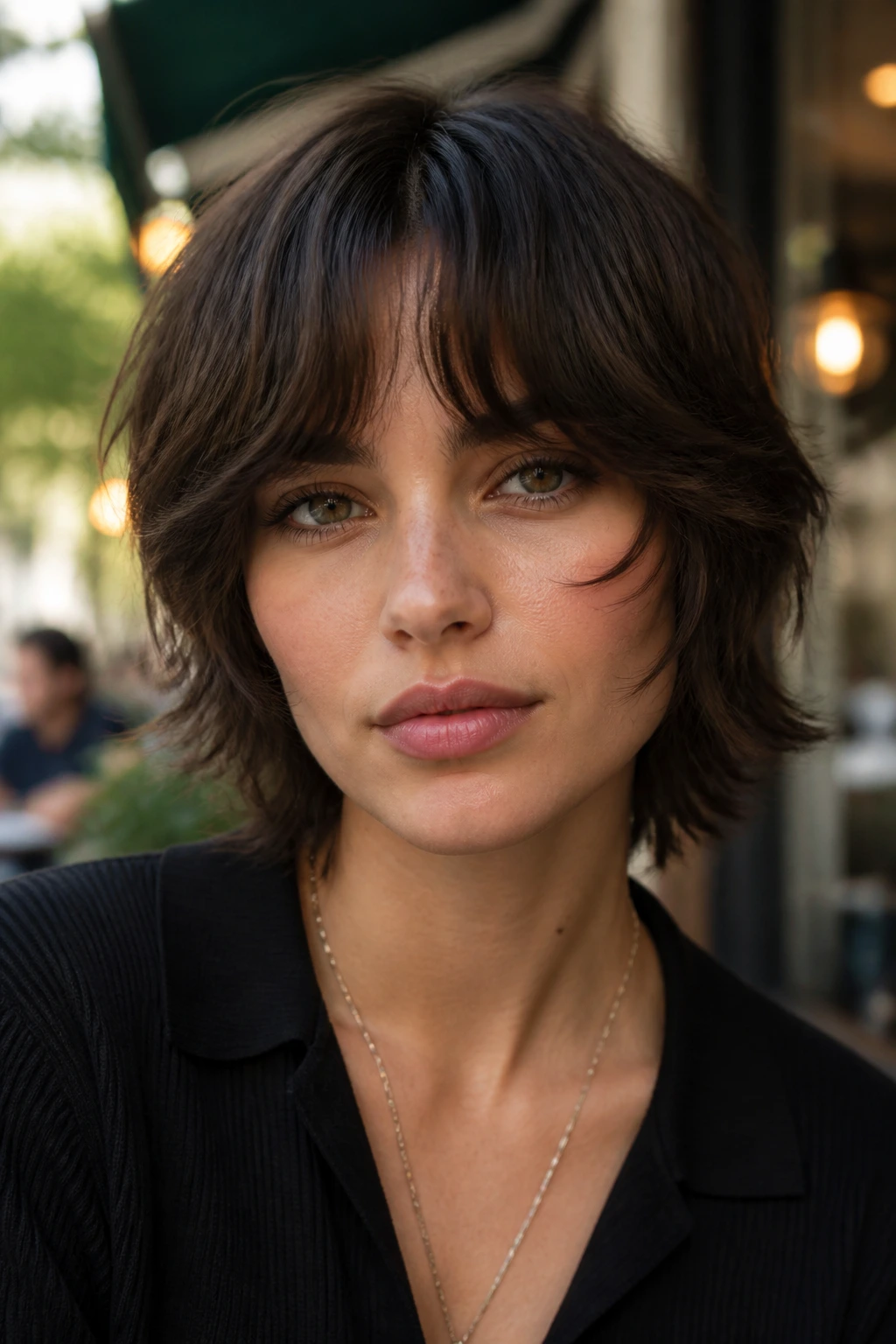
Bottleneck bangs start narrow in the center and widen toward the cheekbones, and that shape does excellent work on a short shag. It softens the forehead, opens the face, and blends cleanly into short, choppy layers without creating a hard horizontal line.
The bangs are the hook here, but the layers underneath matter just as much. They keep the haircut from feeling top-heavy or too fringe-forward. If the center of the bangs is cut too short, the whole look gets fussy fast. Leave a little length in the middle and let the outer pieces do the framing.
This one is good if you want something more tailored than curtain bangs but less blunt than a full fringe. A nice middle ground. Rare, honestly.
18. Flip-Out Layered Shag
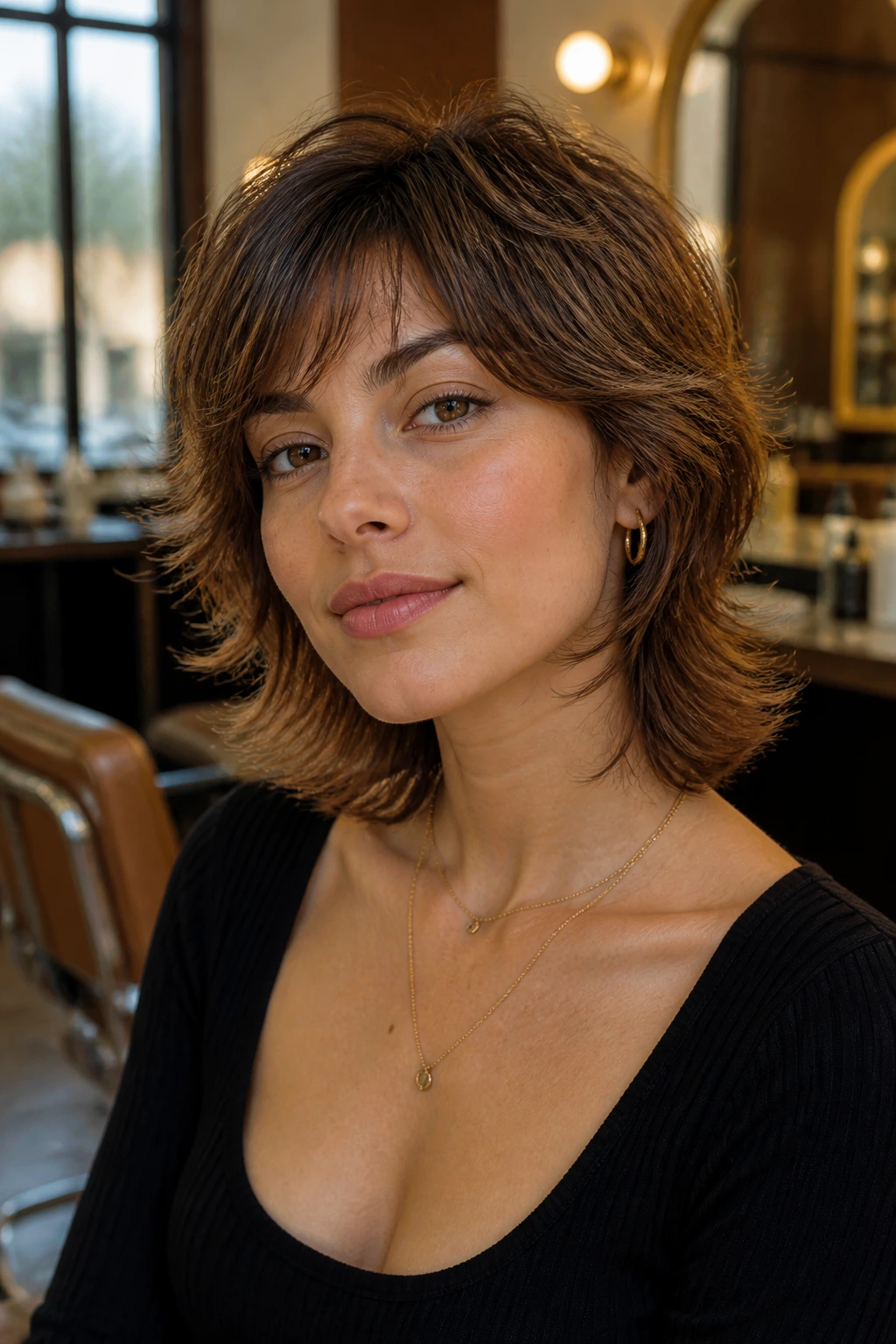
The flip-out shag takes a cue from retro blowouts, but it stays short and loose. The ends are cut to turn outward when you blow-dry with a round brush, which gives the haircut a lifted, slightly playful edge. It works best on hair that has some natural body or a little stubborn bend.
What to know
- The shortest layers should sit high enough to create a visible flip at the ends.
- A 1-inch or 1.25-inch round brush usually gives the right bend.
- The finish should look separated, not curled into one polished loop.
This is one of those cuts that looks better with motion. You don’t want the flip to be identical on both sides. A little irregularity makes it feel lived in instead of rehearsed.
19. Cropped Curly Fringe Shag
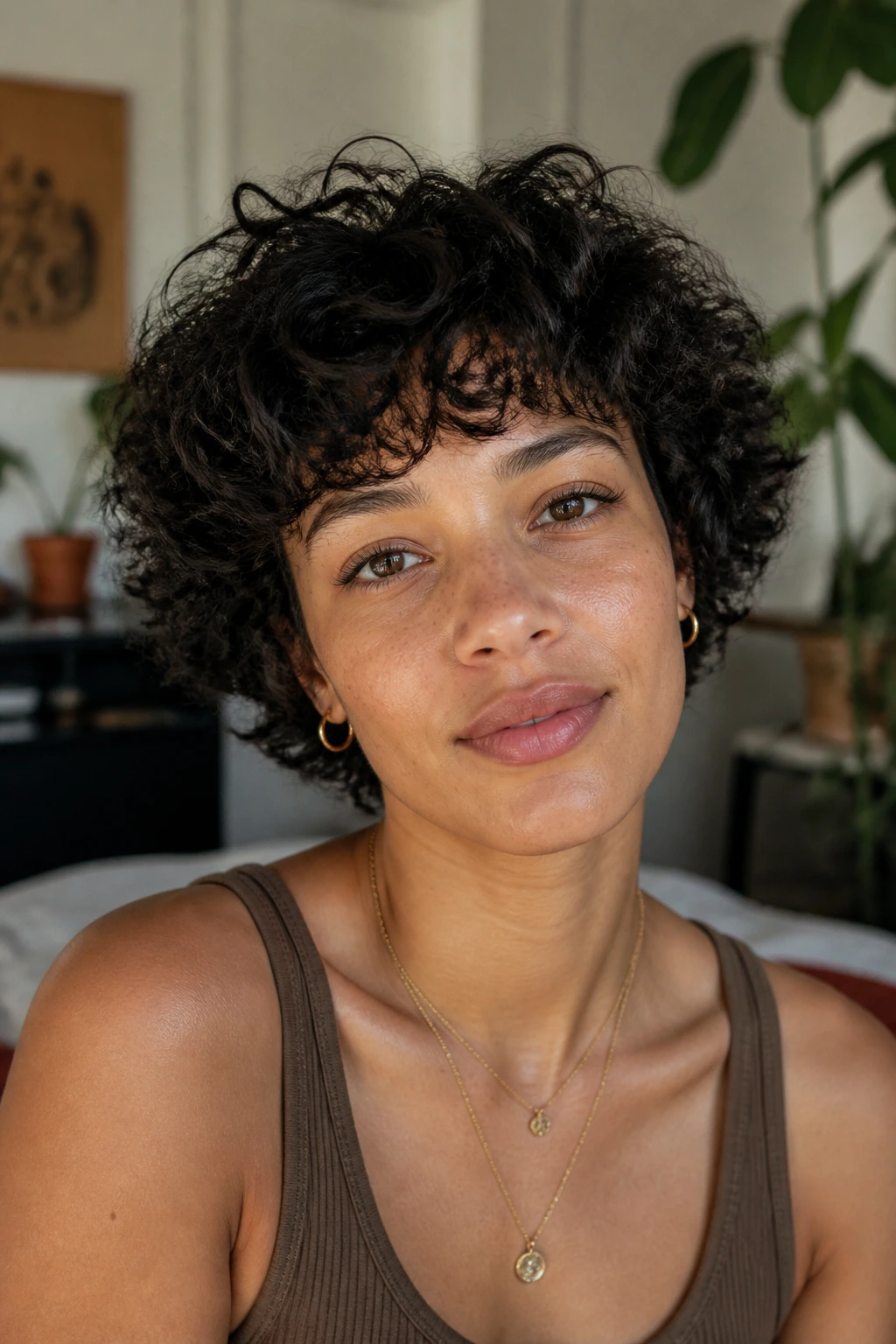
Short curly hair with a fringe can go wrong fast if the layers are cut too aggressively, but when it’s done well, it’s brilliant. The fringe sits above or near the brows, the curls around the crown are shaped to fall into each other, and the sides keep enough length to frame the temples. The result is compact and expressive.
The key is respecting shrinkage. A curl that looks brow length when wet may jump half an inch or more when dry. That’s why this cut should be shaped with the curl pattern in mind, not just the scissors. Ask for a curl-by-curl approach if your texture is springy.
This is not a cut for someone who wants each curl controlled. It is for someone who likes the curls doing their own thing, but in a good shape.
20. Jaw-Length Dramatic Shag
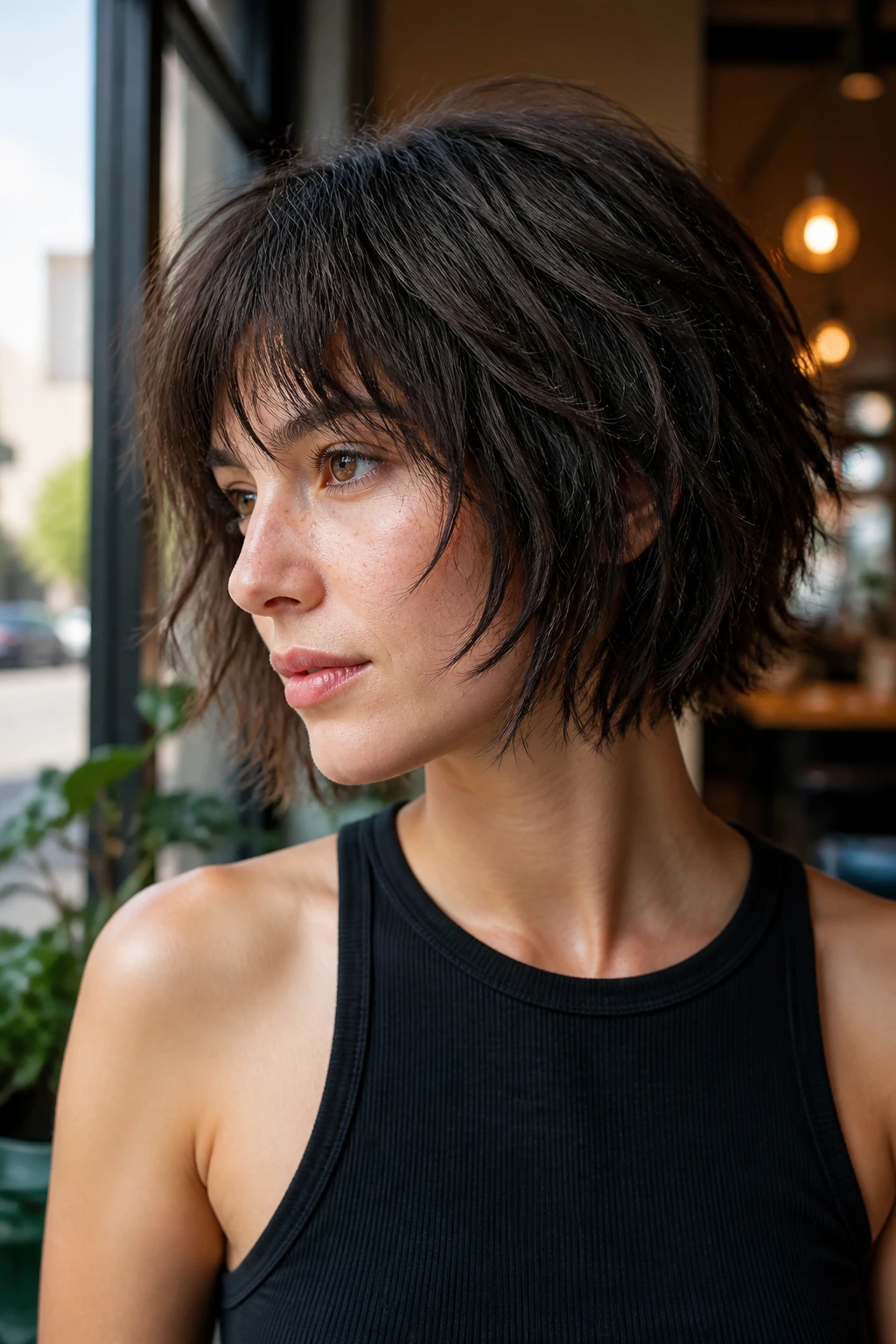
Jaw-length is a sharp place to stop, and that’s exactly why this version feels strong. The cut lands right around the jaw, the layers break up the sides, and the whole shape puts the focus where the face changes most. It can make the jaw line look cleaner or stronger, depending on how the layers are placed.
This is one of the more dramatic short shag haircuts with choppy layers because the length is short enough to be obvious, but long enough to carry texture through the front. If you want a haircut that reads immediately in profile, this is it.
It does best with styling that pushes the layers slightly forward and outward. Keep the ends too still, and you lose the edge.
21. Shaggy Bowl Revival
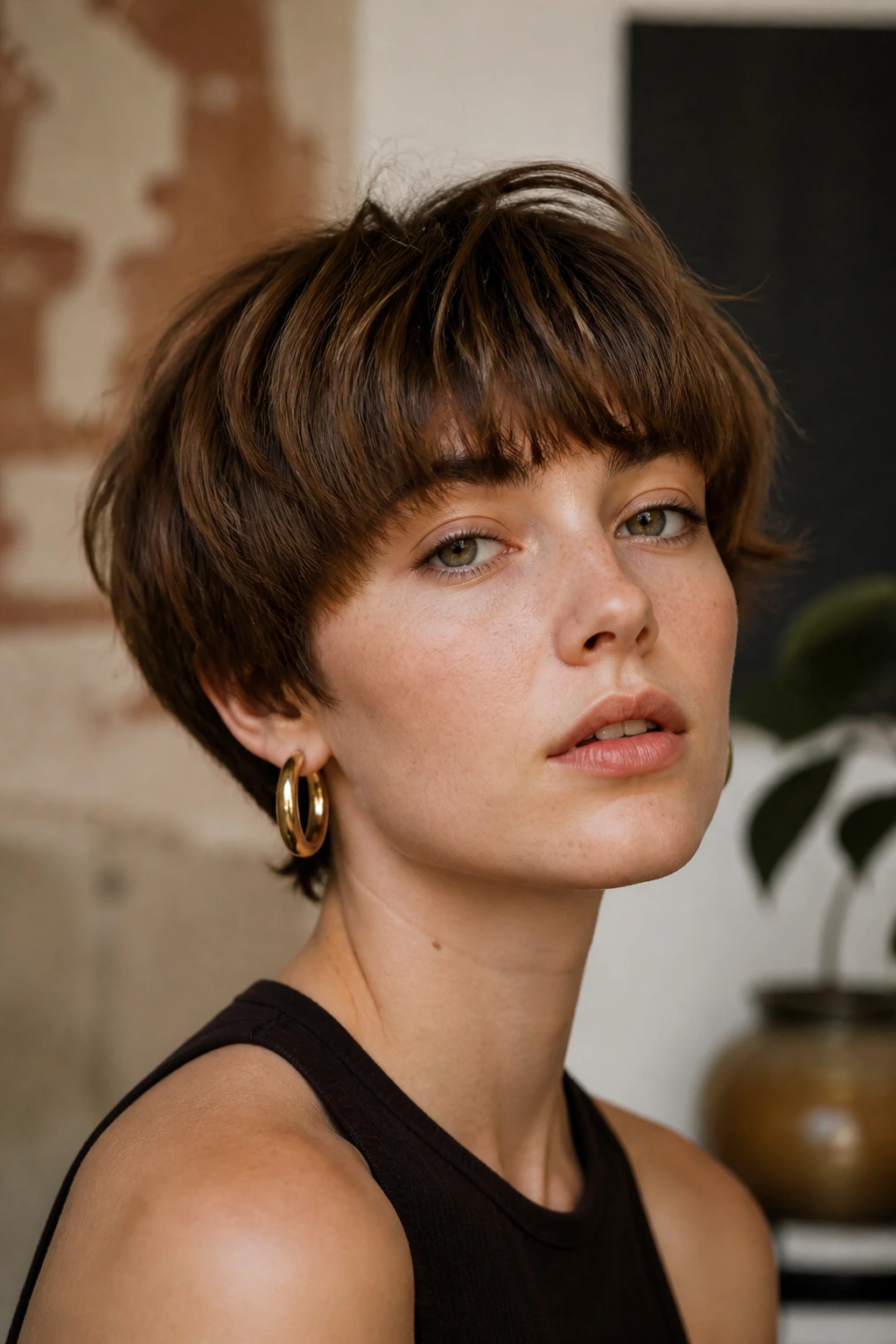
I have a soft spot for this one because it takes a shape people used to dismiss and makes it interesting again. The outline hints at a bowl cut, but the edges are broken up, the crown is layered, and the fringe is softened so it never feels blunt. It’s a clean shape with a messy soul.
The trick is restraint. If you cut the perimeter too hard, it becomes a literal bowl. If you cut too much out of the top, the shape falls apart. The balance is in leaving enough shape to read as deliberate while still giving the layers room to move.
This is the cut for people who like fashion haircuts and do not mind a little attention. It is not trying to hide.
22. Brushed-Back Messy Shag
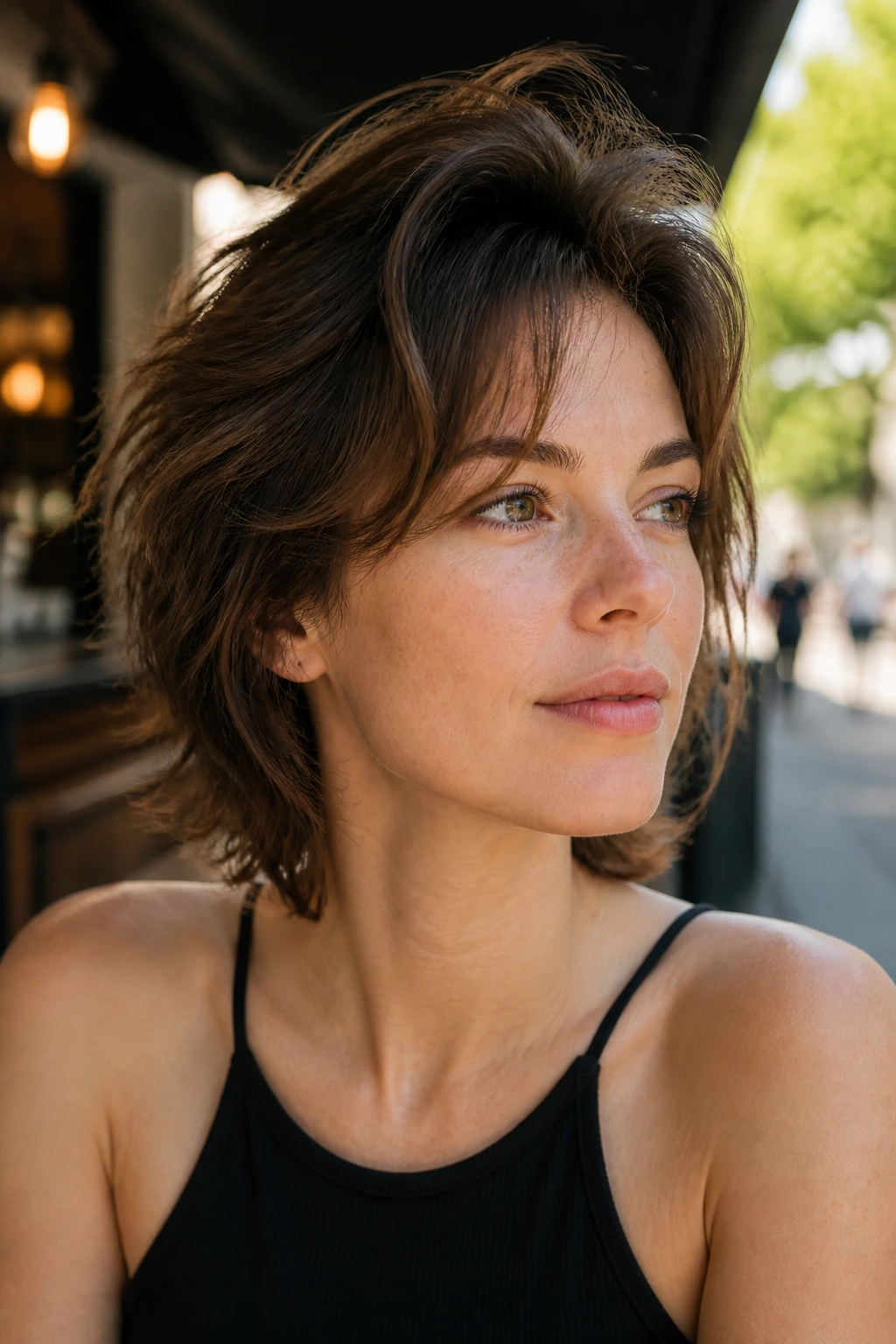
A brushed-back shag gives you height away from the face and a little swagger through the front. The layers are cut so they can move back without collapsing, and the fringe is soft enough to be pushed off the forehead or split apart with fingers. It’s a strong choice if you don’t want hair hanging in your eyes all day.
The look is especially useful for people with strong brows or a face shape that benefits from a bit more vertical lift. A small amount of paste at the roots can help keep the front from falling flat. But keep it light. Too much product and the shape turns sticky instead of airy.
This cut has a slightly rock-and-roll edge without needing actual rock-and-roll styling. That’s part of the appeal.
23. Angled Shag Bob
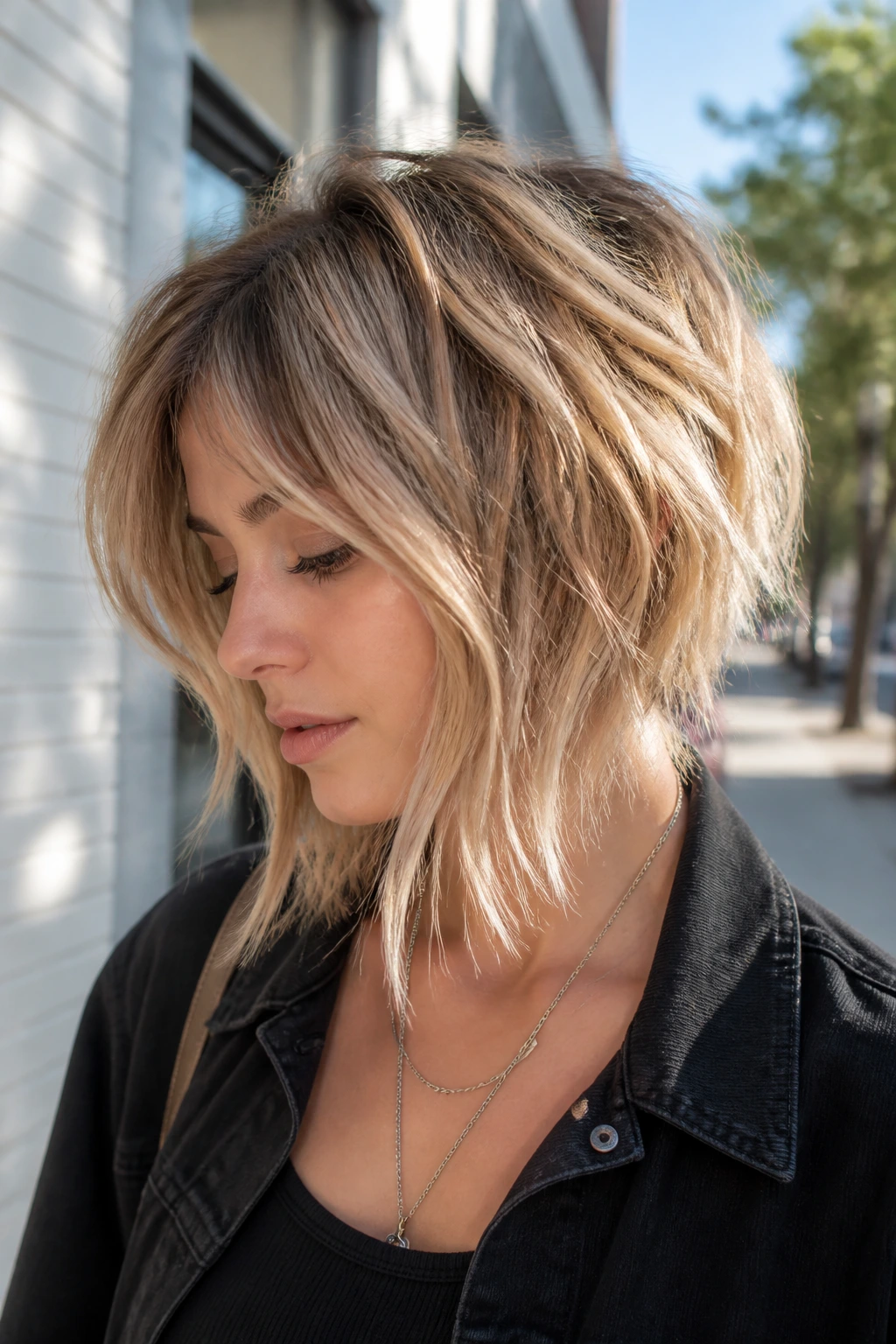
An angled shag bob leans longer in the front and shorter at the back, which gives the cut a clean line and some forward motion. The layers are still choppy, but the angle keeps the silhouette controlled. It feels a little more polished than a pure shag while keeping the movement.
This shape is smart if you like hair that frames the face but still has a defined structure. The angle can soften a square jaw or add length around the face without making the haircut heavy. If your stylist over-angles it, though, you can lose the shag effect and end up with a very different bob.
Ask for a soft angle rather than a dramatic one unless you want the front pieces to lead the whole cut.
24. Disco Retro Shag

This is the loud one, and I mean that in the best way. Think feathery layers, volume through the crown, and a fringe that looks good when it’s a little lifted off the forehead. The reference here is old-school glamour, but the choppy layers keep it from becoming a costume piece.
A round brush or large rollers help this cut show its best side. The movement needs some direction so the feathering at the ends doesn’t disappear. If you want the retro vibe without the stiffness, keep the finish touchable and let the layers stay a little separated.
It’s one of my favorites when someone wants short hair that doesn’t look shy. The shape speaks first.
25. Low-Maintenance Air-Dry Shag
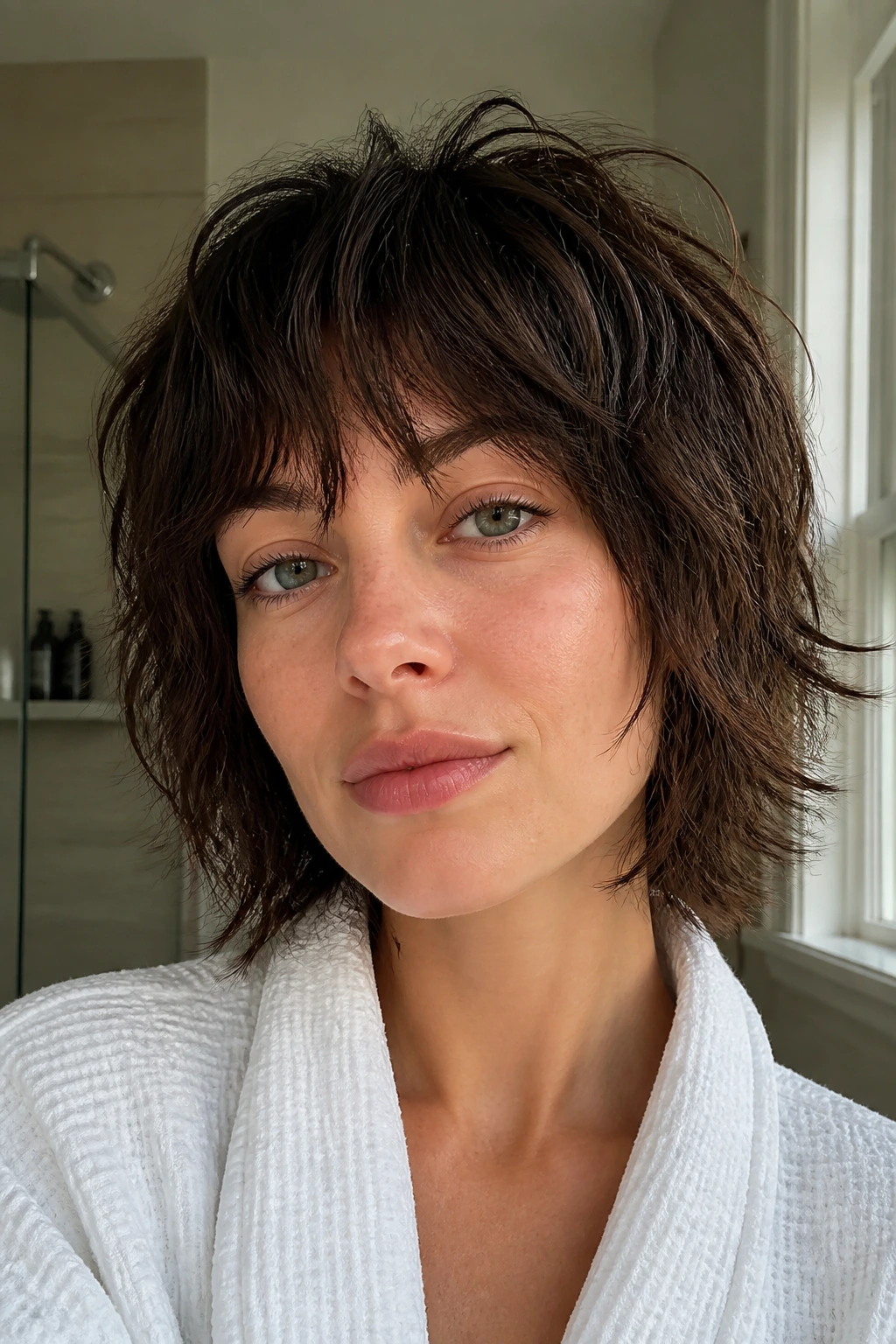
Not every shag wants heat. This version is cut to settle into a useful shape with a quick towel blot, a bit of cream, and an air-dry. The layers are placed so the hair bends rather than fights itself, which means you get texture without much effort on your part.
The important part is the cut plan. If the stylist removes too much weight from the ends, the hair can dry into little frizzed-out tails. Keep the perimeter strong enough to hold form, then let the interior take the hit. That way the texture shows without making the hair look fuzzy.
This is the cut for people who would rather spend time doing anything else than holding a blow-dryer. Respectable choice.
26. Sliced Layer Shag for Straight Hair

Straight hair can be a little stubborn with shag cuts. If the layers are too blunt, the shape looks blocky. If they’re too shredded, the ends fly apart. Sliced layering solves that middle problem by removing weight in thin, controlled pieces so the hair moves without losing its line.
This is especially useful if your hair is the kind that shows every snip. The sliced layers make the perimeter feel lighter and the crown feel less stiff, but the overall silhouette still behaves. I prefer this to heavy razor work on very straight hair because the ends tend to stay cleaner.
A light texture spray and a rough bend with a flat iron can make the separation show. Don’t curl every piece. That kills the point.
27. Color-Pop Shag with Peekaboo Panels
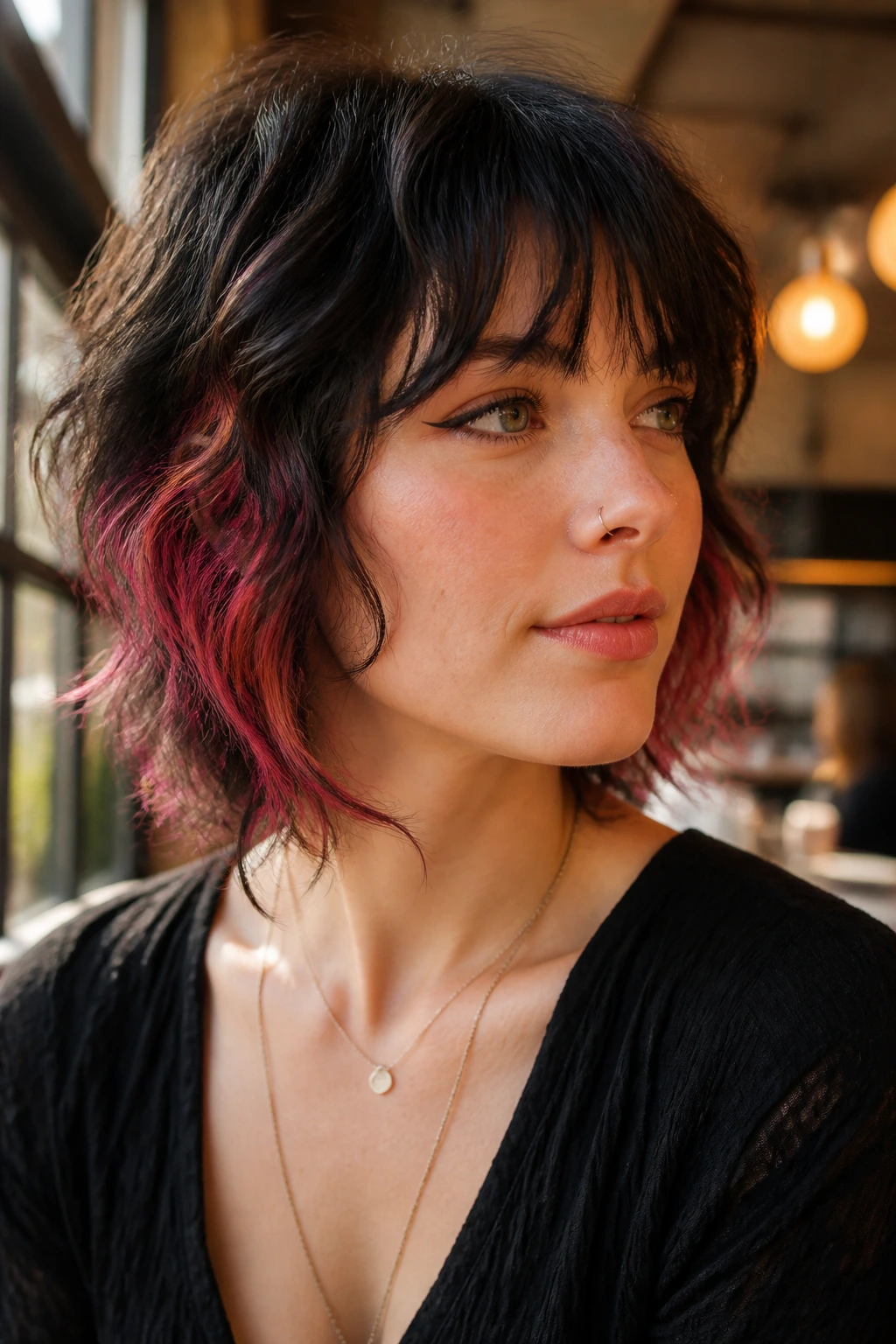
The haircut is one thing. The color is the second half of the story. Peekaboo panels tucked under the top layers make the movement of a short shag much more obvious, because the color flashes only when the layers separate. That gives the cut motion even before you style it.
This works with bright color, dark-to-light contrast, or even a subtle tone shift a few levels lighter than the base. The point is placement, not just hue. If the color sits too high on the surface, the haircut loses some of its texture logic. Hidden panels keep the reveal clean and a little surprising.
If you like your hair to have a bit of drama in motion, this is the one that gives it to you.
Why Choppy Layers Change the Shape So Much

A short shag is not just a shorter haircut with some texture sprayed on top. The shape changes because the layers change how weight sits on the head. Remove a little too much at the ends and the cut gets airy in a bad way. Leave too much and it lies down like a blunt bob that gave up halfway through.
The good shags usually keep a balanced perimeter and then break up the interior. That means the haircut still has a line around the face, the ears, or the jaw, but the layers inside that line move separately. Point cutting is a big part of that effect. So is where the shortest layer starts. A short crown with longer side pieces creates lift. A short fringe with too much thinning can create chaos.
That’s why this style looks so different in real life from a photo where every piece is sprayed into place. The cut has to do part of the work on its own.
How to Choose the Right Short Shag for Your Hair Texture
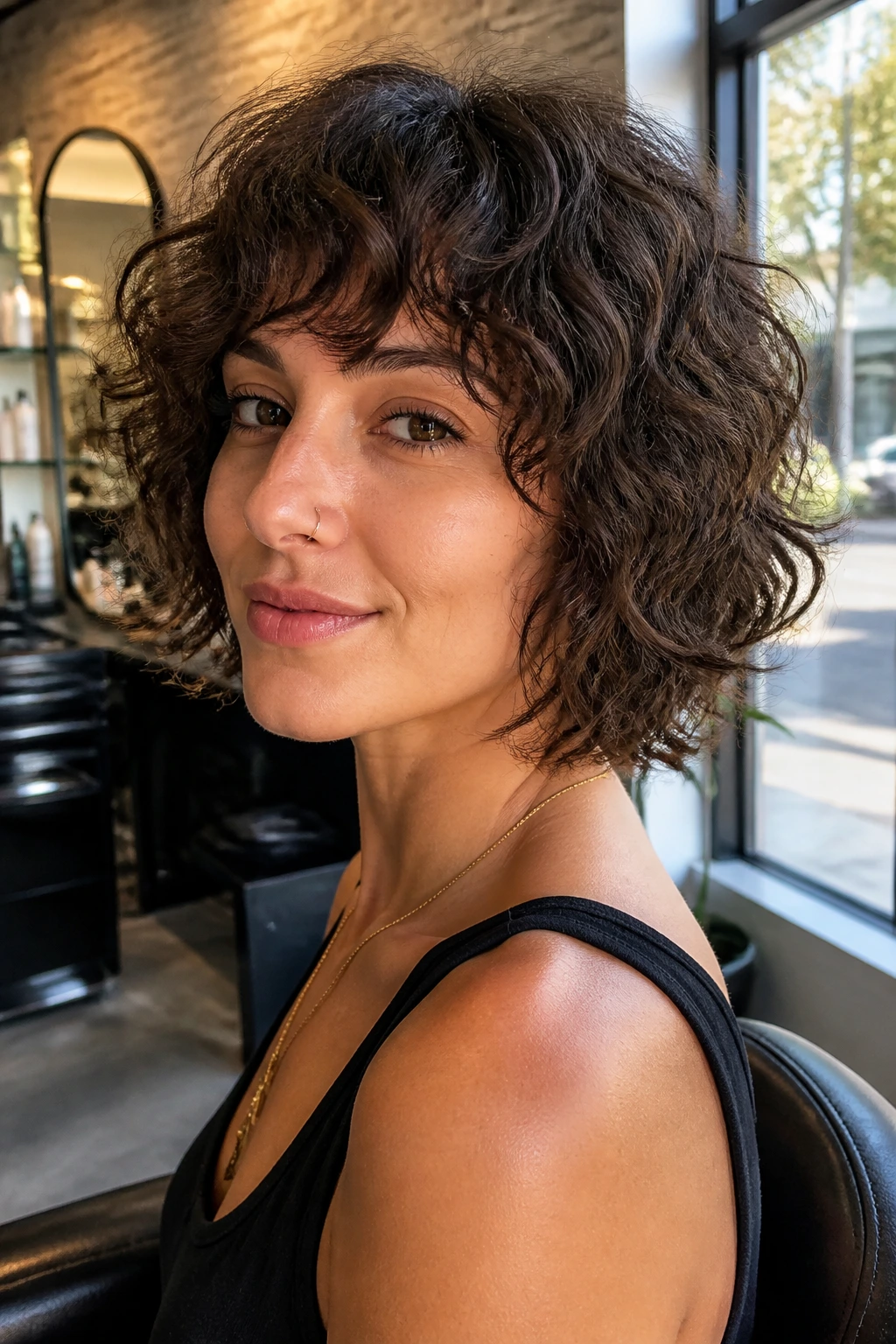
Fine hair, thick hair, straight hair, wavy hair, curly hair — the same shag does not behave the same way on any of them. Fine hair usually needs more perimeter weight and less aggressive thinning. Thick hair can handle stronger internal removal, and it often looks better when the nape is cleaned up so the back doesn’t balloon.
Straight hair shows every line, which is why sliced layers or soft razor work tend to look cleaner than heavy texturizing. Wavy hair is the easiest match for a shag because the cut can lean into the bend instead of forcing it. Curly hair needs the most respect; it should be shaped around shrinkage, with the layers placed so the curls stack instead of frizzing apart.
If you’re unsure, start by asking one question: do you want the haircut to look best air-dried, or do you want it to look best after styling? That answer changes everything.
What to Tell Your Stylist Before the First Snip
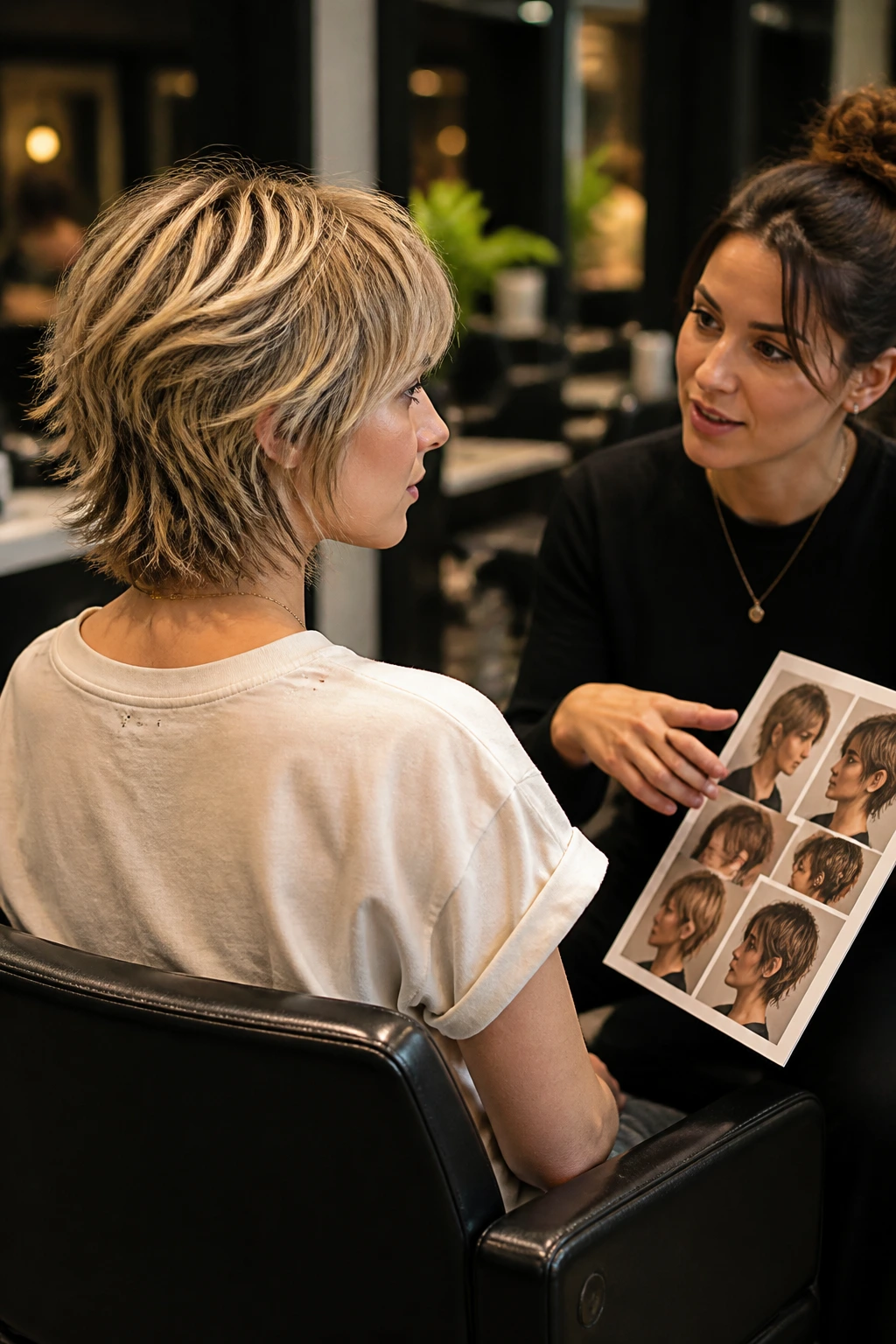
Bring photos, but bring the right photos. One front view is not enough. A good shag needs to be seen from the side and back because the nape and crown matter just as much as the fringe. If you can, pick pictures of hair with your own texture, not just your own face shape.
Say what you do and do not want around the face. Do you want curtain bangs, a side fringe, a shorter micro fringe, or no fringe at all? Tell them how much forehead you want covered and whether you tuck hair behind your ears. That tiny habit changes the whole shape.
And this part matters: tell your stylist how much styling you’re willing to do. If you want a low-maintenance air-dry shape, they should not give you a cut that only behaves after a round-brush session and a quarter-sized blob of mousse.
Essential Tools and Products for Styling a Short Shag
-
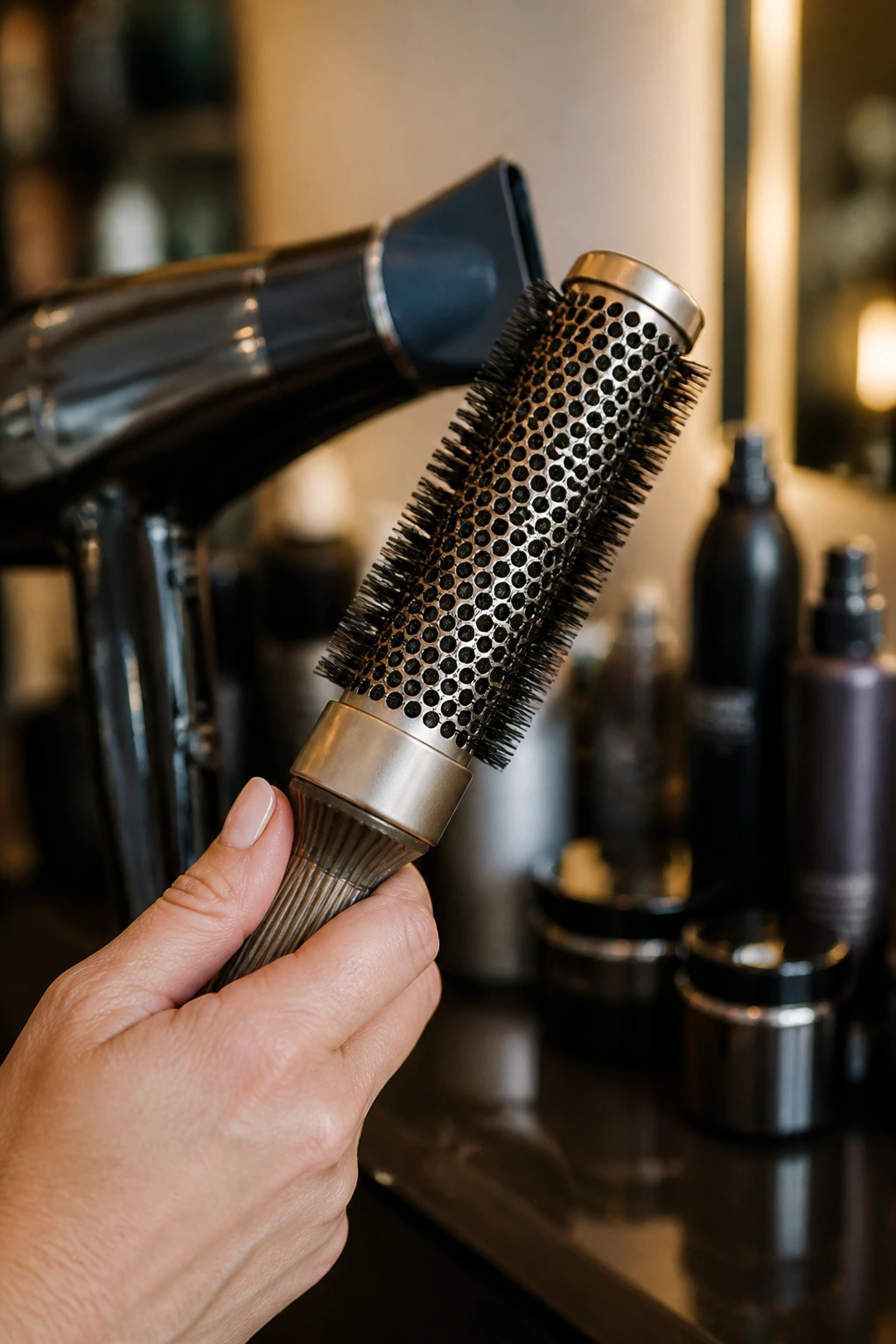
1-inch or 1.25-inch round brush: Best for flipping the ends, lifting the crown, and giving curtain bangs some bend.
-
Blow-dryer with a nozzle: The nozzle keeps air directed where you want it instead of puffing every layer out at once.
-
Diffuser: A must for curly and wavy shags that need shape without frizz.
-
Lightweight mousse: Gives the crown lift without the sticky feel heavy creams leave behind.
-
Texture spray: Helps the choppy layers separate and stay piecey after drying.
-
Matte paste or soft wax: Good for tiny bits at the fringe or ends, especially on pixie-shag hybrids.
-
Wide-tooth comb: Useful for shaping curls and for keeping wavy layers from clumping too tightly.
-
Dry shampoo: Helps keep short hair from collapsing at the roots and stretches the style between washes.
-
Sectioning clips: Handy if your fringe and crown need to be dried in pieces instead of all at once.
Small Styling Moves That Keep the Layers Lively
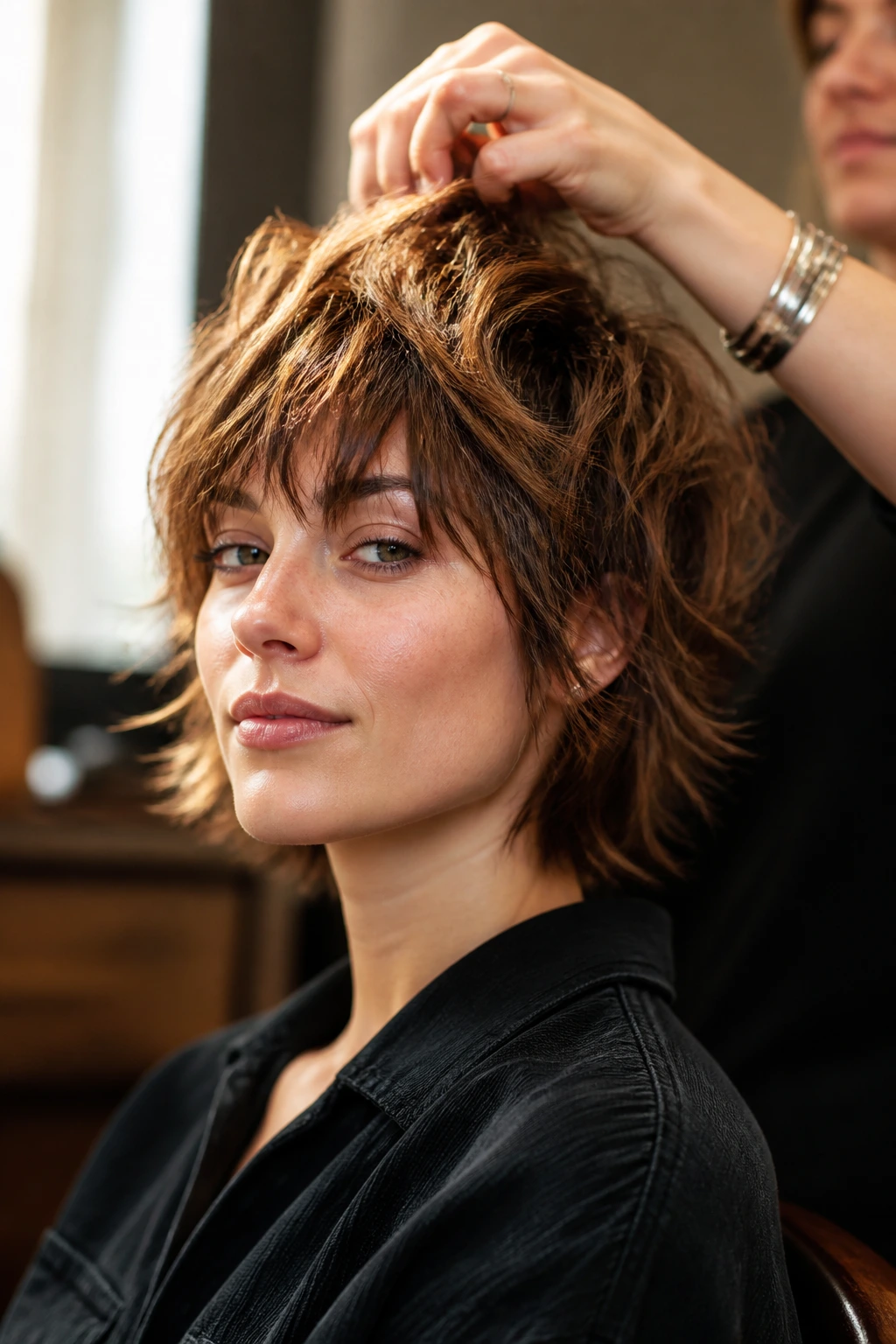
A short shag only looks right when the layers are separate enough to read. That means you do not need to smooth every strand into place. In fact, doing that usually kills the haircut. Start with mousse at the roots on damp hair, then rough-dry until the crown is about 80 percent dry before you start directing the fringe or sides.
Root Lift: Flip the top sections in the opposite direction of where they’ll land, dry the roots, then flip them back. It’s a tiny move with a big payoff.
Piecey Finish: Warm a dot of paste between your palms and press it lightly into the ends, not the scalp. The goal is separation, not slickness.
Fringe Control: If the bangs are too round, brush them side to side while drying. If they’re too flat, clip the roots for a few minutes while the rest of the hair dries.
Night Habit: Sleep on a silk or satin pillowcase if you can. Short layered hair gets crushed faster than long hair, and a smoother surface helps the texture survive until morning.
Common Mistakes That Flatten or Frizz Out a Short Shag

The first mistake is asking for too much texturizing at the ends. The symptom is that strange, see-through perimeter where the haircut looks like it’s missing half its body. The fix is simple: keep more weight at the outline and let the texture live inside the cut.
Another problem is taking the fringe too short. It sounds playful in the chair and annoying two weeks later, especially if you have a cowlick or any amount of wave. Leave the bangs longer than you think you need, then adjust after you live with them.
A third one: using a heavy cream or too much oil. Short hair does not forgive over-application. A pea-sized amount might still be too much. Start tiny.
And then there’s the styling trap. If you blow-dry every piece into one smooth direction, the shag disappears. If you do nothing at all on fine hair, the crown can collapse. The sweet spot is controlled mess.
Variations and Adaptations to Try
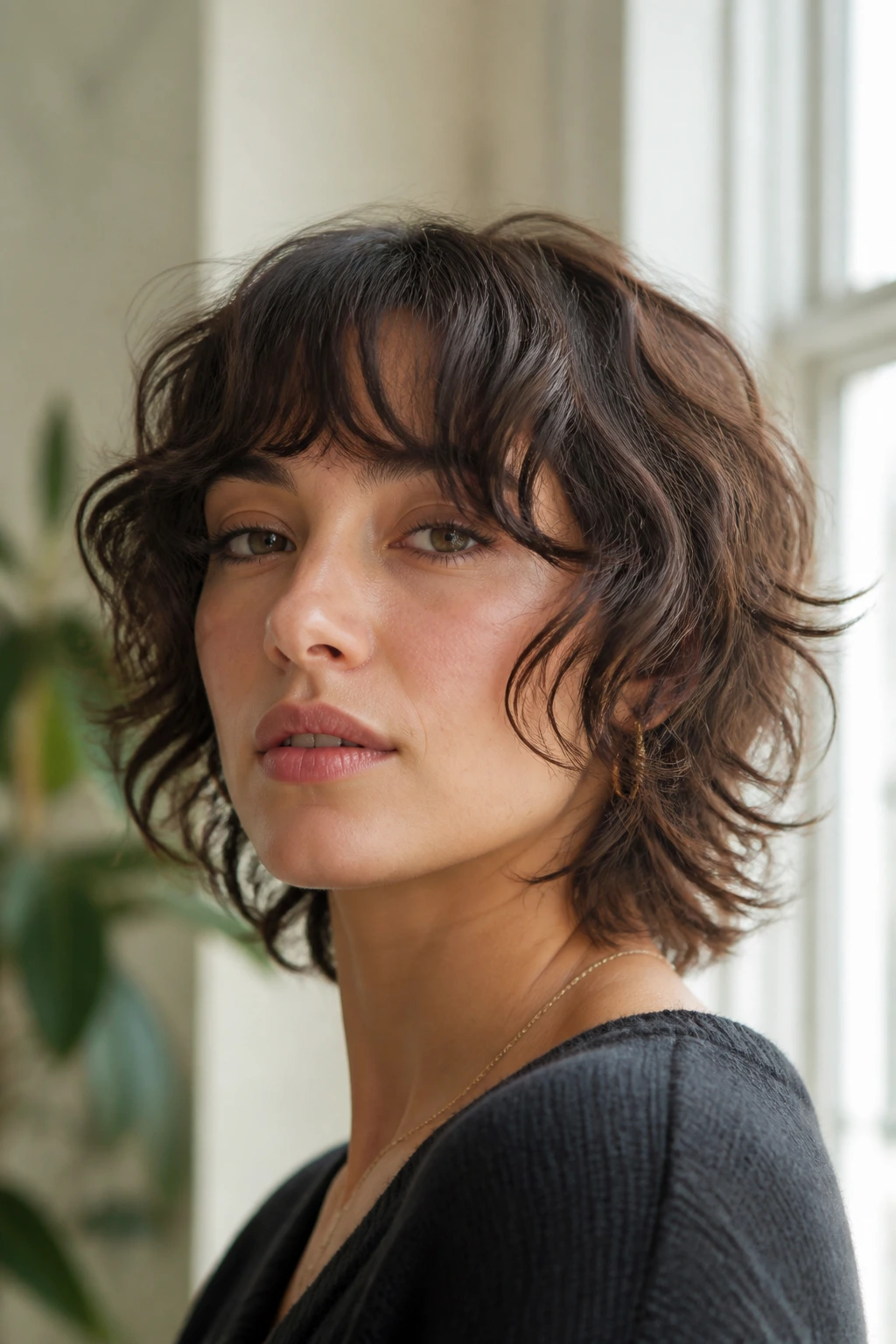
Air-Dry First Version: Ask for soft internal layering and a stronger perimeter so the haircut holds its outline without heat. This works best on wavy hair that already bends in a useful way.
Curl-Forward Version: Let the fringe and front pieces be cut around your natural curl pattern, not against it. The result is rounder, fuller, and much less frizzy when dry.
Fine-Hair Lifted Crown: Keep the back and sides a touch shorter and preserve the ends. The crown gets the volume, but the haircut does not go wispy.
Thick-Hair Weight-Off Version: Build in an underlayer or a hidden reduction zone near the nape. That takes bulk out where it gathers and keeps the shape from puffing outward.
Color-Contrast Version: Add peekaboo panels or a subtle lighter glaze under the top layer. The choppy layers catch the contrast and make the movement more visible.
Grow-Out, Trims, and Everyday Maintenance
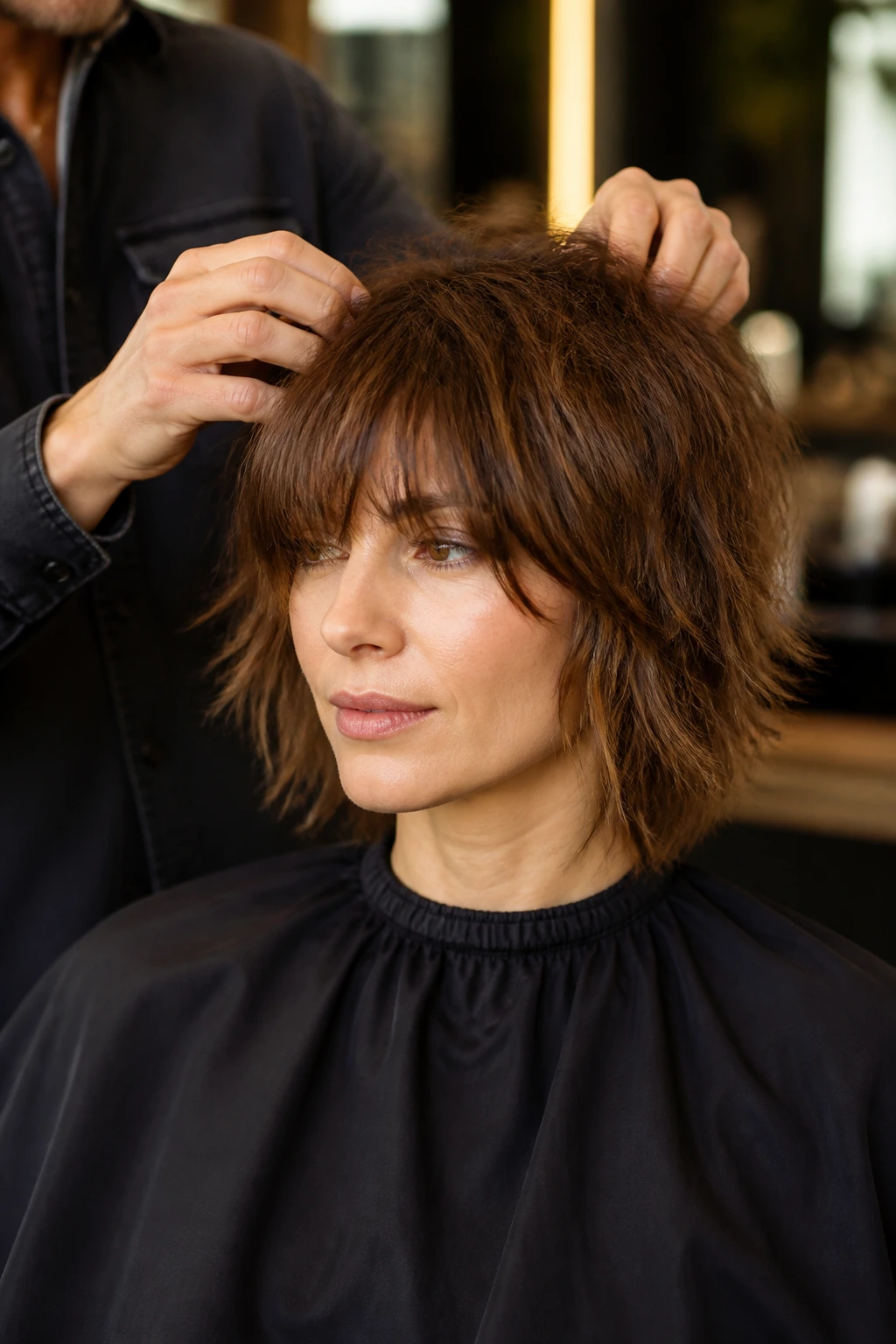
Short shags need a little upkeep if you want the shape to stay readable. A bang trim every 4 to 6 weeks keeps the fringe from falling into your eyes or losing the piecey line. The full shape usually benefits from a trim every 6 to 10 weeks, depending on how fast your hair grows and how sharp you want the silhouette to stay.
Wash frequency depends on texture. Fine hair often needs more frequent cleansing because oils flatten the crown fast. Curly and dry hair can usually go longer between washes, especially if you refresh with water, a little leave-in, or a light cream.
At night, don’t pile the cut into a tight bun or clip unless you want a dented crown in the morning. A loose sleep routine is kinder: silk pillowcase, dry the roots fully before bed, and use dry shampoo only where the hair actually needs lift. If the back starts to kick out weirdly, that’s your cue for a trim, not a styling war.
Frequently Asked Questions

Can short shag haircuts with choppy layers work on fine hair?
Yes, if the cut keeps enough weight at the perimeter. Fine hair usually looks best with softer internal layering and a little lift at the crown rather than aggressive thinning through the ends.
Do short shags work on curly hair?
They do, but the haircut has to respect shrinkage and curl pattern. A dry cut or curl-by-curl shaping usually gives a better result than cutting curly hair flat and hoping it behaves later.
How do I ask for a shag without getting a mullet?
Say you want movement at the crown and face-framing pieces, but you want the back to stay close to bob or pixie length. That keeps the shape balanced and tells the stylist you’re not asking for a dramatic tail.
What if my hair sticks out at the sides?
That usually means the layers are too short or the perimeter was thinned too much. Ask for more weight through the outer line and a softer blend near the ears so the cut sits closer to the head.
How often should I style a shag with heat?
Not every day. Most of these cuts look best when you use heat only when the shape needs help, then refresh with a bit of water, mousse, or texture spray on the off days.
Can I grow a short shag into a bob?
Yes, and often it grows out better than people expect. The trick is to keep the fringe and nape trimmed while the sides catch up, so the shape doesn’t get stuck in an awkward middle stage.
What’s the difference between choppy layers and thinning?
Choppy layers create shape; thinning removes bulk. A haircut can have choppy layers without feeling wispy, but once the ends are over-thinned, you lose the solid outline that makes a short shag look intentional.
Do these cuts need a lot of product?
Usually not. A small amount of mousse at the roots and a touch of texture spray or paste at the ends goes a long way. Heavy products tend to flatten the very movement the cut is supposed to have.
Why This Cut Still Earns Its Place

A short shag with choppy layers has a useful honesty to it. It shows the haircut. It doesn’t hide behind one perfect curtain of hair or pretend the ends are all the same length. The shape lives in the broken edges, the lifted crown, the pieces that move when you turn your head.
That’s why it keeps coming back in different forms — softer, curlier, sharper, shorter, more grown-out. If you want one haircut that can look casual at breakfast and deliberate by dinner, this is a strong place to start. Bring a photo, say what you want the fringe and nape to do, and let the layers earn their keep.
