



Short hair doesn’t shut the door on box braids. It changes the math.
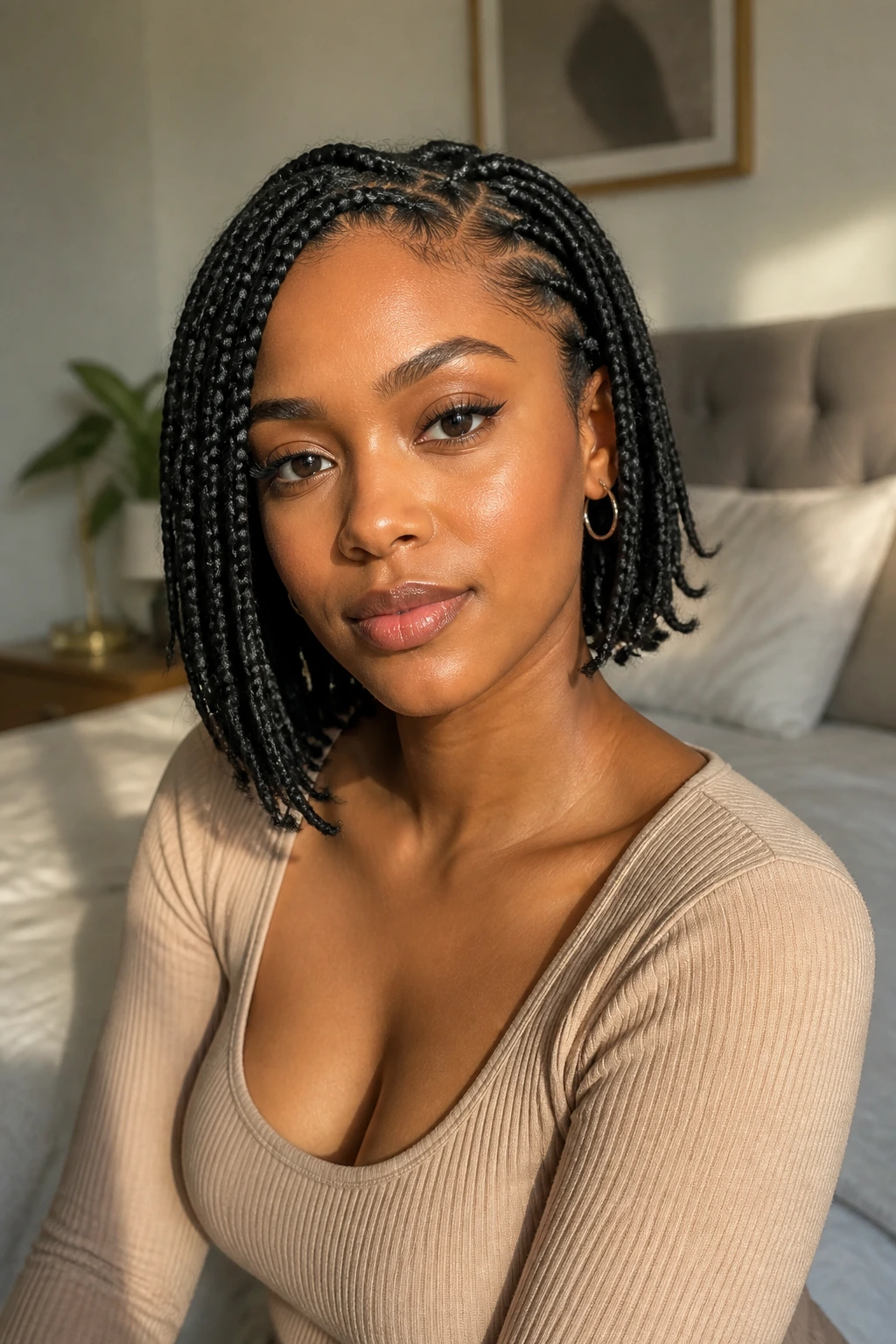
The best box braid styles for short hair are the ones that respect the length you actually have — ear-length, chin-length, nape-length — instead of pretending every head can carry the same heavy, waist-skimming look. On a short base, shape matters more than fantasy length. Clean parts. Smart weight. Ends that stop where the style still looks deliberate.
And that’s the part people miss. Short braids are not a consolation prize. When they’re done well, they look sharper than long sets because every line is visible: the parting, the root, the bead, the way the braids brush the jaw or sit right above the collar. If the braids are too thick, too long, or too tight, the whole thing starts to wobble. If the proportions are right, though, the style reads on purpose. Strong. Clean. Done.
Why These Styles Earn a Spot in Your Rotation
-
Short Hair, Clear Shape: Bob lengths, tucked ends, and lifted updos keep the braid line readable when your natural hair only reaches the ears or chin.
-
Less Weight, Better Wear: Shorter finished lengths usually put less drag on the nape and hairline, which matters when you’re braiding hair that doesn’t have much natural length to anchor the extensions.
-
More Styling Range Than People Expect: A short set can still go side-swept, half-up, space bun, pigtail, crowned, beaded, or accessorized without looking crowded.
-
Cleaner Around Collars and Hoodies: Braids that stop above the shoulders snag less on jackets, scarf loops, and backpack straps, which is a small thing until you wear them every day.
-
Face Shape Gets a Bigger Role: With less length to hide behind, parting and silhouette do the heavy lifting. That’s good news if you like a style with personality.
-
You Can Make It Look Intentional Fast: A single cuff, a side part, or a blunt bob finish changes the mood immediately. Short braids respond to small choices.
What Your Length Actually Allows
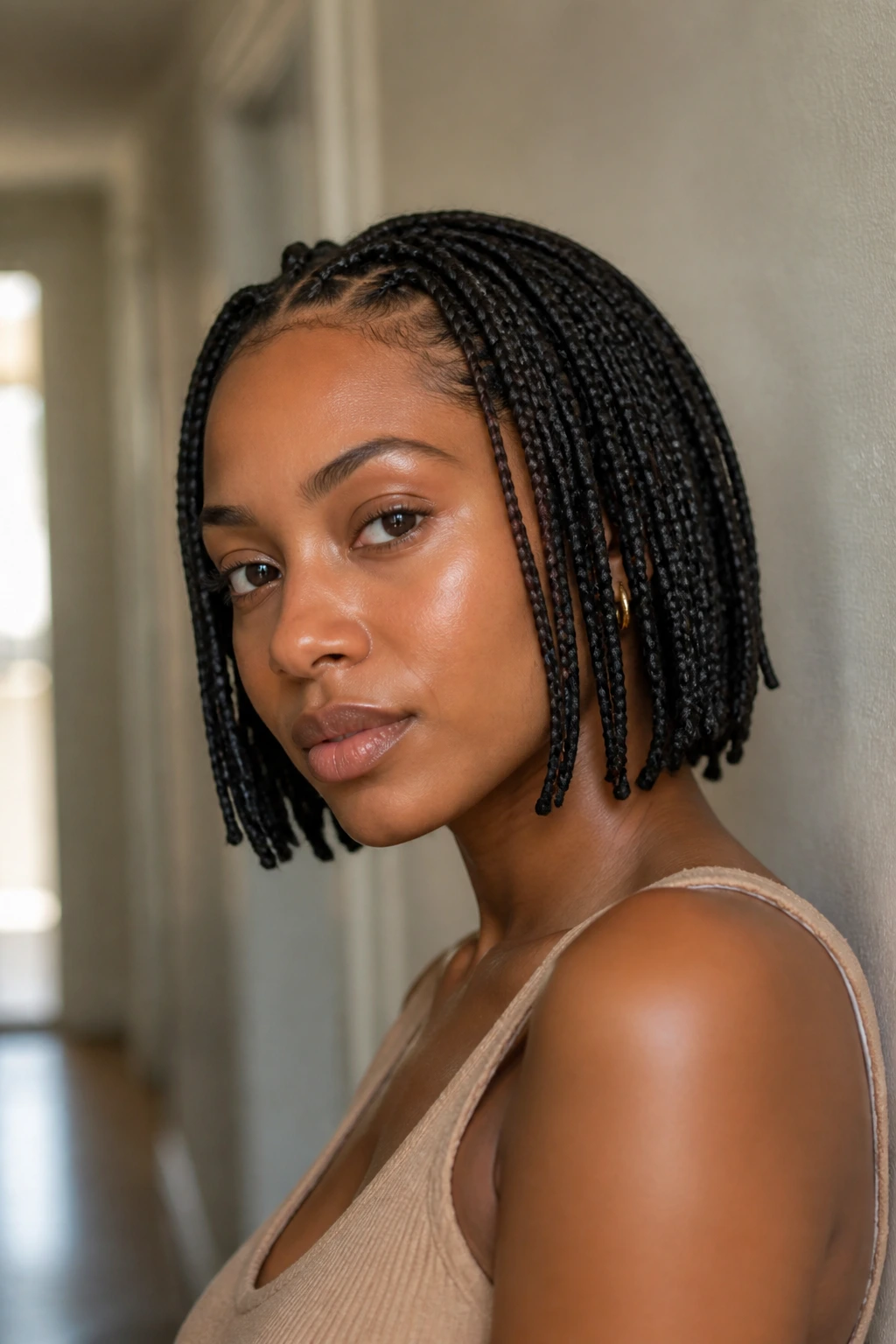
Short hair gives you options, but not all options are equal. A style that sits cleanly on a chin-length base can look cramped on hair that barely clears the nape, and a set that looks airy on a longer bob may feel bulky if the roots are too small to support it. That’s why the first decision is not “What braid style do I want?” It’s “How much hair do I actually have to work with?”
If your natural hair is closer to ear-length, the sweetest spot is usually smaller parts, lighter extensions, and styles that keep the finished length around the jaw or just below it. Knotless starts, face-framing rows, and beaded ends tend to behave better here. Big sections can look stubby at the root and too heavy at the ends. Not cute.
Once you’re around chin length or a little past it, the whole menu opens up. Side parts, layered bobs, half-up styles, pigtails, and low buns all start to make sense. If you have collarbone length or a stretched base, you can push farther into ponytails and wrapped crowns without fighting the hairline every five minutes.
The parting size matters more than people think
On short hair, the box itself is part of the style. Square parts around 1/2 inch work nicely for classic bob shapes, while smaller parts — closer to 1/4 inch — help when the hair is fine or very short and needs a lighter load. Bigger parts can still work, but only if the finished style is meant to be chunky and bold.
The nape tells the truth first
That back hairline is where short sets start to reveal their weaknesses. If the braids pull, slide, or puff at the nape after a few days, the parting was too large, the extensions were too heavy, or the finish was too blunt. It usually isn’t one dramatic mistake. It’s three small ones stacking up.
1. Chin-Length Classic Box Braid Bob
A chin-length bob is the clearest, cleanest answer when short hair needs a shape that feels finished. The ends stop around the jawline, so the braids don’t drag the face down or fight with collars. I like this version when the goal is neatness first and drama second. It’s the style that makes short hair look intentional in the first ten seconds.
Why it works on short hair
The blunt finish gives the eye somewhere to land, which matters when there isn’t much natural length to create movement. Keep the parts medium — around 1/2 inch squares — and the bob sits with enough density to look full without turning into a brick.
A clean middle part gives a sharper line, but a side part softens the whole thing if your features feel crowded by straight symmetry. Both work. The real trick is keeping the length even so the bottom edge reads like a cut, not a compromise.
2. Side-Part Swing Box Braids
A side part gives short braids movement they otherwise have to fake with length. The whole style leans a little, and that tilt does a lot of visual work. It breaks up the boxy shape and makes a short bob look like it was designed, not merely installed.
This is the style I’d pick for anyone who wants short box braids to feel less strict. The part can start deep on one side and sweep across the crown, or it can be a gentler diagonal if you want the style to stay soft. If your hairline is fine, keep the front rows smaller so the part doesn’t feel too heavy at the temple.
3. Triangle-Part Box Braids
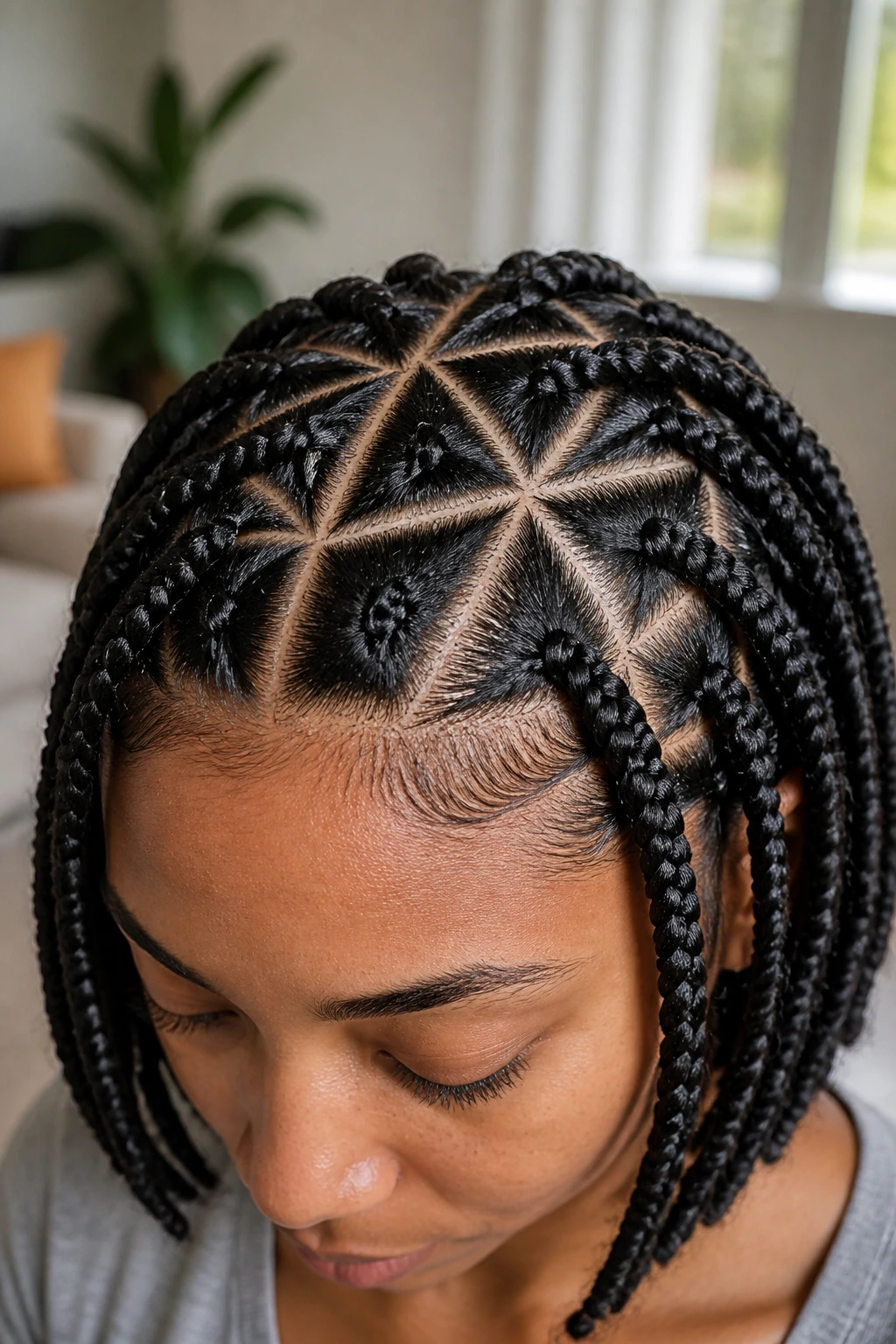
Triangle parts turn the scalp into part of the design. Instead of a straight grid, you get sharp little angles that catch the eye before the braids even move. On short hair, that extra geometry is worth a lot because the style has less length to rely on for drama.
The parts do not have to be large to make an impression. Tiny triangles can look almost jewel-like across a close-cropped base, while larger triangles read bolder and more graphic. I prefer this style on hair that’s been stretched well, because the cleaner the base, the more the angles stand out.
4. Knotless Short Box Braids
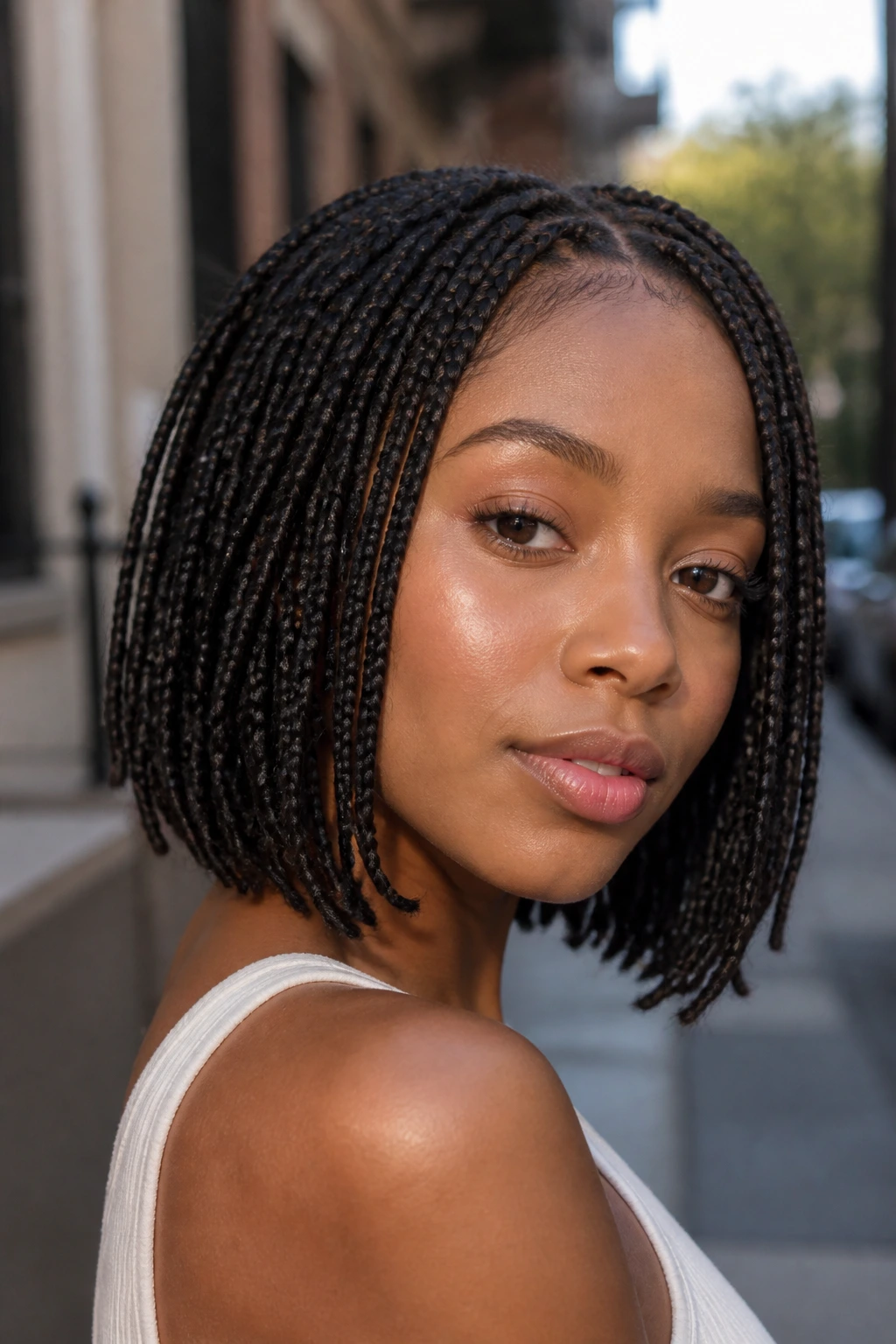
Knotless is the gentler route when the base is short and the scalp doesn’t want extra pressure. The start lays flatter, the roots look softer, and the whole set tends to move with less of that rigid “bundle at the root” feel. On short hair, that softer start can make the difference between polished and bulky.
Best for tender edges and fine hair
If your hairline gets sore fast, knotless is often the smarter choice. It spreads the tension more gradually, especially in the front rows and at the nape. I still wouldn’t let anyone pack too much extension into each braid. Soft start doesn’t mean heavy start.
A good knotless set on short hair usually stops at bob length or just past the chin. Any longer, and the weight starts to show.
5. Beaded Ends Box Braids
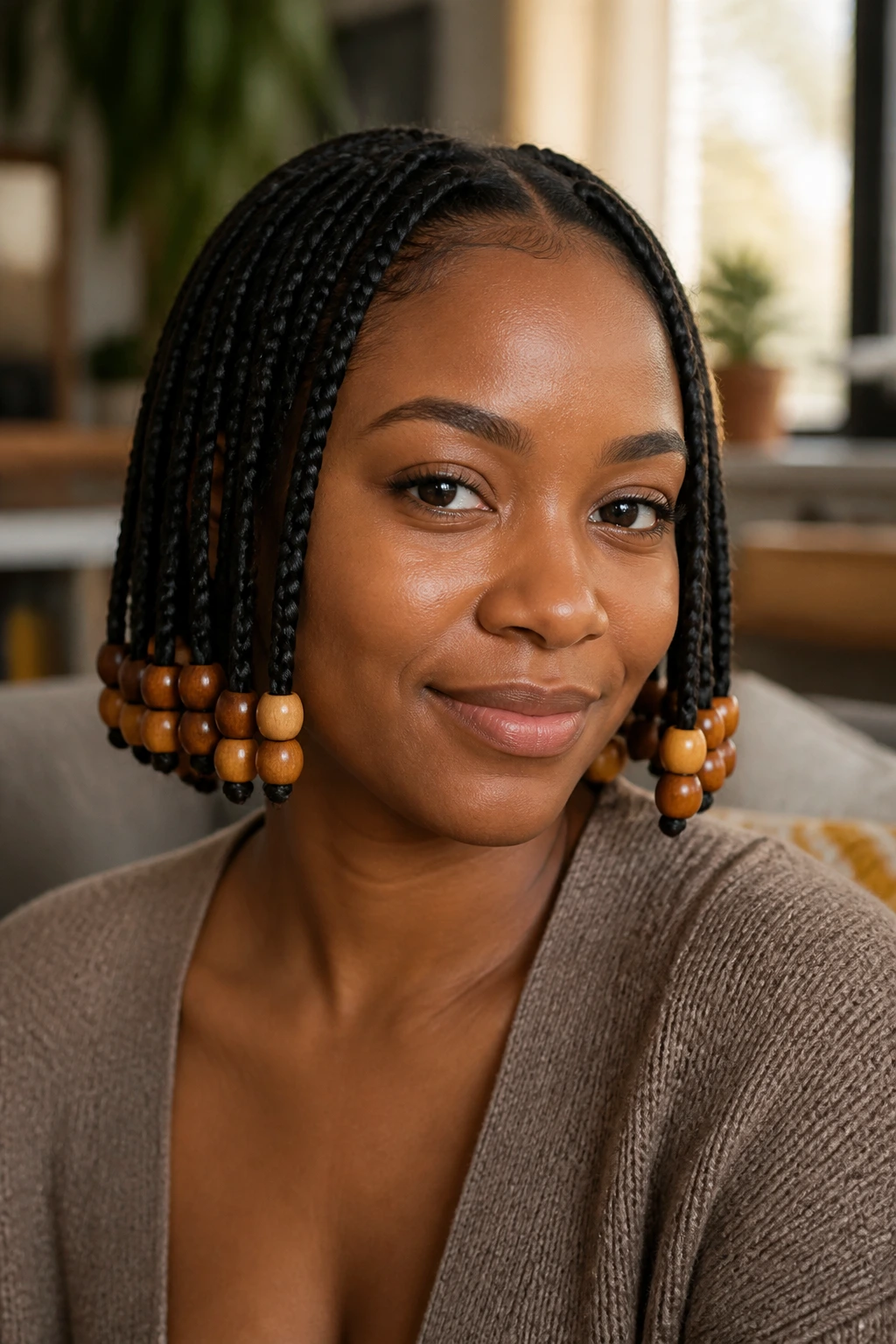
Beads do more on short hair than on long hair. A single row at the ends can make the style feel complete, and the little click of the beads gives the braids a bit of life when you walk. Without them, some short sets can look a touch unfinished, especially if the ends are blunt.
Wood beads feel warmer and softer. Clear or colored plastic beads look louder and lighter. Metal cuffs add a harder edge. Pick one direction and stick with it, because a random mix can make the whole style feel busy fast. On a short bob, three to five beads per side is often enough. More than that and the ends start to look weighed down.
6. Curly Ends Box Braids
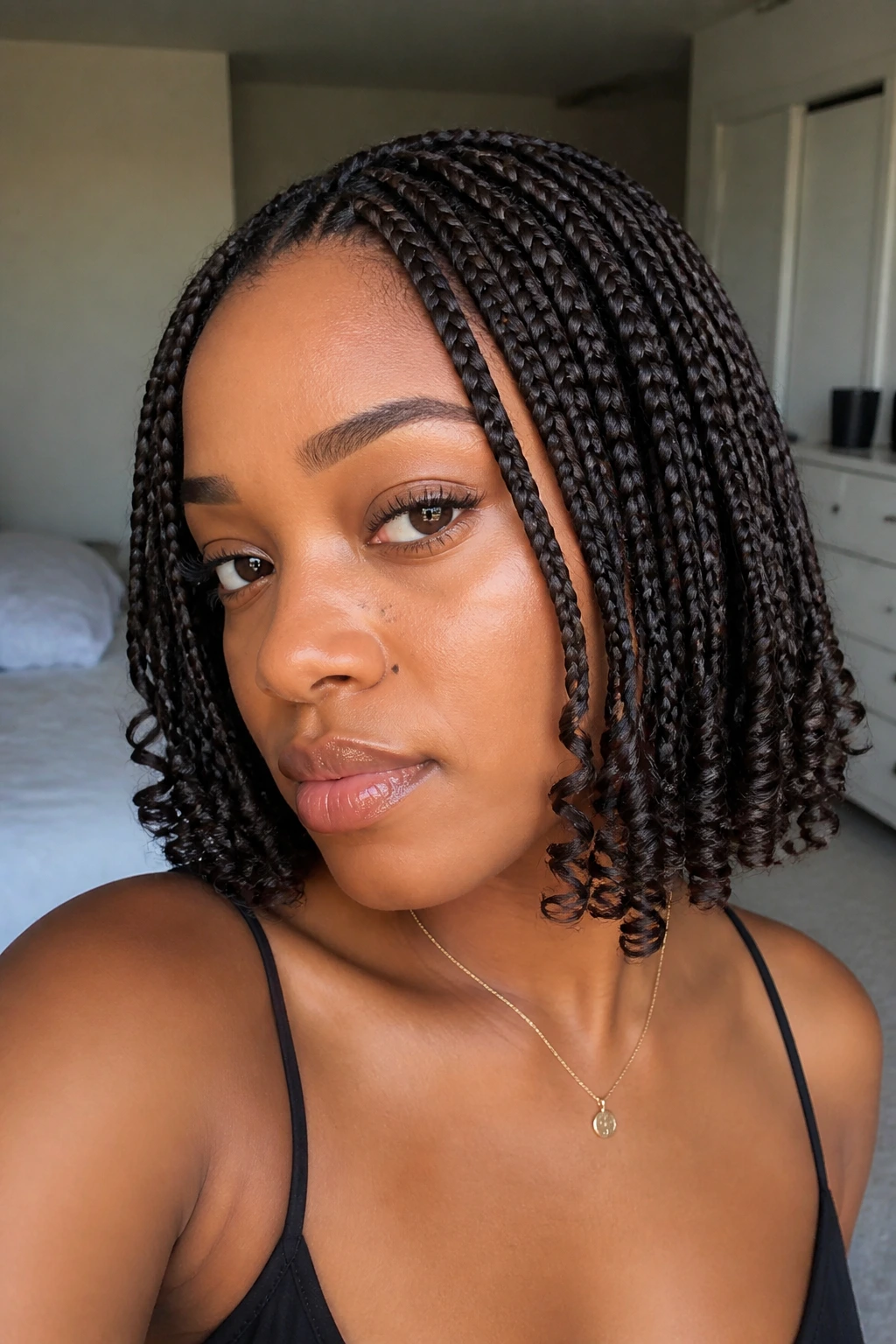
Curly ends are the quickest way to soften short braids without changing the base structure. Instead of stopping in a blunt line, the ends bend, loop, or fall into a looser finish that keeps the look from feeling too severe. On a short set, that little bit of curl adds motion where length can’t.
This works especially well if your braids stop at the chin or collarbone. A few flexi rods, a hot-water set, or pre-curled extension hair can give you that soft finish. I like it when the curls are tighter at the tip and looser where they meet the braid — it feels deliberate, not frizzy.
7. Half-Up, Half-Down Box Braids
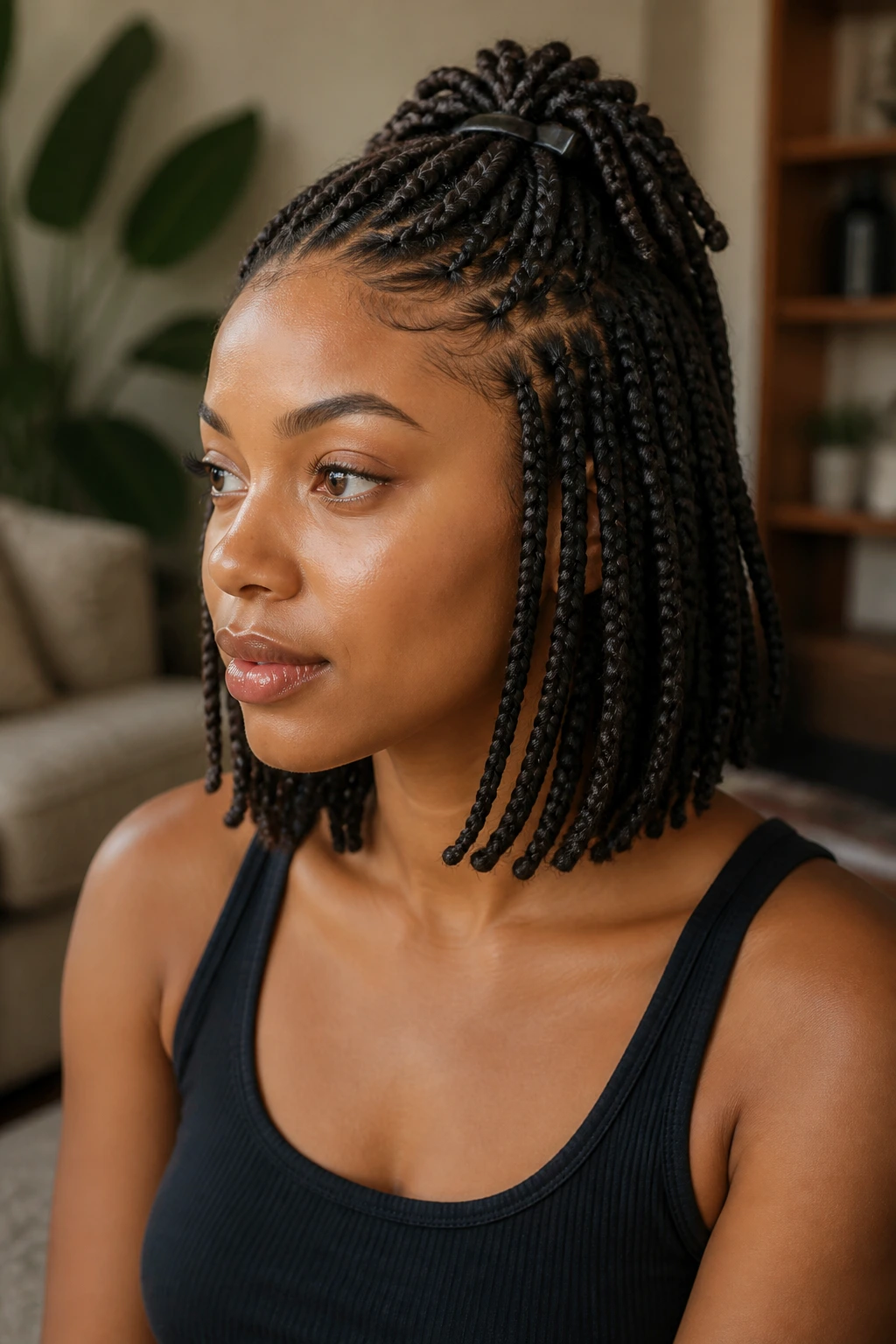
Half-up styles make short braids behave like they’re longer than they are. Pulling the top section back opens the face and lifts the crown, while the loose bottom section keeps the bob shape intact. It’s an easy fix for days when you want the braids off your forehead but not all the way up.
The best part is the balance. You keep the blunt edge, but the top reads as styled. If your braids are chin-length, a small clip or a wrapped elastic usually does the job. If they’re a little shorter, keep the half-up section low and close to the crown so the style doesn’t fight itself.
8. Braided Space Buns
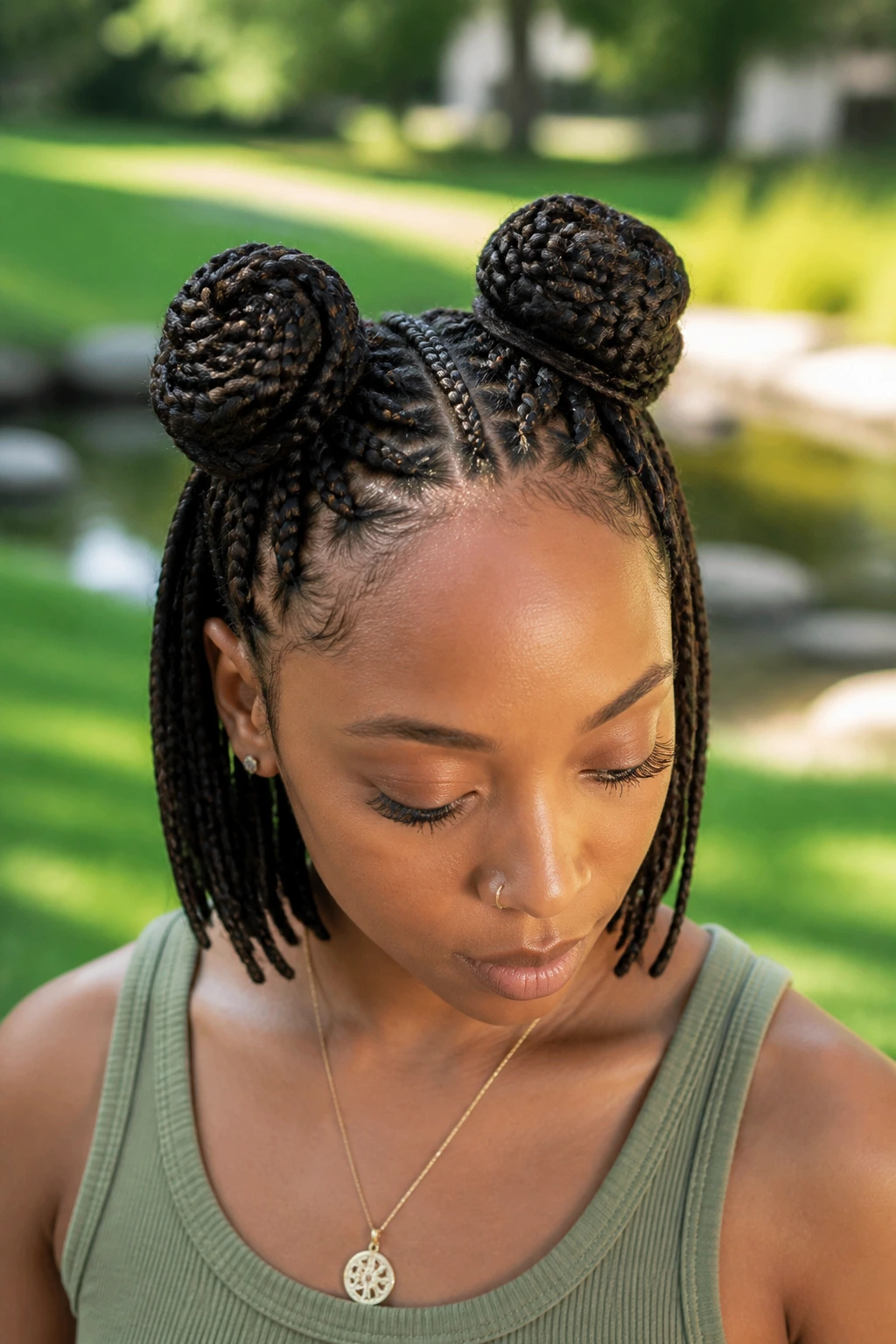
Space buns turn short braids into a shape instead of just a length. Two compact buns on top of the head give the style a playful lift, and the remaining braids can hang loose or be tucked in depending on how much weight you want on the neck. This is one of those styles that looks more complicated than it is.
It works best when the braids are light enough to twist without strain. If the buns feel too heavy, keep them smaller and closer to the scalp. I’d rather see two neat buns than two sagging ones. A clean part down the middle helps the whole style stay balanced.
9. Short Box Braids in Pigtails
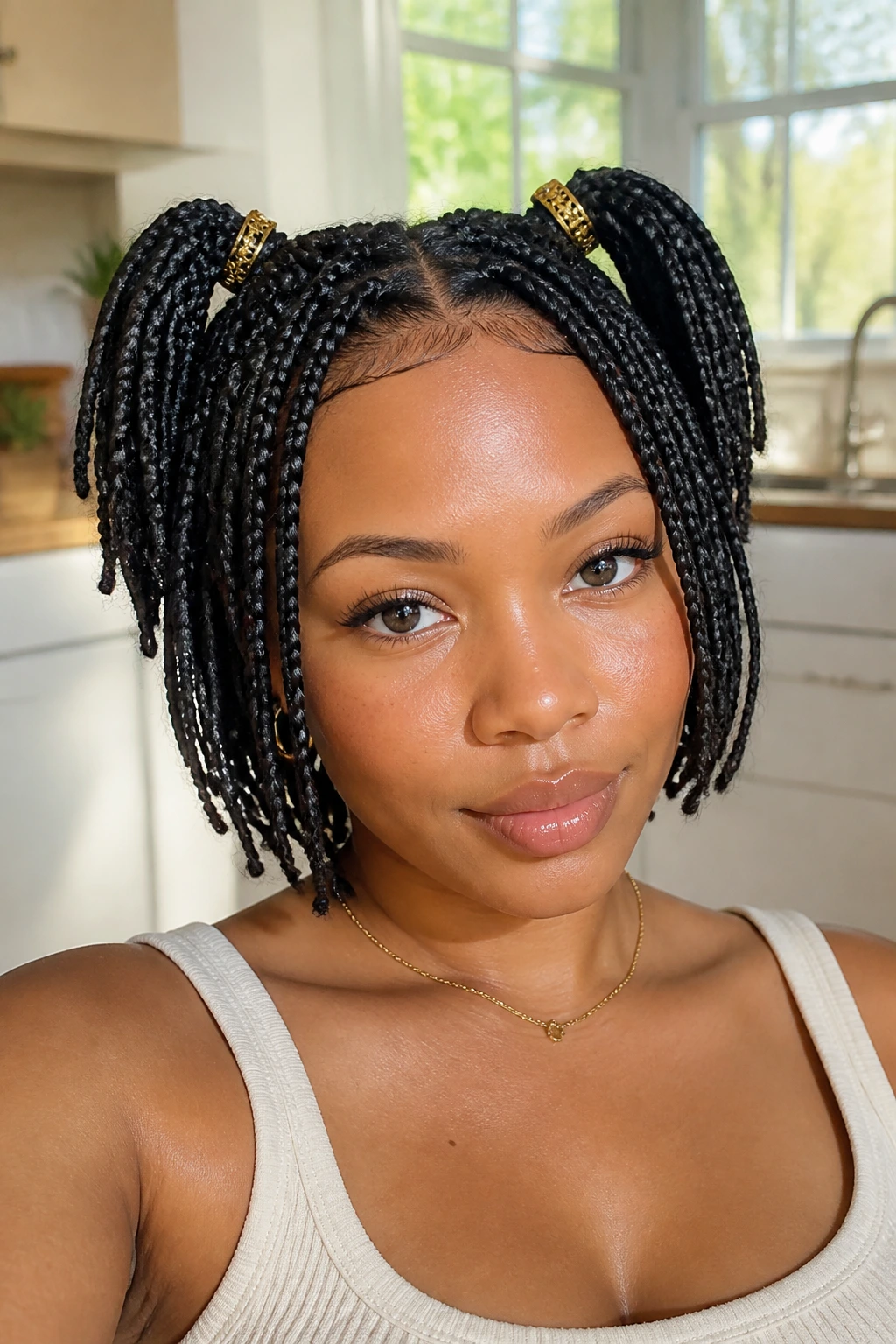
Pigtails are underrated. They split the weight, which makes them easier to wear on short hair, and they make a bob look more playful without asking for extra length. If the braids are chin-length, the pigtails usually sit high enough to show off the parts and low enough to stay controlled.
This style works especially well when the parts are neat and the elastic ties are hidden with a few wrapped braids or cuffs. You can wear the pigtails even or slightly offset if you want a softer shape. Straight-down pigtails can look almost school-uniform sharp; a slight tilt makes them friendlier.
10. Sleek Side-Swept Box Braids
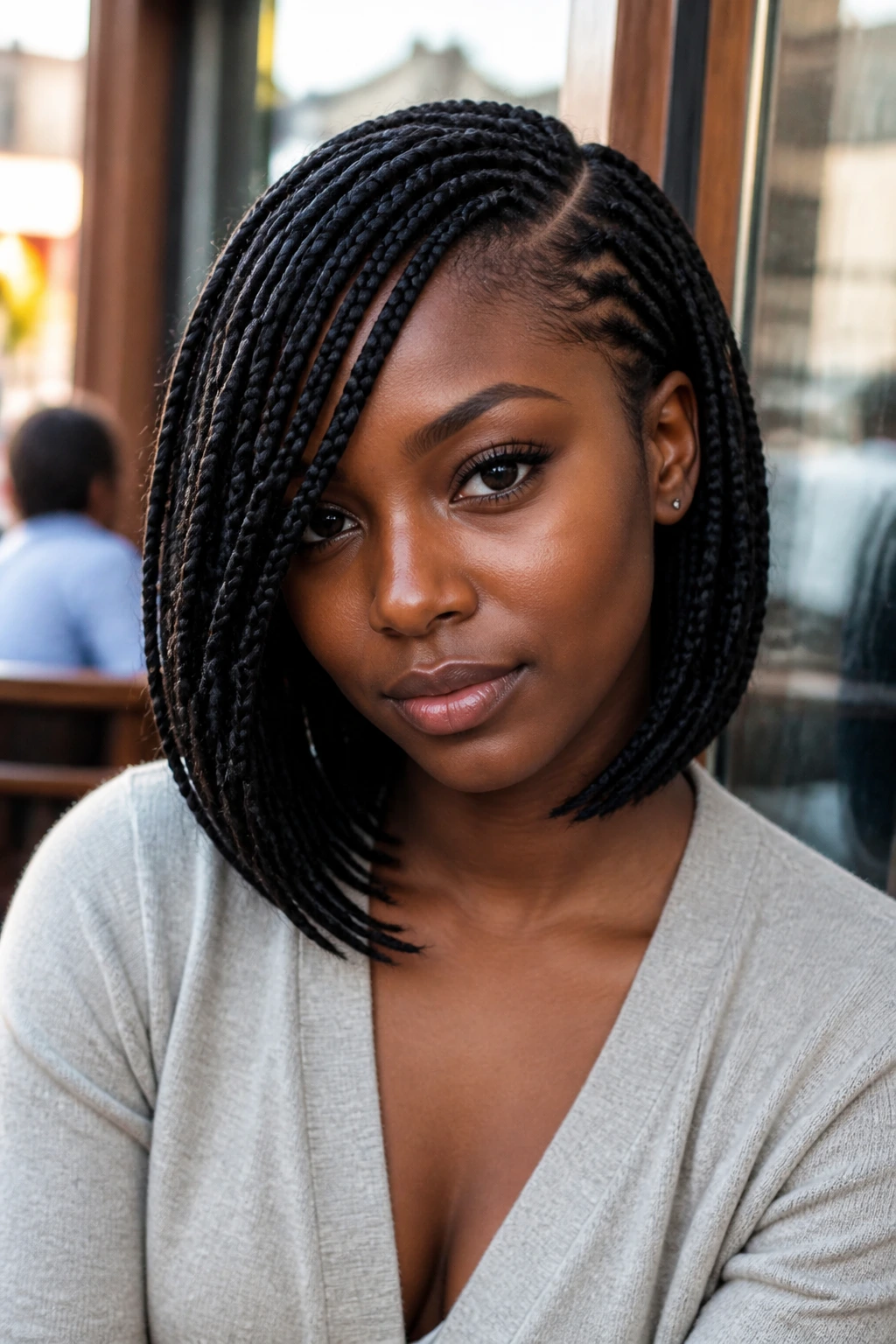
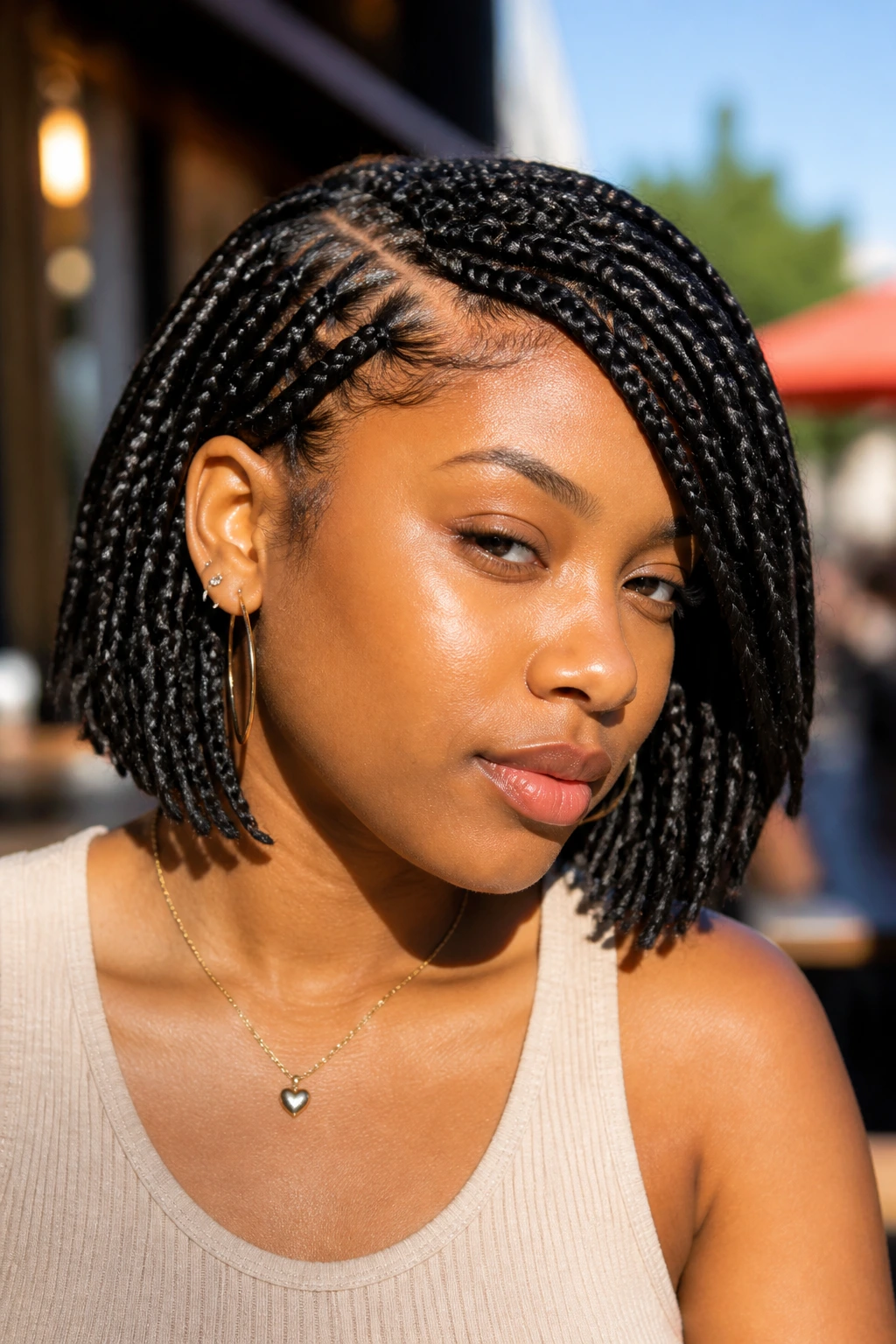
A side-swept bob is what I reach for when short braids need polish without stiffness. The braids are pushed across one side, so the shape feels fluid and a little dramatic. It’s a strong choice for date nights, dinners, or any day you want the style to look finished without extra ornaments.
What to watch for
The key is controlling the front. If the braids near the part are too chunky, the sweep looks forced. If they’re too tiny, the style can lose its frame and collapse into the cheek. Medium front rows, a clean side part, and a little foam to settle the flyaways are usually enough.
11. Tapered Nape Box Braids
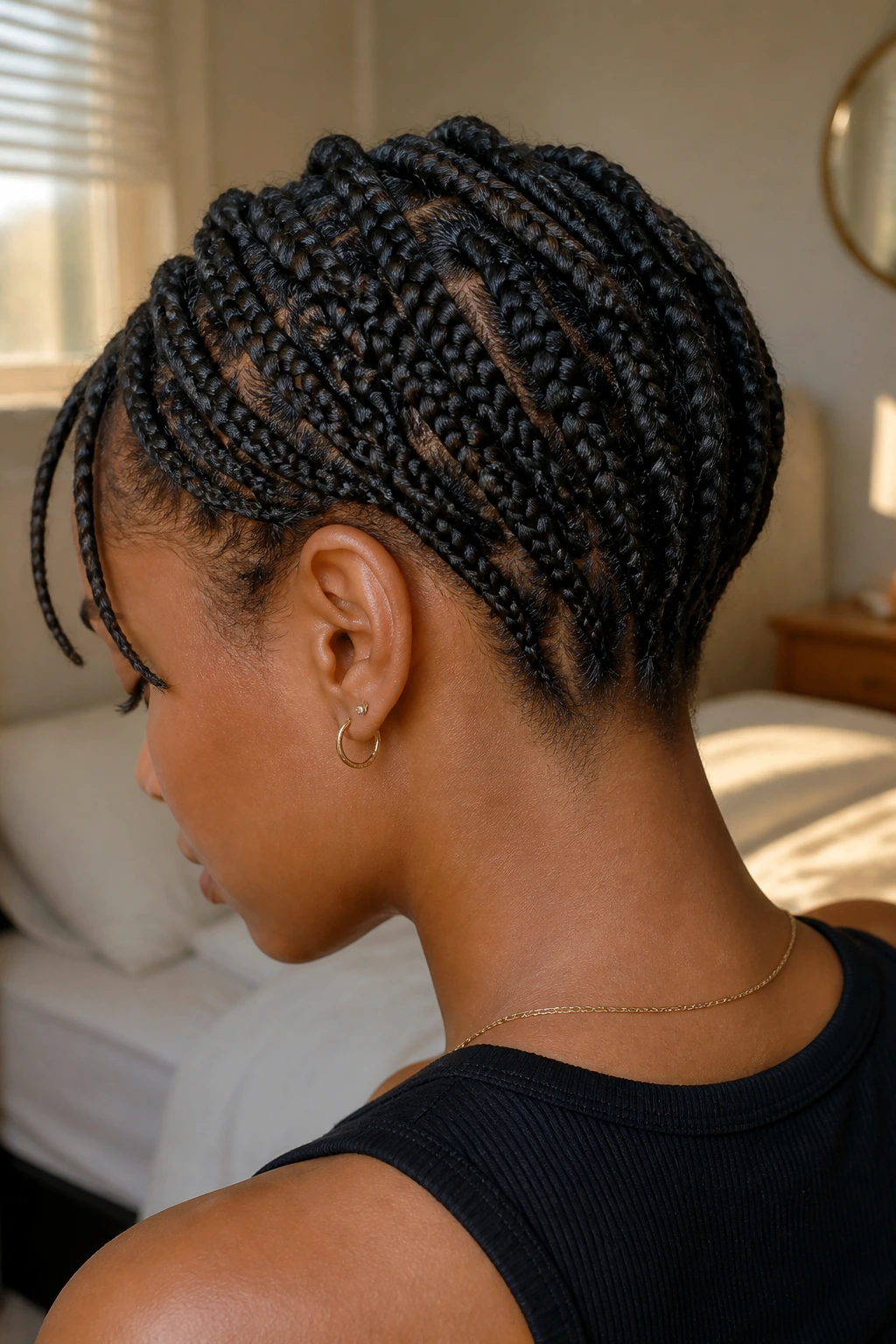
A tapered nape gives short box braids a built-in shape shift. The braids stay fuller through the crown and sides, then tighten a little toward the neck. That slight taper makes the style feel lighter and helps the back sit close instead of puffing outward.
This is especially useful if your hair is shorter in the back than it is on top — which is common enough that nobody should act surprised by it. The style hides that difference instead of fighting it. It also keeps jackets from catching on the nape rows, which sounds small until you wear the braids for a week.
12. Mixed-Size Box Braids
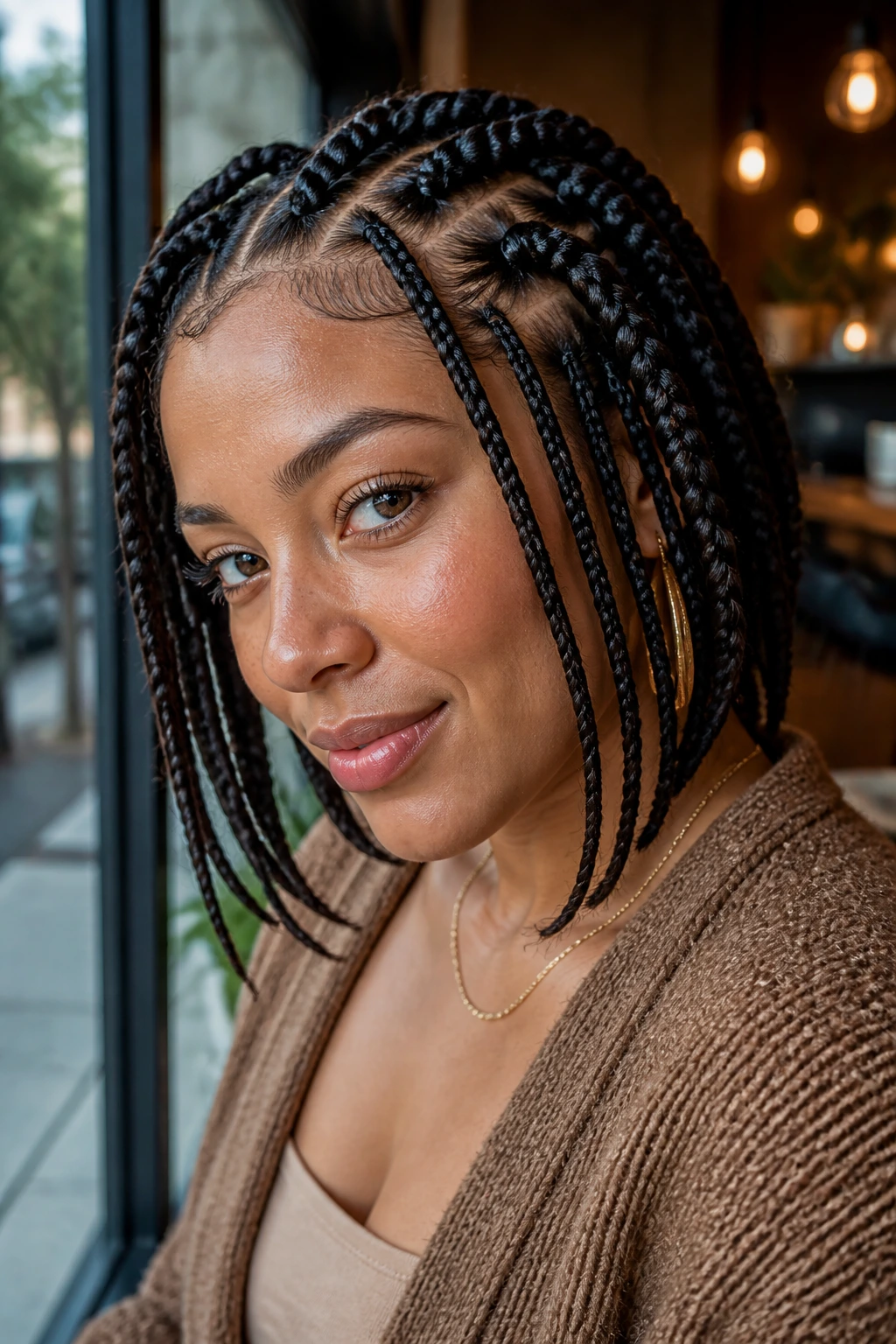
Mixed-size braids create rhythm. A few thicker braids beside slimmer ones make the style feel textured, and on short hair that variation prevents the set from looking flat or helmet-like. I like this when the base is simple but the wearer wants the hair to read a little less uniform.
The trick is restraint. Use the bigger braids as anchors and let the smaller ones fill the gaps. If every section changes size, the pattern turns messy. But when the sizes alternate with purpose, the style has a nice swing to it — more visual interest, less sameness.
13. Crisscross Part Box Braids
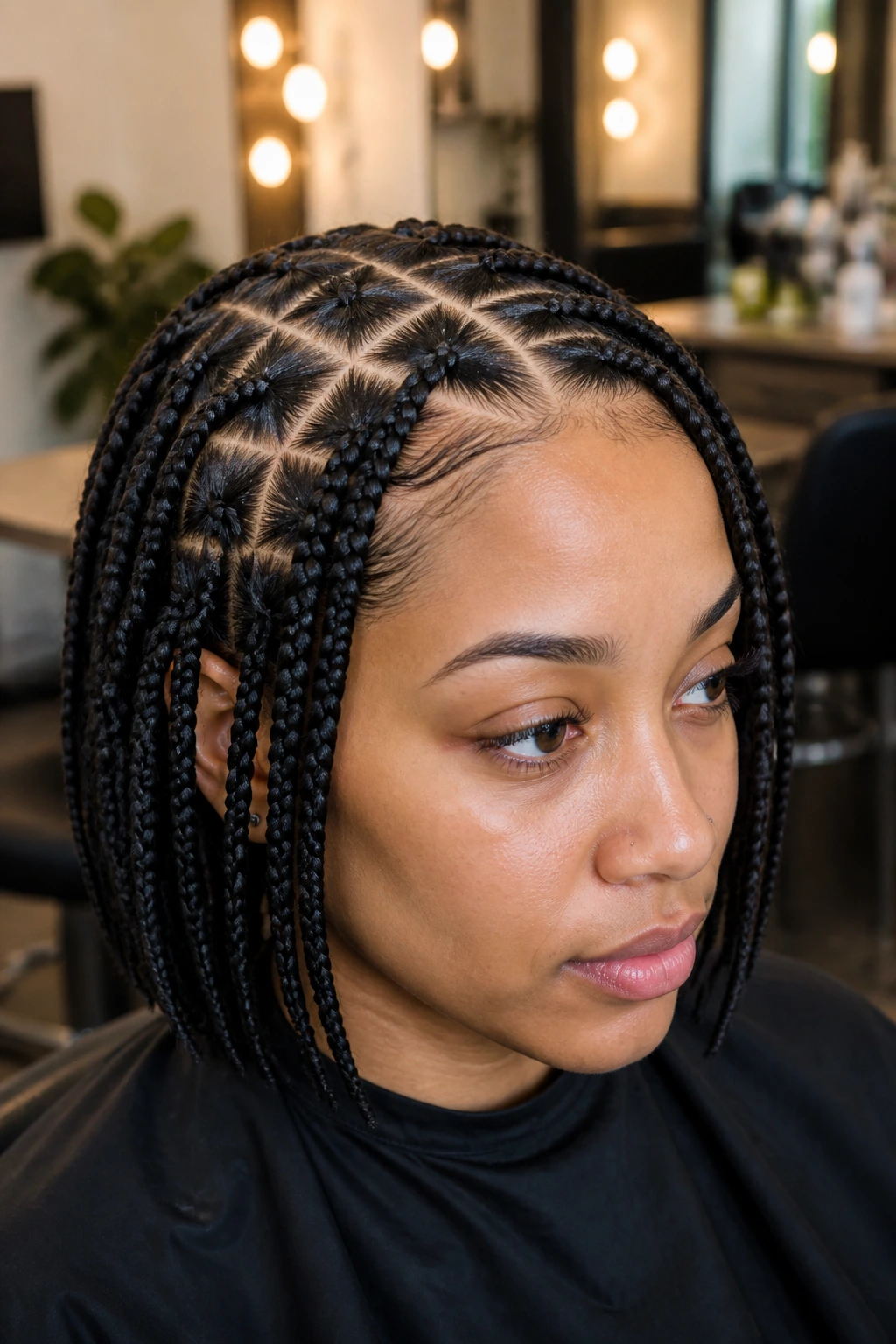
Crisscross parting is for people who want the scalp design to do some of the talking. The sections overlap and intersect in a way that makes short hair look architected. It’s a bolder look than plain squares, and that boldness is exactly what keeps it from disappearing on a shorter base.
This style works best when the edges of the crisscross are clean, because sloppiness shows fast in the parting. If you like details that reward a second look, this is one of the better choices. The braids themselves can stay simple; the parting carries the whole attitude.
14. Feed-In Front Box Braids
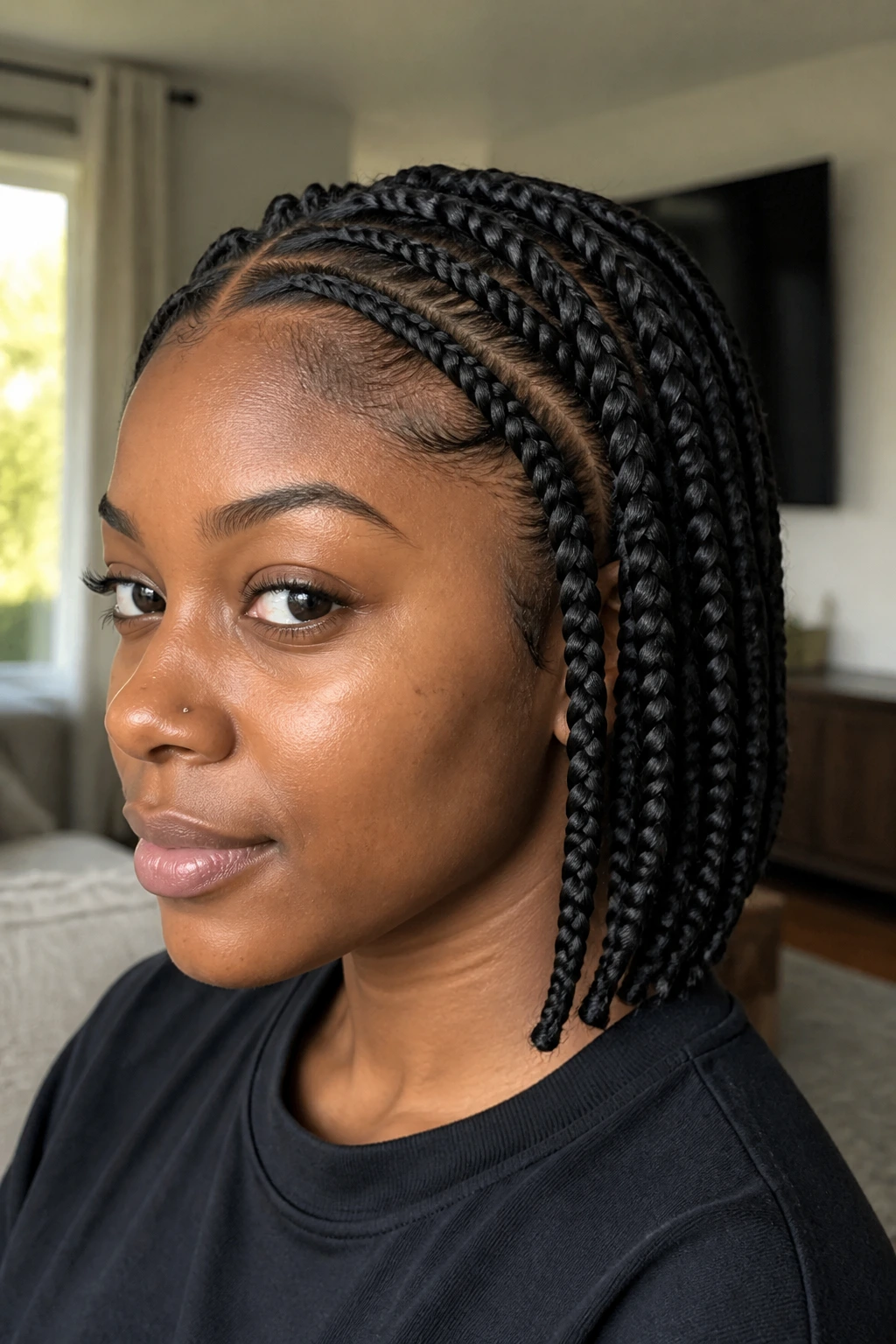
Feed-in fronts are useful when you want the hairline to look smoother and the braids to start with less bulk. The front rows gradually build in extension hair instead of starting with a chunky knot, so the result is flatter near the forehead. On short hair, that softer front can make a huge difference.
I like this style when the front of the head is the first thing people notice — and for most people, it is. Keep the feed-ins small and neat, then let the back rows be a little fuller if you want balance. It’s a quiet style, but it earns that quietness.
15. Faux Hawk Box Braids
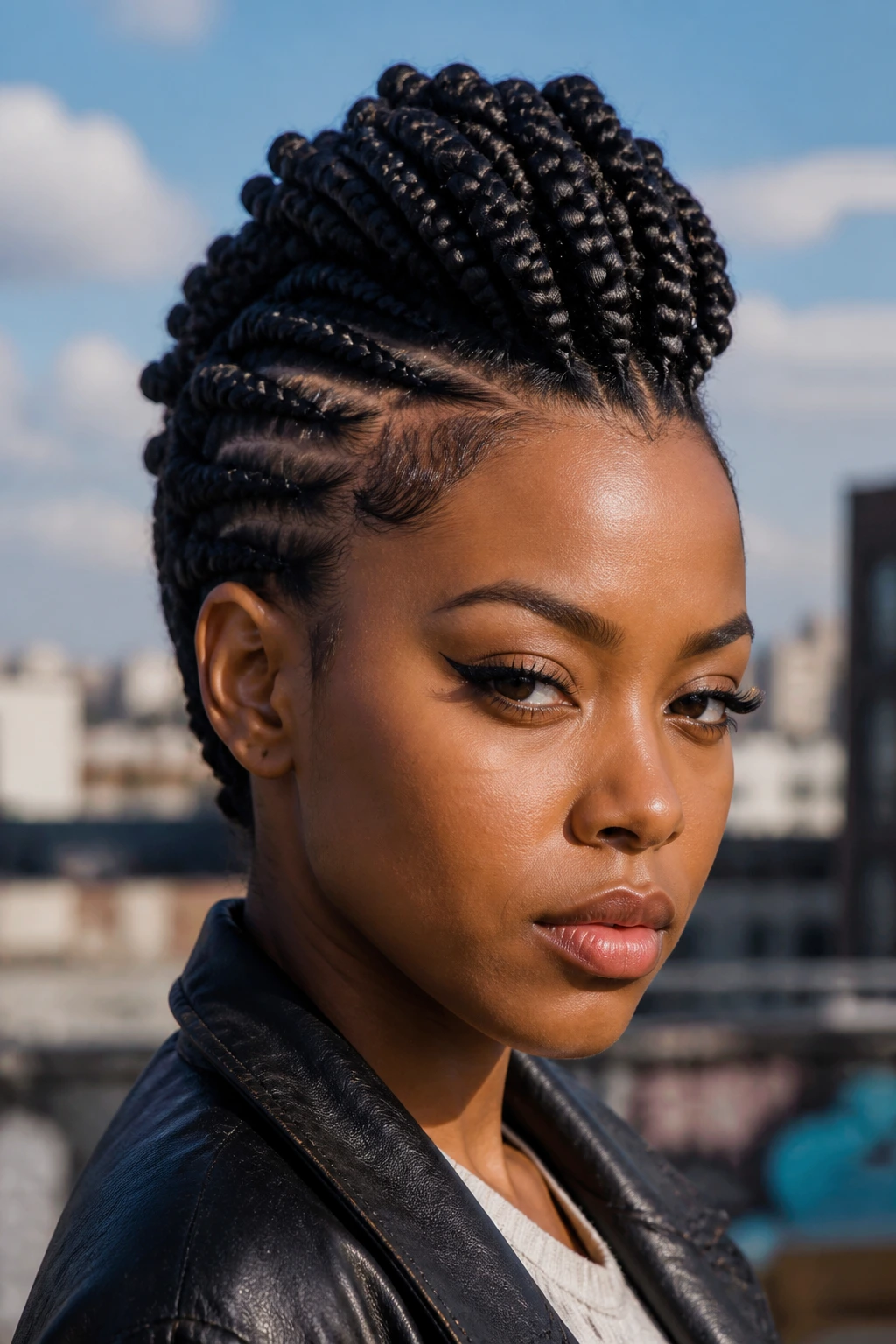
A faux hawk turns short braids into a center line with attitude. The sides stay flatter or are pinned closer to the scalp, while the middle section stands up a little taller. That ridge gives the style some lift without needing much length at all.
This one is good when you want energy more than softness. If the braids are short, the faux hawk reads cleaner because there’s less loose weight pulling the shape down. A few carefully placed pins or a tapered back are usually enough to keep the line upright.
16. Jumbo Short Box Braids
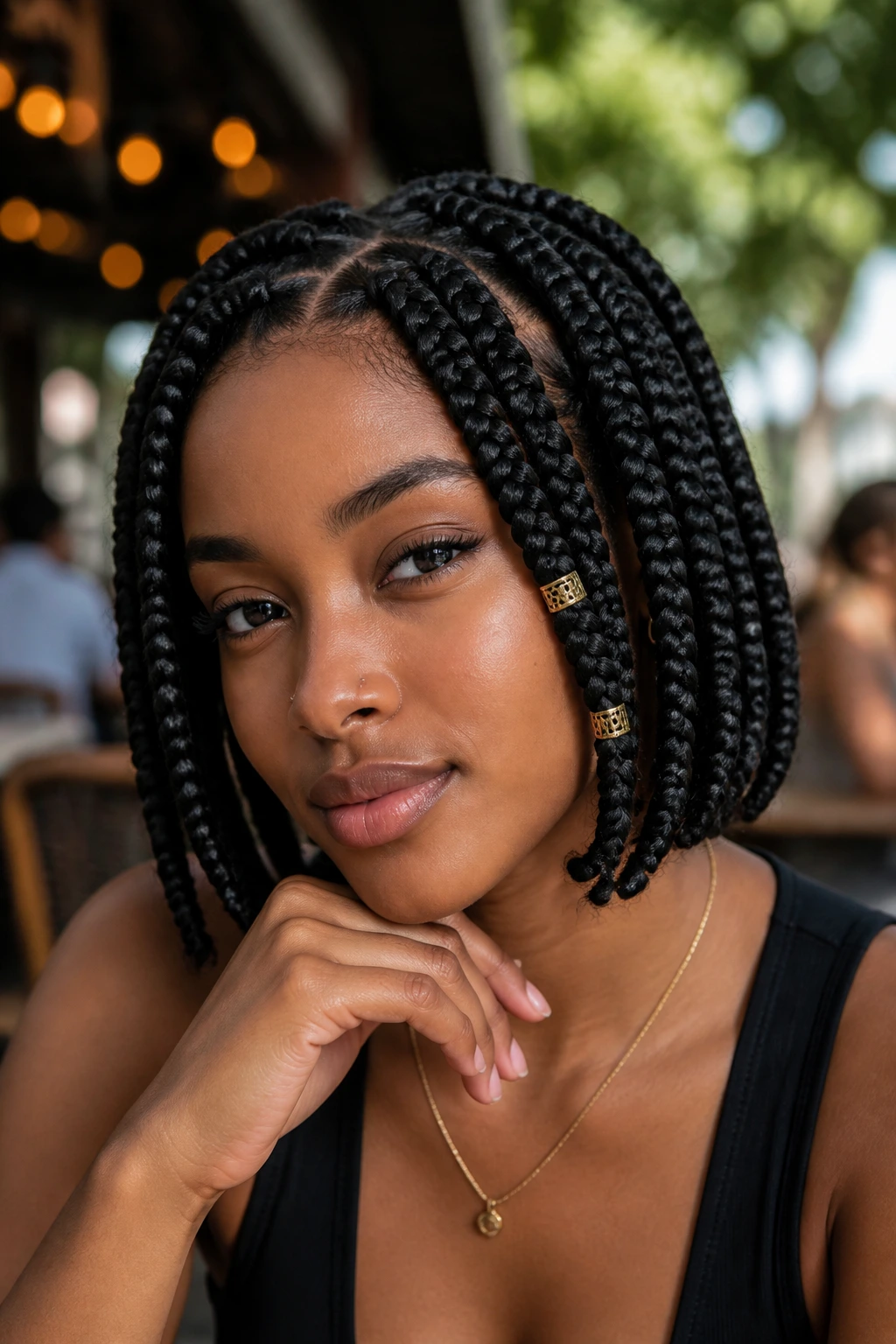
Jumbo braids are not for every head, and I say that plainly. If your edges are tender or your natural hair is very fine, skip them. But when the hair can handle them, jumbo short braids give a blunt, confident shape that looks strong from across the room.
Why people choose them
They install faster. They look bold. They make a short bob feel fashion-forward instead of shy. The tradeoff is weight, so keep the finished length conservative — chin to collarbone is plenty. If the braids start getting too long, the weight catches up fast.
17. Micro Box Braids
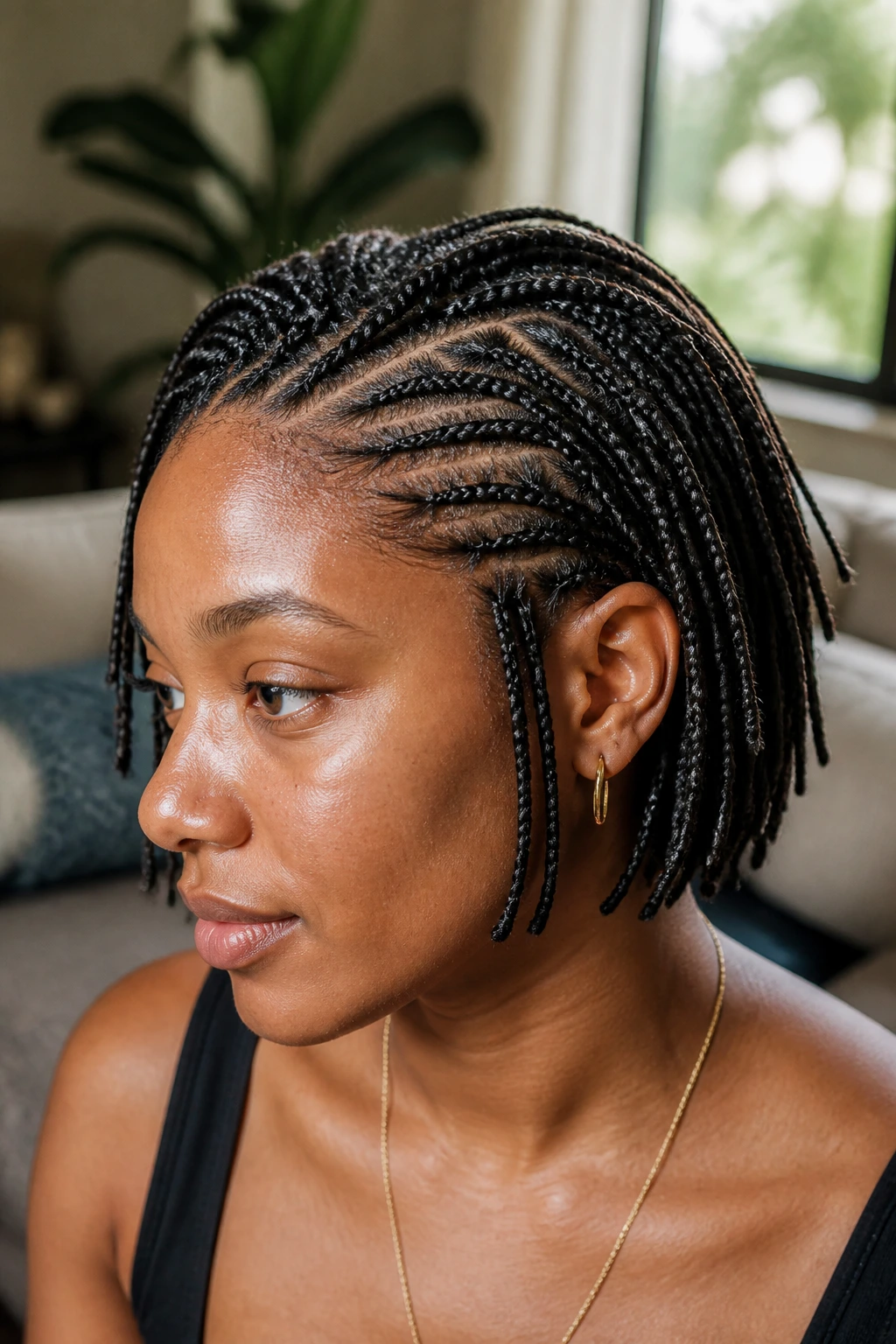
Micro braids on short hair can look sleek and expensive in the best sense of the word — not flashy, just very controlled. Because the parts are tiny, the braids sit closer to the scalp and the whole set tends to move with more fluidity. The finish is neat, but it is also time-consuming.
This is not the set I’d choose for someone who hates sitting still. It takes patience, and it needs careful tension control, especially at the temples and nape. Still, if you want a short style that can hold for a while and keep the braid pattern crisp, micro braids have a real place.
18. Accessory-Layered Box Braids
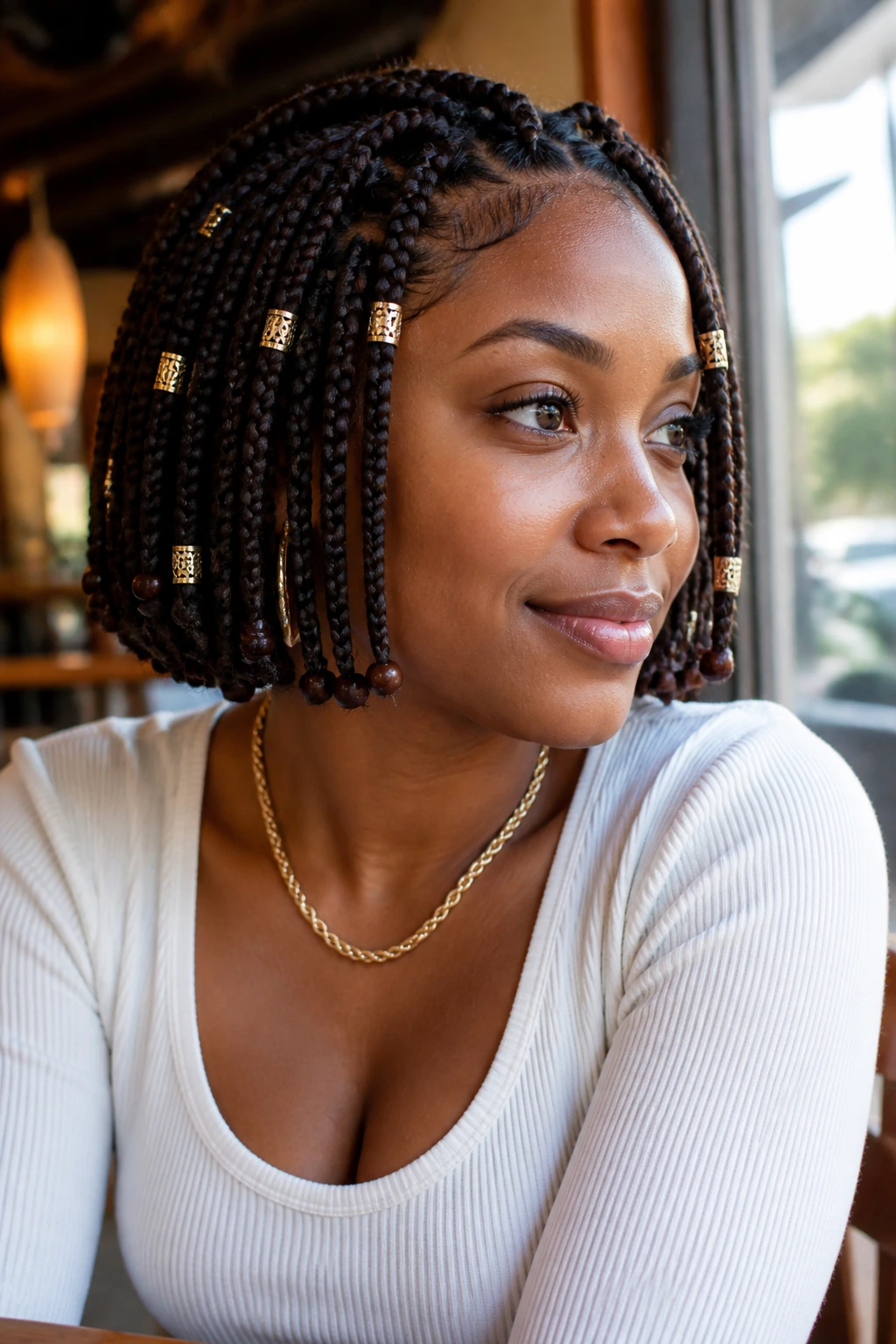
Accessories change everything on short hair. Cuffs, rings, thread wraps, and a few slim beads can turn a plain bob into something with personality. The key is stacking lightly. Short braids have less surface area, so too many pieces make the style look crowded.
I like one accessory family per set. All metal. All wood. All clear. Once you mix too many textures, the eye doesn’t know where to rest. A few cuffs near the face and maybe a wrapped section or two near the ends are enough to keep things interesting.
19. Ombré Box Braids
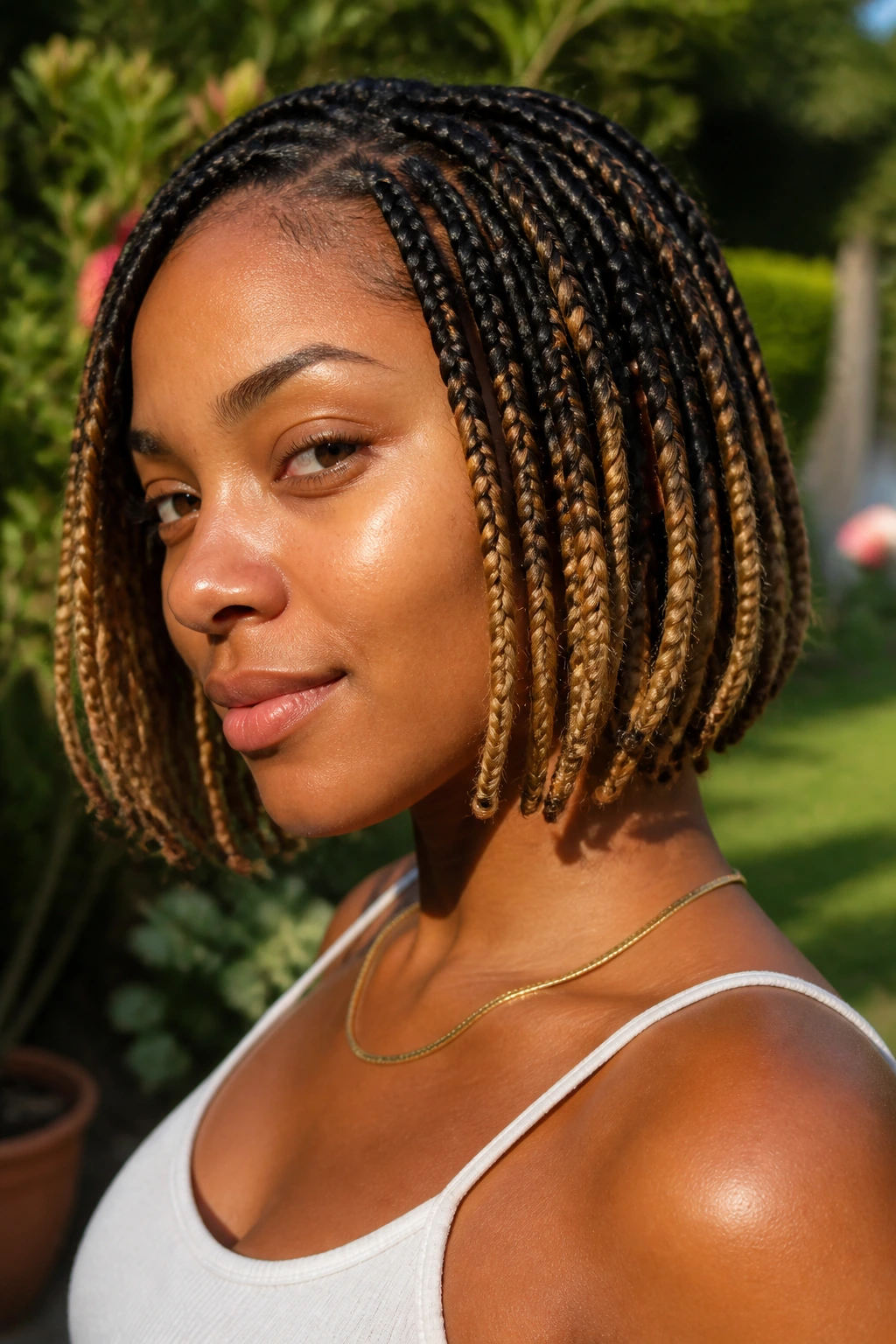
Ombré color gives short braids depth without asking you to commit to an all-over dye job. Dark roots fading into honey, copper, burgundy, or platinum ends create movement even when the braid length is short. The color shift does a lot of the work that longer braids usually do with motion.
This is one of the easiest ways to make a bob feel custom. Keep the transition smooth if you want it refined, or more sudden if you want contrast. On short hair, I prefer a gentler fade because the color has less room to settle before it ends.
20. Wrapped Low-Bun Box Braids
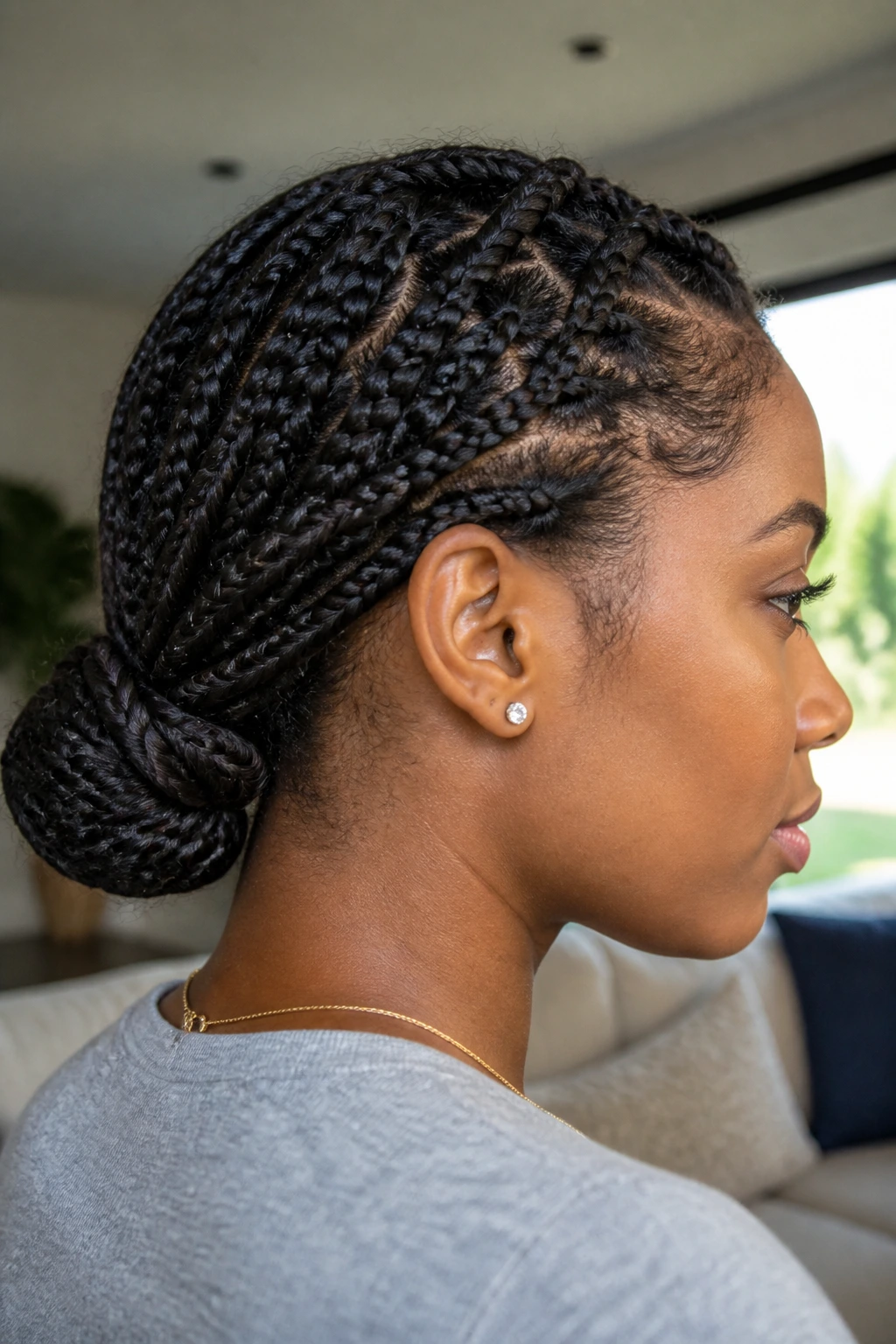
A low bun on short box braids should look controlled, not strained. The bun sits at the nape or just above it, with enough looseness to keep the braid pattern visible. It’s the sort of style that works when you want the neck clear but still want the structure of braids.
If the braids are too short, don’t force a giant bun. Small, tight, and neat is better than overpacked and lumpy. You can wrap one braid around the base to hide the elastic, then pin the ends under. That tiny move makes the whole thing look finished.
21. Crown-Wrap Box Braids
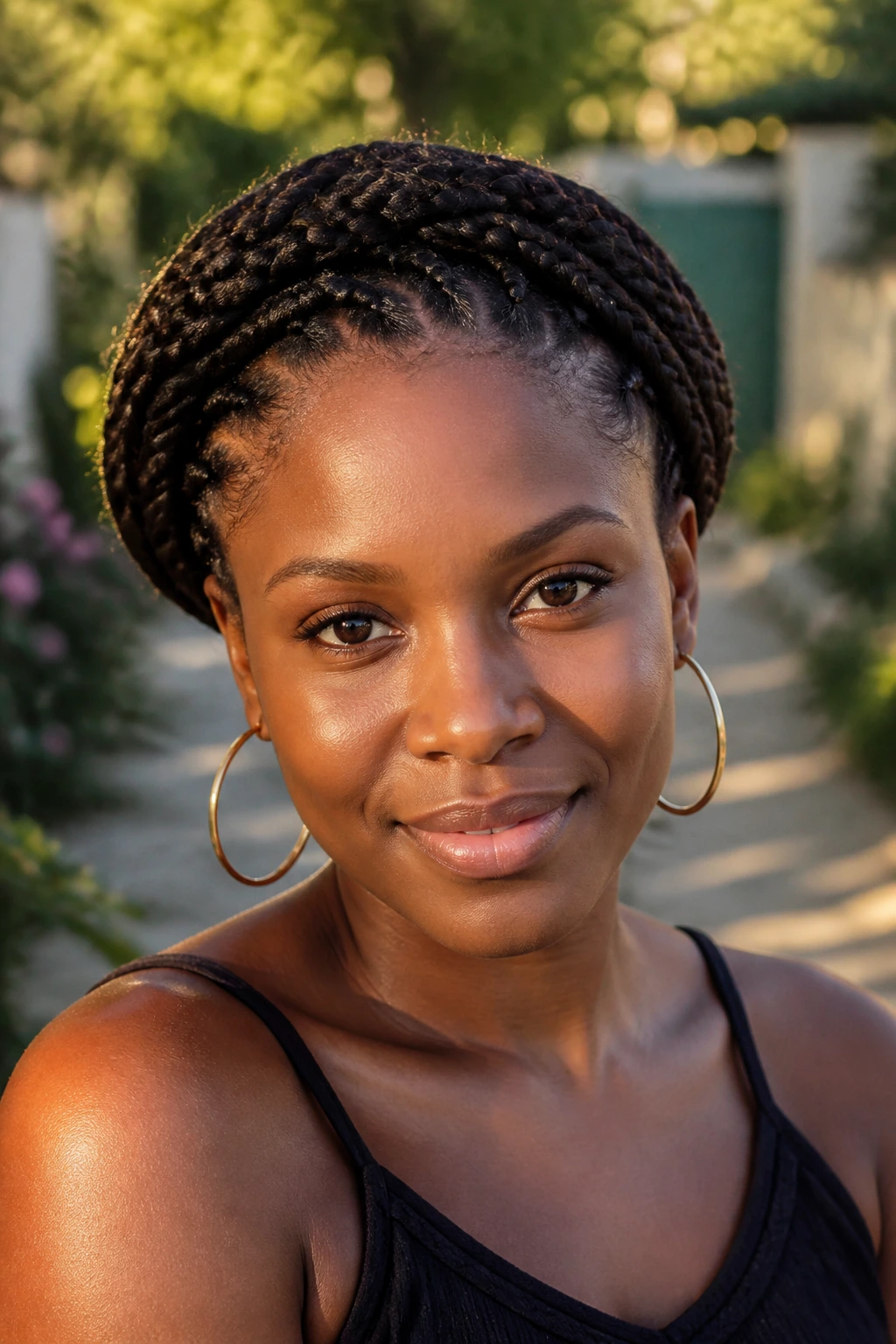
A crown wrap is a strong option when you want the braids off the face and the silhouette kept close to the head. The braids are wrapped around the perimeter like a halo, which creates a soft frame without needing much extra length. On short hair, that close fit is a gift.
This style looks especially good with clean parting and a smooth front edge. You don’t need much else. A few pins, a satin scarf set overnight, and the shape holds with less drama than you’d expect. It’s one of the quieter short-braid styles, but not boring.
22. Flipped-Ends Box Braids
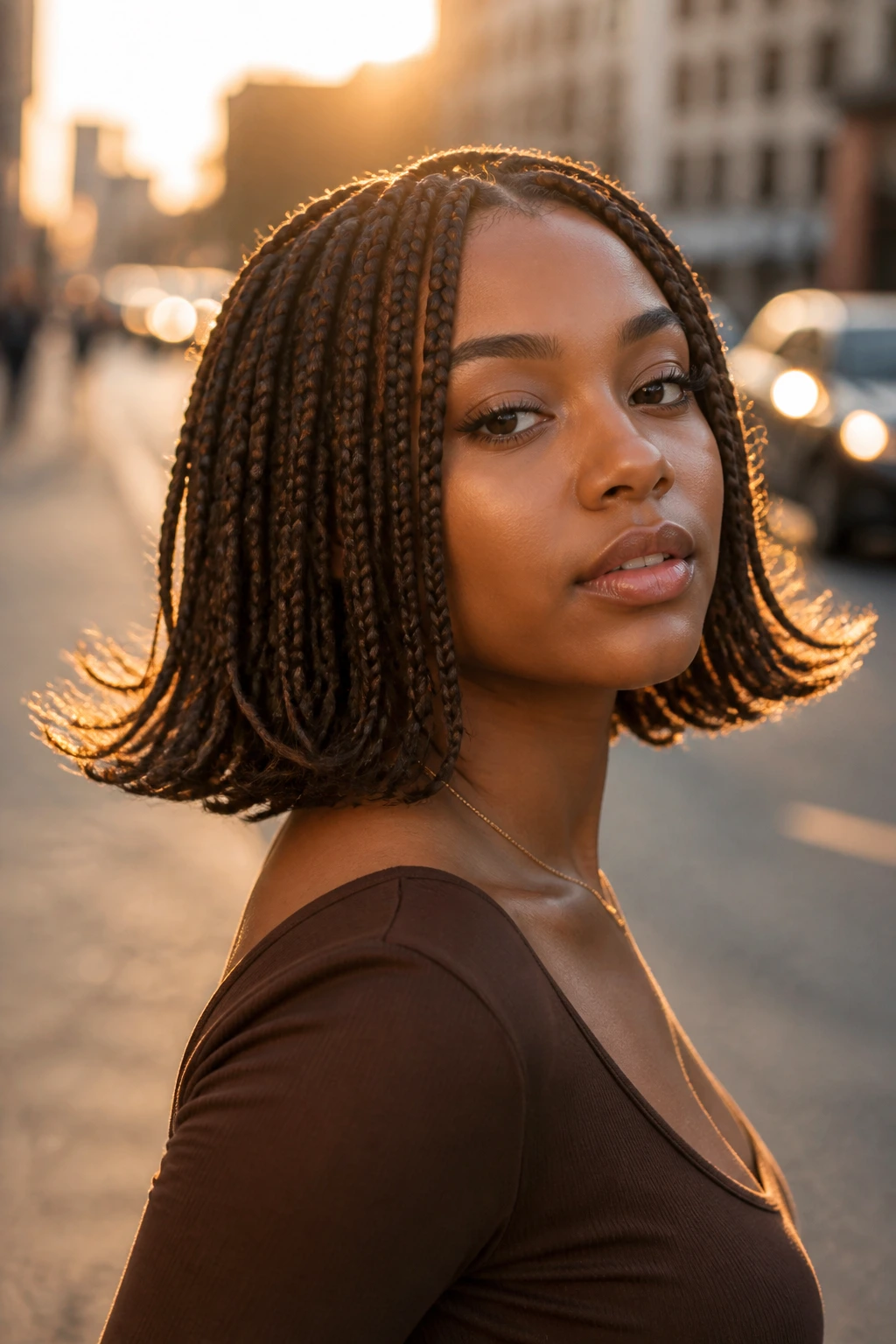
Flipped ends add bounce to a short set. Instead of hanging straight down, the ends bend outward or inward, which gives the bob a little swing. It’s a small change, but it shifts the whole mood from severe to lively.
I like this on chin-length braids because the flipped line makes the ends feel styled, not just finished. Use hot water, roller sets, or a careful bend with flexi rods depending on the extension hair. If the flip is too stiff, the style looks dated fast. If it’s soft, it looks effortless.
23. Face-Framing Box Braids
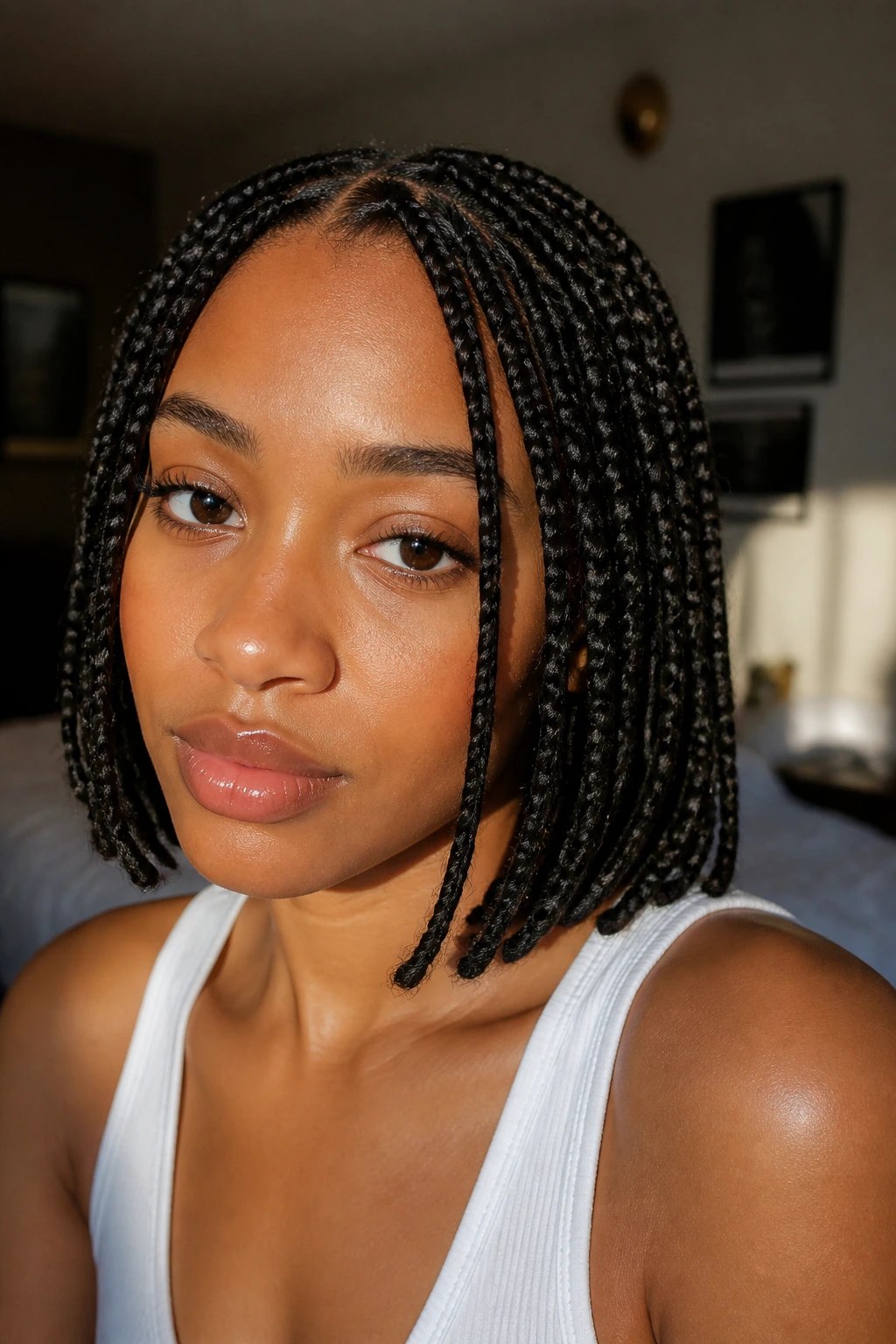
Face-framing pieces are the easiest way to make short braids feel softer. Leave a few slimmer braids near the front to sit around the cheekbones, and the whole style opens up. It’s a smart move if you want the braid set to feel less sealed-off.
This works especially well with center parts or low side parts, because the loose front pieces break up the symmetry. Keep them thin enough to move, not so thick that they block the face. A couple of slim strands can do more than a whole pile of accessories.
24. Zigzag-Part Box Braids
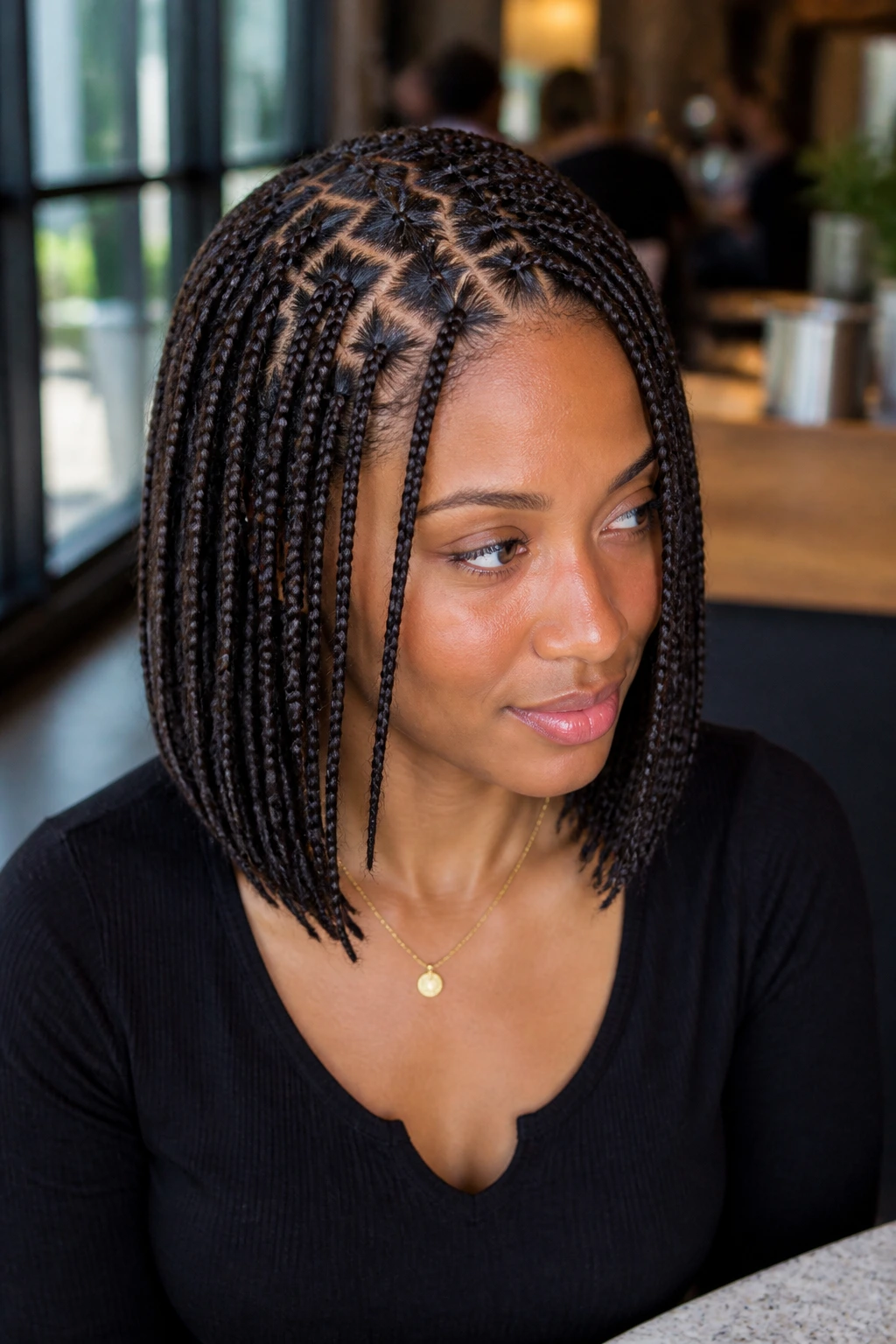
Zigzag parts are for days when you want the scalp to be the statement. The line moves instead of sitting still, and that motion gives short hair extra personality. Even a simple bob becomes more interesting when the parting snakes a little before the braids drop.
The style is strongest when the zigzag is crisp from front to back. If the lines blur, the whole thing loses the point. I’d pair this with medium or small braids so the parting remains visible. Big braids can smother the pattern.
25. Layered Box Braid Bob
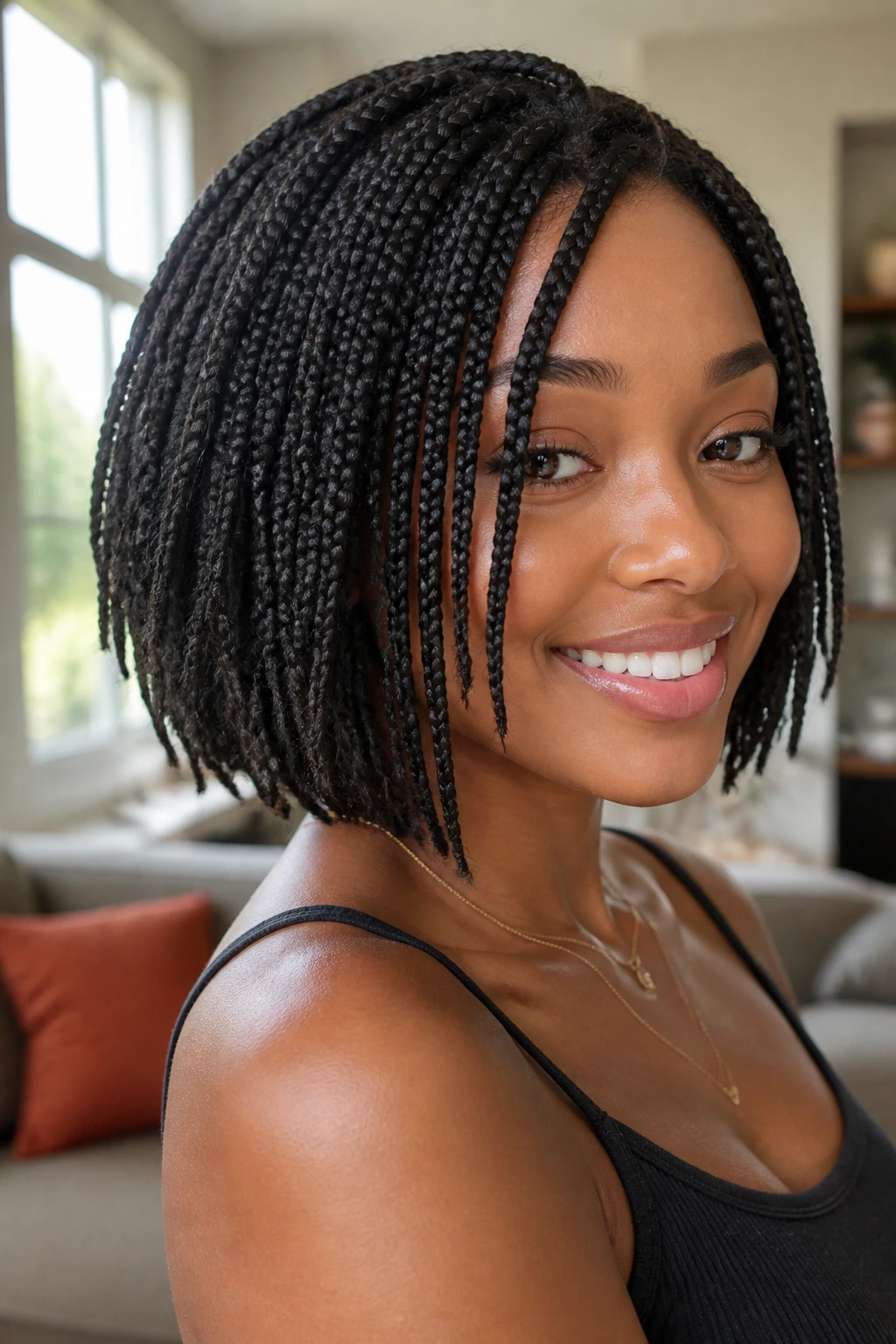
A layered bob keeps the ends from forming one hard edge. Some braids stop a little higher, others a little lower, and that staggered finish gives the set movement. On short hair, layers keep the cut from feeling boxy in the wrong way.
The difference between a layered bob and a sloppy one is intention. The lengths need to vary on purpose, not by accident. If the top layer is slightly shorter and the lower rows drift a bit longer, the whole look falls nicely around the face and neck.
26. Tucked-Under Nape Box Braids
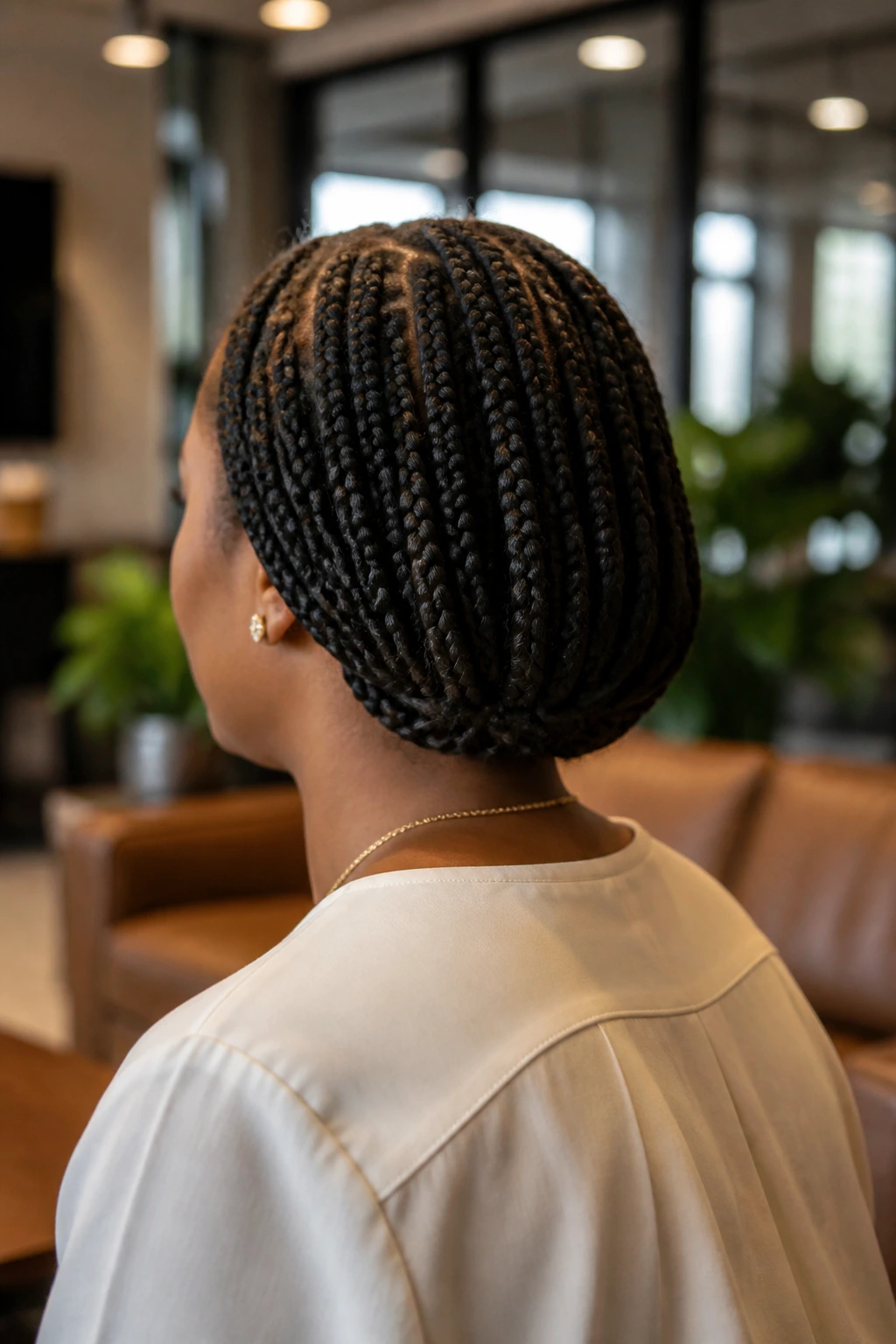
Tucking the ends under at the nape makes short braids look neat around collars and jackets. The finish sits close to the neck, so the shape feels polished and controlled. It’s a good choice for work settings or any place where you don’t want loose ends brushing every seam.
This style works best when the braids are mid-length rather than super short. If they’re too short, there isn’t enough length to tuck cleanly. A few pins, a light wrap, or a small low roll can hold the shape without making the back look bulky.
27. High Ponytail Short Box Braids
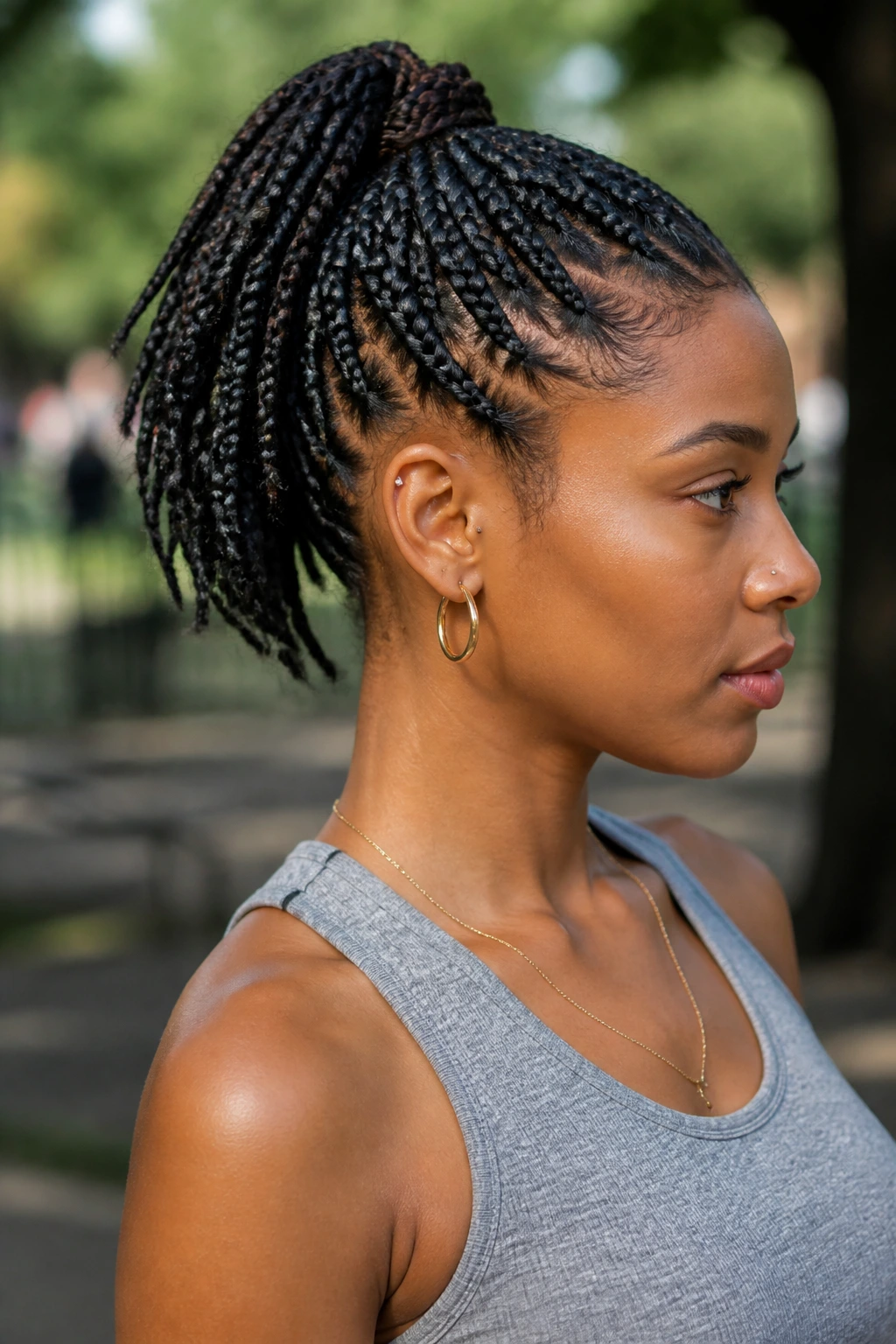
A high ponytail on short braids gives you lift, but only if the base can support it. The ponytail should sit at the crown and feel secure without pulling the edges upward. When it works, the style looks sharp and energetic, with the braids swinging out behind the head.
The best version is usually smaller than people imagine. Short hair doesn’t need a huge ponytail to make the point. A compact, lifted shape often looks better than a stretched one that keeps trying to fall out. If the roots are tender, don’t fight them.
28. Scarf-Wrapped Box Braids
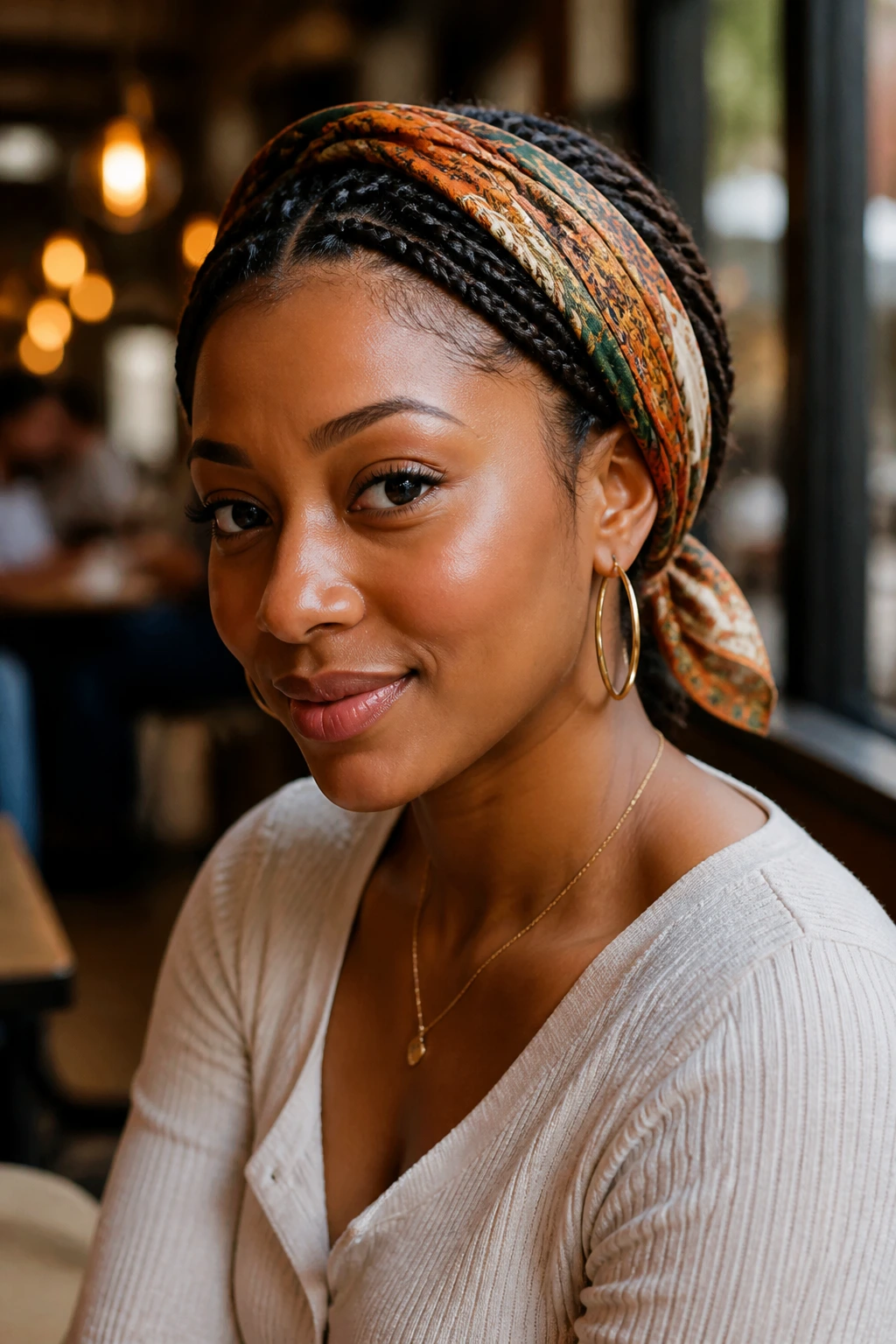
A scarf-wrapped set changes the entire mood without changing the braids themselves. Wrap a silk or satin scarf around the front, tie it at the nape, or fold it into a band across the hairline. That one piece can make short braids look dressed up, relaxed, or both at once.
I like scarf styling because it solves two problems at once: it hides a messy front and gives the set a color story. Choose a scarf with enough grip to stay in place, not a slippery one that slides back an hour later. Tiny detail. Huge difference.
29. Bead-and-Cuff Box Braids
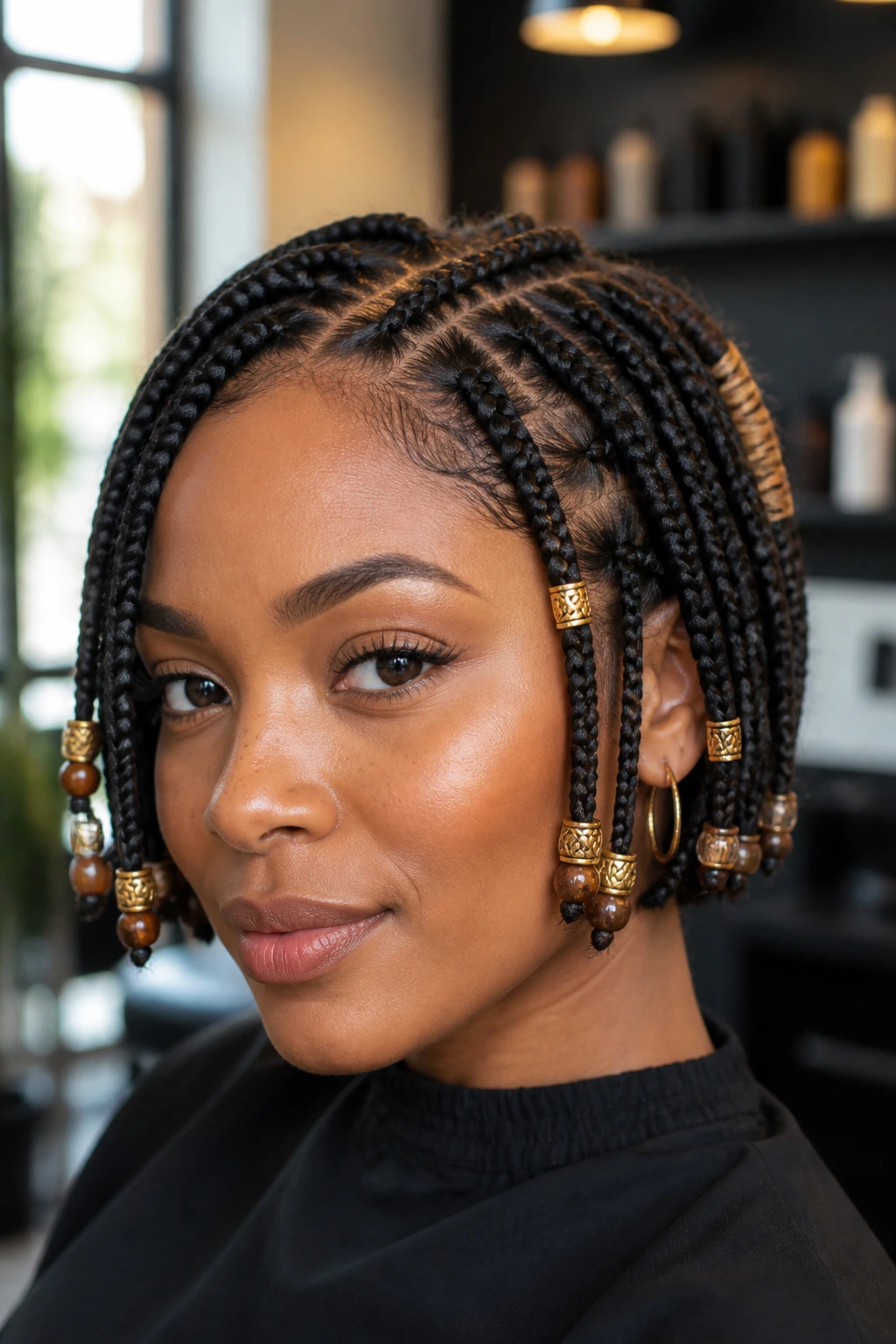
Beads and cuffs together can look sharp if you keep the ratio under control. Short hair doesn’t need every braid decorated. A few cuffs near the front, beads only on the ends, and maybe one wrapped section in the back is enough to give the style texture without chaos.
The mix works especially well when the accessories echo each other in color. Gold cuffs with neutral beads. Silver cuffs with clear ends. Keep the palette narrow and the style reads cleaner. When people pile on every shiny thing they own, the braids disappear under the hardware.
30. Loc-Inspired Box Braid Hybrid
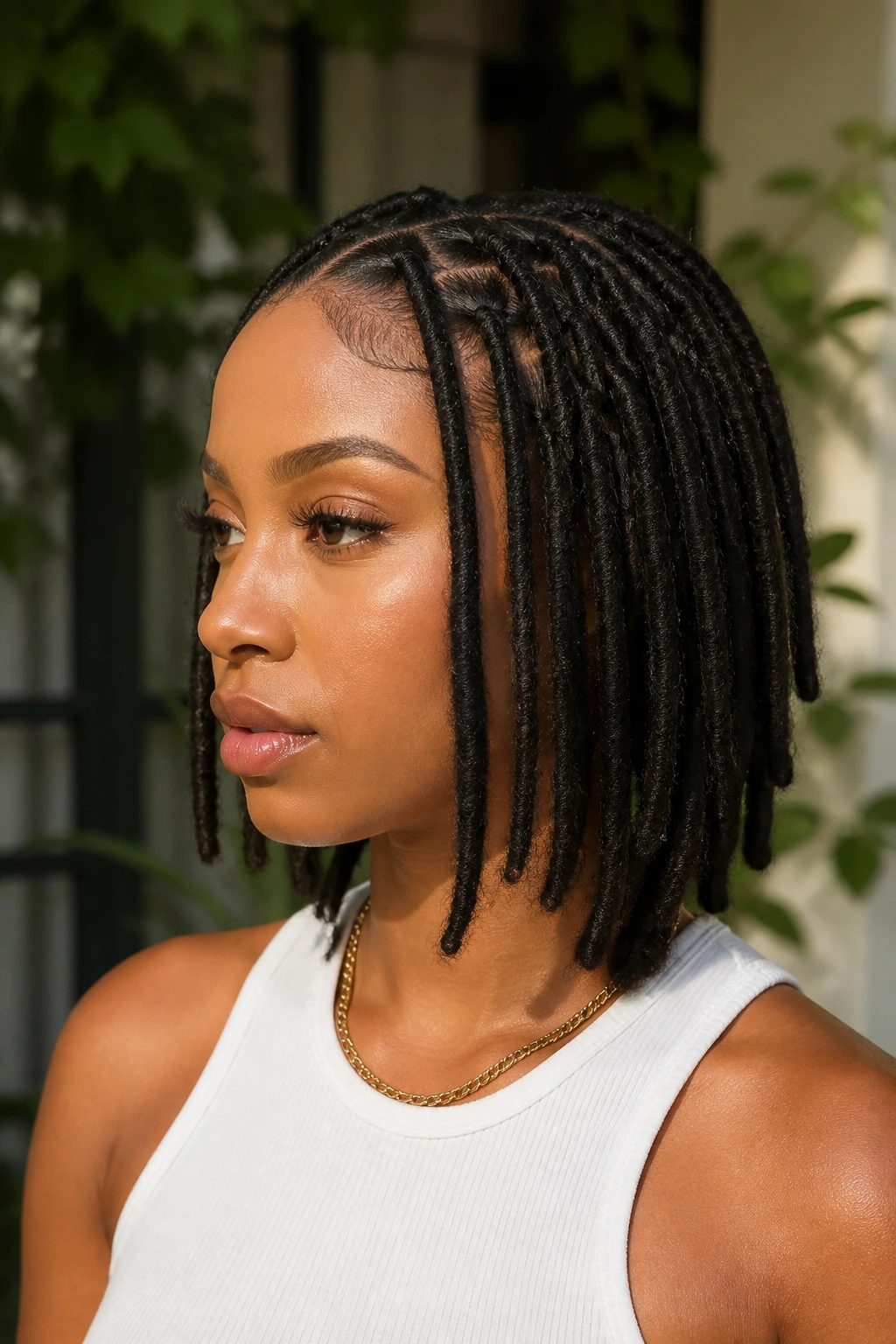
A loc-inspired hybrid gives short braids a thicker, more grounded shape. The look borrows the density and wrapped texture of faux locs while keeping the box braid structure underneath. It’s a good option when you want the set to feel sturdier and a little more matte.
This style usually works best with medium parts and a controlled length, not a long swinging finish. The wrapped surface can make the hair feel fuller, so keep the overall size moderate. If you like textured styles that hold their shape without looking too sleek, this is a strong lane.
31. Festival Charm Box Braids
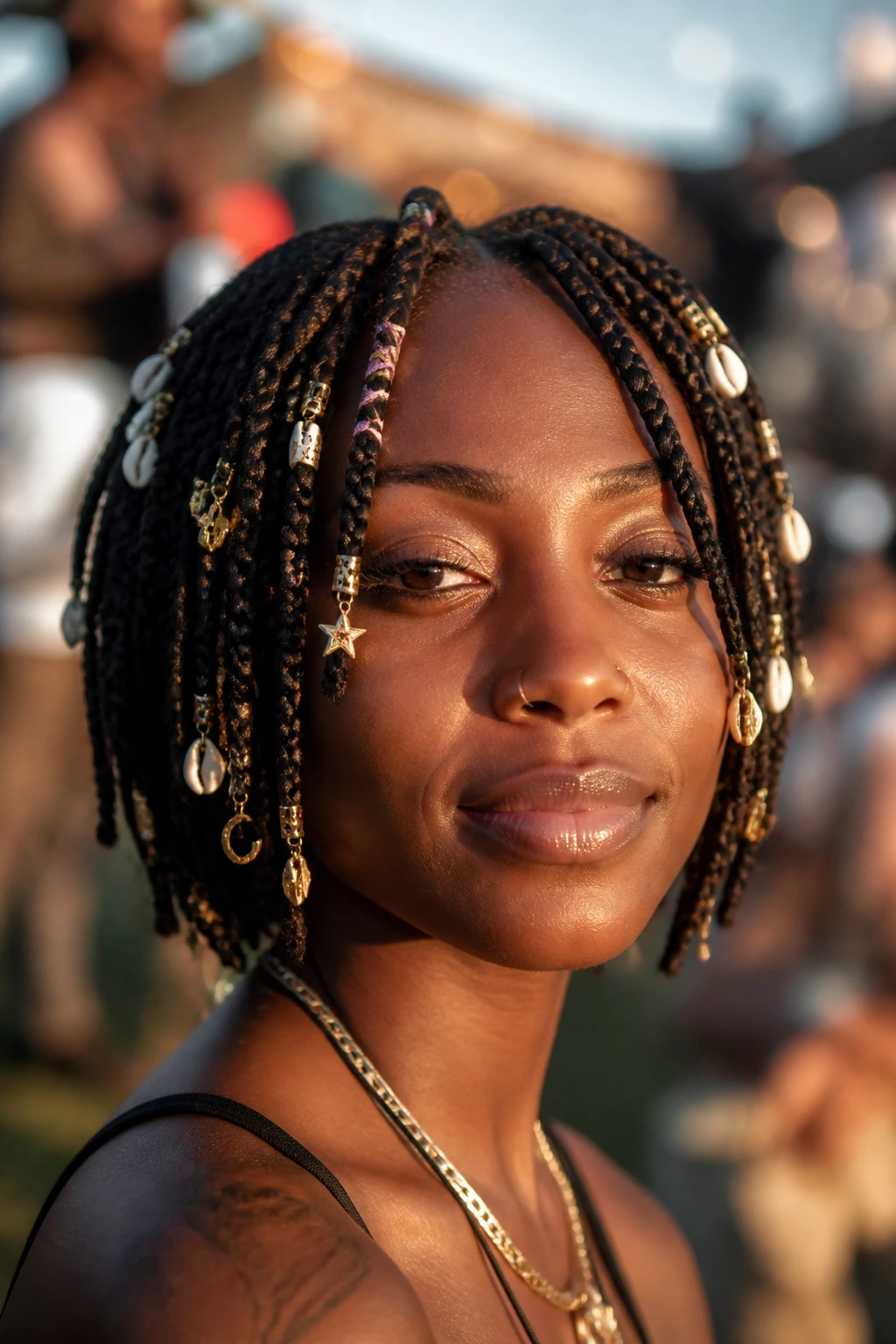
Charms, shells, rings, and tiny thread wraps can make short braids feel playful fast. The trick is choosing a few pieces that move with the hair instead of dragging it down. Lightweight metal rings and small charms are safer bets than heavy trinkets that catch on sweaters or earrings.
I’d keep the charm placement uneven on purpose — one or two near the face, a few at the ends, maybe one tucked in the back. That irregular pattern feels more natural than decorating every braid. Short hair is already compact, so the accessories should punctuate it, not crowd it.
32. Center-Part Sleek Box Braids
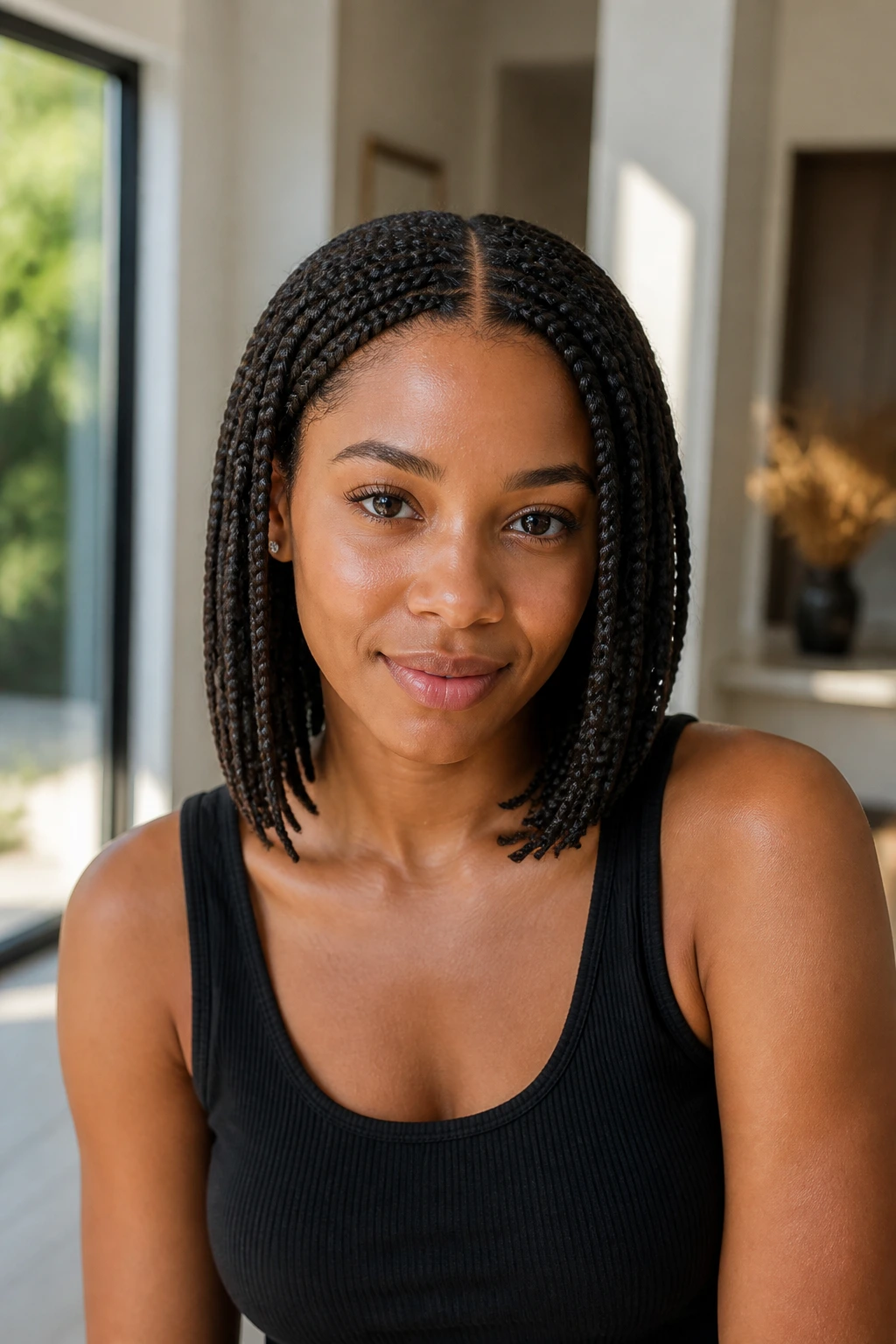
A center-part sleek set is the minimalist answer, and it’s still one of the strongest. The line down the middle is clean, the braids fall evenly on both sides, and the whole style carries a cool, steady look that doesn’t need extra decoration. Short hair loves a clear center part when the parts are crisp.
This works best when the braids are trimmed or finished to the same length. If one side drifts longer, the symmetry breaks. A center-part bob can look severe if the front is too tight, so leave enough softness at the hairline to keep it wearable.
How to Make Short Box Braids Sit Right
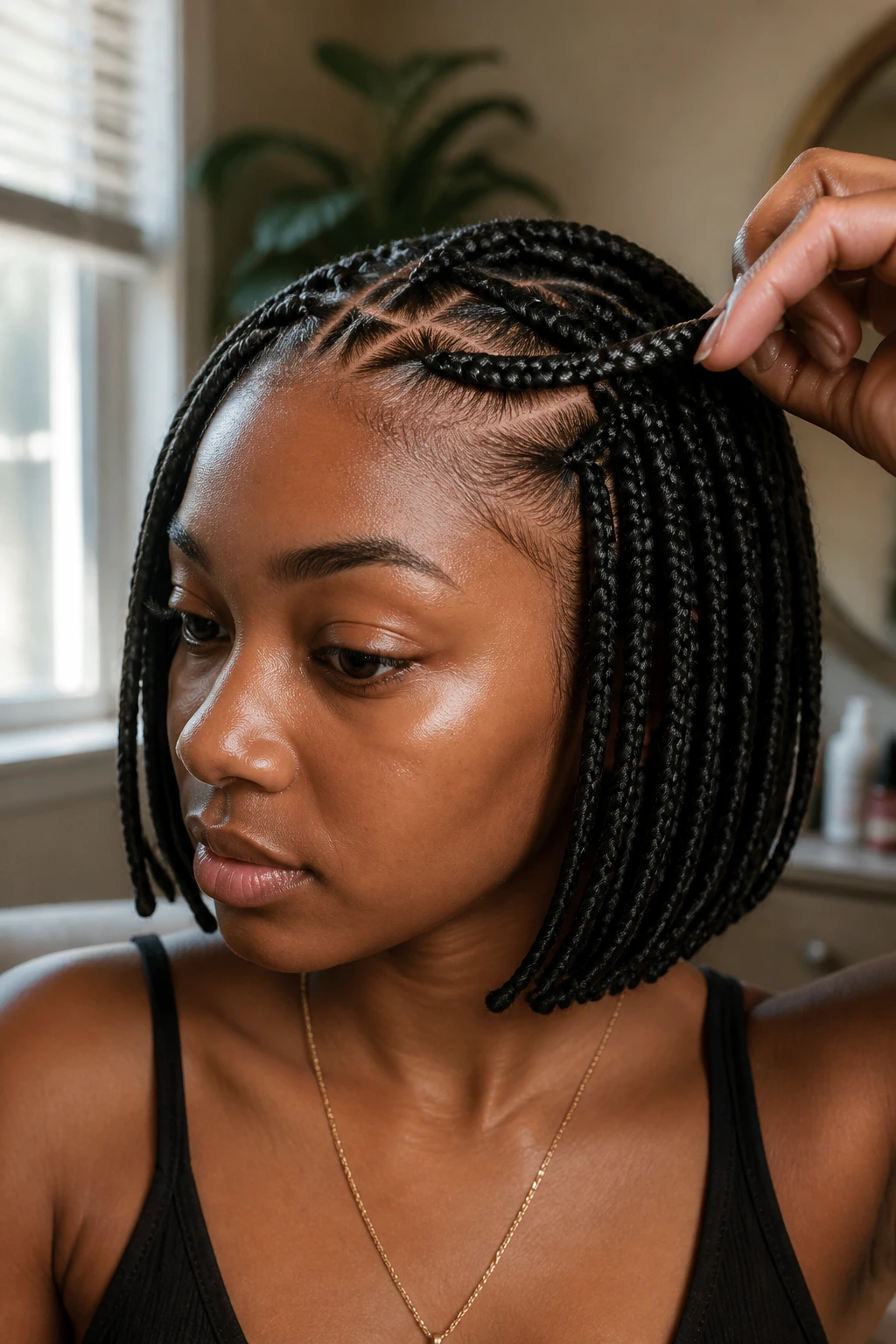
Shape Control: Ask for the finished length before the first braid goes in. If you want a bob, say where you want it to stop — chin, jaw, or collarbone — because “short” means something different to every braider and every client.
Scalp Comfort: Short hair often needs smaller front rows and slightly lighter density at the nape. That spreads the tension instead of stacking it on the most delicate spots. If the braid feels sharp at the root on day one, it will not magically improve on day three.
Length Discipline: Do not chase extra inches just because the hair feels short. A longer set can tip from polished to draggy fast, especially when the natural base is only a few inches long. The cleanest short styles usually look better when they stop sooner than you think.
Accessory Balance: One strong accessory theme beats five competing ones. Pick beads, cuffs, scarves, or charms, then let the braids do the rest. Short hair already carries a compact silhouette; too much decoration makes it look crowded.
Settle the Finish: A light mousse or foam wrap on day one helps the braids cool into place and cuts down on the fuzzy halo that can show up around the parting. Heavy cream products usually do the opposite. They sit on the scalp and make short sets feel slick in all the wrong places.
Common Mistakes That Make Short Box Braids Look Off
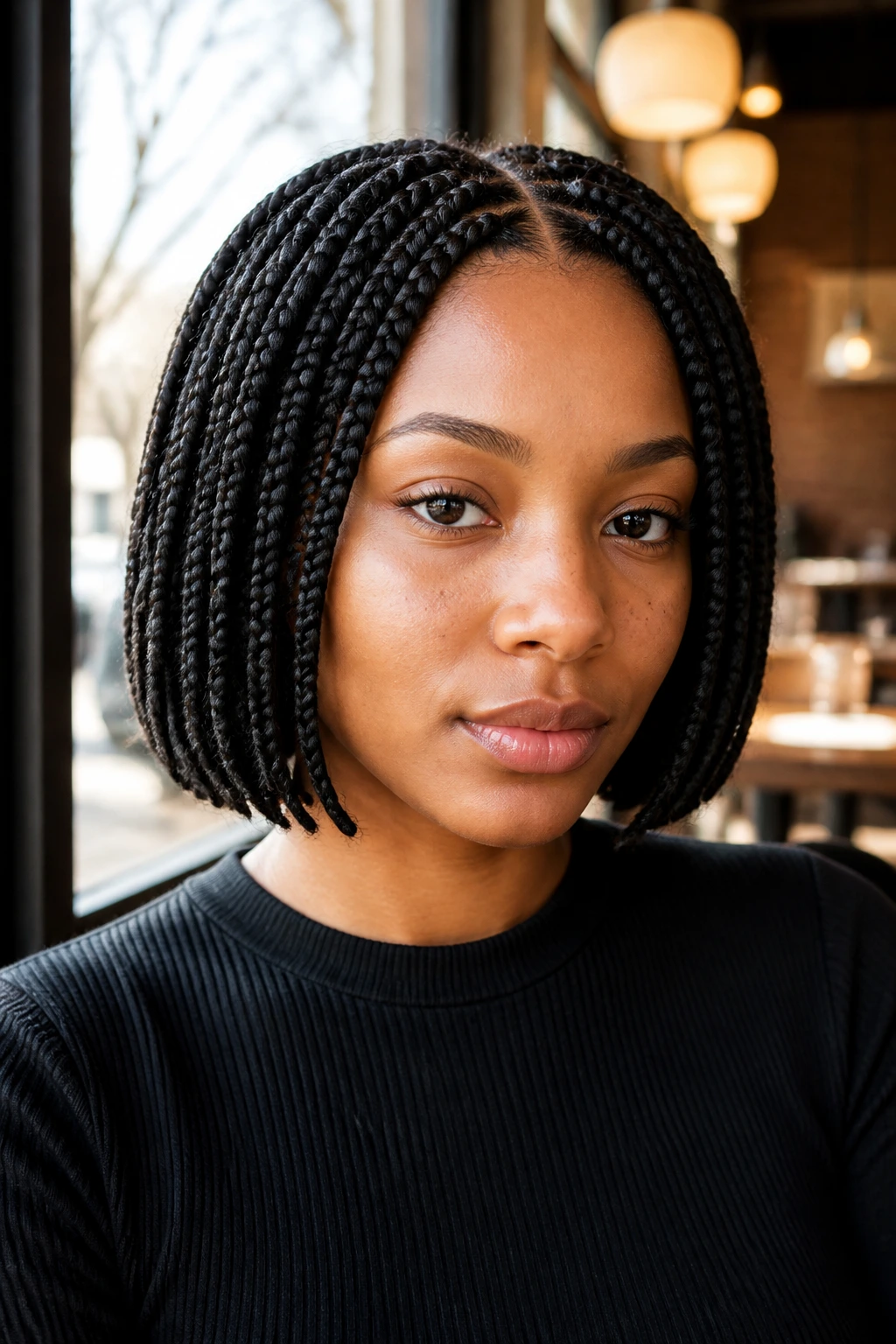
The most obvious mistake is over-sizing the parts. On short hair, big sections can make the braids look thick at the scalp and thin at the ends, which is a bad ratio. The fix is simple: smaller boxes, lighter extensions, and a length that stops before the weight starts to sag.
Another one is ignoring the nape. The back hairline gives the game away first. If those braids puff, slip, or twist outward, the whole style starts looking tired fast. A cleaner finish in the back — even if the top is simple — keeps the set looking fresh longer.
Too much product is a quiet problem. Edge control, cream, oil, mousse, gel — stacked together — can turn the roots greasy and make the parting look cloudy. Use less. A clean scalp reads better than a shiny one.
And then there’s forcing a style that needs more length than you have. A high ponytail on very short braids can pull like a complaint letter. A giant bun can slump. A long hanging set can drag the face down. Short hair looks best when the shape is honest.
Easy Swaps and Style Variations to Try
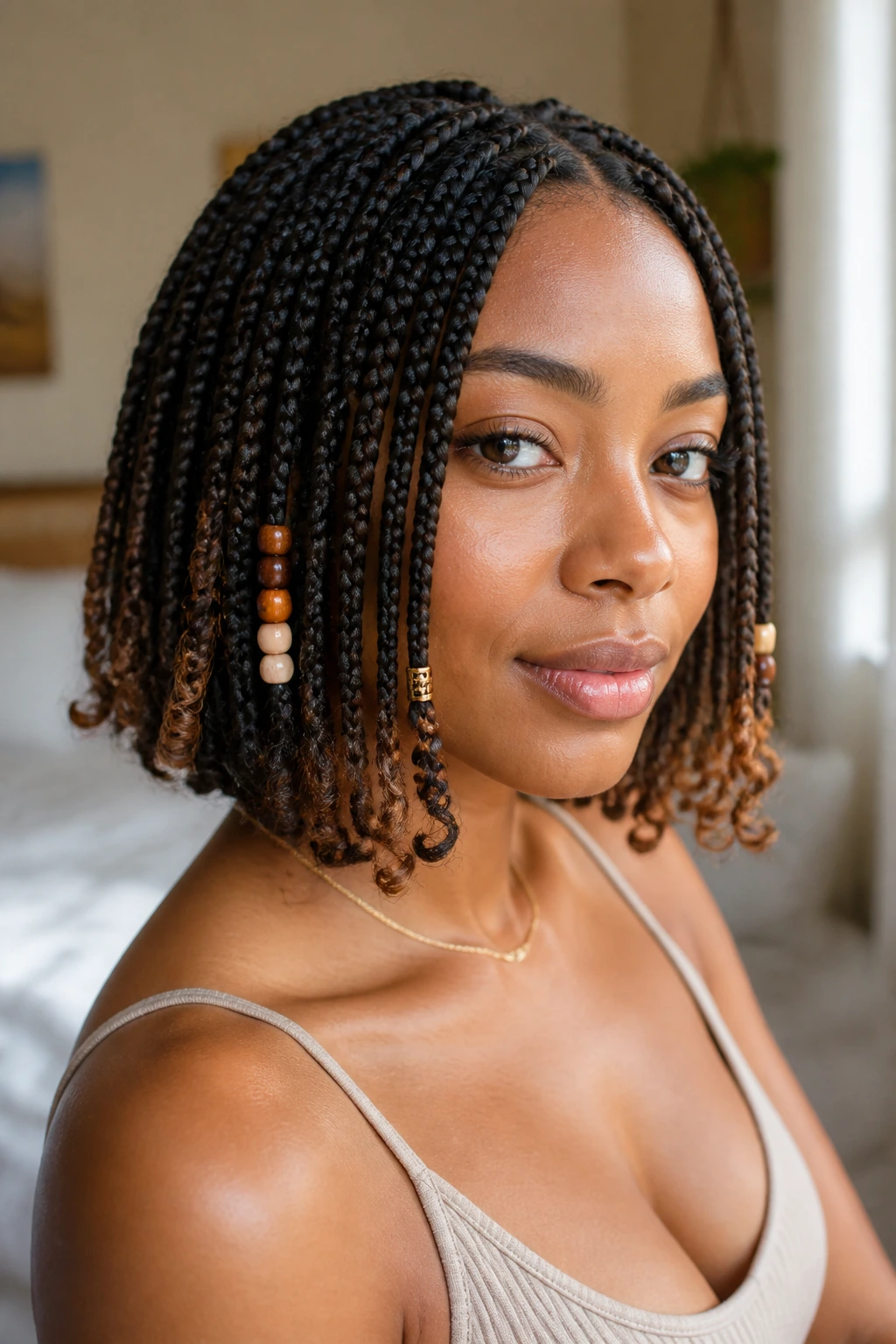
The Knotless Comfort Pass: Choose knotless starts, medium parts, and a chin-length finish if your scalp hates heavy tension. It’s the quiet, low-pressure version of the look, and it usually sits flatter at the root.
The Bead-Heavy Statement Set: Keep the braids simple and put the personality at the ends. A few rows of beads, one repeated metal cuff, or a single color family can make a basic bob feel custom without adding weight everywhere.
The Soft Curl Finish: Swap blunt ends for curled ones when you want a gentler line. It softens the silhouette fast, especially on a short bob that might otherwise feel a bit hard around the jaw.
The Color-Melt Set: Use ombré or two-tone extensions if you want depth without all-over dye. This works well on short hair because the color shift gives the eye something to follow when the braids stop early.
The Low-Key Minimal Set: Skip the accessories, keep the parts clean, and finish with a blunt bob or sleek center part. Some heads look better with less noise. Short braids can carry that quiet look easily.
Tools That Make the Whole Process Smoother
-
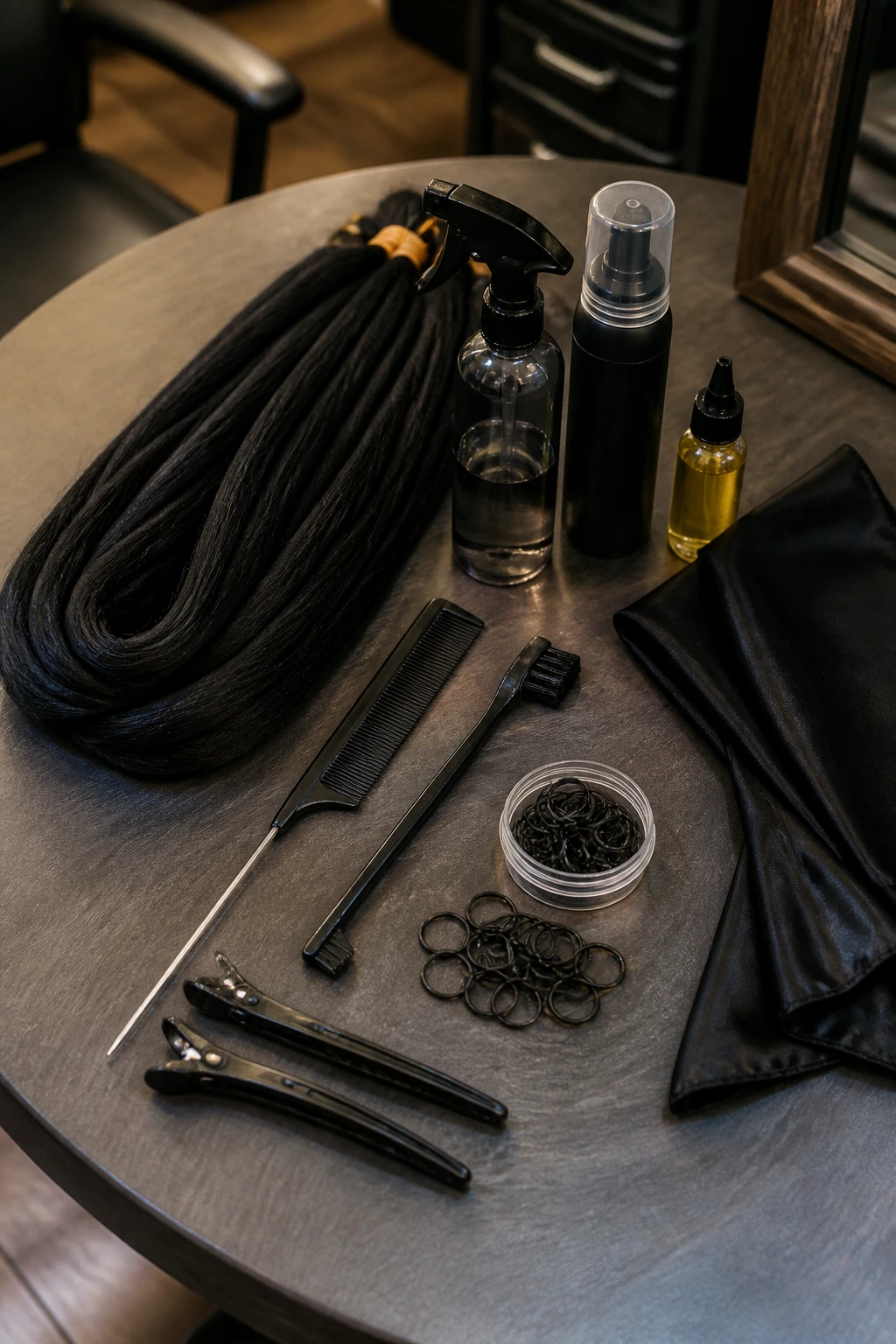
Rat-tail comb: For clean parts and tidy sectioning; this is the tool that decides whether the grid looks sharp or wobbly.
-
Duckbill or alligator clips: Hold the unbraided sections out of the way so short hair doesn’t get mixed into the wrong box.
-
Braiding hair: Synthetic extension hair, usually Kanekalon or similar, for the finished length and structure; buy a little extra if you want beads or curls.
-
Mousse or foam wrap: Helps settle frizz and keeps the roots from puffing up too fast, especially on the first night.
-
Edge brush: Useful for smoothing the hairline without piling on gel.
-
Spray bottle: A light mist helps with moisture and parting control; don’t soak the roots.
-
Hair oil or scalp serum: Use sparingly on the parts if your scalp runs dry. A few drops are enough.
-
Small elastics: Handy for pigtails, buns, and half-up styles, though some stylists prefer to avoid them on fragile hair.
-
Satin scarf or bonnet: Keeps the style from rubbing flat overnight and helps the parts stay neat.
-
Hand mirror: Short braids show their flaws in the back first, and a second mirror saves you from guessing.
Night Care, Washing, and How Long Short Box Braids Last
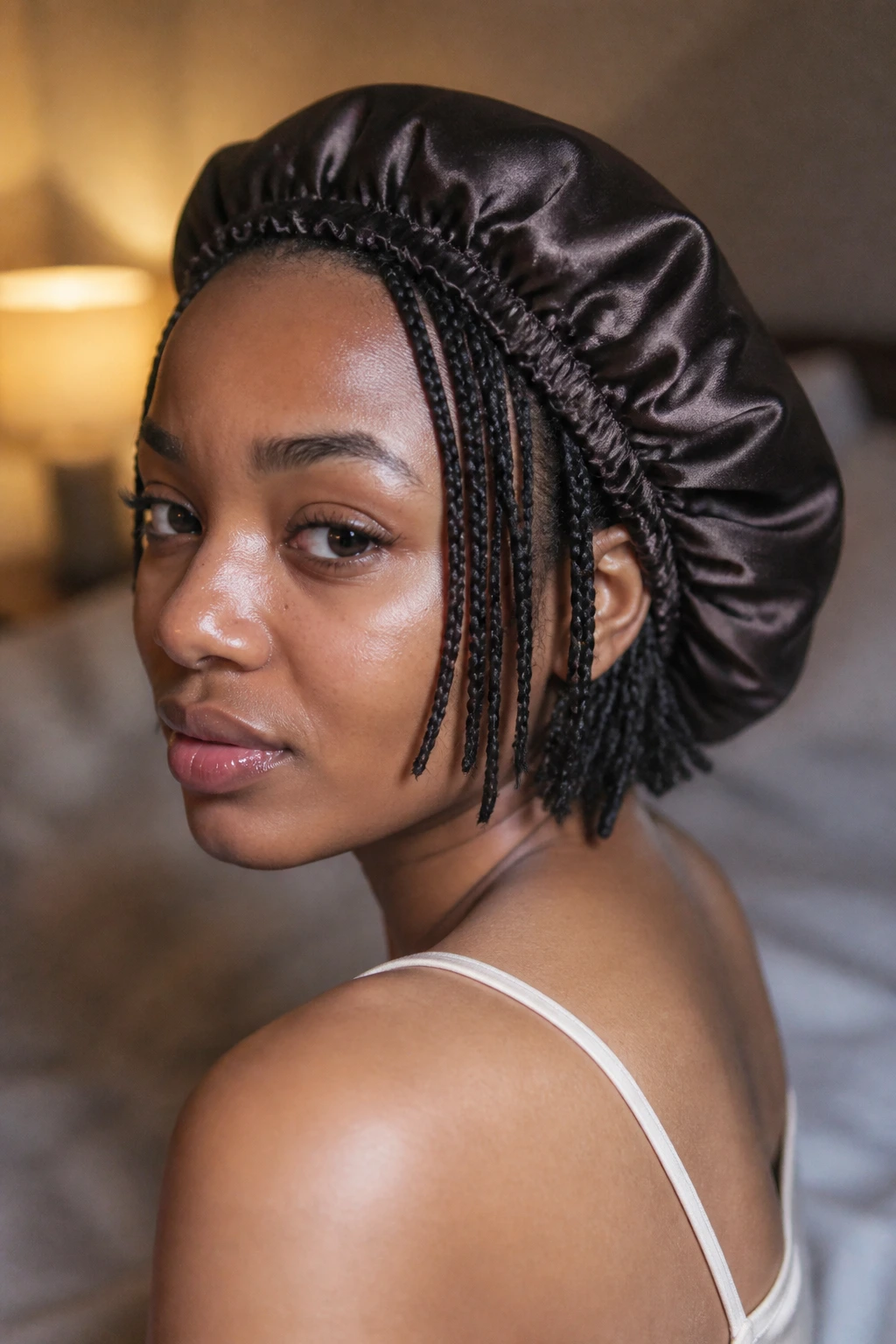
At Night: Sleep in a satin bonnet or wrap the hair with a satin scarf so the roots don’t rub against cotton. If the braids are short enough to bunch, gather them loosely before covering them. A hard tug at bedtime shows up as frizz at the temples by morning.
On Wash Days: Clean the scalp every 7 to 14 days if you’re using a lot of product or sweating often. A diluted shampoo in a nozzle bottle works better than dumping cleanser straight onto the braids. Rinse well, squeeze out the water with a towel, then dry fully with air or a hooded dryer before sleeping.
Between Refreshes: A light mousse every few days keeps the set from looking fuzzy. Use scalp oil only if the scalp feels dry; too much oil turns the parts cloudy and collects lint fast.
How Long They Usually Last: Short box braids often look freshest for 4 to 6 weeks. Smaller sets can stretch longer, but the nape and front rows usually tell you when it’s time to stop pushing it. If the roots are puffy and the style starts leaning, that’s your sign.
Make-Ahead Thinking: The style improves on day two once the braids settle, but it does not get better forever. If the ends keep catching on clothes or the root tension feels off, fix it early. Waiting rarely helps.
Questions People Ask About Short Box Braids
How short is too short for box braids?
If the hair is too short to grip securely, the braids won’t hold cleanly at the root. In practice, many stylists want at least a couple inches of stretched hair, though smaller sections and knotless starts help when the base is very short.
Are knotless braids better for short hair?
Often, yes. The flatter start usually feels softer on short hair, especially around the hairline and nape where tension shows up first. They are not a magic fix, but they tend to sit more comfortably than a heavy knot.
Can short box braids go into a ponytail or bun?
Yes, but the length has to be realistic. A small low bun or compact high ponytail works better than a big pulled-back shape that fights the base. If the braids are chin-length or longer, you have more room to play.
What if my ends keep sticking out?
That usually means the braids are too short for the chosen style, the parts are too large, or the extension hair wasn’t finished evenly. A bob length, curled end, or bead can hide a stubborn finish better than trying to force a long drop.
Do short box braids last as long as long ones?
Not usually. The ends fray less, but the roots on short styles can reveal growth faster because the proportion is smaller. Four to six weeks is a common wear window before the style starts looking grown out.
Can I wash short box braids?
Yes, and you should if the scalp needs it. Use diluted shampoo, gentle pressure, and a full dry afterward. Wet braids tucked into a bonnet overnight are a fast way to invite that damp smell nobody wants.
Are beads too heavy for short hair?
They can be if you overdo them. A few light beads or cuffs are fine, but large glass pieces or too many metal accents can pull on the ends and make a short set feel draggy. Keep the decoration lighter than the braid itself.
Braids That Fit the Cut You Have
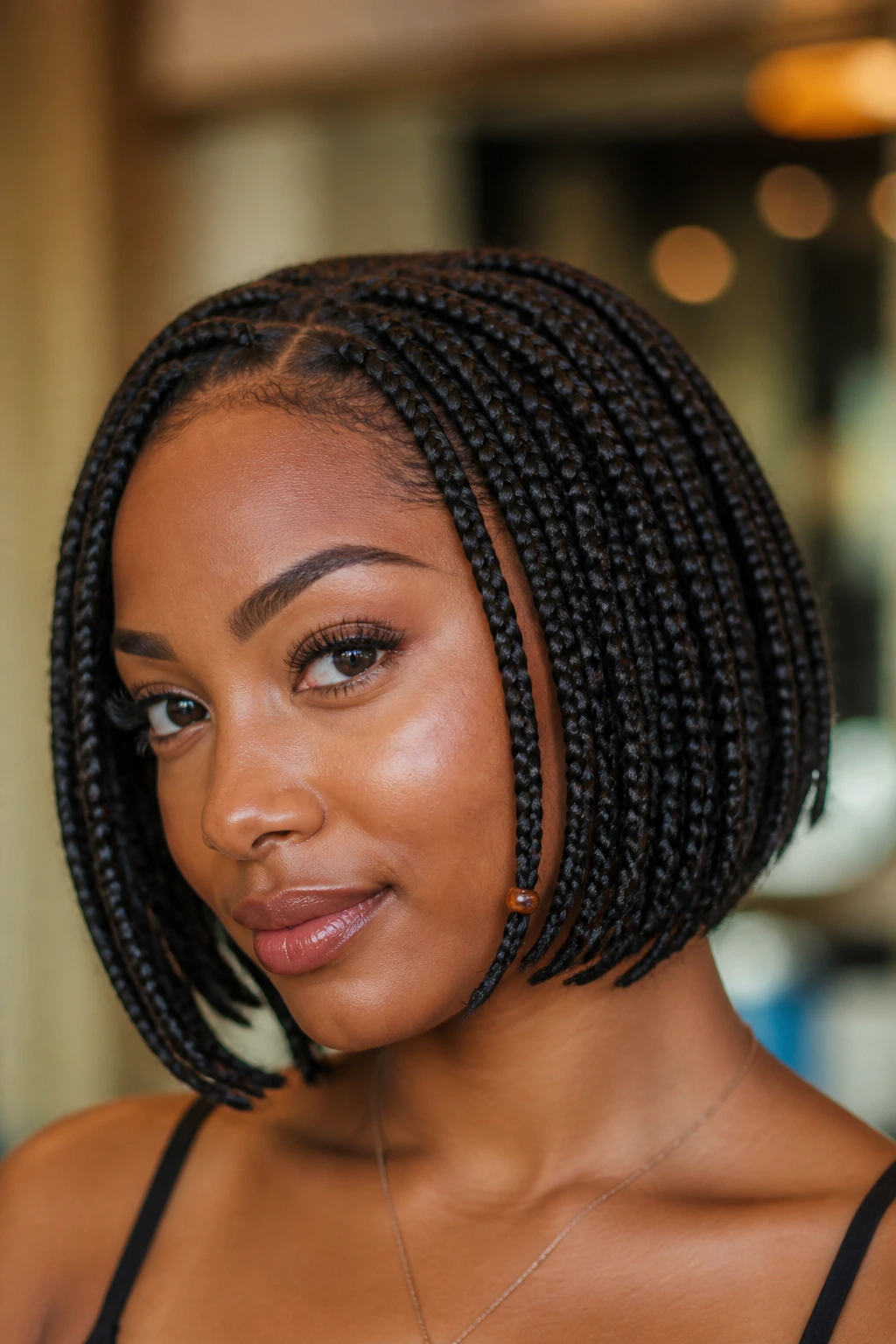
Short hair works best when the braid style matches the hair you actually brought to the chair. That sounds obvious, but people still try to force long-braid energy onto a base that wants a bob, a tuck, or a clean little shape around the jaw.
The smartest short box braid styles are the ones that use proportion well: a neat part, a finish that stops where the weight still feels manageable, and one detail — beads, curls, a side sweep, a scarf — that gives the style a point of view. You do not need extra length to have presence. You need the right silhouette.
Pick the shape that fits your neckline, your hair density, and how much time you want to spend keeping it neat. The rest takes care of itself surprisingly fast.
