



Senegalese twist styles have a way of looking neat before they look fancy. That’s part of the appeal. A good set sits close to the scalp, falls with that smooth rope-like swing, and still feels soft enough to tuck behind one ear or pin into a bun when the day gets busy.
What I like most about Senegalese twists is the range. The same basic install can read sleek and minimal in a blunt bob, polished in a low ponytail, playful with beads, or almost dramatic when the twists drop past the waist and start moving with every step. The style has structure, but it never feels stiff if the twists are installed with the right amount of tension and enough hair to keep the weight balanced.
That balance matters more than people think. Too much extension hair and the twists get bulky at the roots. Too little and they lose that smooth, ropey finish that makes Senegalese twists so recognizable. Get the ratio right, though, and the result has a clean line that photographs well in real life — not because it’s flashy, but because the parting, length, and ends all sit in harmony.
Why These Styles Keep Getting Chosen
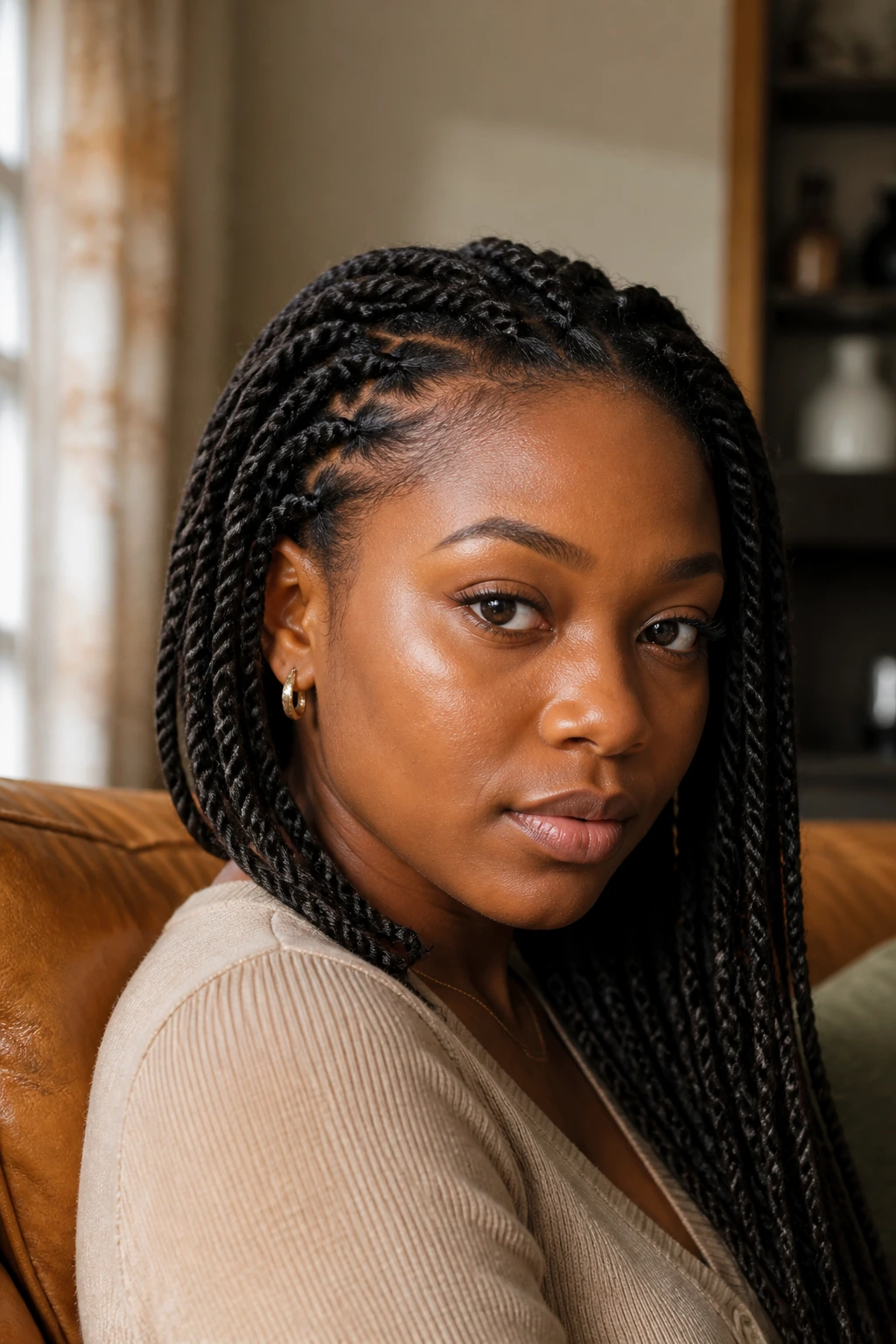
- The shape holds: Senegalese twists keep their rope-like look even after the first few days of wear, which means the style still looks deliberate after sleep, errands, and humidity.
- The length is flexible: A shoulder-length set feels light and practical, while waist-length twists bring more swing and drama without needing a different technique.
- The parting changes everything: Middle parts, side parts, triangles, and diamonds all change the mood of the same install without forcing a full redo.
- Accessories do real work: Beads, cuffs, thread wraps, and scarves can shift a plain set into something more personal with almost no effort.
- Updos save the week: Half-up looks, buns, ponytails, and crowns keep twists out of your face when you want a cleaner silhouette.
- Color gives the style a second life: Honey blonde, burgundy, copper, and peekaboo panels make the twists look intentional, not accidental.
1. Waist-Length Midnight Senegalese Twists
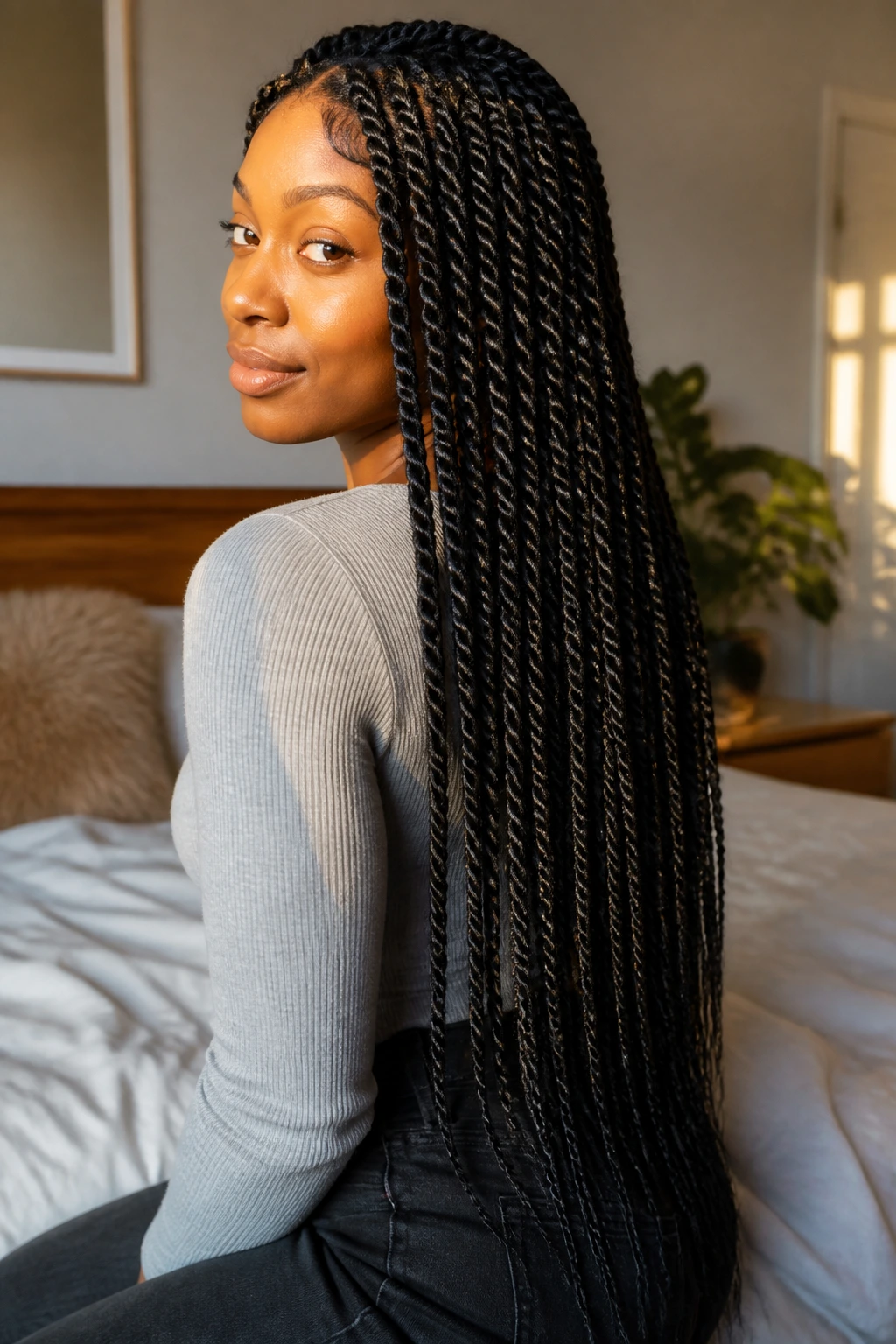
These are the version most people picture first: long, smooth, dark twists that fall straight and glossy with a little sway at the ends. The look is simple, but not plain. The length gives every movement a slower, cleaner line, which is why this style looks so good with a side part and a deep lip color or a bare face.
The trick is keeping the roots flat and the twist size consistent all the way down. If the sectioning wanders, the length starts to look heavy instead of elegant. Waist-length works best when the install is neat enough to disappear into the hairline and the ends are sealed evenly, so the whole style reads as one continuous flow rather than a pile of separate pieces.
2. Shoulder-Grazing Blunt Bob Twists
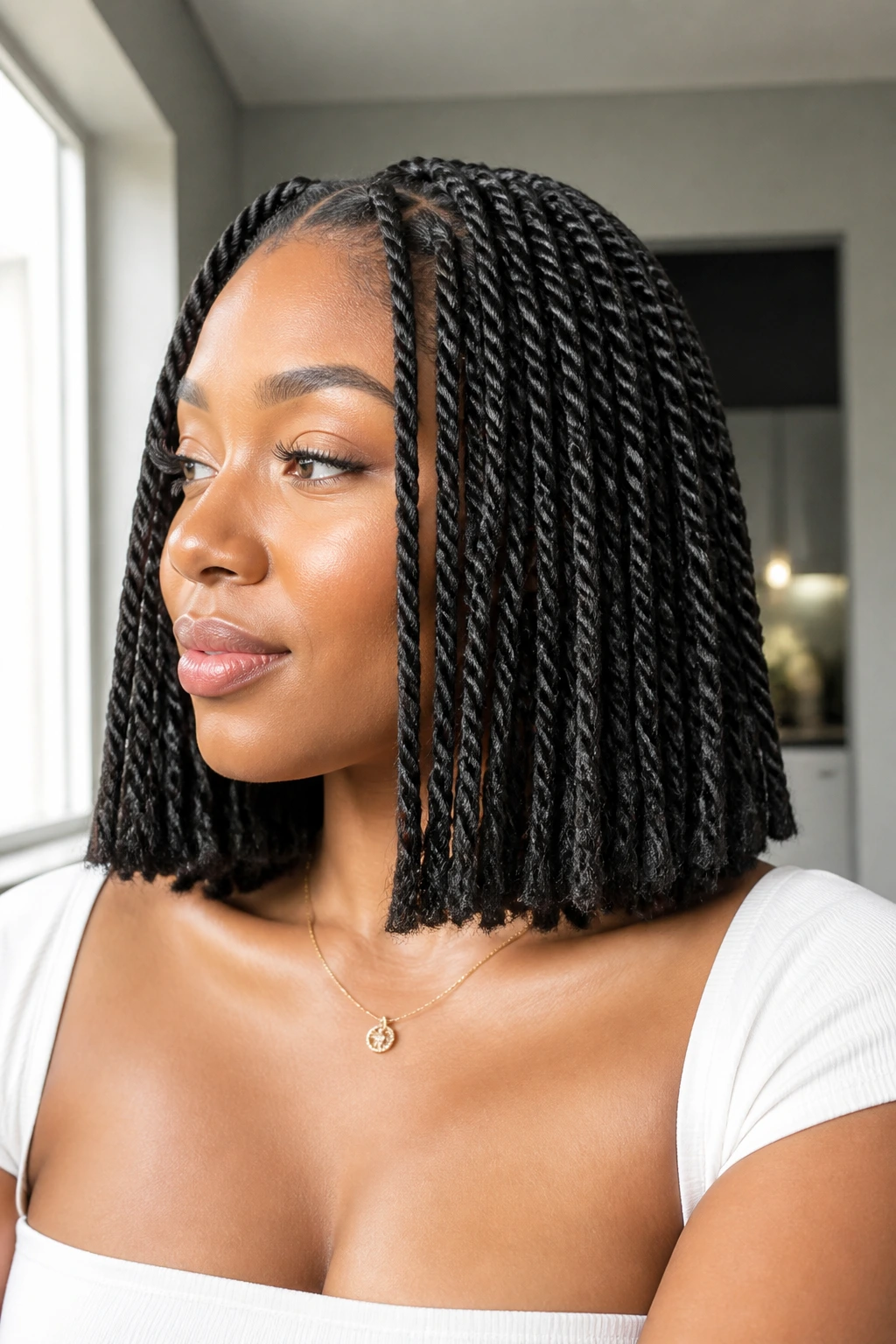
A blunt bob in Senegalese twists has a sharp little confidence to it. The ends land around the shoulders or just below the jaw, and that clean line makes the style feel fresh without needing color or accessories. It’s the kind of cut that looks better the straighter the parting is.
This shape is a smart pick if you want twists that don’t sit on your coat collar or get caught under a bag strap every five minutes. The bob length also keeps the style feeling lighter on the head, which matters more than people expect after a few hours. Ask for tidy, even ends so the line stays crisp instead of fluffy.
3. Side-Part Rope Twists with Face-Framing Pieces
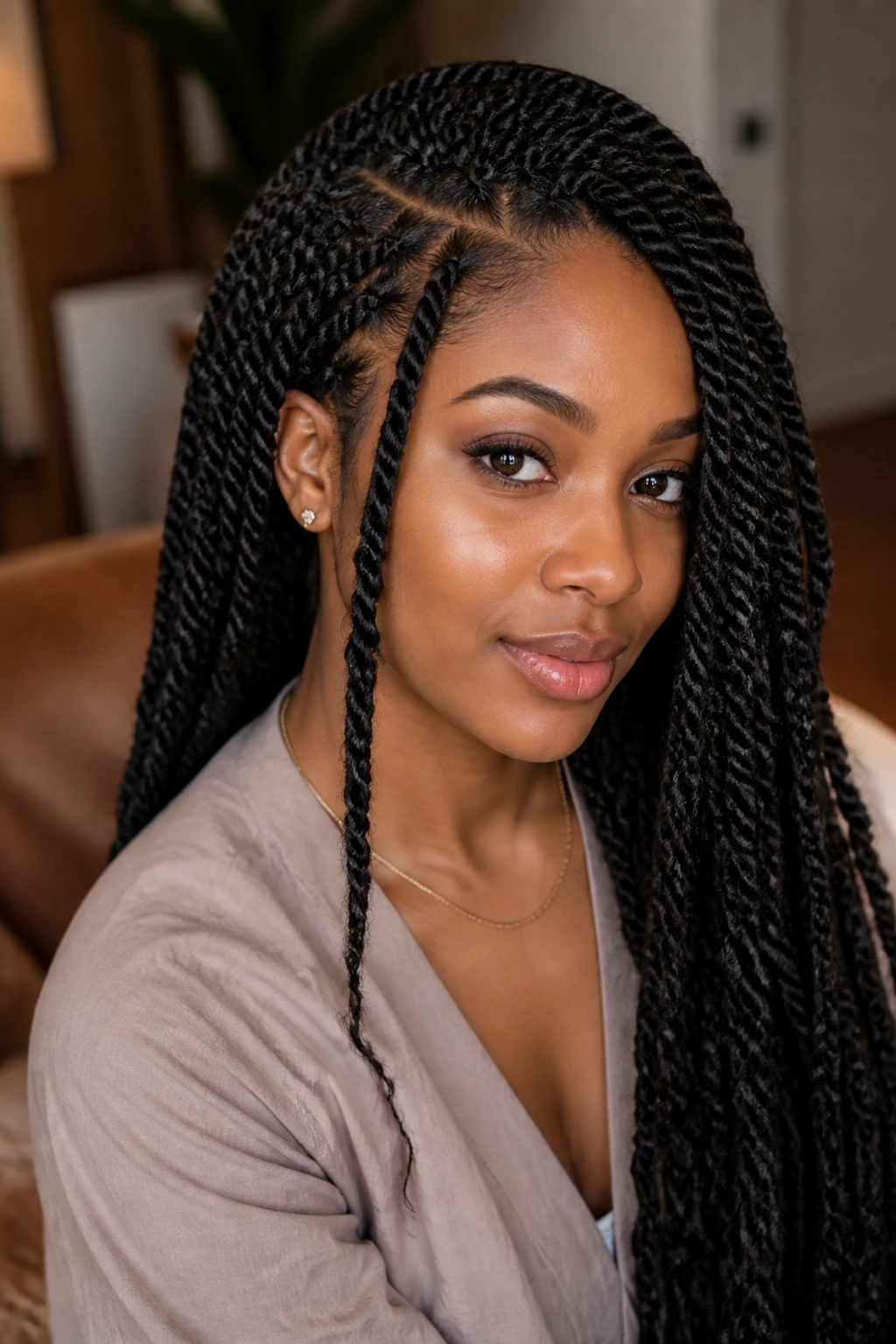
A deep side part changes the whole mood. Suddenly the twists fall in a soft curtain, and the front pieces can be left a little shorter to frame the cheekbones without stealing the show. It’s one of those styles that looks polished without looking fussy.
What makes it work is contrast: the part should be clean and decisive, while the front stays slightly softer. That little difference keeps the style from reading too severe. If you like a side profile that feels a bit more romantic, this is a strong option — especially when the twists are medium-sized and move easily.
4. Center-Part Curtain Senegalese Twists
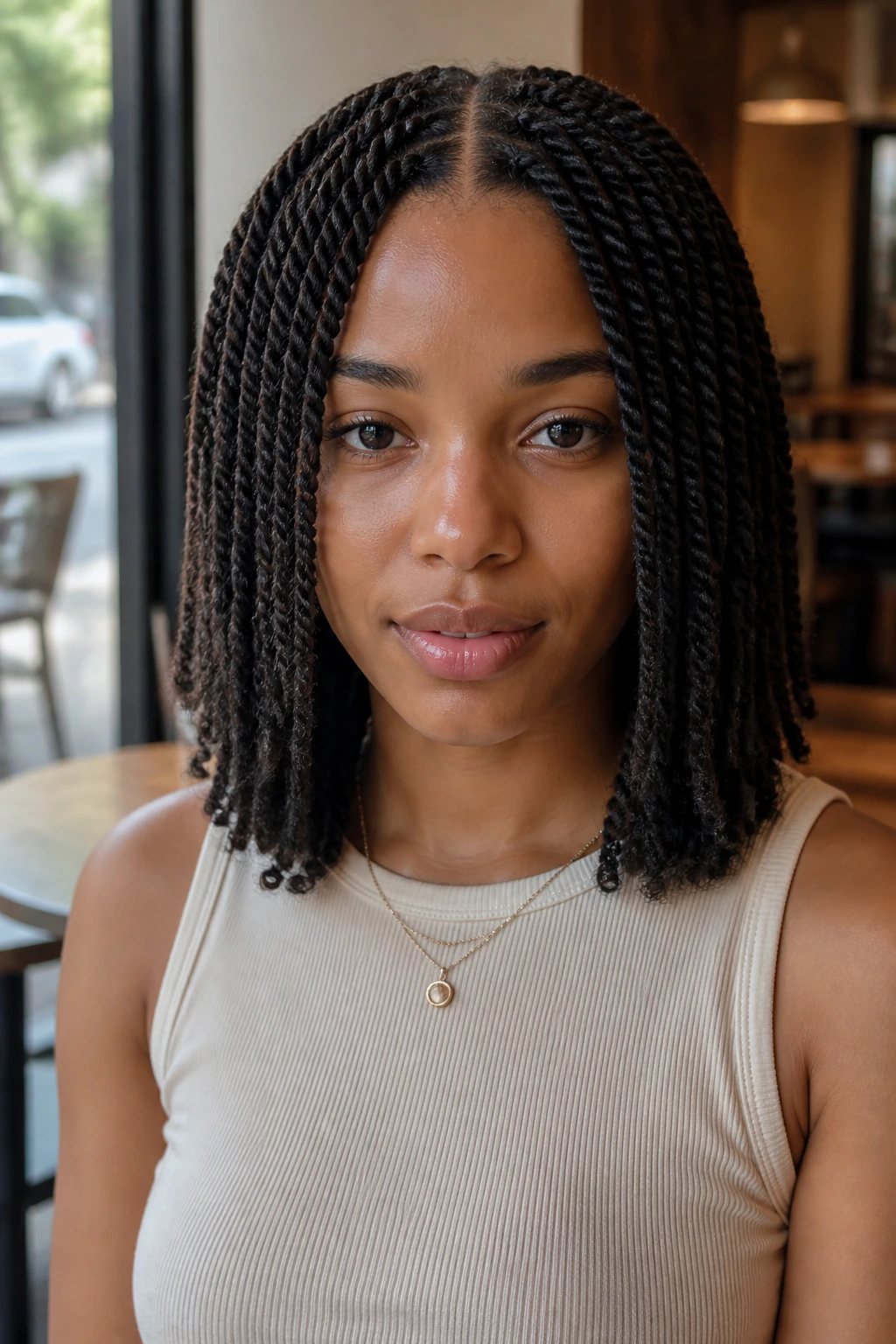
A center part gives Senegalese twists a tidy, balanced shape that’s hard to beat. The twists fall like two even panels on either side of the face, which makes the style feel calm and deliberate. It’s especially flattering when the front twists are cut to skim the collarbone.
This style lives or dies by the parting. If the center line wanders, the whole look feels off. Keep the roots clean and the front pieces symmetrical, then let the lengths do the work. The result is minimal in the best way — quiet, clean, and easy to wear with gold hoops or a plain white tee.
5. Jumbo Senegalese Twists
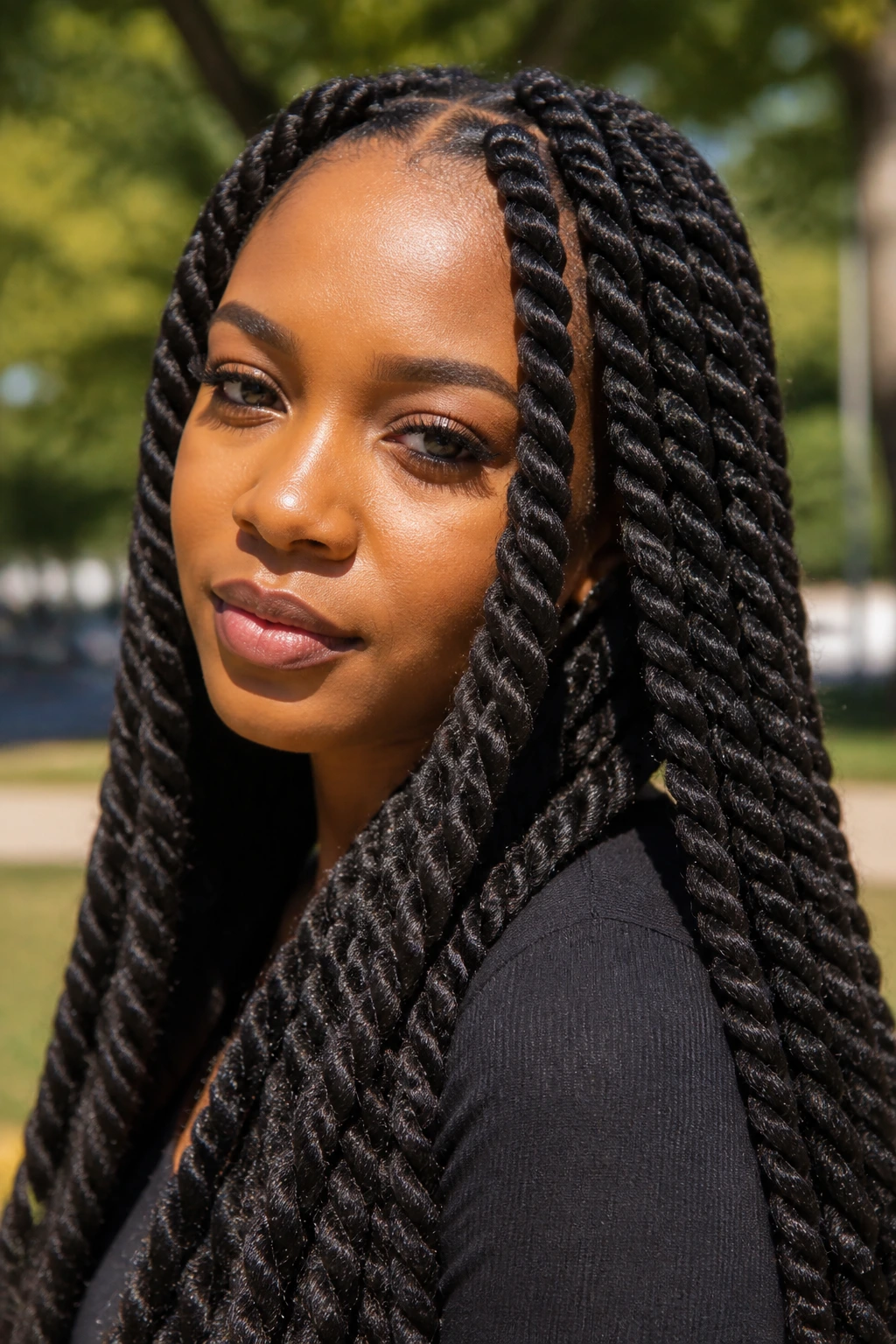
Jumbo twists bring a chunky, sculpted look that feels bold without needing extra decoration. Because the sections are larger, the style installs faster than micro twists and has more visible rope texture from root to end. That makes it a good choice when you want the twist pattern to be part of the look, not just the structure underneath it.
They work best when the tension stays even and the twists are not overpacked with hair. Heavy jumbo twists can start to tug at the scalp by day three, and that’s a miserable trade for a style that should feel playful. If you like a fuller silhouette and don’t mind a little more presence around the face, this is the set to ask for.
6. Micro Senegalese Twists
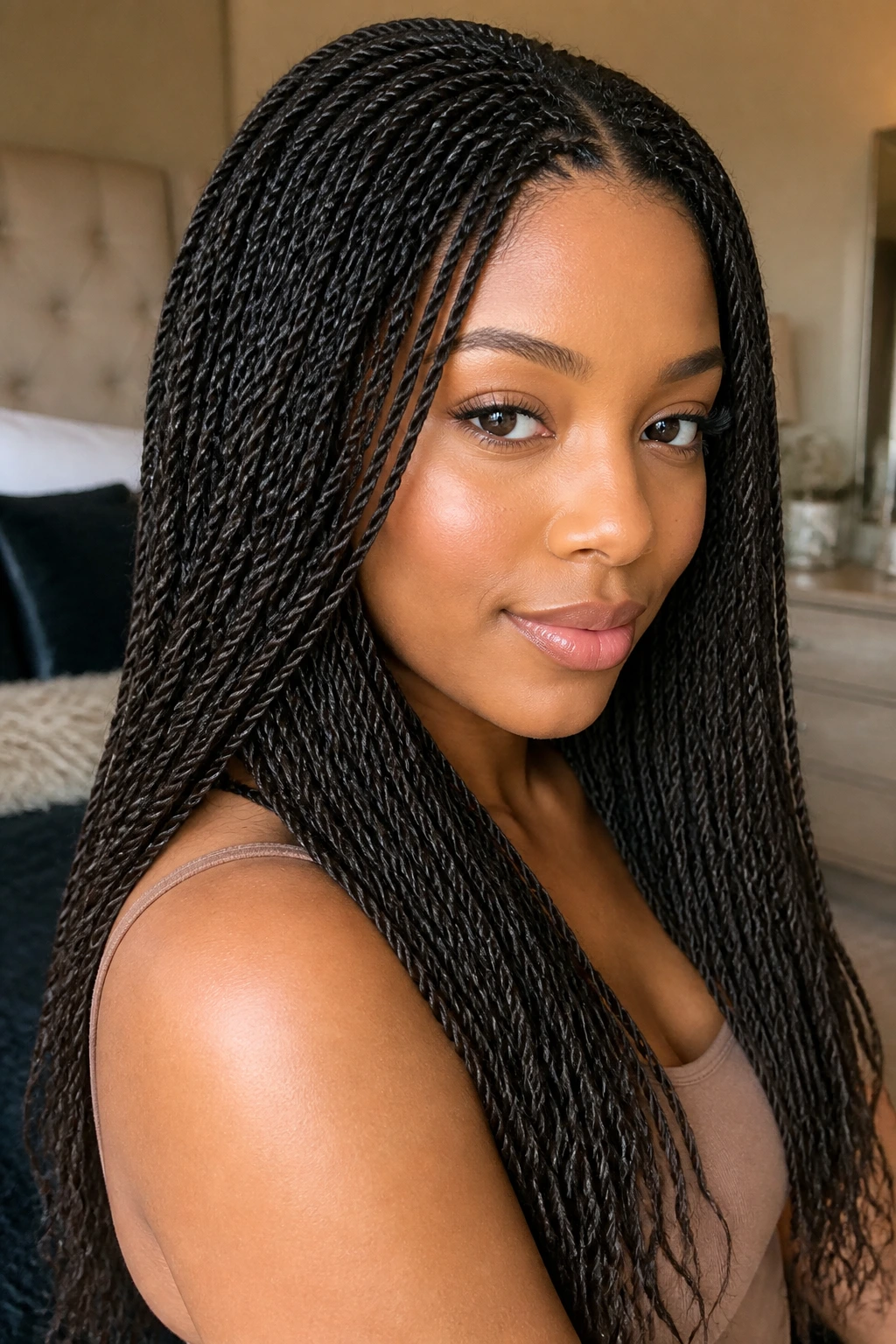
Micro twists have a soft, intricate look that feels almost lace-like from a distance. Up close, they’re all detail: tiny parts, fine rope texture, and lots of movement when you turn your head. The style has a delicate finish, but it also takes patience to install and care for, so it’s a commitment in the real sense.
They’re a good match for people who like the look of density without the bulk of bigger twists. The lighter sections help the hair fall more freely, and the style can be worn down, half-up, or pinned back without much fuss. Just know this: micro twists frizz earlier at the ends if they’re handled constantly.
7. Half-Up, Half-Down Senegalese Twists
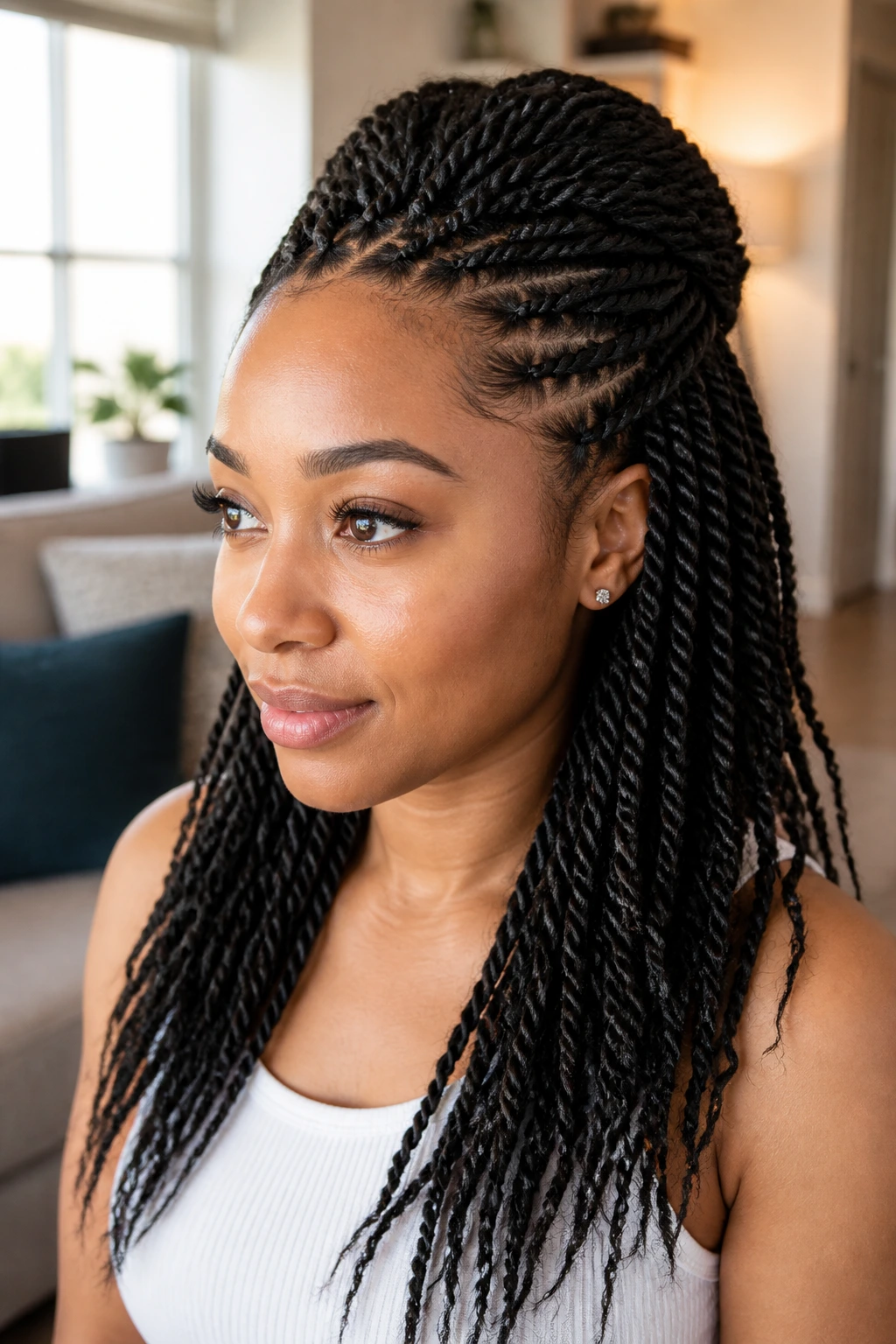
This style gives you the best kind of split personality. The top half gets pulled back, which keeps the hair out of your face, while the rest falls long and loose for movement. It’s practical, yes, but it also has a clean shape that looks done on purpose rather than thrown together.
The sweet spot is the crown. Pull it back too tightly and the style looks severe; too loosely and the half-up piece collapses by lunchtime. A small claw clip, a wrapped section of one or two twists, or a simple tie at the back all work. The rest can stay free and swingy.
8. Sleek High Ponytail Twists
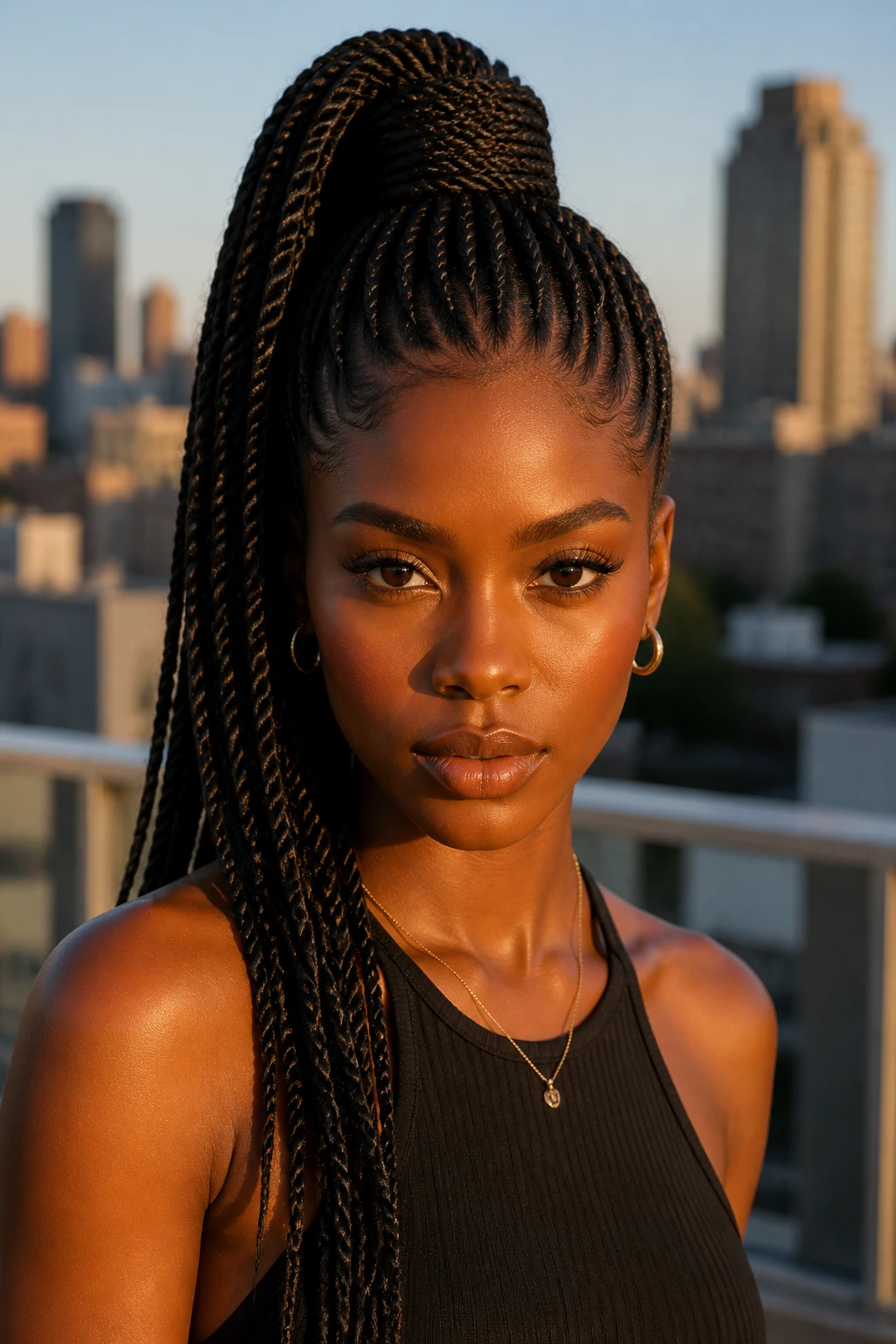
A high ponytail changes Senegalese twists from relaxed to lifted in one move. The silhouette rises at the crown, the face opens up, and the whole style feels sharper. I like this look when the roots are neat and the ponytail base is wrapped with one twist or a thin extension piece, because that little finish makes it look intentional instead of improvised.
The ponytail works best with medium or long twists. Shorter lengths can stick out at odd angles, and that ruins the clean line. If the hair is heavy, secure the base with more than one tie so the ponytail sits high without sliding back an inch every hour.
9. Low Wrapped Ponytail Twists
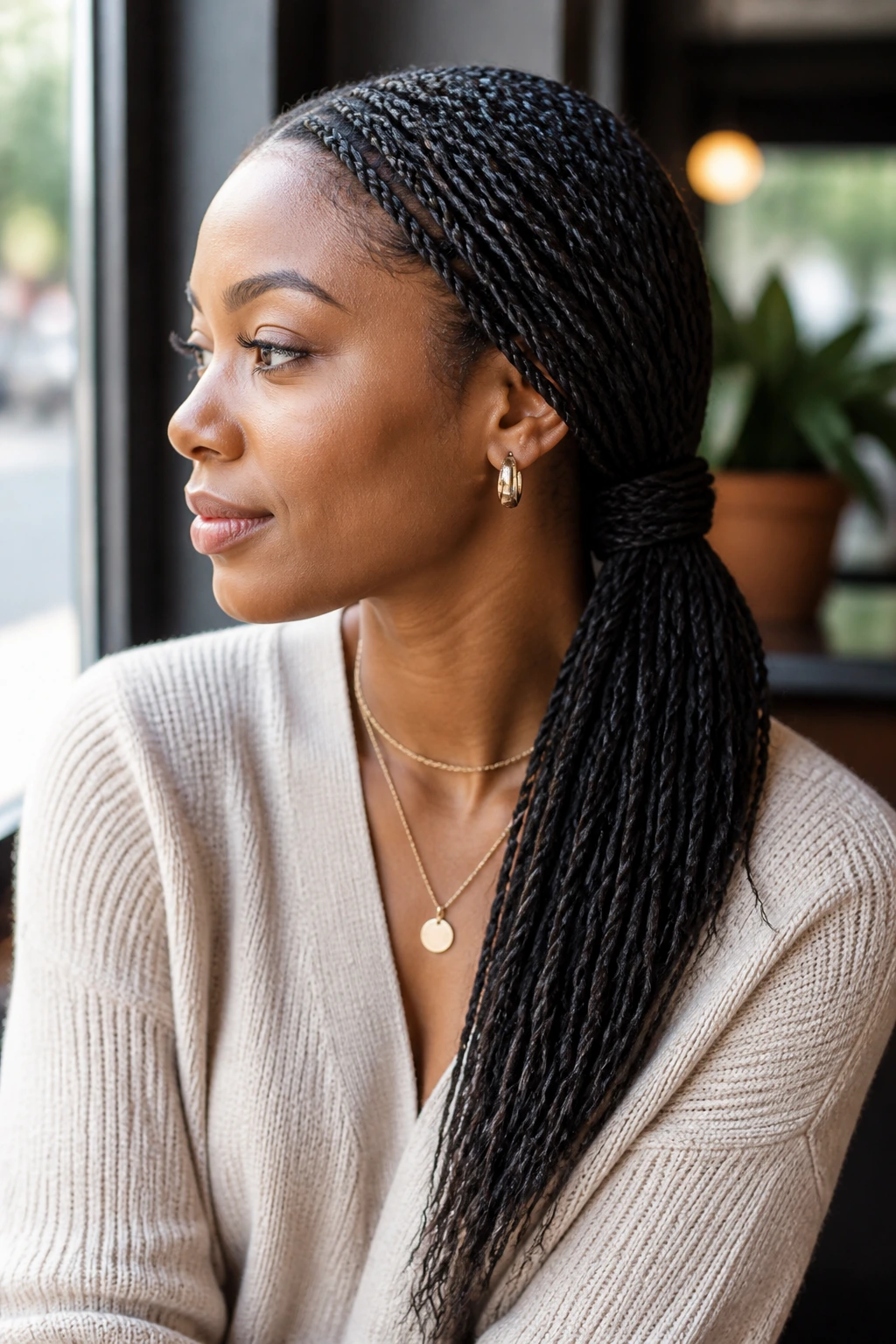
A low ponytail is softer and less obvious than a high one. It sits at the nape, keeps the neck clear, and gives the twists a long, uninterrupted fall. Wrapped at the base, the style looks especially neat because the hair tie disappears and the finish feels polished.
This is one of my favorite options for long workdays or travel, mostly because it doesn’t fight with headrests and scarves. The look stays tidy even when the rest of the outfit is plain. If you want the twists to feel elegant without looking overdressed, a low wrapped ponytail does that with almost no drama.
10. Space Bun Senegalese Twists
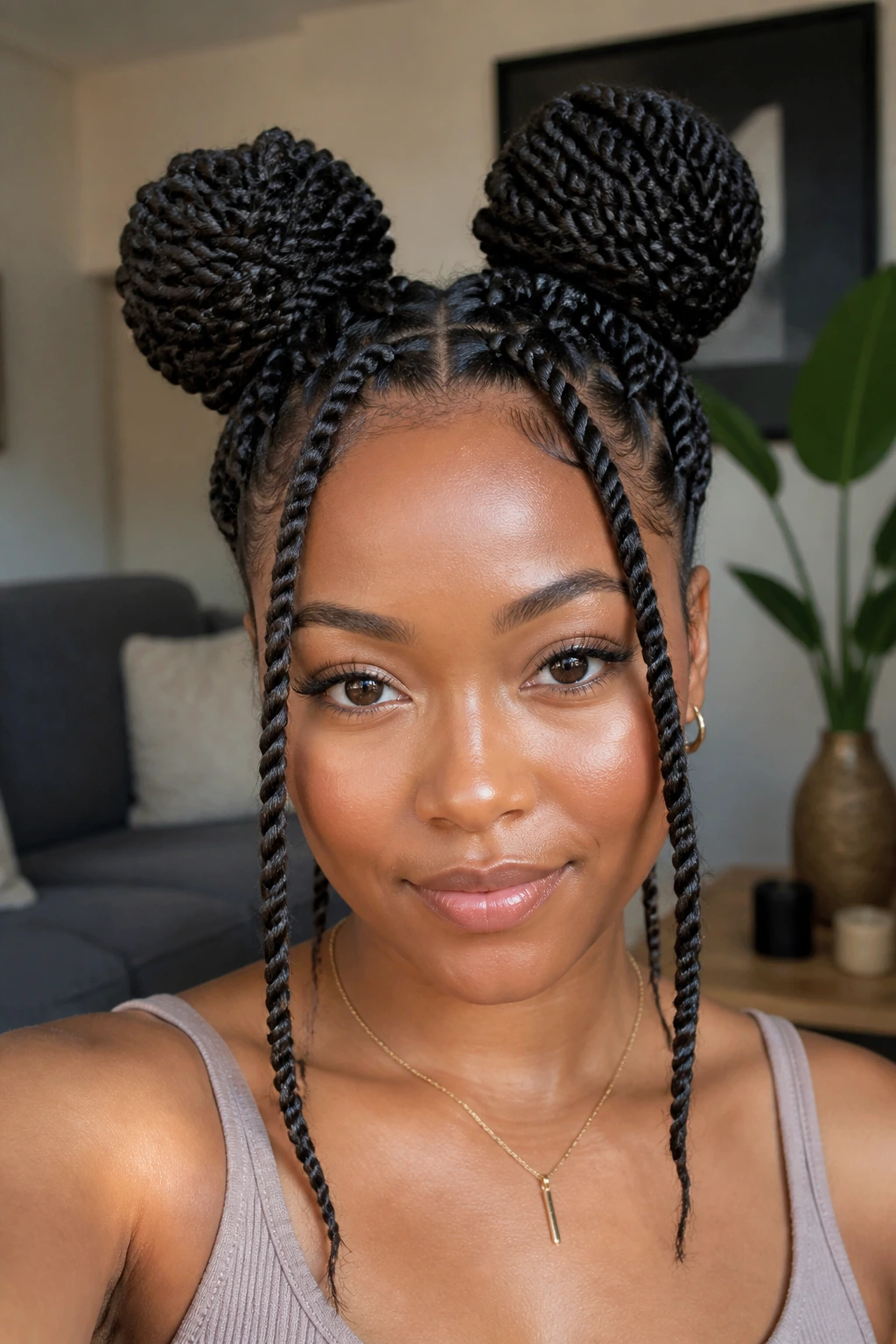
Space buns bring a little fun back into the room. Split the twists into two high buns and the whole style suddenly feels youthful, easy, and a bit cheeky. It’s a good choice when you want the twists up and off your face but don’t want a single top knot pulling everything into one shape.
The buns work best when they’re not too tight and not too smooth. A little softness around the temples keeps the style from looking harsh. Leave a few twists loose around the face if you like a softer finish. Otherwise, the clean symmetry does the work on its own.
11. Low Chignon Twists
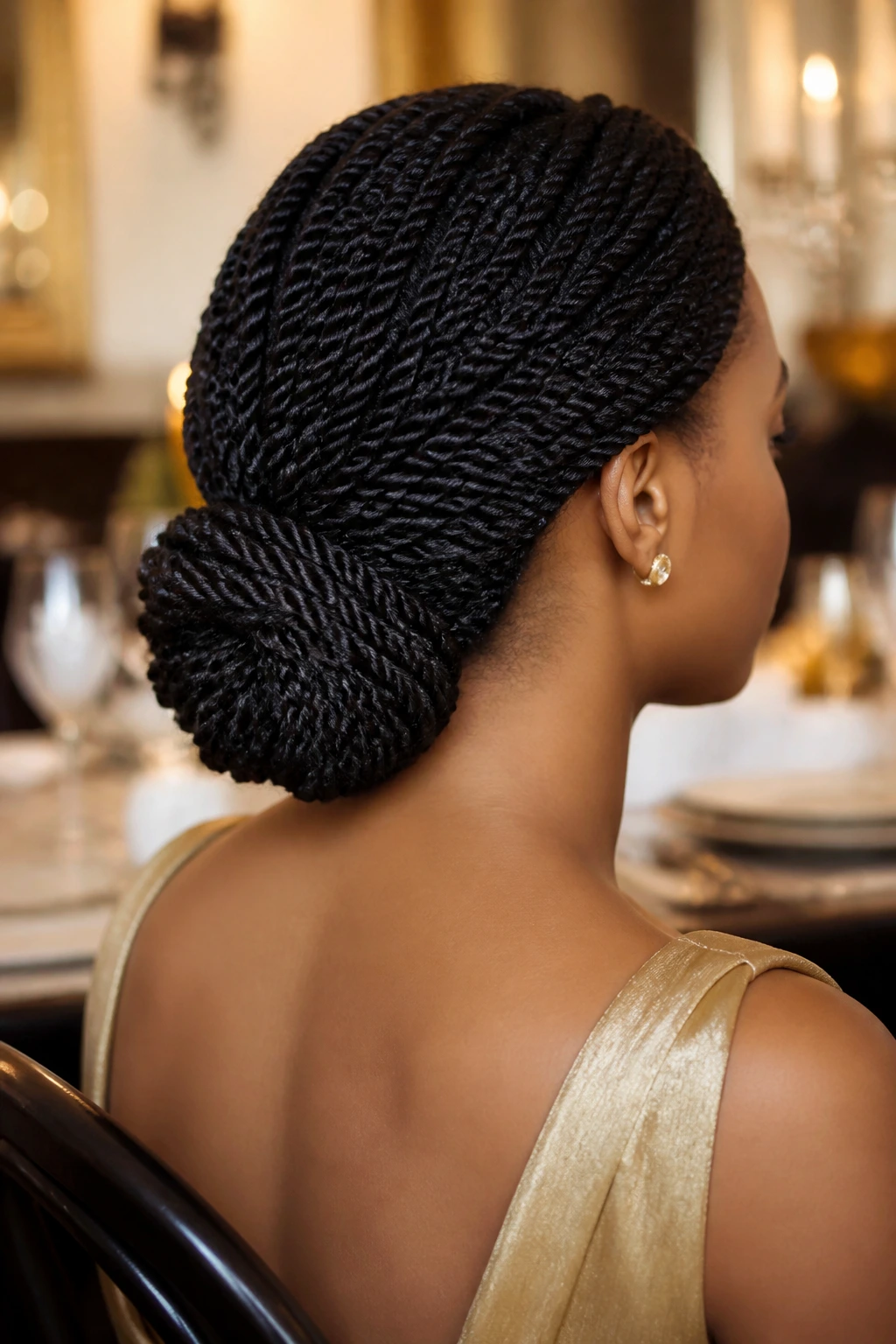
A chignon makes Senegalese twists feel more dressed up, even when the outfit stays casual. The hair gets folded and pinned low at the back, which creates a tucked, compact shape with a nice clean neckline. It’s neat without being rigid.
The trick is pinning the twists in a way that hides the ends instead of fighting them. If the set is long, fold the lengths under in sections so the bun doesn’t balloon. This style is especially good for weddings, dinners, or any day when you want your hair to behave and still look styled.
12. Crown Halo Twist Updo
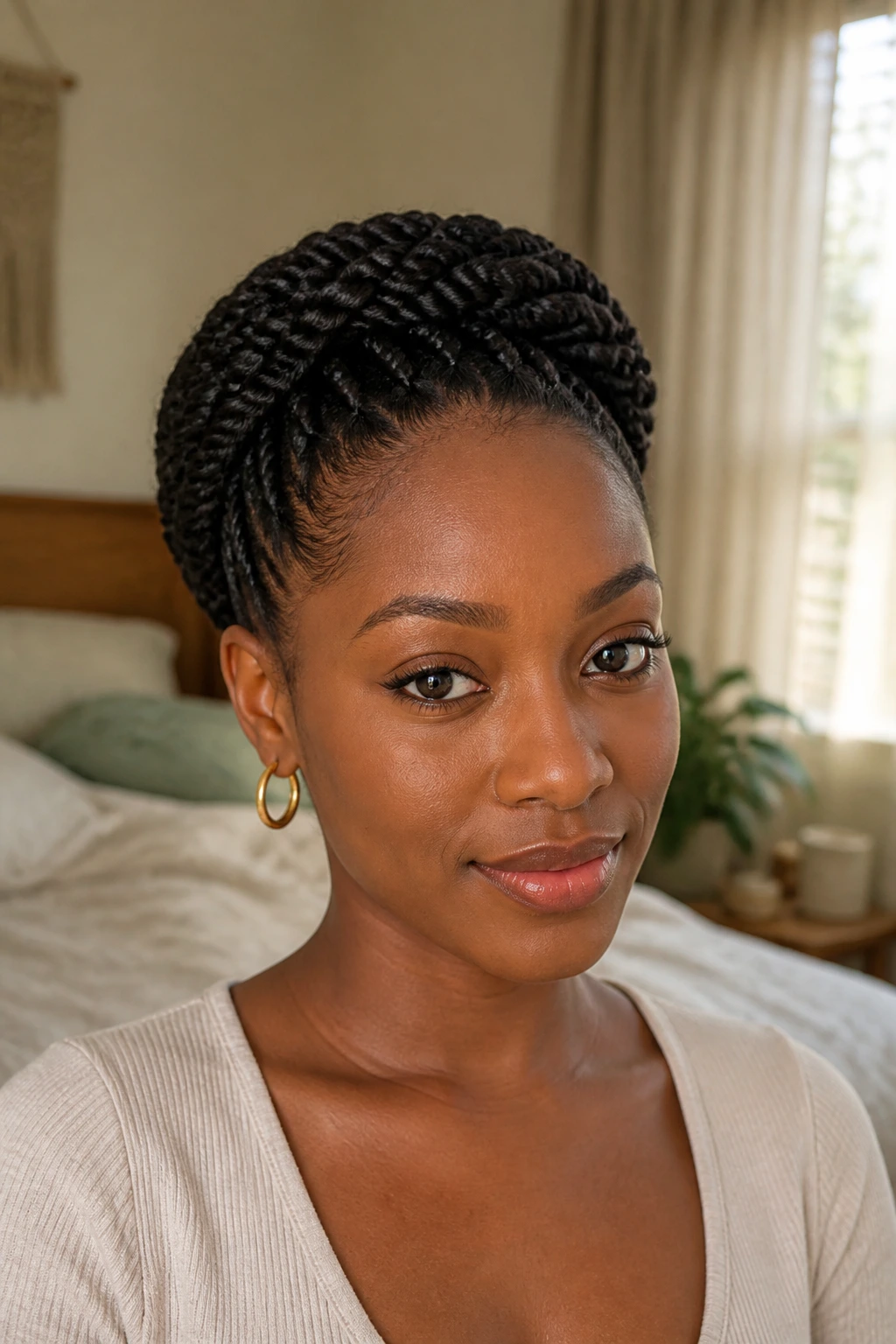
A halo updo wraps the twists around the head in a circle, and the result has a soft, regal frame that looks more complicated than it is. The style keeps the hair entirely up while still showing off the texture of the twists, which is a nice payoff if you spent hours getting them installed.
What makes the halo work is placement. Sit it too low and it becomes a bun with a fancy name. Too high and it loses the crown effect. Keep the twist line close to the head and tuck the ends cleanly so the shape stays smooth all the way around.
13. Senegalese Twist Faux Hawk
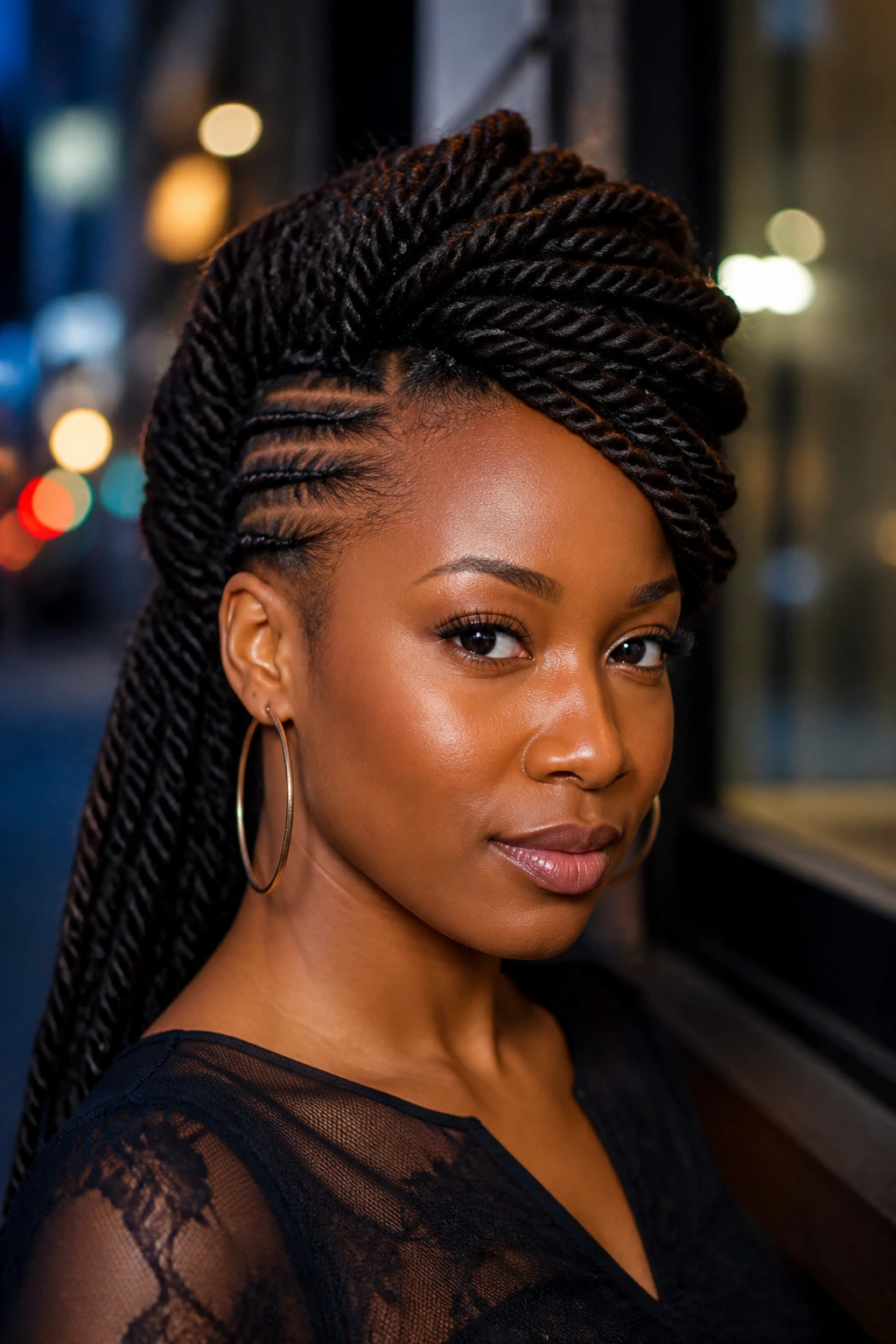
This one has edge, but not the messy kind. The sides get pinned or braided down, and the twists are left fuller through the center to create a faux hawk shape. It gives lift without requiring a haircut, which is part of why people love it.
The style looks best when the middle section has enough volume to stand out. Use a few strategically placed pins or a tie at the nape to keep the sides tight, then let the top twists fan slightly. It’s a strong look for evenings, photos, or any time a plain down style feels too quiet.
14. Lemonade-Style Side Sweep Twists
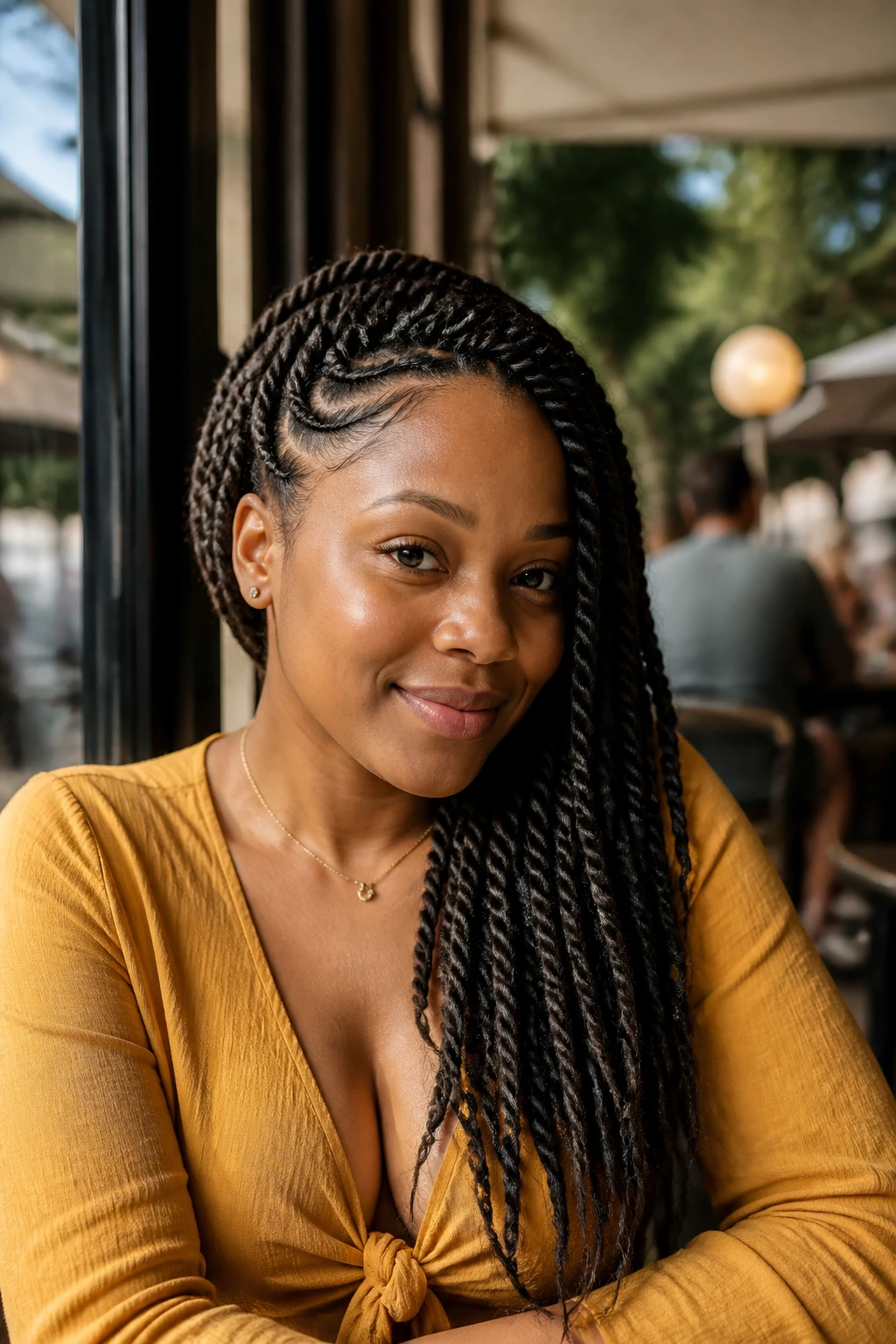
A side sweep brings instant movement. All the twists fall in one direction, and the line across the forehead makes the face feel open while the length stays dramatic. It’s a good style when you want something a little more styled than a middle part but not as formal as a full updo.
The side sweep reads best with medium or long twists because the lengths have room to drape. Keep the front section clean and let the rest of the hair fall naturally across the shoulder. The shape has a relaxed confidence that works with hoop earrings, a fitted tee, or a slip dress.
15. Triangle-Part Senegalese Twists
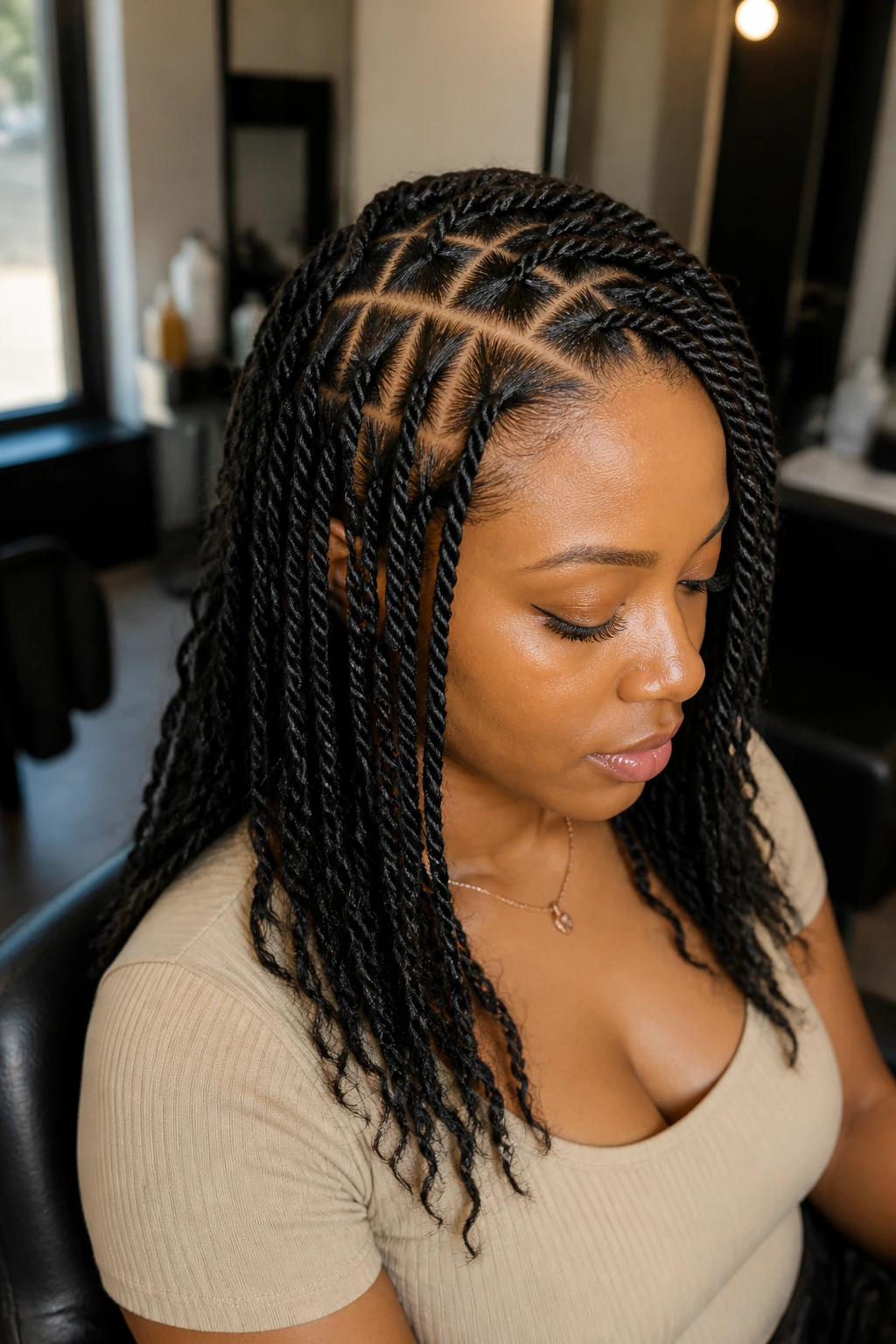
Triangle parts give the scalp pattern a little geometry, and that small shift makes the style feel fresh without changing the twists themselves. The parting has a sharper, more modern look than box sections, so even a simple down style looks more considered.
The triangles should be consistent, not tiny and jagged. Too many irregular shapes make the roots look busy. When the parts are neat and the twists are medium-sized, the pattern shows just enough to be noticed and not enough to feel loud. That balance is the whole point.
16. Diamond-Part Senegalese Twists
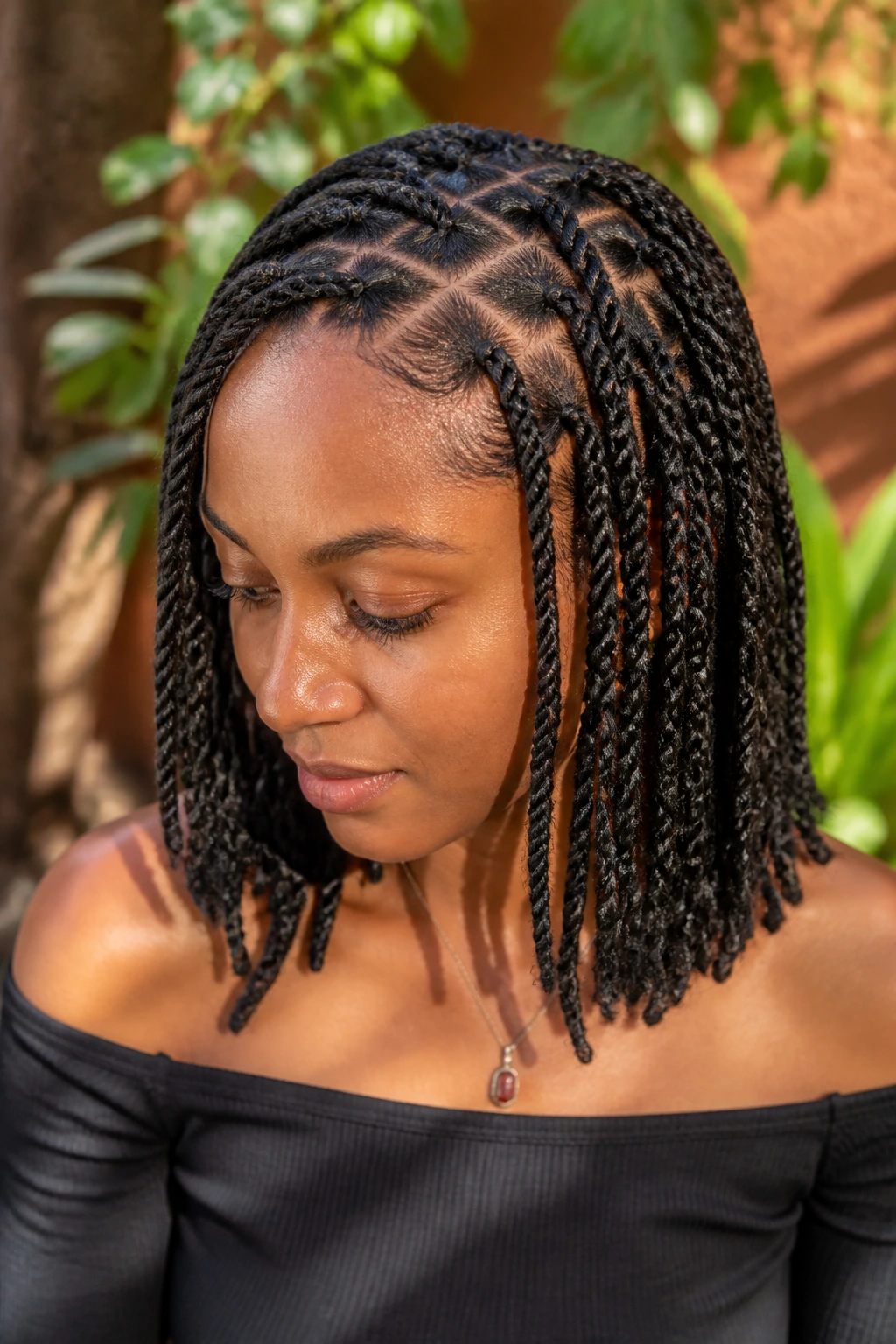
Diamond parts have a softer visual rhythm than square sections. They catch the light differently, and because the lines angle away from the scalp, the pattern feels elegant instead of severe. It’s a subtle detail, but the scalp parting becomes part of the style rather than just the map underneath it.
This looks especially nice on shorter or shoulder-length sets where the parting stays visible. If the twists are long and dense, the diamonds disappear faster. Ask for clean corners at the roots and a steady line between sections; the pattern should look deliberate from the first day, not only after a fresh retwist.
17. Crisscross Part Senegalese Twists
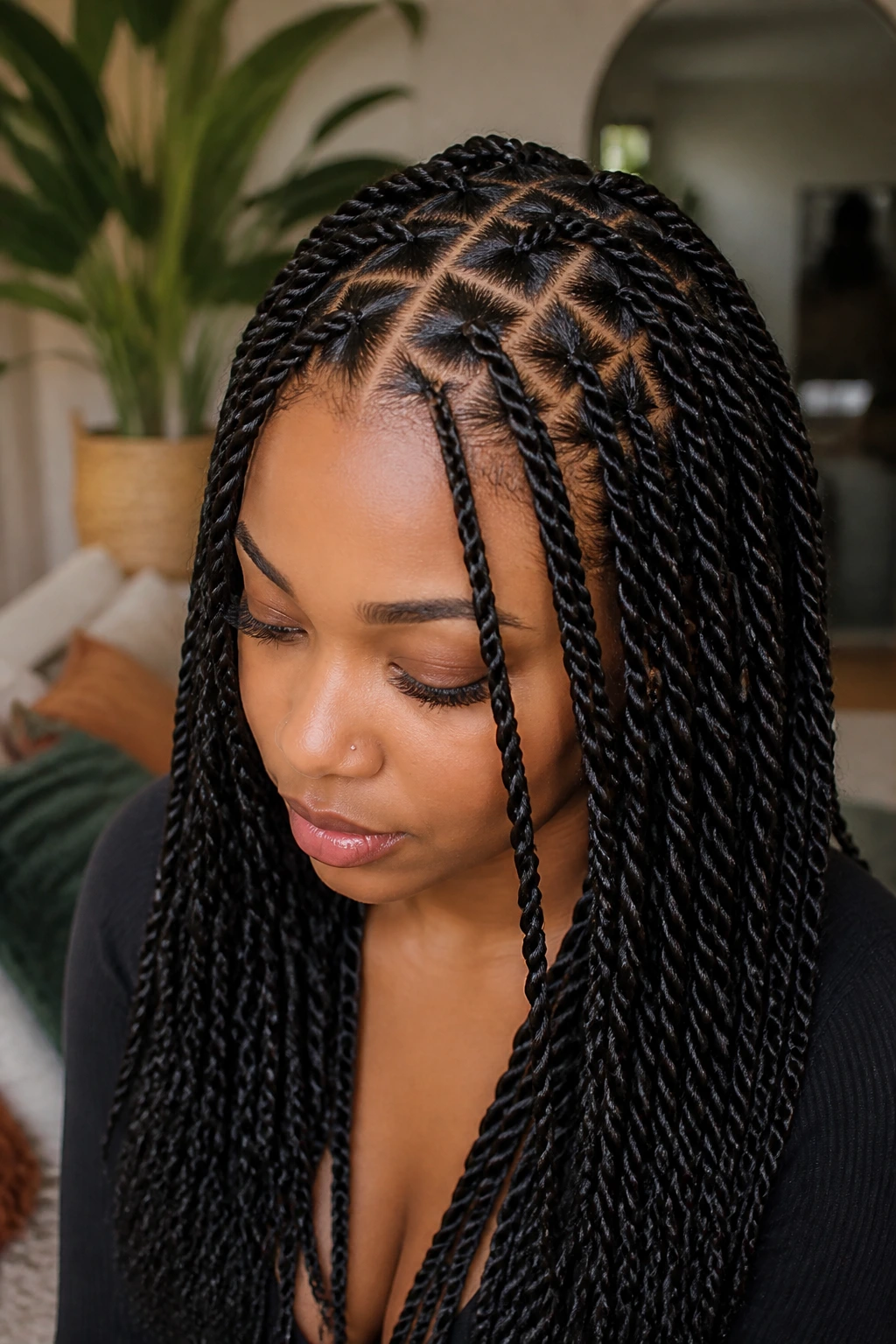
Crisscross parting adds a little art to the scalp without needing extra color or beads. The sections intersect in a way that gives the roots more movement, and the whole style looks a touch more customized. It’s a good pick if plain box parts feel too predictable.
The key is clean sectioning before the twisting starts. Once the parts are crooked, the crisscross effect can look muddy instead of smart. Keep the lines crisp, and let the twists themselves stay smooth. That contrast between geometric roots and rope-textured lengths is what makes the style interesting.
18. Layered Lob Twists
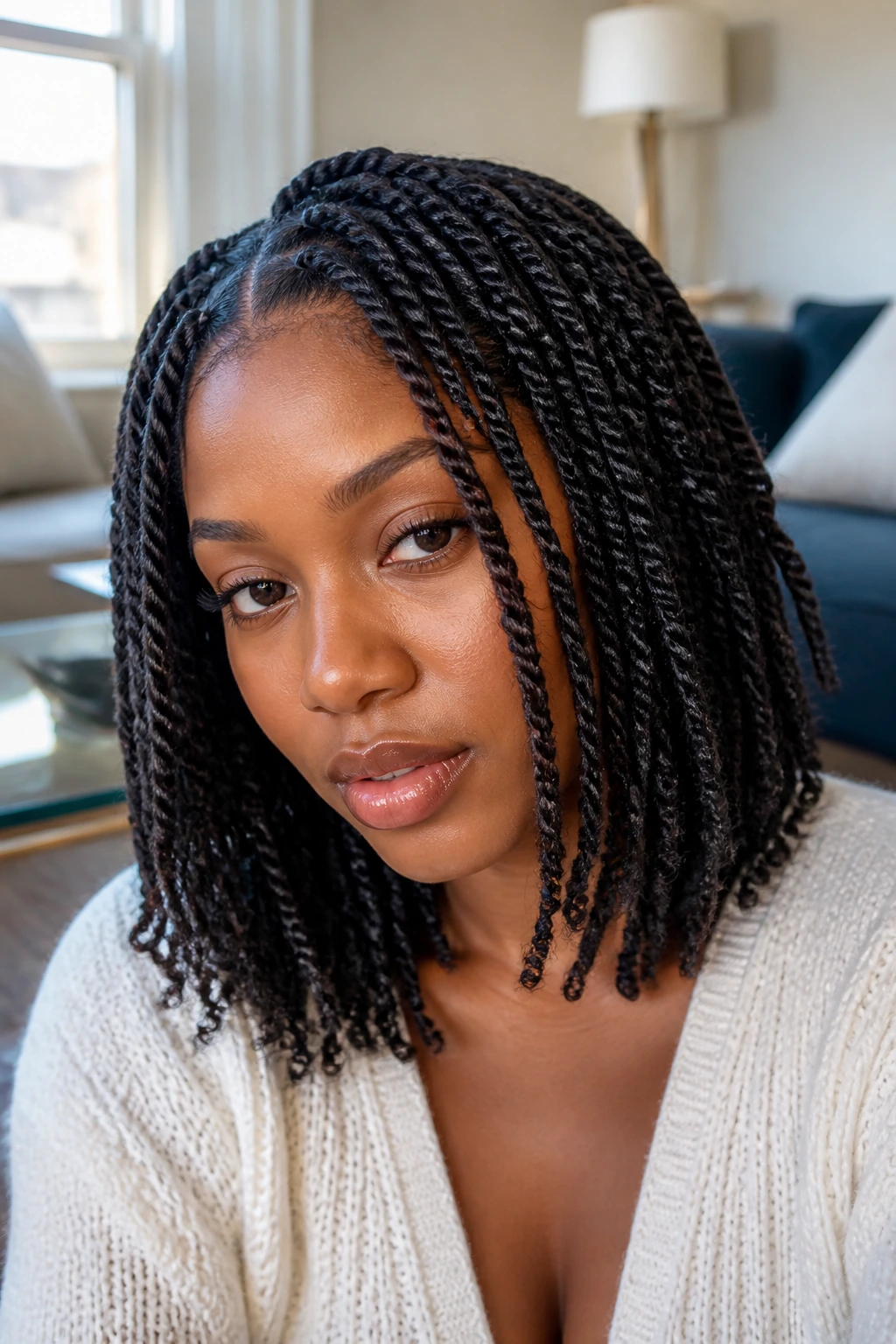
A lob, or long bob, is one of the easiest ways to make Senegalese twists feel current without doing anything dramatic. The layered ends keep the shape from looking boxy, and the length usually lands somewhere around the collarbone or upper chest, which is a sweet spot for movement.
Layers help the set swing instead of hang in one heavy sheet. That matters more than it sounds. If the lengths are all the same and the twists are dense, the whole style can feel stiff. With layers, the silhouette stays softer, and the face gets a little more framing around the jaw and neck.
19. Asymmetrical Bob Twists
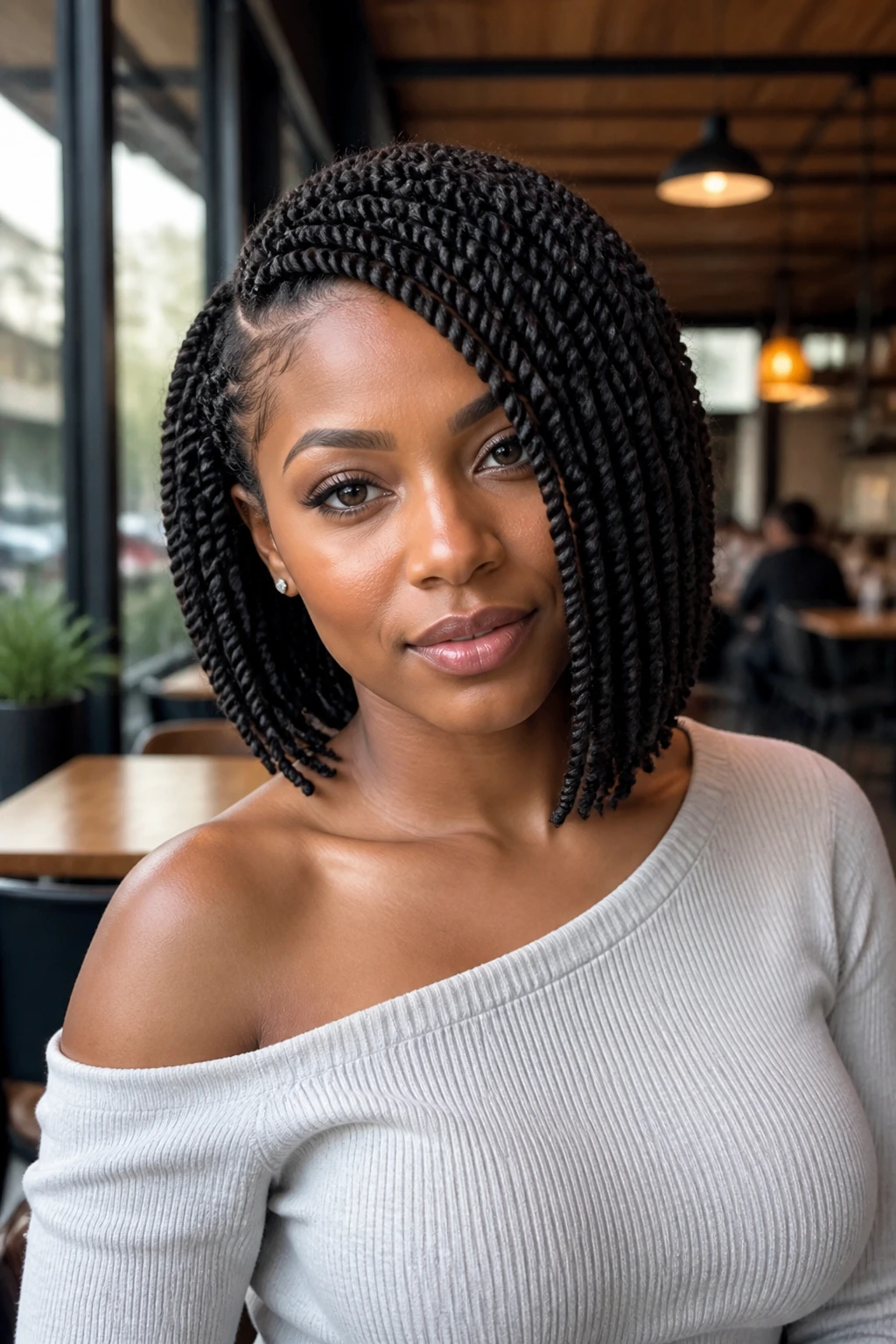
An asymmetrical bob gives the style attitude in a quiet way. One side is slightly longer than the other, which creates a line that feels modern without shouting about it. It’s a nice option if you like a bob but want something that breaks the symmetry a little.
The difference in length does not need to be dramatic. A subtle inch or two is enough to change the shape. The sharper side should still fall cleanly, though — if one side looks unfinished, the whole style gets sloppy fast. Keep the ends blunt and the parts precise so the asymmetry feels intentional.
20. Chin-Length Blunt Twists
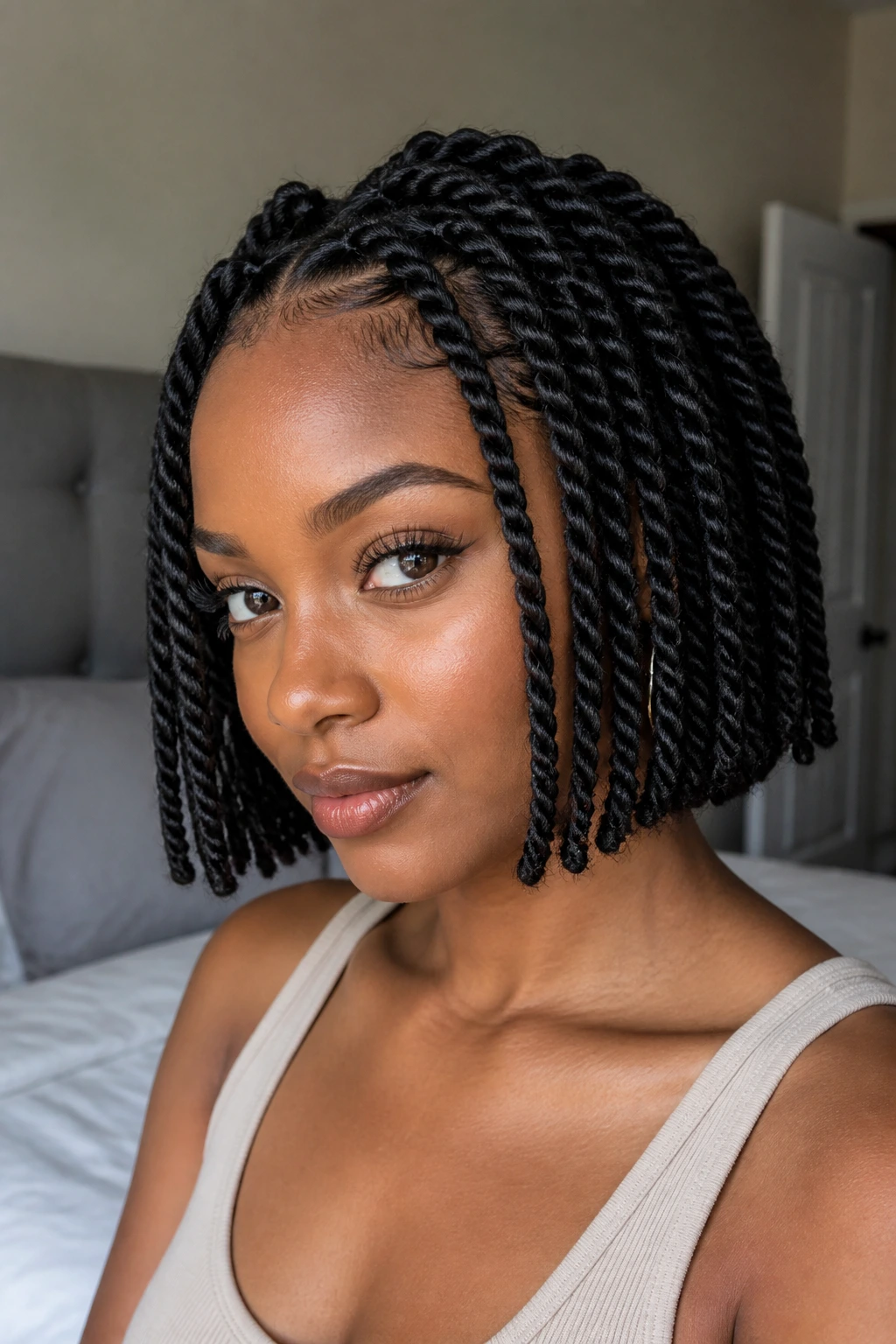
Chin-length twists are cute in the literal sense: compact, neat, and easy to tuck behind the ears. The blunt ends make the shape feel strong, and the shorter length keeps the style light on the head. That makes it a smart choice for anyone who likes the look of twists but not the weight of longer sets.
This cut works well with center parts, side parts, or no visible part at all. The clean line around the jaw gives the style a little polish even when the rest of the outfit is simple. If you want something low-drama that still looks finished, this length does a lot with very little effort.
21. Flipped-Ends Twists
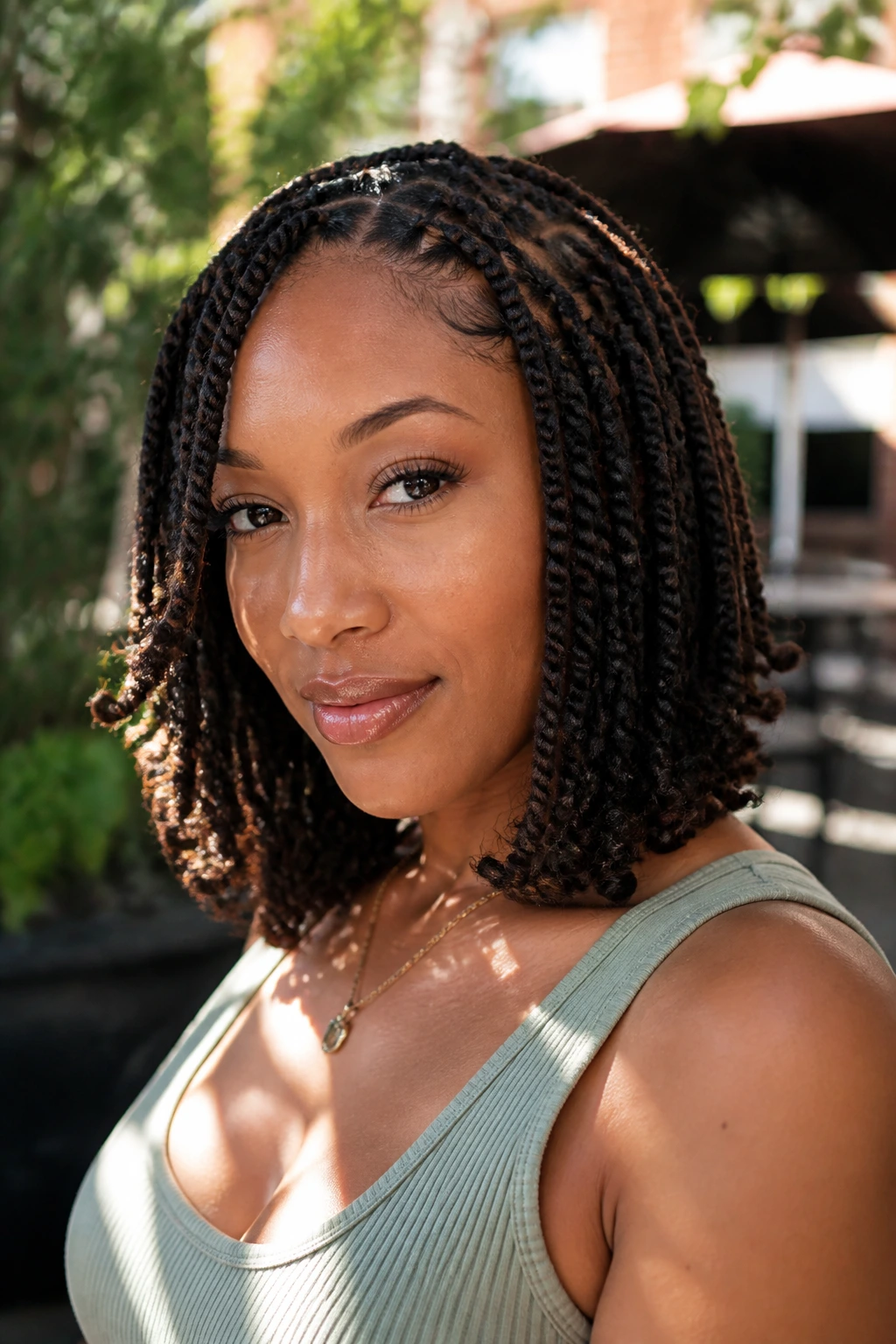
Flipped ends give the style a small bit of bounce at the bottom, almost like the twists have a soft turn at the final inch. It’s a subtle detail, but it keeps the finish from looking too severe. The effect works especially well on shoulder-length sets and lobs.
The trick is shaping the ends so they do not all sit dead straight. A gentle curl or bend at the bottom changes the mood fast. It makes the style feel lighter, friendlier, and a bit more playful. If you like neat hair with a hint of motion, this is a good one to ask for.
22. Curly-End Goddess Twists
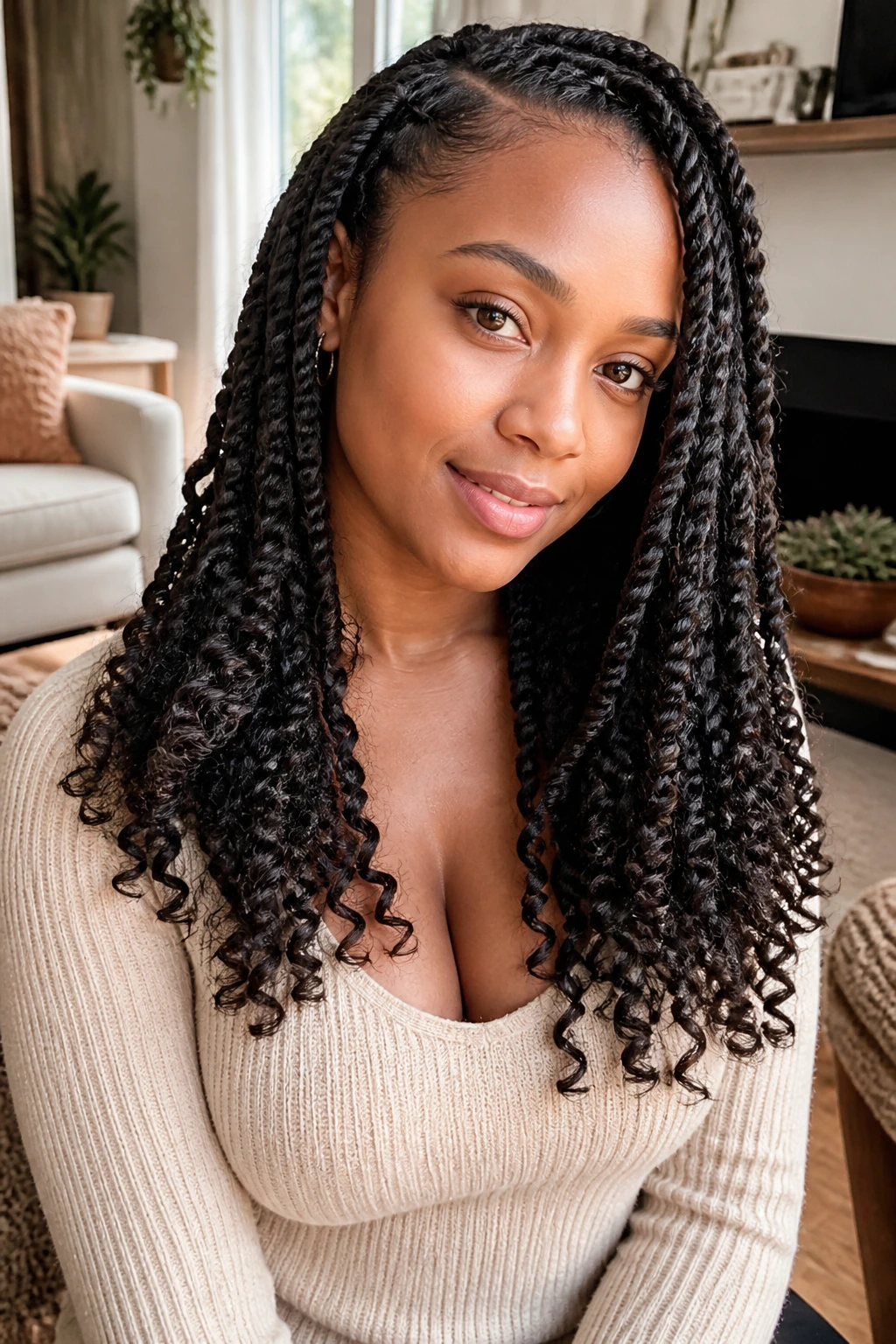
Curly ends soften the rope texture and give the style a little extra movement at the finish. Instead of sealed ends that stop abruptly, the twists end in loose curls or spirals, which makes the whole look feel airier and less rigid. The contrast is part of the charm.
This style is a nice bridge between protective structure and a softer, more decorative finish. It does need a little more care at the ends, because curls frizz faster than sealed tips. Still, the payoff is worth it if you want a set that looks touchable and a little more romantic without losing the neatness of Senegalese twists.
23. Boho Senegalese Twists with Loose Curls
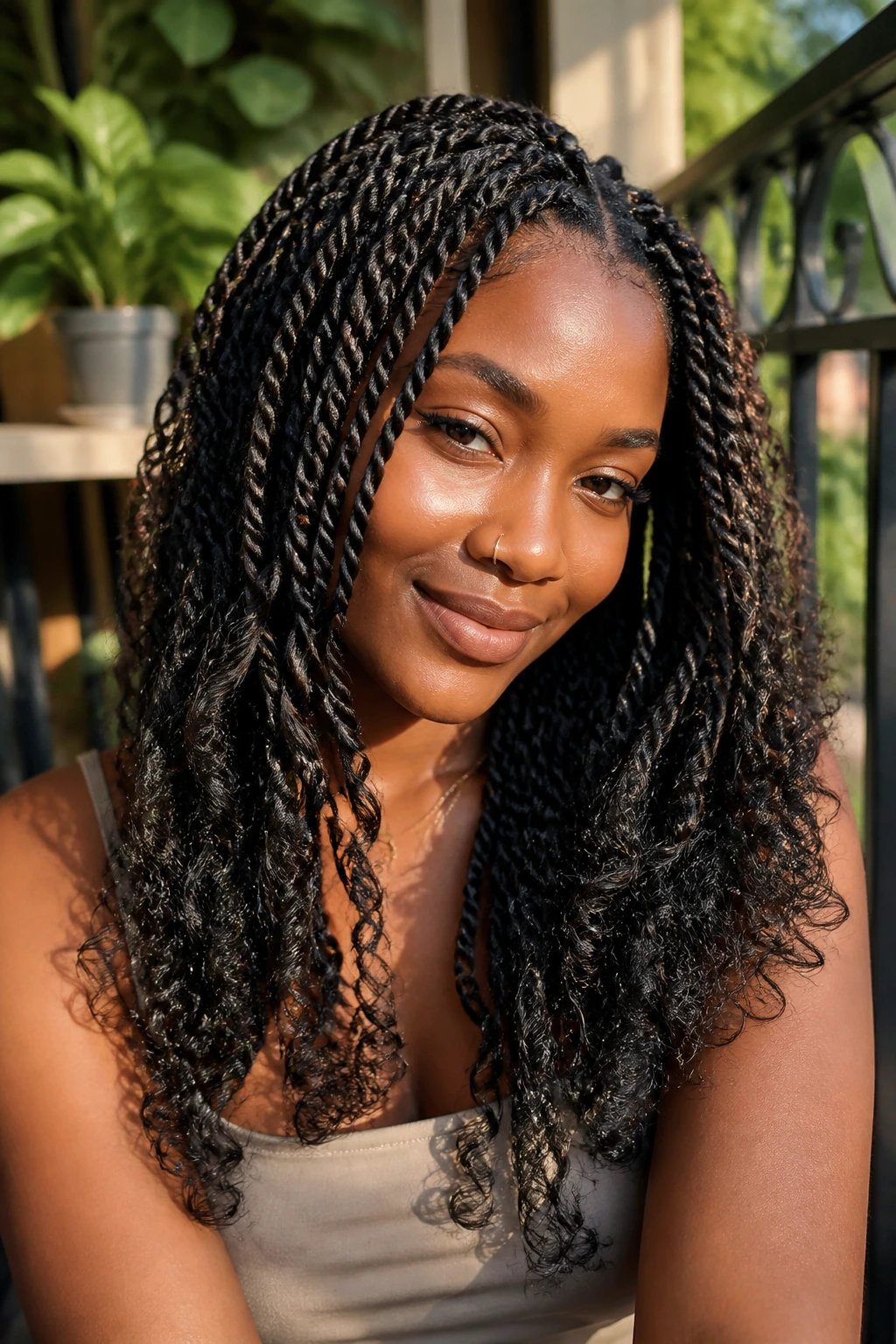
Boho twists are where structure gets a little loose on purpose. Small curls or textured pieces are left out here and there, breaking up the uniform rope shape with a softer, lived-in feel. The result is less severe and more relaxed, but still put together.
The curl pattern should be distributed with restraint. Too many loose pieces and the style starts to look fuzzy rather than styled. Keep the base of the twist neat, then let the curls sit mostly through the mid-lengths and ends. That keeps the look interesting without turning it into a frizz party.
24. Honey Blonde Twists
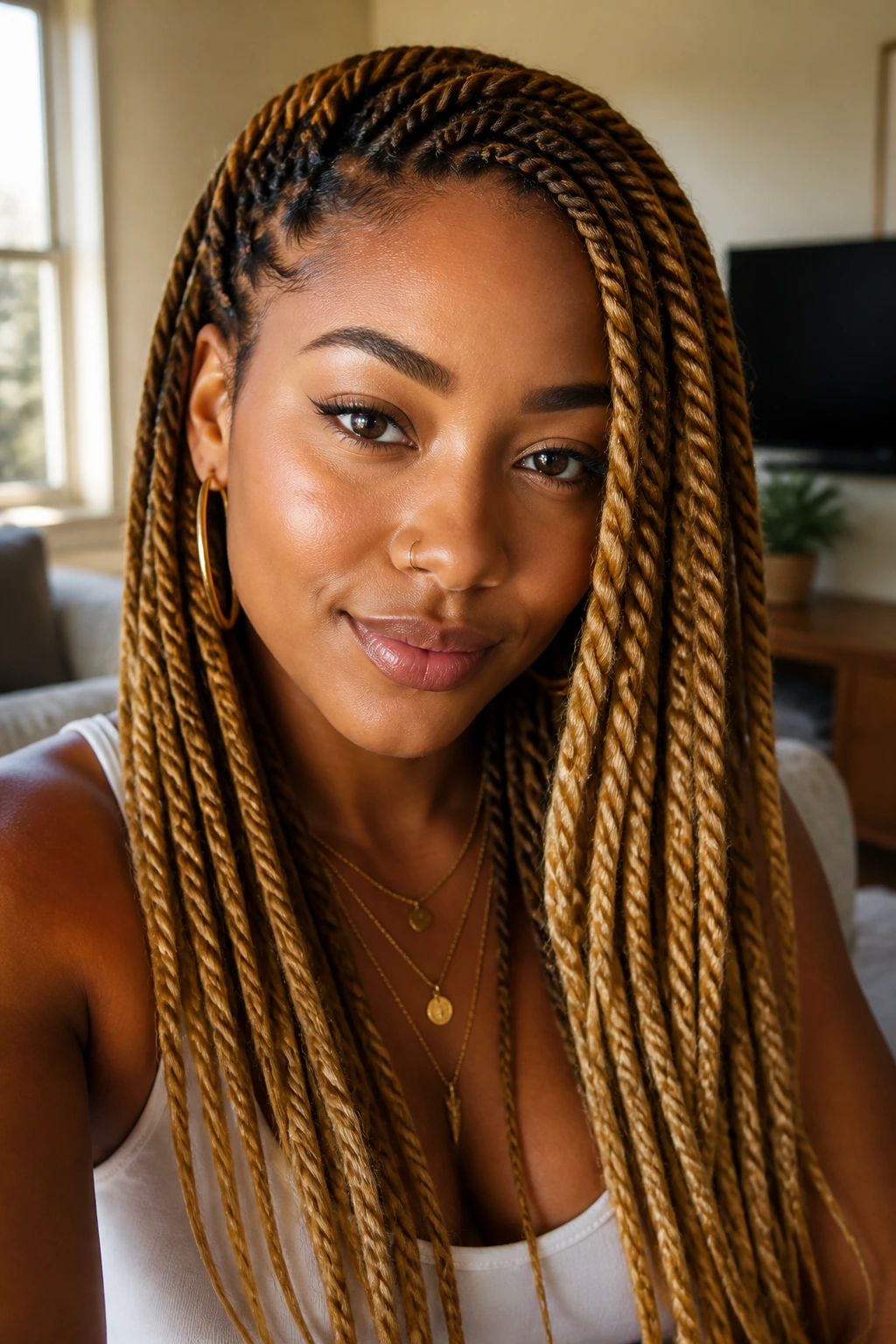
Honey blonde twists bring warmth right up to the face. The color lightens the whole set, and because the twists are smooth and rope-like, the shade shows up in bands and curves instead of flat blocks. That gives the style dimension without needing highlights.
I like honey blonde on medium to long twists because the color has room to move. On shorter sets, it can look a little more abrupt. If the tone is golden rather than brassy, it tends to soften the skin tone and make the scalp pattern more visible in a flattering way. The warmth is the point.
25. Burgundy Wine Twists
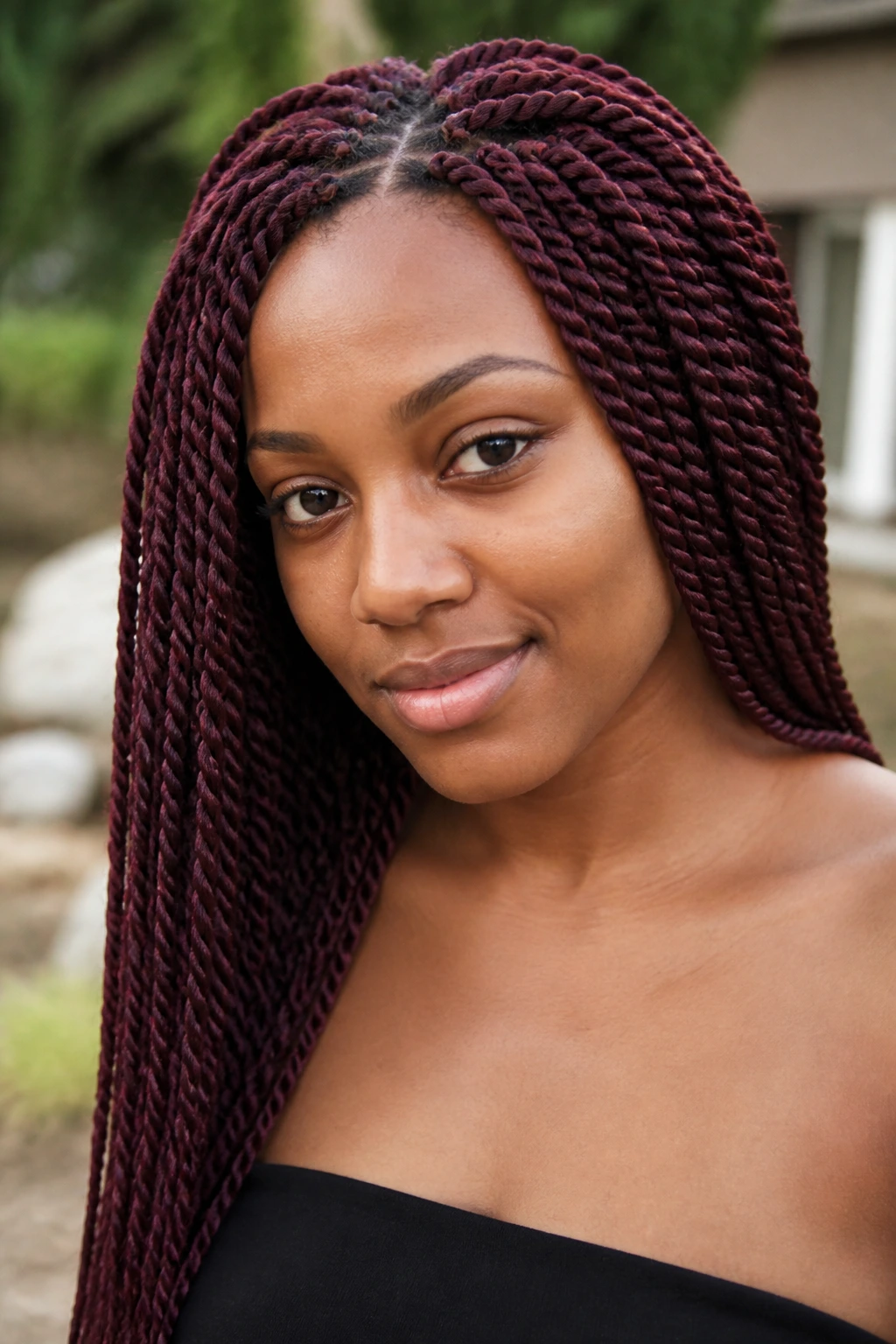
Burgundy twists have a richer mood than blonde ones. The color reads deep and saturated, so the style feels vivid without looking bright. It’s a good pick when you want color that still feels grounded and wearable.
This shade looks especially good in daylight, where the red undertones catch the light in a quieter way than neon or copper. If the finish is smooth, the twists almost shimmer. Pair them with a clean part and minimal accessories, and the color does all the talking.
26. Copper and Caramel Twists
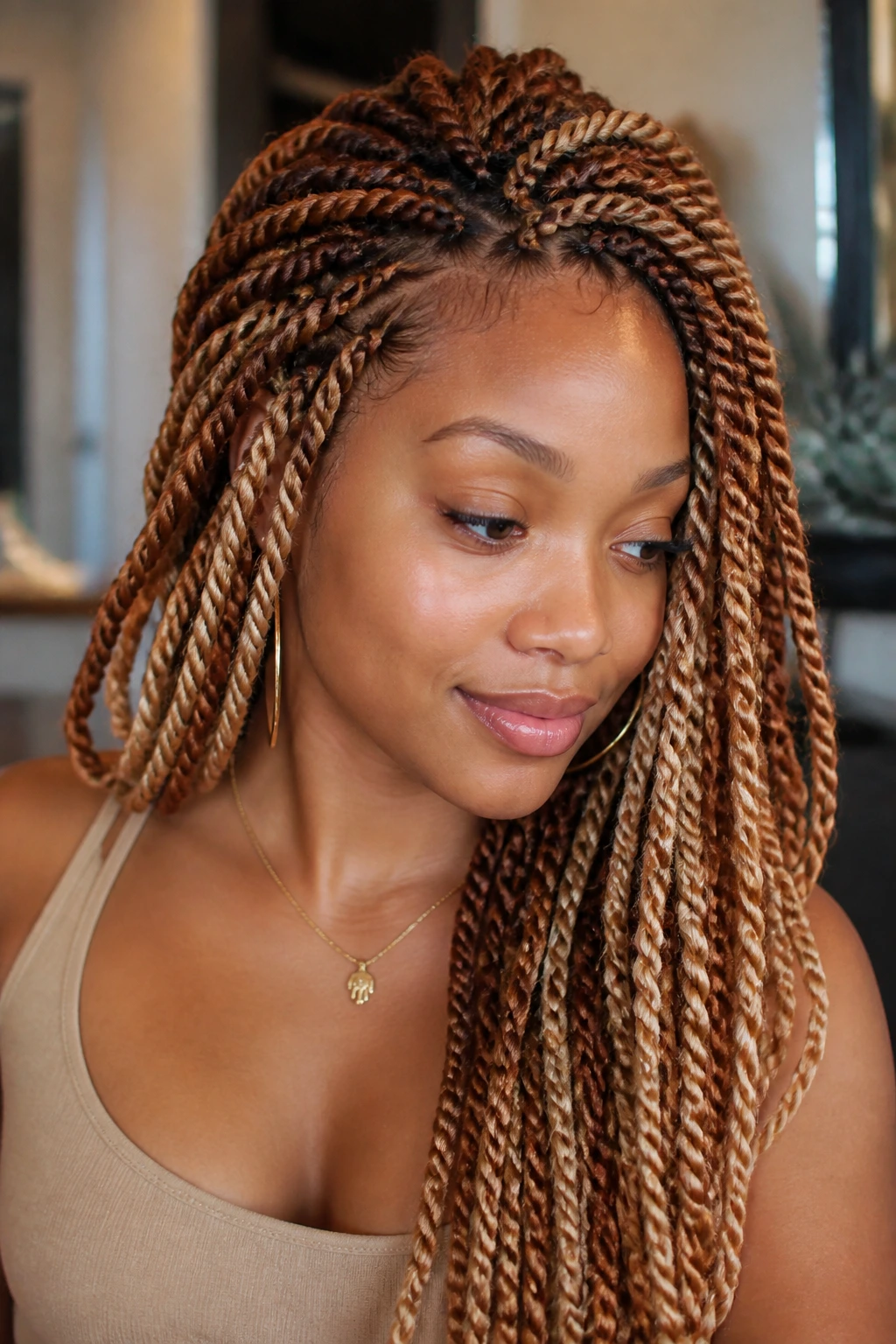
Copper and caramel make the twists feel warm and textured, like the color itself has layers. The mix keeps the style from looking flat, especially when the parts are neat and the lengths are long enough for the tones to blend together. It’s not subtle, but it’s also not loud.
The contrast works best when one shade stays dominant and the other shows up as a soft accent. Too many competing tones can make the set look busy. Keep the base color close to the roots and let the lighter pieces live through the lengths. That keeps the look polished.
27. Dark Twists with Blonde Peekaboo Panels
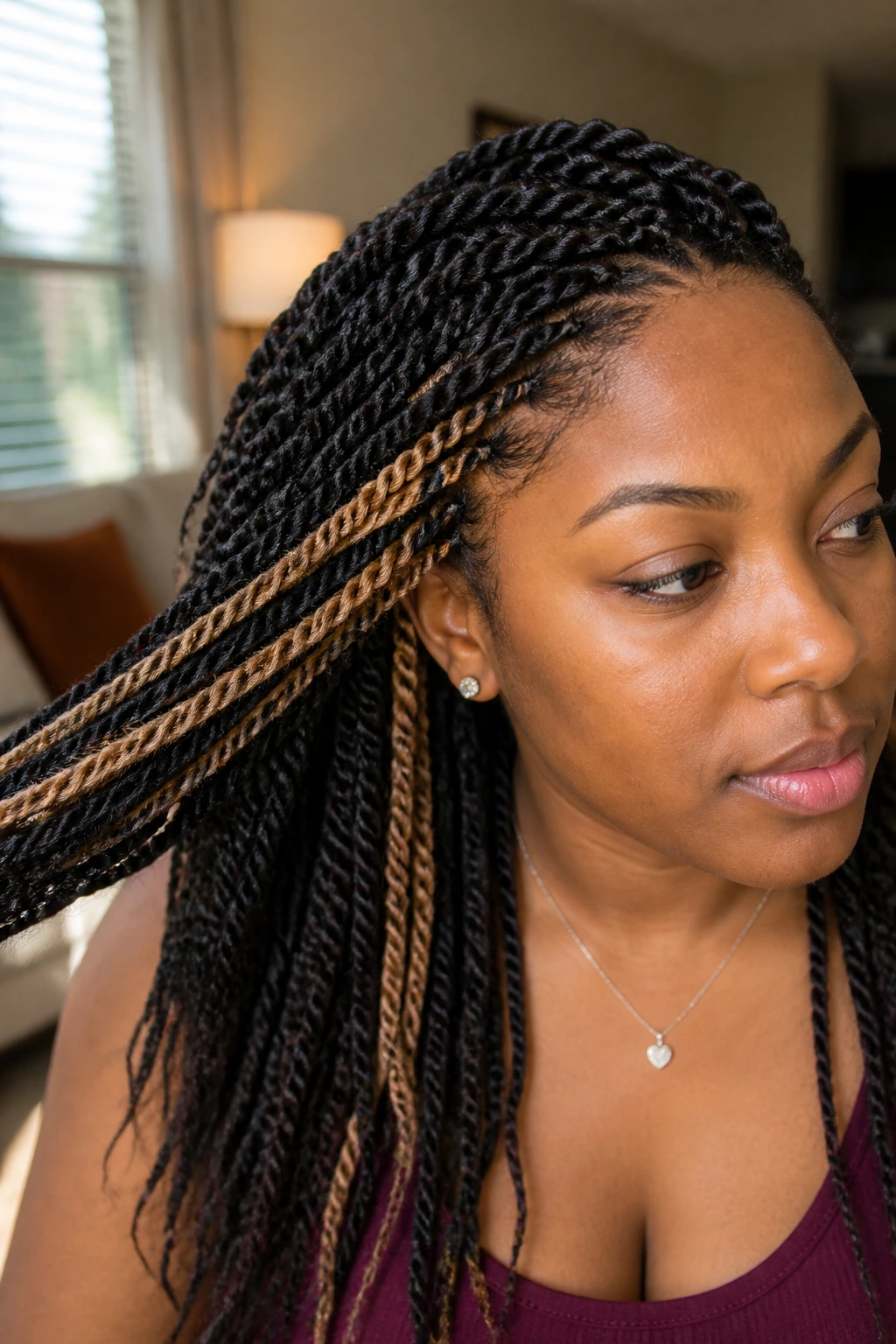
Peekaboo color is for anyone who likes a little surprise. The top layer stays dark and classic, while the lighter panels sit underneath and show when the hair moves, gets pinned up, or is swept into a ponytail. It’s a smart way to add color without committing to an all-over change.
The trick is placement. Put the lighter pieces where they’ll actually be seen — under the crown, around the nape, or near one side of the face. The color should feel like a reveal, not a mistake that got mixed in by accident. That small hidden contrast gives the style a lot more personality than people expect.
28. Beaded-End Twists
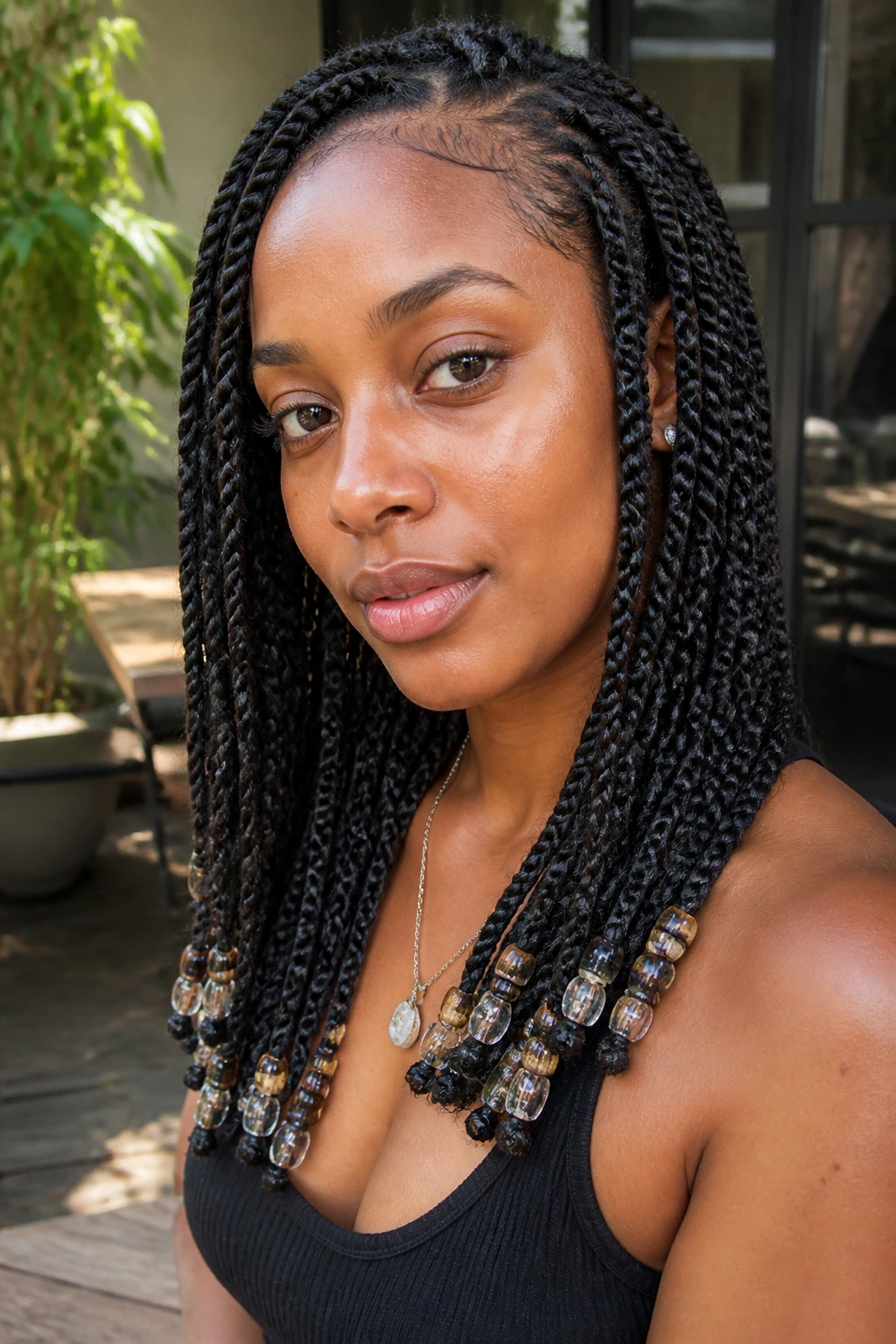
Beads at the ends add rhythm. You hear them first, then notice how they change the line of the twists. A few well-placed beads can make the style feel playful and personal, especially on shoulder-length or medium-length sets where the ends are easy to see.
The only rule I care about here is restraint. A handful of beads in matching tones looks deliberate; too many different shapes can turn the style into costume territory. If the twists are smooth and the beads are light enough not to pull, the finish feels fun instead of heavy.
29. Gold-Cuff Twists
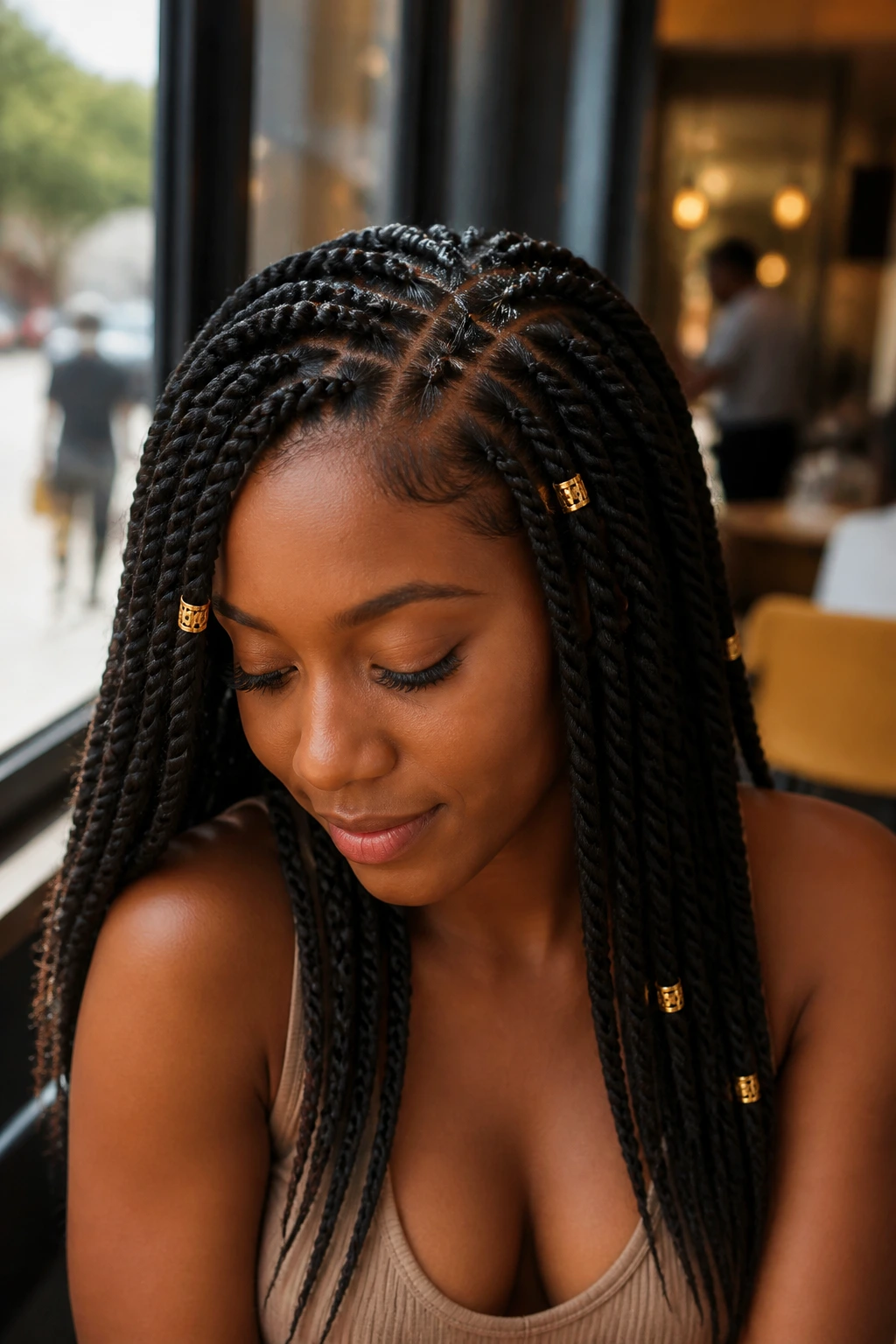
Gold cuffs give Senegalese twists a cleaner kind of shine than beads do. They sit on the hair like little punctuation marks, which means you can place them near the roots, through the mid-lengths, or closer to the ends depending on how dressed-up you want the set to feel.
This style works best when the cuffs are spaced with care. A few well-placed pieces go further than a crowded cluster. I like them on dark twists because the metal pops without needing any extra color. The whole effect is small, but it changes the mood fast.
30. Shell-Accented Twists
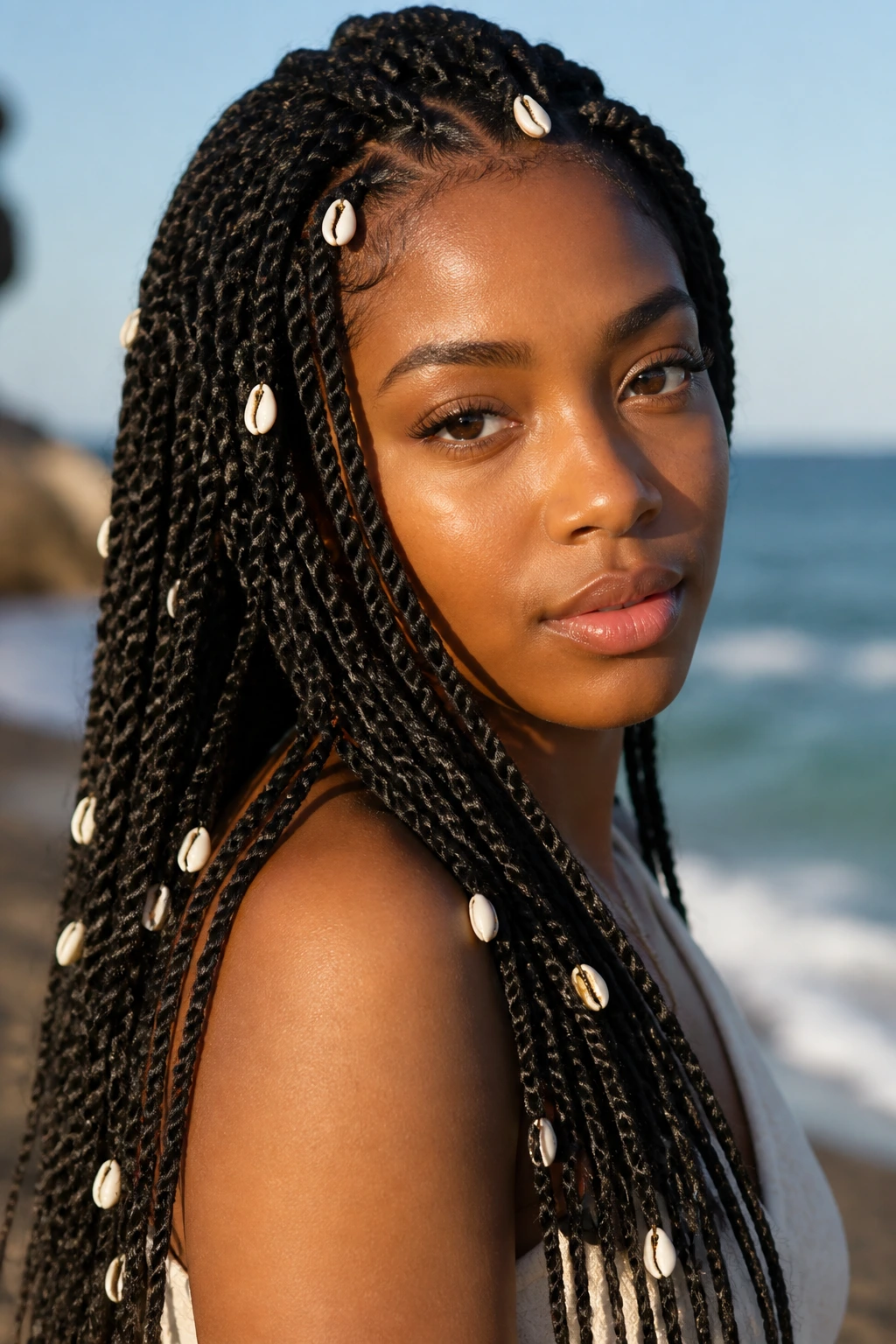
Shell accents bring a beachy note to the twists without forcing the whole style into a vacation theme. A few shells near the front or scattered through the lower lengths give the set texture and movement. The look is especially pretty when the shells are light and the twists are medium or long.
Keep the shells small enough that they do not drag the roots down. That part matters. Heavy accessories can make a style feel tiring by noon, and that’s not cute. Shell accents should look like an intentional detail, not something the hair has to carry around all day.
31. Thread-Wrapped Twists
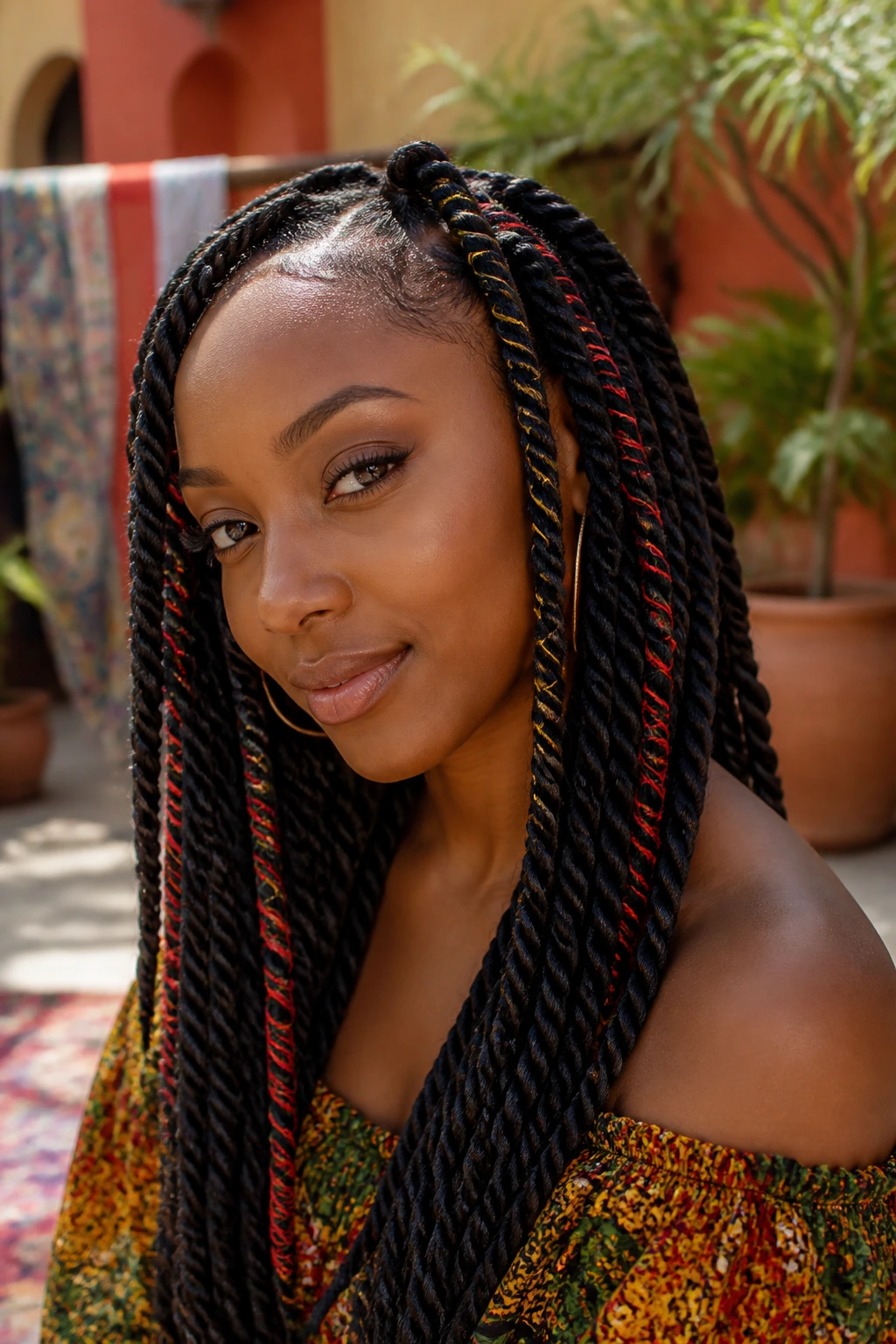
Thread-wrapped twists add color in narrow stripes, which is one of the neatest ways to customize a set without changing the whole install. A few strands of thread wrapped around sections of twist can bring in red, gold, green, white, or any color that fits the mood.
The effect is stronger on medium-size twists, where the wrapping shows clearly. On micro twists, it can get lost; on jumbo twists, it can look too heavy if you wrap too much. Keep the wraps clean and spaced. That way the style reads as handmade and careful, not cluttered.
32. Twists with a Soft Side Fringe
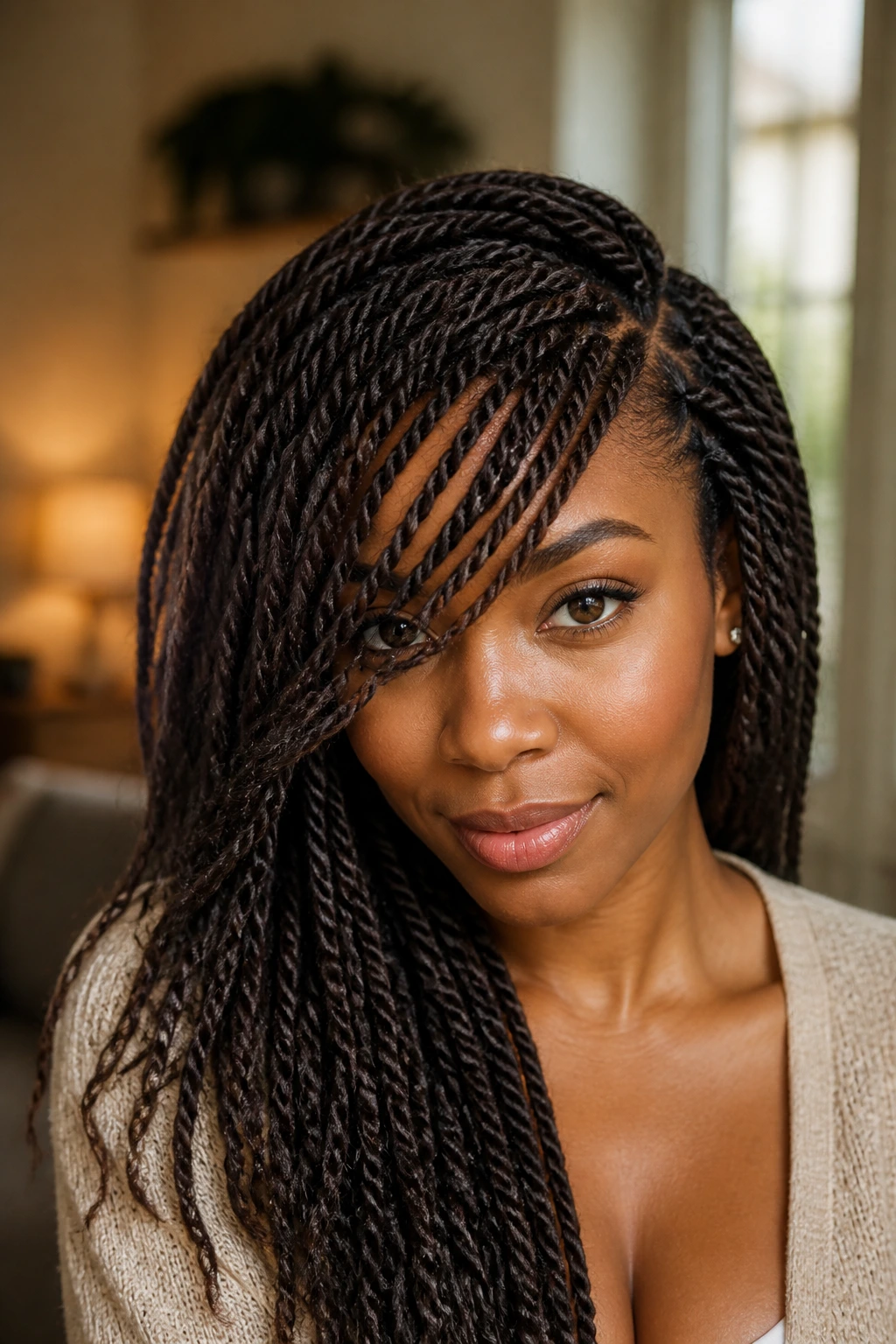
A soft side fringe makes the whole style feel younger and a little more relaxed. The front pieces angle across the forehead or cheek rather than sitting rigidly back, which softens the profile and gives the twists a more face-hugging shape.
It helps to keep the fringe light. A heavy bang in Senegalese twists can feel like a helmet. A soft sweep, though, works beautifully with a side part or a slight off-center placement. It’s the kind of detail that changes the silhouette without changing the whole style.
33. Twists with Face-Framing Pieces
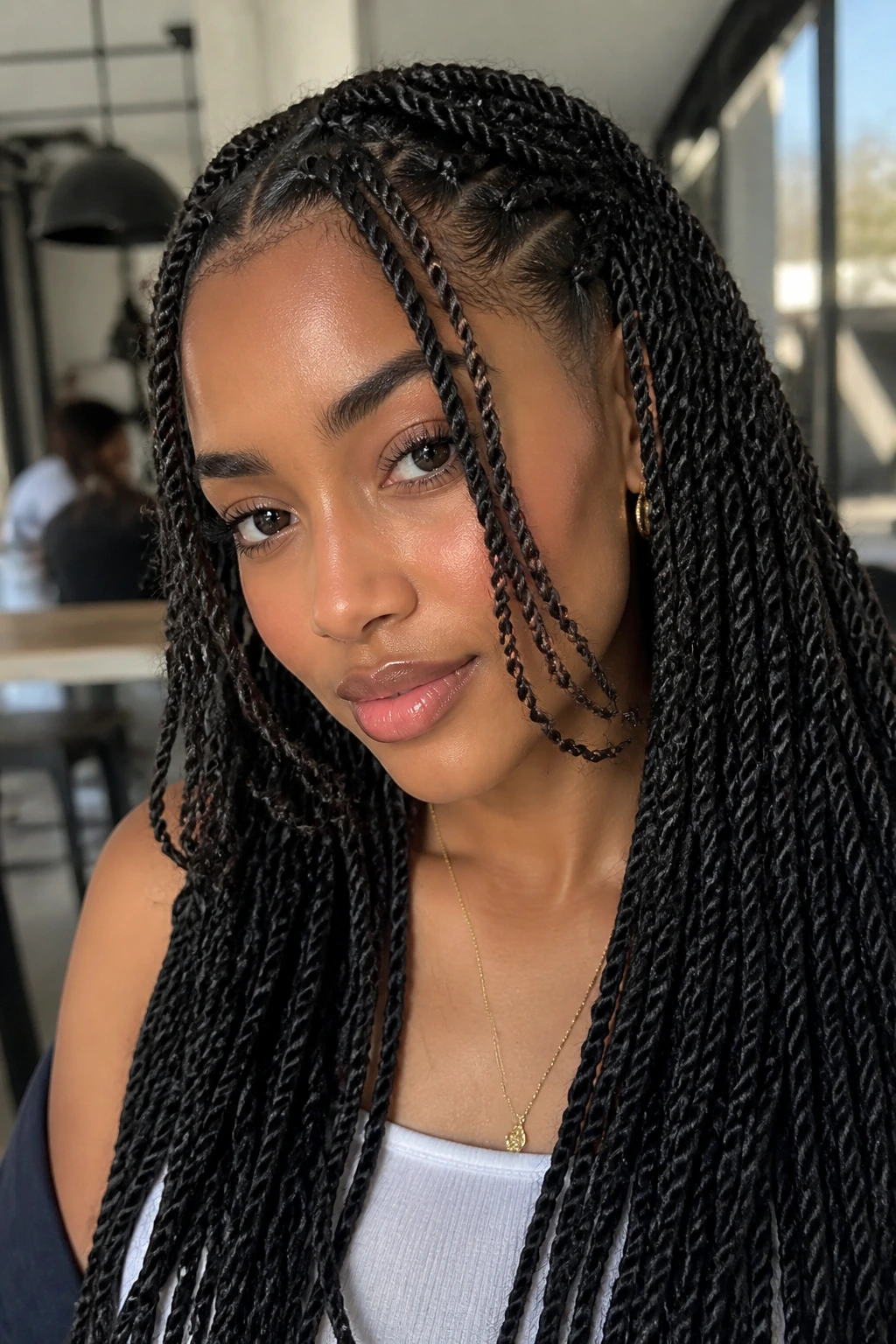
Face-framing twists are one of the easiest ways to make the style feel intentional. Leaving a few front pieces slightly shorter or a touch looser creates movement around the cheeks and jaw, which softens the edges of the overall look.
This style is especially nice when the rest of the set is long and uniform. The contrast between the structured lengths and the lighter front pieces keeps the style from feeling heavy. It’s a small adjustment, but it’s one that reads clearly in person and in photos.
34. Tapered Shoulder-Length Twists
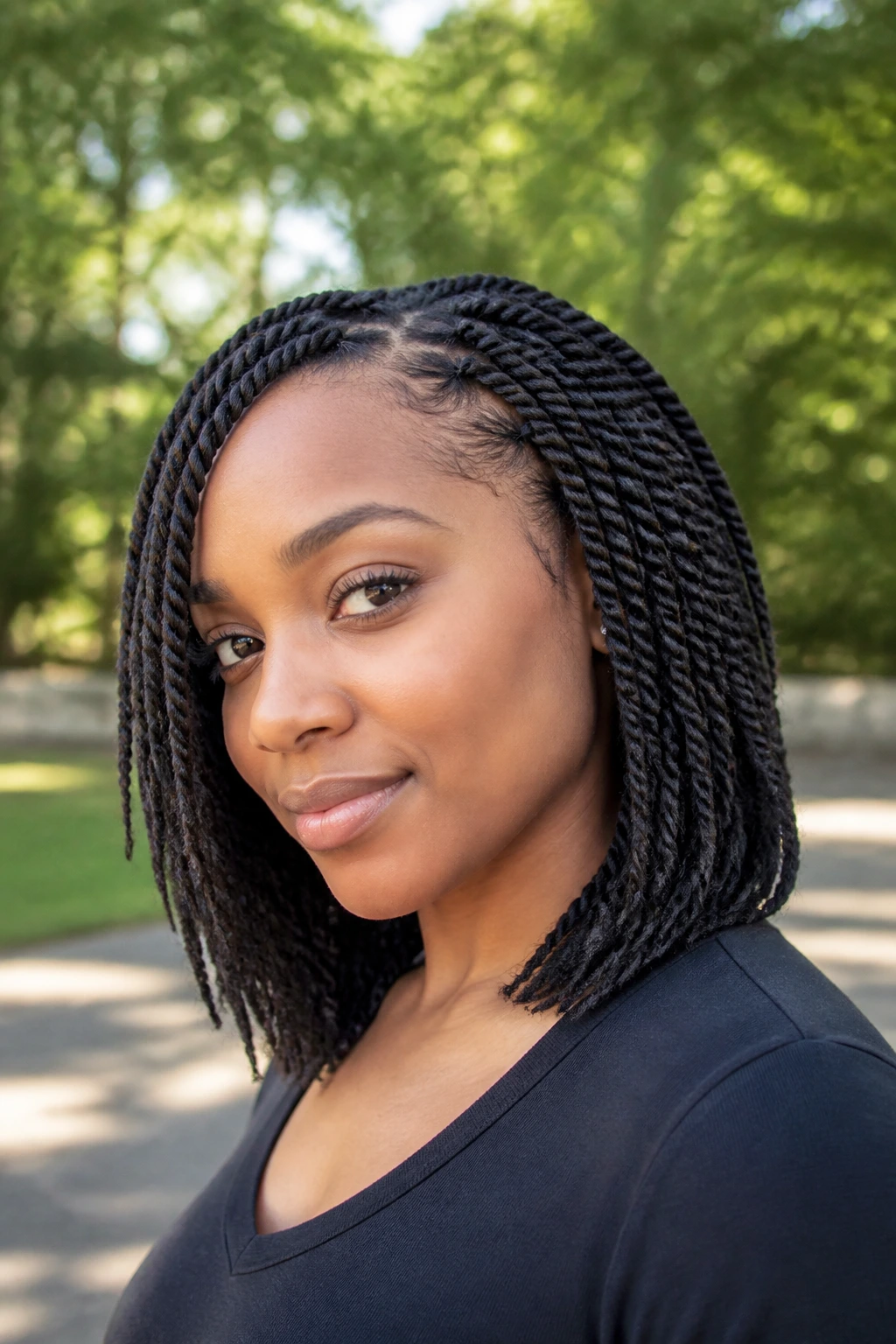
A tapered cut gives the style shape without a blunt stop. The twists are a little shorter around the face and slightly longer toward the back, which creates a gentle slope that feels easy and polished. It’s one of the most wearable lengths if you want movement without too much bulk.
The taper should be subtle. If the difference is too strong, the set can look uneven instead of styled. A soft gradient keeps the head shape balanced and makes the twists sit close without looking flat. It’s tidy, but not stiff.
35. Layered Waist-Length Twists
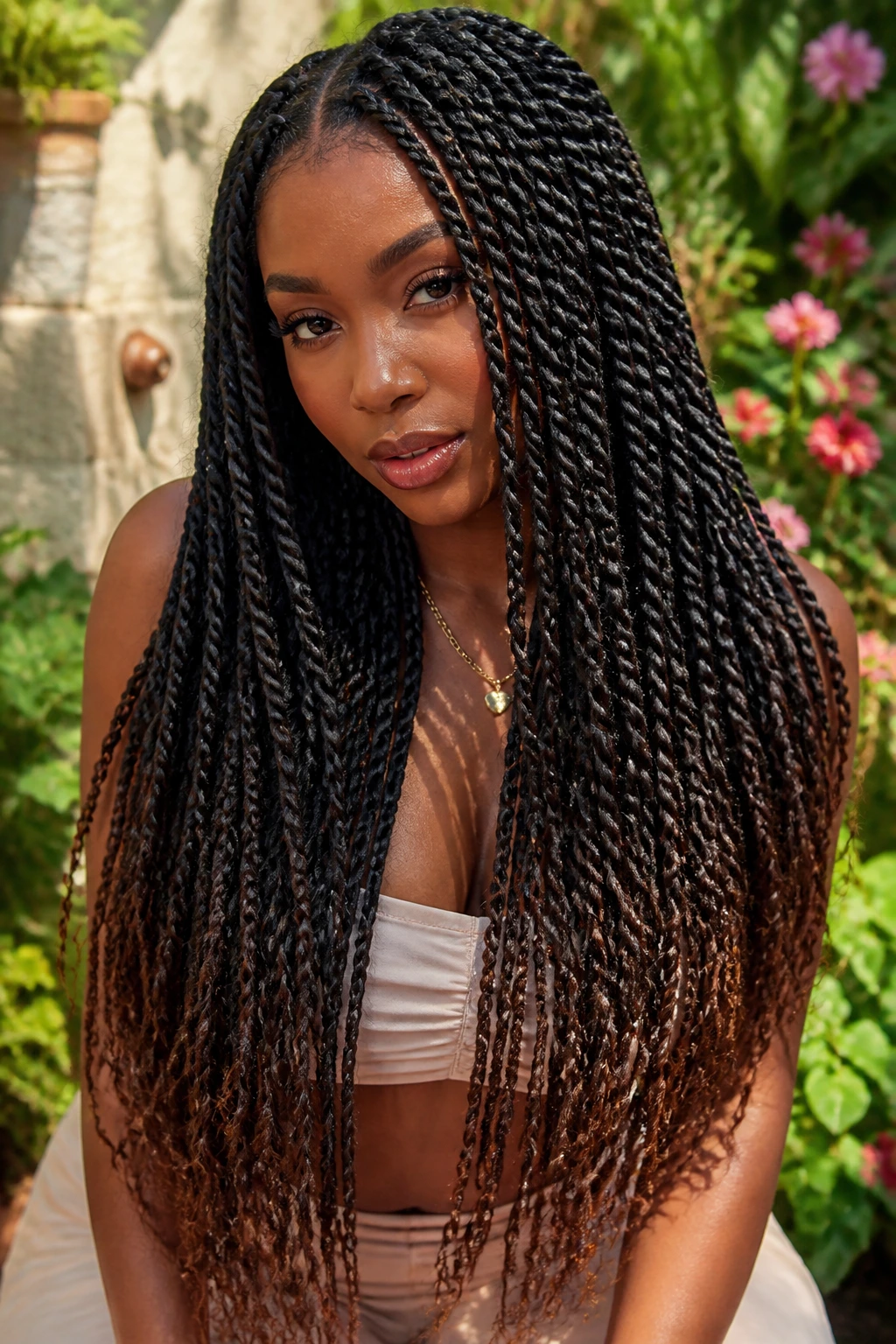
Long twists do not have to look heavy. Layers keep the lengths from forming one flat curtain, and that makes the whole set move better. The layered shape also helps the front pieces sit a little closer to the face, which keeps waist-length styles from overwhelming smaller frames.
This is the version for people who want length first and volume second. The layers let the ends breathe. Without them, long twists can feel like a lot of hair for the sake of hair. With them, the style has shape, swing, and a little more personality.
36. Short Tucked-In Twists
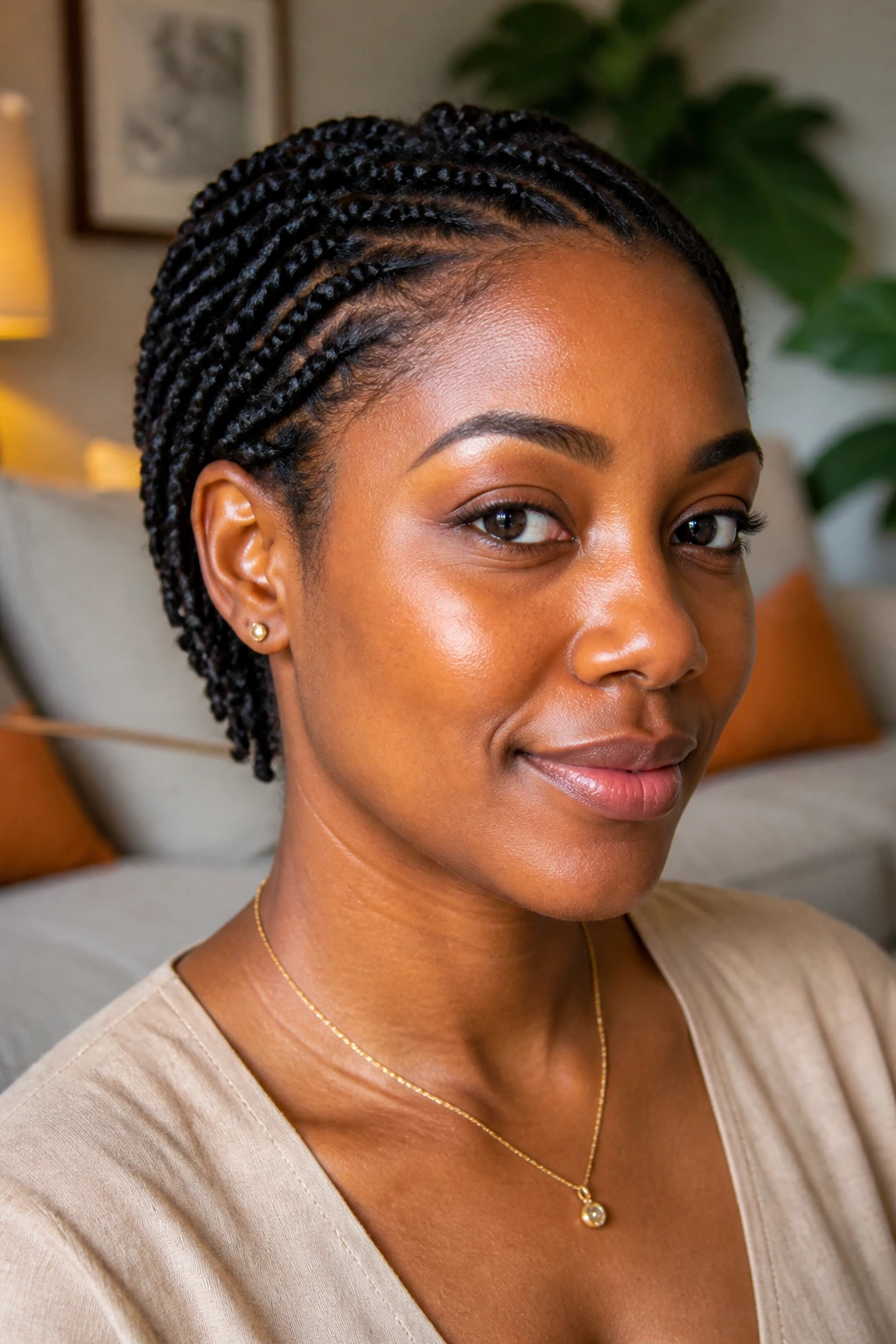
Short tucked-in twists keep the look neat and low-profile. The ends are hidden or folded so the set sits close to the neck and jaw, which makes the whole style feel tidy and intentional. It’s a useful choice when you want the benefits of twists without much visual weight.
This style also keeps maintenance simple. Less length means fewer tangles at the ends and less pulling from accessories or collars. If you like clean lines and a compact silhouette, short tucked-in twists are one of the easiest looks to keep looking fresh between wash days.
37. Twists in a Braided Crown Bun
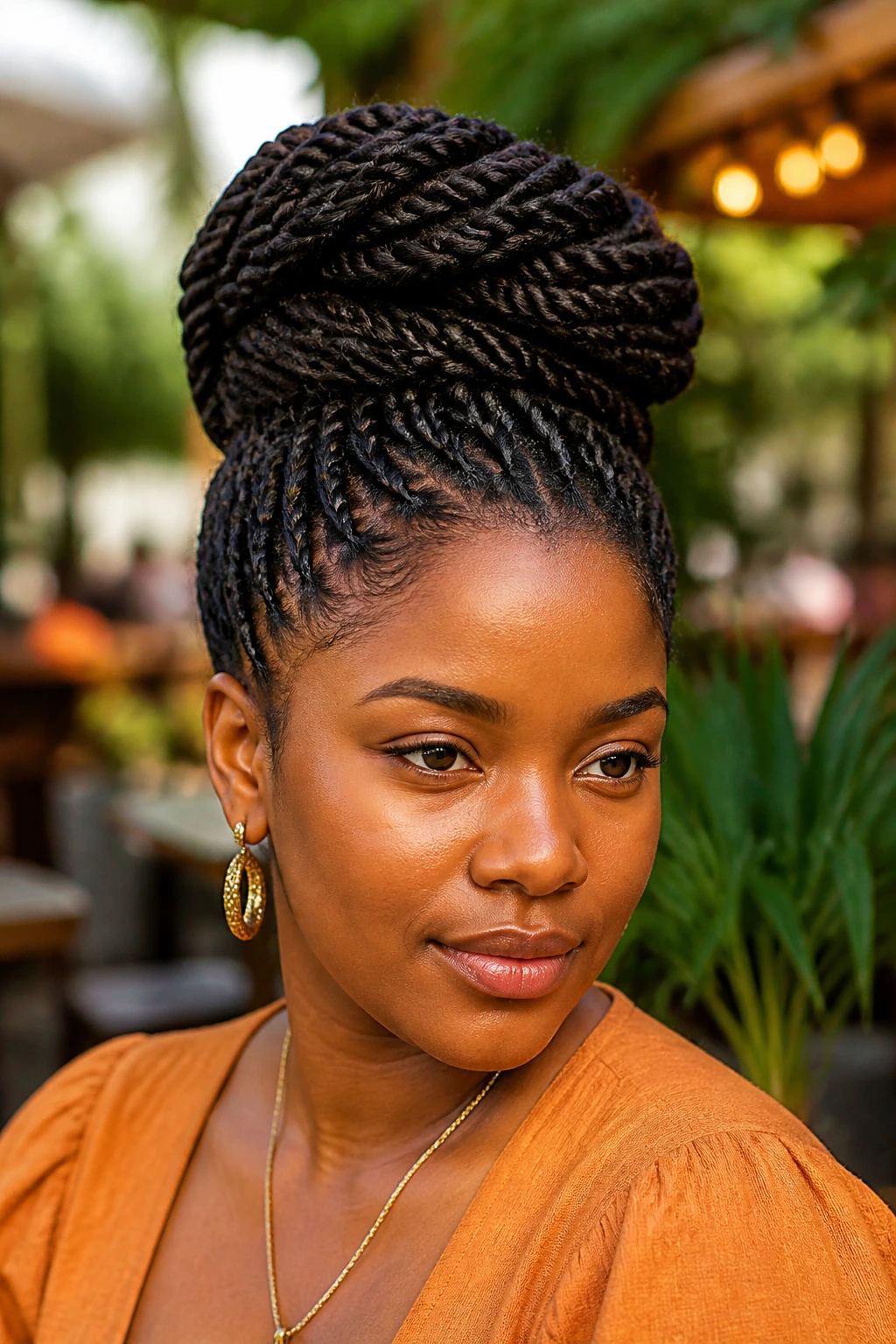
A crown bun takes the twists and wraps them into a shape that sits high and rounded, almost like a halo with a little more structure. The bun shows off the rope texture while keeping the hair off the shoulders, which makes it a neat choice for hotter rooms or long days.
The crown shape works best when the twists are gathered with enough slack to keep the bun full. Pull them too tight and the shape flattens. Leave a few twists to curve naturally around the bun, and the style gets a soft frame that looks thoughtful without feeling formal.
38. Twists Wrapped with a Silk Scarf
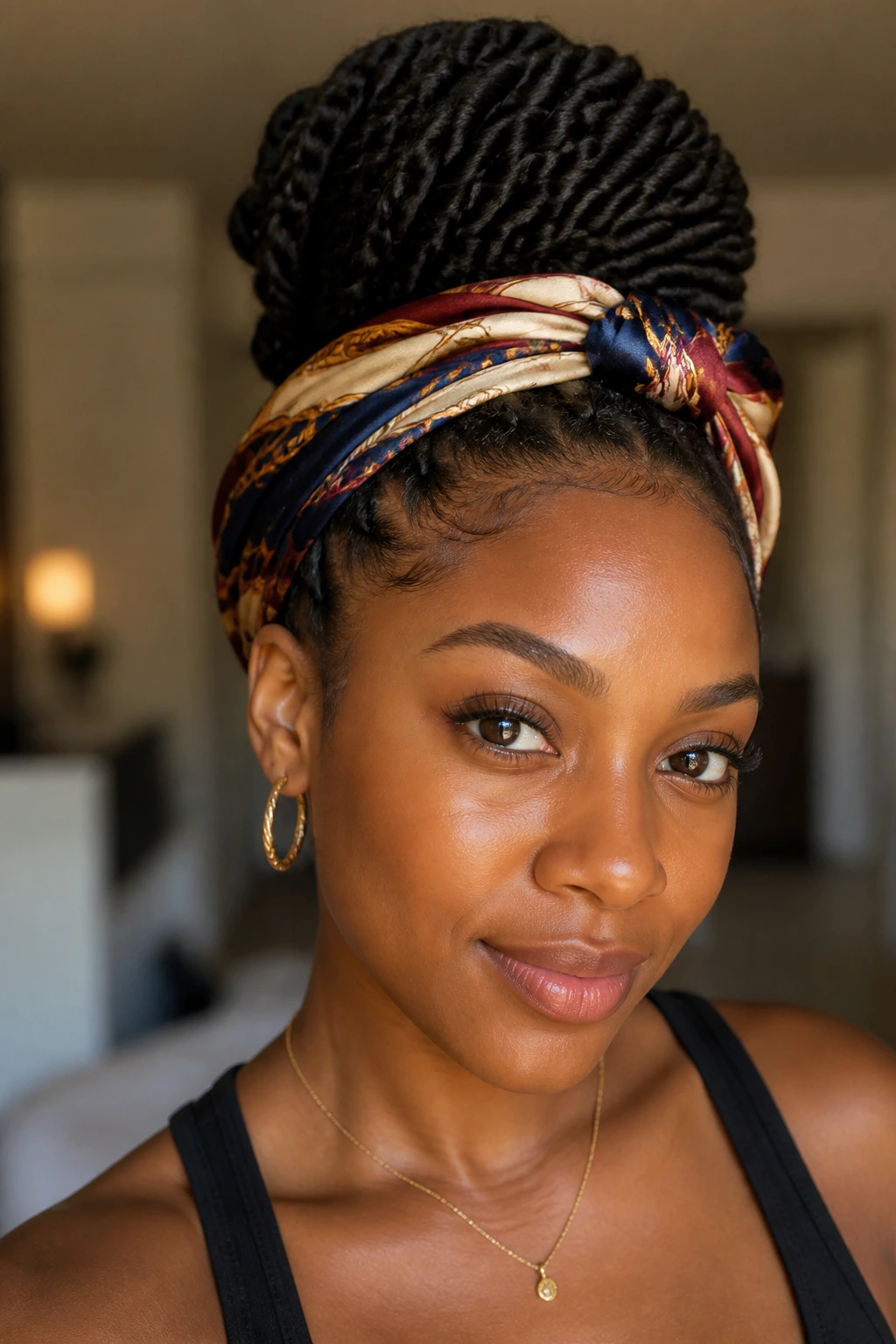
A silk scarf changes the whole mood with almost no effort. Tie it at the hairline, around a ponytail base, or over a bun, and the twist style suddenly feels more styled and more personal. It also gives you a practical break from constant manipulation, which the hairline appreciates.
The scarf should not fight the twists. Pick a fabric that slides smoothly and sits light enough to avoid flattening the roots. A printed scarf brings color; a plain one keeps the look cleaner. Either way, the accessory should feel like part of the style, not a rescue mission.
39. Center-Part Twists with Baby Hairs
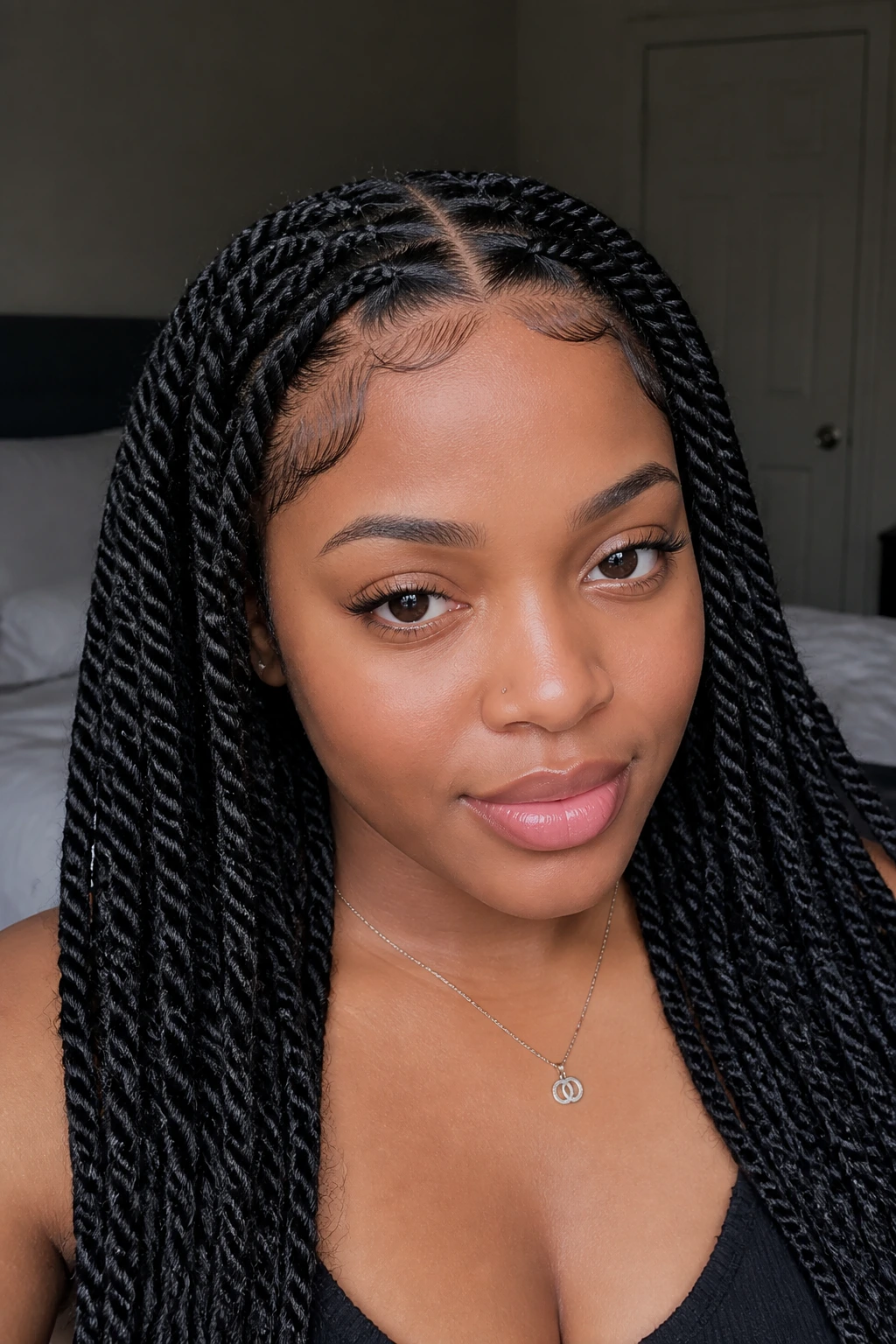
A crisp center part paired with laid baby hairs gives the style a polished finish that reads neat from the front. The baby hairs soften the line at the hairline, while the middle part keeps the overall shape balanced. It’s a clean, face-forward look that works well with long earrings or a plain neckline.
The key is restraint. Too much edge styling can start to look painted on. A small amount of swoop at the temples is enough to frame the face. Keep the rest of the twists smooth and you’ll get a style that feels tidy without becoming overworked.
40. Deep Side-Part Twists
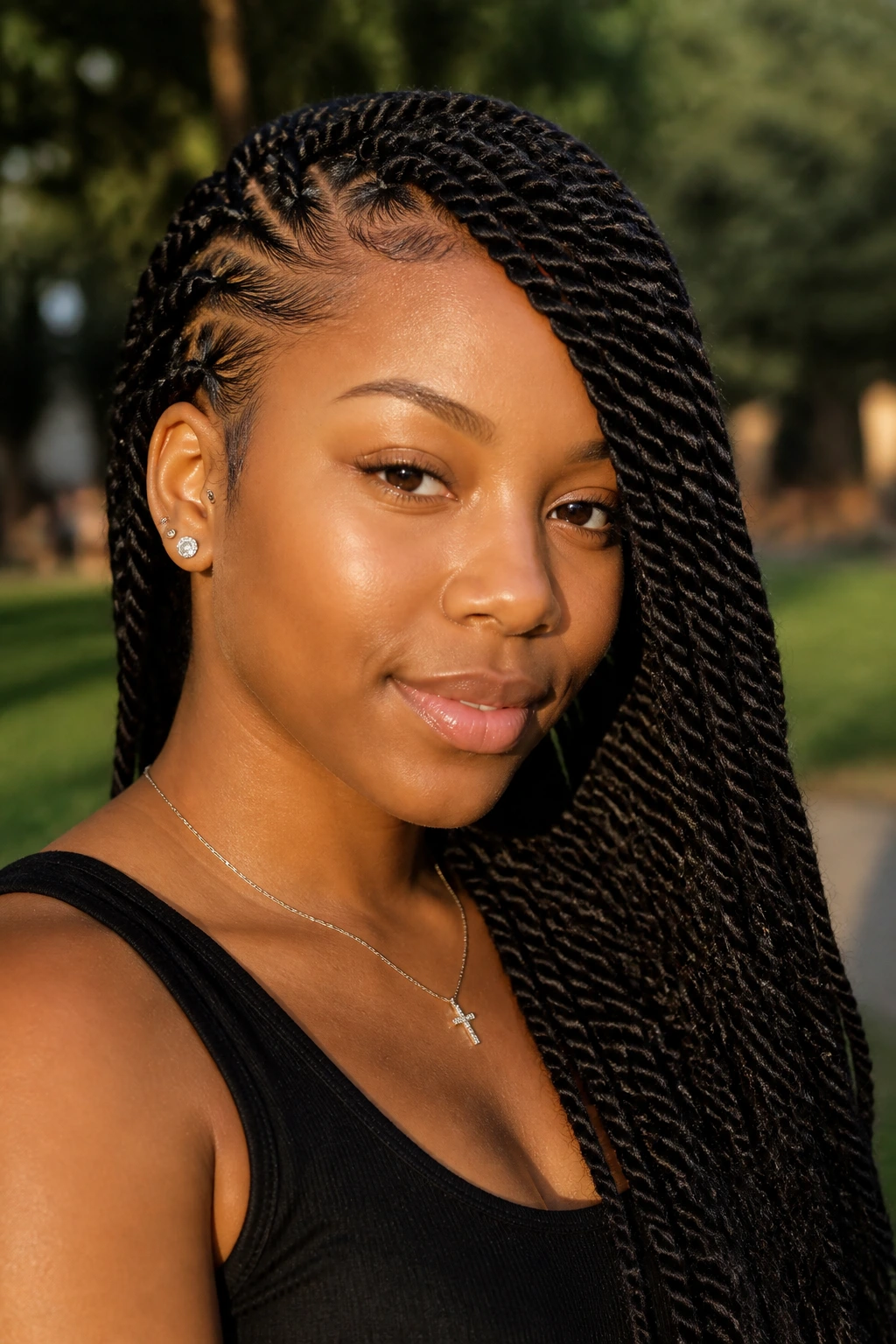
A deep side part makes Senegalese twists look a little more dramatic without changing the actual install. The front section sweeps across one side, and the rest falls with a stronger diagonal line, which gives the style movement even when the hair is sitting still.
This is a good shape if you like volume around one side of the face. It also helps longer sets feel less repetitive. The part should be deep enough to matter but not so deep that the roots look exposed in a lopsided way. Once that line is set, the rest of the style falls into place.
41. Mixed-Size Senegalese Twists
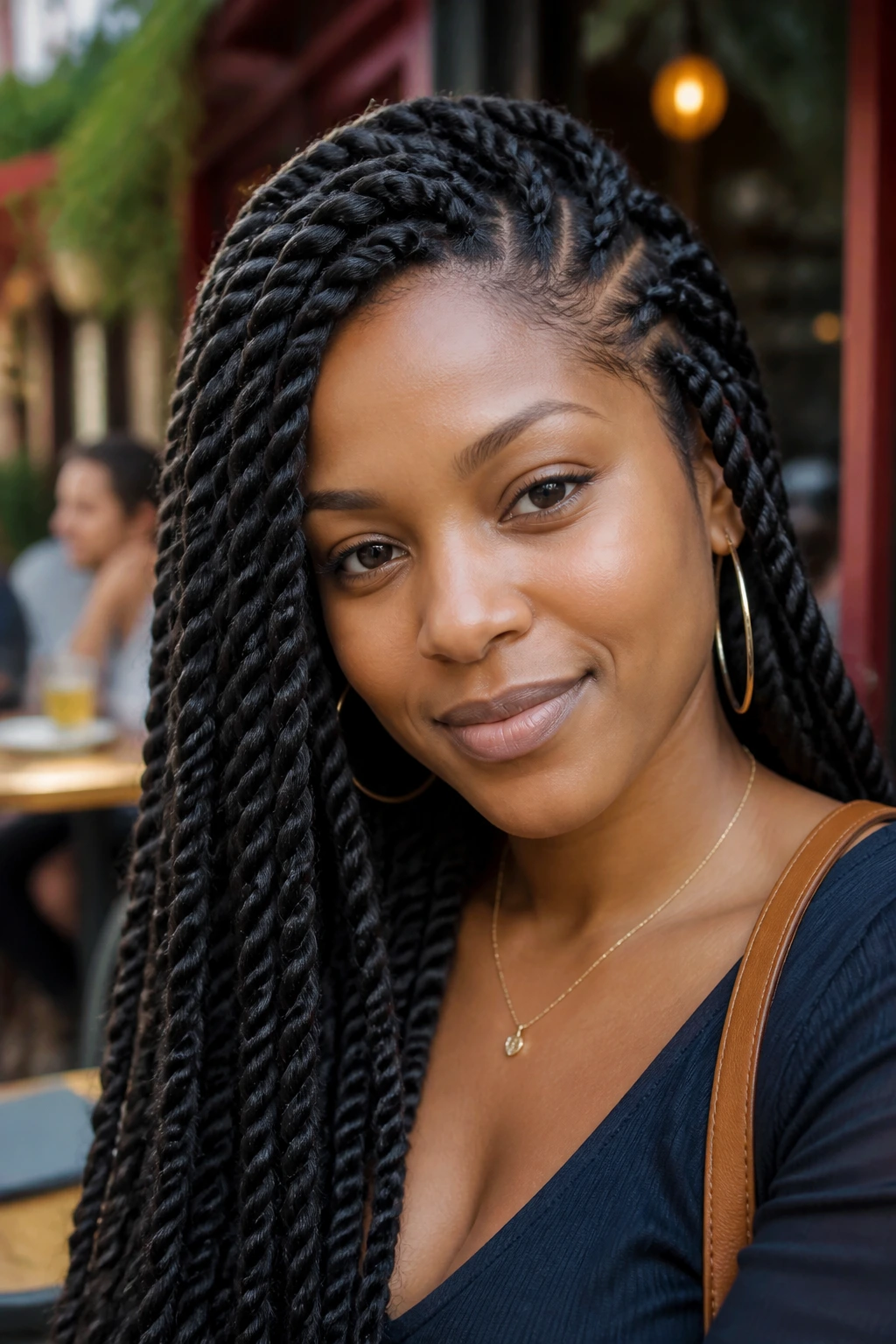
Mixed-size twists bring texture variety into one set. Some pieces are thick, some are medium, and the difference keeps the style from looking too uniform. That can be a nice change when you want the install to feel a little more organic and less symmetrical.
The trick is keeping the variation controlled. If every section changes size at random, the style loses its shape fast. Use the larger twists where you want visual weight — around the front or crown — and keep smaller twists through the back for movement. The result feels layered without actually being layered in the haircut sense.
42. Crochet-Installed Senegalese Twists
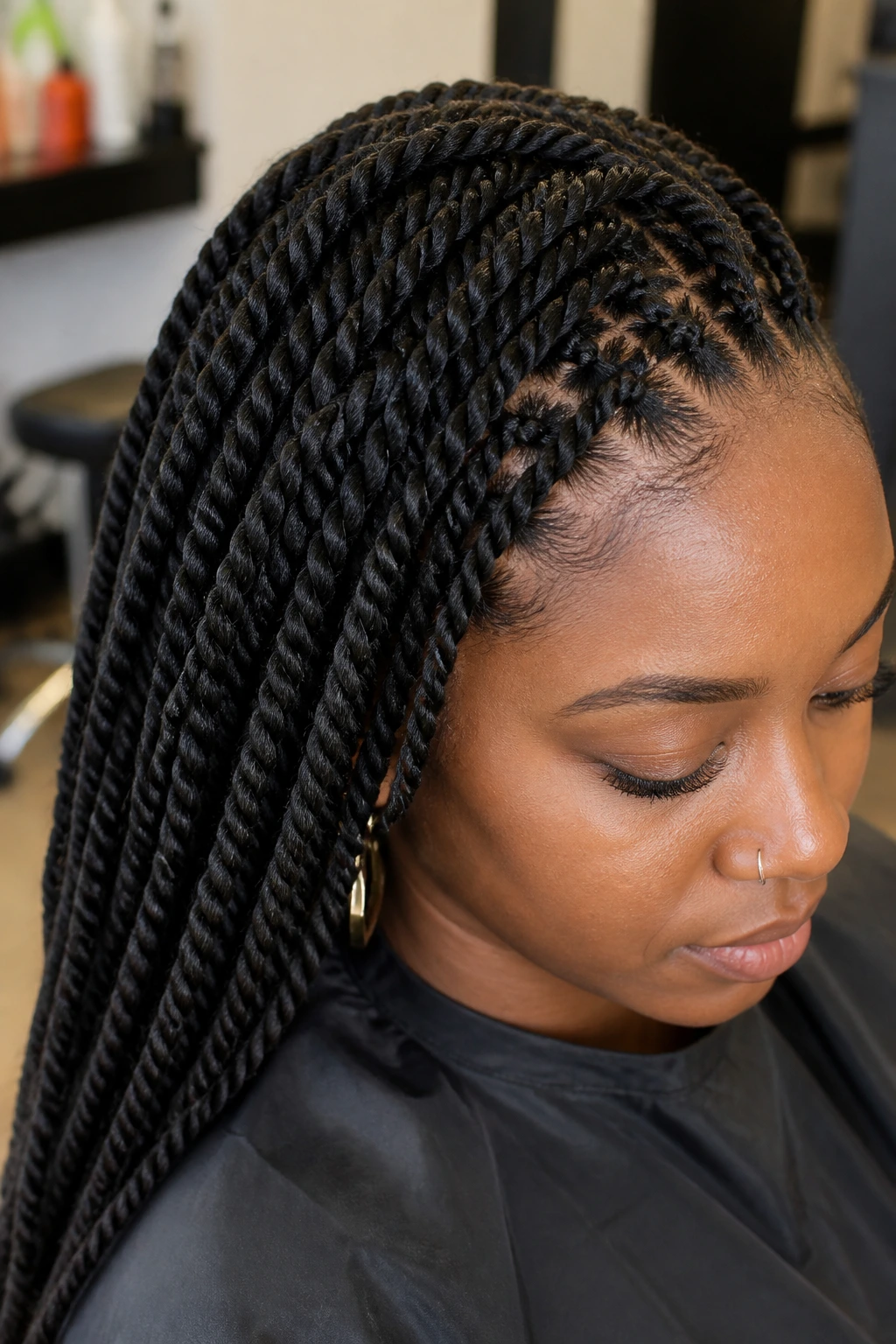
Crochet installation gives the style a fast, tidy start and a very even finish. It’s not the same as hand-twisting every piece from scratch, but it creates the same rope-twist look with less time in the chair. For some people, that is the whole selling point.
The finish usually looks neatest when the roots are blended well and the crochet attachment points stay hidden. If you want a uniform style with minimal scalp stress, this approach can make sense. It’s especially handy when you want a fresh set without spending half a day on the install.
43. Festival Twists with Charms and Beads
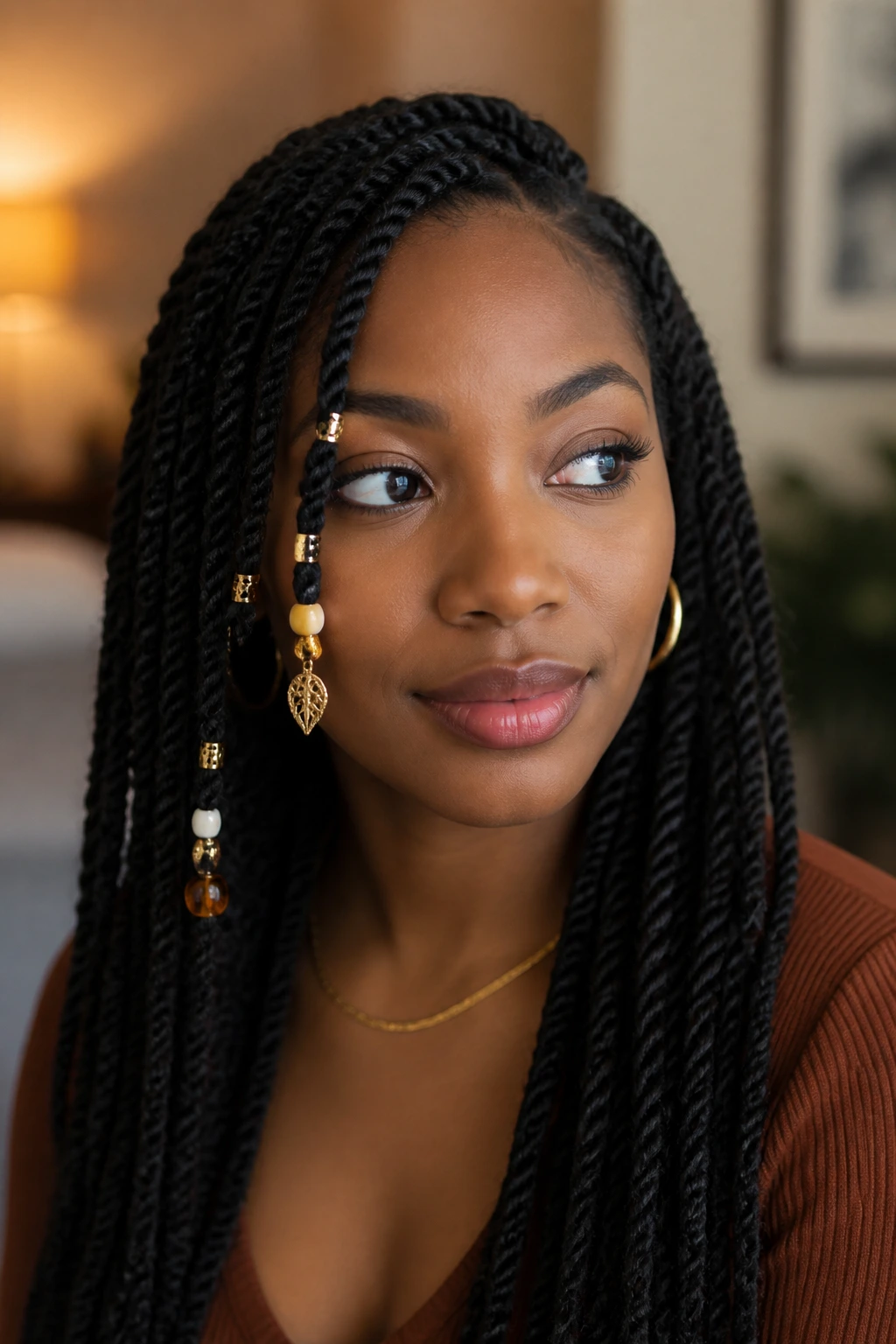
This is where Senegalese twists get playful. Mix a few beads, some small charms, maybe a thread wrap or two, and the style starts to feel custom in a way that plain twists never will. It works because the base style is so clean; the accessories have room to show up.
The best version still has some breathing space. If every twist carries a different ornament, the style loses focus. Pick one or two accent areas — maybe the front pieces or the lower lengths — and let the rest stay simple. That contrast keeps the look fun instead of overpacked.
44. Twists Tucked into a Low Side Bun
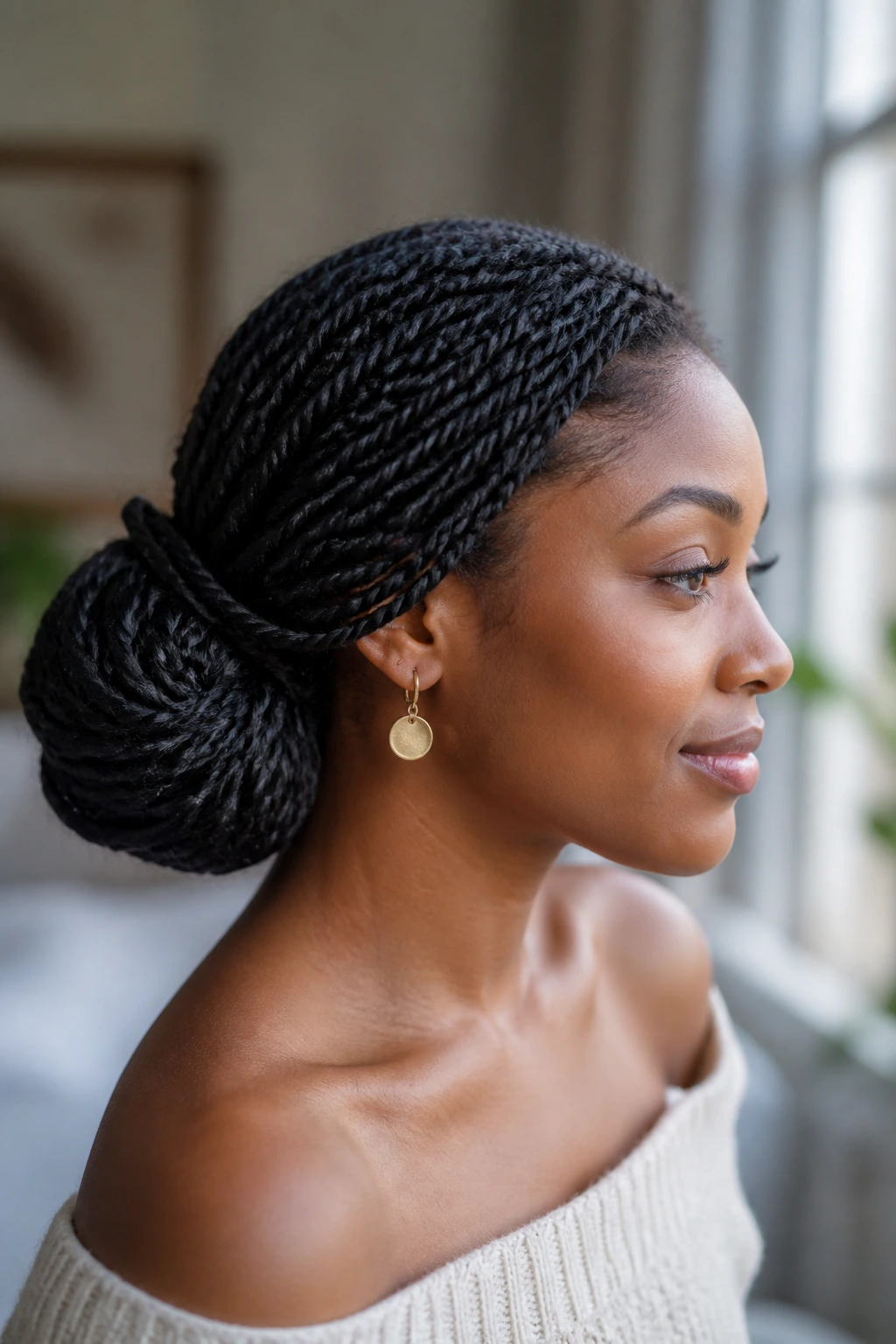
A side bun shifts the weight to one side, which makes the style feel a little softer than a centered bun. The bun sits low near the nape or just behind one ear, and the twists wrap into it with an easy curve rather than a strict knot. It’s pretty without being precious.
This shape is useful when you want the hair away from the neck but do not want the flatness of a standard bun. The side placement gives the profile a bit more personality. Keep the bun secure, though — once it starts slipping, the whole style looks like it’s trying to escape.
45. Senegalese Twists with an Undercut Reveal
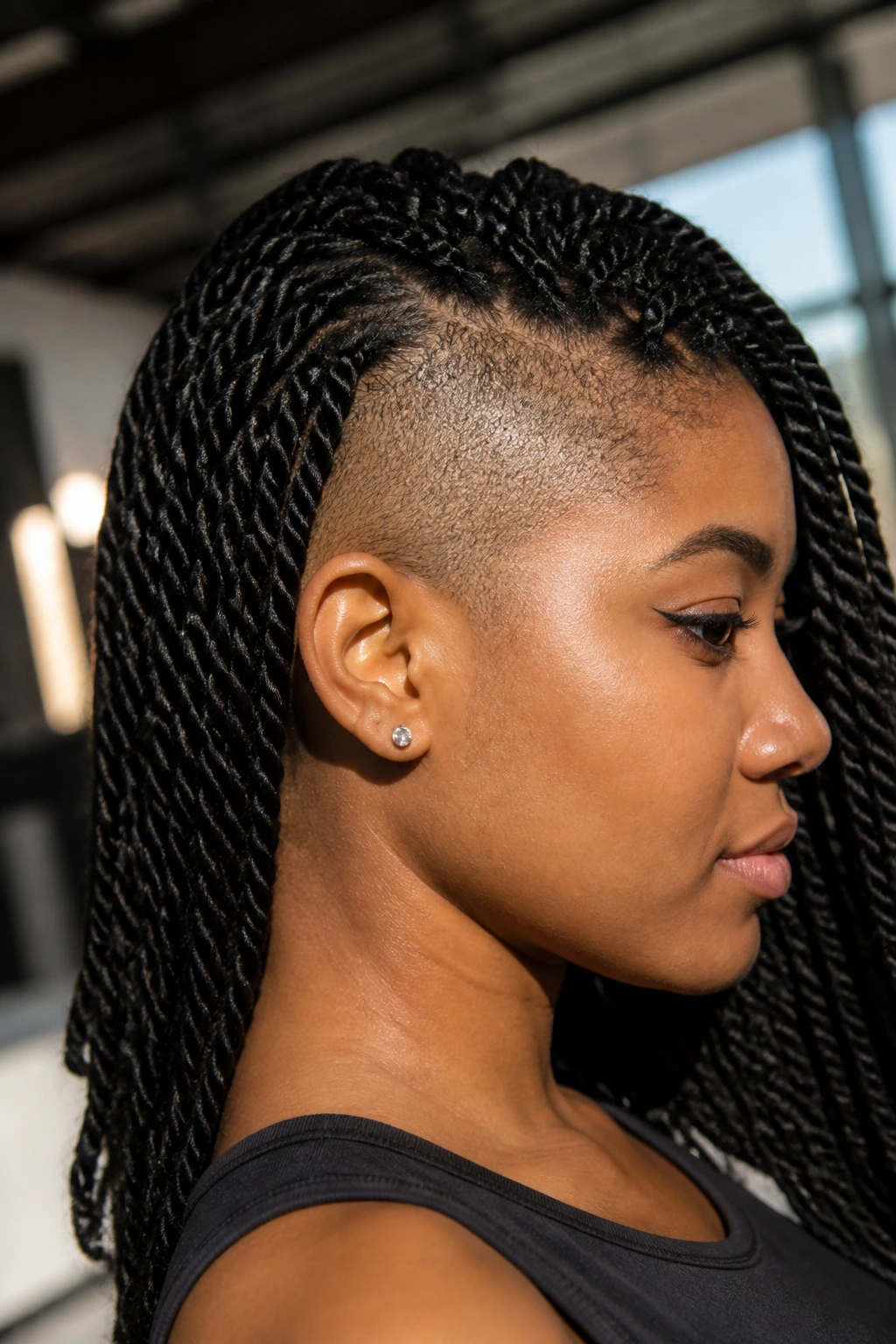
An undercut reveal gives the twists a surprise element. The top layers fall over a shaved or closely cropped section, and the contrast between the smooth rope twists and the cropped area is what makes the style pop. It can look soft, edgy, or both, depending on how much of the undercut you show.
This is one of the strongest options if you want cute with a little bite. Pull the twists into a half-up style, and the reveal becomes more obvious. Wear them down, and the undercut stays tucked away until you decide to show it off. That flexibility is the fun part.
How Senegalese Twists Stay Comfortable When the Install Is Done Right
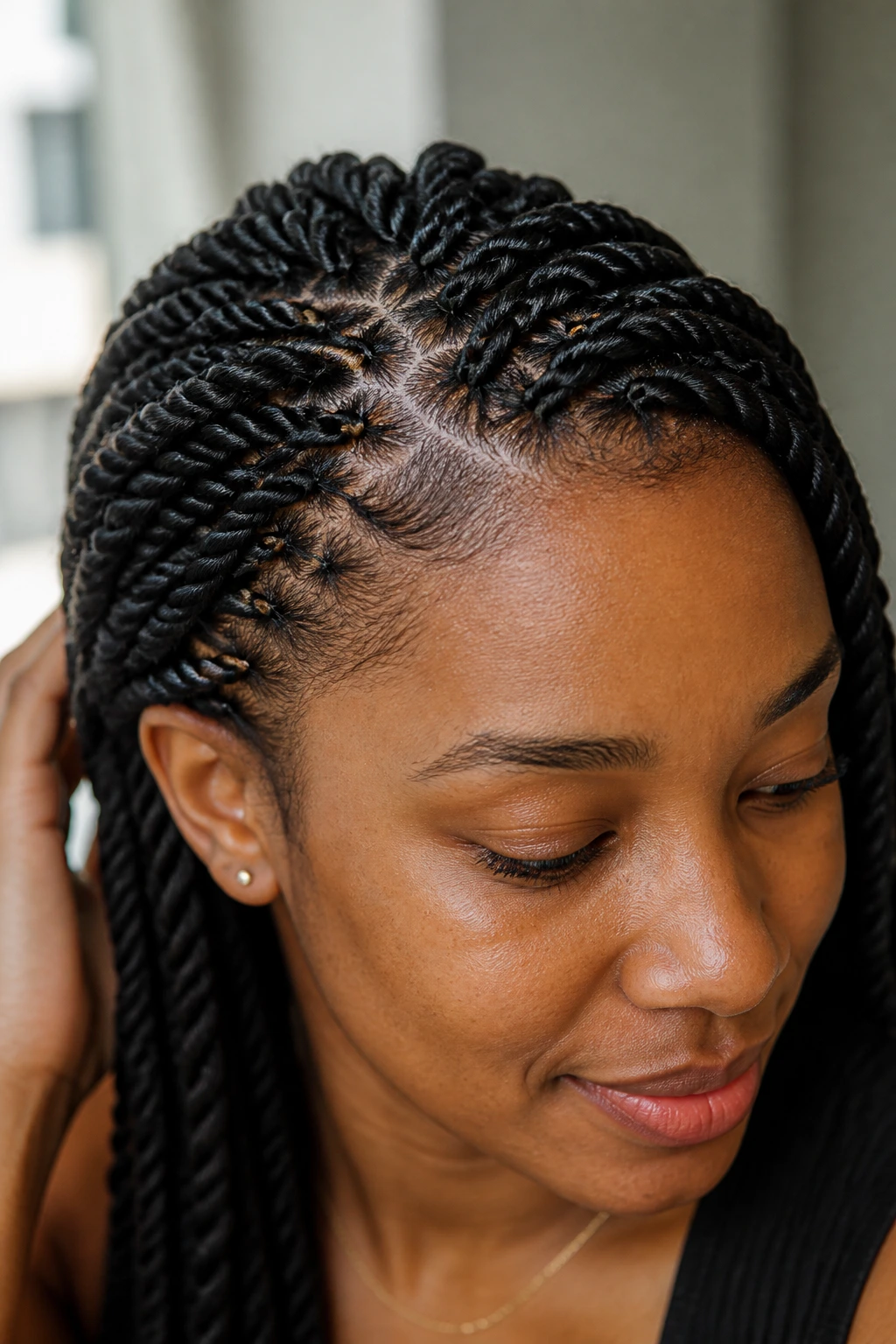
A good Senegalese twist style starts long before the first twist is finished. The parting matters. The amount of extension hair matters. The tension at the roots matters more than most people want to admit, because tight does not equal neat once the scalp starts complaining.
I like to think about comfort in three layers: the hairline, the crown, and the ends. If the hairline feels hot or sore after the install, that is your warning sign. If the crown feels heavy when you shake your head, there is too much hair in the sections. If the ends feel rough or uneven, the seal probably needs work. Small fixes here save you days of annoyance later.
What to Keep on the Styling Cart Before Install Day
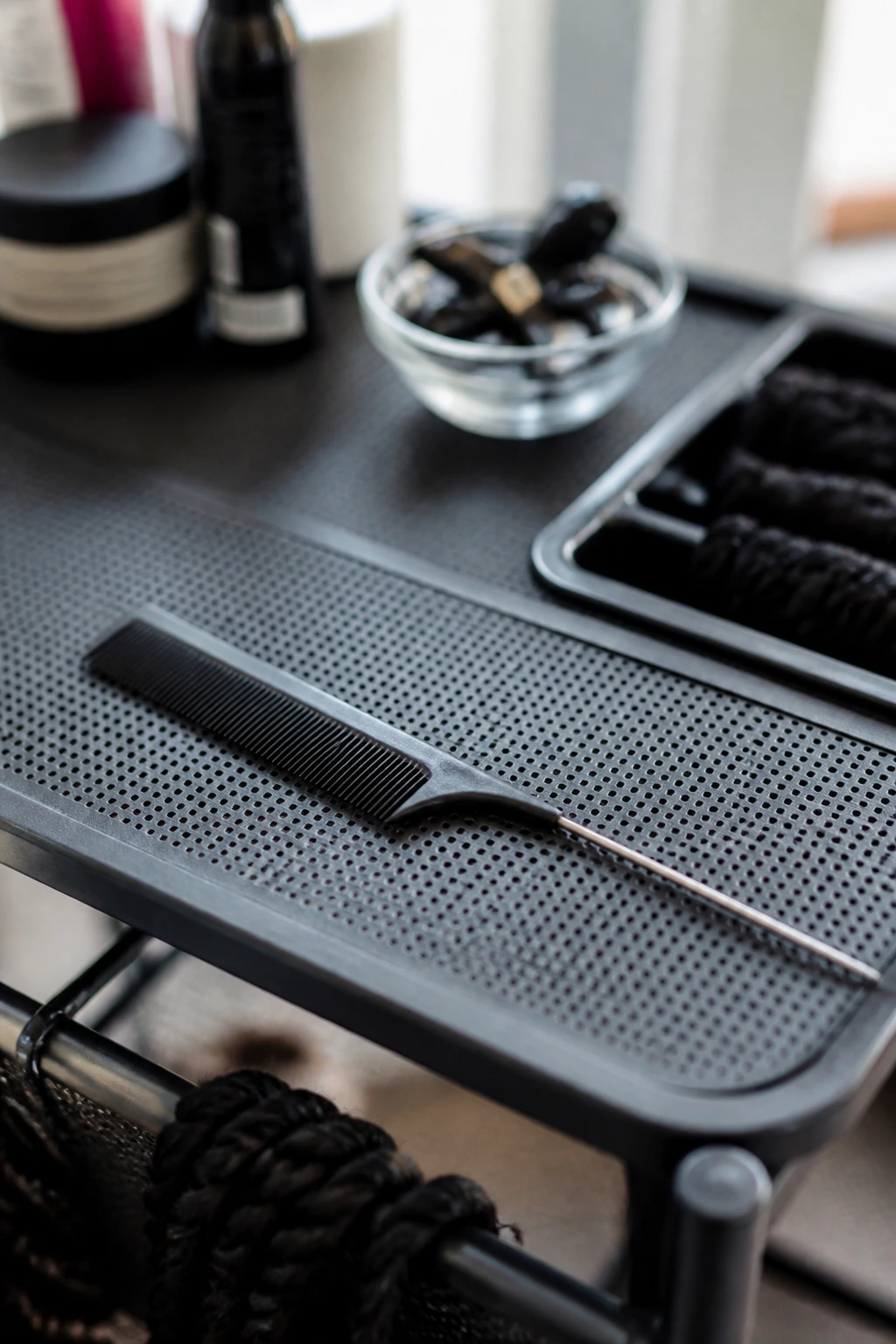
Rat-tail comb: This gives you the clean parting lines that make triangle, diamond, and center-part styles look sharp.
Sectioning clips: Keep the rest of the hair out of the way so the twists stay neat instead of crossing over each other.
Edge brush and light gel: Use these only where needed. Heavy buildup at the hairline makes the style stiff.
Synthetic braiding hair or twist hair: Pick a texture that softens and separates cleanly; rough hair can make the twists fuzzy before you even finish.
Mousse or setting foam: A light pass at the end helps the twists settle and gives the surface a smoother finish.
Satin scarf or bonnet: This is not optional if you want the roots and edges to stay tidy overnight.
Small scissors: Trim only loose stray ends, never the twist length itself unless you know exactly where the seal is.
How to Keep Senegalese Twist Styles Neat, Light, and Comfortable
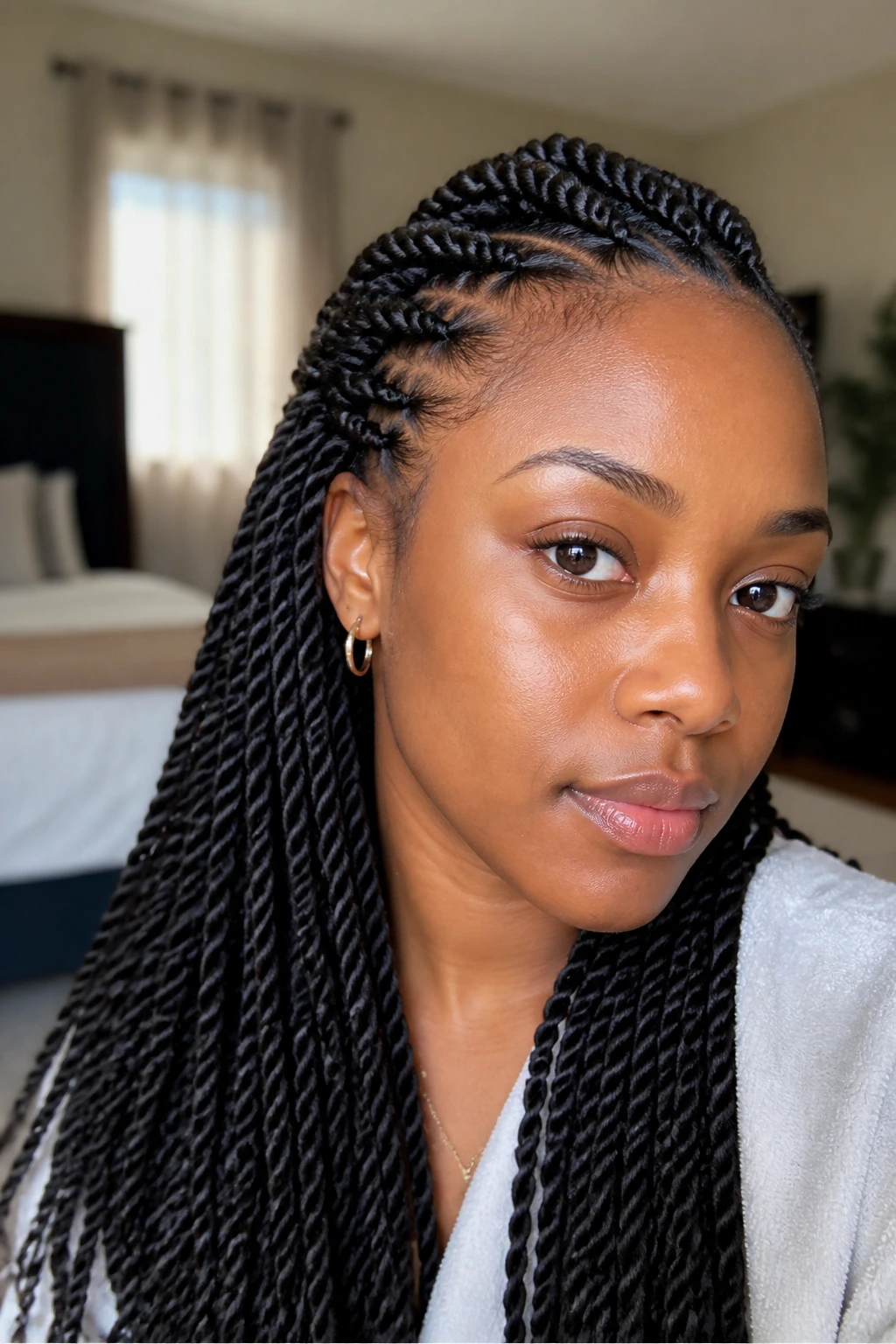
The best Senegalese twist styles usually look easy because somebody did the boring part well. That means clean sections, the right amount of hair per twist, and a finish that does not rely on squeezing the roots into submission.
Sizing: Choose the twist size based on your scalp, not on a photo alone. If your hair is fine or your scalp gets sore fast, medium twists usually wear better than jumbo ones. Micro twists can look gorgeous, but they ask for more installation time and more patience on maintenance.
Weight: Long twists are lovely, but long and heavy are two different things. Waist-length can work if the sections stay light. If the base feels tugged after one day, the style is too much for daily life.
Sleep care: A loose pineapple, a low braid, or a wrapped scarf helps the style stay flat at the root. Sleeping on cotton is a quick way to wake up with a puffier hairline and dry ends.
Refresh: A light mist of water and a small amount of mousse can calm frizz at the surface. Don’t flood the twists. They need a little shape, not a soak.
Common Mistakes That Make Twists Frizzy or Heavy
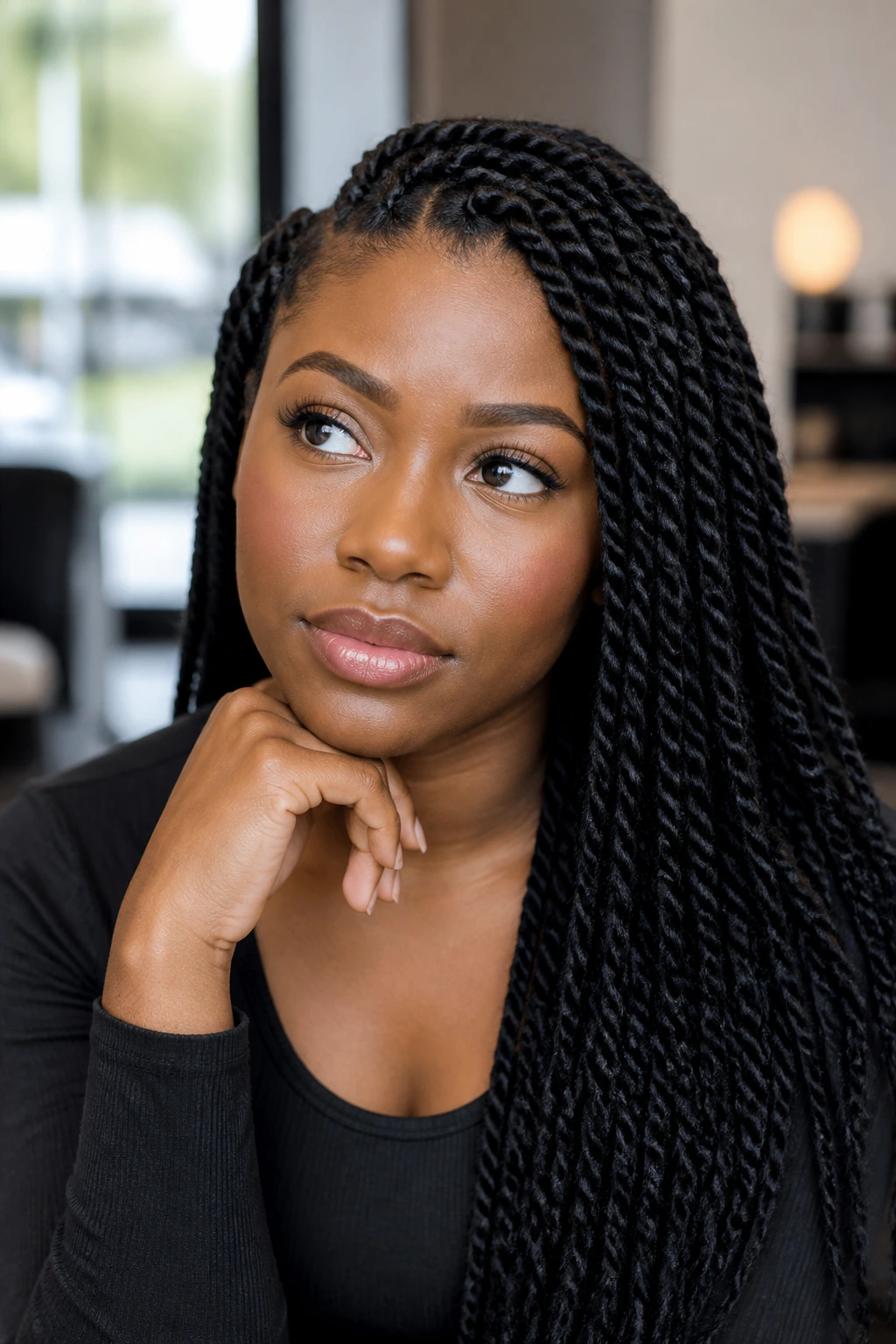
Overpacking the hair: Heavy sections look full on day one and tired by day three. The fix is simple: use less extension hair per twist and keep the base close to the scalp without squeezing it.
Starting with shaky parts: If the parting lines wobble, the whole set looks unfinished. Clean sectioning is slow work, but it pays off every time the hair is worn down or pulled back.
Leaving the ends uneven: Senegalese twists rely on a smooth finish. Jagged ends frizz faster and can make the style look older than it is. Seal and trim carefully, then stop.
Using too much product at the roots: Thick gel or edge control can build up fast and leave the scalp flaky or sticky. A small amount at the perimeter is enough. The rest should be clean and dry.
Ignoring tension warnings: If your scalp throbs, itches in a sore way, or feels tender when you move your hair, the install is too tight. That is not a badge of honor. Loosen the style, period.
Variations and Adaptations to Try With the Same Install
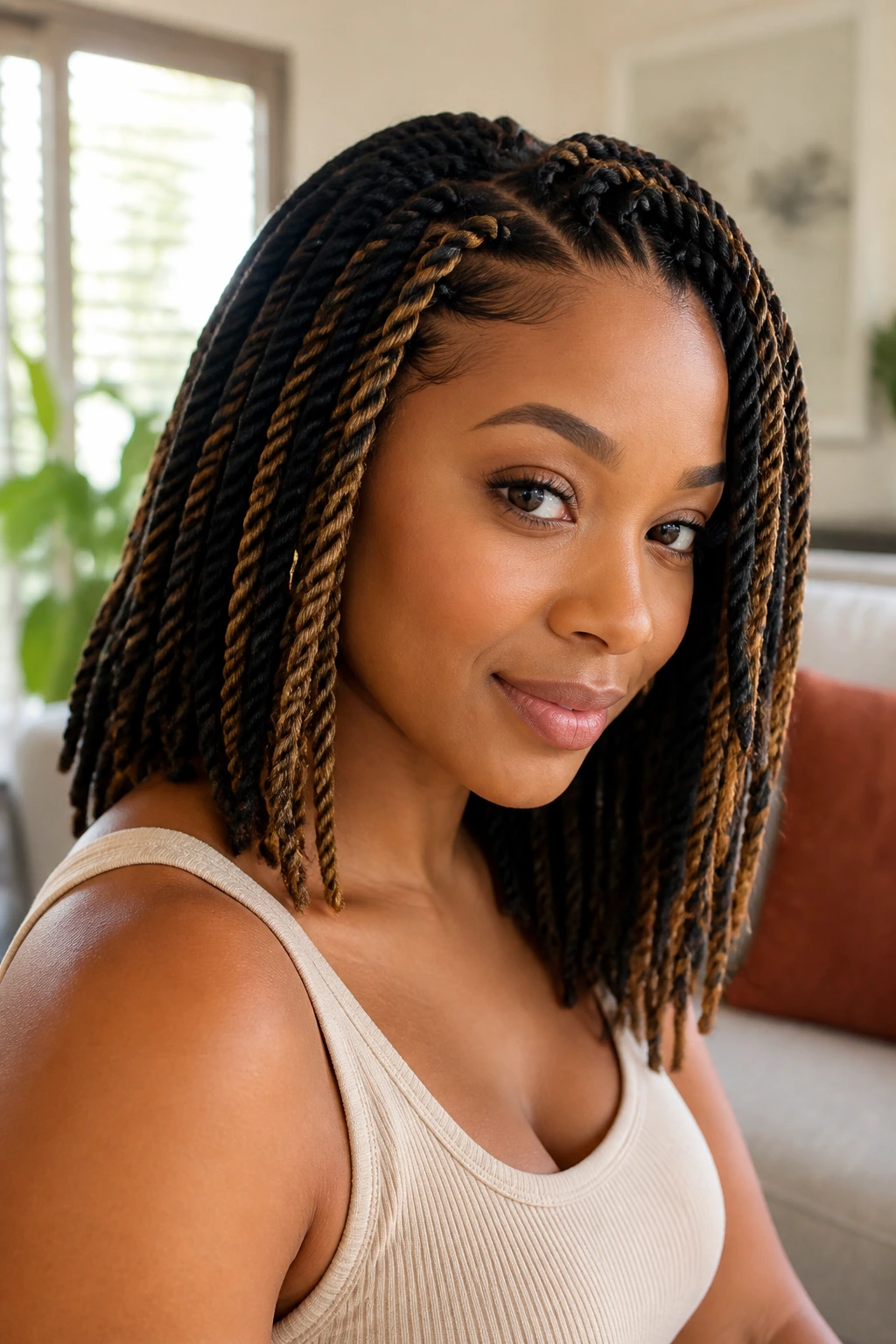
Soft Everyday Set: Keep the twists medium-sized, shoulder-length, and mostly plain. This version wears well under hats, collars, and hoodies, which makes it easy to live in.
Color-Play Set: Add honey blonde, burgundy, or peekaboo panels without changing the basic twist pattern. Color changes the mood faster than almost anything else, and it’s cheaper than redoing the whole style.
Accessory Layer: Add cuffs, beads, shells, or thread wraps in one small zone instead of all over. A focused accent looks cleaner and lasts longer before it starts feeling busy.
Low-Tension Comfort Set: Choose fewer inches of length and slightly larger parts. That reduces weight at the scalp and can make the style much easier to wear if your hairline is sensitive.
Dress-Up Updo Set: Start with a neat bob or lob, then plan for buns, ponytails, and crowns. Shorter twists are often easier to pin and hold in shape than very long ones.
How to Wash, Dry, and Store Senegalese Twists
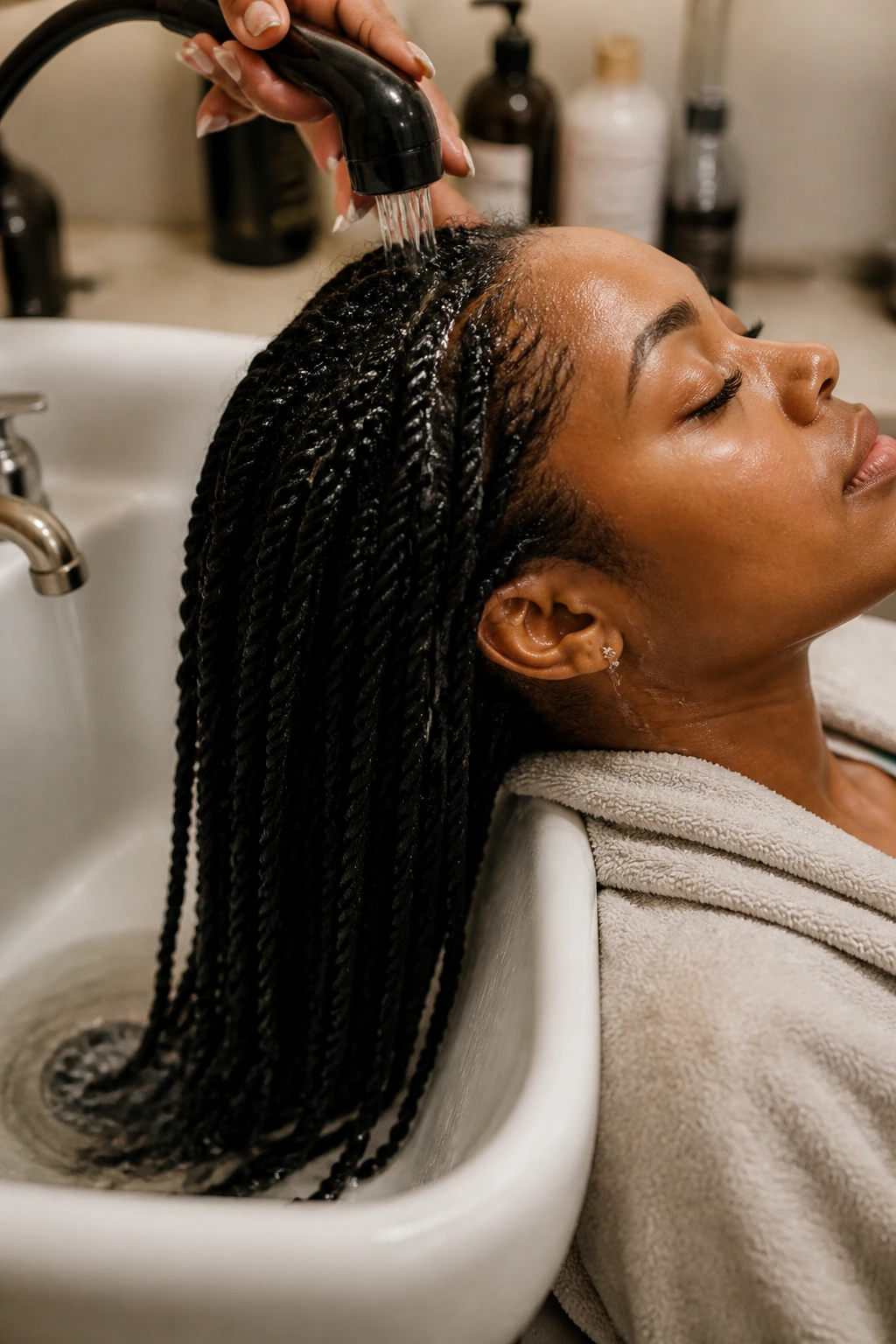
Senegalese twists do not need complicated care, but they do need regular, calm care. A light scalp cleanse every one to two weeks is enough for many people, especially if the style is installed with enough room at the roots. Use diluted shampoo or a scalp nozzle, then rinse carefully so water doesn’t sit in the twists.
Drying matters. Sitting around with damp twists is how you end up with a sour smell near the roots and weak shape at the ends. Press the twists with a towel, then air-dry fully or sit under a hooded dryer until the roots feel dry to the touch. Thick or waist-length sets can take longer than people expect.
At night, sleep in a satin bonnet, a scarf, or a pillowcase that does not grab the hair. If you need to store extra extension hair or accessories, keep them in a dry box or zipper bag so they don’t collect dust before the next install. Twists usually stay freshest when they are handled less, not more.
Questions People Ask Before Choosing Senegalese Twist Styles
How long do Senegalese twists usually last?
A well-installed set often holds for several weeks, but the exact wear time depends on length, size, hair type, and how much the roots are manipulated. Smaller twists tend to last longer, while jumbo styles often need refreshes sooner because they show new growth faster.
Which twist size is easiest to wear every day?
Medium twists usually hit the best balance. They’re light enough to manage, but not so tiny that they take forever to install or tangle at the ends. If your scalp is sensitive, medium or shoulder-length sets usually feel kinder than jumbo waist-length styles.
Can Senegalese twists be styled into updos?
Yes, and that’s one reason people keep coming back to them. Ponytails, buns, crowns, and half-up styles all work well as long as the roots are not too tight and the twists have enough length to hold their shape.
What if the roots start looking fuzzy fast?
That usually means the hair was handled too much or the installation was packed with too much product. A light mousse, a satin wrap at night, and less daily fiddling usually help. If the fuzz starts at the base, the parting tension may also need checking.
Do colorful twists damage the hair more than dark ones?
The color itself is not the issue. What matters is the hair used for the install and how much tension the scalp takes. Bright extensions can feel a little drier or rougher, but the bigger risk is still weight and tightness, not pigment.
Are short twist styles better for fine hair?
Often, yes. Shorter sets usually weigh less and put less strain on the roots. A blunt bob or chin-length style is often easier to live with than extra-long twists if the hairline needs a gentler setup.
A Fresh Set of Twists That Fits Real Life
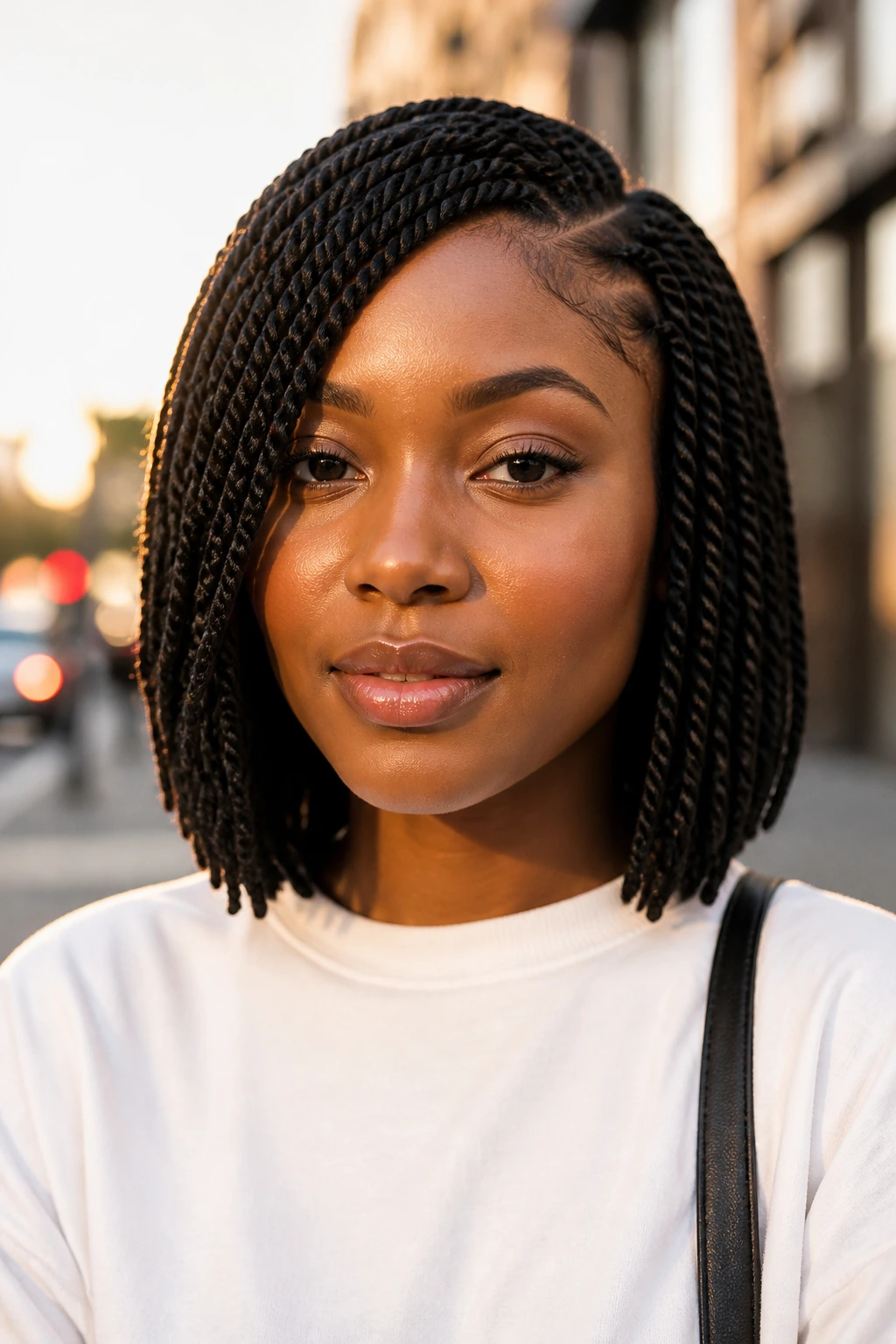
Senegalese twist styles work because they can be neat without being boring. A blunt bob gives one kind of polish. A long waist-length set gives another. Add a side part, a few beads, or a wrapped bun, and the same twist pattern starts feeling like a completely different look.
The smartest choice is usually the one that matches your actual routine. If you pin your hair up every day, pick a style that still looks good in a ponytail. If you want movement, choose a length that swings without dragging. If your scalp is picky, keep the install lighter and the parts clean. That’s the part people skip when they’re chasing photos, and it’s exactly the part that decides whether the style feels cute on day ten, too.
