



A braid style that survives a backpack strap, a playground slide, and one too many snack breaks is worth paying attention to. That is the real test for box braid styles for kids: not whether they look neat in the mirror for ten minutes, but whether they still hold together after recess, carpool, and a nap with a head tilted against the seatbelt.
I like box braids on children because the structure does the heavy lifting. Clean parts, tucked ends, and a shape that keeps hair out of the face can save a morning. Add the right length and the right amount of weight, and you get a style that looks put together without turning every day into a hair-management project.
The catch is comfort. Tight front rows, braids that hang too far past the shoulders, or heavy beads on delicate hairlines can turn a good idea into a sore scalp by lunchtime. The styles below stay rooted in the same basic braid pattern, but each one changes the feel in a useful way — shorter, lighter, dressier, easier for school, or just more fun when a child wants a little personality in the mirror.
Why These Box Braids Feel So Easy to Live With
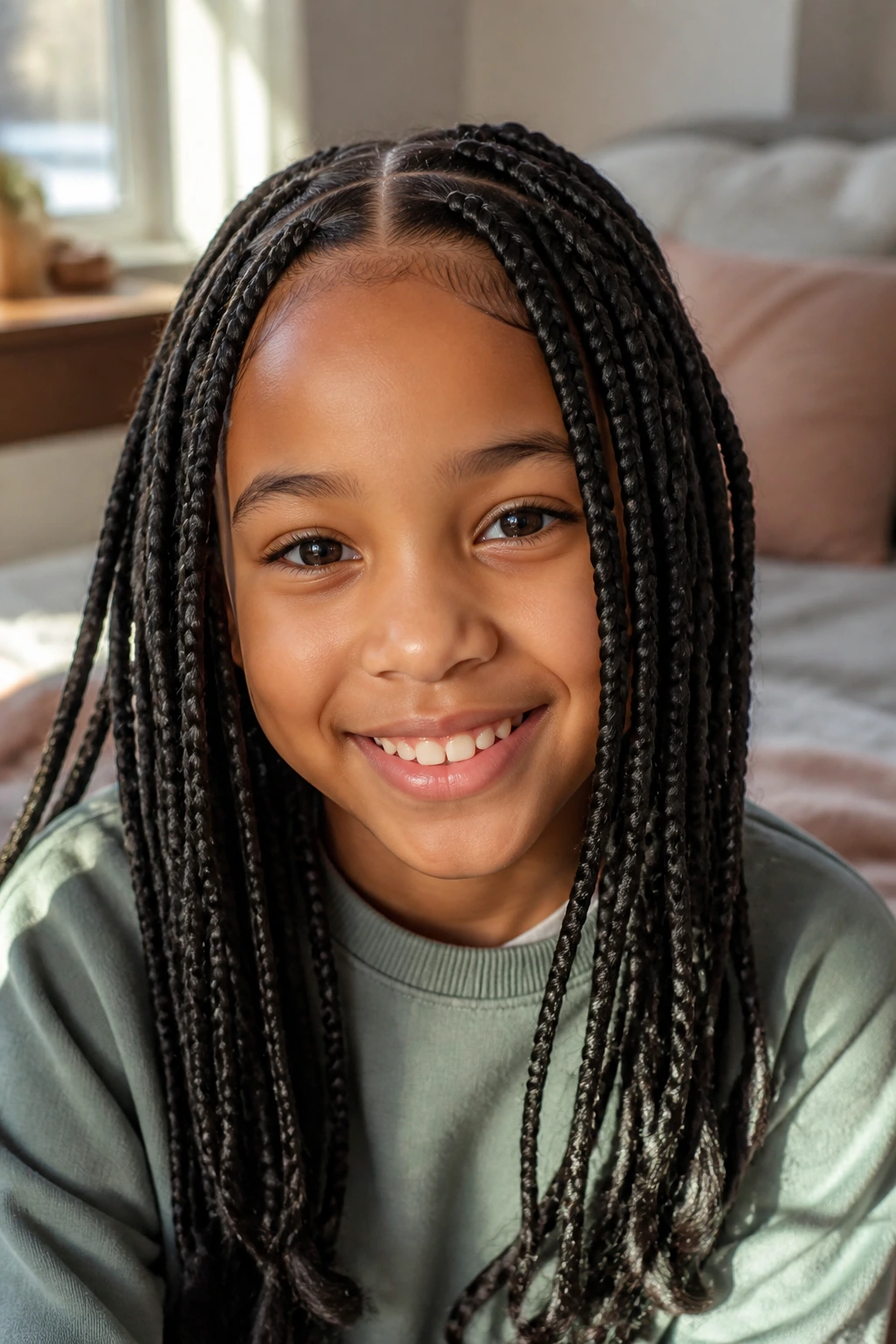
Low-fuss mornings: Once the braids are in, the daily routine gets simpler. A quick wrap at night and a little scalp care go a long way.
Flexible length: You can keep the braids chin-length, shoulder-grazing, or gathered up, which means the style can match the child’s age and tolerance for weight.
Built-in neatness: The boxed parting keeps the hair organized from root to end, so frizz starts slower than it does with loose styles.
Accessory-friendly: Beads, ribbons, cuffs, and thread all work here, but they don’t have to be used everywhere. One accent row can carry the whole look.
School-day practical: Braids keep hair off the face, which matters more than people admit when a child is trying to read, write, or chase a ball around a yard.
Easier to refresh: A light mist, a clean part line, and a satin bonnet at night can make the style look cared for even between full wash days.
How Box Braids Stay Neat on Busy Kids
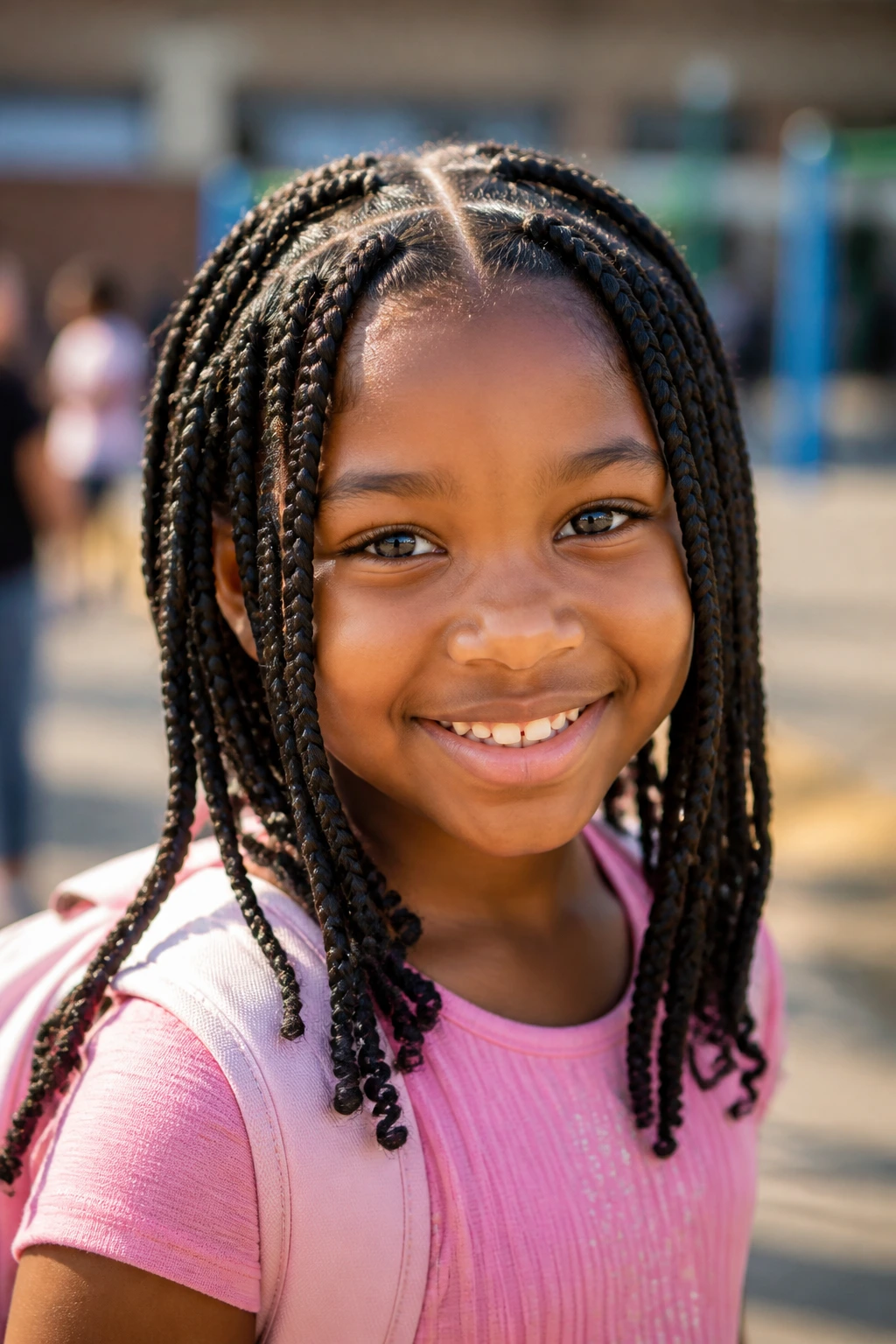
The best part of box braids is the geometry. Each braid starts from a clean square, triangle, or shaped part, and that parting grid keeps the style looking deliberate even when the ends get a little fuzzy. Hair that’s been divided well tends to behave well. Not perfectly. Just better.
Tension is where most parents and stylists get into trouble. If the roots look polished but the child is wincing, the style has already failed. I’d rather see slightly looser front rows and a braid that sits a little softer at the hairline than a hard, crunchy line pulled tight against the skin. That neat edge never justifies tenderness.
Part Size Changes Everything
Smaller braids look intricate, but they also take longer and can feel heavier if too much hair is packed into each section. Larger braids move faster in the chair and feel lighter in the first week, though they may not last as long if the hair is very active or fine. For little heads, the sweet spot is often medium-sized parts with modest length.
Length Should Match the Child, Not the Photo
A braid that lands at the chin will behave differently from one that reaches the mid-back. Shorter braids swing less, snag less, and are easier to sleep on. Longer braids make more of a statement, but they also bring more weight, more tangling at the ends, and more chances for a strap or zipper to catch.
Comfort Beats Drama
If a child complains that the front feels “tight,” believe them. That feeling matters more than the mirror. The whole point is to build a style that can handle school, naps, movement, and a little roughhousing without turning the scalp into the main event.
1. Classic Medium Box Braids
These are the version I’d hand to a parent who wants one style that doesn’t need explaining. Medium box braids sit in the middle of everything: not too tiny, not too bulky, easy to part, easy to gather, easy to live with. They usually fall around the shoulders or upper back, which gives enough movement without making the child feel weighed down.
Why They Earn Their Place
Medium braids are the sweet spot for most kids because they balance time, weight, and wear. They usually last longer than jumbo braids and feel lighter than micro braids. That middle ground matters when a child is going to wear the style to school, sleep in it, and keep moving without fussing at the roots.
- Best for: school weeks, family photos, and everyday wear
- Parting: clean squares or slightly rectangular parts for a tidy grid
- Length: shoulder-grazing keeps the ends manageable
- Look: neat without feeling stiff
Tip: Keep the ends blunt and even if the child is active; wispy, uneven ends tangle faster and look frayed sooner.
2. Bob-Length Box Braids
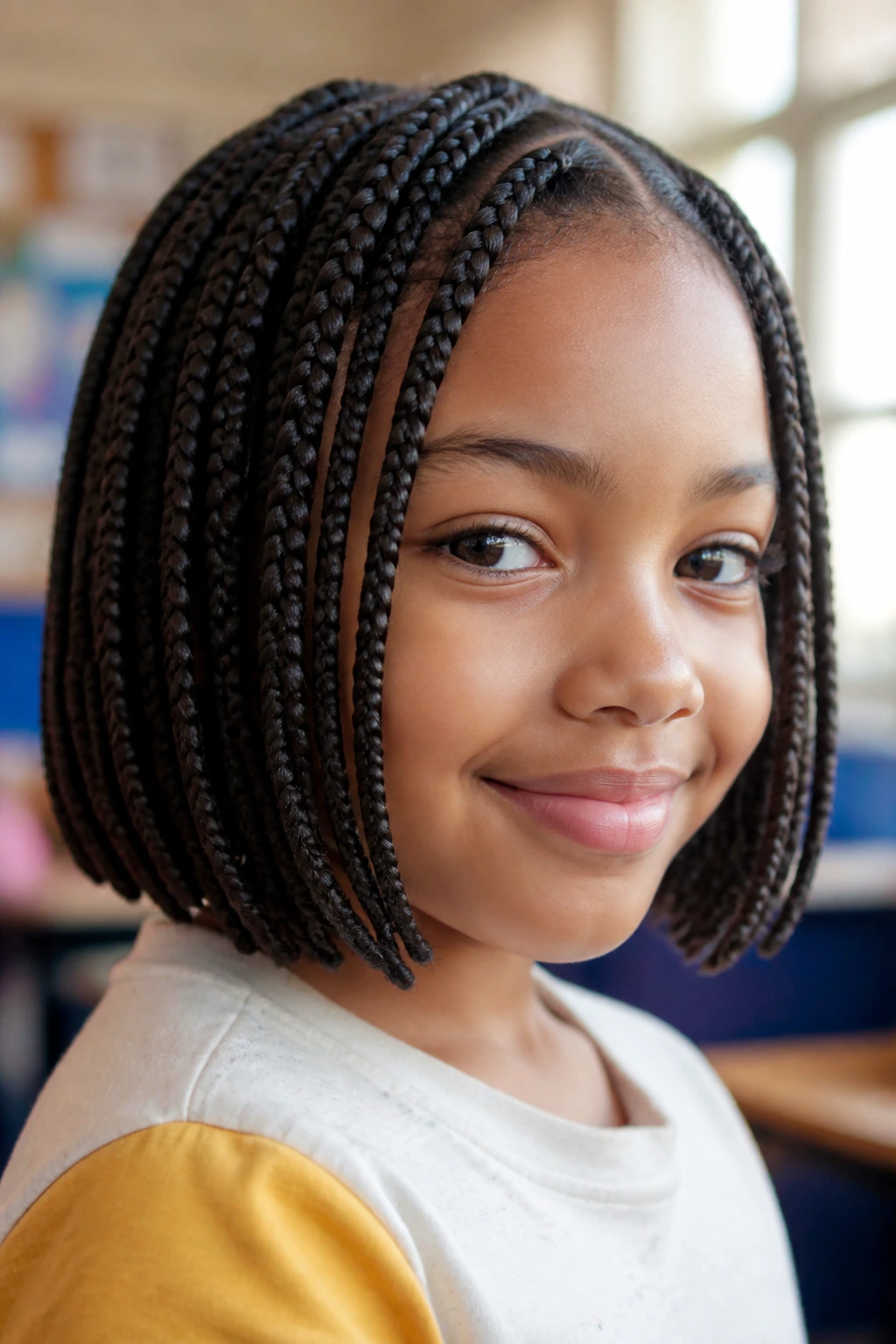
Short braids are the quiet winner in this whole group. A bob length usually lands somewhere between the jawline and the collarbone, and that shorter finish means fewer snags, less neck weight, and less hair getting trapped in backpack straps. It’s the braid version of a sensible pair of sneakers.
I recommend this length for children who are tender-headed, very young, or constantly flinging their hair around. The style still feels polished, but it doesn’t ask the child to carry much. And that matters.
A bob also shows off the parts more clearly. If the grid is clean, the style looks crisp. If the parts are uneven, the eye goes straight there, so the install has to be tidy. That’s the trade-off. Worth it.
3. Beaded Ends
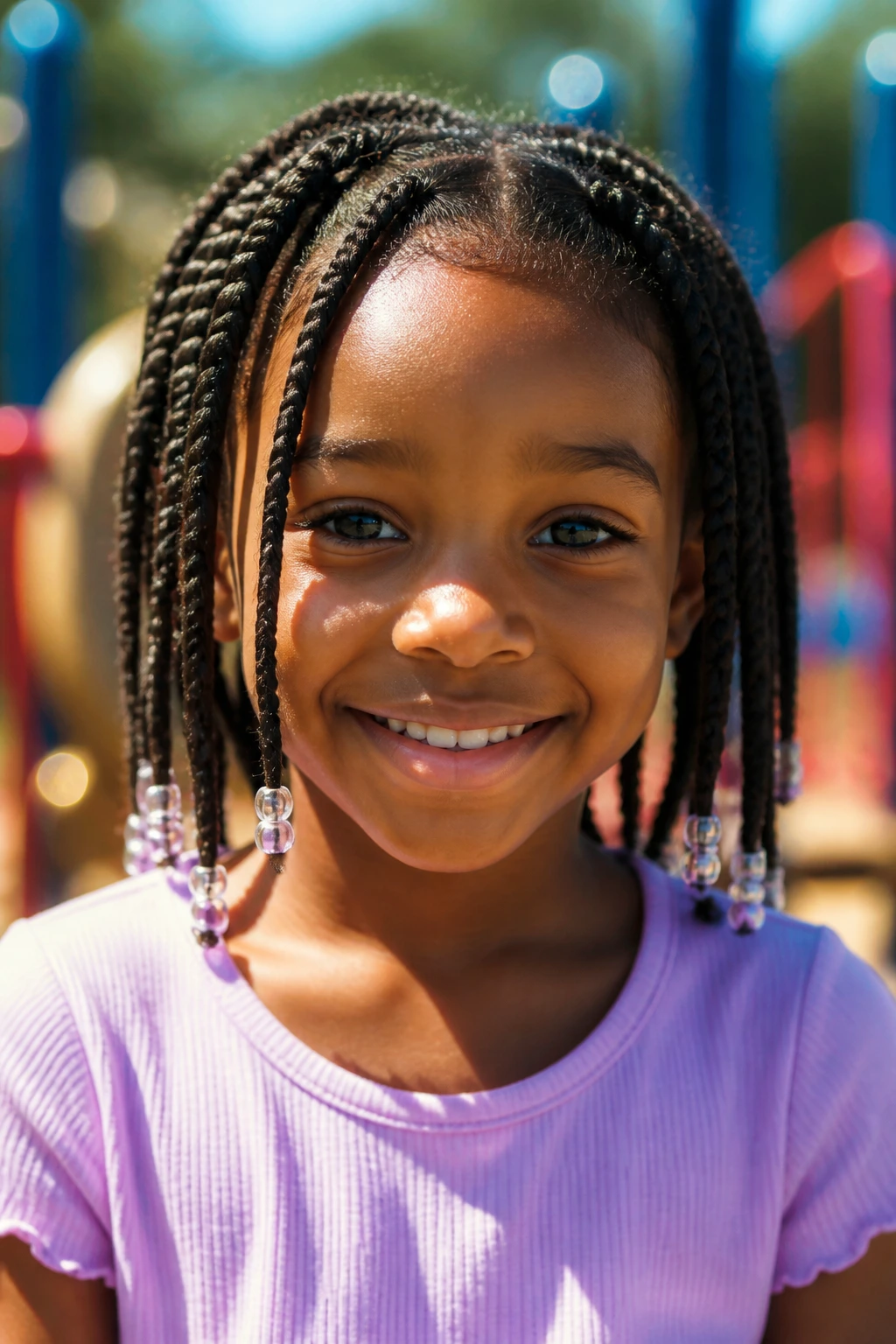
Beads turn a simple braid into something a child can hear when they move, and that tiny clatter is part of the appeal for plenty of kids. A few small beads at the ends give the braids bounce and a little shine, especially when the child turns their head or skips down a hallway.
The mistake is loading every single braid with heavy beads. Don’t. That pulls on the ends, feels noisy in a classroom, and can get annoying fast. A handful of accent braids usually does more for the look than beads everywhere.
How to Keep Them Light
Use small, smooth beads and secure them with a tight end wrap or a small elastic so they don’t slide. If the child is very young, or if the school has strict rules about accessories, keep the beads to a few front pieces or skip them entirely.
Best for: birthdays, photos, and kids who like a little swing at the ends.
4. Half-Up, Half-Down Box Braids
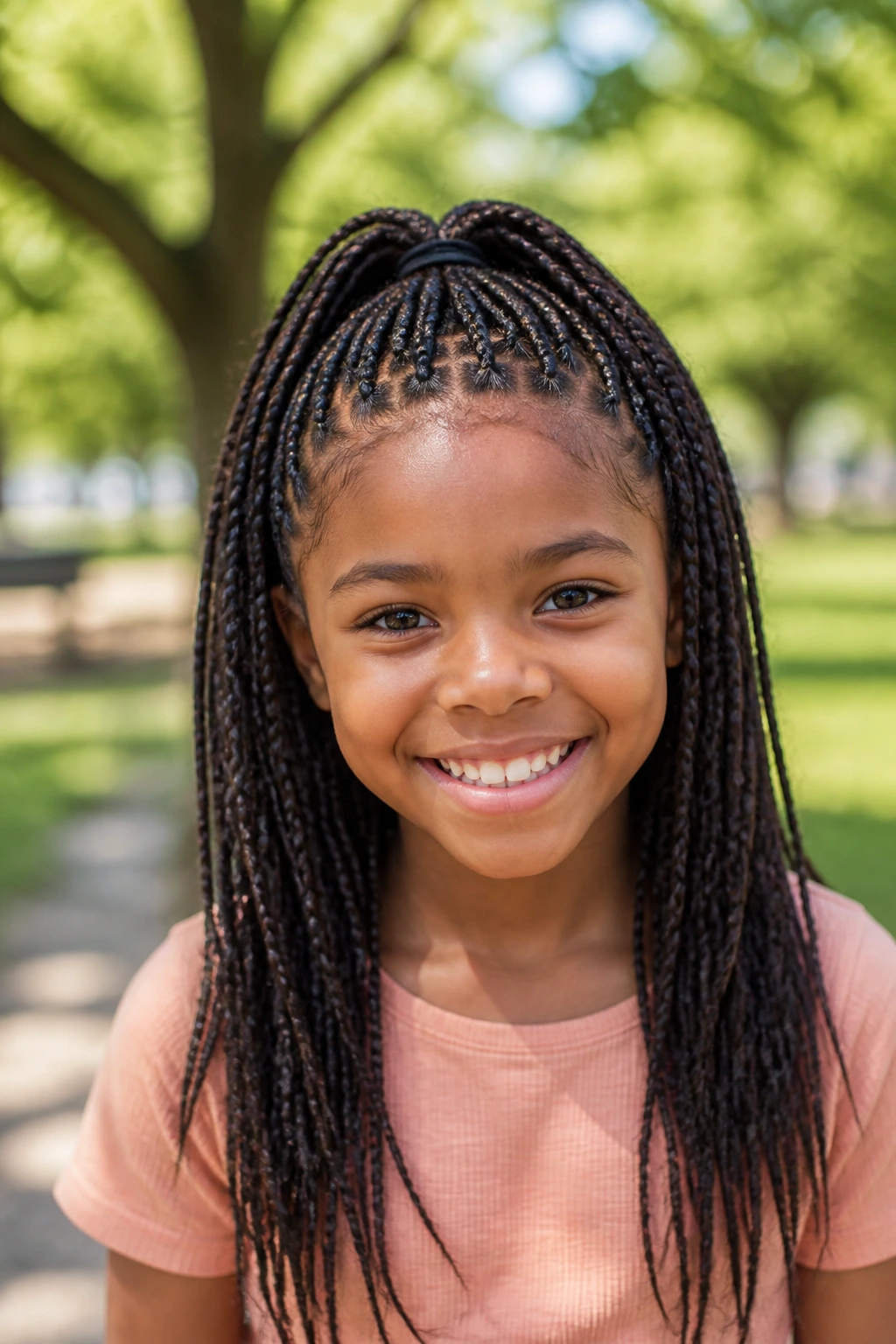
This style solves a problem I see all the time: a child wants braids long enough to move, but not hanging in the face during math or lunch. Pulling the top half back gives the crown a neat shape while the lower half stays loose and playful.
The neat part is the contrast. The top section can be tied with a soft scrunchie or wrapped into a small puff, and the bottom section keeps the braid movement. It looks intentional without asking for much.
If the braids are medium or shoulder length, this style is easy to refresh midweek. A quick tuck of the top section, a light mist on the parts, and the whole head looks reset. That is useful. Very useful.
5. Triangle-Part Box Braids
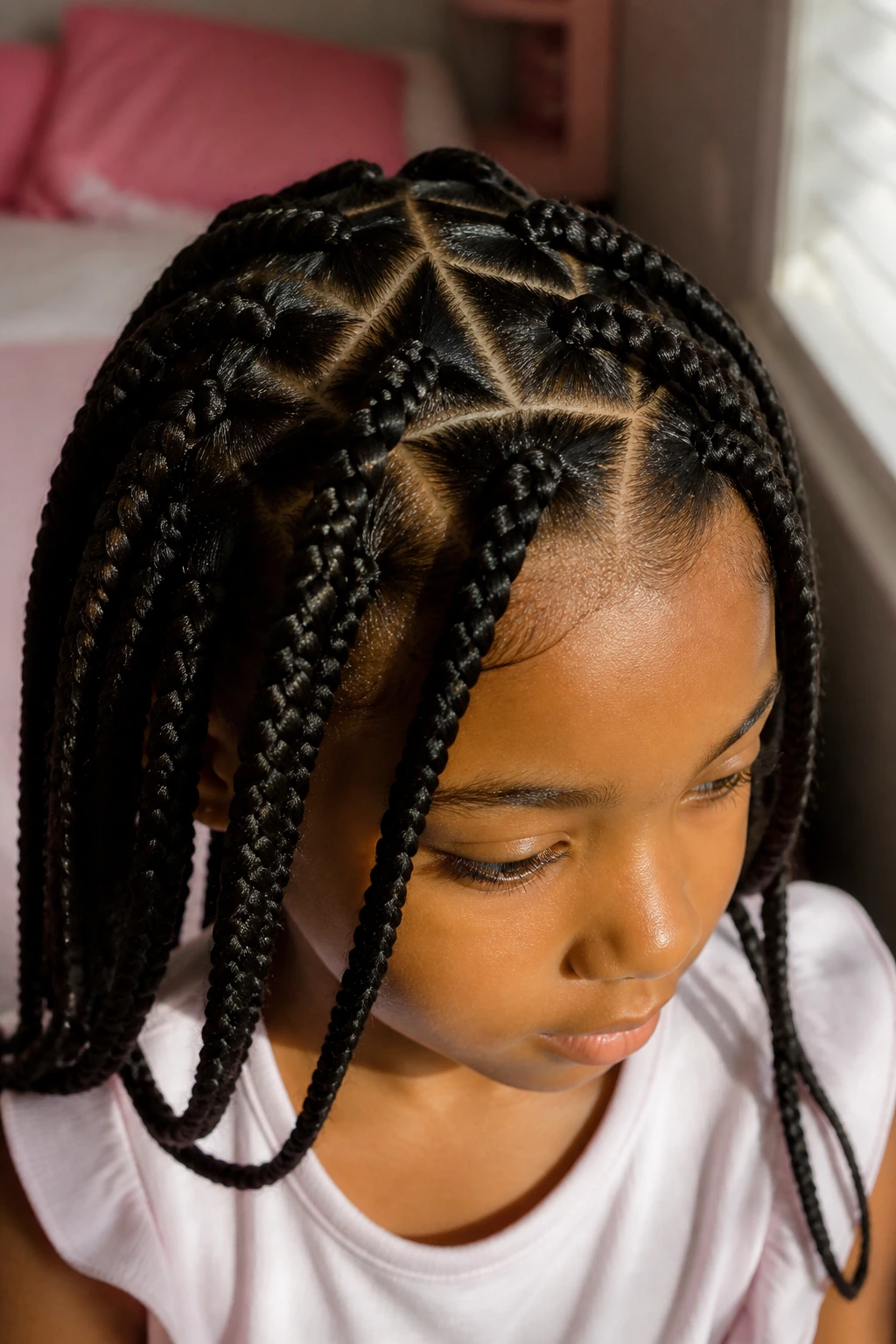
Triangle parts change the mood without changing the braid itself. Instead of a square grid, the parts angle into small triangles, which gives the scalp a sharper, more graphic look. Kids usually notice this more than adults think they will. The parts look like part of the style, not just the setup.
This version works especially well when the braids themselves are simple. Let the parting do the talking. If you pile on beads, cuffs, and colored thread at the same time, the style starts fighting itself. One visual idea at a time usually looks cleaner.
Triangle parts also hide grow-out a little differently. Because the lines aren’t straight boxes, the new growth can look softer as the style wears on. Nice bonus.
6. Heart-Part Box Braids
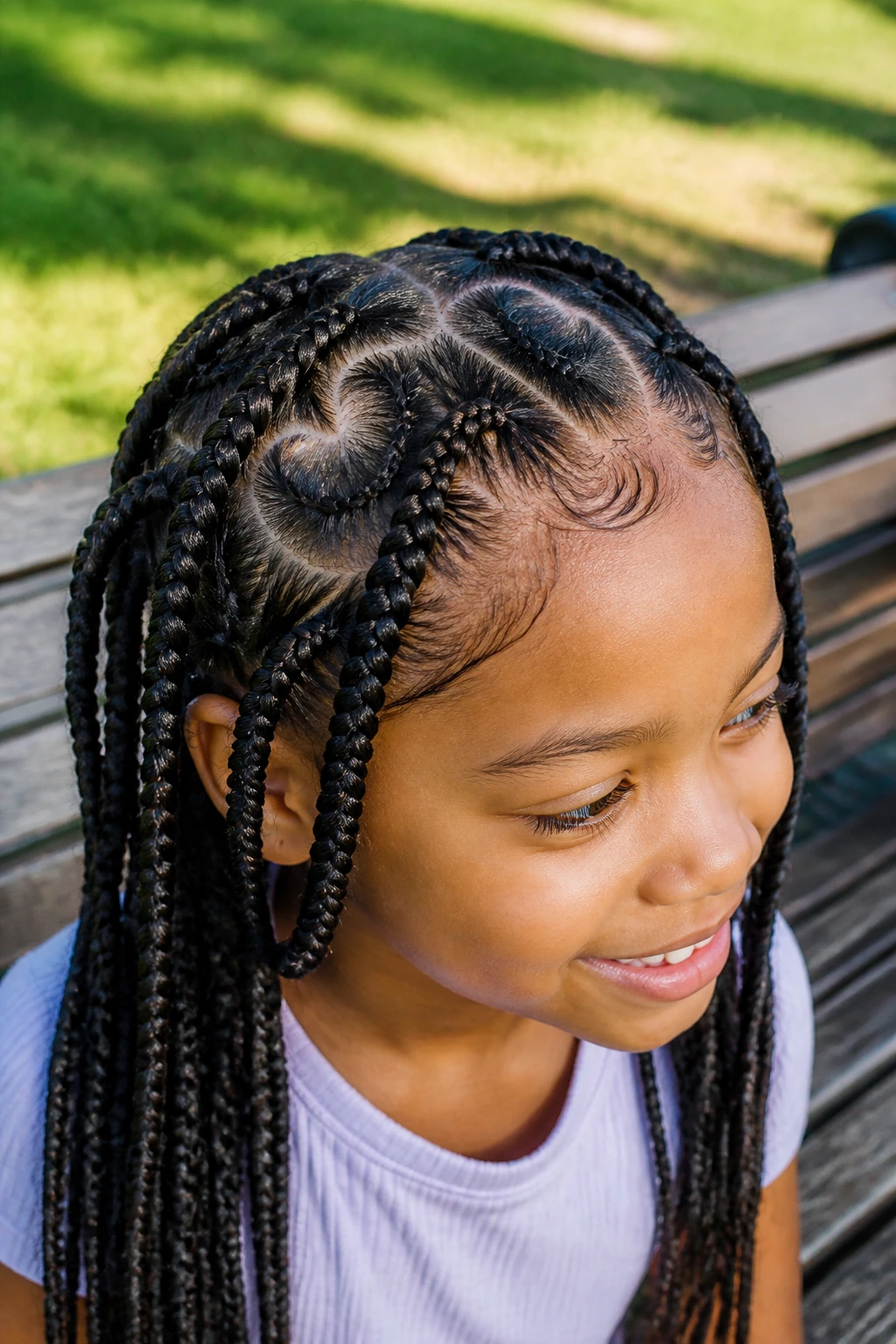
Heart parts are pure delight when they’re done cleanly. They sit best near the front hairline or in a small cluster along the crown, where the shape can be seen without turning the whole head into a pattern puzzle. For birthdays, photo day, or a child who loves a bit of whimsy, they’re hard to beat.
A heart part needs patience. A rushed one looks like a blob, and then the whole point disappears. Keep the design small enough to read clearly from a few feet away. That’s the trick.
Use this style when the child is sitting still well and the rest of the braids can stay simple. The heart should feel like a detail, not a competition.
7. Jumbo Box Braids
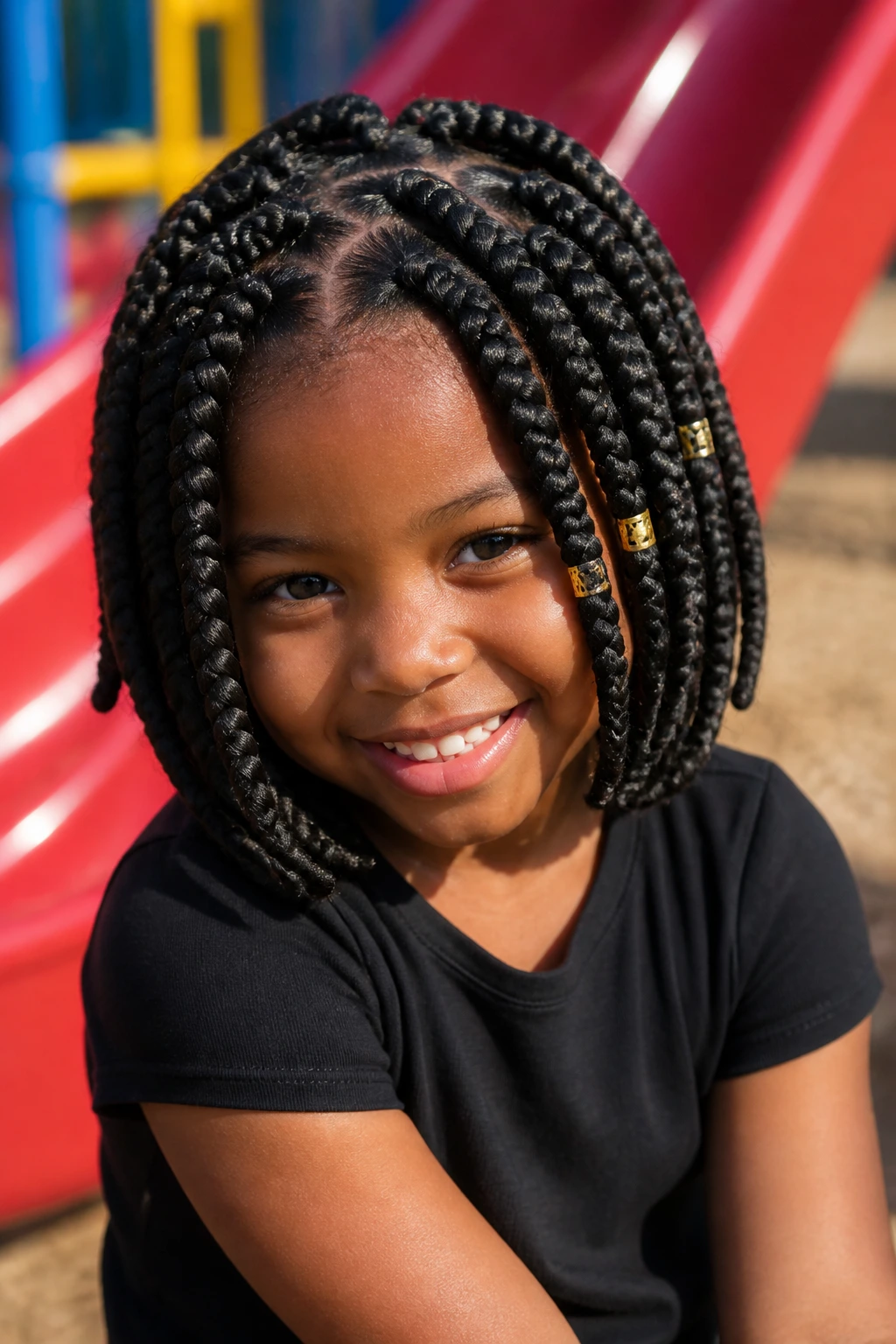
Jumbo braids make a clear statement: fewer sections, faster install, and a chunky finish that can look great on thicker hair. They’re especially useful when a child can’t sit through a long appointment. Less time in the chair matters more than style snobs like to admit.
The downside is weight. Big braids carry more hair per section, so they can feel heavy if they’re too long or too tightly anchored at the front. Keep the length modest. Shoulder length or just past it usually behaves better than a long, swinging version on a little head.
Jumbo braids also show frizz sooner because each section has more surface area. That’s not a flaw; it’s just part of the look. They shine when they’re freshly done and still look good when they soften a bit.
8. Small Micro Box Braids
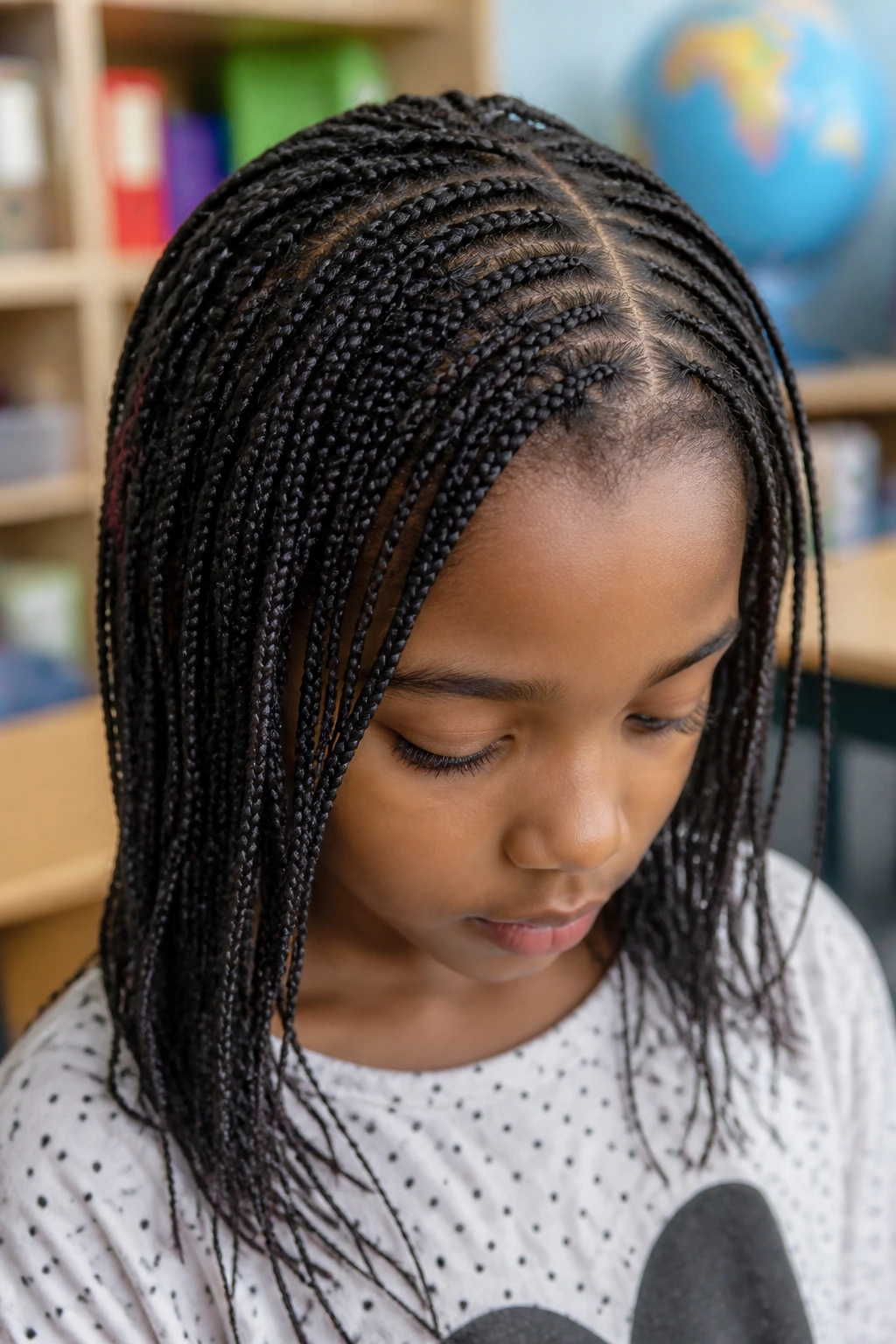
Tiny braids are a commitment. They take longer, need steadier hands, and reward you with a more detailed finish that can stay neat for a long stretch. On dense hair, they create a very clean, separated look. On fine hair, they can feel fussy if the sections are too small.
I’d only choose this for a child who tolerates sitting for a while and does not mind a style that takes time to install. The result can be beautiful, but it should not come at the cost of comfort.
Micro braids are one of those styles that look delicate but demand a serious amount of labor. If you want long wear and don’t mind a longer chair session, this is the one. If not, skip it and move on.
9. Braided Pigtails
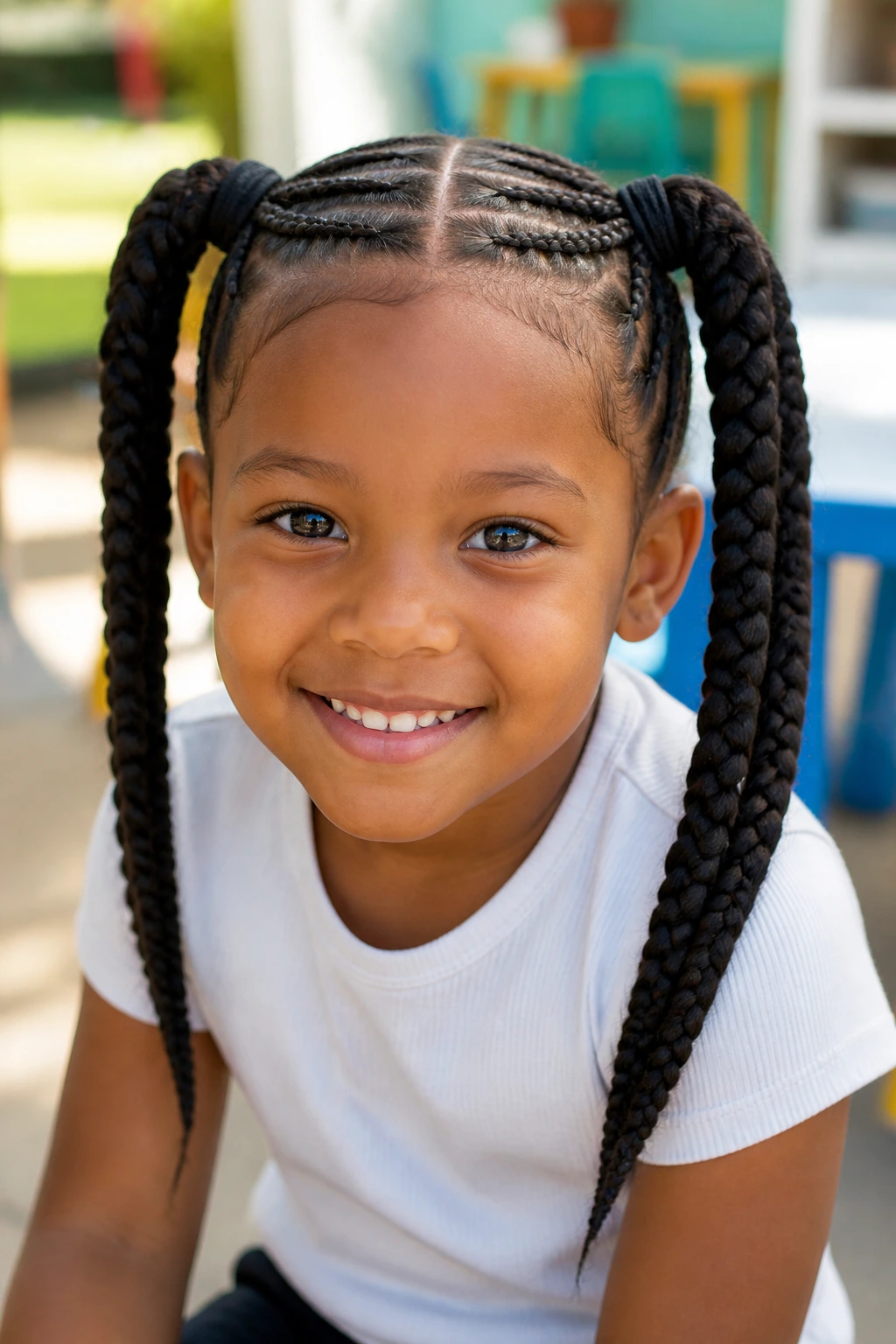
Two braids. That’s the whole charm. Split the head down the middle and gather the braids into left and right pigtails, and the whole style suddenly looks youthful, tidy, and easy to recognize from across a room. It’s a dependable move for younger children.
This is one of the best styles for days when you want the hair off the neck but still want some playful shape. The pigtails can sit low for comfort or high for a perkier look. Add ribbon at the base, and you’ve got a style that looks cheerful without trying too hard.
Why It Works So Well
The symmetry keeps the braids balanced, and that balance matters on children who are always moving. One side is not dragging more than the other. Less tugging. Less fuss. Better mood.
10. Side-Swept Box Braids
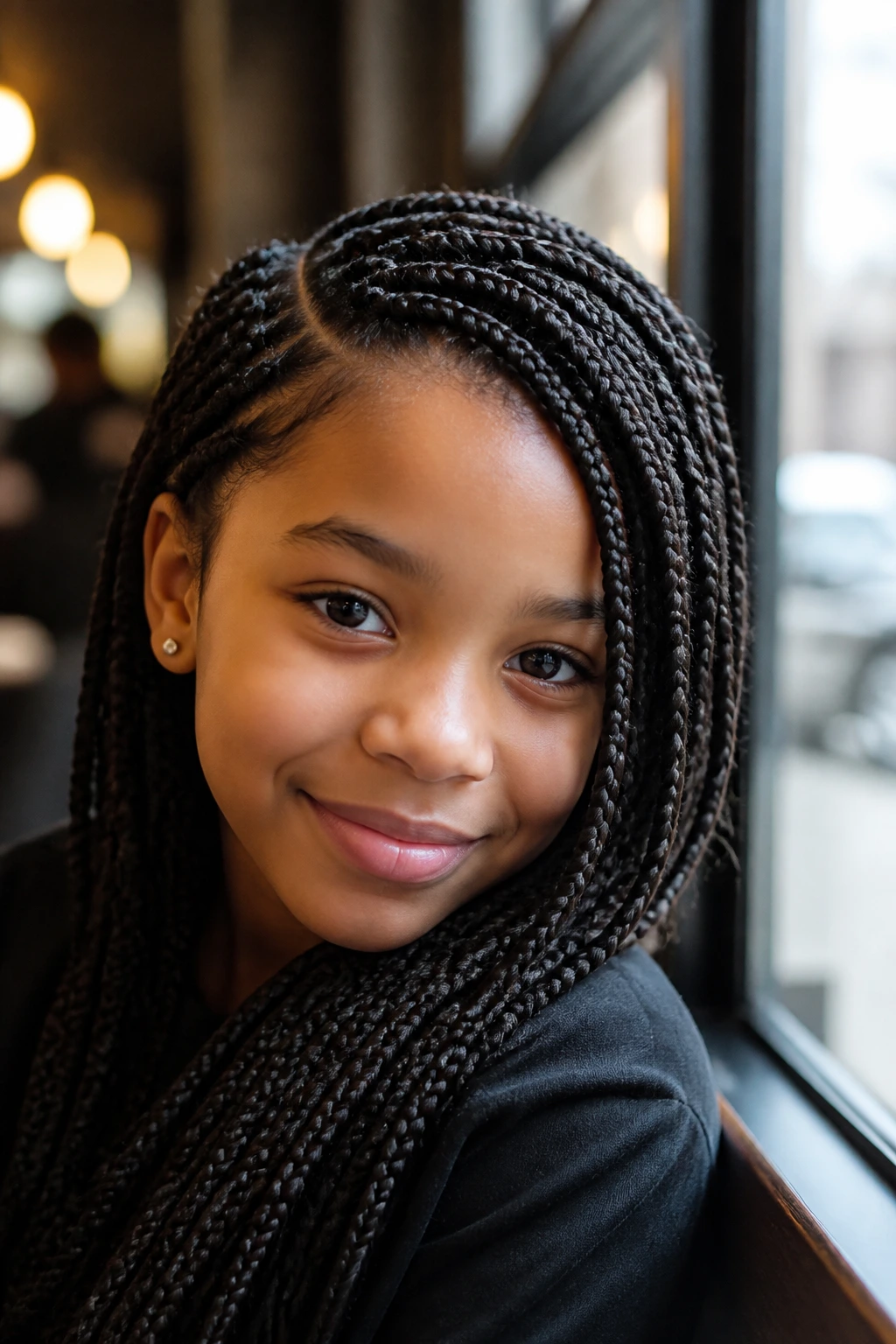
A deep side part changes the whole face shape. The braids fall toward one side, which softens the style and gives it a little motion even before the child moves. It works nicely for portraits, school events, or a child who likes a look with a bit of attitude.
The main thing to watch is tension along the heavy side. If all the weight lands on one part, the root can feel tired by the end of the day. Keep the side sweep broad, not severe, and don’t pull the front too flat.
This style is good when you want something different without changing the braid pattern itself. Sometimes the part is enough.
11. High Ponytail Box Braids
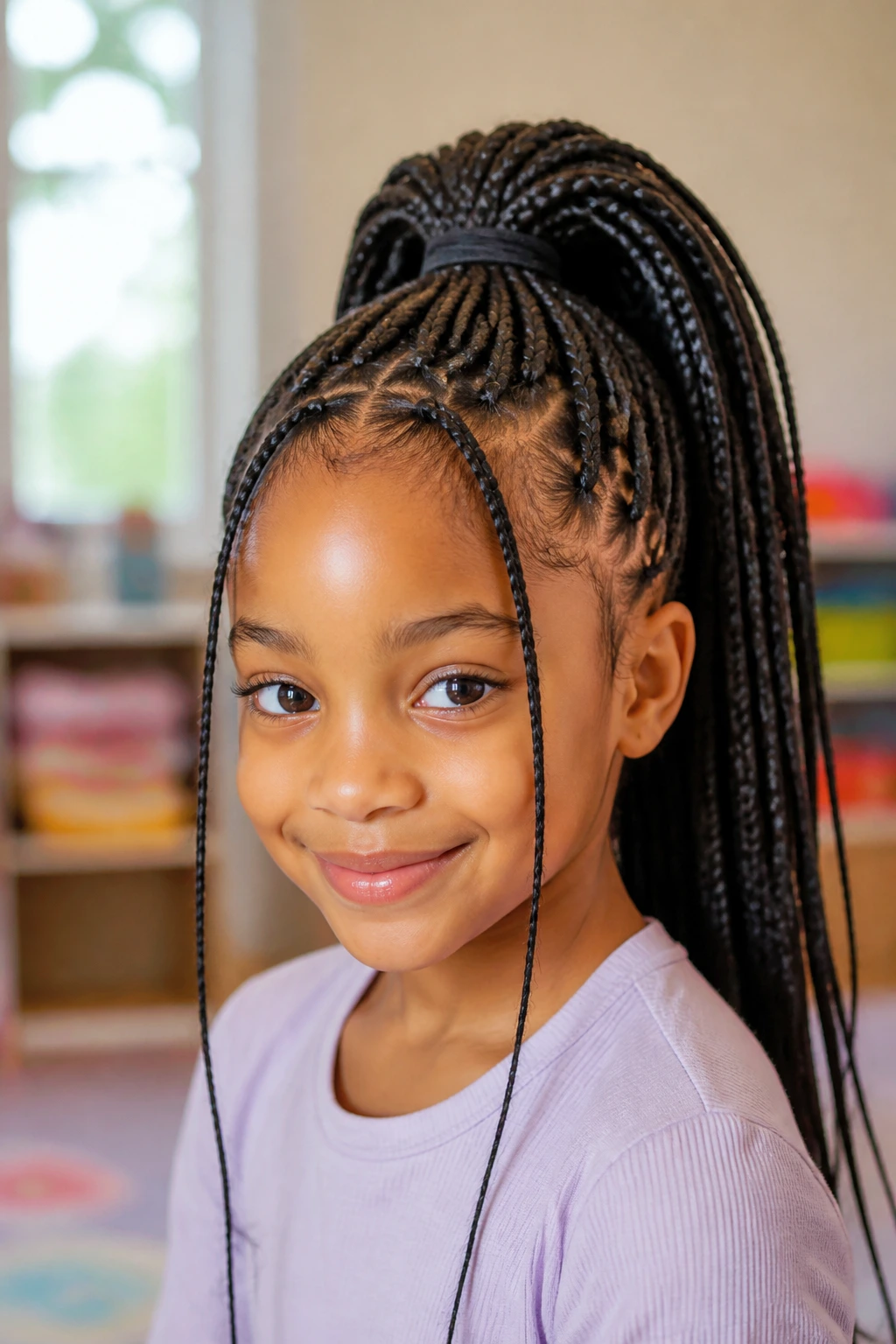
A high ponytail is the practical answer to braids getting in the way. It keeps the ends up and off the shoulders, opens the face, and works well for active days when a child is running around instead of sitting still.
The catch is the base. If the ponytail is yanked too tight, the child will feel it by lunchtime. Use a strong but soft band, gather the braids high without scraping the edges, and let a few face-framing pieces stay loose if needed.
This one is especially good for sports, dance class, or any day when the child wants the hair out of the way but still wants the braids visible.
12. Crown Bun Box Braids
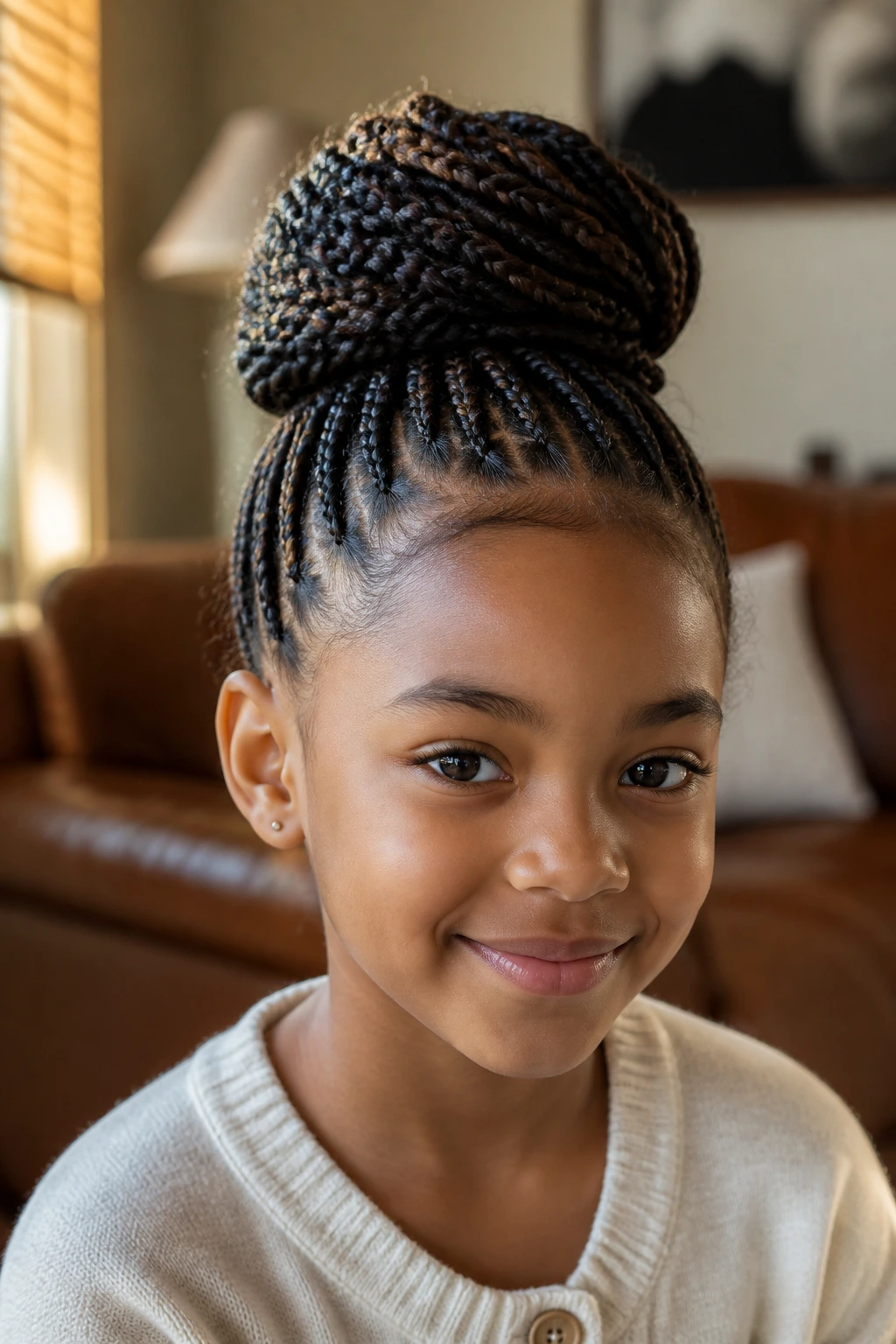
There is something tidy and slightly formal about a crown bun. The braids gather up and away from the neck, then wrap into a bun that sits high enough to feel special without becoming a towering knot. For dress-up days and photos, it’s one of my favorites.
The style needs secure pins or a strong tie, but it should not feel like the scalp is carrying a helmet. Keep the bun broad and soft instead of cranking it into a tight ball. A smoother base with a loose wrap usually looks better anyway.
This is the style I’d use when a child needs to look dressed up but still wants to move comfortably. It holds its shape better than a loose braid pile and still reads as polished from every angle.
13. Two-Tone Box Braids
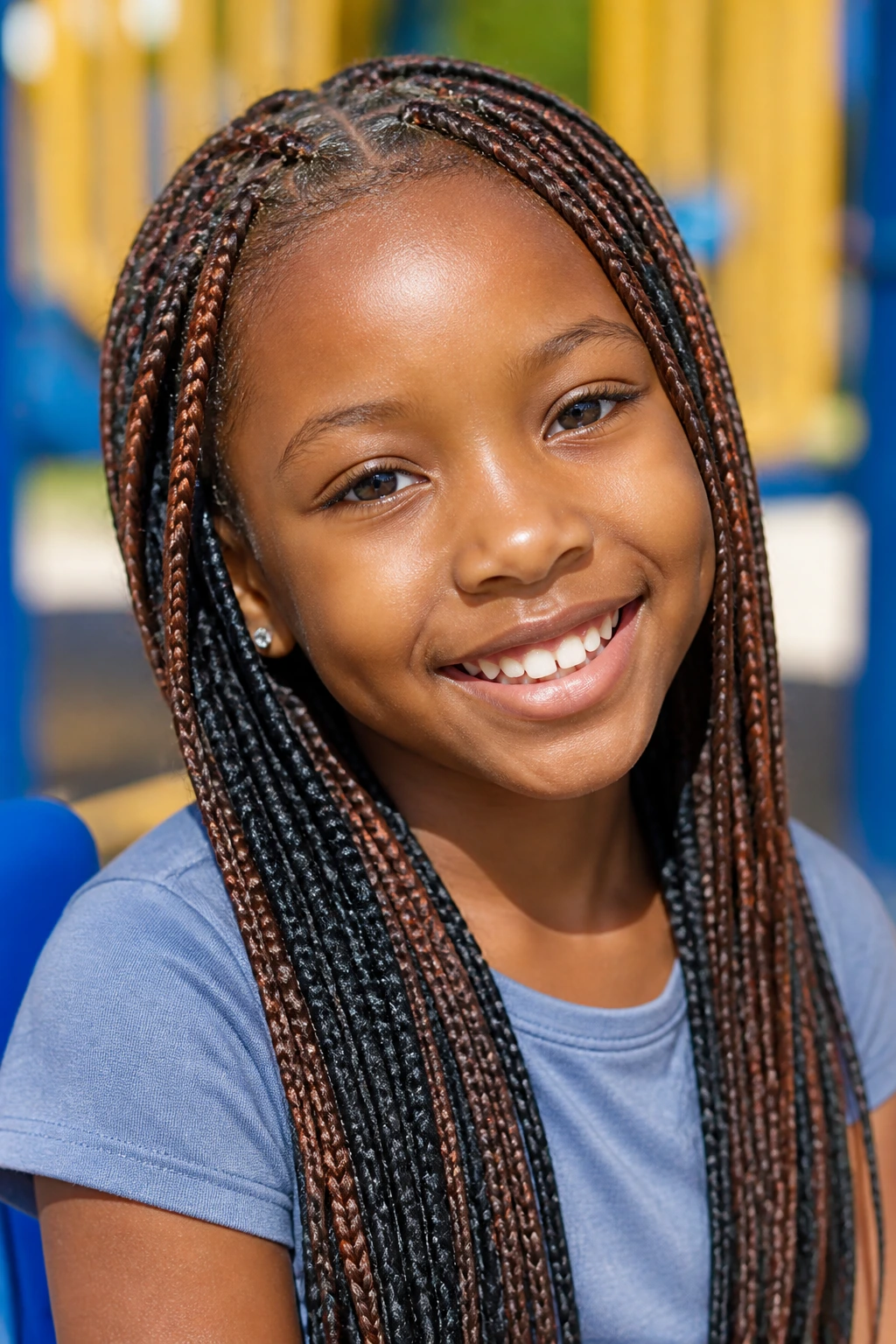
Two-tone braids bring in color without a dye bottle. You can mix natural shades like black and brown, or use a subtle pop of burgundy, honey, or caramel through the extensions. The contrast shows up most clearly in sunlight and under bright indoor lights.
I like this style when the child wants something special, but you want to keep the base simple. The trick is restraint. Two colors are enough. Three starts to look busy unless the braids are very small and neatly done.
If a school dress code is strict, keep the contrast soft. The whole point is to add dimension, not make every adult in the room take a second look for the wrong reason.
14. Color-Thread Wrapped Braids
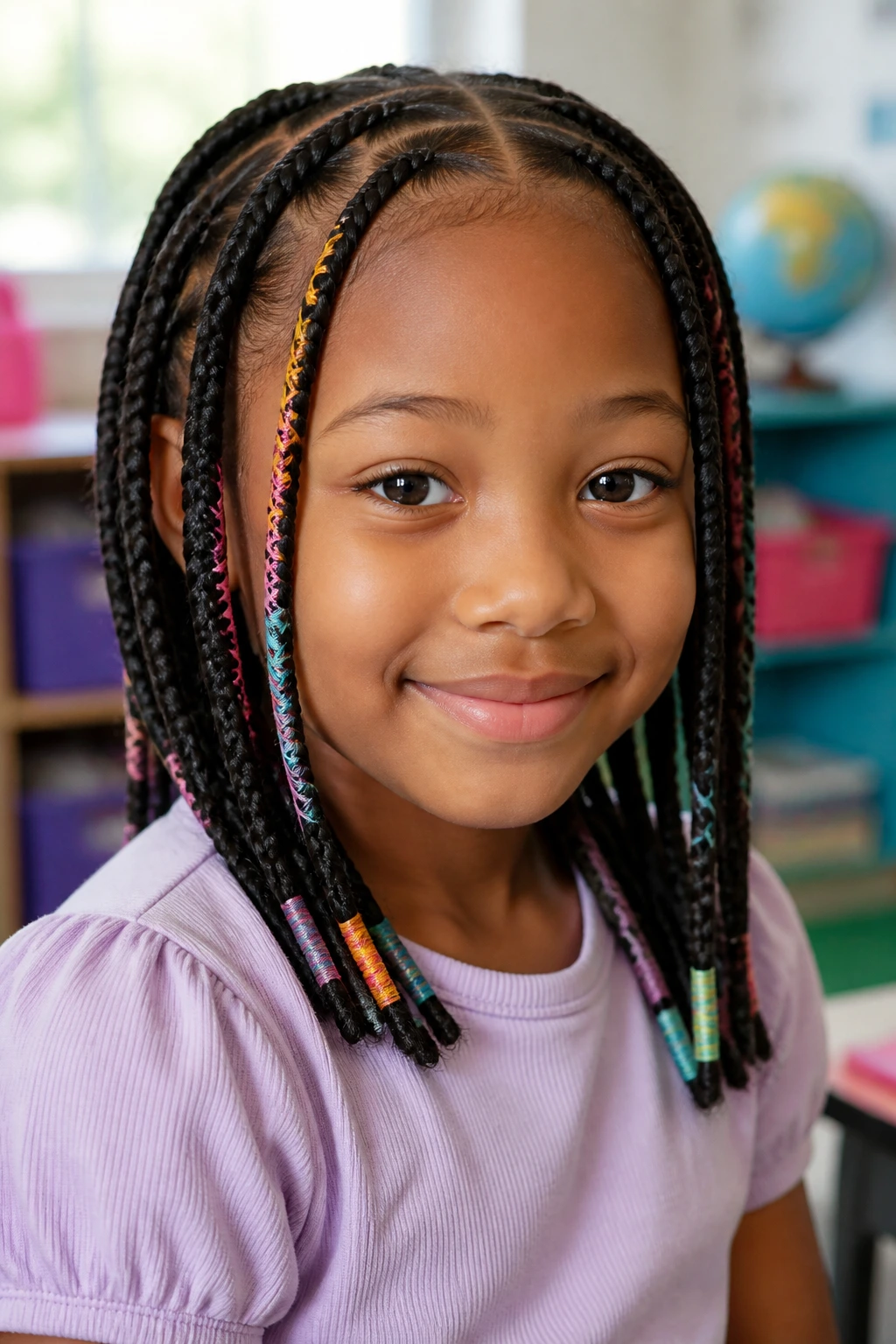
Thread wrapping gives color and texture without permanent change. A few wrapped strands near the ends or around selected braids can brighten the style in a way that feels playful rather than loud. It also works well when beads feel too heavy or too noisy.
Use smooth thread and wrap it neatly so it lies flat. Scratchy ends or loose fibers will drive a child mad. I also prefer leaving most of the braids plain and wrapping only a few. That makes the accent look intentional.
This is a nice option for themed parties, school spirit days, or a child who keeps asking for color but is not ready for a big change.
15. Box Braids with Curly Ends
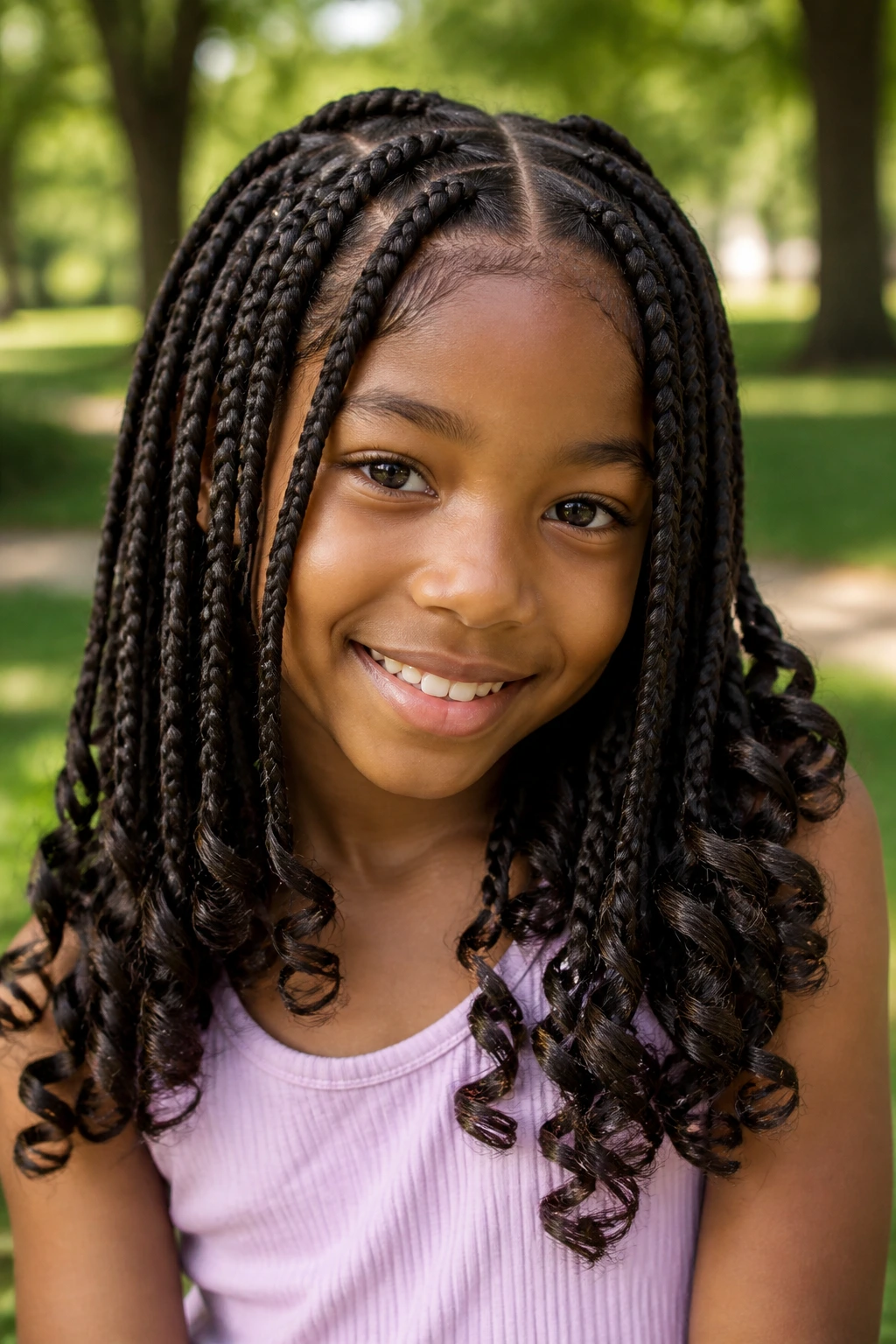
Curly ends soften the whole braid. Instead of a blunt finish, the ends dip into a curl or wave, which makes the style feel lighter and a little more playful. It’s a good bridge between braided structure and loose movement.
This version needs a careful finish. If the ends are curled with synthetic hair or set on flexi rods, the curl should be secure enough to hold but not so tight that it twists the braid awkwardly. That balance is worth getting right.
The style shines at events where a child wants the braids to look dressed up without wearing a full bun. It has a soft edge that plain ends sometimes miss.
16. Braided Space Buns
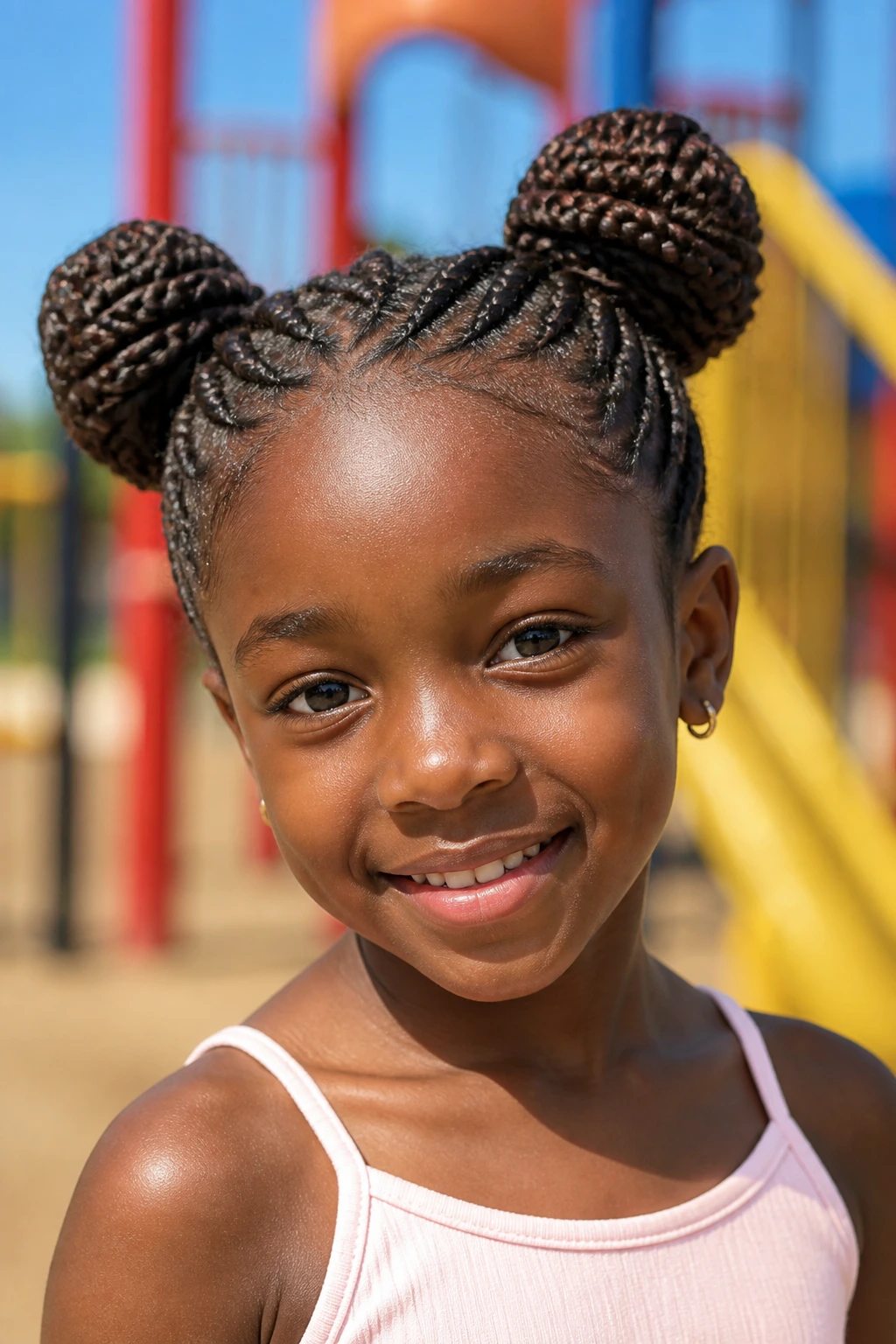
Space buns make children look instantly ready for a fun day. Split the braids into two high sections and wrap each into a bun. The shape is playful, secure, and surprisingly practical because it keeps the hair up and off the neck.
This style is good for active weekends, birthday parties, or days when a child wants something a little different from the usual ponytail. The buns should sit high and balanced, not lopsided. If one side looks bulkier, the whole style feels off.
Don’t pull the sections too hard when dividing the head. Space buns are supposed to look perky, not painful.
17. Feed-In Box Braids
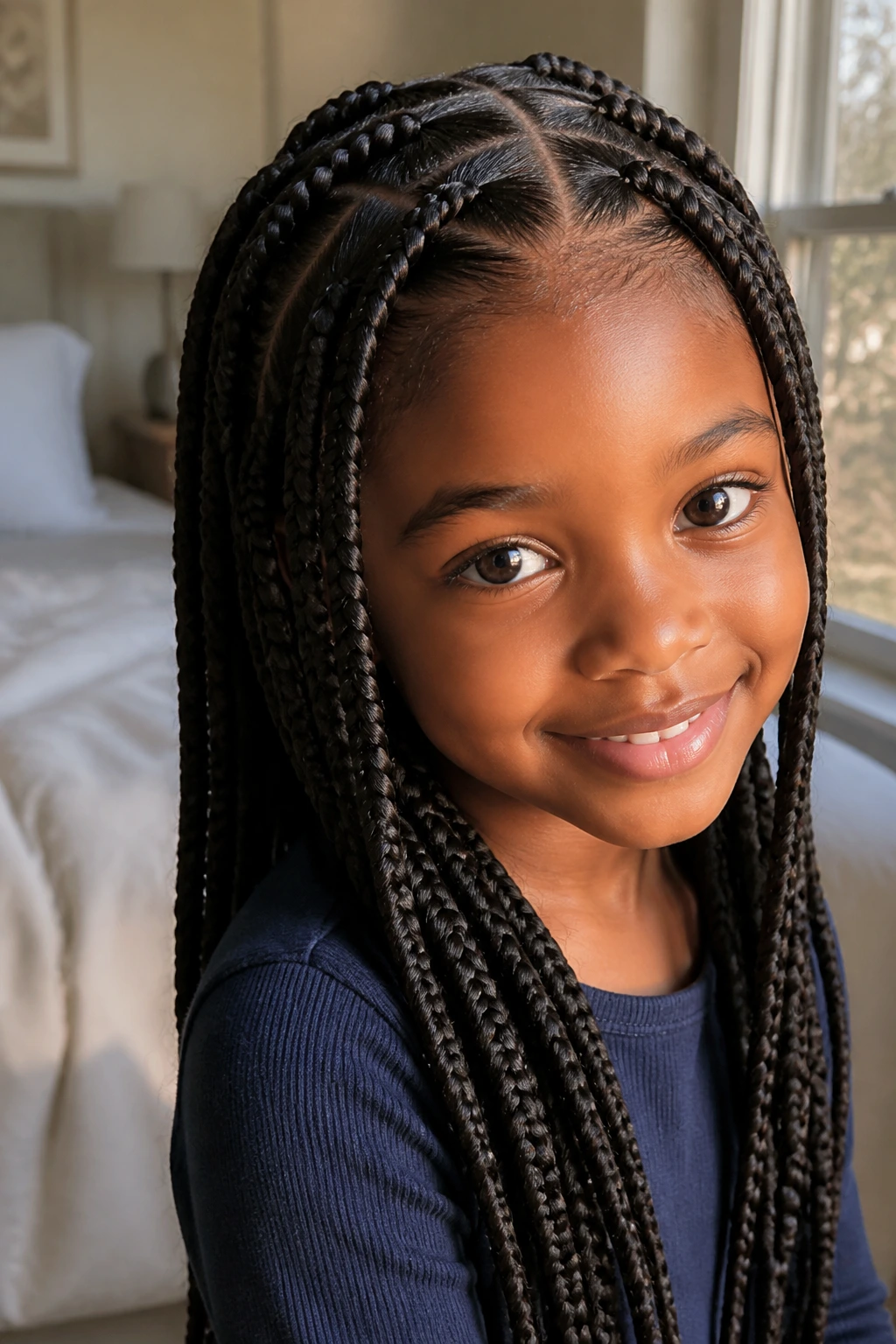
Feed-in braids create a smoother start at the scalp because hair is added gradually instead of all at once. The result looks flatter near the roots and less bulky at the base, which is nice when you want the braids to lie neatly.
This is a smart choice for a child with fuller hair or a parent who wants the parting to look polished and close to the scalp. It usually takes a steadier hand than a standard box braid, so I’d trust it to someone who has done it before.
The style can be made plain or dressed up. The technique is what matters here. It’s a cleaner-looking base, and that cleaner base changes everything.
18. Mohawk Box Braids
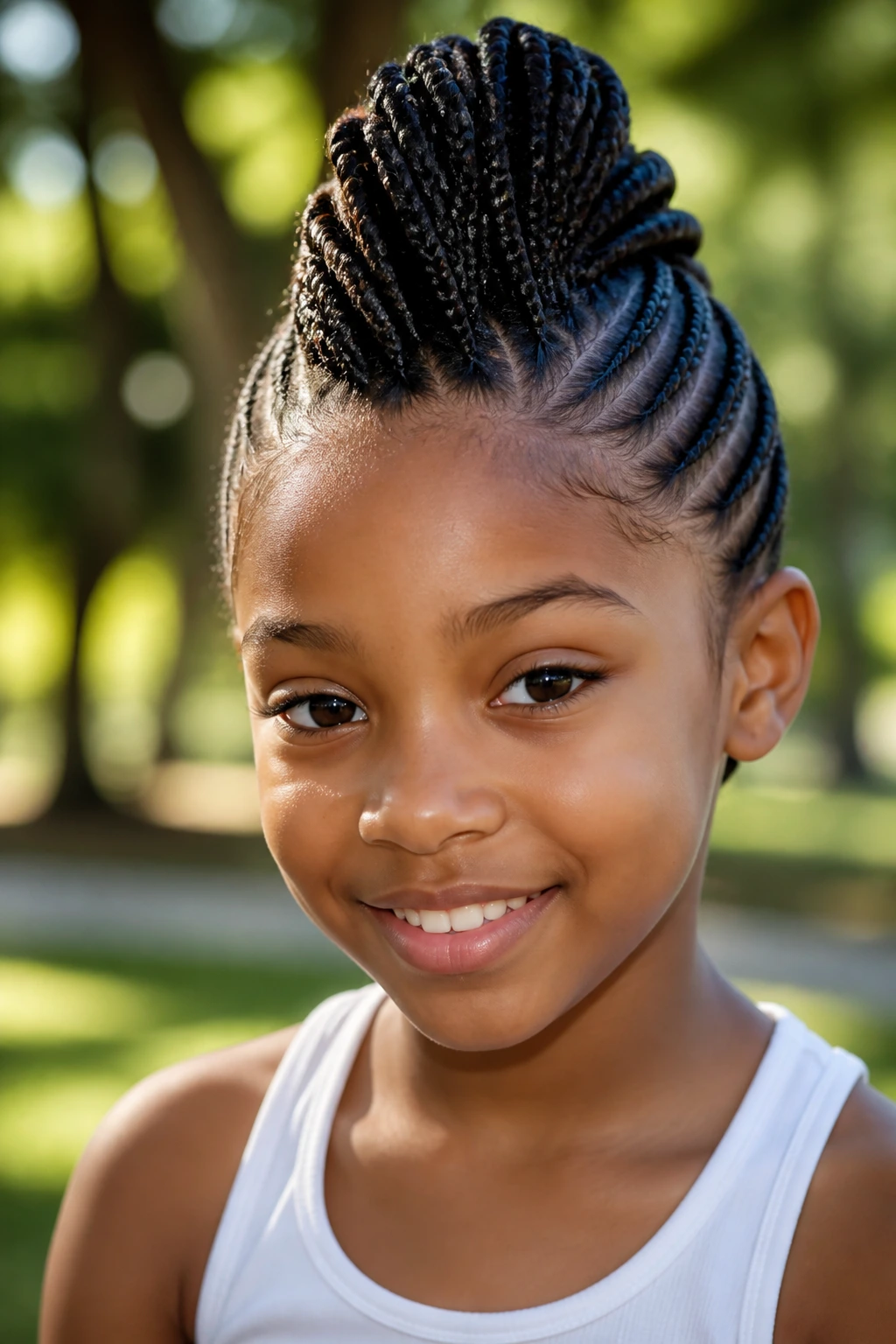
A braided mohawk sounds louder than it usually looks on a child. Keep the sides slicked back, braided tight against the scalp, or neatly tucked, and let the center rows carry the shape. The result has energy without going overboard.
This style works for a child with a big personality. It also solves the “hair in the face” problem in a different way than a ponytail or bun. The center section gives height, and the sides stay controlled.
Use this when you want something playful that still reads as orderly. If the side sections are too tight, though, the style loses the whole point. Shape, not strain.
19. Ribbon-Tied Braids
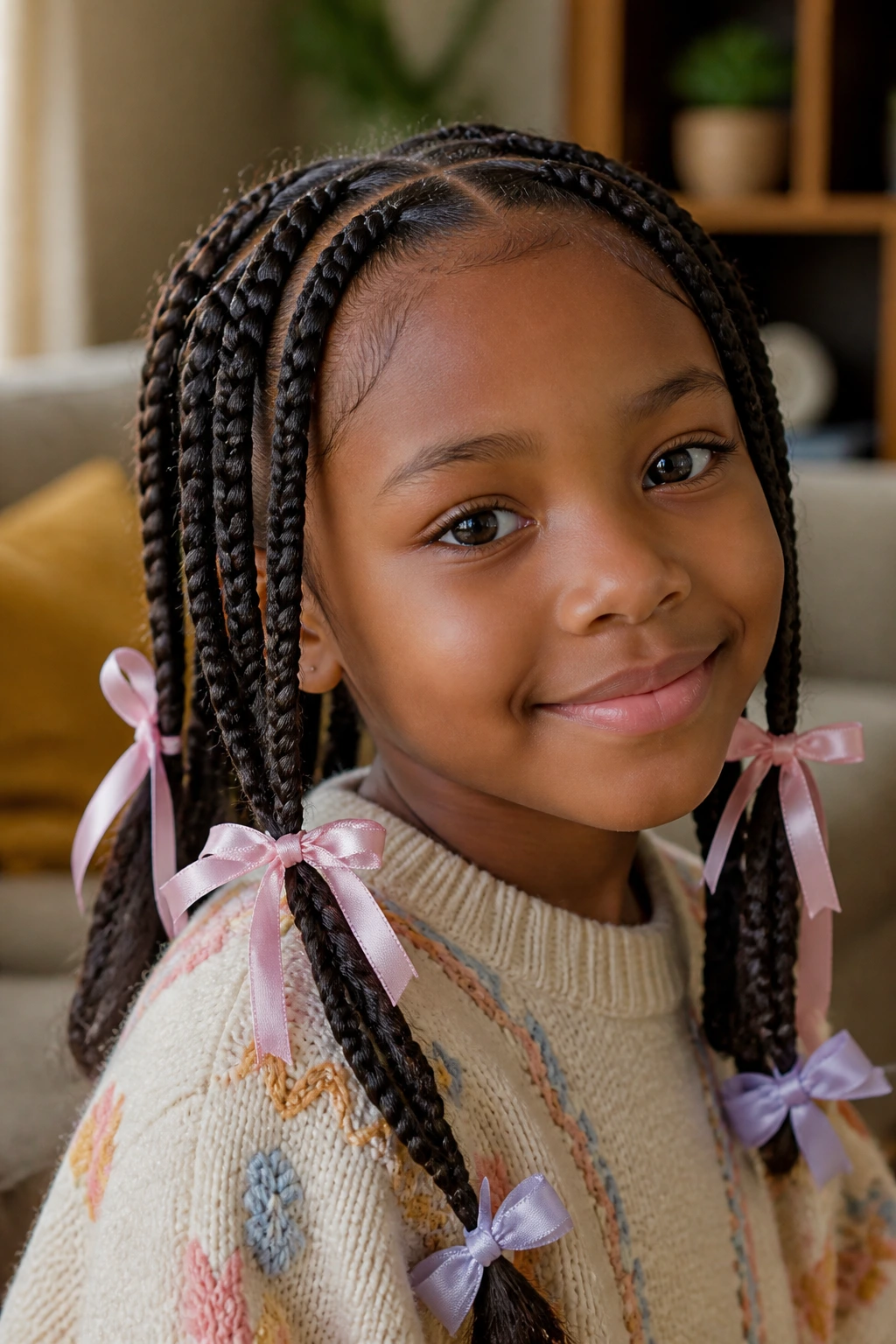
Ribbon changes the mood fast. Tie soft ribbon at the base of pigtails, wrap it around a ponytail, or finish a few braids with a neat bow at the end, and the style suddenly feels ready for a birthday, recital, or family gathering.
The ribbon should be soft and smooth. Rough edges snag the braids, and thick knots can feel clumsy. I like ribbon as a finishing note, not a permanent feature on every braid. One or two accents go farther than people expect.
This is a good option when you want something childlike in the best sense of the word: cheerful, simple, and easy to remove at bedtime.
20. Shoulder-Grazing Layered Braids
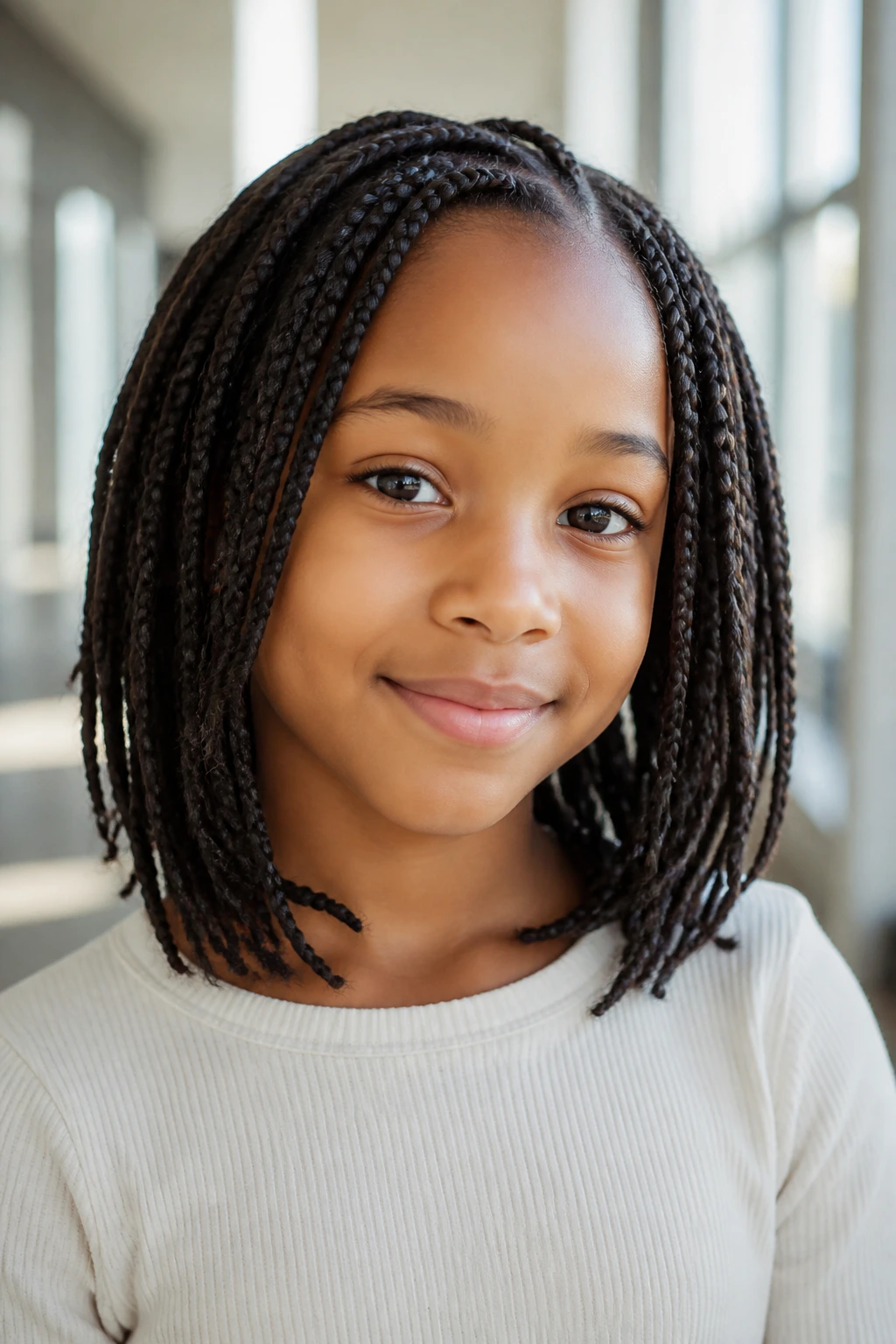
Layered braids are useful when you want movement without one heavy curtain of hair. Some braids can sit a little shorter around the face, while the rest fall at the shoulders. The shape feels lighter and looks less blocky than a uniform length.
I like this on kids with softer features or on hair that tends to puff up when it gets too much length. The layers break up the weight and keep the style from feeling like a solid sheet. That matters in photos and in daily wear.
The whole look depends on clean cutting or finishing. If the lengths are sloppy, the braid line loses its shape. Keep the transitions smooth.
21. Peekaboo Bead Accents
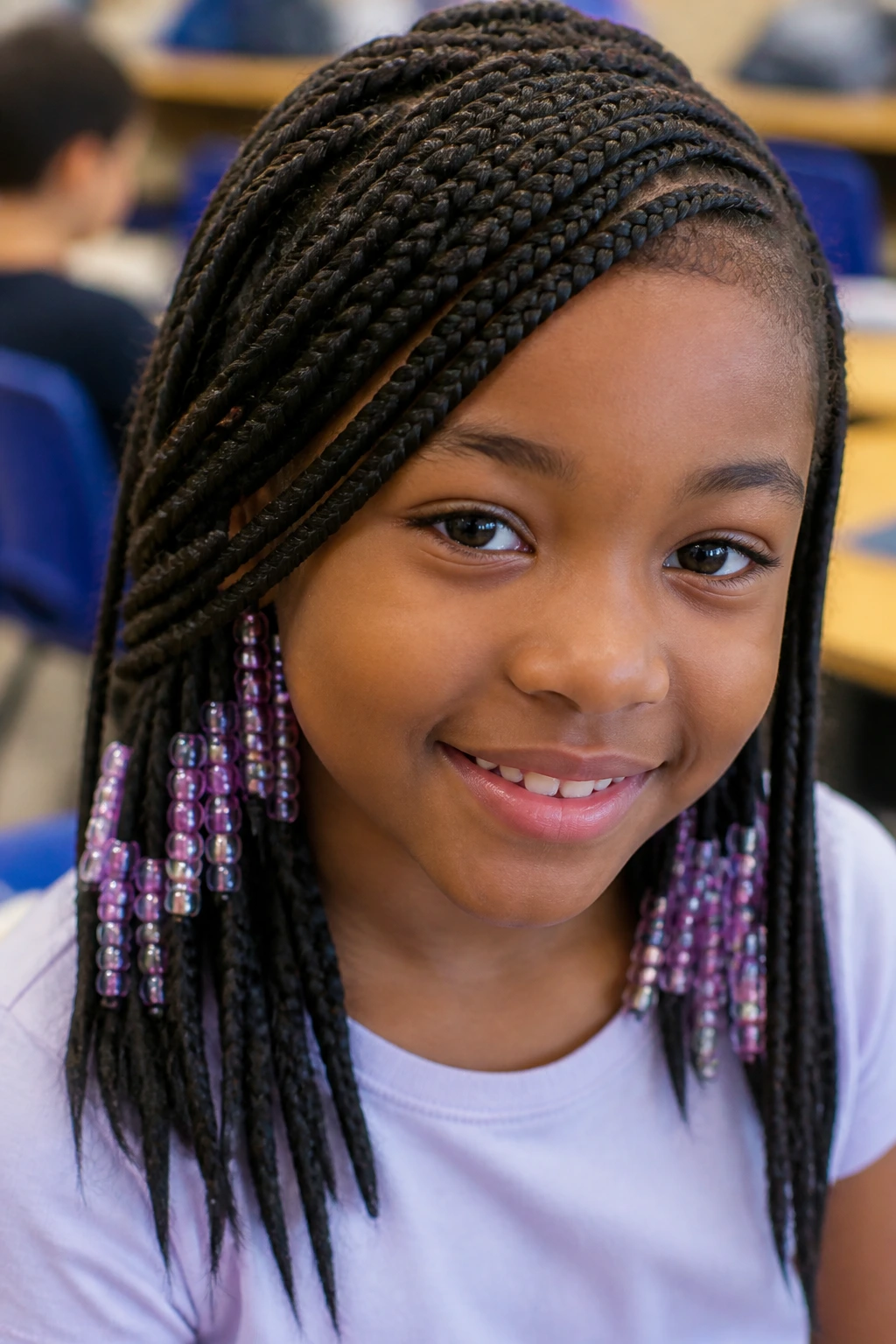
Not every braid needs a bead, and that is exactly why peekaboo accents work. Place beads on a few lower braids or hide them under the top layer so they only show when the child turns their head. It gives you the sparkle without the full noise.
This style is easier on the ears and easier on the scalp than a fully beaded set. It also keeps the look a little more school-friendly if the child wants some fun but not a lot of attention. A few accents can do a lot.
The best part is the surprise. The braids look plain from the front, then shift and reveal the detail. Nice little trick.
22. Short Pixie Box Braids
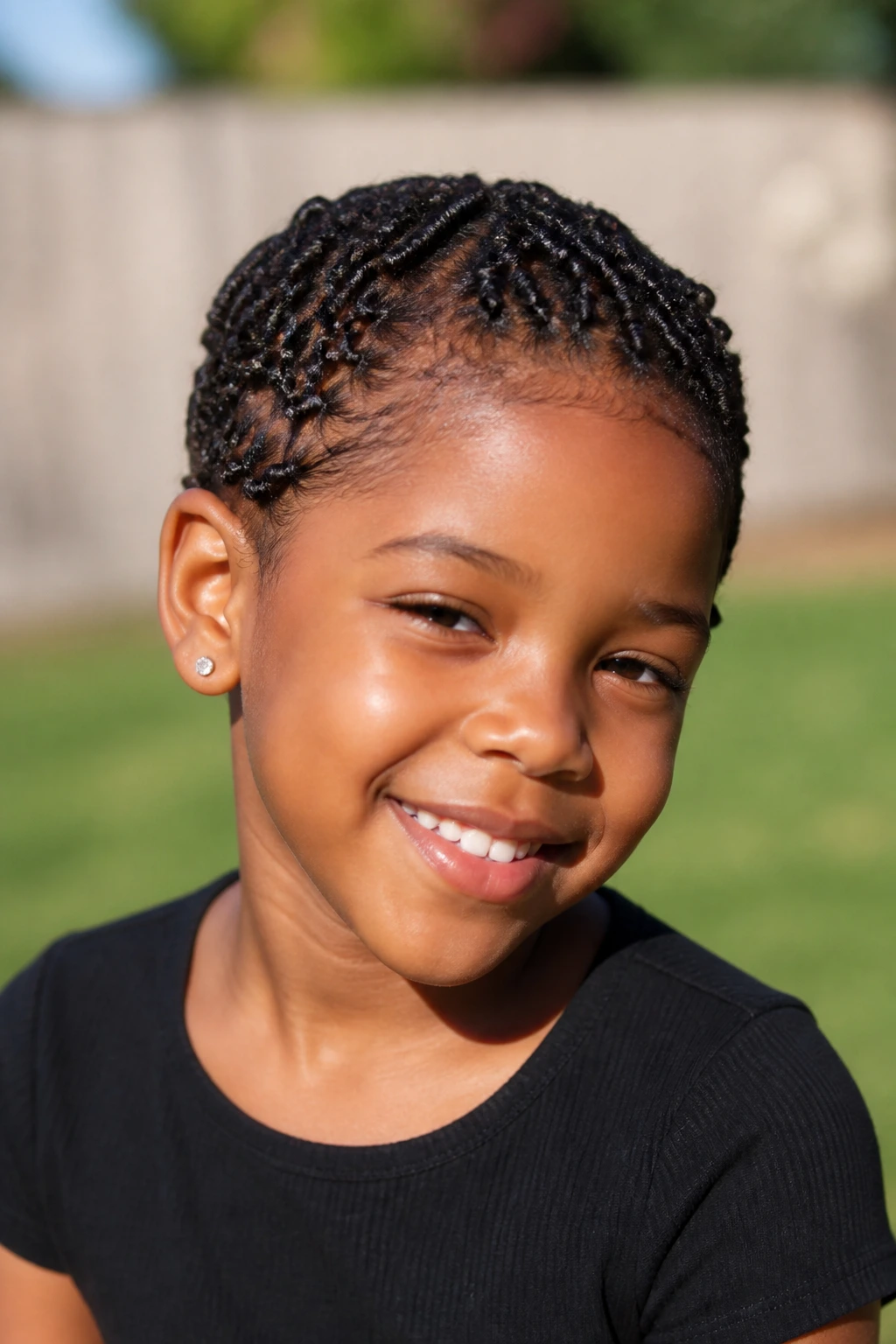
Short pixie braids sit close to the head and stay out of the way. They’re tiny, cropped, and useful when you want the protective feel of braids without much length at all. For younger children, they can be a relief.
This is one of the least annoying braid lengths to sleep on. That alone makes it worth considering. It also reduces snagging on clothing, straps, and coats, which is a quiet but real advantage.
The style works best when the cut and parting are neat. Because the braids are short, every line shows. If they’re clean, the whole head looks sharp. If they’re not, there’s nowhere to hide.
23. Gold-Cuff Finish
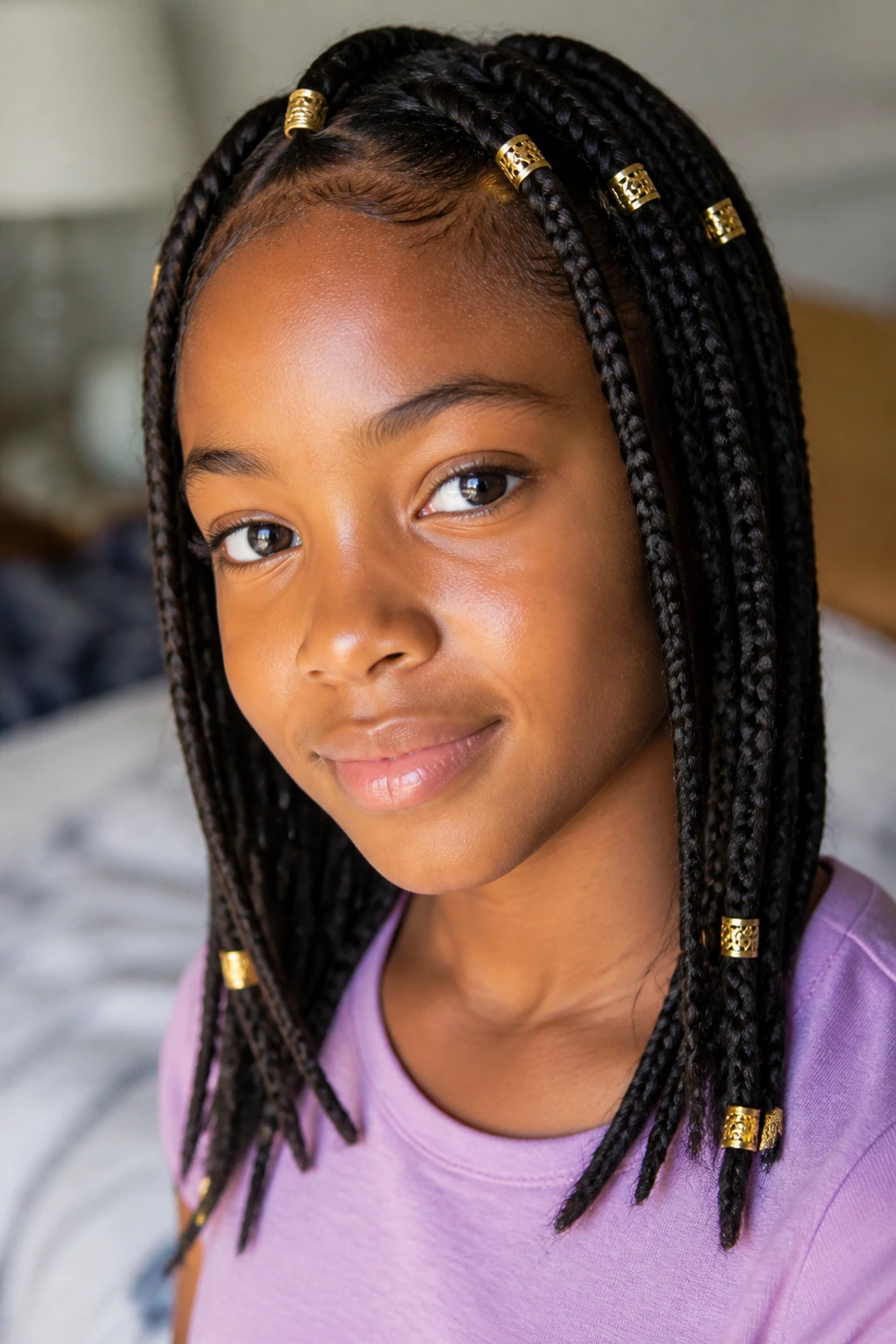
Gold cuffs are the easiest way to make plain braids feel finished. A few cuffs near the ends, or spaced along the front rows, can brighten the style without adding much weight. That’s the part I like most. The style stays clean, but it gets a touch of shine.
Use them sparingly. One cuff per braid gets busy fast. Two or three placed where they’ll catch the eye is usually enough. If the child is small, keep the metal accents light and smooth so they don’t pull or scratch.
This is one of those styles that looks especially good in natural light. Small detail. Big payoff.
How These Braids Fit School Days, Playtime, and Special Events
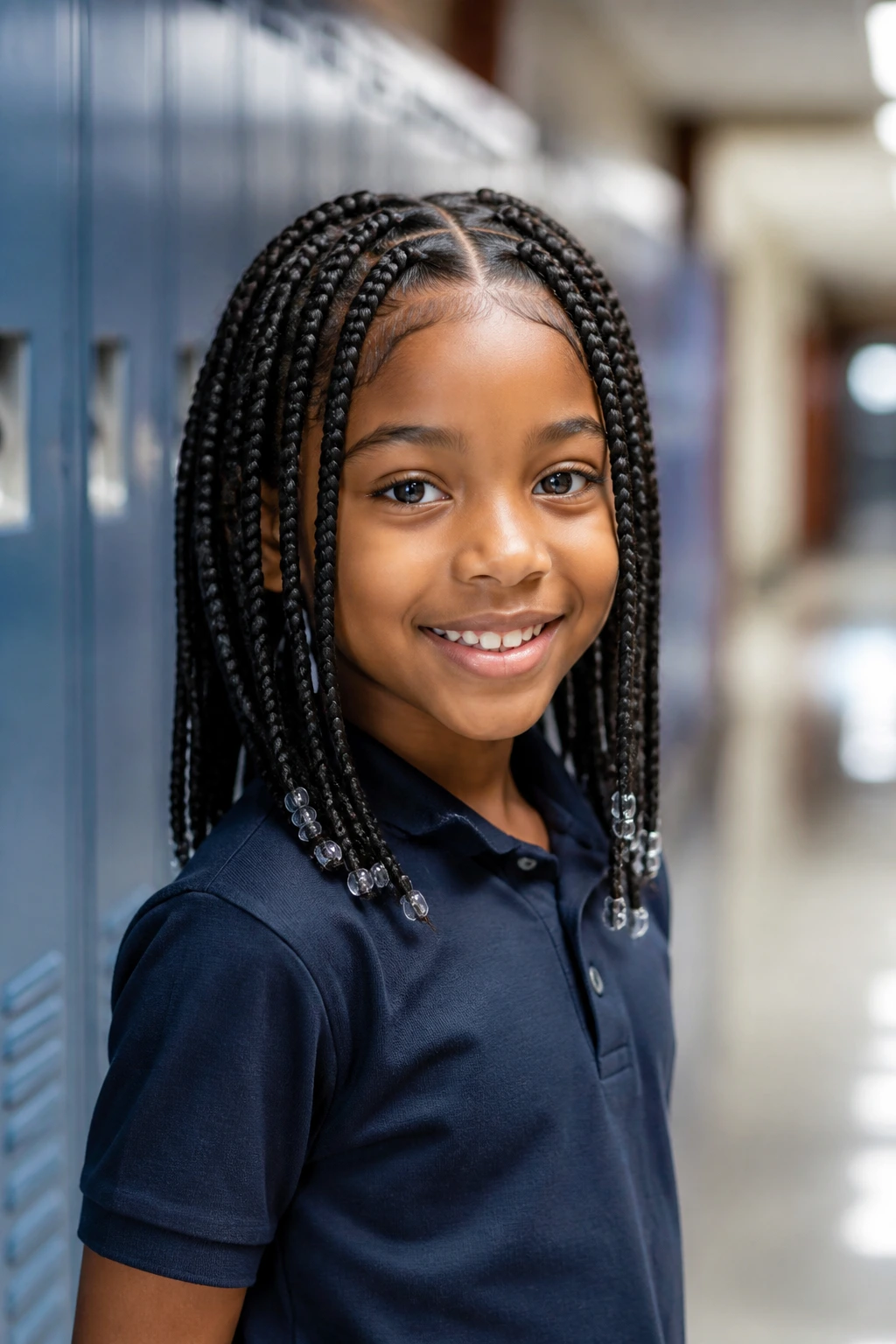
The same braid can look different depending on how you finish it. A medium box braid with no accessories feels like a school-day workhorse. Add cuffs or ribbon, and the exact same braid can step into birthday-photo territory. That flexibility is the real gift here.
School: Keep the line tidy, the length manageable, and the accessories light. Bob cuts, medium lengths, and half-up styles stay out of the way during reading, lunch, and desk work.
Playtime: Choose braids that can be pulled into a ponytail or bun without a fight. High ponytails, space buns, and shorter lengths handle movement better than waist-length swings.
Special events: Heart parts, two-tone accents, gold cuffs, and soft curls at the ends give the style more finish without changing the base braid.
Sports and rough days: Shorter lengths win. So do styles that sit close to the head. The less hair that swings, the less hair that gets grabbed, caught, or flattened under a helmet.
Small Choices That Make Box Braids Easier to Wear
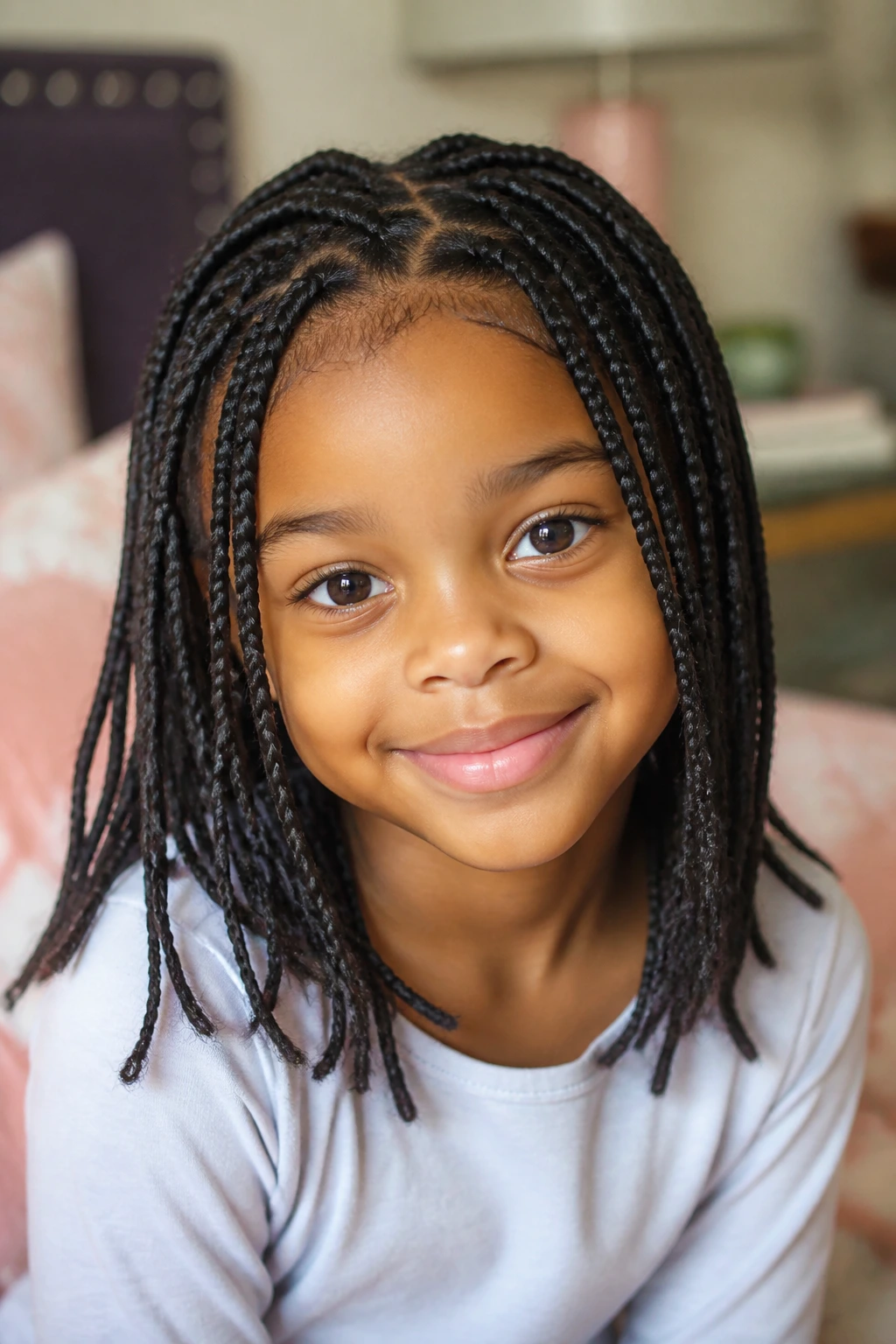
The smartest braid styles for children usually share a few habits. They keep the front soft. They don’t overload the ends. They match the child’s patience level, not a picture saved on a phone. That sounds obvious, but it gets ignored all the time.
Part size: Smaller isn’t always better. A part should match the child’s hair density and how long they can sit.
Accessory weight: If the style makes the neck feel busy, it is too much. Swap heavy beads for cuffs or ribbon.
Length: Shorter braids behave better on younger kids. Longer braids should earn their length.
Night care: Satin matters. A bonnet or scarf keeps the style from rubbing fuzzy overnight.
Essential Tools for Kids’ Box Braids
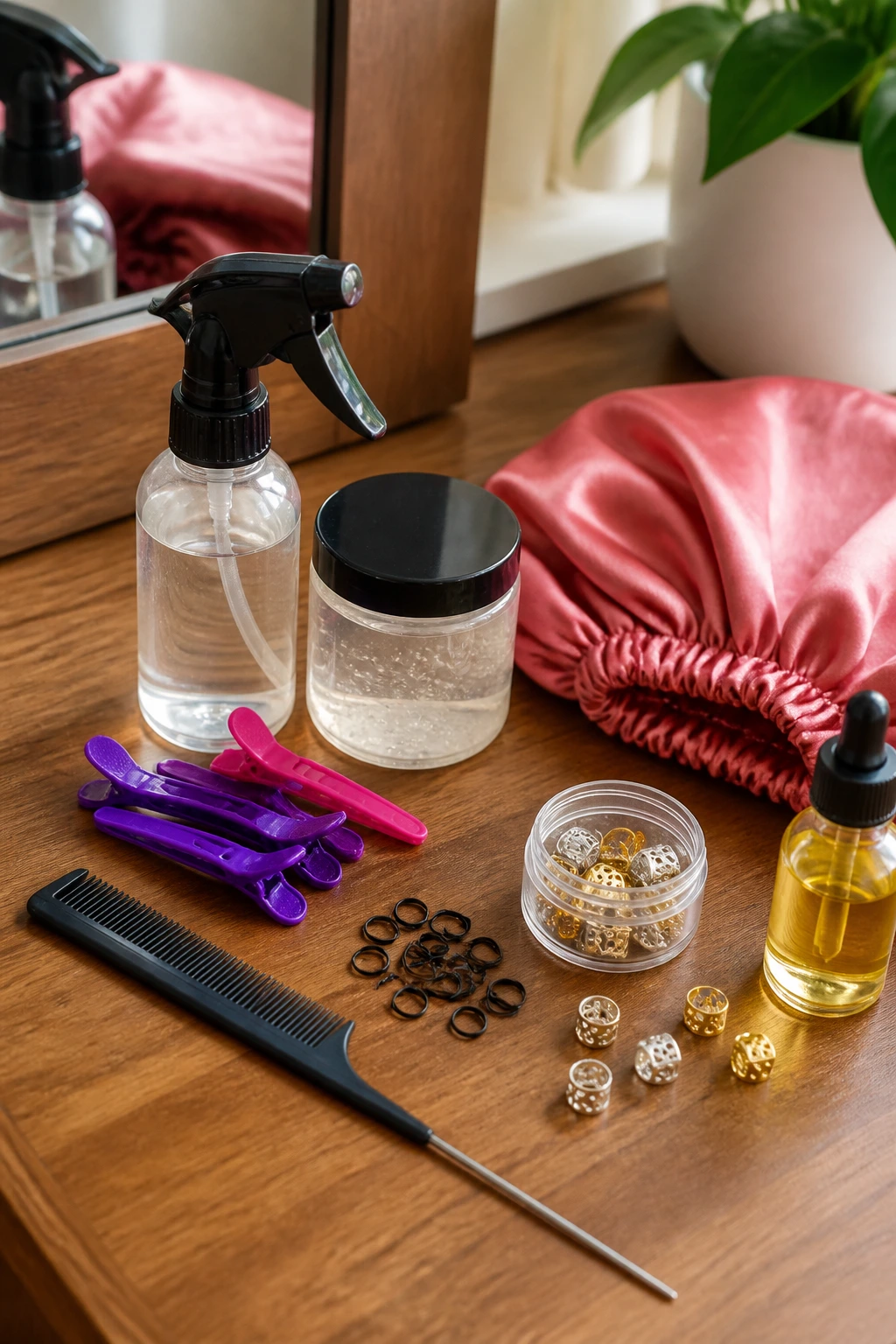
- Rat-tail comb: The pointed end makes clean parts without chewing up the section lines.
- Sectioning clips: These keep the loose hair out of the way while you braid one box at a time.
- Spray bottle with water or leave-in mix: A light mist helps control flyaways and keep the hair pliable.
- Light styling gel or cream: Use a small amount at the roots if you want the part to lie flatter.
- Braiding hair, if needed: Optional for added length or fullness; keep it light for younger kids.
- Small elastics: Handy for securing ends before beads, ribbons, or cuffs.
- Beads or cuffs: Decorative only; use smooth edges and don’t overdo the weight.
- Soft ribbon or scrunchies: Better than hard ties for ponytails, buns, and half-up styles.
- Satin bonnet or scarf: Protects the braids at night and cuts down on rubbing.
- Scalp oil or light moisturizer: Use sparingly at the parts, not dripped through the whole head.
How to Keep Box Braids Fresh Between Washes
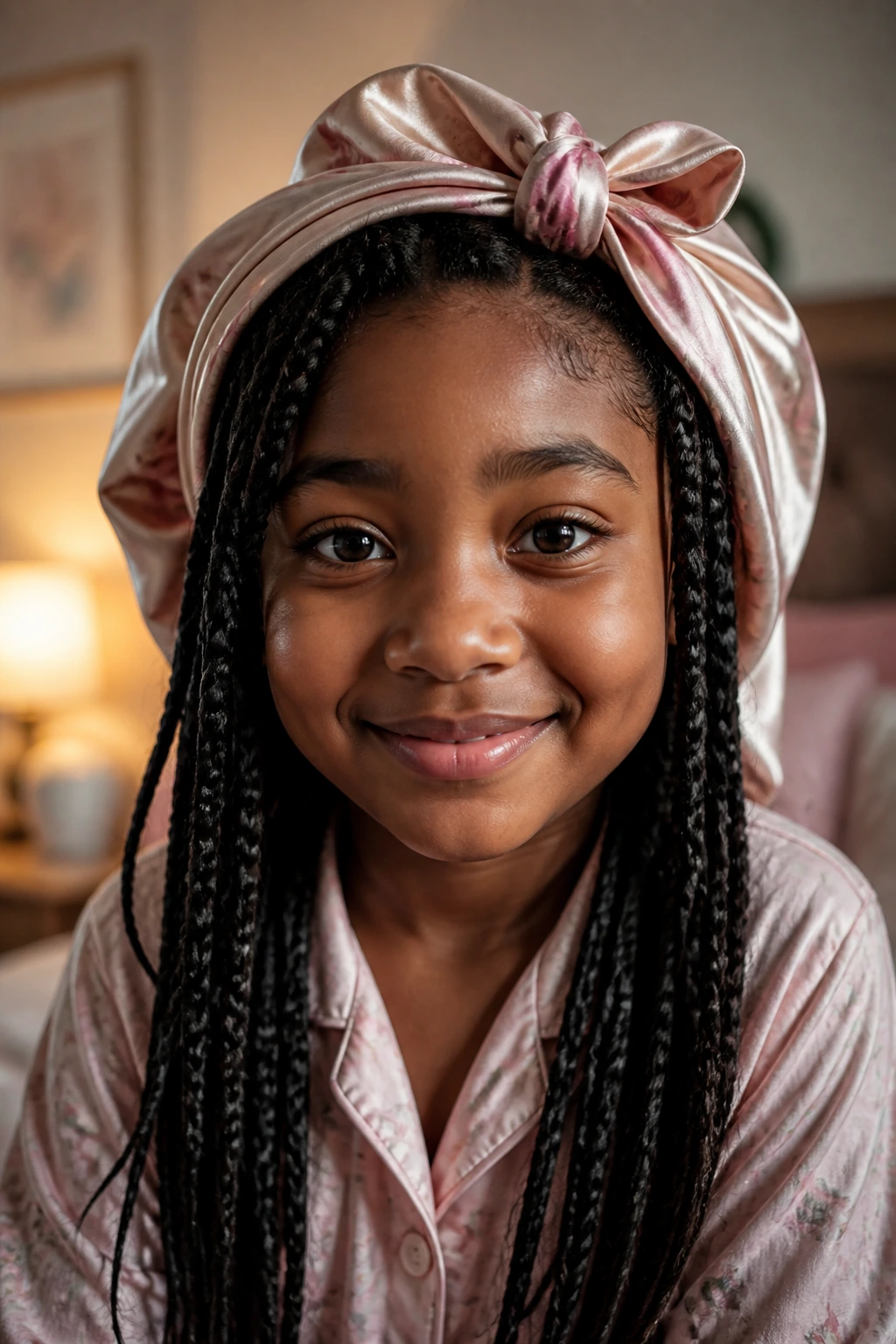
A good braid style should not need daily heroics. Night care does most of the work. Wrap the braids in a satin bonnet or scarf before bed, or use a satin pillowcase if a child refuses to keep a wrap on. That one habit keeps the parts smoother and the ends less fuzzy.
For the scalp, a light mist every few days is usually enough unless the child is very active or sweats a lot. You want the scalp comfortable, not oily. A few drops of oil along the part lines can help, but heavy product build-up is what makes braids dull and itchy. Less is better here.
Washing depends on the child and the style. Many kids can go about one to two weeks before a full cleanse, but that changes with sports, weather, and product use. When you wash, dilute the shampoo, apply it at the scalp, and rinse well so residue doesn’t sit in the braids. Drying matters more than people think. Damp braids tucked away can smell stale fast.
For long wear, don’t wait until the style is a mess to take it down. If the roots have grown out, the scalp feels sore, or the braid ends are fraying hard, it’s time to remove them and start fresh.
Common Box Braid Mistakes That Make Styles Fail
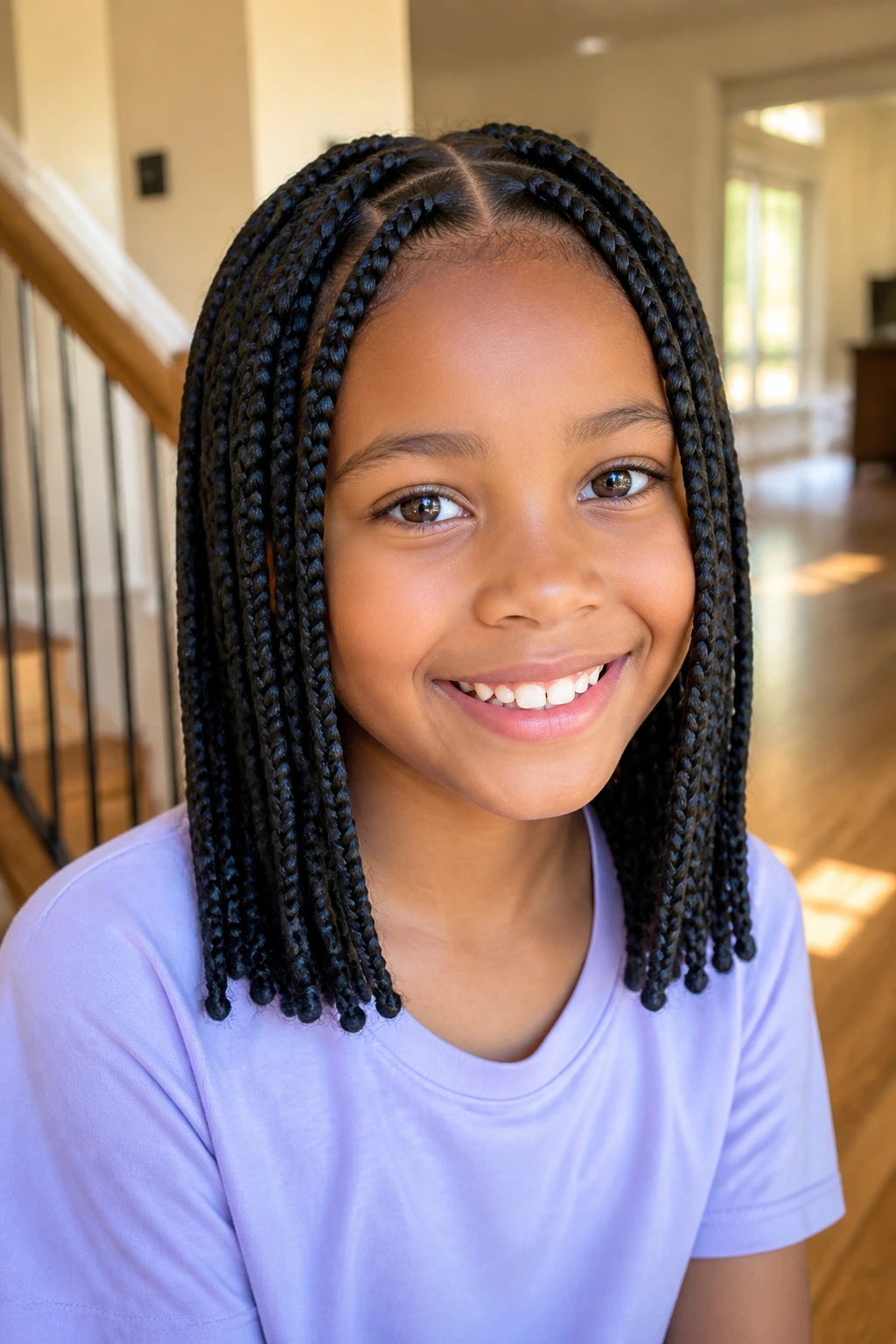
The first mistake is tight roots. If the hairline looks sharp but the child is fidgeting every five minutes, the style is too tight. Fix it by easing the tension at the front and asking for a softer anchor.
The second is too much length. Braids that are beautiful in a photo can be miserable on a school day if they reach too far past the shoulders. A shorter cut solves half the problem before it starts.
Third, people overload the style with heavy accessories. Big beads, thick cuffs, and dense ribbon on every braid add up fast. Use accents in a few places instead of decorating every section.
Fourth, they skip the night wrap and then act surprised when the braids fuzz out. Satin is not optional if you want the style to last. It’s the cheapest fix in the whole routine.
Fifth, they keep braids in too long. When the scalp is starting to show buildup and the roots are stretching, the style is no longer helping the hair. Take it down, wash thoroughly, and start again.
Easy Variations and Quick Swaps to Try
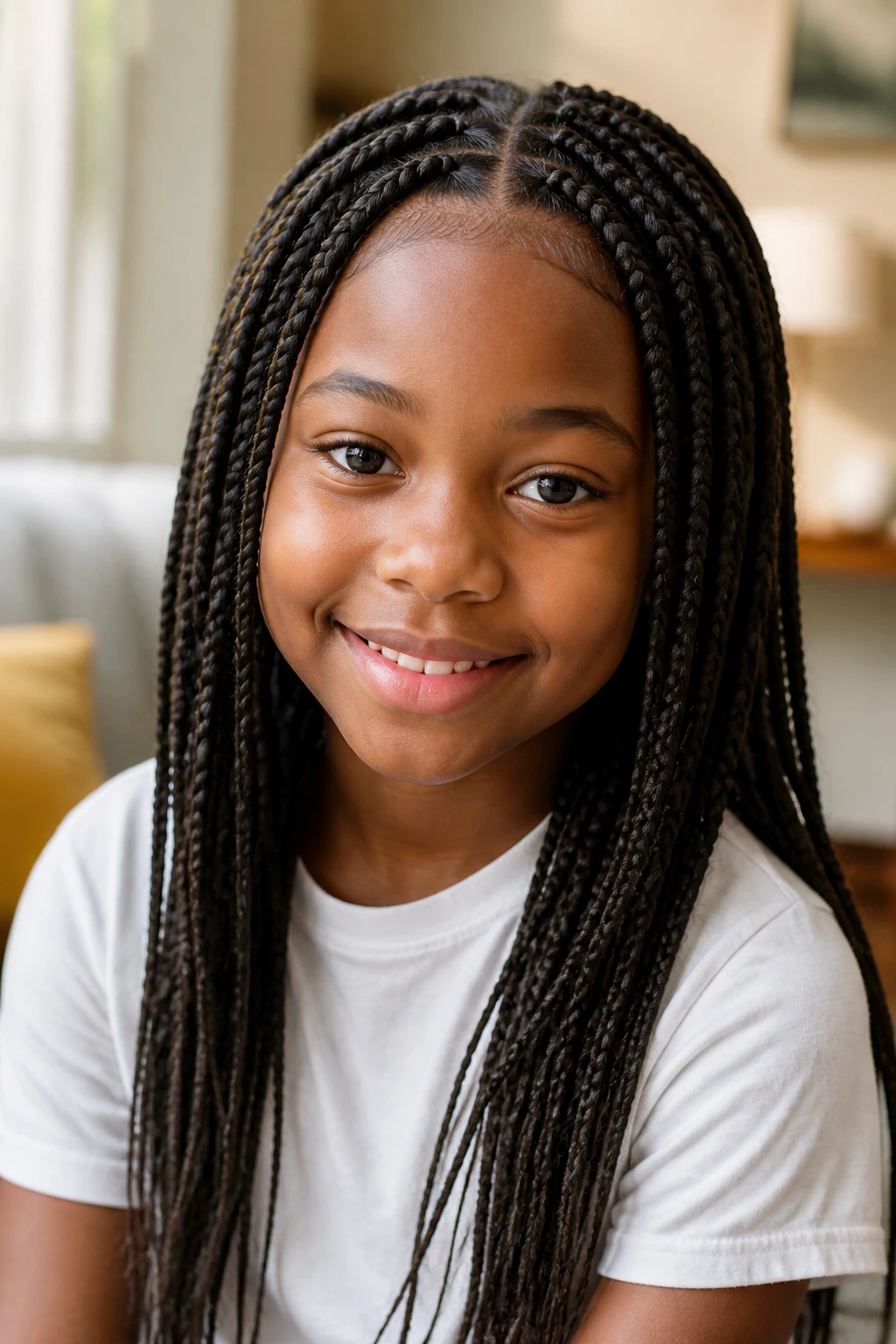
No-Bead School Version: Keep the braids plain and skip the rattly extras. This is the best choice when the child needs the style to stay quiet, light, and rule-friendly.
Soft-Start Version: Use larger parts and a shorter length. That lowers tension and makes the style friendlier for tender-headed kids or first-time braid wearers.
Birthday Shine Version: Add gold cuffs at the ends and one ribbon at the top. That gives you a dressed-up look without turning the whole head into a costume piece.
Sport-Ready Version: Choose bob length or a high ponytail finish. Less swing means less snagging, and the hair stays better contained during movement.
Natural-Hair Only Version: Skip extensions and braid the child’s own hair into shorter box braids. This works well for younger children or anyone who wants a lighter install.
Frequently Asked Questions About Kids’ Box Braids
How long do box braids usually last on kids?
Most kids wear them comfortably for about two to four weeks, depending on hair texture, activity level, and how fast the roots grow out. Shorter styles and good night care tend to last longer without looking rough.
Are beads okay for little children?
They can be, but keep them light and secure. Small, smooth beads are better than heavy ones, and I’d avoid loading the whole head if the child is very young or sensitive to weight.
Can box braids work on fine hair?
Yes, but the sections should be modest and the weight should stay low. Fine hair usually does better with bob-length styles, medium parts, and fewer accessories at the ends.
What should I do if my child says the braids hurt?
Take the complaint seriously. If the pain is around the hairline or temples, the style may be too tight and needs to be adjusted or removed. A style that hurts is not “normal wear and tear.”
Do box braids need synthetic hair on a child?
No. Plenty of kids wear natural-hair box braids, especially when the goal is low weight and comfort. Extensions are useful for length or fullness, not required for the style itself.
How do you wash braids without making them frizzy?
Use diluted shampoo at the scalp, massage gently, and rinse thoroughly. Pat the braids with a towel instead of rubbing them, and let them dry fully before tying them up again.
Which styles are best for school?
Bob-length braids, medium braids, half-up styles, and plain pigtails tend to be the easiest. They stay out of the face and don’t drag as much during a long day in a chair.
Can these styles be put into buns or ponytails later?
Absolutely, if the base isn’t too tight and the braids aren’t too heavy. High ponytails and crown buns are usually the easiest styles to gather up without fighting the hair.
Braids That Keep Up With Real Life
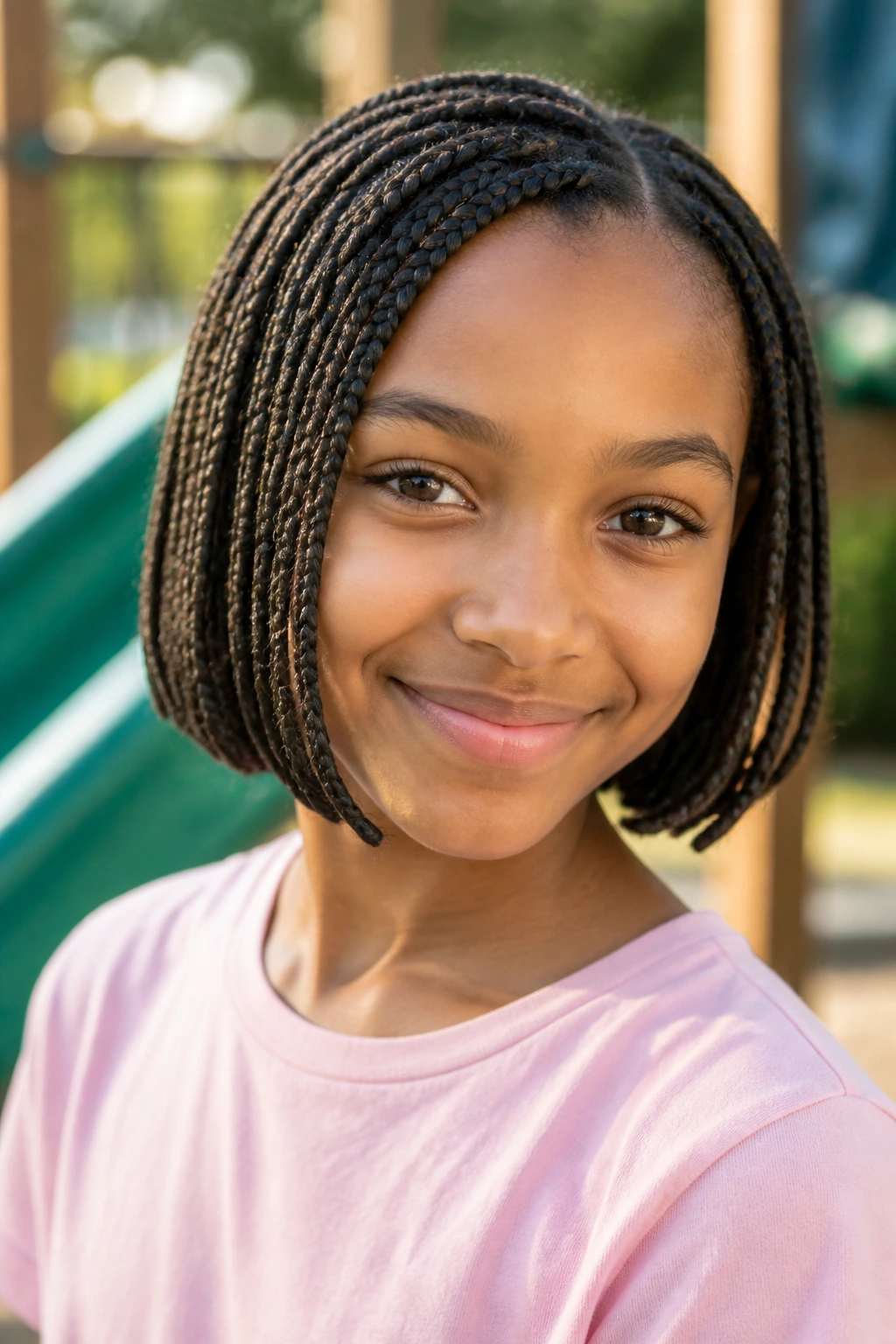
The best braid styles for children are never the loudest ones in the room. They are the ones that fit the child’s head, the child’s schedule, and the child’s tolerance for sitting still. That is why some of the simplest looks — a clean bob, a soft half-up style, a handful of beads at the ends — end up getting worn the longest.
If you want the style to last, start with comfort. If you want it to feel special, add one accent and stop there. The neatest braid sets usually come from restraint, not piling everything on at once.
And honestly, that is the part most people learn after a few tries. A style can be cute, sure. Better than cute, though, is one a child can wear, sleep in, and forget about until someone compliments it later.
