



Medium length hair highlights live or die by placement. On a cut that brushes the collarbone, lands at the shoulders, or sits somewhere in that in-between zone, a few inches make a huge difference. Put the bright pieces too high and the whole look turns stripey. Put them too low and they disappear the second you tuck one side behind your ear.
That’s why medium length hair highlights are such a sweet spot for color. There’s enough length for balayage ribbons, money pieces, baby lights, and lowlights to actually show their work, but not so much length that the color gets lost in a heavy curtain of hair. A shoulder-grazing lob will show off a soft face frame one day and a fuller wave of dimension the next. It’s a small miracle when it’s done well.
I like highlights on medium hair that keep some depth near the root and some movement through the mids and ends. The best ones don’t sit there and shout. They bend with the haircut, catch light at the cheekbone, and still look like hair when you’re not standing under a salon lamp. That balance is the whole game.
Why These Highlight Ideas Feel So Good on Medium-Length Hair
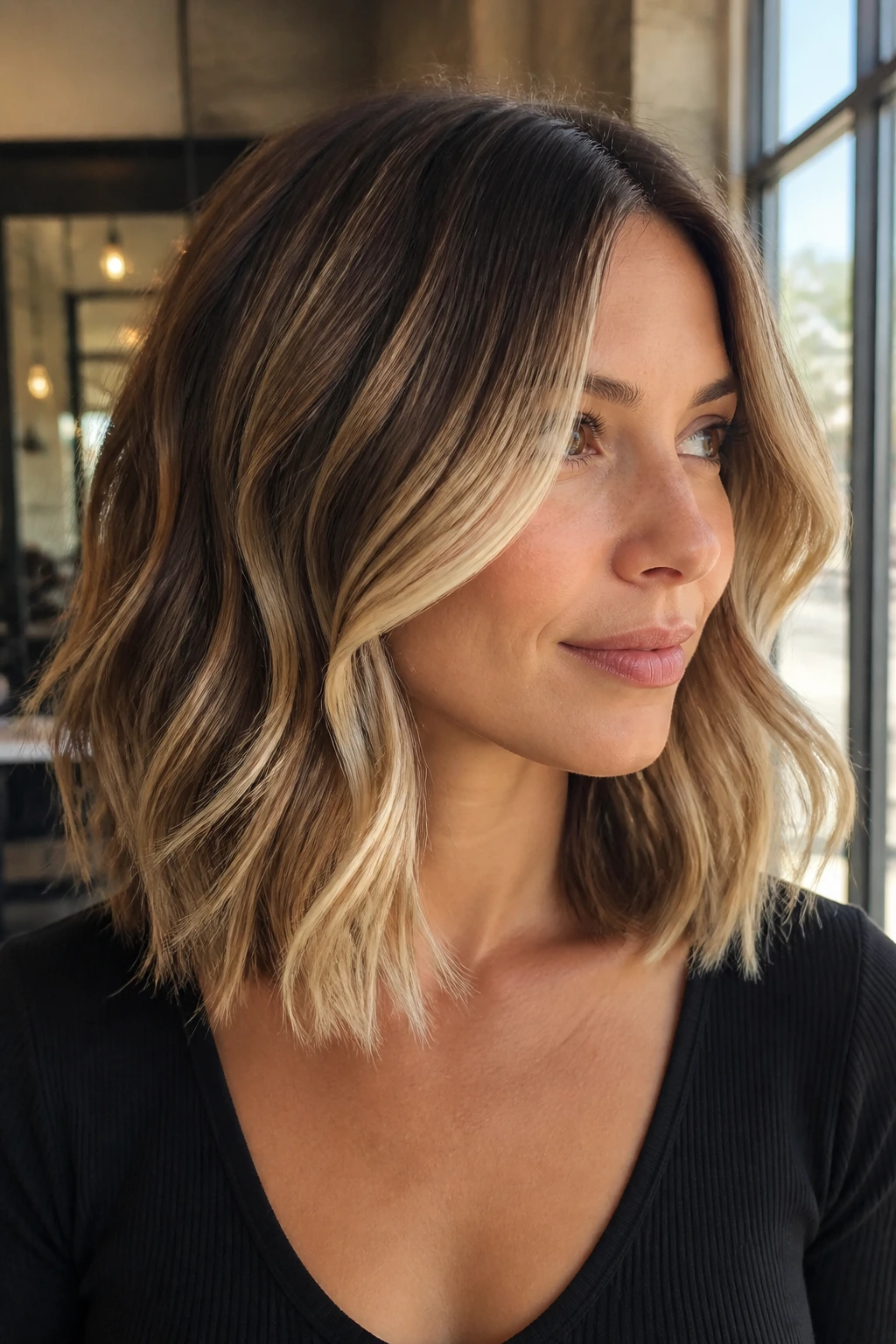
-
Face-Framing First: Medium hair gives you just enough length to place brightness near the face without dragging it all the way to the ends, which keeps the color looking fresh instead of overdone.
-
Grow-Out Friendly: A collarbone-length cut hides root softening better than a blunt pixie or an extra-long mane, so balayage and rooted foils stay wearable longer.
-
Texture Matters: Waves, bends, and blunt blowouts all show highlight placement differently on medium hair, which makes the color feel richer and less flat.
-
Depth Still Shows: You have enough length for lowlights, shadow roots, and darker pieces to matter, which keeps lighter tones from turning washed out.
-
Easy to Customize: Medium-length hair can handle subtle baby lights, chunky ribbons, or a bold money piece without needing a full head transformation.
-
Styling Changes the Whole Mood: The same color can look soft with a round-brush blowout and edgy with a flat iron bend, which is half the fun.
1. Soft Honey Ribbons Around the Face
Soft honey ribbons are the move when you want brightness that looks like sunlight, not strip lights. On medium-length hair, they sit beautifully around the front layers and through the top surface, then fade into the rest of the cut without screaming for attention. The result is warm, glossy, and a little bit lazy in the best way.
Why It Works on Medium Hair
The honey tone sits in that sweet spot between blonde and brunette, which matters on hair that doesn’t have endless length to show off complex color. On a lob, a few well-placed ribbons near the cheekbones and jawline do more than a full head of brightness ever could. You get lift where the eye lands first.
Ask for fine to medium weaves placed around the face, with a few softer ribbons through the crown. Keep the ends a little deeper. That contrast gives the haircut shape instead of turning the whole thing into a yellow blur.
- Best base: light brown to dark blonde.
- Best finish: loose waves or a round-brush bend.
- Tone to ask for: honey, not gold coin yellow.
- Maintenance note: a gloss every 6 to 8 weeks keeps the warmth clean.
Tip: If your hair is naturally flat, ask for the brightest pieces to start just below the part line. That keeps the top from looking overprocessed while still giving you that lit-from-within look.
2. Mushroom Brown Balayage for Cool Brunettes
Mushroom brown has a reputation for being subtle, and that’s exactly why I like it on medium-length cuts. It brings a smoky, earthy tone to brunette hair without trying to turn you blonde. On shoulder-length hair, the color reads expensive because there’s just enough movement for the cool and neutral tones to shift as you move.
This is the kind of brunette color that looks better in real life than in a perfect salon photo. In daylight, it feels soft and dimensional. Under indoor lighting, it gets a little more taupe and a little less flat, which is the point. You want the hair to look like it has texture built into it, not painted on top.
If your base is dark brown and you hate brass, this is a smart direction. Keep the lightened pieces sparse and ask for a soft shadow root so the grow-out line stays blurred instead of harsh.
3. Money Piece Highlights That Wake Up Straight Hair
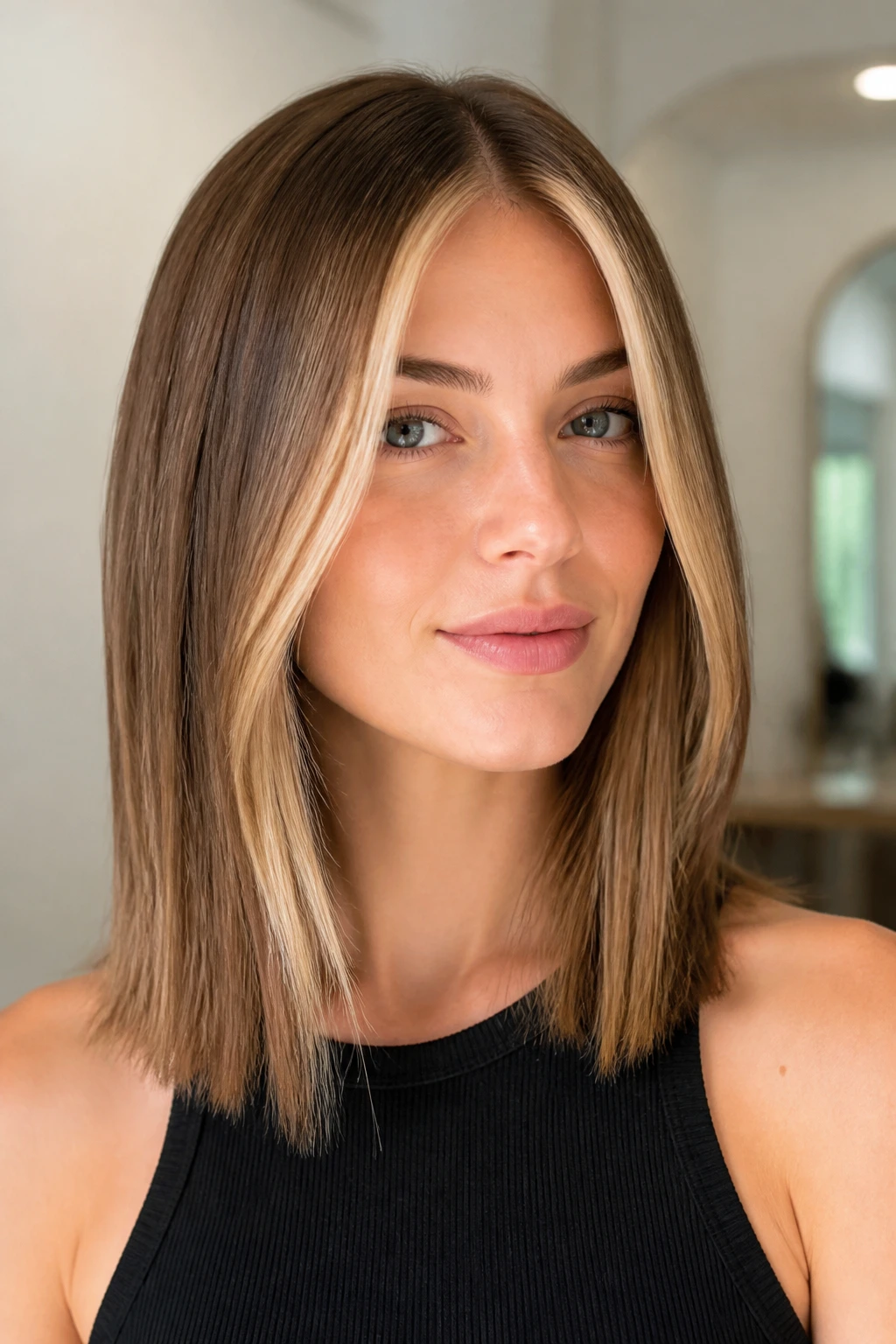
Straight medium-length hair can be brutally honest. It shows every line, every stripe, every uneven foil placement. That’s why a money piece works so well here: it puts the drama right where the hair naturally falls, and it gives the whole cut a more deliberate shape.
Why does this look so good when the rest of the hair is sleek? Because straight hair reflects light in a flat plane. A bright front section breaks that plane and gives the face some lift, even if the rest of the color stays understated. You don’t need a full blonding session to get that effect.
What to Ask For
- Two front sections lifted 2 to 4 shades lighter than your base.
- Softly blended pieces that start near the eyebrow or cheekbone.
- A few lighter strands through the crown if you want the brightness to carry backward.
- A tone that matches the rest of your hair, not a yellow outlier.
A sharp money piece on medium hair can look stunning. It can also look harsh fast. The difference is usually the blend at the root and whether the colorist keeps the bright pieces narrow enough to move with the haircut.
4. Caramel Contour on a Wavy Lob
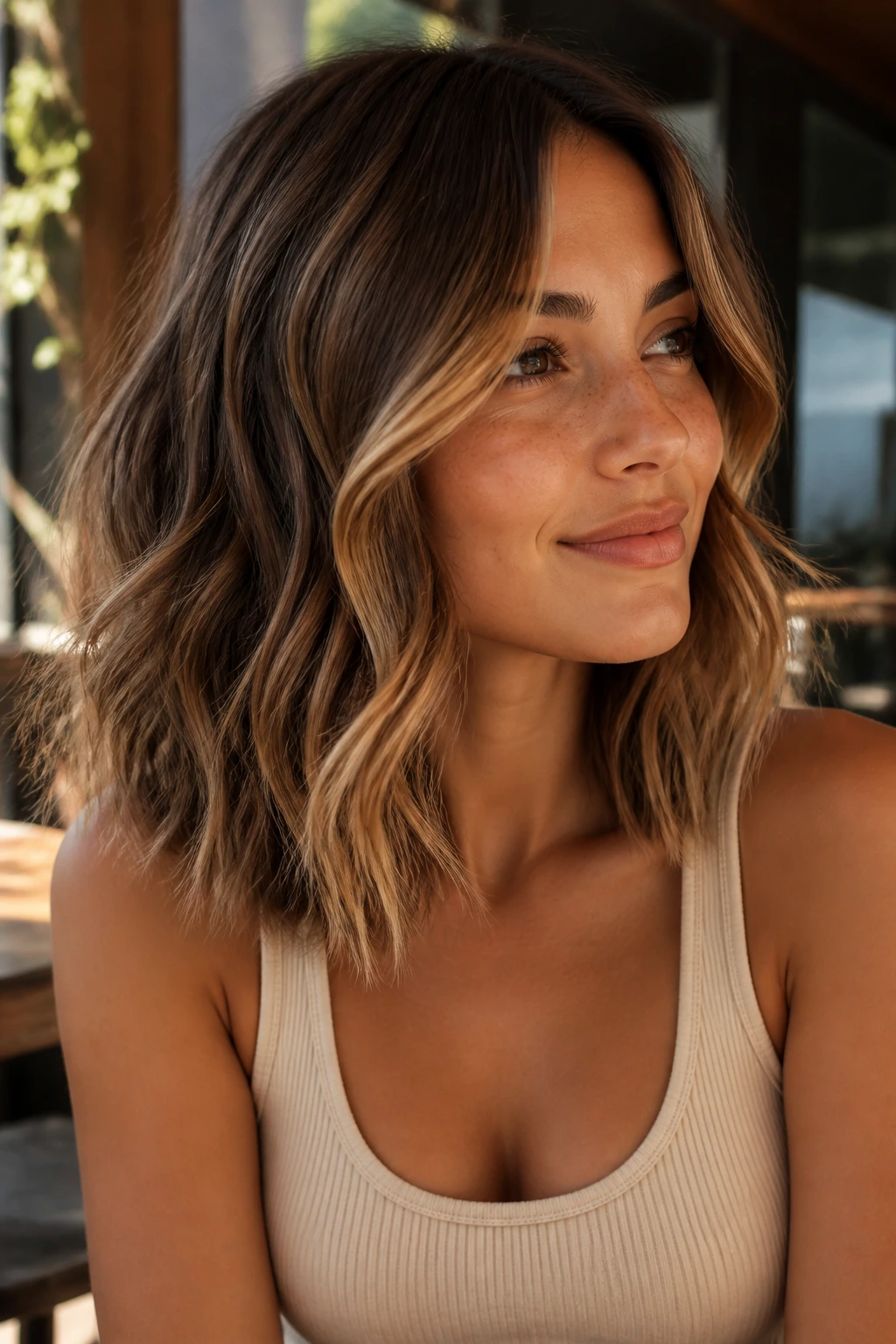
If your hair already has a bit of bend, caramel contouring is a very smart place to spend your color budget. The warm ribbons follow the curve of the wave, so the hair looks fuller and more alive without needing a huge contrast shift. Medium-length hair gives those caramel pieces enough room to stretch out.
Picture a lob with a few brighter strands around the face and a soft scatter through the mids. That’s the shape. Not all-over lightness. Just enough warmth to trace the cut and show off the movement when the ends flip under or out.
- Great for: medium brown and brunette bases.
- Placement: around the face, through the wave peaks, and just above the perimeter.
- Tone: soft caramel, toffee, or amber.
- Avoid: pieces that are too chunky near the part.
Caramel can go orange if it’s too warm, so the best version stays rich rather than pumpkin-bright. I prefer it with loose texture and a little shine spray, because it catches the eye without needing hard contrast.
5. Beige Blonde Foilayage for a Clean, Bright Finish
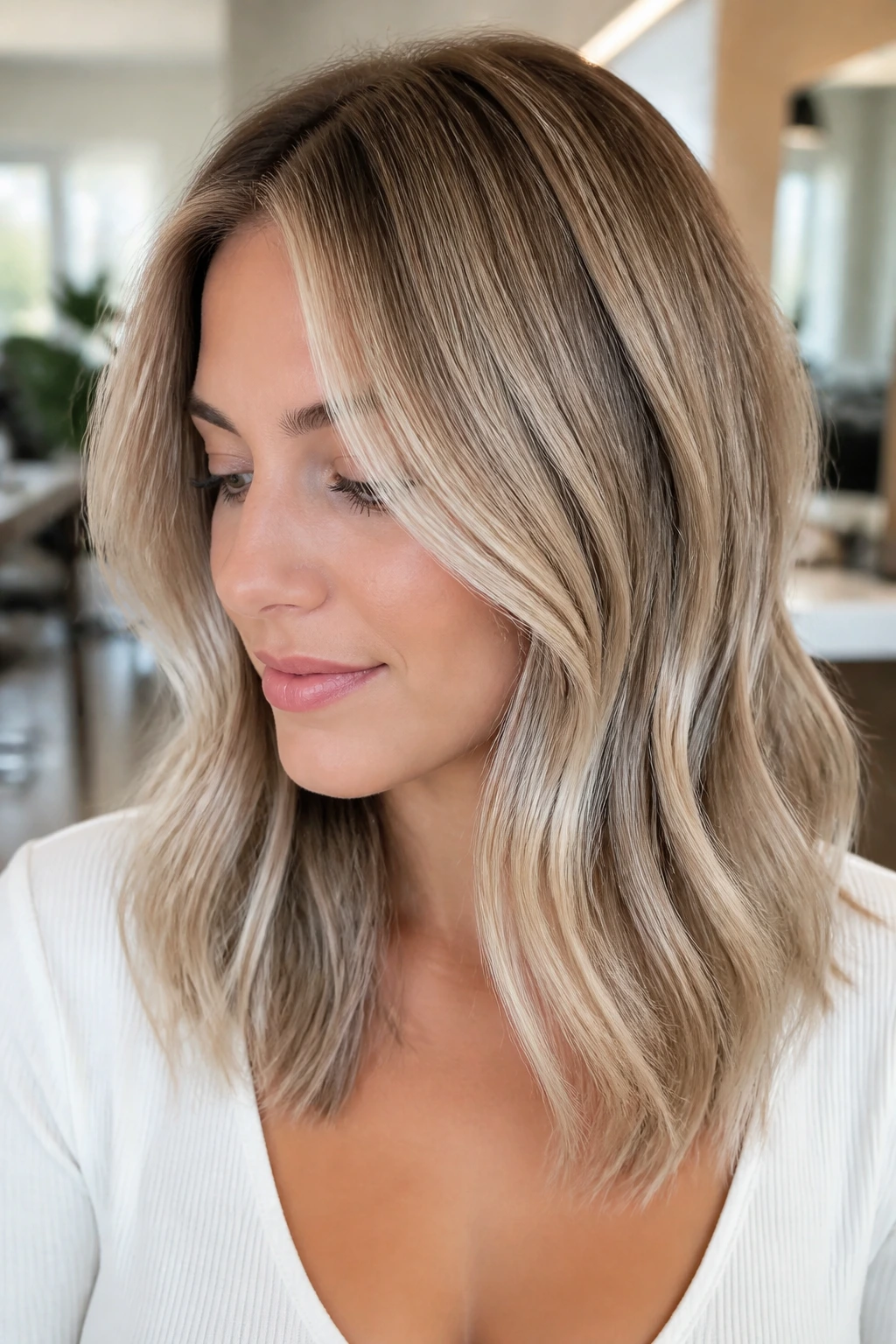
Beige blonde foilayage is for the person who wants lift, but not that obvious, zebra-ish foil look that some medium cuts still get hit with. Foilayage gives you the lift of foils and the softness of balayage, which matters when there isn’t a ton of length for color to travel.
The beige tone keeps the blonding from going too buttery or too icy. On medium-length hair, that middle ground is useful. You can wear it straight and see the clean lines, or flip it into waves and watch the tones soften into each other. The color looks finished either way.
I especially like this on hair that sits between a lob and a long bob. It gives the edges a brighter frame without frying the whole head into one tone. If your natural base is medium brown or dark blonde, the blend can look very polished with a root shadow and a beige toner.
6. Copper Glaze Highlights for Warm, Spicy Shine
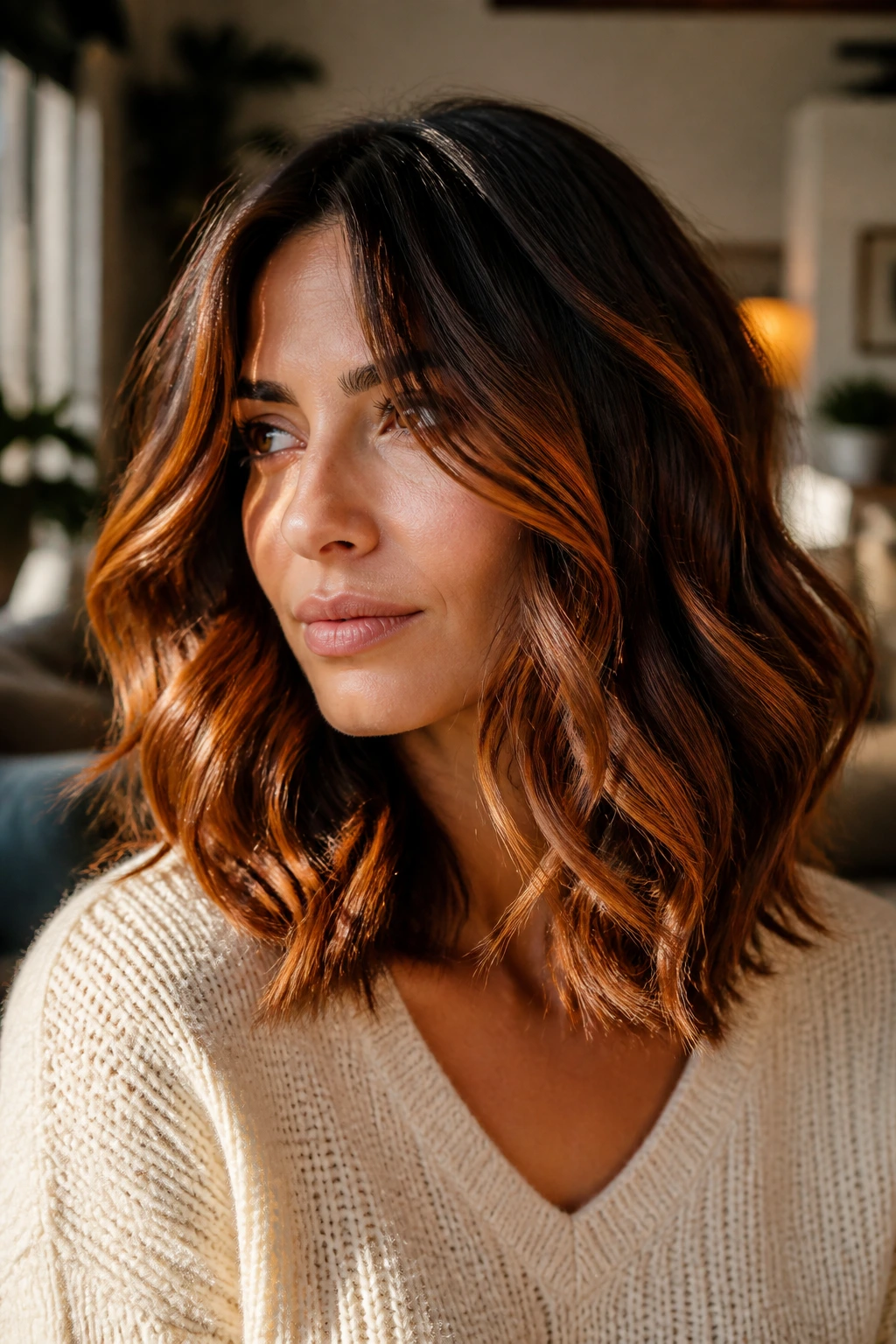
Copper highlights are not shy. They don’t need to be. On medium-length hair, a copper glaze can turn a plain brunette cut into something that glows when the light hits it from the side. The shorter length keeps the color from getting muddy, which is a real problem on longer hair when warm tones stretch too far.
This is one of my favorite choices for hair with natural warmth already in it. Instead of fighting the base, you lean into it. The color feels intentional, rich, and a little bit spicy. If the ends are layered, copper ribbons sit beautifully in the movement and don’t look pasted on.
Best for this look
- Medium brunettes who like warmth.
- Wavy or textured cuts.
- Hair that needs shine more than heavy lightening.
- Anyone tired of ash that goes flat fast.
Ask for copper pieces that are more glaze than stripe. You want the effect to look like warm light passing through the hair, not marker lines near the part.
7. Ashy Mocha Ribbons for Low-Contrast Dimension
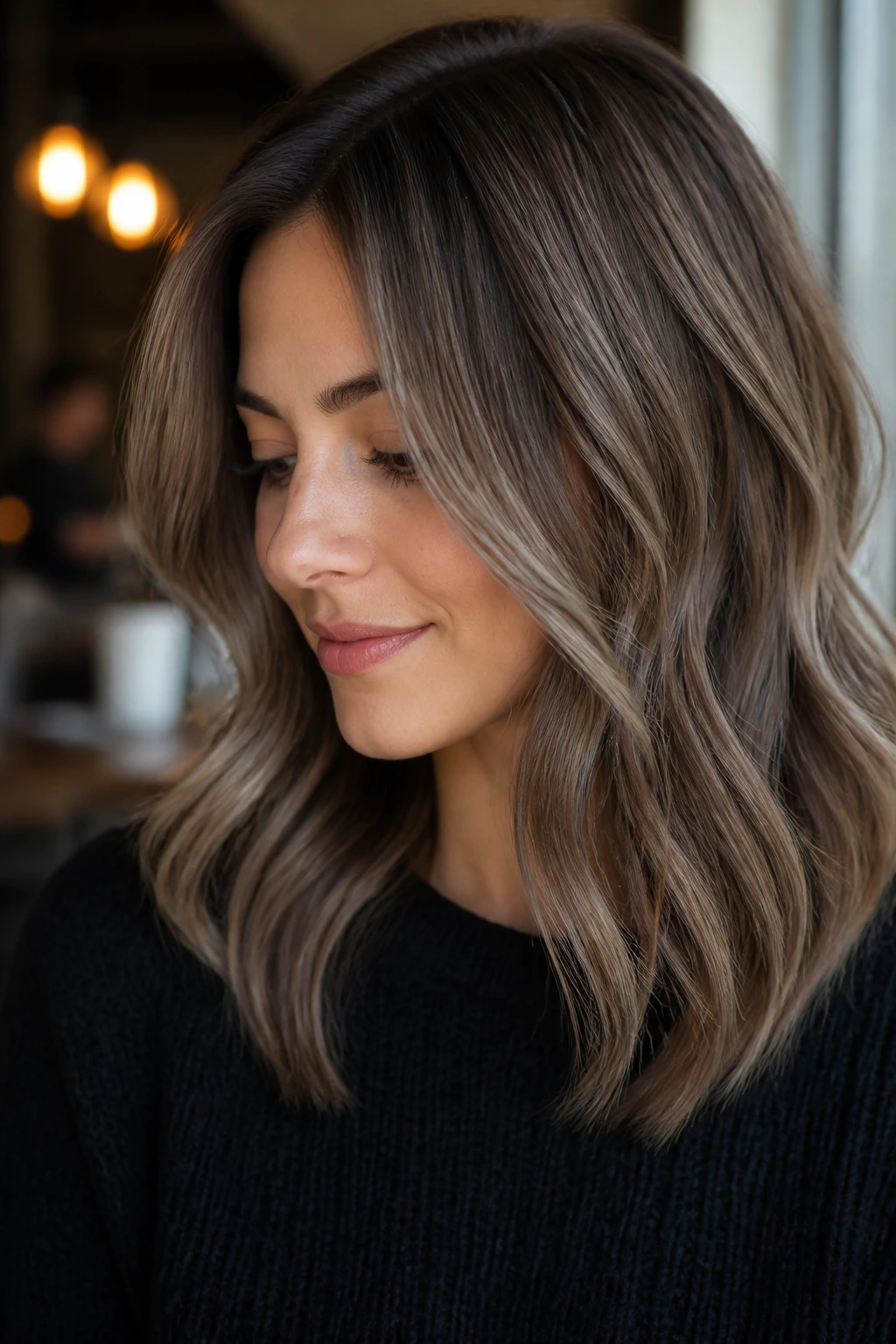
Ashy mocha is for people who keep saying they want highlights but don’t actually want to look highlighted. Fair enough. On medium-length hair, that’s a good instinct. Low-contrast dimension is often more flattering than big brightness, especially if your haircut is blunt or your hair tends to puff up at the ends.
This color lives in the brunette family, but it shifts enough to stop the cut from looking heavy. The cooler mocha ribbons move through the mids and ends without fighting the base tone, which keeps the hair from turning warm and brassy after a few washes. That part matters more than people admit.
The best version is usually a mix of soft babylights and a gloss that keeps the tone smoky. If your hair has a lot of natural shine, this style can look almost velvety. It’s understated, yes, but not boring.
8. Baby Lights That Blur the Grow-Out Line
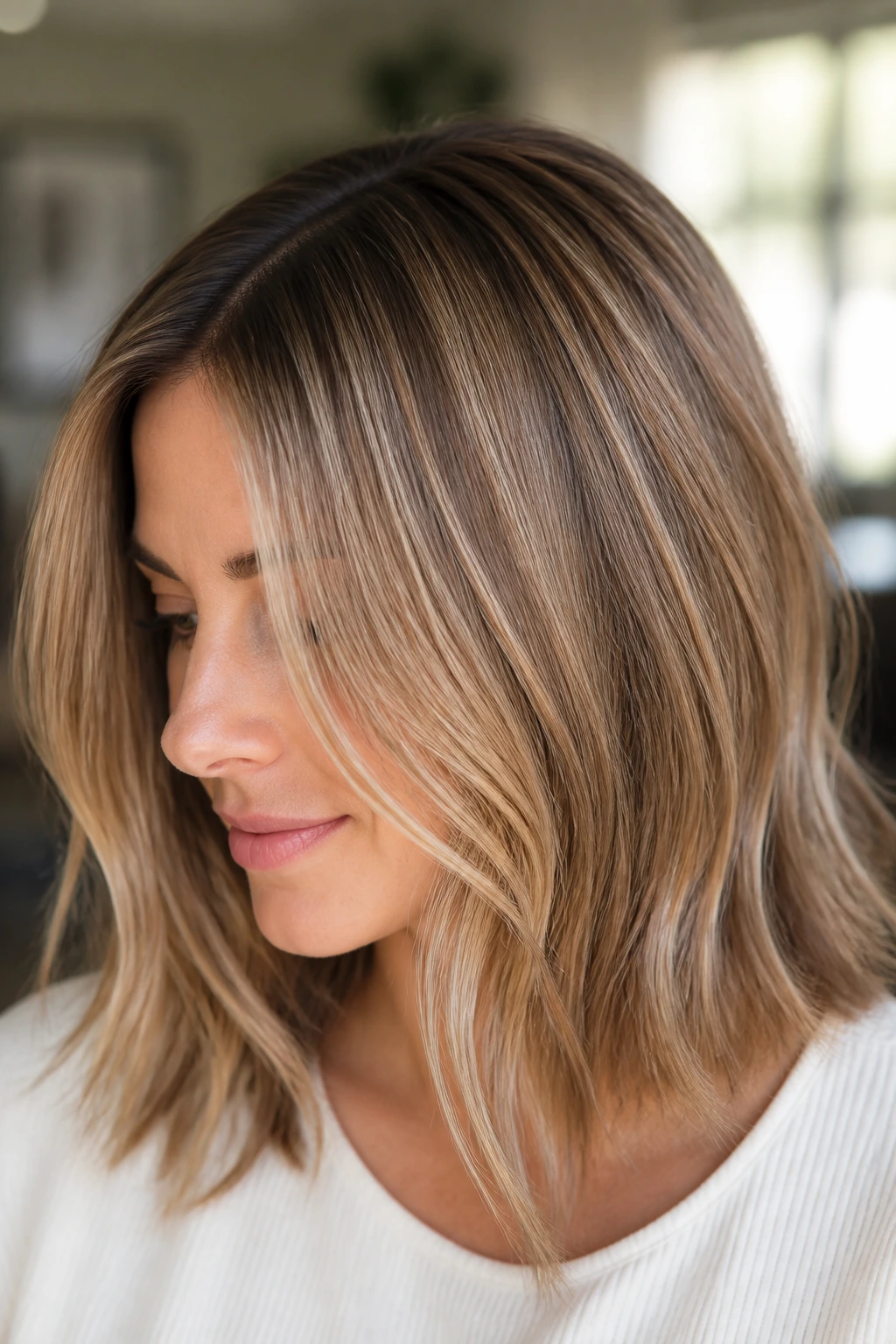
Baby lights are tiny for a reason. On medium-length hair, they create a haze of brightness instead of obvious strips, which is exactly why they age well between appointments. The whole head looks lighter, but no one can point to a single chunky piece and say, “There it is.”
That blurred effect is especially useful on shoulder-length hair because the ends are already doing a lot visually. Fine, delicate highlights keep the cut from looking chopped up. The hair reads soft and expensive rather than busy.
What to ask for
- Micro-weaves through the part line and crown.
- Smaller foils around the hairline.
- A gloss that softens any yellow or orange cast.
- A placement map that follows your natural part, not a rigid grid.
Baby lights do take time. They’re not the fast option. But if you want a medium-length highlight that grows out quietly and still looks finished from every angle, this is one of the smartest ways to go.
9. 90s Chunky Highlights, Reworked for Modern Medium Hair
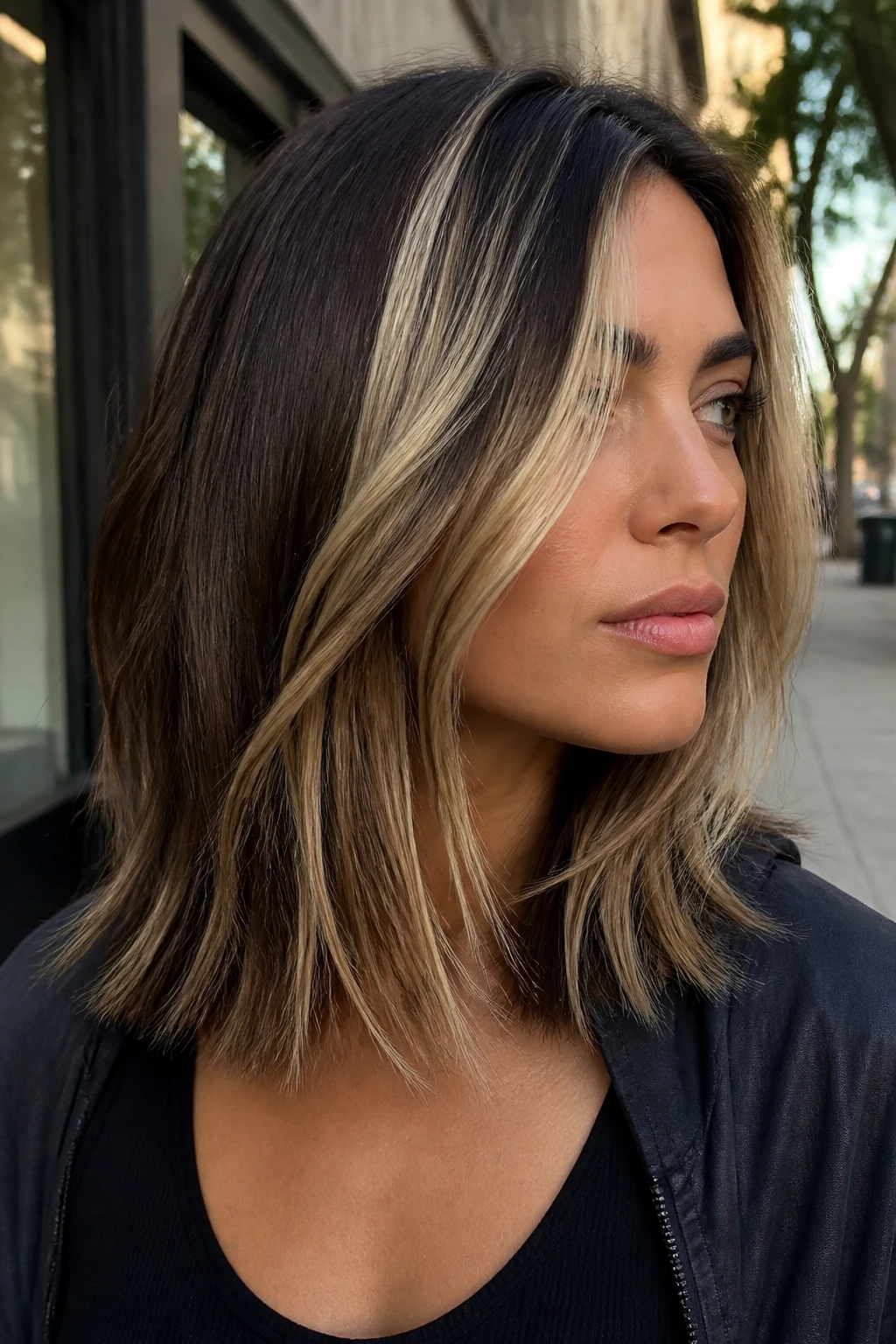
Chunky highlights are back, but the good versions are not the stiff, helmet-like stripes people remember. On medium-length hair, the trick is spacing. You want bold sections with enough negative space around them so the color breathes. That keeps the look playful instead of costume-y.
I like this on cuts with a little attitude: a blunt lob, a shoulder-skimming shag, something with a clean perimeter and a few bendy layers. The bright pieces sit like punctuation marks. One near the face. Another in the crown. A few through the mids. That’s enough.
If you’re nervous about going bold, keep the chunks around the front and leave the back more diffuse. It reads modern because it respects the haircut. The color does not need to cover every inch to make its point.
10. Rose Gold Highlights on a Shoulder-Grazing Cut
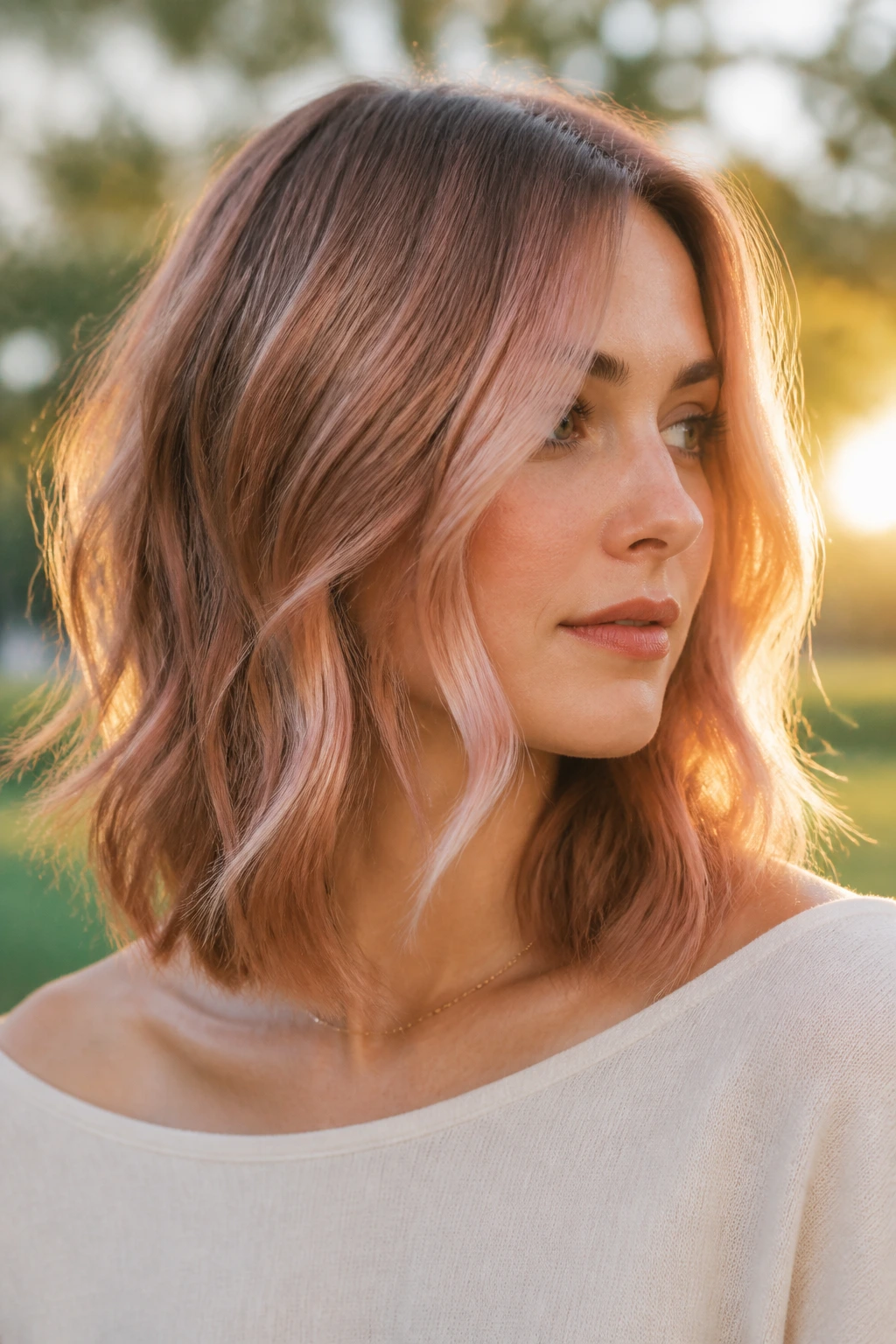
Rose gold can look sugary if the tone is too pink and too shiny, which is why medium-length hair is such a nice canvas for it. The length gives the color room to soften. On a shoulder-grazing cut, rose gold lands as a warm blush rather than a costume shade, especially when the hair has some bend or a brushed-out wave.
The most flattering version usually sits on a blonde-to-light brown base. You want the pink to ride on top of beige, gold, or soft copper so it doesn’t scream. When the toner starts to fade, the color often settles into a pretty peach-beige stage, which is honestly the best part.
If you like color that changes a little over time, this is a good one. It starts with a clear point of view and then softens into something gentler after a few washes. Medium-length hair gives that shift enough space to look intentional.
11. Espresso Lowlights With Vanilla Highlights
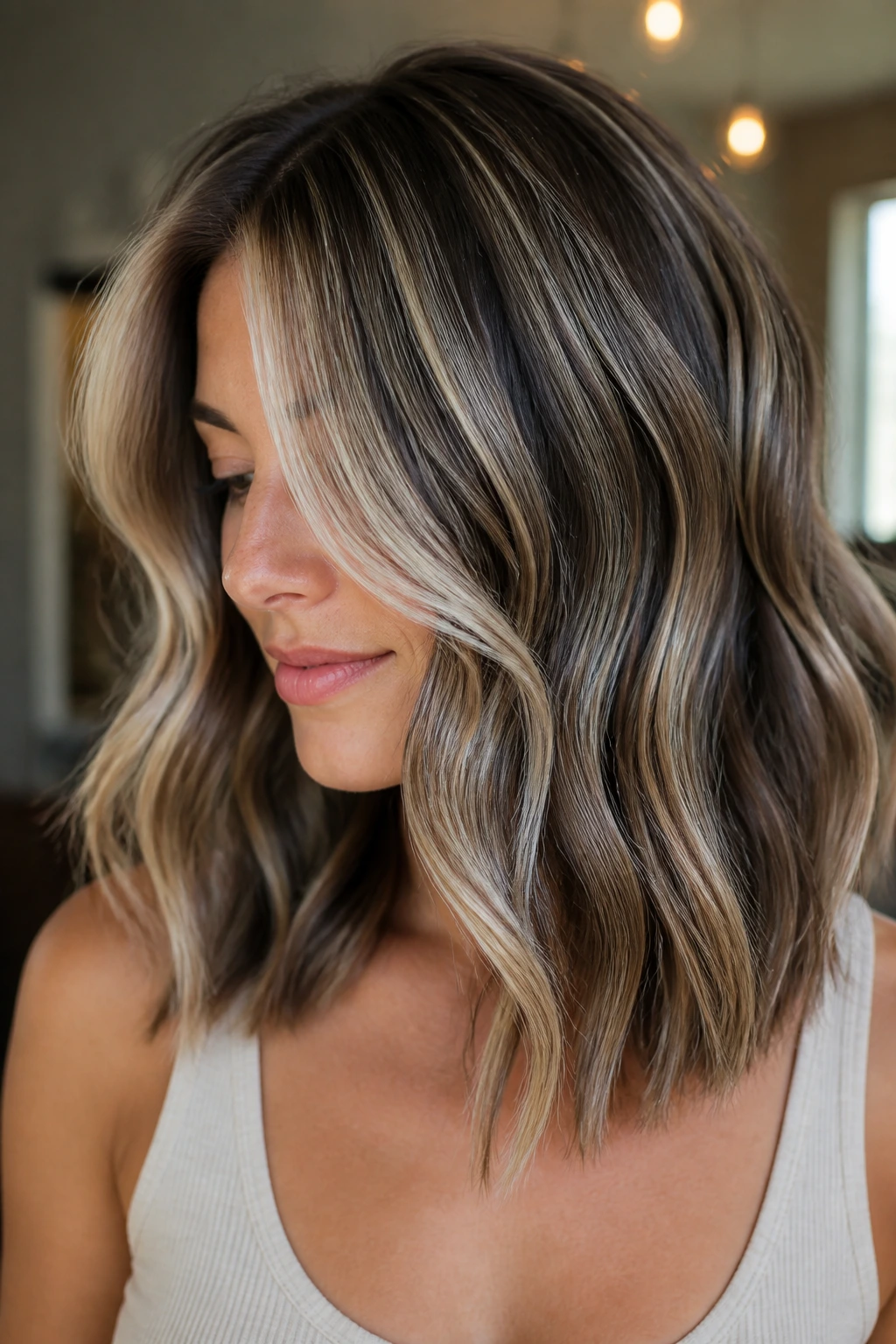
This is the color choice for people who want depth first and brightness second. Espresso lowlights add weight back into medium-length hair, while vanilla highlights keep the top and face frame from feeling heavy. The mix works especially well if your hair has gone too light in the past and now feels thin at the ends.
The contrast matters. A lot. Without the darker pieces, lighter medium-length hair can start to look hollow near the perimeter. Add in espresso ribbons underneath, and suddenly the cut has body again. Add vanilla pieces on top, and the whole thing gets movement instead of a single flat shade.
- Best for: over-lightened brunette or dark blonde hair.
- Placement: lowlights underneath, brighter pieces on the top layer and around the face.
- Finish: a glossy blowout shows the contrast best.
- Warning: too many light pieces can erase the lowlight effect.
This is one of those cases where deeper color is not a step backward. It’s the thing that makes the highlights look better.
12. Champagne Blonde Streaks for Fine Hair
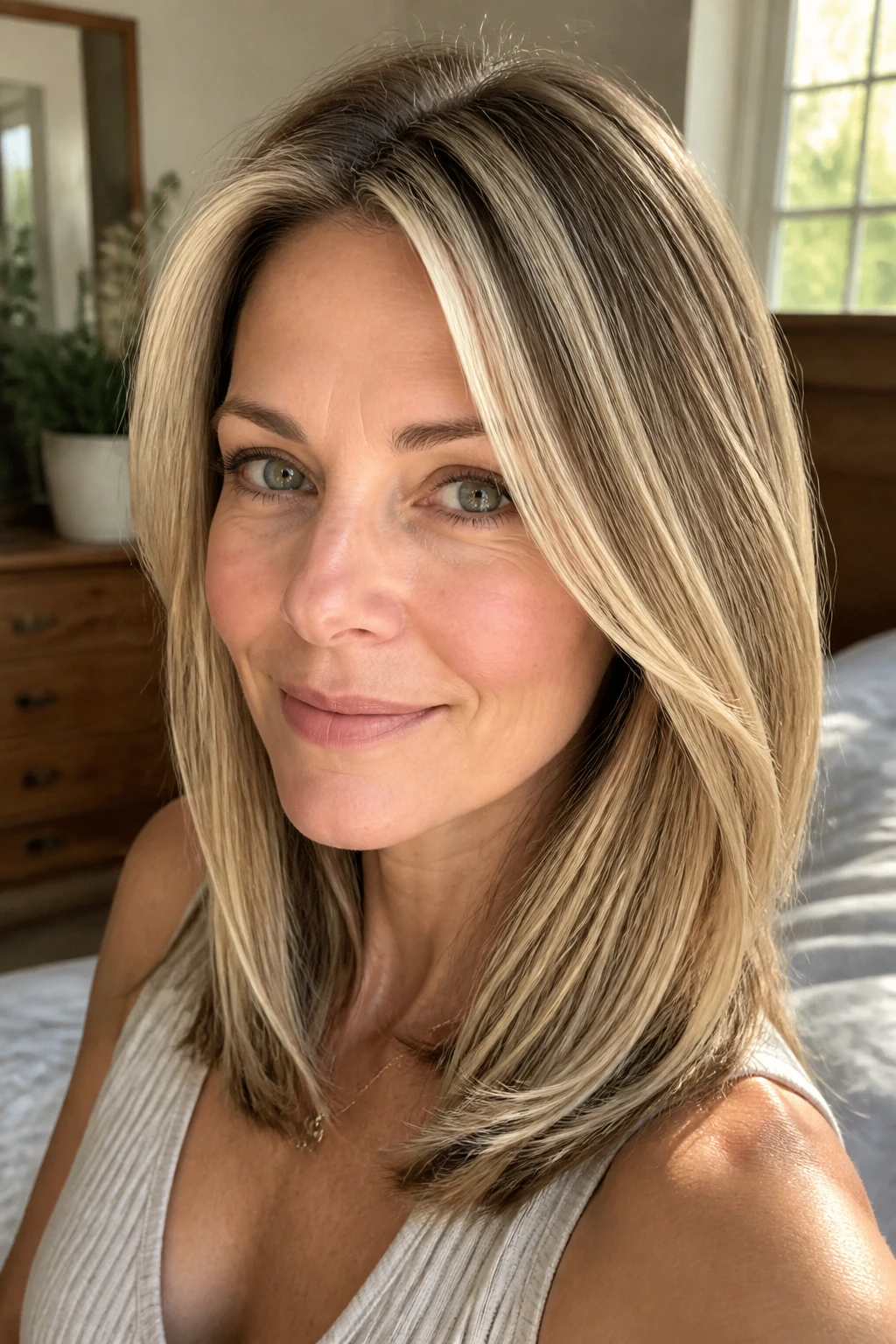
Fine medium-length hair has one job in a highlight appointment: not to look thin. Champagne blonde streaks help because they’re luminous without being harsh. The tone sits between beige and pale gold, which gives the hair brightness without that chalky, over-lightened look that can make fine strands look wispy.
The placement needs to be careful. Too many bright pieces and the hair loses visual density. Too few, and the color disappears. I like a denser effect near the part and front sections, with softer spacing through the back so the hair still has body when it moves.
A blunt lob, especially, loves this kind of color. The straight line at the ends keeps the overall shape strong, while the champagne pieces add just enough sparkle to make the cut feel deliberate.
13. Cinnamon and Toffee Balayage for Medium Brunettes
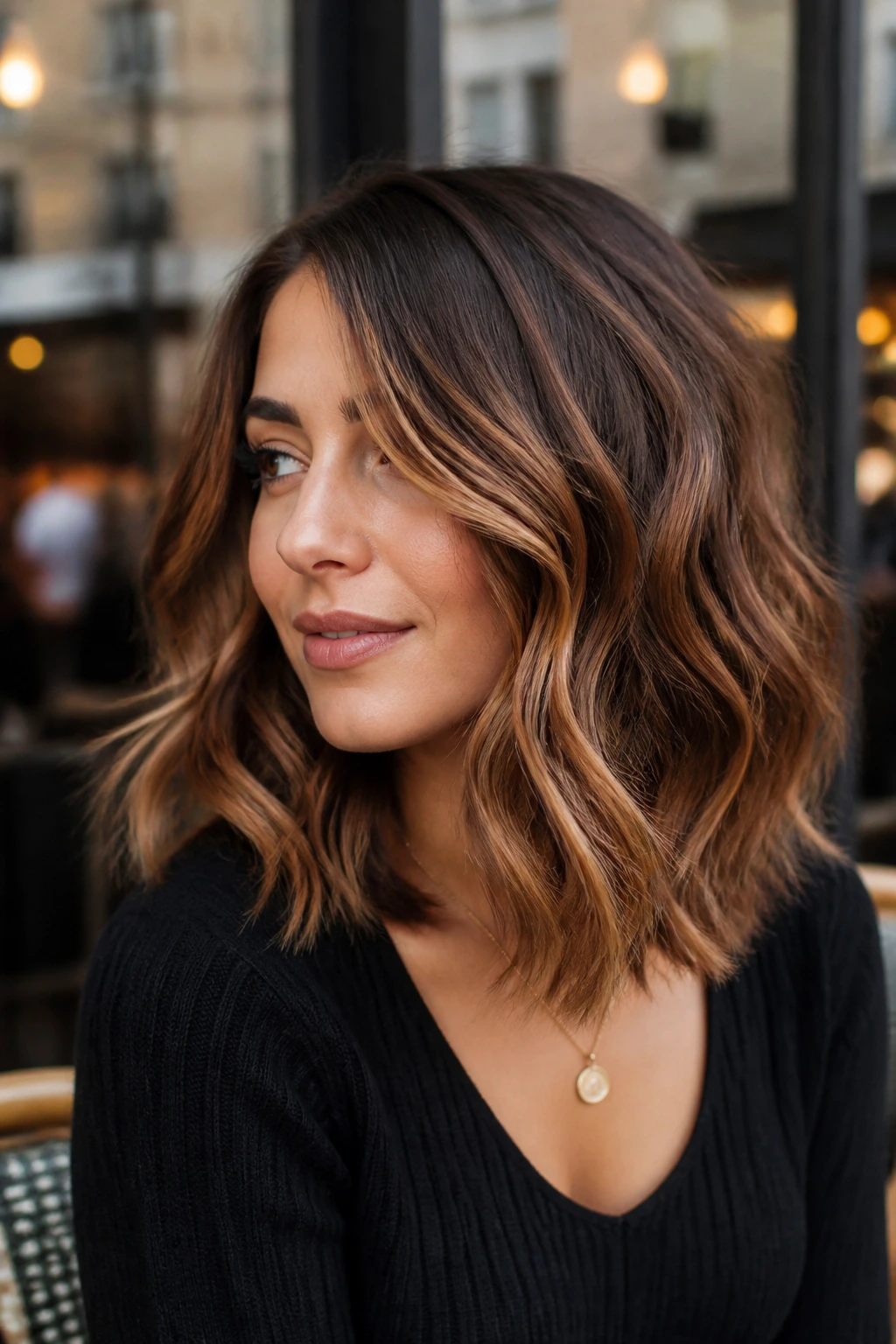
Cinnamon and toffee sounds cozy, but the color does not have to feel seasonal or themed. On medium brunettes, that warm mix reads rich and dimensional when it’s placed in soft ribbons. The goal is not to turn the hair orange. The goal is to make the brown look alive.
This is one of those shades that makes layered medium hair look more expensive because the wave pattern does some of the work. Cinnamon pieces can sit through the mid-lengths, while toffee can frame the face and soften the ends. The color shifts a little every time the hair moves. That’s what makes it interesting.
Ask for this
- A brunette base with 2 to 3 warm lighter levels.
- Ribbons, not big blocks.
- A soft gloss to keep the warmth shiny.
- Minimal root lift if you want lower maintenance.
If your skin likes warmth and your wardrobe leans earthy, this is an easy shade to live with. It does not fight you.
14. Peekaboo Highlights Hidden Under the Top Layer
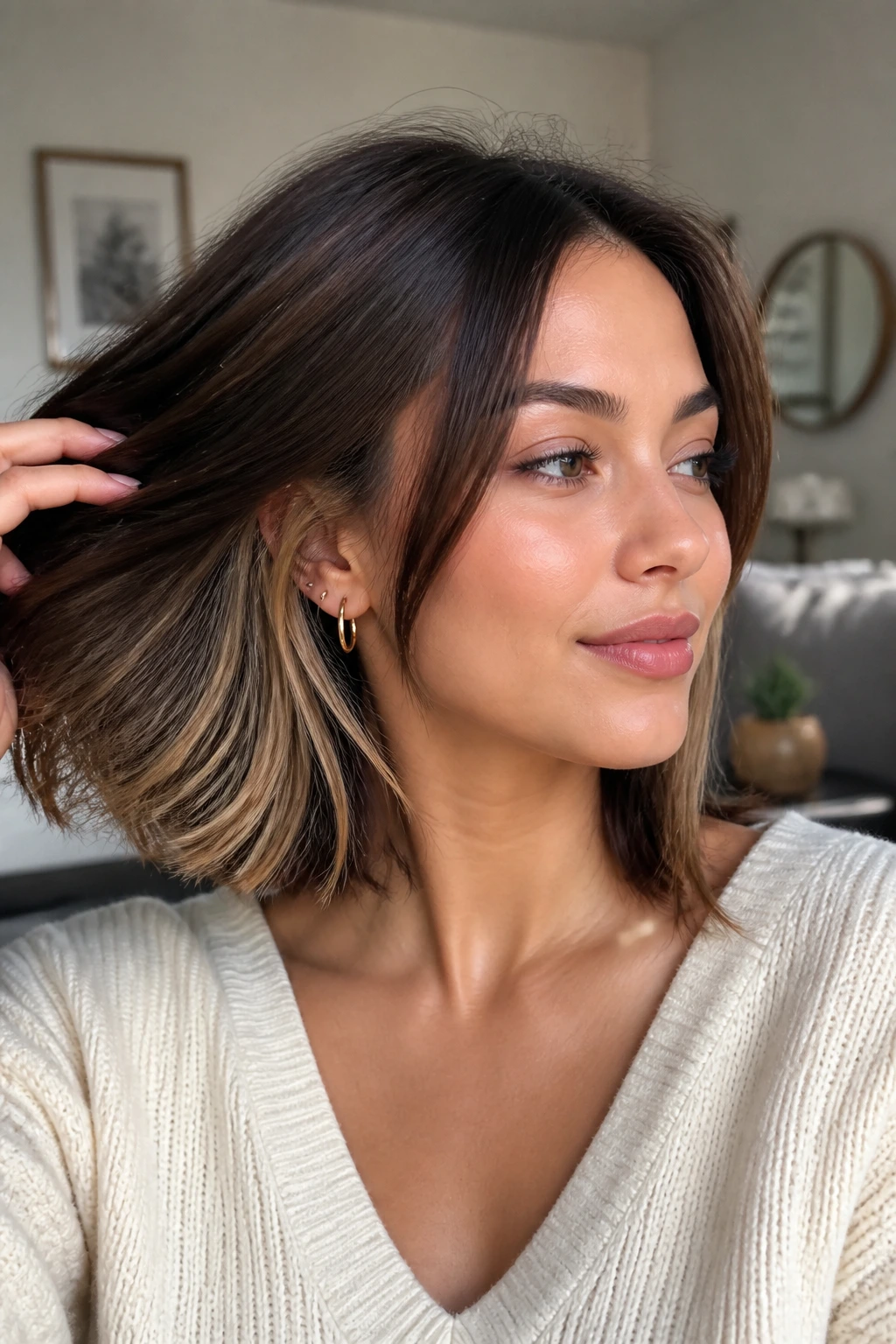
Peekaboo highlights are a fun trick on medium-length hair because there’s enough length to hide the color and enough movement for it to show when it matters. Wear the hair straight and the brightness stays tucked underneath. Curl it, pin it, or pull it into a half-up style and the color flashes through.
That’s the appeal. You get a little surprise without committing to full-time brightness around the face. It’s especially good if you want to experiment with color but need your hair to stay office-friendly or low-key in some settings.
I like peekaboo placement near the nape and lower sides of the head. It creates a clean reveal when the top layer moves. If you want more drama, add one brighter slice near the front edge of the underlayer so it peeks out when you tuck the hair behind your ear.
15. Sand Bronde for Airy, Beachy Movement
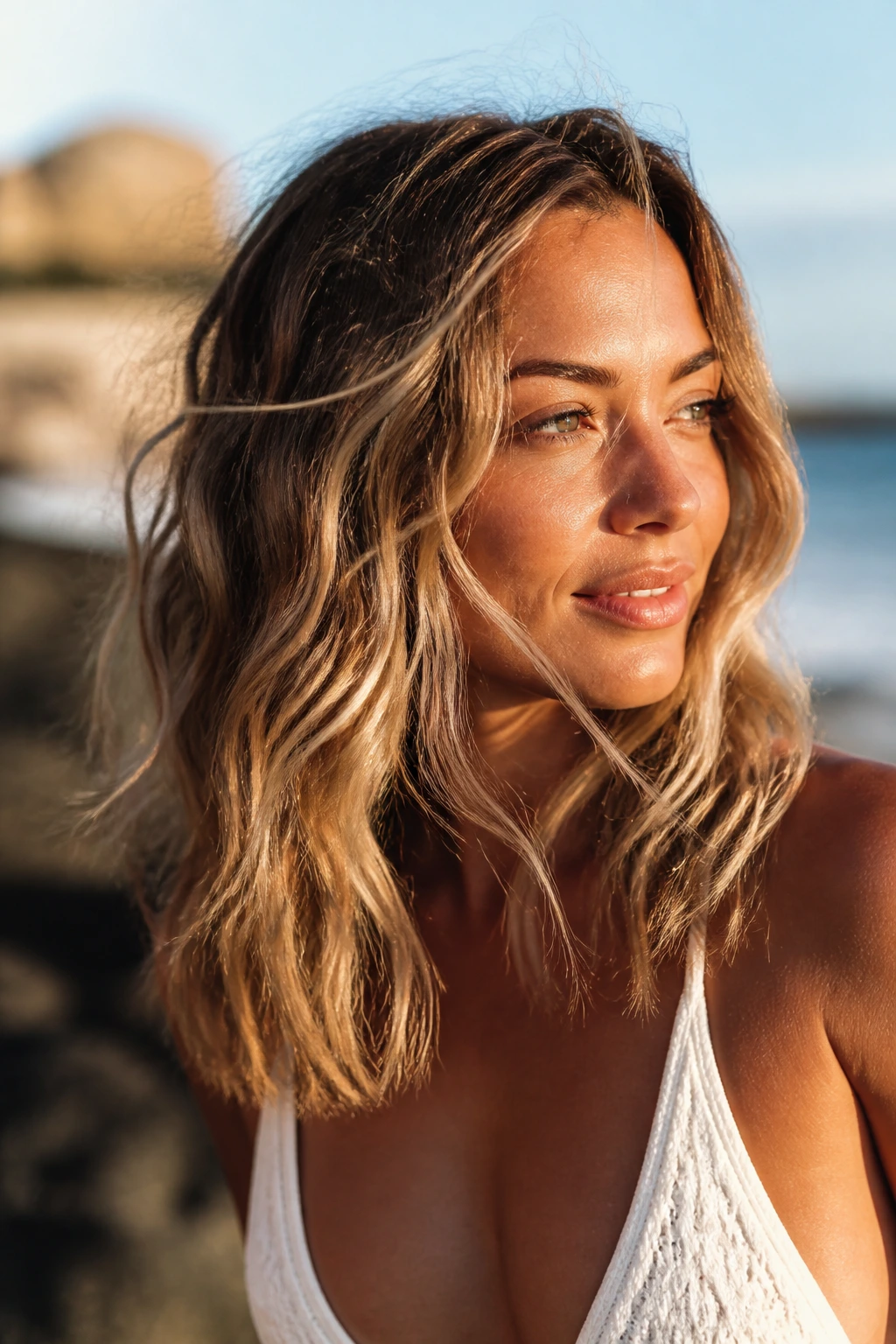
Sand bronde sits between blonde and brunette without making a huge announcement about it. On medium-length hair, that balance looks especially easy because the haircut does not need to carry a massive color contrast to feel finished. The lighter pieces are soft, beige, and a little airy. The darker base keeps the whole thing grounded.
The best versions have a shadow root and a few brighter ribbons through the outer layer. That gives the hair movement when it falls over the shoulders. If you wear your hair in loose bends, the color can look almost sun-kissed without going yellow.
One thing I like about sand bronde is that it doesn’t demand perfect styling. A quick blow-dry, a rough air-dry, even a loose clip can show the dimension. That’s useful. Color should work on a real head, not only in a mirror shot.
16. Chestnut Gloss With Gold Flecks
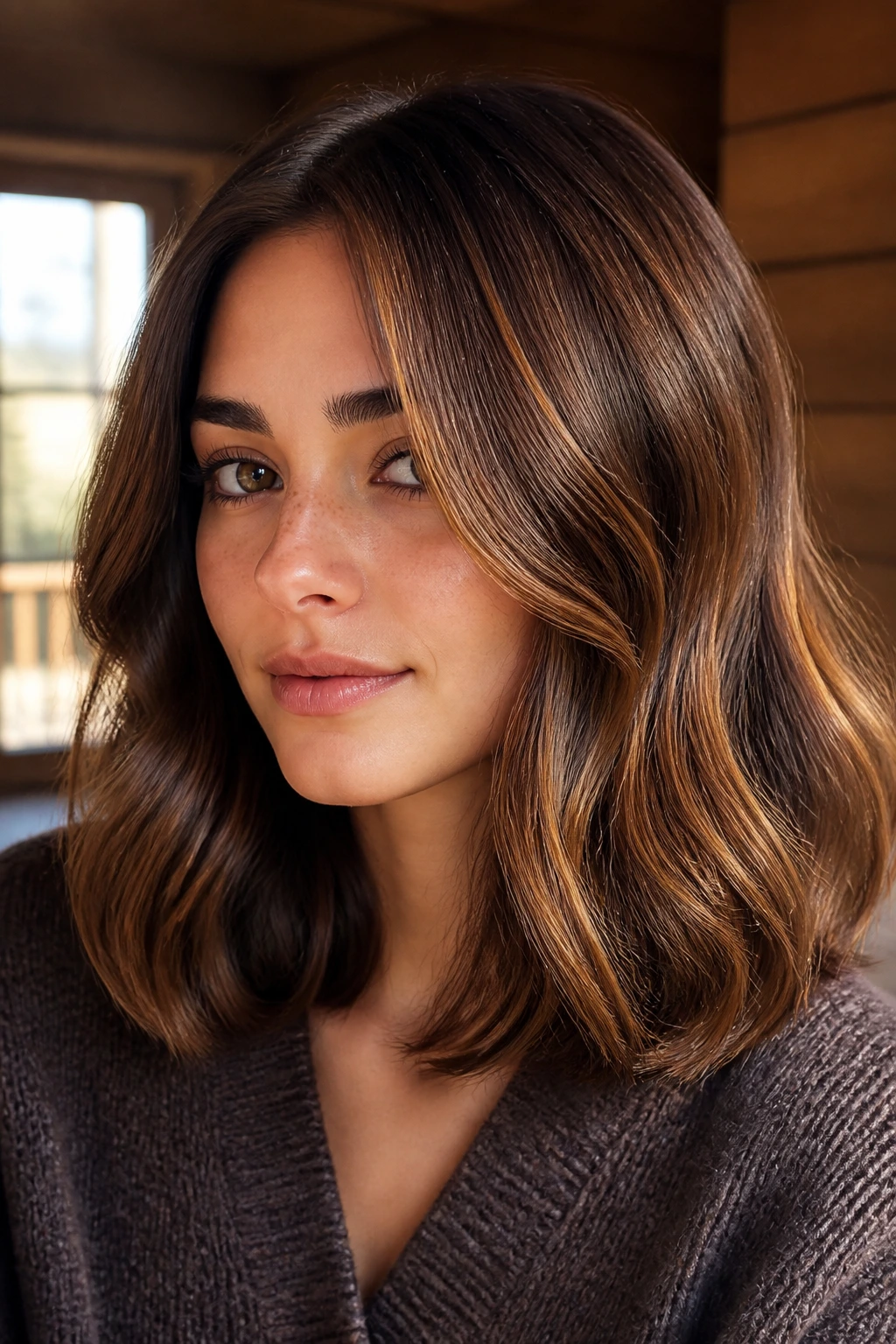
Chestnut gloss is the kind of color that sneaks up on you. At first glance it looks like a richer brunette. Then the light catches a few gold-flecked ribbons, and the hair suddenly has depth in places that used to look flat. Medium-length hair is ideal for this because the gloss can stretch across the mids without getting lost.
This is not a high-drama highlight idea. It’s a shine idea. The color gives the hair a polished, healthy look, which is especially nice on medium cuts that are a little layered or slightly grown out. You don’t need a lot of lightness to make it work.
If your hair is dark brown and you want a softer upgrade than blonde, this is one of the most elegant routes. Ask for fine, barely-there lighter pieces and a chestnut gloss over the top. It should look rich, not flashy.
17. Platinum Face Framing on Darker Hair
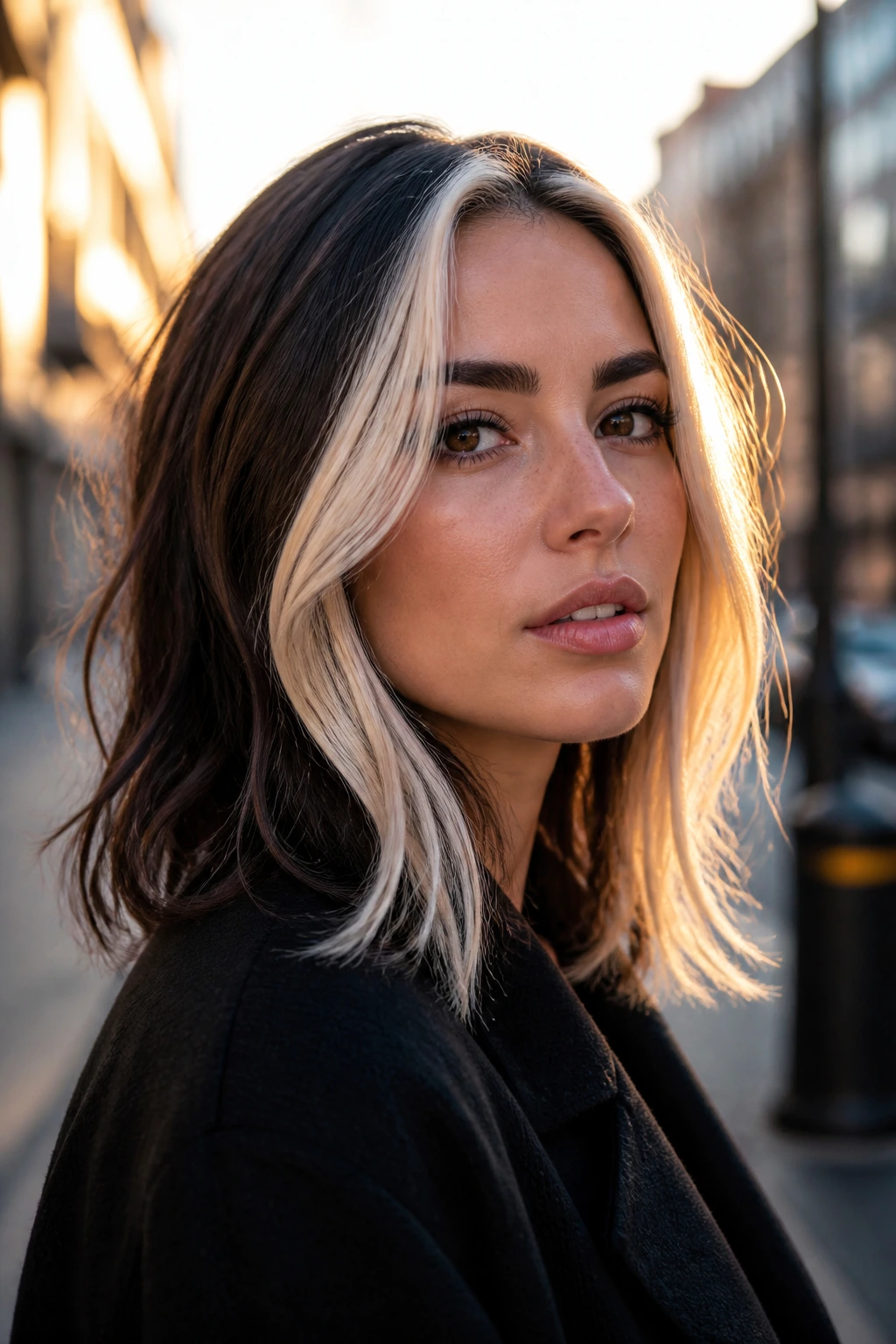
Platinum face framing is dramatic in the best possible way when the rest of the hair stays dark. On medium-length cuts, the contrast lands hard because the bright pieces sit close to the face and don’t have miles of hair to disappear into. The result is sharp, modern, and a little dangerous.
It is not the low-maintenance choice. Let’s be honest about that. Platinum around the face needs toning, careful heat protection, and a willingness to keep brass from creeping in. But if you want a strong visual shift without lightening the whole head, this is a smart compromise.
The best version usually keeps the platinum narrow enough to read as framing, not chunks. If the haircut has layers, the lightest strands can follow the shortest front pieces so the color moves with the face instead of sitting like a bracket around it.
18. Auburn Ribbon Highlights for Warm Redheads
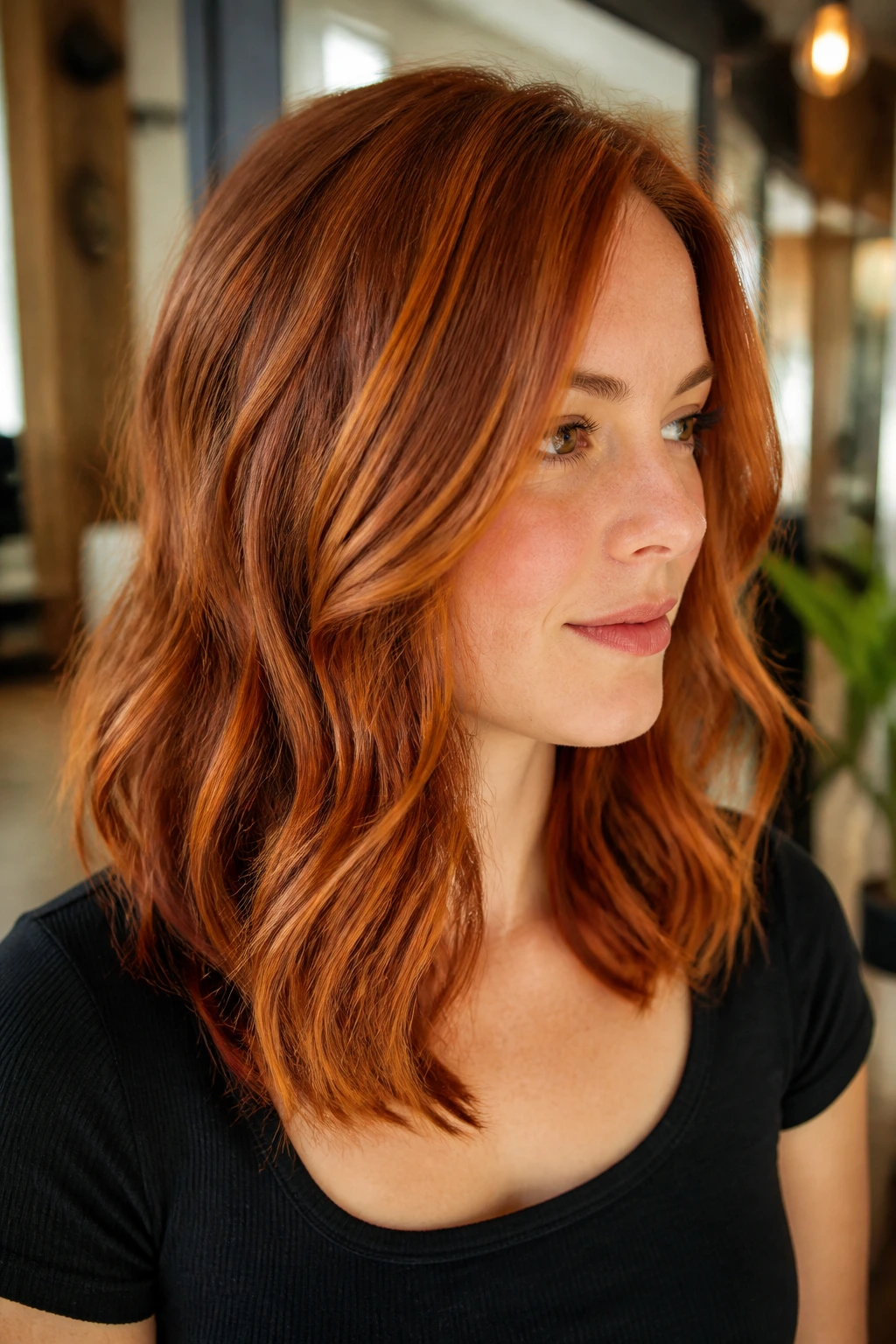
Red hair does not always need blonde to feel dimensional. Auburn ribbon highlights can deepen the warmth and give medium-length red hair more movement without pulling the color in a fake direction. This works especially well when the base already has copper or strawberry notes.
The trick is to avoid making every strand the same brightness. Auburn ribbons should weave through the medium lengths and ends, with a few richer pieces left intact so the color keeps its shape. On medium hair, that contrast is enough to stop red from looking like one flat copper sheet.
I like this approach when the goal is shine and richness rather than a big tonal change. It makes red hair look fuller under indoor light and softer in daylight, which is a rare combination.
19. Smoke-Gray Tonal Highlights for Cool Brunettes
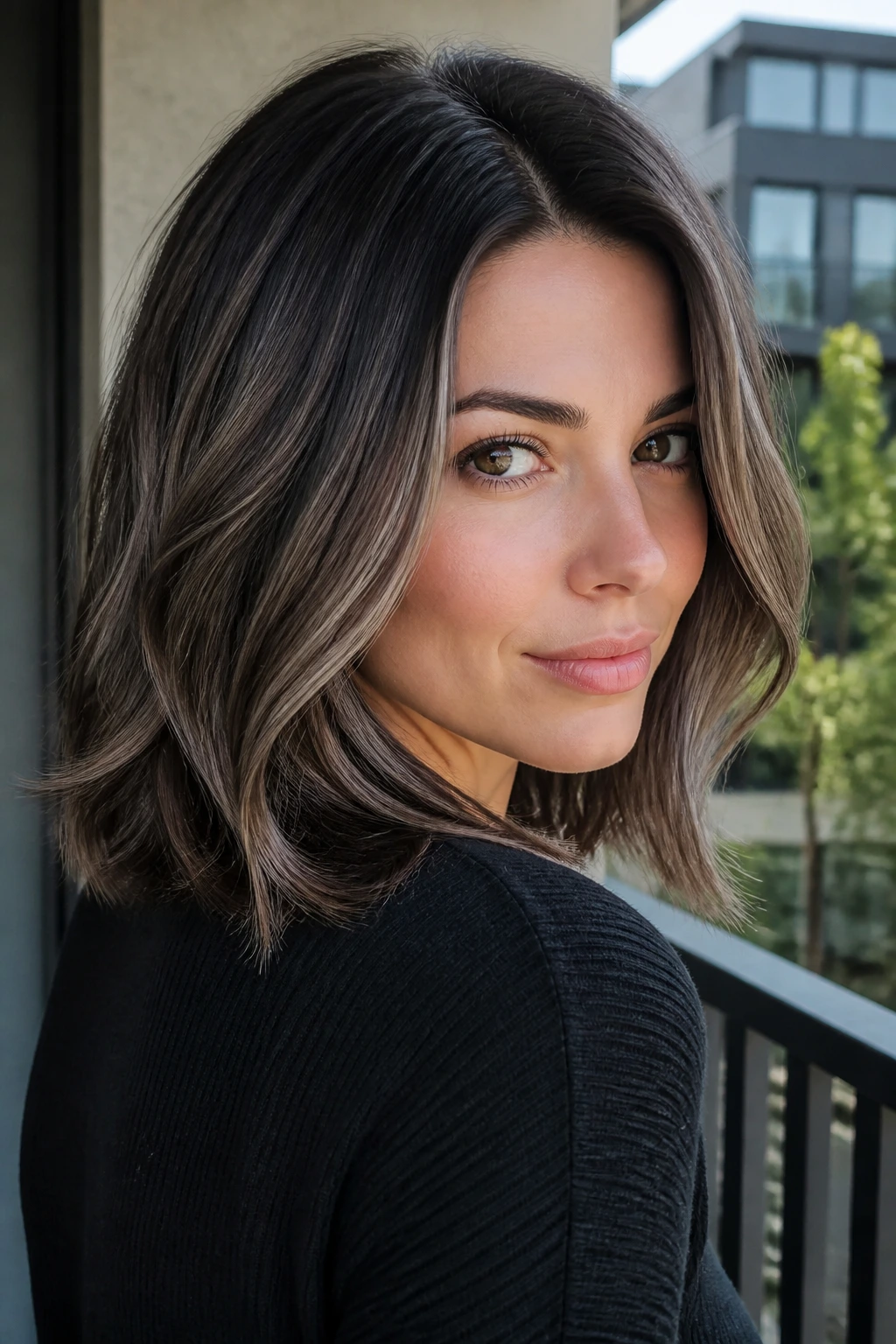
Smoke-gray highlights sound edgy, and they are, but the wearable version is more subtle than people expect. On medium-length brunette hair, the gray-toned pieces read cool, mineral, and polished when they’re kept close to the base in depth. The look is less “silver cosplay” and more “clean, modern brunette.”
This color works best when the haircut has a crisp edge. A blunt lob, a sharp bob, or a one-length medium cut lets the cool tones do their work without getting swallowed by texture. If your hair is very porous, the toner matters a lot here, because smoke tones can turn muddy fast.
The smartest version uses a few lightened pieces blended with ash and pearl toner. That keeps the gray reading dimensional rather than flat. It’s a specific taste, but when it suits someone, it suits them hard.
20. Vanilla Cream Ends With a Root Melt
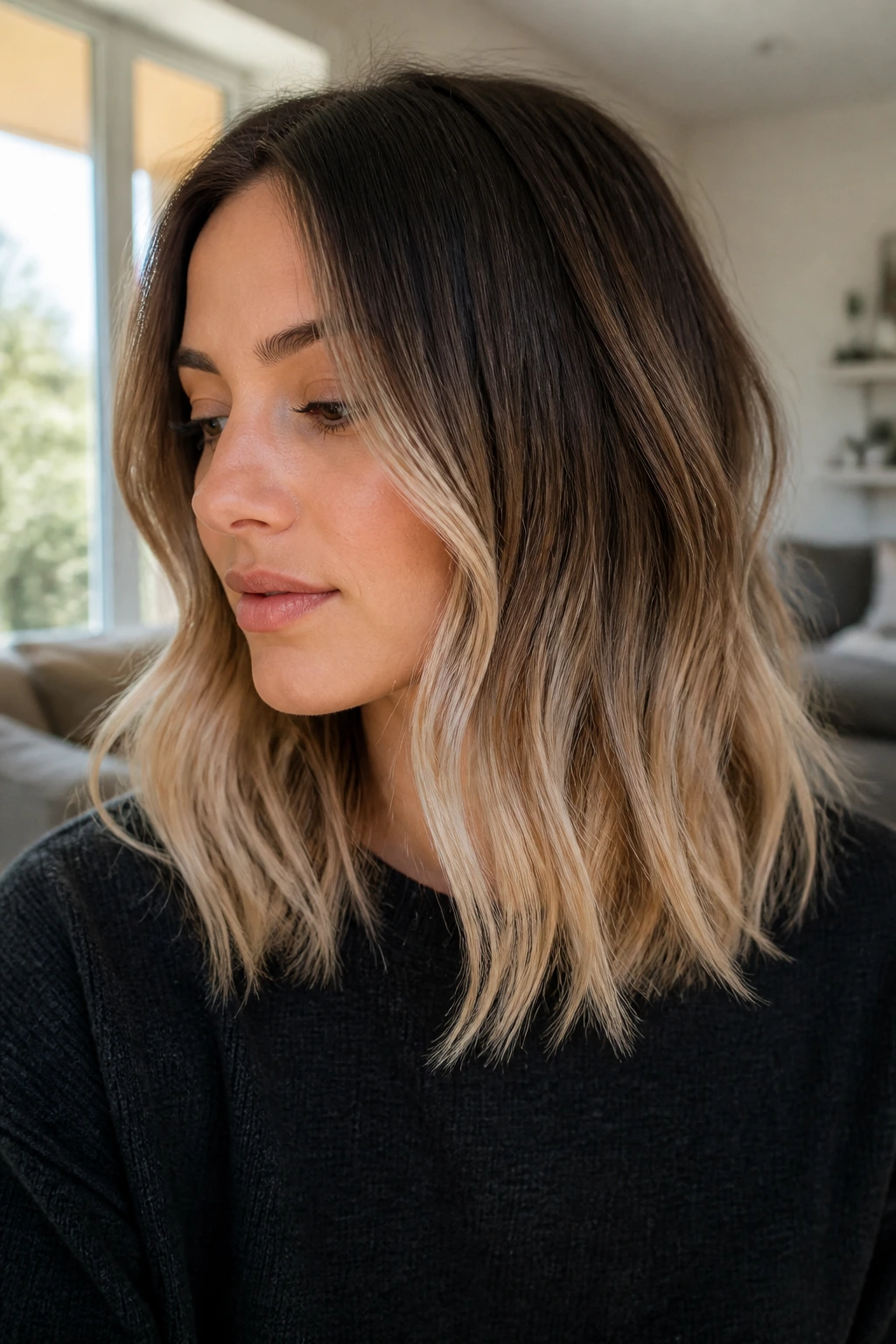
Vanilla cream ends are what I suggest when you want the bottom half of your medium-length hair to do more of the visual work. The root melt keeps the top soft and grown out, while the creamy ends make the haircut feel lighter and brighter. On a shoulder-length cut, that gradient looks deliberate instead of awkward.
This style is especially good if you like waves. The lighter ends catch the curve of the bend, so the hair appears fuller and more textured. With straight styling, the effect is cleaner and more graphic. Either way, the root melt keeps the grow-out from turning into a hard line.
The danger here is over-lightening the very ends until they look see-through. That’s why the toner and health of the ends matter so much. You want cream, not straw.
21. Bronze Balayage for Thick, Straight Hair
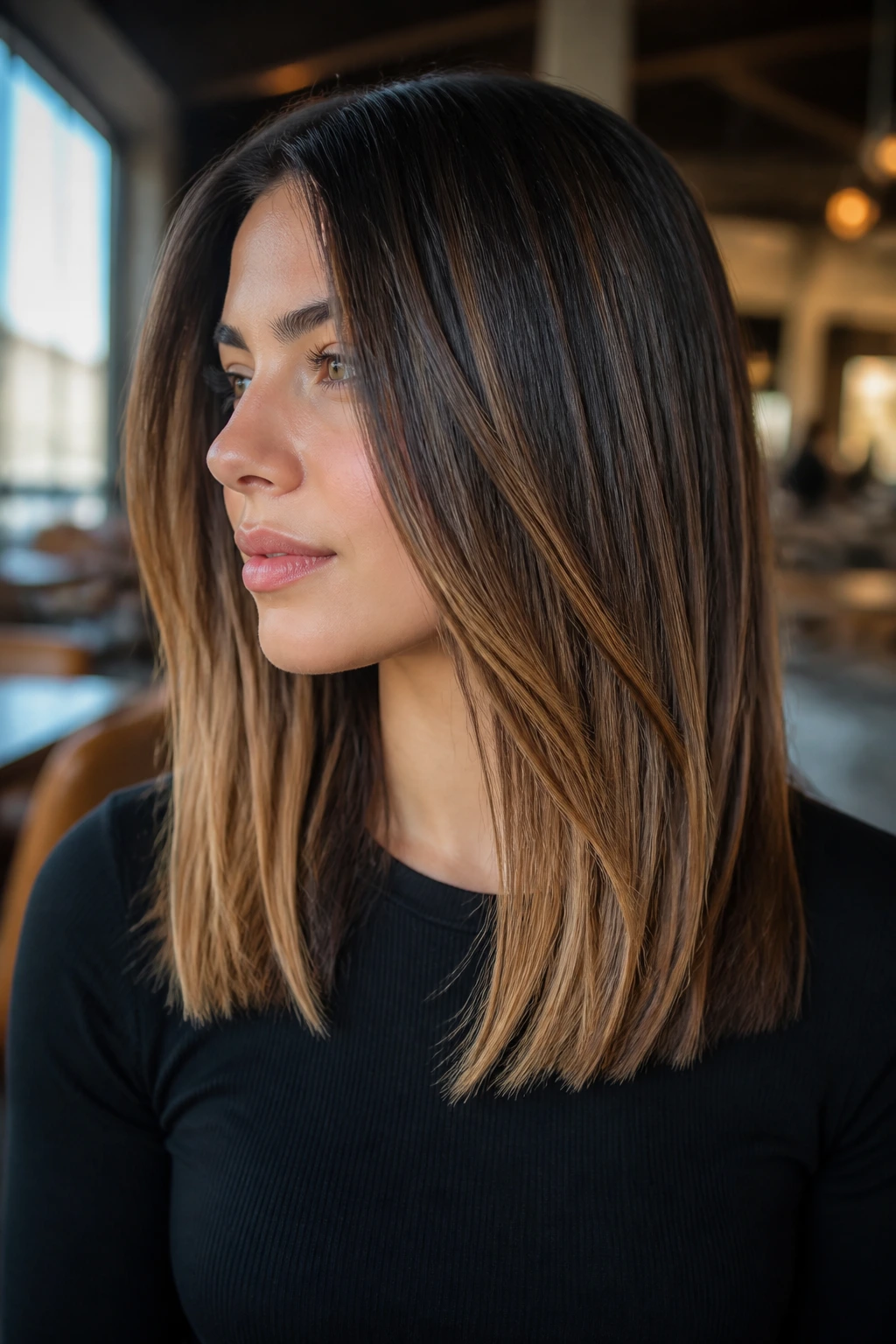
Thick straight hair can swallow color if the pieces are too fine. Bronze balayage solves that by using larger, deliberate panels that actually show through the density. On medium-length hair, the bronze tone adds warmth and movement without making the surface look busy.
I like this on hair that tends to feel heavy at the bottom. The bronze pieces break up the weight line and give the cut some life when it hangs straight. If you wear your hair tucked behind the ear often, the color looks even better, because the brightness pops in and out as the hair shifts.
A few larger hand-painted pieces through the outer layer work better than a thousand tiny foils here. The goal is visible depth. Not confetti.
22. Pearl Blonde Slices for a Polished Lob
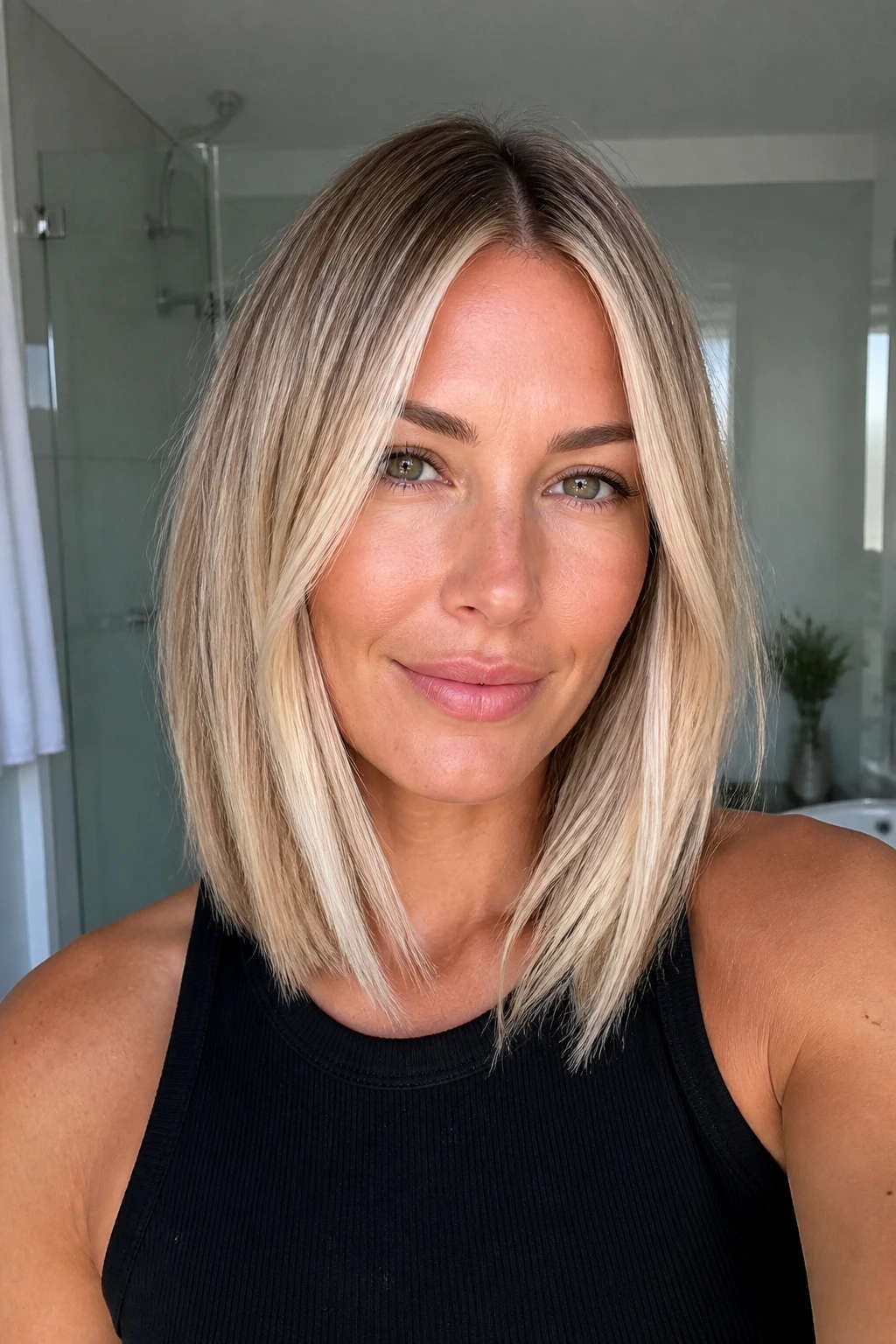
Pearl blonde is cool, clean, and a little luminous. On a polished lob, it can look extremely refined because the medium length gives the color room to sit on the surface without getting lost in too much hair. The pearl tone keeps the blonding from turning too yellow or too icy.
This style is for someone who likes crispness. The slices are more intentional than balayage and more fluid than chunky highlights, which means the haircut itself matters a lot. A blunt perimeter or softly beveled ends make the color look expensive. Messy styling can work too, but the color shines when the finish is smooth.
If your natural base is light brown or dark blonde, pearl blonde can brighten the whole cut without needing a full all-over lift. It’s controlled. That’s the appeal.
23. Toffee Lowlights on Blonde Hair
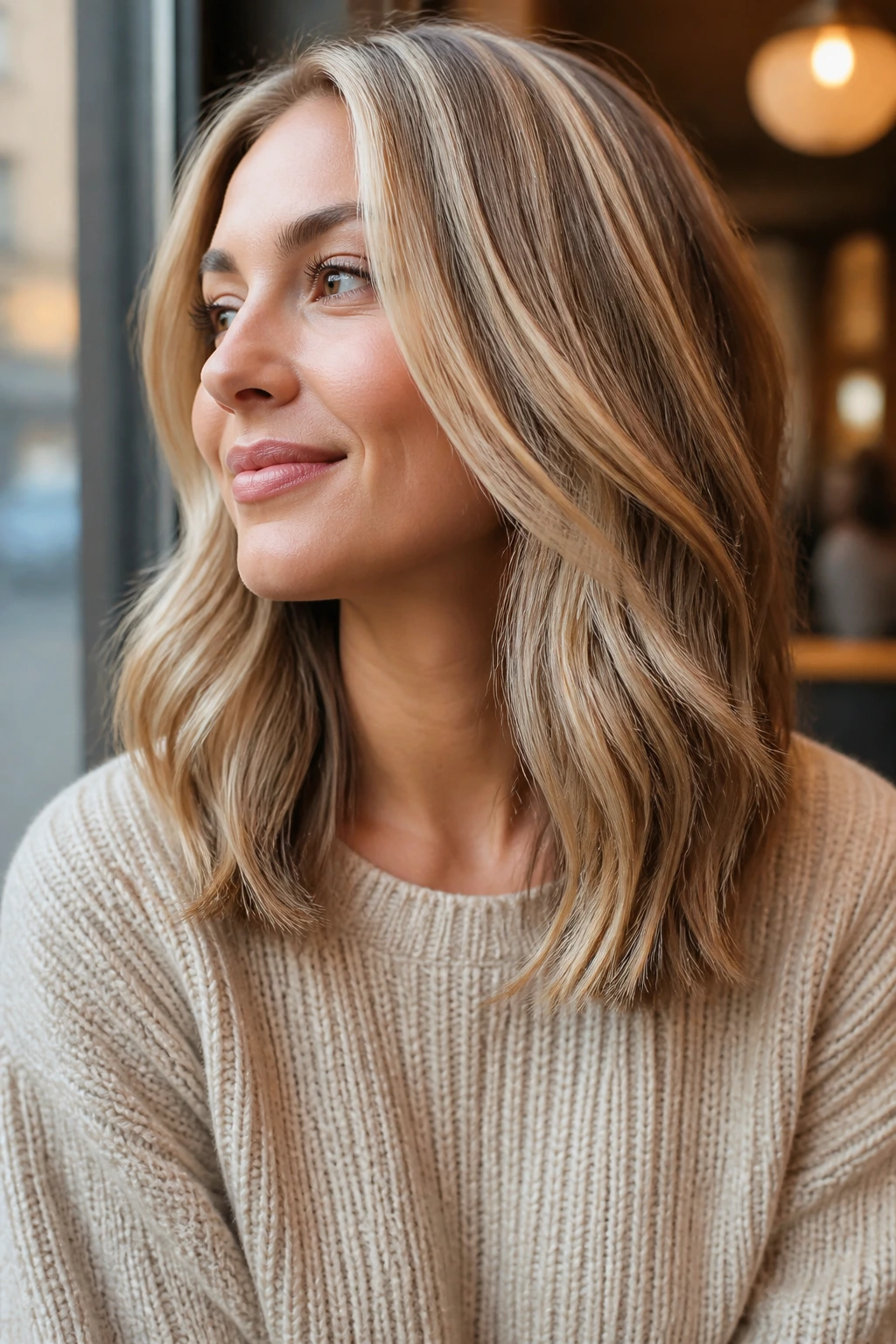
Toffee lowlights are the fix for blonde hair that has gone too light and started to lose shape. Medium-length hair is a good place for them because the added depth through the mids and ends makes the cut look fuller. You can still keep brightness around the face, but the hair gets its backbone back.
This is a useful move when a blonde lob starts to feel a bit hollow or dry. The darker ribbons create contrast, and contrast is what makes texture visible. Without it, layered medium hair can blur into one pale sheet.
I prefer toffee lowlights when the blonde needs a softer, more grown-up finish. They don’t erase the blonding. They give it somewhere to land.
24. Cherry Cola Highlights for a Moody Finish
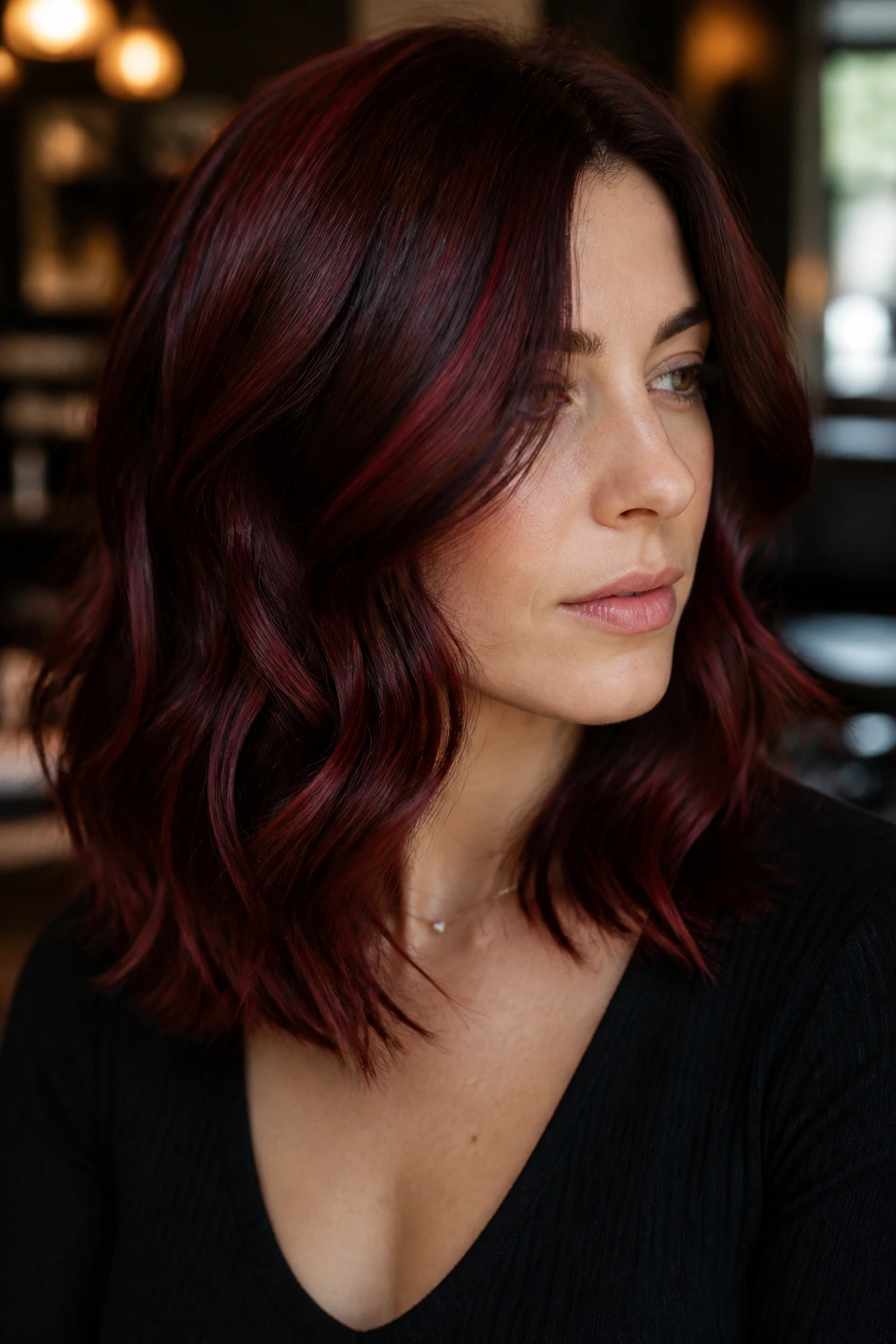
Cherry cola highlights are deep, rich, and just a little mysterious. On medium-length brunette hair, they can flash burgundy, red-brown, or plum depending on the light. That shifting quality is what makes them work so well on shorter lengths. The color doesn’t have to travel far to make an impression.
This look is best when you want something darker and more dramatic than caramel or copper. Cherry cola pieces give the hair movement without opening it up into full red territory. They work especially well in layered cuts, where the ends can catch the color and turn it almost wine-dark in motion.
If you like color that feels a little moody under indoor lighting and richer outside, this is an easy yes. It looks intentional with black clothing, gold jewelry, and a blunt medium cut.
25. Reverse Balayage to Add Depth Back In
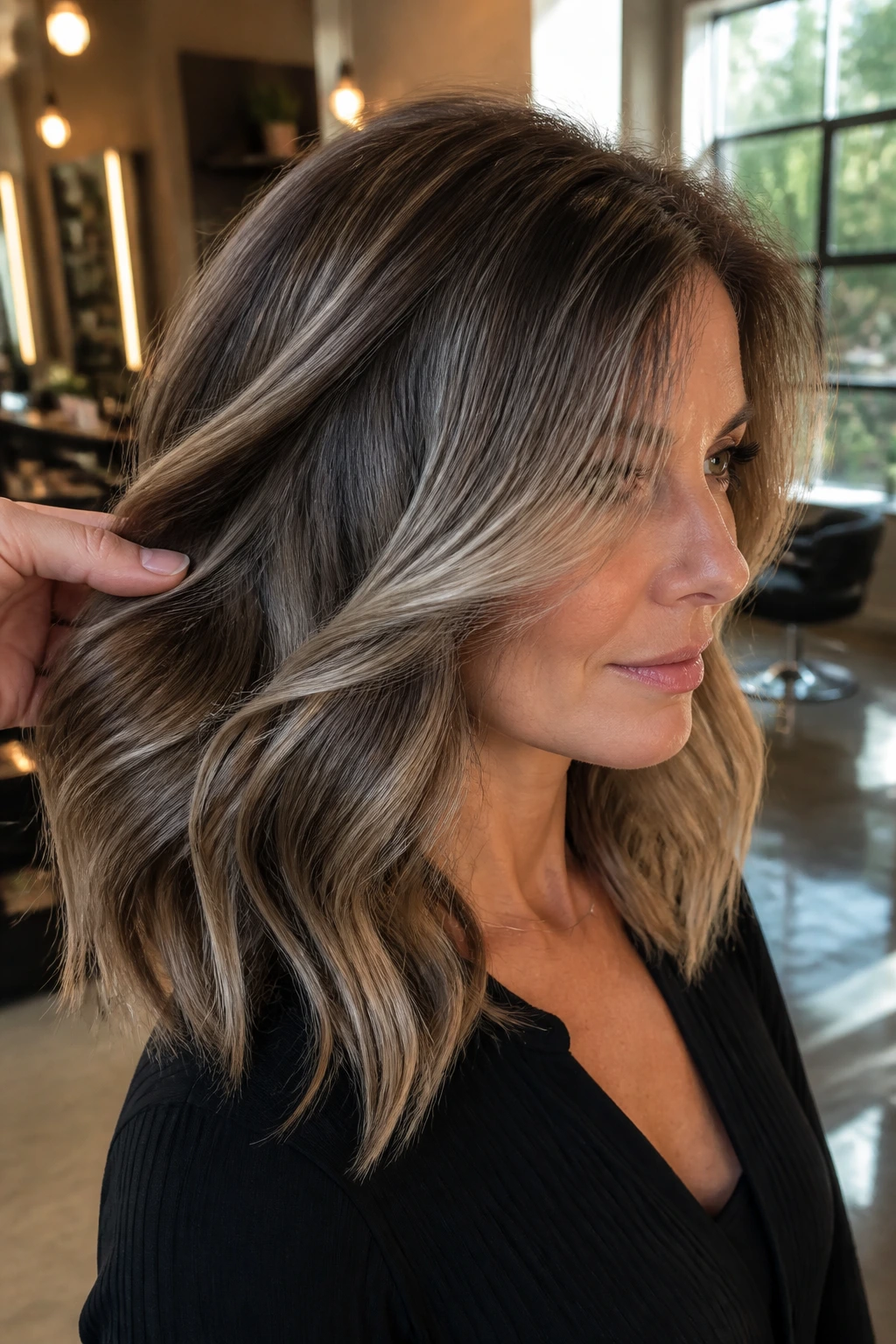
Reverse balayage is the move for hair that has too much light and not enough shape. Instead of brightening, you paint depth back into the mids and lower sections so medium-length hair stops looking washed out. That’s not a downgrade. It’s a correction.
This technique is especially useful when blonding has gone too far or when lighter hair needs more contrast to frame the face. On medium lengths, the darker pieces can live under the surface and around the perimeter, where they give the cut a stronger outline. The result feels fuller, more dimensional, and a lot more grown-up.
Sometimes the smartest color choice is not another round of lightening. Sometimes the answer is putting the shadow back where it belongs.
Why Medium-Length Hair Is the Sweet Spot for Highlight Placement
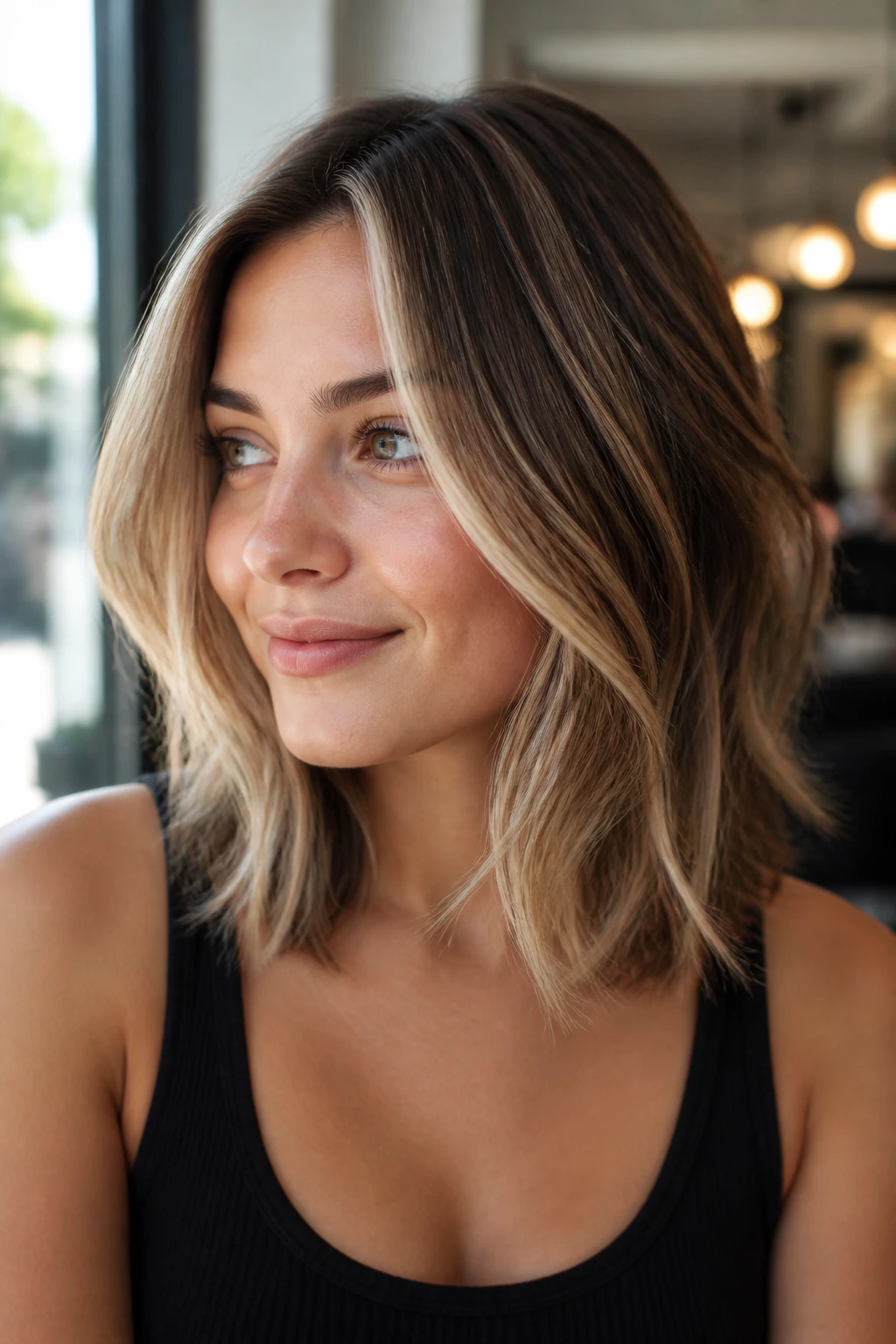
Medium-length hair gives a colorist room to build a gradient without losing the structure of the haircut. That’s the big advantage. On shorter cuts, highlights can pile up fast and turn noisy. On longer hair, they can drift downward and lose their shape. At collarbone or shoulder length, the color has a place to live.
The perimeter matters here. A medium cut has enough length to show darker ends, lighter face frame pieces, and a root melt all in one view. That means your color doesn’t have to do one job. It can do three. A strong highlight plan can shape the face, break up density, and make the haircut move even when it’s barely styled.
There’s also a practical side. Root regrowth tends to look softer on medium hair because the eye sees the haircut first and the grow-out second. That is a gift if you do not want to live in the salon chair every few weeks. A good placement map can stretch the life of the color without making it look neglected.
Essential Tools for Planning and Maintaining These Looks
- A few daylight photos of your own hair: Natural light shows brass, depth, and porosity better than bathroom lighting.
- Reference photos from the same haircut length: A lob photo on waist-length hair is not the same thing.
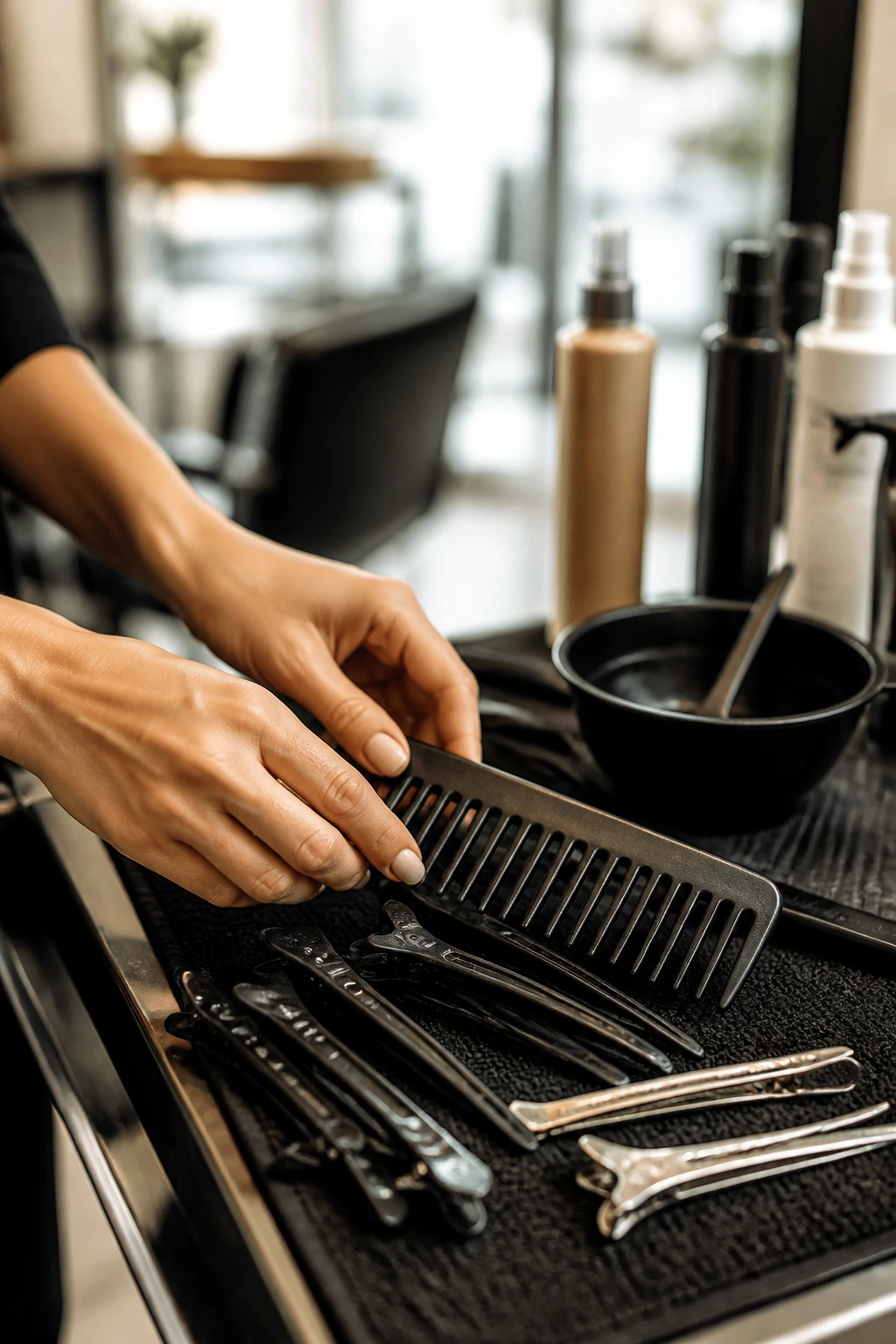
- Wide-tooth comb: Helpful for detangling without roughing up freshly toned strands.
- Color-safe, sulfate-free shampoo: Keeps toner from sliding out too fast.
- Purple or blue shampoo: Use it sparingly when blonde or ash tones start drifting warm.
- Heat protectant spray: Highlights and high heat are not friends.
- Sectioning clips: Useful if you style your hair in a way that needs clean parting or crown lift.
- Silk or satin pillowcase: Reduces friction on lightened ends.
- Deep conditioning mask: Good once a week if your hair was lightened more than 2 shades.
- A gloss or toner appointment note: Write down the tone you liked most so you can ask for it again.
How to Pick the Right Tone and Placement
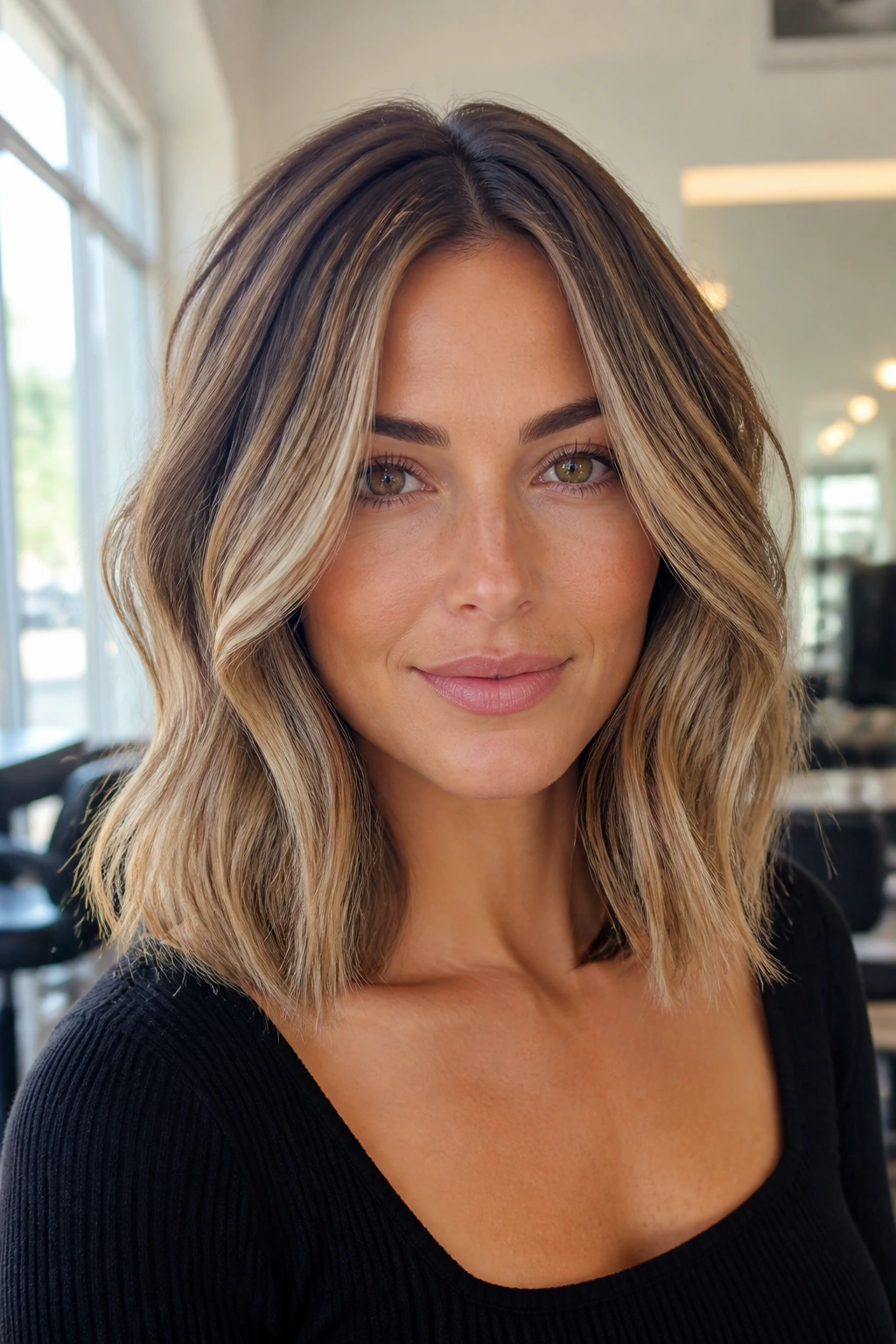
The fastest way to ruin medium-length highlights is to pick a tone you like on somebody else’s hair but not on your own base. That sounds obvious. People still do it all the time. A cool ash blonde on porous golden hair can go dull fast. A warm caramel on a very dark base can read orange if the lift is not strong enough.
Start with your base level. If your hair is level 4 or 5, a two-level lift usually looks believable and dimensional on medium hair. If you want to go four or five levels lighter, the highlight needs to be softer, finer, and more blended so the contrast doesn’t turn into bars. That matters even more on blunt cuts, where every line shows.
Placement should follow the haircut, not fight it. Face-framing pieces should live where the hair naturally curves around the cheekbone or jaw. Brightness through the crown helps movement. Lighter ends can make the cut feel airier. If you wear your hair tucked behind one ear most days, make sure that side gets enough brightness to be seen in profile.
Bring pictures, yes, but bring the right kind. A photo with the same cut length, similar texture, and a base close to yours is worth five salon screenshots that look pretty and mean nothing.
How to Wear These Highlights Without Wasting the Dimension
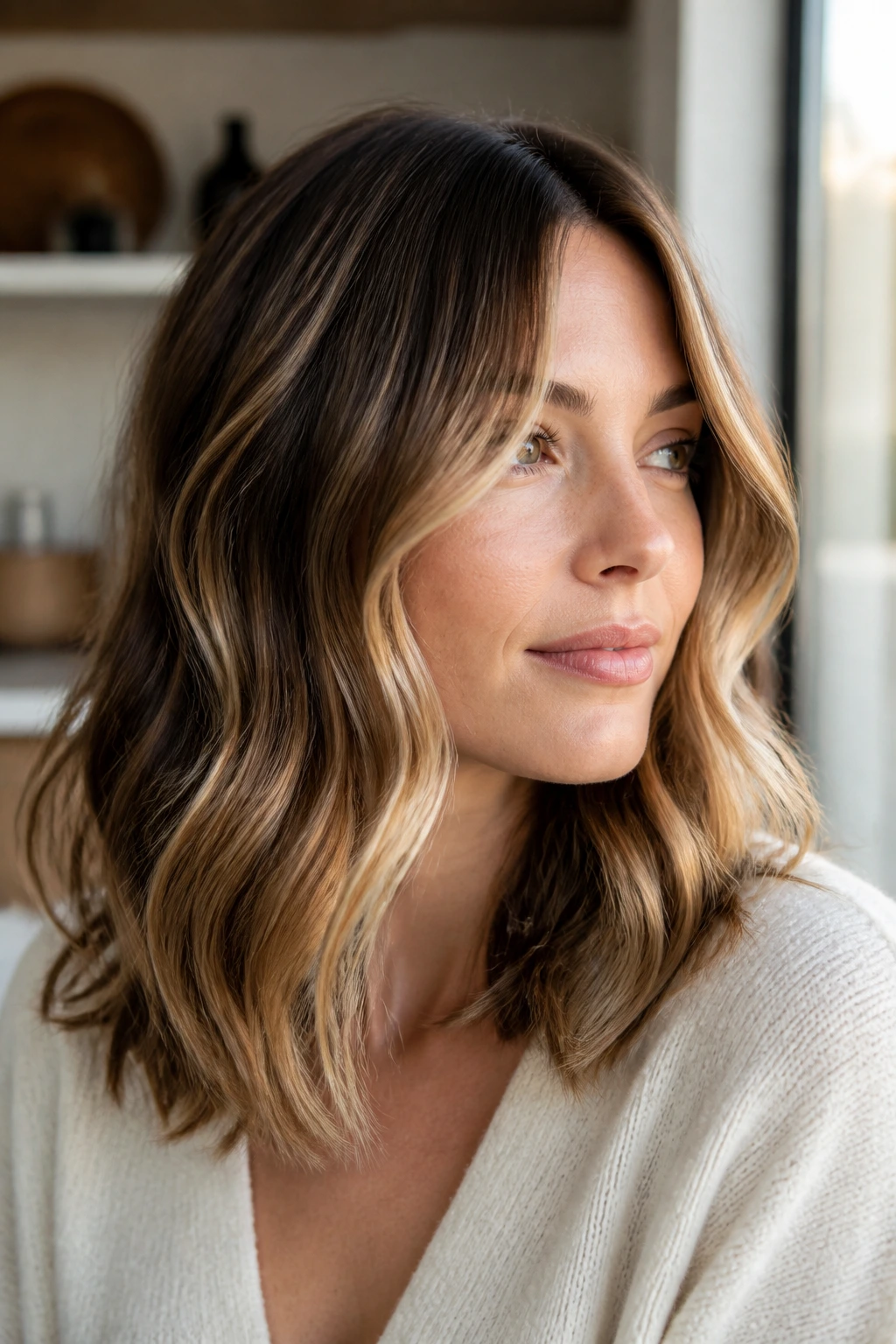
Presentation: Loose waves show off ribbons, baby lights, and lowlights best because the bends separate the strands. A straight blowout favors money pieces, clean foilayage, and chunky modern highlights. If you want the color to read from across the room, switch your part once in a while.
Accompaniments: Medium-length layers, curtain bangs, blunt ends, and a soft shag all change how the color sits. A blunt lob makes slices and contour pieces look sharper. Layers make balayage feel softer. If your haircut is heavy at the ends, ask for a little more contrast there so the perimeter does not disappear.
Portions: If you want a subtle result, ask for brightness in the top layer and around the face only. If you want more drama, let the color move through the crown and outer perimeter too. That one choice changes the whole mood. A little light goes a long way on medium hair.
Finish: A lightweight serum on the ends and a gloss at the salon keep highlights from looking dry. Texture spray can help dimension show up in waves, but don’t drown the hair in grit. You want movement, not fuzz.
Practical Tips That Make the Color Look Expensive Longer
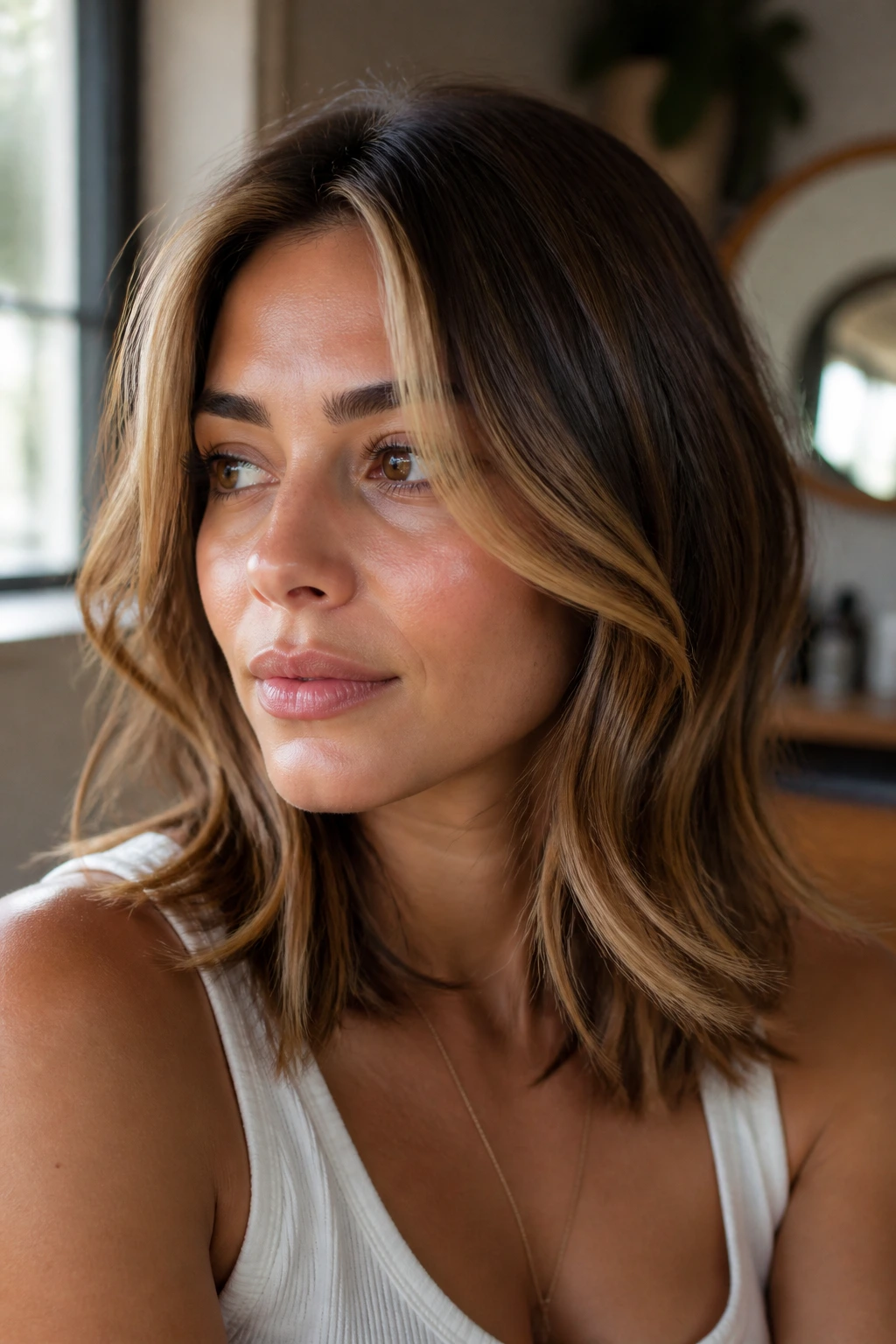
Gloss Enhancement: A clear or tinted gloss every 6 to 8 weeks keeps blonde, caramel, copper, and brunette highlights from drifting dull. It’s one of the easiest ways to keep medium hair looking fresh without lightening it again.
Customization: Ask for one stronger face frame piece and then keep the rest softer if you like contrast but hate maintenance. Or flip it: keep the front quiet and put the brightness through the crown if you wear your hair up a lot. Small changes in placement matter more than people think.
Pro Move: If your hair is layered, tell the colorist where the shortest face pieces fall when your hair is tucked behind the ears. That little detail can make the highlights look intentional in real life, not just in a salon mirror.
Make-It-Yours: If you like low-maintenance color, choose balayage, baby lights, or a root melt. If you want something bolder, choose a money piece, chunky placement, or a stronger tonal contrast. If your hair is curly, ask for wider ribbons so the color doesn’t vanish in the curl pattern.
Mistakes That Flatten Medium-Length Highlights
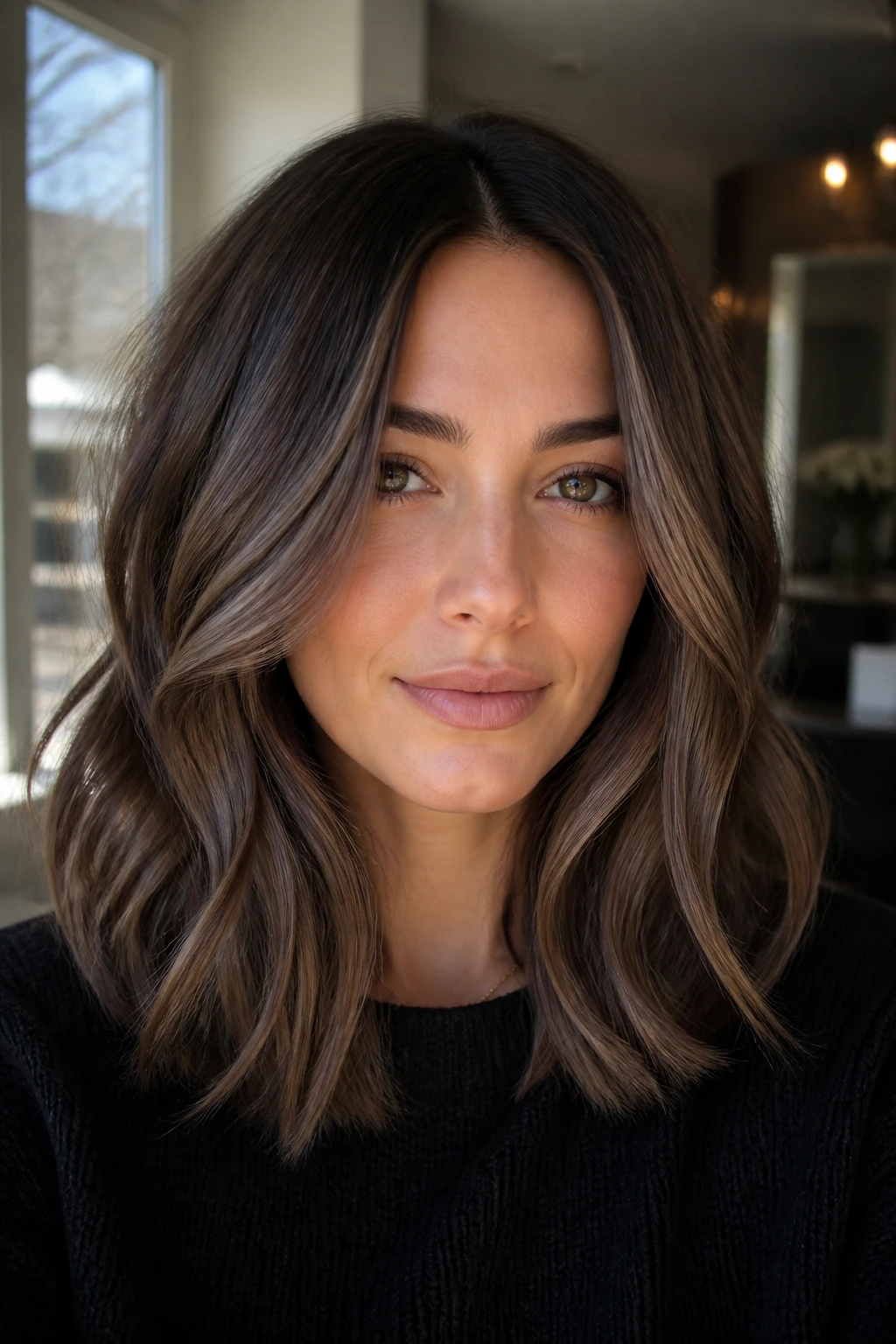
The most common mistake is choosing a highlight pattern that ignores the haircut. If the pieces are too high, too dense, or too evenly spaced, medium hair can look striped from root to tip. The fix is softer placement and more room between bright pieces.
Another problem is over-toning. Hair that was meant to be beige can end up flat and gray. Hair that should be copper can go muddy. If the toner looks dull in the bowl, it usually looks duller on the head. Ask your colorist to leave some warmth if that’s what keeps the tone alive.
Porous ends cause trouble too. Medium-length hair often has older ends that grab color fast, which can make highlights look patchy or see-through. A good colorist will lighten those ends more carefully or keep them deeper so they don’t turn crunchy and pale.
And then there’s the grow-out line. A hard line at the root looks harsher on blunt medium hair than it does on layered long hair. Shadow roots and soft blending solve that. So does not trying to make every piece equally bright.
Fresh Twists and Alternative Ways to Wear the Same Color
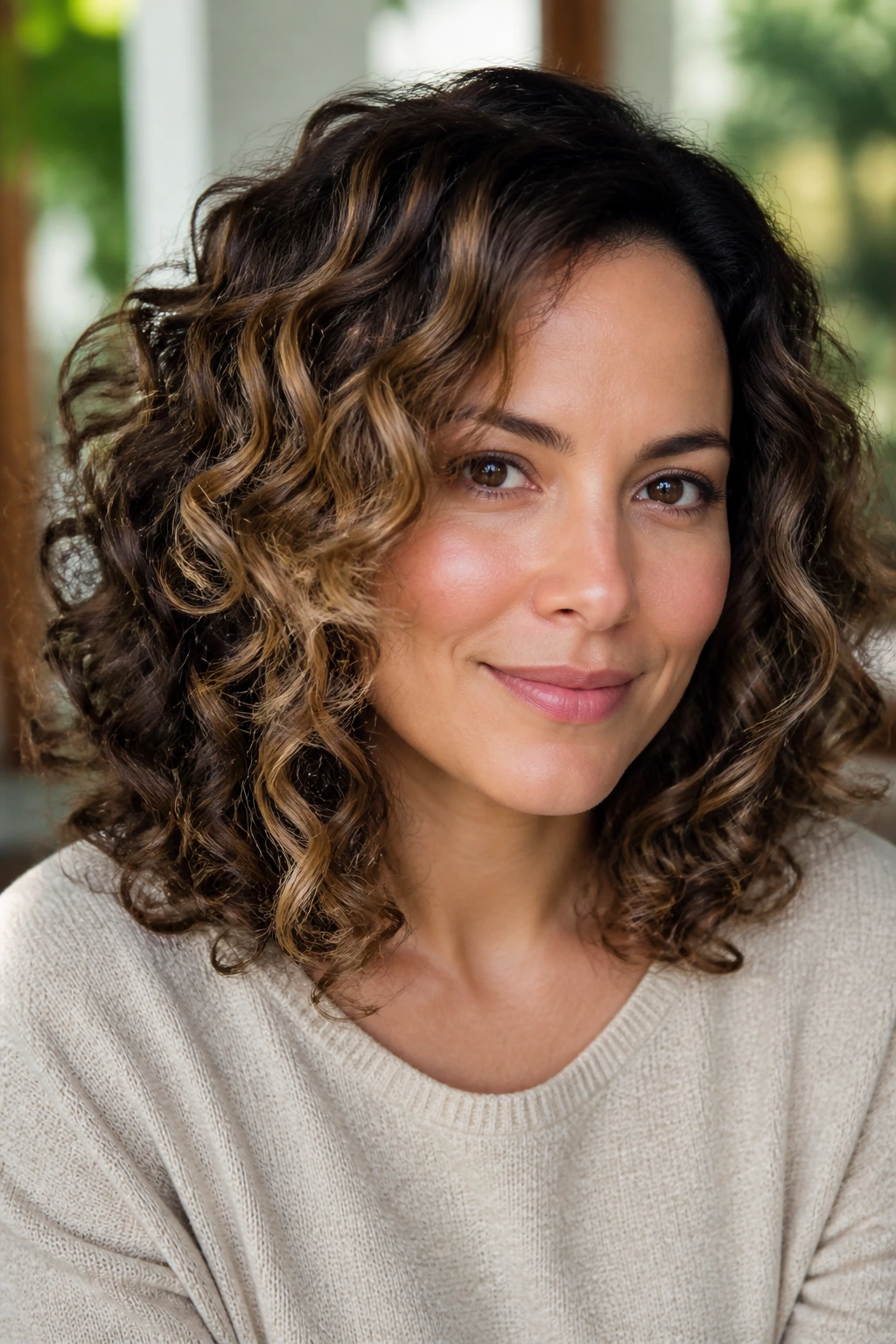
Curly Ribboning: On curly medium hair, ask for wider ribbons that can show through the curl pattern. Tiny foils often vanish once the curl tightens, which is a waste of time and money.
Brunette-First Dimension: If you like your base dark, keep 70 to 80 percent of the hair in brunette territory and let only the face frame and outer layer go lighter. That gives you movement without giving up the richness of your natural color.
Low-Maintenance Root Shadow: A deeper root makes almost every highlight idea easier to live with. It softens regrowth, helps the color last longer, and keeps medium hair from looking overprocessed at the scalp.
High-Contrast Weekend Brights: Keep the base dark and push brightness into the money piece, ends, or a few chunky slices. This is for people who want the color to read as a decision, not a whisper.
Soft Grow-Out Balayage: If you hate salon upkeep, keep the blend soft, the weaves fine, and the lightness slightly off the root. The result should fade gracefully, not collapse into a hard band.
Make-Ahead, Refresh, and Maintenance Guidance
Medium-length highlights don’t need babying, but they do need a schedule. Freshly lightened hair usually looks best for the first couple of weeks after a toner or gloss. After that, warmth starts creeping in, especially around the face and the ends, where the hair gets the most sun and heat.
For blonde, beige, ash, and pearl tones, use a purple shampoo about once a week if the hair starts turning yellow. If the tone is still clean, skip it. Overusing purple shampoo can make the hair look flat or slightly dull, and that is harder to fix than mild brass. For copper, caramel, and honey tones, use a color-safe shampoo and lean on gloss instead of purple shampoo.
Heat styling matters. If you use a flat iron or curling wand several times a week, a heat protectant is not optional. It keeps the highlight tone from getting fried and fuzzy at the ends. Medium-length hair usually gets enough styling to benefit from a lightweight spray before every hot-tool session.
Most balayage and rooted highlight looks can go 8 to 12 weeks before a refresh, sometimes longer if the placement is soft. Babylights and brighter blondes usually ask for more frequent toning, around every 6 to 8 weeks, if you want the color to stay crisp. If the ends start feeling rough or translucent, that’s the sign to stop chasing light and start trimming.
Common Questions About Medium-Length Hair Highlights
Do highlights make medium hair look thicker?
They can, if the placement is smart. A mix of lighter ribbons and darker depth creates contrast, which makes the hair look fuller. Flat, all-over brightness usually does the opposite.
Are balayage or foils better for medium-length hair?
Balayage is better if you want softness and easier grow-out. Foils are better if you want stronger lift, a more precise money piece, or a brighter blonde result. A lot of the best medium-length color uses both.
How light should highlights be on medium brown hair?
Two to three levels lighter is often enough for a natural result. If you go much lighter, the pieces need to be finer and more blended or they can start looking obvious. Medium length hair shows contrast quickly.
Can I get highlights if my hair is already colored?
Yes, but the plan depends on what’s already there. Previously dyed hair lifts differently than virgin hair, and old warmth can resurface under lightener. A strand test is worth asking for if you’re going lighter again.
What if my highlights look too chunky?
That usually means the weaves were too wide or the spacing was too even. A toner won’t fix the shape, but adding lowlights or a root shadow can soften the look. Next time, ask for finer sections around the face and crown.
How do I keep blonde highlights from turning brass?
Use a color-safe shampoo, protect the hair from heat, and tone it before it gets too yellow. Once brass shows up heavily, fixing it takes more than one purple wash. Staying ahead of it is easier.
Will highlights damage shoulder-length hair more than long hair?
Not because of the length itself. Damage comes from how much lightening the hair can tolerate and how often it gets heat-styled. Medium hair often has older ends, so the last inch or two may need extra care.
What should I ask for if I want low-maintenance color?
Ask for balayage, babylights, or a root melt, and keep the brightest pieces away from the scalp. Those choices let the grow-out soften instead of shouting. They also buy you more time between appointments.
Finding the Right Light for Your Hair
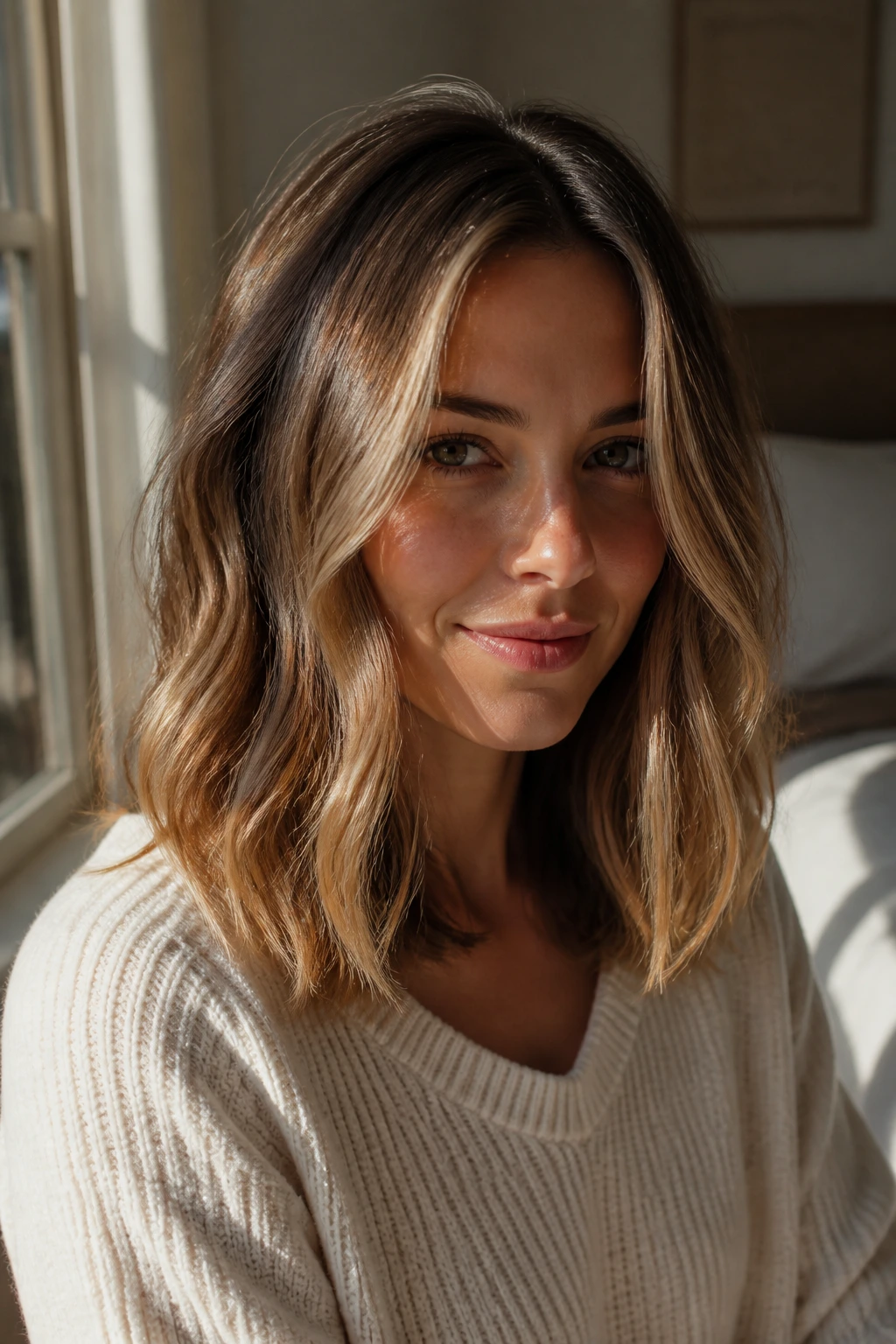
Medium-length hair is honest hair. It shows the placement, the tone, the grow-out, and the trim line all at once, which is why good highlights feel so satisfying here. A few ribbons in the right spot can do more than a full head of brightness ever could.
The best versions have shape. Honey around the face. Smoke through brunette mids. Pearl near a blunt edge. Depth tucked underneath. Once the haircut and color start talking to each other, the whole thing looks planned instead of pasted on.
Choose the idea that fits your maintenance tolerance, your base color, and the way you actually wear your hair. That’s the real filter. Not the salon photo. Not the trend. Just the version that still makes sense when you catch yourself in a car mirror two weeks later.
