



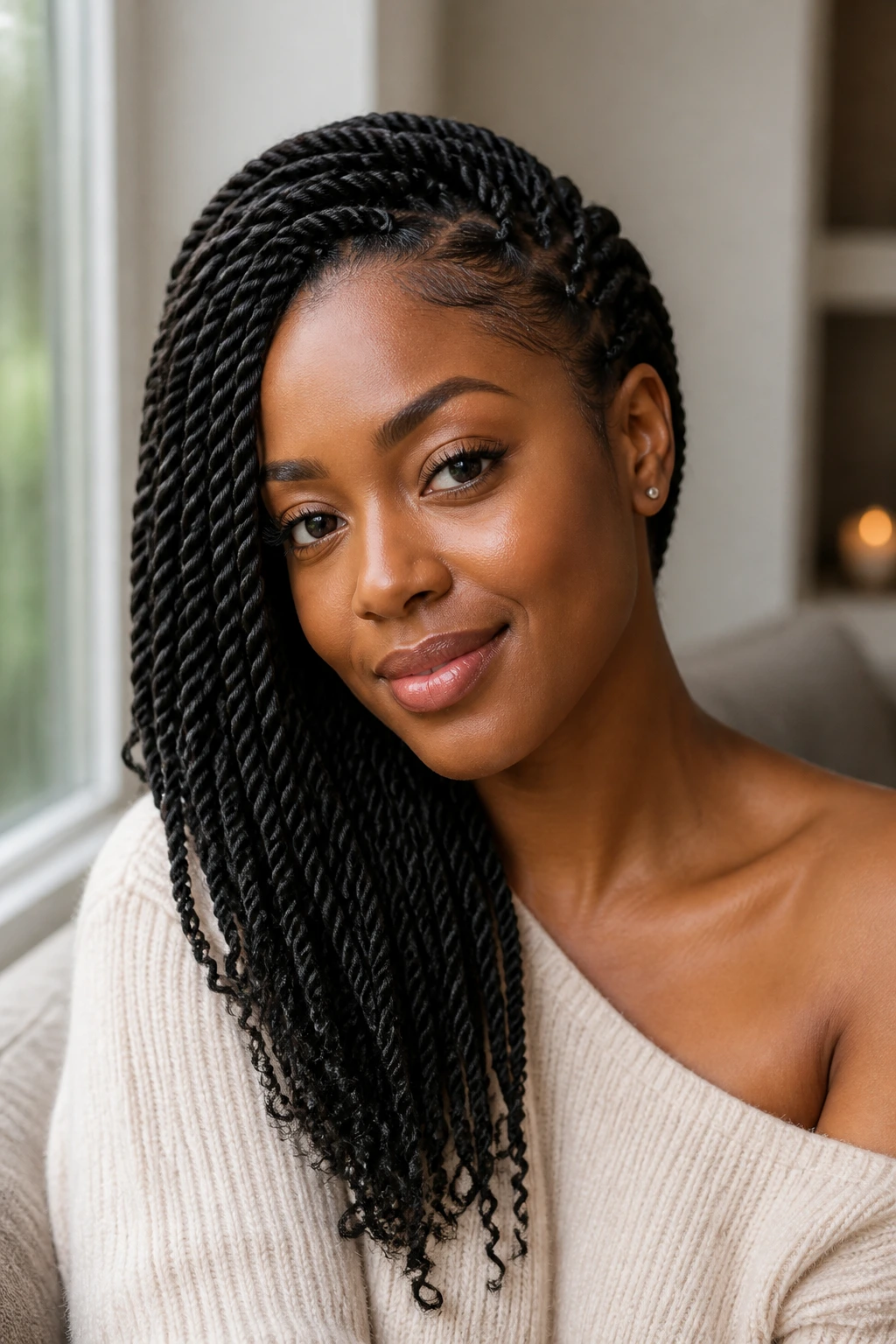
Medium-length hair is the sweet spot for Senegalese twist styles. The twists have enough length to swing past the jaw, but they stop before they turn into a heavy curtain that bumps against your coat collar, shoulder bag, and car seat all day.
That middle ground matters more than people think. Shoulder-skimming twists can look crisp and intentional, then go limp fast if the parting is sloppy or the extension hair is too slippery. A good medium-length install does the opposite: the rope texture shows, the parts stay visible, and the style still gives you room for a low bun, a side sweep, or a half-up knot when you get bored halfway through the wear.
Medium hair also changes the weight conversation. You do not need the kind of length that drags, and you do not need the kind of density that hides the scalp work. That makes this one of the easiest lengths for clean triangle parts, face-framing pieces, and styles that look finished without trying too hard. The trick is choosing the version that fits your face, your routine, and how much daily fussing you can tolerate before the whole thing starts feeling like a job.
Why Medium-Length Senegalese Twists Work So Well
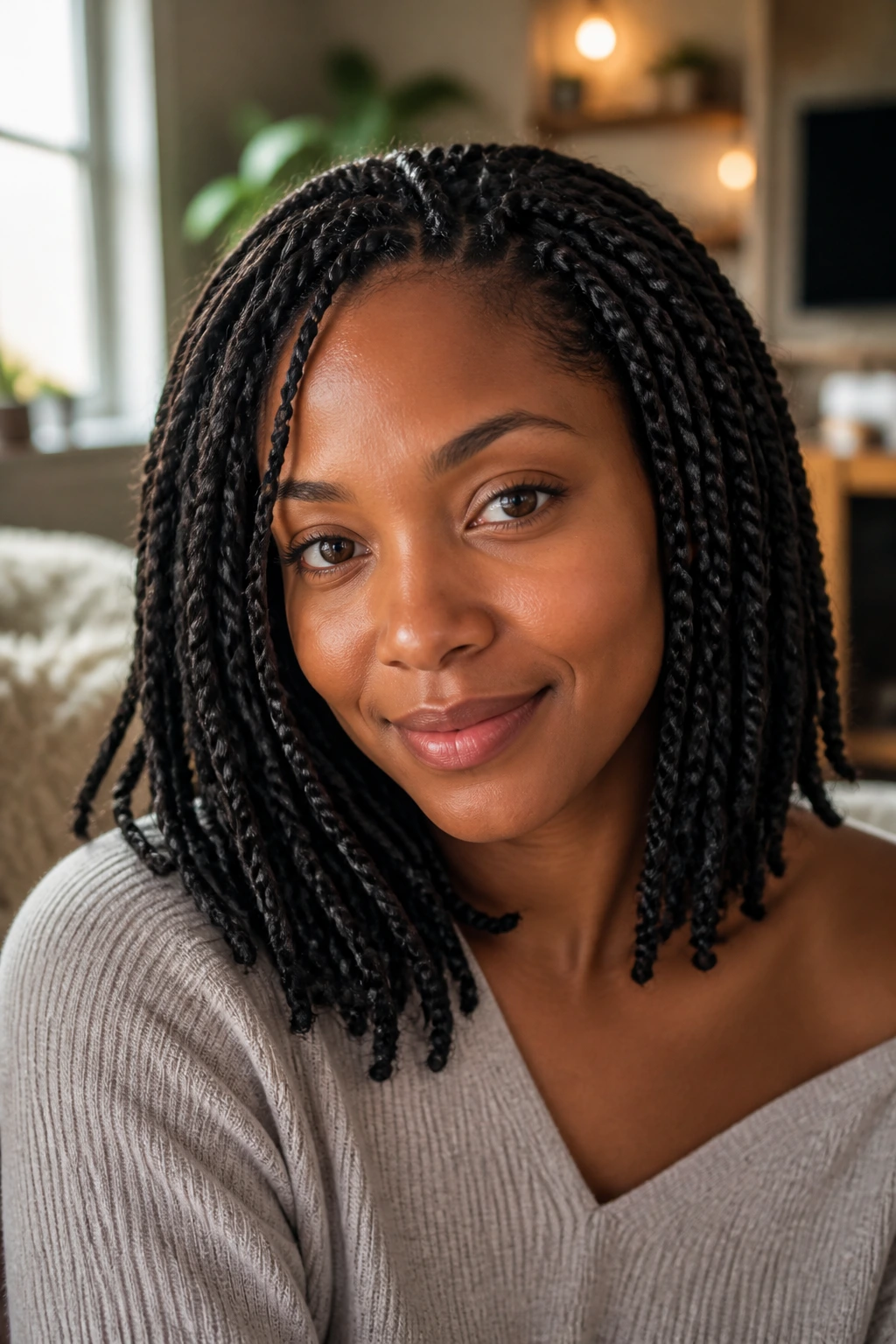
-
Balanced weight: Medium-length twists sit around the shoulders instead of hanging down your back, so they move when you walk without pulling on the nape all day.
-
More styling options: You can still pull them into a low bun, ponytail, half-up crown, or side sweep without fighting a pile of extra length.
-
Cleaner part visibility: On medium hair, triangle parts, curved parts, and side parts stay easy to see instead of getting buried under heavy extension length.
-
Less scalp strain: A shorter finished length usually means less weight at the roots, which matters if your scalp gets tender after tight installs.
-
Easier upkeep: It’s simpler to refresh frizz, wipe the part lines clean, and massage the scalp when the twists live around the neck and shoulders, not down the spine.
-
Better shape retention: Medium-length Senegalese twists keep their silhouette longer because they’re not rubbing against your waistband, chair back, and jacket collar every five minutes.
1. Shoulder-Skimming Classic Senegalese Twists
Shoulder-skimming twists are the version I reach for when I want the style to look finished on day one and still behave on day ten. The ends land around the collarbone or just above it, which gives the rope texture enough movement without making the whole head feel heavy.
Why It Works on Medium Hair
Medium hair gives this style room to breathe. If the twists are too long, the shape starts to sag; if they’re too short, the install can look stubby. Shoulder-skimming length sits in that exact middle zone where the parts show, the ends swing, and the whole style still feels neat after a long day.
Ask for medium-sized parts and a slightly tapered shape at the front. That keeps the hairline from looking boxy, which is a common problem when people make the front row too uniform. The look is simple. That’s the point.
- Best for: Everyday wear, office settings, errands, and anyone who wants low-maintenance movement.
- Ask for: Collarbone length with clean square or brick parts.
- Watch for: Heavy ends that dip too low and drag the shape down.
- One small upgrade: A touch of mousse on the finished twists keeps the surface smooth without making them stiff.
2. Deep Side-Part Senegalese Twists
A deep side part can rescue medium-length twists that feel too plain. Shift the part just off-center—far enough to show intention, not so far that the style starts collapsing to one side—and the face instantly gets more shape.
The magic here is in the line itself. A clean side part slices through the crown and gives one side more fullness, which is useful if one temple sits flatter than the other. It also softens a strong jaw or a rounder face without needing extra length or extra hair.
If your natural growth pattern makes the middle of your hair want to split anyway, this is the version that stops the fight. I like it with medium parts and a little extra fullness near the front so the sweep has something to land on. Tiny parts can disappear under the angle. Medium ones hold their shape.
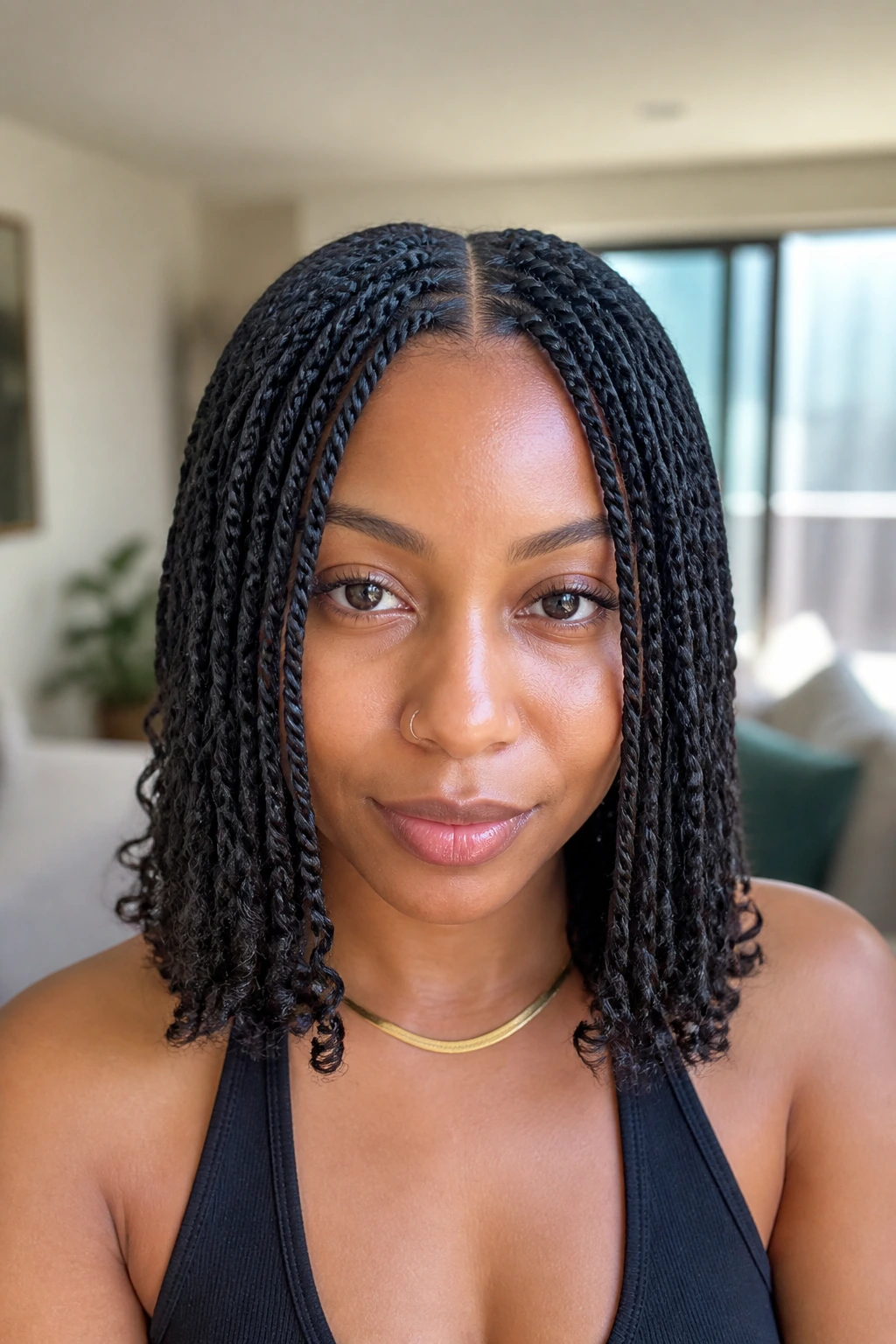
3. Center-Part Curtain Twists
Why does a center part work so well on medium-length Senegalese twists? Because it creates a long vertical line right down the middle, and that line does a lot of visual work. It makes the face look more open, and it gives the twists a clean frame that doesn’t depend on extra styling.
This version is especially good if you like symmetry but don’t want the style to feel flat. The front pieces fall like curtains on either side of the face, and at shoulder length they still move without tangling in your neckline. The trick is to keep the front twists a touch smaller than the back row so they don’t overpower your cheekbones.
What to Ask For
- A straight, crisp center part from forehead to crown.
- Slightly narrower front rows so the face doesn’t get swallowed.
- Ends that stop around the shoulders, not the upper chest.
- A light mousse finish so the part stays visible instead of fuzzy.
This is one of those styles that looks plain until you see it on a real head. Then it clicks.
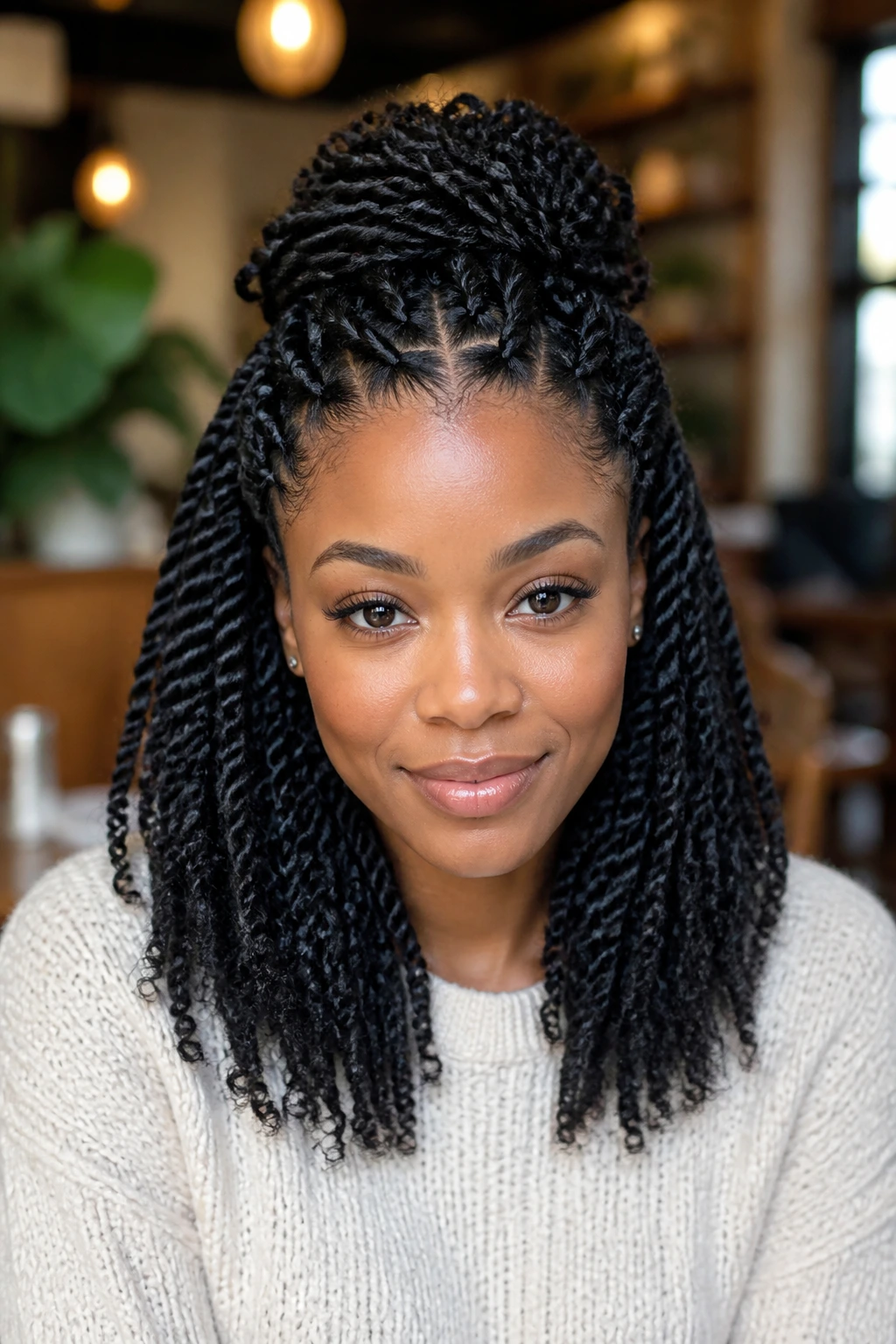
4. Half-Up, Half-Down Crown Twists
Picture this: you’re trying to get your hair off your neck, but you don’t want to commit to a full bun because, frankly, that can feel too severe. Half-up, half-down Senegalese twists live right in that middle space and make medium length hair work harder than it has any right to.
The top half can be gathered into a small knot, a folded puff, or a simple wrapped pony at the crown. The bottom half stays loose, which keeps the style from looking over-styled or stiff. On medium hair, this works because there’s enough length to create the lift, but not so much that the upper section drags the whole shape backward.
I like this style most when the front pieces are left a little softer. Tight pulling at the hairline kills the whole mood. Loose enough to move, secure enough to stay put. That’s the sweet spot.
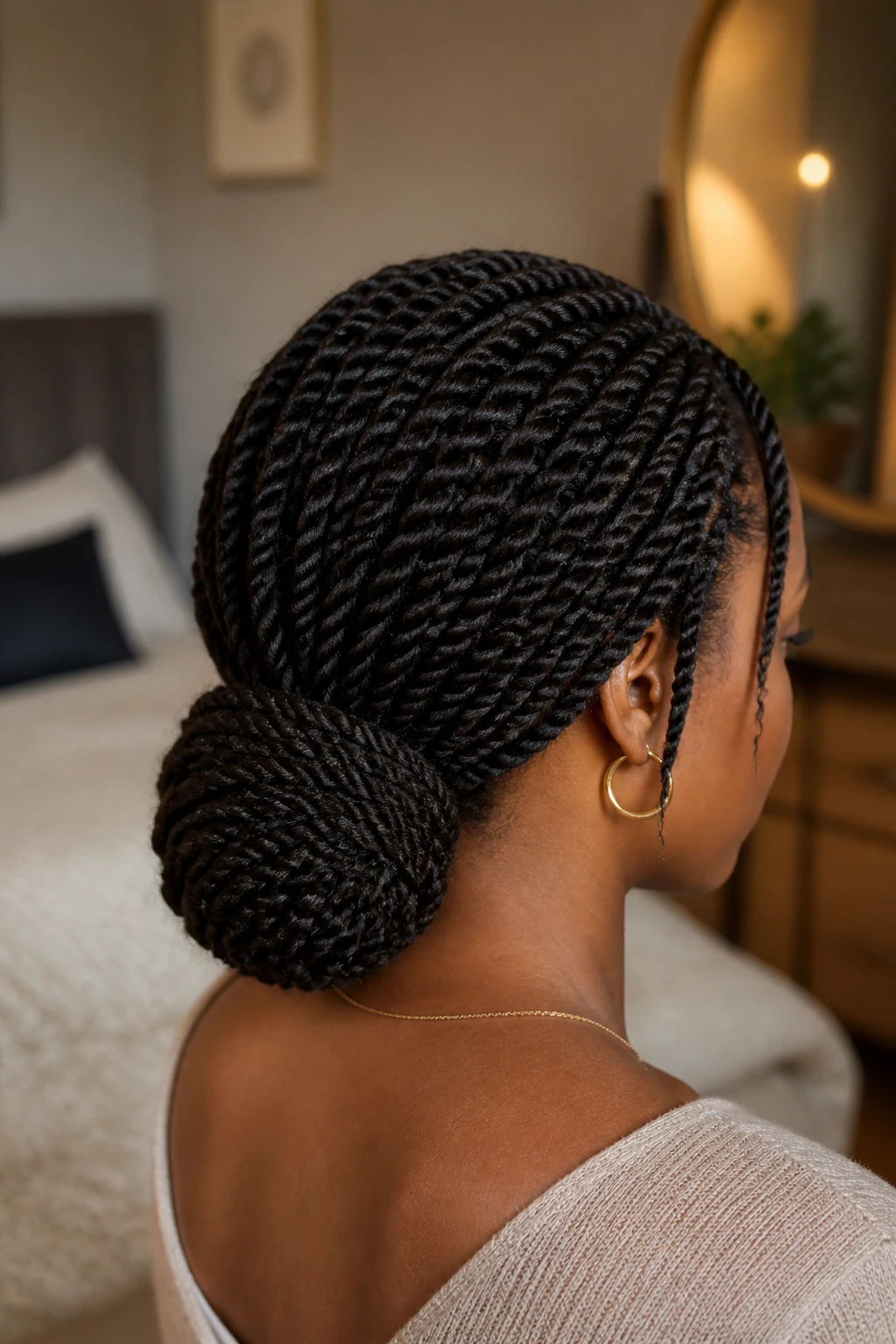
5. Low Wrapped Bun Senegalese Twists
A low bun turns medium-length twists into something sharp and grown-up without making them feel old-fashioned. Gather the twists at the nape, twist or fold them into a bun, then wrap the last few ends around the base so the finish looks deliberate instead of accidental.
This one is especially useful on humid days, rainy days, or days when you want every strand off your face. Medium length is perfect here because the twists are long enough to coil, but not so long that the bun becomes bulky and top-heavy.
Wait a day or two after installation before pulling the bun too tight. Fresh installs settle, and the roots need that grace period. If you pin too soon, the base can feel sore in a way that has nothing to do with the actual style and everything to do with impatience.
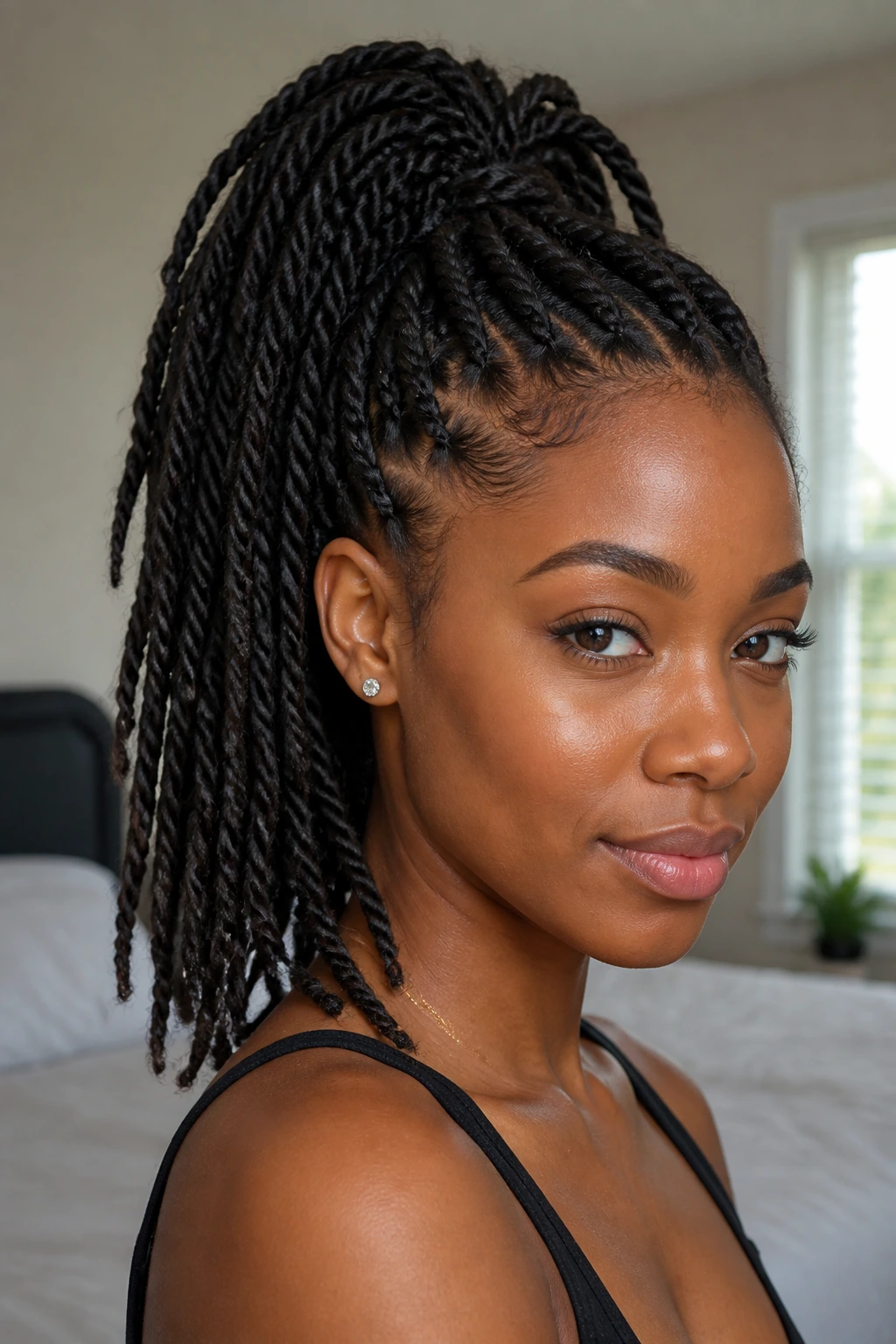
6. High Ponytail Twist Lift
A high ponytail brings out the bounce in Senegalese twists, but medium length matters here because you want lift, not collapse. The hair should gather high on the crown, then fall in a thick rope over the back of the head instead of sinking under its own weight.
Unlike a low bun, this style wants a firmer base. Use a snag-free elastic, then hide it with one wrapped twist or a small extension piece. If the ponytail sits too low, the whole style loses its energy. Too high, and the roots start complaining.
I’d use this when you want the install to feel lighter on the face. It opens the neck, shows the cheekbones, and gives the twists a clean swing when you move. Keep the front smooth, but do not flatten it so much that the style looks pressed down.
7. Side-Swept One-Shoulder Twists
Some days, hair just wants to live on one side. Side-swept Senegalese twists answer that mood without much fuss.
Pull the bulk of the style over one shoulder and pin the opposite side behind the ear or at the temple. On medium-length hair, this creates a strong diagonal line that feels softer than a center part and less formal than a bun. It’s also a smart move if one side of your face is your favorite side. We all have one.
The style looks especially good with medium-sized twists, because the individual rope pattern still shows instead of turning into one big mass. Leave a few front pieces loose if you want movement around the cheek and jaw. It keeps the shape from becoming too one-note.
8. Triangle-Part Precision Senegalese Twists
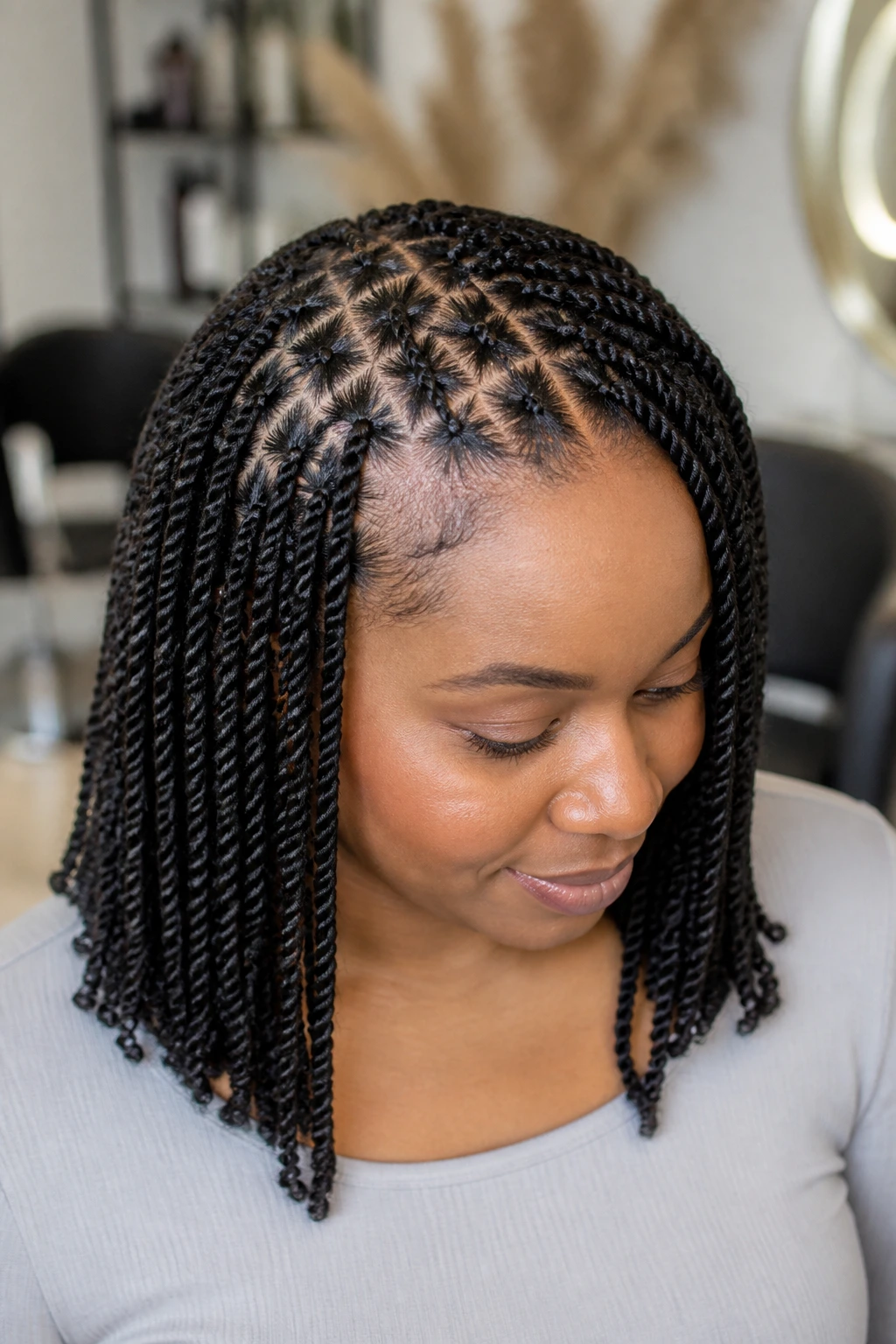
Triangle parts are the style for people who notice details. The parting pattern alone changes the whole mood of the install, even if the twist size stays the same. On medium hair, triangle sections show up clearly and give the scalp a graphic, almost quilted look that square parts can’t match.
This style works because the geometry does half the styling for you. The parts create small visual breaks across the head, so the twists look more polished even when the rest of the finish is relaxed. I also like triangle parts on medium hair because they help a shoulder-length install look fuller without needing extra length.
The Small Stuff Matters
The triangles need to be clean at the base, not oversized and lazy-looking. If the sections are too large, the whole pattern loses definition. If they’re too tiny, the install takes forever and can feel too dense for medium hair.
- Best for: Anyone who likes a visible parting pattern.
- Ask for: Small to medium triangles, especially around the crown.
- Avoid: Stretching the sections so wide that the scalp shows in random gaps.
- Finish with: A light mousse pass and a satin wrap for a smoother set.
9. Boho Curled-End Senegalese Twists
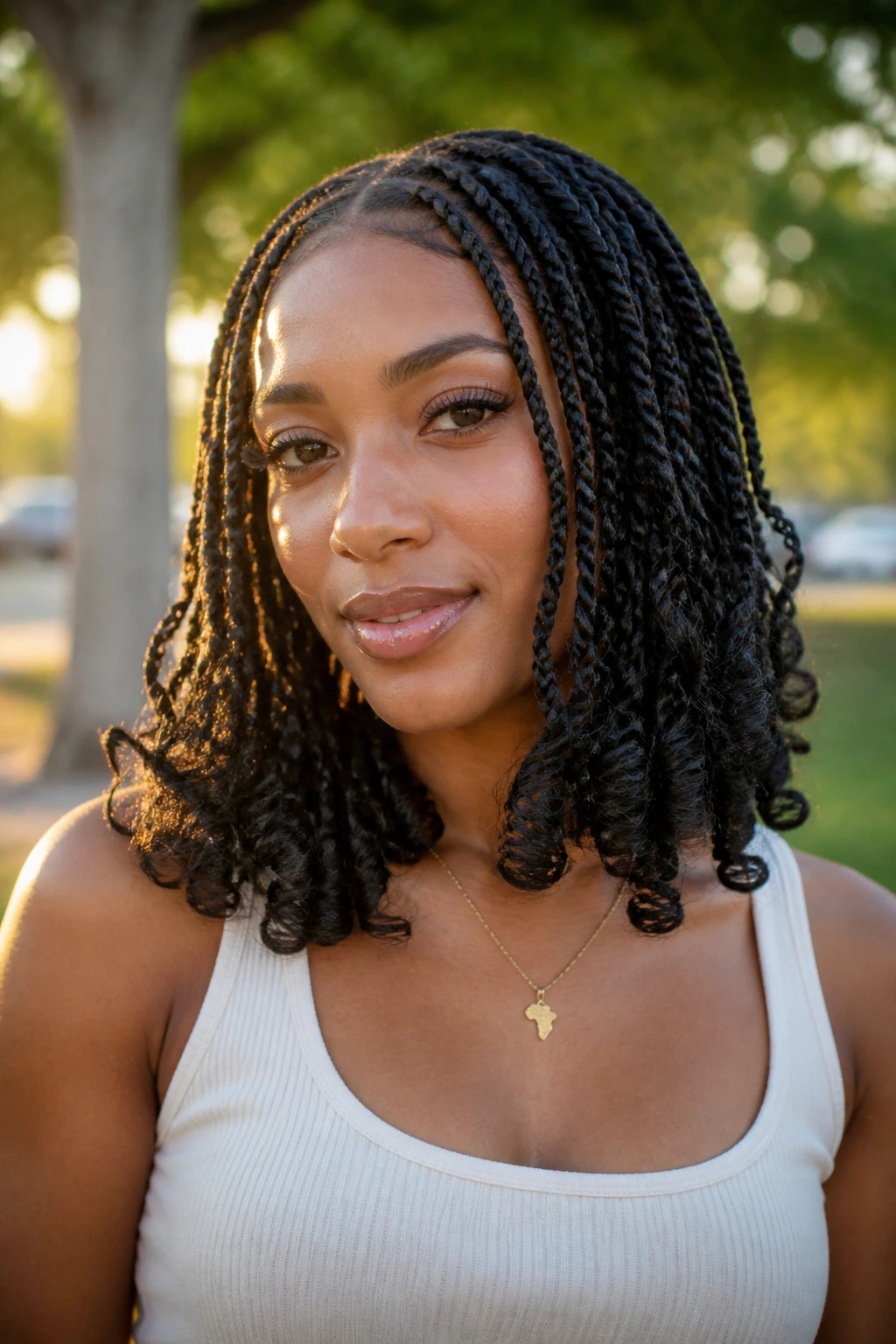
What if you want the rope-twist look but don’t want the ends to feel too rigid? Add a little softness at the tips. Boho curled-end Senegalese twists bring in loose texture at the bottom, which takes some of the severity out of a medium-length install.
This works best when the curl stays controlled. You want a soft bend or coil at the ends, not a frizzy halo that looks accidental. Use pre-curled extension hair if you can, or ask for a finish that leaves the last inch or two a little freer than the rest of the strand.
Medium hair is a good length for this because the curls don’t have too much space to spread out. They sit near the collarbone and move nicely without overpowering the twist pattern. If you like a softer, more lived-in look, this version has a lot of mileage.
10. Gold-Cuff Accessorized Twists
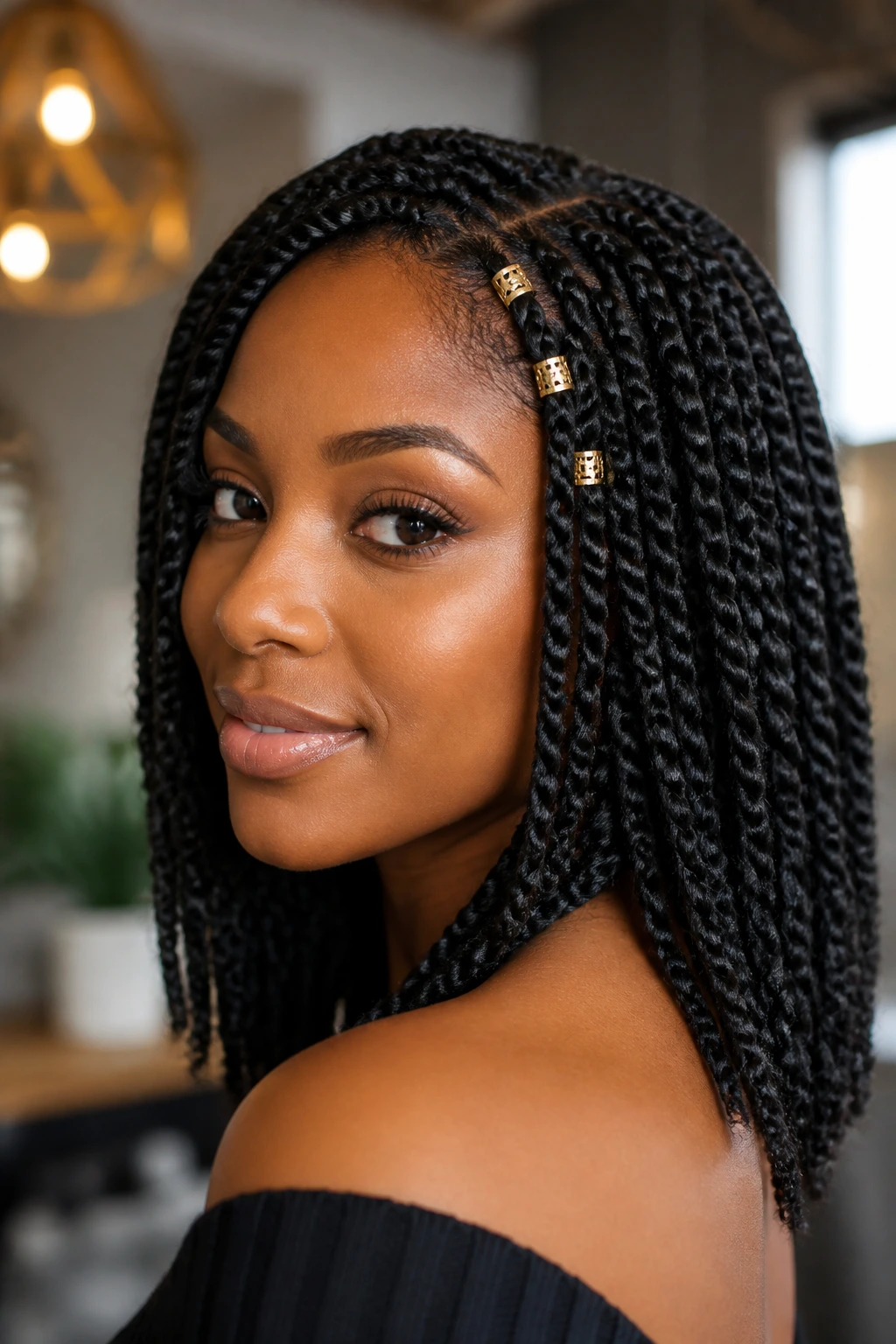
Gold cuffs are the quickest way to make medium Senegalese twists feel finished without changing the whole style. A few small cuffs near the front or mid-lengths can shift the look from plain to intentional in about thirty seconds.
The reason this works so well on medium hair is simple: the twists aren’t so long that the accessories get lost. A cuff on waist-length twists can disappear in the length. On shoulder-skimming hair, it reads immediately. Use one row of cuffs, not ten. Overloading the style is a fast way to make it look cluttered.
I’d keep the rest of the install clean and let the metal do the talking. Black twists, gold cuffs, maybe a neat side part. That’s enough. You don’t need beads, thread, and rings all at once unless the whole point is to look loud.
11. Space-Bun Senegalese Twists
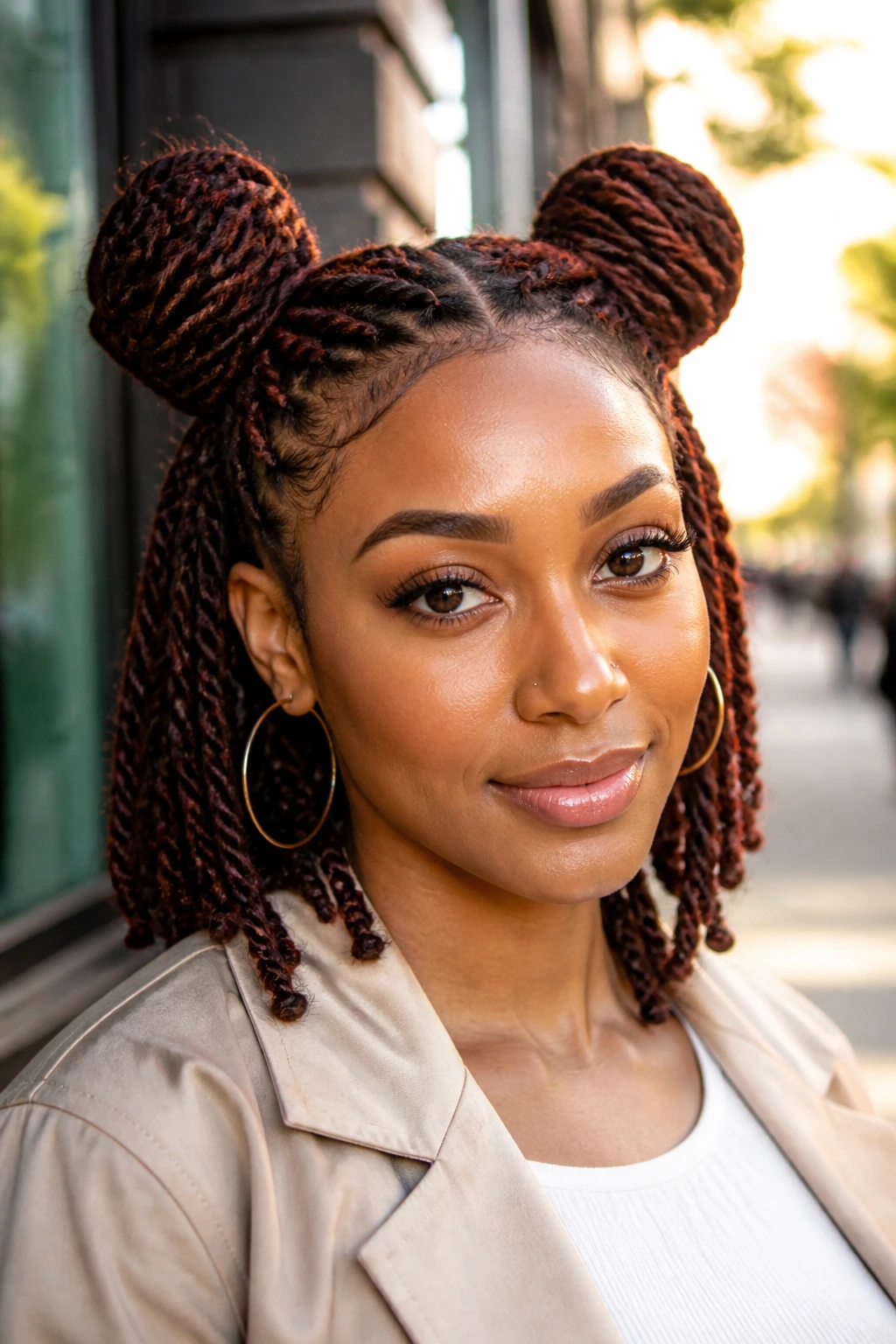
Two buns. That’s the whole pitch, and it works because medium-length twists are the right size for it. If the twists are too long, the buns start to sag and look like they’re fighting gravity. Medium length gives you enough structure to build twin buns without making your head look top-heavy.
This style is playful, but it’s not only for weekends. Position the buns just above or just behind the ears if you want a cleaner shape; move them a little higher if you want more personality. Leave the ends tucked neatly so the finish doesn’t look rushed.
Space buns suit medium twists because the leftover length can fold into itself without producing a huge lump. That makes the silhouette cute instead of bulky. It also keeps the neck clear, which is one of those small comforts people underestimate until they’ve worn heavy hair all day.
12. Twisted Faux Hawk on Medium Hair
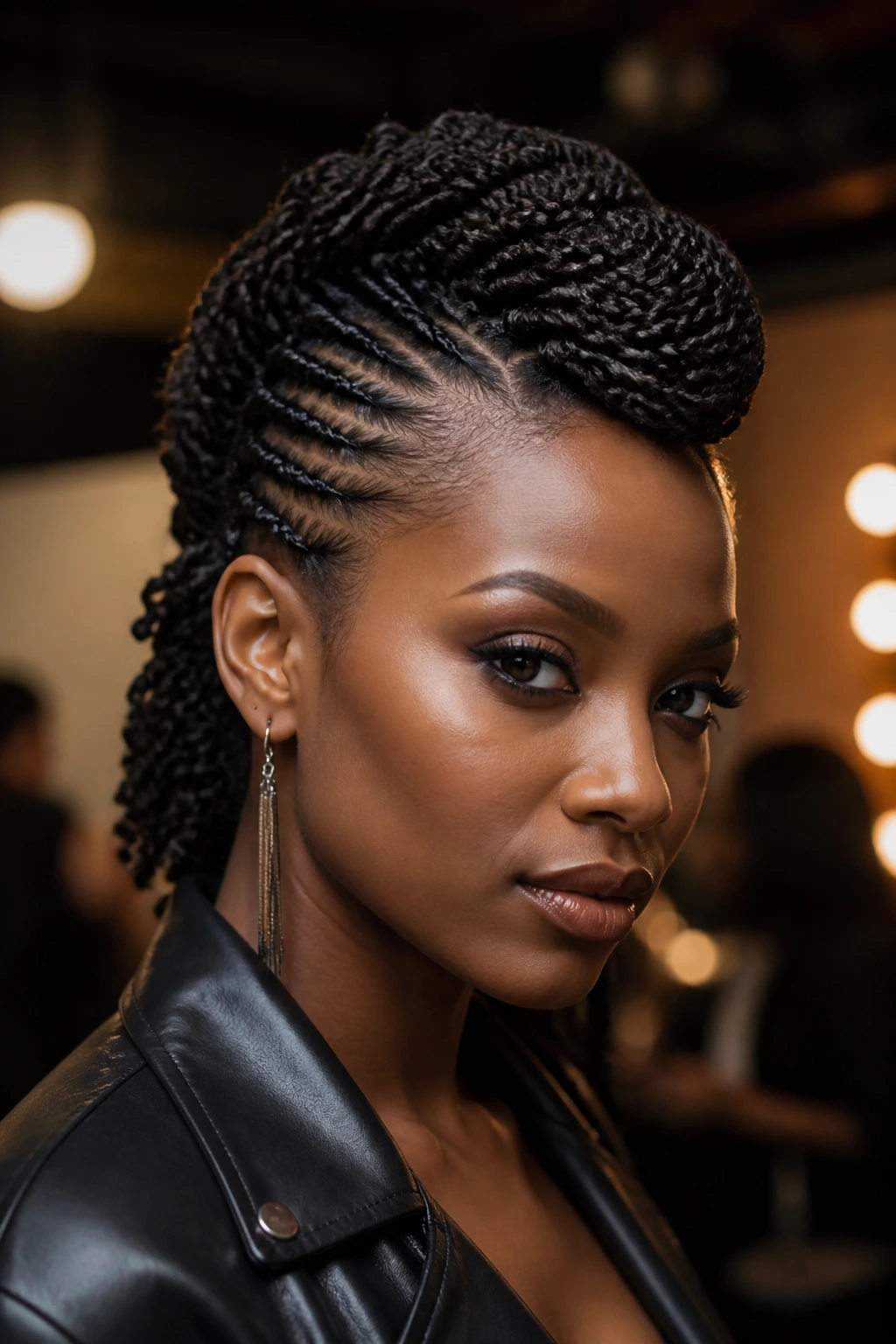
A faux hawk works because it creates drama without requiring extra length. On medium Senegalese twists, the sides can be pinned tightly or braided down, while the center strip gets lifted into a raised line from forehead to nape.
Unlike space buns, this style keeps the energy in one central ridge. The effect is cleaner, a little sharper, and much easier to control if your medium-length twists tend to flatten at the crown. It’s also a good style when you want your hair to feel dressed up without adding more accessories.
This is the one I’d pick for a night out or an event where you want the hair to do something obvious. Keep the sides smooth, not crunchy. A touch of mousse and a few firm bobby pins can hold the shape better than a pile of gel ever could.
13. Halo Crown Senegalese Twist Updo
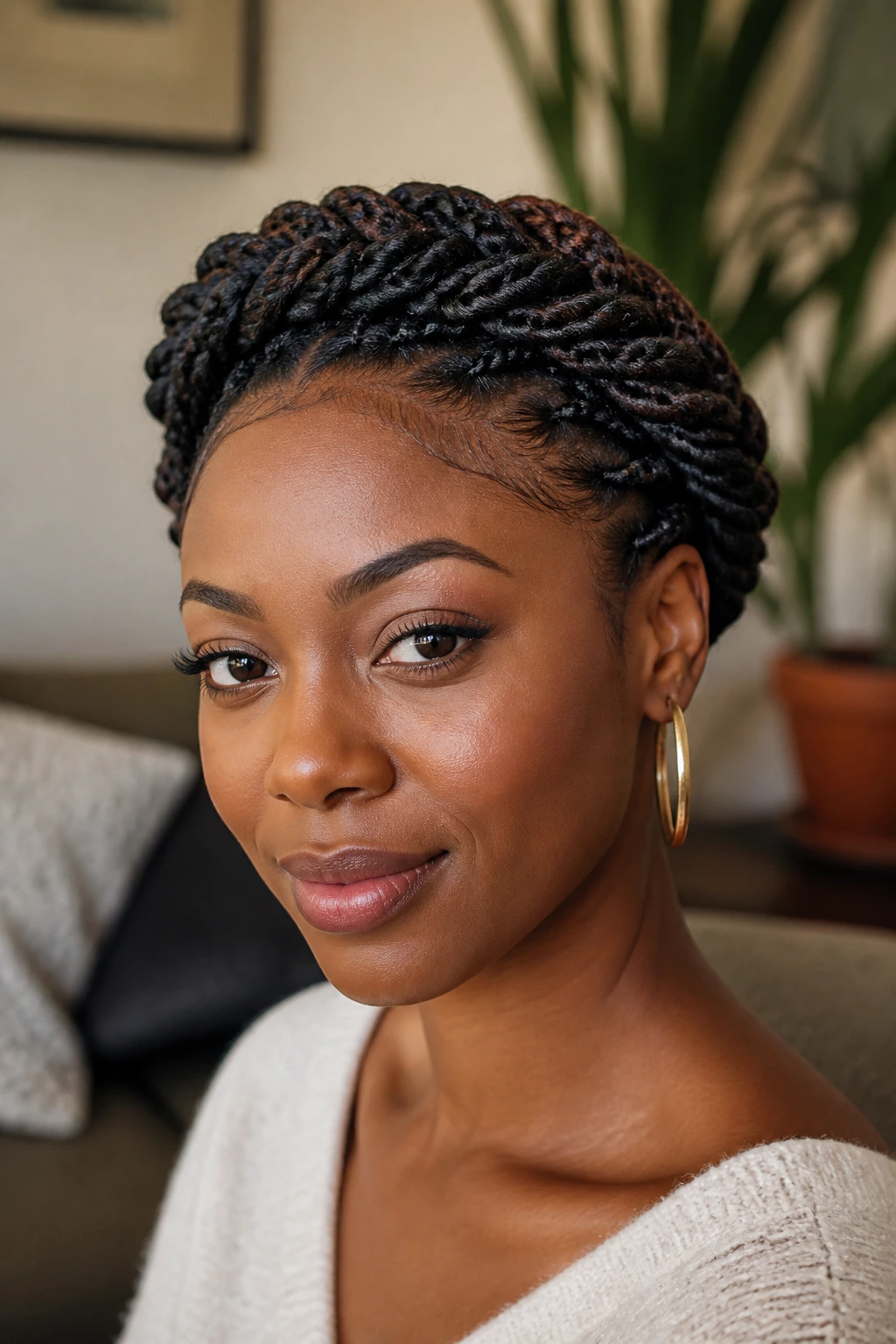
A halo crown updo wraps the twists around the head like a braid crown, then pins the ends into a circle or tucked base. Medium hair makes this style easier than long hair because the twists are short enough to stay close to the scalp instead of sticking out at odd angles.
The finish looks clean, but the base still feels soft and wearable. That’s the part I like. It does not need to be wedding-level formal to work; it just needs a neat perimeter and a few hidden pins. If you’ve got a broader forehead or you like styles that clear the face, a halo crown does that job with very little drama.
Use U-pins or long bobby pins and tuck them where the twist overlaps. The pins should disappear into the pattern, not sit on top like tiny metal warnings.
14. Layered Face-Framing Senegalese Twists
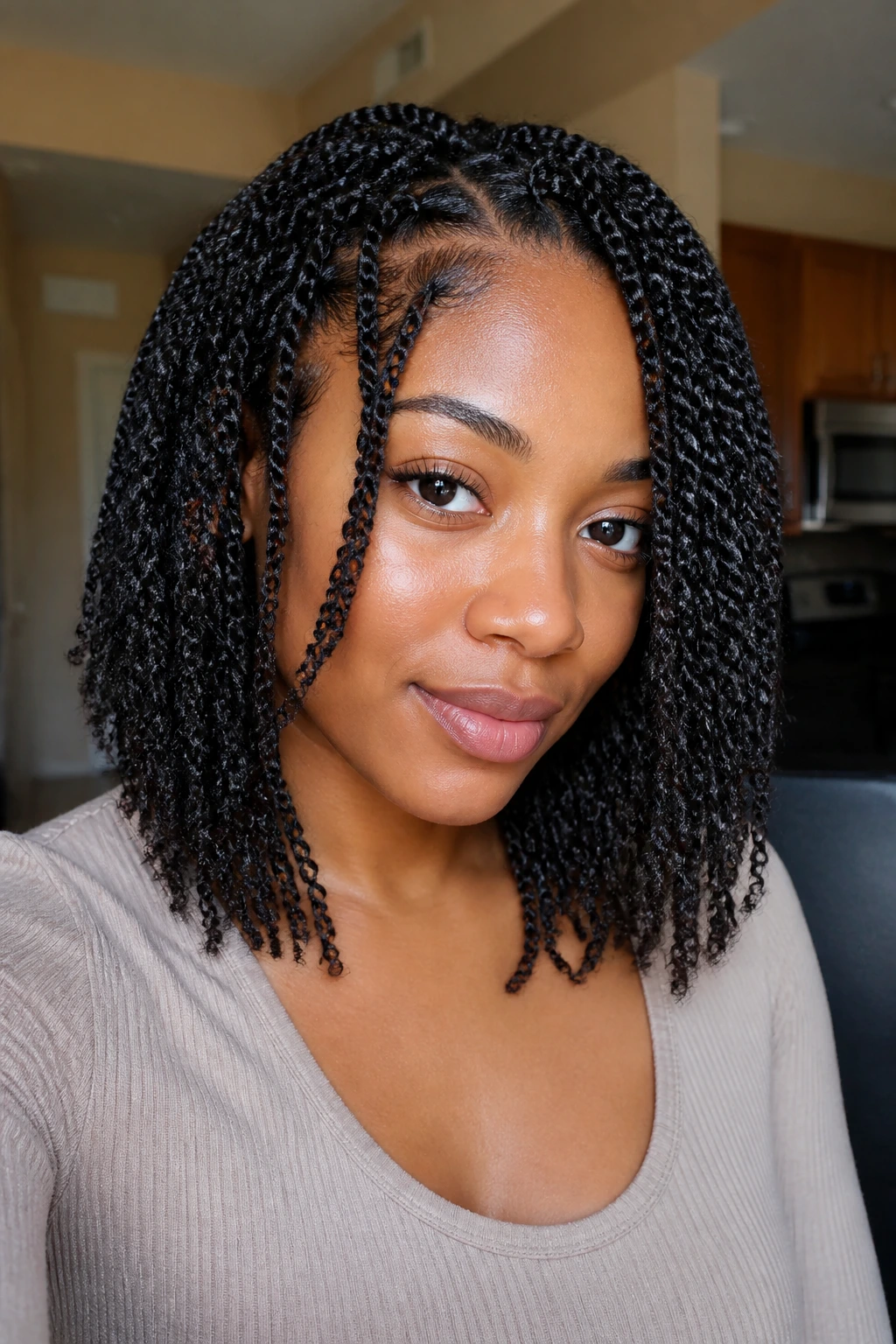
Do you want the protective feel of Senegalese twists without the blunt, all-one-length look? Layer the front. Leave a few pieces around the face slightly shorter or lighter than the back row, and the whole style starts moving differently.
Layered face-framing twists are useful on medium hair because the length already sits near the jaw and shoulders. A little variation at the front adds motion without making the style uneven. It works especially well if your face is round, heart-shaped, or you just prefer a softer edge around the cheekbones.
What to Ask Your Braider For
- Slightly shorter front rows.
- A gentle taper near the temples.
- Medium thickness through the crown.
- A clean finish at the shoulder line so the layers read as intentional.
The result feels less boxed-in. That matters.
15. Asymmetrical Bob Senegalese Twists
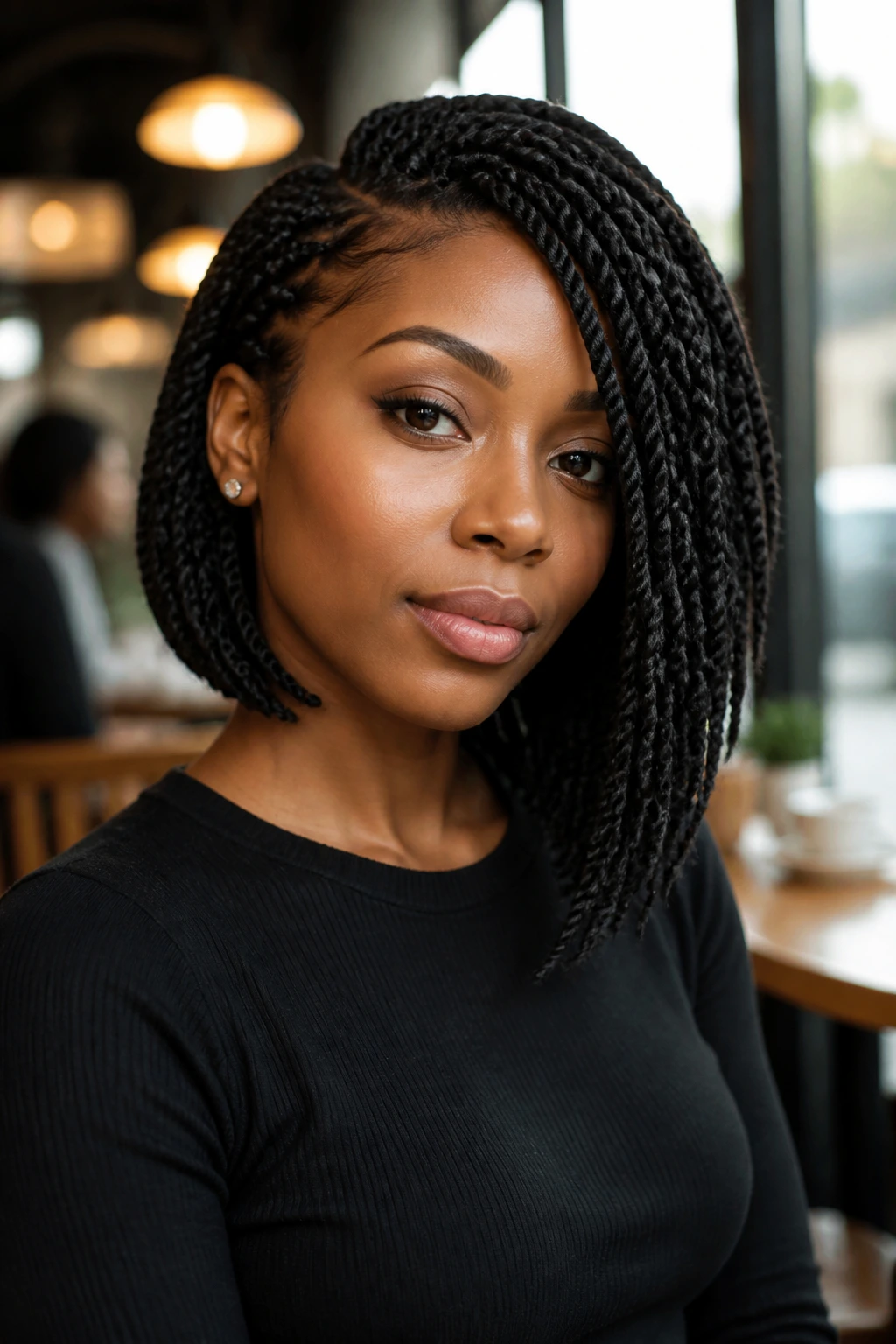
An asymmetrical bob is one of those styles that looks like a bold choice, but it’s mostly about smart shaping. One side lands a little higher—usually around the chin or upper jaw—while the other side falls closer to the collarbone. Same install, different silhouette.
On medium-length hair, this works because the twist length gives you enough material to create the uneven line without making the style look unfinished. The difference between the two sides should be obvious, but not cartoonish. You want shape, not chaos.
I like this version for people who get bored fast. It looks deliberate on day one and still gives you options later. You can pin the shorter side back, sweep the longer side across the shoulder, or leave it alone and let the angles do the work.
16. Scarf-Wrapped Senegalese Twists
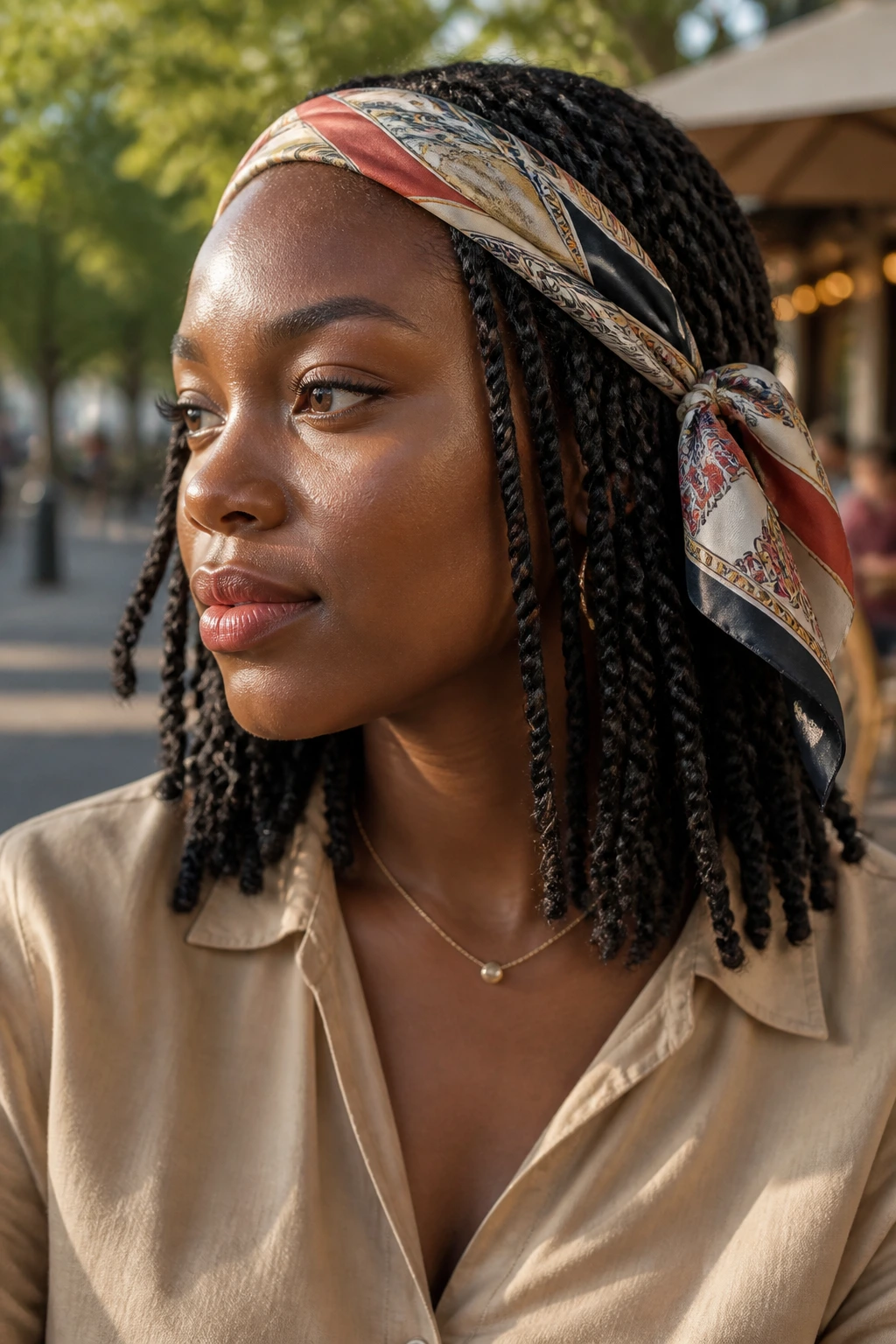
A scarf around Senegalese twists is not a backup plan. It’s the style. Wrap a silk or satin scarf at the hairline, tie it low or off-center, and let the twists fall beneath it. Medium length keeps the whole thing tidy, because there’s enough hair to balance the scarf without making the head feel overloaded.
This version is a lifesaver on day five or day fifteen when the roots need a little help. It covers the front line, protects the edges, and gives the install a different mood without any re-braiding. Printed scarves feel playful. Plain satin feels cleaner. Either way, the medium-length twist length keeps the shape grounded.
If you want the scarf to stay put, secure the hair underneath first with a small pin or a hidden tuck. Otherwise, it can slide around on smoother extension hair, and that gets annoying fast.
17. Cornrow-Front Blend Senegalese Twists
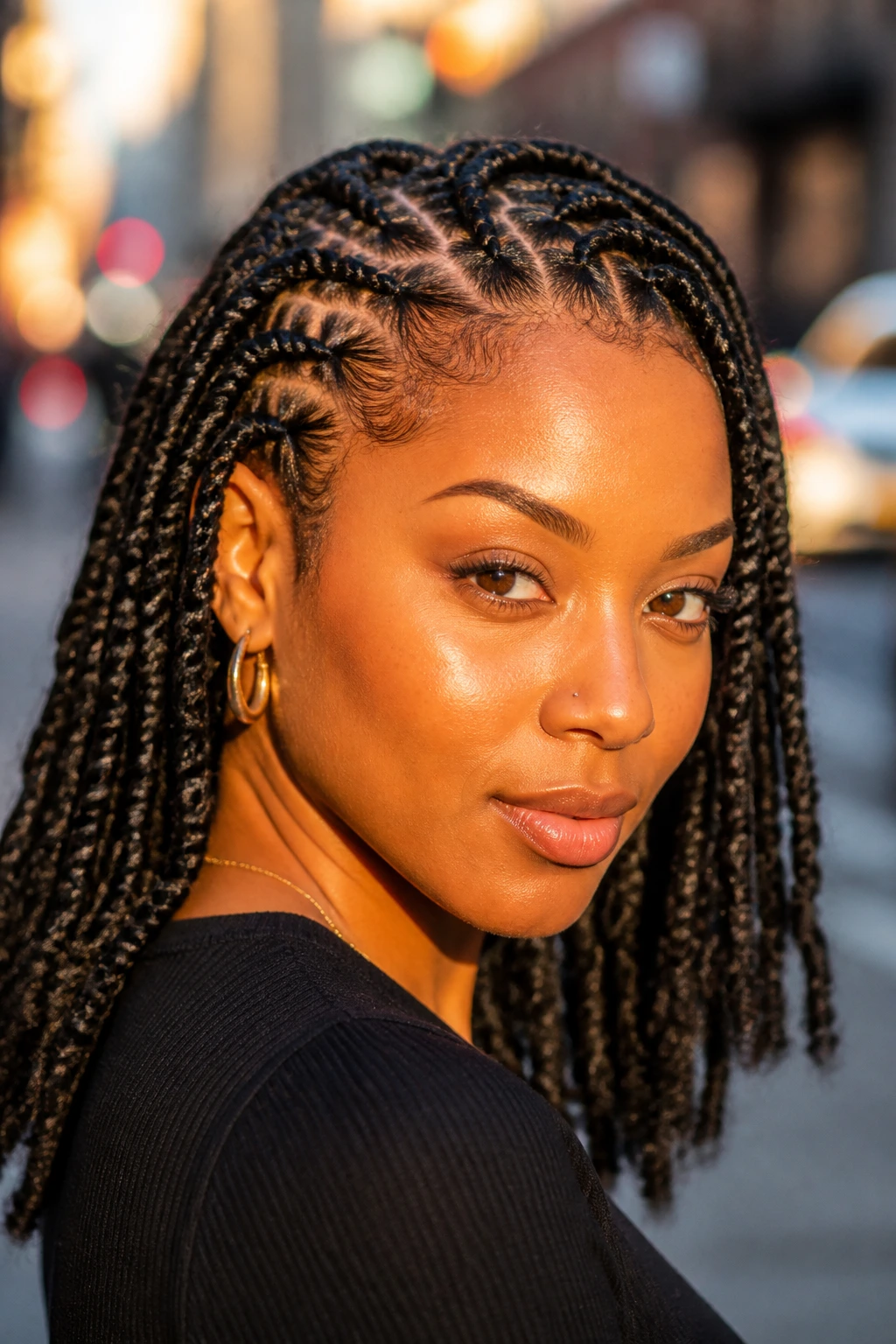
A front-to-back blend gives medium hair a cleaner entry point into twists. The front rows are braided flat into cornrows, and the Senegalese twists start behind them, which reduces bulk around the hairline and keeps the face open.
Unlike a full-head twist install, this version gives you a built-in control panel up front. It’s useful if your edges are delicate, if you want less tension at the temples, or if you just like the look of the front being more structured than the back. On medium hair, the transition doesn’t feel abrupt because the overall length is still compact.
This is also one of the better choices if you wear glasses. The front stays flatter, which keeps the arms of the frames from fighting the hairline all day. Small detail. Big relief.
18. Jumbo Statement Senegalese Twists
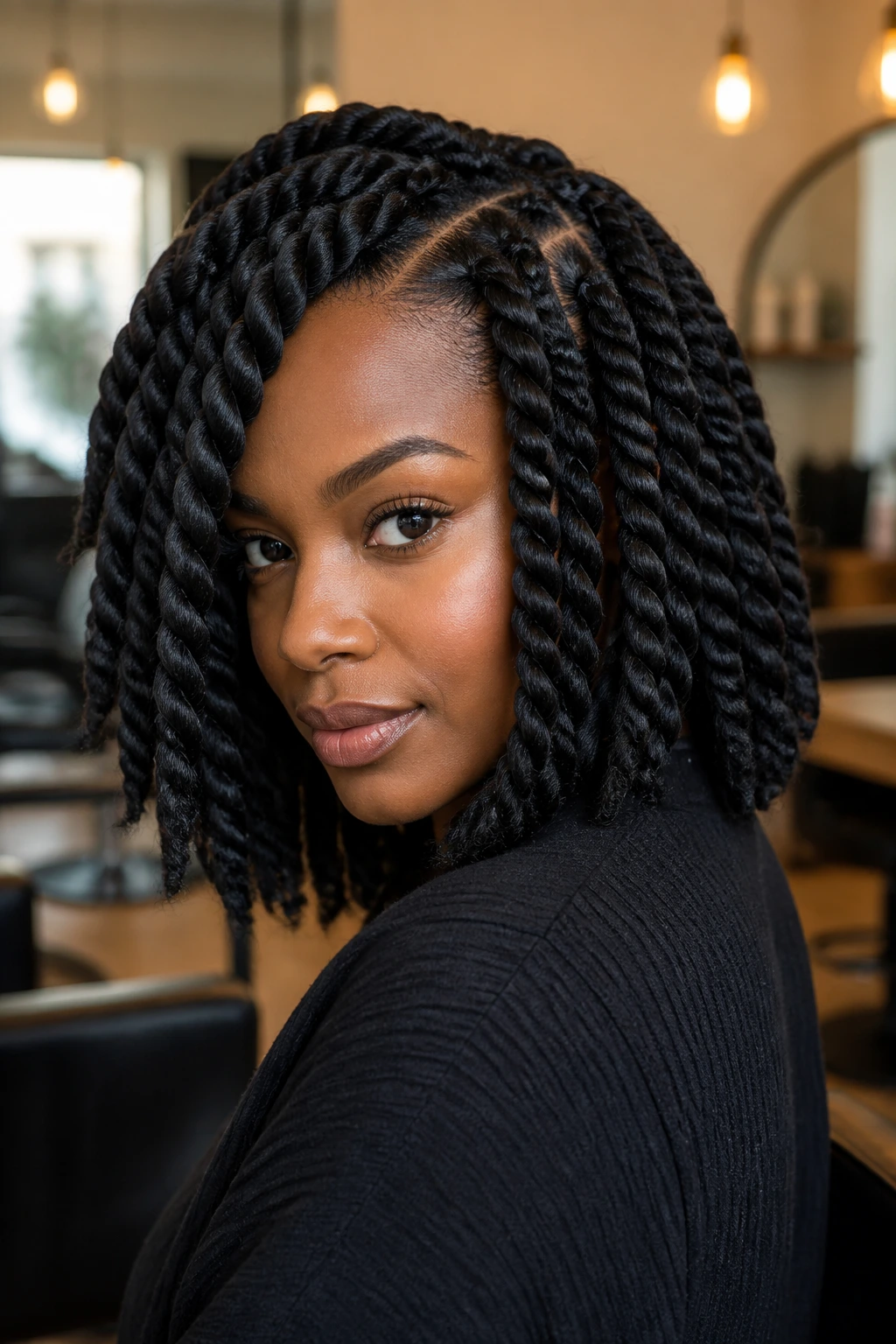
Jumbo twists on medium-length hair are not for anyone who likes everything tiny and exact. These use fewer, thicker sections, which gives the style a bolder silhouette and cuts down on install time. The medium length keeps them from turning into a bulky wall of hair.
The key is proportion. If the twists are too thick and too long, they lose movement and start looking like rope. If they’re thick but collarbone length or shorter, the shape reads as strong and clean. I’d use this version when the goal is impact, not delicacy.
Jumbo twists also make a nice fix for hair that feels too fine for smaller parts. You get coverage faster, the scalp shows less, and the overall style has more visual weight. That said, they still need neat parting. Big twists with sloppy sections look lazy. Big twists with clean parts look expensive in the best possible way.
19. Sleek Low Chignon Senegalese Twists
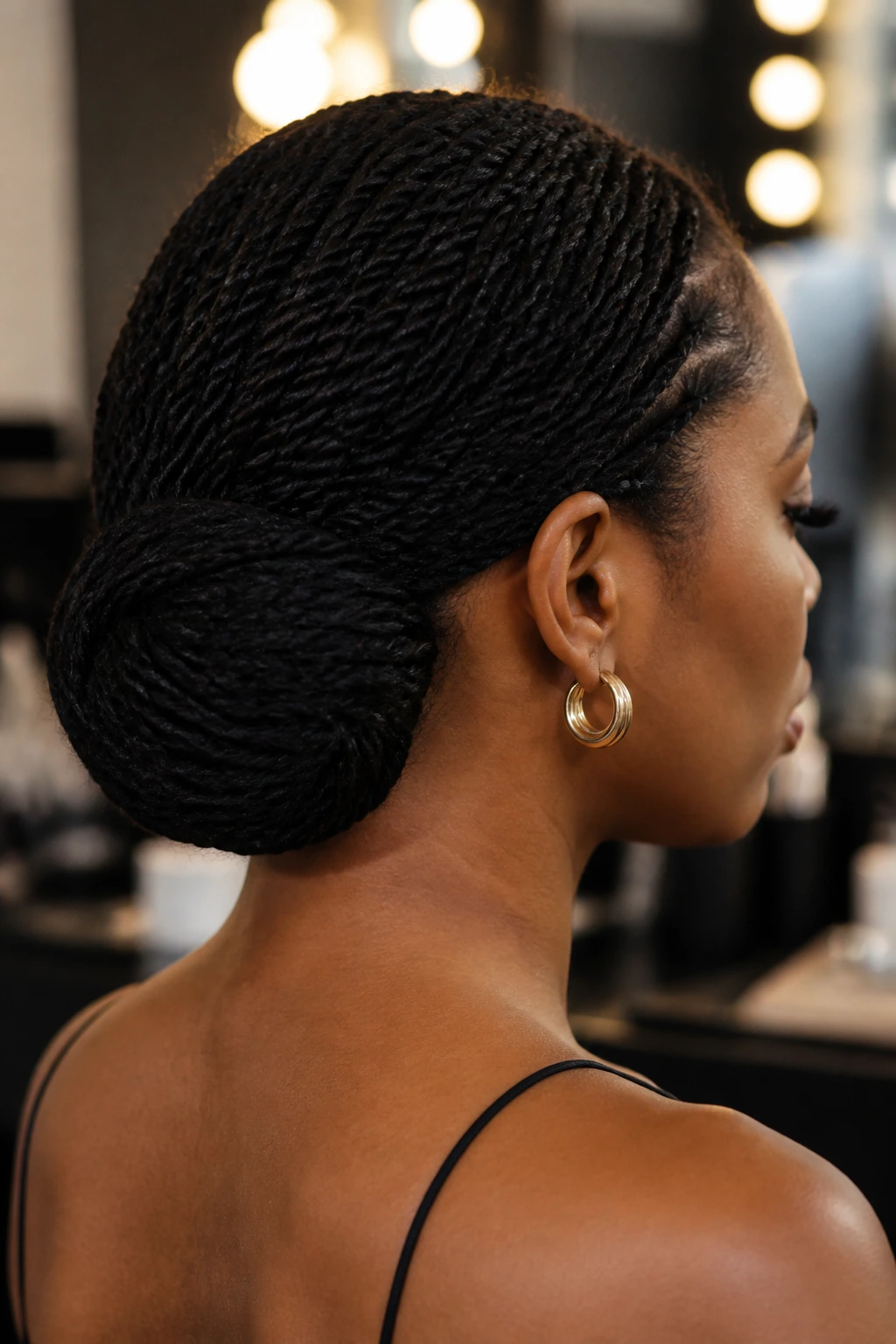
If you want the most polished medium-length Senegalese twist style in the set, go low and tuck the ends into a chignon at the nape. It is the cleanest event version, the one that reads calm, controlled, and done on purpose.
The beauty of a low chignon is how little it asks from the rest of the hair. The twists don’t need to be extra-long. They just need enough length to fold, pin, and hide the ends inside the shape. Medium hair is ideal here because the bun stays compact instead of becoming a round knot the size of a grapefruit.
Smooth the perimeter with mousse, wrap it with a satin scarf for fifteen minutes, and pin only after the hair has settled. That little pause matters. A rushed chignon tends to tilt. A patient one sits flat and stays there.
What Makes Medium-Length Senegalese Twists Hold Their Shape
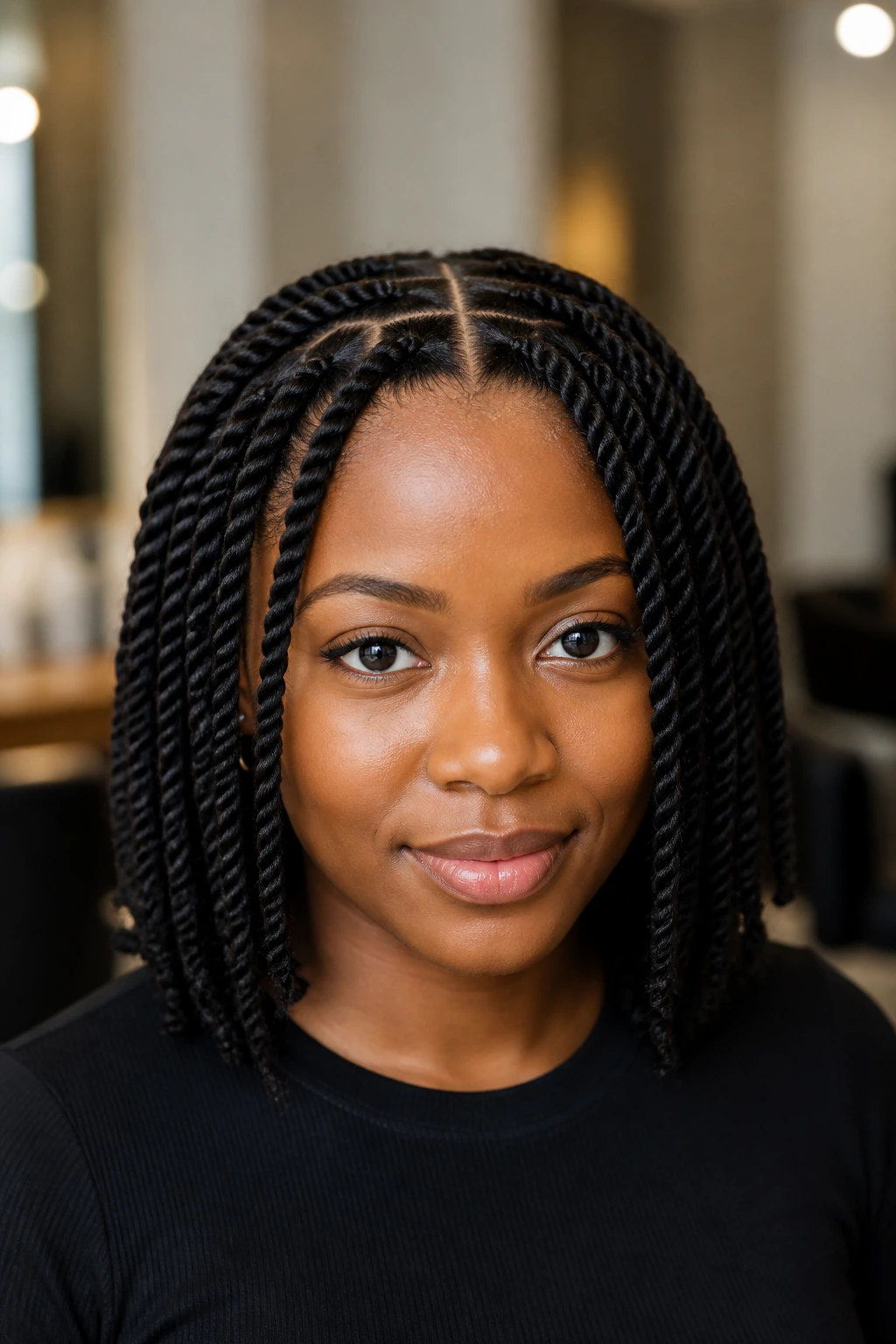
Medium length is the practical middle ground, but it is also a shape problem. The hair has enough weight to settle, enough length to move, and enough surface area for every flaw in the parting pattern to show. That can be a blessing if the install is clean. It can be annoying if it isn’t.
The Weight Sweet Spot
Shorter twists can stand up stiff and neat. Longer twists pull down with gravity. Medium-length Senegalese twists sit in between, which means the sectioning and extension weight matter more than people expect. If the root is overloaded, you’ll feel it by day two. If the parts are too wide, the scalp starts to peek through at the wrong places.
Why the Parting Shows More
Medium hair leaves the roots exposed enough to notice the parting map. That is why triangle parts, curved parts, and center parts matter so much here. The hairline and crown are doing visual work. Sloppy lines stand out. Crisp lines look intentional from across the room.
What the Ends Are Doing
At this length, the ends still swing, but they do not have enough length to hide bad cutting, crooked twists, or uneven sectioning. A blunt-looking end can be fine if the shape is meant to be blunt. If not, the style starts looking tired before it has earned that right. Keep the ends clean, and the whole head looks cleaner.
Essential Tools and Products for the Install
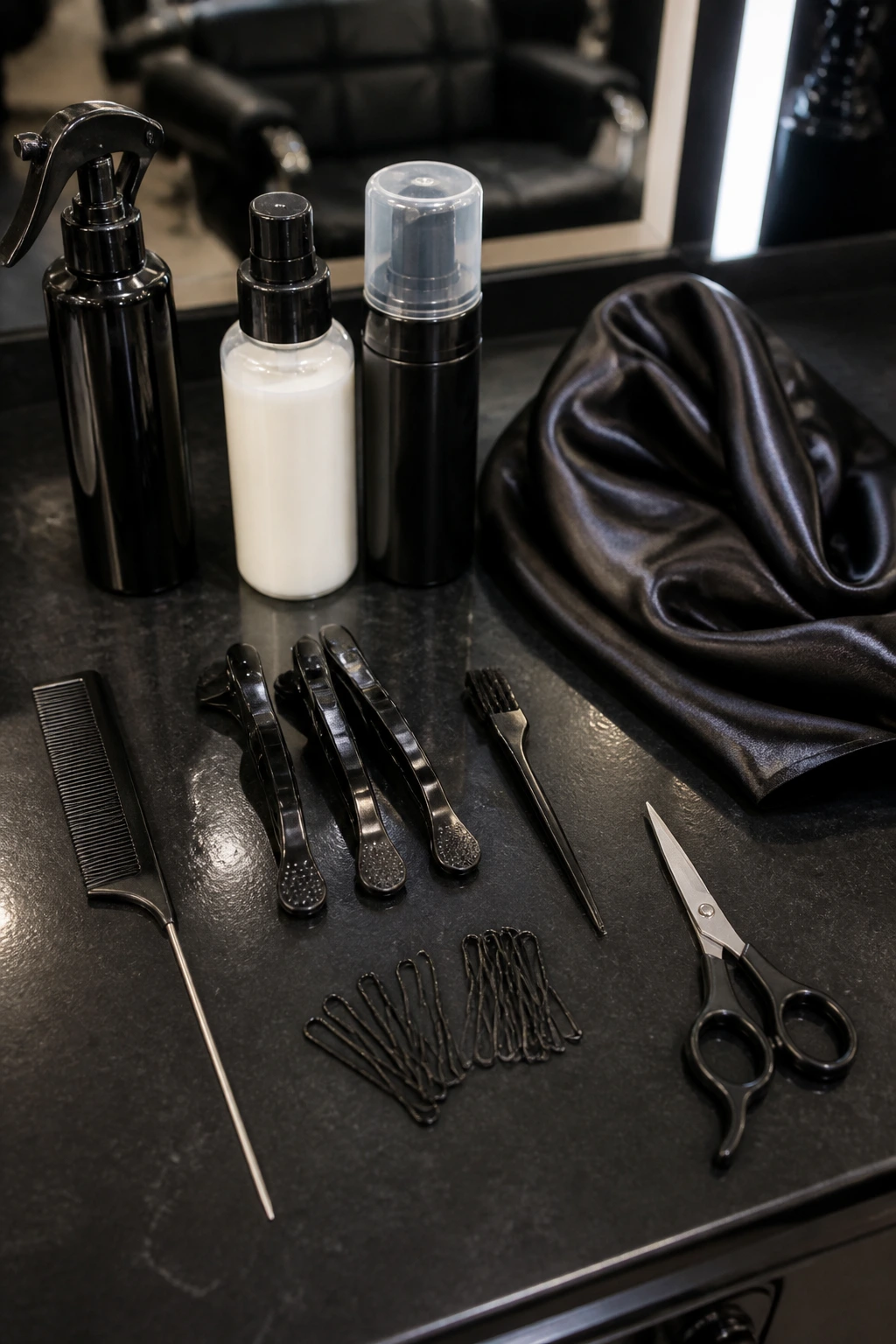
- Pre-stretched Kanekalon braiding hair: It grips well, twists smoothly, and usually looks cleaner than very silky extension hair.
- Rat-tail comb: Needed for crisp parts; a wide comb will not give you the same control.
- Sectioning clips: These keep the working hair out of the way while you twist row by row.
- Light leave-in conditioner: Use it on your natural hair before the install, but keep the layer thin so the roots do not get greasy.
- Foaming mousse or wrap lotion: Helps set the twists, tame flyaways, and calm the finish after installation.
- Satin scarf or bonnet: Protects the style at night and keeps the top from frizzing up too fast.
- Spray bottle: Useful for a diluted scalp mist or a light refresh on wash day.
- Edge brush: Good for smoothing the hairline without scraping the skin raw.
- Bobby pins and U-pins: Essential for buns, crowns, and faux hawks.
- Hair scissors: Handy for trimming stray extension hairs and cleaning up the ends.
Smart Shopping and Hair-Prep Tips
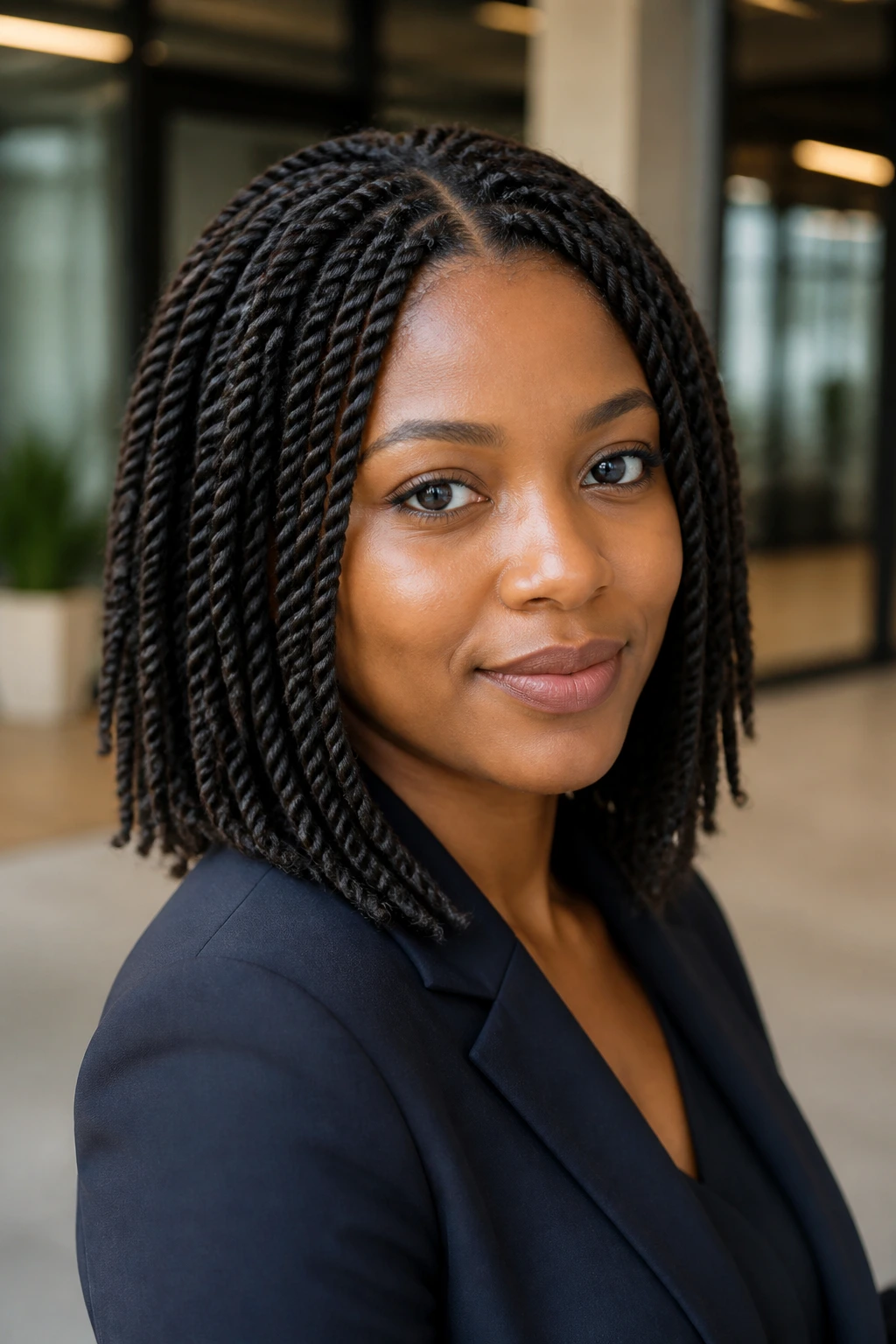
Buy the extension hair based on the style, not just the length on the package. For medium-length Senegalese twists, shoulder-length or collarbone-length finished hair usually needs a little more extension length than people think because the twists shorten once they’re folded and coiled. If you want the finished style to sit right at the shoulders, buying a slightly longer pack and trimming later is often safer than buying too short and ending up with a stubby look.
Texture matters too. Pre-stretched hair with a smooth but not glassy surface is the easiest to work with. If it’s too silky, the twists can unravel at the ends. If it’s too rough, the style can look fuzzy before you’ve even left the chair. For most medium-length installs, a natural black, 1B, or deep brown shade looks cleanest because the parting and rope pattern stay the focus.
If your scalp gets itchy from coated synthetic hair, rinse the extension hair in cool water before the install and let it dry completely. That small step can cut down on the scratchy, coated feeling that some packs have right out of the bag. And if you’re buying for a fuller shape, keep one extra pack around. Running short halfway through an install is the worst kind of cheap.
How to Wear and Accessorize These Styles
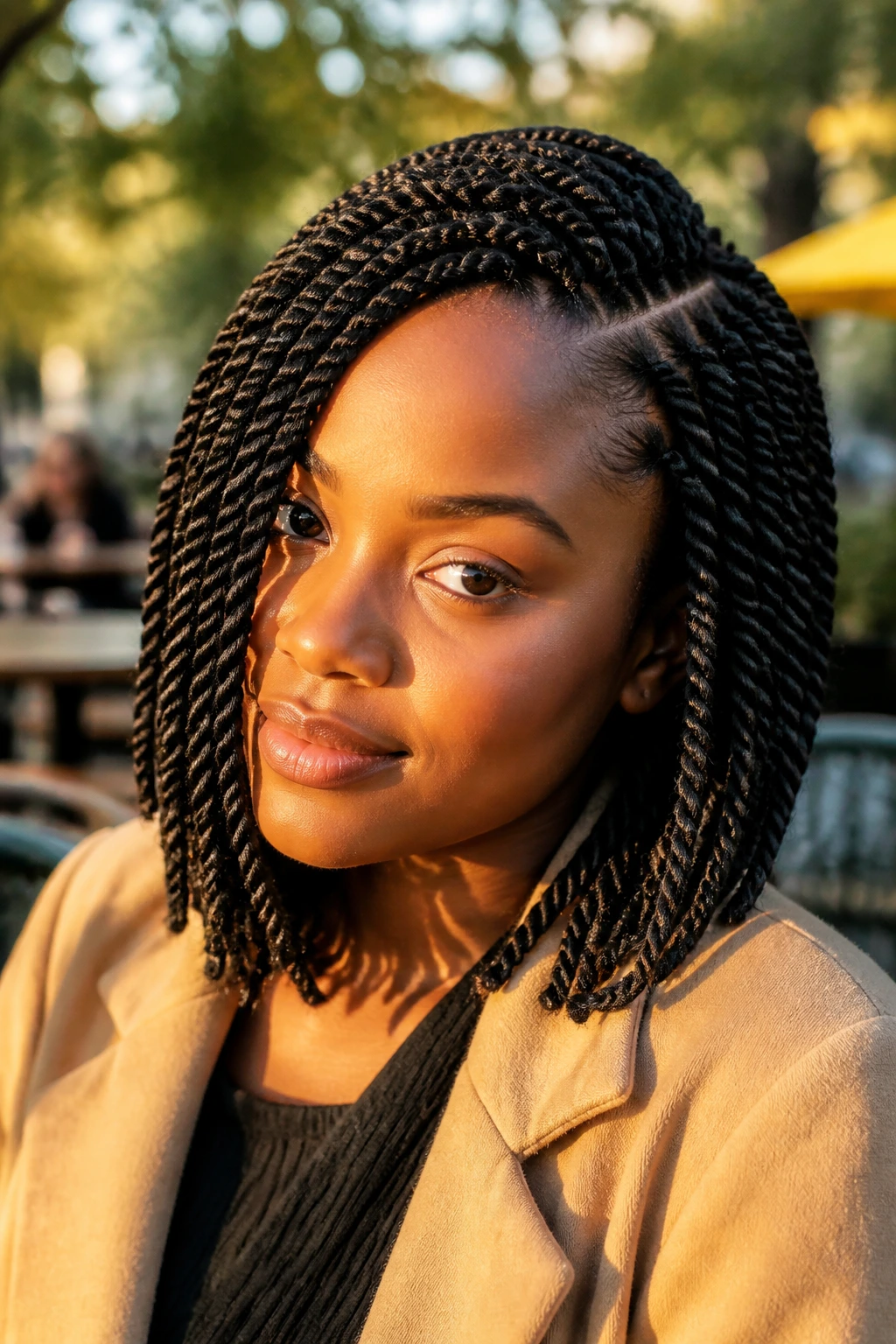
Presentation: Keep the front rows clean and the shape visible. A crisp center part, a deep side part, or a neat front sweep does more for medium-length twists than piling on extra accessories.
Accessories: Gold cuffs, slim thread wraps, medium hoops, and a single silk scarf all work well because the length is short enough that the details do not disappear. Tiny beads can work too, but use them sparingly or the style starts sounding like a kitchen sink.
Scale: If you want the twists to look fuller, ask for slightly smaller parts at the crown and a little more size near the nape. If you want a lighter feel, keep the sections medium and let the length stay around the collarbone instead of dropping lower.
Occasion Match: Shoulder-skimming and side-swept styles feel easy for daily wear. Buns, chignons, and faux hawks read dressier without needing a full makeover. Half-up versions sit in the middle and are the safest pick when you want options.
Extra Tips for a Cleaner, Longer-Lasting Install
Smooth Finish: Set the finished twists with foam mousse, then wrap the whole head with a satin scarf for 15 to 20 minutes. That short hold helps the surface settle and keeps the parts cleaner for the first few days.
Texture Control: If your natural hair frizzes fast at the roots, ask for slightly smaller front sections. The smaller base keeps the line tidy longer, especially around the temples where hands, glasses, and headbands usually create friction.
Color Play: A subtle 1B-to-caramel blend looks richer on medium-length twists than a harsh, single-tone black. The twist pattern shows more when the color has depth.
Make-It-Yours: For a softer look, leave a few front pieces slightly looser. For a sharper look, build the style around a strong part and a clean edge line. Do not try to do both at once unless you want the style to fight itself.
Keeping Them Fresh Between Wash Days
Senegalese twists at medium length usually wear best for about 4 to 8 weeks, depending on how fast your roots grow and how much friction your daily life creates. The style can last longer than that, but the part lines and the edges start telling on you. That is not a moral failing; it is just hair doing hair things.
Sleep in a satin bonnet or scarf every night. That part is non-negotiable if you want to keep the top from fuzzing up by the second week. If the scarf slips off, switch to a bonnet with a snug band or use both. During the day, avoid piling the twists into tight styles back-to-back. Let them rest in a loose bun or a side sweep when you can.
Wash the scalp every 1 to 2 weeks if buildup starts showing. Use a diluted shampoo in an applicator bottle, apply it directly to the parts, and rinse thoroughly so the roots do not stay damp. Drying matters more than people think. If the twists stay wet under synthetic hair, they can smell stale fast. A hooded dryer or a cool fan session helps the style dry fully, especially near the roots and in any tucked bun sections.
Light frizz at the ends is normal. A puff of mousse and a quick wrap can tame it. What you do not want is a heavy oil routine that leaves the scalp greasy by week two. That kind of buildup makes the parts look cloudy and can turn the roots itchy in a hurry.
Common Mistakes to Avoid
-
Making the install too heavy: If the nape feels strained or you get a headache after a few hours, the sections are too large or the extension hair is too much. Medium length should feel wearable, not like a neck workout. Fix it by going lighter at the bottom row and keeping the front rows slightly smaller.
-
Using extension hair that is too slippery: Very silky hair can look pretty in the bag and then refuse to hold a twist. The ends loosen, the style puffs up, and you spend extra time re-securing pieces. Pre-stretched hair with some grip is safer for this length.
-
Skipping the nightly wrap: Without a satin scarf or bonnet, the roots frizz faster and the part lines blur. The style may still hold, but it starts looking worn before it should. A simple nightly wrap saves you from a lot of daytime fixing.
-
Over-oiling the scalp: A shiny scalp is not the goal here. Heavy oil or grease catches lint, weighs down the roots, and makes medium-length twists look tired fast. Use a light scalp mist or a few drops only where needed.
-
Leaving the hair damp after washing: Wet synthetic hair around the scalp can smell stale and make the roots feel itchy. Dry the install fully, especially around the nape and behind the ears, where water likes to hide.
Variations and Adaptations to Try
Sensitive-Scalp Install: Ask for smaller sections at the hairline, lighter tension through the crown, and a shorter finished length around the shoulders. This version keeps the style wearable if your scalp gets sore easily, and it is the one I would choose for a first-time install.
Color-Blend Twist Set: Use a deep brown base with caramel, honey, or burgundy pieces threaded through the top rows. The color variation shows nicely on medium hair because the twists sit close enough to the face for the tones to read.
Soft-Edge Office Version: Keep the parting clean, skip the loud accessories, and choose a shoulder-skimming length with a side part. It reads neat without looking stiff, which is rare enough to be useful.
Vacation-Ready Twist Style: Go for a medium-length half-up version or a low bun-friendly install so you can switch from loose to pinned in seconds. The shorter finish stays manageable in heat and humidity without turning into a full maintenance project.
Extra-Full Crown Edit: Use slightly smaller parts at the top and a fuller size at the ends to create more width around the crown. This works well if your hair is naturally fine and you want the style to look denser from the front.
Boho Softness Upgrade: Add a few curved or curled ends and leave the front pieces a little looser. The texture contrast makes the whole style feel less severe, especially on medium hair where every strand sits in plain view.
Frequently Asked Questions
How many packs of hair do I need for medium-length Senegalese twists?
Most medium-length installs land somewhere around 5 to 7 packs, depending on twist size, density, and how full you want the crown to look. Jumbo versions may use fewer packs, while small, neat parts can take more.
Can Senegalese twists work on fine hair?
Yes, but the install has to stay light. Fine hair does better with medium parts, lighter extension weight, and a style that does not pull the roots into a tight bun every day.
How long should medium-length Senegalese twists last?
A good wear window is usually 4 to 8 weeks. You can push them longer if the scalp is healthy and the parting still looks clean, but once the roots get fuzzy and the edges start pulling, it is time to take them down.
Can I wash Senegalese twists?
Yes. Use diluted shampoo on the scalp, rinse well, and dry the hair fully afterward. The biggest mistake is washing and then leaving the roots damp under synthetic hair, which leads to smell and itch.
What if the twists feel tight right after installation?
A little tension is normal; pain is not. If your scalp throbs, the hairline stings, or the style gives you a headache, the install is too tight and should be loosened or redone before the tension starts causing breakage.
Are medium-length twists easier to style than long ones?
They usually are. Medium length gives you enough hair for buns, ponytails, side sweeps, and crowns without the extra weight that makes long installs sag or take forever to pin.
Do I need edge control for every style?
No. A soft brush, a light mousse, and a clean parting pattern do most of the work. Edge control is useful only where you want a crisp hairline; too much can leave buildup and make the front look sticky.
Can I put medium Senegalese twists in a ponytail without breaking them?
Yes, as long as the base is not yanked too tight and you use a snag-free elastic or a wrapped section instead of a thin rubber band. High ponytails work best when the install is balanced and not overloaded at the nape.
A Length That Fits the Hair You Actually Live With
Medium-length Senegalese twists earn their place because they do not ask for drama. They swing, frame the face, and still let you pull the hair up when the day gets warm, busy, or plain annoying. That combination is hard to beat, and it is exactly why this length keeps coming back.
The best styles here do one thing well. Some sharpen the parting. Some soften the face. Some turn the twists into an updo before you’ve had your second cup of coffee. If you choose the length with your real life in mind—how you sleep, how you move, how often you want to touch your hair—the style starts working for you instead of the other way around.
