



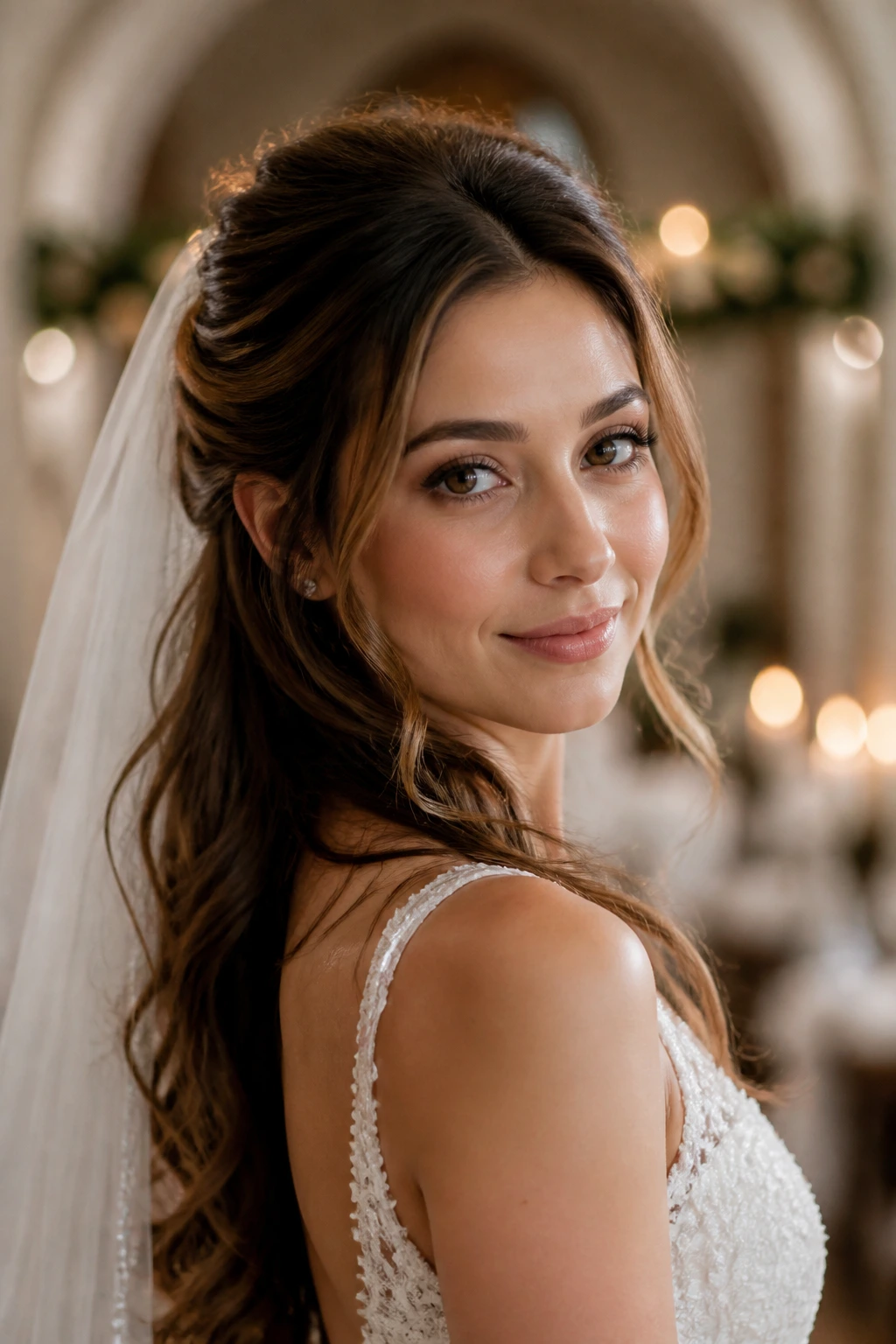
Half-up, half-down styles for brides solve a problem that full updos and loose waves both create. One can feel too strict; the other can fall apart before the cake gets cut. The middle ground is where the good stuff happens: a little lift at the crown, a bit of movement through the ends, and enough structure for a veil, pins, or a comb to sit without fighting the hair.
What makes the style work isn’t mystery. It’s anchor points. A properly pinned half-up keeps weight off the face, gives the front of the hair a clean shape in photos, and leaves the lengths free so the style still looks like hair, not architecture. That matters when the ceremony is long, the room is warm, or the bride wants to hug a dozen people without wearing a helmet of hairspray.
I keep coming back to half-up bridal hair because it does what a wedding hairstyle should do: look deliberate from the front, hold from the back, and still move when you turn your head. The trick is choosing the right version for your texture, dress neckline, and accessories. A loose twist on fine hair behaves differently from a braided crown on thick curls, and that difference is the whole game.
Some of the styles below lean soft and romantic. Some are polished, some are boho, some are all about secure structure. The common thread is that each one can survive a full day, a few hugs, and a camera flash from the wrong angle.
Why These Bridal Half-Up Looks Earn Their Keep
-
Veil-Friendly Structure: Each style leaves a clean anchor zone near the crown or back of the head, so a veil comb has something solid to grab without collapsing the whole shape.
-
Flatteringly Open Around the Face: Half-up styling keeps the cheekbones visible and the front pieces soft, which matters a lot in close-up photos and candlelit rooms.
-
Flexible With Hair Texture: Straight, wavy, curly, fine, and thick hair all have a version here that can be built without fighting the hair’s natural behavior.
-
Comfort That Lasts: You get the feel of hair moving on your shoulders instead of every strand being pinned tight at the nape. That sounds small. It isn’t.
-
Easy to Personalize: A pearl pin, a ribbon, a braid, or a simple twist can change the mood fast, which helps when the dress is doing one thing and the bouquet is doing another.
-
Better Than “Just Leave It Down”: Loose lengths still matter here, but they’re controlled lengths, not strands hanging by luck and prayer.
1. Soft Twist and Waterfall Waves
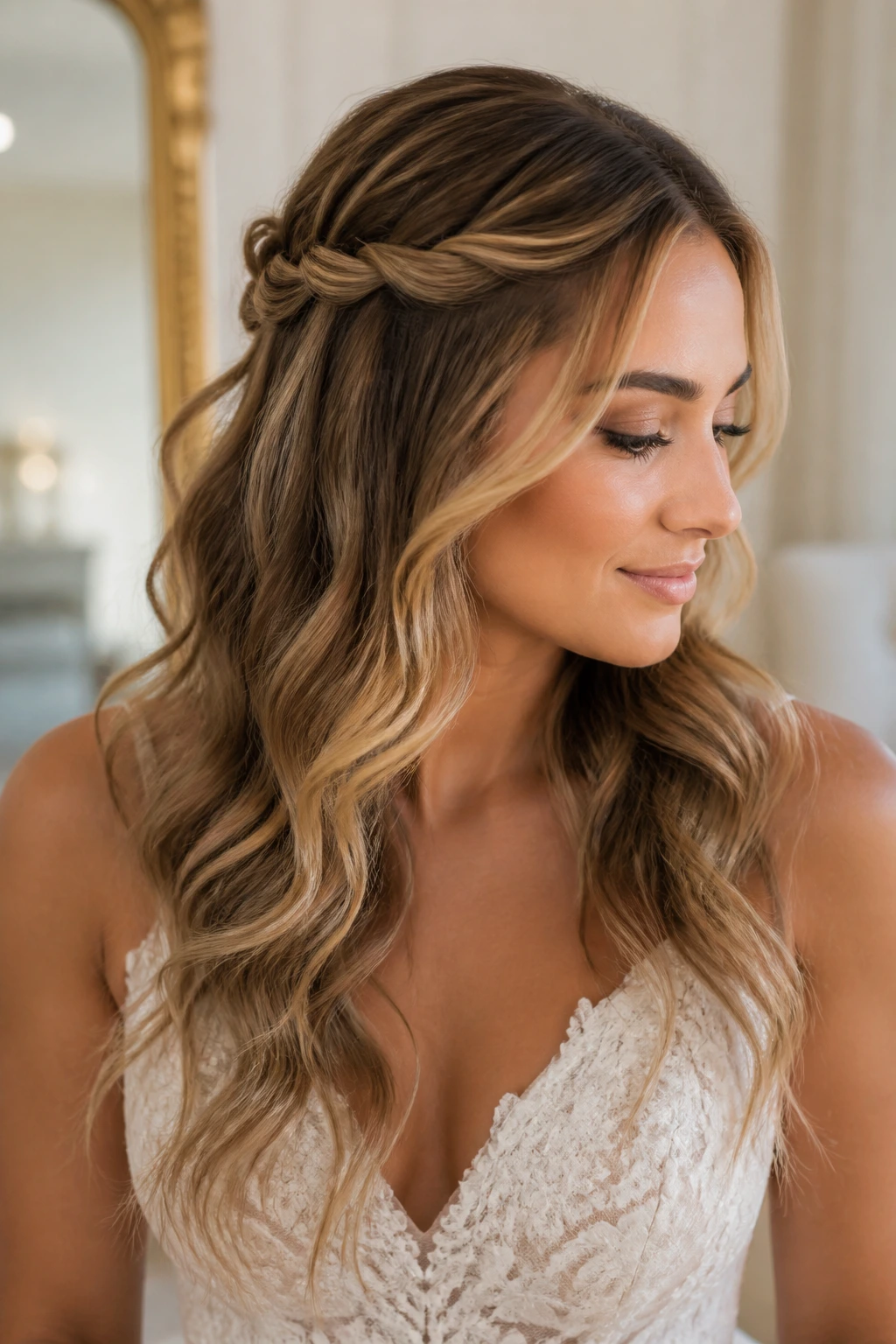
A soft twist at the temples with loose waterfall waves is the kind of bridal hair that looks calm from every angle. The crown stays tidy, the ends stay airy, and the whole style has that quiet movement people notice when the bride turns her head. It’s not stiff. It isn’t trying to be.
Why it works
The twist gives the style a spine, while the waves keep it from looking carved into place. I like this best on hair that already bends well with a 1-inch iron or a set of hot rollers, because the wave pattern stays soft instead of puffy. If you want one look that can sit beside a lace dress, a satin dress, or something with a thin strap, this one behaves.
- Best for medium to long hair
- Works well with a cathedral or fingertip veil
- Add two face-framing pieces if you want more softness
Tip: Pin the twist where the back of the head starts to curve, not too low. Too low and the whole shape droops by cocktail hour.
2. Pearl-Pinned Crown With Loose Curls
Pearls change the tone fast. A row of them tucked into a half-up crown turns loose curls into bridal hair with a little more polish, but it still feels soft enough to touch.
You do not need a lot of jewelry here. Three to five pins, spaced unevenly, often look better than a perfect line. The style is strongest when the curls are brushed just enough to merge, then left alone so they don’t swell into fluff.
This is a good pick if the dress already has texture or beadwork. The hair can be simple, and the accessories do the talking.
3. Sleek Center Part With Hidden Pins
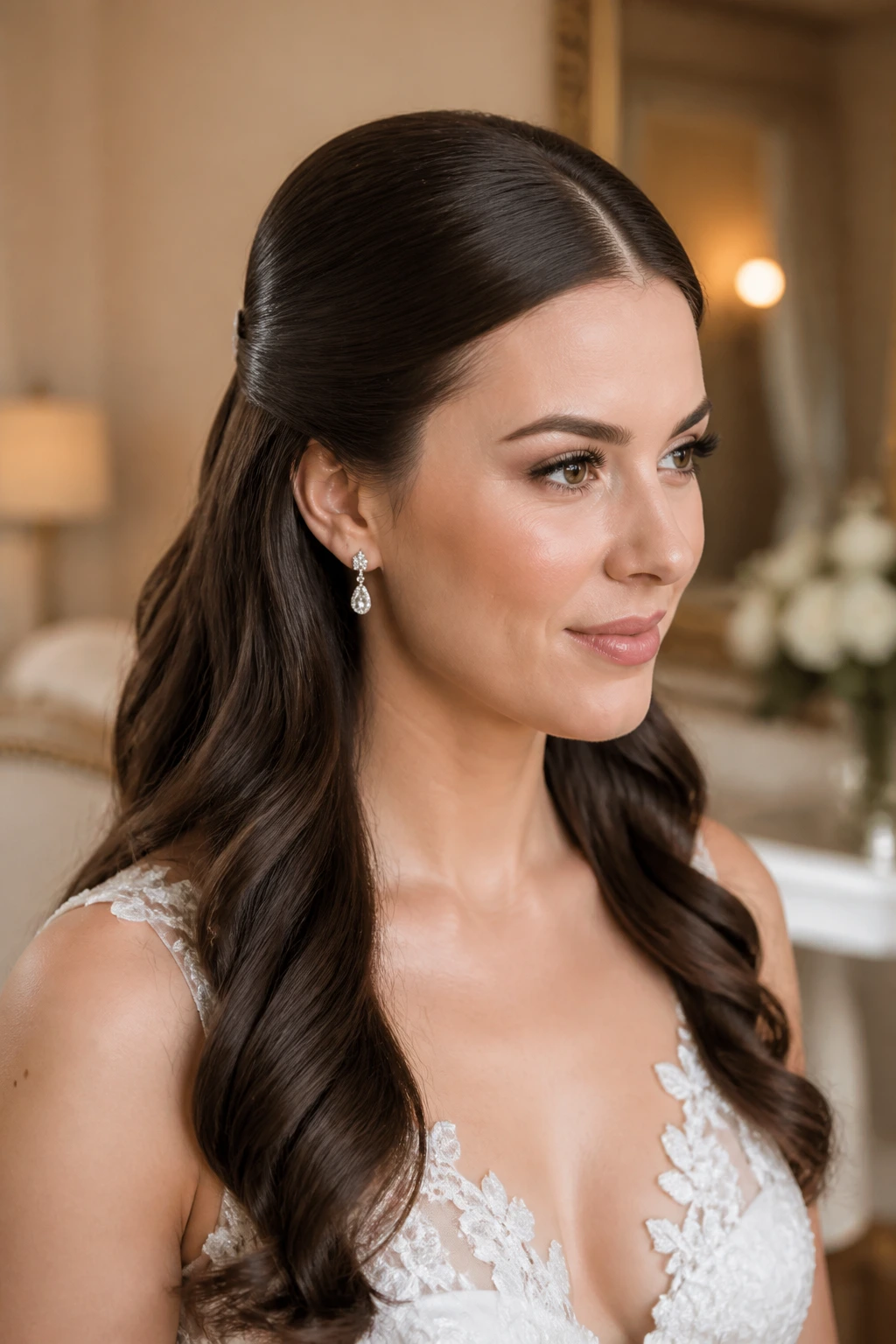
If you like clean lines, this is the one that stops the room without shouting. A center part, smooth crown, and hidden pins create a shape that feels modern and sharp, then the loose lengths keep it from getting severe.
What makes it different
The trick is control. A tiny amount of smoothing cream at the top, a fine-tooth comb, and crossed bobby pins tucked under the top layer keep the surface flat. I’d choose this for a square neckline or a structured dress, because the hair and the dress end up speaking the same language.
How to use it
Keep the loose ends in a polished wave or a soft bend, not ringlets. If the hair is fine, add one hidden clip-in weft under the crown for lift. Without that support, the style can sit too flat and lose its bridal shape.
4. Braided Halo and Soft Ends
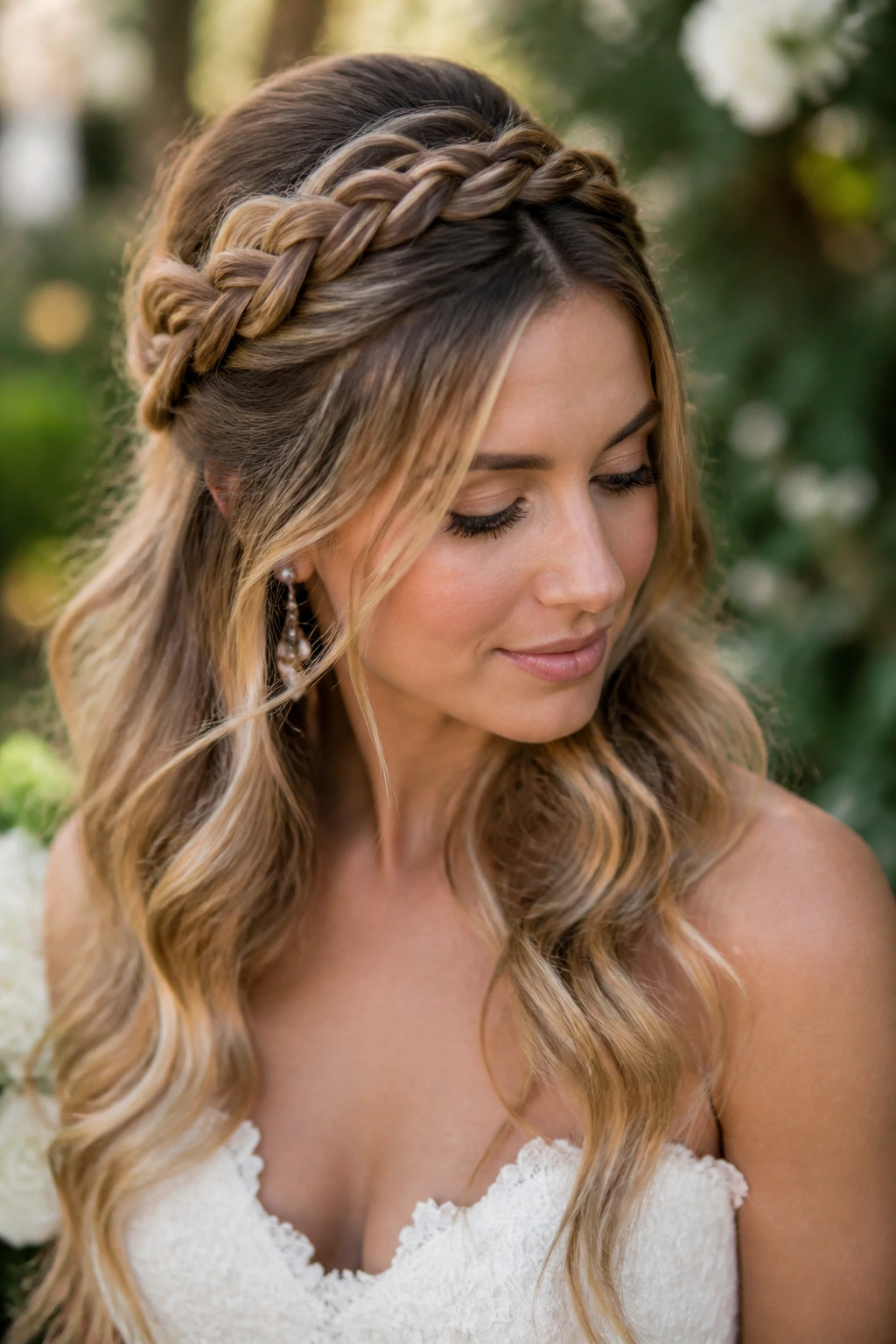
A braided halo half-up has a little more presence than a plain twist, and that’s why it works. The braid makes a visible line across the back of the head, which looks lovely in veil photos and feels secure all day.
It suits brides who want romance but not fuss. Keep the braid slightly loose so it doesn’t look tight or severe. Then leave the bottom half in large waves or soft curls so the style still moves.
One note: this style loves medium-density hair. On very fine hair, the braid can look skinny unless you gently pull it apart after pinning.
5. Rope-Twist Half-Up With Face-Framing Pieces
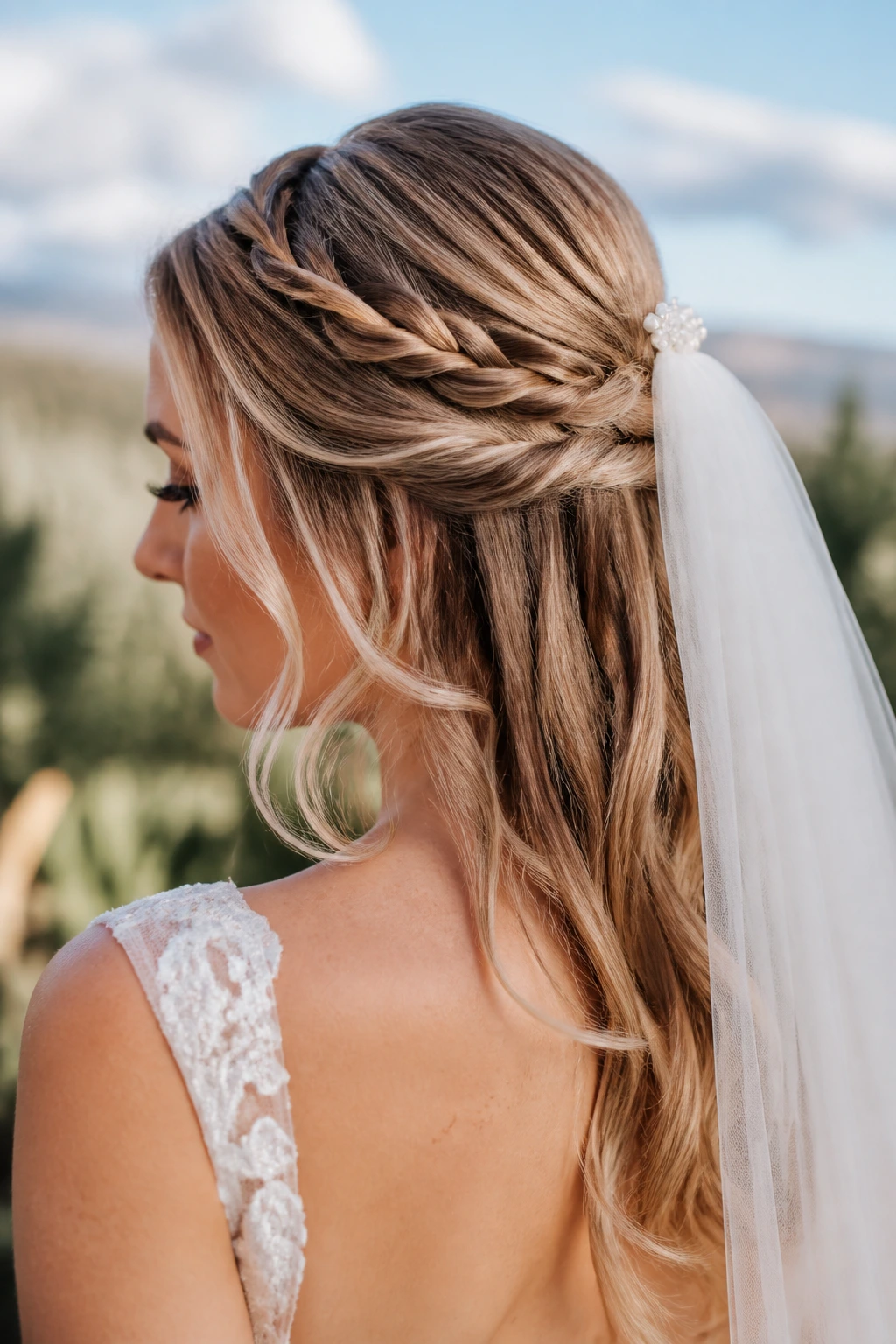
Rope twists are underrated. They’re faster than a braid, they sit flatter on the head, and they have that subtle twist pattern that reads elegant in photos. Two rope twists from the temples can meet at the back and disappear under a veil comb.
The face-framing pieces matter here. Leave them slightly curved, not over-curled, so they soften the cheeks without stealing the shape. This version works especially well if the dress has an open back, because the twist gives the back of the head a neat finish without overloading it.
6. Bubble Braid Half-Up With Glossy Lengths
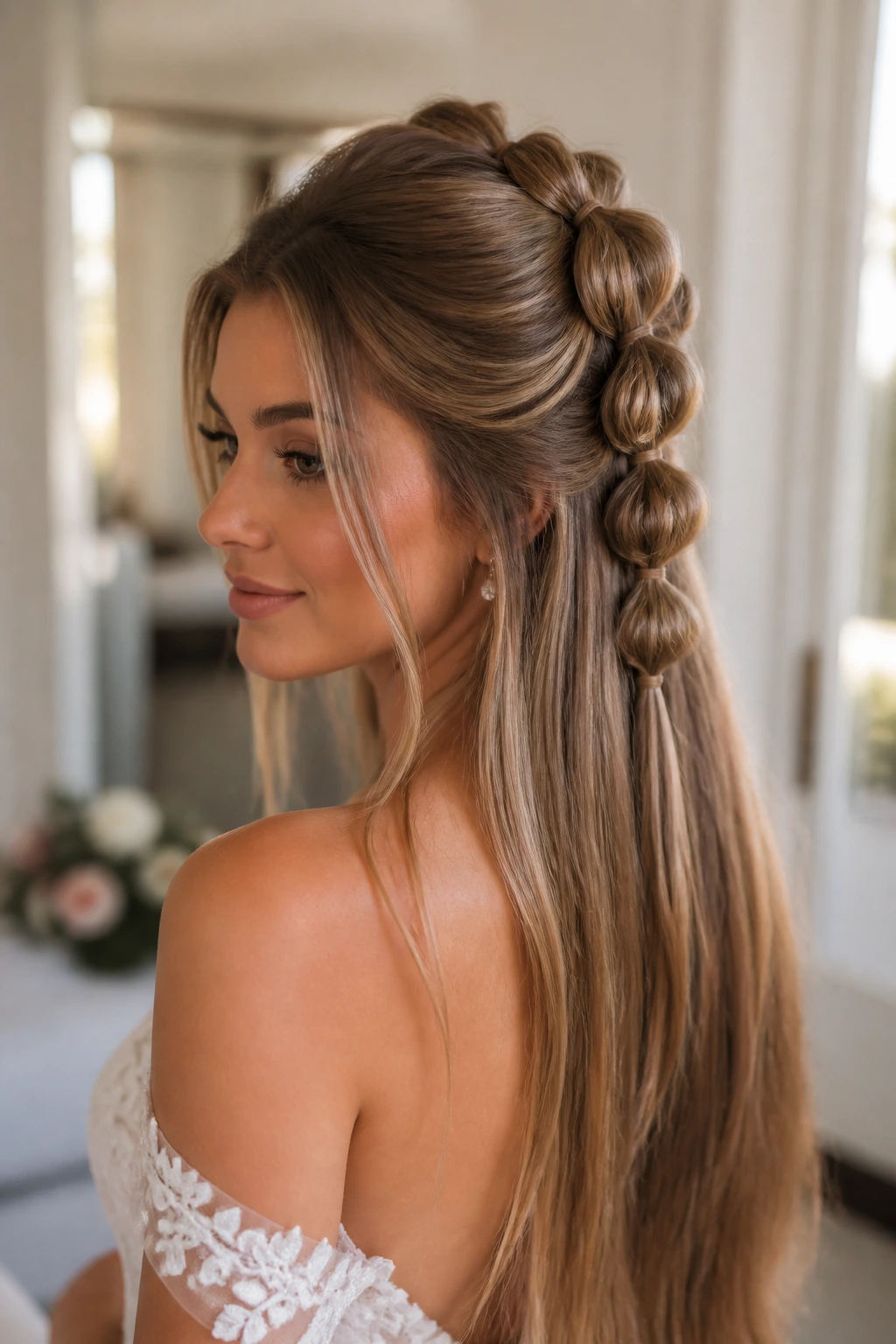
A bubble braid half-up has a sculptural feel that a lot of brides like once they see it in a mirror. The bubbles catch the light, the pattern is easy to read from far away, and the style stays intact better than a loose plait when there’s a long day ahead.
Keep the bubbles even, but not ruler-straight. If they’re too perfect, the style loses warmth. I’d pair this with glossy straight lengths or a soft bend through the ends so the braid is the focal point.
It’s a good fit for brides who want something a little more graphic without going full editorial. There’s shape here. Plenty of it.
7. Ribbon-Tied Bow Half-Up
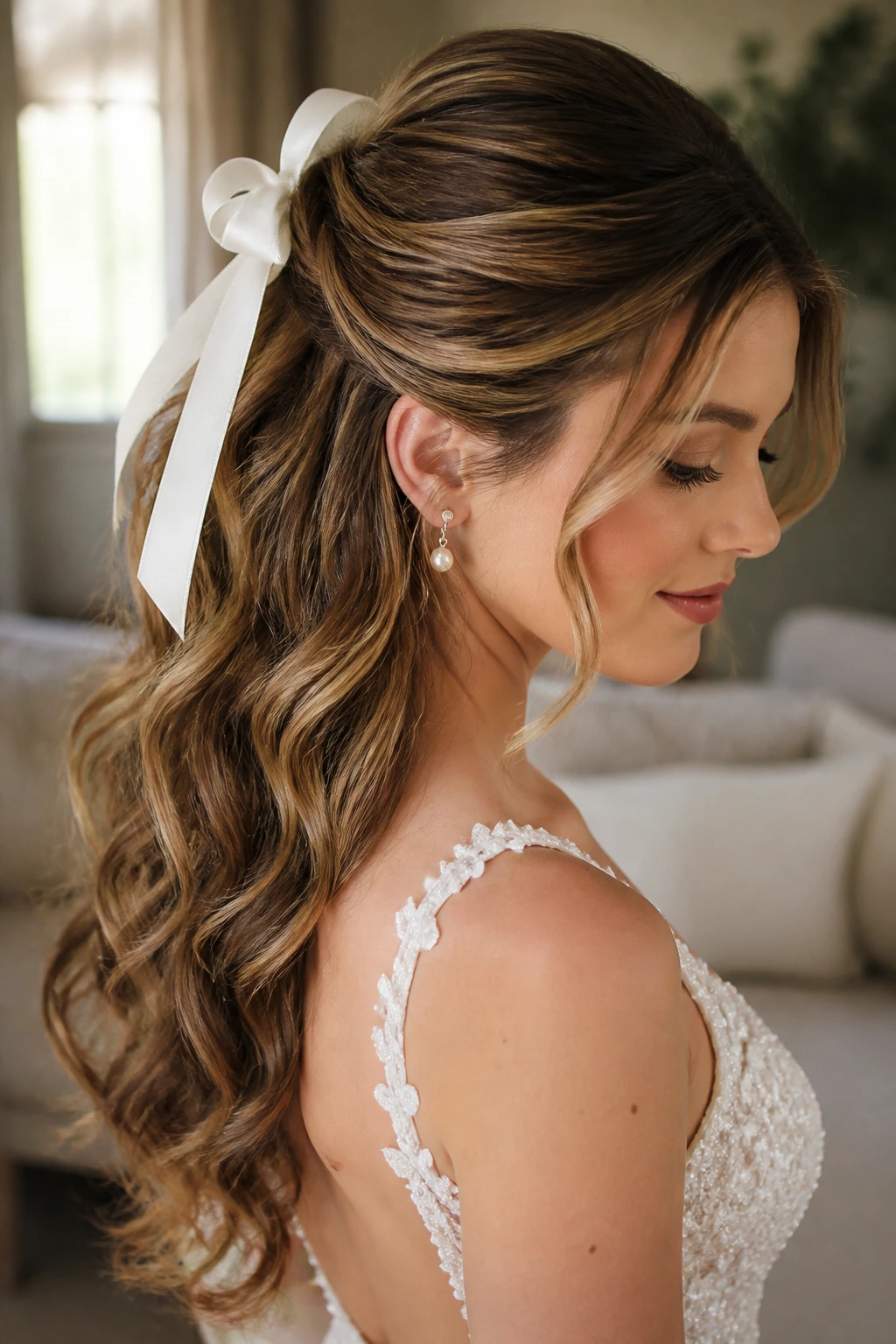
A ribbon bow is the quickest way to make a half-up style feel personal. Satin gives it a polished look, velvet leans richer, and a narrow grosgrain ribbon feels charming without getting sweet in a cloying way.
The best part is that the bow can disguise the anchor point. If your pinning is not perfect, the ribbon hides a lot. That’s useful. The style works best with soft waves or brushed-out curls, because a rigid finish fights the bow’s softness.
I like this on brides who want one small detail to carry the whole look. No crowded pins. No extra fuss.
8. Old-Hollywood Wave Half-Up
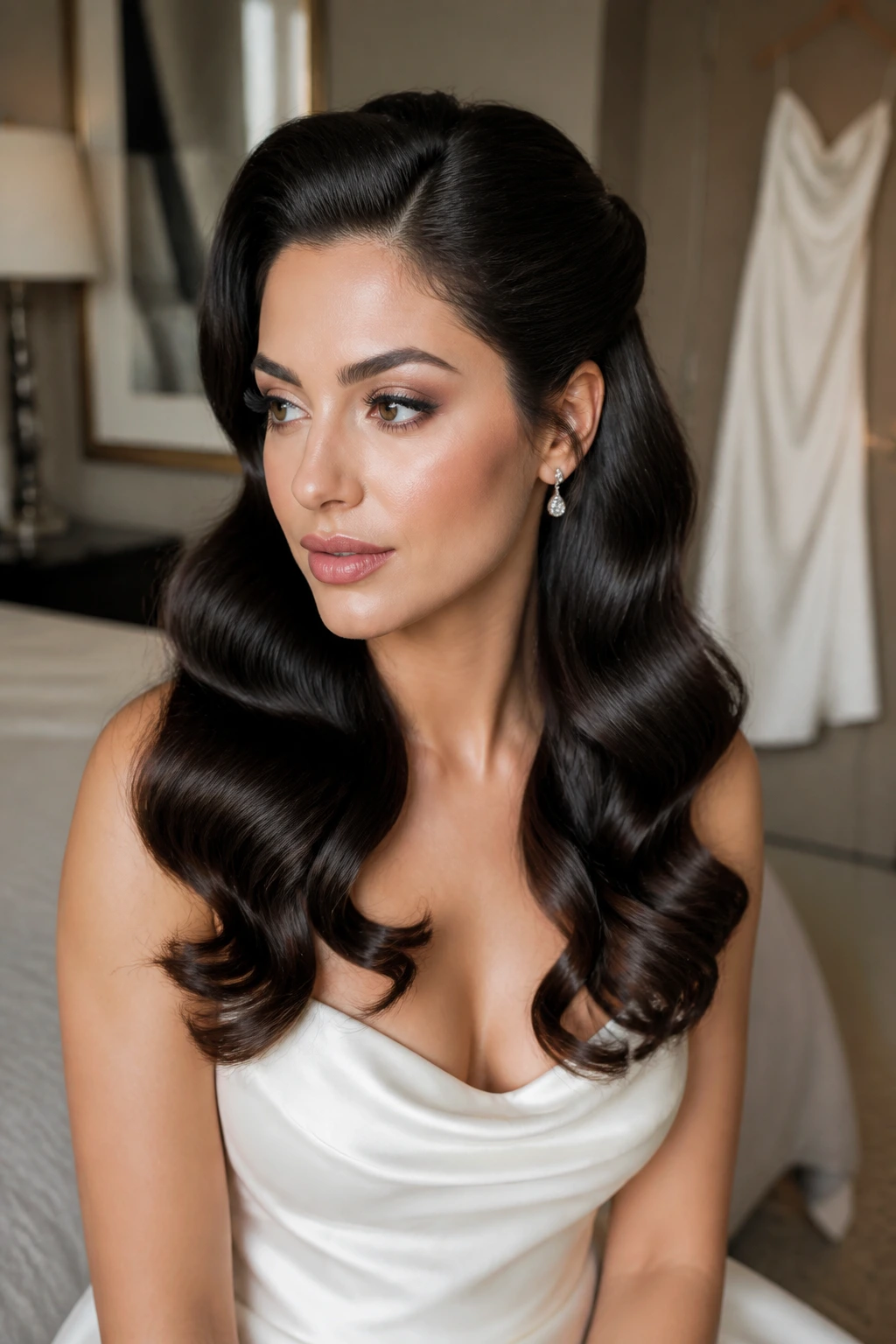
Old-Hollywood waves with the top section pinned back are for brides who like a little drama and don’t mind a more sculpted finish. The wave pattern should be deep and smooth, with the top lifted just enough to keep the face open.
The key is brushing the curls into one continuous wave before pinning. If you keep the texture too broken, the style loses its classic shape. This one pairs beautifully with satin, silk, or a dress that already has a strong line through the bodice.
It’s not the easiest style to fake on the fly. When it’s done well, though, it looks expensive in the old-fashioned sense of the word.
9. Fishtail Accent With Loose Curls
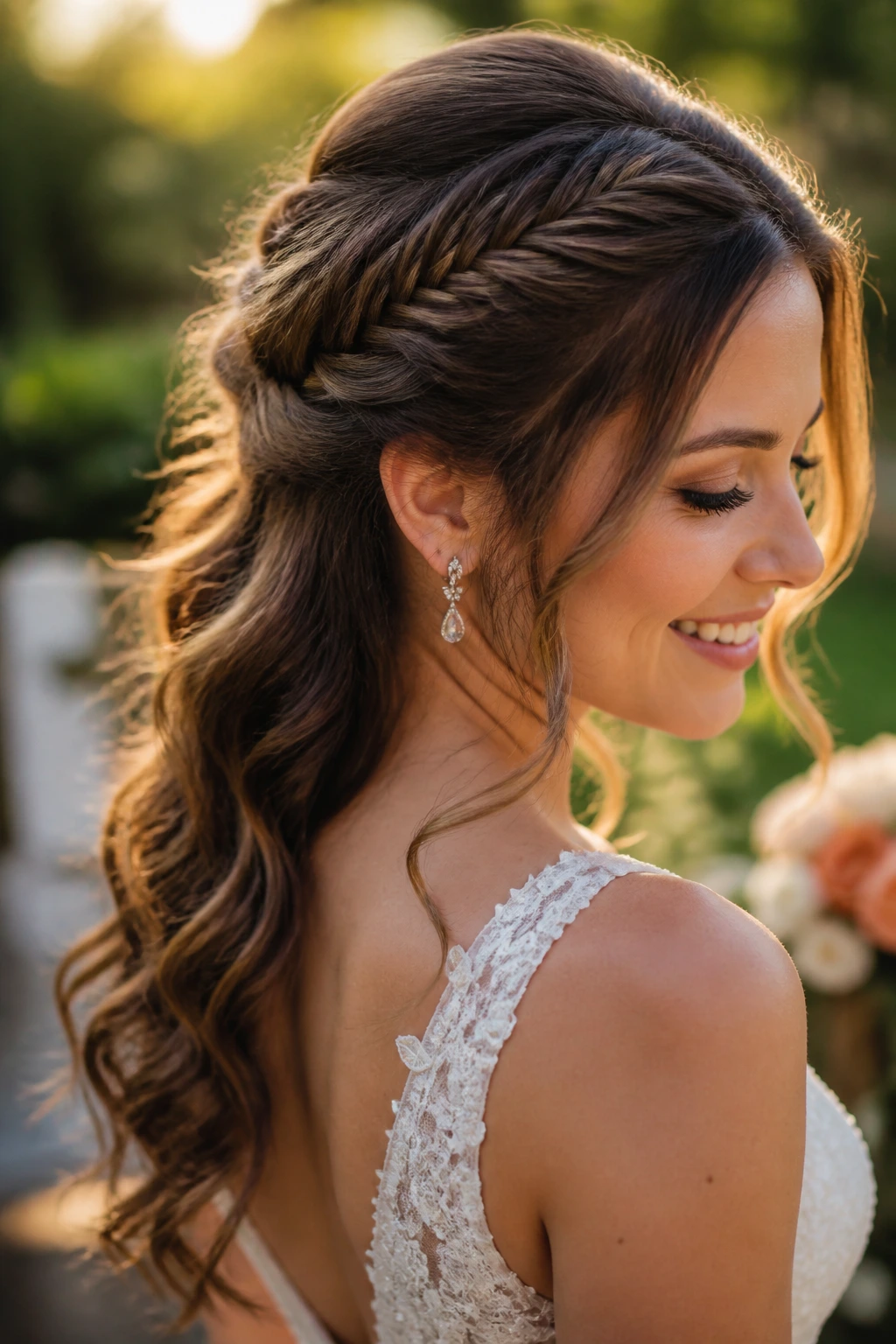
A fishtail accent adds detail without overwhelming the whole head. I like it when the braid starts small at the temple and widens slightly as it moves back, then disappears into loose curls below.
The real benefit is texture. Fishtail braids create a finer pattern than a standard braid, so they work nicely on brides who want visible detail without a chunky shape. If your hair is slippery, mist the section with texture spray before braiding. It makes the braid hold its shape instead of sliding apart.
Best on medium to thick hair. Thin hair can wear it too, but the braid needs a little help from lightly backcombed roots.
10. Lifted Crown Half-Up for Veils
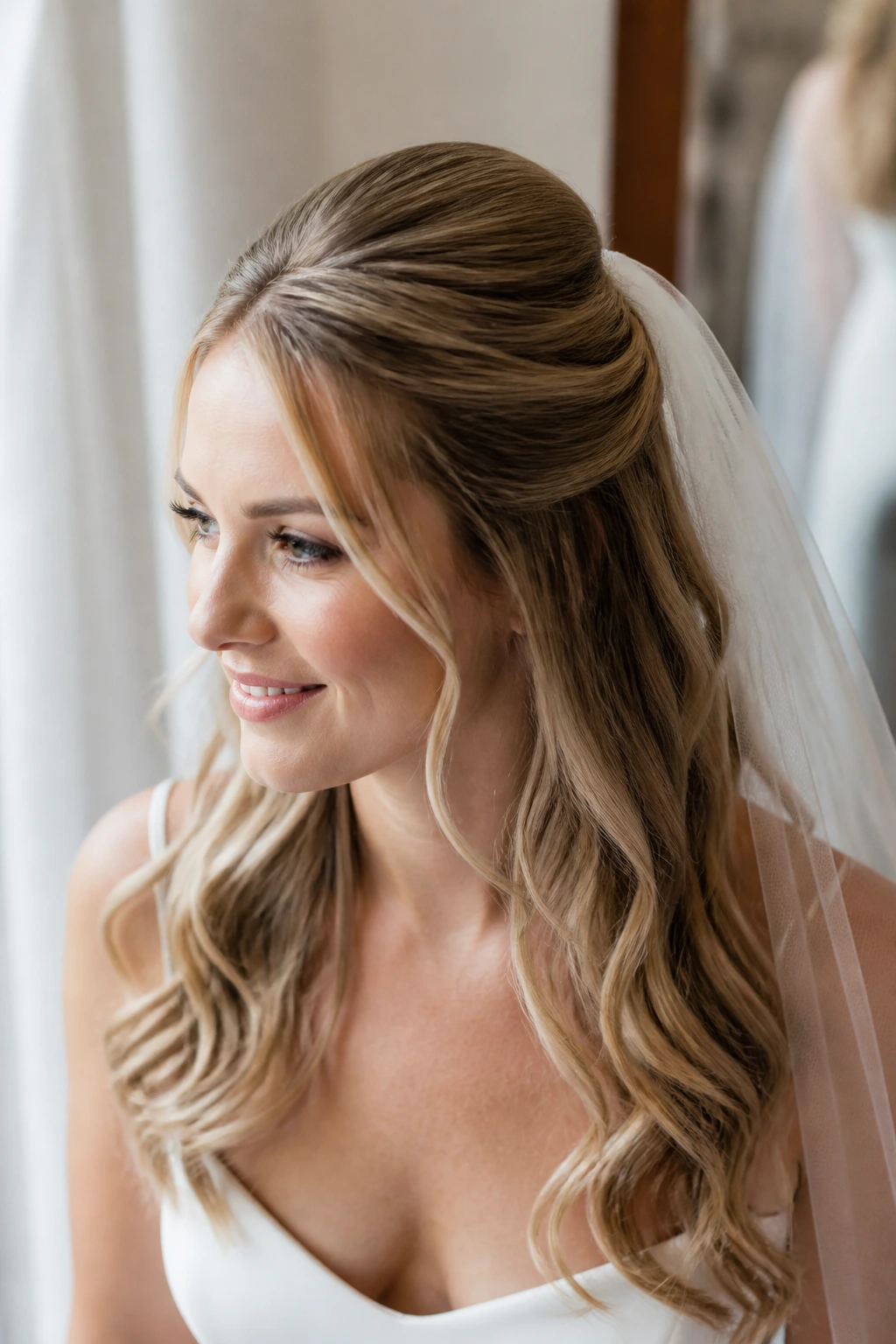
Some styles are pretty. This one is practical and pretty, which is better. A lifted crown gives the veil comb room to sit, and it keeps the front from collapsing under the weight of the accessories.
The lift should be gentle, not poufy. Think a soft arch, not a bump. On fine hair, a teasing brush and a couple of hidden pins underneath the top layer do the work. On thick hair, the style may need less teasing than you expect because the hair already carries itself.
If the veil matters to you, start here. It is one of the easiest half-up looks to make behave once the fabric comes into play.
11. Minimal Clip-Back Half-Up
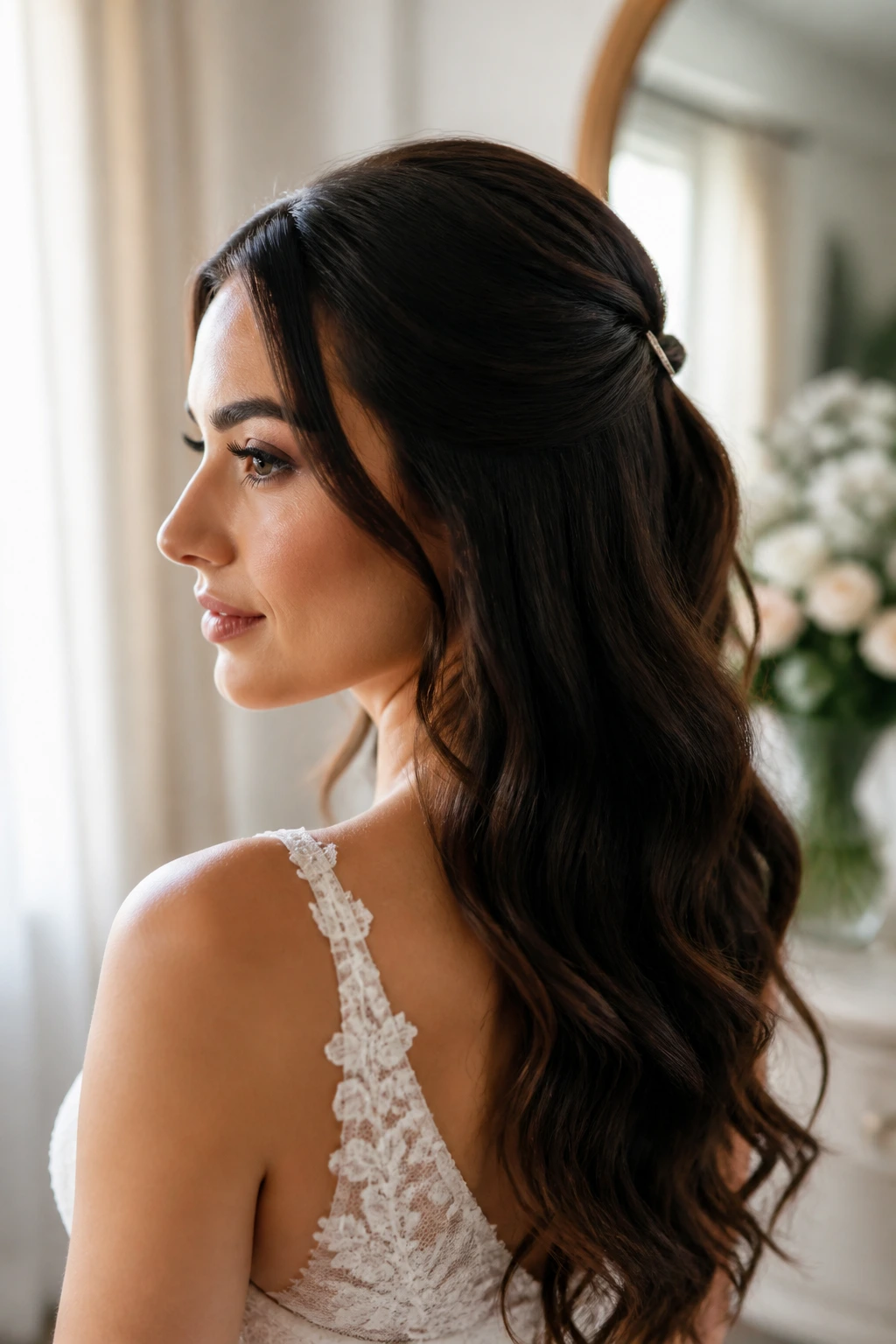
A single elegant clip can be enough. That’s the whole point of this style. Pull back the top sections, secure them with a clean barrette or shell-style clip, and let the rest fall in waves or a glossy bend.
This works best when the accessory has shape on its own. A plain metal clip, a mother-of-pearl barrette, or a slim crystal piece can carry the look without needing much hair work around it. The styling should feel calm and deliberate.
It’s also a good answer for brides who hate fussing with pins. Clip it. Smooth it. Done.
12. Floral Sprig Half-Up
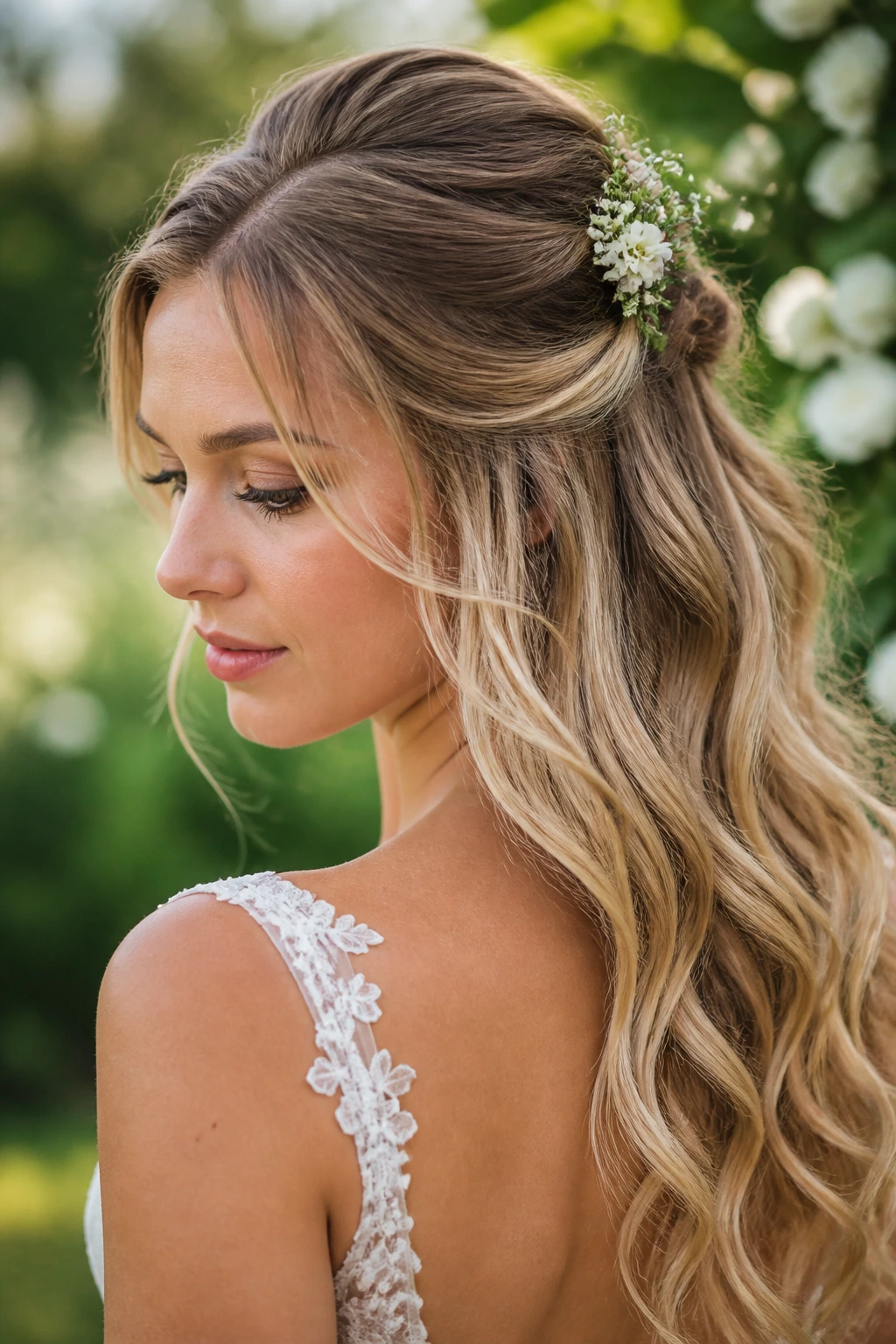
Fresh or dried floral sprigs tucked into a half-up style turn hair into part of the bouquet without making it feel overworked. The trick is restraint. One or two stems, placed where the twist meets the crown, usually looks cleaner than a heavy cluster.
This style is strongest in garden settings, outdoor ceremonies, or any dress that already feels soft and layered. It pairs especially well with loose curls because the flowers seem to rise out of the hair instead of sitting on top of it.
Keep the sprigs wired or taped properly so they don’t wilt early. That small practical detail saves a lot of drama.
13. Half-Up Bun With Loose Lengths
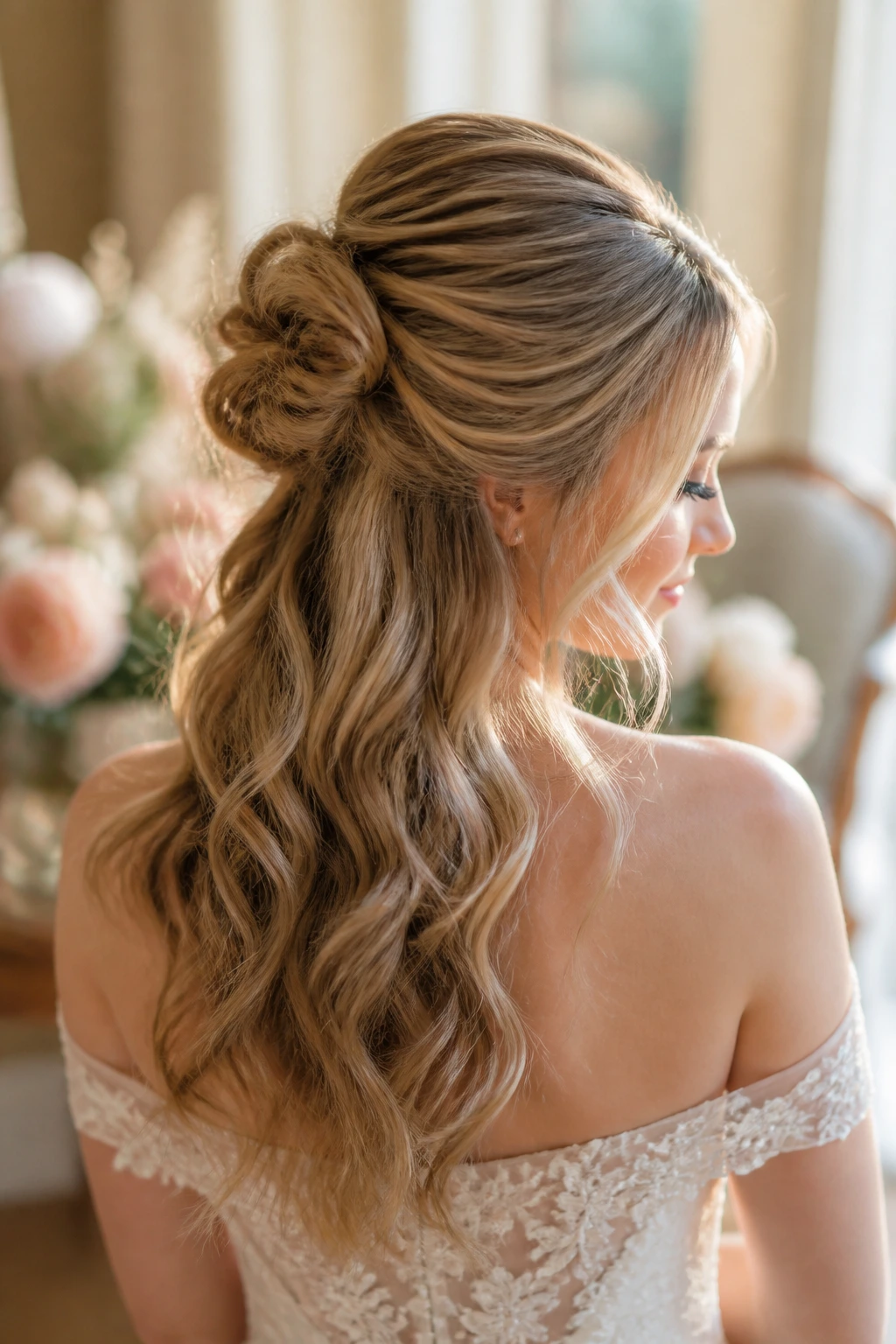
A half-up bun gives you lift at the crown and movement through the rest of the hair. The bun can be small and tidy or slightly messy, depending on how much polish you want.
I like this version when the dress has a high back or when the bride wants something a little less expected than a twist. It shows structure from the back without closing off the length. That matters more than people think.
The bun should sit firmly, but not hard. If it looks like a topknot that wandered south, the balance is wrong. Keep it centered and leave the bottom hair soft.
14. Side-Swept Half-Up
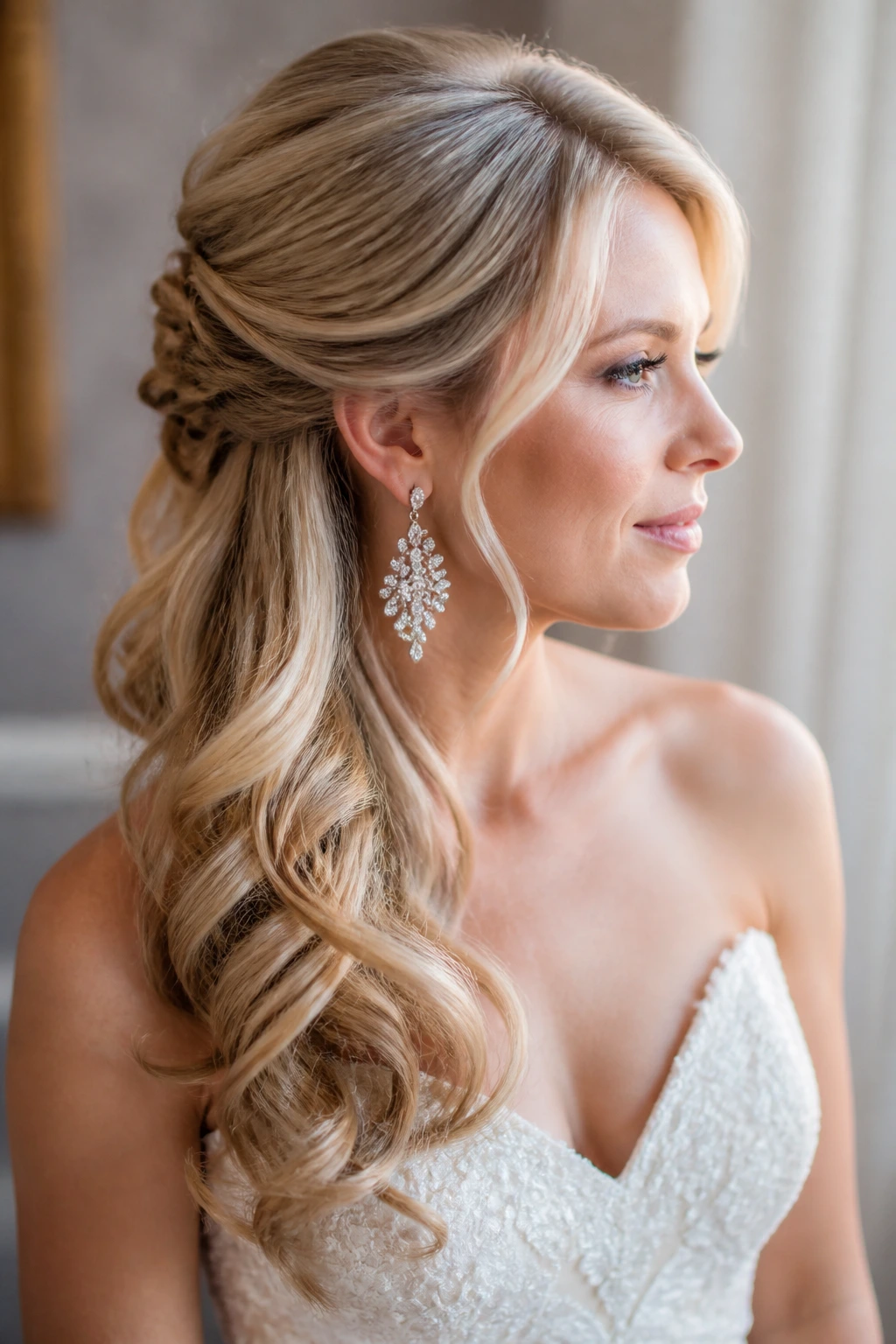
Side-swept half-up hair changes the mood instantly. Instead of splitting everything down the middle, you sweep volume to one side and let the asymmetry do the work. It feels a little old-fashioned, a little glamorous, and it photographs well when the dress has one-shoulder details or a dramatic earring.
The practical trick is weight. Pin the bulk on the heavier side so the style doesn’t drift back to center. Keep the opposite side cleaner, not flat. It should look intentional, not like the hair lost a fight with gravity.
If your face shape likes side parts, this one is easy to love.
15. Micro-Braid Scatter Half-Up
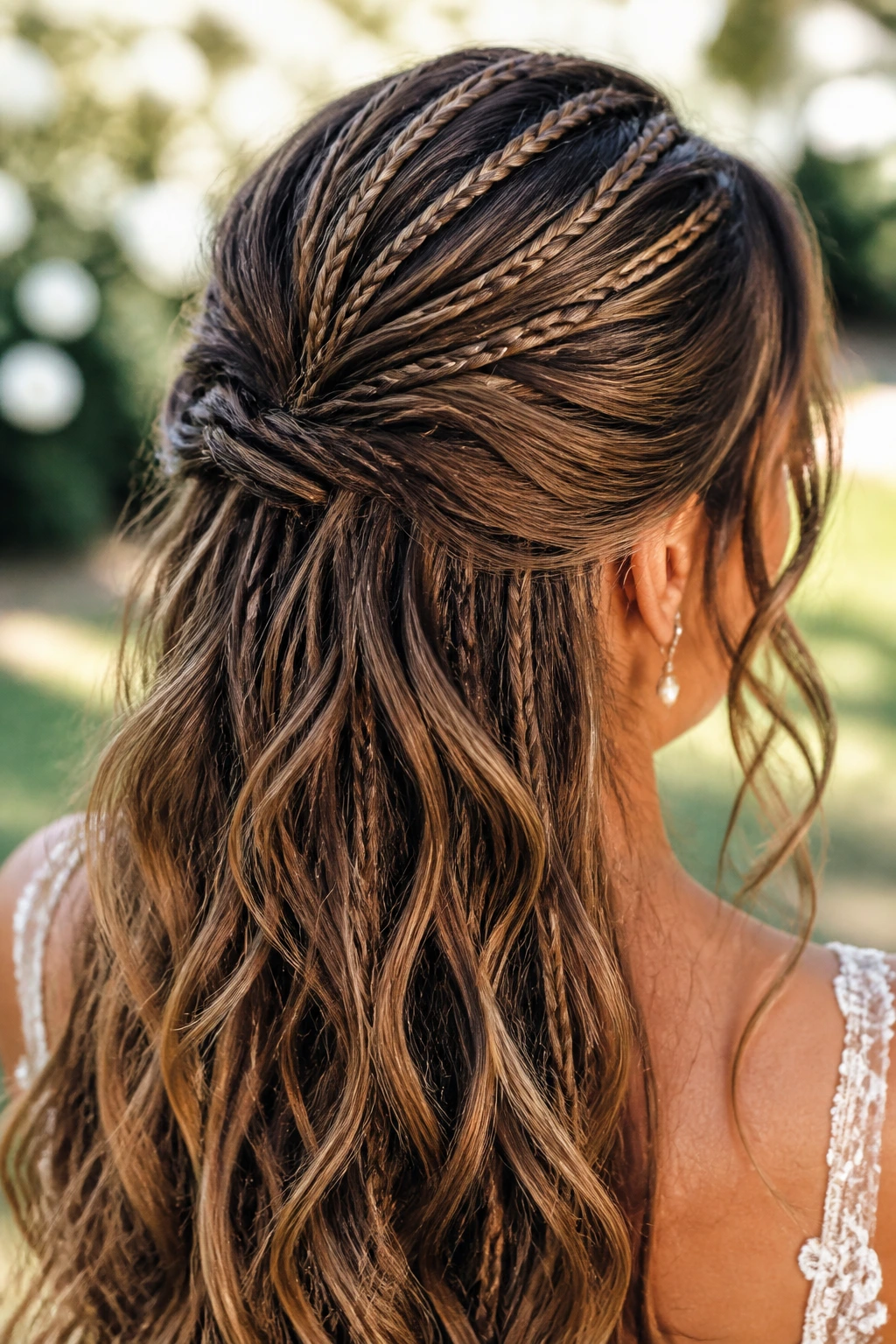
Tiny braids tucked through the top layers make a half-up style feel textured without turning it into a full braid look. They can be scattered near the temple, braided into the pinned section, or used to hide a pin line.
That little detail matters if you want bridal hair with personality but don’t want a heavy look. Micro-braids work well on long lengths because they break up the surface and keep the style from looking too smooth or too flat.
They’re also useful on day-two hair, which often holds braids better than squeaky-clean strands. Not a bad trade.
16. Velvet Ribbon Woven Half-Up
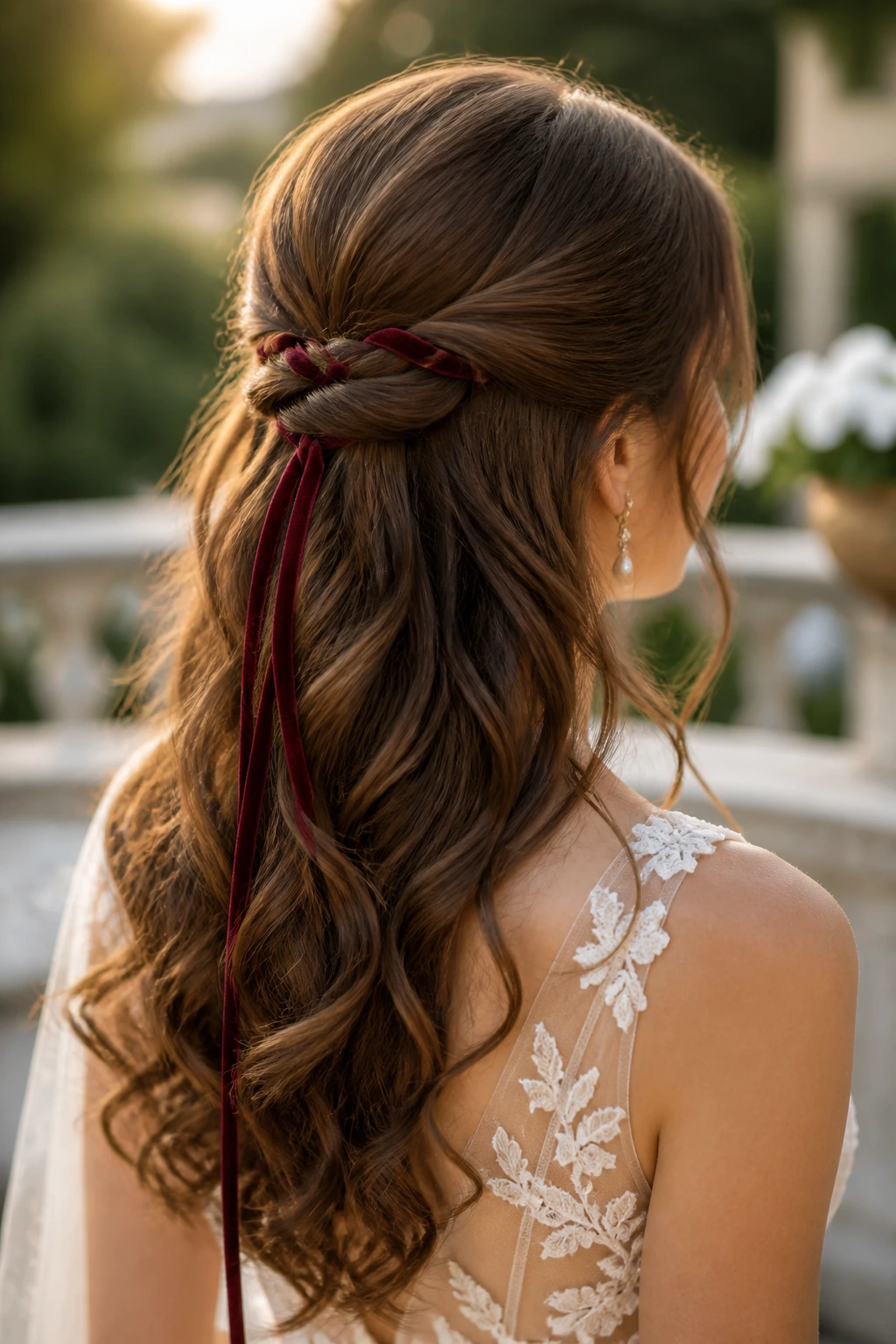
Velvet gives the style weight and a bit of richness. Woven through a twist or tied at the back, it changes the whole tone of the hair without demanding a complicated build.
This version works especially well on darker hair because the ribbon reads as a soft contrast. On lighter hair, it can feel even more delicate. Either way, keep the ribbon narrow enough that it does not take over the shape.
I’d use this when the dress is simple and you want one tactile detail to carry the styling. It feels thoughtful. Not busy.
17. Twisted Knot Half-Up
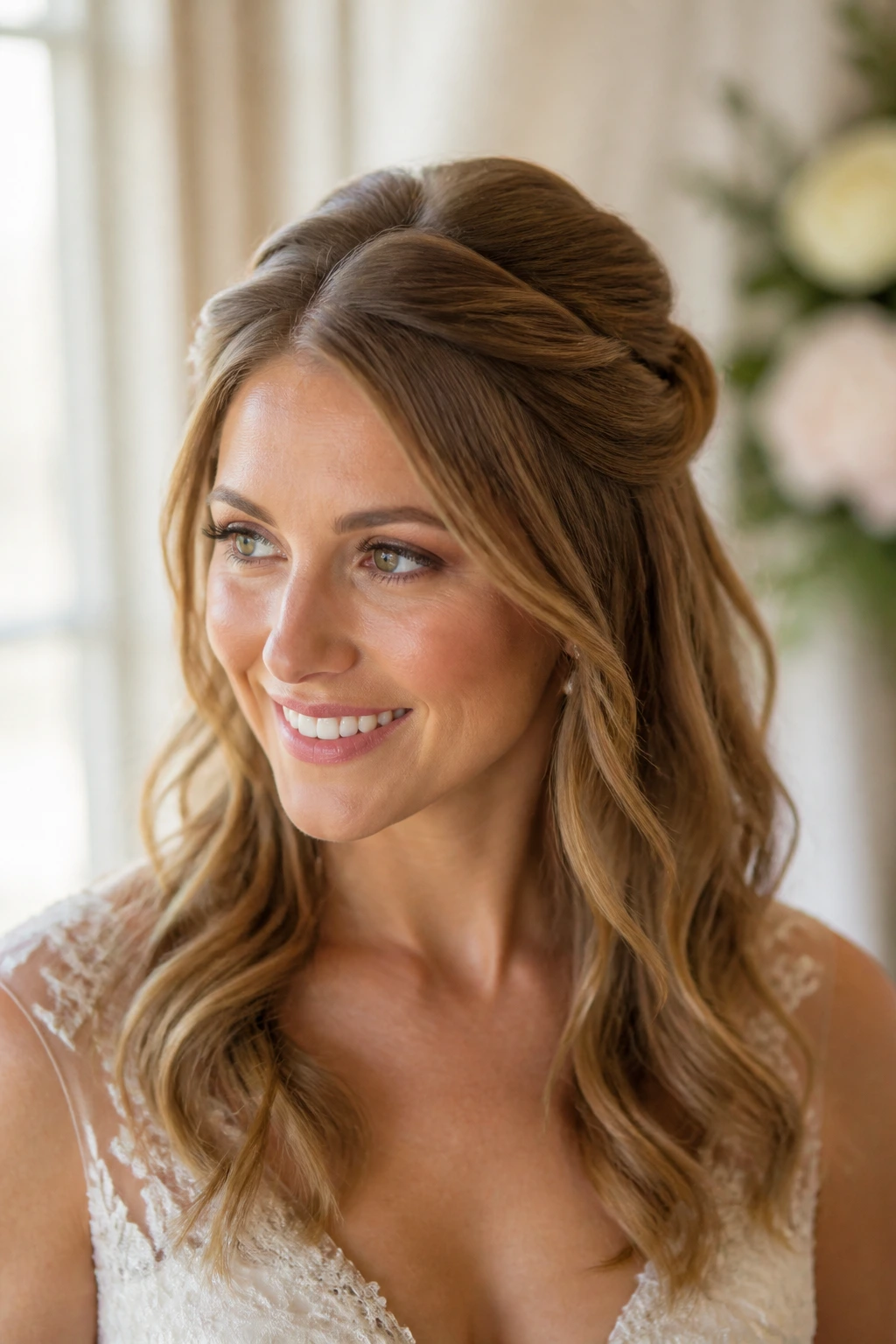
A twisted knot is one of the easiest half-up shapes to make look polished. You take two sections, twist them back, knot or loop them into the center, then pin the knot flat so it becomes part of the shape rather than a lump sitting on top.
The style works because the eye reads the twist as movement, even though the structure is compact. That makes it useful for brides who want a secure center with loose lengths below. It’s neat without going severe.
If your hair is slippery, prep the twists with a small amount of powder or texture spray. Otherwise, they can unravel before the day gets interesting.
18. Curly Cascade Half-Up
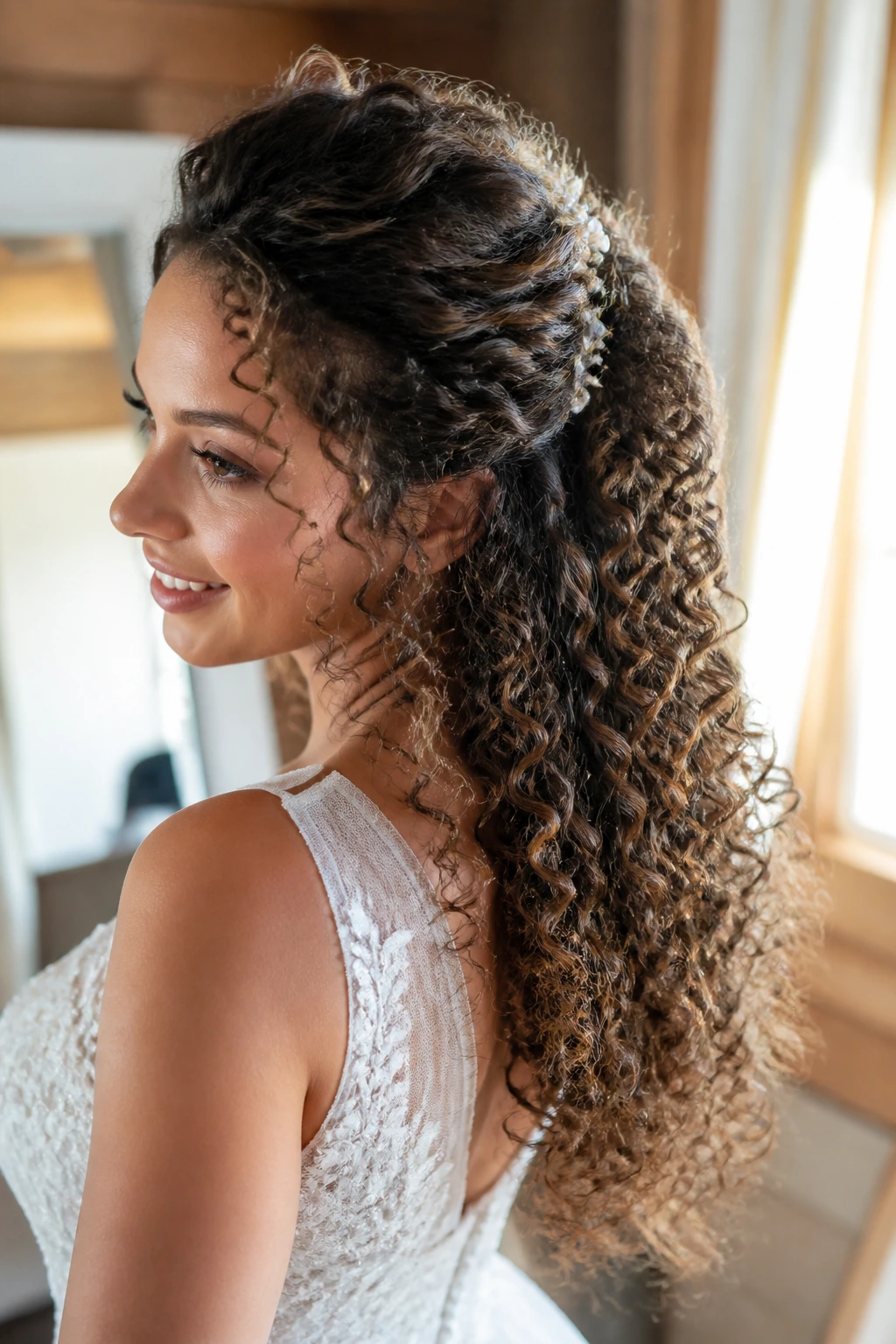
Natural curls deserve their own category because they behave differently once pinned. A curly cascade half-up keeps the top controlled and lets the curl pattern do the rest of the work. The result is soft, full, and alive in a way that straightened styles never quite match.
The key is not overhandling the curls. Shape them, pin the crown, then leave the rest alone as much as possible. A little curl cream and a touch of hold spray are enough. Too much product turns curls sticky and dull.
This is one of my favorite choices for brides who want their hair to look like their hair, just cleaned up and arranged with care.
19. Polished Straight Half-Up
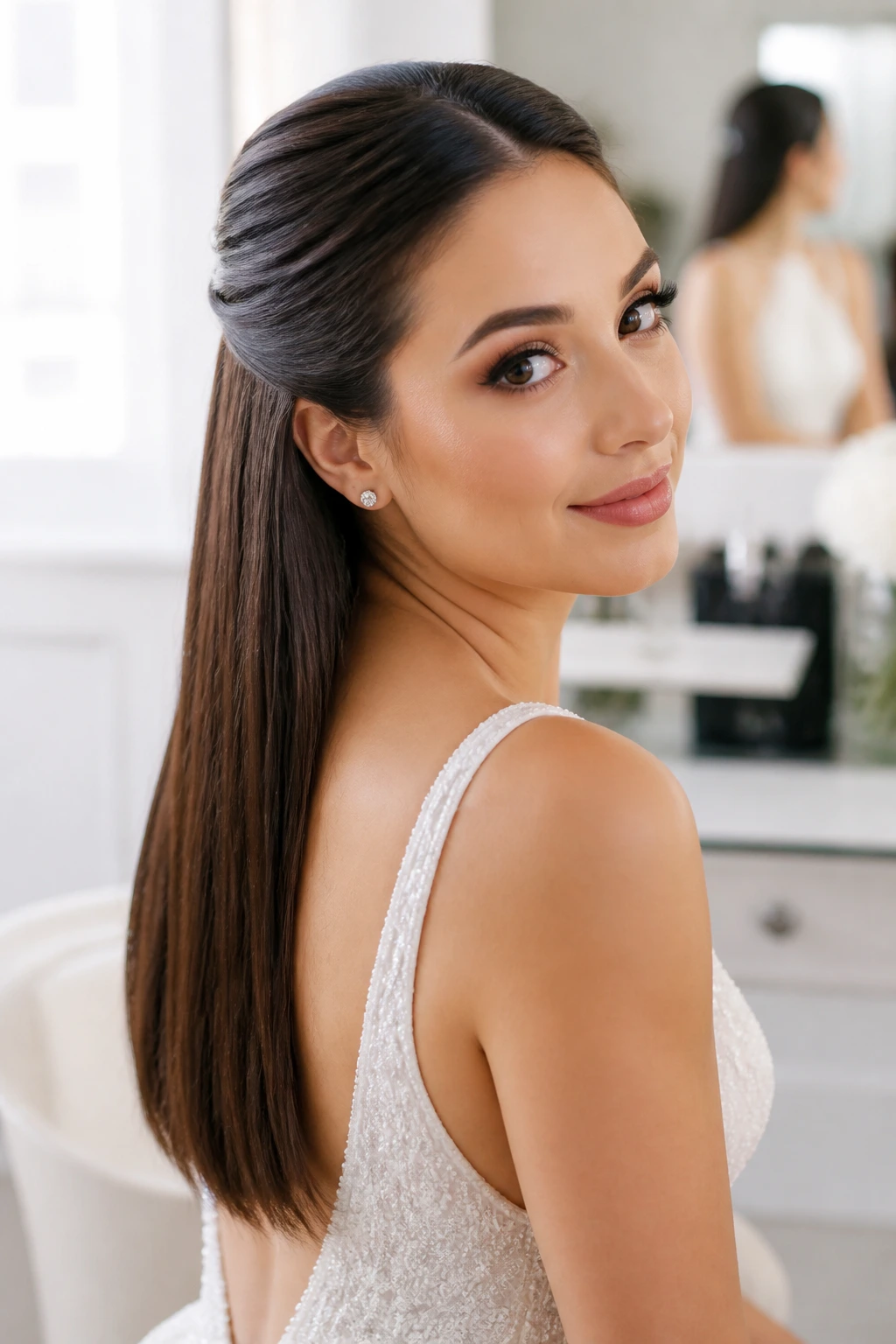
Straight hair can absolutely be bridal hair. The trick is finishing it on purpose. A polished straight half-up uses a sleek top section, tucked and pinned with precision, while the bottom lengths stay smooth and glossy.
It’s the right move when the dress is modern or when the bride wants the hair to feel architectural rather than romantic. The style needs shine spray in tiny amounts, not a heavy coat that makes the hair look greasy under flash.
I’d recommend this for fine hair that doesn’t love curls or for brides who just don’t feel like themselves in waves. There’s no rule saying bridal hair has to bend.
20. Milkmaid-Inspired Half-Up
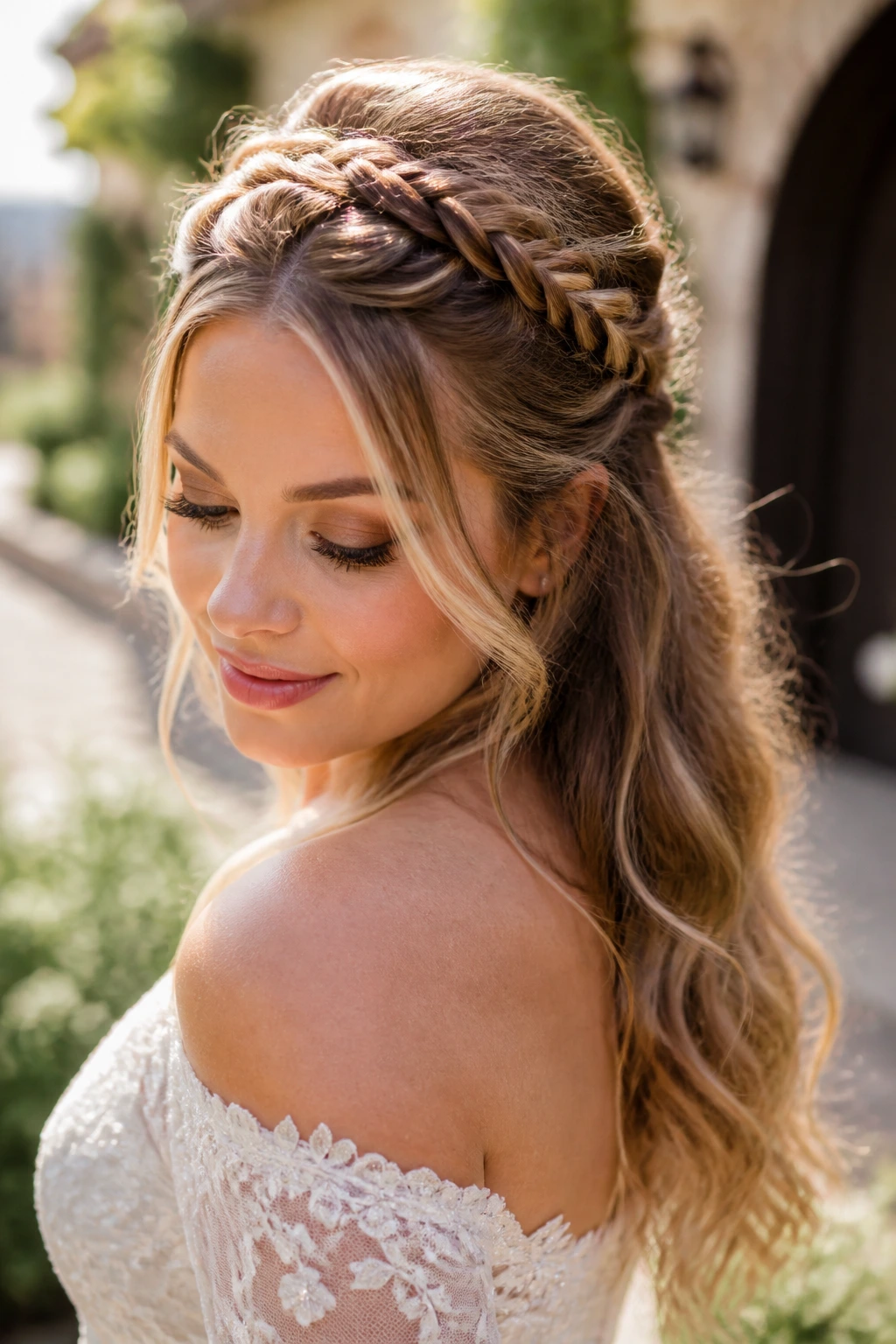
A milkmaid-inspired half-up borrows the curve and framing of a crown braid, but stops short of a full wrap. It has that soft village-romance feeling without becoming costume-y.
The shape should sit a little higher than a regular half-up, which opens the face and shows off earrings. Keep the braid or twist slightly loose so the look stays airy. On long hair, the bottom lengths can be waved softly; on shorter hair, a bend through the ends is enough.
It suits brides who want a bit of story in the styling. Not too precious. Just enough.
21. Heart-Braid Half-Up
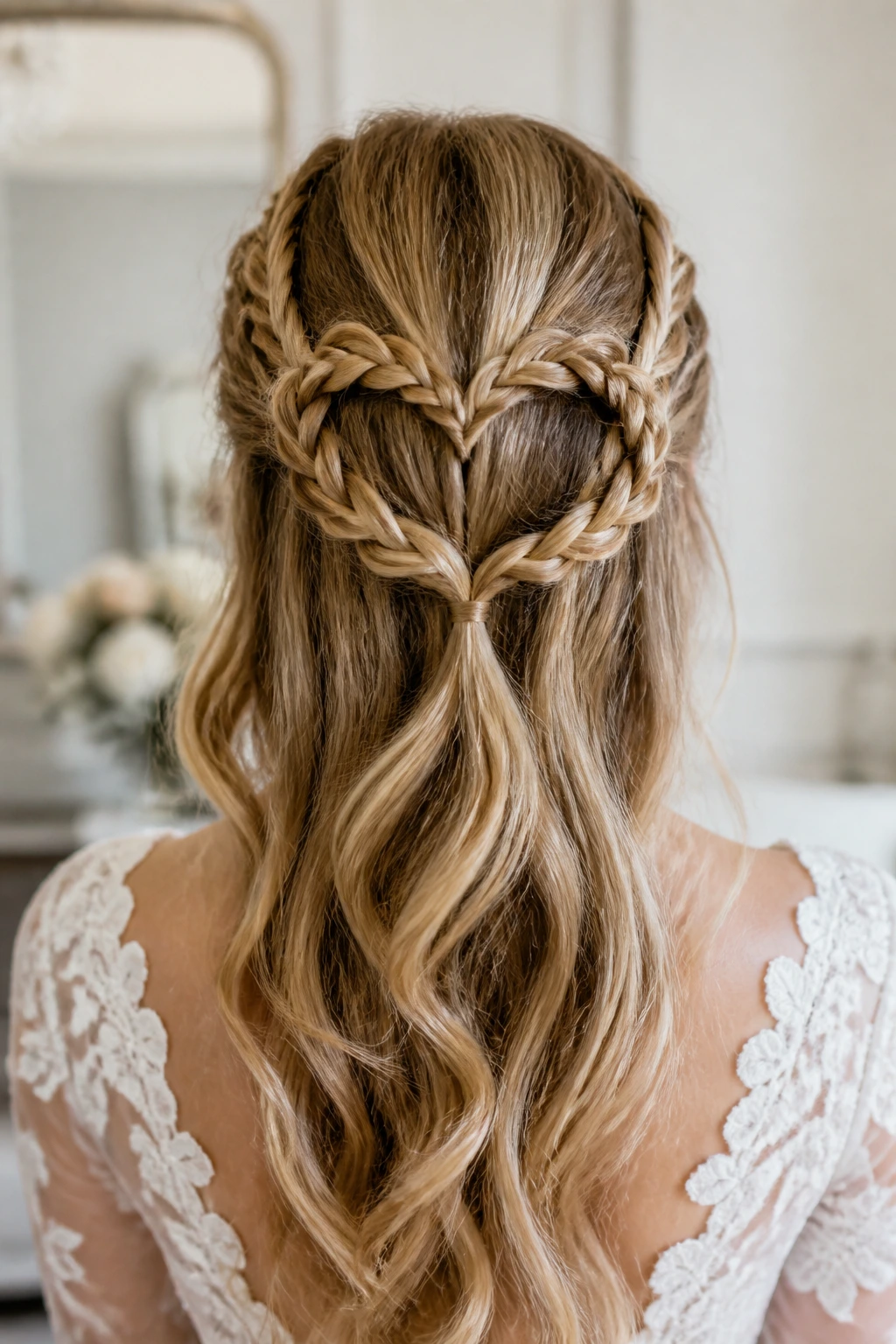
A heart braid is playful, but in the right hands it looks charming rather than juvenile. Two braids curve inward and meet in a heart shape at the back, then the remaining hair flows underneath.
This style needs a steady hand and some practice. The lines matter. If the curves are uneven, the shape can look lopsided fast. Keep the rest of the hair clean and soft so the braid detail stays the focus.
It’s a good fit for brides who want a visible handmade element. If you like hair that feels personal, this one has that quality.
22. French Twist Half-Up
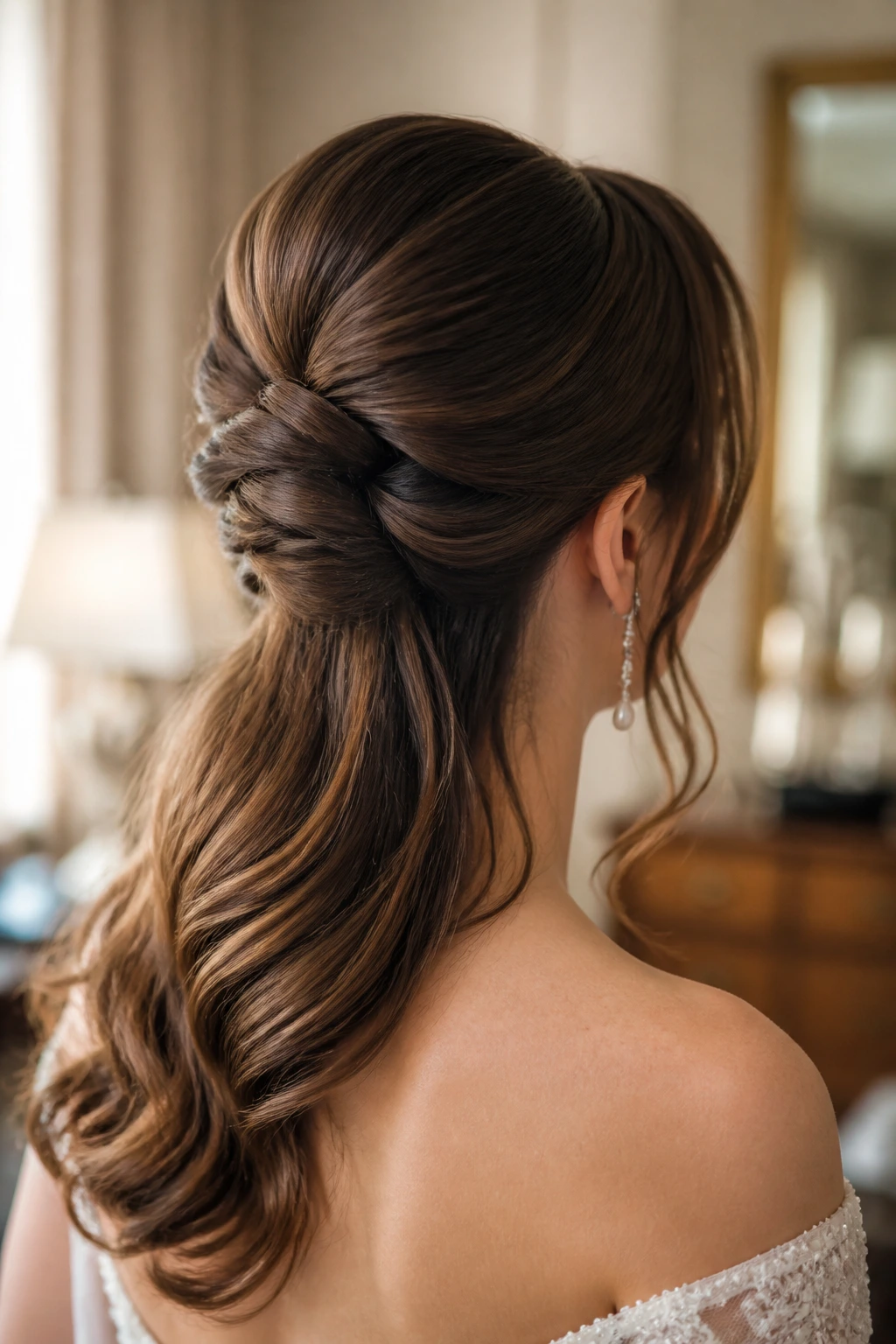
A French twist half-up sounds formal because it is formal, but it does not have to look stiff. Pull the crown section back with a smooth twist, tuck the ends under, and leave the rest in soft waves or polished bends.
The advantage here is control. The twist creates a tidy line at the back, which pairs well with structured dresses and long earrings. If your hair is thick, a French twist shape helps compress the top without flattening the ends.
This one is for brides who like clean edges and strong lines. It has backbone.
23. Wrapped-Base Half-Up Ponytail
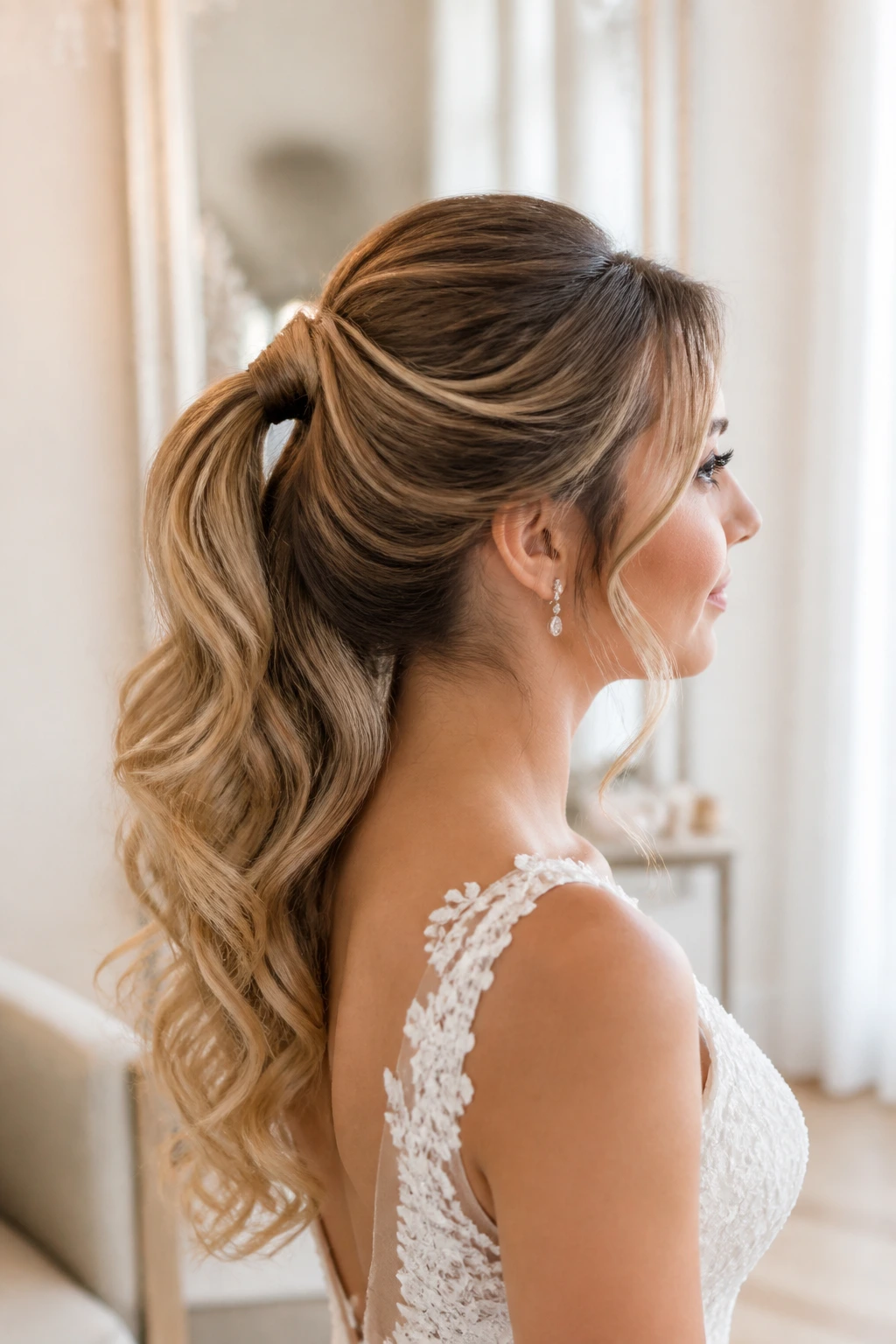
A half-up ponytail can be bridal if the base is wrapped carefully and the top has enough lift. A section of hair hides the elastic, turning a plain pony into something more elegant.
The style is practical when the bride wants movement through the lengths but needs the front secured tightly. It also holds up well in warm rooms because the shape is compact and direct. Add a soft wave or a blowout bend in the ends so the look doesn’t get too sporty.
I like this for brides who want clean, modern hair with a little swing.
24. Crystal Pin Scatter Half-Up
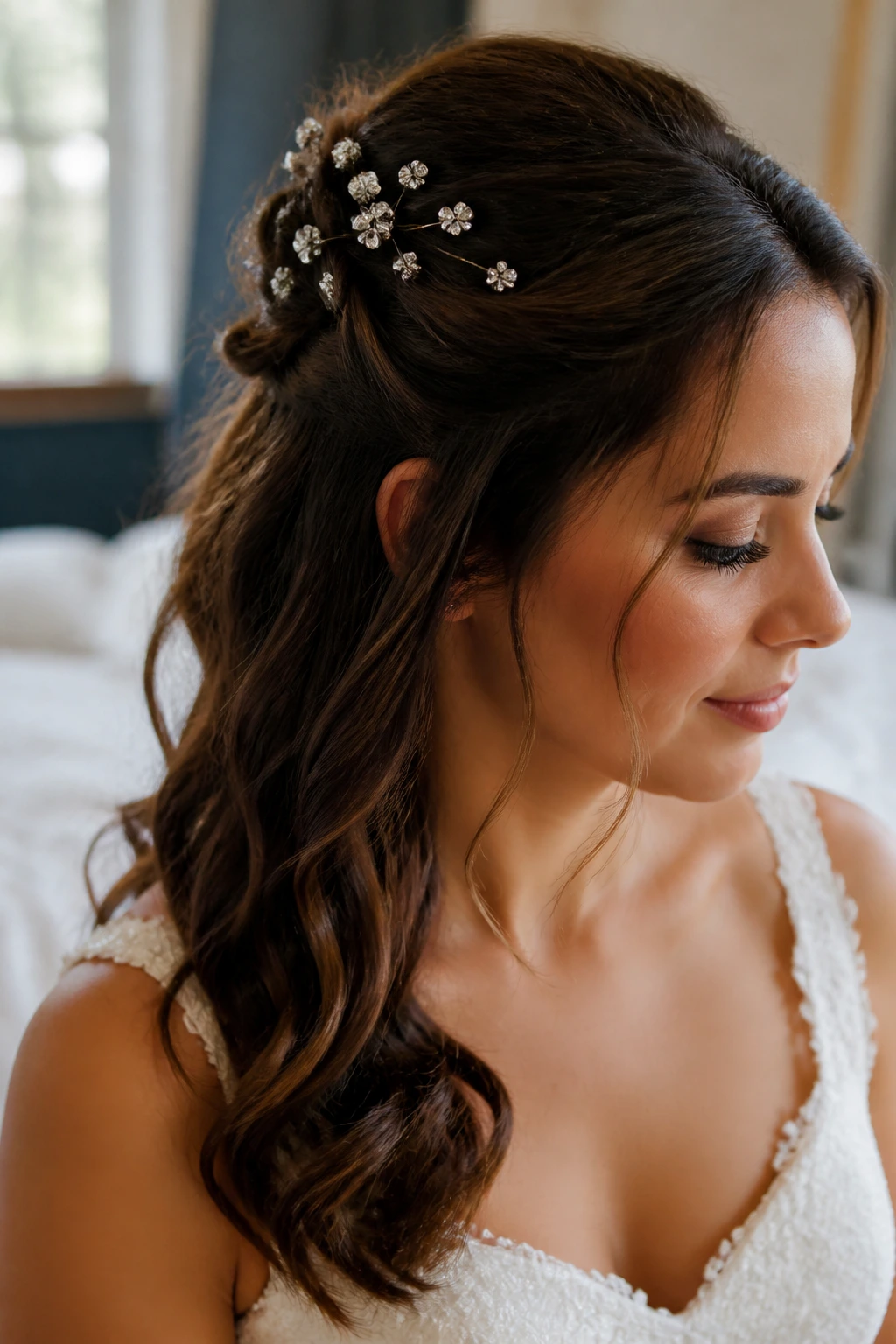
A scatter of crystal pins can make a simple half-up look like it was planned with a ruler and a mood board. The trick is to place the pins in an uneven cluster so they look organic, not lined up like buttons.
The style itself can be very simple: a twist, a knot, or a pinned-back crown. The sparkle should sit in the negative space, not cover the whole head. That keeps the hair from looking overloaded.
Use this if the dress is plain and you want the hair to carry the shine. It’s a small move that gets noticed.
25. Crown Braid With Center Part
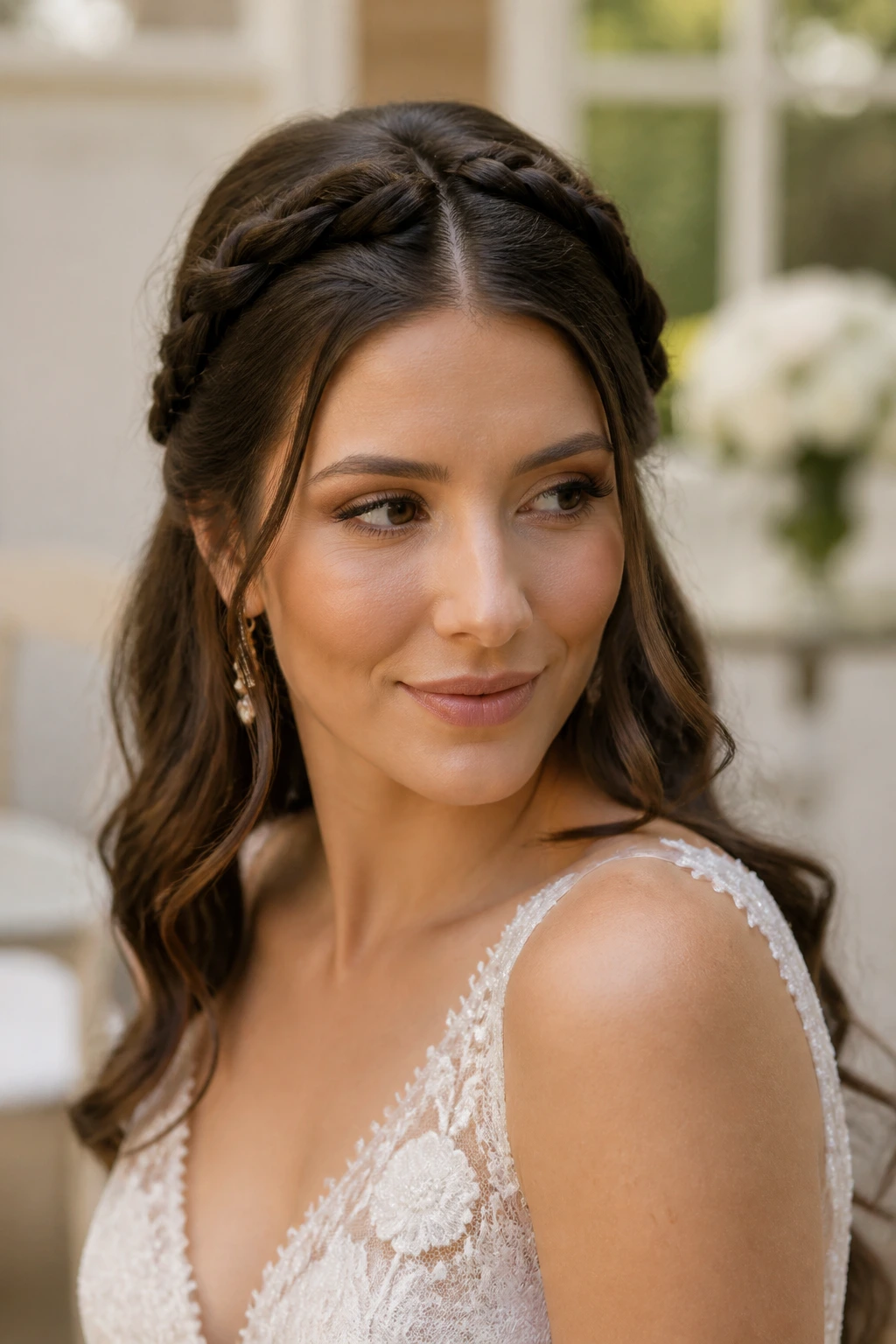
A crown braid with a center part has a clean, almost regal shape. The part keeps the front crisp, and the braid frames the face in a way that feels balanced rather than fussy.
The braid can be tight or gently loosened, depending on the mood you want. Tight gives a neater outline. Looser gives a softer line that looks less formal. Either way, keep the bottom hair smooth enough that it doesn’t fight the braid.
This is one of the safest styles for long ceremonies because it stays anchored well. That alone makes it worth a serious look.
26. Pompadour Half-Up
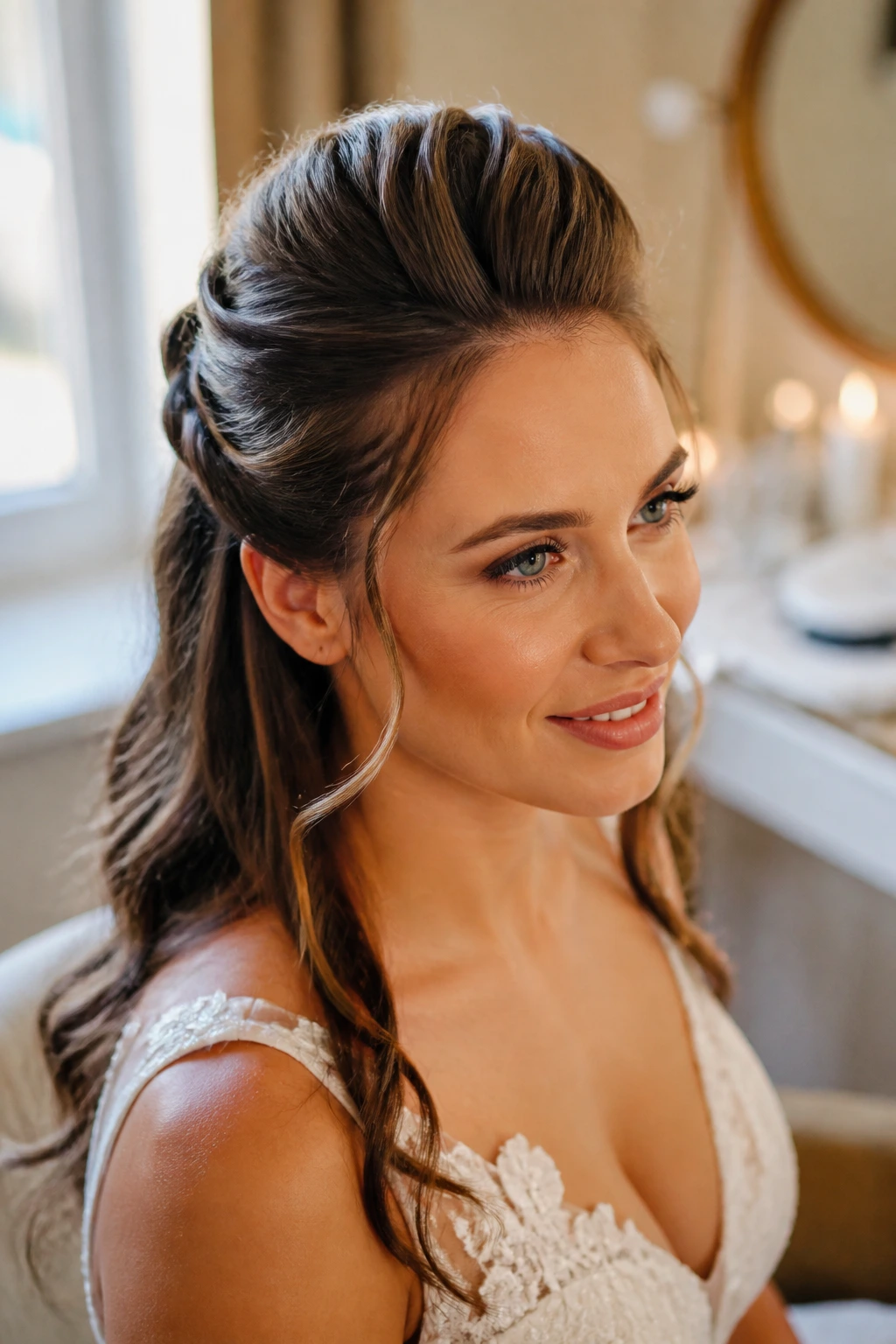
The pompadour half-up brings lift to the front, which is useful when a bride wants height without a full bouffant. The top section is gently elevated and pinned, creating a rounded shape that gives the face a little extra openness.
It works best when the rest of the hair stays soft and controlled, not overly voluminous. Too much wave below and the style starts to compete with itself. Keep the bottom half a little quieter.
This one has vintage energy, but it can read modern if the finish is clean. That balance is the reason it keeps showing up in good bridal work.
27. Loose Knot With Tendrils
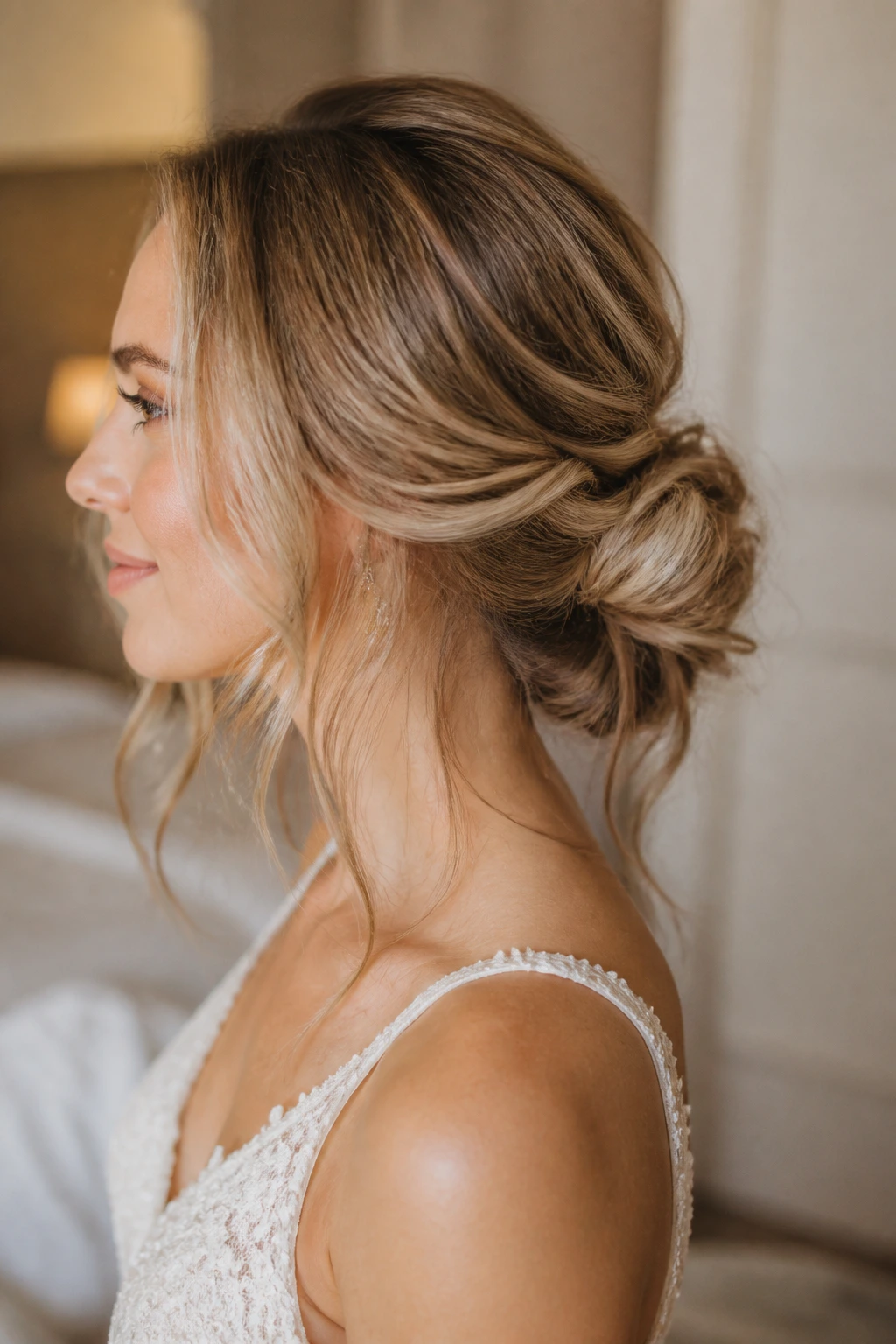
A loose knot sounds casual, but on the right bride it looks elegant because it carries movement instead of perfection. The knot sits softly at the back, and a few tendrils around the face keep it from feeling too pulled back.
This is a good option for hair that naturally wants a softer texture. It does not need a ton of structure. A few pins, some texture spray, and a shape that feels slightly undone are enough.
The key is control around the face. Leave the tendrils intentional, not random. That’s the difference between relaxed and messy.
28. Deep Side Part With Draped Sides
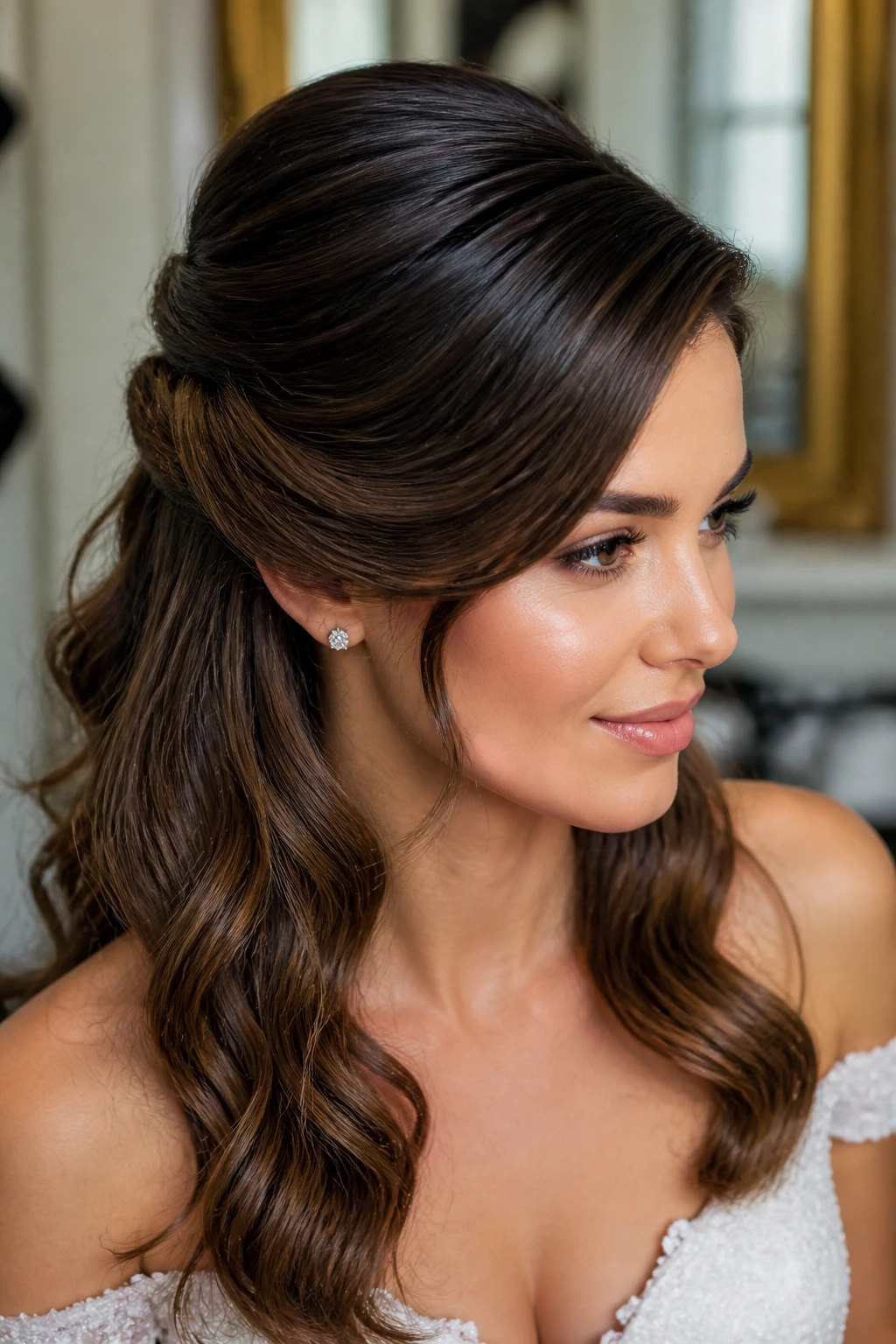
A deep side part gives the face a strong line before the hair even reaches the back. The draped sides soften the outline, and the pinned crown keeps the whole thing from slipping forward.
This style looks especially good with asymmetrical dresses or bold earrings because the hair doesn’t need to be symmetrical to feel finished. The part does the visual heavy lifting. The rest can stay simple.
If the bride wants something glamorous without a lot of ornament, this is a strong choice. Clean shape. Good line. No confusion.
29. Braided Moons and Waves
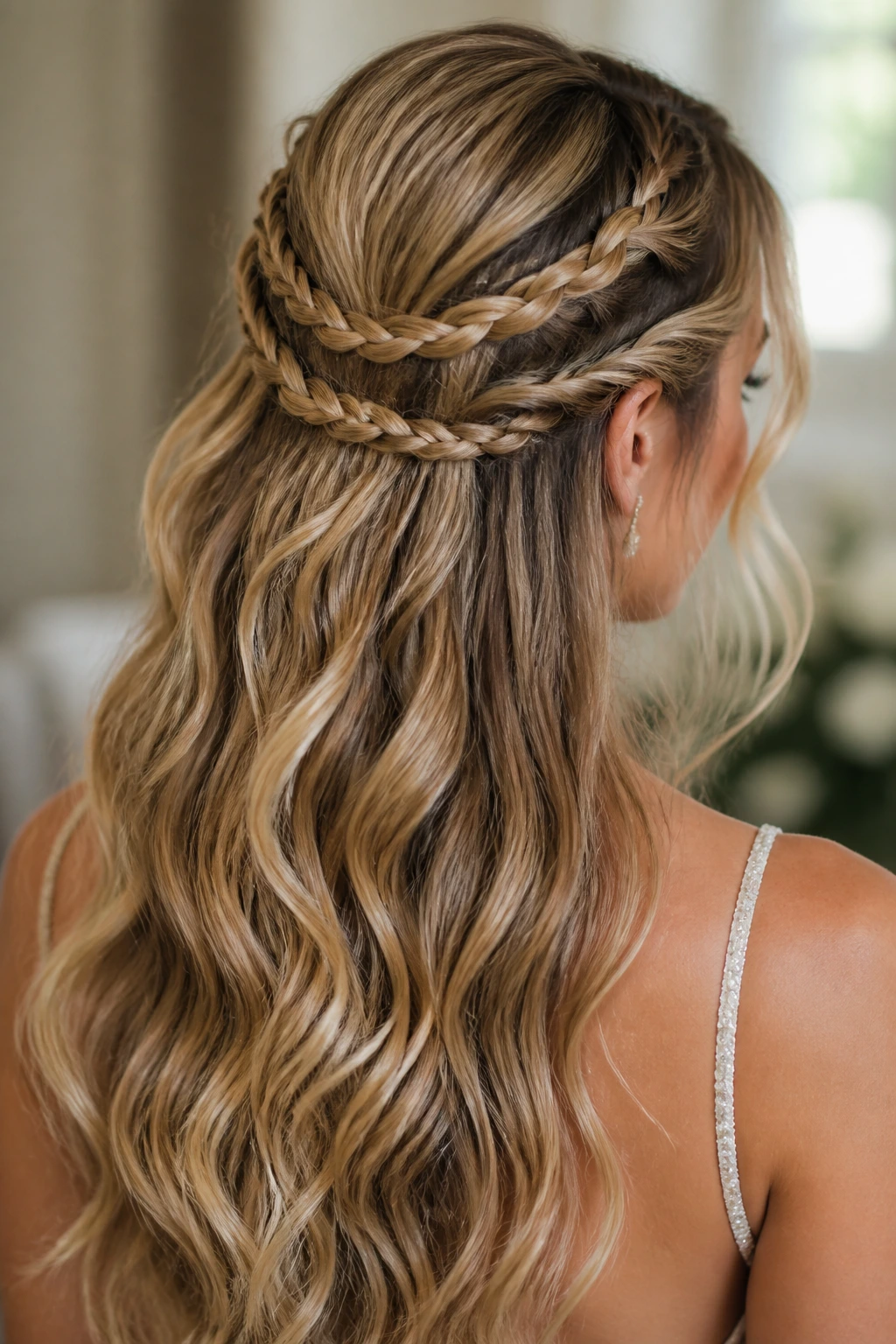
Braided moons sounds poetic because the shape actually looks like curved sections crossing through the crown. You can build two small braids or twists that arc inward like crescents, then leave waves below to soften the structure.
This is one of the more decorative looks on the list, so it works best when the dress is plain or the accessories are minimal. The hair gets to be the detail. That’s the whole appeal.
It takes a little patience to map out, but the payoff is a back view with real interest. Not just nice. Interesting.
30. Low Half-Up Chignon
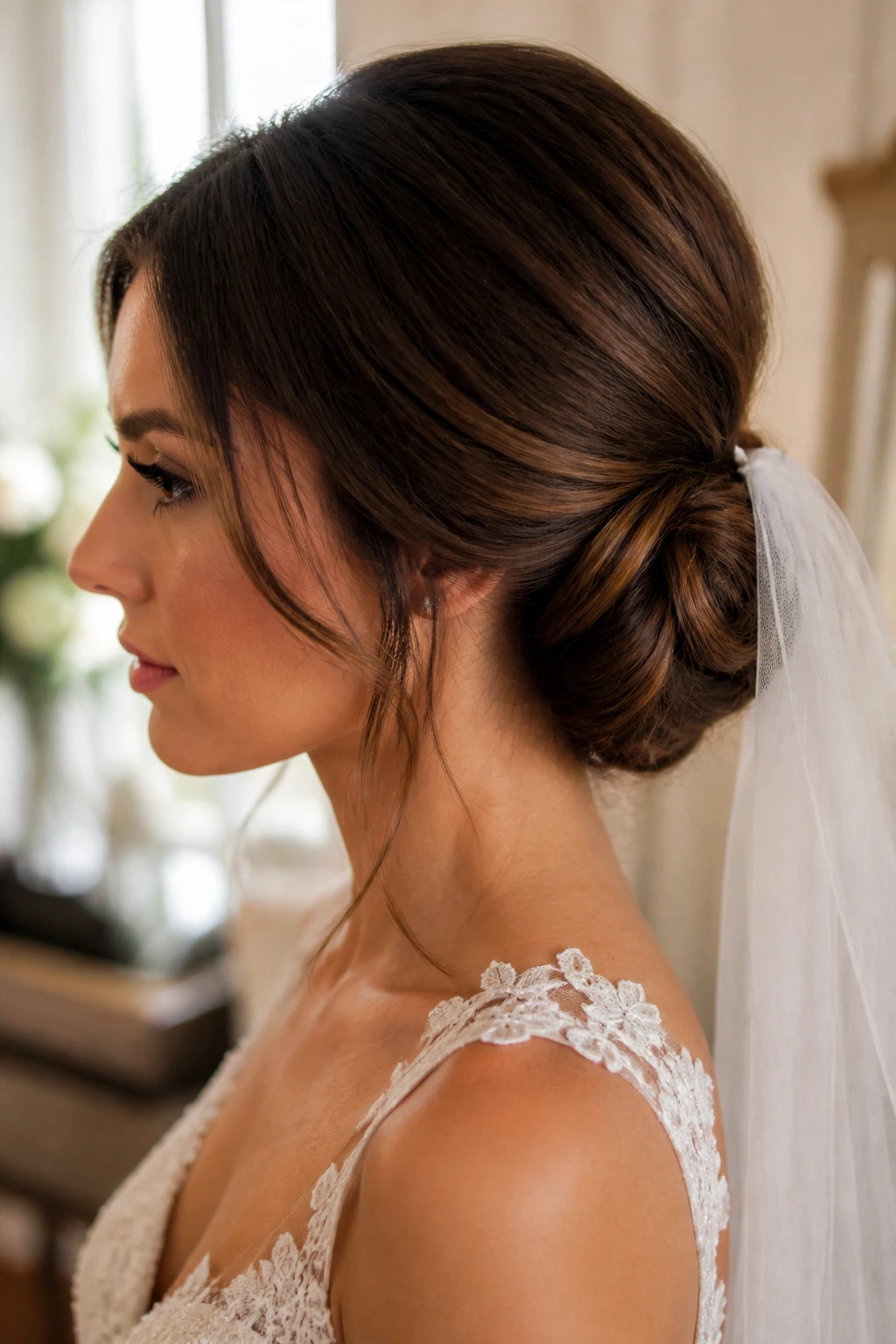
A low half-up chignon is the bride’s answer when she wants neatness without going all the way up. The top section feeds into a compact knot or rolled chignon at the back, while the lower lengths stay free.
The style is especially useful for brides who need the hair to sit under a veil or a cape without bulk. It keeps the shape contained. A few soft pieces around the face stop it from feeling too rigid.
This is one of the quieter options, and I mean that as praise. Quiet can be the smartest choice in the room.
31. Veil-Anchor Half-Up
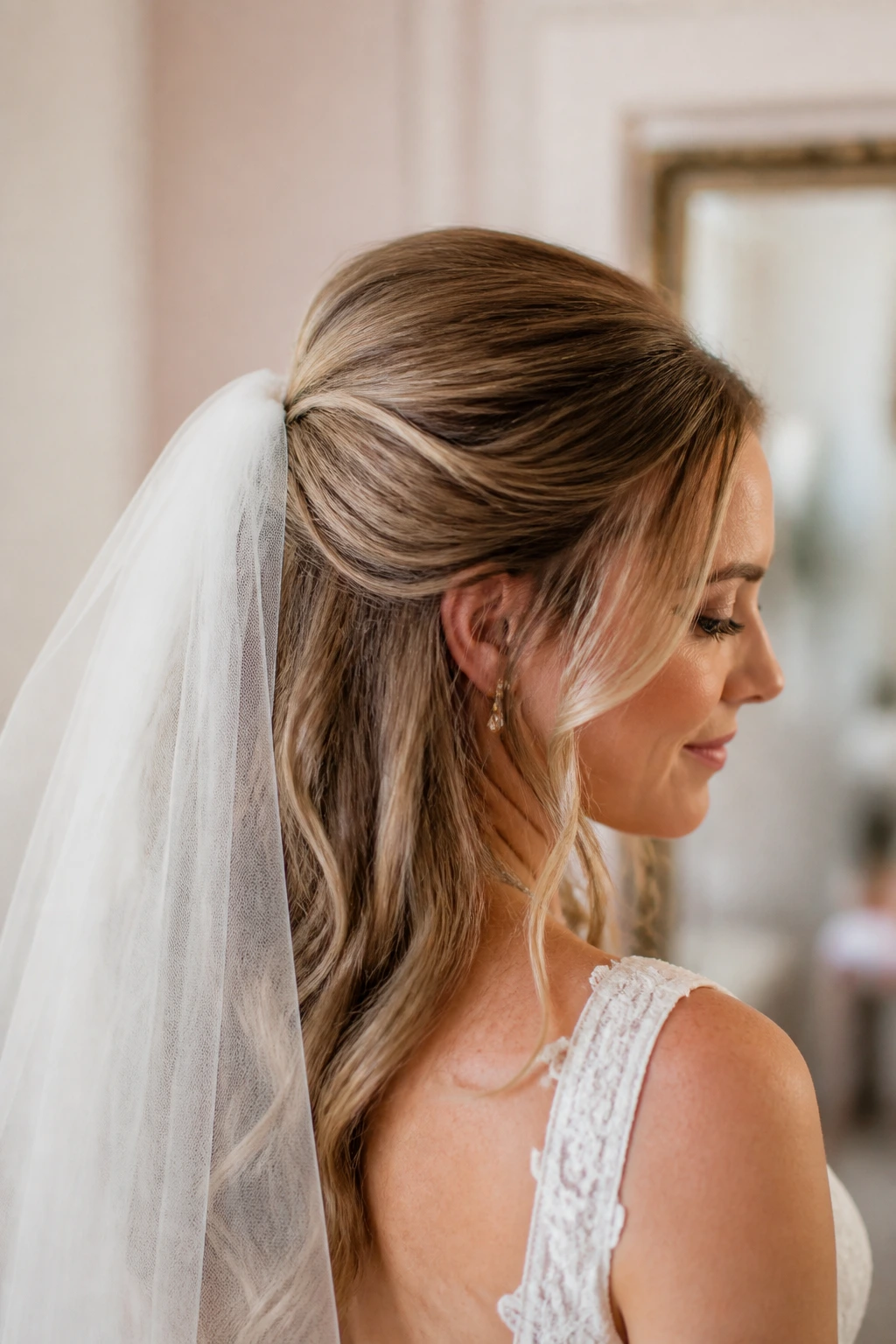
This version is built with one thing in mind: the veil. The top section should have enough structure to hold a comb, enough lift to keep the veil from flattening the crown, and enough softness that the fabric still moves.
The actual style can be a twist, braid, or knot. What matters is the placement. The pinning sits slightly above the occipital bone, not too low, so the veil has room to settle without fighting the hair.
If you know you’re wearing a veil for part of the day and removing it later, this is the most practical half-up shape on the list.
32. Mixed-Texture Half-Up With Soft Ends
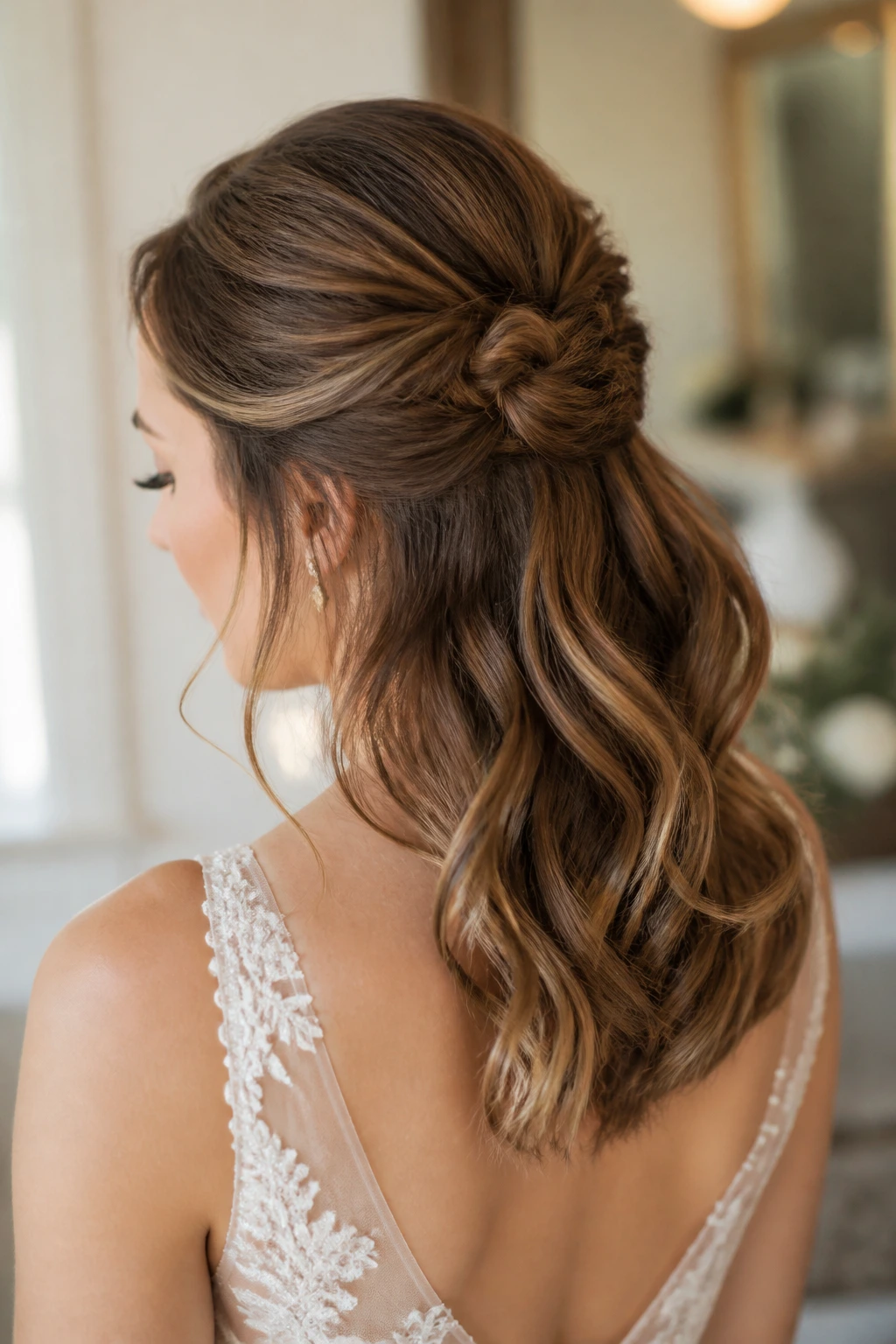
Mixed texture is where this whole category gets interesting. Smooth roots, lightly teased crown, a braid or twist at the back, and soft ends below can make one style feel richer without looking busy.
I like this for brides who cannot pick one mood and do not need to. The top can be polished, the middle can carry detail, and the ends can stay loose. It’s a layered answer to a layered outfit.
If your hair has some natural bend, work with it. If it’s straight, keep the roots smooth and give the lower half just enough movement so the style breathes.
Why Half-Up Bridal Hair Works So Well With Veils and Necklines
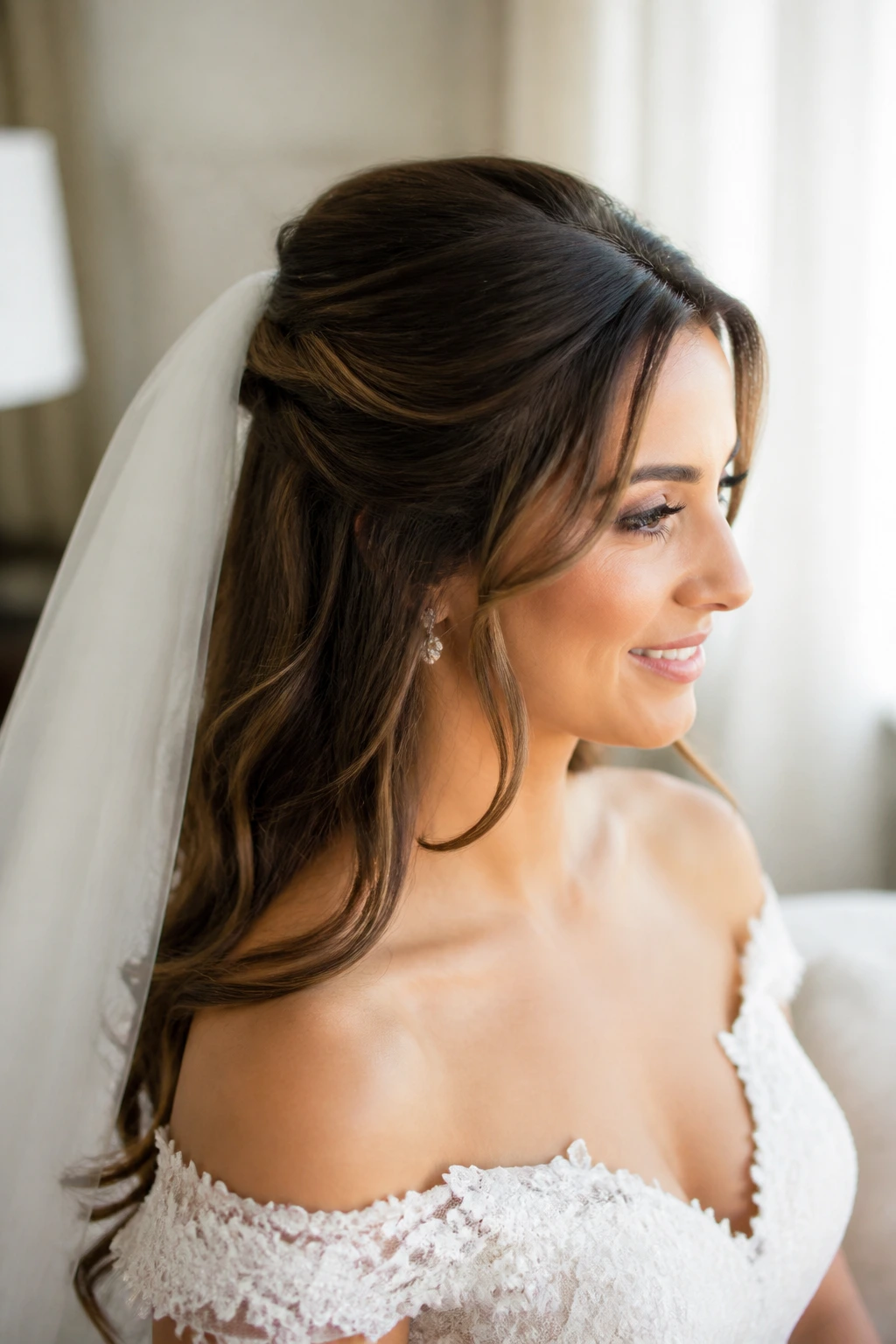
Half-up styling earns its place because it gives you somewhere to anchor things. That sounds technical, and it is, but the payoff is practical. A veil comb needs grip. A high neckline needs breathing room. Statement earrings need the sides of the face left open. Half-up hair can do all three without forcing the bride into a full updo or letting everything hang loose and hope for the best.
The shape also plays nicely with movement. A bride turns toward the aisle, hugs someone, looks down at the bouquet, and the hair shifts instead of freezing. That matters in photos more than people expect. A style that moves a little looks human. A style that does not move at all starts to look like a helmet.
There’s another advantage that gets overlooked: half-up hair lets the stylist build texture where it helps and keep the rest quiet. The crown can carry the architecture. The ends can carry softness. That split is useful because not every part of the head needs the same amount of work. Honestly, that’s one reason I prefer this category over a full, tightly packed updo for many brides. It leaves room for the face, the dress, and the day itself.
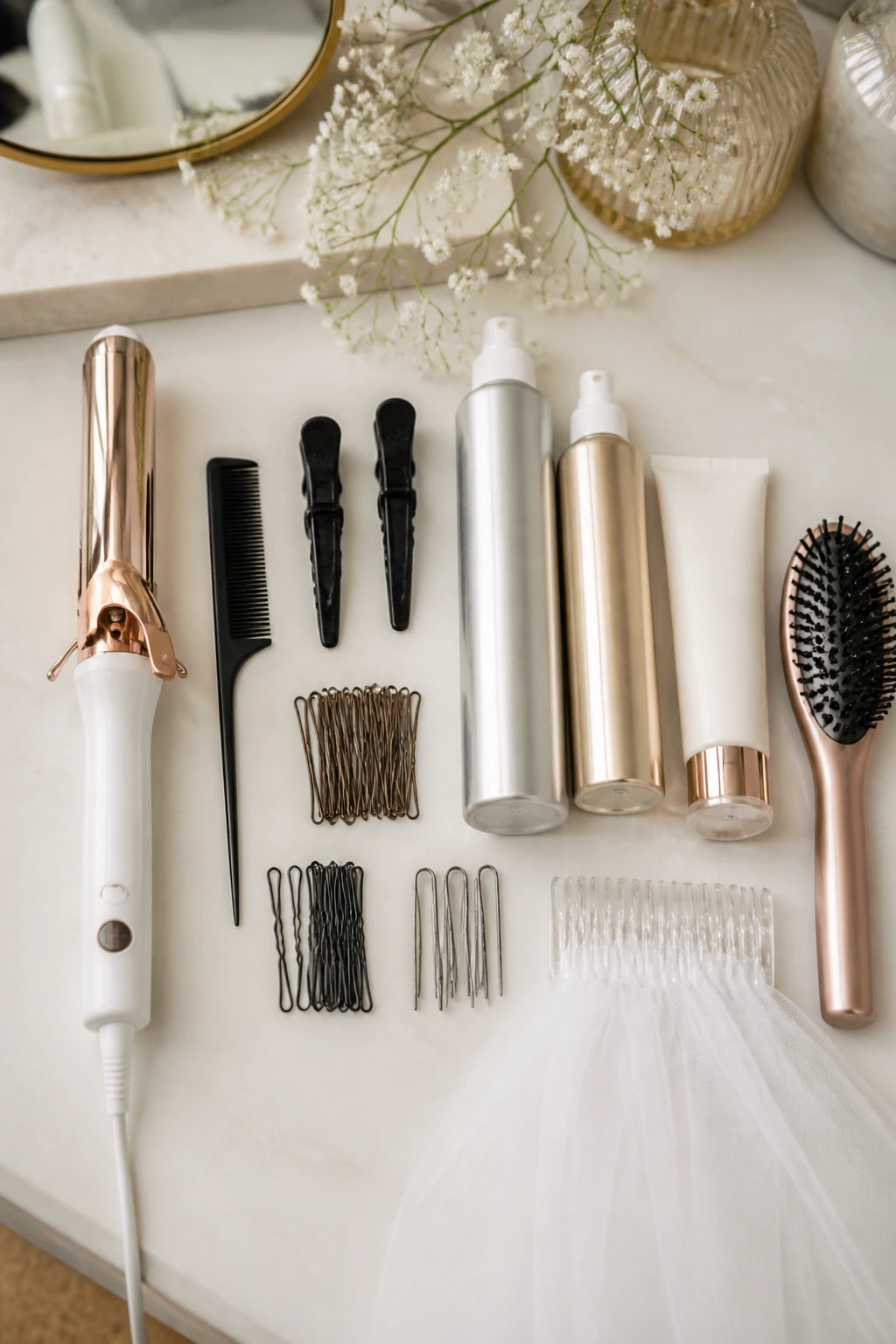
Essential Tools for Building These Styles
-
1-inch curling iron or wand: The most useful size for bridal waves, because it creates a curl you can brush out without losing shape.
-
Tail comb: Good for clean parting, sectioning, and hiding flyaway mistakes before they become visible in photos.
-
Sectioning clips: Keep the top and bottom layers separate while you curl, twist, or braid; that alone saves time.
-
Bobby pins in two sizes: Standard pins hold small sections, while larger pins help lock down heavier twists or braids.
-
U-pins: Useful for airy buns, knots, and twists when you want support without a visible pin line.
-
Flexible-hold hairspray: Helps lock the shape without turning the hair crunchy before the ceremony even starts.
-
Texture spray or dry shampoo: Gives grip to clean hair and helps braids and twists stay put.
-
Smoothing cream or light serum: Best for polished styles where frizz around the crown would look out of place.
-
Boar-bristle or smoothing brush: Good for brushing waves into one shape and taming the top layer without puffing it up.
-
Veil comb or accessory comb: Bring the actual piece to the trial, not a guess. Guessing is how people end up repinning on the wedding morning.
Picking the Right Products, Pins, and Accessories
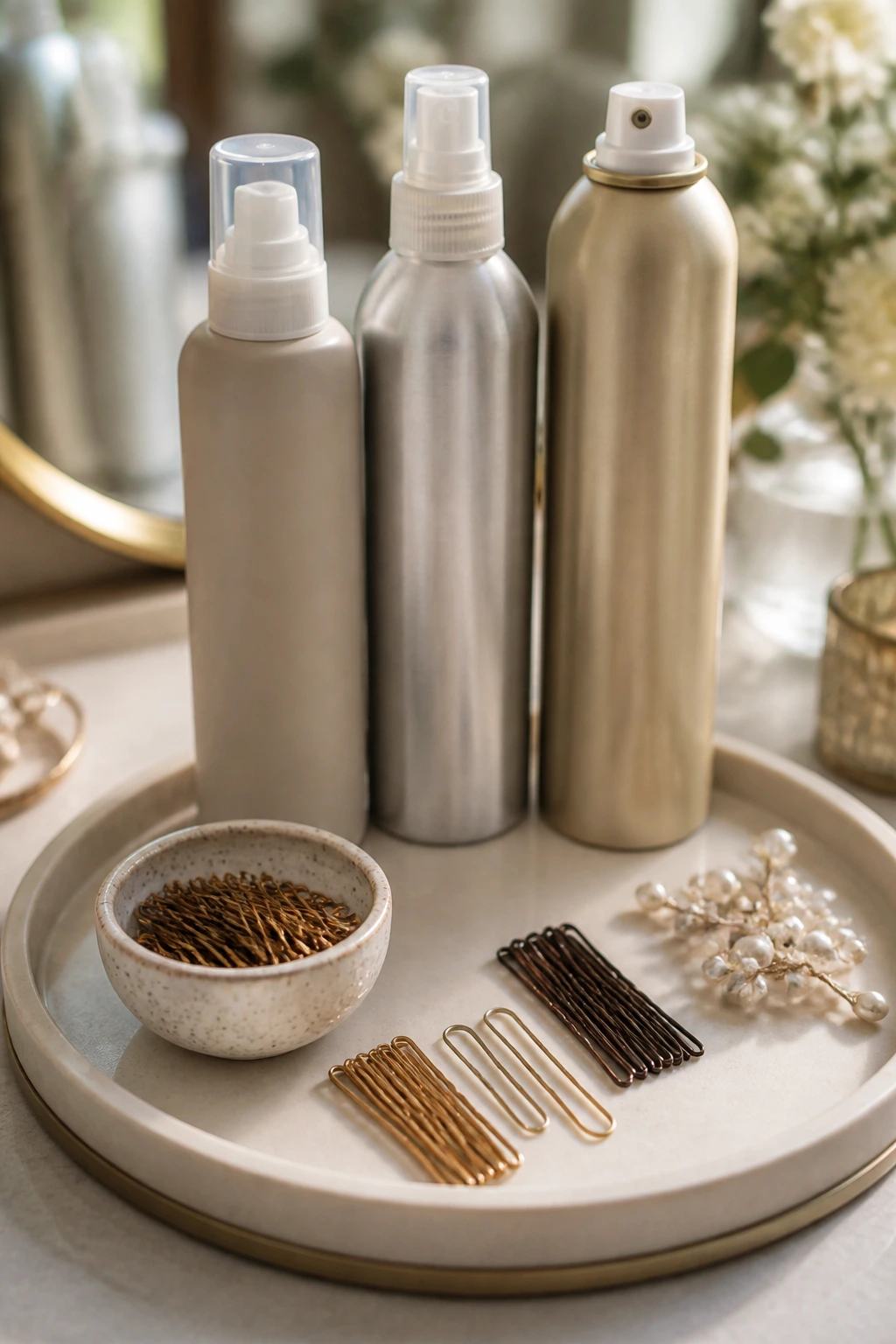
The product choice matters more than most people want to admit. Fine hair usually needs grip before shine, so a little mousse at the roots and texture spray through the mid-lengths often works better than layers of heavy cream. Thick or coarse hair usually wants the opposite: a smoothing product on the outside first, then firm pins that don’t bend under pressure.
Hairspray is not a personality trait. Use a flexible spray if you want movement, then switch to a stronger hold only where the hair needs to stay nailed down, like around the veil anchor or the braid base. Flooding the whole head with strong spray can make the surface look dusty and hard, which is a bad trade in daylight.
Pins matter too. Match the pin type to the job. Bobby pins in the same hair color disappear best in clean styles, while U-pins work better for chunky knots and twists because they slide in and hold without leaving a pin map on the back of the head. If you’re using accessories, choose ones with a real grip, not decorative pieces that sit on top and wobble when the bride moves.
Matching the Hair to the Dress, Veil, and Jewelry
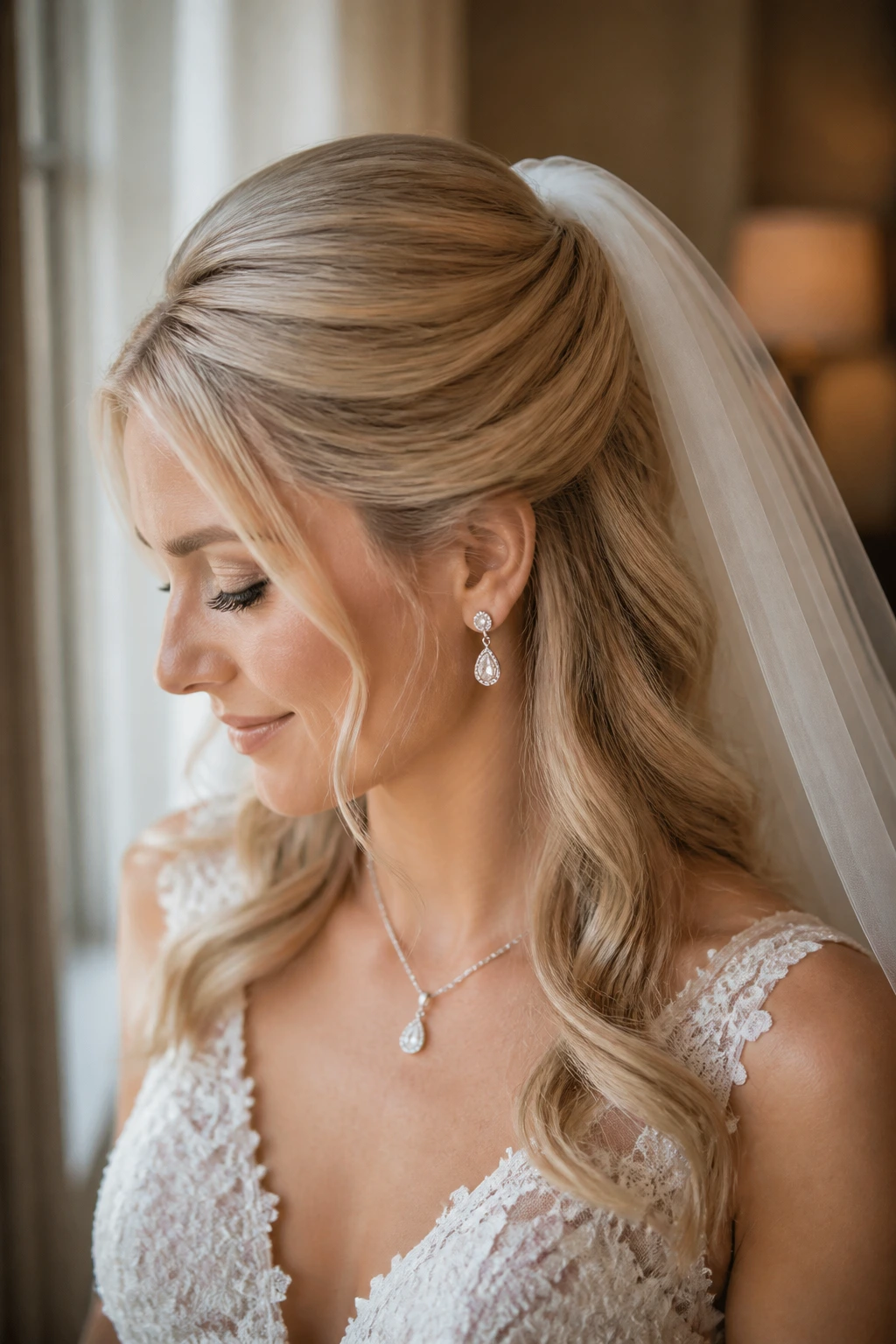
A structured dress wants a different hair shape than a floating chiffon one. That sounds obvious, but I still see brides ignore it. If the dress has a high neckline or sharp lines, sleeker half-up styles tend to sit better. If the dress has lace, movement, or a softer bodice, waves, braids, and airy twists usually feel more natural.
Veils need a little planning before the hair is pinned. Cathedral veils want a strong anchor zone. Birdcage veils need cleaner placement near the front or side. A comb placed too low can drag the crown down and flatten the whole style, which is a miserable thing to discover after makeup is done.
Jewelry changes the shape more than people expect. Big earrings call for hair that keeps the sides off the face. A statement necklace often looks better with a slightly higher half-up so the hair doesn’t crowd the neckline. Tiny studs? Then the hair can carry more of the visual weight. That’s one of the few times I’d say the hair can be the louder half of the look.
What to Tell Your Stylist at the Trial
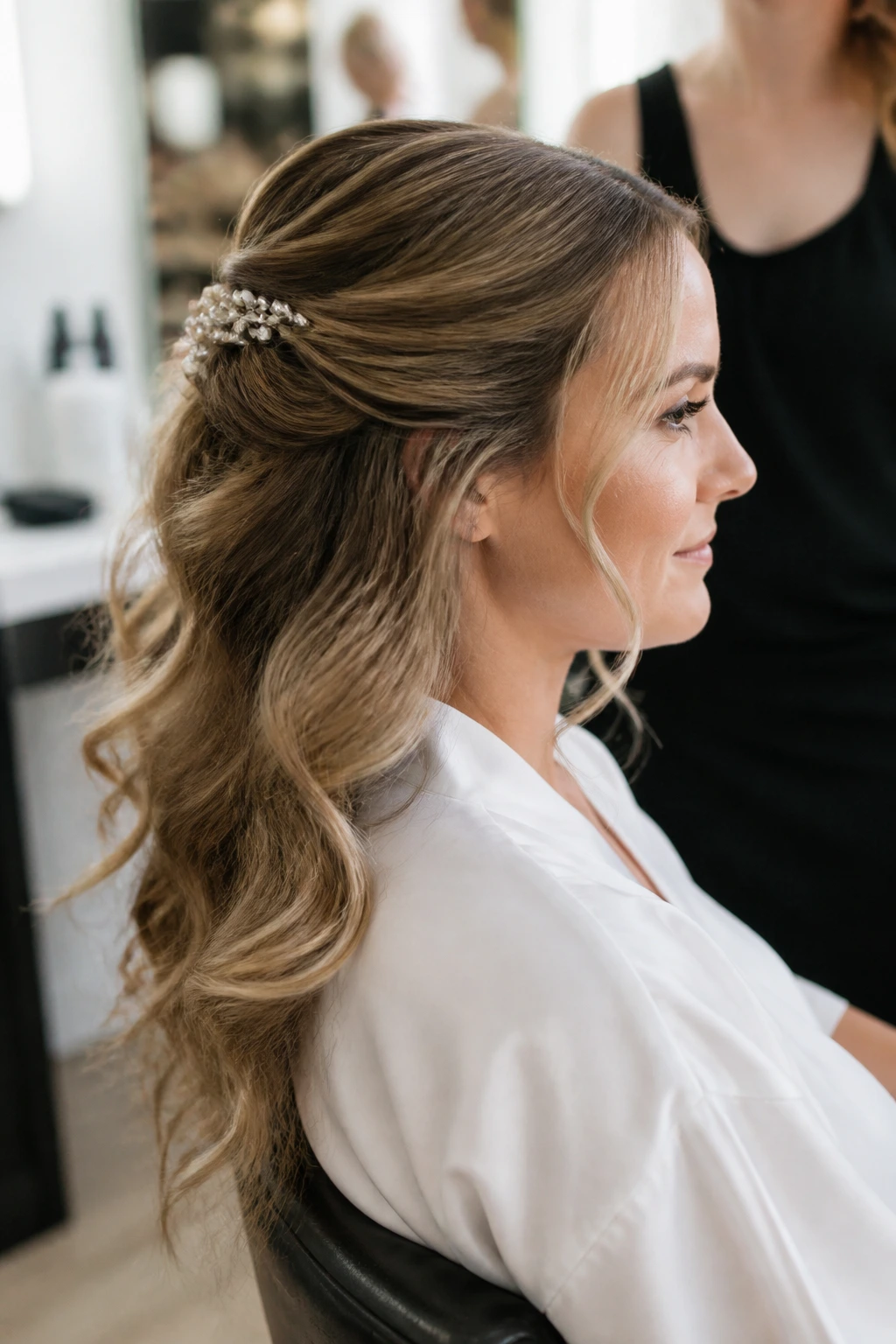
Bring pictures, yes, but also bring the facts that matter: your veil, your hairpieces, the dress neckline, and a clear idea of what you hate. “Too fluffy,” “too slick,” “too tight at the sides,” and “I don’t want my ears hidden” are useful notes. “I just want it pretty” is not.
Tell the stylist how your hair behaves after an hour. If it falls flat at the crown, say that. If curls collapse at the ends, say that. If your hair grows heavy by late afternoon, say that too. The trial is the place to learn whether the style needs more anchor pins, more texture, or a different curl pattern altogether.
And bring your shoes if they affect posture, because posture affects hair shape. Brides stand differently in heels. A slight change in head position can change how the back of a half-up sits. That’s not a small detail. It’s the kind of detail that makes the finished style look lived-in instead of staged.
Small Finishes That Change the Whole Look
-
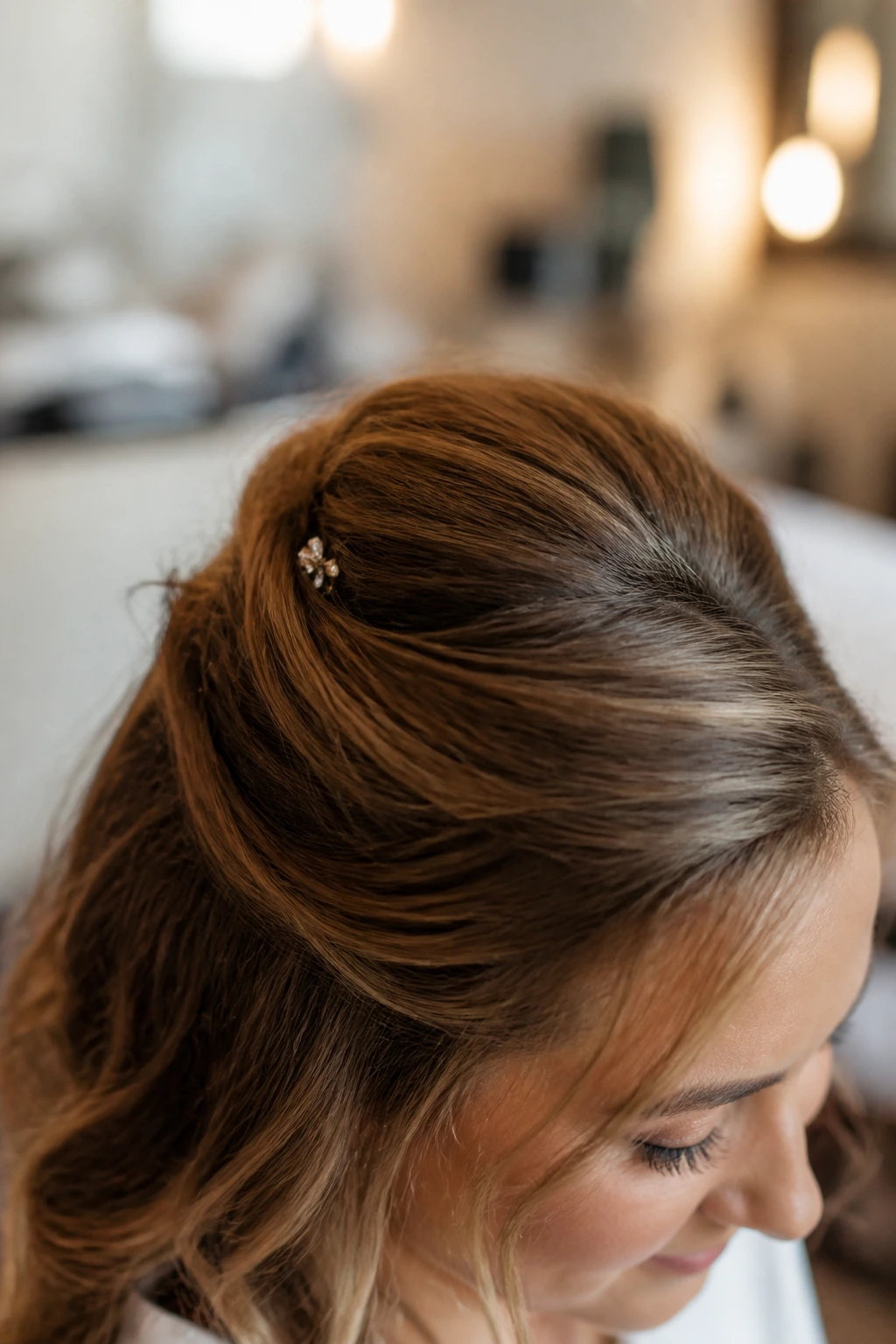
Lift at the crown: A few hidden pins crossed under the top section give height without making the style puff up.
-
Softened ends: Brush curls gently or use a wide-tooth comb after they cool so the bottom half looks romantic rather than rigid.
-
One controlled accessory: A single comb, barrette, or pin cluster usually looks cleaner than scattering decoration everywhere.
-
Face-framing pieces: Pull a thin section loose near the temples if the style feels too severe; keep them curved, not stringy.
-
Light shine on the ends: A tiny bit of serum on the lower half adds polish without flattening the crown.
A lot of bridal hair goes wrong because people keep adding. Better to finish one clean detail than to pile on three half-good ones.
Prep, Wear, and Touch-Up Guidance
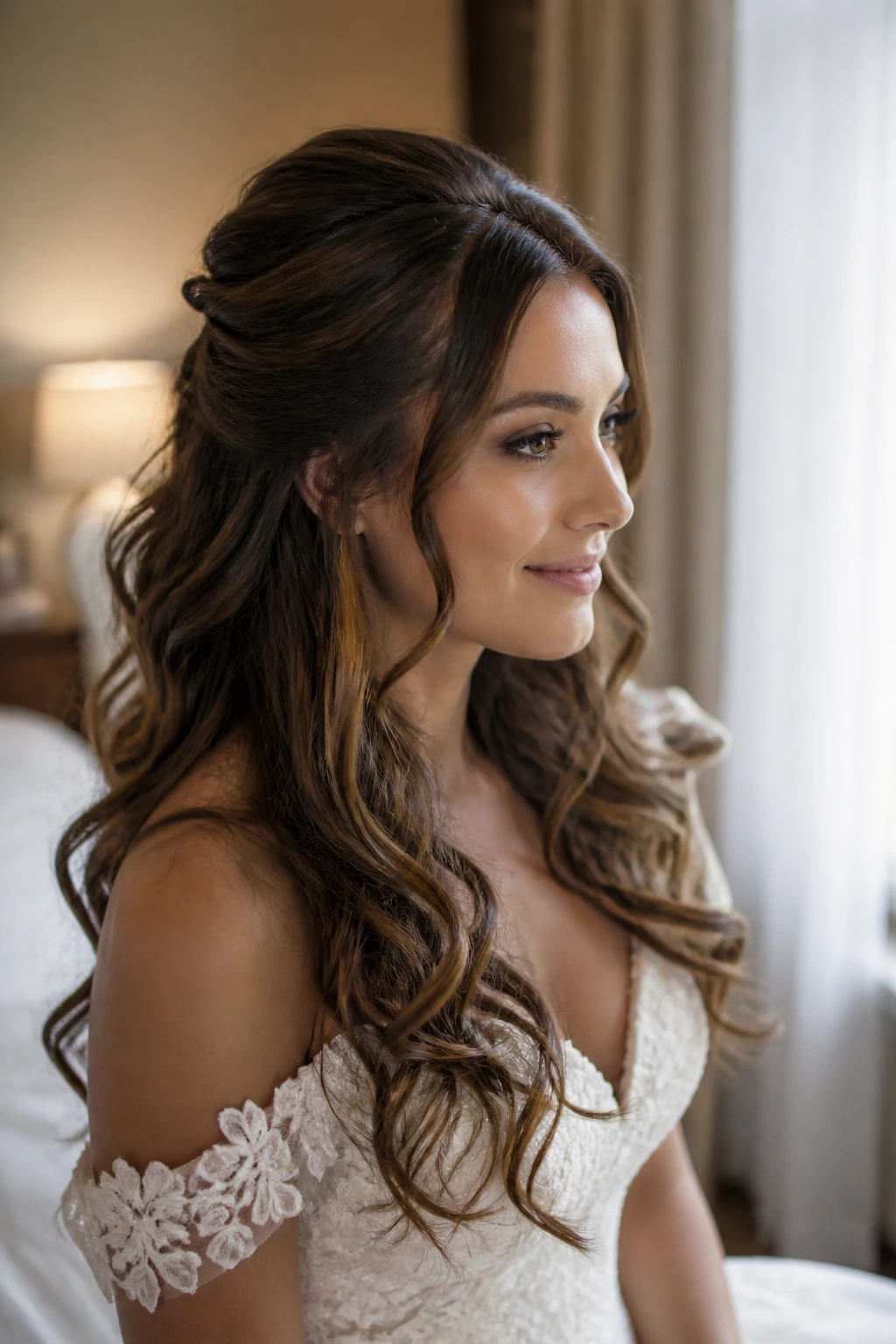
If the hair is being styled professionally, aim for hair that was washed the day before or two days before, unless your stylist gives you different instructions. Freshly washed hair can be slippery, especially if it’s fine or very straight. A little natural oil helps pins and texture spray do their work.
On the morning of the event, keep a small kit within reach: a few bobby pins, a mini spray, one comb, and the accessory you’re actually wearing. Not the backup accessory. The real one. If you need to re-pin after the veil comes off, you want the same tools the style was built with.
For overnight preservation after the trial, or for a rehearsal dinner style you want to keep, wrap the loose lengths in a silk scarf or sleep on a silk pillowcase. The pinned half-up part won’t survive rough sleep, but the waves and texture can if you keep them from rubbing raw against cotton. If the style needs to last through photos, then ceremony, then dinner, plan on one quick touch-up near the crown and a light mist at the ends. That’s usually enough.
Common Mistakes That Flatten a Half-Up Style
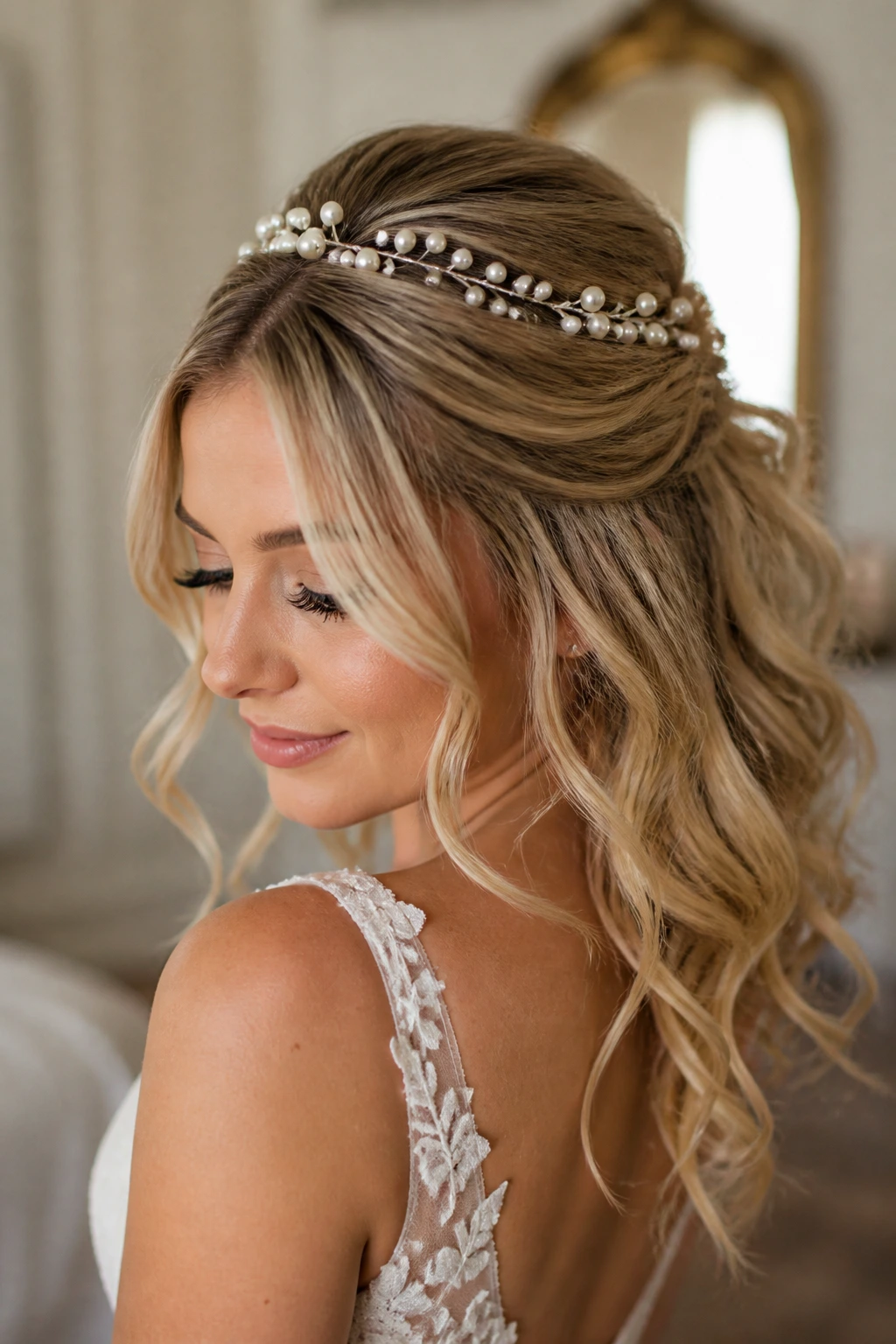
Starting with hair that’s too clean is the first trap. The style can slip, especially at the crown, and the pins never quite feel secure. A little texture helps more than another can of spray.
Pinning too low is another one. When the half-up section sits near the middle of the back of the head, the style loses lift and the veil can drag it down. Move the anchor point slightly higher and the whole shape opens up.
Overcurling is a sneaky problem. Tight ringlets can look pretty at first, then swell, frizz, and fight the top section. Looser, brushed waves almost always behave better for a wedding.
Heavy accessories can crush the style if the hair is thin or fine. If the clip or comb keeps sliding, the issue may not be the hair; it may be the piece. Use a stronger internal pinning base and choose a lighter accessory.
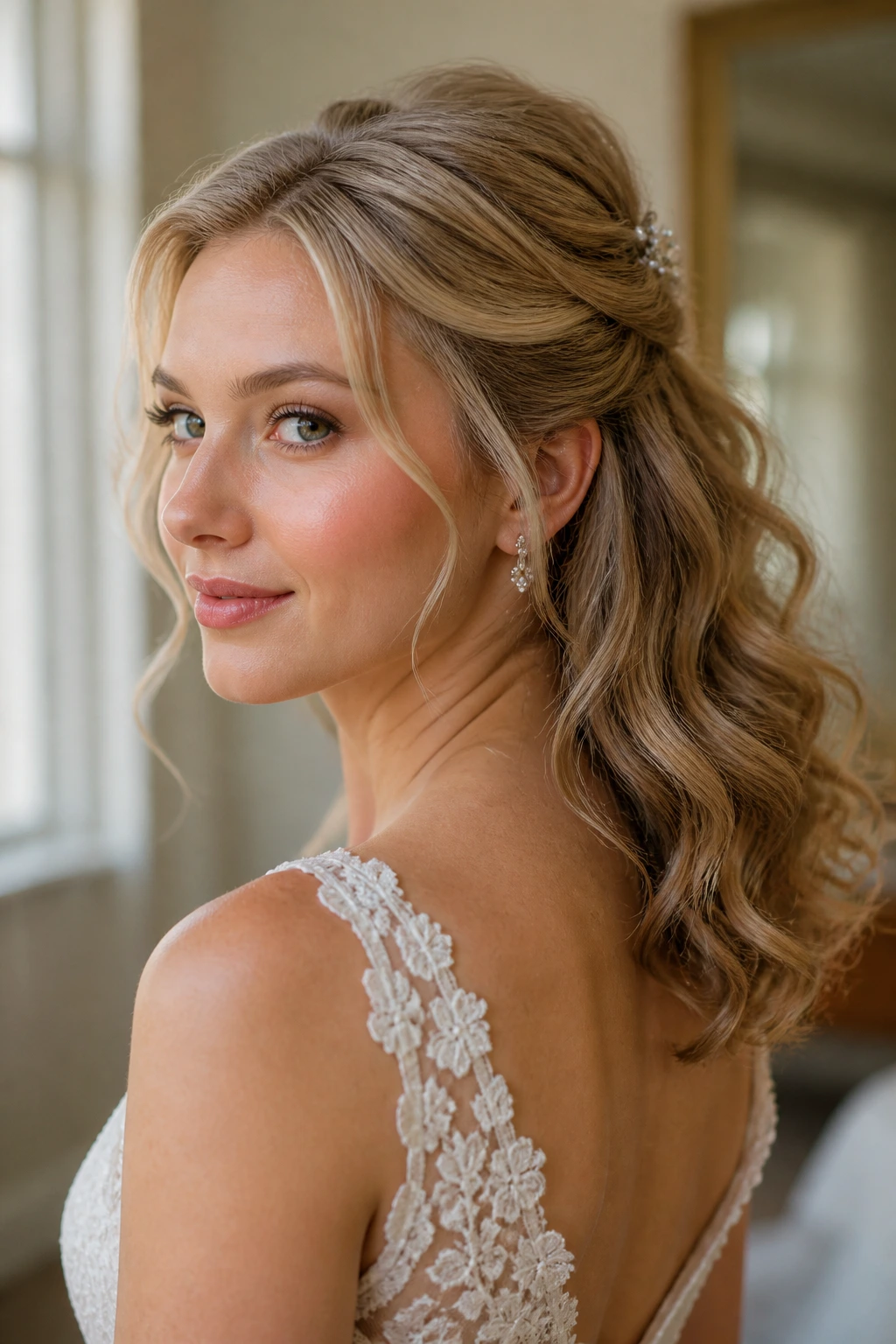
Ways to Adapt the Look Without Losing the Shape
-
For fine hair: Add a clip-in weft at the crown and keep the accessory light. Texture spray at the roots helps the style stay lifted.
-
For curly hair: Work with the pattern, not against it. Pin only the top, then define the lower curls with cream and a touch of flexible spray.
-
For short hair or a lob: Use twists, small braids, or hidden pins instead of expecting a long braid effect. A little extension support can help if you want fuller length below.
-
For minimalist brides: Choose one clean twist, a center part, and no obvious ornament. The shape itself does the work.
-
For brides who want sparkle: Add pins near the anchor point rather than all over. Concentrated shine reads cleaner than scattered glitter.
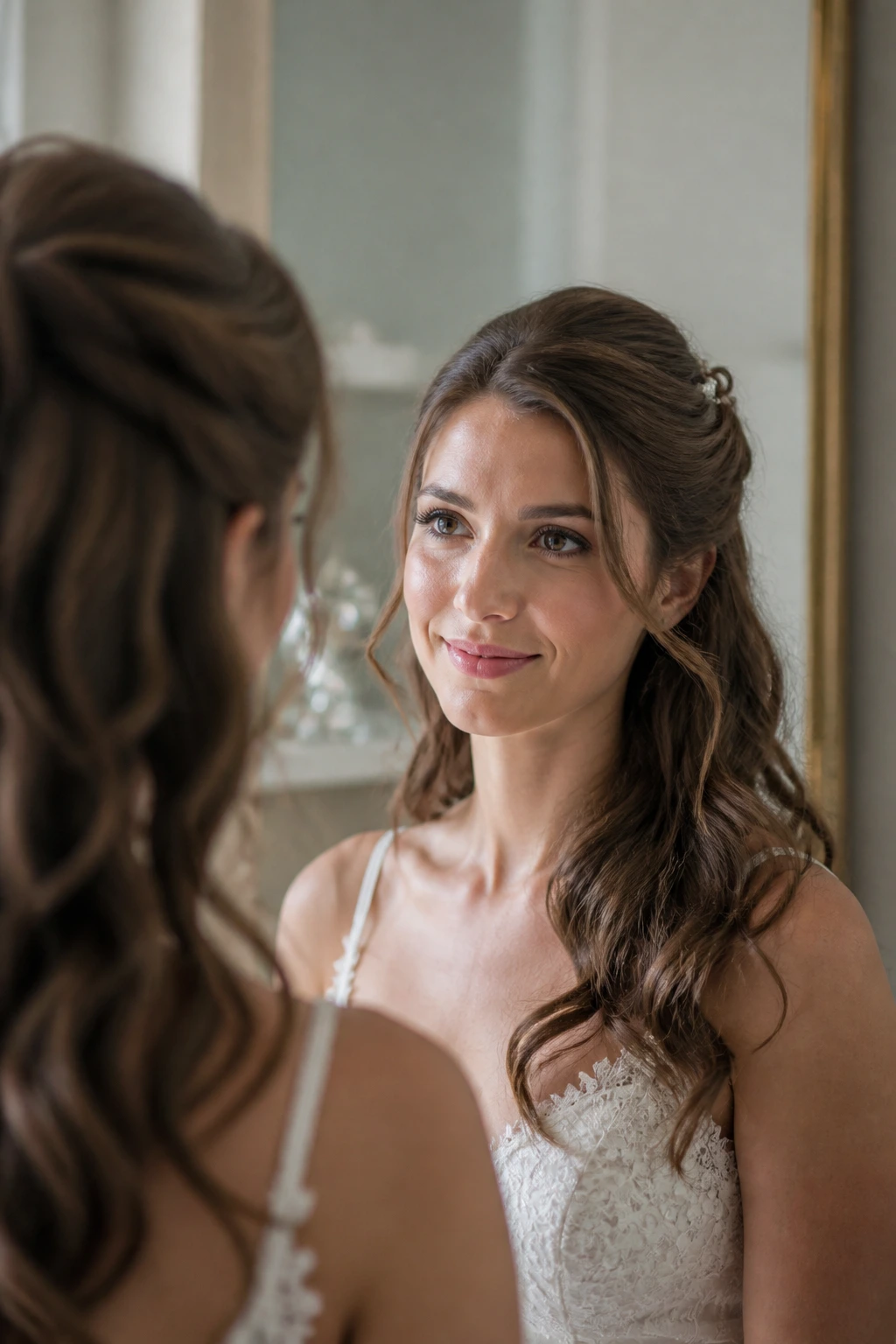
Half-Up Hair Questions Brides Ask at the Trial
Will a half-up style hold on fine hair?
Yes, if the stylist builds enough grip at the roots and uses the right pins. Fine hair usually needs texture spray, a little teasing at the crown, and a lighter accessory so the shape doesn’t droop.
Can I wear a veil with half-up hair?
Absolutely. In fact, many veil combs sit better on half-up hair than on loose waves because the pinned crown gives the comb something firm to grab. The placement needs to be planned with the veil in hand.
Should I curl my hair before the stylist arrives?
Usually no, unless your stylist asks for it. Most stylists want to build the curl pattern themselves so the waves match the shape of the style and the products already in the hair.
What if my hair is naturally curly or very textured?
That’s a gift, not a problem. A half-up style can show off the natural texture beautifully as long as the top section is controlled and the curl pattern is shaped with enough moisture and hold.
How far in advance should I book a trial?
Long enough that you can make changes if the first version is off. A trial should leave room for a second pass if the shape needs adjustment, especially if you’re deciding between veil placements or accessory options.
Can extensions help?
Yes, and sometimes they’re the difference between a style that sits flat and one that has enough body to hold its shape. Clip-ins can add fullness at the back and length through the lower section without changing the whole feel of your hair.
What if the style starts to fall during the reception?
That usually means the anchor points were too loose or the hair was too slippery at the start. A few discreet bobby pins near the crown and a small touch of spray usually restore the shape fast enough to survive the rest of the night.
Ways to Adapt the Looks Without Starting Over
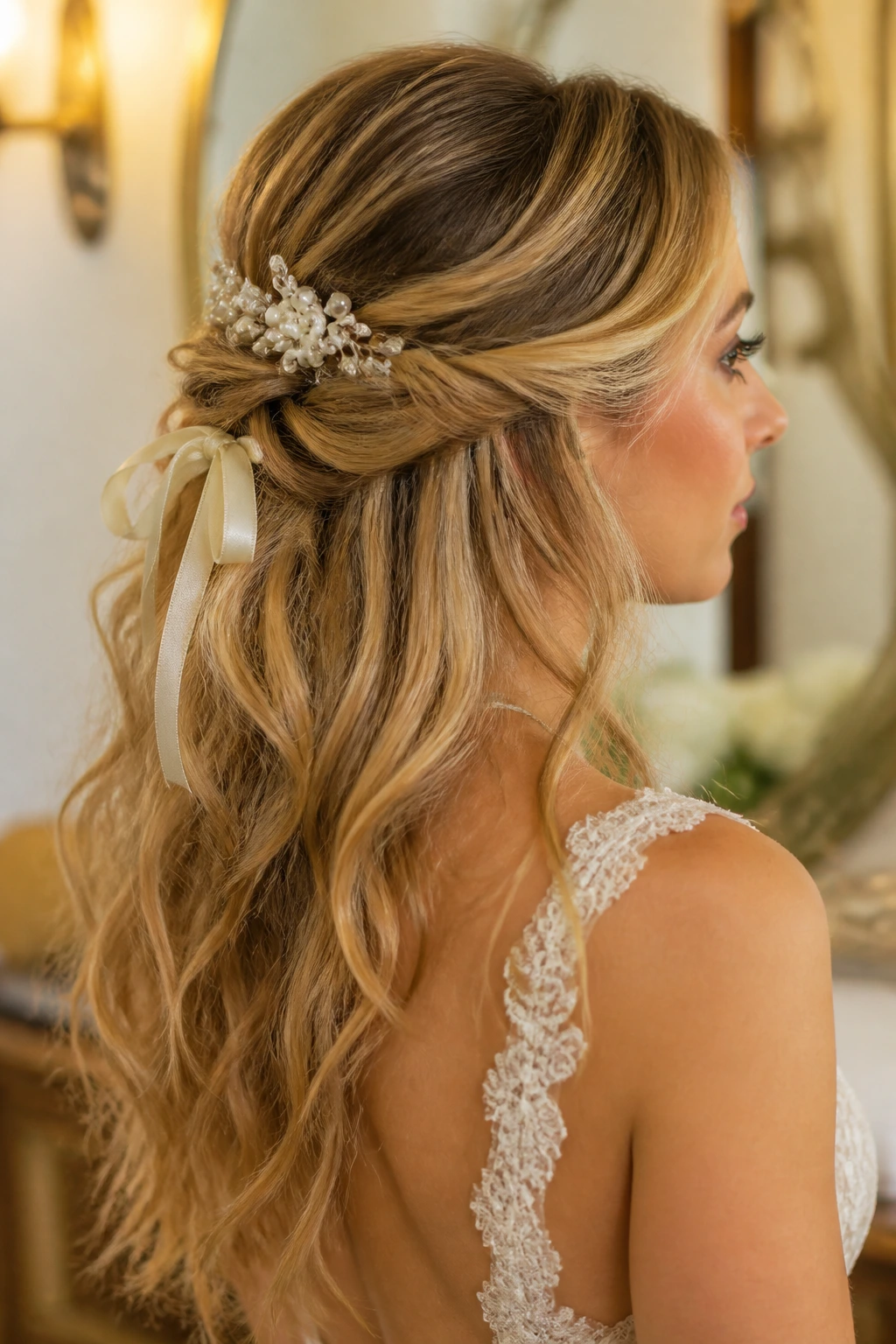
The nice part about half-up bridal hair is that it can shift gears without a full rebuild. A pearl pin can turn a plain twist into something formal. A ribbon can make the same structure feel softer. A deeper side part can change a style from sweet to glam without touching the length at all.
If the ceremony look needs to be softer than the reception look, plan for that. Keep the pinned section clean and removable, then add the accessories later. I like that approach better than building one style that has to do everything. Hair has a better chance of staying fresh when it isn’t asked to carry every mood at once.
The Shape That Lasts Through the Last Dance
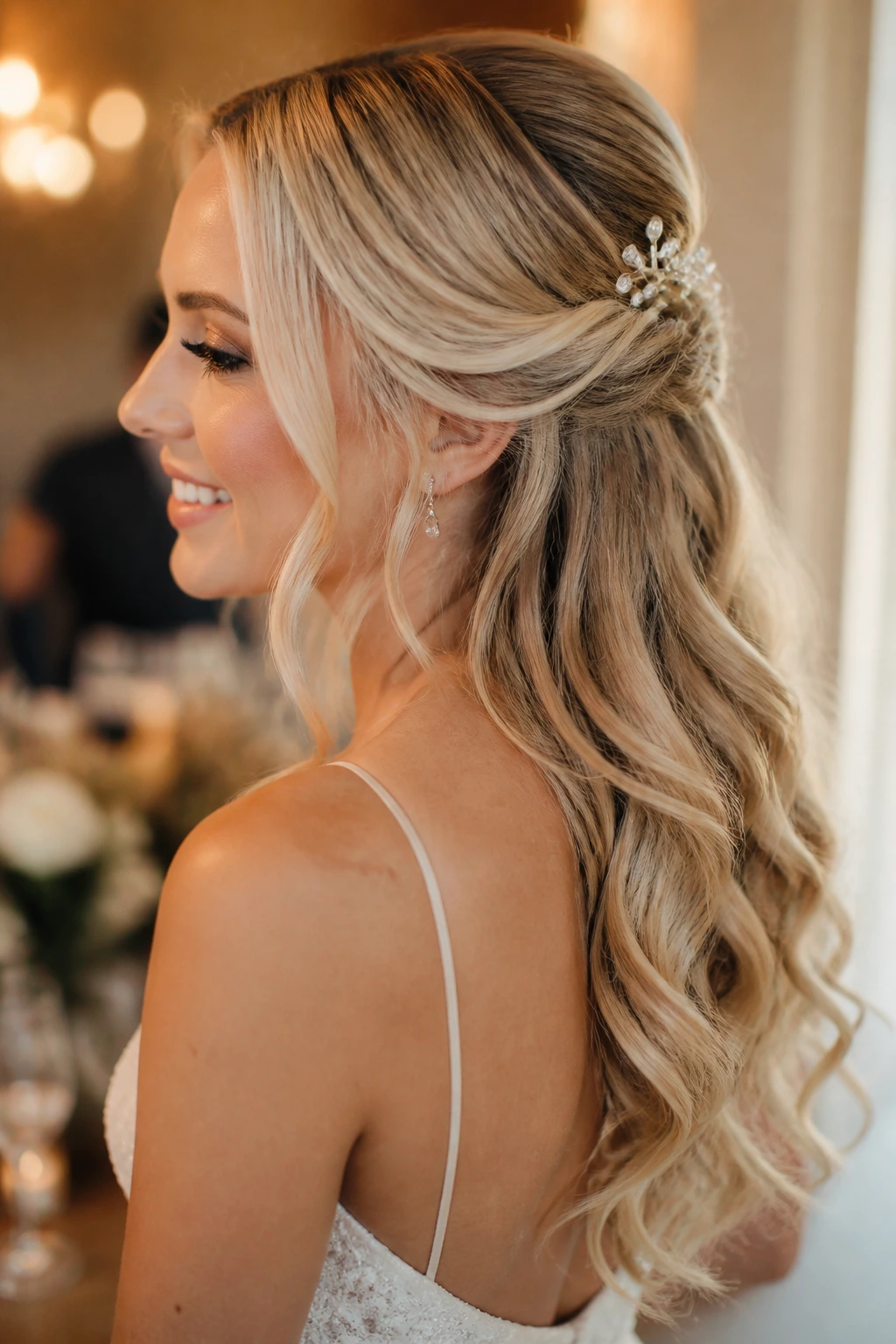
Half-up bridal hair keeps earning its place because it solves the whole balance problem. It gives structure where the style needs it, softness where the face needs it, and enough freedom that the hair still feels like hair. That combination is harder to get than people think.
Pick the version that fits your texture, your dress, and your patience level. Some brides want pearls. Some want braids. Some want a slick crown and nothing else. The good part is that all of those can work if the anchor points are smart and the finish is honest.
Bring the veil. Bring the earrings. Bring the real dress if you can. The styles here are flexible, but the best one is the one that behaves when the room gets warm, the photos start, and the day stops caring about theory.
