



A good vintage updo does something a modern, ultra-loose style often misses: it gives the hair a shape you can read from across a room. A Gibson tuck sits low and neat; a French twist rises like a clean fold of satin; a victory-roll bun carries just enough attitude to make even a plain dress feel chosen on purpose. The trick isn’t perfection. It’s structure.
Vintage updos also forgive second-day hair, which is one reason they keep showing up on real heads and not just on mood boards. A little dry shampoo at the roots, a few well-placed pins, and a mist of setting spray can turn hair that wants to slip out of everything into something that stays put through dinner, dancing, or a long day under bright lights.
What makes these styles so useful is the range. Some are smooth and formal. Some lean pin-up and playful. Some need only five pins and a comb; others need a teasing brush, a curling iron, and a little patience. The strongest ones always leave a small bit of softness near the face, because that keeps the whole look from feeling stiff. Start with the styles that actually understand hair as it is, not as a sketch wants it to be.
Why These Looks Keep Working
-
They give flat hair a shape: A tucked roll, a teased crown, or a pin-curled fringe creates a silhouette the eye can follow, even from the back of a room.
-
They welcome second-day texture: Hair that is a little lived-in tends to hold pins better than freshly washed hair that keeps sliding free.
-
They work with simple tools: A rat-tail comb, bobby pins, and a good spray can do more here than a drawer full of gadgets.
-
They move between casual and formal: The same low bun can feel like a coffee-run style or a black-tie style depending on the crown height and the finish.
-
They borrow from different decades: You can tilt toward 1920s polish, 1940s pin-up shape, 1950s volume, or 1960s sleekness without changing your whole wardrobe.
-
They flatter collars and earrings: A clean nape gives necklaces, pearls, and higher necklines room to breathe instead of competing with the hair.
1. Gibson Tuck
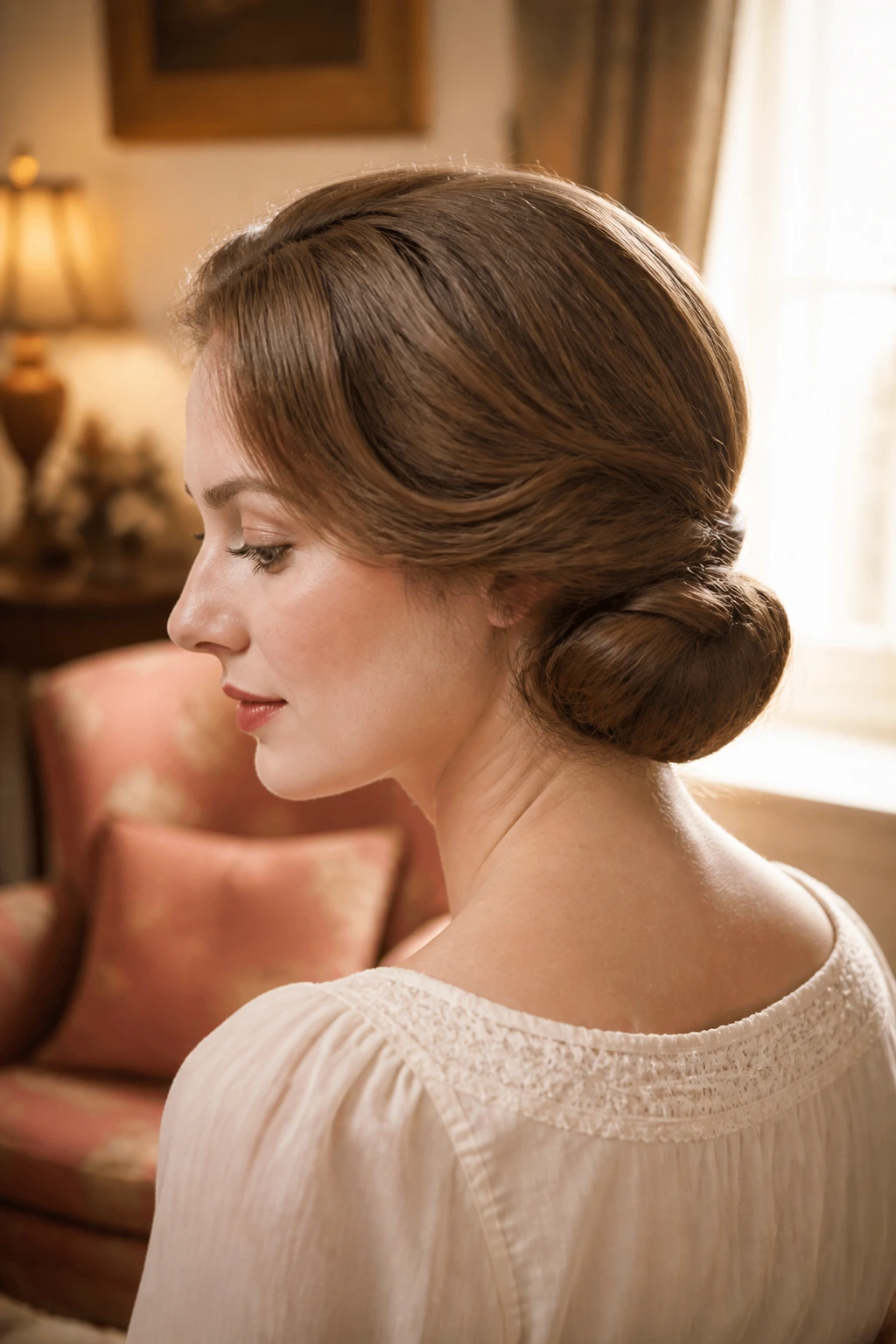
The Gibson tuck is the one I point people to first when they want a vintage updo that looks deliberate without being fussy. Hair folds into a soft horizontal roll at the nape, so the whole shape sits low and tidy, almost like fabric draped into place. It’s graceful in a quiet way.
What makes it useful is how forgiving it is. Shoulder-length hair tucks in with very little drama, while longer hair creates a fuller roll that looks a little more dressed up. Add a side part, smooth the crown with a small brush, and pin the ends underneath the fold. A thin ribbon or a pearl comb nudges it toward 1930s dinner-party territory fast.
How to keep the tuck from getting sloppy
Start with hair that has some grip. Freshly washed strands tend to slip, and the roll loosens before you leave the mirror. A little dry shampoo at the roots or a mist of texture spray through the mid-lengths gives the tuck something to hold.
2. French Twist With Soft Volume
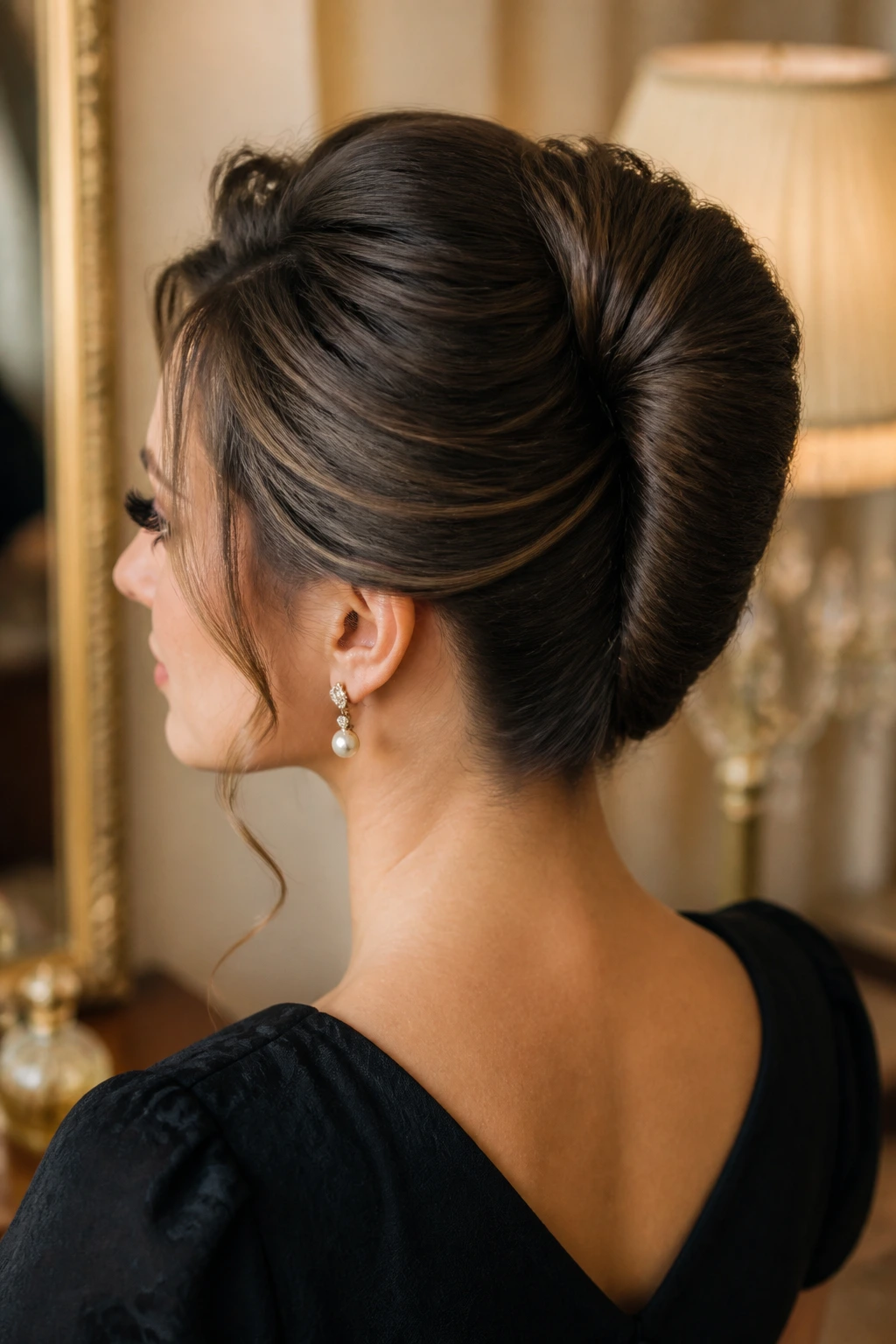
Can a French twist feel softer than the strict version people remember from old formal photos? Absolutely. The version I like keeps the vertical sweep and the clean line at the back, but lets the crown lift a little instead of flattening everything down.
That small bit of volume matters. It stops the twist from reading severe, especially if you pair it with a loose side part or a curled tendril near the cheekbone. On straight hair, backcomb the crown lightly before you twist. On wavy hair, smooth only the surface and let the texture do some of the work. It lands somewhere between polished and slightly undone, which is a very useful place to be.
Best if you want
- A style that stays put through a long event
- A shape that works with pearl studs or a statement necklace
- A vintage look without a helmet-like finish
3. Victory Roll Bun
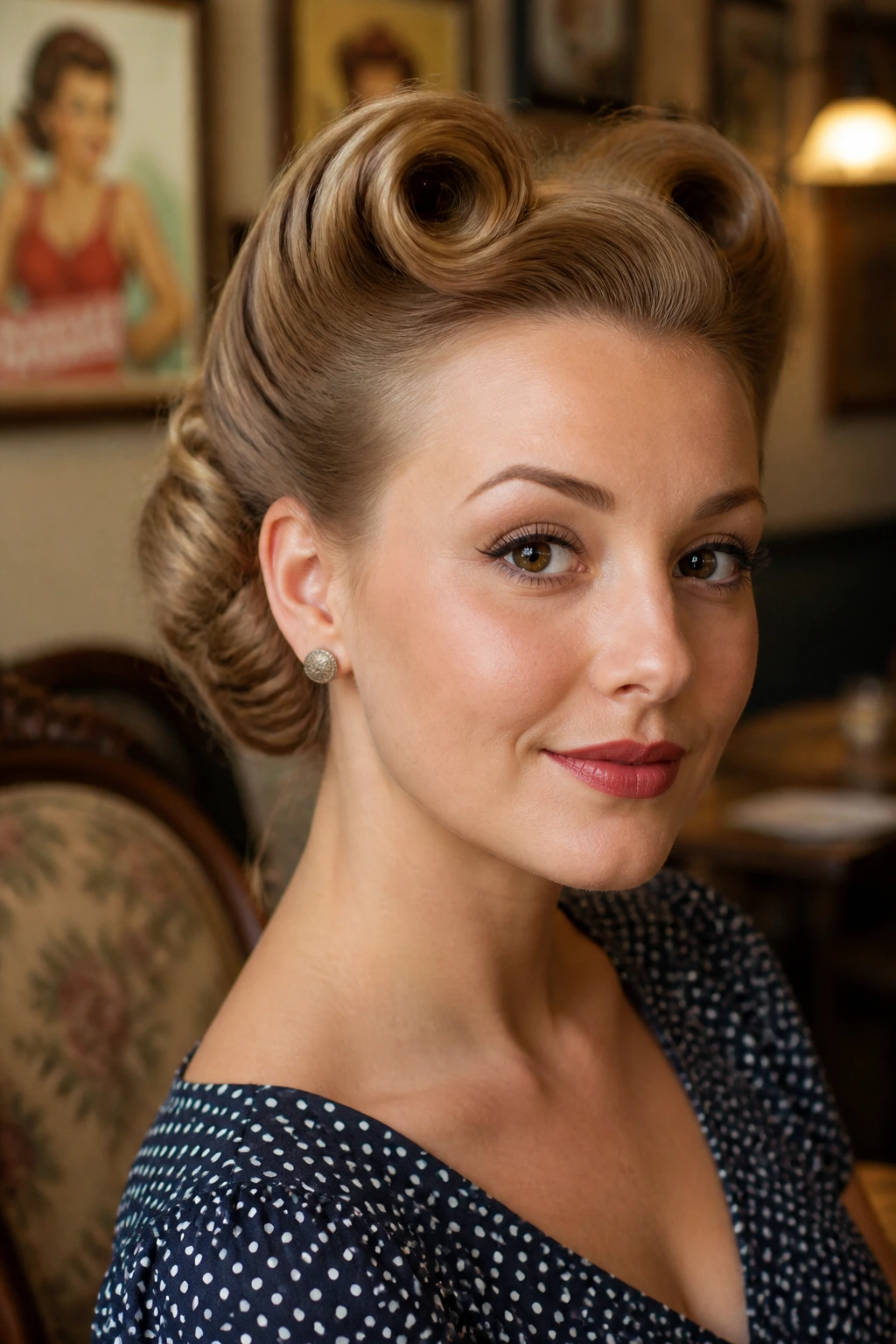
The victory roll bun is pure pin-up energy, but it doesn’t have to feel costume-y. The front rolls do most of the talking; the bun in back keeps the whole style grounded. That balance is why it works on so many hair lengths, from shoulder-grazing to long.
Roll each front section away from the face, set the curve with a few pins, and keep the bun low enough that the rolls stay the focus. If you want the style to look a little more authentic, leave the crown slightly lifted and smooth the sides tight. A red lip helps, but the hair does plenty on its own.
Pro tip: the rolls look fuller when the section is curled first, even with a fast 1-inch iron bend. Straight hair can hold a roll, but curled hair holds a better one.
4. Beehive Chignon
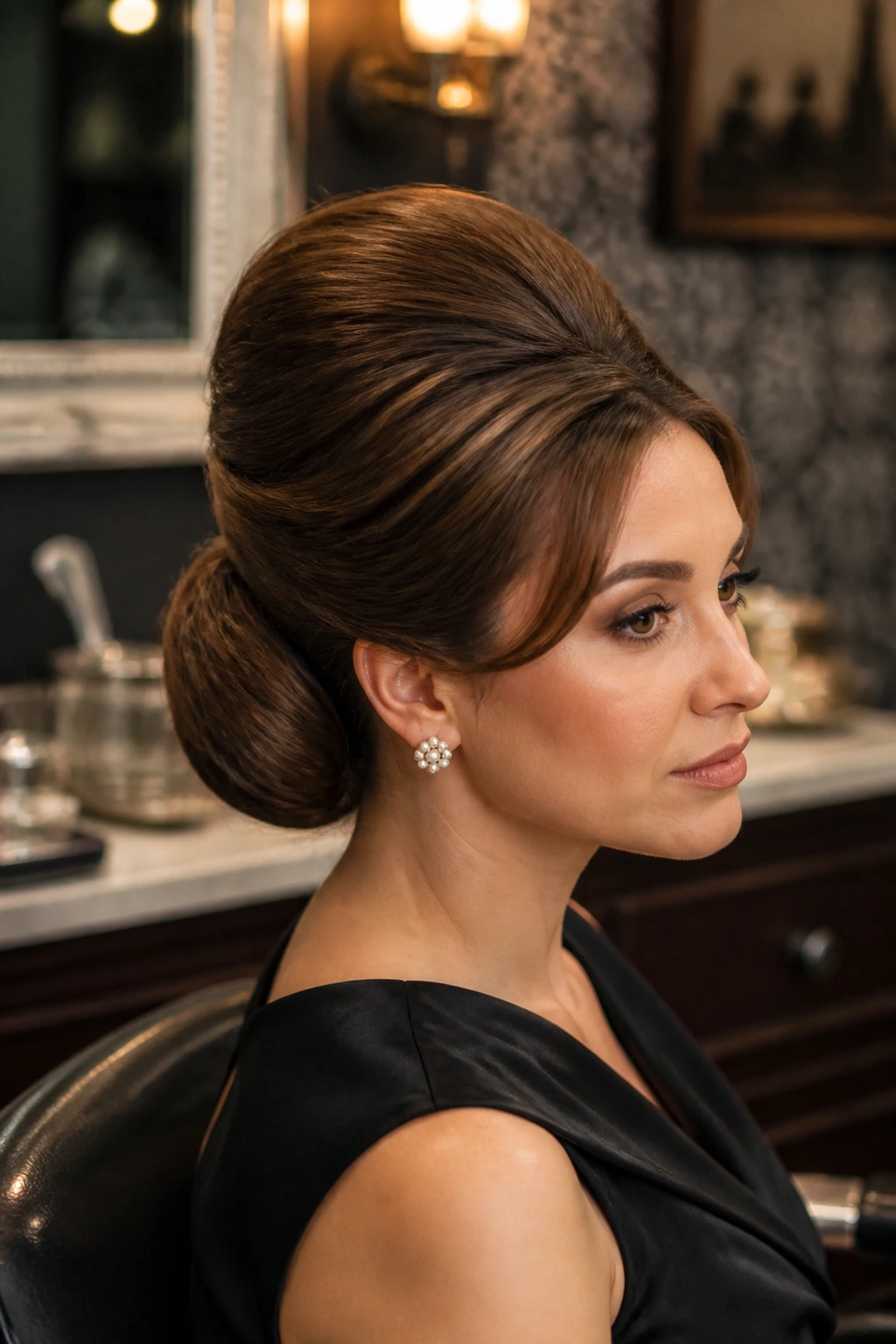
A beehive chignon gives you height without sending the whole style into caricature. The crown lifts, the back stays clean, and the bun sits low enough to keep the profile elegant. It’s one of those styles that looks more complicated than it is.
I like this one when the hair needs a little presence. Fine hair benefits from a padded base or a donut hidden under the top layer; thicker hair can build enough bulk on its own if you tease the crown in small sections. The key is not to make the top too round. A sharp bump looks dated in the wrong way. A soft rise looks intentional.
5. Low Rolled Chignon
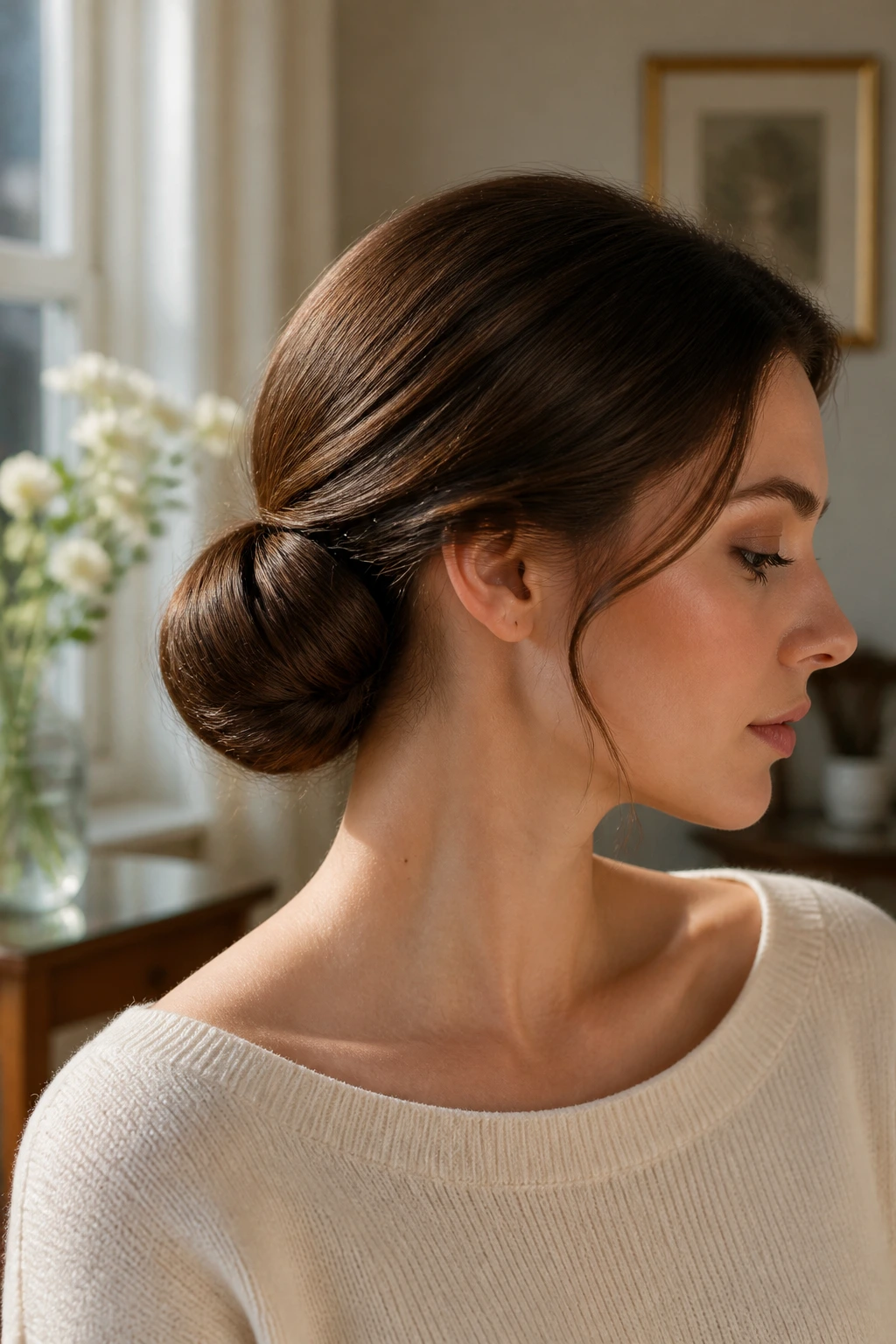
This is the sort of style that looks expensive even when you’ve used a handful of pins and a smoothing cream you already had in the drawer. The hair folds into a low roll at the nape, then tucks into a compact chignon that feels old-Hollywood without shouting for attention.
Compared with a French twist, the low rolled chignon sits quieter and wider. That makes it a good choice for boatneck tops, bare shoulders, or anything with a strong neckline. Keep the surface smooth, but do not over-polish it; a little softness around the temples keeps the style from looking like a bank manager’s set. That edge is what gives it charm.
6. Pin-Curl Crown Bun
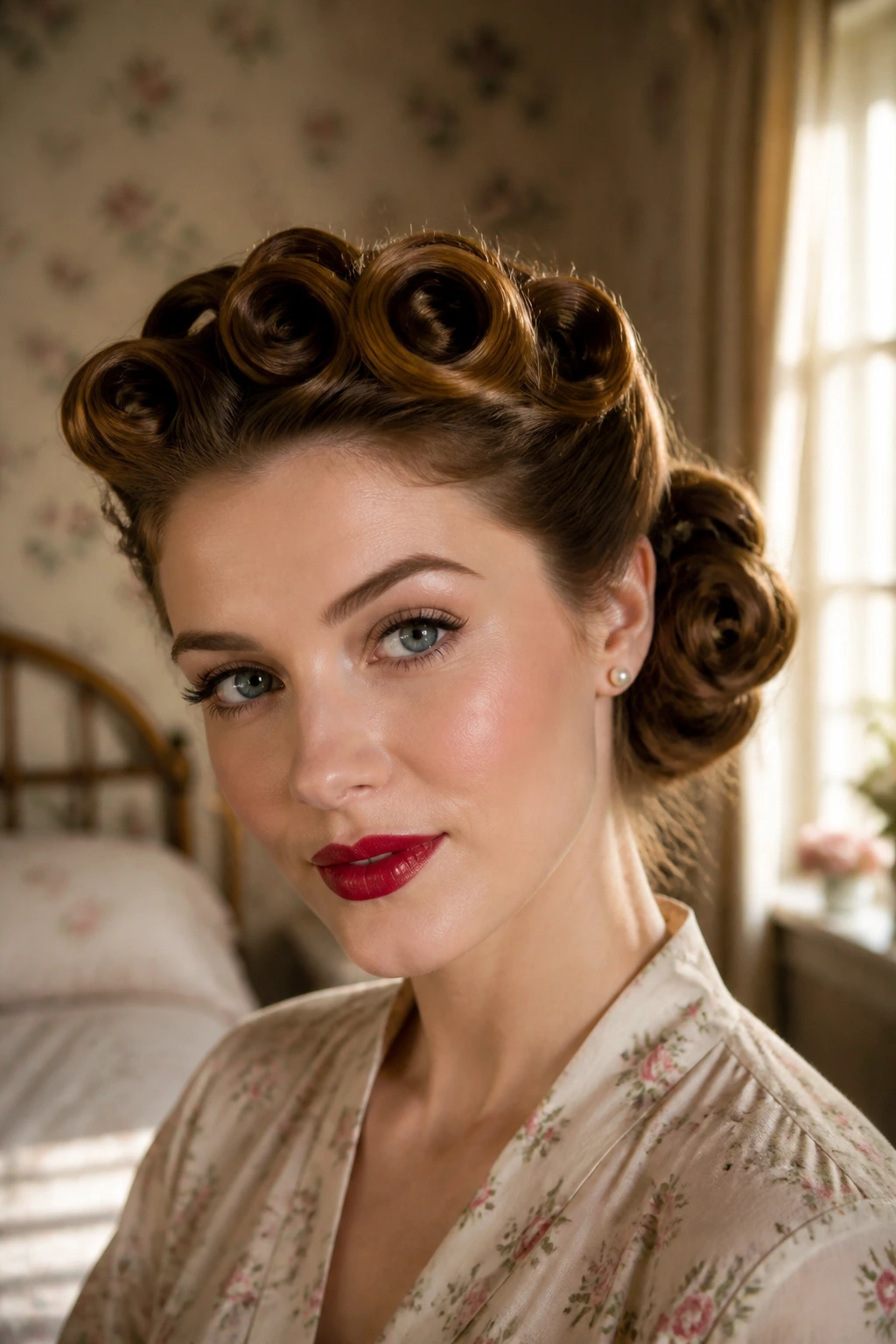
Pin-curl crown buns have real 1940s energy. The pin curls around the hairline create the vintage cue first, and then the bun in back keeps the style from getting too precious. It’s a nice option when you want the era to show without needing a full wave set.
The useful part
Pin curls do two jobs here. They add detail at the front, and they give short layers a place to sit instead of sticking out like they’re trying to escape. The bun can be tight or loose, but the front needs definition. If you brush the curls out too much, the style loses its character fast.
Use a setting spray while the curls are still warm, let them cool fully, then unpin and shape them with your fingers. That tiny wait makes a bigger difference than people expect.
7. Side-Parted Sculpted Bun
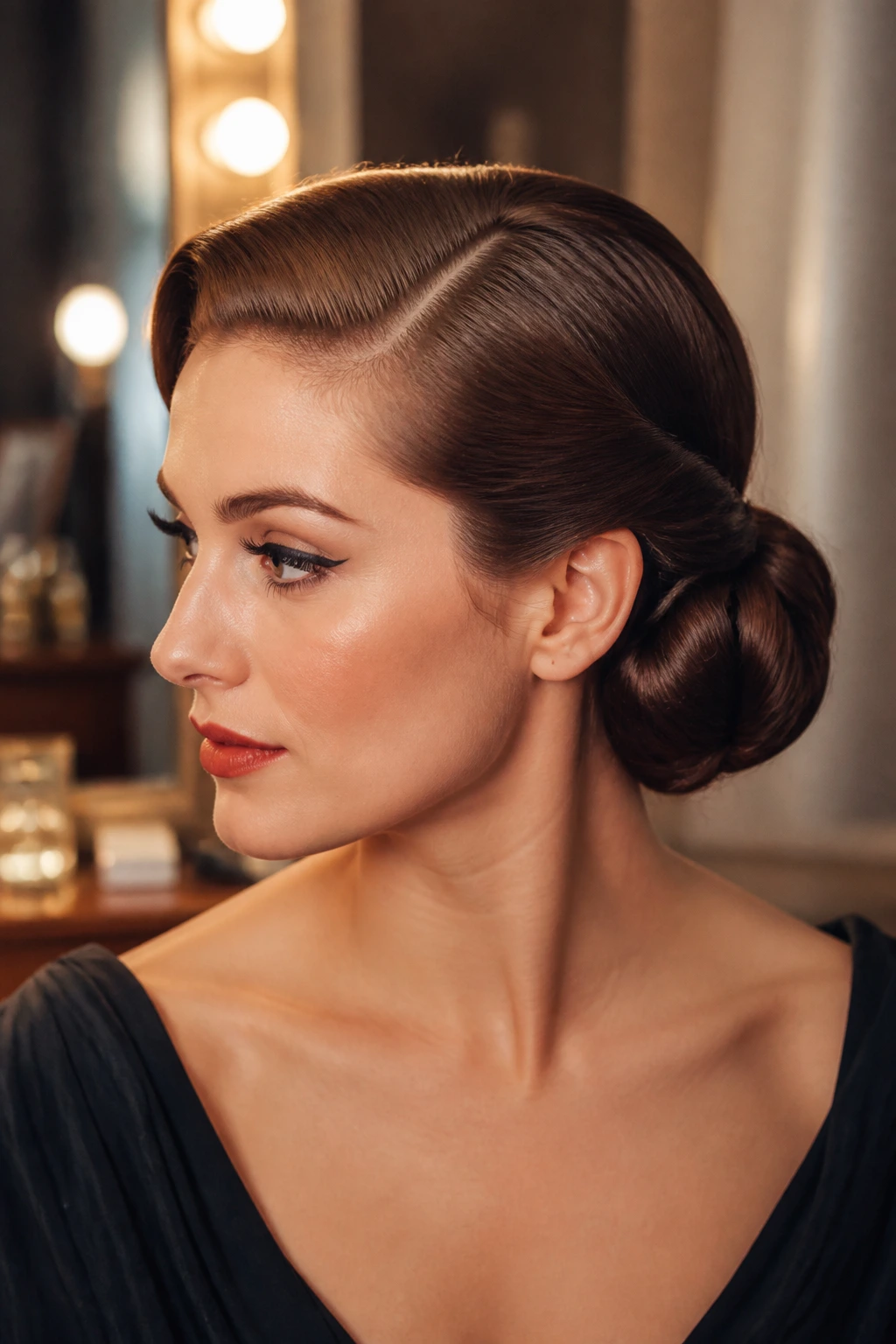
A deep side part changes the whole mood. Suddenly the bun is not just a bun; it becomes a side-swept shape with a little old studio-glam tension in it. The front section lies smooth, the opposite side can carry a bit more height, and the bun itself stays low and neat.
This style loves clean lines. It’s especially good with a strong brow, a bold earring, or a dress that already has a lot going on. I’d pick it over a centered bun when you want the hair to look architectural. If the crown is too flat, the style loses the point. A soft tease at the roots on the heavier side solves that quickly.
8. Marcel Wave Updo
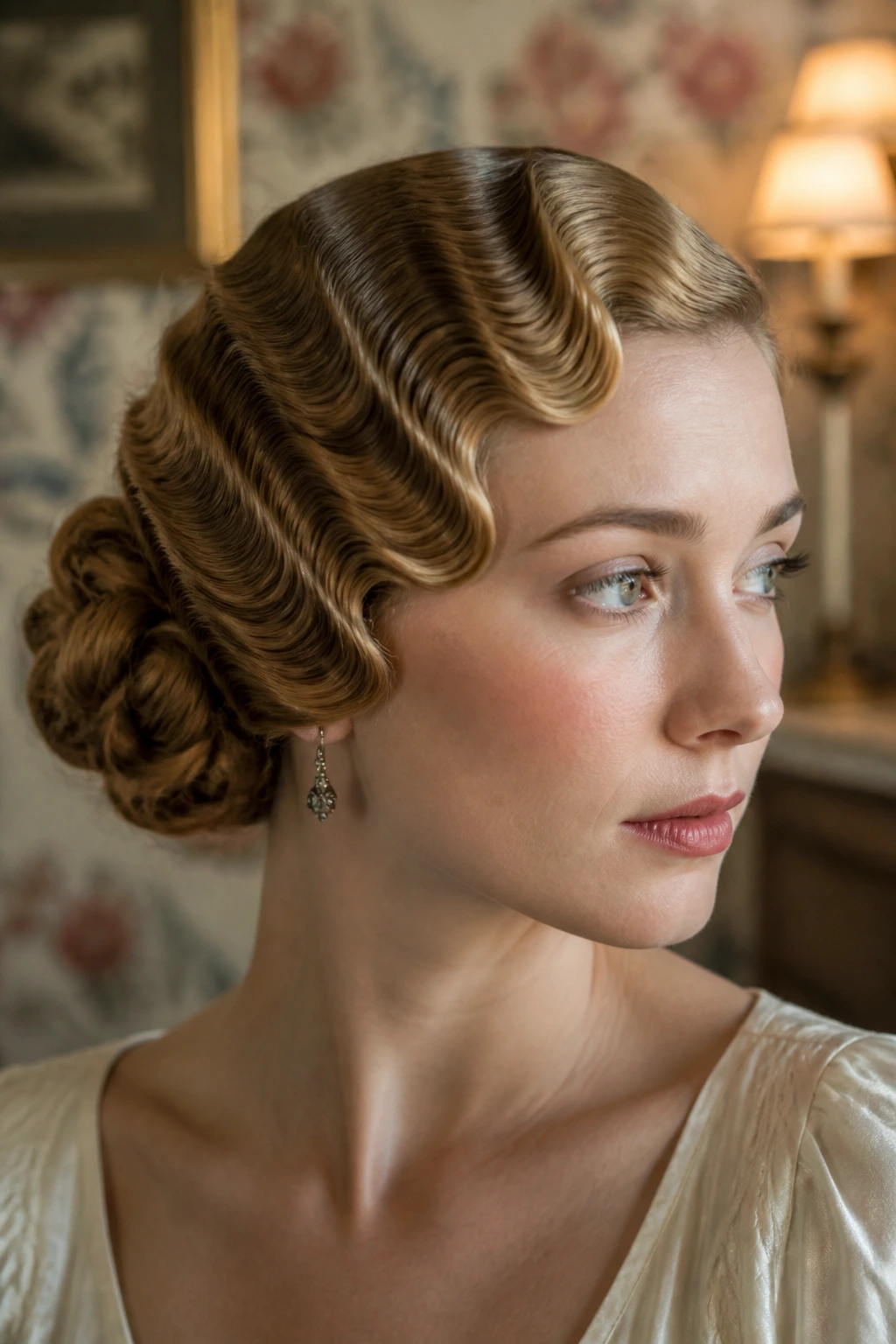
What makes a Marcel wave updo feel so period-specific is the surface pattern. The waves are carved, not random, so the hair catches light in long bends instead of loose curls. You can tuck the ends into a bun or pin them low at the nape; either way, the wave pattern stays in the spotlight.
This one asks for patience, not fancy gear. A curling iron with a clip or wave-setting technique can do the job, but the parting has to be clean and the sections have to cool before you pin them back. If you try to hurry it, the pattern turns fuzzy. When it works, though, the result has that polished 1920s-and-1930s mood that no textured bun can quite fake.
What to watch for
- Use smaller sections near the face so the wave pattern stays visible.
- Cool each bend fully before you touch it.
- Skip heavy oils at the roots; they flatten the wave line.
9. Satin-Scarf Low Bun
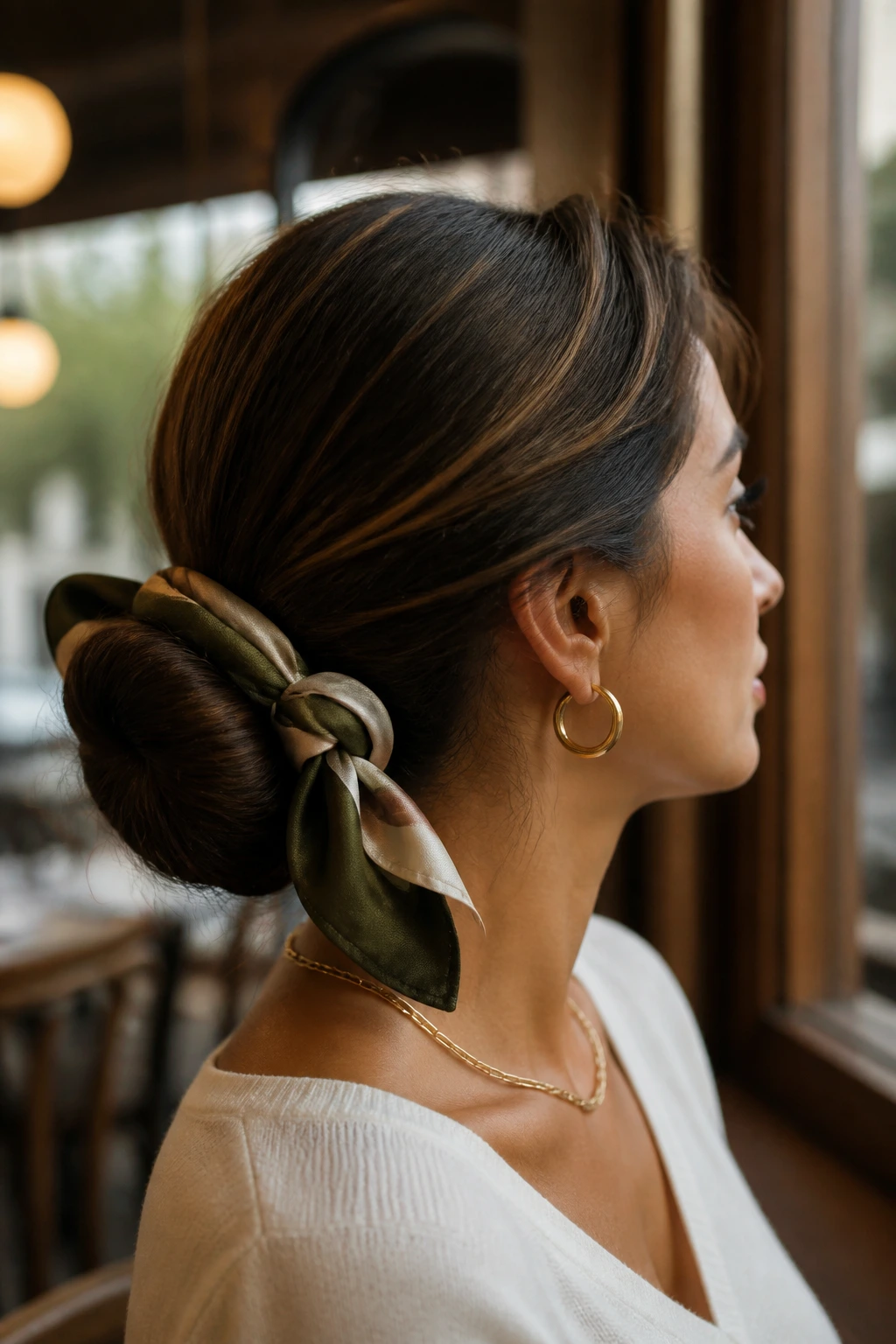
A satin-scarf low bun feels like something you’d see at a train station in a black-and-white film, except it’s easier to wear than the reference suggests. The bun stays low and tidy while the scarf adds a flash of color, print, or sheen right where the eye lands.
This is one of my favorite daytime vintage looks because it does not demand perfect hair. A smooth low bun works fine, and the scarf hides the parts that are never as neat as you want them to be. Tie the scarf after the bun is secure, not before. That way the knot or bow becomes the finishing point instead of fighting the pins.
10. Bouffant Ponytail
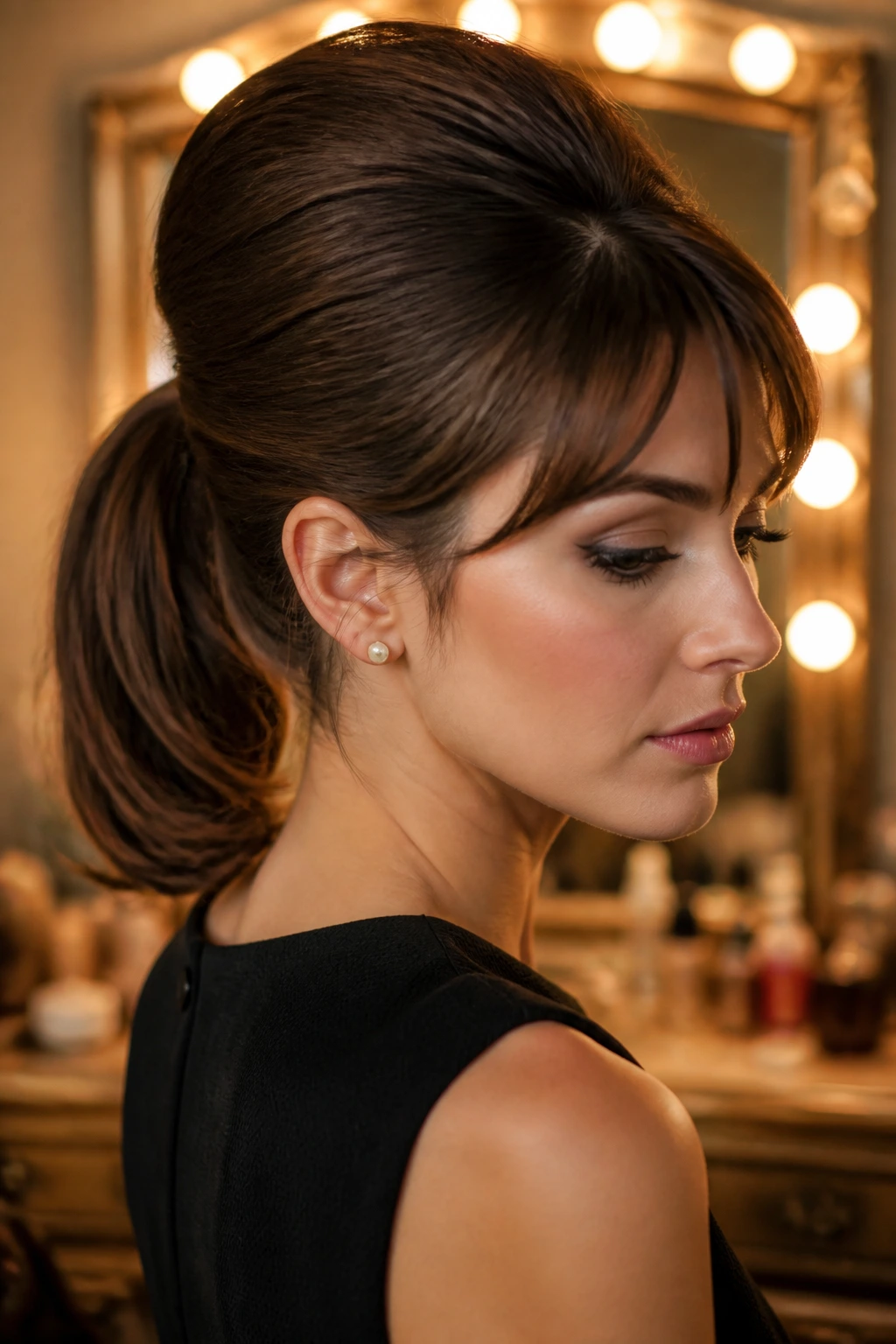
Can a ponytail count as vintage? If it has enough crown height, absolutely. The bouffant ponytail pulls the hair back into a sleek tail while the top stays lifted, which gives it a late-1960s feeling without turning it into a costume. The ends can be curled under or flicked out depending on how much drama you want.
The trick is restraint. Tease only the roots at the crown, smooth the top layer over the tease, and keep the ponytail itself clean and glossy. If you add too much height, it turns cartoonish. A little lift reads chic. A lot of lift reads like a theme party.
11. Audrey-Inspired Top Knot
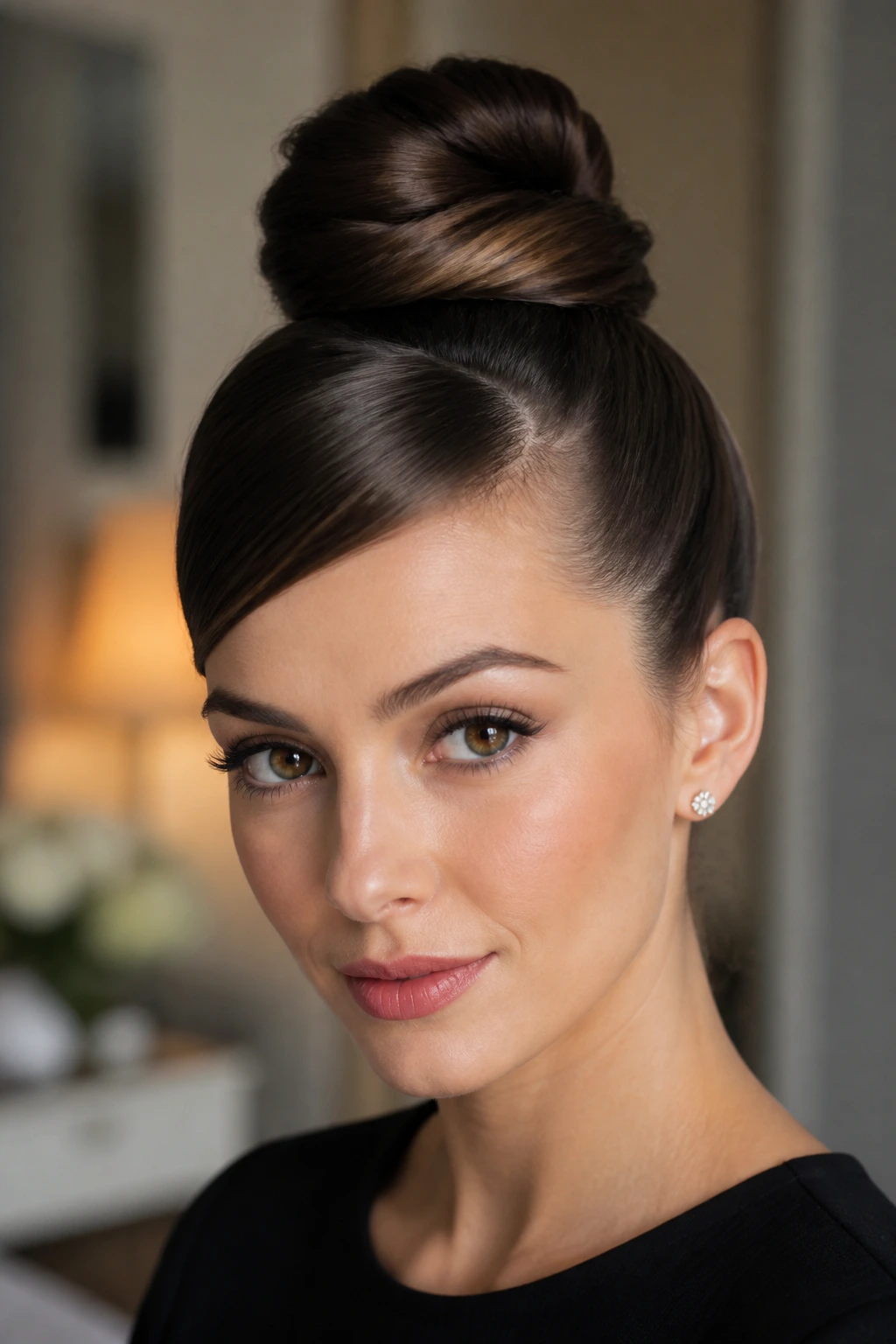
This is the neat, compact cousin of the big messy bun. Think clean crown, controlled height, and a bun that sits high enough to open the face without looking casual. The Audrey feeling comes from the polish, not the size.
I like it with a narrow headband, a side part, or a very smooth front. It suits shorter dresses and crisp collars because the style doesn’t sprawl. If you’ve got long hair, twist the tail tightly before pinning so the bun stays small. Loose ends are the enemy here. Keep them tucked in, and the whole thing reads sharper.
12. Banana Roll Updo
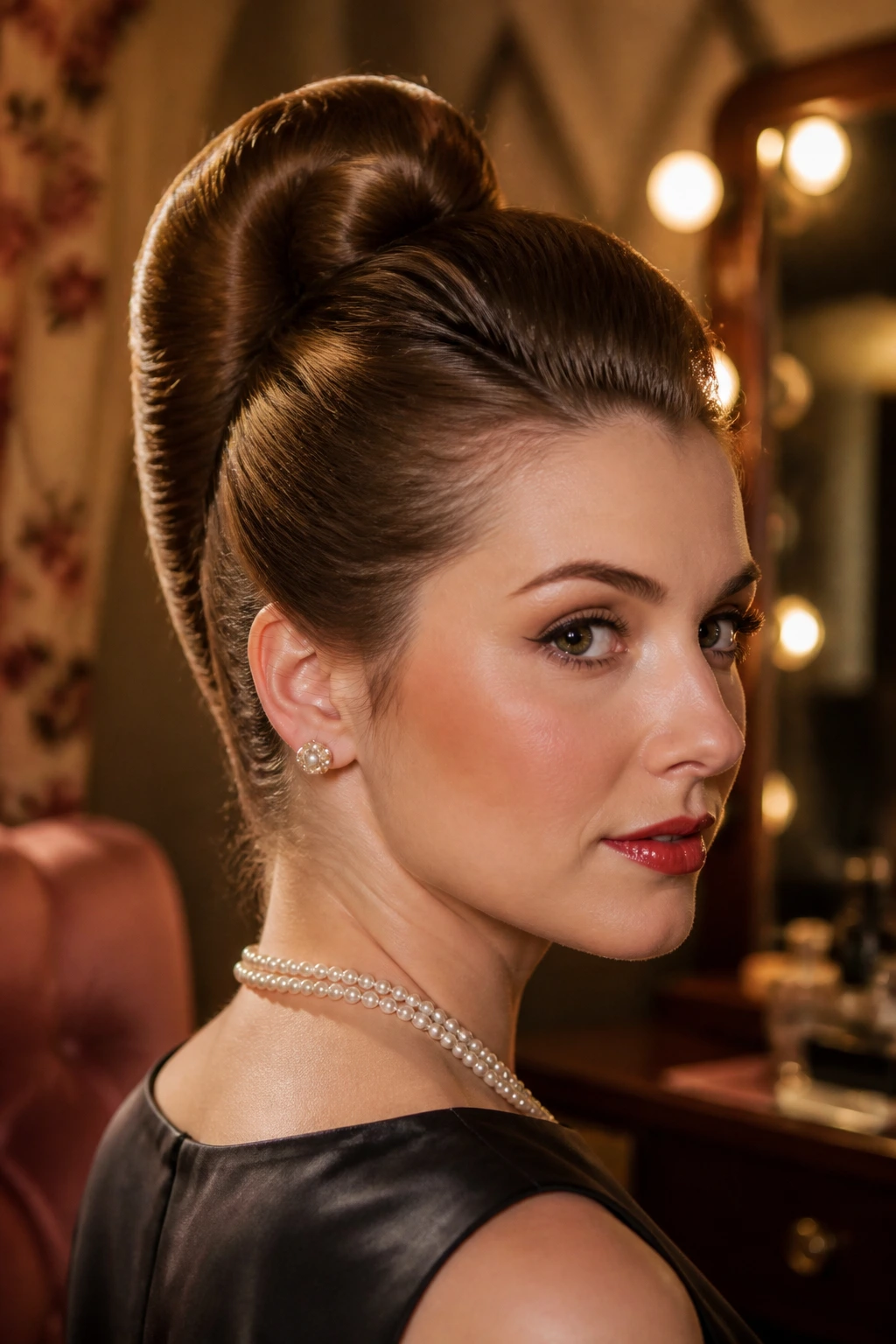
The banana roll is one of those styles that sounds more difficult than it is. Hair sweeps upward or sideways into a long vertical roll, then disappears into itself at the back. The result is sleek, narrow, and just theatrical enough to make a plain sheath dress look sharper.
Quick note on shape
This style works best when the hair has been smoothed first. A little mousse, a blow-dry with a round brush, and a touch of hairspray at the roots keep the roll from splitting apart. If the ends poke out, hide them under the seam of the roll with pins that cross like tiny Xs. That’s the part people skip, and it’s the part that keeps the style from sagging.
13. Halo Braid Bun
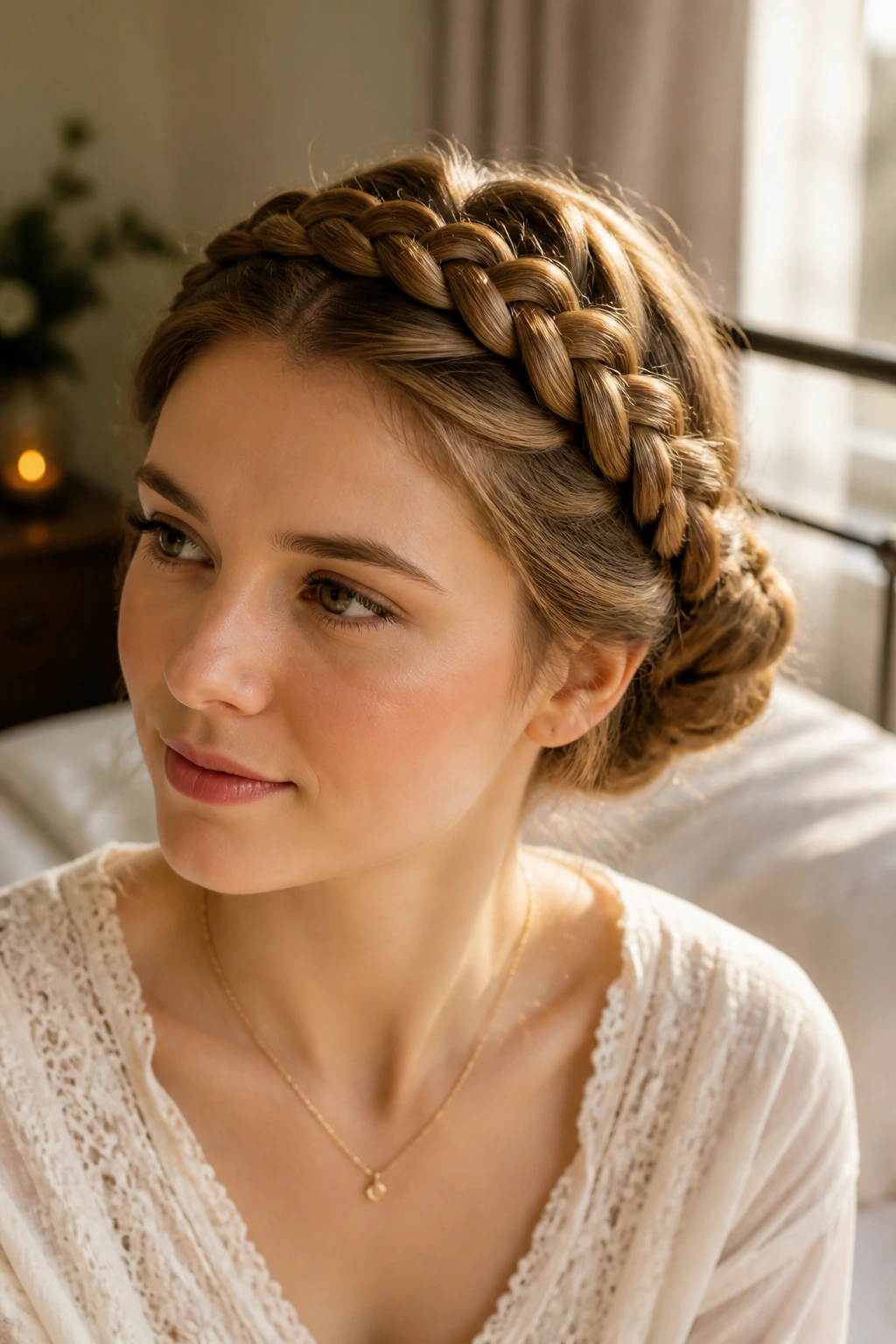
A halo braid bun has a softer vintage feel than the more rigid rolled styles. The braid wraps the head like a crown, then the remaining hair gathers into a bun at the back or nape. It borrows from older romantic hairstyles, but the overall shape still lands in retro territory.
This works especially well if you want something that looks detailed from every angle. Braids give the eye something to follow, and the bun keeps the ending clean. If your hair is layered, braid a little tighter than you think you need to. Loose layers around the face can be charming; loose layers sticking out of the braid are not.
14. Side-Swept Pin-Up Bun
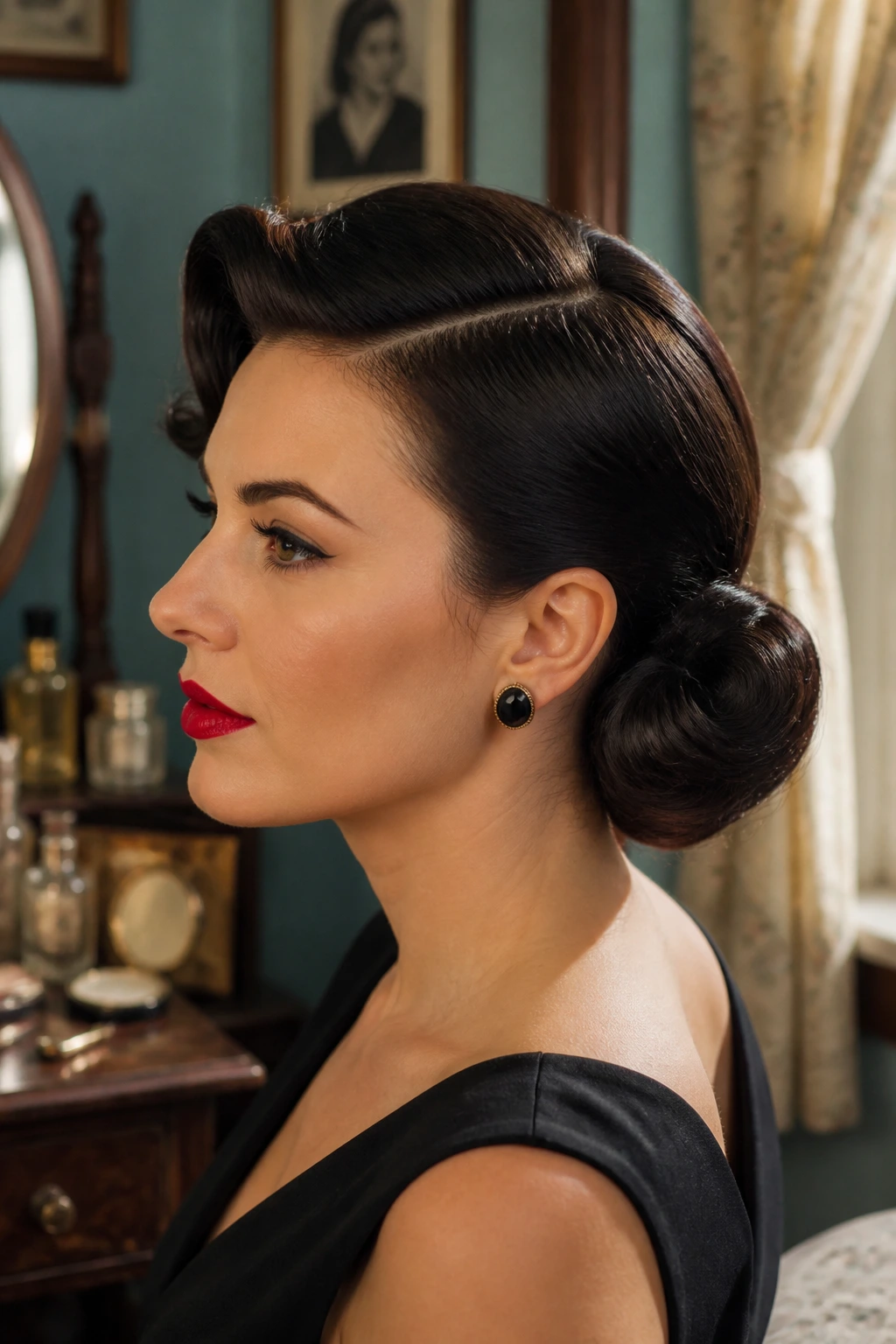
The side-swept pin-up bun puts the drama where it counts: one side gets a roll, wave, or lifted sweep, while the bun sits low and slightly offset. That asymmetry gives the look a little cheeky movement, which is exactly why it works.
Use it when you want the face to feel framed rather than covered. A deep side part helps, as does a curled piece left loose near the jaw. This is one of those styles that photographs well from profile, because the front sweep and the bun create a line the eye can follow. Keep the bun compact. If it gets too wide, the side sweep loses its punch.
15. Rosette Bun
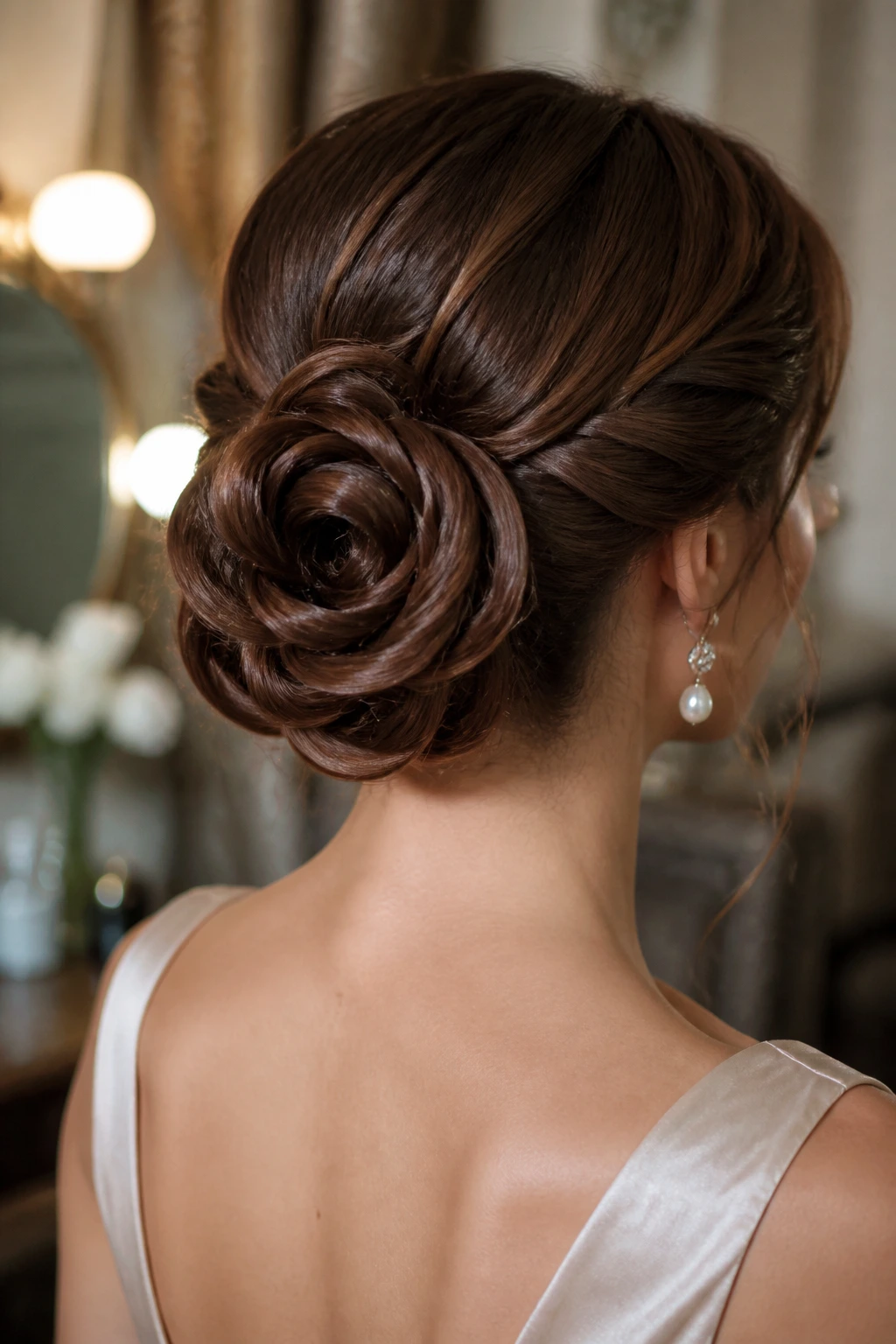
A rosette bun is the prettiest kind of fussy. Hair coils around itself in a spiral so the bun looks a little like a rose from the back. It has a dressier, almost ceremonial feel, and it suits thick hair especially well because the coils need substance.
The style gets its vintage flavor from the shape more than the setting. Keep the surface smooth, then wrap the hair into a compact spiral and pin the perimeter first. If you’ve got fine hair, a small bun form underneath can help the rosette hold its shape. It’s one of those styles that benefits from a close-up — and from a good view in the mirror before you leave the house.
16. Twisted Crown Updo
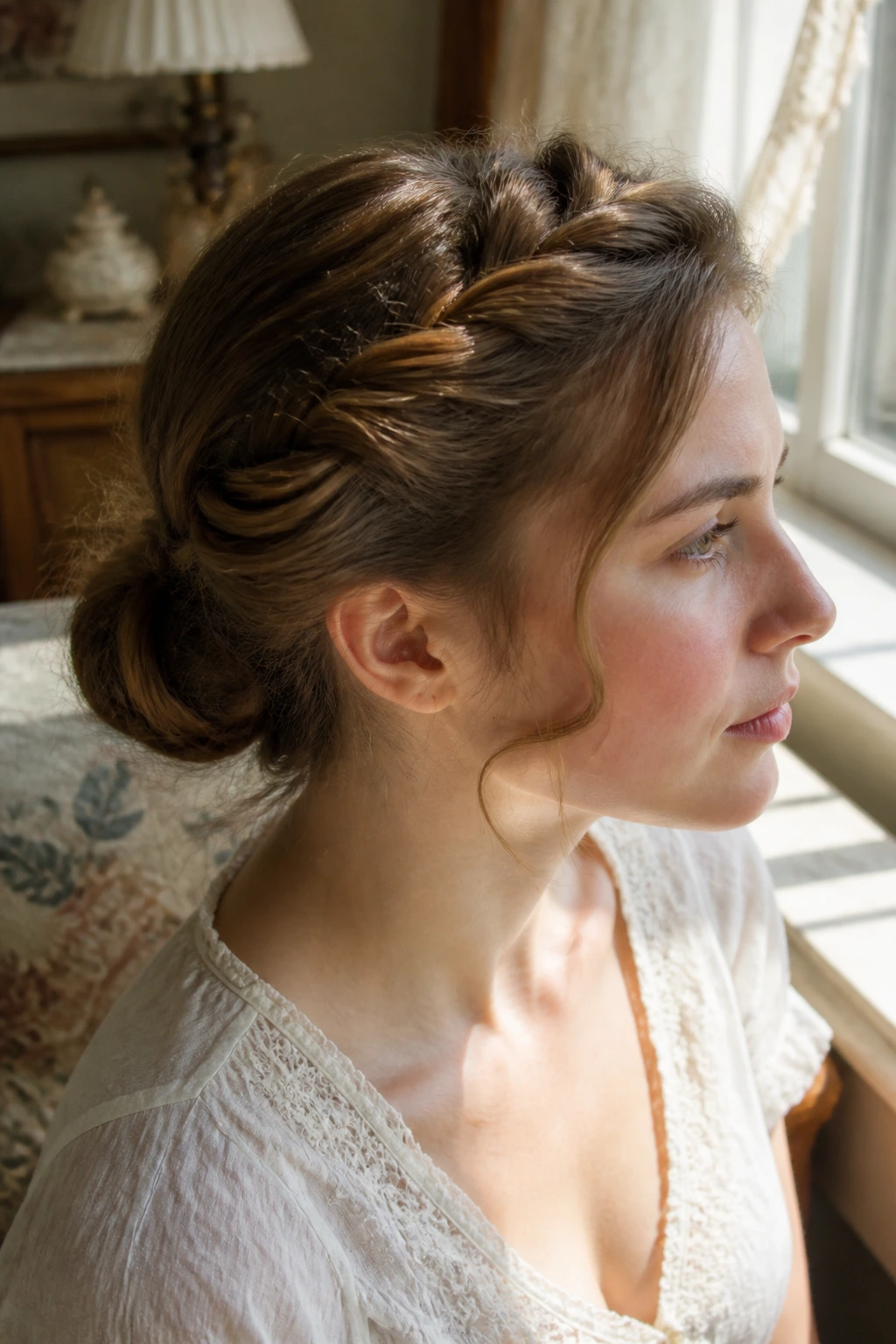
This one starts with the front sections, not the bun. Twist the hair from the temples back toward the crown, pin the twists into a low knot, and leave the back clean. The result feels like a softer take on a formal updo, with enough vintage influence to make the shape feel considered.
Why it works
The twisted crown keeps the face open while adding detail where people look first. It’s a smart move if your hairline has shorter layers or if you want to hide a grow-out phase. Twist each side away from the face, anchor the ends low, and do not pull the crown too tight. A little give around the twists keeps the style from looking overworked.
17. Double Roll Updo
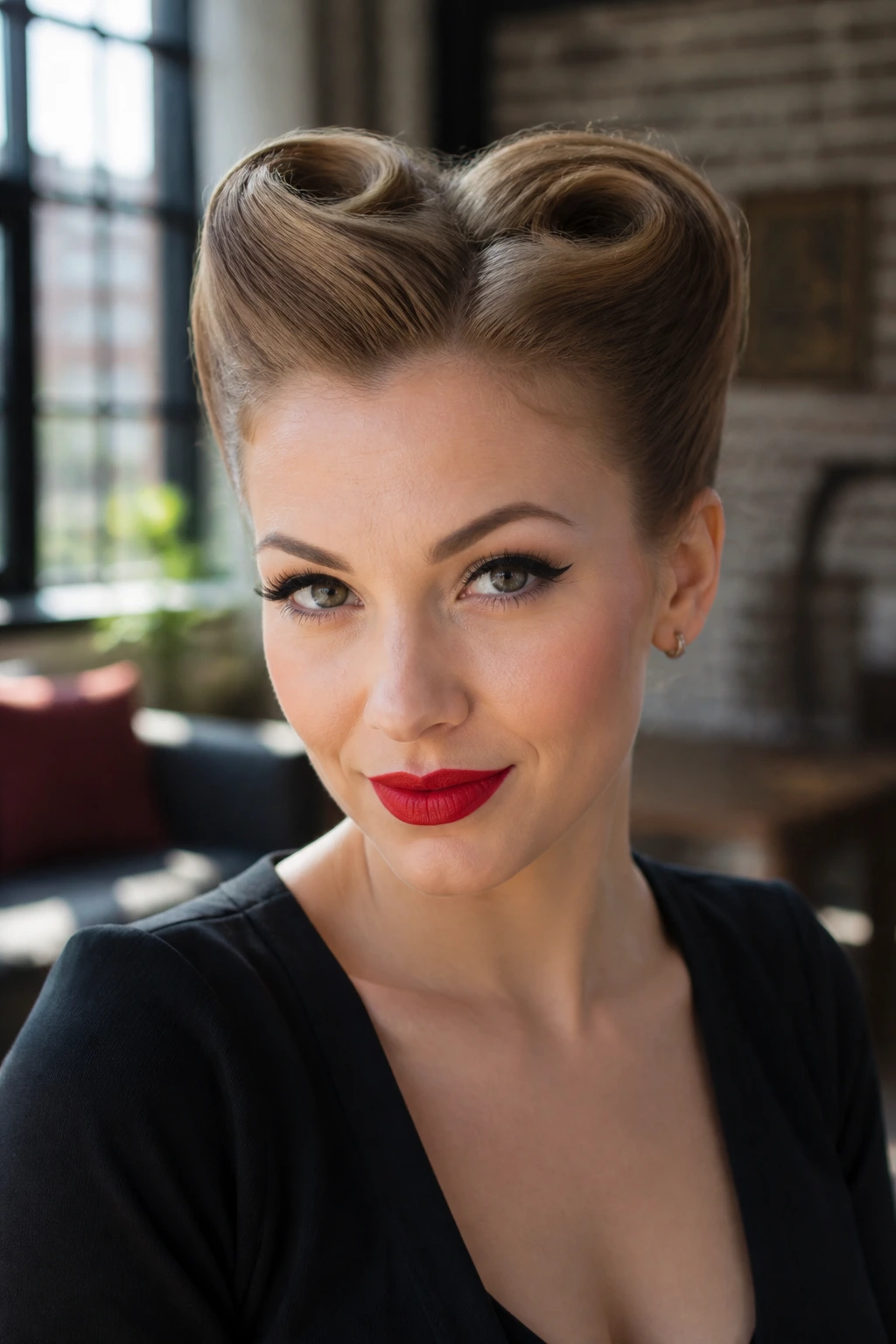
A double roll updo has two horizontal rolls — often one on each side of the crown or stacked close together — and that gives it a strong 1940s pin-up pulse. It’s bolder than a single roll and cleaner than loose waves, which is why it suits a sharp neckline or a plain dress that needs a little personality.
I reach for this when the hair needs a clear shape fast. Set the front sections first, then roll each side back and inward, pinning the rolls so they meet without bulging. If one roll looks larger than the other, do not panic. Imperfect symmetry is part of the charm. Too-perfect rolls can look stiff, and this style needs a little life.
18. Face-Framing Curl Chignon
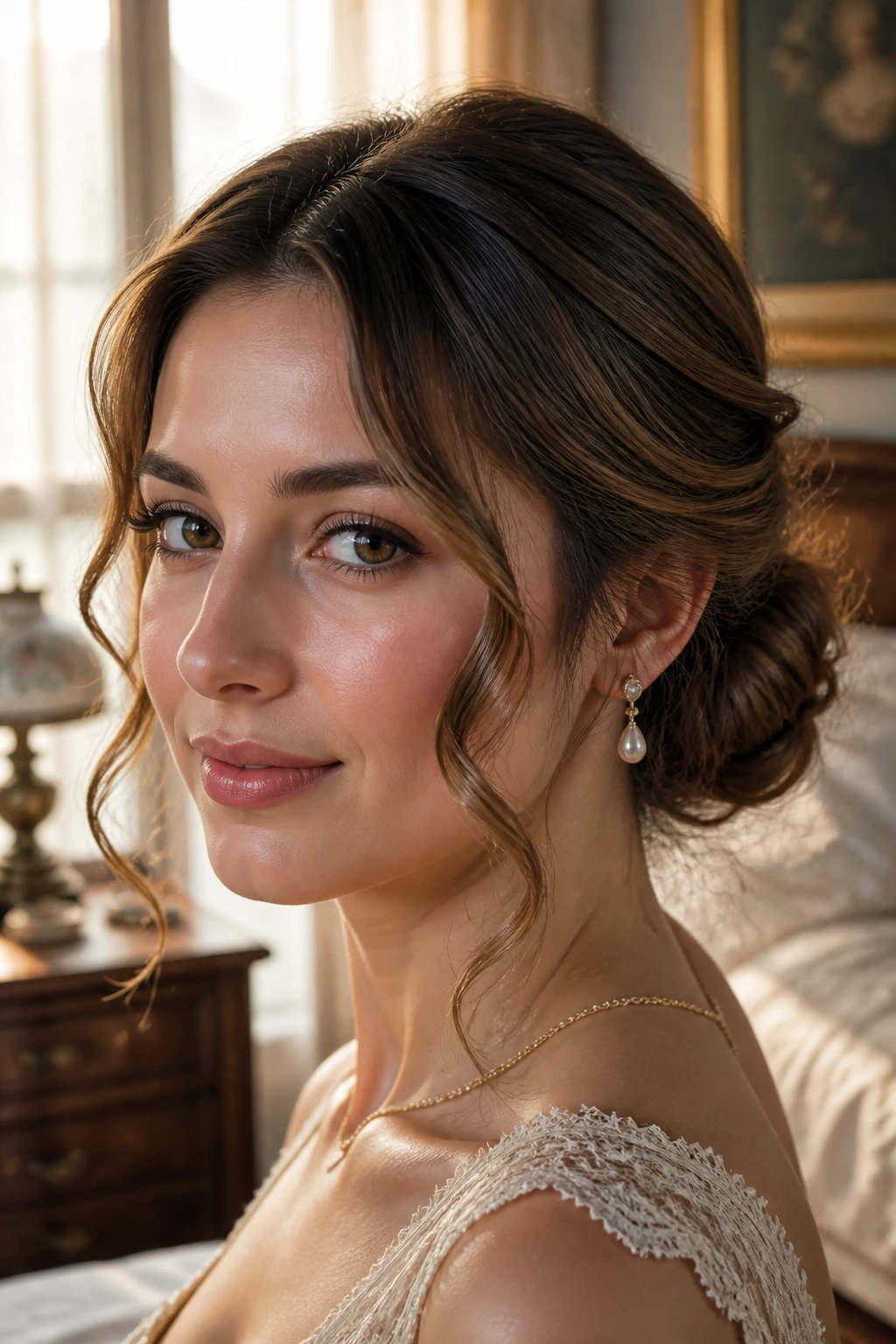
Does a low chignon need to be severe? Not at all. Leave a few curled pieces at the temples or around the cheekbones, and the whole look softens immediately. The bun stays neat, but the face gets a little movement.
This style is a smart answer for anyone who likes vintage hair but hates the feeling of being pulled back too tightly. The curls can be soft waves or tighter tendrils, depending on the mood. A center part makes it feel more old-school; a side part adds romance. The only real mistake is leaving the front pieces limp. If they’re going to be out, they need shape.
19. Faux Bob Tuck
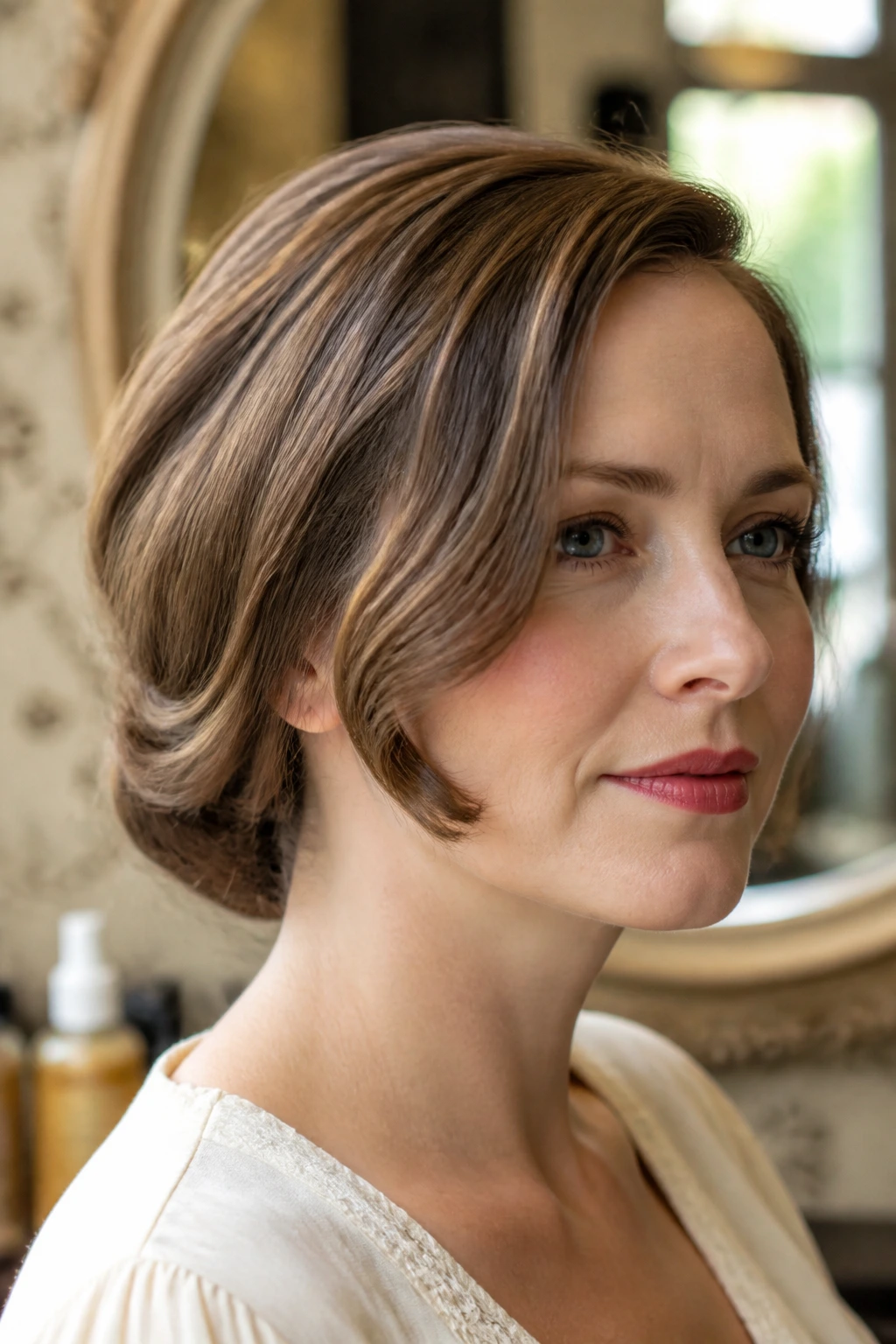
The faux bob tuck is a little bit trickery, and that is part of the fun. Hair is tucked and pinned under itself so the ends disappear, making longer hair look like a clipped vintage bob from the front and side. It gives off a 1920s-to-1930s feeling without cutting anything.
This style is best when the lower half of the hair has some curl or bend, because straight ends can kick out and spoil the illusion. Pin the ends tightly under the nape and make sure the outer layer falls over them in a smooth curtain. If you want to test it before an event, wear it around the house for an hour. The spots that tug are the spots that need another pin.
20. Braided Victory Roll Hybrid
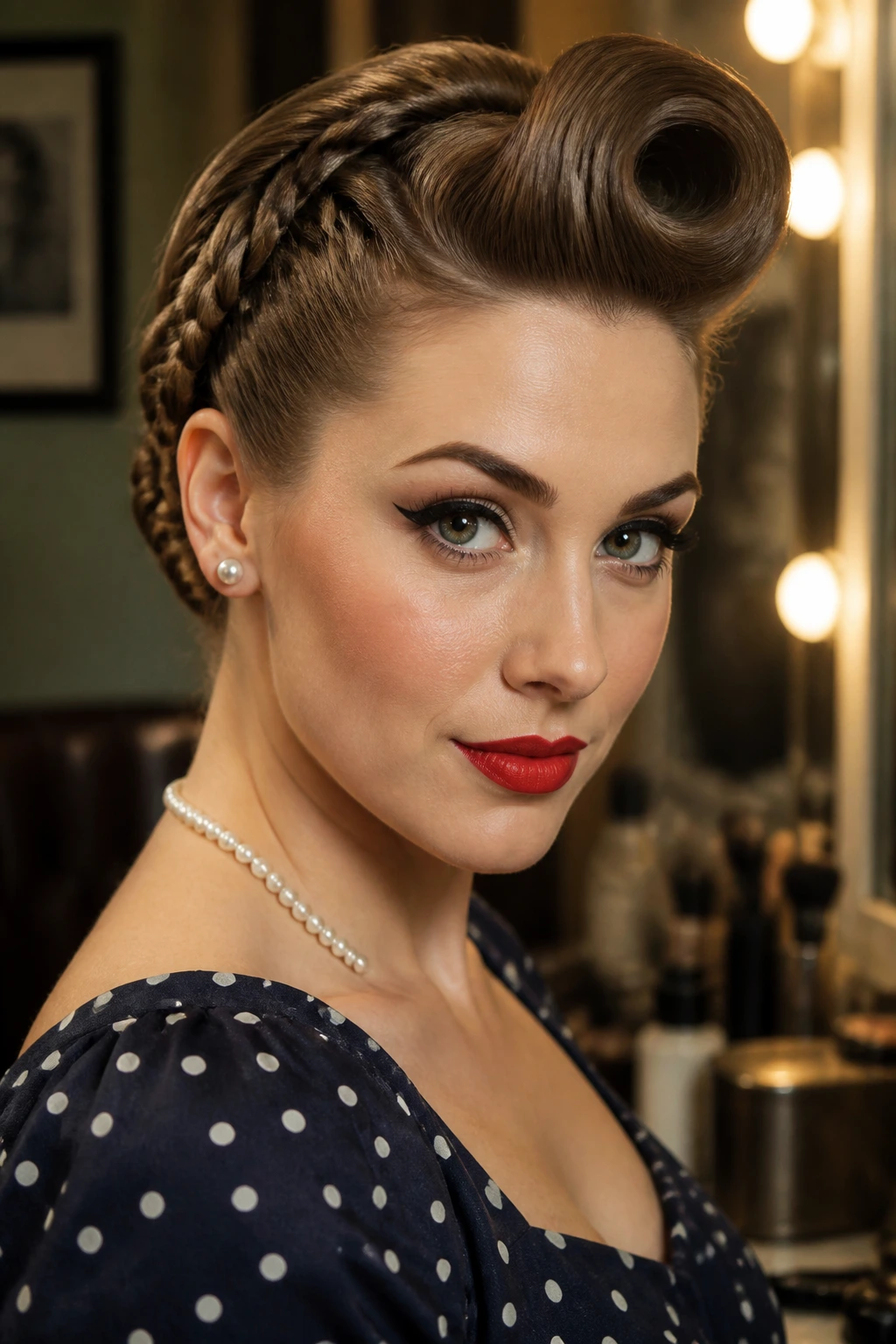
The braid-plus-roll combo feels playful in a way plain pin-up hair sometimes doesn’t. A braid feeds into one side while a victory roll shapes the front, so the style gets a mix of texture and structure. That combination makes it more interesting than either element alone.
I like this for medium to long hair because the braid helps corral layers that would otherwise slip out. Keep the braid close to the scalp if you want a cleaner finish, or let it loosen a bit for softness. Then roll the front section away from the face and pin it firmly at the base. The contrast between braid and roll is the whole point.
21. Curled Pompadour Updo
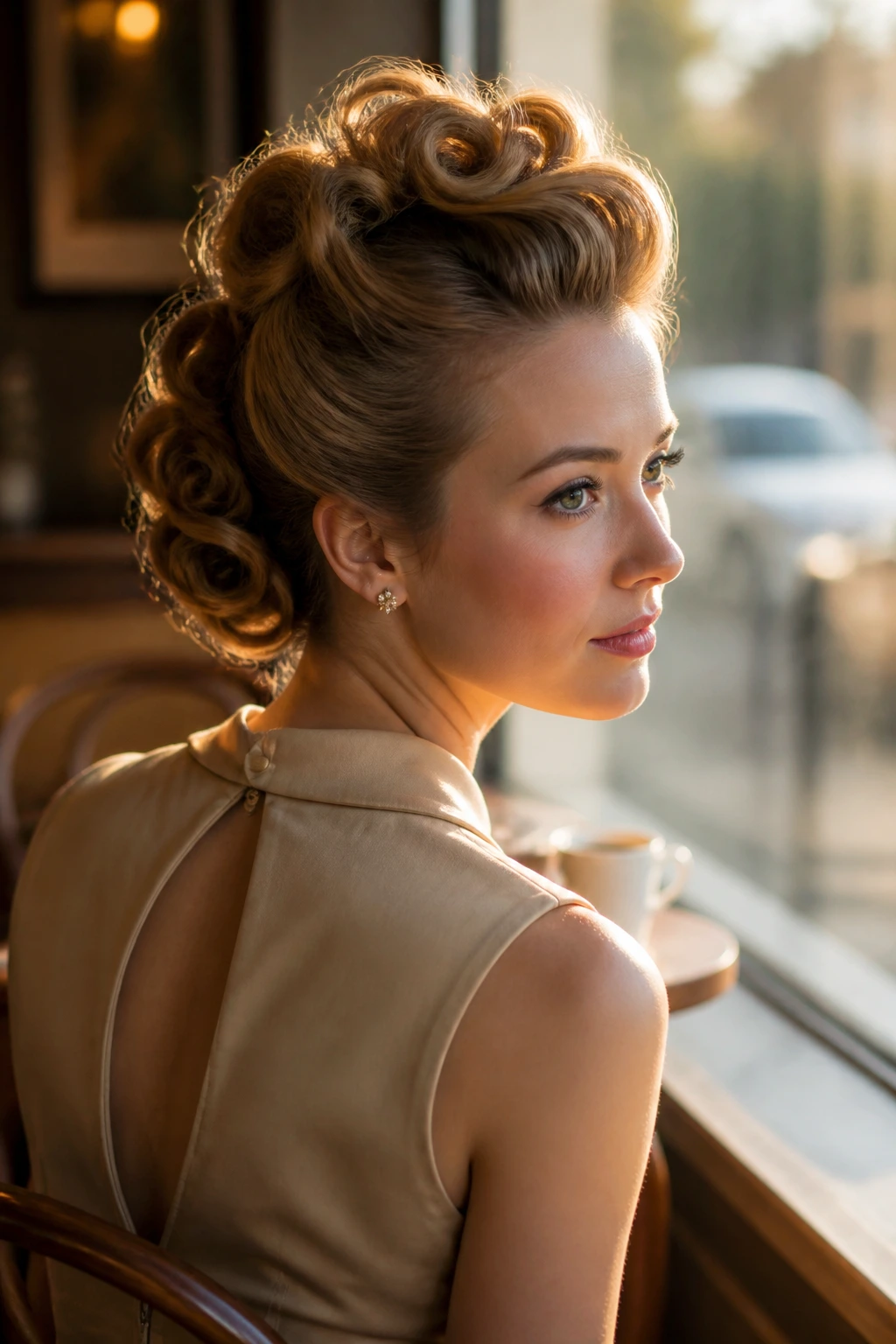
A curled pompadour updo has a strong front and a controlled back. The hair lifts at the crown, then the lengths curve into a pinned shape that feels equal parts rockabilly and formal. It’s the sort of style that can handle a leather jacket or a satin dress, which is a useful range.
The front does the heavy lifting
If the pompadour section is weak, the style falls flat. Tease the roots lightly, smooth the top layer over the lift, and pin the back into a low twist or bun. The front curve should be visible in profile. That silhouette is what sells the look. A soft wave at the temples keeps it from becoming too hard-edged.
22. Shell Roll French Roll
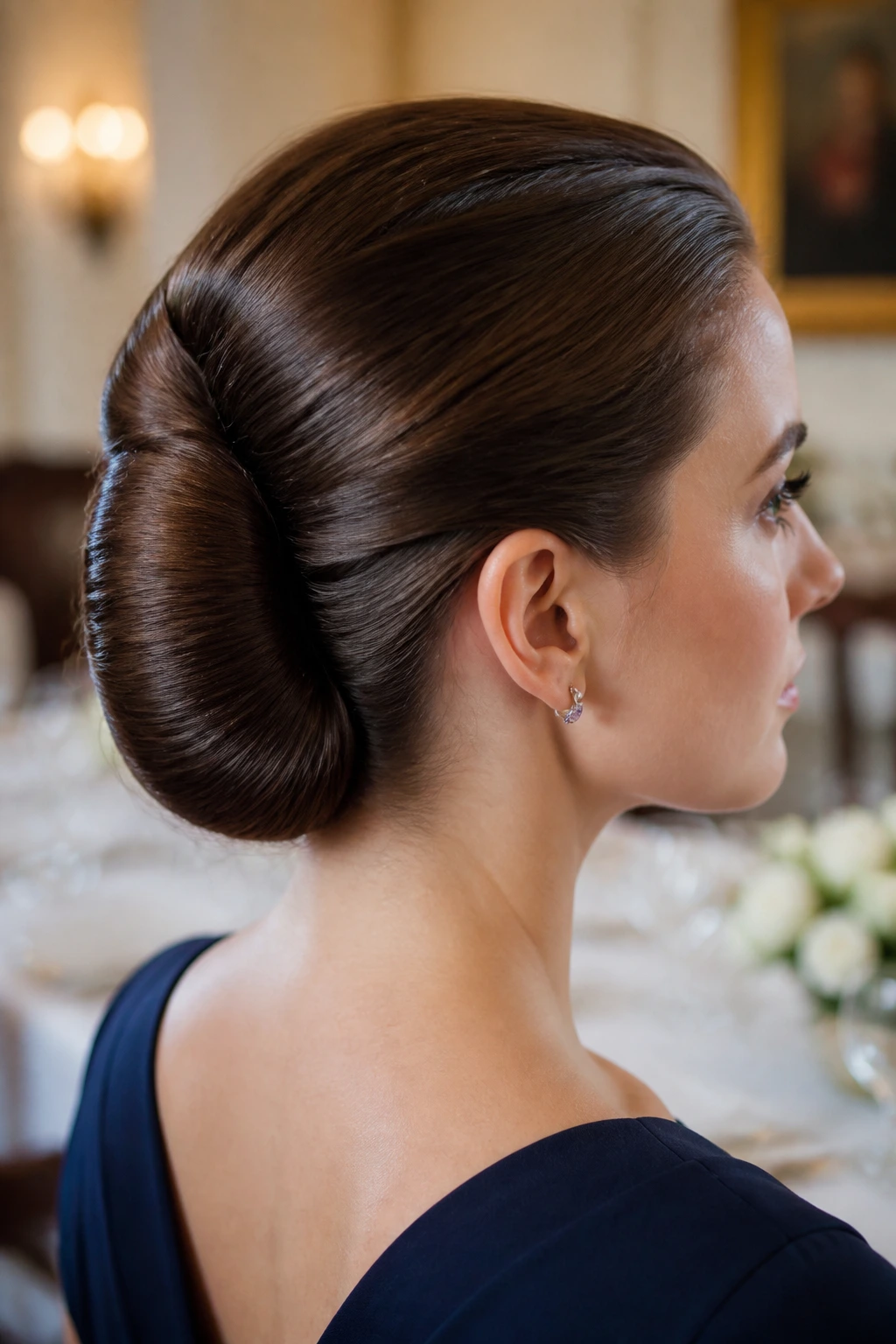
The shell roll is a cleaner, narrower cousin of the French roll, with the hair folded into a shape that really does look like a shell from the side. It has that tidy, tailored mood that works with formalwear and strong necklines.
Compared with a loose twist, the shell roll feels more contained. There’s less movement, more line. That makes it a good choice when the outfit already has texture or embellishment. Use a smoothing cream sparingly, because too much product can make the roll slide. A little grip at the roots and a firm set of pins matter more than shine.
23. Ribbon-Tied Low Ponytail
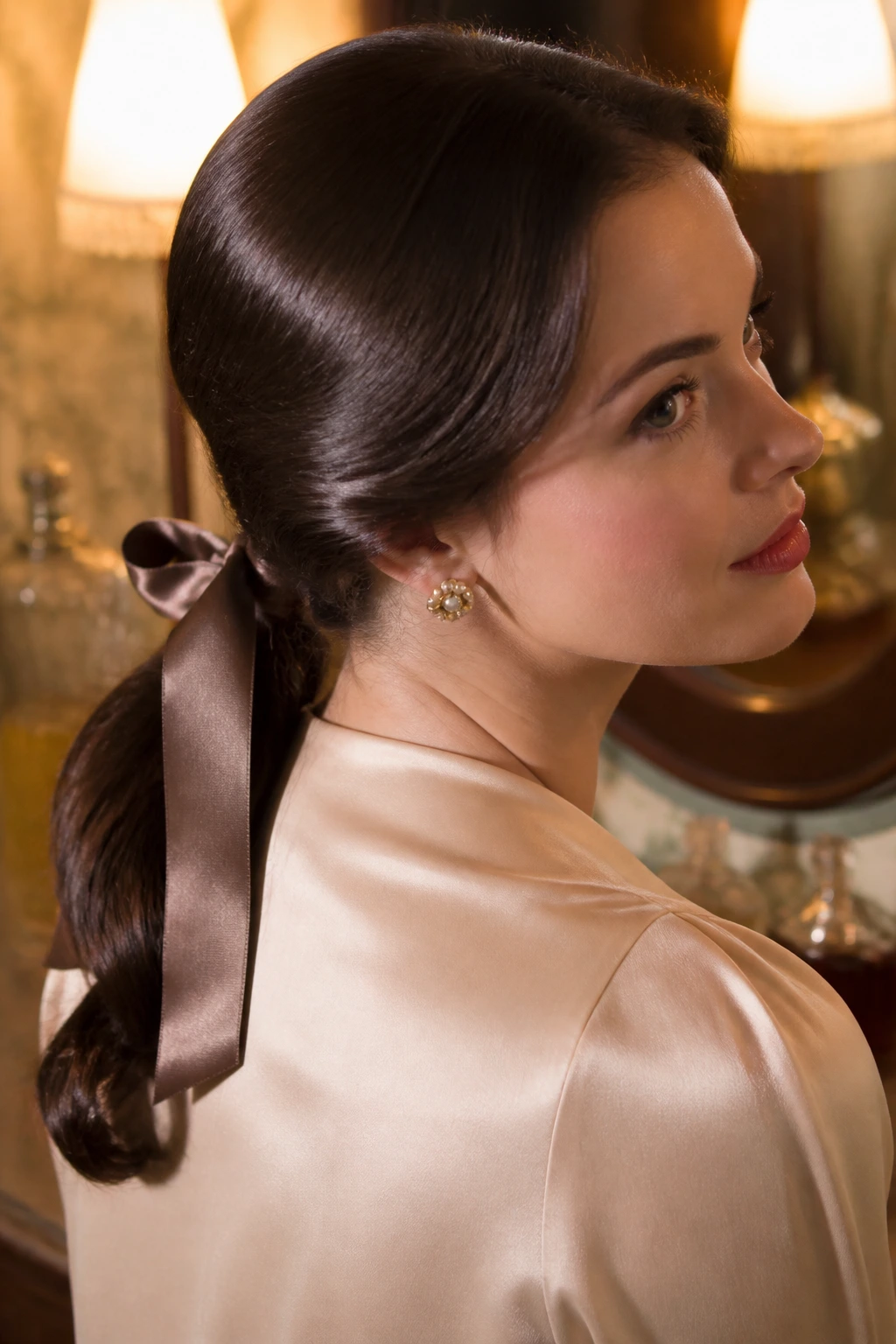
A low ponytail can look vintage the minute you trade the elastic for a ribbon. Velvet feels more 1950s; grosgrain feels sharper; satin reads dressier. Keep the pony smooth at the crown and let the ribbon be the visible finish.
This style is refreshingly practical. It works on hair that is too long for a neat bun or too short for a full twist, and it does not ask for a lot of heat styling. Curl the tail under if you want it to feel more old-fashioned, or leave it straight and shiny for a cleaner line. The ribbon should be tied with intention, not dangling like a craft-store afterthought.
24. Coiled Bun With Pin Curls
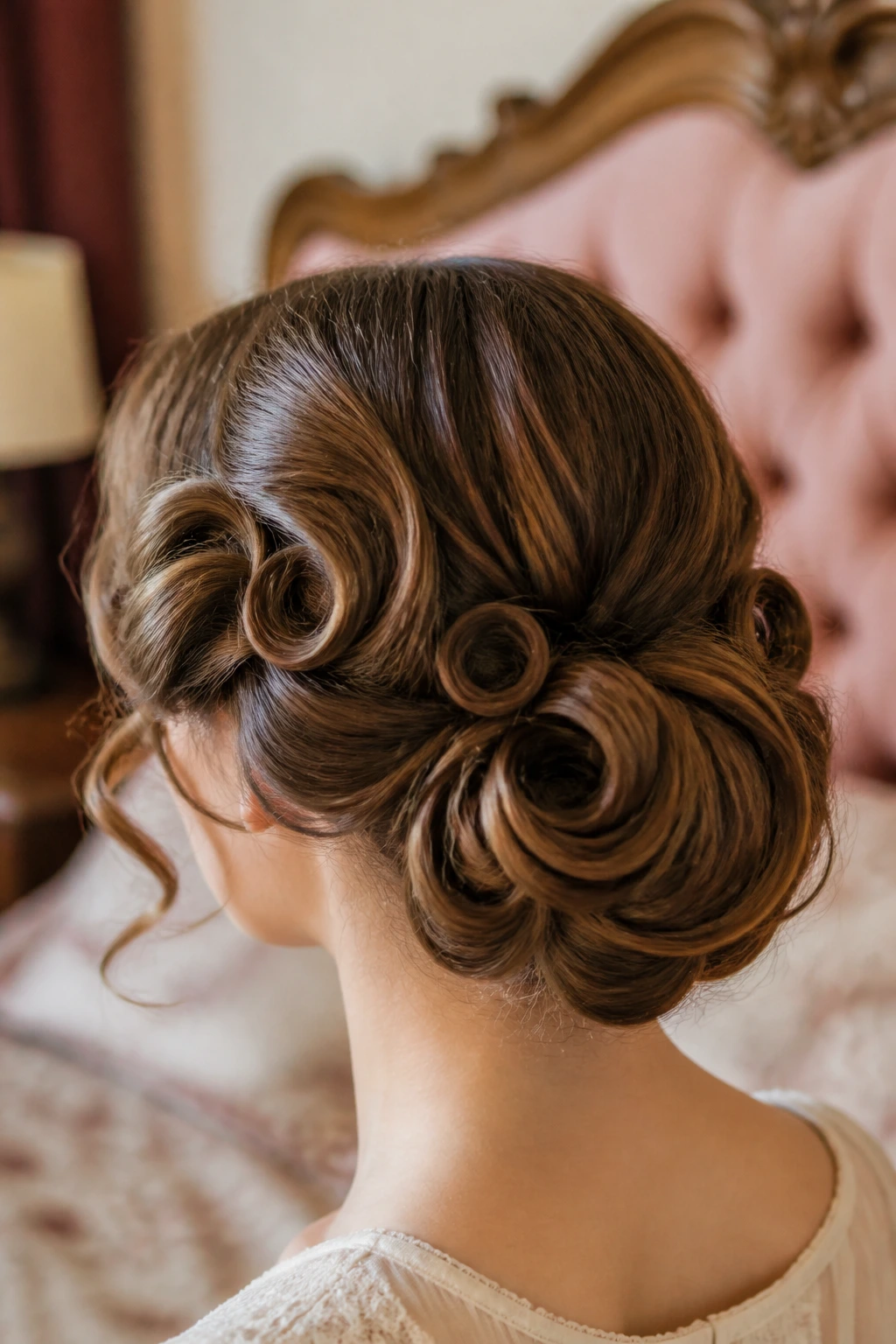
A coiled bun with pin curls gives you texture in two places at once: the bun itself and the little curls tucked around it. That makes it feel more dressed up than a simple knot, even if the structure underneath is straightforward.
A few useful details
- Let the curls cool fully before you arrange them.
- Place the pin curls where they frame the bun, not randomly around the head.
- Use smaller pins than you think you need so the surface stays neat.
This style is lovely when the hair needs ornament but not extra volume. The curls can sit at the side, near the nape, or just above the bun. Keep the bun centered and the decoration off to one side if you want a more modern shape.
25. Side-Chignon With Deep Waves
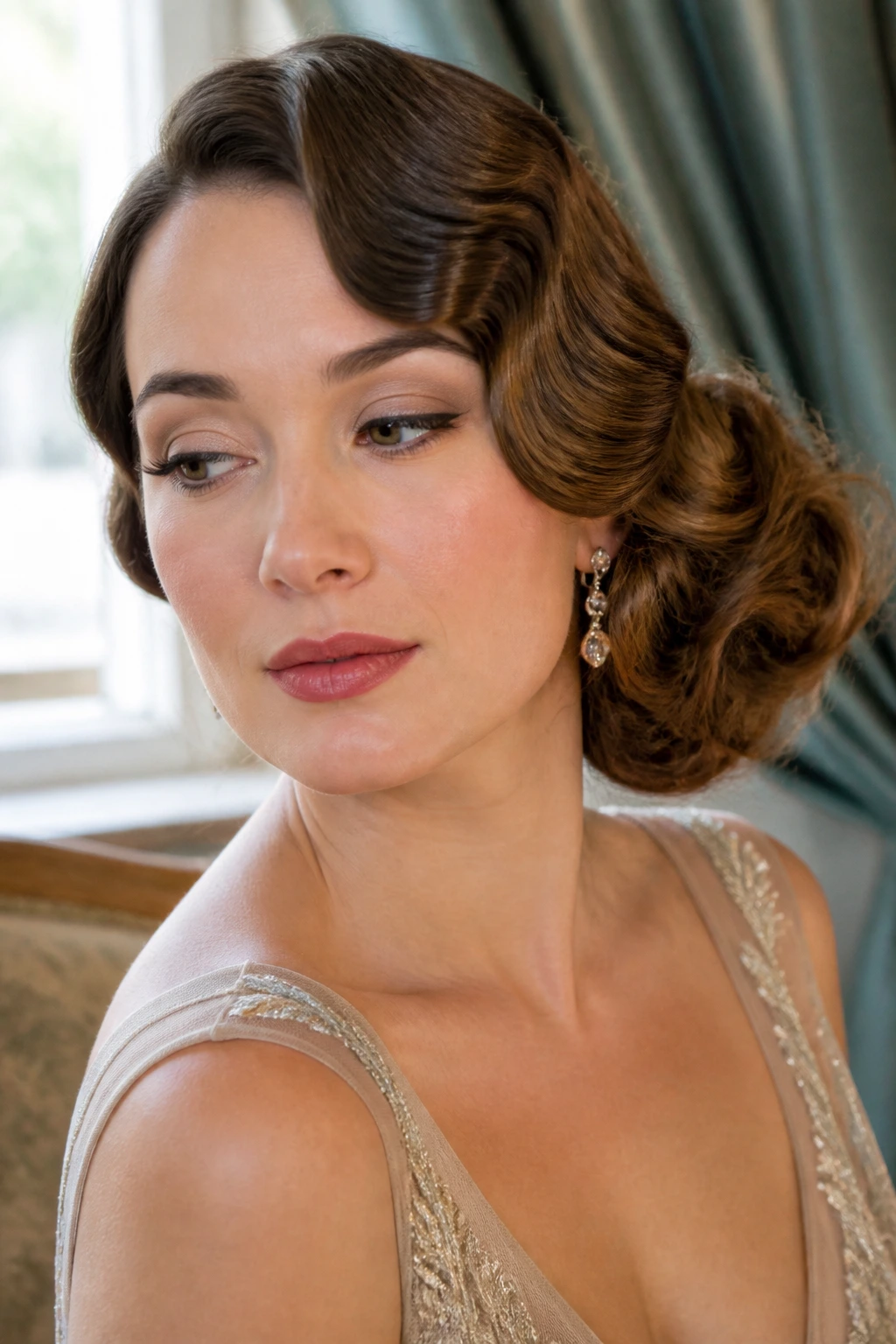
Is there a more flattering way to wear a chignon than sliding it slightly off-center and pairing it with deep waves? I don’t think so. The side placement lets the style feel softer and a little more cinematic, and the waves keep the front from going flat.
The parting should be obvious. That’s part of the charm. Sweep the front into a deep wave, pin the chignon low to one side, and leave the neckline open. This works especially well for one-shoulder dresses or anything with a strong collarbone line. If the wave is too tidy, the style loses its personality; if it’s too loose, the side chignon disappears into the hair. The middle ground is the sweet spot.
26. Rolled Bandana Updo
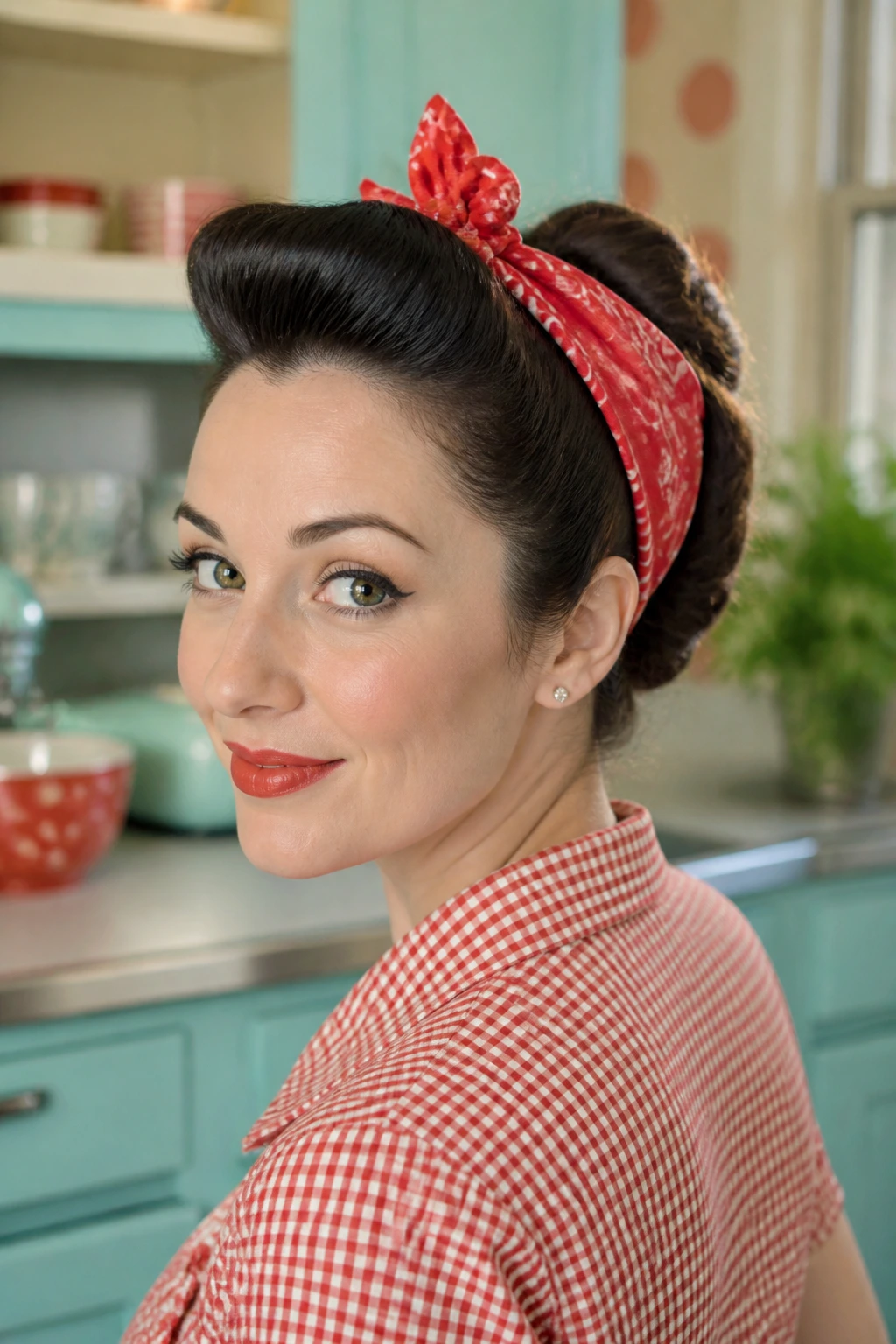
A rolled bandana updo is the friendliest retro style in the bunch. The bandana gives you color and shape, while the hair does a simple roll or tuck underneath it. It reads playful, practical, and a little pin-up without demanding a perfect set.
Use it on days when the hair refuses to behave. Smooth the front, roll or twist the lengths up, and let the bandana do part of the visual work. The knot can sit on top, under the roll, or just off to one side. If the bandana is loud, keep the hair shape clean. If the fabric is plain, let the front roll carry more of the style.
27. High Crown Bun
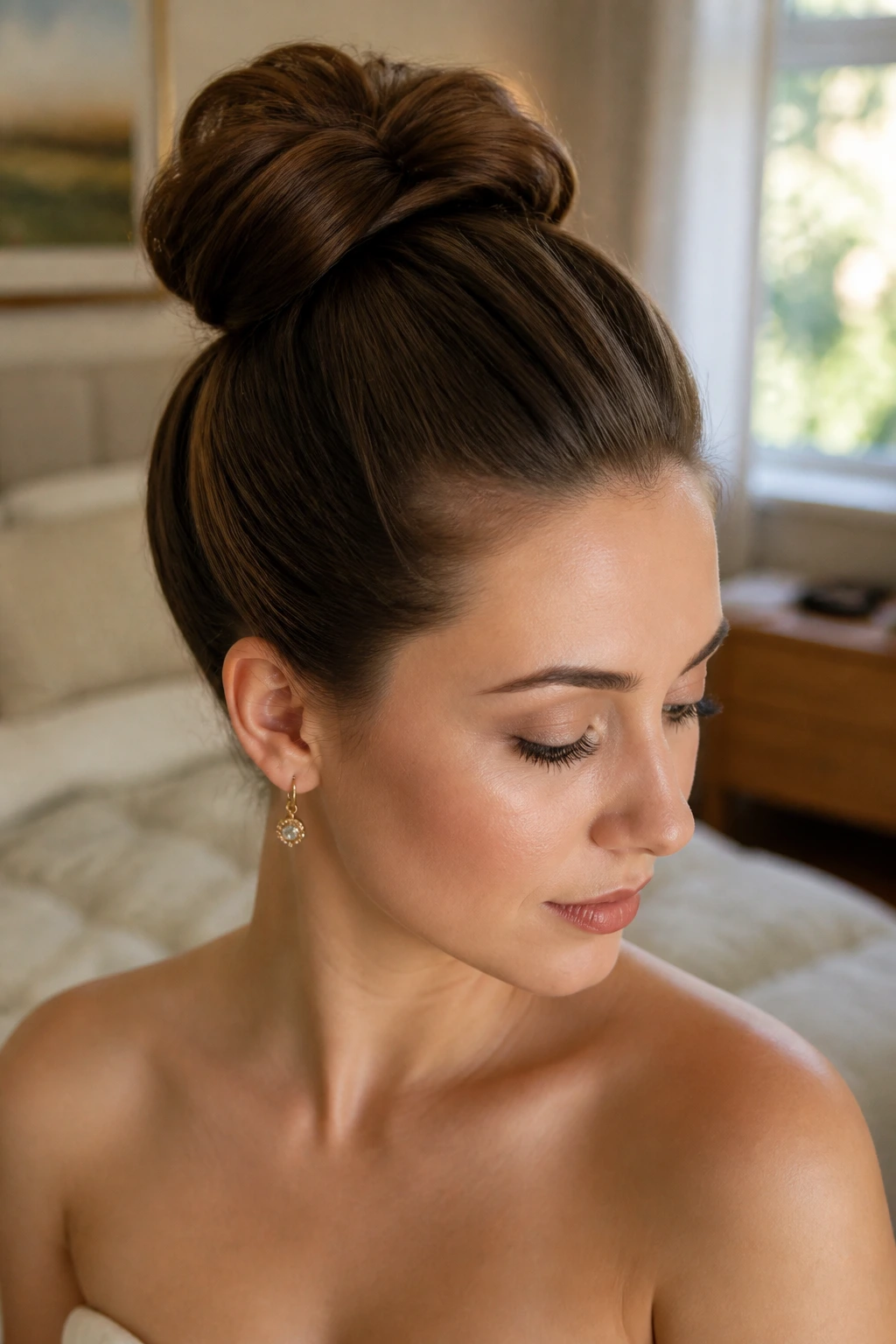
A high crown bun gives you lift without the big drama of a full beehive. The bun sits higher than a standard top knot, while the crown stays gently raised so the profile feels vintage instead of sporty. It’s useful when you want the face to open up and the neck to look longer.
I prefer this with a smooth front and a little hidden padding at the crown if the hair is fine. On thick hair, the bun can stand on its own. The danger is putting the bun too far forward, which makes it look like a gym style with a better mood. Keep it back a touch. That small shift changes everything.
28. Spiral Pin-Up Knot
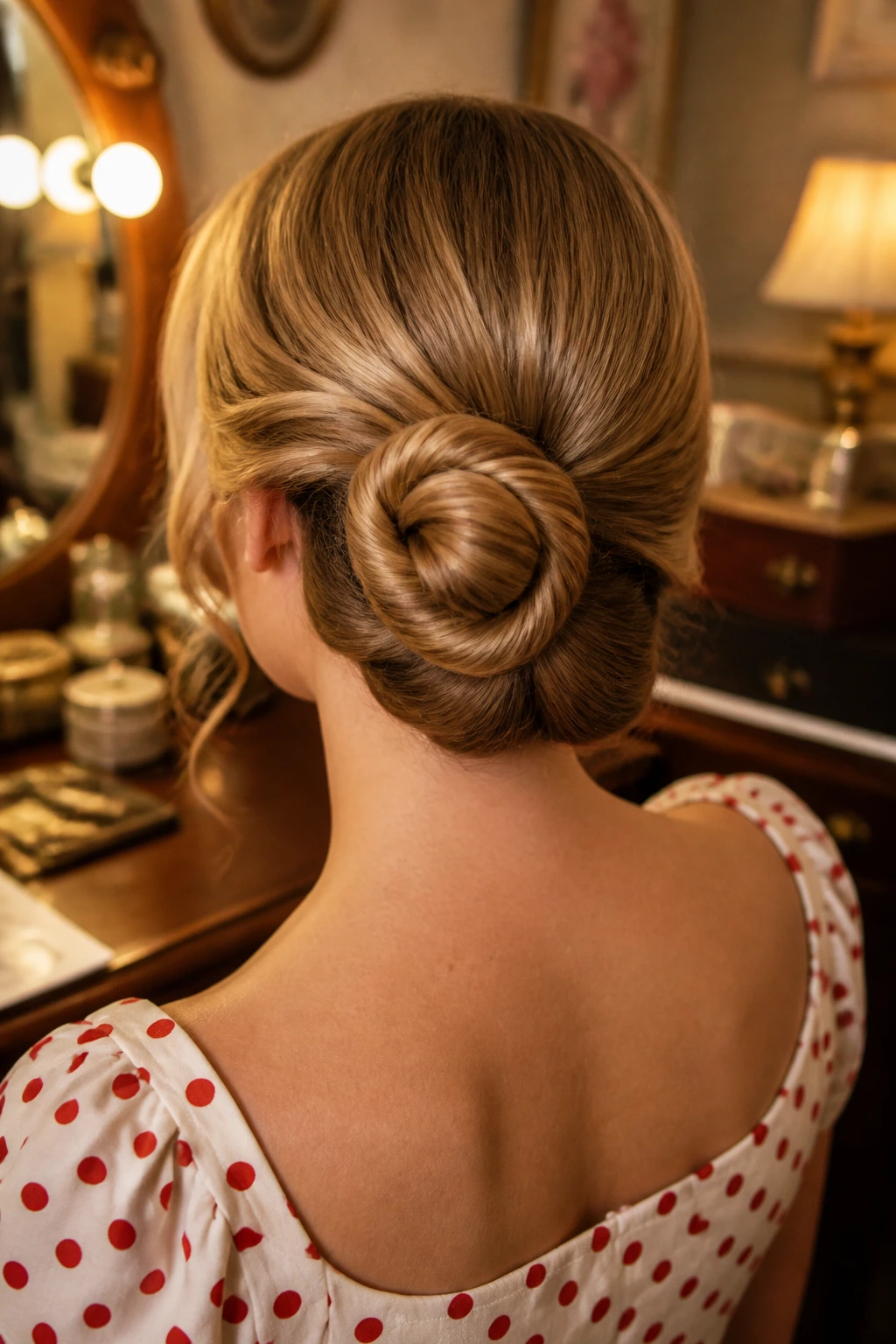
The spiral pin-up knot feels cheerful in a way some vintage styles don’t. Hair twists into a visible spiral before it tucks into a knot, so you get a little graphic detail without needing a full roll set. It’s especially good when you want the back of the hair to feel decorative.
This style likes medium to long hair, because the spiral needs length to show. Twist the section tightly, wrap it around itself, and pin the outside edge first so the coil holds. Leave the front smooth or add a tiny lift at the crown if you want more of a pin-up shape. The spiral should look deliberate. If it starts looking like a random twist, tighten the coil and pin it again.
29. Low Knot With Flip Ends
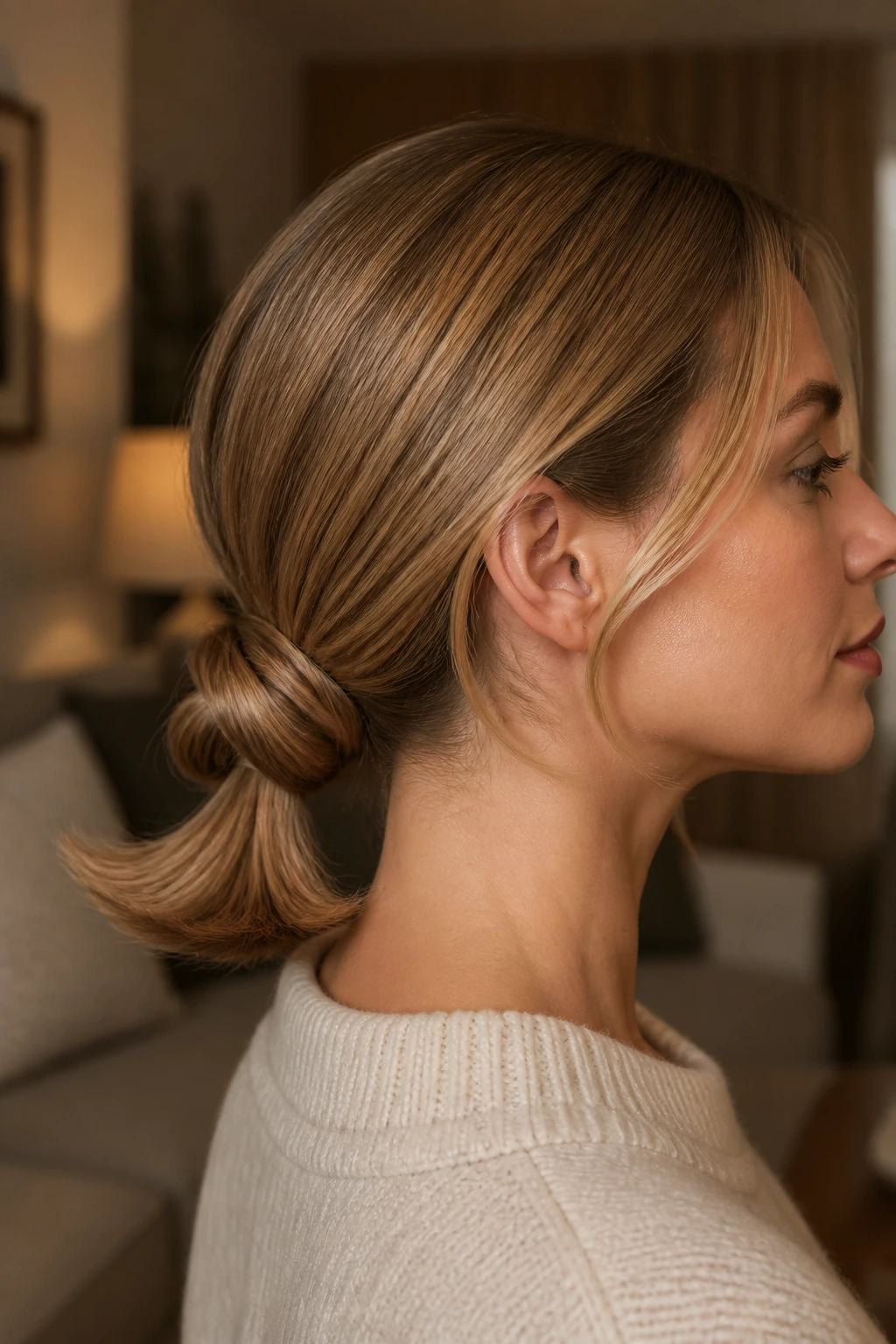
A low knot with flip ends has a sweet 1960s feeling, the kind that sits somewhere between neat and playful. The knot stays low at the nape, but the ends are tucked in a way that lets the tips flick out slightly. That tiny flip keeps the style from feeling too formal.
Best with
- Hair that holds a bend well
- A side part or soft center part
- A neckline that stays simple
The flip is the point. Curl the ends under lightly before you pin them, then let just enough of the shape show to keep the knot from looking rigid. If the ends are too straight, the style loses its charm. If they’re too curly, the knot starts to read as prom hair from the wrong decade.
30. Swept-Back Roll-and-Pin Updo
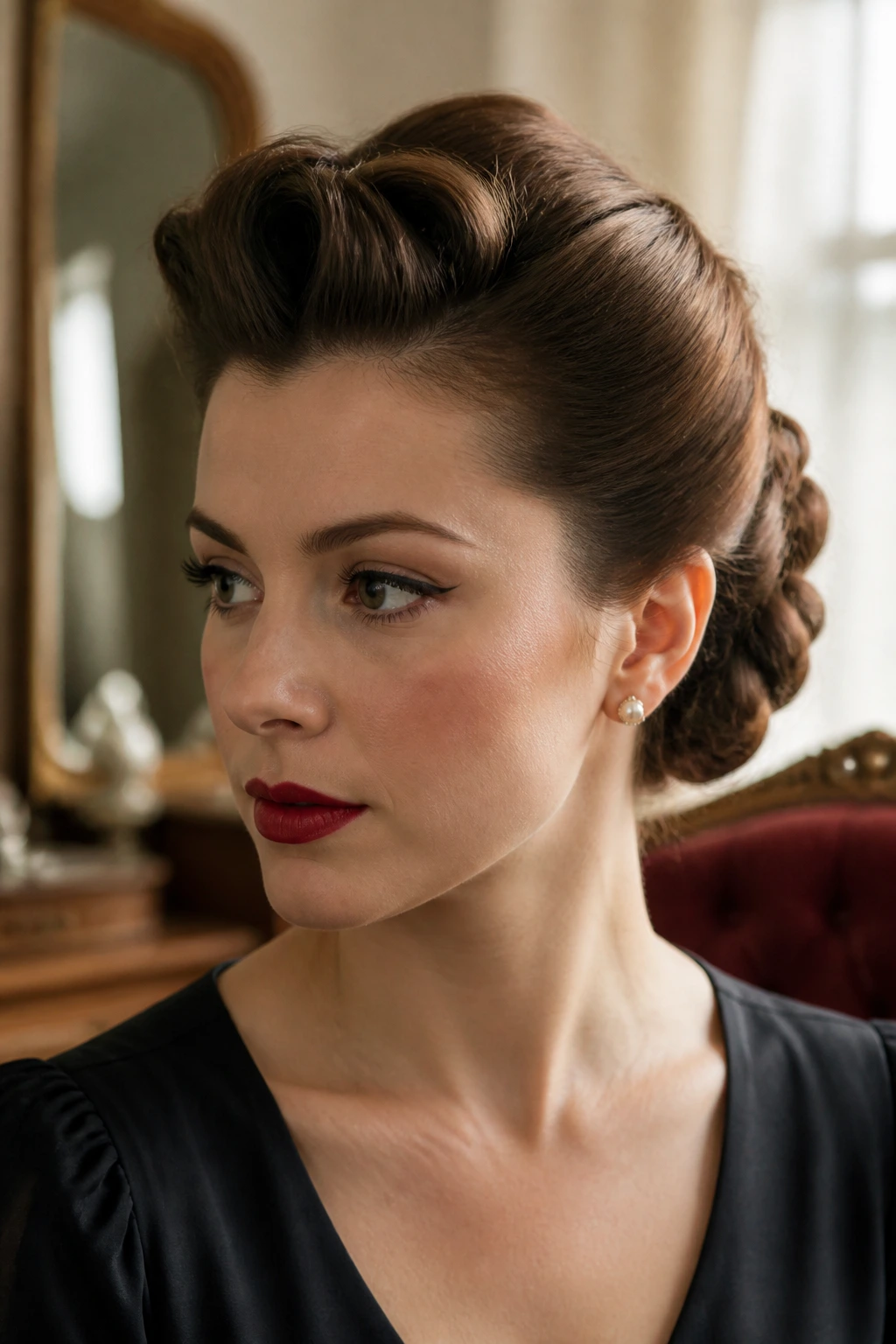
This style is a cleaner, more controlled version of a pin-up roll. The front is swept straight back, shaped into a roll or two smaller ones, and then pinned into a back section that stays compact. It has a strong face-opening effect, which makes it good for bold earrings or a dramatic neckline.
The sweep should feel smooth, not slicked into plaster. That’s a thin line, and the difference shows. Use a brush to direct the hair back, then a comb to refine the surface. The back section can be a knot, a tucked twist, or a hidden bun. What matters is that the front reads first. That’s where the vintage note lives.
31. Milkmaid Tuck Bun
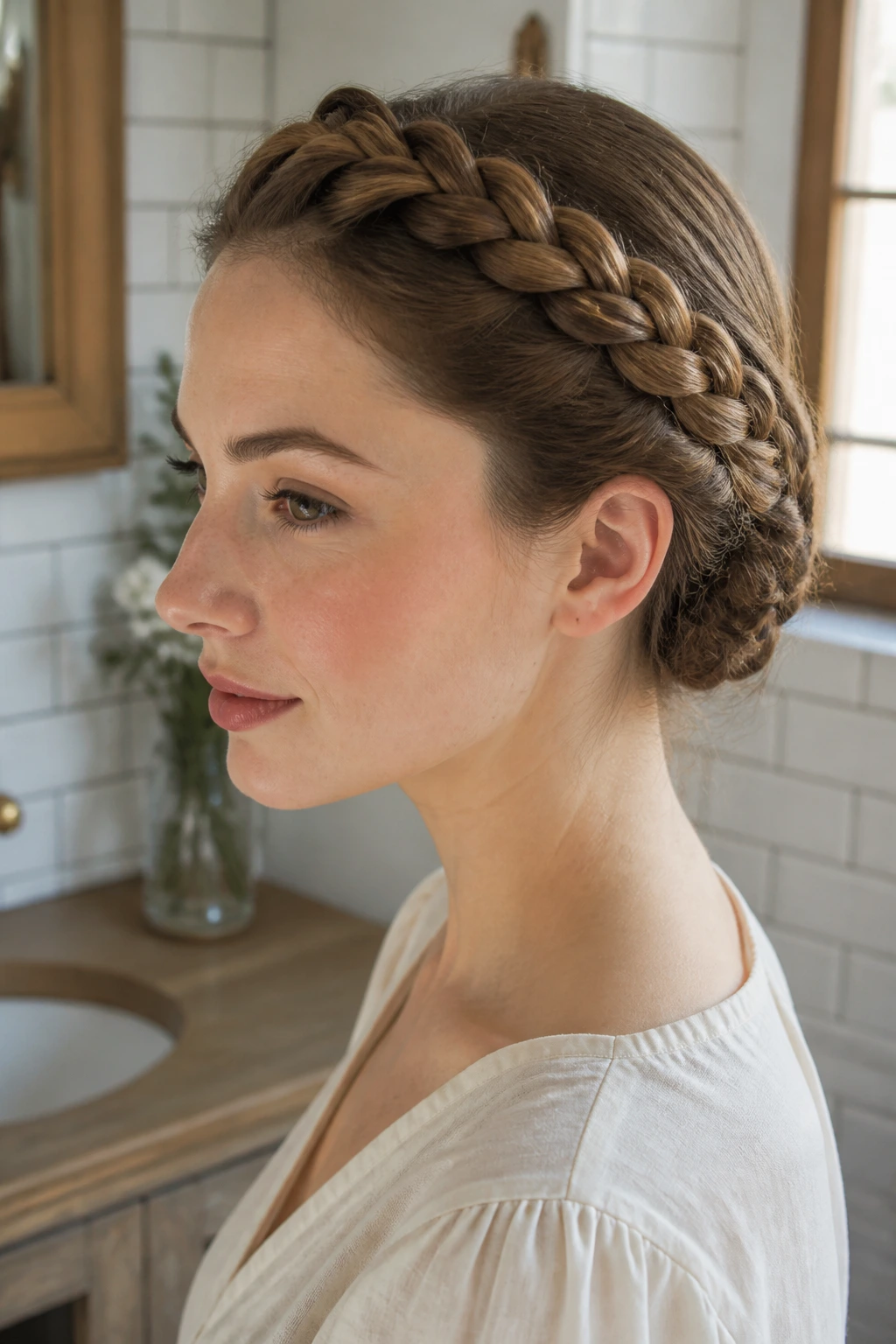
A milkmaid tuck bun borrows the crown-braid look from rustic styles and tucks it into a cleaner bun shape at the back. It feels old-fashioned in the right way — not fussy, not precious, just unmistakably styled.
This is a smart option when you want softness around the head but don’t want loose lengths hitting your neck. The braid gives the crown a shape, the tuck keeps the back contained, and the bun finishes the line. Compared with a halo braid bun, this version feels a little more compact and less sprawling. Keep the braid close to the scalp so the top does not puff out unevenly.
32. Soft Pageant Ponytail
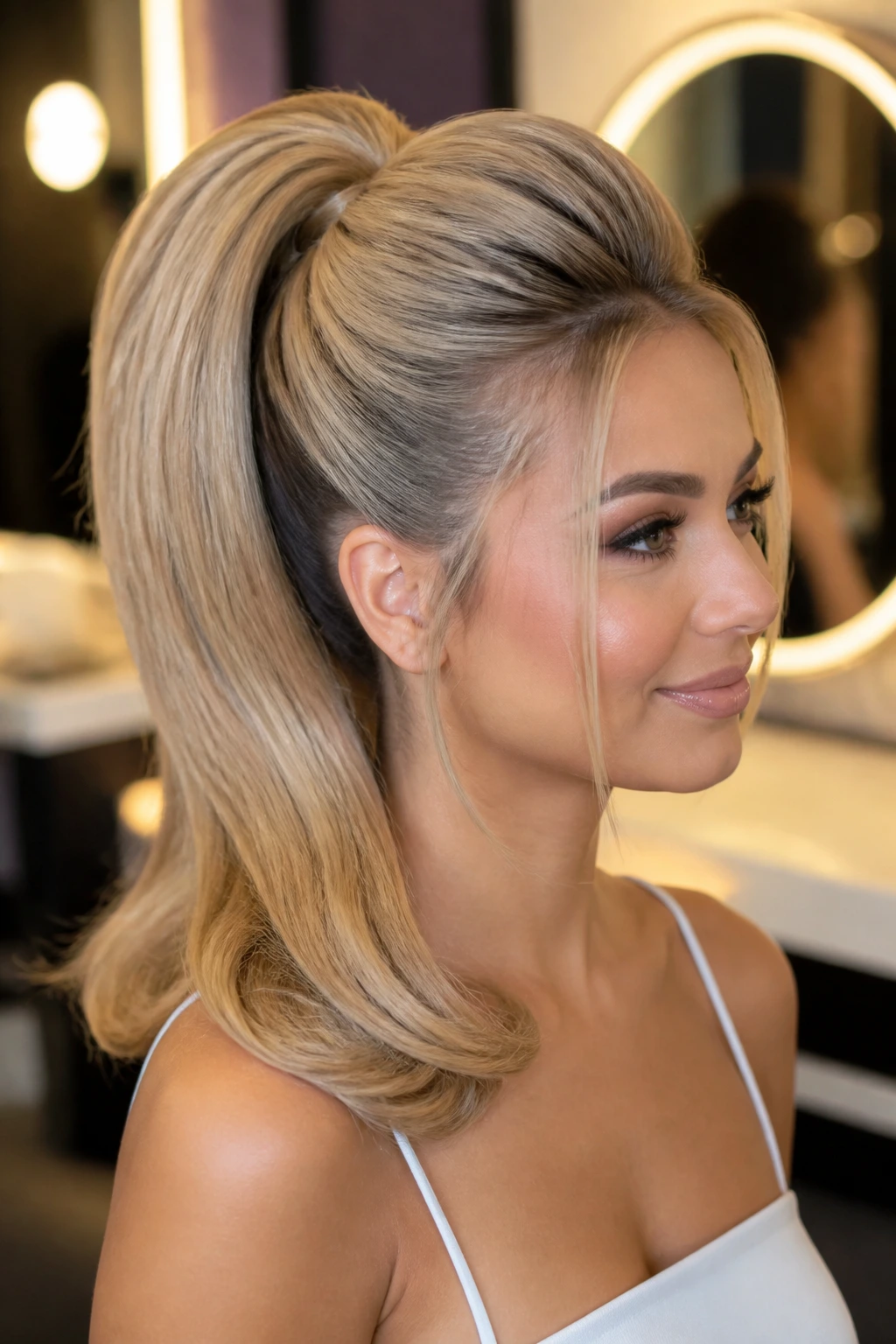
If you want vintage volume without giving up the ease of a ponytail, this is the one. The crown is lifted, the tail is glossy, and the ends are usually curled under or brushed into a soft shape. It has a pageant feel, but not the brittle kind.
The ponytail should sit high enough to be seen but not so high that it starts to look cartoonish. Tease the roots, smooth the top layer, and wrap a small piece of hair around the elastic if you want a cleaner finish. This style loves shine. A light serum on the tail is enough — too much and the pony starts sliding.
33. Retro Knot With Victory Roll Fringe
The last style in the lineup feels like a neat little summary of the whole category. A retro knot anchors the back, while a smaller victory roll or rolled fringe at the front gives the style its personality. You get polish, lift, and that unmistakable pin-up note all at once.
It’s a good closing style because it works on a wide range of lengths and does not require the front to be perfectly symmetrical. One roll can sit a little higher than the other and still look right. The knot stays clean at the base, which keeps the hair from getting bulky. If you’re deciding between this and a full victory roll set, choose this one. It’s faster, a little lighter, and easier to wear for more than an hour.
Why Vintage Updos Still Hold Their Shape
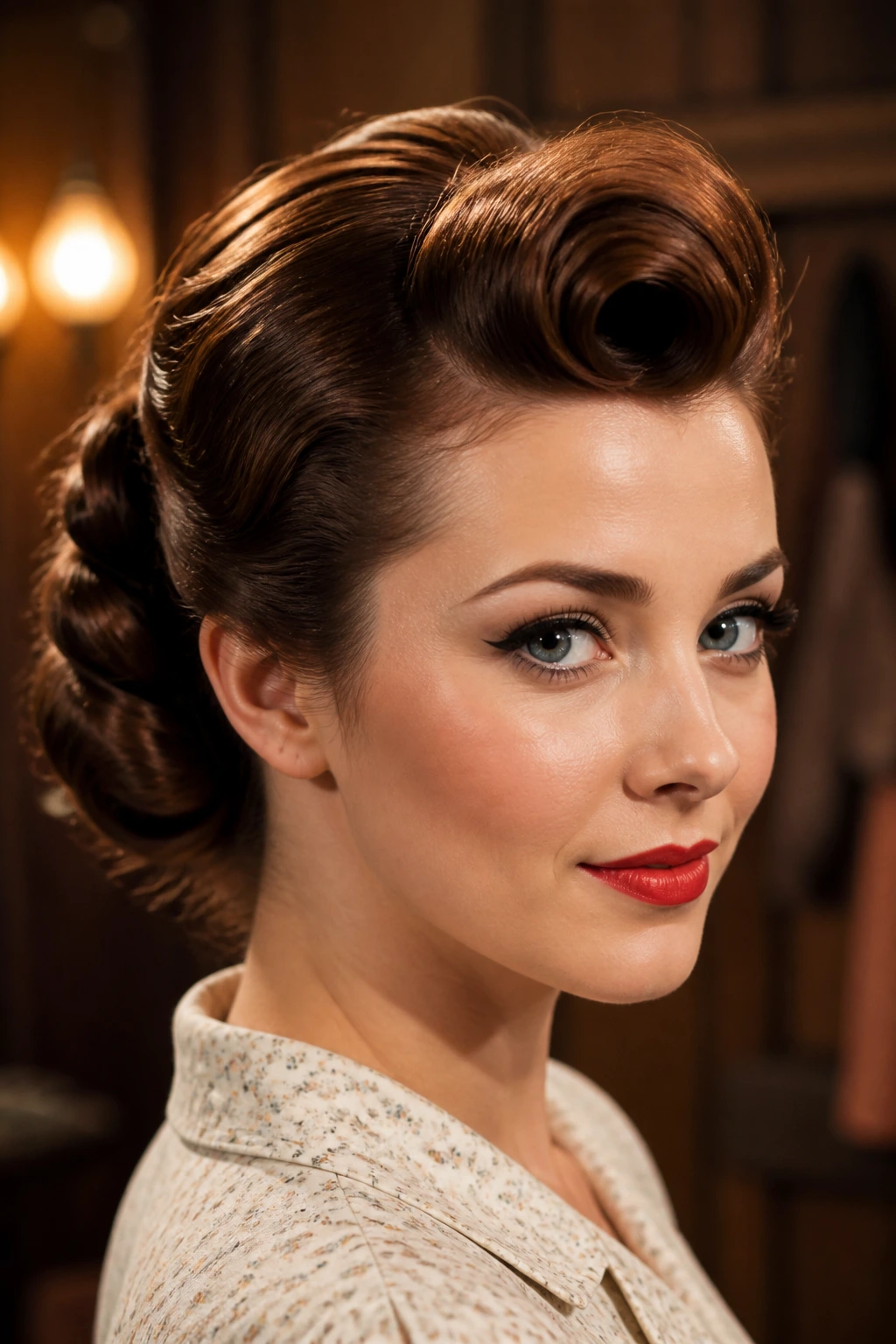
The reason these styles keep surviving has less to do with nostalgia than with good structure. Vintage updos are built around anchor points — a twist at the nape, a roll at the front, a lifted crown — and once those anchors are in place, the rest of the style has somewhere to go. Hair behaves better when it knows where it’s headed.
Built on a few strong anchors
A style that depends on one solid pin line usually outlasts one that depends on a cloud of pins scattered everywhere. That’s why a Gibson tuck or French twist can feel more reliable than a loose bun. The shape is doing the work, not the product.
Texture gives the pins something to grab
Too-clean hair is slippery. A little grit from dry shampoo, mousse, or second-day texture makes the pins bite. That is one of the reasons these styles often look better on hair that isn’t freshly washed. There’s a practical side to that old-fashioned polish.
Softness keeps the look wearable
The best vintage styles leave a small opening near the face — a wave, a curl, a side sweep, a slight lift. Without that, the shape can tip from elegant into stiff. The little loose piece is not an accident. It’s the release valve.
The Small Toolkit That Makes Retro Hair Easier
-
Rat-tail comb: This is the workhorse for clean parts, sectioning, and teasing the crown without making a mess of the rest.
-
Boar-bristle brush: It smooths the surface better than a plastic brush and helps tame flyaways before pinning.
-
Teasing brush or fine-tooth comb: Use it for crown lift, beehive height, and any style that needs a little structure at the roots.
-
1-inch curling iron or hot rollers: A smaller barrel gives the bend and curve that make rolls, waves, and curls hold their shape.
-
Bobby pins in two shades: Brown or black pins vanish into darker hair; blonde or clear-looking pins disappear better on lighter hair. Cross them if the section feels loose.
-
U-pins: These are useful for buns because they hold volume without flattening the shape the way too many bobby pins can.
-
Duckbill clips: Keep them on hand while you set waves or roll sections. They save time and help the sections cool in place.
-
Setting spray: A strong-hold spray sets the shape; a flexible one helps after the style is finished. You may want both.
-
Dry shampoo or texture powder: These create grip at the roots and stop freshly cleaned hair from slipping apart.
-
Hair padding or a small bun donut: Useful for beehives, high crowns, and fuller buns when your own hair needs extra body.
-
Silk scarf or hair net: Great for cooling curls, protecting the style while you get dressed, or keeping a finished set in place during travel.
Smart Product and Hair Prep Choices for Vintage Hair
The right prep changes everything here. Vintage updos look best when the hair has either grip, bend, or both. If the hair is freshly washed and slippery, start with mousse at the roots and blow-dry with a round brush or paddle brush depending on the finish you want. That one step does more than piling on hairspray later.
For fine hair, light texture products are your friend. A puff of dry shampoo at the roots, a little teasing at the crown, and a flexible spray usually beat heavy creams, which can make the hair collapse under its own slickness. Fine hair often needs a hidden base — a bun donut, padding, or a tiny foam shape — so the style has enough body to read vintage rather than sparse.
Thicker hair asks for control, not more product. Sectioning clips, strong pins, and a smoothing cream applied only through the top layer usually work better than saturating the whole head. Thick hair can get bulky fast, and that bulk can bury the shape you’re trying to show off. Curly hair is its own category. You can smooth it into a sleek retro style, or you can keep some texture and let the curl pattern soften the whole thing. Both work. The mistake is fighting the curl so hard that the style turns frizzy and tired before you finish pinning.
How to Wear Vintage Updos Without Dressing Like a Costume
Presentation: Pick one focal point and let it lead. A front roll, a lifted crown, or a sharply tucked bun is enough; if you push all three at once, the style can start to look crowded. Keep the rest of the hair cleaner so the eye knows where to land.
Accompaniments: Pearl studs, a single comb, a velvet ribbon, or a narrow headband usually suit these styles better than multiple competing accessories. A square neckline, a boatneck, or a simple collar gives the hair room. Heavy chandelier earrings work best when the bun sits low and the sides stay sleek.
Portions: On shoulder-length hair, choose smaller shapes — a Gibson tuck, a low rolled chignon, a compact French twist. On long hair, you can afford a fuller roll, a higher crown, or a larger bun because the extra length gives the style more mass to hold itself together. If your hair is fine, keep the shapes tight and controlled.
Beverage Pairing: A polished French twist feels at home with a coupe glass and sparkling wine, while a satin-scarf bun reads right next to iced tea, coffee, or a tall water glass at lunch. Strange label, useful mood. That’s the best way to think about it.
Extra Styling Tricks for More Shine, More Lift, and More Grip
Texture Trick: If the front wants to slip, mist the roots with texture spray, then wait thirty seconds before touching the hair again. That pause matters. The spray gets tackier, and the roll or twist holds much better.
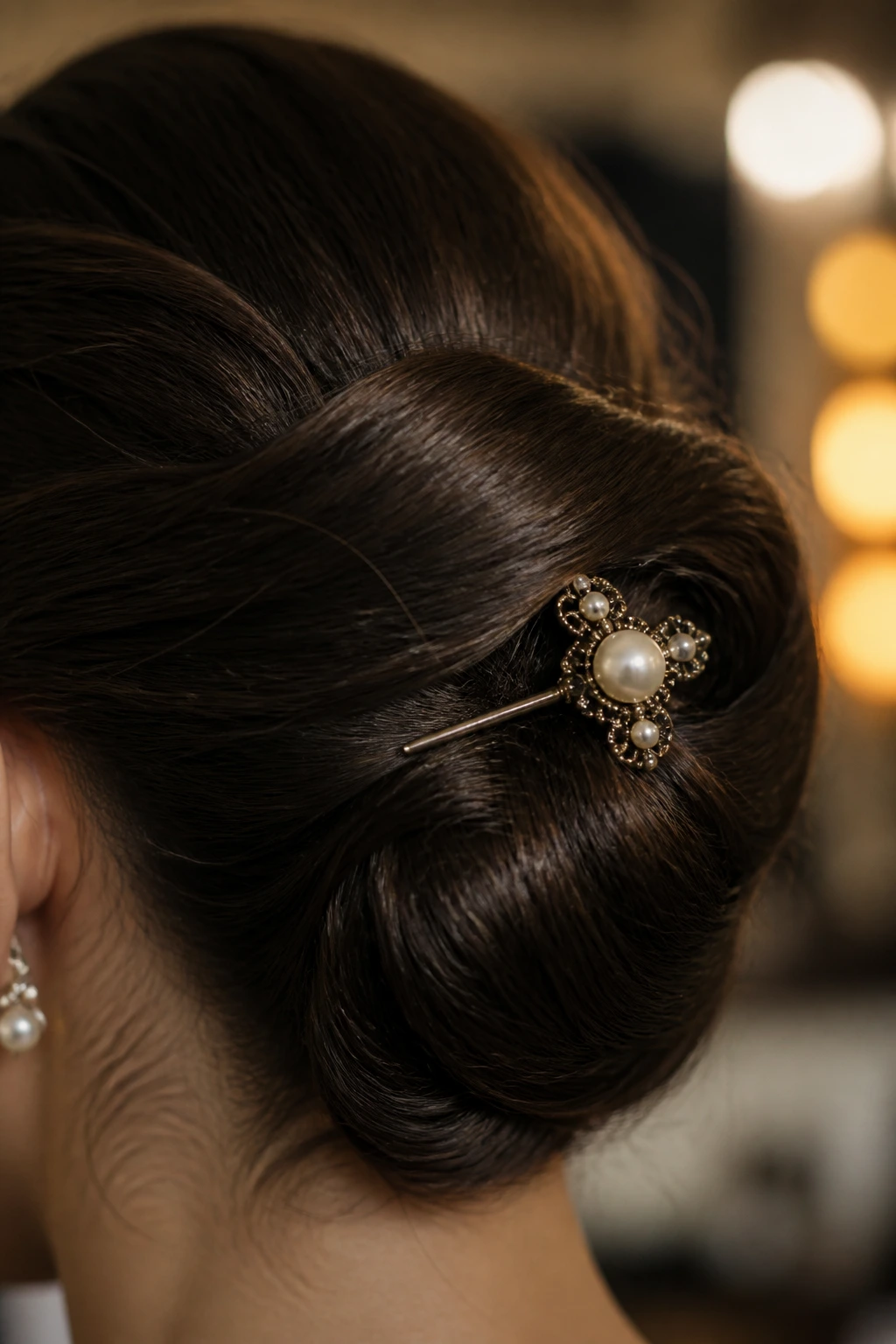
Accent Piece: One well-chosen accessory — a pearl comb, a ribbon bow, a slim barrette — can do more than a pile of decorations. Add it after the shape is set so it feels like part of the style, not an afterthought.
Finish: A toothbrush sprayed with hairspray is still one of the best tools for smoothing flyaways around the hairline. It’s cheap, tiny, and precise. Use it lightly; too much spray makes the front look crunchy.
Make-It-Yours: For curly hair, keep a few curls visible around the temples instead of forcing every strand into submission. For straight hair, a small bend at the ends gives the style more life. For short hair, clip-in padding or a faux bun piece can create the silhouette without fighting the length.
Common Mistakes That Flatten the Whole Style
-
Starting with hair that’s too clean: Silk-slick roots make pins slide. Use dry shampoo or texture powder first, especially around the crown and nape.
-
Forgetting to build an anchor: A pretty roll without a solid base will loosen fast. Pin the center or the base first, then shape the rest around it.
-
Over-spraying before the style is set: Wetting the hair down too early can make sections limp and heavy. Build the shape, then lock it in with spray.
-
Teasing every section: Too much backcombing makes the surface uneven and hard to smooth. Tease only where you need lift, then brush the top layer over it.
-
Ignoring the front line: If the hair at the hairline is flat or crooked, the whole style can look unfinished. Even a tiny side sweep or lift changes the balance.
-
Using the wrong amount of pins: Too few pins and the style falls. Too many and the shape becomes lumpy. Cross-pin only the spots that need support, and stop when the structure feels secure.
Variations for Fine, Thick, Curly, and Short Hair
Fine-Hair Lift Pack: Use texture spray at the roots, then a small bun donut or hidden padding to build body. Fine hair usually looks best in compact shapes — a Gibson tuck, a French twist, or a low chignon — because oversized buns can feel hollow.
Thick-Hair Control Set: Skip heavy creams and work in smaller sections. Thick hair often needs more pins than you expect, but it also gives you fuller rolls and better buns, so lean into the volume instead of trying to flatten it completely.
Curly-Hair Retro Softness: Decide whether you want to smooth the curl or show it. A side-swept bun with a few curls left around the face can look better than forcing a sleek finish, and the natural texture often gives the style more character.
Short-Hair Workaround: Use pin curls, mini rolls, and tucked sections rather than trying to build a giant bun. A faux bob tuck, a halo braid bun, or a small shell roll can read vintage without asking for more length than you have.
Heat-Free Roll Set: If you’d rather skip hot tools, set the hair in foam rollers or rag curls overnight, then shape the finished style the next morning. The bend is softer, but the shape still has enough structure for rolls and twists.
Make-Ahead, Overnight Setting, and Touch-Up Advice
Some vintage updos can be prepped the night before, but the smartest move is usually to build the texture ahead of time and finish the exact shape closer to the event. Curl the hair, set the bends, and let everything cool fully before you sleep. A silk scarf or satin pillowcase helps protect the set so you’re not rebuilding half the style in the morning.
If the style needs to last all day, pin the main structure first and save the final smoothing for the last few minutes before you leave. That keeps the surface from getting bent by collars, jackets, or quick changes while you’re getting dressed. For twists, rolls, and buns, a small vial of spray and six extra pins in your bag can save the entire look. A single loose section at the temple is easy to fix. A collapsing bun is not.
At the end of the day, remove pins carefully instead of yanking them out. Hair that’s been rolled and pinned wants to keep some of that shape for the next day, which is useful if you’re planning a second wear. A light brush-out or a few finger-combed waves can turn the leftovers into an easier style the next morning.
Questions People Ask About Vintage Updos
Which hair length works best for vintage updos?
Shoulder-length to long hair gives you the most options, but short hair can still do a lot with pin curls, mini rolls, and tucked ends. The trick is choosing a style that matches the length instead of forcing the length into a shape it can’t hold.
Can fine hair really hold a French twist or beehive?
Yes, if you prep it properly. Dry shampoo, a little teasing, and a hidden base like padding or a bun donut make a huge difference. Fine hair usually needs more structure at the roots and less weight from heavy products.
What if my bobby pins keep sliding out?
The hair is probably too smooth or the pins are being placed in the wrong direction. Cross them, rough up the section with texture spray, and push the pins into the anchor rather than just the surface.
Can curly hair do these styles without looking frizzy?
Absolutely. In many vintage updos, a little controlled curl looks better than a dead-smooth finish. Smooth the outer layer, then let some curl show at the face or in the bun for softness.
Do I need hot rollers to make these styles work?
No, but they help. A 1-inch curling iron, foam rollers, or even overnight set curls can create enough bend for rolls, twists, and waves. The real requirement is a shape that can hold.
How do I keep the style from looking like a costume?
Pick one era cue and stop there. A victory roll, a side part, or a clean French twist is enough on its own. Once you add every retro trick at once, the style starts to tip into theme territory.
Can I wear one of these with bangs?
Yes, and bangs can actually help. Curtain bangs soften a French twist, blunt bangs make a beehive chignon look more graphic, and side-swept bangs can blend neatly into a roll or bun.
What if the style falls apart halfway through the event?
Carry two or three pins and a travel spray. Most failures happen at the crown or the nape, so fix those first. If the front still looks good, a quick pin at the back usually brings the whole shape back together.
A Last Pin
The best vintage updos are the ones that know how to hold their own shape without looking frozen. A neat tuck, a soft roll, a lifted crown — those small structures do more than nostalgia ever could. They give the hair a line, and once the line is there, everything else gets easier.
Pick the version that suits your hair instead of the one that looks hardest in a photo. The style that lasts through a long dinner, a windy walk, or an evening spent turning your head to talk is the one worth keeping. A good roll can carry a lot, and so can a few well-placed pins.
