



Curly ponytails have a bad reputation only because people treat them like a cleanup move. Pull everything back, smooth it flat, hope for the best. That usually ends with a dent at the crown, fuzzy edges, and a tail that looks tired before the day is over.
But curly hair already has architecture built in. The trick is not to fight that shape. It’s to decide where the volume should sit, how tight the base needs to be, and whether the curl pattern should stay soft, stretched, or fully bouncy at the ends. Once you stop forcing a curly ponytail to behave like straight hair, the style starts looking cleaner, fuller, and far more intentional.
A good curly ponytail also respects the hairline. Too much tension, and the edges shout at you. Too much product, and the roots turn into a stiff shell. The sweet spot is somewhere in the middle: controlled at the base, textured through the tail, and relaxed enough to keep the curls looking like curls.
Why You’ll Love This Collection
- Low tension, high payoff: These styles keep the pull at the scalp manageable, which matters when your curls are dense, fragile, or prone to edge stress.
- The texture does the heavy lifting: Curly hair gives a ponytail shape the second it’s secured, so you don’t need flat-ironed perfection to make it look finished.
- There’s a style for every length: Half-up options, pineapple ponies, and wrapped low ponies work on hair that isn’t waist-length.
- Day-one and day-three curls both fit in: Some of these styles look better with fresh definition; others are built for frizz, stretch, and second-day volume.
- The mood shifts fast: You can go from sporty to polished, from soft to sculpted, just by changing the height, part, or base detail.
1. High Puff with Crown Lift
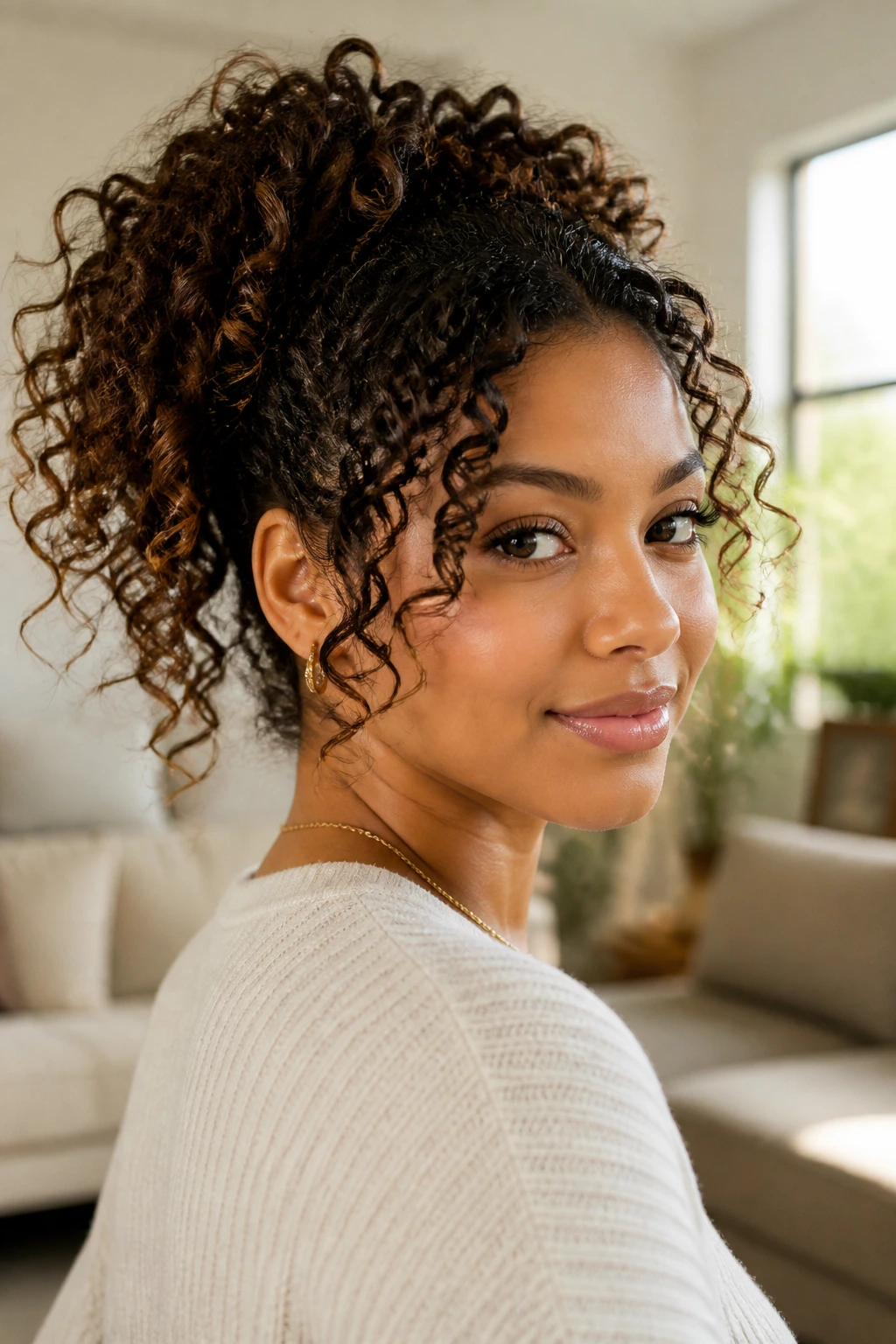
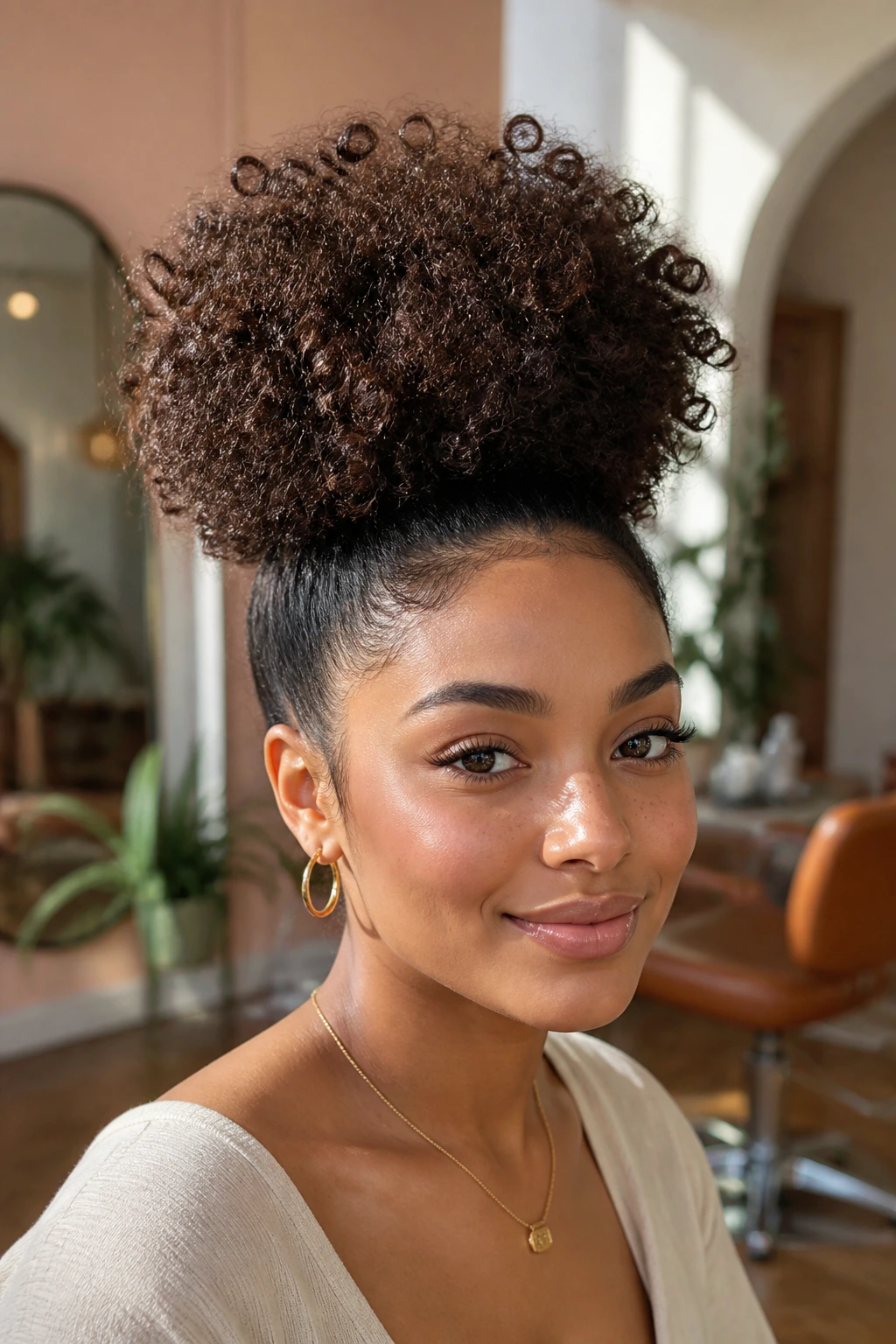
A high puff is what happens when you let curly hair be the point instead of the problem. The base sits high enough to open the face, and the tail fans out with that full, round shape that straight hair has to fake with teasing and spray. It looks especially good when the crown has a little lift, not when it’s crushed flat.
Smooth only the first inch or two at the hairline with a soft brush and a small amount of gel. Leave the rest of the curls alone. That contrast—sleek root, airy puff—is the whole style.
If your hair is dense, anchor the puff with a satin scrunchie or two slim elastics crossed together. A thin elastic alone tends to disappear into the volume and then give up by mid-afternoon. This one survives because the curl mass is doing the visual work.
2. Sleek Low Ponytail with Defined Ends
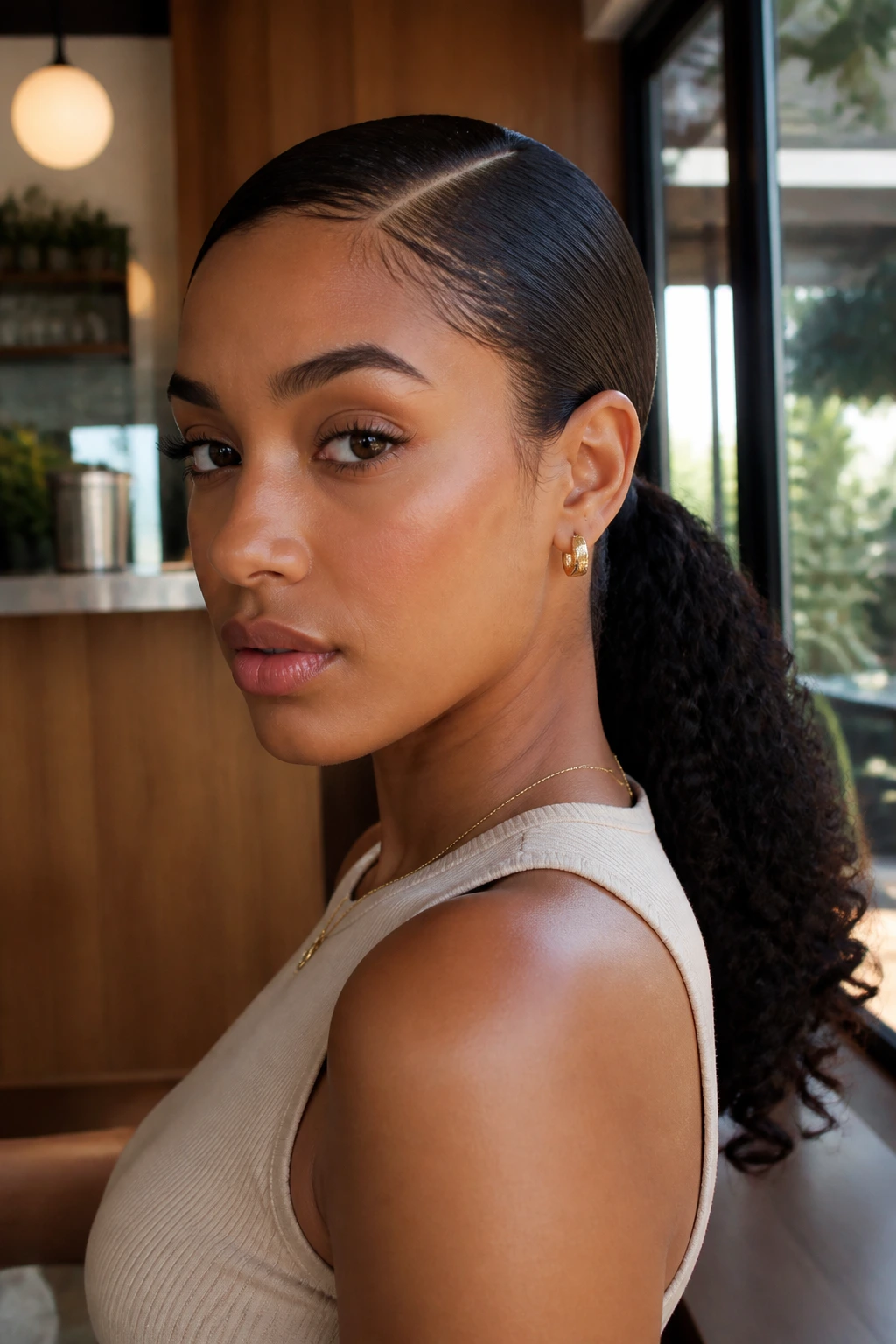
This is the ponytail that looks clean without trying to erase your texture. The top and sides are smoothed back low at the nape, but the tail stays curly and defined, which keeps the style from looking stiff or overworked. It’s a sharp look, not a frozen one.
A deep side part makes it even better, especially if your curls naturally fall heavy on one side. Use a brush only on the root area, then stop. Once you start dragging the brush through the whole length, the tail loses its shape and the style turns fuzzy at the wrong places.
A little curl cream on the ends goes a long way. If the tail is dry or halo-frizzy, finger-coil the last few inches instead of dousing everything in product. That keeps the finish soft instead of crunchy.
3. Bubble Ponytail That Fills Itself
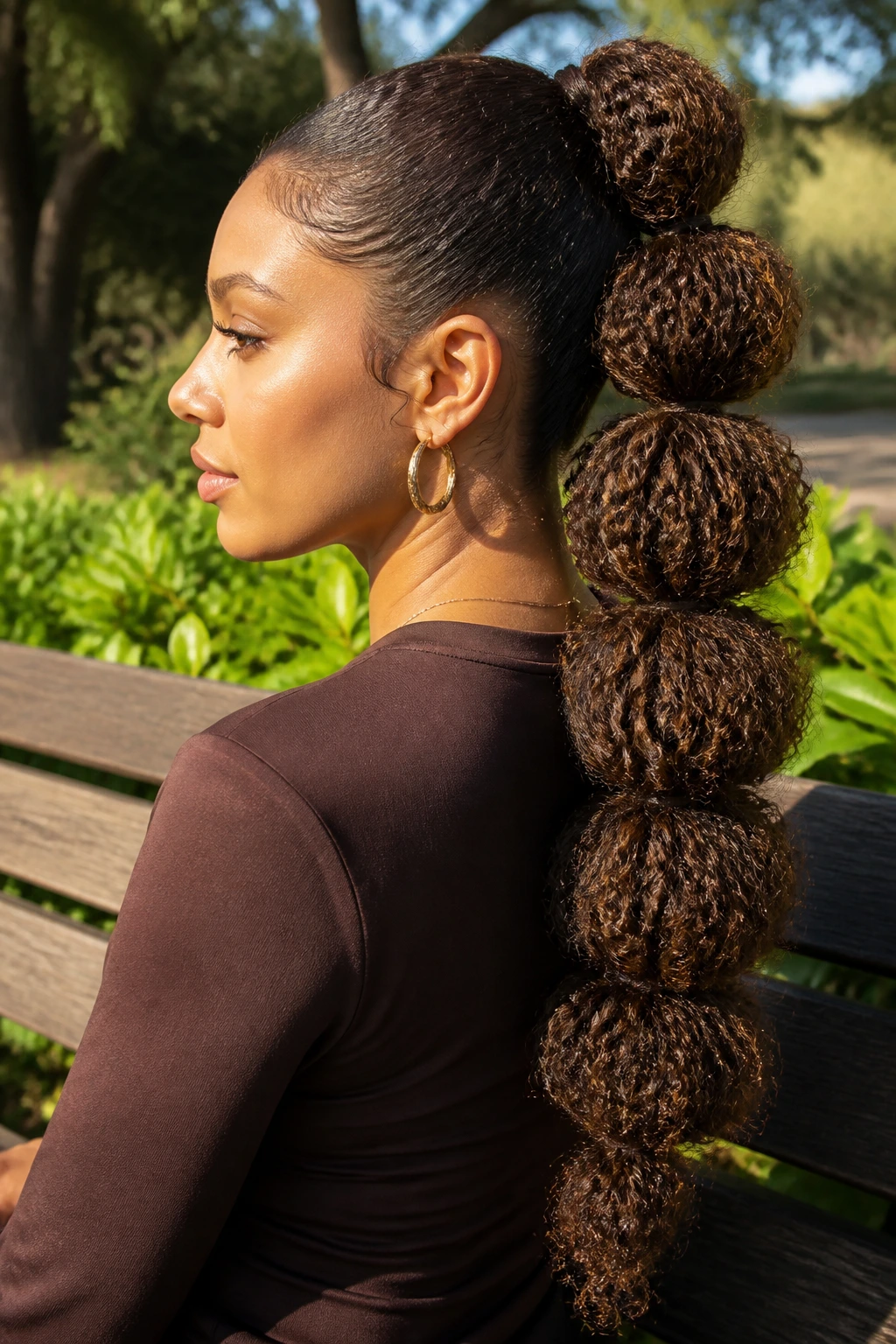
Bubble ponytails look playful on straight hair. On curly hair, they look almost unfairly full. The texture fills each section on its own, so the “bubbles” read as rounded and plush instead of sparse and flat.
Why It Works on Curls
Use small elastics every 2 to 3 inches down the tail. Then gently pull each section outward with your fingers until it puffs into a clean oval shape. Don’t overdo it. Curly hair already carries volume, and too much tugging can make the sections look uneven instead of structured.
This style works best when the base is secured tightly enough to hold the sections but not so tight that the first bubble gets squashed. A satin scrunchie at the top and clear elastics down the tail usually do the job.
Best for: long curls, stretched coils, and anyone who wants a ponytail that looks more styled than casual.
Tiny detail that matters: keep the spacing between elastics even, or the bubbles start looking lopsided.
4. Deep Side-Part Ponytail
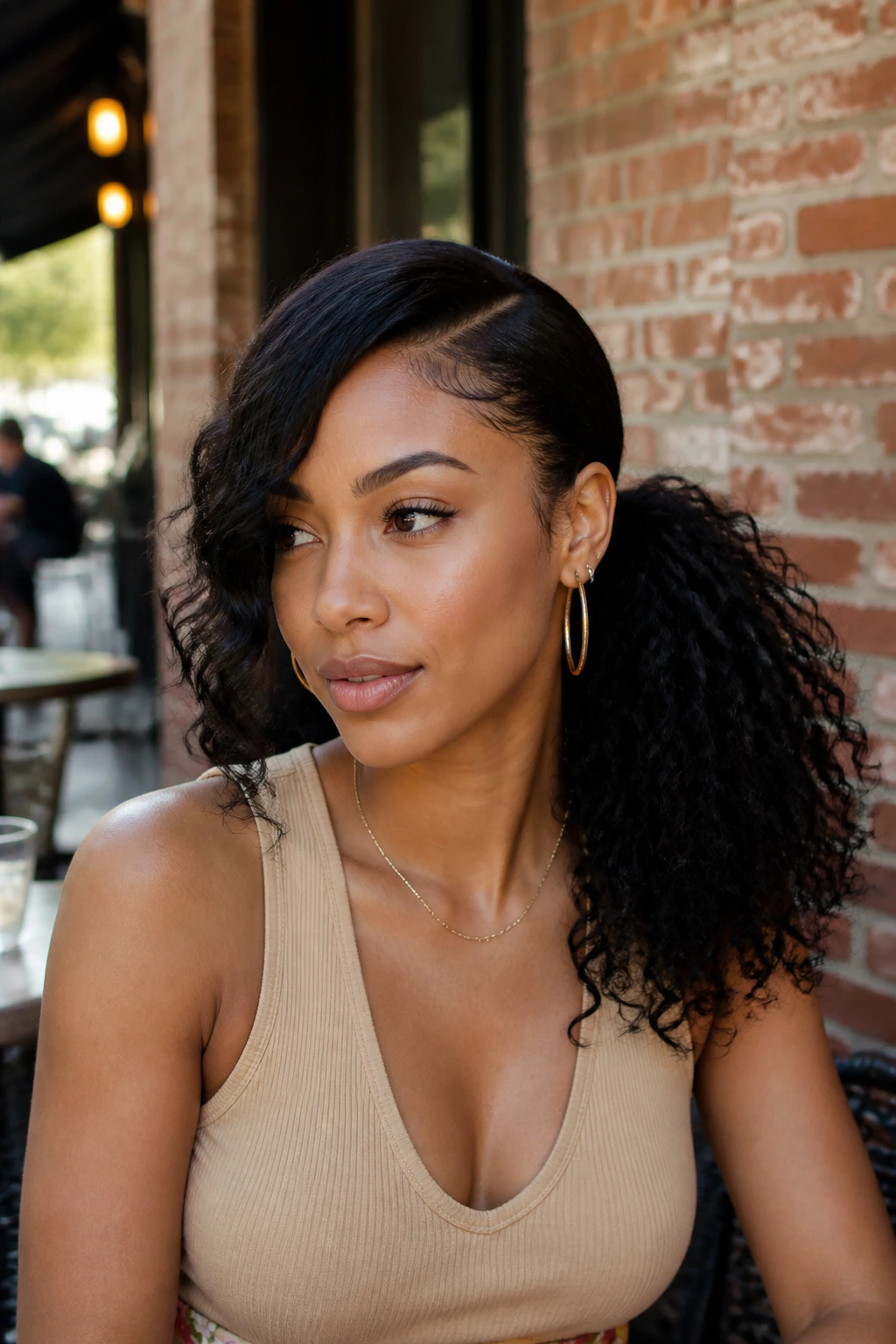
A deep side part changes the whole mood in seconds. Pull the ponytail low and off-center, let the front sweep across one side, and suddenly the style looks softer and more deliberate. It’s a small shift, but the silhouette changes a lot.
This ponytail works especially well on thick curls because the weight sits to one side instead of pulling straight down the back. That makes the profile look richer, not bulky. If your hair tends to swell at the crown, this is one of the easiest ways to make that volume look purposeful.
Keep the part clean and the first section smooth. Then leave the tail itself loose and defined. You want contrast. Not everything needs to be polished to the same degree.
5. Half-Up Curly Ponytail
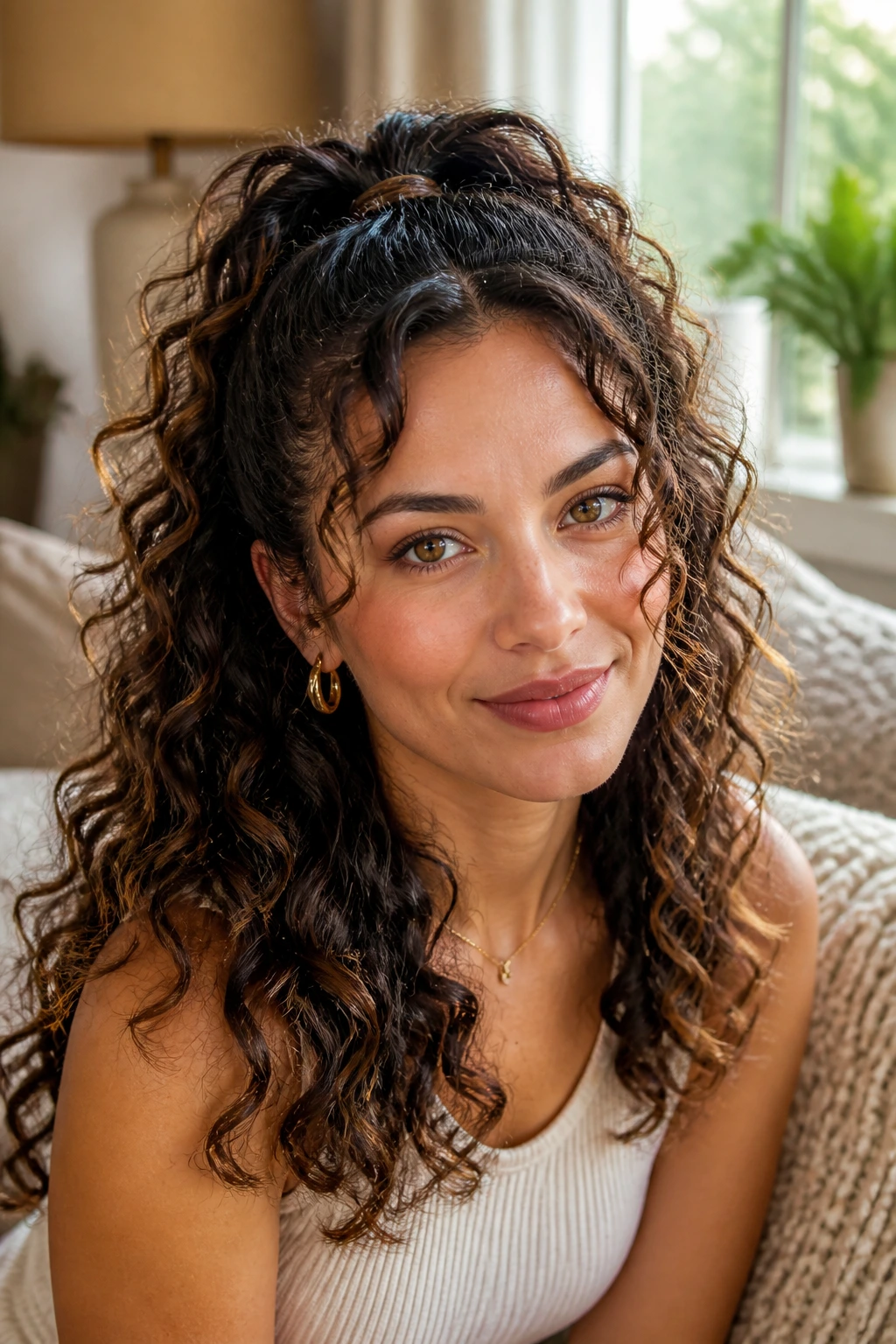
A half-up ponytail is the middle ground for days when you want your curls visible but your face a little freer. The top section gets gathered and lifted, while the bottom length stays loose, which gives you movement without losing the shape of your cut.
The best version of this style doesn’t start too far back. If you pull the top half from ear to ear, the ponytail often sits too low and the crown looks flat. Start closer to the temples or upper corners of the head if you want a lift that reads on camera and in person.
This is a good style for layered cuts, because the loose bottom section shows off the curl pattern while the top gives the whole look some order. It’s also one of the few ponytails that can survive a windy day without falling apart immediately.
6. Pineapple Ponytail for Second-Day Curls
Why does this style show up in curl routines so often? Because it works as both a hairstyle and a reset. The pineapple ponytail sits high, loose, and a little forward, which keeps the curl ends from getting crushed while still giving you a styled shape.
Use a soft scrunchie and don’t drag the hair back too tightly. The pony should sit high enough that the curls fan around it, almost like a crown. If you’re starting from day-two or day-three hair, this style makes the existing volume look like a choice.
It’s one of the fastest options in the whole group. Five minutes, maybe less. And on mornings when the roots are flat but the lengths still have life, it’s a far better move than trying to rewash the entire head.
7. Braided-Base Ponytail
A braided base gives a ponytail a built-in frame. You can braid just the front section into the base, or run two small braids back from the temples and let them meet at the elastic. Either way, the result is cleaner at the scalp and more interesting from the side.
Best When You Want the Base to Stay Put
This style is especially useful if your curls slip out of ponytails by lunch. The braid adds grip, which means the base has something to hold onto besides hair and hope. That matters on smoother curl patterns and on hair that’s been freshly conditioned.
Keep the braid close enough to the scalp to control flyaways, but not so tight that it digs in. A little softness around the crown keeps the whole style from looking severe.
8. Wrapped-Elastic Low Ponytail
This is the minimalist ponytail that still looks finished. You gather the hair low, then wrap a small section around the elastic so the base disappears into the style. On curly hair, that little wrap makes the whole look feel cleaner because the base no longer breaks the silhouette.
Use a bobby pin tucked under the tail of the wrap section to keep it from unraveling. It’s a small detail, but it saves you from repeatedly adjusting the same strand every ten minutes.
This style works well with medium and long curls, especially if you want something low-key for work or dinner. The wrap can be slick and neat, or left a touch loose if you want more softness around the nape.
9. Face-Framing Curly Ponytail
Leaving out a few front curls changes the tone immediately. The ponytail still does the heavy lifting, but those face-framing pieces soften the edges and keep the style from feeling too pulled back. It’s a smart move if your curls are springy and you want movement near the cheeks.
The trick is to leave out just enough. Two or three pieces per side is usually plenty. Any more and the style starts looking accidental instead of designed.
If the front pieces need help behaving, define them separately before you gather the rest of the hair. A little curl cream or gel on damp strands will keep them from splitting apart and turning into fuzz by the time you leave the house.
10. Twisted Crown Ponytail
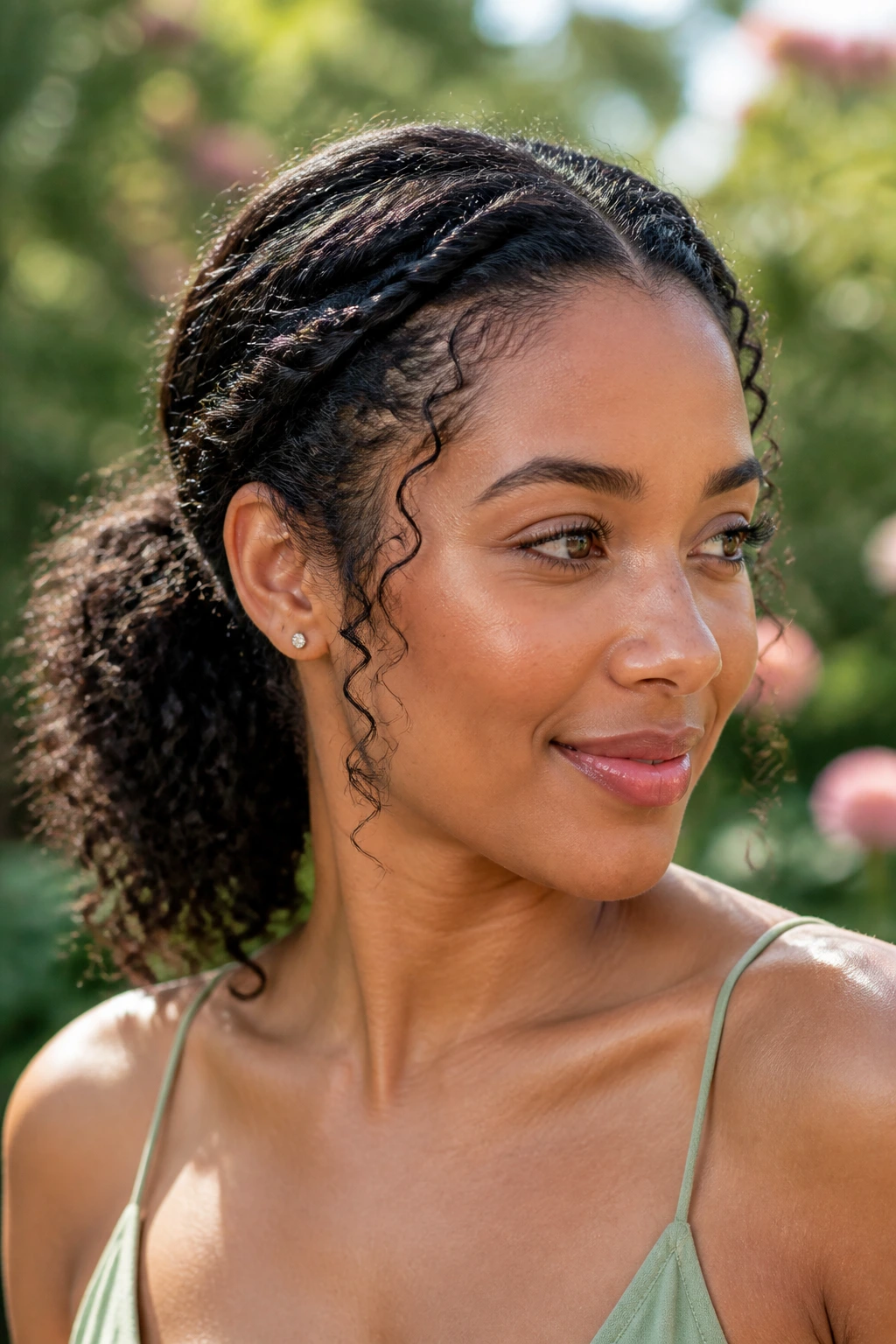
A twisted crown ponytail gives you structure without going full braid. You twist sections from each temple or just above the ears, then pin them back into a low or mid ponytail. It looks polished, but it doesn’t take the same level of precision as a full braided updo.
This style is especially good when you want the front of your hair controlled and the back free. The twist acts like a frame. The ponytail acts like the payoff.
Keep the twists close to the scalp so they don’t puff away from the head. If you’re working with coily or very dense curls, two smaller twists usually hold better than one wide one, because they stay flatter and pin more securely.
11. Double-Texture Ponytail
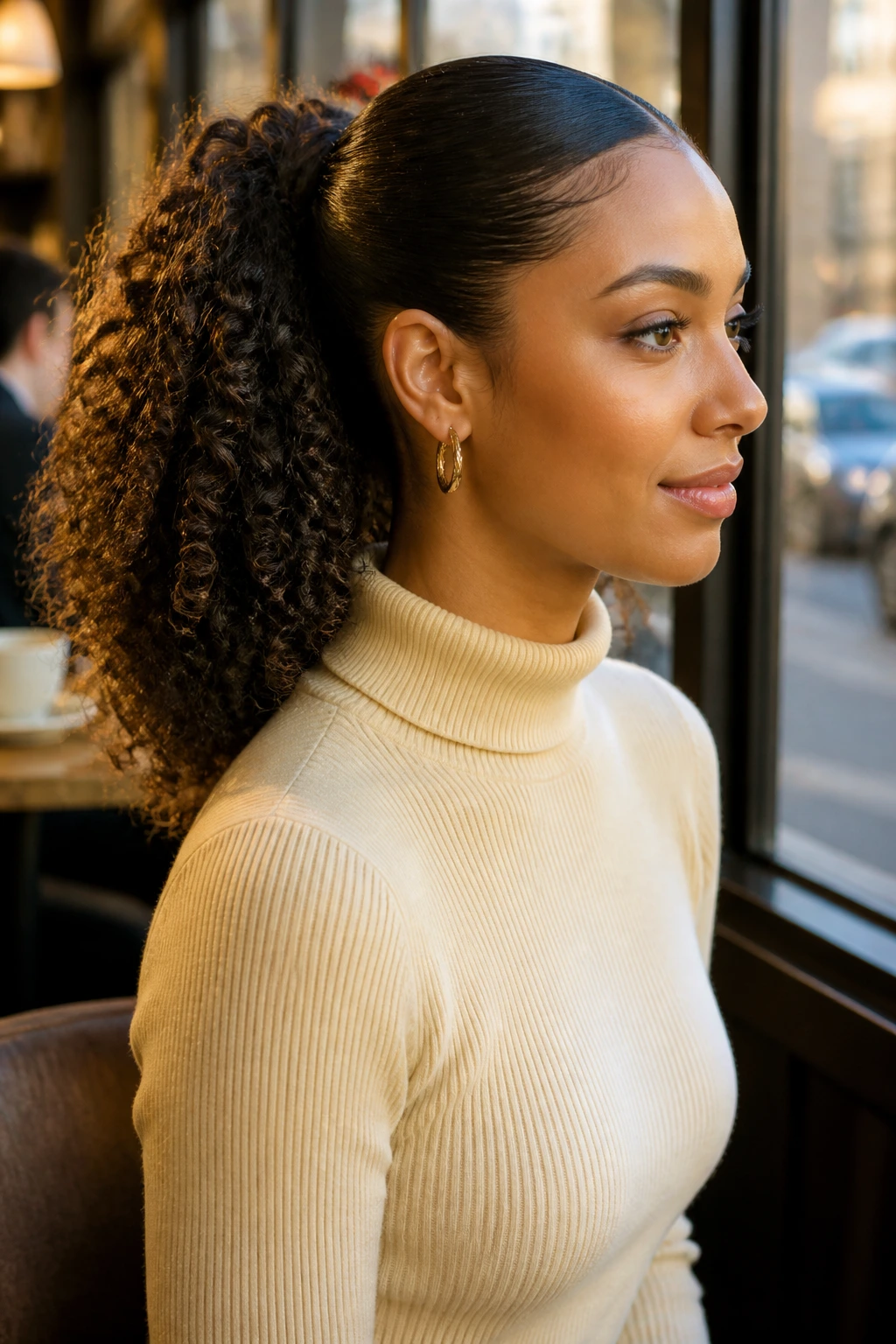
Some ponytails look better when the roots and tail do different jobs. A double-texture ponytail keeps the crown smooth and controlled, then leaves the tail full, springy, and curly. That contrast is the whole point.
This style is useful when your hair has a lot of bulk up top but you want the ends to stay visible. A brush or soft bristle tool at the root, then finger styling at the tail, usually gives the cleanest result. Don’t overblend the two zones. The difference between them is what makes the style interesting.
It’s a good option when you want a more formal look without sacrificing curl identity. Clean root, real texture. Easy formula.
12. Low Nape Ponytail with Scarf
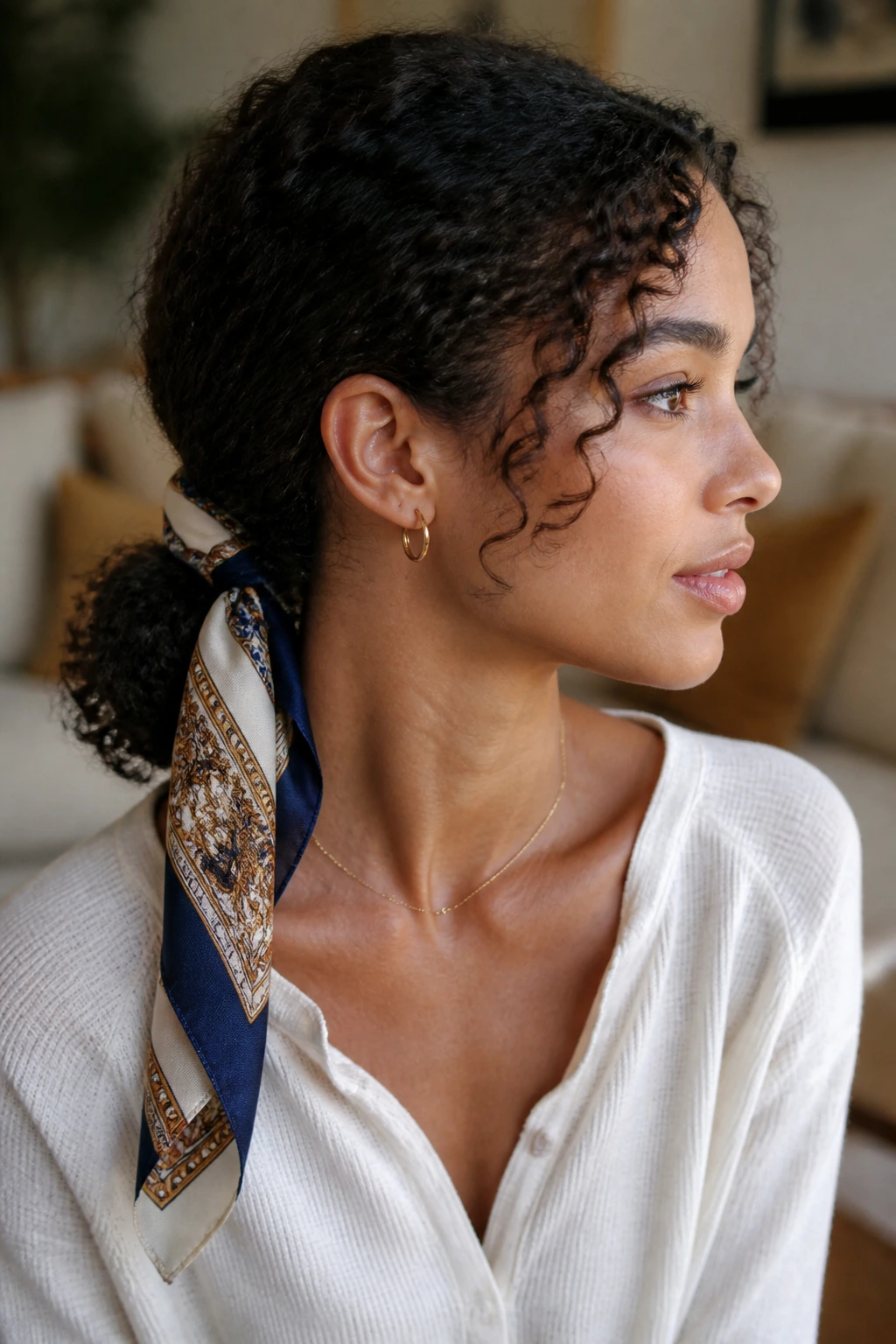
A scarf at the base changes a plain ponytail into something with real presence. Tie the hair low at the nape, then knot a silk or satin scarf around the elastic. The tail of the scarf can hang to one side, sit in a bow, or tuck under if you want less drama.
This style is kind to edges because the scarf spreads tension more gently than a thin elastic does. It also works well in humid weather, when the root area needs a little help staying smooth.
Choose a scarf that’s narrow enough not to swallow the ponytail. A giant square can overwhelm shorter or finer curls. A slimmer strip tends to sit better and keeps the hair itself visible.
13. High Ponytail with Curly Bangs
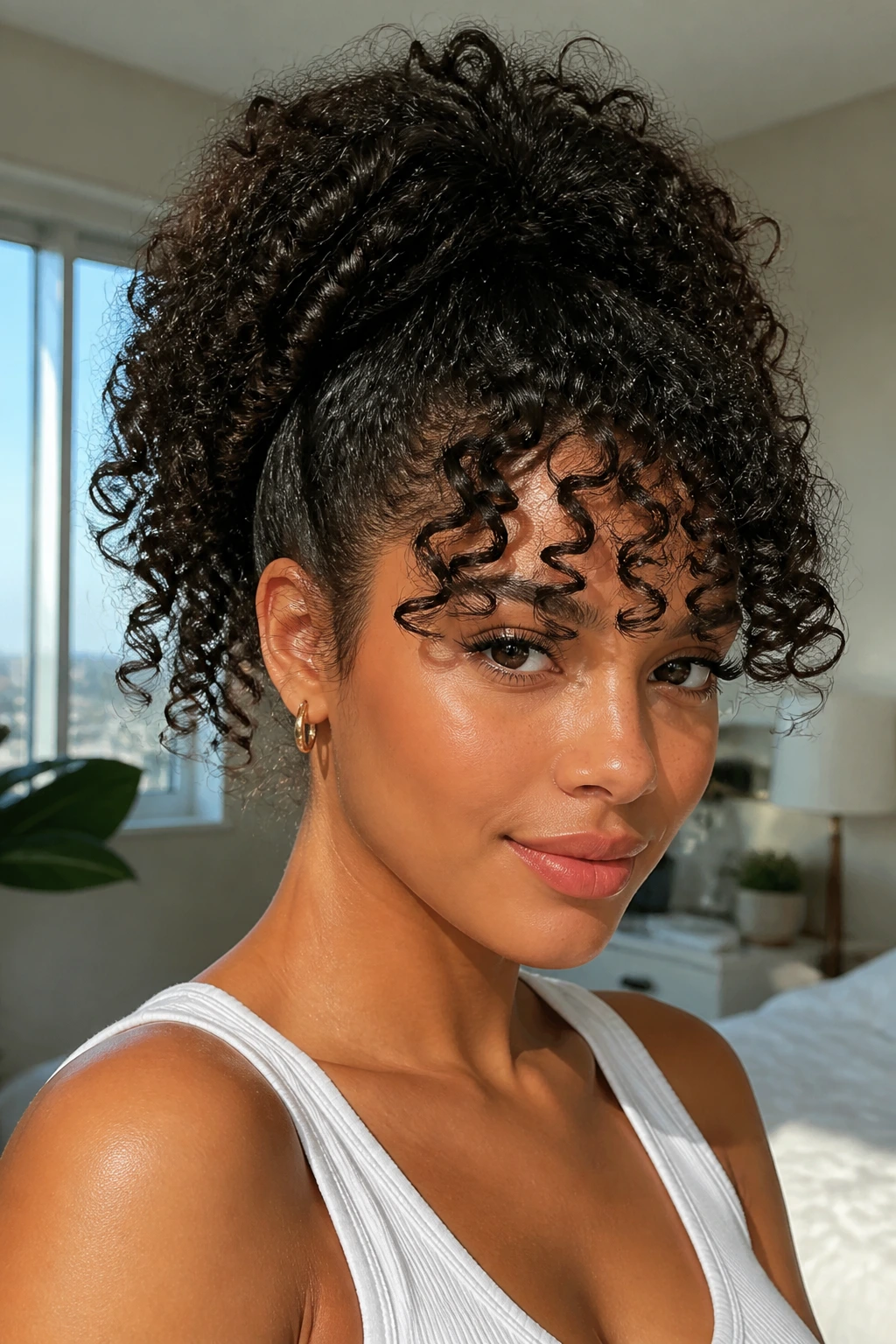
A high ponytail plus curly bangs is one of those combinations that makes the face look alive. The pony lifts everything upward, and the bangs or front curl section soften the top edge so the style doesn’t feel severe. It’s a strong shape, but it still reads warm.
If you don’t have true bangs, leave a thicker front section out and shape it with your fingers before pinning or gathering the rest. The goal is not perfect symmetry. It’s a front frame that looks like it belongs with your curl pattern.
This one works best when the crown has a little height and the bangs have definition. If both areas go flat, the style loses its shape fast. A quick diffuse or root lift helps more than extra gel.
14. Gym-Proof Curly Ponytail
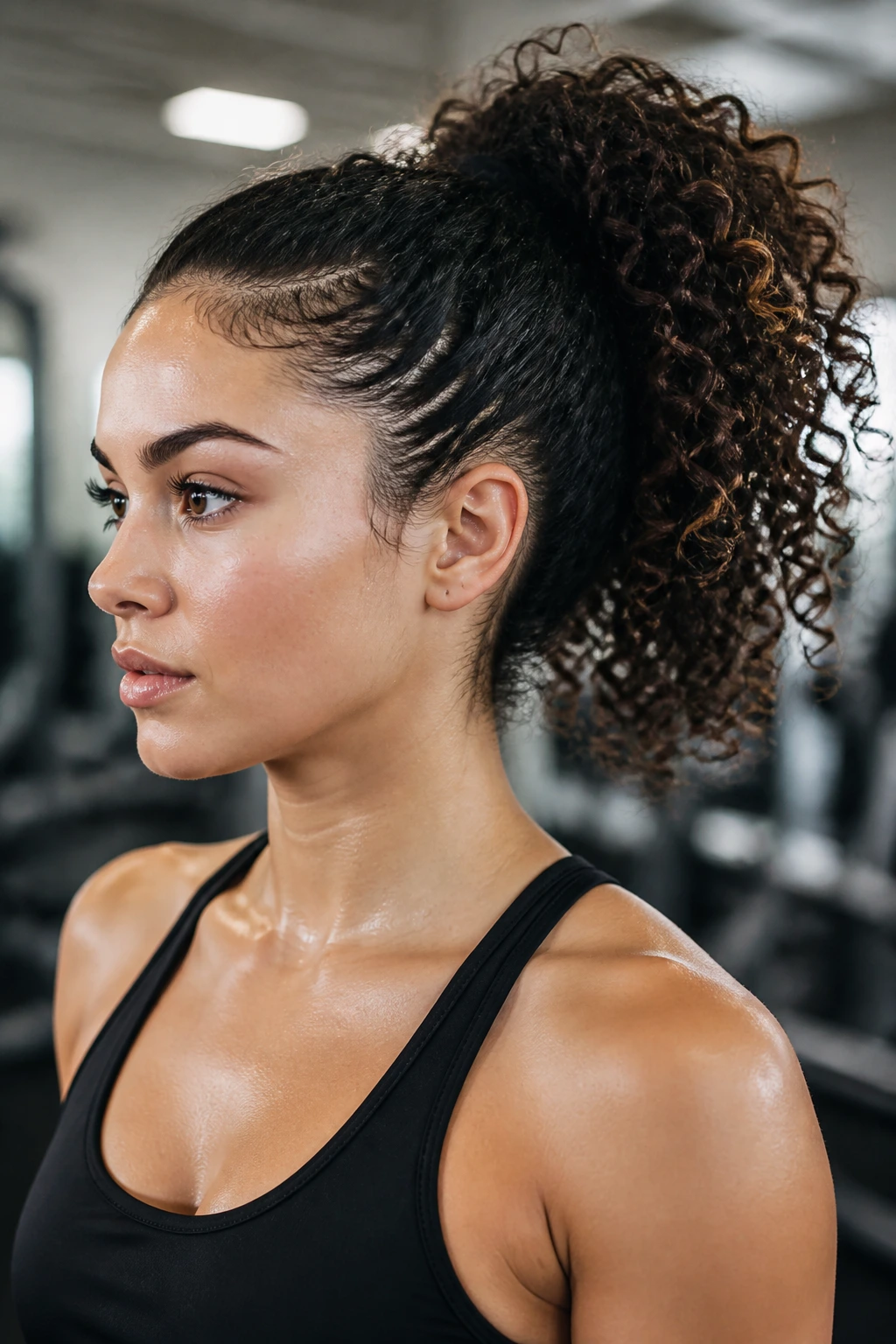
A gym-proof ponytail has one job: stay where you put it. That means a mid-high placement, a firm base, and minimal loose sections around the face unless you want them there for style. It should move with you, not bounce itself apart.
Use a snag-free elastic and, if your hair is heavy, secure the base with a second one just below the first. A little gel at the hairline keeps the front from frizzing into your eyes mid-workout. Skip anything too oily before a workout; sweat plus heavy product turns the roots slippery.
This style is not about being delicate. It’s about function first, then shape. If the tail stays curly and the base stays put, it did the job.
15. Rope-Braided Ponytail
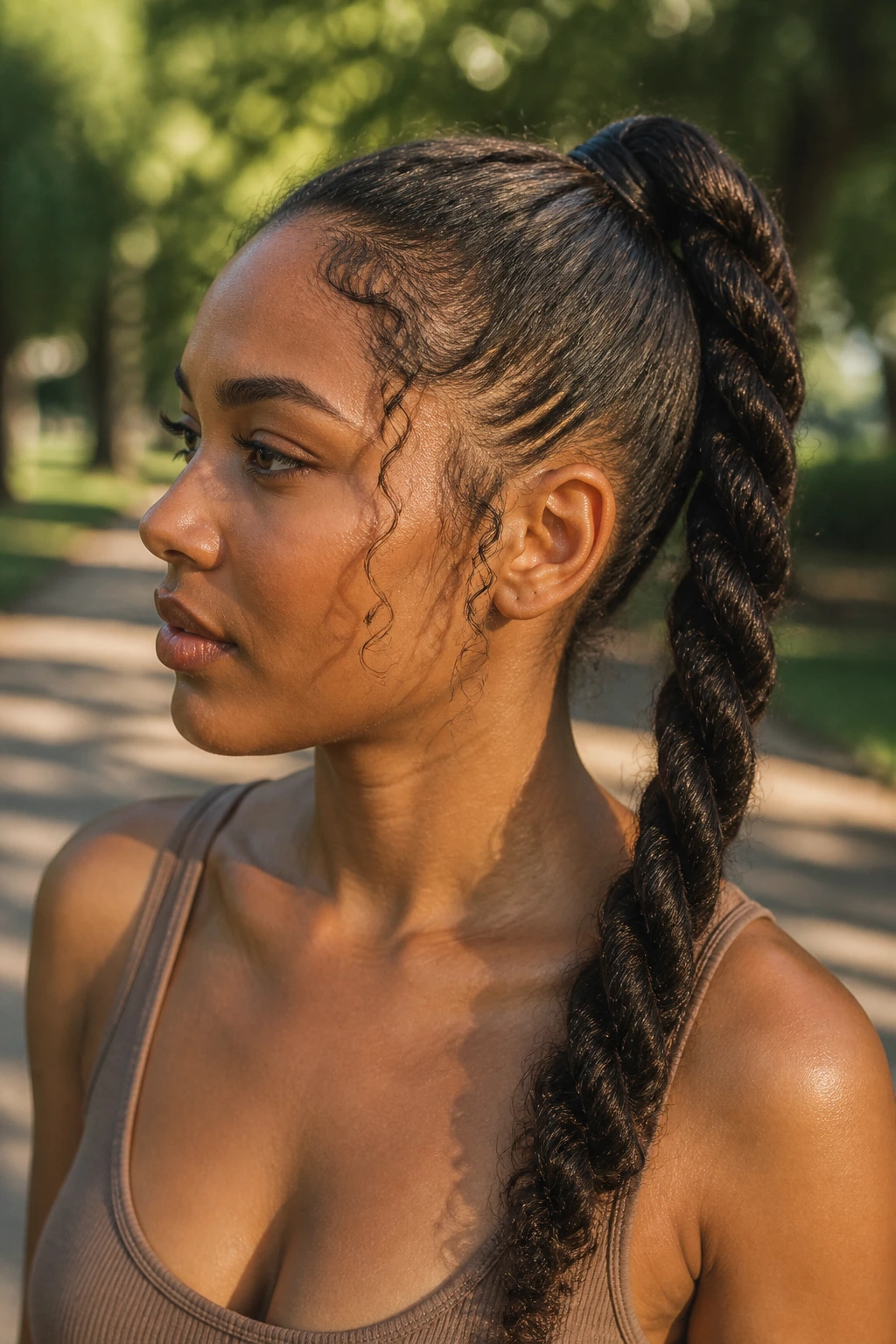
A rope-braided ponytail gives the tail more control without hiding the curl pattern completely. Split the ponytail into two sections, twist each one in the same direction, then wrap them around each other in the opposite direction. The result is tidy, textured, and less likely to tangle.
This style is a strong choice for long curls that need a little discipline. It keeps length visible, but it also stops the tail from swinging loose and frizzing up before the day ends.
Use clear elastics at the ends if the curl pattern is soft or layered. That keeps the rope braid from unraveling and gives the whole thing a cleaner finish.
16. Mohawk Ponytail
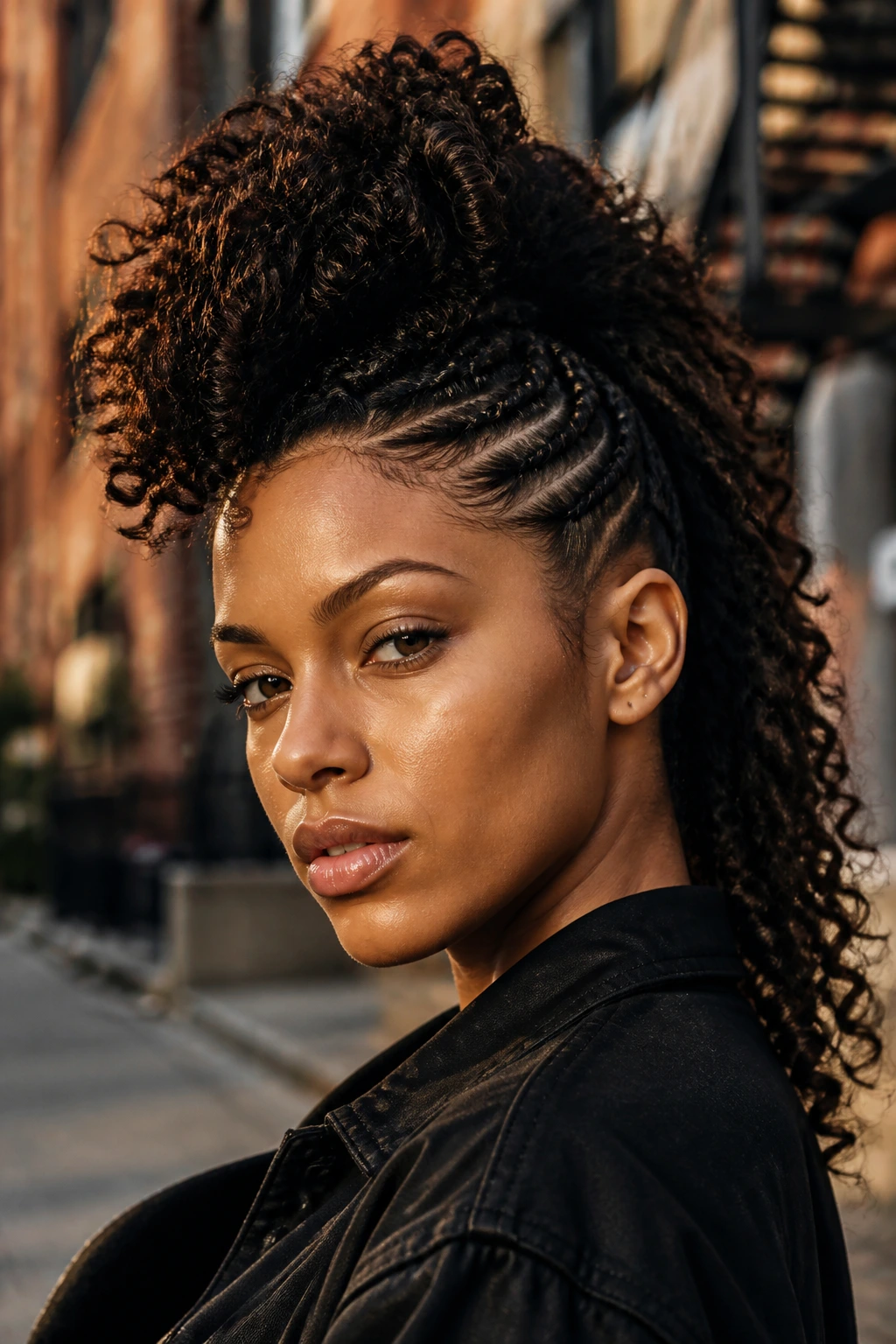
A mohawk ponytail is bold, and it should be. The sides are slicked or braided close, while the center section is lifted high and left full. On dense curly hair, that center strip can look almost architectural.
This style needs confidence and a decent amount of hold. It works best when the sides are controlled with gel and the middle is separated cleanly before you gather it. If the sides start drifting loose, the whole shape loses the mohawk line that makes it work.
It’s not a timid look. It’s for days when you want the head shape to read clearly from every angle.
17. Ribbon-Tied Curly Ponytail
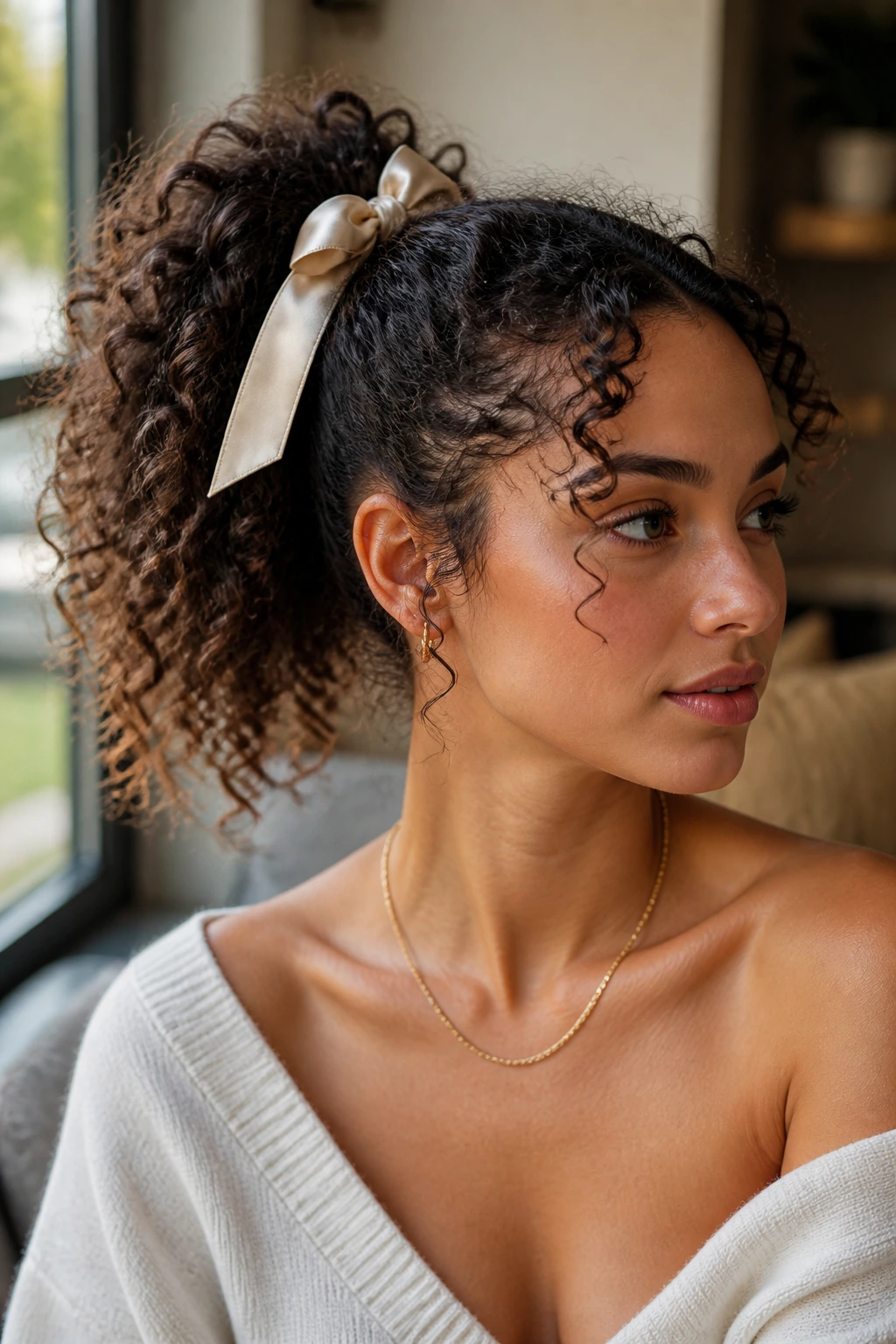
A ribbon changes the ponytail from practical to dressed up in a single step. Tie the hair back with a small elastic first, then cover it with a ribbon bow or a simple knot. The ribbon should support the style, not fight the curl volume.
A 1- to 2-inch ribbon usually sits well on curly hair. Too thin, and it disappears. Too wide, and it starts competing with the ponytail itself. Satin, grosgrain, or soft velvet all work, depending on how soft or structured you want the finish.
This is one of the easiest ways to make a ponytail feel event-ready without changing the actual shape of the hair. The curl pattern stays visible. The ribbon does the dressing up.
18. Swooped Side Ponytail
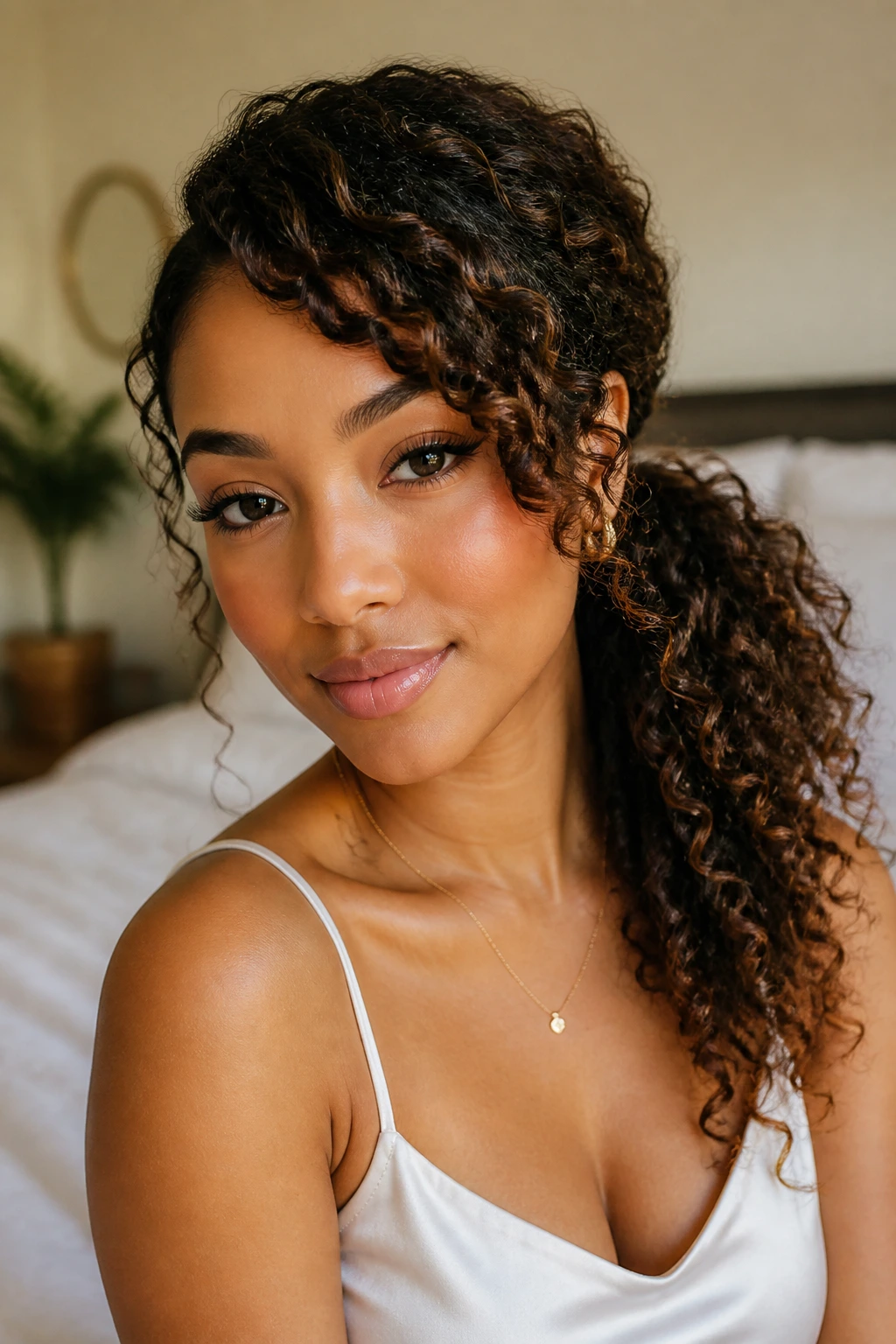
A swooped side ponytail has a little old-school glamour in it, but the structure is what makes it hold attention. The front hair is swept across the forehead or temple, then the ponytail sits low and off to one side. That diagonal line gives the style motion.
Use a firm hold on the swoop so it doesn’t unravel halfway through the day. If the front section keeps slipping, pin it just behind the part line and let the curl pattern hide the bobby pin. That’s the kind of cheat that saves a style.
This one looks especially good with layered curls because the side sweep breaks up the silhouette in a flattering way. It’s soft, but not floppy.
19. Fishtail-Bound Ponytail
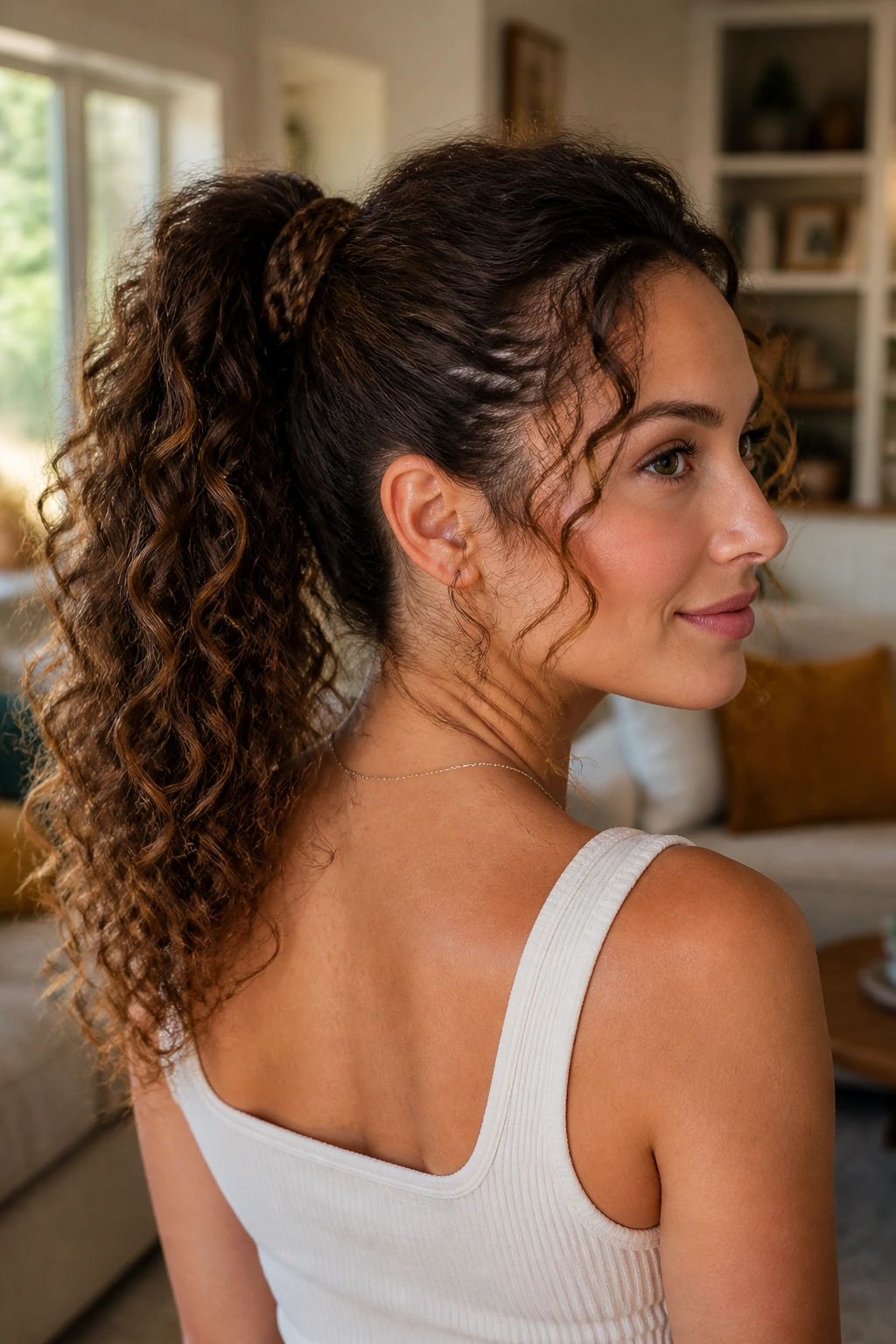
A fishtail-bound ponytail adds detail without turning the whole hairstyle into a braid. You can wrap a small fishtail around the base, or braid a section of the tail itself and leave the rest curly. Either version gives the ponytail a more finished edge.
The best part is that the fishtail texture contrasts nicely with curly hair. The braid line is tight and controlled. The ponytail stays loose and expressive.
Don’t braid the whole tail too tightly unless you want the ends to shrink and frizz. A loose fishtail keeps the curls visible and makes the style feel lighter.
20. Flipped-Out Curly Ponytail
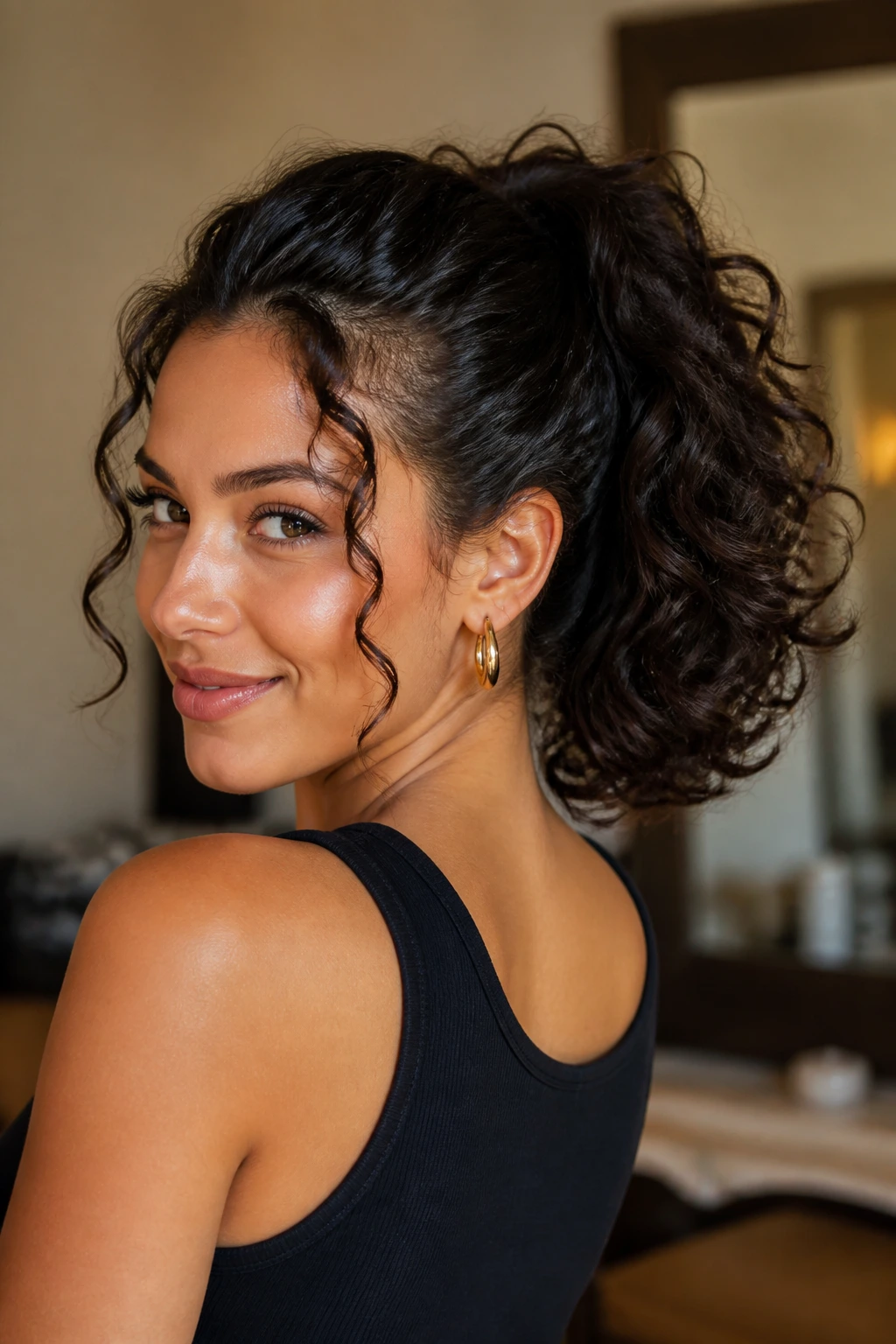
This is the ponytail that has movement in the ends. The base can sit high or mid-level, but the tail is styled so the ends kick outward instead of hanging straight down. On curly hair, that can happen naturally if the length is layered or if the curls have been stretched a bit.
A small roller set or a quick pass with a flexible wand on the tail ends can sharpen the flip, but you don’t need much. The goal is a shape with bounce. Not a shellacked finish.
It works well on shoulder-length curls that need a little lift and on longer hair that tends to hang heavy. The flipped end breaks the line and keeps the ponytail from looking too predictable.
21. Mini-Braid Detail Ponytail
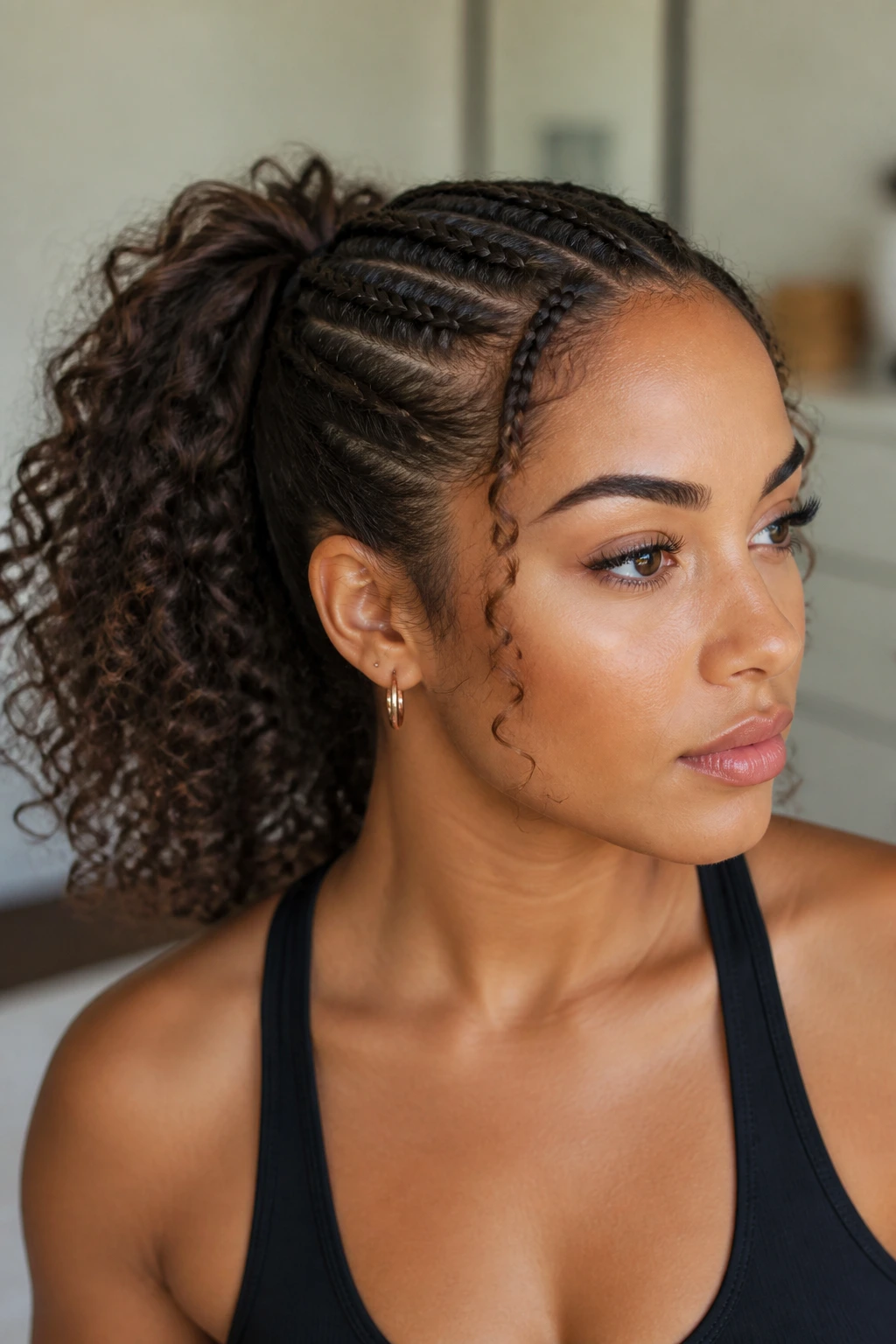
Mini braids are the detail that make people look twice. Add two, three, or four tiny braids at the front, along the part, or near the temples, then pull the rest into a ponytail. The braid sections give the style texture before the ponytail even starts.
This is a good option if you like curly ponytails but want a little more edge or visual interest. It also helps tame the front sections without flattening the whole head. The braids act like tiny anchors.
Don’t overpack the style with too many braid lines. Three small braids usually say enough. More than that, and the ponytail starts competing with the detail instead of balancing it.
22. Sculpted Event Ponytail
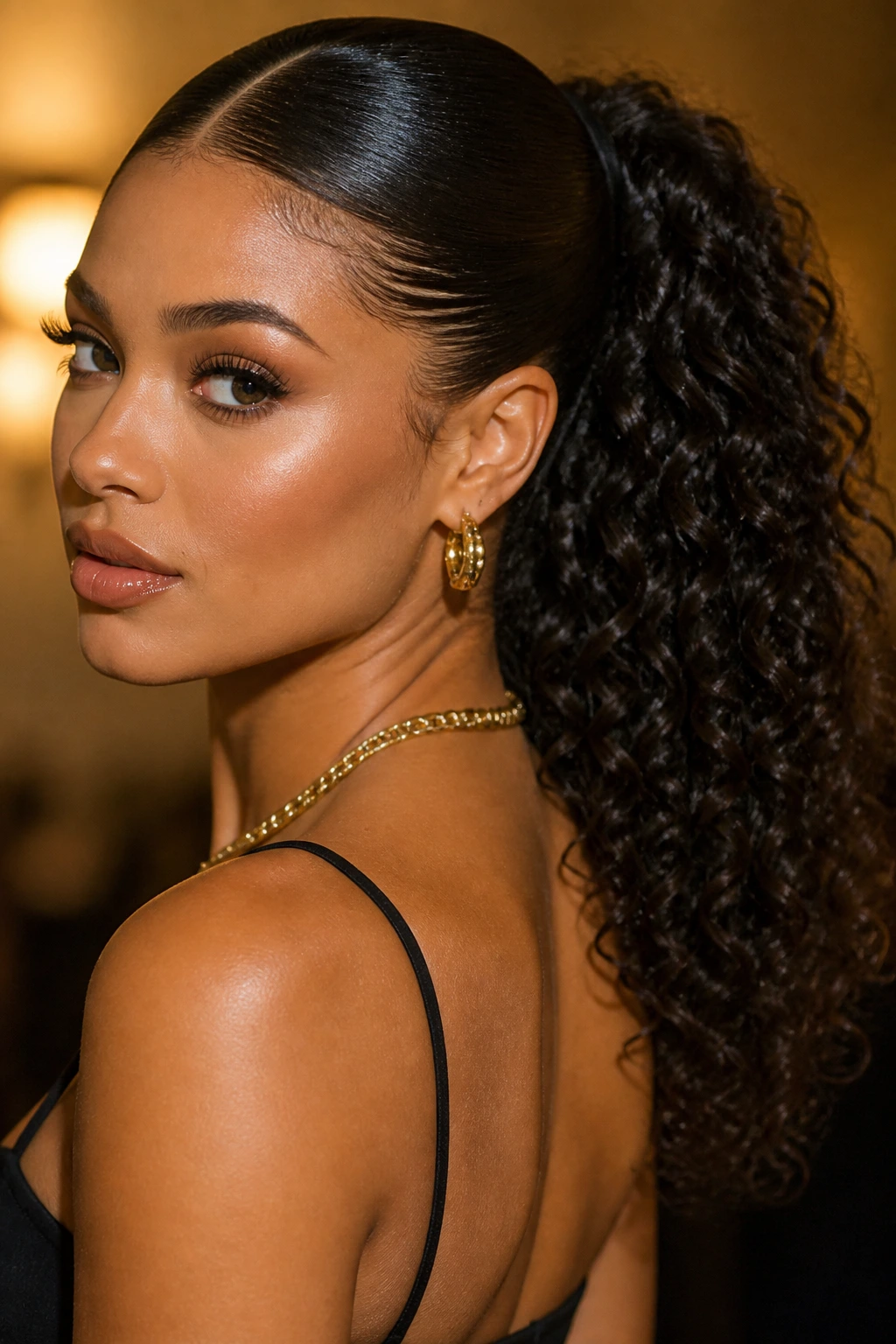
A sculpted event ponytail is the polished version of all the ideas above. The part is clean, the roots are controlled, the base is hidden or wrapped, and the curls in the tail are defined enough to hold their shape under lights, cameras, or a long dinner.
Use gel or edge control sparingly at the hairline, then smooth only where the eye will land first: part, temples, and base. The rest of the hair should stay soft enough to move. If the whole style feels stiff, it loses the thing that makes curly hair look expensive in the first place—its natural shape.
This is the ponytail you wear when you want to look finished without hiding your texture. Clean. Lifted. Controlled, but not flattened.
Why Curly Ponytails Look Fuller Instead of Flatter
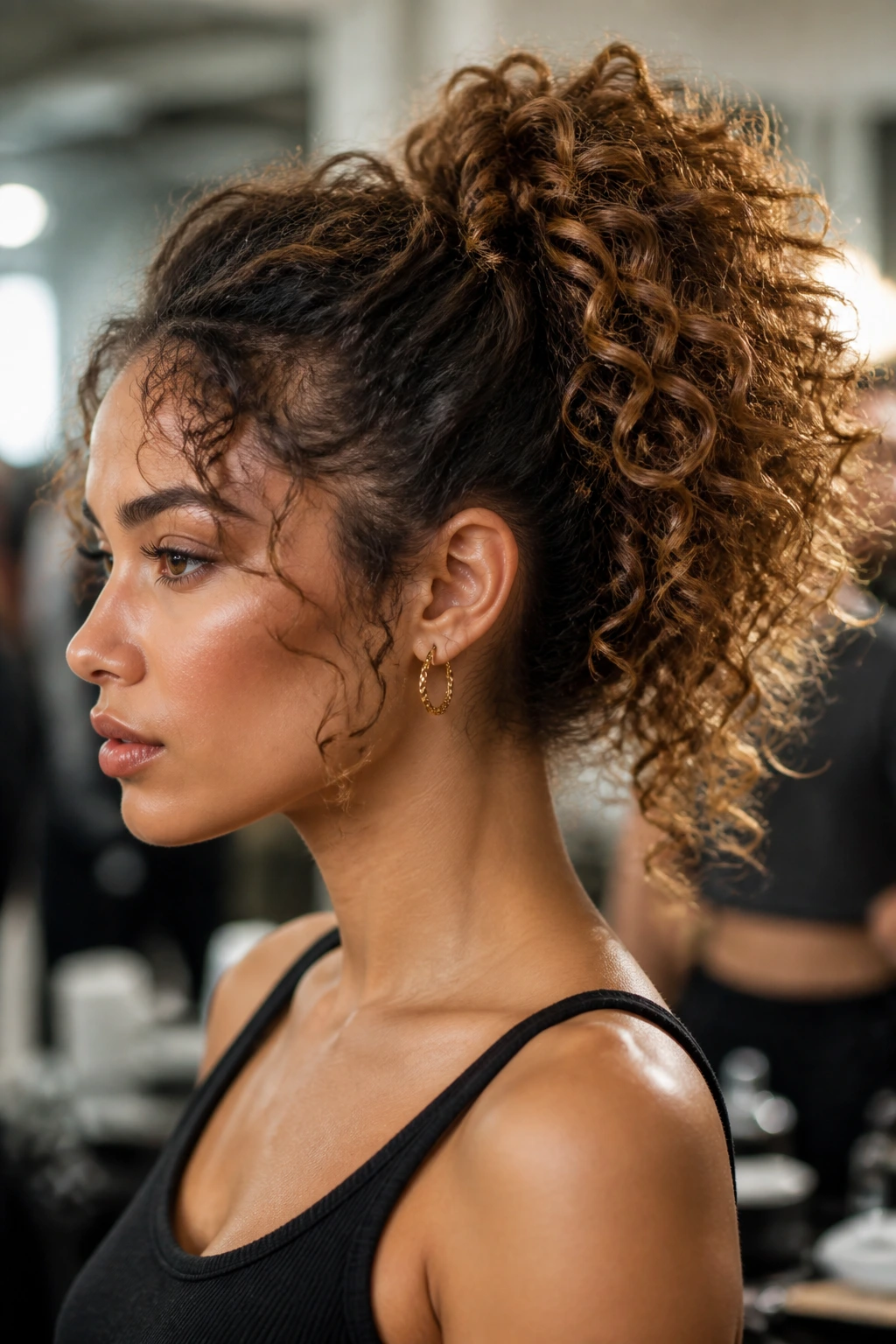
A curly ponytail starts with a different idea of shape. Straight hair lies in one long line, so ponytails can look thin unless you build volume into them on purpose. Curly hair already creates width, depth, and movement, which means the silhouette has something to work with before you even touch a brush.
The base matters more than people think. If the roots are over-smoothed, the style can look too tight and a little disconnected from the tail. If the roots are left too loose, the ponytail loses its shape by lunchtime. The sweet spot is controlled tension: enough grip to hold, enough softness to keep the hair from looking pressed into place.
There’s also a texture advantage at the tail. Curls make the ends look fuller, even when the actual amount of hair hasn’t changed. That’s why a good curly ponytail often looks richer than a flatironed one. The curl pattern does the visual work for you.
Essential Tools for Curly Ponytail Styling
- Snag-free elastics: These grip without cutting into the hair shaft, and they’re worth buying in a pack because one tie is never enough on dense curls.
- Satin scrunchies: Softer on the base than thin elastics, especially for high puffs, pineapple ponies, and overnight wear.
- Rat-tail comb: Useful for clean parts and for separating small sections without roughing up the curls.
- Soft bristle brush: Best for smoothing the first inch or two at the scalp without dragging product through the whole head.
- Wide-tooth comb: Helps lift curls into a ponytail when you want less frizz and more shape.
- Sectioning clips: Keep front pieces out of the way while you work on the base.
- Edge control or strong-hold gel: Handy for sleek roots, side parts, and sculpted styles.
- Bobby pins: Needed for wrapped bases, twists, scarf styles, and anything that needs hidden reinforcement.
- Silk or satin scarf: Good for smoothing edges, covering the base, or protecting styles overnight.
- Spray bottle with water: Reactivates curls before shaping, especially on day-two hair.
- Diffuser attachment: Optional, but useful if you want to lift the roots before gathering the ponytail.
- Lightweight curl cream or mousse: Helps define front pieces and ends without weighing the style down.
Product and Sectioning Choices That Matter
Hold level matters more than brand name. A soft mousse can work for a fluffy pineapple ponytail, but a sculpted side part usually needs a firmer gel or edge control at the roots. If you put the same product on every style, some of them will fail by mid-afternoon.
Match the Hold to the Curl Density
Fine curls usually need less product and more support from the shape itself. Thick curls and coils can take heavier gel, but they still do better when the product stays near the scalp instead of getting worked through the whole length. That’s where the stiffness starts.
Choose the Elastic Before You Choose the Style
A narrow elastic and a dense curl pattern are not always friends. If the hair is heavy, use a wider elastic, a satin scrunchie, or two ties stacked together. The style should fit the hair, not the other way around.
Separate the Root from the Tail
That one choice changes everything. Smoothing the roots with a brush while leaving the tail alone preserves curl definition where it matters. If you brush the entire ponytail, you’re not styling curls anymore—you’re flattening them out and hoping for the best.
How to Wear These Ponytails With Different Outfits
Presentation: A high puff, sculpted pony, or mohawk pony sits best when you want the hair to read from across the room. A low wrapped pony or ribbon-tied style feels cleaner with soft collars, open necklines, and earrings that can move.
Accompaniments: Hoops, studs, and a strong neckline can all change how the ponytail lands visually. A side-swept ponytail loves asymmetry, so one statement earring often looks better than a pair of loud ones. Scarves, clips, and bows work best when the clothing stays simple.
Portions: Think about how much hair you want out of your face versus how much you want left visible. A half-up pony keeps most of the curl volume on display. A full low pony moves more hair off the neck and usually feels better with thicker curls.
Best Setting: A gym-proof ponytail, pineapple pony, or bubble style belongs in day-to-day life where movement matters. A sculpted event ponytail, fishtail-bound version, or ribbon tie suits dinners, weddings, photo days, and anywhere the front of the style will be seen up close.
Extra Styling Tricks That Make a Big Difference
Texture Boost: If the roots look sleepy, diffuse them for 3 to 5 minutes before pulling the hair back. That small burst of heat or airflow gives the ponytail lift without forcing the lengths into a blowout.
Customization: Leave out more face-framing curl pieces for a softer finish, or slick everything back for a cleaner line. Tiny braids at the temples, a wrapped base, or a scarf can change the whole mood without changing the core shape.
Serving Suggestions: A tiny drop of serum on the ends keeps the ponytail from looking dry under bright light. A mist of shine spray over the tail works best after the hair is fully styled, not before.
Make-It-Yours: Fine hair usually needs mousse at the roots and a lighter pony placement. Dense hair usually looks better with wider elastics, stronger pins, and a slightly higher base. If your curls shrink a lot, place the ponytail a little higher than you think you should.
What Usually Ruins a Curly Ponytail
Brushing the whole head dry: That’s how you get a frizzy crown and a tail that looks puffed in the wrong places. Brush only the root area you want to smooth, and leave the rest to your fingers or a wide-tooth comb.
Using an elastic that’s too small: If the tie has to fight the hair to close, the ponytail will feel tight and may split at the base. Use a larger elastic, a scrunchie, or two ties for heavier curls.
Starting with soaking wet hair: Wet roots can flatten and stay flat. A ponytail usually holds better when the hair is damp or mostly dry, with enough water left to reshape the curls but not enough to make the base sag.
Overloading product: Too much gel or cream causes flakes, stiffness, or that sticky look that catches dust. Use a thin layer and build only where the hair actually needs control.
Placing the ponytail in the wrong spot: A low pony on hair that wants to sit high can droop fast. A high pony on heavy curls can tug the scalp hard and pull the shape apart. Let the head shape help you choose the placement.
Ignoring the front hairline: If the roots are smooth but the edges are fraying, the style looks half-done. A little control around the temples goes a long way.
Variations and Adaptations to Try
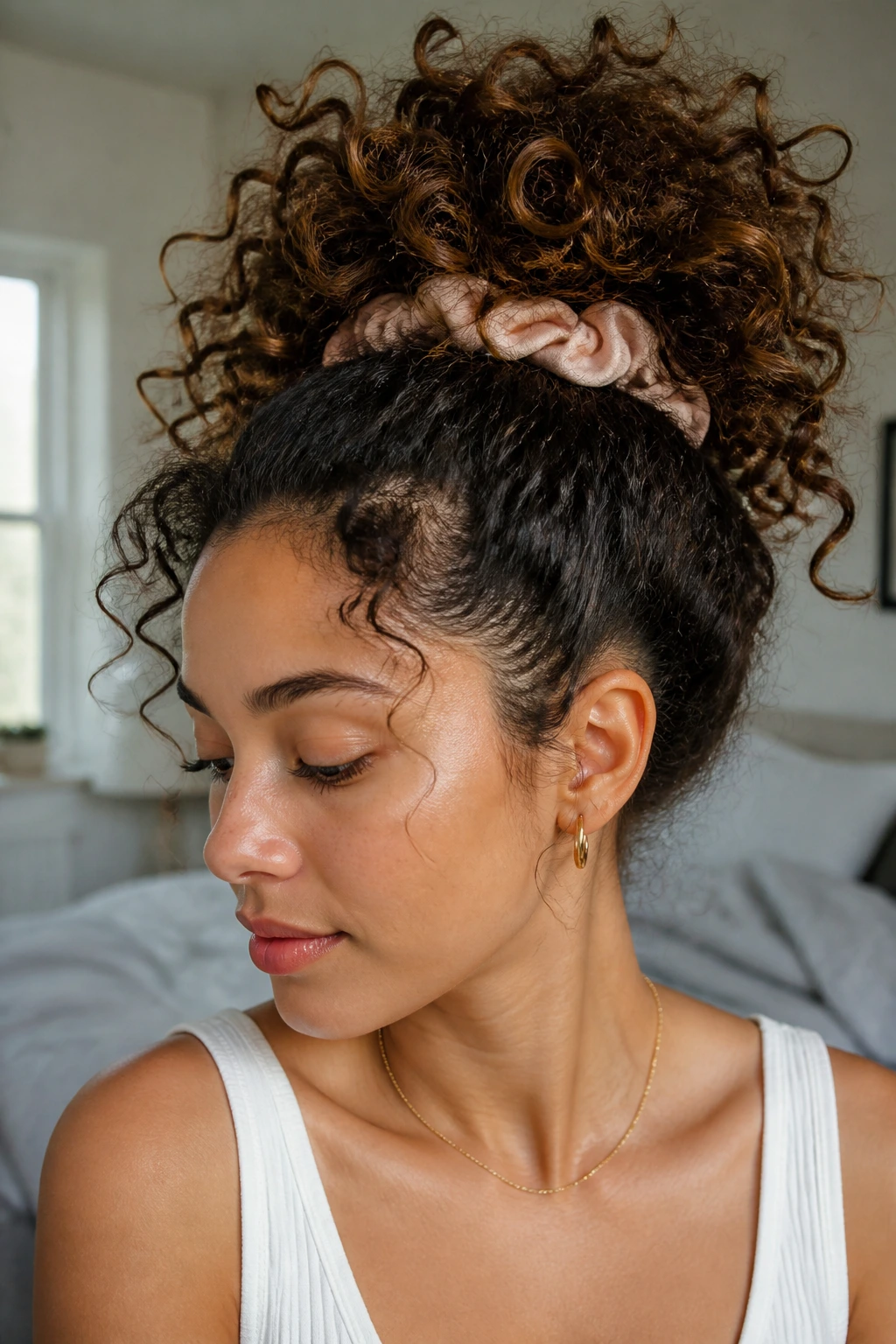
Soft Everyday Curl Pony: Use a light leave-in, a low or mid pony, and skip the sharp part line. This version keeps the texture soft and works well for errands, class, or long days when you don’t want the hair screaming for attention.
Sleek Workday Pony: Add gel at the roots, create a clean side part, and hide the elastic with a wrapped strand or scarf. It looks more deliberate than a basic ponytail and holds up well with blazers, collared shirts, and earrings.
Protective Low Pony: Keep the tension low, choose a satin scrunchie, and avoid redoing the same base spot too often. This is the version to reach for when your scalp needs a break but you still want the hair off your neck.
Humidity-Shield Pony: Use a stronger gel at the hairline and a braid or twist near the base to help the style stay put. This variation keeps the top controlled while letting the tail stay curly and soft.
Short-Curl Solution: If your hair is too short for a full ponytail, do a half-up pony or a pineapple-style lift instead. You get the same lifted shape without forcing the shorter layers to escape at the sides.
Event-Ready Shine Pony: Clean part, wrapped base, defined curls at the tail, and a small amount of shine spray at the very end. Keep the finish glossy, not wet-looking.
Overnight Care, Refreshing, and Long-Wear Maintenance
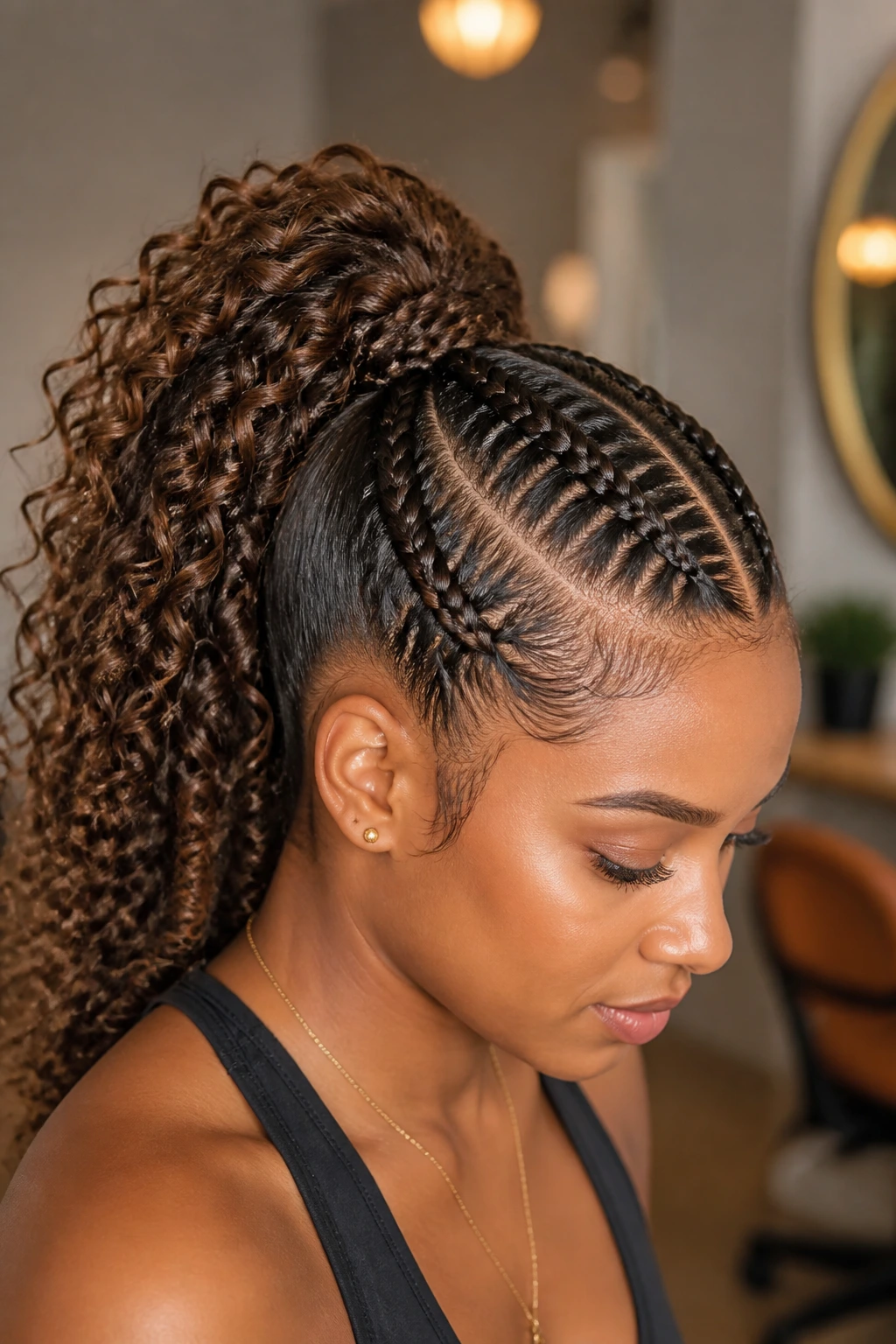
A curly ponytail can last one day, two days, or longer depending on the style and how hard you worked the base. High puffs and sculpted ponies usually need the most care. Low wrapped styles, braided bases, and scarf finishes tend to hold a little longer because the base stays protected.
If you want to keep the style overnight, switch to a silk or satin bonnet, or at least wrap the base with a scarf before bed. A high ponytail can be preserved loosely by sleeping on a satin pillowcase and avoiding pressure on the crown. A low ponytail is easier; it just needs the base to stay undisturbed.
Refreshing should be targeted, not random. Mist the tail lightly with water or a water-plus-leave-in mix, smooth the front with a touch of gel if needed, and finger-coil any pieces that lost their shape. Don’t douse the whole style. That usually creates more frizz than it fixes.
If the base feels loose the next day, tighten it just enough to restore the shape. If your scalp feels sore, take that as a sign to remove the tie and start over with less tension. The hairstyle should survive the day, not punish the head.
Frequently Asked Questions
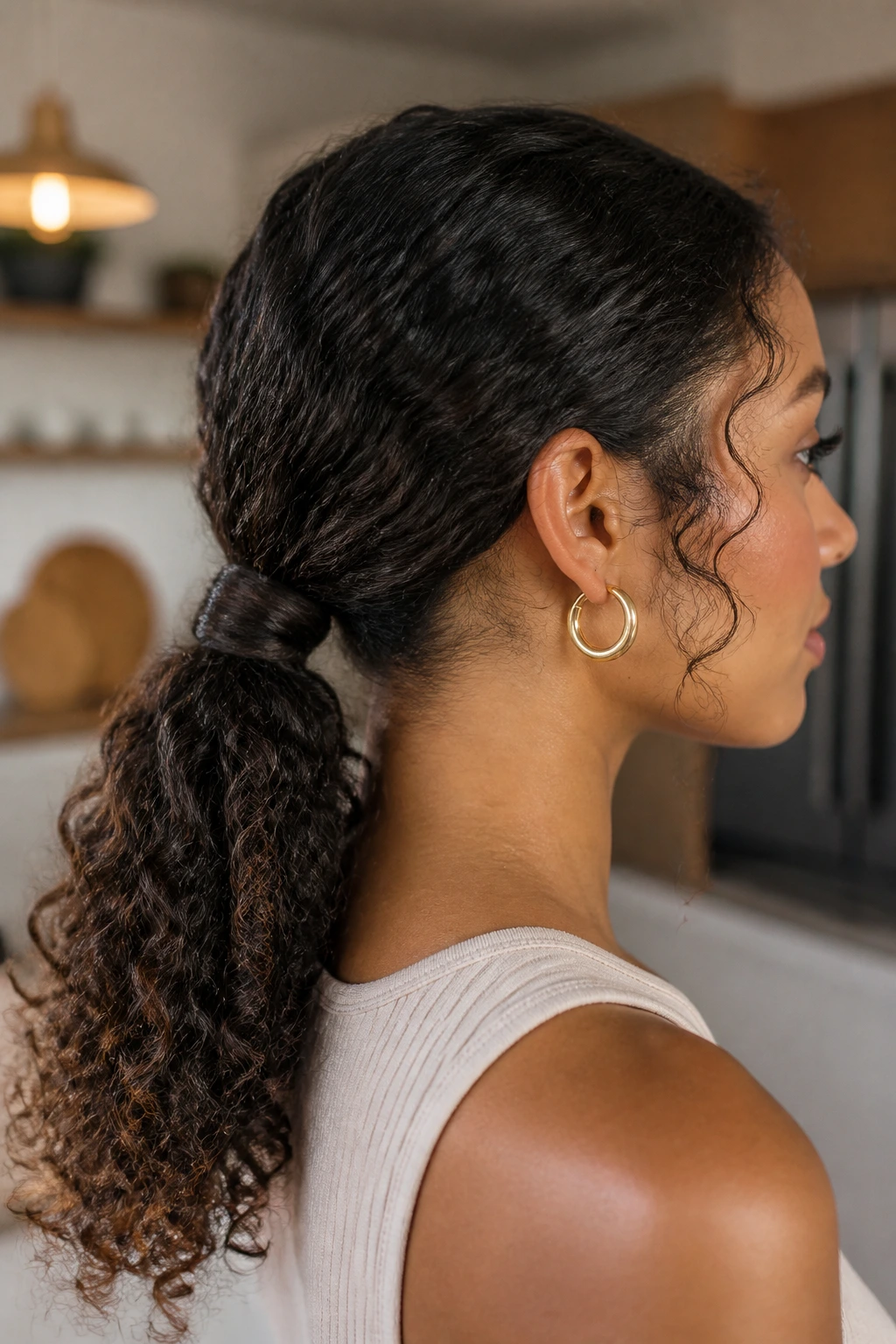
What’s the best ponytail height for curly hair?
High ponytails give curls the most lift, while low ponytails put the weight at the nape and usually feel calmer on the scalp. If your hair is very dense, mid-high placement often balances comfort and shape better than going all the way up.
How do I keep my curls from frizzing in a ponytail?
Keep the root area controlled and leave the tail alone as much as possible. A light gel at the hairline, a soft brush only where needed, and a satin scrunchie at the base usually do more than a heavy coat of product ever will.
Should I brush curly hair before making a ponytail?
Only the sections that need smoothing. Brushing the whole head dry stretches out the curl pattern and creates frizz in the tail. Use a wide-tooth comb or your fingers for the lengths if you want the curls to stay defined.
Can I do these styles on short curly hair?
Yes, but half-up ponytails, pineapple lifts, and mini side ponies usually work better than a full long ponytail. Shorter layers need less tension and often look better when some curls stay free around the sides.
What elastic is best for curly ponytails?
A snag-free elastic or satin scrunchie is the safest choice for most styles. If your hair is thick, use two elastics or a wider tie so you don’t have to pull the hair too tightly just to keep it in place.
How do I make a curly ponytail last overnight?
Use a silk or satin bonnet, or wrap the base with a scarf before sleeping. Low ponytails and wrapped styles usually last longer than high ones, because they’re less likely to get flattened by the pillow.
What if the crown puffs up after an hour?
That usually means the base was too loose or the root area wasn’t set well enough. Add a little gel to the flyaways, smooth the crown with a soft brush, and anchor the ponytail with a stronger tie or a hidden pin if needed.
Can I wear a curly ponytail to an event without it looking casual?
Yes, if you clean up the base and add one detail—wrapped elastic, ribbon, braid, or a sculpted side part. The difference between casual and dressed-up is usually in the root work, not the tail itself.
The Shape That Actually Lets Curls Breathe
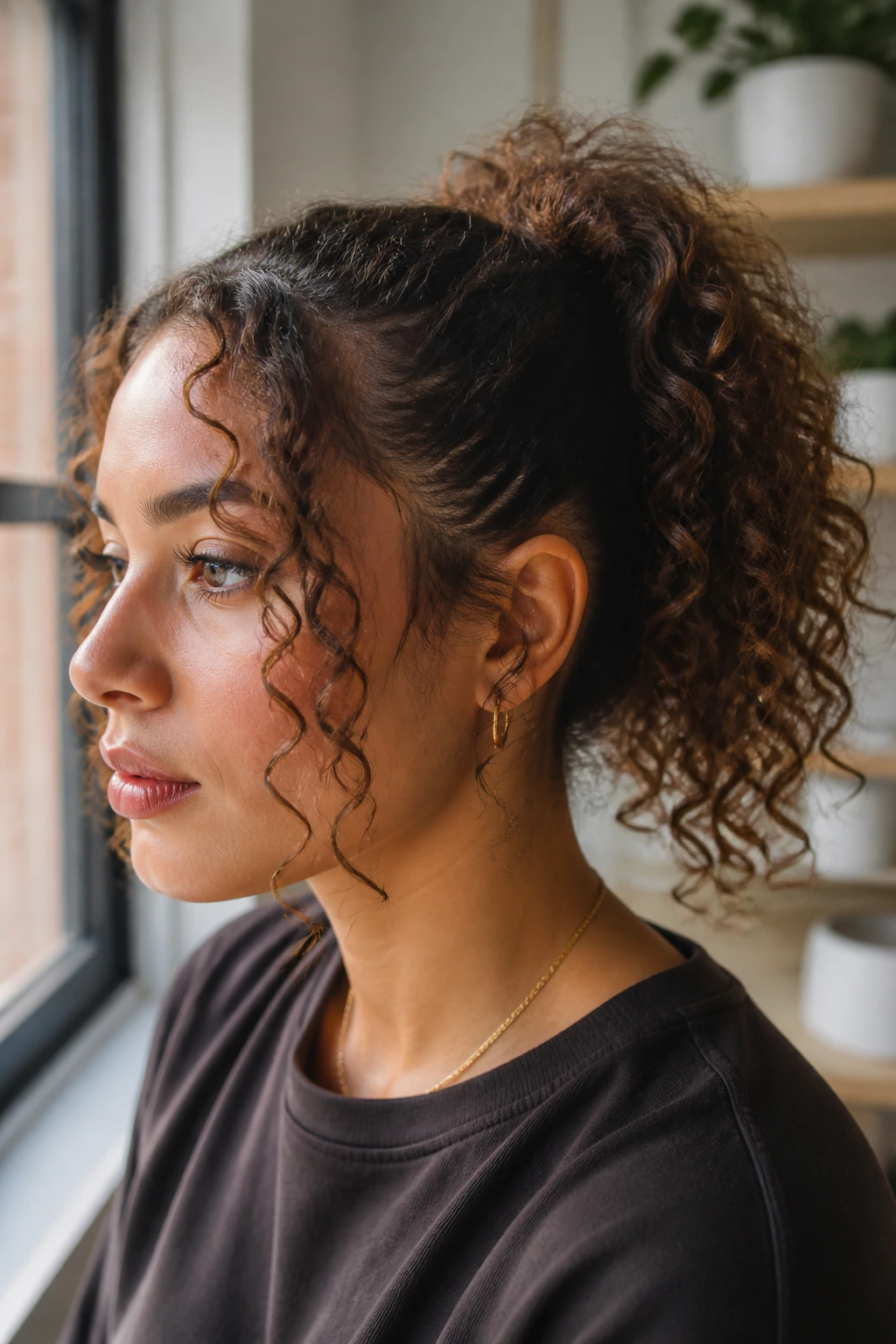
The best curly ponytail doesn’t hide texture. It frames it. That’s the whole trick, and once you see it, the rest of the styling choices start making sense: a little lift at the crown, a little care at the hairline, and enough freedom in the tail to let the curls do what they already know how to do.
Pick the version that matches the day, not the fantasy of some perfectly smooth head of hair. A curly ponytail looks best when it keeps one foot in control and the other in movement. That balance is the part worth keeping.
