



A good pompadour changes the whole face before you even notice the cut. That front lift, when it’s built right, pulls the eye upward and gives the haircut a shape most men’s styles never bother to reach for.
Classic pompadour styles for men survive because they’re not one haircut so much as a family of silhouettes. You can wear one high and glossy, another low and matte, another tight on the sides with a clean fade, and they still read as a pompadour because the front does the talking. That front line, plus the way the sides get controlled, is the whole game.
And the catch? A pomp only looks good when the cut and the styling agree with each other. If the top is too short, the front collapses. If the sides are too heavy, the shape turns boxy. If the product is wrong, the hair either falls flat or turns into a stiff little helmet. Get those three pieces right and the style does the heavy lifting for you.
Why This Collection Is Different
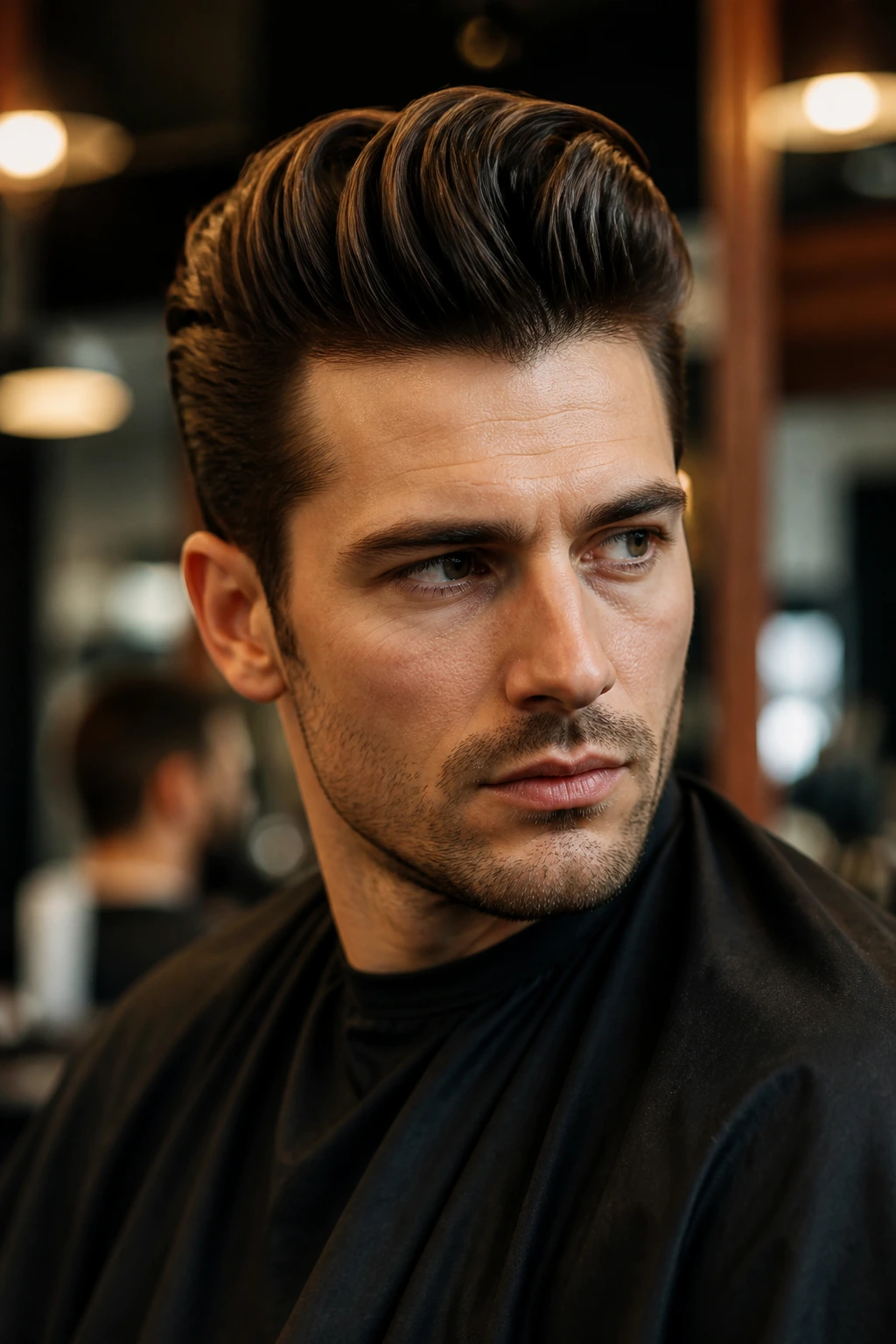
-
Face-framing height: A pompadour adds vertical line fast, which helps round faces look longer and gives sharper jawlines a cleaner outline.
-
Fade-friendly shape: The same front can sit on a skin fade, taper, drop fade, or scissor-cut side without losing its identity.
-
Product range: You can build this style with pomade, matte clay, cream, or even mousse, depending on how much shine and hold you want.
-
Barber-friendly language: If you know the top length, the side length, and the amount of front lift you want, your barber can usually translate that into a clean cut.
-
Daily wear options: Some pomp styles need a five-minute blow-dry. Others need more work. That spread makes the family useful instead of fussy.
1. Clean Side-Part Pomp
This is the version that makes a pompadour look neat without turning it into a showpiece. The top sits around 3 to 4 inches, pushed back with a soft side part that gives the front a little direction. It’s sharp, but not loud. A low taper on the sides keeps the profile tidy, and the whole cut works best when the front is lifted just enough to show shape, not so much that it starts to wobble.
I like this style because it survives real life. It still looks right after a commute, a collar rub, or a day under office lights. Use a comb to set the part, then blow-dry the roots upward before you add product. That order matters.
2. High-Rise Rockabilly Pomp
A rockabilly pomp wants height you can spot from across the room. The front rises in a clean arc, the crown stays controlled, and the shine usually leans toward classic pomade rather than matte clay. This is the style that makes a barbershop mirror feel a little more dramatic than usual.
Why It Looks Bigger
The height comes from the root, not the product alone. Ask for 4 to 6 inches on top, with enough weight removed so the hair can actually stand up when you blow-dry it. Thick straight hair does this best, but coarse hair can pull it off too if the sides are kept tight.
- Best with a low or skin fade.
- Strong-hold pomade keeps the front from sagging.
- A round brush gives the pomp that curved top line.
- Too much shine can make it look greasy, so stop before it reflects like lacquer.
3. Low-Profile Office Pomp
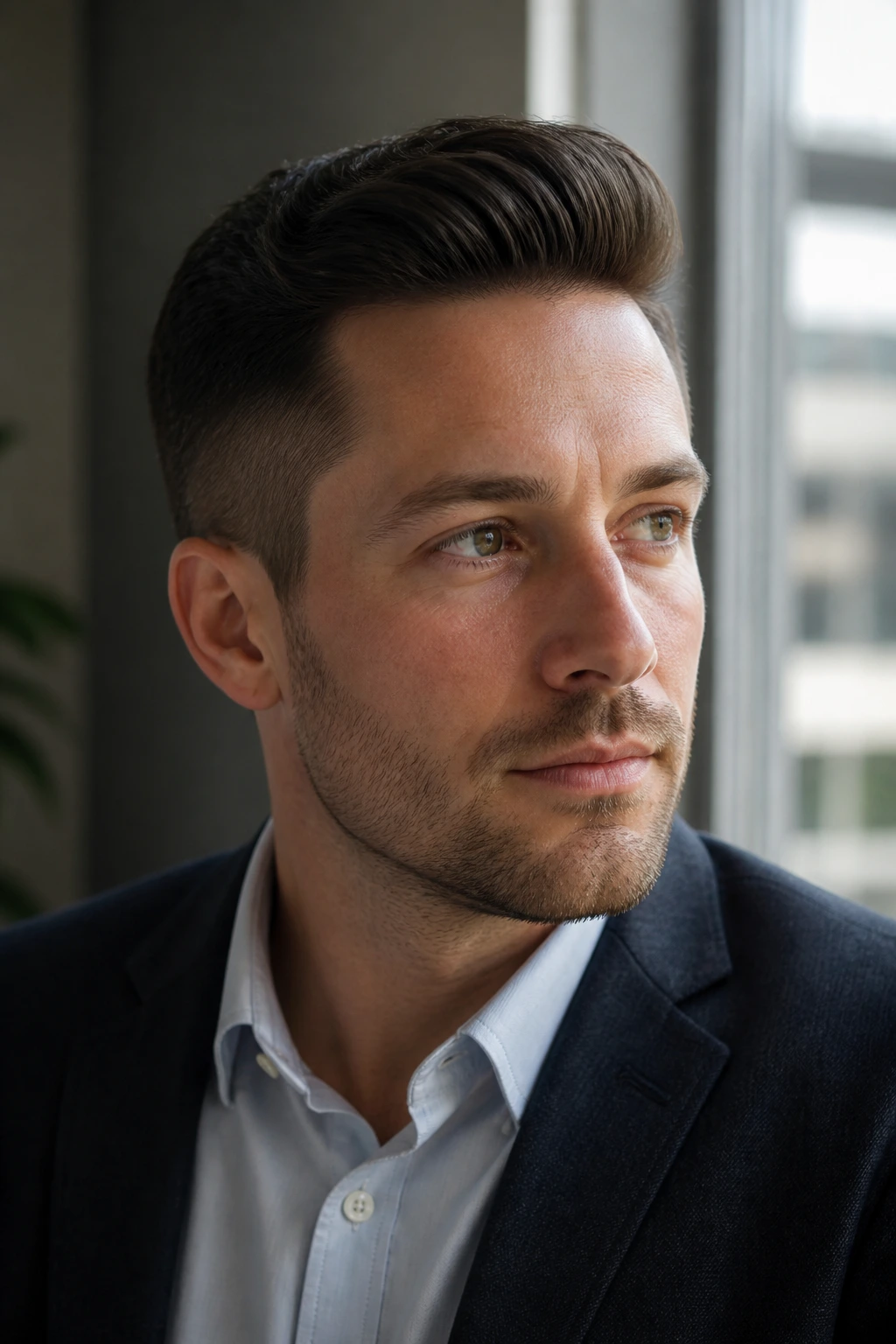
Not every pompadour has to climb. The low-profile version keeps the front lifted just an inch or two, then smooths it back into a controlled crown. It reads polished from the front and conservative from the side, which is exactly why it works for men who want the shape without the spectacle.
This cut is especially good if your hair doesn’t love standing straight up for long. Keep the sides tapered, not chopped down aggressively, and leave enough length on top for movement. It’s one of those haircuts that looks better the second day, once the product has settled and the front isn’t quite as soft.
4. Skin Fade Pomp
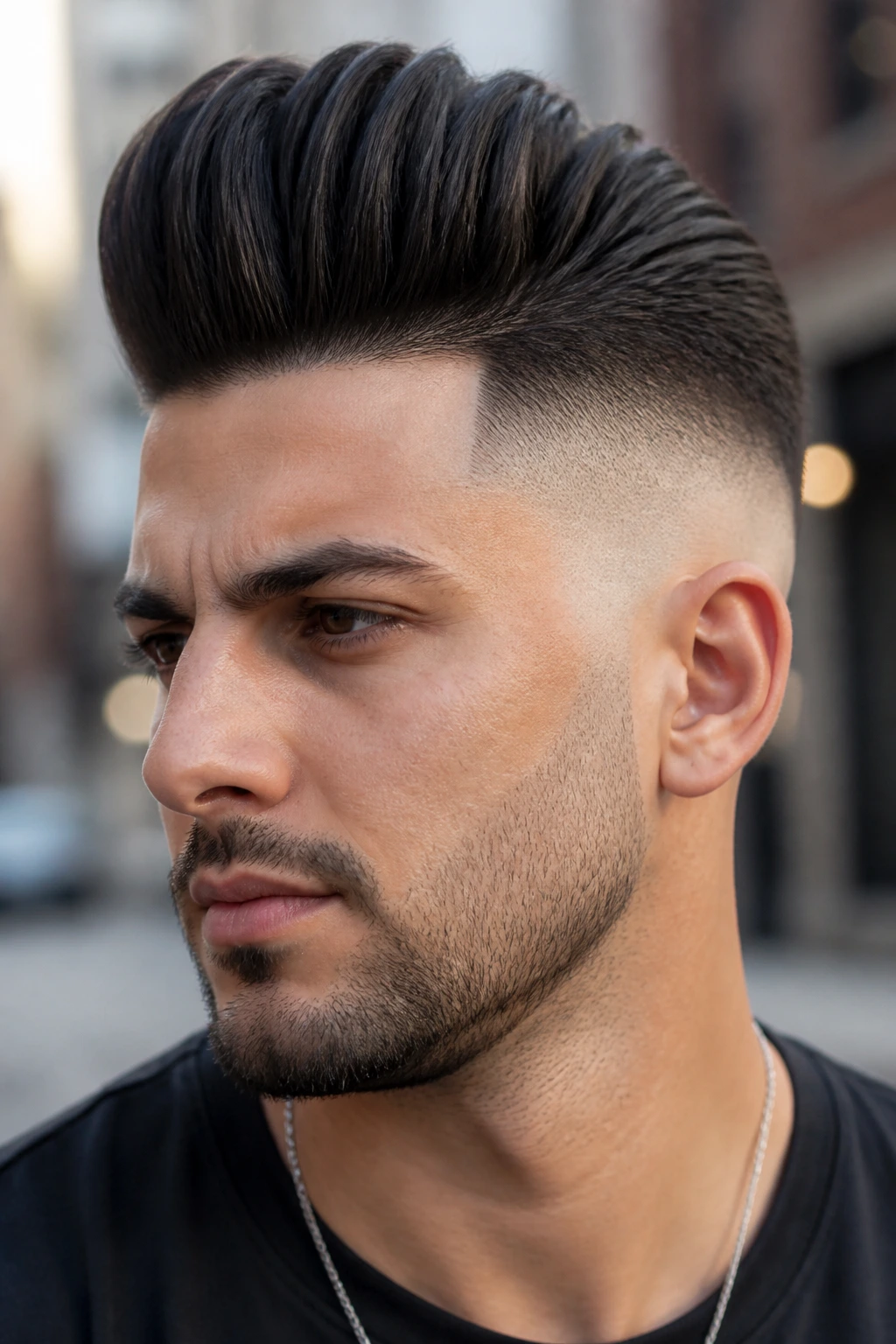
If you want the front to be the only thing people notice, this is the blunt answer. The skin fade strips the sides down to bare scalp near the ears, then the top rises above that clean contrast line. The result is crisp, modern, and a little bit unforgiving, which is the point.
- Top length: 4 to 5 inches for real lift.
- Fade depth: skin to mid-blend if you want strong contrast.
- Product: matte clay for texture, pomade for gloss.
- Best hair type: medium to thick hair that won’t go limp halfway through the day.
5. Taper Fade Pomp
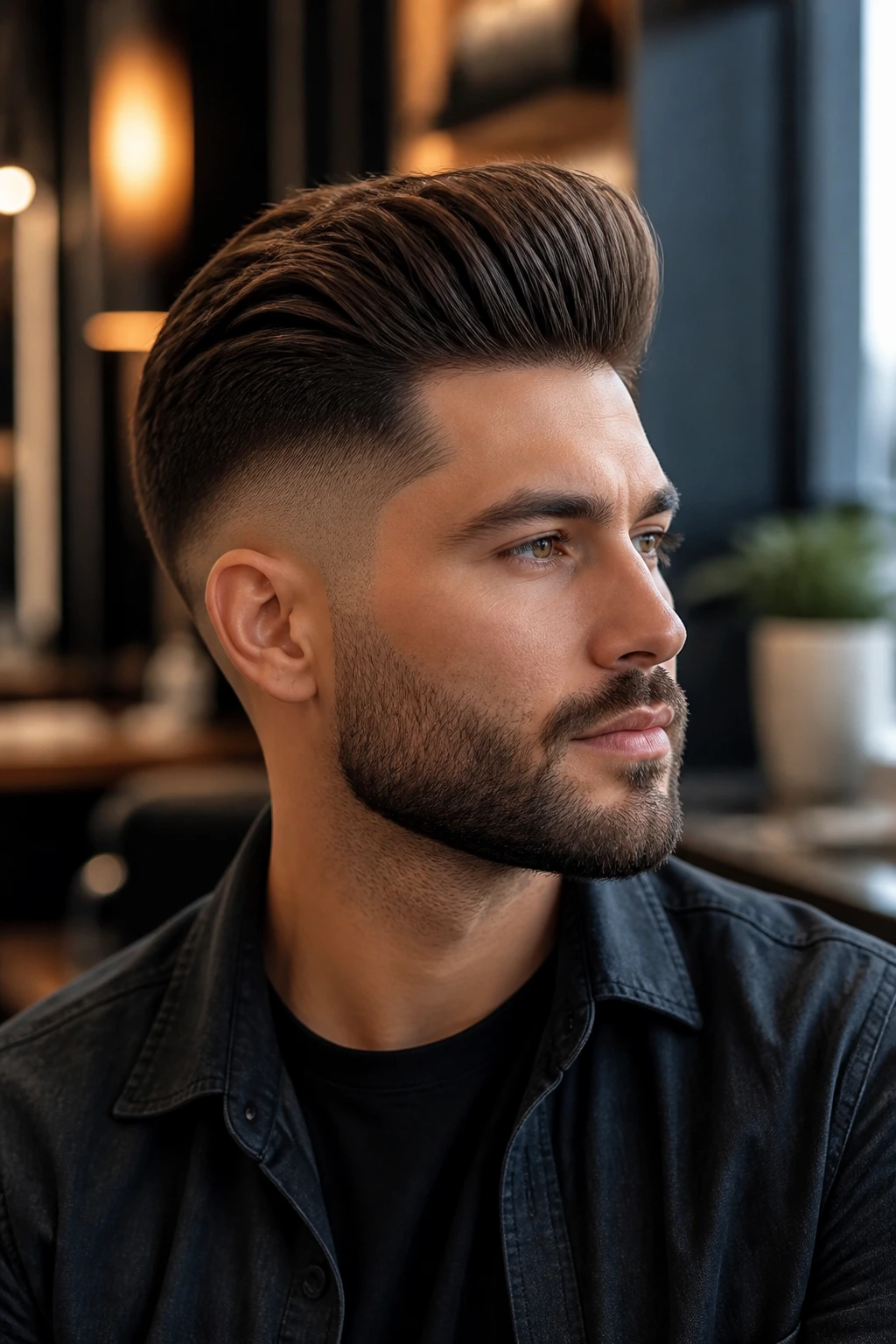
A taper fade softens the whole idea. Instead of dropping all the way to skin, the sides and back fade gradually, which leaves the cut easier to grow out and a little easier to wear with a suit, a T-shirt, or anything in between. It’s the version I recommend when a skin fade feels too severe.
The taper also gives the top more breathing room. The pomp doesn’t need to fight for attention; it just sits there, lifted and controlled, with clean edges around the ears and neckline. If your hair grows fast, this cut stays presentable longer than a harsh fade.
6. Disconnected Pomp
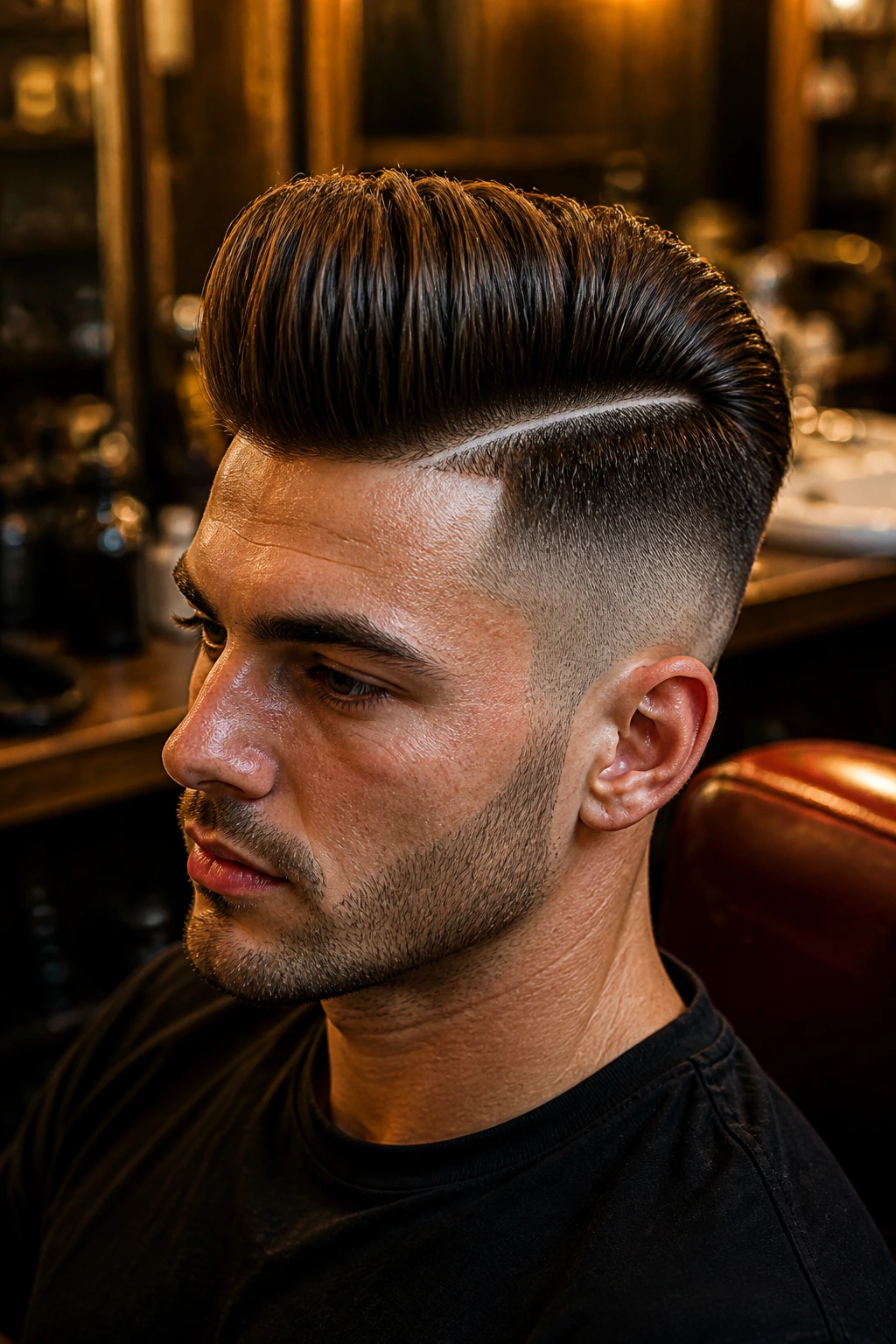
This one has attitude. The top is left clearly separate from the sides, so the haircut looks like two decisions made on purpose instead of one blend trying to be polite. Done well, it’s sharp. Done badly, it looks unfinished, and there isn’t much middle ground.
What makes it work is the line of contrast. The barber should remove enough bulk on the sides that the top appears to float above them, but not so much that the top loses weight at the edges. Keep the front clean and square-ish, then push it back with a comb so the break between top and sides stays obvious.
7. Hard-Part Pomp
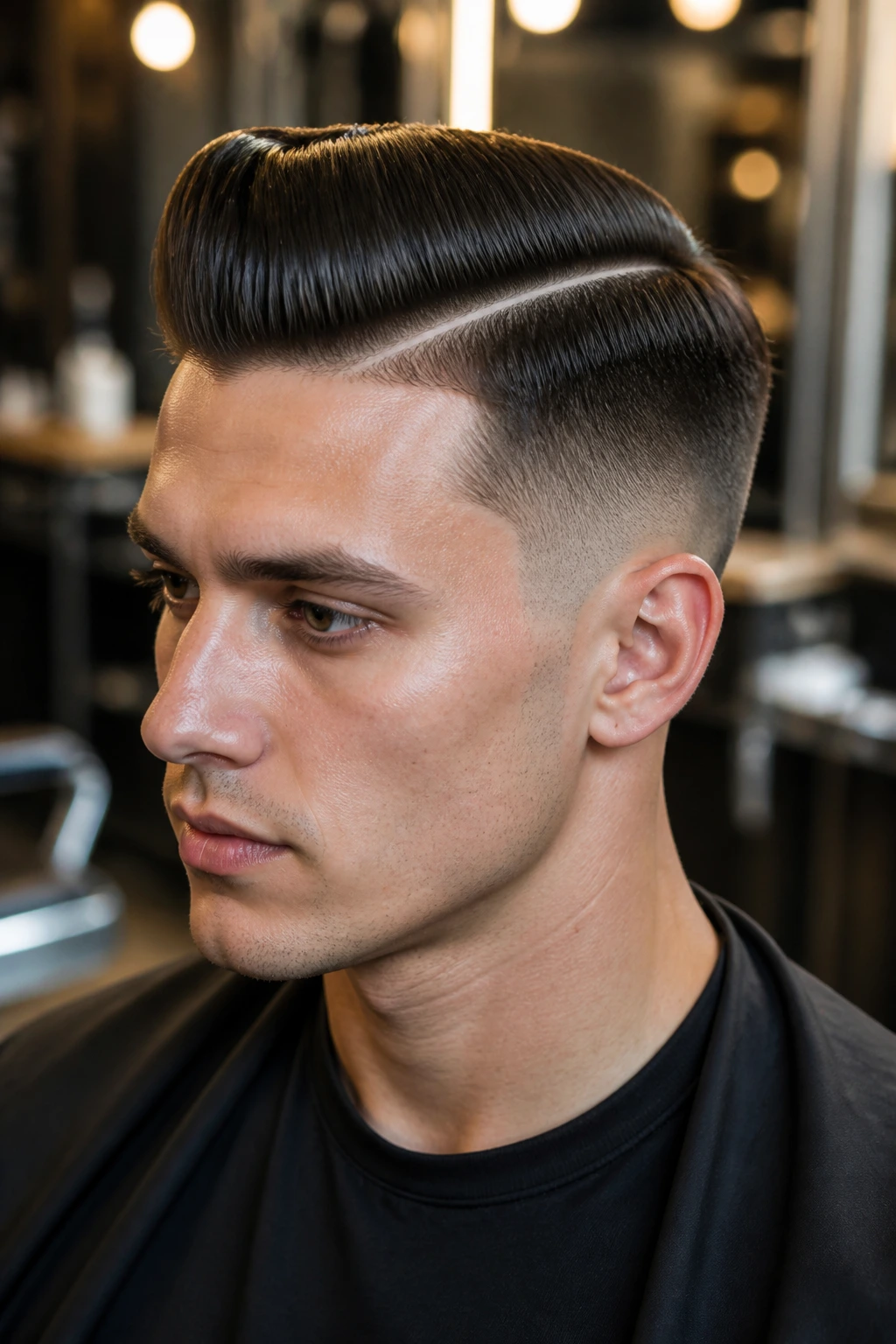
A hard part is for men who like precision. The part line gets etched in with clippers or a trimmer, and that single detail changes the whole haircut from soft to deliberate. The pomp itself can stay moderate in height, but the part gives it structure that reads fast.
Want this to look good? Keep the line crisp and don’t overload the front with product. A hard part already gives the haircut enough edge, so a heavy, greasy finish only makes it feel dated. Medium-density hair usually takes this best because the part stays visible without the scalp line getting too wide.
8. Slick-Back Pomp
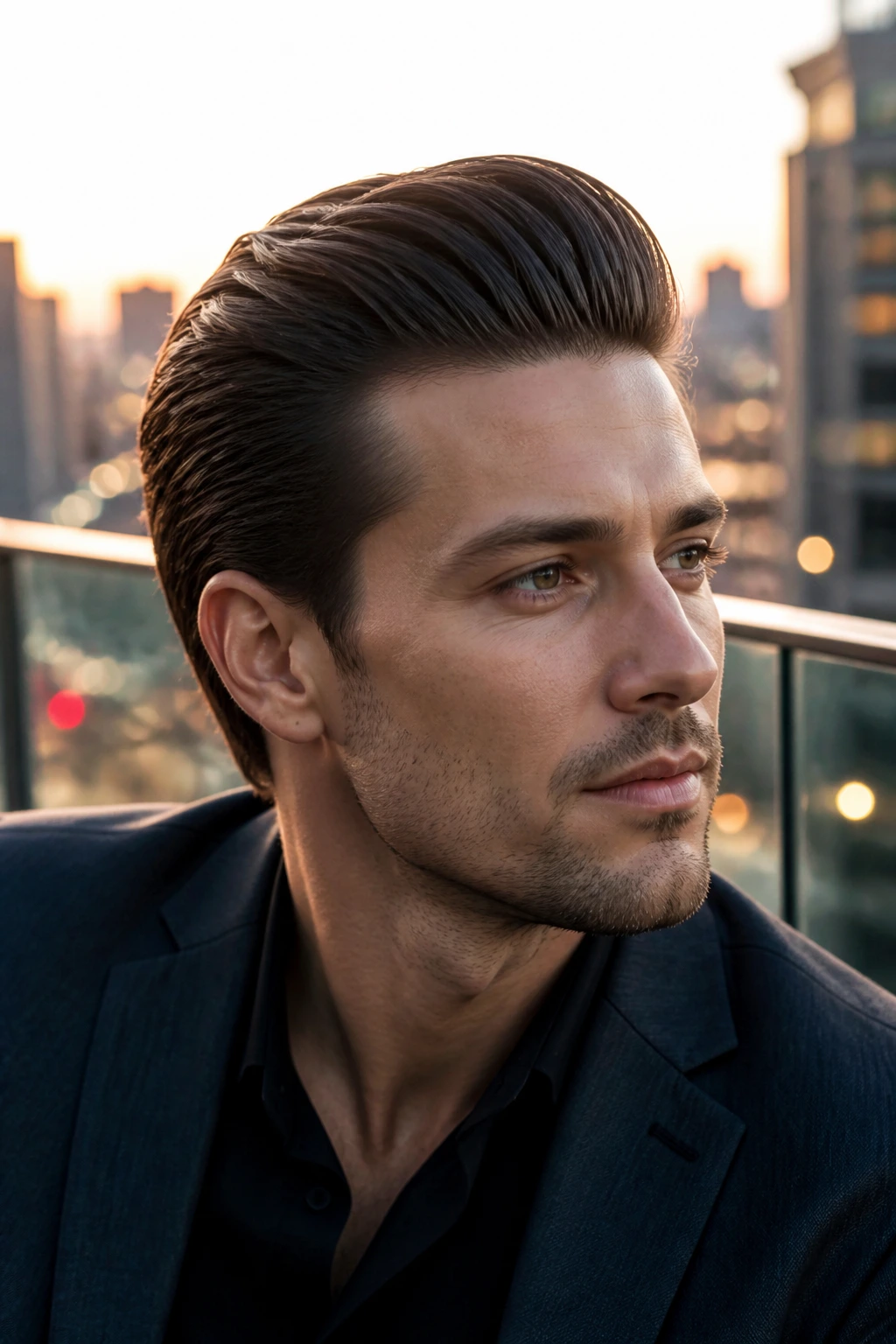
This version leans backward more than upward, which gives the haircut a smoother, denser feel. The front still has lift, but the crown gets pulled into the same direction, almost like the pompadour decided to calm down halfway through. It’s clean on thick hair and excellent when you want shine without a giant wave at the front.
A slick-back pomp works best with a comb and a product that stays flexible for a few minutes. If it sets too fast, the front can split. If it stays too soft, the top sinks. That middle ground is what you’re after.
9. Textured Pomp
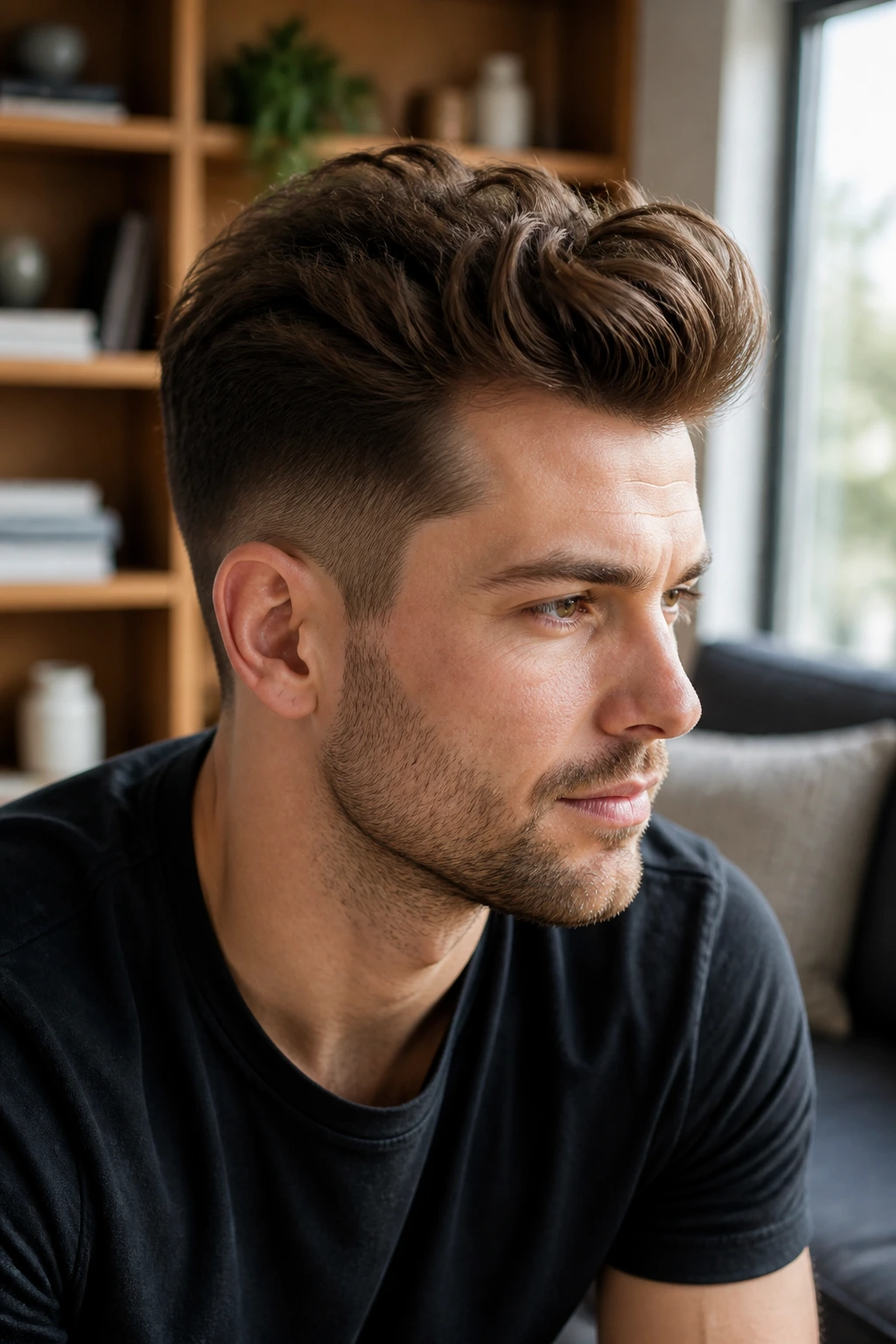
A textured pompadour is less about one smooth arc and more about controlled pieces. The front still rises, but it doesn’t look painted into place. Matte paste, sea salt spray, and a blow-dryer do most of the work here; the fingers finish it.
What Keeps the Texture Clean
The secret is not overcombining the hair. Push the roots up, rough-dry the top until it’s about 80 percent set, then use just enough product to define the front. If you’re dealing with thick hair, this style removes a lot of that blocky “helmet” feel that can happen with a classic glossy pomp.
- Best for daytime wear.
- Works well with a taper or low fade.
- Needs less shine, more separation.
- Great if your hair naturally has some bend.
10. Curly-Hair Pomp
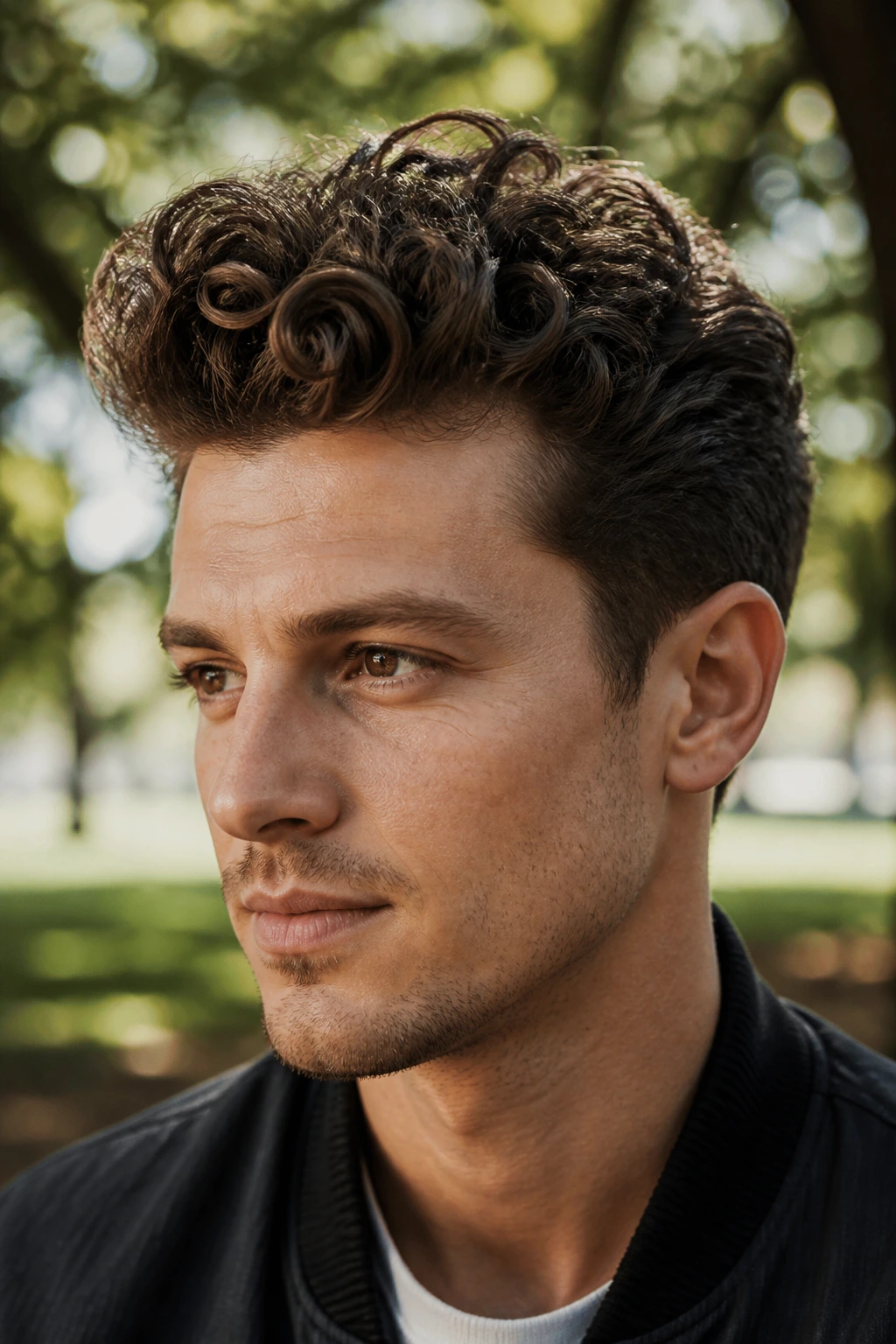
Curly hair can do a pompadour, but it has to be respected on its own terms. Don’t try to erase the curl pattern completely. Lift the front, stretch the roots with heat, and let the ends keep a little movement so the cut doesn’t turn into a stiff shell.
A curl cream or light cream pomade usually behaves better than heavy wax here. You want the front to sit upward, not get coated into submission. If your curls shrink a lot, ask for extra length on top; otherwise the pomp shrinks into a much shorter shape once it dries.
11. Wavy-Hair Pomp
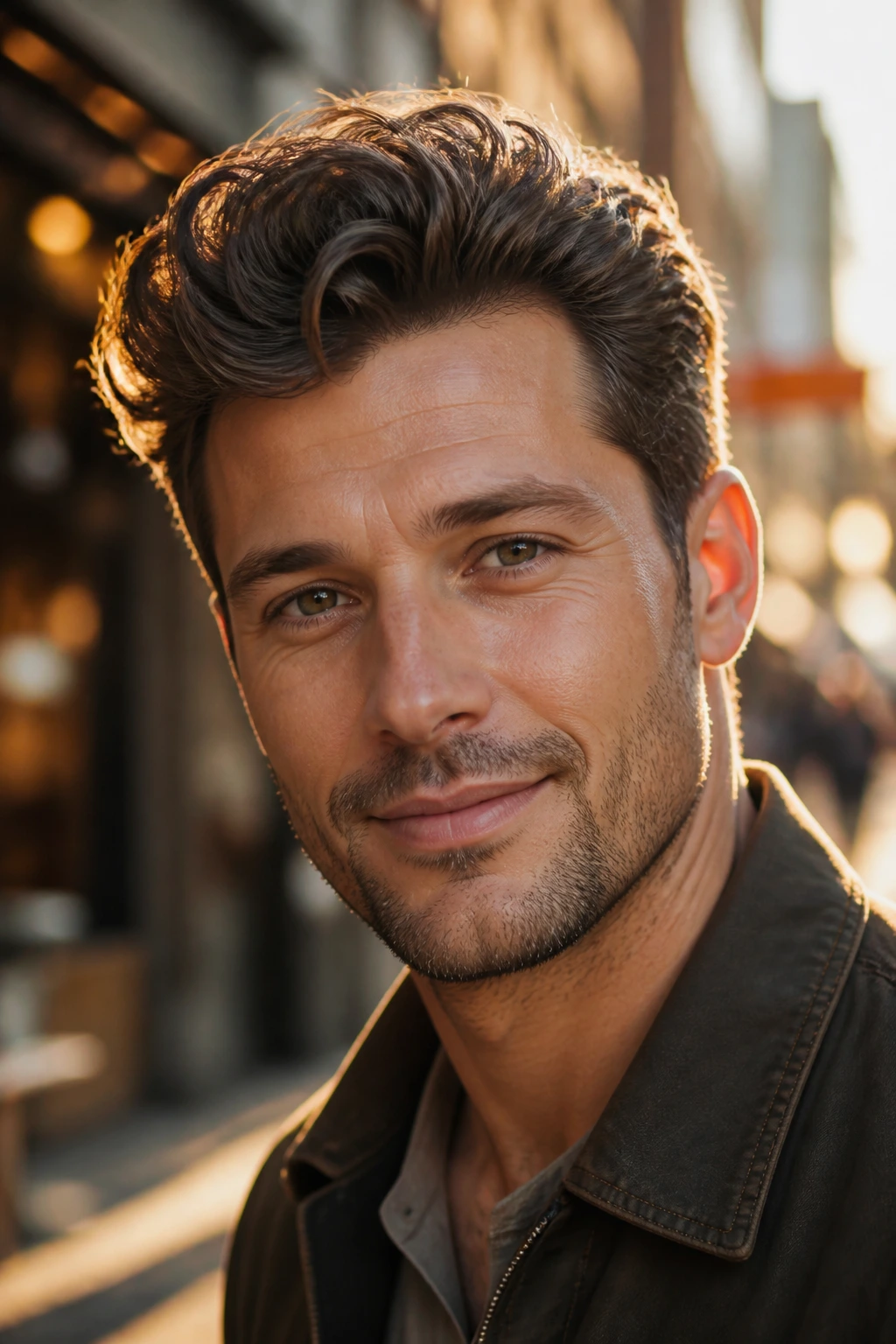
Wavy hair has one nice advantage: the bend is already there. You’re not forcing the style to make shape from scratch. The pomp rises, then the wave gives it movement that looks softer than a perfectly straight comb-back.
This version usually behaves best with a medium-hold cream or lightweight pomade. Too much grip and the waves clump together. Too little and the front slides down the forehead by lunch. A blow-dryer and vent brush are enough to set the direction without flattening the wave out of existence.
12. Thick-Hair Pomp
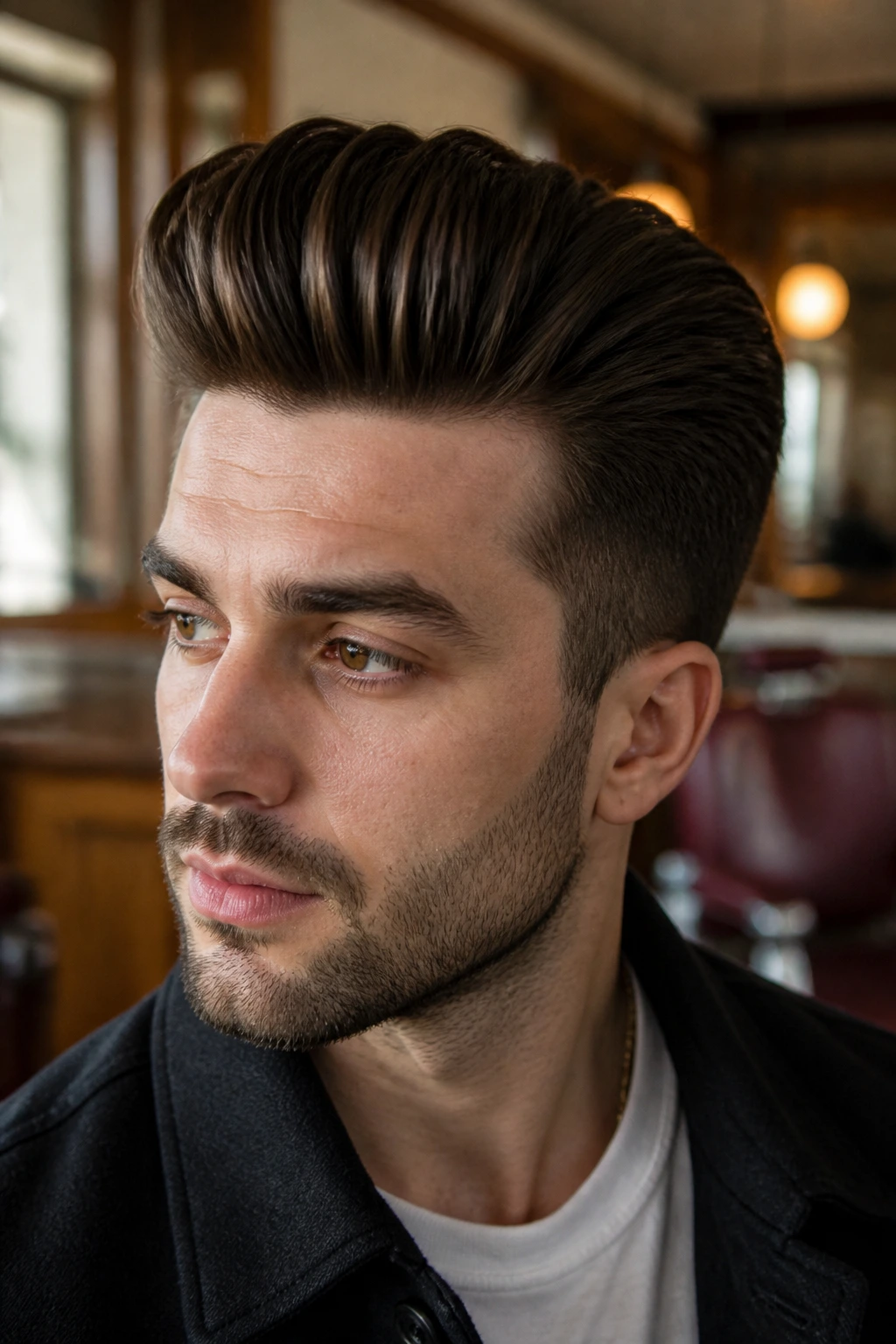
Thick hair can make a gorgeous pompadour, but only if the barber removes enough internal weight. Otherwise the top turns into a solid block and the front refuses to sit up. Ask for debulking through the crown and mid-top so the hair can move instead of sitting like a slab.
Styling thick hair takes more heat than most men expect. Dry the roots upward first, then shape the front with a comb before product goes in. If you skip the blow-dryer, the style usually collapses into a heavy brush-back instead of a proper pomp.
13. Fine-Hair Pomp
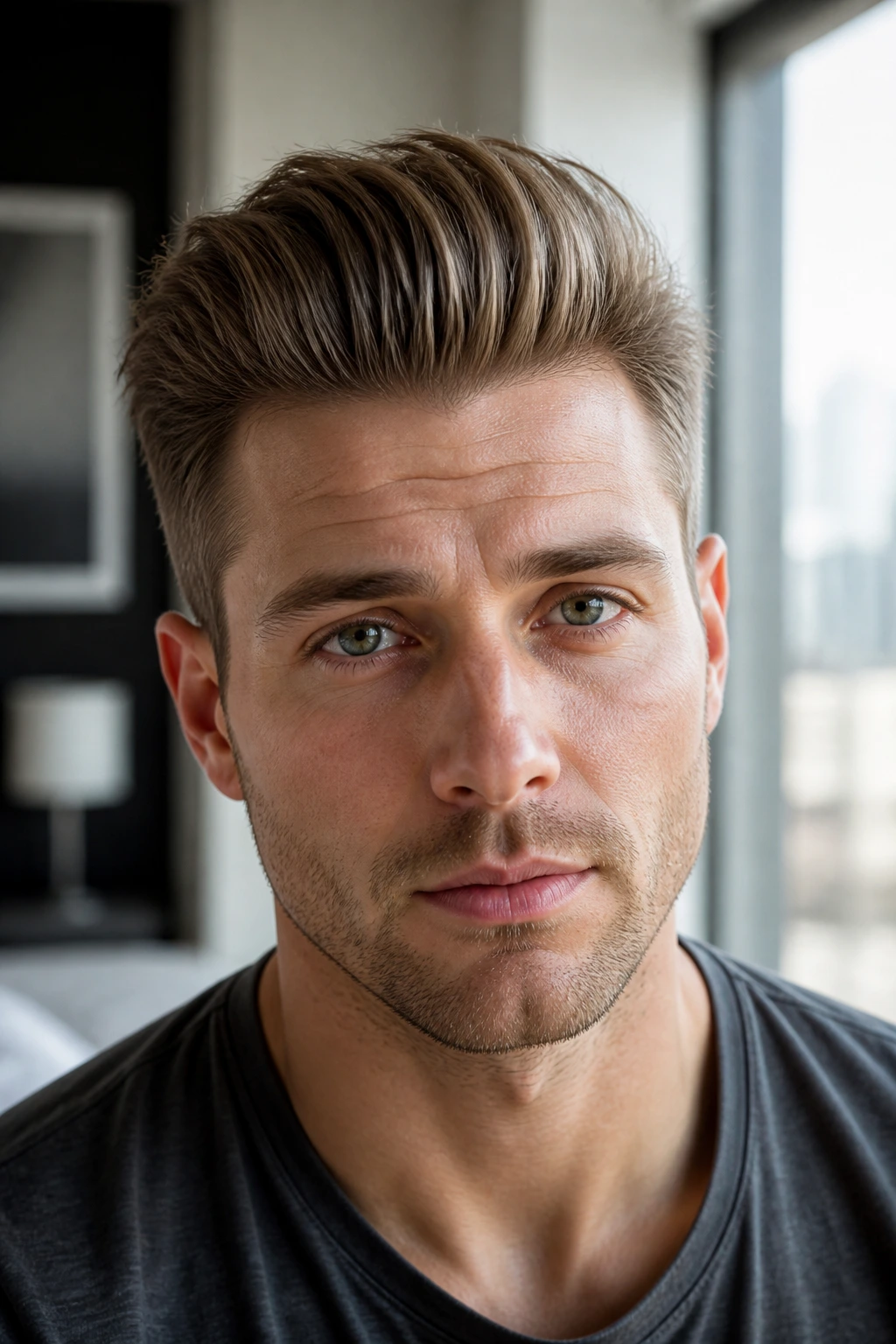
Can fine hair pull off a pompadour? Yes, if the cut stays honest. Keep the top shorter—around 2.5 to 3.5 inches—and use pre-styling spray or mousse before any clay or pomade goes near it. Fine hair looks best when the root lift is built first and the product comes second.
The mistake to avoid is drowning it in shiny product. That only exposes how thin the hair is and drags the front downward. A dry, airy finish with a little texture gives the illusion of more density and keeps the pompadour from collapsing under its own weight.
14. Short Pomp
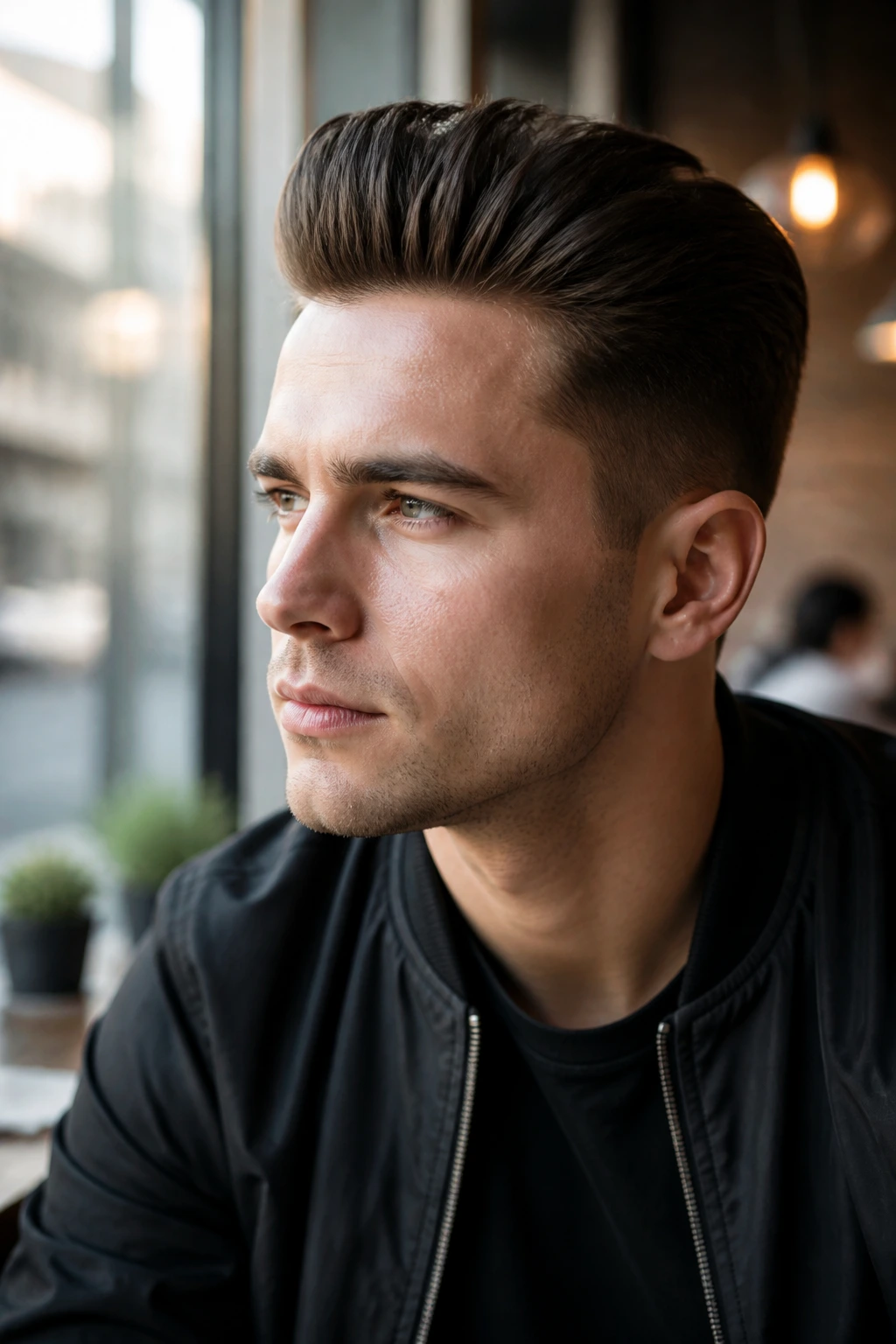
A short pompadour is all about control. The top stays compact, usually around 2 to 3 inches, which makes it easier to style and less likely to flop over when the weather gets humid or your day gets long. It doesn’t have the dramatic sweep of a big pomp, but it does have discipline.
This is the cut for men who want the shape without the upkeep. A small amount of matte paste, a quick blow-dry at the front, and you’re done. It’s tidy enough for formal settings and casual enough that it doesn’t look overdressed with a plain T-shirt.
15. Long-Top Pomp
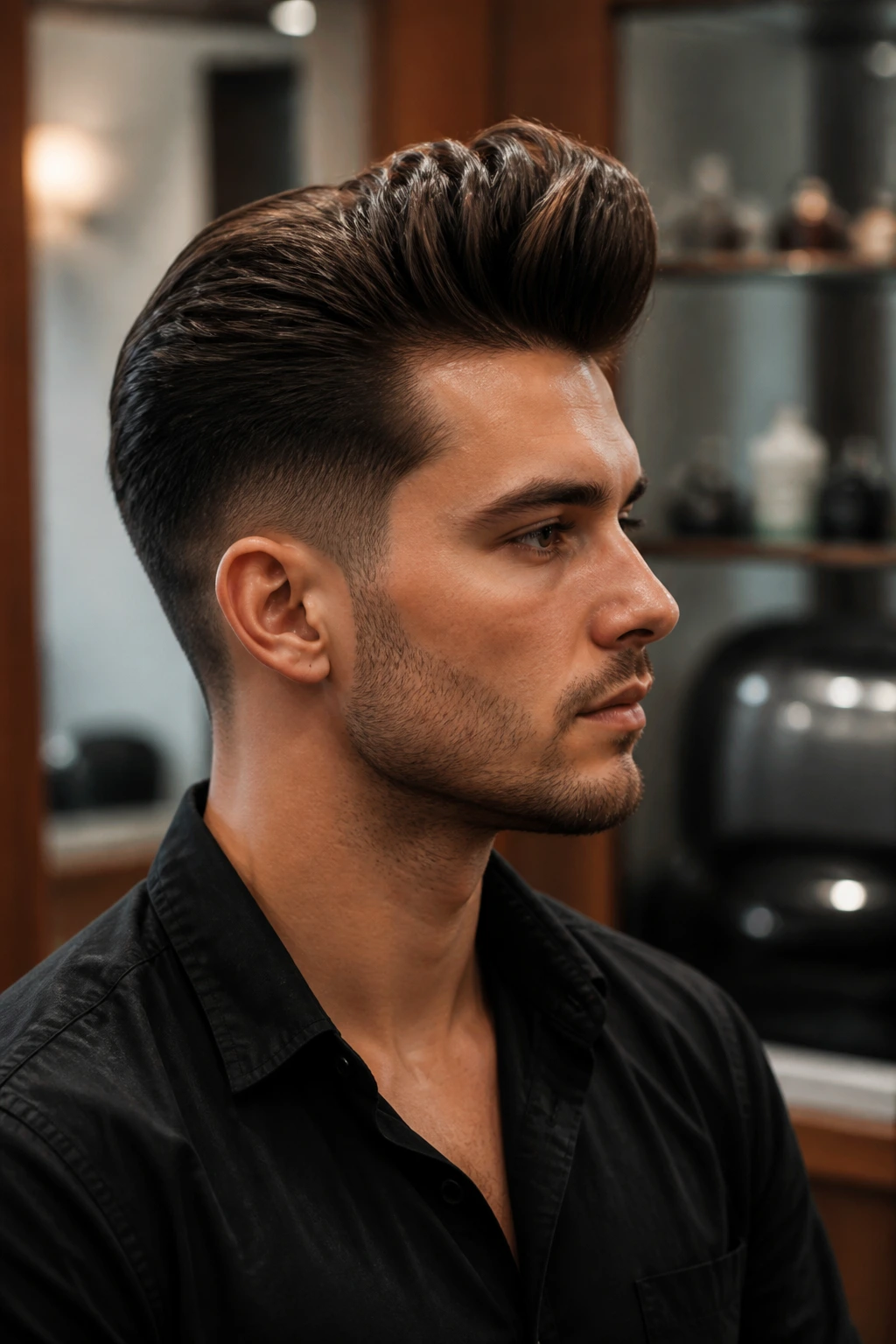
The long-top pompadour is where the haircut starts to look sculptural. More length means more drama, but it also means more responsibility. Hair that sits 5 inches or longer needs a proper blow-dry, a brush that can guide the shape, and enough product to keep the front from folding in on itself.
It works best when the sides are kept restrained. If the sides get bulky, the top loses its sense of lift and just looks long. The payoff is a strong silhouette from the side profile, especially when the front arcs back rather than straight up.
16. Everyday Pomp

This is the one I’d call the safest all-rounder. The height is moderate, the finish is not too glossy, and the sides are short enough to look clean without demanding a weekly cleanup. It’s the kind of pomp that can go from a weekday errand to a dinner table without changing its personality.
If you want a style like this, keep your product routine boring in the best way. One pre-styler, one small amount of clay or paste, one quick comb through the top. That’s it. A daily pomp should be efficient, not ceremonial.
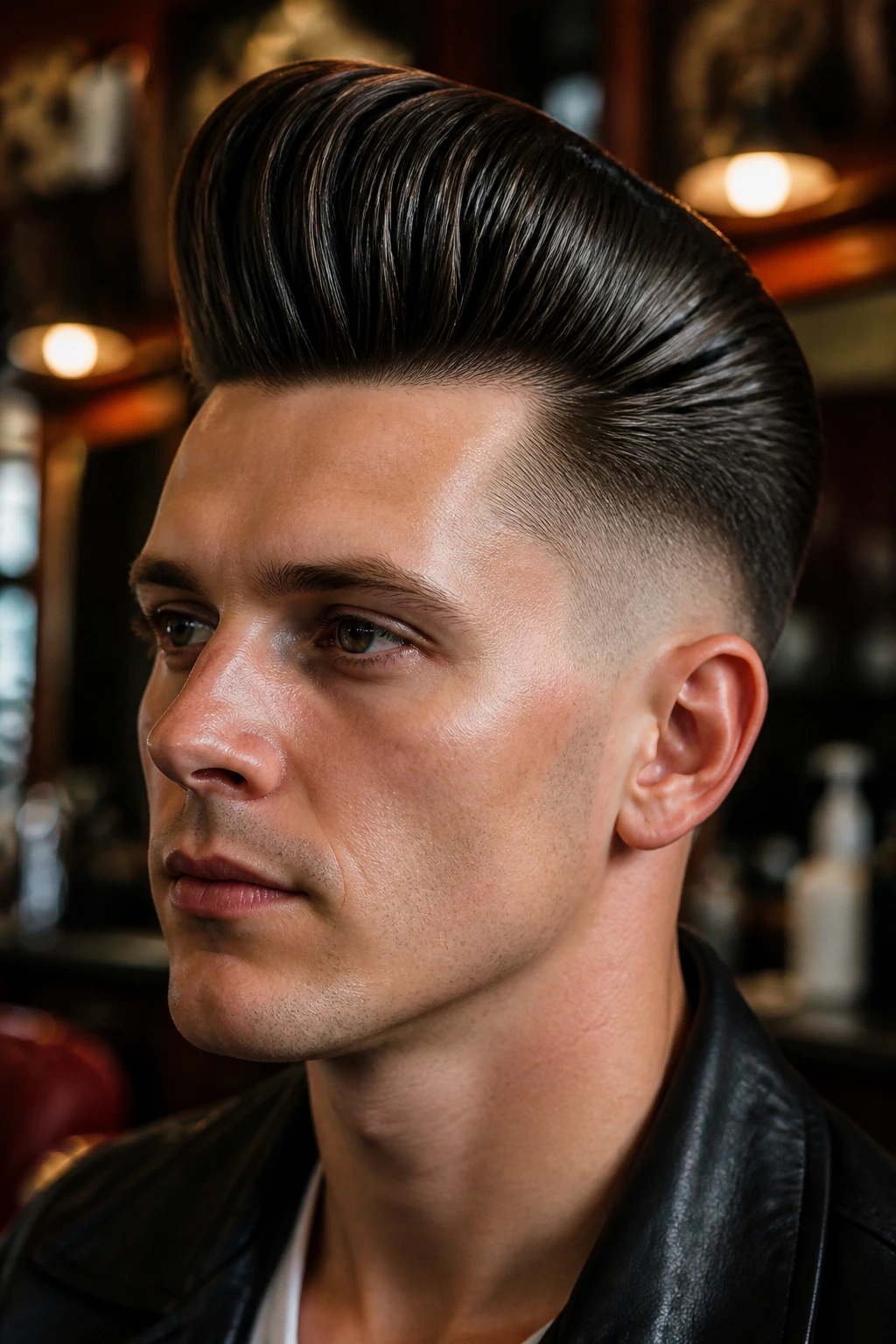
17. High-Shine Greaser Pomp
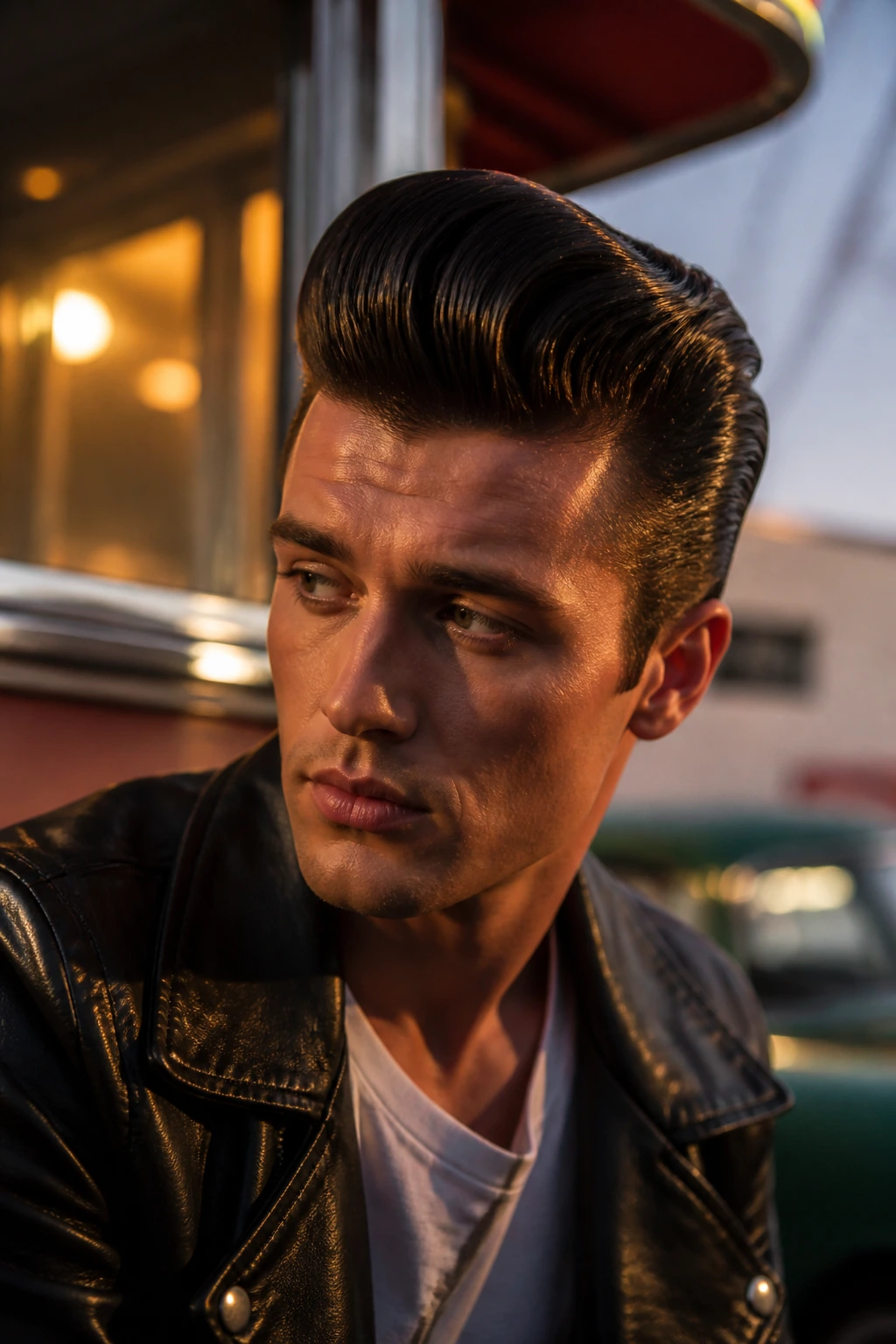
Glossy pompadours carry a certain old-school swagger. The hair looks controlled, almost wet, with comb marks that show the direction plainly. It’s not subtle, and I mean that as a compliment. A proper greaser pomp looks intentional because there’s nowhere for the styling to hide.
What Makes It Read Retro
The finish does most of the work. Use a high-shine pomade, comb the top cleanly backward, and keep the sides tidy enough that the front doesn’t get swallowed by them. Thick or straight hair usually takes this best, since the shine can emphasize density instead of exposing gaps.
- Pair it with a crisp neckline.
- Keep the front curved, not pointed.
- Use less product than you think; shine builds fast.
- Best with jackets, work shirts, and clean collars.
18. Matte Modern Pomp
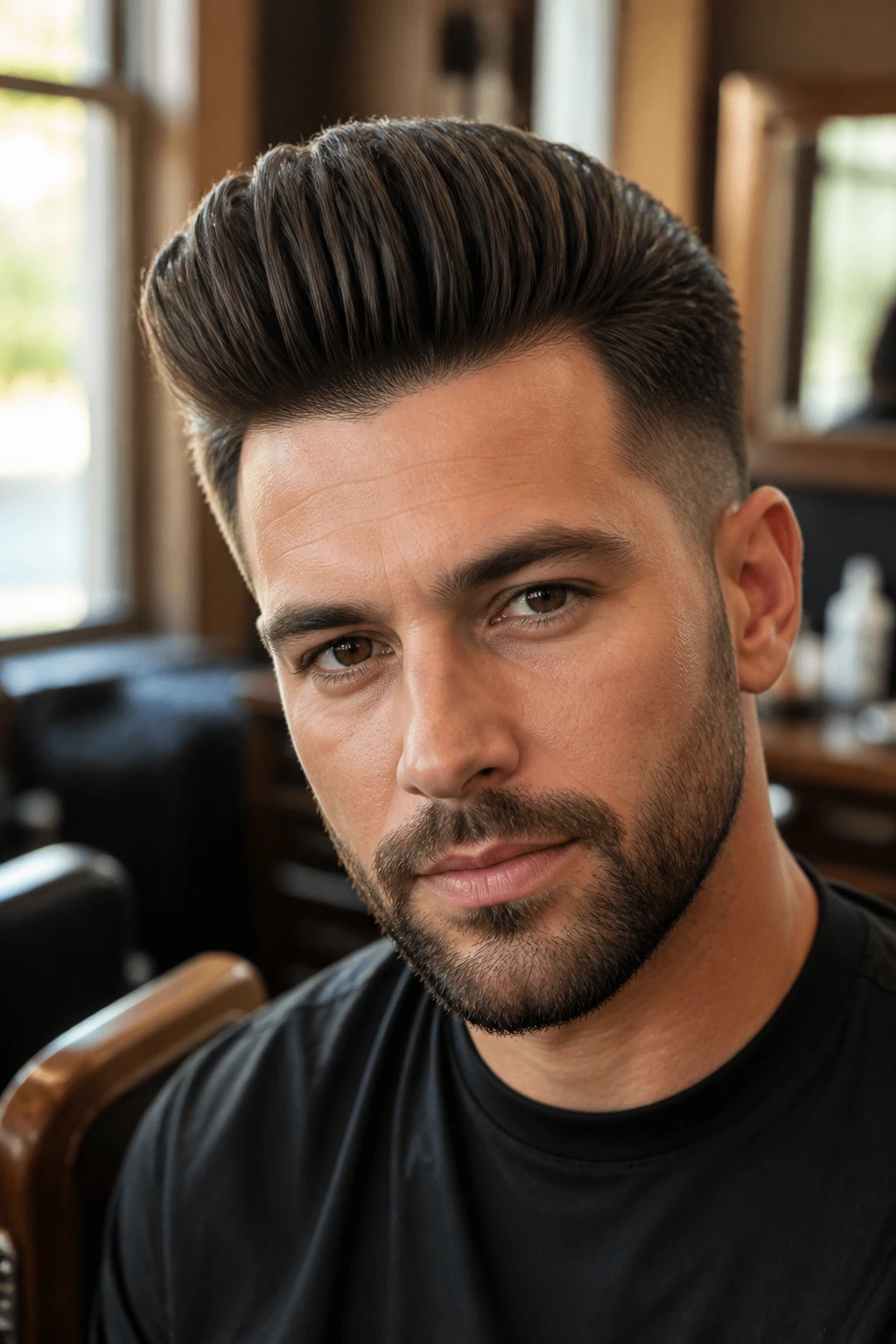
Matte changes everything. The haircut keeps the same front lift, but the finish goes dry and soft instead of glossy. That makes the style feel less vintage and more like something you can wear with almost anything, from denim to a blazer.
The other advantage is texture. Matte products hide small imperfections in the cut and make the pomp easier to reset after the hair gets bumped around. If your hair is naturally oily, this is often the smarter move anyway. Shine can work against you there.
19. Quiff-Pomp Hybrid
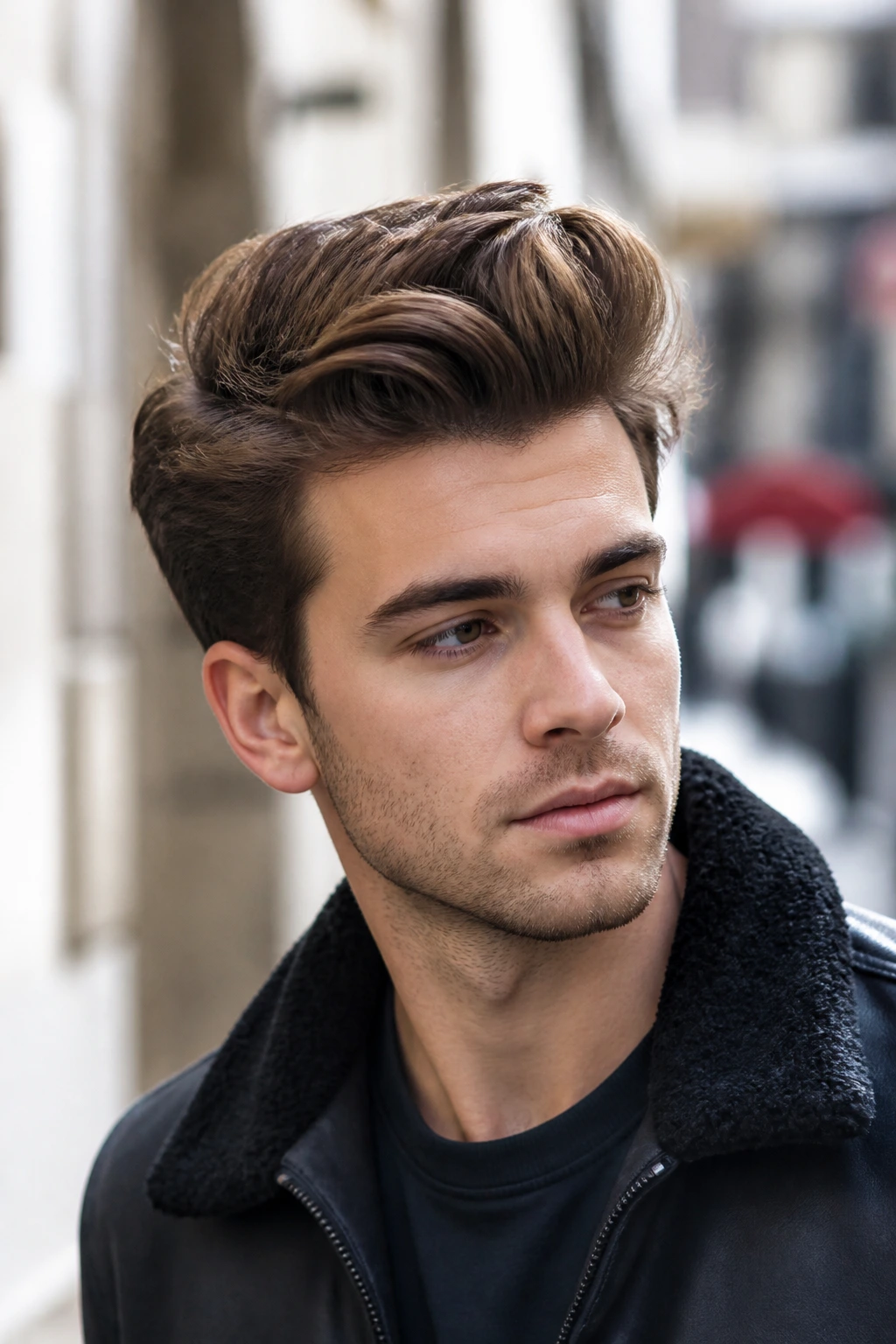
This version sits between a pompadour and a quiff. The front rises, but it tilts a little more forward and carries more airiness through the top. It’s a looser shape, which makes it feel younger and less formal than a traditional pomp.
I like it when the hair is medium length and has some natural bend. The cut doesn’t need a razor-sharp part or a heavy finish. A light cream, a vent brush, and a quick front lift are enough. If you want the pomp idea without the rigid outline, this is a smart compromise.
20. Military-Edge Pomp
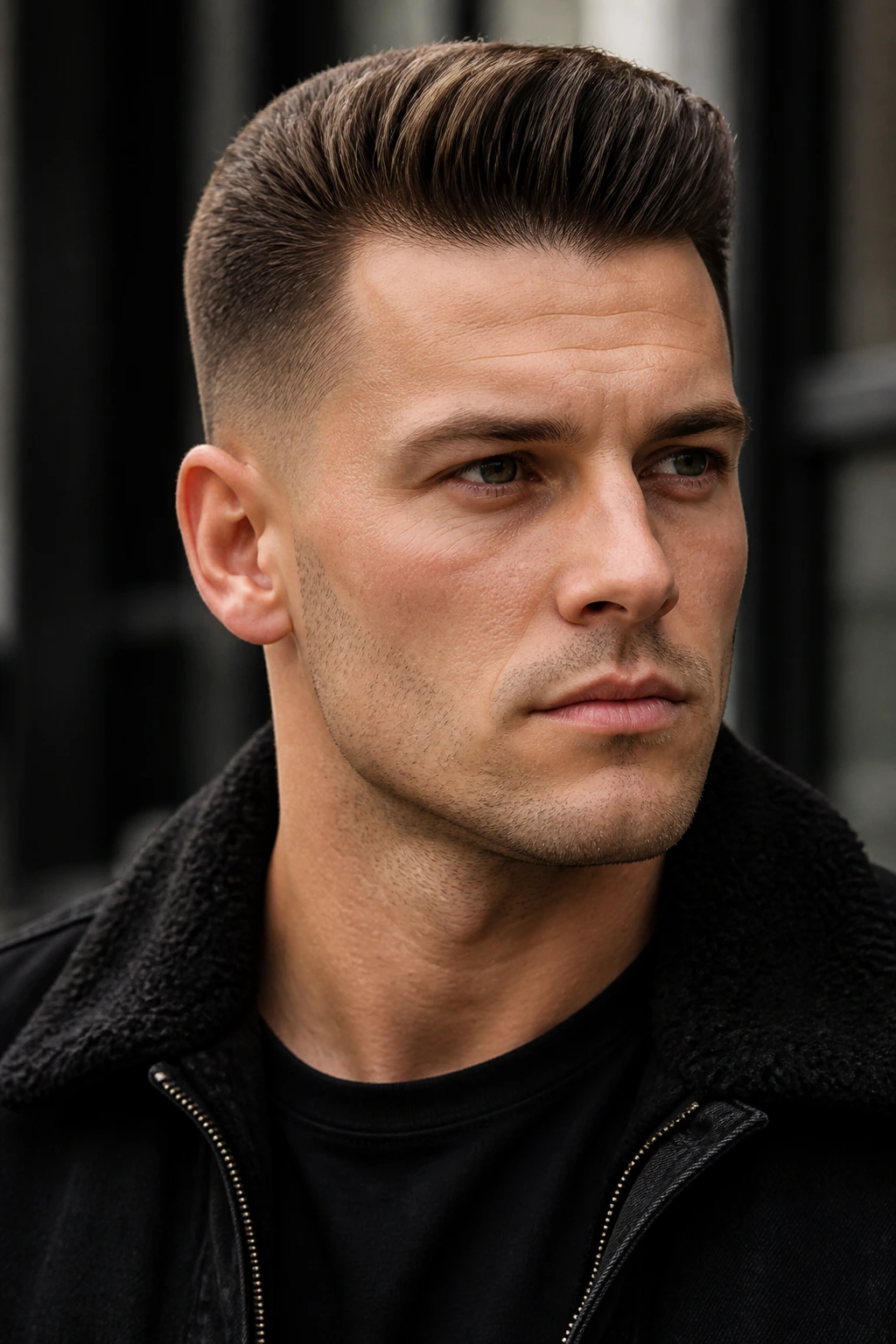
A military-edge pompadour keeps things tight. The top is short, the sides are close, and the front gets enough lift to signal the shape without turning into a full-height statement. It’s neat, practical, and hard to mess up if the cut is clean.
The danger here is letting the top get too flat. If the front has no rise at all, you’re left with a standard brush-up, not a pompadour. Give the roots a little push with a blow-dryer, then set them with a light product so the style stays upright but not stiff.
21. Gentleman’s Taper Pomp
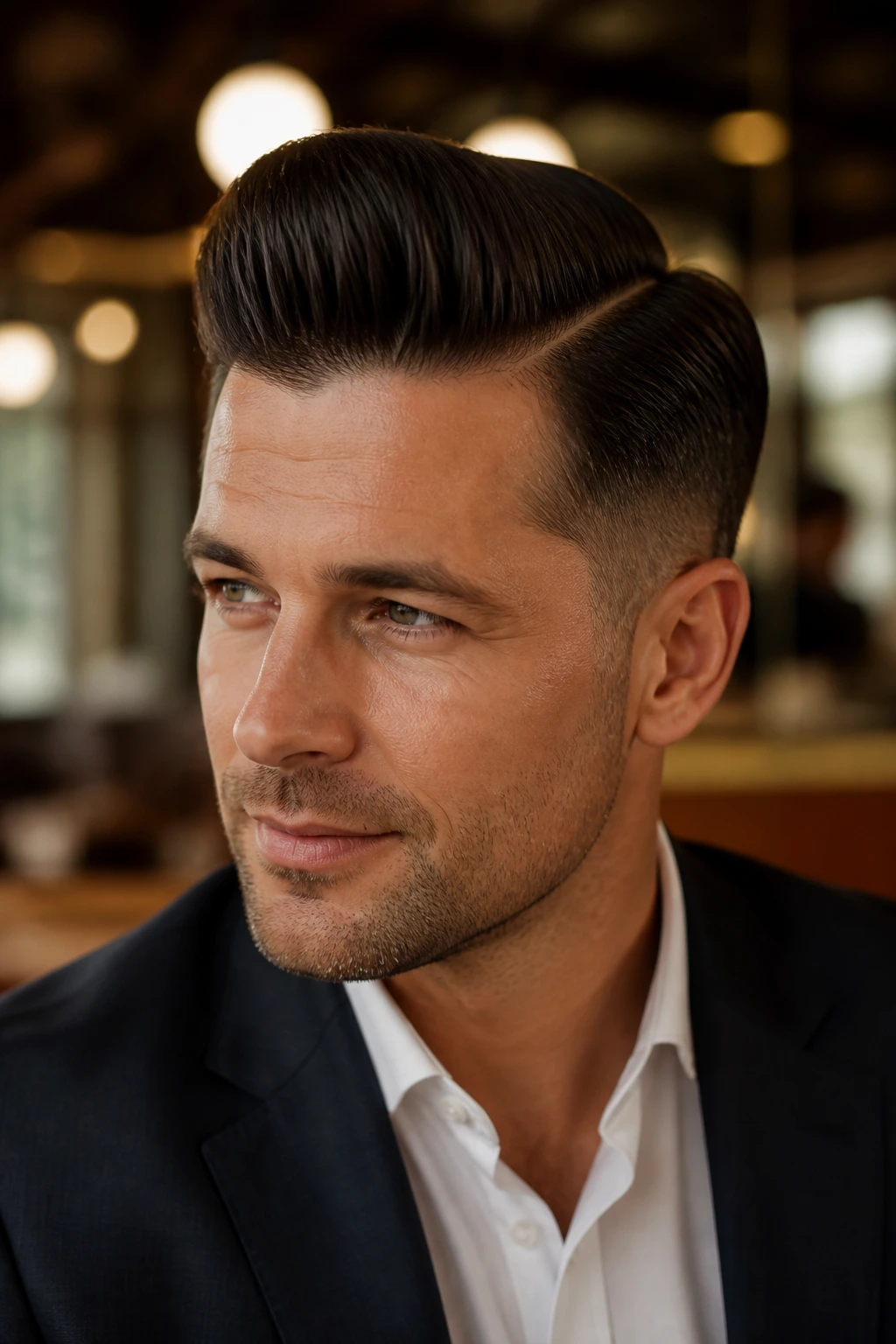
This is the polished version that never needs to shout. The sides are scissor-cut or softly tapered, the top has a smoother contour, and the front rises with restraint. It looks best on men who want something neat enough for formal wear but not so severe that it feels corporate.
The part, if you use one, should be subtle. A side part that looks drawn on too hard can make the haircut feel old-fashioned in the wrong way. Keep the texture soft, the edges clean, and the neckline tidy.
22. Beard-Linked Pomp
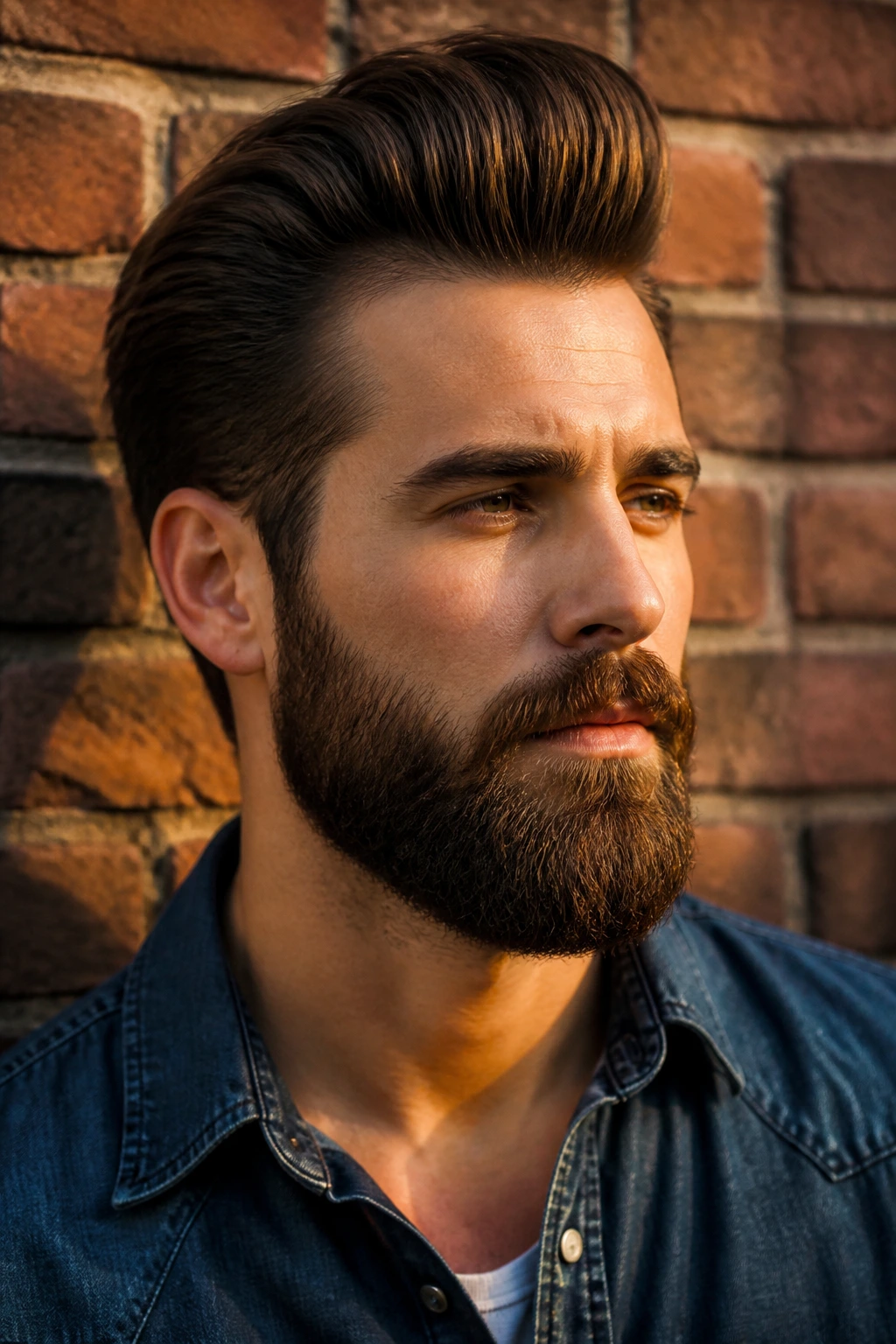
A pompadour with a beard works best when the sideburns are handled on purpose. The haircut should not end abruptly at the ears and then crash into a completely separate beard shape. Blend the sideburns, keep the temples clean, and let the beard echo the fullness of the top.
That connection matters more than people think. It makes the face read as one shape instead of two competing ones. If the beard is heavy, the pompadour can actually help balance it by lifting the eye upward before it drops to the jaw.
23. Clean-Shaven Pomp
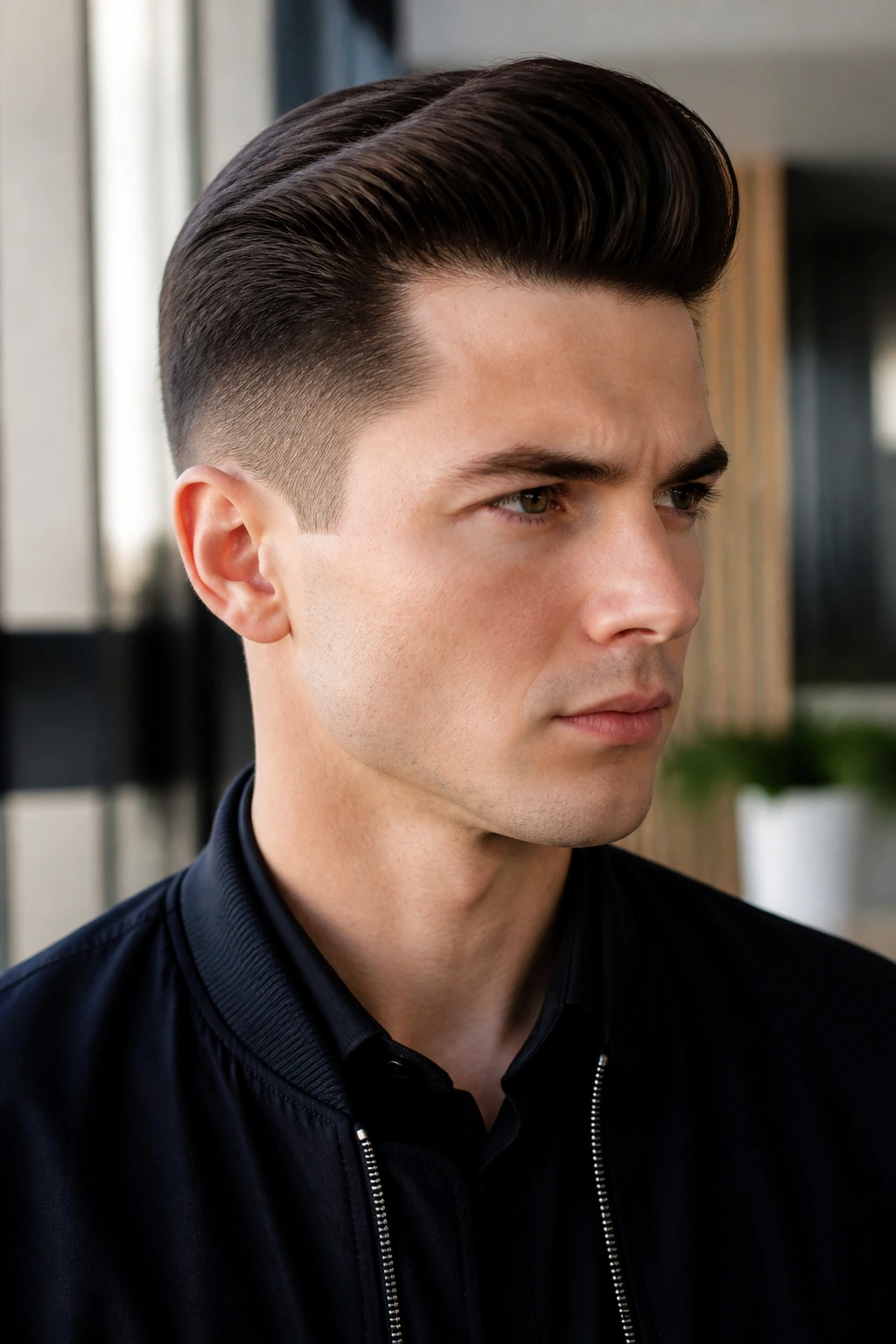
Without a beard, the haircut has to carry the whole frame. That means the side shape, temple blend, and neckline need to be sharp. There’s nowhere for sloppy edges to disappear, which is why a clean-shaven pomp can look so crisp when it’s done right.
Keep the top controlled and don’t overdo the width near the temples. A clean-shaven face already gives you a smooth lower half; the hair should add structure, not bulk. This is one of those cuts that looks best when the barber respects symmetry.
24. Round-Face Balancing Pomp
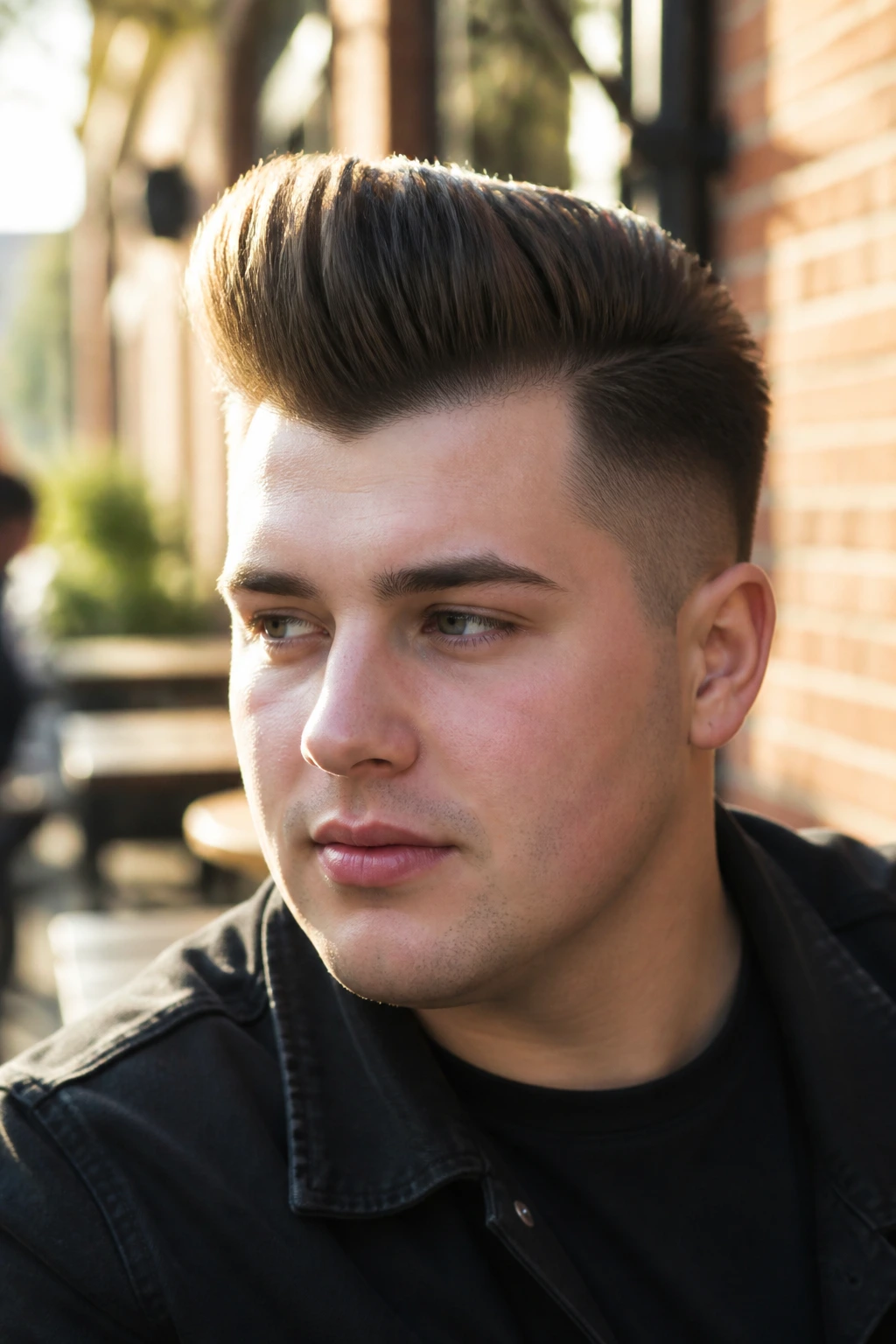
Round faces benefit from a pompadour that goes up before it goes out. Height stretches the face visually, while tighter sides stop the head from looking wider than it is. Keep the top higher at the front and narrower at the temples.
Shape Rule
The worst thing you can do here is add width at the sides. That just doubles down on the roundness. A clean taper, a little extra height, and a controlled front sweep give the face a longer, leaner line without making the cut look extreme.
25. Square-Jaw Pomp
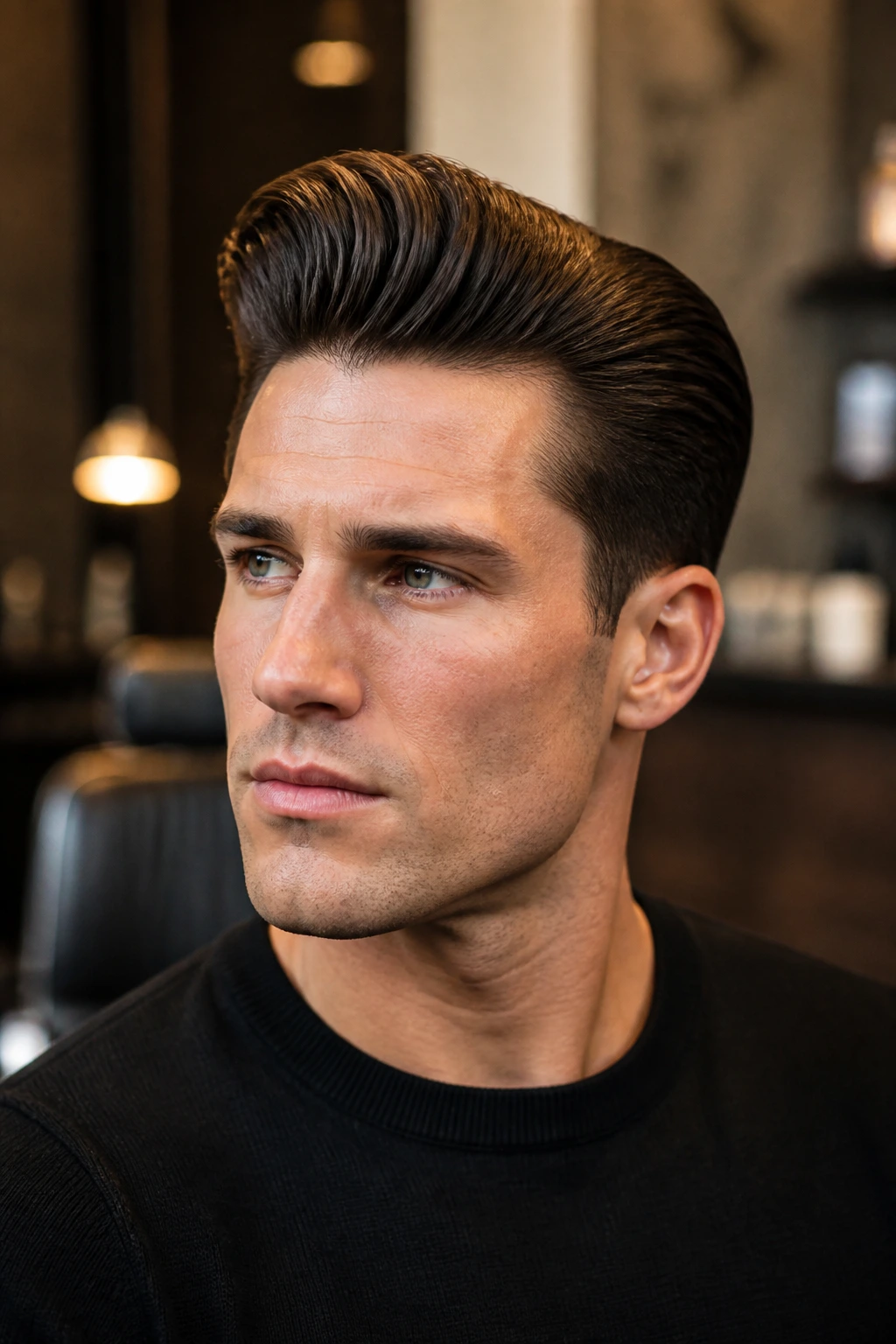
Square jaws can handle a firmer pomp, but the top should still have some softness. Too much rigidity near the front can make the face look boxy. A little curvature in the hairline and a slightly rounded lift usually looks better than a flat, squared-off edge.
This style can take a stronger side fade or a neat taper, depending on how bold you want the overall silhouette to be. If your jawline is already heavy, keep the front airy. If the jaw is strong but balanced, a more dramatic pomp can work just fine.
26. Oval-Face Pomp
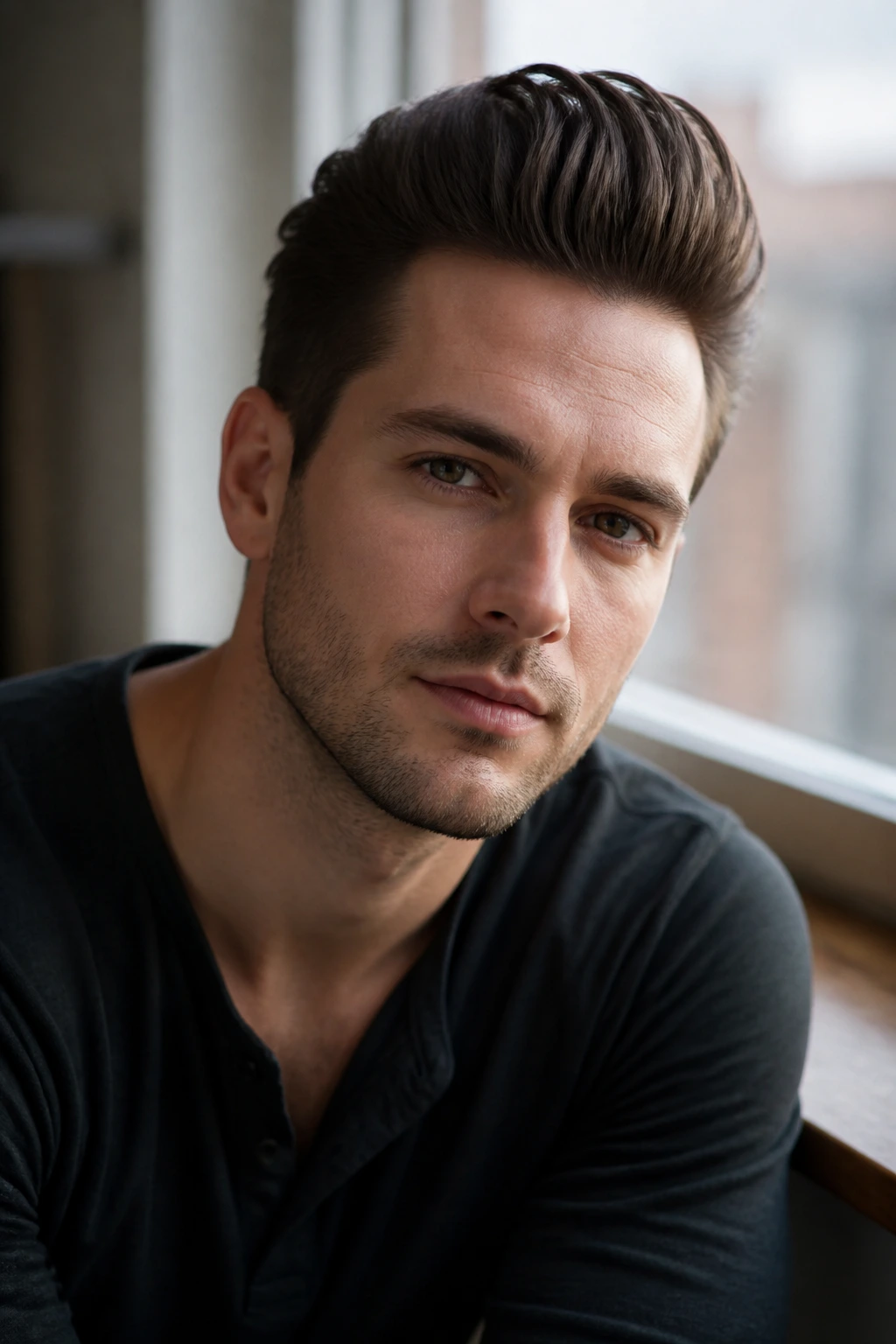
Oval faces get the easiest ride here. The proportions already work, so the main decision is personality: do you want height, texture, shine, or restraint? Almost any classic pomp silhouette will fit, which is nice, but it can also make the haircut feel generic if you don’t give it some character.
My advice is to avoid pushing the front too high. Oval faces already have balance; you do not need to stretch them more. A medium-height pomp with clean sides and a natural finish usually lands best.
27. Widow’s Peak Pomp
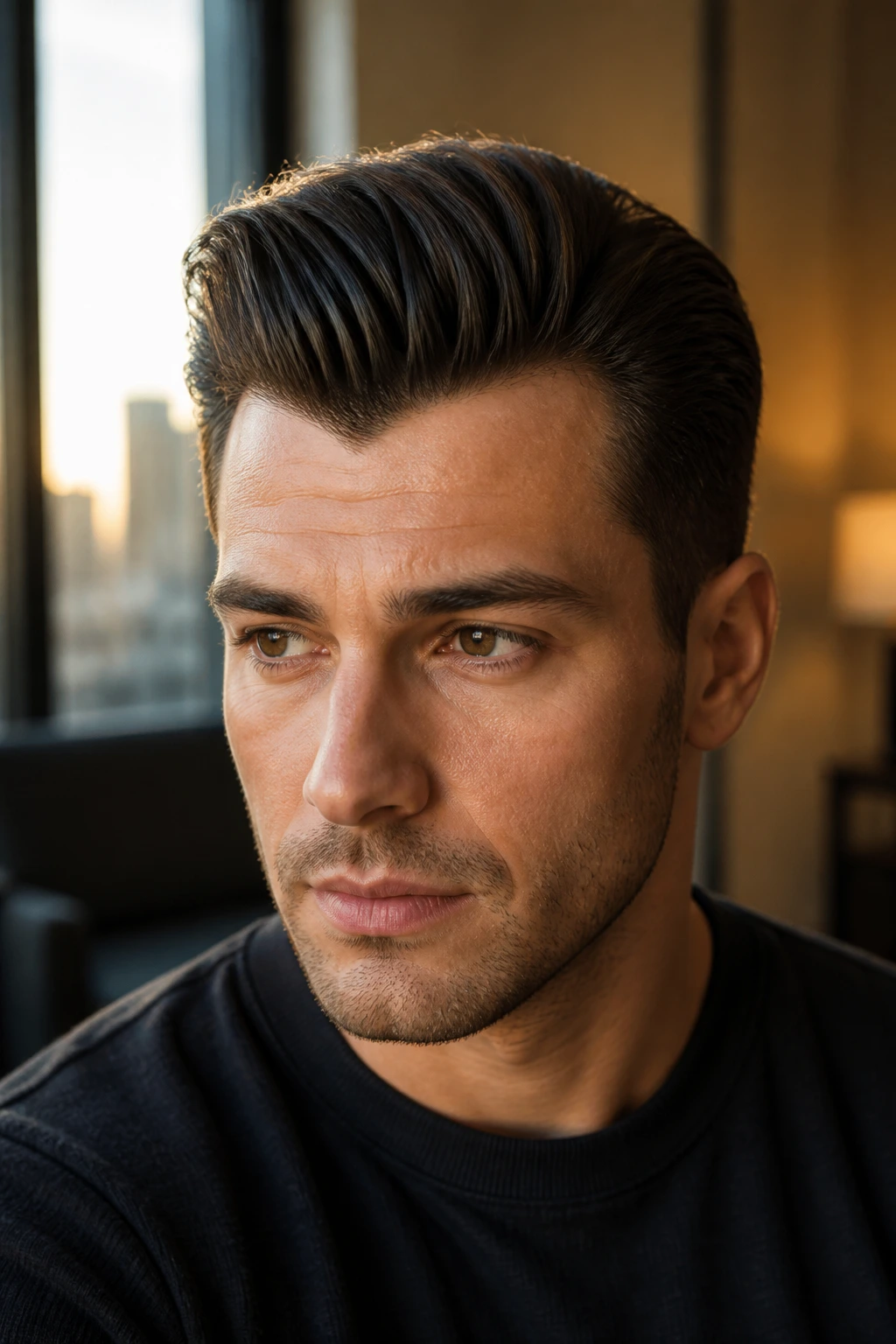
A widow’s peak can make people nervous, which is a shame, because a pompadour can actually work with it very well. The trick is to shape the front around the peak instead of trying to hide it under a sheet of hair. That often means leaving a little more length right at the center.
The hairline should look intentional, not patched over. If you brush everything straight back, the peak can show in a way that feels abrupt. A slight curve to the lift softens the V and makes the front line read as a feature, not a flaw.
28. Receding Hairline Pomp
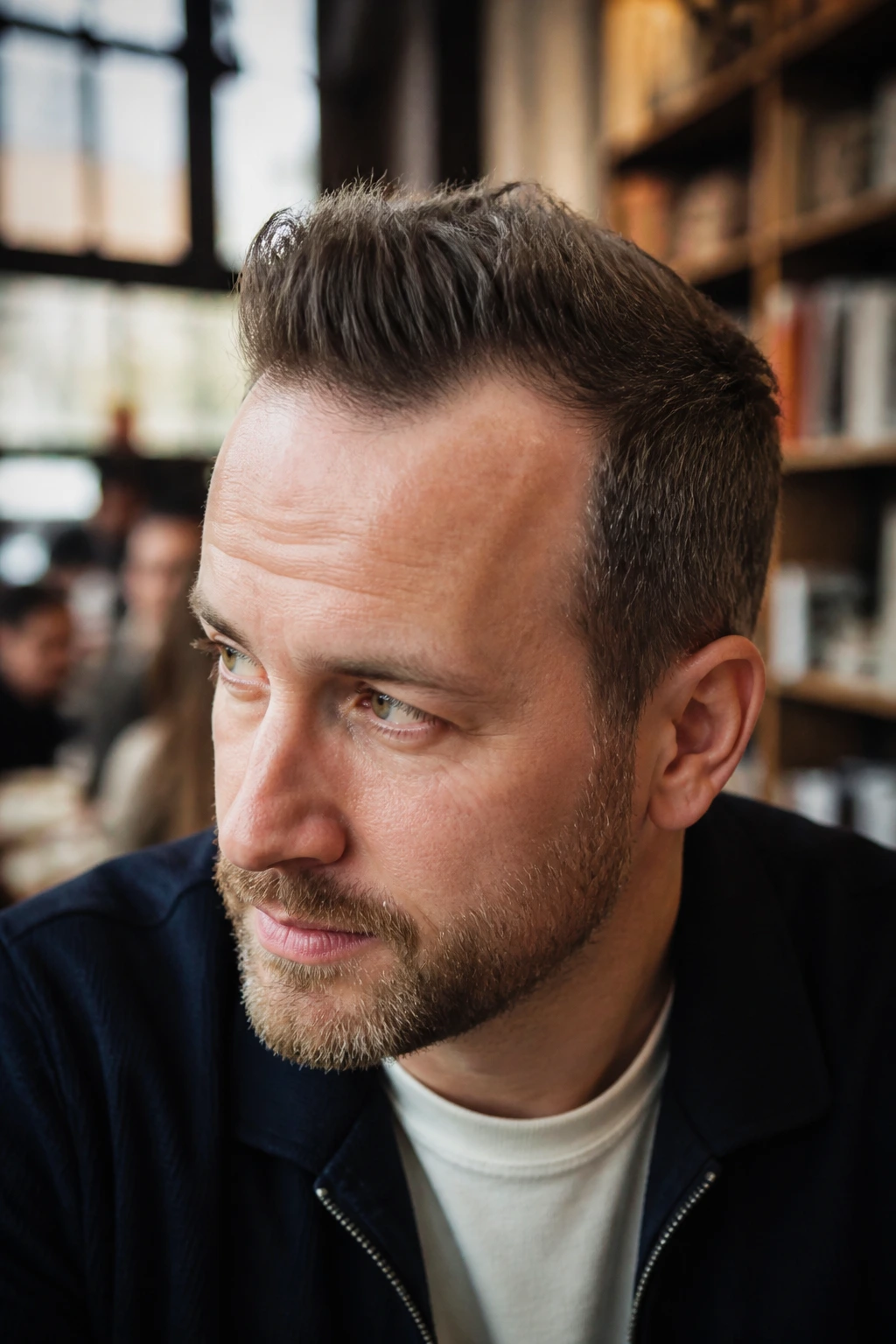
This is where honesty matters. A pompadour can work with a receding hairline, but it needs to be shorter, looser, and more textured than the big glossy versions you see in old photos. Heavy slicking only exposes the recession and makes the front look thin.
Keep the height modest and push the focus a little farther back toward the crown. Matte products usually behave better here because they don’t split the hairline into shiny lines. If the cut is tailored well, the pomp can actually disguise the recession by pulling the eye upward instead of straight to the temples.
29. Salt-and-Pepper Pomp
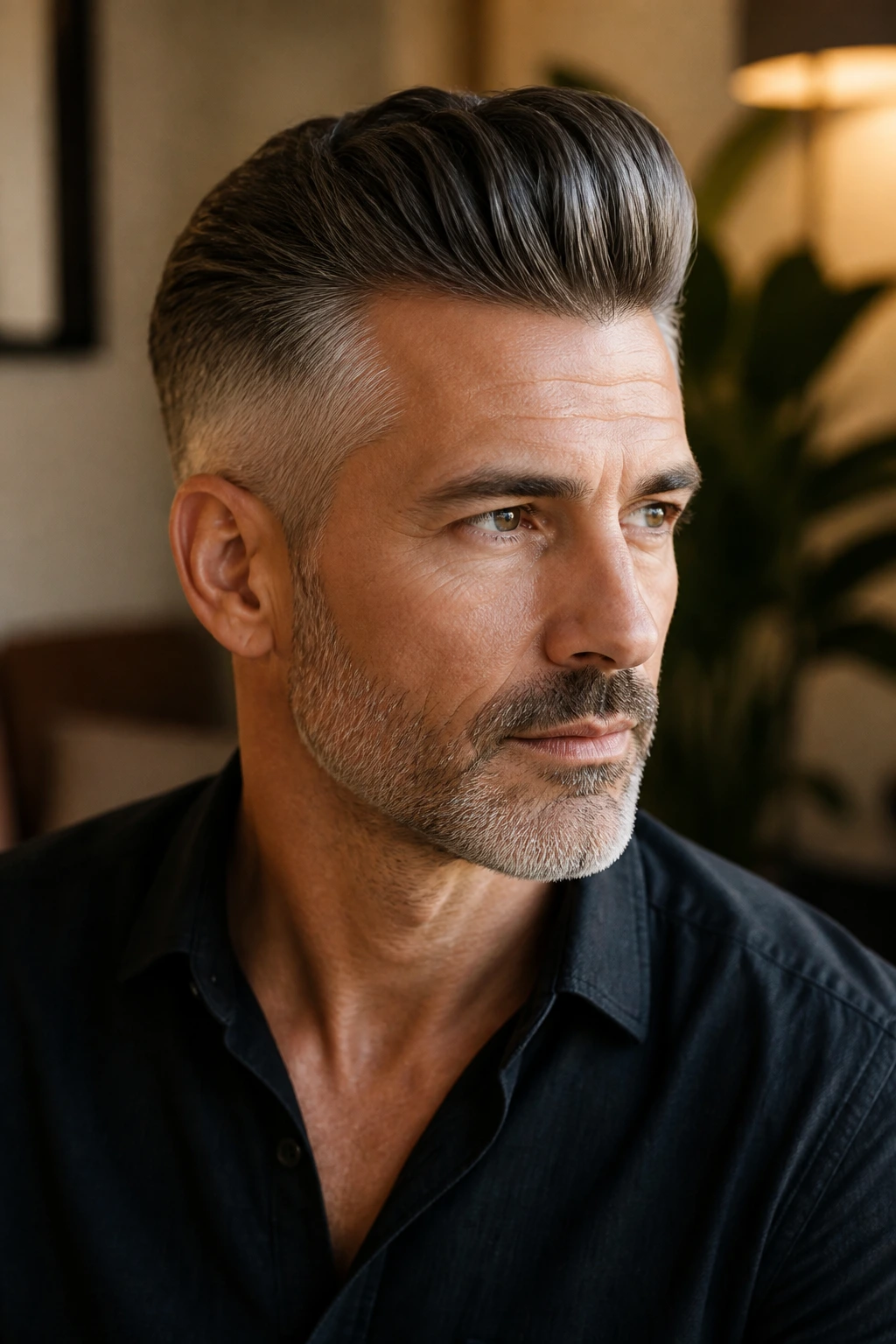
Gray hair gives a pompadour a different kind of life. The silver strands catch light in a way that makes the texture look fuller, especially with a low-shine finish. A salt-and-pepper pomp doesn’t need much help to look sharp; the color already adds contrast.
I’d keep the product light and the sides tight enough to keep the cut clean. Too much shine can make gray hair look coarse in the wrong way. A soft matte finish usually feels more modern, and it lets the natural streaks do the work.
30. Straight-Hair Pomp
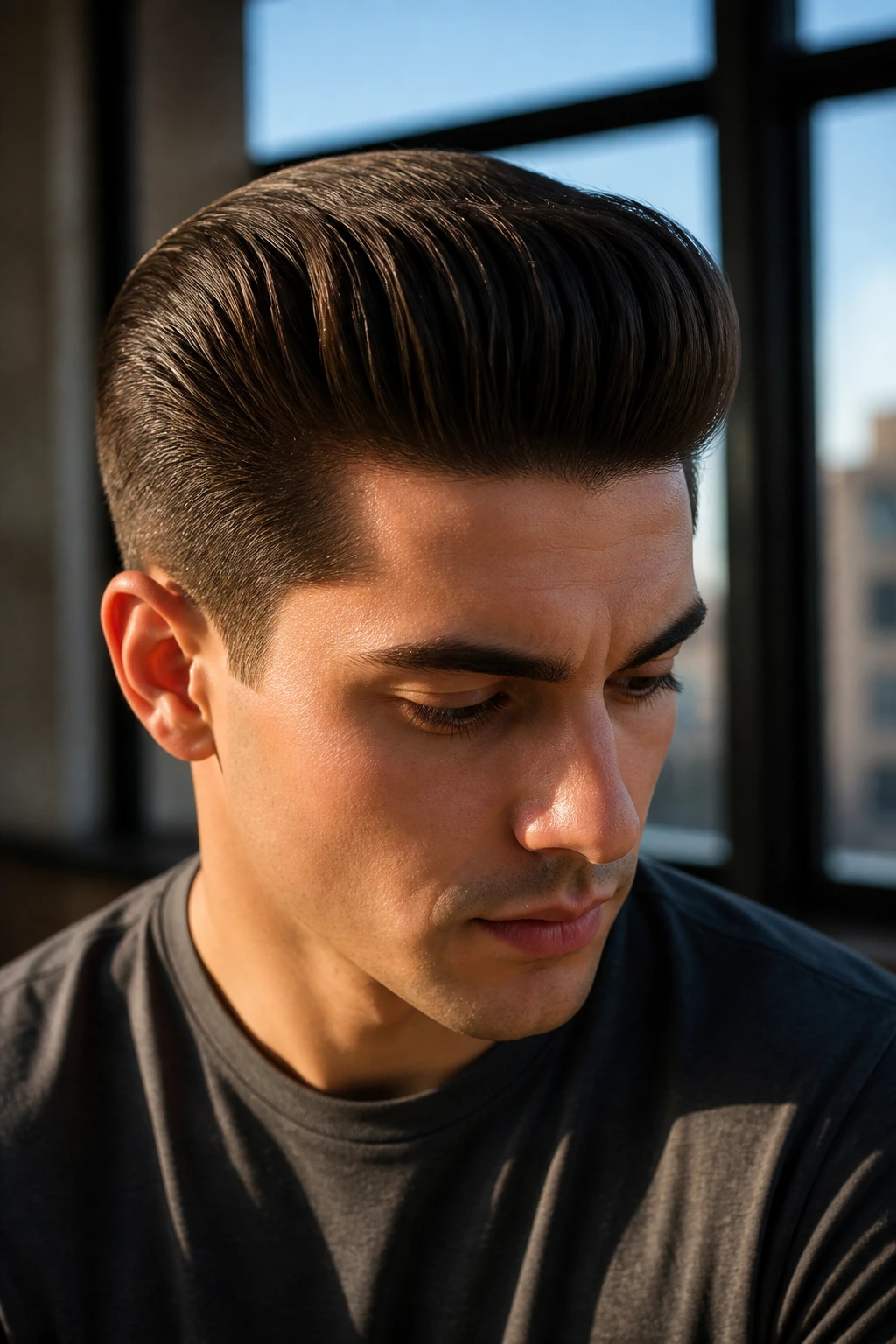
Straight hair gives you the cleanest lines and the easiest comb-through, but it also likes to collapse if the roots are not trained properly. That means blow-drying matters more than the product. Direct the front upward first, then back, and let it cool in place before you touch it again.
A combed straight-hair pomp can look almost architectural when it’s done well. The edges are crisp, the front arc is smooth, and the part, if you use one, stays visible. It’s a very honest haircut. Any mistake shows fast.
31. Coarse Hair Pomp
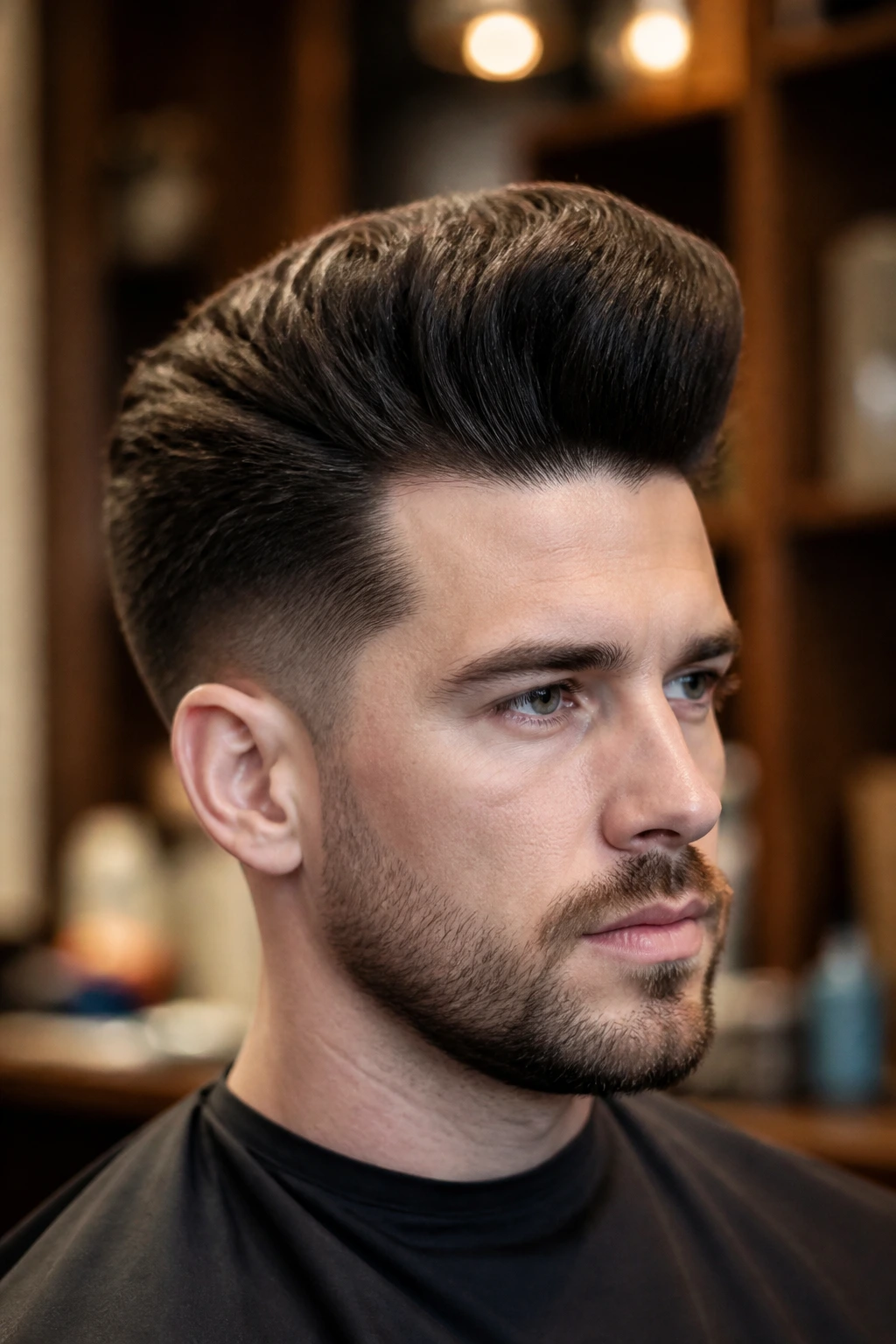
Coarse hair has a rougher feel and usually more grip, which helps the pompadour hold shape—but it also means the top can look bulky fast. The barber should remove enough weight so the front isn’t fighting its own density. If that step gets skipped, the style ends up too heavy near the crown.
How to Keep It from Bulking Up
Start with heat. Coarse hair takes shape better when the roots are warmed and pushed in the right direction. Use a strong but not gummy product, and do not overwork the front with the comb or it can puff out in strange places.
32. Coily-Hair Pomp
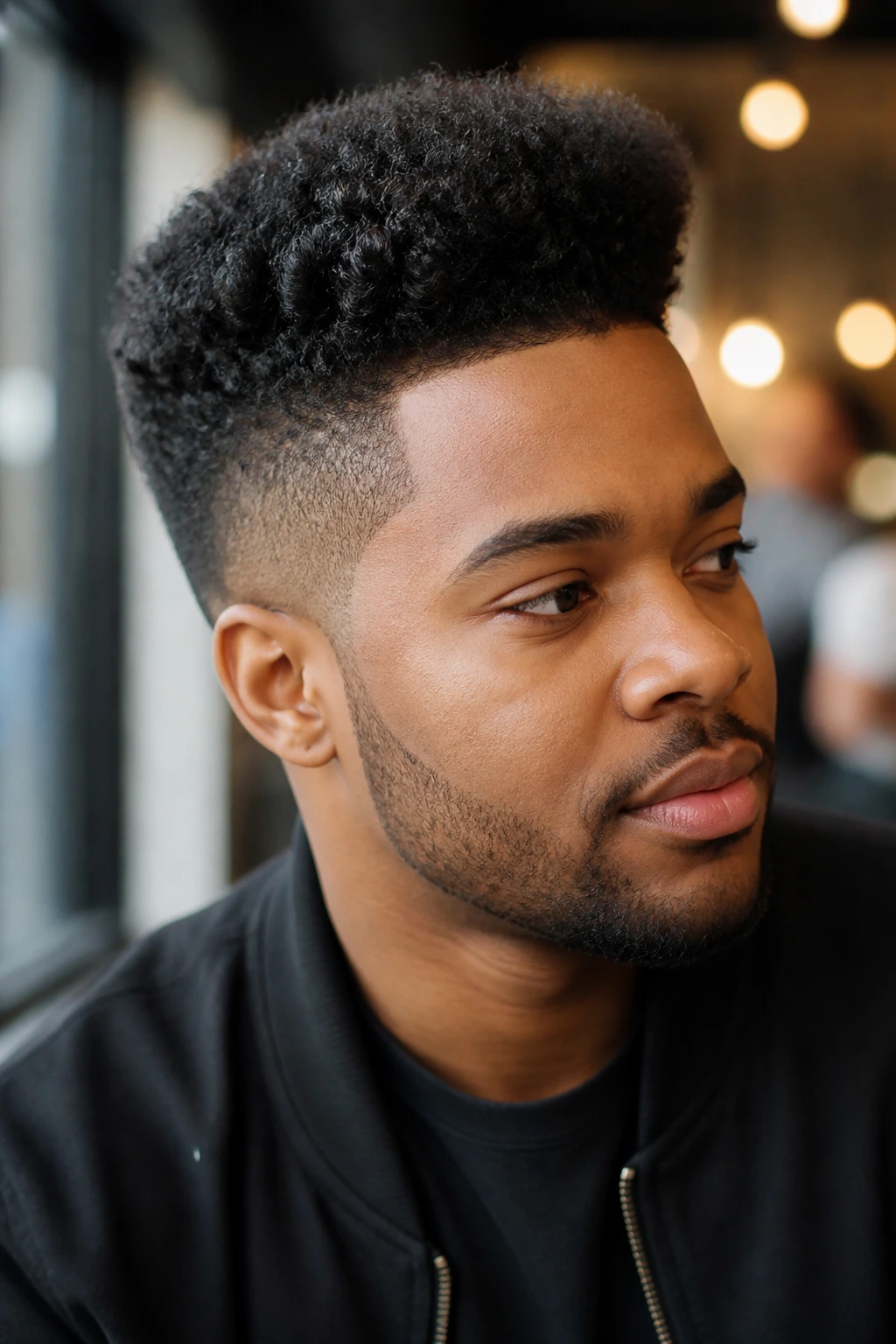
A coily-hair pompadour is less about forcing a straight line and more about shaping volume with intention. The top needs enough length to rise after shrinkage, and the hair often looks best when it’s stretched a bit during styling. That can mean a blow-dryer with a brush, or a careful stretch before product goes in.
The goal is control, not flattening. Keep the sides neat, let the top keep some texture, and avoid products that turn the hair hard and flaky. If the barber understands shrinkage, the haircut can sit cleanly without looking overworked.
33. Windswept Pomp
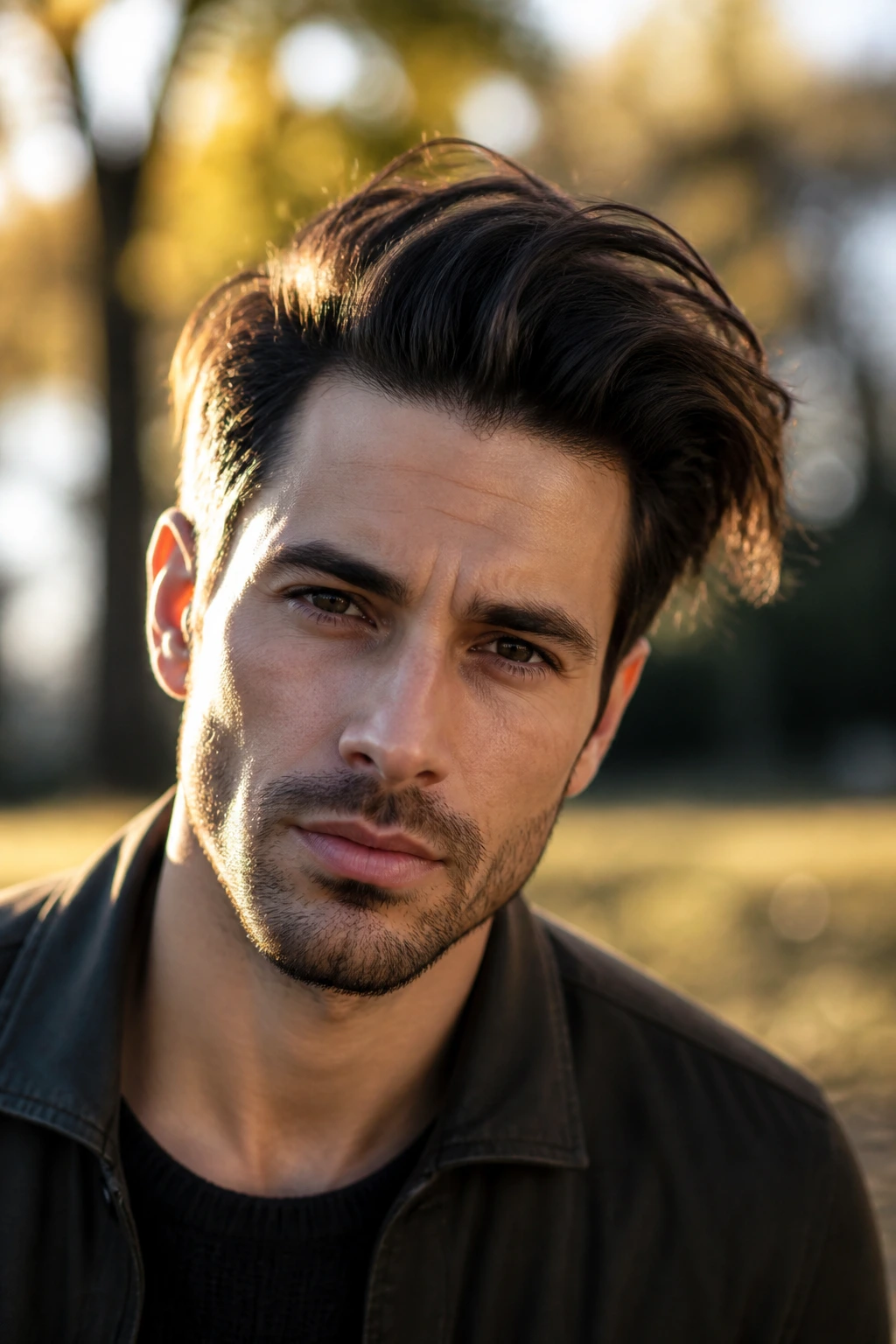
This is the loose cousin in the family. The front still lifts, but it leans a little to one side and carries more motion through the top. It looks like the style caught a little breeze and decided to keep it.
That softness makes it good for men who don’t want a heavily groomed front. Use a light cream or paste, shape the top with your fingers, and leave some separation in the strands. The cut reads relaxed, but it still has the pompadour profile from the front.
34. Formal-Event Pomp
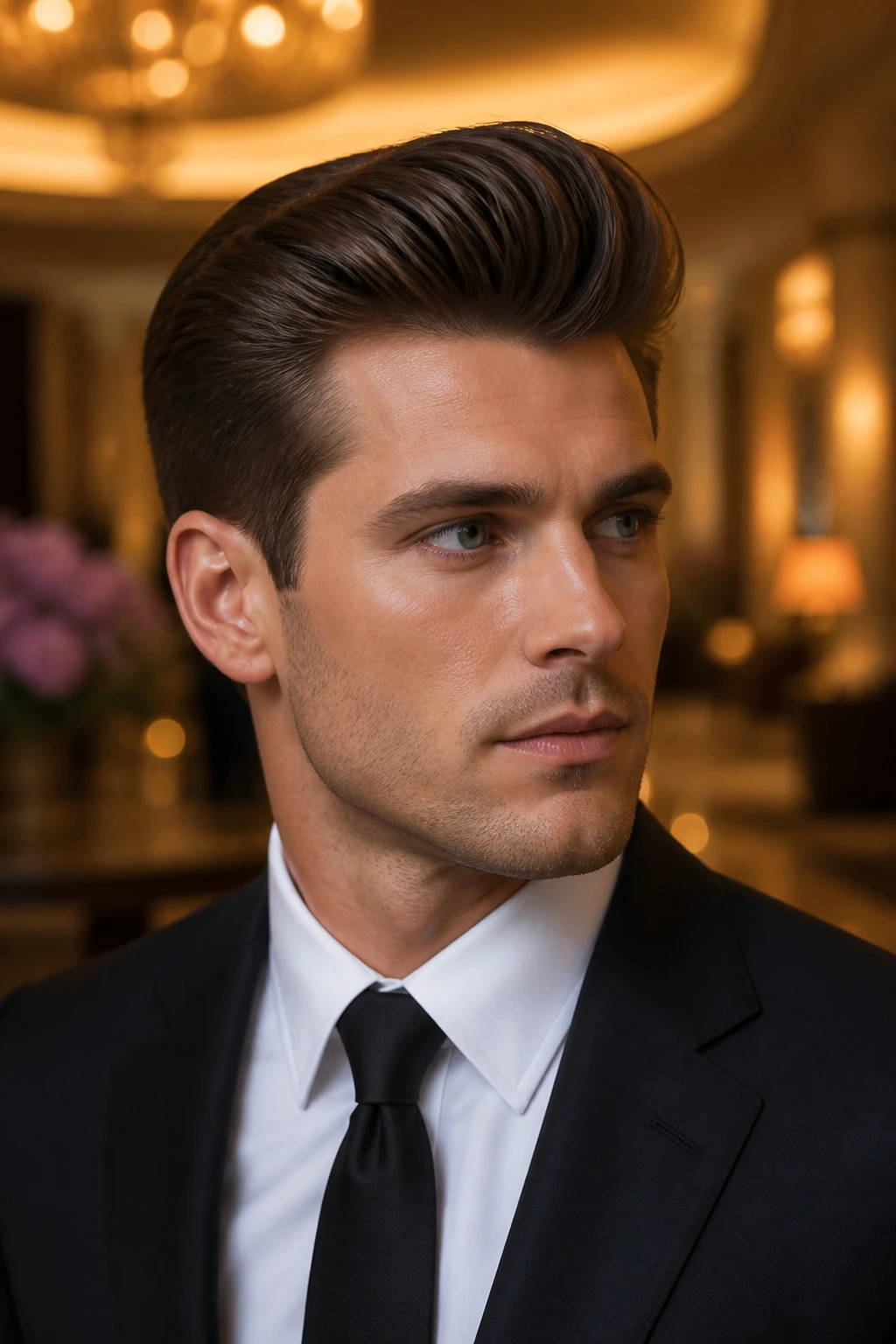
For a formal event, the pompadour gets cleaner, tighter, and more deliberate. The front should be smooth, the sides neat, and the finish polished enough to hold under bright indoor light. You want the haircut to look planned from ten feet away.
A fine-tooth comb and a firm product matter here. So does a final mist of hairspray, especially if the event lasts all night and you’ll be in warm rooms. This is not the time to leave flyaways alone. Tuck them down or they’ll show up in every photo.
35. Date-Night Pomp
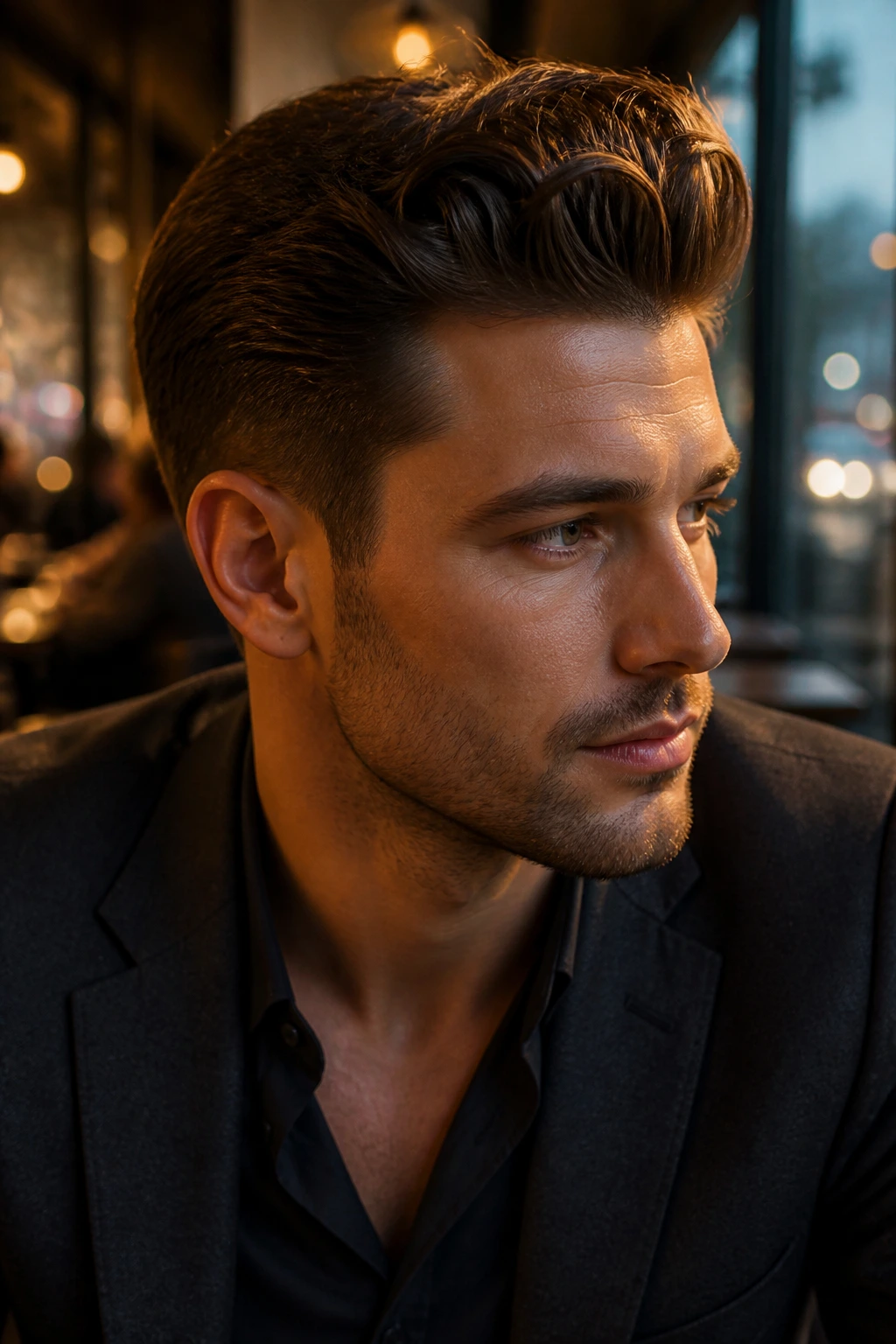
A date-night pompadour should look touched, not lacquered. I prefer a softer front with just enough shine to catch the eye when the light moves. It feels more approachable than the formal version and less casual than an everyday matte cut.
You can keep the sides clean and the top slightly piecey so it has a little movement. The point is to look like you styled it on purpose, but not like the bathroom mirror got a full production budget. That balance is narrower than people think.
36. Weekend Casual Pomp
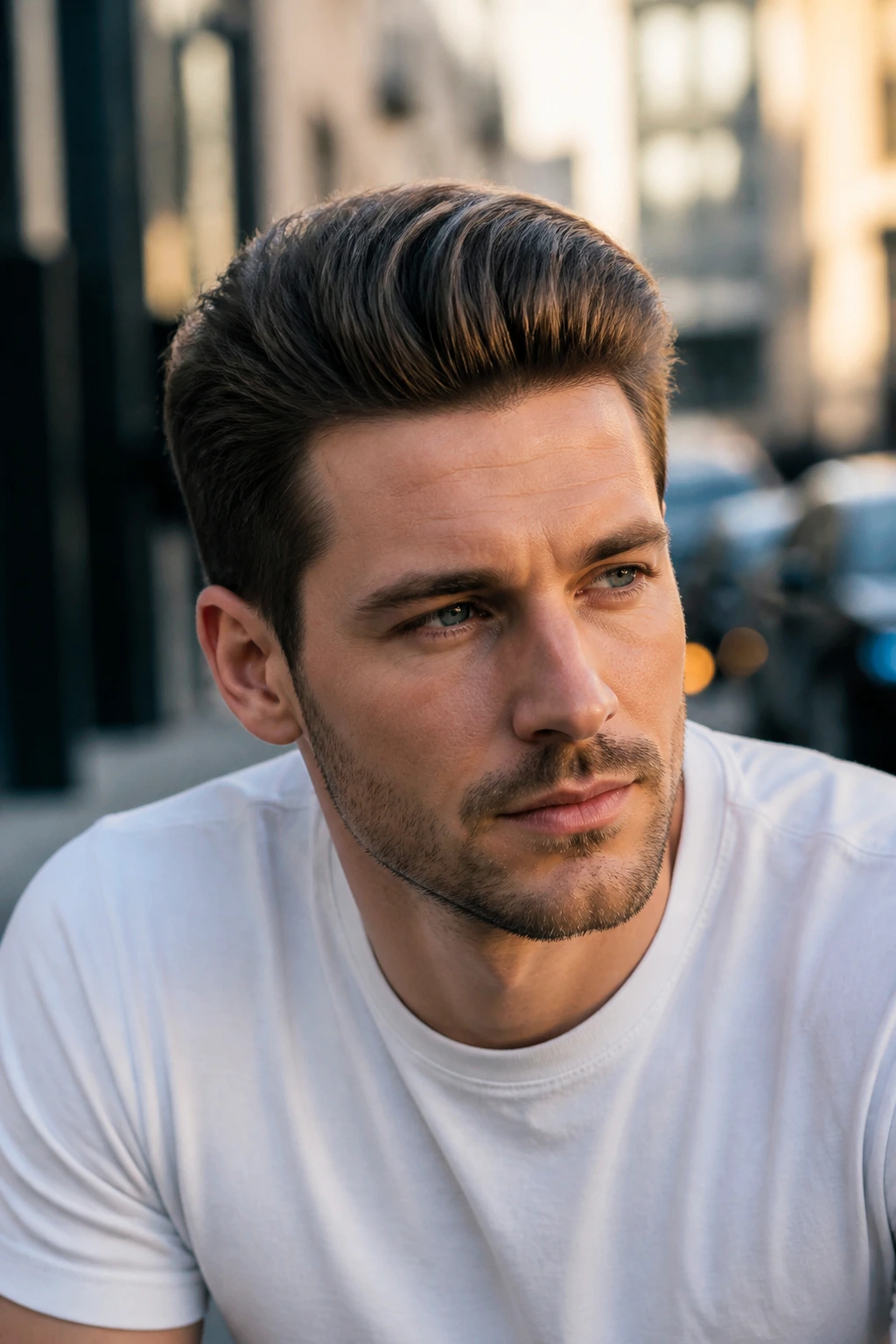
This is the cut you wear when you want the idea of a pompadour without babysitting it. The top is lower, the finish is looser, and the sides are still tidy enough that the whole thing doesn’t collapse into a bad grow-out. It works with hoodies, denim, and the sort of T-shirts that don’t need much thought.
The styling routine stays short: spray, dry, add a small amount of product, and move on. If the front falls a little through the day, it still looks intentional. That’s a useful trait.
37. Tight Barbershop Pomp
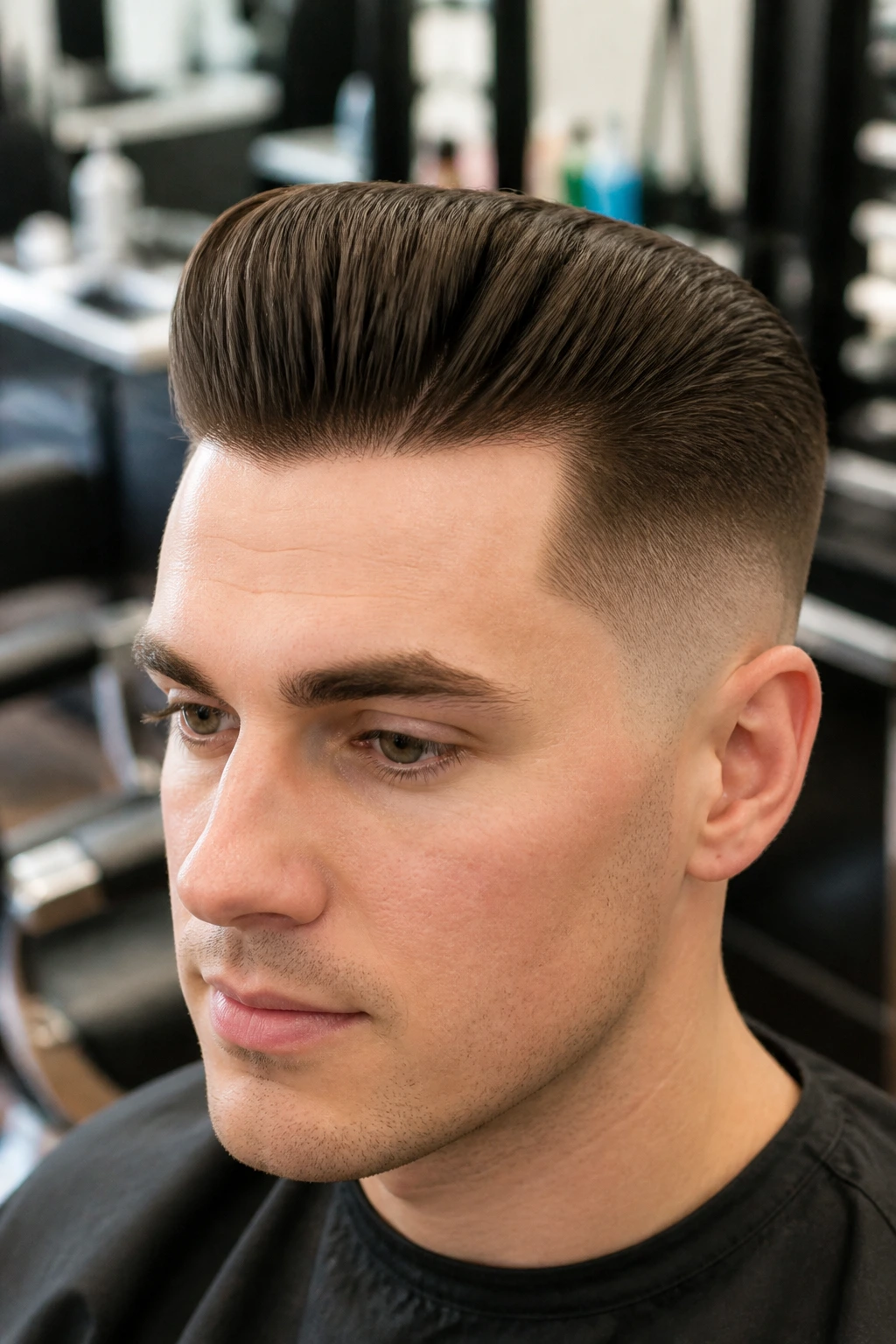
A tight barbershop pompadour is all edge and clarity. The neckline is sharp, the sides are close, the top is controlled, and every line seems to have been checked twice. This is the kind of cut that looks freshest right after the chair and still holds shape after a few days if you keep up with it.
It’s not a forgiving cut, which is why it looks so clean. Any uneven growth shows fast. If you like that barber-fresh look and do not mind regular cleanups, this style hits hard.
38. Drop Fade Pomp
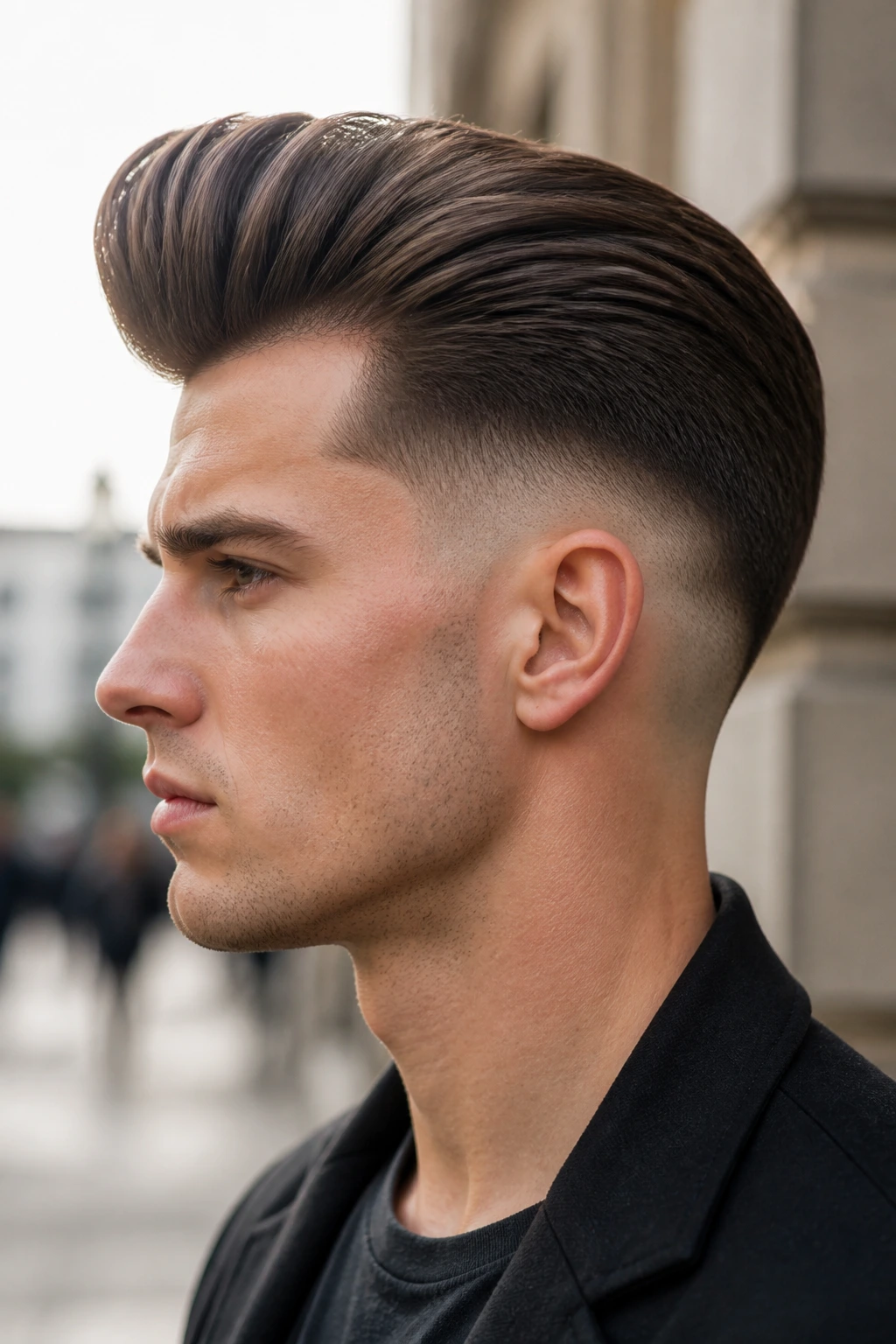
A drop fade curves lower behind the ear, which changes the whole side profile. The pompadour on top stays classic, but the fade adds a subtle dip that gives the haircut a more tailored shape. It feels less boxy than a straight fade line.
Why the Curve Matters
That dipped fade helps elongate the head shape and soften the transition from front to back. It’s one of the better options if you want contrast without the harshness of a skin fade. Keep the top moderately high so the front and the fade don’t compete.
39. Burst Fade Pomp
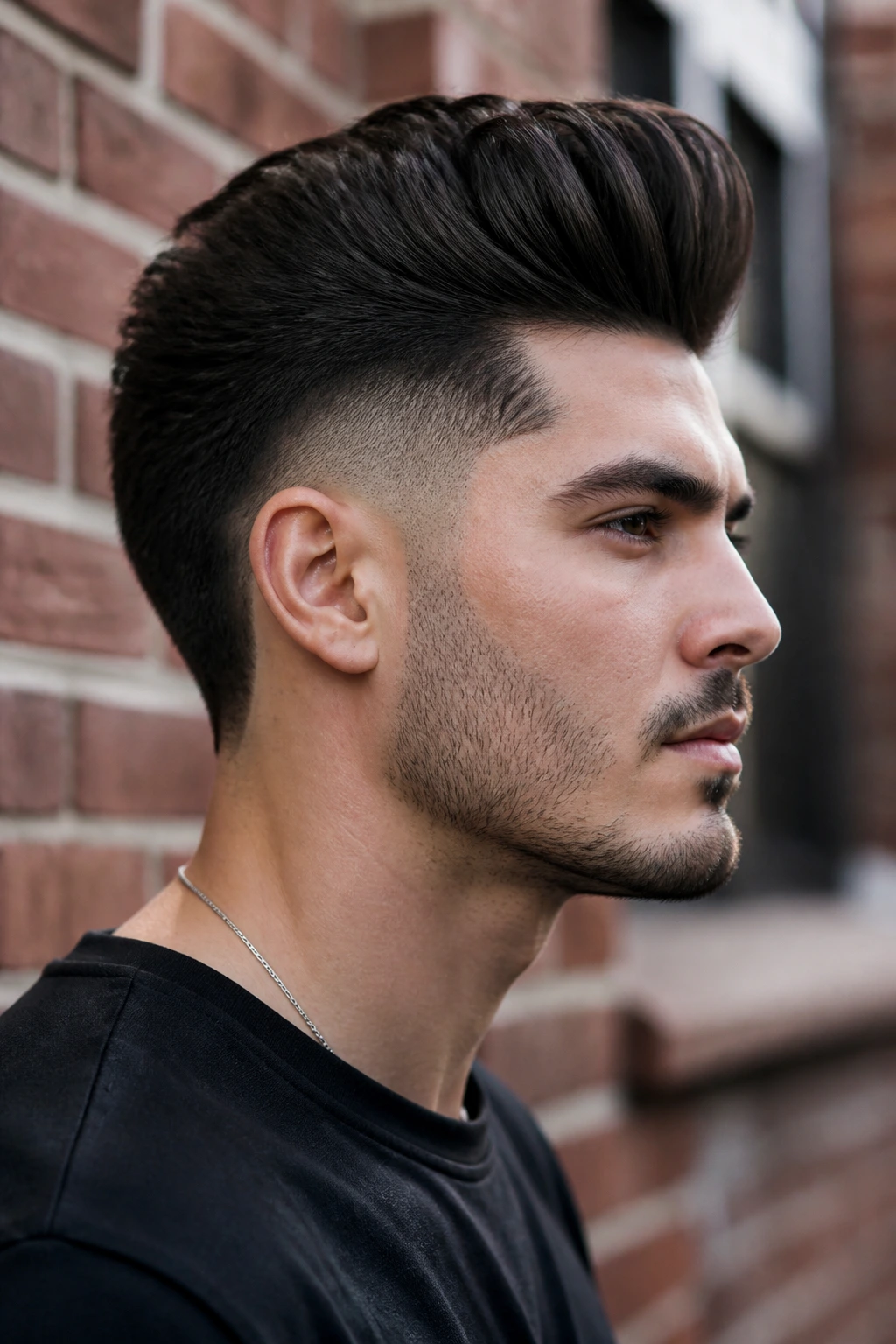
Need a little more motion around the ears? The burst fade wraps the fade in a rounder shape, which makes the sides feel energetic without stealing attention from the top. It pairs well with a pomp that has some texture, because the curve on the side and the lift on top echo each other.
This cut is a favorite for thicker hair that wants to spread out. The barber should keep the burst controlled so it frames the ear instead of swallowing it. On the wrong head shape, it can get busy. On the right one, it looks sharp and alive.
40. Temple Fade Pomp
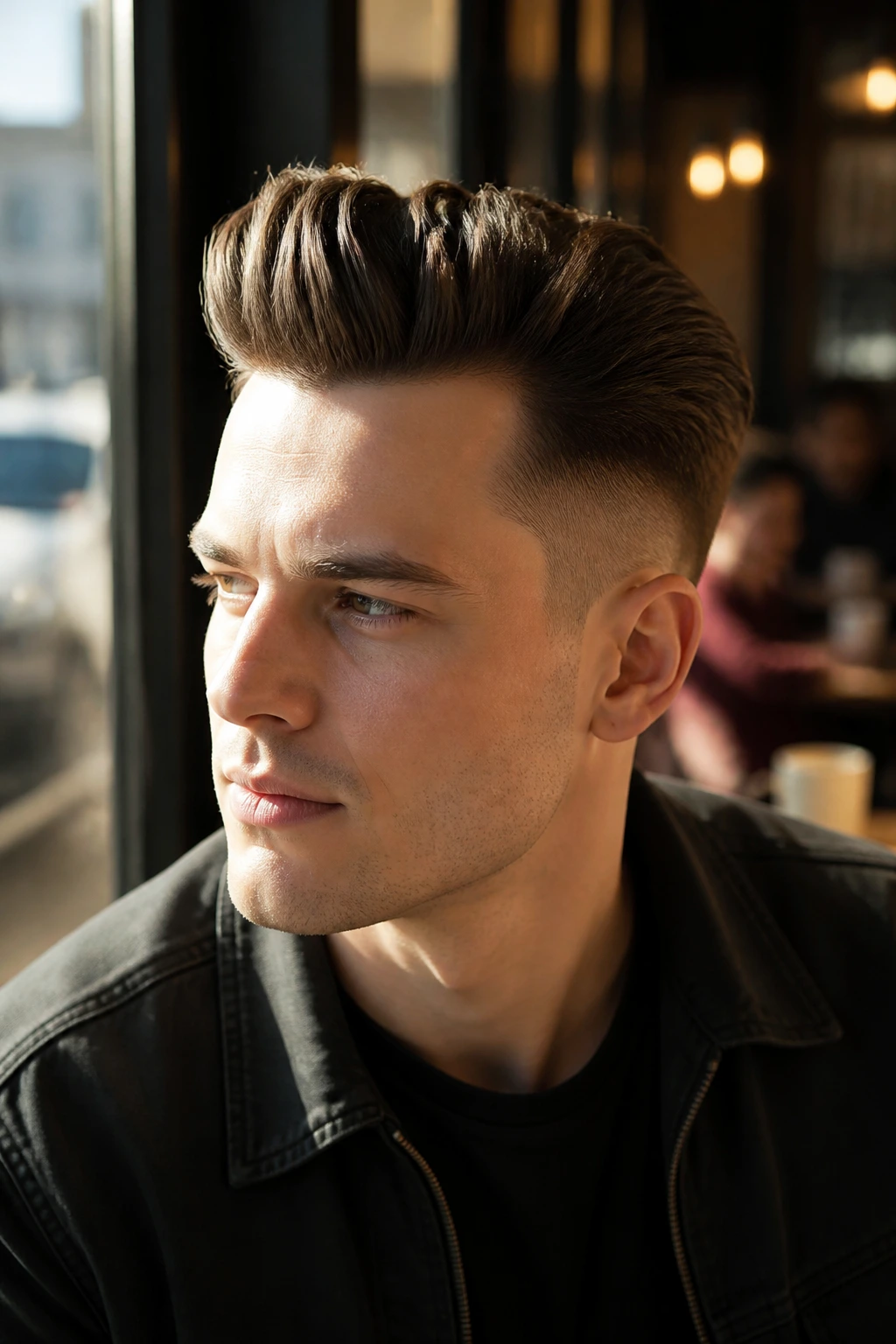
A temple fade is a quieter move, and that’s what makes it useful. The fade sits mostly at the temples and edges, while the back keeps a little more fullness. The pomp still has the classic front lift, but the corners get cleaned up so the face looks sharper.
This version is good when you want a neat haircut without removing too much hair from the sides. It frames the forehead and cheek area without making the style feel aggressive. If you wear glasses, this can be a nice way to keep the haircut from crowding the frames.
41. Scissor-Cut Pomp
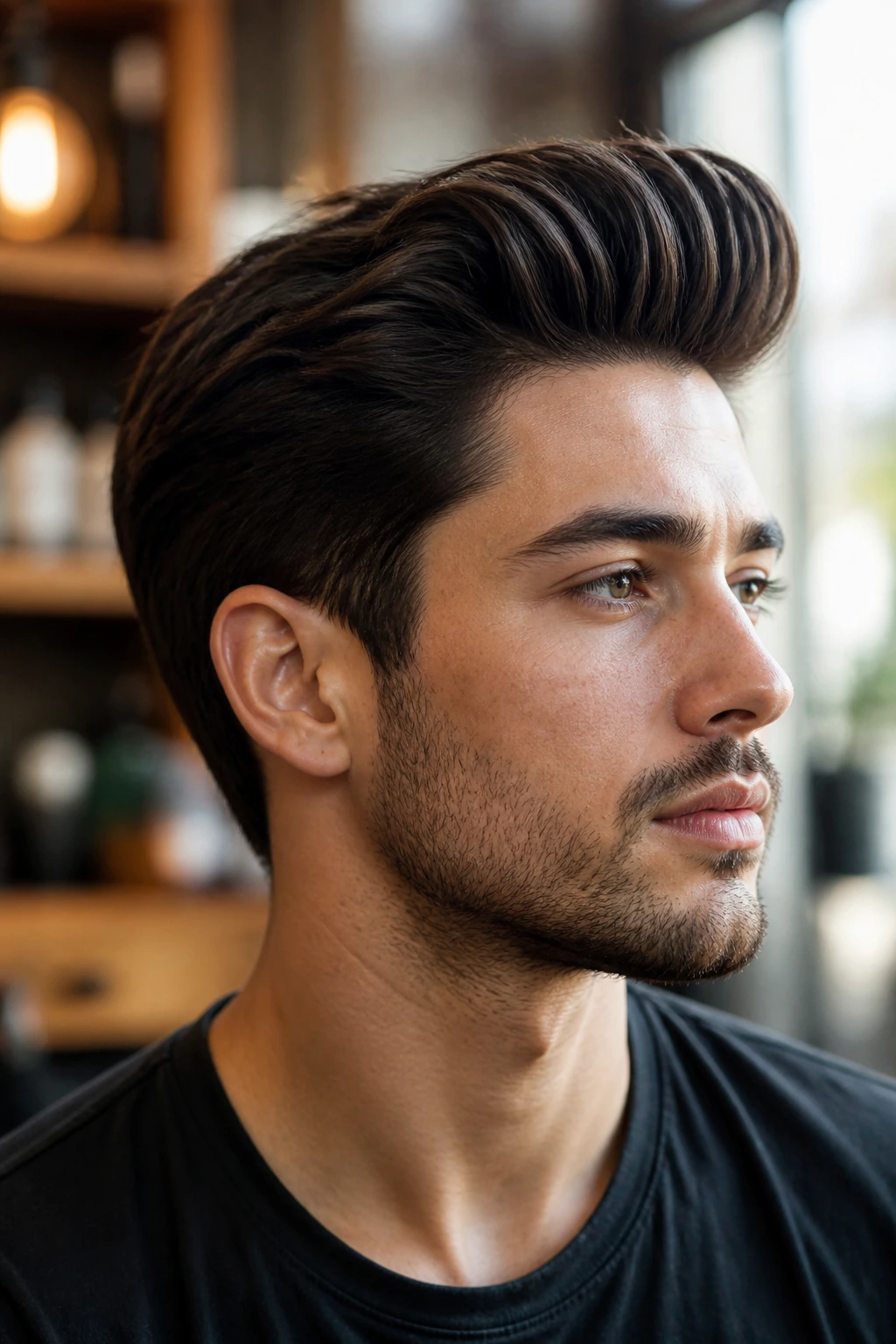
A scissor-cut pompadour is softer, quieter, and a little more old-world in the best way. The sides are shaped by hand rather than heavily clipped, which gives the whole haircut a natural flow. It grows out cleaner too, since there isn’t a hard fade line to deal with later.
This version suits men who want movement instead of sharp contrast. The top can still carry height, but the transition feels smoother. If the barber has a good eye with scissors, the result can look more expensive than a stricter cut.
42. Soft Grow-Out Pomp
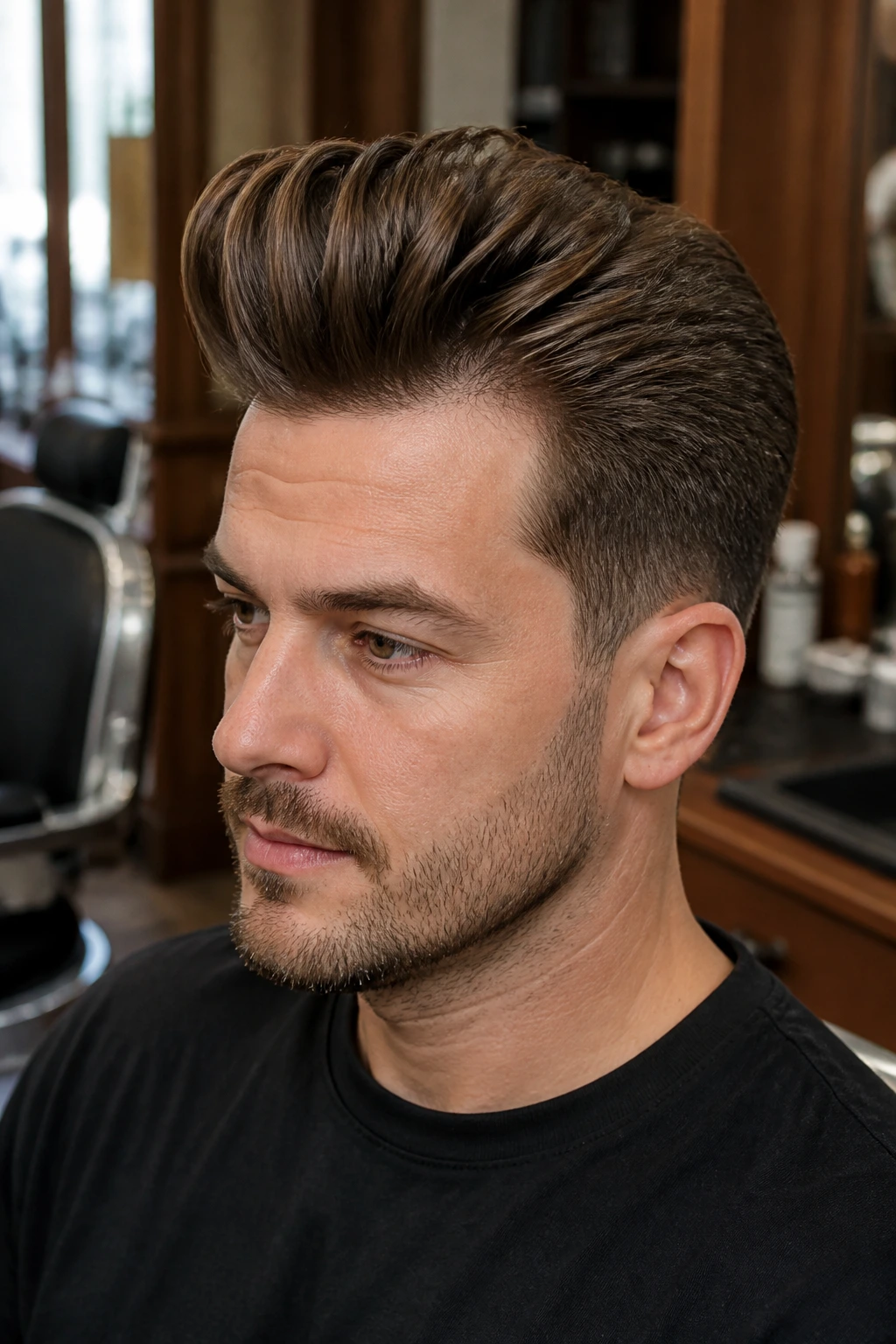
The best grow-out pomp is the one that never looks like you abandoned it. The top is left long enough to keep some lift, the sides are trimmed so they do not balloon, and the back is shaped before it gets shaggy. It’s a smart option if you do not want a strict appointment cycle.
This cut can slide toward a quiff if it gets too long, so the trim timing matters. A light product and a quick blow-dry keep the front presentable between barber visits. It’s the most forgiving pompadour in the bunch, and that alone makes it worth a look.
Why Classic Pompadour Styles Still Work
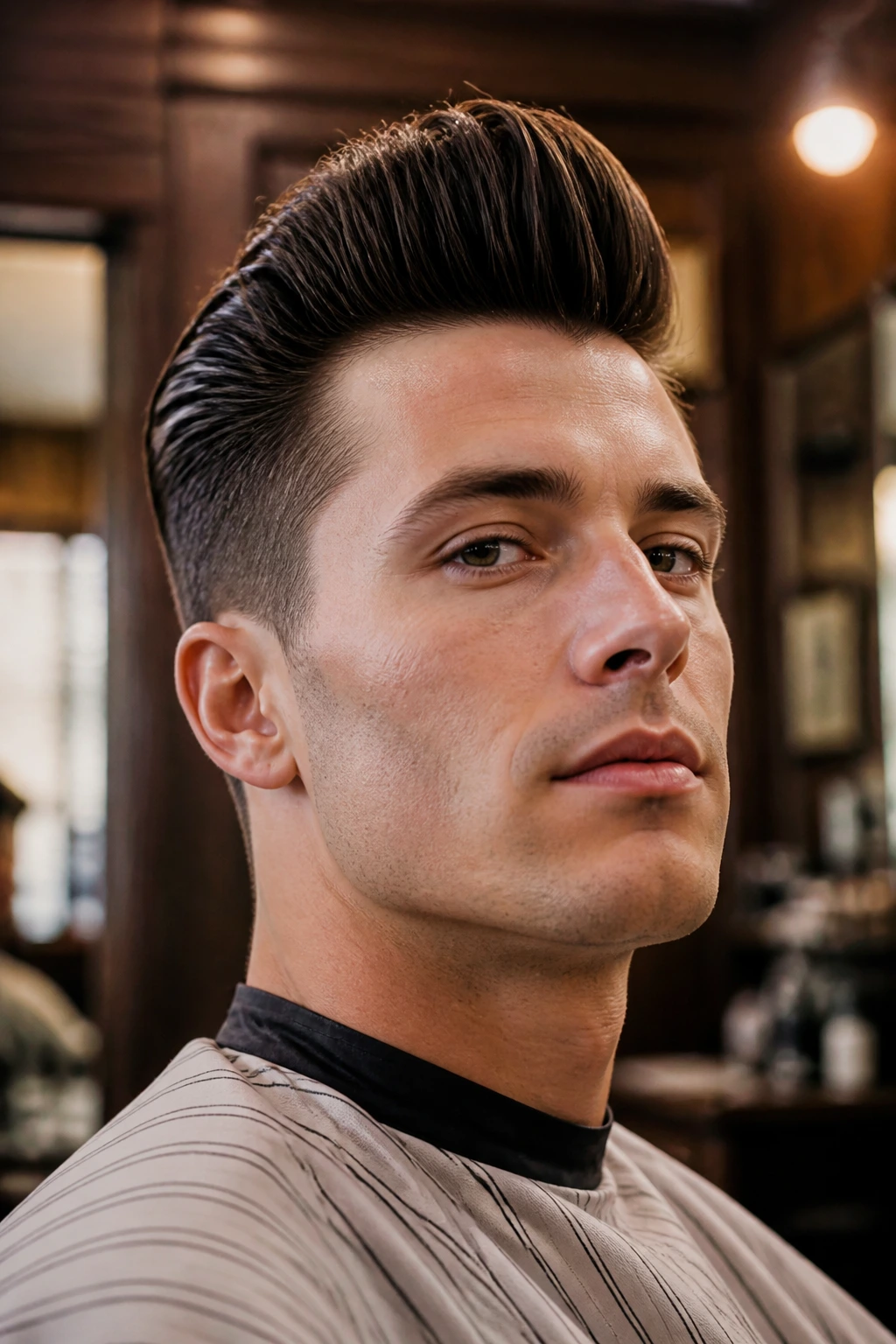
The pompadour still works because it solves a shape problem before it creates a style problem. It gives the face height, keeps the sides controlled, and lets the front carry most of the visual weight. That means it can look formal, casual, retro, or modern without changing its basic bones.
The other reason it survives is simple: it adapts. A sharp fade, a soft taper, glossy pomade, matte clay, curls, waves, coarse hair, fine hair — the front can handle all of it if the cut is honest. That flexibility is why classic pompadour styles keep showing up in barbershops instead of gathering dust in old magazines.
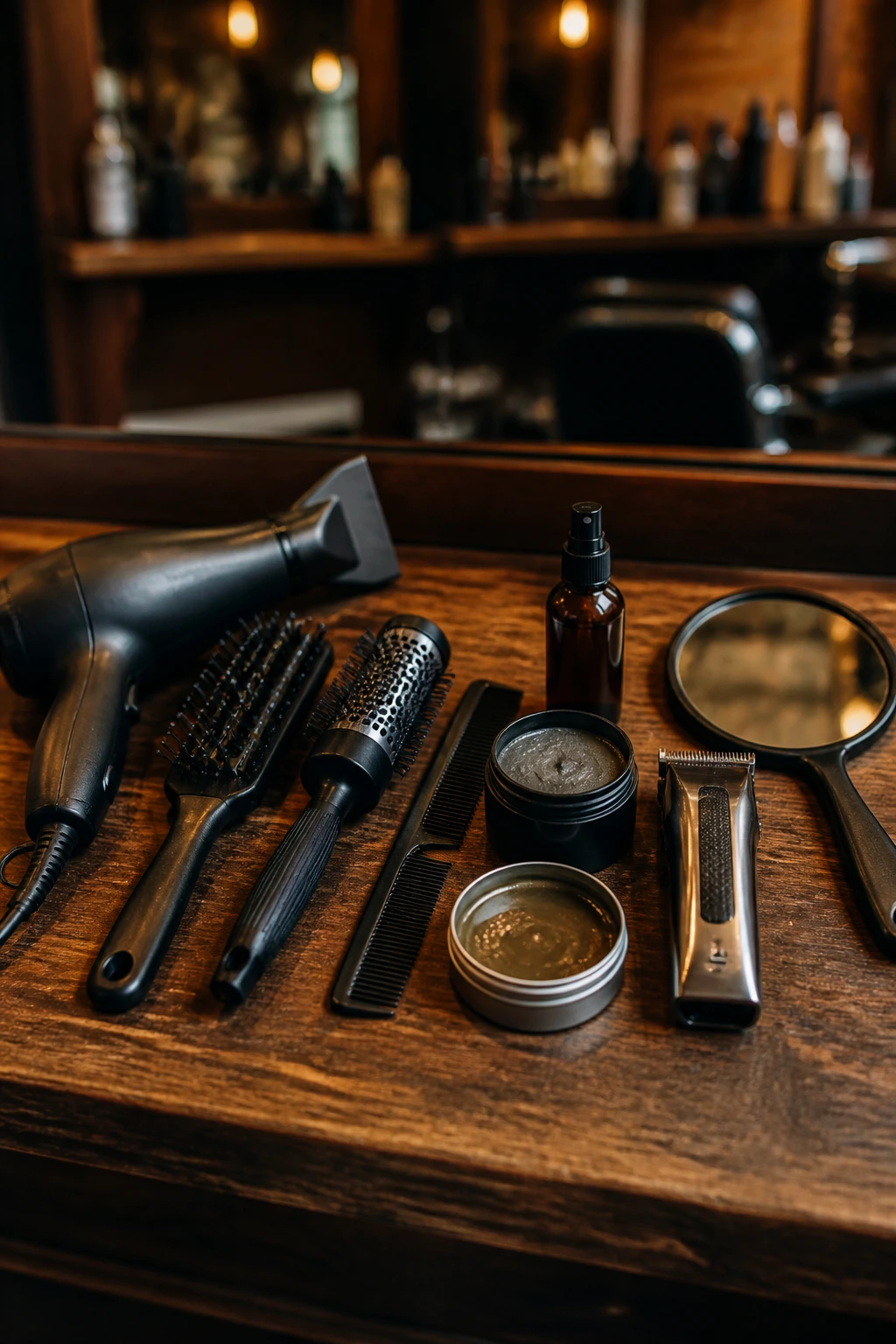
Essential Tools for These Styles
-
Blow dryer with a nozzle attachment: Directs heat to the roots so the front lifts instead of flopping.
-
Vent brush: Good for fast drying and root lift without dragging the hair too flat.
-
Round brush: Best when you want that curved, arched front on a fuller pomp.
-
Fine-tooth comb: Sharpens the part and gives high-shine styles cleaner lines.
-
Matte clay or paste: Helps build texture without the greasy finish that can weigh hair down.
-
Pomade: Use this when you want shine, hold, and a smoother front.
-
Pre-styling spray or mousse: Adds body before the product goes in, especially useful for fine hair.
-
Trimmer or clipper set: Handy for keeping the fade, neckline, and temples tidy between barber visits.
-
Hand mirror: Lets you check the back and side balance instead of guessing.
-
Spray bottle: A small amount of water is often enough to reset a collapsed front.
Smart Product and Barber Notes
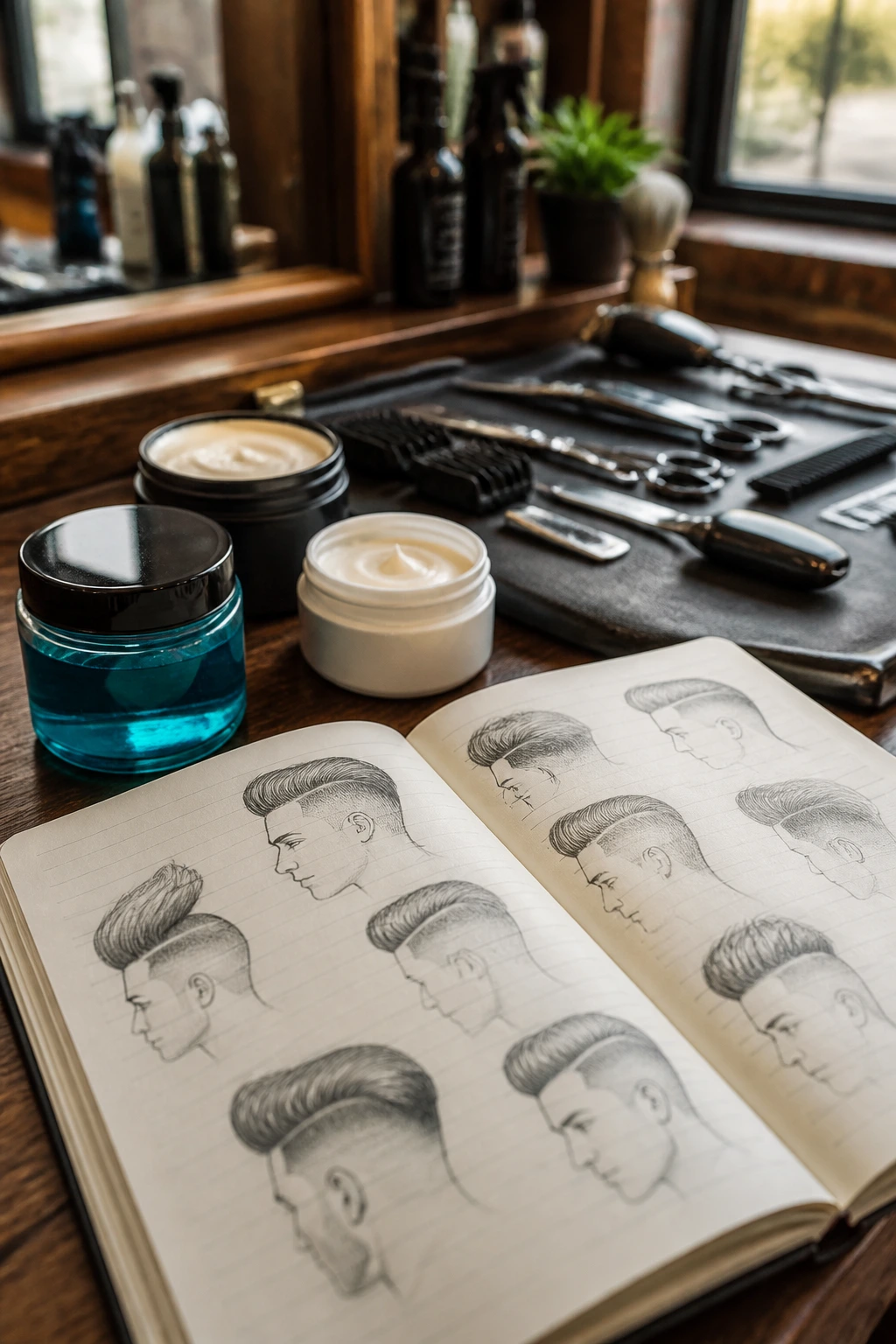
The product you choose should match the finish you actually want, not the one that looks good in the jar. Water-based pomades wash out easier and suit clean, glossy pomp styles. Matte clay gives more grip and less shine, which helps fine hair look fuller and keeps thick hair from turning into a grease slick. Creams sit somewhere in the middle and are useful when the style needs movement instead of hard hold.
A barber can also make or break the look. If you want height, ask for length left on top and weight removed where it matters most, usually the crown and mid-top. If you want the cut to grow out cleanly, say so, because that usually changes how hard the fade is taken and how much scissor work goes into the sides.
And one more thing: your hairline matters. A good barber looks at the front swirl, the cowlick, and the direction the hair wants to fall before cutting. That small bit of planning keeps you from fighting the style every morning.
How to Wear These Styles
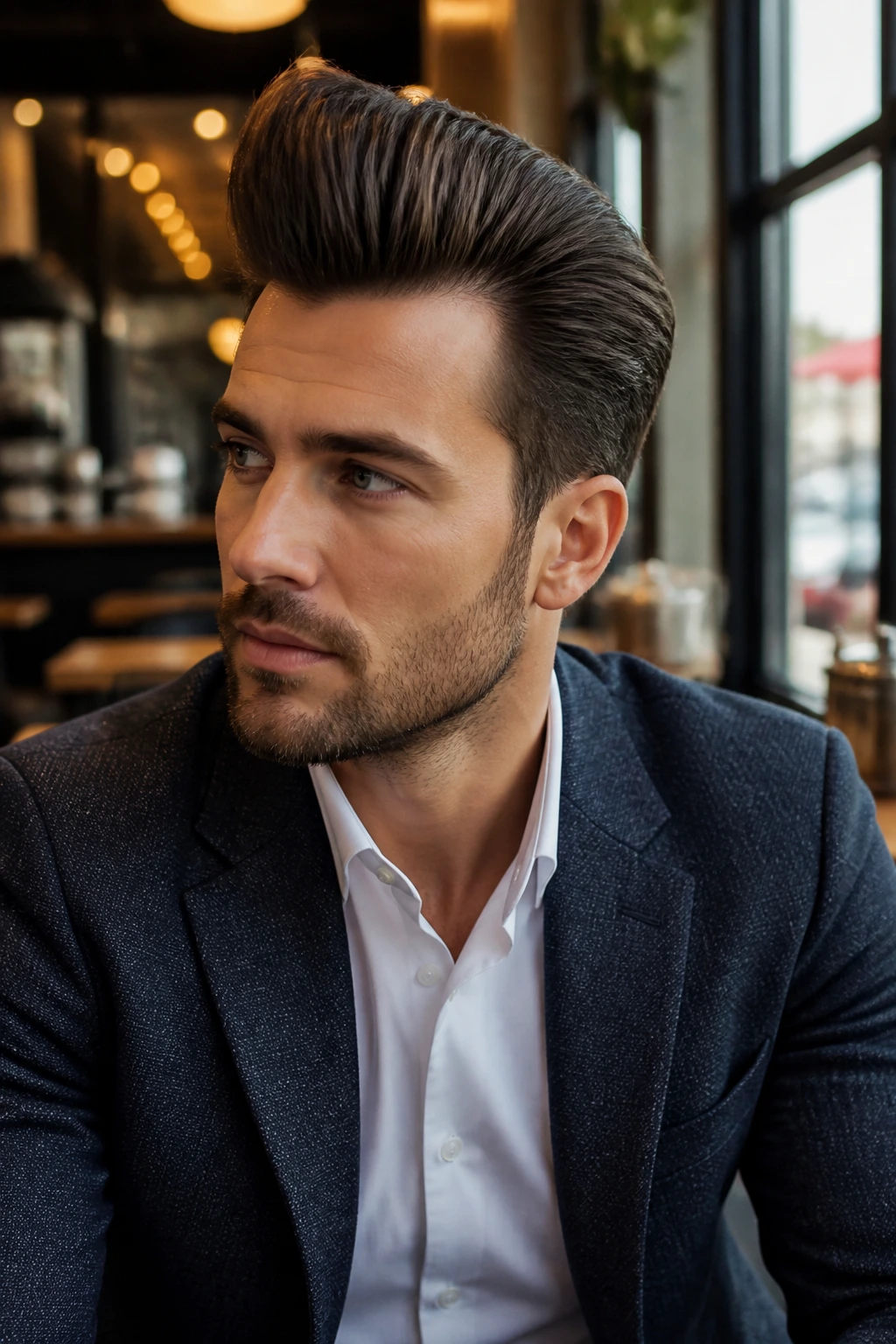
Presentation: Keep the silhouette clear. A pomp should read high at the front and controlled at the sides, even when the finish is loose or textured.
Outfits: High-shine versions pair well with collars, jackets, and cleaner lines. Matte or textured pomp styles sit more naturally with denim, overshirts, and tees.
Scale: Shorter top lengths need less daily work and look best with a low-to-mid rise. Longer tops can go bigger, but they ask for more heat, more brushing, and more patience.
Setting: Formal rooms, casual weekends, and long workdays all call for different finishes. Gloss reads sharper under bright light; matte tends to look calmer and less theatrical.
Additional Tips and Texture Boosters
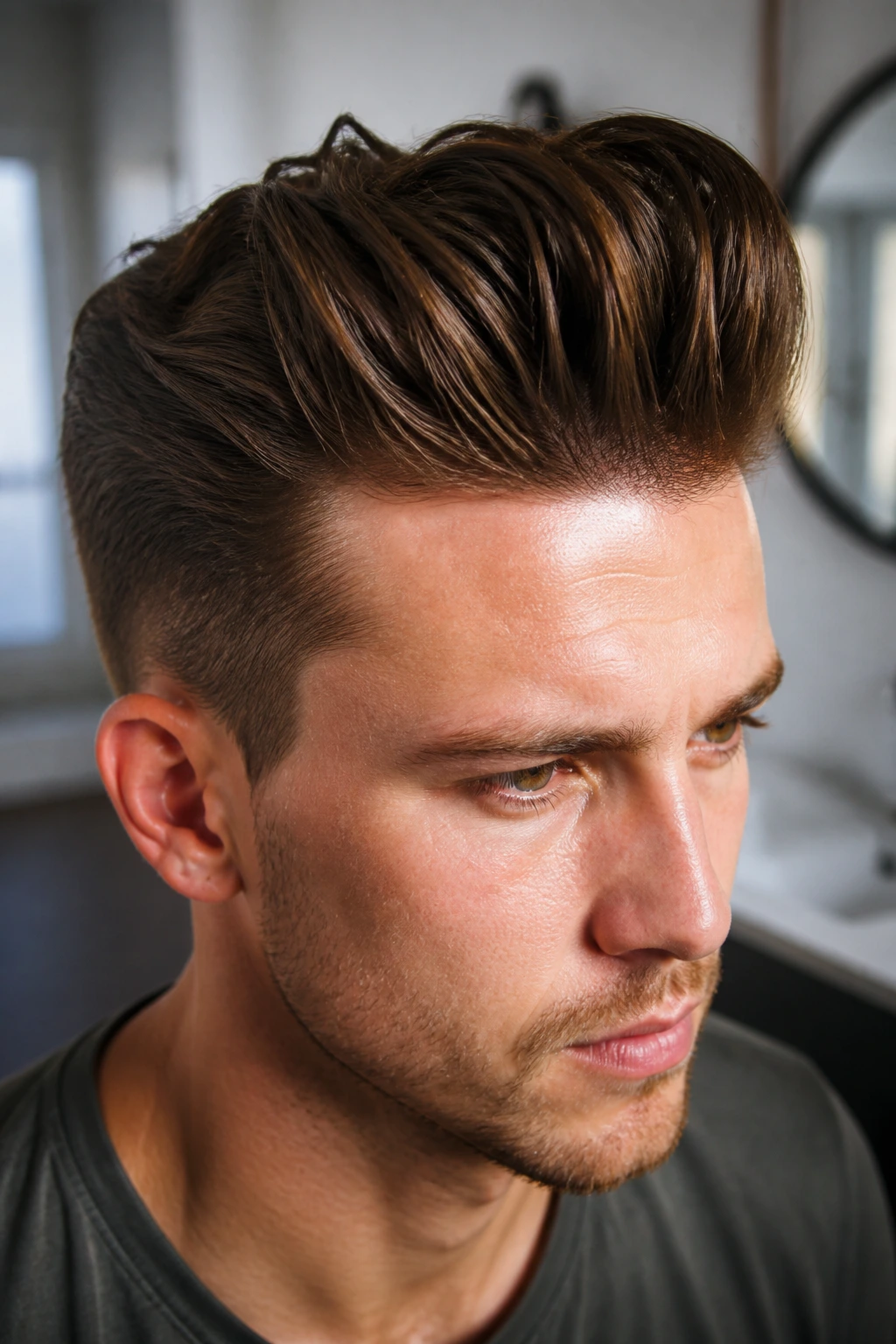
Lift: Blow-dry the roots first, not the surface. Aim the nozzle from front to back while lifting the hair with a brush so the shape starts where the hair leaves the scalp.
Shape Control: If the front keeps falling, change the direction of the airflow for the first 20 to 30 seconds. Hair often needs to be trained against its default direction before it will sit where you want it.
Finish: Use less product than you think, then add more only if the top still feels loose. A pomp can go from clean to heavy very quickly, and once it’s overloaded, there’s no elegant fix.
Customization: A side fade sharpens the profile. A taper softens it. A part line makes the style read neater. A beard can anchor the face if the top is tall and the jaw needs balance.
Make-It-Yours: Fine hair usually wants matte or mousse. Thick hair wants more debulking. Straight hair wants a precise combed line. Curly hair wants room to move. That’s the part people skip, and it’s usually why the haircut looks like someone else’s head.
Maintenance, Wash Days, and Morning Reset
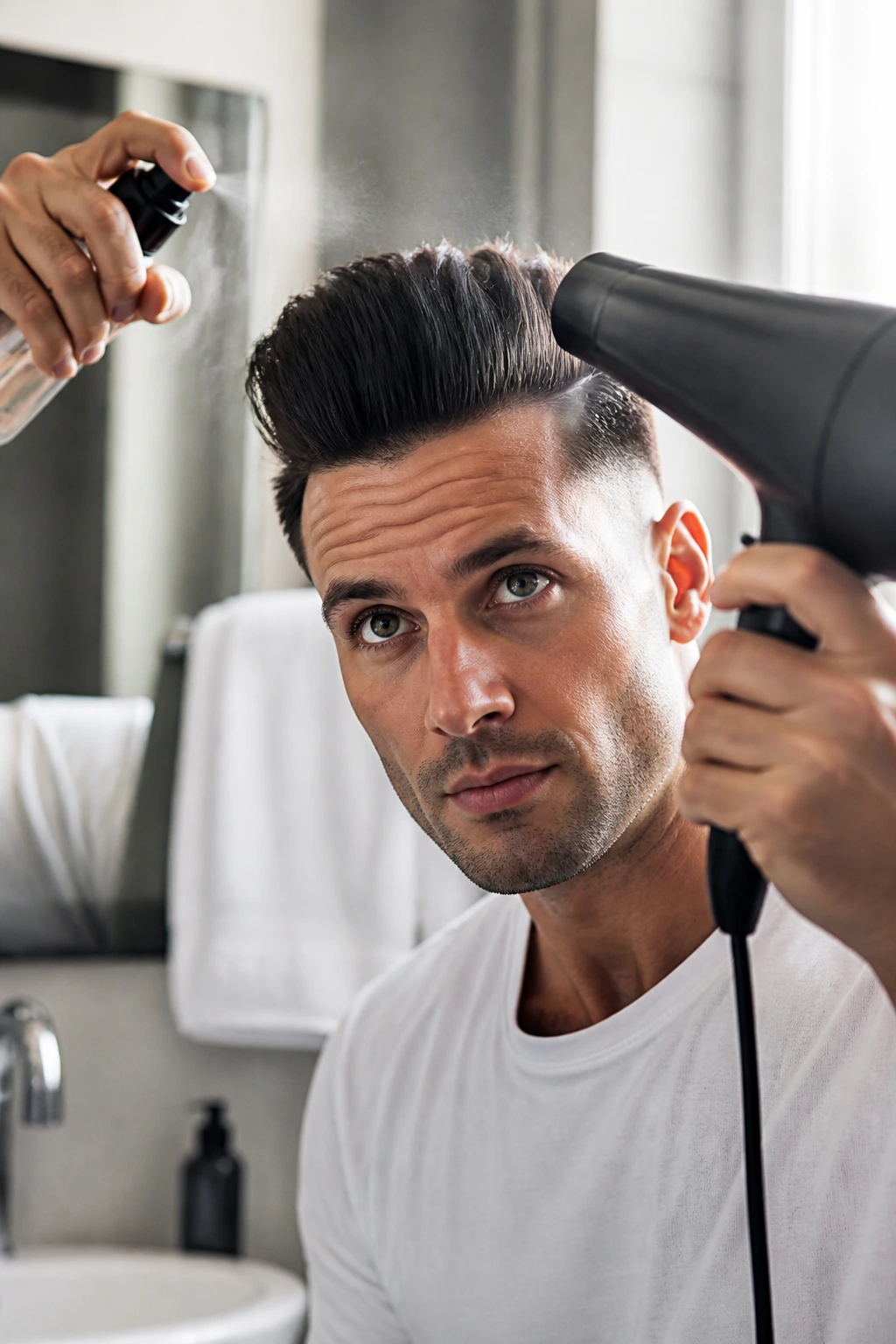
A pompadour lasts longer when you stop treating it like a one-and-done style. If you use matte clay or light cream, you can often refresh the front with a little water and a 30-second blow-dry the next morning. Heavy pomade needs more cleaning, so wash days matter more there.
For most men, shampooing every 2 to 4 days is a reasonable range if you’re using styling product daily. If you use stronger pomade, a clarifying wash once every 1 to 2 weeks helps cut the buildup that makes the front feel waxy. Don’t scrub the top raw every day unless your scalp truly needs it; that usually dries the hair out and makes the pomp harder to shape.
Trims are just as important. A tidy fade or taper often needs cleanup every 2 to 3 weeks. The top can usually go 4 to 6 weeks before it starts losing the shape you paid for. If the haircut is longer and scissor-cut, the schedule can stretch a bit, but the neckline and around the ears still need attention.
Sleep also matters more than people admit. A satin pillowcase or simply avoiding a face-down crush can save you a full restyle in the morning. If the front bends weird overnight, mist it, warm it with the dryer, and push it back into shape before the product goes in.
Variations and Adaptations to Try
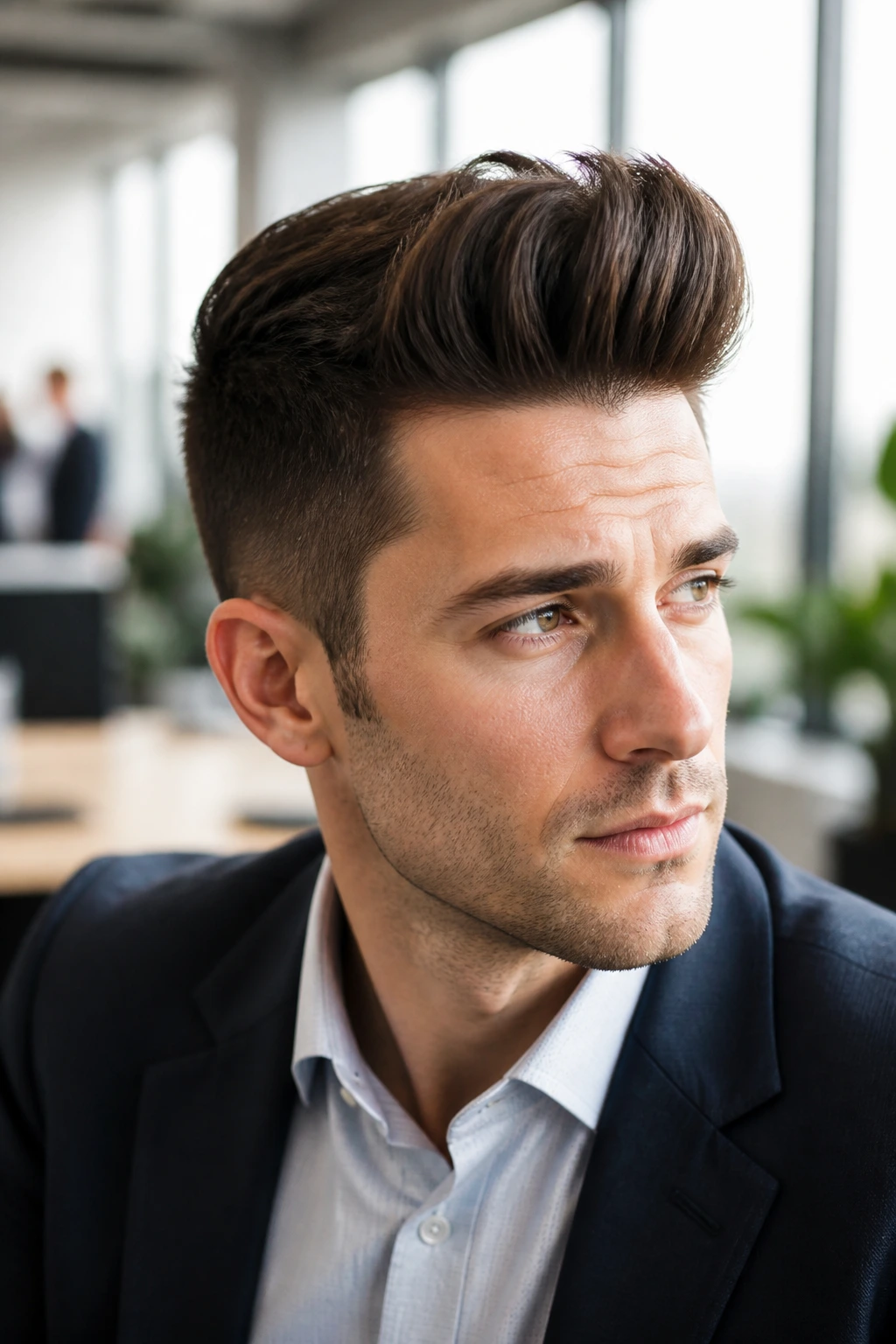
Matte Boardroom Pomp: Swap high-shine pomade for a clay or paste and keep the top between 3 and 4 inches. It looks cleaner in daylight and easier to wear with a plain shirt or blazer.
Retro Grease Sweep: Go in the opposite direction with a glossy pomade, sharper comb lines, and a more obvious side part. This one suits formal nights or anyone who likes a stronger vintage signal.
Curly Crown Pomp: Let the curl pattern stay visible near the front and keep the sides tight. It gives the style movement without forcing the hair flat.
Beard Balance Pomp: Match a medium-height pomp with a beard that’s tapered at the sideburns. The top and jawline start working together instead of competing.
Low-Stress Grow-Out: Leave a little extra length on top and avoid a severe fade. It grows into a soft quiff before it ever looks messy, which is useful if you do not live near a barber chair.
Common Mistakes to Avoid
-
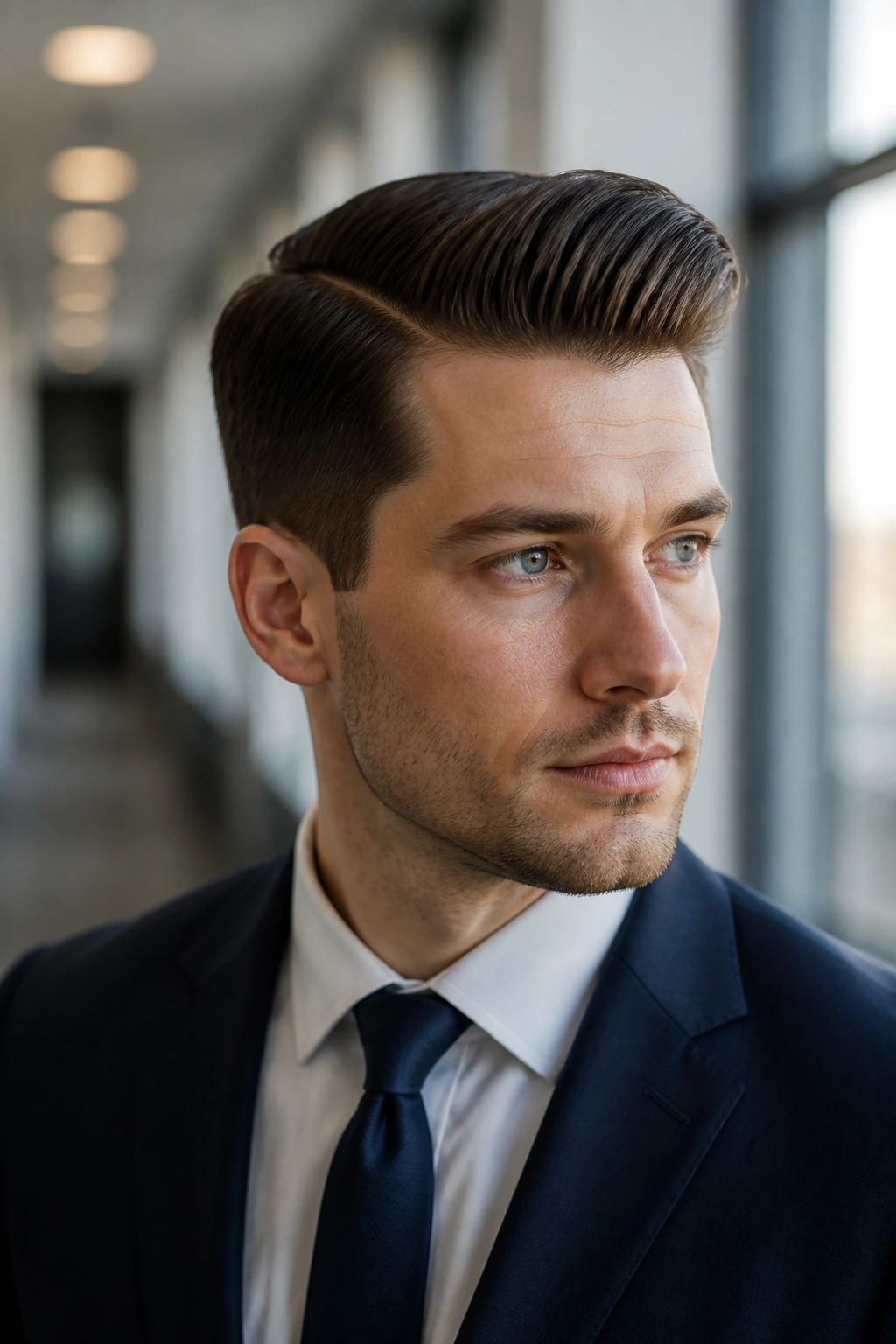
Using too much product at the front: The hair turns stringy, shiny, or stiff in clumps. Start with a pea-size amount and build only if the front still feels loose.
-
Leaving the sides too bulky: The pompadour loses contrast and starts looking like a helmet. Ask the barber to remove enough weight above the temples and around the crown.
-
Skipping the blow-dry: Product alone rarely gives real lift. Use heat at the roots first, then set the shape before the finish product goes in.
-
Ignoring the hairline direction: Cowlicks and swirl patterns will fight you if you brush straight against them without training the hair first. Dry the front in the direction you need, then lock it in with cool air.
-
Letting the cut grow too long: The top may still look fine, but the sides start to puff and the whole shape gets wider. A trim every few weeks keeps the cut from turning blunt.
Frequently Asked Questions
How much hair do you need on top for a pompadour?
Most classic pomp styles need at least 3 inches on top, and the fuller versions usually work better at 4 to 6 inches. Less than that can still look good, but the shape becomes more of a subtle brush-up than a true pomp.
Can a pompadour work with a receding hairline?
Yes, but the style should be lower, softer, and more textured. A heavy slick-back usually makes recession more obvious, while a shorter pomp can pull the eye upward and make the front look fuller.
Is pomade or clay better for a pompadour?
Pomade is better when you want shine and a smoother combed finish. Clay is better when you want a dry look, more texture, and a front that doesn’t collapse as easily.
Do you need a fade for a pompadour?
No. A fade sharpens the contrast, but a taper or scissor-cut side can look just as good, sometimes better if you want a softer, older-school finish. The top shape matters more than the side trend.
Can curly hair actually hold a pompadour?
It can, especially if the top is left long enough to stretch and the roots are dried upward first. The trick is not trying to erase the curl pattern completely; let the hair keep some movement.
How often should you trim a pompadour?
Most men do well with a cleanup every 2 to 4 weeks, depending on how tight the sides are. The top can go longer, but once the sides lose shape, the whole haircut starts to feel wider and less controlled.
What should you tell the barber?
Ask for the amount of length you want on top, how much lift you like in the front, and whether you want a fade, taper, or scissor-cut side. Mention your hair texture and how much time you’re willing to spend styling it each morning.
What if the front keeps falling flat no matter what you do?
Usually the cut is too heavy, the top is too short, or you’re skipping the root lift. Try a stronger blow-dry, a lighter product, and a barber visit that removes bulk where the hair is fighting you most.
The Shape That Sticks
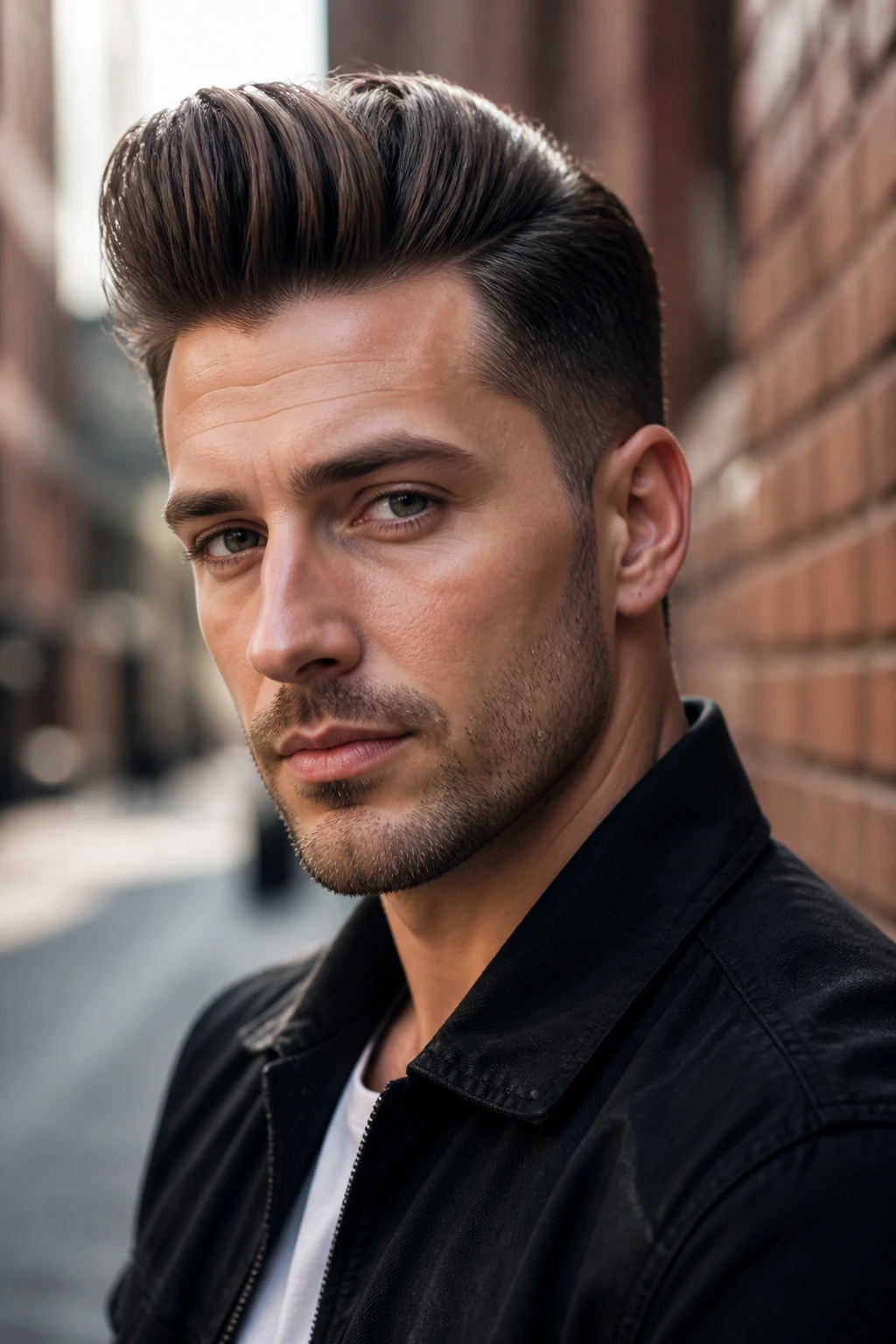
A strong pompadour doesn’t rely on one trick. It relies on a clean cut, a front that’s long enough to move, and a finish that matches the hair you actually have. Once those pieces line up, the style stops being fussy and starts behaving like one of the most reliable shapes a man can wear.
That’s why the best classic pompadour styles for men still feel fresh: they aren’t frozen in one decade, one product, or one face shape. Pick the silhouette that fits your hairline and your morning routine, then let the front set the tone.
