



Red hair has a way of making a haircut honest. If the shape is sloppy, you notice it faster. If the fade is clean, the whole style looks more deliberate. And with red hair looks for men, the shade does half the styling before you even touch a comb.
That’s why these looks matter. Copper, ginger, auburn, cherry, burgundy, and dark rust don’t all read the same on the head. A short cut can look sharper because the color catches light at the edges. A longer style can look richer because the red pulls movement out of the layers. The wrong cut can fight the tone. The right one makes the tone look expensive, even if the styling takes five minutes and a cheap matte clay.
There’s also the beard problem, which people skip until it’s staring back at them in the mirror. Red hair on the scalp, dark brows, and a brown beard can look striking or messy depending on how the shades connect. The trick is to treat the whole head, face, and neckline as one design. Once you do that, red stops feeling risky and starts feeling like a very useful color.
Why These 30 Looks Work So Well
Contrast: Red hair shows edges faster than brown hair, so a clean taper, fade, or part line reads more sharply without extra styling.
Texture: Copper and auburn pick up light on bends, ridges, and curls, which makes textured cuts look fuller than they would in a flat dark shade.
Range: Red runs from pale strawberry blonde to deep cherry, so you can wear the color quietly or push it hard depending on your job, wardrobe, and taste.
Beard Balance: A red hairstyle changes how your beard, brows, and sideburns read; a good match makes the whole face look planned instead of accidental.
Low-Risk Shape, High-Impact Color: A simple cut with the right red tone often looks better than a complicated shape in a weak shade. The color does the heavy lifting.
1. Copper Buzz Cut
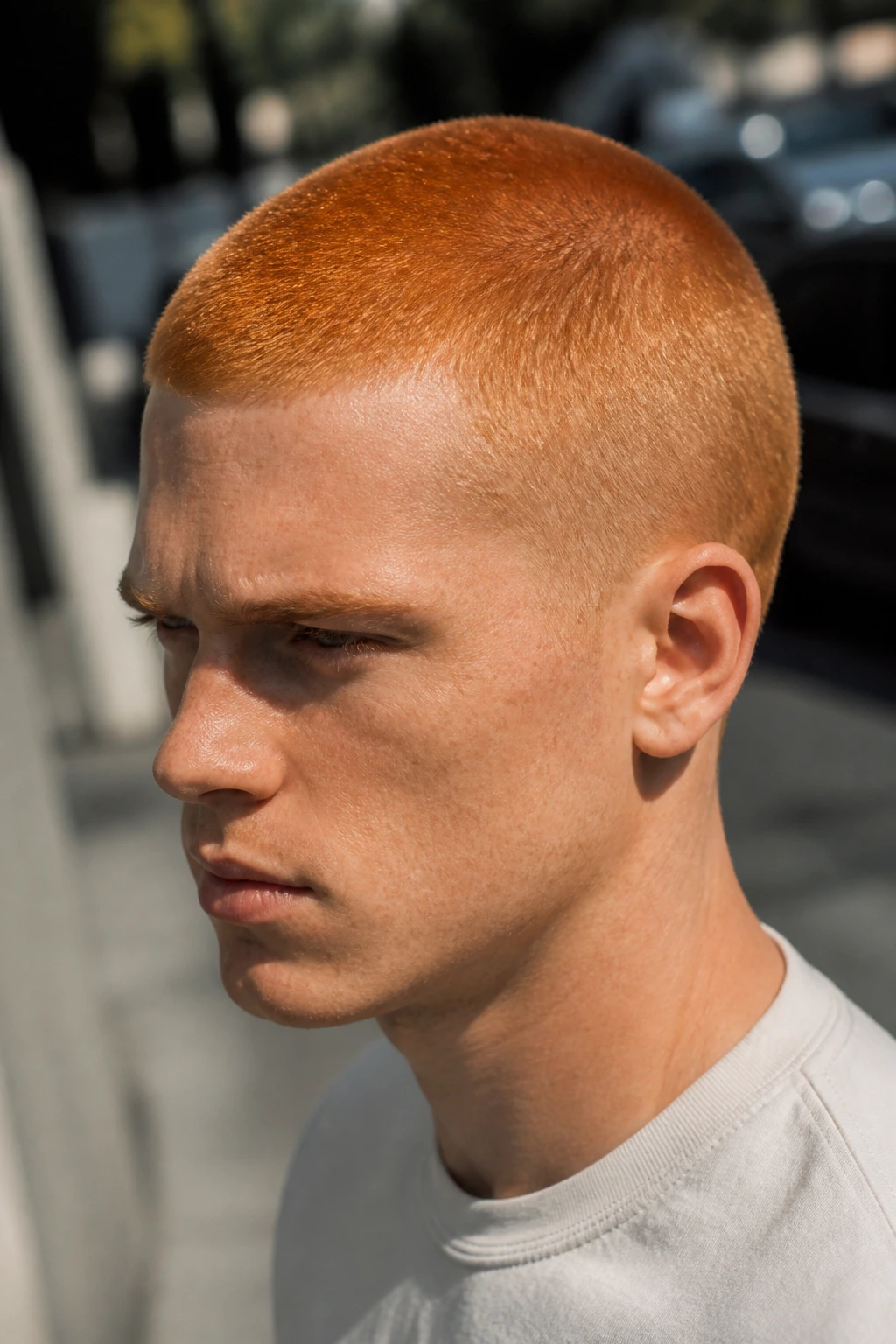
A copper buzz cut is the bluntest, cleanest way to wear red hair on a man. Keep the length tight—usually a #1 to #3 guard—and let the color sit on top like a thin sheet of metal in sunlight. The result is spare, sharp, and hard to mess up. If your bone structure is good and your hairline is tidy, this one does a lot with almost nothing.
Who it suits best
A buzz cut works especially well if your hair grows dense or uneven. The short length keeps cowlicks from taking over, and the copper tone stops the style from looking plain. Go warmer if your skin has pink or fair undertones. Go a touch deeper if your beard is darker and you want the color to feel connected.
What to keep in mind
This look is all about maintenance. The cut itself is easy, but the shade will show regrowth fast, so the edges need touching up every 2 to 3 weeks if you want it crisp. A matte finish on the scalp area keeps it from looking greasy. Cheap styling wax is a bad idea here. You want clean, not shiny.
2. Ginger Crew Cut
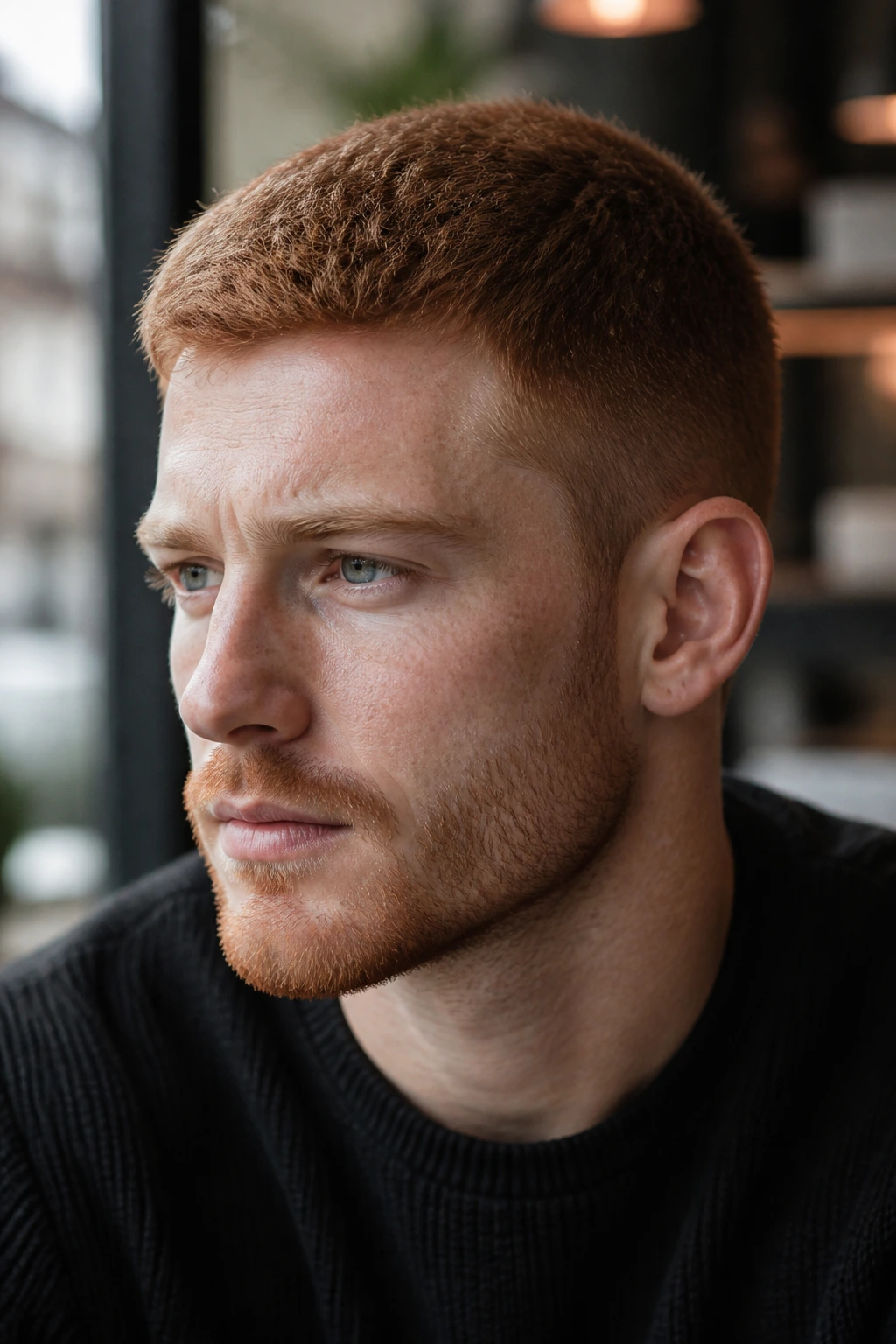
The ginger crew cut sits in that sweet spot between tidy and casual. It keeps the sides short and the top just long enough to comb forward or slightly up, which means it looks neat even when you’ve only spent a minute on it. Ginger tones make the cut feel lighter and younger than a darker auburn would.
Crew cuts are one of my favorite places to use red hair because the shape is already honest. No drama. No weird tricks. The color gives the haircut character, and the short top keeps the hair from flopping around when it dries. If you want something that works with a blazer and still looks fine with a hoodie, this is a safe bet.
A matte cream or light clay is all you need. Skip glossy pomade unless you want the whole thing to read more retro than modern.
3. Auburn Taper Fade
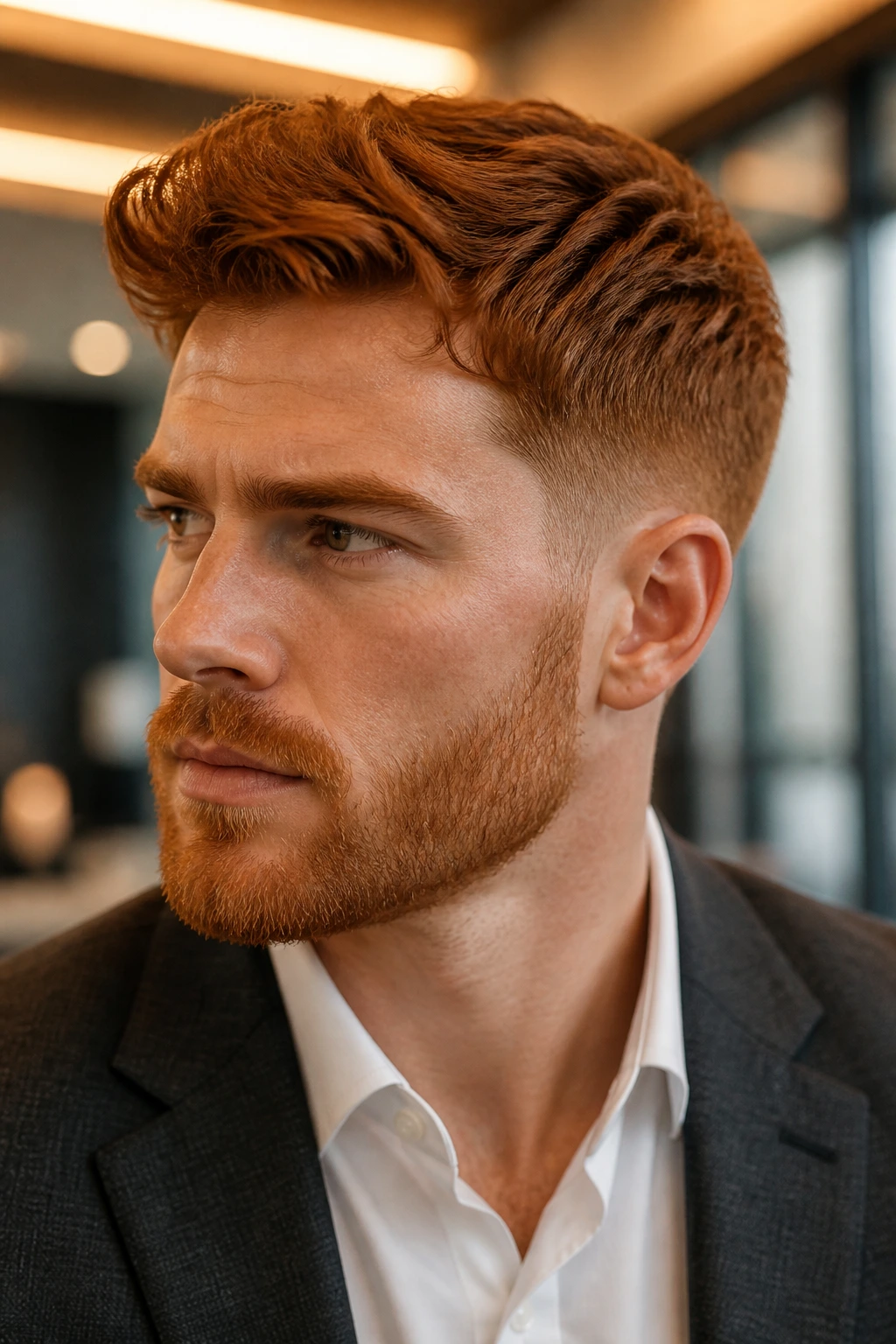
The auburn taper fade is one of the smartest red looks for men who want polish without looking fussy. The taper keeps the neckline and temples soft, while the auburn shade gives the top enough depth to feel grown-up. It’s a clean office haircut, but not a boring one.
Why it works
A taper fade gives the eye a place to rest. The color then sits on top with a little warmth and shadow, which helps the style look fuller than a straight brown taper would. If your hair is straight or slightly wavy, ask for about 2 to 3 inches on top and a low or mid taper on the sides. That keeps the shape controlled.
A detail that matters
The beard can make or break this one. If your beard is dark, keep the taper soft near the sideburns so the transition doesn’t look like two different heads. If your beard is lighter, a warmer auburn with copper in it ties the whole face together better.
4. Red Textured Crop
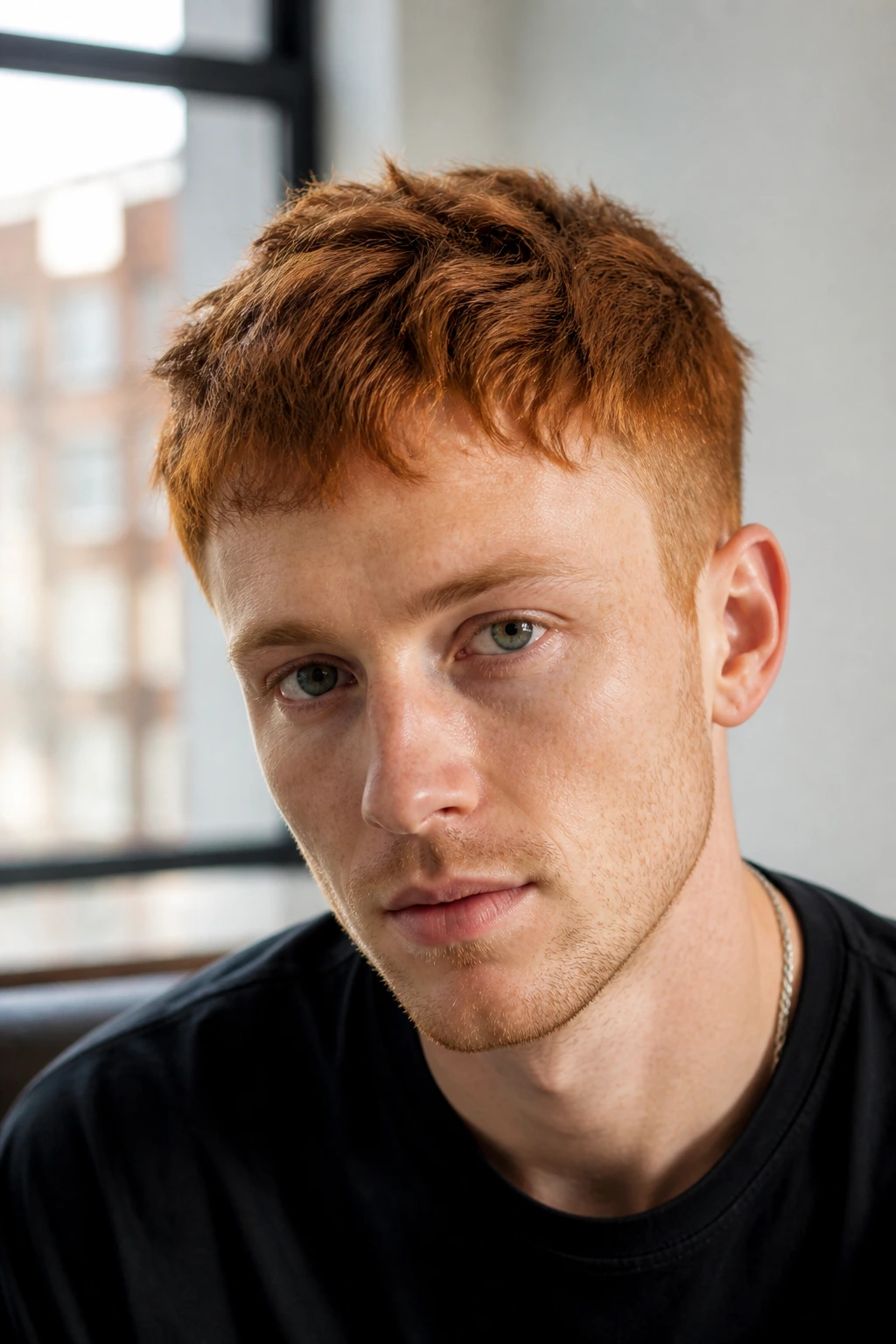
A red textured crop is one of the easiest ways to let the color look modern without turning the haircut into a project. The fringe stays blunt or slightly broken, the top gets choppy layers, and the red tone does the rest. It’s a good choice if your hair has a little natural bend and you don’t mind using your hands instead of a comb.
The best version of this cut has uneven texture on purpose. Not messy. Uneven. There’s a difference. You want the ends to move, not collapse into a helmet. A small amount of matte clay, worked into dry hair from back to front, keeps the fringe from looking too neat. If the red is a bright copper, the texture looks especially alive under daylight.
This is also a forgiving cut for guys who hate precision styling. A quick pinch and push is usually enough.
5. Cherry Red Undercut
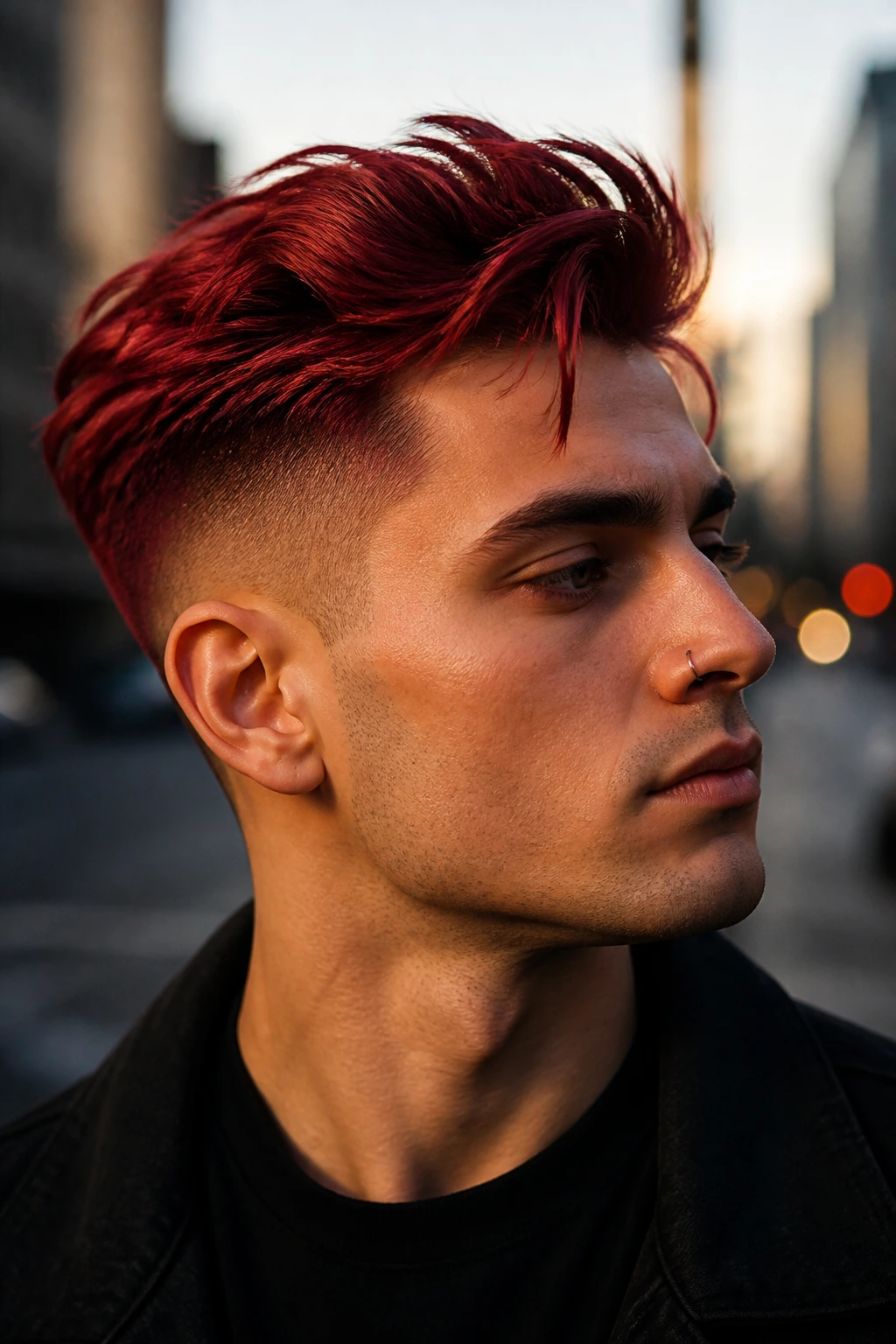
Cherry red is loud in the best possible way when the haircut underneath is disciplined. That’s why the undercut works so well. The sides drop away quickly, the top stays longer, and the color becomes the first thing people notice. It’s bold, but it’s not random.
This look works best with thick, straight, or slightly wavy hair because the undercut gives it a place to sit. If the top is around 3 to 5 inches, you can sweep it back, let it fall forward, or give it a little side movement. Cherry shades lean deeper and cooler than copper, so they pair nicely with darker brows and stubble.
Keep an eye on the line between top and sides. When that disconnect gets fuzzy, the style loses its punch fast. A clean neckline and fresh side trim keep it from drifting into “grown-out” territory.
6. Cinnamon Quiff
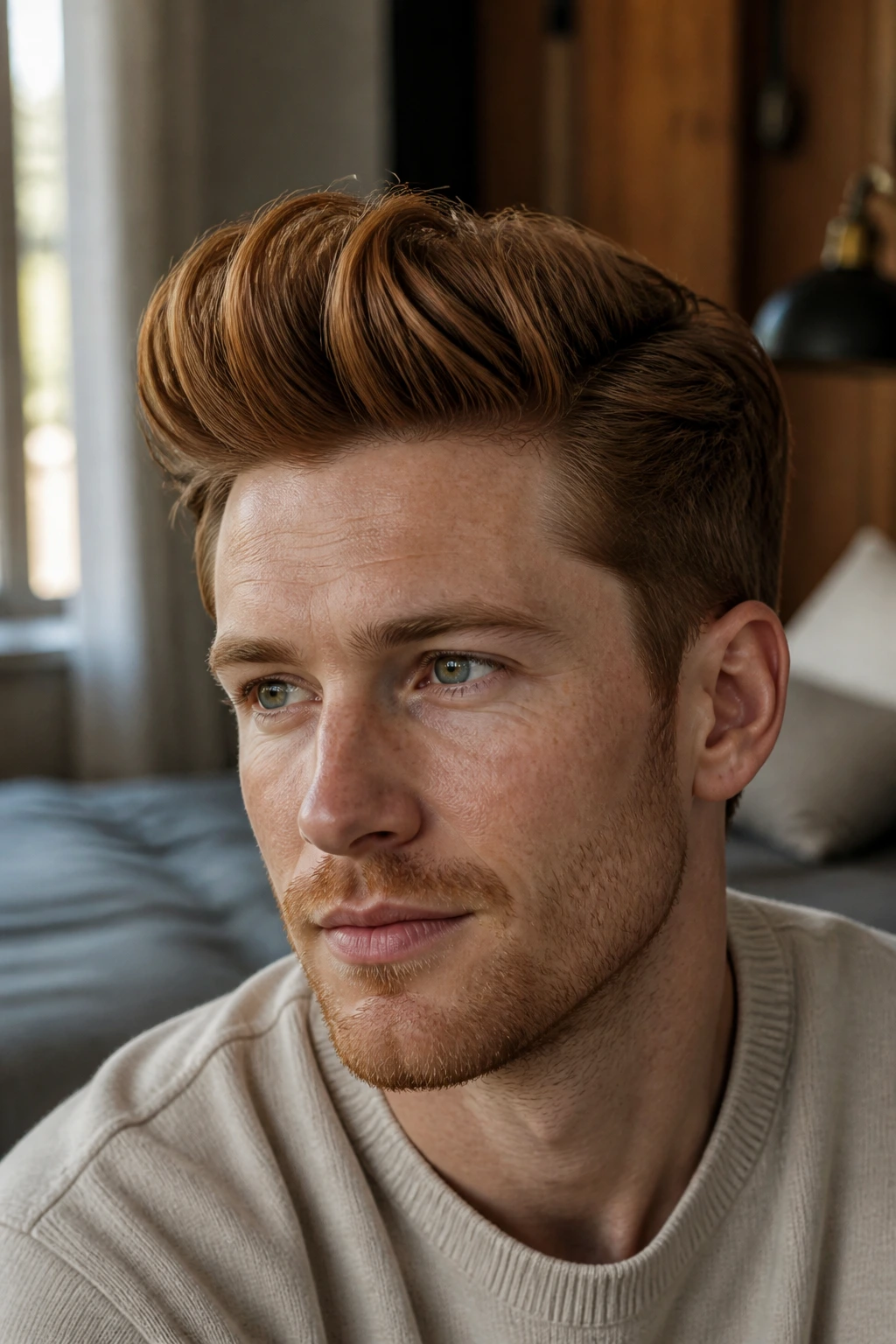
The cinnamon quiff is the sort of red hairstyle that looks polished without feeling stiff. It needs some height—usually 3 to 4 inches on top—and a warm cinnamon tone with enough brown in it to stop the style from looking candy-bright. Blow-dry the front up and back, then lock it in with a light pomade or cream.
What makes this one work is the shape. A quiff gives the face more vertical line, which is useful if your jaw is rounder or your forehead is shorter. The red color adds a soft glow to the lifted front, and that glow looks especially good in natural light. If your hair is medium thick, the quiff has enough body to stay up without turning stiff.
A round brush helps, but don’t overthink it. Push the roots in the direction you want, give them heat, and let the front cool before you touch it again.
7. Strawberry Blonde Ivy League
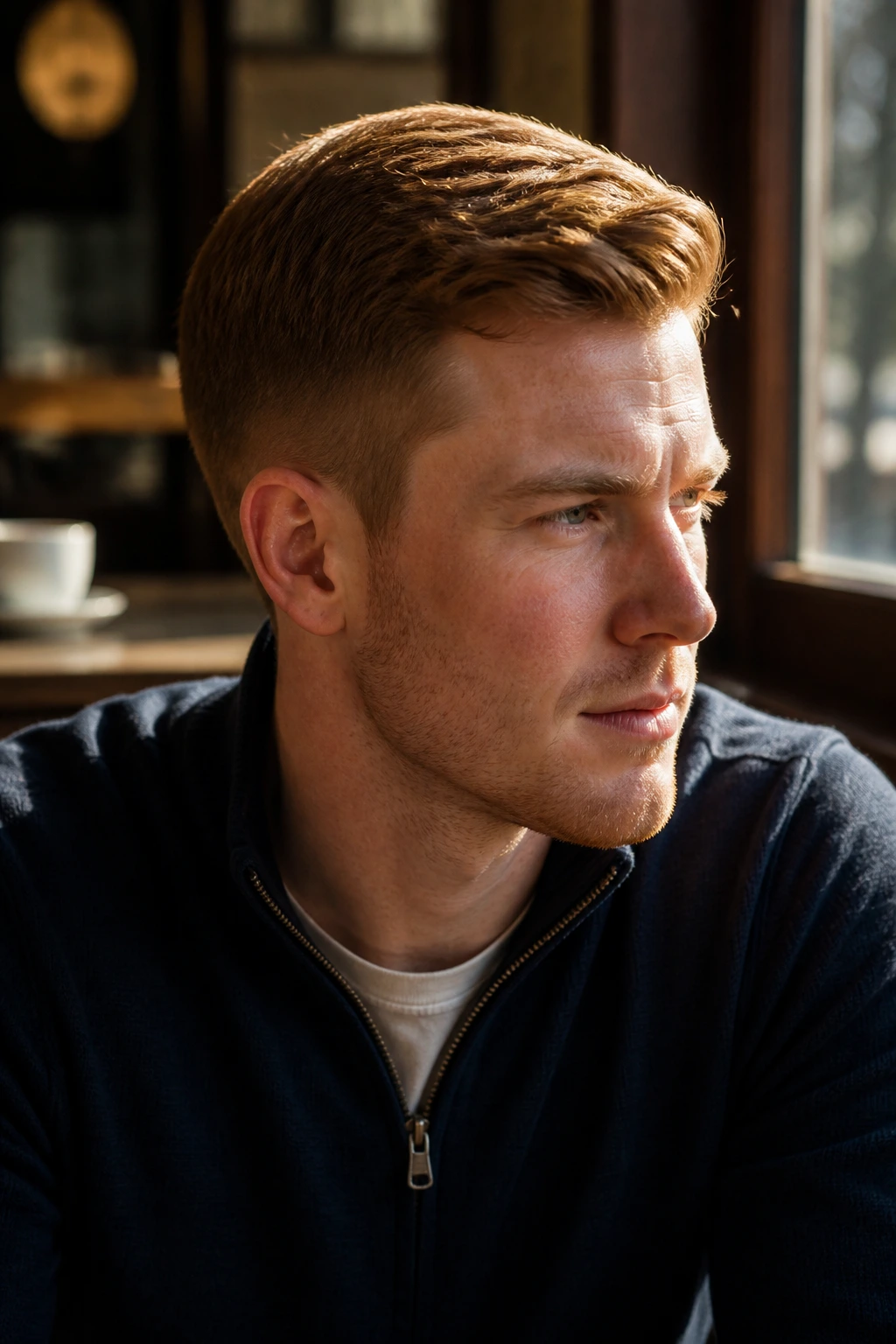
The strawberry blonde Ivy League is for men who want red hair without advertising it from across the room. The cut itself is classic: short sides, slightly longer top, clean side part or soft brush-over. The strawberry tone keeps it light and approachable, with enough red warmth to be interesting.
This is one of the best styles if your hair is fine or medium-fine. The lighter red shade adds the illusion of density, and the short length keeps the scalp from showing too much. If your brow color is light too, the whole look reads balanced and intentional. If your eyebrows are dark, the contrast gives you a slightly sharper, more editorial feel.
Use a light cream or low-hold pomade. Too much shine and the style starts to look like a school uniform from a bad era.
8. Burgundy Slick Back
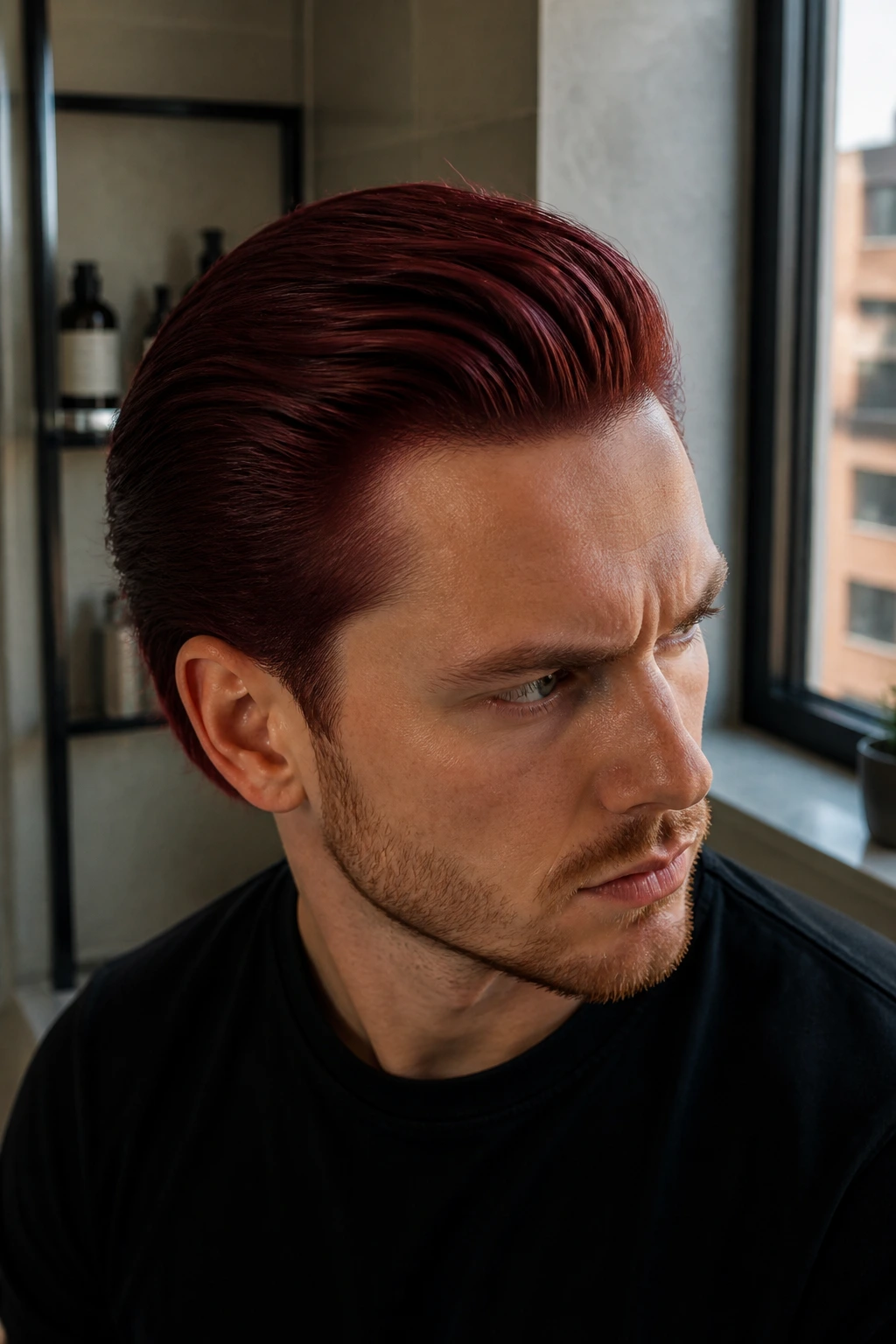
Burgundy slicked back hair has more edge than the usual dark slick back, and that’s exactly why it works. The deeper red shade sits close to brown in low light, then flashes richer color when it catches the sun or a bright bathroom mirror. The shape should stay smooth, with enough length to move back without fighting the grain.
This style likes medium thickness and straight or slightly wavy texture. If the hair is too short, the slick back looks thin. Too long, and it starts to collapse unless you’re willing to use a dryer and comb it properly. A little shine is fine here. In fact, a satin finish helps the burgundy tone look deep instead of dusty.
Keep the sides tapered or scissor-cut so the look doesn’t become blocky. Burgundy needs room to feel rich.
9. Rusty French Crop
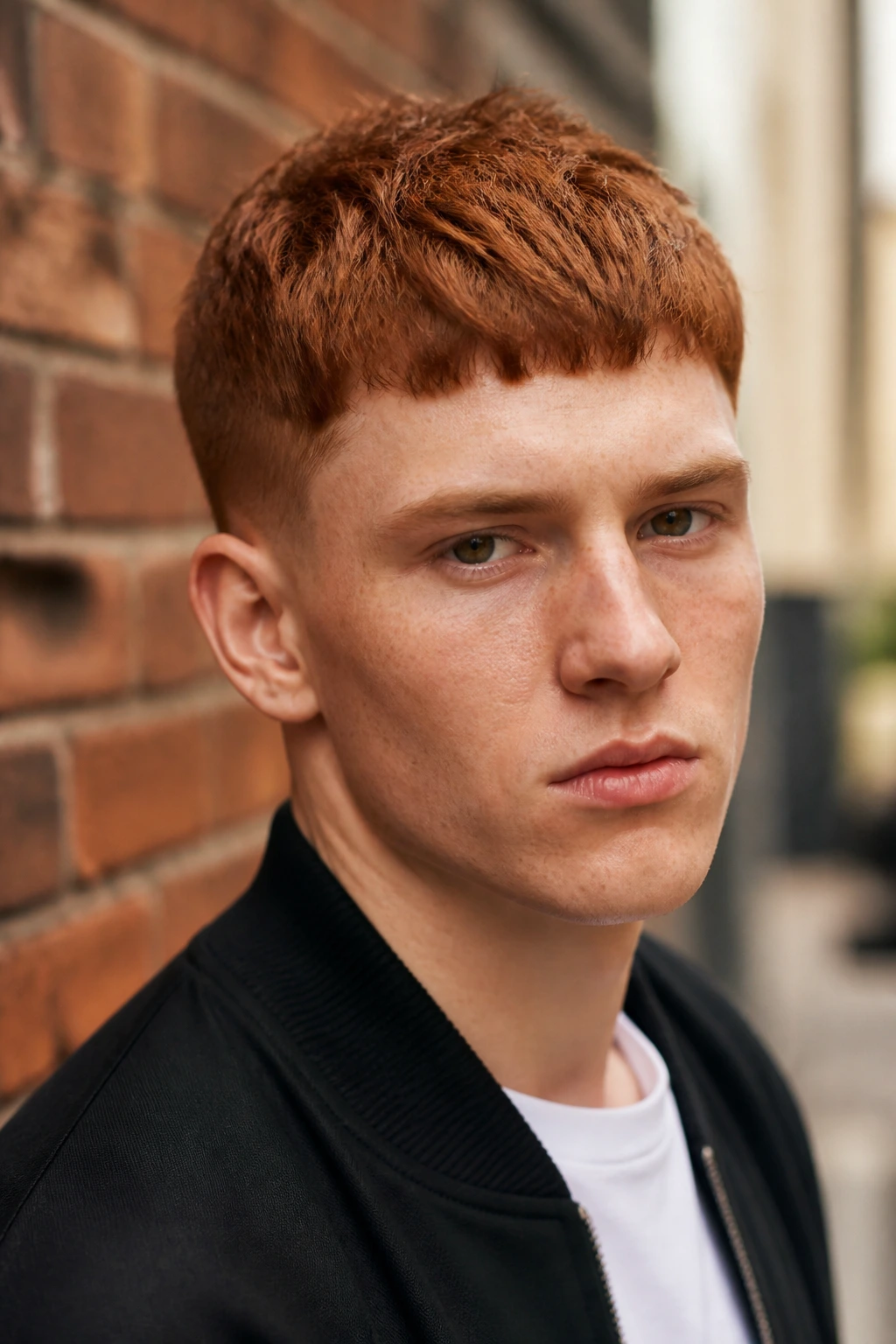
A rusty French crop is one of the best low-drama red hair looks for men with coarse or wavy hair. The fringe stays short and blunt, the top gets textured, and the rusty shade lands in that earthy middle ground between copper and auburn. It feels grounded. No shiny gimmicks.
The French crop works because the front line gives shape to a color that might otherwise blur. Rust tones often look strongest when the haircut has a clear edge—straight fringe, short sides, small amount of movement on top. If your hair tends to puff up, this cut keeps it under control without making it flat.
Use a matte paste and keep the finish dry. That sandy texture is part of the point. If you want something wearable with boots, denim, and a plain tee, this one does the job without trying too hard.
10. Mahogany Side Part

A mahogany side part is the most grown-up red look in the bunch. It has the discipline of a classic side part, but the mahogany tone gives it more warmth and less stiffness than plain brown. This is the kind of cut that looks good at a desk, at dinner, and while standing under bad fluorescent light.
The side part works best when the top has just enough length to lie in one direction without fighting. Keep the part natural if your hair wants one already. If not, don’t carve an aggressive line into your scalp. A soft part looks better and ages better too. Use a medium-hold pomade or cream and brush the top flat enough to stay in place, but not so flat that it loses life.
Mahogany is especially good for men who want red hair without a bright dye look. It sits close to the deep end of the color family, which makes it easier to wear.
11. Fiery Faux Hawk
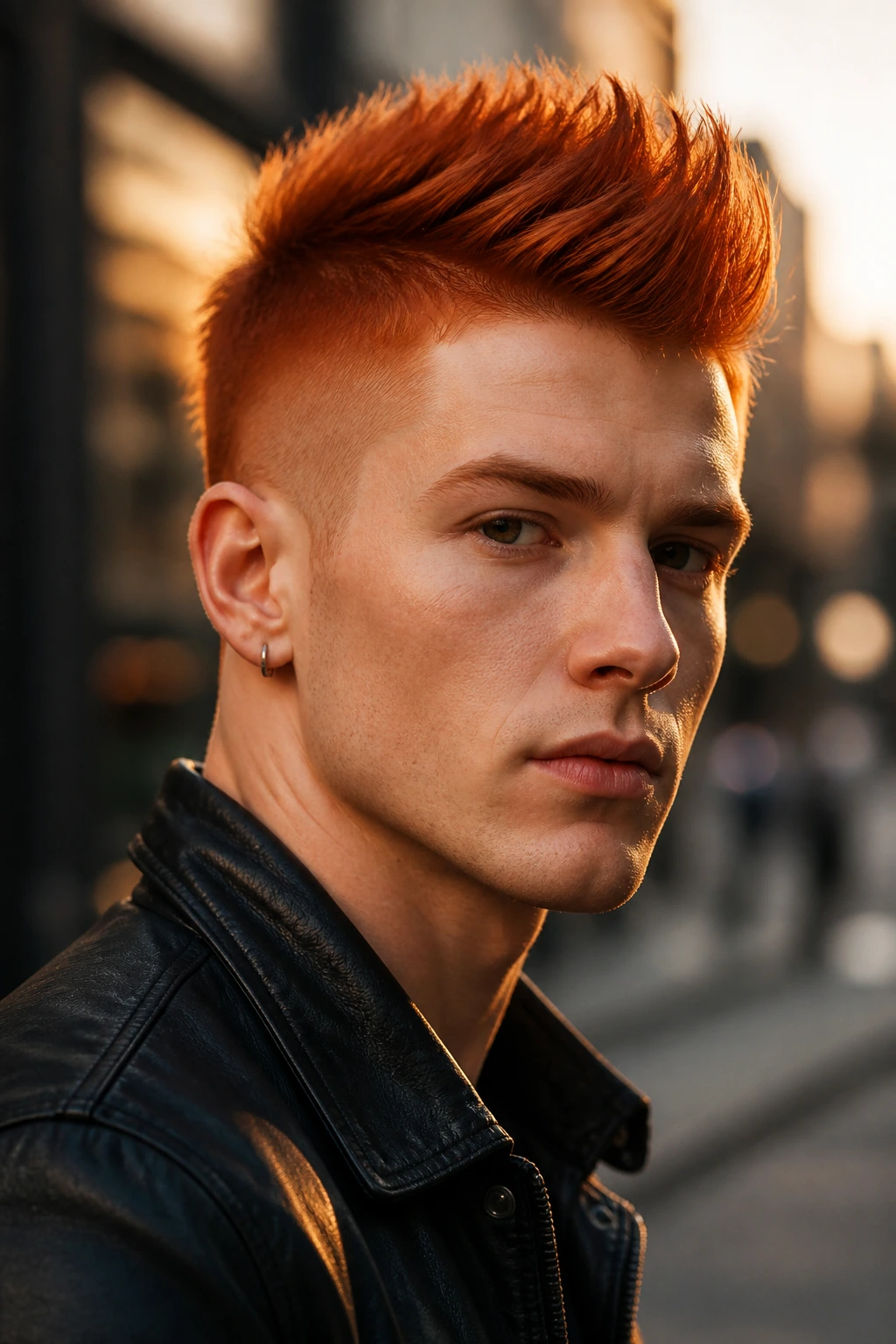
The fiery faux hawk is all angles and attitude, but it works best when the cut underneath stays disciplined. Keep the sides tight—fade or short taper—and let the center ridge lift just enough to read as a hawk without turning into a stage costume. Bright red or hot copper shades make the shape look even sharper.
This style loves thick hair. It also loves a little resistance. If your strands are too soft, you’ll need a stronger clay or paste to hold the center. Blow-dry the middle strip upward first, then pinch the ends to keep the line broken rather than smooth. That roughness is what keeps it from looking cartoonish.
It’s a statement cut, no question. But the statement is strongest when the edges stay clean and the color is the star.
12. Spiced Pompadour
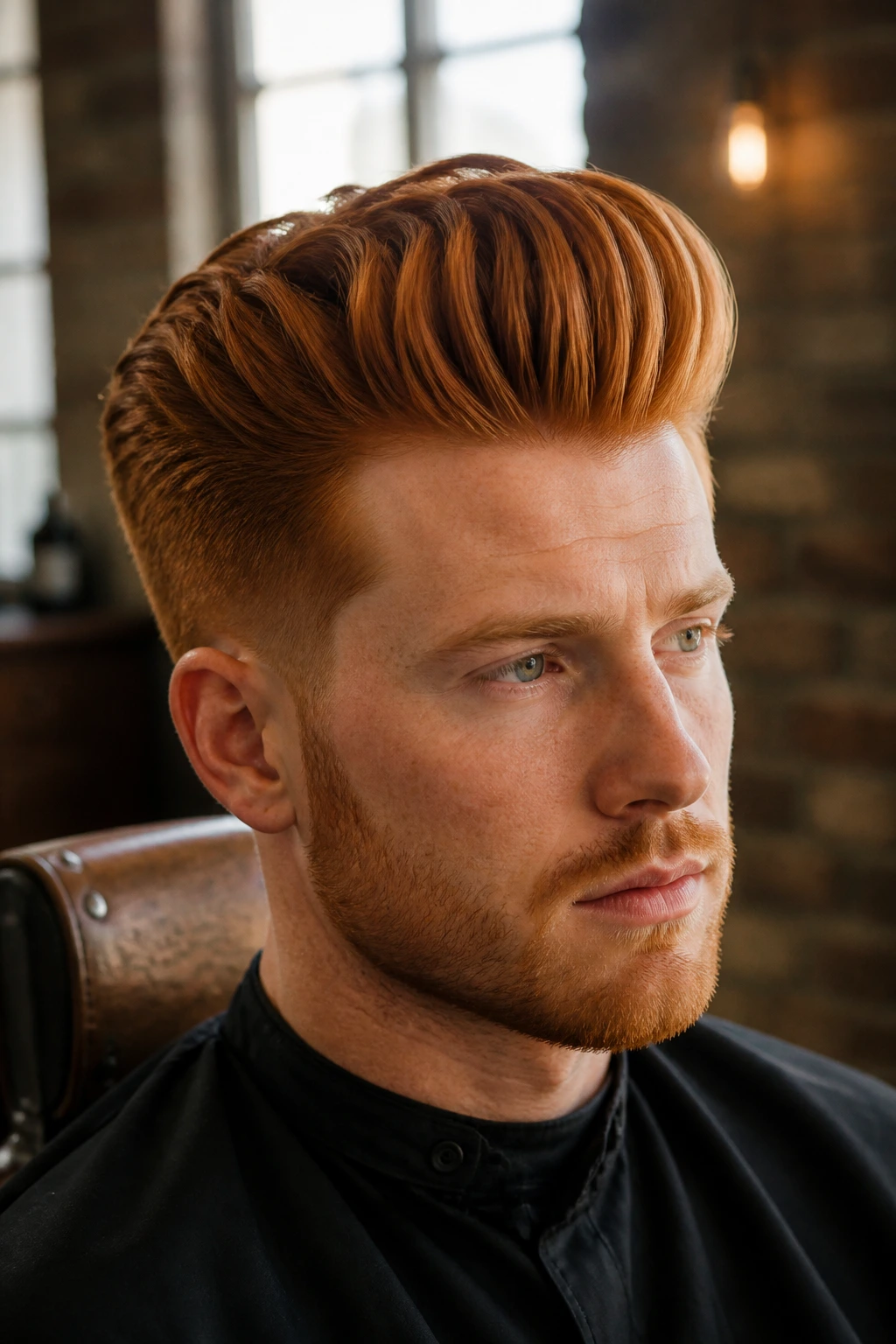
A spiced pompadour gives red hair room to breathe. The front lifts, the crown rolls back, and the warm spice tone makes the whole shape look fuller than it would in brown or black. It’s one of those styles that benefits from a real blow-dry, not just a brush-through.
The best version uses medium to thick hair with enough length on top to create a wave of volume. Ask for tight sides and a longer, layered top. If the top is too blunt, the pompadour can feel heavy. A little texture inside the shape helps it sit better and makes the red reflect light in more than one place.
Styling note
Use a round brush or vent brush, not both if you don’t need to. Push the front up and back, then cool it with the dryer before adding a small amount of pomade. Too much product weighs the front down and kills the lift.
13. Deep Auburn Curls
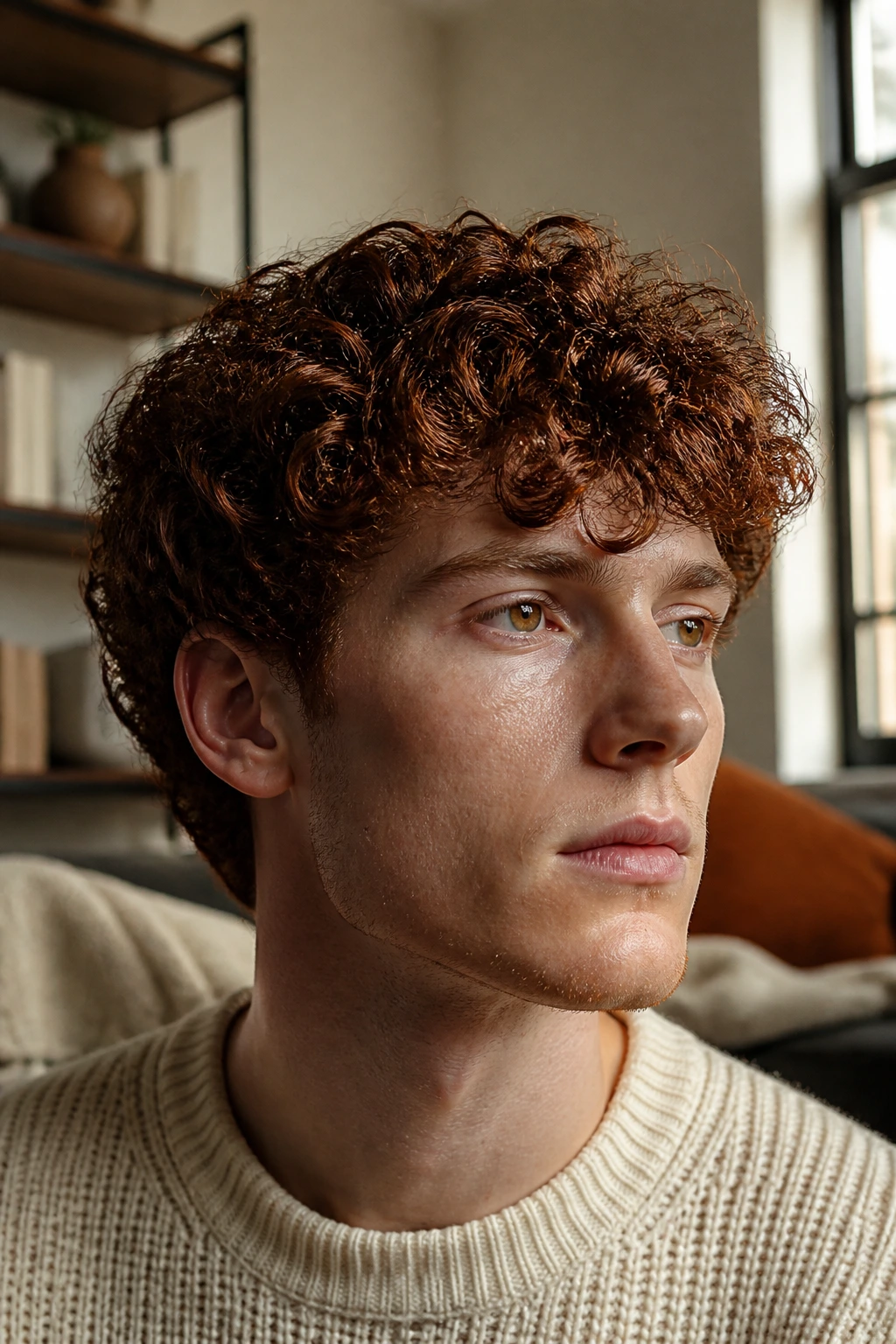
Curly hair and deep auburn get along better than a lot of people expect. The curls create natural shadows; the auburn gives those shadows a reddish glow instead of a flat brown mass. The result is richer, softer, and a little more interesting every time the curls move.
The main rule is simple: don’t brush it dry. Curly auburn hair looks best when the curl pattern stays intact, so use a leave-in cream or curl cream on damp hair and scrunch from the ends up. A diffuser helps if you want more volume at the roots. If you air-dry, keep your hands off it until it sets.
A deeper auburn is easier to maintain than bright copper on curls because it fades less obviously. If you like a lower-drama red, this is one of the best places to land.
14. Copper Afro
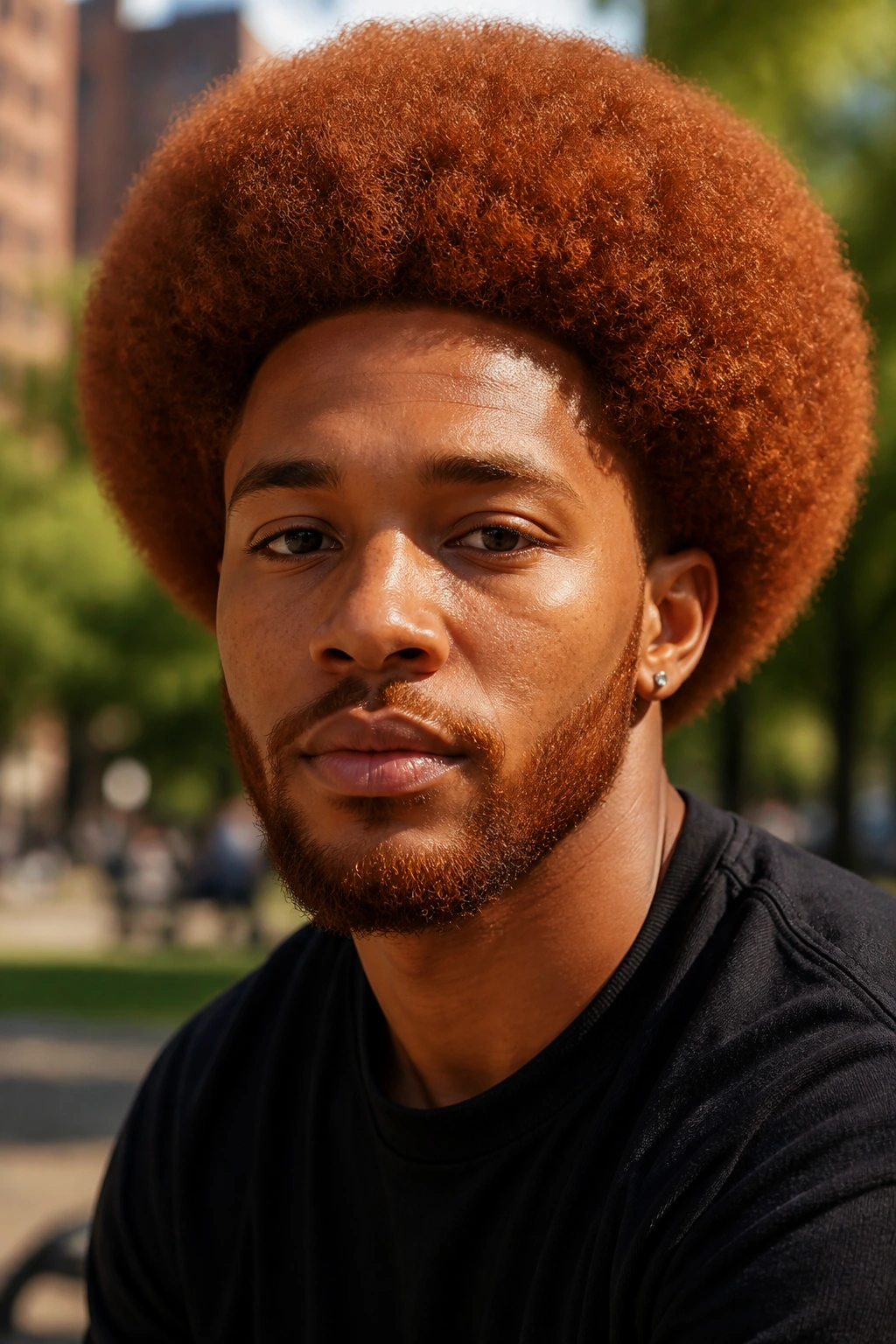
A copper afro has a lot of personality, but the shape is what makes it work, not just the color. A tapered or shaped afro with warm copper tones looks intentional, full, and clean around the edges. If the outline is sharp, the color feels even richer.
This style depends on moisture. Dry curls and coils can make red color look dull fast, so a good leave-in and a light oil on the ends go a long way. Keep the sides shaped every few weeks so the silhouette stays round or slightly tapered instead of growing wide in the wrong places. A copper tone with some depth works better than neon orange here, especially on dense hair.
If you’ve got a beard, shaping it to echo the afro line gives the whole look structure. Without that balance, the top can overwhelm the face.
15. Fire-Edge Buzz Fade
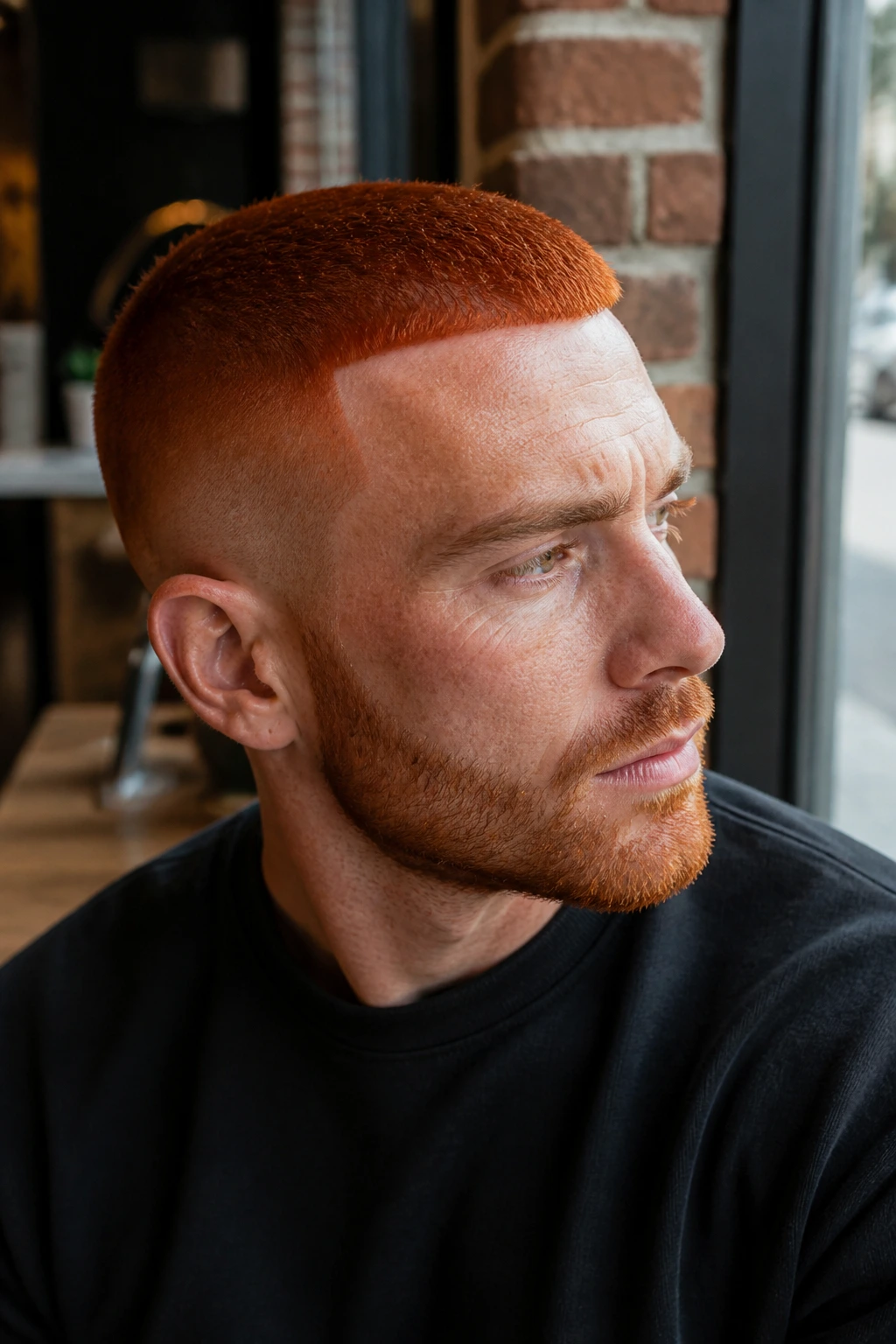
The fire-edge buzz fade is for men who want almost no daily styling but still want the color to hit hard. The fade handles the shape, the buzzed top keeps the maintenance simple, and the red shade—bright copper, scarlet, or a hot orange-red—brings the attitude. It’s stripped down in a good way.
This is an excellent option if your hair grows fast or you hate morning routines. The haircut stays neat even when you’re late for a trim, but the color still needs attention if you want the edges to stay crisp. The shorter the cut, the quicker regrowth becomes obvious. That’s not a flaw. It’s the trade.
Use this one when you want the most impact for the least styling time. It works especially well with sharp cheek lines and a trimmed beard.
16. Red Mullet
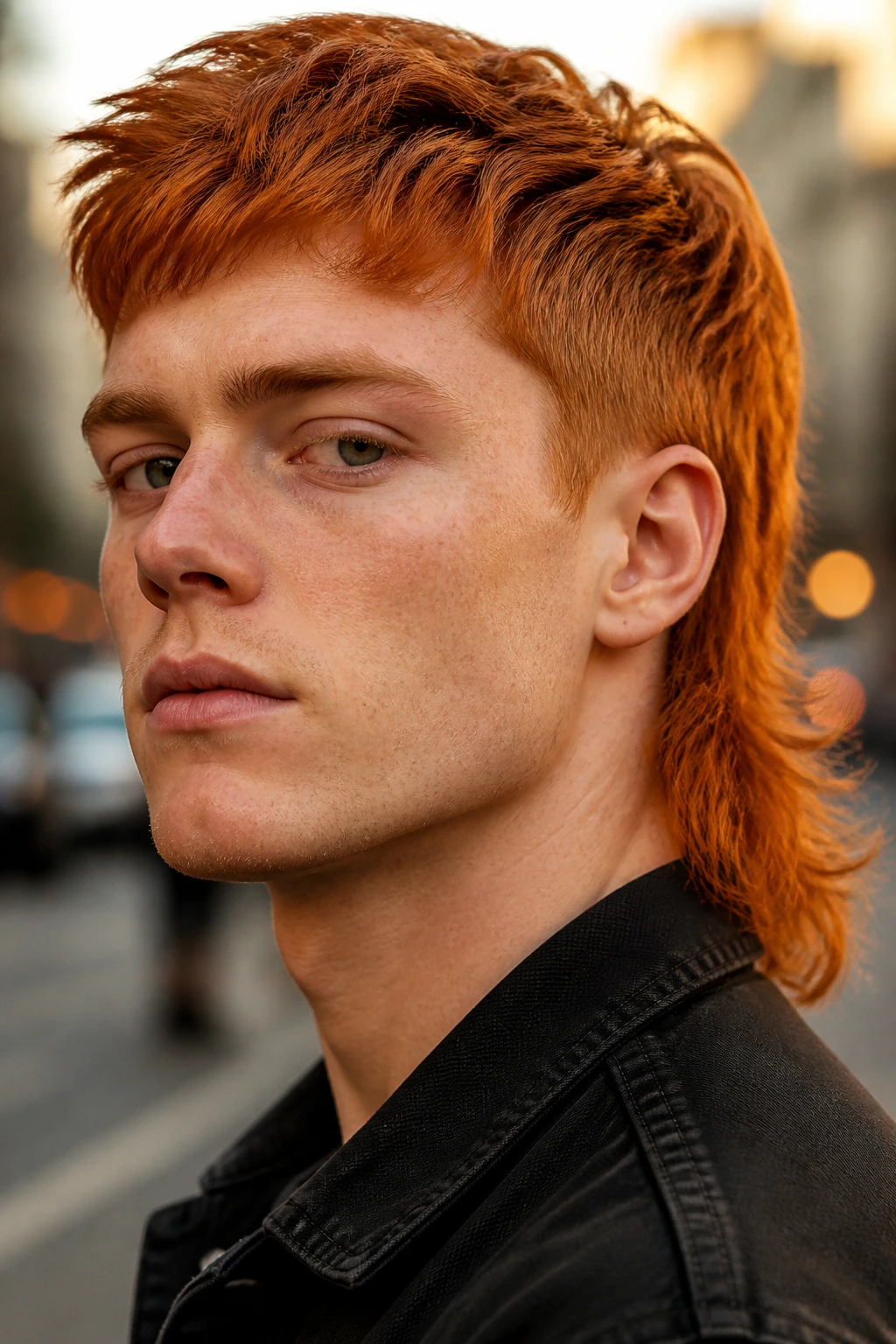
A modern red mullet is better than its reputation. Keep the front and sides short enough to stay current, then let the back carry some length and movement. With copper, auburn, or deep cherry tones, the shape stops looking like a joke and starts looking like a deliberate texture cut.
The secret is balance. If the back gets too long and the top too flat, it turns into a costume. Keep layers moving through the crown and around the ears so the cut flows instead of hanging. A bit of texture cream is enough for most days. You want piecey, not crunchy.
If you wear this one, commit to the neckline. A shaggy back with a messy neck line looks unfinished. A mullet with a clean taper at the sides and neck looks sharp enough to survive real life.
17. Cranberry Locs
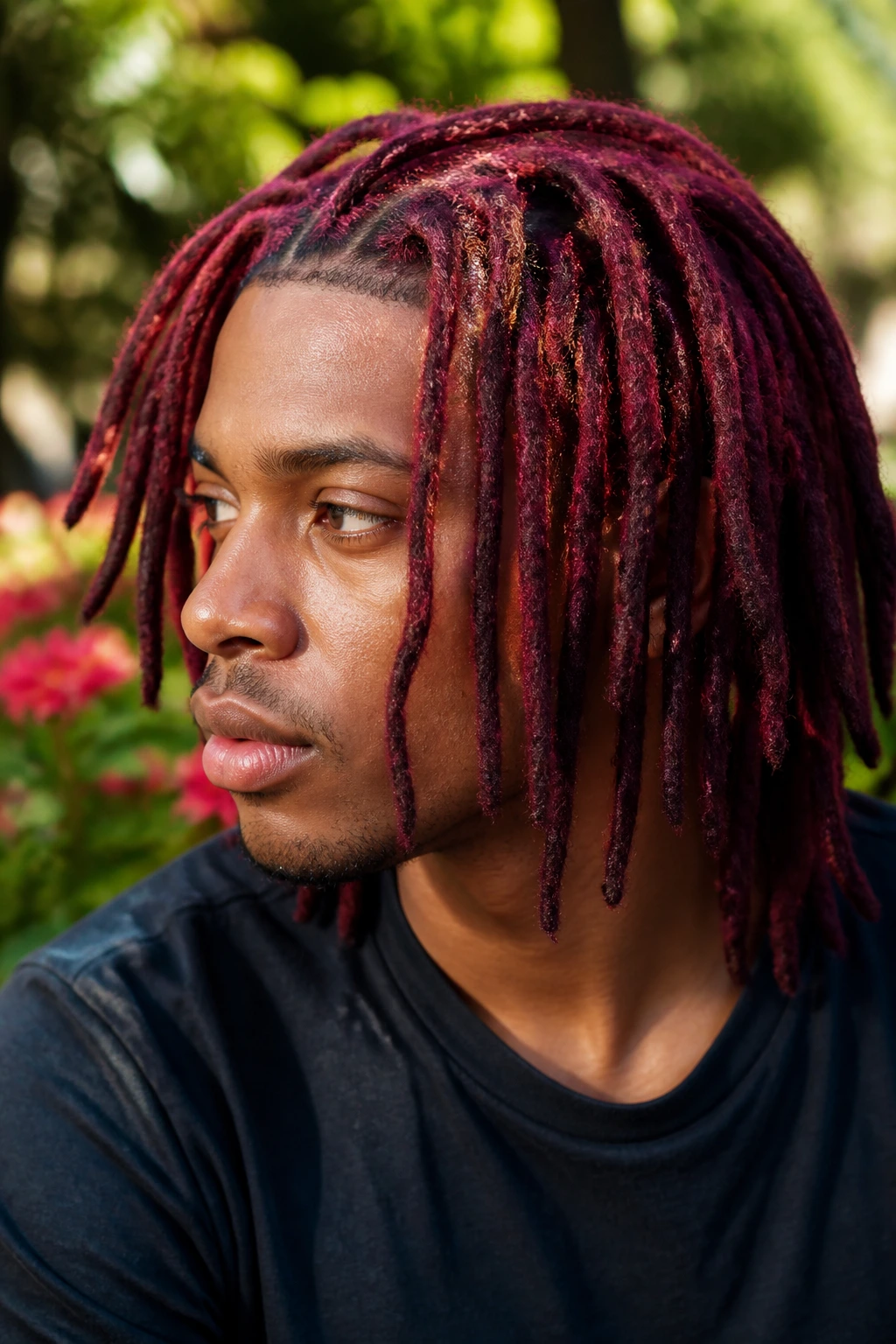
Cranberry locs bring color into the style itself instead of sitting on top of it. The loc pattern already has texture and rhythm; a cranberry red tone makes each section stand out more clearly. It’s a strong look, but one with a lot of depth if the color is kept rich and not too flat.
This style rewards moisture and regular maintenance. Locs can go dry at the ends, and red shades look brittle fast when the hair is thirsty. Keep the scalp clean, moisturize lightly, and keep retwists or maintenance sessions on a steady schedule so the style doesn’t puff out unevenly. A darker cranberry tone is often easier to wear than a bright red because it stays rich as it fades.
The best part is the movement. When locs swing, the red shows different tones across the strands. That’s where the style really lives.
18. Auburn Braids
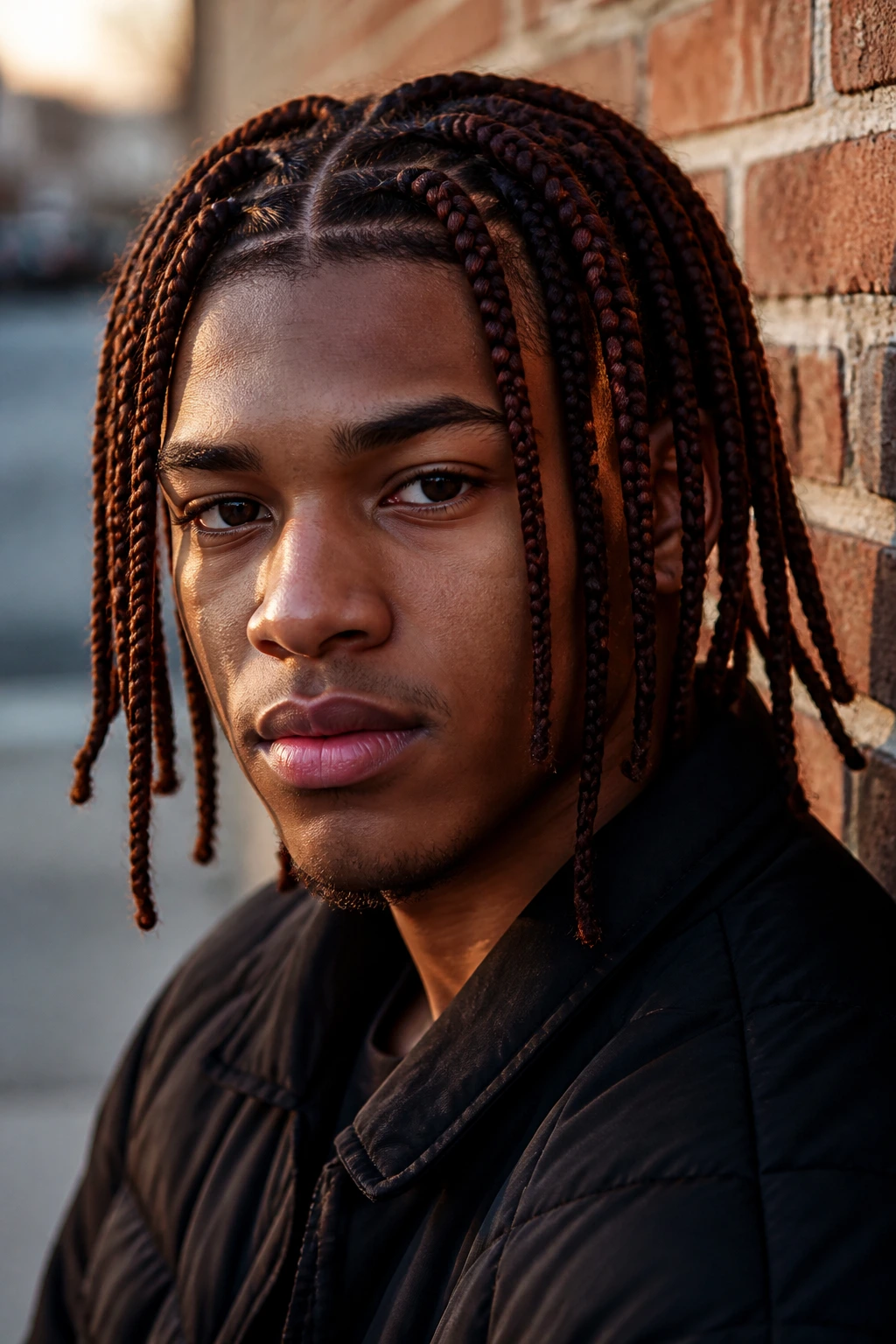
Auburn braids can be bold or subtle depending on how much color you commit to. Box braids, cornrows, or twists all take the tone well, and auburn has enough brown in it to feel grounded instead of flashy. It’s a good choice if you want the structure of a protective style with a warmer visual finish.
Braids benefit from clean parting and consistent thickness. If the braid sizes vary too much, the color can look uneven even when it isn’t. A reddish-brown extension blend often looks more natural than a pure bright red braid bundle, especially if your brows or beard are dark. And if you’re doing a full-color braid set, keep the roots tidy so the style doesn’t lose its shape after the first couple of weeks.
This is one of the few red styles that can look both athletic and polished at the same time. That’s a useful range.
19. Copper Bro Flow
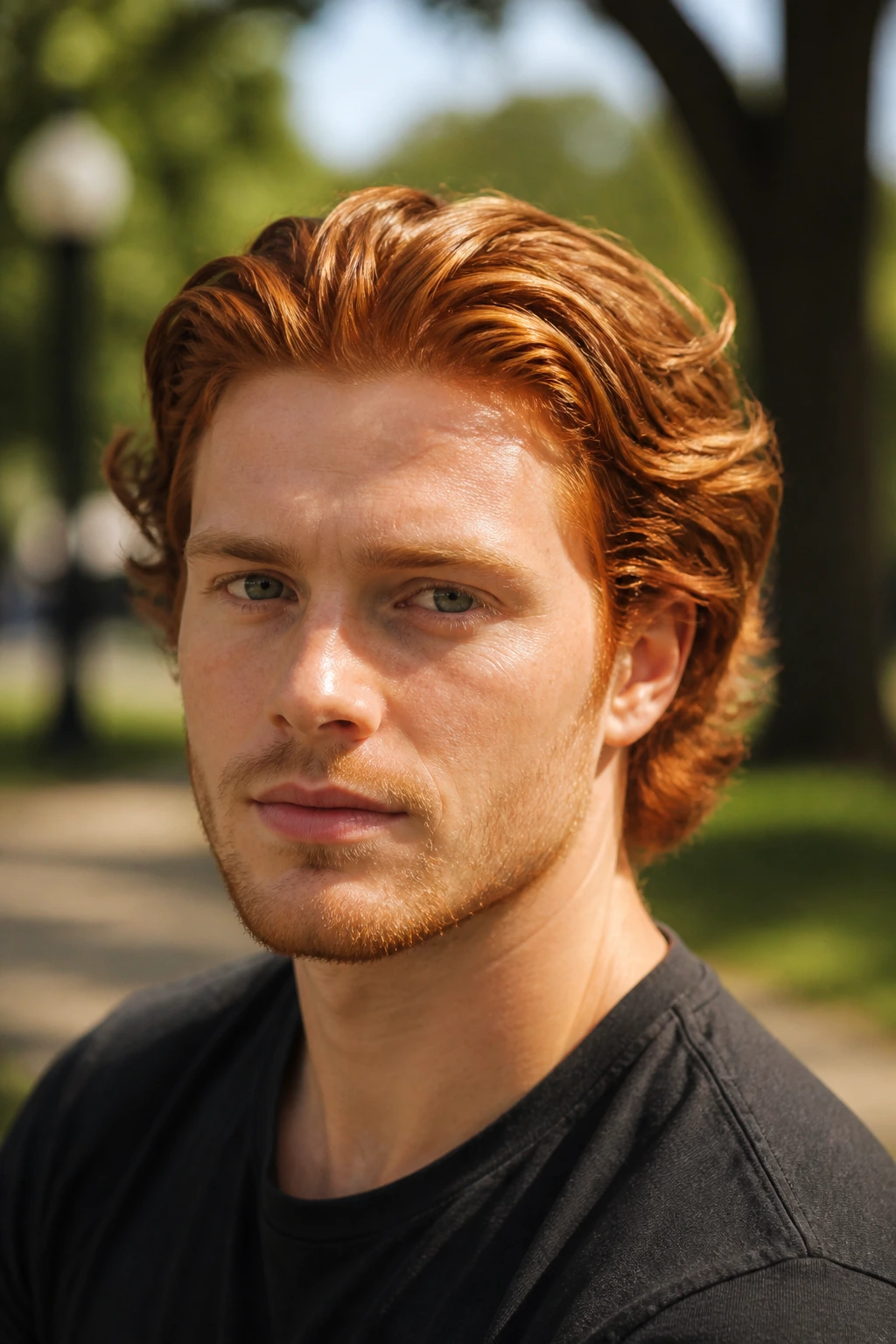
The copper bro flow is for men who want movement without the hard line of a fade or the sharpness of a crop. Medium-length hair gets pushed back and slightly behind the ears, then left loose enough to move. Copper brings the waves out, which is half the point.
This cut works best with natural wave or a slight bend in the hair. Straight hair can do it too, but you’ll need more product and more patience. Keep the ends trimmed so they don’t split and fray. The flow looks best when it feels easy, not overbrushed. A lightweight cream or sea salt spray gives shape without turning it stiff.
If you’ve got facial hair, keep the beard neat and not too heavy. A big beard plus flowing red hair can tip the style into lumberjack territory fast.
20. Maroon Comb Over
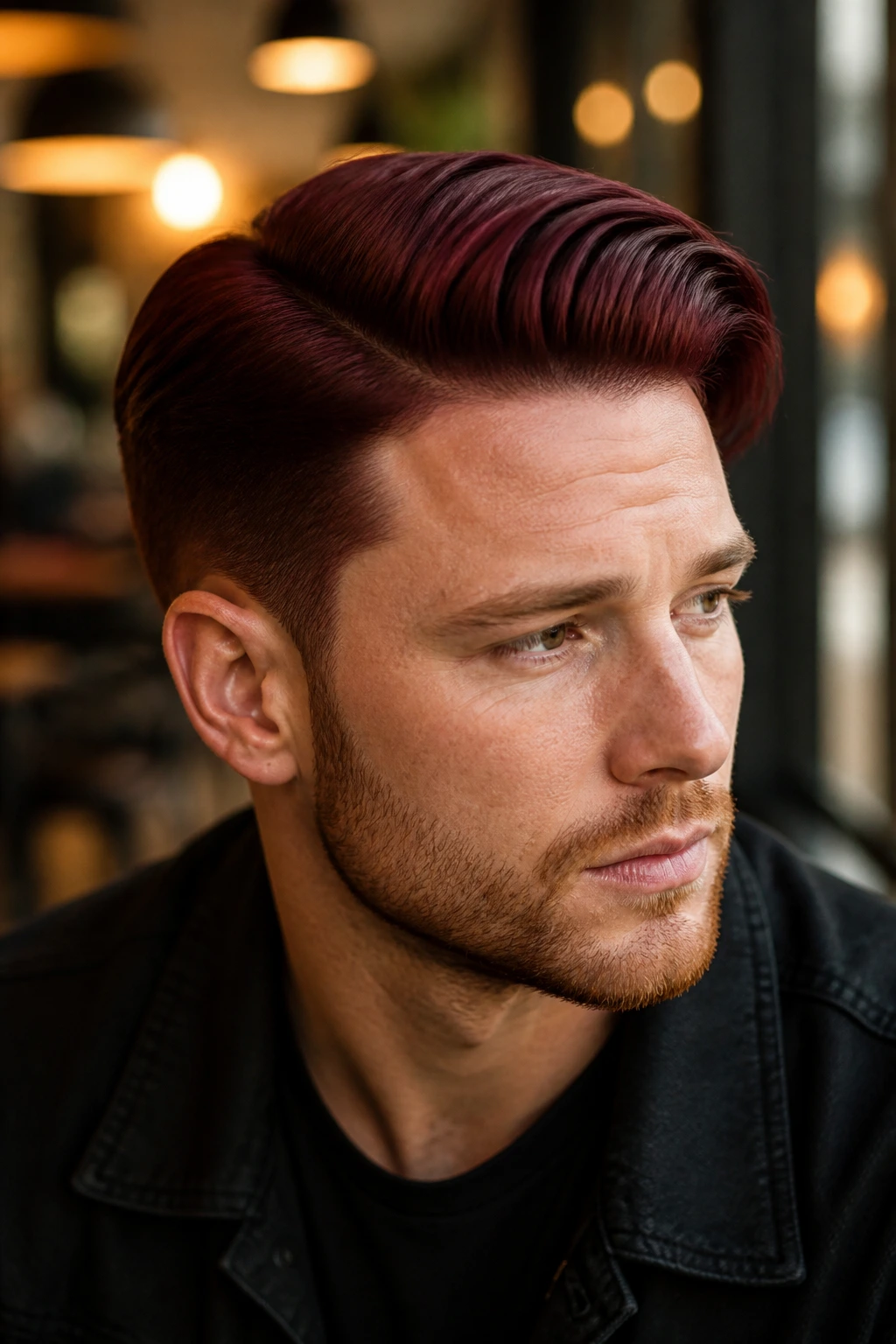
A maroon comb over can look much better than people give it credit for, mostly because maroon has depth. It’s not the flashy red that gets all the attention; it’s the deep, wine-colored shade that makes a comb over look more expensive and less dated. The hair parting should stay soft, not razor-sharp, unless you want a very classic, formal finish.
This style is useful if your hair is a bit finer on top. Maroon creates the sense of density because the shade carries shadow along the part and over the crown. Keep the top long enough to sweep, but not so long that it slumps. A medium-hold cream or pomade gives you control without the hard shell effect.
The trick is restraint. You want the color to feel grown-up, not theatrical. Maroon does that better than almost any other red tone.
21. Sunset Fringe
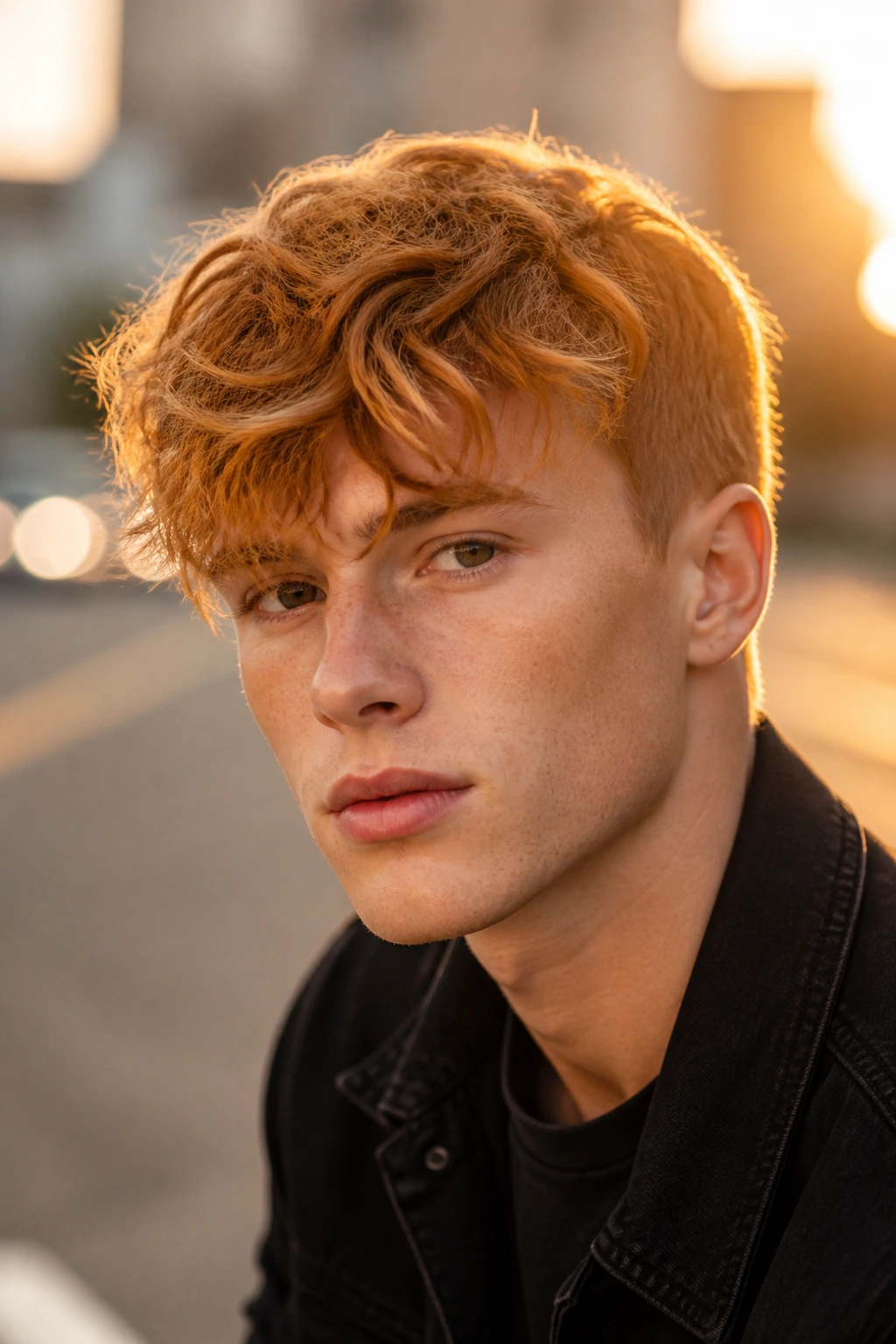
A sunset fringe mixes movement, layers, and a warm red-to-gold feel that looks especially good on medium-length hair. The fringe falls forward a little, the sides stay lighter or tapered, and the overall shape feels relaxed rather than stiff. If the color has copper and gold in it, the haircut can look like it changes tone as the light changes.
This one works when the hair has enough texture to break up the fringe naturally. Straight hair can still wear it, but the style looks best with a soft wave. Keep the layers visible. If the cut gets too blunt, the fringe turns heavy and hides the color shift. A light styling cream and a quick finger comb usually do more than a full styling routine.
It’s one of the more youthful red looks, but not childish. That’s a useful distinction.
22. Rust Twist Out
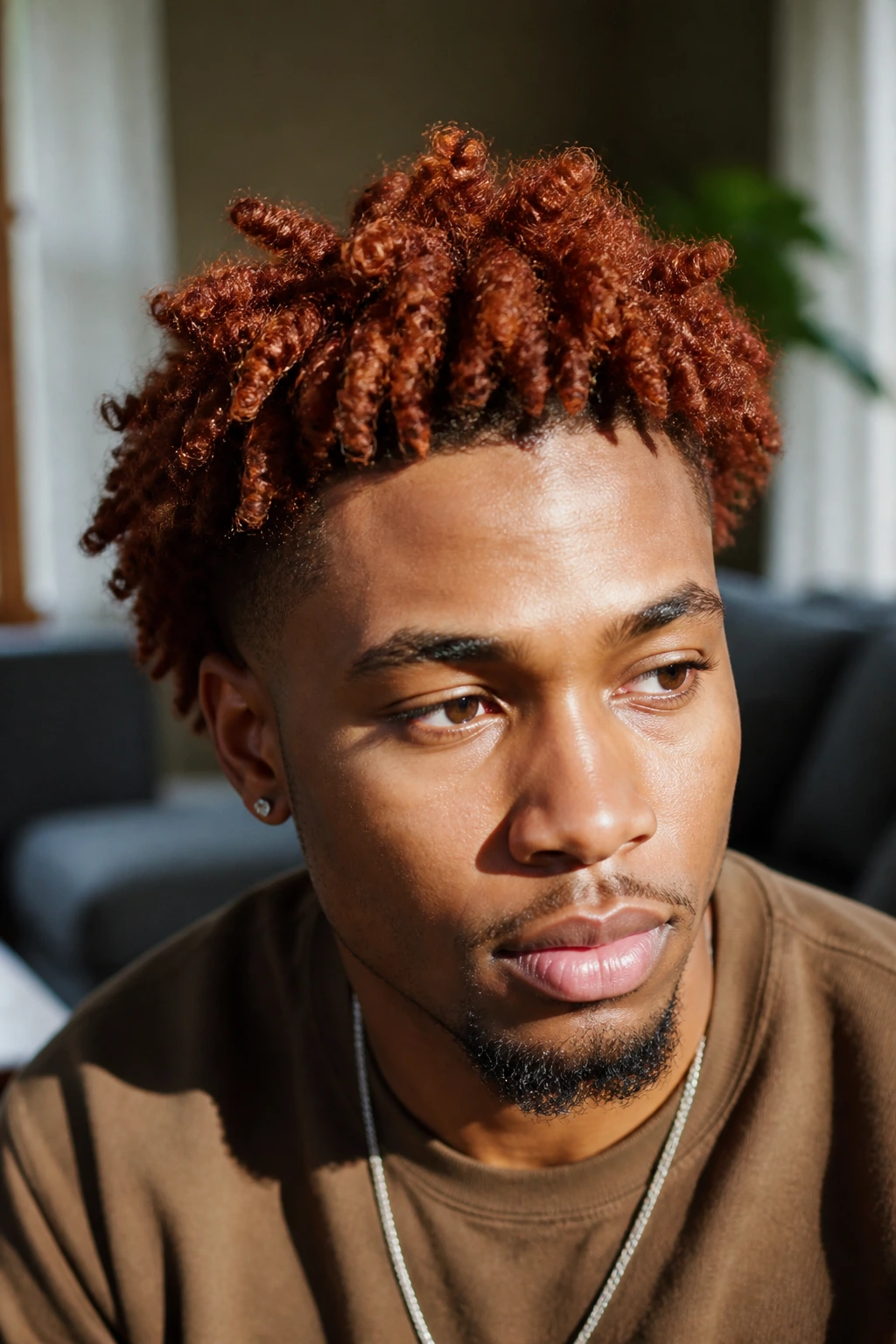
Rust twist outs are a strong option for coily hair because the texture and the red tone each bring something different. The twist pattern gives shape, and the rust shade adds warmth without needing a neon-bright finish. When the twists come apart, the color looks more dimensional than a single flat tone ever could.
This style depends on preparation. Start with moisturized hair, twist evenly, and let it set fully before separating. If you rush the take-down, the twist out gets frizzy and loses the shape that makes it worth wearing. A rust or copper-brown color works especially well because it keeps the finish from looking dry.
If you want a red look that feels textured rather than painted on, this is one of the better choices in the whole lineup.
23. Ginger Caesar Cut
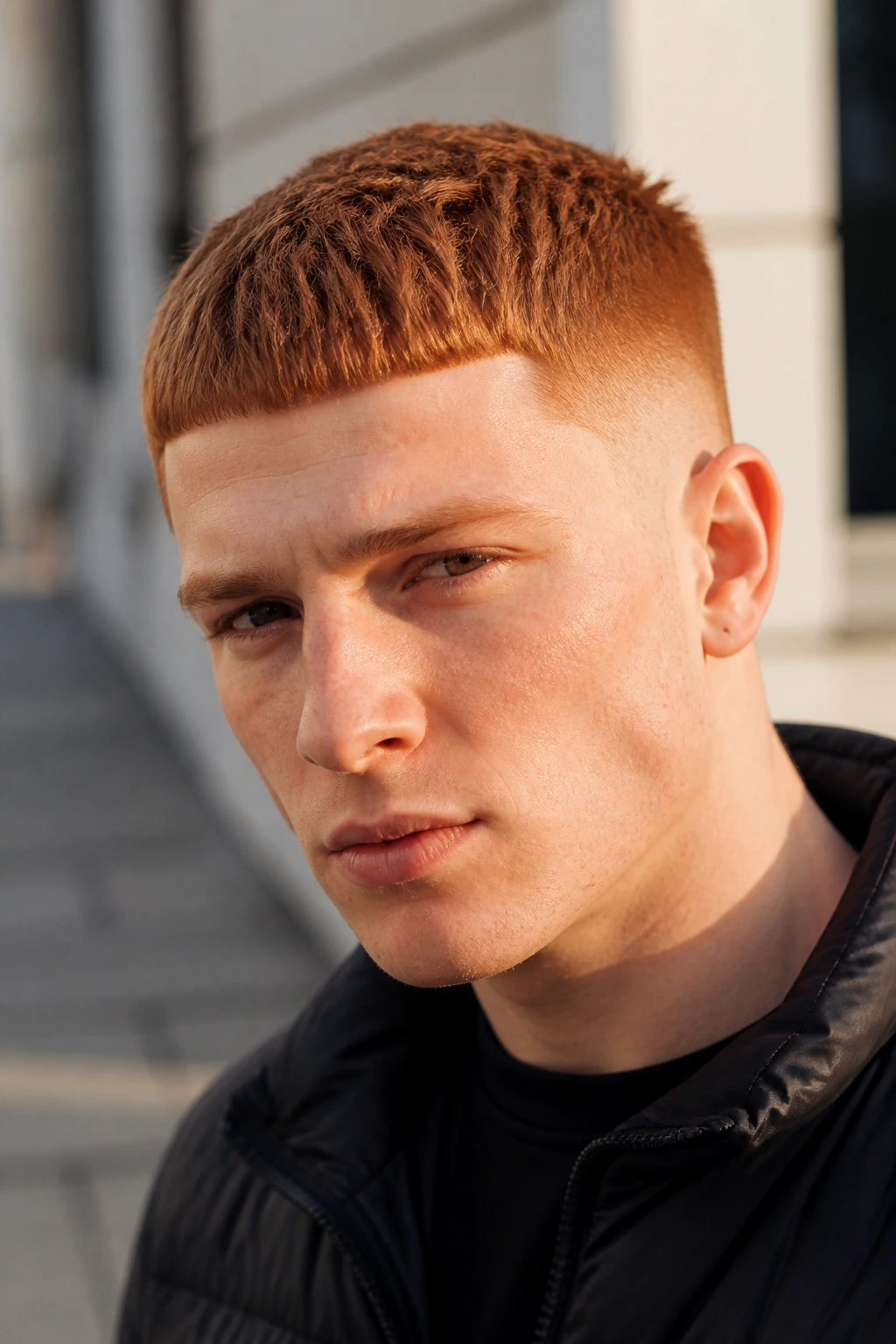
A ginger Caesar cut is short, blunt, and easy to keep in rotation. The fringe is cut straight across or with only a slight curve, and the sides stay tight enough that the color sits on top cleanly. Ginger gives this old-school shape a fresher face.
This is a practical option if you want red hair but don’t want to spend time styling it every morning. The short length means the hair falls where it wants to fall, and the color does the rest. It suits straight to slightly wavy hair best. If the hair is very curly, the blunt fringe can become uneven unless the cut is adjusted carefully.
A clean lineup makes the Caesar look intentional. Without that, it can slide toward messy very fast.
24. Scarlet Slick Side
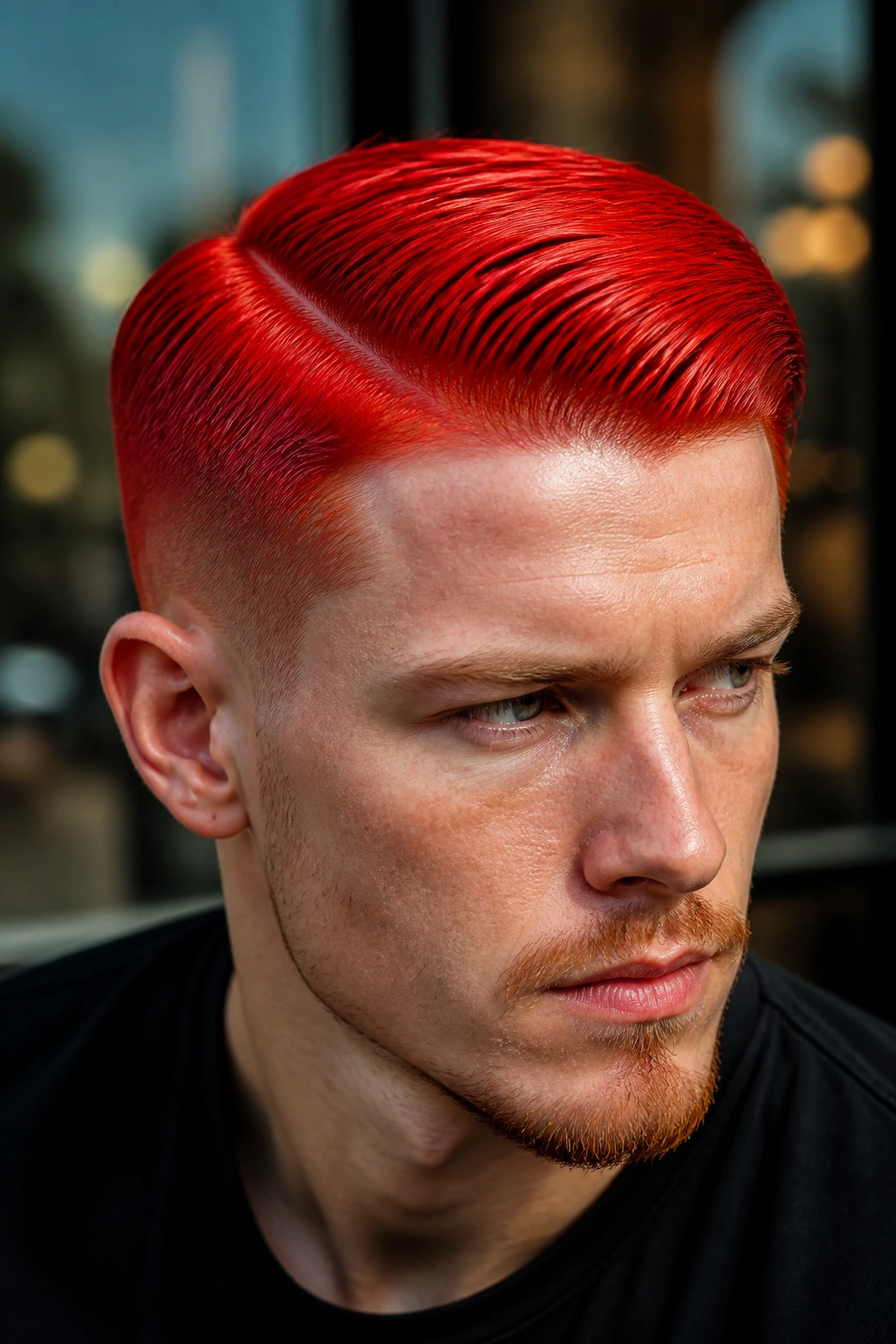
A scarlet slick side is a brash haircut in the best sense. The hair gets swept across with a strong side direction, the sides stay tight, and the scarlet color makes the shape impossible to ignore. It’s the kind of style that works when the cut is precise and the person wearing it is comfortable being noticed.
This look needs healthy hair. Bright scarlet shows dryness and breakage faster than deeper red shades, so if your ends are rough, cut them first. Use a shine-controlled pomade or cream—too much gloss and the style starts to look plastic. A clean side sweep with a visible part line creates enough structure to keep the color from looking chaotic.
It’s not subtle. That’s the appeal. Keep the rest of the outfit simple and let the hair do the talking.
25. Smoky Red Fade
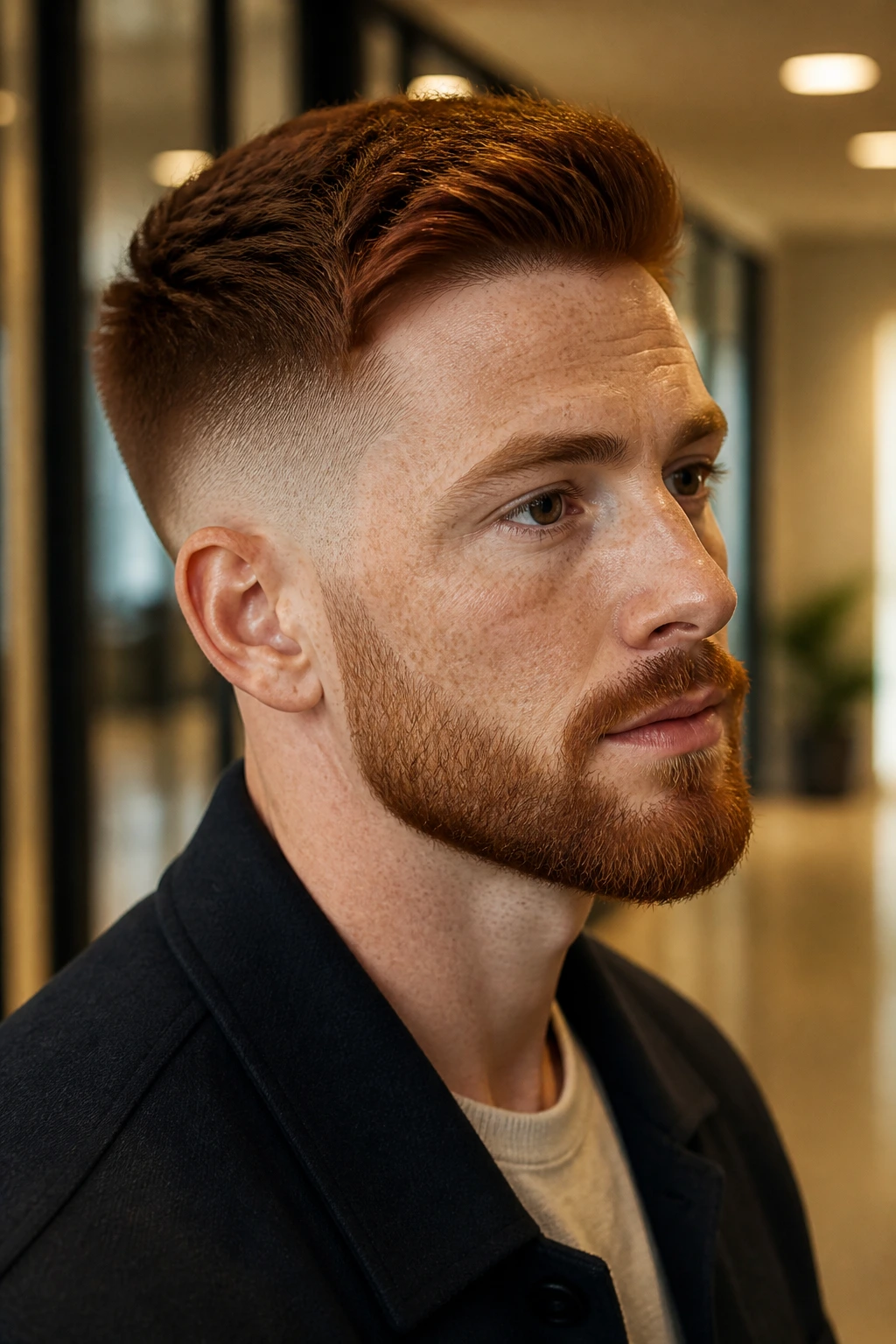
The smoky red fade is one of the smartest options if you want color without shouting. The fade keeps the sides clean, while the top carries a red tone softened by brown, ash, or muted copper. From a distance, it reads tidy. Up close, the color has depth.
This is a strong choice for men who work in conservative settings but still want something with personality. The muted red makes the cut easier to wear with a suit or plain work clothes. It also fades better than brighter red, which matters more than people admit. A smoky red that loses a little saturation still looks intentional, while a bright scarlet that washes out can look tired fast.
If you like red hair but don’t want the maintenance of a vivid dye job, start here.
26. Copper Curtain Hair
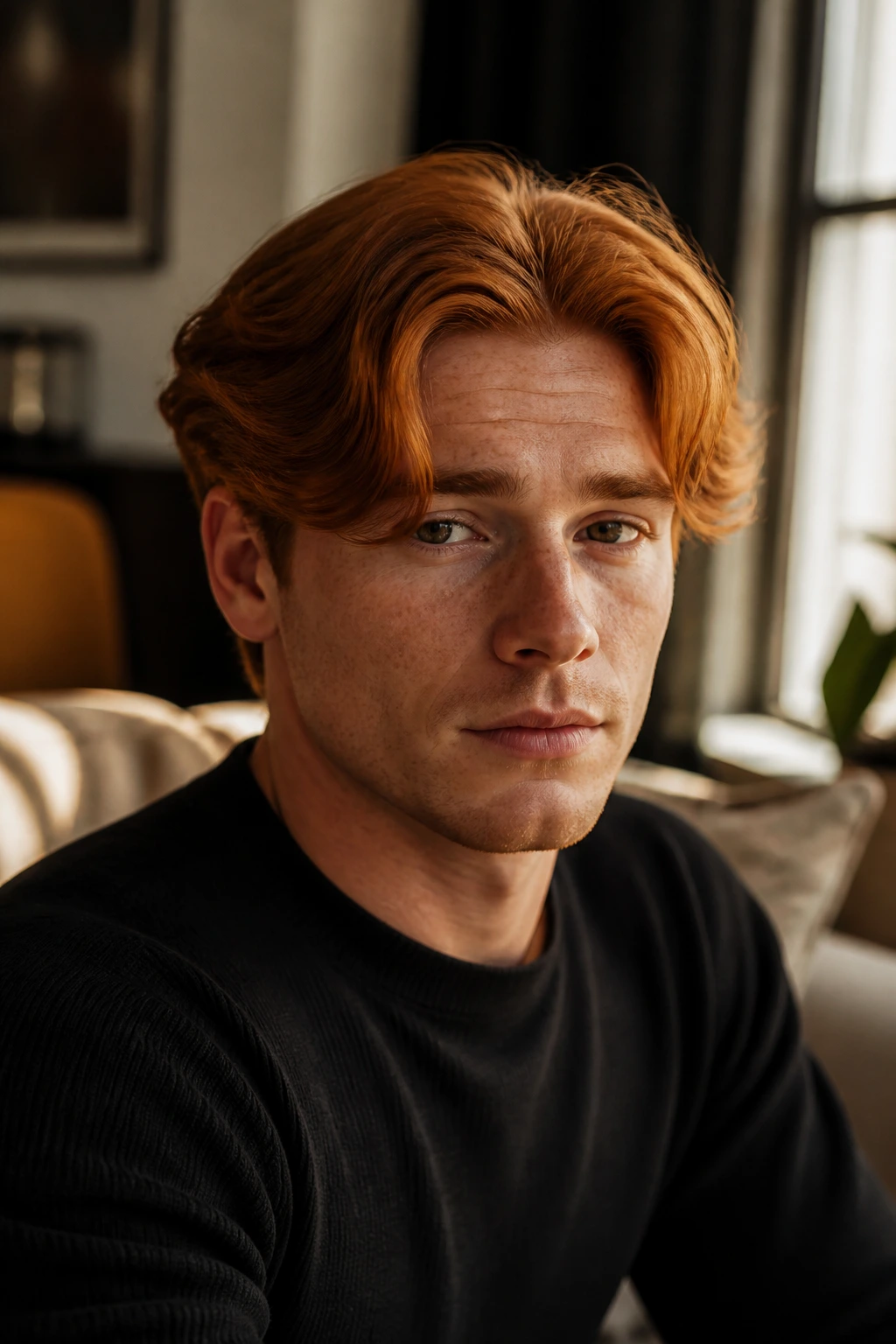
Copper curtain hair takes the middle part and gives it a warmer, richer life. The hair falls away from the face in two soft panels, usually with some wave or bend through the length. Copper makes the curtains look more alive because it breaks the flatness that plain brown can sometimes have.
This style needs a little length—enough for the front to separate and drape. Blow-dry away from the face if your hair wants to collapse forward. A small amount of cream or light mousse helps the shape stay loose. The best versions look easy, but they’re not accidental. You still need clean ends and regular trims so the front doesn’t turn stringy.
Curtain hair on red tones has a relaxed, almost cinematic feel when it’s done well. That can sound dramatic. It is, a little.
27. Mulled Wine Slick Back
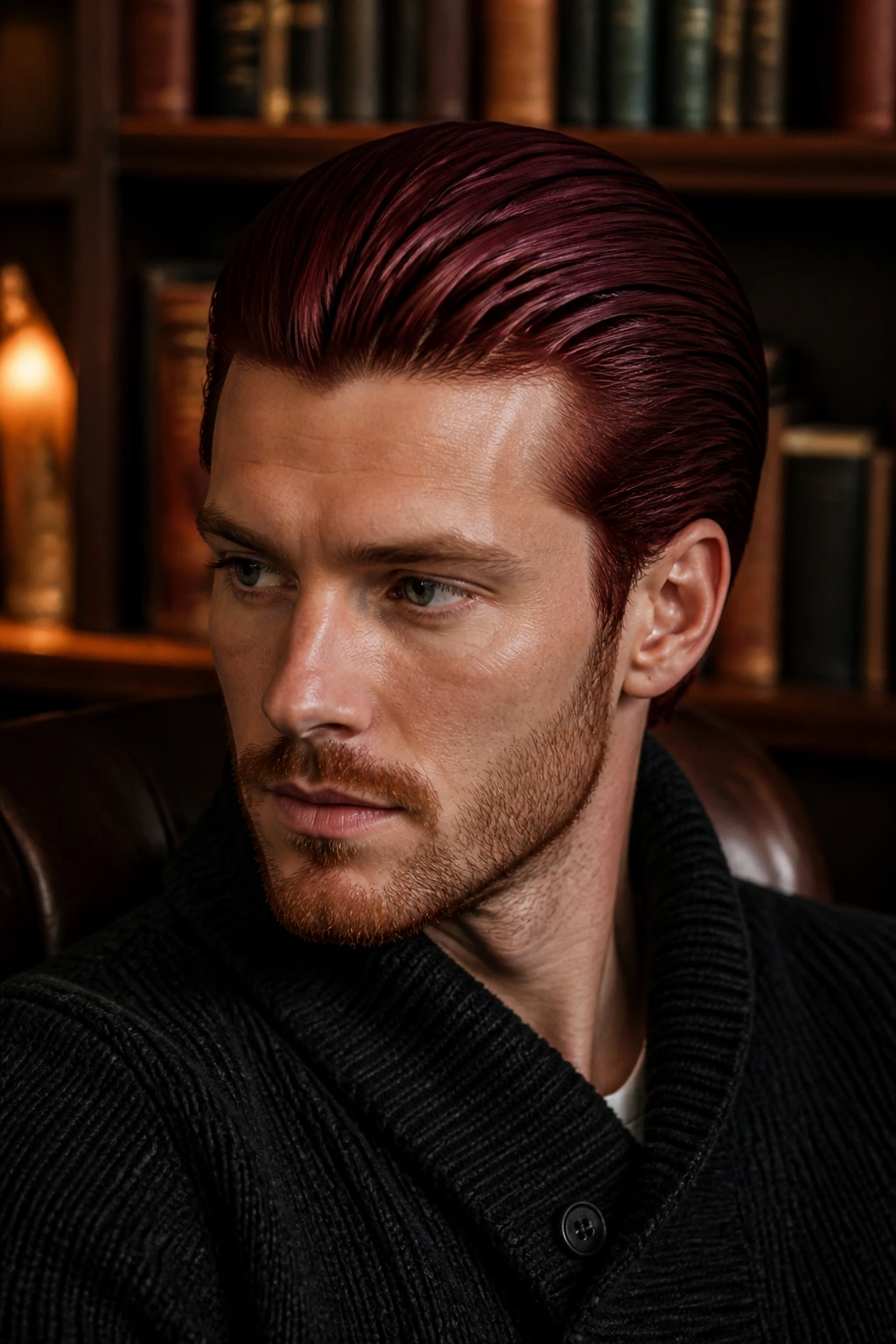
Mulled wine hair sits deeper on the red spectrum, with dark red, plum, and brown notes folding into each other. Slicked back, it becomes one of the richest-looking red styles for men. The shine should stay controlled, not wet. You want depth, not grease.
This look is strongest on medium-to-long straight hair. The length lets the slick back travel across the head without breaking apart, and the darker shade gives the style weight. It pairs well with sharp cheek lines or a trimmed beard because the overall silhouette feels mature and deliberate. If your hair is fine, keep the product light so the strands don’t separate into thin ribbons.
This is a quietly dramatic choice. It doesn’t need bright color to stand out.
28. Burnt Orange Shag
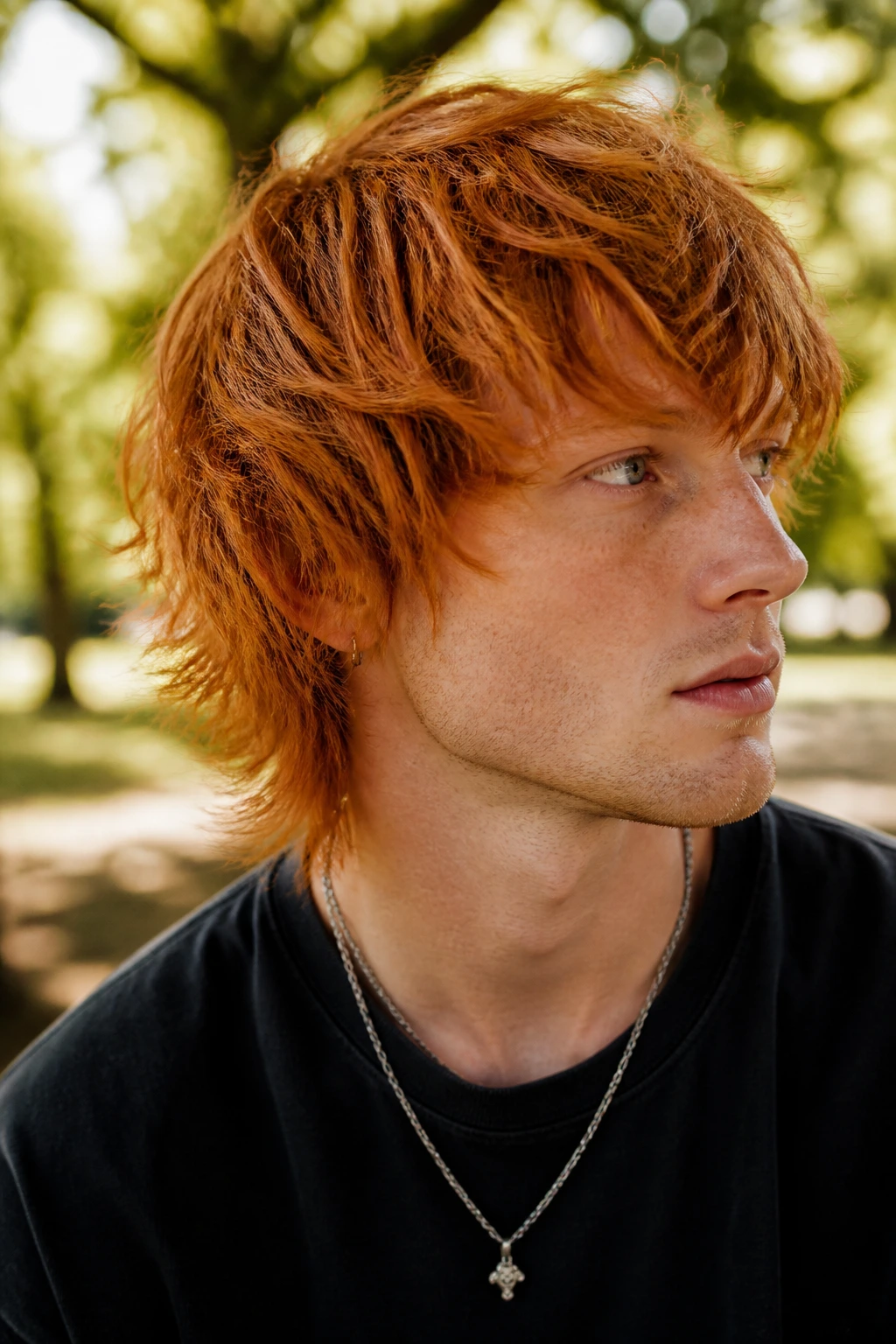
A burnt orange shag is messy in a planned way. Layers fall around the head at different lengths, the fringe is broken, and the red-orange tone gives the whole cut a sun-warmed, slightly rebellious feel. It’s one of the best red looks for wavy or thick hair that naturally wants motion.
The shag works because it accepts chaos and gives it shape. If your hair is too neat, this style can fall flat. If it has some bend, it comes alive. Use a light cream or spray, not a heavy paste. The goal is separation and movement, especially around the fringe and cheekbones.
This is also one of the more forgiving cuts between trims, which matters. A shag often looks better slightly grown out than freshly overcut.
29. Dark Cherry Taper
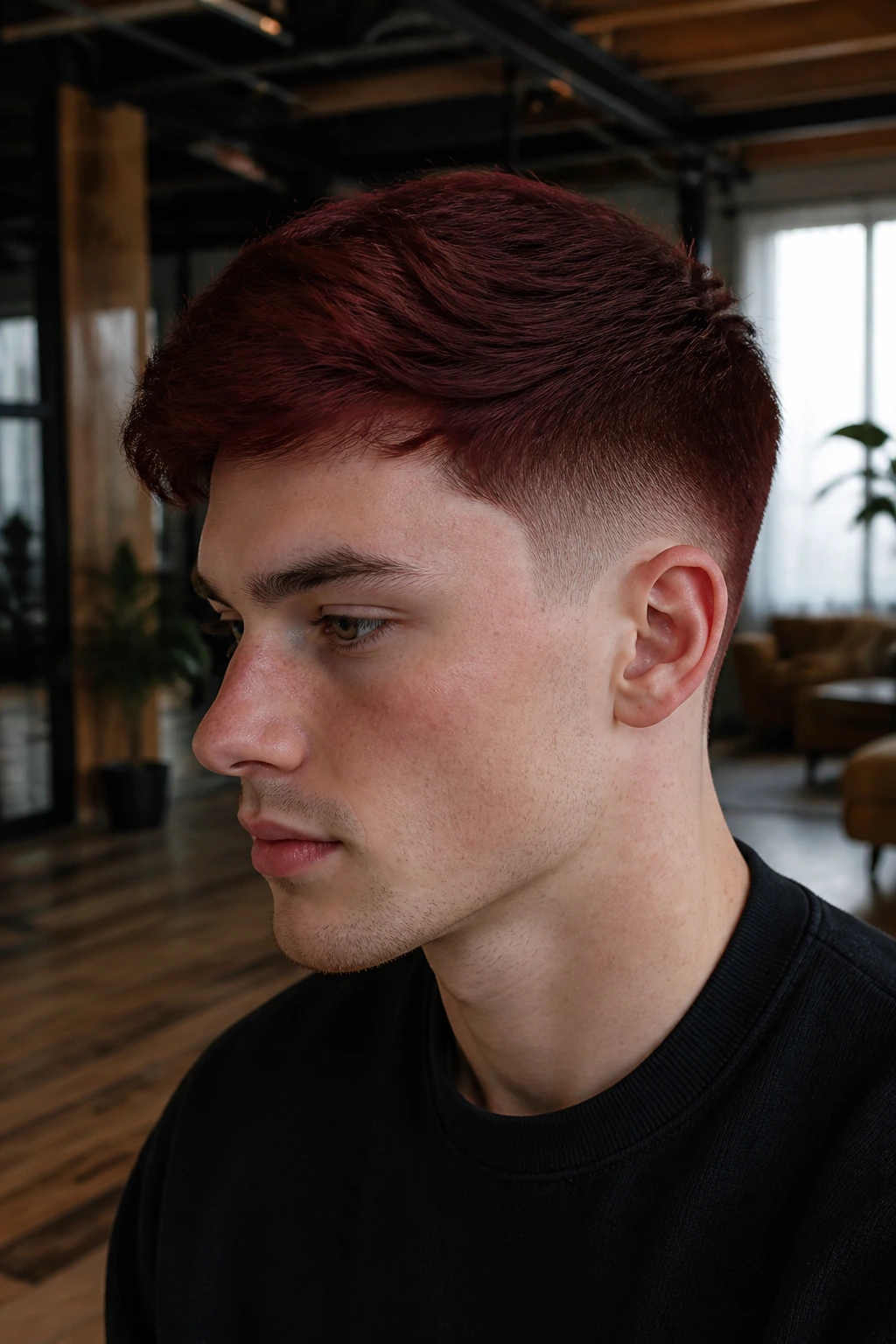
Dark cherry hair with a taper is the neatest way to wear a deeper red without losing edge. The taper keeps the sides clean and close, while the dark cherry top stays rich and saturated. It’s the kind of red that can pass as subtle in lower light and then turn vivid when the sun hits it.
This style works well for men who want something more polished than a bright copper crop. The darker cherry tone makes the top look denser, and the taper keeps the sides from competing. A side part or soft forward sweep both work here. If you have a beard, this is one of the easier reds to pair because the color has enough depth to sit near brown tones.
The overall effect is neat, dark, and just unusual enough to feel personal.
30. Golden Ginger Wavy Crop
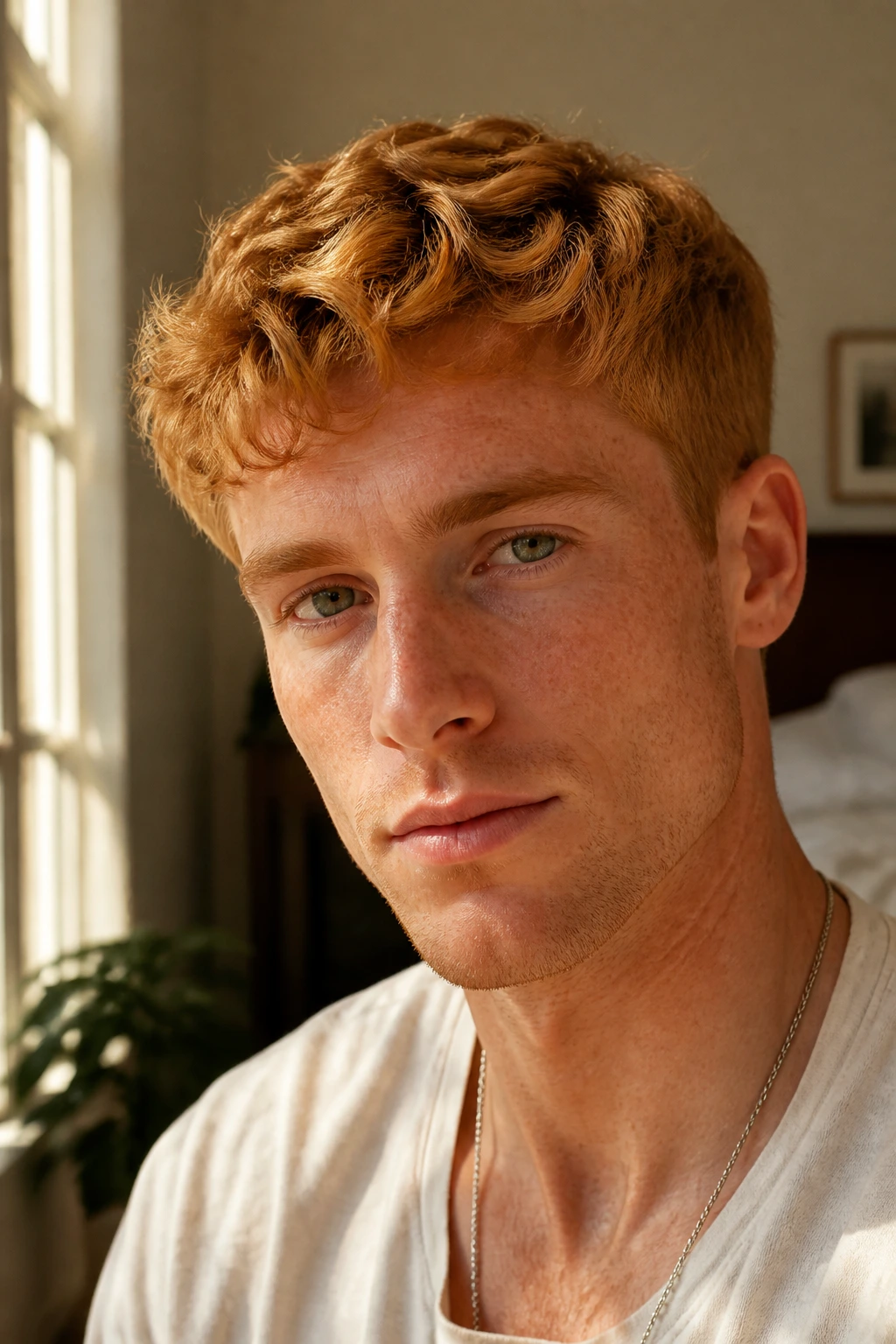
A golden ginger wavy crop finishes the list on a lighter, more relaxed note. The crop keeps the haircut short and wearable, while the golden ginger tone warms up the texture and gives the waves something to bounce against. It’s casual, but not forgettable.
This style is especially good if your hair already has a natural wave and you don’t want to spend much time pushing it into shape. A little matte cream or sea salt spray is enough. The important part is keeping the top short enough that the waves lift instead of lying down. If the shade leans too pale, the cut can look washed out, so a touch of gold and copper in the tone helps.
It’s a clean way to wear red without going bold in an obvious sense. Quiet, but not bland.
Choosing the Right Red Shade for Your Face, Beard, and Wardrobe
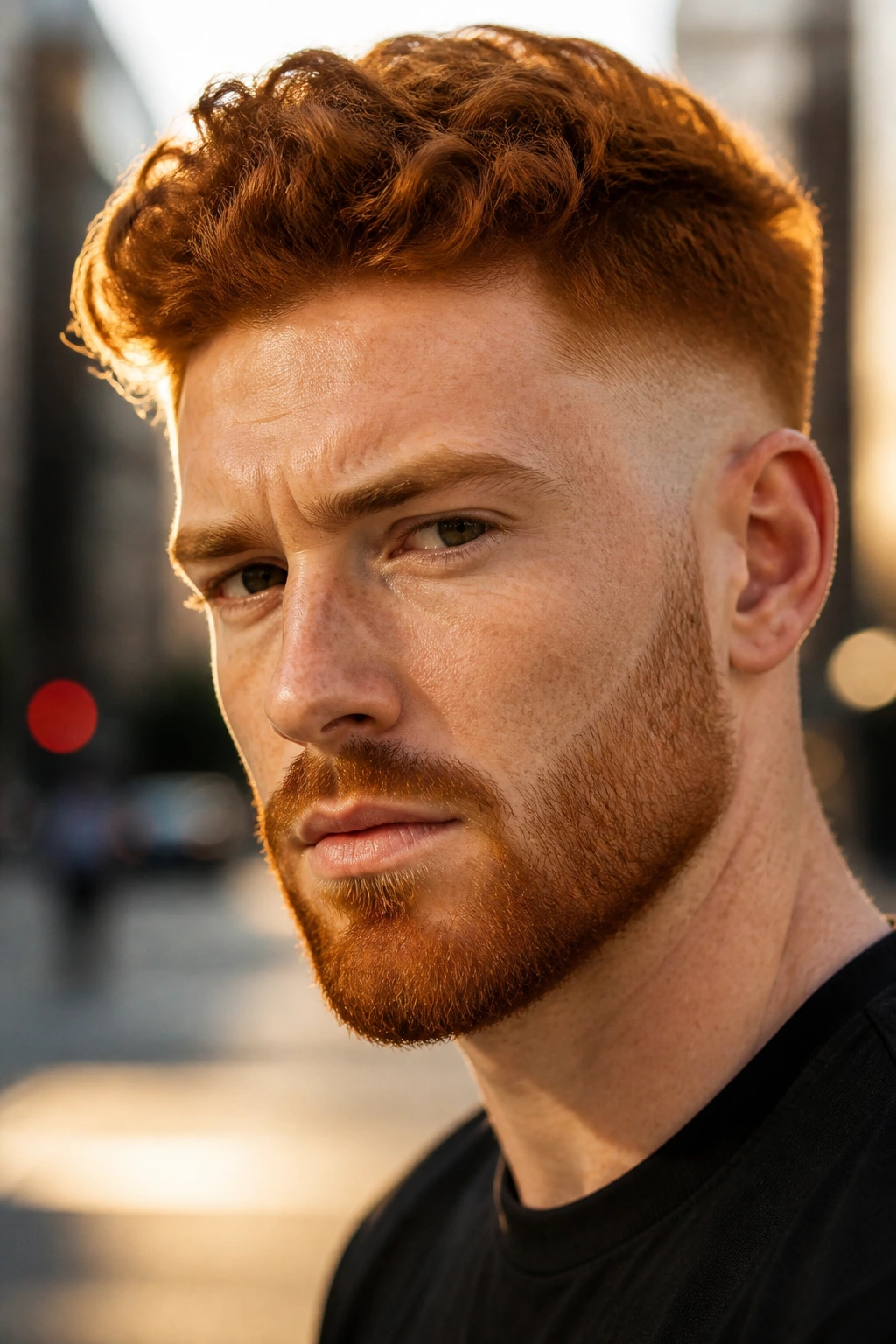
Red hair does not live in a vacuum. The same cut can look sharper, softer, warmer, or stranger depending on the shade you choose, and that’s where most men get tripped up. Copper and ginger bounce light and make texture look lively. Auburn and mahogany sit deeper and are easier to wear if you want the color to blend into a more classic wardrobe. Cherry and burgundy make a louder statement, but they also ask for cleaner lines and better maintenance.
If your skin is fair or pink, a copper or strawberry tone usually reads cleaner than a very orange shade. If your skin runs olive or medium, auburn and rust often sit better because the brown in the mix keeps the color from fighting your undertone. Deep skin can carry everything from copper to burgundy, but darker cherry tones often give the richest result because they keep enough depth to show movement.
The beard matters too. A beard that stays dark while the hair goes bright can look deliberate, but only if the haircut has some structure. If the beard and hair are both red-toned, the whole face reads softer and more unified. Don’t ignore eyebrows either. Very dark brows with pale ginger hair can be striking, but they can also make the hair color look accidental if the cut is too soft.
How to Ask for the Red Look You Actually Want
The easiest way to get the cut wrong is to talk about it like a mood instead of a shape. Bring two or three photos: one for the haircut, one for the shade, and one for the finish. That’s not overkill. It saves the awkward “that’s not quite what I meant” moment when the chair is already spinning. Say the guard length, the fade height, the fringe length, or the parting direction if you know it.
Be specific about shine. Matte, satin, or glossy all change the result. A copper crop with matte clay reads casual and textured. The same cut with pomade can look formal and a little slick. If your barber is also handling the color, ask whether the red will sit over your natural shade or whether it needs lightening first. That answer matters because the same dye can look warm on one head and muddy on another.
And mention your beard if you wear one. A barber can balance the sideburns and neckline better when the beard is part of the plan from the start.
The Tools and Products That Make Red Hair Easier to Wear
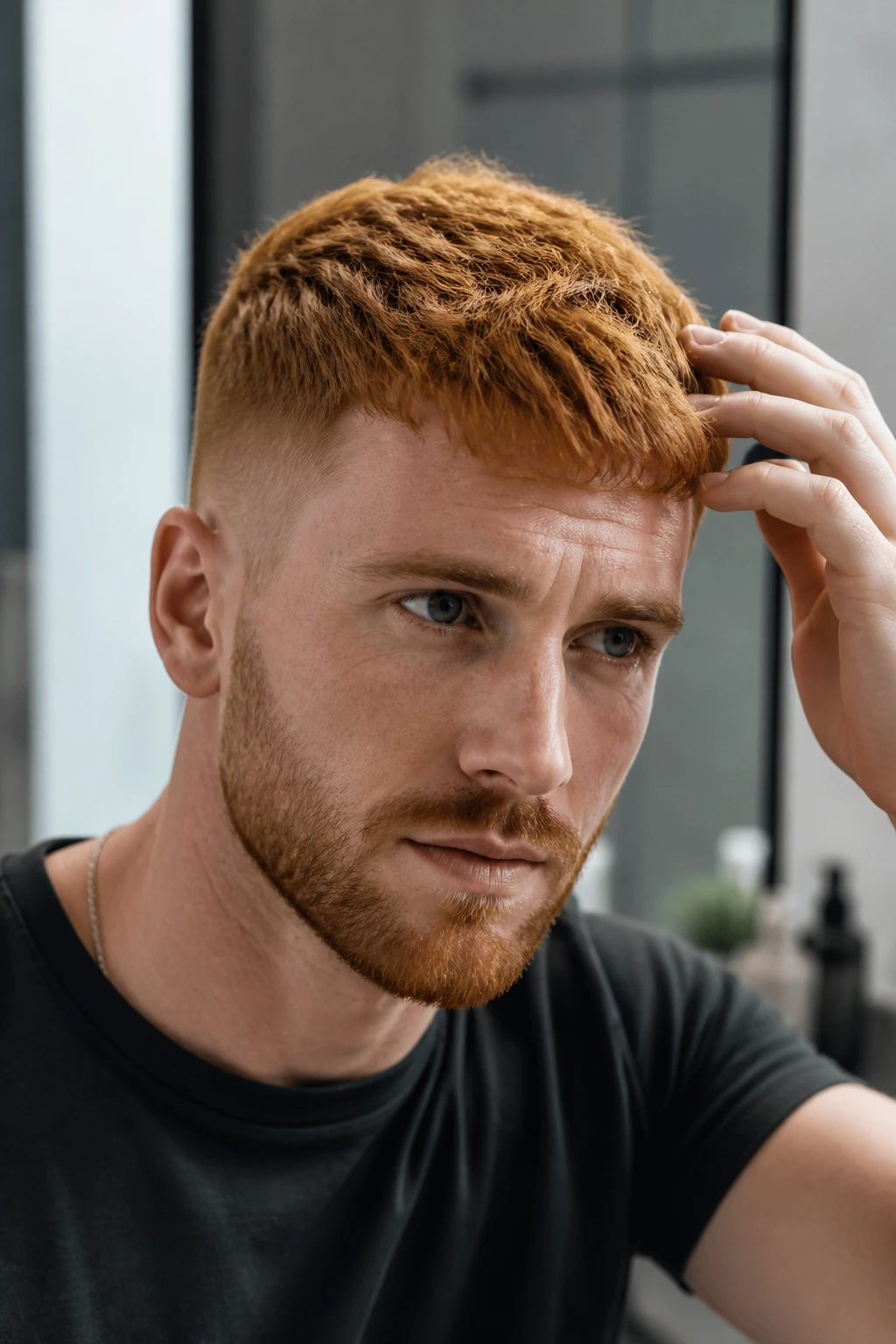
- Color-safe shampoo: Keeps the red from washing out too fast; use it 2 to 3 times a week, not every day.
- Sulfate-free conditioner: Helps dyed red hair stay softer and less frayed at the ends.
- Matte clay or paste: Best for crops, quiffs, Caesars, and textured cuts that need grip without shine.
- Light pomade or cream: Useful for side parts, slick backs, and Ivy League styles where control matters more than texture.
- Blow dryer with a nozzle: Helps you push quiffs, pompadours, curtains, and slick backs into shape without fighting wet hair.
- Round brush or vent brush: Good for lifting the front or smoothing the top into a controlled curve.
- Diffuser: Worth it if your hair is curly, coily, or wavy and you want the color to sit on the texture instead of flattening it.
- Heat protectant spray: Non-negotiable if you use a dryer often; red hair already shows dryness faster than darker shades.
- Microfiber towel or old T-shirt: Dries curls and waves more gently than a rough bath towel.
- Trimmer or detail razor: Handy for keeping the neckline, temples, and beard edges clean between barber visits.
What Red Hair Needs Between Cuts
Red hair usually loses its sharpness in two ways: the cut grows out, and the color loses its punch. Handle both, or the style starts to look tired faster than it should. A clean taper or fade needs a trim every 2 to 4 weeks if you want it to stay defined. Short buzzed styles can go a little longer on the cut, but the color will still show regrowth quickly.
Washing less often helps more than people like to admit. Two to three washes a week is enough for many men, especially if you’re using a matte product rather than a heavy grease. Hot water is rough on red dye, so cooler water at the rinse stage is a smart habit. If you color your hair, a color-depositing conditioner or gloss every 1 to 2 weeks can keep the tone from drifting dull or muddy.
Sun matters too. So does heat. Red pigment tends to fade faster when you blast it with high heat every morning and leave it in bright sun for hours. Use a heat protectant, keep the dryer moving, and don’t fry the same section over and over just to get a little lift at the front. That habit does more damage than most people think.
If you wear a beard, refresh the beard line and cheek line on a steady schedule. A neat beard keeps the red hairstyle from getting swallowed by scruff.
Common Mistakes That Make Red Hair Look Flat
Choosing the wrong shade for your base color is the first trap. Bright copper over very dark hair can look patchy if it isn’t lifted properly, while a deep burgundy over already warm hair can go muddy. The fix is simple: match the red to your natural depth and ask whether your hair needs pre-lightening before you commit.
Using too much shine product is another easy way to ruin the effect. Red hair already reflects light, so heavy greasy pomade can make it look wet or stringy instead of rich. If the goal is texture, use a matte clay or light cream and stop sooner than you think you should.
Ignoring the beard and brows creates a disconnected look. A bright ginger crop with a very dark beard can work, but only if the haircut has sharp edges. A soft, fluffy style plus a hard beard line usually looks accidental. Balance the edges or keep the whole look in the same tonal family.
Letting fades grow out too long is a big one. Red hair shows shape changes fast, and the fade can go fuzzy in a way that makes the color look cheaper. If the sides blur, the whole haircut loses its point.
Skipping moisture on curly or coily red hair leaves the color looking dry. Auburn curls, locs, twists, and afros need hydration or the red can take on a brittle, dusty look that nobody wants.
Variations and Alternatives to Try
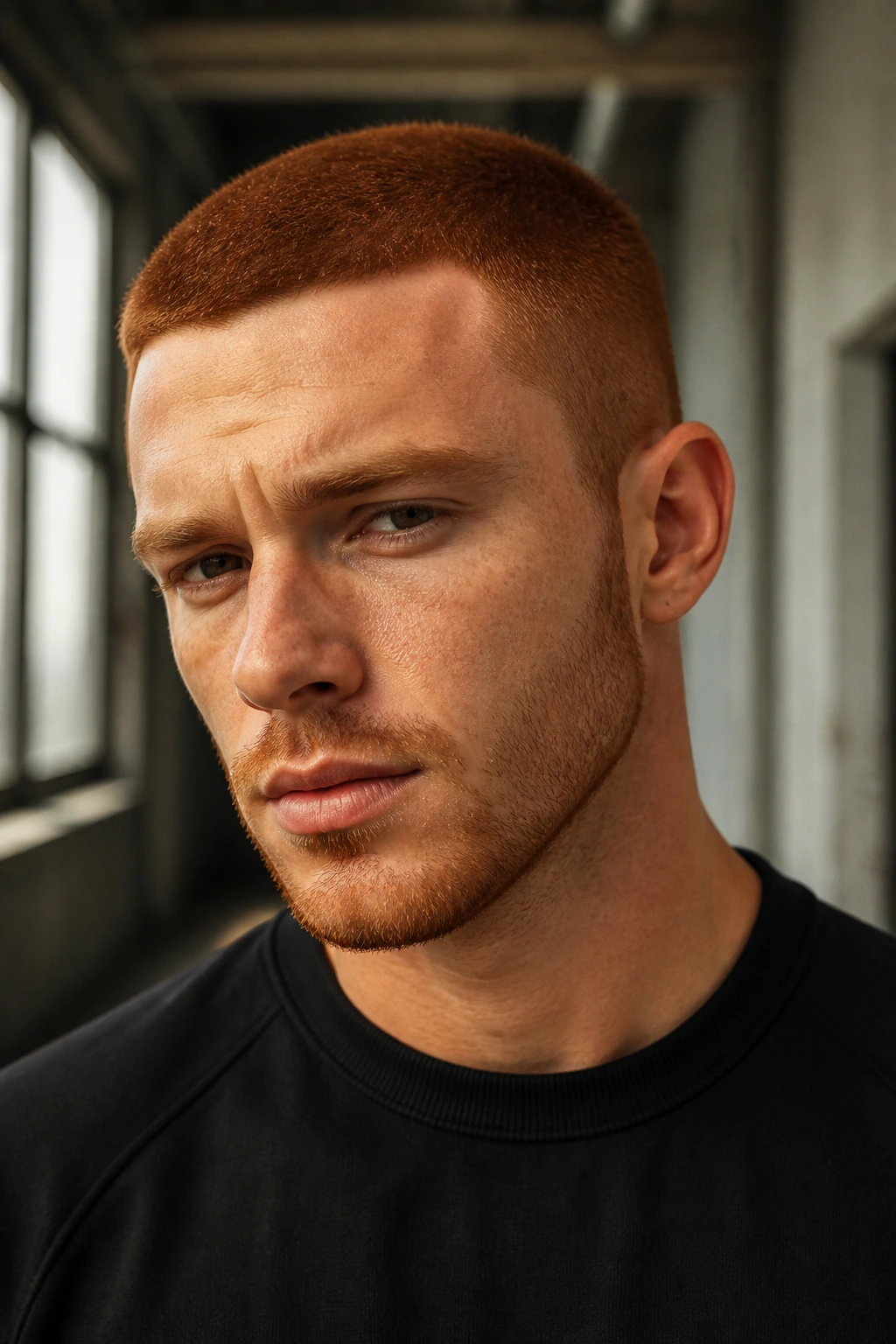
Low-Maintenance Ginger: Start with a ginger crew cut, Caesar, or short crop if you want a red look that survives a busy week. The shorter shape keeps styling time low, and ginger shades usually fade more gracefully than bright scarlet.
Deep Auburn Office Cut: If you need something quieter, move toward auburn or mahogany and keep the cut classic: taper, side part, Ivy League, or comb over. The hair still reads red, but it won’t scream from the elevator.
Curly-First Red: Curly and coily hair looks best when the cut follows the texture instead of forcing it into a neat shape. Deep auburn curls, copper afros, rust twist outs, and cranberry locs all work because they let the color live inside the movement.
Bold Bright Copper: For men who want the color to be the headline, choose a buzz fade, faux hawk, undercut, or slick side with a stronger copper or scarlet tone. Clean edges matter more here because the color already carries the drama.
Long and Lived-In: Bro flow, curtains, shag, and mullet cuts all work well with copper, sunset, or burnt orange shades. These cuts need movement, not perfection, so they suit guys who like a bit of mess as long as the shape stays deliberate.
Beard-Matched Red: If your beard is part of your identity, keep the tone close across scalp hair and facial hair. Auburn and dark cherry are often the easiest bridge between the two because they sit between bright red and dark brown.
FAQ
What red shade looks best on men with fair skin?
Copper, ginger, and strawberry blonde usually sit well on fair skin because they echo the lighter tone without making the face look washed out. If your skin runs pink, a slightly deeper auburn can sometimes look cleaner than a very orange red.
Does red hair need more upkeep than brown hair?
Yes, usually. Red dye tends to fade faster, and the contrast at the roots shows sooner, especially on shorter cuts. Color-safe shampoo, cooler water, and regular trims make a bigger difference than most people expect.
Can red hair work with a dark beard?
Absolutely, but the haircut needs shape. A sharp taper, fade, or crisp crop helps the contrast feel intentional. Softer cuts can make the beard and hair look like they belong to two different people.
What’s the easiest red hairstyle to maintain?
A copper buzz cut, ginger crew cut, or smoky red fade is hard to beat. The cut stays neat with very little styling, and the color still gives you enough character to avoid looking plain.
Will red hair make thinning hair look worse?
Not if the cut is chosen well. Shorter crops, tapered sides, and deeper red tones can add the impression of density. Long, flat styles with weak color are the ones that usually expose thinning more quickly.
Can I get a red look without bleaching my hair?
Sometimes, yes. If your natural hair is light brown, medium brown, or dark blonde, auburn, burgundy, and smoky red shades can show up without heavy lightening. Very dark hair usually needs some lift first if you want a brighter copper or scarlet result.
How do I stop red hair from looking orange in a bad way?
Ask for more depth in the tone. Auburn, rust, and mahogany keep red from drifting into neon territory. A gloss or toner can also help if the color starts to lean too bright after a few washes.
What should I tell my barber if I want red but not flashy?
Say you want a muted copper, auburn, or dark cherry finish with a clean taper or crop. That gives the barber enough direction to keep the shape sharp while steering the color away from fire-engine territory.
The Last Cut
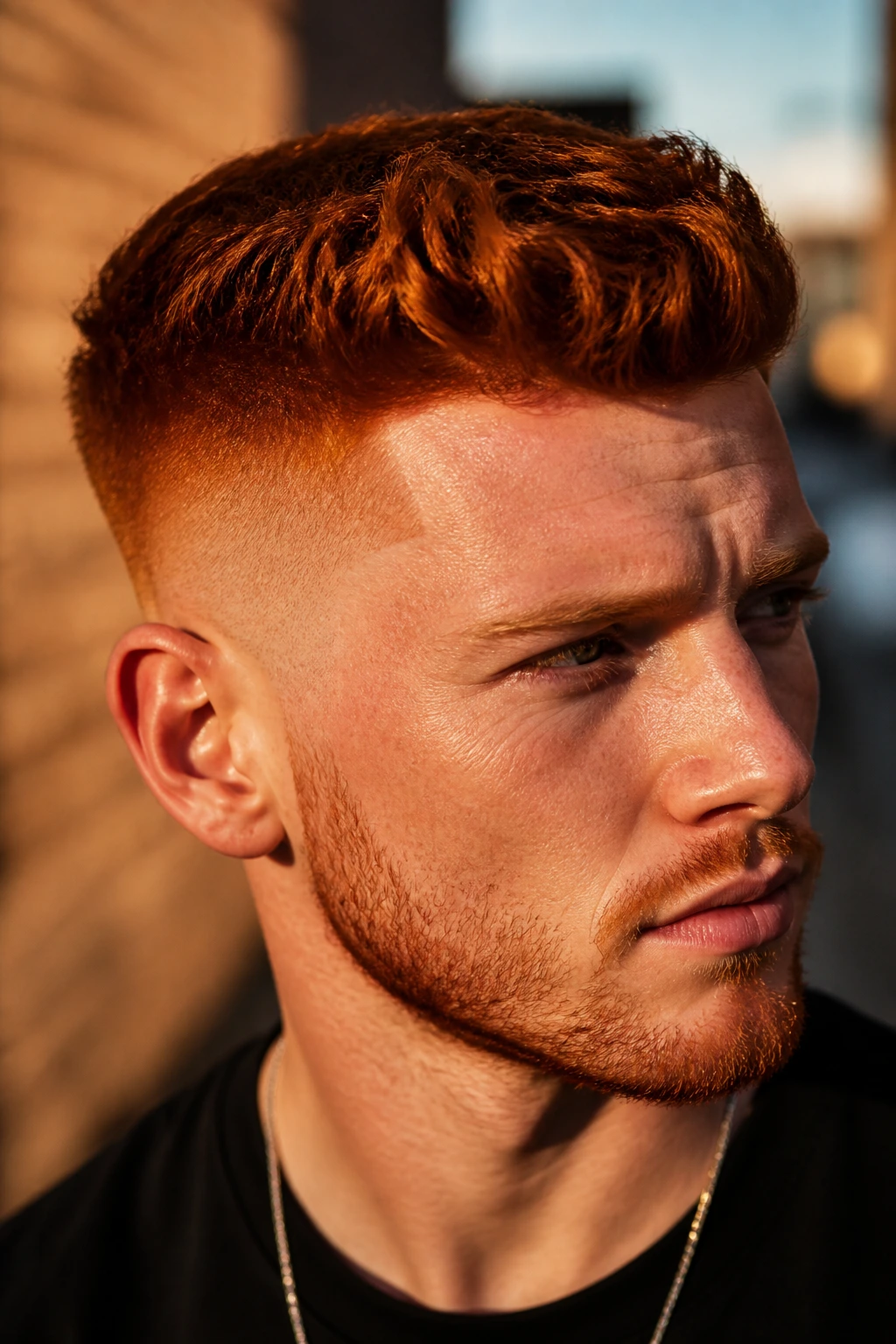
Red hair works best when the cut and the shade agree with each other. A tight buzz looks better in copper. A long flow looks better in auburn or rust. A curly style looks better when the color has depth instead of trying to shout over the texture.
Pick the version that matches how much upkeep you’ll actually do. That’s the part people skip. A great red cut is not the loudest one in the room; it’s the one that still looks intentional after a day of work, a bad commute, and one too many times rubbing your hands through it.
Get the shade, shape, and edges right, and the rest gets easy.
