



A short quiff has to earn every millimeter of height. There’s no long fringe to hide behind, no dramatic sweep to cover a weak haircut, and no room for sloppy blending on the sides. With short hair, the front either lifts cleanly or it falls flat and looks like you ran late and gave up.
That’s why the best quiff styles for short hair are about more than “pushing it up.” The cut, the grain, the fade, and the finish all pull together. A good short quiff can look sharp with a blazer, rough it up for weekends, or sit somewhere in the middle without trying too hard. A bad one just puffs. Fast.
What makes this shape useful is that it gives you choices without demanding much length. You can keep the top around 2.5 to 4 inches, keep the sides tight, and still get a front that reads intentional. The trick is knowing which version fits your hair type, your face, and the amount of time you’re willing to spend in front of the mirror.
Why These 28 Short Quiff Styles Earn Their Spot
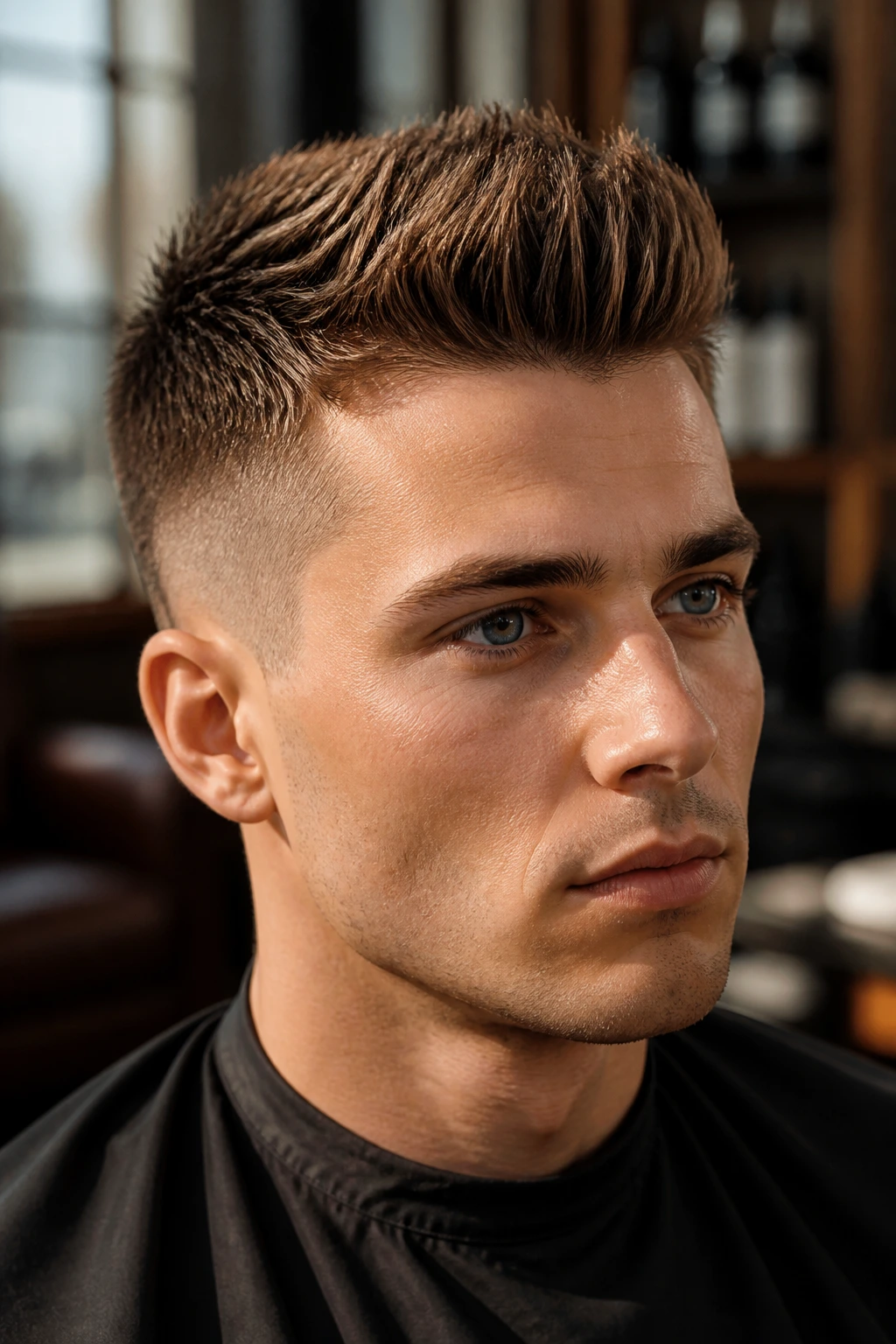
-
They work with real short lengths: Most of these cuts stay in the 2.5- to 4-inch range on top, which means you can wear them without waiting months for the front to grow out.
-
The sides do real work: A low taper, skin fade, or disconnected side changes how tall the quiff looks, even when the top is only modestly long.
-
They fit different hair textures: Straight, wavy, curly, thick, and fine hair all need a different approach, and these styles don’t pretend one formula fits everything.
-
Product changes the mood: Matte clay gives a rough, lived-in front; cream softens the shape; pomade adds shine and control. Same haircut. Different personality.
-
They grow out in useful ways: A short quiff can still look decent three or four weeks later if the fade and length were planned with the grow-out in mind.
-
They’re easy to tailor at the barber chair: You can ask for a cleaner, more classic shape or a messier, textured one without changing the whole cut.
1. Textured Low-Taper Quiff
This is the version I’d hand to most men first. The front gets enough length to stand up, the crown stays controlled, and the low taper keeps the whole thing tidy around the ears and neckline. It does not shout. It just looks like you meant it.
What to ask for
Tell your barber to leave about 3 inches in the front, slightly less through the crown, and taper the sides low so the outline stays soft. Ask for texture on top with scissors, not a blunt, heavy shelf.
The payoff is easy styling. A bit of sea salt spray, a blow dryer, and a matte clay are enough. The front lifts without turning into a helmet, and the texture breaks up any shiny, overworked look that short quiffs can fall into.
Best for straight to slightly wavy hair. If your hair is thick, this cut removes enough weight to let the front move. If your hair is fine, the low taper keeps the top from looking too small beside the sides.
2. Classic Side-Part Quiff
Why does a side part help a short quiff feel cleaner? Because it gives the front a direction. Instead of floating straight up in every direction, the hair moves upward and then angles across, which makes the shape look more deliberate and less puffy.
That slight bend also helps on short hair. When the top is only a few inches long, a strong center push can look stubby. A side part gives the front a place to land, and the result feels sharper without needing extra length.
I like this style when the haircut has to work in more than one setting. In a dry matte finish, it looks modern. Add a little shine, and it leans classic. Tell your barber to keep the part soft, not shaved, unless you want a much harder line. The best version has enough structure to read from across the room, but not so much that it turns into a banker’s helmet.
3. Messy Finger-Styled Quiff
This one looks best when it’s not trying to be perfect. The front stands up, but the ends stay broken and a little uneven, like you pushed the hair with your fingers after a quick blow-dry and stopped before it got too neat.
That looseness matters. Short hair can get stiff fast if you use too much product or comb it too neatly. A finger-styled quiff keeps the movement alive, especially when the top has a little bend or wave. It’s the kind of style that still looks good after a commute, which is more useful than mirror-level polish.
Ask for short sides and a textured top with some length left in the front—roughly 2.5 to 3.5 inches if your hair grows upright well. Then work a small amount of matte paste through damp hair and pinch the front into shape instead of slicking it back flat.
- Best for casual settings
- Best for hair with some natural bend
- Best when you hate hard lines
4. Skin Fade Quiff
A skin fade makes a short quiff look taller than it really is. That’s the whole trick. When the sides drop to bare skin, the top suddenly looks more lifted, even if you’re only working with a few inches in front.
This style has a sharp edge. There’s no soft landing on the sides to cushion the shape, so the haircut feels crisp immediately. That’s useful if your hair is dense or your face can carry a little contrast without looking top-heavy.
Keep the front textured, not sealed. Short quiffs with a skin fade can look a bit too serious if the top is smooth and shiny. A matte finish keeps it from looking like a formal event haircut. Ask your barber to leave the front long enough to push up and forward, then fade tightly through the temples and around the ears. If the fade sits too high, the top can disappear. Lower is usually better here.
5. Curly Push-Up Quiff
Curly hair wants to lift on its own, which is half the battle won. The job is not to force it into a straight-haired quiff shape. It’s to guide the curls upward and stop them from collapsing into a fuzzy triangle.
A curly short quiff works best when the barber leaves enough length in front for the curls to form a readable crest—usually 3 to 4 inches depending on curl tightness. Too short, and the front just springs back down. Too long, and the shape starts to sprawl.
Use a curl cream or light mousse, then diffuse the front while pushing it up with your fingers. Don’t rake through it with a fine comb unless you want frizz. The texture is the point. If you keep the sides tapered and the front defined, the result feels easy and clean without losing what your hair already does well.
6. Wavy Short Quiff
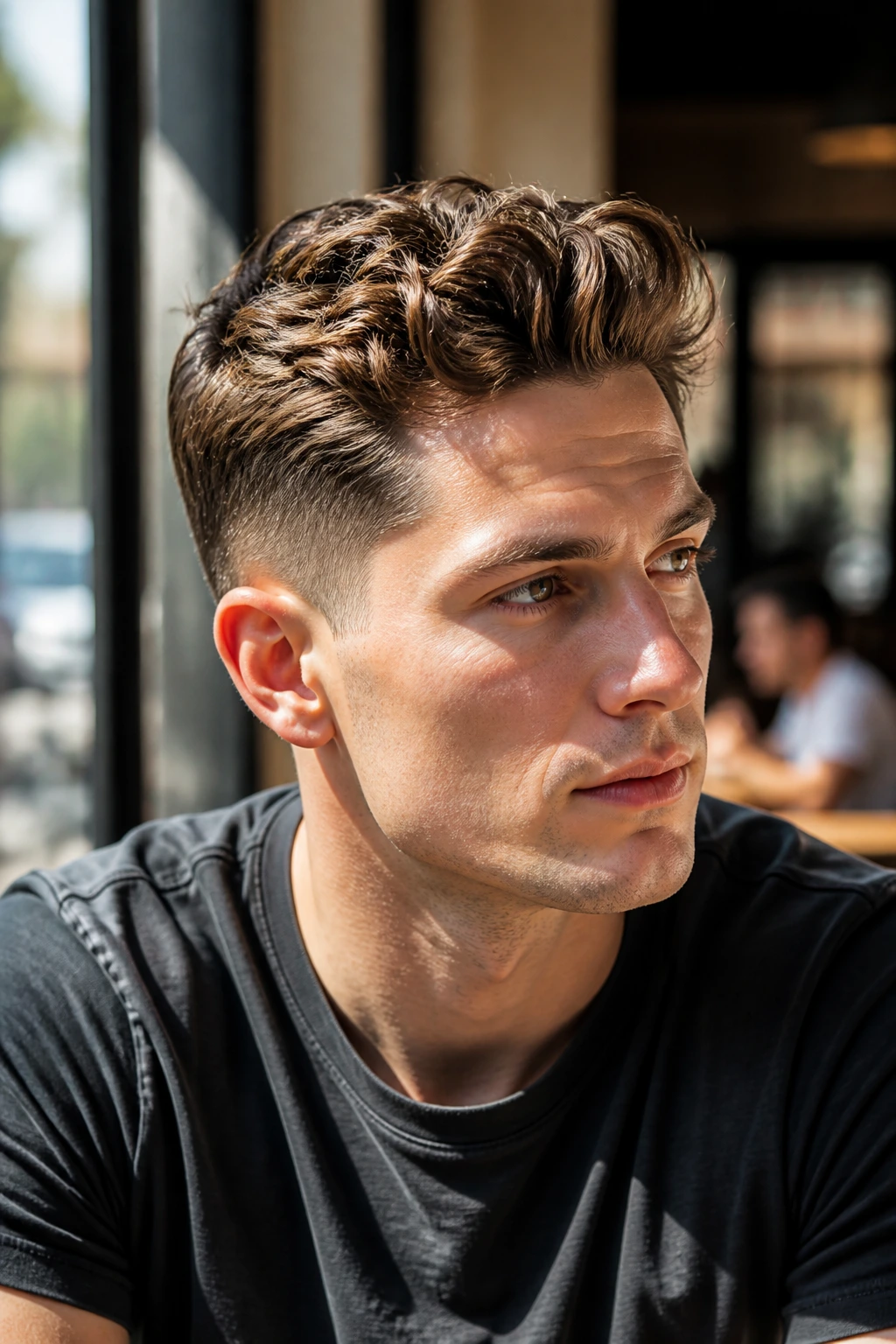
Wavy hair gives you the useful middle ground between smooth and curly. The lift shows up without much help, but the waves stop the front from looking flat or over-combed. I’m a fan of this one because it wears in naturally; a little mess actually improves it.
The key is not over-controlling the wave pattern. Blow-dry the front upward with a vent brush, but don’t press every strand into the same direction. Leave a bit of separation. That’s what keeps the style from turning into a rigid block.
A medium-hold matte cream works well here. It keeps the front from flopping while letting the wave pattern show through. If your hair tends to puff at the sides, ask for a tapered or low fade finish so the top remains the center of attention. This style looks especially good when the front lifts and falls in small bends instead of a single sharp point. It feels relaxed without looking accidental.
7. Disconnected Short Quiff
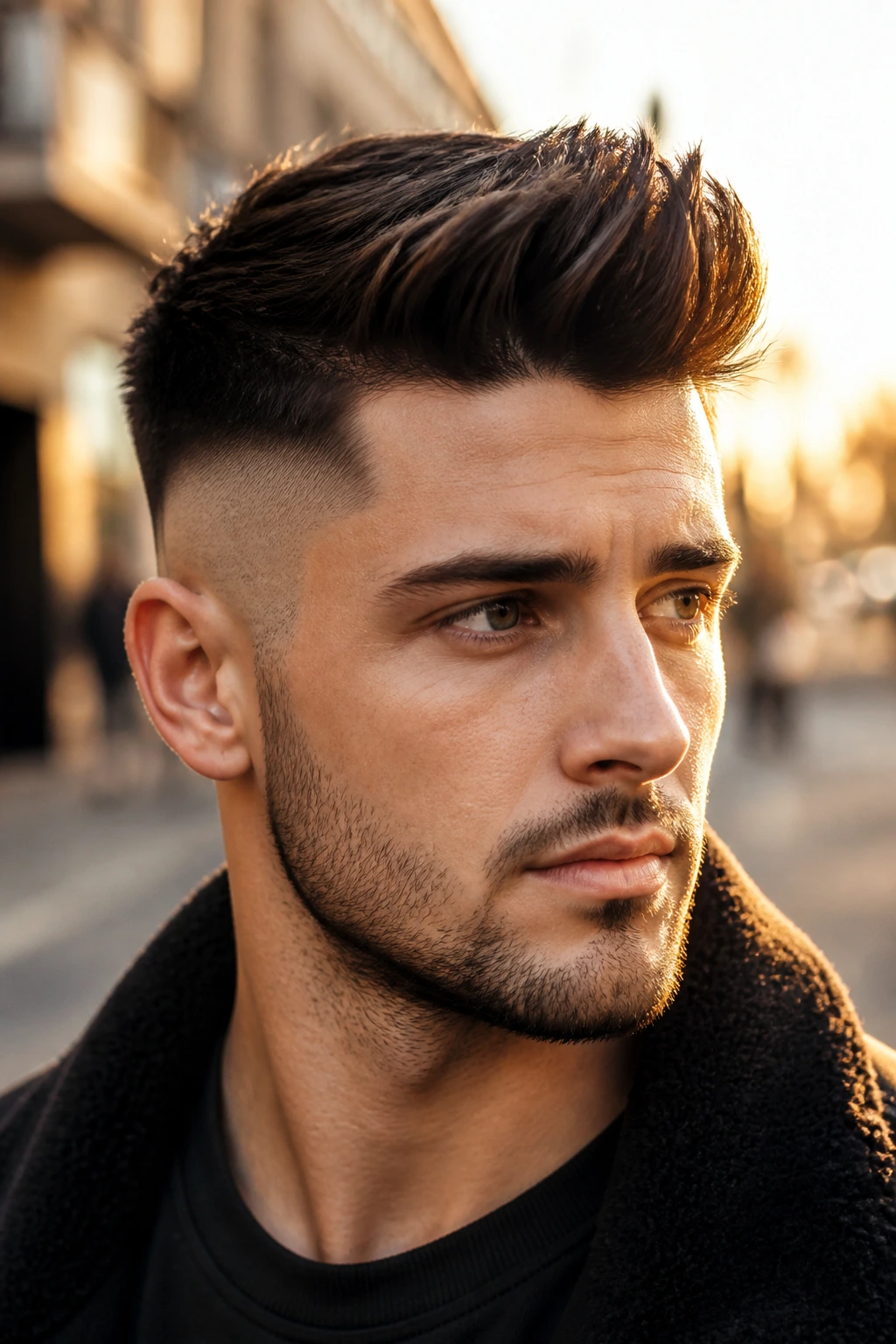
The disconnected quiff is for men who want contrast, not softness. The top sits clearly apart from the sides, which are cut much shorter with a sharp break in the blend. That gap creates a stronger silhouette even on short hair.
This is a smart move if your hair is thick and you want the top to look denser. It also works when you want the haircut to feel more fashion-forward without adding length. The visible disconnect gives the quiff a little edge. Not loud. Just noticeable.
Keep the top textured so it doesn’t sit like a block. The front should still move forward and up, but the shape needs some irregularity. If you comb it too neat, the disconnect becomes the only thing people notice. I’d ask for a hard transition on the sides and then leave enough length on top to pinch the front upward with your fingers after drying. It’s a stronger, sharper look than a taper, and it’s not trying to be polite.
8. Mid-Fade Matte Quiff
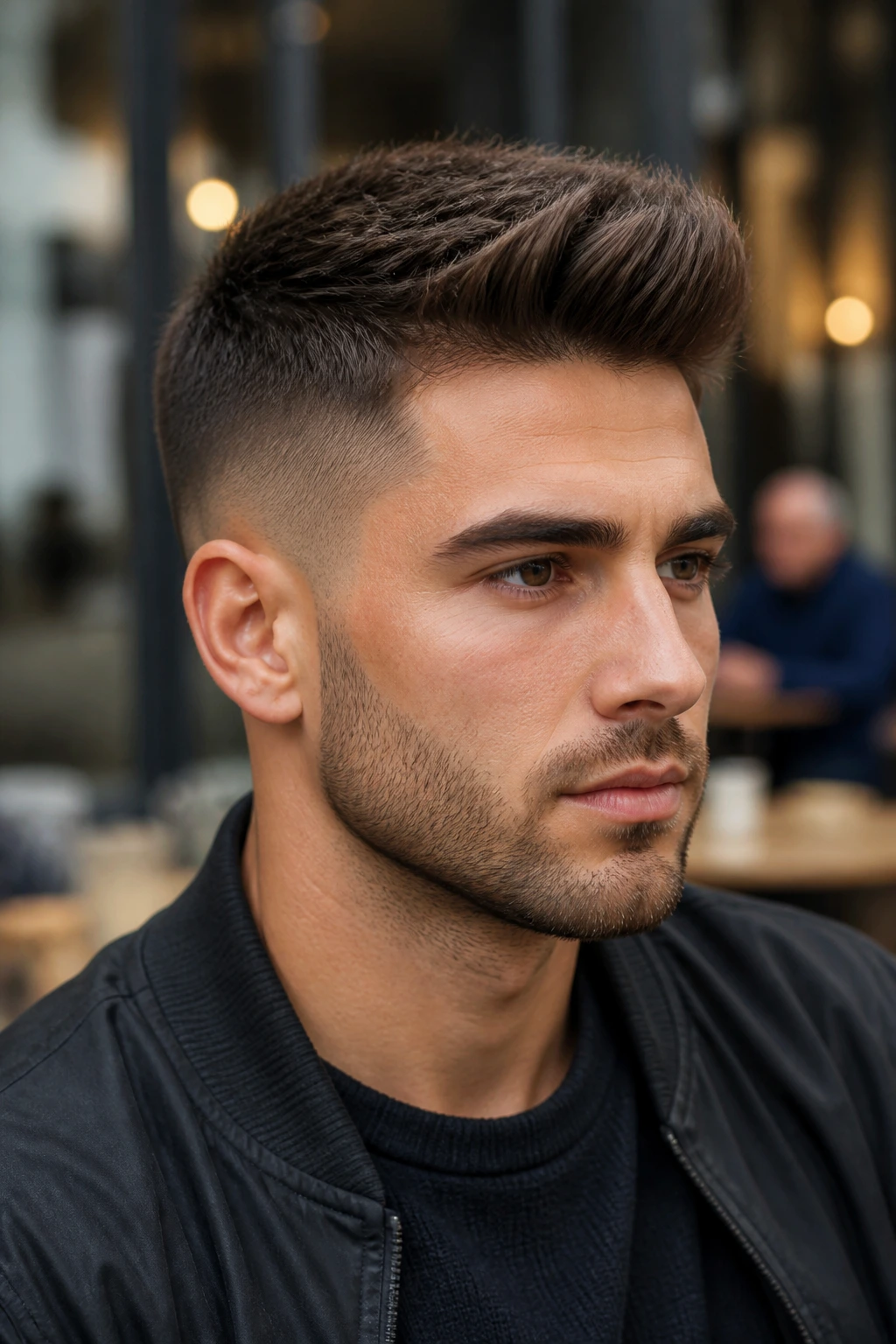
A mid fade gives the short quiff a little more presence than a low taper, but not so much that the haircut starts to feel severe. The fade lands around the middle of the head, which frames the top and makes the front look compact and lifted.
Matte finish matters here. A mid fade already brings structure, so shiny product can push the whole look into stiff territory. A clay or paste with a dry finish keeps the front touchable and stops the style from reading too formal.
I like this cut on men who wear short hair often and don’t want to babysit it. It’s neat enough for work, but the top still has enough room for movement. Keep the crown a little shorter than the fringe so the front can rise instead of collapsing backward. That tiny difference is what gives the quiff its shape. If the crown is too long, the top becomes one flat shelf. Nobody wants that.
9. Side-Swept Soft Quiff

Some quiffs feel too aggressive when they’re pushed straight up. A side-swept version softens the front and works especially well when your face is narrow or your hair naturally falls in one direction.
The front still lifts, but it doesn’t stand as aggressively as a brush-up. Instead, it sweeps to one side with a slight rise at the front edge. That makes the style easier to wear if you don’t want a lot of height on display.
This one looks best with a light cream or low-hold paste. The point is not maximum hold. It’s controlled movement. Ask your barber to keep the top layered so the sweep doesn’t get chunky, and keep the sides tidy with either a taper or a low fade. If your hairline has a swirl or a stubborn cowlick, this style can be a relief. It works with the grain instead of fighting it every morning.
10. Brush-Up Quiff
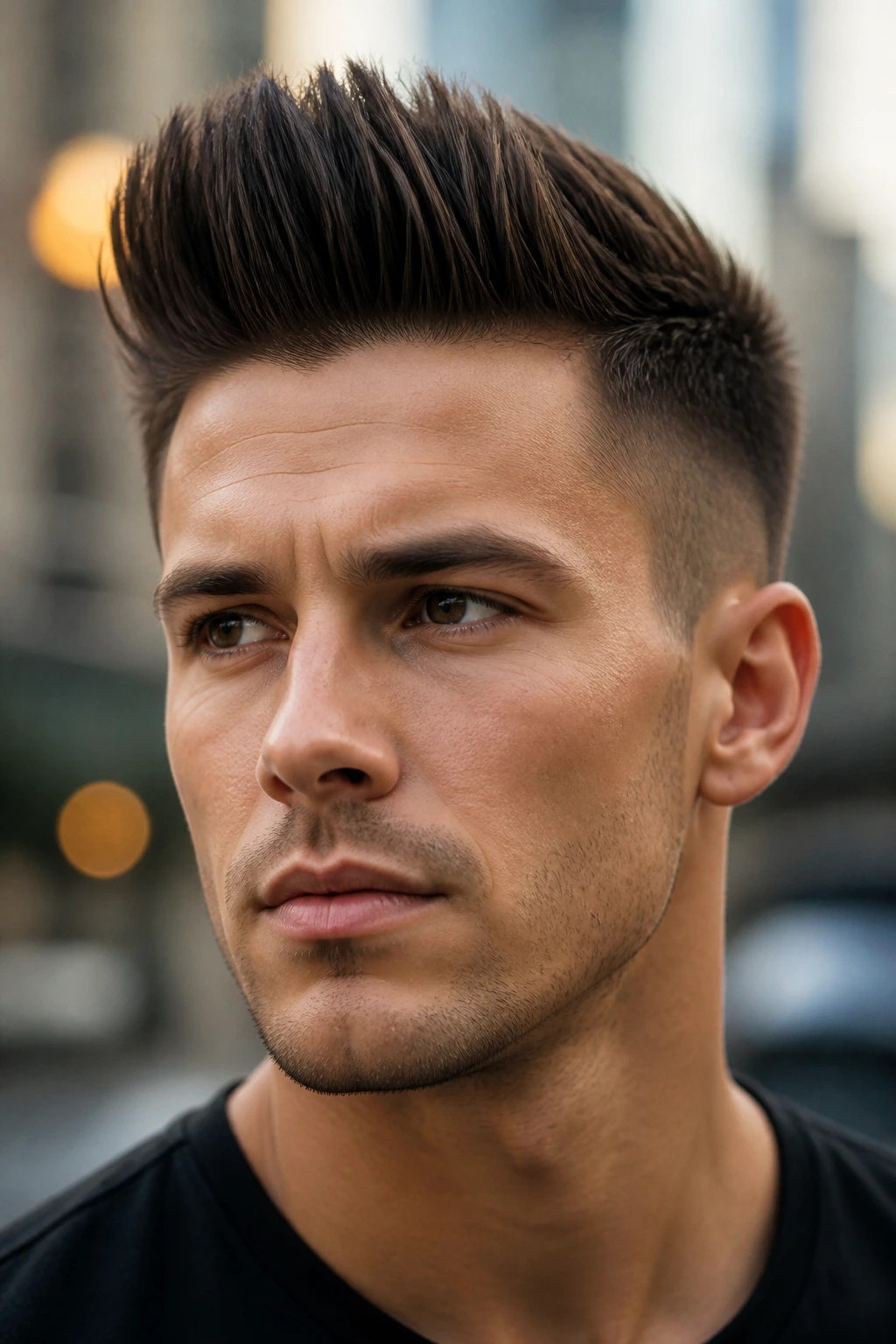
A brush-up quiff is the blunt, direct cousin of the softer styles. The front goes up with a little more height and a little less curve, which gives the haircut a straighter, more vertical look.
This is a good choice if your hair is short but dense enough to hold its shape after blow-drying. The style reads clean when the edges are tight and the top has some texture through the ends. If the hair is too blunt, it can look like a mini pompadour. If it’s too broken up, the shape disappears. The sweet spot sits in the middle.
Use a blow dryer and a brush to pull the front upward from the root, then finish with a small amount of firm clay. Don’t drown it in product. Short hair only needs a little. The front should look lifted, not glazed. This style has a sharper profile than the messy quiff, and that makes it a strong pick for men who like a haircut with a bit of tension in it.
11. Ivy League Quiff

The Ivy League quiff is the neat one in the group. It keeps the front short enough to sit in place, but there’s still enough lift to stop it from becoming a plain crew cut with ambition.
I think this style works because it borrows from two worlds. You get the tidy side part and conservative outline of an Ivy League, but the front has a little rise, which saves it from feeling too flat. It’s controlled. Quietly so.
Ask for a short taper on the sides, a modest length on top, and a slight graduation toward the front. The product should stay light—cream or a soft pomade, not a thick clay. The style shines when the hair is brushed cleanly into place with just enough lift at the front edge. If you want a cut that looks sharp with no drama, this is one of the most dependable short quiff styles on the list.
12. Hard-Part Quiff
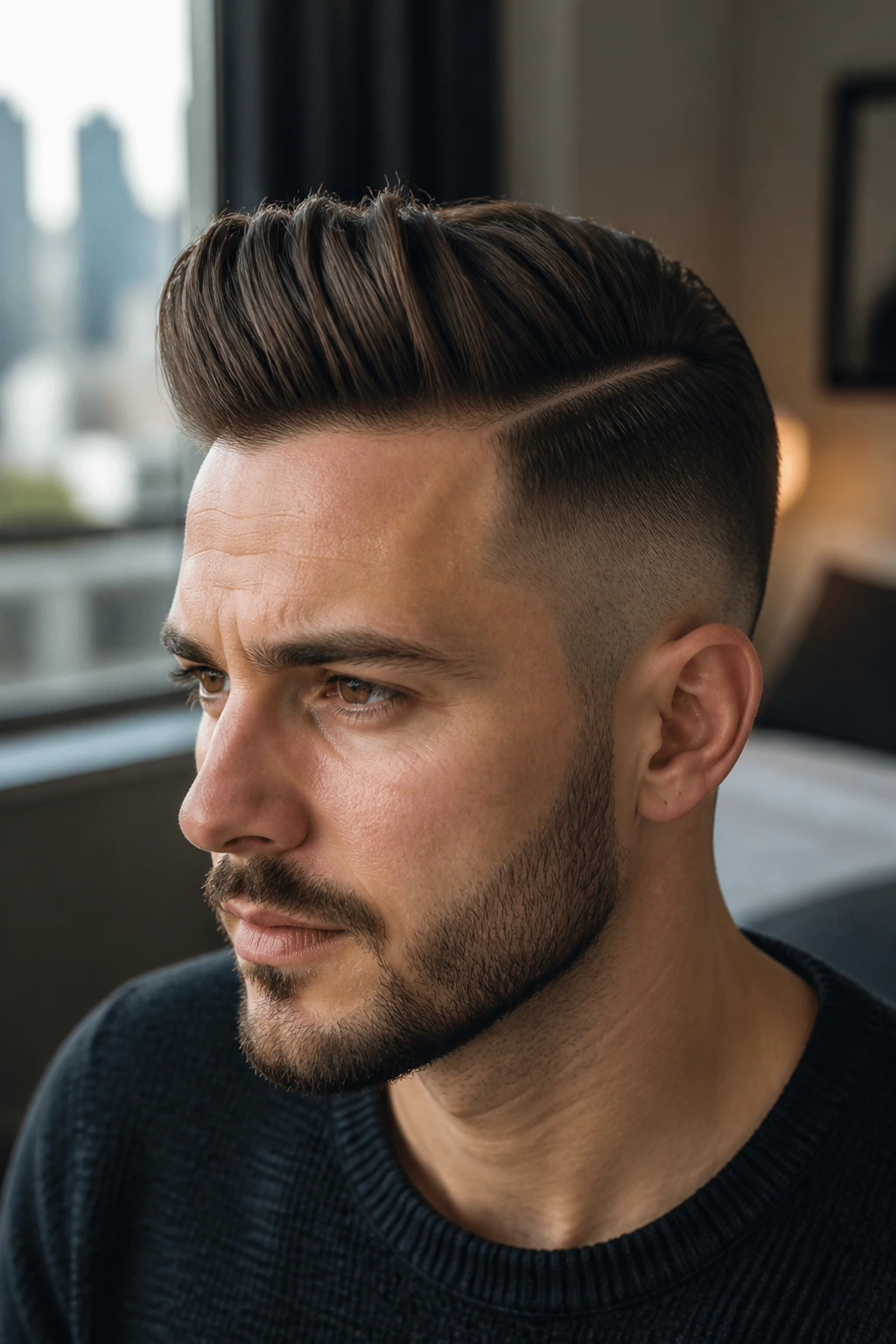
A hard part makes the quiff feel precise from the first glance. The shaved line breaks the top and side into clear sections, so even a short amount of lift reads as intentional.
This style can be a little unforgiving. If your hair grows fast or your part line is placed badly, the whole haircut starts to lose its shape sooner than a softer version would. But when it’s fresh, the payoff is strong. The contrast makes the top look more organized, and the quiff itself appears cleaner.
Keep the lift modest. A hard part already brings attention, so the front does not need to be huge. Too much height fights the line. I’d pair this with a matte or low-shine finish so the part stands out without the rest of the haircut turning glossy. It’s the kind of style that works best when everything is crisp: neckline, temples, beard line if you have one. Messy edges make the part look accidental. Clean edges make it sing.
13. Spiky Quiff
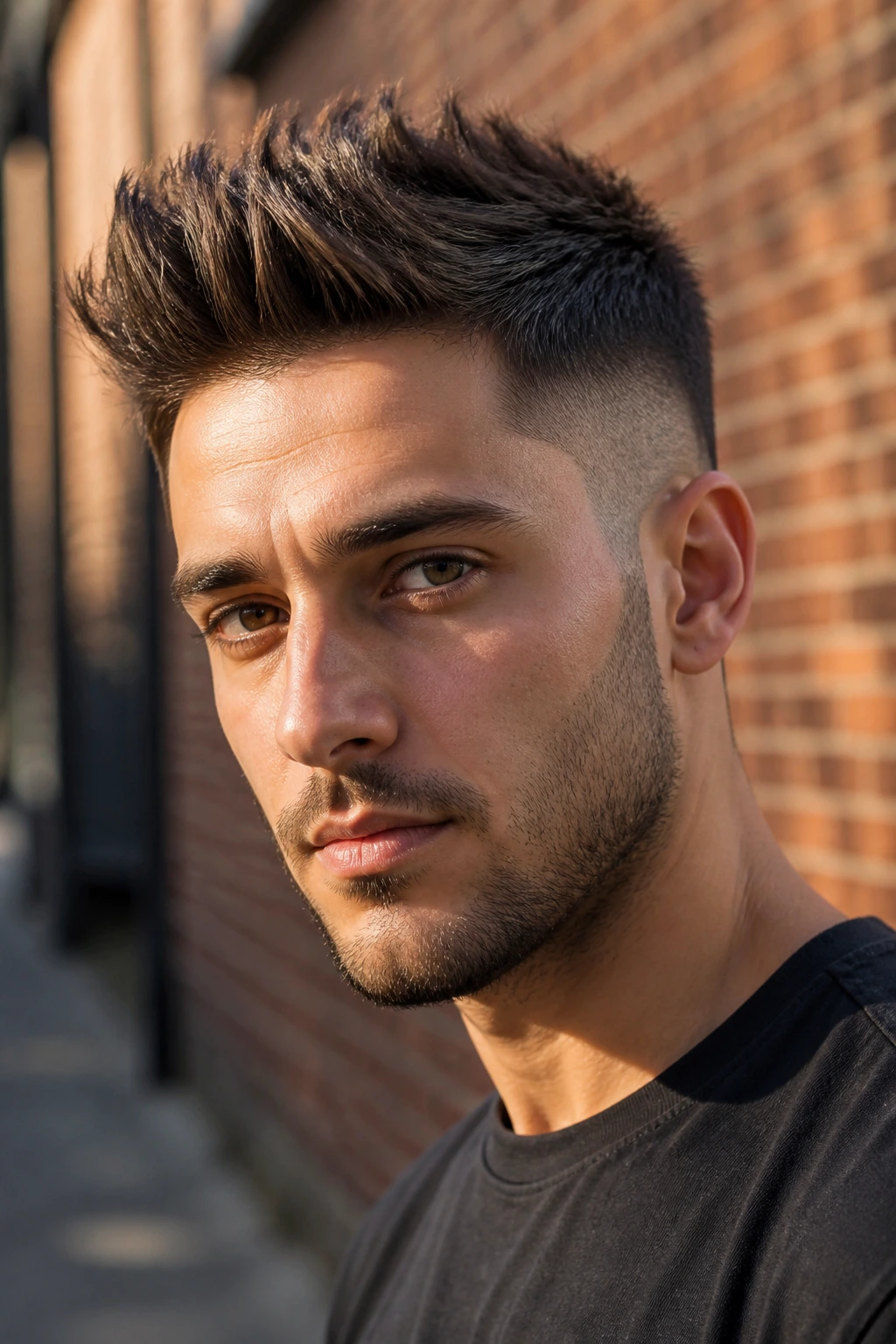
Spiky and quiffed is a useful pairing when the hair is short, straight, and resistant to staying smooth. Instead of forcing every strand into one soft ridge, you let the front break into small upward pieces.
That makes the style easier to hold on fine hair, too. Fine hair often loses shape when it’s too long and too soft. A spiky quiff shortens the visual weight and gives the front some bite. It reads younger and more casual than a classic quiff, but it still has structure.
Work in a small amount of paste or clay, then push the front up with your fingertips and separate a few ends. Do not overdo the spikes. You want rough texture, not early-2000s porcupine hair. A tight fade or taper on the sides keeps the focus on the top. This style is one of the easiest ways to make short hair look alive without needing much length.
14. Natural Low-Maintenance Quiff
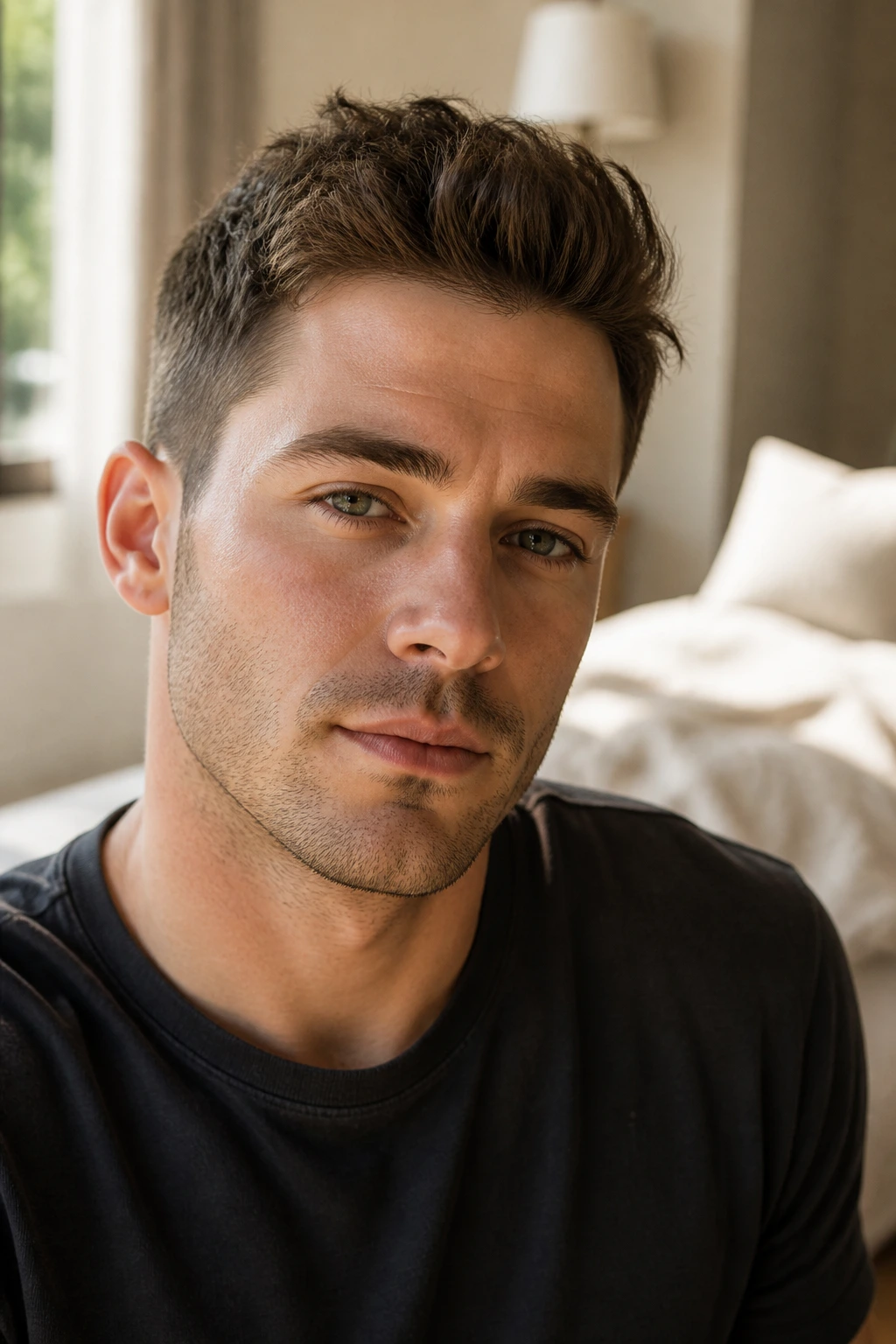
Some mornings call for a haircut that behaves without a lot of negotiation. The natural low-maintenance quiff stays close to your hair’s own direction, which means less blow-drying, less product, and fewer weird battles with the front.
The trick is to keep the shape subtle. There’s still a lift in the front, but it isn’t forced high. The top sits soft and slightly forward, like the haircut remembers what your hair wants to do and works with it. That makes it a strong everyday option.
Ask for a short textured top with a gentle transition on the sides. The barber should remove bulk without carving hard lines into the top. Styling can be as simple as towel-drying, adding a tiny bit of cream, and pushing the front into place with your hands. If you’re the type who likes hair that looks better after a day of wear than after ten minutes of fussing, this is the version to keep in your back pocket.
15. Thick-Hair Quiff
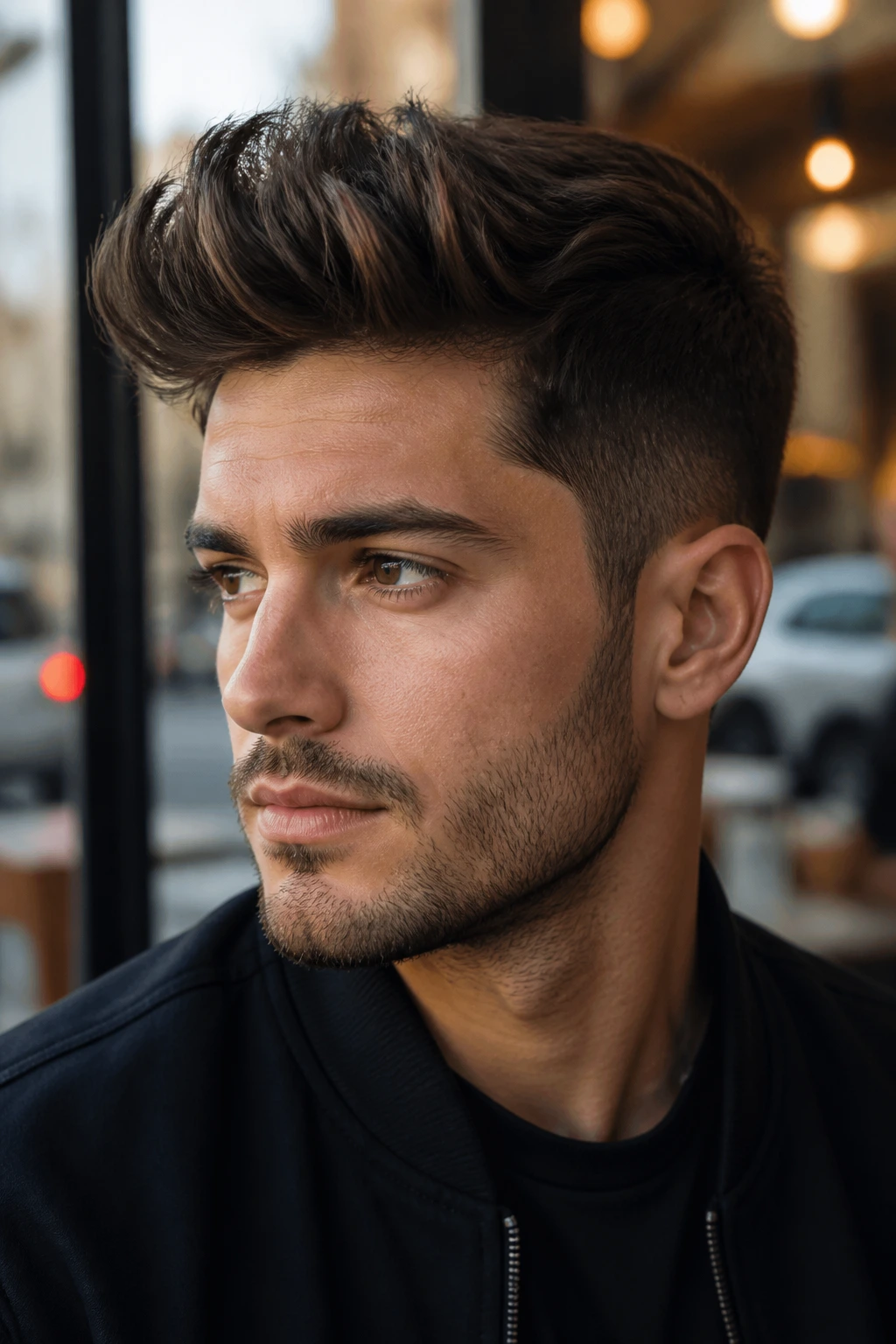
Thick hair can make a quiff look impressive fast, but it also turns heavy fast. If the barber leaves too much bulk, the front falls forward like a curtain. The answer is to cut the shape into the hair instead of just shortening it.
This version uses texture and weight removal to stop the top from ballooning. The front still needs enough length to lift—usually around 3 inches—but the crown and side transition should be thinned and layered so the shape bends instead of swelling. That’s the whole game with thick hair.
Matte product helps here, because shine makes thickness look even denser. Blow-dry the front in sections and let the airflow hit the roots first. If you try to style thick hair while it’s still damp and heavy, the front will collapse halfway through the day. A strong taper on the sides balances the top and keeps the haircut from turning boxy. Thick hair loves a quiff when it’s cut with restraint.
16. Receding-Hairline Quiff
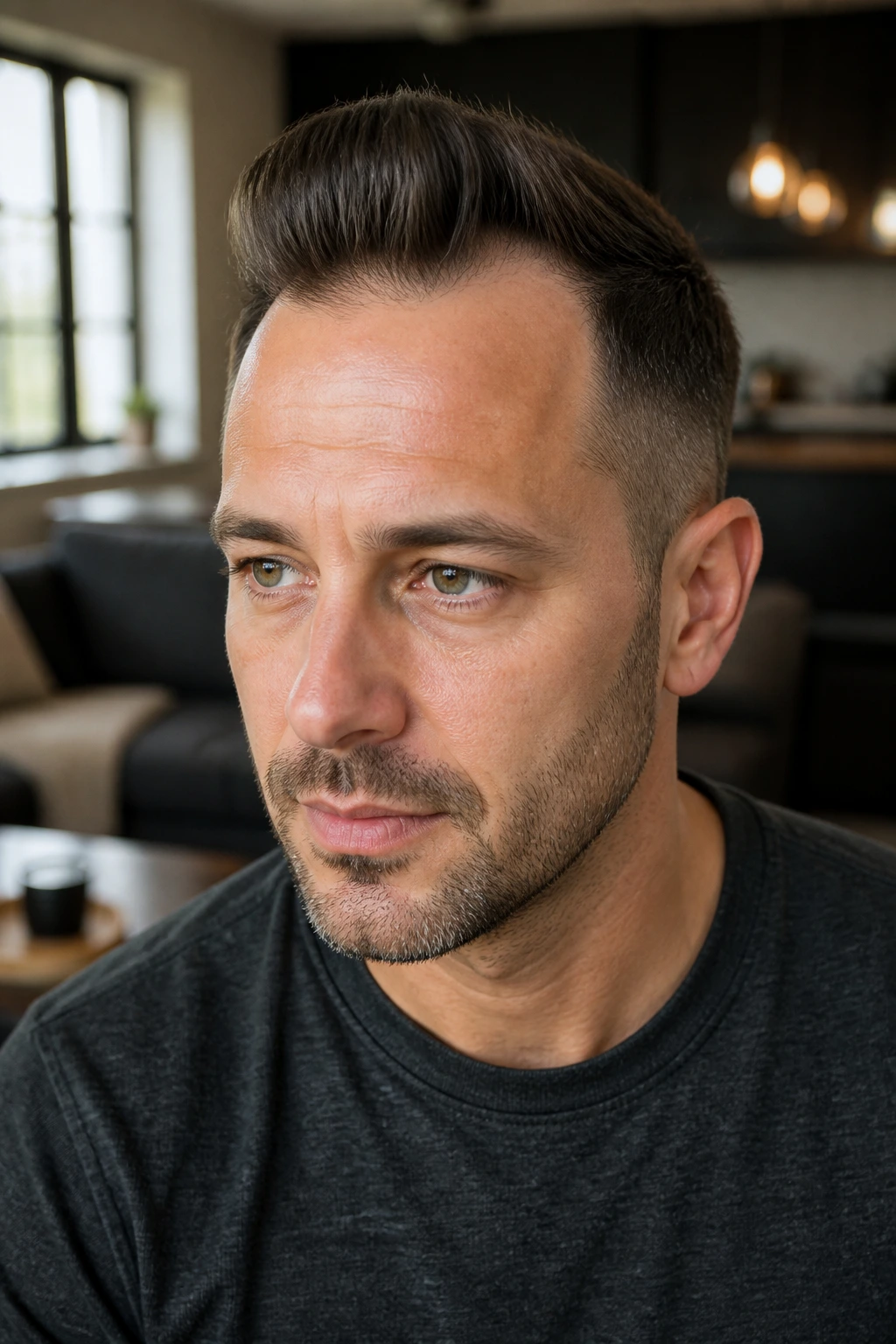
A short quiff can be useful when the hairline is not as full as it used to be. The goal is not to pretend the line is unchanged. That usually looks worse. The better move is to create height a little behind the front edge so the style has presence without exposing every corner.
I prefer a softer front on this one. Keep the hairline edges natural, not aggressively squared, and add some lift just behind the recession. That helps the eye read the quiff as a shape instead of a fix. The front should push upward gently, not spike straight from the very edge of the forehead.
This style works best with a low shine finish and a barber who knows when to stop cutting. Too much exposure on the temples makes the recession stand out. A bit of texture across the front breaks the line and keeps the haircut looking balanced. It’s a careful style, but not a timid one. Done right, it looks cleaner than a haircut that tries too hard to hide the hairline.
17. Crop-Quiff Hybrid
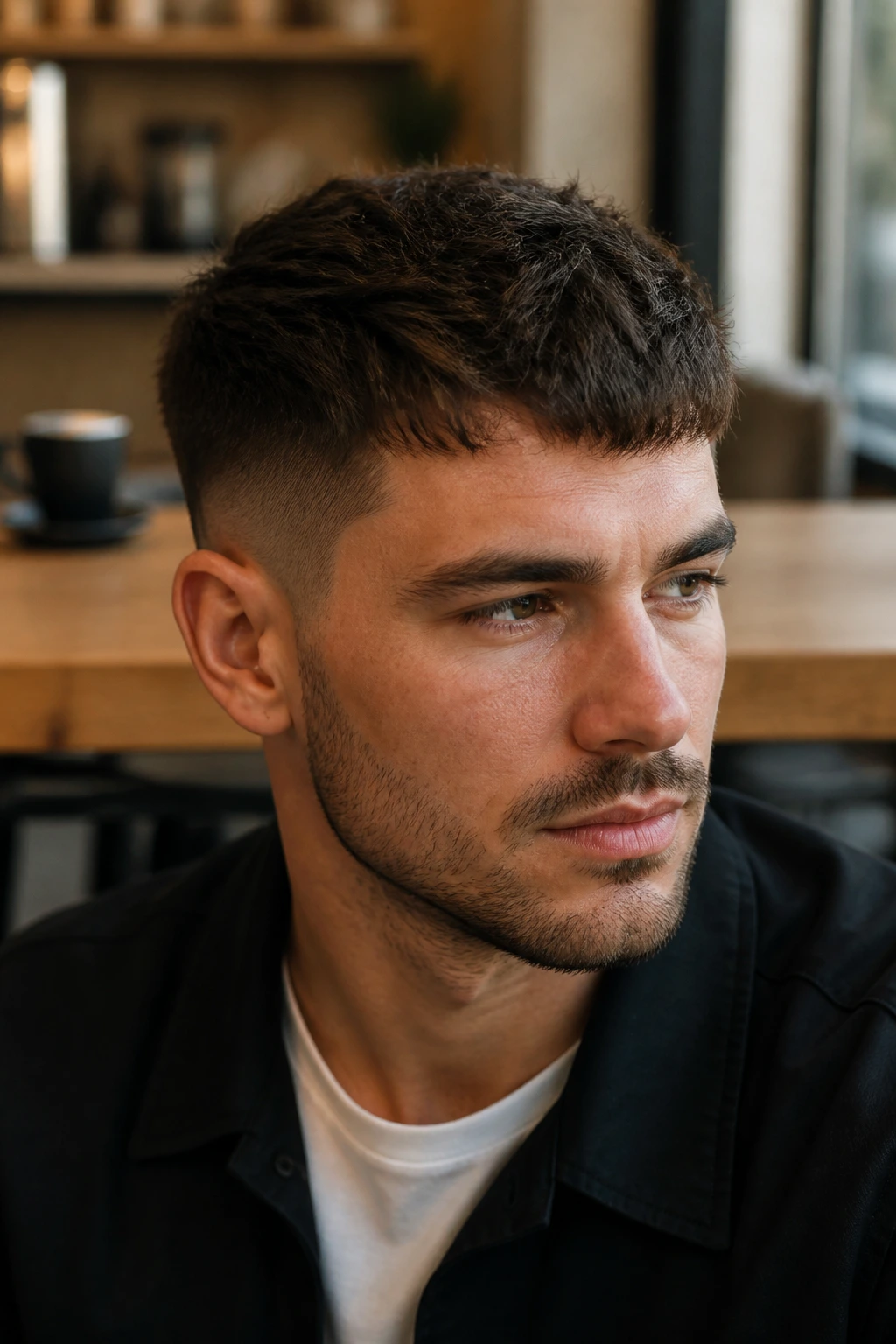
This one sits between a French crop and a quiff, which makes it a solid option when you want the front to move up but still want the ease of a shorter, more forward style. The fringe is shorter than a classic quiff, but the front still rises enough to show shape.
That hybrid structure is useful on straight hair that lies flat. Instead of forcing a lot of lift, you build a small rise and let the front edge stay slightly forward. The result is easy to wear and less likely to lose shape by noon.
I’d ask for texture across the top and a blunt-but-soft fringe line that can be pushed up a touch. The sides should stay clean and close. This style has a bit more attitude than a standard crop, but it’s less demanding than a taller quiff. It’s also one of the better choices if you want short hair with some movement and don’t want to spend long with a brush every morning.
18. Blow-Dried Volume Quiff
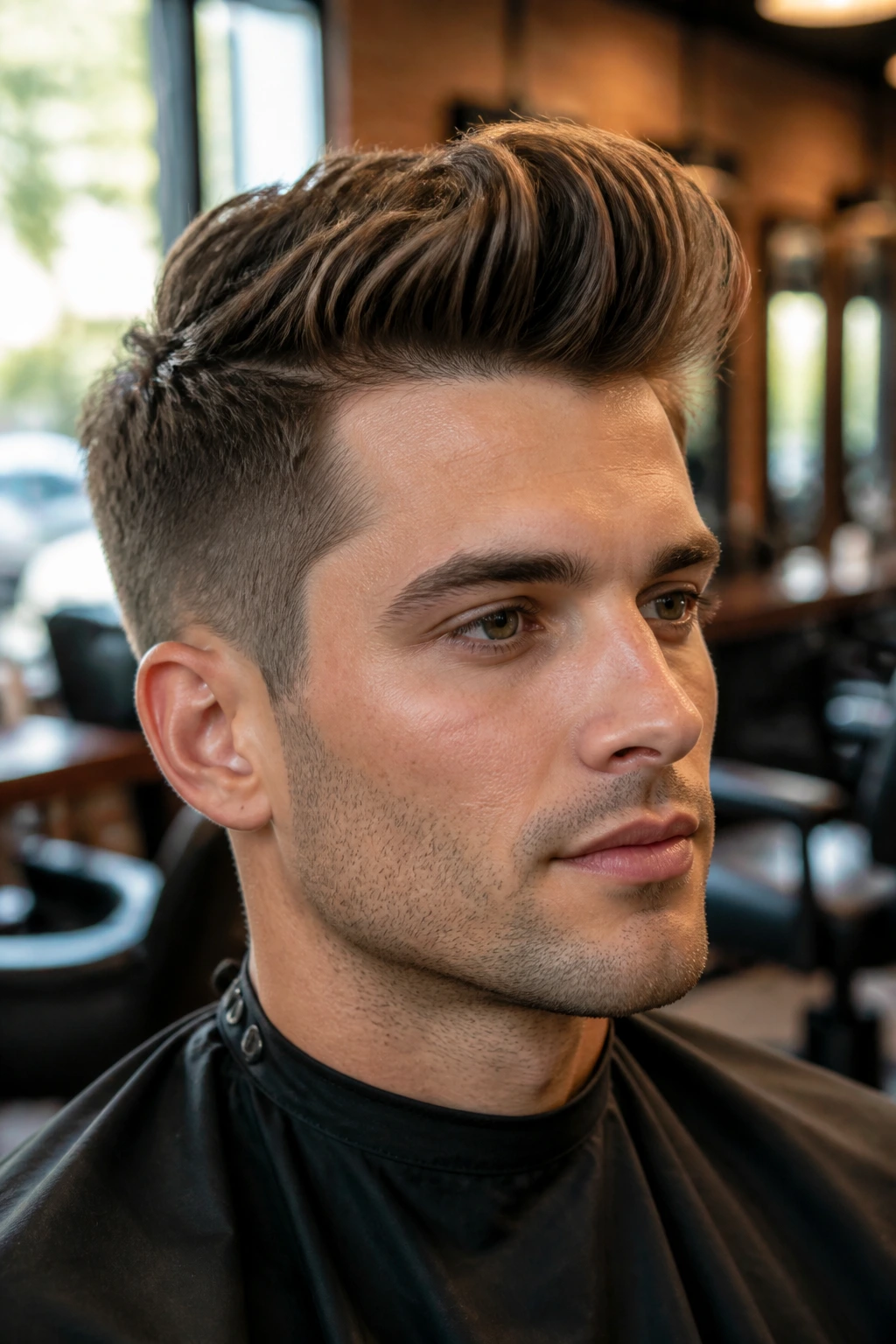
If you want a short quiff that looks fuller without needing longer hair, this is the move. The volume comes from the dryer first and the product second. That matters. If the root is set the right way, the style holds with much less product than people expect.
Start by drying the front in the opposite direction of how you want it to sit, then push it up and back with a vent brush or small round brush. That creates root lift. Once the shape is in place, a light clay or paste can lock it in without flattening the movement.
The difference between this and a plain brushed quiff is softness. The volume sits in the front and upper midsection, not in a stiff spike. It’s useful for men with short hair that falls limp after a shower or for anyone who wants a bit more presence at the front. Drying technique does most of the work here. Product is only the follow-through.
19. Temple Fade Quiff
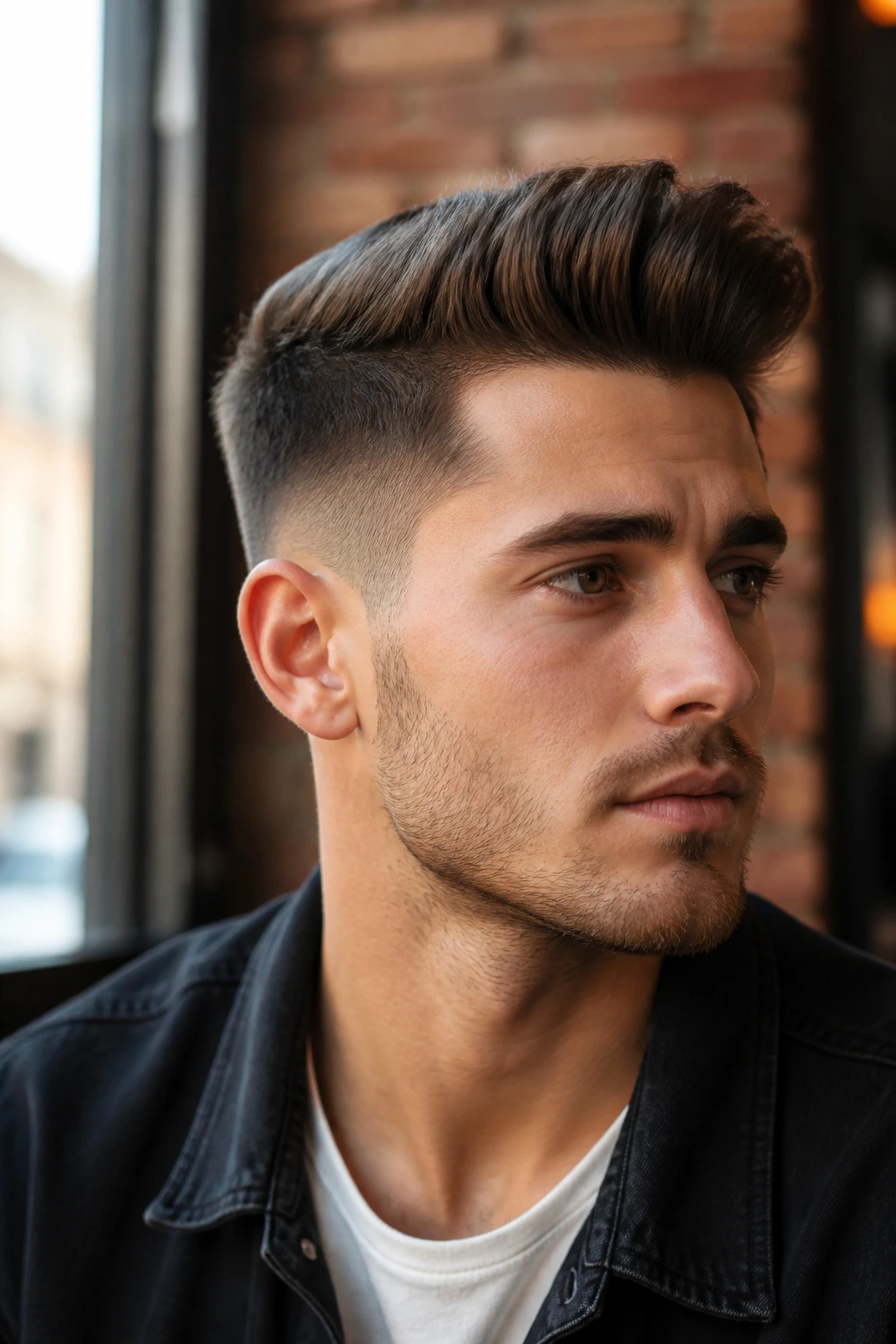
The temple fade keeps the focus tight around the corners of the face, which makes the short quiff sit cleaner on top. I like this cut when someone wants a fresh outline but doesn’t want the sides pushed all the way down to skin.
Because the fade is concentrated at the temples, the top can stay a little fuller. That helps the quiff feel balanced. The front still lifts, but the haircut doesn’t lose all of its side structure, which can happen with a stronger fade.
This style pairs well with a medium-textured top and a soft matte finish. It’s neat enough to look sharp straight out of the chair, but it still has enough edge to feel modern. If you wear glasses or have a strong jawline, the temple fade keeps the upper part of the haircut from crowding your face. The visual effect is clean and controlled, but not severe.
20. Drop Fade Quiff
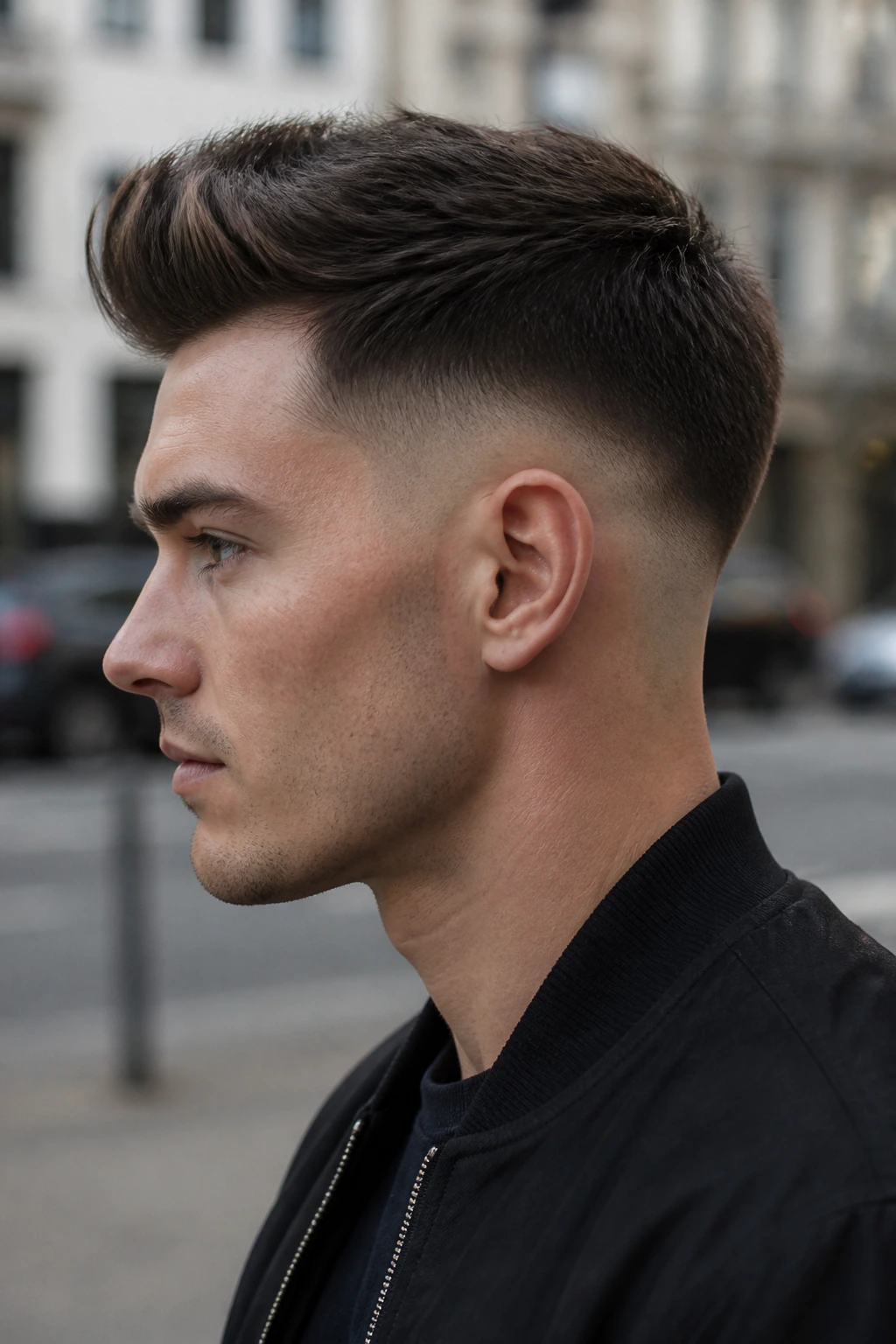
A drop fade curves lower behind the ears, and that curve changes how the quiff feels on top. Instead of a straight, harsh perimeter, the fade drops around the head and gives the haircut a more shaped profile.
That matters on short hair because the top can look blocky if the sides are too rigid. The drop fade softens that. It also helps elongate the head shape a little, which is useful if your face reads round or wide. The quiff itself can stay modest, since the silhouette carries a lot of the work.
Keep the front textured and avoid piling product in one spot. A drop fade already makes the haircut feel structured, so the top should move with it instead of fighting for attention. This is one of those styles that looks better when viewed from the side than people expect. The curve behind the ear gives the whole cut a cleaner arc. Small detail. Big effect.
21. Business-Ready Quiff

This is the short quiff for days when you need to look composed without looking severe. The front lifts just enough to have some shape, but the finish stays tidy and the edges stay controlled.
I’d keep the top slightly shorter than in the more textured versions, and I’d avoid heavy separation. The aim is a smooth outline with a little air at the front, not a messy, broken-up crest. That makes the haircut easy to wear with a collar, a tie, or a plain crewneck. It doesn’t fight the clothes.
Use a light pomade or cream with a small amount of hold. Comb it into place, then break the front just a touch with your fingers so it doesn’t read too formal. If you’ve ever looked at a quiff and thought, “That’s too much hair for Monday,” this is the answer. It still has lift. It just keeps its voice down.
22. Beard-Balanced Rugged Quiff
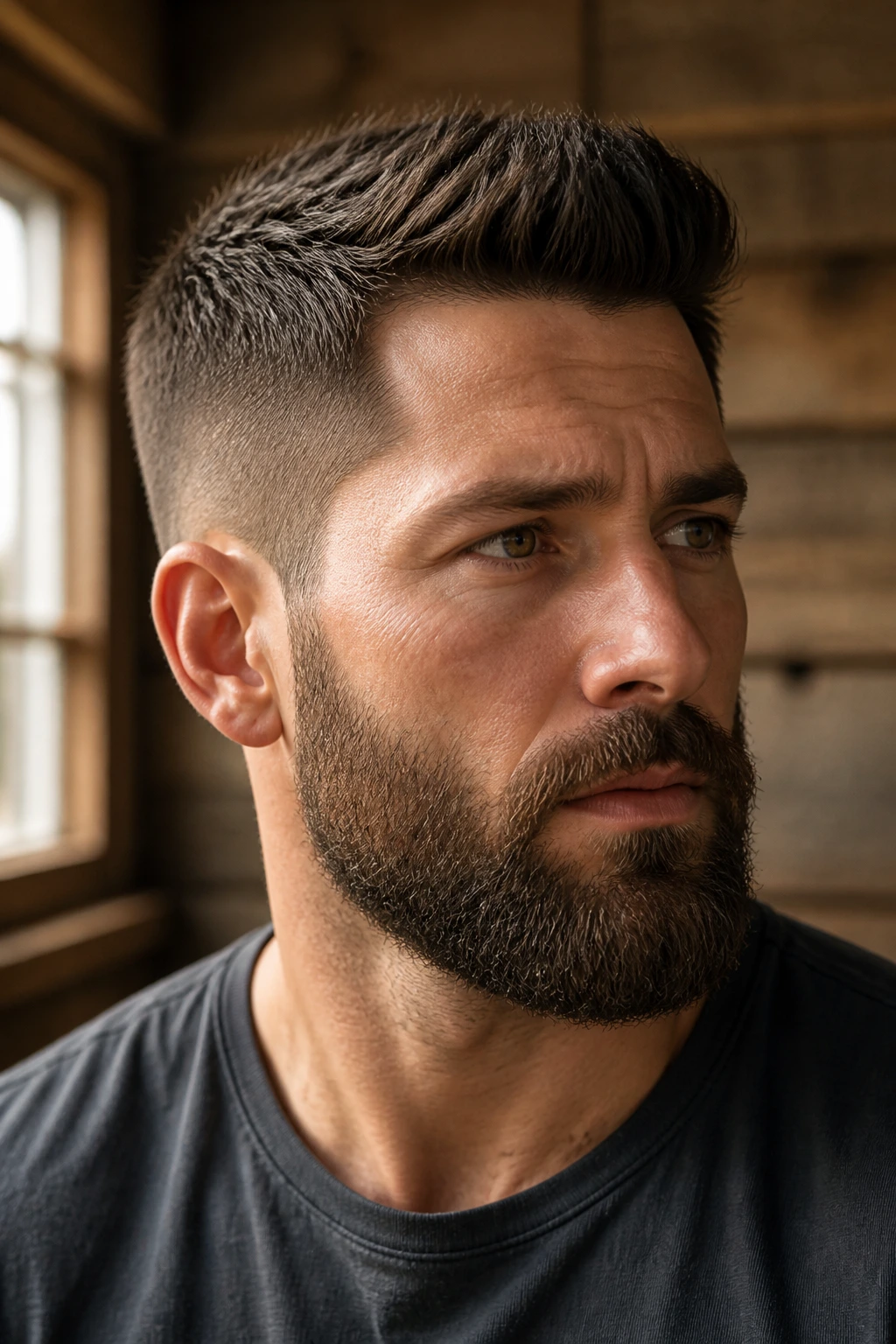
A quiff and a beard can either help each other or make the head look top-heavy. The rugged version works because the top is kept compact while the beard carries some of the visual weight lower down.
That means the quiff doesn’t need huge height. It needs shape. A textured front, a tapered side, and a beard line that connects neatly at the jaw are enough. The balance comes from contrast: short, lifted hair above; fuller structure below. When those lines are clean, the haircut feels intentional instead of overbuilt.
I’d keep the fade or taper tight around the temples so the beard has room to show. If the sides are too bulky, the transition gets muddy fast. A matte finish suits this style best, because shine on the top and a heavy beard can make the whole look feel too polished. This is a good cut for men who want something rougher around the edges without letting the haircut go messy.
23. Straight-Hair Quiff
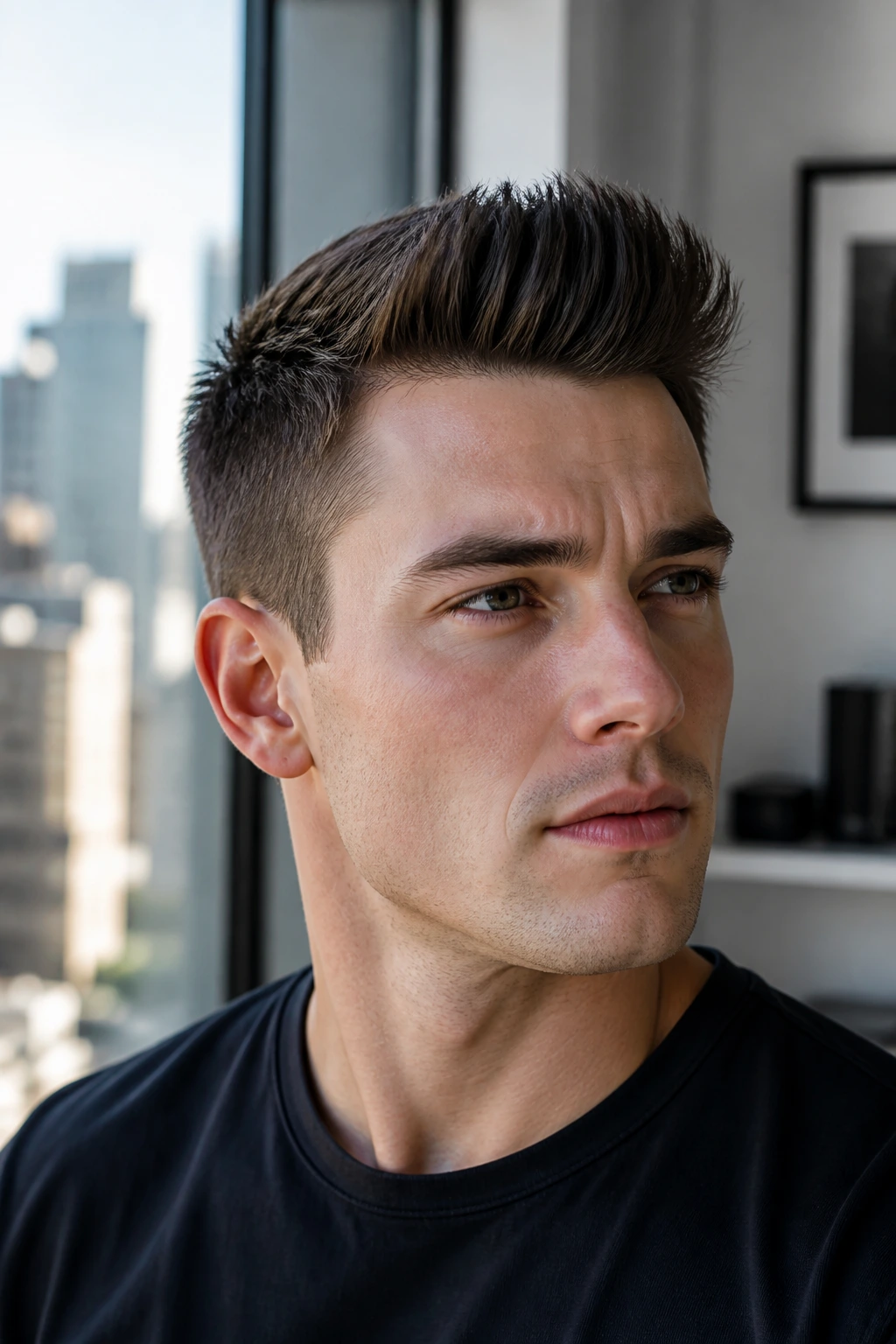
Straight hair can be annoying here. It slips, it drops, and it often refuses to keep the front lifted unless you set it properly. But when you get the routine right, straight hair gives one of the cleanest short quiff shapes on the list.
The secret is root control. Dry the front upward while it’s still damp, then let it cool in place before adding product. If you skip the drying part, the style has no backbone. Straight strands need that structure more than wavy or curly hair does.
A matte paste or clay works better than a slick product because straight hair already shows every comb line. Too much shine makes it look flat and thin. Keep the top layered enough to break the surface, and don’t let the crown grow too long. Straight hair can wear a sharp quiff, but it wants discipline. Not fuss. Discipline.
24. Loose Matte Front Quiff
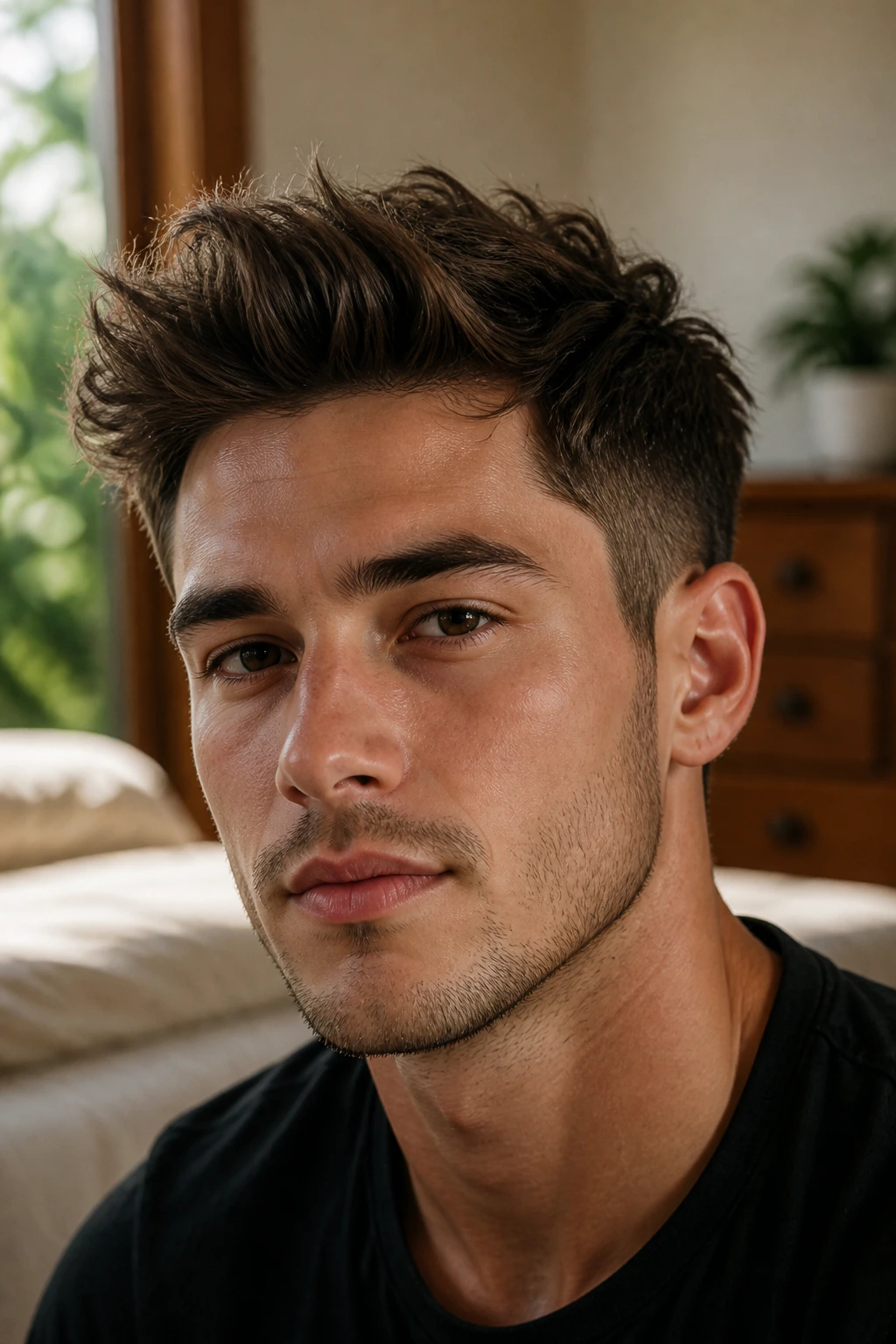
This version keeps the front soft, almost feathered, so the haircut doesn’t feel hard-edged. The lift is there, but the ends are broken and light, which makes the style easier to wear when you don’t want a crisp line across the forehead.
It’s especially useful if your hair likes to split or if your natural growth pattern pushes some pieces forward and others upward. Instead of forcing everything into one rigid shape, you let the front move in small sections. That makes the style look more relaxed and less engineered.
Use a small amount of matte cream and shape the front with your hands after a quick blow-dry. A comb can be too strict for this one. The result works well with short, tapered sides and a slightly longer front fringe. It’s one of the quieter quiff styles for short hair, which is exactly why I like it. It gives shape without acting like the haircut needs a speech.
25. Narrow-Front Quiff

A narrow front helps if your forehead feels wider than you want to emphasize. Instead of spreading the quiff across the whole front, you build lift in a tighter section near the center and keep the sides flatter.
That changes the proportions a lot. The face reads a little longer and more focused, and the haircut stops pulling attention sideways. It’s not about hiding the forehead. It’s about controlling where the eye goes first.
Ask the barber to keep the front from getting too wide when texturizing the top. The length should be concentrated where the lift happens, not spread out into a broad, floppy front. This style often looks best with a low or mid taper because the sides stay clean without making the top feel thin. If you’ve tried a broader quiff and felt like it made your head look wider, this narrower shape is the cleaner answer.
26. Feathered Quiff
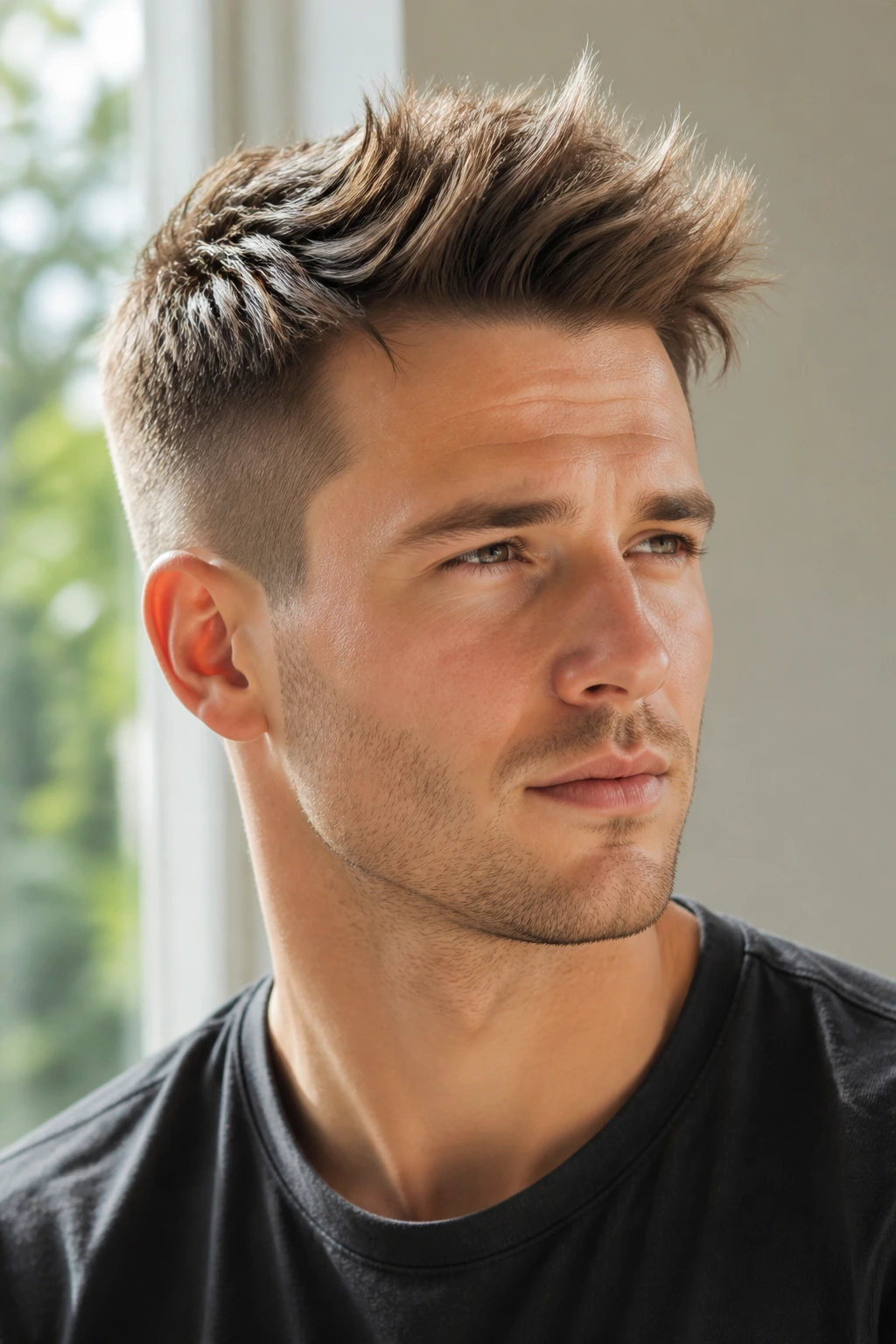
The feathered quiff is softer than the spiky or brush-up versions, but it still has enough lift to count. The front is cut and styled so the ends split into fine, airy pieces rather than one solid wall.
That feathering is useful when hair density is medium or fine. A blunt top can expose thin spots. A feathered finish disguises them by breaking the shape into smaller pieces. The cut looks light, even when the hair is short.
I’d pair this with a paste that gives separation without stiffness. After blow-drying, use the fingertips to lift the front in small sections instead of combing it into one lump. The style has a casual, airy feel, and it grows out gracefully because the ends are already softened. It’s a good choice if you want something less polished than a classic quiff but more controlled than a fully messy one.
27. Slick-Shine Quiff
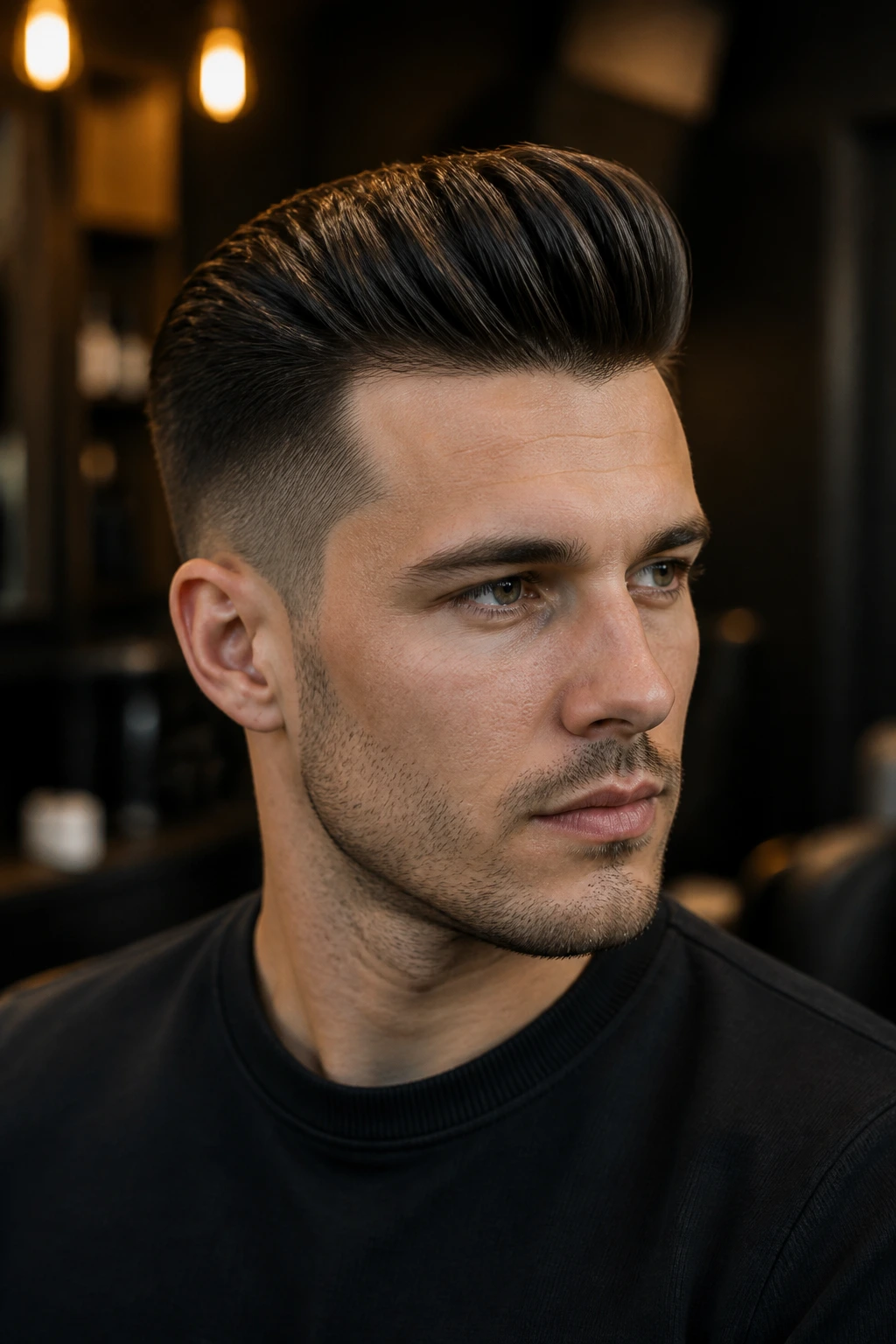
Shiny quiffs divide people. I get that. But on short hair, a controlled shine can make the haircut look crisp instead of greasy, especially if the top is neatly cut and the sides are tight.
This version works best when the shine is deliberate and the front is shaped with precision. The hair should look smooth, not wet. That’s a narrow line, but a useful one. Use a light pomade or a product with a bit of sheen, then comb the top into a short, elevated shape that keeps the front from drooping.
It suits men who want a more polished look without growing the hair out into a full pompadour. The shine makes the quiff feel more dressed up, which can be useful if matte styles look too casual on you. Keep the front short enough to stay close to the head; too much length and the shine starts to show every weakness. Done right, this is the sharpest-looking short quiff in the set.
28. Grown-Out Quiff
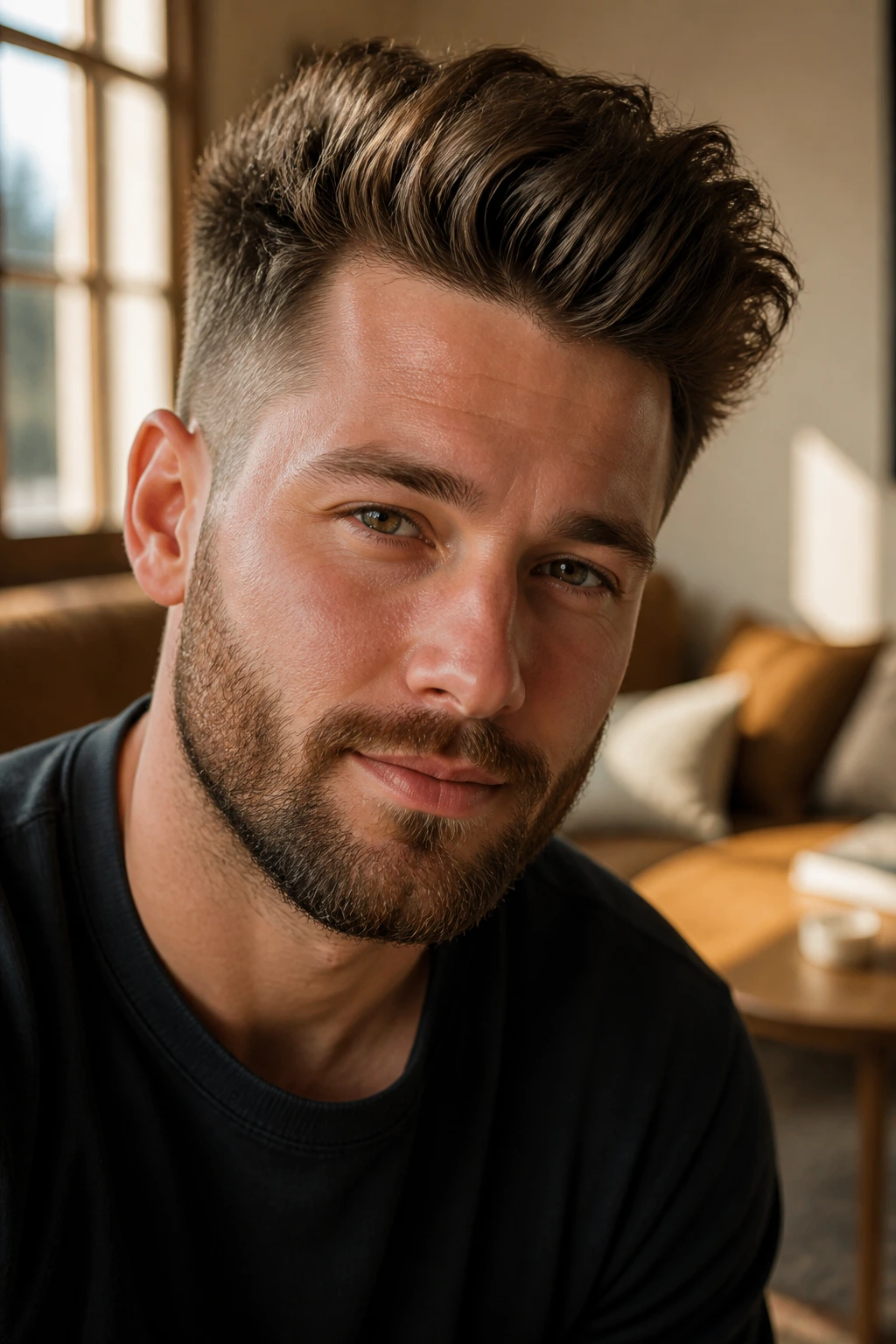
A good short quiff should still look decent when it’s not fresh from the barber. This version is built for that. It keeps enough length on top to hold shape after a few weeks, and the sides are cut in a way that grows out cleanly instead of turning lopsided.
That makes it a smart choice if you hate the awkward middle stage between cuts. The front can still lift, but it doesn’t depend on a perfect fade to look presentable. The texture softens as it grows, which actually helps the style read a little more relaxed over time.
Ask for a taper instead of an ultra-tight fade if you want the haircut to last longer between appointments. Keep the top textured and avoid blunt corners through the fringe. When it starts to grow, the shape should melt into a looser version of itself rather than breaking apart. That’s the mark of a quiff that works in real life, not just on day one.
What Makes a Short Quiff Hold Without Feeling Stiff
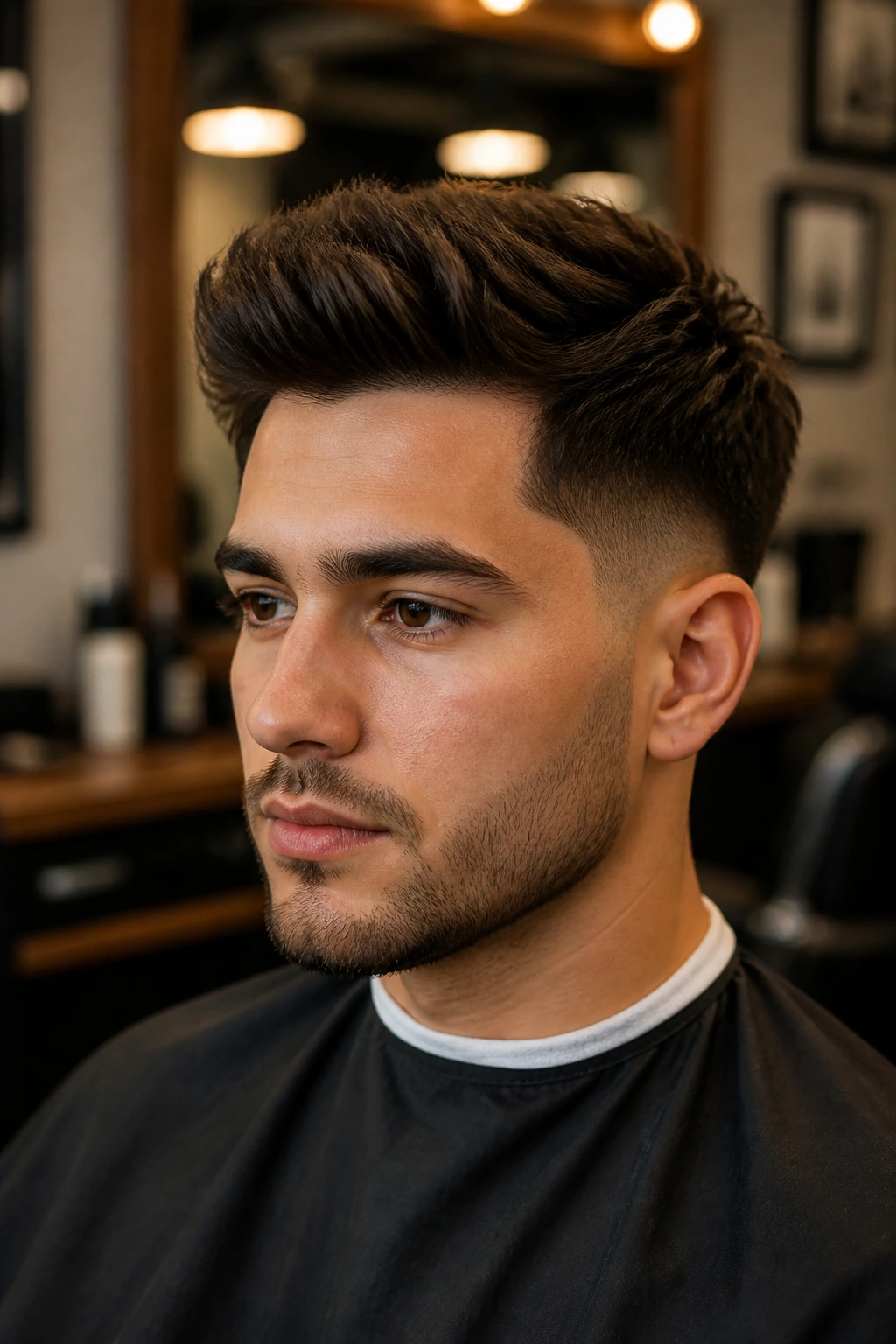
A short quiff works when the haircut does part of the lifting before product ever touches it. That means the front needs enough length, the crown needs to be shorter or at least less dominant, and the sides need to be controlled so the eye reads upward. If any of those pieces are off, the style turns into puff instead of shape.
The blow dryer matters more than people think. Push the front up while the hair is still damp, and set the roots in the direction you want. If you let the hair dry flat first, you’re asking product to rescue a shape that never formed. Product can help. It cannot perform miracles.
I’d rather see a short quiff with medium hold and good drying technique than a stiff, over-gelled version that collapses the second the weather changes. The best short quiff styles for men have movement at the front and control everywhere else. That combination is harder to fake than it looks, which is exactly why a good cut earns its keep.
The Tools and Products That Matter Most
-
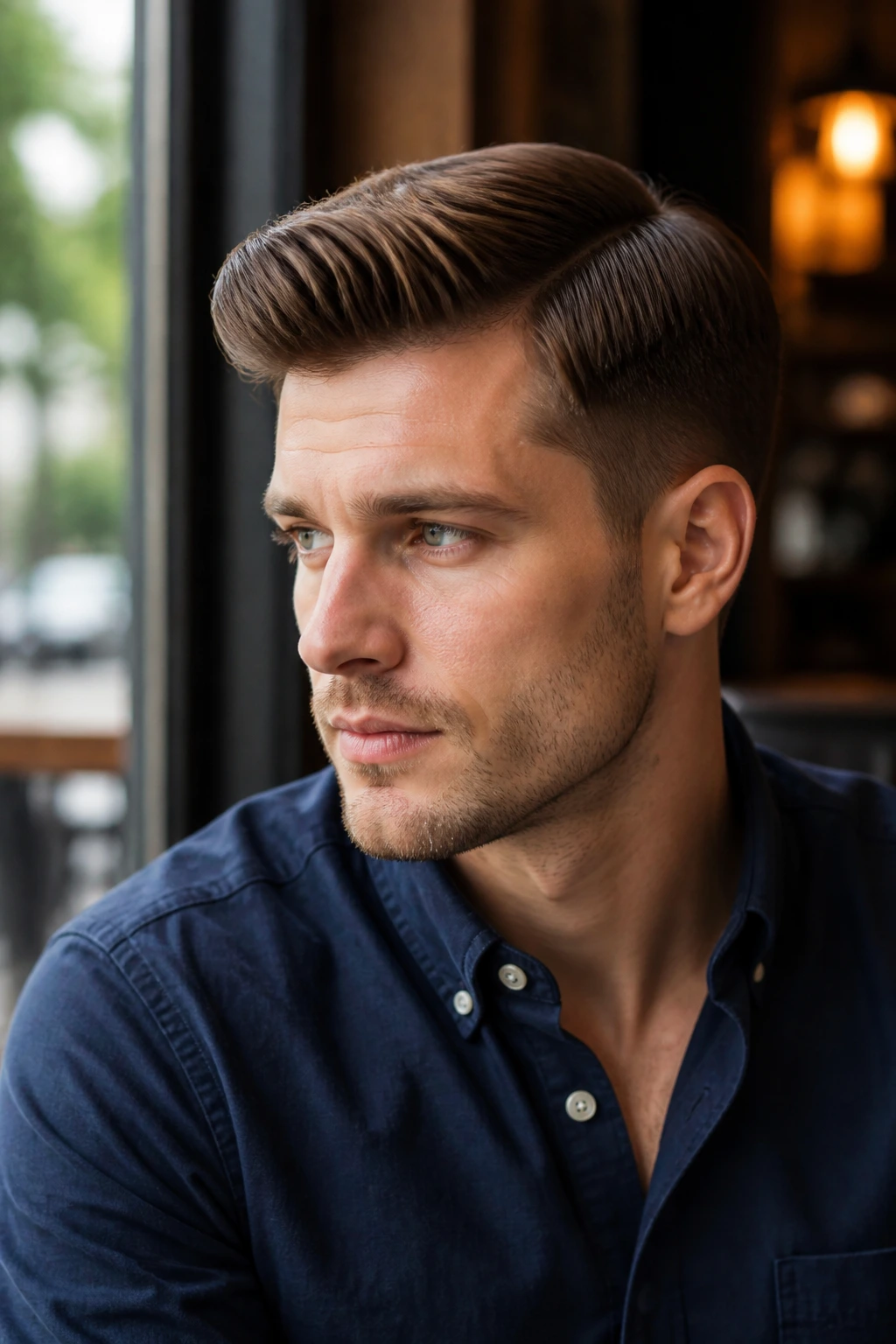
A blow dryer with a concentrator nozzle: The nozzle lets you aim heat at the roots so the front lifts instead of just frizzing outward.
-
A vent brush or small round brush: A vent brush is faster for casual texture; a small round brush gives more root lift if you want a neater front.
-
Matte clay or paste: This gives hold without turning short hair shiny and stiff. Most textured quiffs look better with this than with gel.
-
Lightweight pomade: Useful when you want shine and a more classic finish. Keep the amount small or the top goes flat.
-
Sea salt spray or pre-styler: A few sprays on damp hair can add grit and make fine hair easier to shape.
-
Wide-tooth comb: Handy for guiding the hair before it sets, especially on straighter hair that wants to lie down.
-
A towel, not a soaking head of hair: Styling starts after you’ve removed the extra water. Wet hair is slippery. It won’t hold its line.
How to Ask Your Barber for the Right Short Quiff
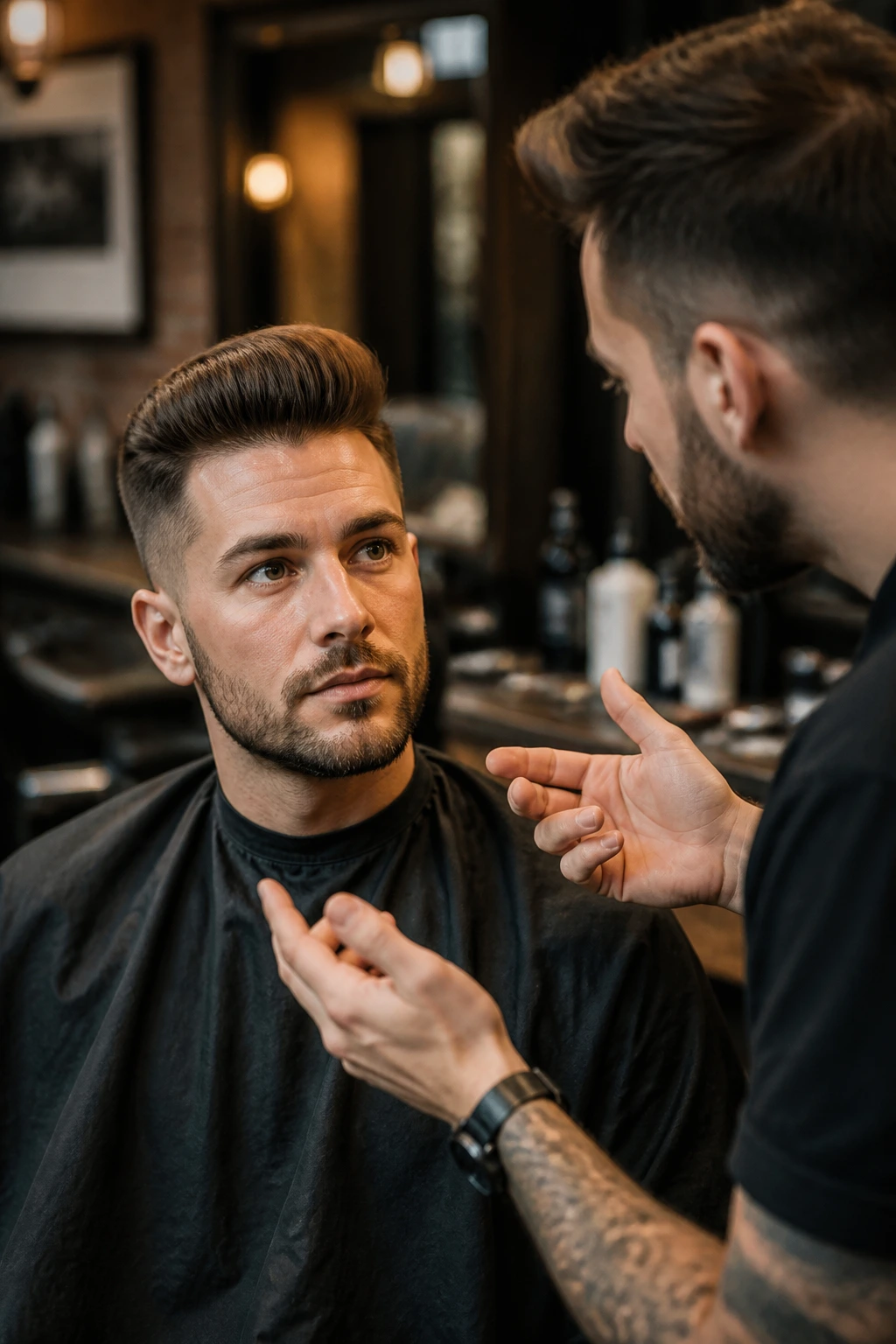
Say it in plain language. That usually works better than trying to name a style and hoping the barber reads your mind. Tell them how much length you want in front, how tight you want the sides, and whether you want the top to look neat or textured.
A useful version sounds like this: “Leave about 3 inches in front, keep the crown slightly shorter, and taper or fade the sides low so I can push the front up without it looking bulky.” That gives the barber a shape to work with instead of a vague mood board.
If your hair is fine, ask for texture without thinning it too much. If your hair is thick, ask them to remove weight through the top so it doesn’t balloon. If you wear a beard, mention the beard line so the side profile stays balanced. And if you hate spending time on your hair, say that out loud. A barber can cut for your routine, but only if they know it.
A Five-Minute Styling Routine That Actually Works
-
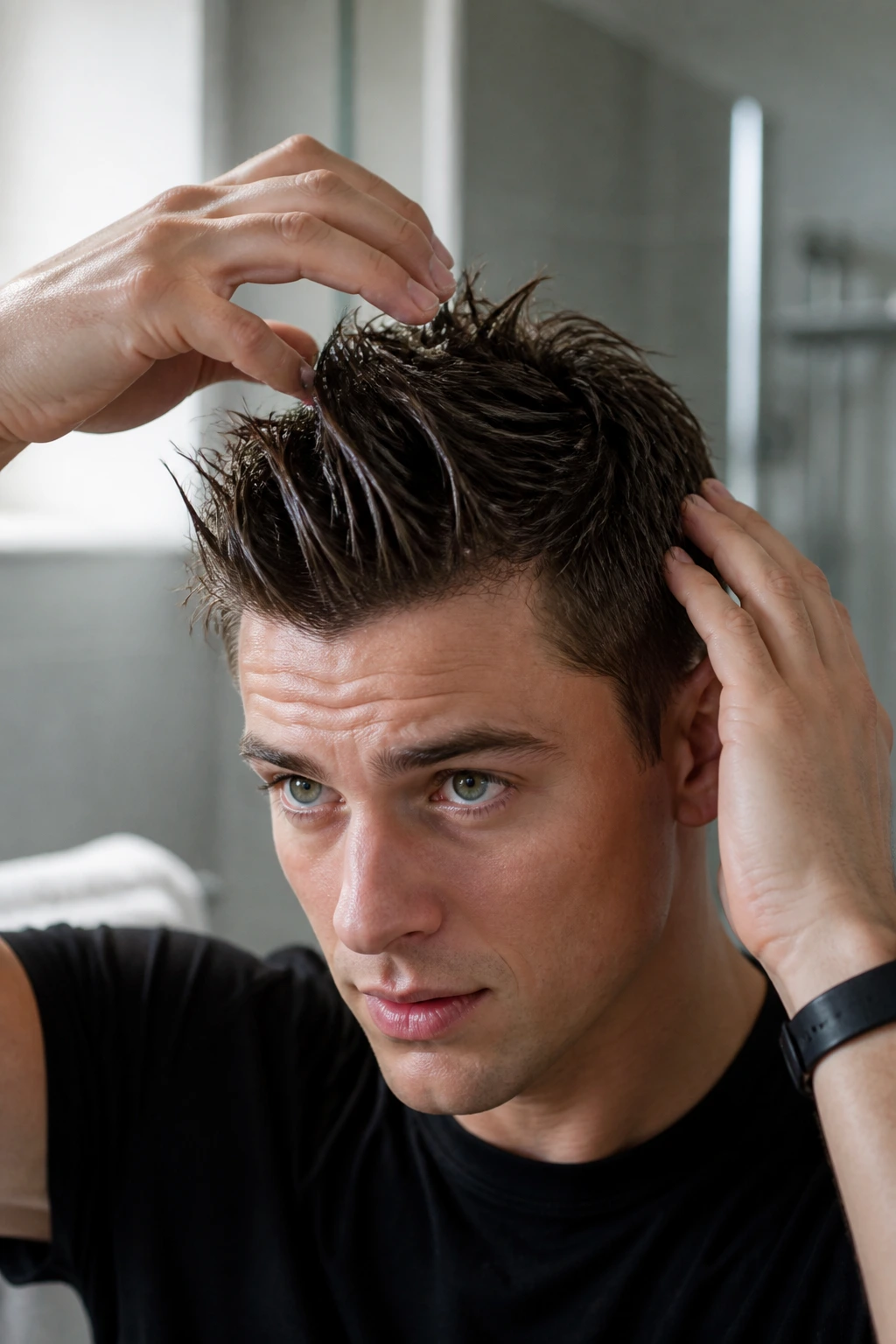
Start with damp hair. Towel-dry until it’s no longer dripping. If water is running down your neck, it’s too wet.
-
Work in a light pre-styler. A little sea salt spray or a lightweight cream helps the hair take direction without becoming sticky.
-
Blow-dry the front first. Push the front upward and slightly backward, using your fingers or a vent brush to set the root.
-
Dry the sides close. Keep the sides controlled so the top remains the focus. If the sides puff out, the quiff looks smaller.
-
Finish with a small amount of product. Clay for texture, pomade for shine, cream for softness. Start with less than you think you need.
-
Break the front once. Use your fingertips to separate the front a little. That one move keeps the style from looking overdone.
Common Mistakes That Flatten the Front
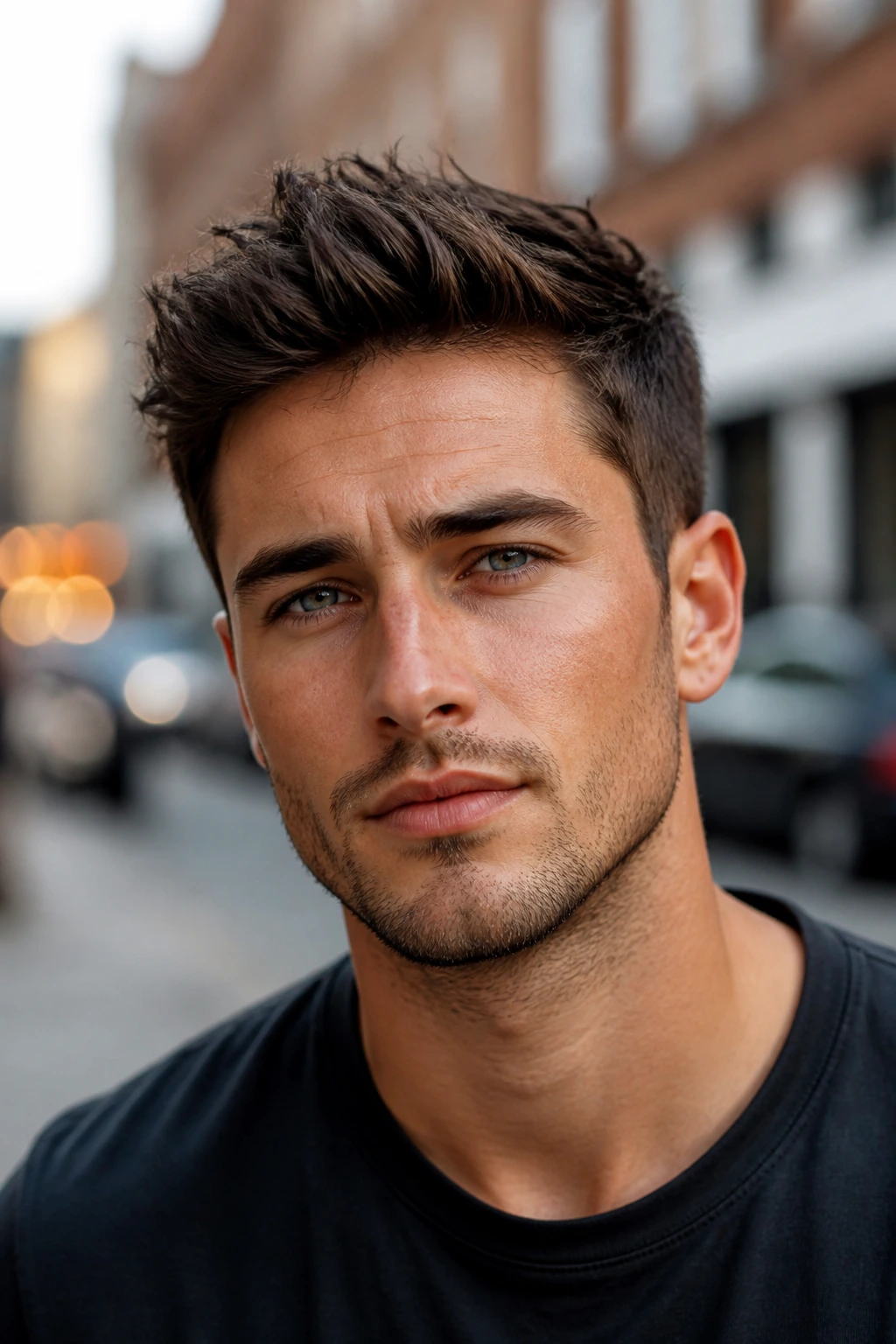
The biggest mistake is using too much product. Short hair does not need a walnut-sized scoop. It needs a small amount spread well. Too much clay weighs the front down, and too much gel makes the top look crunchy.
Another problem is cutting the top too short at the front. People sometimes ask for a quiff and then leave with barely enough length to lift. If the front is shorter than about 2.5 inches, your styling range gets narrow fast. You can still create shape, but you lose options.
The third mistake is ignoring the crown. If the crown is left too long, it fights the front and pulls the whole haircut backward. That’s a common reason quiffs collapse by noon. And then there’s the opposite problem: sides that are too wide. If the top has no contrast, the quiff gets lost. Clean sides make the front look taller, even when the hair isn’t long.
Variations and Adaptations to Try
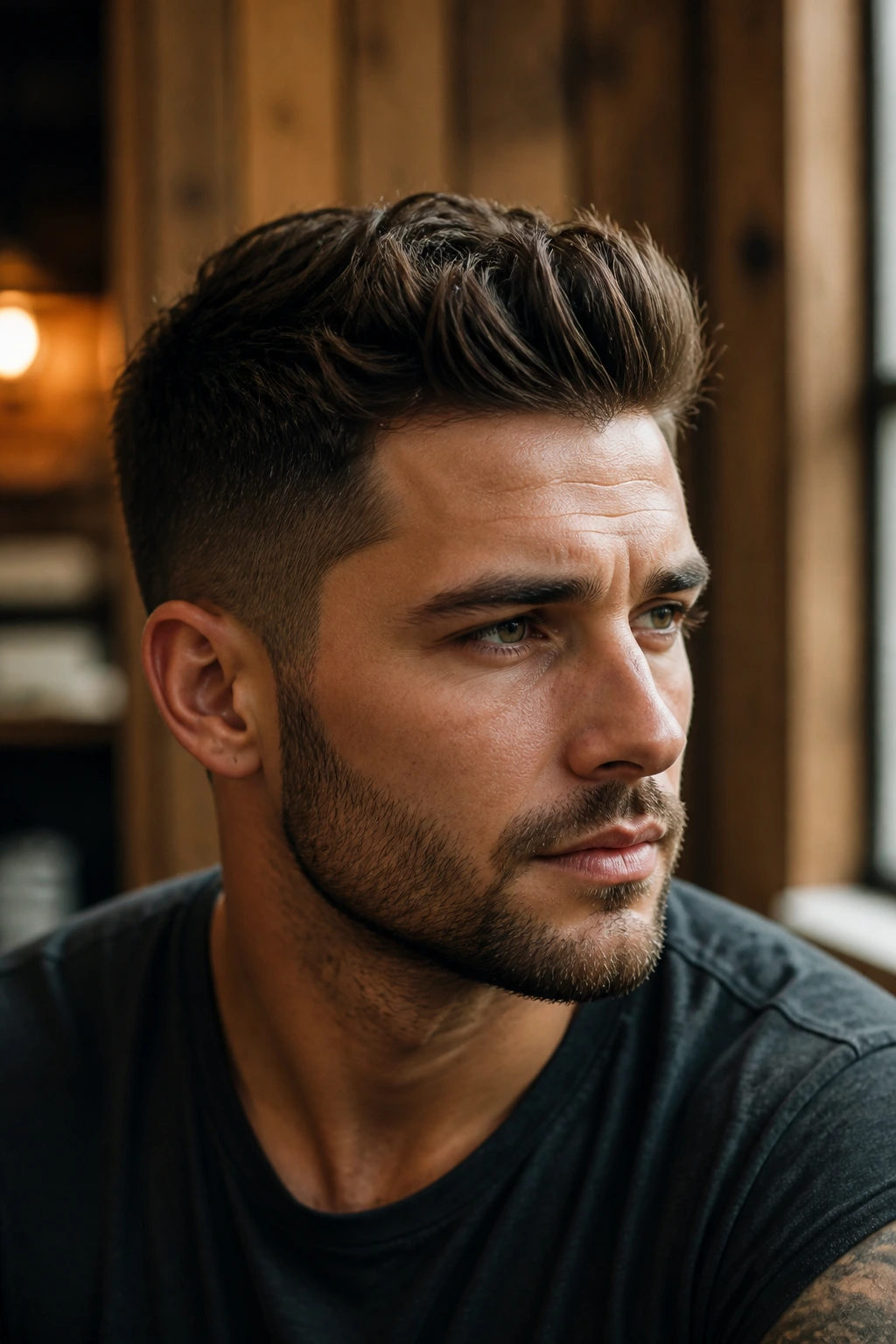
Matte Office Quiff: Keep the front short, the sides tapered, and the finish dry. It looks neat enough for a button-down shirt but still has a little lift at the hairline.
Textured Weekend Quiff: Add extra separation through the top and let the front fall a little messy. This works well if your hair has natural wave or if you want a looser shape after the first day.
Curly Push Version: Let the curls do the lifting and use a diffuser instead of trying to smooth everything out. The quiff shape comes from direction, not straightening.
Recession-Friendly Quiff: Build the height slightly behind the front edge and keep the corners softer. That keeps the hairline from becoming the star of the show.
Beard-Linked Quiff: Tighten the temples and connect the fade into the beard so the haircut has one clean line from top to jaw. The result feels balanced, not top-heavy.
How to Keep the Shape Between Haircuts
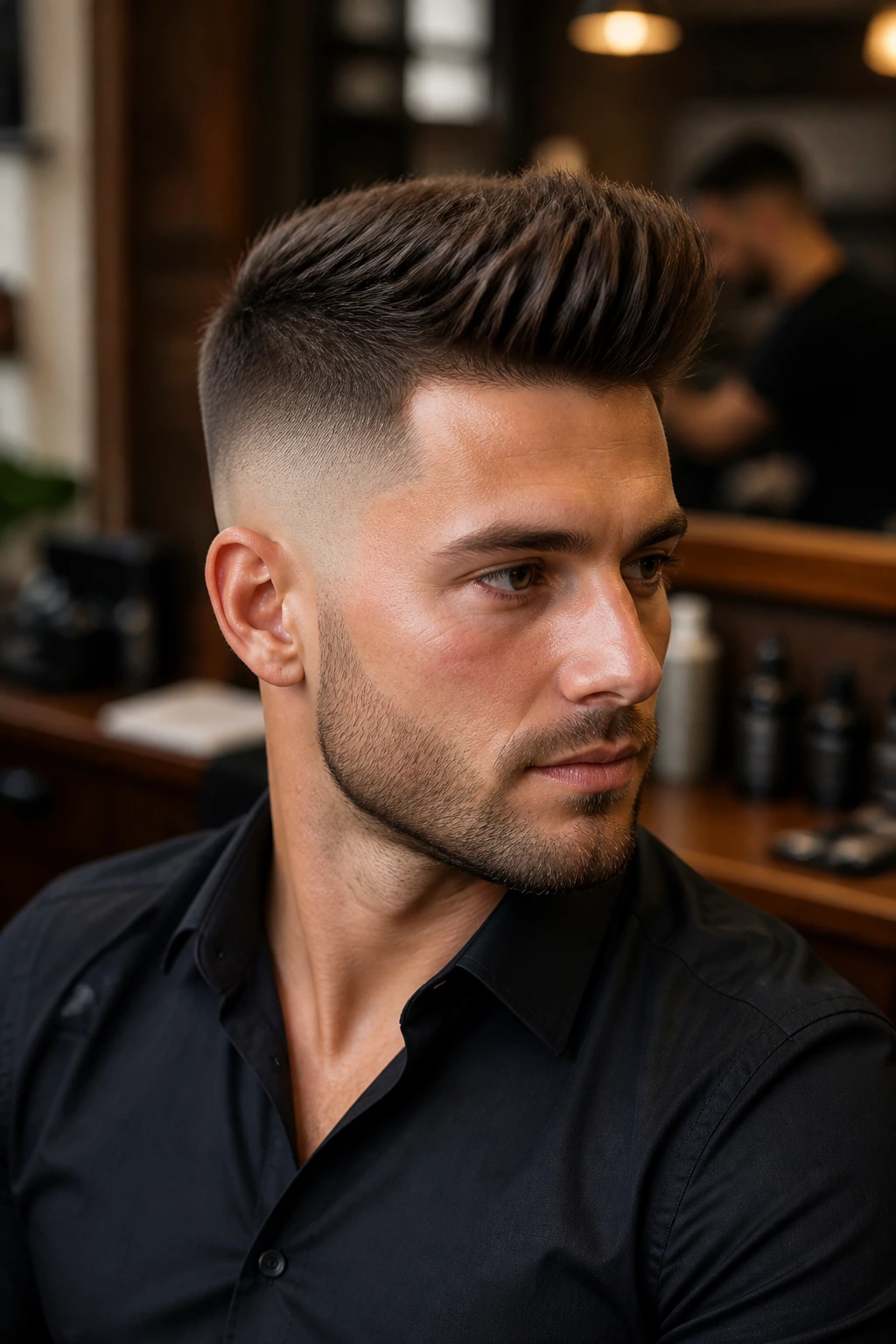
Short quiffs look best when the sides stay trimmed and the front still has enough length to move. For a skin fade, plan on a cleanup every 2 to 3 weeks if you want the contrast to stay sharp. For a taper, 3 to 5 weeks is usually enough before the outline starts to blur.
Washing habits matter too. If you use clay or pomade daily, a clarifying shampoo every 1 to 2 weeks helps clear the buildup that can make short hair sit heavy. On the days you do not wash, a quick damp rinse and a fresh blow-dry can reset the front without stripping it.
If you wake up with the quiff smashed flat, don’t start over from scratch. Mist the front with water, lift it with your fingers, and hit the roots with warm air for 30 to 45 seconds. That’s usually enough to bring the shape back. The goal is not flawless hair every morning. It’s a haircut that stays useful between appointments.
Questions People Ask About Short Quiffs
How much hair do I need on top for a quiff?
A workable short quiff usually needs about 2.5 to 4 inches in the front. Less than that, and the lift gets limited; more than that, and you start drifting into fuller pompadour territory.
Can a short quiff work on fine hair?
Yes, but the cut has to do more of the work. Keep the sides tight, add texture on top, and use a lightweight pre-styler plus a matte product so the hair doesn’t collapse.
Is a quiff better with a fade or a taper?
A fade gives more contrast and makes the top look taller. A taper feels softer and grows out more slowly. If you want sharper edges, go fade. If you want easy maintenance, go taper.
Can I style a quiff without a blow dryer?
You can, but the hold usually suffers. On short hair, the dryer sets the root lift. Without it, the top tends to settle back down unless your hair is naturally cooperative.
What if my hairline is receding?
Keep the front soft and build the lift slightly behind the hairline. A short quiff can work well here if the shape is honest and the corners aren’t cut too aggressively.
Does a quiff work with curly hair?
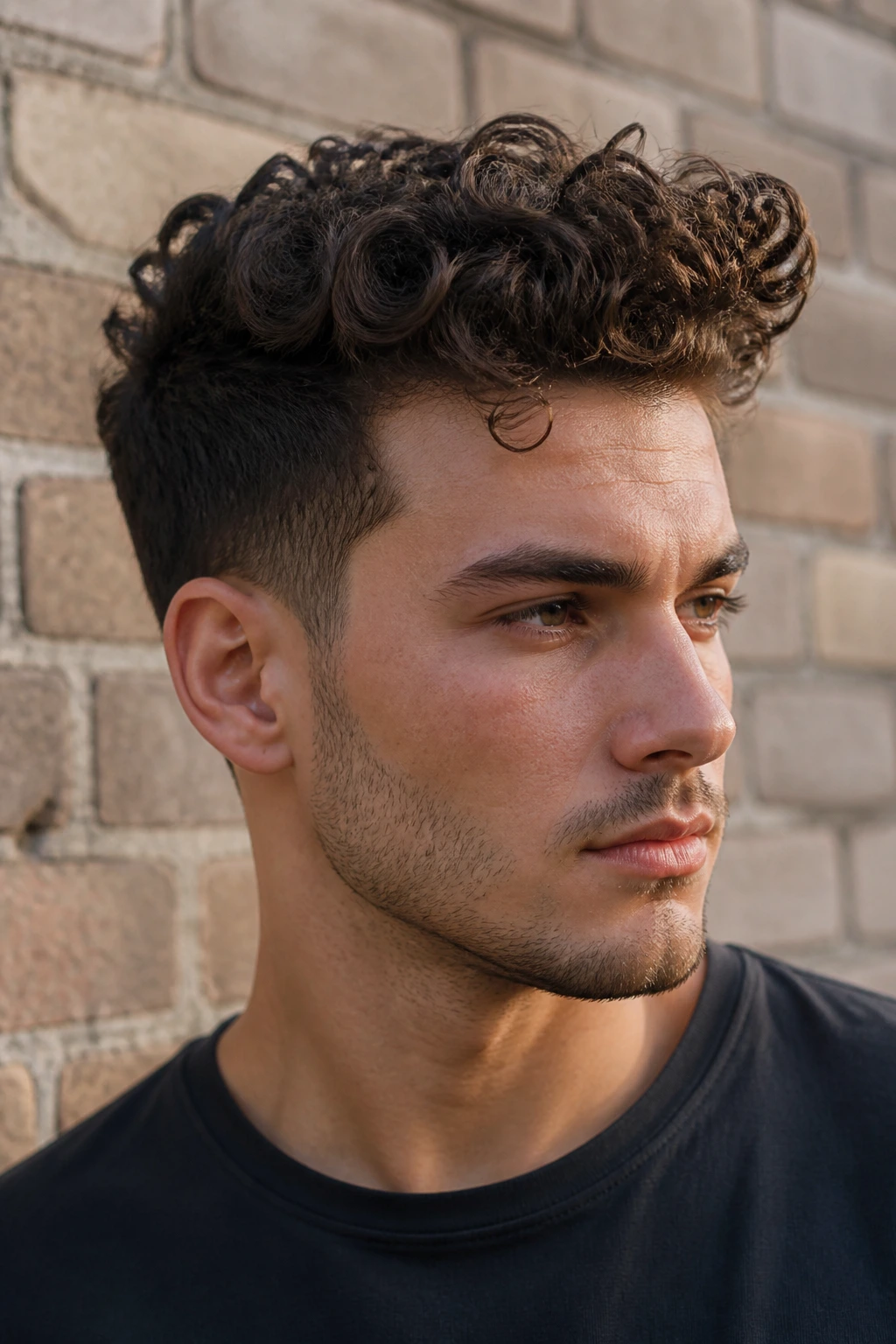
Absolutely. Curly hair can make an excellent short quiff when the front is left long enough and the curls are guided upward instead of brushed flat.
How often should I get it cut?
Most short quiffs stay sharp with a barber visit every 3 to 5 weeks, depending on the fade or taper. If the sides start to puff out before that, the shape will feel off even if the top still looks good.
Why does my quiff fall flat by lunchtime?
Usually it’s one of three things: the hair was dried flat, the product was too heavy, or the crown was left too long. Fix those, and the style usually behaves better.
The Shape Worth Keeping
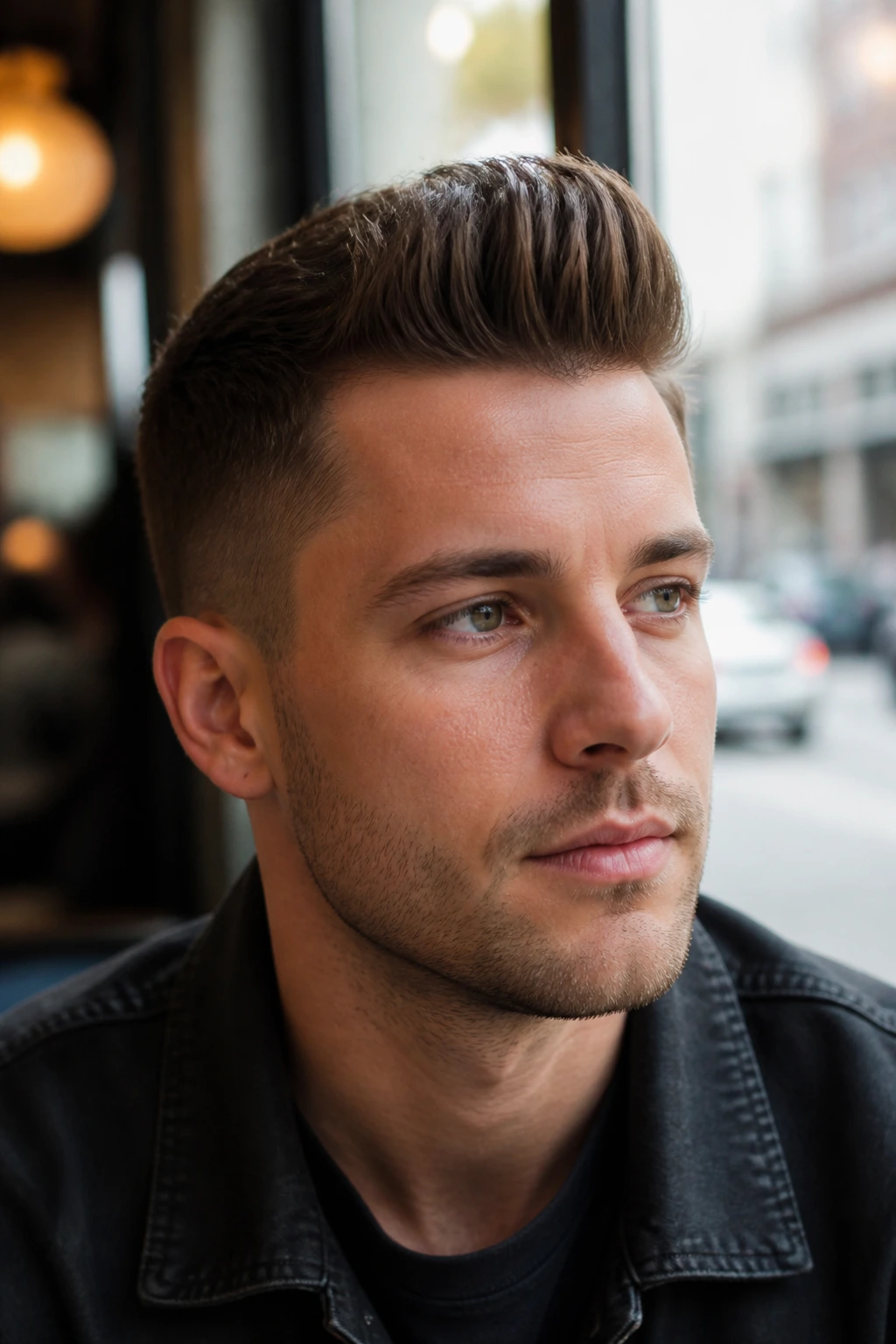
A short quiff works because it gives you lift without demanding a long top or a fussy routine. That’s the appeal. The haircut can be neat, rough, shiny, matte, soft, or sharp, and still stay in the same family.
The good versions all share the same idea: clean sides, enough front length, and a styling method that respects the way your hair actually grows. Get those right, and the quiff stops being one more haircut you have to fight in the mirror. It becomes the shape that’s already there when you need it.
