



A pixie cut can look far more bridal than people expect. The trick is not length. It’s shape, shine, and where you place the eye: a clean side part, a carved nape, one good pin, one deliberate veil comb, and suddenly the whole style feels dressed for the aisle instead of the grocery store.
That’s why pixie cuts for brides deserve their own space. Short hair can look crisp and expensive in a way long hair sometimes can’t, especially when the neckline is open, the earrings are doing some work, and the dress has a sharp silhouette. The face stays visible. The bone structure gets a little stage time. And if you’ve ever watched a bride spend half the evening fighting a heavy curl set that droops by dessert, you know there’s something appealing about a style that doesn’t need 40 bobby pins to survive a hug.
The catch is that short hair is less forgiving when the finish is sloppy. A pixie shows every part line, every frizz halo, every lopsided accessory placement. Which is why the best bridal pixie styles are the ones that feel specific: not “short hair, but styled,” more like a tailored little piece of architecture.
Why These Pixie Cuts Feel Bridal Instead of Casual
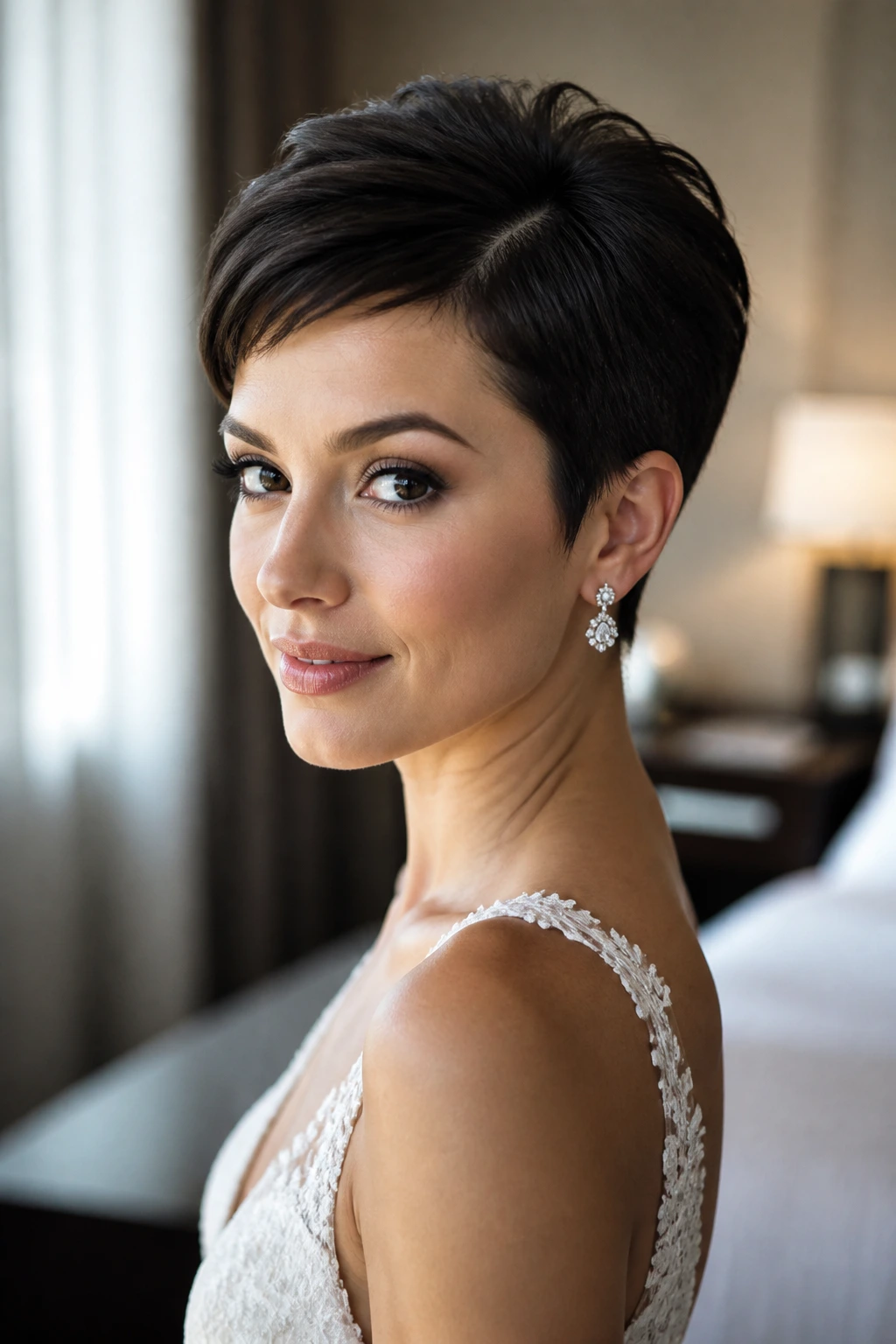
-
The face stays open: Short hair keeps the eyes, cheekbones, and neckline visible, so earrings, makeup, and the dress can do their job without competing with a curtain of hair.
-
The shape matters more than the length: A one-inch change in the front fringe or crown volume can decide whether the style reads soft, sharp, romantic, or a little too everyday.
-
Accessories land better on short hair: A pearl pin, crystal comb, or veil clip has a clearer place to sit when the hair isn’t bulky at the sides.
-
The style survives motion well: A properly set pixie does not collapse into one flat mass after photos, dancing, and a few hugs.
-
It works with real wedding dresses: High necks, one-shoulder gowns, square necklines, and dramatic earrings often look stronger with a short cut than with long curls fighting for attention.
-
You can customize it fast: A few bends with a flat iron, a touch of pomade, or a soft wave in the fringe can move the whole look from sleek to romantic in minutes.
1. Sleek Side-Part Pixie With a Crystal Pin
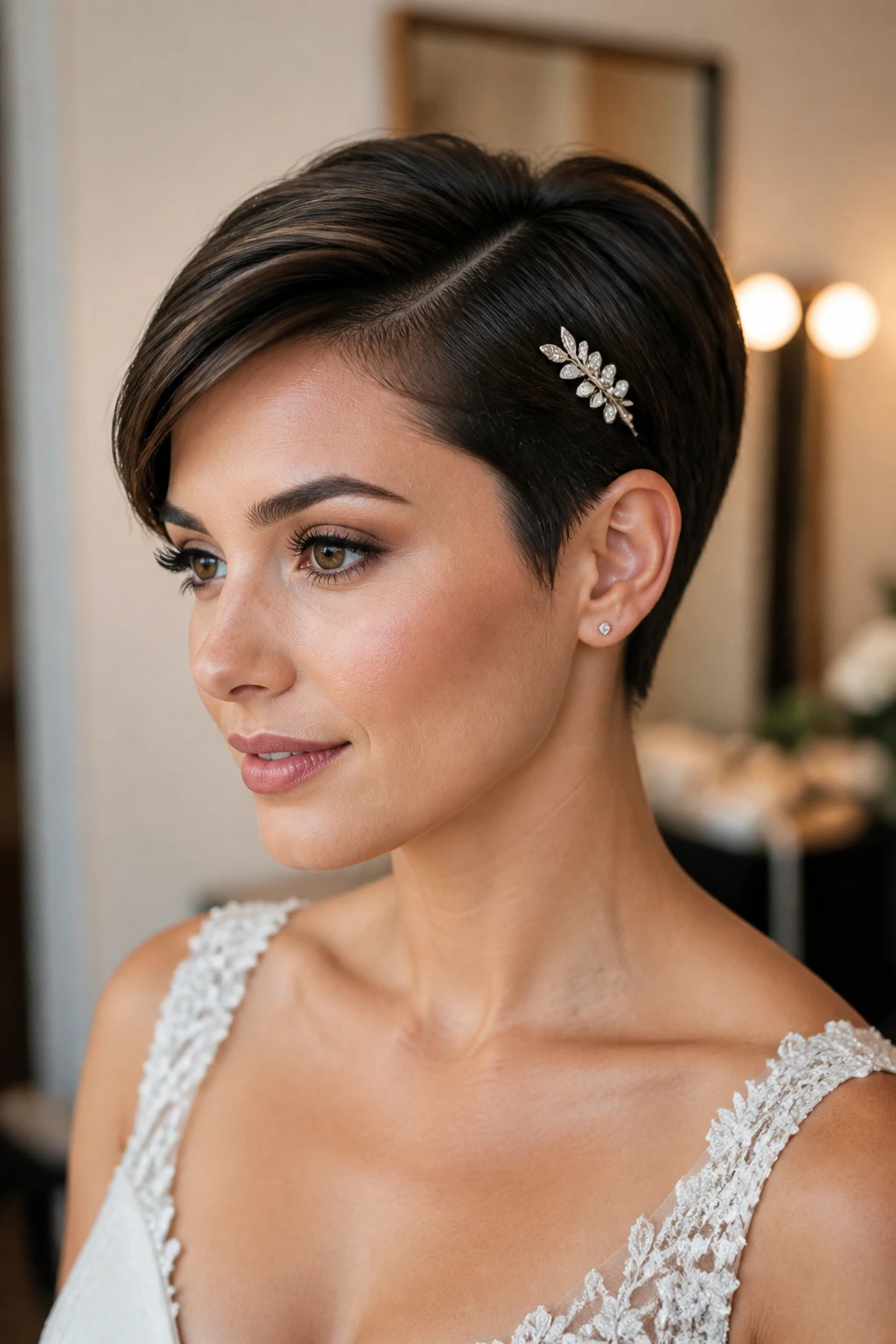
This is the one I reach for when a bride wants the haircut to look intentional, not accidental. A sharp side part gives the pixie direction, and a small crystal pin at the temple gives it just enough ceremony to feel dressed up. The line is clean. The finish is polished. The whole thing says you know exactly where every strand is supposed to sit.
The best version keeps the sides close and the top slightly longer, usually with a 1 to 2 inch sweep through the fringe. Flat iron the front away from the face, then tuck one side behind the ear and pin the other side low near the part. It pairs nicely with column gowns, square necklines, and earrings that move a little when you turn your head.
What to watch for: If the pin is too large, the look starts to feel costume-like. One small, bright accessory is enough. More than that and the haircut loses its crisp line.
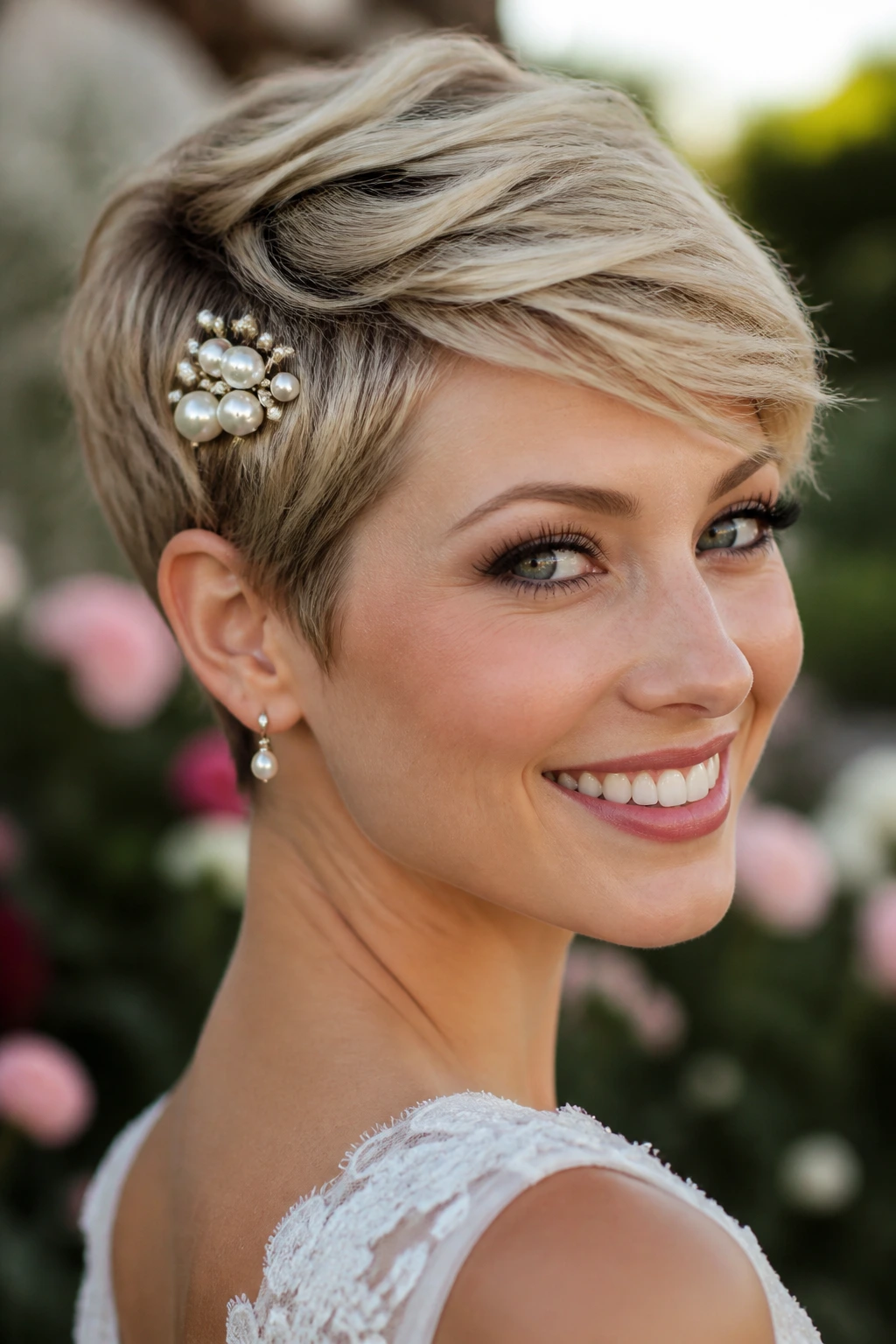
2. Soft Feathered Pixie With Pearl Studs
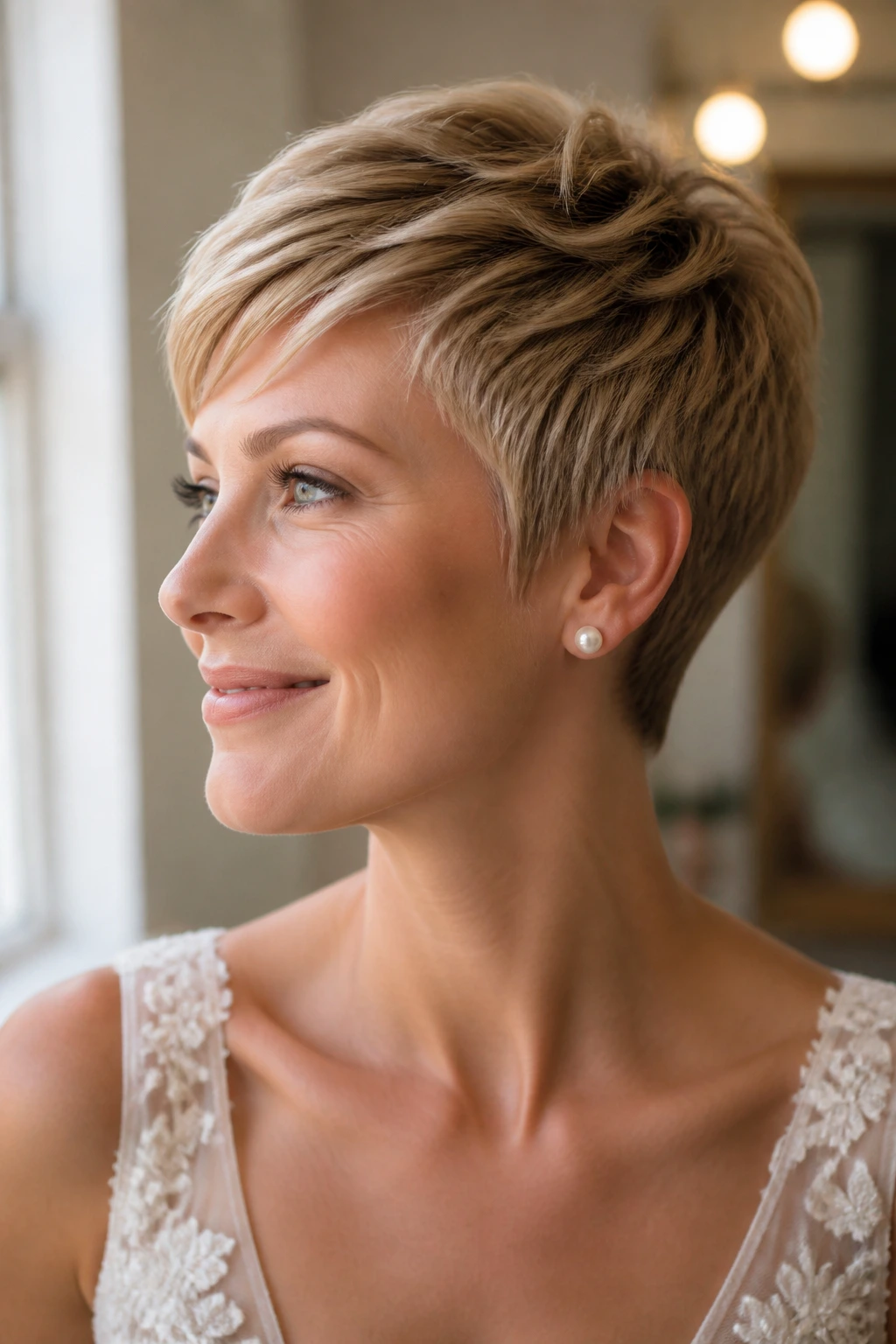
Why does this one work so well on brides who do not want a hard-edged finish? Because the feathering makes the cut feel airy, and the pearl studs keep the styling calm. The layers sit like little brush strokes around the temple and nape, which looks lovely with dresses that have lace, ruching, or a soft shoulder line.
Why the softness matters
A feathered pixie depends on movement, not volume. Blow-dry with a small round brush, lifting the crown only slightly, then use a touch of lightweight cream through the ends so the pieces separate instead of puffing out. The result should look touched, not sprayed into place.
Pearls keep the styling in the bridal lane without stealing focus. If your dress already has beading at the neckline, choose studs rather than drops. Too many shiny things in the same area and the face starts to disappear.
3. Tousled Pixie With a Loose Veil
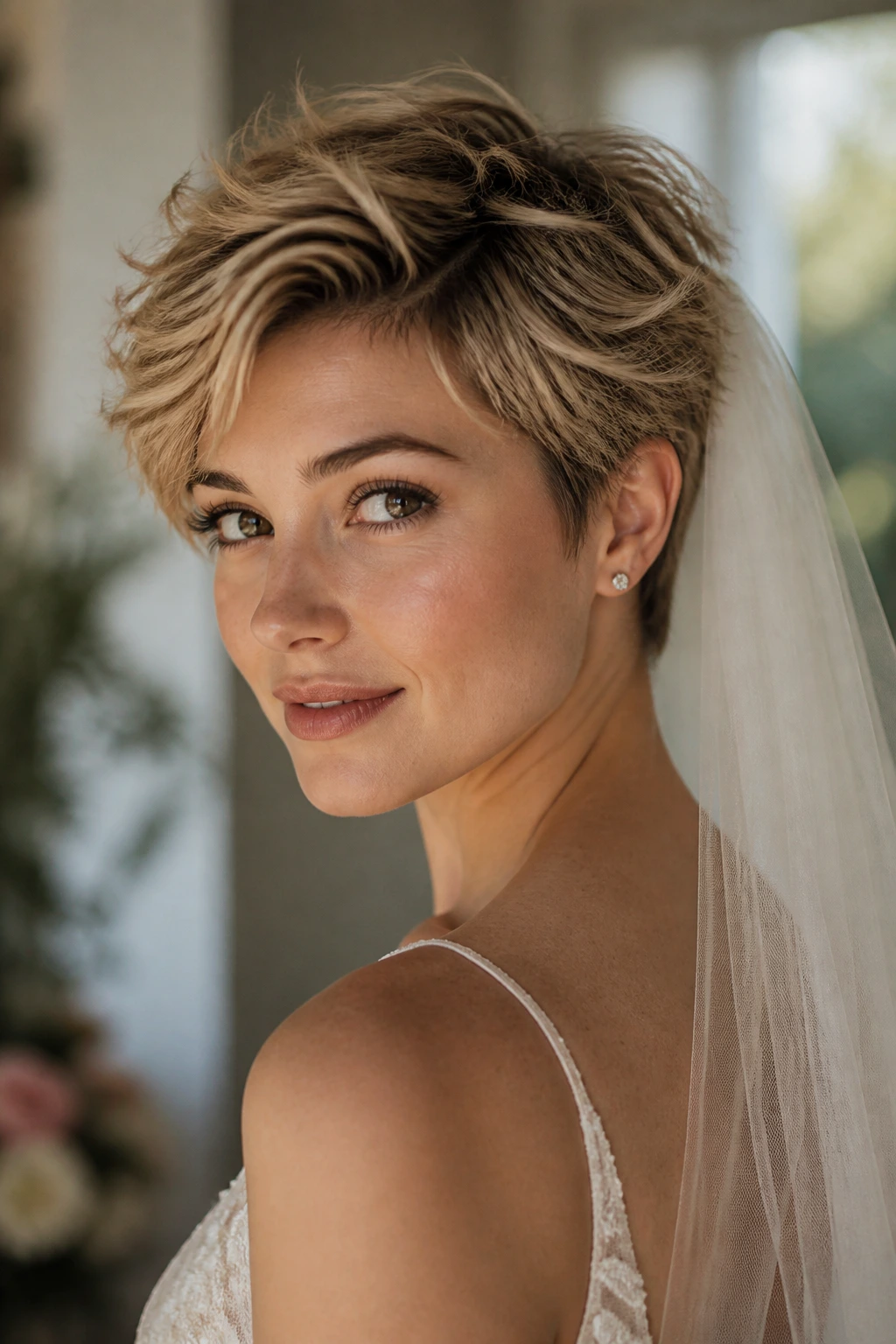
A tousled pixie is for the bride who wants softness, a little edge, and none of the stiffness that comes with an overworked curl set. The texture gives you tiny ridges and bends that catch the light, while a loose veil tucked under or just behind the crown adds the bridal cue without flattening the cut.
The best part is the way this style handles imperfect texture. Fine hair gets a little grit from texturizing spray. Thicker hair gets separation from a matte paste worked through the top layer only. Keep the sides neat so the shape doesn’t drift into “just rolled out of bed,” which is a common mistake with this look.
If you’re wearing a veil, ask for a comb that sits above the widest point of the head. That keeps the veil from swallowing the crown. Small detail. Huge difference.
4. Finger-Wave Pixie With a Satin Gown
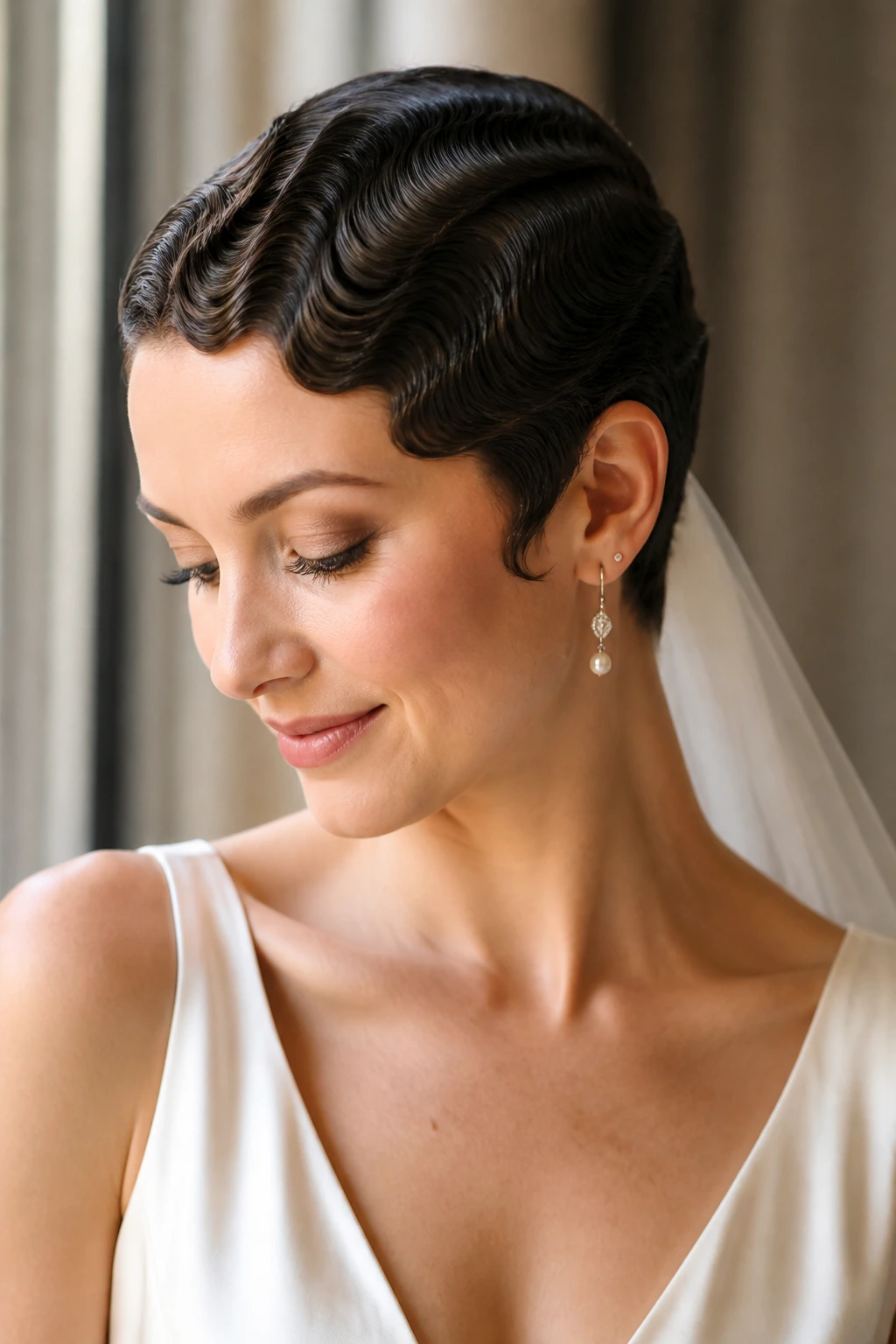
Finger waves on short hair are one of those details that look far more complicated than they are. That’s part of the charm. The wave pattern hugs the head, follows the line of the face, and gives a satin gown something elegant to bounce off. No frizz. No loose fluff. Just sleek, deliberate ridges.
Where it shines
This style is strongest on pixies with at least 2 to 3 inches on top, because the wave needs enough hair to mold. Set the waves with gel and a narrow-tooth comb, then pin each ridge until it cools. Once the shape sets, mist lightly and leave it alone. Touching it too much breaks the wave and makes the whole thing look tired.
Finger waves love side-parted gowns, beaded straps, and old-school lipstick. They are less happy with big boho florals. The contrast gets muddy fast. Keep the jewelry simple and let the wave pattern do the heavy lifting.
5. Deep Side-Swept Pixie With Statement Earrings
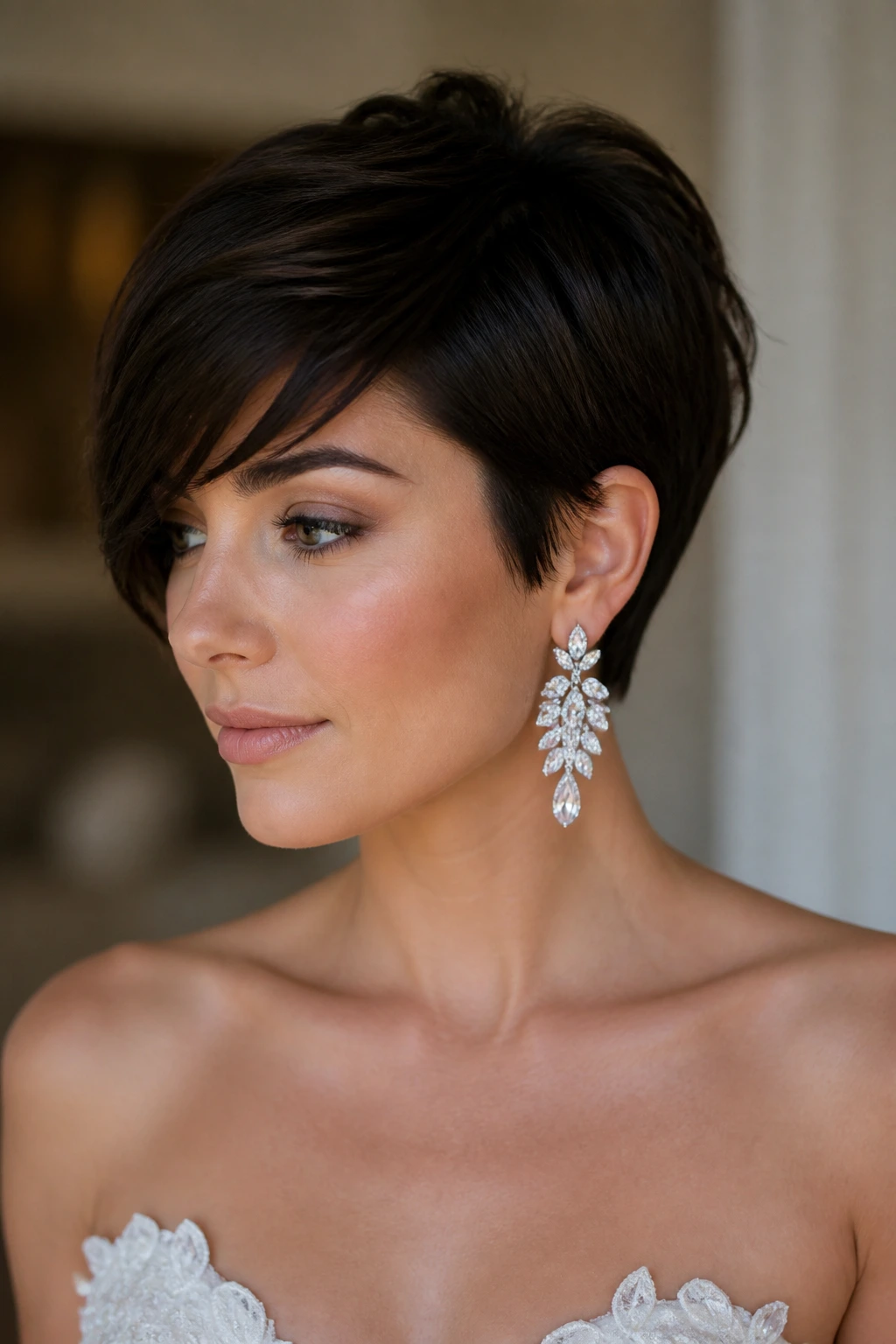
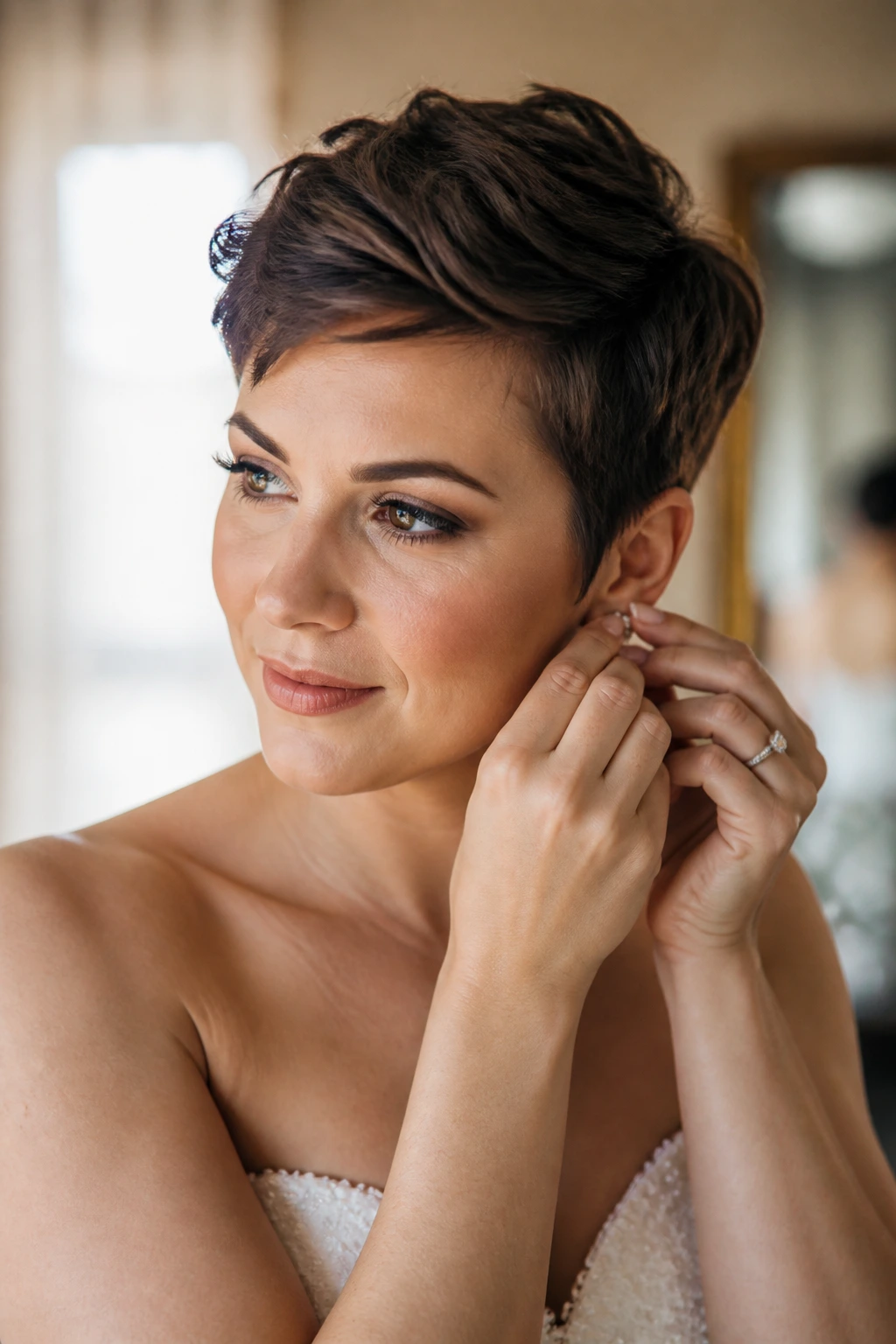
If the earrings are the main event, the hair should know its place. A deep side-swept pixie pushes the fringe across the forehead and leaves one ear more exposed, which creates a perfect frame for shoulder-grazing earrings or a dramatic drop style. The look has shape, but it also has a little drama.
This is one of the easiest bridal pixies to customize. Fine hair can be blown smooth with a paddle brush and sealed with flexible spray. Coarser hair may need a flat iron on the front section only, with the ends curved under slightly so the sweep looks intentional rather than stiff. The side with less hair should stay neat and close.
A quick note: if your dress already has a lot of shoulder detail, keep the earrings large but not busy. One focal point. Two if you’re lucky. Three and the eye starts bouncing around.
6. Brushed-Back Gloss Pixie for Minimal Brides
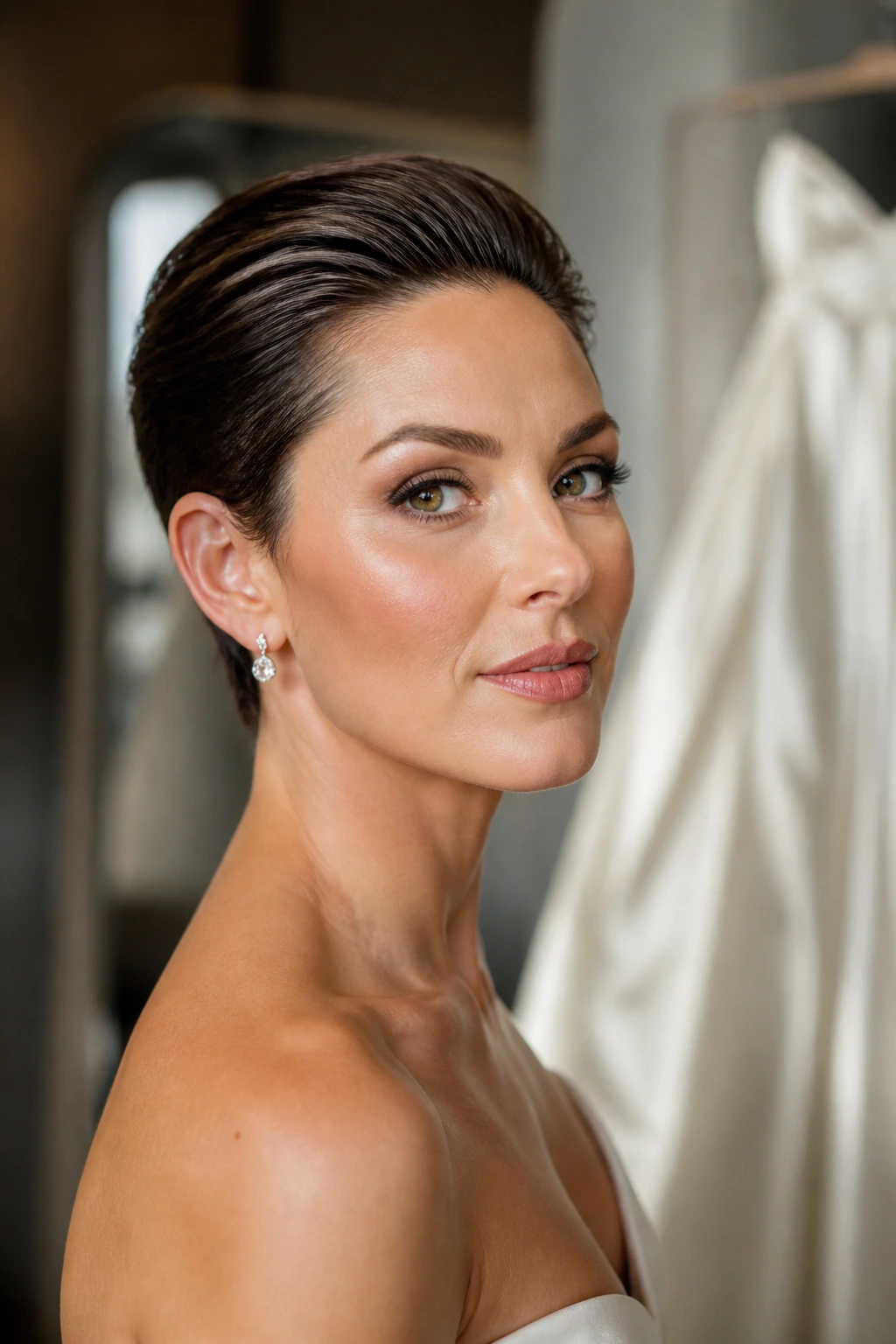
Some brides want hair that behaves like a clean line of ink. This is that look. A brushed-back gloss pixie lifts the face, shows off the brow and cheekbones, and gives a minimalist dress room to breathe. It can look striking with a clean satin gown or a sharply cut suit.
The finish matters here. Use a lightweight shine serum on damp hair, blow-dry the top back with a narrow nozzle, then tame the front with a little pomade on your fingertips. Not a scoop. A whisper. The hair should look smooth, not greasy. That distinction matters more than people think.
This style suits brides who don’t want to fuss with ornament. If you add anything, make it one sleek metal clip or a single row of tiny pins. Otherwise, the haircut itself is the accessory.
7. Defined Curly Pixie With Clean Edges
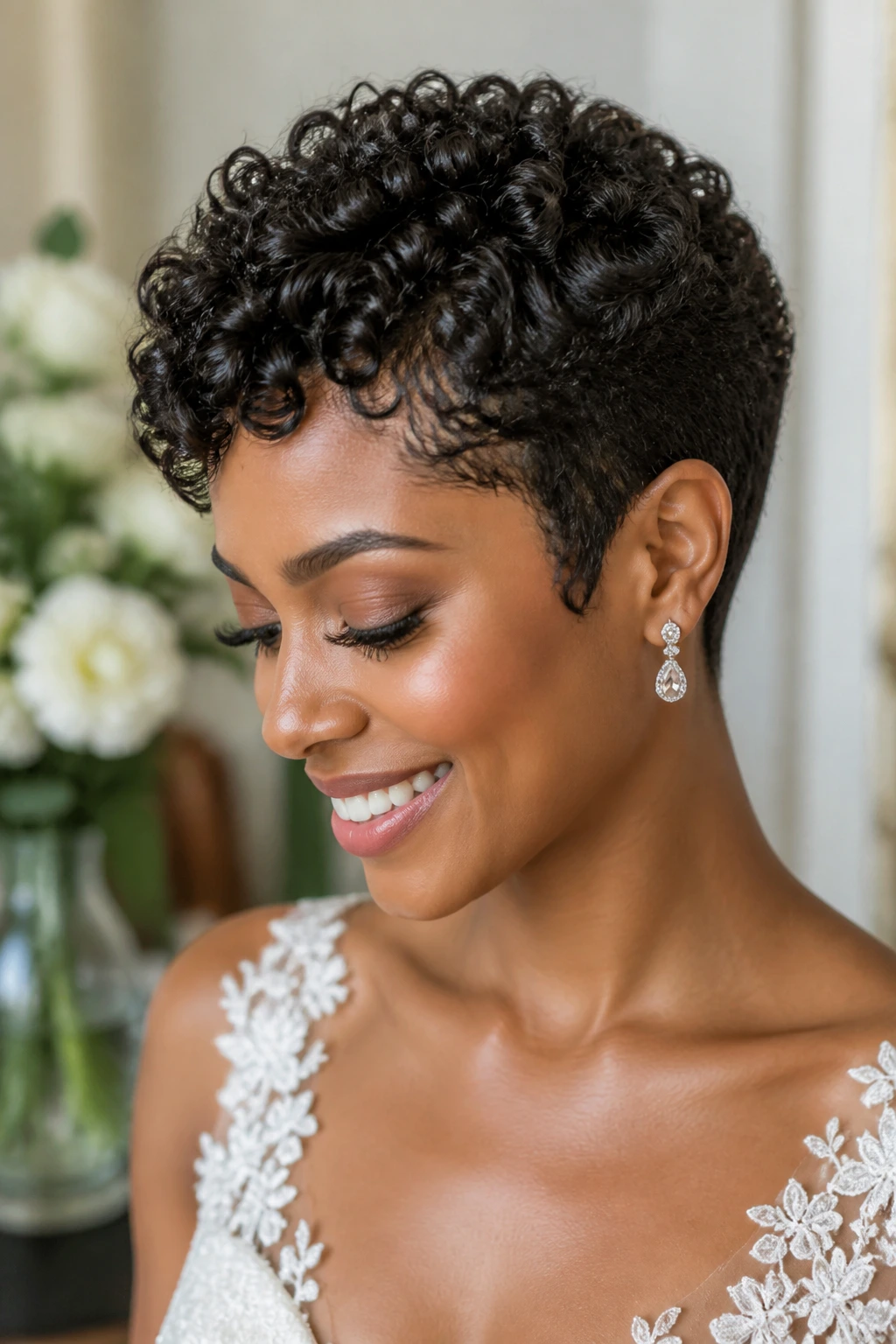
Can curly hair read bridal in a pixie? Absolutely. The key is definition, not flattening. Defined curls at the crown and front give the style life, while the edges stay clean around the ears and nape so the shape doesn’t drift into fuzz. It’s a sharp, happy contrast.
How to make the curls cooperate
Start with hair that’s dry or nearly dry, then shape curl clumps with a cream or gel that holds without crunching up the whole head. A diffuser on low heat helps, but don’t blast the hair from below or you’ll blow the curl pattern apart. Pinch a few pieces once they cool to keep them separate.
This version works beautifully with brides who wear natural texture often and don’t want to fight it on the wedding day. Add small gold pins, pearl barrettes, or a tiny comb near the temple. Big accessories can crowd the curls and make the style look overworked.
8. Choppy Pixie With Tucked Sides
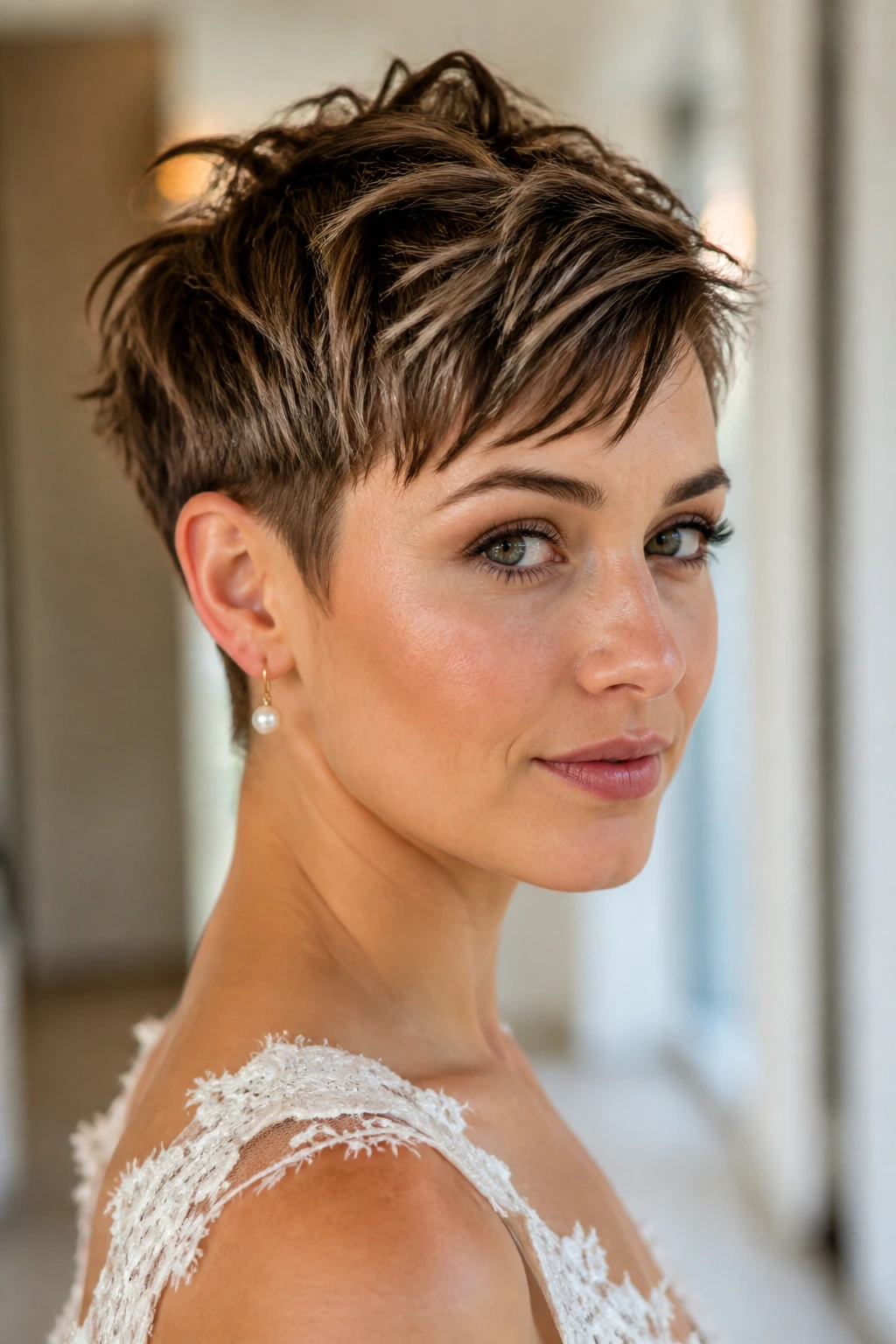
A choppy pixie has the right kind of edge for a bride who wants something a little modern and a little easy. The layers are irregular on purpose, which gives the cut energy, but the tucked sides keep it neat where it matters. You get movement without chaos.
This style works well with a dress that has clean lines — crepe, mikado, satin, anything with structure. The haircut should echo that discipline. Use a small amount of paste on dry hair, pinch the top into pieces, then tuck both sides back with hidden pins or small combs. The goal is to show the cut, not bury it under accessories.
If your hair tends to puff at the sides, keep the product away from the roots there. You want lift on top and control where the ear meets the jaw.
9. Old-Hollywood Pixie With a Side Sweep
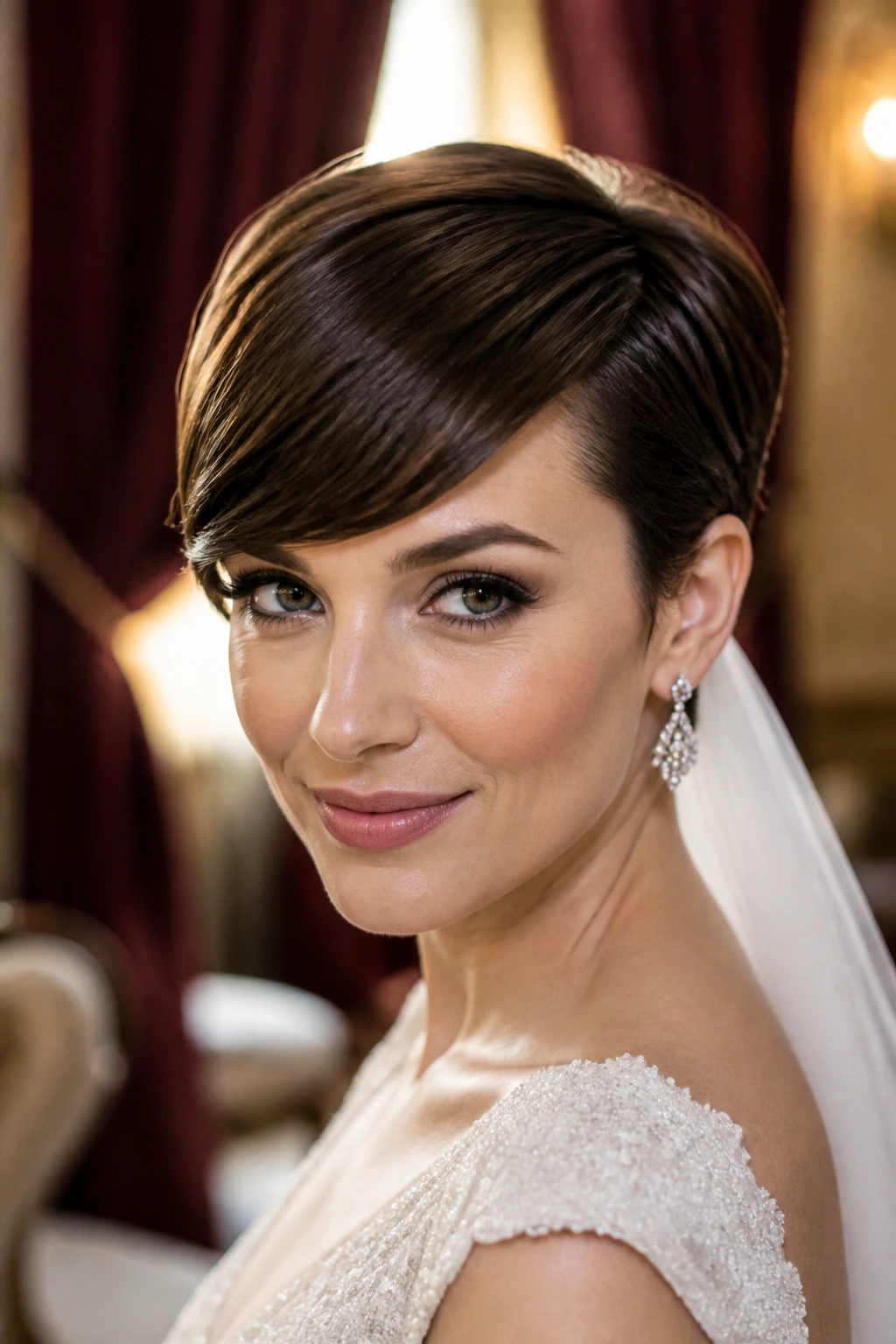
There’s something deliciously formal about an old-Hollywood side sweep on short hair. The front moves across the forehead in one smooth arc, the crown stays soft, and the overall shape has that controlled, almost old-film elegance without feeling stiff. It’s a little glamorous. Not fussy.
This style looks best with a satin or velvet ribbon detail, chandelier earrings, or a simple veil placed low and back. The front section should be shiny and smooth, but not helmet-like. That’s the mistake people make with this look — too much hairspray, not enough shaping. Use a round brush for the front and a flat brush for the sides, then freeze only the last inch of the sweep.
If your hairline has a tricky cowlick, this is one of the styles that demands a trial run. That front sweep can either settle beautifully or fight you for an hour.
10. Wet-Look Pixie With a Sharp Veil Comb
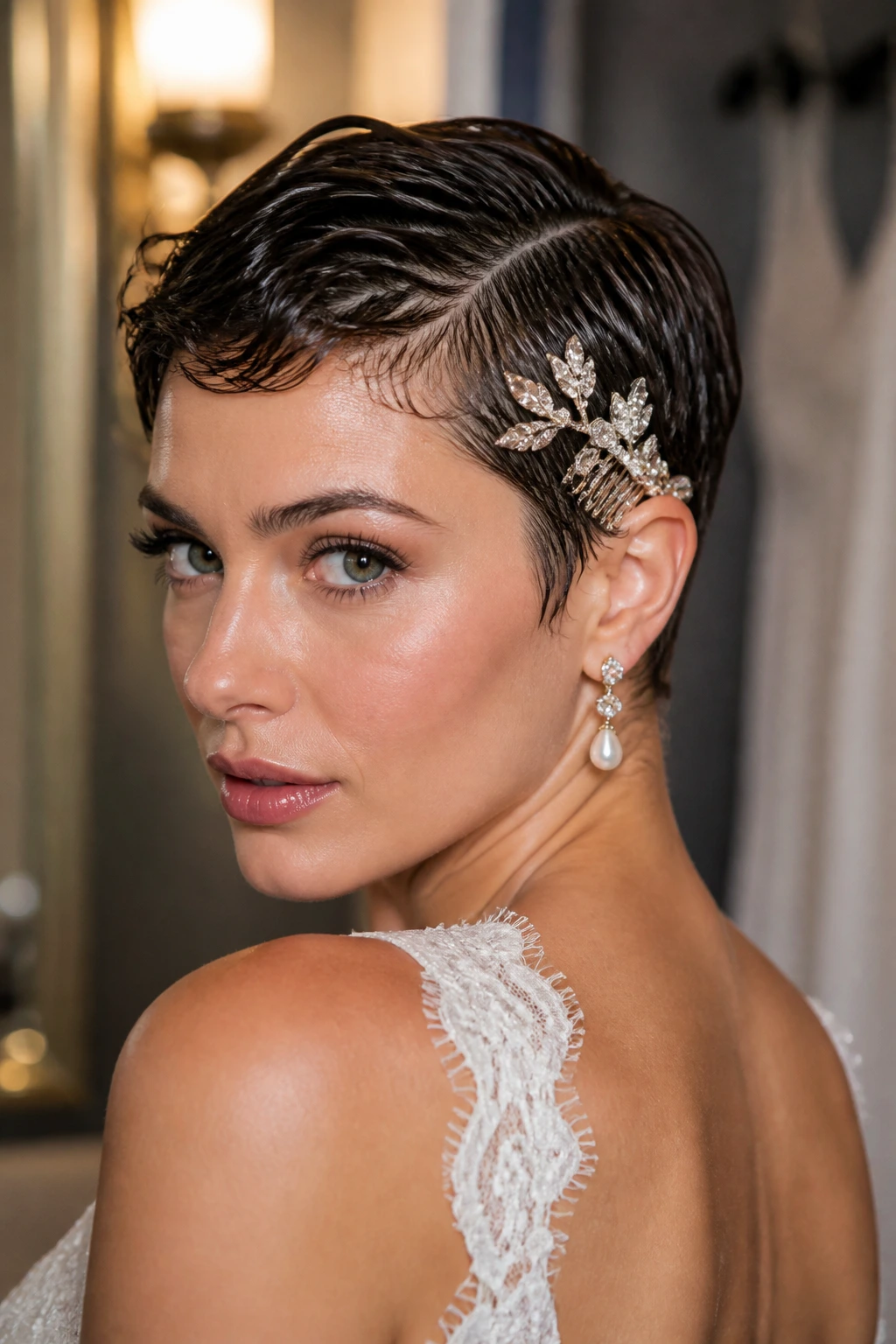
Wet-look short hair can be a little divisive, and I think that’s part of why it works. It feels modern, a touch fashion-forward, and very strong beside a clean veil comb. The shine pulls the eye upward, which makes the face look sculpted and the jewelry look sharper.
The hair should be damp-looking, not drenched. Apply gel to towel-dried hair, comb it into the preferred direction, and stop before it starts to look stiff at the ends. If the crown is too flat, the whole style turns heavy. If the sides are too loose, the wet effect gets messy fast.
This is a strong choice for brides with angular features, tailored dresses, or a suit-like bridal outfit. It also holds up well in humid rooms because the shape is already compressed. Just do not pair it with a soft, floating veil. The contrast tends to fight.
11. Mini Pompadour Pixie With Lift at the Crown
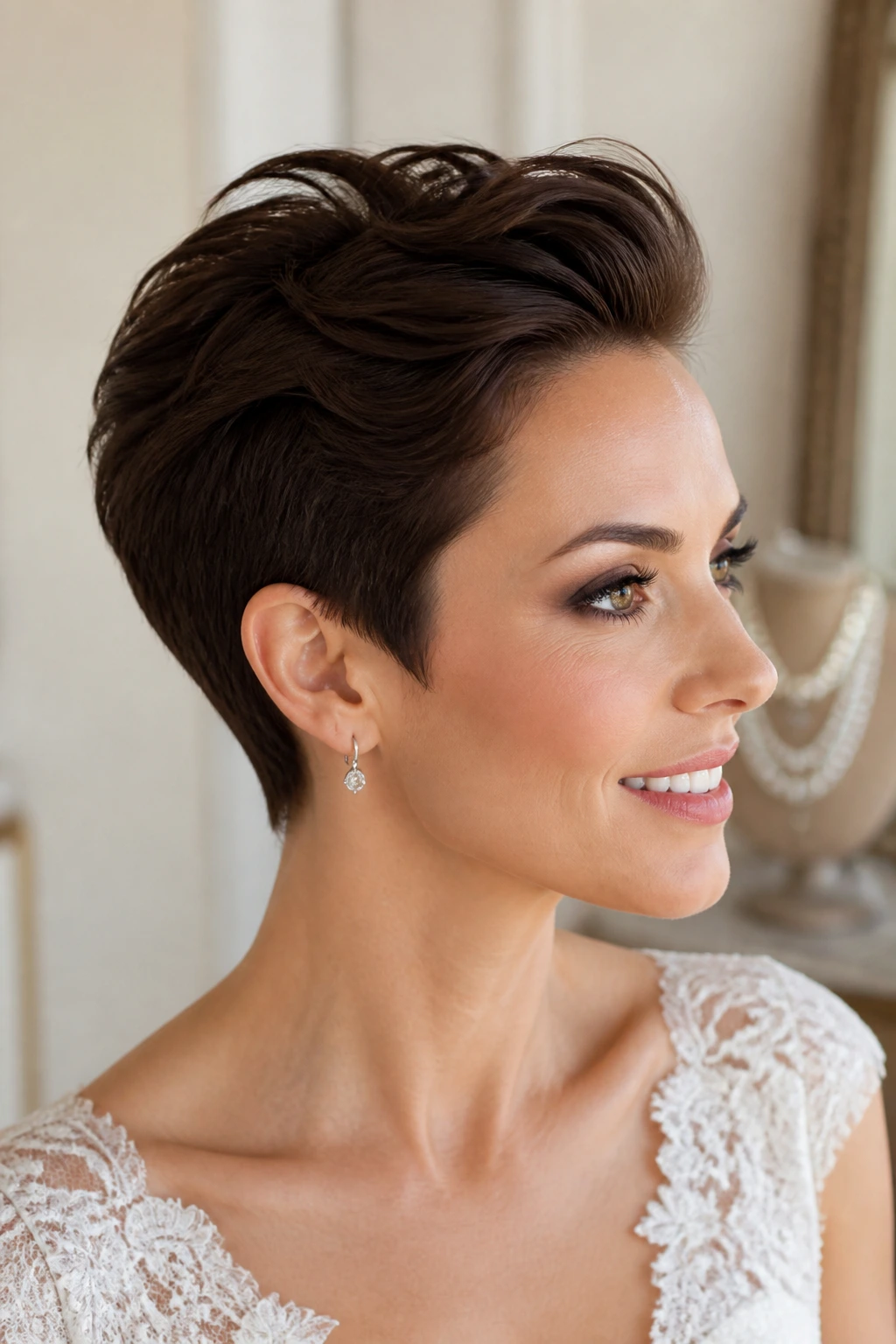
A tiny pompadour can make a pixie look surprisingly formal. It gives the top a little height, which is useful if you want to balance a high neckline or draw attention upward toward the eyes and brow. The front lifts first, then rolls back softly instead of standing up like a full retro quiff.
The crown needs support. Tease gently at the roots, smooth the surface, and pin the lift from underneath so it doesn’t cave in after an hour. A medium-hold spray is enough if the hair is short and healthy. Too much shellacking and the front turns rigid, which is the opposite of bridal.
This style loves side-swept bangs, bold lipstick, and clean earrings. It can also work with a tiny birdcage veil, which sits well above the lift and keeps the look from feeling empty.
12. Asymmetrical Pixie With a Long Fringe
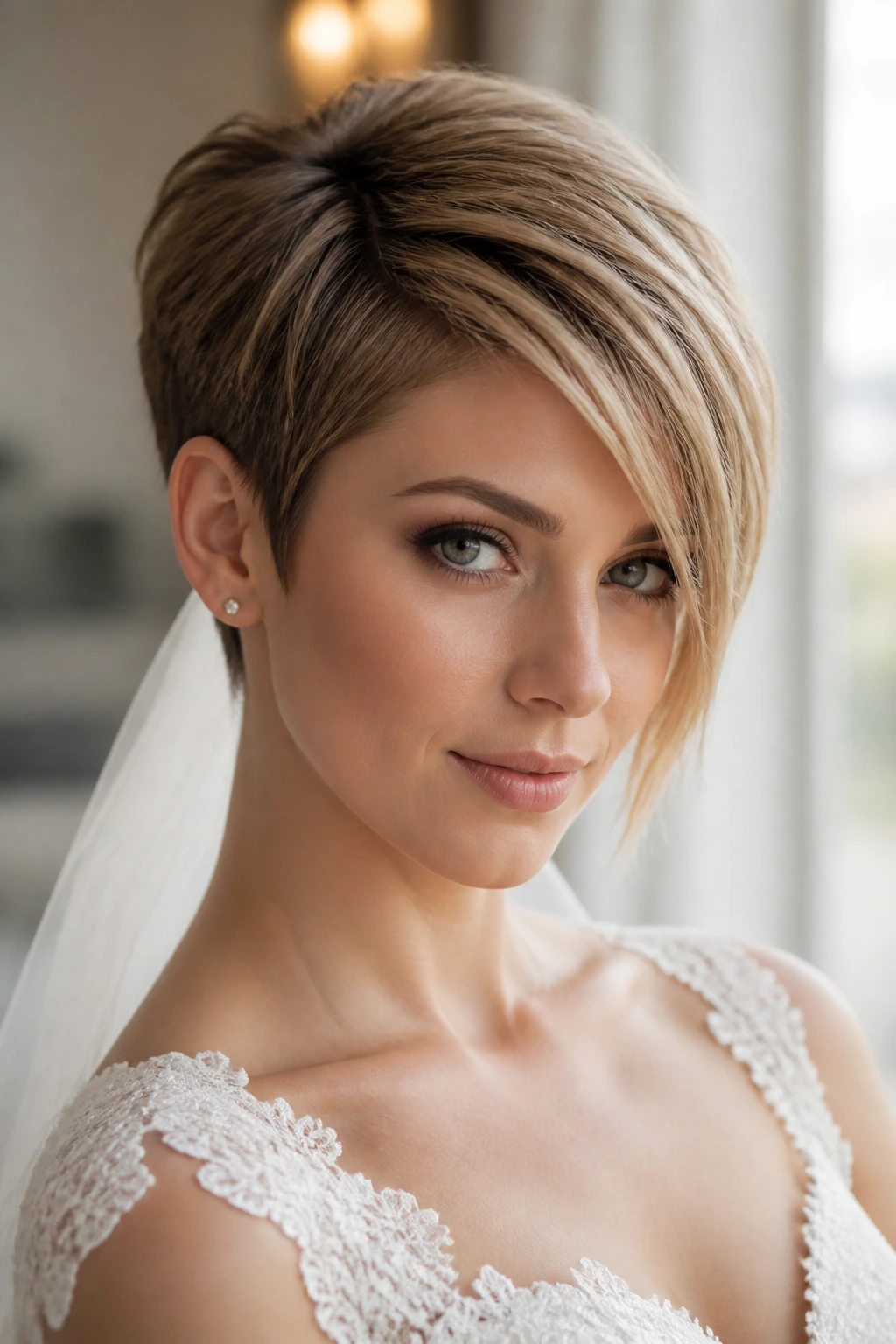
Asymmetry gives a pixie instant personality. One side stays short and tidy; the other drapes longer across the forehead or cheek. That long fringe creates a soft line for the face, which is useful if the dress has a strong shoulder or an open back and you want a little visual balance near the front.
The fringe should fall with purpose. If it flips outward in a random way, the whole cut feels unfinished. Smooth it with a flat iron, then bend just the ends so it curves around the cheekbone. One side can be tucked behind the ear. The longer side should move.
This is one of the better choices for brides who like a little drama but don’t want a full statement accessory. The haircut already carries enough shape. A slim hairpin or one pearl comb is often all it needs.
13. Braided-Edge Pixie With a Hidden Accent Braid
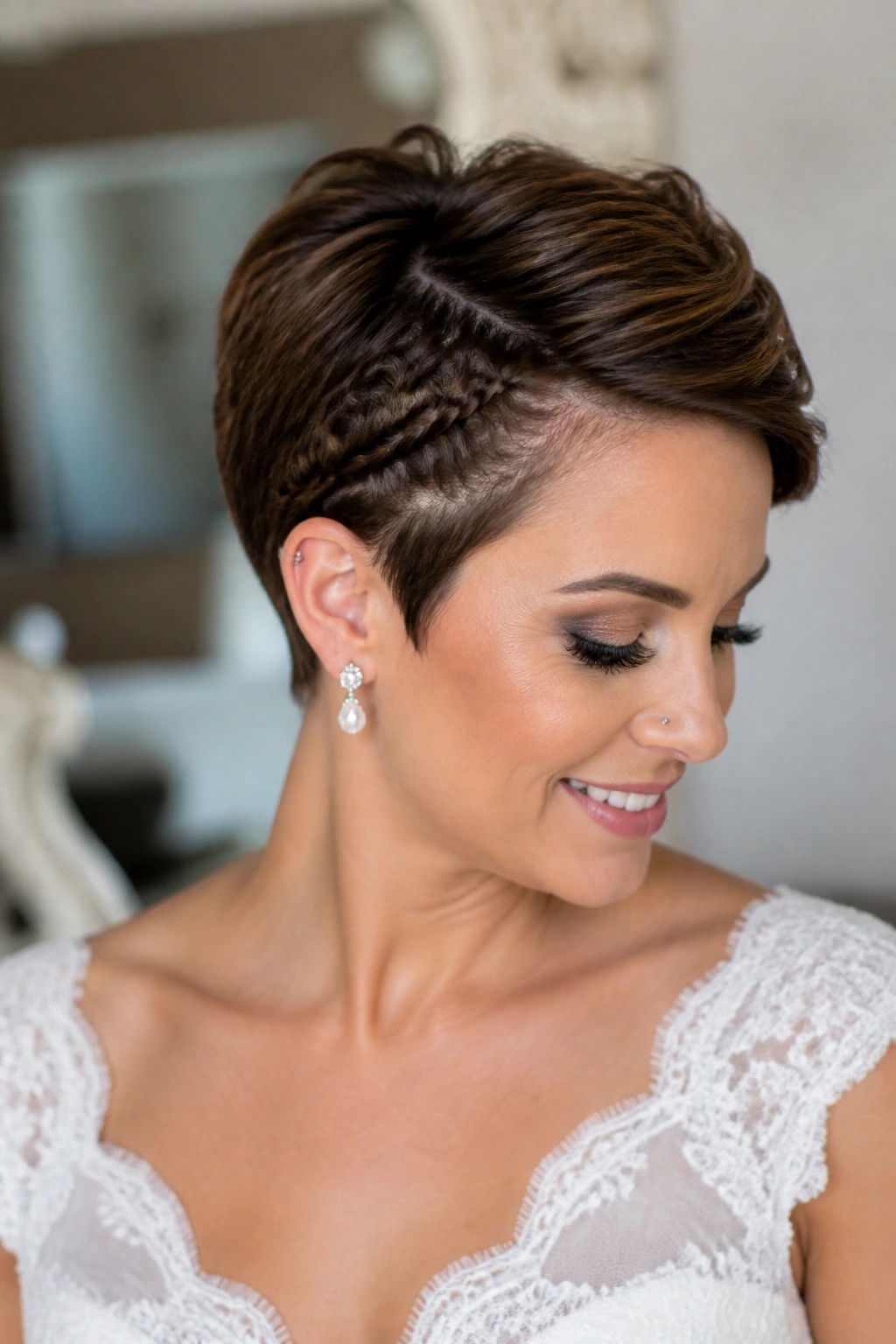
A braid on a pixie sounds impossible until you see the little sliver of weaving tucked along the hairline. Then it makes sense. A narrow braid at the temple or above the ear adds detail without requiring long hair, and it can disappear under the top layers like a secret.
Where the braid belongs
The braid works best on a pixie with enough length at the front or side to grab a small section, usually around 2 inches or more. Keep it thin. A chunky braid on short hair can look awkward fast. Secure the end under the top layers with a pin, then soften the surrounding hair so the braid feels part of the style instead of a random add-on.
This is a useful option for brides who want texture but not sparkle. It pairs nicely with lace, garden settings, and softer bridal makeup. If you want to add ornament, tuck one tiny flower or pearl pin just behind the braid.
14. Tapered Pixie With Crown Lift
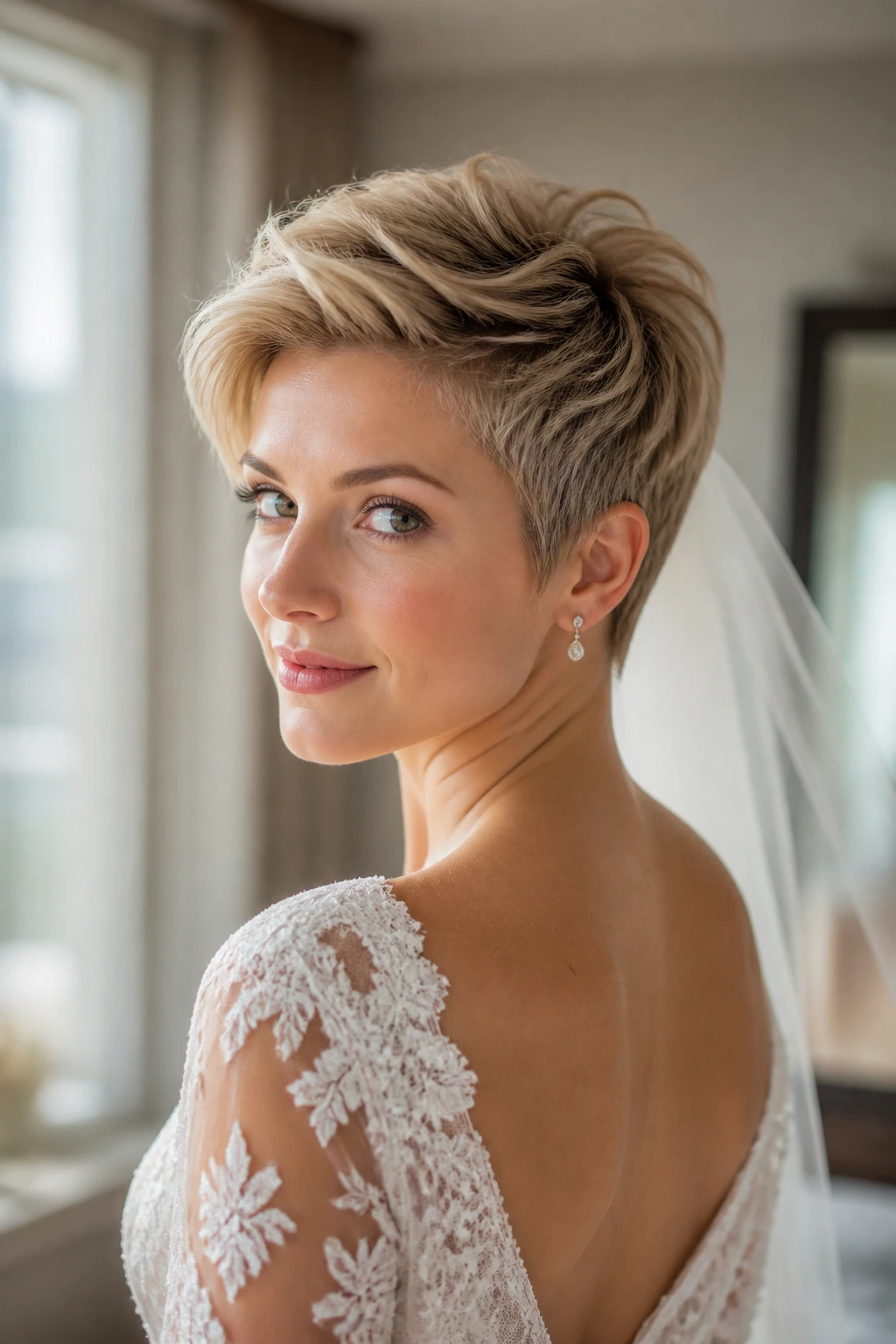
The tapered pixie is one of the most elegant short cuts for a wedding because the nape sits close while the crown keeps a little lift. That shape makes the neck look longer and the profile cleaner. It’s a good choice when the dress has a back detail that deserves attention.
The style needs body at the top, not the sides. Blow-dry the crown upward with a small round brush, then smooth the sides down toward the ears. If the top gets too puffy, it will start to look more editorial than bridal. The balance is what matters.
I like this cut with small stud earrings or a slim comb at the back. You can also leave the front clean and let the neckline carry the drama. It’s one of those styles that looks expensive because the silhouette is so controlled.
15. Birdcage Veil Pixie With a Vintage Edge
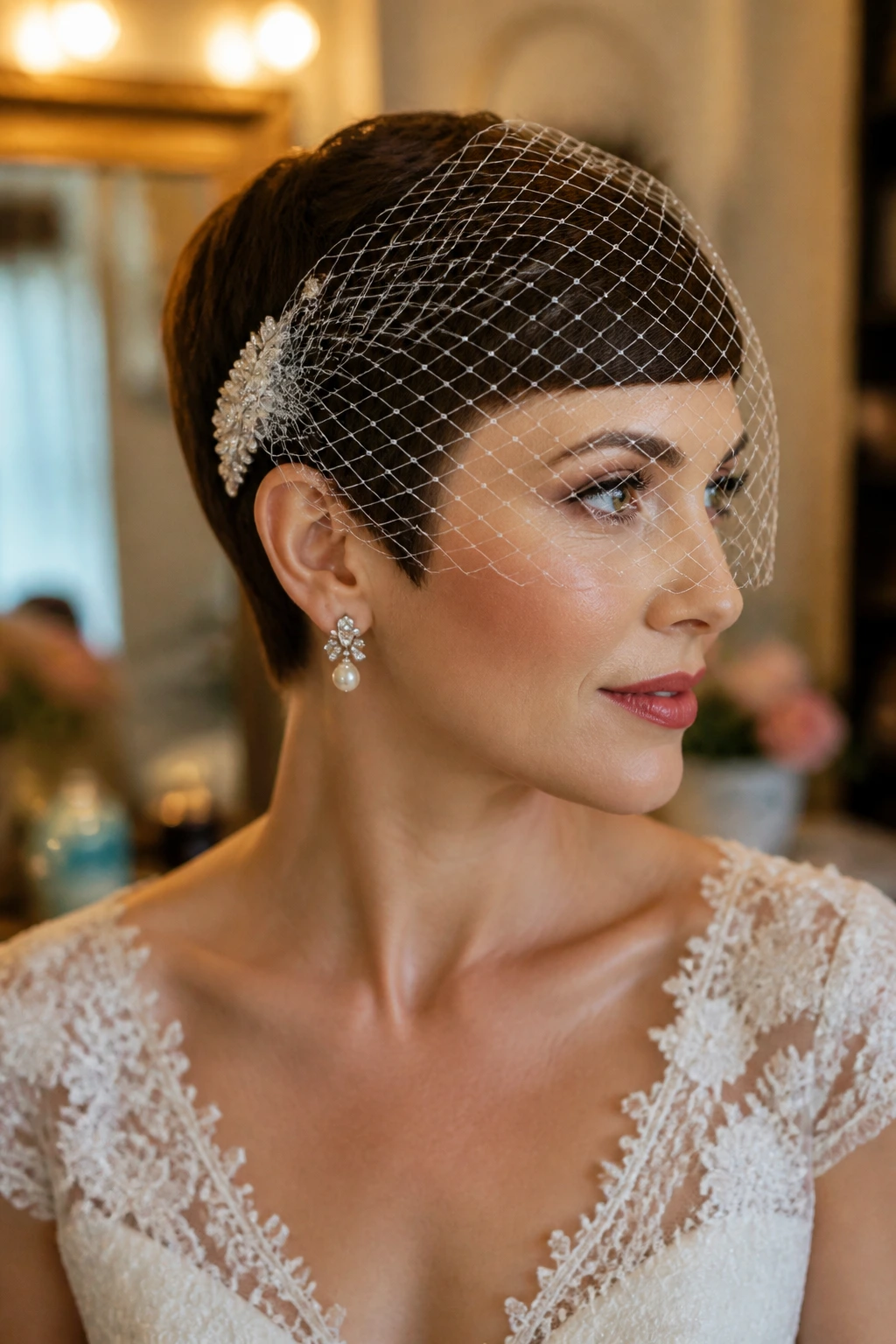
A birdcage veil and a pixie are natural partners. The short veil sits close to the face, the haircut keeps the profile clean, and the whole thing gives you a sharp vintage line without burying the hair. It is formal, but in a compact way.
The birdcage works best when the front of the pixie is smooth and the sides are tidy. If the hair is too fluffy, the veil can start to sit unevenly. Pin the veil into a firm section near the part or temple, then check it from the side. That side view is the one people forget, and it’s where placement problems show up fastest.
This pairing loves structured gowns, gloves if you’re into them, and a lipstick shade that has some depth. Too much softness all at once and the look loses its shape.
16. Floral Pin Pixie With a Garden Feel
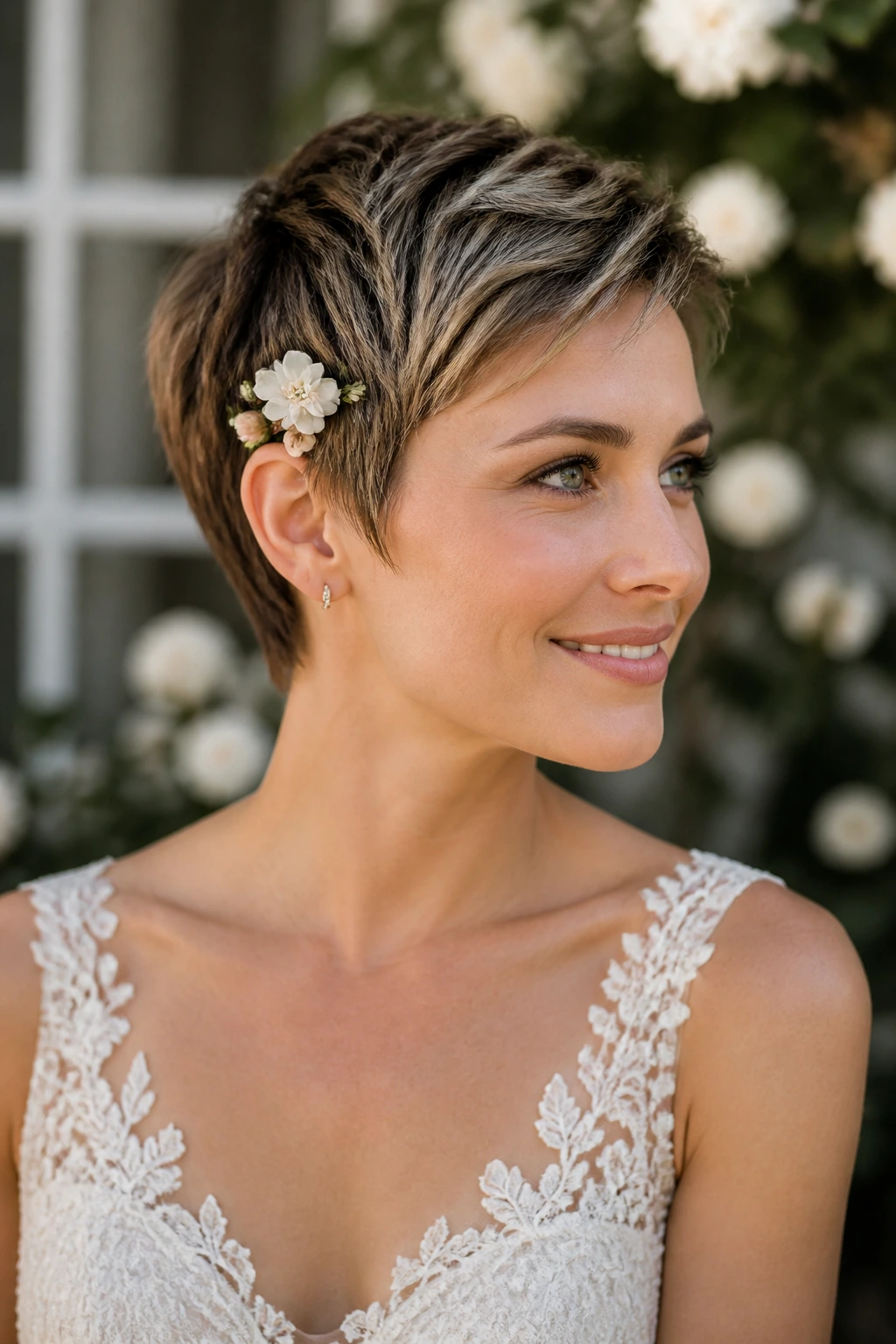
A tiny spray of flowers can make a pixie look fresh instead of decorated. The trick is scale. One or two petite blooms, or a few wired petals tucked low near the ear, are enough. Anything larger and the short haircut starts to disappear underneath the arrangement.
This style works especially well with textured or feathered pixies because the flowers sit into the shape rather than floating on top of it. Use sturdy blossoms that can handle a few hours of warmth and movement, and ask for wired stems or hidden pins so they don’t droop halfway through the ceremony.
If your bouquet is lush, keep the hair flowers small and echo one bloom color rather than copying the whole bouquet. That restraint keeps the hair from getting visually heavy.
17. Razor-Cut Piecey Pixie With Sharp Ends
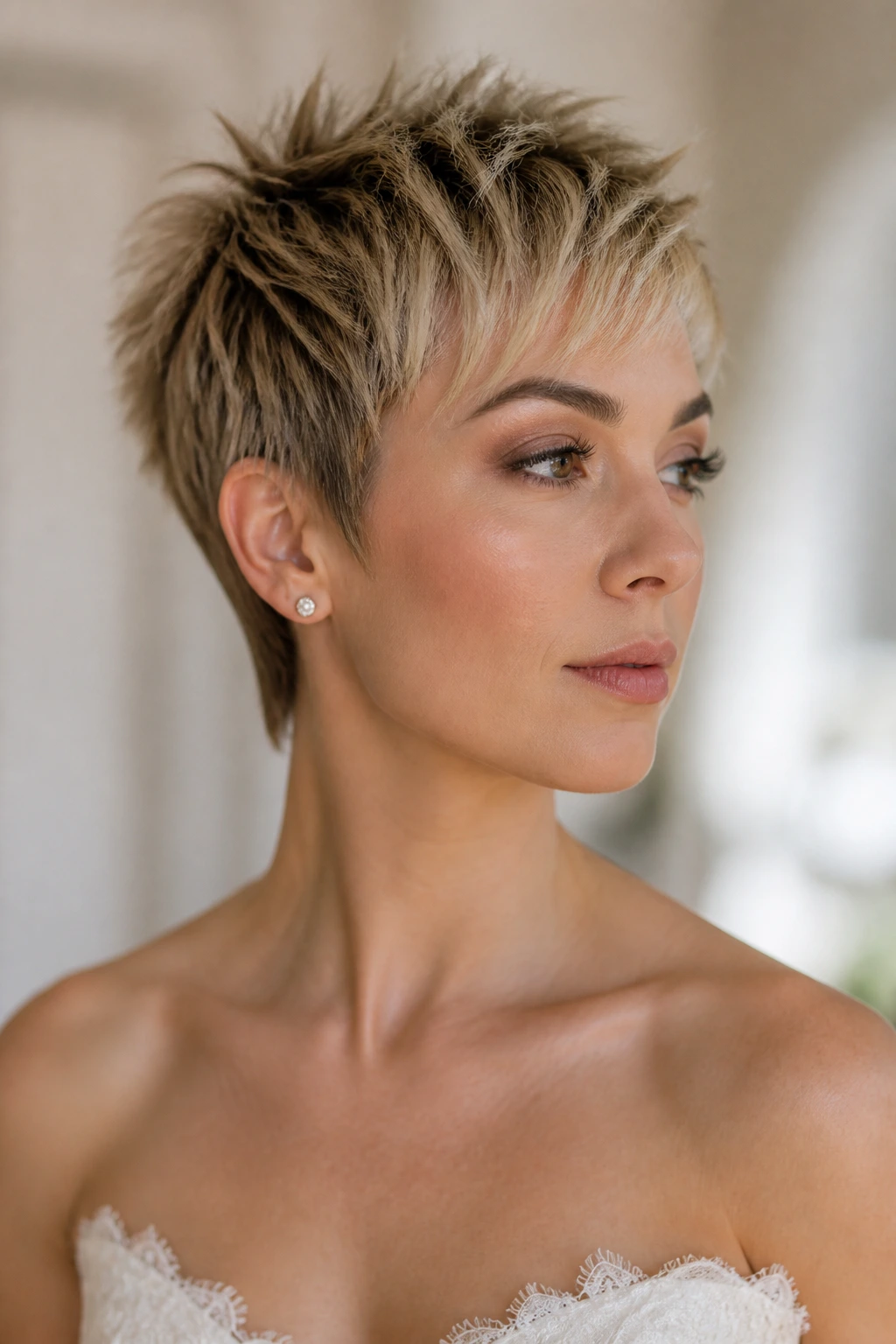
A razor-cut pixie has a bit of attitude. The ends fall into thin, separated pieces instead of one soft cloud, which gives the style a sharper outline. For a bride who likes modern tailoring, this can be the right kind of edge.
The key is not overworking the texture. Rub a tiny amount of styling cream between your palms, then tap it through the ends and the front only. If you drag product through the roots, the cut loses the piecey effect and can turn stringy. That’s a bad trade.
This look pairs well with minimal jewelry, a square neckline, or a suit set. It does not need much else. A sleek hairpin is enough if you want one bridal signal in the mix.
18. Soft Rounded Pixie With a Gentle Crown
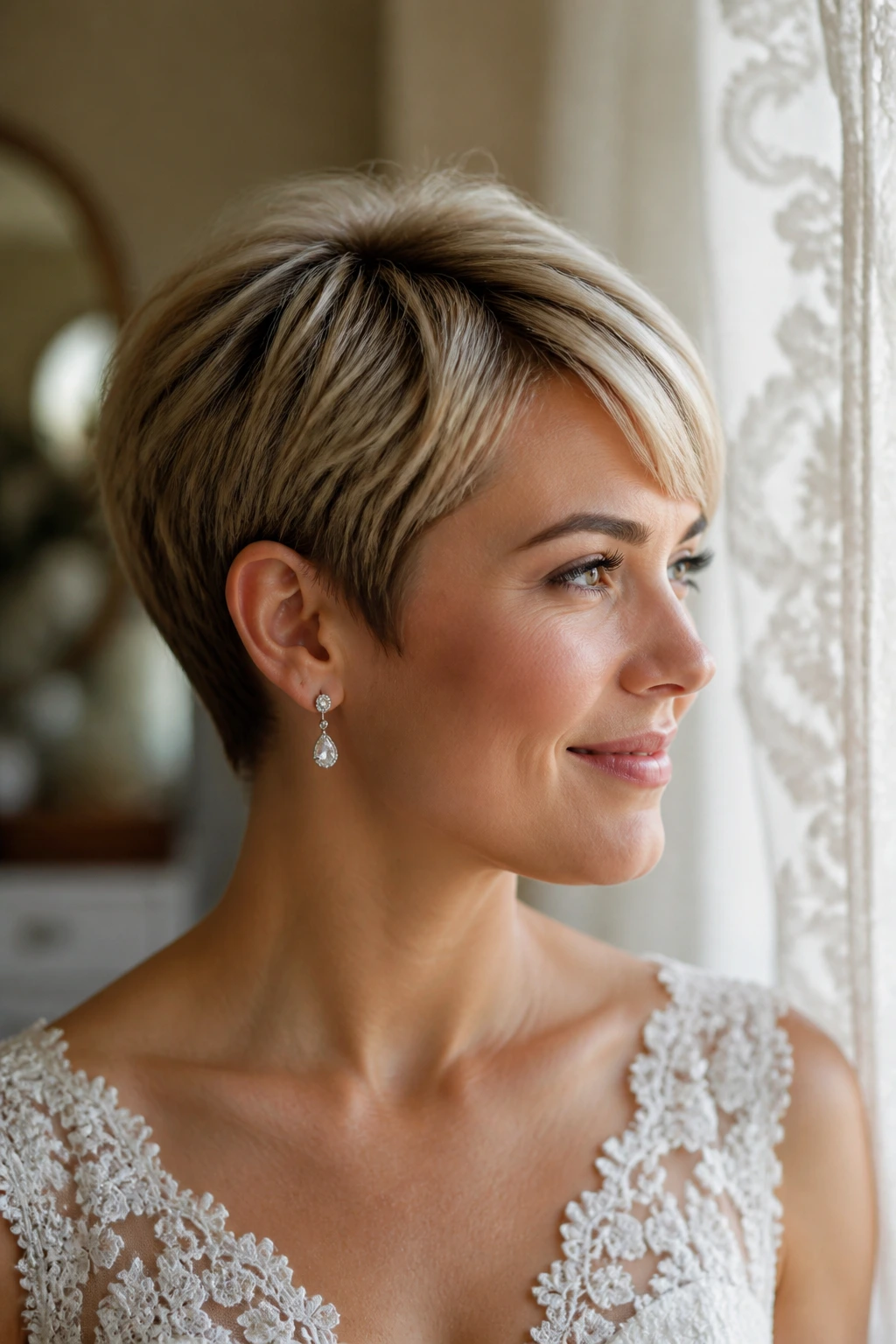
A rounded pixie is the opposite of sharp. The silhouette curves softly around the head, with a little fullness at the crown and a smooth line near the ear. It feels warm, calm, and very wearable for brides who want to look dressed up without looking styled to death.
Use a round brush to create a subtle bend, not a puff. The top should have air, not lift that keeps climbing. If the sides are too flat, the cut can look severe; if they’re too full, it loses its shape. A small amount of mousse before blow-drying usually helps the style settle into a rounder outline.
This shape works nicely with soft lace, satin, and earrings that move gently rather than swing hard. It’s a quiet style, but not a weak one.
19. Faux Hawk Pixie With Bridal Polish
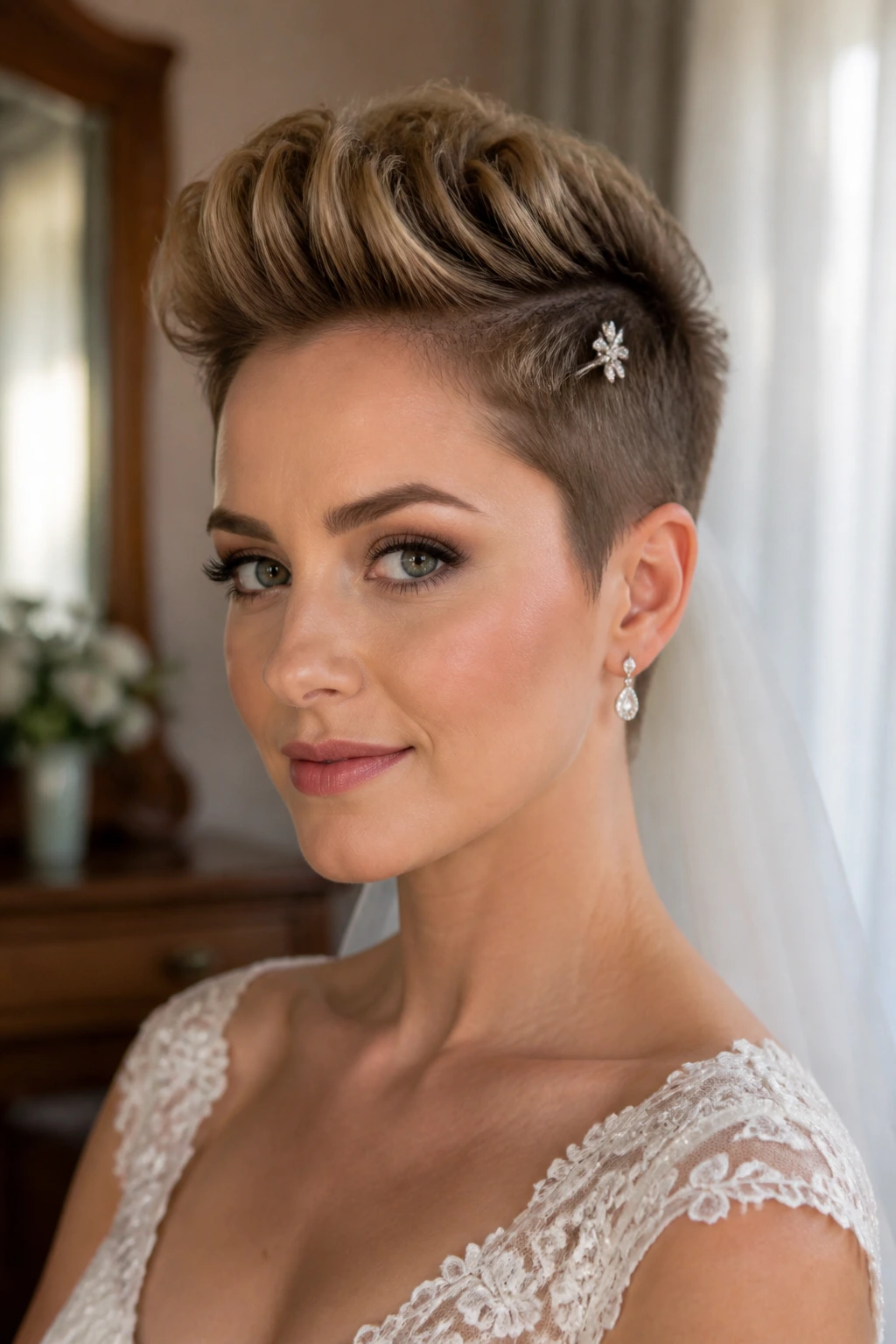
A faux hawk on a bride sounds bold because it is bold, but it can still feel bridal if the finish is clean and the accessory choice is restrained. The height sits down the center of the head, while the sides stay tighter, which makes the whole look feel strong and deliberate.
Why it works with formalwear
The center lift echoes a gown with structure: a sharp bodice, a sculpted back, or a dress with a strong seam line. Use a volumizing spray at the roots, direct the crown upward, and pin the sides flat enough to keep the silhouette narrow. The style should look controlled from every angle.
If you want to soften it, add a pearl comb at the side or a narrow metallic clip near the temple. That one detail can keep the look from sliding too far into club hair. You want wedding energy, not nightclub energy.
20. Platinum Pixie With Barely-There Accessories
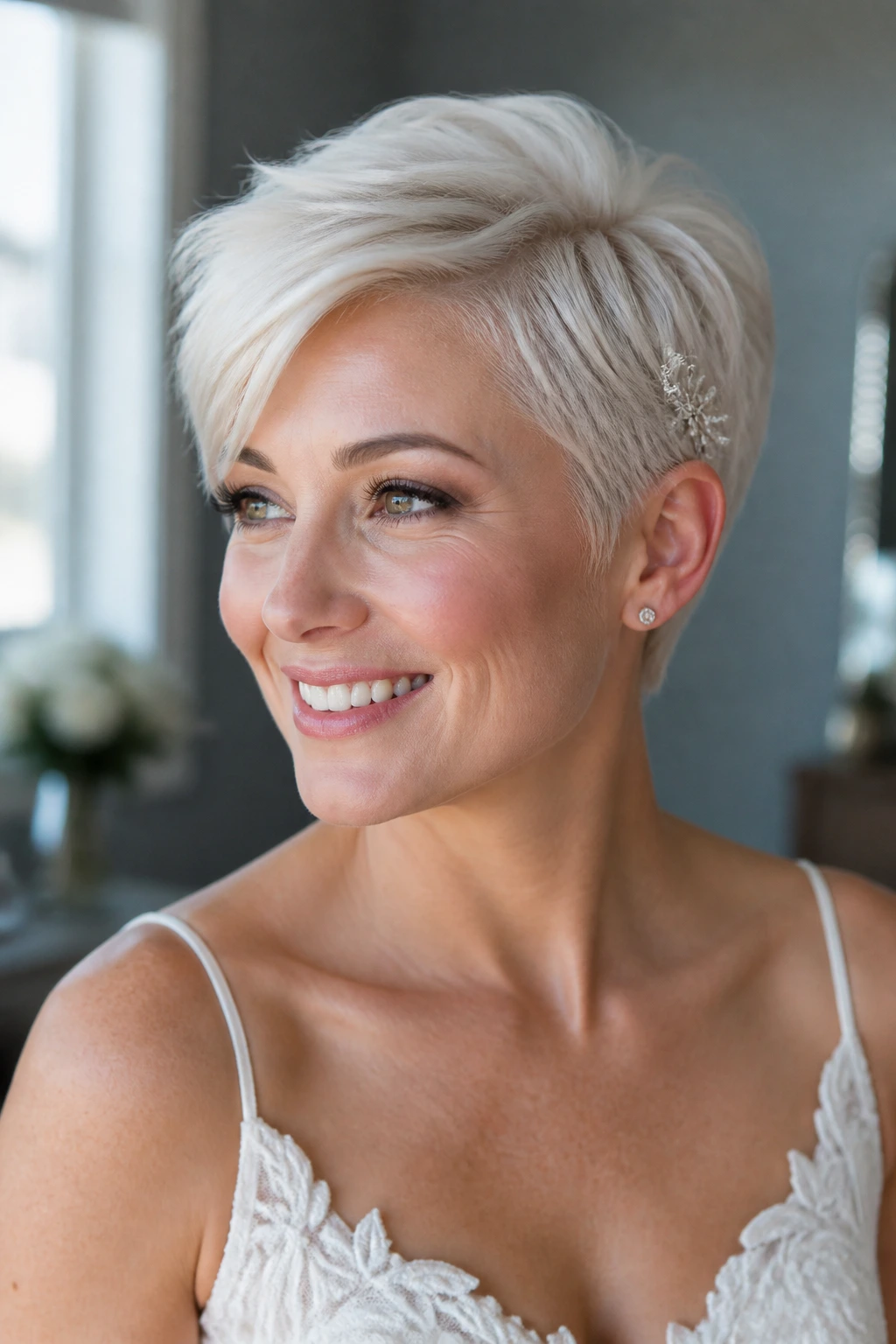
A platinum pixie already has a built-in point of view. The color is the statement, so the styling can stay clean and spare. I like this on brides who wear simple silhouettes and know their hair color is part of the outfit, not a background detail.
Because the color is bright, the cut line matters even more. Keep the edges tidy around the ears and nape, and use a glossing product that doesn’t yellow the tone. If the cut gets too messy, the blonde can look dry in a hurry. That’s the downside of light colors on short hair — every rough edge shows.
Accessories should be tiny and cool-toned. White gold, clear crystals, or bare metal work better than heavy floral pieces. Let the color carry the look.
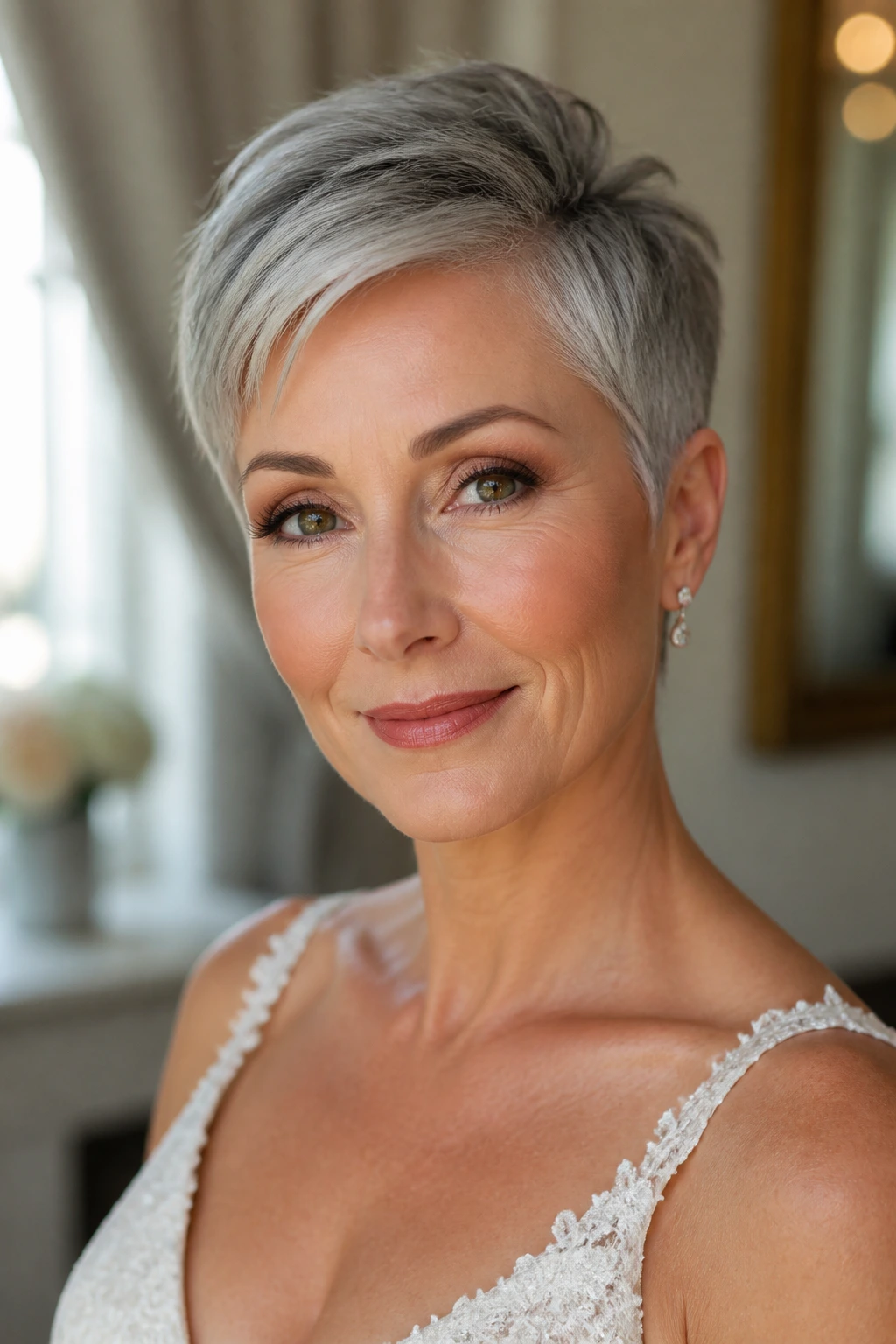
21. Silver Pixie With a Warm Makeup Palette
Silver hair and warm makeup are a lovely pairing because the contrast feels alive. A silver pixie can look very crisp on its own, but when you pair it with peach blush, soft bronze, or a muted rose lip, the face stops feeling icy and starts feeling balanced.
This style works well on brides who want their hair color to read as intentional and modern. Keep the shape close to the head with a little lift at the crown. Too much volume can make metallic hair feel fuzzy instead of clean. A touch of shine cream on the top surface helps the tone reflect light without turning greasy.
If you add jewelry, choose pieces that are quiet and refined. Silver hair doesn’t need a lot of competing sparkle. It already owns the room.
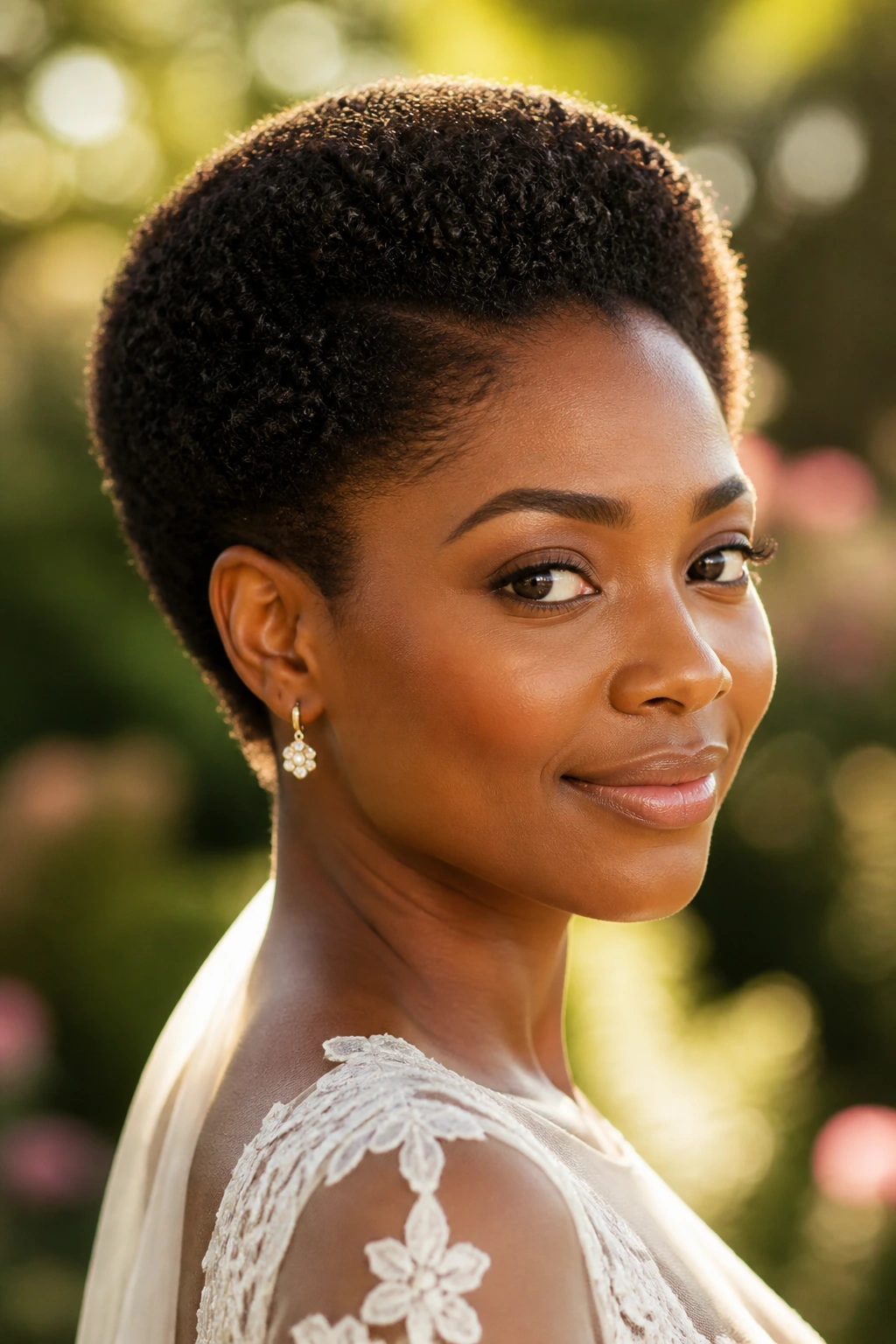
22. Sculpted Natural Afro Pixie
A sculpted afro pixie has real presence. The shape is rounded where it needs to be, tight at the edges, and beautifully defined around the hairline. It can look regal without being stiff, which is a rare balance.
Moisture and shape are the two things that matter most here. Use a styling cream or gel on damp hair, shape the curls with your fingers or a small brush, and let the edges be clean rather than over-brushed. If the hairline is too pushed down, the whole style loses lift. If it’s too loose, the silhouette gets fuzzy.
This cut is strong with statement earrings, a bold lip, or a clean shoulder line. It does not need a lot of extra decoration. The shape itself does the work.
23. Retro Kiss-Curl Pixie With a Tiny Forehead Detail
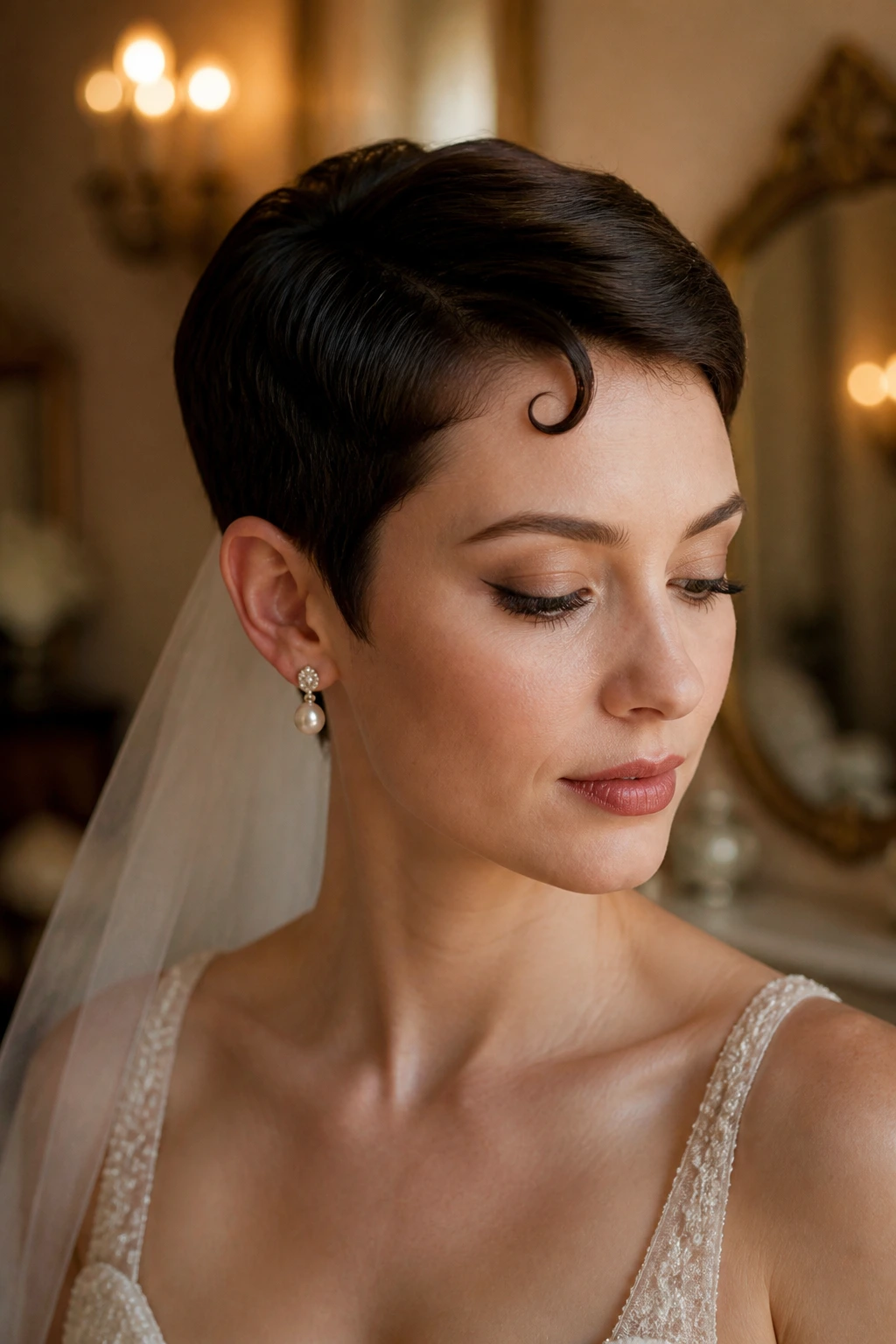
A kiss curl near the forehead can make a pixie feel like it came from a better decade. It’s a small, sculpted loop or swoop that sits near the hairline and gives the style a little old-fashioned charm. On short hair, it reads as detail, not clutter.
The rest of the cut should stay controlled so the kiss curl has room to stand out. Smooth the top, tuck the sides, and shape the curl with gel or pomade while it’s still flexible. If the curl is too stiff, it starts looking theatrical. Keep it small and deliberate.
This is one of my favorite choices for brides who love vintage makeup or a tea-length dress. It’s subtle enough to feel wearable and specific enough to make people look twice.
24. Side-Part Pixie With a Hair Vine
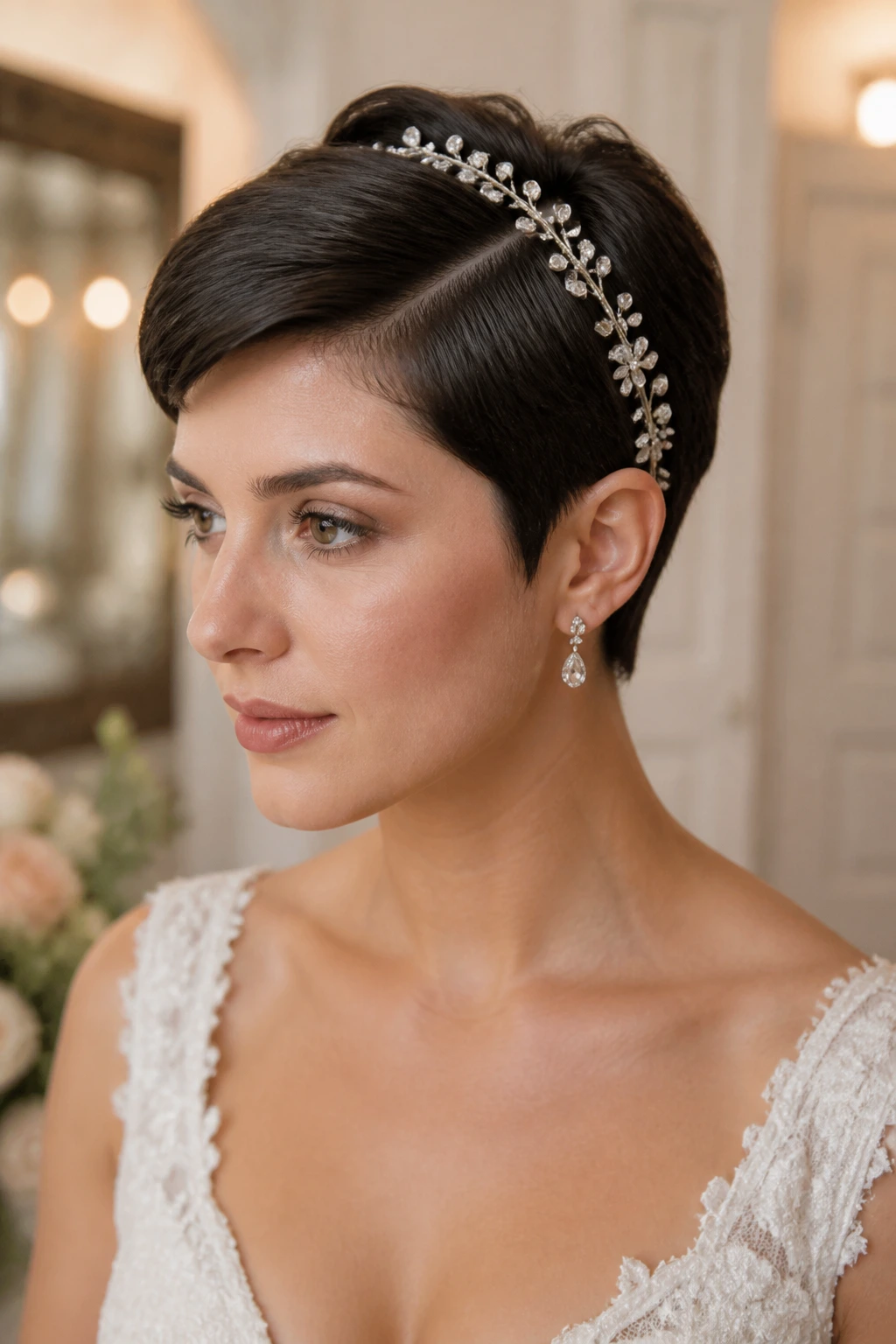
A hair vine on a pixie can look incredibly elegant if you place it with care. The side part gives the vine an anchor, and the short length keeps the accessory visible instead of buried under layers of hair. The vine should follow the curve of the head, not sit like a band that wandered in by mistake.
Placement is the whole game
Use the vine to trace the part or arc over the crown. Small wired pieces tend to sit better than heavy ones because they can bend to the shape of the head. If the vine has too much width, it tends to overpower the cut. Thin and graceful is the safer move.
This style works best with dresses that have some softness — lace, chiffon, or a neckline with gentle movement. The vine adds that bridal detail without asking the pixie to become something it isn’t.
25. Center-Part Pixie for a Symmetrical Look
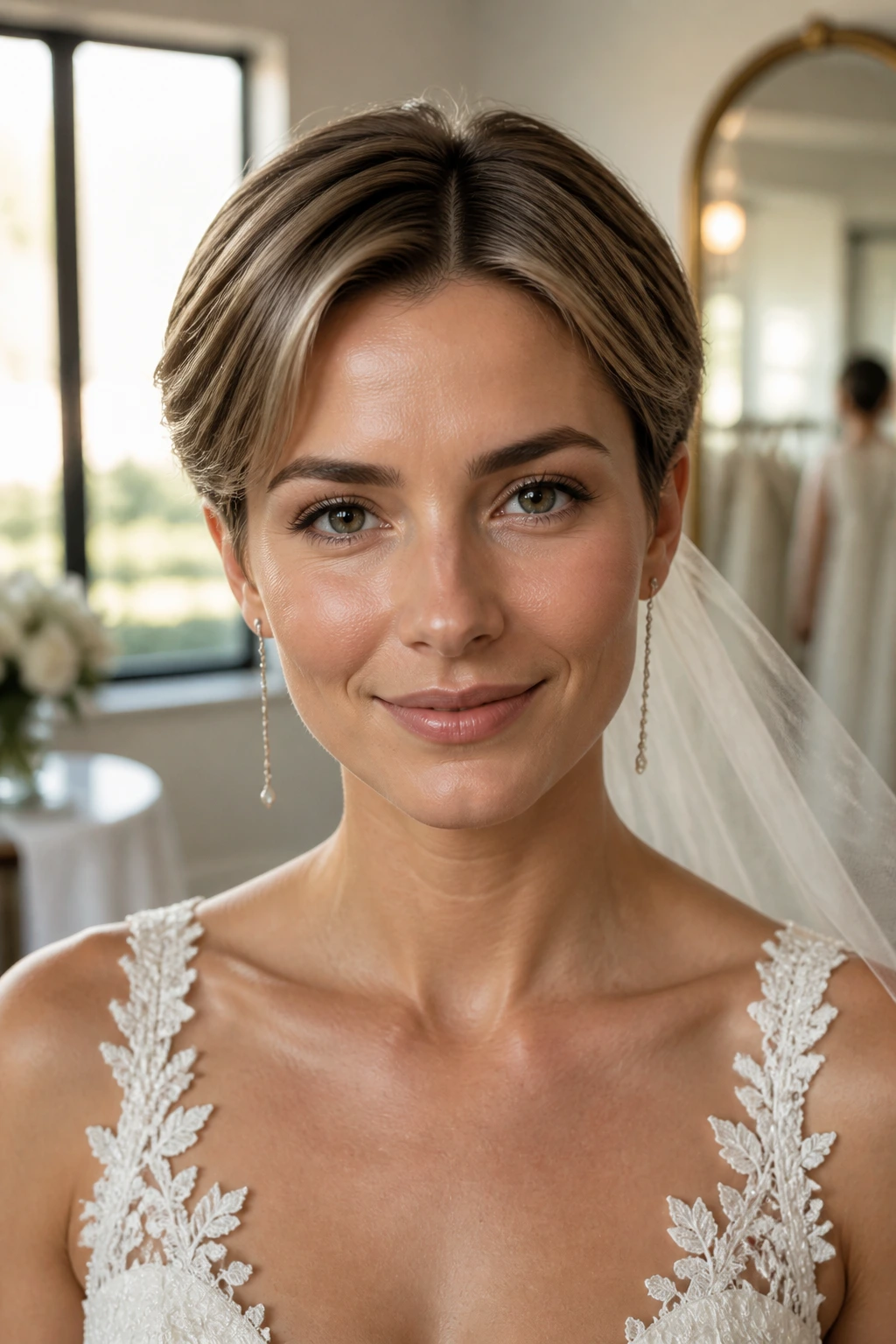
A center part on a pixie is not the first option most people think of, which is exactly why it can be good. It brings symmetry to the face and lets the haircut frame both sides evenly. If your features are balanced and your dress has a strong center line, this can look sharp.
The cut should have enough length on top to fall away from the part with some softness. If the hair is too short and too flat, the center line can feel severe. A dab of cream and a fine comb are usually enough to keep the part clean while leaving movement in the sides.
This is a clean choice for brides who like modern minimalism. A tiny chain earring, a sleek neckline, maybe one barrette if you’re feeling generous. Not much else is needed.
26. Tucked-Behind-the-Ear Pixie With a Clean Profile
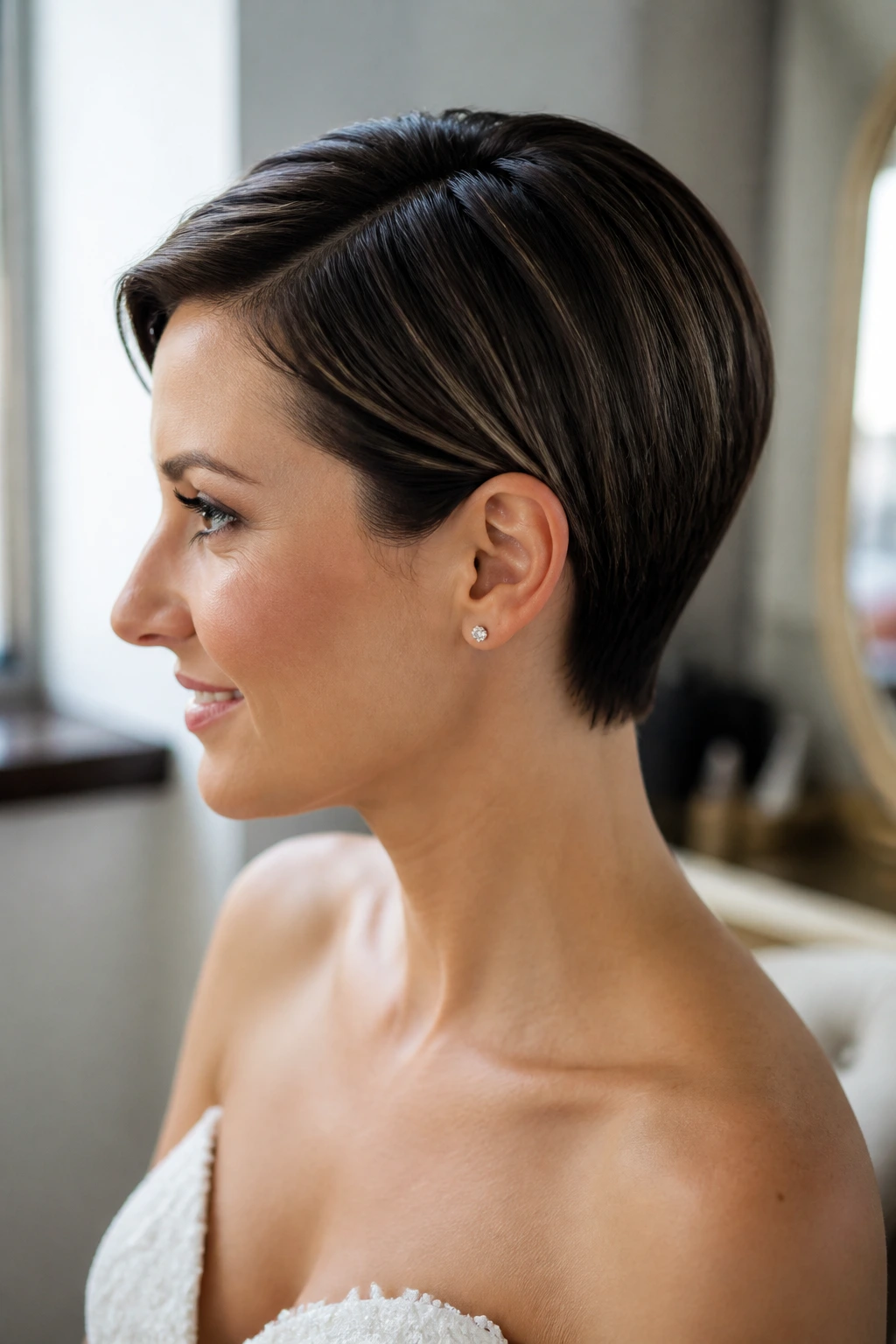
The tucked-behind-the-ear pixie is simpler than it sounds, but simplicity can be the point. By tucking one or both sides behind the ear, you create a sharp profile and give earrings, jawline, and neckline more room. It’s a small adjustment that changes the whole read of the cut.
A little smoothing cream at the sides helps keep the tuck tidy. If the hair is slippery, pin the back edge in place just under the ear so it doesn’t drift during the ceremony. The style is especially useful if you want a veil comb or earring to sit in clear view.
There’s no need to overbuild this one. The precision is the appeal.
27. Romantic Pixie With Loose Face Framing Pieces
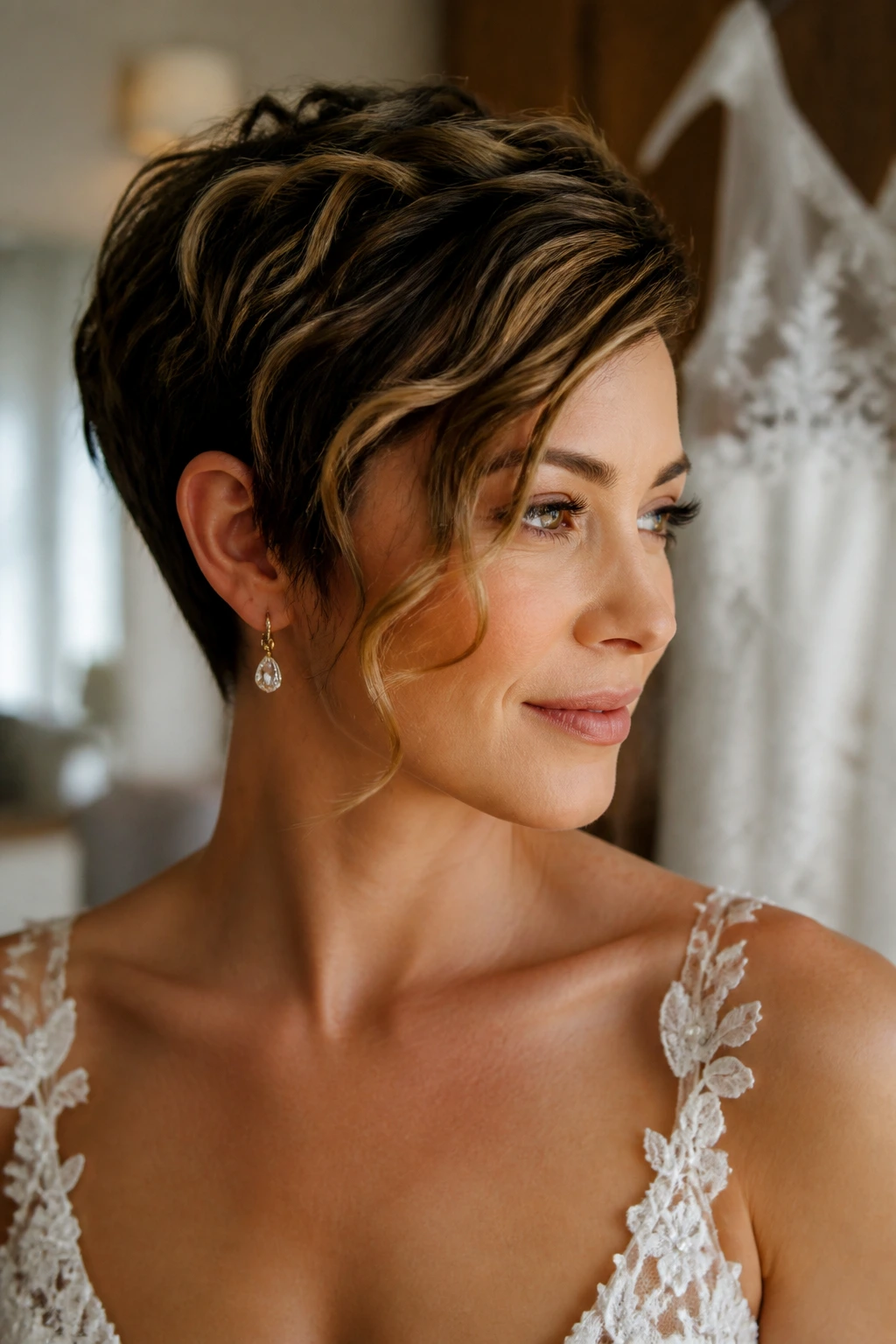
Can a pixie be romantic without becoming messy? Yes, if the pieces are chosen with care. A few soft tendrils at the temples or across the forehead can take the edge off the cut and make it feel gentler beside lace, tulle, or soft makeup.
The key is restraint. Leave only a couple of pieces out, and make them thin enough to look intentional. Too many loose pieces, and the haircut loses its structure. A curling wand or flat iron can give the front a slight bend so the tendrils move instead of hanging flat against the skin.
This style is a good fit for brides who want softness but still want the neckline and ears visible. It’s a nice middle ground between strict and tousled.
28. Sculpted Nape Pixie With a Low Back Dress
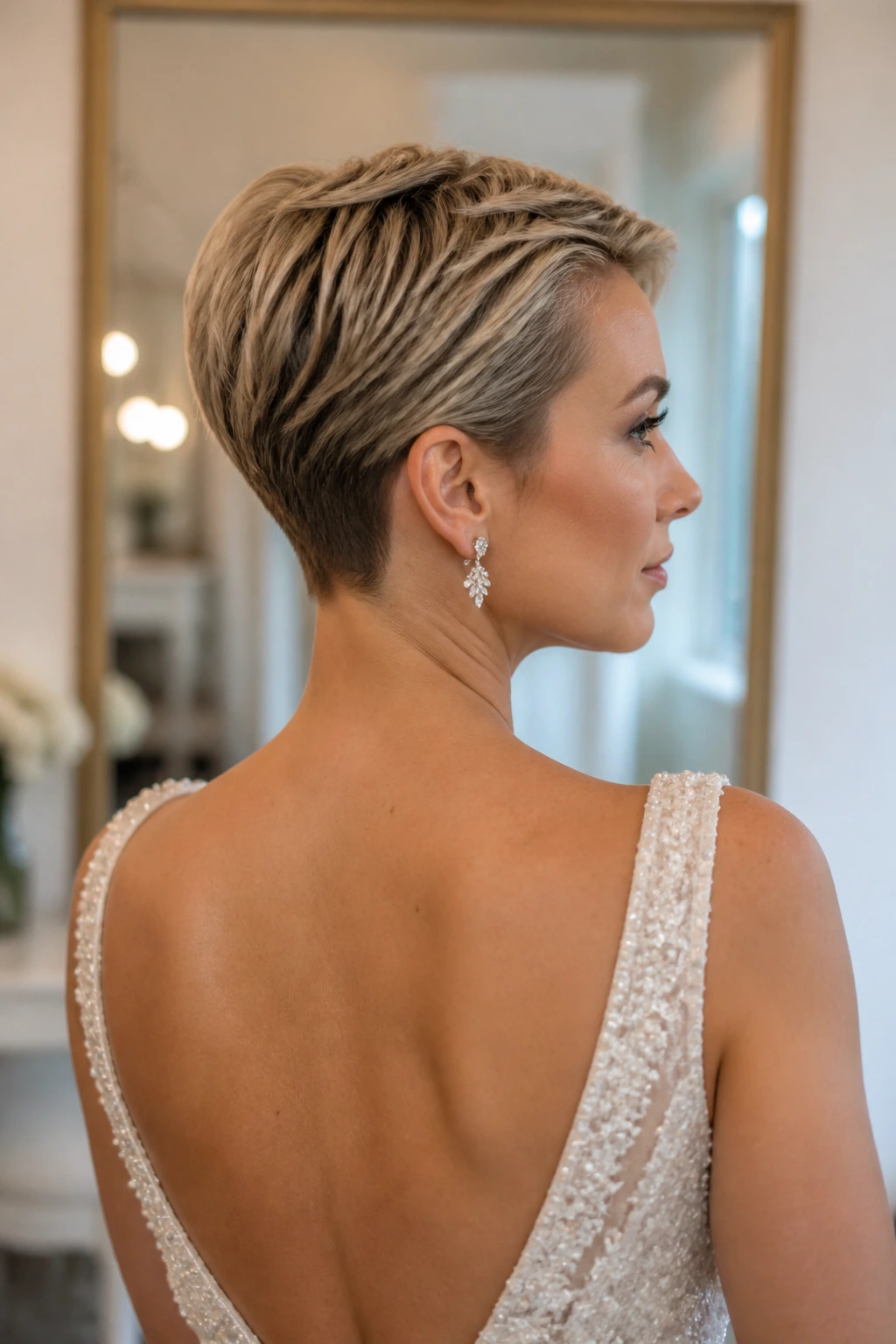
A sculpted nape pixie puts the focus exactly where it should be when the dress has an open back. The sides stay neat, the nape is crisp, and the top can stay modest or slightly lifted depending on the shape you want. It creates a clean frame for the back of the dress, which is often the part guests remember in photos.
This style needs regular cleanup around the neckline before the wedding day. Even half an inch of growth can soften the line more than you want. Use a small brush and a touch of smoothing product to keep the back crisp without making it hard-looking.
If you’re wearing a backless or low-back gown, this is one of the strongest pixie choices. It doesn’t fight the dress. It finishes it.
29. Victory-Roll-Inspired Pixie With a Retro Bend
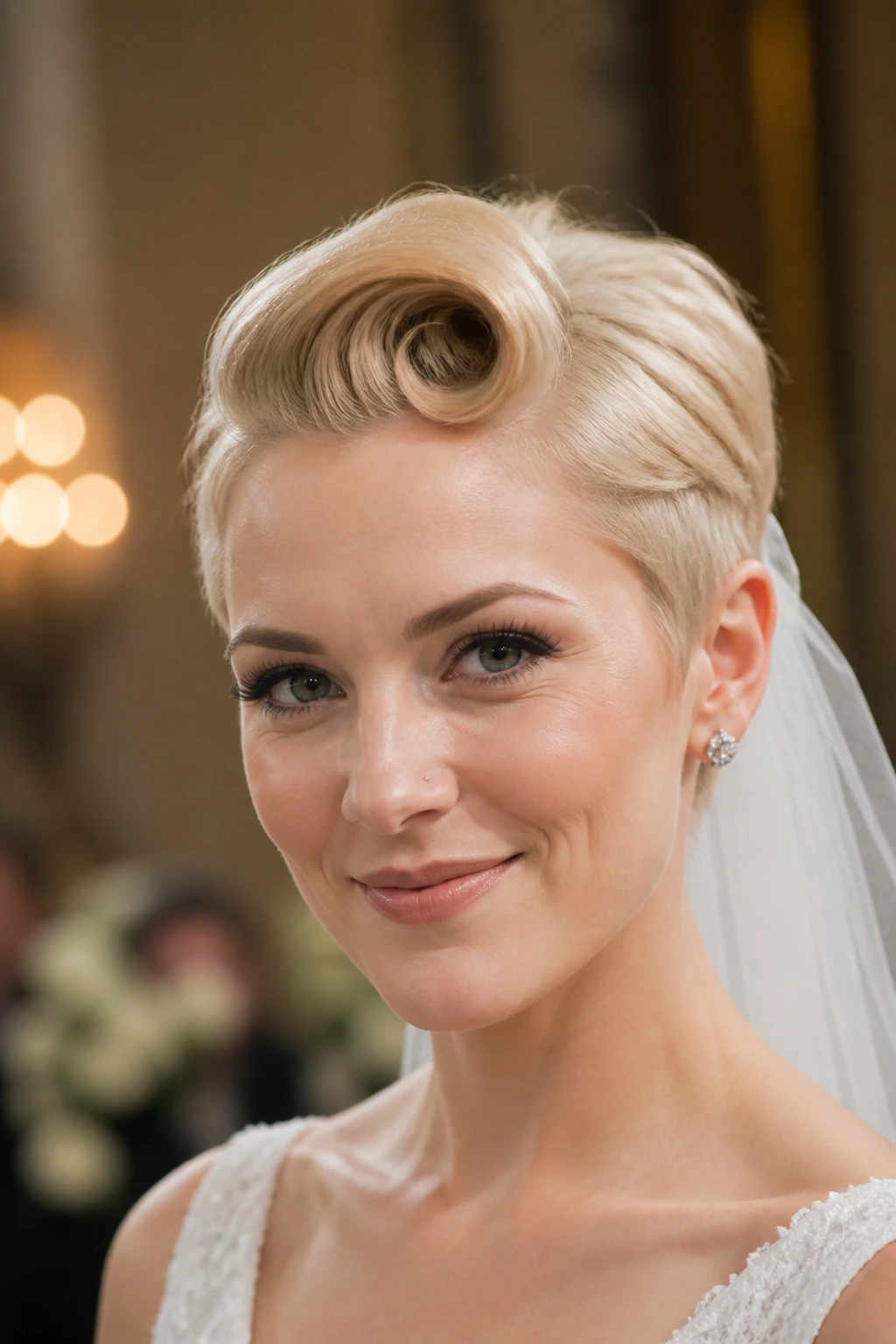
Victory-roll inspiration on short hair is really about the front shape. A little rolled lift at the temple or fringe gives the pixie a vintage curve without needing long sections. It feels charming and unmistakably styled, which makes it a strong choice for brides who love retro details.
The roll should be compact. If it gets too big, the scale starts looking off on short hair. Pin the shape from underneath, smooth the outer layer, and keep the rest of the cut close so the front detail can stand out. Pair it with a lipstick shade that has some depth and a dress with a defined neckline.
This one is happiest beside pearls, satin, or a birdcage veil. It does not need a lot of extra movement.
30. Feathered Fringe Pixie With a Soft Forehead Sweep
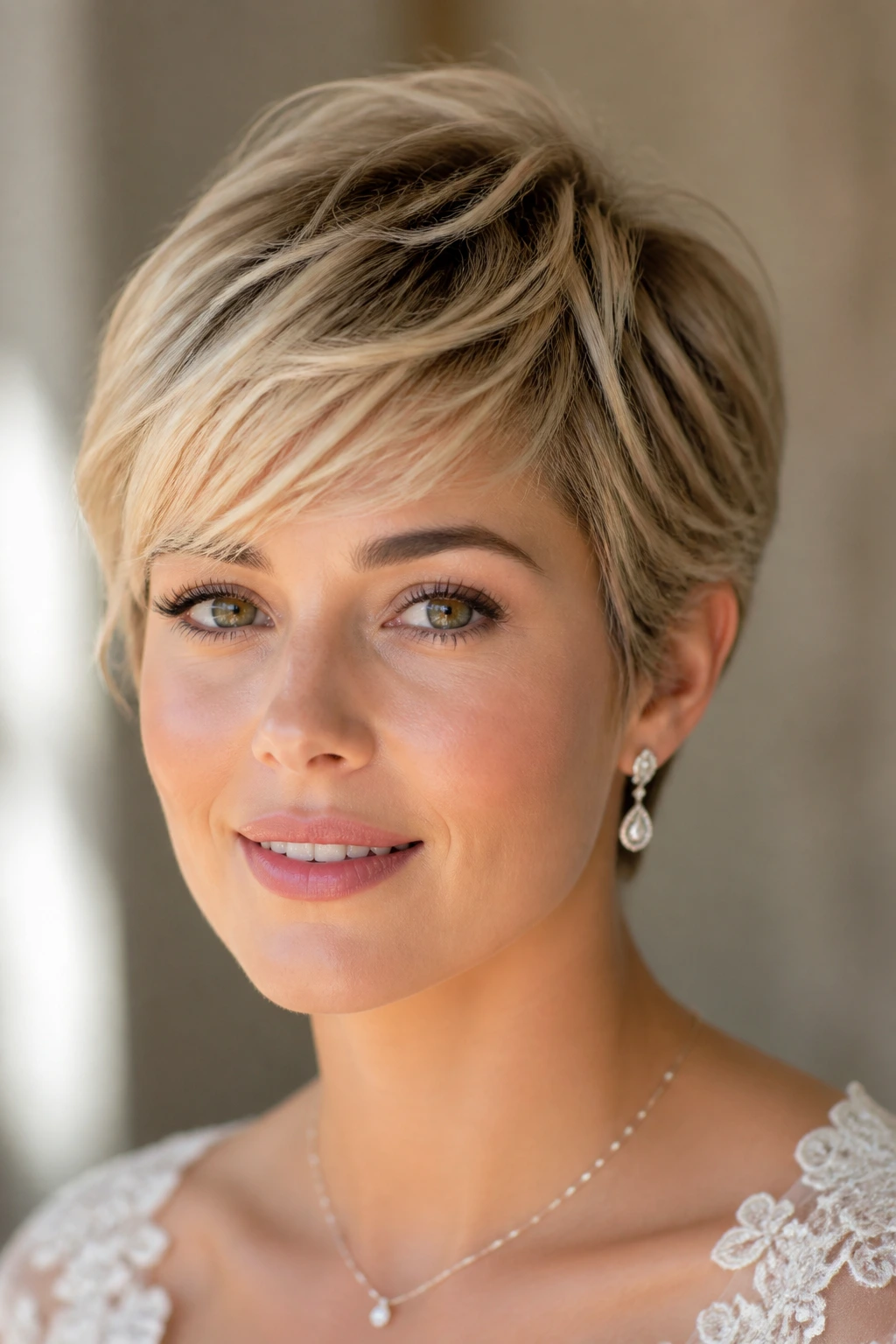
A feathered fringe can make the whole face look lighter. The front falls in tiny, soft pieces that skim the forehead and break up the line just enough to feel romantic. It’s a useful option if you don’t want a blunt edge right at the brows.
How to keep the fringe airy
Blow-dry the fringe from side to side with a small brush, then finish with a light cream so the ends stay separate. If you use too much product, the fringe clumps and the softness disappears. That airy texture is what makes the style work with bridal makeup and delicate jewelry.
This is a good choice for brides with fine hair who want movement without big volume. It also plays well with a small pin or tiny comb because the fringe has enough softness to balance something decorative.
31. Glossy Taper Pixie With a Bold Lip
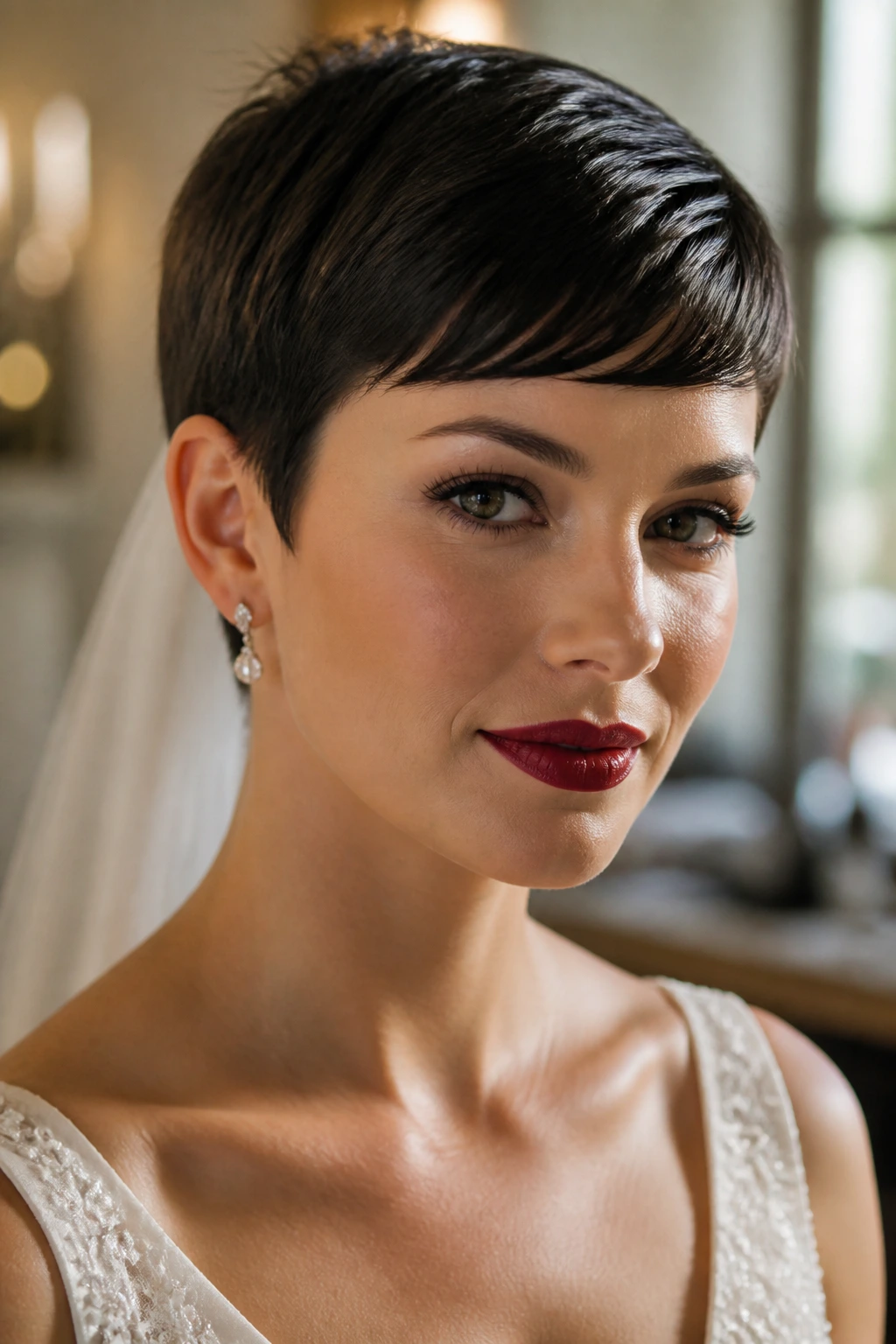
A glossy tapered pixie can feel almost architectural when the shape is clean and the shine is controlled. Add a bold lip, and the face becomes the focal point instead of the hair. That can be a smart move when the dress is simple and the overall styling needs one strong color anchor.
The taper keeps the neck and jawline neat, while the gloss gives the top surface a reflective finish. Use a shine cream or serum sparingly; too much and the hair starts to separate in greasy-looking streaks. The lip can do the loud work here. The hair just needs to behave.
This style suits brides who like a little contrast. Minimal hair, stronger makeup, sharper lines. It is direct and memorable without feeling overloaded.
32. Mixed-Finish Pixie With Soft Crown and Tight Sides
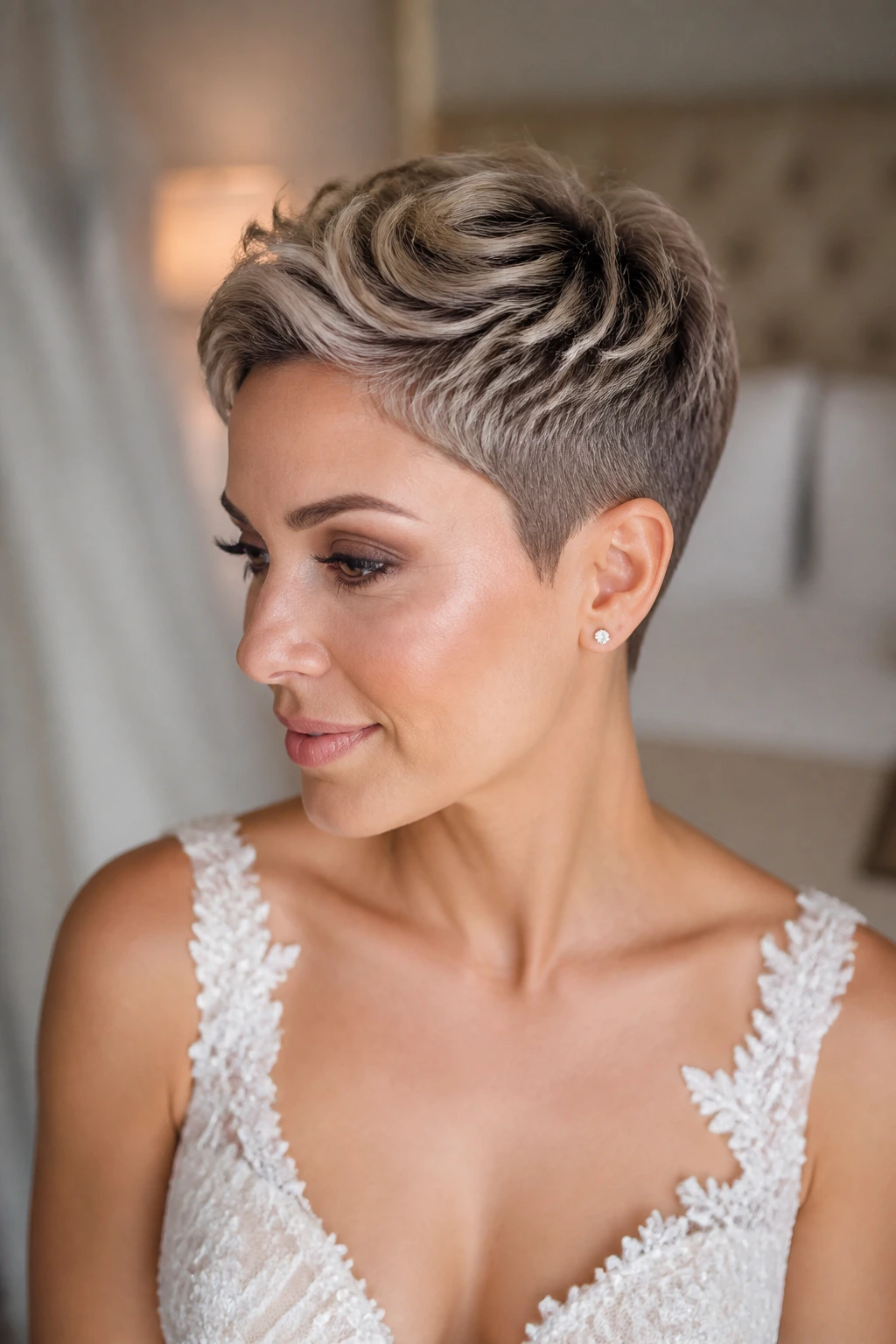
This is the style for the bride who wants her pixie to look custom. Keep the crown soft and touchable, but make the sides and nape clean and close. That mix creates depth, which is one of the easiest ways to make short hair feel expensive without adding extra pieces or decorations.
The mixed finish gives you room to play with the accessory choice. You can add a pearl pin one day, a crystal comb the next, or a veil if the shape is clean enough. The style doesn’t lock you into one mood. It adapts. That’s the appeal.
If you’re torn between romantic and modern, this is the compromise that doesn’t feel like one. It lets the cut do both jobs.
What Makes a Bridal Pixie Finish Look Intentional
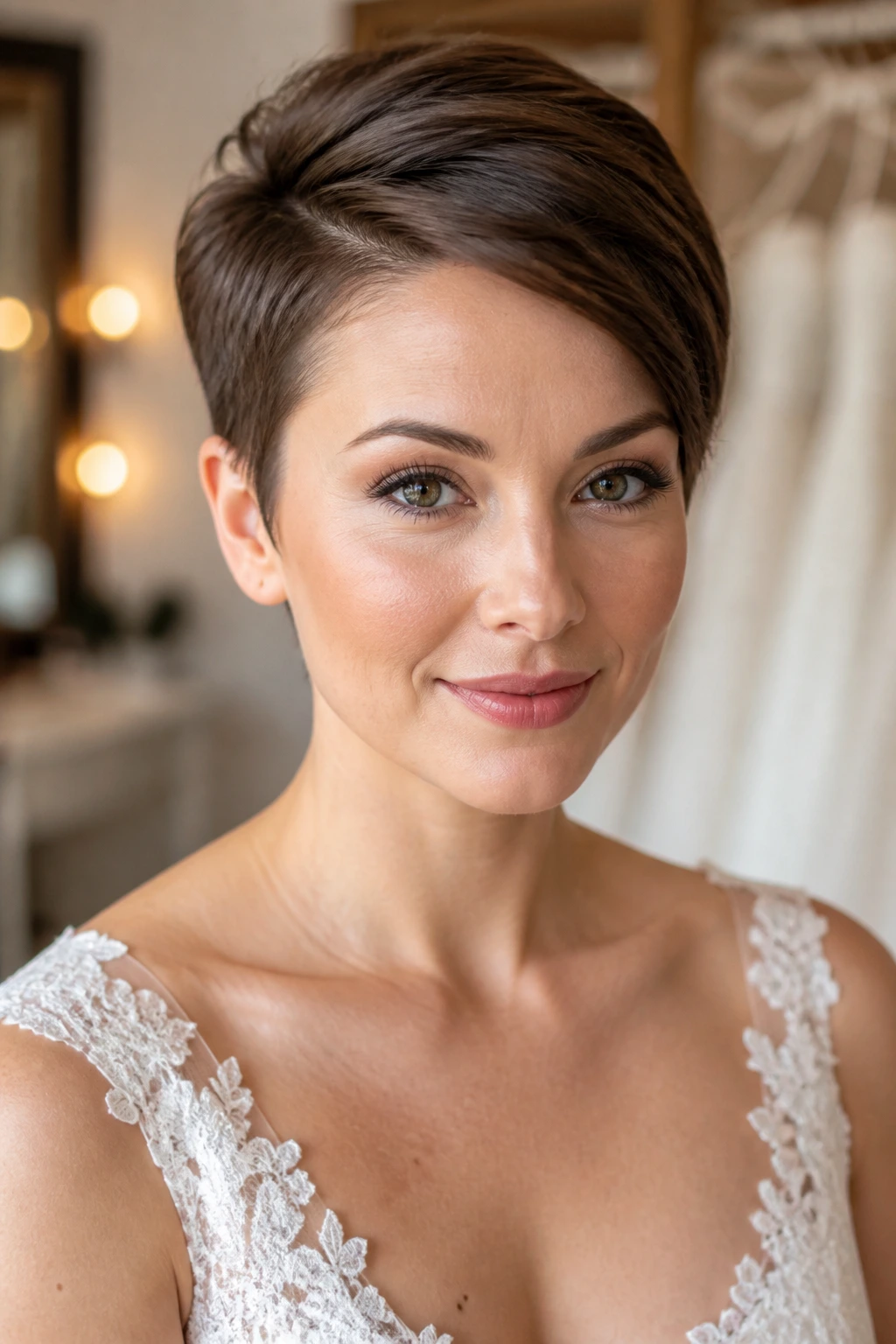
A bridal pixie looks its best when three things line up: the silhouette, the accessory placement, and the face framing. Miss one, and the style starts to feel unfinished. Hit all three, and the haircut can carry as much presence as a full updo.
The silhouette comes first. Short hair needs shape at the crown, sides, or front — usually not all three. If every section is fighting for attention, the cut turns busy. Pick one visual story. A lifted crown. A sleek side sweep. A compact nape. Then let the rest support it instead of competing.
Accessory placement is the part people underestimate. A comb too low sits in a strange spot. A pin too large steals the eye. A veil too heavy can flatten the whole head. Short hair rewards precision. Even a half-inch change in placement can make the difference between tidy and awkward.
Face framing is where the bridal feeling really lands. A tiny bend at the fringe, a tucked side, or one deliberate curve near the cheekbone changes how the entire style reads in photos. You do not need a lot of hair to make an impression. You need the right hair in the right place.
The Accessories That Actually Work on Short Hair
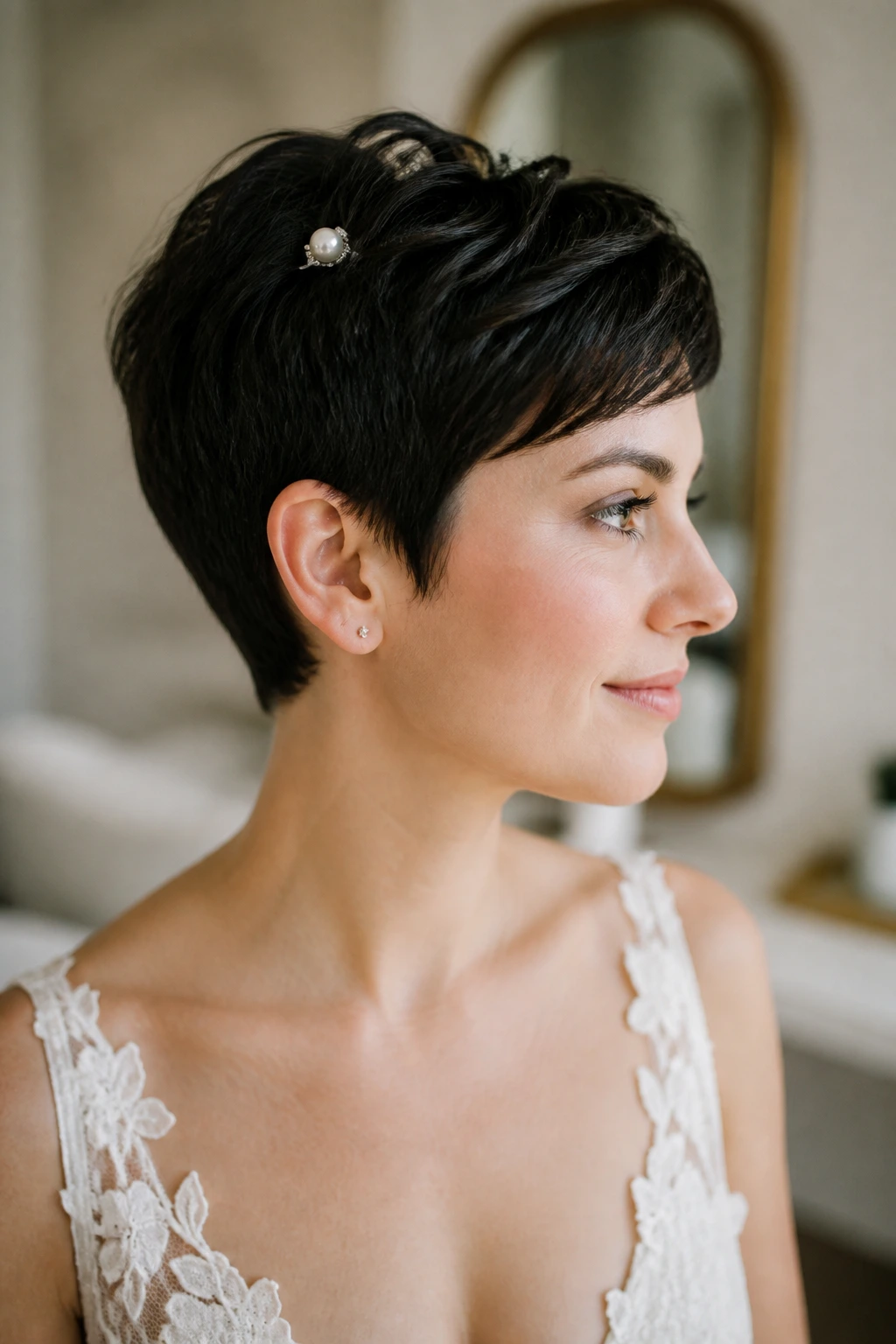
Short hair asks for accessories with good balance. Heavy pieces can drag the style down, while tiny ones can disappear if they’re placed badly. The sweet spot usually lives in the middle: pins, combs, vines, small clips, birdcage veils, and earrings that don’t crowd the jaw.
Pearls are dependable because they sit softly against short hair and don’t look sharp next to lace or satin. Crystals work when the dress is simple and the hair is smooth. Hair vines are useful if they’re thin enough to trace the shape of the head. Oversized clips can work too, but only if the pixie is clean and the clip has enough contrast to stand on its own.
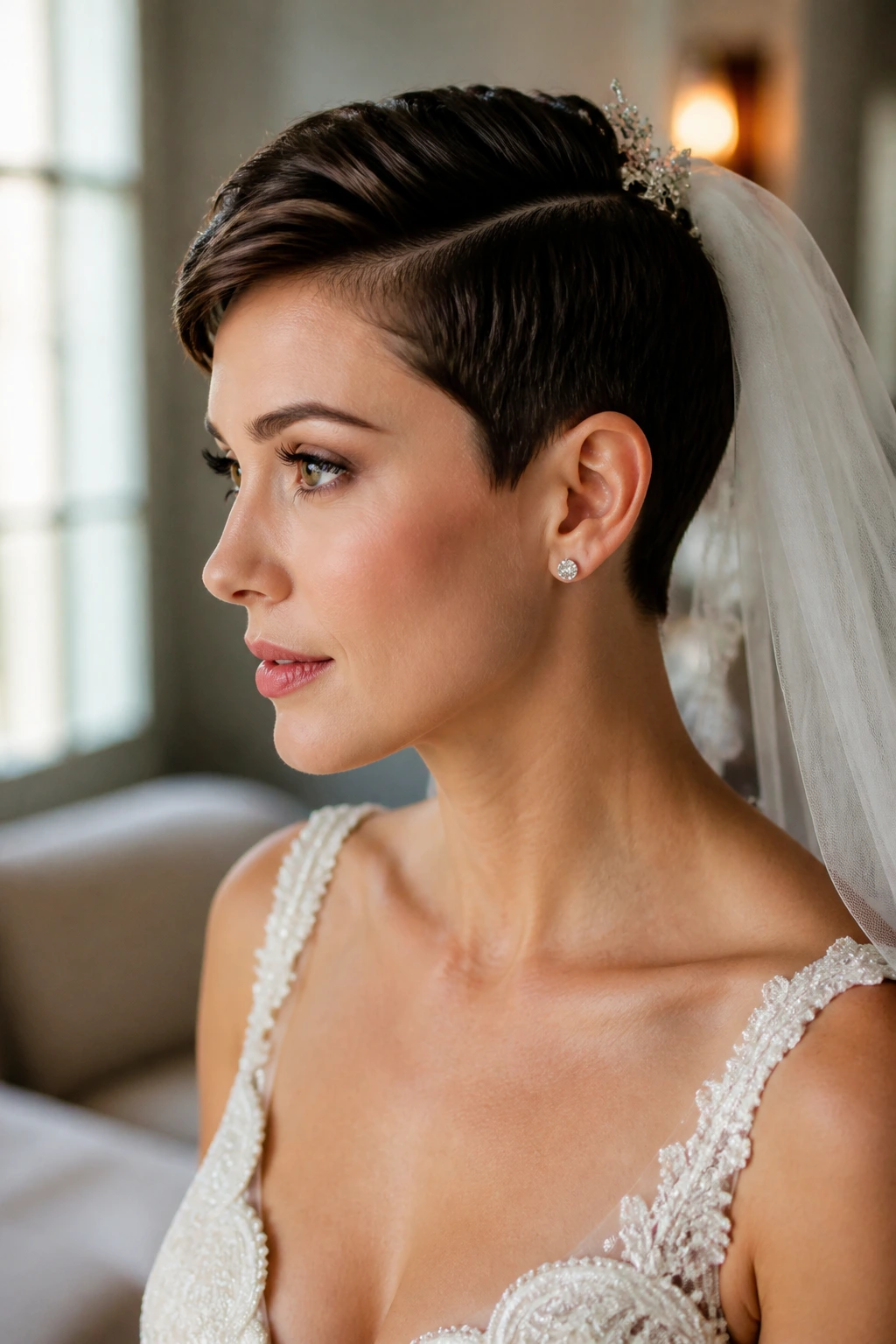
A veil is a special case. With a pixie, the comb placement matters more than the length of the veil. Put it too low, and it can swallow the haircut. Too high, and it looks like it’s floating. The best placement usually sits just above the widest point of the head or slightly behind the crown.
How to Match the Pixie to the Dress Neckline
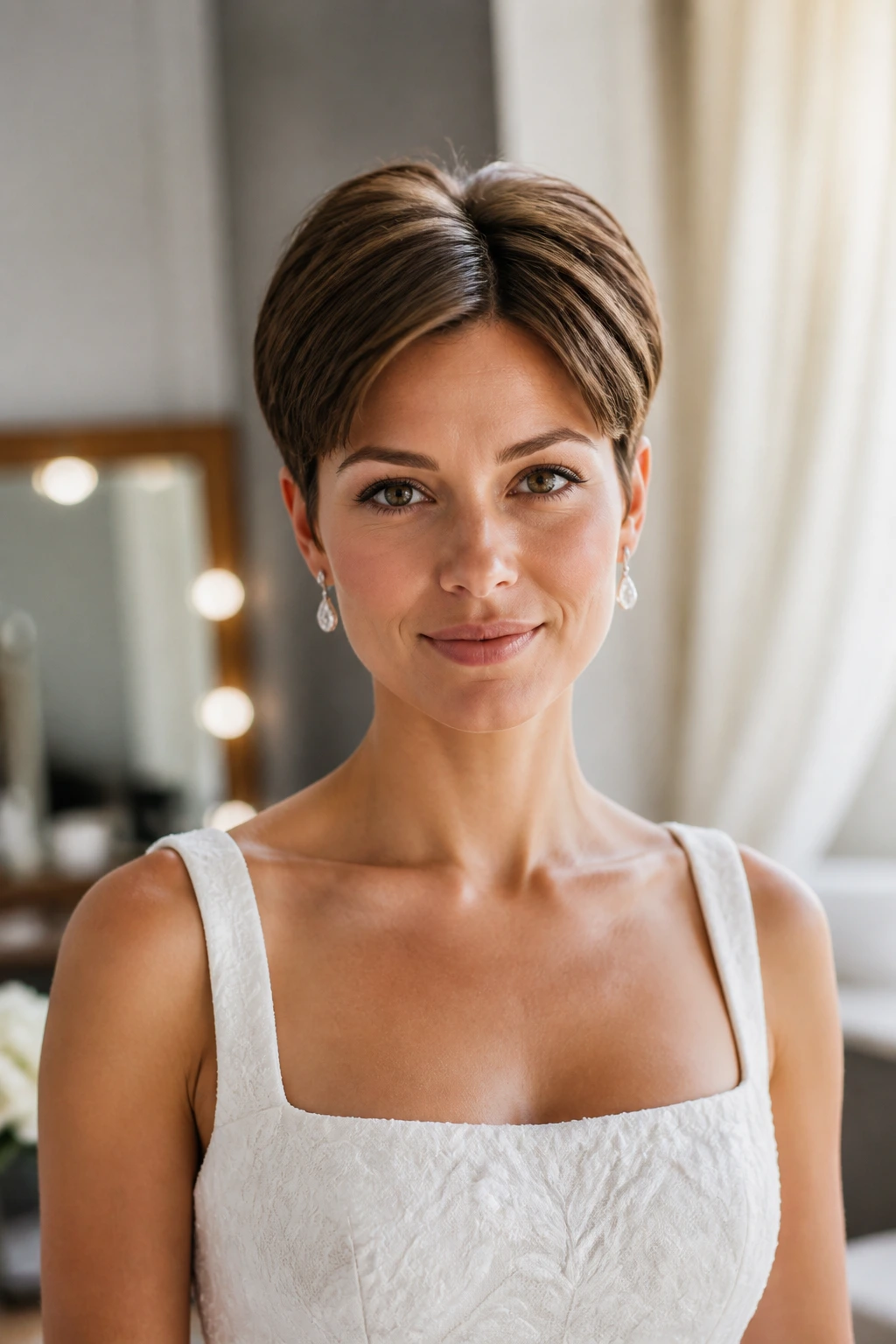
A pixie and a neckline should talk to each other. A high neck likes a clean, sculpted cut because the hair doesn’t need to compete. A strapless dress gives you more freedom, so a softer texture or a side sweep can bring balance. One-shoulder gowns often look sharp with asymmetry in the hair, even if the cut itself is short.
Square necklines pair well with centered styles, especially a neat center part or a rounded crown. Deep V necks can handle a little crown height or a decorative pin because the line from hair to neckline stays open. Boat necks want restraint. If you overstyle the hair there, the upper half of the look can start to feel crowded.
A low-back dress is a different beast. That’s where the nape matters. Keep it clean and let the back of the gown get its moment. Short hair is actually brilliant for that, because it doesn’t cover the thing you paid for.
Tools and Products Worth Having on the Vanity
-
Fine-tooth comb: Keeps part lines crisp and helps place bangs or fringe without a lot of fluff.
-
Small round brush: Useful for shaping crown lift, curling the front under, and smoothing a side sweep.
-
Flat iron with narrow plates: Best for short sections, especially if you’re bending fringe or smoothing a piecey pixie.
-
Flexible-hold hairspray: Holds the shape without turning the hair into a helmet.
-
Lightweight pomade or styling paste: Adds control to the sides, nape, and short fringe without making everything greasy.
-
Shine serum: A few drops can polish a sleek pixie, but use it sparingly so the hair still looks like hair.
-
Texturizing spray: Helpful for choppy, tousled, or feathered pixies that need separation.
-
U-pins and small bobby pins: These disappear better than oversized pins and are easier to hide under short hair.
-
Mini veil comb or clip base: If you’re using a veil, the attachment point needs to be secure and sized for short hair.
-
Hand mirror: A rear-view check is non-negotiable. The back of a pixie can look different from the front by a mile.
How to Brief Your Stylist Before the Trial Run
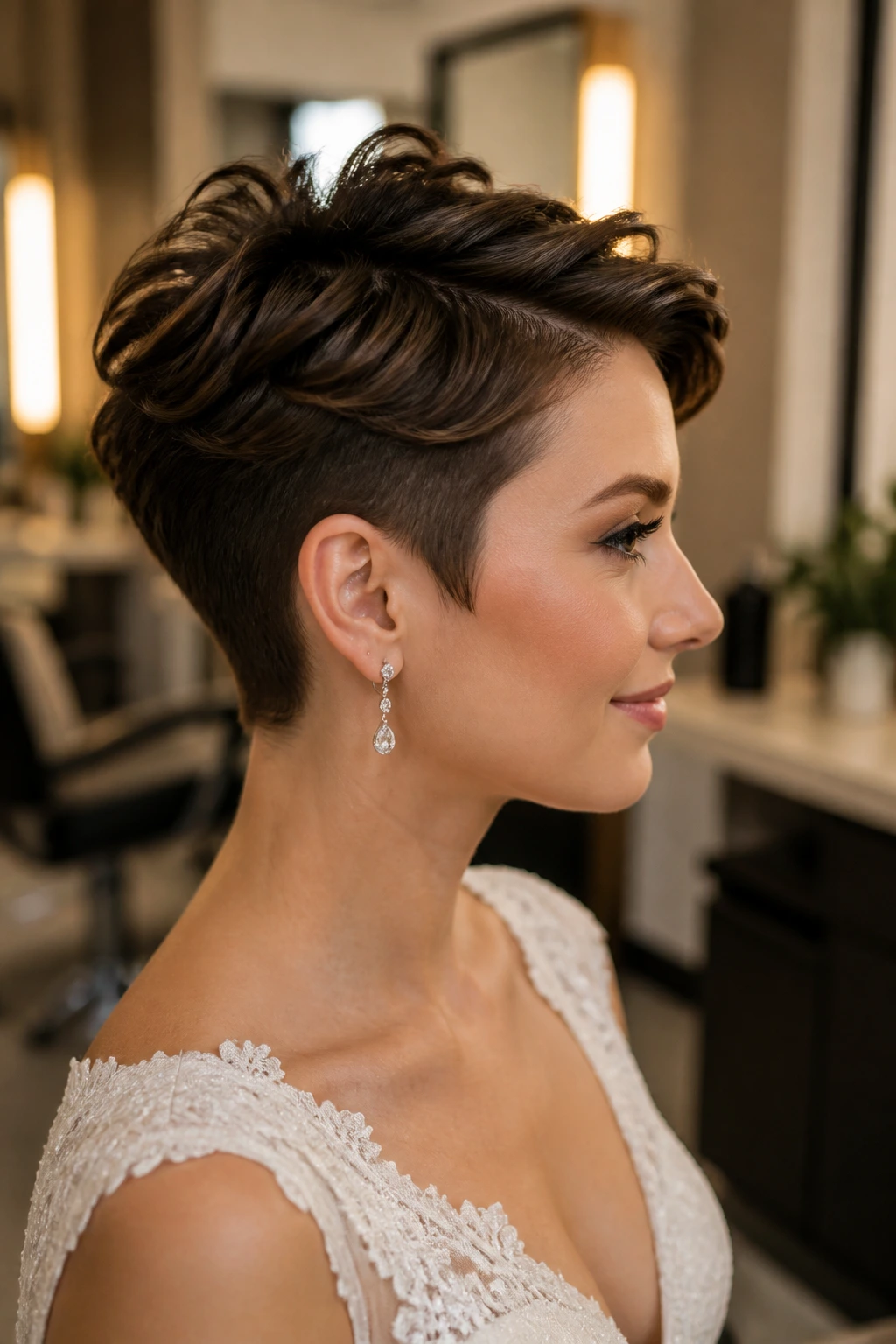
Bring more than a dress photo. Bring neckline photos, earring photos, and at least one image that shows the veil or hair accessory from the side. Short hair styling lives in profile. If you only show front-facing inspiration, you’ll miss the part that matters most.
Say what the haircut needs to do, not just what you want it to look like. For example: “I want the ears visible,” “I need room for a veil comb,” “I don’t want crown height,” or “I want the hair to stay off my jawline.” Those details tell a stylist where to build the shape. That is much more useful than saying “soft but polished,” which means six different things to six different people.
If your hair is growing out, be honest about it. A pixie that’s three weeks past a trim behaves differently from one that was cut yesterday. That affects the side line, the part, and how much product you’ll need. Trial day is the time to solve that, not the morning of the wedding.
Common Mistakes Brides Make With Pixie Hair
The first mistake is overloading the style with accessories. Short hair does not have the surface area of a long updo, so one good piece usually beats three competing ones. If the comb, veil, earrings, and hairpins all shout at once, nothing stands out.
The second mistake is trimming too close to the wedding. A fresh pixie cut can look sharp, but if the cut is shorter than you expected, the fringe may not sit where you want it. A trim that cleans the edges without changing the shape is safer than a dramatic reset right before the event.
Third, brides sometimes ignore the side and back view. The front may look fine in the mirror. Then the photos come back and the nape is uneven or one pin is sitting in a strange spot. Check all angles.
And one more: using too much product. Short hair can turn greasy or stiff fast. Start light. Add more only where the shape is falling apart.
Variations and Alternatives to Try
The Soft Side Sweep: If sleek feels too strict, keep the part but soften the front with a looser brush-out and a light bend at the ends. It still reads polished, just gentler.
The Pearl-Point Pixie: Swap crystals for tiny pearl pins scattered along the side or temple. This works best with lace, matte fabrics, and a bouquet that leans classic rather than wild.
The Textured Garden Pixie: Add a small cluster of baby blooms or greenery near one ear, then keep the rest of the cut piecey and loose. Best for outdoor ceremonies and softer gowns.
The Modern Minimal Pixie: Skip ornament almost entirely and focus on the haircut’s line. Clean part, neat nape, clear earrings. Very little extra, and that’s the point.
The Curly Statement Pixie: Let the natural curl pattern stay visible, then add one sculptural accessory instead of multiple small ones. This keeps the texture from being smothered.
The Vintage Frame Pixie: Use a finger wave, kiss curl, or birdcage veil to bring in a retro note. It’s a strong move if your dress has old-school charm or structured satin.
Day-Before, Day-Of, and Touch-Up Timing
A bridal pixie does best when the schedule is boring and deliberate. If your hair grows fast or tends to sit flat after washing, plan the final trim about 5 to 10 days before the wedding, depending on how much shape you want to keep. That gives the cut time to settle while keeping the edges tidy.
Wash timing depends on texture. Fine hair often behaves better with a wash the day before and light product on the morning of. Coarser hair may benefit from two days of natural oils, which gives the style a little grip. Either way, do a full trial before you decide. Guessing is expensive.
Pack a tiny touch-up kit: a few bobby pins, a travel spray, one comb, a blotting paper or tissue for shine control, and the accessory you’re actually wearing. If the style starts to collapse at the crown, a quick lift with your fingertips and a little spray at the roots usually fixes it. Don’t keep touching the front. That’s how neat hair becomes fuzzy hair.
Frequently Asked Questions About Pixie Cuts for Brides
Can a pixie cut look formal enough for a wedding?
Yes, if the shape is clean and the finish is deliberate. Bridal short hair usually looks formal because the face stays open, the neckline shows, and one well-placed accessory can do a lot of visual work.
What accessories stay in best on a pixie cut?
Small combs, pearl pins, hair vines with flexible wire, and birdcage veils tend to stay put best. Big pieces can work, but they need a firm anchor and a style with enough structure to support them.
How do I wear a veil with very short hair?
Use a strong comb or clip base and place it where the hair has the most grip, usually near the crown or just behind the part. If the veil feels too heavy, ask for a lighter comb or a shorter length so the haircut doesn’t disappear under it.
Should I cut my pixie right before the wedding?
Usually no. A cut that is too fresh can look sharper than intended and may not have time to settle. A cleanup trim several days ahead is safer unless your stylist knows your growth pattern very well.
What if my pixie is growing out awkwardly?
That can actually help certain styles. A little length at the fringe or crown gives you more room for a sweep, wave, or pin. The trouble comes when the sides grow out unevenly, so ask for a shape check rather than a big chop.
Can curly or coily pixies be styled sleek for a bridal look?
Yes, but only if you’re willing to use the right products and a proper smoothing method. Some brides look better keeping the texture visible and making the shape clean instead of forcing the hair into a style it resists.
How do I keep the style from falling flat during photos and dancing?
Build the shape with the right support first — usually root lift, pins, or a small amount of product — then bring a touch-up spray and a comb. A pixie should be checked from the crown and sides before the ceremony, after the ceremony, and once before dancing.
The Short Style That Still Carries the Day
A bridal pixie has a kind of confidence that long hair sometimes hides. The haircut leaves no room for clutter, so every choice matters: the part, the pin, the veil, the earring, the shape at the nape. That’s exactly why it can look so good in wedding photos. Nothing is vague. Nothing is accidental.
The best version is the one that fits the dress, the face, and the way you actually wear your hair. If you try to make a pixie behave like a long updo, it usually loses its strength. Let it stay short. Let it stay clear. Then give it one or two details that feel like yours, and the whole look settles into place.
