



Chestnut brown hair color ideas for older women work because chestnut doesn’t fight what hair has become. It softens gray instead of shouting at it, and it gives tired lengths a warmer, thicker-looking edge without dragging everything into one dark, heavy block.
That matters more than people admit. Mature hair is usually drier, sometimes a little more porous, and often a little more honest about every previous color service than younger hair ever was. A flat brown can make that honesty look harsh. A too-warm brown can veer copper and start wearing the face instead of flattering it. Chestnut sits in the middle, where the color still has movement.
The best versions have depth at the root, a clean brown-red warmth through the mids, and just enough light reflection on the surface to keep the whole thing from reading like paint. That balance is the whole game here. Get it right, and the hair looks polished, not overworked.
Why Chestnut Brown Flatters Mature Hair So Well
-
Gray blending is built in: Chestnut has enough red-brown warmth to blur silver strands without forcing them into a hard line, so roots grow out with less drama.
-
The color throws back light: A good chestnut has a natural sheen that makes dry or coarse hair look less dull, especially around the crown and front hairline.
-
It can be soft or rich: You can sit at a level 4, 5, or 6 and still keep the chestnut character, which gives room for softer or deeper finishes.
-
It works with real texture: Waves, layers, bobs, shags, and pixies all show more movement in chestnut than in a one-note brown.
-
It’s kinder to tired ends: Older hair often looks see-through at the bottom; chestnut gives those ends more visual weight without needing a harsh black-brown.
-
It makes the face look fresher: The right chestnut warms the skin near the temples, jawline, and cheekbones, which is where a flat brunette can go gray and make the whole face look washed out.
1. Soft Chestnut Brown Gloss
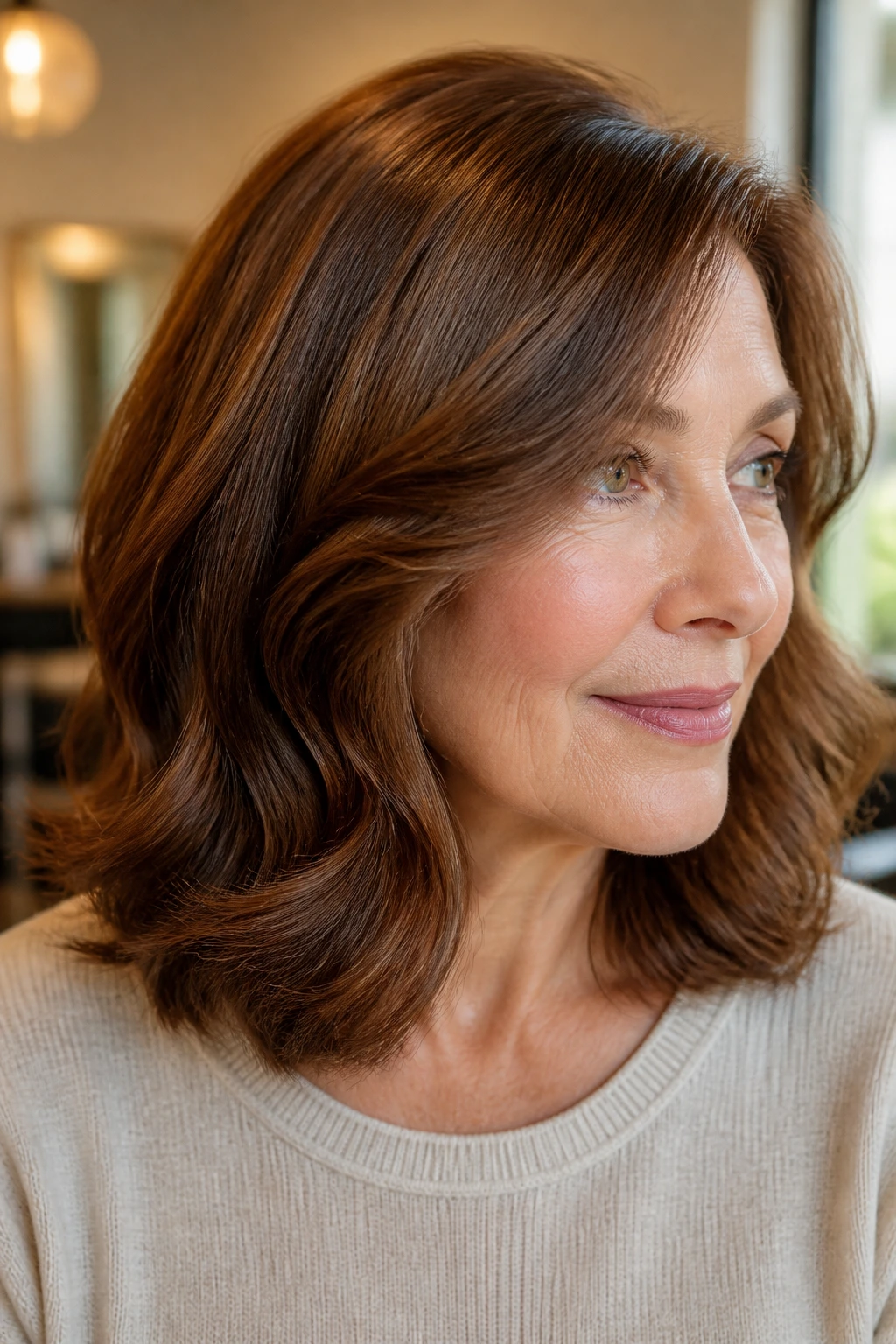
A gloss is the gentlest way to bring chestnut brown onto mature hair. It lays a translucent veil over what’s already there, which is why I reach for it when the base color is decent but the shine has gone missing. The finish looks like the hair has been polished, not dyed.
Why it works on mature hair
A chestnut gloss is especially useful if your hair has faded to a dull brown or if the silver at the temples is starting to look stripey. A demi-permanent gloss deposits warmth without the kind of heavy opacity that can make porous mids grab too dark. The result is softer and more believable.
Ask for this at the salon
- A level 5 or 6 chestnut gloss if you want a soft brown with warmth.
- A neutral-warm formula, not a copper-heavy one.
- A clear gloss over the ends if the color is already strong and you mostly want shine.
If you wear your hair in a bob or shoulder-length cut, this version is a smart first move. It doesn’t ask for a full transformation. It just makes the cut look cleaner.
Pro tip: If your ends feel rough, ask for the gloss to be applied a few minutes later on the mids and ends than at the root. Porous hair drinks up pigment fast, and that small timing difference can keep the color from going muddy.
2. Chestnut Brown Balayage with Caramel Veils
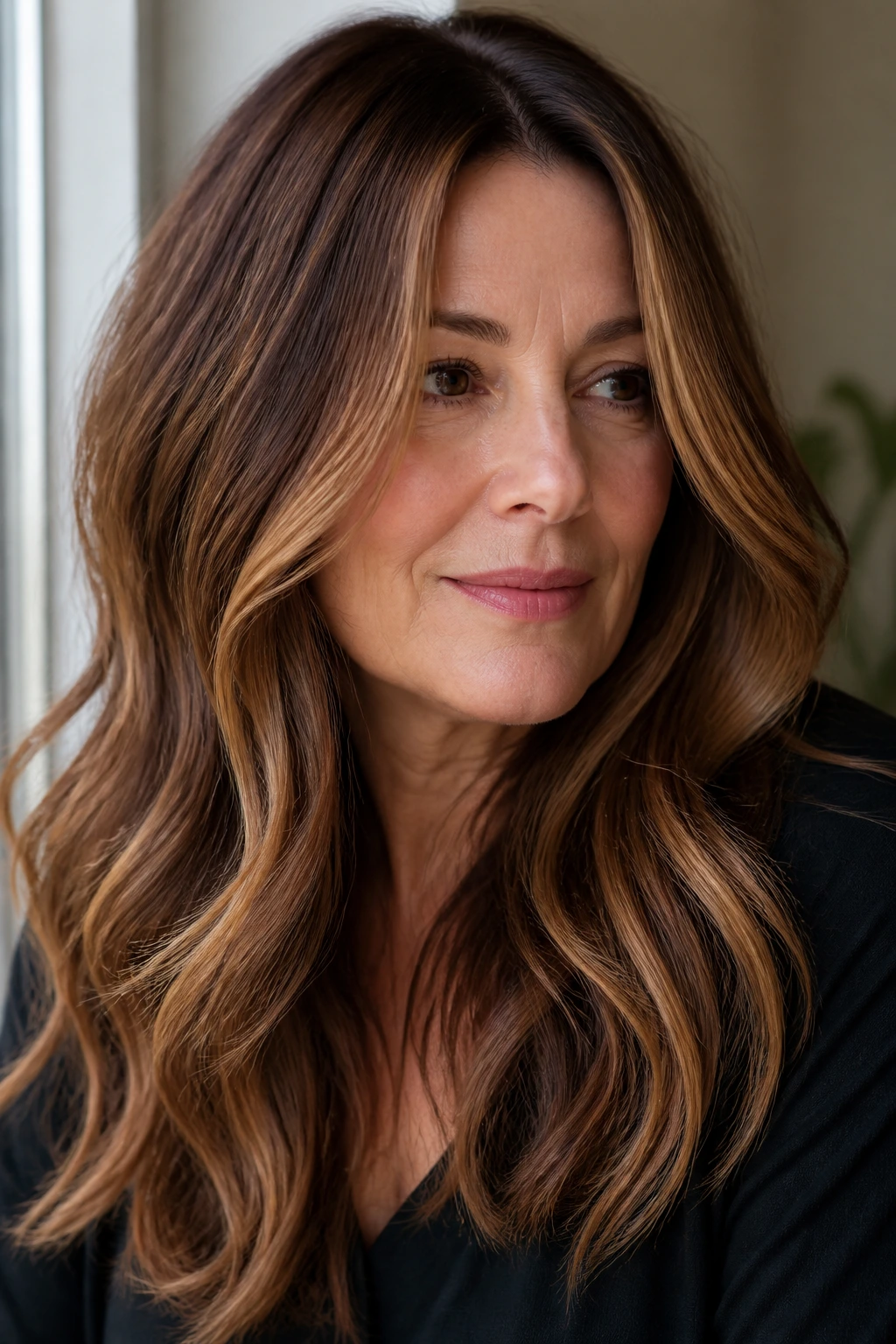
If your hair needs motion, not more darkness, this is the one. Chestnut brown balayage with caramel veils keeps the root deeper and hand-paints lighter ribbons through the face frame and upper lengths. It works because the eye reads contrast before it reads detail.
The nice part is that the caramel isn’t allowed to take over. On older women, that restraint matters. Too much lightening near the face can look loud on mature skin, especially if the haircut is already layered. A few veils around the cheekbone and jawline do enough work on their own.
I like this look on medium-length hair that bends easily, because the ribbons show up when the hair moves. Straight, one-length hair can carry it too, but the color sings more when there’s a soft wave or bend at the ends.
The grow-out is forgiving, which is half the appeal. You don’t get a hard stripe at the root. You get a softer transition that looks intentional even when your next appointment is still a few weeks away.
3. Smoky Chestnut Brown Root Melt
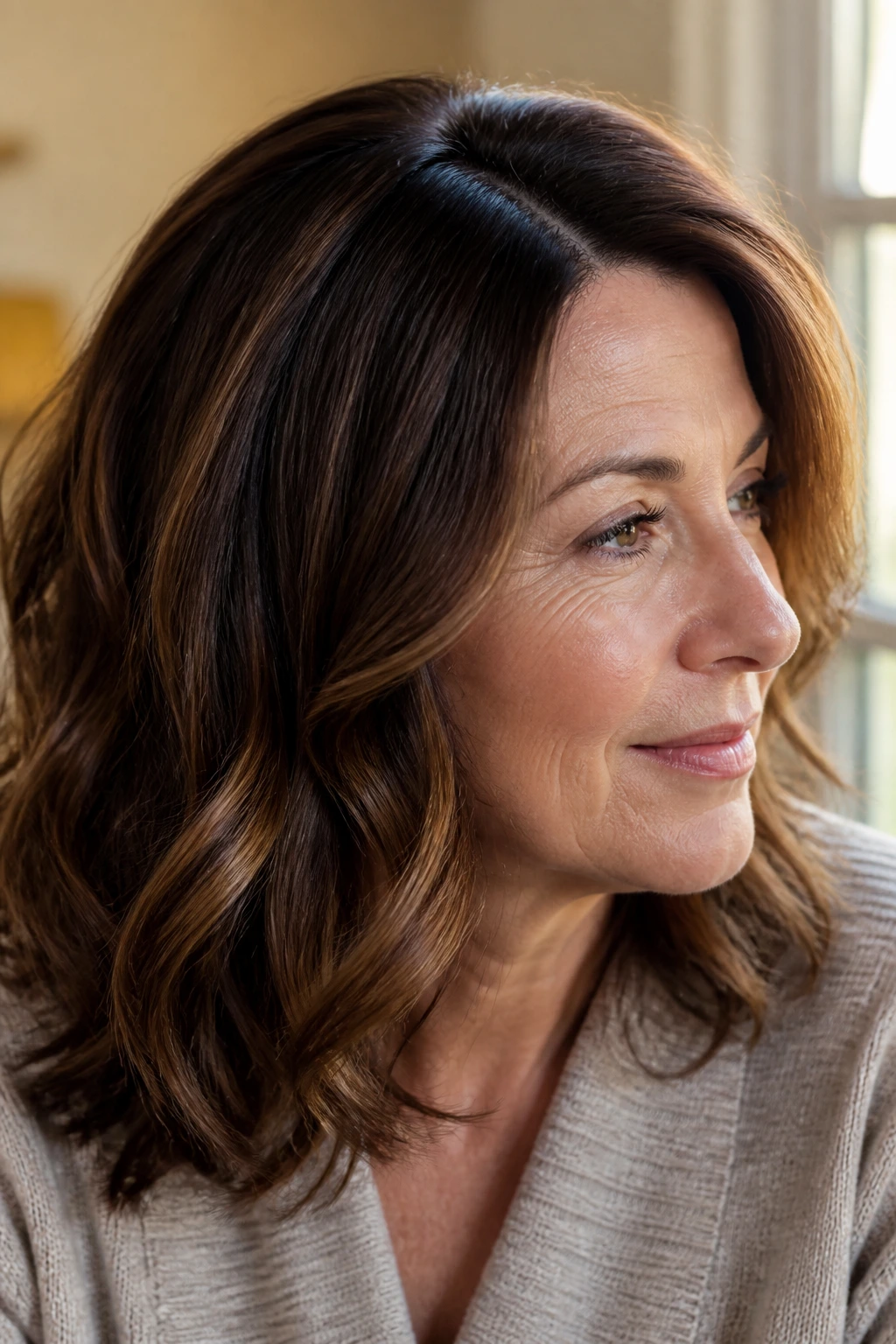
What if the root line is the part you dislike most? Then a smoky chestnut root melt makes sense. The root stays deeper — sometimes close to espresso — and it fades into a softer chestnut through the mids, which means the line between new growth and colored hair gets blurred instead of announced.
What to ask for
- A deeper root shade for the first inch or so.
- A chestnut midtone with a slightly cool finish.
- No chunky contrast; the transition should look feathered, not striped.
This is one of the smartest chestnut brown hair color ideas for older women who have a lot of gray at the part. It doesn’t pretend the gray isn’t there. It just makes the regrowth less distracting.
If your hair is fine, keep the root dark area narrow. Too much depth at the top can shrink the head visually, and that’s not the goal. The goal is lift, not weight.
4. Chocolate Chestnut Brown Bob
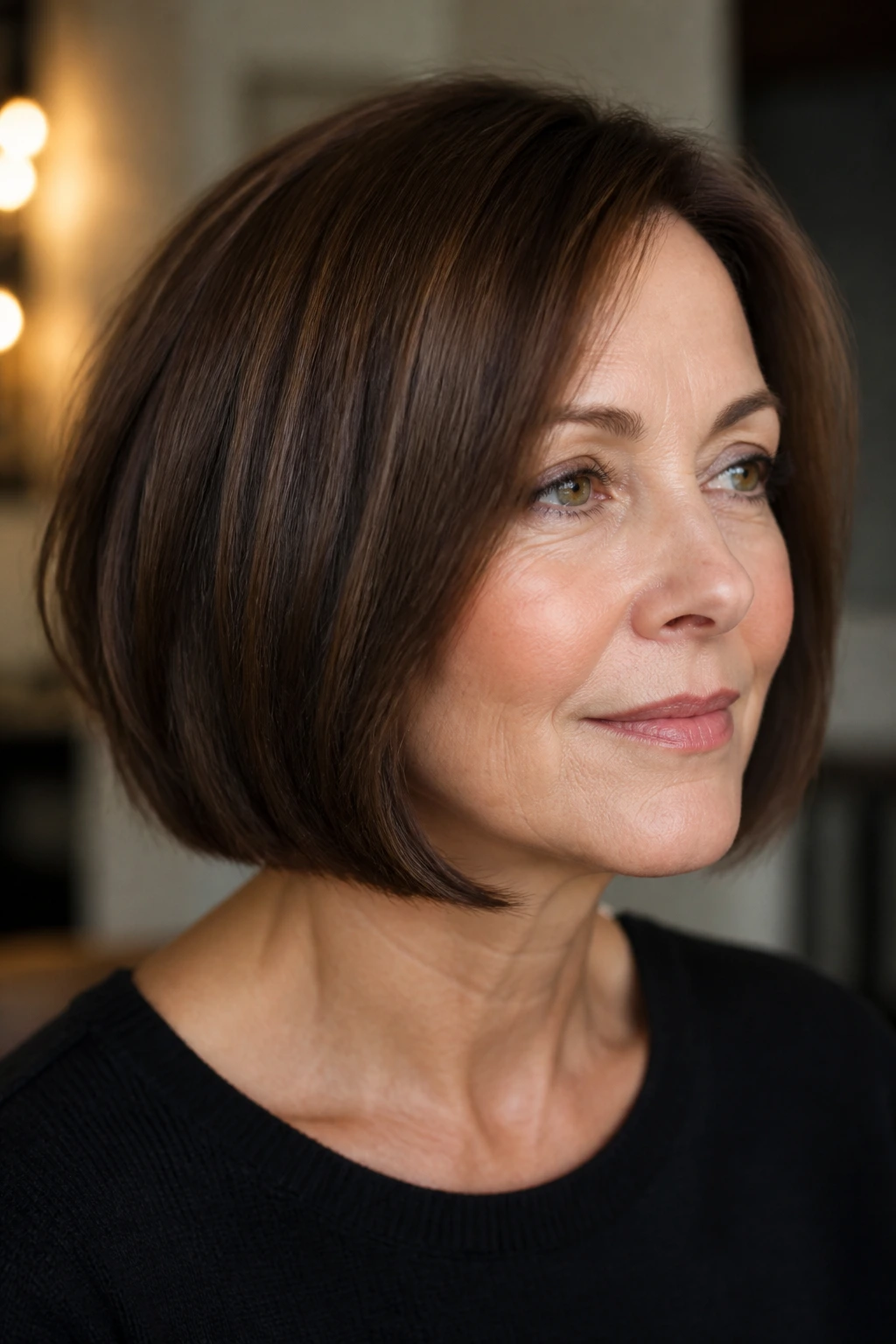
A blunt bob gives chestnut brown a very tidy frame. That clean edge matters. Chocolate chestnut on a bob looks sharper than the same color on long, loose hair because the haircut removes visual clutter and lets the shine sit on top.
I’ve always liked this choice for women who want their hair to look deliberate without looking fussy. The chin-length or jaw-length line catches light along the ends, and the chestnut undertone keeps the brown from turning flat or severe.
A bob also hides a little of the age-related stuff people worry about: thinner ends, uneven density, scattered grays. The cut compresses all that into a stronger shape. The color does the rest.
- Works best with a center part or a soft off-center part.
- Looks especially clean with a round-brush blowout.
- Stays polished when the ends are tucked in slightly under the jaw.
Small detail, big payoff: Ask your colorist to keep the top a half-shade deeper than the ends. That tiny shift makes the bob look thicker.
5. Cinnamon Chestnut Brown Layers
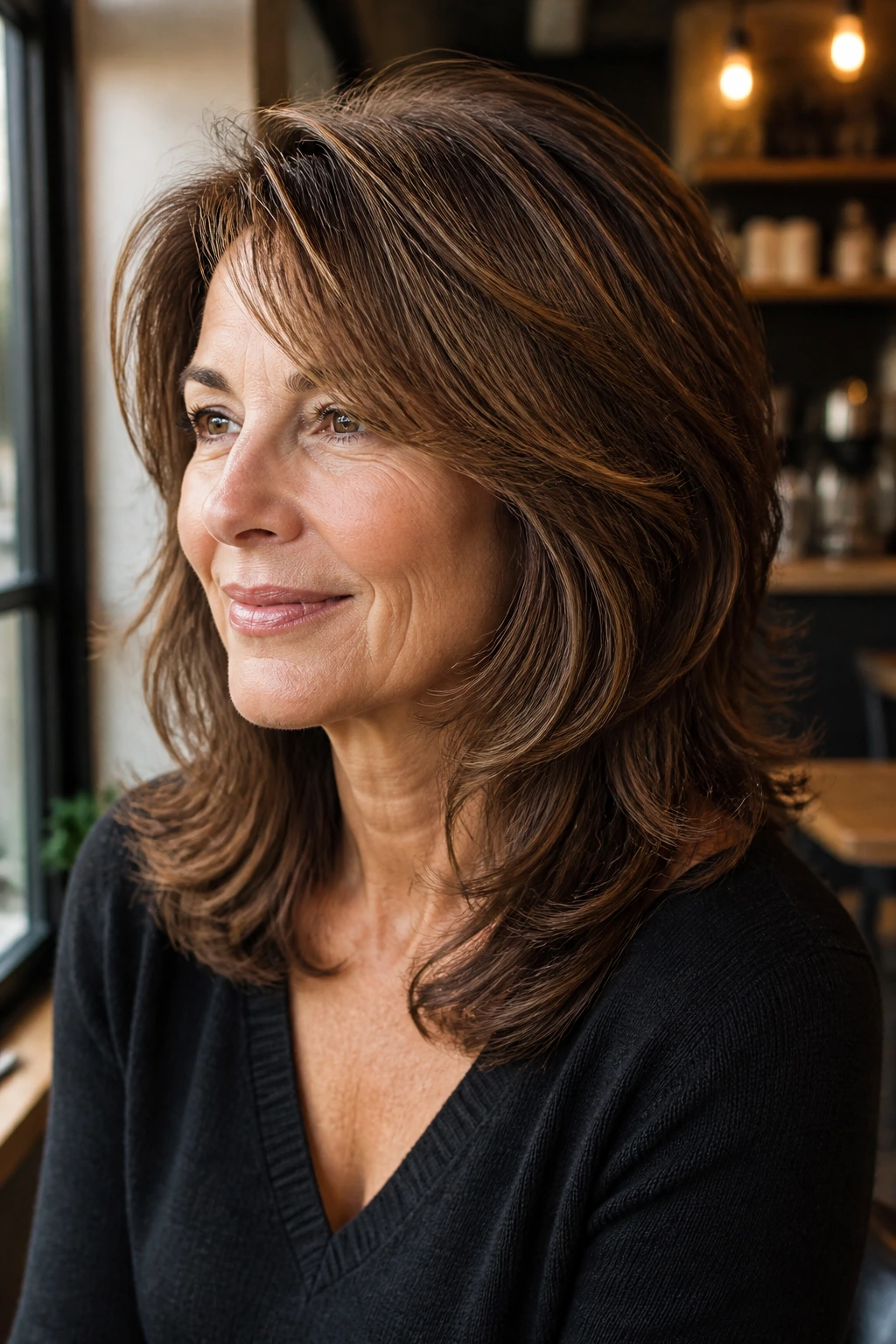
Cinnamon chestnut is warmer, brighter, and a little more animated than a neutral brunette. On layered hair, that warmth catches the movement in the cut and keeps the whole thing from reading as a solid brown mass.
The trick is balance. Too much cinnamon and the color starts to look copper. Too little and you might as well have stayed with plain brown. The sweet spot sits where the brown is still in charge, but the red-brown warmth shows up when light hits the side of the face.
This shade is especially kind to skin that has gone a bit sallow or pale over time. It gives the face some life back without needing a full red. If you already wear gold jewelry and warmer lipstick shades, the match is easy.
On layered hair, I’d ask for slightly deeper lowlights underneath and a warmer glaze on top. That keeps the layers visible from the first day instead of waiting for the color to settle.
6. Chestnut Brown Babylights for Gray Blending
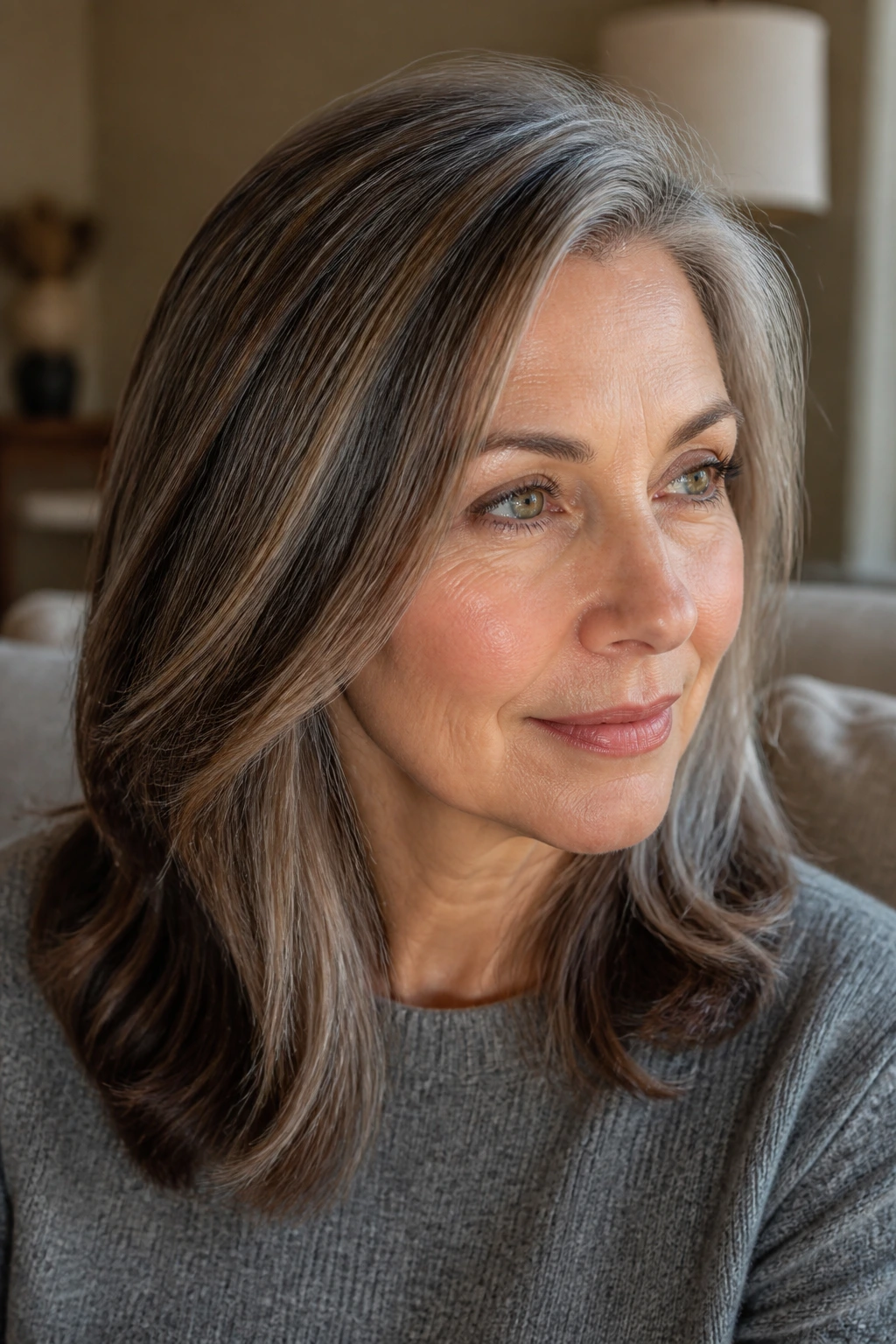
Babylights are tiny. That’s the point. They’re fine enough to slip between silver strands and break up regrowth without creating the chunky highlight effect that can look dated fast.
Unlike bigger highlights, babylights don’t ask the gray to disappear. They mingle with it. On older women, that makes a real difference. The hairline looks softer, the crown looks less patchy, and the color grows out in a much quieter way.
How to get the most from it
- Ask for very fine sections, especially around the part and temples.
- Keep the light pieces within one or two levels of your base.
- Pair the babylights with a chestnut gloss so the whole head still reads as brunette.
This is one of those looks that gets better when you don’t overdo it. A few tiny light pieces near the front and crown are enough. If the stylist starts placing broad ribbons everywhere, the whole thing loses the grace that made babylights useful in the first place.
7. Auburn Chestnut Brown Money Piece
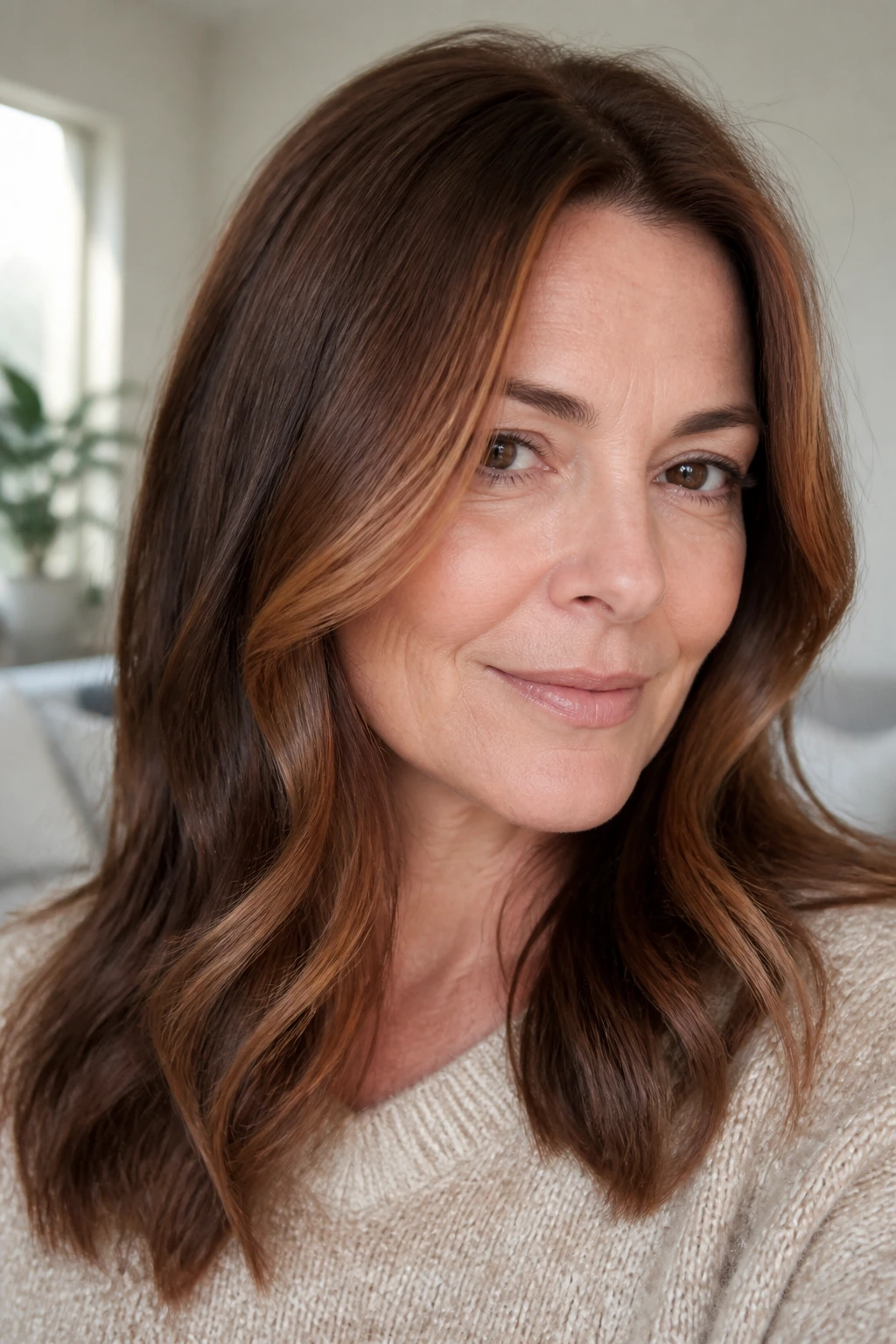
Do you want more lift around the face without going full copper? Then the auburn chestnut money piece is a clean answer. The front sections are brighter and warmer, while the rest of the hair stays chestnut, which means the face gets some glow without the whole head turning red.
That front brightness can do a lot for older faces. It brings attention upward, which helps when the jawline or neckline is starting to soften. It also makes eyes look a little clearer, especially on short bobs, long layers, or shoulder-skimming cuts.
Keep the money piece narrow if your hair is fine. A thick stripe can look too obvious and can make the color service feel younger than the haircut wants. Narrower placement is smarter, and frankly, prettier.
I’d pair this with a neutral chestnut base rather than a warm brown base. That keeps the front sections from drifting too far into orange.
8. Mocha Chestnut Brown Lob
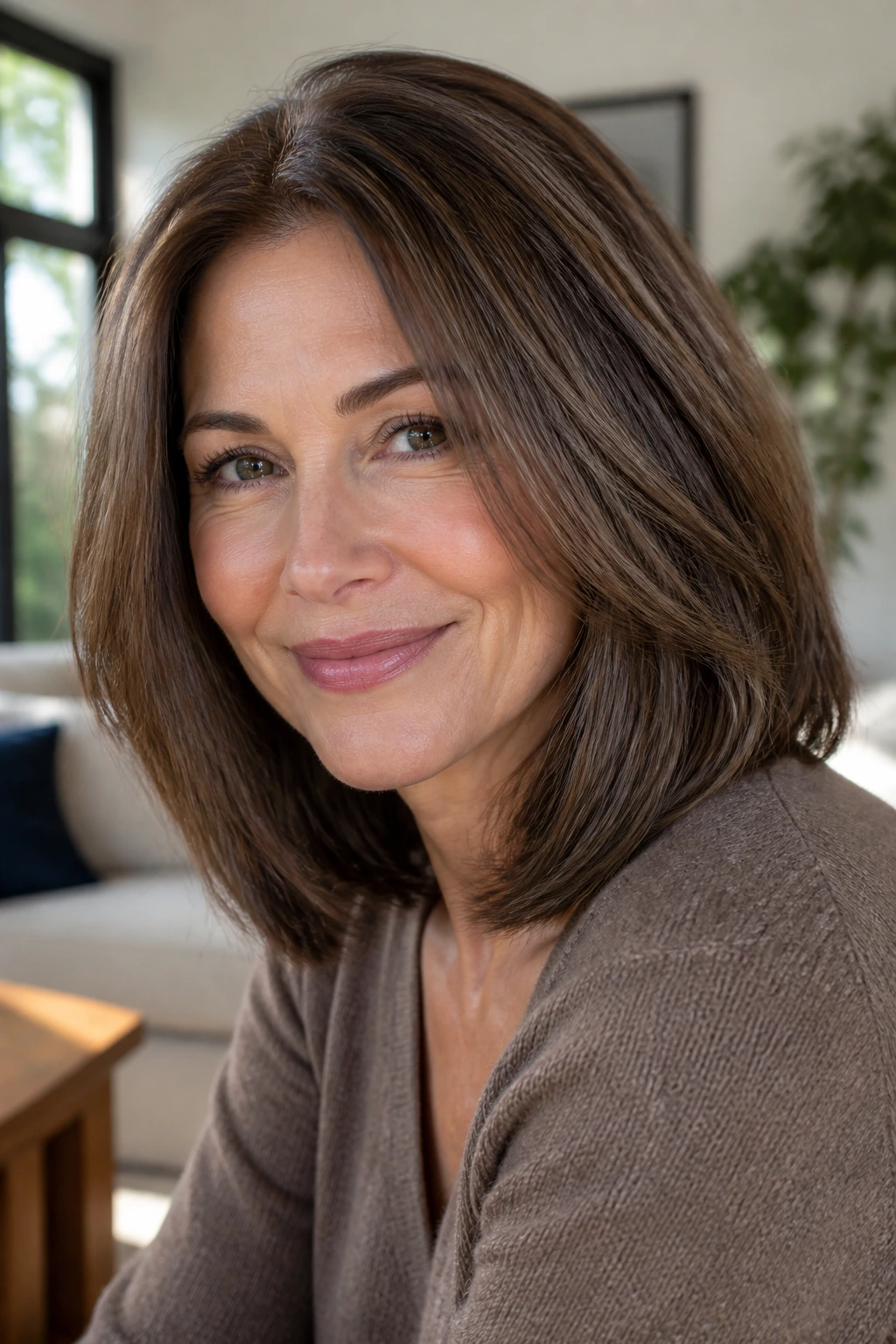
Mocha chestnut is the safe place to land when you want brown to look clean, not muddy. It sits between rich brunette and soft neutral brown, and on a lob it reads polished instead of heavy.
The length matters here. A lob gives the color enough surface area to show tone shifts without dragging the hair down. Chestnut mochas on shorter cuts can look sharper than they should; on a lob, they soften a little and gain movement.
This is a good choice if your wardrobe leans navy, cream, charcoal, or black. The color doesn’t fight those shades. It sits beside them quietly and makes the face the focal point.
The key is shine. Mocha chestnut needs a glossy finish or it can flatten out, especially on hair that’s naturally coarse. A light serum on the ends and a smooth blow-dry keep it from looking dusty.
9. Chestnut Brown Pixie with Piecey Texture
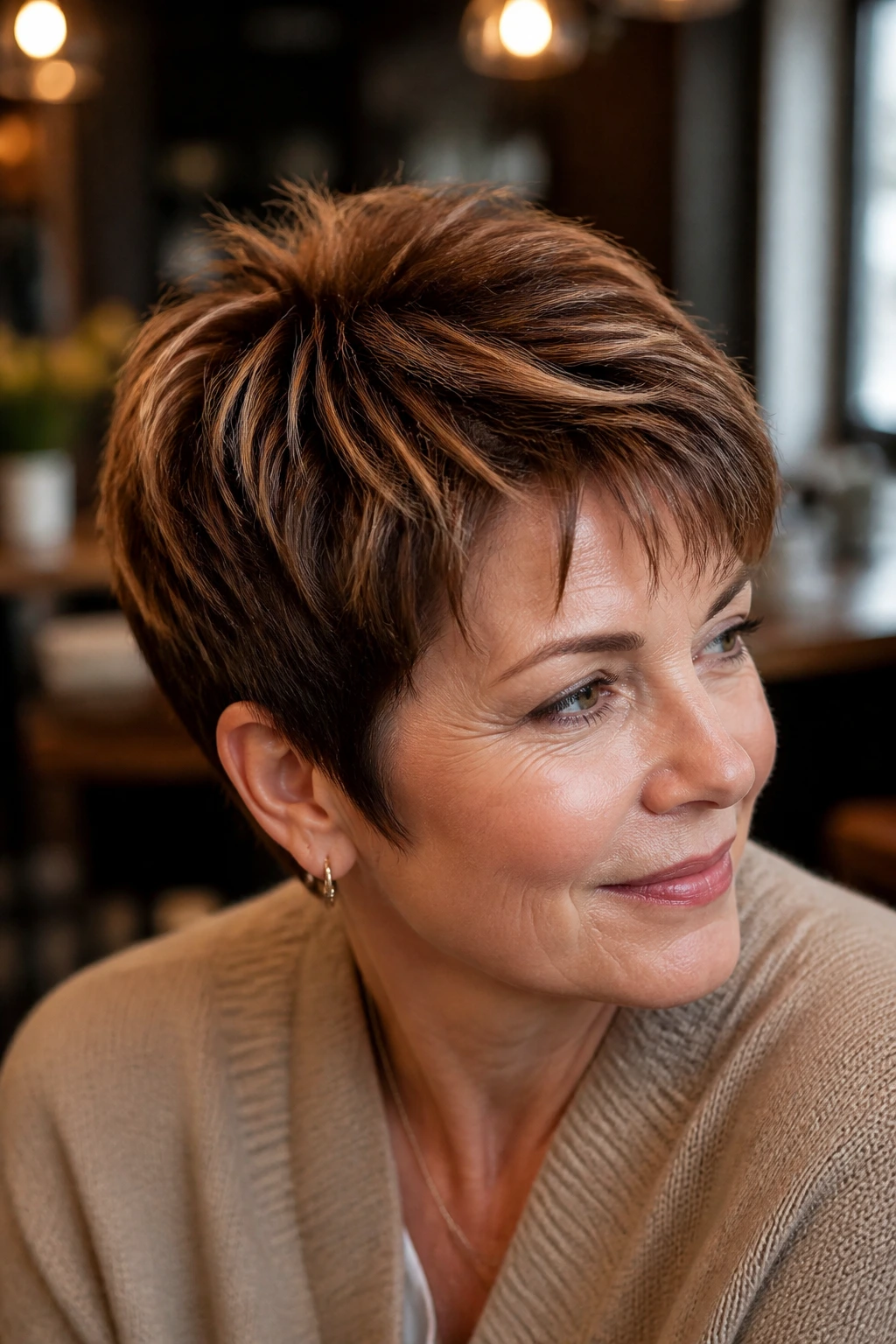
Short hair can look flat when every strand is the same shade. A chestnut brown pixie fixes that by giving the cut a little depth at the nape and a little light at the top layers, so the texture reads in the hair instead of just in the styling.
This look works beautifully for women who like low fuss but still want color that has shape. The front can stay slightly lighter, the sides a touch deeper, and the crown can pick up a bit more reflection. Small shifts. That’s all it needs.
A piecey finish helps. A tiny bit of styling paste or light wax, worked through dry hair, separates the ends and shows off the different brown tones. Without that, the pixie can collapse into one dark shape.
If your hair is fine, stay away from a black-brown base. Chestnut gives you the illusion of density without making the pixie feel hard.
10. Toffee Chestnut Brown Waves
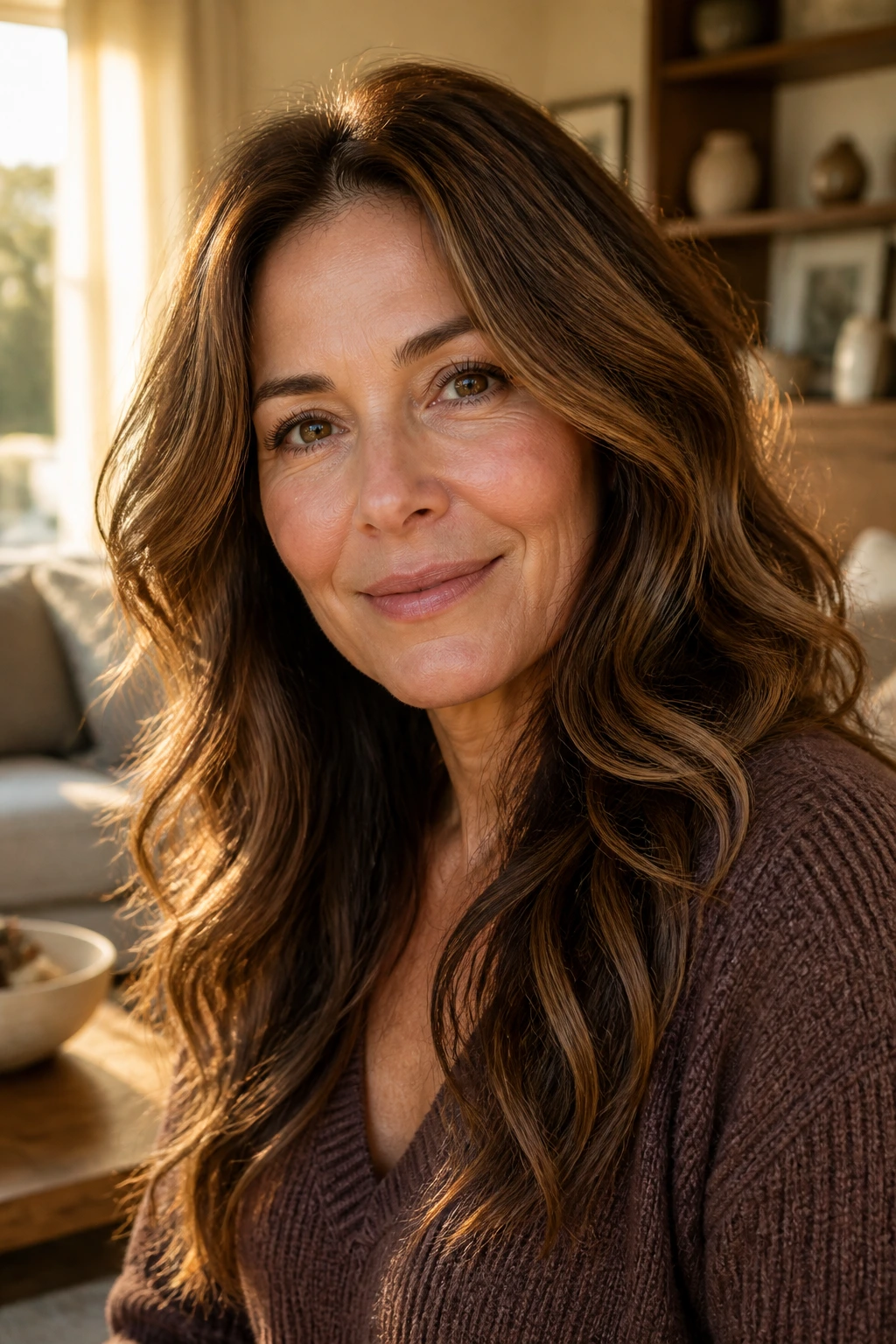
Toffee chestnut is for women who want softness with a little lightness through the ends. The toffee pieces sit inside the chestnut base, so the color looks sun-touched rather than striped.
Waves make this one come alive. On straight hair, the contrast can feel too polite. On a loose wave, the lighter pieces and deeper brown fold into each other and create that old-fashioned brunette richness people usually try to fake with too many highlights.
It’s a useful choice if your hair has gone a bit flat but you do not want to move into blonde territory. The toffee keeps the chestnut from looking heavy. The chestnut keeps the toffee from looking brassy.
I’d keep the root close to your natural shade and place the lighter pieces from cheek level down. That keeps the top grounded and lets the movement happen where the eye naturally lands.
11. Cool Beige Chestnut Brown
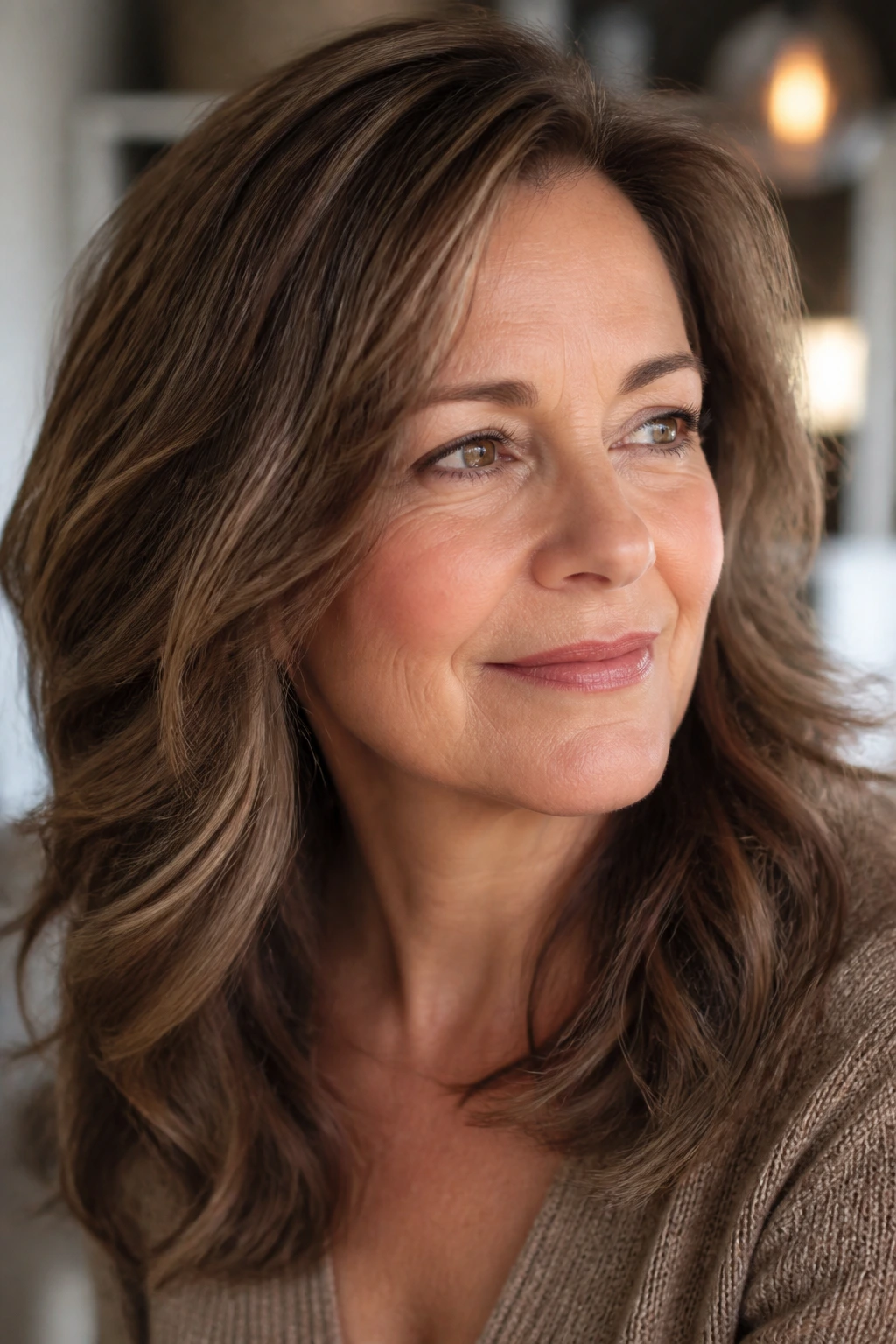
Not every chestnut has to lean warm. Cool beige chestnut keeps the brown smoky and soft, with just enough beige to avoid the dullness that colder browns can bring. If warm tones make your skin look red or flushed, this is the smarter lane.
The difference shows up fast. Warm chestnuts glow. Cool beige chestnuts calm. On mature skin with a lot of pink, redness, or surface texture, that calm can be more flattering than shine alone.
What makes it different
- Less red, more smoke.
- Softer reflection around the face.
- A cleaner match for silver jewelry and cool-toned makeup.
This version likes a sleek blowout, a long bob, or brushed-out waves. The finish should feel smooth, not frizzy. If the hair gets too rough-textured, the cool tone can read flat, so a shine spray or light gloss matters.
12. Chestnut Brown Ombré for Long Hair
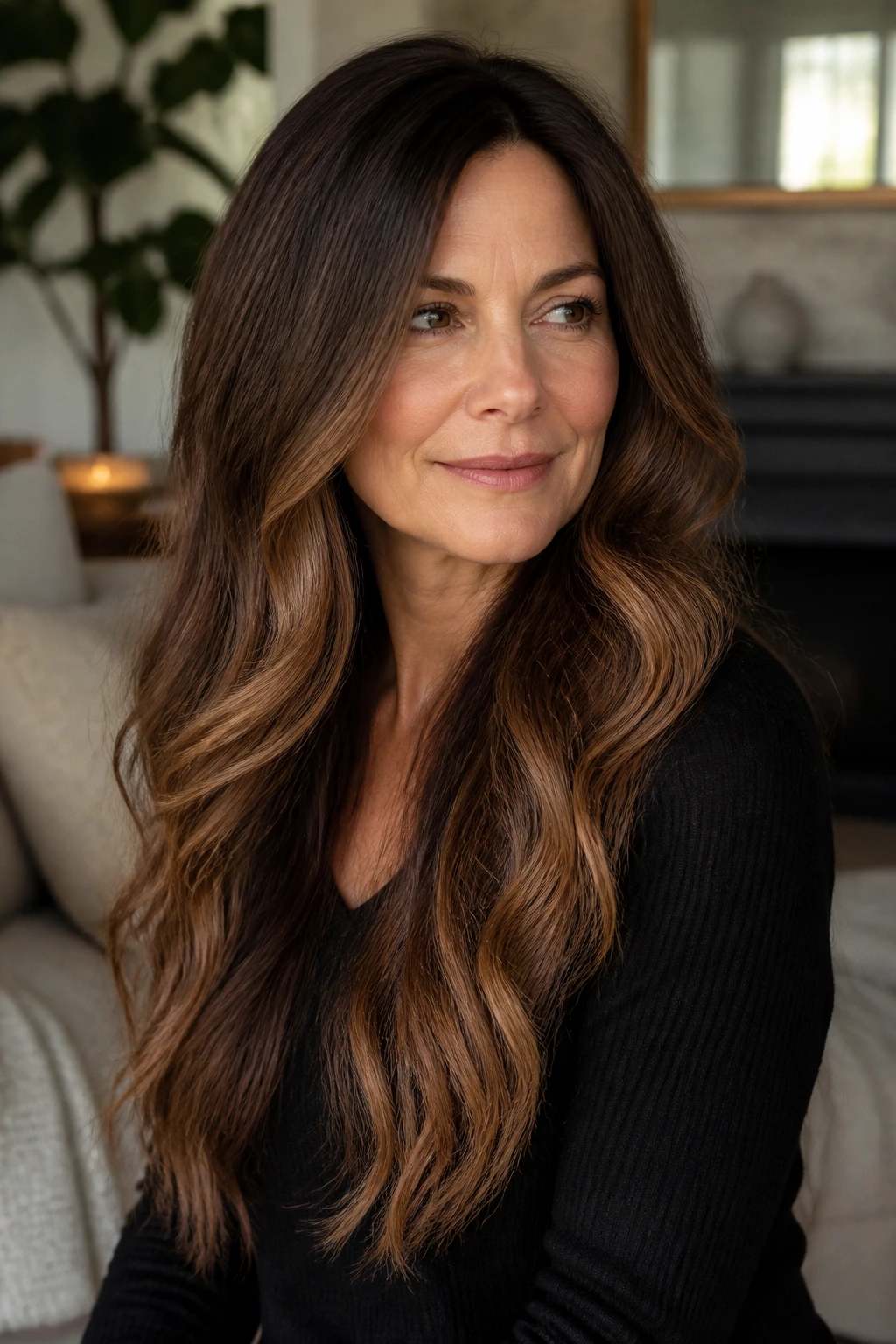
Long hair can carry more color movement than a bob can, and chestnut brown ombré uses that space well. The roots stay deeper, then the mids and ends soften into a lighter chestnut or toffee-brown finish.
That gradual shift is useful for older women who don’t want to keep chasing root touch-ups. The grow-out line sits lower on the head, so the transition feels quieter. It also lets the ends look more alive, which matters when long hair has started to thin out.
The ombré should not be dramatic. I’m not interested in a dark-to-blonde jump here. The best version stays in the brown family the whole way through. You want dimension, not a high-contrast dye job.
Soft layers help the color move. Without them, the ombré can sit like bands. With them, the shade change feels woven through the length.
13. Velvet Chestnut Brown with Lowlights
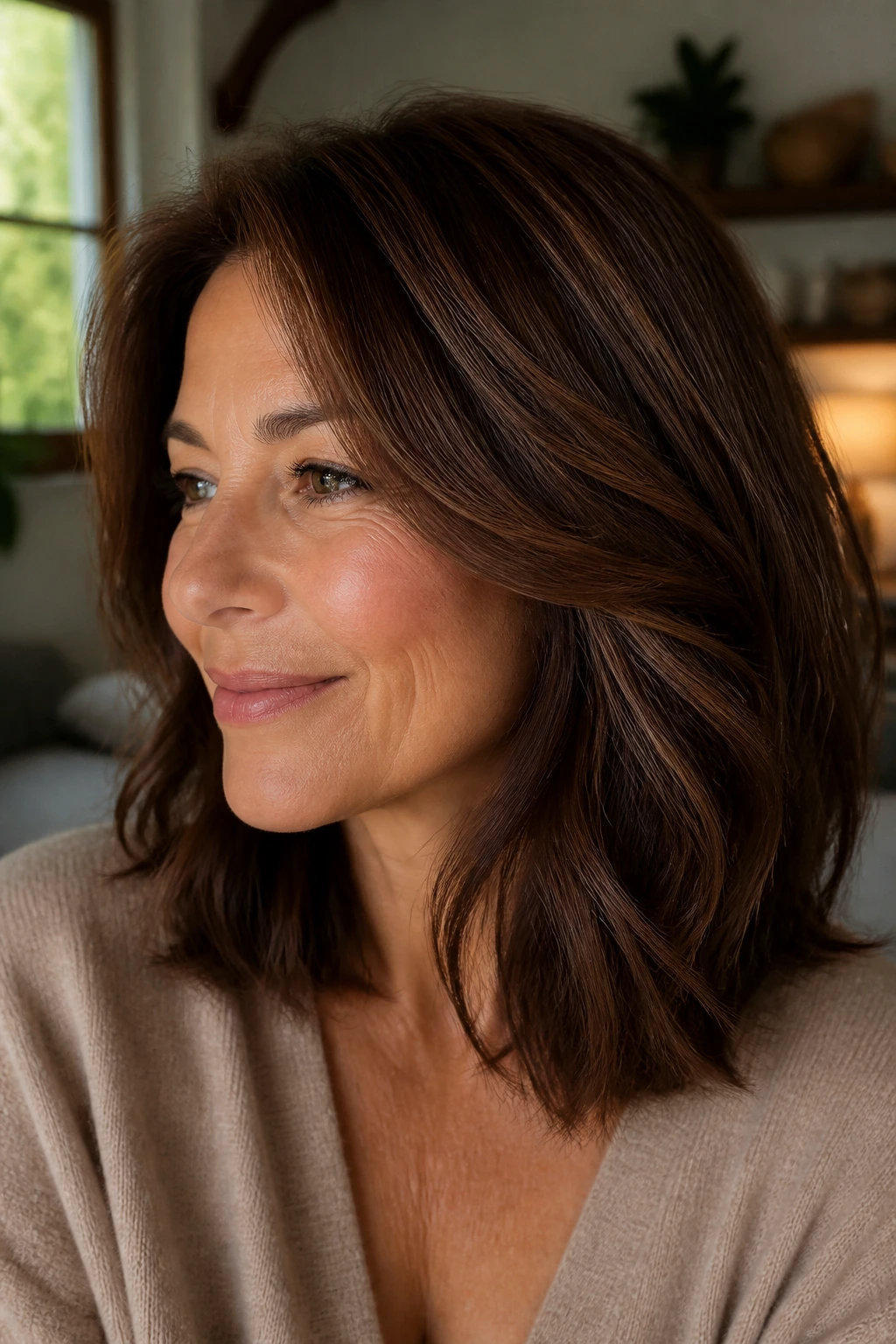
Why do some brunettes look thick and others look see-through? A lot of it is shadow. Velvet chestnut with lowlights adds those shadows back in, which is why the color reads fuller and richer on thinner or finer hair.
Lowlights are the unsung part of chestnut color. Everyone talks about brightness. I care about depth. If the hair is too uniformly light brown, the head can look washed out, especially around the crown. A few deeper ribbons inside the hair solve that.
Where the shadows go
Put the lowlights underneath the top layer and around the back of the head, where they won’t muddy the face. The top layer can stay chestnut and glossy. The hidden depth underneath does the thickening work.
This is a good option if you wear your hair in a side part, a blowout, or soft curls. The lowlights peek through just enough to make the shape look denser.
14. Chestnut Brown and Silver Blend
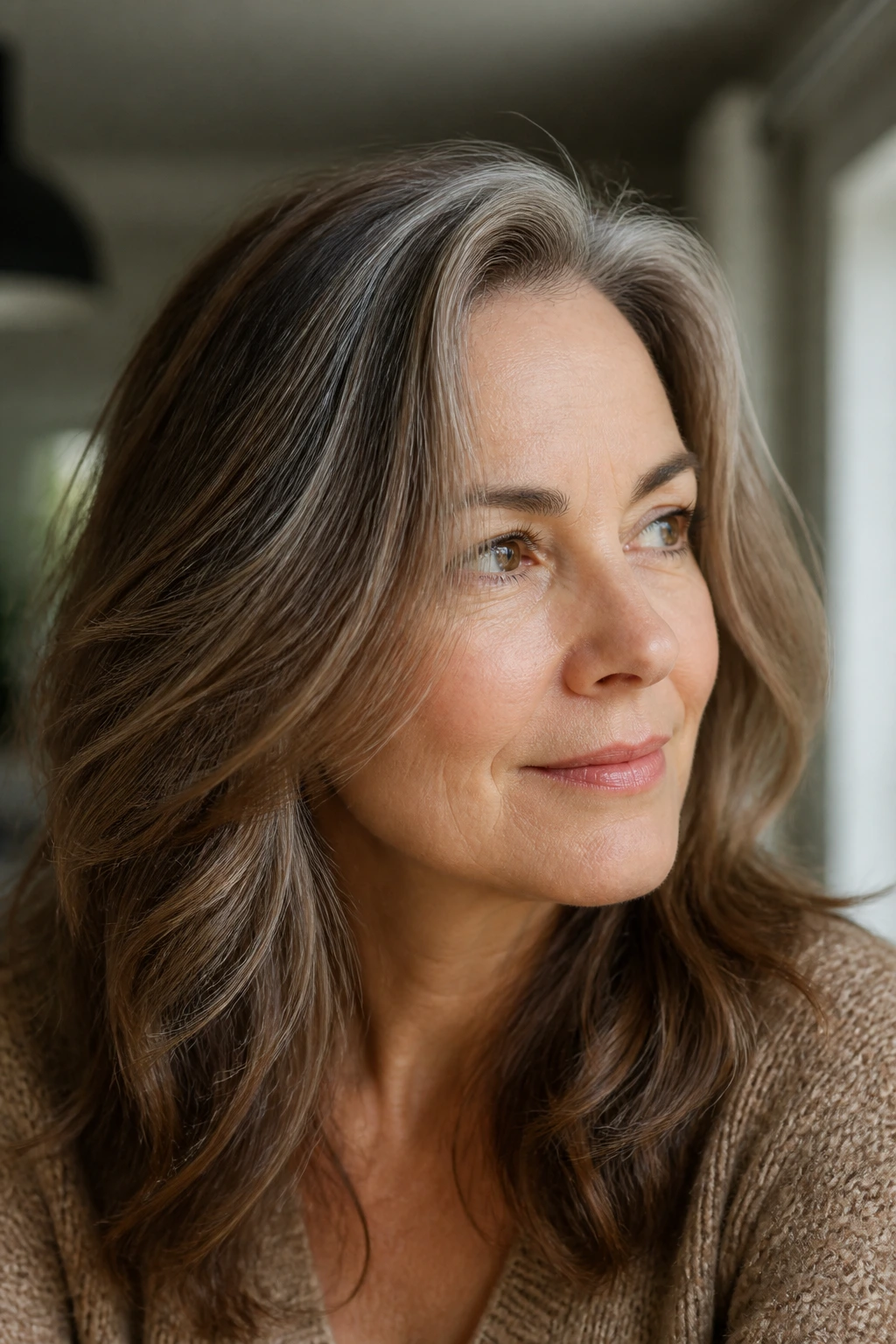
Sometimes the smartest move is to stop pretending the silver has to vanish. Chestnut brown and silver blend lets both colors stay visible, which gives the hair a softer, more natural life than full coverage sometimes does.
The reason this works is simple. Silver and chestnut create contrast, but not the ugly kind if the placement is careful. Instead of a hard root line, you get a salt-and-bronze look that feels honest and polished at the same time.
I’d pick this for women who are tired of constant root appointments. It’s especially strong if the silver is concentrated at the temples, crown, or hairline, because those spots can be blended instead of erased.
The best version uses a glossy chestnut base and leaves a few silver strands visible through the top layers. That quiet mix is more modern than blanket coverage, and it doesn’t look like you’re wrestling with the hair.
15. Rosewood Chestnut Brown Shine
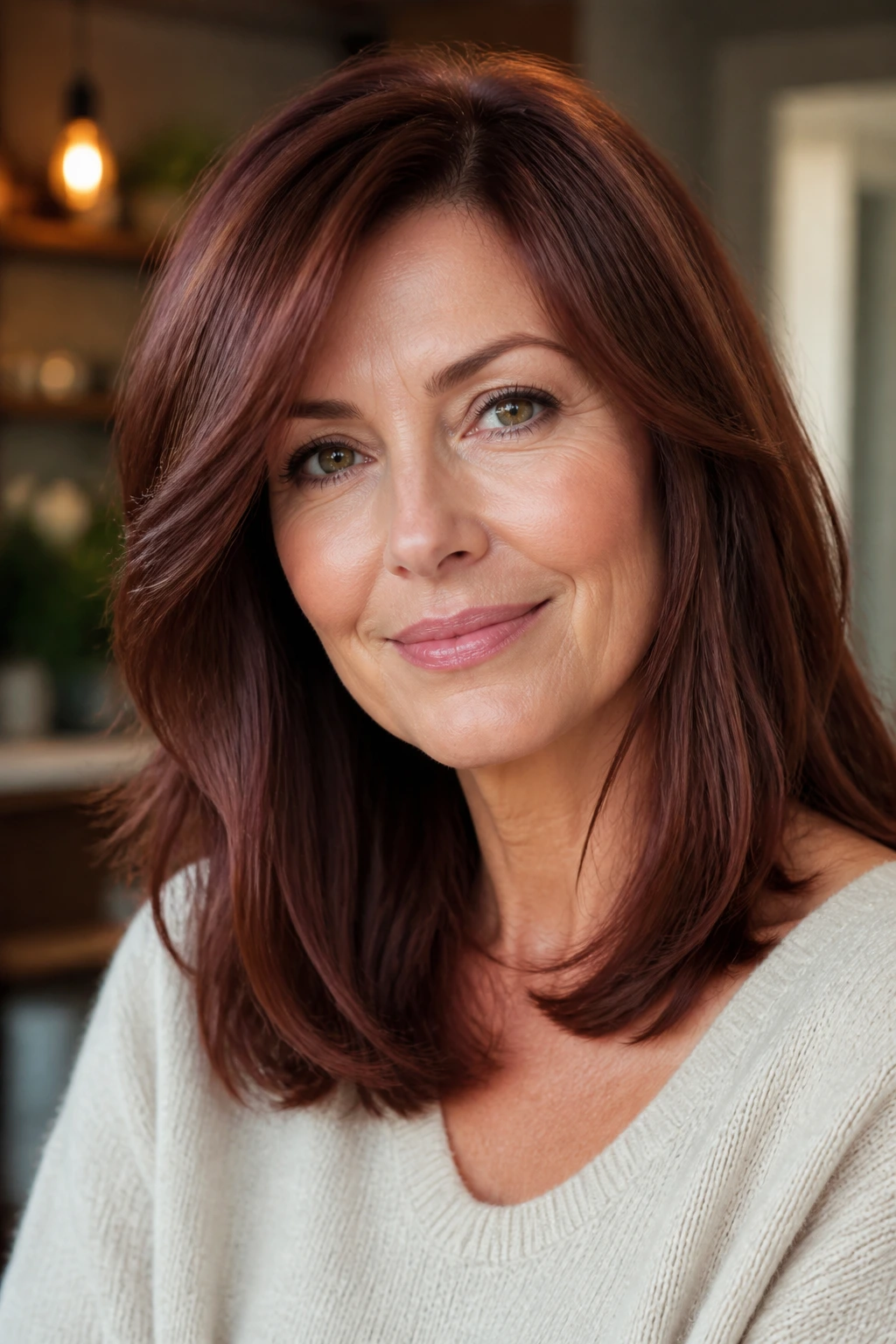
Rosewood chestnut is a brown with a muted rosy cast. It’s not red. It’s not plum. It just has that soft, grown-up warmth that makes skin look less tired.
I like it on women whose coloring leans pink, neutral, or cool but who still want some richness in the hair. The rose note lifts the face without turning the whole head into copper. That’s the part that makes it wearable.
This shade works well on shoulder-length cuts, especially when the ends are rounded a little with a brush or curling iron. The rosy reflect can disappear if the hair is dry and rough, so a gloss matters here more than people expect.
If you wear berry lipstick, cream sweaters, or soft gold jewelry, the match is clean. The hair color doesn’t need to shout. It only needs enough warmth to keep the face from going pale.
16. Chestnut Brown Shag with Fringe
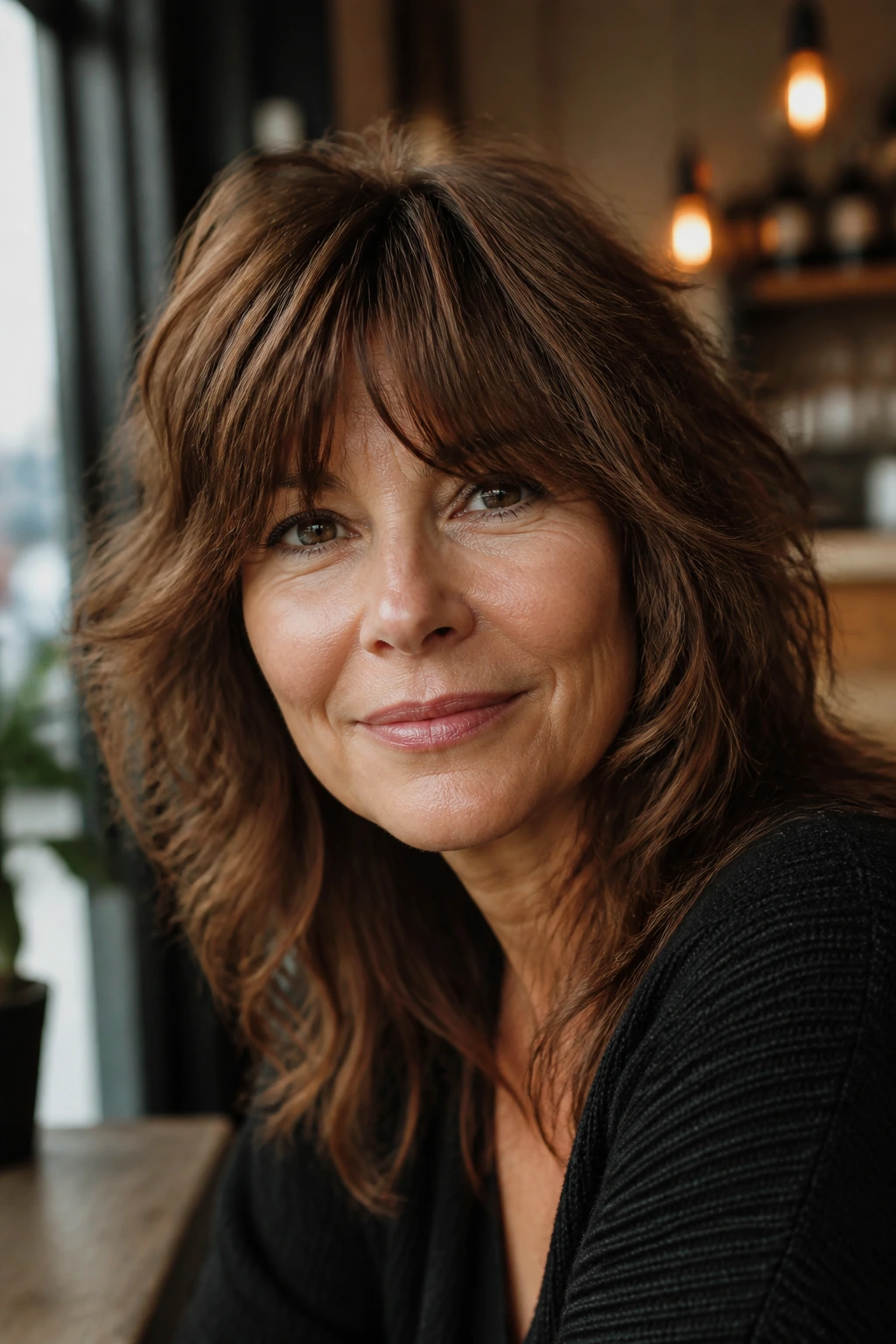
A shag cut changes the way chestnut brown reads. The layers break the color into pieces, and the fringe adds a soft frame right at the eyes. That matters when you want motion and a little edge without losing softness.
Unlike a blunt cut, a shag doesn’t depend on the color being perfectly even. The texture does some of the work for you. Chestnut brown in a shag looks casual in the best way, because the layers catch light at different angles and keep the color from sitting still.
This is a strong pick if your hair has some wave or if it tends to puff a bit in humidity. The fringe keeps the face soft. The layers keep the bulk from building up at the sides. Chestnut pulls the whole shape together.
I’d keep the top a touch lighter than the ends so the fringe doesn’t disappear into the rest of the cut.
17. Espresso-Chestnut Brown for Fine Hair
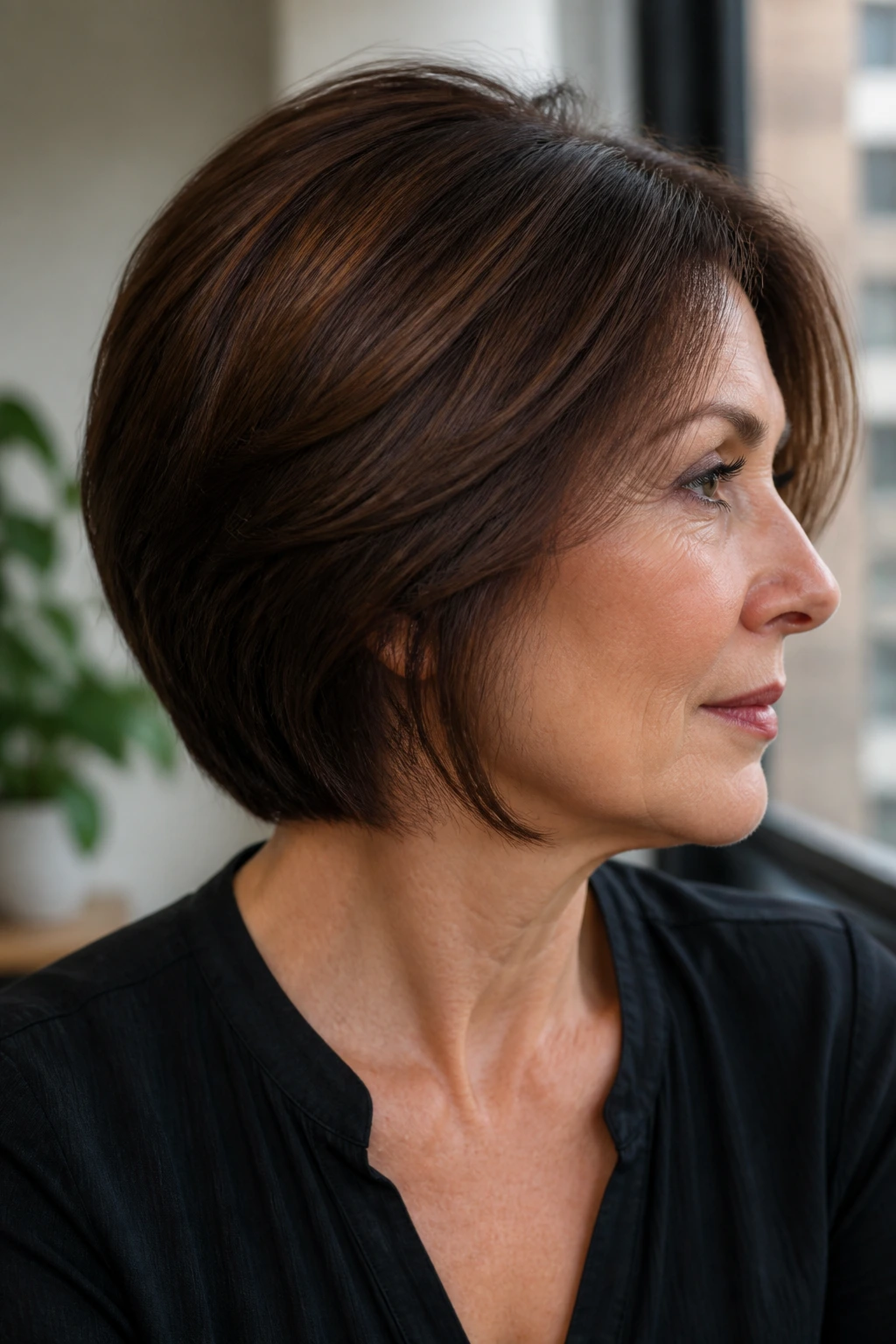
Can a darker brunette make fine hair look fuller? Yes, if you stay away from true black and choose espresso-chestnut instead. The depth gives the hair a firmer outline, and the chestnut warmth keeps it from looking flat or ink-dark.
Fine hair often benefits from a color that defines the edges. Espresso-chestnut does that without creating the hard, helmet-like look that a pure black-brown can cause. Around the crown, a little shadow is useful. It makes the hair feel denser.
This works especially well on straight styles, neat bobs, and smooth blowouts. The smooth surface reflects light, which keeps the darker shade readable. If the hair is frizzy, the color can look dull, so the finish matters.
I’d keep any highlights very subtle here. Too much contrast will make the hair look thinner, not fuller.
18. Maple Chestnut Brown Curls
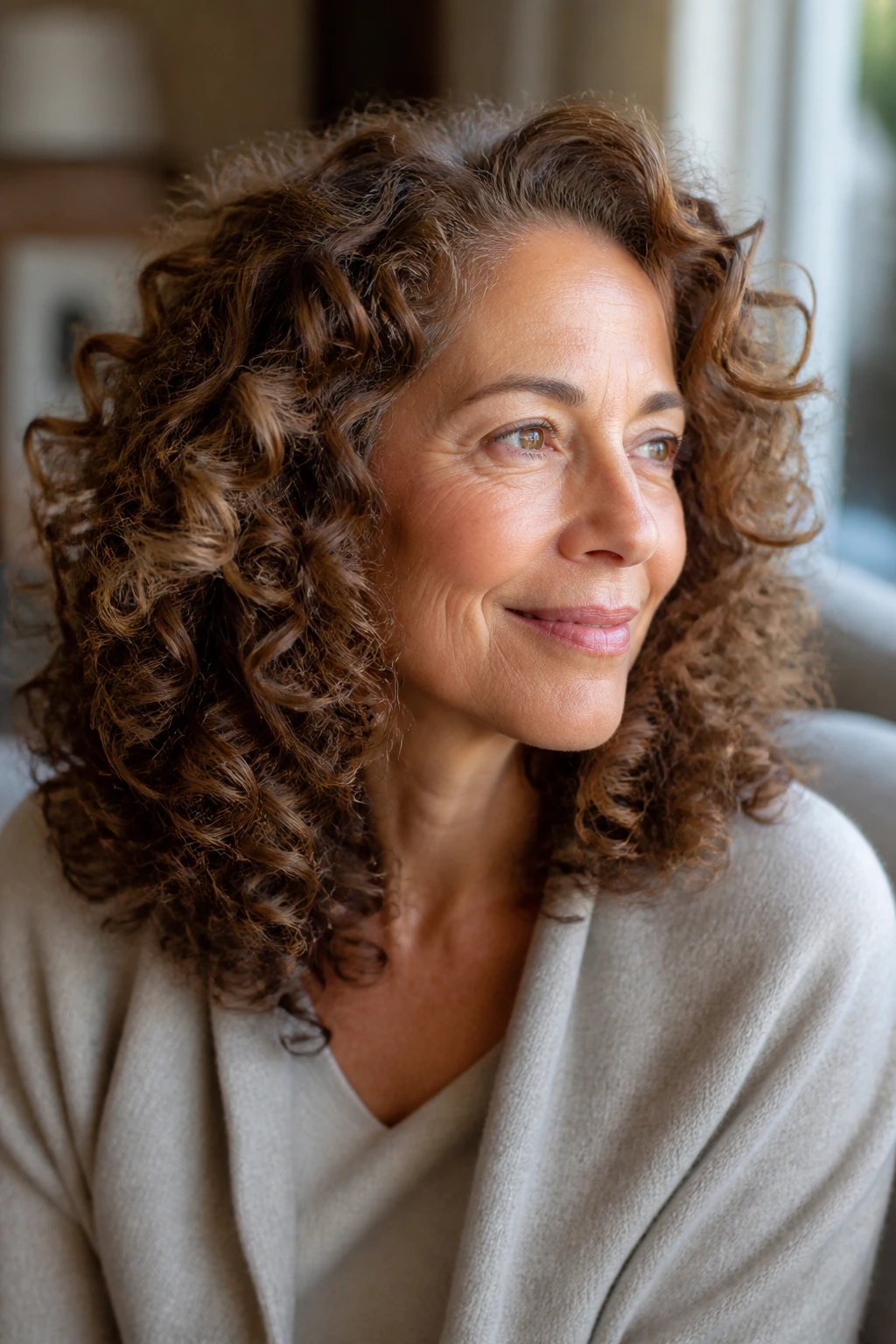
Curls need a color that can move with them, not sit on top of them like a shell. Maple chestnut brown does that. The maple warmth shows up on the outer curl pattern, and the chestnut depth holds the shape together underneath.
The result is lively without being bright. That’s what makes it work for older women with curly hair. A flat brown can make curls look heavy. A too-light highlight pattern can make them frizzy. Maple chestnut keeps the curl pattern readable and warm.
Diffusing helps here. So does a light curl cream that doesn’t leave a chalky cast. The color looks best when the curl clumps are defined and the surface still has some shine.
If your curls are gray in patches, this is a nice way to work with the silver instead of painting over every strand. The warm brown and silver mix looks intentional when the curls are separated and soft.
19. Multi-Dimensional Chestnut Brown with Face-Framing Highlights
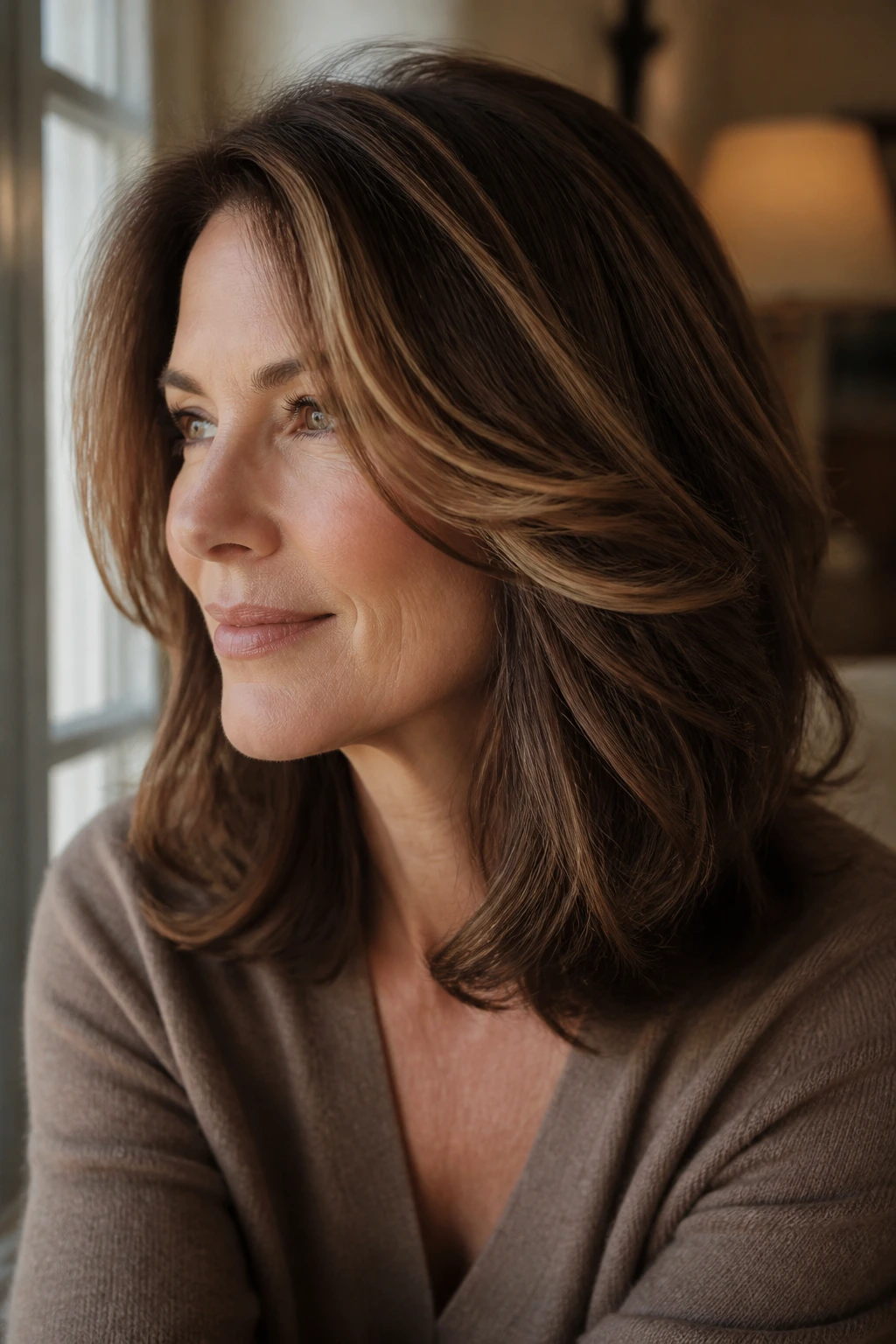
This is the one I’d pick for a woman who wants the most complete chestnut story. The base stays rich and chestnut brown, the face frame gets a few brighter ribbons, and the interior gets a little shadow so the whole head has movement.
It’s a balanced look. Not too warm. Not too cool. Not too dark. The lighter pieces around the face do the lifting, especially near the cheekbones and temples, while the deeper brown underneath gives the hair weight and polish.
If your haircut has layers, this color will show them off right away. If your hair is straighter, the face-framing ribbons still keep the front from disappearing into one brown sheet. That’s the real value here: the color has a job.
Ask for the lightest pieces to stay close to your natural undertone. You want brightness, not a blonde frame that competes with the rest of the hair. When it’s done well, the face looks fresher and the haircut looks more expensive without trying too hard.
What Chestnut Brown Needs to Look Rich, Not Flat
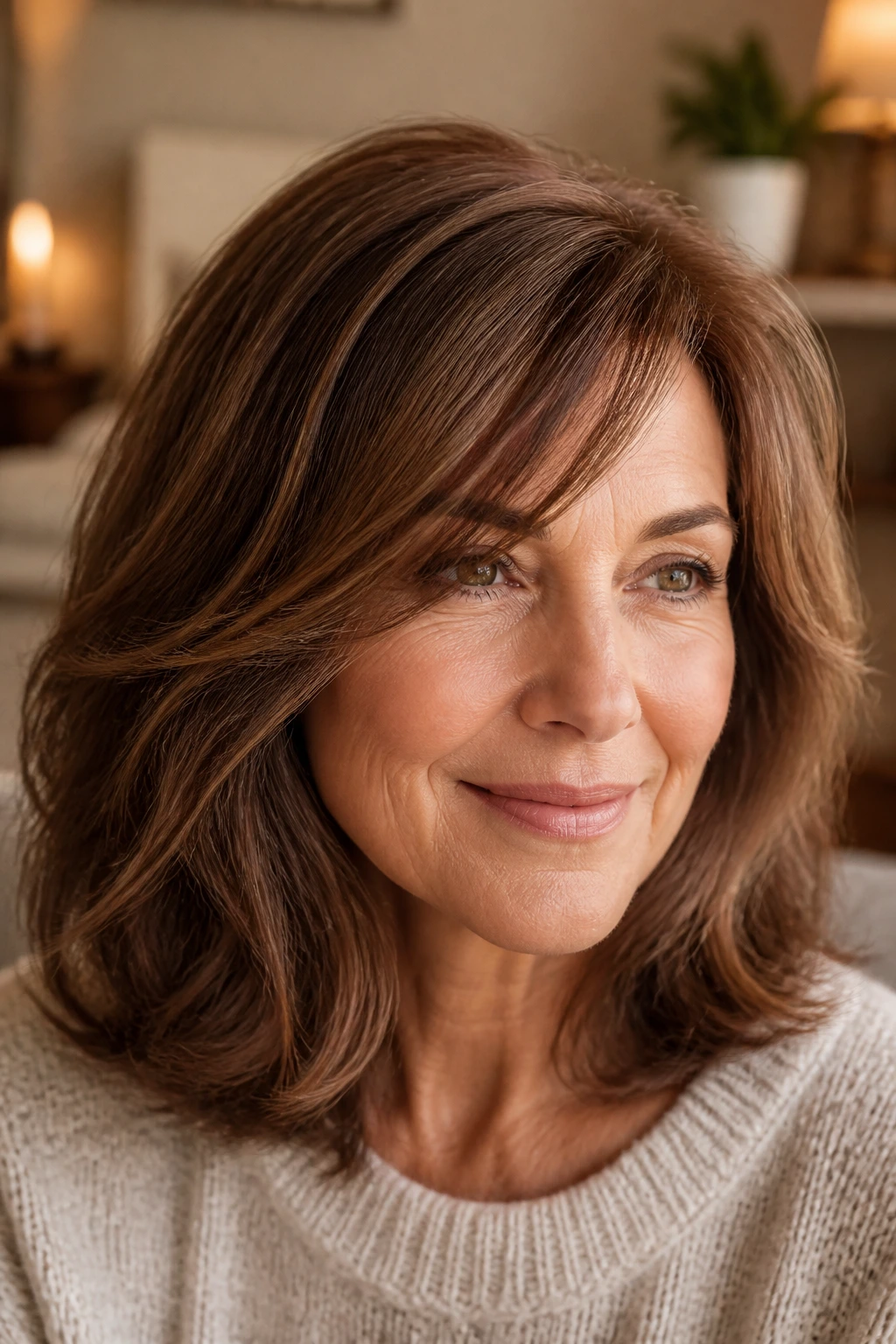
Chestnut brown can go sideways fast if every section is the same depth. Flat brown is the enemy. It sits there, matte and heavy, and it usually makes dry mature hair look even drier than it is.
The fix is usually a mix of depth, warmth, and shine. Too much warmth and the color turns copper. Too much ash and it can look dusty. The sweet spot sits in the middle, where the brown still feels grounded but the red-brown note gives the hair a pulse.
Pick the depth first
If your natural hair is medium brown, a level 5 or 6 chestnut usually gives enough change without looking like a costume. If your hair is already dark, a level 4 or 5 chestnut can keep the result rich. Going too dark on mature skin is where people get into trouble. The face starts to look harder, not cleaner.
Match the undertone to the skin
Warm or neutral skin usually likes cinnamon, maple, toffee, or auburn-chestnut. Cooler skin tends to look better with beige, smoky, or rosewood chestnut. That doesn’t mean you must obey a color chart like a machine. It just means the hair and face should stop arguing with each other.
Respect gray resistance
Gray hair resists pigment. It doesn’t take color the same way the rest of the head does, and that’s why a single all-over formula can look patchy. Permanent color at the root, demi-permanent through the mids, and a gloss on top is often a better mix than one heavy formula from scalp to ends.
That’s the part most people miss. The best chestnut usually has more than one brown in it.
Essential Tools and Products for These Looks
-
Reference photos on your phone: Bring two or three in daylight and indoor light so your colorist can see the tone shift clearly.
-
Color-safe shampoo and conditioner: A sulfate-free set keeps chestnut from washing out too fast, especially if your hair is porous.
-
A weekly deep-conditioning mask: Dry mids and ends need this, or the chestnut will look dull no matter how good the formula is.
-
Heat protectant spray: Chestnut can turn orange or flat when hot tools are used bare-handed on the hair.
-
Shine serum or lightweight oil: Use a tiny amount on the ends and around the face frame to keep the color reflective.
-
Root touch-up powder or spray: Handy for the in-between weeks when gray regrowth is showing at the part.
-
Sectioning clips and a tint brush: Useful if you color at home or just want to understand the technique better.
-
A wide-tooth comb: Helps distribute gloss or conditioner without roughing up the cuticle.
-
Blue shampoo for brunette brass: Optional, and only if your chestnut is tipping orange rather than red. Use it sparingly.
How to Choose the Right Chestnut Formula
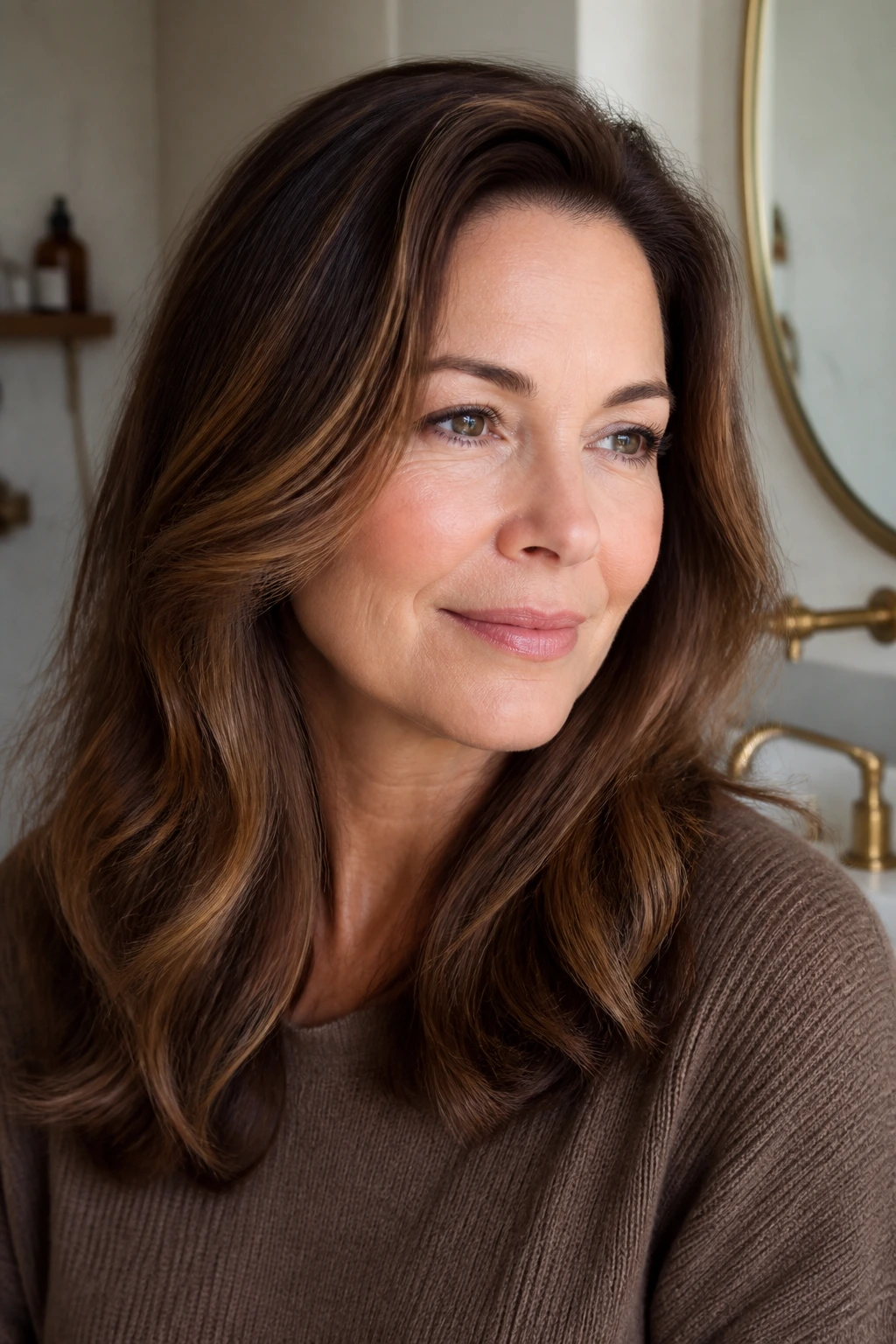
A good chestnut formula starts with honesty about your hair, not a swatch ring fantasy. If your hair is mostly gray, you need more coverage at the root than someone who is only blending a few silver streaks. If your mids are porous, they may grab darker than the root, which is why one formula everywhere can fail.
At the salon, I’d talk in three parts: depth, warmth, and maintenance. Depth is the level number. Warmth is whether you want cinnamon, maple, rosewood, smoky beige, or neutral chestnut. Maintenance is how often you’re willing to return for a gloss or root refresh.
A simple way to ask for it
- “I want a level 5 or 6 chestnut with some softness around my face.”
- “I need gray blending, not stripey highlights.”
- “Keep the root a little deeper so the grow-out stays quiet.”
- “My ends are porous, so please don’t let them overgrab.”
That last line matters more than most people realize. Porous hair takes color fast. Sometimes too fast. A colorist who understands that will process the mids and ends for less time or use a gentler gloss there.
If you’re buying an at-home color, look for chestnut shades that say neutral-warm or brown-gold-brown rather than pure ash. Ash can cool things down too much and make mature skin look tired. On the other side, red-based chestnut can go bright fast if your base is already light. Choose with the undertone you already wear well.
How to Wear Chestnut Brown So It Frames the Face
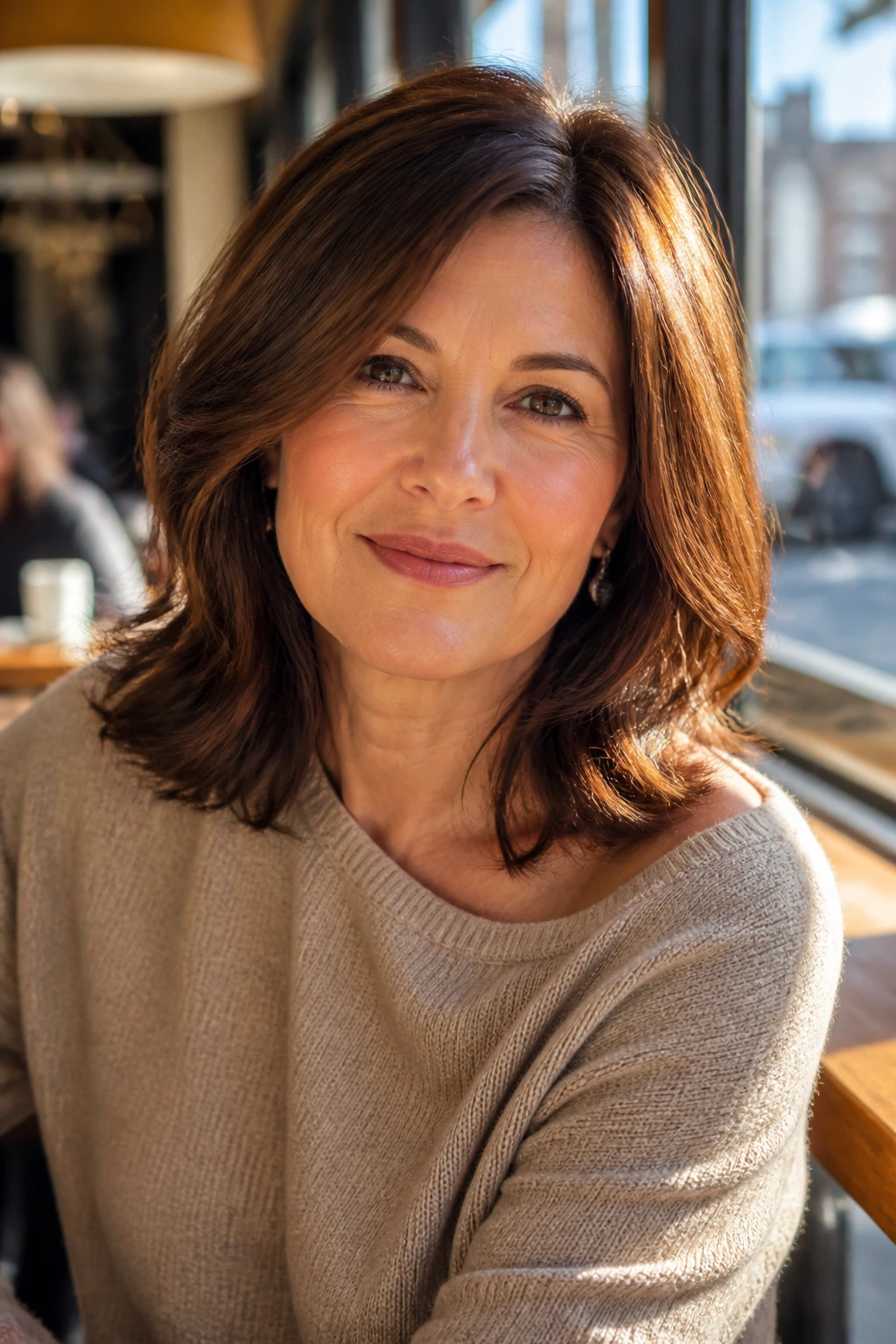
Presentation: Soft waves, a rounded bob, a side-parted lob, and a textured pixie all show chestnut better than hair that hangs limp and flat. The color needs movement to catch light, or it can sink into the background.
Wardrobe Pairings: Chestnut brown sits well with cream, navy, charcoal, olive, rust, and soft berry tones. Gold jewelry warms it up; silver jewelry sharpens cooler versions like beige chestnut or rosewood chestnut.
Placement: Put brightness around the temples, cheekbones, and front lengths if you want lift. Keep the crown and interior a touch deeper if you want more fullness. That contrast is small, but it changes the whole shape.
Finish: A light shine spray, one drop of serum on the ends, and a clean part can make the hair look freshly done for days. If you wear glasses, this matters even more. Chestnut close to the face should support the frame, not compete with it.
The color also plays nicely with makeup that isn’t too heavy. A soft blush, defined brows, and a warm lip or rose tone usually look cleaner than a heavy contour job. Chestnut is already doing a lot of the visual work.
Small Tweaks That Make Chestnut Brown Read Cleaner
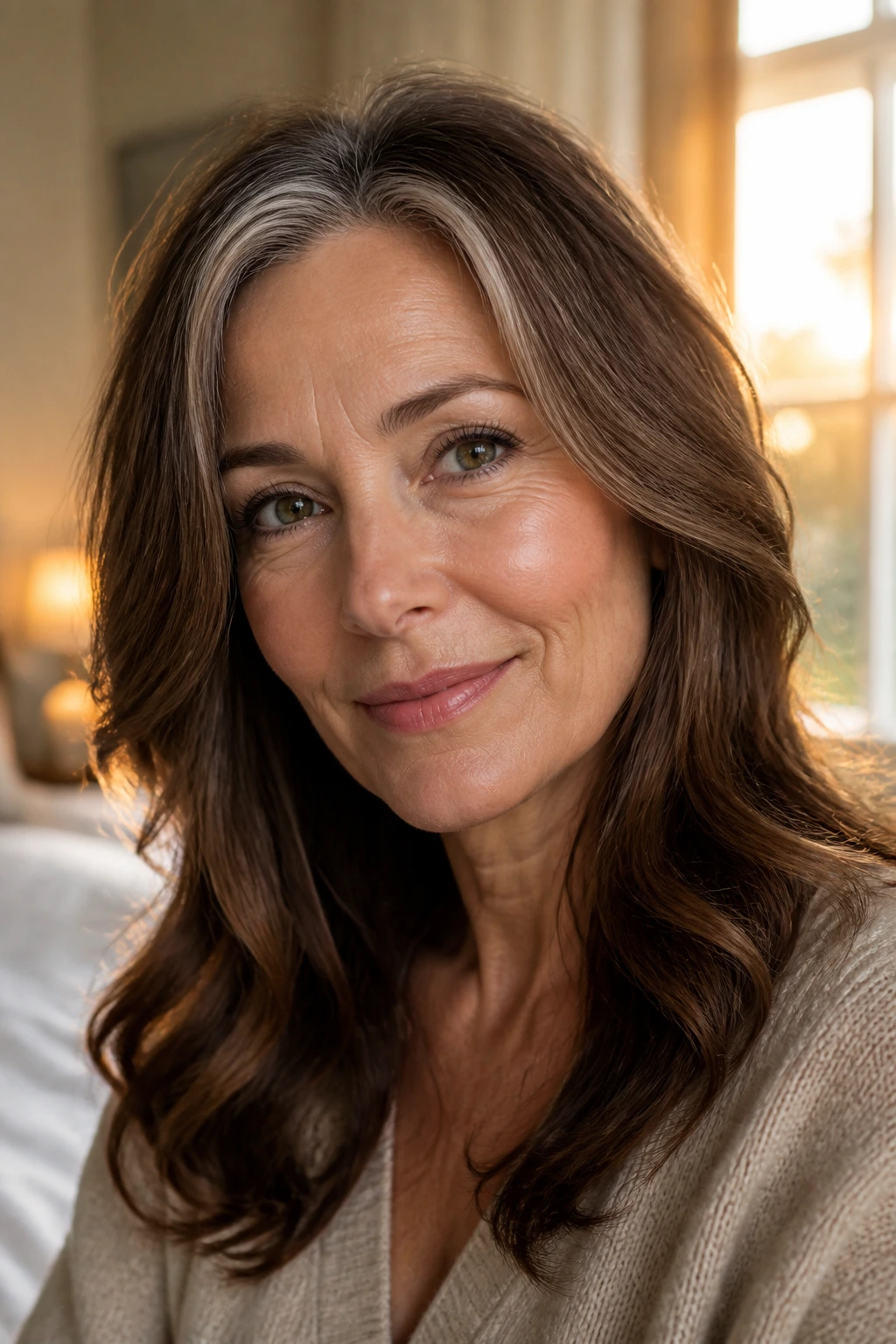
Tone Boost: A clear or tinted gloss every six to eight weeks keeps the chestnut from turning dusty. If the hair tends to lean orange, ask for a beige-brown or smoky-brown gloss rather than a warm one.
Texture Lift: Blow-dry the hair with a round brush or bend the ends with a curling iron. Even a small curve at the bottom makes the color bands visible and keeps the hair from looking like one sheet.
Gray Softening: Leave a few silver strands visible around the temples. Fighting every one of them can make the color look overdone. A little silver mixed in keeps the whole thing believable.
Face Framing: If you want a fresher face, brighten only the first inch or two around the front and keep the rest chestnut. That one move often does more than a full-head highlight service.
Finishing Touch: Use cool water on the final rinse when washing. It won’t seal the hair like magic, but it does help the cuticle lie flatter, which makes chestnut look richer.
Keeping Chestnut Brown Glossy Between Visits
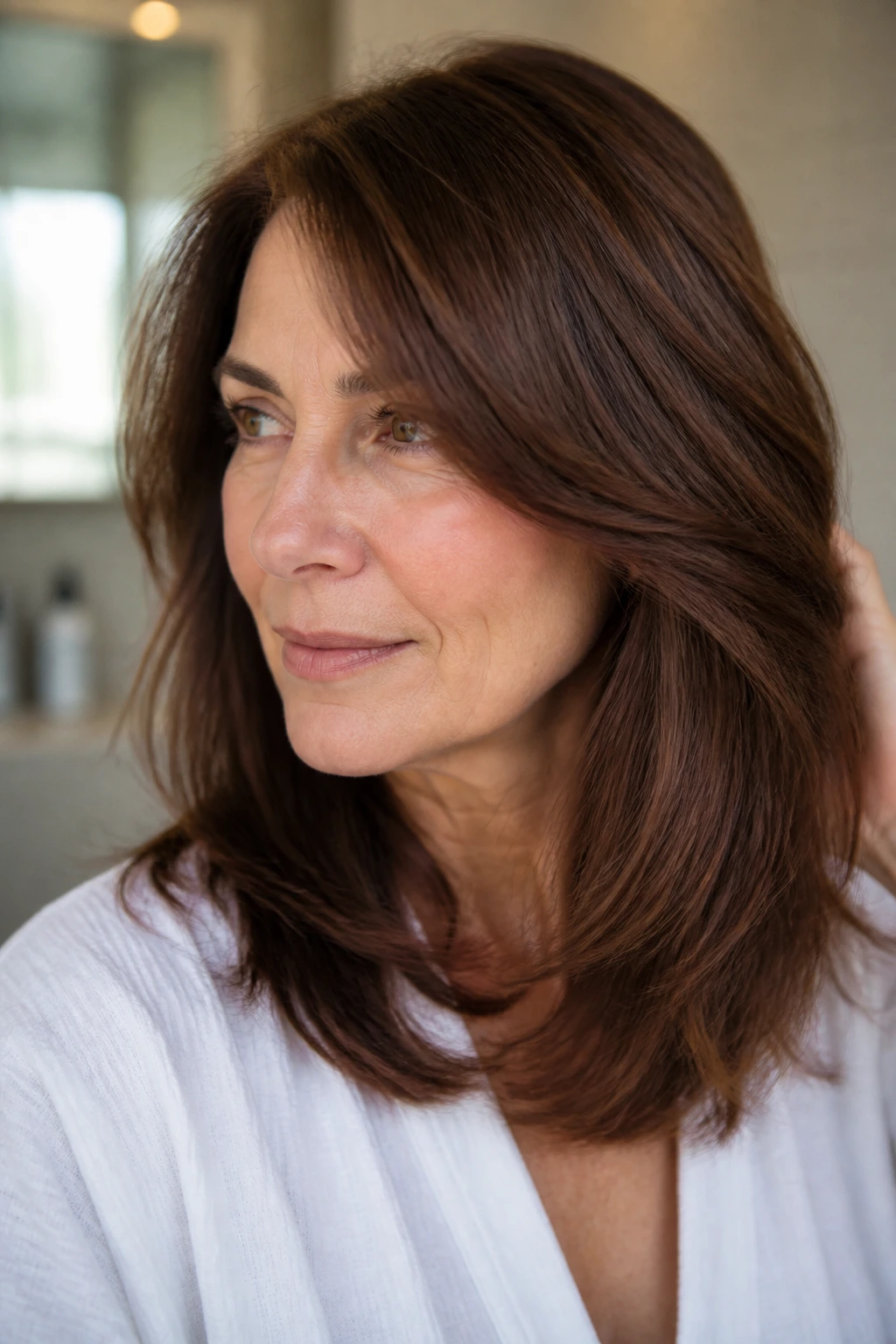
Chestnut brown has a shorter shelf life if you wash it hard, heat it high, and ignore the ends. That’s the blunt truth. But the upkeep is manageable if you treat the shade like a brunette with a temper.
Wash two or three times a week if you can. Daily shampooing strips the warm reflect out of the color faster than people expect. A gentle, sulfate-free shampoo keeps the chestnut base from fading to a flat brown.
Use lukewarm water, not hot water. Hot water opens the cuticle and encourages color loss, and on dry mature hair that loss shows up fast at the crown and around the face. If your scalp likes a thorough wash, keep the roots clean and let the suds move through the mids on the rinse.
For maintenance timing, a root refresh usually lands every four to six weeks if gray coverage is the goal. A gloss can stretch to six or eight weeks if you mostly want shine and tone. If your hair is very porous or color-treated several times already, you may want glosses more often because the pigment slips out faster.
A deep-conditioning mask once a week helps too. Chestnut looks best on hair that reflects light, and rough ends kill that effect. If your hair gets orange, use a blue shampoo sparingly — about every other week, or less — and only on the parts that actually need it. Too much can make brunette hair look dull and smoky in the wrong way.
Heat tools deserve a limit. Keep the iron moderate, use a protectant every time, and don’t sit on the same section for ages. The color fades where the heat lives.
Common Mistakes That Age the Color Fast
-
Going too dark too fast: A near-black chestnut can harden the face and make mature skin look flat. Stay a little lighter unless your natural coloring is already very deep.
-
Choosing one flat brown from root to tip: The color ends up looking painted on. Add a gloss, a few lowlights, or a softer face frame so the hair has dimension.
-
Ignoring porosity: Dry ends can grab chestnut too dark and turn muddy. If the mids are porous, process them separately or use a softer deposit.
-
Using the wrong warmth: Copper-heavy chestnut can look too orange on some skin, while ash-heavy chestnut can make the face look tired. Match the undertone to your skin, not to the box photo.
-
Skipping haircut shape: A chestnut shade on shapeless hair still looks shapeless. A bob, shag, lob, or layered cut gives the color a surface to play on.
-
Waiting too long between touch-ups: Once the root line turns patchy, chestnut starts to look neglected instead of soft. A predictable schedule beats a rescue mission.
Variations and Adaptations to Try
The Silver-Smart Blend: Keep the gray visible at the temples and crown, then weave chestnut through the rest of the hair for a soft salt-and-bronze finish. This works well if you want fewer salon visits and a more natural grow-out.
The Fine-Hair Lift: Use a level 5 chestnut with delicate lowlights instead of bold highlights. The darker shadows make fine hair look fuller without making it look heavy.
The Warm-Skin Glow: Choose cinnamon, maple, or auburn chestnut if your skin looks better in gold than silver. A little warmth around the face can pull the whole look forward.
The Cool Smoke Version: Lean into beige or smoky chestnut if red tones make your face look flushed. This version reads calmer and pairs nicely with cooler makeup shades.
The Low-Fuss Root Melt: Keep the root one shade deeper than the lengths and let the transition fade softly. It’s one of the easiest ways to make chestnut brown feel grown-up without constant upkeep.
The Curl-First Edit: For curly hair, place the richest depth underneath and a few warmer ribbons on the outer curl pattern. The texture will show the color for you, so there’s no need to crowd the head with highlights.
Frequently Asked Questions About Chestnut Brown Hair Color
Will chestnut brown cover gray hair completely?
Sometimes, but not always with one formula. If you have a modest amount of gray, chestnut brown can cover it well. If your hair is mostly silver, permanent root coverage plus a gloss through the lengths usually works better than a single all-over shade.
Is chestnut brown better warm or cool for mature skin?
That depends on your undertone and how your skin reacts to color near the face. Warm chestnut suits peachy, golden, and olive skin well, while cool chestnut tends to flatter pinker or more neutral skin. The wrong undertone can make the face look tired fast.
What chestnut shade makes thin hair look fuller?
A medium chestnut with lowlights often does the best job. It adds shadow and depth, which makes the hairline and ends look denser. Pure dark brown can be too harsh, and very light chestnut can make fine hair look see-through.
Can I get chestnut brown without bleach?
Yes, if your goal is to go darker or stay close to your current level. If you want lighter chestnut ribbons, balayage or highlights may need lightening first. The less contrast you want, the less lifting you usually need.
How often should chestnut brown be refreshed?
A gloss can be refreshed every six to eight weeks. Root coverage for gray tends to need attention every four to six weeks, depending on how fast your regrowth shows. If your hair is porous, the mids may need tone more often than the roots.
What if my chestnut turns too red?
Ask for a beige or smoky gloss to calm it down. At home, limit heat and use a blue shampoo only on the orange parts, not all over the head. Red heat plus over-washing is often what pushes chestnut into copper territory.
Does chestnut brown work on short hair?
Yes, and sometimes it works better on short hair than on long hair because the shape is cleaner. Pixies and bobs show the depth and shine fast, especially when the cut has texture or a strong line.
Can I mix chestnut with my silver strands instead of covering everything?
Absolutely. That blend is one of the smartest ways to wear chestnut on mature hair. It softens the silver, keeps the look modern, and saves you from chasing every regrowth line.
A Brown Shade That Stays in Its Lane
Chestnut brown works because it doesn’t try to erase age or pretend the hair is still twenty inches thick and untouched. It gives silver strands a softer role, adds weight where the ends have thinned out, and keeps the face from getting swallowed by one flat color.
That’s why the best chestnut looks aren’t the loudest ones. They’re the ones with a little shadow, a little warmth, and a little shine around the hairline. Get that balance right, and the color does something many brunettes spend years chasing: it looks easy, but it’s doing serious work.
