



Punk shag haircuts have a nice little trick: they look rough-edged on purpose. A blunt cut asks for polish. A shag asks for broken lines, jagged ends, and fringe that lands a little off-center, as if it was cut with attitude and not much patience. That’s why the cut keeps showing up in music scenes, dyed-hair circles, and anywhere people want their hair to look lived-in rather than lacquered.
The best versions do not rely on one gimmick. A sharp bang, a razored crown, a shaved temple, a split dye, a mullet tail, a dense cloud of curls — each one changes the mood without losing the shag’s core shape. That shape matters. Layers need to be short enough to move, long enough to fall, and broken enough to look a little dangerous when the wind hits them. Too soft, and it becomes a salon-safe layered cut. Too choppy, and it starts to read like a styling accident.
What makes punk shag haircuts so satisfying is the range. You can wear one with a leather jacket and heavy liner, or with a white tank and almost no makeup, and the haircut still does the heavy lifting. Some of these look best with a diffuser and a bit of grit. Some want a flat iron bend. Some look better slightly grown out, which is a blessing if your trim schedule is not heroic. The point is movement with bite, and that’s a useful place to be.
Why These Punk Shag Cuts Hit So Hard
-
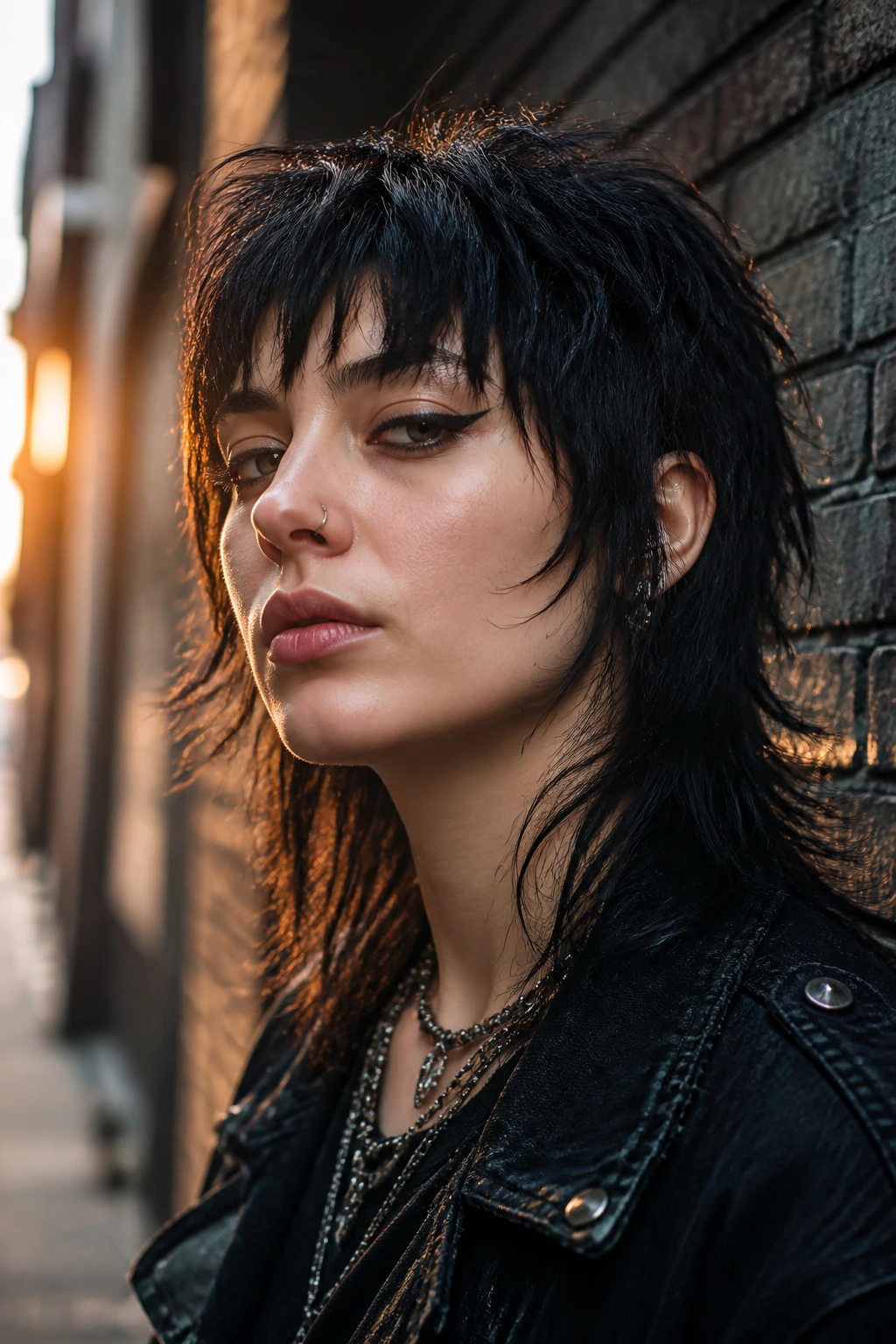
The layers do the attitude work: Short crown layers and torn ends create lift and movement, so the cut reads edgy even when you keep the styling simple.
-
The fringe changes everything: Micro bangs, heavy brows-skimming fringe, and side-swept pieces all shift the face shape without needing a dramatic length change.
-
Color makes the texture louder: Black roots, bleach panels, neon streaks, and split-dye sections make every layer easier to see, which matters when the cut depends on broken lines.
-
It grows out with more grace than a blunt shape: A shag can stretch a few weeks and still look intentional because the perimeter is already uneven.
-
It works with real-life styling habits: A little mousse, a little texture spray, and maybe a pass of matte paste are often enough; you do not need a full arsenal.
-
It can be soft or feral: That range is the whole appeal. The same base cut can lean club-kid, grunge, goth, or just plain rebellious depending on the fringe and finish.
1. Razor-Feathered Jet-Black Shag
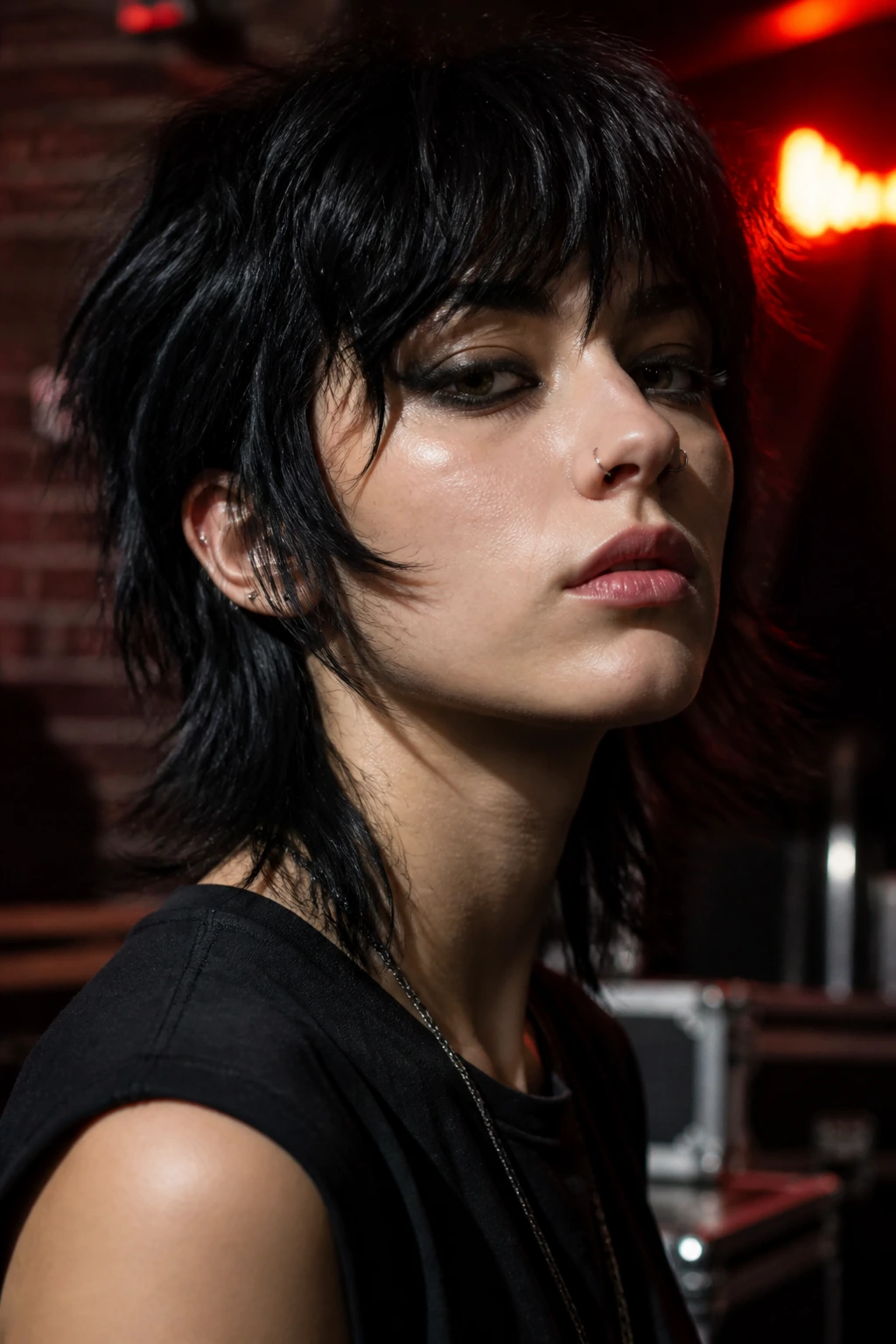
Jet black makes every feathered edge look sharper. The contrast between the dark color and the broken layers gives this cut a hard outline, especially around the crown and cheekbones. It’s one of those styles that looks almost soft in the salon chair and then turns tougher the second you run your fingers through it.
Why it works
The razor cut removes weight without leaving a blunt shelf. That matters if your hair sits heavy or tends to puff at the ends. Ask for layers that start high at the crown, then let the perimeter fall to the jaw or collarbone depending on how much length you want to keep.
A matte styling paste at the ends and a bit of lift at the roots keeps it from collapsing. If your hair is fine, I’d keep the razor work lighter near the face so the whole shape doesn’t go wispy.
Best for: straight to wavy hair that needs movement.
Ask for: a razor-cut shag with soft face framing and a broken fringe.
Skip if: your hair is very fragile or over-processed; scissors may be kinder.
2. Neon Streak Shag With Micro Bangs
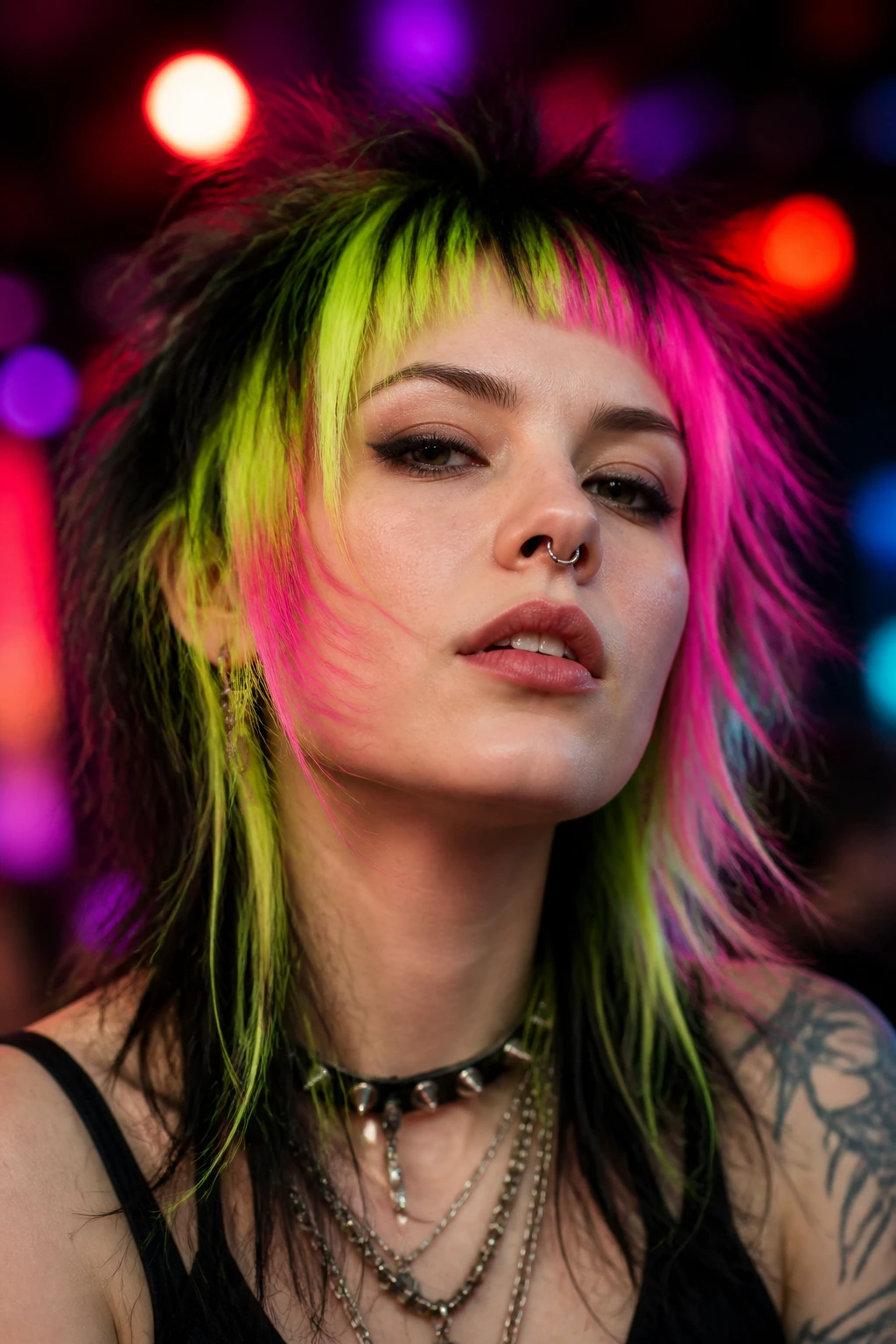
The neon streak is the whole point here, and that’s not a criticism. Lime, electric pink, or acid orange tucked into a shag reads louder because the layers keep flashing the color from different angles. Pair it with micro bangs and the cut starts feeling like a poster from a basement show.
Micro bangs need confidence and a good pair of brows. They also need regular trims, because a quarter inch can change the whole face-framing effect. Keep the rest of the layers loose and choppy so the fringe stays the sharpest line in the cut.
Color placement matters. Put the brightest pieces around the fringe, the front temple pieces, or the top layer. If you hide the neon underneath, you lose the punch when the hair moves.
3. Wolf Cut Shag With Heavy Crown Layers
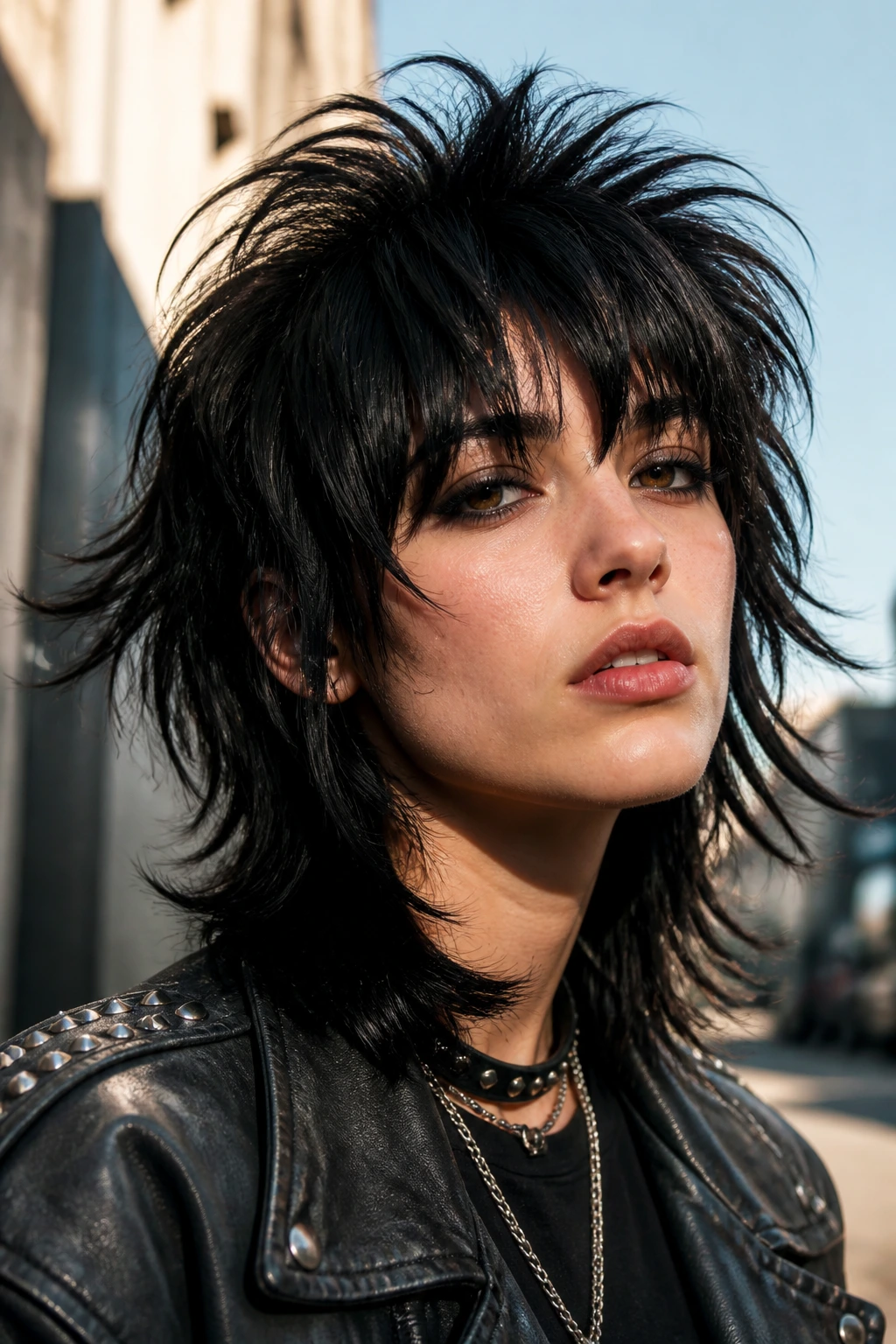
Why does the wolf cut keep showing up in punk circles? Because it borrows the shag’s movement and pushes the crown up higher, which gives the whole head a wild, almost restless shape. It’s not neat. That’s the point.
The best version keeps the crown short and the lengths broken, with enough face framing to keep it from turning into a full mullet unless that’s the goal. I like this cut on thick hair because the layering takes out bulk without flattening the silhouette.
How to style it
- Scrunch in mousse at the roots.
- Diffuse until the crown is dry, then leave the ends slightly damp.
- Finish with a dry texture spray and pinch out a few pieces around the cheekbones.
- Don’t overbrush it. That kills the point.
4. Asymmetrical Shag With One-Side Length

This is the cut for people who get bored looking symmetrical. One side stays longer, the other side sits higher around the jaw or ear, and the shag layers make the whole thing move like it’s halfway between a haircut and a statement.
The asymmetry works best when the longer side falls just below the cheekbone or collarbone. If it goes too long, the contrast gets muddy. If it’s too short, the shape loses the tension that makes it interesting.
A good stylist will cut the shorter side with enough texture that it still joins the rest of the haircut in motion. You want a difference you can see, not a lopsided mistake you spend three weeks trying to explain away.
5. Curly Punk Shag With Short Fringe
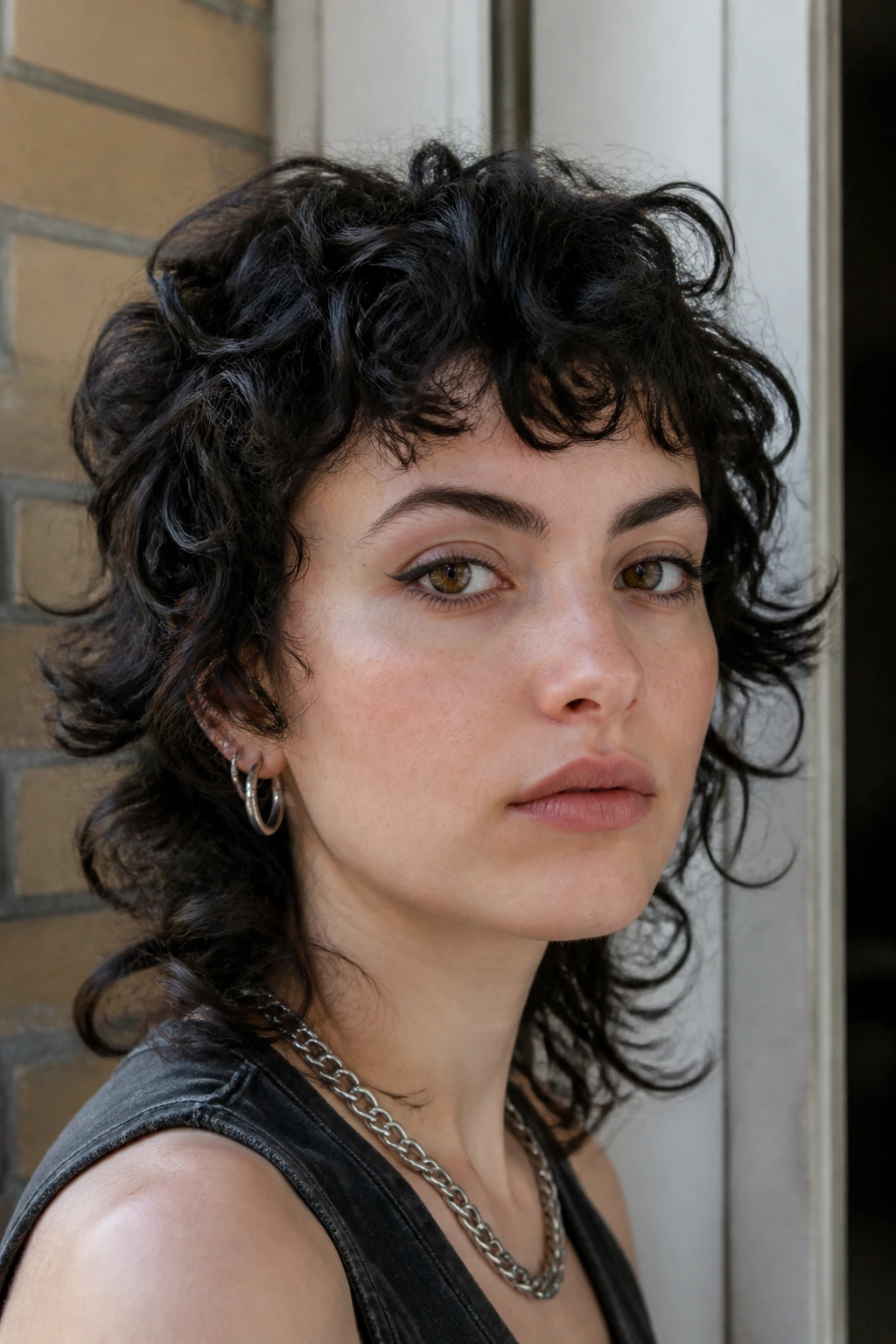
Curly hair gives a punk shag more personality than almost anything else. The curls break the line on their own, so the cut only needs the right framework: shorter crown layers, a little shape through the sides, and fringe that’s trimmed to sit above or around the brows without fighting the curl pattern.
The mistake is cutting curls like straight hair and hoping they’ll behave. They won’t. A dry cut or curl-by-curl shaping usually keeps the fringe from bouncing up too far and the crown from building a mushroom shape.
My favorite detail here: a slightly uneven fringe. Not badly cut. Uneven on purpose, just enough to keep the front from looking too tidy.
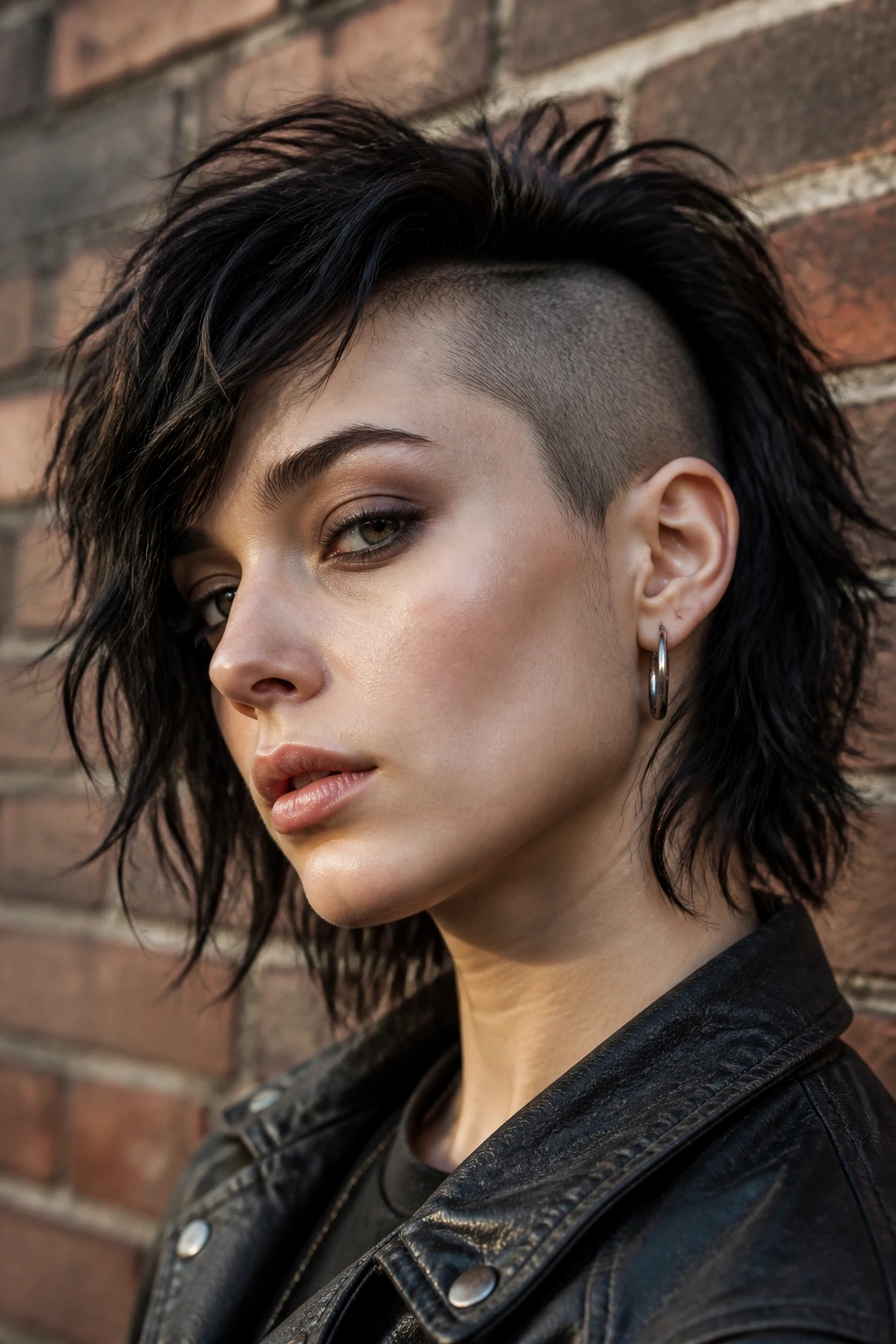
6. Shaved-Temple Shag
A shaved temple changes the whole haircut in one move. The shag layers soften the top and back, while the close crop on one side gives the cut a hard edge that reads instantly punk. It’s a strong choice if you want a visible contrast even when the rest of your hair is tucked behind the ears.
This version works especially well with a deeper side part. The longer side can sweep over the cheek and brush the shoulder, while the shaved side stays clean and almost graphic. If you like earrings, this cut gives them room to show up.
Best for
- people who want low-maintenance edge on one side
- thicker hair that needs weight removed
- anyone who likes a strong profile view
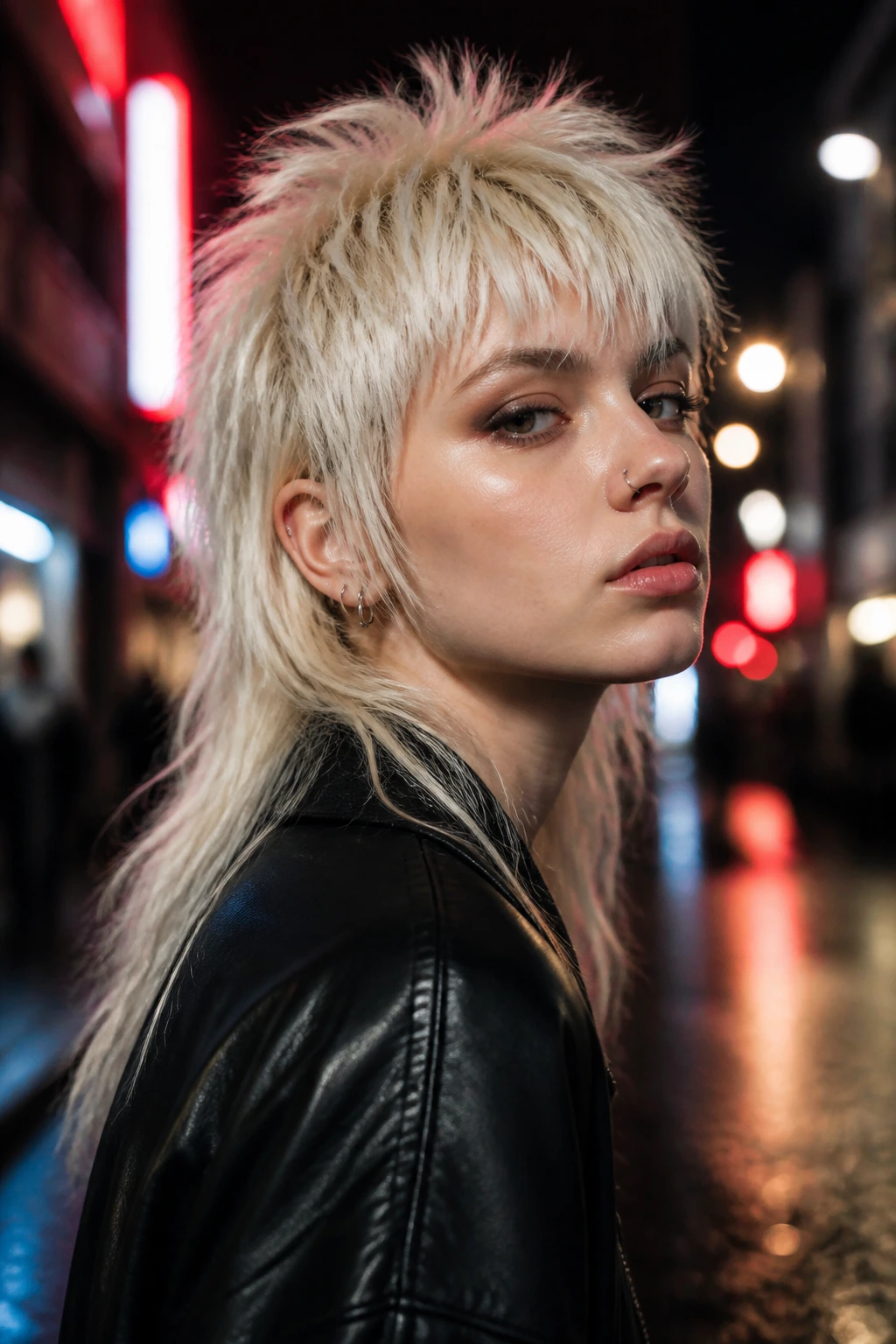
7. Platinum Mullet Shag
Platinum is unforgiving. That’s why it works here. The light color turns every layered edge into a bright line, and the mullet-shag shape makes the back feel longer, stranger, and more deliberate than a standard shag.
This cut needs toning, full stop. If the blonde drifts yellow, the whole thing loses the sharp contrast that makes it punk rather than beachy. I’d keep the roots a shade deeper if you want the grow-out to stay interesting.
The back can sit at the nape or stretch past the shoulders. The shorter crown should still move forward a bit, or you end up with a disconnected mullet that feels more costume than haircut.
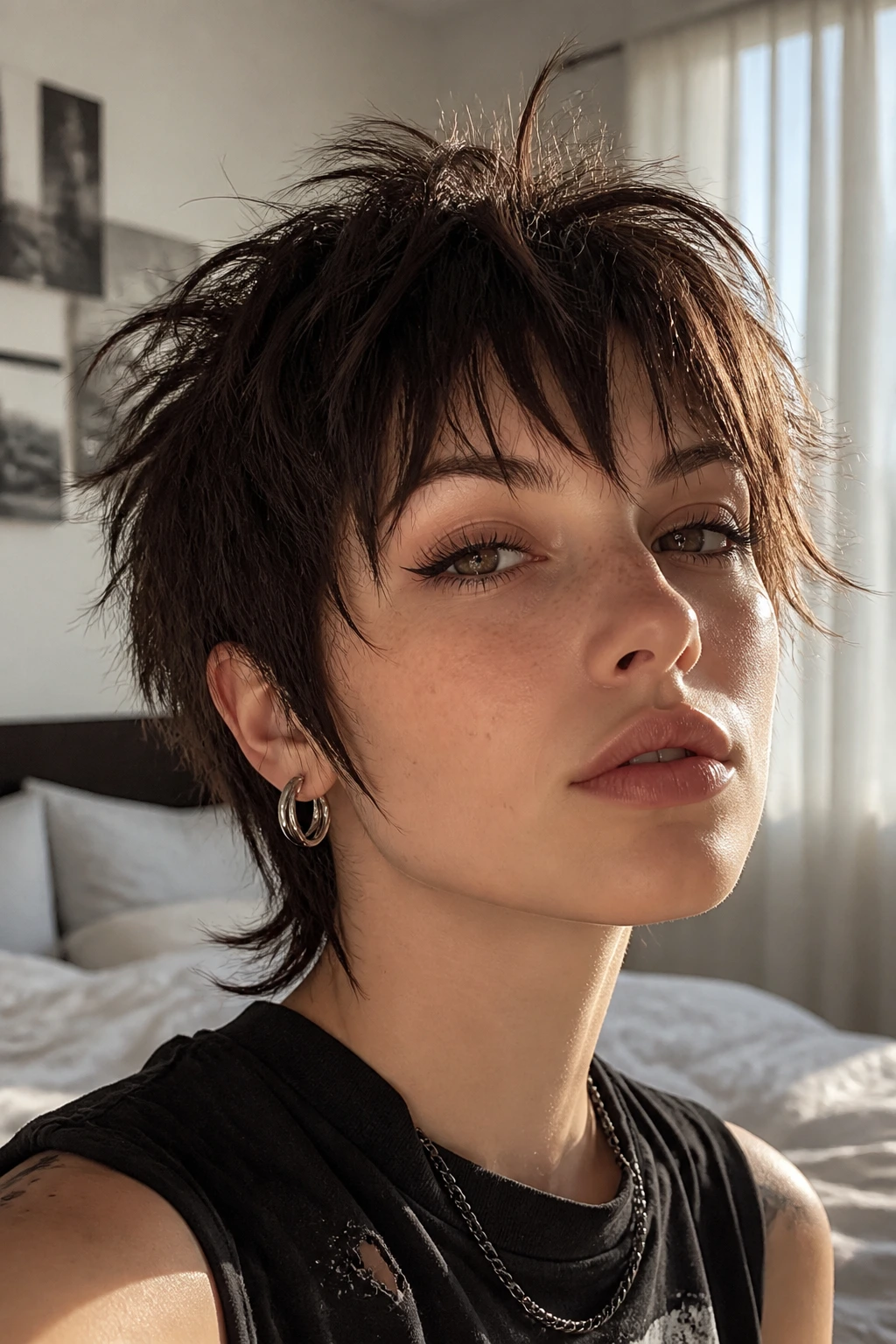
8. Choppy Pixie Shag
Short hair can still have attitude, and this cut proves it. A pixie shag keeps the top piecey and the sides broken up, then leaves enough length at the crown to create lift. It sits somewhere between a cropped shag and a grown-up pixie with a bad mood.
It’s a good option for fine hair that goes flat fast. The shorter length means less weight pulling the shape down, and the choppy texture keeps the top from looking helmet-like. Use a pea-sized amount of matte cream, not a heavy pomade. Too much shine can make the haircut look too neat.
If you want more punk energy, leave a little extra length in the fringe so it falls over one eye instead of sitting politely off the forehead.
9. Two-Tone Split-Dye Shag

Split dye and shag layers are a natural pair because the haircut already breaks the hair into visible planes. One side black, one side blonde, or one side wine red, one side silver — the cut turns every turn of the head into a color shift.
This look needs clean sectioning. If the color line drifts too much, the whole thing gets muddy instead of graphic. The haircut itself can stay fairly soft, because the color carries the attitude.
What to ask your colorist
- a crisp color divide through the part or center panel
- toner that keeps the light side from going brassy
- layers that do not hide the split under bulk
- a bang shape that connects both sides instead of swallowing them
10. Heavy Bangs & Torn Ends Shag
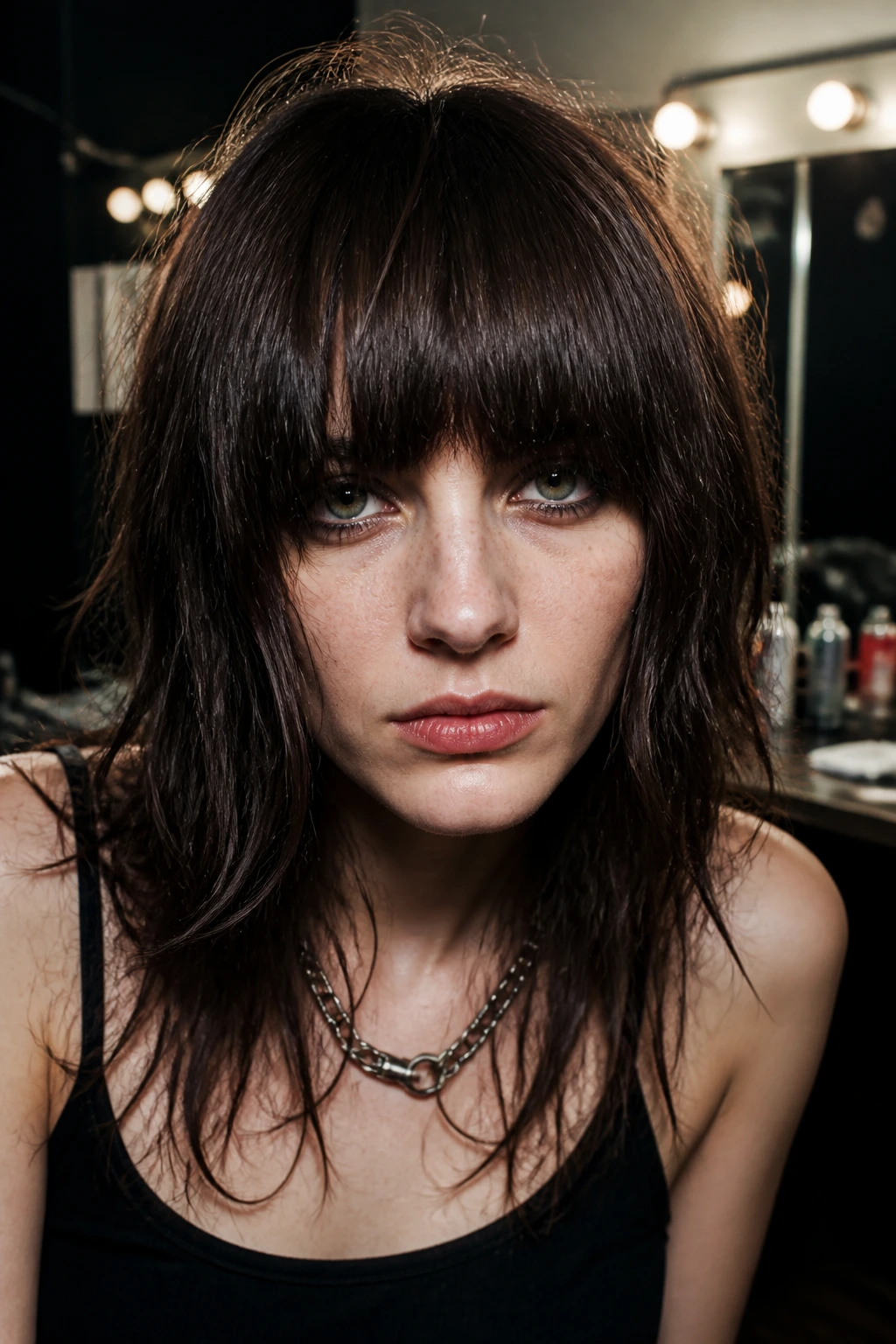
The fringe is the anchor here. Heavy bangs sit across the forehead with enough density to make a real shape, while the ends are cut up and broken so the body of the hair does not feel weighed down by that front section.
It’s a smart choice if you want the haircut to look dramatic even when the rest of your styling is lazy. The bangs do the visual work. The torn ends keep the bottom from turning blunt.
There’s one catch: heavy bangs need regular trim-ups. Even a small change in length can shift them from “mysterious” to “in my eyes all day.” If that sounds annoying, keep the fringe a little longer and let it sweep instead of sitting straight across.
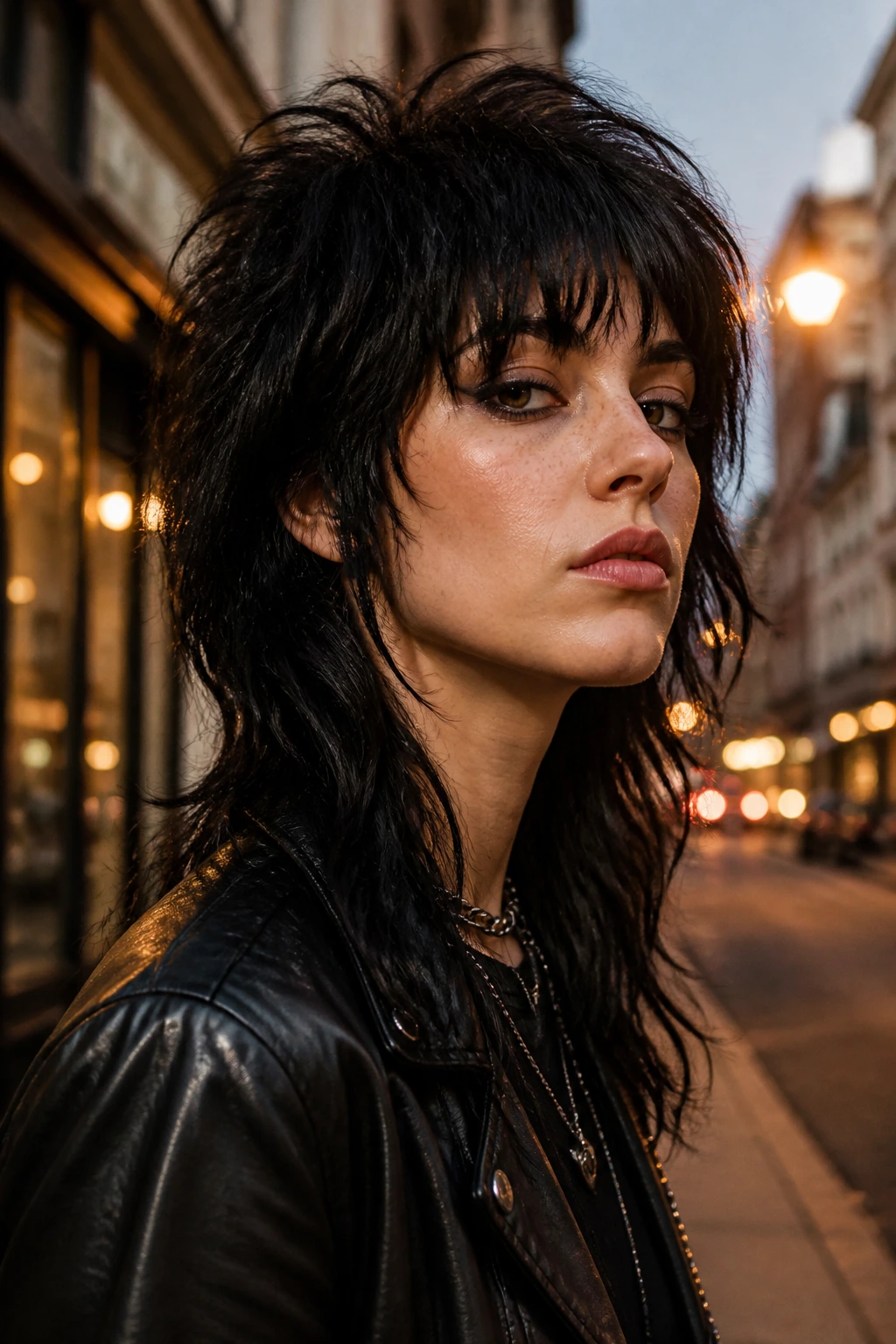
11. Mullet-Shag With Tail Nape
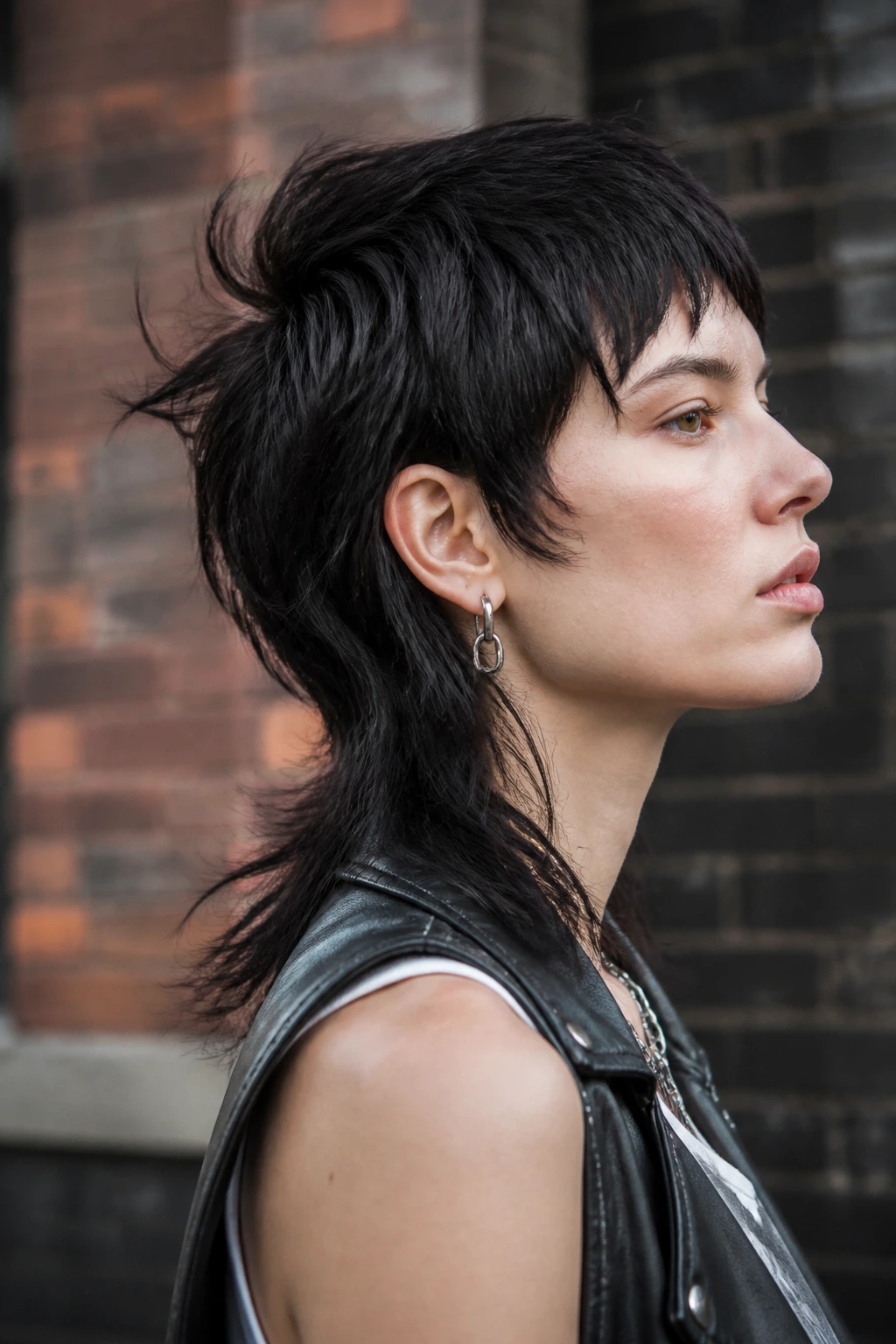
This is where the shag gets a little reckless. The front and crown stay layered and broken, then the back stretches out into a tail at the nape or lower. It has that old-school punk energy that still looks better messy than polished.
The shape works because the top is not trying to match the bottom. The contrast is the whole story. Short layers at the top keep the silhouette light, while the longer back gives you a swish when you turn your head.
If you wear jackets with collars, pay attention to where the back lands. A tail that hits exactly at collar height can get snaggy fast. A little longer or a little shorter usually behaves better.
12. Piecey Copper Shag
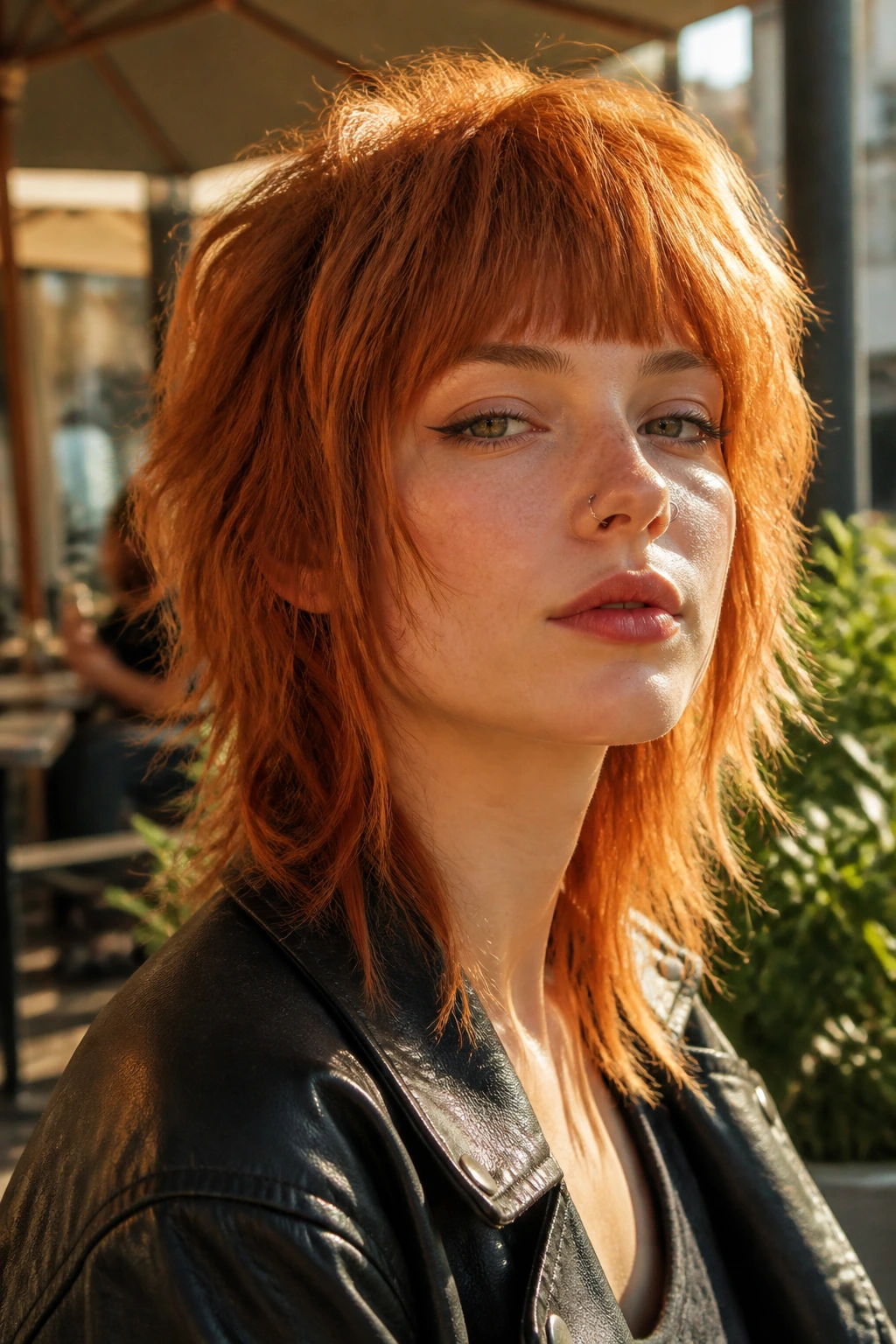
Copper is one of the best colors for a shag because it makes the texture look warmer and more deliberate. Against that color, the broken layers show up in a soft way, but the cut can still read punk if the ends are choppy and the fringe is blunt enough.
This one is especially nice for people who want edge without going full black-and-neon. Copper gives the haircut body. A shine spray on the mids and a bit of texture powder at the roots can keep it from turning flat under indoor light.
I like this cut with a collarbone length perimeter. It gives the color room to move and keeps the shag from becoming too short and spiky.
13. Undercut Shag With Long Top
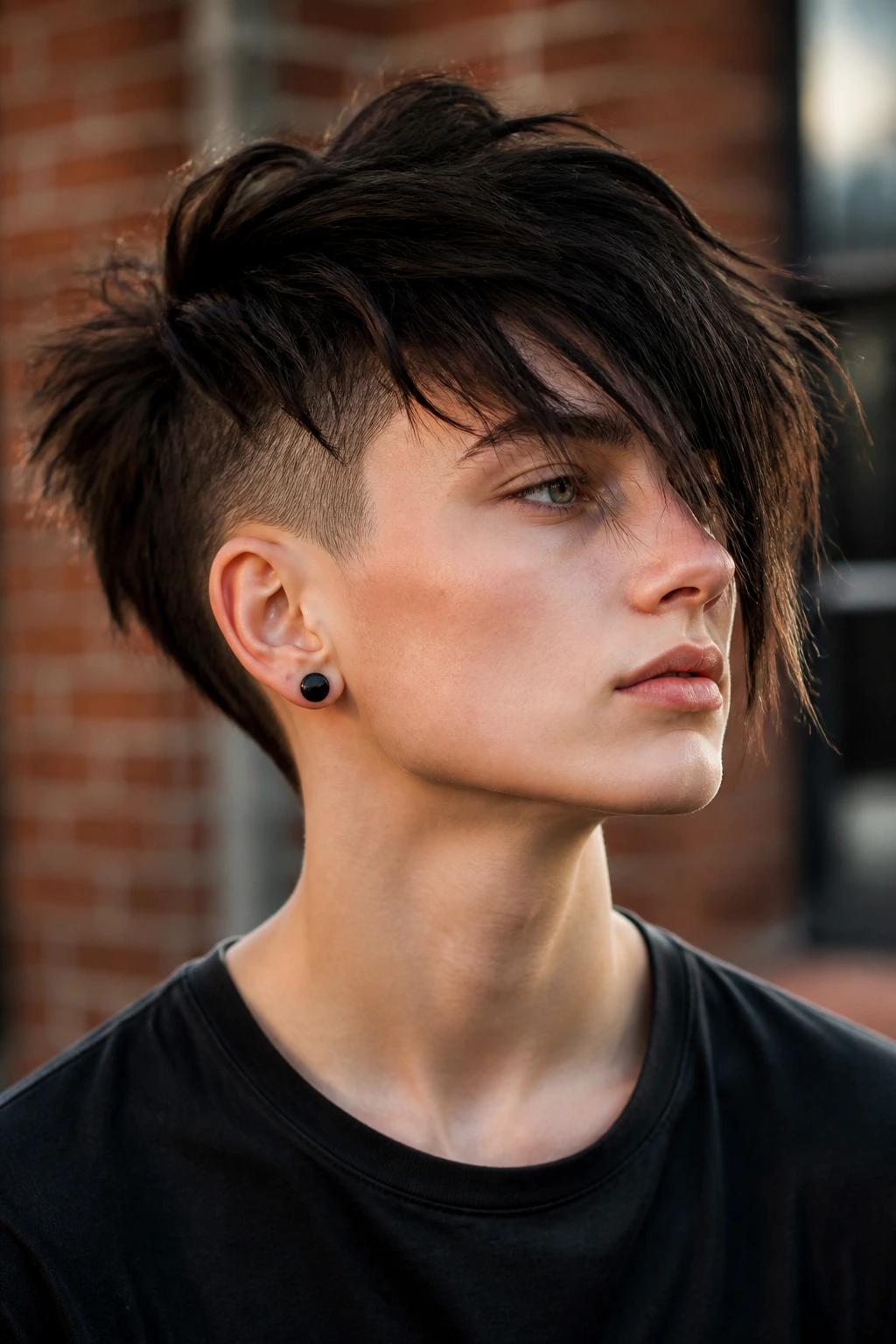
An undercut changes the weight distribution, which is why this cut feels so clean when it’s done well. The long top has room to fall and twist, while the shaved or clipped underlayer removes bulk that would otherwise puff up beneath the shag.
This is a very good choice for thick hair. It stops the haircut from expanding into a triangle, which thick hair loves to do when nobody is paying attention. The trick is leaving enough surface length on top so the undercut does not become visible in a harsh, accidental way.
Ask for this
- an underlayer removed at the nape or around the ears
- top layers that still blend through the crown
- a fringe or front piece that hides the transition when worn down
- softness around the hairline so the cut does not look too severe
14. Wet-Look Textured Shag
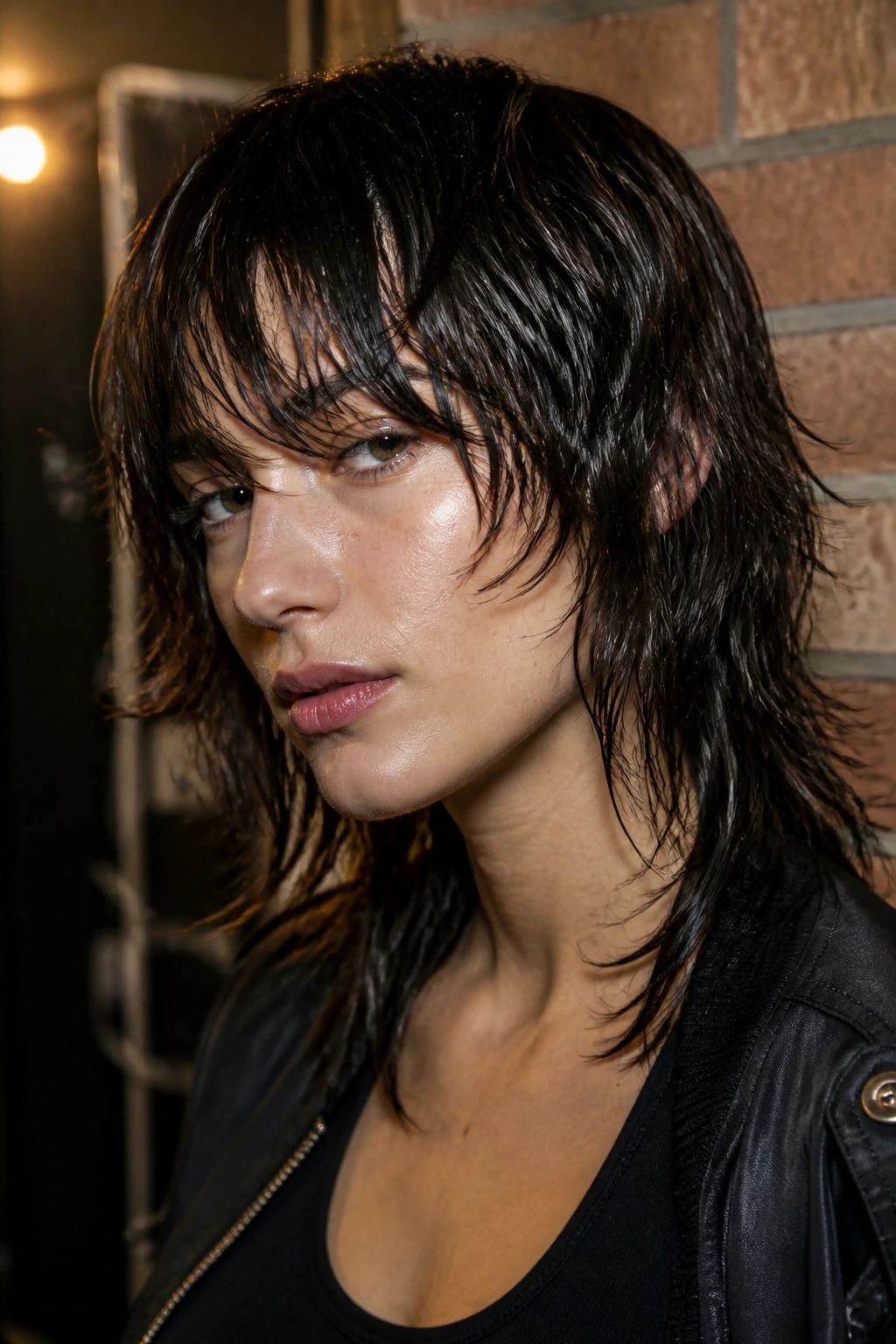
This cut lives halfway between styled and undone. The wet look gives the layers a dark, slick sheen, while the shag shape stops the style from looking like a straight-back gel job from another decade.
The key is using the right product. A lightweight gel or gloss cream on damp hair, then a little finger separation at the ends, is enough. Do not drown the cut. Wet look hair goes from sharp to greasy very quickly if you load it up.
It’s a strong option for nights out, photos, or days when you want the haircut to look deliberate without spending much time on heat styling. The movement is still there; it just shows up in a narrower, shinier way.
15. Short Shag With Baby Bangs
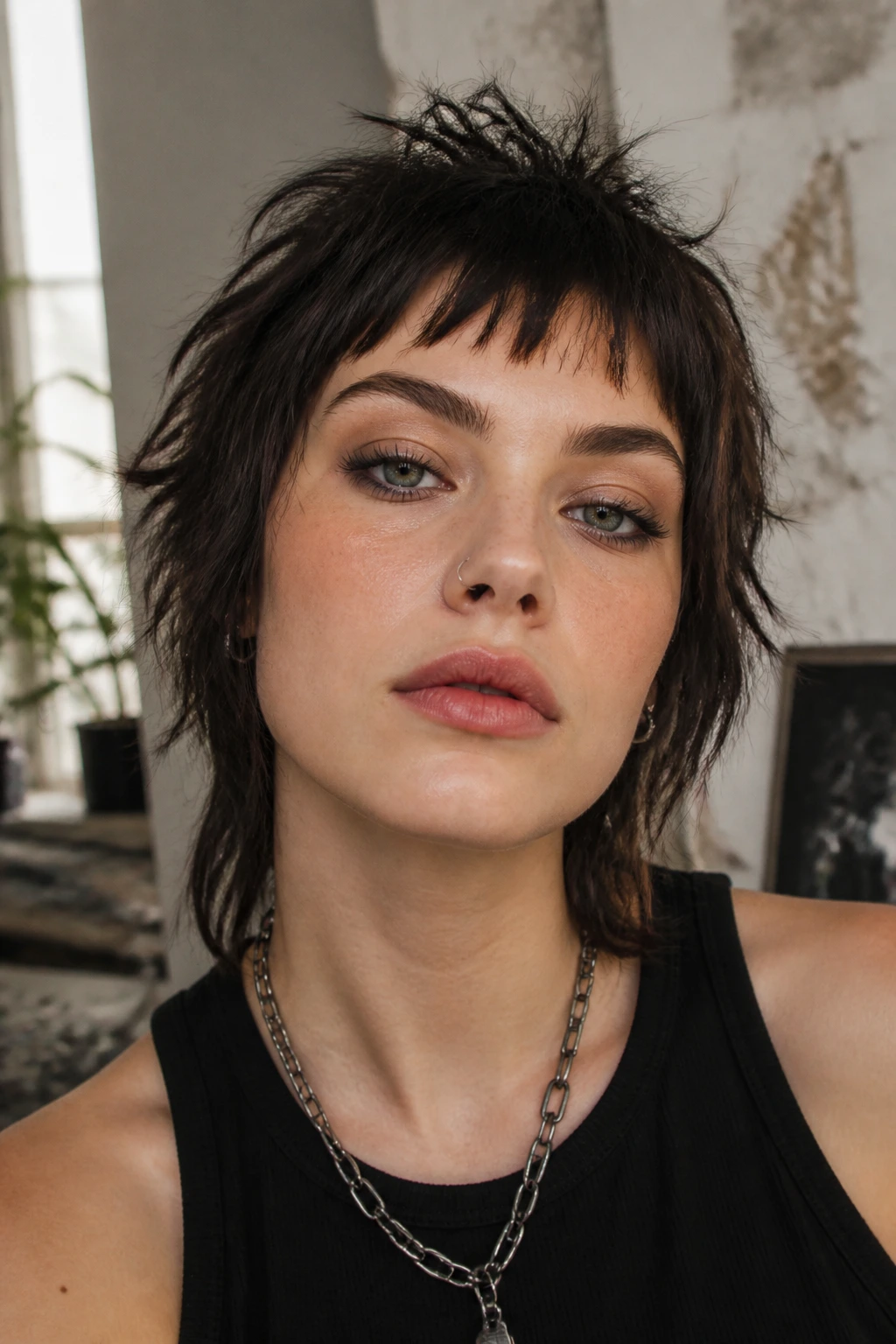
Baby bangs bring the face forward fast. Paired with a short shag, they make the whole cut feel compact, spiky, and a little bit art-school in the best way. The crop stays close around the neck and ears, while the top keeps enough lift to avoid looking round.
This version is not shy. It puts the forehead on display and pulls attention straight to the eyes. If you like dramatic eyeliner or bold brows, this is your haircut.
A tiny caution: baby bangs leave nowhere to hide. If you want something more forgiving, ask for them slightly longer than you think and trim up later. That little extra length buys you options.
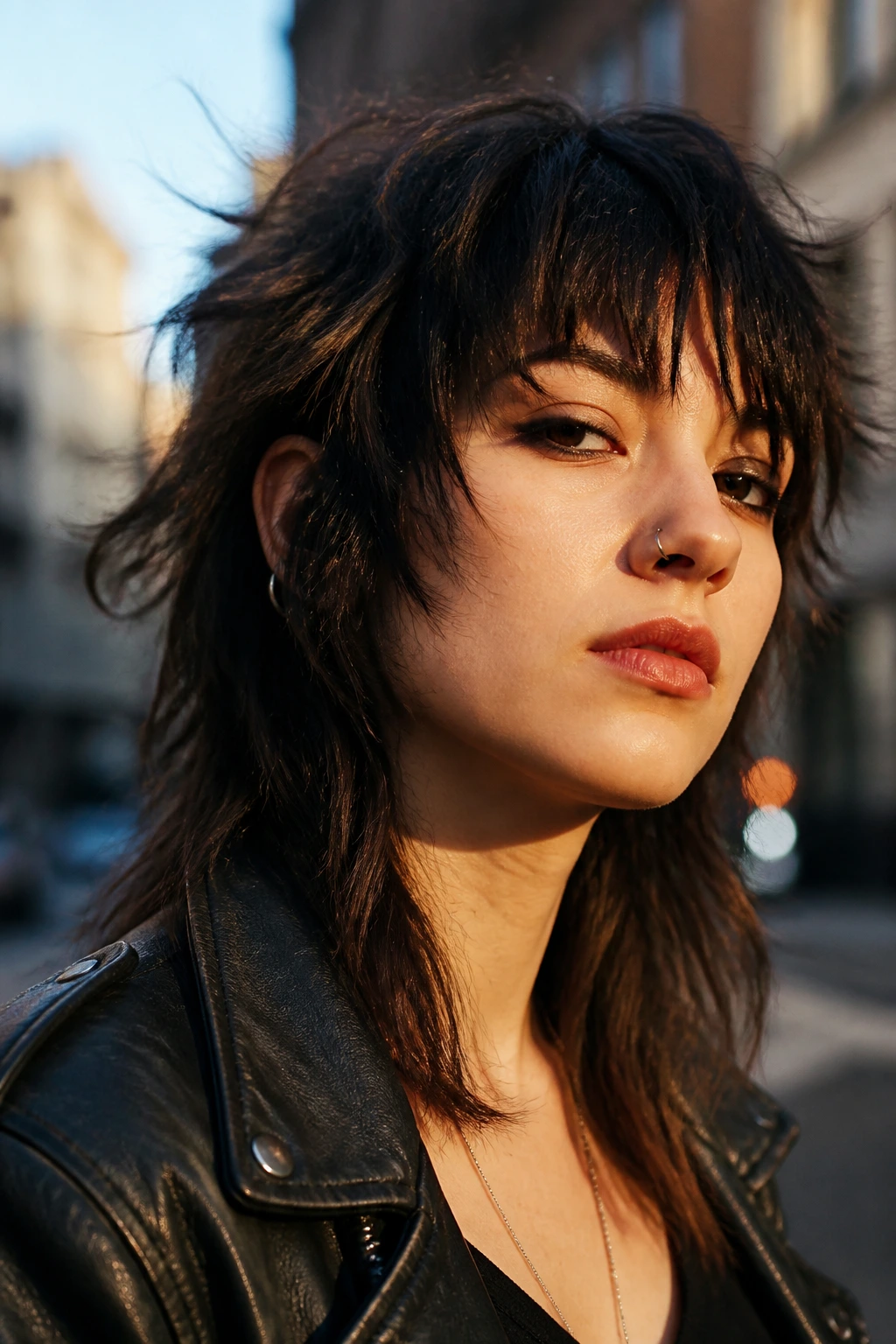
16. Long Grunge Shag
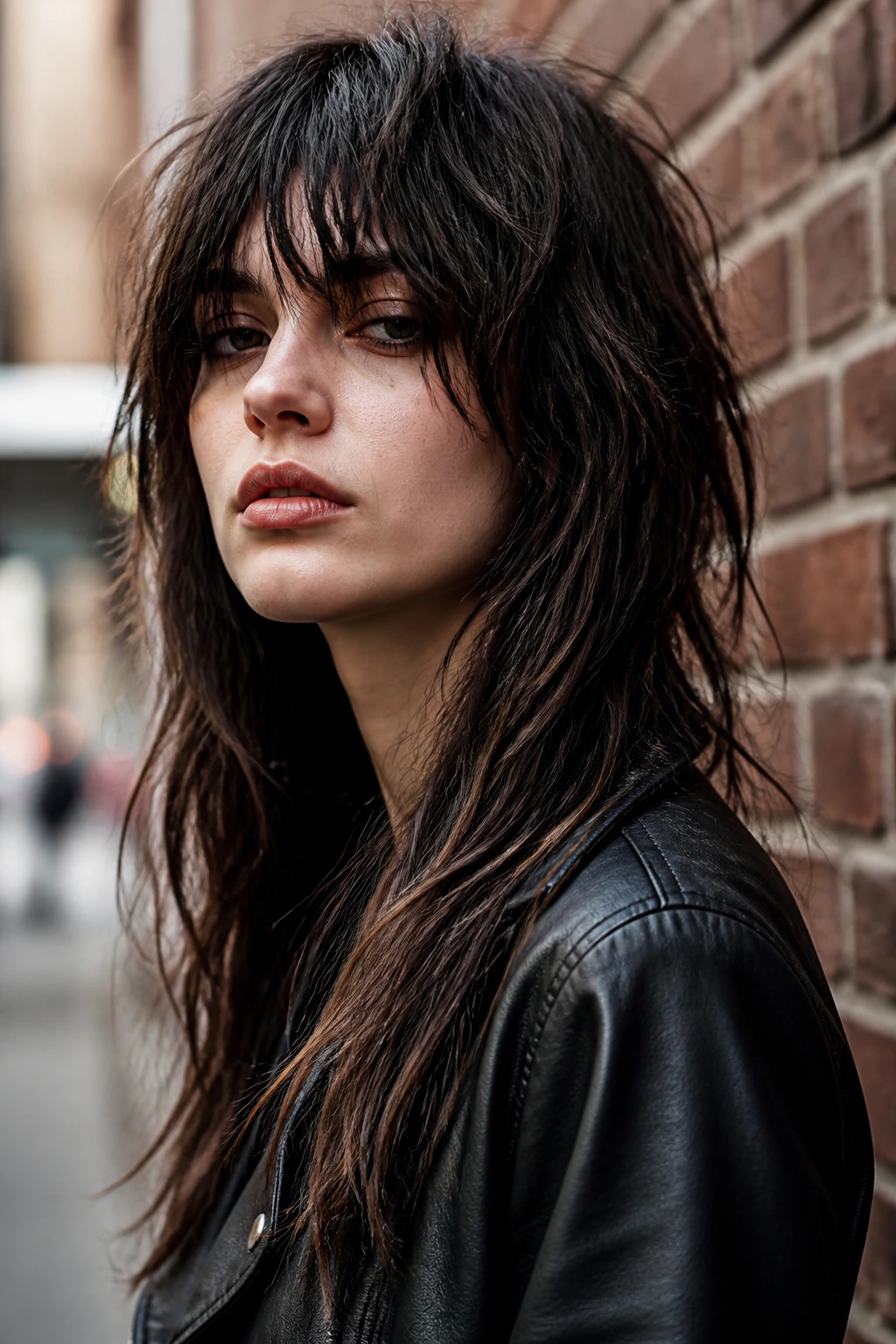
Long shags can look sleepy if the layers are too polite. A grunge version fixes that by keeping the ends rough and the face frame broken, so the length feels purposeful rather than overgrown. It’s a good fit if you want punk energy without losing the ability to tie your hair back.
The shoulders and collarbone are where this haircut starts to matter. If the shortest layers land too low, the shape becomes heavy. If they’re too high, you lose the long, slouchy movement that makes the style work.
Why it reads punk
- the fringe sits a little heavier than a classic shag
- the ends are point-cut instead of blunt
- the longest pieces move past the shoulders
- the style looks better with separation than with perfect smoothness
17. Emo-Inspired Side-Swept Shag
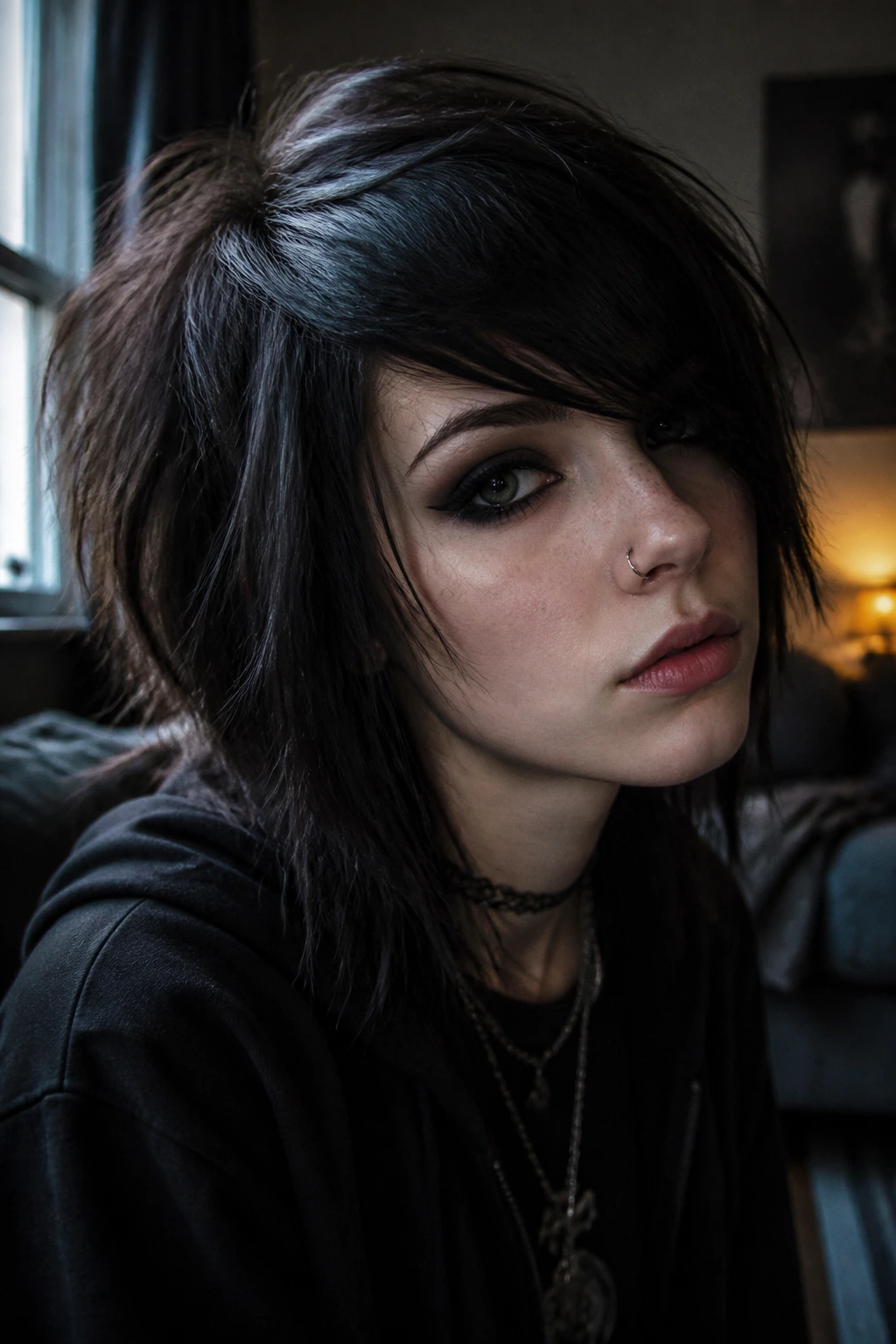
There’s a reason this shape still has fans. Side-swept fringe gives the face a moody frame, and the shag layers keep it from looking too fixed in time. The haircut can lean soft or sharp depending on how much texture you leave in the ends.
The side sweep should be deep enough to fall across one brow or cheekbone, not a tiny diagonal whisper. That front weight gives the cut its emotional register. Pair it with layers that start near the cheek and the jaw so the profile stays active.
A flat iron bend through the front can sharpen the effect. Just keep the bend loose. Ringlets and tight curls pull the cut away from the whole emo-shag point.
18. Razor Bob Shag
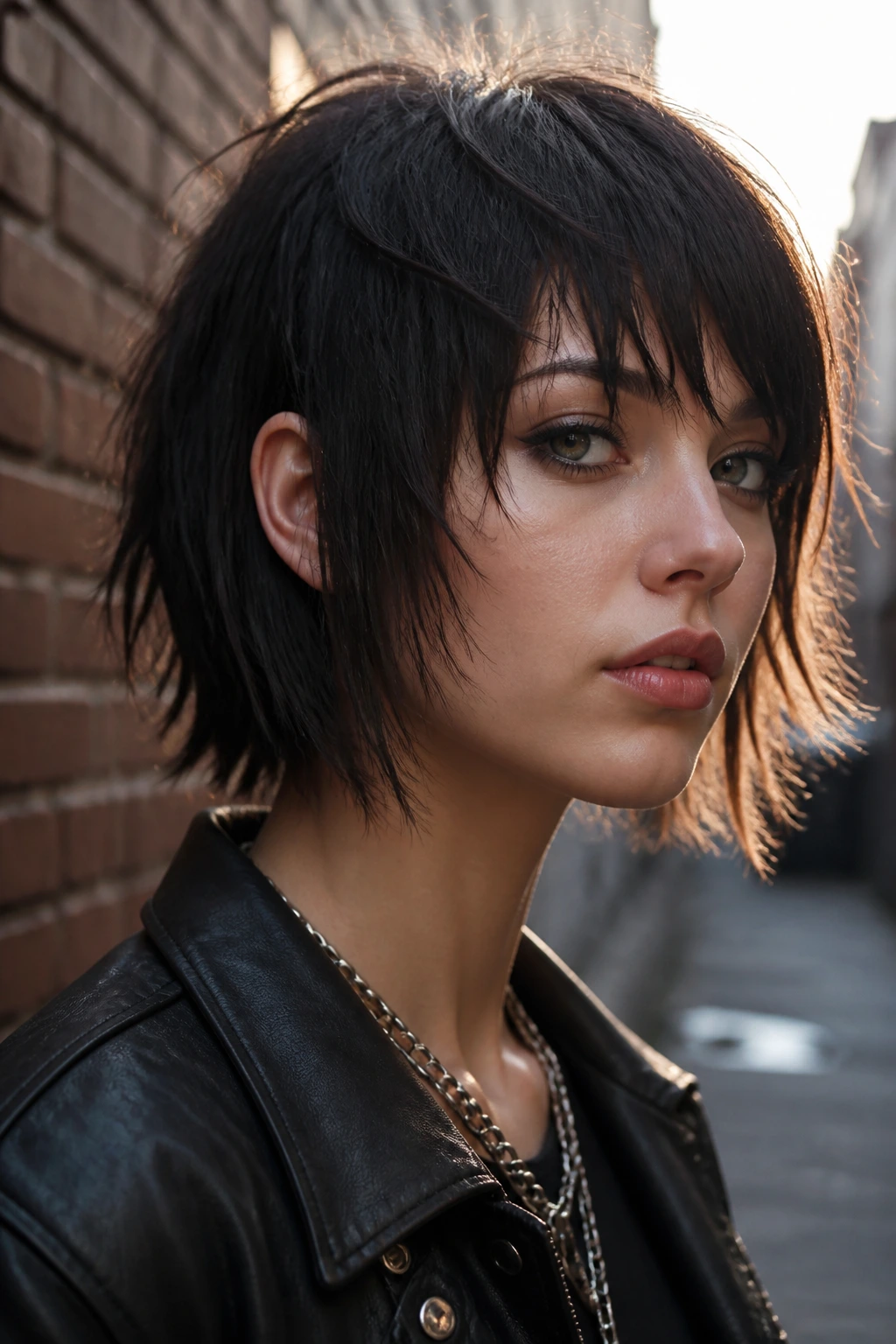
A bob shag is the awkwardly charming cousin of the classic bob. The base still reads as bob length — jaw to chin, sometimes a touch longer — but the ends are razored and the layers are sliced in a way that makes the shape flick instead of sit still.
This works well if you want edge without a lot of length. The haircut looks especially good with tucked sides and a broken fringe, because the short perimeter gives the texture a clean border.
It also behaves well with strong accessories. Hoop earrings, stacked necklaces, and dark liner all play nicely with the compact shape. The haircut itself does the rest.
19. Vivid Color Block Shag
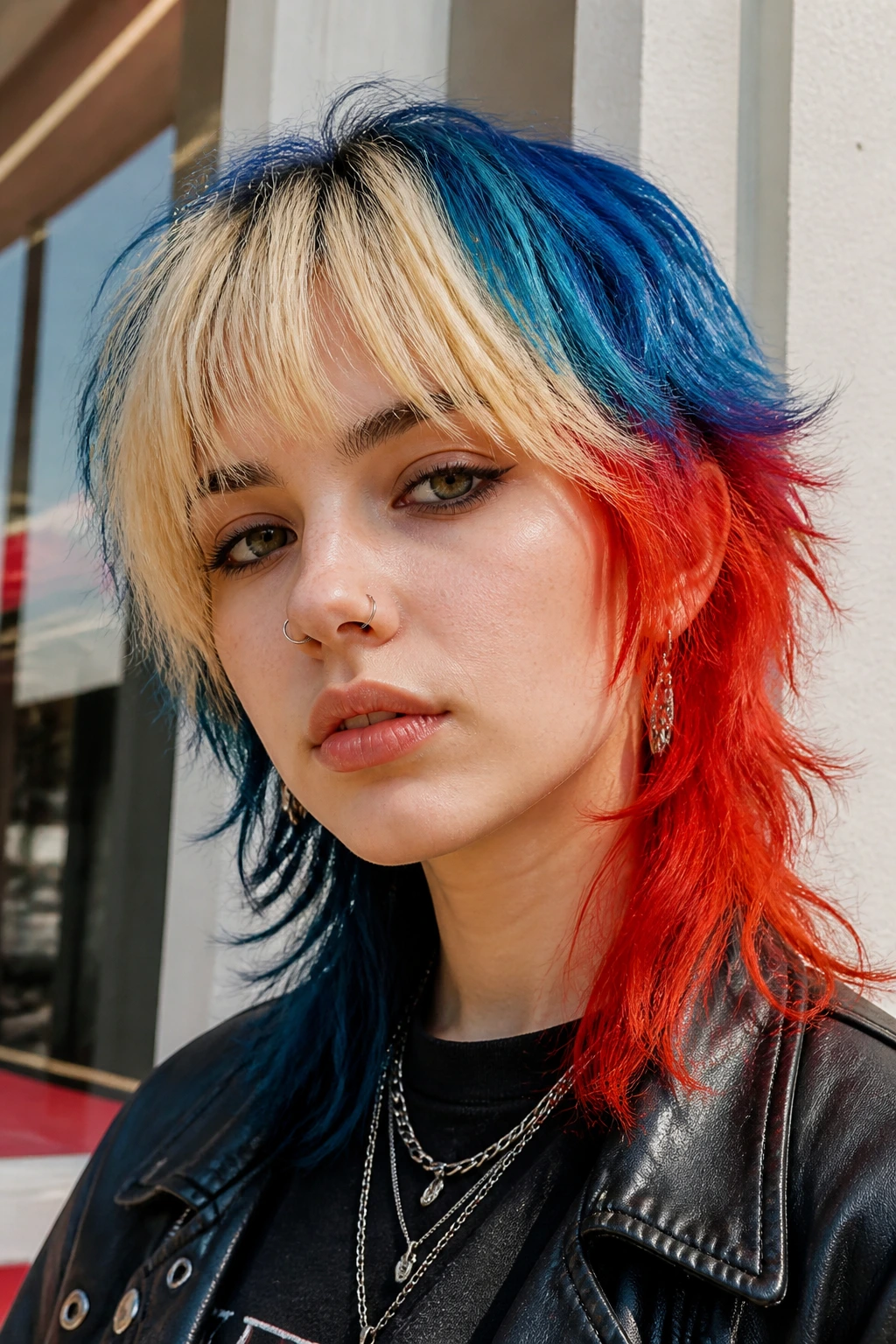
Color blocks make the shag read almost architectural. Instead of all-over color, you get one panel of blue, one of red, one strip of blonde at the fringe, and the layers move those blocks around like cut paper.
The haircut should stay slightly softer than the color. If both are too aggressive, the whole thing can feel busy. Keep the layering clear but not overthinned, so each block has a shape to sit on.
Best placements: front panels, underlayers, and the crown piece that peeks through when the hair is lifted. Those spots catch movement without requiring a full head of maintenance every few weeks.
20. Spiky Crown Shag
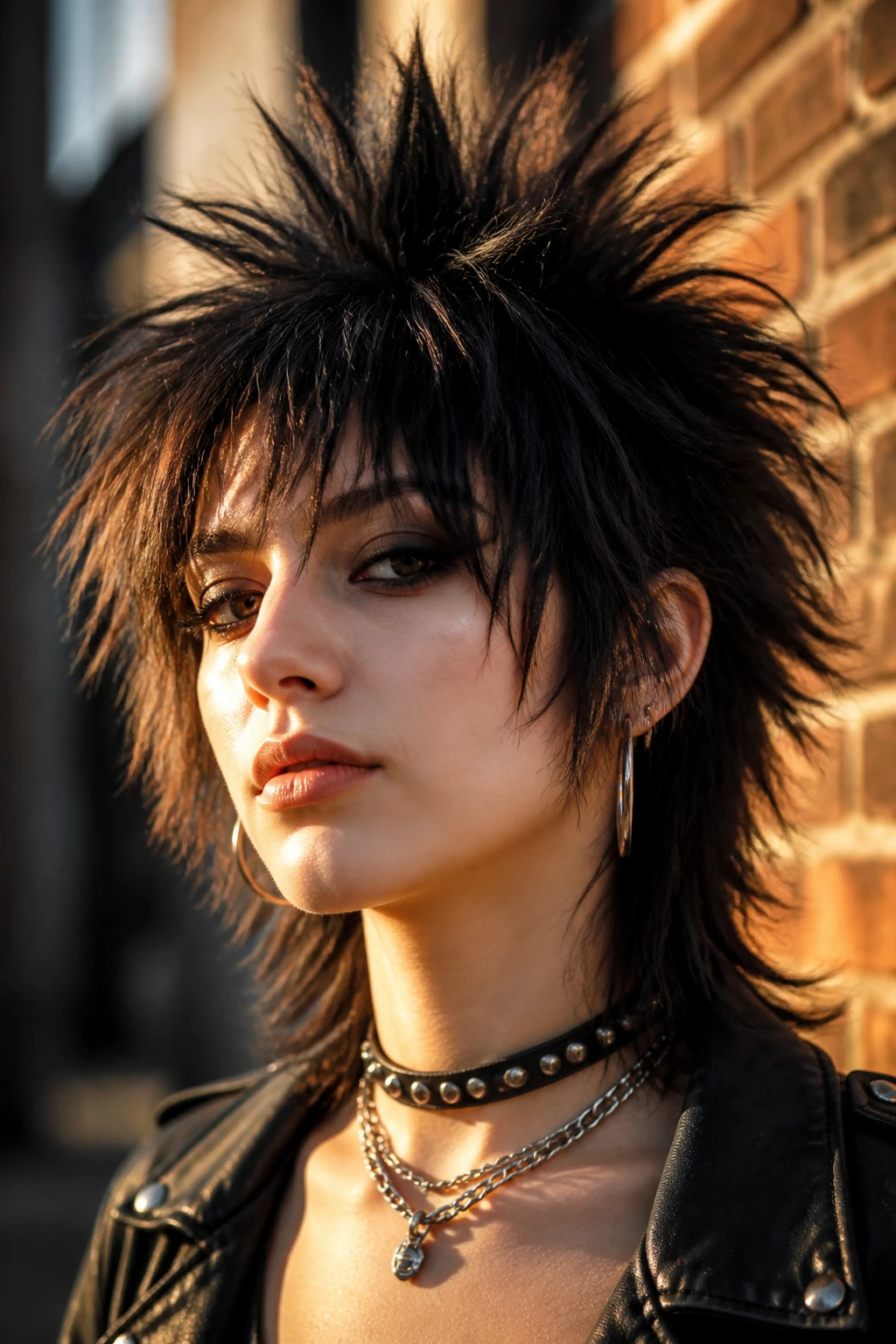
This is the shag with a little voltage in the top. The crown is cut and styled to stand up and forward, while the sides and back stay broken and layered. It’s the kind of cut that looks best when you touch it a little and leave some pieces in the wrong place.
A volumizing mousse at the roots helps, but the real trick is the finish. Use a tiny amount of texture paste at the crown and pinch pieces upward as the hair cools. You want separation, not helmet height.
Fine hair can do this cut well because the crown lift fakes density. Thick hair needs the interior removed carefully or the spikes just collapse under weight.
21. Softened Mohawk Shag
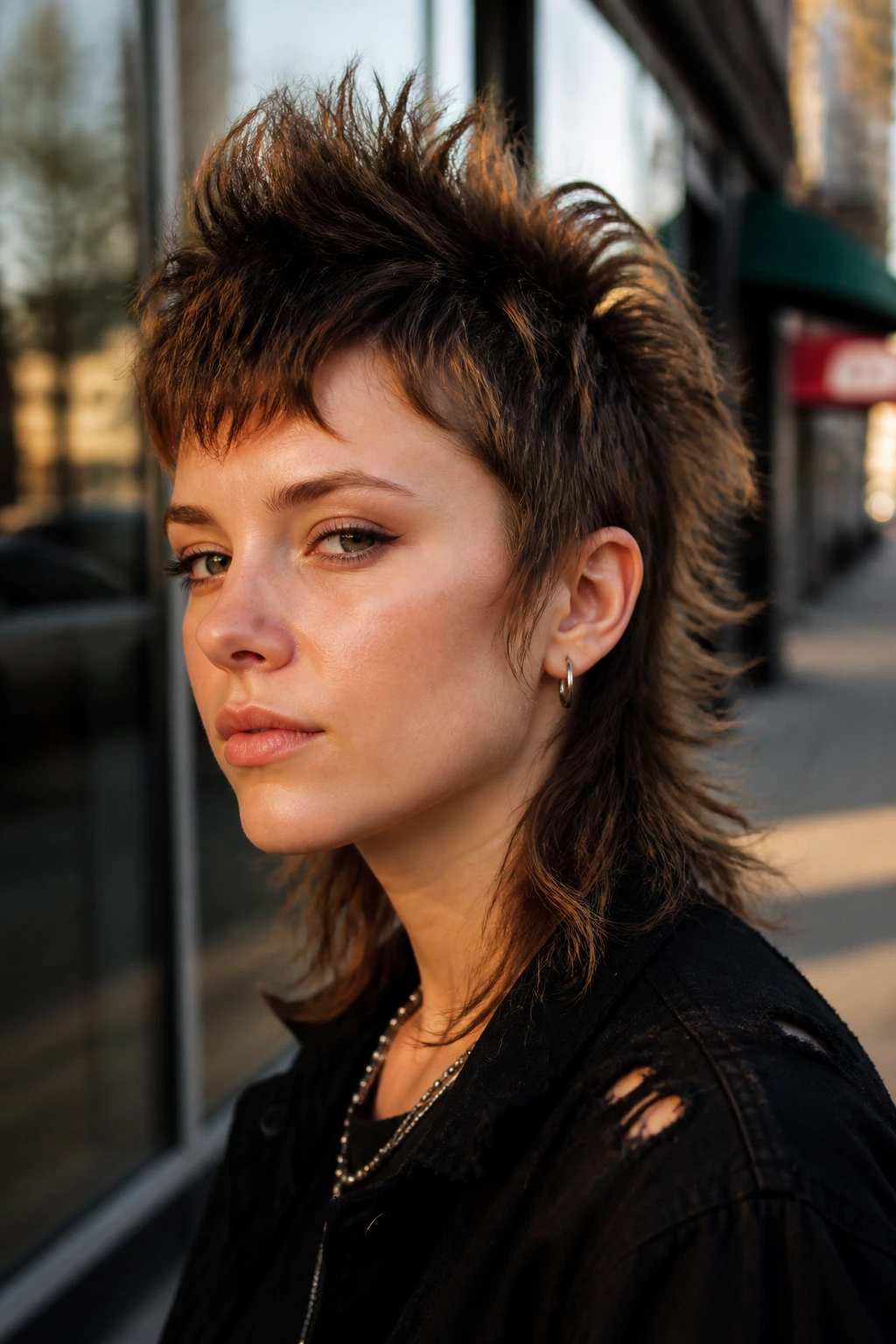
A softened mohawk shag keeps the central lift and edge of a mohawk, but with enough layering around the sides to make it wearable in regular life. The top is the loud part. The rest of the hair feathers out instead of staying shaved or rigid.
It’s a good in-between style for anyone who wants punk shape without committing to a full strip down the center. Ask for shorter internal layers on top and longer perimeter layers through the sides. That gives you lift without losing softness around the face.
What makes it punk
The top line is still directional. The hair wants to rise through the center, then collapse into ragged ends around the temples and nape. That tension is the whole point.
22. Shag With Curtain Bangs and Bite
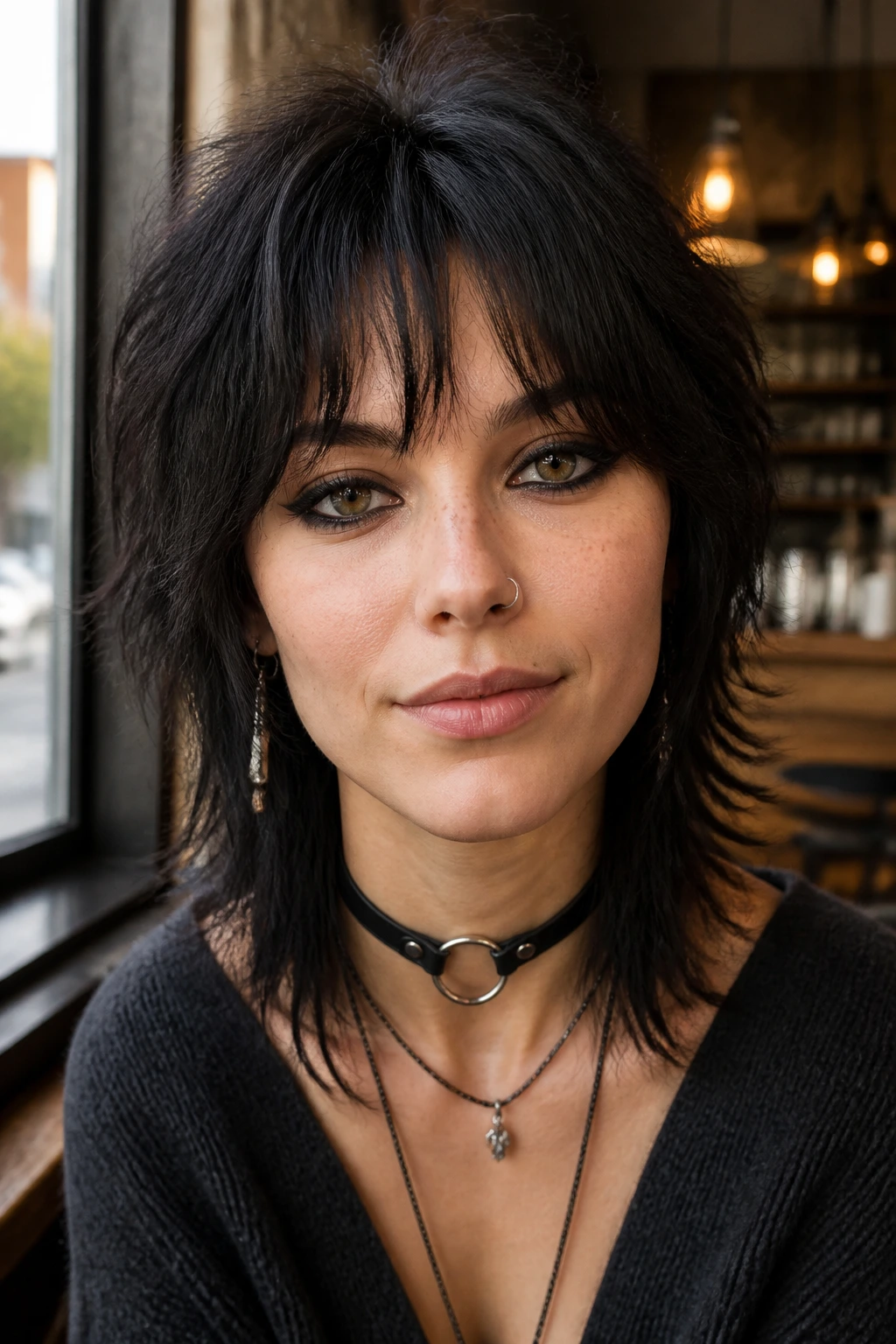
Curtain bangs can go soft fast, which is why they need some bite in a punk shag. The trick is keeping the curtain pieces slightly shorter and more textured than a standard glossy version, then cutting the sides with enough breakup that the whole shape feels less polished.
This is a useful cut if you want face framing without the harshness of micro bangs. The fringe opens in the middle, but the ends are still broken and uneven, so it doesn’t drift into “cute” territory unless you want it to.
A round brush can smooth the curtain bend, but I’d still leave a few piecey ends around the cheeks. That irregular edge is what keeps it from becoming too sweet.
23. Shattered Ends Shoulder-Length Shag
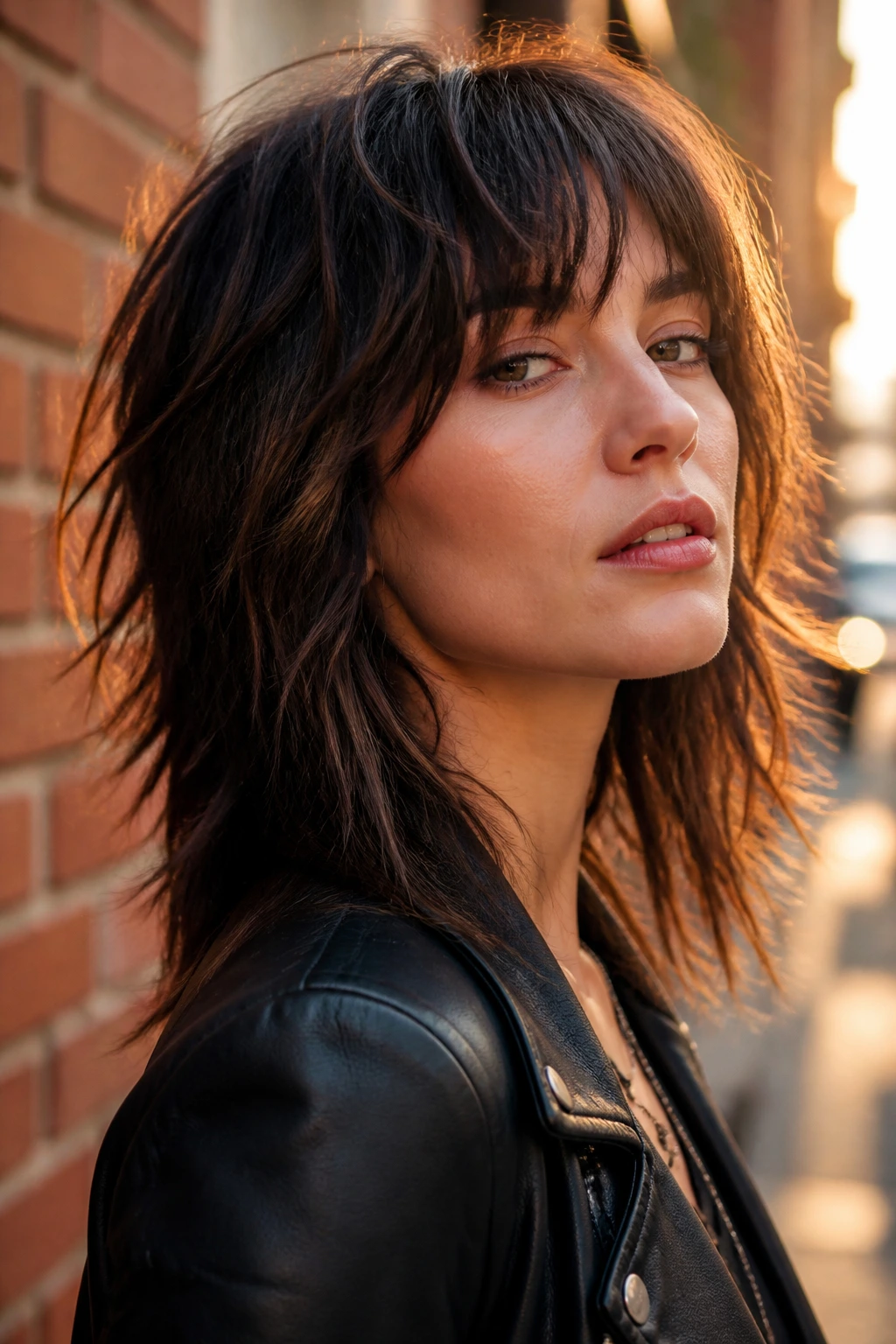
Shoulder length is a sweet spot for a shag because the hair has enough weight to move, but not so much that it turns into a curtain. Shattered ends help break up that shoulder line, which can otherwise look boxy fast.
This cut works especially well if your hair is a bit thick or grows in with a strong wave. The point-cut perimeter lets the ends flip and flick instead of sitting as one solid sheet. If you do not want visible bangs, keep the front layers long and let them blend from cheek to collarbone.
I’d call this one the most wearable option in the list. Still edgy. Less theatrical.
24. Fringe-Heavy Crop Shag
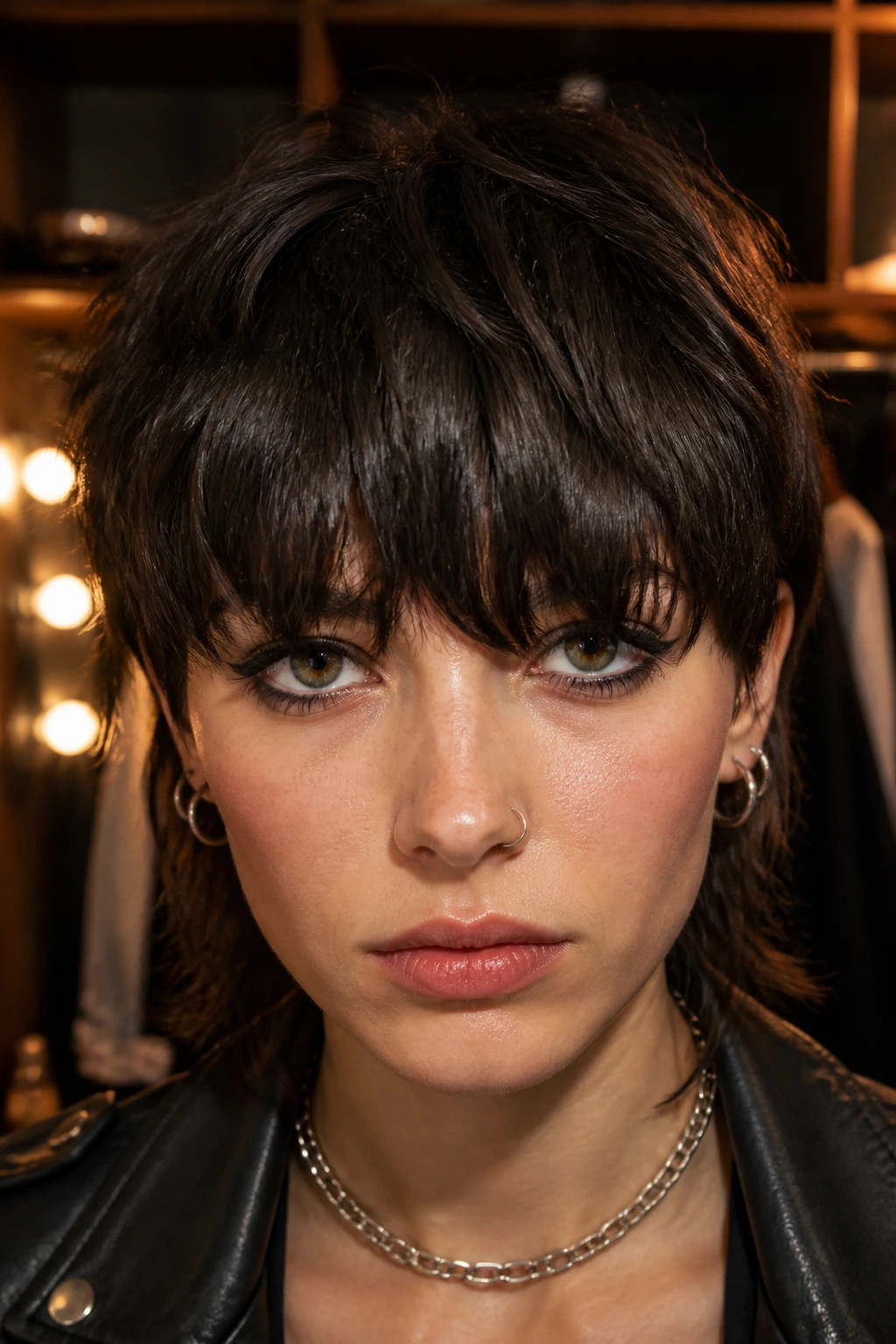
If the bangs are doing most of the work, this is the cut. The fringe is dense, often brow-skimming or shorter, and the sides stay cropped enough that the face looks framed before the rest of the haircut even registers.
This is a strong move for people who want the eyes to be the focal point. It also pairs well with heavier makeup, since the haircut holds its own without needing long lengths for balance. Keep the sides broken up so the fringe does not sit on top of a blocky shape.
A little bit of dry shampoo at the roots helps the fringe stay from clumping. That’s not glamorous advice, but it matters.
25. Tapered Nape Shag
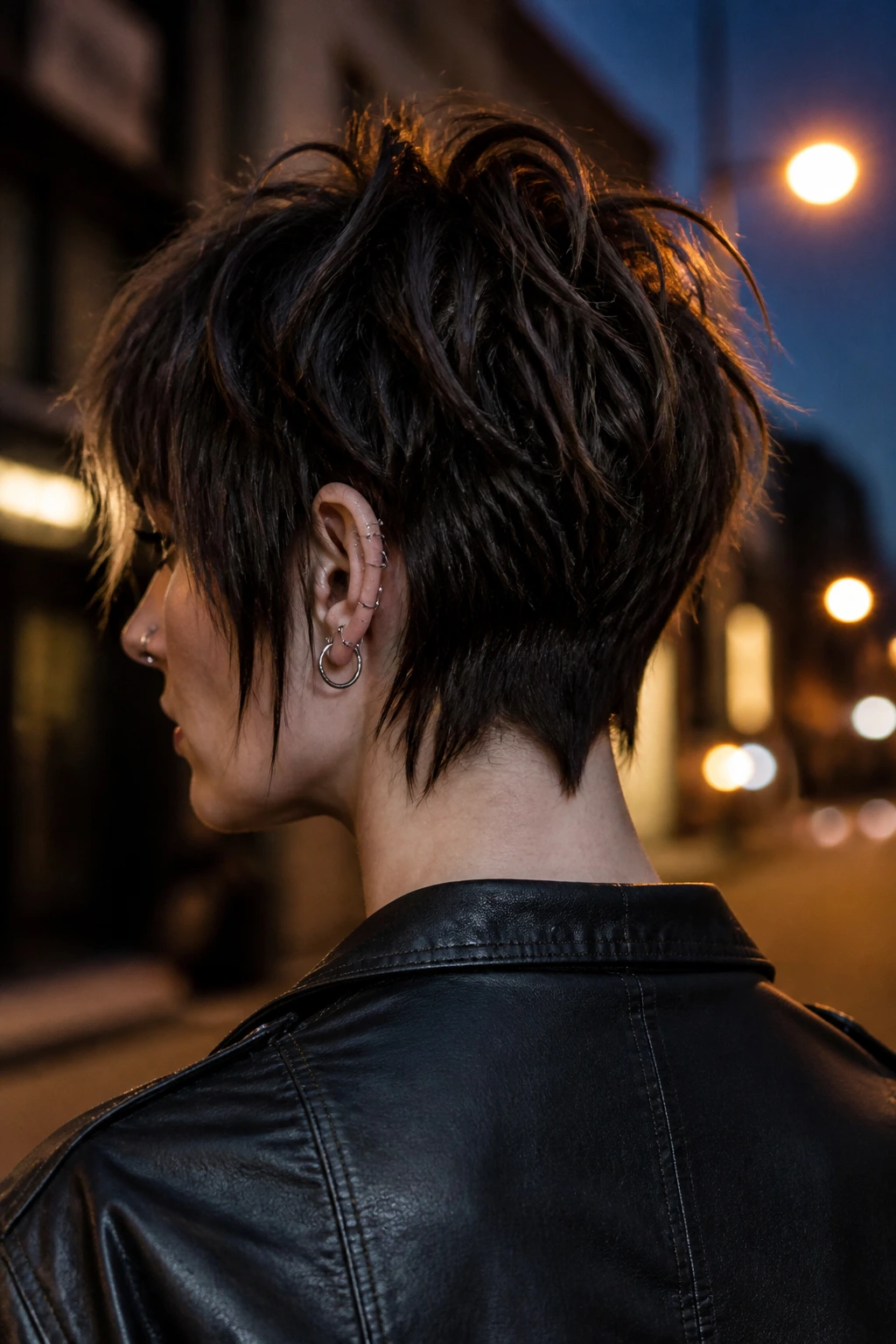
The tapered nape gives the shag a clean exit at the back of the neck. Instead of ending bluntly, the layers close in gradually, which keeps the silhouette neat enough to wear with collars, scarves, and jackets that would otherwise fight the haircut.
This shape is nice if you want edge without too much volume at the back. The front and crown can still be choppy and expressive. The taper just keeps the whole thing from exploding outward when you turn around.
It’s a quieter kind of punk, which sounds contradictory until you see it on. Then it makes sense. The line is still strange, just more controlled.
26. High-Contrast Black-and-Blonde Shag
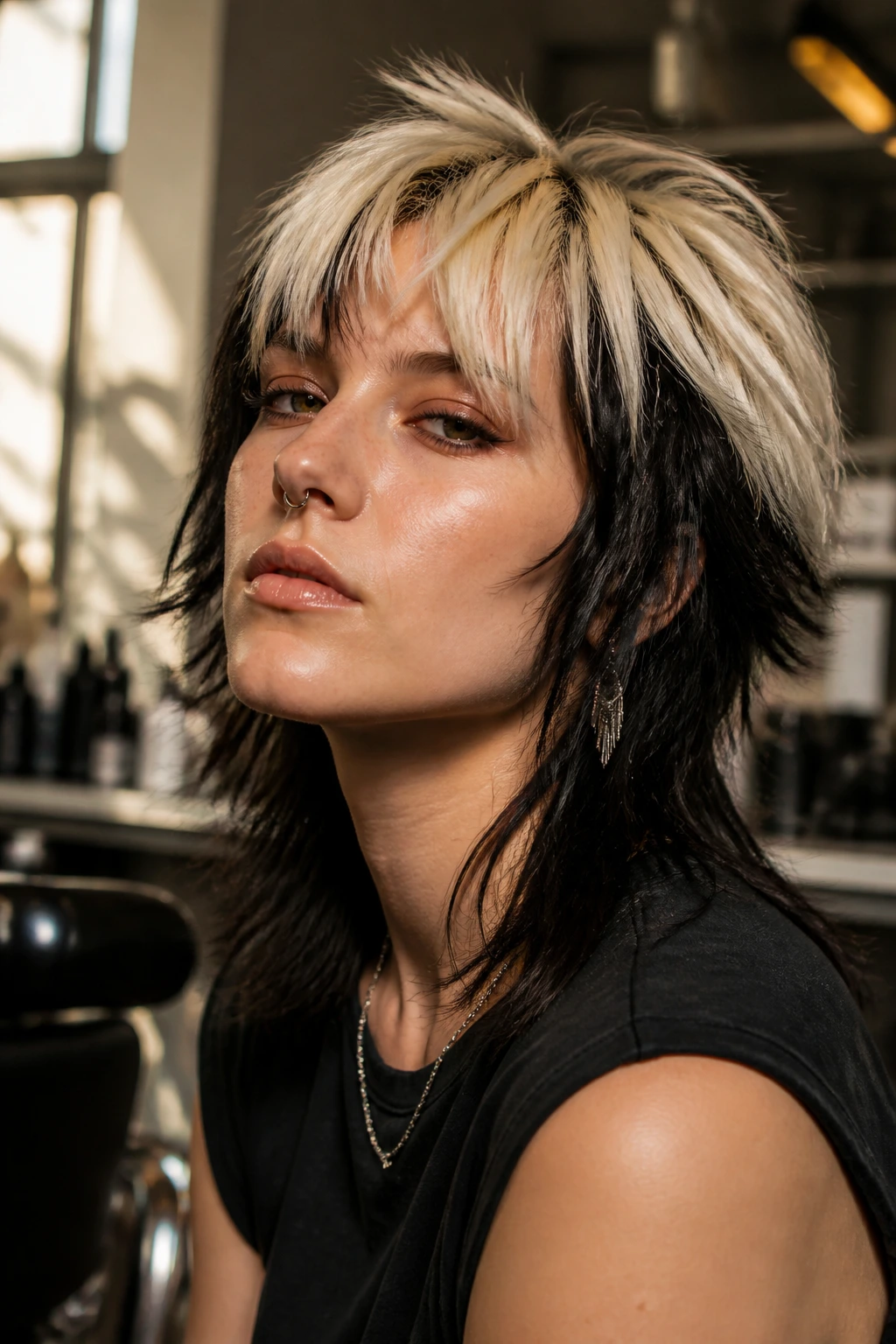
High contrast is never subtle, and that’s why it works. The black and blonde split or streak pattern makes every layer easier to read, especially if the blonde lands on the top pieces and fringe while the darker sections sit underneath.
This cut needs careful maintenance because the line between crisp and messy is thin. Keep the blonde toned, keep the dark rich, and keep the layers visible. If the cut gets flattened by too much smoothing serum, the whole graphic effect softens.
Color strategy
- place blonde where the haircut catches light at the fringe and crown
- keep darker lowlights underneath to make the layers pop
- refresh toner before brass turns the blonde beige
- leave one or two darker pieces near the face for depth
27. Air-Dried Natural Texture Shag

Not every punk shag needs a blowout. Some look best when the hair is left to dry in its own shape, with just enough product to keep the layers separated. This version works because the cut is built around natural bends and irregular movement.
If your hair leans wavy or curly, this is one of the easiest ways to wear the style. A leave-in conditioner, a light mousse, and a touch of curl cream can keep it from puffing while still letting the texture show. The haircut should already have enough internal shape to do the rest.
I like this cut because it feels less forced. The edge comes from the silhouette, not from overworking the styling.
28. Grown-Out Punk Shag

A grown-out punk shag is not a compromise. It’s the version people actually live in. The layers have softened, the fringe has lengthened a bit, and the shape still carries enough breakage to look intentional, which is more than you can say for a lot of chopped cuts after six weeks.
This is the one to choose if you want a shag that can survive a busy schedule. The perimeter should stay uneven, the crown should keep some lift, and the longest pieces can brush the collarbones or just below. As long as the layers still separate when you shake the hair out, the cut holds its edge.
If you want a haircut that looks good on day one and does not panic when it grows, start here.
Why the Shag Gives Punk Hair Its Shape
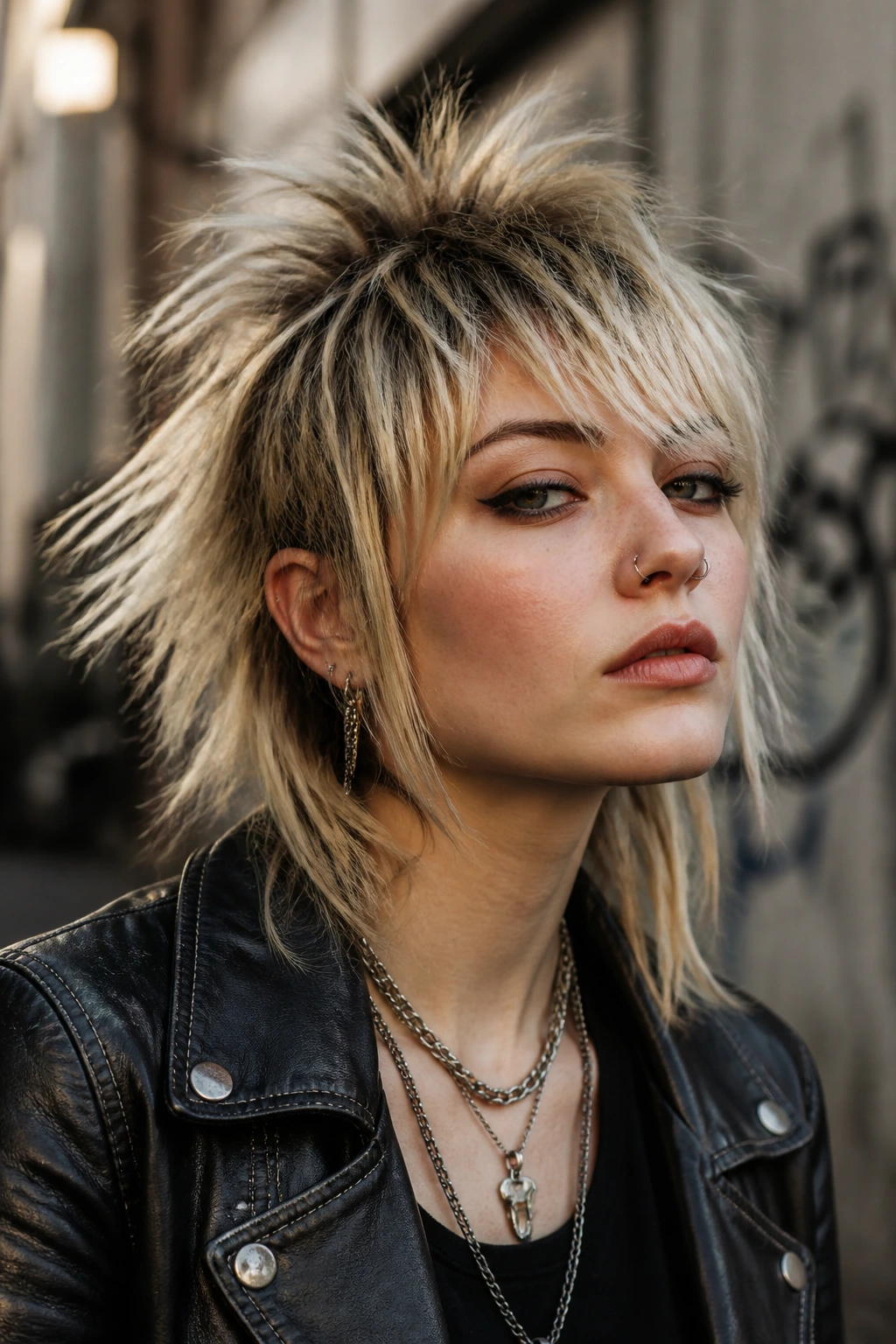
The shag does something blunt cuts cannot do on their own: it breaks the silhouette into moving pieces. That matters for punk styling, because punk hair rarely wants to sit in a single clean line. It wants lift at the crown, roughness at the ends, and a fringe that makes a decision instead of politely framing the face.
The mechanics are simple, and they matter. Shorter top layers create height. Longer outer layers keep length. Point-cut or razored ends stop the whole thing from turning boxy. Put those together and you get a haircut that can look soft one minute and sharp the next, depending on how much product you use and where you push the fringe.
There’s also a practical side people overlook. A shag hides grow-out better than many precision cuts. If the neck length gets a little shaggy or the fringe gets a little heavier, the shape usually gets more interesting before it gets bad. That makes it a forgiving choice for anyone who likes edge but doesn’t want to live at the salon.
Essential Equipment for These Cuts
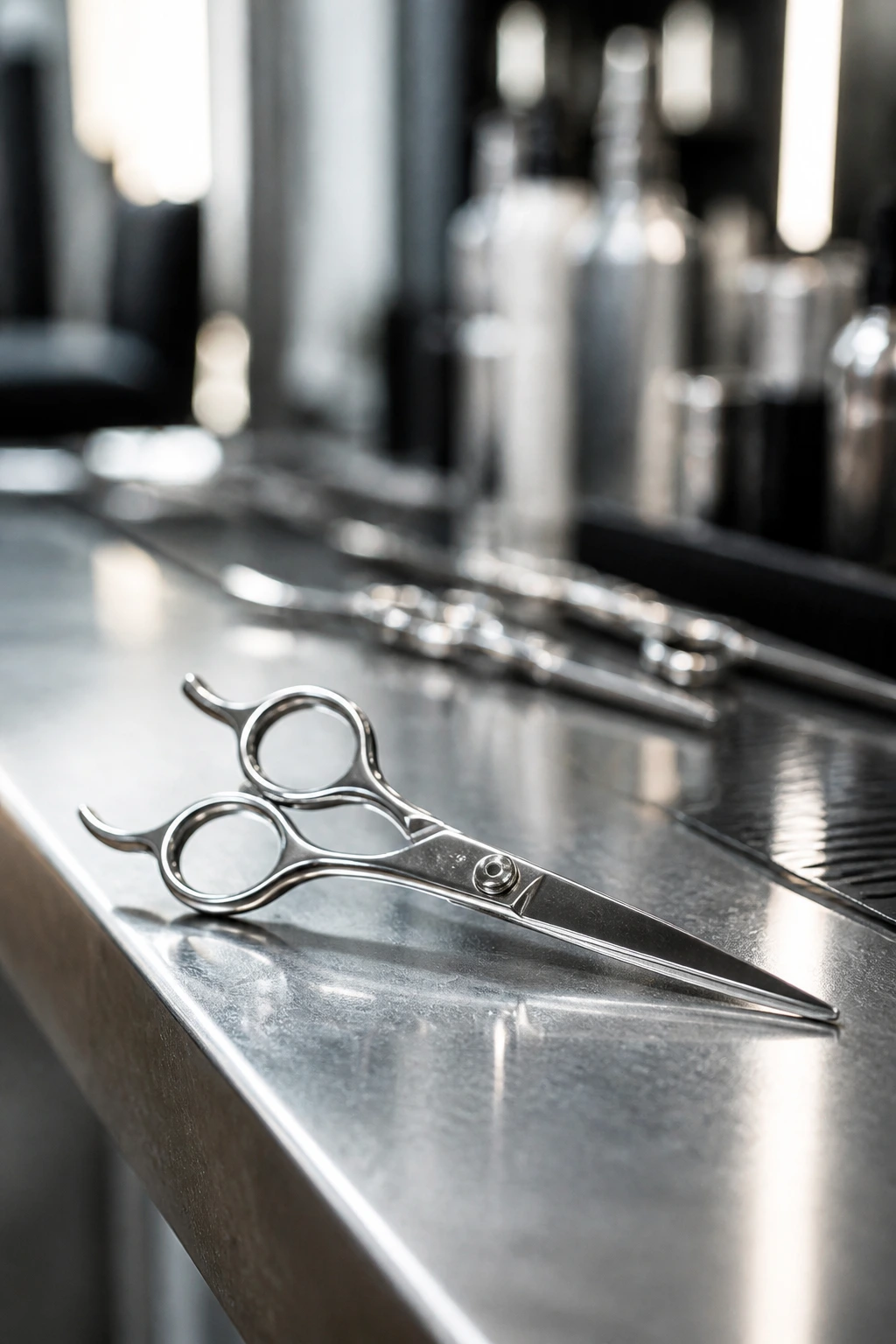
- Sharp haircutting shears: Clean, precise cuts matter more than forceful snips; dull scissors fray the ends in a bad way.
- Texturizing shears or razor: Useful for removing weight and creating the broken finish that makes a shag feel punk.
- Tail comb: Helps section the hair cleanly, especially for fringe, underlayers, and color placement.
- Sectioning clips: Keep crown layers and side panels out of the way while you work.
- Blow dryer with nozzle: Directs the airflow so the layers lift instead of scattering.
- Diffuser attachment: A must for wavy or curly shags if you want shape without frizz.
- Round brush or Denman-style brush: Handy if you want bend and lift through the fringe.
- Heat protectant spray: Use it before flat ironing, blow-drying, or tonging the front pieces.
- Texture spray or dry shampoo: Gives piecey separation, especially at the crown and ends.
- Matte paste or light styling cream: Good for defining ends without making the cut look greasy.
Smart Shopping and Product Tips
The biggest mistake people make with a punk shag is buying products for shine when the haircut needs separation. Heavy oils, slick serums, and smoothing creams can flatten the layers so hard that the whole style loses its shape. If your hair is fine, start with a mousse or root-lift spray, then finish with a dry texture spray. If your hair is coarse, a lighter cream can tame the bulk without making it collapse.
Color choice matters too. If you want the cut to read punk, ask whether the style needs a color story to match the texture. Split dye, root shadow, black-to-platinum contrast, and neon streaks all make the layers easier to see. If you are not ready for full color upkeep, ask for a darker root with lighter face-framing pieces. That keeps the effect strong without turning your whole head into a maintenance project.
When you shop for salon photos, bring pictures that show both the front and back. Shag haircuts can look wildly different depending on where the weight sits at the nape and how high the crown starts. One photo from the front does not tell the whole story, and half the bad haircuts in this category come from that missing angle.
How to Wear These Cuts
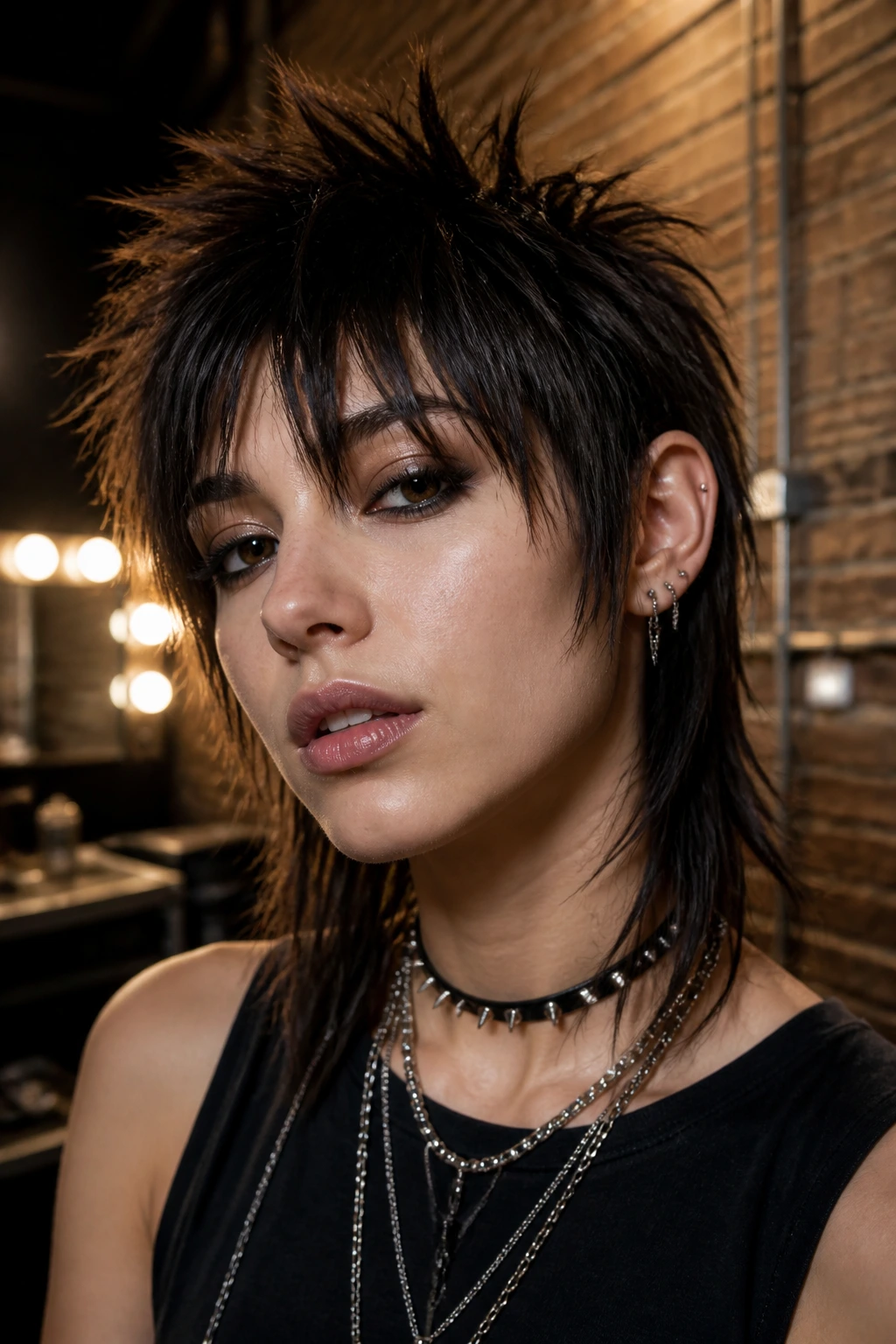
Presentation: Let the layers move. That sounds obvious, but a punk shag looks better when it’s not pinned into submission. A little bend through the fringe, a lift at the crown, and a few ends that fall where they want to fall gives the whole cut its shape.
Pairings: Leather jackets, oversized tees, mesh tops, silver jewelry, dark liner, or even a plain tank can change the mood fast. The haircut can carry the edge alone, but it also loves clothes with a little texture or contrast.
Fit: Shorter shags sharpen the jaw and neck. Longer shags soften the face and give more room for dramatic color. If you want cheekbones to pop, keep the front pieces a little shorter and the fringe more broken.
Setting: These cuts hold up anywhere a regular blowout would feel too polished. Concerts, late dinners, gallery openings, crowded bars, and casual days with no makeup all work. The haircut is flexible, but it still likes a little attitude from the rest of the outfit.
Additional Tips and Style Boosters

Texture Boost: Work mousse into damp roots, then scrunch in texture spray once the hair is about 80 percent dry. That two-step combo gives the layers a rougher feel than a single product pass.
Color Shift: If you want more edge without changing the cut, add a front money piece, a hidden panel, or a deeper root shadow. Small color moves change the whole mood fast.
Finish: Use matte paste for separation and a tiny hit of shine cream only on the very outer ends if you want the hair to look lived-in but not dusty. One pea-sized amount goes farther than most people think.
Make-It-Yours: Fine hair usually needs shorter crown layers and less weight at the perimeter. Thick hair benefits from interior removal and stronger texturizing. Curly hair needs dry shaping so the fringe and crown keep their pattern. Straight hair often needs a little bend with a flat iron or roller set to keep the shag from lying flat.
Make-Ahead, Maintenance, and Grow-Out Guidance
A punk shag is not a wash-and-forget cut, but it’s also not a high-drama maintenance nightmare if you keep up with the small stuff. Most versions look best with trims every 6 to 8 weeks if you want the fringe and layers to stay sharp. If you are happy with a rougher, grown-out feel, you can stretch that a bit longer, especially on longer shags and mullet-shag hybrids.
Styling memory matters more than people expect. If you sleep on a shag without protecting the fringe, the front can flatten and the crown can bend into odd folds. A soft clip at the bangs, or even just flipping the fringe before bed, saves a lot of morning fiddling. Dry shampoo at the roots on day two or three helps the style keep its lift, especially on fine hair.
Color needs its own schedule. Platinum, neon, and split-dye panels usually need more attention than the cut itself. Keep toner, gloss, or root touch-up intervals in mind if the color is part of the haircut’s personality. If you are wearing a darker, grungier shag, a root shadow or lived-in color blend can make grow-out look intentional instead of neglected.
Heat styling is optional, but if you use it, protect the hair first. The whole point of these cuts is broken texture, not fried ends. A low-heat diffuser or a quick bend with a flat iron is usually enough.
Variations and Adaptations to Try
Office-Friendly Punk Shag: Keep the layers softer, the fringe longer, and the color closer to natural tones. You still get the movement and edge, but the haircut can pass as restrained from a distance.
Curly Riot Shag: Let curls lead the shape and trim the fringe dry. This version keeps the punk mood through texture instead of sharp lines, which is a smart move if your hair has its own opinion.
Fine-Hair Spike Shag: Shorten the crown layers, keep the perimeter airy, and use root-lift spray before diffusing. Fine hair can look fuller here because the cut removes the flatness that usually weighs it down.
Thick-Hair Control Shag: Ask for hidden internal removal and a tapered nape so the hair does not balloon outward. The result is still messy and punk, just less bulky.
Color-First Shag: If the cut itself is subtle, let the color do the work with split dye, block panels, or neon streaks around the fringe. That keeps the shape wearable while still making it read edgy.
Grow-Out Friendly Shag: Leave the fringe slightly longer and keep the nape soft. The shape will last longer between salon visits and still look deliberate as it settles.
Common Mistakes to Avoid
-
Over-thinning fine hair: The cut starts to look stringy and limp instead of textured. Ask for selective removal, not aggressive texturizing through every section.
-
Letting the fringe grow unchecked: A great punk shag can lose its face-framing effect fast if the bangs drop into the eyes or split in awkward places. Trim them before they get in the way, not after.
-
Using too much smoothing product: The layers collapse, the ends bunch together, and the haircut starts to look like a softer version of itself. Start with less product than you think you need.
-
Ignoring the back shape: People obsess over the front and then end up with a bulky nape that ruins the silhouette. The back should be part of the design, not an afterthought.
-
Cutting it with random household scissors: Ragged in the bad way is not the same as punk. A real shag needs clean cutting tools and sectioning, or the ends fray unevenly.
-
Forgetting color upkeep when the color is part of the cut: Neon and platinum look brutal when they fade unevenly. If the color is central to the style, plan for toner and root work.
Frequently Asked Questions
What face shapes work best with punk shag haircuts?
Most face shapes can wear a shag, but the fringe and face-framing pieces need to be adjusted. Round faces often benefit from longer curtain layers, while angular faces can handle heavier bangs or a sharper asymmetrical line.
Can straight hair pull off a punk shag without looking flat?
Yes, but the cut has to do more work. Ask for stronger crown layers and use a round brush, bend iron, or texture spray so the hair does not fall into one smooth sheet.
How often does a punk shag need a trim?
If you want the fringe and layers to stay crisp, plan on 6 to 8 weeks. Longer versions can stretch further, but the bangs usually need attention sooner than the rest of the cut.
Is this cut good for curly hair?
Very good, as long as it’s shaped for curls instead of forced into a straight-hair template. Dry cutting or curl-by-curl shaping keeps the fringe and crown from springing up too far.
What product should I use first when styling a shag?
Start with a root-lift spray or mousse on damp hair. Then decide whether you want a rougher finish with texture spray or a more controlled one with a tiny bit of paste on the ends.
How do I ask a stylist for this without sounding vague?
Bring photos that show the front, side, and back. Say whether you want the crown short, the fringe heavy, the nape tapered, or the length kept long, because those details change the whole cut.
Can I make a punk shag work for a conservative workplace?
Absolutely. Keep the color muted, the fringe longer, and the layers softer. The haircut can still have movement and edge without looking theatrical.
What if my shag looks too puffy after a wash?
That usually means the interior has too much bulk or the product is too heavy in the wrong place. Try a lighter mousse, diffuse less aggressively, and ask your stylist to remove weight where the hair expands most.
Can I cut a shag at home?
You can trim fringe and shape small bits if you already know the cut, but a full punk shag is a risky first home project. The back layers and crown placement are easy to misjudge, and that’s where the shape lives.
The Cut That Keeps Its Edge
Punk shag haircuts work because they leave room for motion, mess, and a little personality. The best ones do not look overworked. They look like they belong to a person who knows exactly how much neatness to refuse.
And that’s the real appeal here: the cut can be loud or low-key, dyed or natural, short or shoulder-skimming, but it still keeps that rough-edged shape that feels alive when you move. If you want hair that can look sharper at 8 a.m. and better at 8 p.m., a shag with punk details is still one of the smartest places to start.
