



Thick hair can be a gift and a headache in the same afternoon. Left alone, it swells at the sides, drags at the roots, and turns into that heavy, boxy shape that makes long hair look like a single solid sheet. The right layered shaggy long haircuts for thick hair do the opposite. They break up the bulk, keep the length, and let the hair move instead of sitting there like a curtain that forgot its lines.
What I love about a good shag on dense hair is that it doesn’t ask the hair to behave like something else. It works with the density. A smart cut removes weight from the crown, softens the perimeter, and creates those ragged, piecey ends that make long hair feel lighter without looking thin. And yes, the difference between “light” and “skinned” matters. Too many cuts carve out so much volume that the ends look scraggly. The good ones leave a strong shape.
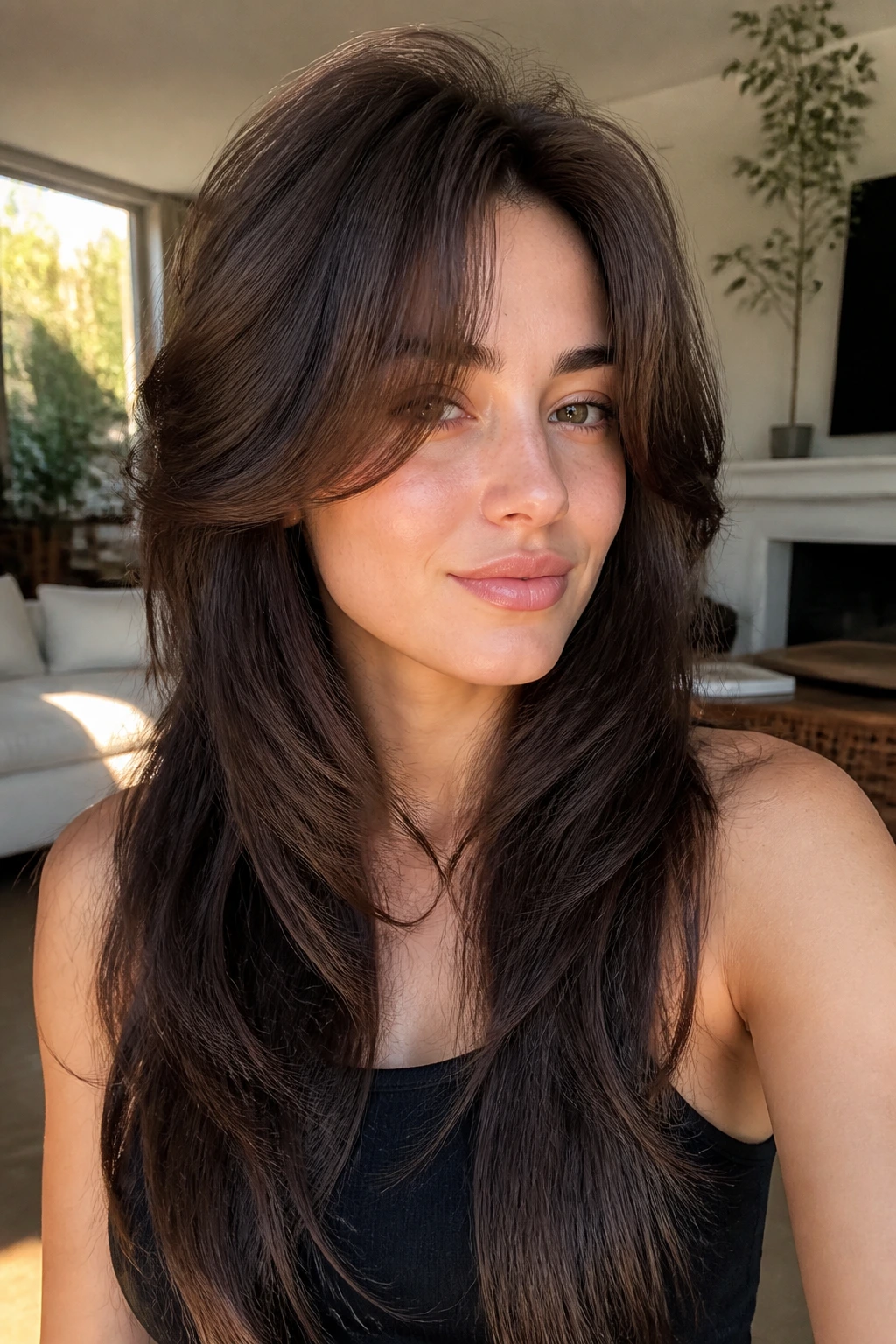
That balance is what makes this style so useful for thick hair. You can wear it messy, polished, air-dried, blown out, curled, or tucked behind one ear on a day when you’re pretending you tried. The shape does the work. The trick is choosing the right kind of shag for your density, your face shape, and the amount of styling you’re actually willing to do.
Why These Shags Work on Thick Hair
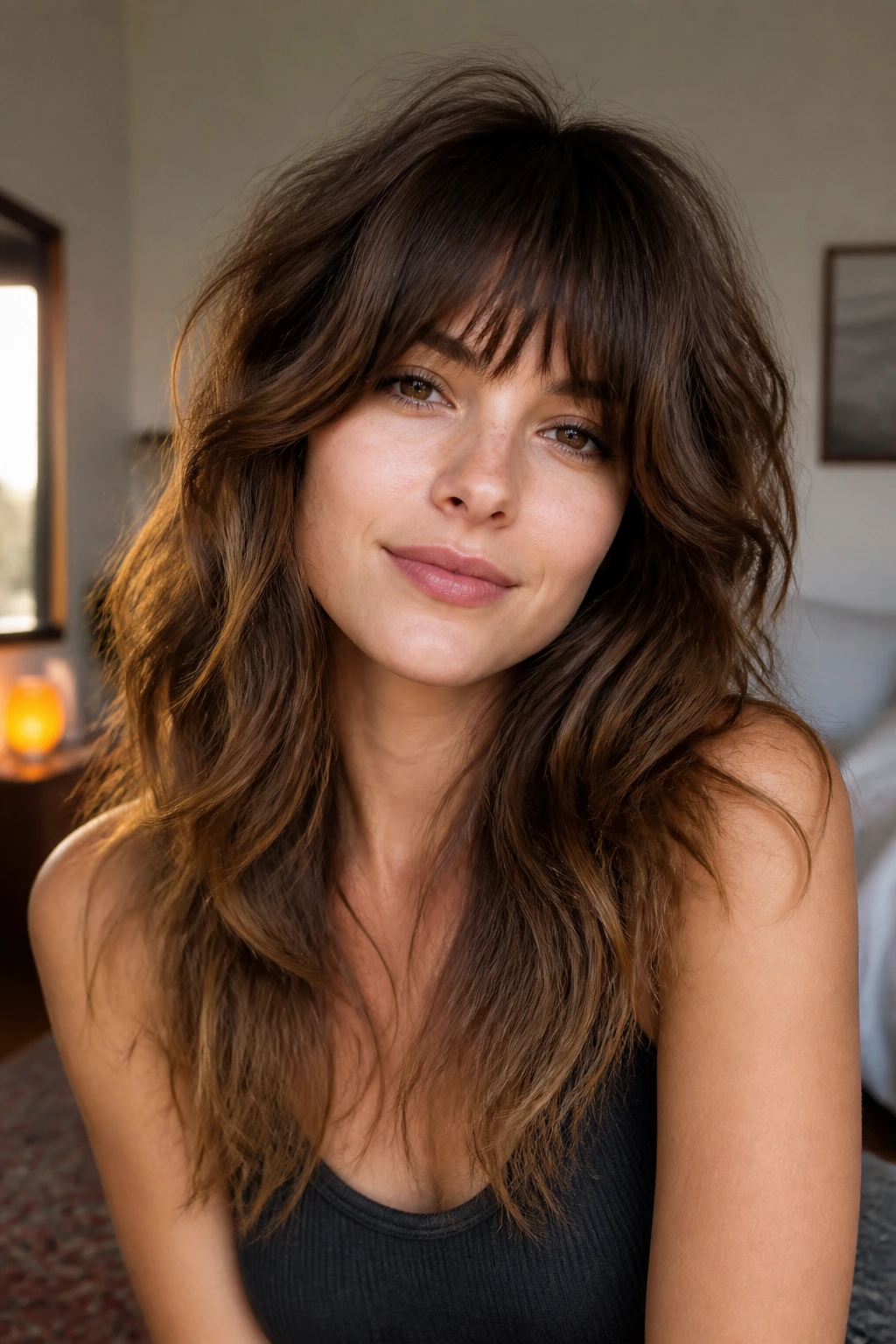
- Bulk goes where you want it: The best shag layers remove weight from the middle and crown, so the lower half doesn’t flare out like a pyramid.
- Length stays visible: A smart shag keeps enough perimeter length that the hair still looks long, even after the internal layering does its job.
- Styling gets faster: Thick hair usually holds shape well, and a shag gives it a built-in bend, so you’re not fighting the texture every morning.
- The fringe matters: Curtain bangs, bottleneck bangs, and long wisps give the haircut a face frame without hacking off half the front.
- Air-drying works better: Thick hair often dries with natural body; a shag lets that body look intentional instead of puffy.
- It grows out cleaner: Layers and texture hide a lot of the awkward “in-between” stage, which is handy when you’re stretching time between trims.
1. Curtain-Framed Shag with Razored Ends
This is the shag I’d hand to someone who wants movement without losing the feeling of long hair. The center part, curtain fringe, and softened razored ends give thick hair a lifted front and a lighter hemline, which keeps the whole cut from looking bottom-heavy.
Why it works: Thick hair gets dense around the jaw and shoulders fast. Curtain layers open that up, and razored ends take the bluntness off the bottom inch or two. You still get a lot of hair, but it stops behaving like one heavy block.
If your hair tends to puff out at the sides, this is a calm, reliable choice. The longest pieces still graze the ribs or chest, but the shorter face frame keeps the top from dragging your features down. I like this one especially on hair that already has a little bend. It doesn’t need perfection. It needs a good blow-dry and a little direction.
A tiny side note: this cut looks expensive when the front pieces are kept soft, not choppy. Sharp, overcut curtain bangs can make thick hair look fussy. Soft is better here.
2. Butterfly Shag with Long Face Framing
Why does the butterfly shag keep showing up in long-hair conversations? Because it solves a real problem: thick hair wants to live in two worlds at once, heavy and airy. The butterfly shape separates those worlds. The top layers sit high, the front pieces sweep down, and the length underneath stays long and visible.
Why it works: The shorter top layers create lift around the crown, while the longer face-framing pieces give you that fluttery, almost blown-out look. On thick hair, that contrast keeps the cut from collapsing into one solid mass.
I like this cut on people who want movement but don’t want a full shag that feels too messy. It can be smoothed, curled, or left with a wave, and the silhouette still makes sense. The real win is that it keeps a lot of length at the back while making the front feel much lighter.
If your hair sits on the heavier side of dense, ask your stylist to leave the shortest layers around cheekbone level rather than much shorter. That keeps the shape flattering instead of overbuilt.
3. Wolfish Mid-Part Shag
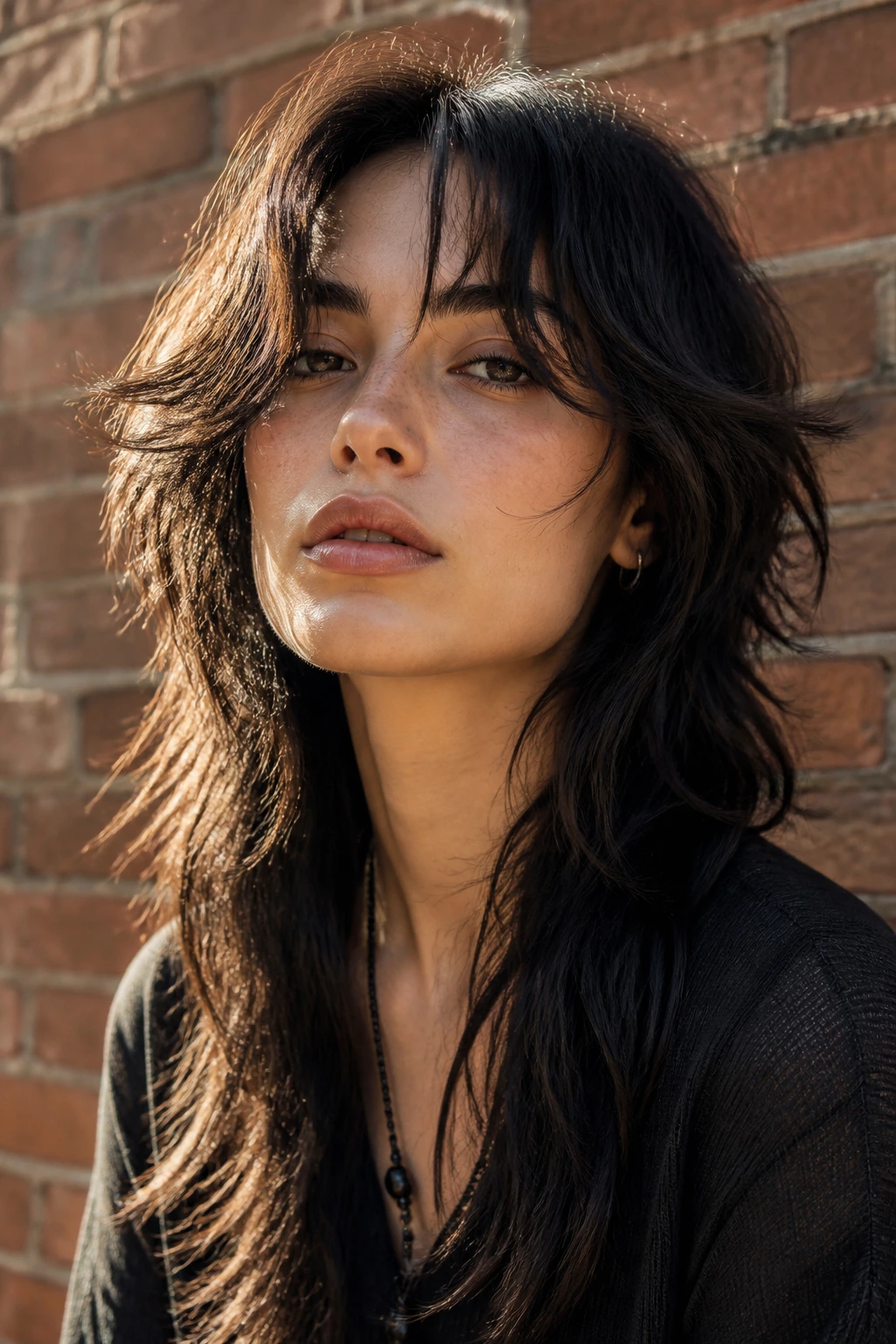
A wolf-ish shag is not for the timid, and that’s part of the fun. The center part, choppy crown, and long trailing ends give thick hair a bit of attitude, but the long length keeps it from tipping into full mullet territory.
What makes it different: Unlike a softer layered cut, this one leans into disconnection. The crown is shorter, the front is more broken up, and the lower lengths stay long enough to keep the shape grounded.
This cut is useful if your hair already has texture and a little natural roughness. Straight, very dense hair can wear it too, but it usually needs some styling cream or a round-brush bend to keep the layers from sticking out like shelving. On wavy hair, it looks looser and more lived-in.
I’d call this the best choice for someone who likes their hair to feel a little rebellious. It doesn’t need to be polished. It needs direction. And maybe a little dry texture spray.
4. U-Cut Shag with Soft Layers
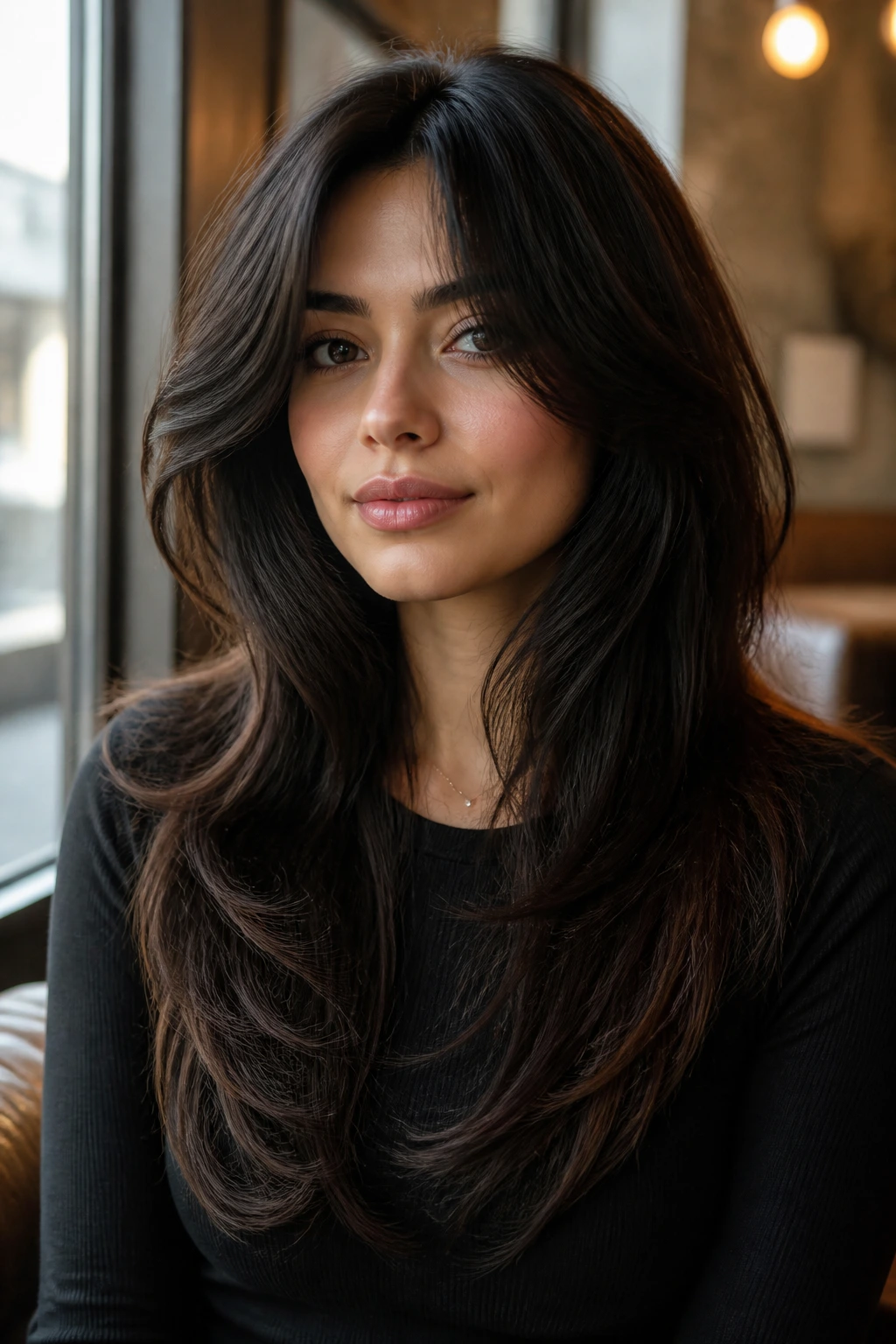
The U-cut is the secret polite cousin of the shag. It keeps the perimeter rounded and soft while still building in long layers through the interior, which helps thick hair move without losing that full, rich shape at the bottom.
Why it works: A U-shaped outline makes thick hair look intentional from the back. The layers inside the shape remove weight, but the soft hemline keeps the length from turning ragged or overly pointed.
This one is smart if you like long hair that still feels feminine and smooth. The front can be lightly framed, but the big story is the curve at the back. It’s flattering on thick hair that tends to sit flat at the crown and then explode at the ends. The U-shape reins that in.
If you wear your hair mostly straight, this may be one of the easiest cuts on the list to maintain. The shape stays readable even on low-effort days.
5. Boho Shag with Wispy Bangs
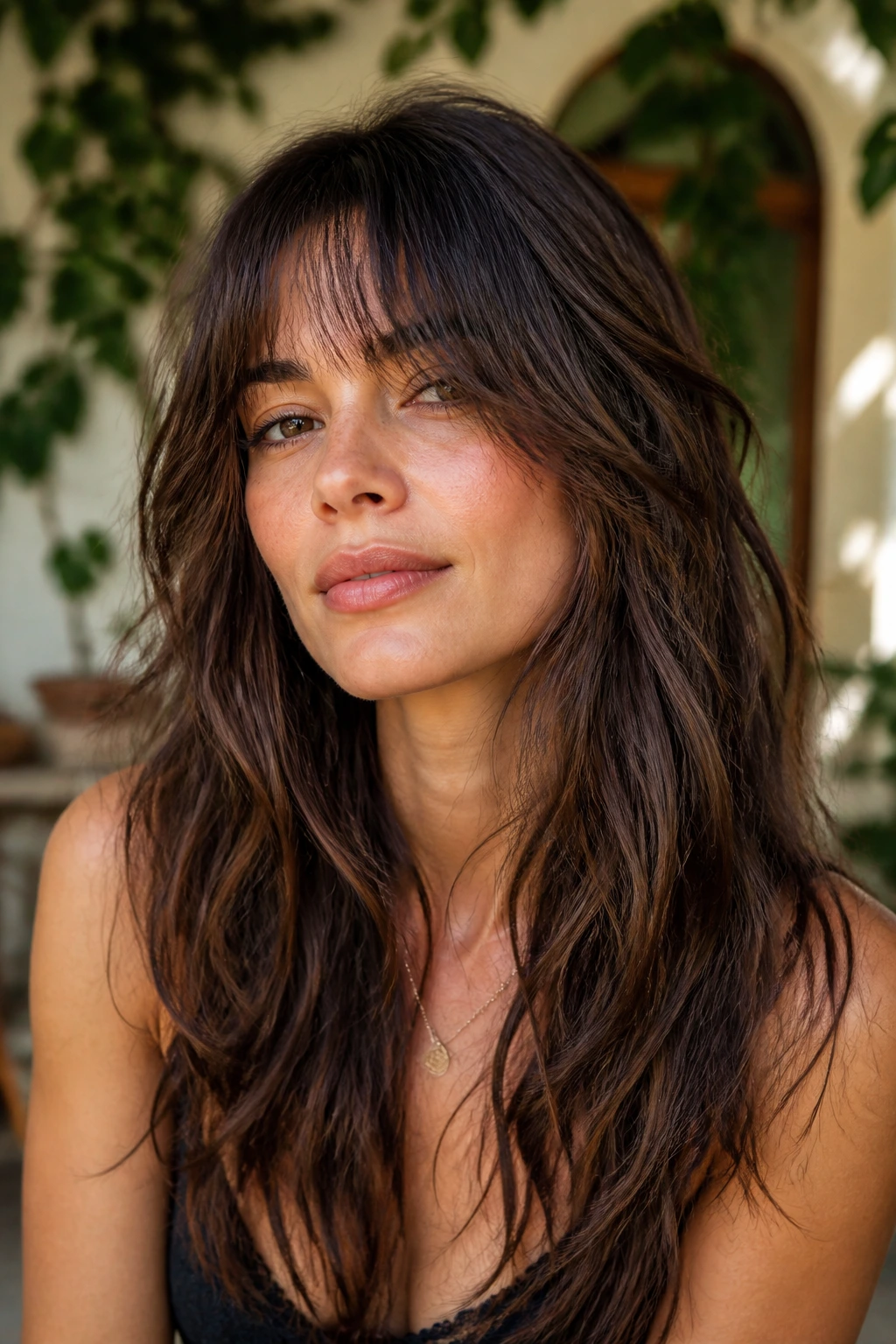
This is the cut that looks like it has been dry-shampooed, finger-raked, and admired in a mirror for exactly three seconds. Wispy bangs and airy layers keep thick hair from feeling stiff, and the whole cut has that loose, slightly undone feel that works so well on longer lengths.
Why it works: The wispy fringe reduces the visual weight around the forehead, while the layers around the cheekbones and collarbone stop the rest of the hair from closing in around the face. Thick hair gets movement; the face gets air.
A boho shag is lovely if you like hair that looks a little imperfect in the best way. It’s especially good when your texture has a wave or bend that shows up after a little scrunching. If your hair is poker-straight, you’ll want some bend in the front pieces or the cut can read too flat.
I’d avoid over-thinning the bangs. Wispy does not mean see-through. You still want enough fringe to frame the face.
6. Bardot Shag with Bottleneck Fringe
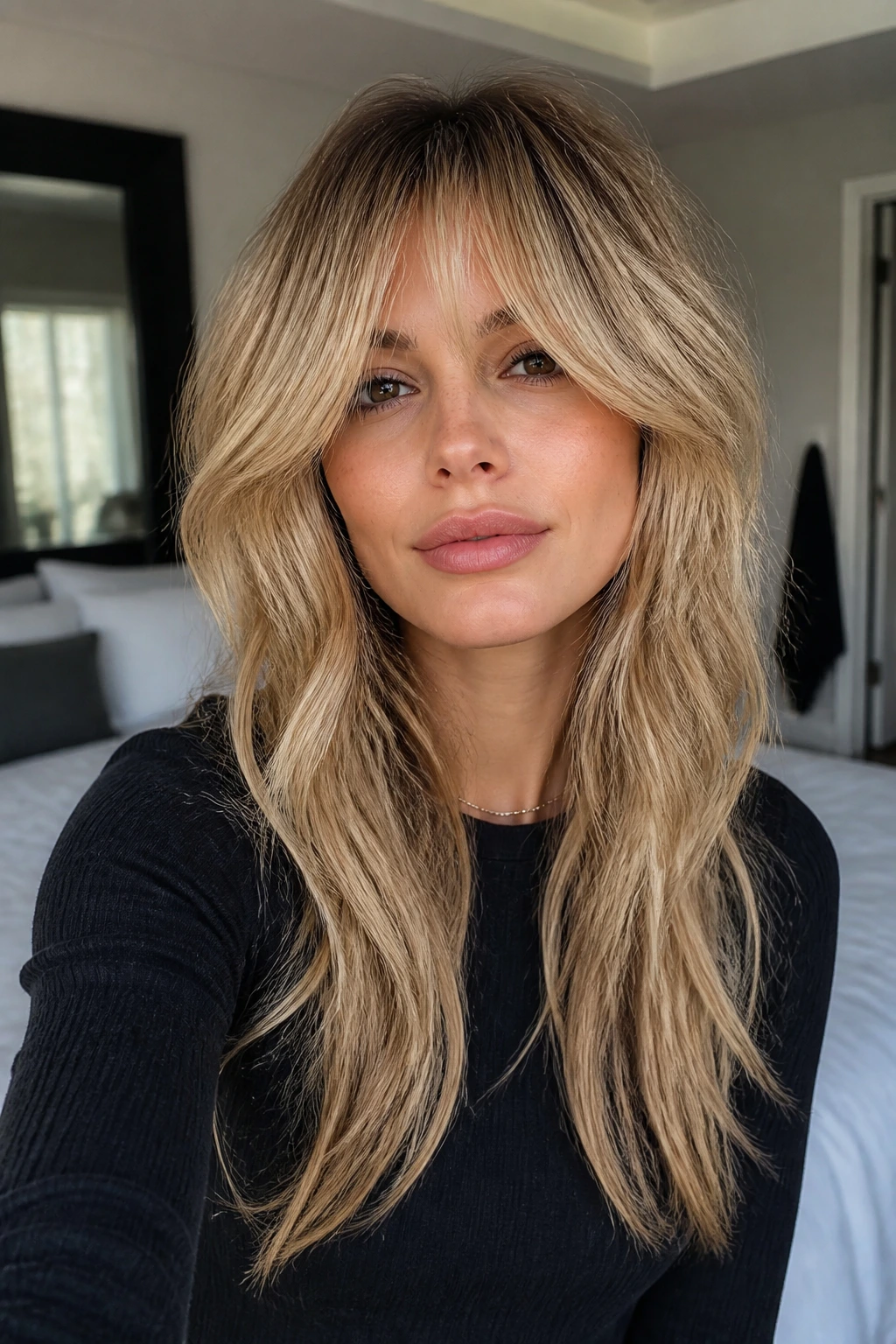
Bardot bangs on thick hair are a smart move, because the fringe can be full enough to matter without swallowing your face. The bottleneck shape is narrower at the center and opens wider at the cheekbones, which gives long layers a cleaner front.
Why it works: Thick hair makes a strong fringe easy to overdo. The bottleneck shape keeps the weight concentrated where it helps—near the center—and lets the sides taper out instead of hanging like a blunt shelf.
This cut is for someone who likes a little drama near the eyes but doesn’t want a straight-across bang. It plays nicely with long shag layers because the front is already doing visual work; the rest of the haircut can stay softer. You get shape without turning the whole style into a bangs-only moment.
A good stylist will usually point-cut the fringe and connect it to the first cheekbone layers. That connection is what keeps the front from feeling chopped off.
7. Beachy Choppy Shag with Crown Removal

This one sounds casual, but the architecture matters. Thick hair often gets too much bulk at the crown, and if you don’t remove some of that weight, the top can look like a helmet with nice ends. This shag fixes that by taking out volume up high and leaving the lower lengths loose.
What makes it different: The crown is carved just enough to let the hair sit closer to the head, while the ends stay choppy and separated. It gives thick hair a more floating shape instead of a stacked, triangular one.
I like this cut when the hair is naturally wavy and tends to puff after washing. The crown removal gives the top a little control, and the choppy ends help the waves break apart instead of clumping. A mist of sea-salt spray and a quick scrunch can be enough.
Be careful with aggressive thinning near the top. If the hair is dense but fine-stranded, too much removal can make the upper layers fly away while the rest stays heavy.
8. Feathered ’70s Shag
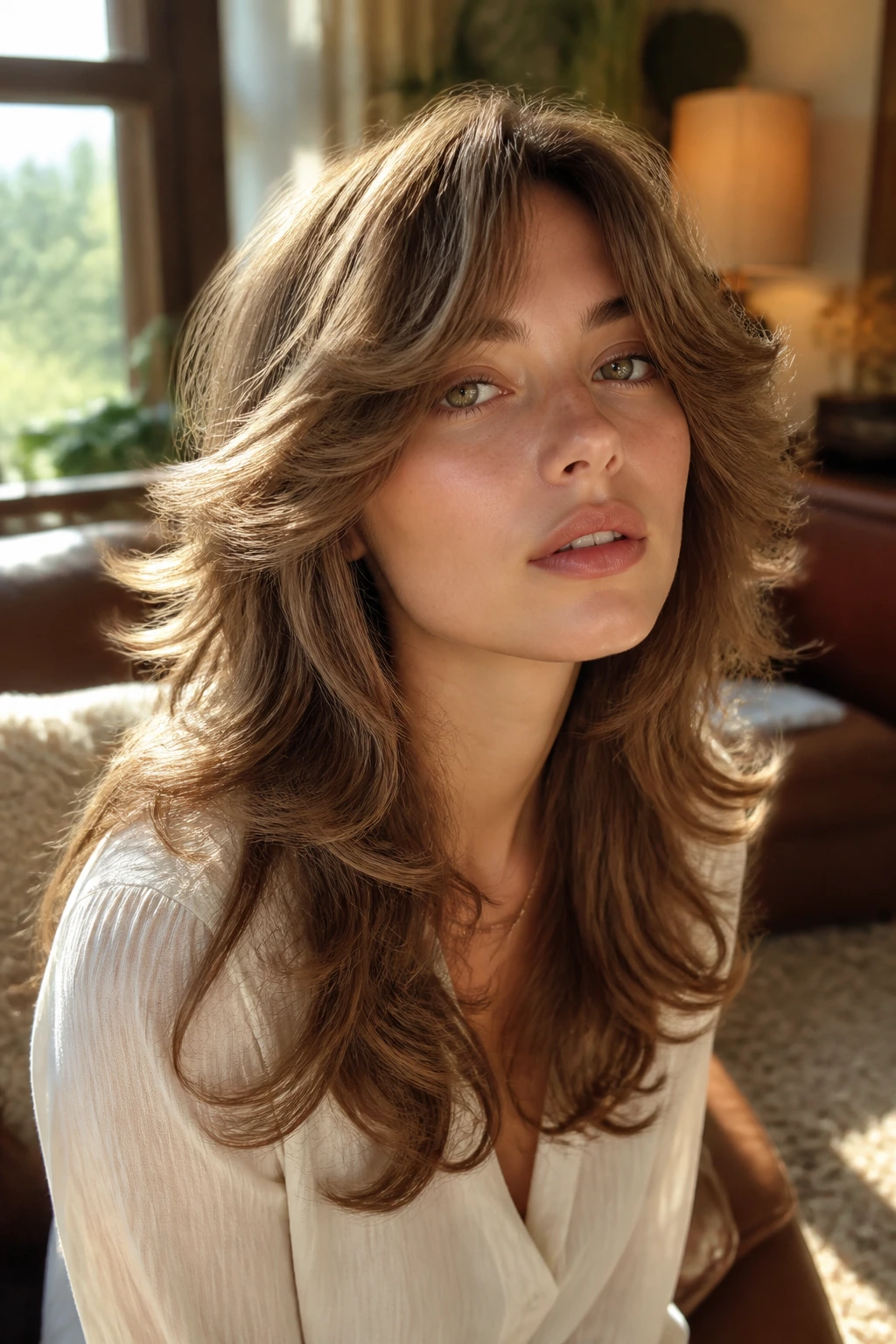
The feathered shag is back for a reason: it flatters thick hair in a way that blunt, flat layers never will. The pieces around the face sweep backward and outward, and the ends flip away with a soft, airy edge that feels tailored rather than messy.
Why it works: Feathering distributes density across the length, so thick hair doesn’t settle into one weighty line. The layers keep the movement visible all the way down, especially when the hair is blown out with a round brush.
This is the cut I’d choose if you love long hair but want it to have a little swing when you walk. It’s especially good when you wear your hair loose most of the time. The feathering around the front opens the face, while the rest of the length stays elegant and full.
A medium round brush and a quick lift at the root can bring this one to life. Without that bend, the shape can look too flat and lose its charm.
9. Side-Part Shag for Round Faces
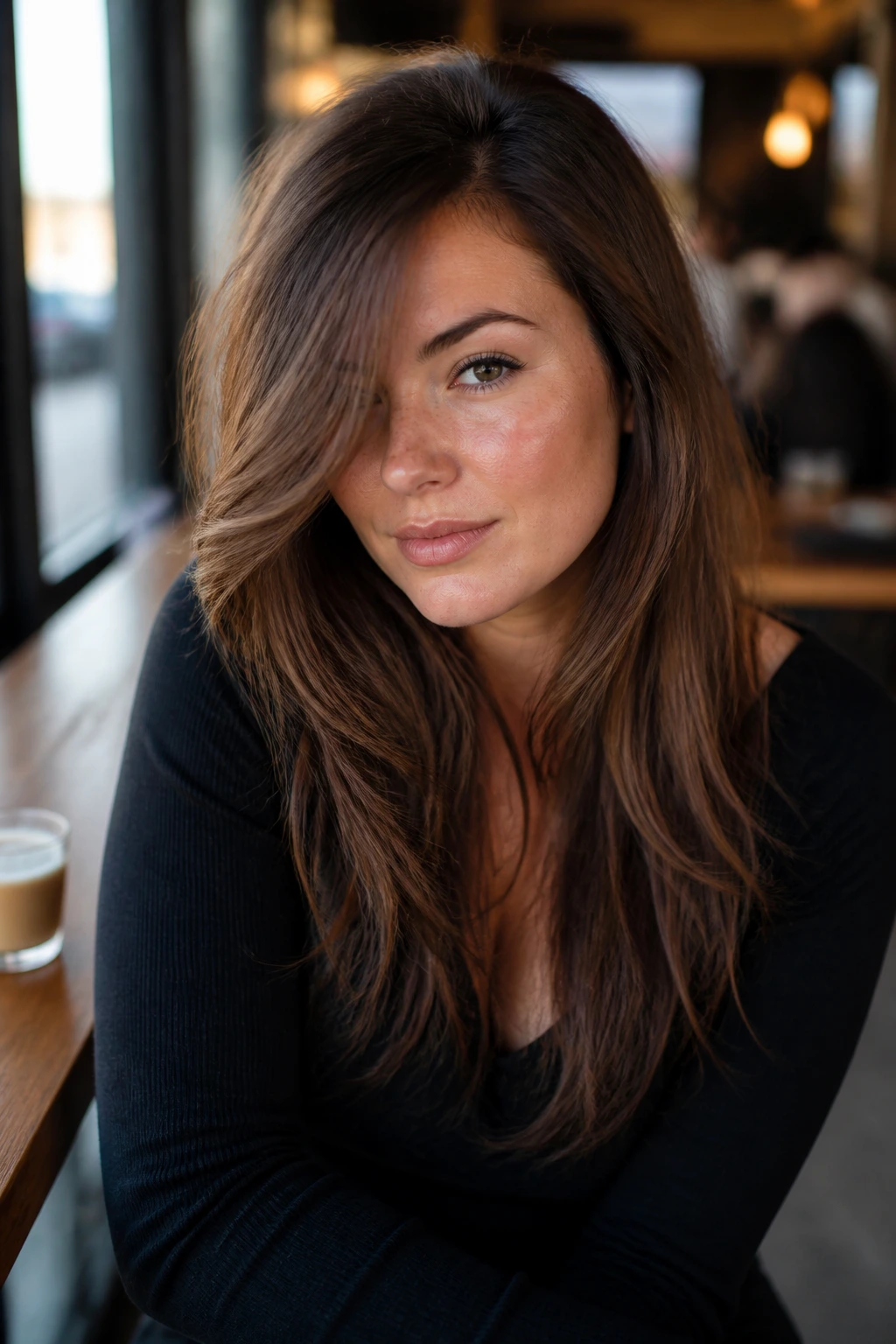
A side part changes more than people think. On thick hair, it can shift the weight of the entire cut so the face doesn’t feel boxed in. This shag uses that imbalance on purpose, with long layers sweeping across one side and softer length falling away on the other.
Why it works: Round faces usually benefit from vertical movement and diagonal lines. A deep side part plus shag layers creates both, while the long length keeps the style from looking severe.
This cut is useful if you like a little asymmetry but don’t want a dramatic undercut or anything too editorial. The side sweep softens the cheeks, and the layered sides keep the ends from flaring out in the same place. It’s a smart, easy fix when thick hair wants to widen the face.
If your hair resists side parts, set the part while the hair is still damp and clip the front section across for a few minutes. It makes a bigger difference than most people expect.
10. Razor-Light Shag with Piecey Ends
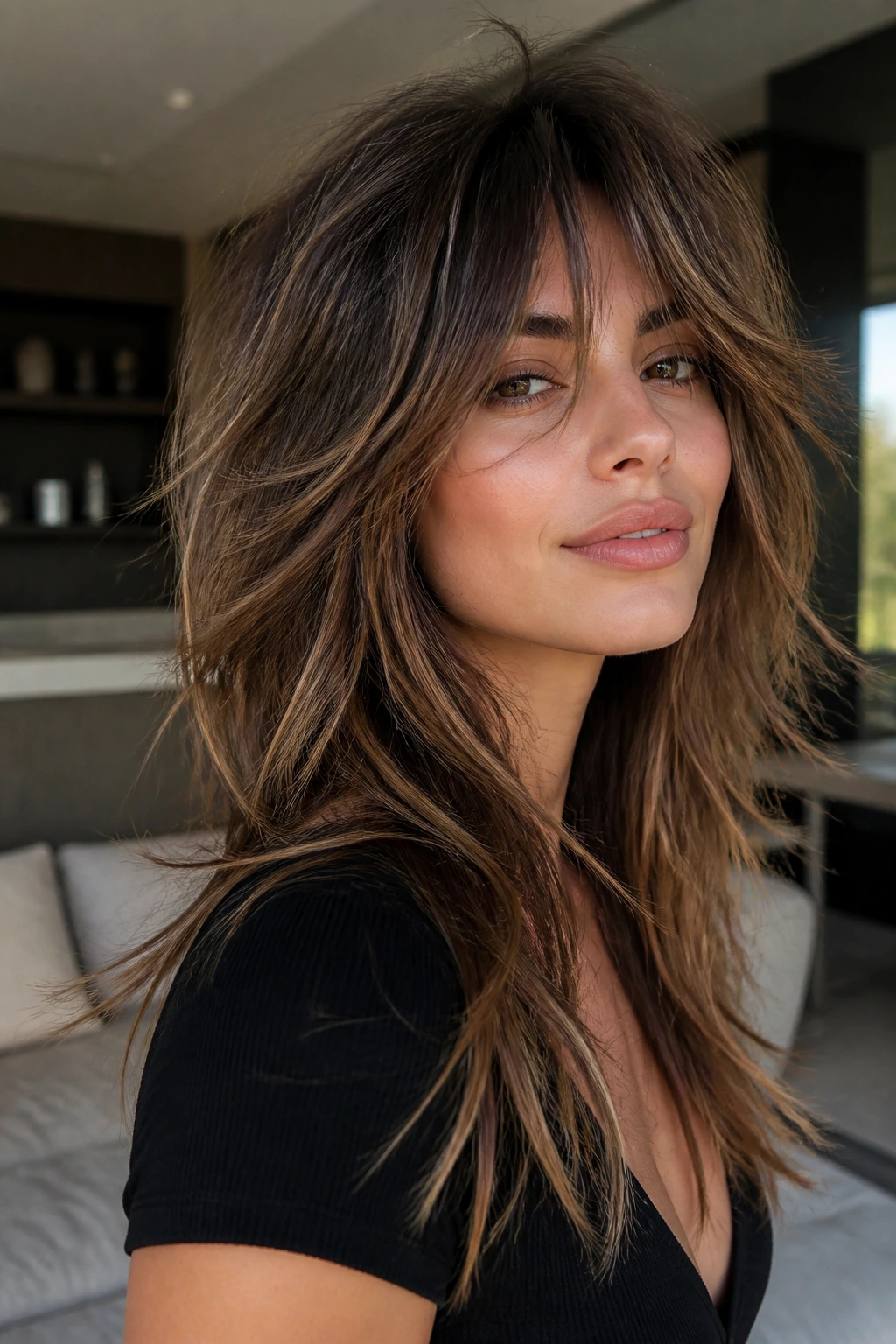
Here’s the thing: thick hair does not need to be blunt to be healthy-looking. A razor-light shag uses fine, controlled texture through the ends so the haircut reads piecey instead of heavy. The result is softer and more separated, especially when the hair is straight or only slightly wavy.
What makes it different: Instead of a chunky, blocky perimeter, this shape uses taper and separation. The ends look lived-in, and the layers don’t pile on top of each other.
This cut is good for people who want edge without chaos. It still has a shaggy attitude, but it’s cleaner than a full wolf cut or an aggressively choppy style. On thick hair, that restraint matters. Too much texture can make the ends feel ragged by week three.
A dry styling paste rubbed between the palms can bring the layers together without making them crunchy. Tiny amounts. Seriously. Thick hair absorbs more product than you think, but the wrong amount turns piecey into sticky.
11. Air-Dry Shag for Dense Waves
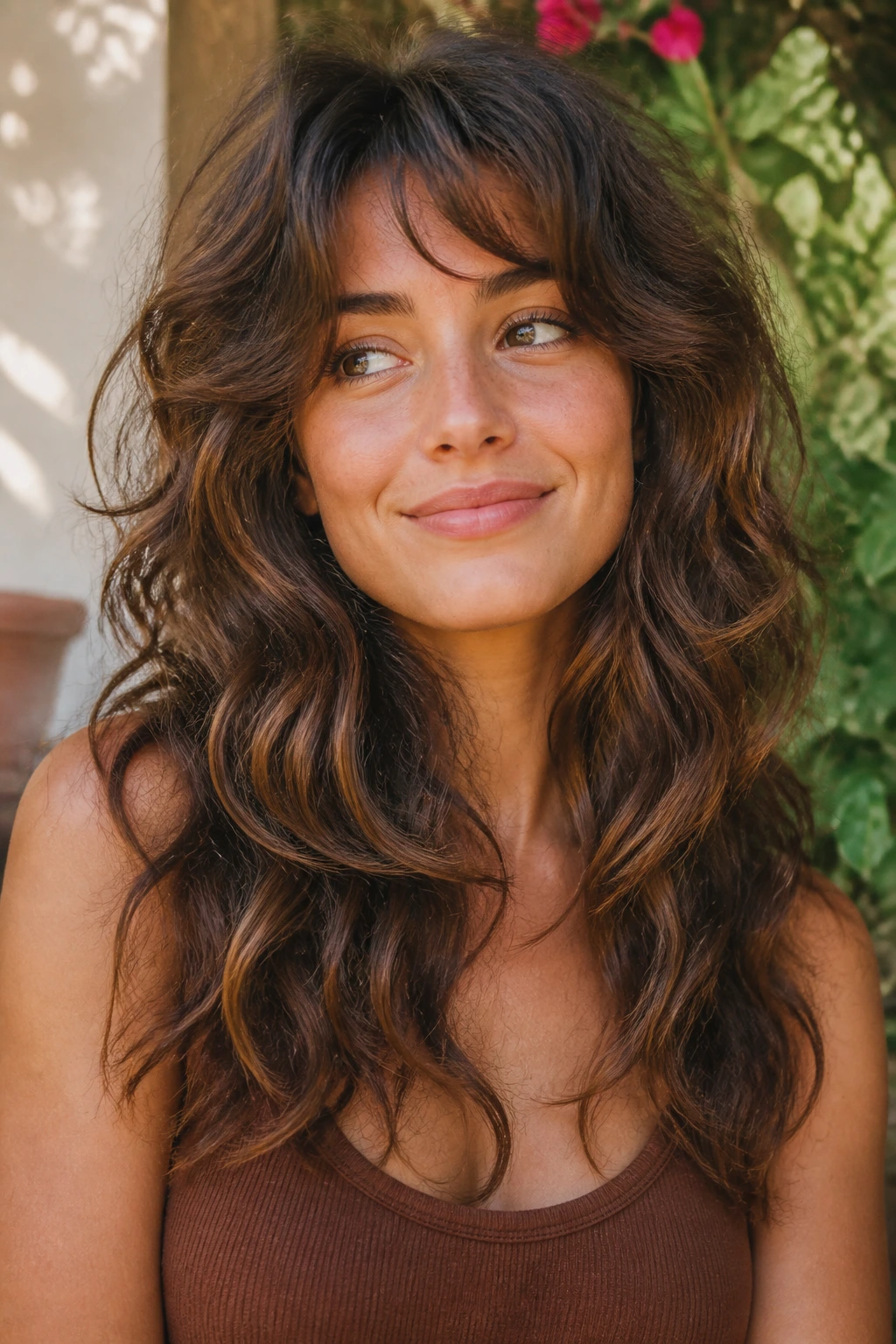
Some haircuts look great only after a full styling session. This one is happier if you leave it alone. The air-dry shag leans into the natural bend of dense wavy hair, giving it layers that settle into shape without much heat.
Why it works: Thick wavy hair already has volume. The shag cuts the bulk in a way that lets the wave pattern spread out, so the hair dries with movement instead of expanding into a triangle.
This is the cut for people who don’t want to stand around with a blow dryer for twenty minutes every morning. A leave-in conditioner, a curl cream or light mousse, and a few twists while the hair dries are usually enough. The layers should fall with a slight piecey bend rather than a stiff curl.
I’d ask for enough length through the bottom that the waves still have room to hang. If the layers are too short, dense wave patterns can bounce up and look broader than you want.
12. Salon Blowout Shag
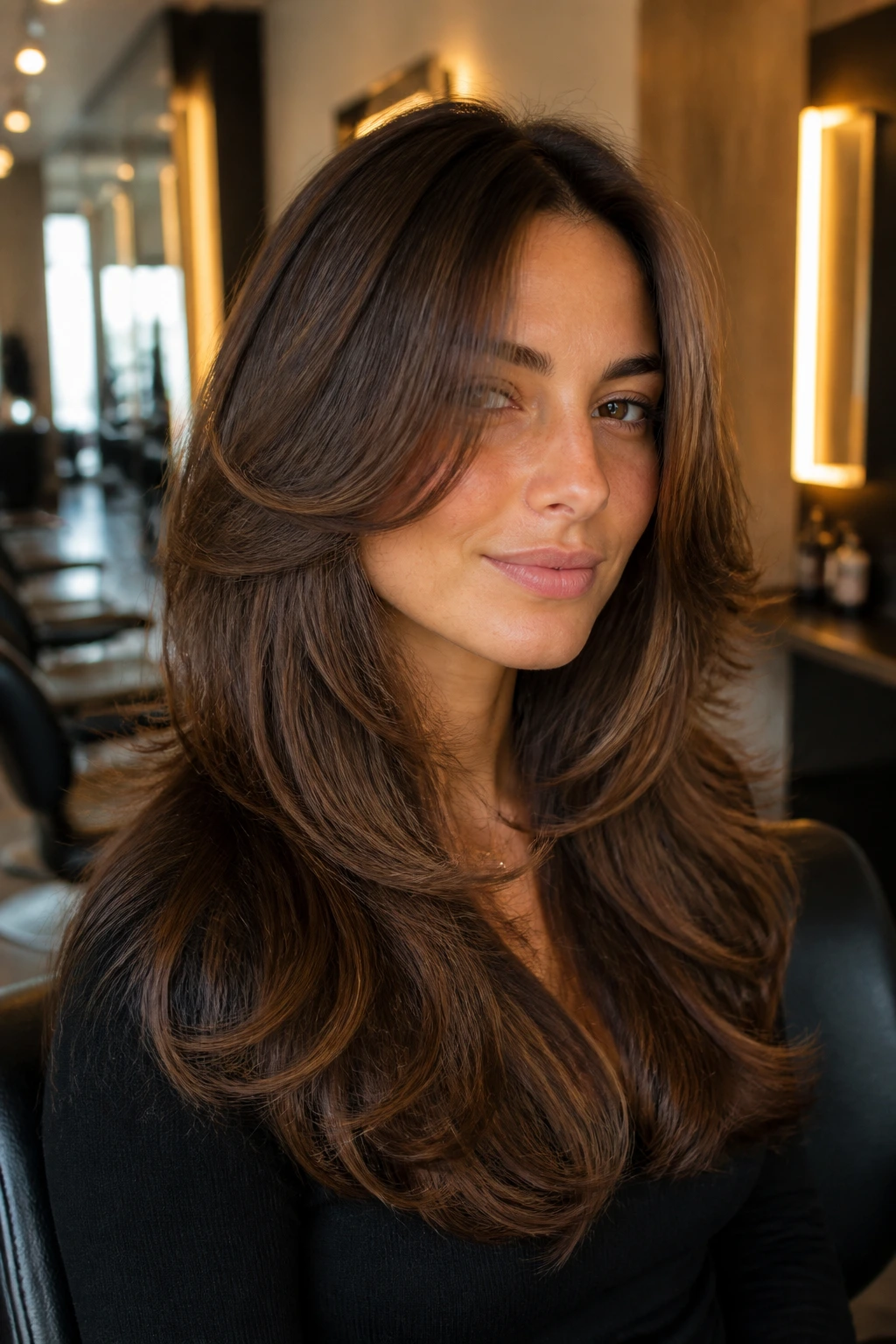
A blowout shag is all about polished movement. The layers are cut to catch a round brush, flip softly away from the face, and sit with that glossy, airy feel that thick hair handles beautifully when it’s trained a little.
Why it works: Thick hair has enough body to hold a round-brush set without collapsing in an hour. The shag layers give the brush somewhere to shape, and the long perimeter keeps the finish luxurious rather than overdone.
This is the cut for someone who likes the idea of long hair that looks styled without looking stiff. The front pieces can be curled under or away from the face, and the crown gets just enough lift to keep the silhouette from flattening out.
If you know you’ll be using heat, tell your stylist that up front. The cut should be built to support the way you actually wear it. Otherwise, the layers can sit oddly once you blow them out.
13. Deep U Shag with Interior Layers

A deep U-shape gives thick hair a strong outer line, and the interior layers stop that line from feeling too heavy. You get the best of both worlds: a clean long silhouette from the back and enough movement underneath to keep the ends from looking like a solid block.
What makes it different: The visible shape is smooth and curved, but the hidden layering does the heavy lifting. That means the cut can look calm from a distance and still feel light when you move.
I like this one for thick hair that needs control more than attitude. It’s a little less gritty than a wolfier shag and a little more structured than a boho cut. If you wear your hair to work or want something that still looks neat when tied back, this is a strong pick.
Ask for layers that begin below the chin if you want to preserve a lot of weight at the top. That keeps the shape elegant instead of over-fragmented.
14. Curly Thick-Hair Shag

Curly thick hair can eat a bad haircut for breakfast. A proper shag, though, lets the curls sit in their own layers instead of smashing into a triangle. The goal is shape, not uniformity.
Why it works: Curl patterns need room to spring. A curly shag removes bulk where the curls stack too hard and leaves enough length for the pattern to show. The cut should follow the curls in their natural state, not force them into a straight-hair blueprint.
This is one of those haircuts that changes a lot depending on the curl type, and that’s fine. Loose curls may like longer face-framing layers. Tighter curls often need more careful shaping around the crown and sides so the haircut doesn’t balloon.
Dry cutting is usually the smarter move here. It lets the stylist see exactly where the curl sits, which matters more than a perfect wet shape ever will.
15. Straight Thick-Hair Shag
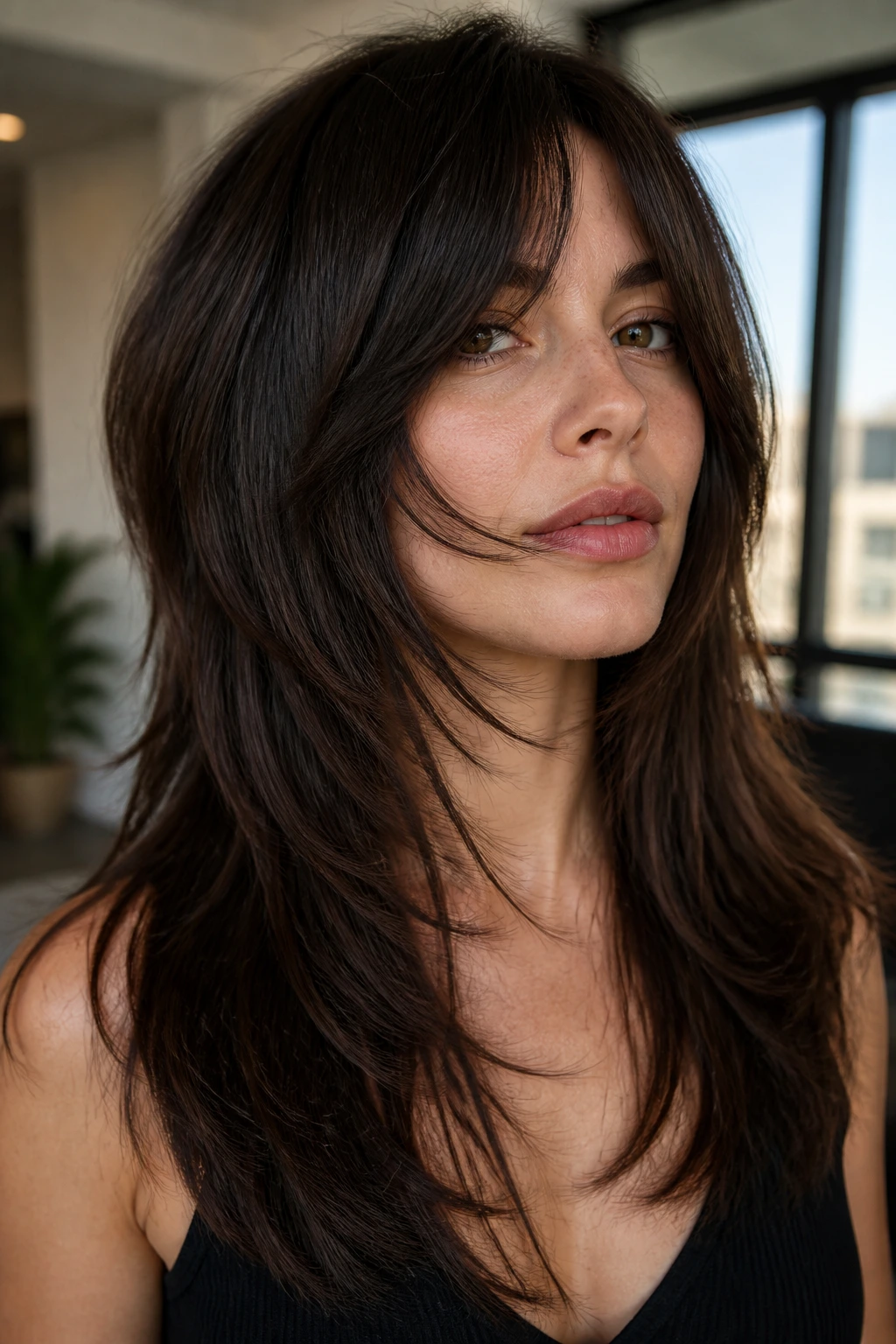
Straight thick hair can be the hardest version to cut well because every line shows. A straight thick-hair shag needs deliberate texture, smart weight removal, and long layers that don’t make the ends look stringy.
Why it works: The layers break up the sheet-like look that straight dense hair can create. At the same time, the length stays strong enough to keep the haircut from looking hacked apart.
This cut is good if your hair has very little natural bend but plenty of body. It benefits from point-cut ends and face-framing layers that start around the mouth or collarbone. Shorter pieces near the cheekbones can help, but too many can make the cut feel busy.
Straight thick hair usually shows every blunt mistake, so ask your stylist to keep the layering soft and connected. Hard steps in the cut tend to stick out when the hair is air-dried.
16. Long Mullet Shag with Soft Nape Length

A long mullet shag sounds braver than it is. The front and crown get more movement, while the back keeps extra length and softness through the nape. On thick hair, that contrast keeps the haircut from turning into a heavy wall.
What makes it different: The top is shorter and more lifted, the sides are controlled, and the back hangs longer in a way that feels intentional rather than accidental. It’s shaggy, yes, but with more edge.
I’d call this the best choice for someone who likes a cut with personality. It can still be feminine and wearable, especially when the face frame is kept soft. The nape length gives the cut some swing, which thick hair wears well.
If you’re nervous, ask for a “soft mullet” rather than a sharp one. That usually means less contrast and more blending around the ears and jaw.
17. Collarbone-Forward Shag
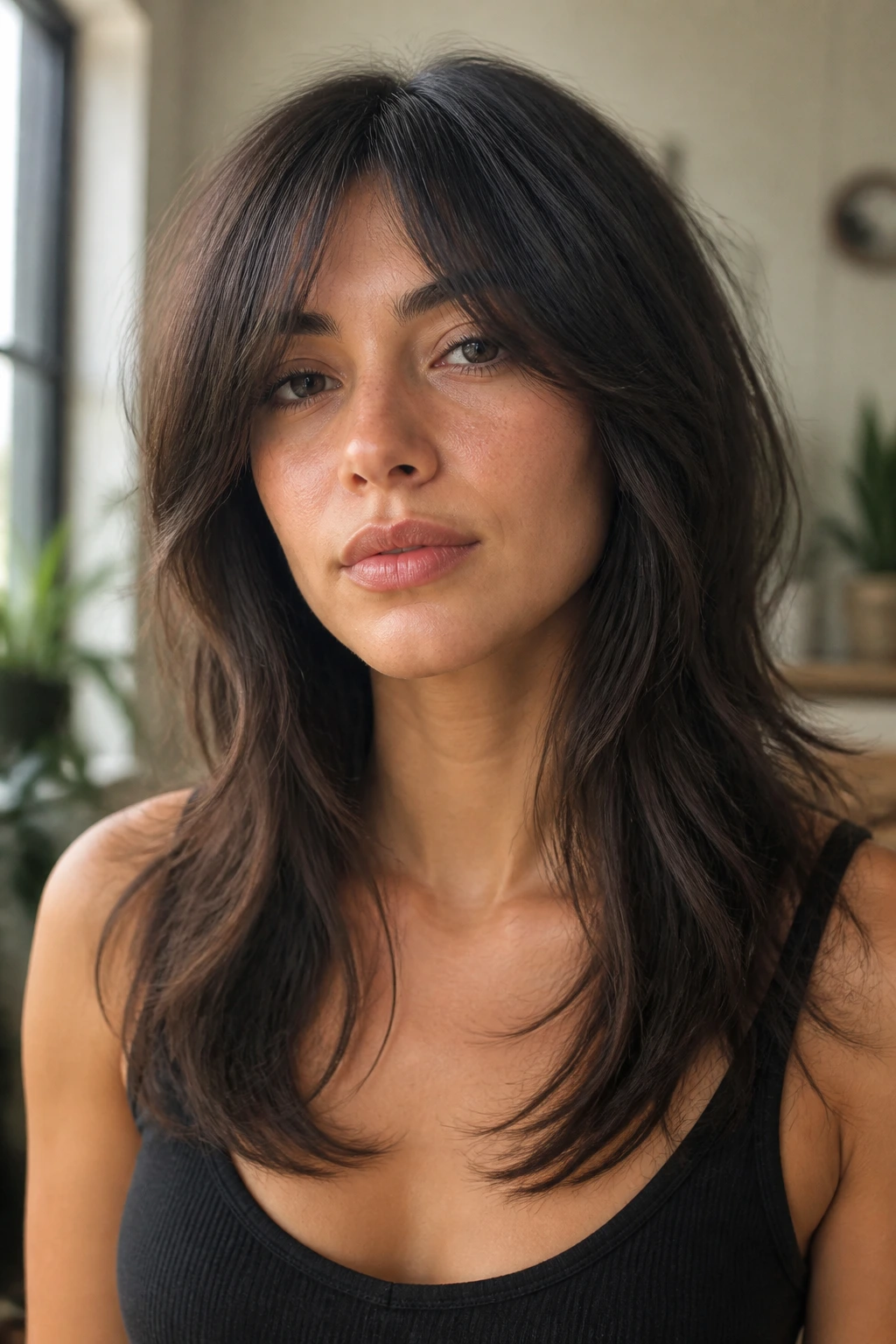
This shape puts the front pieces in charge. The layers sweep toward the collarbone, where thick hair tends to settle nicely, and the rest of the cut supports that line instead of competing with it.
Why it works: Thick hair often looks best when the front is slightly longer and the interior layers are used to steer the shape. The collarbone length keeps the haircut flattering in profile and gives the face a long, clean frame.
This one is a quiet achiever. It’s not flashy. It’s the cut you notice when someone turns their head and the hair falls in a soft, believable way. If you want movement but not a lot of piecey drama, this is a strong option.
It also plays nicely with ponytails and half-up styles, since the front layers can escape in a flattering way rather than bunching at the temples.
18. Crown-Softening Shag
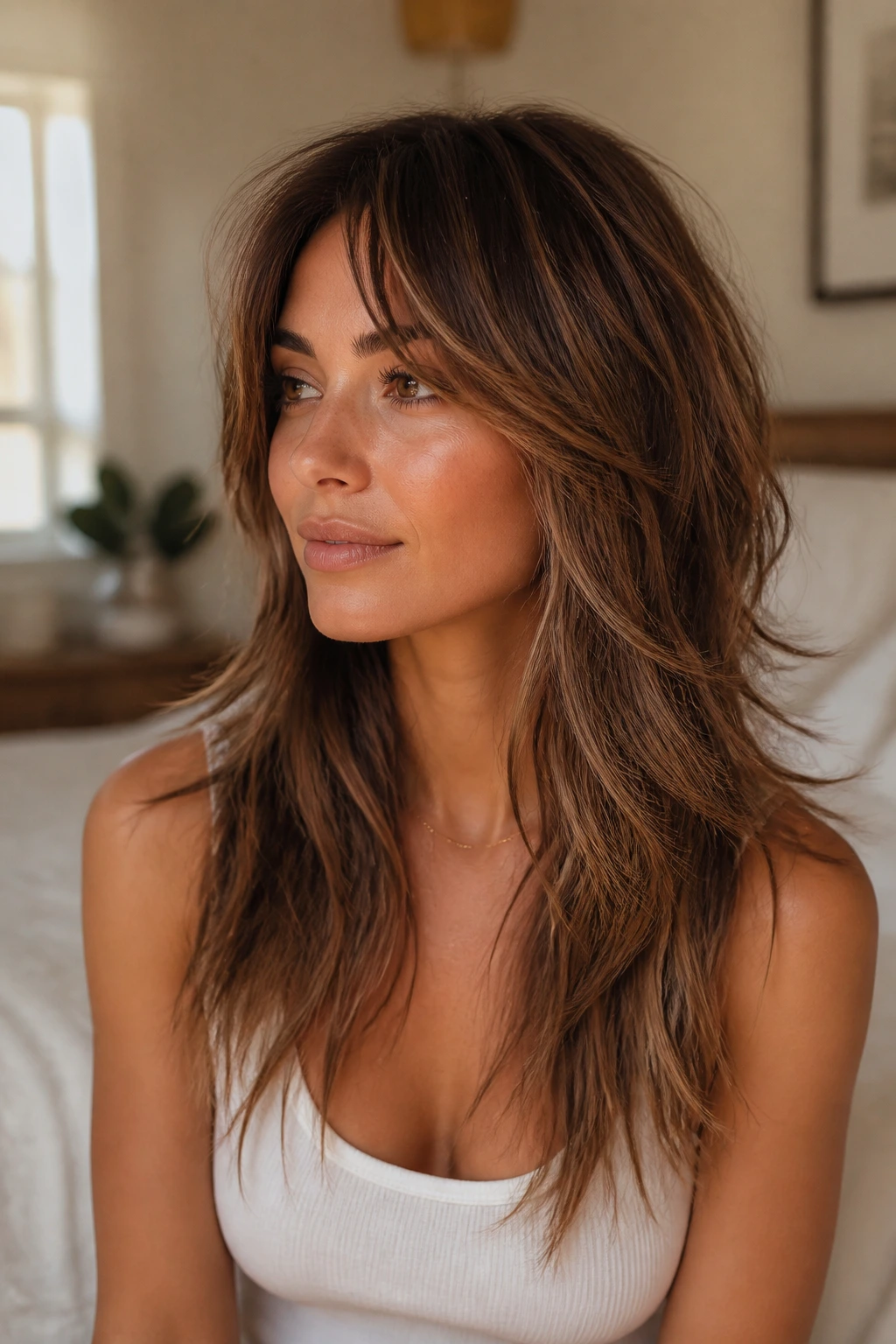
Thick hair can stand up at the crown like it has opinions. Sometimes it does. A crown-softening shag reduces that puff by taking weight out of the upper interior and letting the top settle closer to the head.
What makes it different: The emphasis is on control up top and movement below. That balance keeps the silhouette from ballooning while still giving the ends and face frame enough texture to move.
I like this cut on hair that looks gorgeous for ten minutes after styling and then starts expanding. The shorter crown layers help extend the shape of the blow-dry, and the longer lower layers keep the cut from feeling overthinned. It’s a practical choice that still looks intentional.
If you hate volume at the scalp, say so bluntly at the salon. Stylists can’t fix what you don’t name.
19. Polished Long Shag with Soft Underlayers
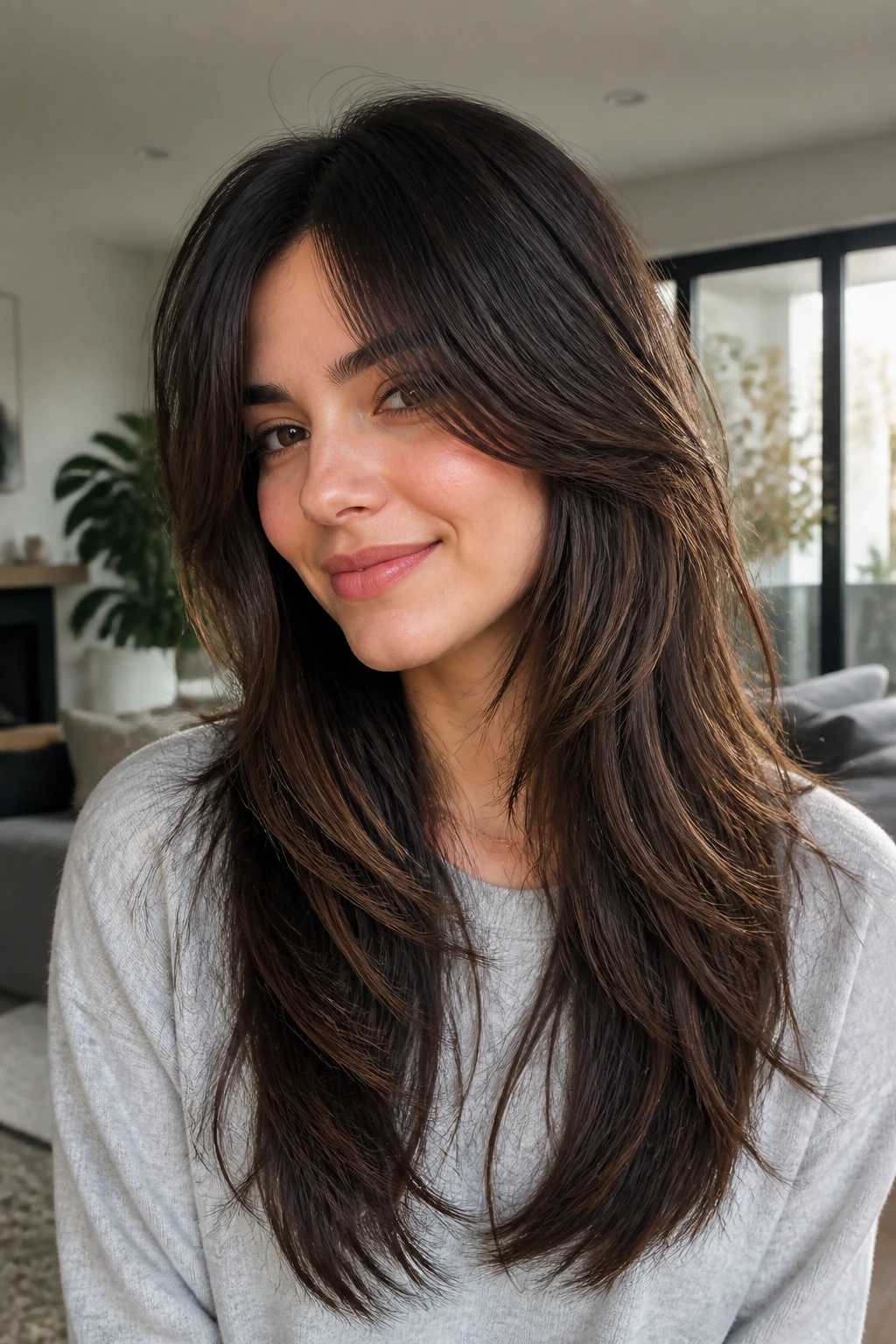
This is the grown-up shag. The outline stays long and smooth, the underlayers do the weight removal, and the whole cut looks refined instead of wild. Thick hair gets movement, but the finish stays sleek enough for everyday wear.
Why it works: Hidden layering keeps the outer surface neat. That means less poof, less triangle shape, and fewer weird gaps when the hair is straightened or loosely curled.
This is the version I’d recommend to anyone who likes long hair but wants to stop dragging around so much bulk. The hair still feels full, but the shape is easier to live with. It also grows out well, which matters more than people admit.
The polish comes from restraint. A few soft bends, a center or off-center part, and the right perimeter line are enough. No need to make it fussy.
What Makes a Shag Cut Behave on Thick Hair
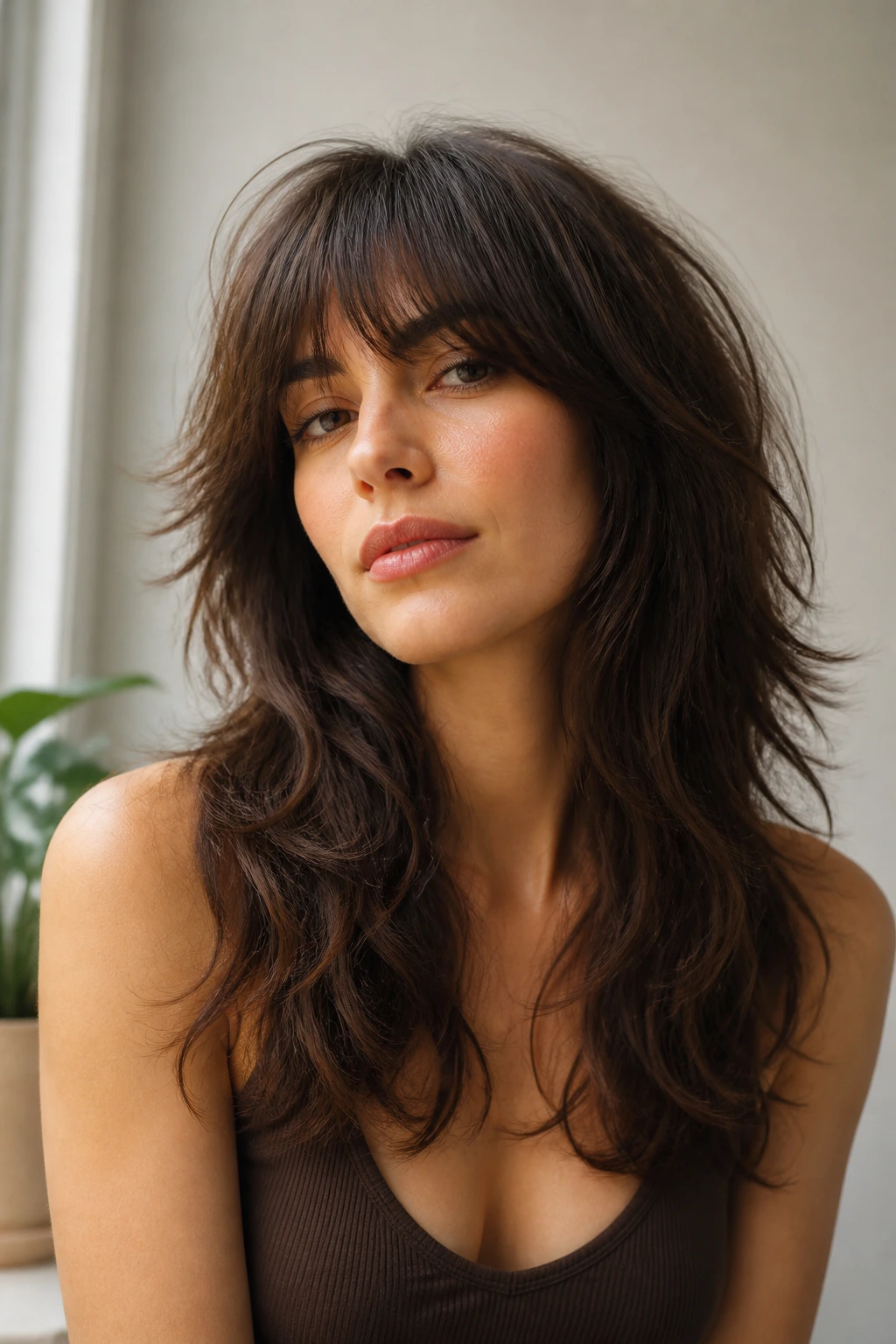
A good shag on thick hair is never just “lots of layers.” That’s the lazy version, and it usually ends in frizz at the top and a heavy shelf at the bottom. The cut needs a plan.
The first piece is weight removal in the right zone. Thick hair often carries too much density through the crown, mid-lengths, and sides all at once. If a stylist only texturizes the ends, the haircut still feels bulky. If they carve too high around the crown, the top can turn wispy while the lengths stay stubbornly heavy. The sweet spot is usually somewhere in the middle: enough internal layering to let the hair collapse and move, not so much that the silhouette falls apart.
The second piece is a perimeter that still holds shape. I prefer long shags that keep enough of a line at the ends to read as long hair. Without that, thick hair can look chopped and unfinished. The best cuts let the ends breathe while still looking like they belong to the same haircut.
Why the styling method matters
A shag can be cut beautifully and still look wrong if you style it against its natural texture. Thick hair likes bend, shape, and a little grit. If you force it straight with no movement, the layers can look abrupt. If you pile on too much cream, the hair can go flat and greasy at the roots.
The cut and the styling have to agree. That’s the whole game.
Tools That Help This Shape Lay Right
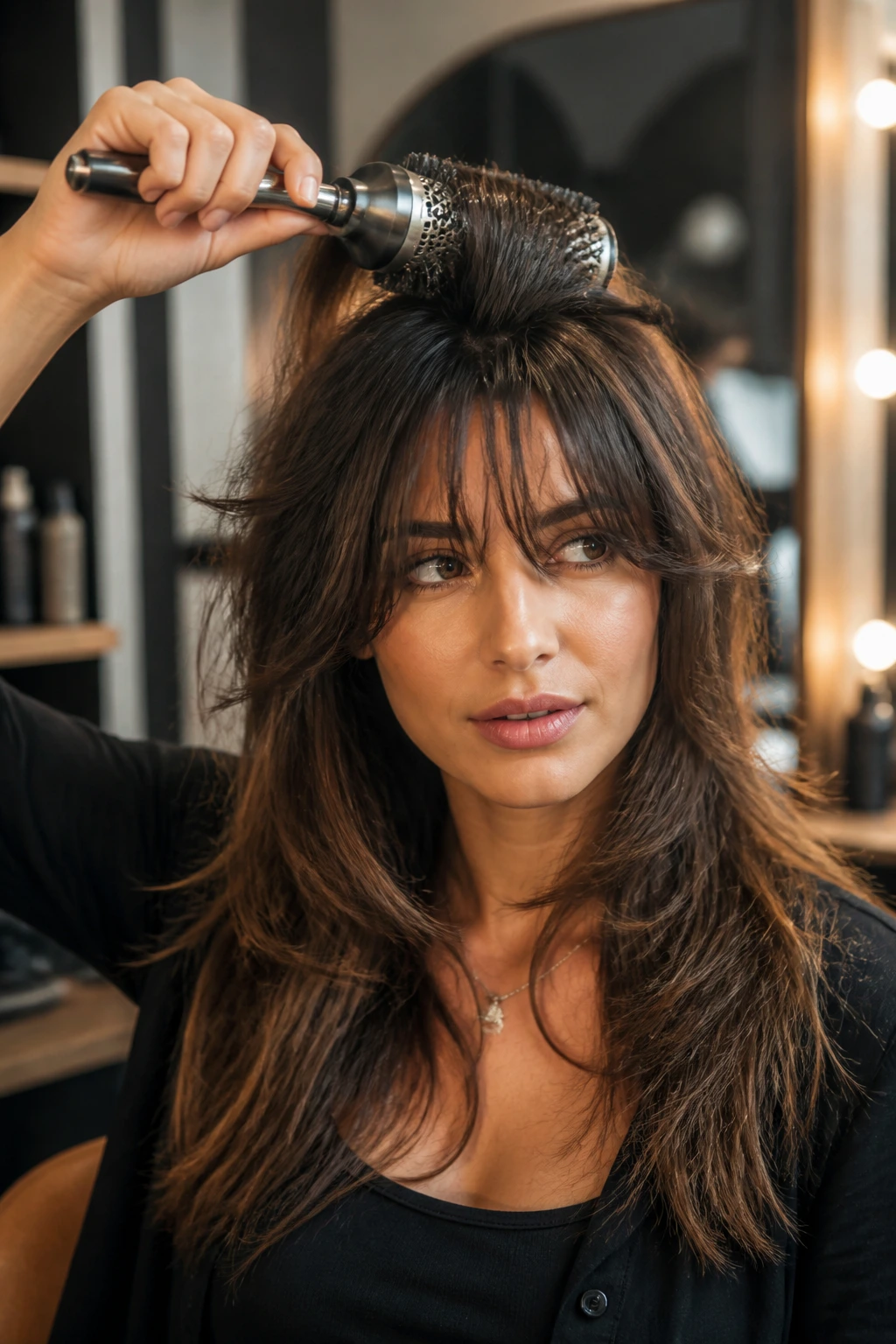
- Round brush, medium size: Best for turning the front layers away from the face and giving the crown a little lift.
- Blow dryer with a concentrator nozzle: Helps direct the air so thick hair doesn’t puff in every direction.
- Wide-tooth comb: Gentler than a fine comb when you’re working through damp, dense hair.
- Texturizing spray: Good for making long layers look separated instead of heavy.
- Heat protectant: Non-negotiable if you use a dryer, iron, or hot brush.
- Curl cream or light mousse: Useful for air-dry shapes and waves that need hold without crunch.
- Clips for sectioning: Thick hair eats time when you try to style it all at once.
- Dry shampoo: Helpful at the roots when the cut starts to fall flat on day two or three.
- Point-cutting shears for pros: Not something you need at home, but worth asking about if you’re choosing a stylist. A blunt scissor job can make thick layers look blocky.
How to Ask for the Cut So You Don’t Lose Too Much Length
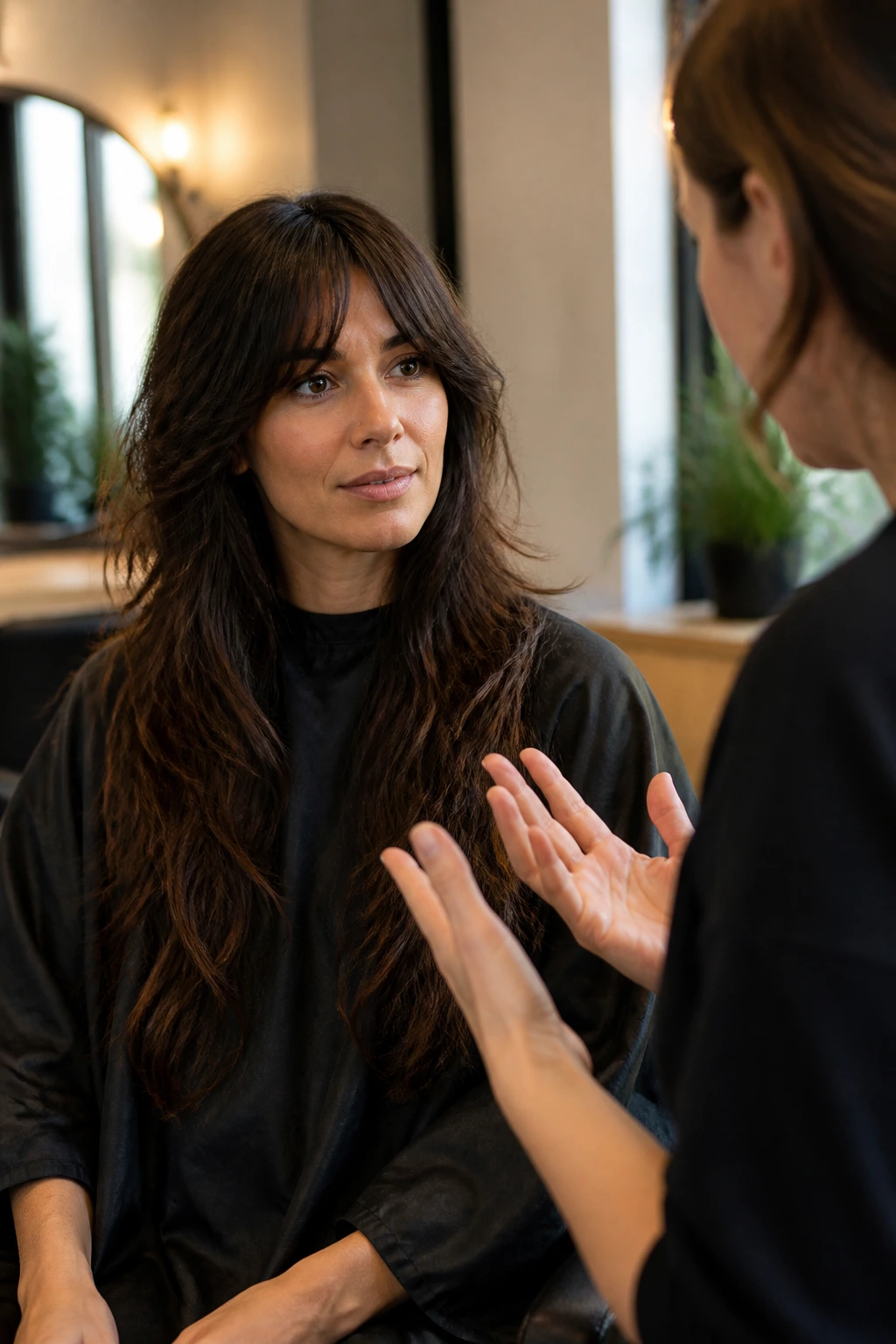
Bring photos. More than one. A front view, a side view, and one where the hair is moving will tell the stylist more than a single perfect selfie ever will.
Then say the part out loud: how much bulk you want removed, where you want the shortest layers to fall, and whether you wear the hair mostly straight, wavy, curly, or blown out. That matters. A shag cut for someone who air-dries is not the same as a shag cut for someone who rounds every section with a brush.
The phrases that help at the chair
Try lines like:
- “I want to keep the length, but I need the weight out of the crown and sides.”
- “Please keep the bottom line soft, not blunt.”
- “I want face-framing layers that start around the cheekbone or mouth.”
- “I wear my hair wavy, so I need the cut to work with a bend, not just when it’s straight.”
If your hair is very thick, ask where the shortest internal layers will land before the scissors come out. That one question can save you from a lot of regret.
Easy Ways to Style It Without Fighting Your Hair
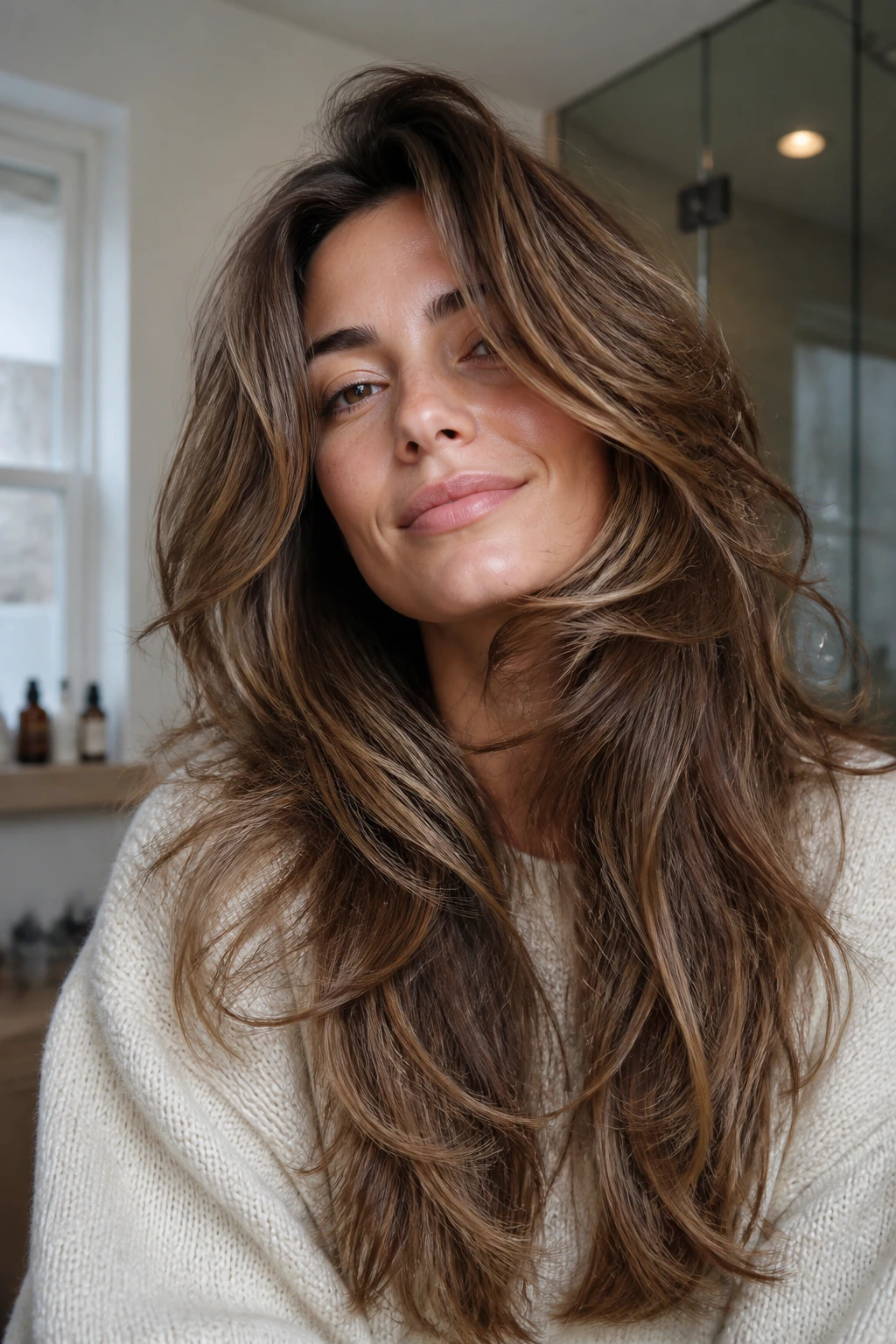
Presentation: If you want the cut to look polished, wrap the front layers around a medium round brush and direct them away from the face. That gives the shag a soft opening near the cheeks and keeps thick hair from swallowing your features. A center part reads cleaner; a deep side part gives more shape if the face needs it.
Air-Dry Finish: For wavy or curly thick hair, work a light leave-in and a mousse through damp lengths, scrunch once, then leave the hair alone until it’s about 80 percent dry. Touching it too much while it’s drying makes the cut fluffier than it needs to be.
Heat Styling: A loose bend with a one-inch curling iron, alternated direction, keeps the layers from falling into one same-size wave. Don’t curl every section the same way. That’s how shag cuts turn stiff.
Accessories: Clips, scarf ties, and half-up styles all show off the layers around the face. The best part is that thick hair gives you enough structure that the style stays put without ten pins.
Common Mistakes That Make Thick Shags Look Heavy
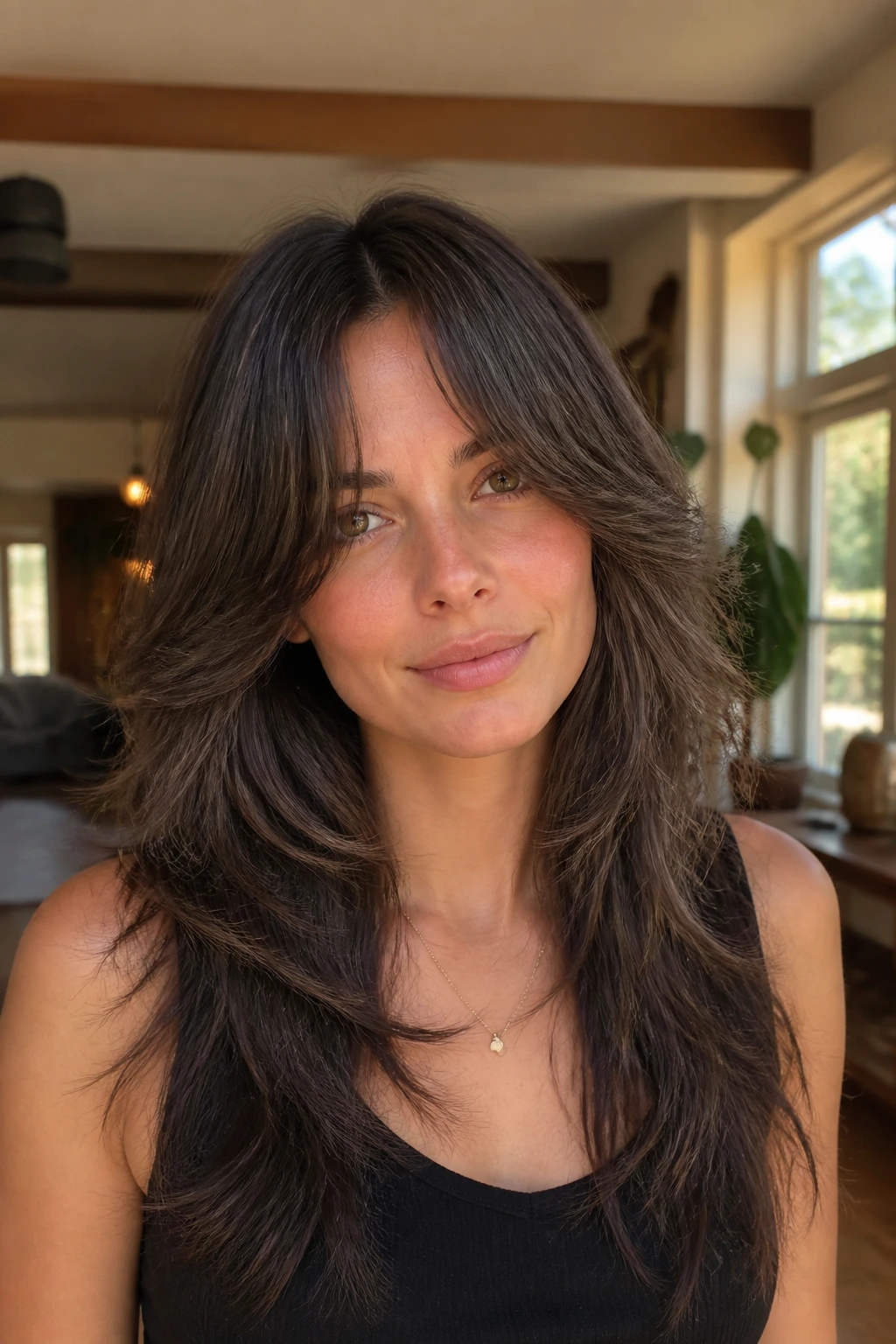
The first mistake is taking weight out in the wrong places. If the stylist thins only the ends, thick hair still balloons at the crown and mid-lengths. The fix is to ask for internal layering that starts higher, then keeps the perimeter strong.
The second mistake is over-texturizing the whole head. A shag is not a license to razor everything until it frays. When thick hair gets overcut, the ends go fuzzy and the shape loses its strength. That’s especially obvious on straight hair, where every uneven piece stands out.
Third, people often choose bangs that are too blunt for their density. Thick bangs can look heavy fast. Curtain, bottleneck, or softly feathered fringe usually works better because it lets the front breathe.
Finally, a lot of people style the cut too flat or too glossy. Thick shag layers need some lift or separation. If you press every bit of volume out with a heavy cream, the haircut can turn into a single soft sheet. Pretty, maybe. Useful? Not much.
Variations and Adaptations to Try
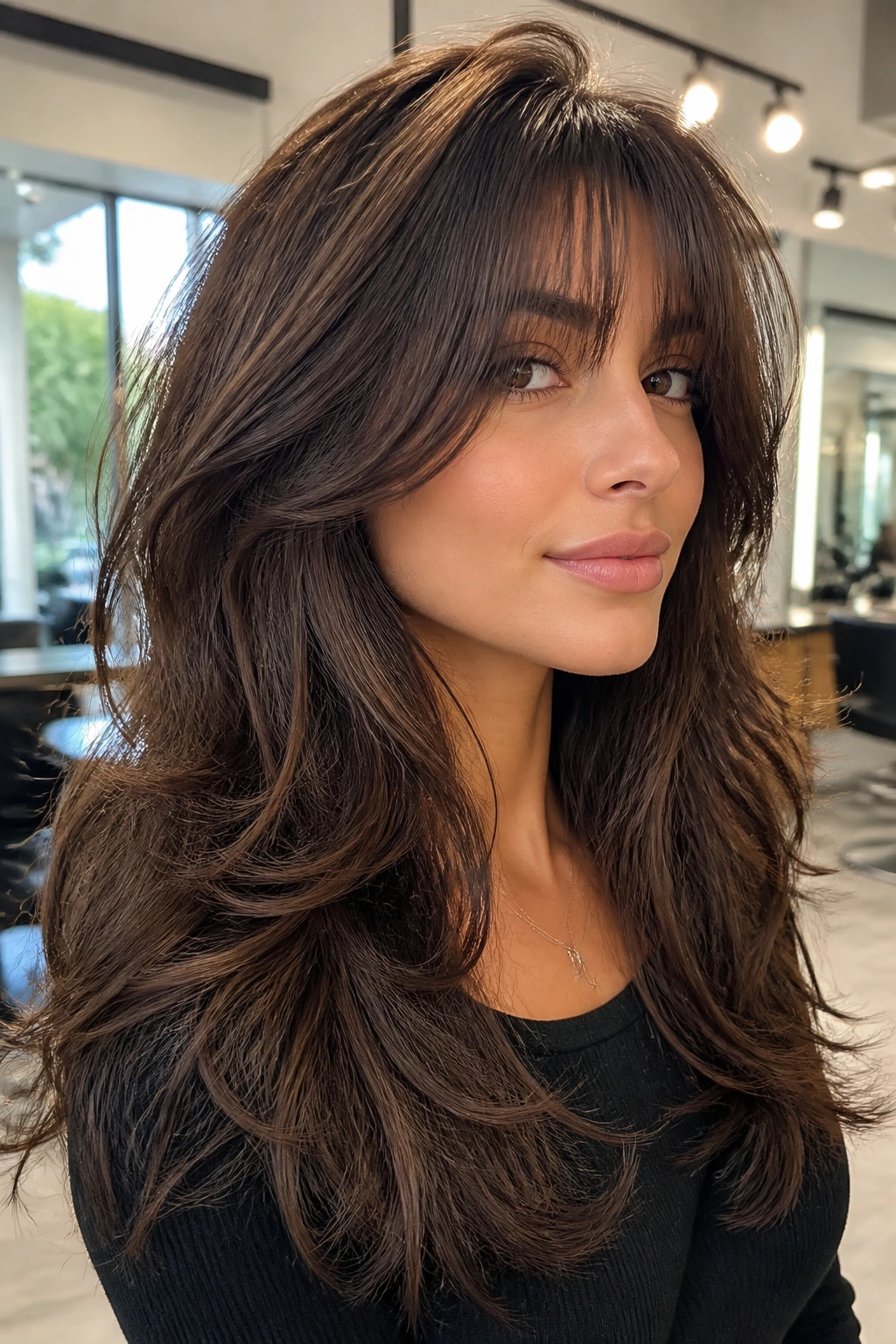
The Air-Dry Minimalist: Keep the cut long, soft, and lightly layered, then let your natural texture do the work. This suits thick hair that bends on its own and doesn’t need much heat to look shaped.
The Blowout Girl Version: Add more face-framing layers and a fuller curtain bang. This one is for people who like a brushed, swingy finish and are willing to spend ten extra minutes with a round brush.
The Curl-Friendly Shape: Ask for the layers to follow the curl pattern instead of cutting through it too hard. This keeps thick curls from collapsing into a pyramid and makes the haircut easier to refresh between washes.
The Office-Friendly Shag: Keep the perimeter soft, the fringe longer, and the crown layers less dramatic. You still get movement, but the cut reads cleaner when pulled back or tucked behind the ears.
The Edgier Mullet-leaning Version: Shorten the crown and top layers a bit more while keeping the back long. This gives thick hair a sharper outline and more attitude, especially if you wear boots, leather jackets, or anything with a little bite.
Keeping the Layers Fresh Between Salon Visits
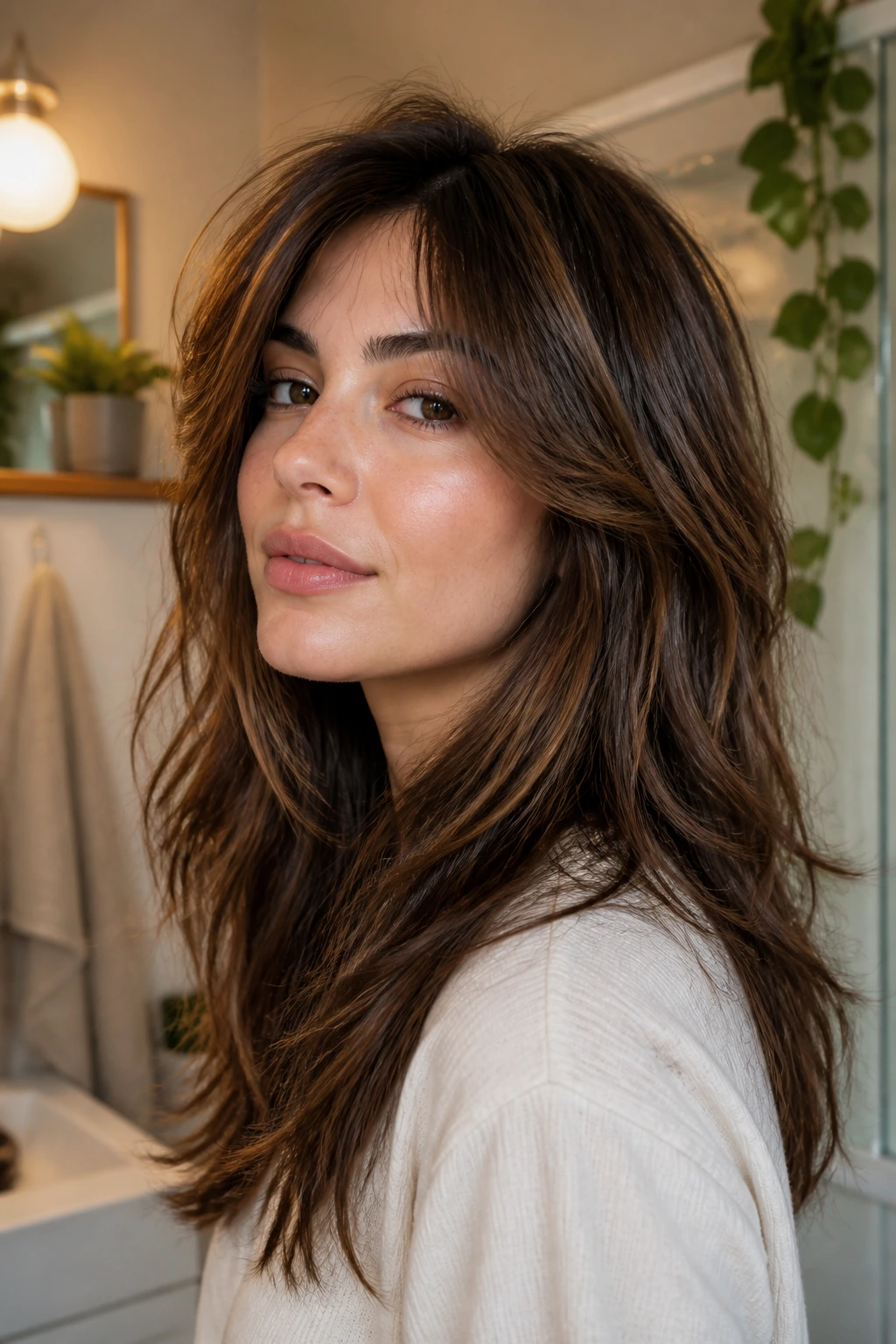
Thick shag layers tend to grow out in stages. The first stage is still cute. The second stage is when the bangs start trying to run the show. The third stage is when the crown loses lift and the ends start to feel heavier. Plan for that.
For most people, a trim every 8 to 12 weeks keeps the shape honest. If you wear bangs, you may want a fringe cleanup sooner, around 3 to 5 weeks, especially if the front pieces are the part you see every day in the mirror. That tiny trim makes a bigger difference than people expect.
At home, don’t overwash if the cut needs texture. Thick hair often behaves better with a little natural oil in the lengths, especially if the style is shaggy and piecey. A dry shampoo at the roots and a light refresh on the face frame can buy you another day or two without washing.
Sleep matters too. A silk or satin pillowcase reduces the roughing-up that makes layers look frizzier the next morning. If your fringe bends weird while you sleep, clip it loosely to the side or wrap it with a soft headband for the night. Annoying? A little. Worth it? Yes.
Frequently Asked Questions About Layered Shaggy Long Haircuts for Thick Hair
Will a shag make thick hair look thinner?
Not in the bad sense. A well-cut shag removes bulk and changes the shape, but it should still leave the hair looking full. The goal is movement and balance, not making dense hair look sparse.
Are layered shags good for straight thick hair?
Yes, but the layers need to be softer and more connected than they would be on wavy hair. Straight dense hair shows every blunt line, so a careful perimeter and some interior texture matter a lot.
Can I get this cut if I don’t style my hair every day?
Absolutely, but choose a softer version with longer layers and less dramatic fringe. The more your hair relies on air-drying, the more the cut should respect your natural bend.
Do curtain bangs work on thick hair?
They do, as long as they’re not cut too short or too heavy. Thick hair can make curtain bangs look bulky fast, so the front should be blended and soft around the cheekbones.
What if my hair gets puffy at the sides?
Ask for weight removal through the middle and sides, not just the ends. A side part or a longer face frame can also redirect the width so the hair doesn’t flare outward.
Is a shag better than long layers?
It depends on the look you want. Long layers are usually smoother and quieter; a shag brings more movement, more separation, and a little more personality. Thick hair often benefits from the extra breaking-up of the shape.
How often should I trim a long shag?
About every 8 to 12 weeks is a good range for keeping the layers readable. If you have bangs or a short face frame, a quicker cleanup helps the shape stay sharp.
Can curly thick hair wear a shag without frizzing out?
Yes, if the cut respects the curl pattern and the styling is gentle. The bigger mistake is over-thinning or cutting too much into the crown, which can make curls spread wider than they should.
The Shape That Keeps Giving
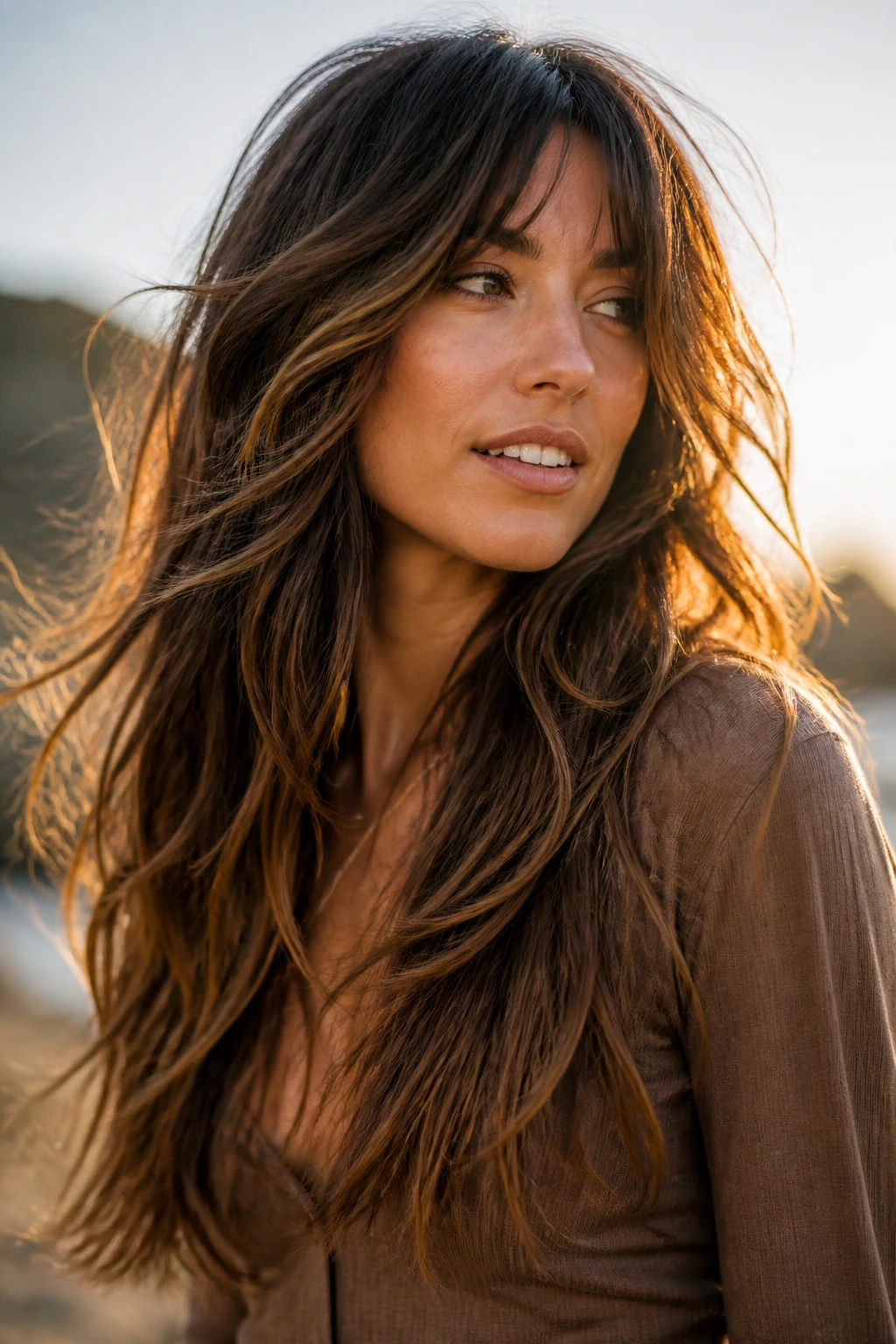
The best thing about layered shaggy long haircuts for thick hair is that they make density feel like an asset instead of a burden. The cut takes the weight, keeps the length, and lets the hair move in a way that flat long layers rarely manage. That’s why some versions feel soft and romantic while others feel sharp and edgy—the same basic structure can tilt in different directions depending on where the layers begin and how much fringe you keep.
If you’re sitting on a lot of hair and wondering what to do with it, start with the shape that matches how you actually wear it. Air-dry, blowout, curl, straighten, half-up, claw clip, all of it. The right shag doesn’t fight your habits. It gives them a better outline.
