



Short hair can be fussy in the wrong hands. Add a blunt edge where you needed movement, or take out too much weight too high, and suddenly the whole cut feels stiff, puffy, or weirdly older than it should. That’s why shaggy pixie cuts are such a useful little category: they keep the neck and ears open, but the soft textured layers keep the shape from reading severe. The best ones look like they’ve been broken up with a pair of tiny scissors and a clear opinion.
I’ve always liked shaggy pixie cuts for one reason above all the rest: they give you shape without demanding polish. You can air-dry them, rough-dry them, finger-style them with a dab of paste, and still end up with something that feels deliberate. The trick is in the layering. Not random thinning. Not chunks hacked out at the end. Real texture, placed where the hair needs air and where the silhouette can afford a little softness.
If you’ve been staring at short cuts and thinking they all look either too neat or too messy, that’s probably because the difference lives in the details. Fringe length. Crown lift. Nape taper. How the sides skim the face. Those little decisions change everything, and the 18 shaggy pixie cuts below show just how far you can push the idea without losing the easy, lived-in feel that makes it work.
Why These Shaggy Pixie Cuts Feel Soft Instead of Severe
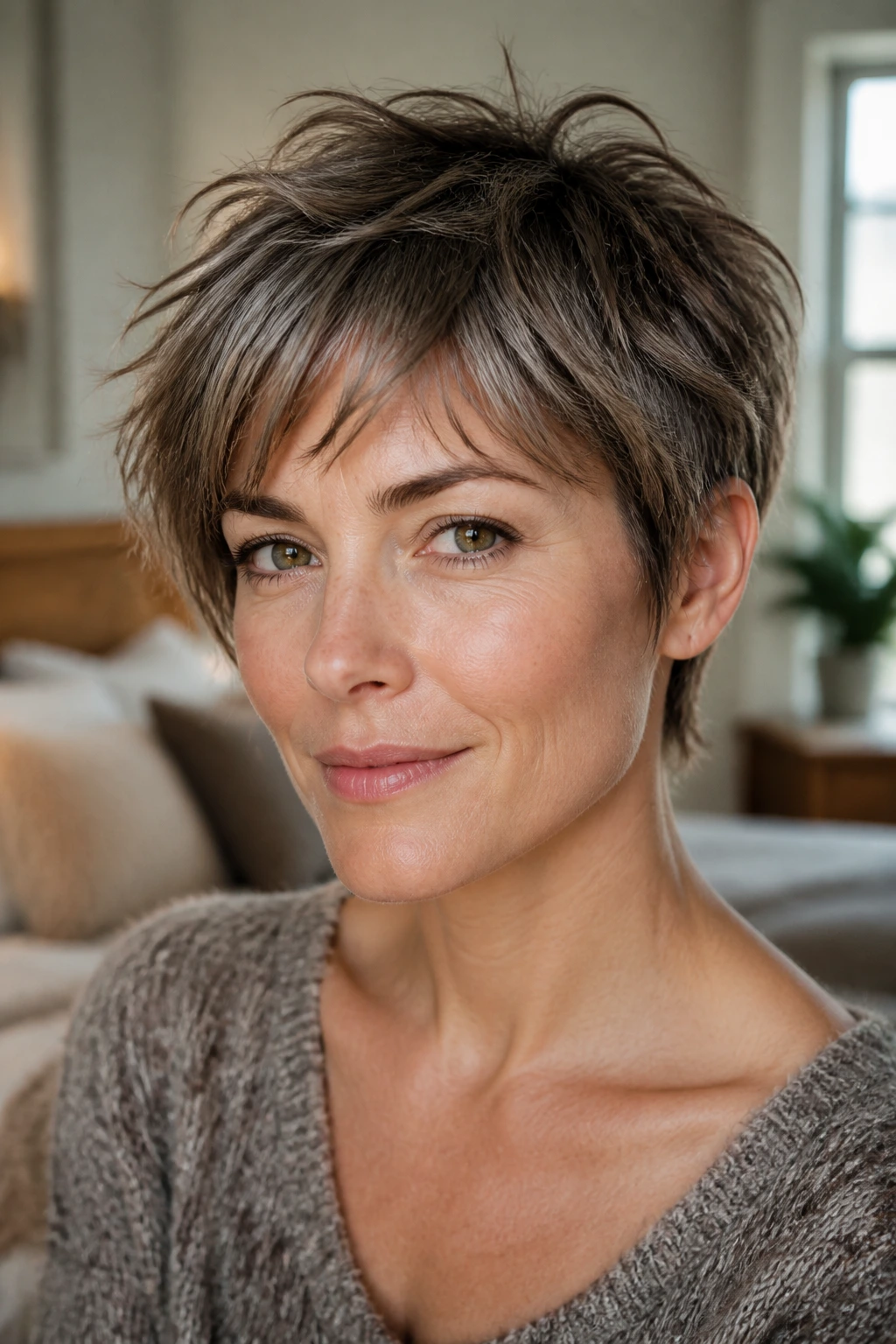
Soft shape: The right shaggy pixie leaves the outline readable, but it breaks the hard line with wispy ends, feathered bangs, and layered movement at the crown. That’s the difference between “cute short cut” and “helmet with texture.”
Low-fuss styling: Most of these cuts can be revived with a quick mist of water, a pea-size bit of matte paste, and a few scrunches from the roots up. If a style needs a 20-minute round-brush session every morning, it’s not really shaggy anymore.
Texture-friendly: Fine, thick, wavy, curly, and coily hair all work here, but the layering has to match the hair’s spring and density. A good shaggy pixie on curly hair does not look like the same cut on straight hair, and that’s the point.
Face-framing control: Longer fringe, softer temples, or a little length around the ears can change how the cut sits against cheekbones, jawlines, and glasses. Tiny adjustments matter more than people expect.
Grow-out grace: A proper shaggy pixie doesn’t fall apart the moment it passes the salon window. The shape just loosens, which is a far better problem to have.
1. Airy Crown Pixie
The airy crown pixie is the one I recommend to anyone with fine hair who worries that short hair will collapse by noon. The sides stay close enough to keep the outline clean, but the crown is cut with short, separated layers that rise instead of lying down like wet paper. It has that lifted, slightly piecey look that benefits from a little root spray and a rough dry.
Why It Works on Fine Hair
Fine hair needs movement more than it needs length, and this cut gives it movement right where the eye goes first. The top layers are short enough to stand up a bit, which makes the head look fuller without stuffing it with product. A matte paste or light texture cream is enough; anything heavier will kill the floaty finish.
The best version keeps the fringe soft and a little irregular. If the bangs are too blunt, the cut loses its lightness fast. I like this shape on narrow faces, small heads, and anyone who wants short hair that does not look flat from the front.
Quick Shape Notes
- Short crown layers create lift.
- Tapered sides keep the outline neat.
- A broken fringe keeps the face open.
- A little root spray goes a long way.
A tiny warning: if your hair is very straight and very soft, don’t over-thin the top. You want air, not see-through patches.
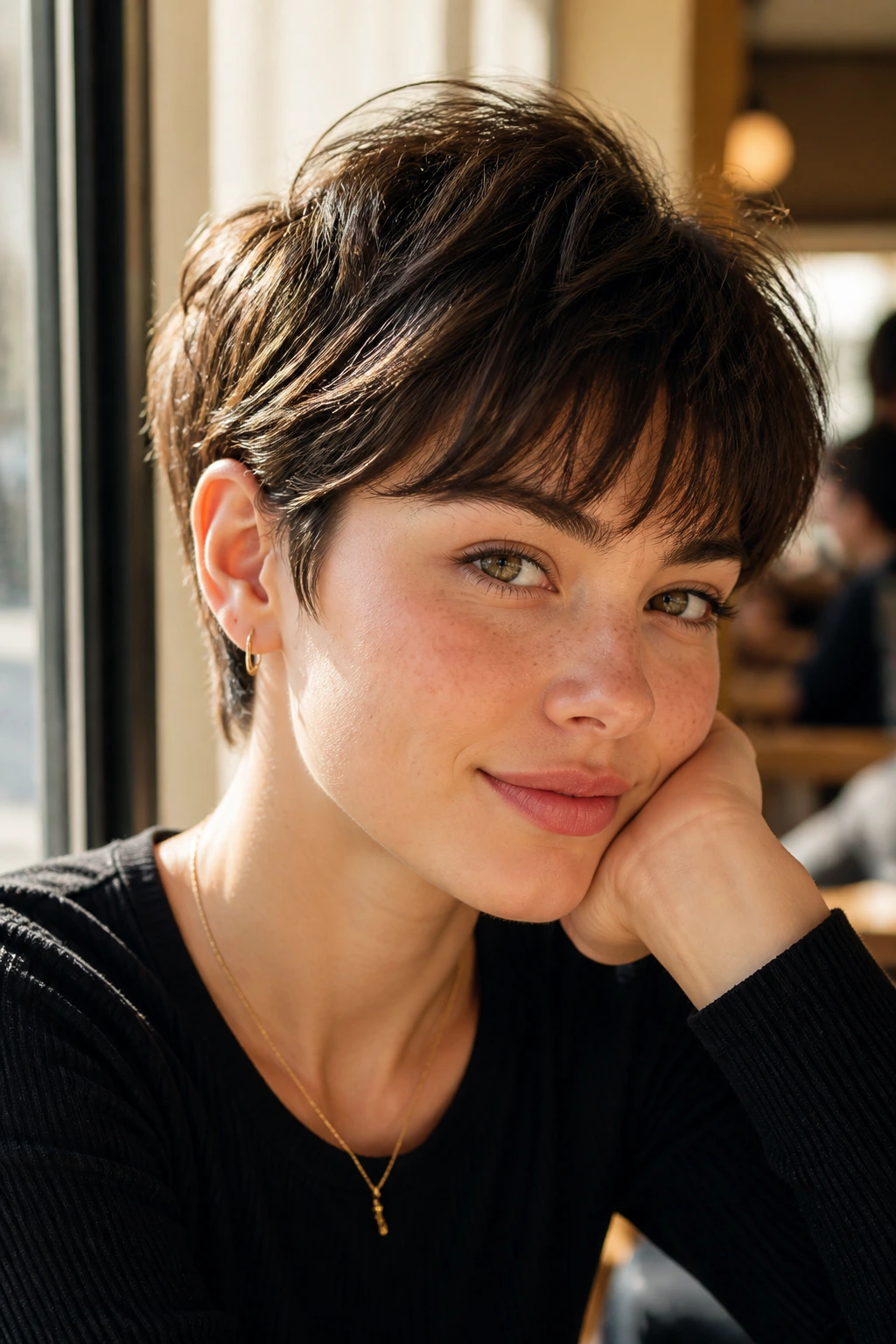
2. Feathered Fringe Pixie
This is the cut for people who like short hair but still want something brushing the forehead. The fringe is longer, feathered, and soft enough to move when you turn your head, which keeps the whole style from reading too severe. Around the temples, the layers should taper gently so the fringe feels connected instead of dropped on top.
A feathered fringe changes the whole mood of a pixie. It gives you a little mystery without hiding your face, and it works especially well if your forehead is on the longer side or your hairline feels stronger than you want it to. Ask for point cutting or razor-soft ends rather than a hard straight line.
The style is best when it’s a touch imperfect. Push the fringe slightly off-center. Let a few pieces fall into the cheekbone area. That’s where the softness lives.
3. Tapered Temple Shag Pixie
If you wear glasses or want your cheekbones to do the talking, this shape is worth a close look. The temples are trimmed tighter, the sideburn area is softened, and the top is left with a bit of shaggy lift so the haircut doesn’t disappear into the head. It’s neat, but not rigid. That matters.
What Makes It Different
The taper around the temples prevents bulk from collecting where frames, earrings, or side hair can compete. The top and crown still have texture, so the cut has motion when you walk. That balance—clean at the edges, loose on top—is what keeps it from looking like a basic cropped cut.
I like this version on oval and heart-shaped faces, but it can be adapted for square jawlines too. A slightly longer fringe and a softer side sweep keep the structure from feeling too boxy.
Styling Cue
Work a tiny amount of paste through dry hair, then pinch the crown upward with your fingertips. Don’t comb it smooth. The point is to keep the texture visible.
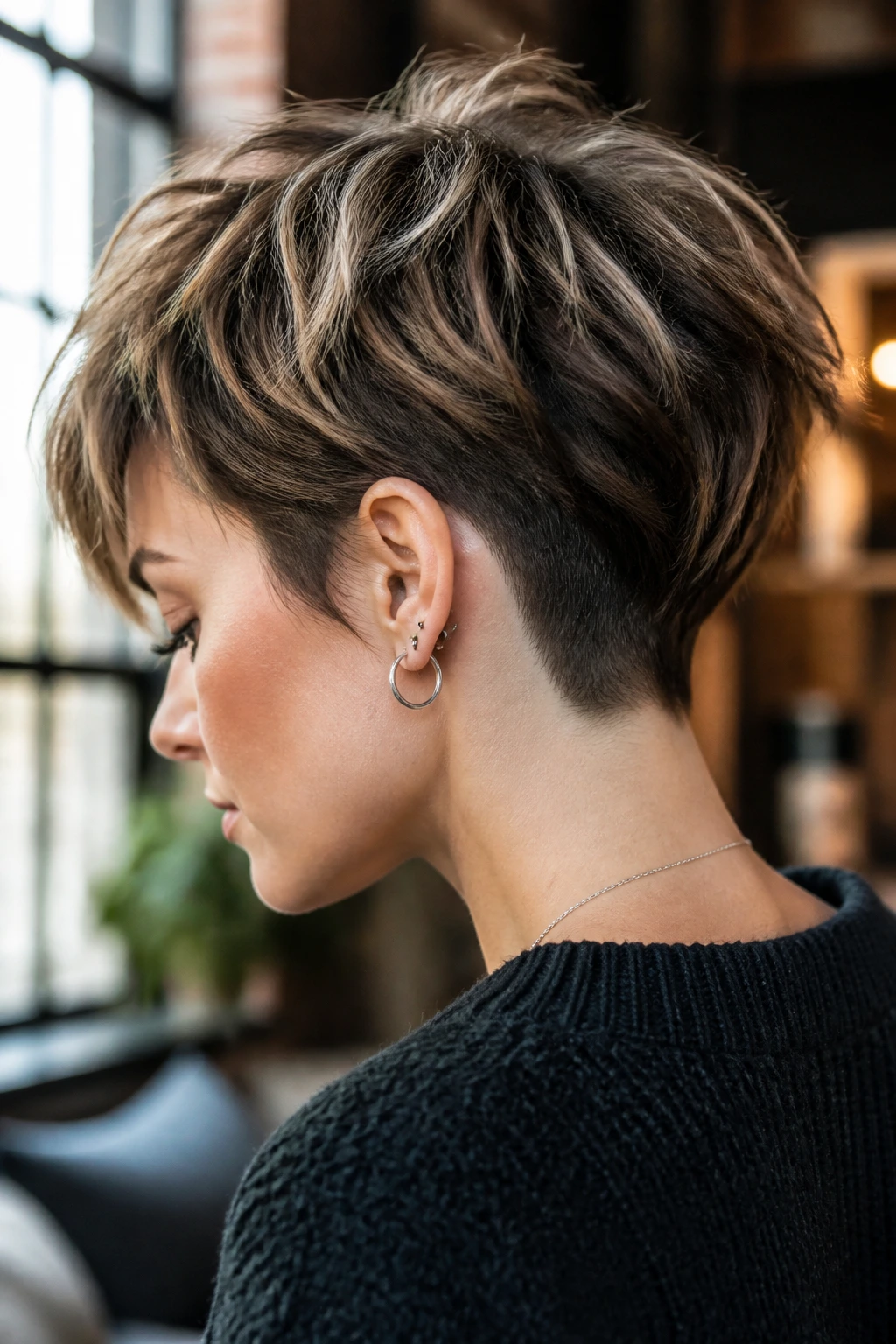
4. Choppy Nape Crop
The choppy nape crop is for someone who wants the back tight and the top playful. You get a short, tidy neckline, but the crown and upper sides are cut in broken layers so the style doesn’t end up severe. It’s the kind of haircut that looks better after you’ve slept on it a little, which is not true of every short shape.
The nape is where this cut either wins or loses. If the back is too full, the silhouette balloons. If it’s too bare, the top feels disconnected. The sweet spot is a clean taper that hugs the neck, with soft texture above it so the shape can bend.
A little grit helps here. Dry shampoo, texture powder, even a dry mist styling spray—something with a bit of hold and no shine. The result should look touchable, not crispy.
5. Curly Shag Pixie
Curly hair and shaggy pixie cuts get along better than a lot of people think, but only when the cut respects shrinkage. That means the layers should be built around the curl pattern, not forced into a straight-hair idea of balance. The top can stay a little longer so the curls have room to spring, while the sides and nape are shaped closely enough to keep the haircut from becoming a triangle.
The Curl Logic
Curls need space to stack, but they also need removal of bulk in the right spots. A shaggy pixie does both if it’s cut dry or nearly dry, curl by curl. That’s how you avoid the common problem where the haircut looks fine wet and turns into a puffball once it dries.
Use a diffuser on low heat, or air-dry with a curl cream and a small amount of gel. The finish should have definition at the ends and movement at the crown, not a helmet of uniform ringlets.
Best For
- 2C to 3B curls that want shape.
- Short curls that lose their outline when grown out.
- Anyone who prefers a softer perimeter over a blocky outline.
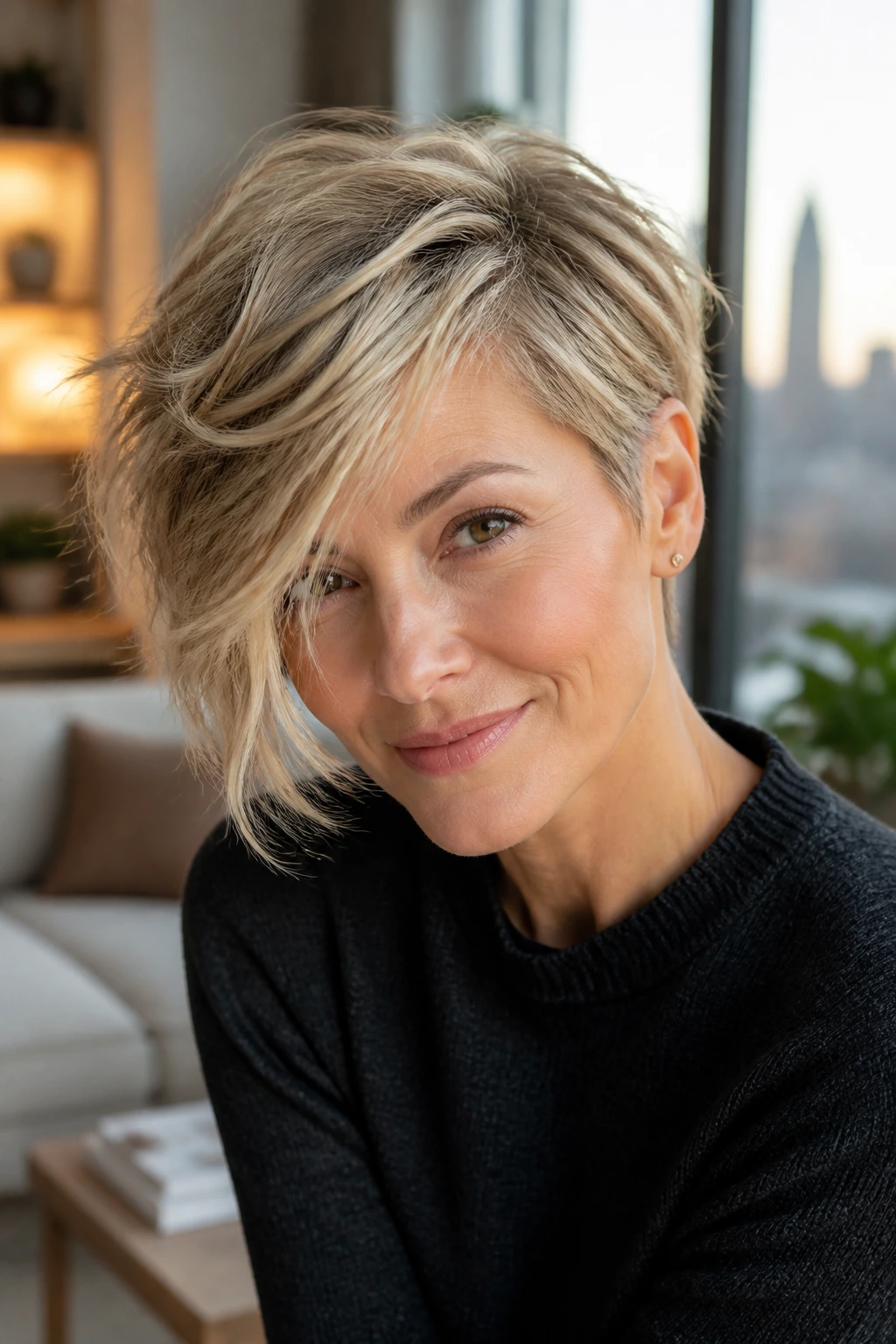
6. Side-Swept Razor Pixie
This one has attitude, but not the rigid kind. The deep side part and razor-soft layers give the hair a slanted, sweeping motion that reads sleek even when it’s a little undone. If you’ve ever wanted short hair that still falls across one eye now and then, this is the lane.
The razor work matters. It removes weight from the ends so the hair can flick instead of hanging in one chunk. On straight or slightly wavy hair, that makes a huge difference. A blunt scissor cut can do the job, but the razor usually gives a more broken-up finish.
Best of all, this cut likes movement. Tuck one side behind the ear, leave the other side loose, and it still feels intentional. That asymmetry is doing real work.
7. Grown-Out French Pixie
The grown-out French pixie lives in that sweet spot between polished and a little rebellious. The top stays longer, the bangs are soft and brushy, and the sides are just trimmed enough to keep the outline clean. It feels a bit more relaxed than a classic cropped pixie, which is why it suits people who hate anything that looks over-edited.
Why I Keep Recommending It
Because it forgives. A lot. If you miss your trim by a week or two, this shape doesn’t collapse. The fringe falls forward a bit more, the top gets more texture, and the cut still looks like it belongs on your head. That’s a useful trait, not a small one.
It’s especially good on hair that has some natural bend. Straight hair can wear it too, but you’ll probably want a light texture spray and a finger twist at the front. Keep the ends airy. No blunt fringe wall.
8. Undercut Shag Pixie
An undercut shag pixie is the choice for thick hair that turns a short cut into a hot cap by lunchtime. Taking the underside shorter removes bulk where you do not need it, while the top keeps enough length to fall over the cut in soft, textured layers. The result feels cooler on the scalp and lighter in the hand.
This is not a dramatic undercut unless you want it to be. Sometimes it’s hidden, sometimes it’s just enough to keep the nape from swelling. Either way, the top should still move. That’s the whole point. If the top is cut too heavily, you end up with a spiky helmet. Nobody wants that.
I like this for dense hair, especially if the head shape is rounder and the hair tends to puff at the sides. The cut removes bulk where it counts and leaves the rest looking alive.
9. Wavy Micro-Shag
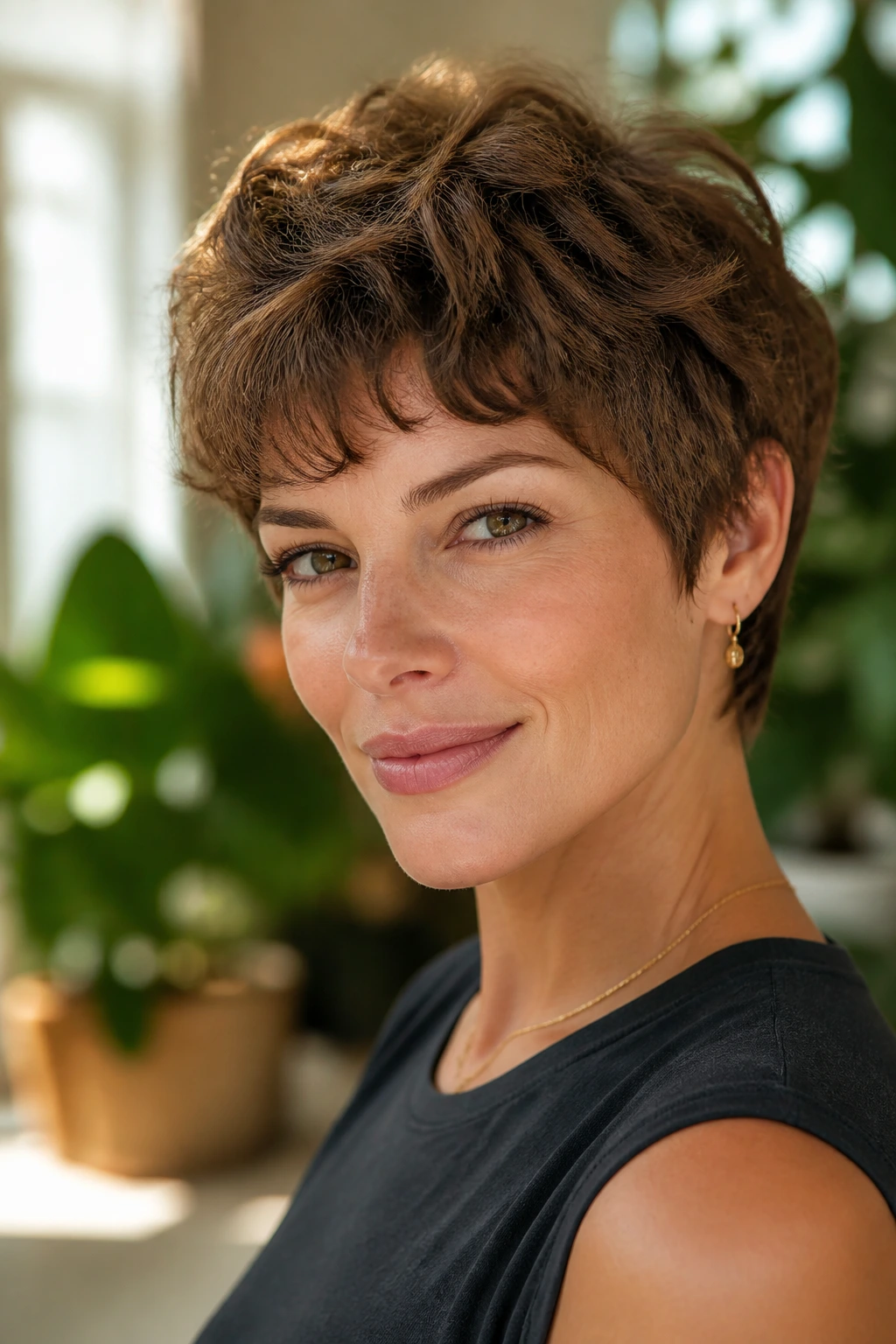
A wavy micro-shag is almost tiny in silhouette, but it has more personality than a plain crop because the texture is doing the visual work. The waves break the line naturally, so the haircut can stay short without feeling blunt. The top is cropped close enough to show the wave pattern, while the fringe and sides stay soft.
This cut is good when you want short hair that does not fight your natural bend. A strong brush-out is usually a mistake. Let the wave do the job. Scrunch in a small amount of mousse, diffuse for a few minutes, and stop before the shape gets too poofy.
It suits people who like low-maintenance styling but still want a little edge. Not dramatic edge. Just enough to look like you meant it.
10. Brushed-Forward Pixie
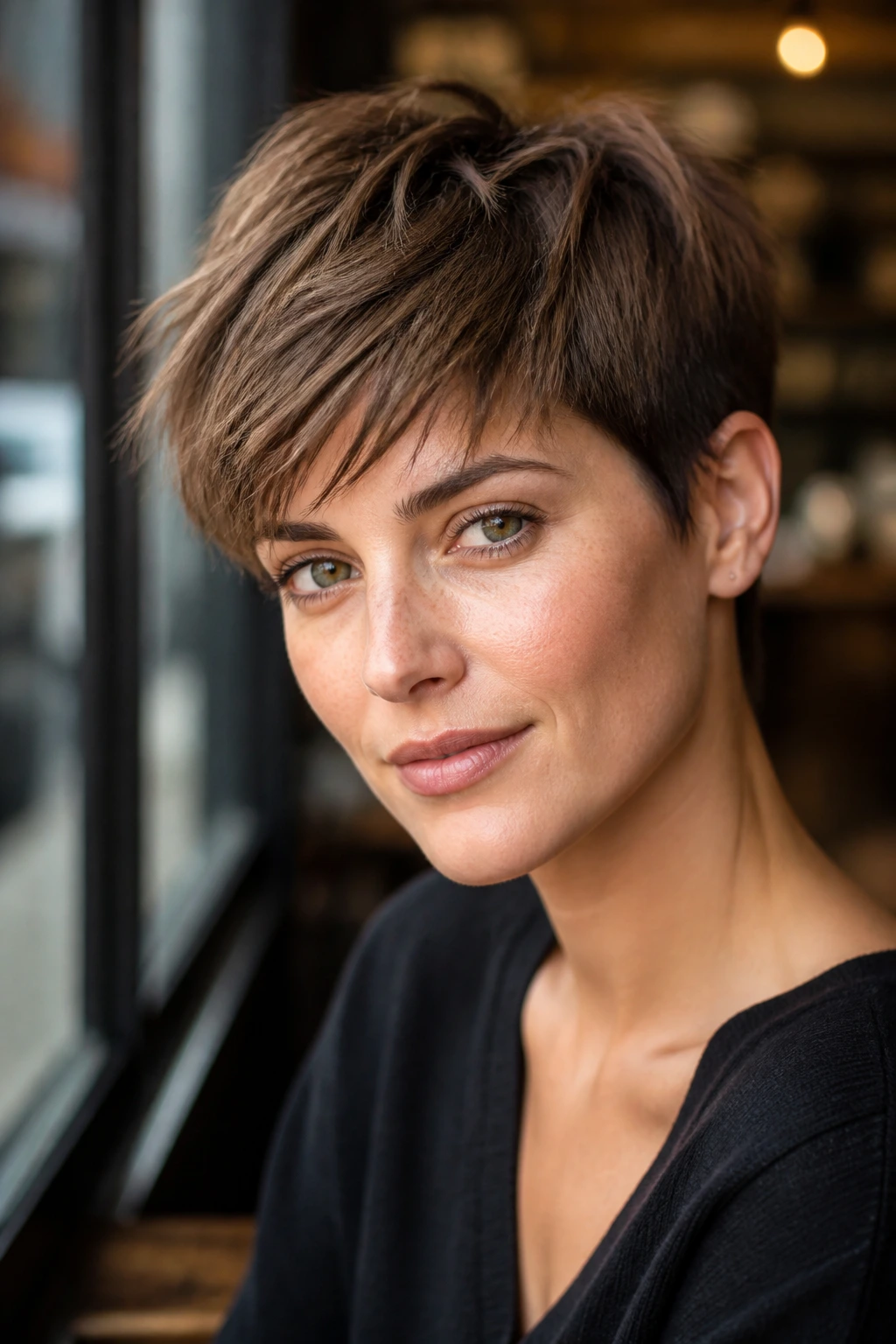
Brushed-forward pixies are a smart answer for high foreheads, strong hairlines, or anyone who likes the face framed from above rather than from the sides. The top and fringe are directed forward, but the ends are broken up so the finish stays soft. There’s no hard shelf of bangs here. Just movement that falls toward the brow.
A forward direction changes the mood fast. The cut can feel more youthful, a little bookish, or quietly cool depending on the rest of the styling. I prefer it with a light matte cream and fingers, not a brush finish that makes every strand line up too neatly.
If your hair tends to stand up at the front, this is useful rather than annoying. The cut works with that lift instead of pretending it doesn’t exist.
11. Asymmetrical Textured Pixie
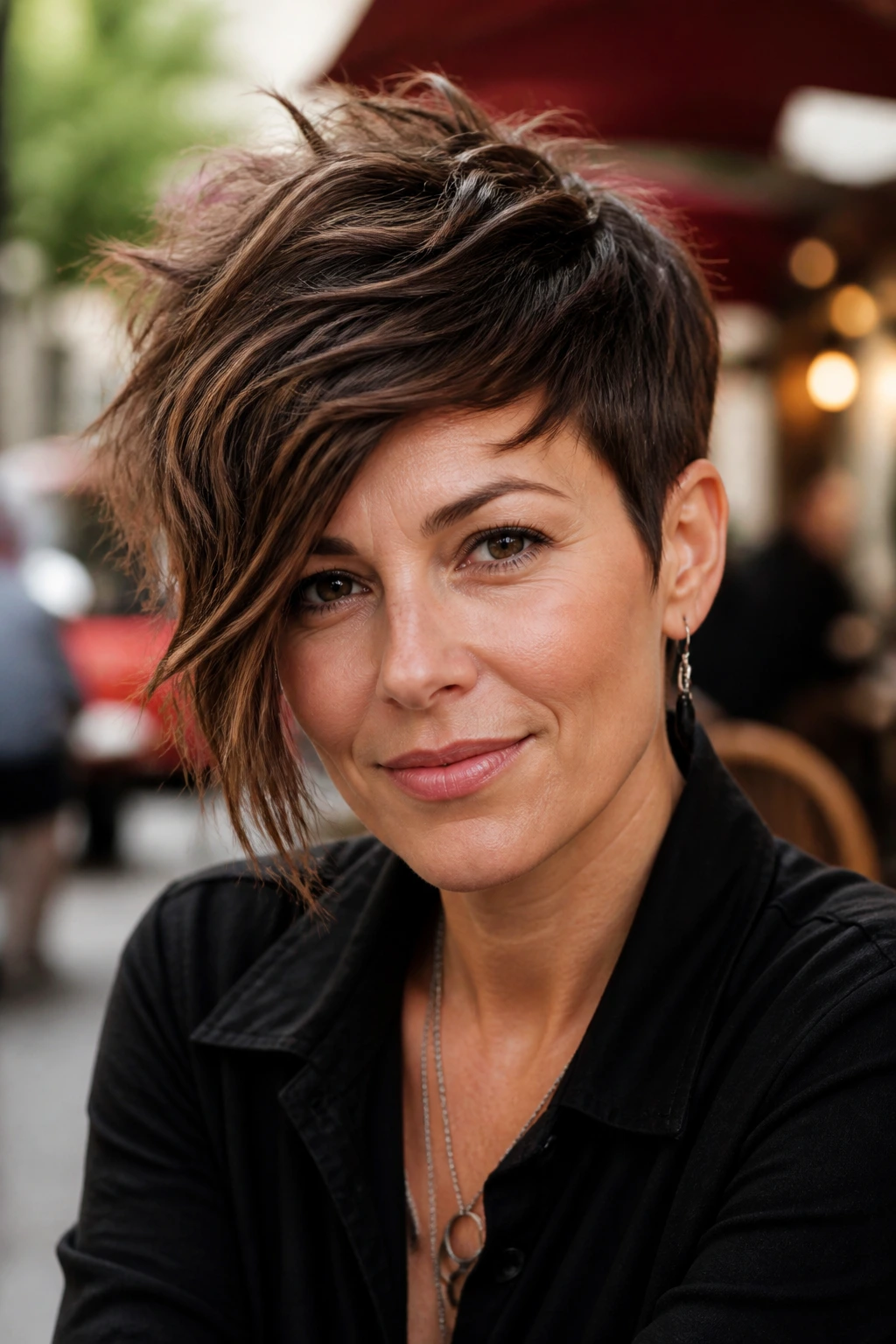
One side longer. One side tighter. That’s the basic idea, but the texture is what keeps it from feeling like a gimmick. The longer side can skim the cheekbone or jaw, while the shorter side keeps the cut sharp enough to show a face shape. Soft layers across the top connect the two lengths so it feels uneven on purpose.
What to Watch For
The asymmetry should be visible, not dramatic to the point of costume. If one side is too long and too heavy, the haircut starts looking like a grown-out mistake. The trick is to keep the longer side feathered so it moves when tucked behind the ear.
This is a good cut if you like a little drama but don’t want a full statement mullet or bowl shape. It can be sleek one day and messy the next.
12. Soft Mullet Pixie
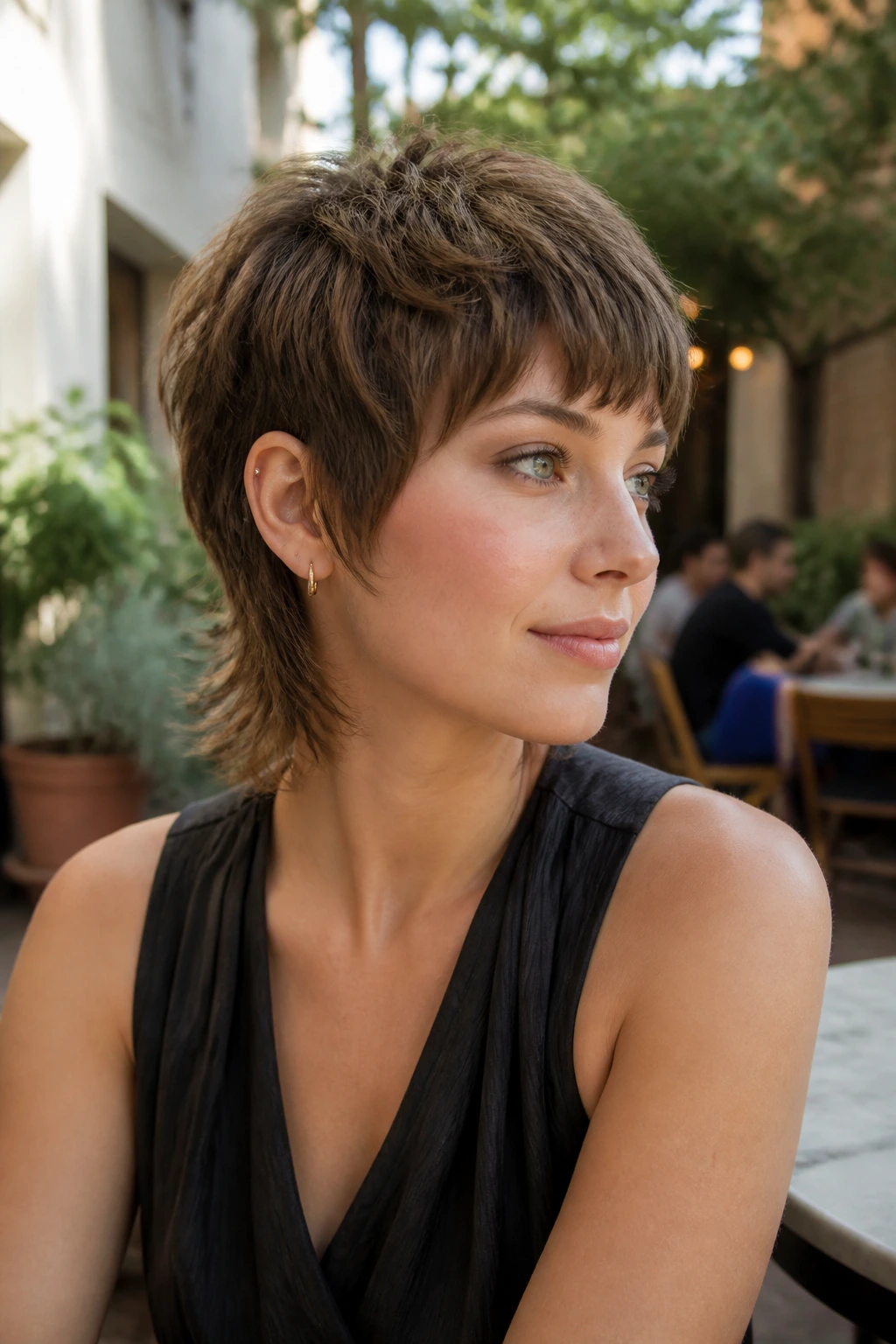
A soft mullet pixie sounds stranger than it wears. The front and sides stay cropped and textured, while the back keeps a little extra length so the silhouette tapers softly toward the nape. It’s the shag influence showing up in a short cut, and I think that’s why it works.
The back length gives the haircut a bit of swing. Not a tail. Swing. There’s a difference. When the layers are done well, the shape moves from crown to neck in a way that feels modern rather than retro-costume.
This cut looks best when the layers are broken up and not too symmetrical. If the back is left too blunt, it becomes a mini mullet in the worst sense. Keep the ends feathered and the fringe light.
13. Coily Cropped Shag
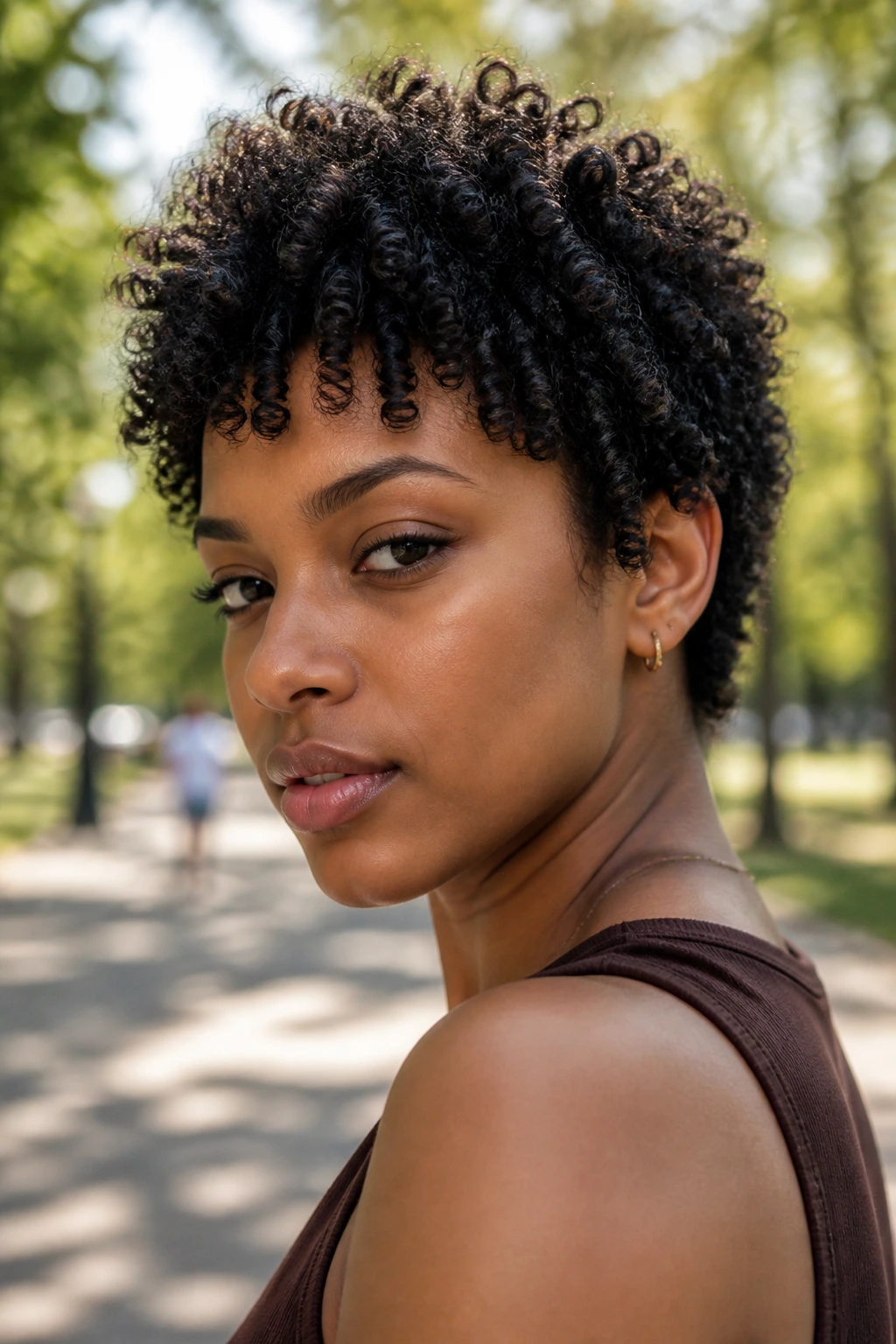
Coily hair does not need to be tamed into a pixie. It needs room to stack and shape, and a coily cropped shag gives it exactly that. The hair is cut to respect shrinkage, with a little more length left on top so the coils can form shape instead of collapsing into the scalp. The sides and neckline are shaped in a way that follows the head, not fights it.
The Real Trick
Cut it dry or nearly dry, coil by coil, if possible. That is where the shape lives. Wet curls and coils lie. They behave one way in the chair and another way once they dry, and that is how people end up with cuts that feel too short or too wide.
A coily shag pixie works when the texture is part of the silhouette. A little cream, a little oil on the ends, and the right taper around the ears can make the whole cut look clean without flattening it.
14. Piecey Curtain-Bang Pixie
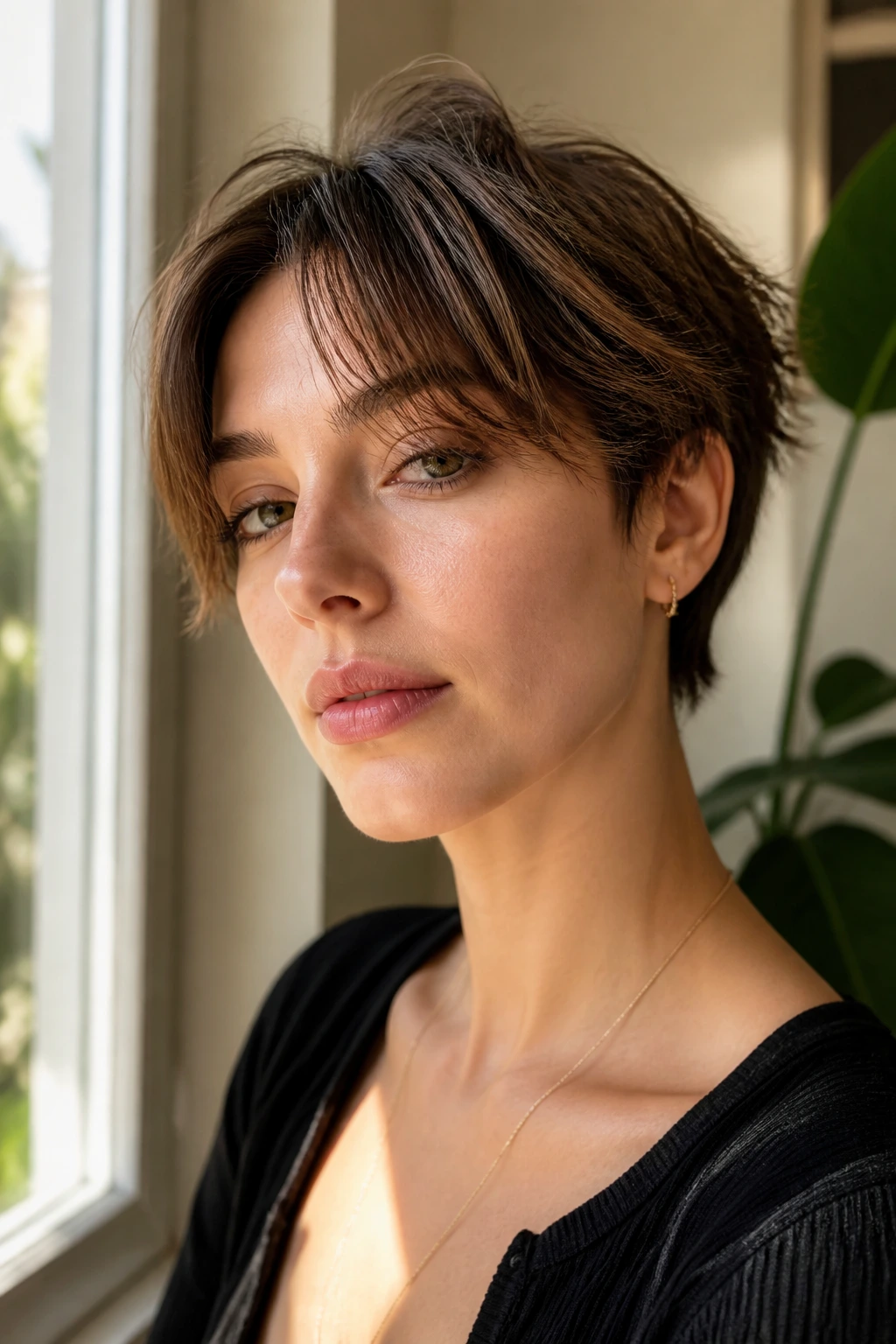
This is the pixie for people who love curtain bangs but do not want to commit to long hair. The fringe parts softly near the middle and falls into two loose sections that frame the face. The rest of the cut stays short and shaggy, so the bangs don’t feel like a separate idea.
The key is keeping the center soft. Too much density in the middle and the bang falls like a curtain wall. Too little, and it splits into wisps that disappear. A good stylist will cut it with movement in mind, not just length.
This shape can be glamorous in a very low-key way. A tiny bend at the front, a bit of separation through the crown, and the whole thing reads expensive without looking overdone. That’s rare. Use it.
15. Bowl-Influenced Shag Pixie
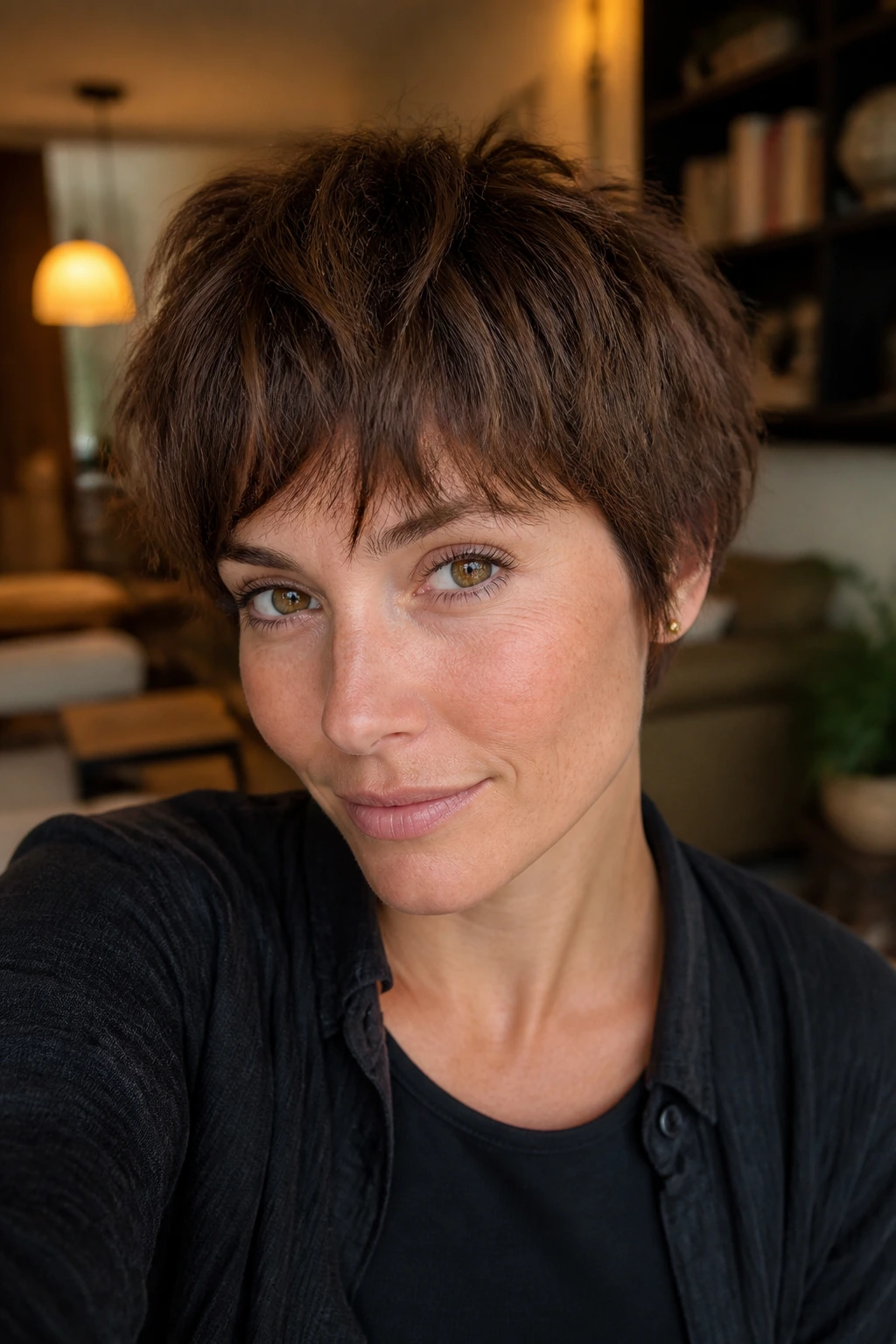
A bowl-influenced shag pixie sounds odd until you see it with the right texture. The outline has a rounded feel, but the edges are broken up so it never lands as a hard retro bowl cut. Think of it as a soft dome with air moving through the top and sides.
Why It’s More Wearable Than It Sounds
The rounded shape can be flattering on smaller faces and strong brows because it creates a clean frame without needing long layers. The shag texture keeps it modern. Without that texture, the cut can go straight into costume territory.
I’d ask for a soft perimeter, not a blunt line. The ends should look light enough to flick, not like they were sliced with a ruler. This is one of those cuts that looks better with a little imperfection baked in.
16. Tousled Silver Pixie
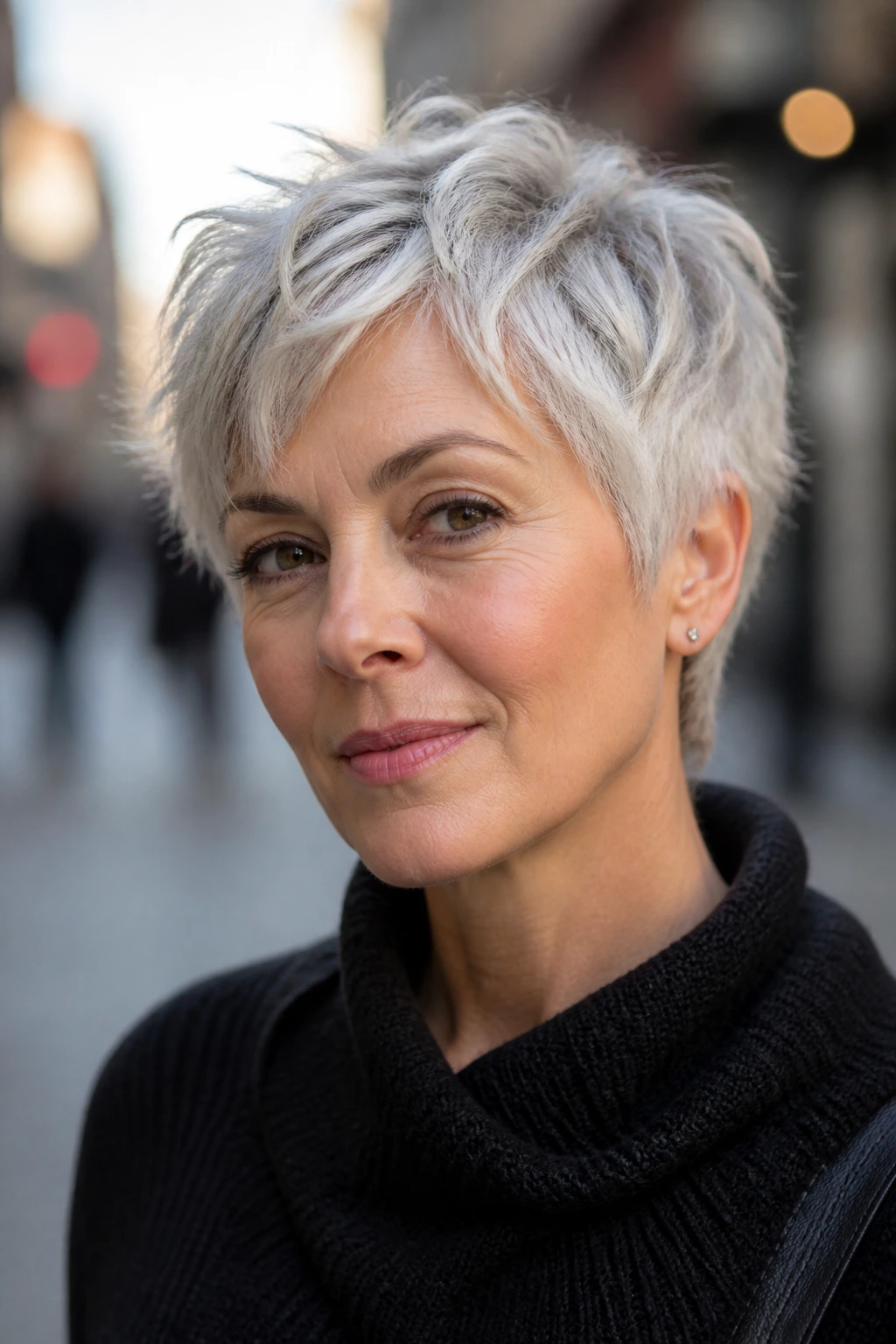
Gray and silver hair catch light differently, and a shaggy pixie shows that off better than a smooth, sealed-down cut ever could. The texture creates tiny shifts in tone from strand to strand, so the color reads dimensional instead of flat. That alone is reason enough to keep the layers soft.
A tousled silver pixie works especially well with a matte or satin finish. Too much shine can make the texture disappear, and too much product can yellow the look if the formula is heavy. A little dry texture spray usually does the job.
There’s also a practical side here: silver hair often changes in texture, getting either coarser or finer than it was before. Soft layers let you adjust without fighting the hair’s new behavior.
17. Sculpted Ear-Tuck Pixie
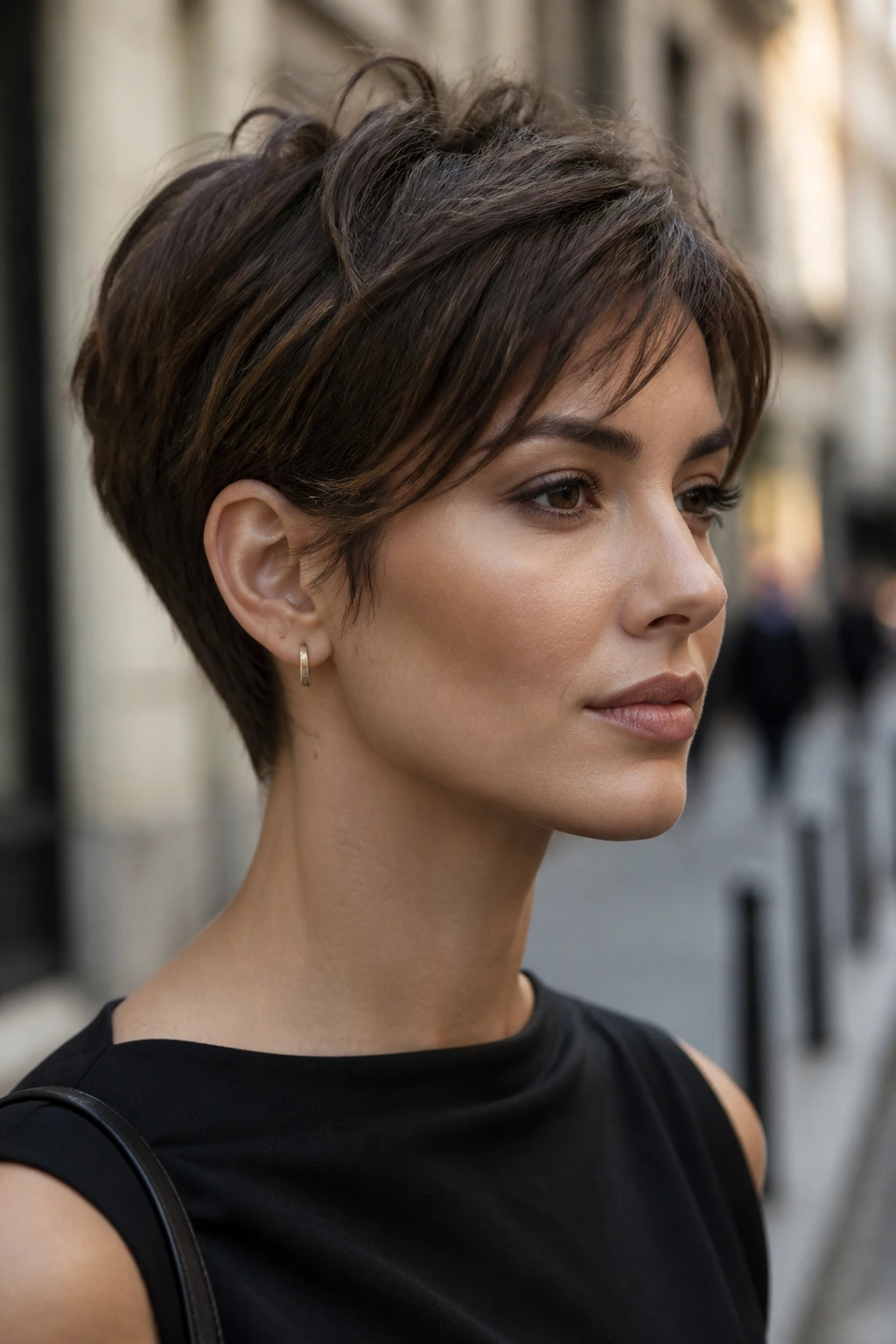
The sculpted ear-tuck pixie has a very specific charm: the hair is long enough around the ears to tuck, but short enough everywhere else that the tuck becomes part of the style. It’s neat without being severe, and the soft layers on top keep the top from looking stiff.
This cut is especially nice if you wear earrings, glasses, or both. The tuck gives the face a little frame and makes the jawline look clean. Keep the layers around the ear feathered so they slide back instead of sticking out.
A tiny styling move matters here. Tuck the front section, then pull just a few wispy pieces loose near the temple. That one step keeps the cut from looking too controlled.
18. Lived-In Long-Top Pixie
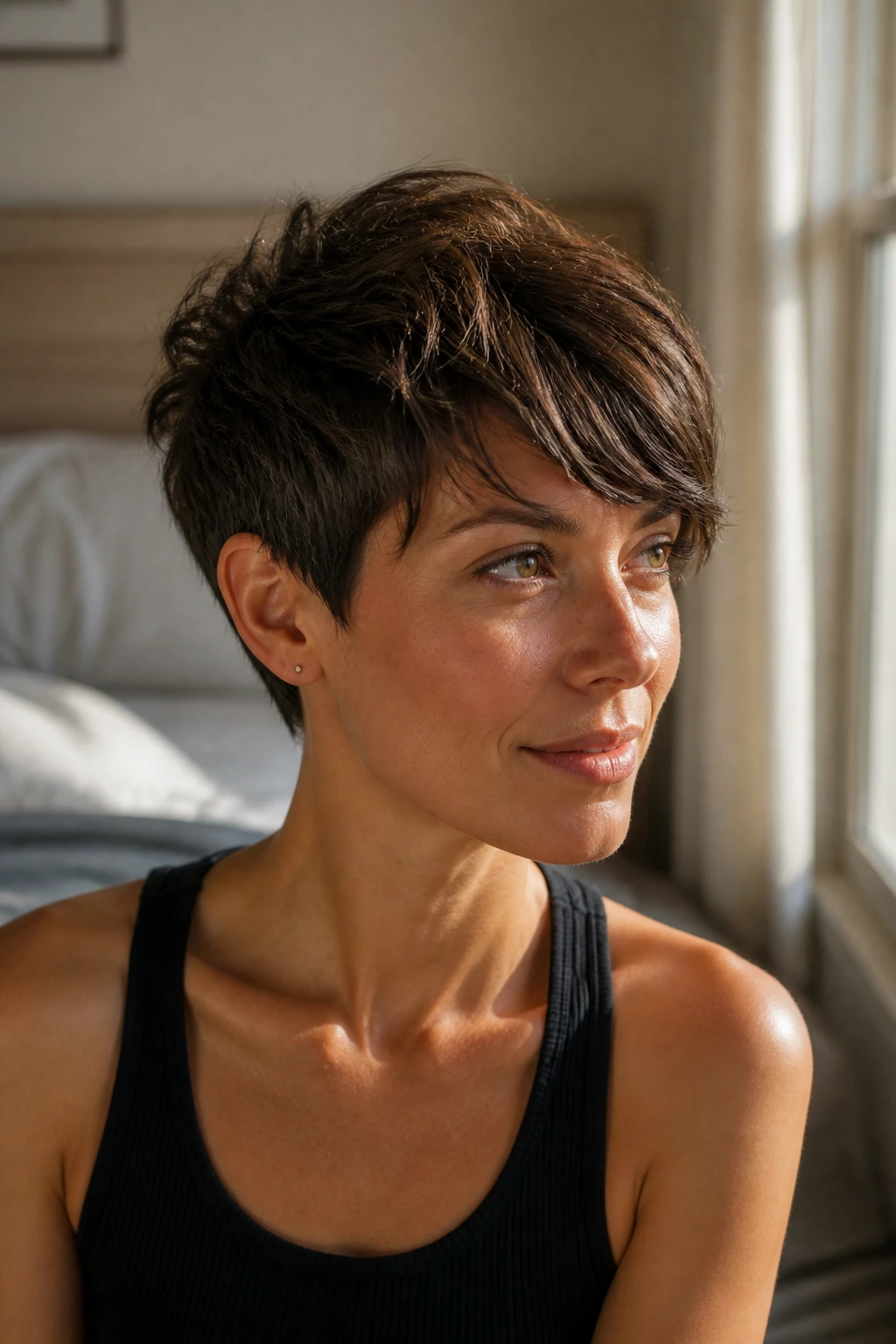
The lived-in long-top pixie is probably the easiest of the bunch to grow out, and I’m a fan of that for obvious reasons. The top stays longer, the sides are trimmed down enough to keep the shape compact, and the fringe can be pushed forward, sideways, or broken apart depending on your mood. It never asks for a perfect finish.
The long top gives you styling range. One day it’s swept back with texture cream. The next, it’s pushed forward with a little grit. If you hate being boxed into one look, this is the cut to keep in your pocket.
It also buys you time between trims. The shape stays readable as it softens, which is exactly what a shag-inspired pixie should do. Short hair does not have to mean constant upkeep. Not if the cut is smart.
What Makes a Shaggy Pixie Feel Soft Instead of Choppy
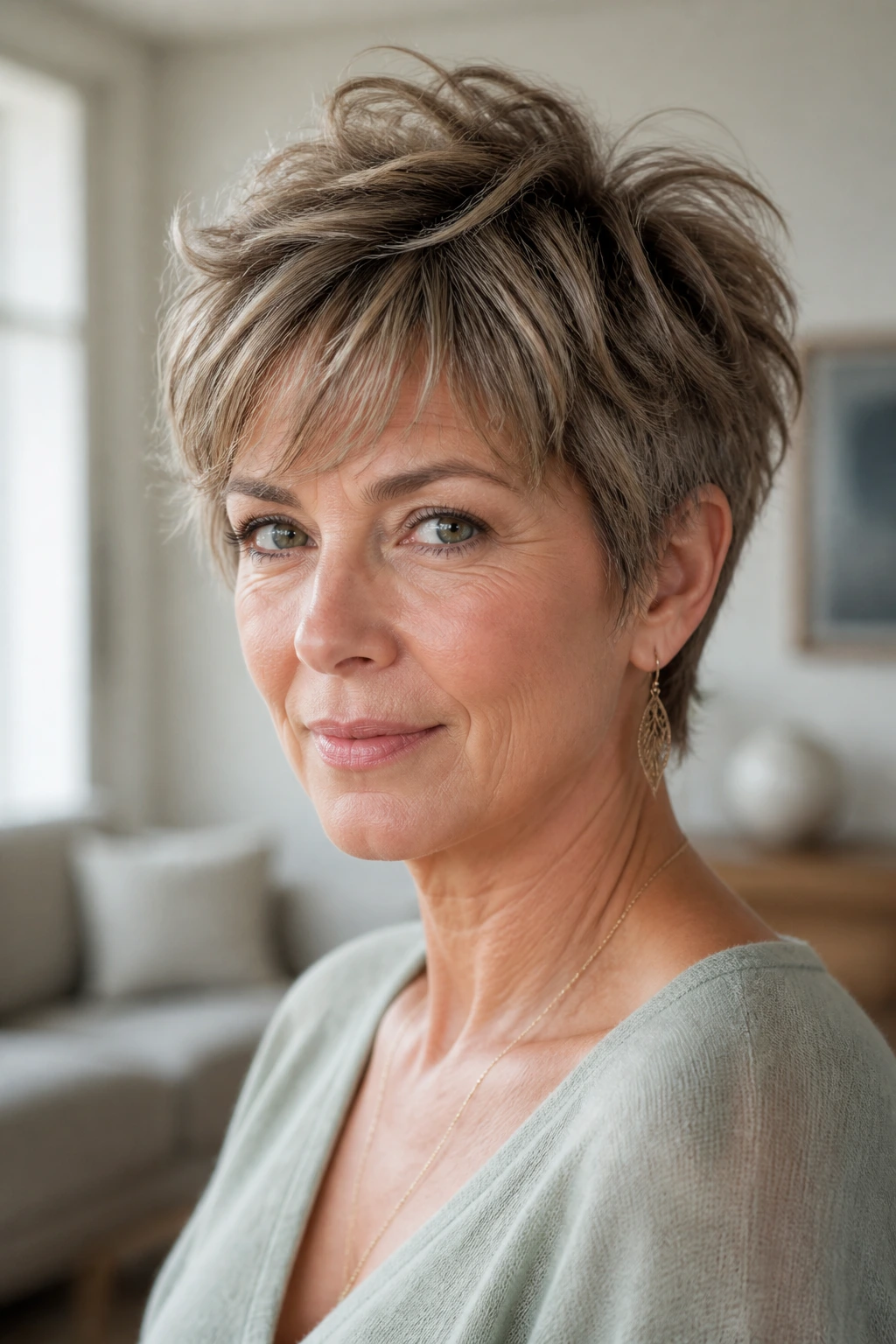
A soft shaggy pixie is built, not hacked together. That sounds obvious, but the difference shows up immediately in the outline. Softness comes from how the layers are connected, not from taking a lot of hair away. A good cut still has weight where it needs shape—around the nape, near the temples, under the fringe—and then it releases the rest into little broken pieces.
Point cutting matters here. So does slide cutting in the right hands. Those techniques remove the harsh edge from the ends without turning the haircut into see-through fluff. I’m not a fan of over-thinning shears on short hair unless the hair is truly dense and the stylist knows exactly how much is enough. Too much thinning and the cut gets fuzzy fast.
The crown deserves extra attention. If the top is cut too evenly, the whole style turns blocky. If the crown is too short, it stands up in a way that can make the head look narrow on top and wide at the sides. A little irregularity around the crown gives the layer pattern room to breathe.
Texture should read in the finish, not as random damage. That’s the whole philosophy behind these shaggy pixie cuts. The ends should look broken up on purpose, and the silhouette should still make sense from three feet away.
What to Tell Your Stylist Before the First Cut
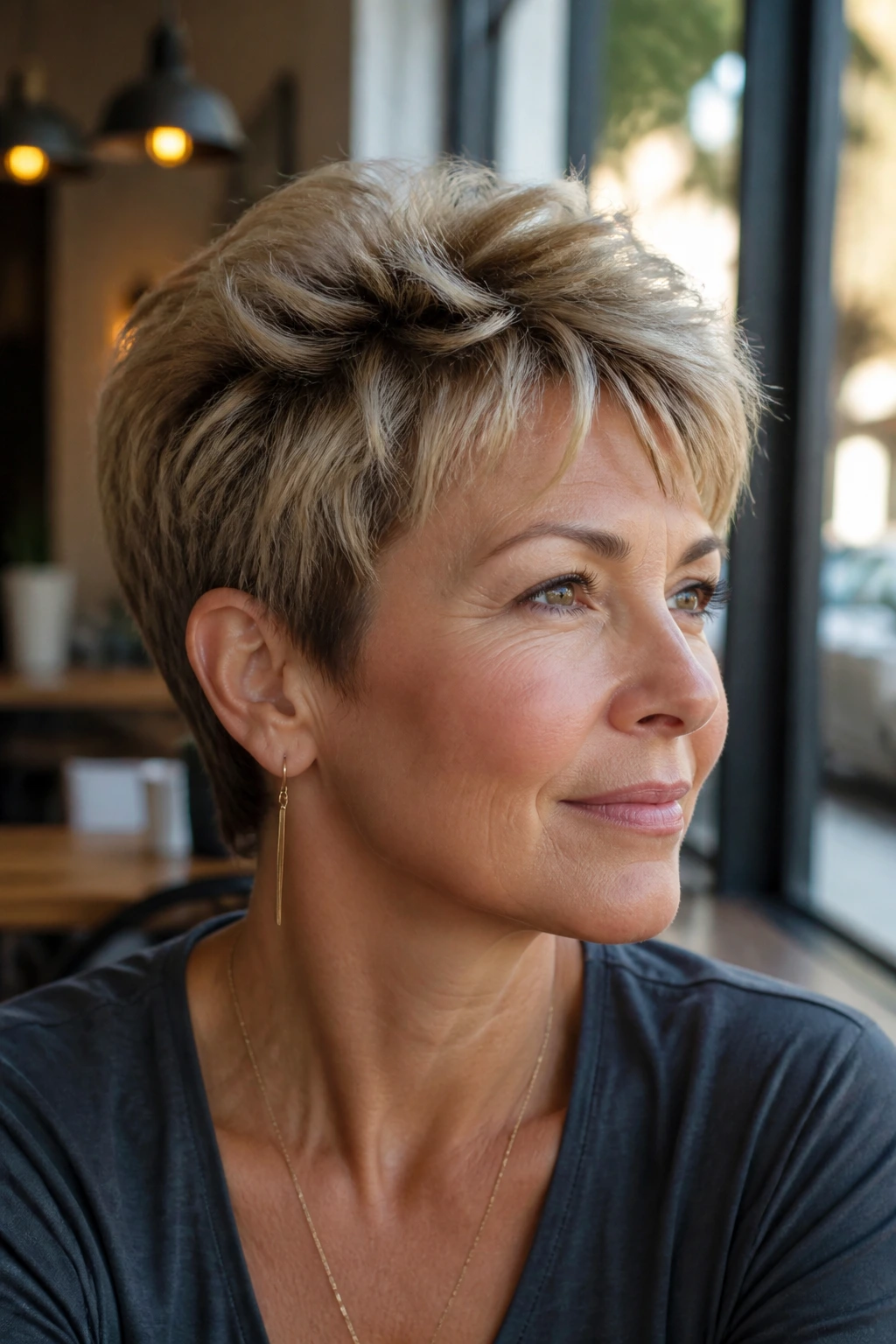
Bring photos, yes, but bring useful photos. One image of the overall shape. One of the fringe. One of the side view if you can find it. A single front-facing picture tells too little. Haircuts are three-dimensional, and pixies are very unforgiving about that.
Tell your stylist how much time you actually want to spend styling. Ten minutes with a blow-dryer and round brush is a different brief from “I want to scrunch and go.” Say so plainly. Also mention whether you wear glasses, how your hair grows at the nape, and which way your cowlick pushes the front section. Those details change where the layers land.
Be direct about density. If your hair is thick, say thick. If it is fine but abundant, say that too. Those are different jobs. Thick hair often needs weight removal in the right places, while fine hair usually needs shape preserved. And if your hair shrinks up when dry or bends in a stubborn direction, mention that before the scissors come out.
One more thing. Tell them what you hate. Too much forehead. Too much ear. Too much bulk near the neck. That is not being difficult. It is helping the haircut succeed.
Tools and Products That Make Styling Easier
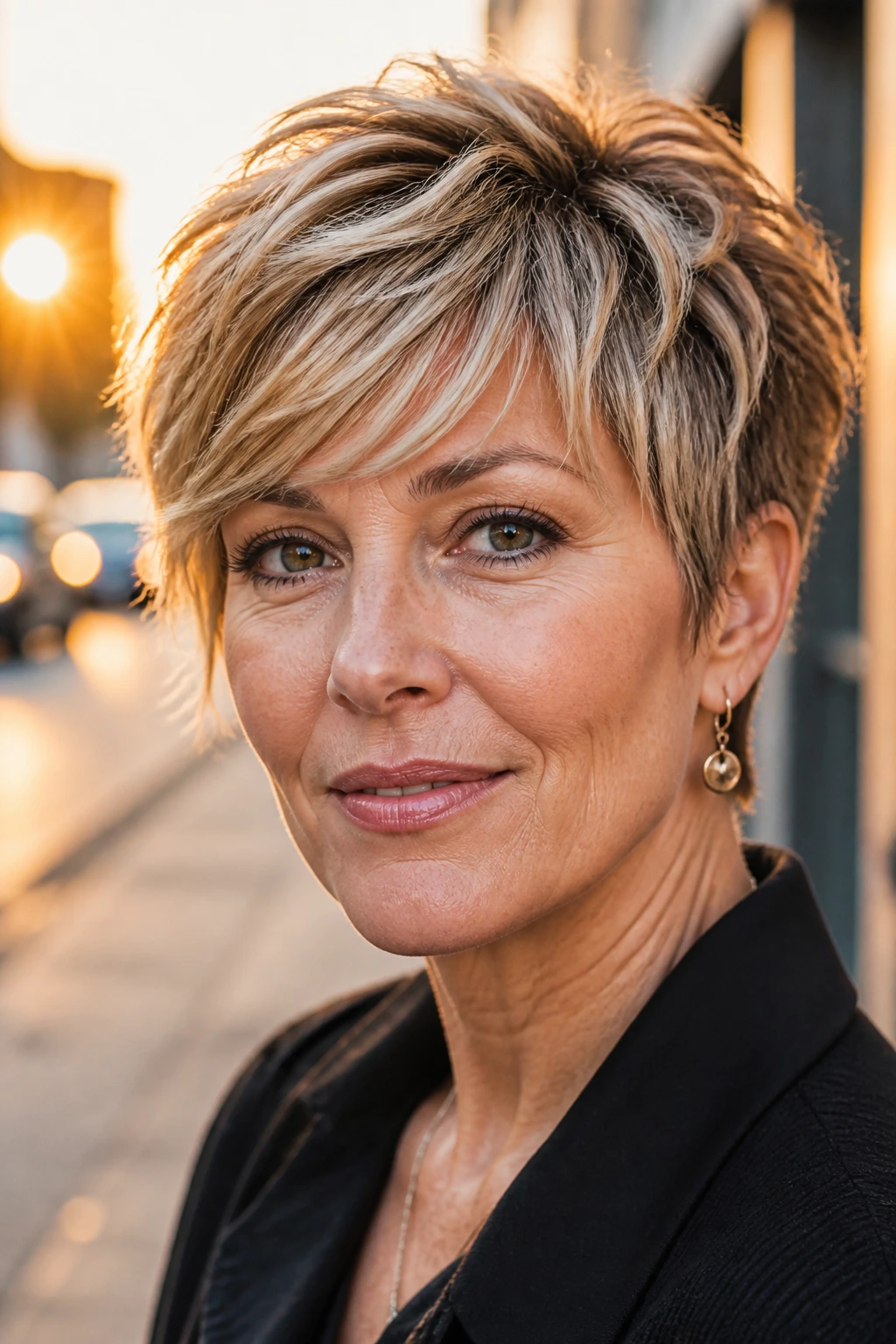
- A compact blow dryer with a narrow nozzle — Helps direct the fringe and crown without blasting the whole cut out of shape.
- Small round brush or vent brush — Useful if you want a bit of root lift without making the ends curl under too hard.
- Matte paste or fiber cream — Gives piecey definition on straight or wavy hair without the shine of a pomade.
- Light mousse — Good for fine hair and soft waves; use it at the roots before drying.
- Texture spray — Adds grit and separation, especially on hair that goes limp the second it’s touched.
- Diffuser attachment — Worth it for curly and coily versions so the layers keep their shape while drying.
- Tail comb — Handy for re-parting, lifting the fringe, or nudging the crown into place.
- Dry shampoo — Not just for oil. It adds a little structure on day two and day three.
- Salon scissors or trim shears at home only if you know what you’re doing — A tiny fringe dusting is one thing; chopping into the silhouette is another.
How to Style Soft Textured Layers Without Flattening Them
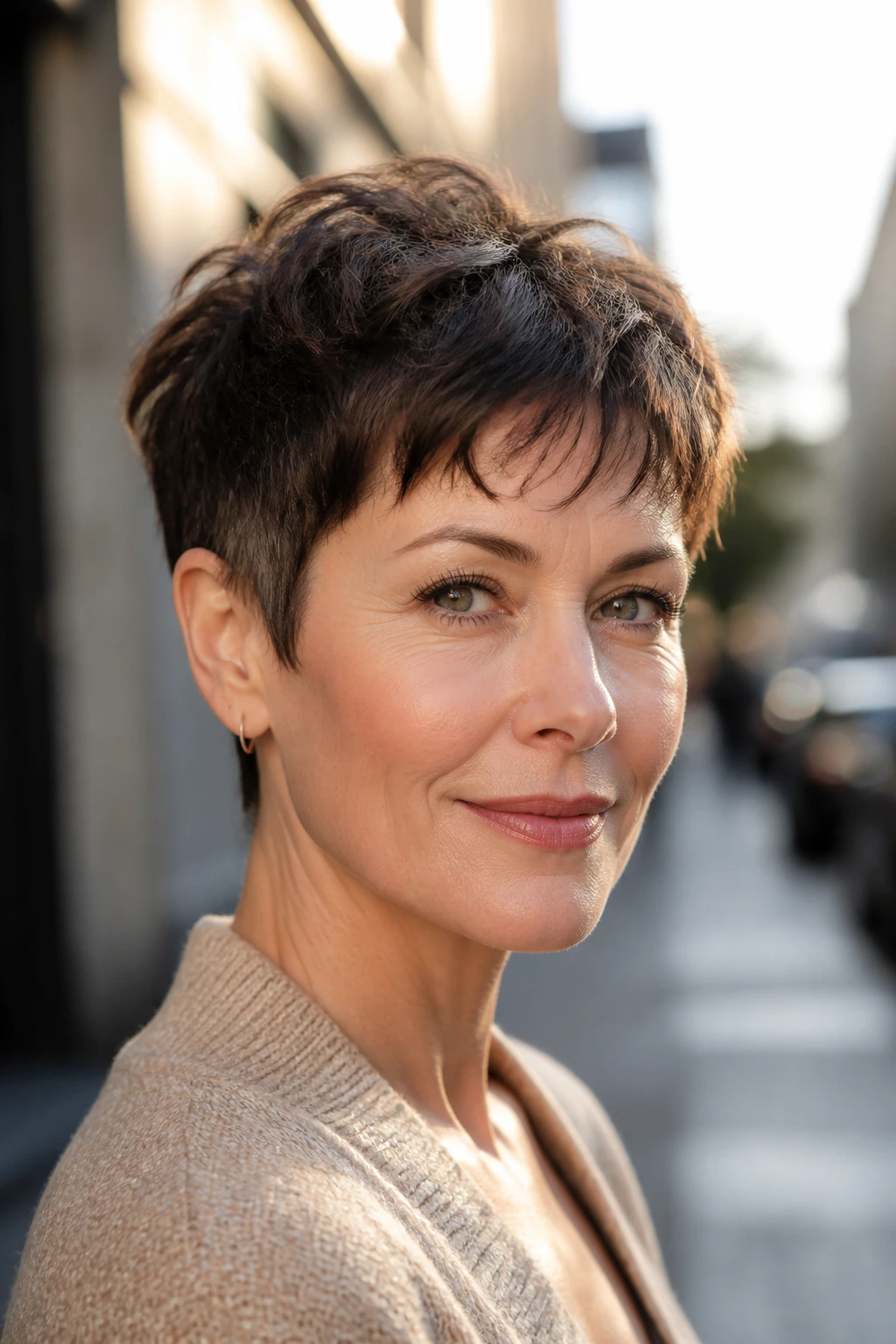
The best shaggy pixie styling is fast, not fussy. Start with damp hair and work a small amount of mousse or lightweight cream through the roots and mid-lengths. Then dry in the direction you want the hair to live, not straight back from the face unless that’s the shape you want. A nozzle on the dryer helps keep the top from puffing out in all directions.
If the cut is straight or slightly wavy, I like a rough dry first and a detail pass second. Rough dry about 80 percent of the way, then go in with fingers or a small brush just at the fringe and crown. That’s enough to set the shape without erasing the texture. Too much brushing makes a shaggy pixie look like it’s trying to be a formal crop, and that misses the point.
Air-Dry Finish: Scrunch in a light styling cream and let the layers dry naturally if your hair has bend. Twist two or three small sections at the front while damp, then release them once they’re dry for a softer frame.
Second-Day Reset: Mist with water, pinch the ends with a little paste, and hit the roots with dry shampoo. Don’t re-wet everything. You only need to wake up the top and fringe.
Pro Move: If the crown lies flat, lift a half-inch section at the root with your fingers and blow air directly underneath it for ten seconds. Tiny fix. Big difference.
Common Mistakes That Make the Cut Lose Its Shape
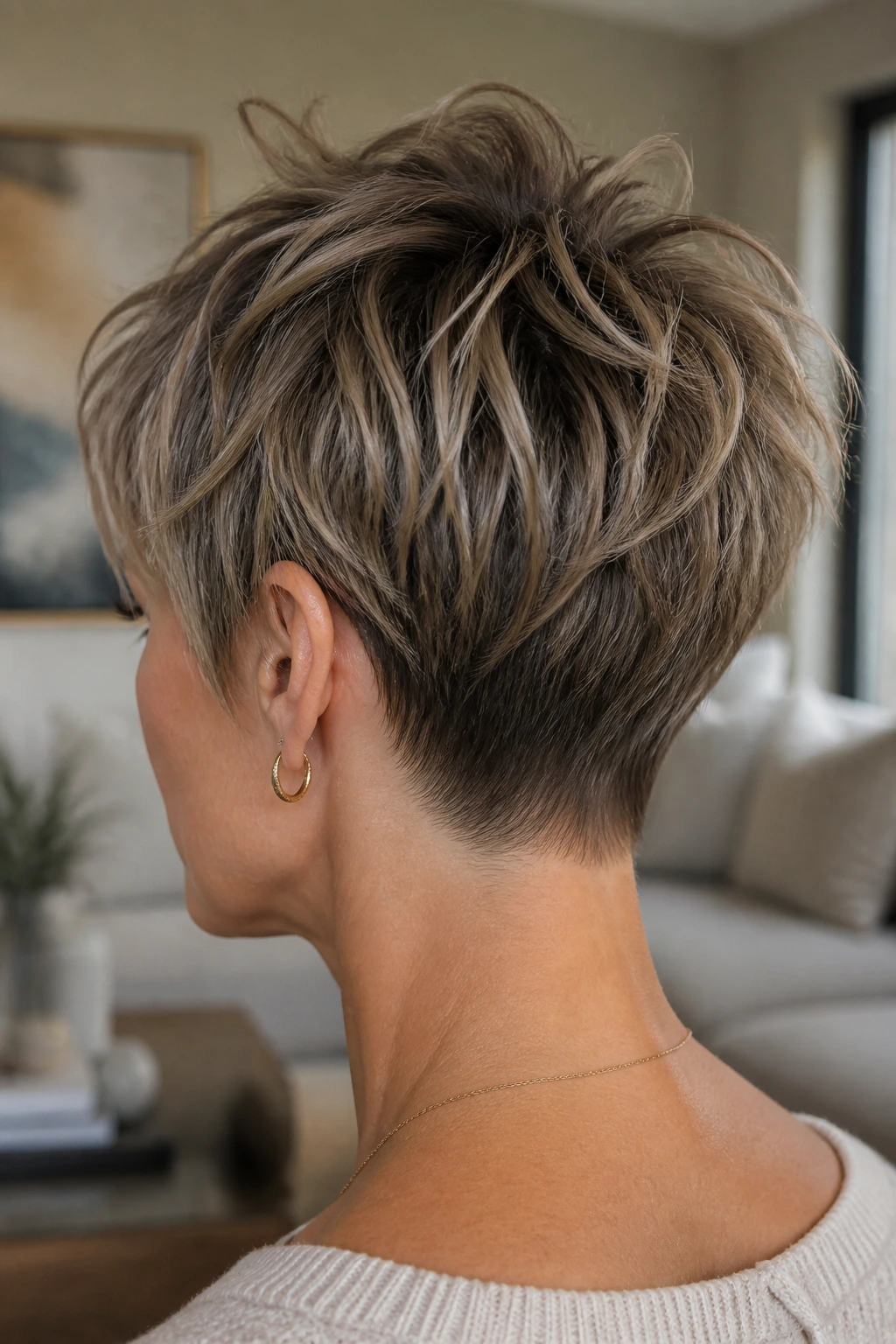
The first mistake is taking out too much weight everywhere. People see “shaggy” and assume they should thin the whole head. Nope. That leaves the cut wispy at the edges and heavy in weird pockets. The fix is targeted layering, not an all-over thinning attack.
Another problem is cutting the fringe too short on day one. Short fringes can be stylish, but if the hair has a cowlick or a bend, the bangs will spring up and sit higher than expected. You want to leave enough length to account for shrinkage and movement. A good stylist trims a little, then checks again after the hair settles.
Product overload is a quiet killer. Too much cream, too much oil, too much paste, and the layers clump into a damp-looking mess. If the cut is supposed to read piecey, the products need to disappear into the hair, not sit on top of it.
People also forget the nape. When the back grows out too long, the silhouette slumps. When it is cut too high or too blunt, the neck loses that soft taper that makes the style feel modern.
And one last one: styling every day the same way. A shaggy pixie needs some variety. Finger-combed one day, tucked the next, brushed forward on the third. That small shift keeps the haircut from looking frozen.
Ways to Adapt the Cut to Different Hair Textures
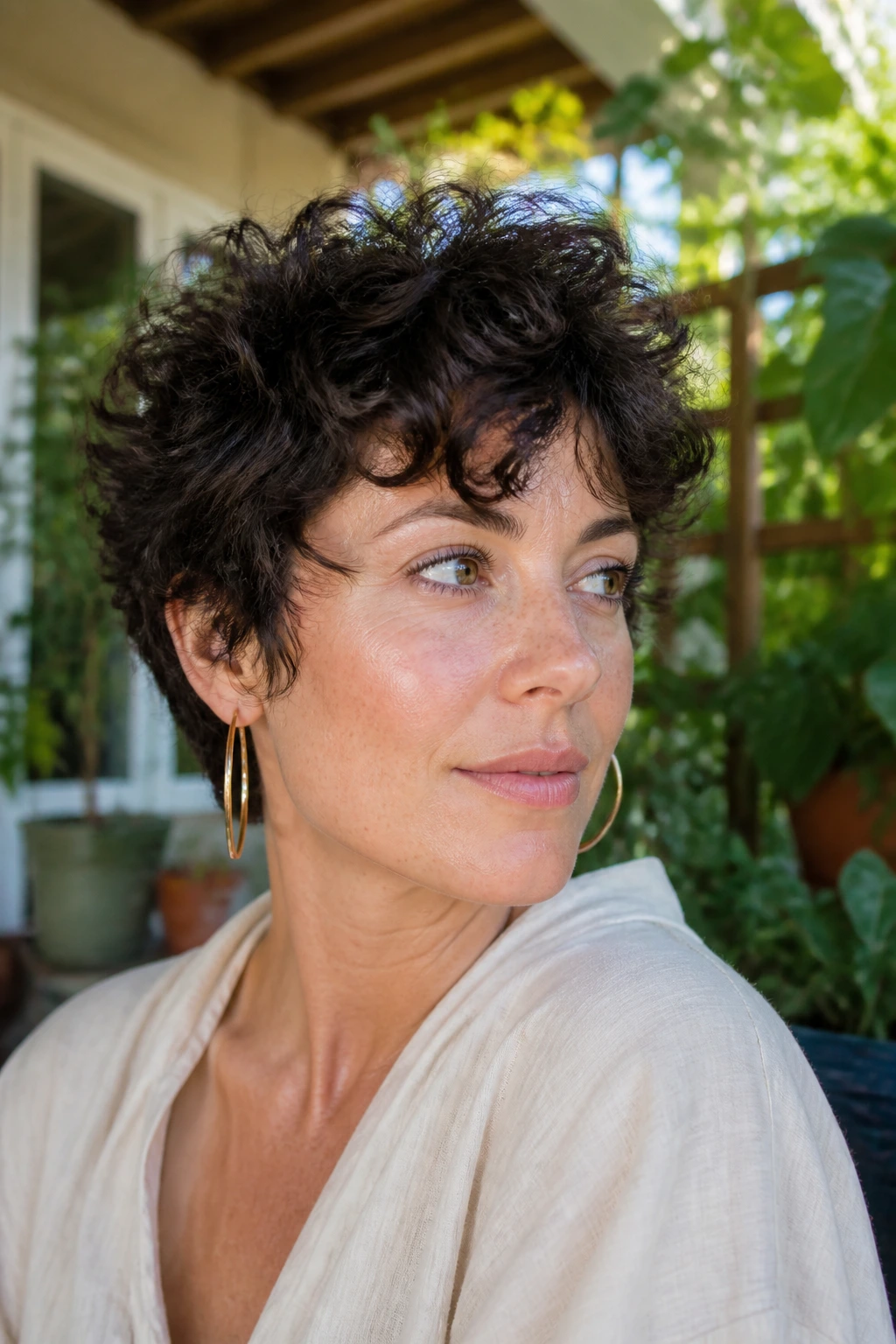
Fine Hair Whisper: Keep the layers short on top, but don’t strip out the perimeter. Fine hair needs a little weight at the edges so it doesn’t disappear from the sides. A dry texture spray and a tiny bit of root lift will do more than heavy creams ever will.
Thick Hair Relief: Ask for internal layering and a cleaner nape taper. The haircut should lose bulk where it stacks, not just at the ends. This keeps the shape from puffing up after a few hours.
Curly Shrinkage Plan: Leave the top longer than you think you need. Curls can bounce up a full inch or more depending on pattern, and a pixie that looks right wet can turn too short if the shrinkage is ignored.
Gray Hair Glow-Up: Keep the texture piecey and the finish satin, not oily. Silver strands show every product mark, so lighter formulas tend to look cleaner.
Statement Fringe Version: If you like drama, lengthen the front and keep the sides tighter. That creates a little focus around the eyes and mouth without turning the cut into a full shag mullet.
Keeping the Shape Between Salon Visits
Most shaggy pixie cuts need a trim every four to six weeks if you want the outline to stay clean. That does not mean a full haircut every time. Sometimes all you need is a nape clean-up, a fringe dusting, and a little shape correction around the ears.
The front is usually the first part to misbehave. Bangs stretch into your eyes, or they split in the middle and start doing something vague and annoying. A quick trim at home can work if you know exactly which pieces to touch, but I’d rather see people leave the fringe a hair too long than cut it into a mistake. You can always shorten a little more later.
Conditioner matters too. Keep it off the roots if your hair is fine or if the top starts drooping by midday. Focus it from the ears down. On curly and coily cuts, use enough moisture to keep the ends soft, but not so much that the top loses its shape.
If you want the haircut to grow out gracefully, ask for a slightly longer version at each visit. That one choice buys you more flexibility. A soft pixie that grows into a short shag is easier to live with than a crisp crop that turns awkward in two weeks.
Frequently Asked Questions
Will a shaggy pixie work on round faces?
Yes, if the layers are placed with some height at the crown and a bit of length through the fringe or side pieces. A flat, boxy pixie can widen the face, but a softly layered version helps draw the eye upward and keeps the sides from feeling too heavy.
Do shaggy pixie cuts need a blow-dryer every day?
Not necessarily. Straight and wavy hair can often air-dry with a little product, while finer hair may benefit from a quick root lift with the dryer. The point is to shape the top, not to perfect every strand.
Can curly hair wear a shaggy pixie without looking too wide?
Yes, but the cut has to respect curl pattern and shrinkage. The top usually needs more length than you think, and the sides should be tapered carefully so the curl doesn’t balloon outward.
What if I want short hair but hate looking too masculine or too severe?
Keep the fringe soft, leave a little length around the ears, and avoid a hard blunt line at the nape. Those three choices soften the whole haircut fast.
How do I ask for texture without ending up with a choppy mess?
Ask for point-cut or feathered ends, then specify where you want weight removed and where you want softness left in place. “Textured” on its own is too vague. Say you want movement at the crown, softness around the face, and a clean but not harsh neckline.
Can I style these cuts sleek for work and messy on weekends?
Absolutely. A light cream and a brush can make the cut smoother, while paste and texture spray can make it rougher. That flexibility is one of the reasons these pixies keep their appeal.
What’s the easiest version to grow out?
The long-top pixie and the grown-out French pixie usually age best. Both keep enough length up top that the shape can shift into a short shag instead of turning into an awkward halfway stage.
How do I keep the fringe from sticking straight up?
Dry the fringe in the direction you want it to sit, then let it cool there for a few seconds before touching it. Cowlicks need a little patience and a little control, not more product.
The Shape That Keeps Its Softness
The best shaggy pixie cuts do something short hair does not always do: they move kindly. The layers stay soft, the outline stays readable, and the whole thing looks like it belongs to a real head with real hair, not a diagram. That balance is the reason these cuts keep showing up in salons, on streets, and on the kind of people who want short hair without the hard edge.
If you choose one, choose it for the shape first and the attitude second. The attitude follows the shape anyway. And once you’ve found the right fringe, the right nape, and the right amount of texture at the crown, the haircut starts doing the work for you.
