



Fine hair and a heavy pixie do not get along. One bad cut and the whole shape collapses by noon, the crown goes flat, and the ends start looking like they’ve been through a paper shredder. The sweet spot is a short shaggy pixie haircut for fine hair that keeps movement on top, softness around the edges, and just enough internal texture to make the hair look fuller without turning it into a helmet.
That balance matters more than people think. Fine strands need direction, not aggression. If a stylist thins the wrong spots or cuts the perimeter too bluntly, the hair can look even sparer than before. But when the layers are placed with care — a little lift at the crown, a feathered fringe, a tapered nape, maybe a touch of razoring on the right hair type — the whole cut reads bigger, lighter, and far more alive.
The best versions of this look don’t all scream the same thing. Some are soft and airy, some lean edgy, some work better with glasses, some hide a high forehead, and some are built for the person who wants to wash, scrunch, and walk out the door. The trick is choosing the one that matches your hair’s behavior instead of fighting it.
Why This Collection Feels Different for Fine Hair
- Crown lift without bulk: The cuts here build height where fine hair usually lies flat, so the top reads fuller without needing a mountain of mousse.
- Soft edges instead of see-through ends: The best shaggy pixies keep the perimeter feathery, not wispy in a sad way, which matters a lot when density is low.
- Short length shows texture fast: You do not need elaborate styling to make these haircuts work; a little root spray or paste shows up immediately on a cropped shape.
- Flexible around face shape: Side-swept pieces, fringe, and longer temple sections let you steer the haircut toward softer, sharper, or more balanced lines.
- Easier grow-out: A shaggy pixie usually ages better than a blunt crop because the layers blur the transition as the cut gets longer.
- Built for real mornings: These ideas lean on air-drying, quick blow-drying, and finger styling, not a full salon routine before coffee.
1. Feathered Micro Pixie
A feathered micro pixie is the cut for someone who wants the shortest version of soft. The top is kept close, but not scraped tight, and the ends are point-cut so they move instead of sitting in a hard line. On fine hair, that feathering matters. It keeps the shape from feeling blocky.
What makes it work is the balance between precision and looseness. The nape stays neat, the sides hug the head, and the crown gets just enough lift to stop the whole thing from looking flat. Ask for texture near the top, not at the very bottom; that’s where too much thinning turns ends fuzzy.
2. Choppy Crown-Lift Pixie
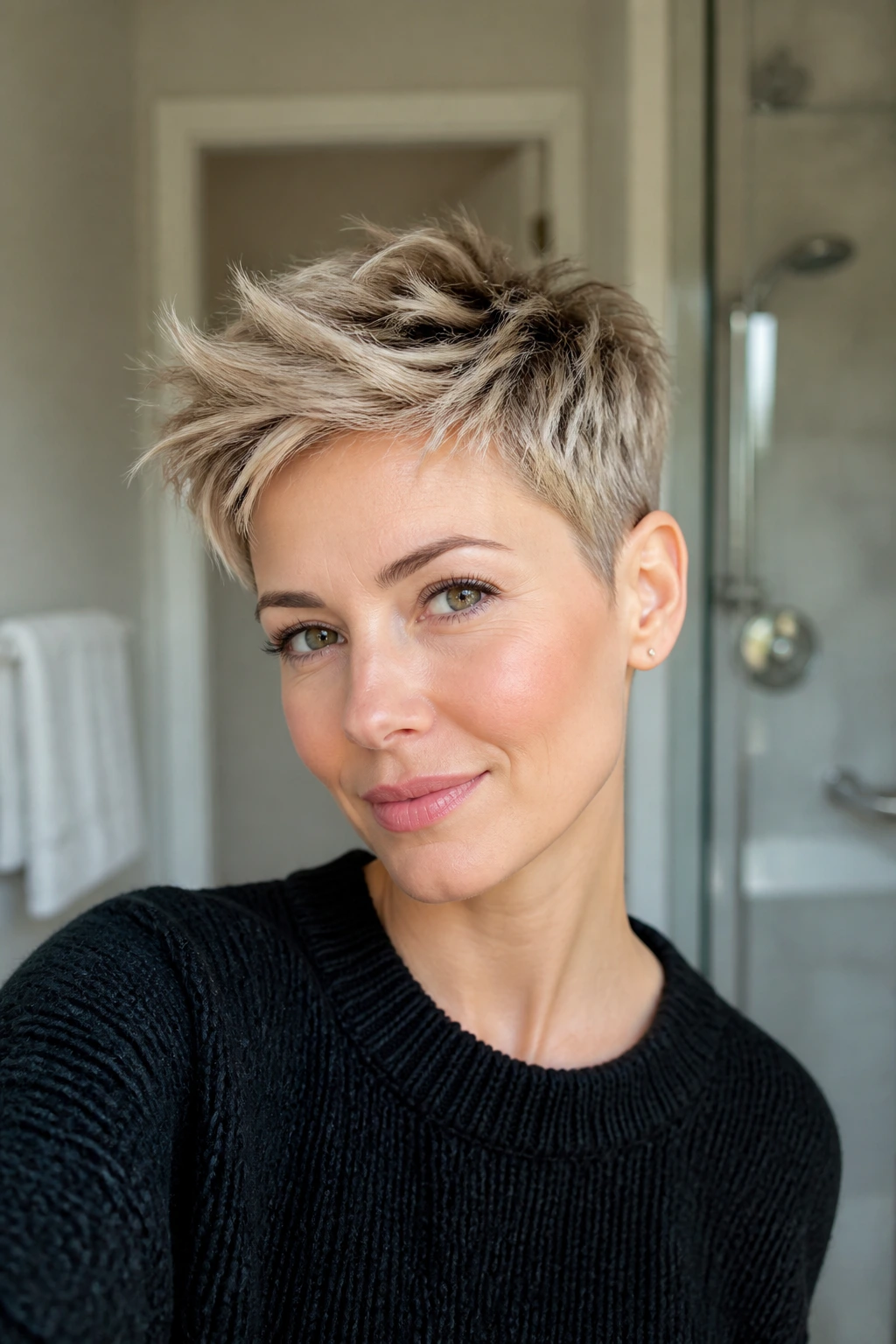
Want more height without teasing the roots every morning? This is the one. The crown is layered a touch shorter than the rest, which gives fine hair somewhere to stand up, while the sides stay close enough to keep the silhouette clean.
A lightweight volumizing mousse at the root does most of the work here. Blow-dry the top forward, then push it back with your fingers once it’s about 90% dry. That little reset makes the lift look less “done” and more like the cut simply woke up that way.
3. Wispy Fringe Pixie
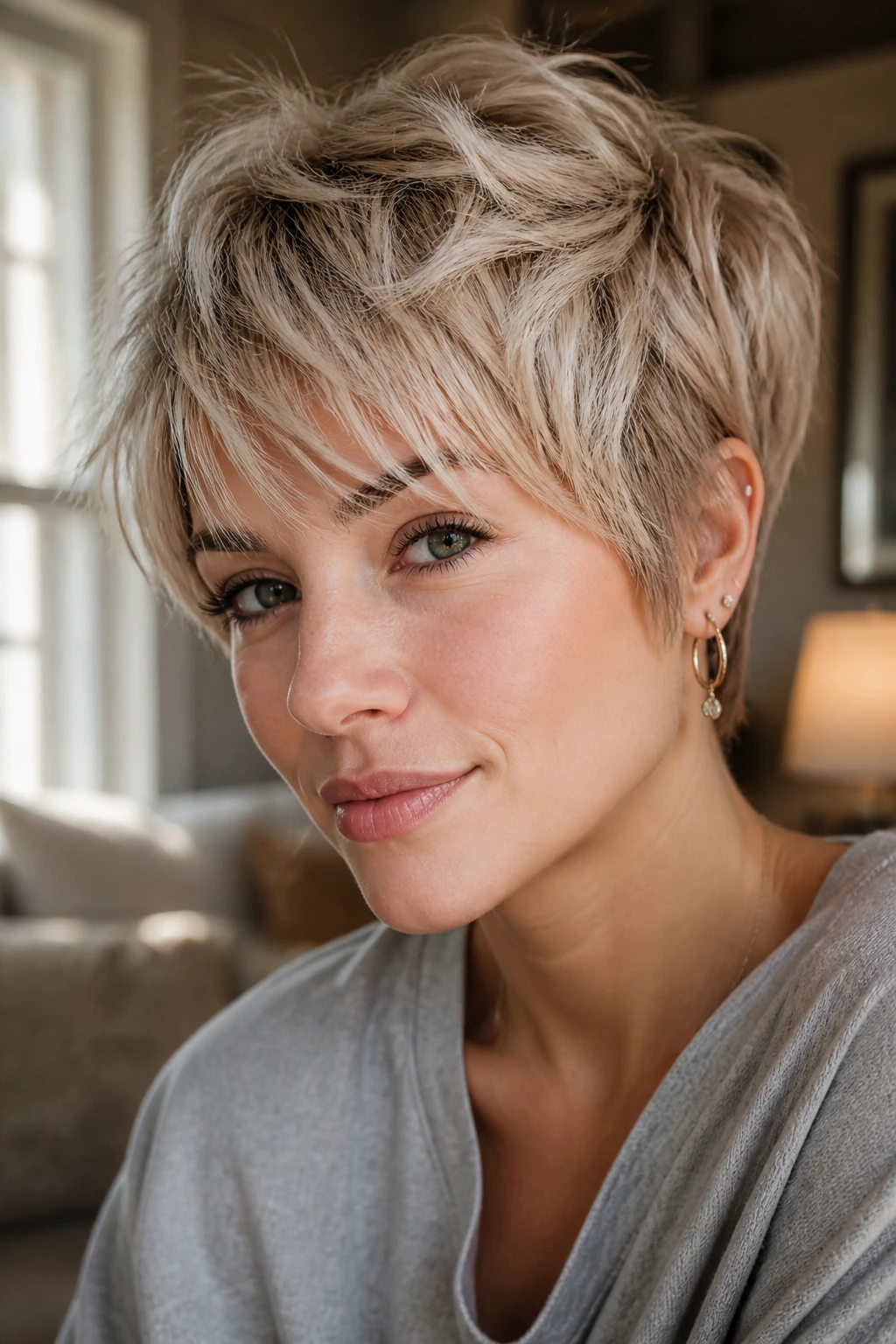
The wispy fringe pixie is a good call when your forehead feels like the largest feature in the room. The fringe sits soft and broken, not thick and heavy, which lets fine hair keep some air around the face. It’s a small thing, but it changes the whole read of the haircut.
This version is friendly to straight or slightly wavy hair. Keep the fringe long enough to split or sweep; if it’s cut too short, it can spring up and expose more of the forehead than you wanted. A tiny round brush and a cool shot of air are usually enough to settle it.
4. Side-Swept Shag Pixie
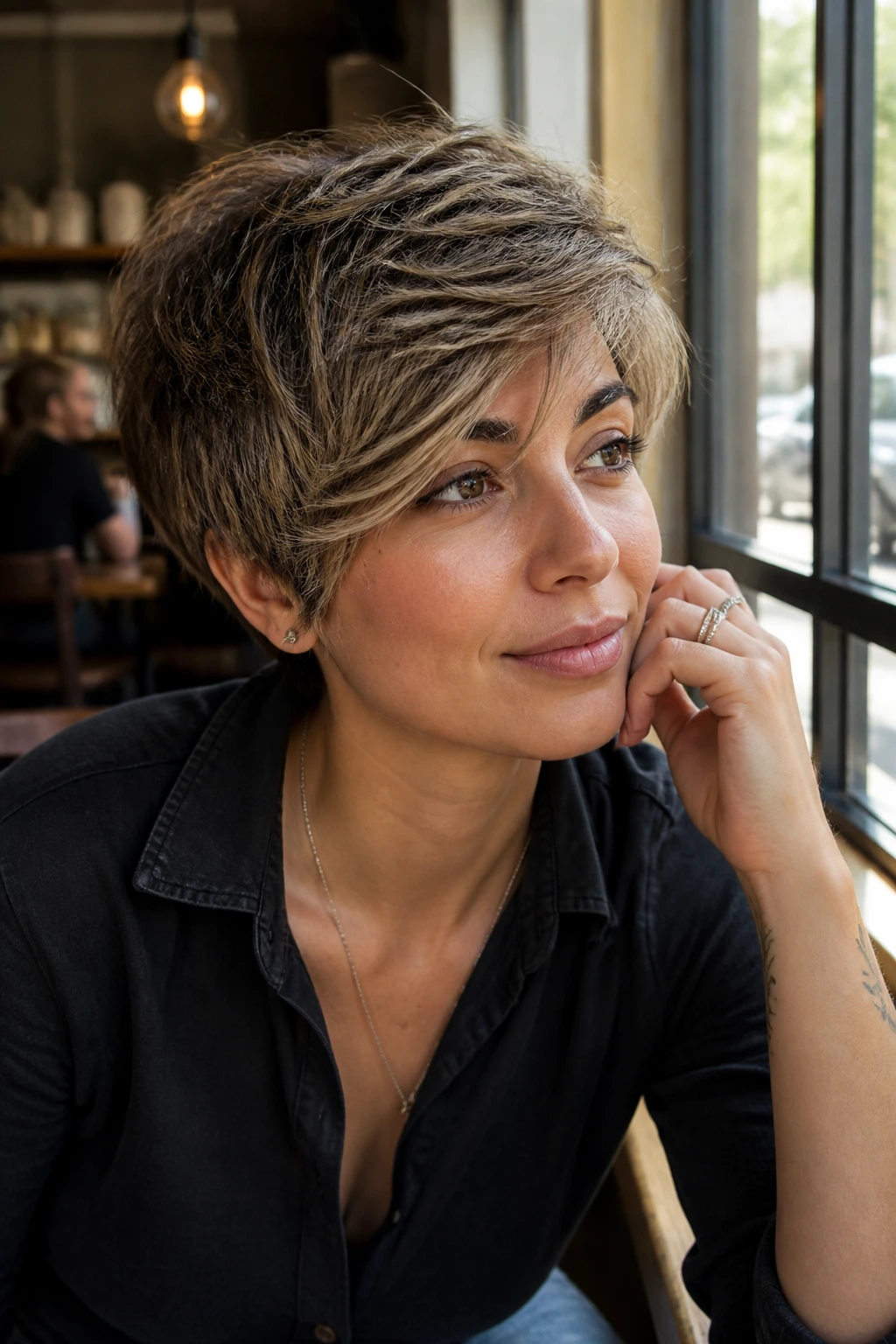
A side-swept shag pixie brings movement into the front without stealing too much density from the sides. The diagonal line across the face makes the cut feel fuller, because your eye follows the sweep instead of fixating on the lack of bulk. It’s clever, not loud.
This shape works especially well if your hair has a stubborn cowlick or a crown that wants to split. A deep side part gives the top a bit of drama, and the shag layers keep the sweep from falling into one flat sheet. If your hair resists, use a root spray before drying and direct the front in the opposite direction for a few seconds.
5. Razored Pixie Bob Hybrid
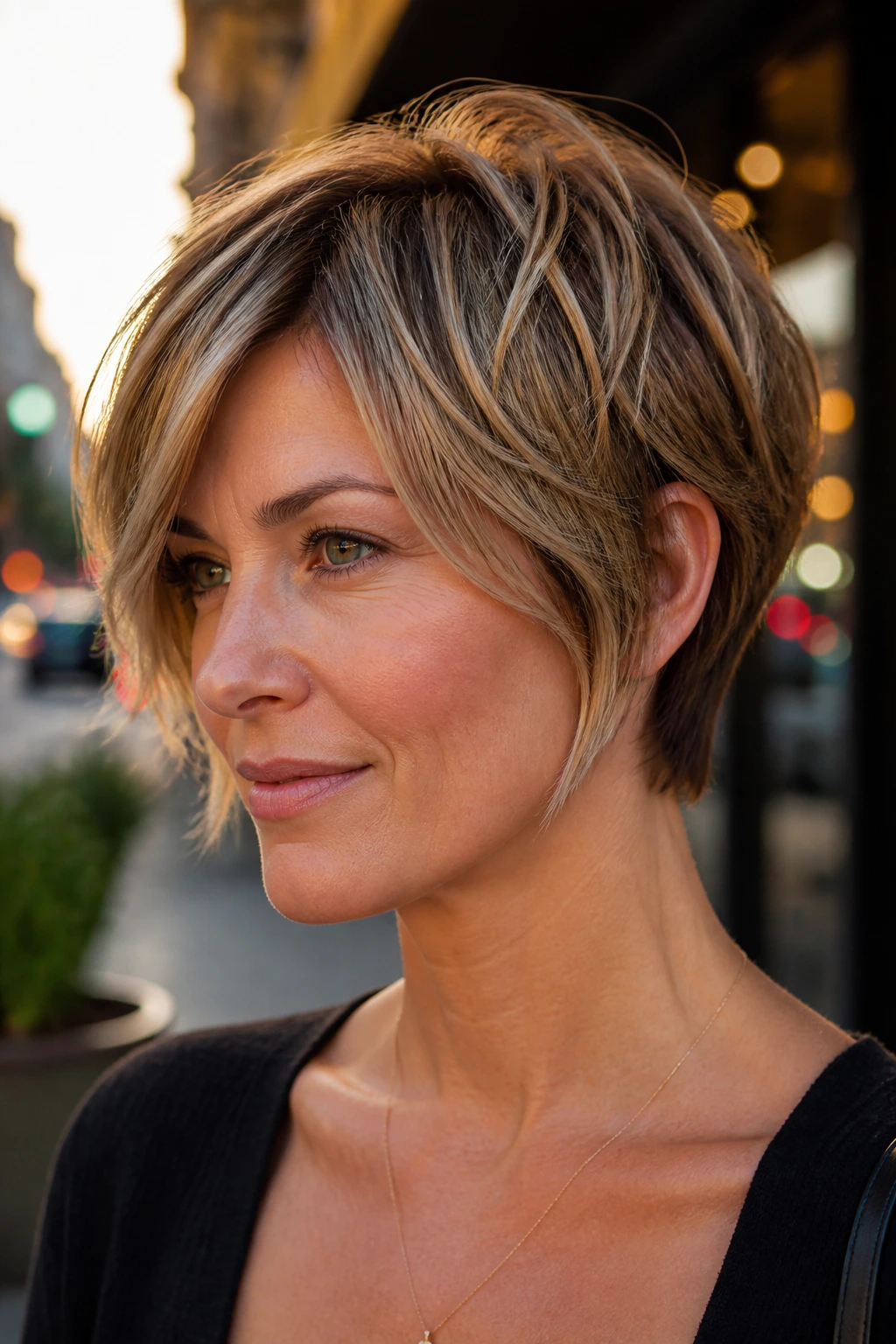
This one sits in that useful middle zone between a pixie and a tiny bob. The front pieces are kept slightly longer, the back is tighter, and the ends are softened with razor work so the whole thing has swing. Fine hair likes that swing. It makes the cut seem less sparse.
Best on straight to softly wavy textures, this hybrid needs a careful hand. Too much razor on fragile ends can make the hair fray, which is not the look anyone is chasing. Ask for razoring only through the interior and leave the perimeter clean enough to hold a shape.
6. Tapered Nape Pixie
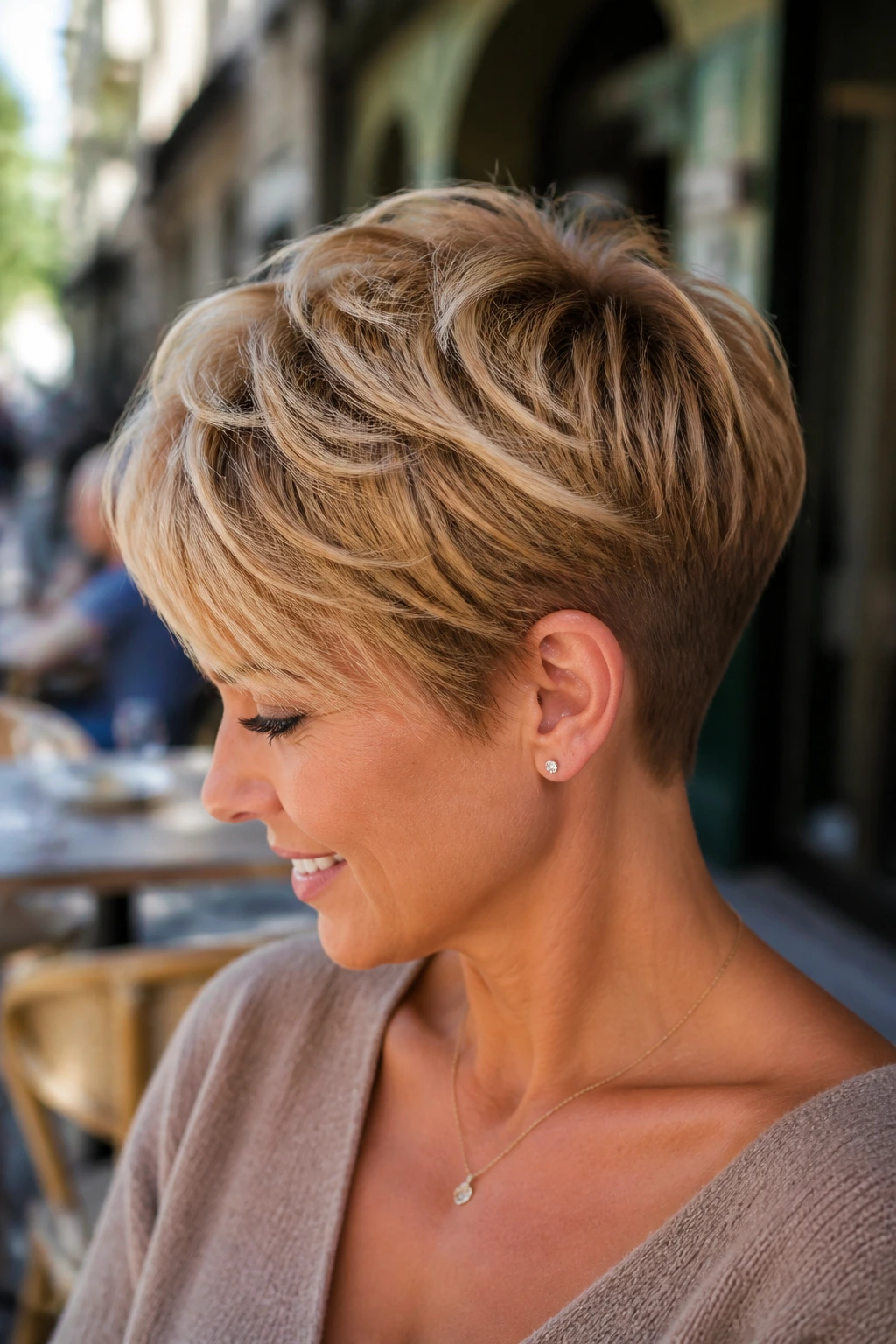
A tapered nape pixie is one of the smartest choices for fine hair that grows awkwardly at the neck. The close taper keeps the back from puffing out or sitting in a blunt shelf, and it makes the crown look cleaner by contrast. Small shape, big payoff.
I like this version when the client wants a neat outline but still wants movement up top. The top can be feathered, spiky, or brushed to one side; the nape just does the quiet work of keeping everything tidy. If your hair is extra soft, ask for a narrow taper rather than a harsh clipper fade. Softer usually looks richer.
7. Curly Shaggy Pixie
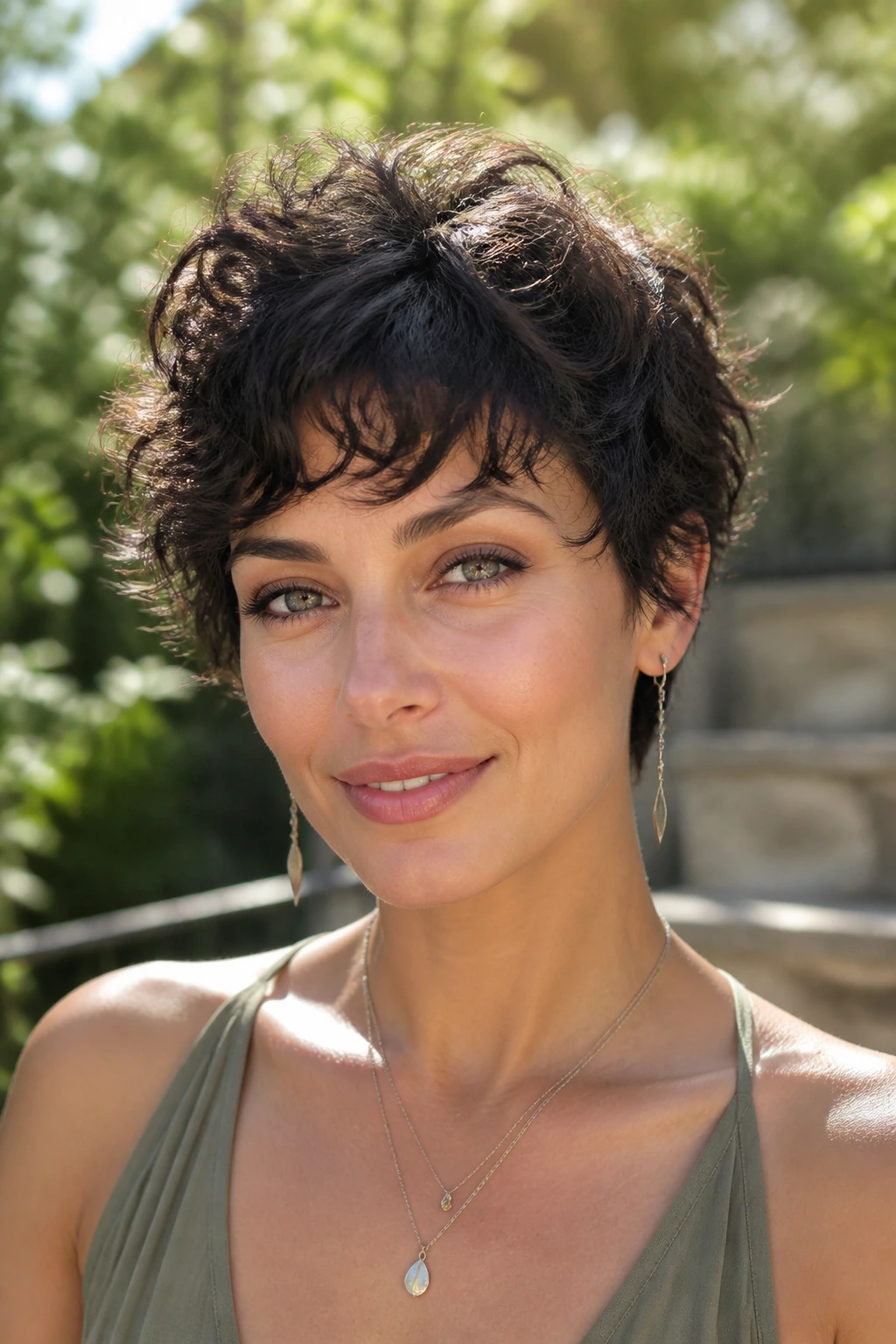
Fine curly hair needs a different kind of respect. Not more layers everywhere. Better layers. A curly shaggy pixie keeps enough length for the curls to coil, then shapes the top so the ringlets don’t shrink into a fuzzball.
This cut loves a leave-in and a light gel or curl cream scrunched into damp hair. Diffuse on low heat, or air-dry if you’ve got the patience. The biggest mistake is cutting the curls too short in the crown; once the shrinkage kicks in, you can lose the whole silhouette.
8. Air-Dried Bedhead Pixie
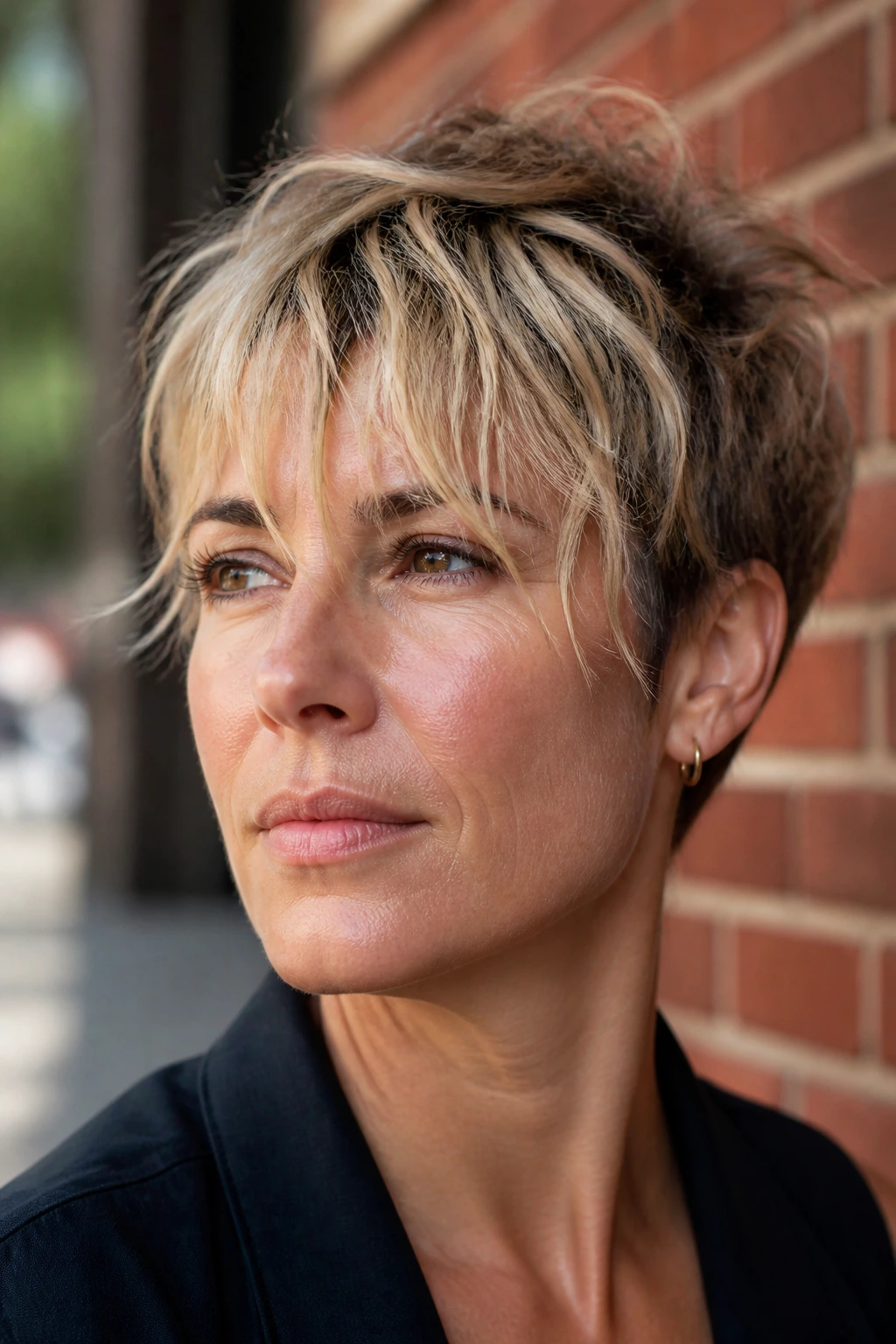
This is the low-effort cut that still looks like you meant to have texture. The layers are irregular on purpose, with a little pieceiness in the fringe and crown so the hair dries into shape instead of lying down in one smooth sheet.
A pea-sized dab of matte paste through the ends is enough. No need to overwork it. Fine hair often looks better when a few strands fall a little differently, and this cut uses that to its advantage. It’s one of the few styles that can look better after a walk in humid air than before it.
9. Asymmetrical Shag Pixie
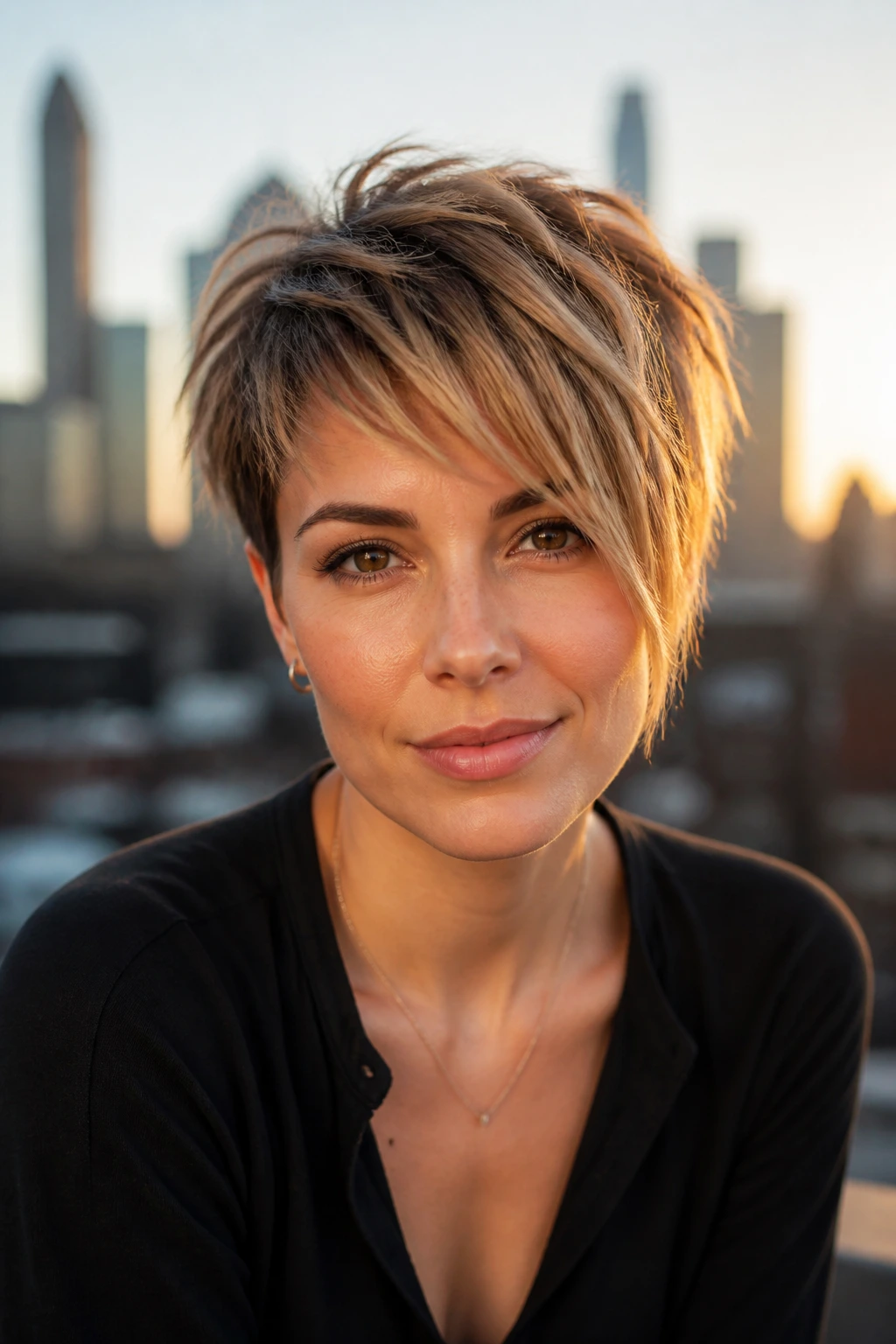
An asymmetrical shag pixie solves two problems at once: it gives fine hair movement, and it distracts the eye from flat spots by breaking the shape on purpose. One side is longer, the fringe shifts off-center, and the overall outline feels modern without needing a dramatic undercut.
If your face is round or square, this is especially useful. The longer side creates a vertical line, which visually stretches the face. Keep the difference subtle if you want it wearable every day; a half-inch or an inch can be enough. You do not need a jagged side just to make the point.
10. Glasses-Friendly Pixie
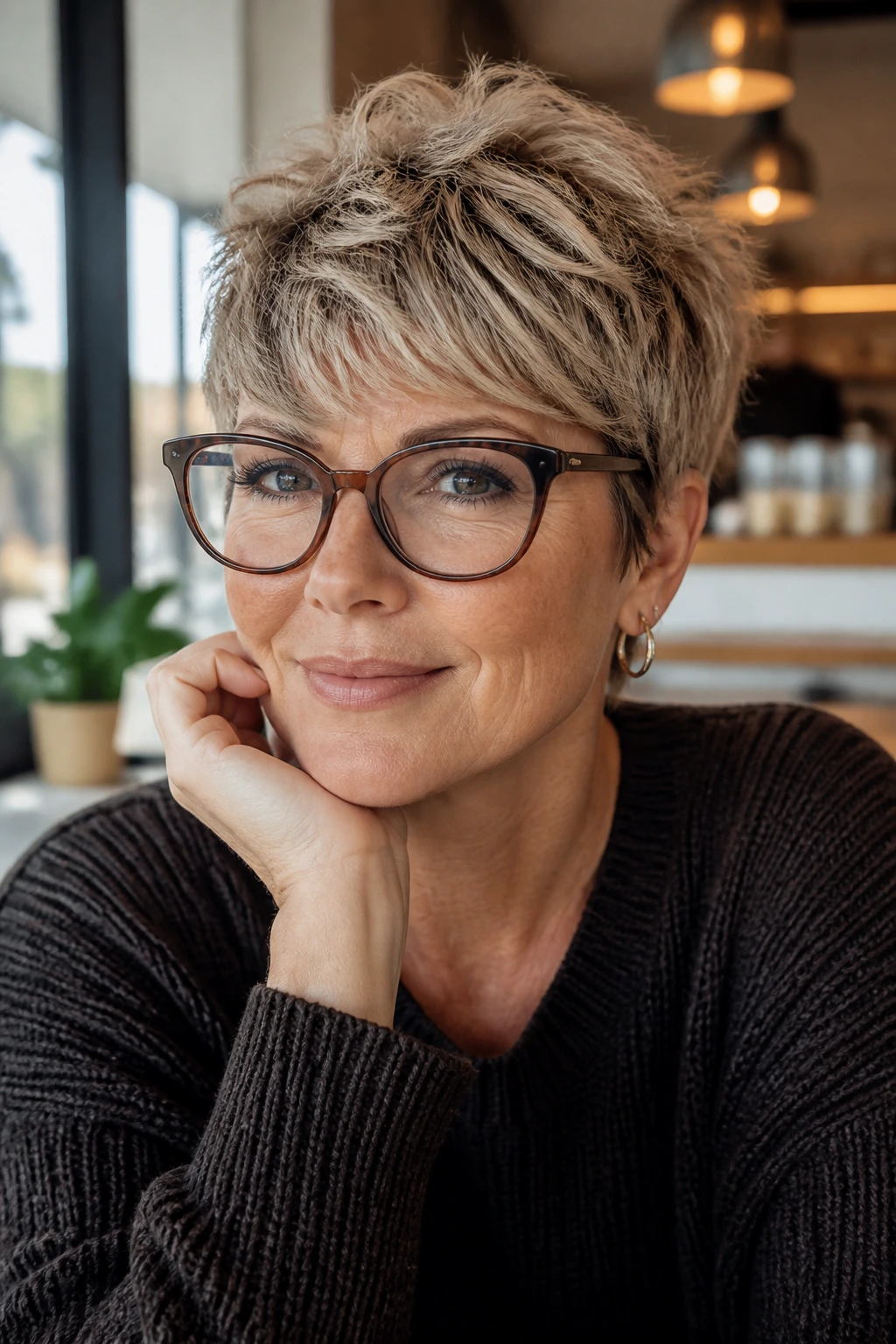
Glasses change the game. A glasses-friendly pixie keeps the temples clean, the fringe short enough to stay above or just at the frame line, and the sides soft so they don’t fight with the arms of the glasses all day. That little conflict matters more than most people expect.
The best version leaves enough hair at the front to soften the face without brushing the lenses every ten minutes. If you wear heavier frames, go for a more compact fringe and a textured crown. Thin metal frames can handle a little more length and a softer sweep.
11. Undercut Texture Pixie
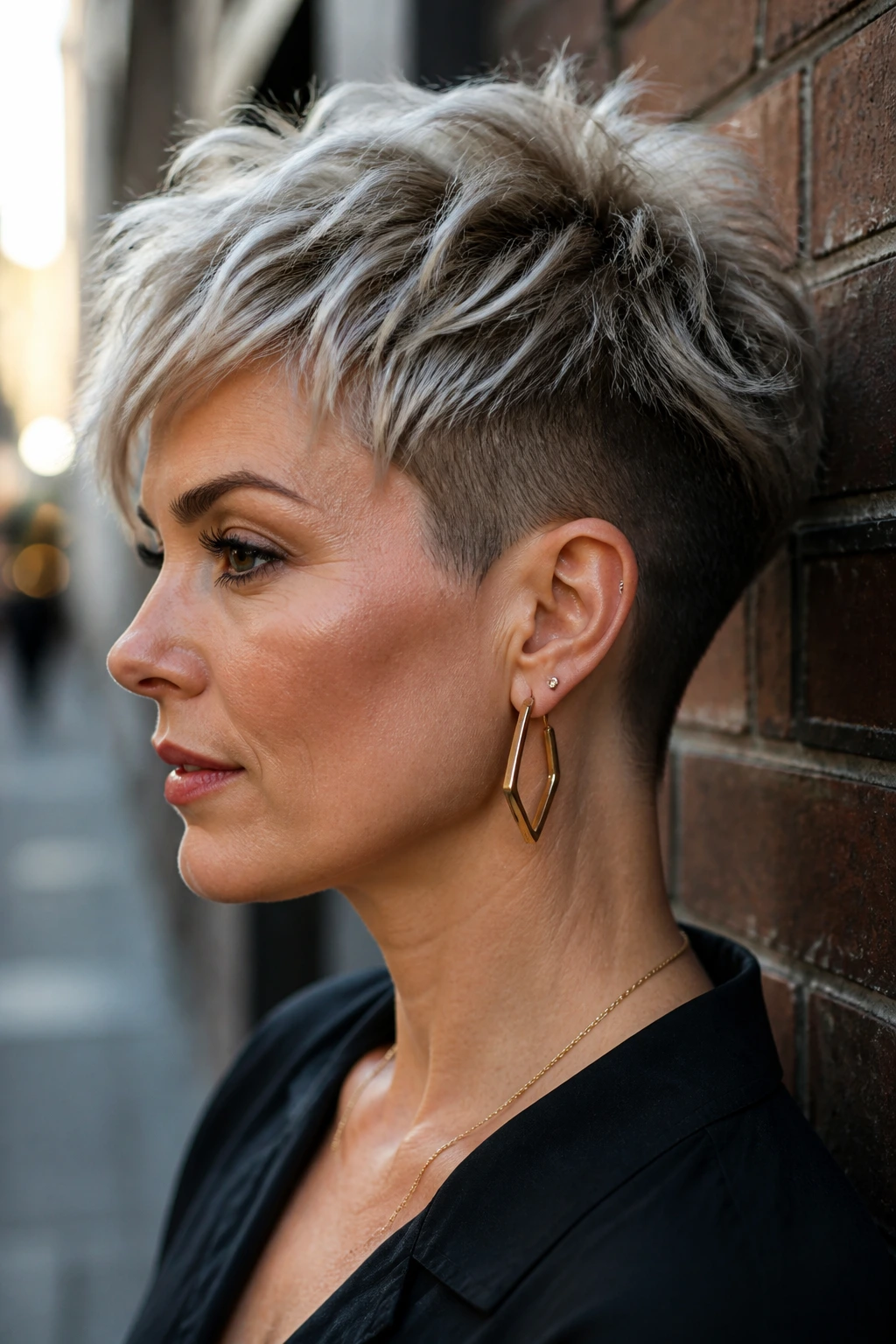
A hidden undercut gives fine hair a secret weapon. By removing weight under the top layers, the crown gets more room to lift, and the top can be styled into that clean, airy, piecey shape without collapsing on the sides.
Keep the undercut subtle unless you want a sharper look. Too much clipper work can make the head shape feel exposed, especially on very fine hair. A restrained undercut near the nape or just behind the ears often does enough. That’s the part most people notice only when it’s missing.
12. Curtain Fringe Pixie
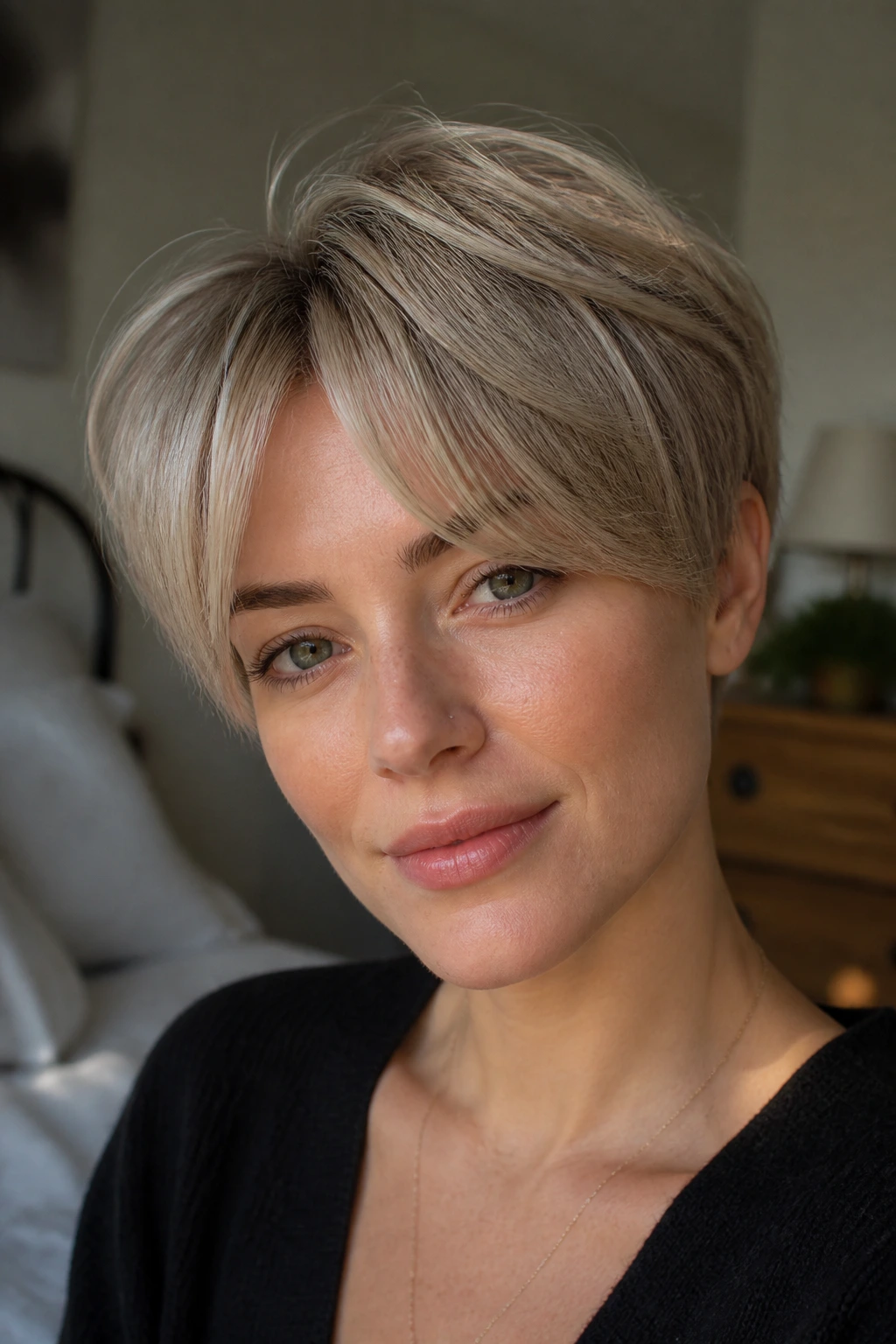
Curtain fringe on a pixie sounds like it should be tricky, and honestly, sometimes it is. But on fine hair, a soft center-parted fringe can be a lifesaver because it opens the face while still giving the front some body. The trick is keeping the fringe long enough to bend.
Blow-dry the front with a small round brush, sweeping each side away from the center for a few seconds. You’re not building a bombshell wave here. You’re creating a gentle bend that frames the eyes and temples without sitting heavy on the forehead.
13. Soft Mullet Pixie
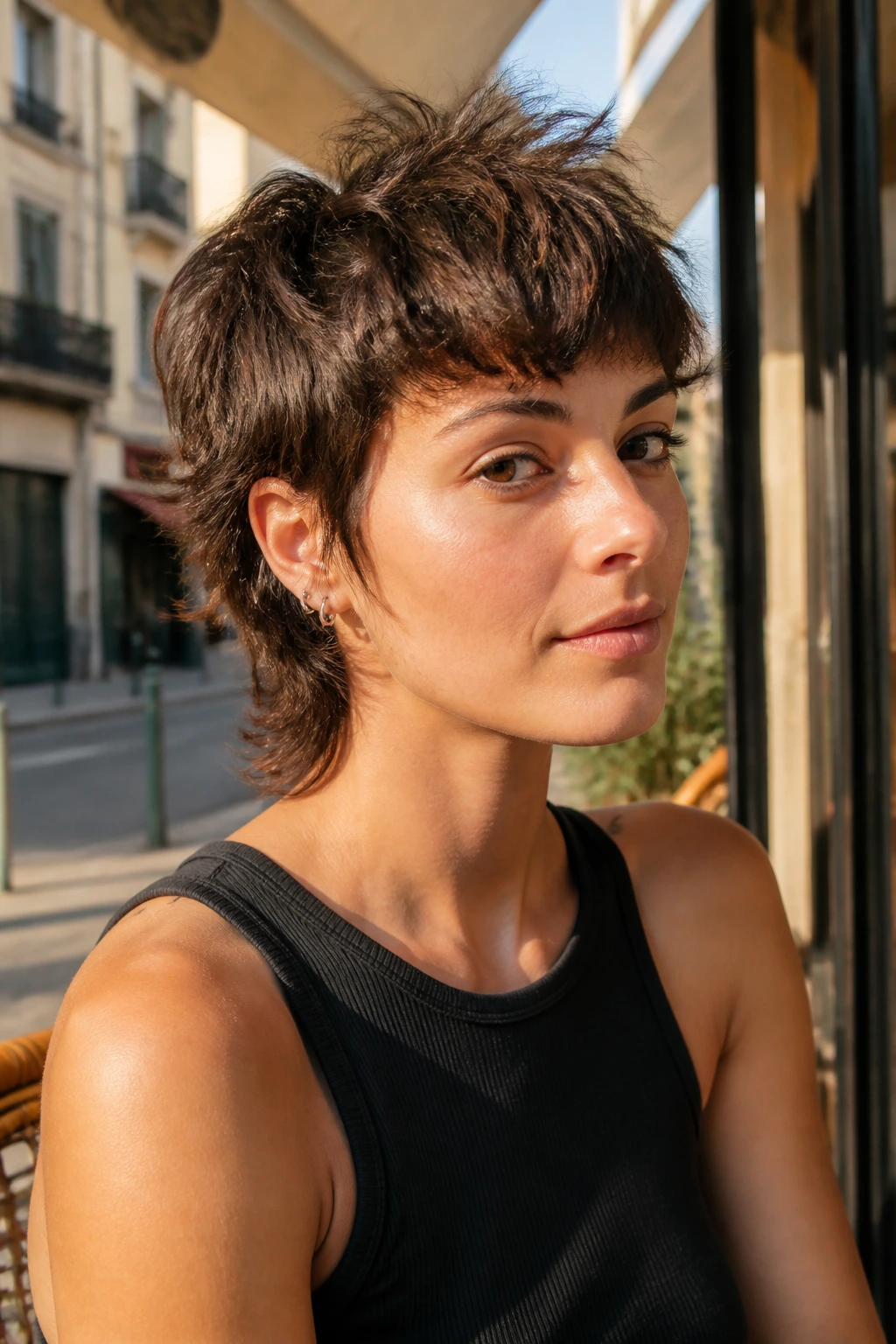
The soft mullet pixie is for someone who wants edge but not costume. The top and sides stay short, the back is allowed a little more length, and the shag layers soften the whole thing so it reads playful instead of harsh. Fine hair can wear this well because the shape creates motion where there usually isn’t much.
It works best when the back is feathered, not left in a blunt tail. Keep the line around the neck light and broken, and the whole cut feels easier. If the hair is extremely sparse at the ends, the back should stay only slightly longer, or it can start to look stringy.
14. Deep Side Part Pixie
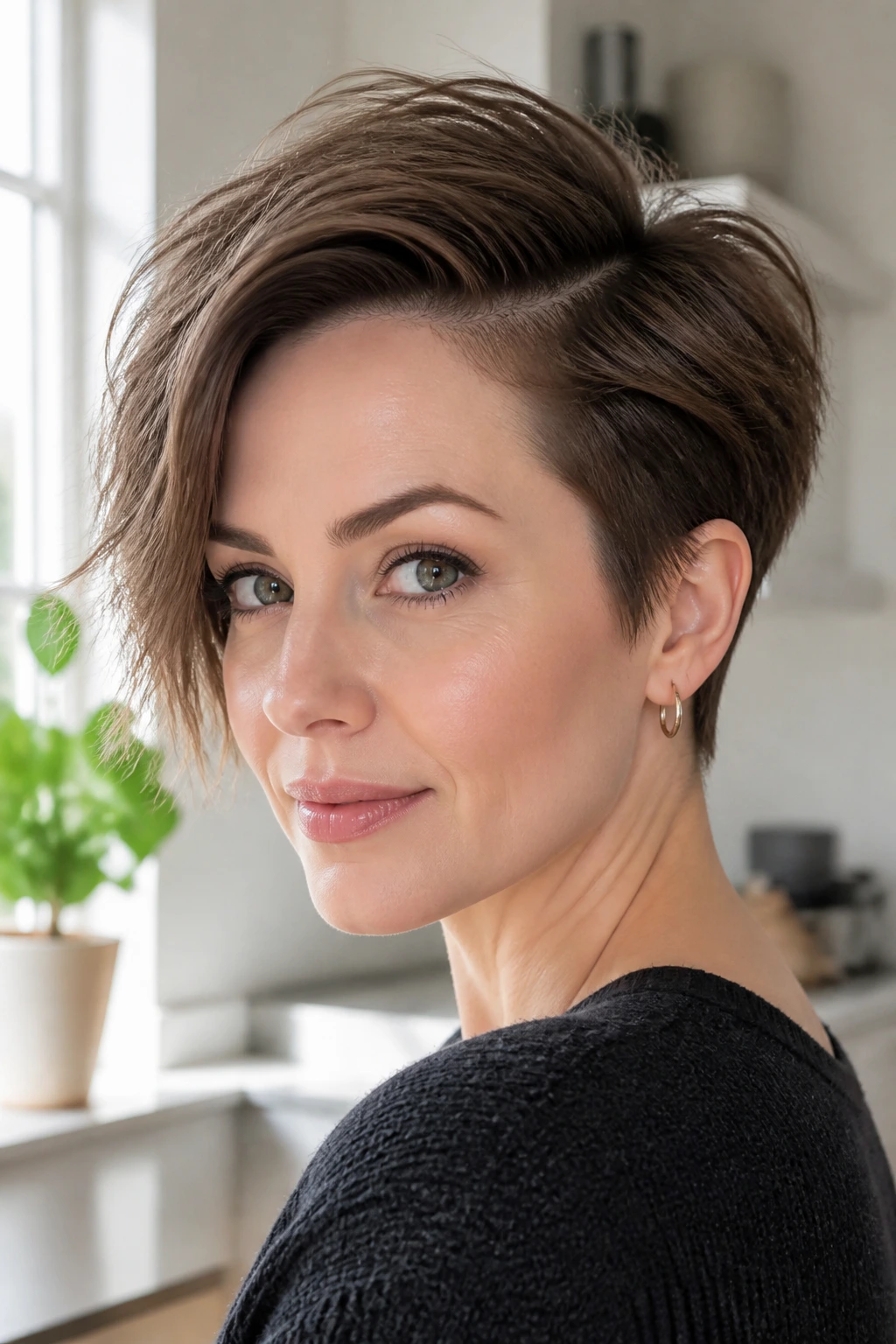
A deep side part is one of the fastest ways to fake volume. The hair on the heavy side lifts at the root, the shorter side keeps the style grounded, and the whole cut suddenly has more presence. Fine hair responds well to that kind of simple trick.
Use a root spray at the part, then blow-dry against your natural fall for a minute before settling the hair into place. That tiny bit of resistance helps the lift last longer. It’s not glamorous, but it works. And on a pixie, that matters more than sounding fancy.
15. Piecey Platinum Pixie
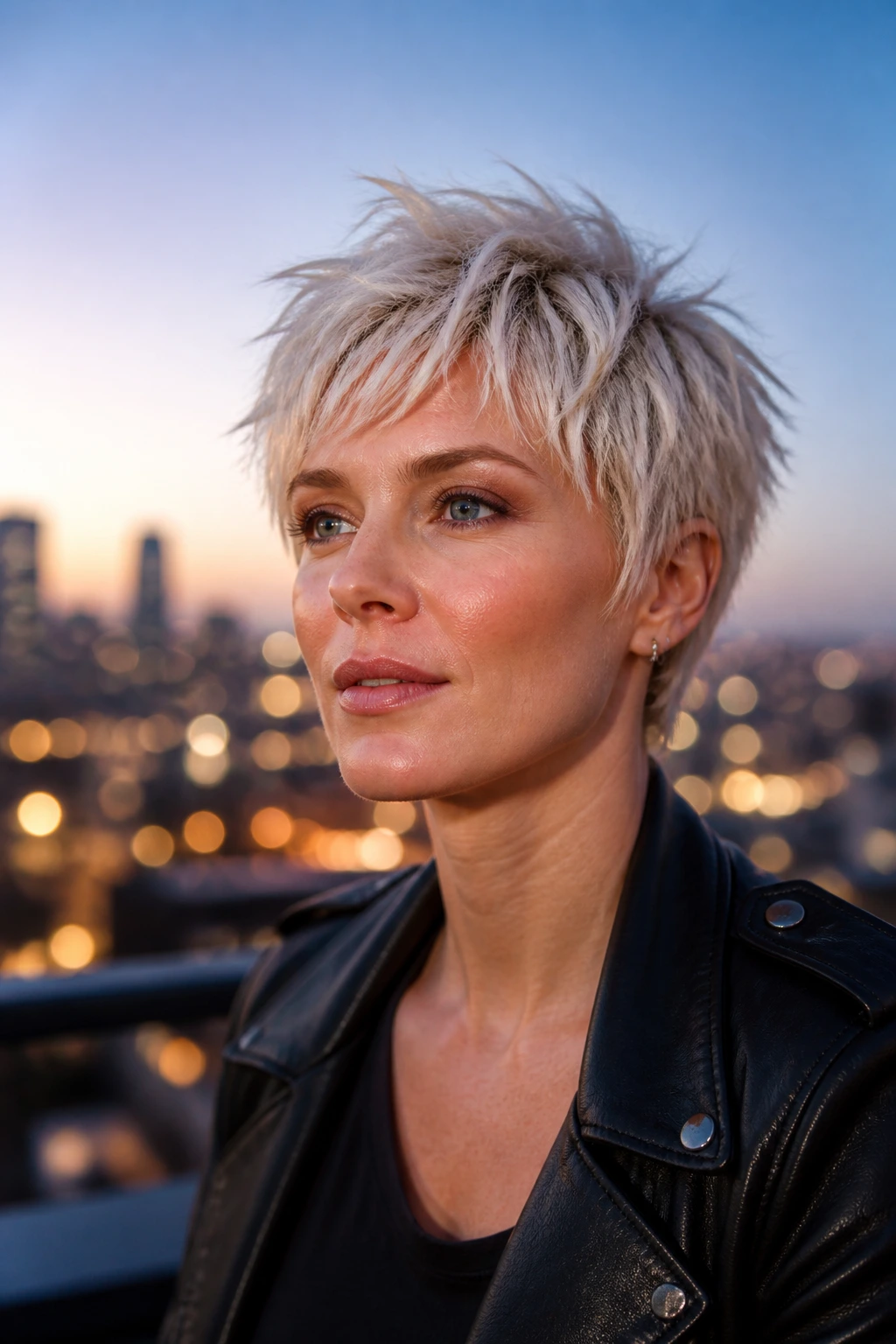
Platinum hair and fine hair can be a risky pair, but when the cut is short and shaggy, the texture can look deliciously sharp. The light color makes each little layer stand out, which is useful when the hair itself lacks density. You see the movement more clearly.
The catch is damage. Bleaching fine hair too hard leaves it fragile fast. If you go this route, keep the layers soft and the ends healthy, and lean on bond-building care. A matte paste will show off the piecey ends better than a glossy cream, which can make platinum hair look stringy.
16. Salt-and-Pepper Shag Pixie
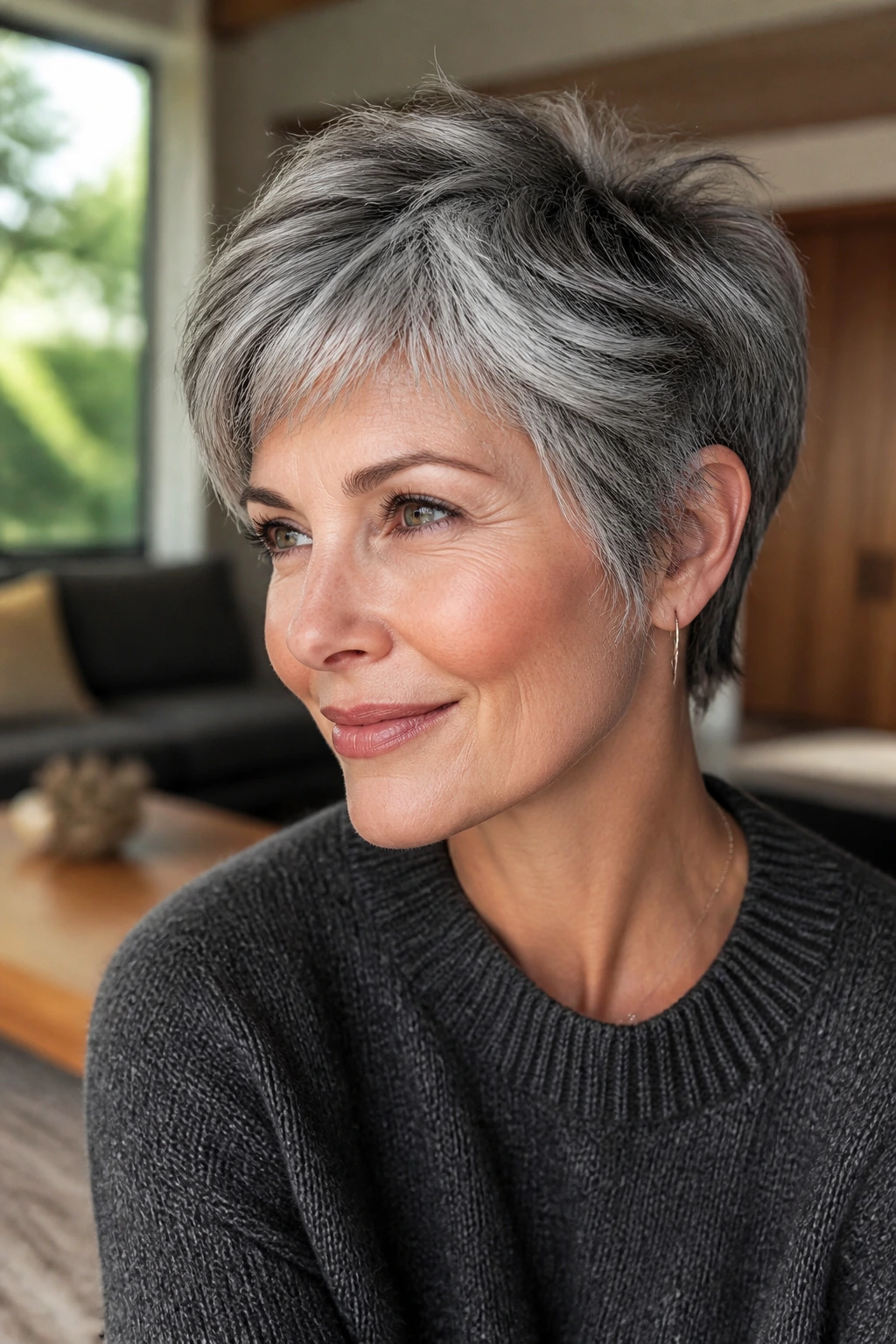
Natural gray, silver, and dark strands mixed together give a shaggy pixie built-in dimension. That’s a gift on fine hair. The color variation makes the layers read fuller, even when the actual density is modest.
This cut looks especially good when the shape is soft around the temples and slightly fuller at the crown. A little texturizing spray brings the contrast out without making the hair stiff. If you’re growing into silver, this is one of the easier haircuts to carry through the transition because the texture does the heavy lifting.
17. Cropped Bowl-Shag Pixie
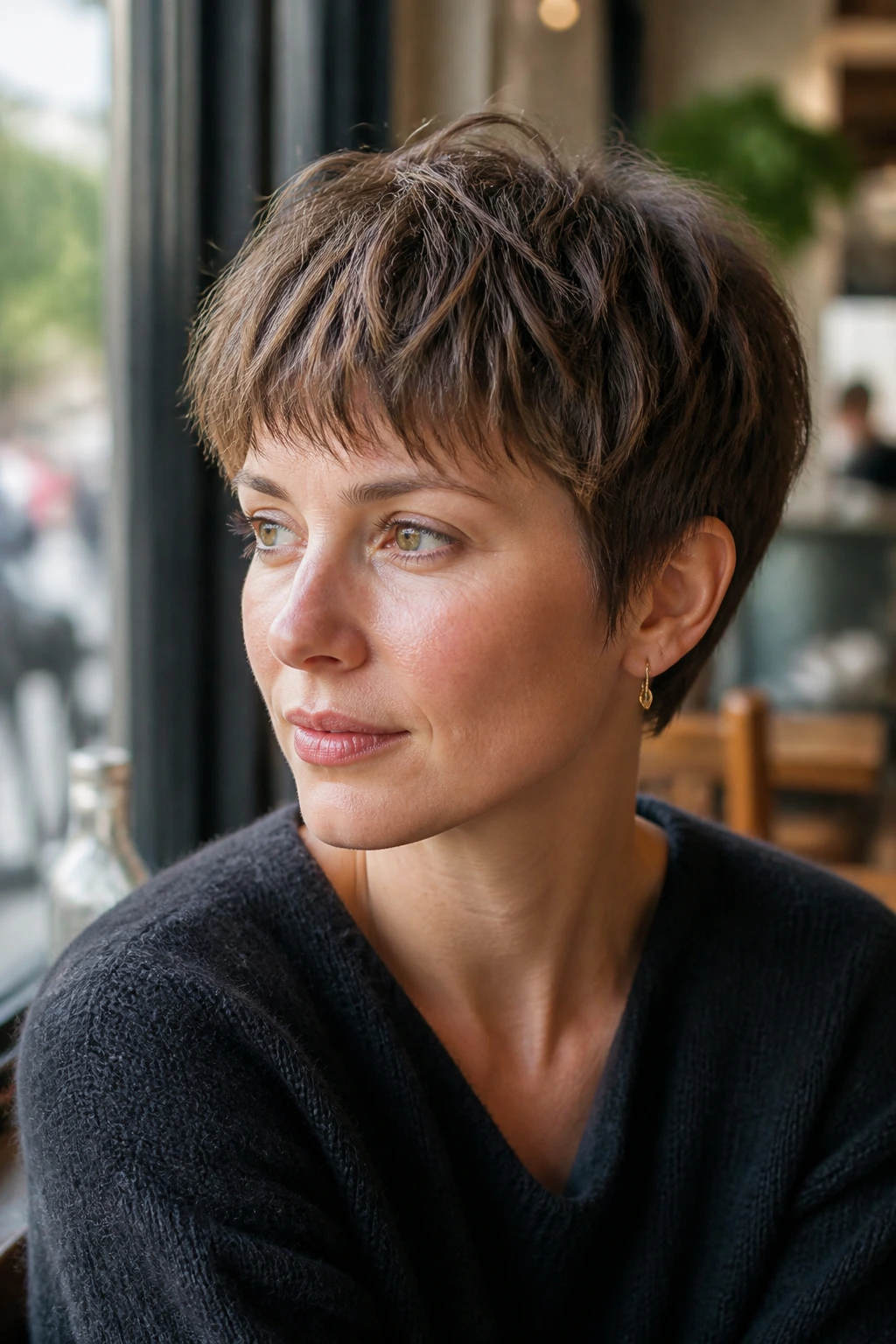
A cropped bowl-shag pixie keeps the rounded feel of a bowl cut but breaks the line with shag layers so it doesn’t turn rigid. On fine hair, that broken edge is the difference between retro and dated. The top stays structured; the ends stay mobile.
This one suits straighter textures that can hold a shape. It also works well if you like a bold silhouette but do not want your head to look bigger than it is. Keep the fringe light and the sides feathered near the ears, or the shape can start to feel too solid.
18. Face-Framing Pixie with Longer Sides
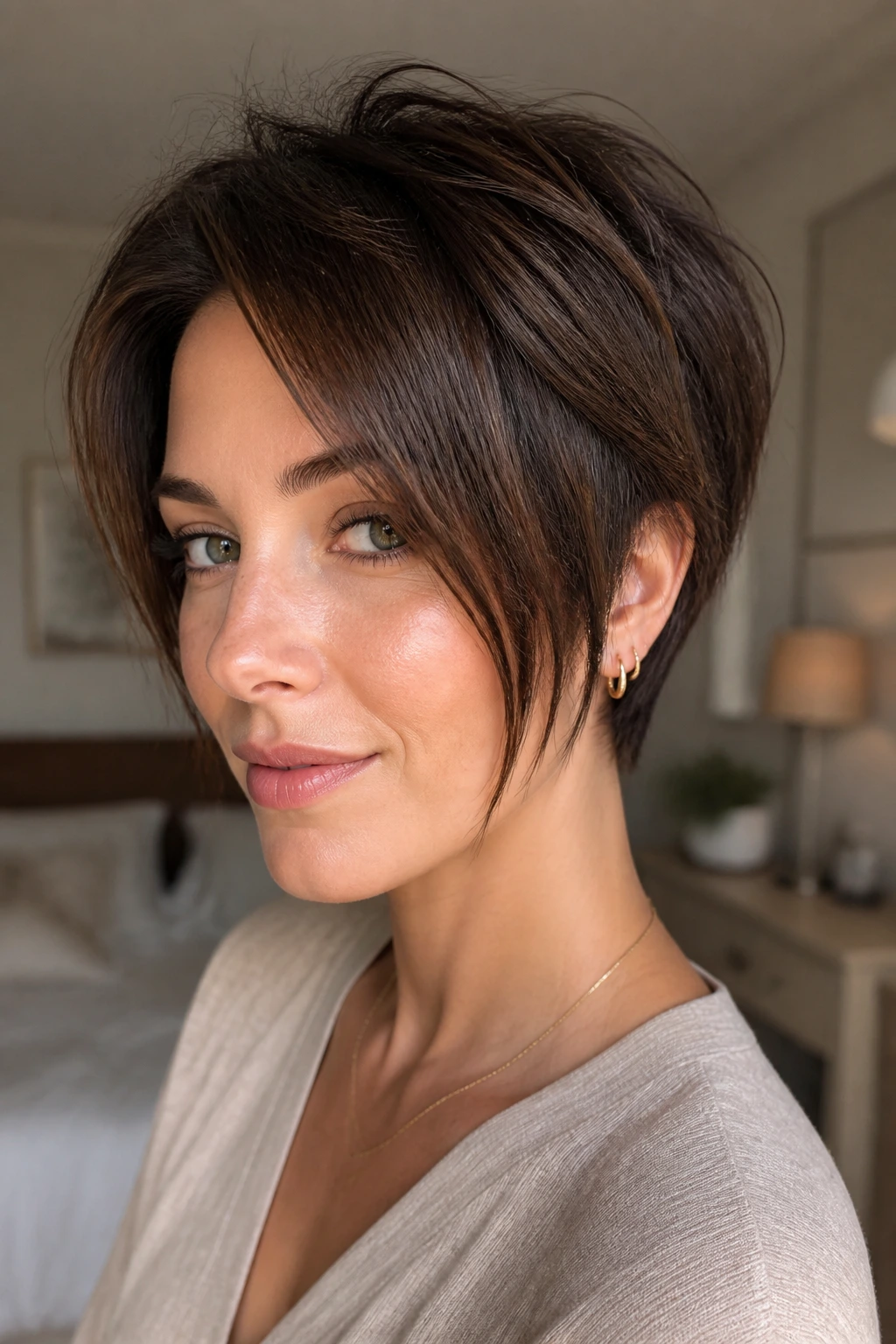
Some pixies look best when the sides are allowed to stay a little longer. This version keeps the cheek and temple pieces in play, which is useful if you want to soften the jaw or bring attention to the eyes. The fine-hair bonus: those longer front pieces trick the eye into seeing more hair overall.
The shape works well when the back is still cropped close, because the contrast keeps the cut from feeling shaggy everywhere at once. A small tuck behind the ear can change the mood in seconds. One side neat, one side loose. Nice tension.
19. Rocker Pixie with Micro Bangs
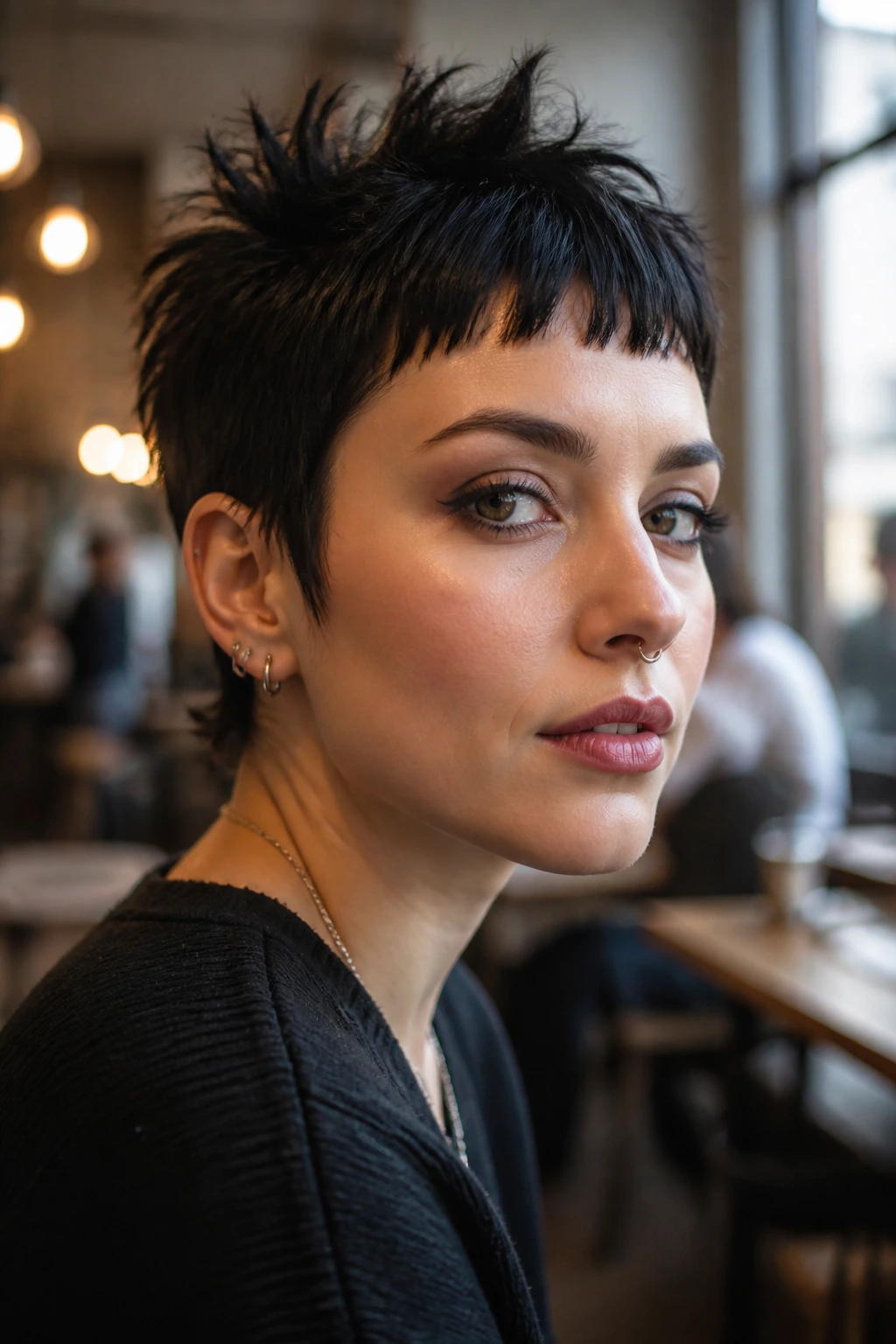
Micro bangs on fine hair can be electric. Short, sharp fringe with a choppy crown gives the face a punchy frame, and the whole cut feels deliberate even when the styling is messy. It’s a strong look, not a shy one.
Keep the bangs wispy if your forehead is narrow or your hairline grows unevenly. Very short fringe needs maintenance, so this is not the cut for someone who wants to skip trims for months. But if you like a little attitude, this is the sort of shape that makes a plain T-shirt look sharper.
20. Rounded Crown Volume Pixie
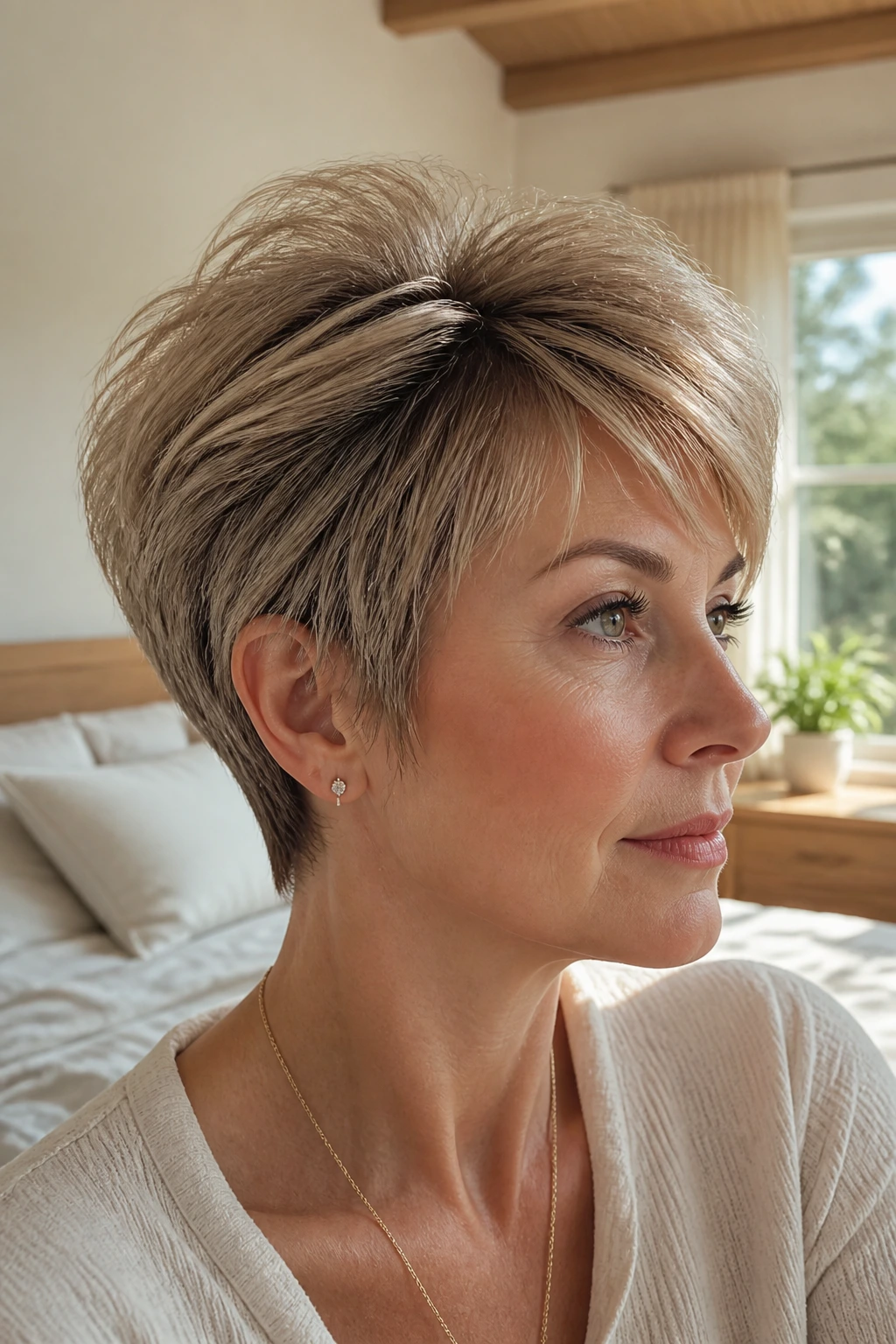
A rounded crown volume pixie is built for flat roots and sleepy mornings. The top is cut to push up and curve softly instead of lying tight to the scalp, which gives fine hair more body without needing much styling.
This is a nice choice if your head shape is a little narrow or if you want a softer, more feminine outline. A round brush and a vented dryer help, but you can also finger-dry it and just lift the crown at the end with a dab of paste. Simple. Effective.
21. Tucked-Ear Minimal Pixie
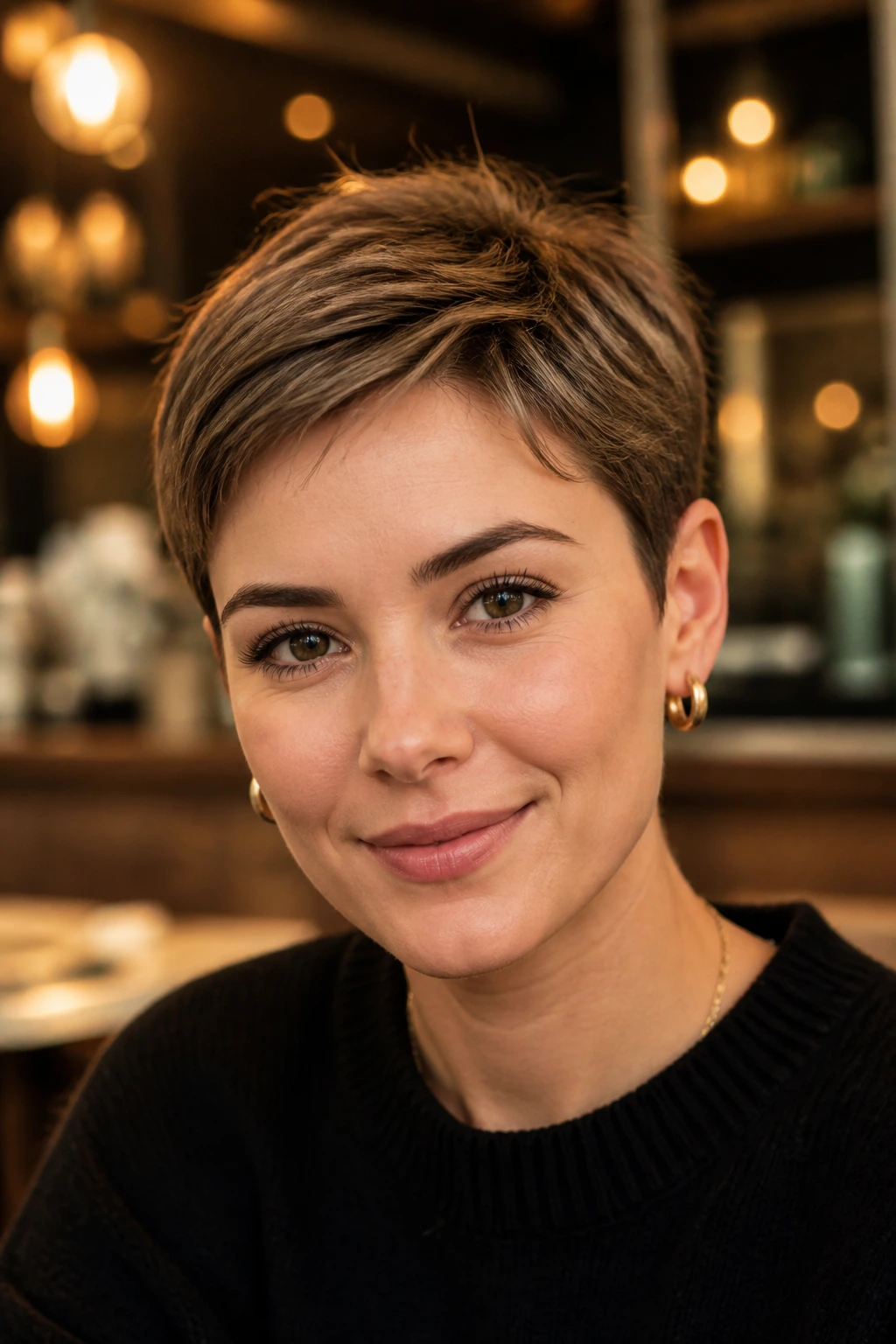
The tucked-ear minimal pixie is clean, lean, and surprisingly flattering on fine hair because it doesn’t ask the hair to do too much. The sides are just long enough to tuck behind the ears, the top stays lightly layered, and the neckline is kept neat.
It works best when the cut is precise. If the edges get sloppy, the style loses its point fast. But when it’s done well, it has that crisp, tidy look that plays nicely with earrings, glasses, and high collars. It’s one of the easiest pixies to live in if you prefer things uncluttered.
22. Feathered Mushroom Pixie
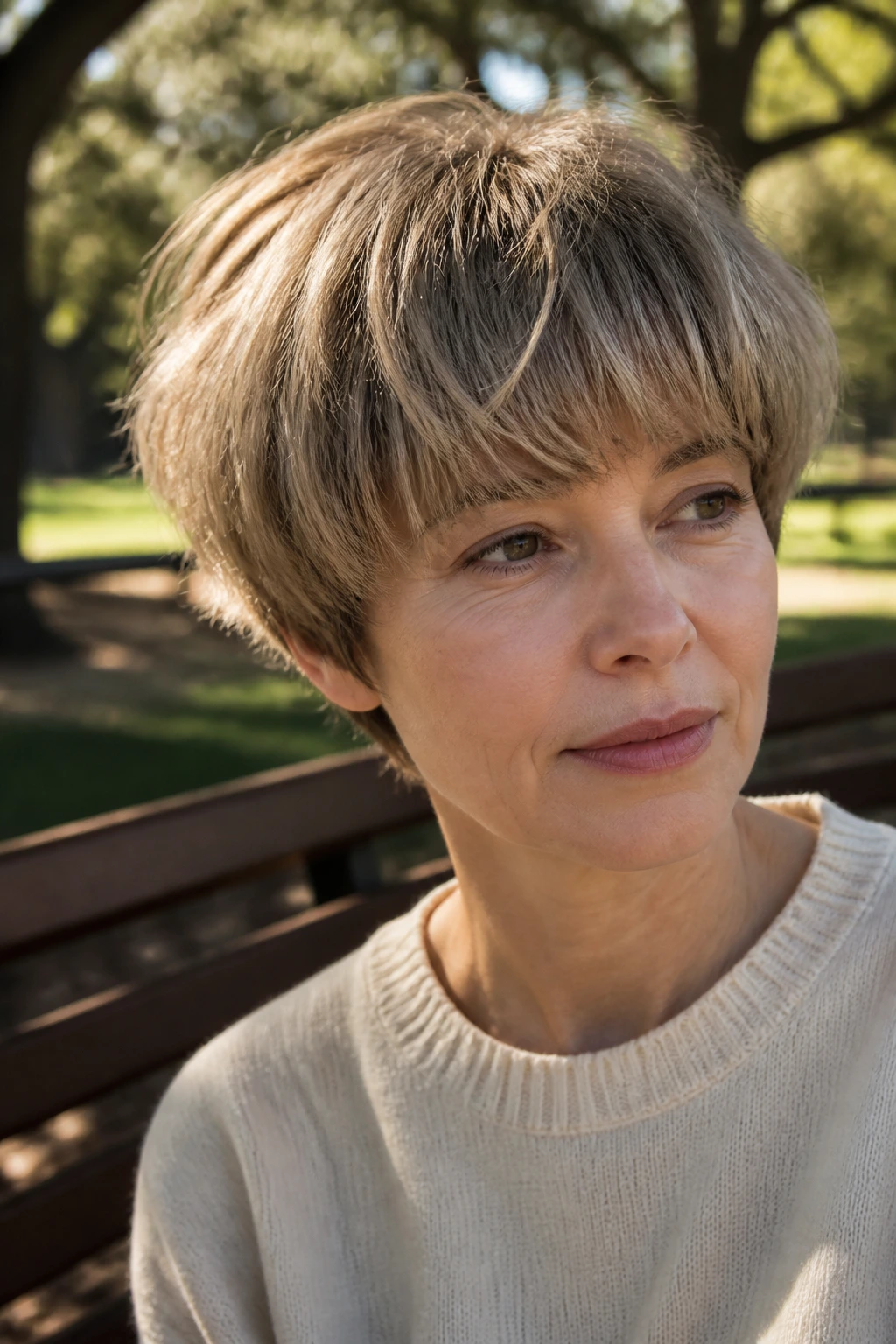
A feathered mushroom pixie borrows the rounded shape of a mushroom cut and softens it until it feels wearable. The silhouette is compact, but the ends are broken up enough that fine hair doesn’t sit like a cap. That little bit of air around the edge changes everything.
Ask for softness around the ears and a feathered fringe instead of a blunt line. This is especially nice on straighter fine hair because the curve reads clearly without needing heavy styling. It can look a little retro, in the best possible way.
23. Choppy Brunette Pixie
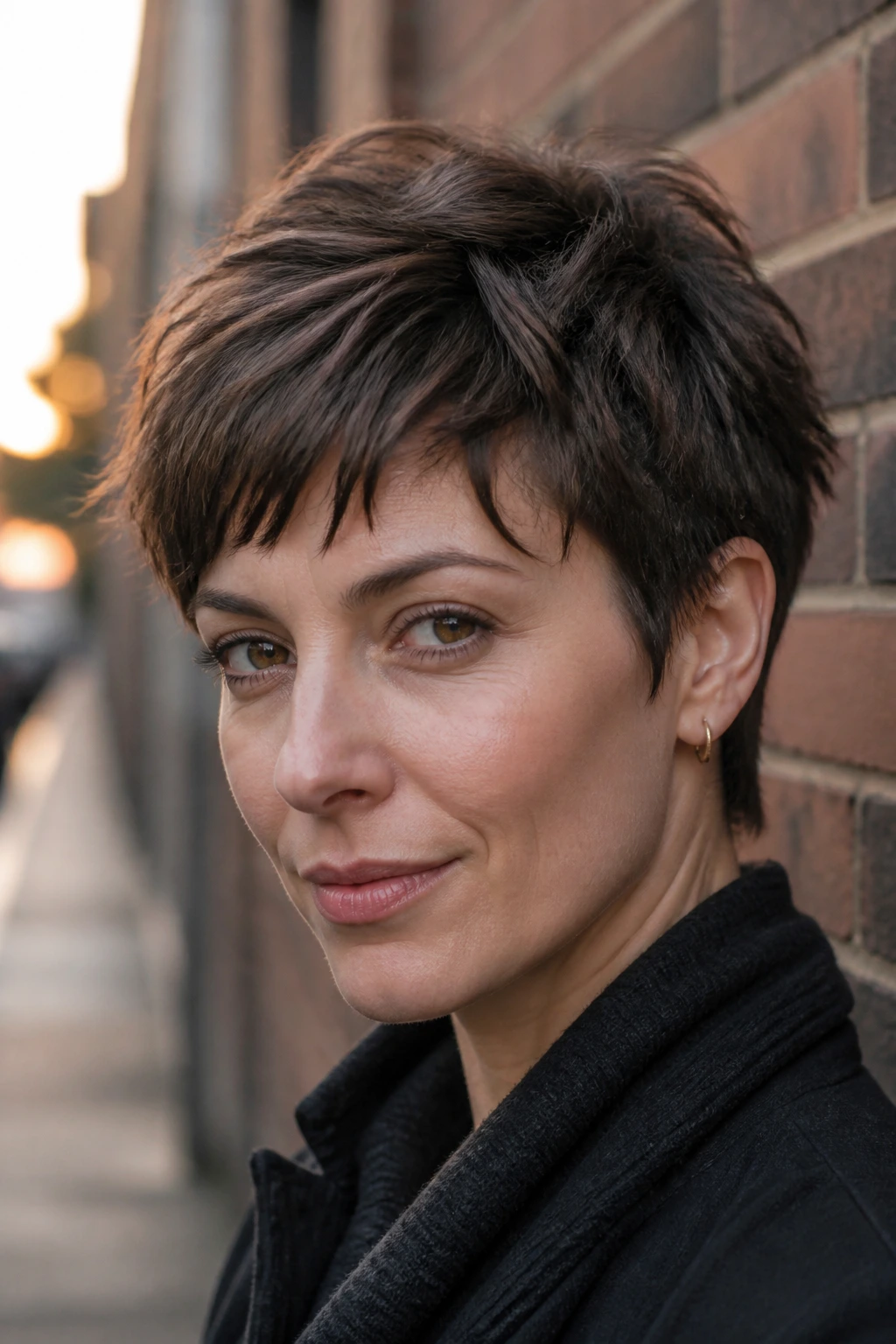
Dark hair and a choppy pixie can look almost architectural. Brunette shades show off the cut’s lines, and a few subtle highlights or lowlights can make the layers look denser than they really are. Fine hair often benefits from that visual trick.
A root shadow or a caramel ribbon through the top adds depth without making the color loud. Keep the texture matte or slightly satin rather than glossy glass, because too much shine can expose sparse ends. The shape matters most here, but color can quietly pull its weight.
24. Grown-Out Pixie Shag
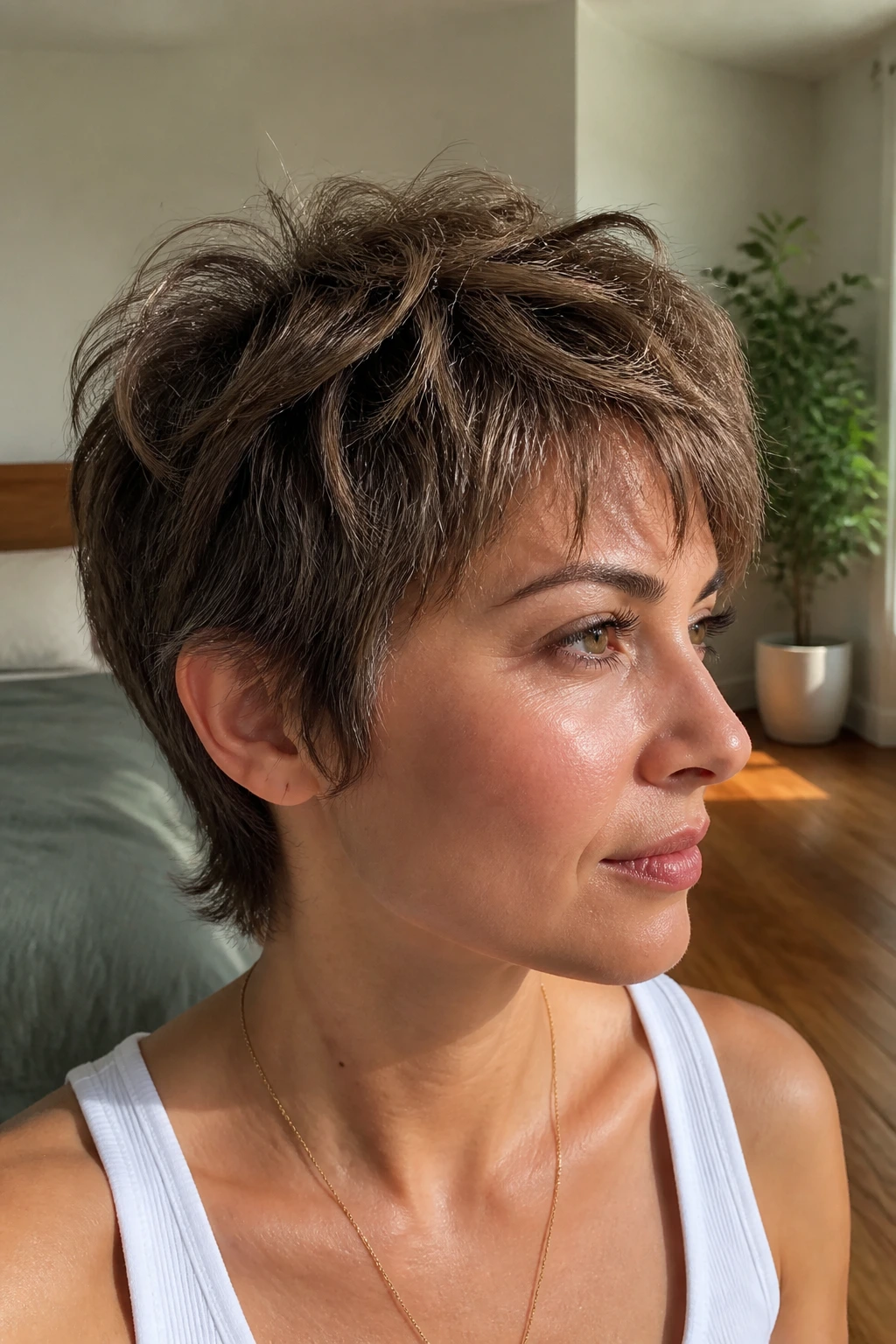
This is the haircut for the awkward stage that people pretend doesn’t exist. A grown-out pixie shag turns extra length into part of the design, with longer crown pieces and a bit of edge at the nape so the hair still looks intentional as it passes between cuts.
It’s a smart choice if you know you won’t get to the salon every four weeks. The shag layers hide soft regrowth better than a blunt pixie does. When the shape starts to flatten, a little dry shampoo at the root and a finger twist through the front usually buys you another week.
25. Slicked-Back Texture Pixie
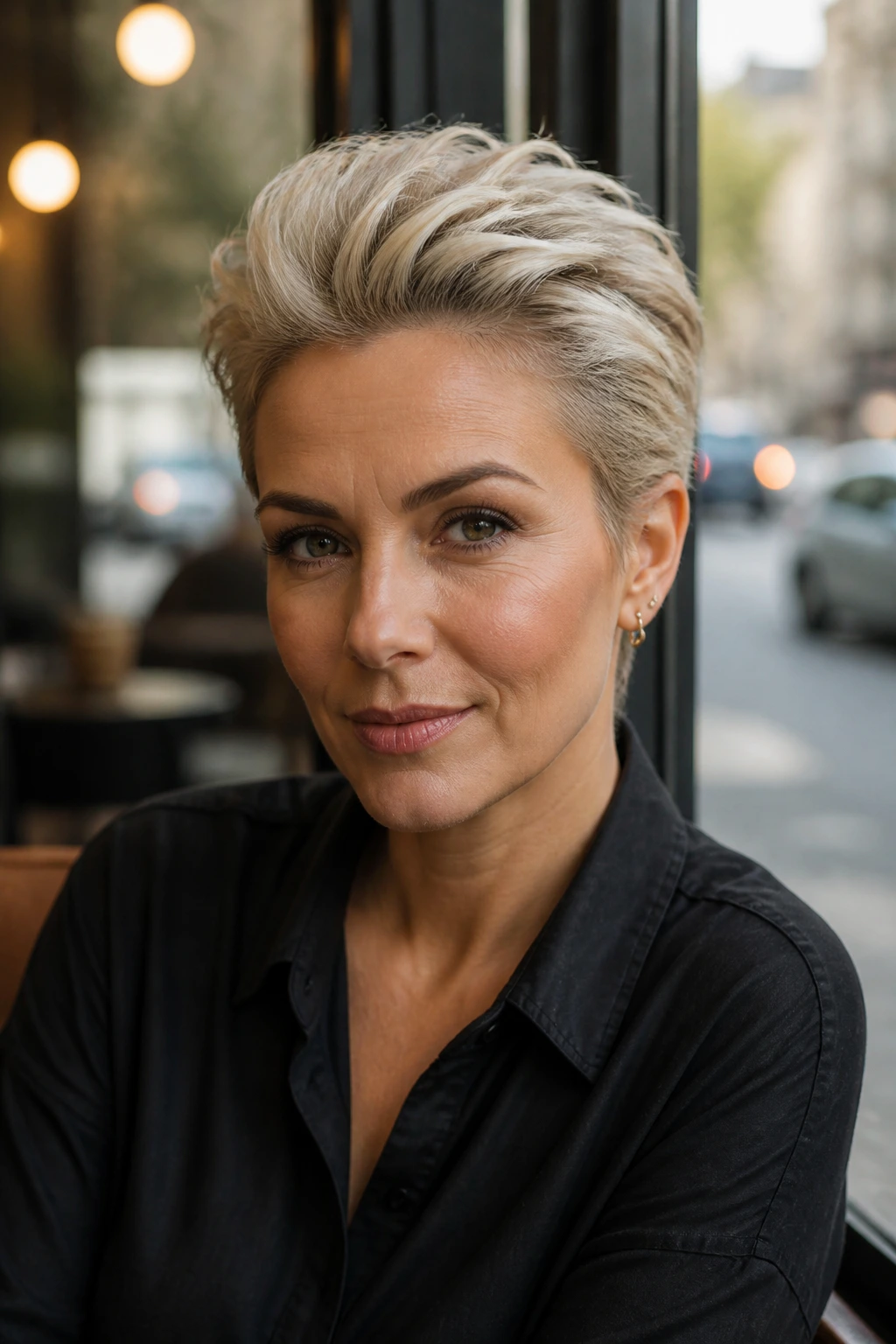
Slicked-back doesn’t have to mean flat. On fine hair, a slicked-back texture pixie can be a clever evening move: smooth the sides back with a light gel or pomade, but leave the crown a little airy so the shape still has lift. Clean and sharp. Not wet and sad.
This version loves a strong brow, a good pair of earrings, or a structured neckline. It also shows off the bone structure better than most short cuts, which is why people either adore it or avoid it entirely. There’s no middle ground here, and that’s part of the charm.
26. Soft Boyish Pixie
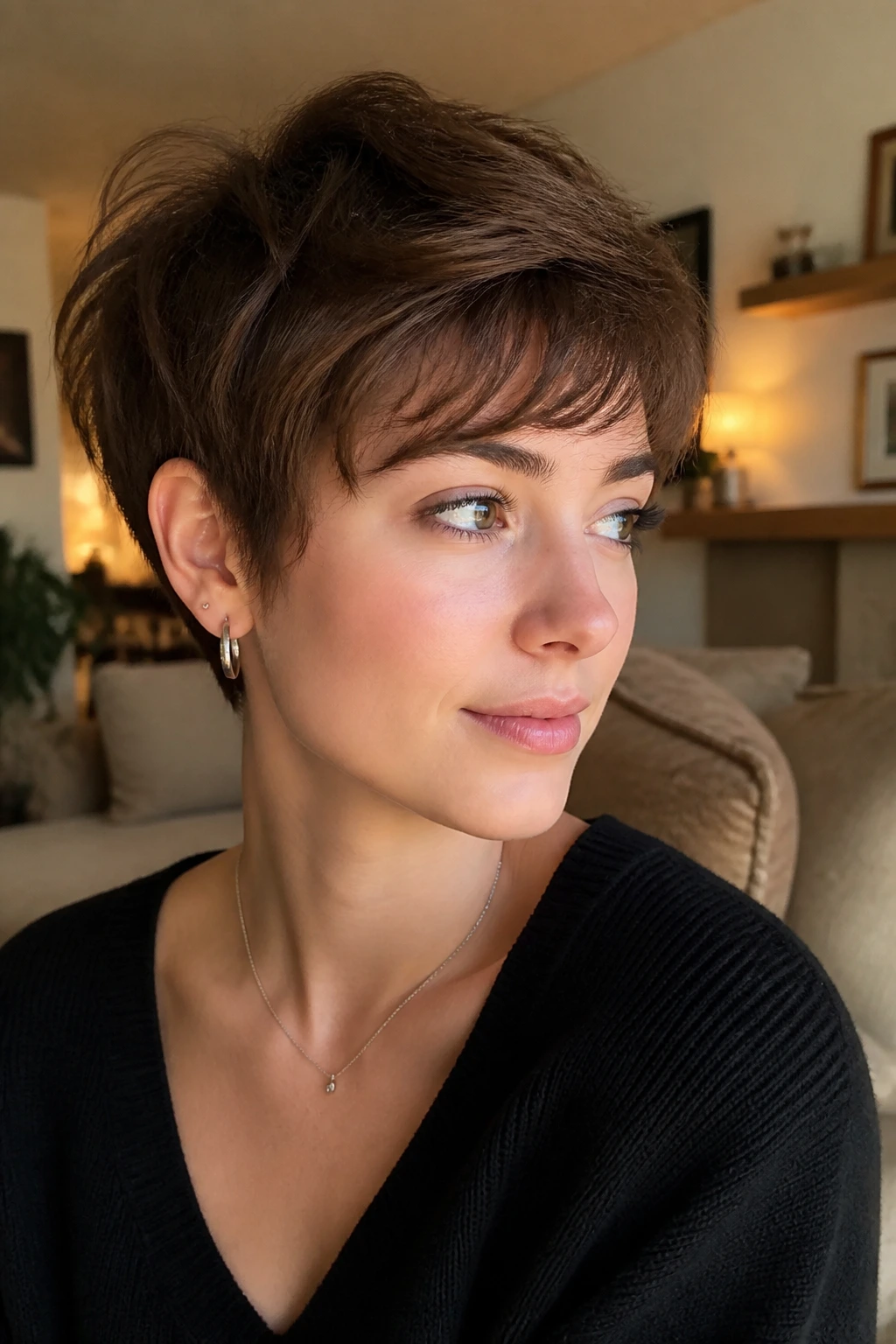
A soft boyish pixie keeps the shape close and easy, but the edges are rounded enough that it never feels severe. Fine hair can wear this beautifully because the cut doesn’t ask for lots of thickness to make sense. It’s gentle, clean, and a bit androgynous in a good way.
The key is not cutting it too tight around the temples. A touch of length there prevents the face from looking overexposed. If you want the style to feel less formal, ruffle the top with your fingers and leave one side tucked. Done.
27. Razor-Cut Fringe Pixie
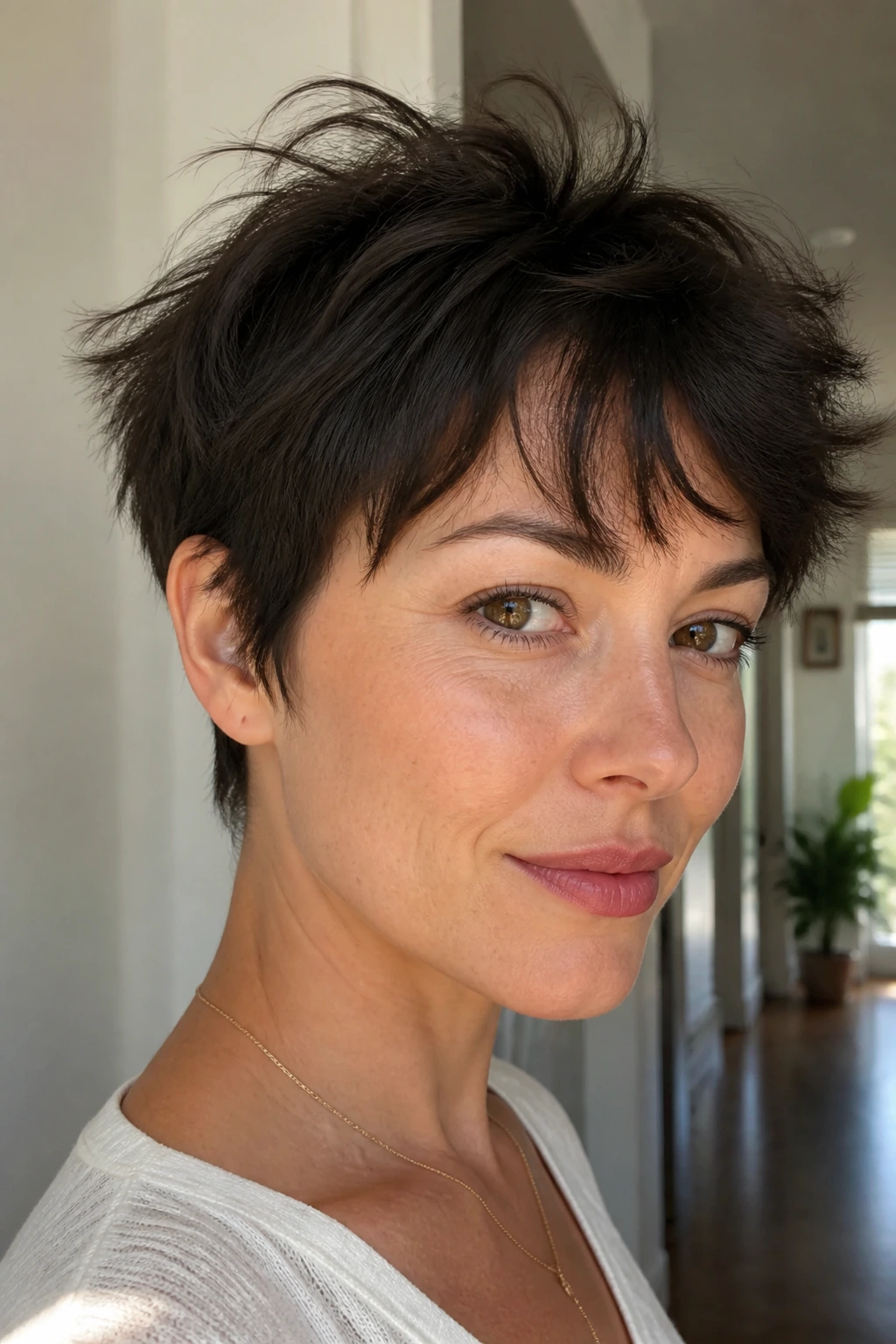
A razor-cut fringe can make fine hair look lighter and more alive, especially when the fringe is the star of the shape. The razor softens the ends so the bangs bend instead of sitting like a solid bar across the forehead.
Not every hair type likes a razor. If your strands are fragile or frizzy, this needs a careful stylist and a light hand. On smooth fine hair, though, it can be excellent. The fringe moves, the crown stays soft, and the haircut avoids that severe, chopped-off look that short bangs sometimes create.
28. Spiky Lift Pixie
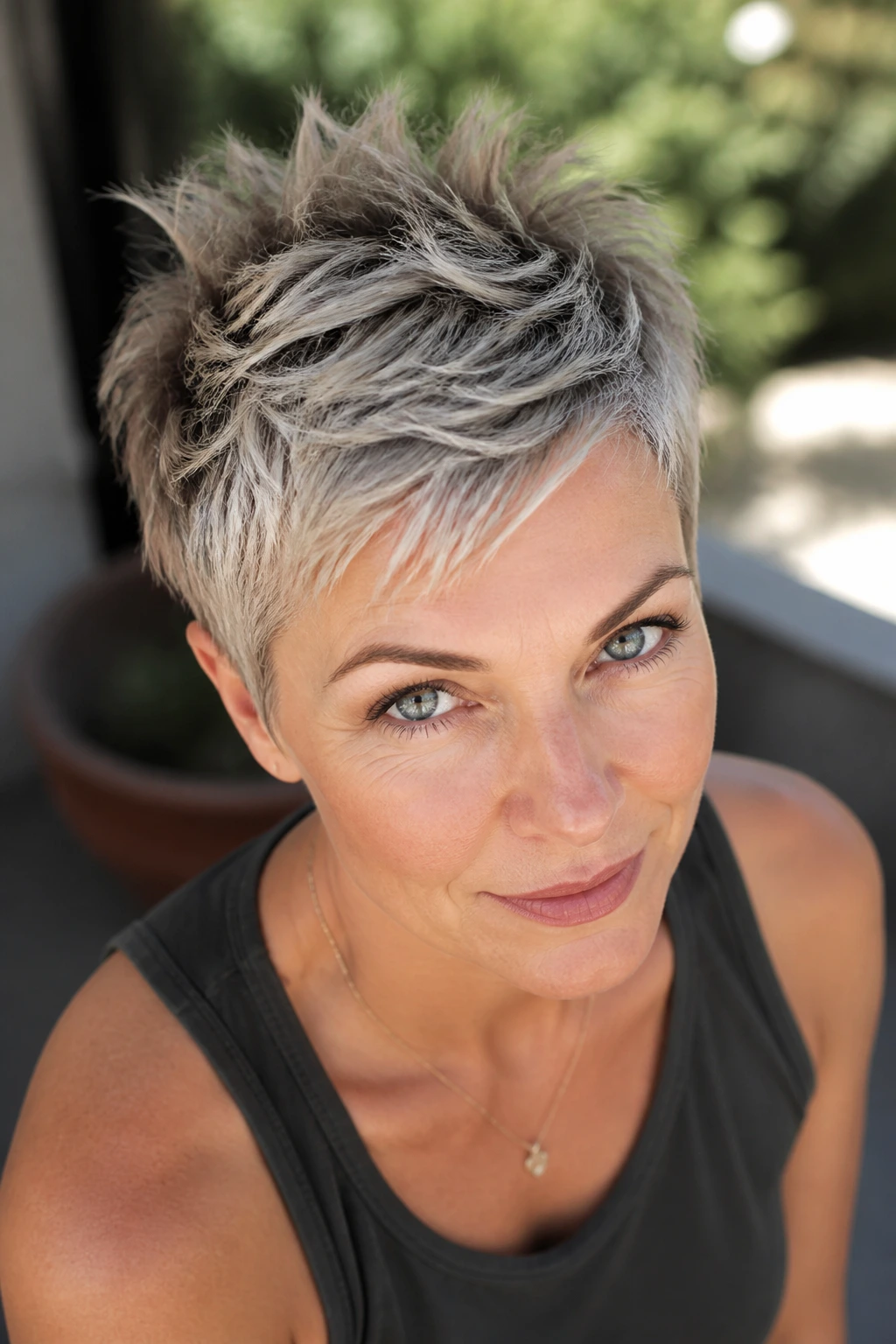
Spiky lift sounds louder than it really is. On fine hair, it just means the top is cut short enough to stand up in tiny directional pieces when you add matte paste or clay. The result is playful, a little edgy, and much fuller-looking than a flat crop.
Use a tiny amount of product. Seriously, tiny. Fine hair can go greasy fast, and a shiny spike is not the goal here. Work the paste through dry hair, pinch sections up with your fingertips, and stop before every strand starts looking identical. Randomness helps.
29. Low-Maintenance Wash-and-Wear Pixie
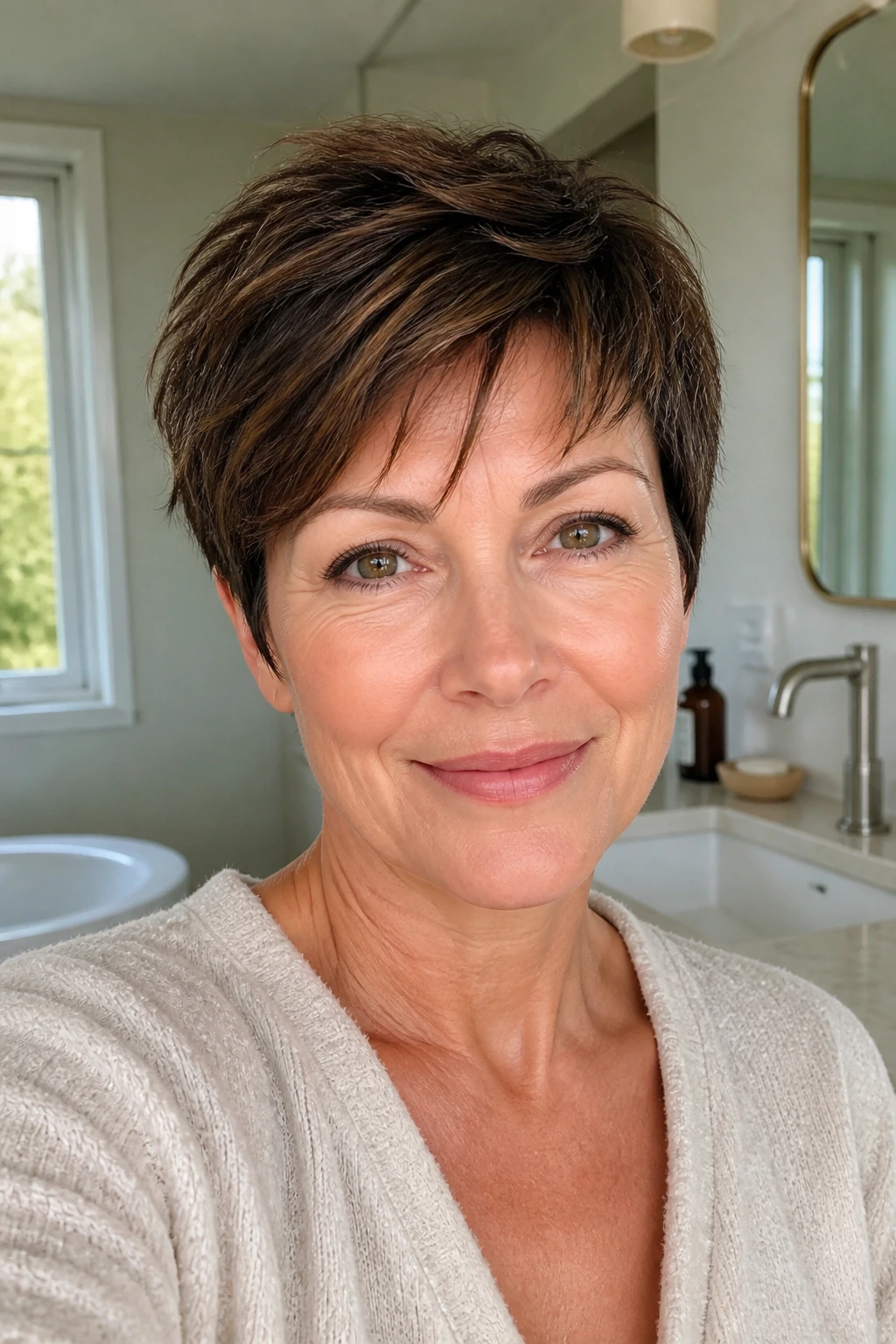
This is the one for people who want the haircut to do the work. The layers are shaped so the hair falls into a good-enough pattern after a wash, a towel blot, and a bit of finger combing. Fine hair loves a cut like this because it does not need much help to show movement.
The trick is choosing the right products: light mousse at the roots, maybe a mist of texture spray through the top, and that’s about it. Too much cream weighs the whole thing down and turns easy into limp. Keep the formula light and the haircut stays honest.
30. Glam Swept Pixie
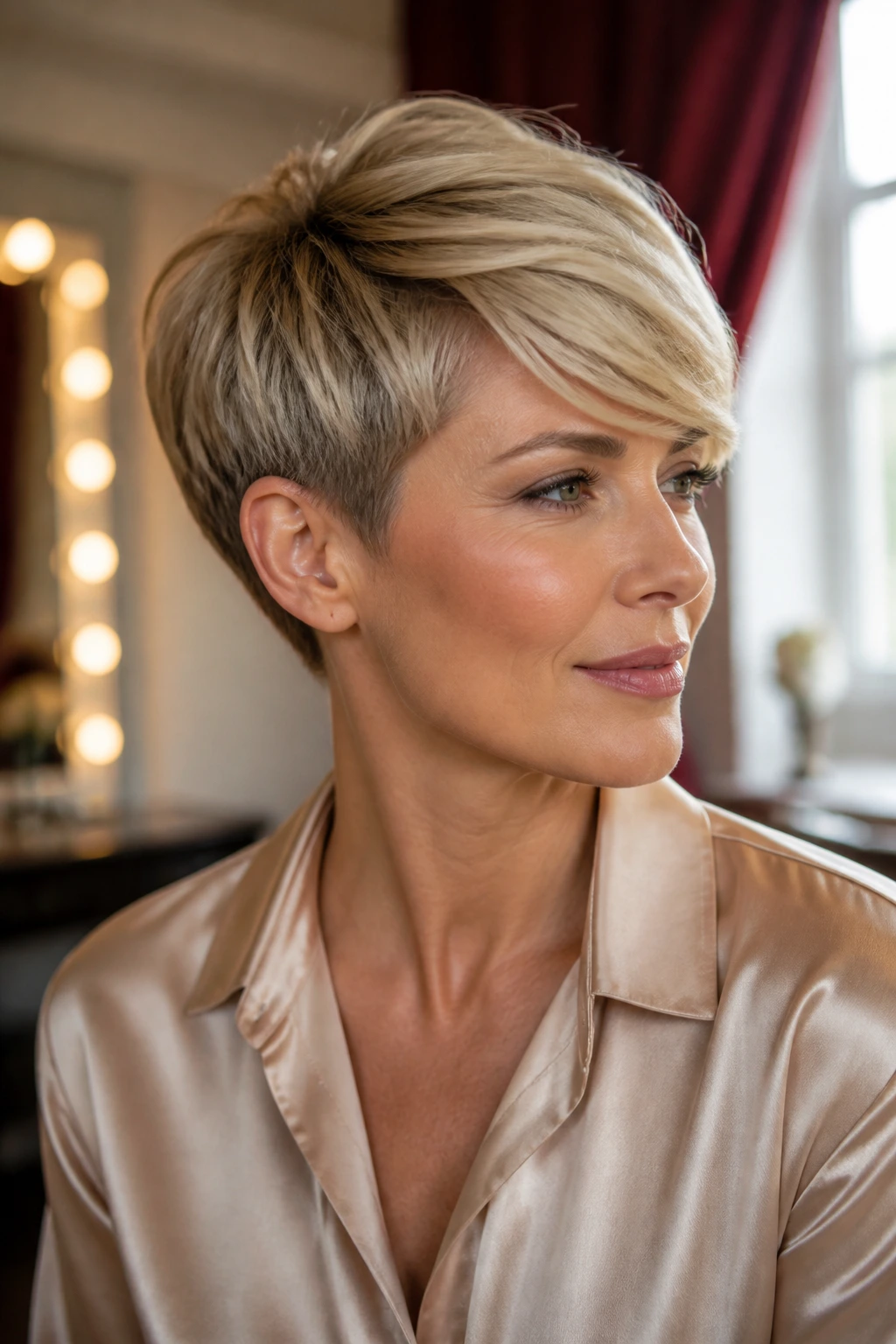
A glam swept pixie is short hair with a little polish in the front. The crown is lifted, the fringe is swept across the forehead, and the sides are kept neat so the shape can handle a more dressed-up finish. It’s the pixie that looks good next to a silk blouse.
This style works best when you blow-dry the front with a brush before adding any paste. Let the shape set first. Then define the ends just a little, so the sweep feels soft rather than sprayed in place. Fine hair benefits from that order; once it’s flattened by product, it’s hard to bring the bounce back.
31. Choppy Salt-Spray Pixie
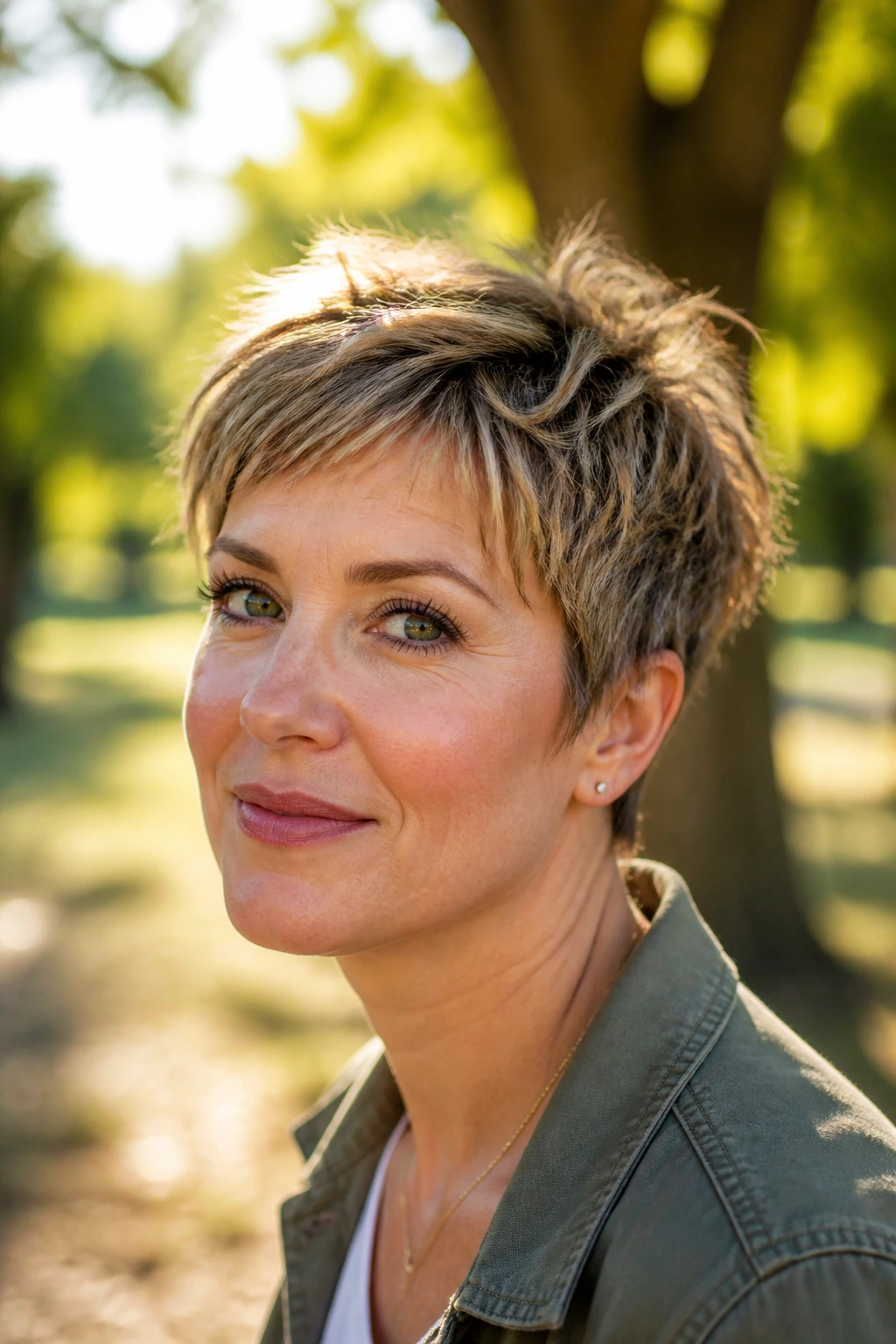
Salt spray can be useful on fine hair, but only in moderation. A choppy salt-spray pixie uses that gritty texture to rough up the layers and make them look fuller, not dry and crunchy. Think loose separation, not beach costume.
Mist lightly, scrunch once or twice, then stop. If you keep spraying, the hair starts to feel coarse and the ends go shabby fast. This cut is best when the top has a little natural bend. Straight hair can still wear it, but the texture will be more piecey than tousled.
32. Petite Oval-Face Pixie
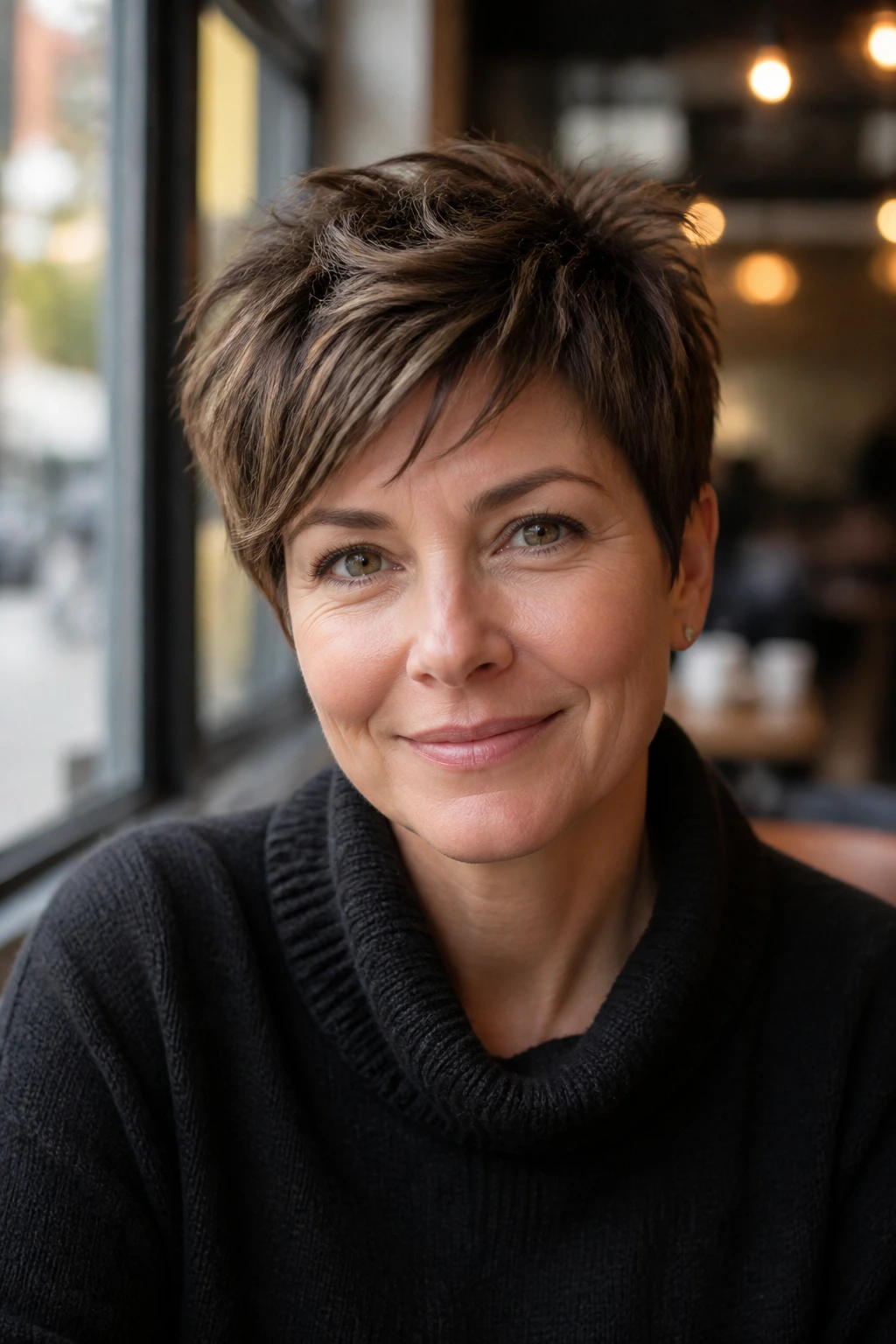
Oval faces can get away with a lot, which is both a blessing and a trap. A petite oval-face pixie keeps the proportions compact so the face doesn’t get swallowed by too much side length or fringe. The result is neat, balanced, and easy to style.
For fine hair, the best version is often slightly shorter on the sides with soft texture through the top and a fringe that can be swept or split. You do not need much length to flatter an oval face. In fact, a clean shape often does more than extra hair does.
33. Jawline-Softening Shag Pixie
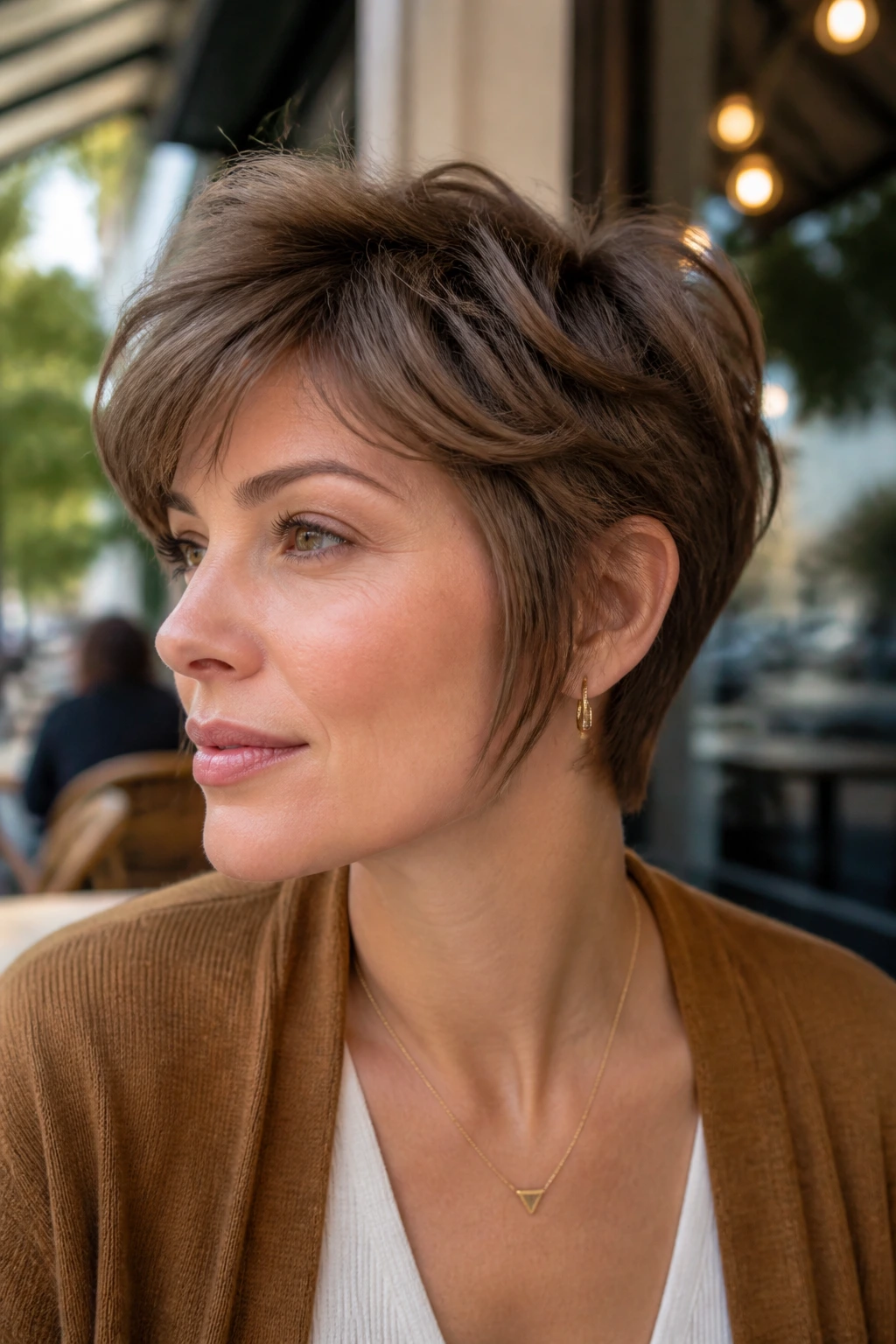
If the jaw feels sharp or a little boxy, this cut gives you a way around that without losing the pixie feel. The side pieces drop just enough to brush the jawline, while the crown stays short and light. Fine hair benefits because the longer face-framing pieces make the whole cut look fuller.
This one has a nice, forgiving grow-out too. As the sides get a touch longer, the shape becomes even softer. Ask for tapered ends around the jaw instead of blunt corners; that little detail changes the silhouette from strict to easy in a hurry.
Why Shaggy Pixies Give Fine Hair Lift Without the Helmet Look
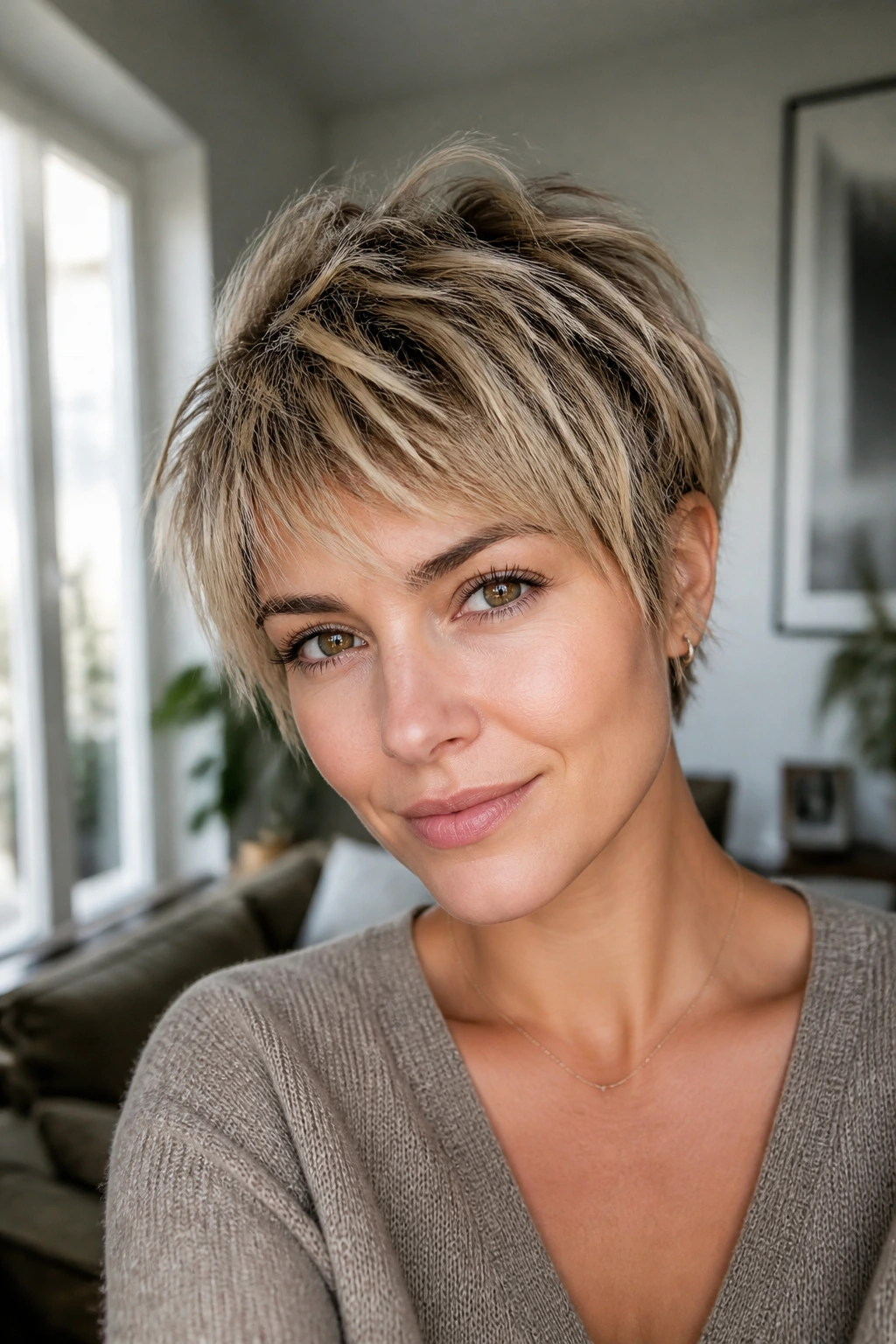
The reason short shaggy pixie haircuts for fine hair work so well is simple: they remove weight where the hair drags and keep softness where the hair needs to move. A blunt crop can sit like a cap. A shaggy pixie breathes a little. That difference matters on strands that don’t have much natural bulk.
The best versions use internal layers, feathered ends, and a controlled crown shape. Too much thinning at the perimeter is a mistake; it makes the ends look see-through. Better to keep the outline soft but intact, then build motion through the top and front where the eye lands first.
A dry cut or a partially dry cut often helps here because fine hair lies flatter when wet and can fool people into overcutting. Once it dries, the true density shows. That’s the moment when a good stylist decides whether the cut needs more lift or less removal, and honestly, that judgment is half the haircut.
What to Tell Your Stylist Before the First Snip
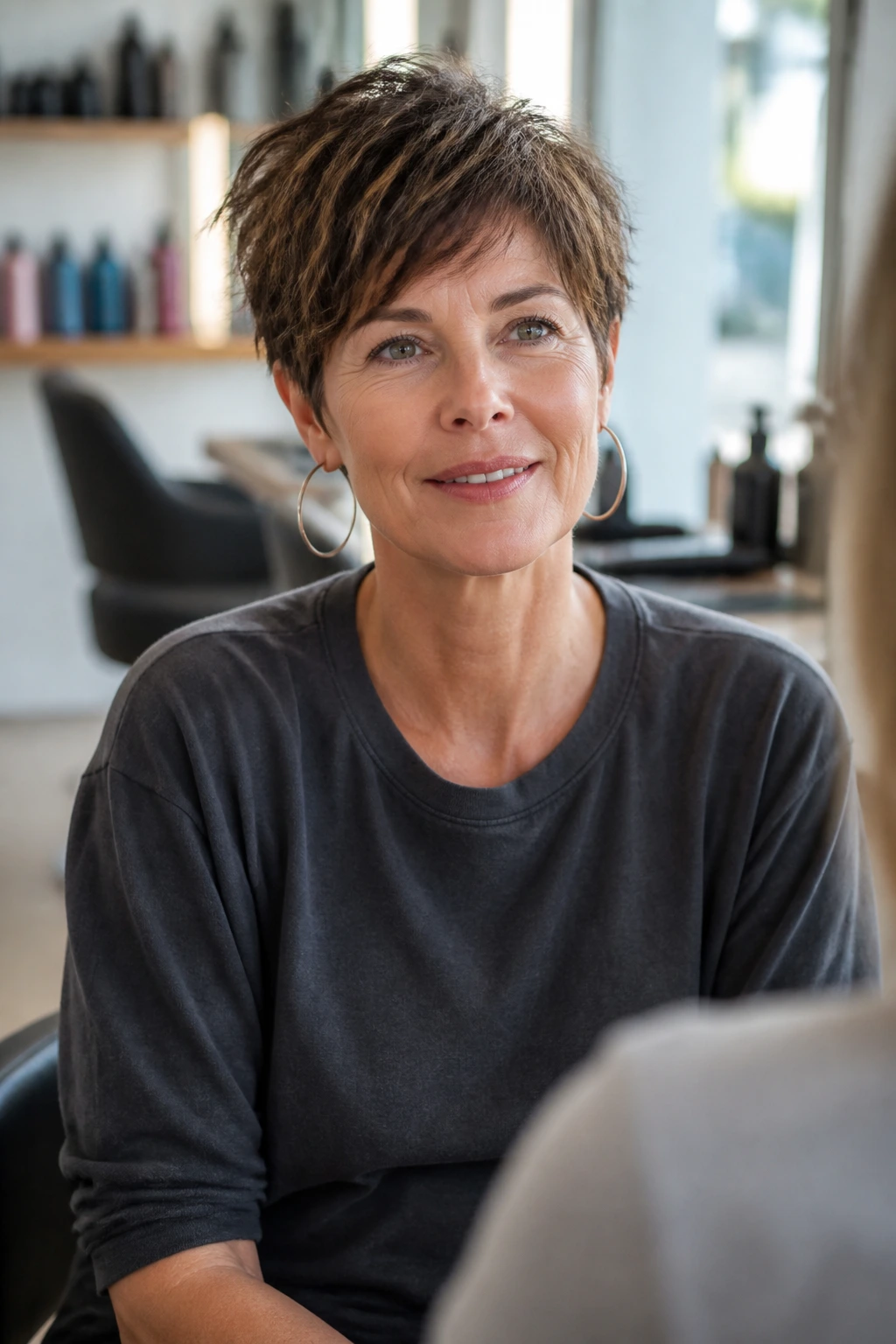
Bring photos, but bring words too. Tell the stylist whether you want the top to lie flat or stand up, whether you use a brush or only your hands, and how much time you’re willing to spend in front of the mirror. Those details matter more than saying “make it pixie-ish” and hoping for the best.
Say what you do not want. Fine hair is easy to over-thin, and a stylist who reaches for the razor too fast can leave the ends ragged. Ask for texture that adds lift through the crown and front, not so much thinning that the outline starts to disappear.
A good shorthand: keep the perimeter soft, the crown lifted, and the fringe flexible. If you want more edge, ask for point-cutting or light razoring on the right texture. If you want something calmer, ask for scissor work and a cleaner taper at the nape.
Essential Tools and Products for These Looks
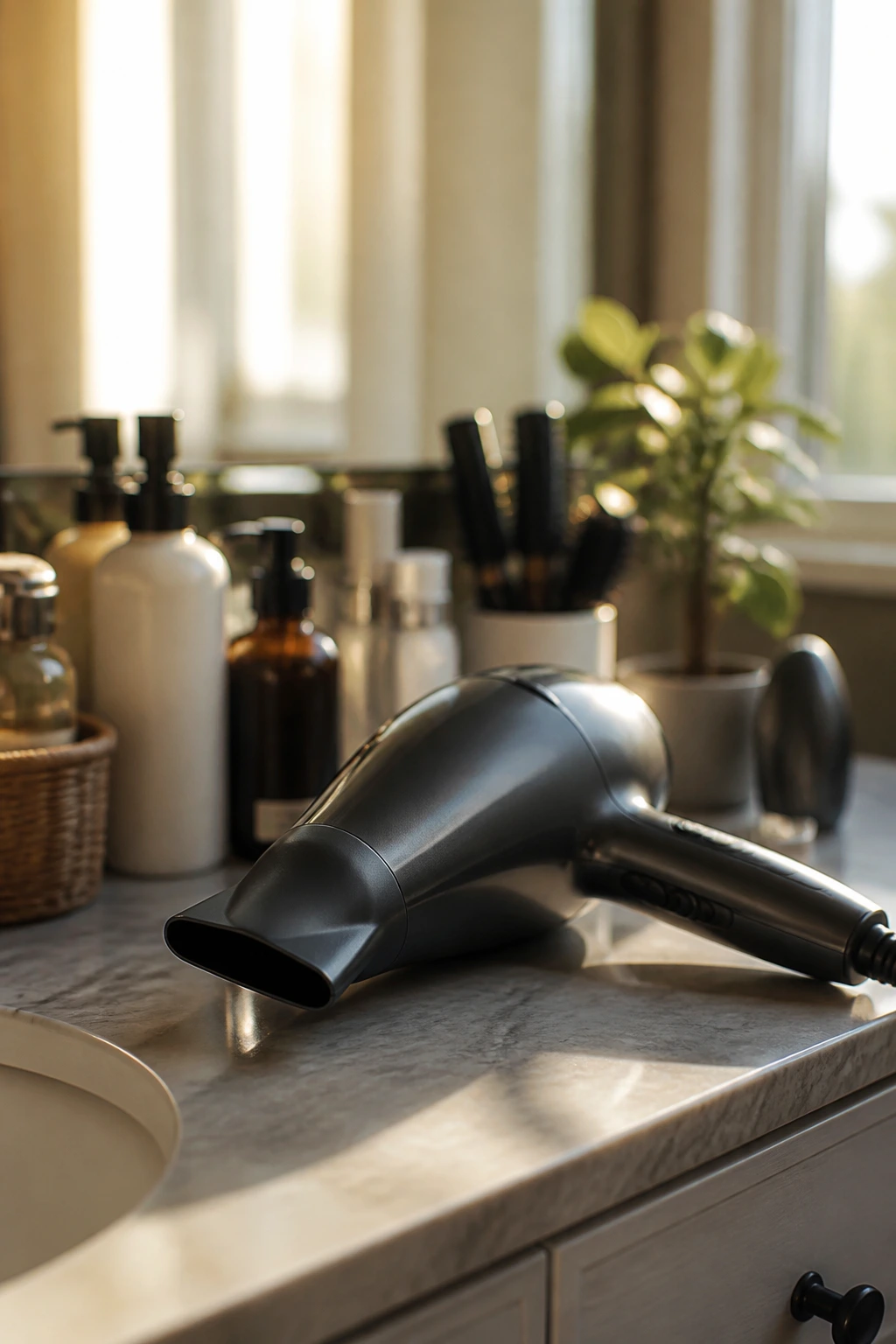
- Blow dryer with a narrow nozzle: Directs air right at the roots and keeps the crown from collapsing.
- Small round brush, 1 to 1.5 inches: Useful for bending fringe and creating a little lift at the front.
- Vent brush: Good for quick drying when you want movement, not a polished blowout.
- Light mousse: Adds body at the roots without turning fine hair sticky.
- Root-lift spray: Helps the top stay airy for more than an hour.
- Matte paste or light clay: Defines the ends and gives a piecey finish.
- Dry shampoo: Useful on day two, especially at the crown and part.
- Texturizing spray: Adds separation after drying, but use it lightly or the cut can feel sandy.
- Wide-tooth comb or fingers: Better than a heavy brush once the hair is mostly dry.
- Hair clips: Handy for setting the fringe or sectioning the top while you dry.
Picking the Right Product Weight for Fine Hair
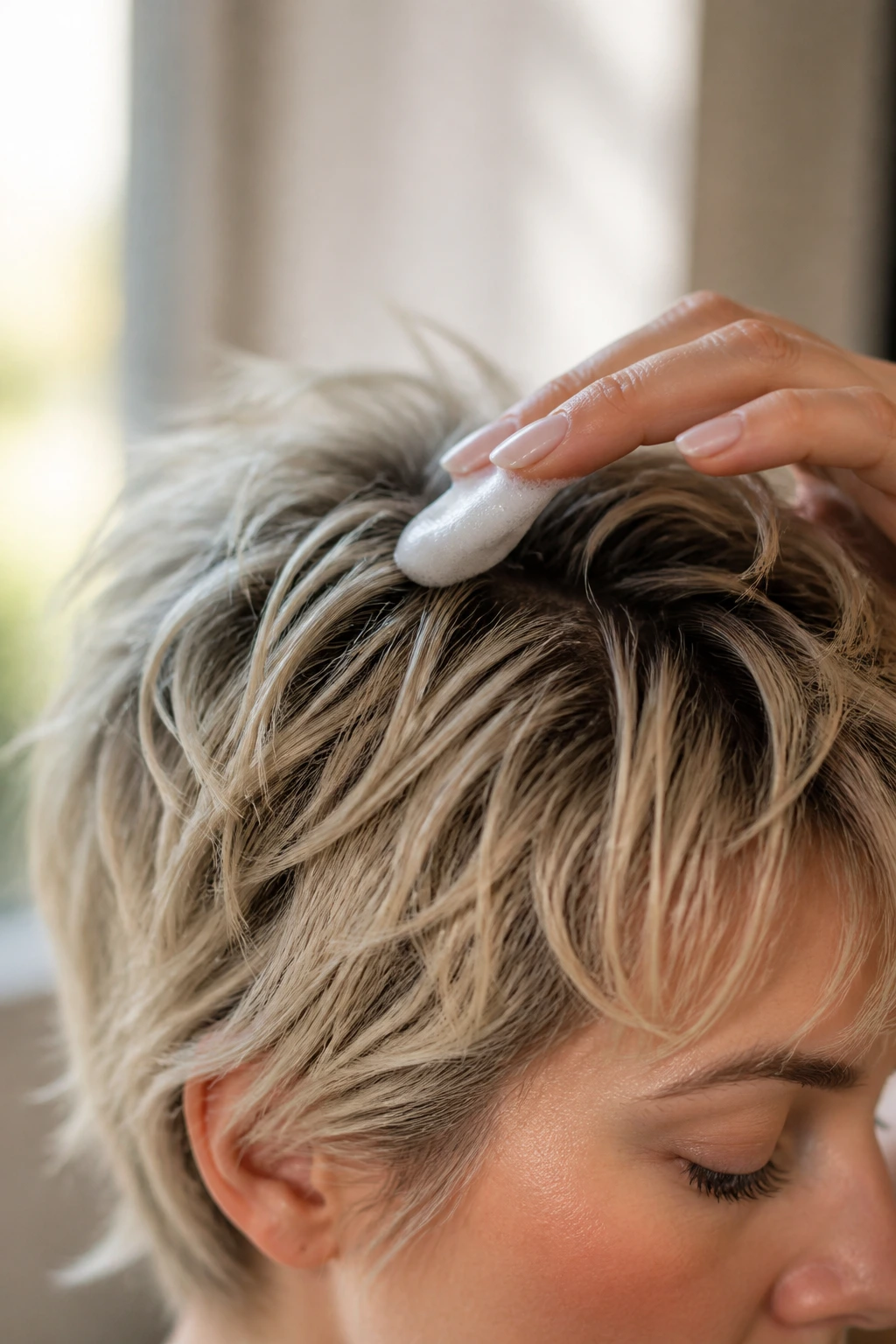
Fine hair tends to tell on you fast. A cream that works on thick hair can sink the roots here in under an hour. The safest bet is to start with products labeled light, weightless, or airy — then use less than you think you need.
Mousse and root spray usually outperform heavy oils near the crown. Save smoothing serum for the very ends if they feel dry. And if your hair goes flat by lunchtime, the problem is often not the haircut. It’s the product weight.
A salon-quality texturizing spray can be useful, but don’t fog the whole head with it. Spray at arm’s length, let it settle, then work the pieces apart with your fingers. Fine hair looks fuller when the strands separate cleanly. It looks tired when they clump.
How to Wear and Style These Cuts Day to Day
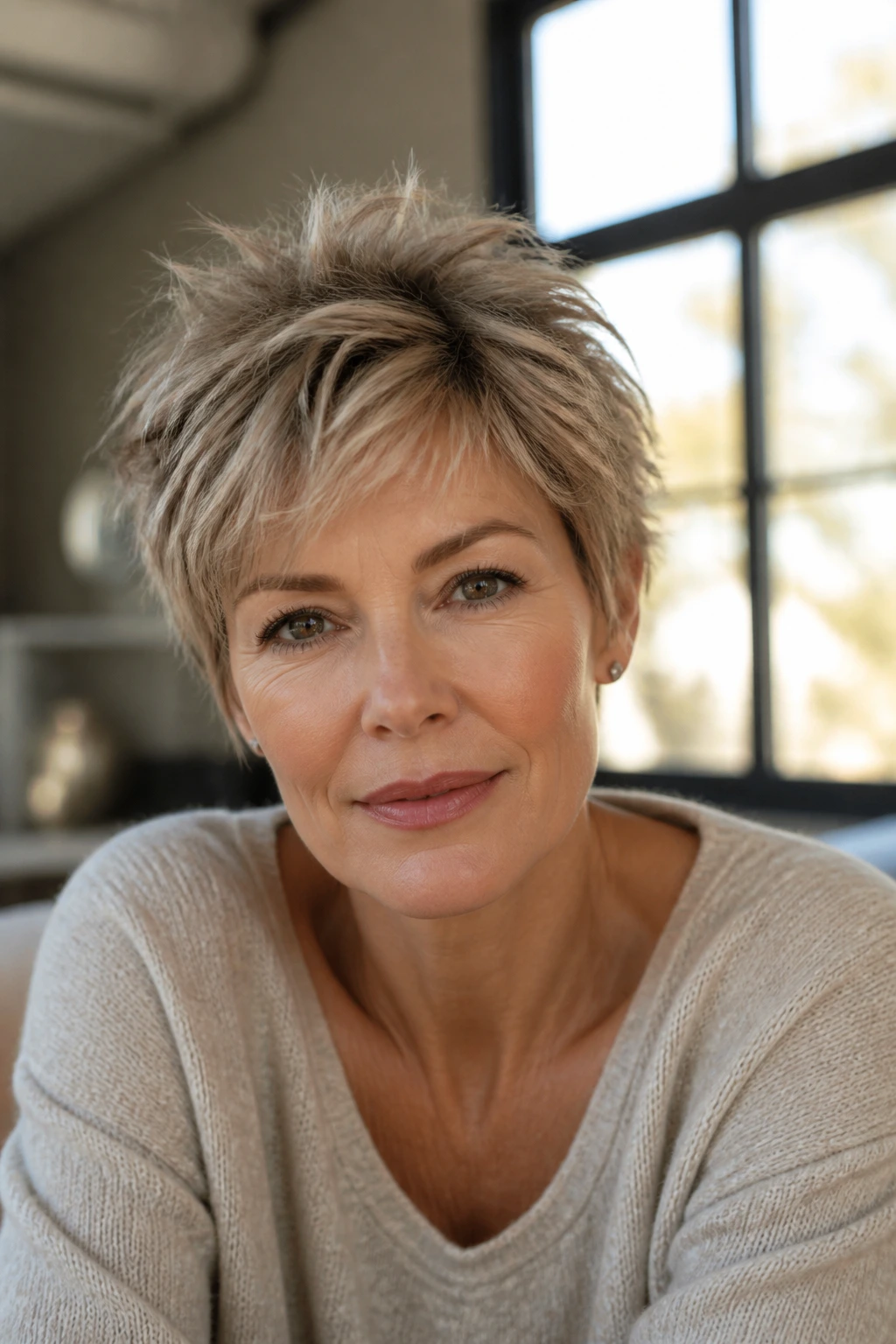
Texture: Start with damp hair, work in a small amount of mousse at the roots, then rough-dry until the hair is about 80% dry. That’s when fine hair usually holds shape best. A little lift with your fingers at the crown, and you’re halfway there.
Finish: Use a pea-sized amount of matte paste or light clay only on the ends and surface pieces. You want definition, not stickiness. If the cut feels too soft, a tiny bit of dry shampoo at the root can give it a grit that reads fuller.
Accessories: Glasses, small hoops, and a neat collar all play well with these cuts. The right neckline can make a pixie look intentional instead of accidental. That sounds fussy, but it isn’t — short hair sits in the whole outfit.
Mood: If you want a polish, smooth the fringe and tuck one side. If you want something looser, shake the crown out and let a few pieces fall where they want. This is one of those cuts that can change personality in five minutes.
Extra Ways to Add Lift and Texture
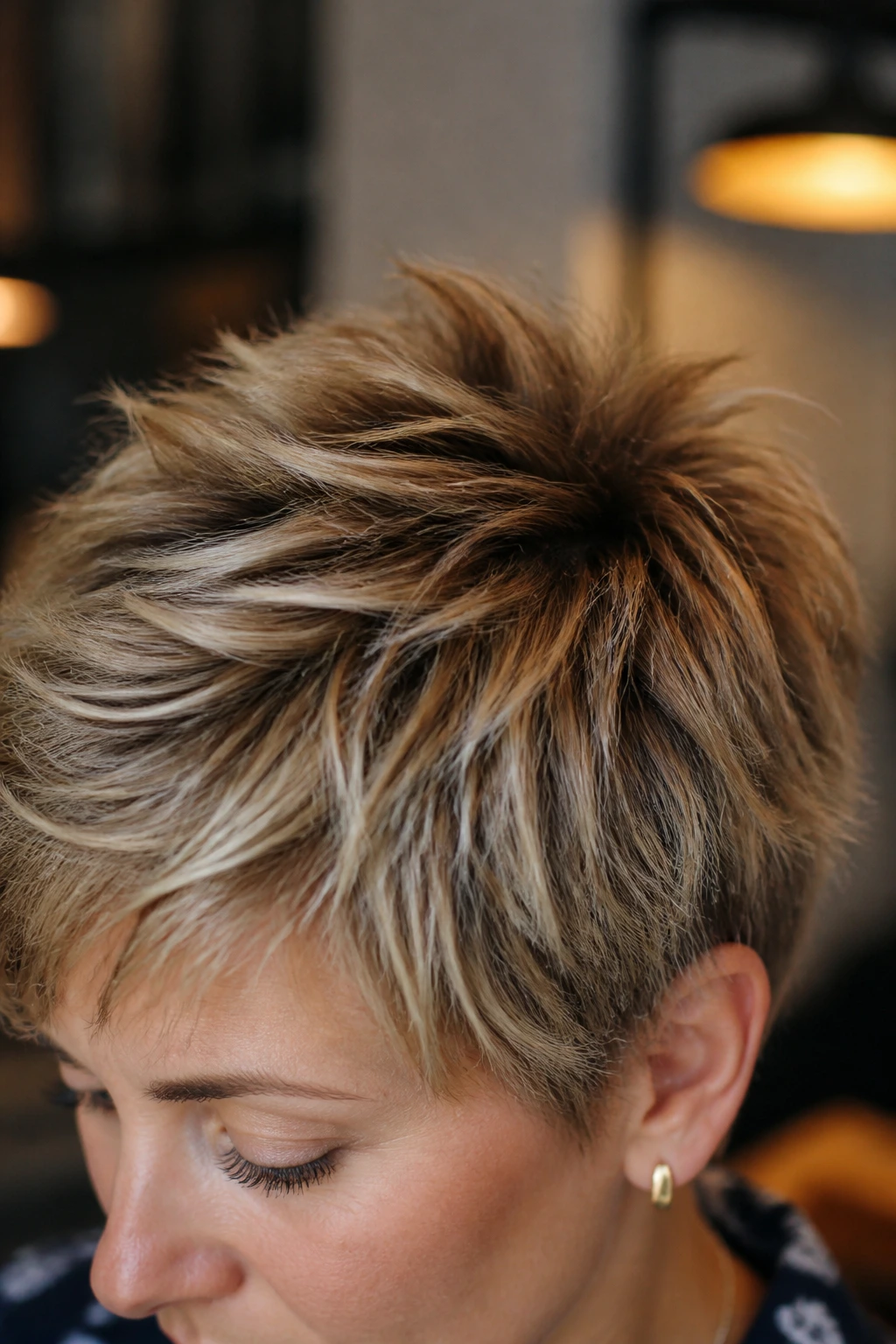
Lift Booster: Flip the part to the opposite side of your usual part for a day or two. Fine hair remembers its old habit, and that small rebellion can wake up the root.
Texture Booster: Ask for light babylights or a soft shadow root if you color your hair. Dimension makes the layers easier to see, which is a sneaky way to make the cut feel fuller.
Frizz Control: Use a tiny drop of serum only on the ends if your hair puffs in humidity. Too much product at the crown will flatten the shape, so stay low and spare.
Make-It-Yours: If you like a softer look, keep the fringe longer and the crown rounded. If you like sharper lines, shorten the fringe and use a matte paste for separation. One cut, two moods.
Keeping the Shape Sharp as It Grows
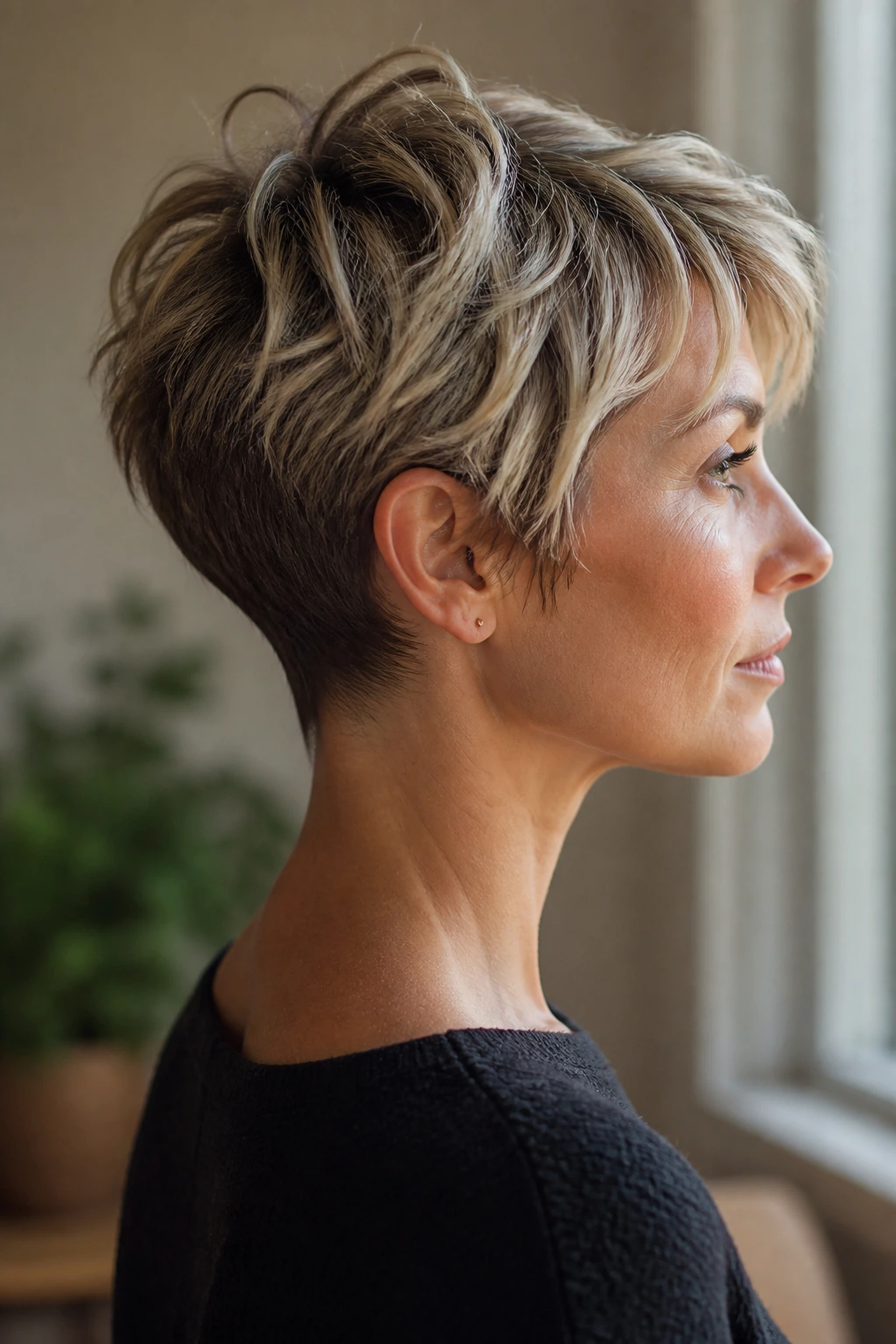
Short shaggy pixie haircuts for fine hair usually stay handsome for about four to six weeks before the lines start to blur. Fringe-heavy versions may need a touch-up sooner if the bangs hit the eyes or split awkwardly. That is the price of a neat shape. Not a huge one, but real.
As the cut grows, the nape is usually the first place to look messy. A neckline cleanup there can buy you time without changing the whole style. If you’re in a grow-out phase, ask for the top and fringe to stay shaggy while the back gets tidied. That keeps the haircut looking deliberate instead of half-finished.
Variations and Adaptations to Try
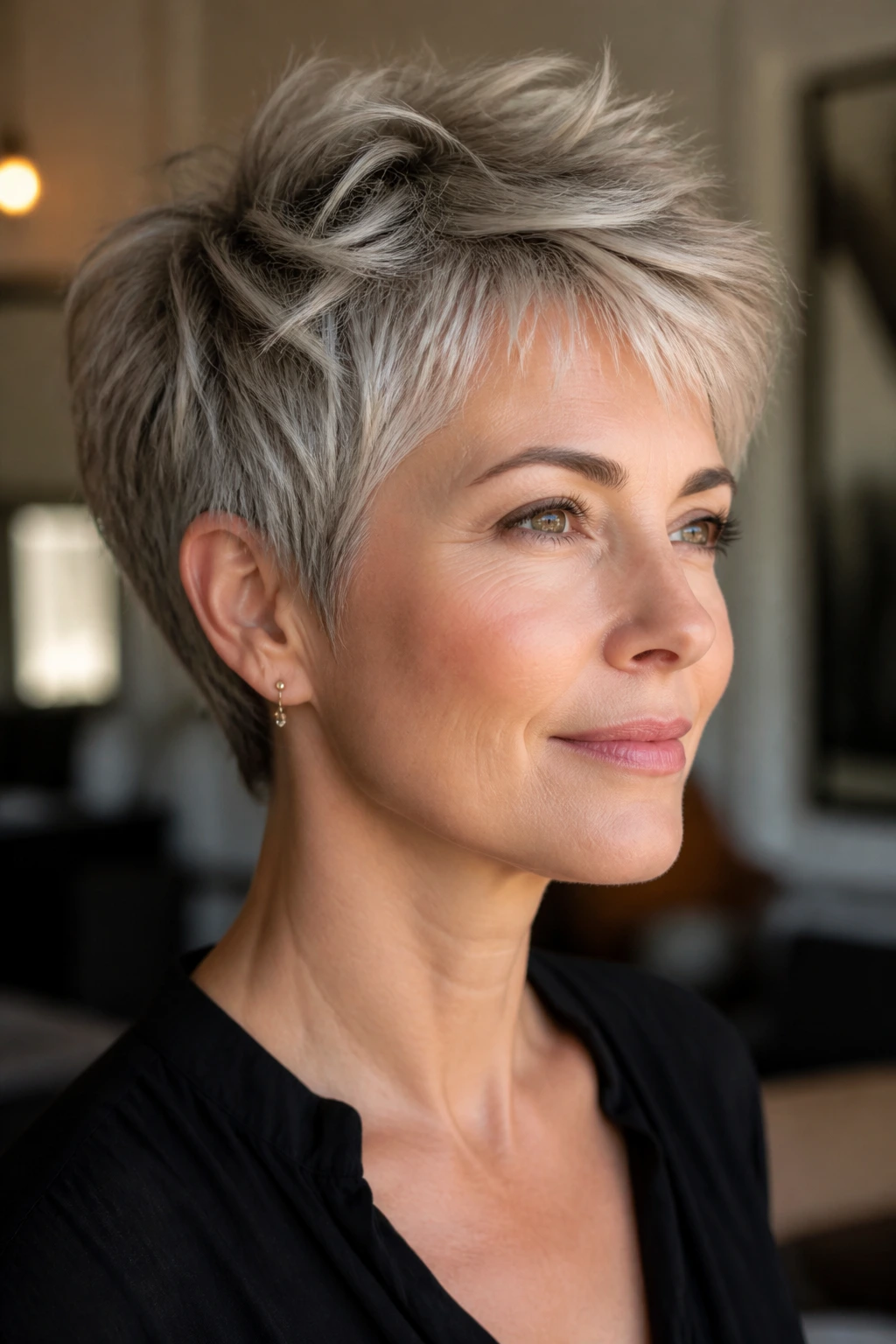
For Straight Fine Hair: Keep the layers crisp and the crown lifted. Straight hair shows every line, so clean scissor work and a soft fringe matter more than aggressive texture.
For Wavy Fine Hair: Ask for pieces that bend and separate, not too many short layers at the very bottom. Wavy hair needs enough length to show its pattern.
For Curly Fine Hair: Leave more length in the top sections than you think. Shrinkage can eat the shape fast, and a curl-friendly shag keeps the silhouette from disappearing.
For Gray or Silver Hair: Add soft feathering and maybe a touch of root shadow if you want more depth. Silver strands can look airy in a great way when the layers are shaped carefully.
For a Low-Maintenance Grow-Out: Keep the fringe longer and the nape tapered. That lets the cut age into a shaggy shape instead of turning into a lopsided mushroom.
Common Mistakes That Make Fine Hair Look Flatter
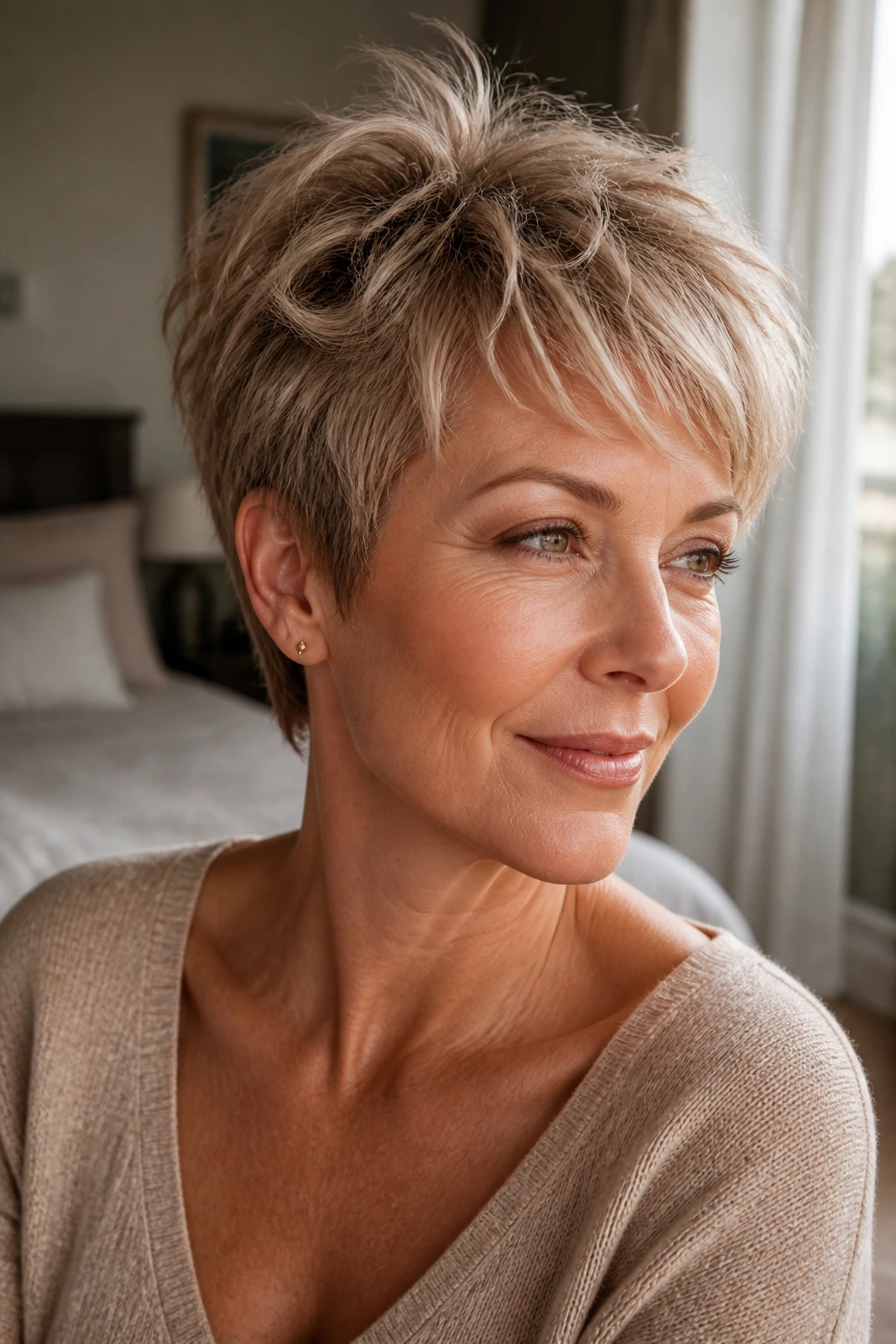
The biggest mistake is over-thinning the ends. The hair may feel lighter in the chair, but once it dries, the perimeter can look see-through and brittle. Ask for softness, not emptiness.
Heavy products are another trap. A rich cream, a thick oil, or too much paste will drag fine hair down fast. If the crown drops before lunch, the product is usually the culprit before the cut is.
A third problem is cutting the fringe too short without thinking about shrinkage or cowlicks. Fine hair can spring up in annoying ways, and once the fringe is gone, it’s gone. Start a little longer. You can always trim more.
Frequently Asked Questions
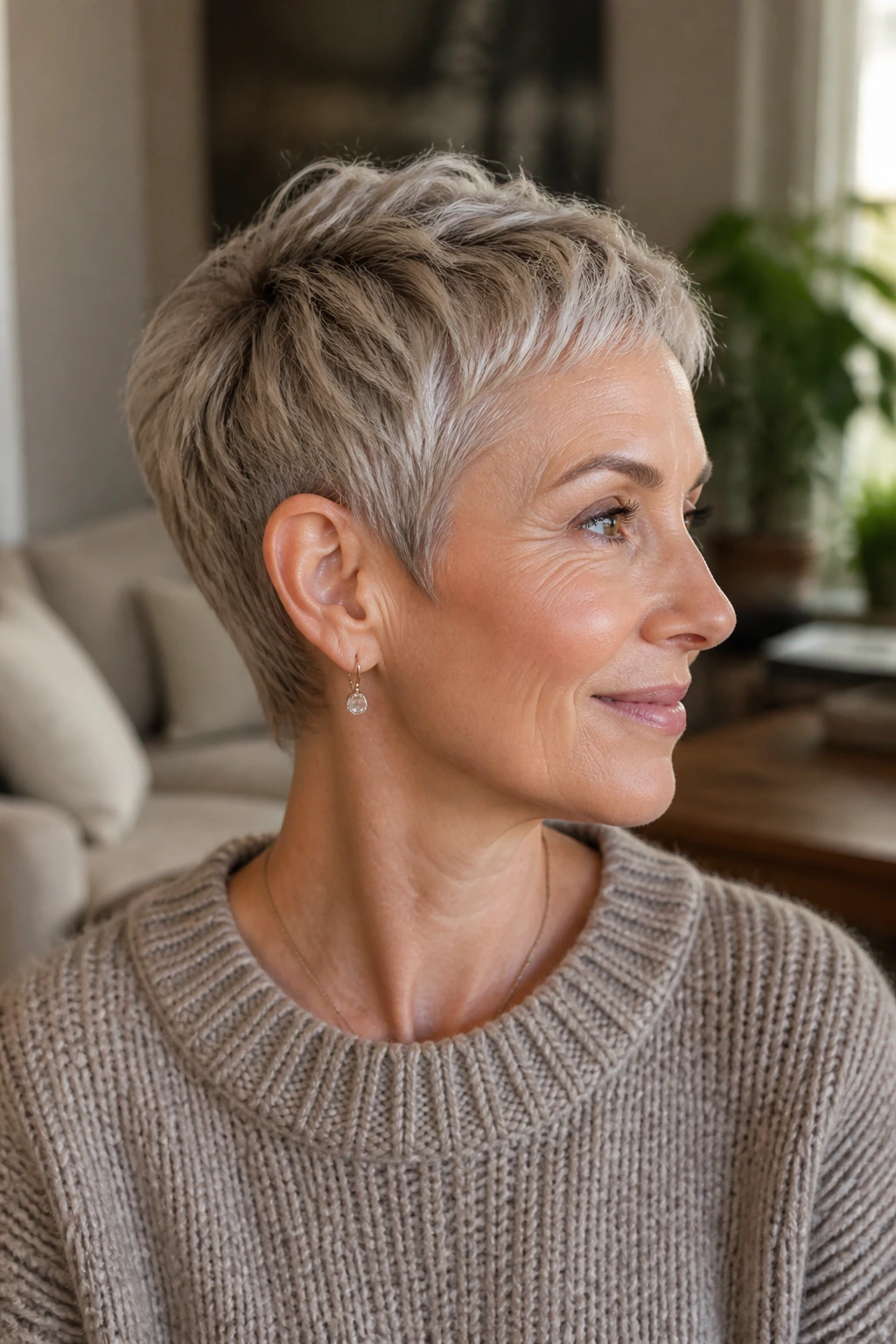
Do short shaggy pixie haircuts for fine hair work on very thin hair?
Yes, if the layers are placed carefully. The goal is not to remove as much hair as possible; it’s to keep enough edge and crown lift that the hair reads fuller than it is.
Can I air-dry a shaggy pixie, or does it need heat styling?
You can air-dry many of them, especially the bedhead, soft boyish, and textured versions. Use a little mousse or texturizing spray at the roots and shape the fringe with your fingers while it dries.
What face shapes suit a shaggy pixie best?
Almost any face shape can wear one if the fringe and side lengths are adjusted. Round faces usually like a little height at the crown, while square faces often benefit from softer temple pieces and a side sweep.
How often does this cut need trimming?
Most need a trim every four to six weeks to keep the shape clean. Micro bangs or very short napes may need earlier maintenance if the edges start to lose their line.
Is a shaggy pixie better than a blunt pixie for fine hair?
Usually, yes. The shag gives movement and breaks up thinness so the hair doesn’t sit like a flat sheet. A blunt pixie can work, but it needs more density and more careful styling.
What if my hair is flat at the roots no matter what I do?
Ask for more lift in the crown, not more length on top. Also check your products; if they’re too creamy or heavy, they’ll cancel the shape before it has a chance to settle.
Can I wear one of these cuts with glasses?
Absolutely. Just keep the temple pieces and fringe planned around your frames. A clean side and a soft front usually work better than a heavy fringe that keeps bumping into the lenses.
Should I ask for razoring or scissor cutting?
It depends on your hair texture. Smooth straight fine hair can take some razor work; fragile, frizzy, or curly fine hair usually does better with controlled scissor cutting and point-cutting.
The Sharpest Finish
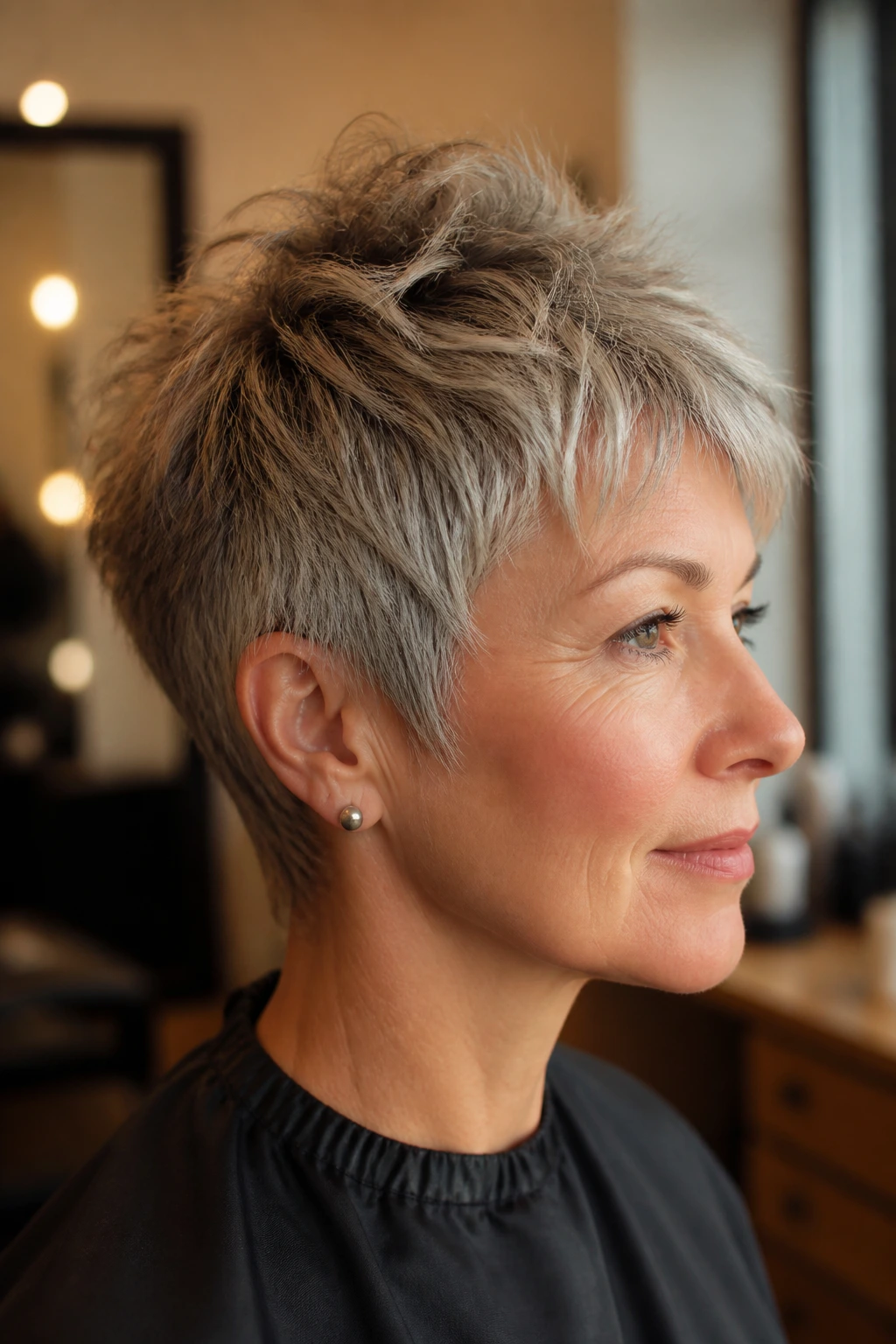
The best short shaggy pixie haircuts for fine hair do one thing very well: they make thin strands look intentional. Not hidden. Not disguised. Just better arranged, with a little lift where it counts and enough softness to keep the cut from feeling severe.
That’s the whole trick. Keep the crown alive, protect the perimeter, and choose the amount of texture that matches how your hair actually behaves in the mirror, not how it behaves in a perfect salon chair. Get that part right, and even the shortest cut can have a surprising amount of presence.
