



Curtain bangs have a sneaky talent: they change the whole line of a haircut without taking over the face. A clean split at the center, a little bend at the cheekbone, and suddenly the forehead looks softer, the eyes look more open, the haircut feels less severe. They can be brushed forward, flipped away, tucked behind the ear, or left slightly messy; that flexibility is the reason people keep coming back to them.
The catch is that not all curtain bangs behave the same. A thick, rounded version on dense waves reads nothing like a wispy split on fine hair, and a jaw-skimming fringe on a bob tells a different story than a long, feathered sweep on waist-length hair. The best styles work with your growth pattern instead of fighting it. If you have a cowlick, a high forehead, or hair that goes flat by lunch, the right version of curtain bangs can make those things look intentional.
A lot of fringe advice misses the part that matters: where the shortest point sits, how much weight stays in the center, and whether the side pieces land at the cheekbone or the lip. Those small choices change everything. The styles below stay flattering because they solve real shape problems, not because they look cute in a salon mirror.
Why These Curtain Bang Styles Keep Showing Up in Good Haircuts
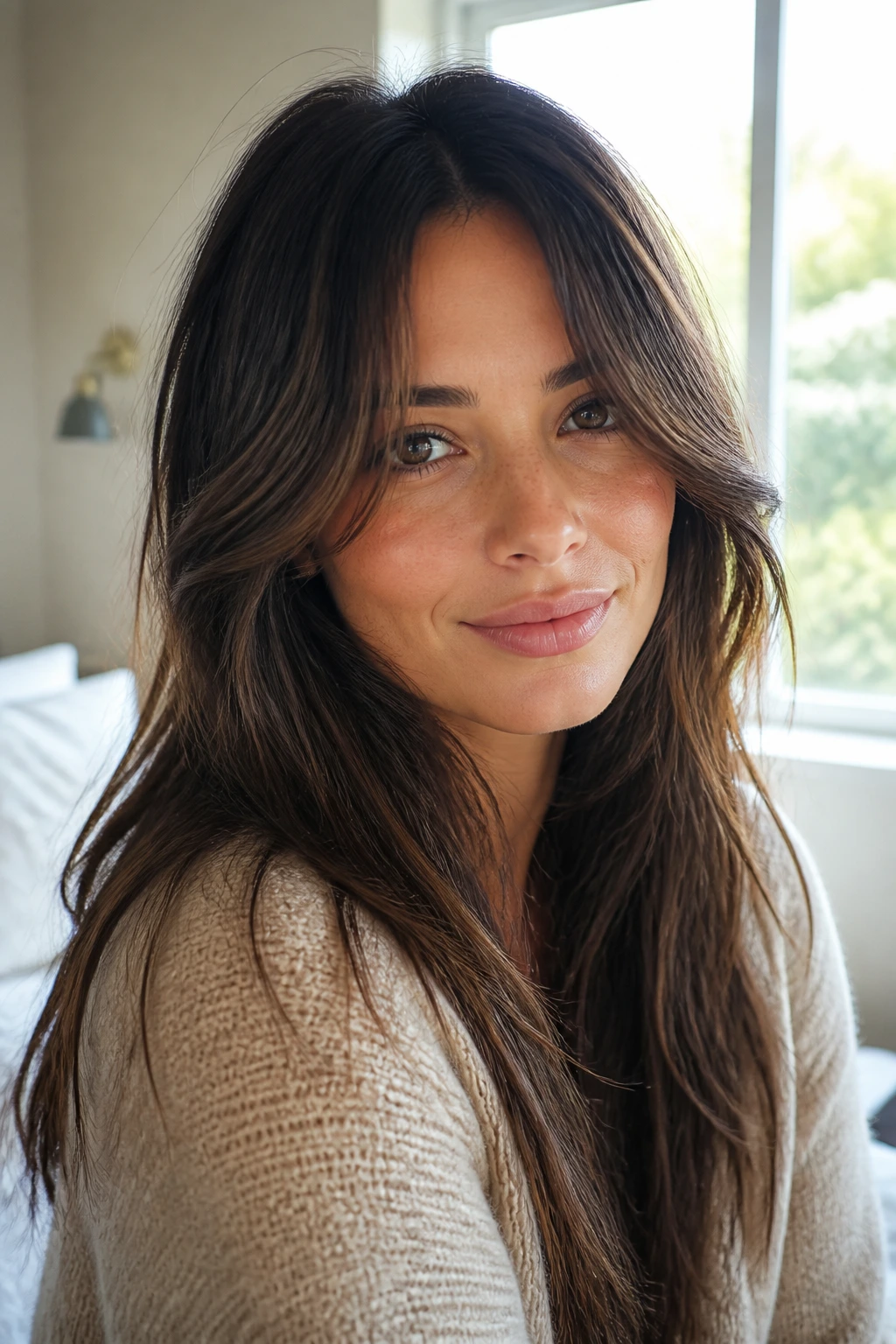
-
They open the face without a hard line: The center split creates space at the forehead, while the longer sides lean into the cheekbones instead of cutting straight across them.
-
They buy you grow-out time: A fringe that starts near the brow and ends near the lip can slide into face-framing layers instead of becoming a weird in-between stage.
-
They can be styled three different ways: A round brush, a flat iron bend, or a rough air-dry can all work if the cut was mapped well.
-
They suit different hair densities: The same shape can feel airy on fine hair, plush on thick hair, or broken up and piecey on wavy hair.
-
They play nicely with other cuts: Bob, lob, shag, wolf cut, long layers, blunt ends — curtain bangs can sit on top of all of them without looking forced.
1. Cheekbone-Skimming Center Split
This is the safest starting point for curtain bangs. The shortest pieces land around the cheekbone, which keeps the fringe visible without making it feel like a separate event on your forehead. It’s the version I’d hand to someone who wants face framing first and drama second.
Why it flatters
The diagonal lines pull the eye down and outward, so the front of the haircut feels softer without losing shape. On straight hair, ask for a soft bevel at the ends. On wavy hair, leave the edges a touch irregular; the movement keeps the split from looking boxed in.
- Shortest point: cheekbone
- Side length: just below the cheekbone
- Best on: medium to long cuts
- Styling: round brush or soft bend with a flat iron
Best move: blow-dry the roots forward first, then sweep each side away from the face for the last few seconds so the split stays loose.
2. Brow-Grazing Feathered Curtain
A brow-grazing fringe changes the whole mood of the cut. It lands high enough to show shape, but the feathered ends keep it from feeling heavy or blunt. If you like seeing a bit more fringe in photos, this is one of the strongest choices.
The trick is weight control. Keep the center light, not shredded, or the bang turns thin at the middle and puffy at the sides. On coarse hair, a small round brush helps the ends fold instead of kick outward. On fine hair, feathering should stay at the perimeter, not buried through the whole bang.
3. Long Layered Blowout Fringe
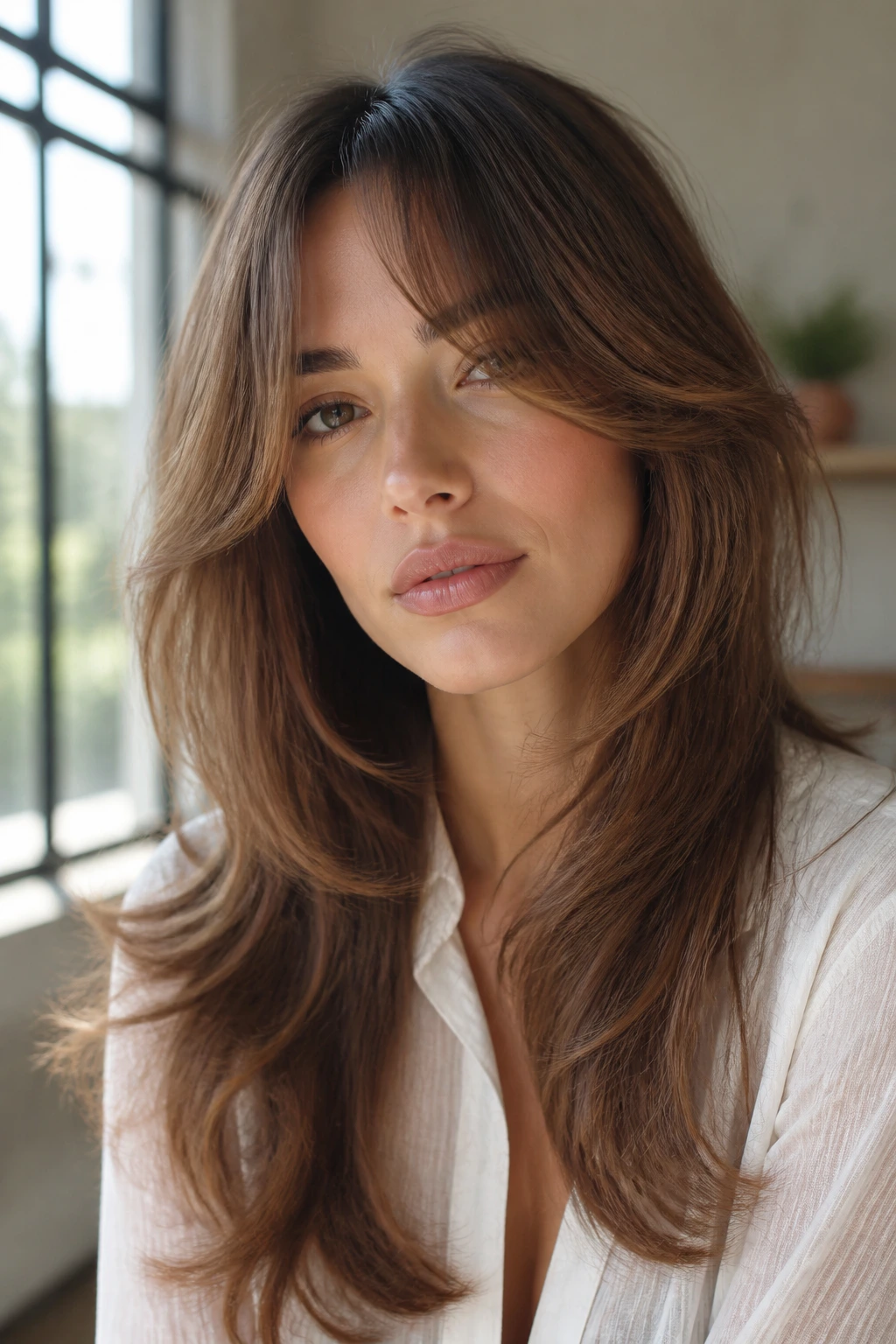
This is the version that melts into the rest of the haircut. The side pieces stay long enough to join the face-framing layers, so the front doesn’t read like a separate block. It works especially well if you wear your hair down more often than up.
The shape wants movement at the cheek and jaw, not a sharp flip. A large round brush gives that soft outward turn. If your hair is pin-straight, keep the corners longer than you think; that extra length prevents the fringe from looking boxy after it cools.
4. Bottleneck Curtain Bangs
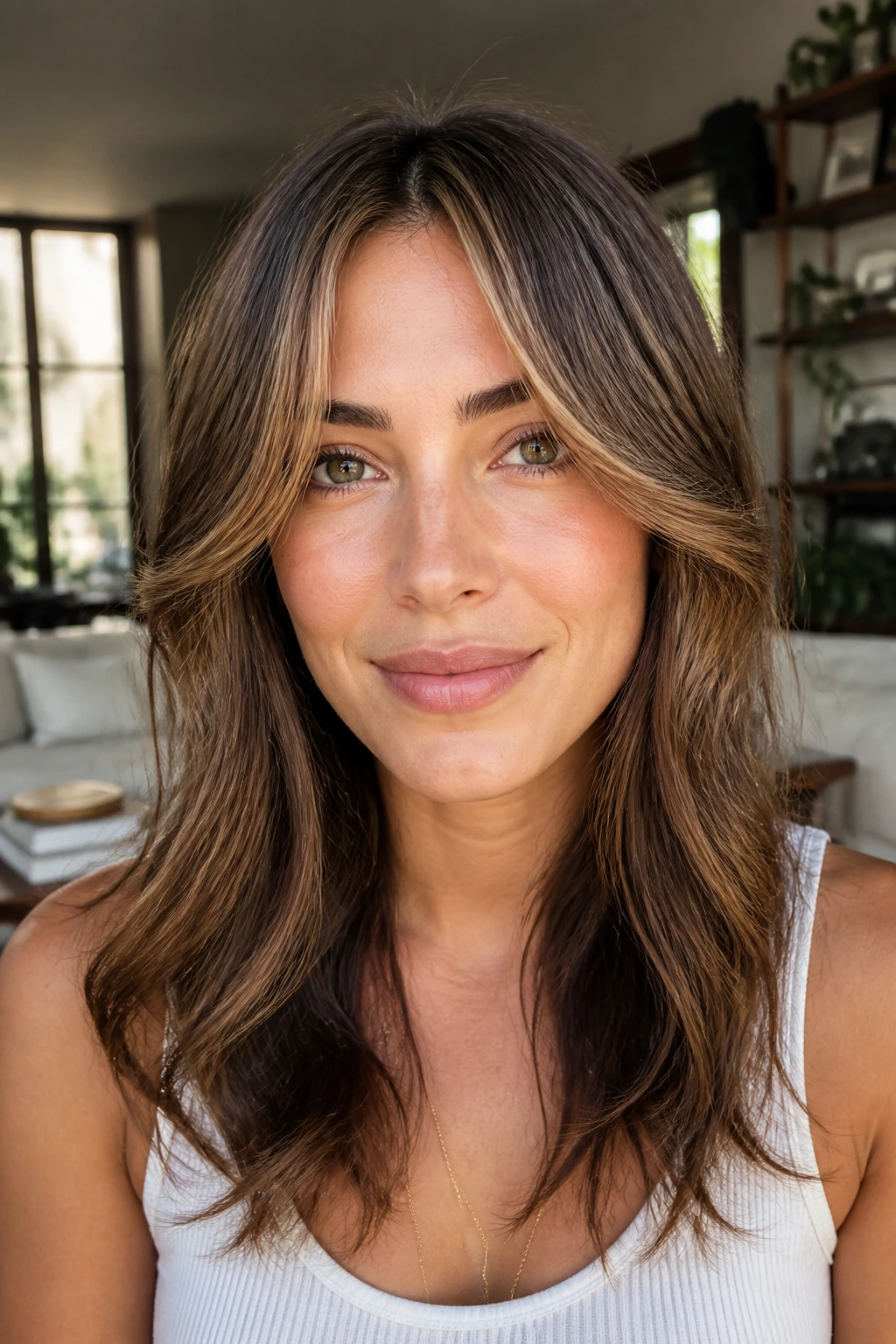
Why does this shape flatter so many faces? Because it starts narrow in the center and opens wider at the sides, almost like a bottle neck before it flares out. That design helps shorten a long forehead without closing off the face.
Ask for the center to stay lighter than the edges. You want the side pieces to carry the visual weight. That keeps the front from sitting as one heavy panel. It’s a smart pick if you want structure but not a full, thick bang.
What to ask for
- Keep the center narrow
- Let the side pieces widen near the cheekbone
- Avoid blunt weight at the brow
- Preserve movement at the temples
5. Soft Wolf-Cut Curtain Fringe

This one likes texture. The fringe is broken up, a little shaggy, and never too polished, which makes it fit a wolf cut or a lived-in shag without looking pasted on. If your hair likes to move around, this cut welcomes that instead of trying to pin it down.
The shortest pieces should still be long enough to sweep, not stand up. A light styling cream on damp hair works better than a heavy serum. Too much product kills the separation, and the whole point here is that the fringe should feel soft and a little undone.
6. Round-Face Lengthening Curtain Bangs
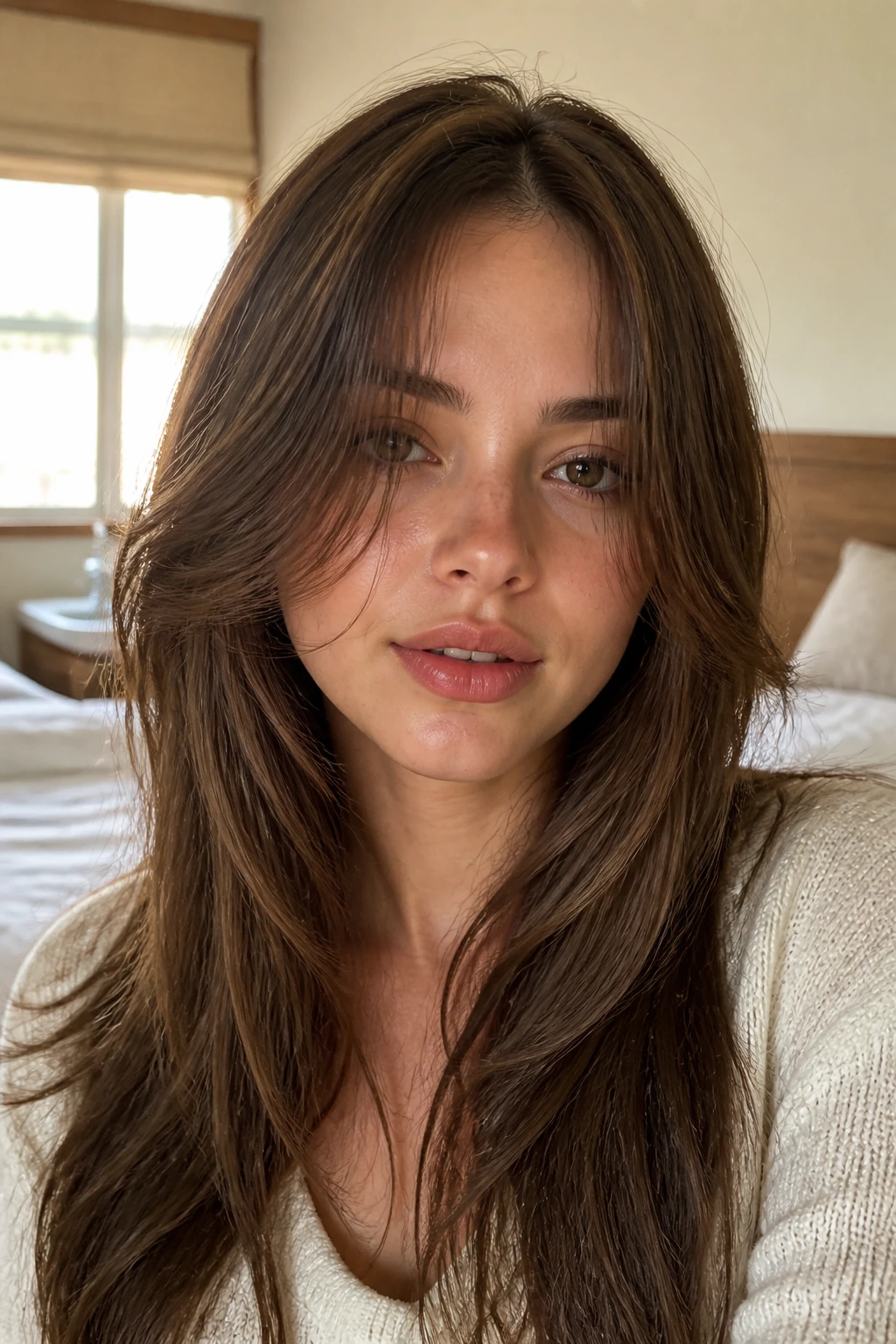
Round faces usually need more vertical line than width, and this version gives it. The shortest point stays lower, while the sides fall past the cheekbone so the eye keeps moving downward. That longer diagonal is what makes the face feel a little stretched in a good way.
How to wear it
Keep the center less dense and the outer pieces longer than the center, with the longest point grazing the upper lip or just below the cheek. That shape narrows the midface without making the forehead look tiny. It also works well with shoulder-length layers, which add even more movement below the bangs.
7. Heart-Face Balancing Curtain Fringe
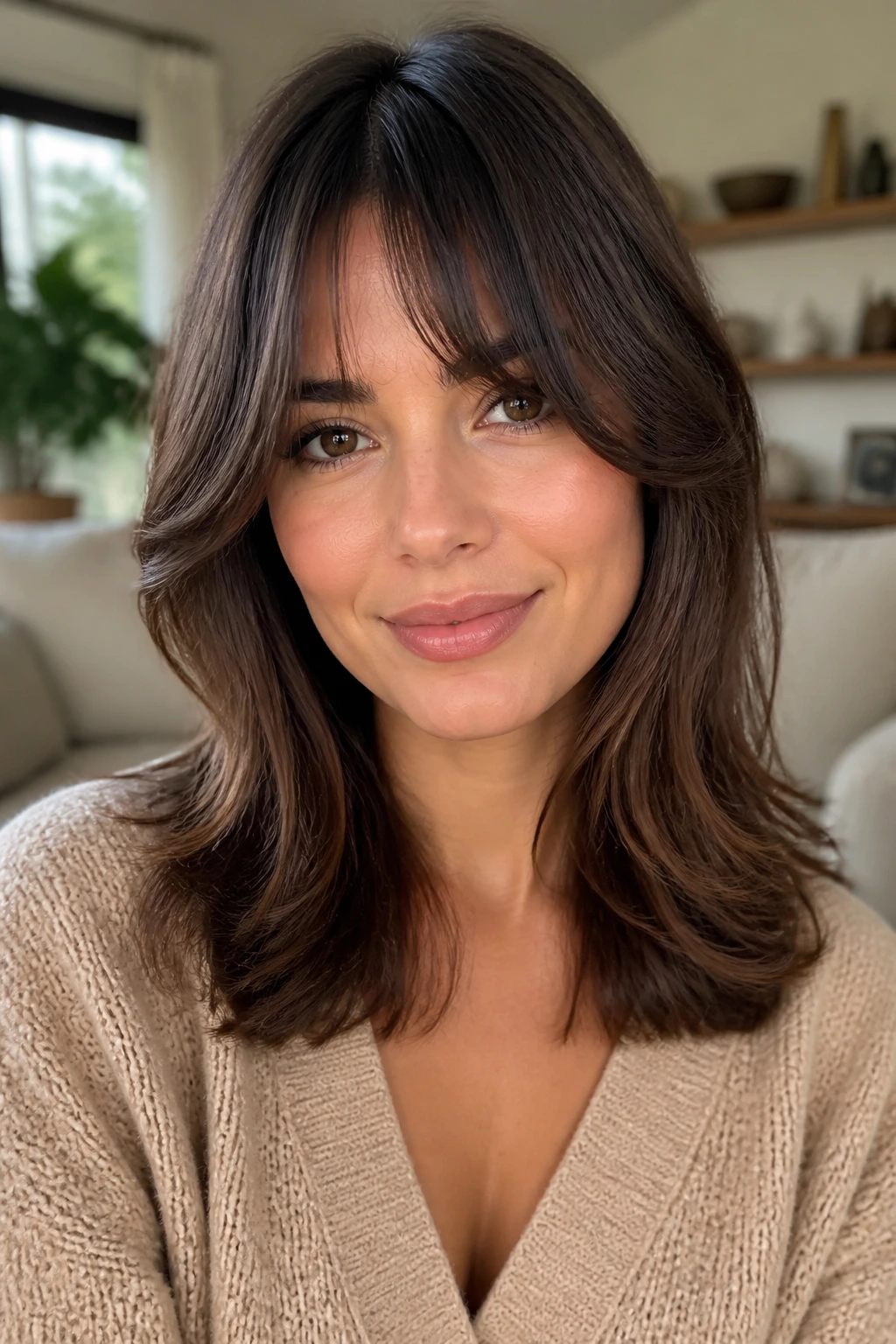
Heart-shaped faces usually need a little more softness below the brow. This fringe does that by adding weight at the sides and keeping the center light. It takes attention off a wider forehead and lets the eye rest lower on the face.
A heart-shaped face can look sharp if the bang is cut too high or too sparse. Keep the outer pieces thick enough to brush the cheekbone. If your hairline is strong at the temples, a tiny bit of extra length there helps the whole shape settle instead of floating above the face.
8. Square-Face Softening Curtain Bangs

Why does this version work so well on square jaws? Because it bends the eye around the face instead of across it. The side pieces should curve softly, almost like they’re rounding off the corners of the haircut.
A blunt, straight center looks too rigid here. Go for a feathered middle and slightly longer sides that skim below the cheekbone. If the ends are too blunt, the bang will echo the jawline in a way that feels boxy. Softness is the whole point.
9. Oval-Face Easy Sweep Curtain Bangs
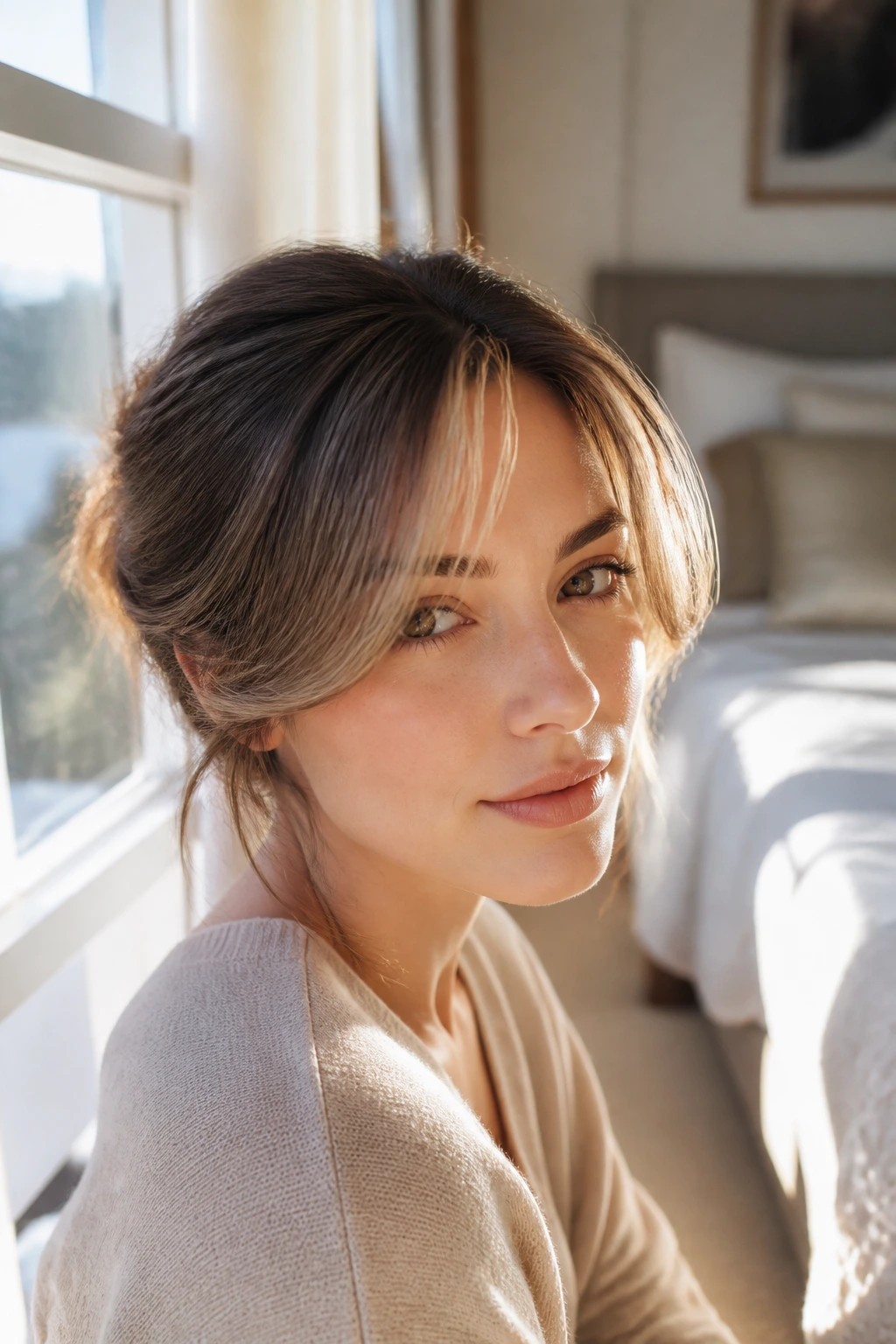
Oval faces can wear almost any curtain bang shape, so the real question is maintenance. If you want a subtle change, go longer and lighter. If you want the front to read more clearly, bring the center closer to the brow and let the sides curve out.
This is one of the few places where texture matters more than face shape. Straight hair can handle a sleeker sweep. Wavy hair can handle a more broken, airy one. An oval face gives you room to choose based on how much time you want to spend in front of the mirror.
10. Thick-Hair De-Bulked Curtain Bangs

Thick hair can swallow a fringe if the weight isn’t removed in the right places. This version keeps the center controlled and trims bulk from underneath so the bangs don’t sit like a shelf. The result should feel light at the forehead, not puffy at the temples.
Cut and finish
- Remove weight from the interior, not just the ends
- Keep the outer lines soft
- Avoid razor-thin pieces that frizz out
- Use a nozzle on the dryer to guide the bend
A thick curtain bang needs shape more than thinning. Too much texture cutting can make the front separate into odd bits. Keep the outline clean, then let the styling add the softness.
11. Fine-Hair Lifted Curtain Bangs

Fine hair needs lift, not a lot of thinning. If you take too much out, the fringe goes stringy and loses the ability to frame the face. A better move is to keep enough density at the center so the split reads clearly, then build shape with a root-lifting blow-dry.
A small round brush and a light mousse at the roots make a bigger difference than a pile of product. The bend should start near the brow or cheekbone and curve away from the face. If the fringe goes too wispy, it disappears into the rest of the cut.
12. Curly Curtain Bangs With a Halo Shape
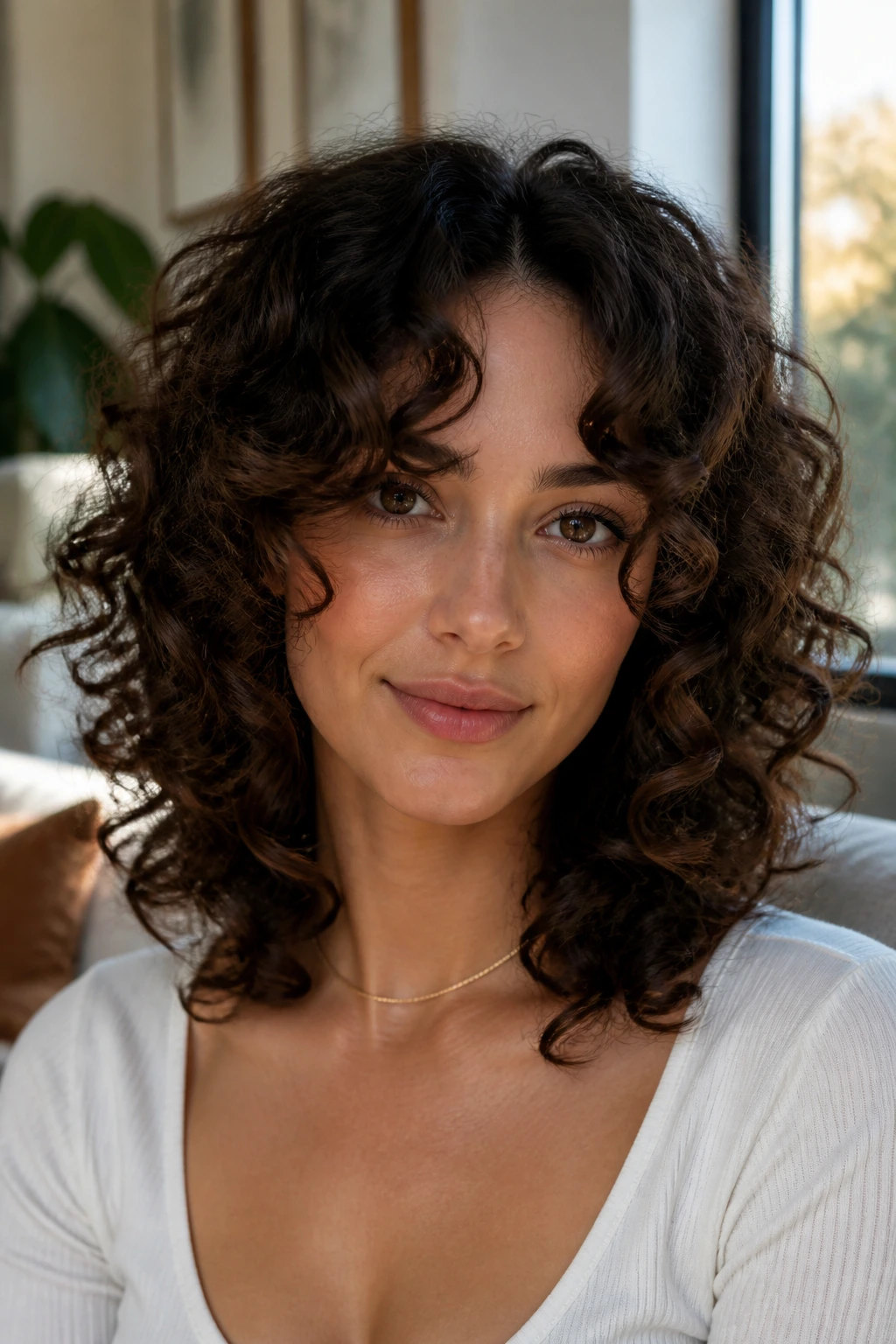
Curly curtain bangs need room for shrinkage. Cut them longer than you think, then let the curls form their own soft halo around the face. If you trim curly bangs wet and chase a perfect length, they’ll spring up and sit too high once dry.
What to watch for
- Cut mostly dry or fully dry
- Leave extra length for shrinkage
- Shape the curl pattern, don’t flatten it
- Use a diffuser or air-dry with clips
This is one of those cuts that looks best when the curls are allowed to sit in their natural shape. The center should open the face, but the sides can keep a little spring and width. That balance makes the style feel alive instead of controlled.
13. Wavy Shag Curtain Fringe
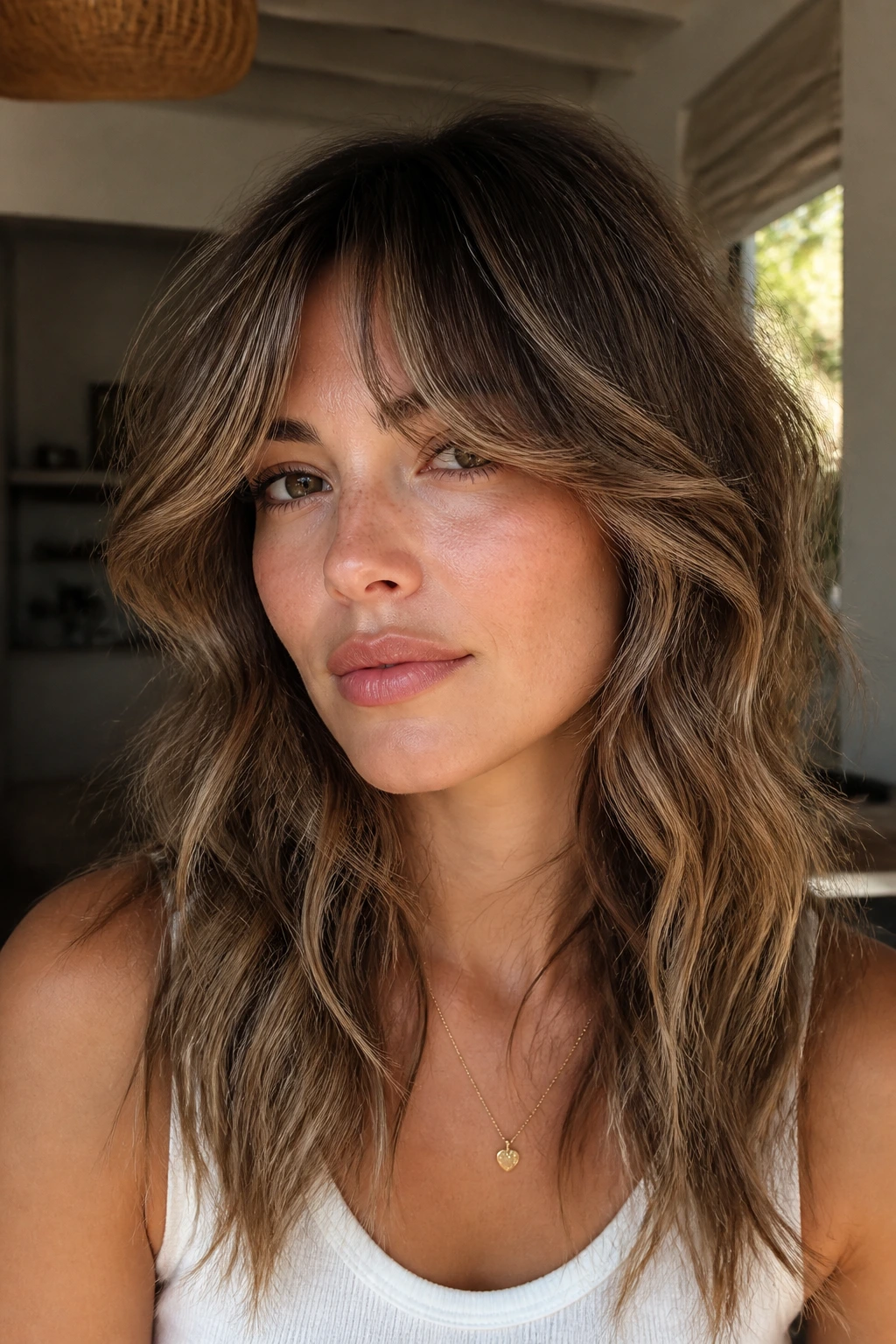
A shag gives curtain bangs somewhere to go. The fringe doesn’t need to sit perfectly; it can feather into the rest of the layers and keep a loose, piecey edge. That makes this one of the easiest matches for hair that already bends on its own.
The strongest version is cut with enough length to swing, not stick. If the ends are too short, a wavy shag fringe can puff up at the sides and lose that clean split in the middle. A little salt spray or texture mist is plenty. Too much and the hair starts to feel crunchy fast.
14. Straight-Hair Sleek Curtain Bangs
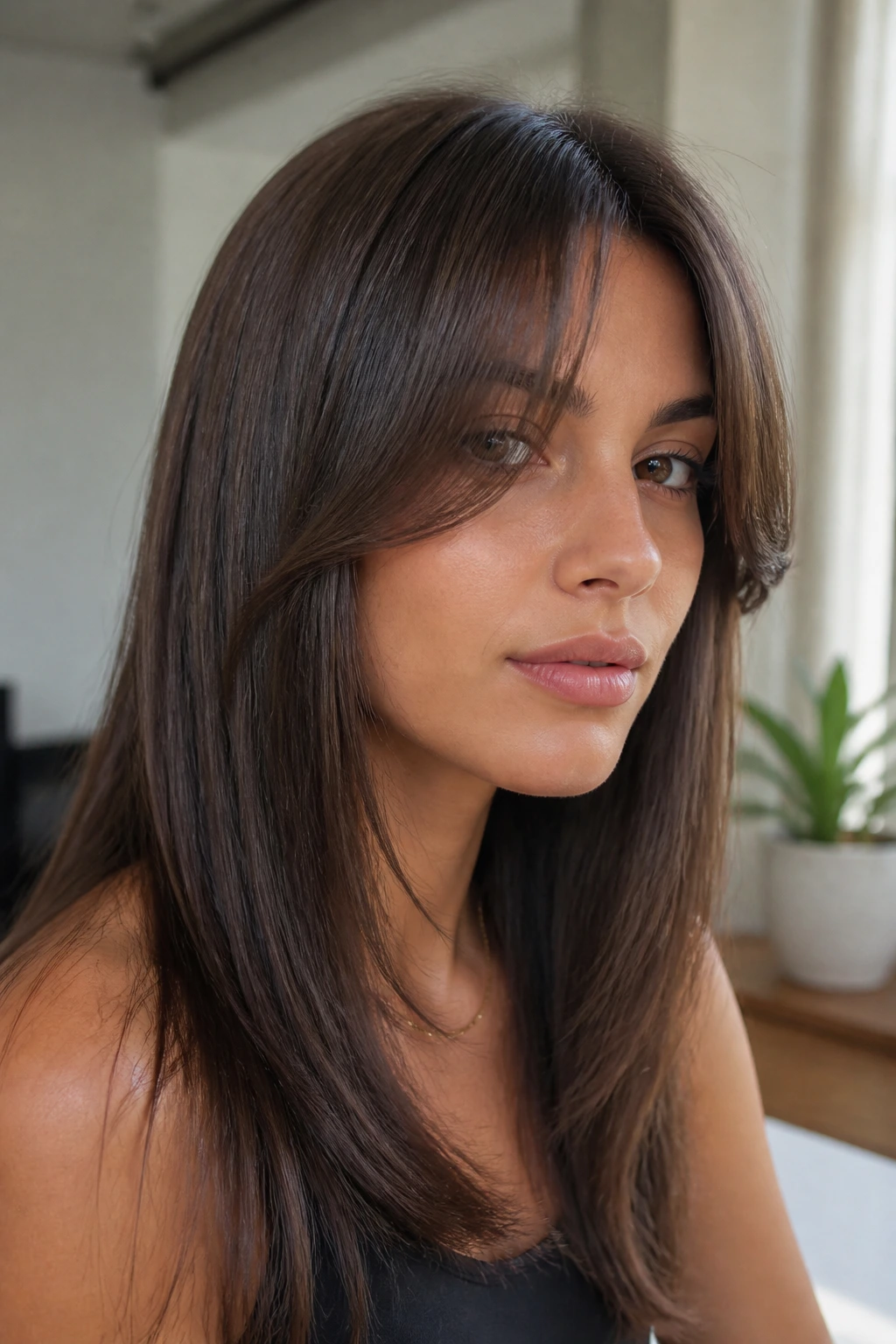
Straight hair can make curtain bangs look sharp, clean, and intentional. The key is adding bend without letting the center flatten against the forehead. A flat iron or a narrow round brush can do it, but the curve has to start early enough to keep the shape from turning limp.
If your hair is very straight, resist the urge to over-layer the fringe. Too much texturizing can make it split in odd places. A smoother outline with a soft turn at the ends usually looks more polished than a shredded, piecey version on this texture.
15. French-Girl Air-Dried Curtain Fringe
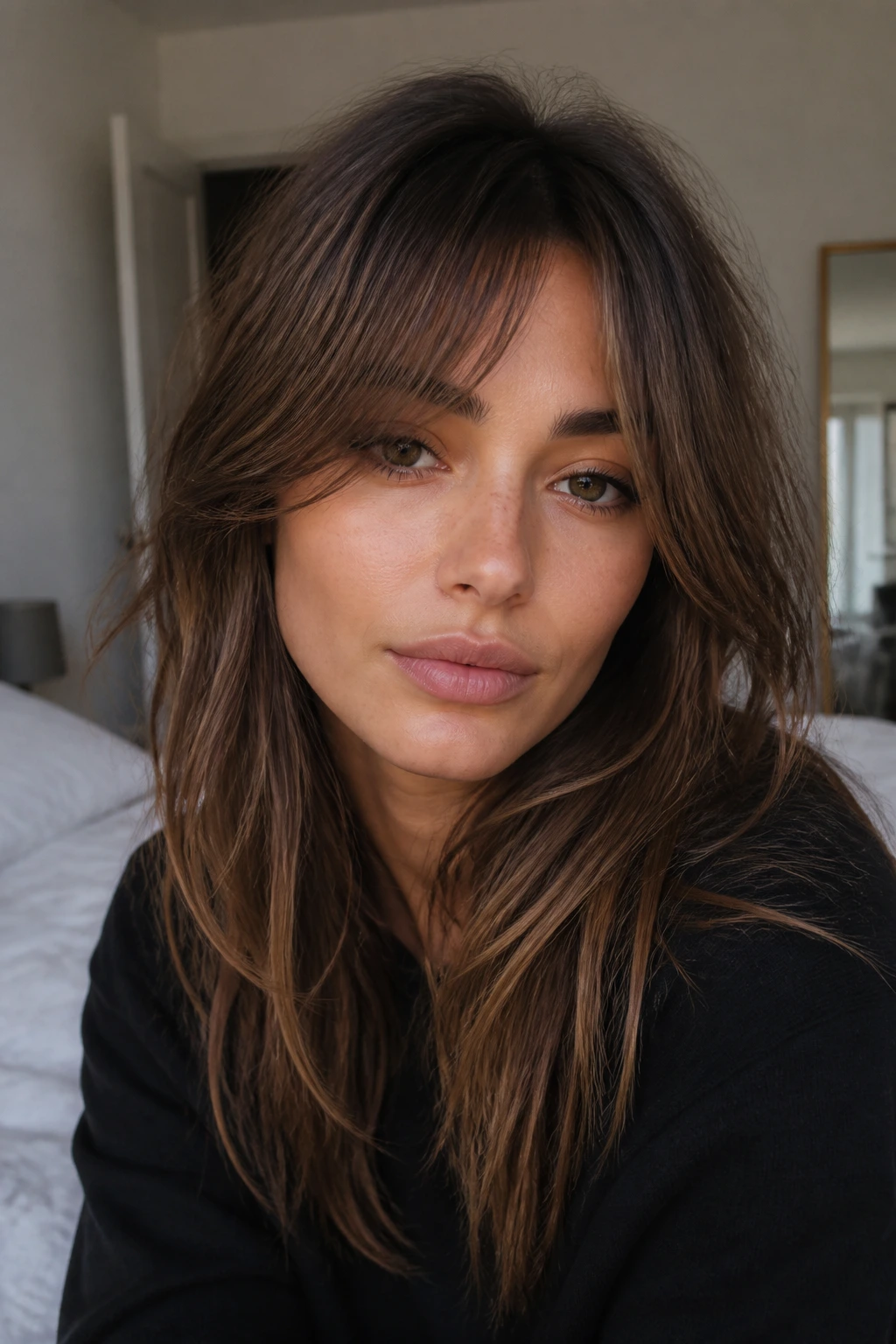
Why does this version feel so easy? Because it doesn’t demand perfect symmetry. The center stays soft, the side pieces stay slightly irregular, and the whole thing reads like it was dried in real life, not engineered in front of a bathroom mirror.
Best styling note
Let the bangs dry with a bit of bend from a clip or a twist, then break them apart with your fingers once they’re dry. Use a tiny amount of cream on the ends only. If product reaches the roots, the airy look collapses fast.
16. Long-Hair Face-Frame Curtain Bangs
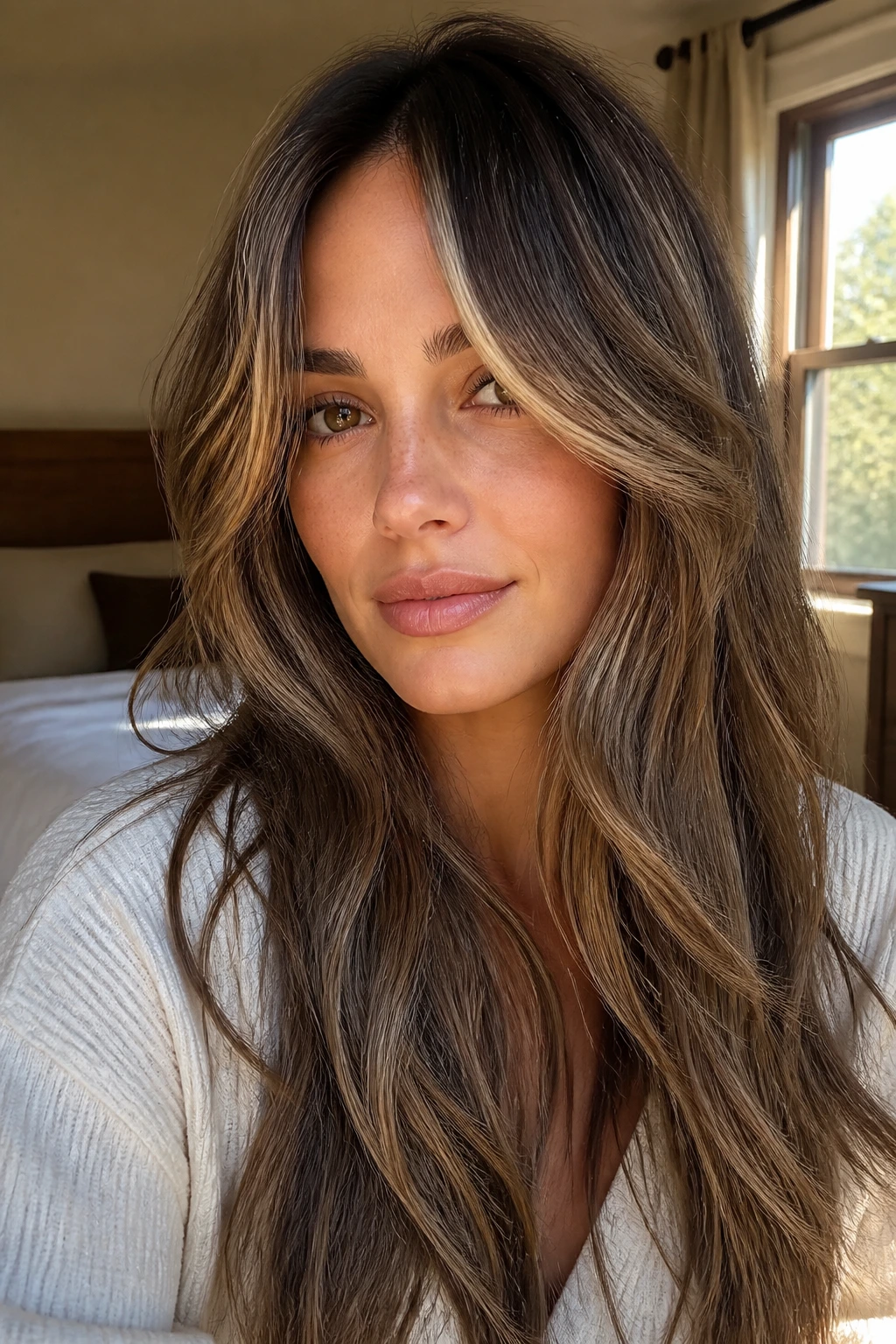
Long hair needs a front shape that can hold its own against all that length. These curtain bangs stay long enough to bridge the gap between the forehead and the rest of the cut. Without that bridge, long hair can make a short fringe look like it belongs to another haircut.
Keep the side pieces generous. They should blend into the front layers and sit somewhere near the mouth or jaw, depending on the overall cut. On very long hair, a soft, center-split fringe can keep the face from disappearing into a wall of length.
17. Lob-Length Collarbone Curtain Bangs

A lob likes a front frame that can keep up with the shoulders. These curtain bangs sit well with hair that lands near the collarbone, because the front pieces echo the movement of the cut instead of floating above it. The result feels balanced and easy to wear.
The best version lands a little below the brow in the center, then opens out so the side pieces hit around the cheek or upper lip. That gives the lob some swing at the front and keeps the haircut from feeling too straight. It’s a clean choice for people who want shape without too much styling time.
18. Short-Bob Soft Curtain Fringe

What does a bob need when it starts to feel boxy? A front opening. Curtain bangs break up the top line of a short bob and stop the haircut from looking like one solid shape.
A soft version works better than a heavy one here. Keep the fringe light enough to move, but not so wispy that it disappears. If the bob has strong edges, the bangs should counterbalance them with a little curve. That contrast is what keeps the cut from feeling helmet-like.
19. Retro ’70s Feathered Curtain Bangs
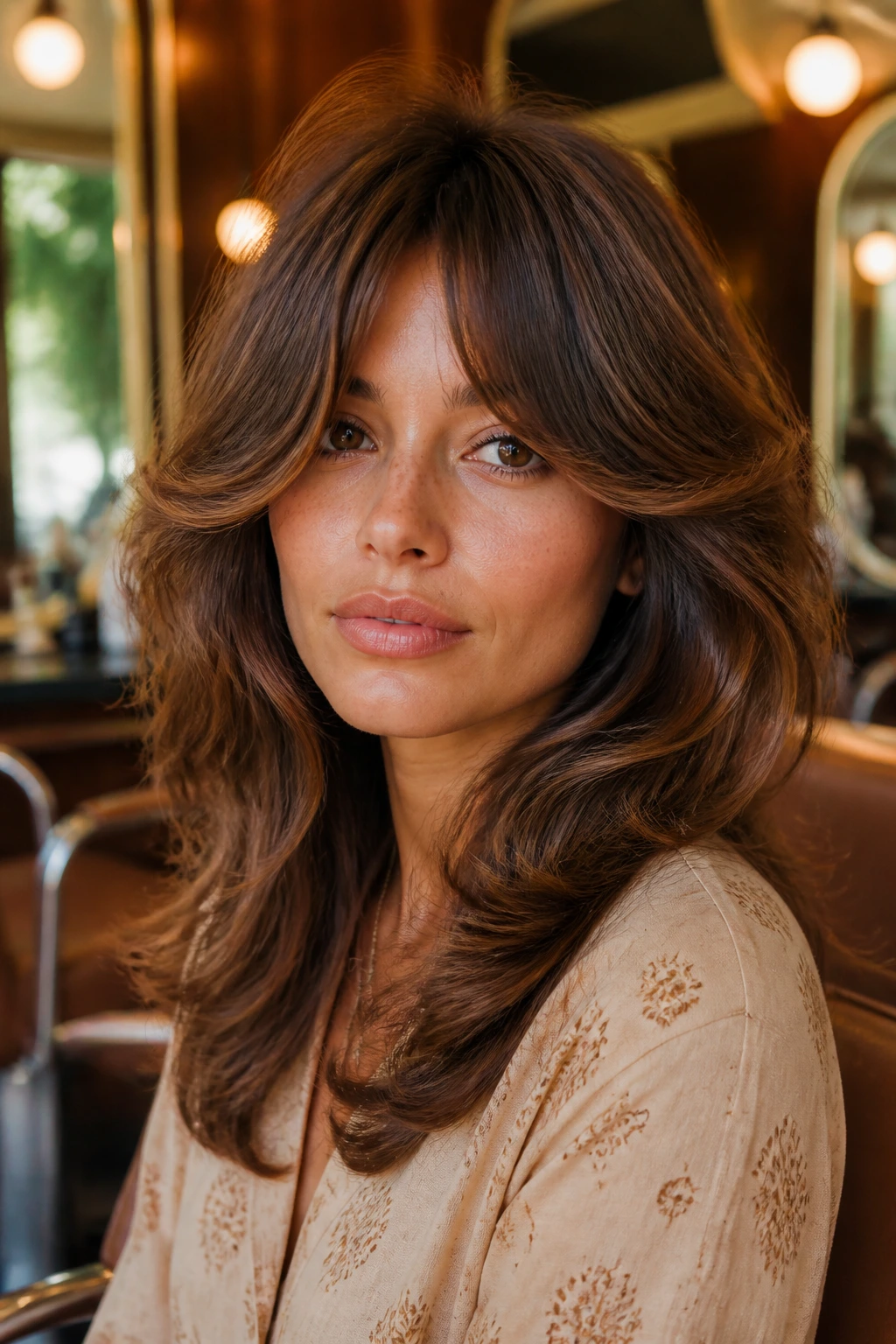
This is the most obviously styled version in the bunch. The fringe flares out from the face with a clear bend, almost like a blowout from a good salon chair. If you like volume at the crown and a lifted front, this shape does a lot of the work for you.
Styling shape
- Use a round brush with a little tension
- Roll the ends away from the face
- Let the roots cool before touching them
- Keep the center airy, not flat
It’s a stronger look than a whispery fringe, and that’s the point. On medium to thick hair, the feathering gives movement without making the front sparse. On fine hair, it needs a lighter touch so the volume doesn’t collapse by noon.
20. Side-Part Curtain Bang Hybrid
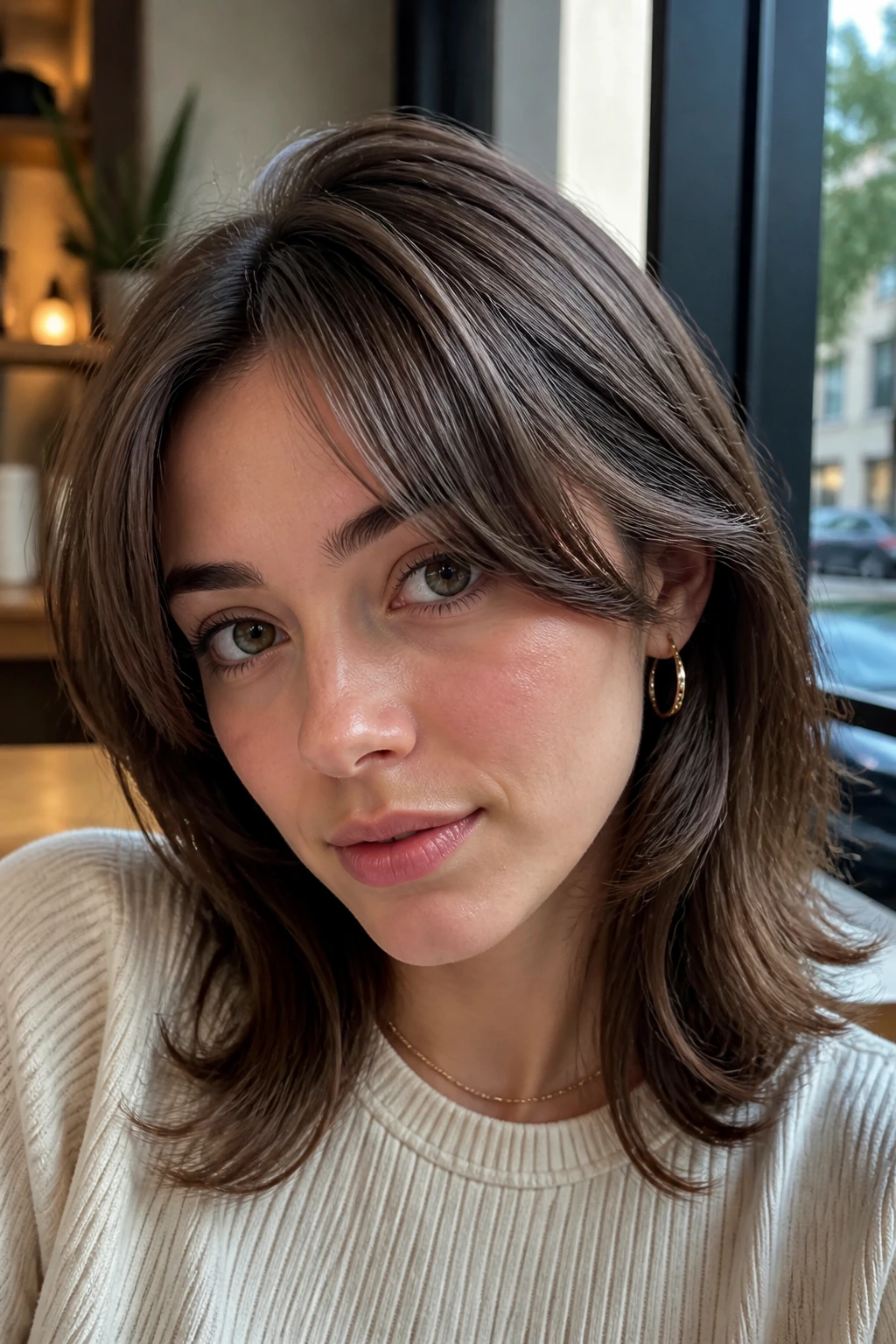
Not everyone wants a dead-center part. This hybrid keeps the curtain idea but shifts the part slightly off-center, which helps if your hair naturally falls that way or if a middle part shows a strong cowlick. The front still opens, just with a little more asymmetry.
That slight shift can make the style easier to wear day to day. One side usually looks fuller, and the other side stays a touch shorter. The cut still frames the face, but it does so with less fuss. If you have a stubborn part line, this version can feel far more cooperative.
21. Grown-Out Curtain Bangs That Still Look Intentional
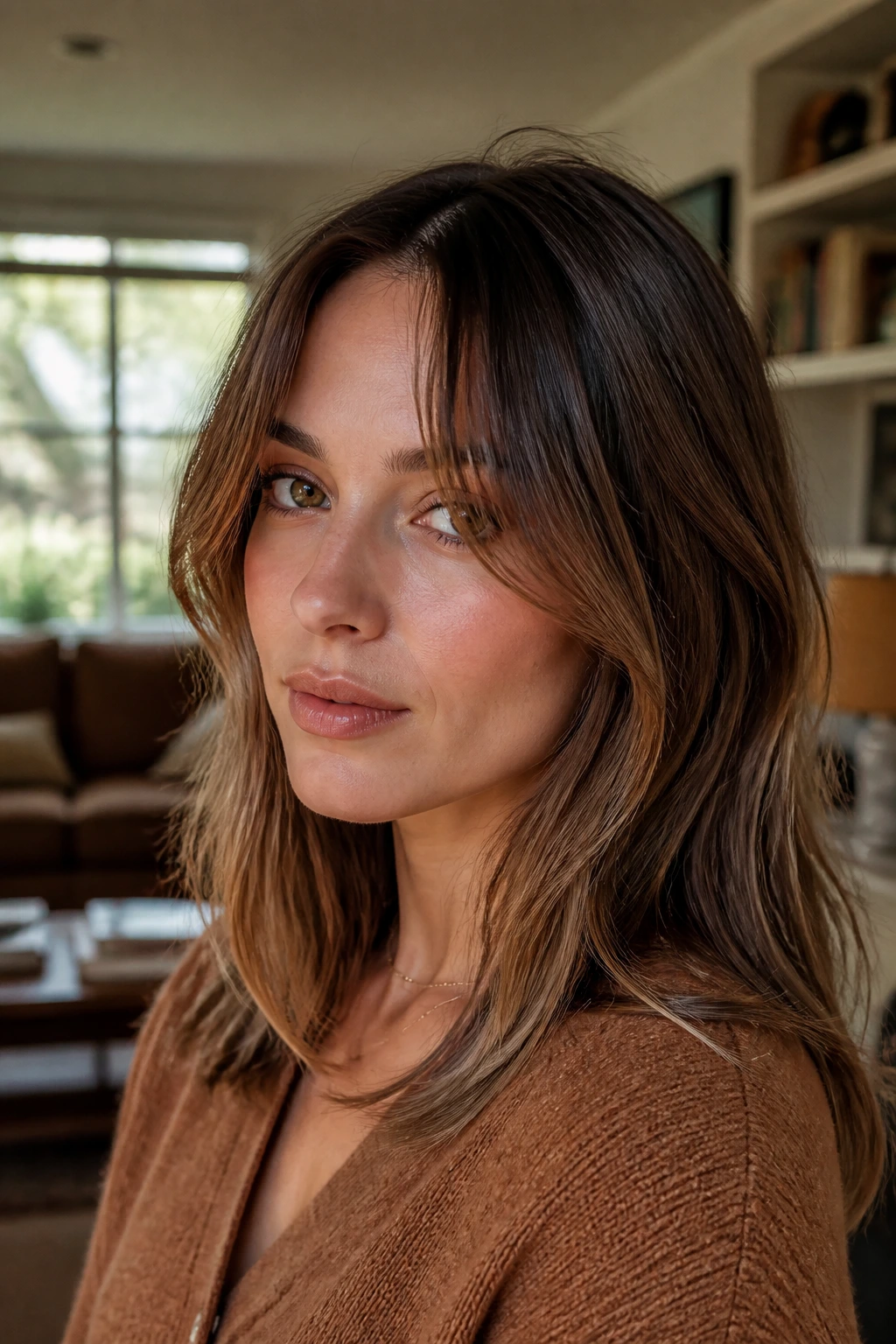
This is the bang that proves grow-out can look good. When the shortest pieces reach the lip or chin, stop forcing them back into a short fringe. Let them become part of the face frame and keep the split soft.
The shape works because it never fights the length you already have. A slightly off-center part, a bend at the cheek, and a few face-framing layers can make grown-out bangs look designed, not abandoned. If you’ve been between styles for a while, this is the friendly version.
22. Compact Curtain Bangs for Smaller Foreheads
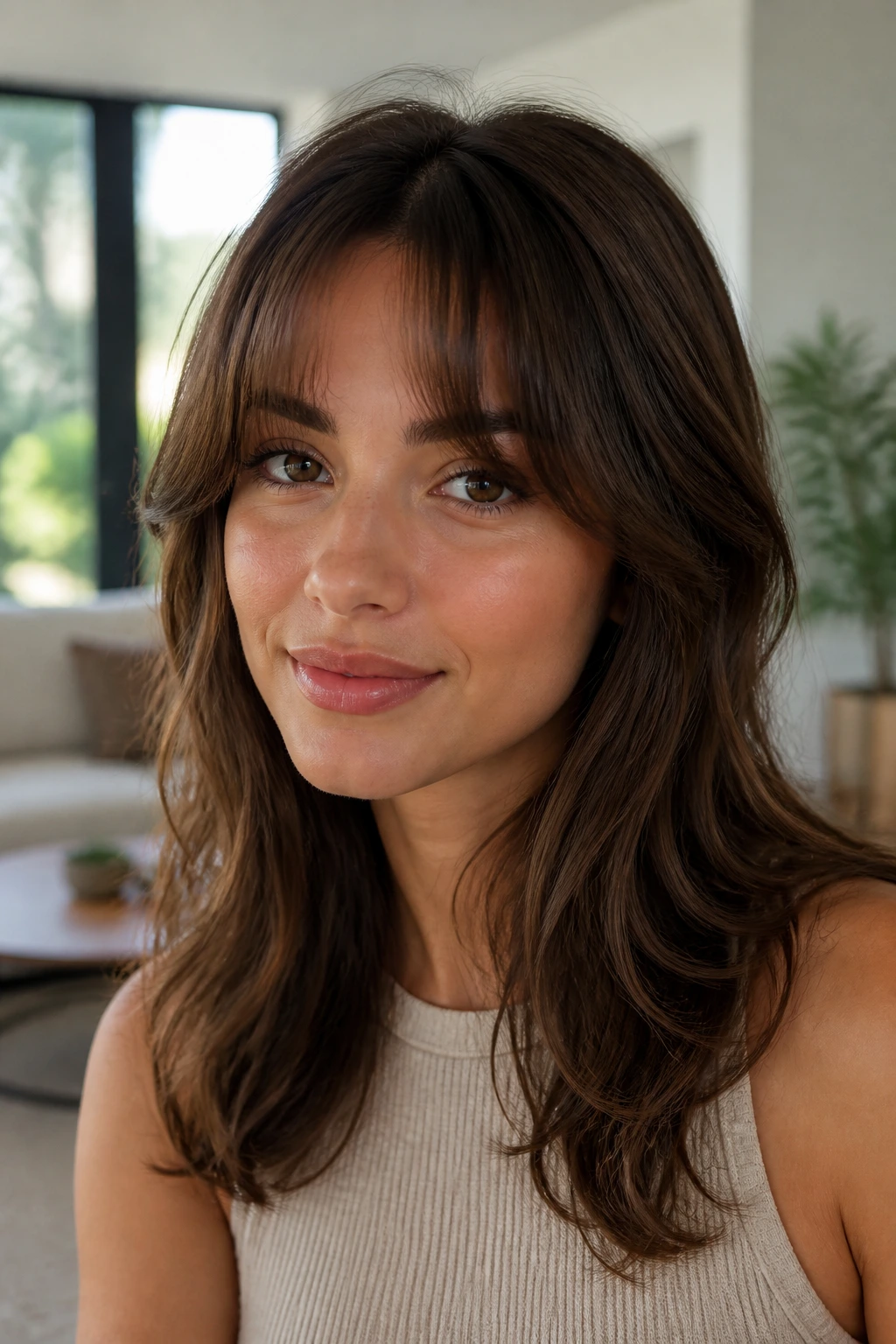
A small forehead doesn’t rule out curtain bangs. It just means the center needs to stay compact and the sides need to do more of the softening. Too much length in the middle can crowd the face fast.
Keep the shortest pieces near the brow rather than above it, and let the sides open out enough to show skin around the temples. That opening keeps the front from feeling heavy. If you wear glasses, this shape can sit neatly above the frame without bunching.
23. Dense Full-Coverage Curtain Fringe
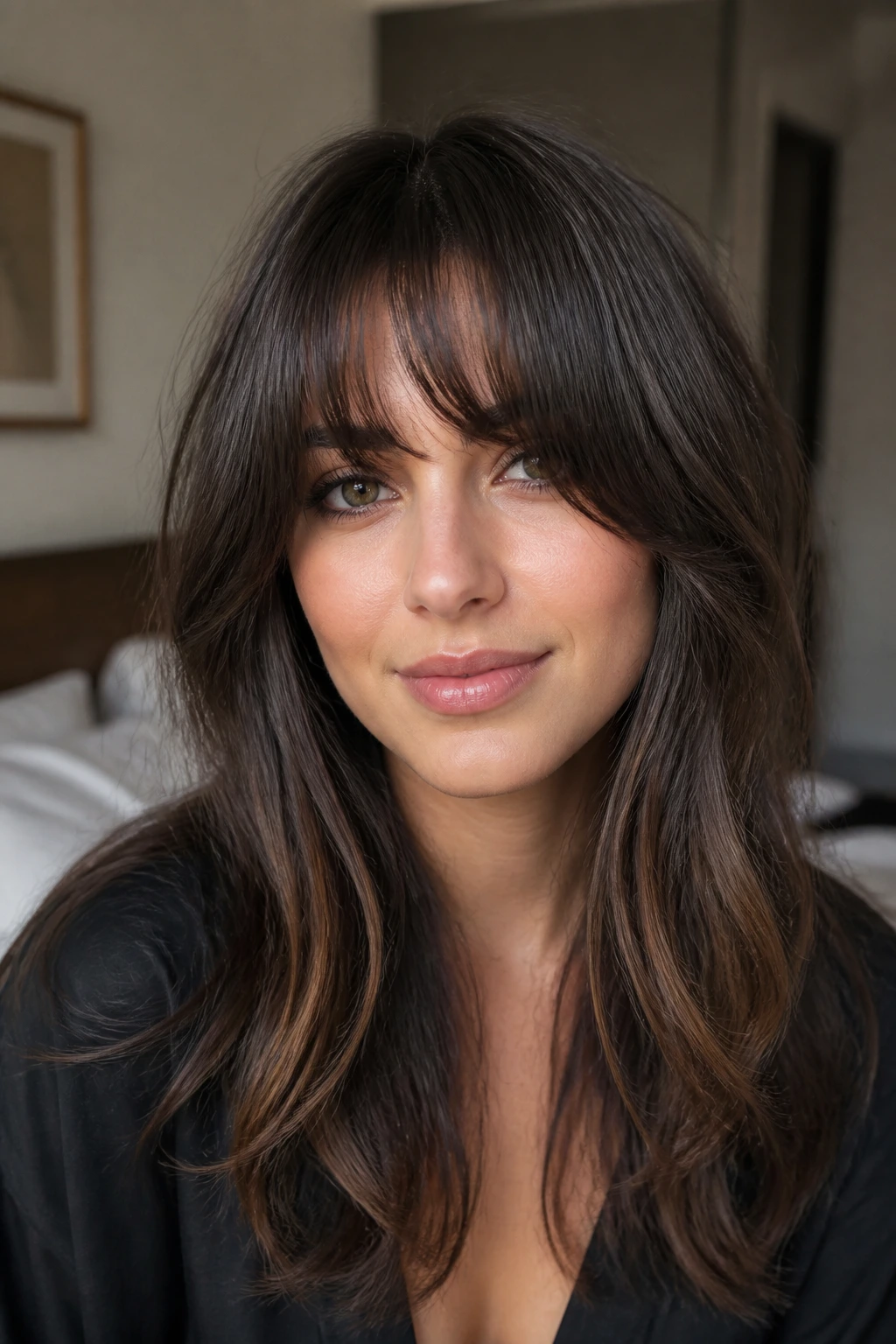
This is the opposite of wispy. The fringe carries more weight at the center, which gives it a plush, finished look on thick hair or on anyone who wants the front to read more clearly. It’s not shy, and that’s exactly why it works.
When it makes sense
- Thick hair that needs control
- Strong brow lines that look better with coverage
- Layered cuts that need a full front anchor
- Anyone who wants the bangs to stay visible from across the room
The only real mistake here is thinning too aggressively. A dense curtain fringe should still move, but it should not turn into a see-through net over the forehead. Keep the edge soft and let the body stay full.
24. Wispy See-Through Curtain Bangs
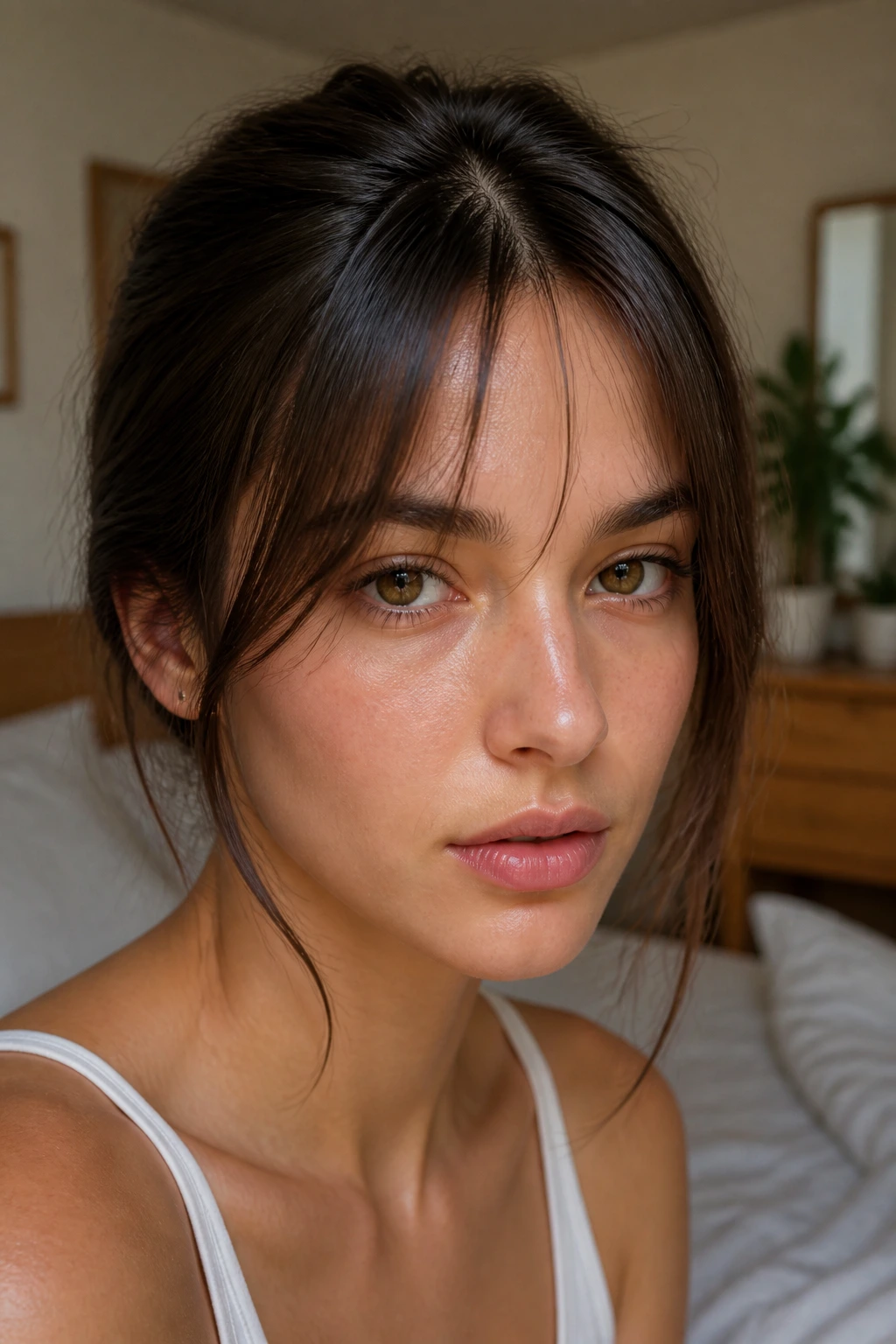
Wispy curtain bangs only work when the sparsity is deliberate. The pieces should look airy, not undercut. That makes them a smart choice for fine hair or for anyone who wants a light frame without giving up much forehead.
The center can stay narrow while the side pieces trail off softly at the cheekbones. A little texture spray helps, but not too much. Heavy product turns wispy bangs stringy fast. If your hair is naturally soft, this style can look expensive in the plainest sense of the word: clean, light, and not overworked.
25. High-Volume Round-Brush Curtain Bangs
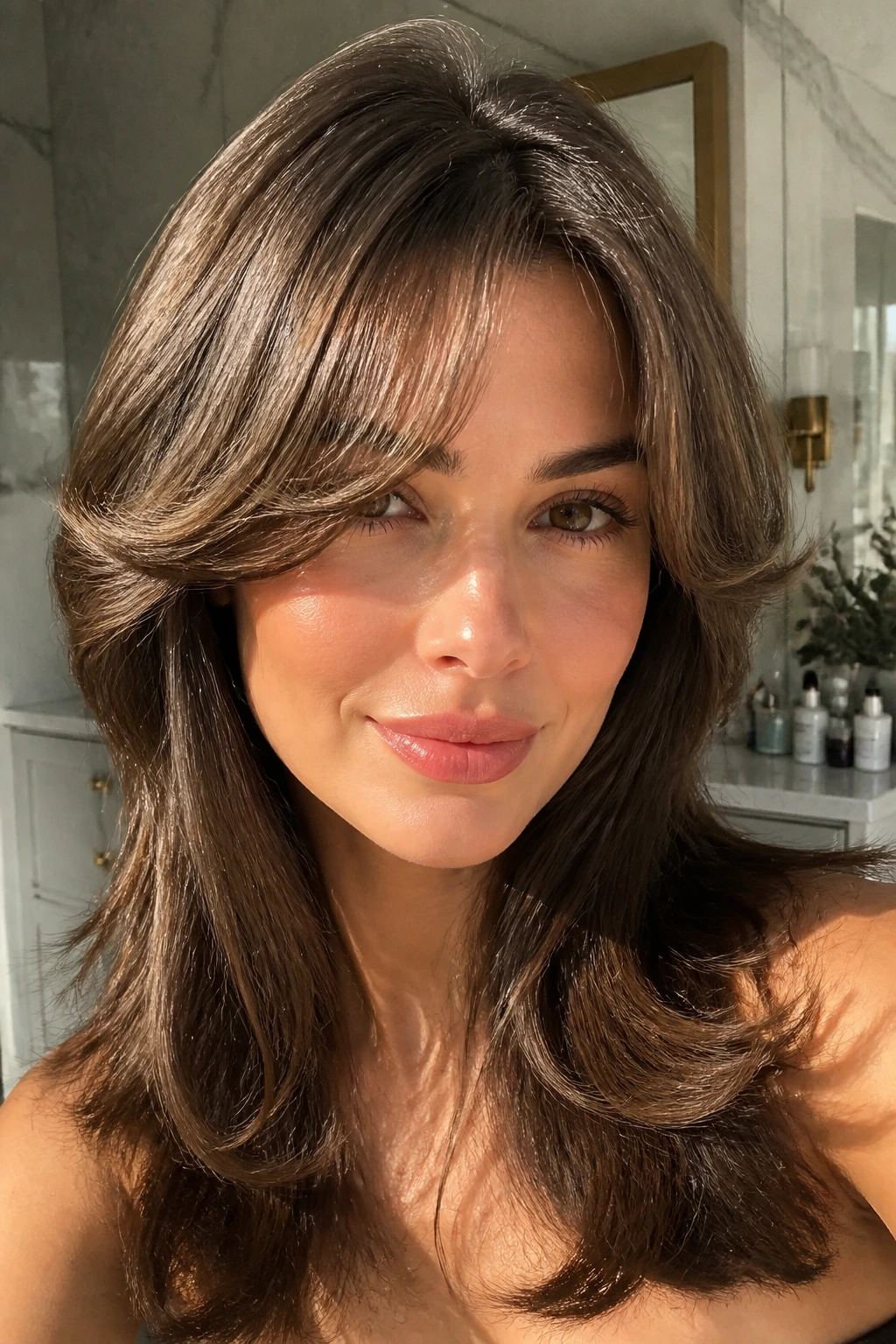
This is the salon-blowout version people keep saving to their camera rolls. The bangs have lift at the roots, bend through the middle, and a smooth outward turn at the ends. The round brush does most of the shape work here, so the cut has to leave enough length to roll.
Best use case
- You like polished hair
- You already blow-dry your fringe
- Your hair holds a bend once cooled
- You want lift without teasing
If the roots flatten too soon, the style loses its shape fast. Cooling the bangs in clips for a minute or two helps a lot. It’s a small detail, but it keeps the front from collapsing before you even leave the house.
26. Flat-Iron Bend Curtain Fringe
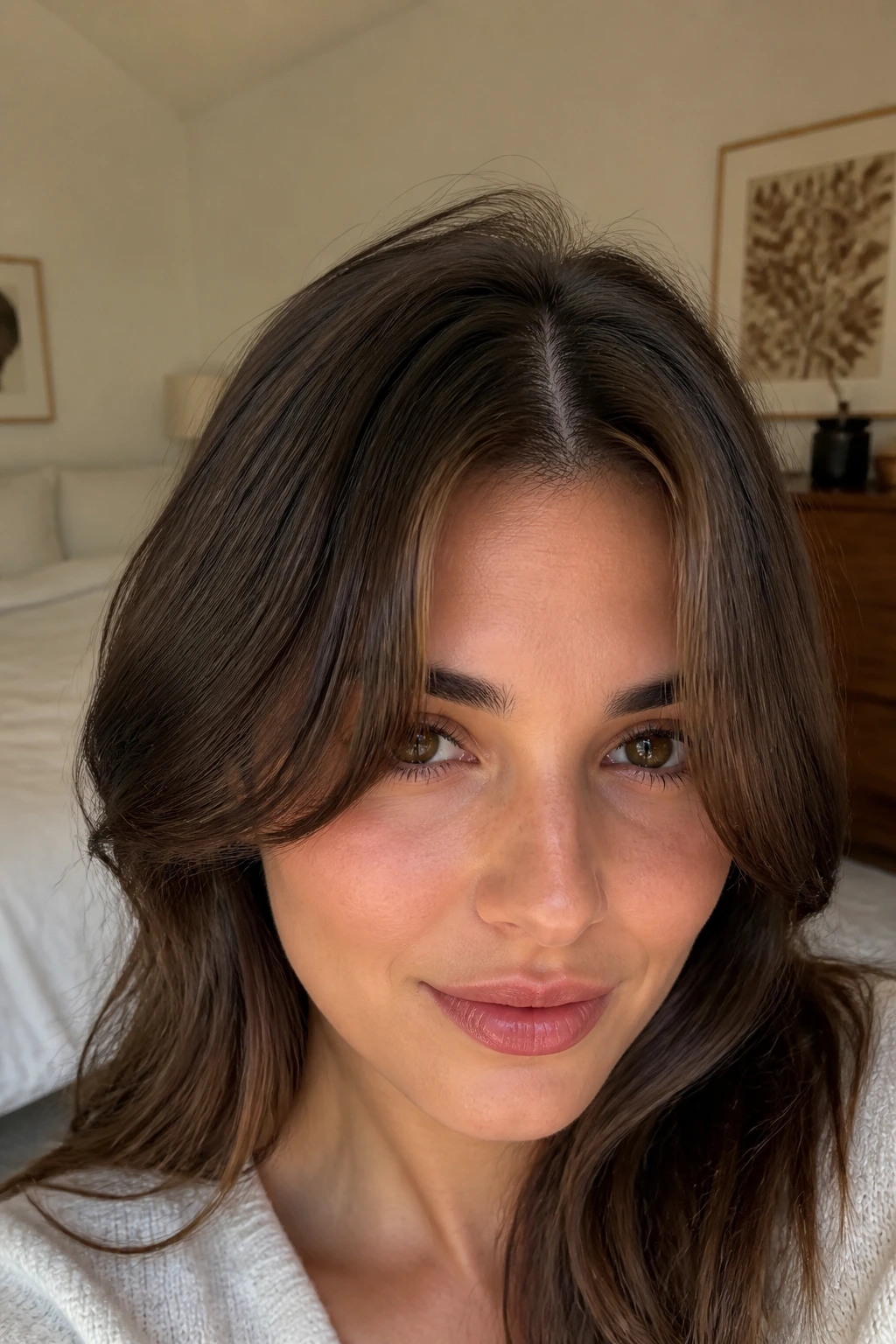
Some mornings do not allow a full round-brush session. This version is built for a quick bend with a flat iron, which makes it useful for straight hair or for anyone who wants a cleaner finish. The curve should start softly, not in a hard kink.
The cleanest version
- Dry the fringe fully first.
- Clamp a small section near the root.
- Rotate the iron away from the face in one smooth motion.
- Let the hair cool before touching it.
That’s enough to make the split read like a curtain instead of two flat strips. A tiny bit of heat protectant goes a long way here. Too much product can make the bend slide out.
27. Air-Dry Texture Curtain Bangs
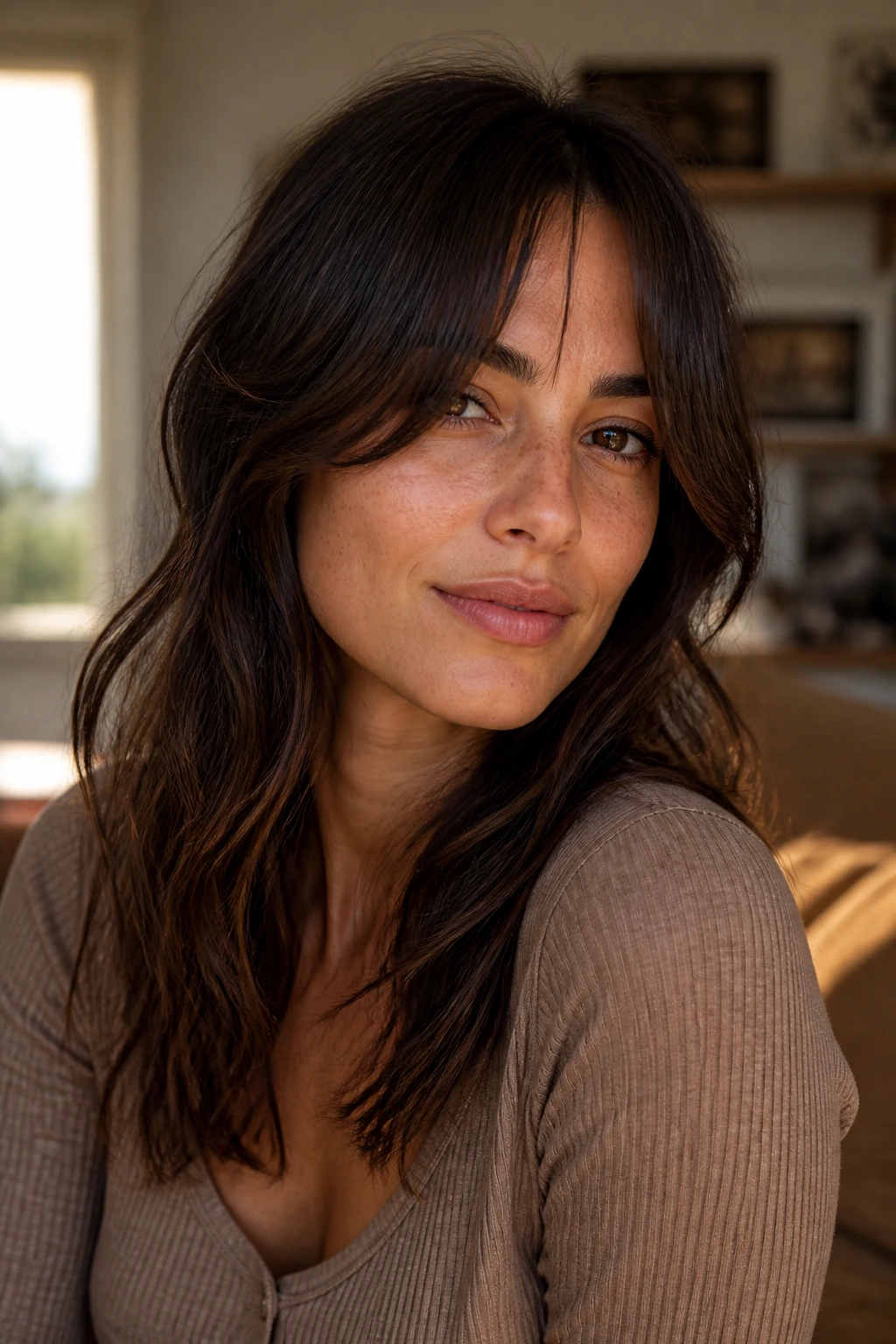
This is the low-fuss option that still looks shaped. The bangs keep some movement, but they don’t rely on a full blowout. If your hair already bends on its own, this style can be more forgiving than a polished fringe that needs daily coaxing.
How it behaves
- Works best on wavy or loose curly hair
- Needs a clip or twist while drying
- Likes light cream, not heavy oil
- Looks better slightly imperfect
The real trick is letting the roots dry in the right direction before the sides take over. A quick reset with fingers or a soft comb can be enough. If you want a front frame that doesn’t demand a hot tool every day, this is the practical version.
28. Humidity-Friendly S-Shaped Curtain Fringe
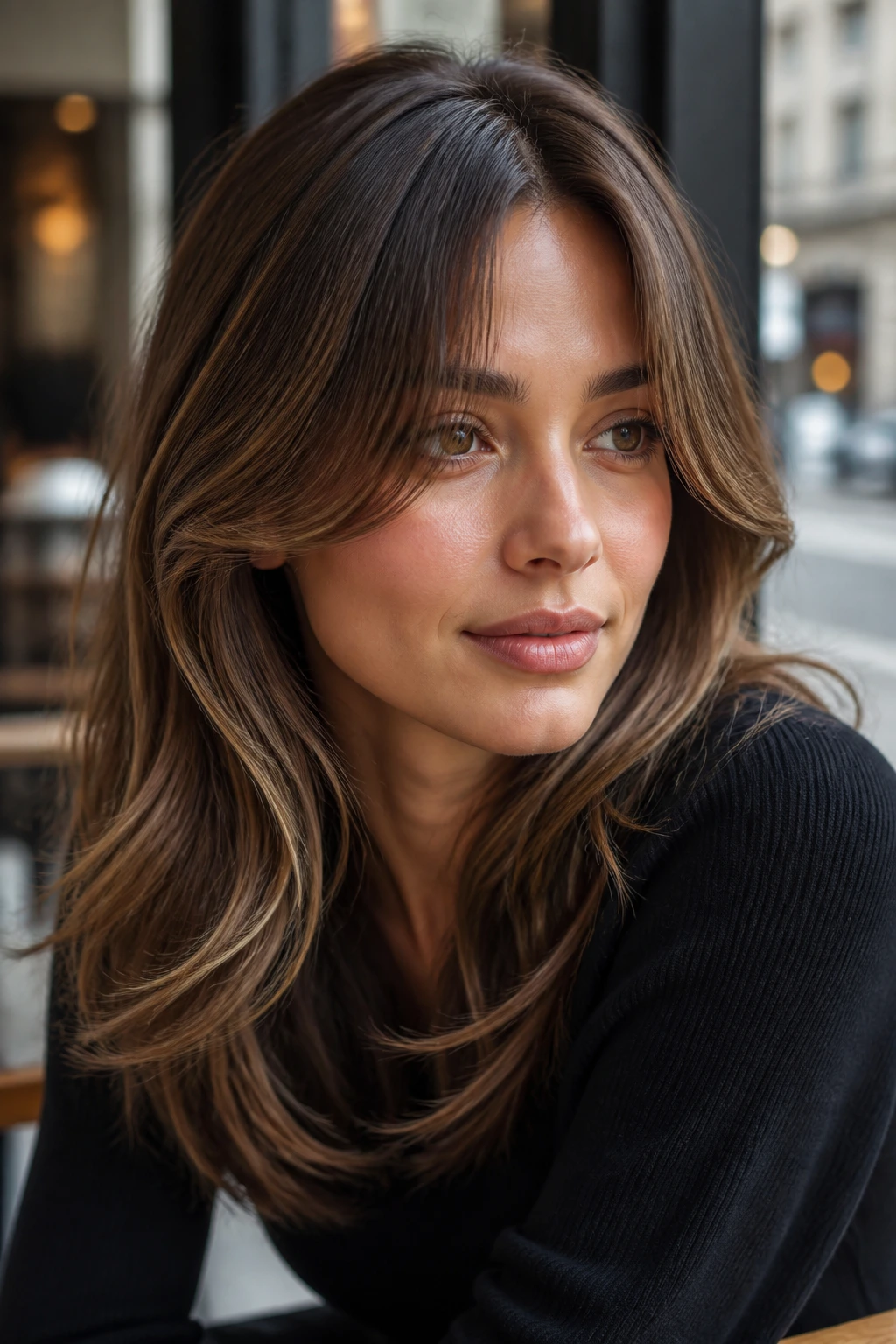
Why does humidity ruin some fringes and leave others alone? Because the shape is too sharp. An S-shaped curtain fringe uses a softer, longer curve, which gives the hair a better chance of staying put when the air turns sticky.
Longer side pieces help here, too. They don’t bounce up as much as short ones do. Keep the product light and flexible; a sticky cream or heavy serum will pull the front down and make the split look greasy. The S-shape should feel soft, not stiff.
29. Face-Framing Layers With a Soft Center
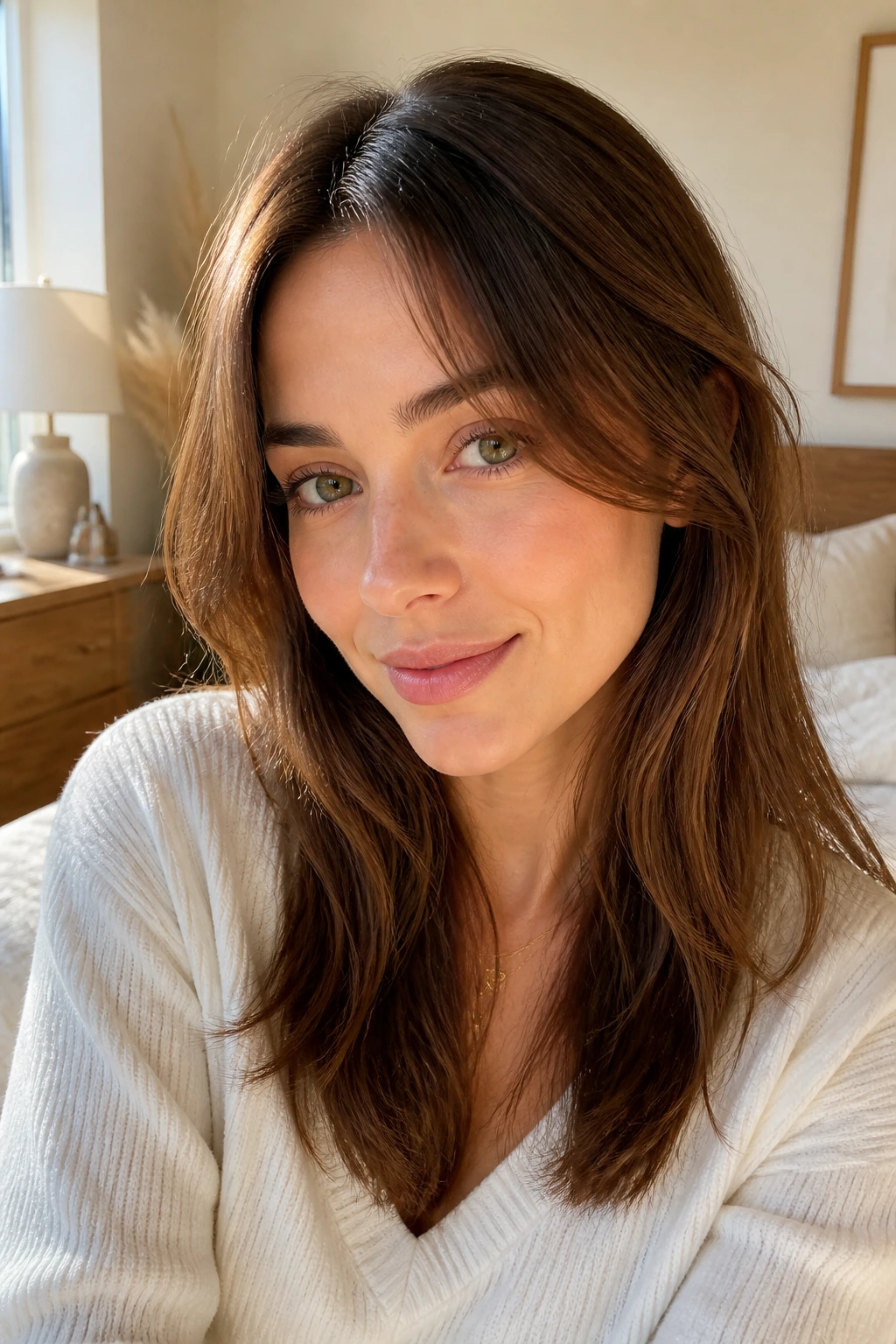
This is barely a bang, and that’s the charm. The center stays subtle while the side pieces do most of the framing. If you like the idea of curtain bangs but don’t want obvious forehead coverage, this is the quiet version.
It works especially well on hair that already has layered movement. The front pieces can be brushed away from the face or tucked behind the ears without losing shape. That flexibility matters. Some people want bangs; some people want the suggestion of bangs. This cut gives the second option.
30. Temple-Softening Curtain Bangs

A strong temple line can make the front of a haircut feel severe. This version softens that area by letting the side pieces fall a little fuller there, while the center stays light enough to open the face. It’s subtle, but the effect is real.
What helps
- Keep the sides a touch longer
- Do not over-thin the temple area
- Use a soft bend, not a hard flip
- Blend the fringe into front layers
This style also works for people who wear their hair back a lot. Even when the rest of the hair is tied up, those front pieces relax the hairline. That’s a small thing, but small things are where flattering haircuts live.
31. Chin-Length Open Curtain Fringe
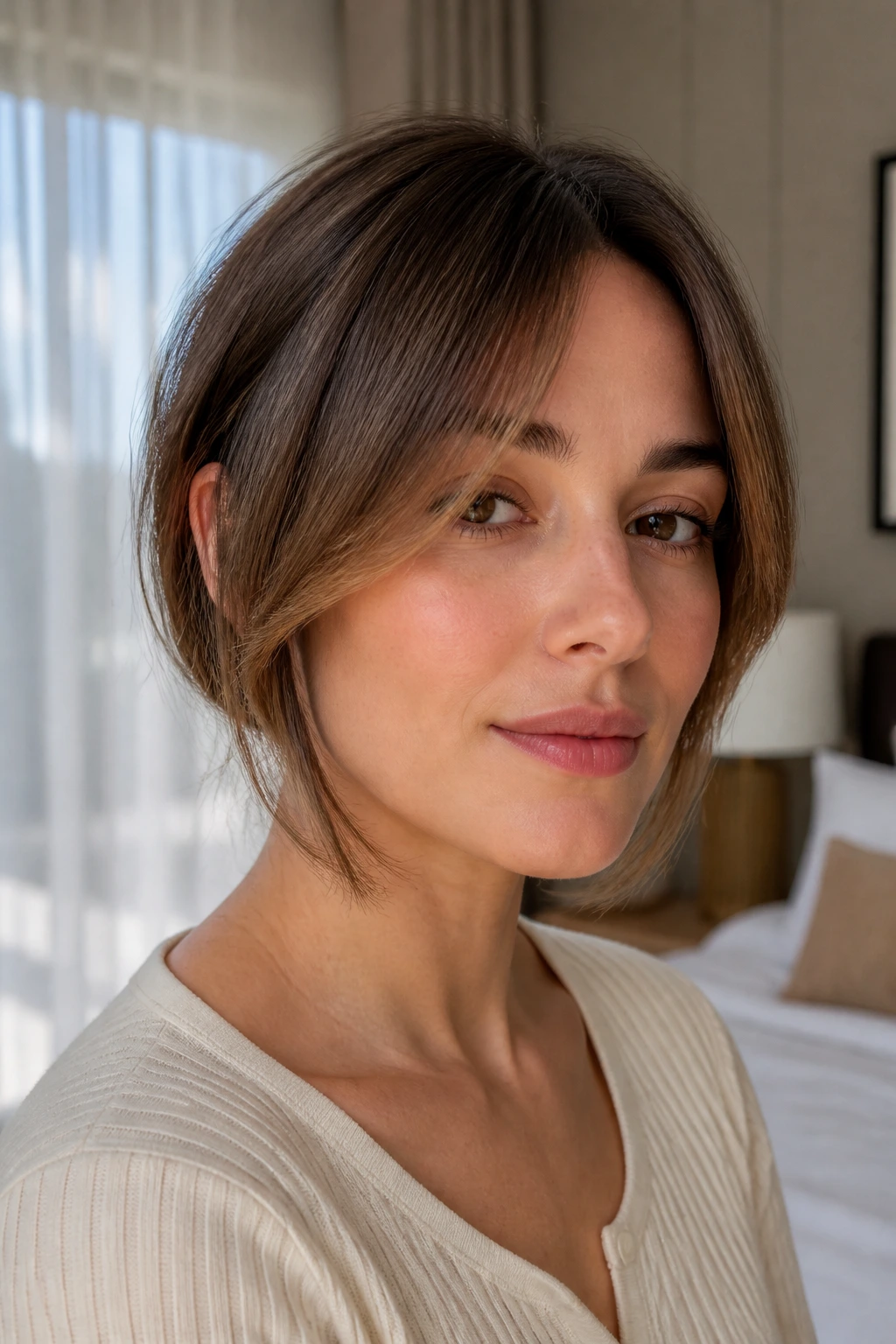
Long curtain bangs can be unexpectedly elegant. When the ends reach the chin, the fringe stops behaving like a bang in the strict sense and starts working like a face frame with attitude. It’s useful if you want to tuck pieces behind the ears and still keep the front shape.
The longer length also makes the grow-out easier. You can wear it swept open, parted a little wider, or curved inward with a brush. If your hair is medium to long, this version gives you a lot of movement without much day-to-day micromanaging.
32. Long Oval-Split Curtain Bangs
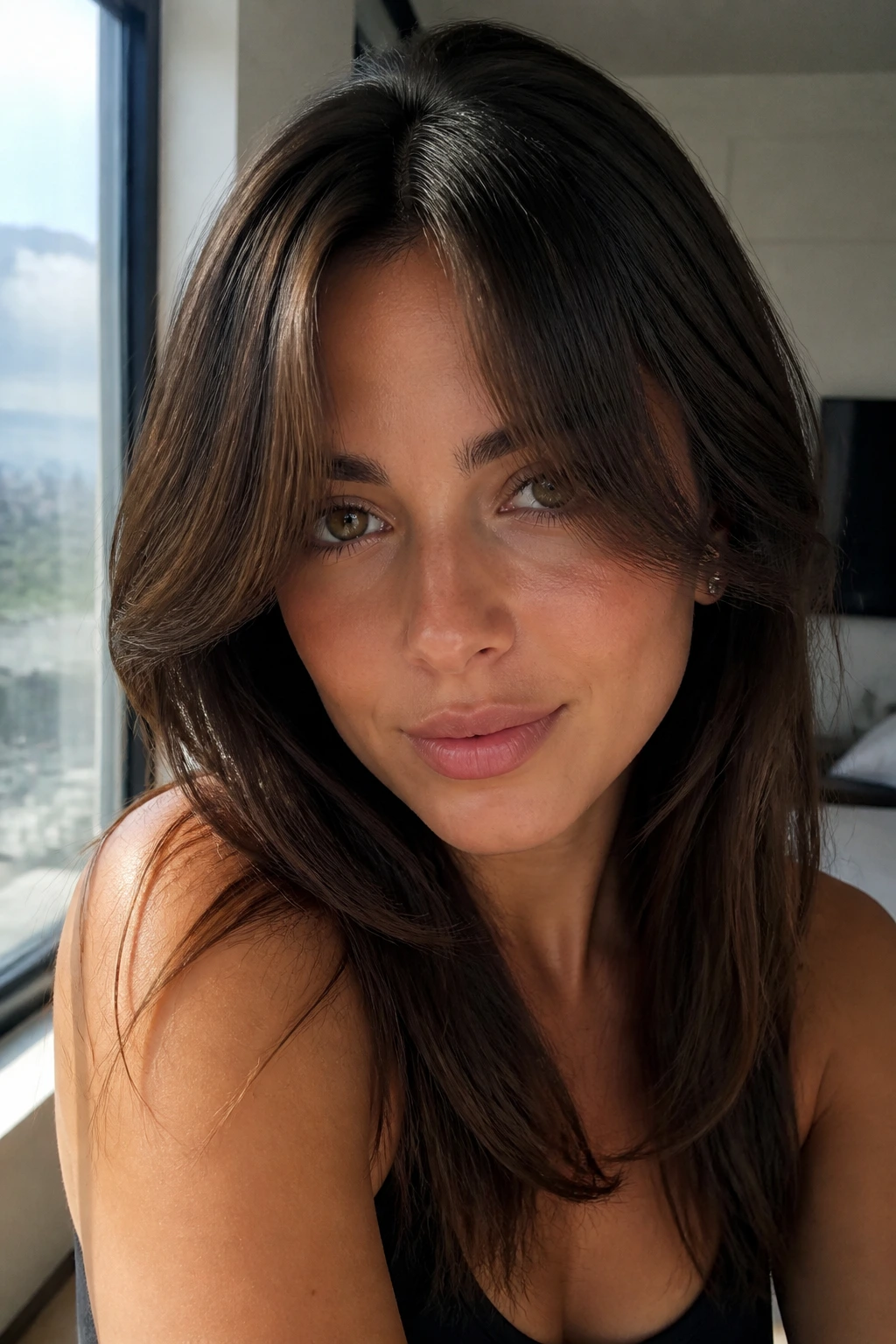
Oval faces don’t need a lot of correction, so this version is all about motion. The split is long, the sides are soft, and the overall shape stays open instead of dense. It’s a good choice if you want visible bangs but not a dramatic change.
The longer sides also keep the front from feeling too crowded on the cheeks. That helps if your hair is already full around the face. If you wear glasses, the longer split can sit above or around the frames without fighting them, which is a small relief on busy mornings.
33. Romantic Bridal Curtain Bangs
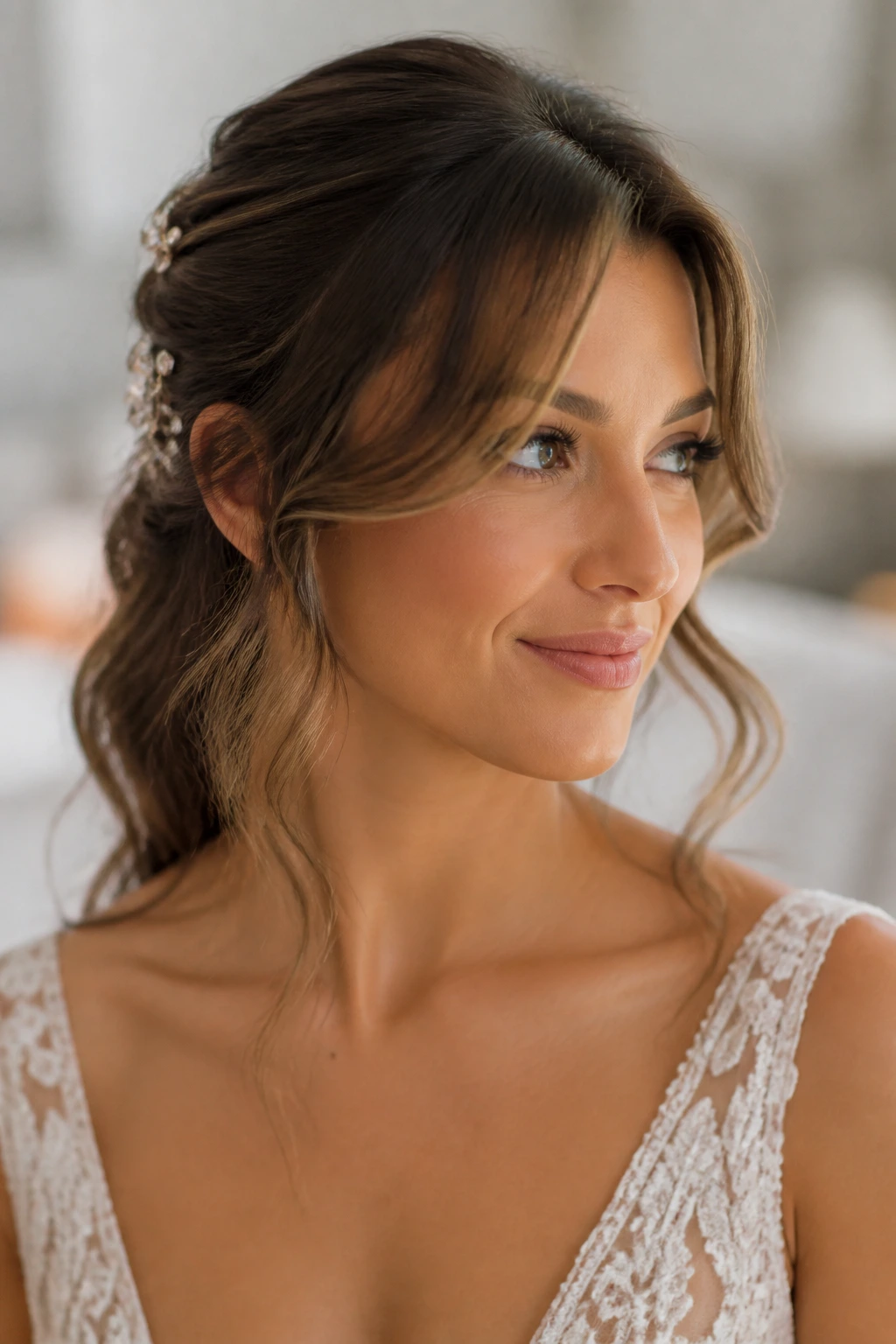
This version loves soft waves and pinned-back pieces. The fringe opens the face enough for special styling, but the ends still blur into the rest of the hair. That makes it easy to wear with half-up styles, low buns, or loose waves with a little gloss.
For the cleanest finish, keep the center light and the outer pieces softly curled away from the face. A small amount of shine spray on the ends can help, but keep it off the roots. Heavy shine at the front tends to flatten the shape, and the whole point is movement.
34. Low-Maintenance Workday Curtain Fringe

This is the practical haircut version: neat, slightly long, and not precious. The fringe still frames the face, but it’s cut so it can survive a desk day, a commute, and a coat collar without needing constant rescue.
Why it stays manageable
- Long enough to tuck when needed
- Soft enough to air-dry in a pinch
- Not so short that it splits wildly
- Easy to refresh with a quick mist and brush
If you want curtain bangs but don’t want to live in front of a mirror, this is the one. It’s less about salon drama and more about hair that cooperates before coffee.
35. Piecey Shattered Curtain Bangs
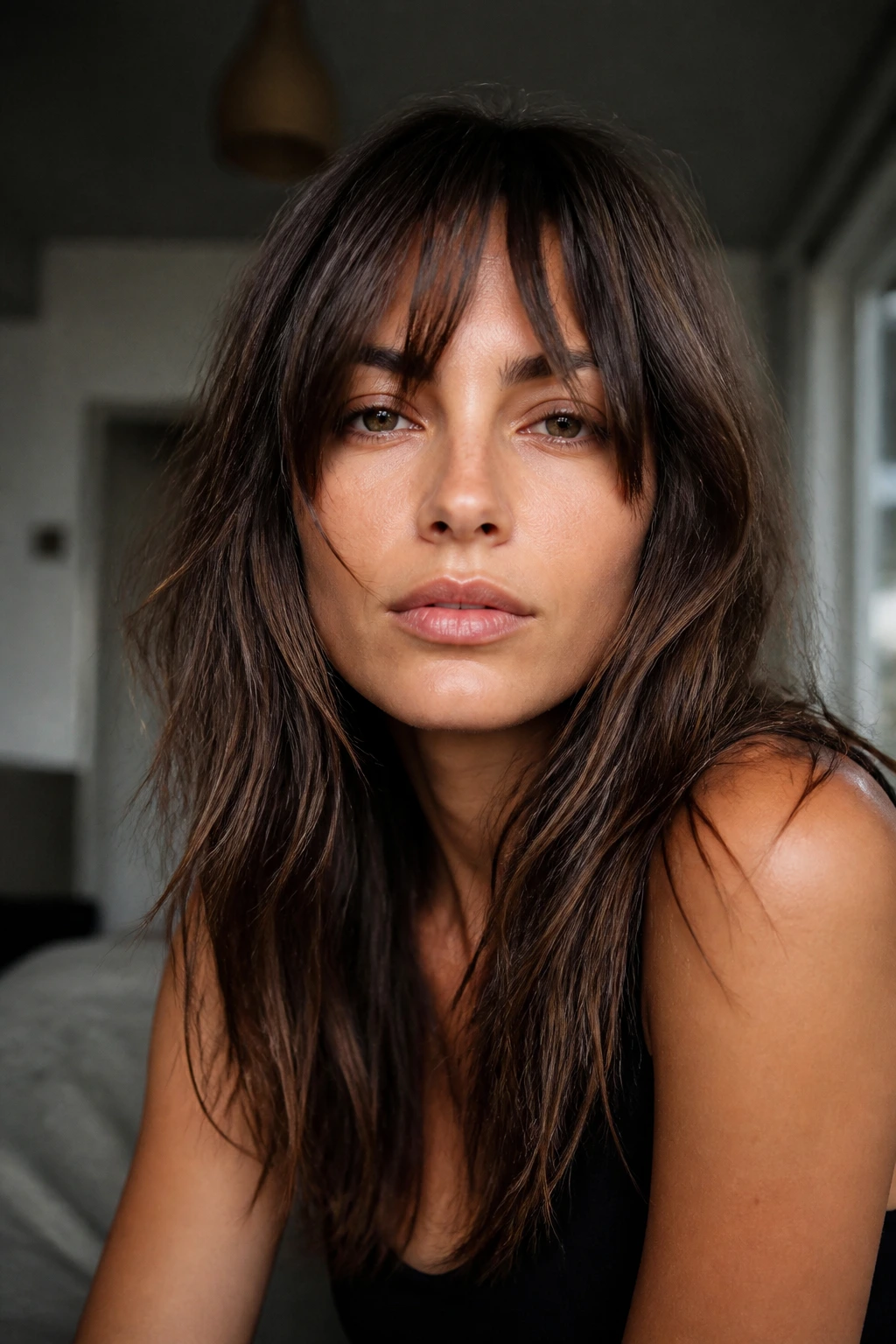
This is the edgier cousin in the family. The ends are broken up and separated, which gives the fringe a choppy, modern feel. It works best with textured cuts that already have some movement through the lengths.
The danger is going too far and making the front look thin in odd places. Keep the central pieces substantial enough to frame the forehead, then let the ends fall apart a little. A matte spray or lightweight paste can help define the pieces without making them stiff.
36. Color-Blocked Curtain Bangs
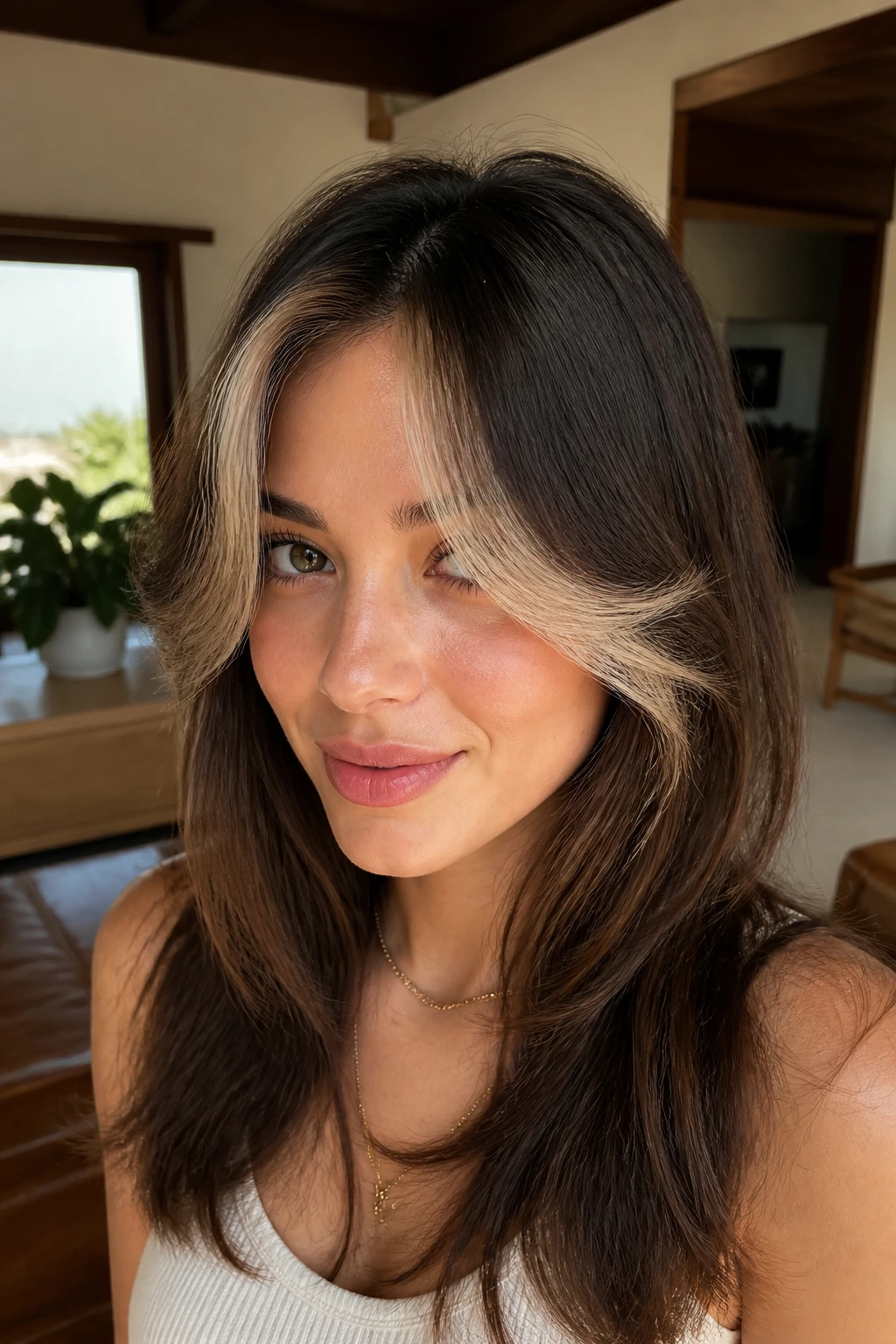
A little color change can make curtain bangs stand out in a useful way. Highlights, a money piece, or a softer face-framing tint all make the split more visible and help the front pieces catch the eye without extra cutting.
The best version is subtle enough that the bangs still read as part of the haircut. A strong color block can look theatrical fast, which may be the goal, but a gentle frame around the face usually wears longer. If your hair tends to disappear in photos, a little lightness near the bangs can help.
37. Shadow-Root Curtain Fringe

A shadow root gives curtain bangs depth right where they need it. The darker base makes the bend and split read more clearly, especially on lightened hair that can otherwise flatten out at the front. It also makes grow-out easier, which is a nice side benefit.
Why it works
- Creates depth near the part
- Softens the line at the forehead
- Makes the ends look less washed out
- Helps blond or lightened hair keep shape
If you’ve ever had a fringe look too bright and flat, this is the fix worth considering. The darker root is not a flaw here. It’s the detail that gives the cut contrast.
38. Statement Curtain Bangs With Long Ends
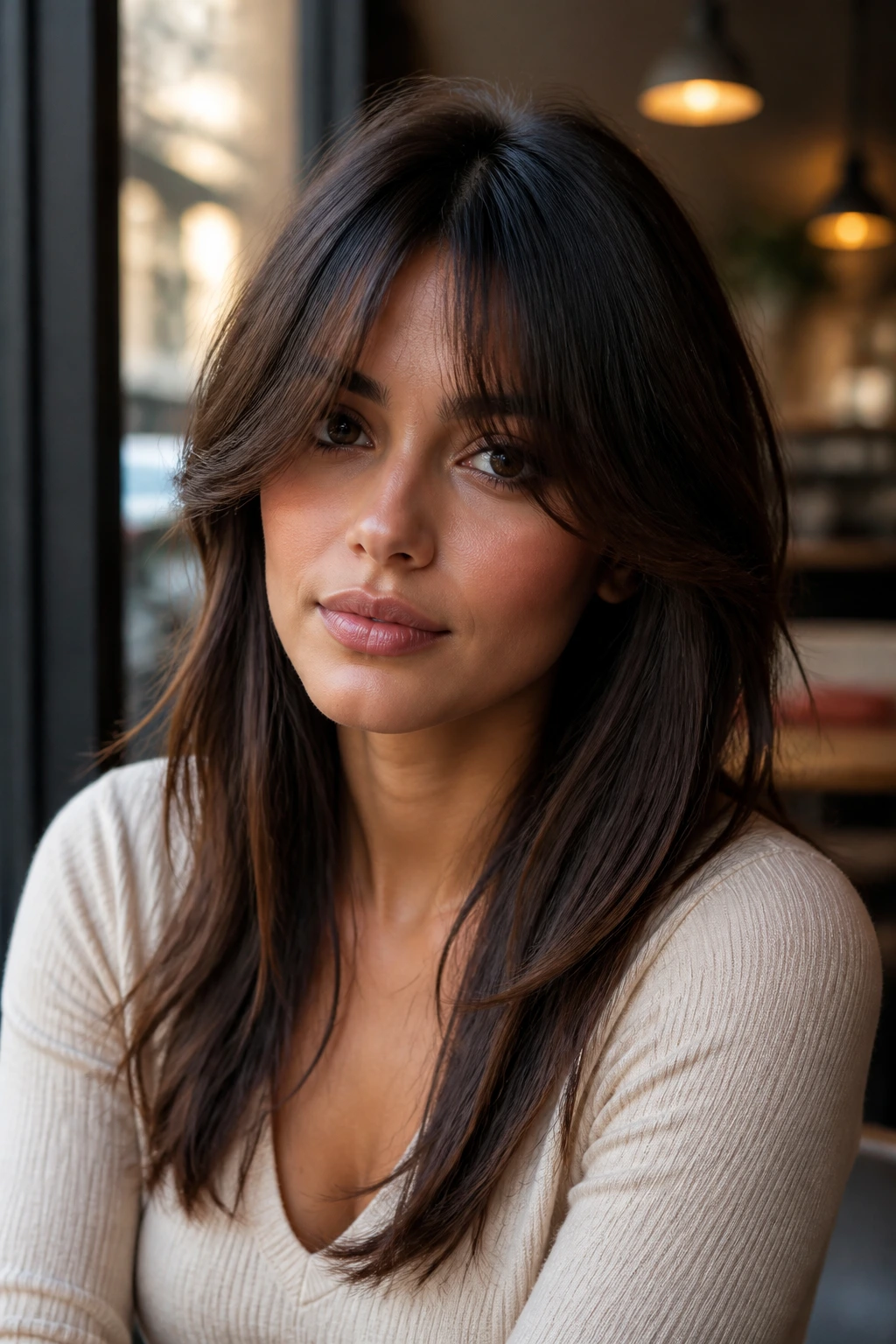
This is the boldest version here. The center still opens the forehead, but the side pieces stay long enough to make a clear frame around the face. It’s the style for someone who wants the bangs to be noticed, not just politely accepted.
The long ends can hit the jaw, the chin, or even brush the collarbone, depending on the rest of the cut. That length gives the style movement and a little drama, especially when the hair swings. If you want a front shape that feels intentional on its own, this one has the most presence.
How Curtain Bangs Reframe the Face Without Hiding It
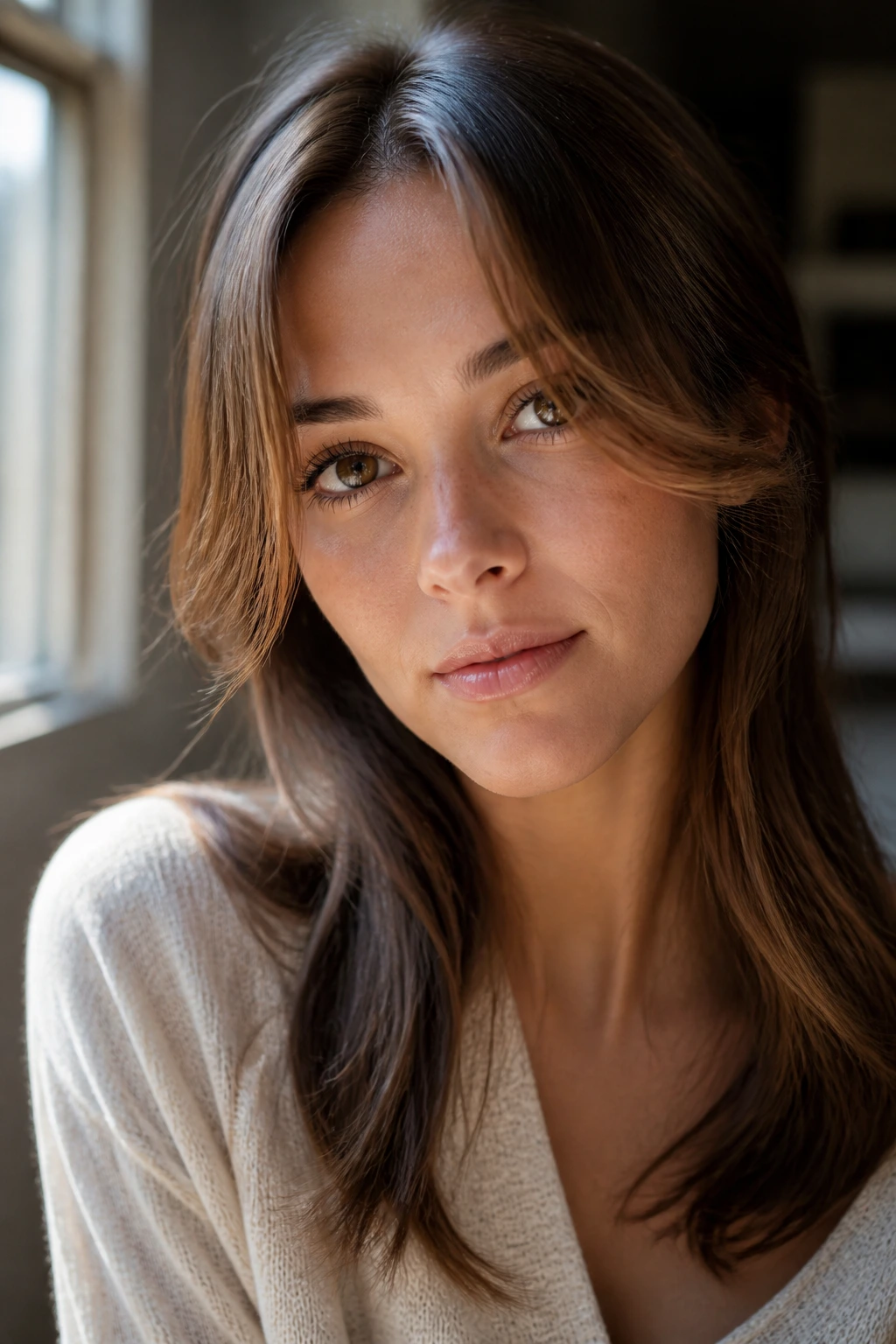
The best curtain fringe does not cover the face; it redirects attention. Straight-across bangs stop the eye at one hard line. Curtain bangs keep the eye moving, because the middle opens up and the sides travel diagonally toward the cheekbones or jaw.
That diagonal matters more than most people think. A line that falls from the center of the forehead down toward the outer face can soften a strong brow, stretch a round face, or break up a very long forehead without making the haircut feel hidden. The result is shape, not camouflage.
Length changes the effect fast. A short version that ends near the brow gives more lift and more forehead exposure. A longer version that lands near the cheek or lip gives more contour and more grow-out room. If your hairline has cowlicks at the temples, a slightly off-center split can look smoother than a perfect middle part, because it works with the way the hair already wants to fall.
How Hair Texture Changes the Shape of Curtain Bangs
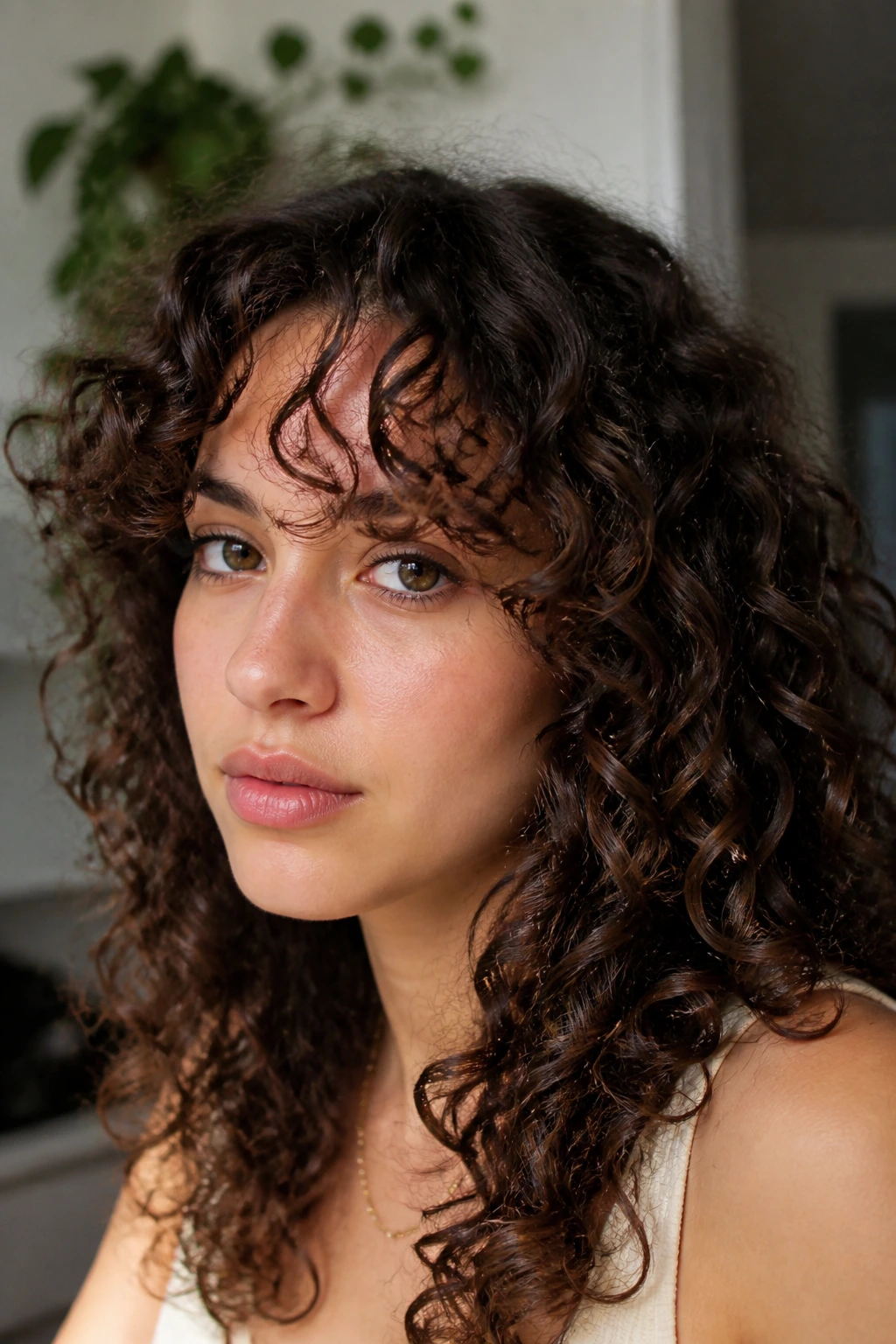
Fine hair, thick hair, wavy hair, curly hair — they all ask for different things at the front. Fine hair usually needs density kept in the center so the split doesn’t disappear into two soft strings. Thick hair often needs interior weight removed so the bang doesn’t sit like a shelf across the forehead.
Wavy hair is usually the easiest canvas, but it still needs length control. If the shortest pieces are cut too high, the wave can bounce them right back up. Curly hair needs extra length because shrinkage is real and stubborn; cut it too short and the fringe can jump out of the curtain shape entirely. Straight hair is the most exacting of the bunch. It can look polished fast, but it also shows every uneven line.
The smartest salon conversation starts with your texture, not with a photo alone. A picture can show the shape you want. Your hair decides whether it needs more length, more weight, or more bend.
Styling Curtain Bangs So They Bend Instead of Flip
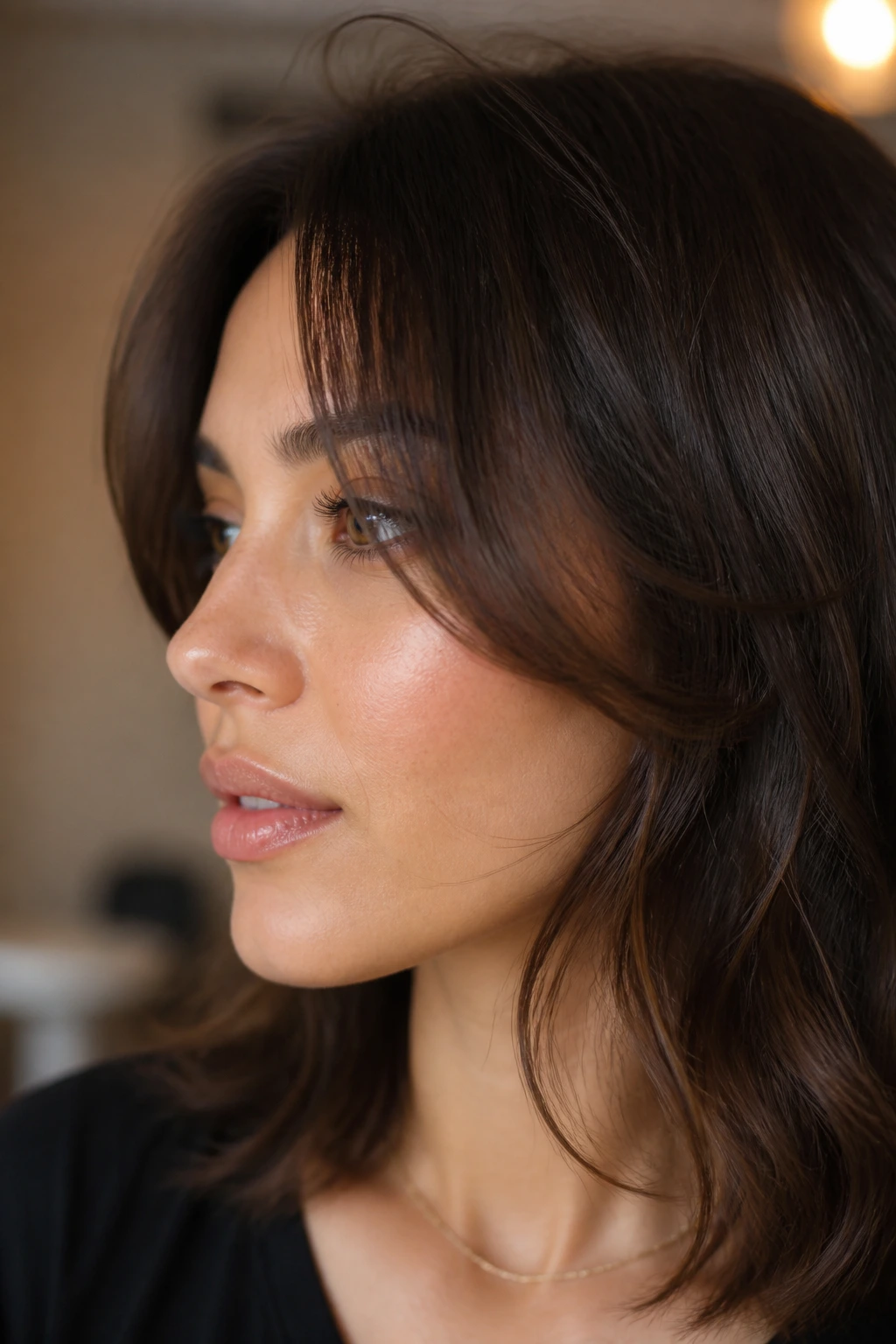
Wet hair is where the shape lives. If the roots dry in the wrong direction, the bangs spend the rest of the day trying to recover. The cleanest routine starts by drying the fringe from side to side at the roots, then guiding it forward and away from the face to set the split.
Root direction: Use the dryer nozzle to aim the front left, then right, then forward. That knocks out the center ridge and gives the bang room to part without sticking flat to the scalp.
The bend: Wrap each side around a round brush or bend it with a flat iron away from the face. A small turn near the cheekbone is enough; you do not need a hard curl unless the cut is meant to be dramatic.
The set: Let the front cool before touching it. If you clip the pieces away from the face for a minute while they cool, the shape lasts longer and the fringe stays softer.
The finish: Keep styling product light. A pea-size amount of cream or mousse on the ends is enough for most hair. Too much on the roots makes the split collapse and the bangs look greasy by lunch.
Essential Tools for Curtain Bangs
-
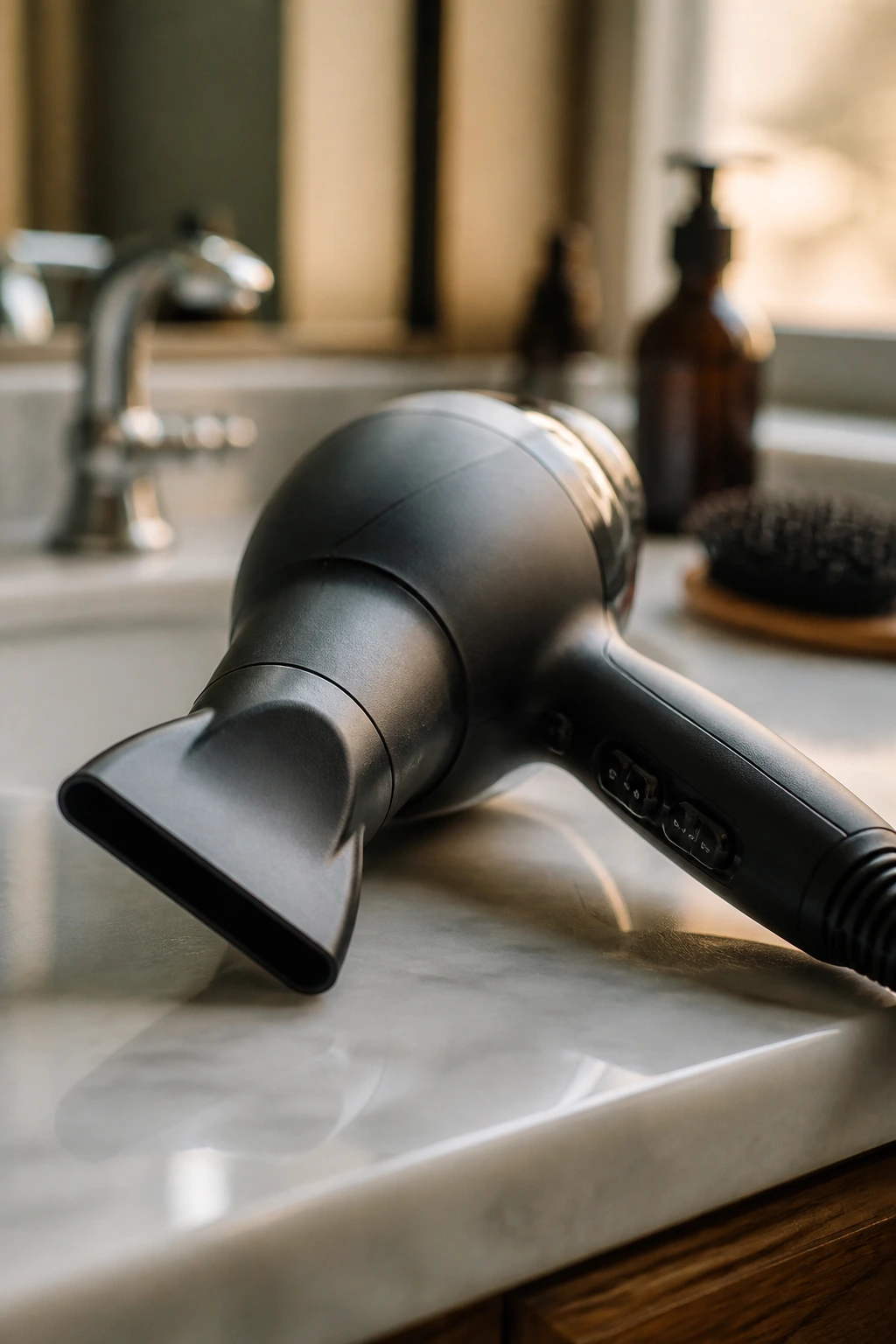
Blow dryer with a concentrator nozzle: The nozzle gives you direction, which matters more than speed when you’re shaping the split.
-
1- to 1.5-inch round brush: Smaller brushes make more bend; larger ones make a softer sweep. Pick the size that matches your hair length.
-
Flat iron with rounded edges: Useful for straight hair or for resetting one stubborn side without rewashing.
-
Duckbill clips or small section clips: Handy for cooling the bangs away from the face after drying.
-
Heat protectant spray: Use a light mist so the front doesn’t get sticky or heavy.
-
Tail comb: Optional, but very useful for resetting the part before you start drying.
-
Lightweight mousse or root lift spray: Best when the fringe needs hold without crunch.
Common Mistakes That Make the Fringe Look Fussy
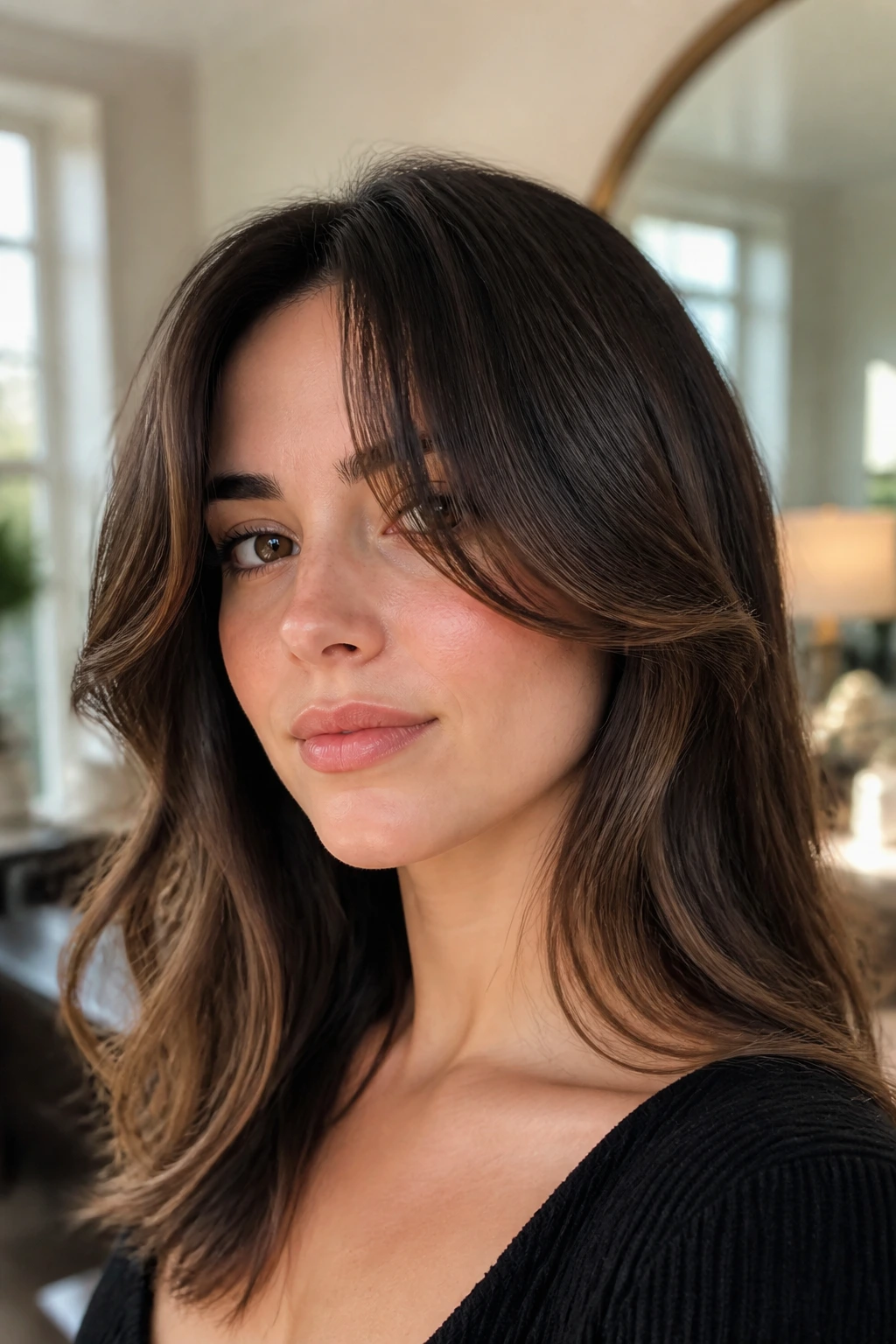
The first mistake is cutting the center too short. When the shortest point sits too high, the fringe stops looking like a curtain and starts looking like a chopped bang with ideas. The fix is simple: keep the shortest point around the brow or cheekbone, then let the sides do the softening.
Another problem is over-thinning. If too much weight is removed from fine hair, the bangs split into thin strands that never settle. Thick hair has the opposite problem: too much bulk left in the front makes the whole thing sit like a ledge. The answer in both cases is balance, not maximal thinning.
Ignoring the natural part line creates its own headache. If your cowlick pushes the bangs left, a dead-center cut can fight you every single morning. Start where the hair wants to fall, then adjust the width of the split instead of forcing a fake part.
Heavy product causes the last kind of trouble. Oils and creams at the roots make the fringe drop fast. Keep the product on the ends and the bend on the roots. That small separation saves a lot of frustration.
Variations and Adaptations to Try

The Softer Grow-Out: Keep the side pieces long and the center light if you want curtain bangs that can slide into layers later. This version is the least stressful if you’re nervous about commitment.
The Curly Ribbon: Let curls form separate ribbons around the face instead of trying to smooth them into one piece. Cut longer, let them spring, and use a diffuser only where needed.
The Sleek Split: Flat-iron a clean bend into the front and keep the rest of the hair smooth. This works when you want curtain bangs to read polished rather than airy.
The Highlighted Frame: Add face-framing color around the bang area so the split shows up more clearly. A lighter ribbon near the front can change the way the whole haircut reads.
The Shag Blend: Blend the bangs directly into shag layers so the front feels like part of the texture story. This is the most forgiving option for hair that likes movement.
Maintenance, Trims, and Grow-Out
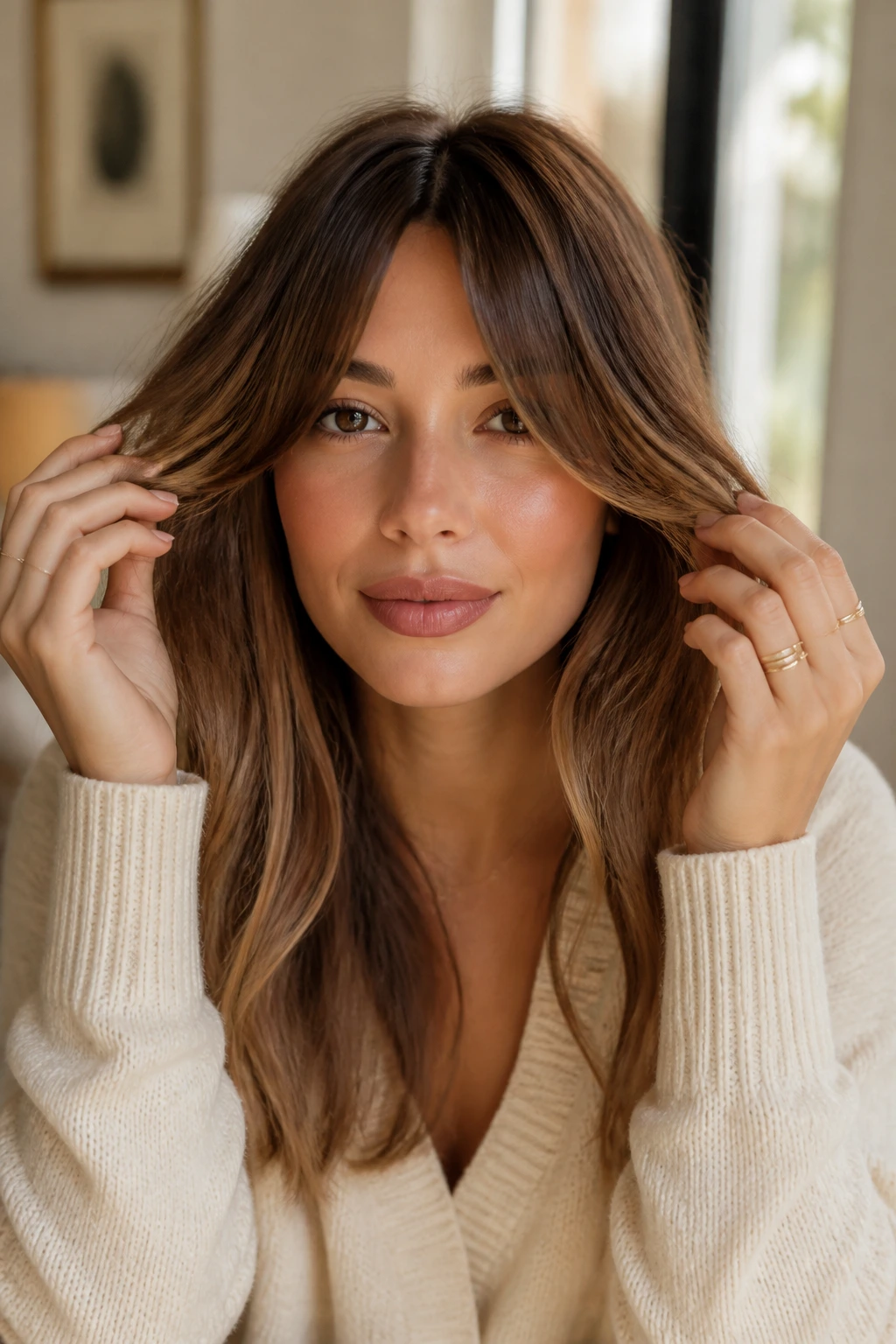
Shorter curtain bangs need regular attention. If the shortest pieces sit near the brow, a trim every 4 to 6 weeks keeps the shape from sagging into the eyes. Longer versions can stretch to 6 to 8 weeks because they blend more easily into the rest of the haircut.
The daily reset matters too. If the front gets bent the wrong way while sleeping or after a sweaty workout, a quick mist and a brush through the roots usually fixes it. You do not need to wash the whole head every time the bangs misbehave. A damp reset is often enough.
Grow-out is where this style earns its reputation. Let the center pieces lengthen into face-framing layers, shift the part a little if needed, and stop trimming them into a short fringe once they’ve passed the cheekbone. The haircut gets softer as it grows, which is the whole charm of curtain bangs in the first place.
Frequently Asked Questions
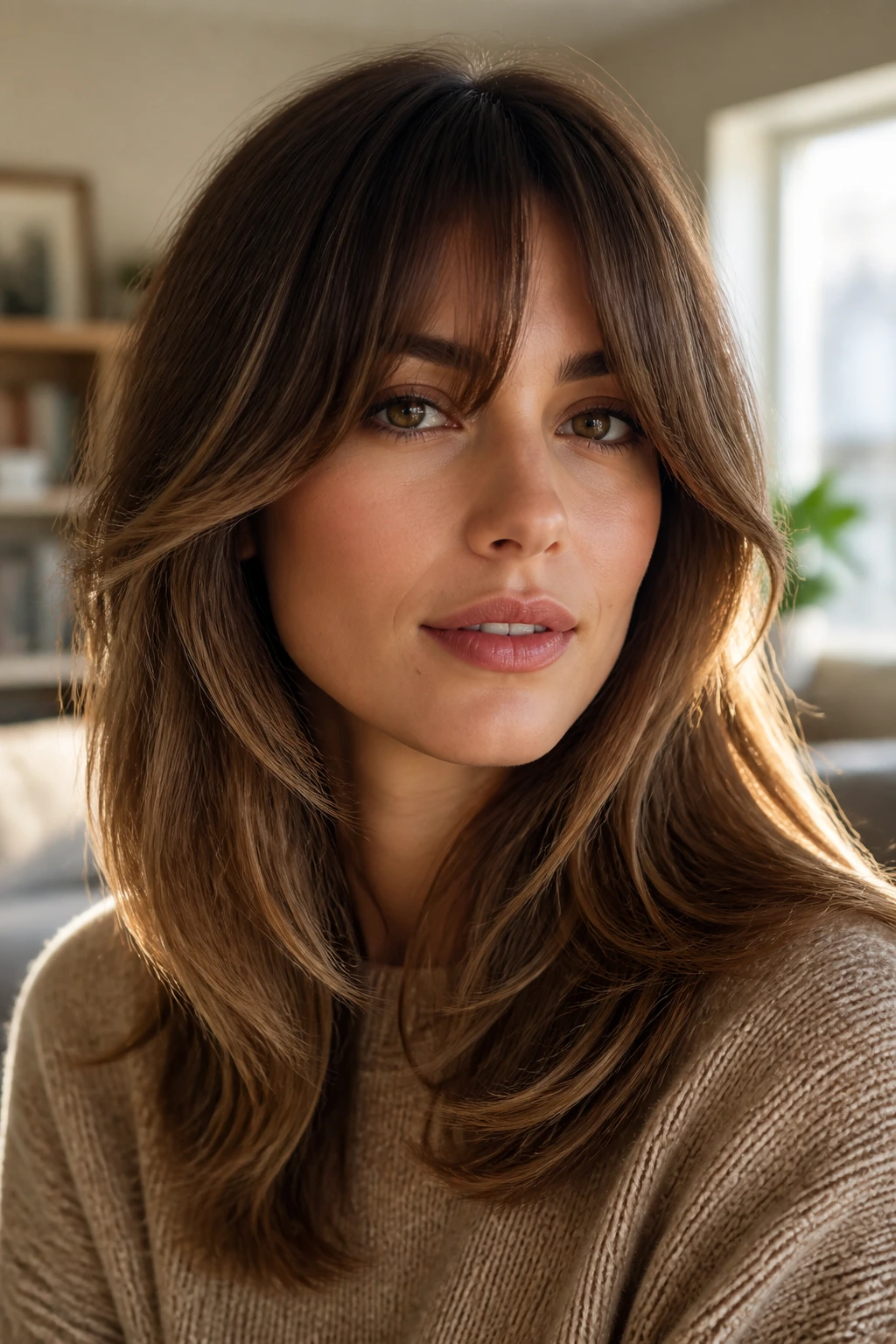
Do curtain bangs work on round faces?
Yes, as long as the shortest point stays lower and the side pieces travel past the cheekbone. That longer diagonal keeps the face from feeling wider. A soft bottleneck or long layered version usually works better than a short, dense fringe.
Are curtain bangs high maintenance?
They can be, but only if you want a very short, polished shape. Longer versions are easier because they grow into face-framing layers. If you choose a cut that matches your hair texture, the daily work drops fast.
Can curly hair wear curtain bangs?
Absolutely, but the cut should respect shrinkage. Curly curtain bangs need more length than straight hair does, and they usually look best when the curl pattern is allowed to form its own halo. Cutting them too short is the main way people end up annoyed.
How do I stop curtain bangs from splitting too wide?
Start with a proper root dry. Blow the center forward first, then redirect the sides away from the face so the part doesn’t open like a gap. Too much root oil or serum can also make the split spread.
Should curtain bangs be cut dry or wet?
That depends on texture, but dry or mostly dry cutting is safer for curly and very wavy hair. Straight hair can be cut damp more easily, though many stylists still leave extra length because bangs shrink a bit when they dry.
Can I wear curtain bangs with glasses?
Yes, and long or soft versions usually work best. Keep the shortest point high enough that it doesn’t jam into the frame, and let the side pieces fall around the temples rather than straight across them. A slightly longer split tends to sit cleaner.
What if my hairline has a strong cowlick?
Do not force a perfect middle split. A small shift off-center often behaves better, and the stylist may need to leave the center a bit longer than expected. Cowlicks usually calm down when the cut works with their direction instead of against it.
How long does it take to grow curtain bangs out?
Long enough to be annoying, short enough to be manageable. If the bang is already layered and soft, it can blend into the rest of the haircut within a few trims. A blunt short fringe takes longer, but even that can be guided into a face frame if you stop cutting it back into a short shape.
The Fringe That Grows With You
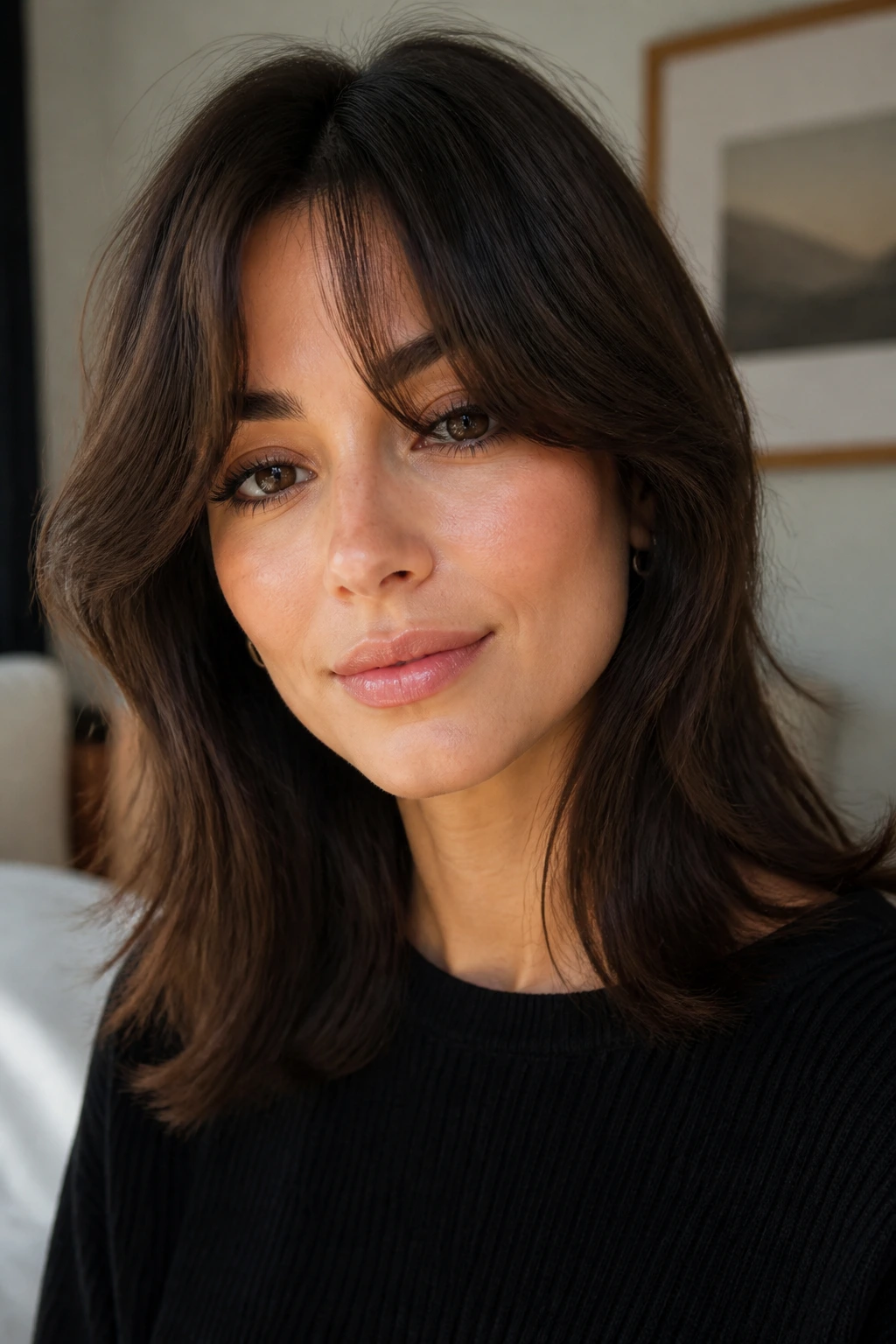
Curtain bangs keep coming back because they leave room for the hair to behave like hair. They can be soft or bold, dense or airy, polished or a little messy, and the shape still makes sense as it grows. That is not a small thing. Most front fringe styles demand a fixed answer. Curtain bangs let the answer change.
If you’re trying one for the first time, start a touch longer than you think you need. The first trim tells the truth about your texture, your part, and how much bend your hair will actually hold. Give it a little room, and the next trim can do the fine-tuning.
