



A neat braid can survive spelling tests; it may not survive the monkey bars.
That’s the whole reason parents keep hunting for hairstyle ideas for little girls and school. Not because the styles need to be fancy. Because they need to stay put through backpack straps, art class glue, sweaty playground runs, and the weird little half-hour between drop-off and lunch when hair always seems to loosen at the temples. The styles that last are rarely the ones that look hardest. They’re the ones with a clean part, the right elastic, and enough structure that one rough sleeve doesn’t undo everything.
There’s also a small but important truth here: the best school hair is not always the prettiest in the mirror. It’s the one that still looks tidy at pickup. That means gentle tension, smart sectioning, and a few tricks that make the routine quicker instead of fussier. A good style can save a morning. A bad one can eat ten minutes and still fall apart by second period.
Why These Styles Earn Their Keep
-
Fast to Build: Several of these styles take five minutes or less once the hair is brushed and parted, which matters when shoes are missing and the bus is blinking in the driveway.
-
School-Day Stay Power: These styles are built to handle headbands sliding, hood zippers rubbing, and the general chaos of recess without turning into a fuzzy halo by noon.
-
Works With Different Lengths: Some ideas suit short bobs, some need shoulder-length hair, and a few are excellent for long, thick hair that usually eats up every scrunchie in the drawer.
-
Gentle on Kids’ Scalps: Tight pulling is out. The styles here lean on clean sections, soft elastics, and pins used in the right places so you’re not fighting tears before breakfast.
-
Easy to Personalize: A ribbon, a bow, a clip, or a zigzag part can change the look without rebuilding the whole style from scratch.
-
Good for Real Mornings: These are the kinds of styles that still make sense when one child wants pink clips, another hates brushing, and you’re doing hair with one hand while packing lunch with the other.
1. Low Ponytail With a Wrapped Strand
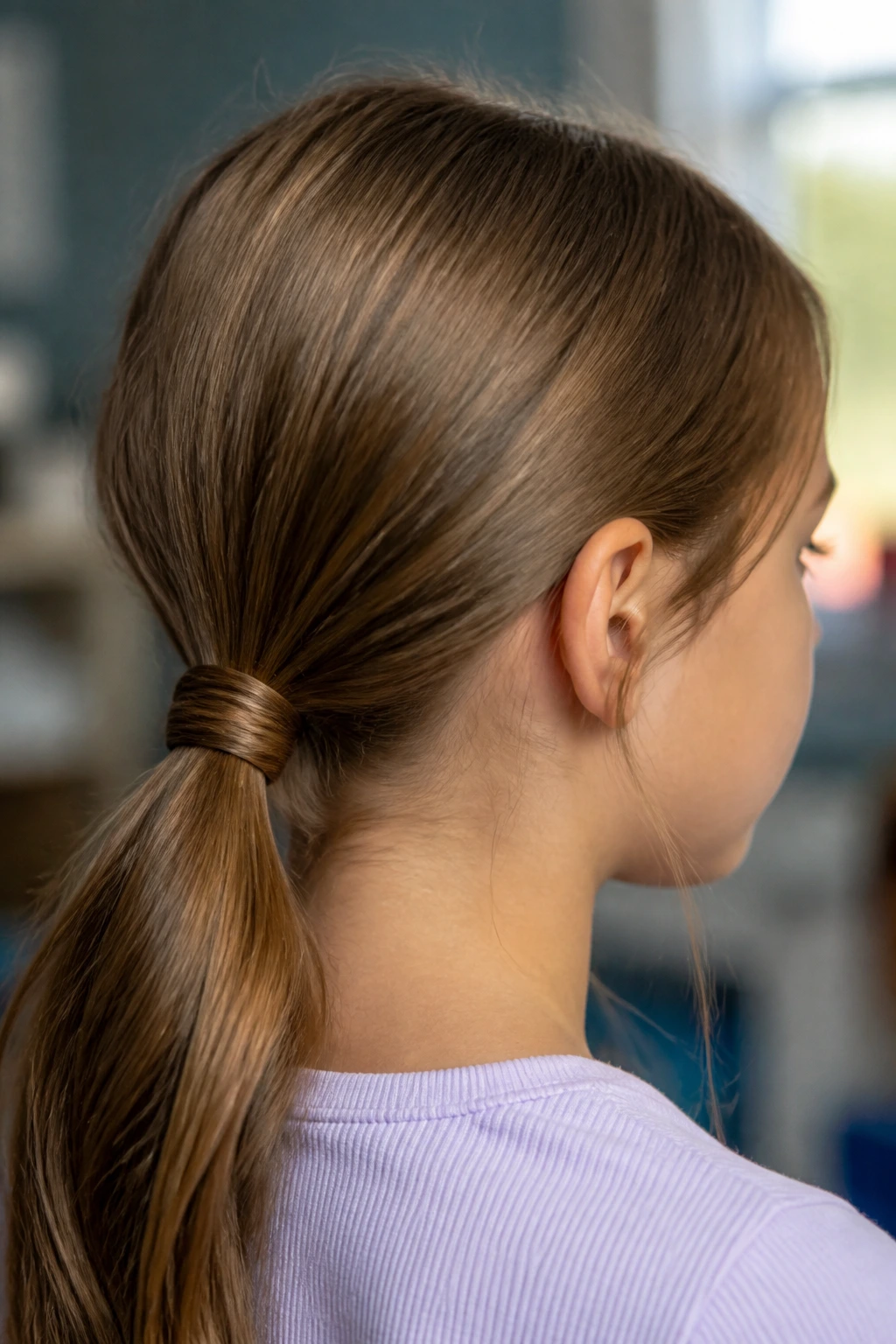
A low ponytail gets dismissed as plain, but that’s only because people stop one step too soon. Wrap a small strand of hair around the elastic, pin the end underneath, and the whole thing looks cleaner right away. It sits low enough to avoid backpack friction, which is one of the sneakiest reasons school hair falls apart.
Keep the base snug, not tight. If the hair is fine, a dab of leave-in spray around the hairline helps the top stay smooth without turning greasy. This is one of those styles that does the job quietly. No drama. No sliding clip.
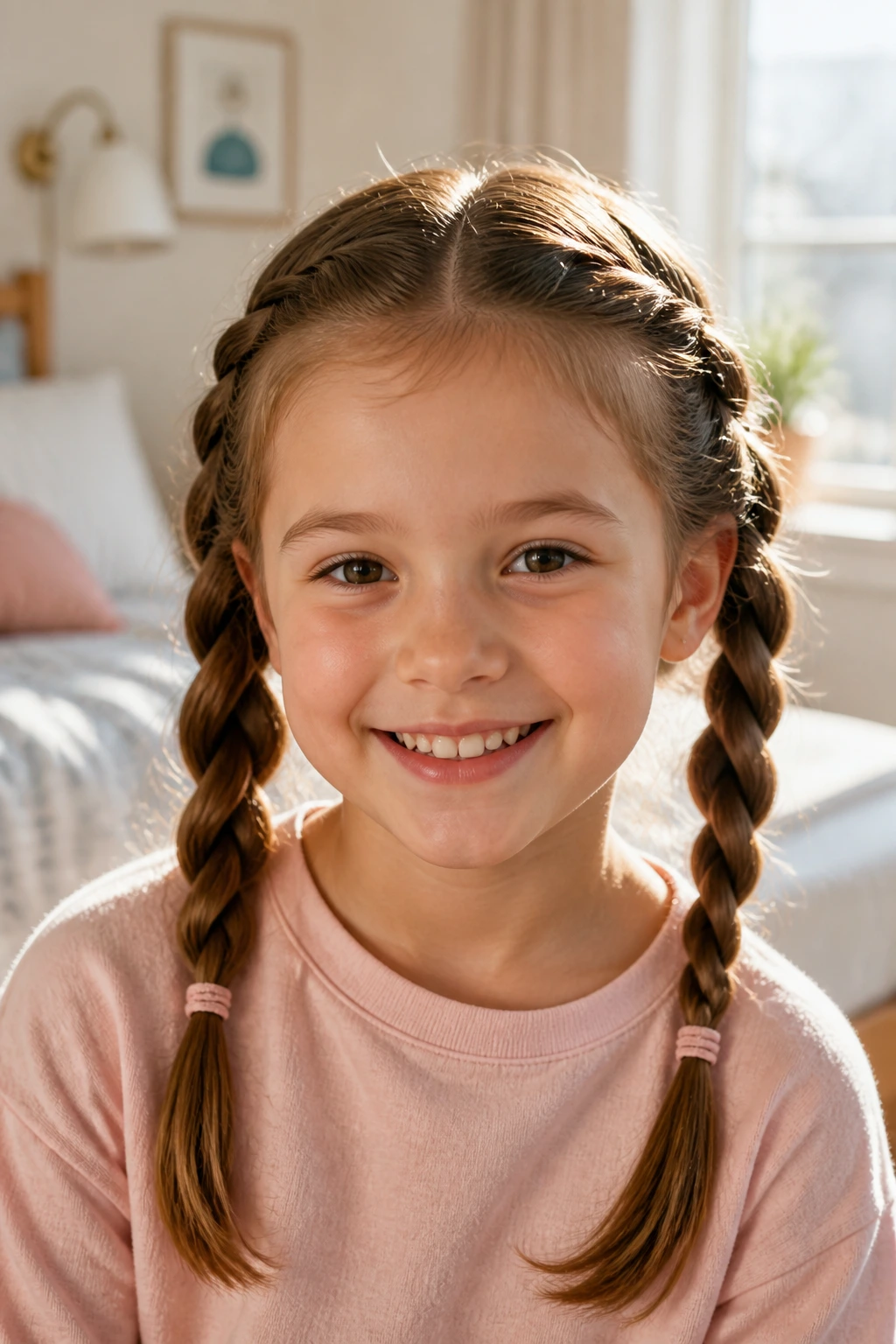
2. Double Dutch Braids That Sit Tight Against the Head
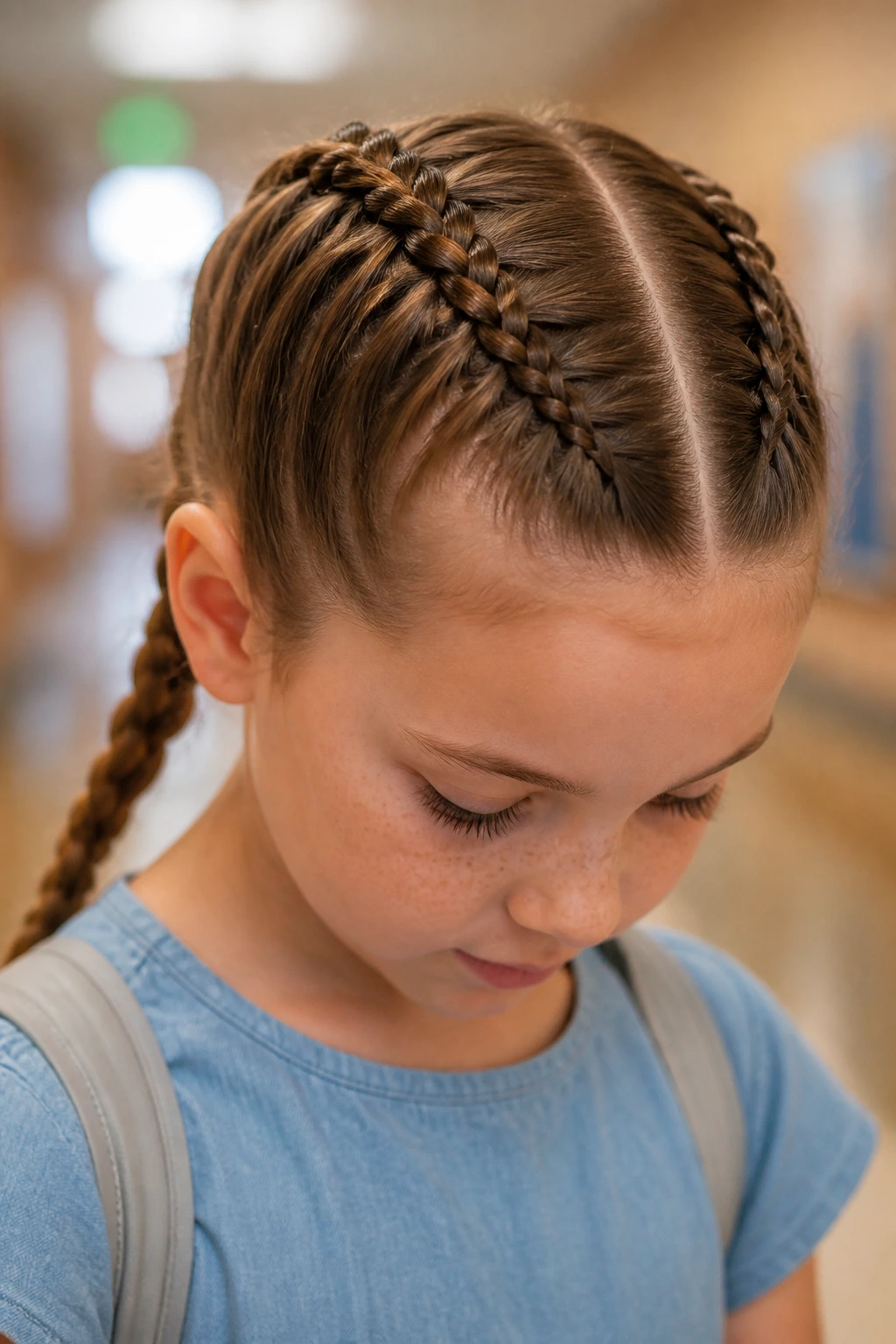
If you need hair to stay put through recess, double Dutch braids are hard to beat. Because the braid rises on top of the section instead of sinking into it, the finished look has more shape and more grip along the scalp. That grip matters when you’ve got slippery hair that always escapes normal braids by lunch.
Start with a center part and keep the sections even. Once you get the rhythm, the braids can be finished with little elastics or left as braids that swing at the shoulders. On especially busy mornings, I’d choose this over a fancier style every time. It holds.
3. Bubble Ponytail With Tiny Elastic Segments
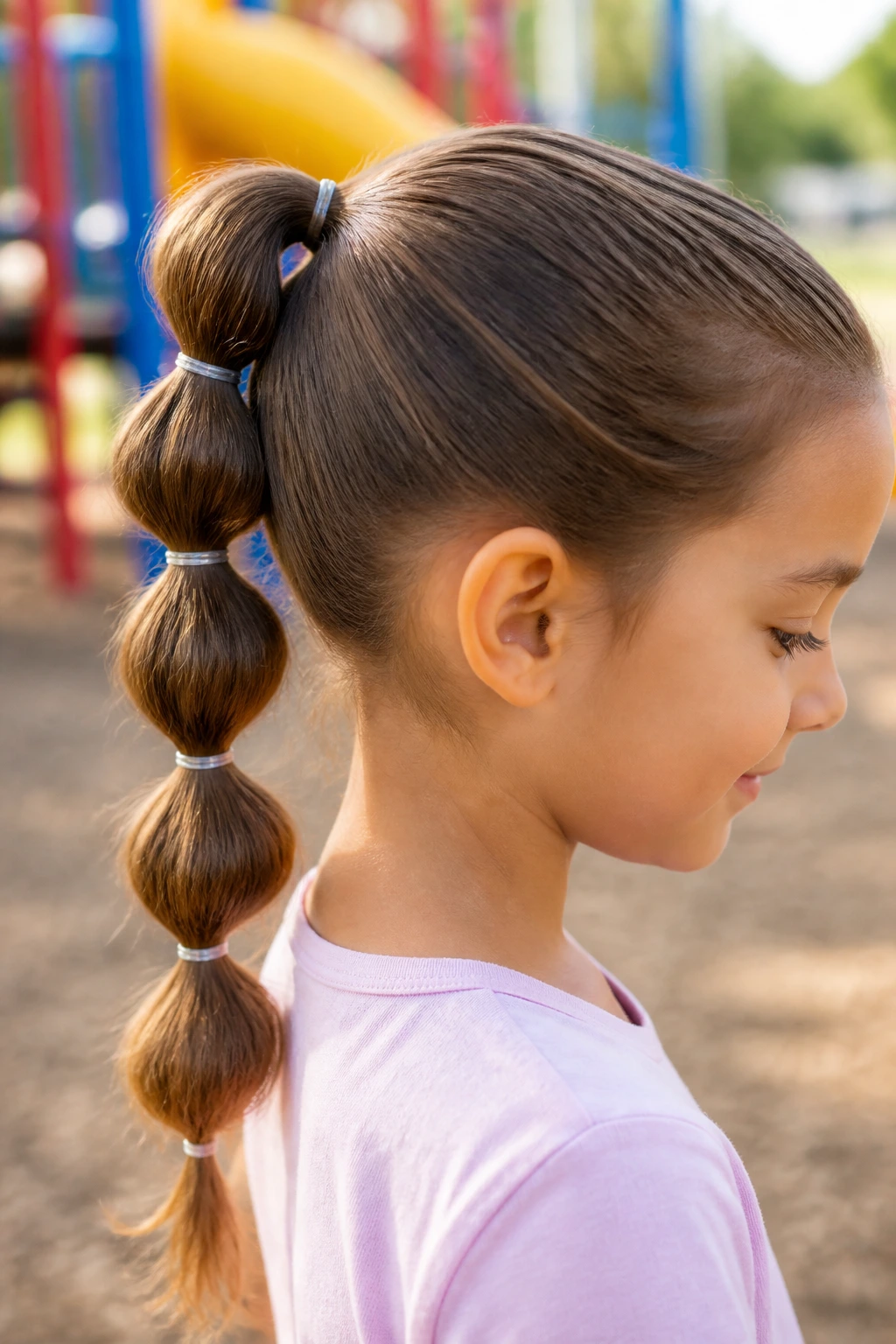
A bubble ponytail looks playful, and the trick is almost insultingly simple: one ponytail, then clear elastics placed every 1½ to 2 inches down the length. Gently tug each section outward until it puffs into a round “bubble.” That shape stays surprisingly well if the hair is medium to long and not freshly silky from conditioner.
Use matching elastics if you want the finish to look neat. Or use colorful ones if the school day needs a little extra fun. This style is a solid compromise when a child wants something different but does not want braiding time. Fast. A little bouncy. Not much skill required.
4. Half-Up Top Knot With Loose Length
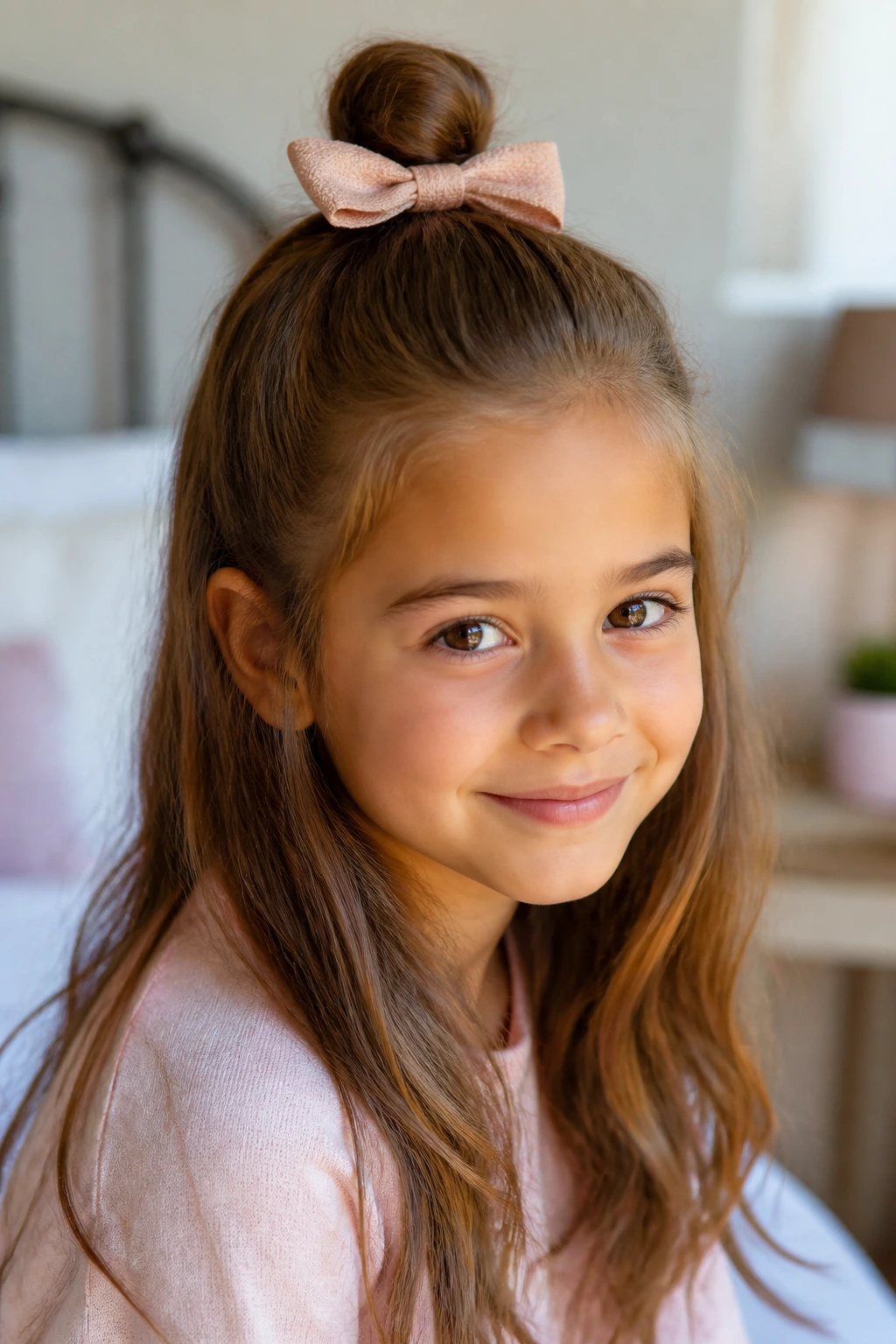
Some mornings call for a style that keeps the front out of the face and leaves the rest alone. A half-up top knot does exactly that. Pull the top third of the hair into a small bun, secure it with an elastic, and smooth the crown with your fingers so it doesn’t look like a stressed-out knot at the top of the head.
This works especially well for wavy hair, because the loose length keeps some texture while the top stays tidy. Add a small bow, and it suddenly looks planned instead of improvised. If the child hates a full ponytail pulling on the scalp, this is a very decent middle ground.
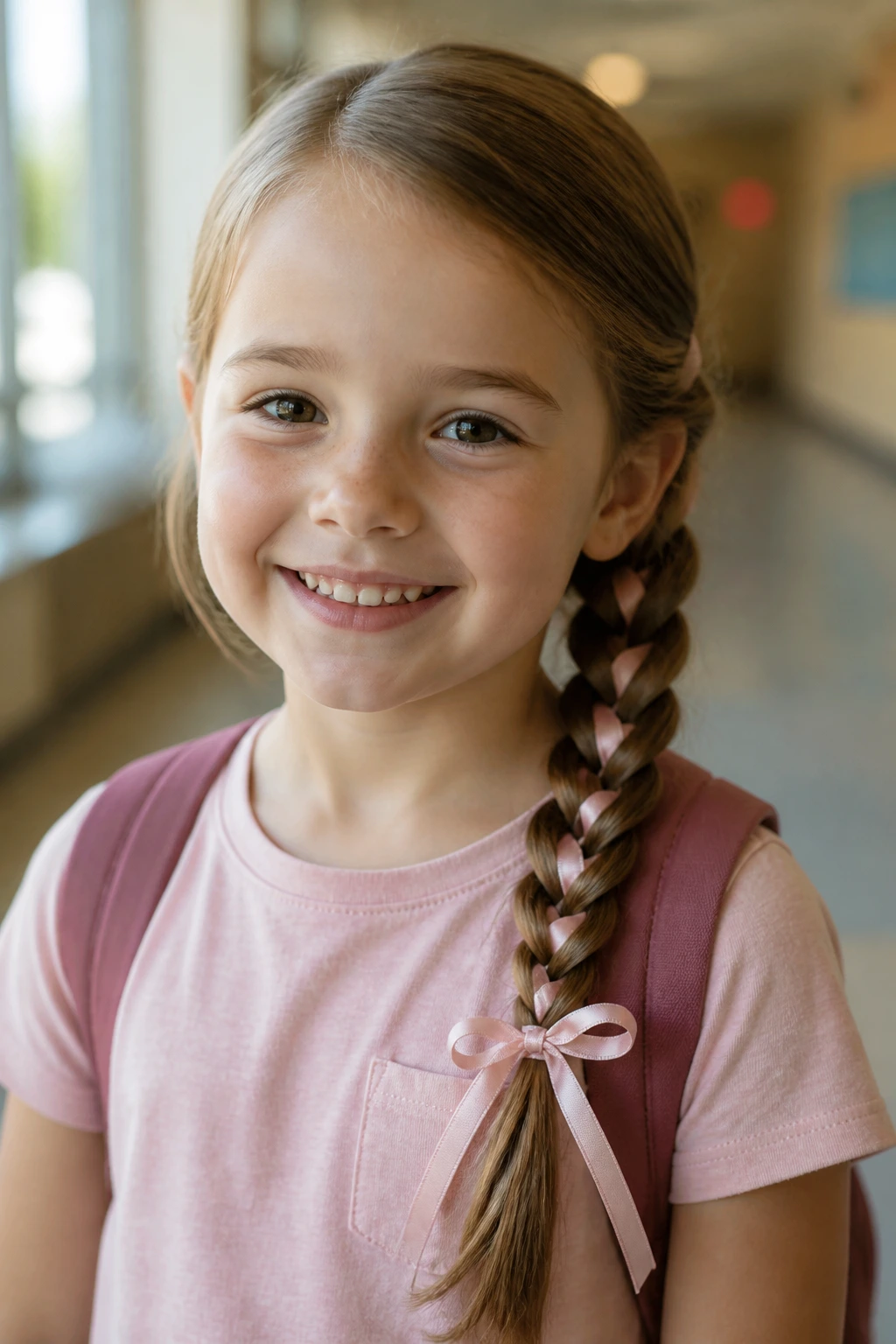
5. Side Braid Finished With a Ribbon
A side braid has a softer feel than two braids, and the off-center line makes it look a little more dressed up without adding work. Thread a thin ribbon in with the sections or tie it at the end after the braid is finished. The ribbon gives the braid weight, which helps it lie flatter instead of frizzing out.
This is a nice pick for school photo day, music class, or any morning when the outfit is simple and the hair needs to carry a little personality. It’s also practical because the braid tends to stay neater than loose hair around the face. Ribbon at the end. Problem solved.
6. Twisted Pigtails for Faster Mornings
Braids are not the only way to keep hair controlled. Twisted pigtails are faster, and on many kids they hold better because the twist follows the natural fall of the hair. Split the hair down the middle, twist each side away from the face, and secure at the ends with soft elastics.
They’re especially good on wavy hair that wants to puff up if you over-handle it. The twist keeps the shape without making the style feel stiff. If a child is impatient with brushing, this one has a short enough finish line that you can usually get through it without a negotiation.
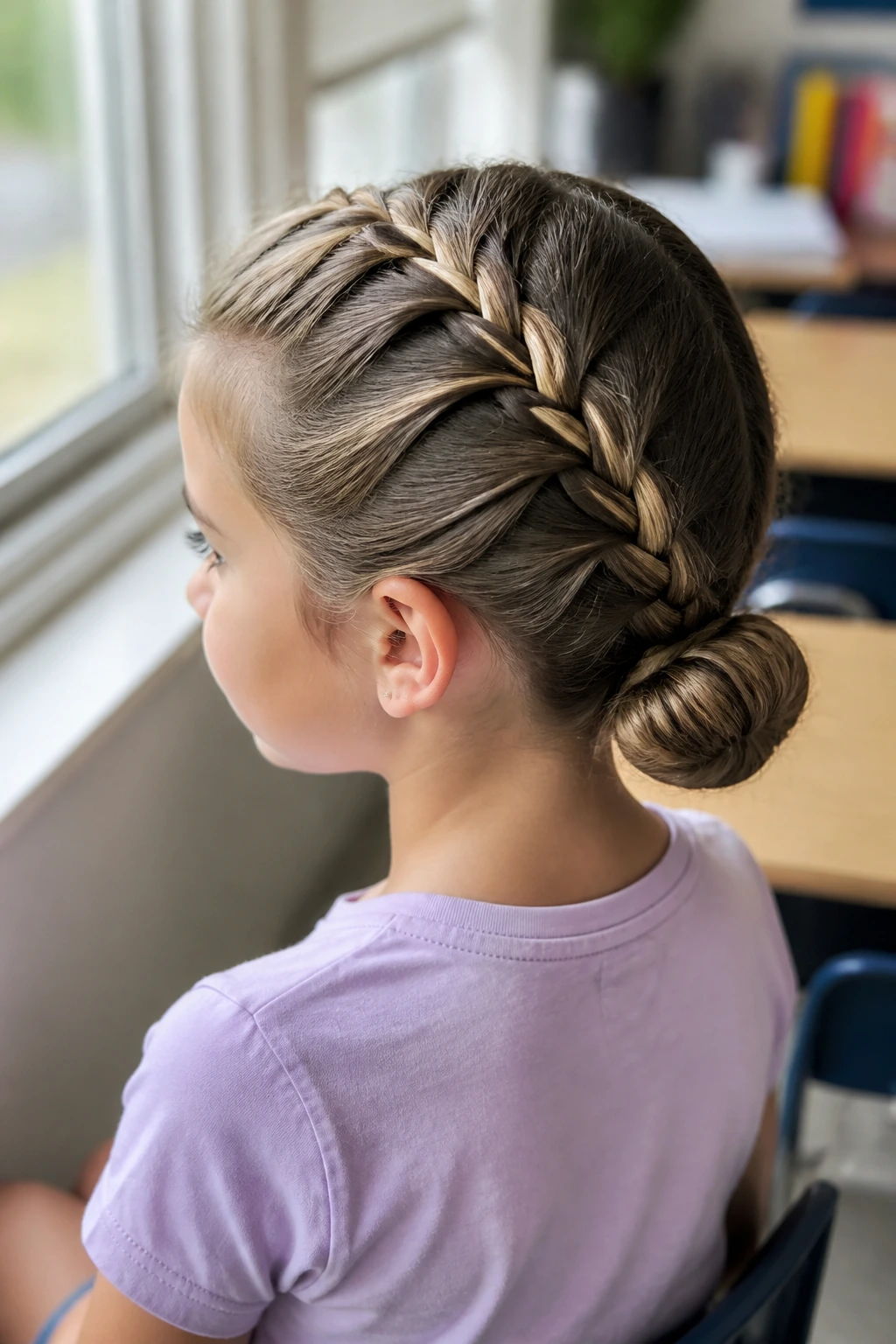
7. French Braid That Drops Into a Low Bun
A French braid into a low bun is tidy in a way that feels almost old-fashioned, and I mean that as a compliment. Braid from the crown down to the nape, then coil the remaining length into a small bun and secure it with pins or a soft elastic. The braid part keeps the top smooth. The bun keeps the ends from swinging into water cups and notebook pages.
This style makes sense for longer hair that needs to stay contained all day. It’s also a good choice if your child plays an instrument or hates loose ends brushing the neck. Once you’ve done it a few times, the pattern becomes muscle memory.
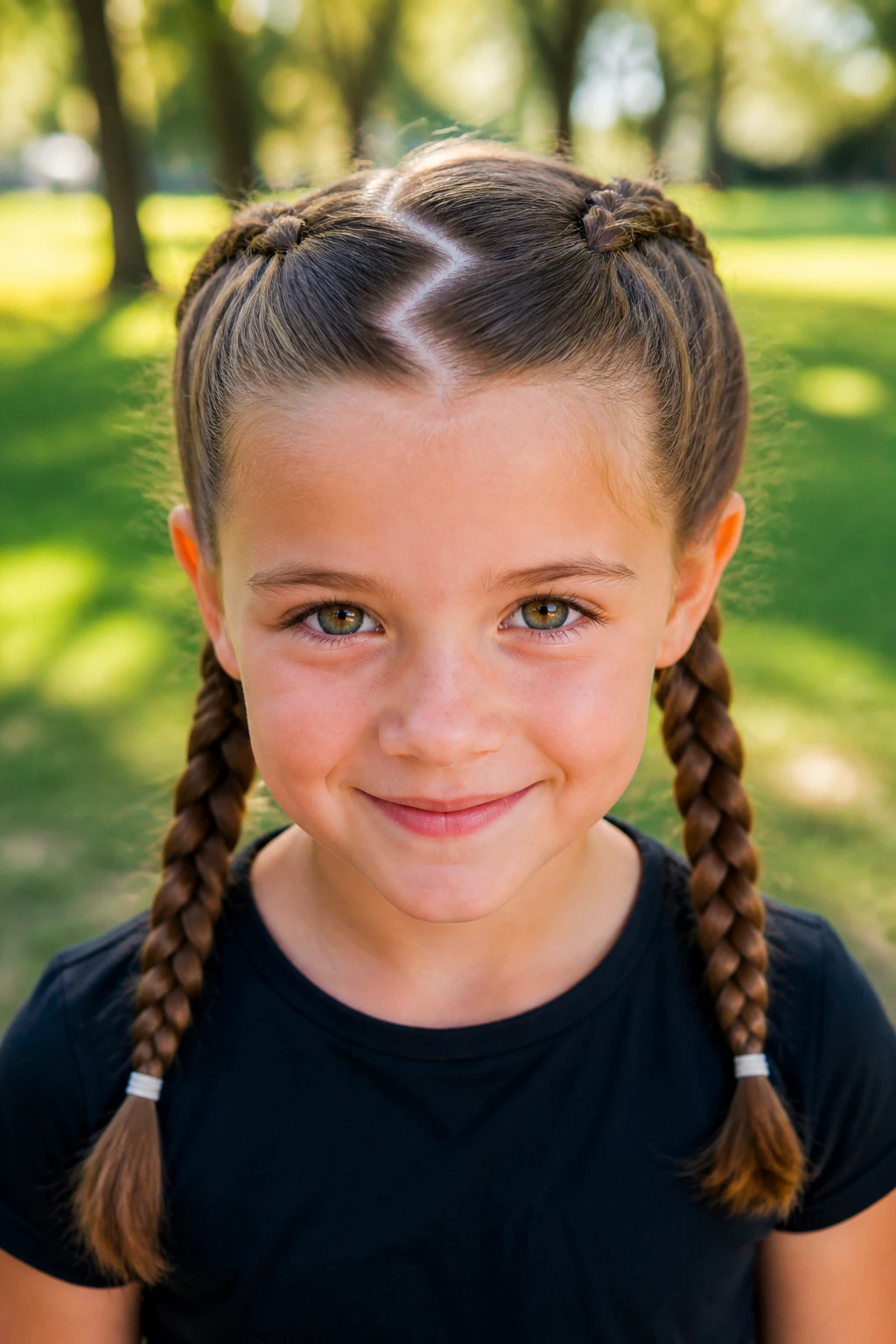
8. Zigzag-Part Pigtail Braids
A zigzag part does not take long, but it changes the whole mood of the style. Use the pointed end of a rat-tail comb to draw a part that snakes across the head, then build two pigtail braids from there. The finished look feels playful without needing extra accessories.
It’s one of my favorite styles for kids who like when hair looks “fun” but still want it pulled back. The part itself is the detail, so you do not need to pile on clips or ribbons unless you want to. If the hair is thick, keep the zigzag generous so the part doesn’t disappear once you start braiding.
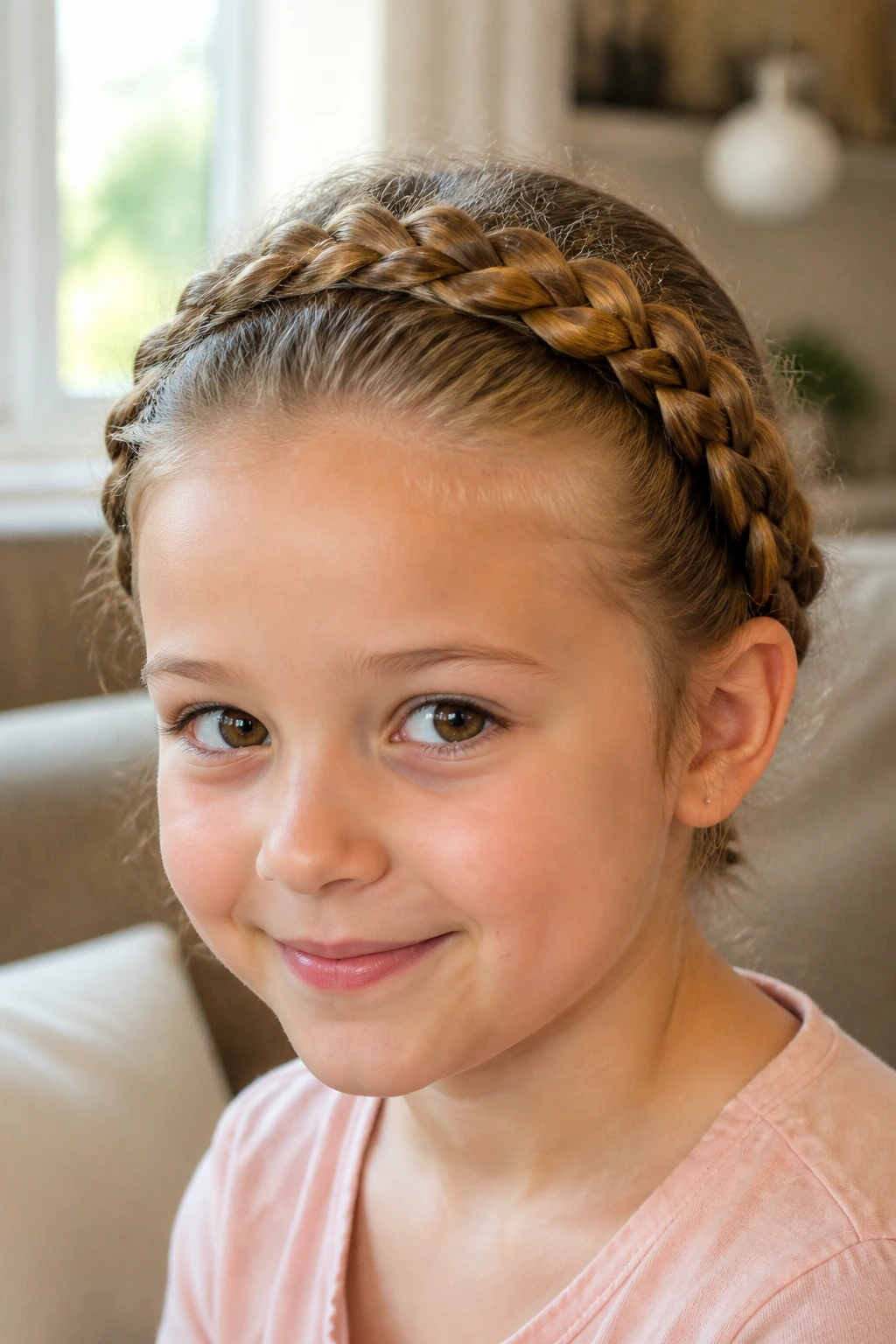
9. Crown Braid Around the Hairline
A crown braid gives serious stay-put energy. The braid travels along the hairline, which keeps shorter face pieces from falling forward during reading time or lunch. It’s a smart pick when bangs are growing out or when loose front layers keep drifting into the eyes.
The braid can be tucked and pinned at the nape or allowed to circle and meet on the other side, depending on length. This is not the quickest style on the list, but it earns its place on days when the hair needs to behave. It also looks more complicated than it really is, which never hurts.
10. Sleek High Ponytail With a Soft Finish
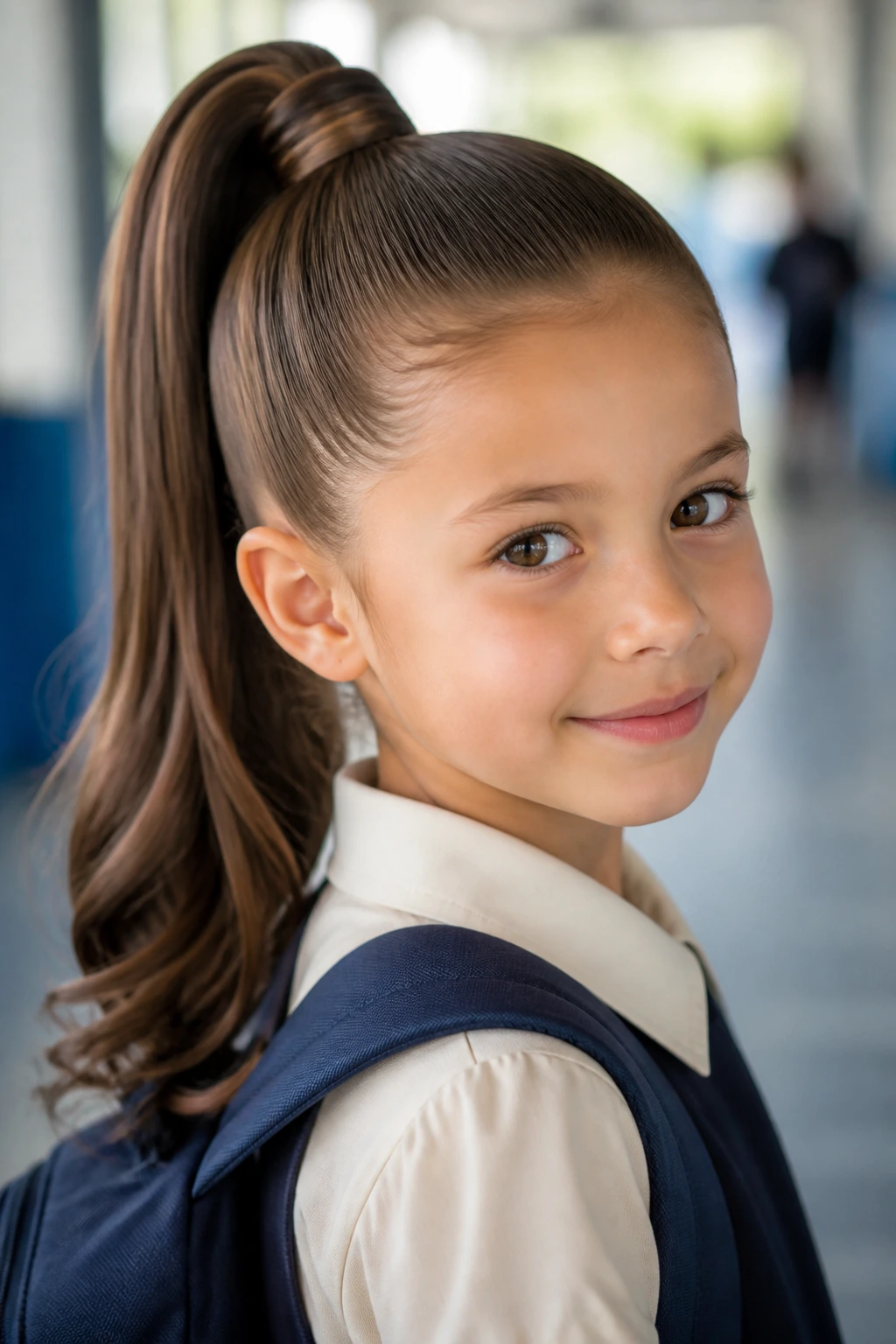
A high ponytail can look sharp, but for little girls I like it better when the finish stays soft instead of overly tight. Brush the hair up high, smooth the top with a light mist of water or leave-in spray, and secure it with an elastic that grips without snagging. If you want a polished finish, wrap a small section around the base.
The height lifts the hair off the neck, which helps on warm, busy days. Still, don’t crank the elastic so hard that the scalp pulls. If the ponytail leaves a red line on the skin, it’s too tight. That part matters more than any bow.
11. Space Buns That Stay Put Through Recess
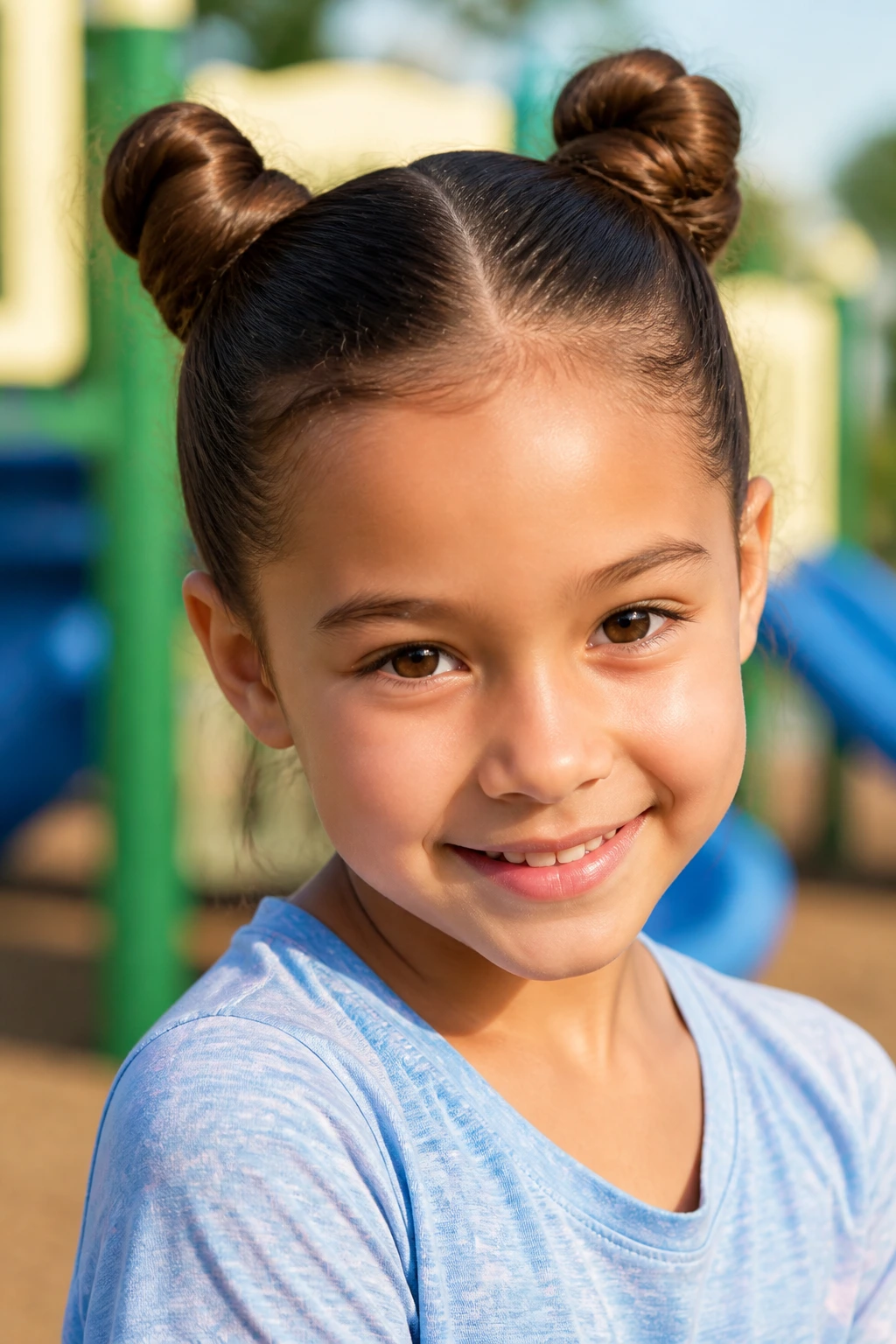
Space buns are the style people think is all fun and no function. Wrong. When you split the hair evenly and secure each bun low enough to sit flat, it can last through a full school day better than you’d expect. The trick is to keep the buns compact so they don’t flop sideways after lunch.
They work best on medium to long hair, though shorter layers can still make it work with a few pins. You can keep them symmetrical for a neat look or leave them a little uneven for a softer feel. Either way, they hold a child’s hair off the neck and out of the face. That’s the whole point.
12. Low Braided Bun at the Nape
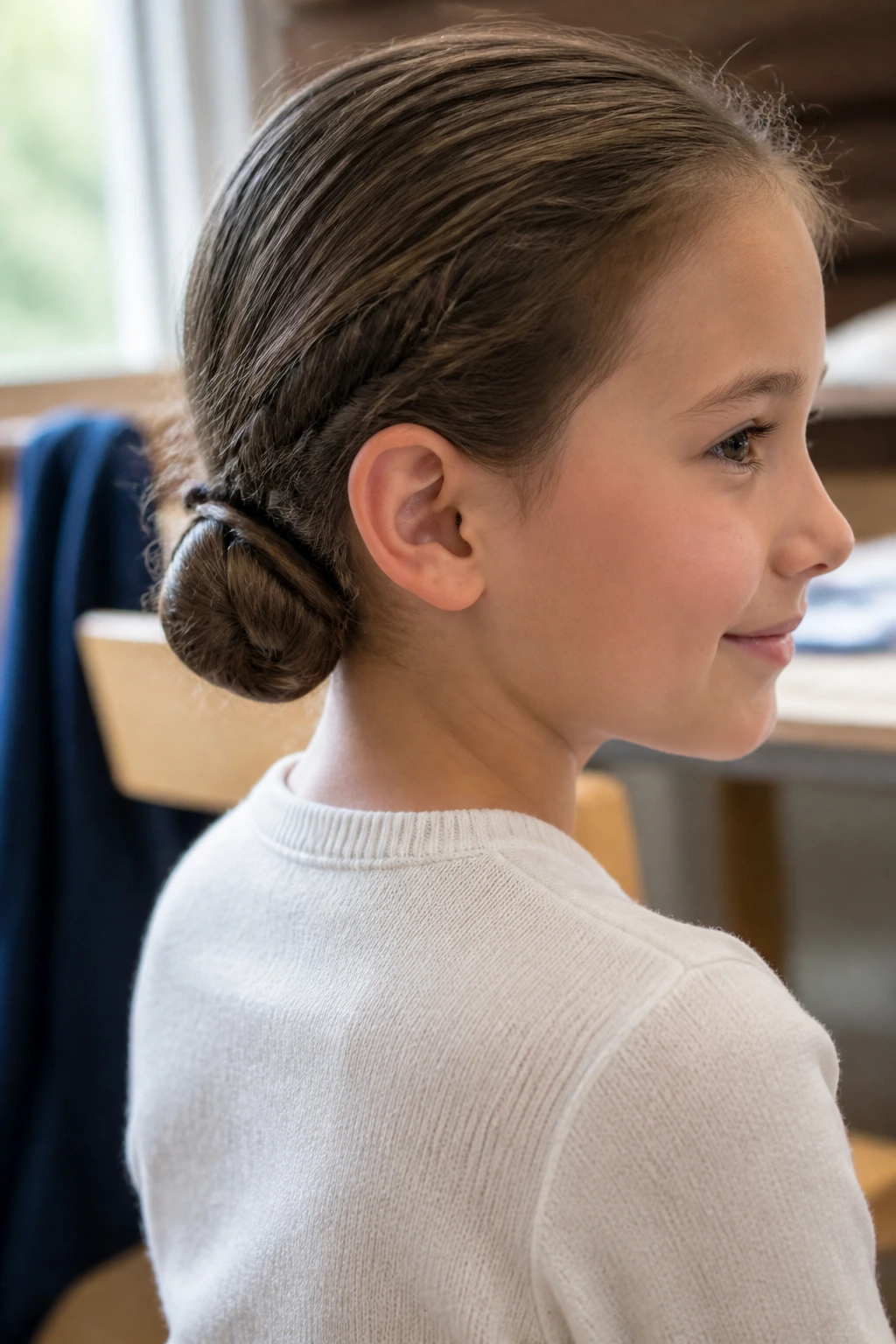
This one is practical in the best way. Braid the hair first, then twist the braid into a bun at the base of the neck and pin it down. Because the braid carries the structure, the bun doesn’t need to be huge or complicated. It just needs to sit flat.
The low placement makes it easy under jackets, hoodies, and backpacks. It also suits kids who dislike hair swinging around while they write. If the hair is very slippery, a tiny bit of texturizing spray at the mid-lengths gives the braid more grip before you coil it. Not much. Just enough.
13. Waterfall Braid for Long, Smooth Hair
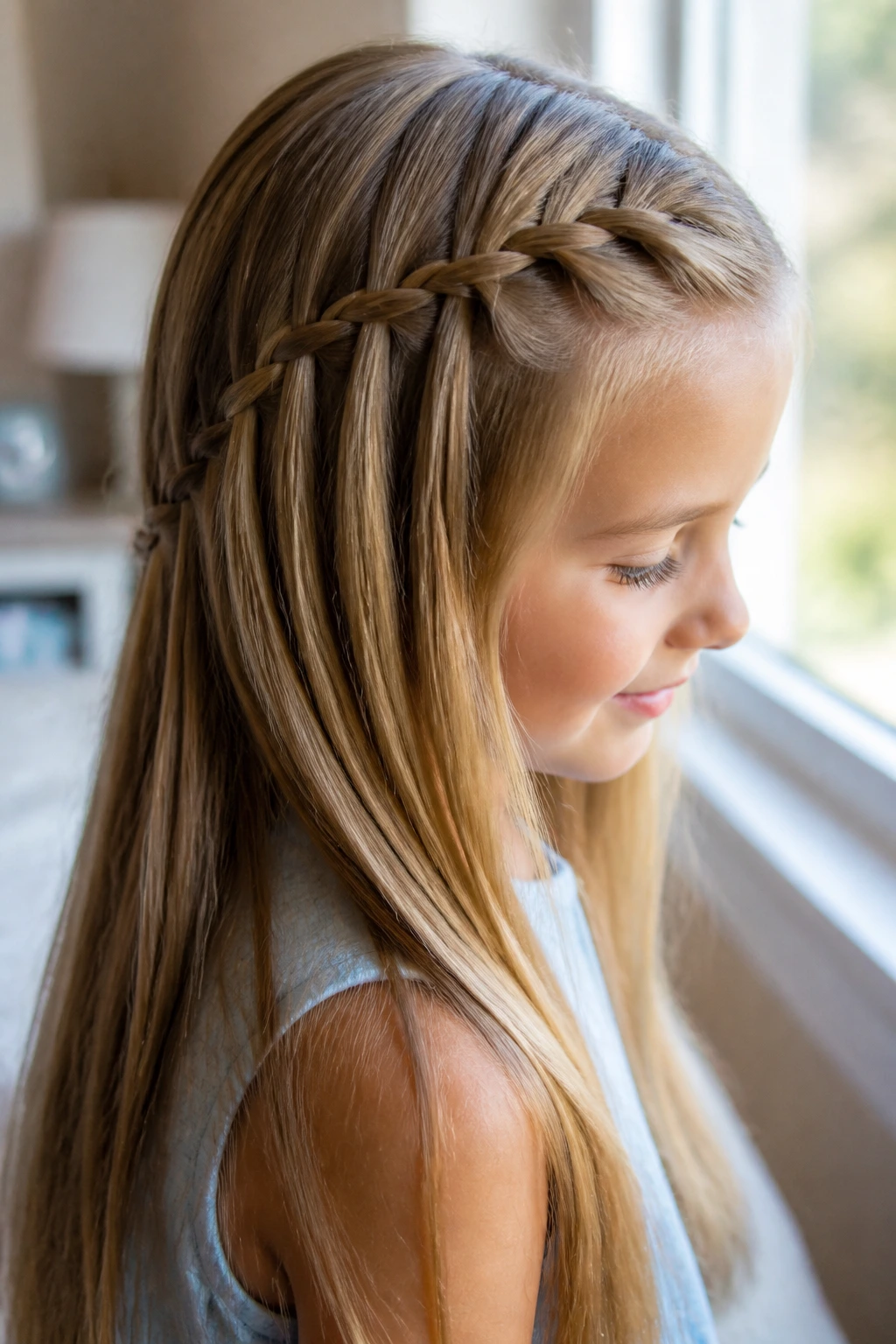
A waterfall braid has a softer, more decorative feel than the tighter school styles, but it still keeps hair under control if you pin it well. One strand drops through each braid section, which creates that loose cascading pattern. It works best on long, smooth hair where the pattern shows clearly.
I like this for days when a child wants her hair down but not fully loose. The braid holds the front and top layers in place while the rest moves freely. If the hair tends to tangle easily, this is better for a school event than a gym day. It’s pretty. It is not the most rugged option here.
14. Pull-Through Braid for Thick Hair
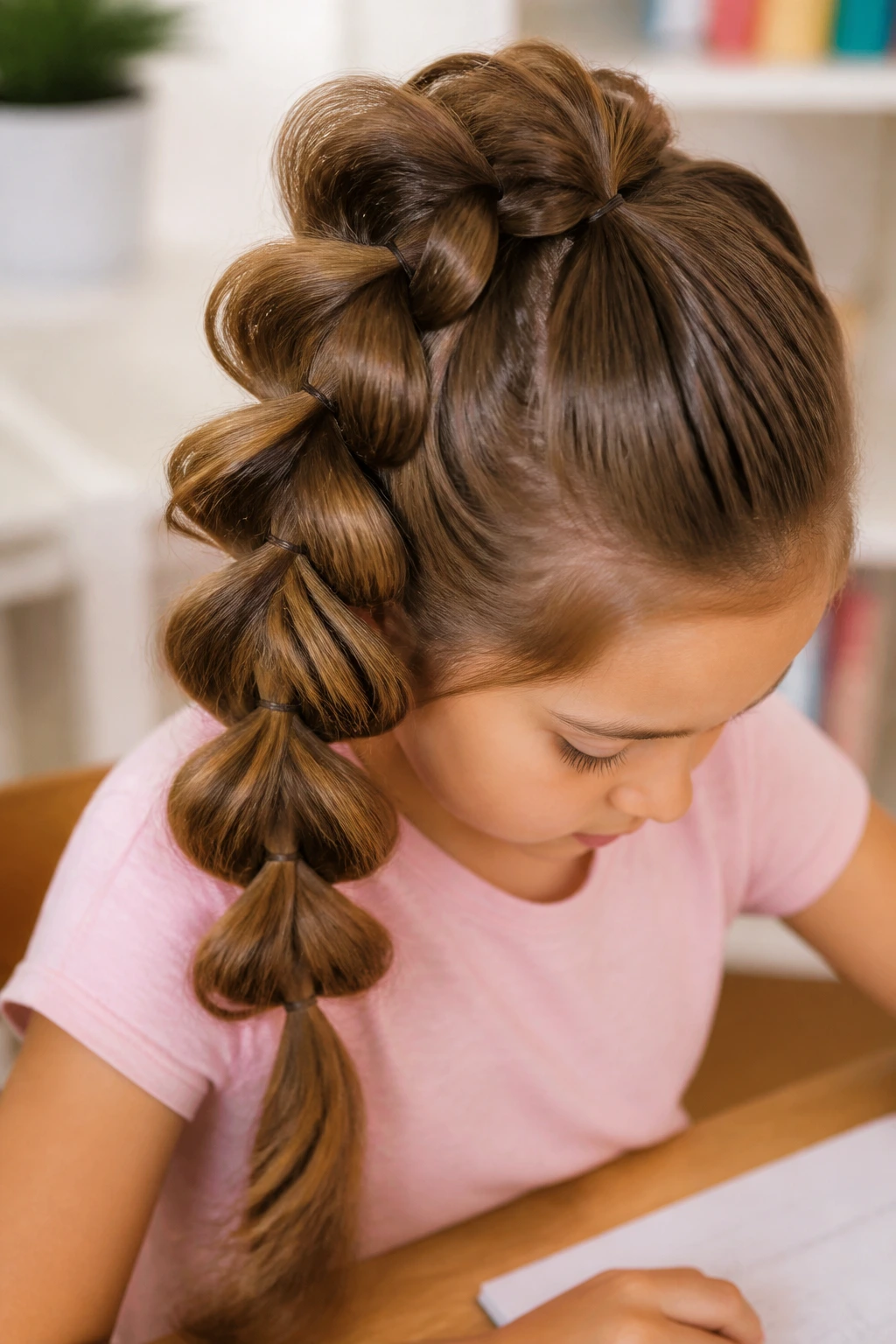
Pull-through braids look elaborate, but they’re really a chain of ponytails stacked on top of each other. That makes them excellent for thick hair, because you get the appearance of a full braid without forcing three giant sections through your fingers. Use small clear elastics and tug the loops gently to build the shape.
The best part is that the braid keeps its volume all day. Thick hair can swallow regular braids fast; this one resists that. If you’ve got a child with dense, heavy hair and a school morning clock ticking, this style is one of the few that looks big on purpose instead of by accident.
15. Rope-Twist Pigtails
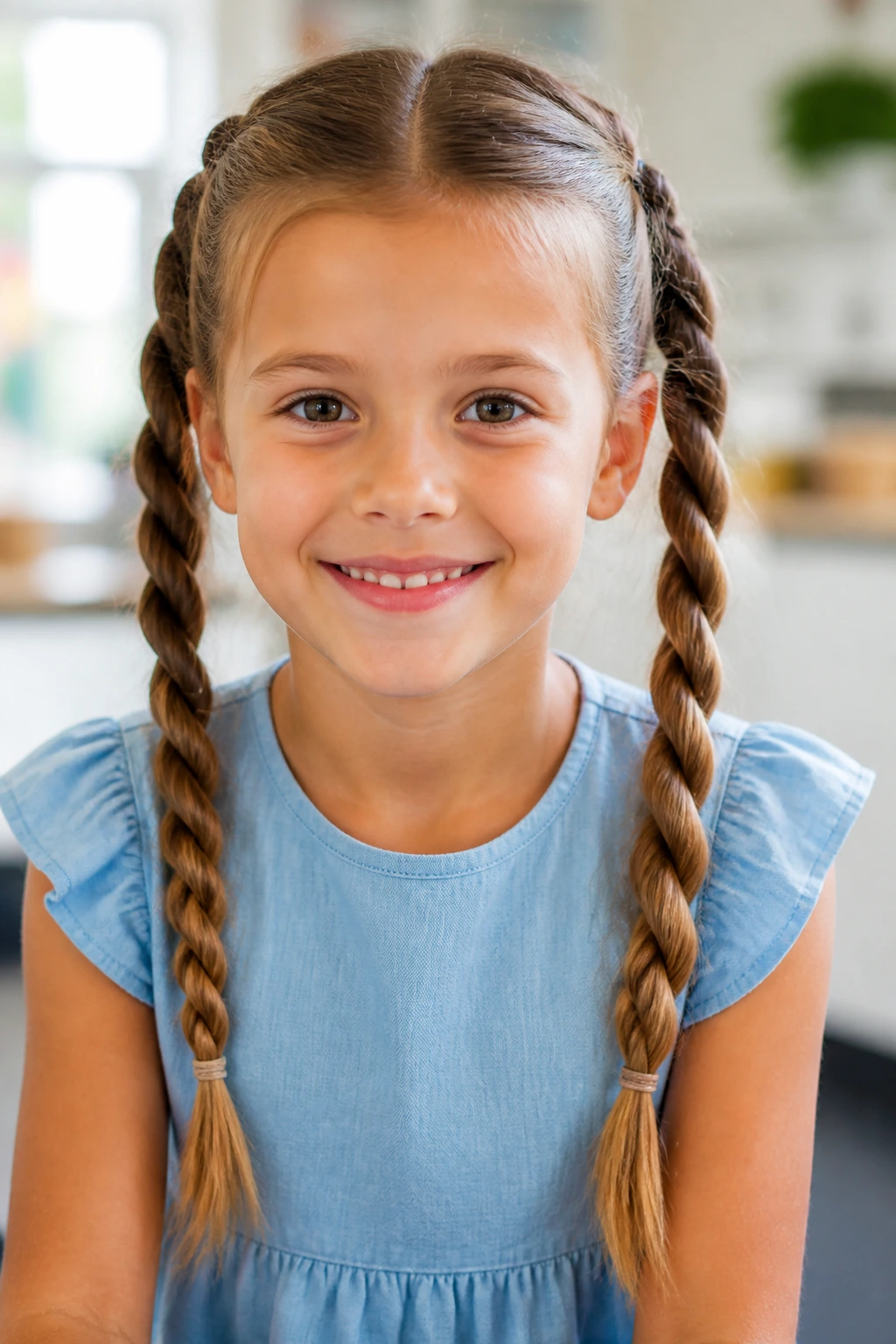
Twists are underrated. Split each side into two sections, twist them in the same direction, then wrap the two strands around each other in the opposite direction and secure the ends. The result is rope-textured pigtails that stay neat without the hand strain of a full braid.
They work well on hair that has a little wave or texture, because the twist grabs onto itself. I also like them when the child is tired of the same old braid but still wants hair off the face. They’re quick once you’ve done them twice. The motion is easy to remember.
16. Headband Braid That Keeps Bangs Back
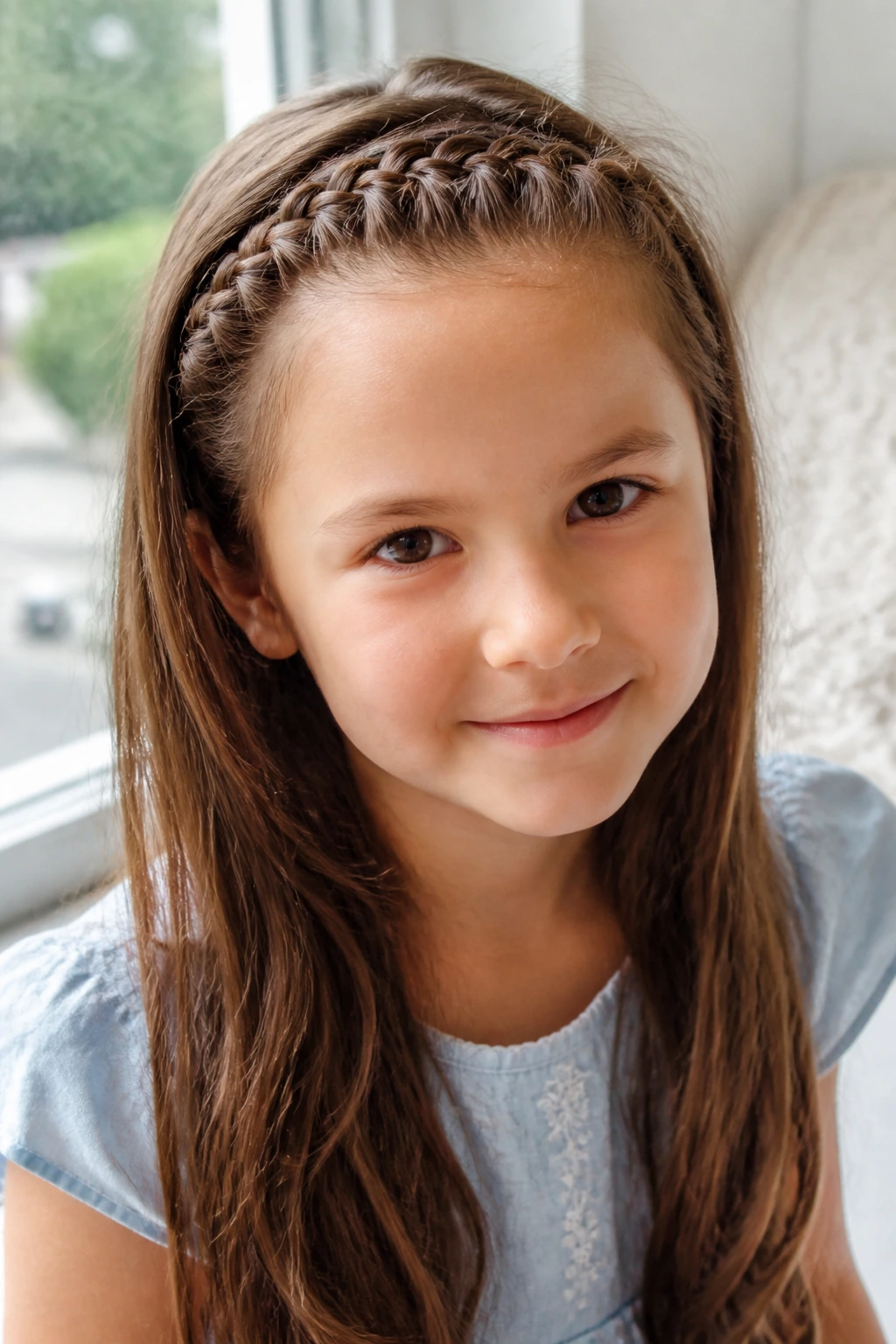
A headband braid is one of the best fixes for growing-out bangs. Braid a section from one temple across the front hairline like a built-in headband, then pin it behind the opposite ear. The effect is neat and simple, and the front of the face stays open for reading, eating, and all the little things kids do with their hands.
This style is useful when you want the rest of the hair down but the front hair to behave. It also works on fine hair because the braid does not need a lot of bulk to stay in place. A couple of hidden pins is usually enough. Don’t overthink it.
17. Mini Double Buns for Short or Medium Hair
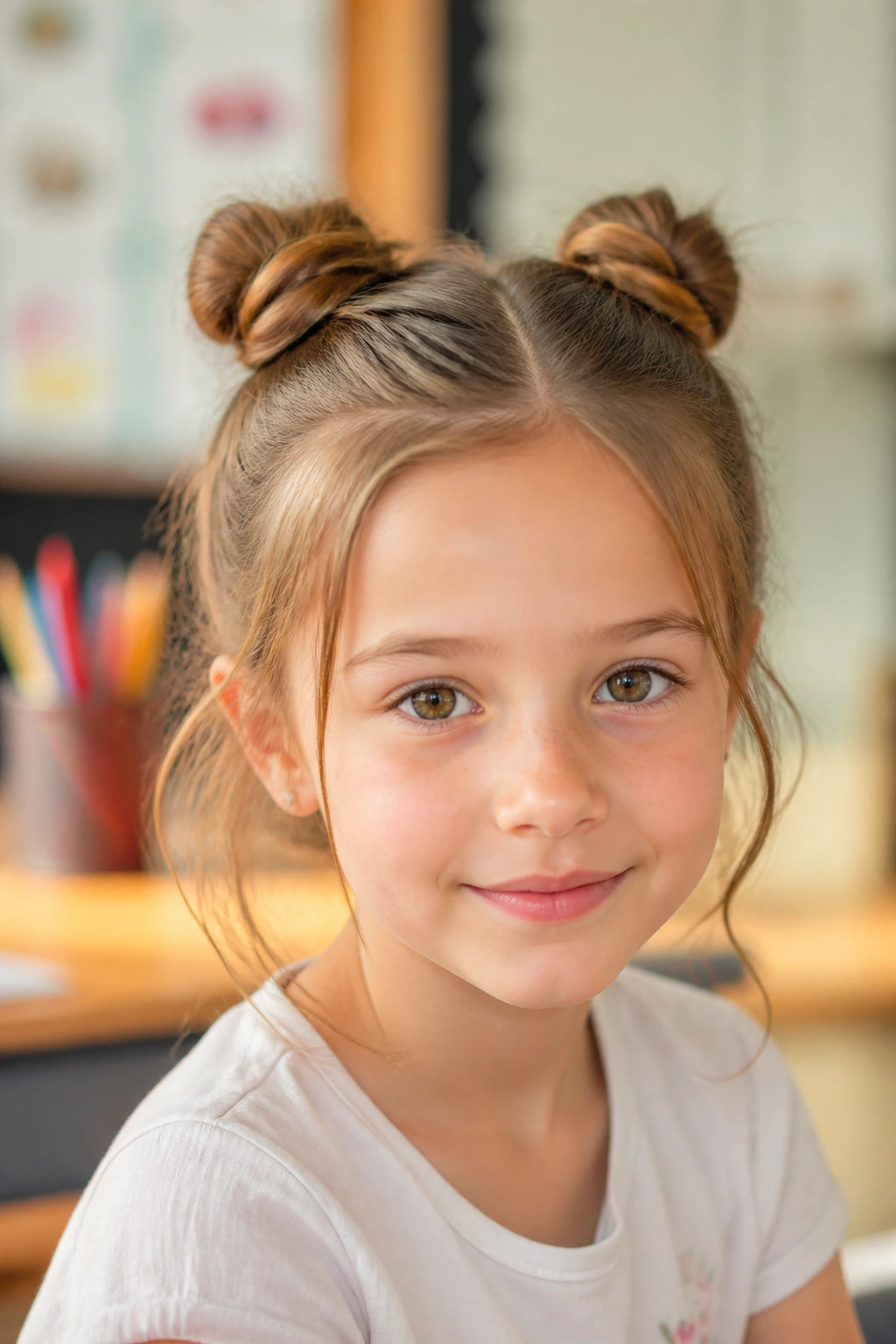
Mini double buns are the tiny-sister version of space buns, and they’re adorable on short or medium hair that won’t reach a high knot. Gather two small sections near the crown or slightly lower, twist each one into a little bun, and secure with tiny elastics or pins.
The smaller size keeps the style from feeling heavy. It also means the buns sit flatter against the head, which helps them survive a day in the classroom instead of toppling after recess. If a child has layers that pop out everywhere, this style lets a few pieces be messy while the overall look stays controlled.
18. Half-Up Braided Crown
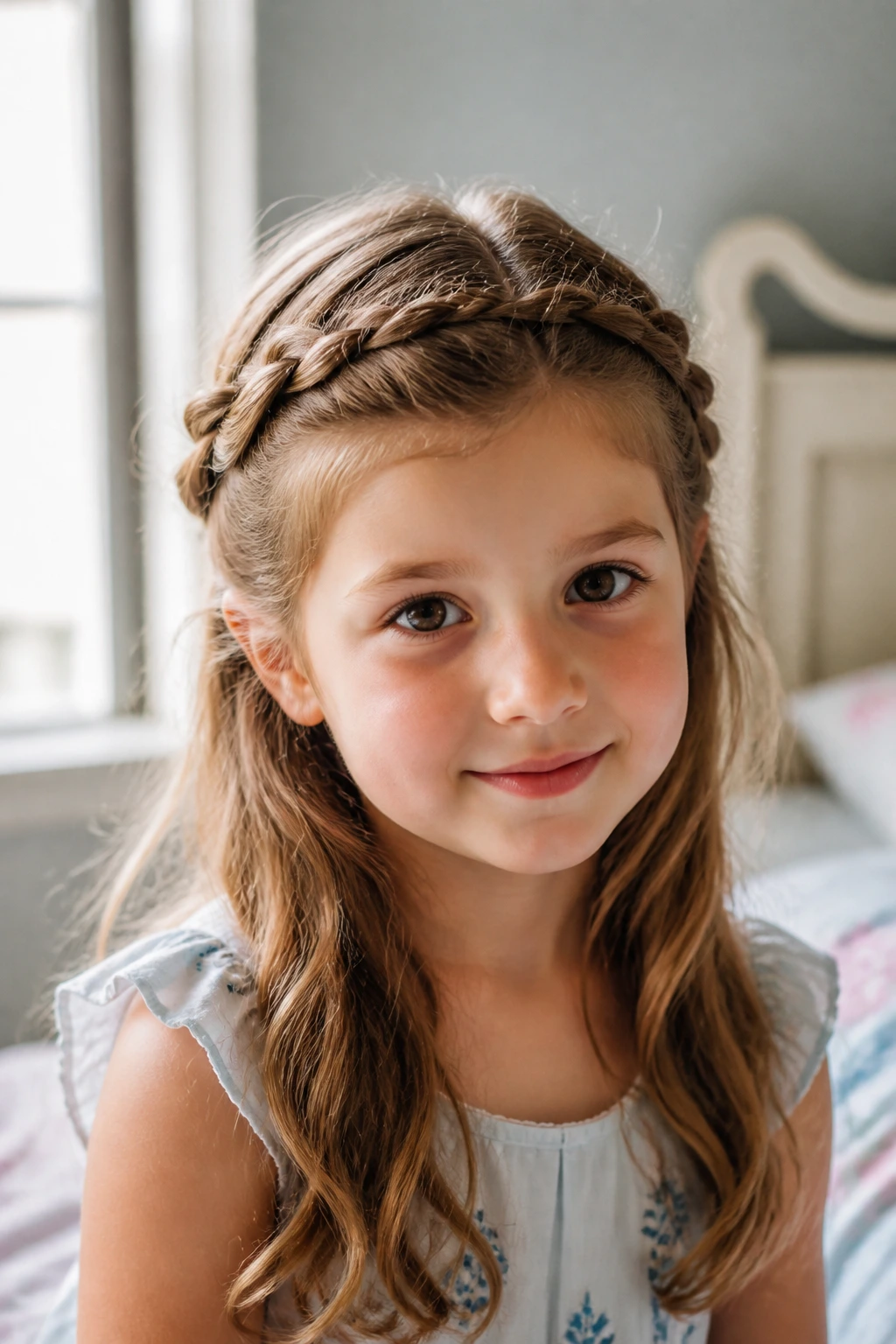
Take the top half of the hair and braid it from ear to ear, then pin the braid across the back like a crown. Leave the lower half loose. That combination gives you structure without fully committing to an updo, and it’s one of the easier ways to make simple hair look finished.
This is a good school style when the child wants movement in the length but needs the front to stay tidy. It also works if the hair is thicker in the lower half and you don’t want to wrestle all of it into a tight style. The braid does the heavy lifting. The loose length gets to mind its own business.
19. Low Side Bun With a Clip or Bow
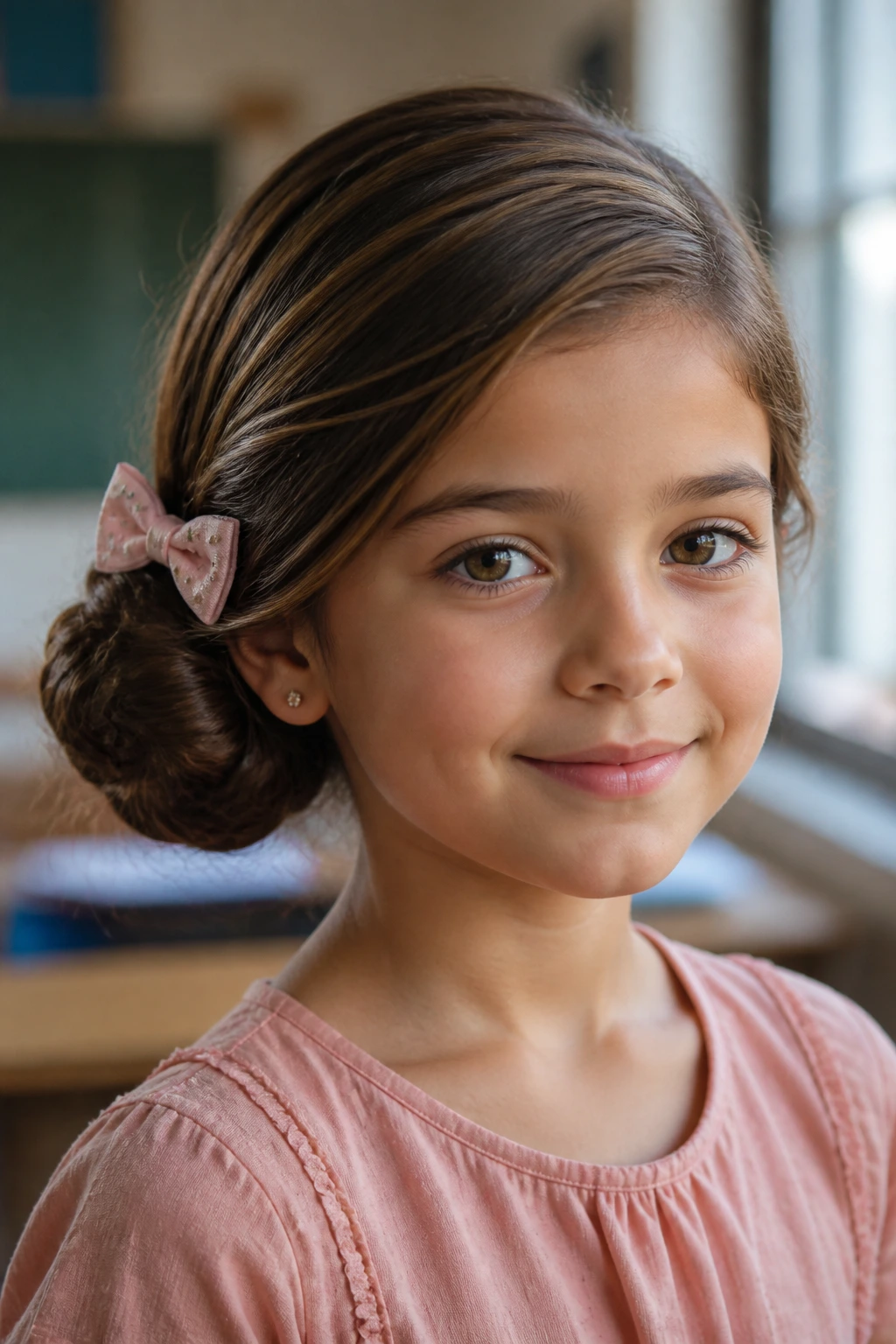
A low side bun feels a little more playful than a plain nape bun. Sweep the hair to one side, twist it into a bun behind the ear, and pin or band it securely. A clip or bow on the same side gives the style a clear finish point.
The side placement makes this a nice option for kids who like asymmetry and do not want every hair style to look identical. It also keeps the neck free, which matters on days with sports practice or warm classrooms. If the hair is fine, prep the side with a little dry texture spray so the bun has something to hold onto.
20. Fishtail Braid for Long Lengths
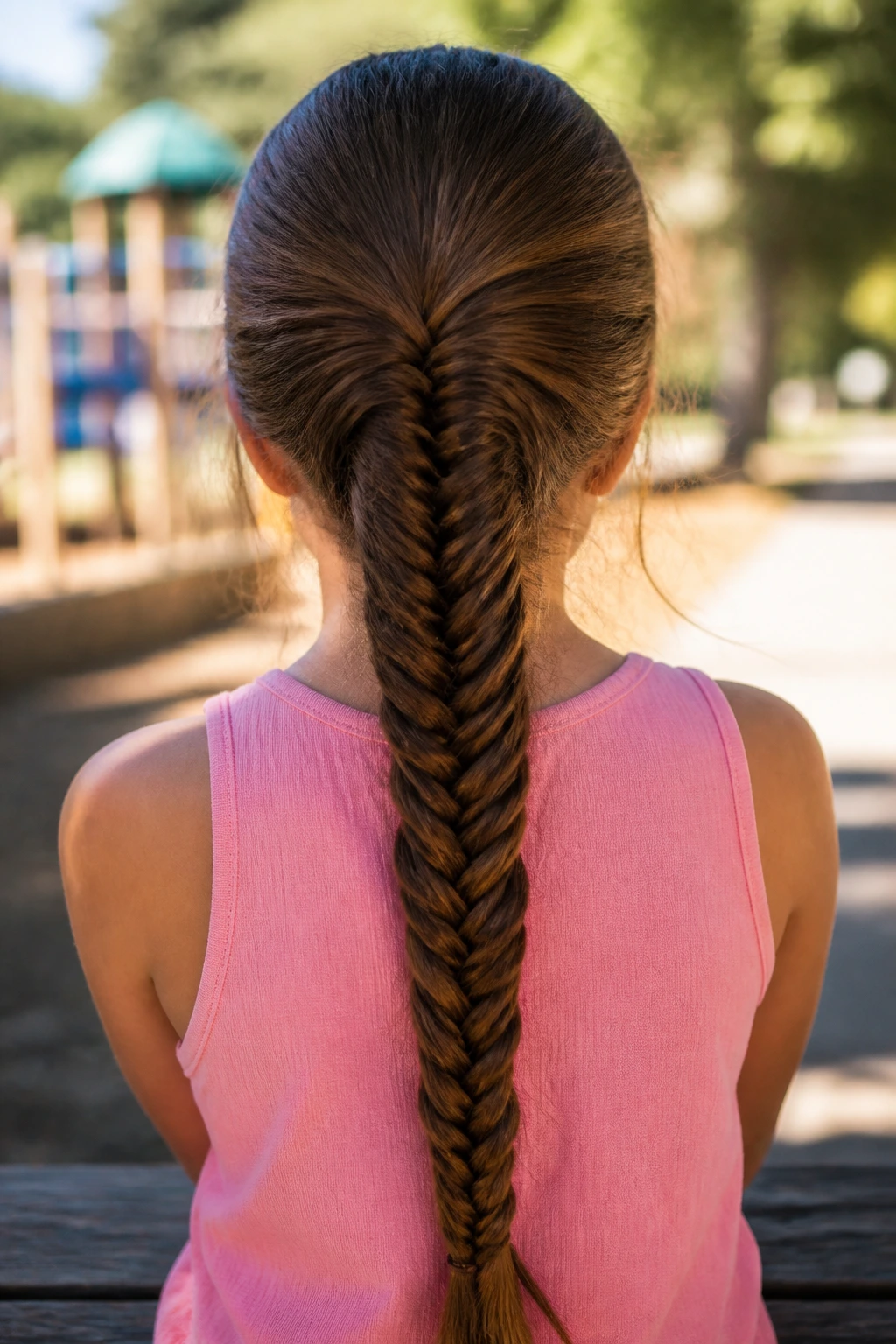
A fishtail braid takes more patience than a regular braid, but the result has a tighter, woven look that stays clean for hours. Split the hair into two sections, then pull small pieces from the outer edge of each side across to the opposite side. Keep the sections narrow if you want the braid to look polished.
This works best on long hair, because the pattern really shows once there’s enough length to hang. It’s a good choice for school pictures or days when a child wants something a bit different from the usual three-strand braid. If the hair is slippery, start with dry hair instead of freshly conditioned hair. That makes a difference.
21. Braided Ponytail With a Ribbon Woven In
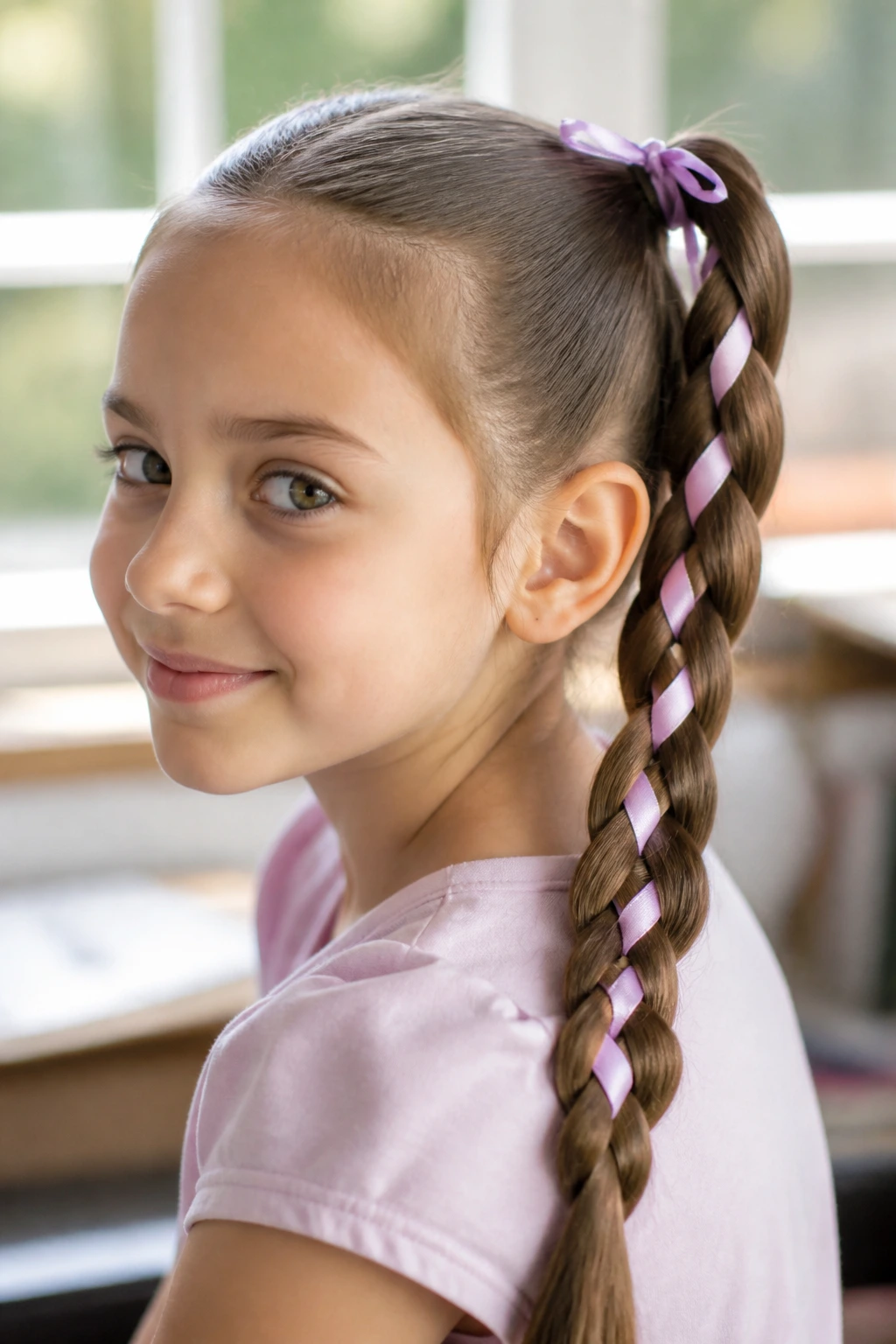
This one is cheerful without being fussy. Pull the hair into a ponytail, divide the pony into three sections, and braid a ribbon into one of the strands so it peeks through the length. The ribbon adds color down the entire style instead of sitting only at the top.
It’s especially nice when the outfit is plain and the hair needs one clear accent. You can match the ribbon to a sweater, backpack, or school color if that matters to your child. The braid itself still does the holding, so the ribbon is decoration rather than the main event. That’s the right order.
22. Scarf-Tied Ponytail
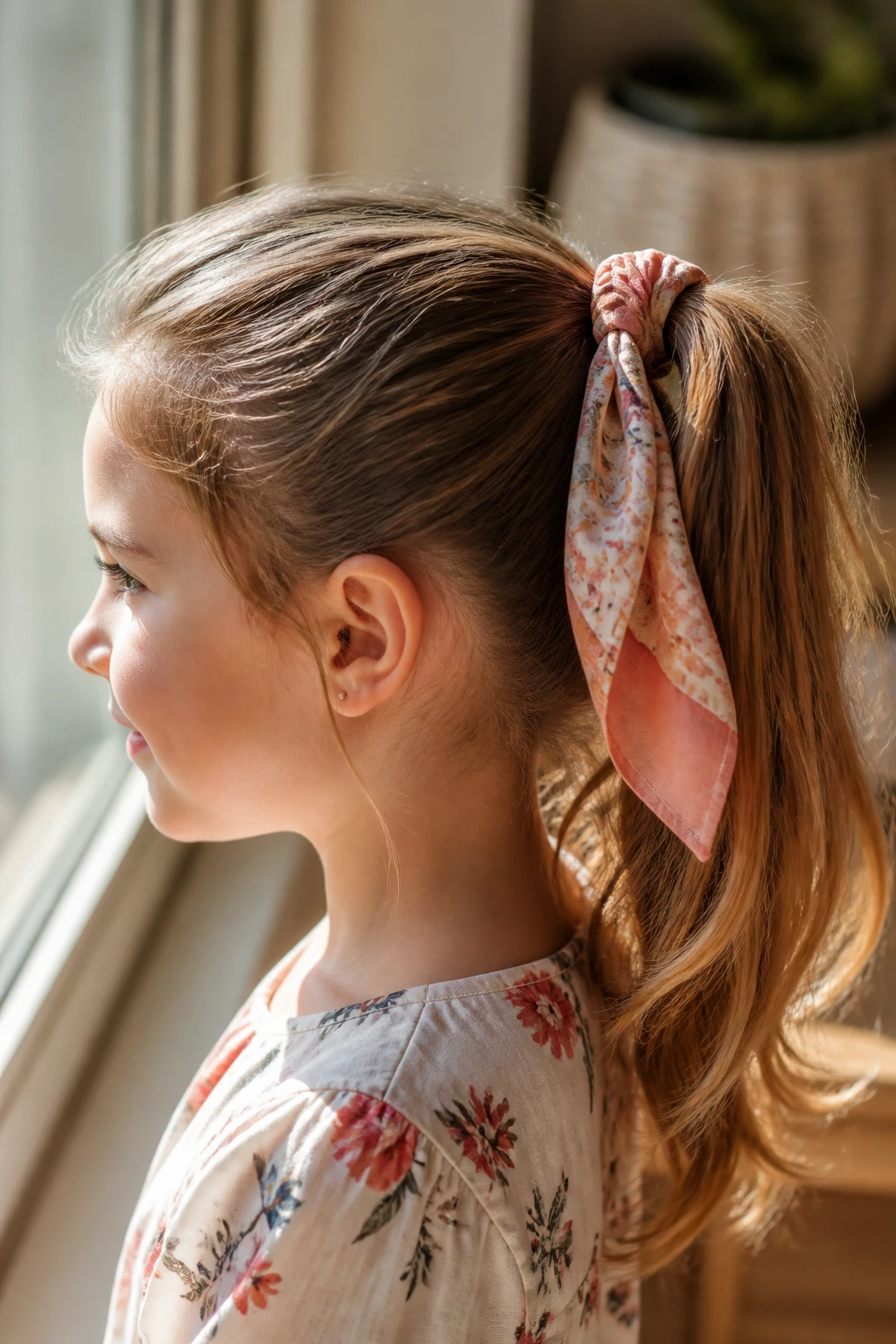
A scarf tied around a ponytail can make a simple style look intentional in seconds. Choose a soft, lightweight scarf, tie it around the base, and let the ends hang or knot them into a small bow. If the hair is curly, the scarf can also sit in the ponytail itself without fighting the texture.
This is a nice option for children who want color but not more pulling. It works especially well with a low ponytail or a loose mid-height one. Keep the scarf narrow enough that it doesn’t overwhelm the head. You want the accessory to frame the style, not swallow it.
23. Criss-Cross Pigtails Across the Front
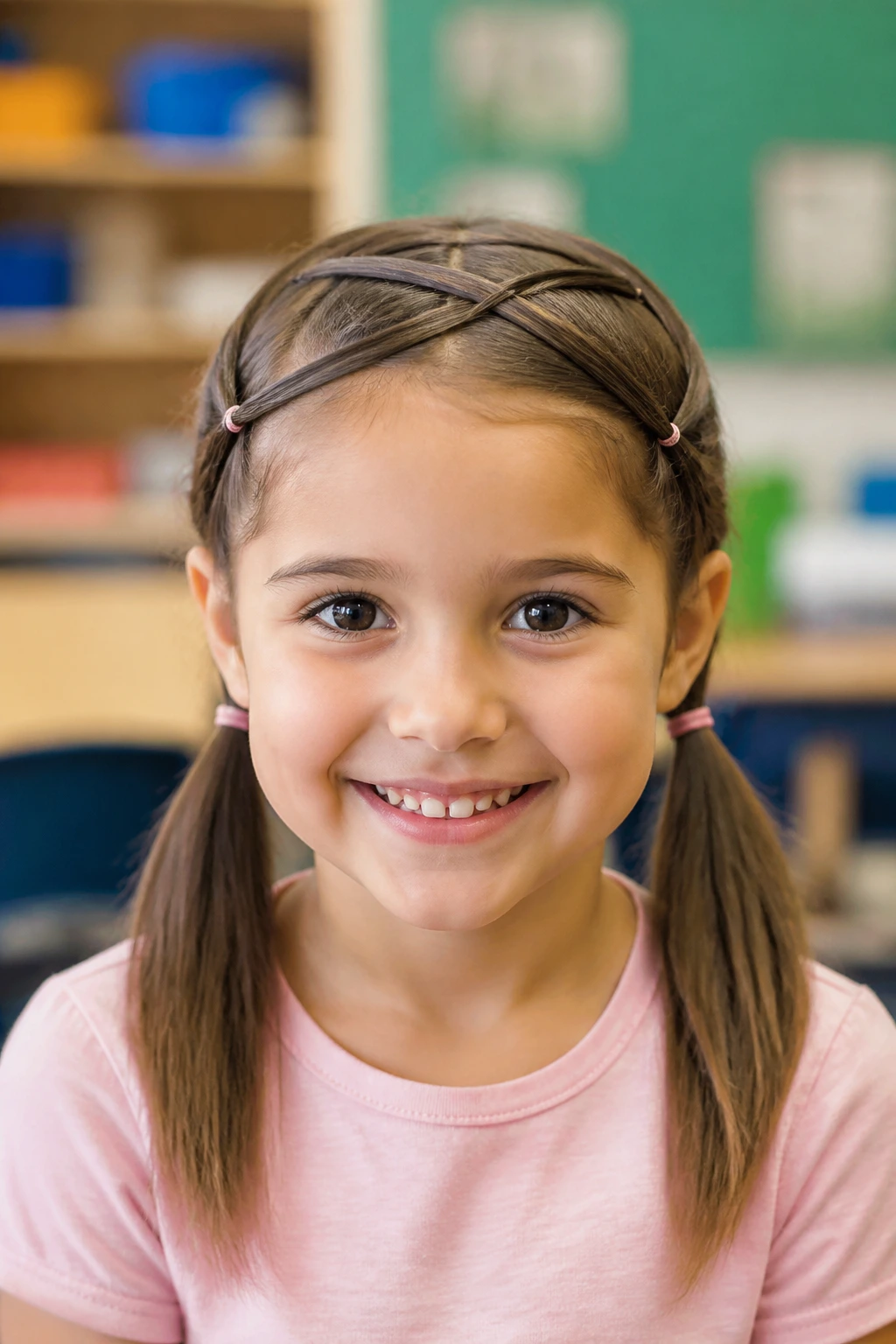
Criss-cross pigtails look fancier than they are. Take two small front sections, cross them over each other, and secure them into the opposite side or into two low pigtails. The crossing pattern keeps the front hair back and adds a little structure where loose strands usually escape first.
This is a good choice when a child has fine front pieces or shorter layers around the face. The detail sits right where people notice it first, so the rest of the hair can stay simple. I like this style for families who want something different but don’t have ten extra minutes to spend on braiding.
24. Boxer Braids With Tucked Ends
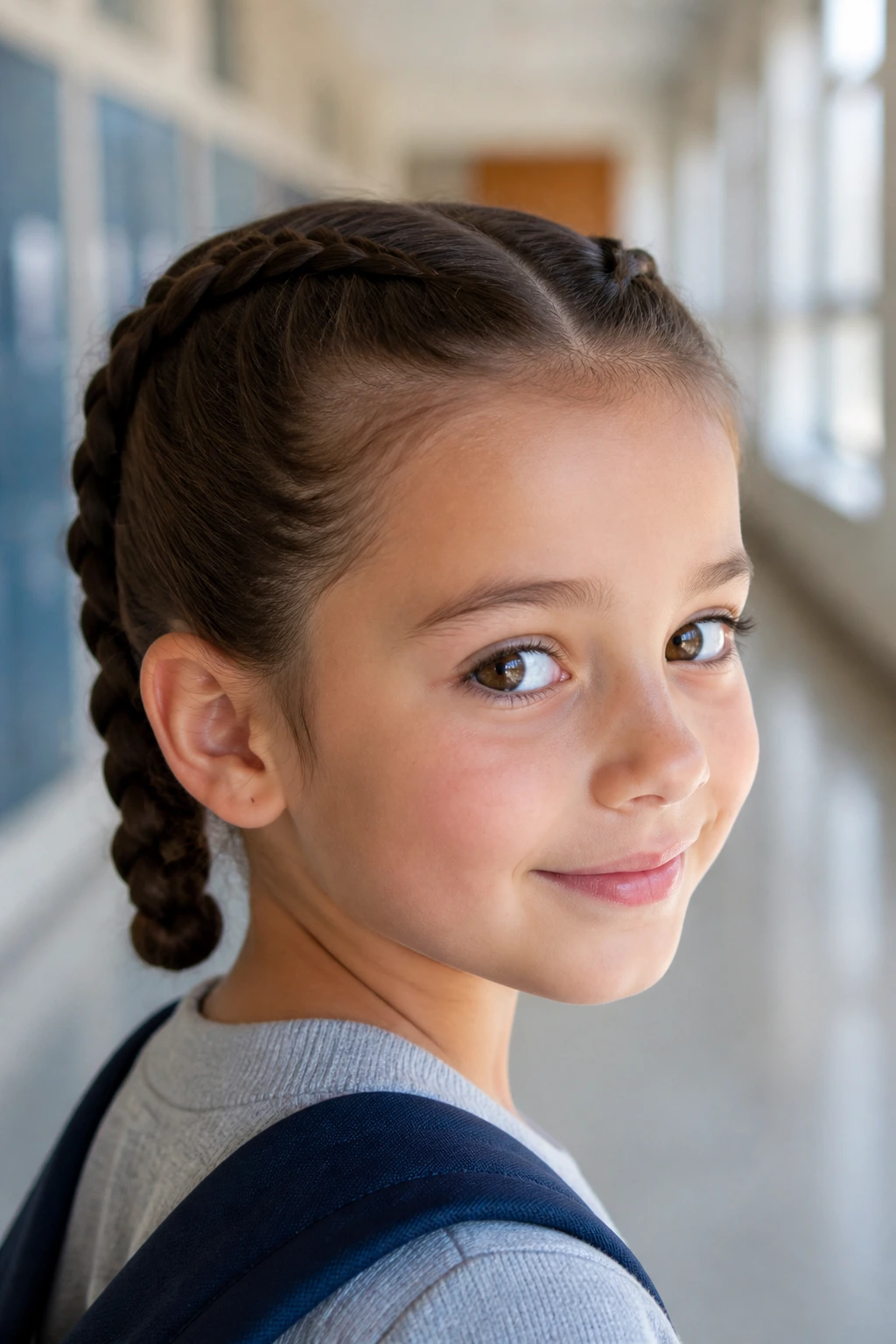
Boxer braids are the tighter, more streamlined cousin of double braids. Braid both sides close to the scalp, keep the sections neat, and tuck the ends under with a small elastic or pin if the length allows. The style keeps hair contained from forehead to nape, which is useful on active school days.
The look is clean and controlled, and it doesn’t move much once it’s in. That’s the appeal. If the hair is thicker, this style helps distribute the bulk evenly instead of building one giant ponytail. It’s also one of the better choices when you want a no-fuss style that still looks finished at the end of the day.
25. Curly Puff Pigtails
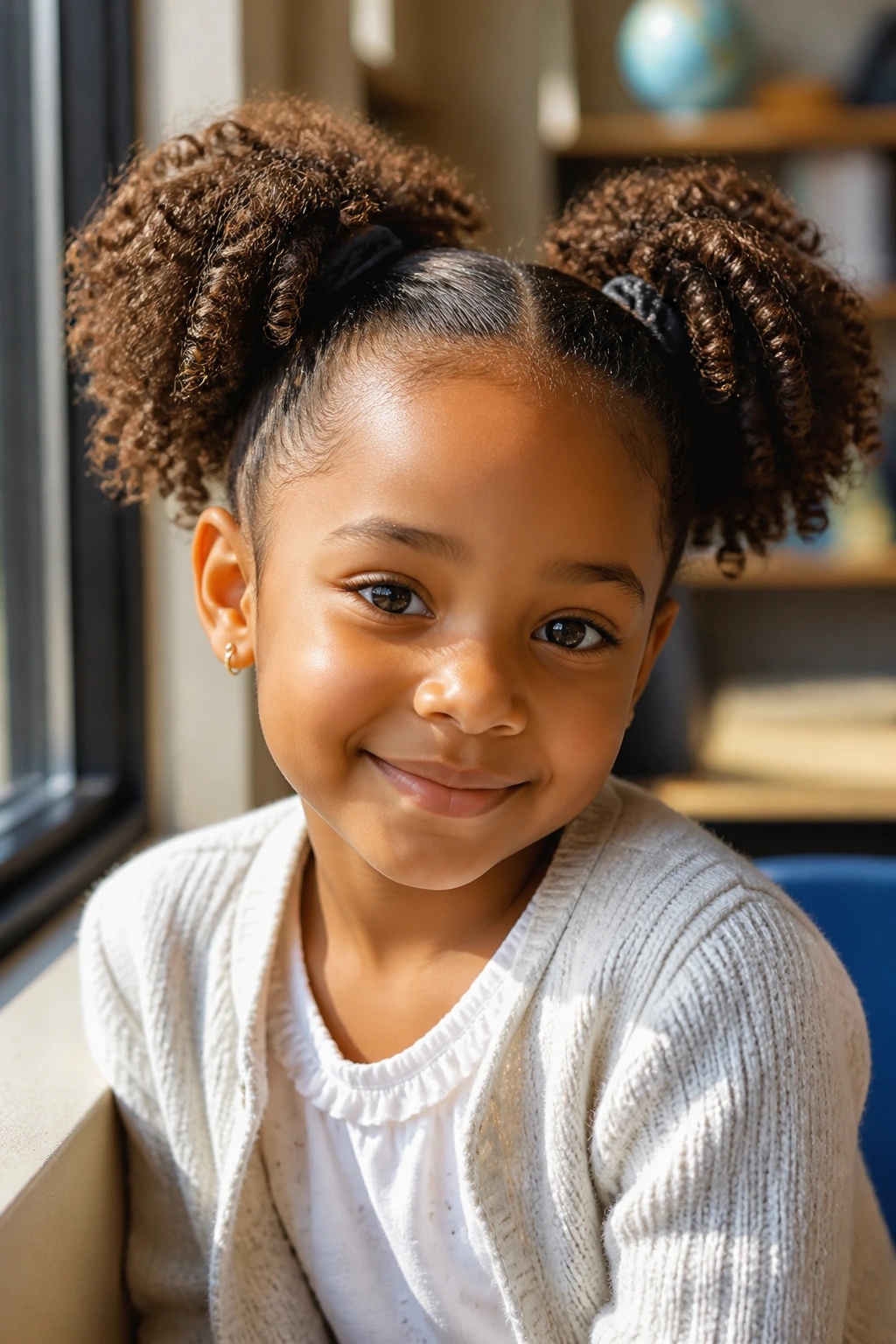
Curly hair has its own rules, and the best styles respect the curl pattern instead of flattening it. Curly puff pigtails let the texture stay full while still pulling the hair away from the face. Use soft ties, define the part cleanly, and let the puffs sit at a comfortable height.
A little water and leave-in conditioner on the ends can help keep the curls from frizzing before lunch. I prefer this style when the goal is neatness without stretching or over-brushing the curls. It is one of the few school looks that can feel playful and protective at the same time.
26. Sleek Bob With Snap Clips
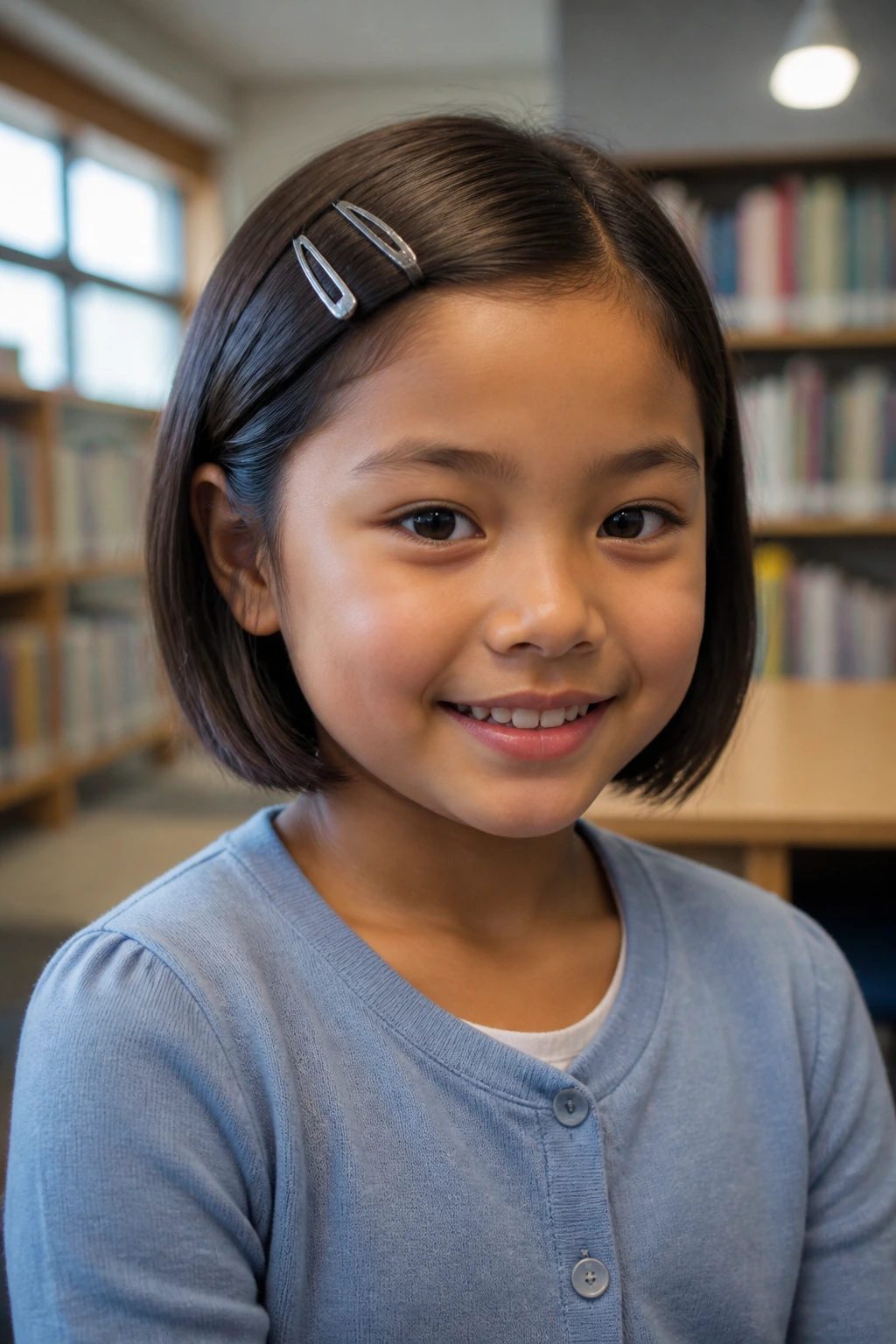
Short hair can be easier than long hair, but it still needs a plan. A sleek bob with a side part and two snap clips keeps the front smooth and gives the cut a finished shape. If the hair falls into the eyes, tuck a small front section back with clips instead of forcing a tiny ponytail that will not hold.
This is where accessories carry the look. Choose clips with a strong grip and a flat back so they don’t snag when the child takes off a hoodie. On a bob, a neat line matters more than complicated styling. Clean part. Two clips. Done.
27. Lob With Side Twists
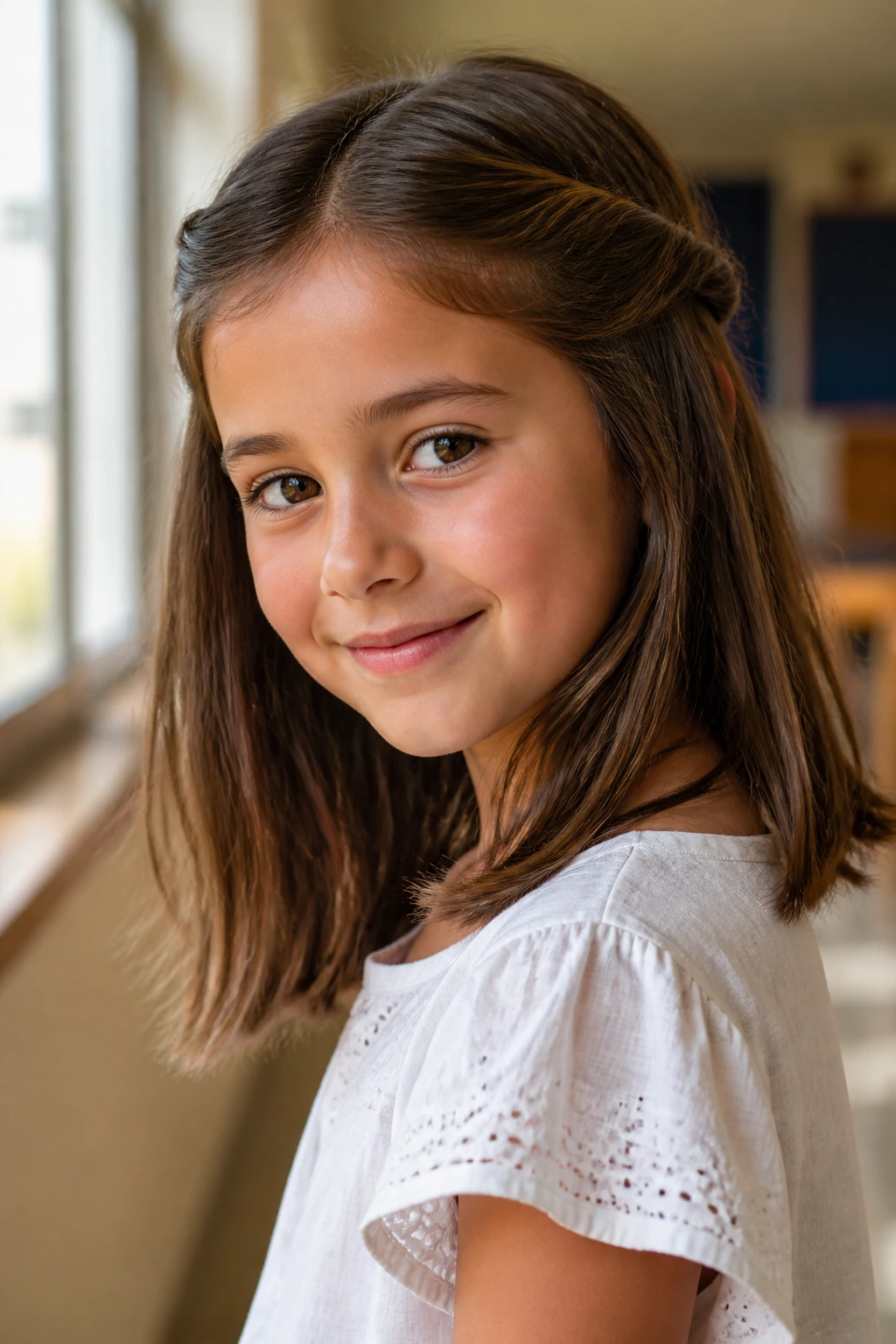
A lob gives you enough length for a little styling, but not always enough for big braids. Side twists solve that. Twist a small section from each side and pin it back at the temples, leaving the rest of the hair down and free. It’s a small move, but it changes the front of the style a lot.
This is a good compromise when a child wants to wear her hair down but still needs it out of her face. It also works well if the ends of the lob flip out and you don’t want to spend time fighting the shape. Two twists. A couple of pins. That’s usually enough.
28. Braided Bangs Into a Ponytail
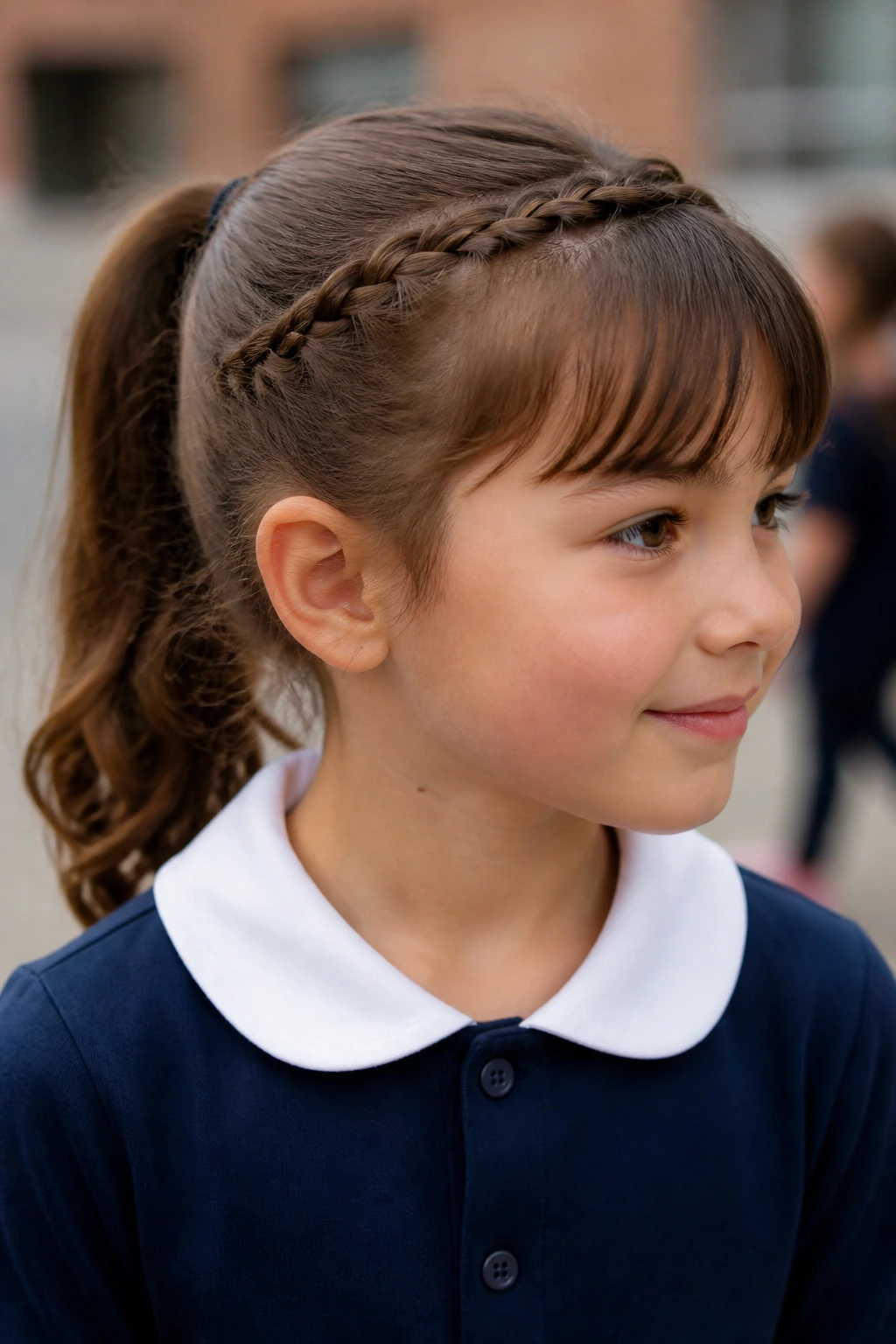
Growing-out bangs are a nuisance on school mornings. Braid them back into the rest of the ponytail, and the problem disappears for the day. The braid can be tiny and narrow, just enough to keep the front from sliding loose.
This style works on nearly any length that can make a ponytail. It’s also one of the best fixes for hair that’s at that awkward stage where the fringe is neither short enough to ignore nor long enough to cooperate. I’d use this on repeat if the child keeps pushing hair out of her eyes during class. Which, honestly, they usually do.
29. Messy Bun With Braided Front Pieces
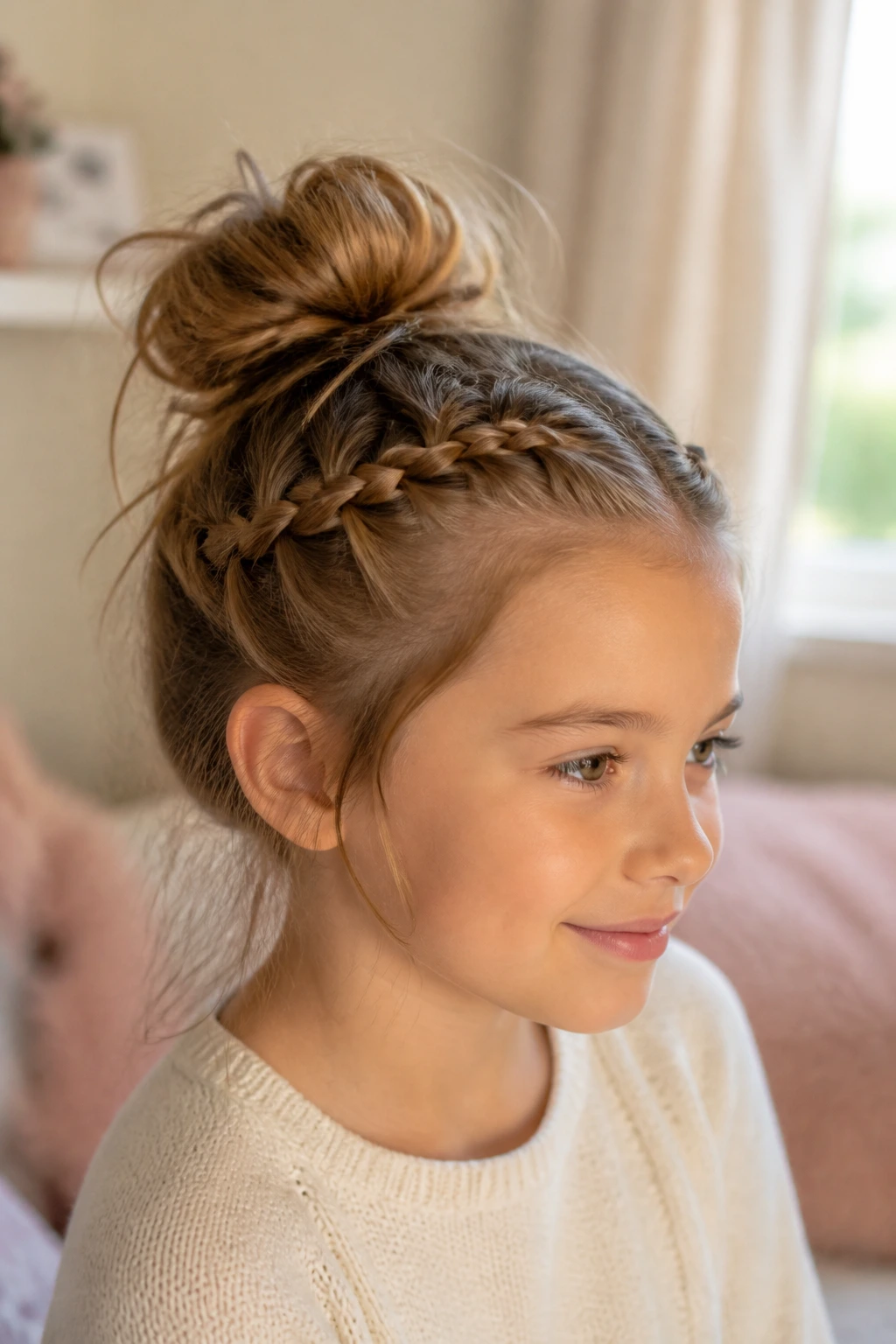
A messy bun can still look intentional if the front is controlled. Braid or twist the front sections first, pin them back, and then gather the remaining hair into a bun at the crown or nape. The bun can stay loose; the front pieces are what make it school-ready.
This is a nice option for kids who want something softer than a tight updo. It also gives a bit of shape to hair that’s a little overdue for washing. Just don’t make the bun so loose that it falls halfway apart before first recess. There’s messy, and then there’s accidental.
30. Twist-and-Pin Halo
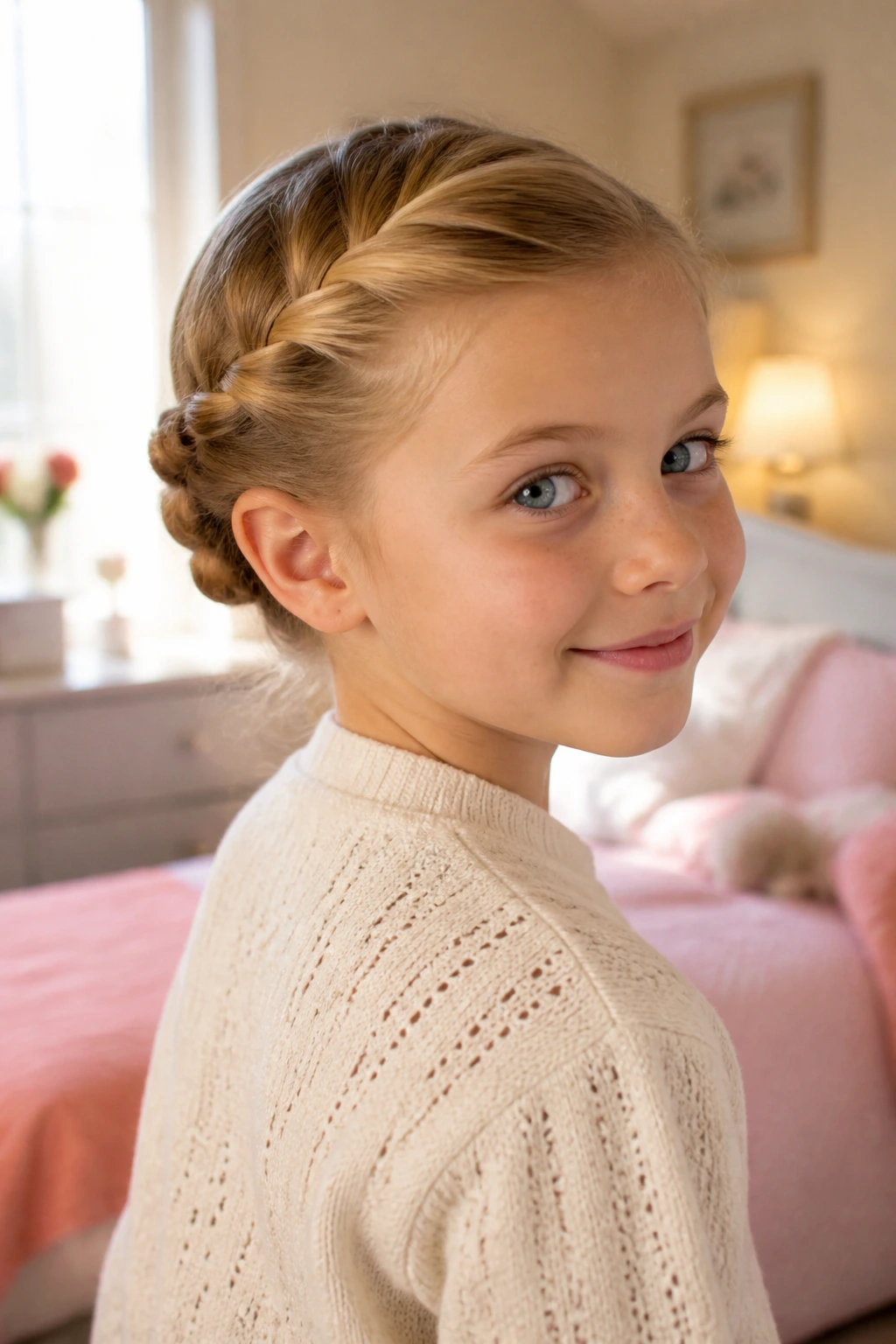
A twist-and-pin halo is one of the prettiest ways to handle shorter or finer hair without overcomplicating it. Take a section from each side, twist it back, and pin the pieces across the back of the head so they form a soft halo shape. The rest of the hair can stay down or be tucked into the same shape.
This style works because the twists lay flat and don’t need much volume to look finished. It’s useful for school events, chapel, or any day when a child wants something neat but not stiff. Use pins that match the hair color if possible. They disappear better.
31. Low Ponytail With a Side Accent Braid
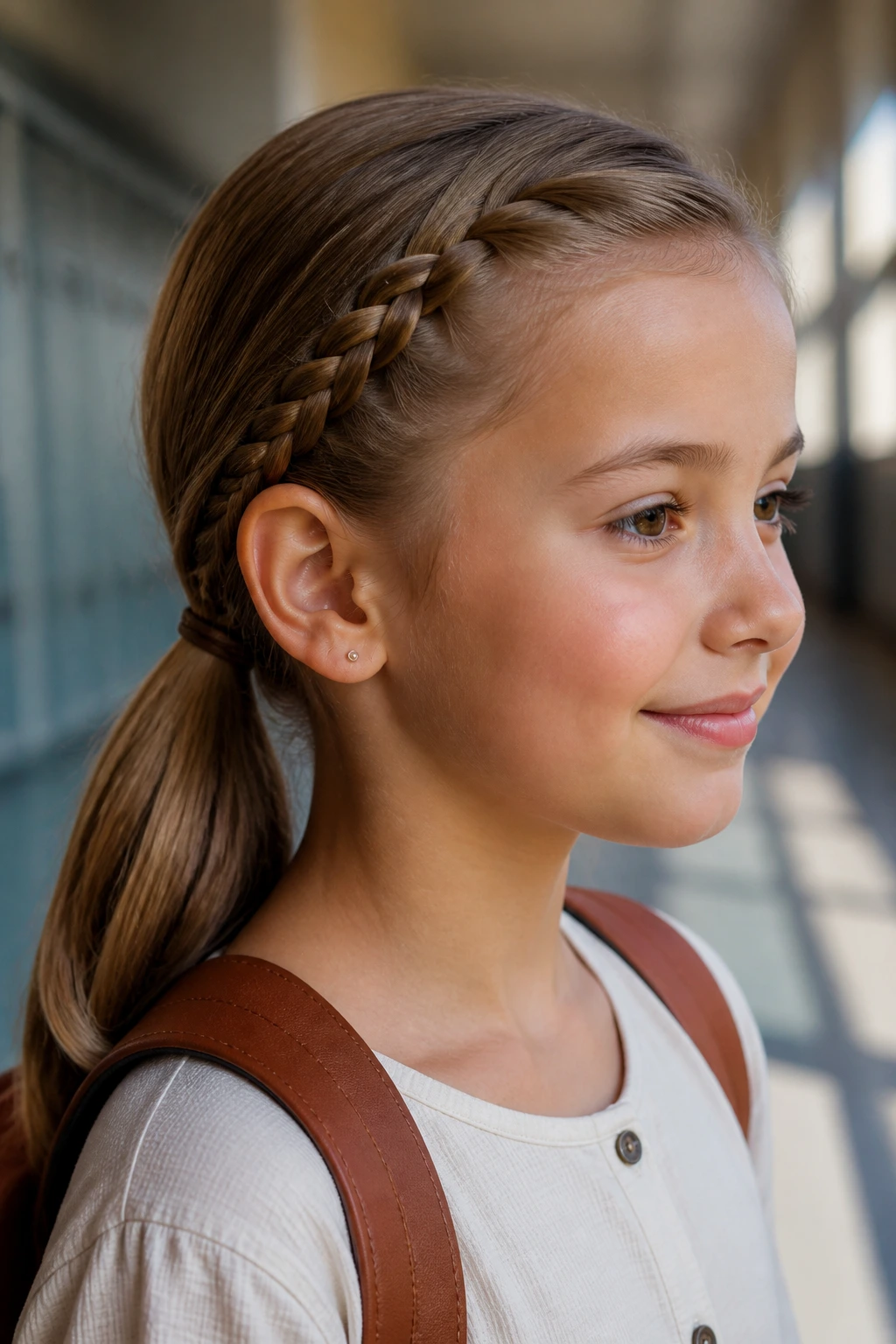
A side accent braid adds just enough interest to a low ponytail to keep it from feeling plain. Braid a thin section along one temple, then gather the rest of the hair low and secure it together with the braid included. The braid becomes part of the pony instead of sitting on its own.
That’s the small move that makes this style feel smarter. It also helps keep short face pieces back, which is half the battle on school mornings anyway. If you’re in a hurry, the accent braid can be tiny. Even a skinny braid makes the ponytail look deliberate.
32. Double-Knotted Buns
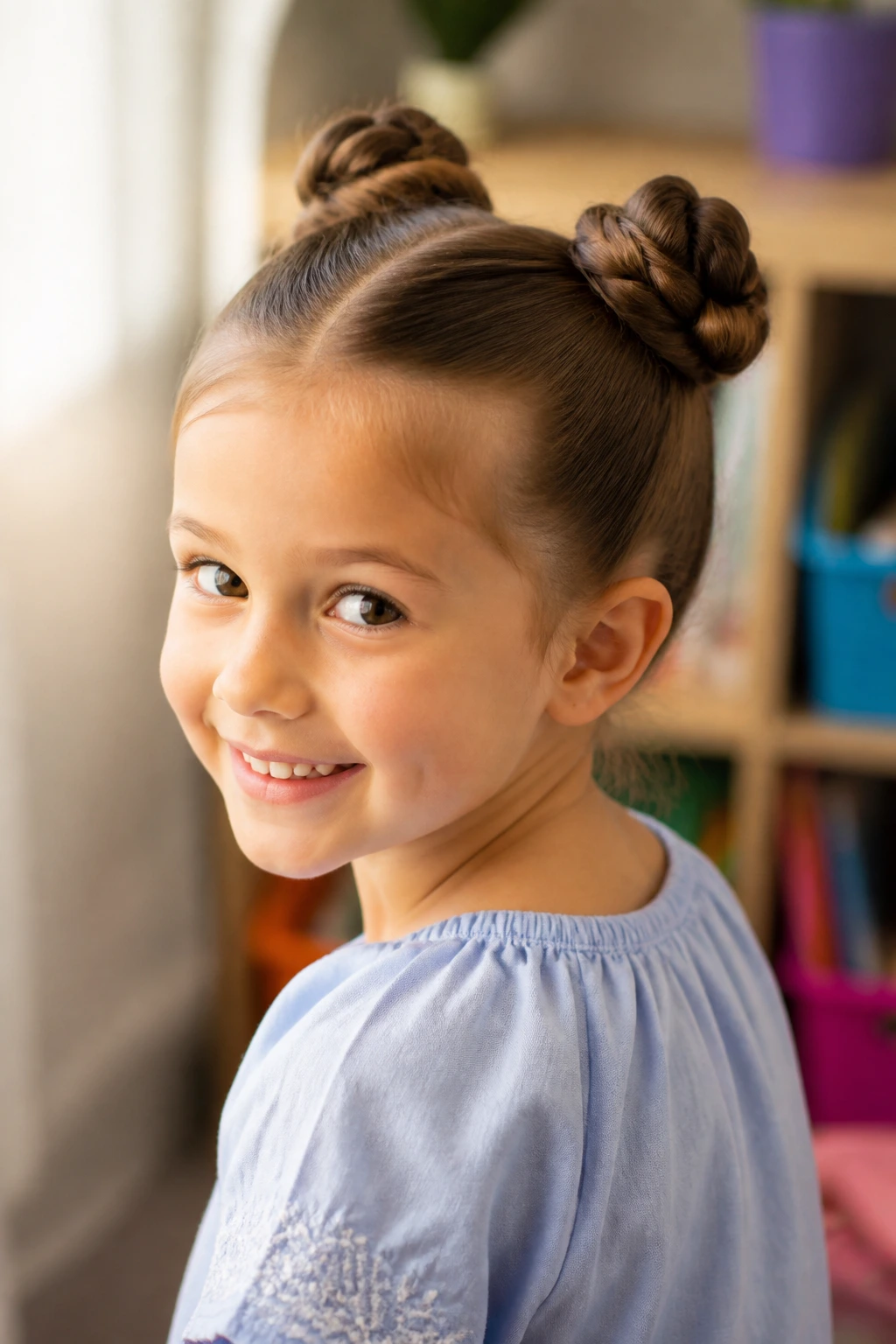
Double-knotted buns have a little extra shape and a little less fuss than full braided styles. Split the hair into two sections, knot each section once or twice, and then pin or coil the ends into small buns. The result sits firmly and doesn’t swing around much.
This is especially handy for kids with medium-length hair that doesn’t cooperate in a simple bun. The knot gives the style its structure before the bun is finished. It’s playful, but it still behaves. That’s a rare combination in school hair, and I’m not wasting it.
33. Tucked Braid Crown for Thick Hair
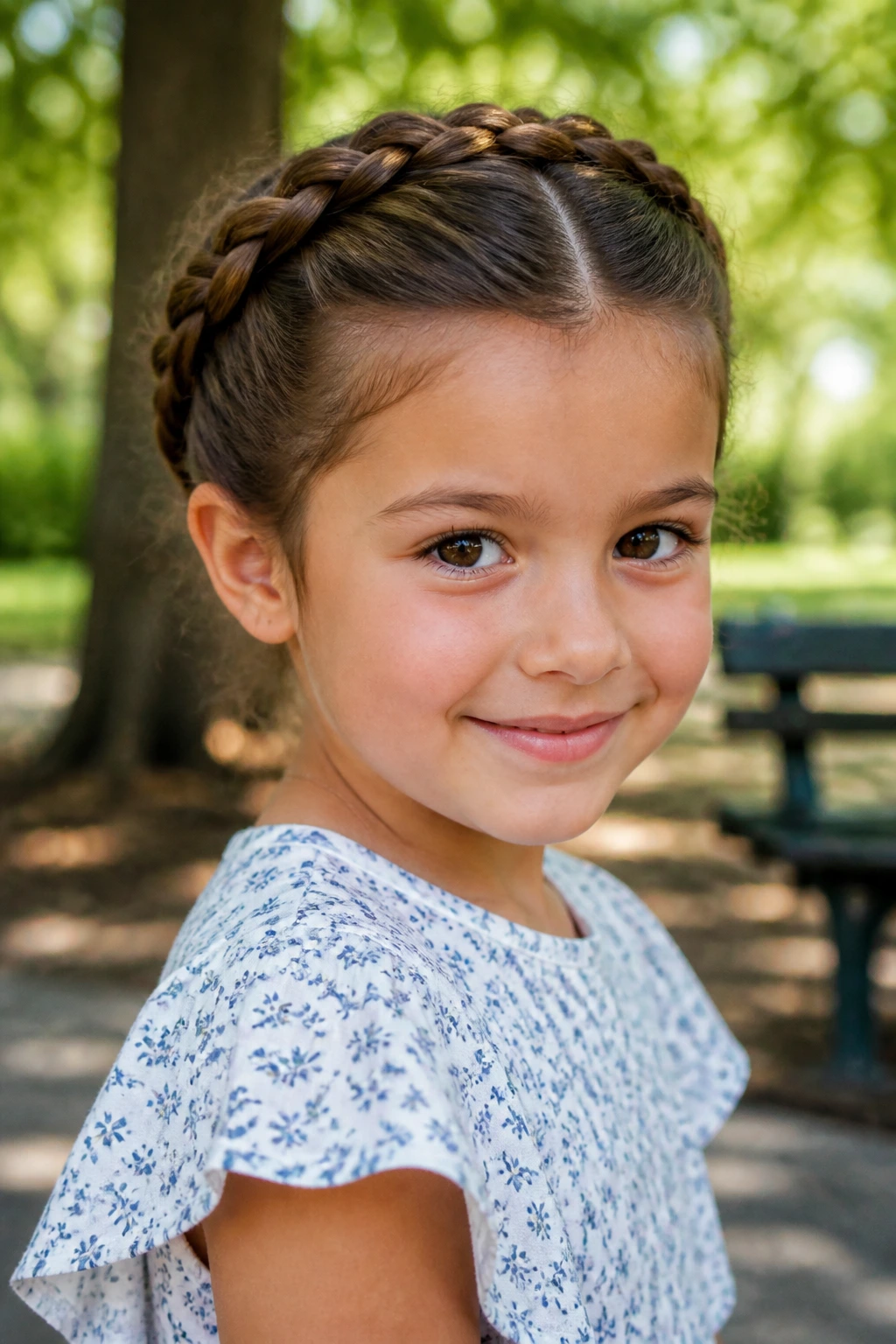
Thick hair needs styles that control bulk without creating a giant lump at the back of the head. A tucked braid crown does that well. Braid sections around the perimeter, pin or tuck the ends underneath, and smooth the top so the shape sits close to the head.
It keeps the hair off the neck and spreads the volume out in a way that feels comfortable, not heavy. If the hair is dense, this style is a relief more than a decoration. It lasts. It stays flat under a hat or hood. And it keeps the hair from taking over the whole day.
Why School Hair Needs Different Rules
School hair has a very specific enemy list. Friction from backpack straps, sweat from recess, sleeves rubbing the nape, and the simple fact that kids touch their hair a lot. A style that looks fine at 7:45 can collapse into a fuzzy frame by 11:30 if it has weak sections or the wrong kind of elastic.
That’s why I lean toward styles with a stable base. A low ponytail, a braid that starts close to the scalp, or a bun anchored with a few well-placed pins tends to hold better than loose styling that depends on luck. The goal is not stiffness. The goal is staying power.
The other piece is comfort. Little girls are far more likely to leave a style alone if it doesn’t tug at the temples or the crown. If you see red dents, squinting, or the constant hand-checking where a child keeps touching the same spot, the style is too tight. Back off a notch. Usually that solves it.
Essential Tools for Kid-Friendly Styling
-
Rat-tail comb: Best for clean parts, zigzags, and sectioning without turning the whole bathroom into a wrestling match.
-
Soft bristle brush: Helps smooth the top without tearing through knots, especially on fine or straight hair.
-
Detangling spray: Use it on mid-lengths and ends before braiding; too much at the roots makes styles slip.
-
Seamless elastics: These snag less than cheap bands with rough edges and are worth buying in a big pack.
-
Small clear elastics: Handy for bubble ponytails, pull-through braids, and tiny sections that need to disappear.
-
Hair clips or alligator clips: Keep loose sections out of the way while you work; that saves time and sanity.
-
Bobby pins: Best for buns, halos, and tucked ends. Pick ones that match the hair color if you want them to vanish.
-
Water spray bottle: A light mist helps reset bedhead and smooth flyaways without soaking the whole head.
-
Satin scrunchies or ribbon ties: Gentler than hard elastics and useful when you want less pulling around the base.
Smart Shopping for Elastics, Clips, and Brushes
Not every hair accessory is worth buying in a giant bulk pack, even if it looks cheap. The thin elastics with rough seams snap fast and tangle in the hair when you try to remove them. I’d rather buy fewer seamless elastics and replace them when they wear out than fight cheap ones every morning.
For brushes, look at the bristles, not the box claims. Softer bristles are kinder to fine hair and sensitive scalps. If a child has thick or curly hair, a detangler brush or wide-tooth comb is usually the better buy because it handles knots without ripping the curl pattern apart. One tool rarely works for every head.
Clips matter more than people think. Flat snap clips grip shorter hair better than decorative ones that slide around. For buns and braids, strong bobby pins with a little bend hold far better than shiny bargain pins that spring open the second you use them. Accessories are tiny. The wrong tiny thing can ruin the whole morning.
How to Make Styles Last Until Pickup
Start with dry, brushed hair. Damp hair is easier to shape, but it can puff up or crease once it dries, especially around the ears and crown. A quick mist to tame flyaways is fine; a wet head is not.
Keep the part clean. A crooked part or messy section makes the whole style unravel faster, because the hair shifts at the weakest point first. Use the comb end, not your fingers, for the first line. It takes ten extra seconds and buys you hours of neatness.
Use less product than you think. Heavy gel and sticky cream can make fine hair collapse by lunch. A light smoothing spray, a drop of leave-in on the ends, or a tiny bit of mousse at the roots is usually enough. The style should move. It should not feel like shellacked cardboard.
Pack a small rescue kit. One spare elastic, two bobby pins, a little brush, and a clip can fix almost anything in a bathroom mirror. I keep one in the car for exactly this reason. It saves me from redoing a whole braid because one side went soft after recess.
Common Mistakes That Undermine School Hairstyles
-
Making every style too tight. The symptom is a red line at the hairline, complaints about headaches, or a child constantly pulling at the style. The fix is simple: loosen the base by a finger’s width and shift support lower with pins or a second elastic.
-
Using slippery, too-fresh conditioner right before styling. Hair looks smooth for ten minutes, then the braid slides apart. Let the conditioner rinse fully and give the hair a little time to dry before you start.
-
Ignoring the ends. A neat braid with frizzy ends still looks messy. Seal the last inch with a soft elastic or ribbon and smooth the tail lightly with your hands.
-
Choosing the wrong style for the hair length. Tiny buns on a bob and a waterfall braid on chin-length hair are both recipes for frustration. Match the style to the actual length, not the idea in your head.
-
Forgetting that school mornings are noisy. If a style needs twenty pins and perfect symmetry, it probably won’t survive the real house. Pick something you can repeat half-asleep.
Variations for Curly, Fine, Short, and Thick Hair
Curly-Hair Control Without Flattening: Use styles that respect the curl pattern, like puff pigtails, loose halos, or soft side twists. Skip heavy brushing unless the curls are heavily detangled first; otherwise you’ll get frizz before the first bell.
Fine-Hair Grip Boost: Fine hair usually needs a little texture before braiding or twisting. A light mist of dry shampoo at the roots or a touch of texturizing spray at the mid-lengths helps the style hold without looking dusty.
Short-Hair Workarounds: Bobs and lobs do best with clips, mini braids, side twists, and headband-style pieces. If the hair can’t reach a full ponytail, don’t force it. Short hair usually looks cleaner when you lean into its natural shape.
Thick-Hair Simplifiers: Pull-through braids, low braided buns, and tucked crown styles keep bulk under control without making the styling process miserable. Thick hair needs structure more than decoration.
No-Bow School Days: If accessories aren’t allowed or the child refuses them, make the part and finish the braid count. Clean sectioning, smooth bases, and hidden elastics can carry the whole look.
Keeping Styles Fresh Between Wash Days
Most school hairstyles survive better on hair that isn’t freshly washed. Day-two hair usually has a little more grip, which helps braids, buns, and ponytails stay where you put them. If the roots get oily, a light brush-through or a small amount of dry shampoo near the scalp can reset the shape without forcing a full wash.
At night, sleep on a satin pillowcase or tie hair loosely with a soft scrunchie. That cuts friction and keeps the front sections from exploding into flyaways by morning. For braids and buns, a quick finger-smooth in the morning is usually enough. If you have to redo the whole thing before breakfast, the style probably needs more structure.
Frequently Asked Questions
What are the fastest school hairstyles for little girls?
Low ponytails, twisted pigtails, mini buns, and side clips are the fastest options because they don’t depend on perfect braiding. Once the part is set, most of these take under five minutes.
How do I keep braids from falling apart by lunch?
Start with clean sections, don’t over-condition right before styling, and use elastics that actually grip. If the hair is very smooth, a little texture spray at the roots or mid-lengths gives the braid more bite.
What works best for a child who hates having hair brushed?
Styles that use fewer passes through the hair are the safest bet: loose braids, low ponytails, twists, or a half-up style that leaves some hair alone. Detangle in small sections and stop yanking; the fewer battles you start, the easier the next morning gets.
Can these styles work on curly hair without flattening it?
Yes, but pick styles that protect the curl pattern instead of forcing it straight. Curly puff pigtails, twisted puffs, loose halos, and braids on day-two curls usually behave well and still let the hair keep its shape.
What if my daughter has bangs that keep getting in her eyes?
Use a headband braid, braided bangs, or a small side twist that feeds into a ponytail. That keeps the front controlled without needing a heavy clip right at the forehead.
How tight should a school hairstyle be?
Tight enough to hold, never tight enough to hurt. If the hairline dents, the child complains of pulling, or the style starts to feel hard by midday, loosen it next time. A comfortable style gets touched less, which means it lasts longer.
Can I do these styles the night before?
Some of them, yes. Braids, buns, and tucked styles usually survive overnight if you secure them lightly and use a satin pillowcase or bonnet. Very smooth ponytails and styles with clips usually look better when finished in the morning.
What’s the best style for very thick hair?
Pull-through braids, low braided buns, and crown styles that distribute the weight tend to work best. Thick hair needs control points along the length, not one giant elastic at the end.
A Last Look in the Mirror
School hair does not need to be elaborate to be useful. A good part, the right elastic, and a style that respects the child’s hair type will carry you farther than a complicated braid that falls apart during morning announcements.
The best part of these 33 hairstyle ideas is how easily they scale up and down. You can make one look neat enough for picture day, or strip the same idea down to five minutes on a Tuesday when nobody slept well. That flexibility is the real win, and it’s the part worth keeping in your back pocket when the bathroom is crowded and the clock is not being kind.
