



Blonde hair looks for brides can go wrong in strangely specific ways: the crown lies too flat, the ends look too soft, the curl pattern disappears under flash, and suddenly the style feels smaller than the dress. Blonde is unforgiving like that. It shows everything. The good news is that same brightness can make a bridal hairstyle look crisp, airy, and expensive without a lot of visual noise.
What matters most is balance. Champagne blonde reads differently from icy platinum. Honey blonde needs warmth in the shape, while balayage needs enough texture that the darker ribbons don’t vanish into the background. A bridal style also has to survive a veil, a hug line, a long dinner, and one very determined dance floor. So the best looks are the ones that hold their shape while still moving when you turn your head.
I keep coming back to the same idea with blonde bridal hair: the style should look finished from the back, the side, and the front. A lot of wedding hair looks good in one mirror angle and falls apart everywhere else. The stronger options below avoid that trap. They have structure where structure matters, softness where softness helps, and enough detail that the blonde itself does some of the work.
Why These Bridal Blonde Looks Stand Out
- Light does the heavy lifting: Blonde hair catches shape fast, so the styles here use clean bends, waves, and knots that show up in daylight and under flash.
- Veil-friendly design: These looks leave room for combs, pins, and placement changes, which matters more than people think once the veil goes on and off.
- Different blonde tones need different finishes: Icy blonde likes shine and crisp lines, while honey and champagne shades look richer with softer texture and a little lift at the crown.
- Works for real hair lengths: You’ll find options for pixies, bobs, shoulder-length cuts, and long hair with extensions, not just one narrow bridal silhouette.
- All-day wear matters: A bridal style should stay pinned through the ceremony, dinner, and photos without turning into a helmet or a limp wave by dessert.
- The finish matters as much as the shape: A clean part, a brushed wave, or a tucked end can change how blonde reads far more than another curling pass.
1. Champagne Hollywood Waves
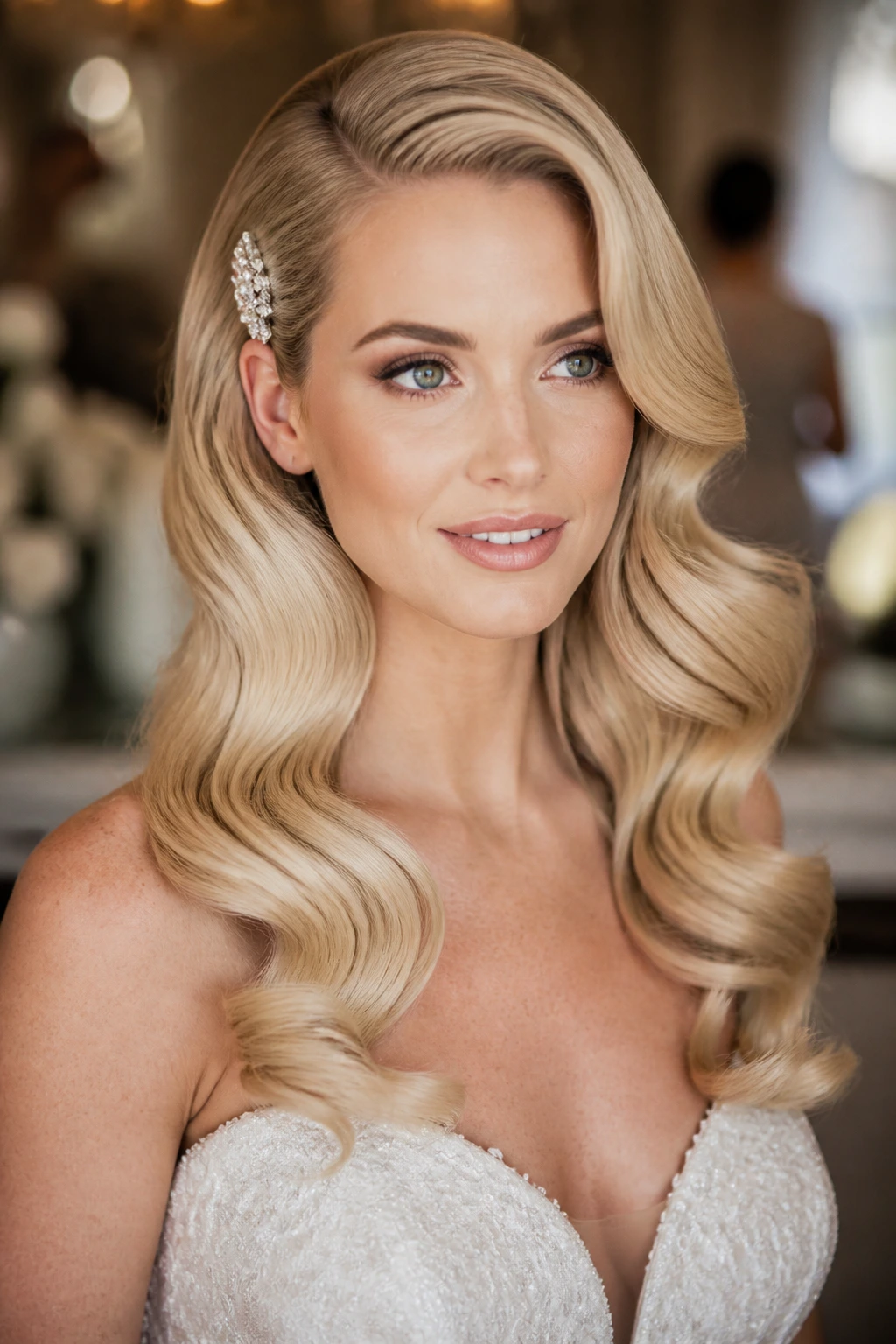
Champagne blonde and brushed-out waves are a natural pair. The color already has that soft glow, and the wave pattern gives it a polished, old-film shape that looks deliberate from every angle. I like this look most on medium-to-long hair where the bend can fall past the shoulders without collapsing.
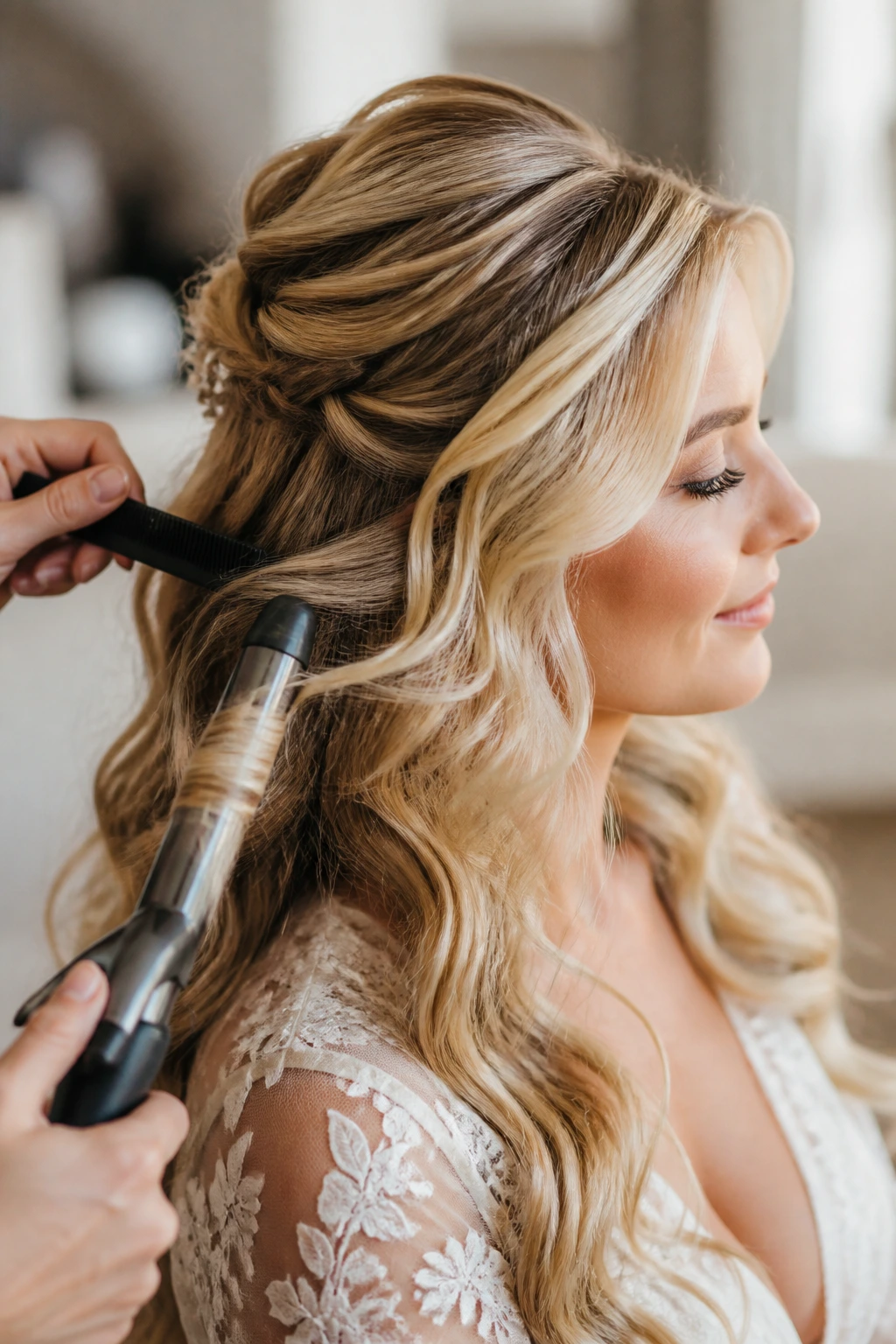
The trick is not overdoing the curl. Use a 1.25-inch curling iron, set each section, then pin the curls until they cool. Once they’re brushed into an S-wave, the surface should look smooth, not fluffy. A deep side part gives the style its bridal drama, and a single jeweled pin near the temple keeps it from feeling too loose.
2. Soft Center-Part Chignon
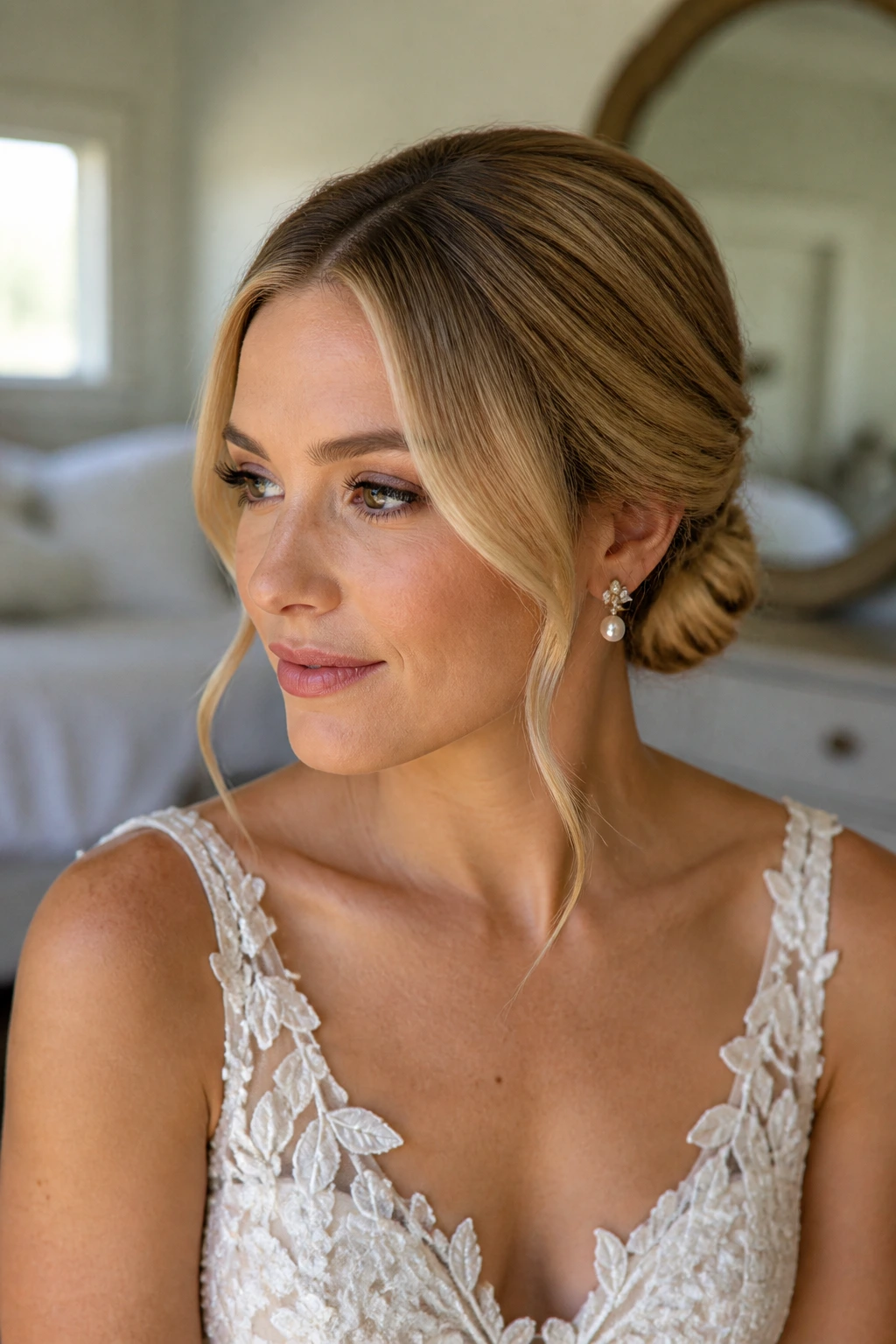
A center part makes blonde hair look calm in the best way. It draws the eye straight to the face, then lets the low chignon sit like a clean frame at the nape. On balayage or rooted blonde, the part also shows off the color shift without needing extra decoration.
This one works because the shape is tidy but not severe. Pull the top section smooth, leave a whisper of softness around the ears, and tuck the bun low and slightly off-center if you want it to feel less formal. If your dress has a clean neckline, this is one of those styles that looks expensive without trying to impress anyone.
3. Braided Crown with Loose Blonde Ends
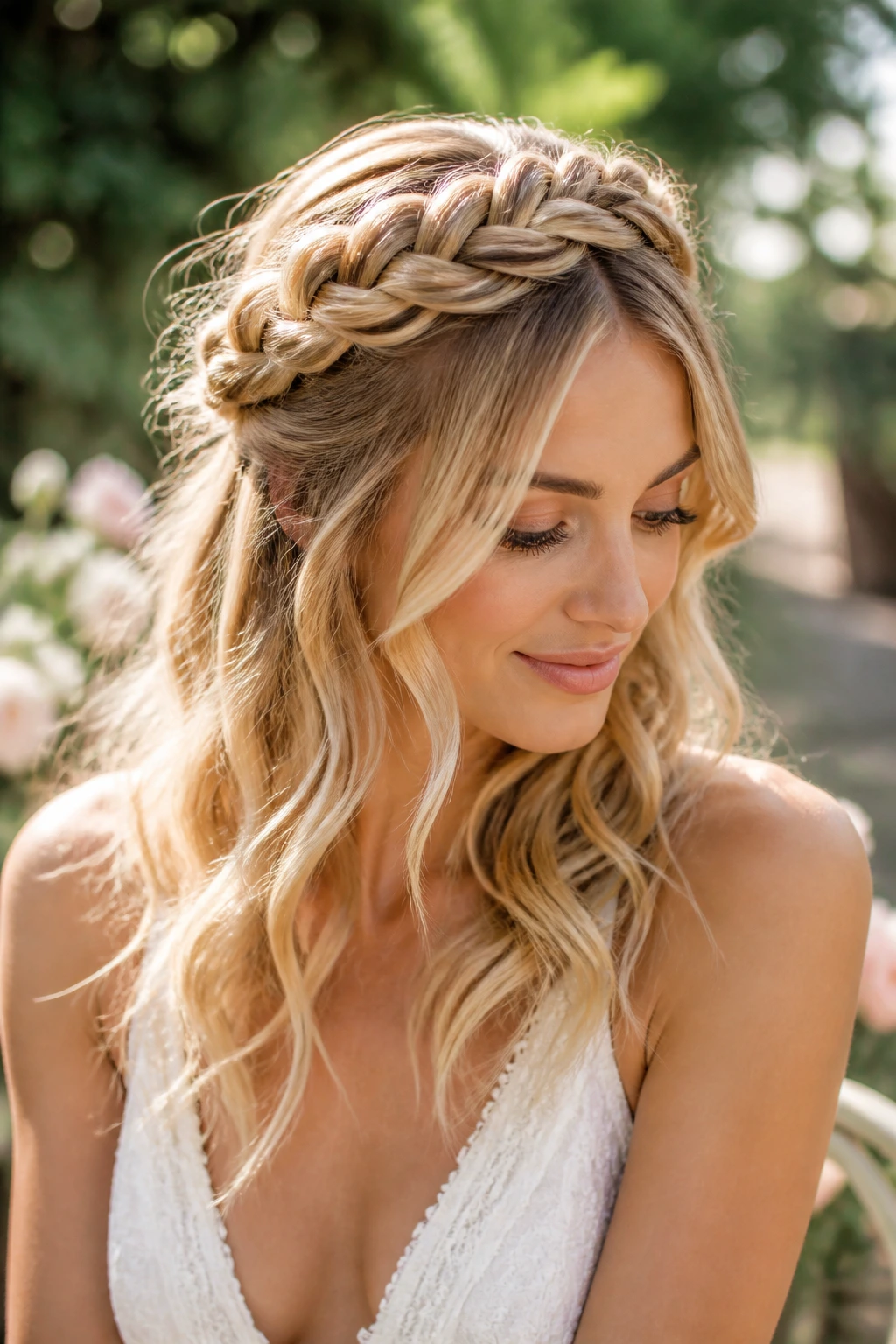
Braids and blonde hair get along well because the weave catches light in little flashes. A braided crown gives the top of the head structure, while the loose ends can stay curled or softly waved for movement. It’s especially strong on balayage, where every twist shows a different ribbon of color.
Keep the braid tight enough to hold shape but not so tight that it dents the hairline. A little crown lift helps, especially if the rest of the hair is fine. This look feels happiest with a boho dress, an outdoor ceremony, or a bride who wants the hair to look touched by hand rather than shellacked into place.
4. Pearl-Pinned Low Bun
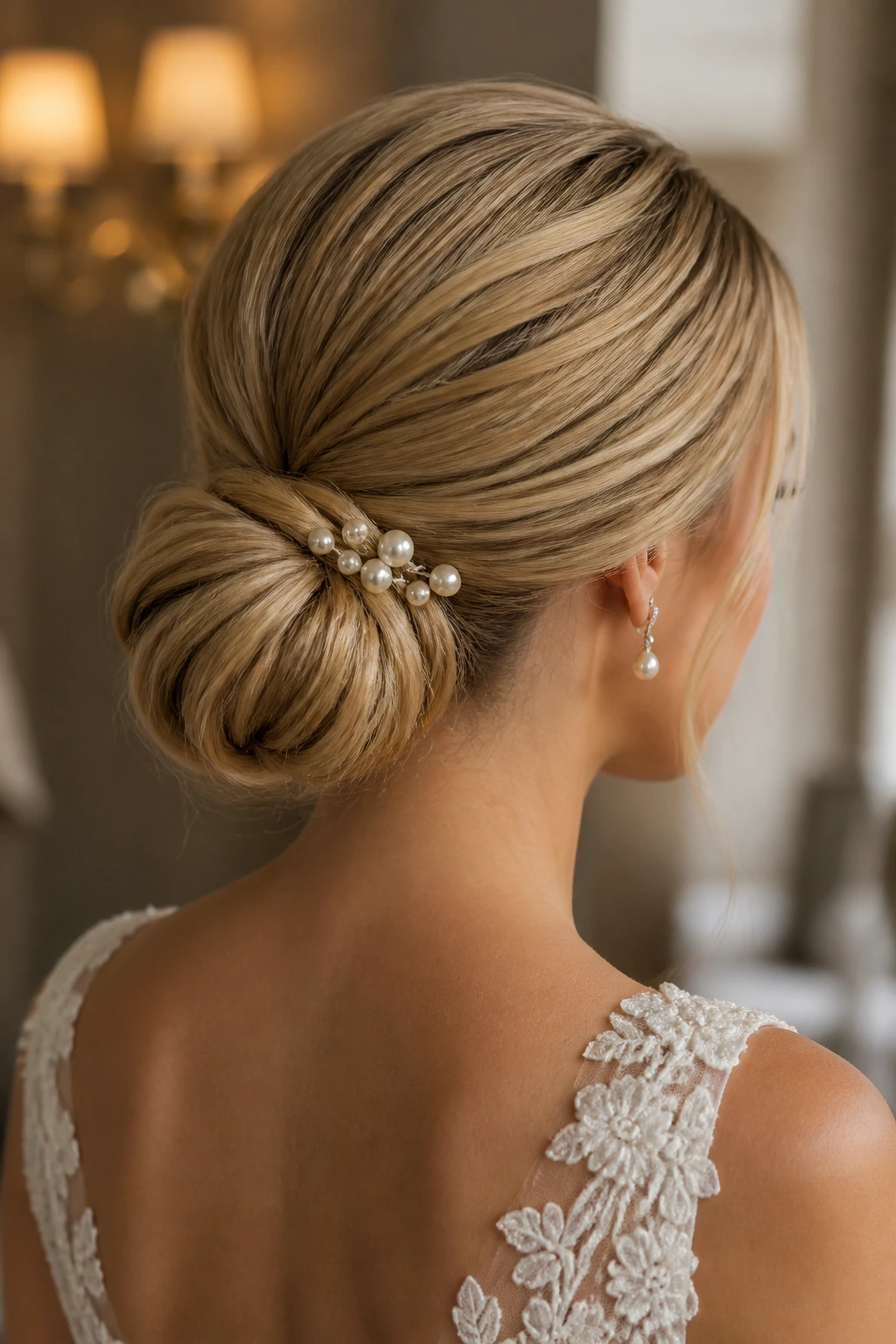
Pearl pins on blonde hair can go twee fast if they’re scattered everywhere. Used sparingly, though, they make a low bun look tailored and formal. I’d place them asymmetrically around the base of the bun rather than marching them in a neat row. That small imbalance keeps the style from looking stiff.
This bun is strongest on creamy blonde, honey blonde, or any shade with a warm undertone. The contrast between the soft color and the pearl sheen reads clearly in photos. Leave a few fine pieces near the ears if the bride wants softness, but don’t let the front collapse. The bun should still feel anchored.
5. Side-Swept Old Hollywood Curls
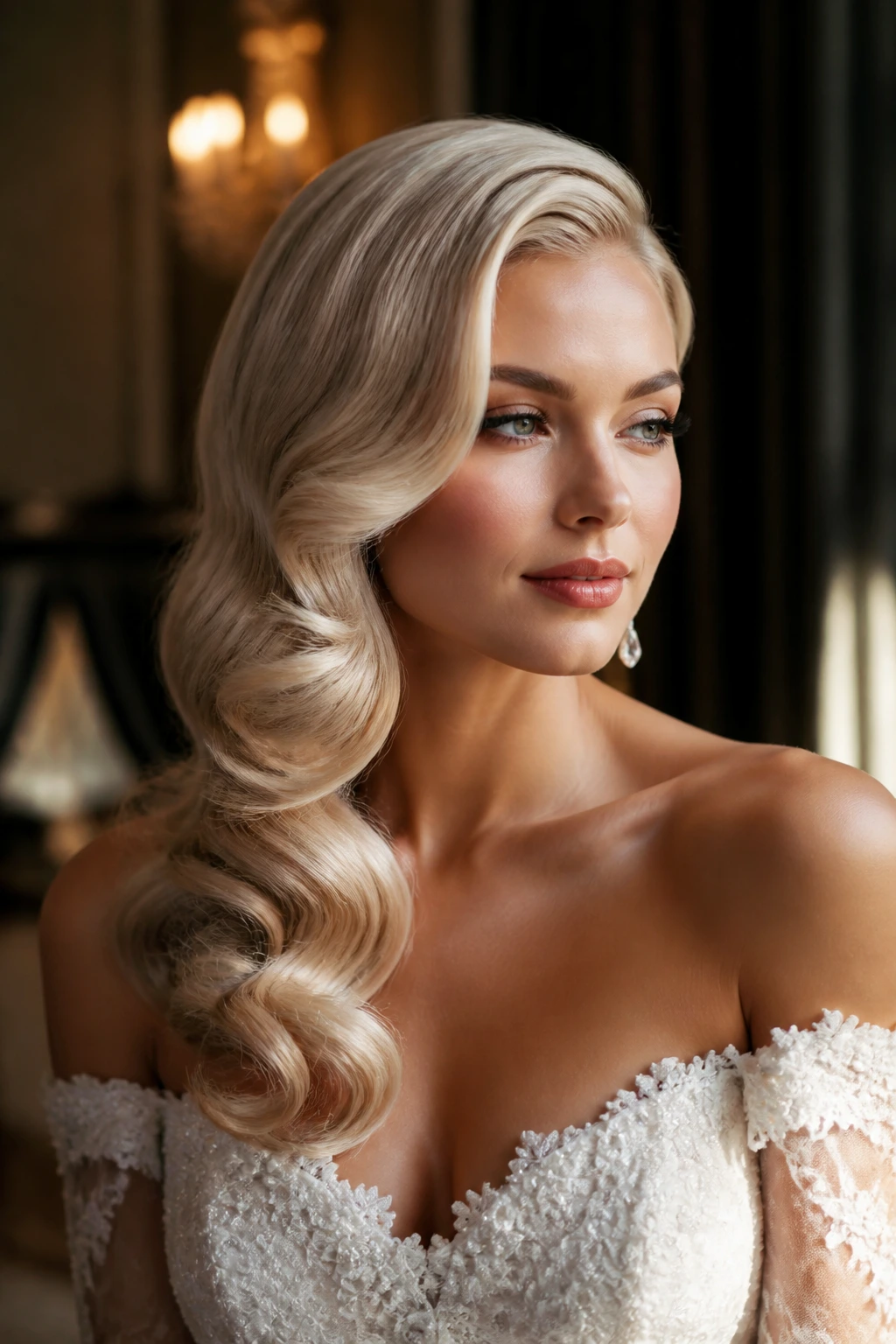
This is the style for brides who want shape before sweetness. The deep side part, the brushed wave, and the sweep over one shoulder create a line that looks strong from the aisle and elegant from the dance floor. Platinum blonde is especially good here because the sheen gives the curl pattern a crisp edge.
The important part is brushing the curls only after they’ve cooled. Warm curls will fall into mush. Cool curls turn into a smooth wave with real hold. Tuck one side behind the ear and let the other side carry the weight. The whole look should feel sculpted, not sprayed into a shell.
6. Twisted Half-Up with Veil
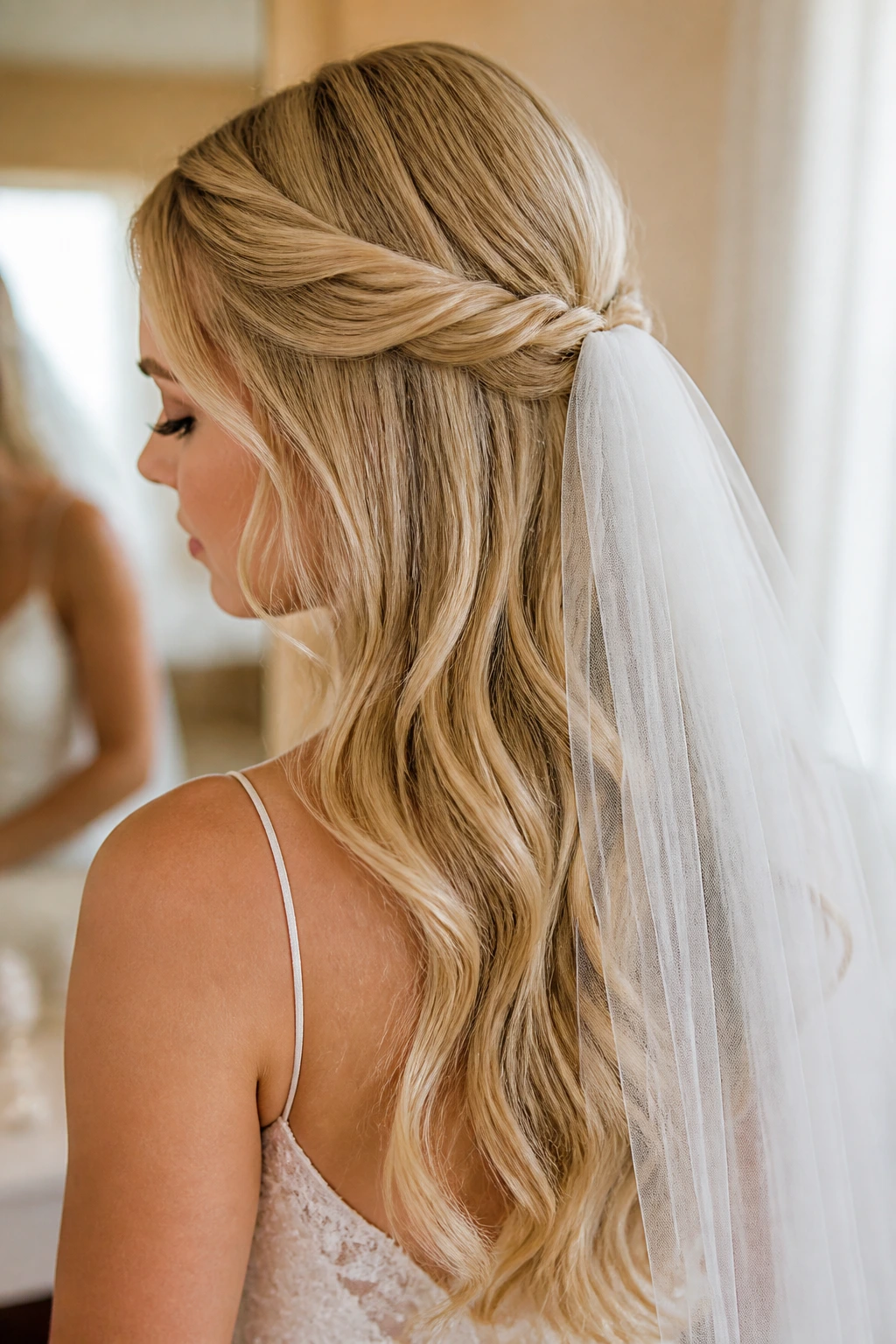
Want the veil without hiding all the hair? This is the compromise that actually works. Two soft twists from the temples meet at the back, leaving the lower half free for waves or loose curls. The top stays controlled, which helps the veil comb sit cleanly without pulling on the style.
This look is especially kind to medium-length blonde hair. The twists give the crown some height, which keeps the veil from flattening everything. I like it with champagne or beige-blonde tones because the loose lengths still move, and movement matters when the top half is pinned. Add one small floral clip if you want a little bridal detail without turning it into a costume.
7. Sleek Ballet Bun
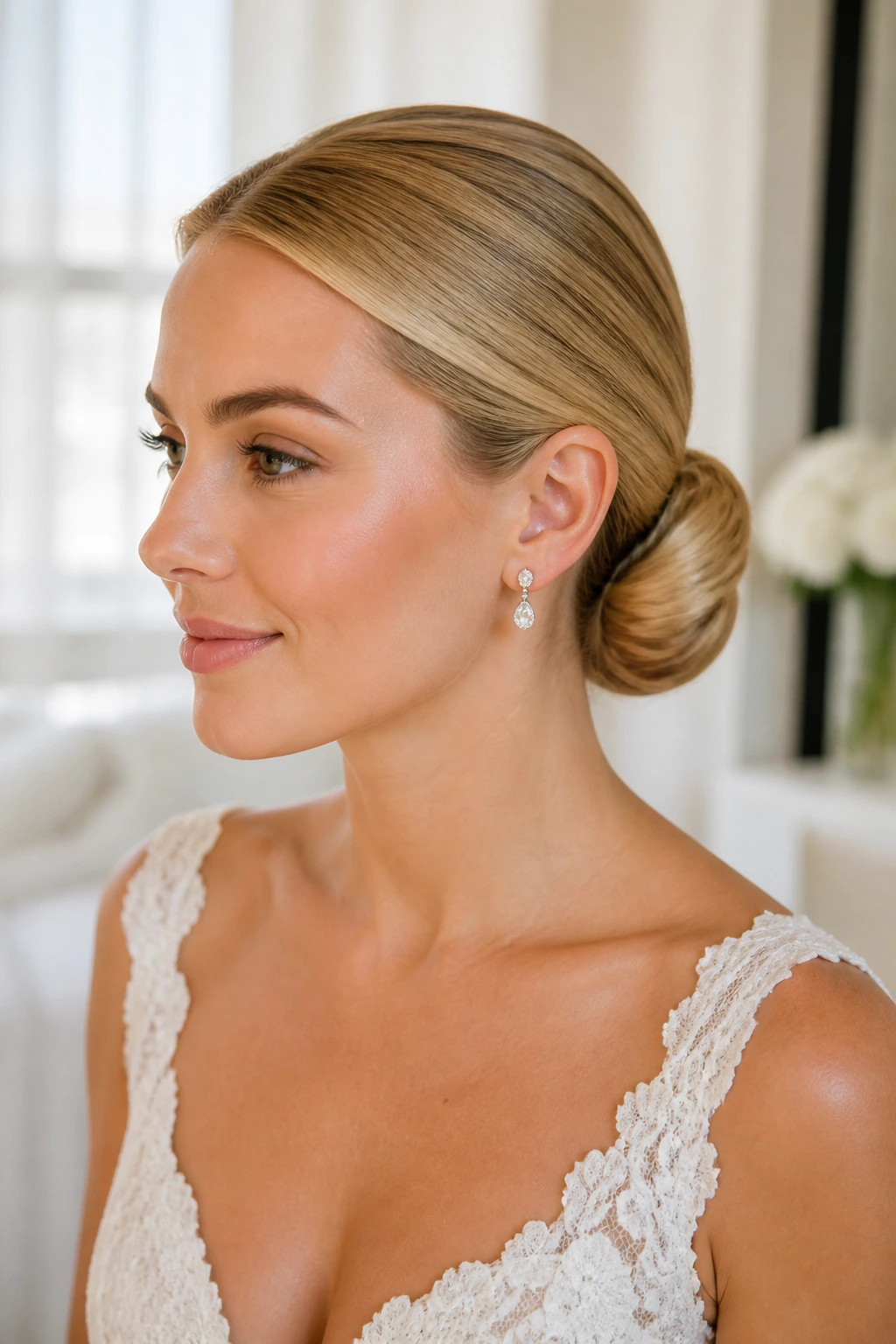
A sleek bun can be an excellent bridal choice when the gown already carries the drama. The hair is pulled smooth, the bun sits centered or just low of center, and the whole effect is clean enough to let the dress, makeup, and jewelry breathe. Blonde hair makes the glossy finish feel brighter than dark hair would.
This look needs good prep. Blow-dry with a concentrator nozzle, brush the surface flat, and use a thin mist of shine spray only after the bun is secure. Too much product at the root makes the style look greasy in daylight. Too little, and the flyaways win. The sweet spot is a polished surface with enough grip that the bun does not shift when you turn your head.
8. Loose Boho Fishtail Braid
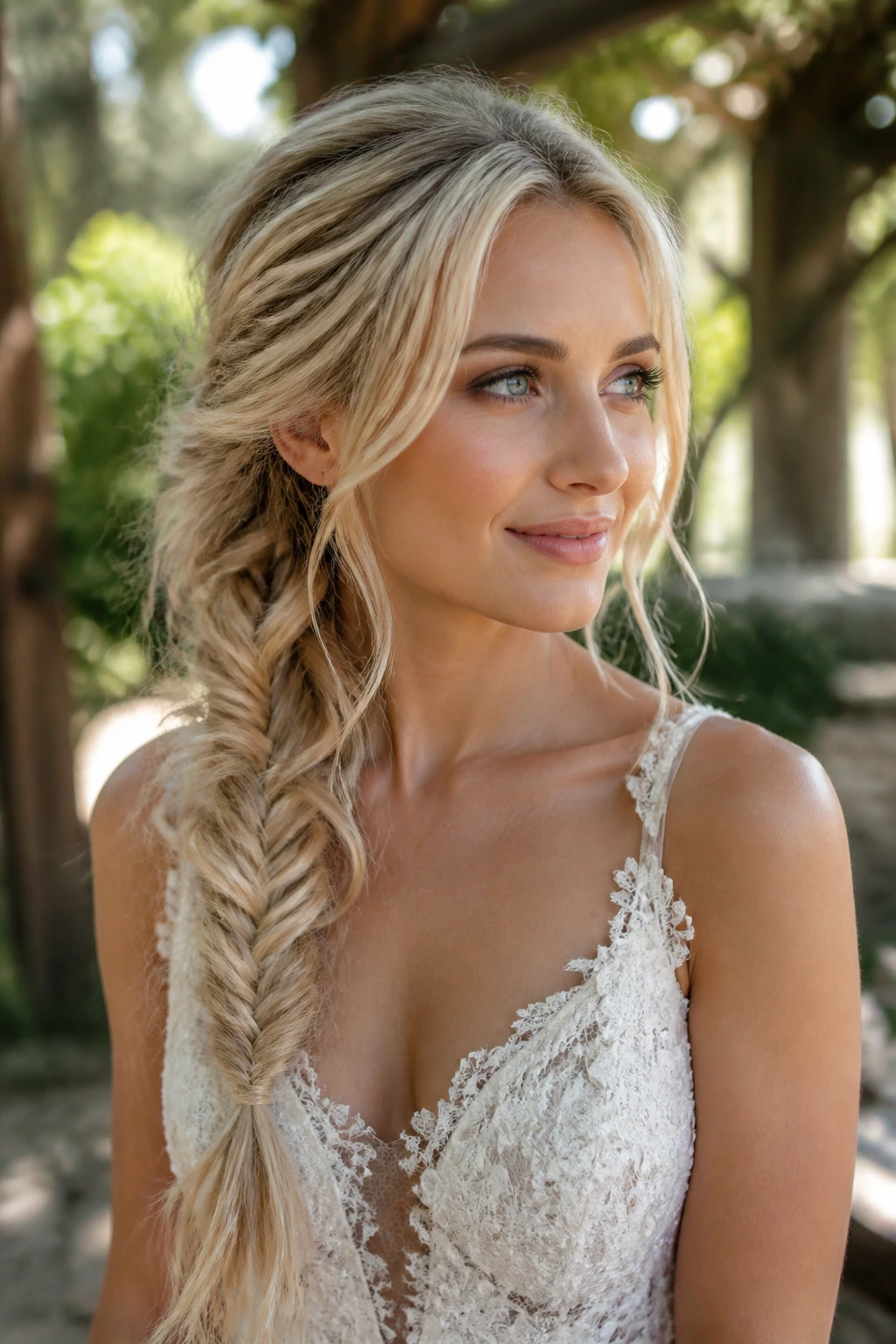
A fishtail braid on blonde hair has a lot of visual texture, which is why it reads well even when the color is soft and pale. Pull the braid gently after it’s done so the sections widen a little. That looseness gives the braid a fuller look without needing extra extensions.
This is one of the easier looks to pair with rustic venues, garden settings, or dresses with lace and open backs. It doesn’t need to be symmetrical. In fact, a slightly uneven braid often looks better because it feels hand-finished rather than overworked. Keep the front pieces light and face-framing, then anchor the braid low over one shoulder so the length can show.
9. Romantic Low Knot with Face-Framing Pieces
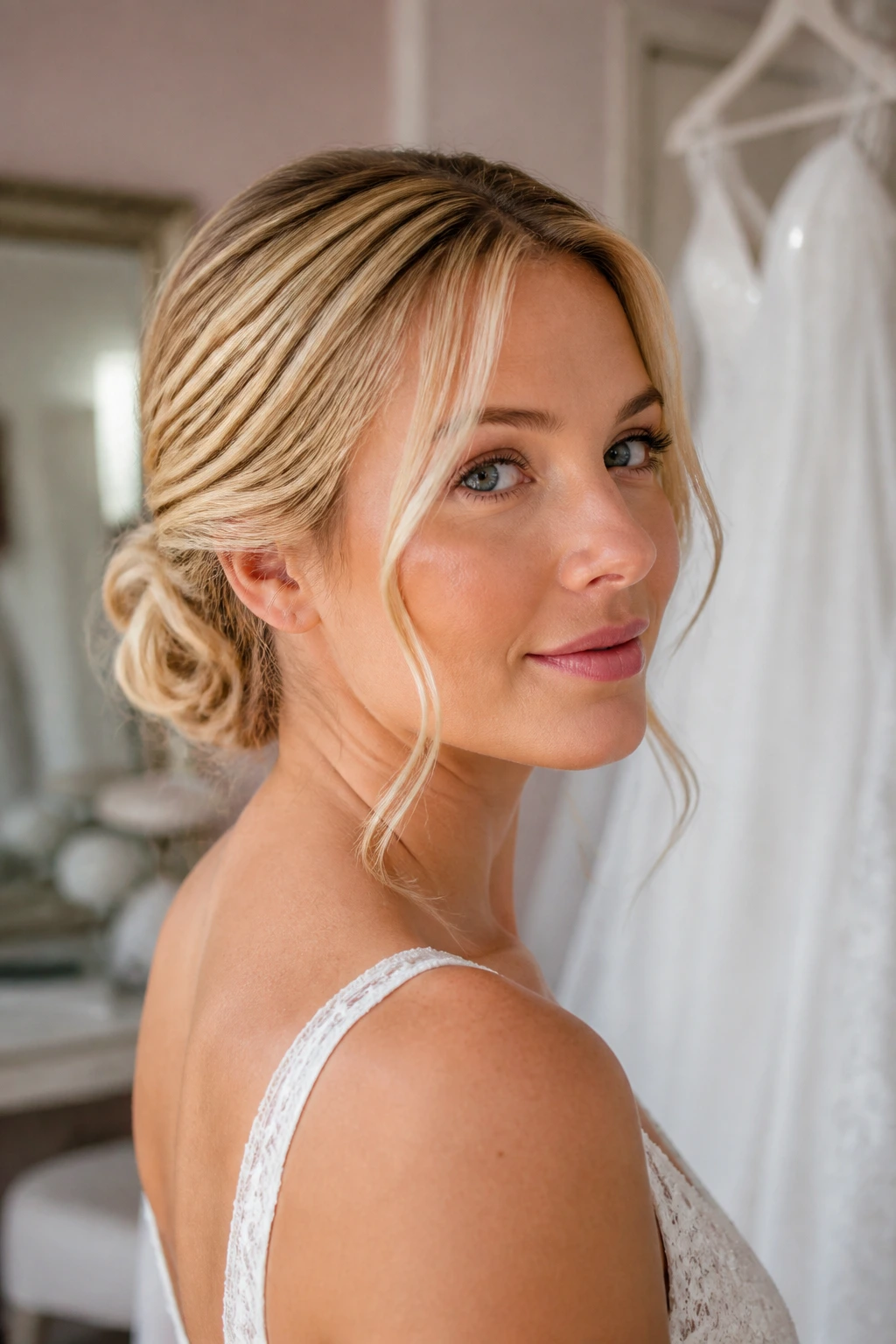
There’s a reason this one shows up so often: it flatters almost everything. A low knot at the nape gives structure, and the face-framing pieces keep the style from looking too severe. On blonde hair, those loose front pieces are useful because they show off tone changes and keep the look soft around the cheekbones.
The danger is making the front pieces too thick. That’s when the whole style starts to feel dated. Keep them thin, bent, and lightly polished. A low knot also gives you room for a veil or a comb, which makes it one of the most practical bridal choices on the list. Practical can still be pretty. It just has better pins.
10. Glossy Blowout with Tucked Ends
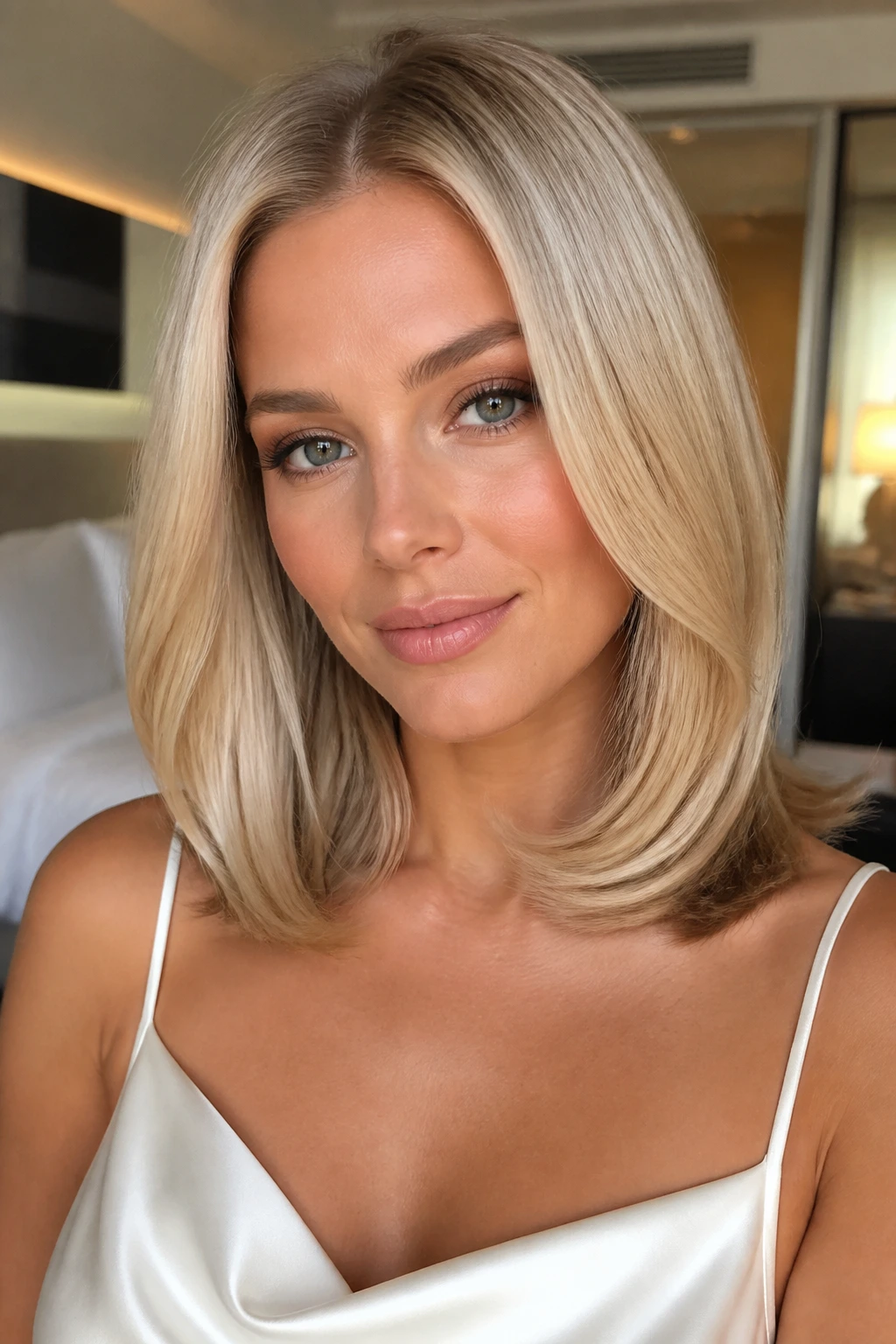
Not every bride wants an updo. A smooth blowout with tucked-under ends can feel cleaner and more modern than a curl-heavy style, especially on straight or slightly wavy blonde hair. It works because the body lives at the mid-lengths, while the ends stay controlled instead of fraying in the wind.
Use a round brush and direct the airflow downward so the cuticle stays smooth. Blonde hair picks up shine fast, which is why this style can look so refined with surprisingly little ornament. A center part makes it crisp. A side part makes it softer. Either way, this is a good option when the dress has structure and the hair should not compete with it.
11. Textured French Twist
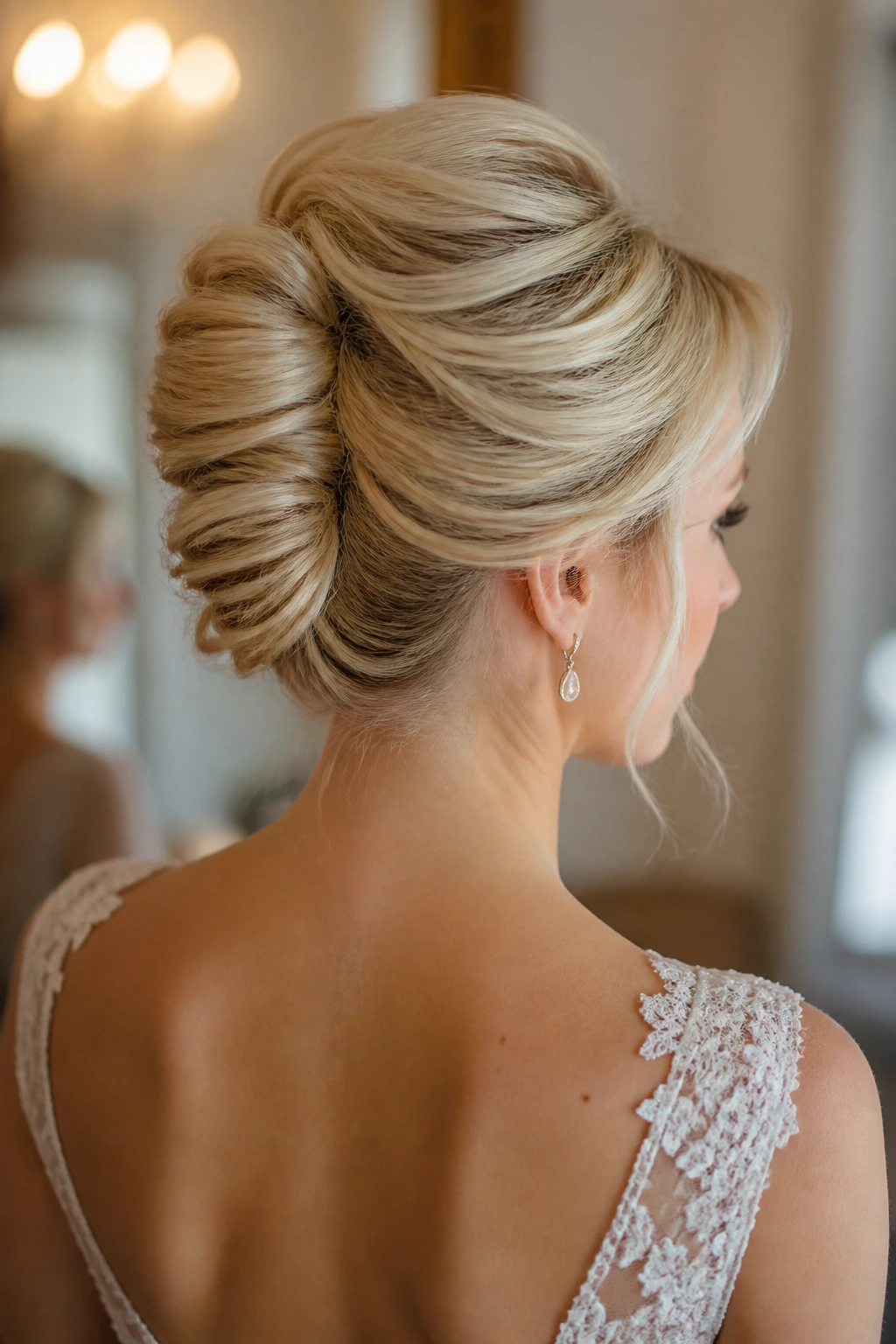
A French twist doesn’t have to look severe. On blonde hair, a slightly textured version gives you that vertical lift in the back while still leaving the shape airy enough for bridal softness. The twist itself creates a strong line, and the blonde pieces inside it catch light in a subtle, almost woven way.
I prefer this when the bride wants a classic silhouette but not a frozen one. Leave just a touch of movement at the crown and around the ears. If the hair is too smooth, the twist can look flat against the head. If it’s too loose, the shape falls apart. There’s a narrow middle ground here, and that’s the part worth aiming for.
12. Waterfall Braid with Soft Waves
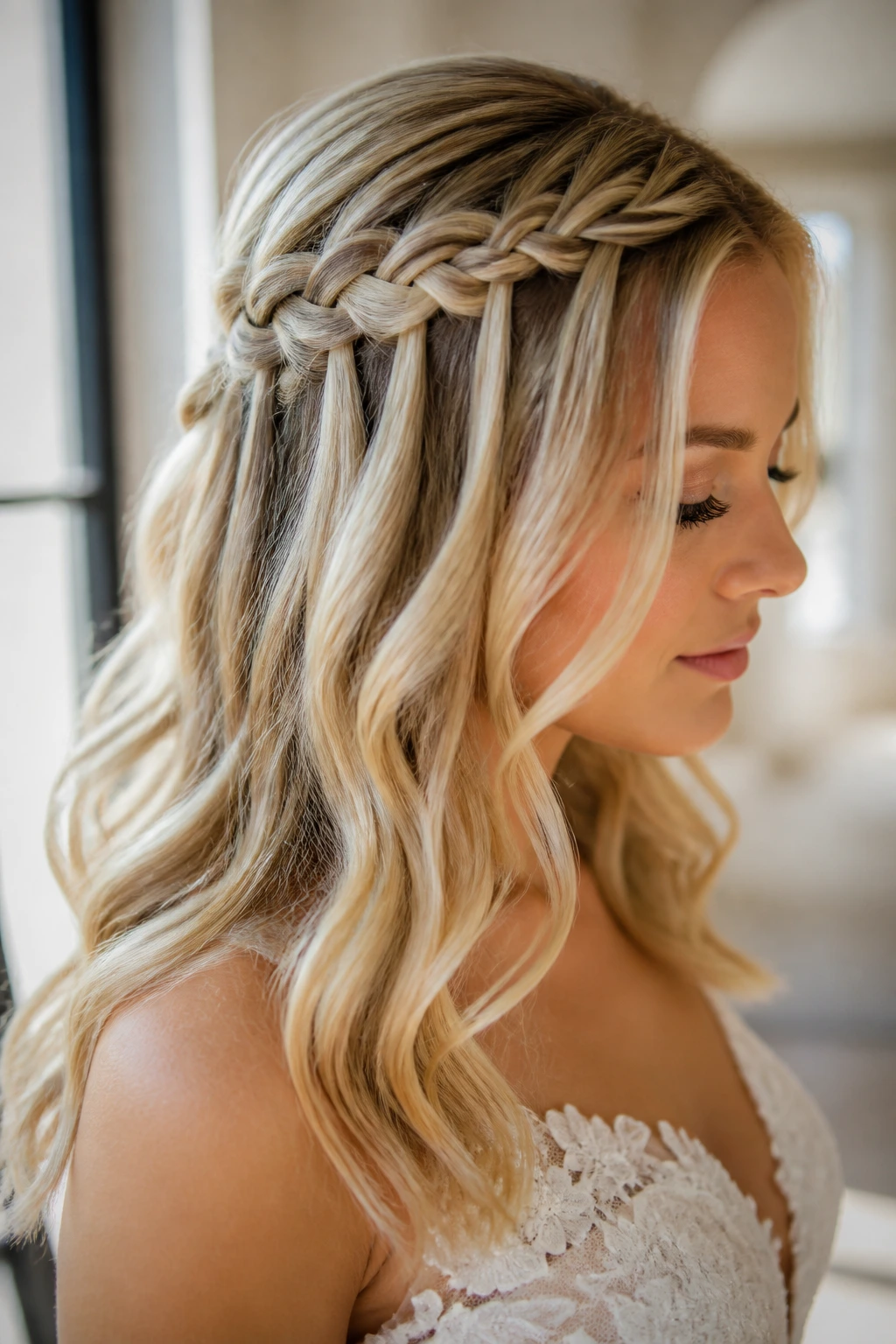
A waterfall braid is one of those styles that looks more complicated than it feels. The braid threads across the head while strands drop out in a controlled pattern, which lets the rest of the hair stay wavy and visible. On highlighted blonde hair, that layered movement shows off the color especially well.
This look is strongest on shoulder-length to long hair. You need enough length for the braid to read as a feature, not a few decorative loops. Keep the waves soft rather than barrel-tight. The goal is a floating effect, with the braid acting like a frame instead of a cage. Add tiny pins or a small comb if the bride wants a little sparkle, but the braid itself already does plenty.
13. Polished Low Ponytail with Wrapped Base
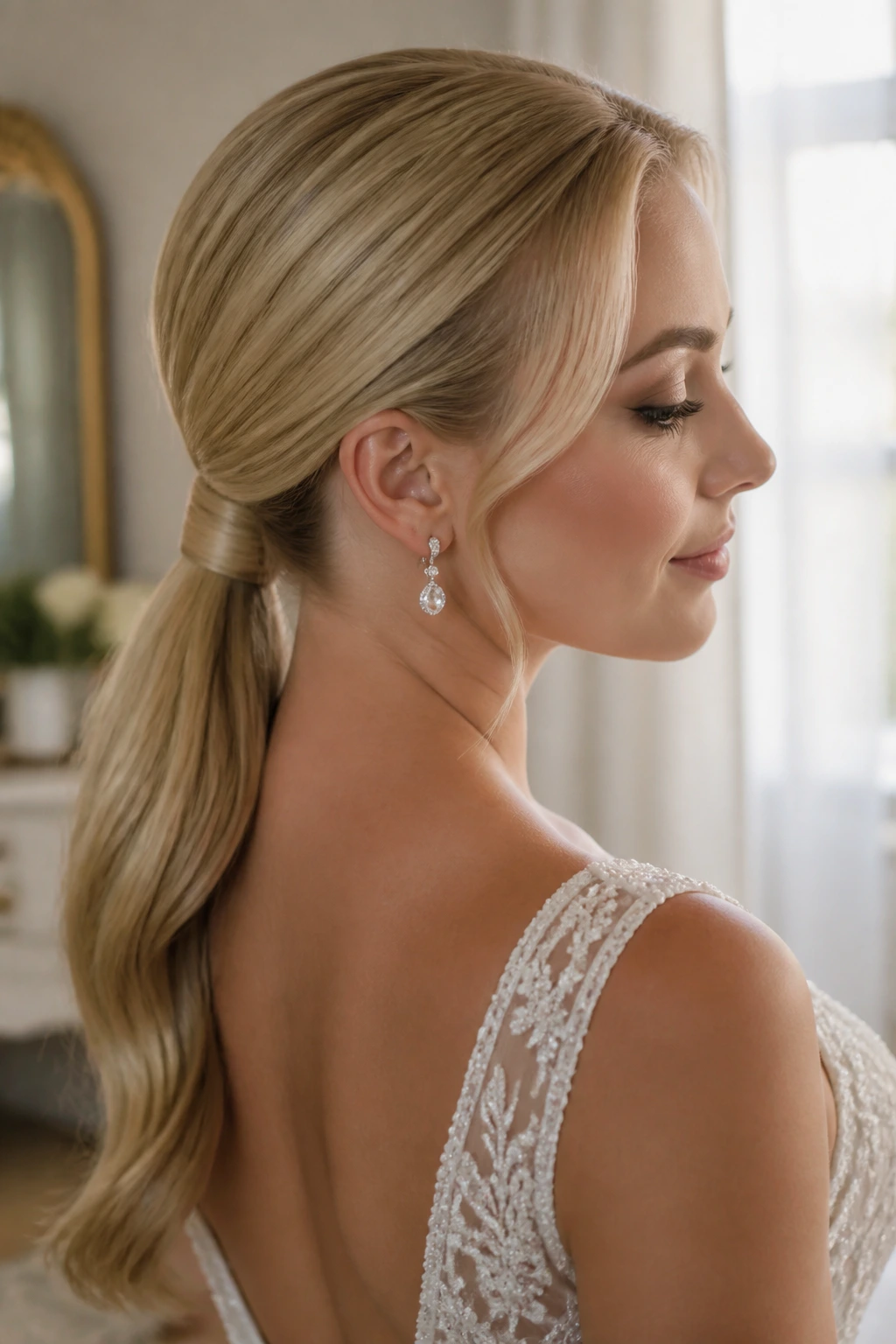
A low ponytail sounds plain until you see it done right. On bridal blonde hair, the wrapped base and sleek crown turn it into something sharp and elegant. The tail can stay straight, bent, or curled under at the ends, depending on the dress and the bride’s face shape.
This look is especially good for modern gowns, minimalist satin, or any neckline that already has clean lines. The ponytail keeps the back open, which is nice if the dress has details worth showing off. Use a small section of hair to wrap the elastic, then pin it tightly underneath. If the base slips, the whole look starts to sag, and that is the one thing this style cannot afford.
14. Icy Blonde Sculpted Chignon
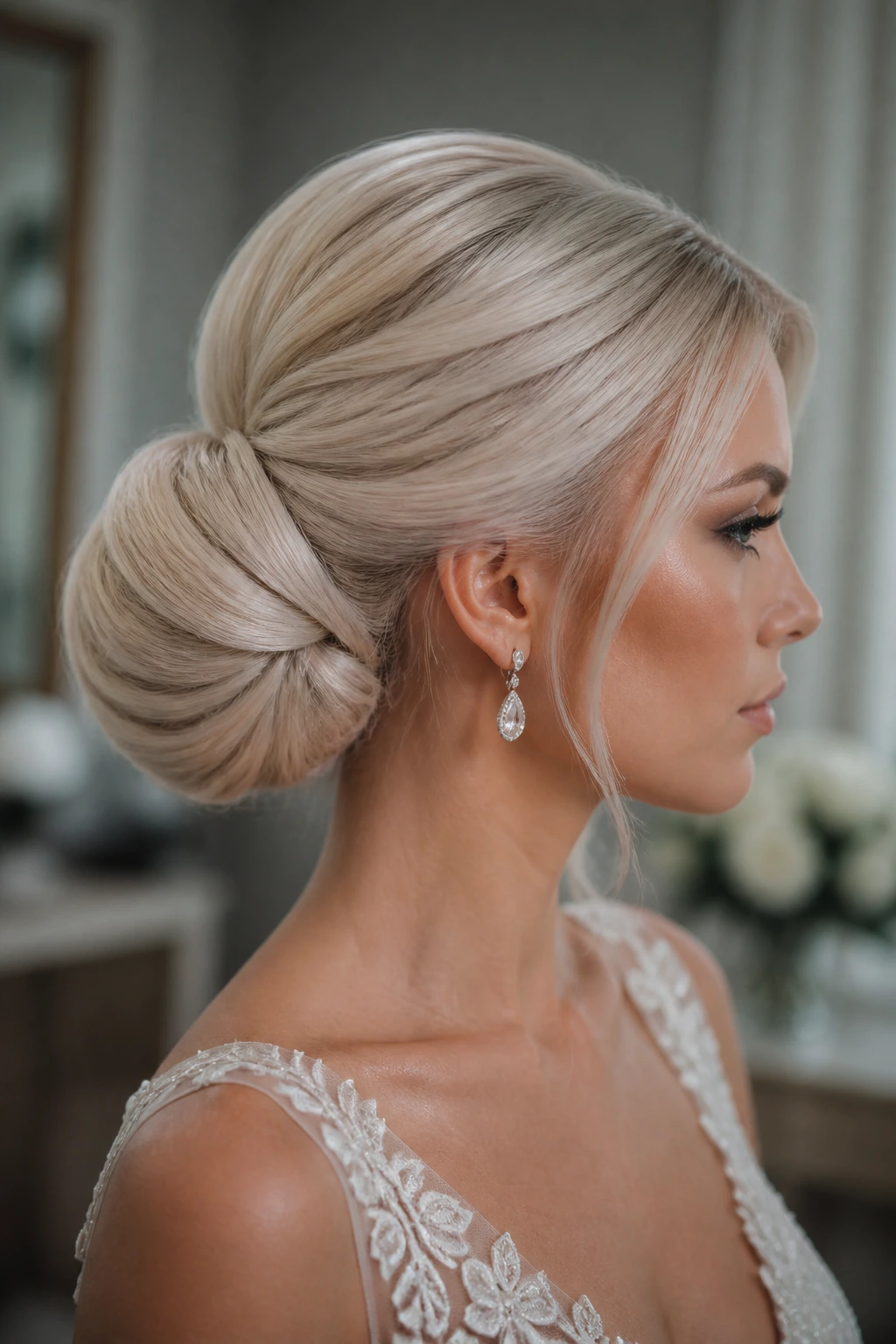
Icy blonde needs a chignon that feels deliberate. Too much softness and the color can look washed out. Too little and the style turns hard. A sculpted chignon gives the brightness a shape to sit in, with smooth sides and a compact knot that feels formal without looking heavy.
This works best when the hair is freshly toned and blown smooth. The chignon can sit low or centered, but I’d keep the edges clean. A few tiny wisps are fine. A halo of broken flyaways is not. If the dress has crystals, beading, or a very sharp neckline, this style holds its own without stealing attention from the rest of the outfit.
15. Braided Halo Bun
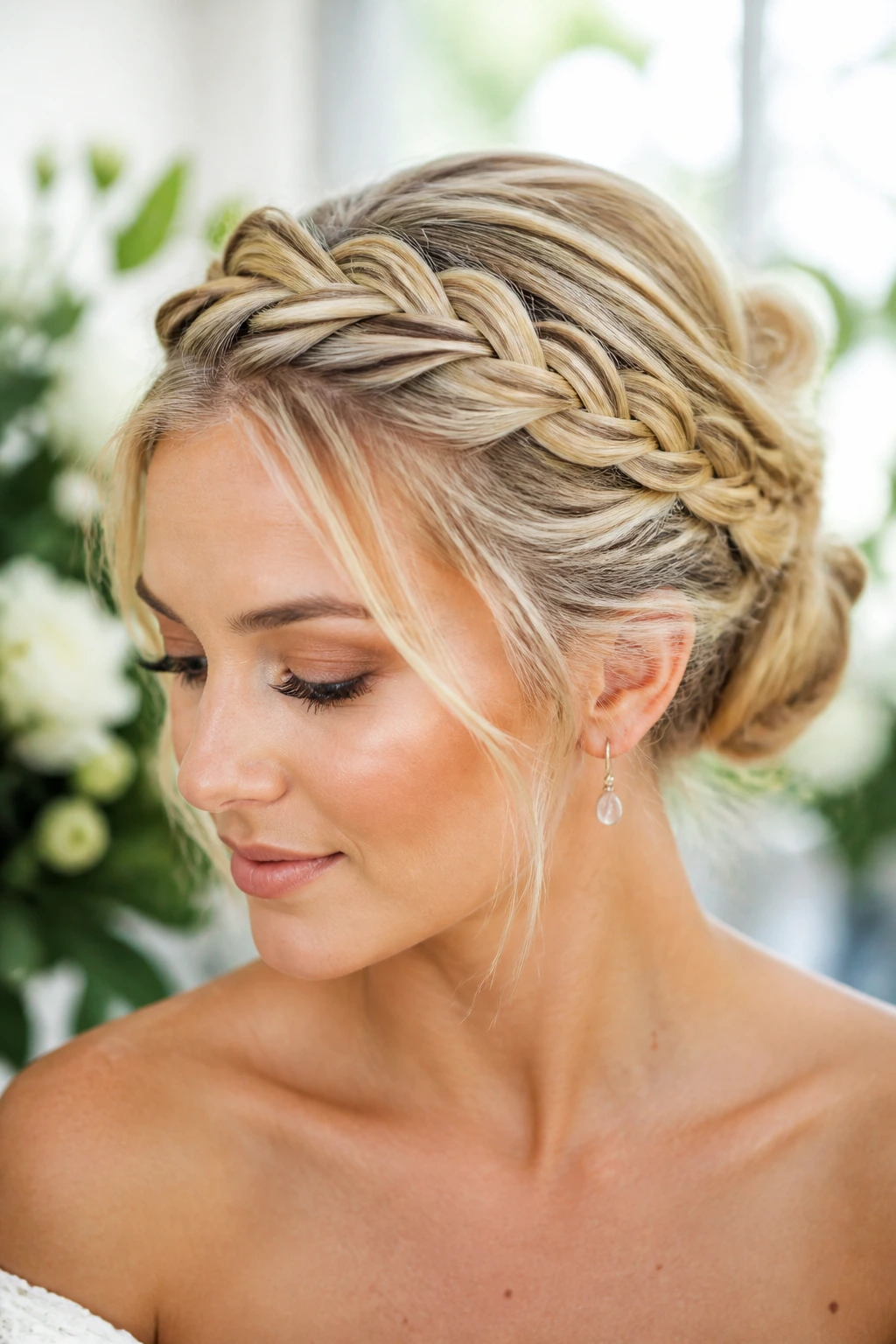
A halo braid that folds into a bun gives you two things at once: a frame around the head and a secure center point at the back. Blonde hair makes the braid pattern easy to see, especially when the highlights and lowlights shift across each section. That texture is half the appeal.
Where this style shines
It’s a smart pick for brides who want something romantic but still locked down. Outdoor wind won’t ruin it. Neither will a long ceremony. The braid can be widened a little for softness, or kept tighter for a neater finish. I’d lean neater if the dress is sleek and wider if the dress has lace, chiffon, or softer lines.
16. Soft Bob with Flipped Ends
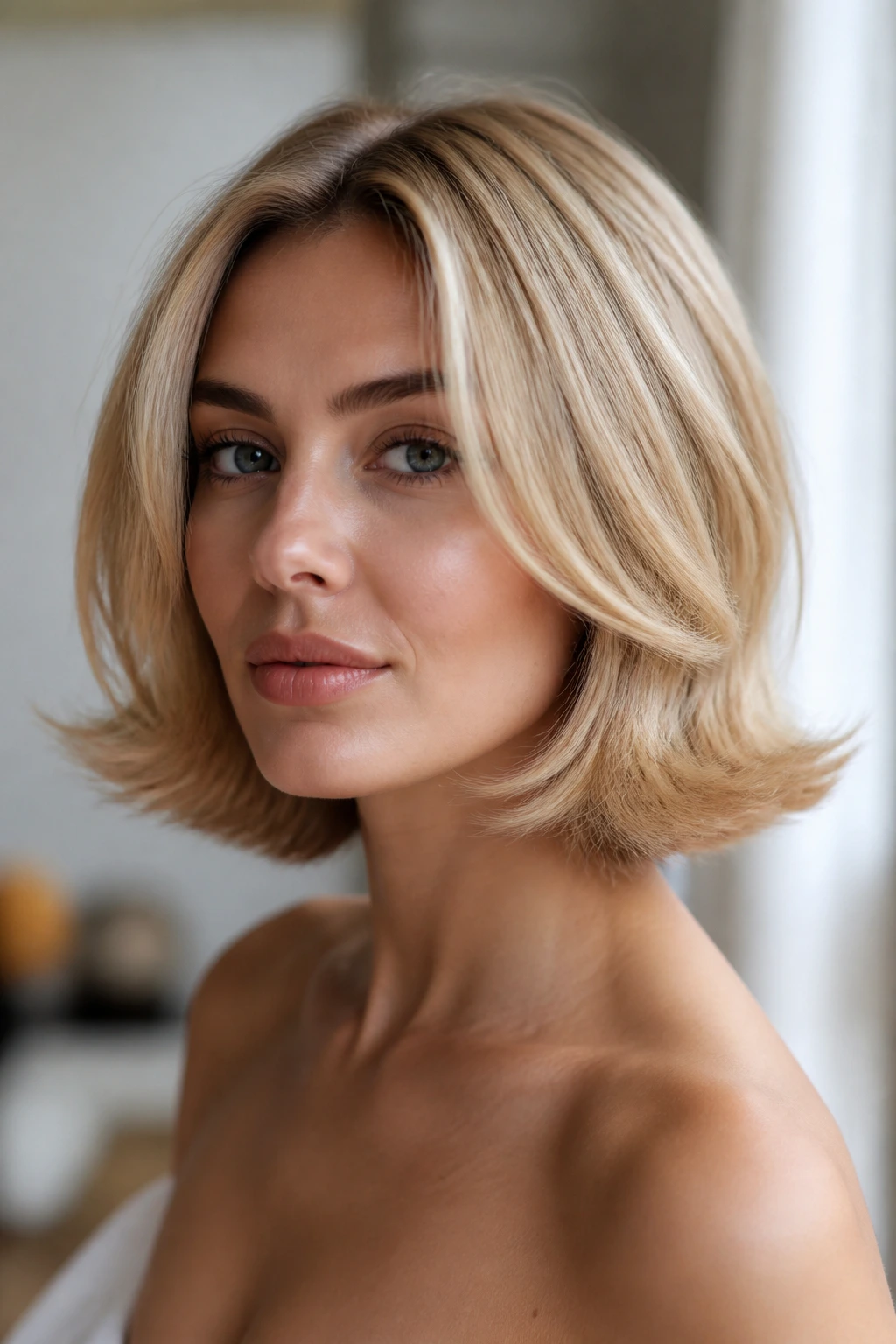
A bridal bob should not be treated like an afterthought. Flipped ends give a short blonde cut real shape, especially when the top has a bit of lift and the ends curve in or out with intention. The result feels polished, not “I ran out of length.”
This look is a gift for brides with chin-length or shoulder-length hair who do not want extensions. A little movement around the face keeps the cut light. Add a side part for drama or keep the middle for a cleaner line. If you want a veil, use a lighter comb or a short placement so the bob does not get flattened under too much weight.
17. Braided Side Bun
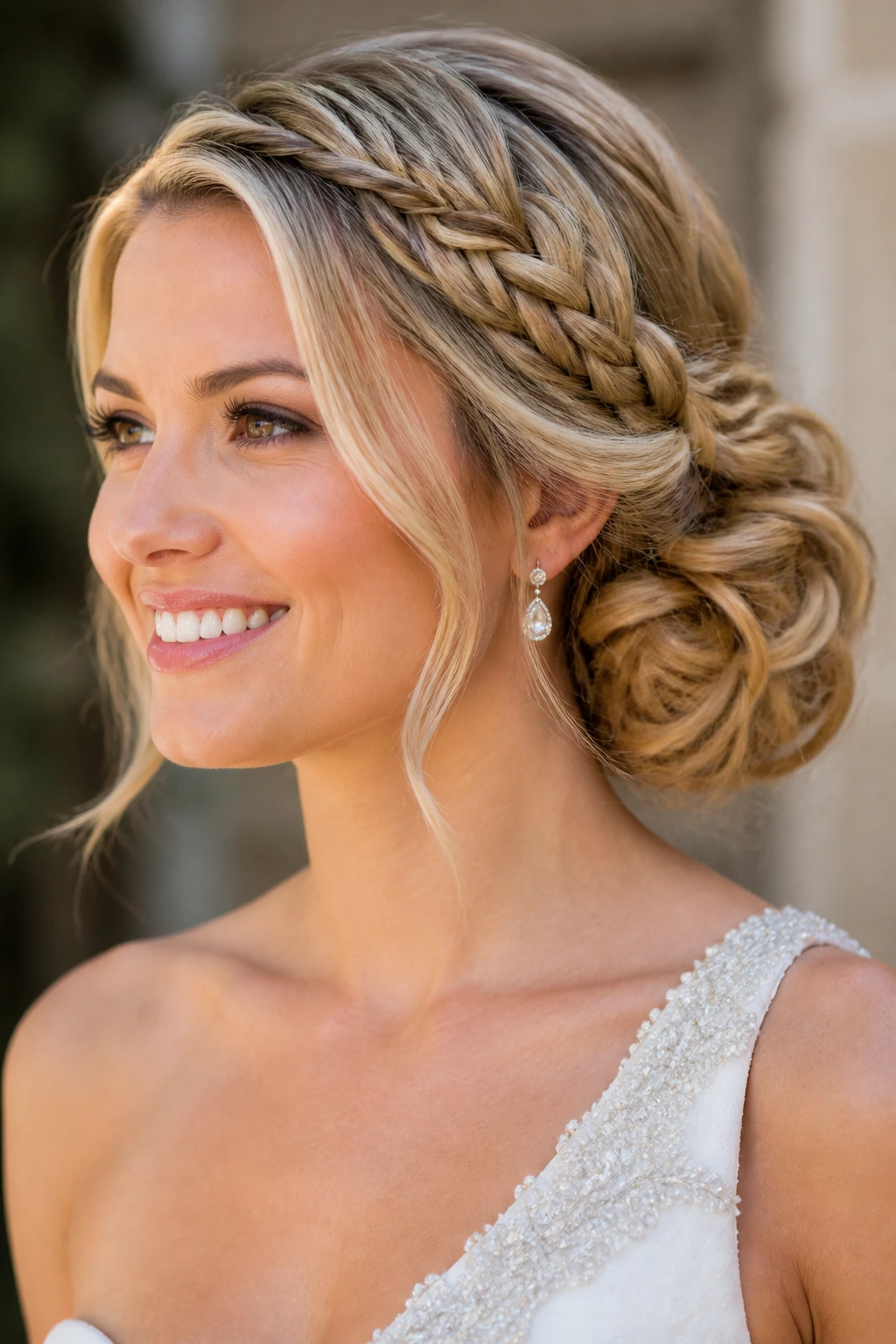
A side bun gives you asymmetry, and asymmetry is useful on blonde hair because it creates visible shape without needing a lot of volume. A braid feeding into the bun adds texture and helps the style hold. The braid can start near the temple or lower by the ear, depending on how much face framing you want.
This look flatters one-shoulder dresses in particular. It keeps the front open and lets the neckline stay visible. Honey blonde and warmer beige tones work especially well because the braid pattern doesn’t disappear into the bun. If the bride wants soft romance, leave one thin tendril near the front. If she wants stronger lines, keep the front sleek and let the side detail do the talking.
18. Bubble Ponytail with Satin Bow
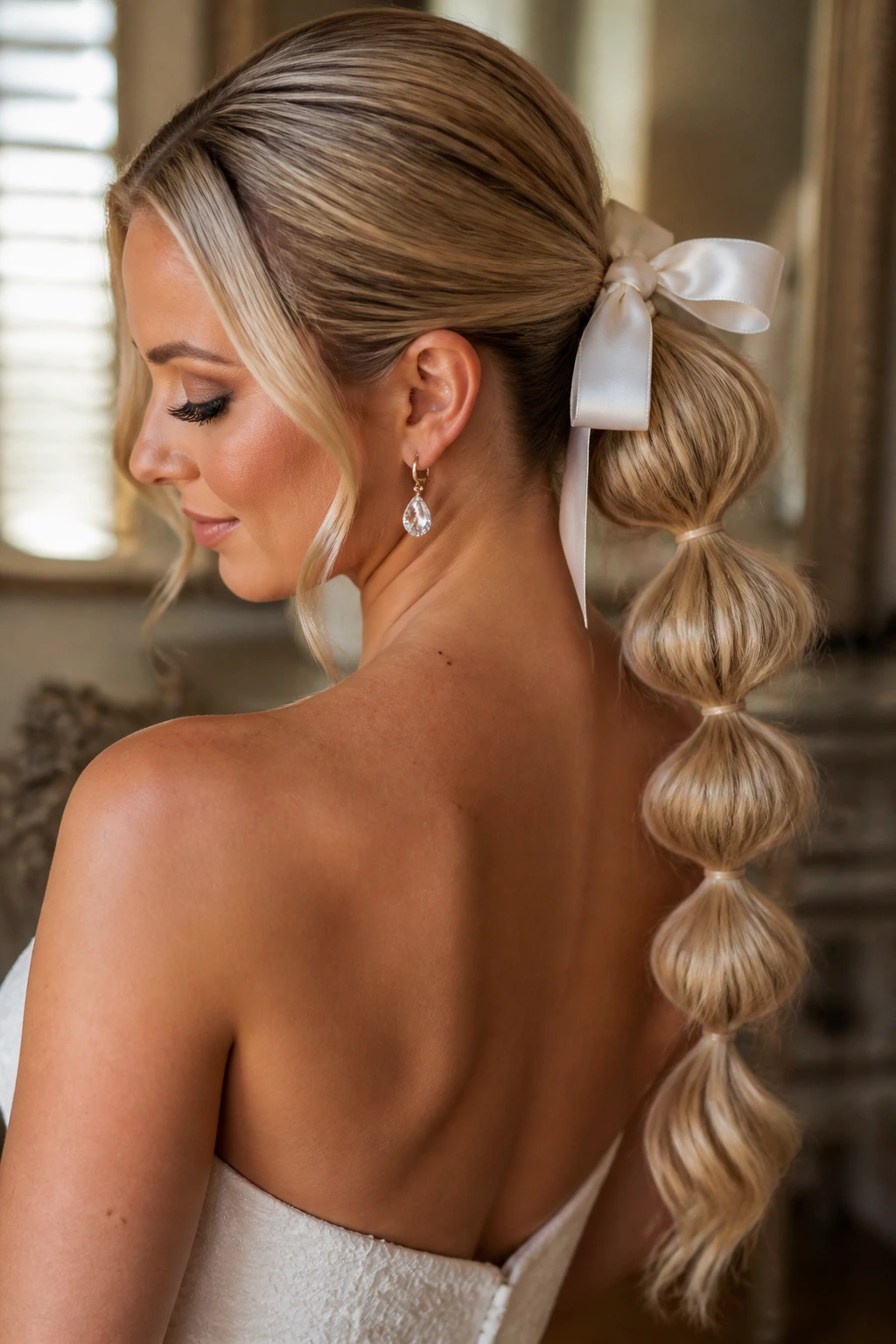
Bubble ponytails are playful, but they can look very bridal when the sections are spaced carefully and the finish is smooth. On long blonde hair or extensions, the bubbles create a rhythm that reads beautifully in profile. The satin bow at the base gives the style a soft finish without making it fussy.
The spacing matters. Keep the elastics about 2 to 3 inches apart so the bubbles stay even. Pull each section out only enough to give shape, not enough to make it fray. This look has a little more personality than a classic ponytail, and that’s the appeal. It’s a good fit for brides who want structure, movement, and one detail that feels a touch less expected.
19. Curly Blonde Halo Puff
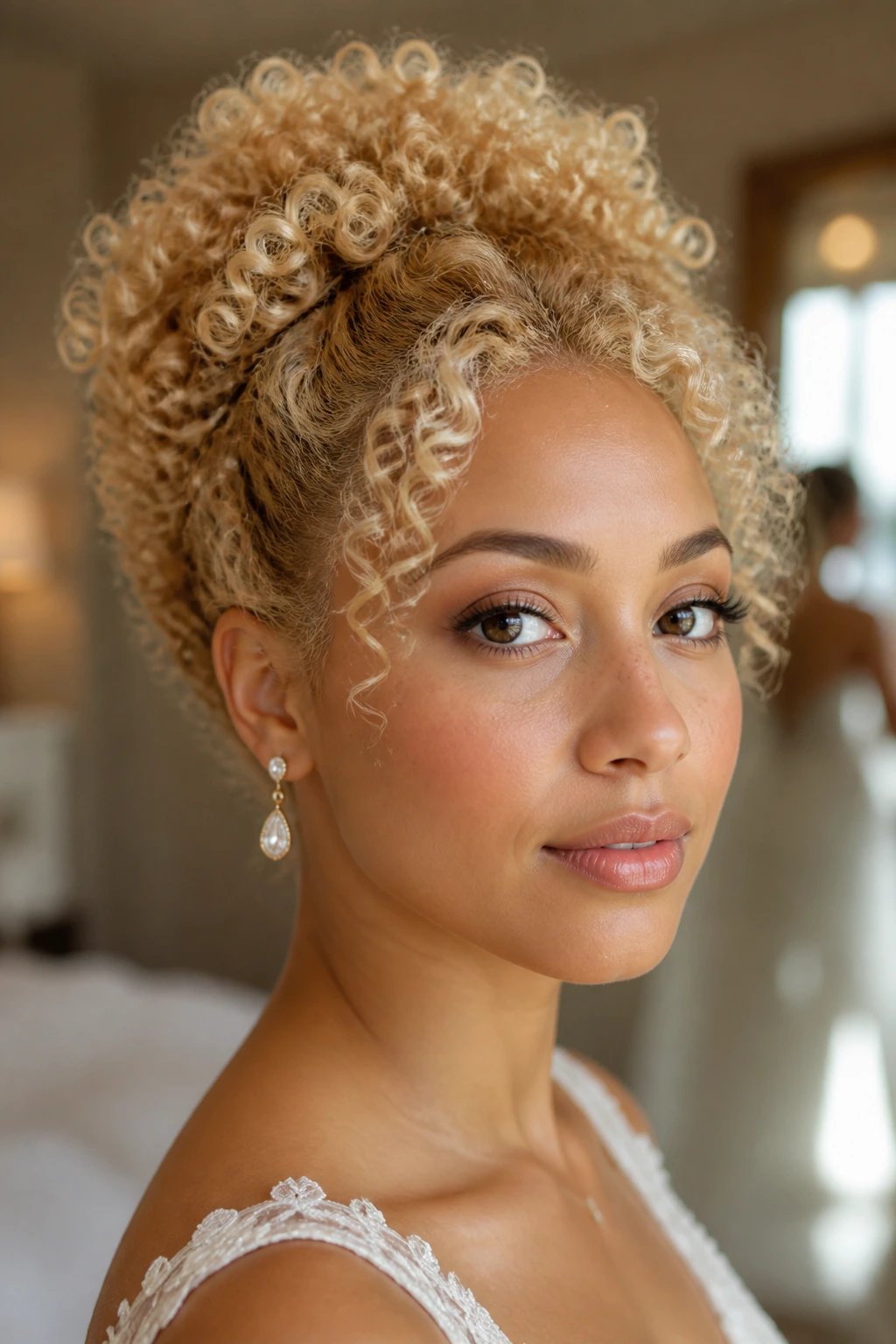
Natural curls deserve a bridal look that respects the curl pattern instead of flattening it into something else. A halo puff keeps the shape rounded and lifted, with the curls gathered and pinned in a way that shows off texture. On blonde hair, especially with highlights or lightened coils, the dimension is gorgeous because each curl catches a different angle.
Moisture is everything here. Smooth the surface lightly, define the curls, then pin without stretching them too hard. The goal is fullness, not control for control’s sake. If the bride wears a veil, place it high enough that it doesn’t crush the crown. This is one of those styles where the hair should still look like hair, not a sculpted object.
20. Minimalist Low Knot with Gold Comb
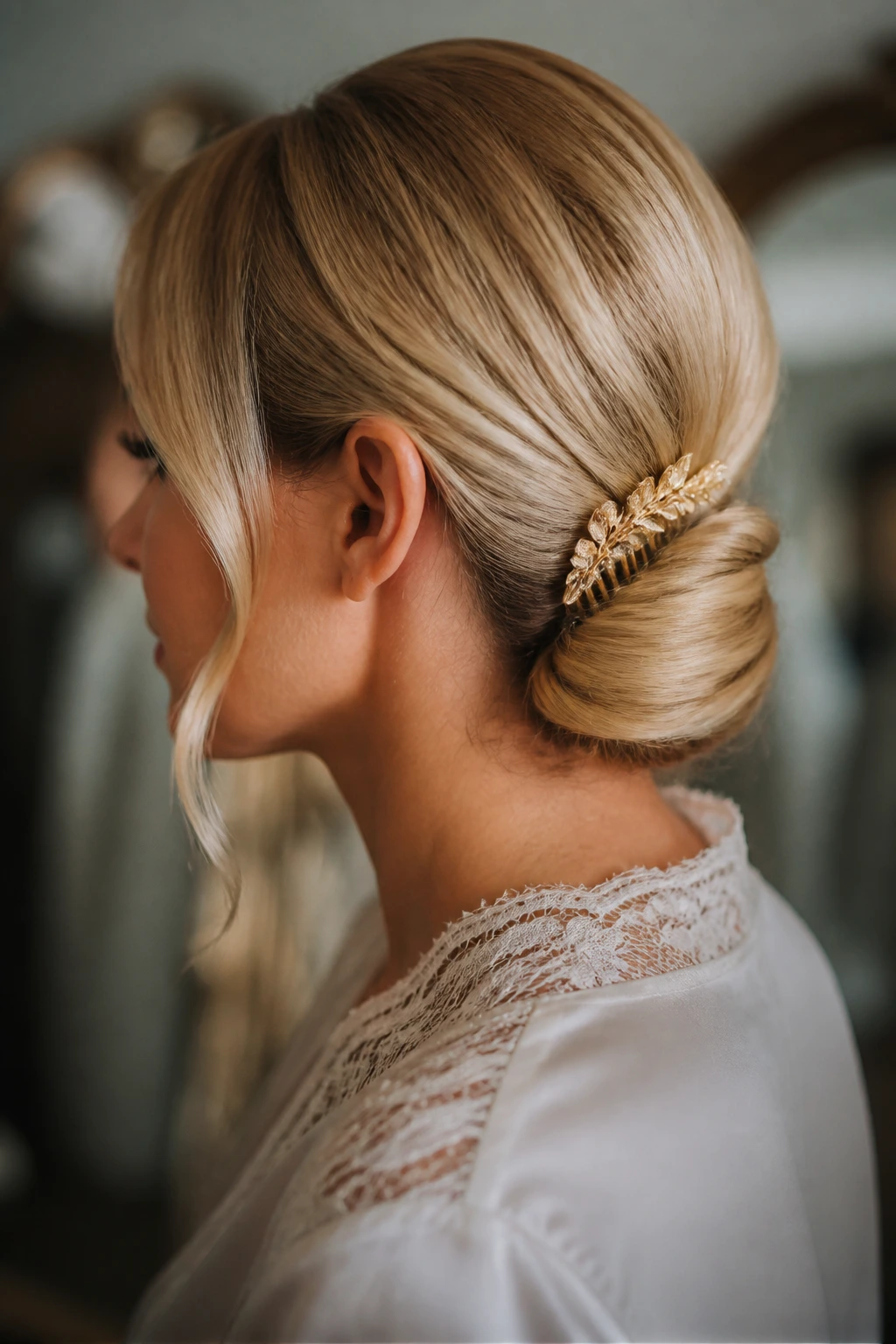
A gold comb does a lot of work when the hairstyle stays quiet. A minimalist low knot gives the comb a clean base, and the blonde hair keeps the whole thing bright. I like this most on warm blonde shades because gold against gold can look intentional rather than trendy.
The knot itself should be smooth and compact, with almost no extra decoration. One comb is enough. Maybe two, if they’re tiny. The bride who chooses this look usually wants a simple line in the back and a little shine near the ear. That restraint is what makes it feel polished. Nothing is fighting for attention.
21. Loose Dutch Braid into Bun
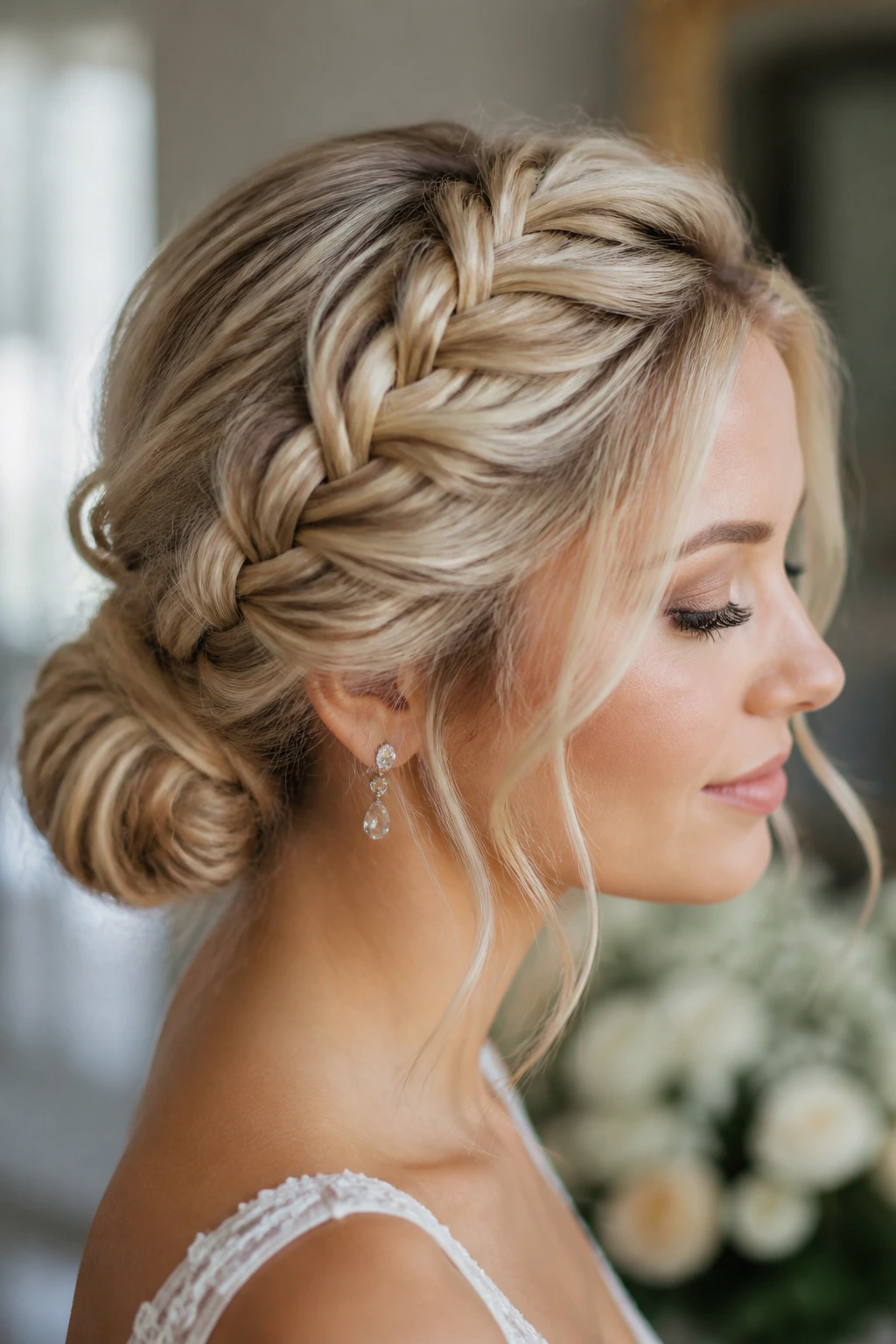
A Dutch braid has more lift than a regular braid because it sits on top of the hair rather than disappearing into it. On blonde hair, that raised braid line gives great visual detail. Feeding it into a low bun turns the look from casual into bridal without losing the texture that makes it interesting.
This style is a workhorse for long events. The braid keeps the top secure, and the bun gives the ends a place to disappear neatly. If the bride is active, moving around, or wants her hair to stay put through the reception, this is one of the safer bets. It has enough pattern to look finished and enough tension to stay where it belongs.
22. Short Pixie with Jeweled Clip
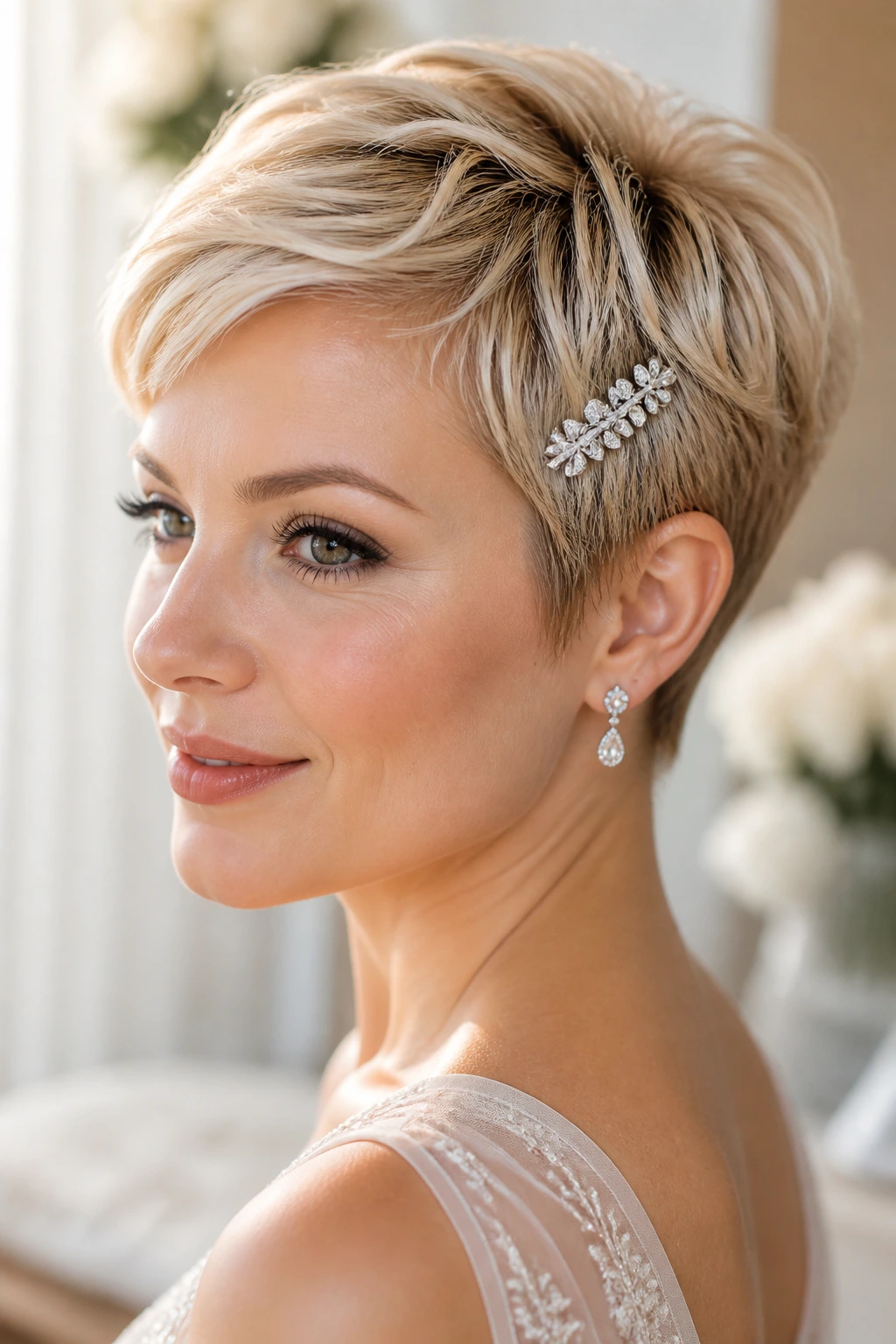
Short blonde hair can look startlingly elegant with the right accessory. A jeweled clip placed above the temple or at the crown of a pixie adds ceremony without trying to turn the cut into something it isn’t. Keep the styling sleek or lightly tousled, depending on how soft you want the overall effect.
The advantage of a pixie is the face stays open. Earrings matter more here, and the clip should support them rather than compete. I’d pick this when the gown is structured, the neck is long, or the bride wants something clean and modern. Tiny hair pieces can get lost on short blonde cuts. One good clip does the job better than five small ones.
23. Shoulder-Length Vintage Finger Waves
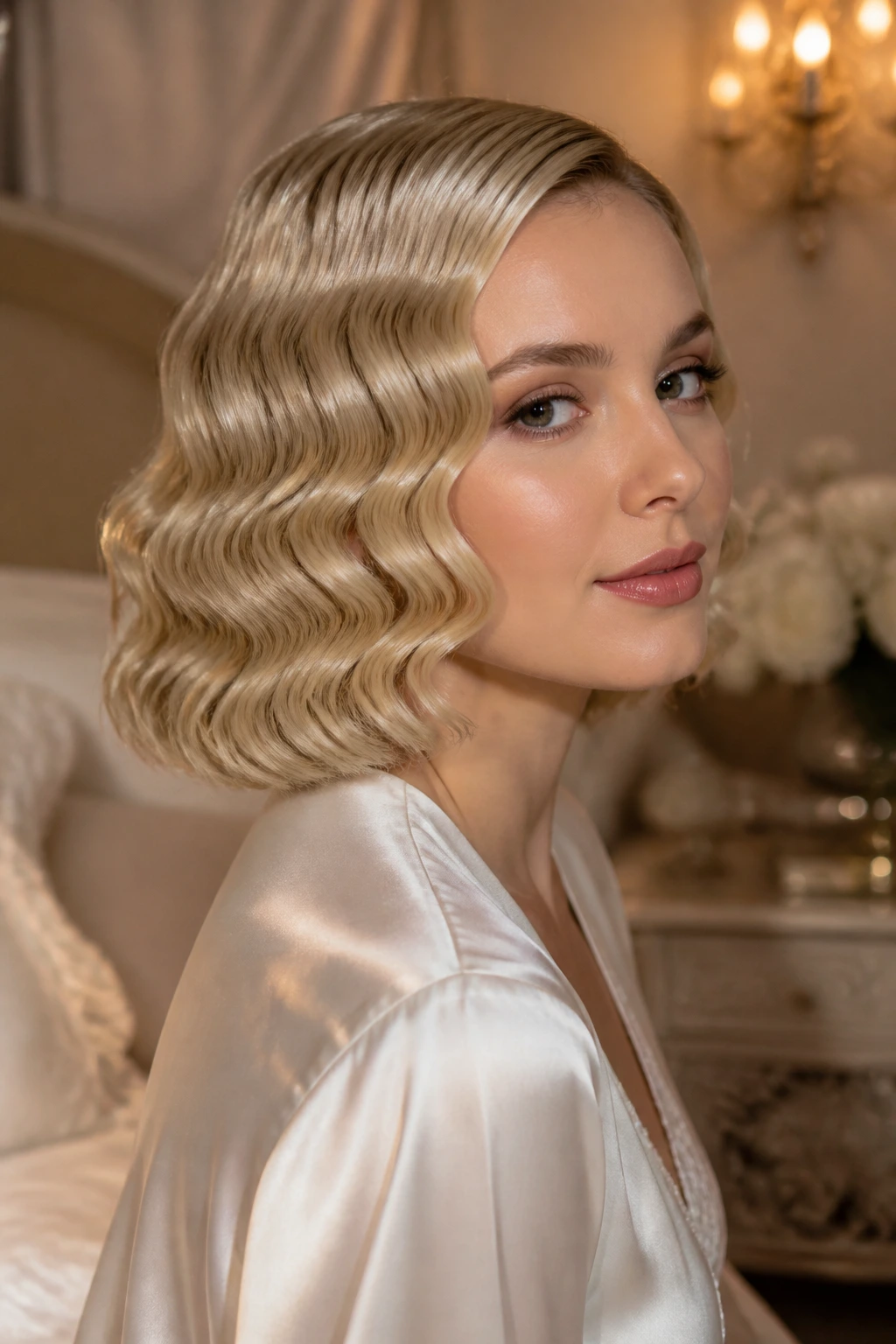
Finger waves on blonde hair are a little bit glamorous and a little bit severe, which is why they work so well for a wedding when done carefully. The waves sit close to the head and create a smooth, sculpted pattern that looks especially sharp on shoulder-length cuts. Light shades make the ridges and valleys visible without needing extra volume.
Best use case
This style suits brides who like retro details, satin dresses, or a lipstick-and-pearls kind of mood. It does take time, and the setting clips matter. You want crisp ridges, not soft bends. If you’re committing to this look, the hair should be dried thoroughly and set with enough gel or foam to hold the wave shape. It’s not the most forgiving style on the list, but when it lands, it lands hard.
24. Half-Up Rope Twist with Floral Pins
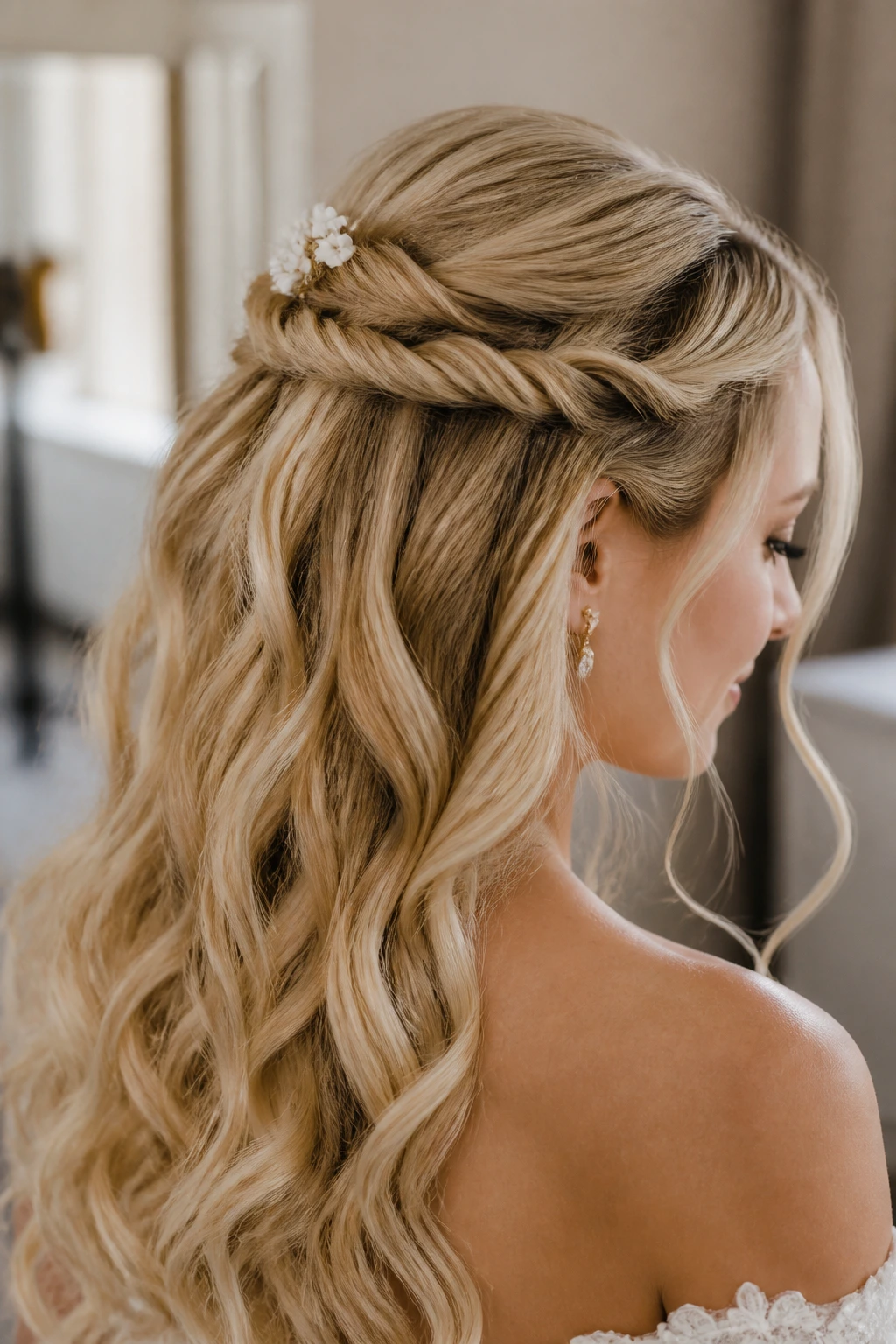
Rope twists give a softer line than braids, which can be a nice shift when the dress is already detailed. Pulling the twists back from the temples and pinning them at the back keeps the crown open while leaving the lower hair loose. On blonde hair, the twist shows a smooth surface that catches light in a different way from a braid.
This one pairs nicely with small flowers, baby’s breath, or tiny pearl pins. Keep the flowers sparse. A few placed with intent look elegant; too many start to drift toward craft-project territory. The loose hair below can stay waved or gently brushed out. Either way, the top stays controlled and the length stays soft.
25. Looped Low Pony with Veil
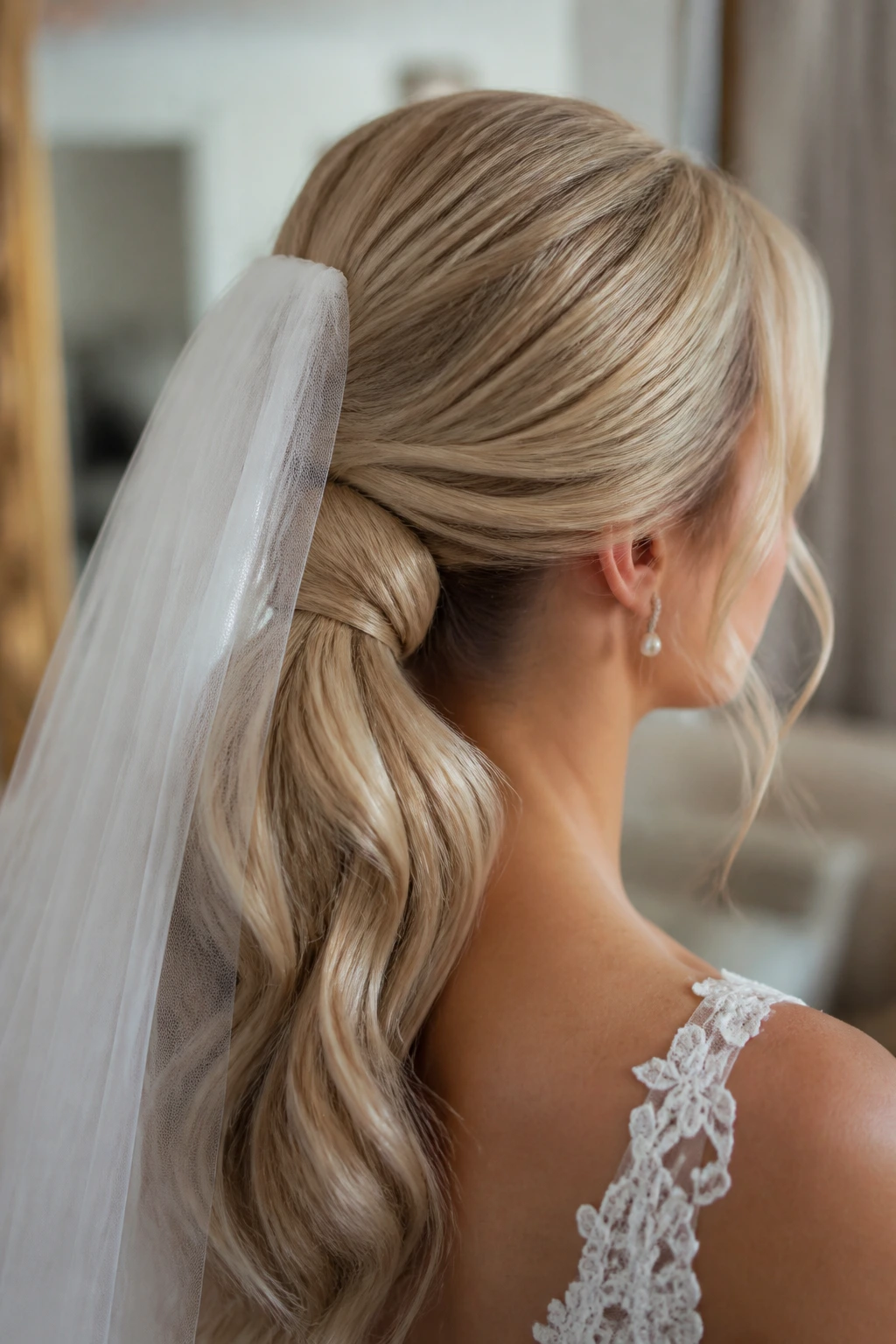
A looped ponytail is one of those low-effort-looking styles that actually takes a careful hand. The pony is folded through itself or tucked into a looped shape, which keeps the back neat without the stiffness of a bun. On blonde hair, especially lighter tones, the shape reads clearly because the contrast between smooth crown and wrapped tail is easy to see.
This style is useful when a veil needs a steady anchor but the bride still wants hair that feels light. Keep the loop snug. Loose loops collapse once a comb or pin is added. If the dress has clean lines or a little modern edge, this style fits right in. It feels current without yelling about it.
26. Textured Messy Bun with Tendrils
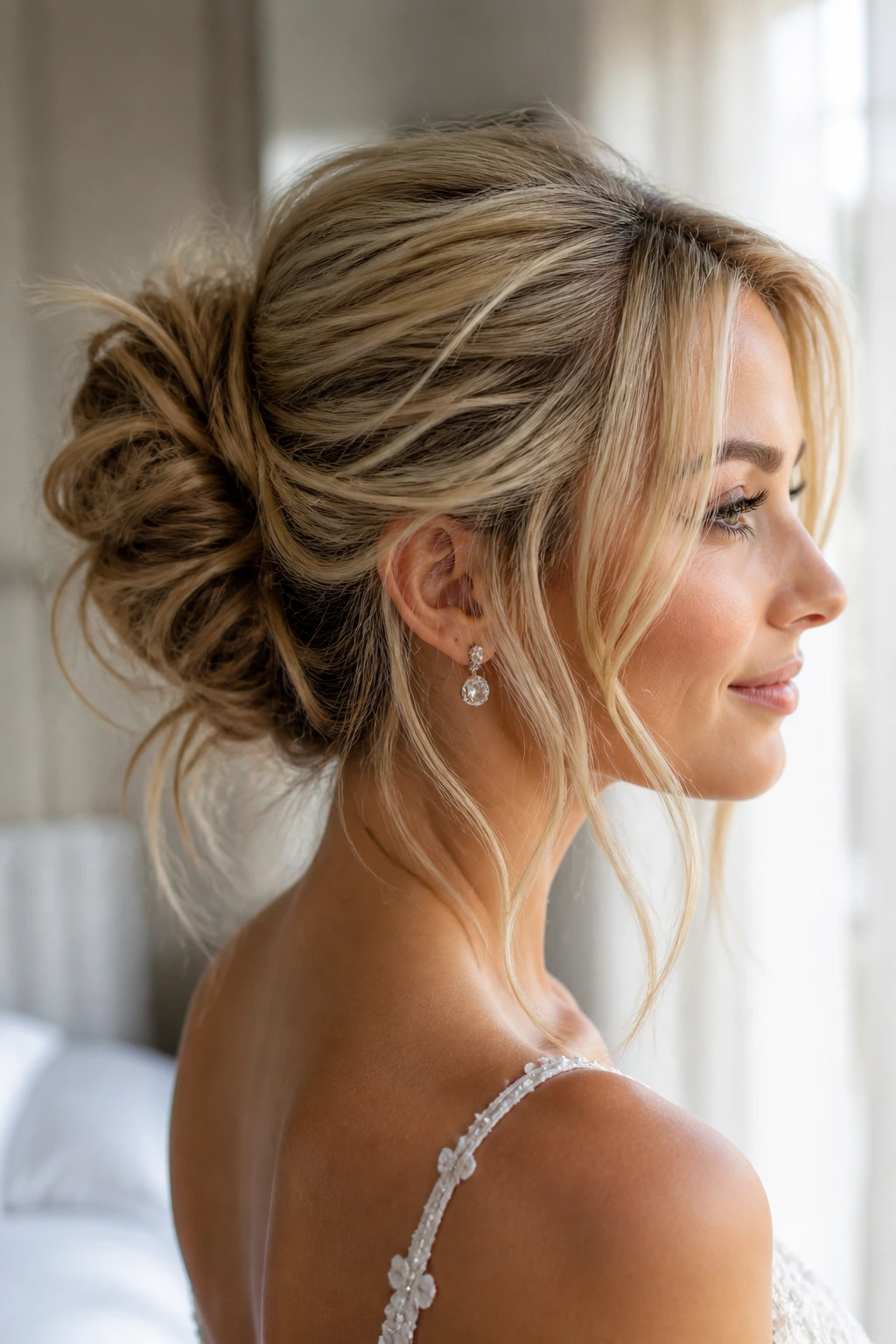
A messy bun can be bridal if the texture is controlled. That’s the whole game. The blonde hair should look piecey, lifted, and soft around the edges, not abandoned. Pull out a few thin tendrils around the face and near the nape, then keep the bun itself firmly anchored so it doesn’t shrink as the night goes on.
This look works best when the bride wants softness and movement more than polish. It suits chiffon, tulle, and less structured dresses. The tendrils should be shaped with a small iron so they bend, not frizz. A little asymmetry helps. Too much, and the bun starts looking unfinished instead of intentional.
27. Sleek Side Bun with Deep Part
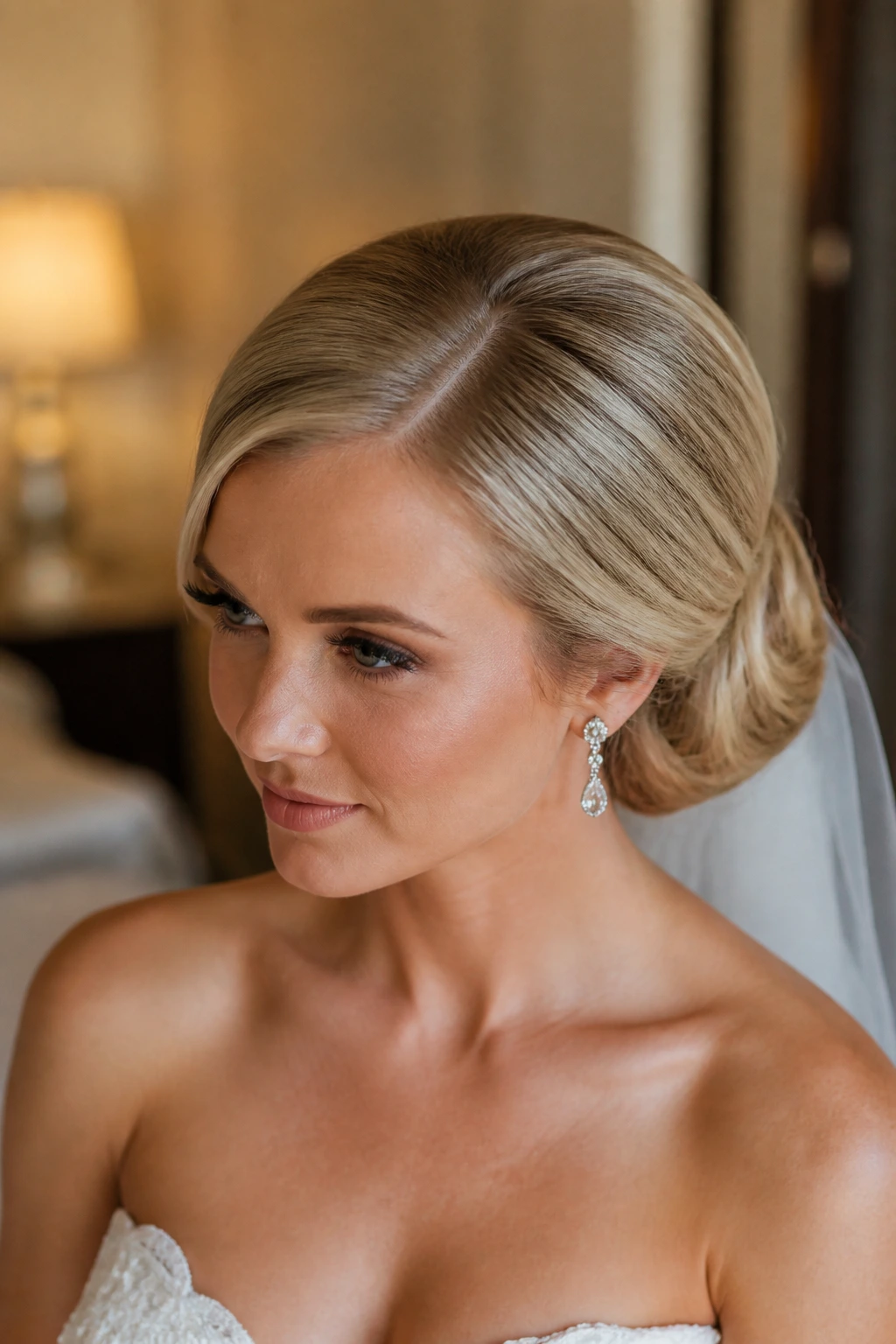
A deep part changes everything. It makes blonde hair fall into a more dramatic line, and when that line feeds into a side bun, the whole style gains weight on one side in a way that feels formal and a little cinematic. It’s a smart pick for off-the-shoulder dresses or gowns with one strong detail.
Keep the crown smooth and the bun tight. A side bun can easily turn puffy if the base isn’t pinned properly. I like it best with warm blonde shades because the smooth surface shows dimension across the curve of the head. A single comb or earring is enough. The asymmetry already gives the style enough attitude.
28. Gilded Mermaid Waves
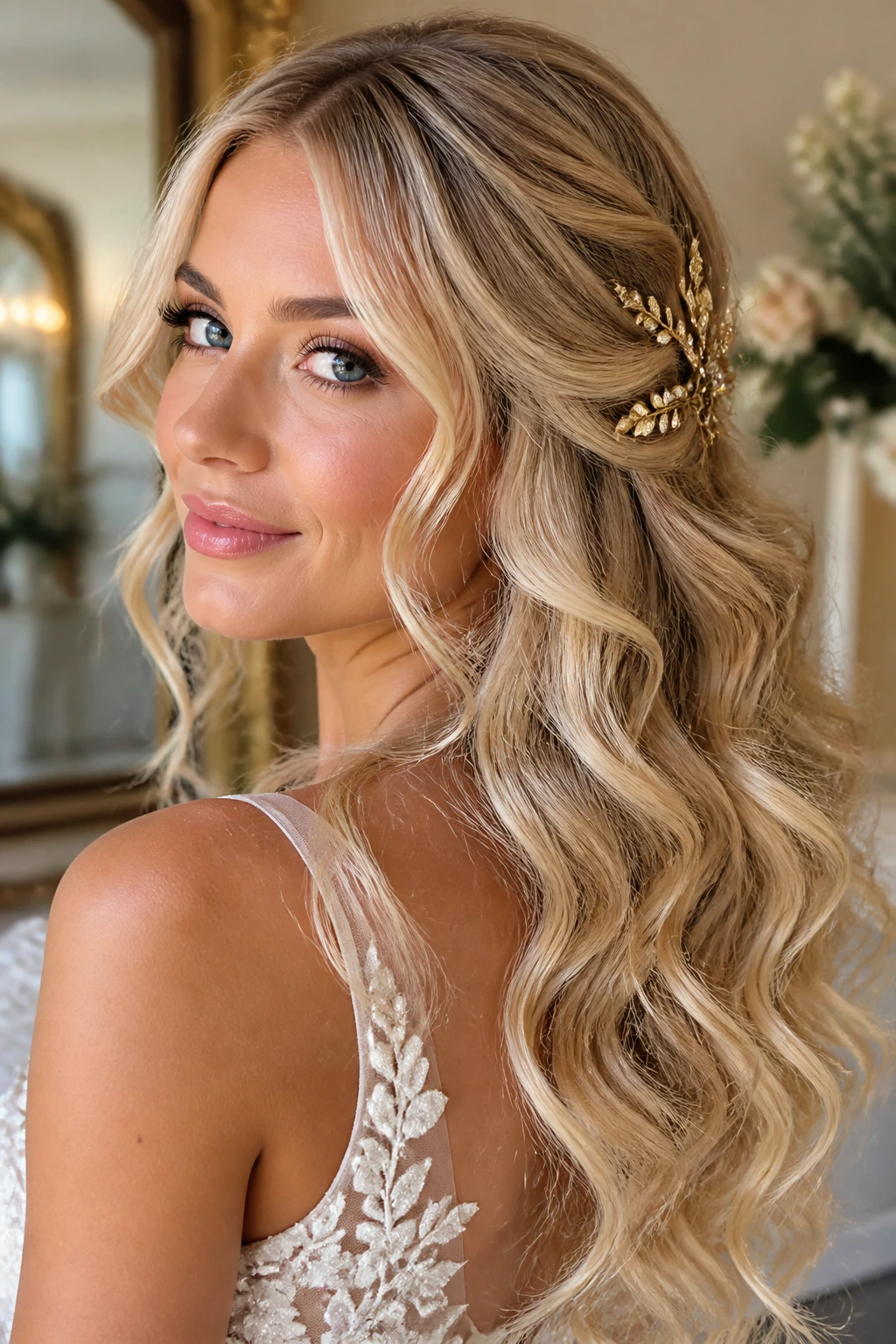
Long blonde waves with a little gilded detail can look lavish without becoming overloaded. Think soft, long bends that sit below the shoulders, then a few gold pins or a slim comb tucked into one side. On balayage, this style is especially effective because the color ribbons follow the wave pattern naturally.
The important part is keeping the waves loose and glossy. If they’re too tight, the style loses the mermaid feel. If they’re too soft, the length looks flat. Use a large barrel, brush lightly, and leave a little separation between the waves. This is a good choice when the dress is simple and the hair gets to carry more of the visual weight.
29. Braided Ponytail with Ribbon
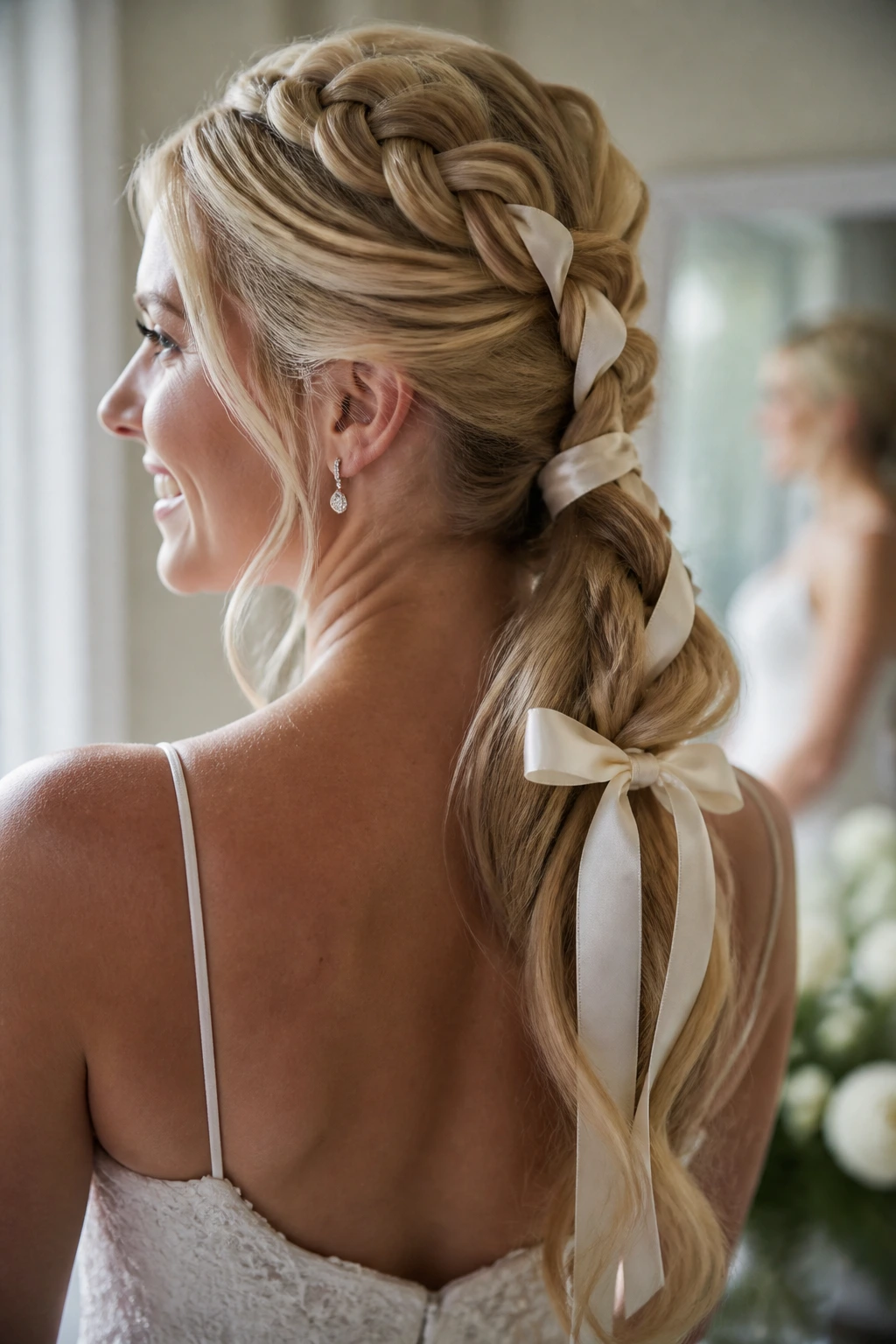
A ribbon tied through a braid or wrapped at the base of a ponytail gives blonde hair a softer finish than a plain elastic ever could. The braid itself keeps the style secure, while the ribbon adds a formal note that can echo the dress or bouquet. Satin works well. Velvet can feel heavy unless the dress is wintery or richly textured.
This look is especially nice on long hair that needs a little structure without a full updo. Keep the braid neat enough that the ribbon doesn’t get swallowed. If you want the style to read more bridal and less school-dance, pick a ribbon in ivory, blush, or a tone that matches the gown rather than something too bright.
30. Soft Lob with Curtain Bangs
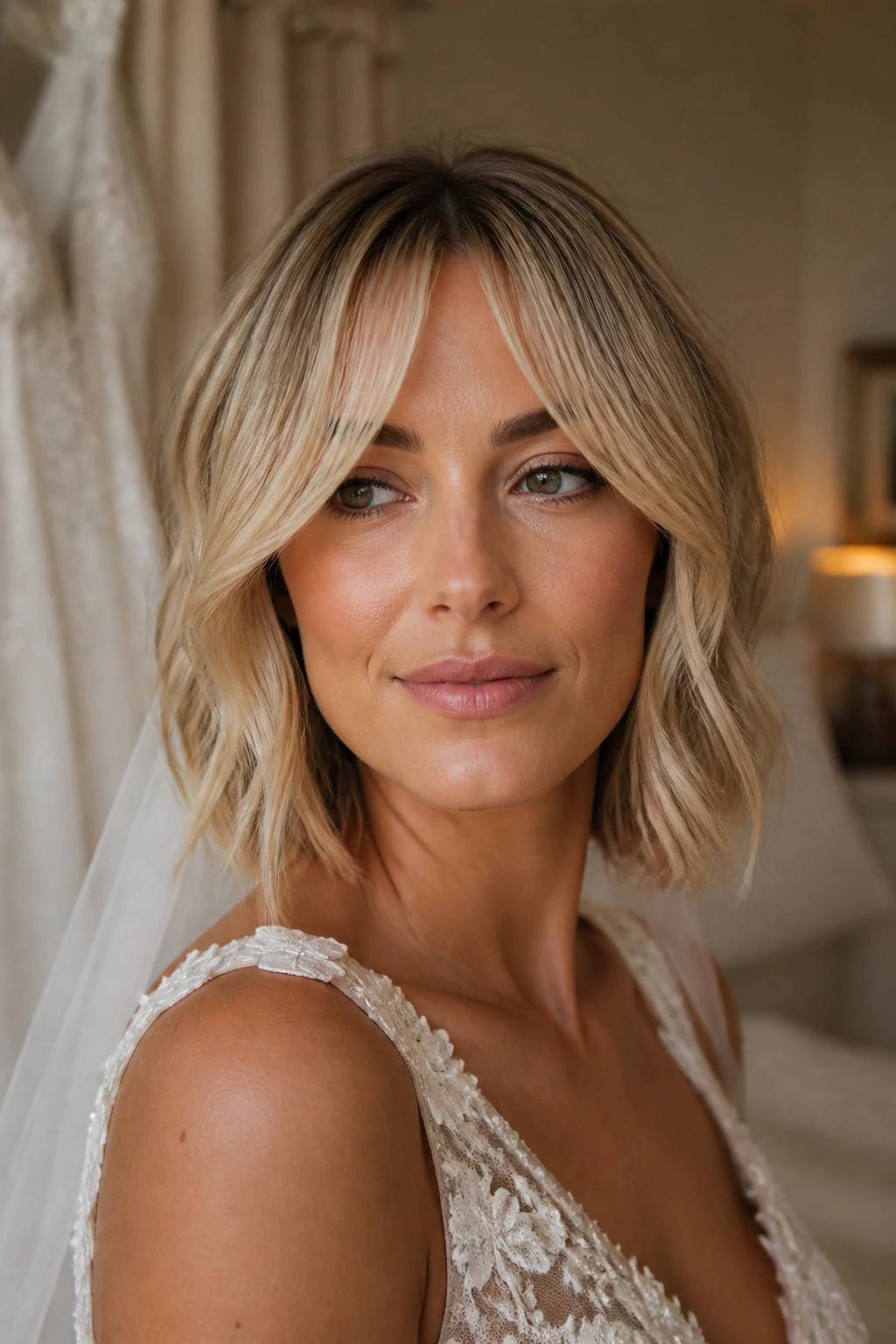
A lob with curtain bangs is one of the easiest bridal styles to underestimate. Done well, it frames the face, opens the neckline, and still feels like the bride’s own hair. The soft bend through the mid-lengths keeps it from looking too casual, while the bangs make the look feel lived-in and flattering.
This is a smart choice for shorter blonde cuts that don’t need heavy pinning. It also works if the bride wants to change the style later in the evening with a clip or a tuck behind the ear. Keep the ends polished and the bangs airy, not sticky. A little root lift goes a long way here. So does a good trim before the event.
31. Twisted Crown Half-Up
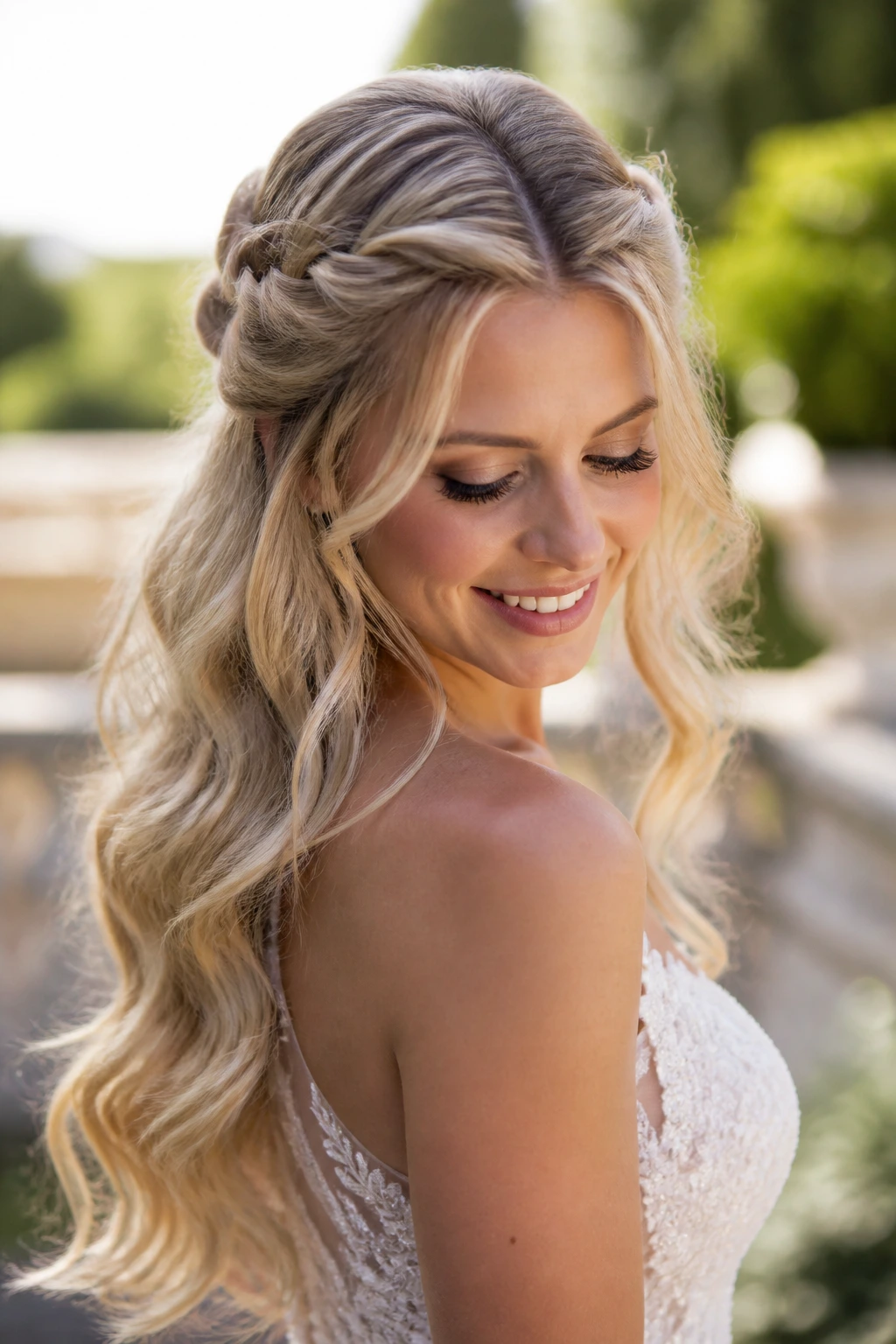
A twisted crown half-up style gives you the feeling of an updo without fully committing to one. Two sections twist back from the temples, then meet at the crown or back of the head, leaving the lower lengths down. On blonde hair, the twist lines create clean contrast against the loose waves below.
This look is one of the most forgiving on the list. It works on medium length, layered hair, and even some shorter cuts with enough top length. It also plays nicely with veils and small clips because the top section is already controlled. If the bride wants movement but not chaos, this is a very safe place to land.
32. Retro Volume Blowout
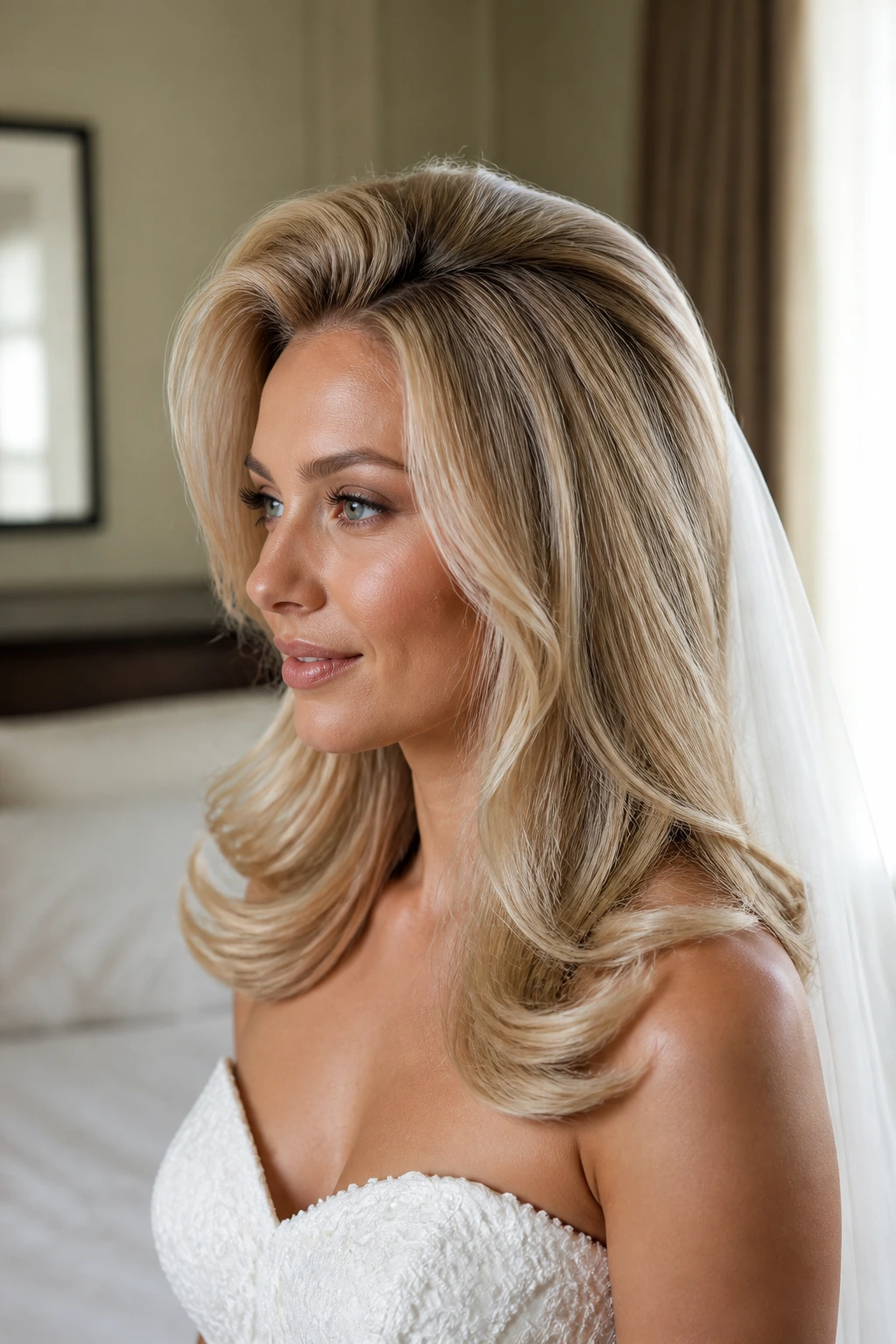
Big roots, soft ends, and a little curve through the lengths can turn blonde hair into something that feels polished and glamorous without heavy structure. A retro blowout has more lift than a standard smooth style, which makes it useful for brides who want body but not curls everywhere. Honey blonde especially benefits from this shape because the warm tones look rich under volume.
The blowout should feel rounded, not puffy. Use a round brush to build lift at the crown, then tuck the ends just enough to create movement. This style can be worn with a veil, but it also stands on its own. It’s a strong choice when the bride wants to look finished and slightly dramatic without tying the hair all the way back.
33. Satin-Polished Low Chignon
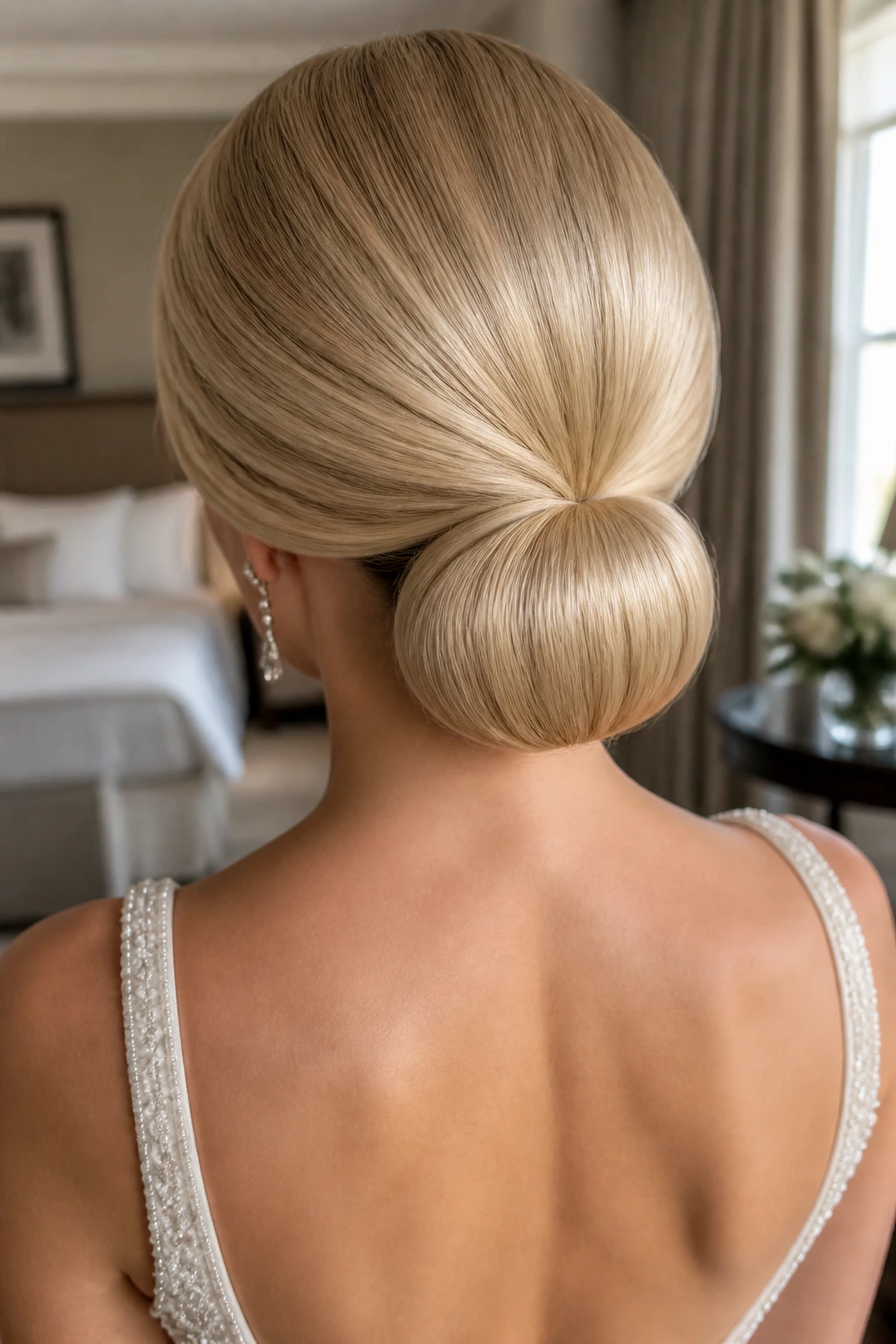
A satin-polished chignon is a no-nonsense bridal move. The hair sits smooth at the nape, with a clean surface that lets the blonde tone and any subtle highlights show through. It’s especially strong for formal weddings because it looks calm, controlled, and expensive in the old-fashioned sense of the word.
What makes it work
The shine needs to be even, not oily. That’s the difference between polished and weighed down. Keep the bun shape compact and the sides flat. If the bride wears statement earrings or a dramatic neckline, this style gives those details room. It also pairs well with a cathedral veil because the base is stable and the silhouette stays neat.
34. Feathered Mid-Length Waves
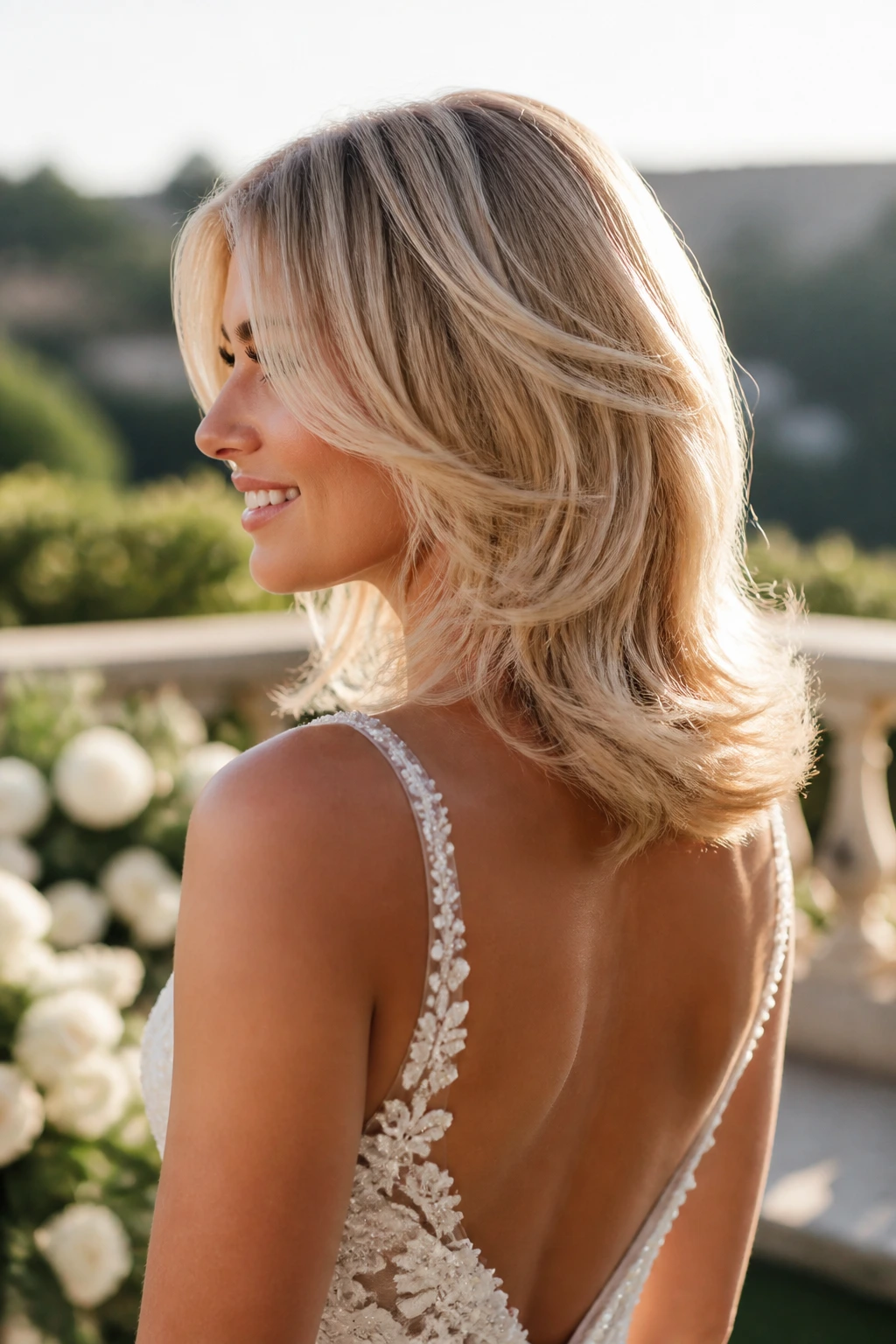
Feathered layers are useful because they move without swallowing the face. On blonde hair, those layers create a soft frame that reads airy rather than frayed. The wave pattern should stay loose and directional, with the ends flicking outward just enough to show the haircut.
This is a good option for brides who want a gentler version of the Hollywood wave. It feels less formal, more mobile, and more forgiving if the ceremony runs long. Use a medium barrel, then break the waves up with fingers instead of a brush. If the hair has balayage, the feathered movement helps each color band stay visible instead of blending into one blur.
35. Bridal Blonde Knot with Statement Veil
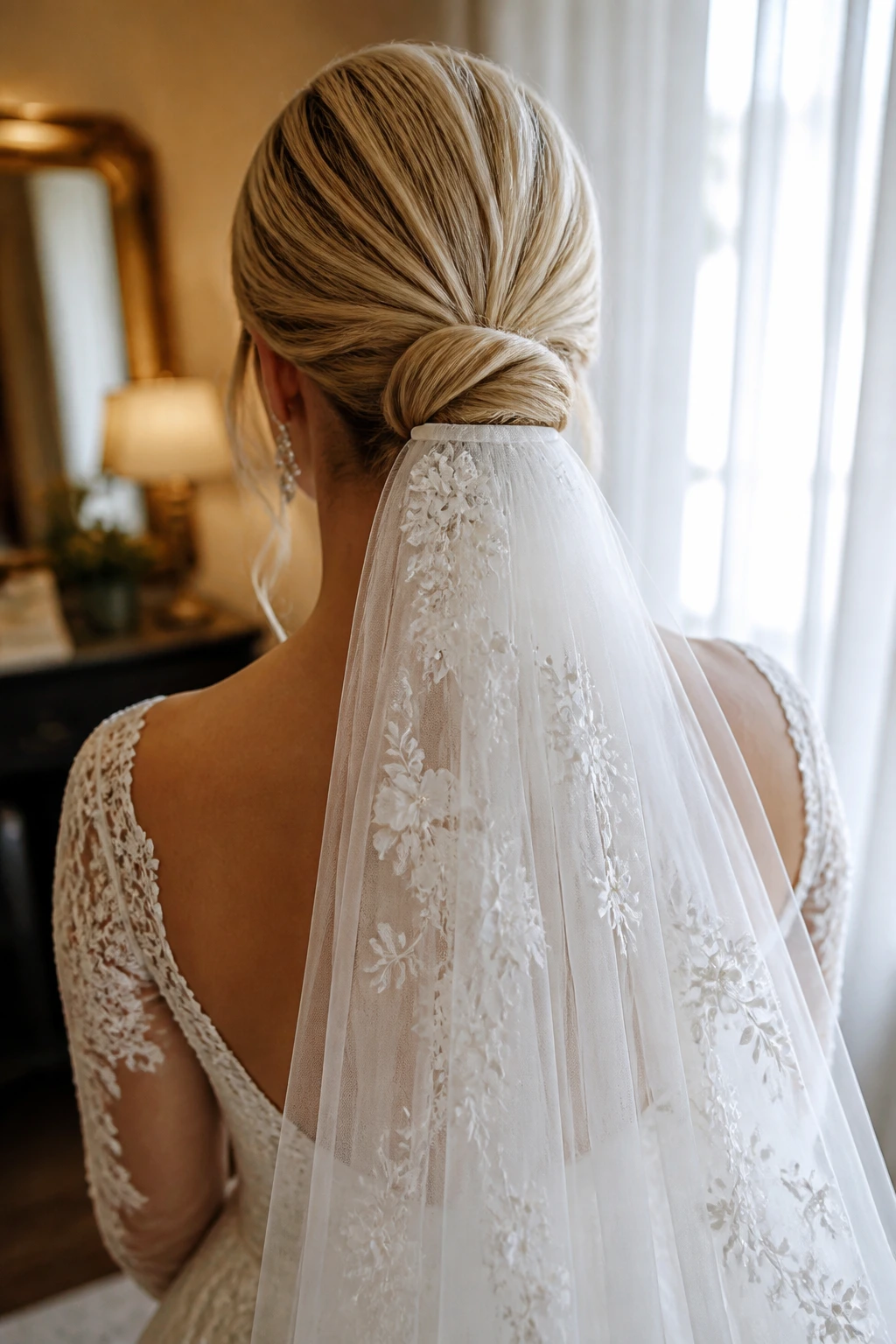
When the veil is meant to be the star, the hair should step back a little. A clean bridal knot does exactly that. It gives the veil a stable anchor, keeps the neckline clear, and lets the blonde color stay visible without crowding the whole look.
This is the kind of style that rewards good sectioning and careful pinning. The knot should be smooth, secure, and centered enough that the veil hangs the way you want it to. If the gown has dramatic lace, embroidery, or volume, this understated finish keeps the whole outfit from tipping into excess. Quiet hair can be a strong choice. Sometimes it’s the strongest one.
Why Blonde Bridal Hair Needs Structure, Shine, and a Trial Run
Blonde hair is bright enough to expose every shortcut. A pin that slips a little, a section that flattens at the crown, or a curl that falls apart after twenty minutes all show up faster on light hair than on darker shades. That’s why structure matters so much. The style does not need to feel rigid, but it does need a skeleton under the softness.
Shine is the second piece. Blond hair, especially lightened hair, can look dull if the surface is rough or the product is too heavy. A clean finish lets the color reflect light instead of swallowing it. That is also why some styles benefit from a gloss, a fresh tone, or a careful brush-out, while others need a touch of texture so they don’t look slippery and thin.
A trial run is not optional if the hair has been lightened, layered, or extended. Porous ends take heat differently. Roots can go limp while the lengths stay stubborn. Veils change the center of gravity, and one extra comb can shift the whole shape. Test the style in daylight, take flash photos, and wear it for an hour at home. If it survives that, it’s worth trusting.
Essential Tools for These Looks
- 1-inch curling iron: Good for tighter texture, braids with waved ends, and more controlled pieces around the face.
- 1.25-inch curling iron or wand: The best all-around barrel for soft bridal waves and brushed-out bends.
- Flat iron: Useful for sleek buns, polished blowouts, and smoothing the crown before pinning.
- Tail comb: Clean parting and sectioning make a huge difference on blonde hair, where uneven lines show fast.
- Sectioning clips: Keep the crown, sides, and nape separate so the style stays neat while you work.
- Bobby pins in a close shade to the hair: Matching pins disappear better in light blonde and champagne tones.
- U-pins: Helpful for buns and twists when you want support without a visible cluster of pins.
- Strong-hold hairspray: Pick one that sets the shape without turning the hair into a hard shell.
- Flexible-hold spray: Good for waves, curls, and soft pieces that still need movement.
- Heat protectant: Lightened hair needs it every time a hot tool touches the length.
- Shine spray or light serum: A tiny amount goes a long way on blonde hair; too much makes roots look slick.
- Texturizing spray or dry shampoo: Useful when the style needs grip at the crown or through the braid.
- Small clear elastics: Essential for braids, ponytails, and bubble sections where the tie should stay hidden.
- Veil comb or clip: If a veil is part of the look, this matters more than the hairstyle itself.
Smart Hair Prep, Color, and Wash-Day Timing
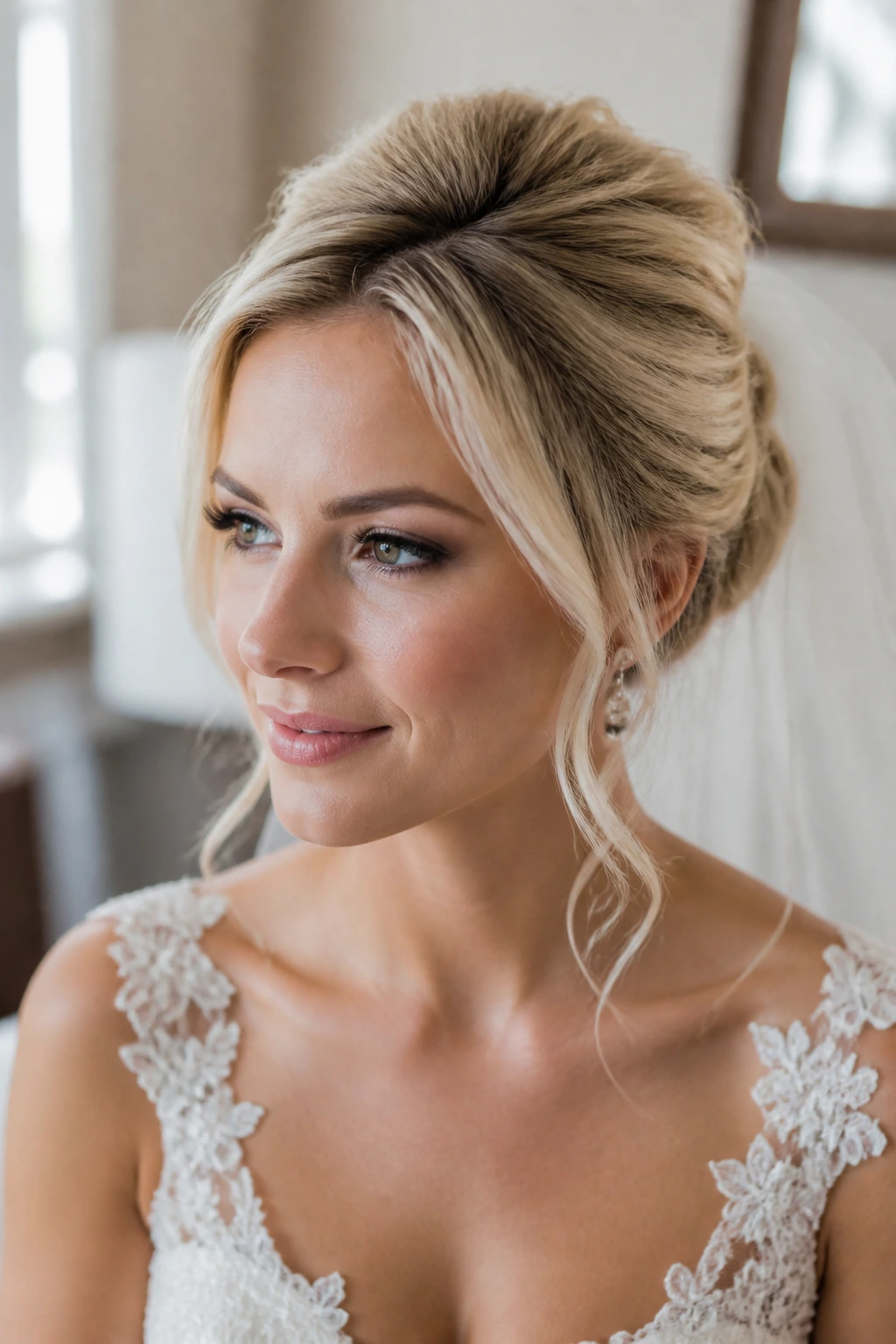
The most useful bridal hair prep starts before the hot tool ever gets plugged in. Blonde hair usually behaves better when it is washed the day before rather than the same morning. That gives the roots enough natural grip for pins and keeps the lengths from turning too slippery. If the hair is very fine, even two days of natural oil can help.
Color tone matters more than a lot of brides expect. Icy blonde needs a finish that looks clean and cool, not chalky. Honey blonde can handle a little more softness. Champagne shades like a light gloss because they catch shine around the face. If the color needs refreshing, do it with enough buffer that the tone settles before the big day. A sudden color change right before the ceremony is a gamble.
Extensions should be matched to the ends, not the root shade. That sounds obvious, but it gets missed constantly. The visible length is what reads in photos. If your hair is layered or very fine, ask for support where the shape needs it most: crown, sides, or the lower half of the braid. And one more thing — dry hair holds a bridal style better than damp hair ever will. Let it get truly, completely dry before styling.
How to Pair These Styles with Veils, Dresses, and Jewelry
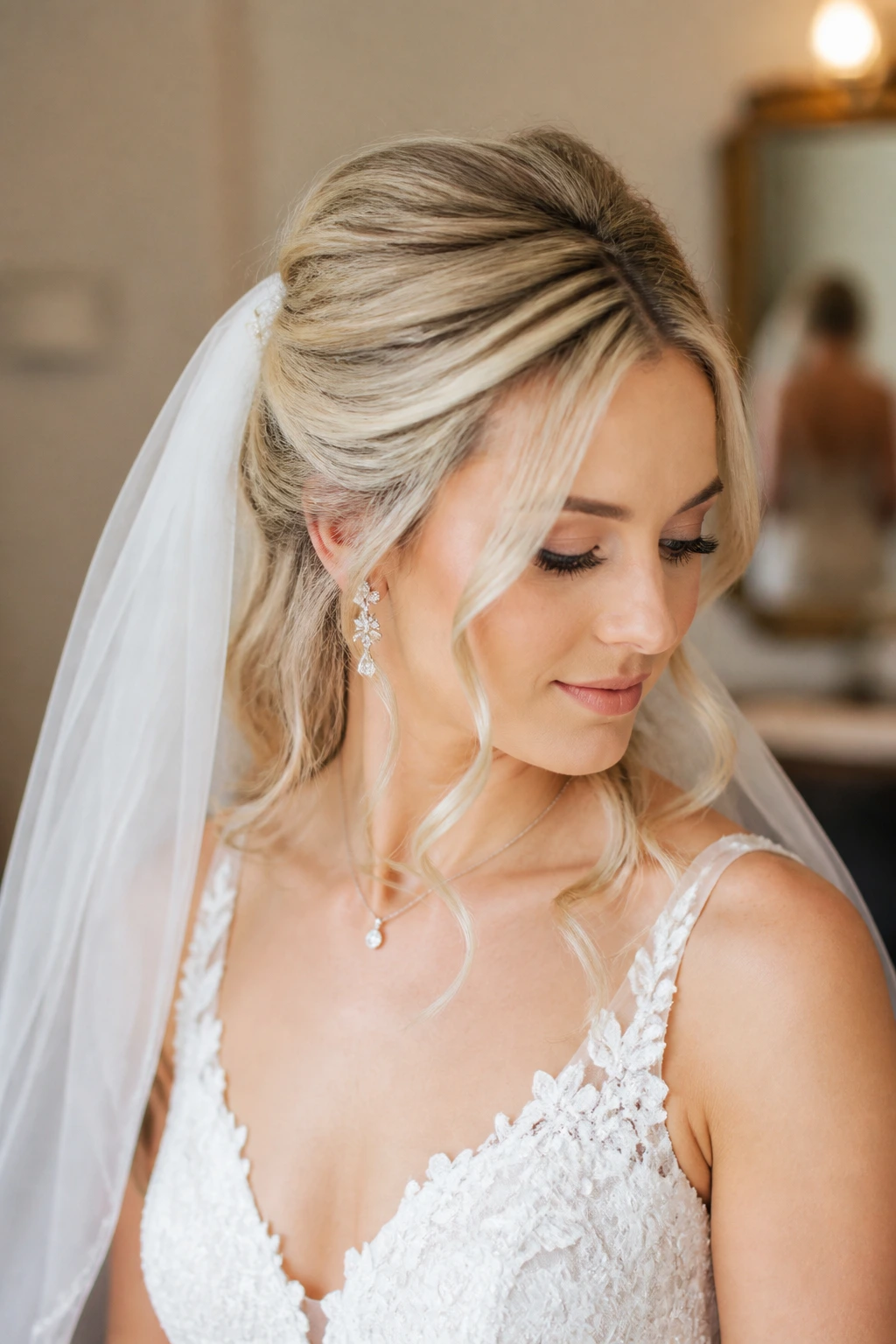
Veil Placement: Low buns, knots, and chignons usually take the veil best when the comb sits just above or just beneath the knot, depending on how much crown volume you want to keep. Half-up looks need the veil a touch higher so the lower waves don’t get crushed.
Dress Necklines: Strapless and sweetheart necklines can handle waves, blowouts, and side-swept styles because the hair adds softness above the chest. High necks, halters, and strong illusion bodices usually look better with cleaner buns, twists, or polished ponytails, since the neckline is already doing a lot.
Jewelry: Pearl pins pair well with creamy and champagne blonde, while gold combs suit warmer blondes with honey or beige tones. If the earrings are large, keep the hair cleaner around the ears. If the earrings are tiny, the hair can carry a little more ornament.
Movement and Comfort: A style that feels light for the first ten minutes can start pinching by hour four if the veil comb is too heavy or the bun sits too high. Test the placement by turning your head, hugging someone, and looking down. If the style shifts in those motions, it needs another pin or a quieter accessory.
Extra Styling Tips and Finishing Touches
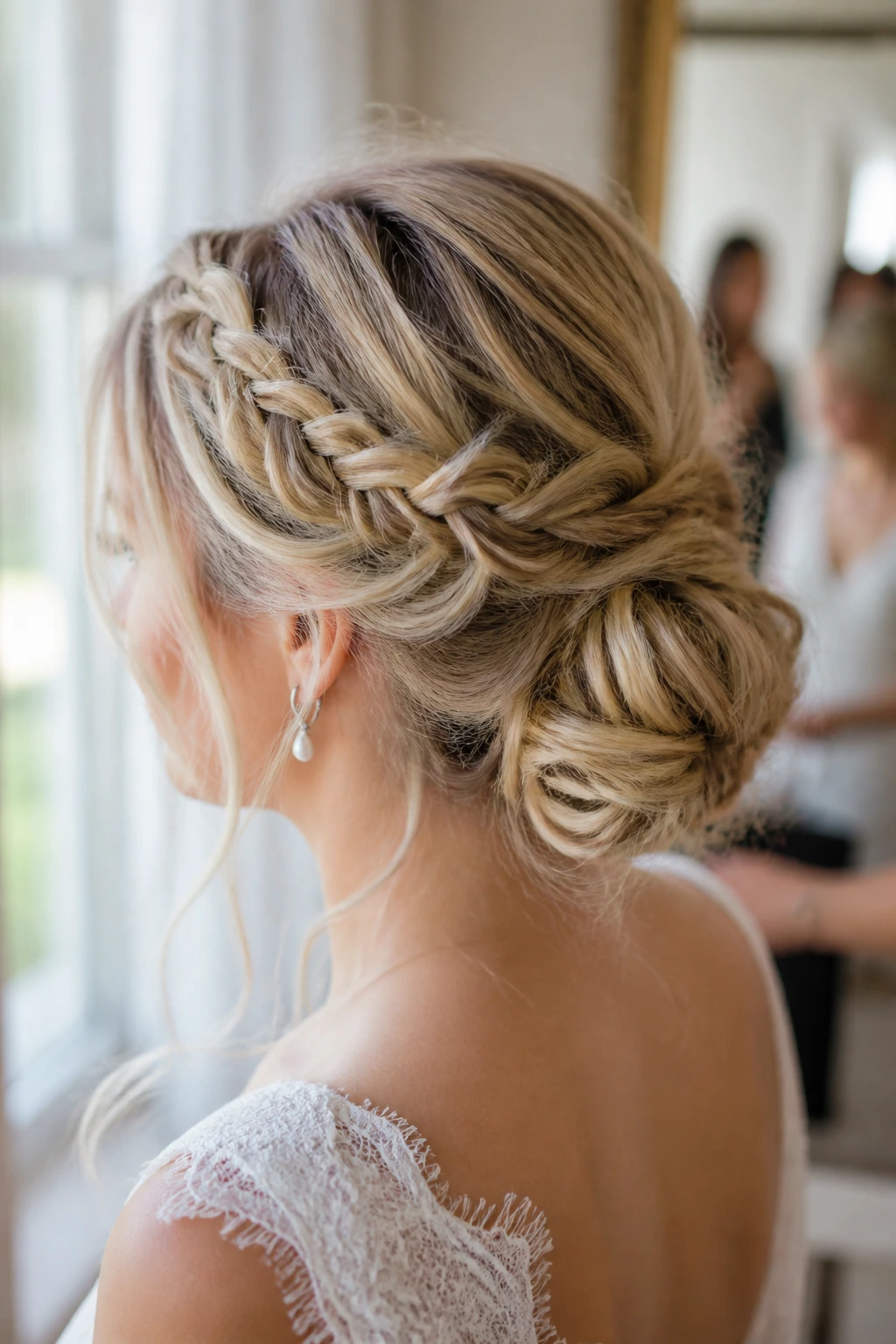
Shine Control: Put shine spray on the mid-lengths and ends, not the roots. Blonde hair shows product buildup fast, and the wrong spray near the scalp can flatten the whole look in a single pass.
Volume Insurance: If the crown needs lift, backcomb only the underlayer at the roots and smooth the top section back over it. That gives shape without a visible tease line, which matters a lot on pale blonde hair.
Accessory Placement: Hairpins and combs should go in after the shape is fully cool. Warm hair shifts. Cool hair stays. That tiny delay saves a surprising amount of re-pinning later.
Color Contrast: Silver and crystal read cleanly on icy blonde. Gold, pearl, and ivory tend to look warmer on honey, beige, and champagne tones. If the hair is highlighted, use accessories with a little texture so they don’t disappear into the brightness.
Make-Ahead, Hold, and Touch-Up Guidance
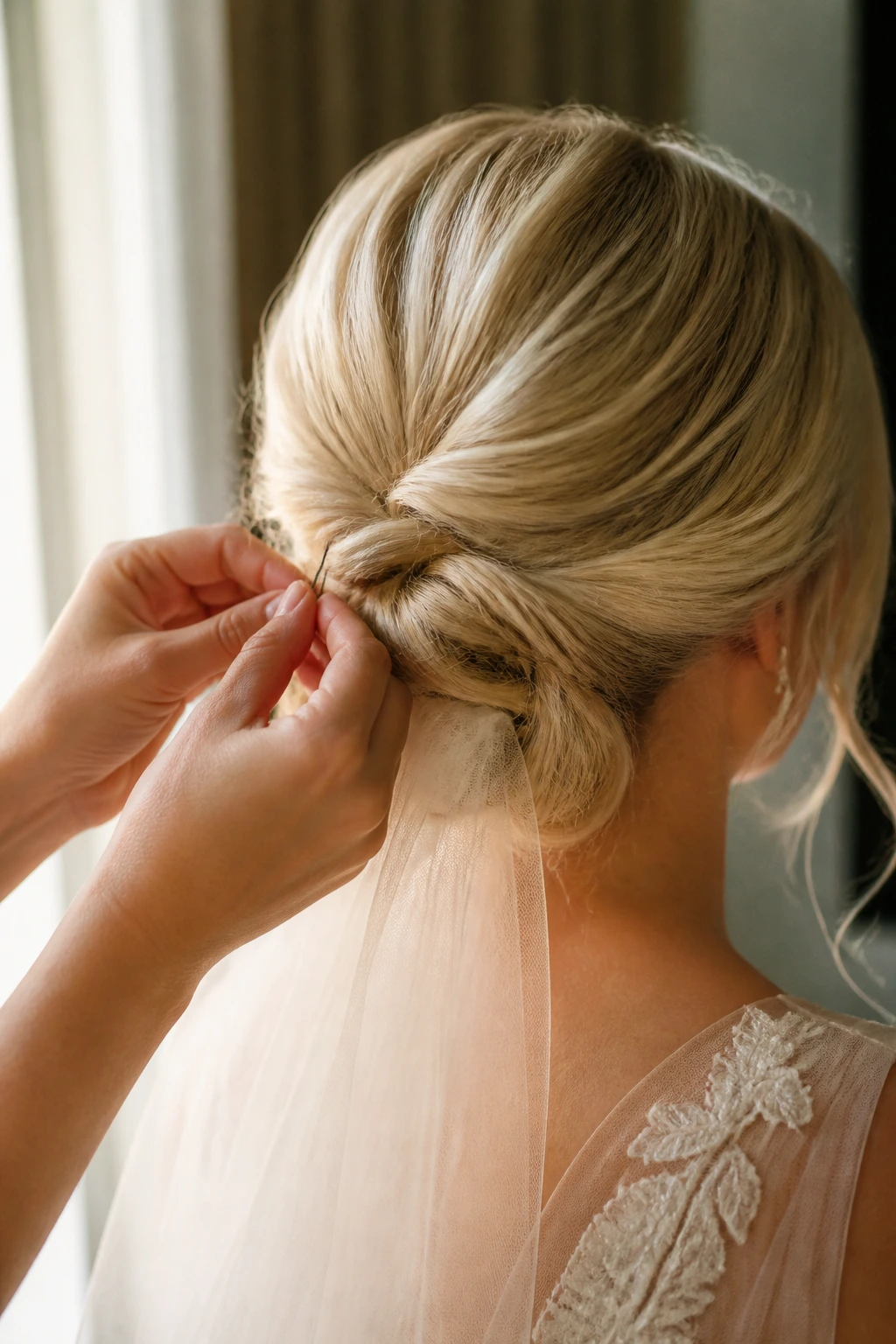
Most bridal hair should be styled in stages, not all at once. Wash and dry the hair the day before if possible, then set the shape on the wedding day with enough time for cooling. Curls usually need at least 20 minutes to cool before they’re brushed or pinned into place. If you’re doing a blowout, give the roots a few extra minutes to settle before any spray goes on.
For overnight protection, a silk pillowcase or silk scarf keeps the lengths from rubbing flat. If the style is a bun or twist that needs to last into the next morning, pin the surface lightly and avoid crushing the crown. Loose waves can be gathered into a soft twist and secured with a silk scrunchie, then released and reshaped the next day.
Touch-ups should stay tiny. A curling iron on one or two face-framing pieces, a dab of serum on the ends, and a few strategic pin adjustments are usually enough. Do not re-curl the whole head unless something has gone badly wrong. That just overheats the hair and makes the finish less even. Keep a mini spray, six spare pins, and a tail comb within reach. That small kit solves more problems than panic ever will.
Variations and Adaptations to Try
For Fine Hair That Goes Flat: Use a slightly rougher finish, like a textured bun, loose braid, or half-up twist. Fine blonde hair often needs grip at the roots, so a little dry shampoo before styling helps the shape stay lifted.
For Thick Hair That Fights Pins: Choose a style with a strong anchor, like a low chignon, braided halo, or Dutch braid into bun. Thick hair can look beautiful, but it needs more support in the hidden layers or the pins start sliding by the second hour.
For Natural Curls and Coils: Let the texture stay visible. A halo puff, pinned-up curly shape, or curly half-up style will usually look better than forcing the hair into a flat mold. Moisture and definition matter here more than brush shine.
For Short Bobs and Pixies: Keep the structure small and intentional. A jeweled clip, finger wave, or sleek side sweep can look far more bridal than trying to fake length with too many pins.
For Veil-Heavy Ceremonies: Pick a style with a strong, low anchor point. Loose waves can work, but they need a secure comb area. A bun, knot, or polished ponytail usually carries weight better.
For Warm or Honey Blonde: Soft waves, gold accents, and looser texture tend to feel natural. The color already has warmth, so the styling can stay gentler and still read clearly.
Common Mistakes to Avoid
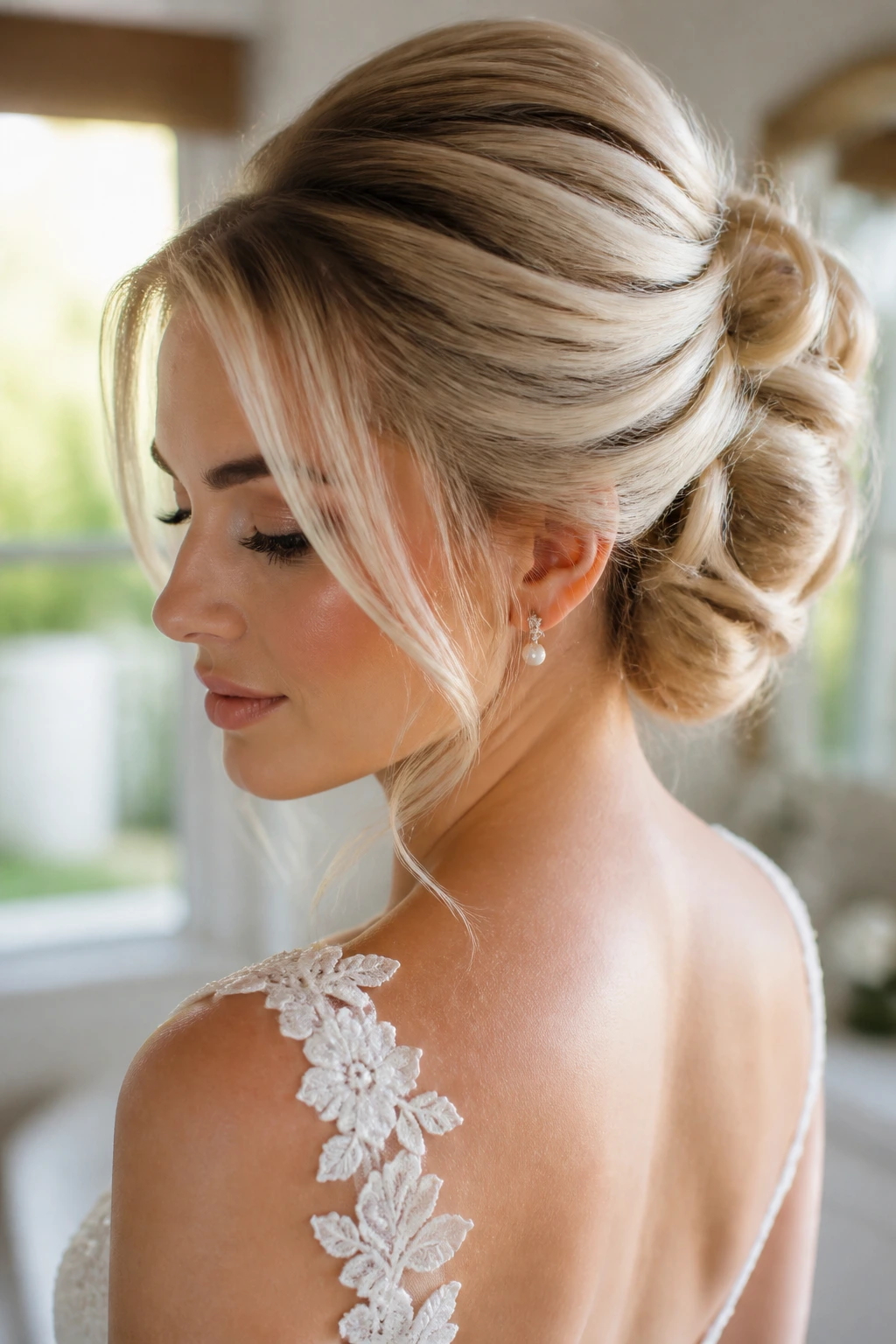
The first mistake is using too much oil or serum before the style is pinned. Blonde hair turns slick faster than people expect, and pins won’t hold in a greasy surface. Use a tiny amount at the ends only, then stop.
The second is brushing curls into nothing. That brushed-out wave look is lovely, but it only works if the curls were set firmly first. If you brush too soon, you get frizz instead of shape. Let the curl cool, then loosen it gently with fingers or a soft brush.
Third, people often place the veil before they’ve tested the hairstyle’s balance. A veil comb can flatten the crown or pull a side bun down if the anchor is weak. Fit the hairstyle first, then add the veil, then check the profile in a mirror.
Fourth, don’t ignore the finish on the back of the head. Bridal hair is photographed from behind more often than people admit, especially during the ceremony. If the back is lumpy, the whole look reads unfinished.
Fifth, trying a new hot tool or a new product on the wedding day is a bad trade. If a tool runs hotter than your old one, the curl pattern can change fast. Test everything in advance and keep the real ceremony day boring.
Frequently Asked Questions
Which blonde shade works best for bridal hair?
Champagne, beige, and creamy blonde tend to be the easiest to style because they reflect light without looking harsh. Icy blonde can look striking, but it needs a cleaner shape so it doesn’t go chalky in photos.
Should bridal hair be washed on the day of the wedding?
Usually, no. Hair that’s freshly washed can be too slippery for pins and often loses grip faster. Most stylists prefer hair that was washed the day before, or even two days before if the hair is very fine.
Can I wear a veil with a ponytail or braid?
Yes, and sometimes those styles hold a veil better than a loose wave. The key is placing the comb or clip at a stable anchor point, not on a piece that’s meant to move a lot.
Do extensions help these looks?
They do if the style needs length, fullness, or a stronger braid pattern. The trick is matching the extensions to the ends and blending them before the final curl or brush-out, not after.
What if my curls fall flat fast?
Use smaller sections, let each curl cool completely, and pin the curl while it sets. A little texture spray at the root can help too, but the real fix is better cooling time.
Can short blonde hair still look bridal?
Absolutely. A pixie with a jeweled clip, a polished bob, or a vintage wave can look cleaner and more intentional than a lot of long styles. Short hair just needs the right finish and accessory.
How far in advance should I try the hairstyle?
At least once before the wedding, and ideally with the veil or hairpiece included. If the dress is heavy or the accessory has weight, the trial should include that too, because the balance changes once everything is on.
What if my blonde tone looks brassy under lights?
A gloss or toner before the event can help, but don’t overcorrect it into an icy shade unless that’s the goal. The better move is usually a clean, neutral finish that keeps the color looking even in daylight and indoor light.
The Last Pin Before the Walk Down the Aisle
Blonde bridal hair has a narrow sweet spot. Too soft, and it disappears. Too tight, and it loses the warmth that makes blonde look alive in the first place. The styles above work because they respect that balance. They give the color shape without crushing it.
Pick the one that fits the dress, the veil, and the way you actually move. If you can turn your head, laugh, and hug someone without touching it every five minutes, you’re close to the right answer. That is the kind of bridal hair that lasts past the ceremony and still looks like itself when the last song starts.
