



Updo hairstyles for short hair get dismissed too fast, usually by people who’ve only ever tried to force a full-length bun onto a chin-length cut and watched it slide apart in under ten minutes. Short hair is not the problem. The problem is pretending it should behave like long hair.
A bob, lob, or pixie has a different kind of architecture. There’s less weight dragging the style down, fewer ends to hide, and more room to build shape right where the eye lands — at the crown, behind the ears, along the nape. When you work with that structure instead of fighting it, the result often looks sharper than a heavy, overpinned knot ever could. The little pieces matter here. A 1-inch section at the temple. A cross-pinned bobby pin. A puff at the crown that adds just enough lift to make the whole thing feel deliberate.
And that’s why short hair updos are worth learning. They’re not backup styles for “when you grow it out.” They’re their own category, with their own tricks, and the best ones are cleaner, faster, and more flattering than people expect. Give me a blunt bob, a box of pins, and five minutes of texture spray, and I can make that haircut behave like it has more length than it does.
Why These Styles Earn Their Spot
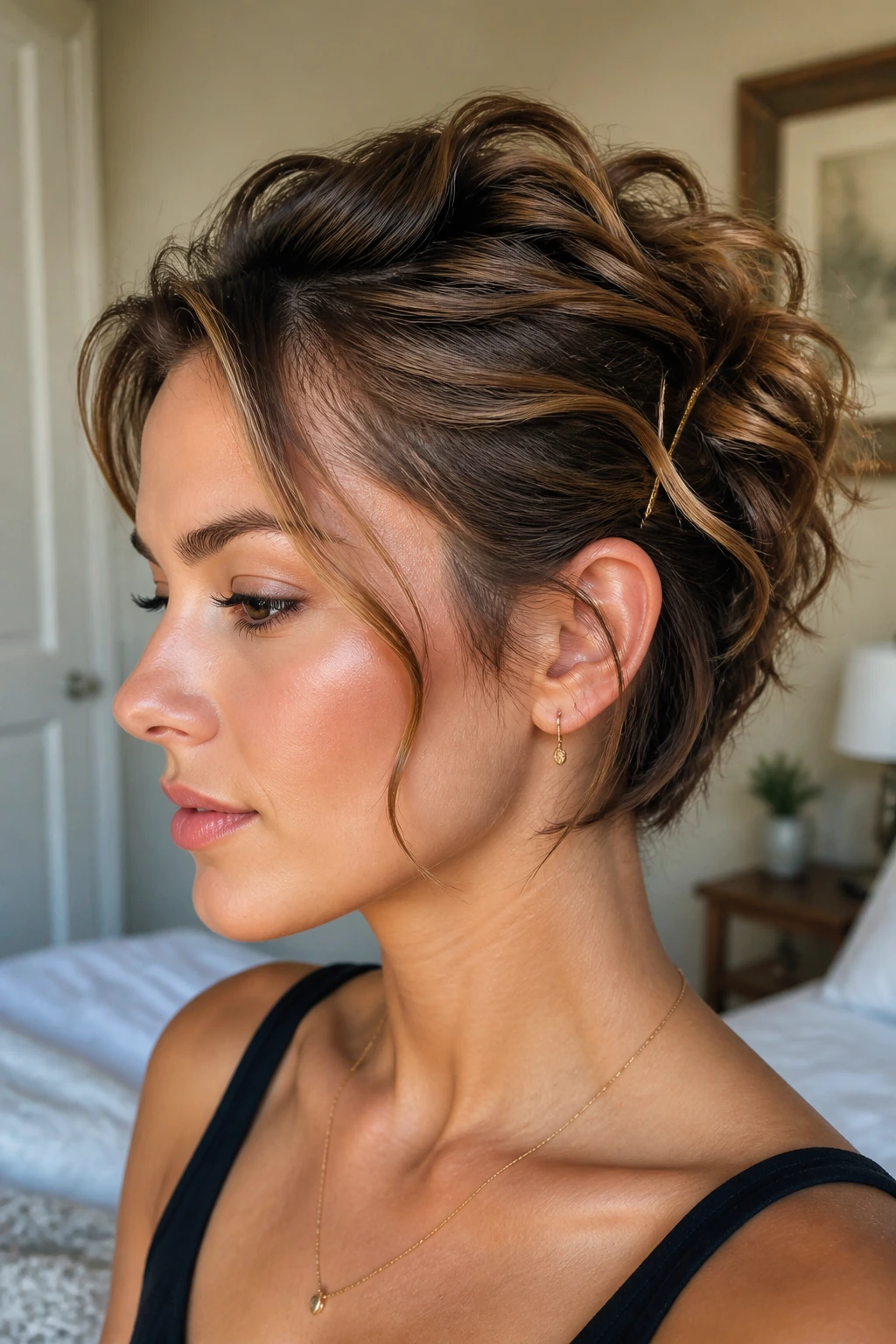
Less weight, more hold: Short strands don’t drag the base open the way long hair does, so once a pin catches, the style often stays put with less fuss.
Texture does the heavy lifting: A little dry shampoo or grit spray gives pins something to grab, which matters far more on short hair than on a long braid.
Shape shows up faster: With less hair to hide the structure, a twist, tuck, or roll reads clearly from across the room instead of disappearing into a mass of length.
Layers stop being a problem: Instead of fighting those shorter face-framing pieces, these styles use them as soft edges, side sweeps, or little escape pieces that make the whole thing look lived-in.
You do not need a full bun to look finished: A tiny coil at the nape, a pinned crown twist, or a slicked mini knot can look more polished than a bigger style that keeps collapsing.
Accessories actually matter here: One barrette, one ribbon, or a pair of strong pins can change the whole shape because there’s less hair competing for attention.
1. Twisted Crown Pins
A twisted crown is one of those short-hair updos that looks more complicated than it is. You take a section from each temple, twist it back toward the crown, and pin the two sides into each other or into a tiny hidden knot. It gives the illusion of a fuller updo without asking your bob to become something it isn’t.
How to Make It Hold
The first pin should go in at an angle, not straight down. That tiny change matters. On short hair, pins need to catch both the twist and the hair underneath it, which is why a shallow, sideways placement beats a neat vertical one every time.
This style is especially good for layered cuts that refuse to stay in one place. Leave a few thinner pieces around the hairline if your cut falls apart when you pull too hard. A little softness at the temples keeps the style from looking stiff or overworked.
Quick details:
- Best on chin-length to collarbone-length hair
- Works well with day-old texture
- Usually needs 4 to 6 bobby pins
- Looks best with a side part or a deep off-center part
2. Mini French Twist
The miniature French twist is a small-format classic. Instead of trying to sweep the whole head upward in one giant roll, you gather the hair low at the back, roll it vertically, and tuck the ends into the seam. On short hair, the twist is tighter, cleaner, and honestly easier to control than the full-length version.
It shines when your cut has blunt ends. Those edges give the twist a little shelf to sit on, which helps the shape stay compact. A light spray of texture mist before you start makes a huge difference, because silky hair can slip out of a twist before you even reach for the second pin.
I like this one for sharper outfits. A blazer. A high neck. A clean neckline. The style has that neat, composed look that reads as intentional without trying too hard. If a few wisps at the nape escape, let them. A perfect twist can look too formal on short hair.
3. Low Rolled Chignon
A real chignon on short hair is more of a tucked roll than a full bun, and that’s the charm. You gather the length at the nape, roll the ends inward, and pin the roll flat so it sits close to the head instead of puffing outward.
The trick is not to oversize it. A short-hair chignon looks best when it stays small and dense. If your hair only reaches the collar, a tiny bun cushion or a looped base can help the roll look fuller, but don’t build it so high that it starts fighting the shape of the cut.
What Makes It Work
The nape does the visual work here. Keep the top smooth, let the roll sit low, and avoid leaving bulky ends exposed. If you can see the tuck, that’s fine. If you can see a frayed tail, pin it again.
This one is useful for formal events, but it also works on a plain Tuesday when your hair is behaving badly and you want it out of the way without looking like you gave up.
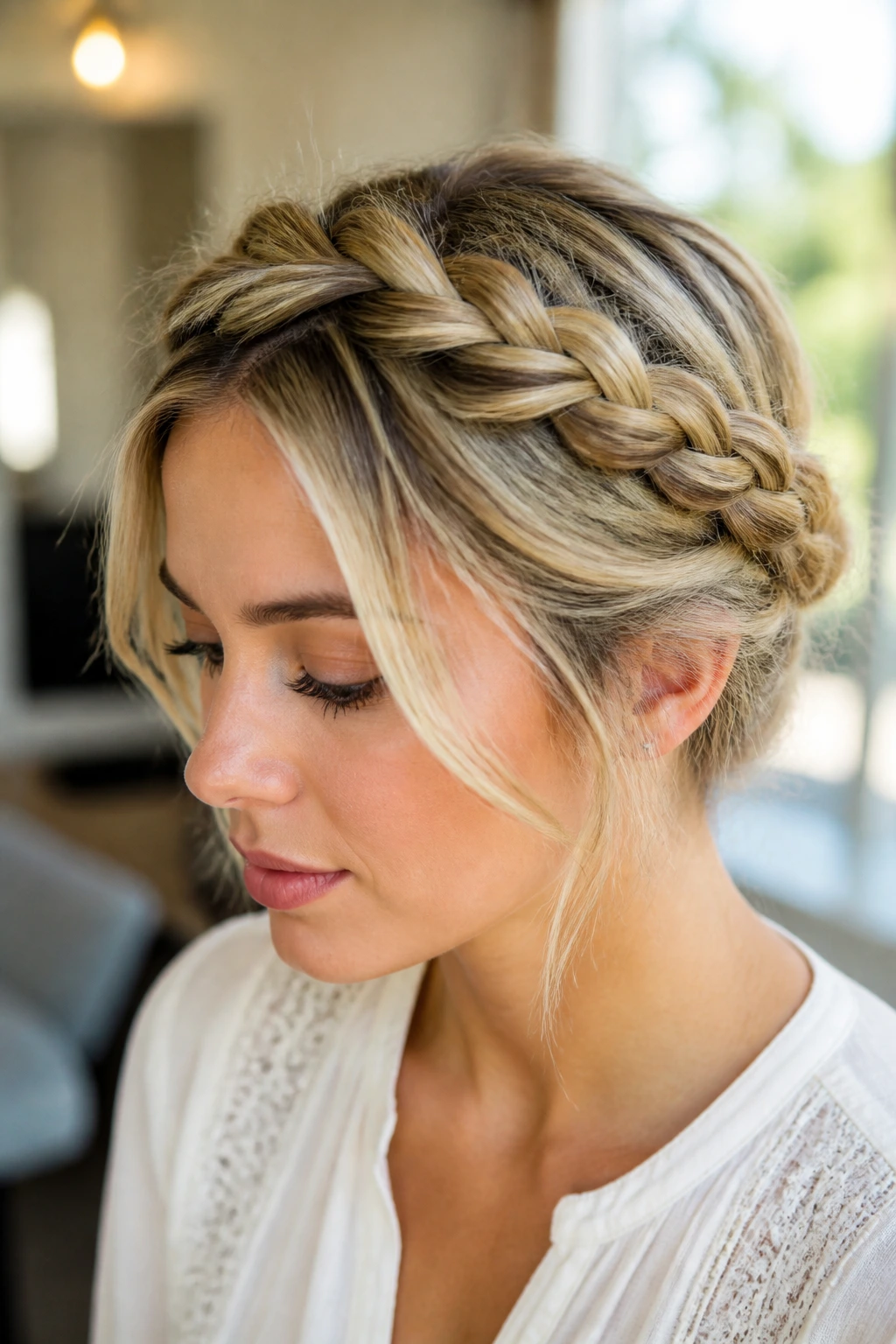
4. Braided Halo
A braided halo gives short hair more structure than almost any other style on this list. You start a braid near one temple, travel around the hairline, and pin the braid so it forms a ring or crown shape. On short hair, the braid may not make it all the way around on its own, and that’s fine. You can let the ends disappear into hidden pins at the back.
Wavy and slightly rough hair tends to hold this best. If your hair is very smooth, mist the roots and the braid path with a texturizing spray first. It keeps the sections from slipping while you work, especially near the temples where short layers usually pop loose.
This is one of the prettiest ways to handle awkward grow-out between a bob and a lob. It covers uneven lengths, it keeps the front clear, and it looks better with a little softness than with hard precision. A halo should feel gently woven, not glued to the skull.
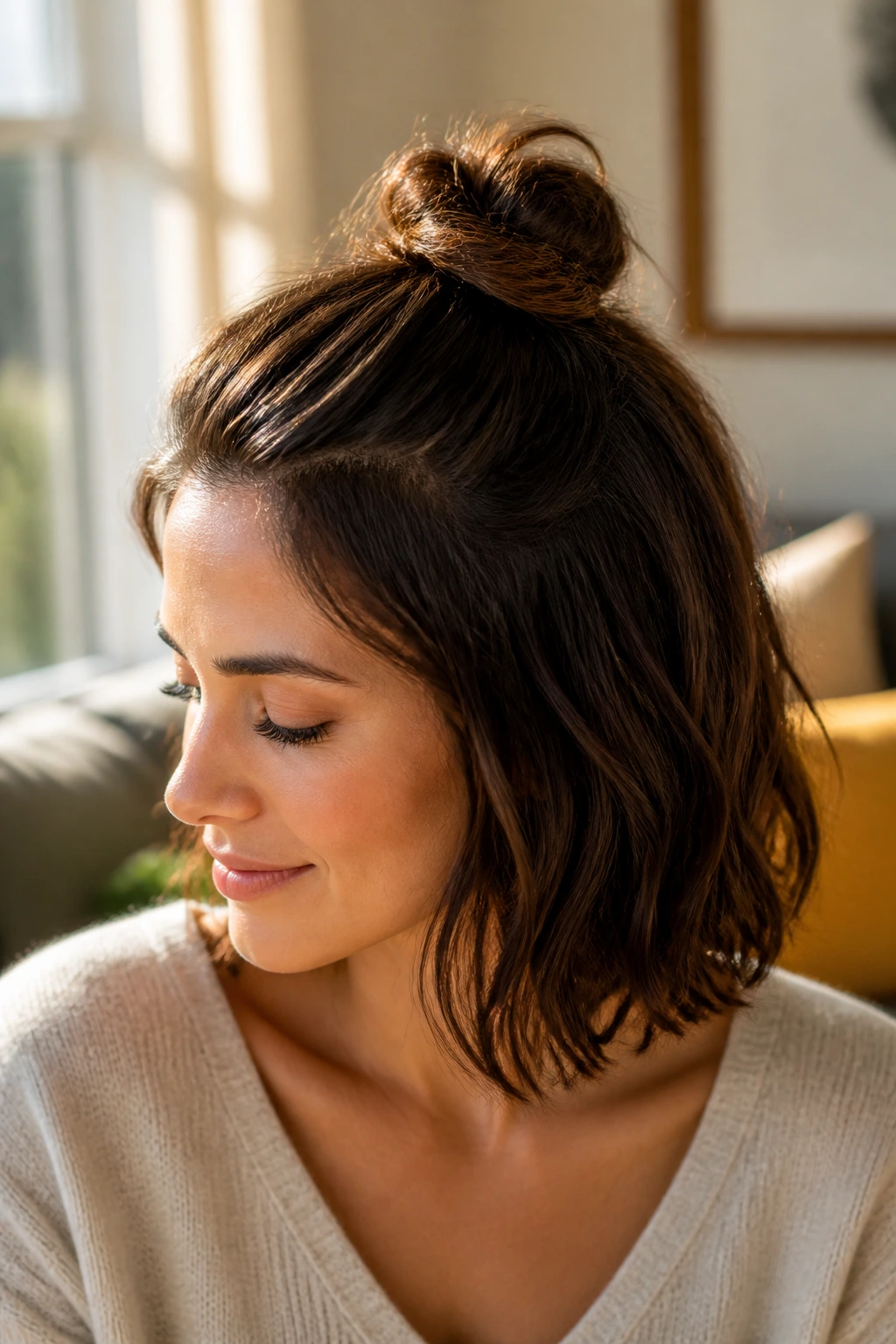
5. Half-Up Knot
Not every updo on short hair has to be a full sweep-up situation. A half-up knot takes the top section, ties or twists it into a little knot at the crown, and leaves the rest down. On a lob, it gives you shape and lift without swallowing the whole cut.
This style is doing one very useful job: it moves the eye upward. That’s why it works so well when the ends are blunt or the layers need a break. The knot creates a focal point, and the loose hair underneath keeps it from looking too severe.
If you want it to feel polished, curl the lower half away from the face with a 1-inch iron or give it a bend with a flat iron. If you want it softer, finger-comb the loose hair instead. Both versions work. The difference is mood, not skill level.
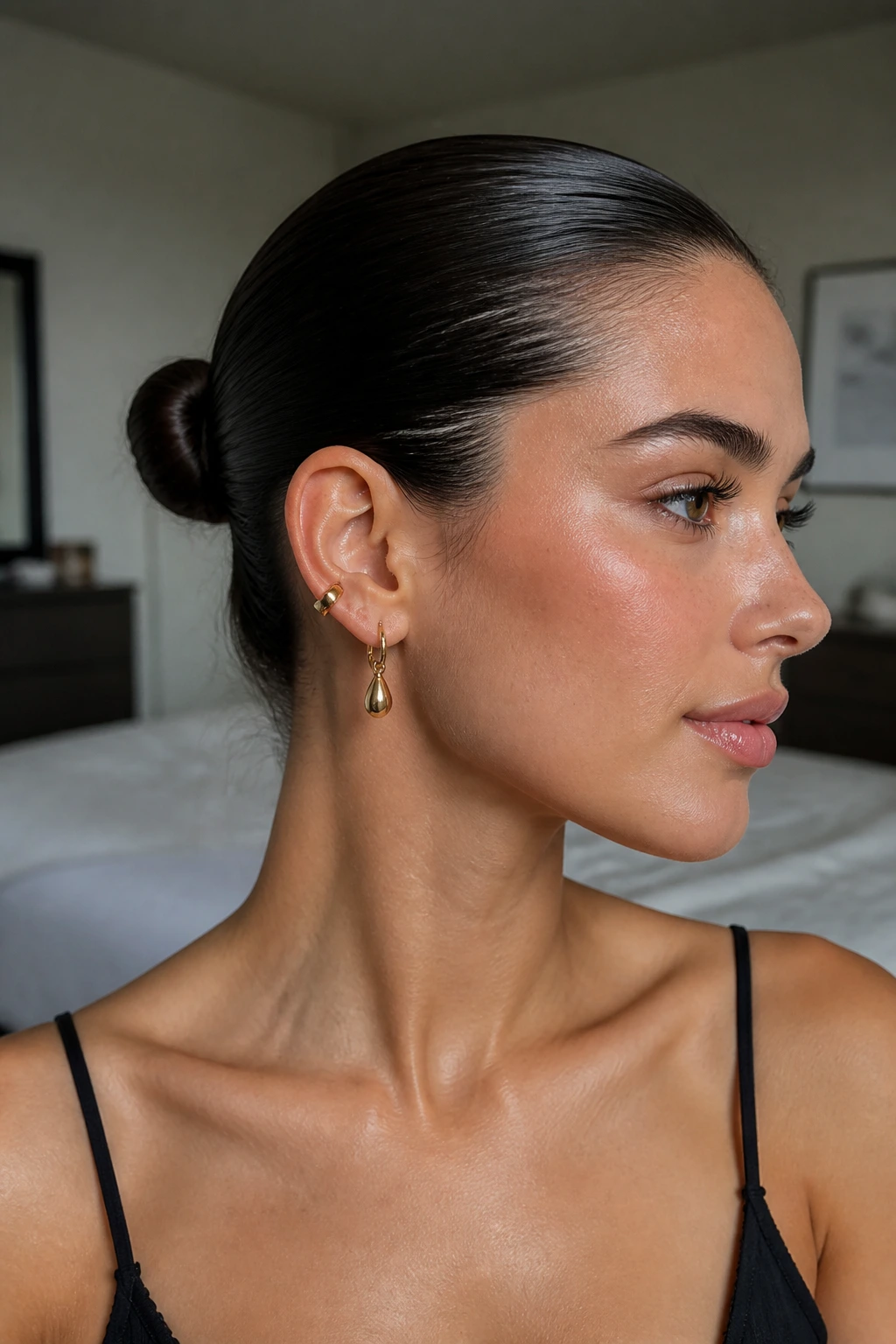
6. Sleek Mini Bun
A sleek mini bun is what happens when short hair decides to be disciplined. Brush everything back, smooth the surface with gel or styling cream, and twist the hair into a tiny bun at the back of the head. It may be small. That’s the point.
This is the style I reach for when the hair is freshly washed and too slippery for anything fussy. The sleek finish turns that slipperiness into an asset instead of a nuisance. A boar-bristle brush helps, but the real key is controlling the sides before you gather the length. If the temples are loose, the bun will look unfinished.
Tiny Bun, Big Payoff
Keep the bun compact and place it low or mid-height. High mini buns on short hair can start to look like they’re hanging on by a thread. A low placement keeps the weight close to the head, which is friendlier to shorter cuts and less likely to unravel.
A glossy finish looks especially good here. Not greasy. Glossy. That’s a very different thing.
7. Side Twist Tuck
A side twist tuck uses one side of the hair as the main event. You sweep a deep side part, twist the heavier side back toward the ear, and tuck the end underneath so it disappears into the rest of the cut. The result is asymmetric, soft, and much easier to pull off than a full updo if your hair barely hits the shoulders.
It works because the eye likes asymmetry. One side is clean and controlled, the other stays loose enough to keep the style from feeling overbuilt. That balance is especially useful on short bobs, where a perfect center can make the whole style look too stiff.
Pair this with one strong earring and a neckline that gives the face room. The style already frames your features; don’t crowd it with too many extras. One side of your face gets the spotlight. Let it.
8. Faux Hawk Pin-Up
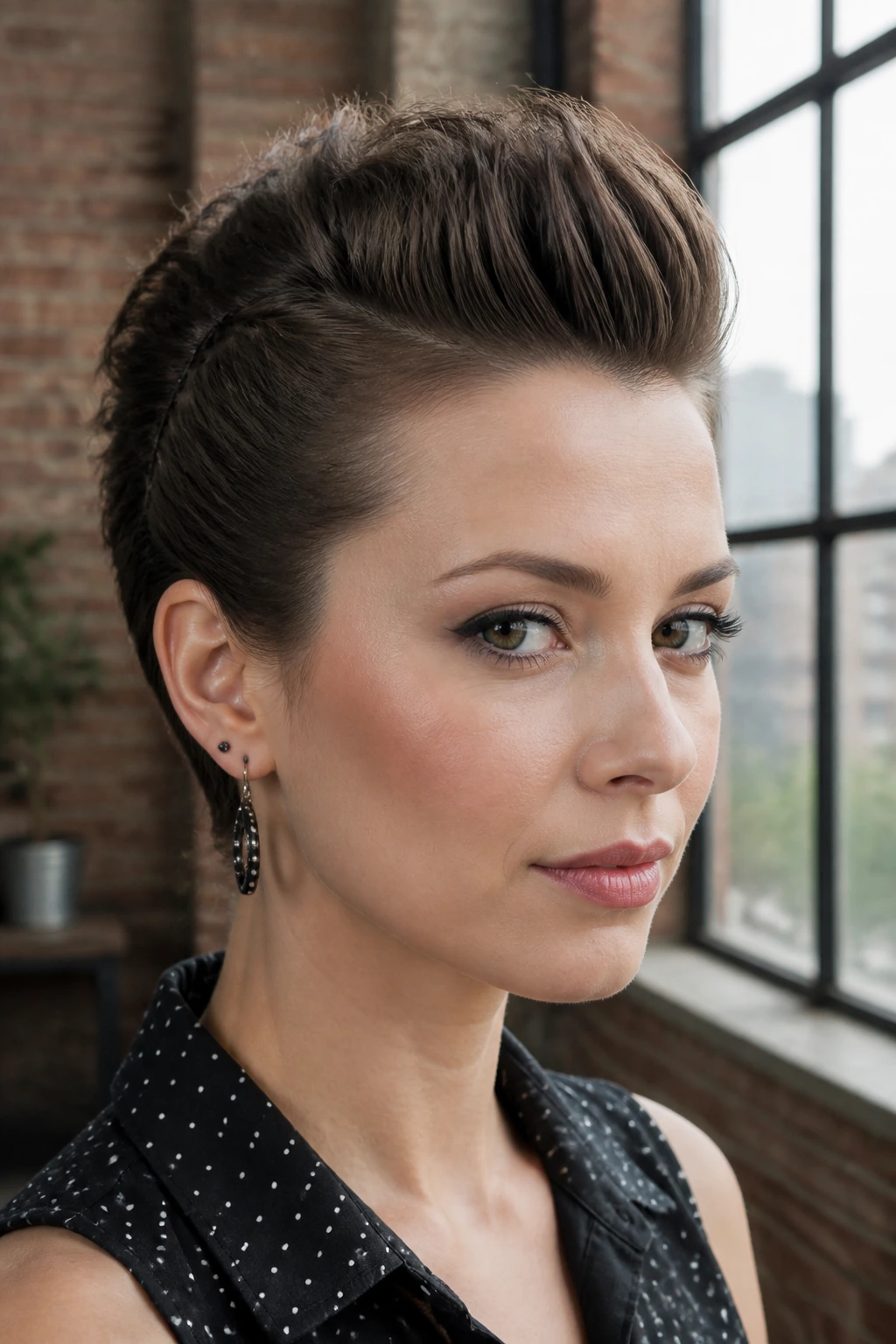
A faux hawk pin-up is a short-hair favorite because it turns layers into shape instead of problem-solving material. Pin the sides upward toward the center strip, leaving the top slightly raised and the back tucked. You end up with a soft ridge running from the forehead to the crown, and it looks far more architectural than a flat style ever will.
This is the one to choose when your haircut has texture and attitude. It does not want to be smooth. It wants to look a little wild, but on purpose. The best version has a matte finish at the sides and more lift at the crown, which makes the center line feel intentional instead of accidental.
If your hair is fine, tease a narrow strip at the crown before pinning. If it’s thick, use fewer pins than you think and let the texture do some of the work. Overpinning thick hair makes the style look crowded fast.
9. Bubble Ponytail Updo
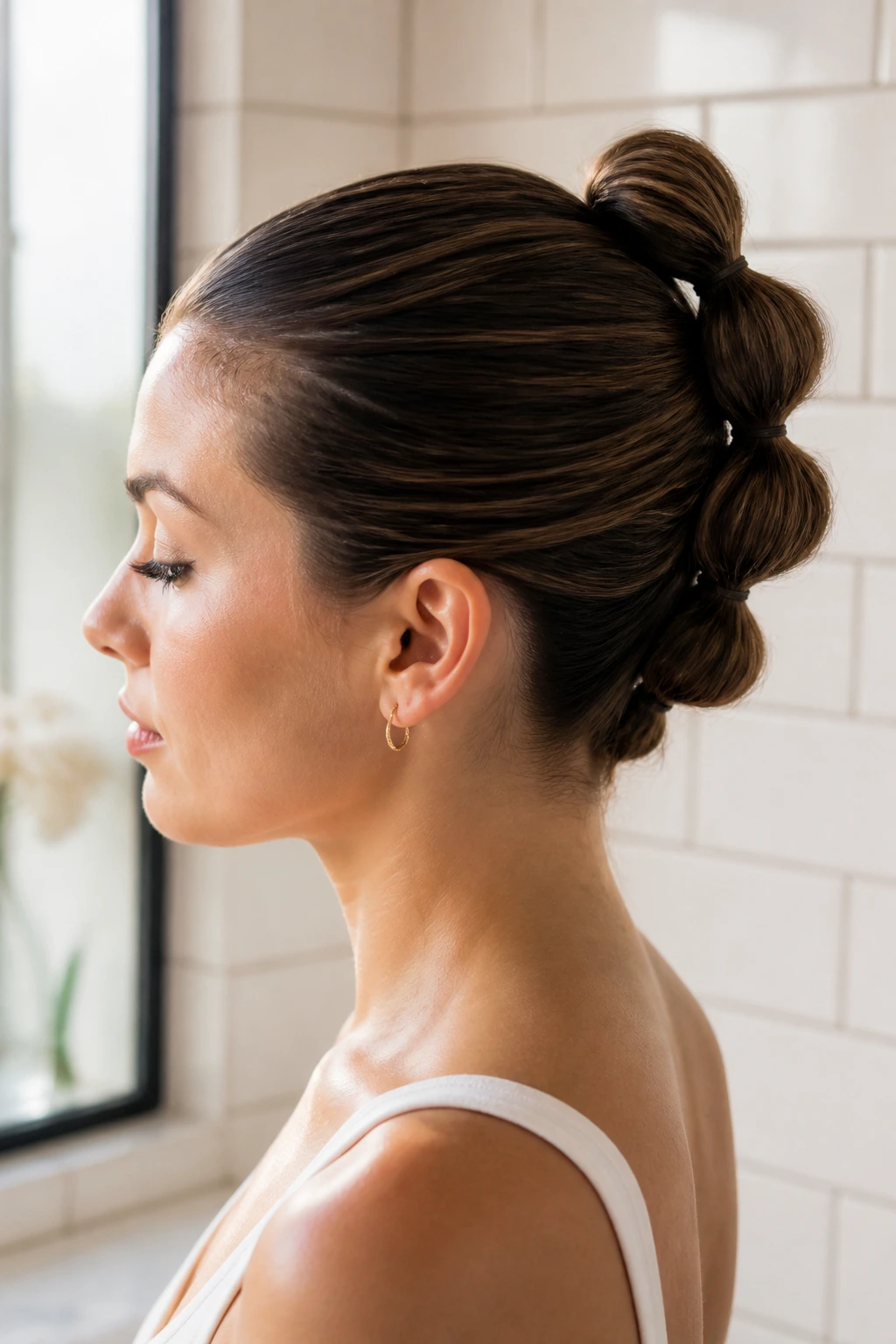
A bubble ponytail on short hair is really a sculpted sequence of mini sections. You gather a small ponytail, add elastic bands every inch or two, and gently puff each section into a rounded “bubble.” If the tail is short, pin the end under the last bubble and let the line read as an updo instead of a ponytail.
This style makes sense on a lob because it uses what length you do have rather than pretending there’s more. It also gives structure to blunt cuts, which can otherwise feel too heavy when pulled back. The bubbles break up the length and create movement without needing curls or waves.
What to Watch
Keep the bubbles close together on very short hair. Big gaps make the style collapse visually. Small, neat bubbles read better and stay anchored longer.
A little shine serum on the top section keeps the elastics from looking choppy. Just don’t use too much. You want defined sections, not a slippery slide.
10. Gibson Tuck
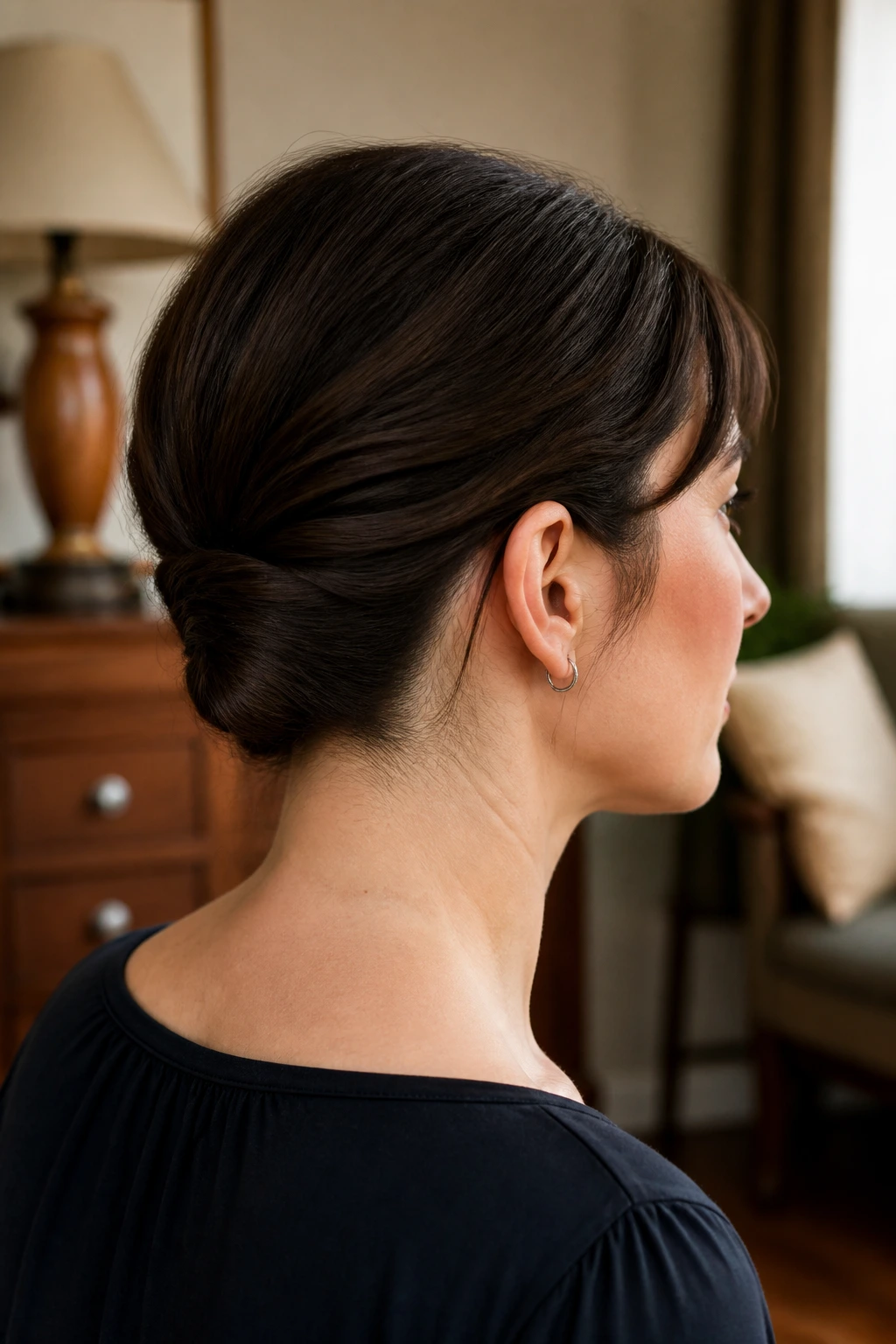
The Gibson tuck has that old-fashioned, polished shape that short hair handles nicely because the roll stays compact. You create a loose base near the nape, tuck the ends upward and inward, and pin the rolled edge flat against the head. If your hair is only shoulder length, the tuck may be tiny. That’s fine. Tiny is part of the look.
A headband can help here, especially if your layers are stubborn. You slide it on, tuck the hair around and over it, then fold the ends in. It gives the style a little internal structure, which short hair often needs more than long hair does.
I like this one for straight or softly waved hair. Curlier textures can do it too, but the tuck tends to look fuller and looser, which changes the mood. Both are good. They just belong to different outfits.
11. Double Mini Buns
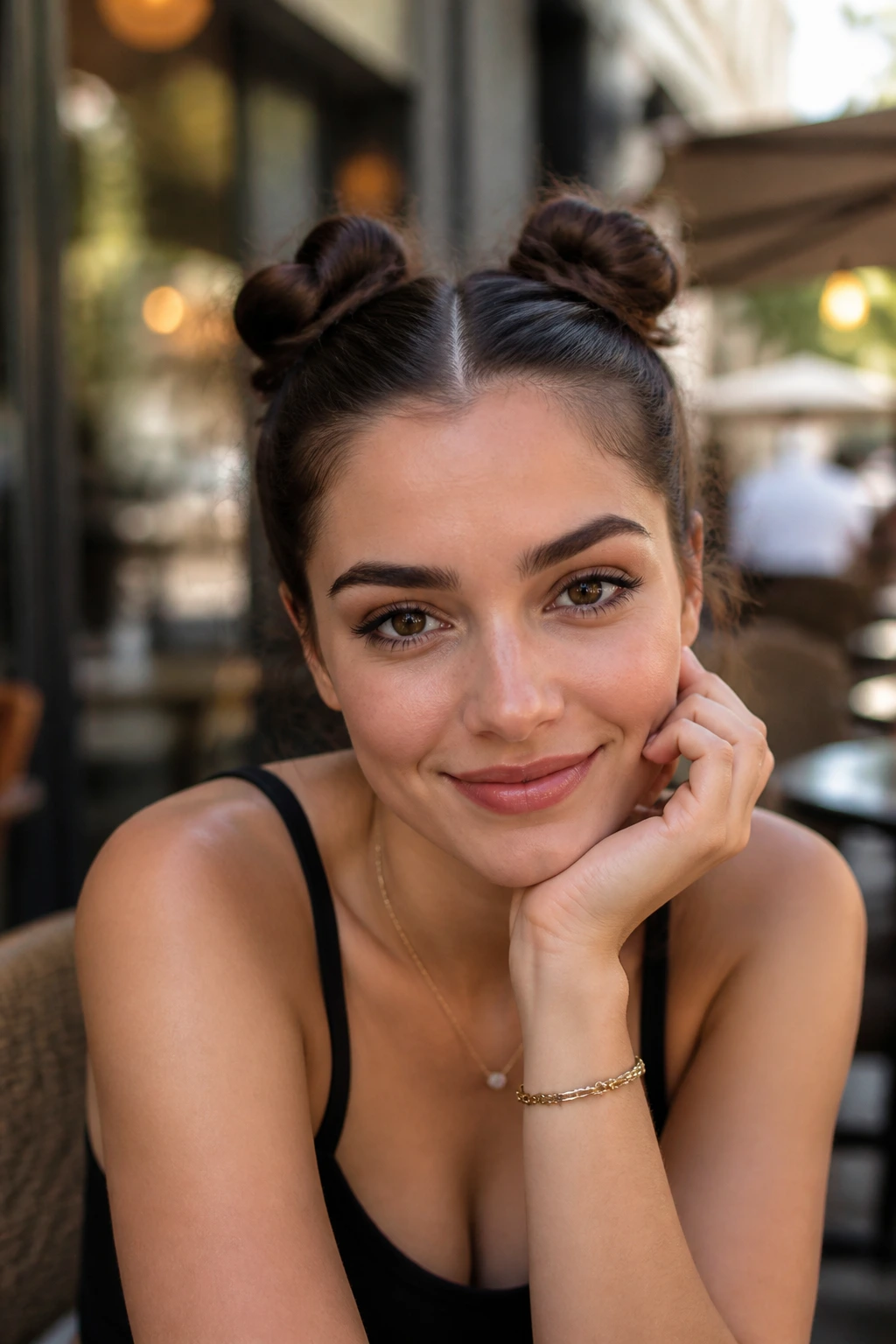
Two small buns can look playful or sharp depending on how tight you make them. On short hair, they’re usually little knots or coils sitting high on the head or low at the nape, with the ends tucked into the base. They work because they divide the hair into two manageable sections instead of asking one tiny ponytail to carry everything.
This style is especially friendly to curly and wavy hair. Natural texture gives the buns a bit of volume, so they don’t read as flat little knots. If your hair is straight, add a little grit first or the buns may sit too close to the scalp and disappear.
Leave the buns slightly imperfect. A tiny mismatch between sides keeps them from looking costume-y. If one bun is a little bigger than the other, that’s not a failure. That’s hair being hair.
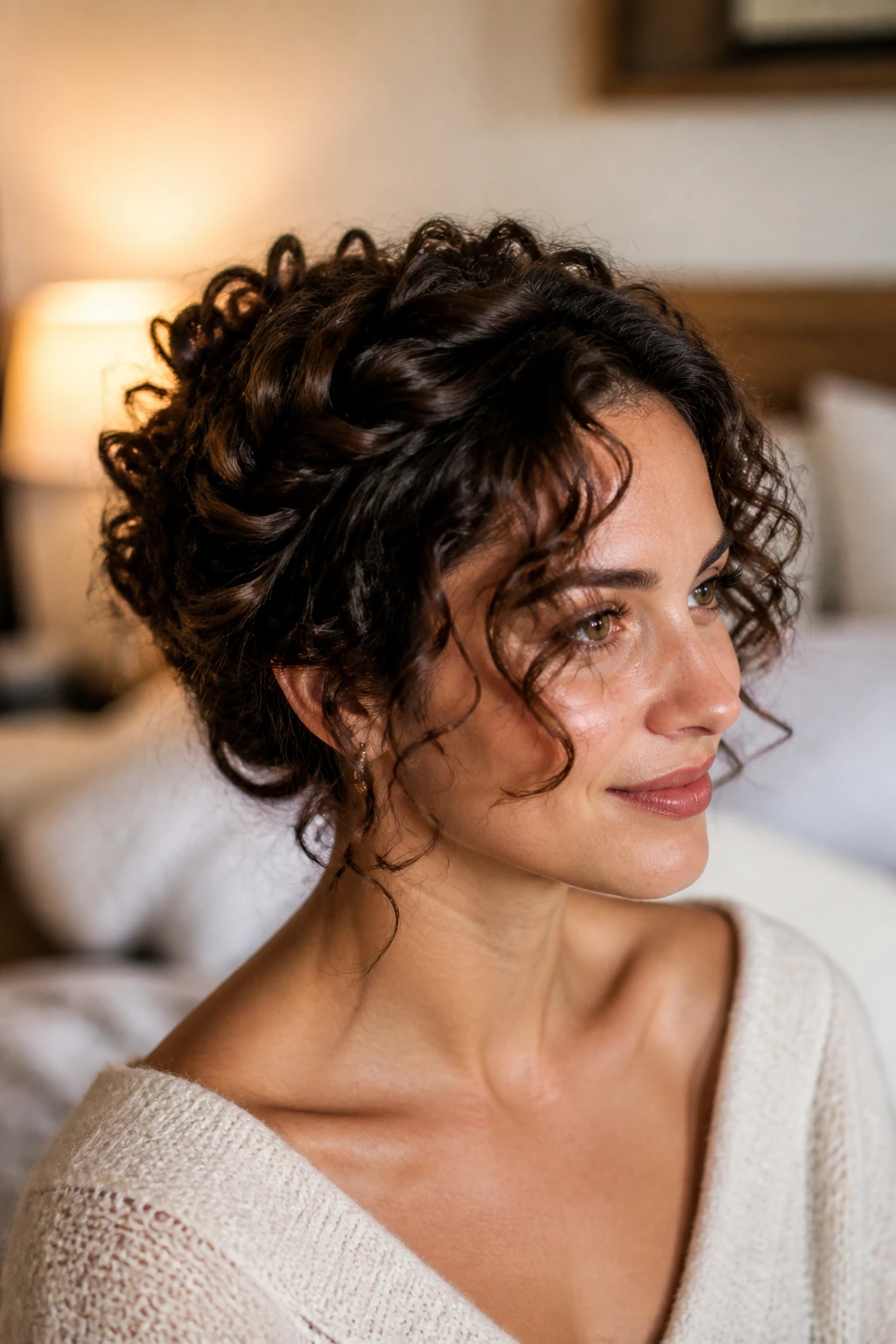
12. Curly Pin-Up Roll
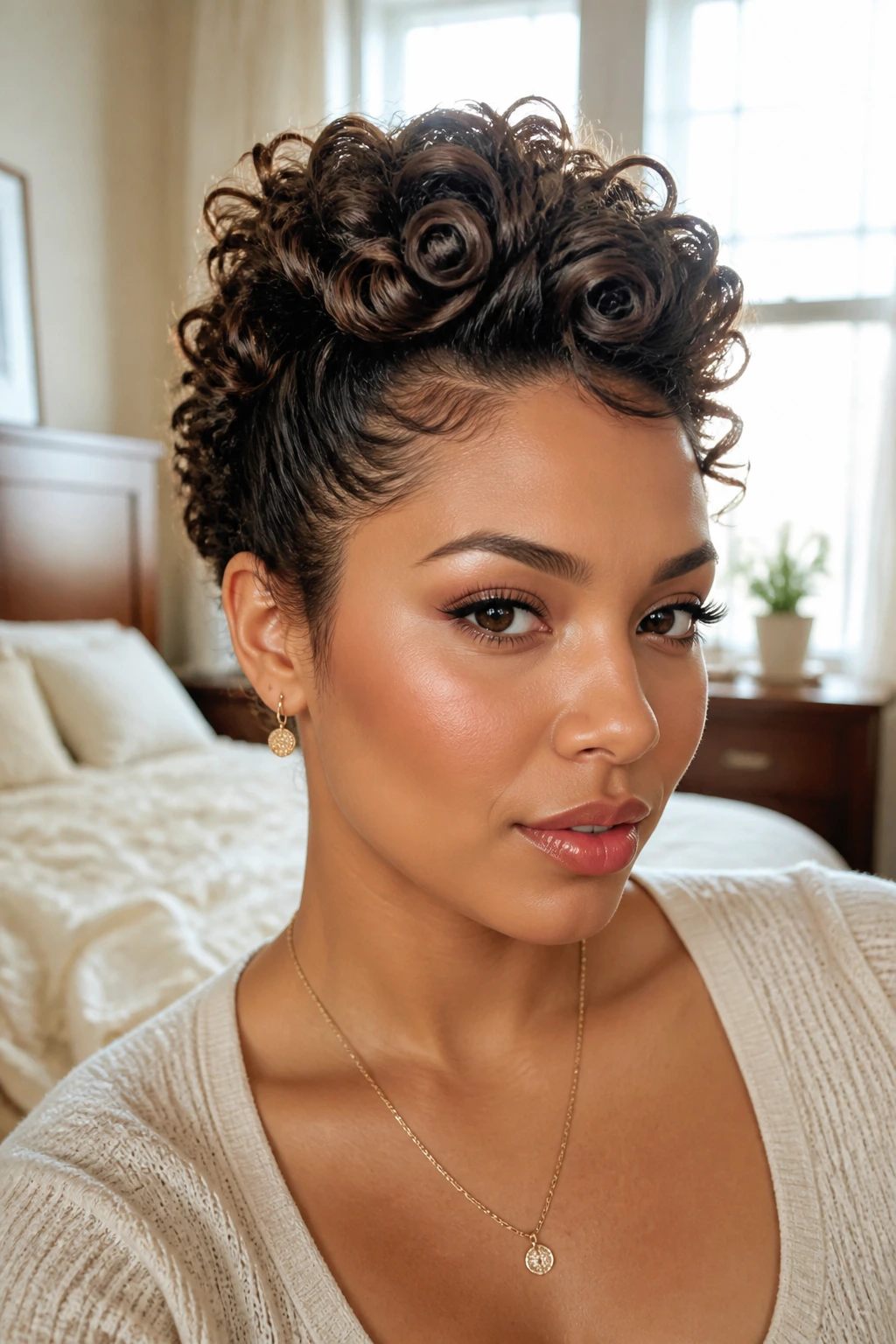
Curly hair doesn’t need to be straightened to do an updo, and this style proves it. Instead of brushing the curls out, you preserve the coil pattern, roll sections back, and pin them into a soft pin-up shape. The shape comes from the curl itself, which means less frizz, less heat, and a better chance that the style still looks good at the end of the day.
A curl cream or light gel helps here. So does patience. Let the curls cool in their natural shape before you pin them, because warm, flexible curls can slump once they settle. A few face-framing spirals left out can make the whole thing look richer and less forced.
Best for
- Type 2 waves that need a little structure
- Type 3 curls that want to keep their bounce
- Short curly bobs that look flat when brushed back
This one is honest about texture. It doesn’t fight it. Good.
13. Rope-Braid Crown
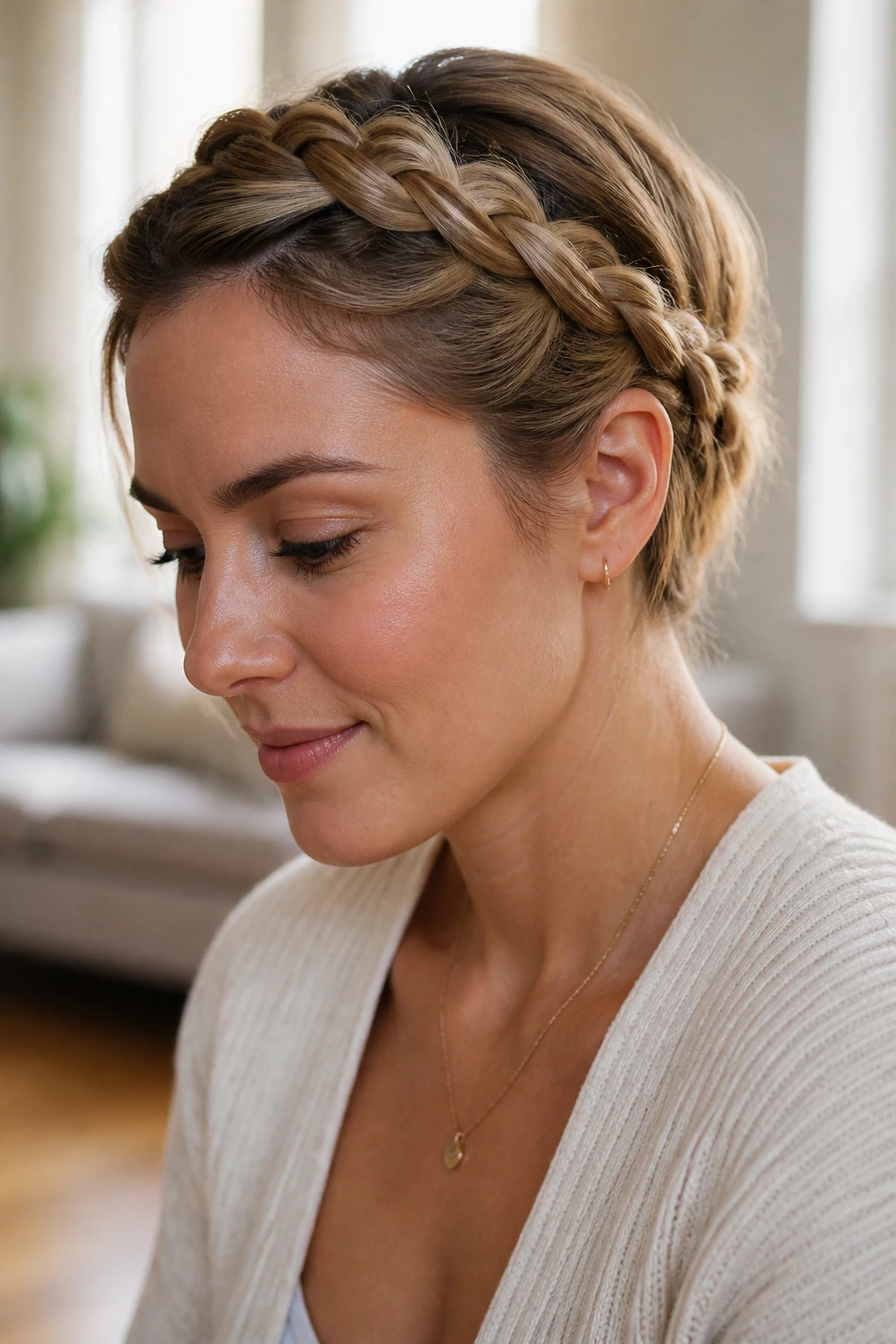
A rope-braid crown is lighter than a regular three-strand braid, and on short hair that matters. You twist two sections over each other, carry them from the hairline toward the back, and pin the ends under the crown or nape. Because rope braids are compact, they tend to hold better on layers that would fall apart in a looser braid.
The style is especially useful when the hair is fine and slippery. Twists grip each other more cleanly than a fluffy braid, which means you can get a strong shape without loading the head with product. A little texture spray at the roots helps, but you do not need to drench the hair.
This one has a tidy, almost woven look that works with a sweater, a blazer, or a dress with a simple neckline. It does not need to be fussy to look finished.
14. Claw-Clip French Twist
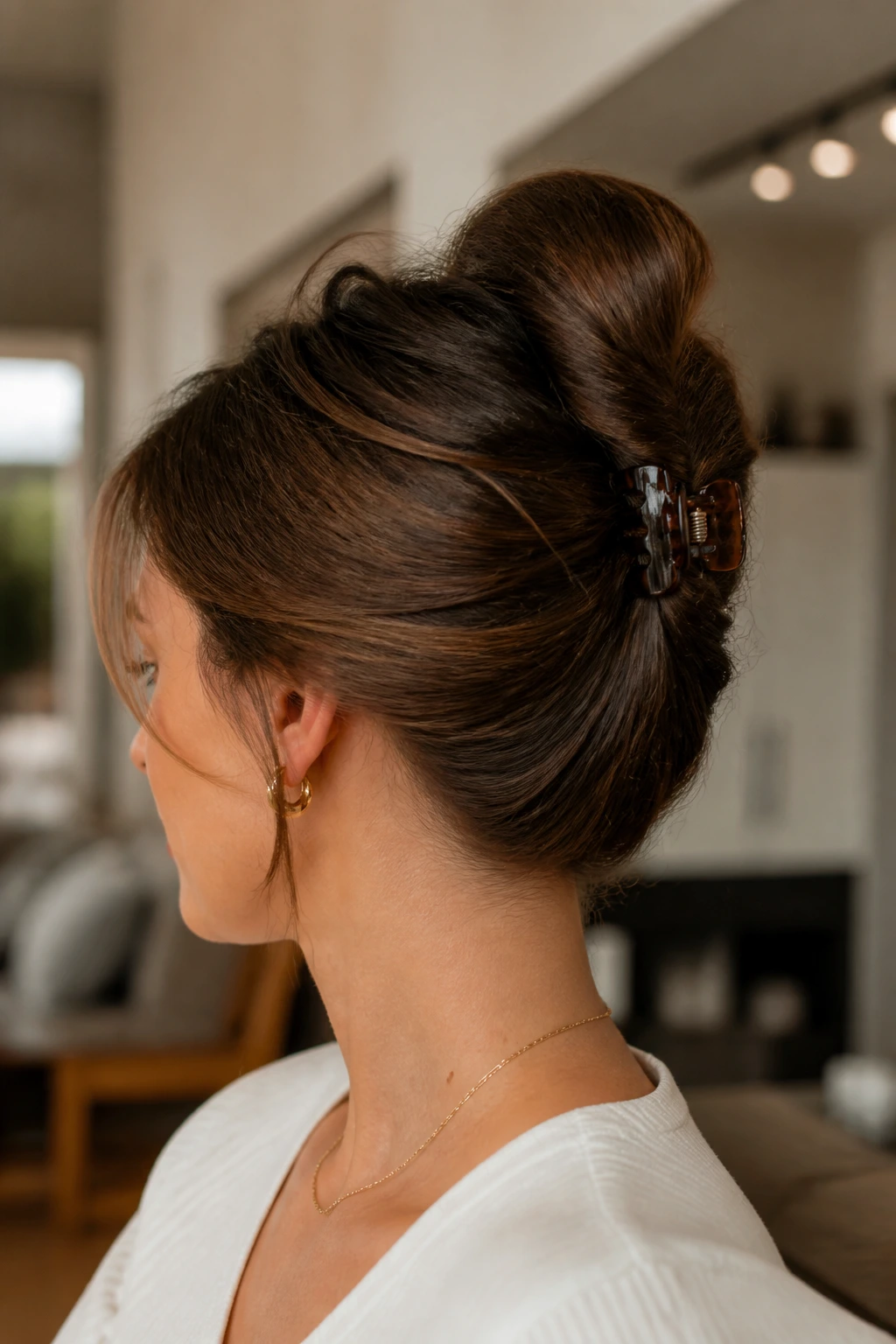
A claw-clip French twist is the fast version of the classic twist, and on short hair it often works better than a fully pinned one because the clip grabs the whole roll at once. Twist the hair upward, fold the ends inward, and clamp the clip vertically or slightly angled so it catches the seam.
Pick the right clip. A small, flimsy one will slide. A medium claw clip with a strong spring and teeth that actually bite into the hair will hold much better, especially on shoulder-length cuts. If your hair is too short for the clip alone, hide a couple of bobby pins underneath as backup.
This style has a casual polish I like a lot. It looks put together, but not precious. That matters on short hair, because the line between chic and fussy can be thin.
15. Messy Knot with Tendrils
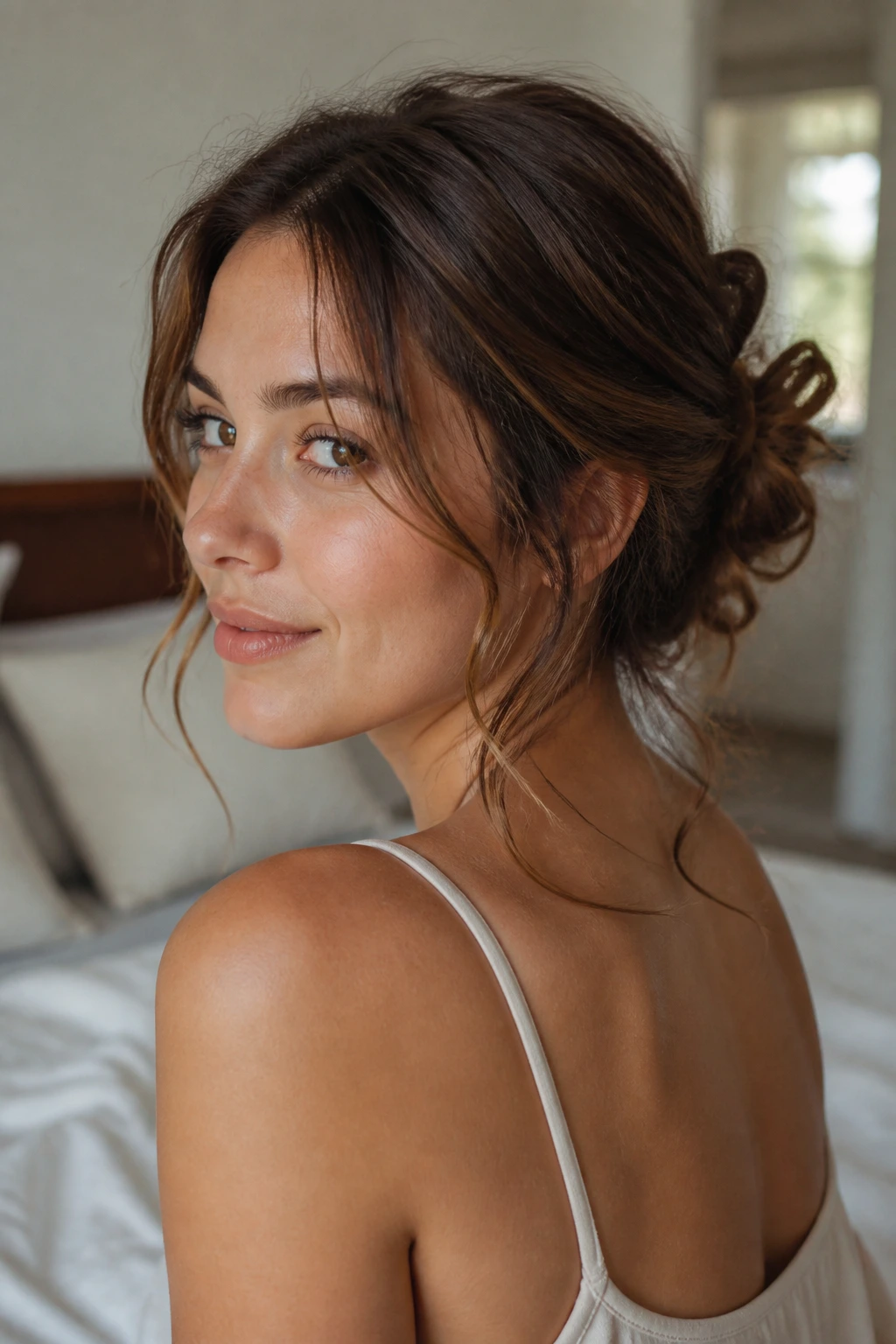
A messy knot on short hair is less about construction and more about shape. Gather the hair loosely, twist it into a knot or coil, and let the ends break out a little so the style stays soft. Then pull out a few tendrils around the face and, if the nape is too clean, loosen one or two strands there as well.
This works best when the hair has some bend. Air-dried waves, a day-old blowout, or a loose iron curl will all give the knot a better finish than bone-straight hair. The texture keeps it from looking like a rushed gym bun, which is not the goal here.
A messy knot can be very forgiving on shorter cuts. If the bun itself is tiny, that’s okay. The tendrils and the loosened crown do the visual work, and the smaller knot often looks more elegant than a swollen one.
16. Victory Roll Accent
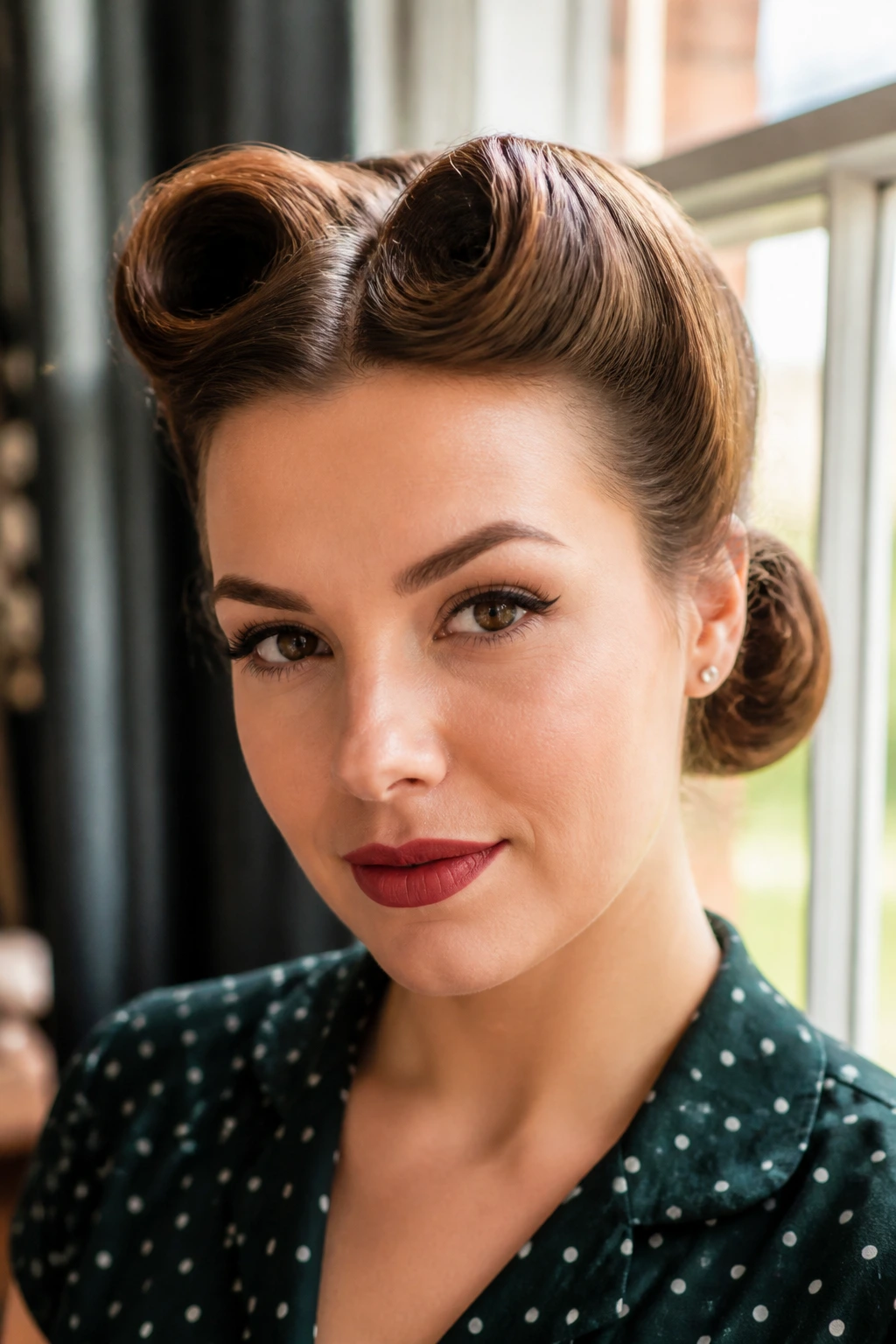
Victory rolls give short hair real character. You roll the front sections back and inward, pinning them so they create a lifted curl or wave at the hairline, then tuck the rest of the hair into a low base, a roll, or a pinned back shape. On a pixie or bob, the rolls become the star.
This style is worth the effort when you want something vintage without going full costume. The rolls need direction, not just volume, so a tail comb and setting spray help more than random teasing ever will. If your bangs are short, work with one roll instead of trying to force a symmetrical pair.
The best version keeps the rest of the hair simple. Too much happening below the rolls makes the style lose its point. Let the front do the talking. It’s enough.
17. Scarf-Wrapped Roll
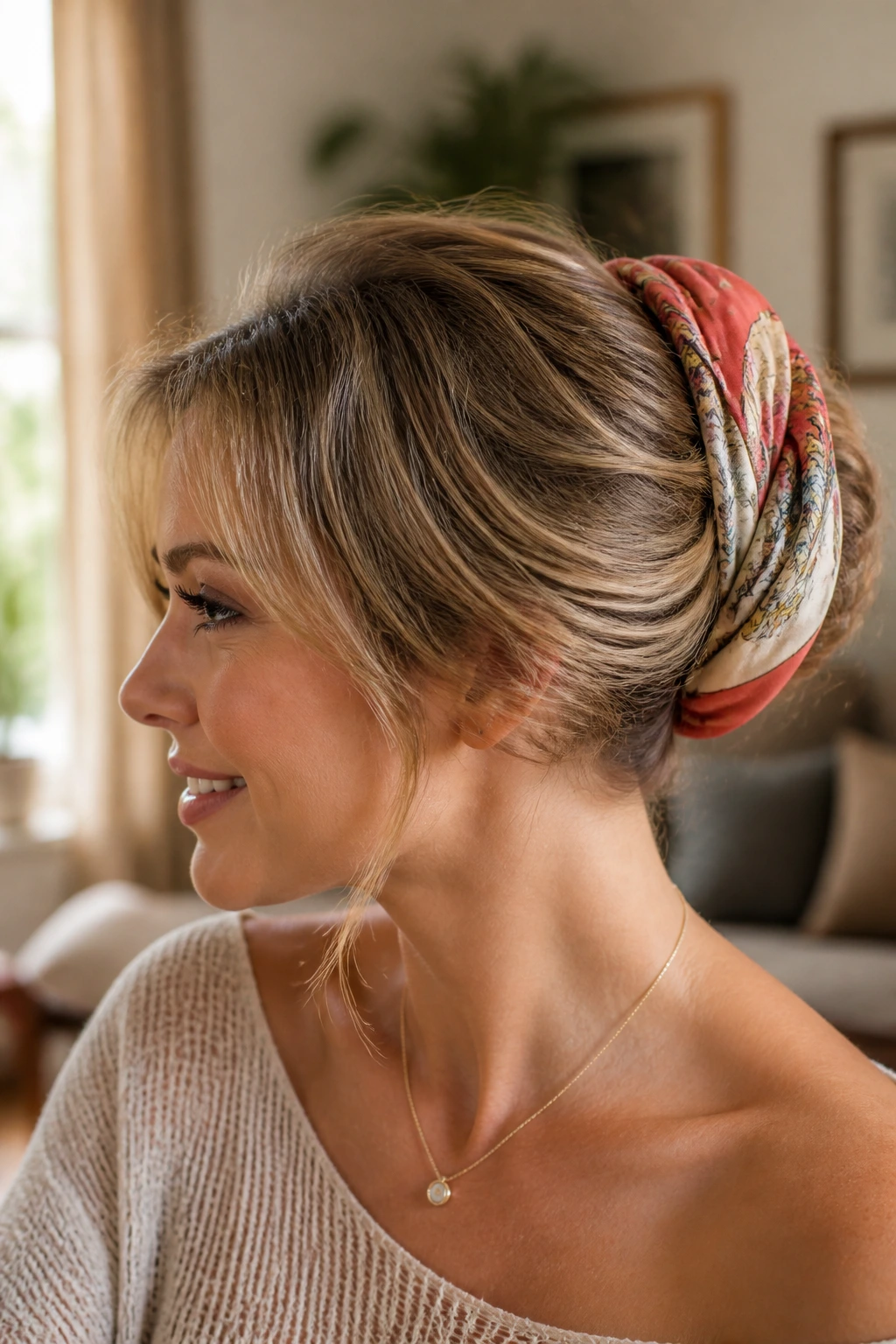
A scarf-wrapped roll is one of the easiest ways to make short hair look intentionally styled when the ends are too short to cooperate. You roll or tuck the hair low at the back, then tie a silk scarf around the base to hide the seam and add color. The scarf does not just decorate the look. It also helps anchor the shape.
Use a narrow scarf if your hair is very short; wider scarves can overpower the whole style and make the back look bulky. Tie it under the bun or roll so the knot itself disappears. That gives you a cleaner line from the front and keeps the accessory from stealing the entire show.
This is a clever move for hair that won’t stay in a perfect tuck. The scarf forgives a little imperfection. Honestly, that’s half the reason it works.
18. Infinity Twist
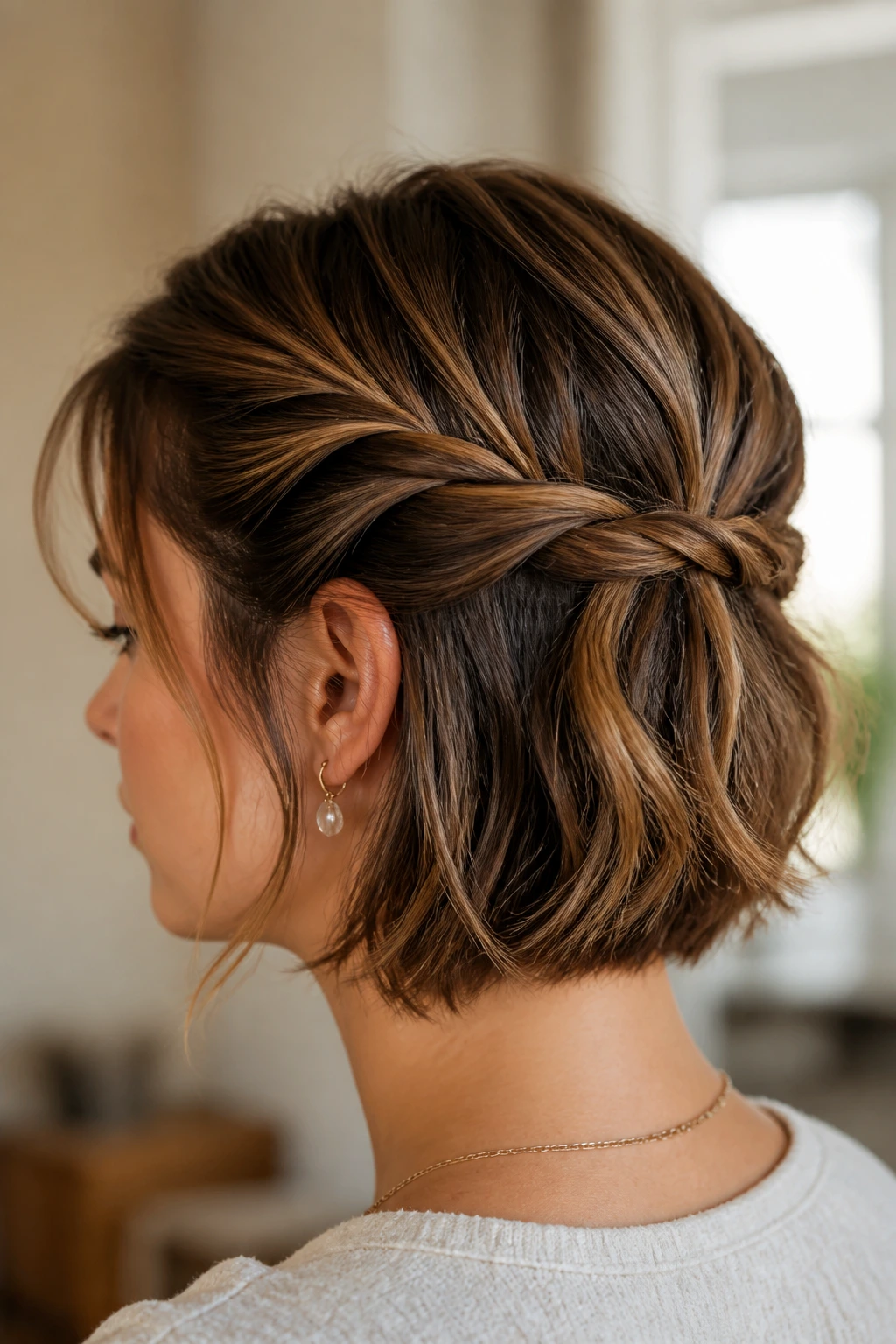
An infinity twist looks fancy from the outside, but the mechanics are simple: two sections are crossed in a figure-eight motion and pinned flat along the back or crown. On short hair, that flatness is an advantage. You’re not fighting for length; you’re building pattern.
It works especially well on layered bobs because the twist creates its own visual line. Even if the ends are uneven, the crossing motion hides the shorter pieces inside the shape. That makes it a nice choice when your haircut has grown out a little and the layers are starting to stick out in odd places.
If you want it to look softer, pull the twist apart very slightly after pinning. Not much. Just enough to keep it from looking like a rope stretched too tight. The shape should feel woven, not strained.
19. Tucked Ponytail
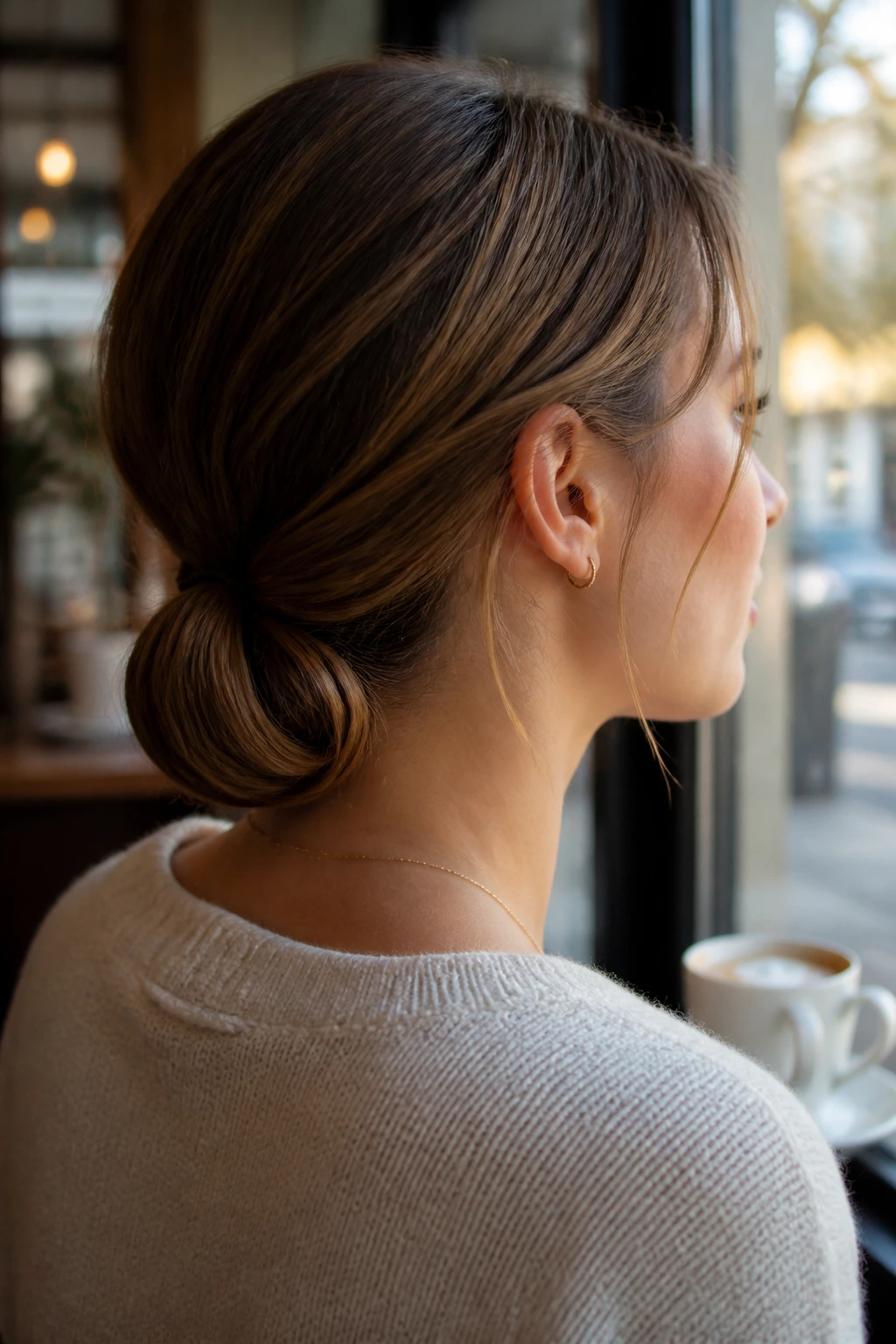
A tucked ponytail on short hair is one of those styles that feels almost too simple until you see it finished. Gather a low ponytail, fold the tail upward or inward, and pin it underneath itself so the ends disappear. What remains looks like a neat shell or loop at the nape.
This works because it gives you the clean line of a ponytail without the obvious tail length that short hair often can’t supply. It’s polished enough for a workday and fast enough for a day when you’ve got no patience for anything more elaborate.
Tiny but useful
If the ponytail won’t hold as a full loop, secure the tail with a small elastic halfway down, fold that section up, and pin the elastic to the base. That extra anchor helps short hair behave.
A middle part makes this look sharper. A side part softens it. Pick the one that matches the rest of your outfit instead of defaulting to whatever part your hair fell into after washing.
20. Braided Mohawk
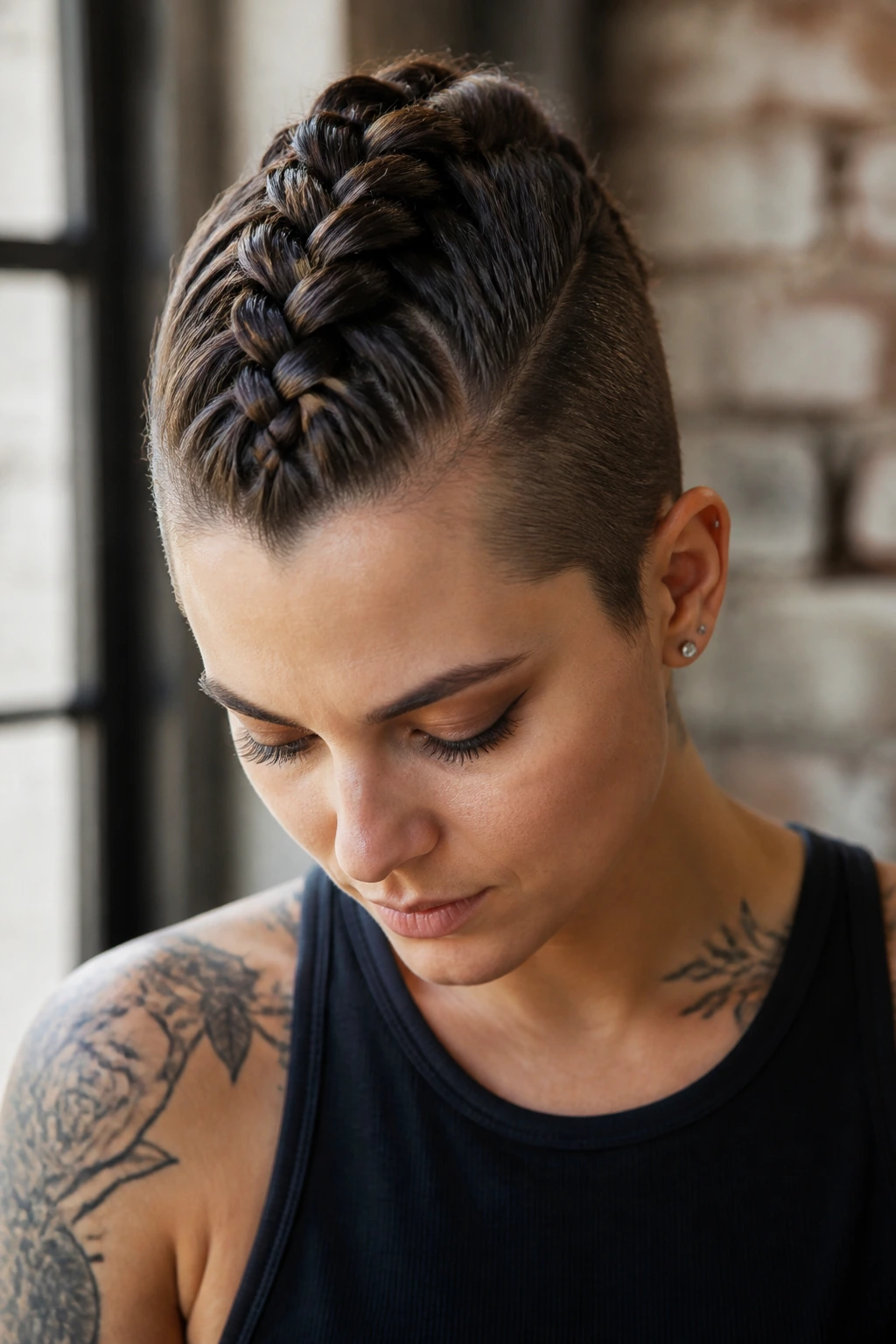
A braided mohawk turns short hair into a shape with real edge. You braid or twist a strip down the center of the head and pin the sides flat, which leaves a raised line from front to back. On short cuts, that center strip may be more of a plaited ridge than a long braid, and that’s still enough.
This is a strong option for thick hair because it reduces bulk at the sides while putting all the attention up the middle. Fine hair can do it too if you start with texture spray and a little root lift. The style needs grip. It does not need tons of length.
I like this one when the outfit is simple and the hair needs to carry some personality. It has shape, movement, and a little attitude without looking overdone. That’s a useful combination.
21. Wet-Look Sculpted Bun
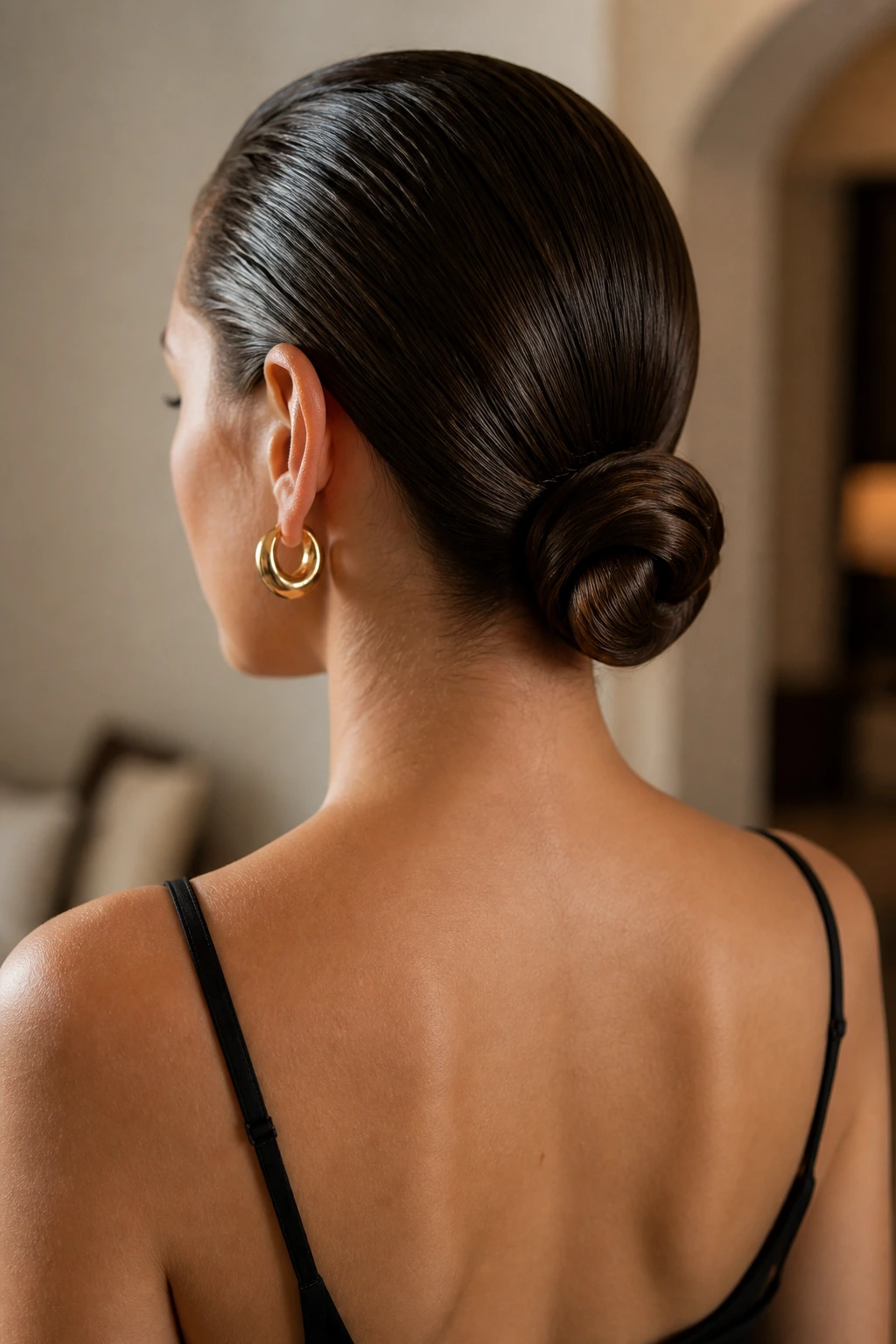
The wet-look sculpted bun is not for every day, and that’s fine. It’s the one that leans hardest into shine and structure: gel or styling cream through damp hair, a tight combed-back surface, and a compact bun or coil at the nape or mid-head. Short hair handles it well because the style is about contour, not length.
The key is clean lines. Use a fine-tooth comb to smooth the surface before the product sets. If your hair is layered, you may need to pin the shorter pieces flat as they dry so they do not stick out like little flags later on.
This style looks best when the finish is glossy and precise. It can be sleek enough for evening wear, sharp enough for a photo session, and practical enough to survive wind. The tradeoff is that it can show every bump, so it rewards careful prep.
22. Knotted Halo
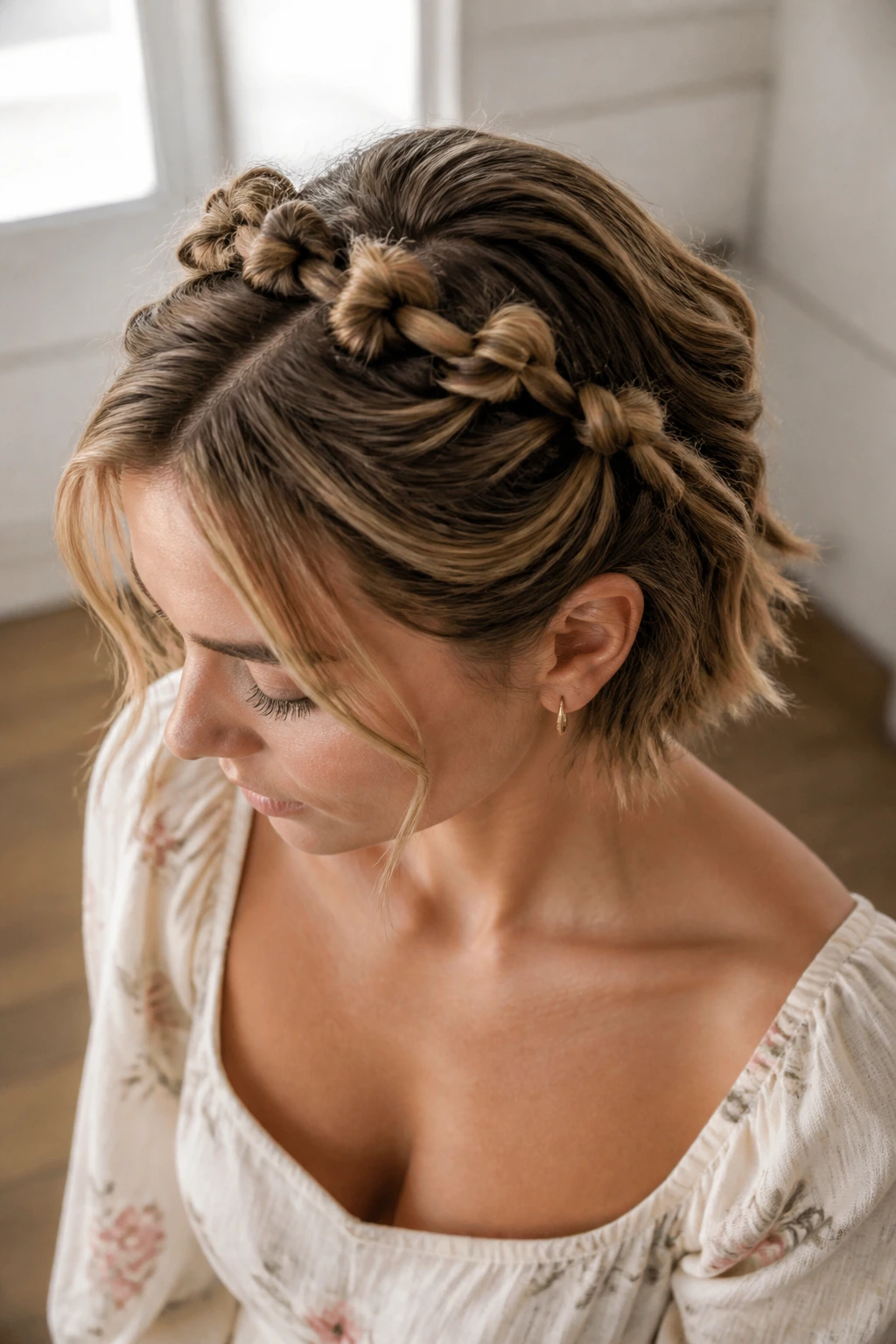
A knotted halo uses small side sections tied or twisted around the crown in a ring, almost like a braid substitute with a softer feel. On short hair, it works because the knots are small and forgiving. The style does not need huge length to read correctly.
It’s a nice option when you want romance without the stiffness of a braid crown. Knots look a little more undone, which is useful on hair that has layers or pieces too short to join a full braid. If the back is sparse, tuck it quietly and let the halo do the framing.
A light mist of hairspray after the knots are pinned keeps the edges from puffing out too much. You want shape, not helmet hair. That line matters more than people think.
23. Asymmetric Side Bun
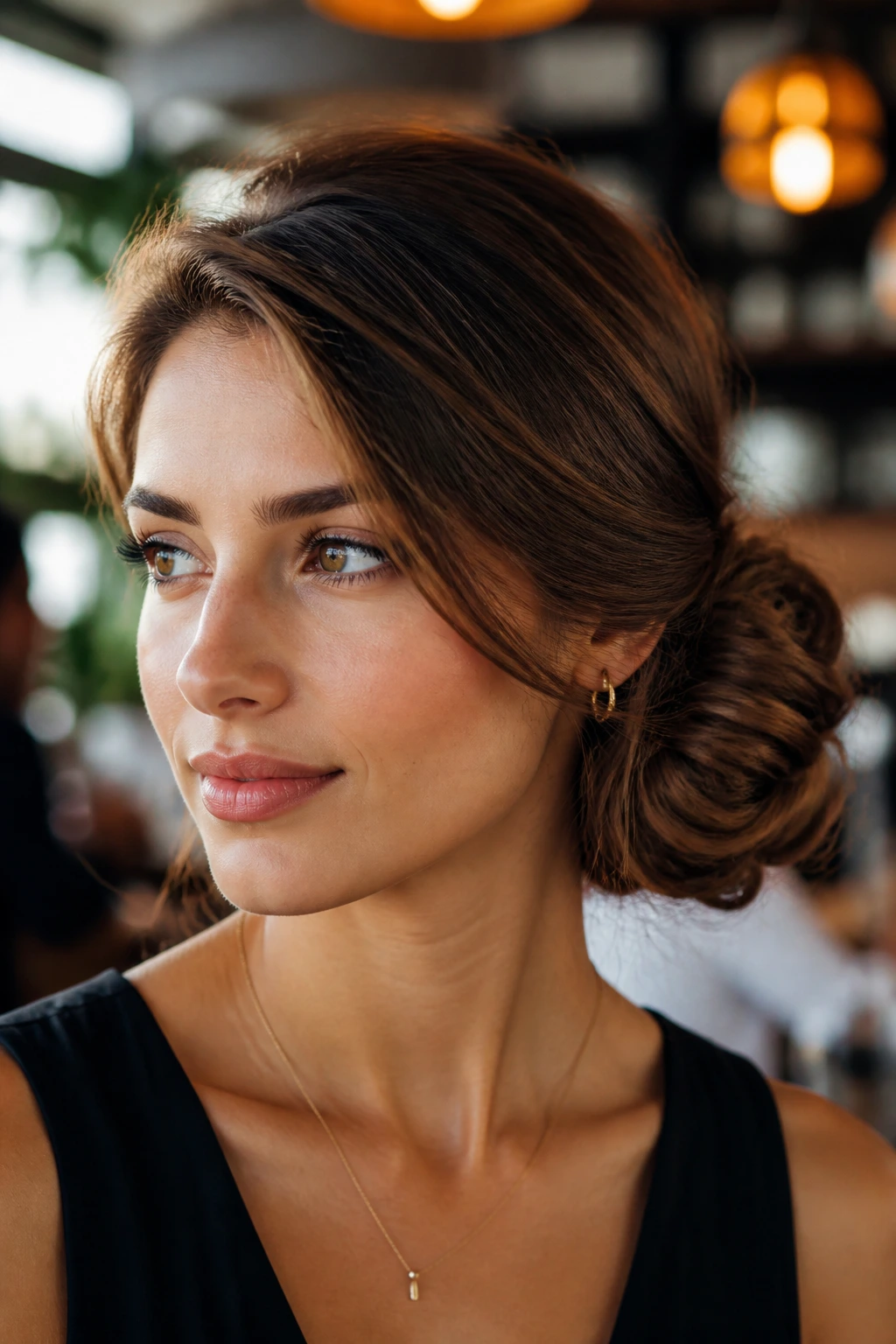
The asymmetric side bun is for anyone who wants a short-hair updo with a little visual drama. Sweep the hair to one side, coil it behind one ear, and pin it low so the opposite side stays smooth or softly tucked. The off-center placement keeps the shape from feeling too formal.
This is one of the easiest ways to make a short cut look dressed up for an event. It works especially well with one bare shoulder, a boat neck, or a necklace that needs room to breathe. The bun itself can be tiny. What matters is the placement.
Leave the front with a gentle bend instead of pulling everything tight. That softness balances the strong side sweep and keeps the style from turning severe.
24. Pinned-Back Pixie Pompadour
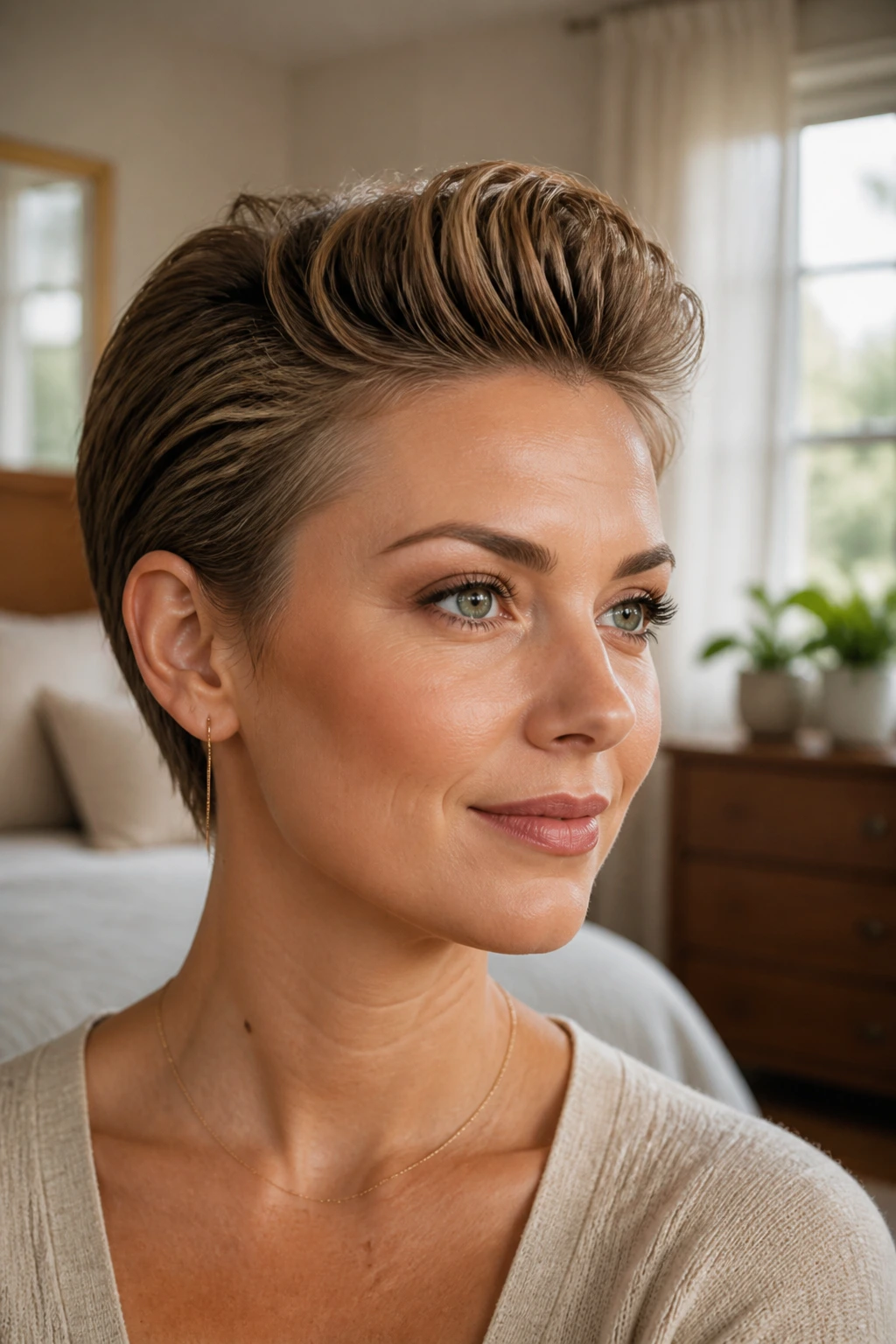
A pixie pompadour is not an updo in the traditional sense, but on very short hair it fills the same role: it lifts, shapes, and clears the face. Brush or finger-lift the front section up and back, pin the sides behind the ears or just above them, and smooth the crown into a soft rise.
This is the style that proves you do not need length to make a statement. You need direction. A little wax or pomade at the roots gives the lift somewhere to stay, and a few tiny pins hidden under the front sweep keep the shape from collapsing by lunchtime.
If your cut is a bixie or long pixie, this gets even easier. The extra length at the crown gives you a little more to sculpt. Very short pixies can still do it, but the result will be more of a sleek lift than a full pompadour.
25. Accessorized Mini Chignon
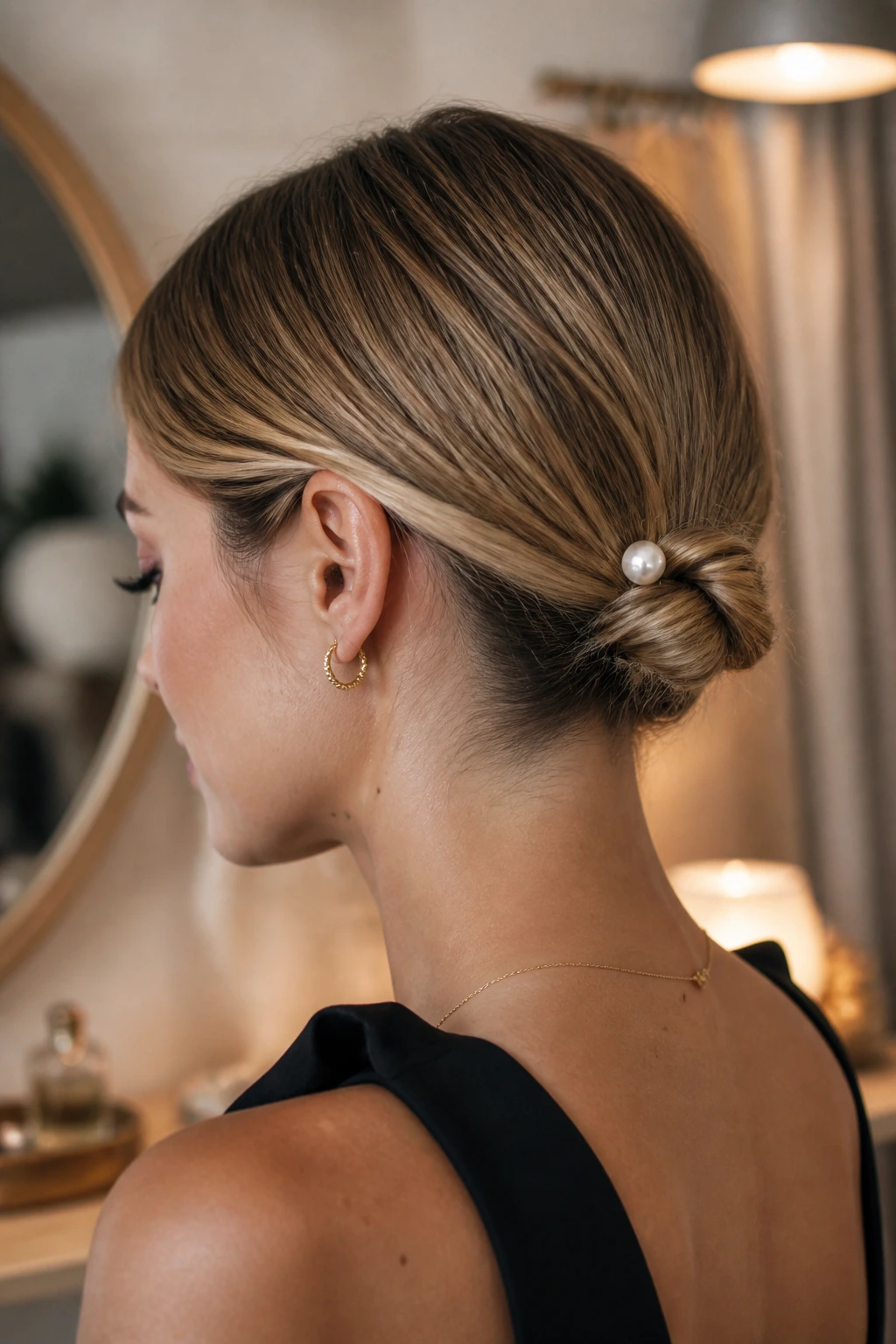
The accessorized mini chignon is what you do when the hair is short, the event is special, and you want the detail to live in the finish. Build a tiny tucked bun or rolled coil, then add one clean accessory: a pearl pin, a slim barrette, a ribbon, or a small comb. One piece is enough.
This style works because the accessory tells the eye where to look. On short hair, that matters. A tiny chignon can get lost if it’s left naked, but a well-placed clip gives it shape and presence without asking the hair to be bigger than it is.
I’d keep the rest of the style quiet. Smooth sides, tidy nape, one good accessory. Anything more and you start competing with yourself. That’s the point where the look stops being chic and starts being busy.
Why Short Hair Gives These Updos Better Bones
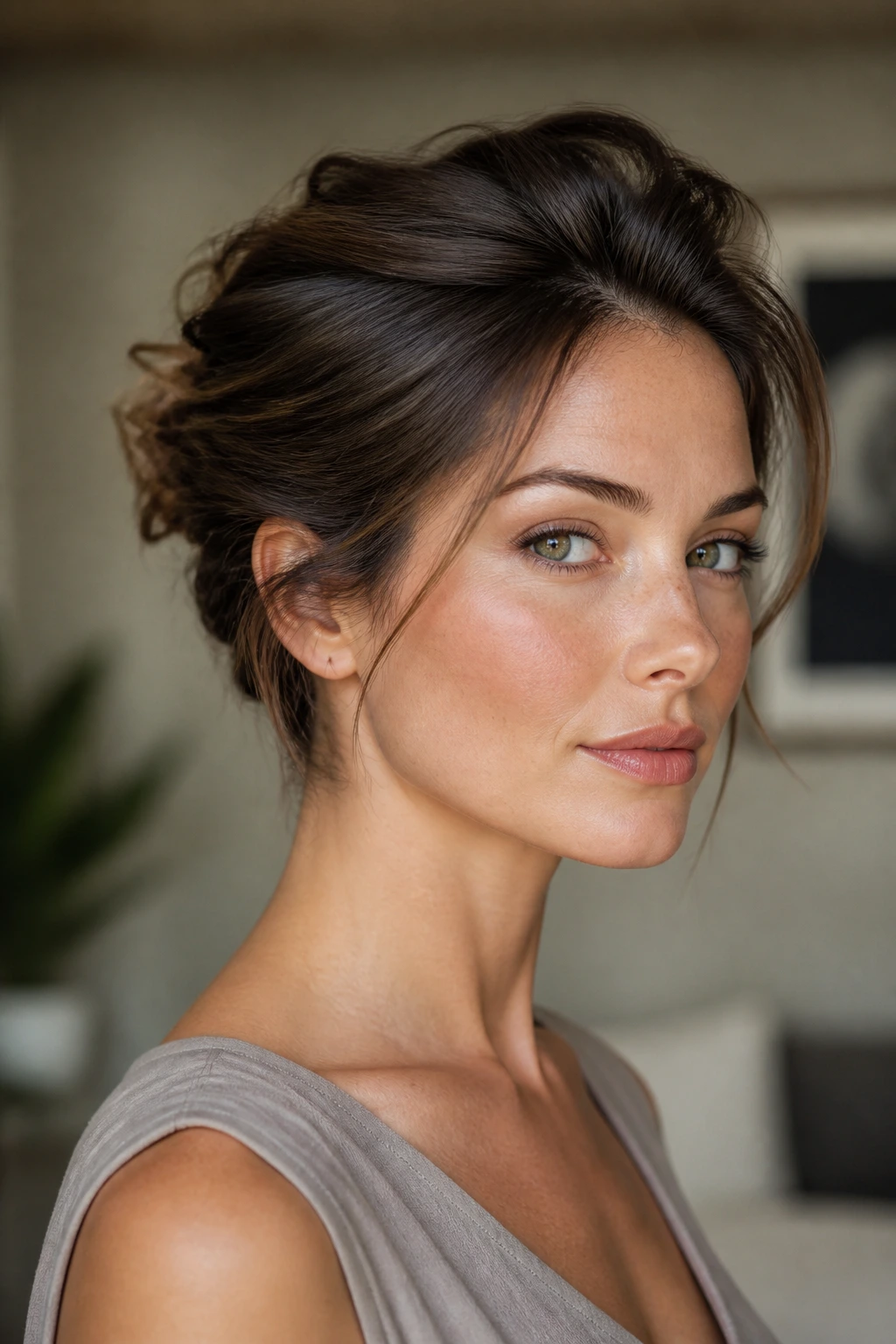
Short hair has a reputation problem. People think it limits you, when most of the time it just demands better decisions. A longer cut can hide sloppiness with sheer volume. A shorter cut cannot. That sounds harsh, but it’s actually useful. You see the structure right away, which means you also see what works.
The best updos on short hair rely on balance, not length. A small twist at the crown can be enough if the sides are clean. A low tuck can look expensive if the shape is tight and the nape is smooth. A little asymmetry can save a style that would feel flat if it were centered. Short-hair updos are all about where the eye lands.
Blunt Ends vs. Layers
Blunt ends behave like a shelf. They’re easier to tuck and roll. Layers need more pinning, but they reward you with movement around the face and a softer silhouette. If your cut is heavily layered, stop trying to make every piece disappear. Use the layers as part of the shape.
Texture Is the Real Base
Freshly washed hair can be too slippery, and that’s why so many short styles fail early. Texture spray, dry shampoo, or even a light mist of hairspray before pinning gives the hair grip. Not crunch. Grip. That tiny difference changes how long the style stays intact.
The Nape Does More Work Than You Think
A lot of short updos live or die at the nape. If the back is messy, the whole look reads unfinished. If the back is neat and the top has a little lift, the style suddenly looks deliberate, even if it took six minutes.
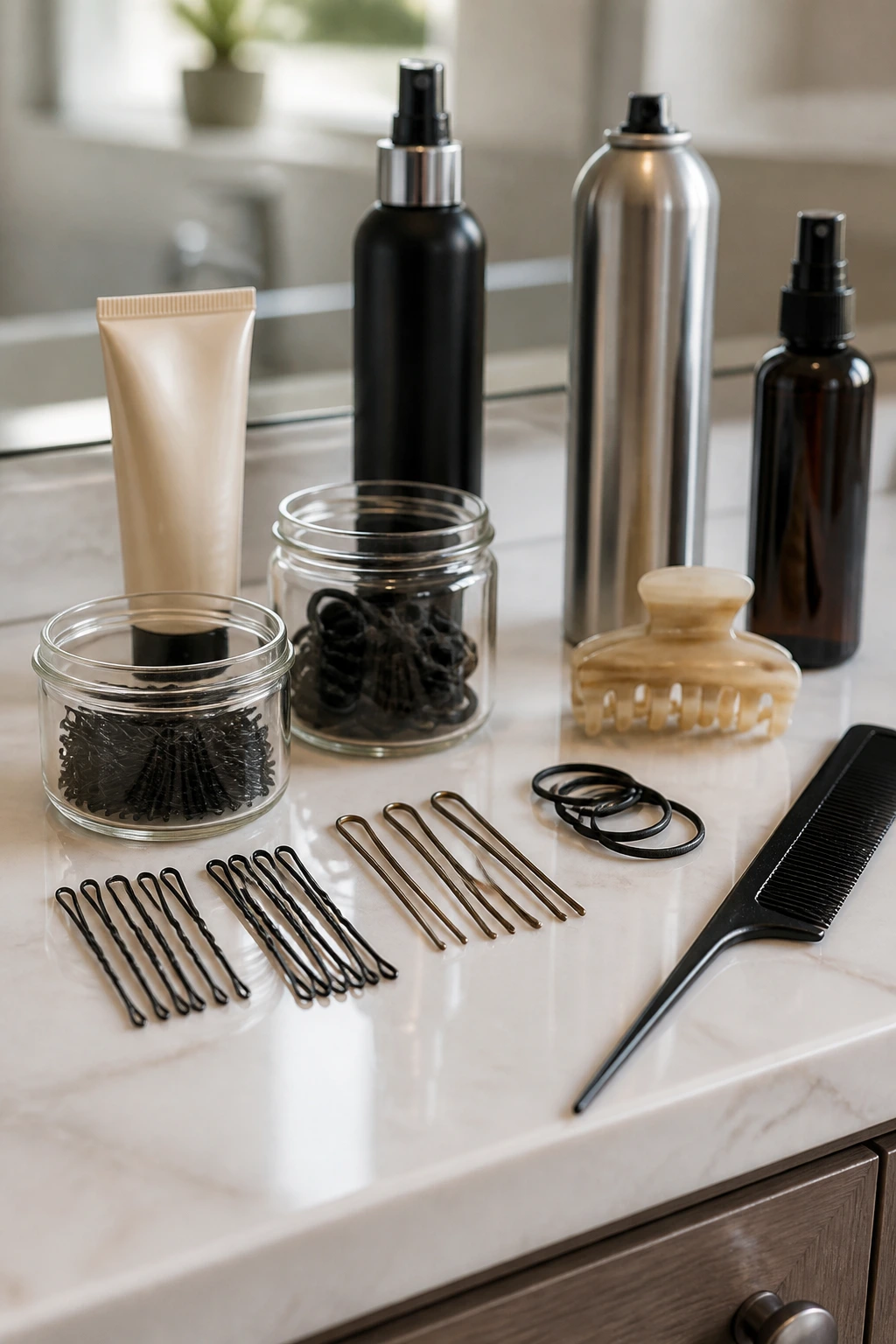
Essential Tools for Short-Hair Updos
-
Bobby pins in two sizes: Short and medium pins catch different sections better than one size alone, especially when layers keep slipping out.
-
U-pins: These are useful for soft rolls and mini chignons because they hold without leaving the same obvious line as a tight bobby pin.
-
Mini elastics: Clear or hair-matched tiny elastics are perfect for half-up knots, bubble styles, and low ponytails on short cuts.
-
Tail comb: The pointed end helps make clean parts and separate small sections without tearing up the hairline.
-
Texturizing spray or dry shampoo: This gives short strands enough grit to hold pins, twists, and braids without turning sticky.
-
Light gel or smoothing cream: Use this for sleek styles, wet-look buns, and any look where the sides need to stay flat.
-
Strong-hold hairspray: A flexible spray is fine for airy styles, but a stronger one helps on polished twists and pin-up shapes.
-
Small claw clip: Handy for quick French twists and rolled styles when you want speed over perfection.
-
Hairnet or mini bun shaper: Optional, but useful if your hair is just long enough to gather, not long enough to build a full bun cleanly.
-
Teasing brush or fine brush: Adds lift at the crown without making the surface look shredded.
Smart Prep for Grip, Bend, and Hold
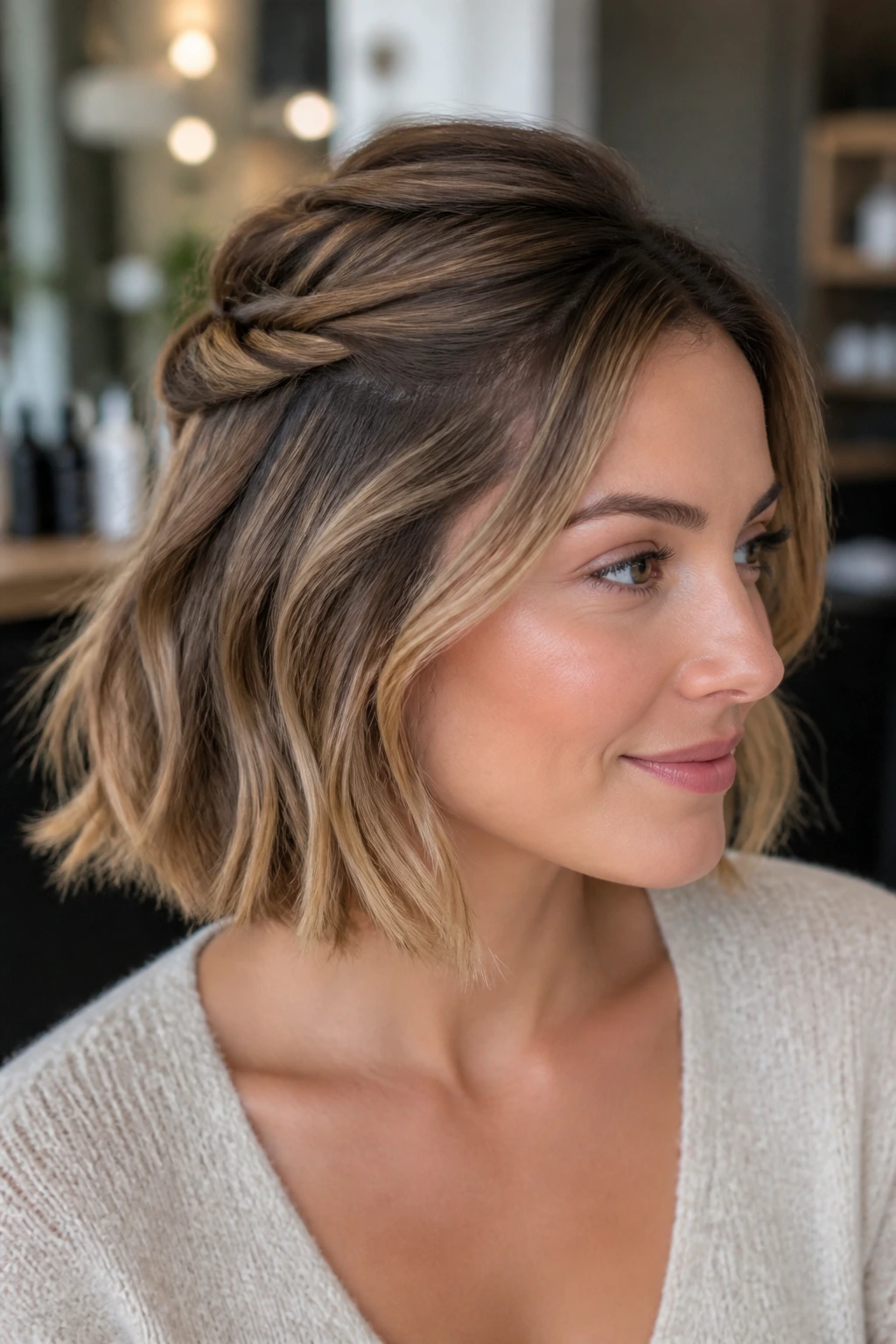
The difference between a short-hair updo that stays put and one that starts sagging after lunch usually comes down to prep. Clean hair is lovely for a blowout. It is often a pain for updos. If your hair is soft, silky, or freshly conditioned, you’ll want to add friction before you pin anything.
Start with day-old hair when you can. If that’s not an option, blow-dry a little root lift in, then mist dry shampoo through the crown and nape. That’s where short styles tend to slip first. You’re not trying to coat the whole head. You’re trying to give the pins something to bite.
For Fine Hair
Fine hair likes texture spray and small, tight sections. Big sections collapse under their own weight. Tease the crown lightly, then smooth the top layer so the style still looks clean. A matte product often holds better than a glossy cream here.
For Thick Hair
Thick hair usually needs less product and more sectioning. Don’t try to force all of it into one pin cluster. Divide the hair, twist or tuck in stages, and use stronger pins that actually grip the bulk. If the style feels too heavy, you probably gathered too much at once.
For Curly or Coily Hair
Work with the curl pattern. Stretching curls flat often creates more frizz later, not less. A little leave-in or curl cream can keep the shape soft, but stop before the hair gets slippery. You want definition and hold, not a glazed surface that refuses to pin.
How to Wear These Styles With Different Outfits
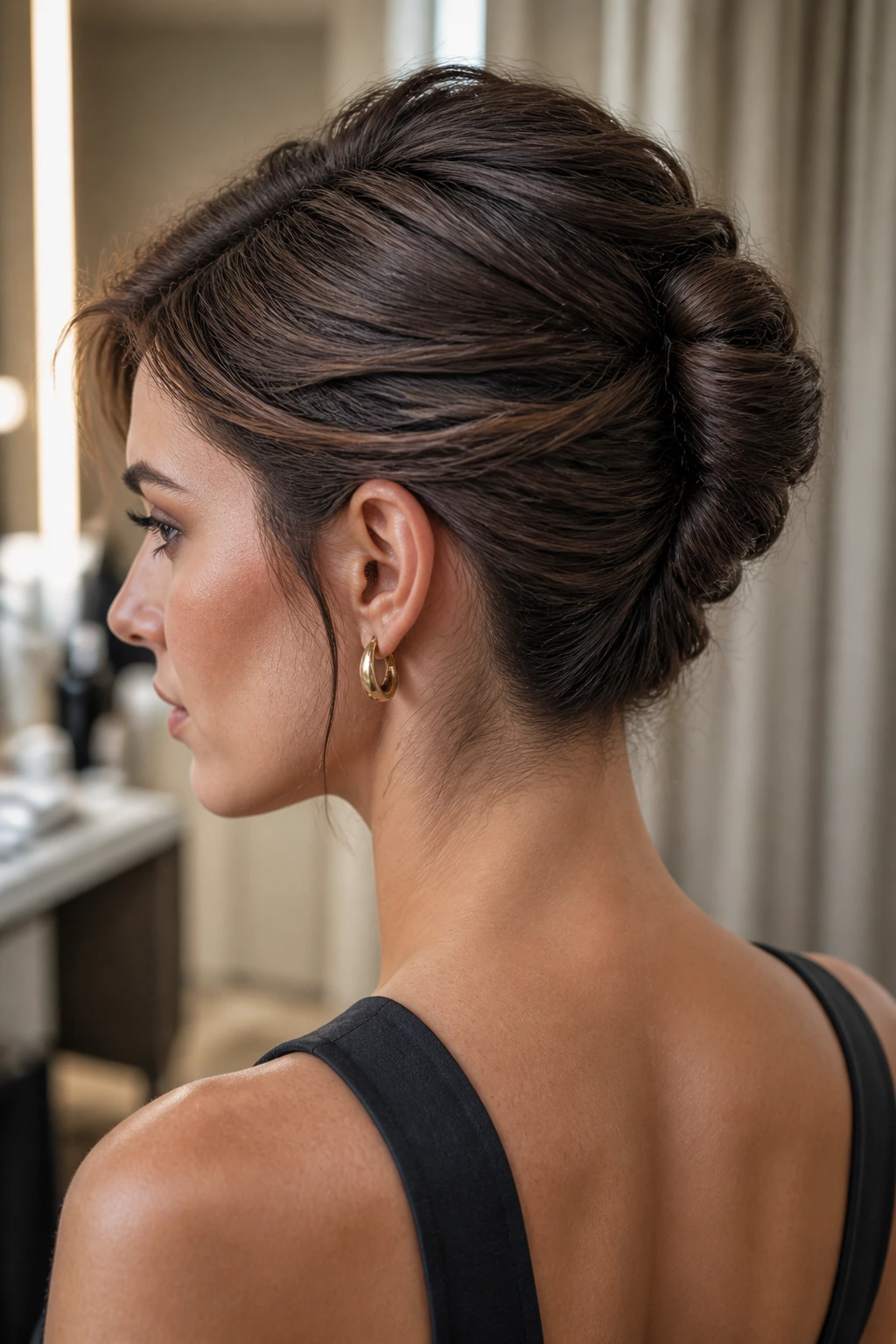
Presentation: Sleek styles — the mini bun, the wet-look roll, the pixie pompadour — read cleanest with sharp collars, tailored jackets, or anything with a neckline that frames the face. Messier styles like the knotted halo or the tendril knot work better with softer fabrics, open necklines, and pieces that can handle a little movement.
Accompaniments: Earrings matter more when the hair is short and pinned up. A good pair of hoops can carry a side twist. A single statement earring can make an asymmetrical bun feel intentional. Scarves and clips work too, but pick one accent and stick with it.
Scale: If your hair sits above the chin, keep the silhouette small and close to the head. If it hits the collarbone, you can afford more shape at the crown or a fuller nape roll. The style should match the length, not fight it.
Finish: Glossy finishes pair well with evening clothes and structured shapes. Matte finishes suit textured braids, messy knots, and casual outfits. Don’t mix every finish at once. That’s how a style starts looking confused.
Additional Tips and Finishers
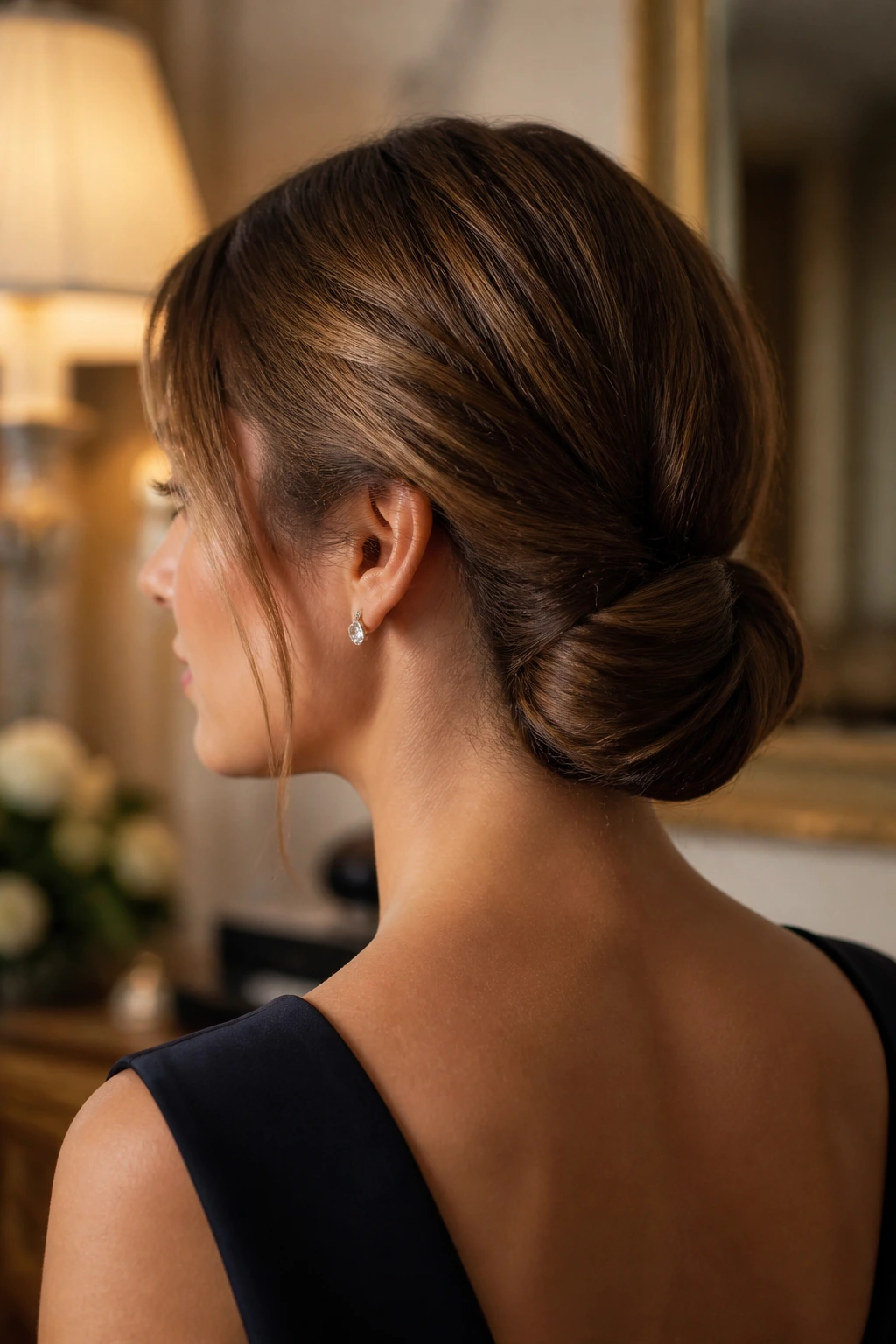
Volume Boost: A tiny bit of backcombing at the crown can rescue a flat short-hair updo, but keep it to the top inch or two. If you tease too far down, the style turns bulky in the wrong place.
Grip Trick: Cross two bobby pins in an X over the same anchor point. It’s one of the simplest ways to keep a twist from migrating sideways during the day.
Polish Move: Use a soft toothbrush or spoolie with a dab of gel to smooth baby hairs near the hairline. That little cleanup sharpens the whole style.
Make-It-Yours: Add a ribbon for a softer feel, pearl pins for a dressier look, or a matte clip if you want the style to feel modern instead of formal.
Last-Minute Fix: If one side starts loosening, don’t rebuild the whole style. Tighten the single section that moved, add one pin, and mist that area again. Rebuilding from scratch usually makes the hair puffier than it was before.
Common Mistakes That Make Short-Hair Updos Slip
The first mistake is building on hair that’s too clean and too soft. It looks nice for about five minutes, then the pins start sliding. The fix is simple: add texture at the roots and give the hair a little bend before you start.
The second mistake is using one oversized elastic to do the work of five small pins. A big elastic creates a lump, and on short hair lumps are loud. Break the style into smaller sections and anchor them one by one.
The third mistake is ignoring the direction of the layers. If the hair is fighting left and you pin it right, it will keep pushing back out. Work with the way the cut falls, then pin in the direction it wants to settle.
The fourth mistake is pulling the hair too tight at the hairline. Short hair has less slack, so a too-tight style often pops loose around the ears or temple by the end of the day. Leave a little give. That gives the style room to move without falling apart.
The fifth mistake is trying to make every short-hair updo look full-sized. It won’t. And it shouldn’t. The charm is in the compact shape, the clean seam, the little tucked ends. Once you stop chasing length, the styles start looking better.
Variations and Adaptations to Try
The Fine-Hair Lift: Start with dry shampoo at the roots, tease the crown lightly, and keep every section small. Fine hair does better with compact twists and mini buns than with bulky shapes that strain the pins.
The Curly Halo: Let curls frame the face while the back is pinned into a halo, knot, or tuck. This keeps the texture visible and avoids the flat, brushed-out look that tends to fight curls all day.
The Sleek Event Finish: Use gel or smoothing cream, a tight brush-through, and a glossy spray on top. This version works for weddings, dinners, or any setting where you want the hair to look sharp from every angle.
The No-Heat Shortcut: Build the style from second-day hair, add texture spray, and use twists, pins, and accessories instead of curling or flat-ironing. It’s the fastest route when the shape matters more than the surface finish.
The Accessory-First Version: If your hair is too short for a full updo, choose one strong accessory — a barrette, comb, ribbon, or pearl pin — and build the style around it. That one focal point can make a tiny knot or twist feel finished on purpose.
Keeping the Style Fresh Through the Day and Night
A short-hair updo usually behaves best in the first few hours, while the pins are still fresh and the product hasn’t worn down. After that, friction from collars, scarves, or just moving around starts to matter. That’s normal. It doesn’t mean the style failed. It means it needs a little maintenance.
For styles with a sleek finish, carry two or three spare bobby pins and a travel hairspray. If a side starts lifting, pin only that section again. Don’t rebuild the entire shape unless you have to. Rebuilding creates extra puff and usually makes the style look more tired than the original looseness did.
Messier styles are easier to revive. A quick finger-tousle at the crown, a tiny spritz of dry shampoo at the roots, and a fresh pin in the seam can bring a loose knot or tuck back to life. If you’ve worn a wet-look or gel-heavy style, don’t keep layering more product on top of the old layer. That turns the hair dull and sticky. It’s better to reset a small section than to drown the whole thing.
Overnight care matters if you want to wear the style again. Use a silk scarf or bonnet for polished rolls, buns, and twists. That keeps the surface smooth and cuts down on the kind of pillow flattening that destroys a neat crown. In the morning, remove the scarf, shake the hair gently, and revive the roots with dry shampoo or a few drops of water depending on the finish you want.
If the style is meant to last into the next day, the simplest rule is this: the neater the base, the longer it holds. Loose styles can survive a night with some reshaping. Sleek styles need protection from friction.
Frequently Asked Questions About Updos for Short Hair
How short is too short for an updo?
Very short pixies can still do lifted, pinned-back styles, pompadour shapes, or tiny accessory looks. Once the hair is too short to gather even a small section at the crown or nape, the style shifts from a true updo to a pinned style — and that’s still useful.
Do short-hair updos work better on day-two hair?
Usually, yes. A little natural oil or dry shampoo gives the hair grip, which short styles need more than long ones. Freshly washed hair can work if you prep it with texture spray or light mousse first.
How many bobby pins do I need for short hair?
More than you think, especially if the cut is layered. Most styles use somewhere between 4 and 10 pins depending on density and length, and it’s smart to keep a few spare ones in your bag for loosening sections later.
What if my layers keep slipping out?
Treat the layers as part of the style instead of trying to trap every piece. Pin them in the direction they naturally want to fall, then use a small amount of hairspray or gel just on the stubborn sections.
Can curly hair do these styles without straightening first?
Absolutely. Curly hair often holds twisted, rolled, and pinned styles better than straight hair because the texture gives the pins more to grab. The important part is preserving the curl pattern rather than brushing it into a frizzy blur.
What’s the best style for a bob that hits just below the jaw?
Twisted crown pins, a mini French twist, or a low rolled chignon usually work well at that length. Those styles use the hair’s shortness as an advantage instead of asking for a full ponytail’s worth of length.
How do I stop the crown from going flat?
Lift the roots with a round brush or a little teasing at the top section before you pin anything. Once the style is built, avoid patting the crown down with your hands every ten minutes. That flattens the shape faster than humidity does.
Can I use clip-ins or extensions for these styles?
Yes, but keep them small and place them where the style can hide the attachment point. Clip-ins are useful for adding a little bulk to a chignon or twist, but too much extra hair tends to make short styles lose their neat shape.
How do I remove product without wrecking the style?
Start at the pins and work outward. Remove the anchors first, then brush out dry shampoo or spray with a light hand. If you yank from the ends first, you’ll snag the shorter sections and create more frizz than you had before.
Short Hair, Big Shape
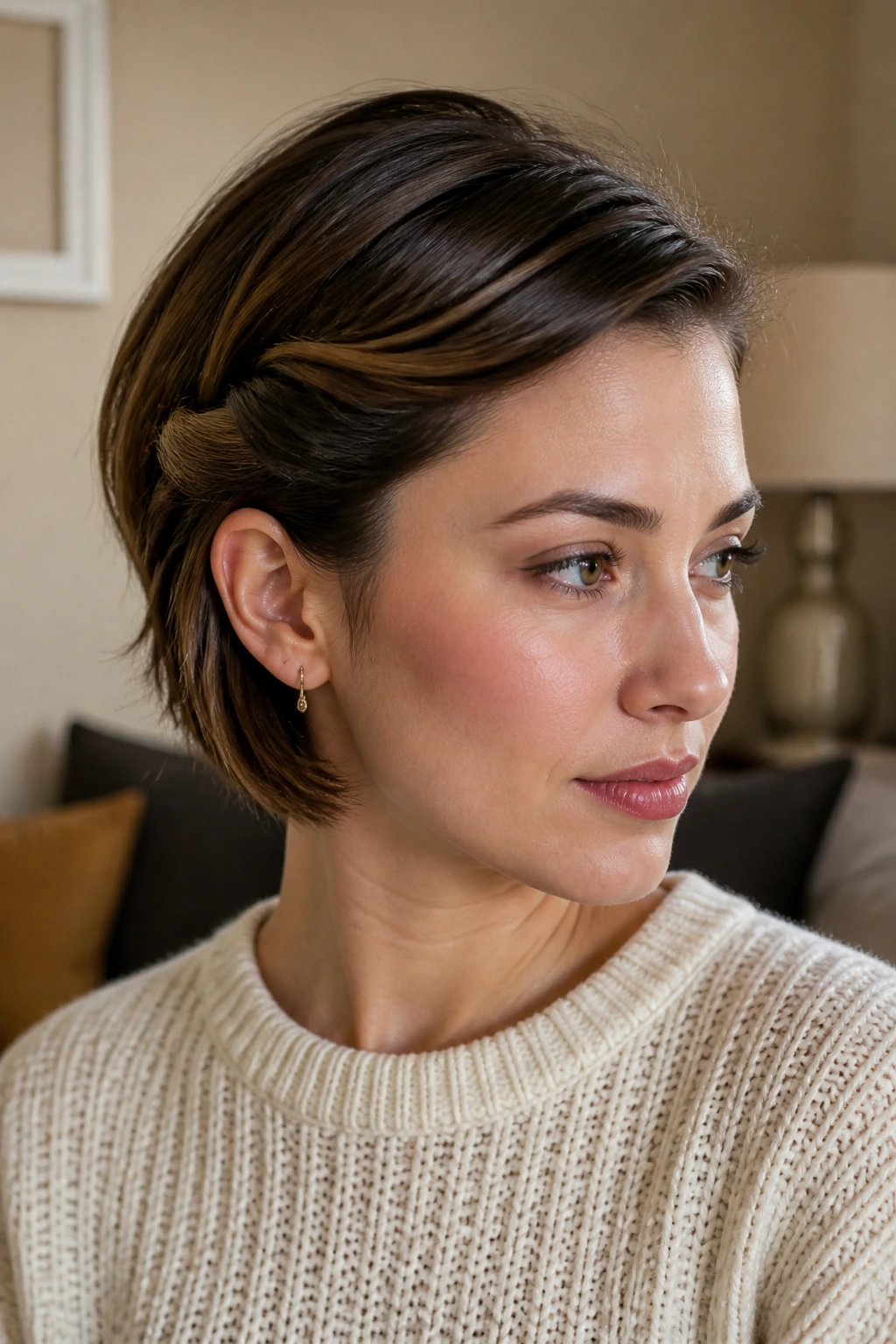
Short hair does not need to pretend to be long hair to look finished. That’s the whole lesson here. The strongest updos for shorter cuts lean into compact shapes, good pinning, and a little texture at the roots, which is often exactly what makes them look sharper than bigger styles with more length to manage.
If you’ve been waiting for your hair to “get long enough,” stop. A bob, lob, or pixie can already do a lot — twisted crowns, tucked rolls, mini buns, pin-up shapes, and all the little hybrid styles in between. Once you get comfortable with the tools and the pin placement, the options multiply fast.
Keep a few pins, a comb, and one honest bottle of texture spray close by. The rest is practice, and the good kind of practice too. The kind that leaves you with a style that holds, moves a little, and looks like it belongs on your head.
