



Short shag cuts with bangs for wavy hair have a way of making the hair look like it already knows what it wants to do. That’s the charm. The bend in the hair gets to stay bendy, the fringe gets to do its own little thing, and the whole shape feels lived-in instead of overworked. If you’ve ever had waves that looked great for ten minutes and then drifted into a puffball or a flat shell, this is the haircut family that usually fixes the mood without demanding a daily battle.
The trick is that a good shag is not just “layers plus bangs.” It’s placement. A few inches off at the crown, a cheekbone-skimming fringe, a softer nape, a little internal texture—those details change how the waves fall when they air-dry, when they get scrunched, and when they’re doing that annoying half-good, half-chaotic thing most wavy hair loves to do.
And yes, some versions are softer, some are punkier, some lean French, some lean wolfish, and some sit right on the line between a bob and a bixie. That range is exactly why this haircut keeps showing up in salons. The shape can be tailored to fine waves, thick waves, loose S-waves, and the kind of bend that only appears after a shower and a prayer. The fun part is picking the version that suits your texture instead of fighting it.
Why Short Shag Cuts With Bangs Keep Wavy Hair Looking Intentional
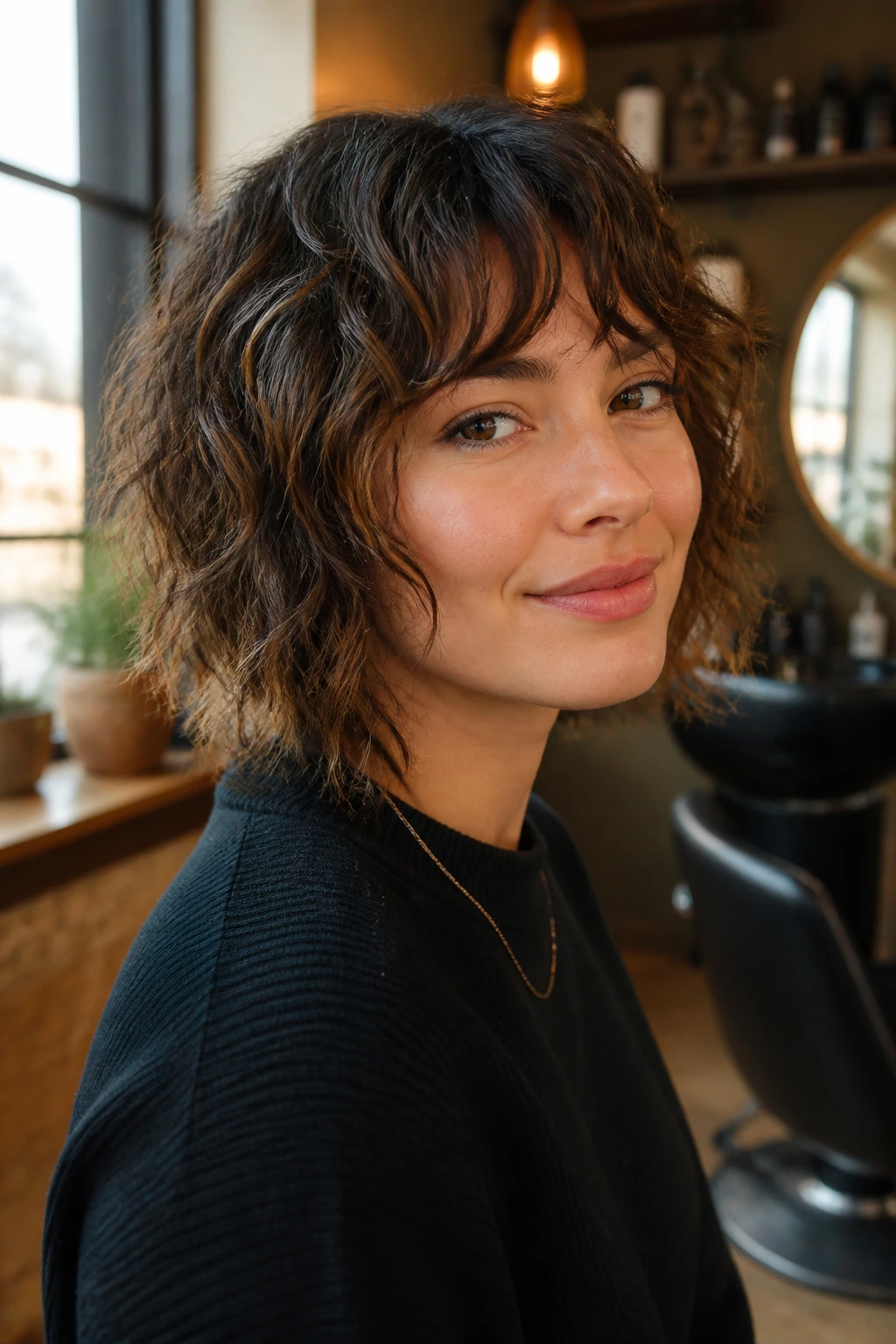
- Wave-friendly layers: The shortest pieces sit where the wave naturally bends, so the hair gets movement without needing a lot of heat.
- Bang balance: A fringe keeps the front from feeling top-heavy, which matters when the sides puff out faster than the ends.
- Easy grow-out: A shagged outline still looks like a haircut after a few weeks; blunt bobs tend to lose their shape faster on wavy hair.
- Face framing without stiffness: The layers can hit at the cheekbone, jaw, or lip line, which gives shape without that stiff helmet feeling.
- Styling flexibility: These cuts work with air-drying, a diffuser, or a quick bend from a round brush, so you are not locked into one routine.
What to Tell Your Stylist Before They Pick Up the Shears

The most useful thing you can bring to a shag appointment is not a trend screenshot. It’s a sentence about how your hair behaves when it’s left alone. Say whether your waves collapse at the crown, swell at the sides, or dry with a deep bend in one section and nothing in another. That detail changes where the shortest layers should land.
Bring up your fringe habits too. If your bangs spring up half an inch when they dry, the cut needs to be longer at the start. If your hairline has a stubborn cowlick, the bang line should be softer or slightly split so it does not fight the growth pattern every morning. A good stylist will listen to that. A rushed one will clip the fringe too short and call it “texture.”
The three things worth saying out loud
- How you part your hair: Center part, side part, or no fixed part at all.
- How much styling you actually do: Air-dry only, diffuser sometimes, blow-dry rarely.
- What you hate most: Triangle shape, flat crown, stringy ends, or bangs that sit in your eyes all day.
If you say those three things clearly, the haircut usually lands closer to reality. That matters more than any mood board.
1. Chin-Length Curtain Shag
A chin-length curtain shag is the one I reach for when someone wants movement without giving up the clean edge of a bob. The length sits right where the wave starts to show off, which means the hair gets bounce before it has a chance to droop into a square shape. The curtain bang opens the face a little, so the cut feels soft even when the ends are chopped.
Why It Works
The chin length keeps the outline compact, and that makes the wave pattern look fuller. On wavy hair, too much length can pull the bend downward and make the hair feel thin at the bottom. This version solves that by building volume where it matters most: around the cheeks and through the crown.
It also grows out neatly. A week six version of this cut still looks like a haircut, not a compromise.
Ask For This
- Chin-grazing length at the front
- Shorter crown layers for lift
- Curtain bangs that split near the bridge of the nose
- Softer ends under the jaw so the outline does not puff out
Best tip: keep the fringe a touch longer than you think; waves shorten bangs fast once they dry.
2. Jaw-Length Razor Shag With Bottleneck Bangs
This one has bite. Jaw-length shags can go wrong fast if they are cut too blunt, but a razor-finished version gives the edges enough softness to move instead of sit in a block. Bottleneck bangs make the front interesting without turning the face into a solid wall of fringe.
The shape is sharpest near the jaw and lighter through the temples, which is exactly where wavy hair can get bulky. I like this cut on people who want their hair to look awake even when they barely styled it. The razor work keeps the perimeter from feeling heavy, and the wave clings to those softer ends in a flattering way.
It suits hair that has a little body but not so much density that the outline balloons. If your waves are coarse, ask for the razor to be used carefully. Too much slicing can leave the ends frayed.
Why I like it: the bottleneck bang gives you fringe without the blunt line that tends to split awkwardly on waves.
3. French Bob Shag With Brow-Grazing Bangs

Want something that looks crisp from five feet away and slightly undone up close? This is that cut. The French bob shag borrows the neat perimeter of a bob, then breaks it up with short layers and a fringe that lands near the brows. On wavy hair, that contrast is the whole point.
The brow-grazing bang is the star. It gives the haircut a point of focus, so the rest of the layers can stay loose and airy. That balance keeps the style from becoming too fluffy, which is a real risk with wavy hair at this length. The shape feels polished, but not stiff.
How to Style It
Dry the bangs first, before the rest of the head gets too wild. A round brush or even a quick pass with a small flat brush helps the fringe sit where it belongs. Then scrunch the waves with a lightweight mousse or spray gel. You want the ends to separate a little, not turn crunchy.
This cut works best when the wave pattern is medium to loose. Tight bends can be gorgeous here too, but they need a stylist who knows how to remove weight without carving the shape to death.
4. Soft Wolf Shag With Piecey Fringe

A soft wolf shag is for the person who likes a little edge but does not want to look like they borrowed a costume from a rock archive. It keeps the shaggy crown, the slightly longer back, and the broken-up fringe, but it softens the transition so the whole cut feels wearable.
The piecey fringe is a gift to wavy hair. It does not demand a perfect line. It just needs separation. That means you can let the front dry a bit wild, pinch a few pieces together with cream or paste, and move on with your day. The shape reads best when it is not over-controlled.
This cut suits hair that has some density at the top and a bend that likes to live on its own terms. If your waves clump easily, you may like this even more, because the layers give the movement somewhere to go. It is a good choice if you want a shag that feels more current than neat.
And yes, the grow-out is forgiving. That matters.
5. Bixie Shag With Wispy Bangs
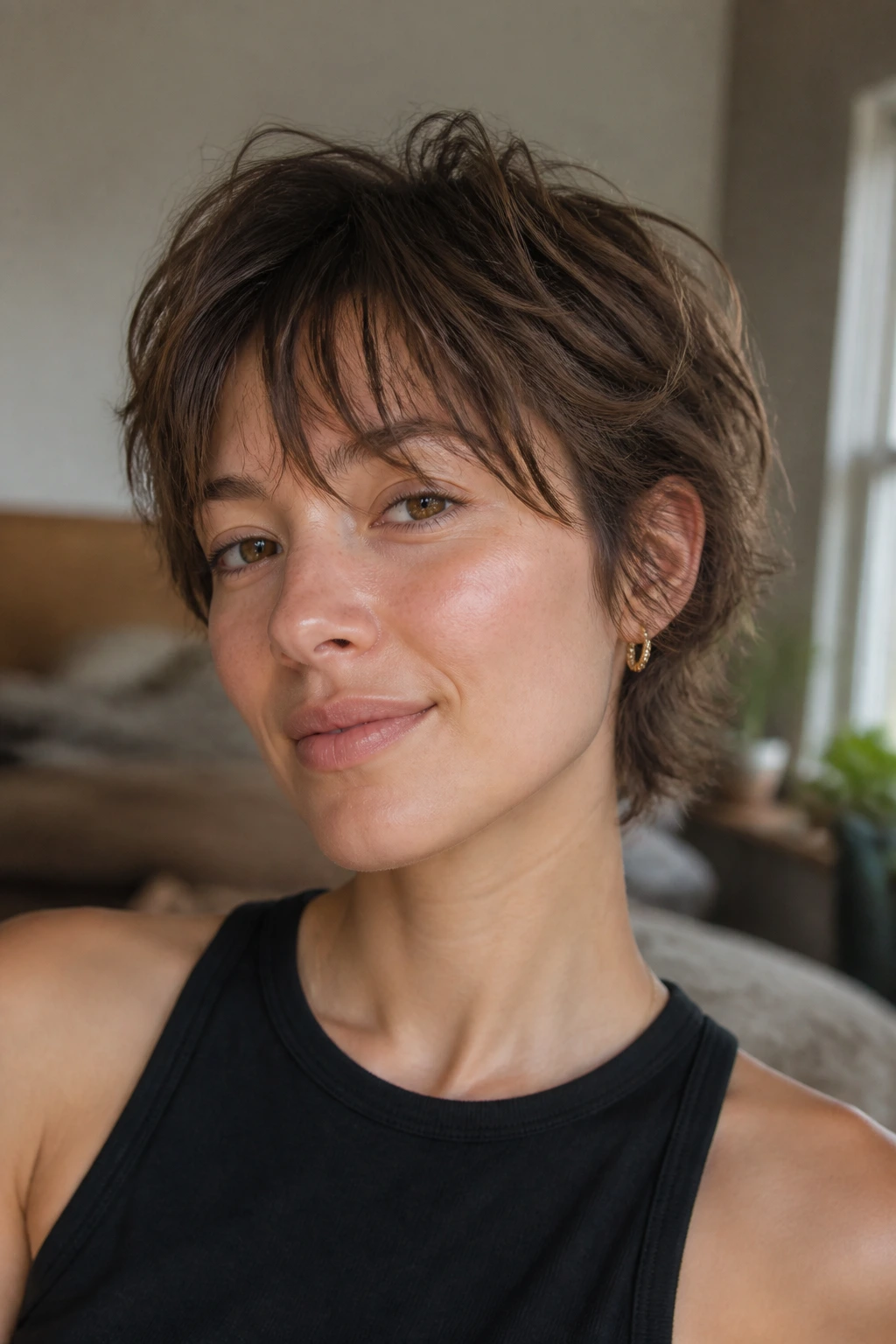
The bixie shag lives between a pixie and a short bob, which sounds like a compromise until you see what it does to wavy hair. The shorter back keeps the neck open, while the shag layers at the top prevent the cut from looking too sweet or too helmet-like. Wispy bangs finish the shape without stealing the whole show.
This is one of those cuts that depends on internal texture. Without it, a bixie can sit flat and a little old-fashioned. With it, the hair gets little bends and flips that catch the light in a nice, uneven way. I prefer this on hair with some natural movement and a neck line that looks good with exposure.
The wispy fringe matters because the front needs to stay light. Heavy bangs can swamp the face in a cut this short. Wispy pieces, though, let the forehead breathe while still giving you that shaggy frame.
If you hate spending time on your hair, this is a strong choice. It dries fast, and the shape is forgiving when you need to leave the house before the back is fully behaved.
6. Rounded Mushroom Shag With Split Bangs
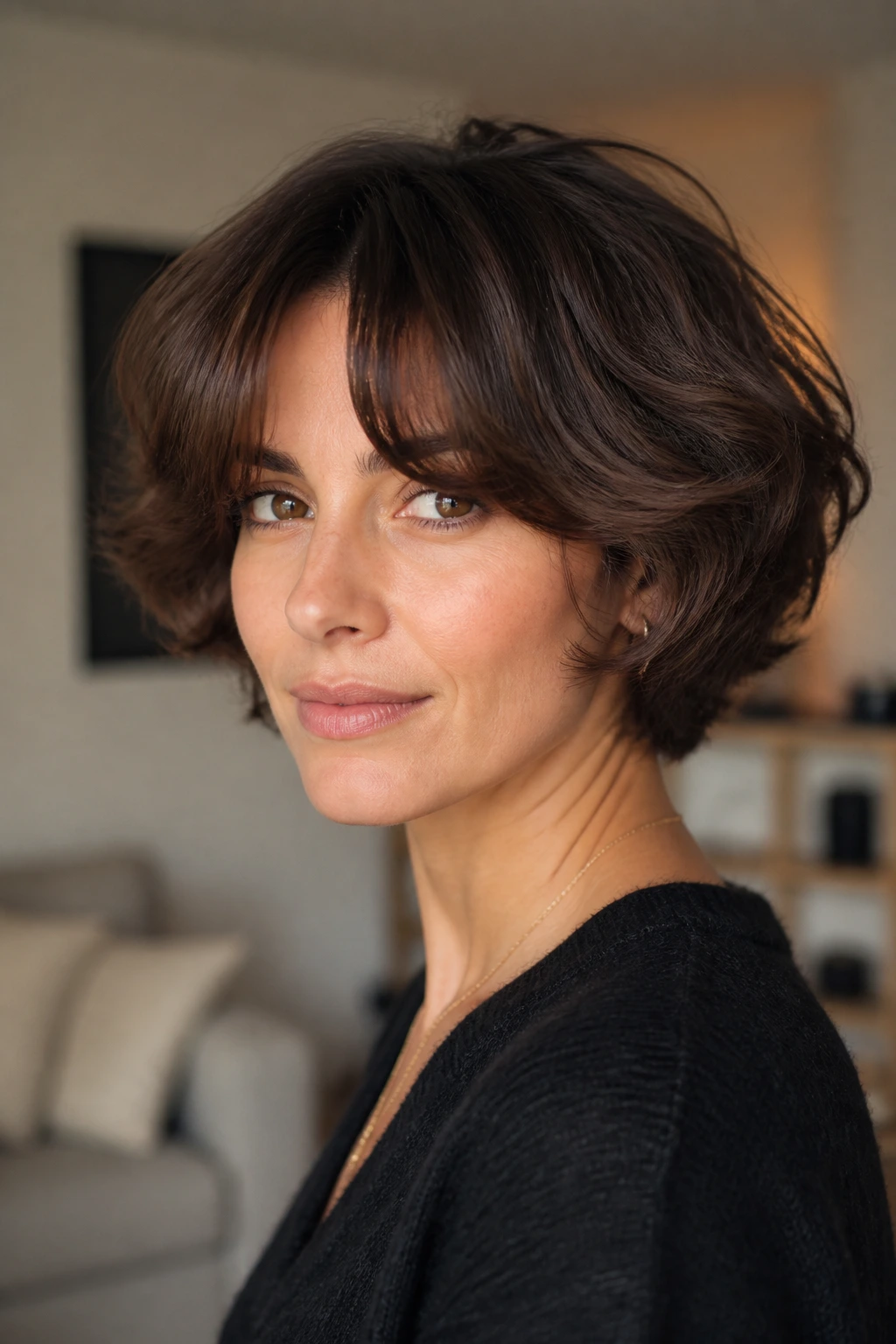
Here’s the thing people miss about rounded shag shapes: they can be soft without being boring. A rounded mushroom shag keeps fullness through the sides and crown, then breaks that shape open with split bangs so the front does not turn into a cap. On wavy hair, that split fringe keeps the whole thing from feeling too heavy.
The roundness is the point. It gives the haircut a little architecture, which works beautifully when your waves are inconsistent from side to side. Instead of fighting the irregularity, the cut uses it. The silhouette stays plush near the head, and the broken fringe gives the eyes somewhere to land.
What to Ask For
Ask your stylist to keep some weight at the lower side sections while removing bulk from the crown. That sounds backward if you’re used to chasing volume, but on wavy hair it can keep the shape from exploding outward. Split bangs should be long enough to tuck behind the ears on a bad day.
That backup plan matters.
This cut suits people who like a little 1960s echo without the full retro commitment. It’s especially good if your hair puffiness lives near the temples.
7. Collarbone Shag With Curtain Bangs
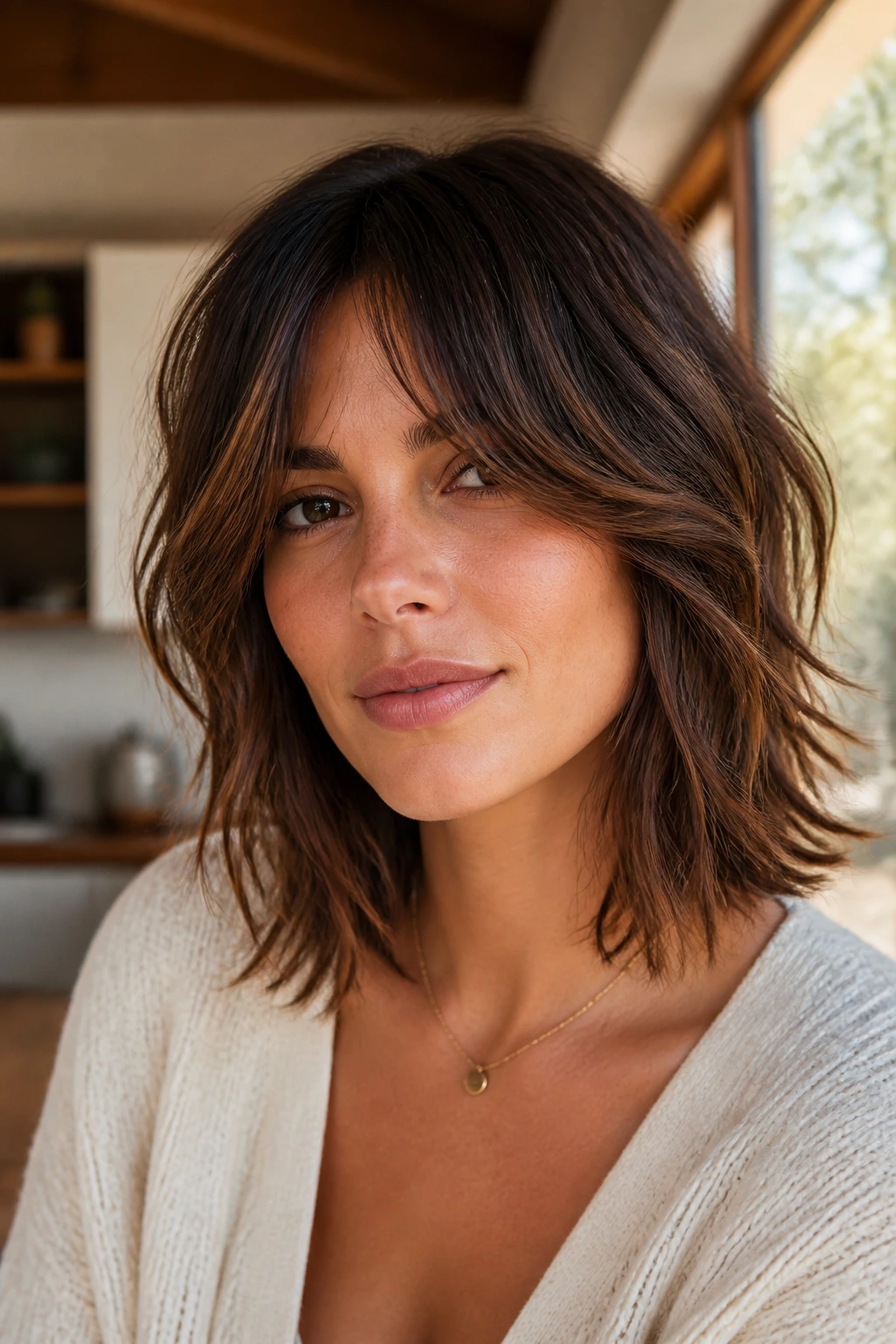
A collarbone shag is longer than some of the other cuts here, but it still counts as short enough to feel fresh and light. The waves get to keep a little swing, and the curtain bangs stop the top from dragging the face down. The result is easy movement, especially if your hair likes to flip under at the ends.
This is the version I’d suggest to someone moving from long hair into shorter territory. It doesn’t feel abrupt. The layers are visible, but not choppy enough to scare you in the mirror the first week. The bang split can be soft, deep, or almost centered depending on your face shape.
The collarbone length gives you a useful middle ground. You can tuck it. You can wear it half-up. You can let it dry messy and still look put together. That flexibility is the whole reason this cut keeps winning people over.
A little wave cream at the mids and a dry-texture spray at the ends is usually enough. Too much product will make the shorter layers slump.
8. Shattered Bob Shag With Side-Swept Bangs
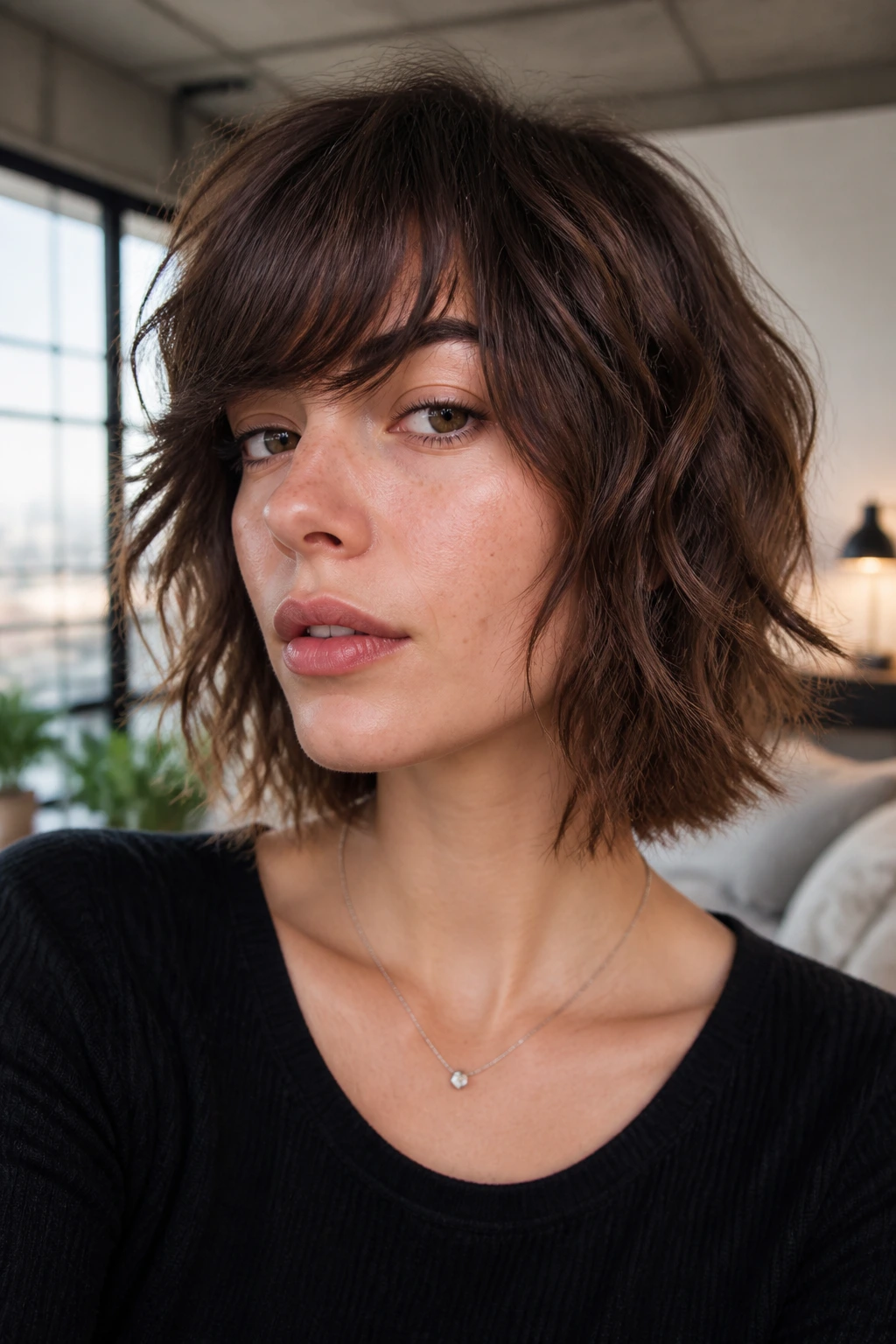
This cut has a little more edge than the curtain-bang versions, and that’s the point. The shattered bob shag breaks the outline into small pieces so the hair never looks like it was trimmed into one solid block. Side-swept bangs push the eye diagonally across the face, which gives wavy hair a cleaner line.
The side sweep helps if your face feels widest around the middle. It pulls the visual weight off-center, and the shattered layers keep the ends from puffing into a triangle. That triangle shape is the enemy here. I’ll say it plainly.
This works best when the wave pattern is loose to medium and you’re willing to do a little styling at the front. A quick bend from a blow-dryer brush or a round brush can keep the bangs from collapsing into your cheek. After that, leave the rest alone. The more you fuss, the less the texture looks like texture and the more it looks overdone.
A side-swept shag can feel slightly more polished than a center-parted one. That makes it handy for people who want shape without looking like they chased a specific trend.
9. Feathered Crop Shag With Long Fringe
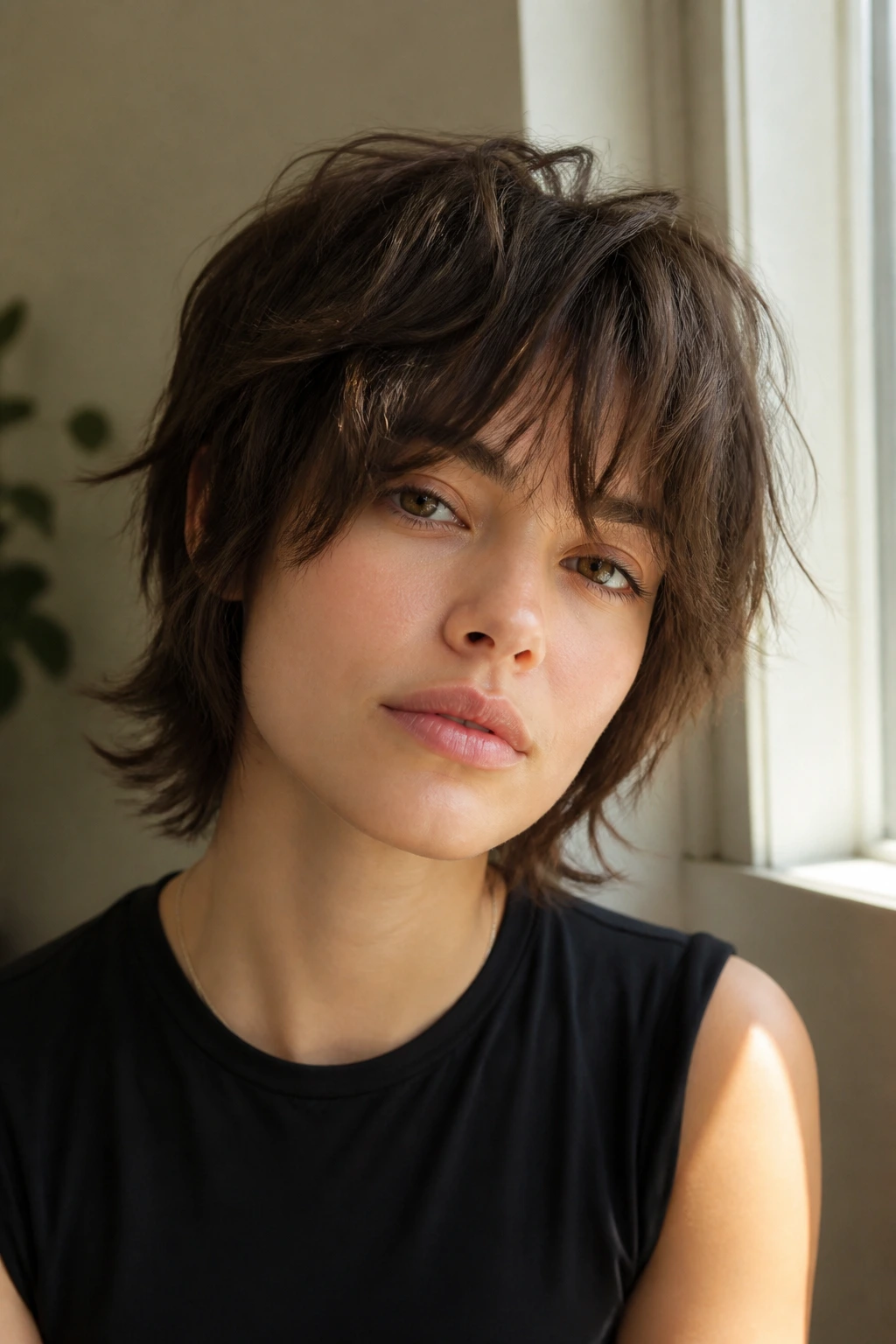
Why does this one work so well? Because it lets the fringe do the heavy lifting while the crop stays small and quick to dry. The feathers around the face soften the edges, and the long fringe keeps the top from looking too severe. On wavy hair, that matters more than people think.
A feathered crop shag has a built-in softness that makes short hair easier to wear. The longer bang sections can be tucked, parted, or bent to one side depending on the mood of the day. That gives the cut a little flexibility even though the overall length is compact.
How to Wear It
Scrunch the crown with a light mousse, then let the fringe dry partly in the direction you want it to sit. If you let the bangs float freely, they can separate into odd little hooks. Not the good kind.
A tiny round brush helps, but only at the front.
This is a nice cut for active people, humid climates, or anyone who hates drying long hair. It also works well if you want a short style that still feels feminine without being precious.
10. Air-Dry Layered Shag With Bottleneck Bangs
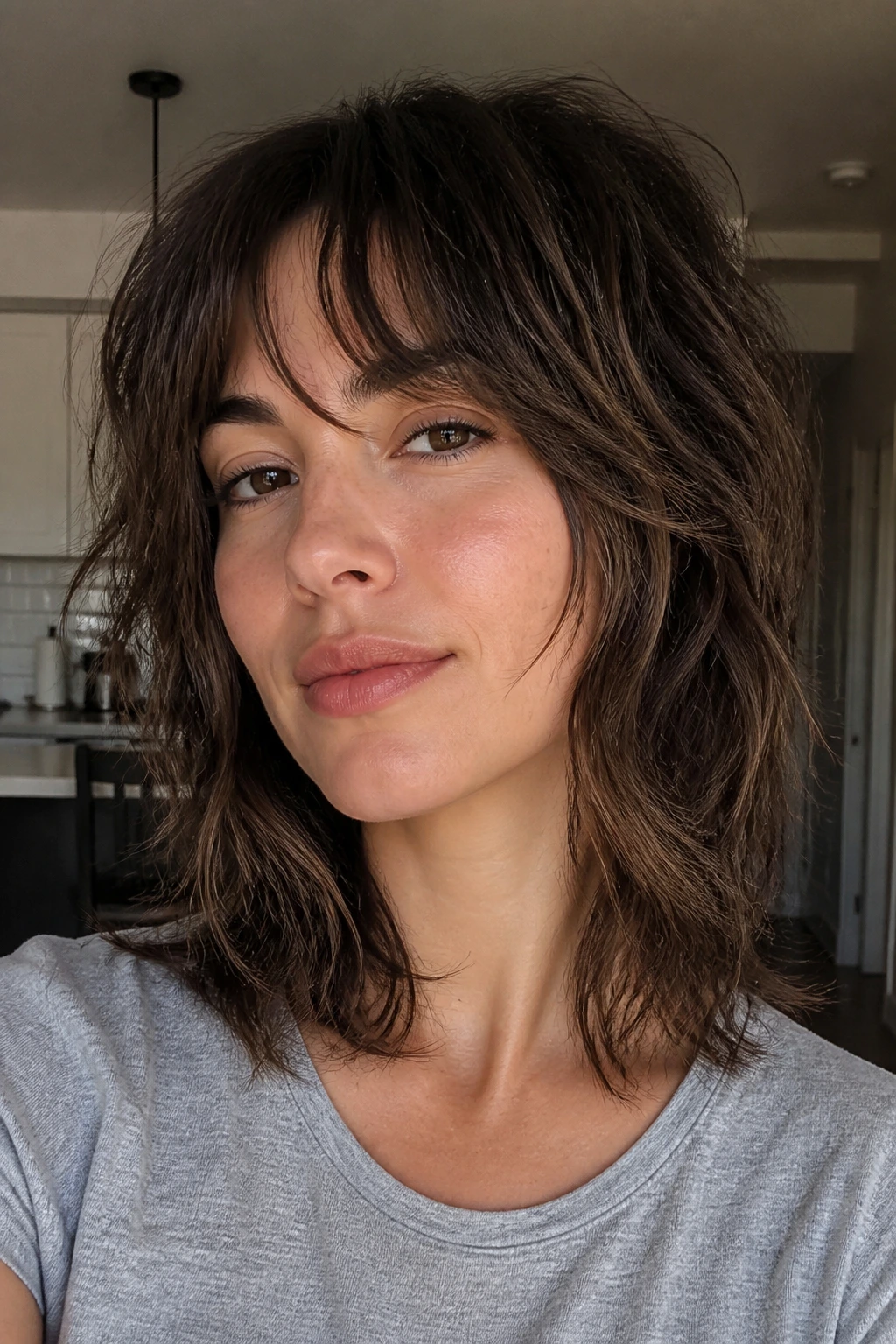
This is the practical girl’s shag. The whole cut is designed to look good without a lot of heat, and wavy hair usually loves that. The layers are placed to let the hair bend on its own, while the bottleneck bangs keep the forehead area soft without swallowing it.
The reason it works is mechanical. Shorter layers around the crown encourage lift, and the longer pieces around the jaw stop the shape from fanning out too wide. That means you get movement without the dreaded puff cloud. Air-drying helps the cut look the way it was meant to look, which is not always true of shorter styles.
If your hair dries in a stubborn pattern, this is still worth considering. You may need a little root clip or a slight repositioning of the part while it sets. But once the hair learns the shape, the routine gets easy. Low effort. Good result.
I like this version on hair that has a medium density and a wave pattern that doesn’t need a lot of coaxing. It’s the cut you can wear with a T-shirt and still look like you made a decision.
11. Textured Lob Shag With Center-Part Curtains
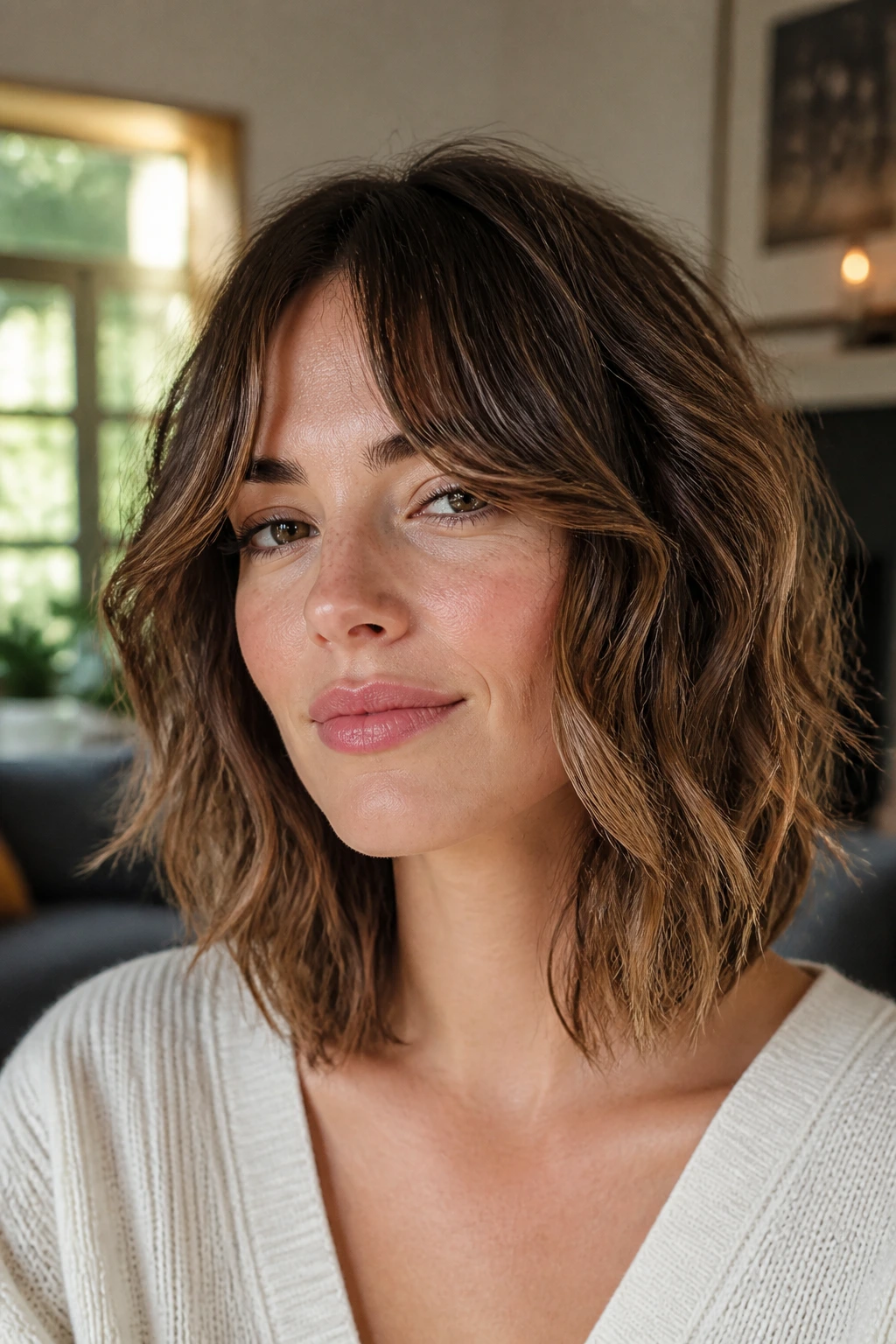
The textured lob shag sits in that sweet spot where the hair is still short enough to feel light, but long enough to flip over a shoulder without fighting you. Center-part curtain bangs make the front symmetrical, which is useful when the waves themselves are not. That balance is what keeps the style grounded.
This cut has a softer temperament than the more cropped styles. It lets the wave pattern stretch a little, which can be a relief if your hair gets too wide when it’s cut above the jaw. The layers remove bulk from the middle, not just the ends, and that keeps the silhouette from becoming boxy.
A center part works best here when the fringe is longer on the first cut. Bangs that are too short can spring up and make the lob feel abrupt. Longer curtains land more gracefully, especially after the first wash.
If you like hair that can move between casual and dressed up without much drama, this is a smart pick. It’s one of those cuts that looks like it was done by someone who understands wavy hair, not someone who just trims around it.
12. Retro Disco Shag With Heavy Bangs
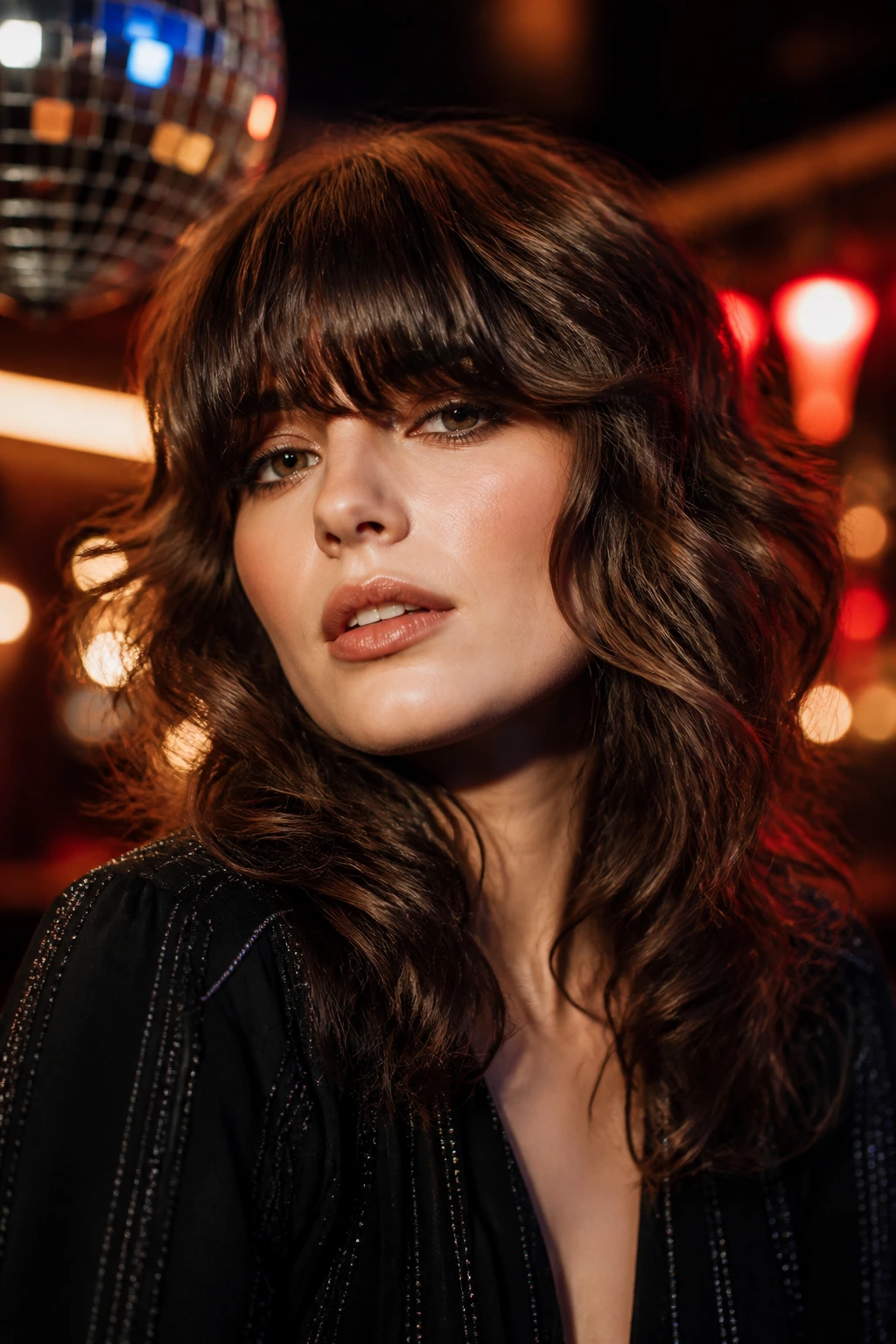
Some shags whisper. This one talks back. The retro disco shag uses heavier bangs and more obvious layering, which gives the haircut that slightly glamorous, slightly unruly feel that looks so good on wavy hair. The fringe draws attention first, and the layers keep the rest from turning bulky.
I like this shape when the wave pattern has some spring to it and the hair has enough density to support a fuller front. Heavy bangs on very fine wave can get stringy fast. But on medium to thick hair, they can make the whole head feel lush and alive. The key is not to make the fringe a solid wall. It should still break apart a little when it dries.
This cut looks best with a bit of bend at the ends and a little lift at the roots. A round brush can help, though a diffuser and a finger-comb often give a better finish. The goal is movement, not perfect polish.
It’s also the cut most likely to get compliments from strangers who know their hair. That happens.
13. Understated Cool-Girl Shag With Micro Fringe

Micro fringe on wavy hair is a risky move, and I’m not going to pretend otherwise. When it works, though, it looks sharp in a way that longer bangs never quite do. The understated cool-girl shag keeps the rest of the layers soft so the micro fringe can stay the focal point.
The trick is restraint. A micro fringe needs a clean, deliberate line near the brow or just above it, but the surrounding layers should be loose enough that the haircut does not start feeling severe. Wavy hair adds movement around the face, which can be gorgeous here—as long as the fringe is cut with the wave pattern in mind.
This is not the easiest style to wear if you like sleeping in and hoping for the best. Bangs this short need a bit of daily attention. Still, the payoff is strong if you want a cut that looks distinct without being fussy. Dry the fringe first, keep the rest air-dried or lightly diffused, and let the contrast do the work.
Best for people who like a little bite in their haircut. Not best for anyone who wants zero maintenance. Be honest with yourself.
14. Curved Bob Shag With Swoopy Bangs

The curved bob shag is one of those shapes that seems simple until you see the front angle. The line around the face bends inward slightly, which gives the waves a place to land. Swoopy bangs keep the top from looking flat or chopped off, and they help the hair move into the shape instead of sitting on it.
This cut is especially flattering if your hair tends to swing outward at the bottom. The curve redirects that energy. It also gives the face a soft frame without making the jawline disappear, which is a balance a lot of bob-length cuts miss. The bend in the bangs can echo the bend in the wave, and that repetition is what makes it feel polished.
A round brush and a medium nozzle can shape the front if you want more curve. If you want it looser, bend the bangs with your fingers and leave the ends a little imperfect. That roughness is not a flaw here. It’s the point.
I’d call this one quietly elegant, except that phrase gets used to death. So let me say it more plainly: it looks put together without looking stiff.
15. Ruffled Mullet Shag With Tapered Bangs
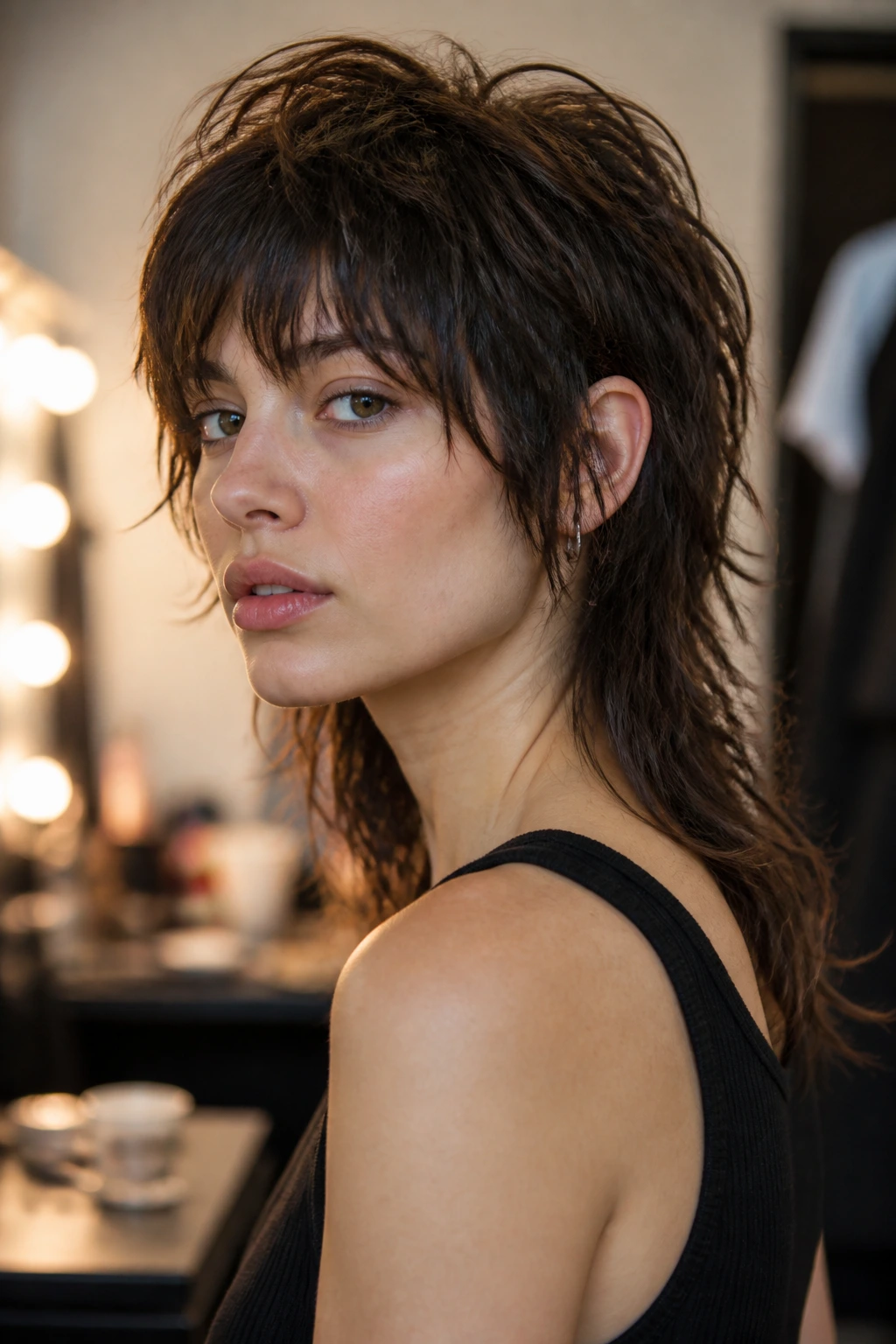
A ruffled mullet shag is not for someone who wants to blend into a crowd. The back stays a little longer, the top stays broken up, and the tapered bangs narrow toward the face instead of spreading wide. On wavy hair, that taper keeps the front from feeling too heavy, which is the main danger with this silhouette.
The cut works because it uses contrast. Shorter pieces around the crown create lift, while the longer back adds that slightly rebellious shape people either love immediately or warm up to over time. The bangs help tie the whole thing together so it doesn’t look like two different haircuts arguing with each other.
If your waves are loose and your hair has decent density, this style can be a lot of fun. If your hair is very fine, the back may need more softness than a true mullet shape usually allows. That’s where a stylist with a light hand matters.
This is one of the best choices for someone who wants the shag to feel more directional and less sweet. It has personality. It does not whisper.
16. Jawline-Grazing Choppy Shag With Arched Fringe

What makes this one special is the way it follows the jaw without boxing it in. The choppy ends keep the silhouette loose, and the arched fringe opens the face without losing structure. On wavy hair, that arc can be a lifesaver because it works with the natural bend instead of fighting it.
The jawline length is short enough to feel current, but not so short that the waves spring outward into a halo. That matters. A lot of short cuts ignore where the hair actually wants to sit. This one pays attention. The front arc mirrors the wave pattern and keeps the haircut from feeling blunt.
What Makes It Different
Unlike a straight bob, this shape does not rely on one hard edge. It relies on soft line breaks. That makes it easier to style on days when the hair is not cooperating, because the texture is already part of the design.
That’s the whole advantage.
This cut is a good fit for people who like visible movement near the chin and mouth. It draws attention upward, which is useful if you want the haircut to frame the face without swallowing it.
17. Beachy Mini Shag With Grown-Out Bangs

This is the shag for people who want to look like they did not try, even if they absolutely did. The mini length keeps the haircut quick and buoyant, while the grown-out bangs soften the forehead and make the style easier to live with. Wavy hair loves that relaxed balance.
A grown-out fringe is often the secret ingredient in a good short shag. It gives you movement at the front without the daily obligation of trimming or perfectly styling a shorter bang. The bangs can split a little, fall to the sides, or land over one eyebrow. All of that looks right here.
The beachy texture only works if the layers are not overcut. Too much thinning and the ends become frayed in a bad way. Just enough separation, though, gives the cut a breezy finish that sits nicely on wavy hair.
If you want something that can survive a rushed morning, this should be high on the list. It forgives a lot.
18. Razor-Cut Shag With Soft Side Bangs
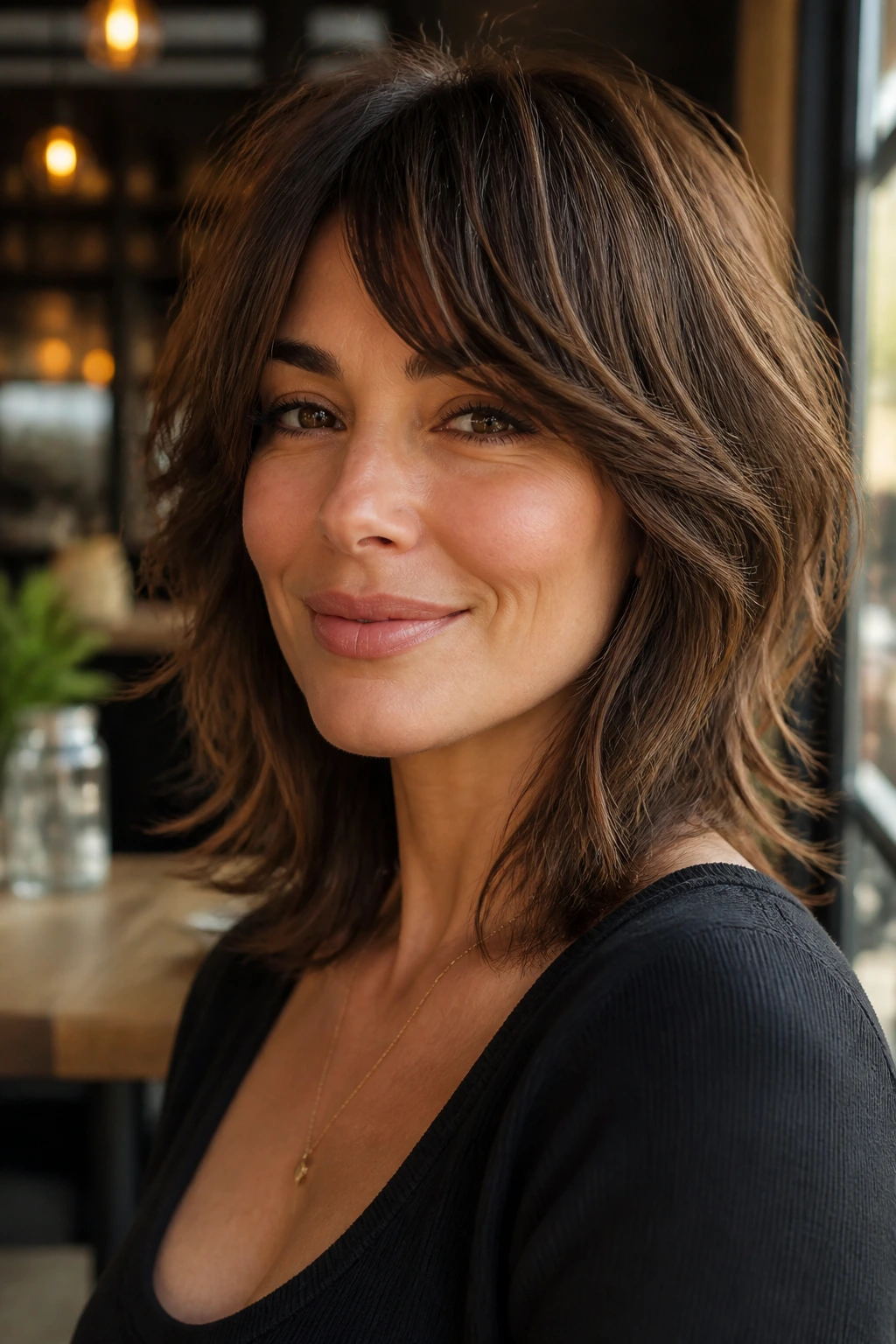
Razor cutting and wavy hair can be a beautiful match when they’re handled with restraint. The razor softens the perimeter, and the side bangs take some of the attention off the forehead, which makes the whole cut feel airy. This version is especially useful if your waves get thick at the bottom and you need the line to lighten up.
The soft side bang is doing more work than it looks like. It gives the hair a directional flow, which helps the cut look shaped even when you don’t spend much time on it. The razor work helps the ends separate, but it should not leave the hair wispy to the point of looking frayed.
A little smoothing cream through the bang area and a texture spray elsewhere is usually enough. If you use too much cream, the layers can collapse. If you use too much spray, the movement gets crunchy. Hair is annoyingly picky like that.
This cut is a nice middle road for someone who wants a shag that feels feminine but not soft-focus. There’s edge here. Just not a loud kind.
19. Thick-Hair De-Bulked Shag With Curtain Fringe
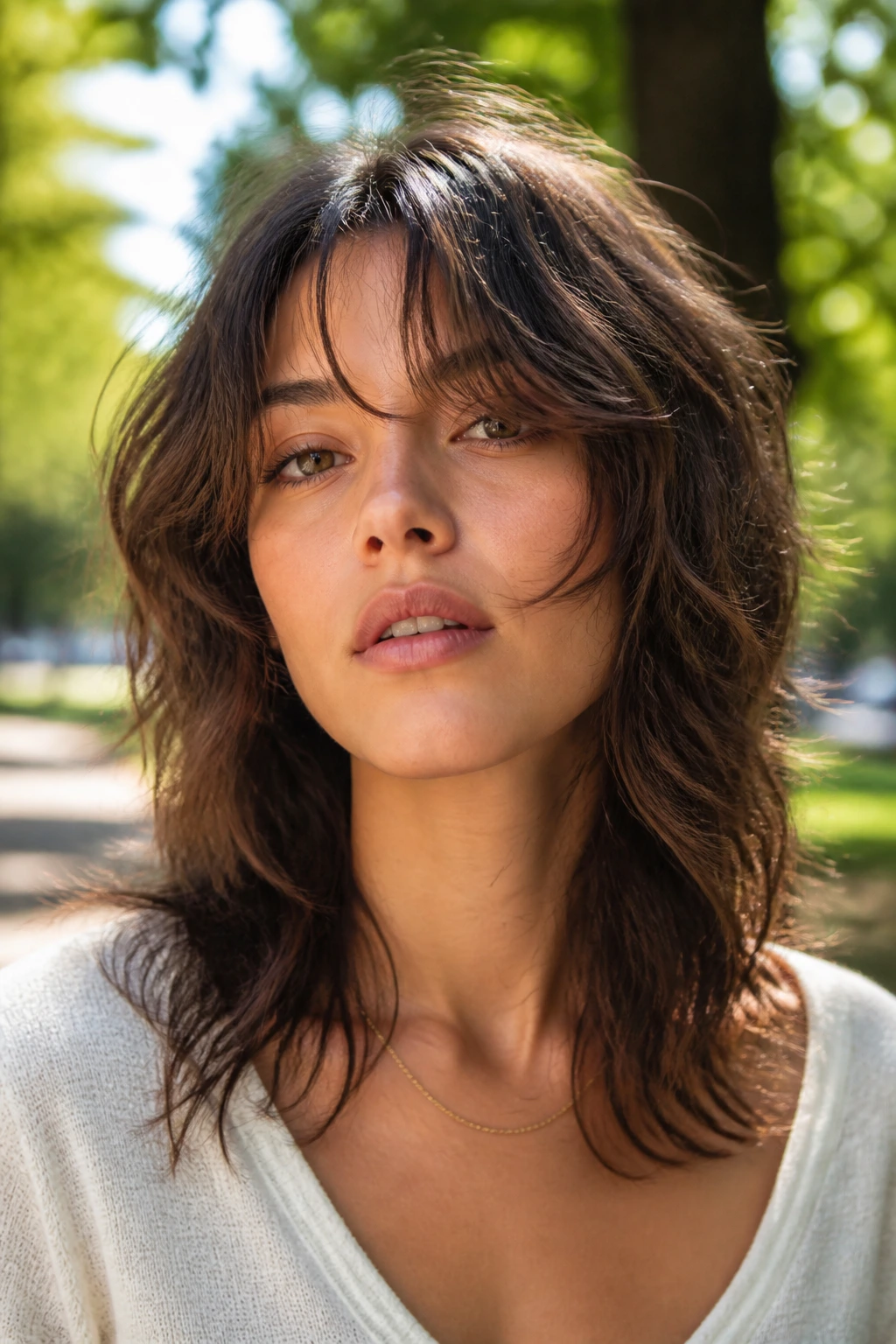
If you have thick wavy hair, this is one of the smartest shapes in the whole lineup. The cut removes bulk from the right places—usually through the interior and around the crown—so the head does not widen like a triangle by lunchtime. Curtain fringe keeps the front open and helps the layers flow down instead of out.
This is where a stylist’s technique matters most. Thick wavy hair often needs weight removed beneath the surface, not just on the top layer. If they only cut the visible pieces, the haircut can still feel heavy and triangular. A good de-bulked shag has a lighter skeleton underneath.
Fine-Tuning the Shape
Keep the fringe long enough to split and fall around the cheekbones. Short bangs on thick wave can spring into a stubby line that feels awkward after one wash.
Longer curtains soften that problem.
This cut rewards people who hate the “too much hair” feeling around the ears and neck. It takes volume off the sides and puts motion back into the silhouette. That’s a fair trade.
20. Fine-Wave Boost Shag With Light Layers and Bangs

Can fine wavy hair wear a shag? Absolutely—but only if the layers are handled carefully. The Fine-Wave Boost Shag keeps the layers light and strategically placed so the hair looks fuller, not stripped. Bangs add shape in front, which can make fine hair seem denser without weighing it down.
The biggest mistake with fine waves is over-layering. Too much texture removes the small amount of body the hair already has. This version avoids that by keeping the crown airy and the ends soft, not shredded. The fringe should be light too, with enough width to frame the face but not so much that it separates into skinny strings.
If your waves go flat after a few hours, this cut can help because it creates shape at the top without asking for a lot of product. A root spray or mousse is usually enough. Heavy creams are the enemy here; they make the strands stick together and expose the scalp.
It’s a cleaner, quieter shag. Not as dramatic. Far more wearable for fine texture.
21. Deep Side-Part Shag With Long Bang Sweep
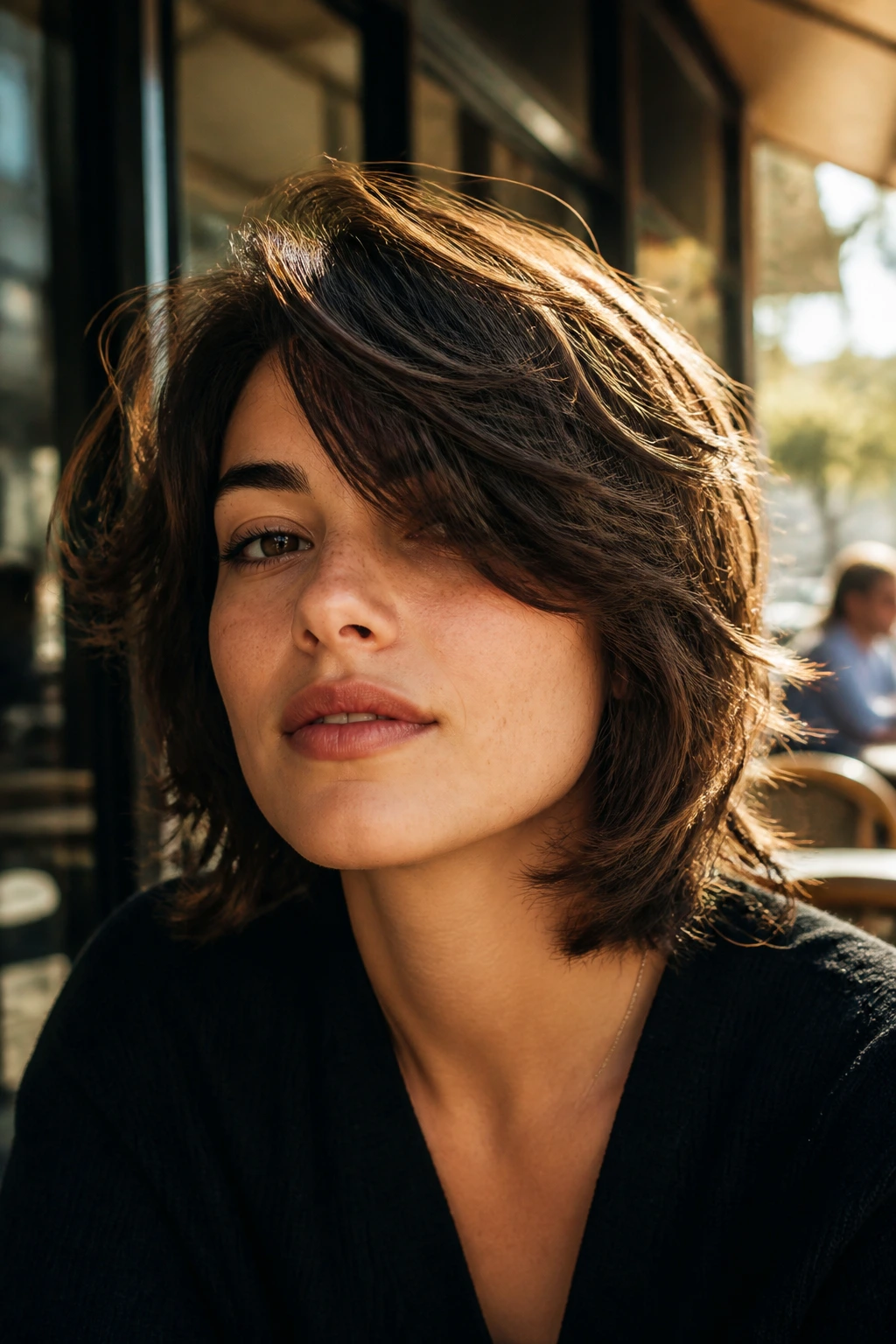
A deep side-part shag changes the whole mood of the haircut. The sweep across the forehead gives wavy hair a sense of direction, and the shorter layers around the part create lift where the hair usually falls flat. It feels a little dramatic in the best way.
This cut is useful if your face shape or cowlicks make center parts annoying. The side part can hide a stubborn growth pattern and give the fringe a better landing point. The long bang sweep also keeps the haircut from getting too short around the face, which is helpful if you still want some softness near the eyes.
The style works best when the wave bends in the same general direction as the part. That said, a stylist can usually work with the mismatch by shortening one side a touch and leaving more length on the sweep side. Hair that seems “difficult” often just needs the geometry adjusted.
If you like a little asymmetry, this is one of the nicer ways to use it. It looks deliberate, not random.
22. Flipped-End Shag With Brows-Skimming Fringe
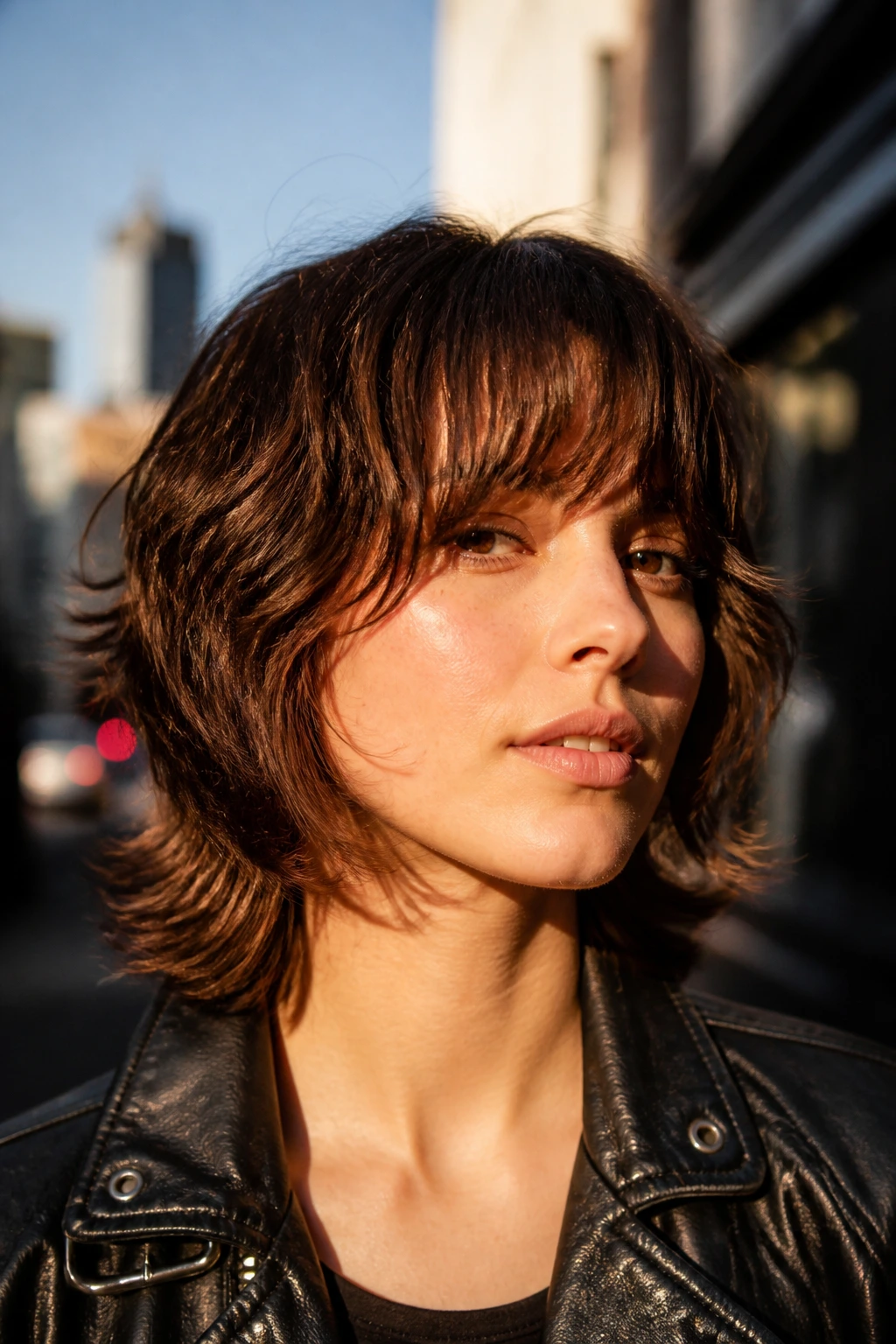
The flipped-end shag has a little retro attitude without leaning full costume. The ends turn out or bend away from the neck, which gives short wavy hair a lively finish. Brows-skimming fringe keeps the front from feeling too exposed and helps connect the face to the rest of the cut.
This shape is especially nice if your hair bends under too much when it’s cut blunt. The flipped ends break that tendency. They make the silhouette feel lighter and less boxy, which is exactly what a short shag should do. The fringe is short enough to read as a fringe, but long enough to move a little when you blink.
The Best Part
The hair doesn’t need to be perfect for this to work. A bit of bend, a bit of lift, a bit of unevenness—those are features, not problems.
That’s why it suits wavy hair so well.
A small round brush or even a quick bend with a curling iron on the lowest sensible heat can push the ends outward. Don’t overdo it. One or two softened flips are enough.
23. Soft Square Shag Bob With Rounded Bangs

A square shape sounds harsh, but the soft square shag bob isn’t. The outline has a bit more width and strength than the rounder cuts, while the rounded bangs soften the top so the haircut still feels friendly. On wavy hair, that combo gives you structure without the blocky helmet effect.
This cut can be brilliant for people whose waves are uneven from side to side. The square-ish perimeter keeps the shape steady, and the rounded fringe smooths out the forehead area. It’s a nice match for anyone who wants something more deliberate than a beach shag but less severe than a classic bob.
The bangs should curve just enough to follow the brow, then break apart at the temples. If they’re too perfectly rounded, the whole look turns dated fast. If they’re too thin, the square outline gets too strong. The balance is delicate, but worth it.
I like this one when someone wants a short haircut that still has a little polish for work or evenings out. It’s a grown-up shag. Not fussy. Just clearer.
24. Edgy Undercut Shag With Wispy Fringe
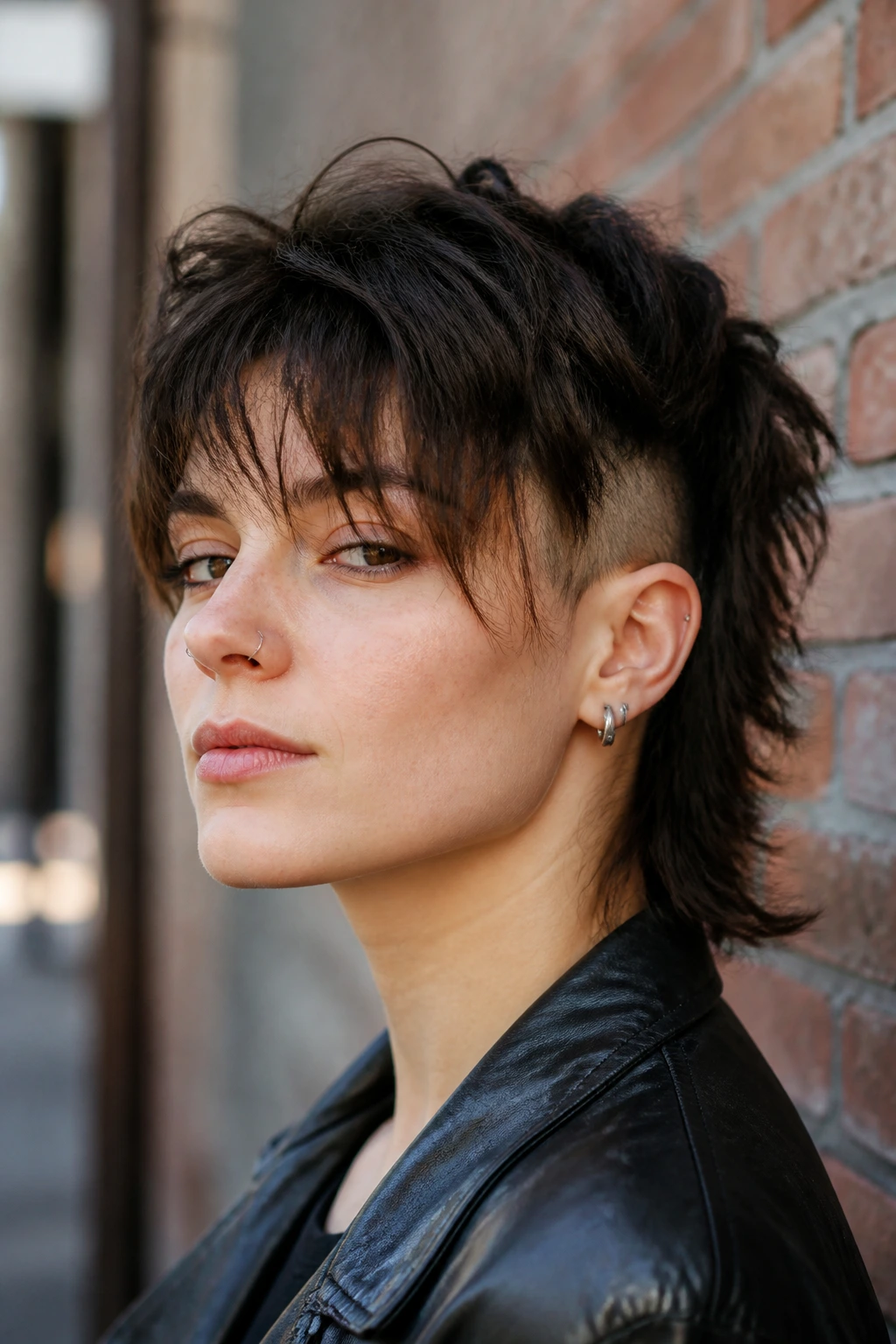
If you want more edge than softness, this is the move. An undercut shag removes bulk underneath, which lets the top layers fall with more contrast and less width. Wispy fringe keeps the front from turning severe. On wavy hair, that contrast can look sharp and expensive-looking in the plainest sense of the word.
The undercut is not about drama for its own sake. It’s about control. Thick or dense wavy hair can swell under a short shape, and taking some weight out below the visible layers changes how the cut sits. The wispy fringe keeps the face frame light so the whole haircut doesn’t feel too hard.
This is best if you already know you like short hair and you’re comfortable with a little maintenance around the neck. The hidden undercut grows out, and when it does, you’ll want a quick cleanup. That’s the deal.
Still, if your hair has too much bulk in a short cut, this can be the difference between wearable and annoying.
25. Short French Bob Shag With Full Fringe
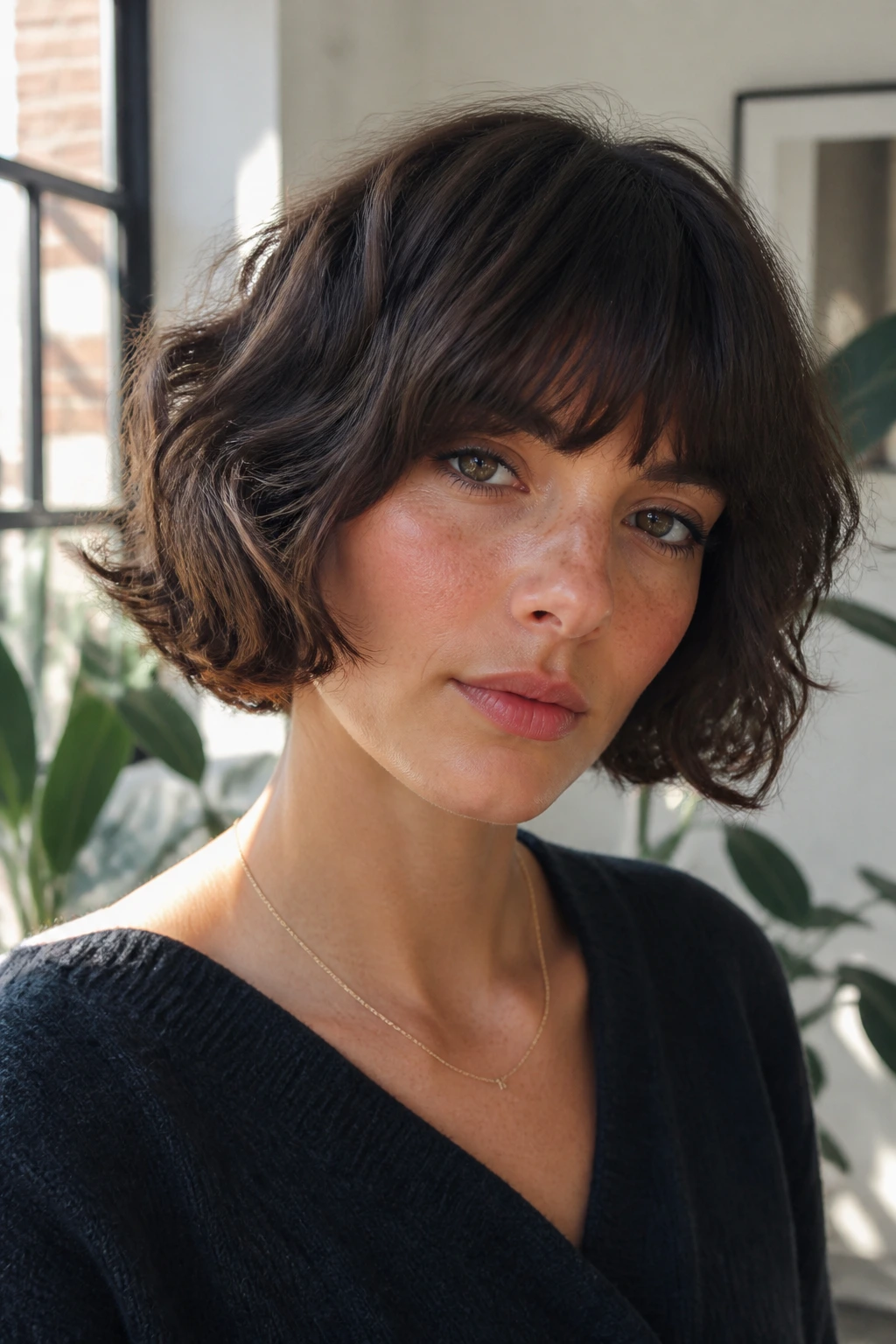
A short French bob shag with a full fringe is for someone who wants the haircut to read first, then the texture second. The fringe gives the style a clear front, while the shag layers stop the bob from feeling blunt or polished to death. Wavy hair keeps it from looking too neat, which is exactly the point.
The full fringe works best when it’s not too dense at the ends. You want some weight in the middle, some softness near the temples, and enough length that it doesn’t spring above the brows after the first wash. That fringe can be the difference between cute and awkward, so I’d avoid cutting it too short on day one.
When to Choose This
Choose this if you like a stronger line at the front and you’re willing to spend a minute or two arranging the fringe in the morning.
Skip it if you hate any feeling of hair on your forehead.
The cut looks especially good with a slightly messy finish. A tidy blowout can make it too serious. A bit of wave and bend keeps it alive.
26. Piecey Crop Shag With Bottleneck Bangs
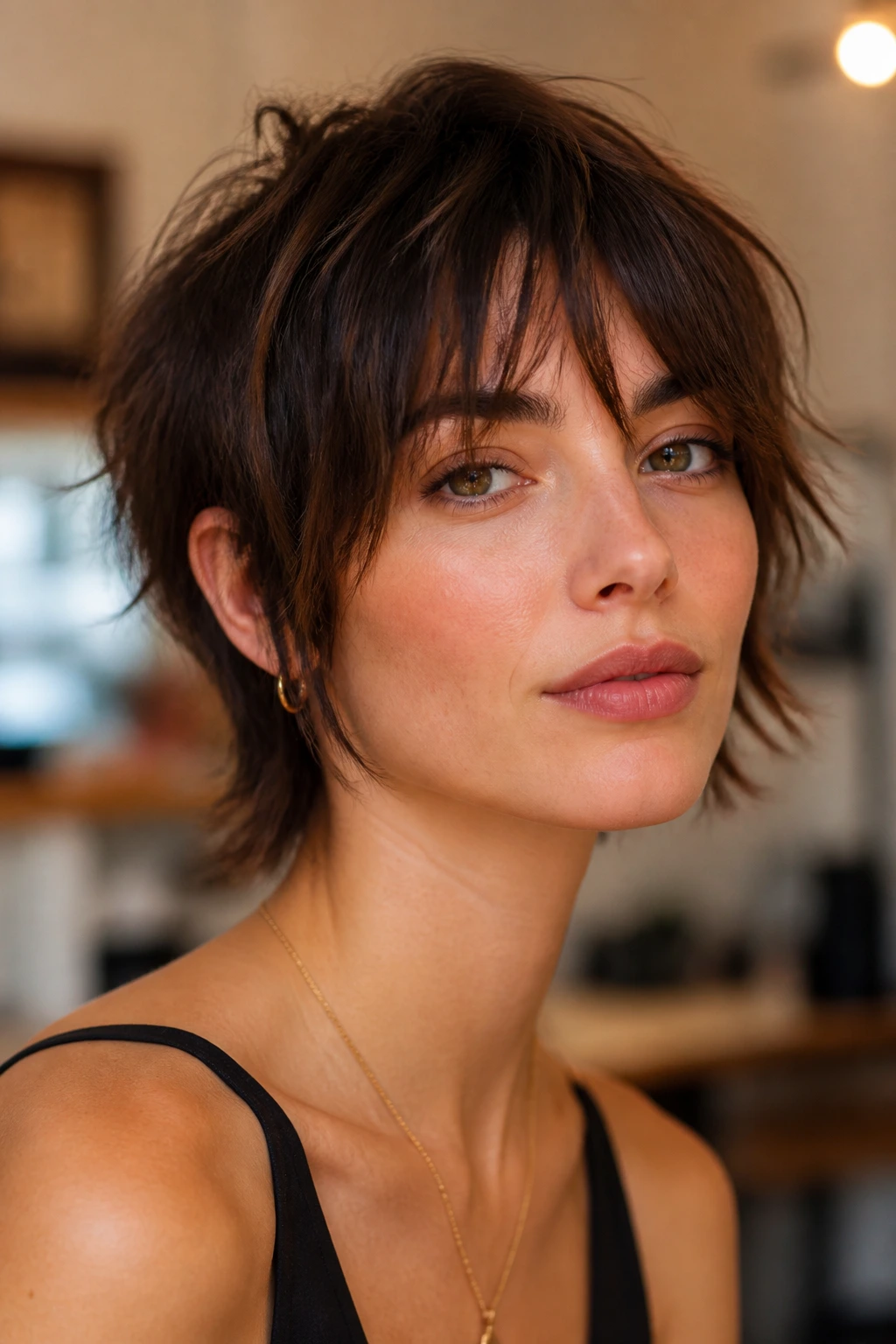
The piecey crop shag is one of the most forgiving short shapes for wavy hair because it asks for separation, not perfection. Bottleneck bangs keep the center soft and the sides a little longer, which makes the front frame more adaptable. It can look edgy, soft, or casual depending on how you style it.
This cut is strongest when the pieces are distinct. If the layers merge into one mass, the shape loses its charm. That’s why a light paste or a small amount of texturizing cream helps here. Pinch a few strands together. Leave others alone. The unevenness is the good stuff.
It works for people who want a crop but don’t want to commit to a pixie. The length around the top gives you enough hair to move around, and the bangs keep the face frame interesting. It’s low-key, but not boring.
If you have a wave pattern that likes to split into natural pieces, this cut can be a dream. If your hair is very smooth at the front, you may need a little coaxing.
27. Grow-Out Friendly Shag With Split Bangs
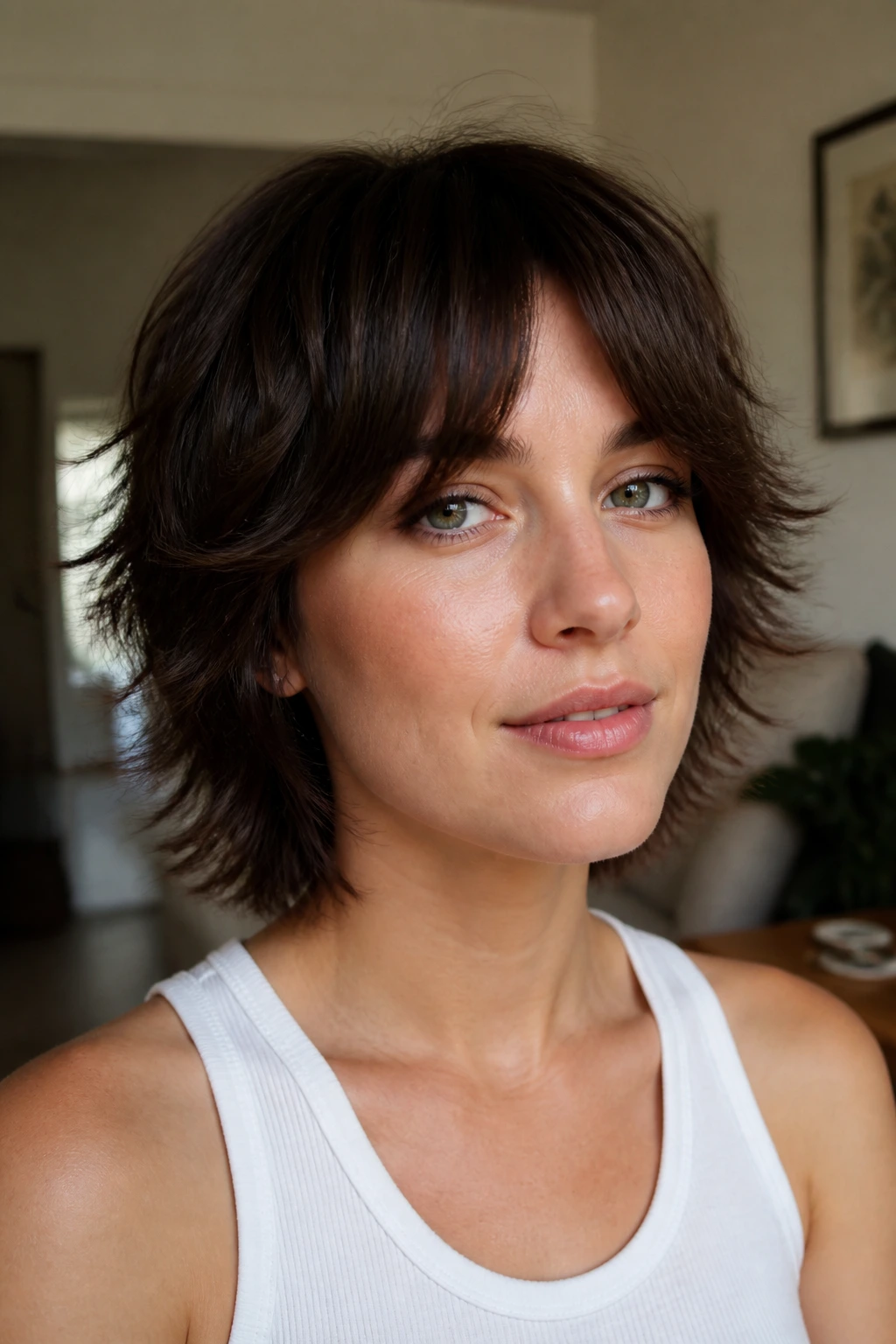
This is the one I’d recommend to anyone who already knows they’re not interested in a strict maintenance schedule. The grow-out friendly shag uses split bangs and soft layering so the haircut still looks deliberate when it starts to lengthen. Wavy hair usually helps it look even better after a few weeks, which is a nice change from the usual haircut regret cycle.
The split bangs are the main reason it ages well. They can open wider, fall deeper, or tuck away without the whole shape falling apart. The rest of the cut stays airy, so even as it grows, it keeps a sense of movement around the face and crown.
A short shag like this is easier to live with if you want to stretch trims a little. That doesn’t mean you ignore it. It means the cut was designed with a second life in mind. The best shags do that. They look good on day one, but they don’t collapse when day forty arrives.
If you’re trying to get more mileage out of shorter hair, this is the safest ending note in the list.
How to Style the Layers So They Don’t Puff Out
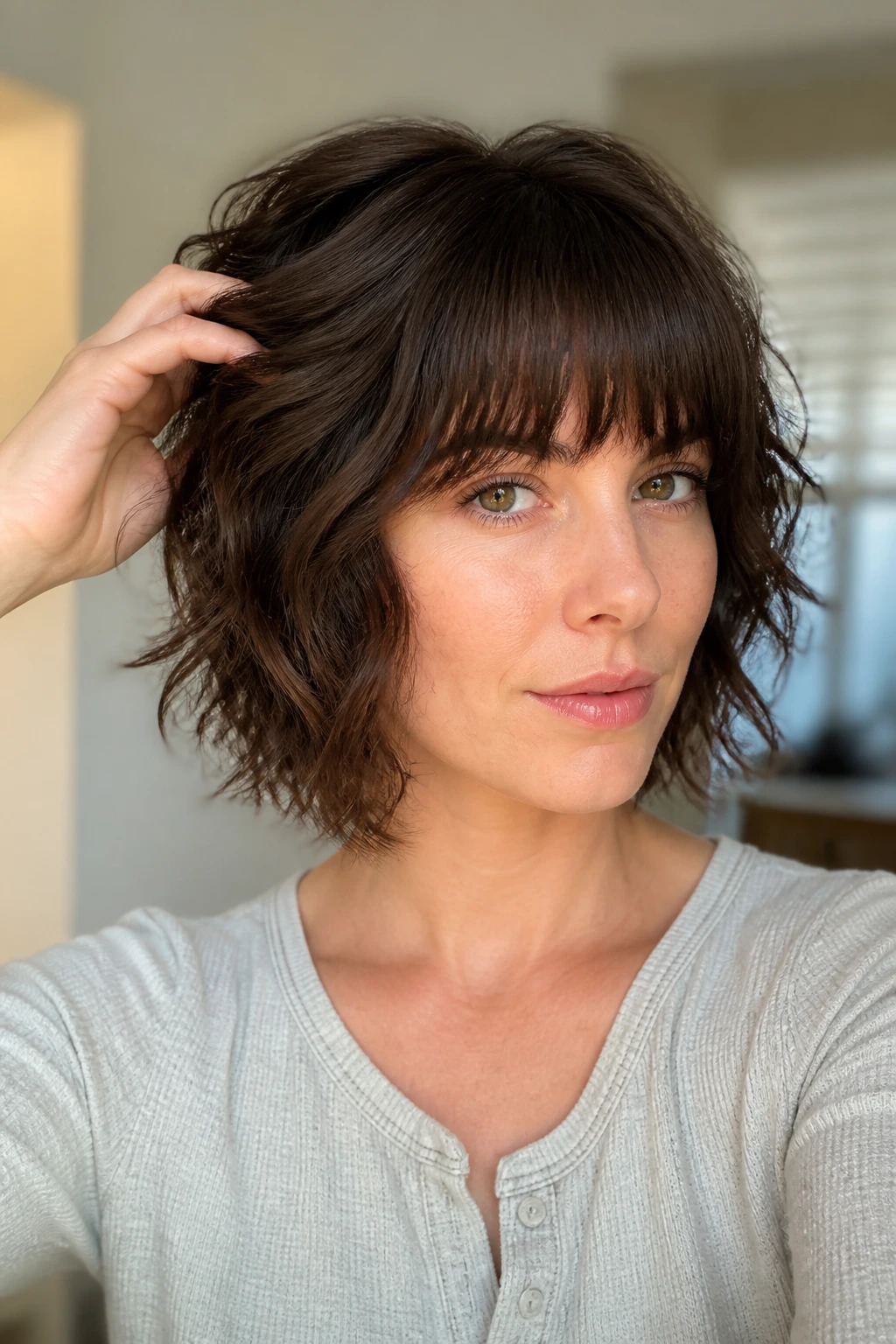
Wavy hair can turn on you in a hurry. One minute you have soft movement, the next minute the top has gone fuzzy and the sides are reaching out like they want personal space. The styling trick with short shag cuts is to keep the roots light and the ends separated without drying them into a halo.
Air-Dry vs Diffuse: If your wave pattern is loose and your cut was shaped well, air-drying can work beautifully. If your roots collapse, use a diffuser on low heat and low speed, lifting the crown for 10 to 15 seconds at a time. Don’t hover in one place too long. That’s how you get frizz without shape.
Product Layering: Start with a lightweight mousse or wave cream on damp hair, then add a little texture spray after the hair is about 80 percent dry. Heavy cream at the root is a bad idea; it drags the crown down and makes the fringe separate in sad little strings. Keep the richer product on the mid-lengths, where the wave needs definition.
Bang Rule: Dry the bangs first, even if the rest of the head is still damp. Fringe has less patience than the rest of the haircut. If you leave it for last, it often dries bent in the wrong direction and then spends the next hour fighting you.
Second-Day Reset: Mist the front and crown, scrunch in a tiny bit of mousse, and re-shape the bangs with your fingers or a small brush. You do not need a full rewash every time the haircut loses its pep. Usually, it just needs moisture and a little direction.
Tools and Products That Make This Cut Easier to Wear
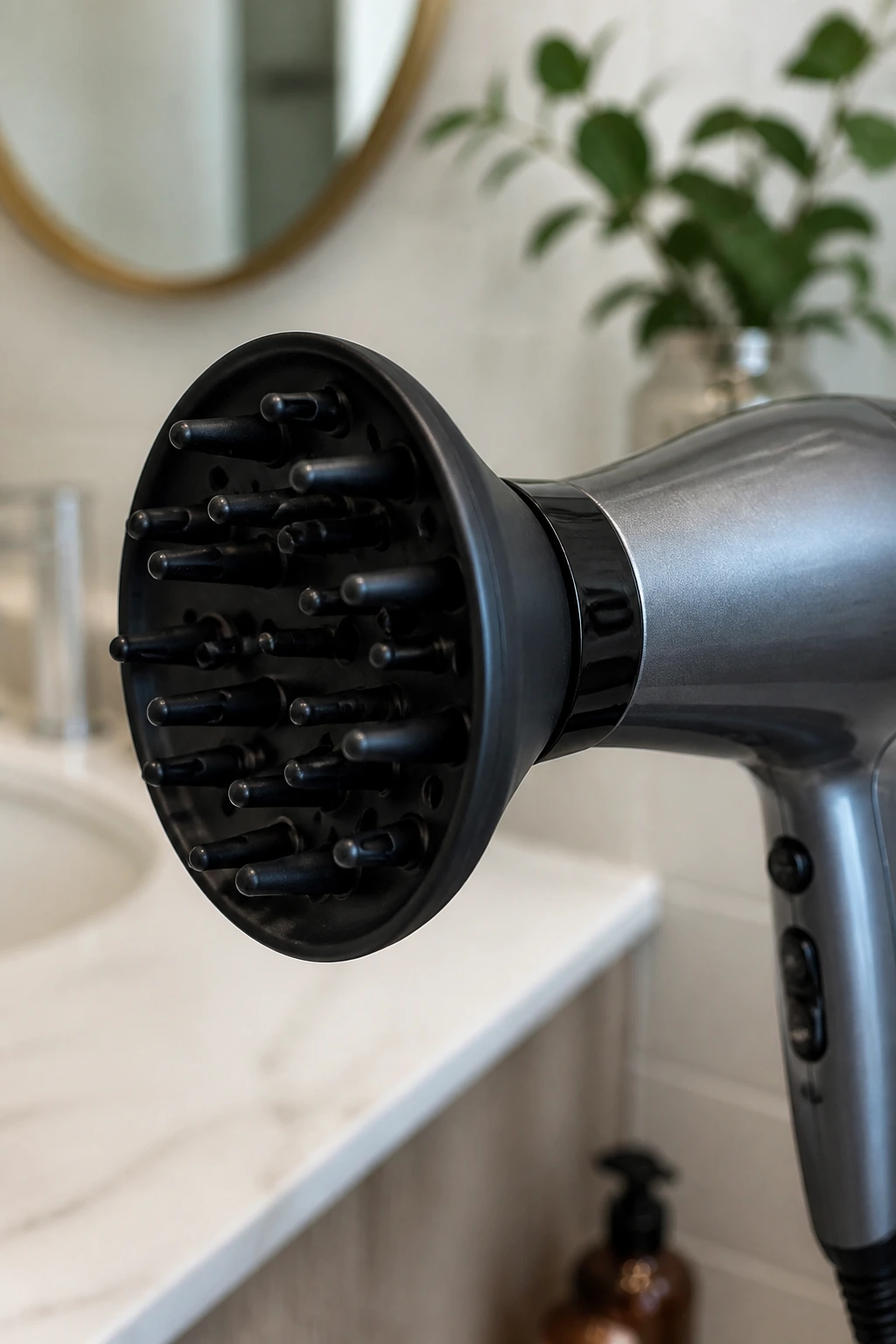
- A diffuser attachment: Keeps wave pattern intact while reducing root puff.
- Lightweight mousse: Best for adding lift without coating the hair in heaviness.
- Texturizing spray: Helps shag layers separate instead of clumping together.
- Small round brush: Useful for bangs and face-framing pieces, especially on day one.
- Blow dryer with a nozzle: Gives more control if you want the fringe to sit cleanly.
- Wide-tooth comb: Better than a fine comb for detangling without flattening waves.
- Duckbill or sectioning clips: Handy when you’re drying bangs or isolating the top layers.
- Haircut photos from multiple angles: Front photos lie. Side photos tell the truth.
- Light styling paste: Good for piecey ends and short fringe; use sparingly.
- Dry shampoo: Useful on day two when the crown starts to separate in odd ways.
How to Keep the Shape Between Trims
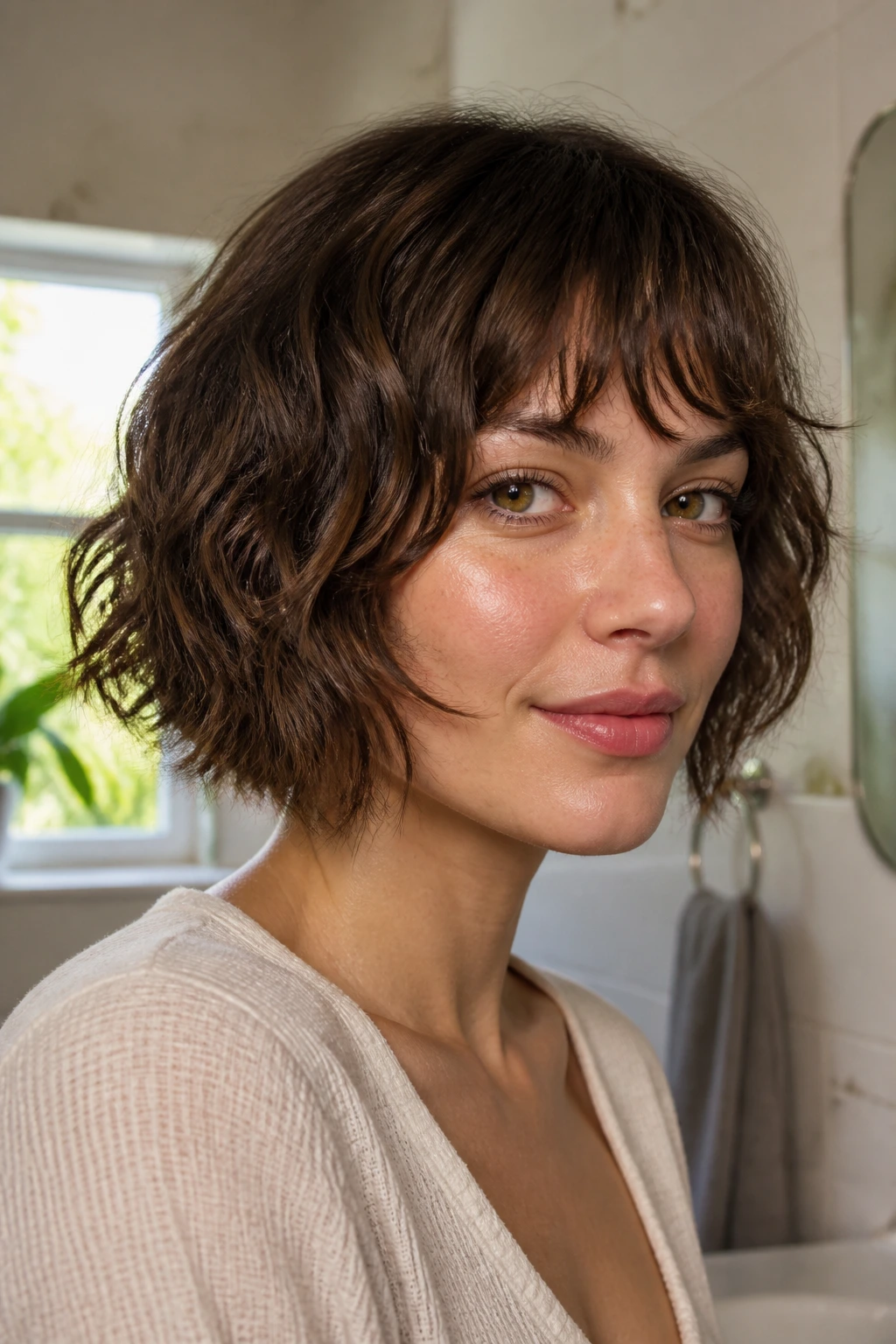
Short shags look best when the outline stays clean and the fringe stays honest. Bangs usually need attention first, often every 3 to 5 weeks if you want them to keep hitting the right spot. The rest of the cut can often go 8 to 10 weeks before it starts losing shape, though thick hair and faster growth can shorten that window.
Sleep changes the haircut more than people expect. A silk pillowcase helps, but the bigger win is drying the fringe in the direction you want it to sit the next day. If the bang bends left at night, it often wakes up bent left in the morning. You can also clip the front loosely while it dries so it does not set in a weird direction.
For refresh days, use a spray bottle to re-dampen the top layer and the fringe, then scrunch in a pea-sized amount of mousse or a very light curl cream. Keep the product away from the roots if they already go flat. A short shag usually needs less product than you think. The shape is the product, if that makes sense.
If you color your hair, especially with lighter pieces around the face, watch the texture at the ends. Frequent heat on already-lightened bangs can make them fray faster, and shag layers show damage more quickly than one-length cuts do. Trim before the ends start to look see-through. Waiting never helps.
Common Mistakes That Turn a Good Shag into a Triangle
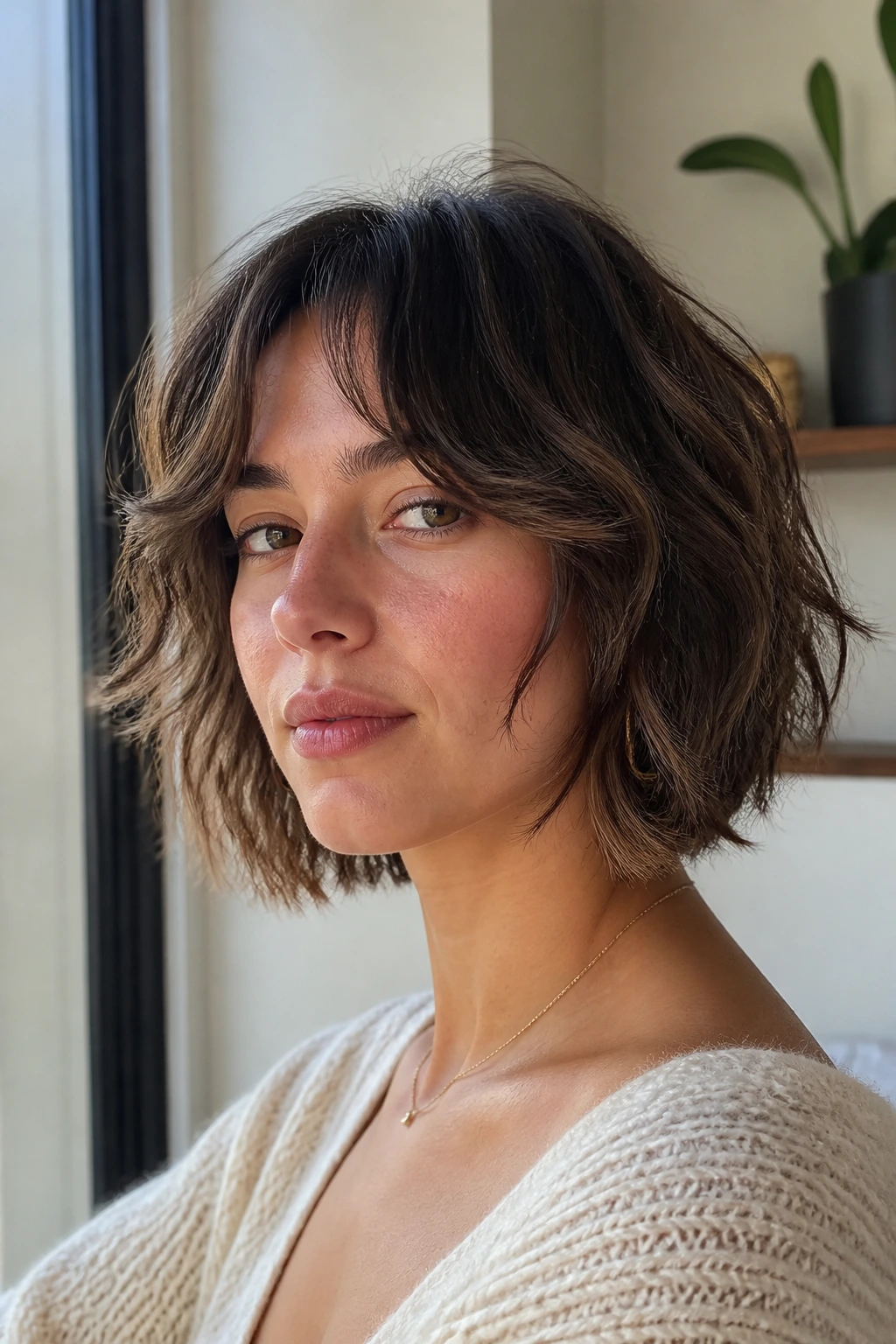
Cutting the bangs too blunt: Wavy hair makes blunt bangs behave unpredictably. They can kick up, split in the middle, or sit heavier on one side. Ask for softness or split pieces unless you know your wave pattern is calm.
Over-thinning the crown: A little removal of weight is helpful. Too much turns the top into frizz with no body underneath. The result looks airy for one hour and then falls apart.
Leaving too much bulk at the jaw: That’s how you get the triangle shape. The ends widen while the top lies flat, and the whole haircut starts looking top-heavy. Short shag layers should remove that bulk before it becomes visible.
Using heavy cream everywhere: Nice in theory, messy in practice. Heavy products make short waves collapse and stick together in the wrong places. Keep the heavier stuff to the mid-lengths or skip it.
Ignoring the way your hair parts: If your natural part is fighting the cut, the fringe will not sit where you want it. Even a great haircut can look off when the part is wrong by an inch.
Chopping the fringe too short on day one: Wavy hair shrinks. A lot. If your stylist cuts the bangs at their wet length and calls it done, you may end up with a brow situation you did not ask for.
Ways to Tweak the Shape for Different Wave Patterns
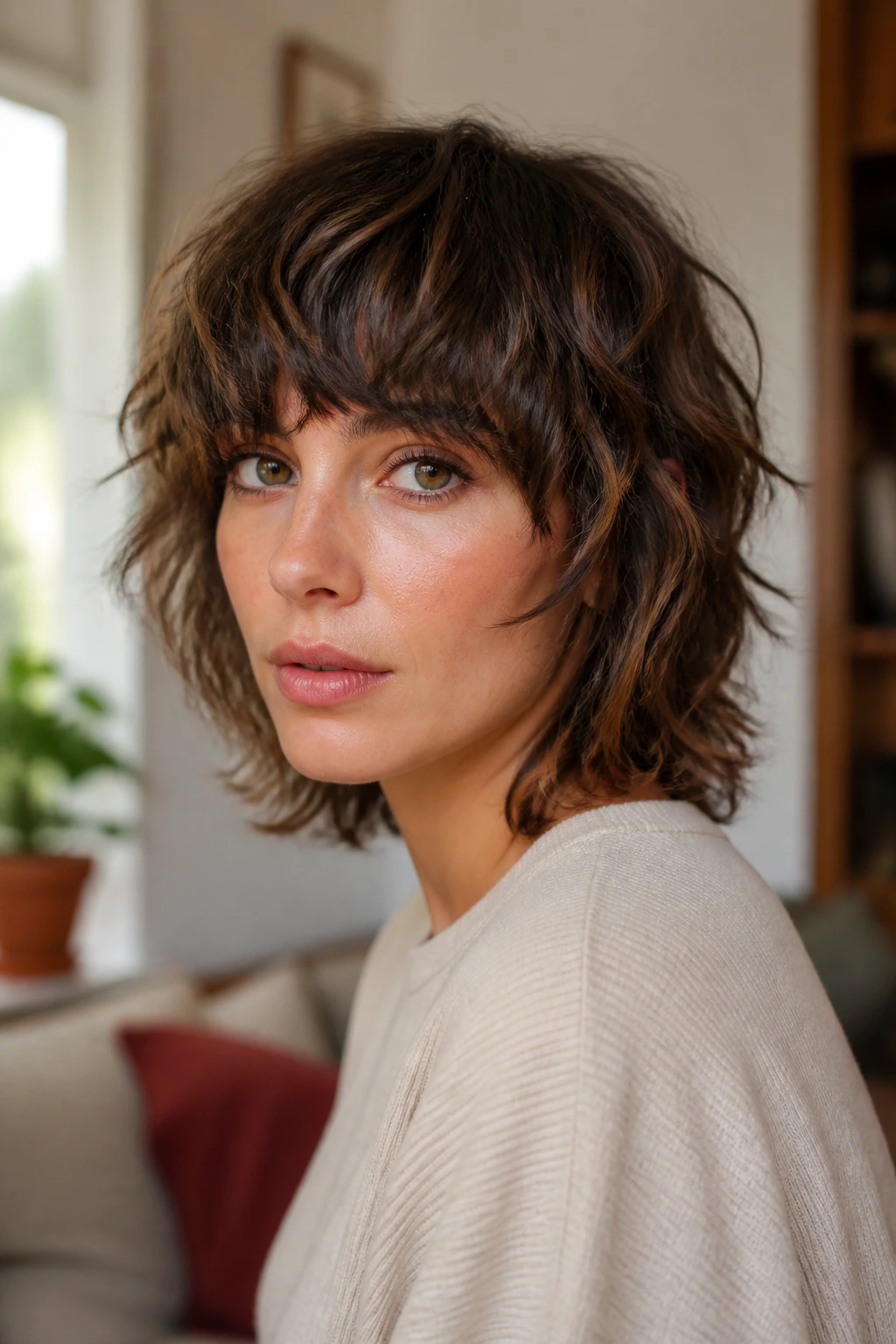
The Fine-Wave Featherlight Version: Keep the layers soft and avoid too much texturizing at the crown. Let the fringe stay a little longer and lighter so it frames the eyes without breaking into thin strands. This version gives fine hair the idea of fullness without stripping away the little body it has.
The Thick-Wave De-Bulk Version: Ask for internal weight removal and longer face-framing pieces. That keeps the silhouette from ballooning at the sides, which is where thick wavy hair often fights back. It’s the same shag family, just with more cleanup underneath.
The Cowlick-Friendly Version: Split bangs or a deep side part can save you a lot of daily annoyance. If your front hairline pushes in two directions, a softer fringe gives it room to behave. Dry the bangs first and let them cool in place.
The Round-Face Framing Version: Keep the shortest pieces at or just below the cheekbone, not right at the widest part of the face. That tiny shift changes the balance. Curtain bangs or side-swept pieces usually give the best effect here.
The Low-Maintenance Grow-Out Version: Leave more length in the fringe and keep the layers soft around the jaw. The haircut will still look like a shag after several weeks, which is exactly what you want if salon visits are not your hobby.
The Edgier Version: If you like contrast, ask for a stronger nape taper or a bit more separation in the fringe. That gives the cut a sharper silhouette without turning it harsh. It’s the same shag idea, just with more attitude.
Frequently Asked Questions
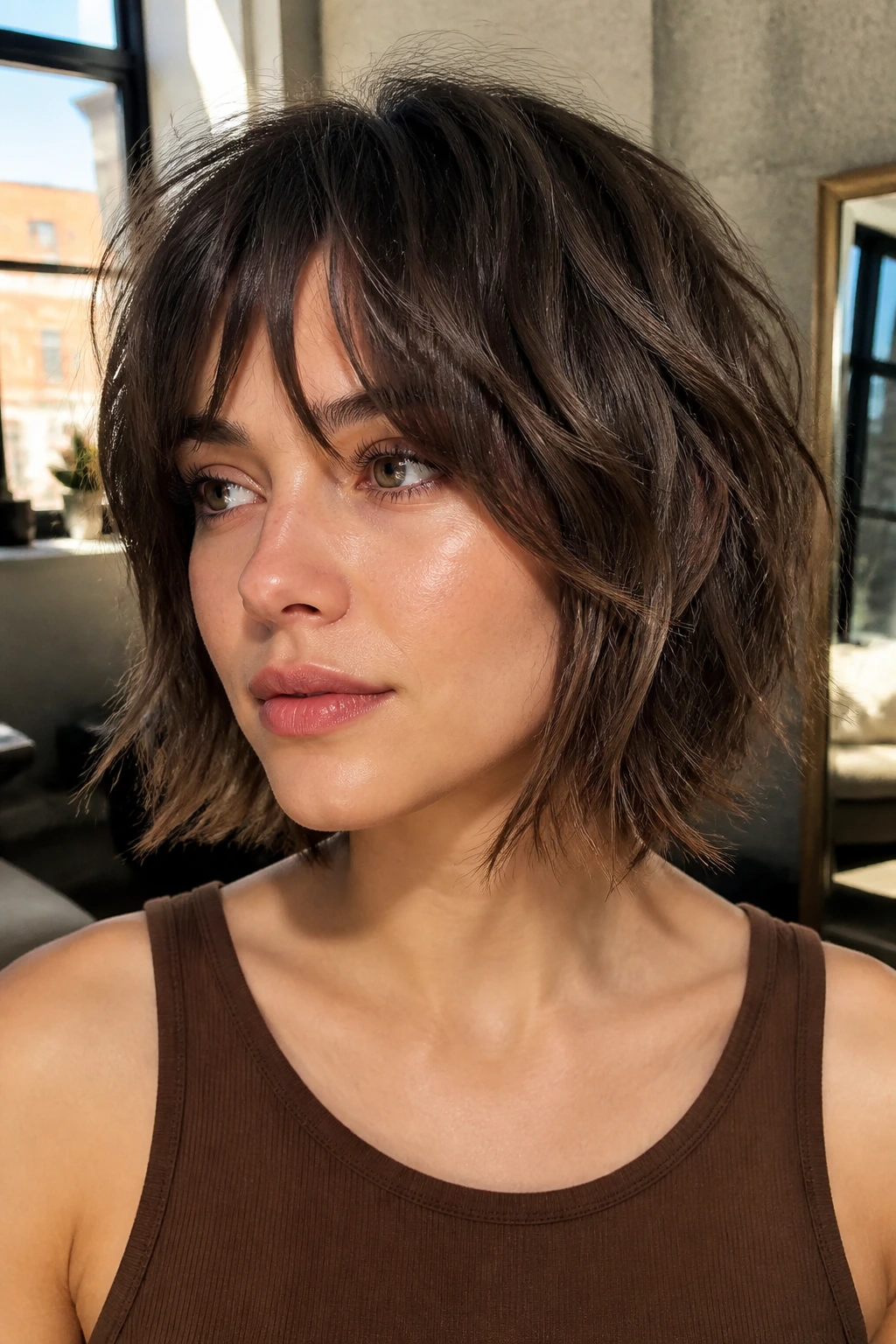
Will a short shag work on fine wavy hair?
Yes, if the layers are kept light and the crown isn’t over-thinned. Fine waves need shape more than shredding, so ask for soft movement rather than lots of internal removal.
How often do the bangs need trimming?
Most wavy fringes need a tidy-up every 3 to 5 weeks if you want them to keep their original line. If you’re happy with a grown-out look, you can stretch that longer and let them split naturally.
Can I air-dry a short shag with bangs?
You can, and many of these cuts look best that way. The key is to set the bangs first and give the crown a little lift while it dries so the top doesn’t flatten out.
What if my hair gets puffy on the sides?
That usually means there’s too much bulk sitting at the jaw or the interior layers are too heavy. A stylist can remove weight underneath and shift some of the layering higher so the shape falls inward instead of outward.
Do curtain bangs work better than blunt bangs on wavy hair?
Usually, yes. Curtain bangs forgive uneven wave patterns and shrinkage more easily, while blunt bangs need more precise styling and trimming to stay under control.
Is a shag a bad idea if my hair is very thick?
Not at all. Thick wavy hair is often one of the best candidates, but it needs proper de-bulking. If the stylist only textures the surface, the shape can widen fast.
What if the haircut starts looking too wild after a few washes?
That often means the fringe and crown need a small reset, not a full restyle. Re-dampen the top, use a tiny amount of mousse, and shape the front while it’s still damp.
Can I wear a deep side part with a short shag?
Yes, and it can look especially good if you have a cowlick or a face shape that benefits from asymmetry. Just make sure the layers were cut with enough flexibility to move with the part instead of against it.
The Shape That Keeps Looking Better on Day Two
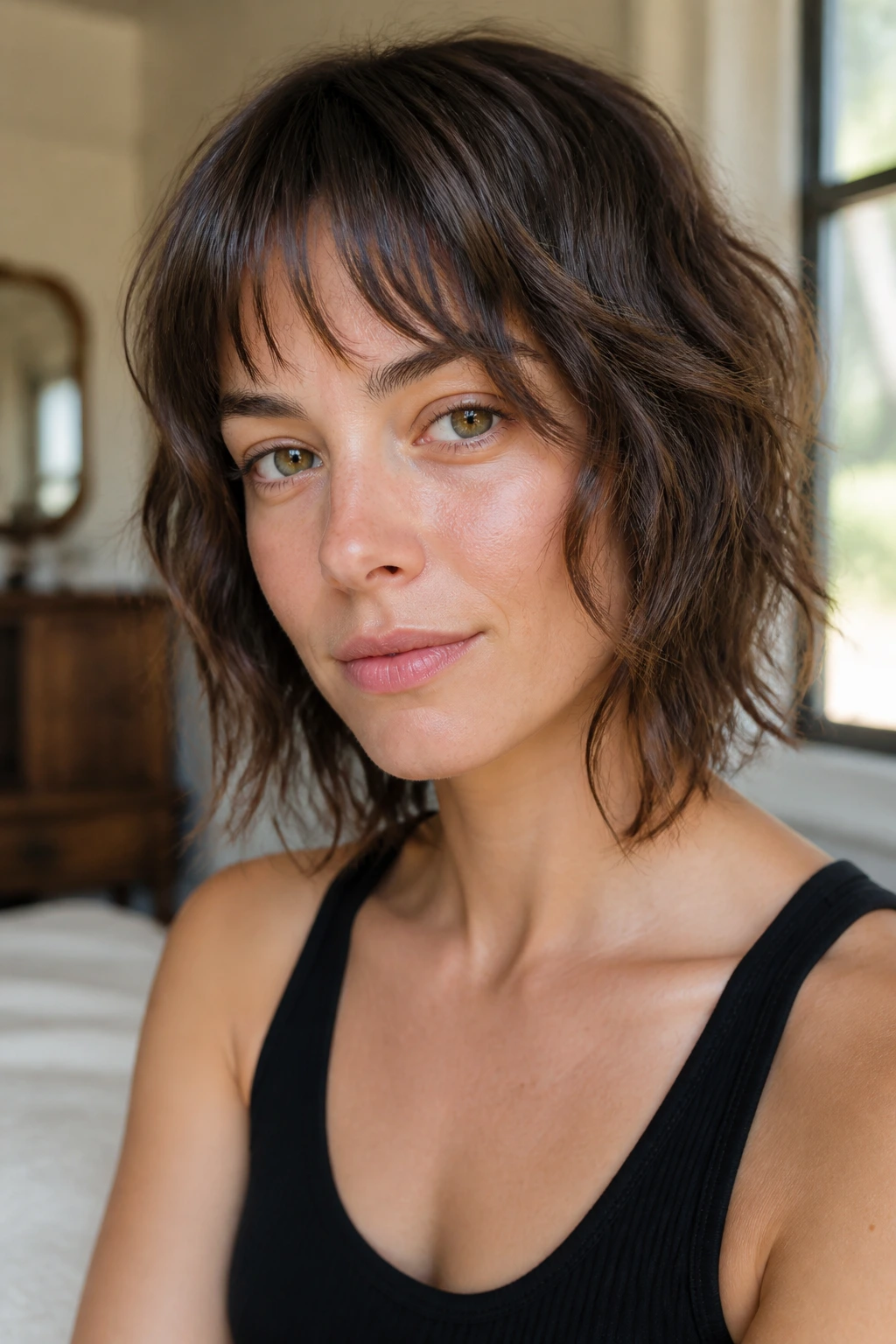
The best short shag cuts with bangs for wavy hair have a small but useful talent: they look a little better when life gets in the way. The wave softens the layers, the bangs loosen up, and the haircut stops trying so hard. That is a feature, not a flaw.
If you’re standing between a bob and something more playful, a short shag gives you movement without turning your hair into a project. Pick the version that fits your density, your part, and your tolerance for fringe maintenance. The right one will feel like the haircut found your texture instead of forcing it into shape.
