



Three minutes before the school bell, a ponytail can tell you everything: whether the brush was gentle, whether the elastic is biting too hard, whether the part was made with steady hands or a distracted tug over a cereal bowl. Ponytail styles for little girls live or die on those tiny details. The prettiest ones are not the most elaborate; they’re the ones that hold through breakfast, backpack straps, and a playground slide without turning the scalp into a sore spot.
That’s why I like ponytails more than almost any other kids’ hairstyle. They’re fast, but they don’t have to look rushed. They can be neat, sporty, dressy, curly, ribboned, braided, or a little messy in the good way — the kind that says a child moved through the day instead of sitting perfectly still for a photo.
And there’s a practical side people sometimes skip over. A ponytail placed an inch too high can flop by lunch. One pulled too tight can leave a red crescent along the hairline. Hair texture matters too: silky straight hair slips, dense curls lift, and fine hair needs a different kind of grip than thick hair does. Once you start seeing those differences, the whole game gets easier.
Why These Ponytail Styles Keep Their Place in the Rotation
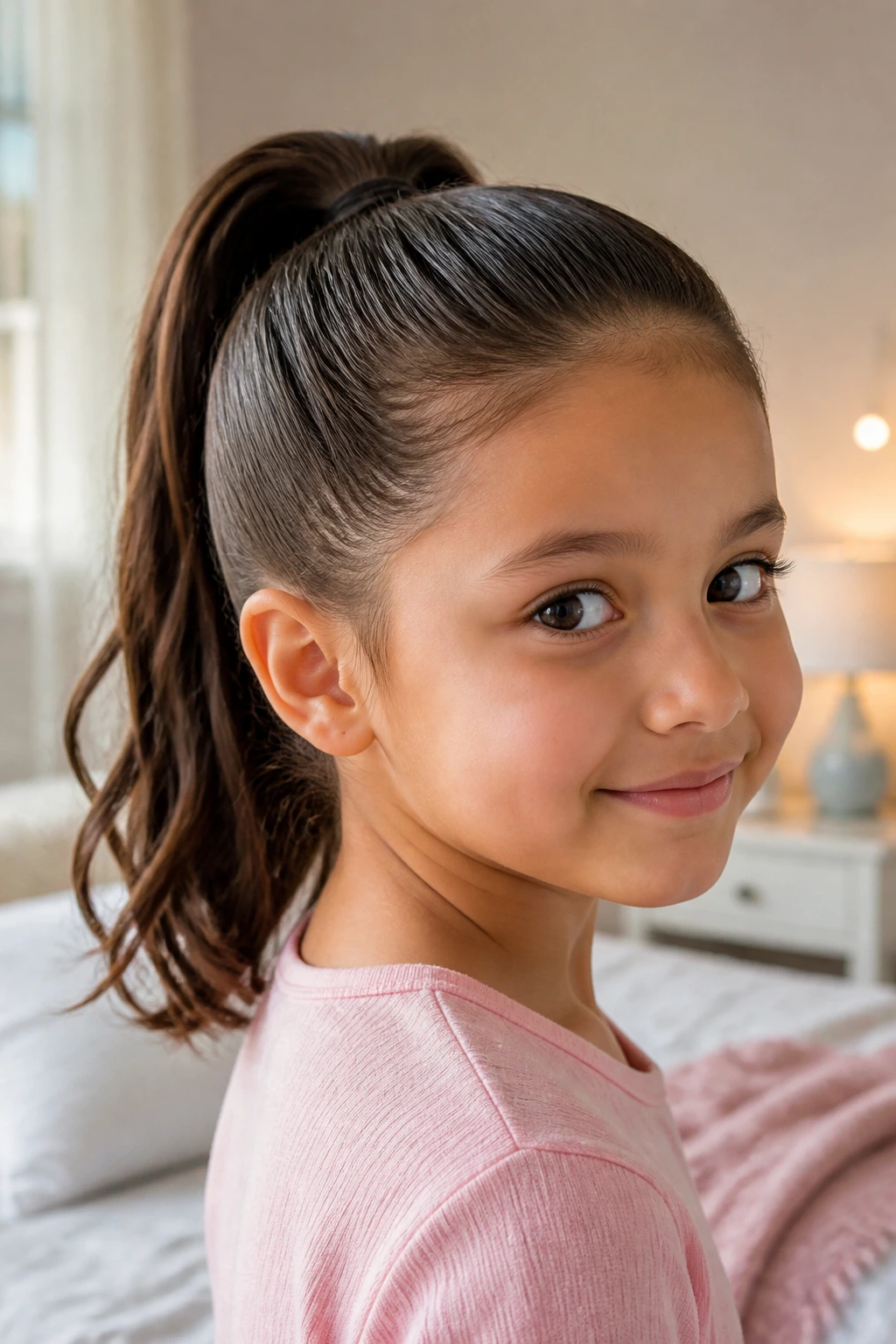
-
Fast enough for school mornings: Most of these styles need one brush, one elastic, and maybe a ribbon, so you can finish them without turning the bathroom into a salon.
-
Gentler than a lot of pulled-back looks: The best versions spread tension across the head instead of yanking the same spot every day, which matters if your child complains about tender temples.
-
Work across different hair textures: Straight, wavy, curly, and coily hair all have ponytail styles that fit them better than a one-size-fits-all approach ever could.
-
Easy to dress up or strip down: A plain ponytail can stay plain for school, then turn into photo-day hair with a bow, a braid, or a wrapped elastic in under a minute.
-
Cheap to repeat: You do not need hot tools or a drawer full of gadgets. Good elastics, a decent detangling brush, and a spray bottle go a long way.
-
Friendly to growing-out stages: Bangs, layers, and awkward shoulder-length hair are easier to manage when you’ve got a few ponytail shapes ready to go.
1. High Bounce Ponytail
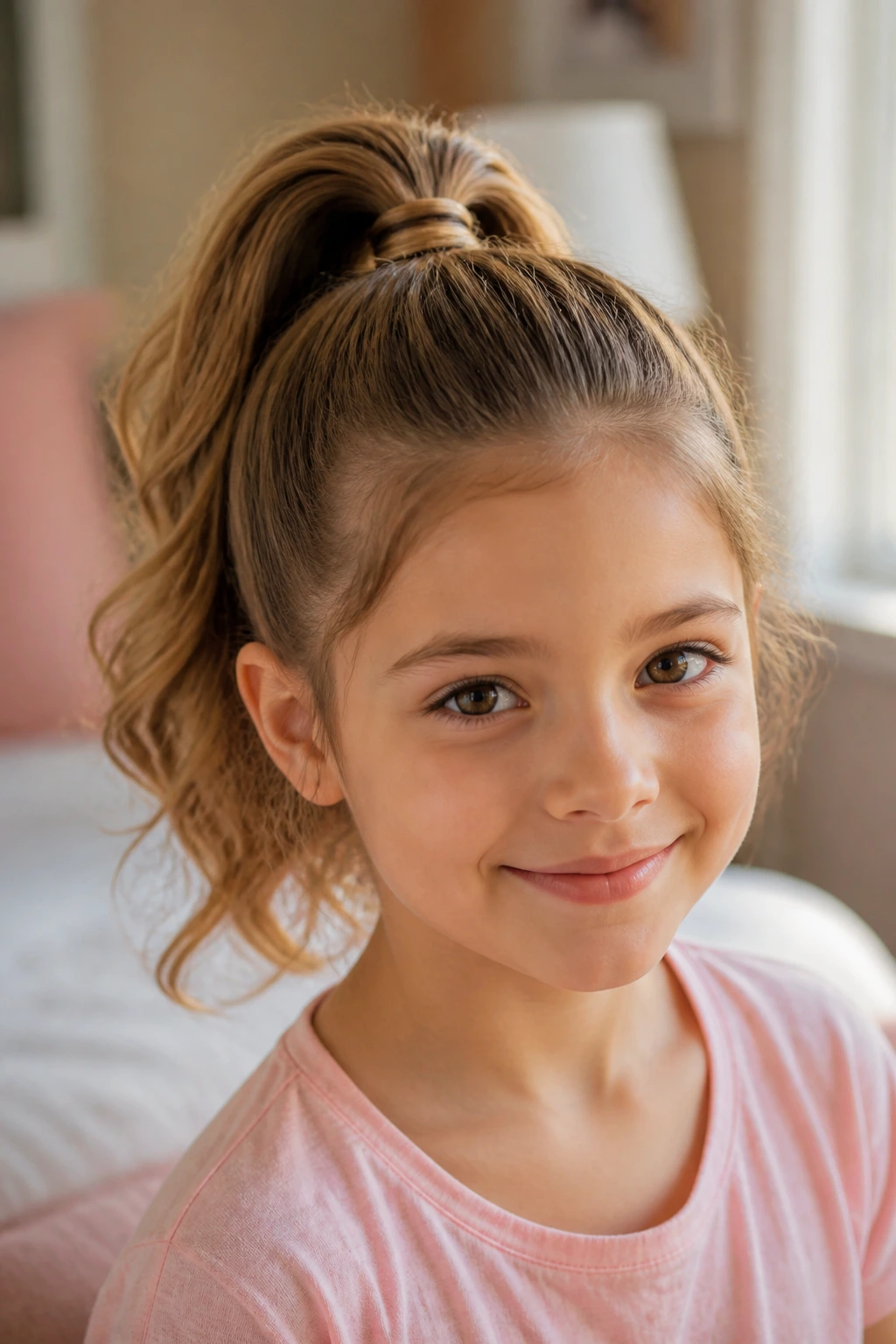
A high ponytail sits on the crown, where the head starts to curve upward, and that placement changes everything. The hair springs instead of drooping. The face opens up. The whole style looks lively, even when the rest of the morning was a mess and somebody still had syrup on her sleeve.
I reach for this one when a child wants her hair out of the way but still wants movement. It works especially well on straight or wavy hair that tends to collapse in a low style. Pull the hair up with your free hand, smooth the sides with the other, and fasten it with a soft elastic. If the hair is long enough, wrap a small strand around the base and pin it underneath with a bobby pin. That tiny move makes the style look finished instead of accidental.
The one thing to watch is tension. High ponytails can get tight fast because you’re working against the crown of the head. If the front gets smoothed so hard that the skin looks shiny, back off and start again. A high ponytail should feel secure, not stiff.
Best for: school days, dance class, energetic kids, and medium-to-long hair with some natural lift.
Tiny fix that helps: tip the ponytail upward as you secure the elastic; it keeps the base from sliding down in the first hour.
2. Low Ribbon Ponytail
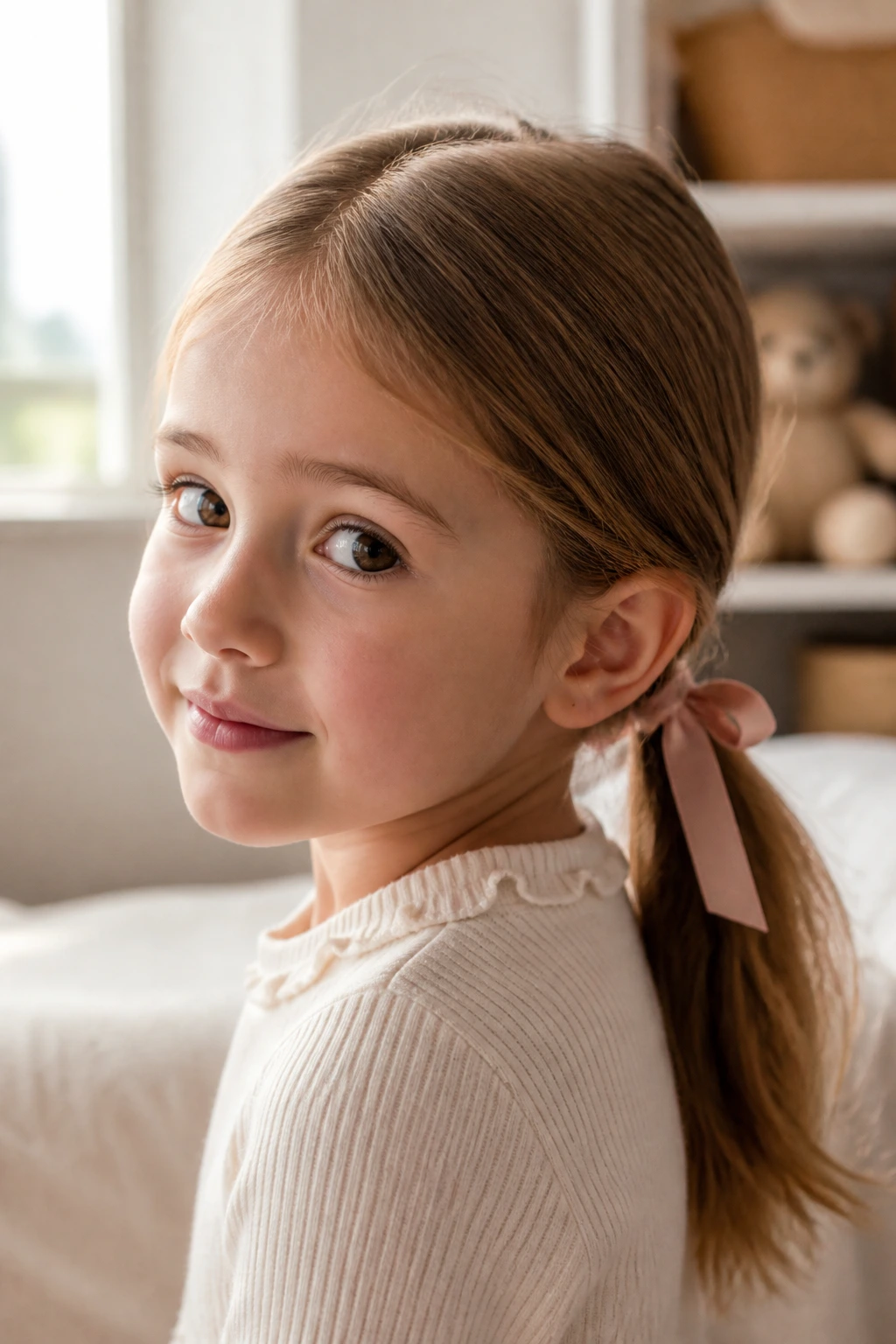
Why does a low ponytail look so calm? Because it settles at the nape, where the head narrows and the hair can sit close without fighting gravity. It’s the ponytail I choose when I want a neat finish and less pulling at the hairline.
This style is especially kind to sensitive scalps and younger kids who fidget when hair gets tugged too high. Gather the hair just above the neck, smooth the top with your palms, and tie it with a soft band. Then add a ribbon or bow right below the elastic, not so big that it drags the tail backward. The best ribbon is soft enough to tie without slipping and wide enough to read from across the room.
The mood here is different from a high ponytail. Less bounce, more polish. It pairs nicely with a collar, a cardigan, or any outfit where you don’t want hair competing with the neckline.
A low ponytail is also one of the easier styles to refresh. If the crown gets fuzzy by afternoon, mist your hands with water and smooth the top again. No need to rebuild the whole thing.
3. Side-Swept Ponytail
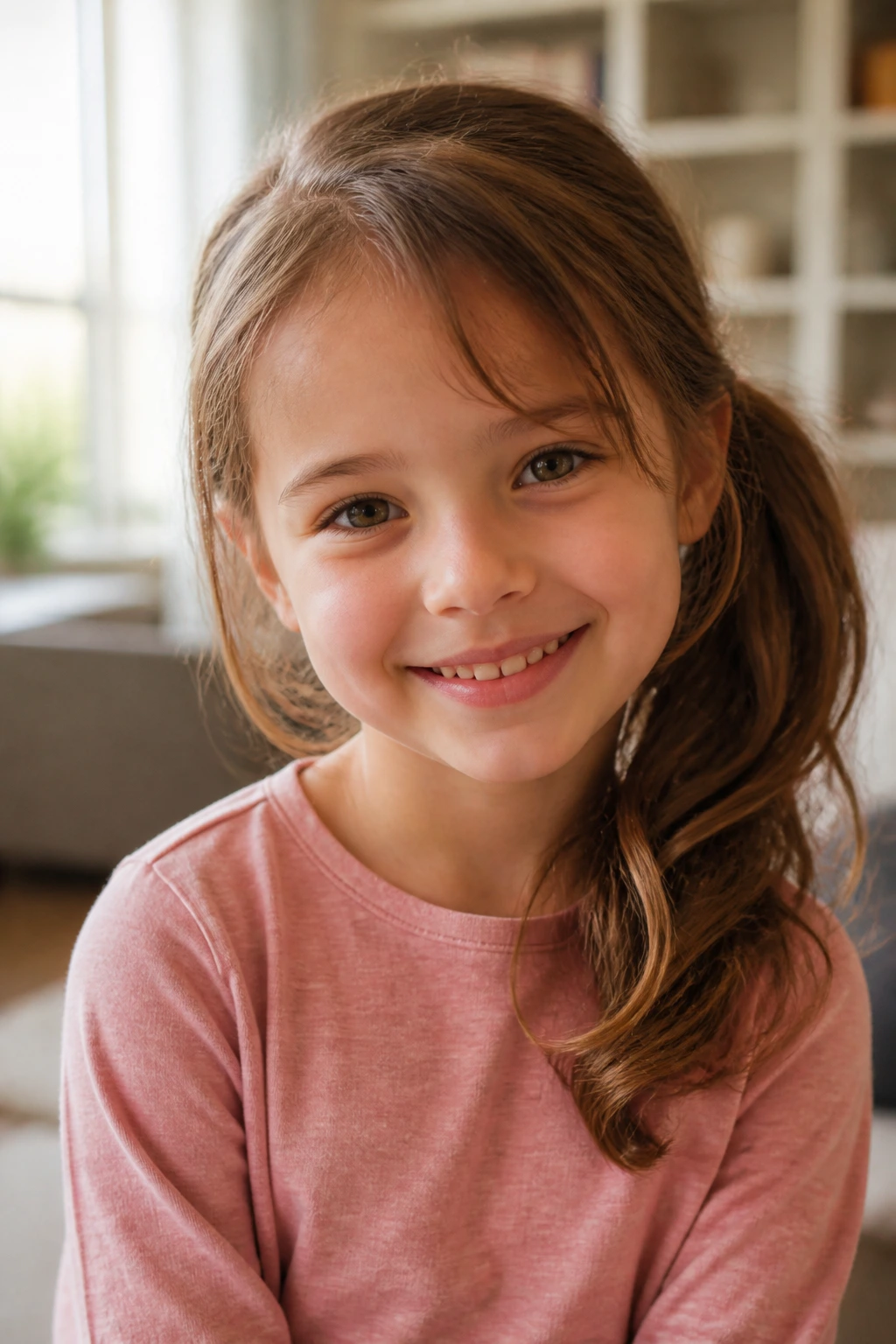
A side ponytail has a little personality built in. It leans off-center, which softens the face and gives short layers somewhere to live instead of sticking out in every direction. On little girls, that slight tilt can make a simple style feel playful without looking fussy.
This is one of my favorite options for bangs that are growing out. Sweep the hair toward the heavier side, gather it just behind one ear, and secure it low enough that the weight doesn’t drag the front back. If the hair is fine, place the elastic a touch higher than you think you need; a very low side ponytail can slip down the back of the neck.
It’s a good style for kids who hate feeling hair on both shoulders. One side stays clear. The other side gets a soft sweep, and the whole thing stays comfortable through reading time, snack time, and a very enthusiastic run to the car.
Best for: shorter layers, side bangs, and children who like softer, less rigid hairstyles.
Watch for: if one side keeps falling forward, the part is too shallow. Shift it a little deeper toward the heavier side.
4. Bubble Ponytail
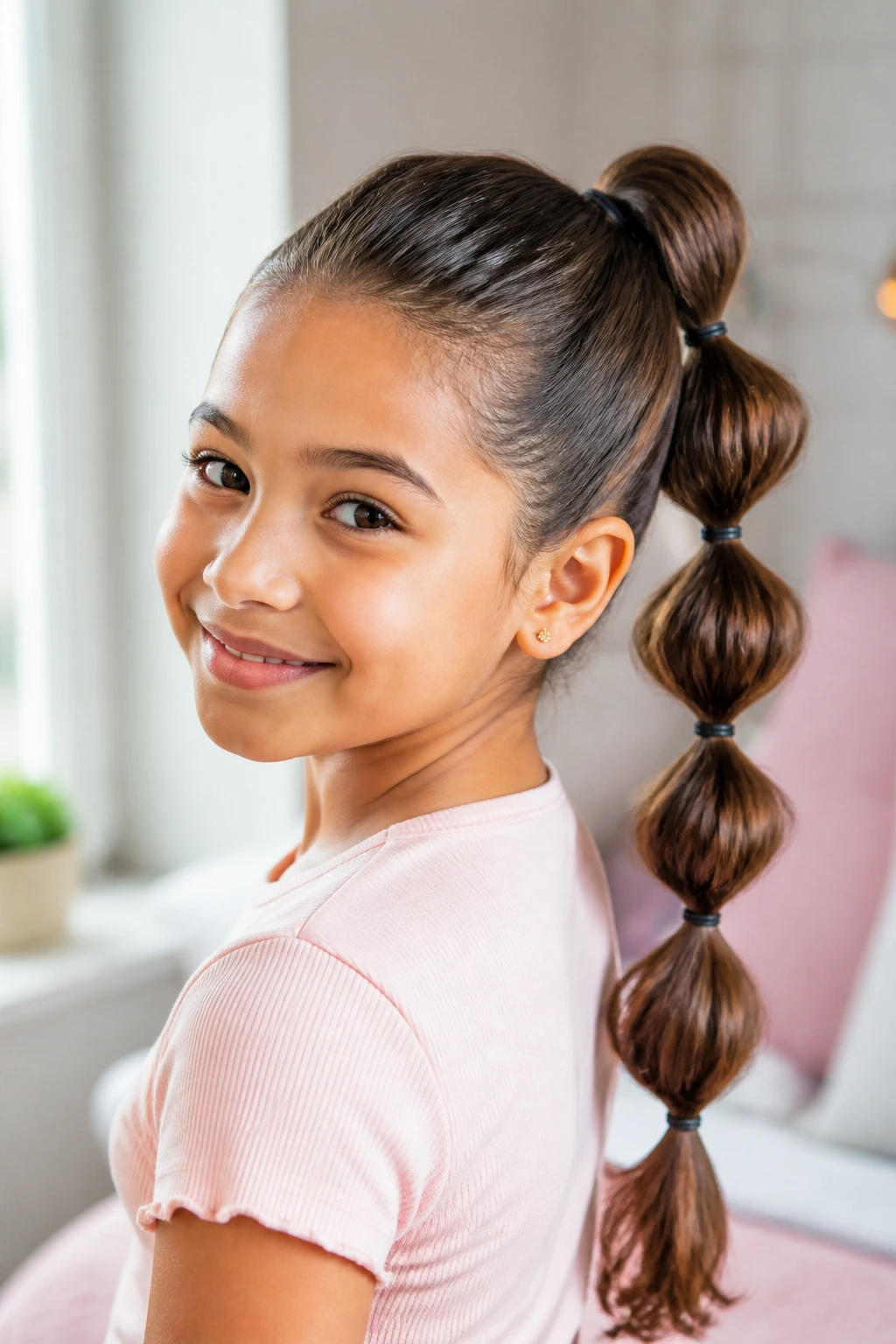
Bubble ponytails look complicated from a distance and are oddly simple once you understand the rhythm. You make one ponytail, then add more elastics down the length, puffing the hair between each one so it forms rounded sections. That gives the style a playful, almost toy-like shape that kids tend to love.
How to Keep the Bubbles Round
Use elastics spaced about 1 to 2 inches apart, depending on how long the hair is. On shorter hair, the bubbles will be tighter and closer together. On longer hair, give each section a little more room so the shape stays round instead of stretched thin.
Here’s the part that matters: after each elastic goes in, gently tug the hair between bands outward with your fingertips. Not hard. Just enough to make each section puff. If you overdo it, the elastic starts to show and the ponytail loses its shape.
Bubble ponytails are especially useful for thick hair because they distribute weight along the tail. One long ponytail can pull. Three or four bubbles spread that load out and keep the style from feeling heavy.
5. Double Ponytails
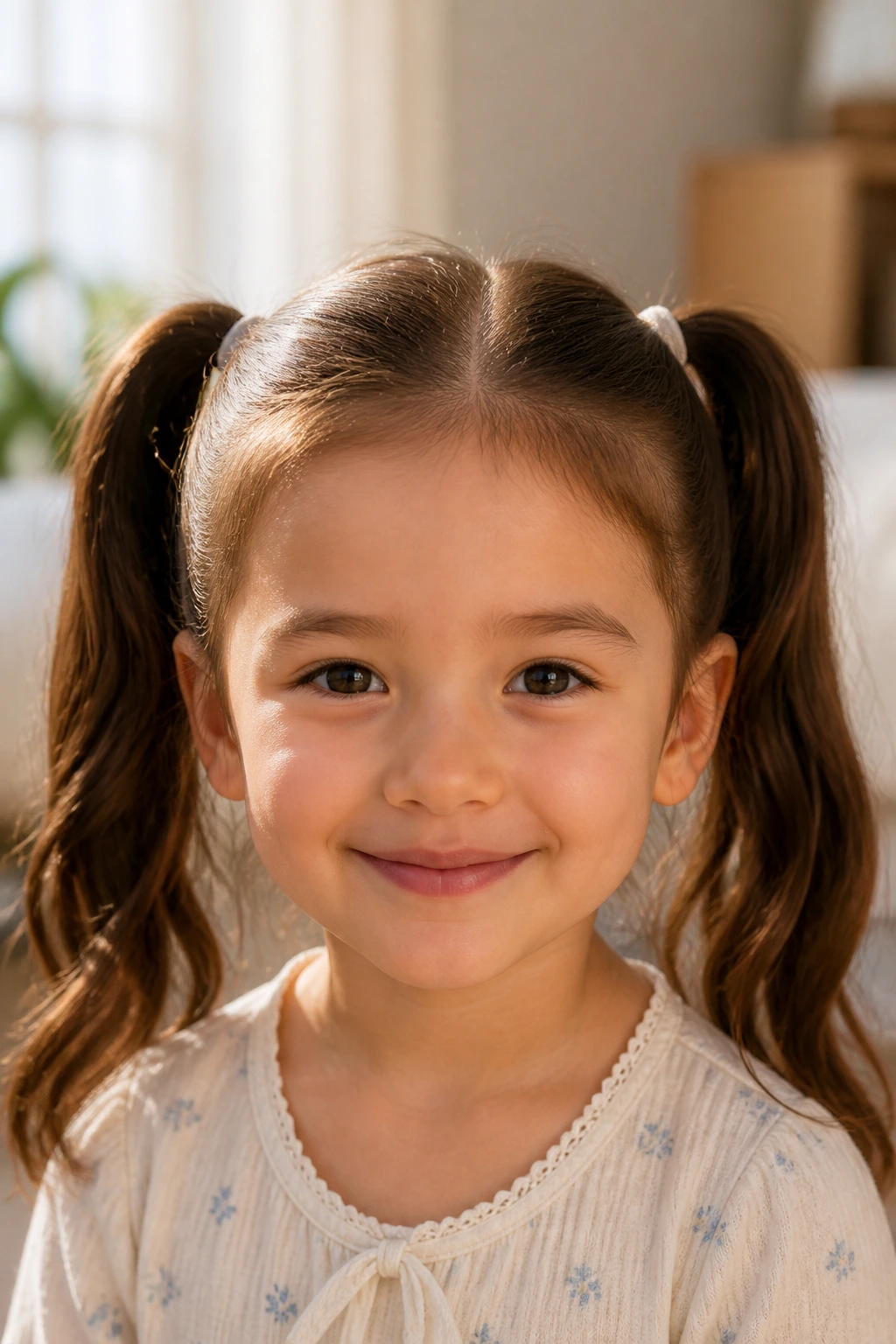
Double ponytails — or pigtail ponytails, depending on who’s talking — are one of those styles that should never have gone out of rotation. They balance the head visually, they’re easy to place, and they make fine hair look fuller without needing teasing or sprays.
The reason they work so well is simple. Each side carries less hair, so the base sits more lightly and tends to stay neater. If your child’s hair is thin or slippery, two ponytails often hold better than one big one because there’s less weight pulling each elastic downward. That’s not theory. You can see it by lunch.
Keep them either high and lively or low and tidy. High double ponytails lean younger and bouncier. Low double ponytails read calmer and are kinder to kids who don’t like hair bouncing at the temples. I’d avoid placing them too close to the ears if the child wears glasses; the elastic and the arms of the glasses can start a little war.
A soft middle part keeps this style clean. A crooked part makes it look accidental, unless that’s the mood you want.
6. Braided-Base Ponytail
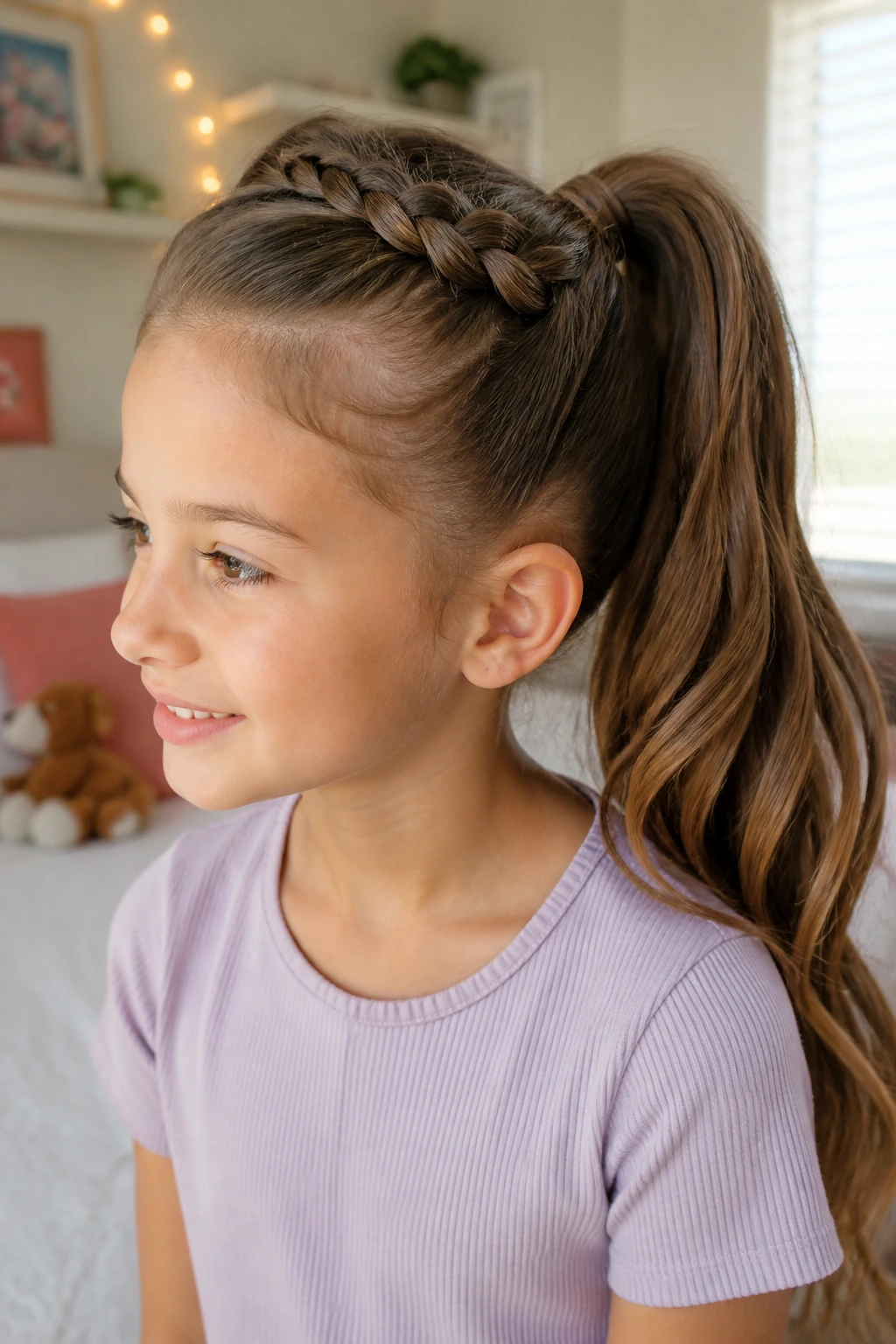
A braided base gives a ponytail grip. That’s the whole trick, and it’s a good one. The braid works like a little anchor running into the elastic, which helps slippery hair stay put longer and gives the style a little more body at the crown.
You can do this with a short braid from the hairline into the ponytail, or you can braid one side and feed it into the base. Either way, the visible braid adds texture where a plain ponytail can feel too flat. On fine hair, it helps the style look fuller. On thick hair, it helps the front stay controlled without pulling every strand into a tight knot.
I like this style for school events and picture days because it looks more finished than a basic ponytail but doesn’t ask for much extra time. A three-strand braid is enough. No need to overcomplicate it with a tiny French braid unless you actually enjoy that sort of thing.
If the child has wispy layers around the face, smooth them lightly with water before you braid. Dry flyaways are what make the front frizz out by the end of the day.
7. Twisted Crown Ponytail
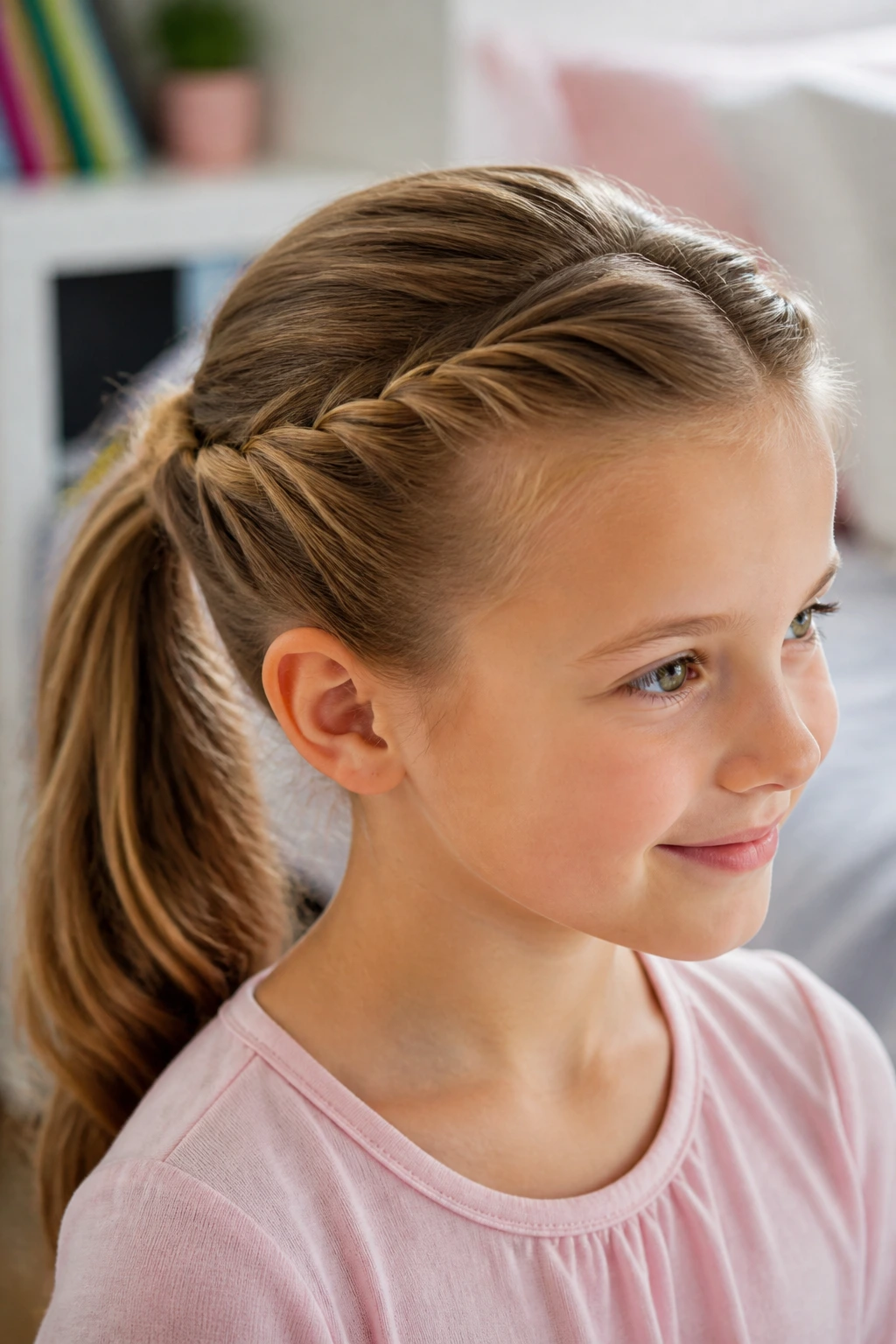
Twist the hair at both temples, and you get one of the neatest ponytail bases around. The twists pull hair away from the face in a soft line, almost like a built-in headband, and then the rest gathers into a ponytail at the back. It’s tidy without looking severe.
This style is especially kind to kids with finer hair around the front. A twist needs less grip than a braid, so it can hold the shape without turning the hairline into a tug-of-war. Take a small section from each side, twist it back 2 or 3 turns, and pin or join it into the ponytail. If you want the twists to look thicker, gently widen them with your fingers after fastening.
It gives a nice frame around the face and works well when the child wants something a little dressier than a basic ponytail. The crown stays smooth. The back stays practical. Easy balance.
A small bow at the meeting point can hide the pins and make the whole thing look deliberate.
8. Sleek Middle-Part Ponytail
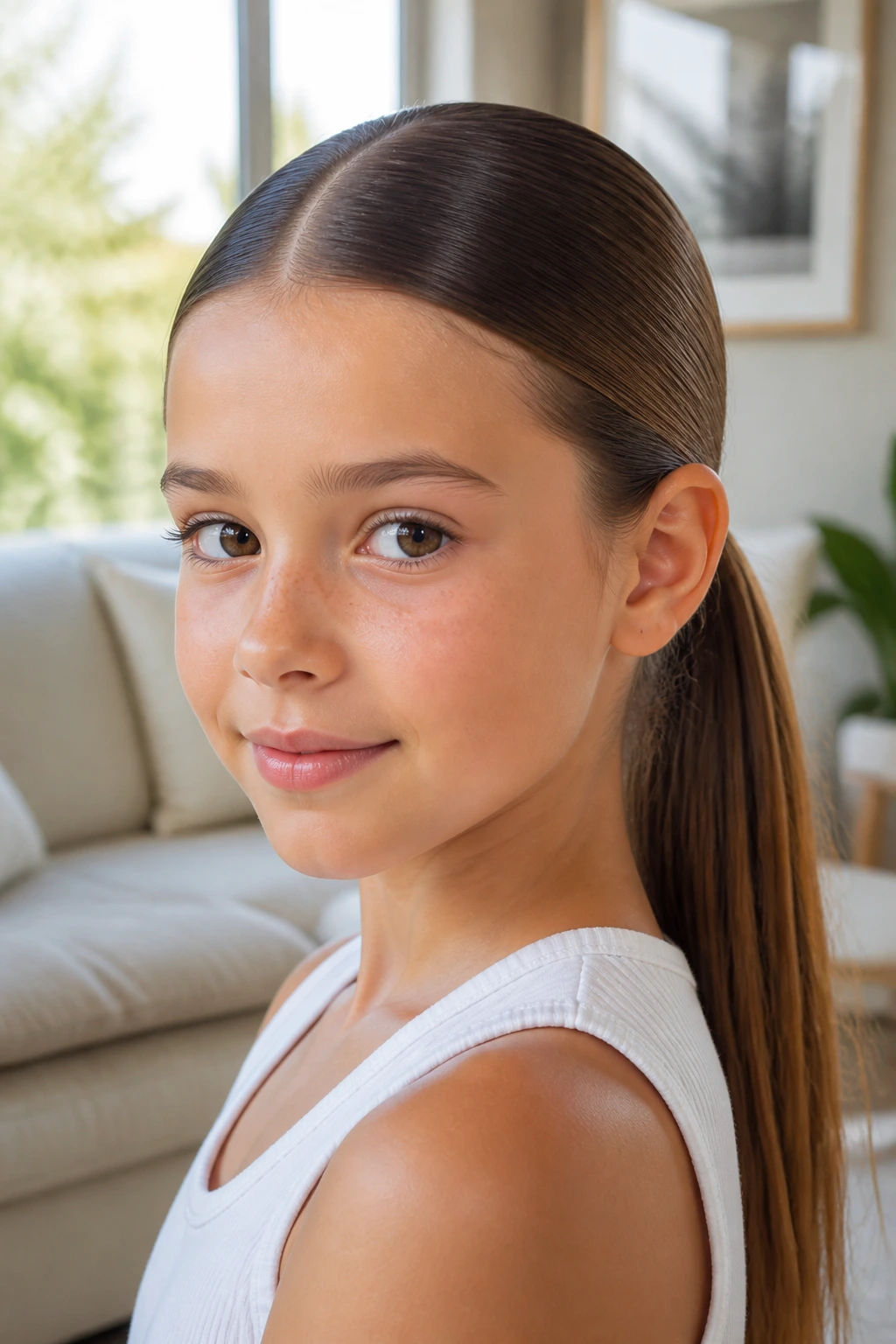
A center part changes the tone instantly. The style gets a cleaner line, the face feels more open, and the ponytail itself starts to look sharper before you even touch the elastic. It’s a straightforward style, but it has presence.
The key is getting the part straight enough to look intentional. Use the tip of a rat-tail comb and trace from the center of the forehead back toward the crown. Smooth each side with your hands, not by brushing fifty times. Too much brushing flattens the front and can make fine hair puff around the temples.
This style shines on days when the clothes are simple and you want the hair to feel neat rather than busy. It’s also a good choice when a child has symmetrical features or a favorite headband that you want to keep out of the way.
If the hair is silky, add a whisper of leave-in on your palms before smoothing the sides. Not near the roots. Just enough to tame the frizz that always sneaks in around the part.
9. Half-Up Ponytail
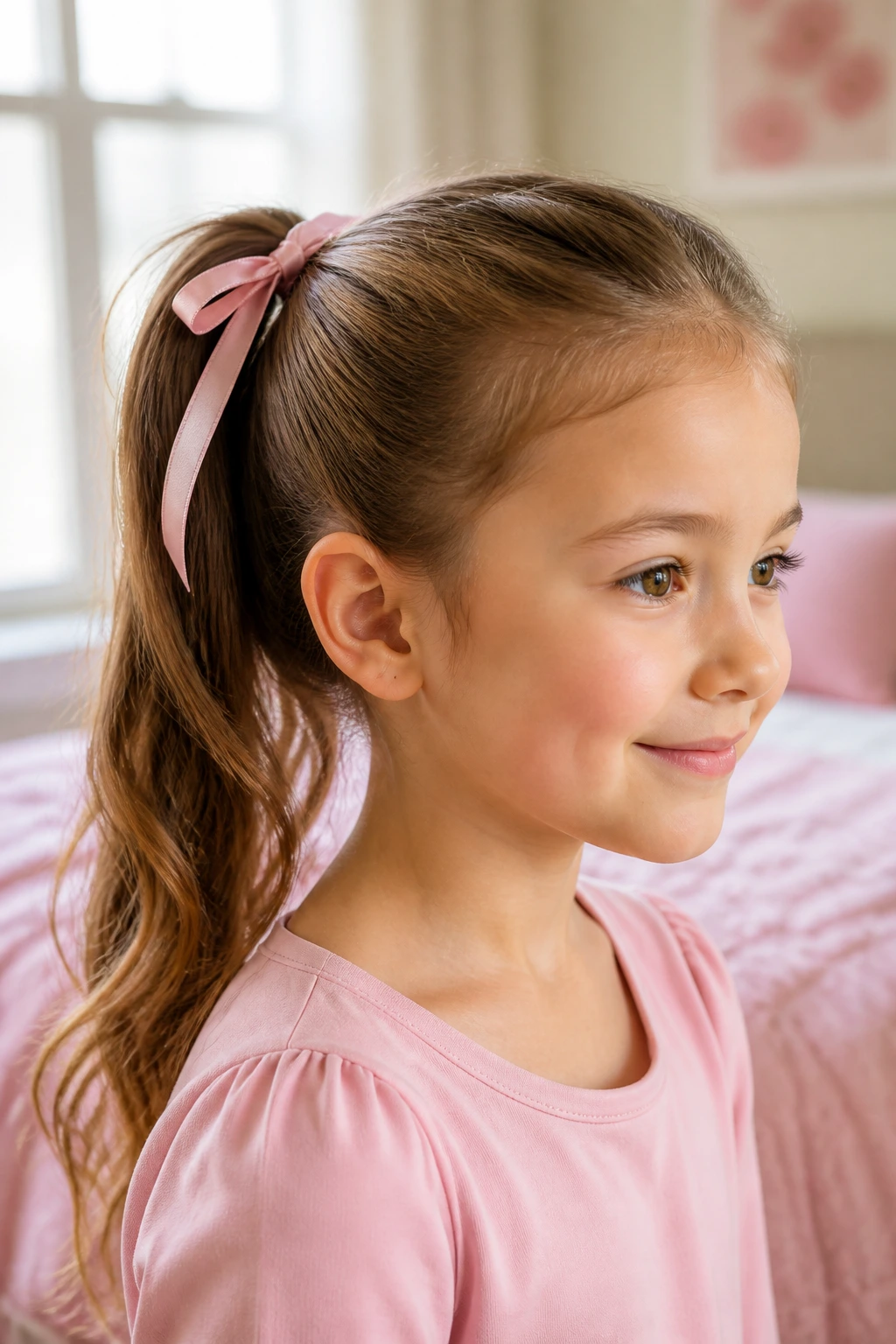
Sometimes the best ponytail is the one that doesn’t pull all the hair back. A half-up ponytail takes the top section off the face and leaves the rest loose, which is a nice compromise for kids who want movement without hair in their eyes.
This is one of the most forgiving styles in the bunch. It works on layers, shoulder-length cuts, and hair that won’t stay contained in a full ponytail. Gather the top half from temple to temple, or a little higher if the hair is dense, and secure it at the back of the crown. Leave the lower half alone. That’s the charm.
The style feels especially good on curly or wavy hair because it preserves shape instead of crushing everything into one tight tail. If the front needs extra control, pull a small section from each temple into the half-up section and leave the rest loose. That keeps the face clear without erasing the texture.
A tiny clip under the elastic can help if the child keeps flipping the top section loose. Easy fix. No drama.
10. Curly Puff Ponytail
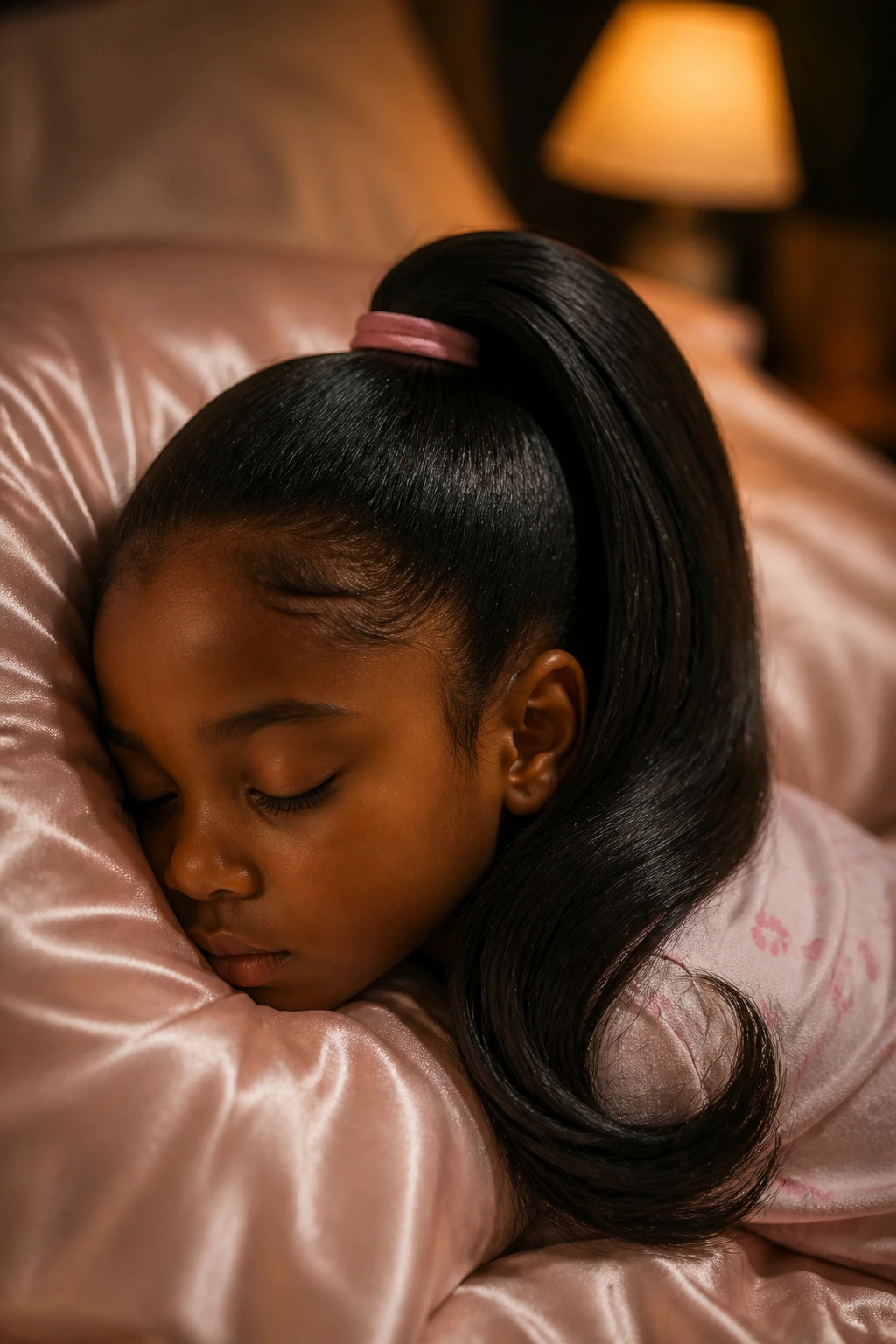
Curly hair does not need to be fought into a flat shape. A puff ponytail respects the curl pattern and gives it a place to sit high and full instead of forcing it into a smaller, tighter box. On little girls, that can make the whole style look lively without stealing the softness of the curls.
Use fingers or a wide-tooth comb, not a stiff brush, to gather the hair. A little water or leave-in cream on the palms helps the front stay smooth while the curls keep their shape in the tail. If the hair is very dense, gather it loosely first, then tighten the elastic once the curls are all in place. That prevents the top from being yanked while you’re still sorting the hair.
For coily textures, a puff can sit high, medium, or low depending on the child’s comfort. High reads energetic. Low feels calm and keeps the crown from stretching too much.
A satin scrunchie or soft fabric band is better than a hard elastic here. It grips without chewing the curl ends.
11. Wrapped-Elastic Ponytail
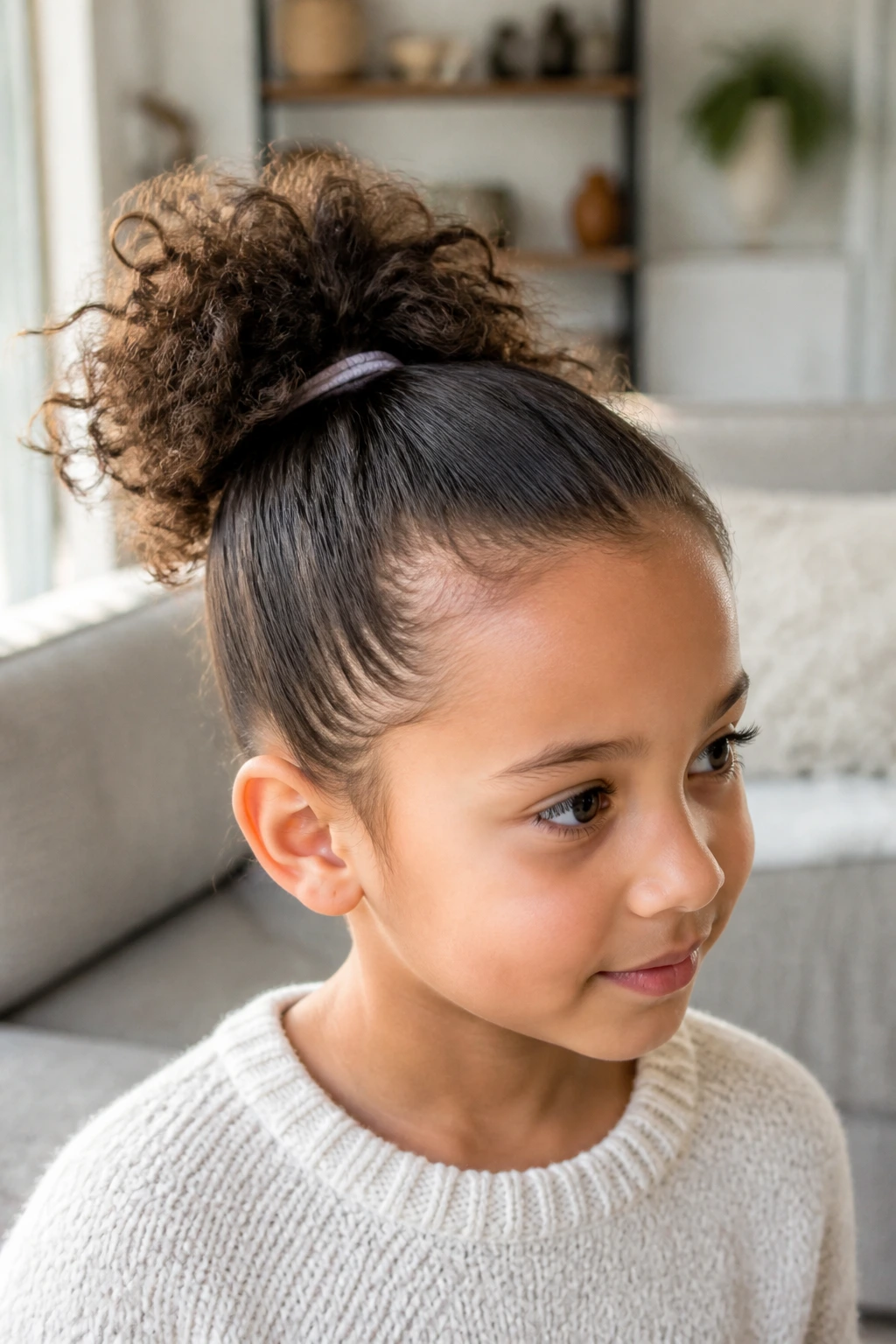
A wrapped elastic is one of those little details that changes the whole look. You hide the band by taking a thin strand from the ponytail, wrapping it around the base, and pinning the end underneath. That one move turns a plain ponytail into something polished enough for a party or a school photo.
The reason I like it is that it works on almost every ponytail shape. High, low, side, curly, braided — the wrap doesn’t care. It just makes the base look cleaner. If you’ve ever looked at a ponytail and thought, “It needs something, but not a bow,” this is the answer.
It’s also practical for kids who tug at bows or clips. Once the strand is pinned well, there’s less for little fingers to grab. The style stays neat without extra hardware hanging off it.
Use a bobby pin that matches the hair color if you can. And if the hair is layered, don’t try to wrap from a section that’s too short; you’ll end up with little bits sticking out and the whole thing will feel fussy.
12. Bow-Stack Ponytail
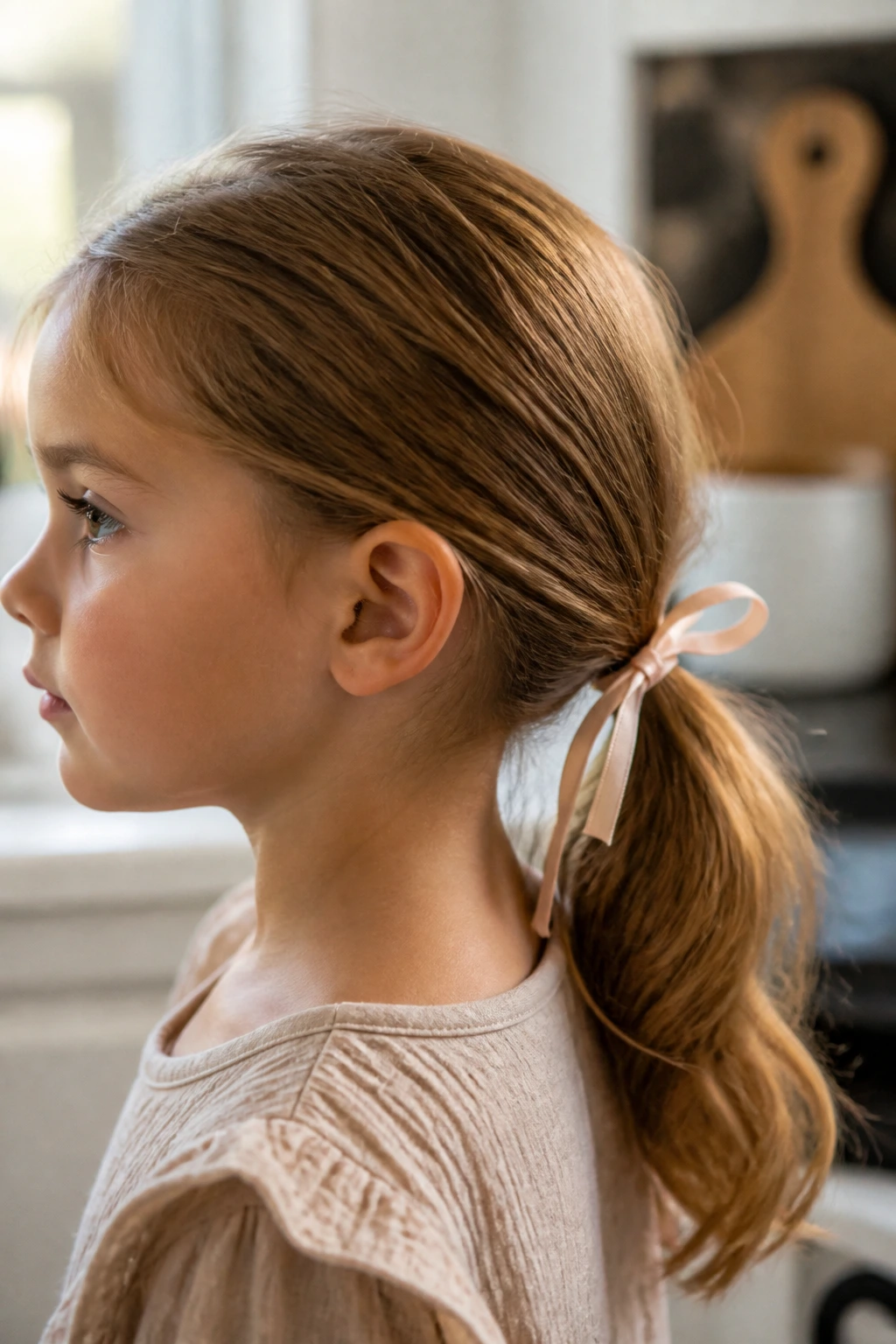
One bow is sweet. Two bows can be a statement. A bow-stack ponytail uses one large bow at the base or layers smaller bows down the tail, and the effect depends on restraint. Too many giant bows can weigh the ponytail down. One well-chosen bow looks intentional.
This is the style I’d save for birthdays, class pictures, or days when the outfit already has a clean shape and needs a little lift. Place the bow where it supports the ponytail instead of dragging it backward. On very fine hair, a heavy clip-on bow can cause the tail to sag within an hour, so look for lighter fabric options.
A stack of tiny bows along a side ponytail can also be charming. It gives the eye something to follow without making the whole look busy. That matters on little girls, where one accessory is often enough.
If the child tends to spin or run hard, fasten the bow with a separate small elastic or a clip under the ponytail rather than trusting the decorative bow alone.
13. Sporty Side-Braid Ponytail
Need a ponytail that can keep up with movement? Start with a braid along one side and feed it into the tail. The braid grips the hair around the temple, which is the part most likely to loosen when kids run, bend, or wear a hood.
This one is especially useful for dance, soccer, playground days, and long car rides where the head keeps leaning against a seat. The braid adds structure and gives the style a little more attitude than a plain ponytail. It also helps control layers that would otherwise float out around the face.
A side-braid ponytail can be done with a simple three-strand braid, a rope twist, or even a tiny Dutch braid if you’re feeling patient. The rest of the hair can sit high or mid-level, depending on how much bounce you want.
If the child has thick hair, keep the braid section small. A giant braid plus a heavy tail can get bulky fast, and bulk is the enemy of comfort. The sweet spot is just enough braid to change the hold.
14. Messy Textured Ponytail
There’s a difference between messy and careless. A textured ponytail has a little looseness around the crown, a few face pieces left out, and a tail that moves instead of sticking like a broom handle. It looks softer because it is softer.
This style works best on wavy or layered hair, where complete smoothness can look too severe. Gather the hair without pressing every strand flat. After you fasten the elastic, pull a few small pieces near the temples and nape loose. Then pinch the crown gently and lift it a touch so the top doesn’t sit tight against the skull.
That tiny looseness gives the style life. It also makes the ponytail more forgiving if the part isn’t perfect. Which, honestly, most parts aren’t. Kids move. Hair shifts. Life goes on.
I’d skip this one on very slippery hair unless you’re willing to add a little texture first. A light mist of water or detangling spray can keep the pieces from escaping immediately.
15. Lantern Ponytail
A lantern ponytail sits somewhere between a bubble ponytail and a decorative segmented tail. The sections are a little wider, the spacing is a little more deliberate, and the overall shape feels rounder and more sculpted. It’s the kind of style that looks fancier than the effort it takes.
Use elastics to create 3 to 5 sections down the length of the ponytail, then gently tug each one to give it a fuller shape. The spaces between the bands should be fairly even. That regular spacing is what makes the style read as intentional instead of random.
This works especially well on longer hair because there’s enough length to show the shape of each section. On shorter hair, the lantern effect gets cramped and loses the rounded look. If the hair is thick, you may need to loosen each section more than you expect; otherwise it just looks like a series of tight bumps.
A narrow ribbon woven through the first section can make the style feel dressy without cluttering it.
16. Zig-Zag Part Ponytail
A zig-zag part is a small detail with a big payoff. It breaks up a plain ponytail at the root, adds a playful twist, and makes even a basic tail feel a little more special. Kids usually notice it right away because it looks fun before you even tie the hair back.
The part itself matters more than people think. Use the point of a comb to draw shallow angles from one side to the other, then gather the hair into a ponytail high, low, or side-swept. The zig-zag hides uneven growth better than a straight part and works nicely when the hairline is a little fuzzy from growing out bangs.
It’s a good choice for kids who like seeing something different in the mirror but don’t want a style that slows them down. No extra braid. No heavy accessory. Just a part that does some of the visual work for you.
On very fine hair, keep the zig-zag shallow. Deep points can make the scalp show too much. Shallow lines look cleaner and are easier to repeat the next time.
17. Fishtail Accent Ponytail
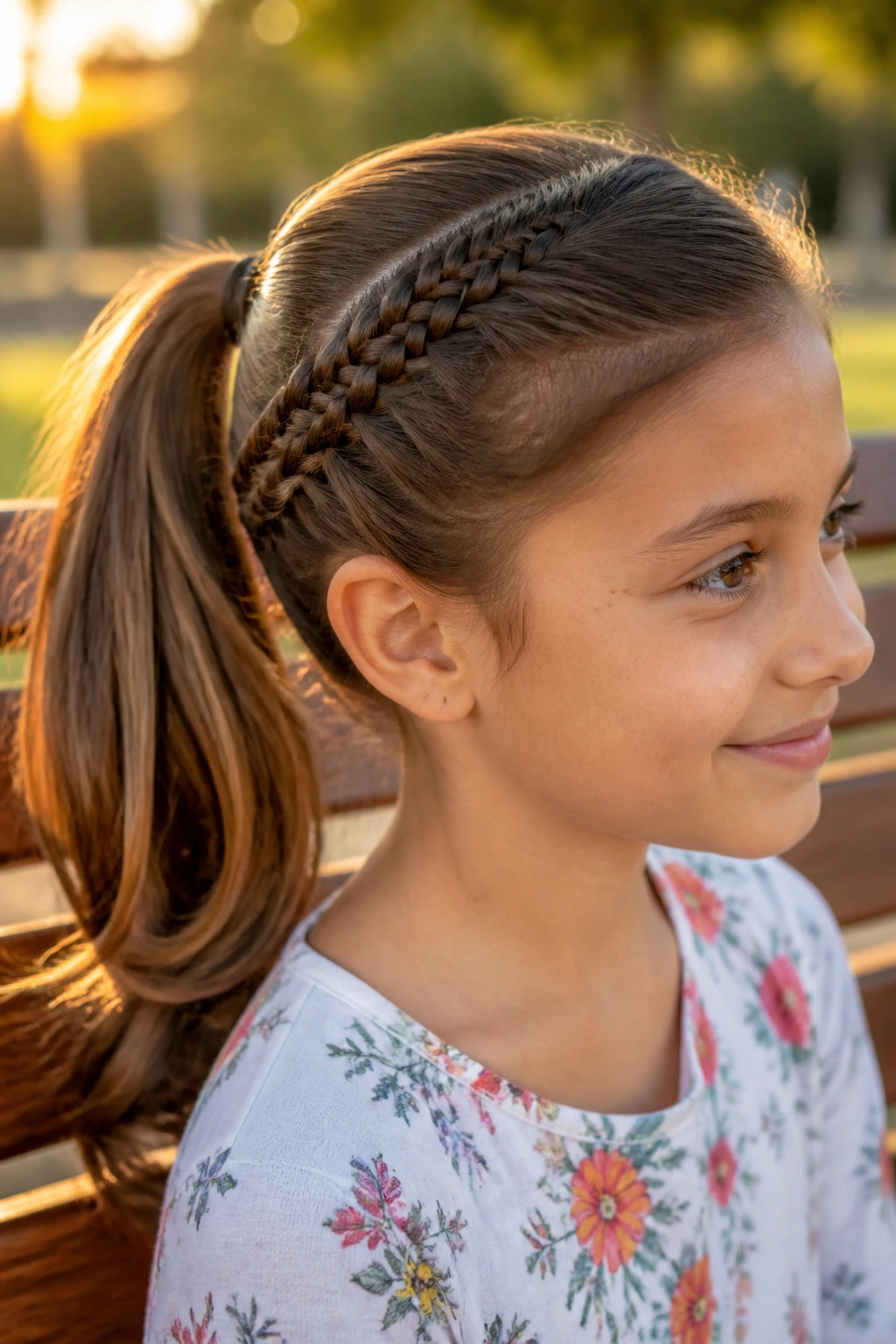
A fishtail accent gives the ponytail a woven, detailed look without turning the whole head into a braid project. You can braid just a small section at the front and feed it into the tail, or braid the ponytail itself partway down if the hair is long enough. Either way, the texture feels more intricate than a standard three-strand braid.
This style is best for older little girls, longer hair, and days when you want a ponytail that feels a bit dressed up without using curls or heat. A fishtail braid also holds well once it’s pulled snug, which makes it useful for hair that tends to slip out of simpler styles.
The mistake people make is trying to make the braid too perfect. A little unevenness actually helps the pattern show. Pinch the braid gently after it’s secure and loosen the weave just enough to make the texture visible.
If the hair is shorter, don’t force a full fishtail down the entire tail. A small accent braid is cleaner and less likely to unravel.
18. Scarf-Tied Ponytail
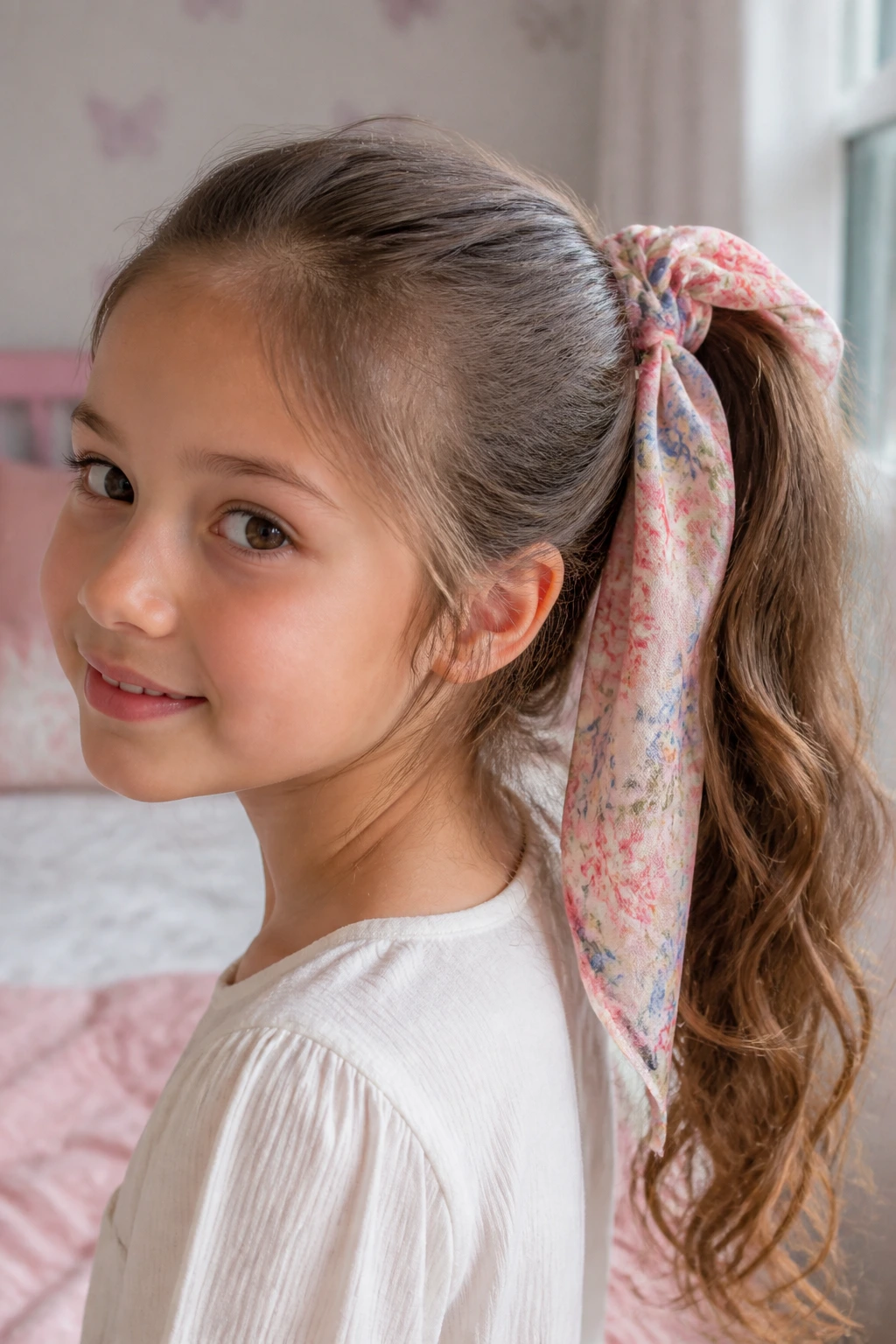
A scarf-tied ponytail changes the whole look with one piece of fabric. Tie a soft scarf or ribbon around the base, let the ends drape, and the ponytail suddenly feels more finished. It’s a simple move, but it gives the style movement and color without extra clips.
Cotton and satin scarves work best because they sit lightly and don’t snag when a child moves. Very slippery fabrics can slide off, so it helps to anchor the scarf with the elastic first and then knot it above or beside the base. If the hair is fine, keep the scarf narrow. Thick scarves can swallow the ponytail.
I like this style on days when the outfit is plain and needs one bright thing near the face. The scarf does that job better than a stiff accessory because it moves with the hair instead of sitting on top of it.
If the child is active, keep the knot low and secure. A loose scarf on a playground becomes a distraction fast, and nobody wants to chase fabric across the yard.
19. Triple-Section Ponytail Illusion
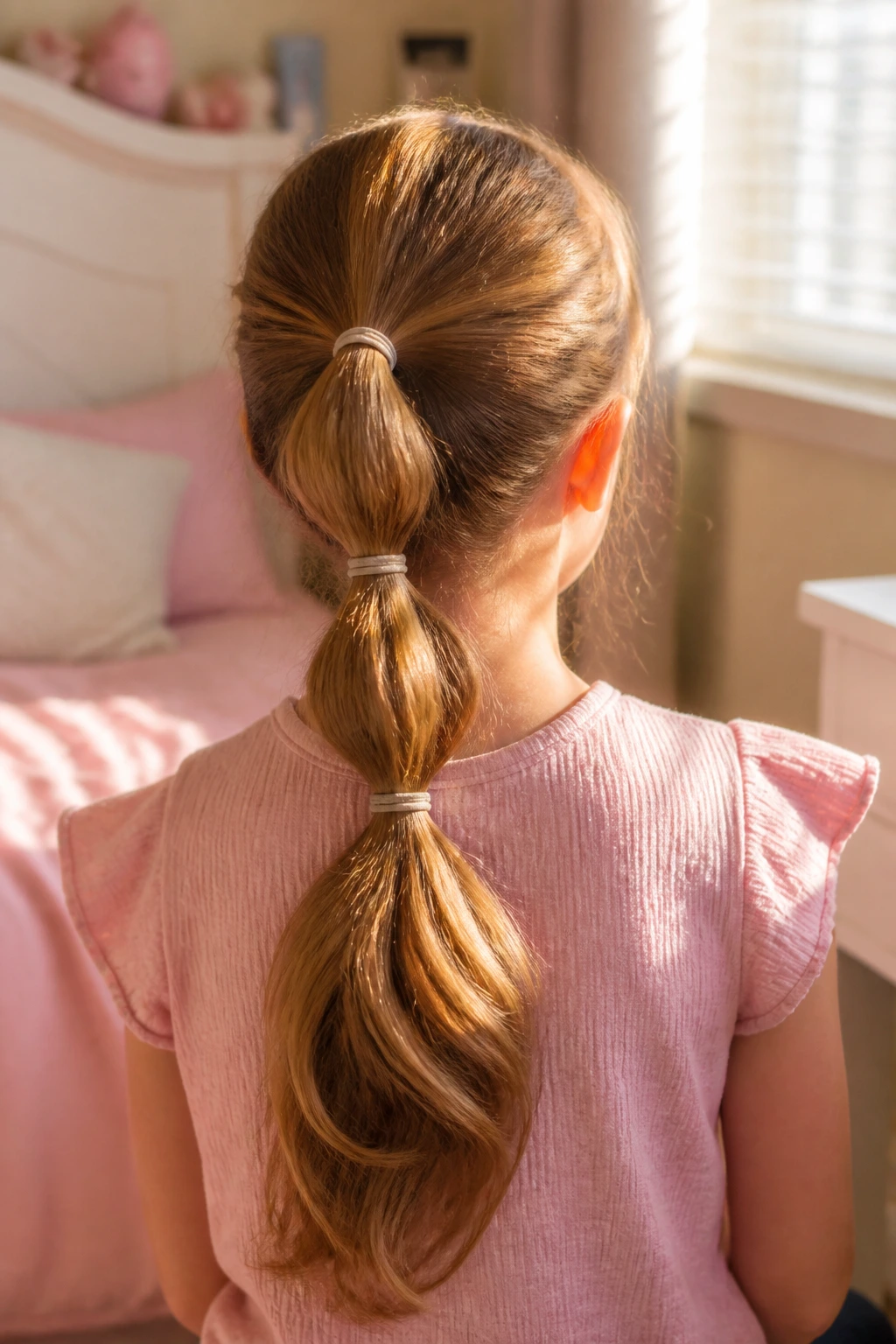
A triple-section ponytail looks long, full, and neatly stacked, even when the hair itself is only medium length. You make three ponytails down the back, one above the other, then blend them so the sections seem like one connected tail. It’s a little trick, and it’s a very useful one.
The reason it works is weight distribution. Instead of making one elastic bear the whole load, you divide the hair into sections so the ponytail sits flatter against the head and feels lighter. That can be a relief on thick hair, and it also helps shorter lengths look fuller than they really are.
The Shape That Makes It Work
Start with the top section, secure it, then gather the next section together with the ends of the first tail and fasten again lower down. Repeat once more. Gently loosen each visible section so the whole thing reads as one long, plush ponytail rather than three separate ties.
It’s one of the best styles for a little girl who wants a long ponytail feel but doesn’t have waist-length hair. And yes, it takes a minute longer. Worth it.
What Makes a Ponytail Stay Put on Little Girls’ Hair
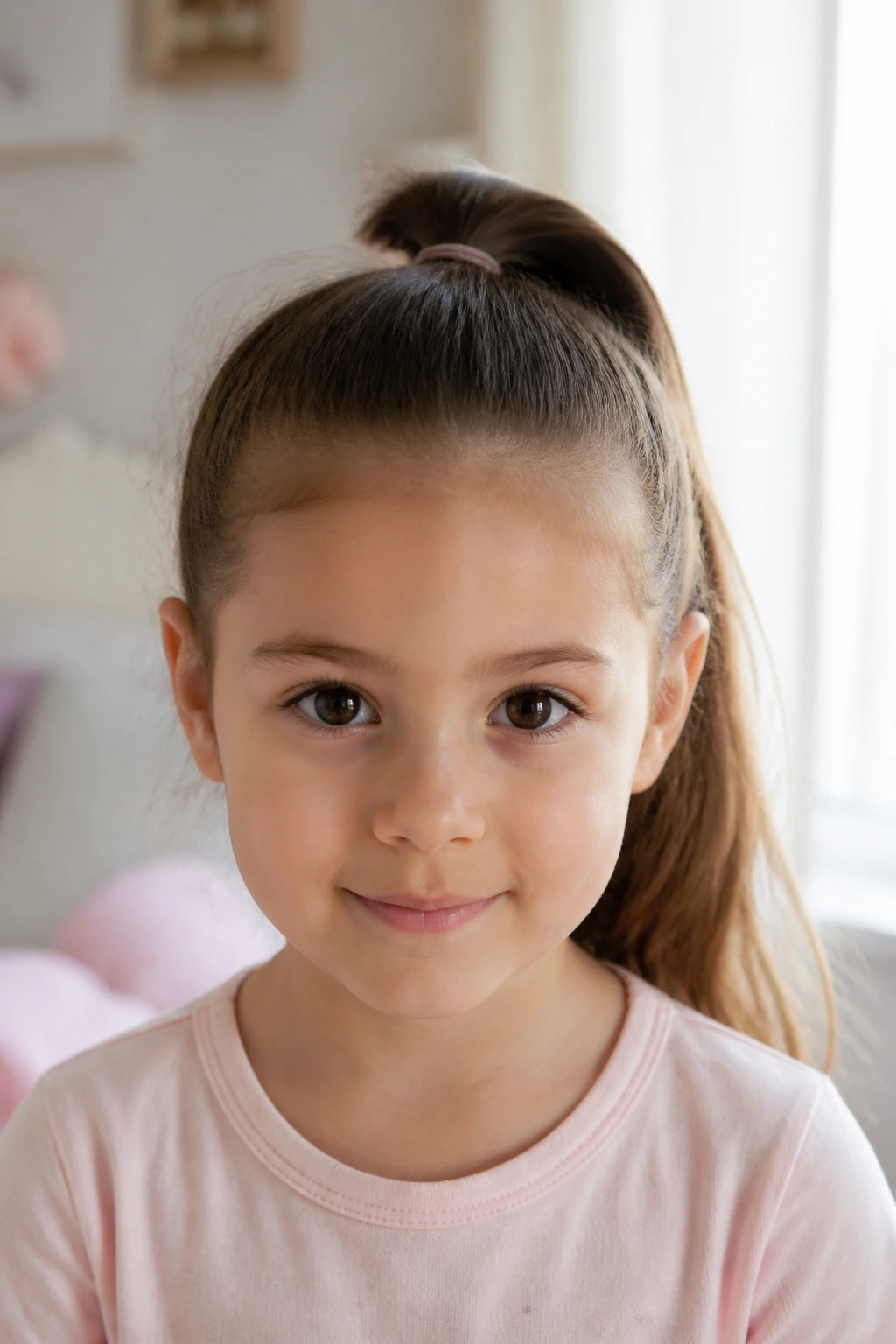
A ponytail that looks nice for ten minutes is not the same thing as a ponytail that survives a full school day. The difference usually comes down to three things: where the elastic sits, how much tension you use, and whether the hair was prepped for its texture.
Fine, silky hair slips because the strands don’t have much grit against one another. Curly and coily hair fights back in a different way — not by sliding, but by springing and shrinking if you try to force it into a shape it doesn’t want. Thick hair gets heavy, which means the base needs support more than polish. Same hairstyle. Very different physics.
The most useful habit is this: place the elastic where the head shape supports it, not where a picture made it look cute. High ponytails sit best on the crown. Low ponytails do better at the nape. Side ponytails need enough depth in the part to keep the weight from flipping forward. If a style keeps sagging, move the base by half an inch. That tiny change usually matters more than another spray or another clip.
Hair prep matters too. A light mist of water, a gentle detangling spray, or a dab of leave-in on the lengths can make the strands settle instead of fight the comb. Don’t soak the roots. That just makes slippery hair more slippery. And if you’re working with curls, stop brushing once the detangle is done. Over-brushing turns shape into fluff.
The last piece is comfort. If a child starts touching the same spot over and over, the style is probably too tight or sitting wrong. Pay attention to that. Kids tell the truth with their hands.
Essential Tools for Gentle Ponytail Styling
-
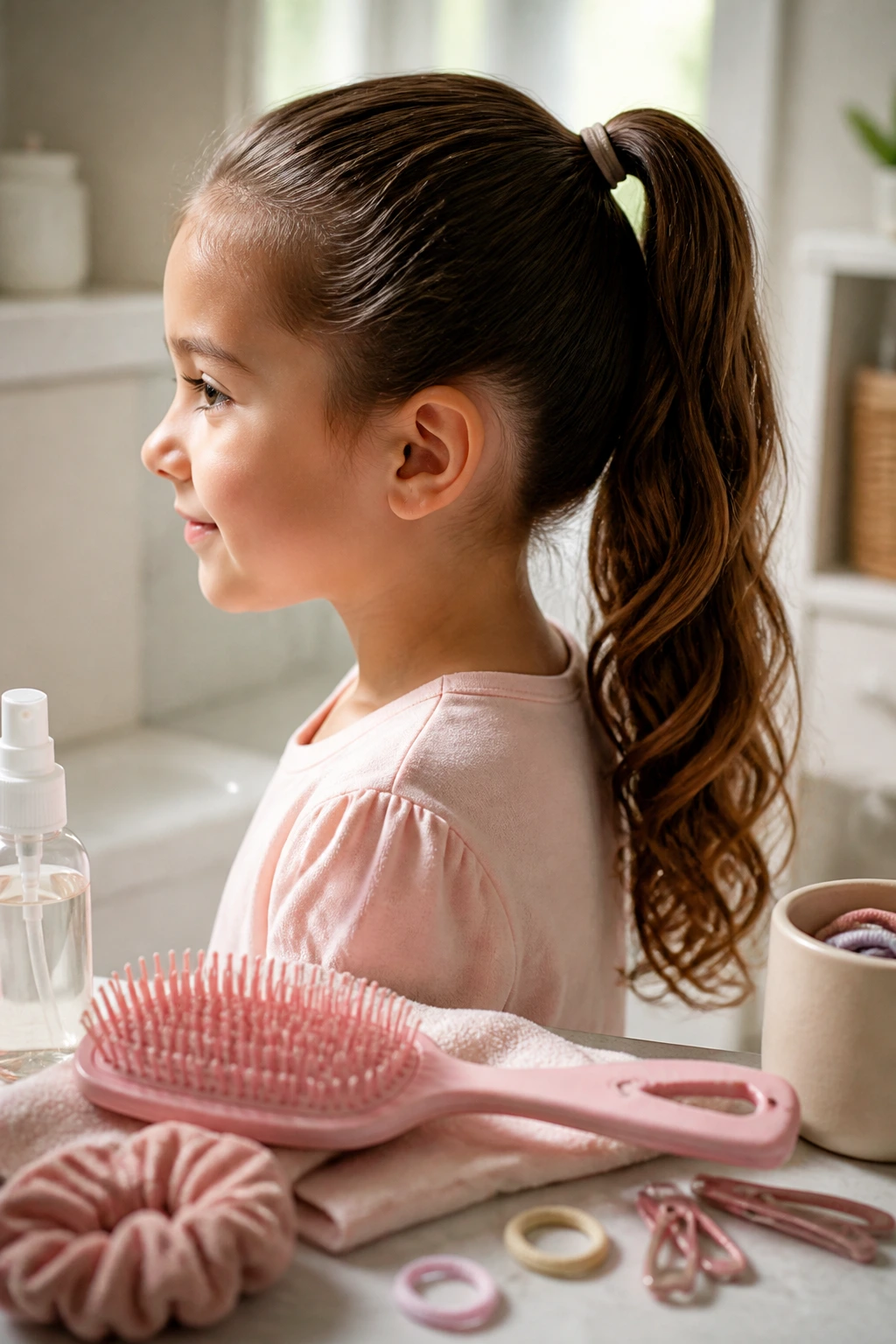
Rat-tail comb: The pointed end makes clean parts, especially for zig-zags, middle parts, and sectioning for bubble ponytails.
-
Detangling brush: A flexible brush with soft bristles pulls through knots more gently than a stiff paddle brush.
-
Spray bottle: A little water helps smooth flyaways and reset hair that’s gone fuzzy after sleep.
-
Soft no-pull elastics: Fabric-covered or seamless bands hold better and snag less than the cheap rubber ones that rip hair on removal.
-
Small bobby pins: Handy for wrapped elastics, twisted crowns, and keeping small pieces tucked away.
-
Ribbon or scarf: Useful for low ponytails, side ponytails, and any style that needs a softer finish.
-
Wide-tooth comb: Best for curly and coily hair when you want to keep the shape intact instead of brushing it flat.
-
Leave-in detangler or lightweight cream: A small amount helps with slipping, frizz, and dry ends. Keep it off the roots if the hair is fine.
-
Satin scrunchie or pillowcase: A scrunchie is good for the style; a pillowcase helps preserve it overnight without a fight.
Smart Hair Shopping and Product Picks
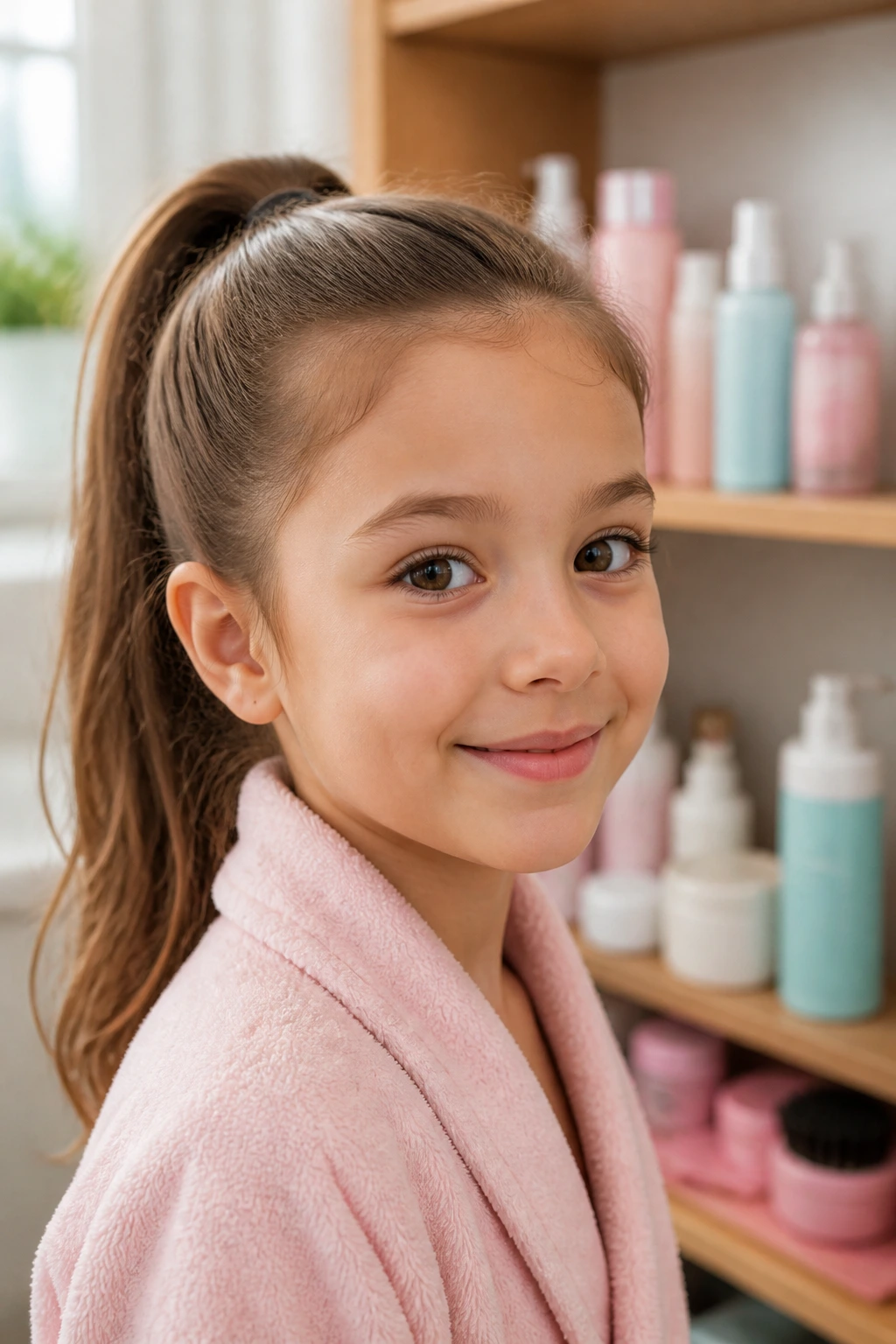
A good ponytail starts with the boring stuff nobody wants to shop for. That’s the truth of it. The right elastics, brush, and detangling spray make more difference than an expensive accessory ever will.
For elastics, look for packs that include both small and medium sizes. Fine hair usually needs a smaller band so the base doesn’t feel bulky, while thick hair and curly hair need more grip. If the elastic has a metal join, skip it. That little seam is exactly where hair gets snagged on removal. Fabric-covered or seamless bands are kinder, and they last longer in a lunchbox drawer.
Brushes matter more than people admit. A soft detangling brush with some flex is much easier on kid hair than a rigid one. If you’re working with curls, a wide-tooth comb is still the better starting point. Use the brush when you need smoothing; use the comb when you need respect for the curl pattern.
As for sprays and creams, keep them light. A leave-in detangler, a little water-based spray, or a pea-size amount of cream on the ends is enough for most ponytails. Heavy oils at the root tend to make everything slide. That’s especially annoying on straight hair, where the style can unravel before the shoes are on.
For bows and scarves, buy softer fabrics than you think you need. If the accessory feels stiff in your hand, it’ll usually feel stiff in a child’s hair too. That’s not a fun surprise at 7:40 in the morning.
How to Wear These Ponytails for School, Play, and Photos
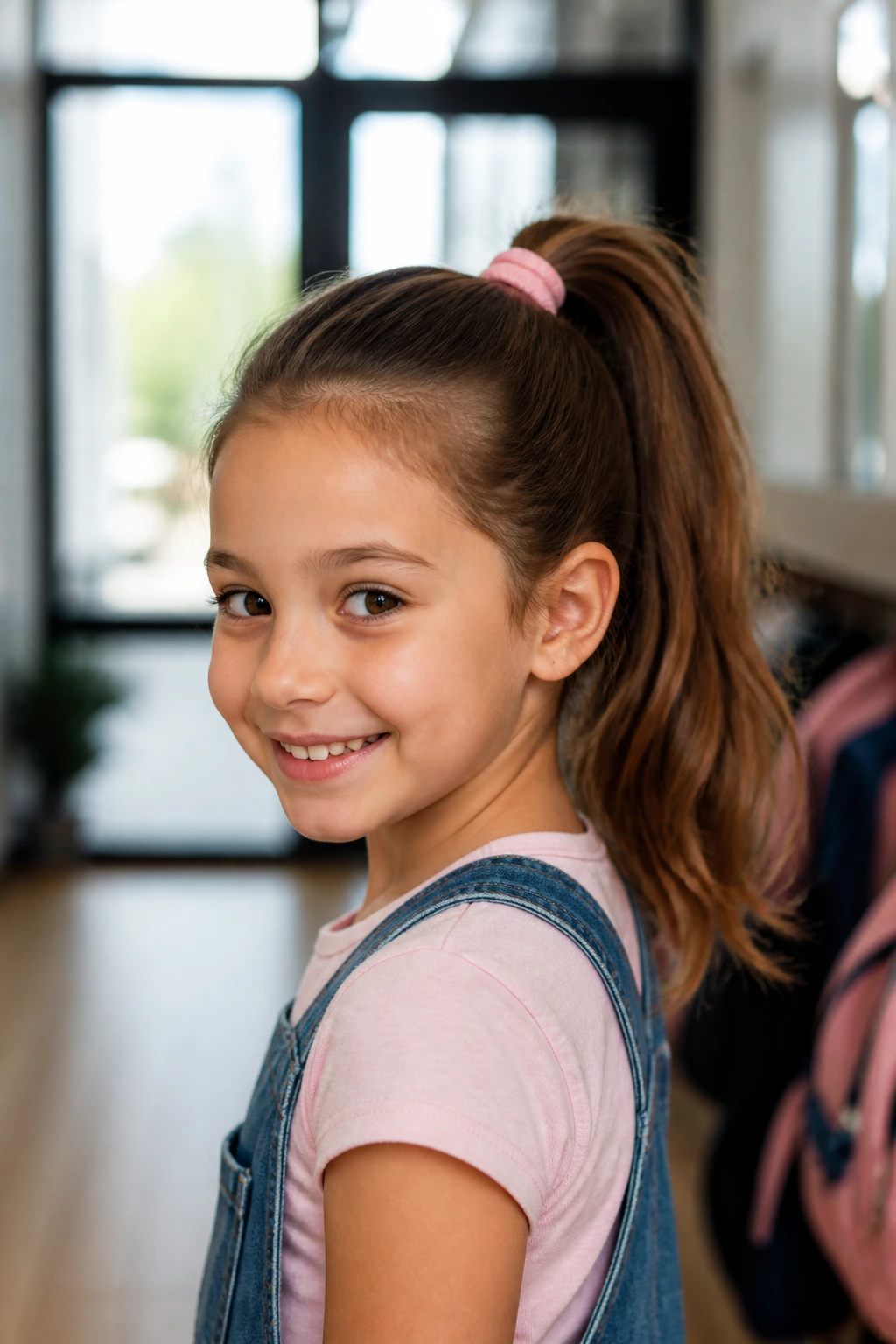
School days: Go for styles that keep the hairline calm and the tail low-fuss. High ponytails, side ponytails, wrapped elastics, and braided bases all work because they stay neat without constant fixing. A little control at the front matters more than making every strand identical.
Playground and sports: Choose styles that spread the weight out or grip the hair well. Bubble ponytails, double ponytails, sporty side-braid ponytails, and curly puffs tend to stay put when there’s movement, sweat, and a hoodie coming on and off. Anything with a loose scarf needs extra caution here.
Photo days and parties: This is where ribbons, bow stacks, wrapped bases, zig-zag parts, and scarf ties earn their keep. You want one focal point, not a pile of decorations. A clean part and a single accessory usually look better than three different pretty things fighting for attention.
Comfort check: Run a fingertip along the hairline and behind the ears. If there’s redness, if the skin looks dented, or if the child keeps reaching up to scratch, loosen the style or shift the base. Pretty hair that hurts is not a win.
Easy Ways to Make Each Ponytail More Personal
Ribbon Finish: Thread a narrow ribbon through the elastic or tie one at the base of a low ponytail. It’s the fastest way to change the mood without rebuilding the style.
Texture Boost: On straight hair, a tiny mist of water or leave-in can help a braid hold and keep flyaways from escaping. On curly hair, use fingers more than brushes so the shape stays alive.
Accessory Control: One bow, one clip, one scarf. That’s usually enough. Piling on more can make the style slide and look overdone by lunch.
Make-It-Theirs: Let the child pick between two or three approved options — a blue ribbon, a pink scrunchie, a plain wrapped elastic. Choice matters more than parents sometimes think, because kids wear a style more willingly when they had a say in it.
Quick polish trick: Rub a small amount of leave-in between your palms and smooth the crown, then stop. Do not keep chasing every tiny flyaway. A few soft pieces around the face are normal, and honestly, they keep the style from looking helmet-like.
Keeping Ponytails Tidy Between Wash Days
Most ponytails can be worn, adjusted, and worn again if you treat the hair kindly at night. If the style is simple and not too tight, a satin pillowcase may be enough. For curls or puffs, a loose satin bonnet or pineapple-style tie can keep the shape from flattening without crushing it. For straight hair, the main goal is to avoid rough friction around the crown.
If a ponytail is meant to last into the next day, don’t sleep in a high or tight one. That’s how you wake up with a sore scalp and a bent tail. A low ponytail, a loose braid, or a soft scarf wrap is easier on the hair overnight. In the morning, a little water on the hands and a quick smooth-over at the front usually brings the shape back.
Washing every day is not the only answer, and for many kids it’s not the best one either. Between wash days, a ponytail can hide oily roots or keep frizz contained, but the scalp still needs a break from constant tension. I’d rather see a slightly undone style than a perfectly slick look that stays pinned all day and gets repeated tomorrow and the next day.
If a style starts making the child fuss, take it down. Re-tie the hair lower, loosen the front, or switch to a softer elastic. The hair should be part of the day, not the reason the day gets difficult.
Common Ponytail Mistakes to Avoid
Pulling the front too tight: The symptom is easy to spot — a shiny, stretched hairline, red marks at the temples, or a child rubbing the same spot all morning. The fix is to gather the hair with less force and place the elastic where the head shape supports it, not where your hand feels most secure.
Using the wrong elastic: Plain rubber bands snag, break, and make removal a little battle. Swap them out for soft fabric-covered elastics or seamless bands. You’ll see fewer broken hairs around the base, and taking the style down won’t feel like a chore.
Brushing curls into submission: If you drag a brush from root to tip on curly hair, you’ll get fluff, not control. Detangle gently with a wide-tooth comb or fingers, then stop once the knots are gone. The curl pattern is part of the style, not a mistake to erase.
Ignoring the weight of the accessory: A giant bow can drag a fine-hair ponytail backward within an hour. If the ponytail sags as soon as the clip goes on, the accessory is too heavy for the hair. Go lighter.
Making every ponytail sit in the same spot: Hair texture and head shape change where the best placement is. If a high ponytail keeps splitting or a low ponytail keeps slipping, move the base by half an inch and try again.
Variations and Adaptations to Try
Fine-Hair Rescue Ponytails: Use smaller elastics, keep the base slightly higher, and choose styles with built-in texture like braided-base ponytails or zig-zag parts. Fine hair does better when the style has somewhere to grip. One soft ribbon is enough; too much accessory can pull it down.
Curly Crown Ponytails: Keep the curls intact and work with the shape instead of flattening it. High puffs, half-up ponytails, and low satin-tied styles all preserve texture and make the child feel comfortable. If the front needs control, smooth only the top layer.
Tiny-Toddler Soft Tails: For very young kids, go low, loose, and light on accessories. Think side ponytails, low ribbons, or small double ponytails with fabric ties. The goal is comfort first, since toddlers tend to wriggle before you’re done fastening the elastic.
Party Ribbon Ponytails: Add a wrapped elastic, then finish with a ribbon that matches the outfit or the season. This works best on clean parts and smooth crowns. Keep the color story simple — one bright ribbon beats three competing clips.
Gym-Ready No-Fuss Ponytails: Choose high ponytails, braided bases, or sporty side-braid ponytails that hold through movement. Skip dangling scarves and oversized bows. If the child is going to sweat, bounce, or spin, the style needs less decoration and more grip.
Frequently Asked Questions About Ponytail Styles for Little Girls
What elastic is best for little girls’ hair?
Soft, seamless elastics are the safest everyday choice because they grip without snagging as much. If the hair is fine, use a smaller band; if it’s thick or curly, choose one with more stretch and a stronger hold.
How do I keep a ponytail from slipping out?
Start with a little texture at the roots — even a light mist of water or detangling spray helps — and place the elastic where the head shape supports the style. On silky hair, a braided base or double elastic can help more than extra hairspray.
Are tight ponytails bad for kids?
A ponytail that pulls hard at the temples or leaves a red dent is too tight. The style should stay secure without causing pain, headaches, or constant touching at the hairline. If it’s red when it comes down, loosen it next time.
Can you do ponytails on curly hair without ruining the curls?
Yes, and you usually should. Use your fingers or a wide-tooth comb, preserve the curl pattern in the tail, and pick styles like puffs, half-up ponytails, or low ties that don’t force the hair flat.
What if my child hates having her hair brushed?
Brush in sections, starting at the ends and moving upward, and keep the detangling spray close. Doing the hair when it’s slightly damp or after a bath often helps too, because dry knots are stubborn and painful.
How do I make a ponytail look fuller?
Bubble sections, double ponytails, a braided base, or a triple-section illusion can all create more shape. For fine hair, even a slight lift at the crown after tying the elastic can make the style read fuller.
Can these styles work for short hair?
Some of them can. Side ponytails, half-up ponytails, low ribbons, and double ponytails often work better on shorter lengths than high styles do. If the ends fall out, switch to a smaller section and anchor it lower.
What’s the easiest style for a rushed morning?
A low ponytail with a ribbon, a simple high ponytail, or a half-up ponytail takes the least time. If the hair is slippery, a quick braid at the base adds hold without adding much extra work.
How do I make ponytails more comfortable for sleeping?
Take out high or tight styles before bed. If you want to preserve the shape, switch to a loose braid, low ponytail, or soft bonnet so the hair rests without pressure on the scalp.
A Softer Way to Tie It Back
The best ponytails for little girls are the ones that respect the child in the chair. They don’t fight the hair texture. They don’t pinch the temples. They don’t require a pile of gadgets or a half-hour of patience before breakfast. A good ponytail should get out of the way, hold together, and still look like somebody cared.
Once you know which base fits which hair — high for bounce, low for calm, braids for grip, curls for volume, ribbons for polish — the rest gets easier. You stop guessing. You start choosing. And that tiny shift can turn a rushed morning into one less thing to wrestle with.
The next time the comb comes out, pick one style that suits the day and one that suits the hair, and let that be enough.
