



A little boy’s haircut has to survive a seatbelt rub, a playground sprint, a hoodie pulled on too fast, and the kind of nap that flattens everything on one side. If the shape disappears the moment he stops sitting still, the cut wasn’t doing enough work in the first place. The best little boys’ hairstyles solve that problem in different ways: some keep the sides tight so the outline stays clean, some leave enough length on top to work with a cowlick, and some lean into curls, waves, or coils instead of fighting them.
The real trick is matching the haircut to the hair that actually grows out of his head. Straight hair behaves differently from wavy hair. Curls shrink more than parents expect. A swirl at the crown can kick a perfectly nice fringe into a weird little ridge by lunchtime. That’s why the same cut can look tidy on one kid and fussy on another.
And yes, the “cute” factor matters. So does speed. So does how ugly it looks six weeks later. The haircut that wins is usually the one that still makes sense after a rough night’s sleep and a rushed school morning. That’s the standard I keep coming back to here.
Why These Haircuts Keep Busy Mornings Moving
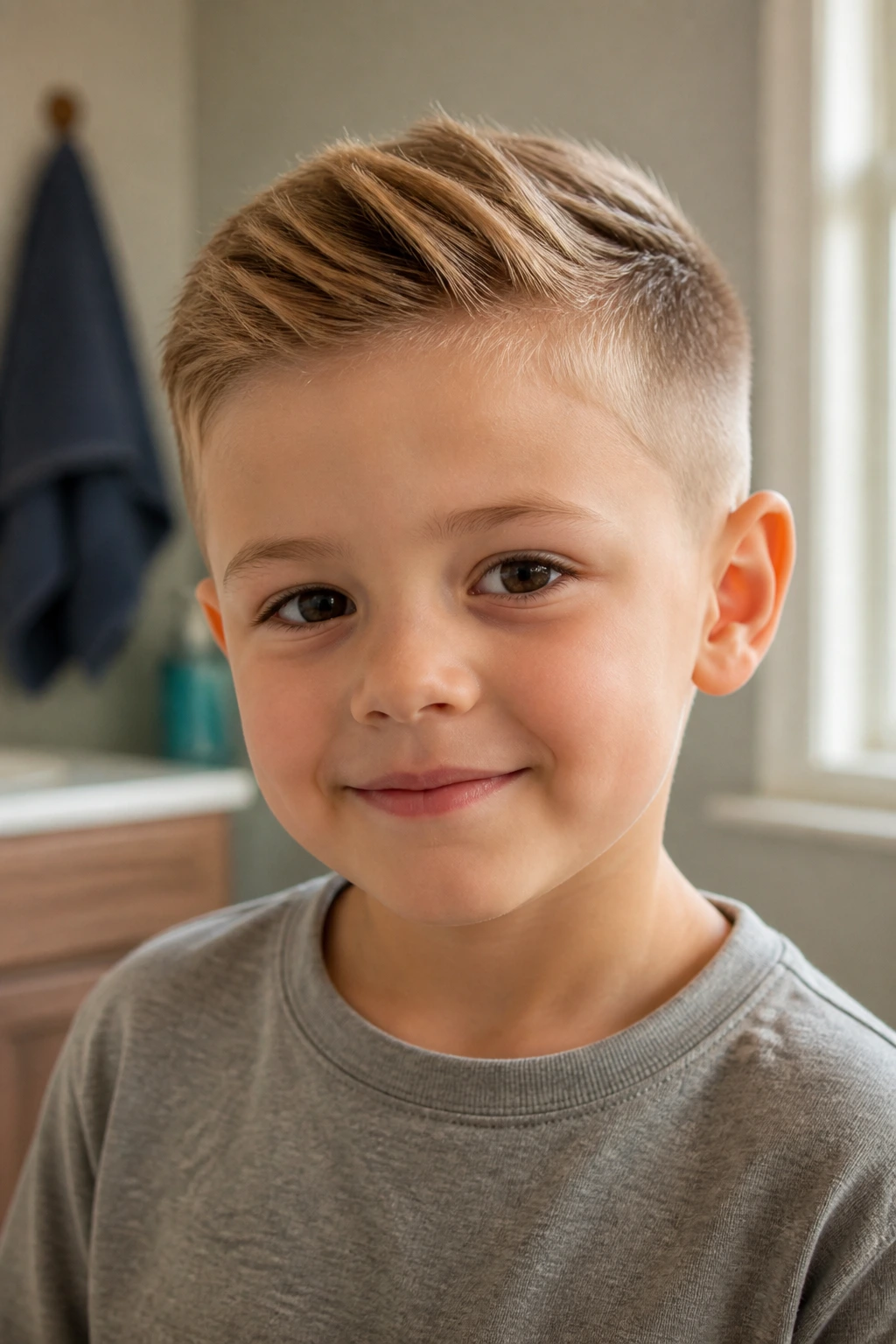
- Low-drama styling: Several of these cuts need nothing more than water, a comb, and a few seconds of finger-shaping before breakfast.
- Built for growth: The better versions keep their shape even when the neckline starts to grow out and the edges soften.
- Works with different textures: Straight, wavy, curly, and coily hair all show up here, because one haircut never fits every head.
- Less fighting, more shaping: The best cuts follow cowlicks, curls, and whorls instead of trying to flatten them into submission.
- Photo-ready without fuss: A clean taper, a tidy fringe, or a crisp part can make a haircut look intentional even when the rest of the morning feels messy.
- Barber-friendly: These are styles you can actually describe in inches, guards, and shapes instead of waving your hand and hoping for the best.
1. Classic Crew Cut
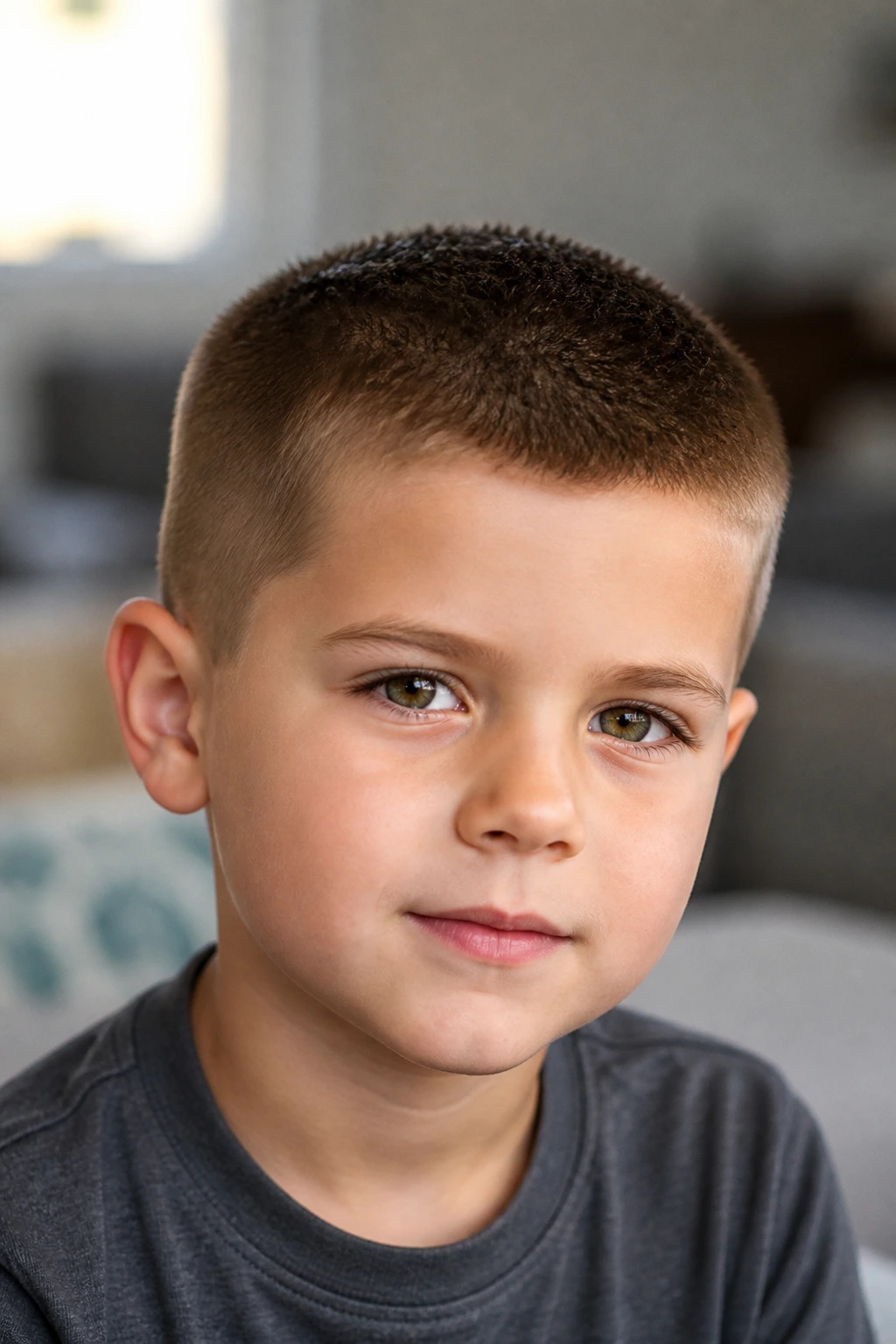
A crew cut is the haircut parents ask for when they want the chair time to stay short and the morning routine even shorter. Keep the sides around a #2 or #3 guard, and leave the top at roughly 1 to 1¼ inches so there’s still a little shape instead of a full buzz. It sits neatly on straight hair, but it also does a nice job of calming thicker hair that tends to puff up around the ears.
What I like here is the grow-out. It doesn’t turn ugly fast. The neckline softens, the sides blur a little, and the whole thing still reads as a haircut, not an accident. If the crown has a swirl, ask the barber to leave the back of the top just slightly longer so it doesn’t stand up in that odd little tuft some boys get.
A pea-size bit of matte paste is enough if you want a cleaner front. Most days, though, water and fingers do the job.
2. Textured Crop
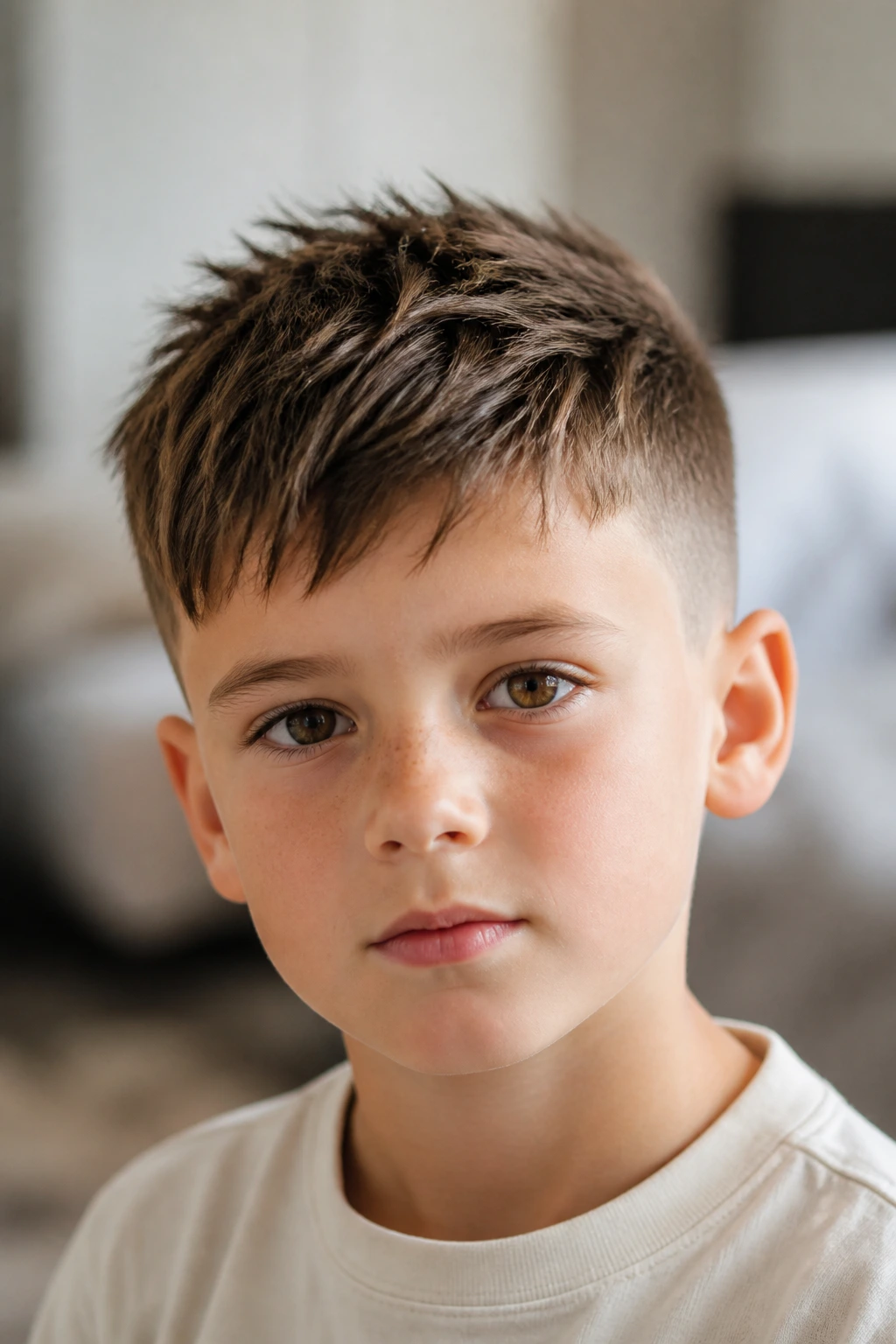
If fringe keeps dropping into his eyes, the textured crop fixes that without making the haircut look stiff. The top stays choppy at about 1 to 1½ inches, and the fringe is broken up rather than cut into one blunt line. That texture matters. It lets the hair move forward in pieces instead of falling like a sheet across the forehead.
This cut works especially well on fine hair, because the point-cut ends give the top a little lift and make it look fuller. On thicker hair, it stops the front from bulking up in that round, mushroomy way. Ask for a low taper or low fade on the sides if you want it cleaner around the ears.
A fingertip of matte clay rubbed into dry hair is usually enough. If the top starts to look flat after school, mist it lightly with water and push the fringe forward with your hands.
3. Low Fade with Side Part
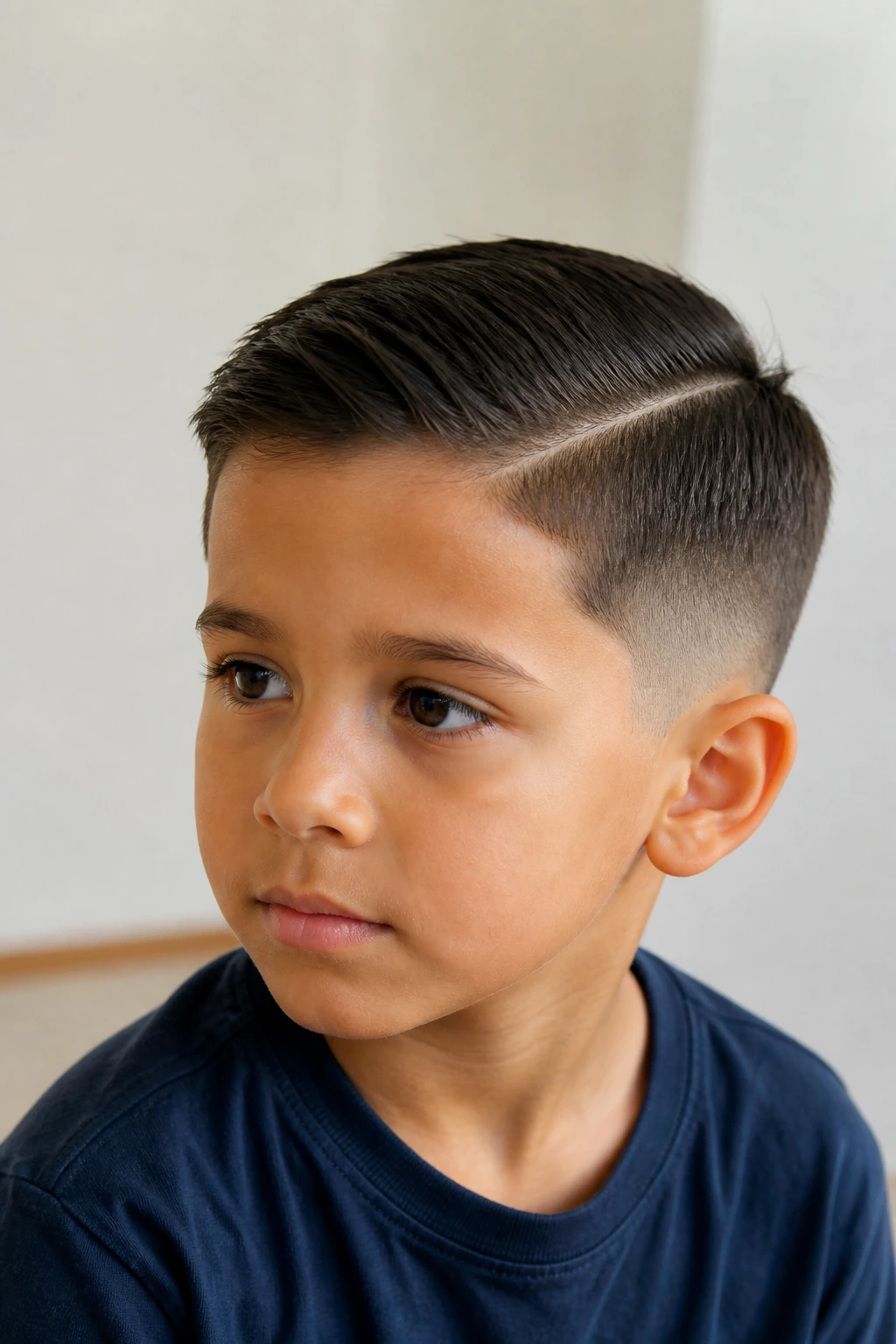
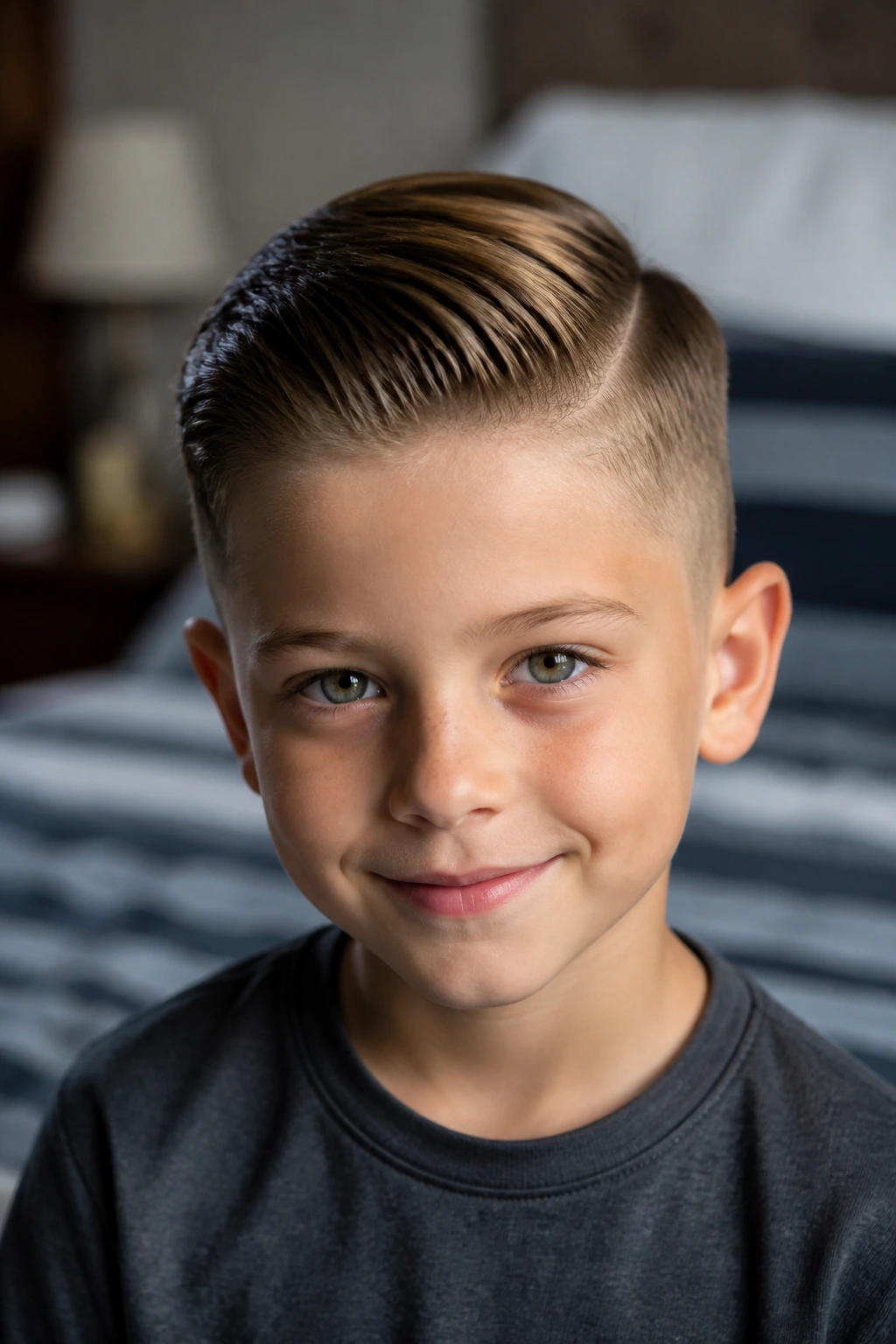
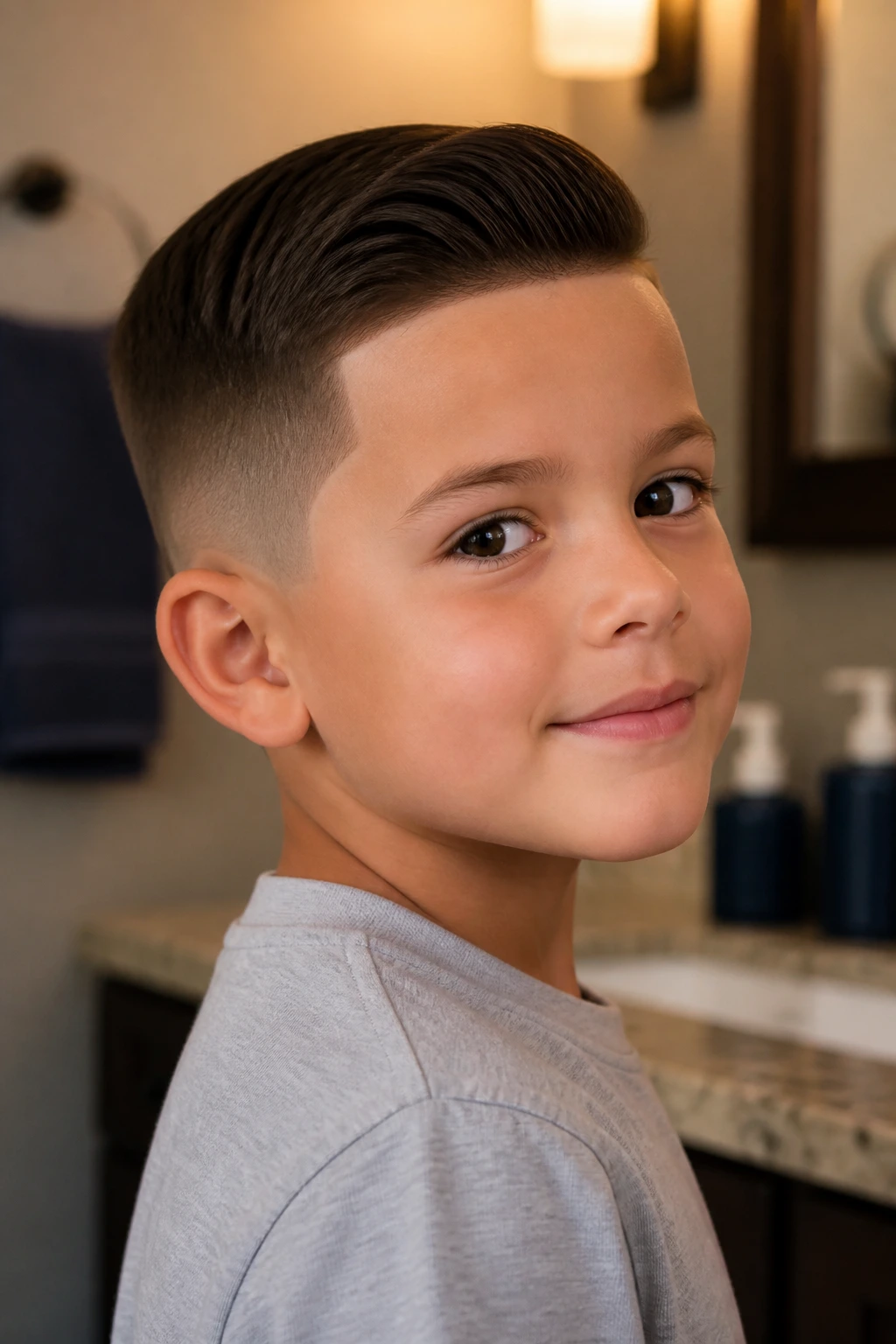
A low fade with a side part is one of those cuts that looks sharper than the effort it takes to wear. The fade stays low—close around the ears and neckline—while the top keeps enough length to part cleanly, usually around 1½ to 3 inches. It’s the sort of haircut that can look dressed up at a family photo and still behave during recess.
The part can be soft or hard. I lean soft for younger boys, because it grows out more gently and doesn’t demand as much upkeep. If the child has a strong cowlick, keep the top a little longer on the heavier side of the part so it doesn’t keep flipping back. A light comb-through with a touch of pomade gives shine, but don’t drown it. Too much product and the hair starts to look greasy by lunch.
This is a good choice when you want neatness without going full formal. Clean around the ears. Easy on the eyes. Easy to fix.
4. Messy Fringe
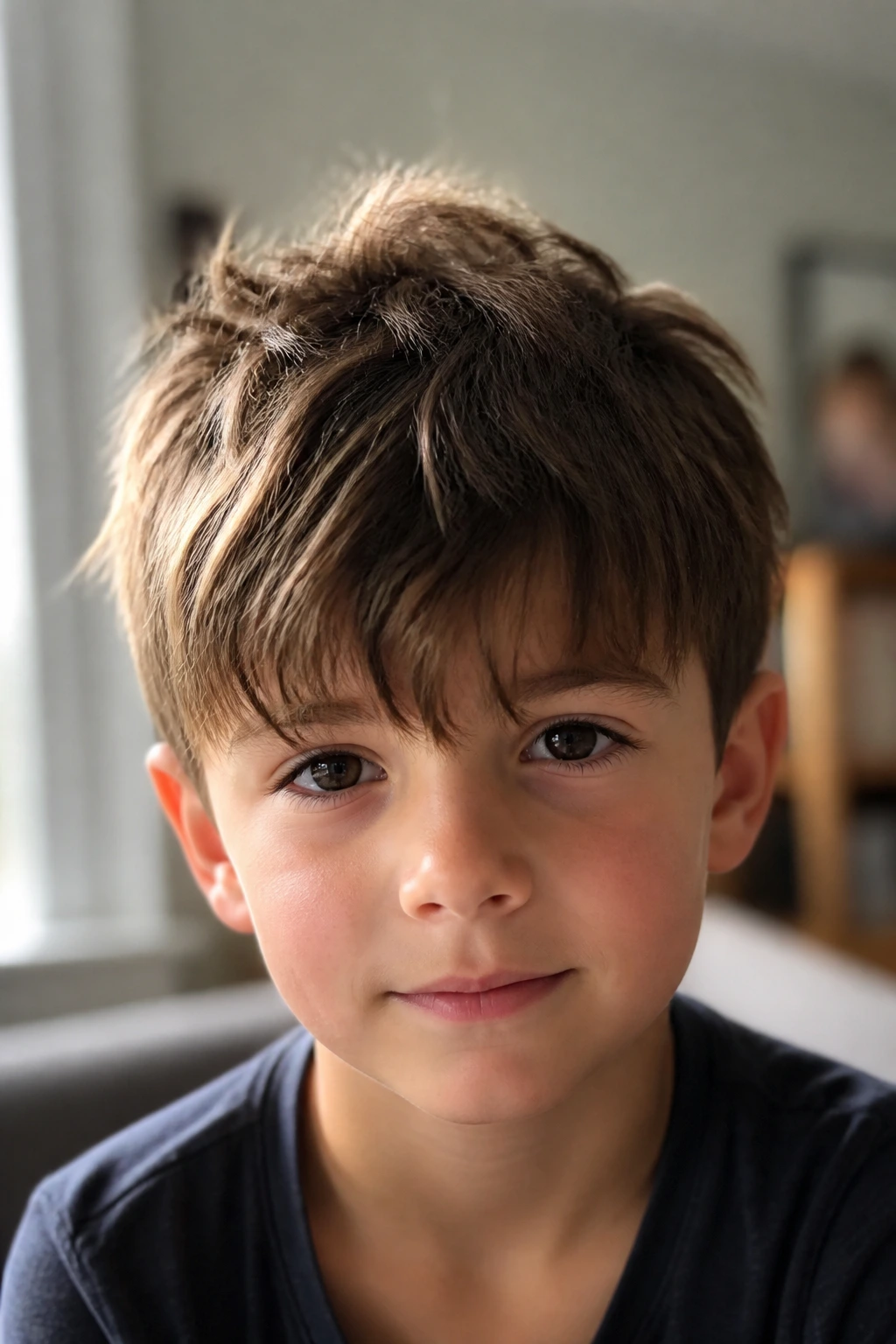
A messy fringe is basically permission for hair to look lived-in instead of perfectly controlled. The front stays longer—often 2 to 3 inches—and the top is cut so it falls forward in soft pieces rather than one blunt curtain. On straight hair, it brings some movement. On wavy hair, it can look pleasantly effortless in a way that doesn’t seem forced.
The key is shape, not sloppiness. Ask for light texturizing through the front and crown so the fringe separates a little when it dries. If the barber leaves the bottom edge too blunt, it stops looking playful and starts looking heavy. I’d also avoid heavy gel here; it kills the motion that makes the cut work.
A mist bottle and a dab of lightweight cream are enough. Scrunch, push the fringe where it belongs, and leave a few pieces imperfect on purpose. That little bit of mess is the point.
5. Curly Taper Fade
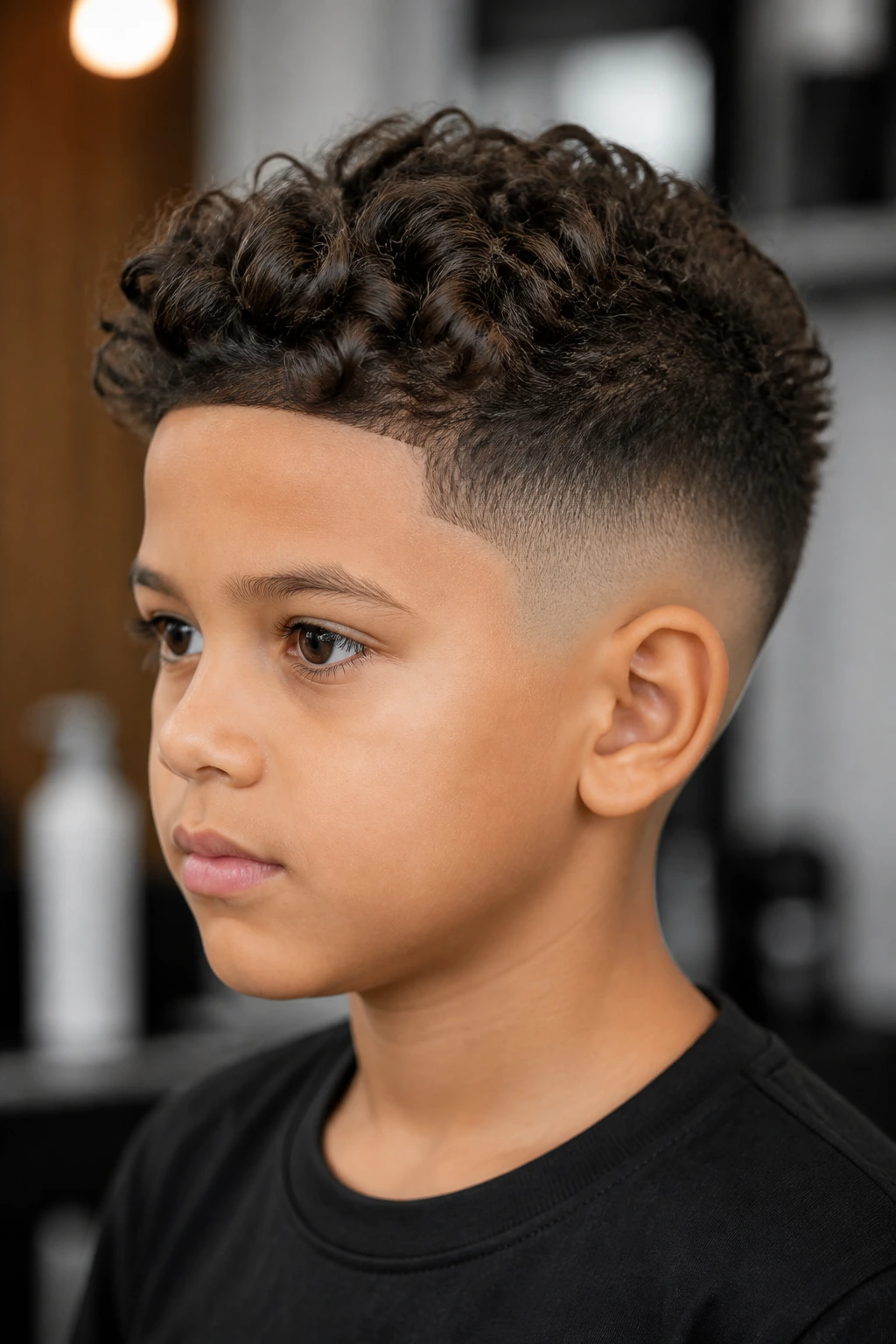
A curly taper fade does one very smart thing: it keeps the curl where it belongs and removes the bulk everywhere else. The sides and back are tapered close, while the top stays long enough for the curls to spring—usually 2 to 4 inches, depending on tightness. If a child’s curls get puffy at the temples or around the ears, this cut tidies those zones without flattening the top.
The best version starts with moisture. Curls that are dry look frizzy before they look defined. Use a leave-in conditioner on damp hair, then a small amount of curl cream. That’s usually enough. Skip the brush once the hair is dry; finger-shaping gives a softer finish and doesn’t pull the curl apart.
Ask the barber to keep the taper gradual so the fade doesn’t look like a hard cliff. And if the curls shrink a lot, leave a little extra length on top. A haircut that looks “long enough” when wet can turn into a much shorter shape after it dries.
6. Buzz Cut

A buzz cut is the fastest answer when you want almost no daily maintenance. The classic range runs from a #1 to #4 guard, depending on how close you want it. I prefer a #3 or #4 for most little boys because it looks intentional instead of scalp-bare, and it grows out with fewer awkward stages.
The main appeal is obvious: no combing, no blow-drying, no product. But there’s one detail parents miss. A buzz cut exposes the shape of the head. Cowlicks, bumps, and uneven growth patterns all show up more clearly, which means the cut needs to be even and clean if it’s going to look right. A tidy edge around the ears and neckline helps a lot.
One caution: if the scalp is visible, sunscreen matters. That’s not glamorous, but neither is a pink crown after a morning outside. A little moisturizer can help if the scalp gets dry or flaky, too.
7. Faux Hawk
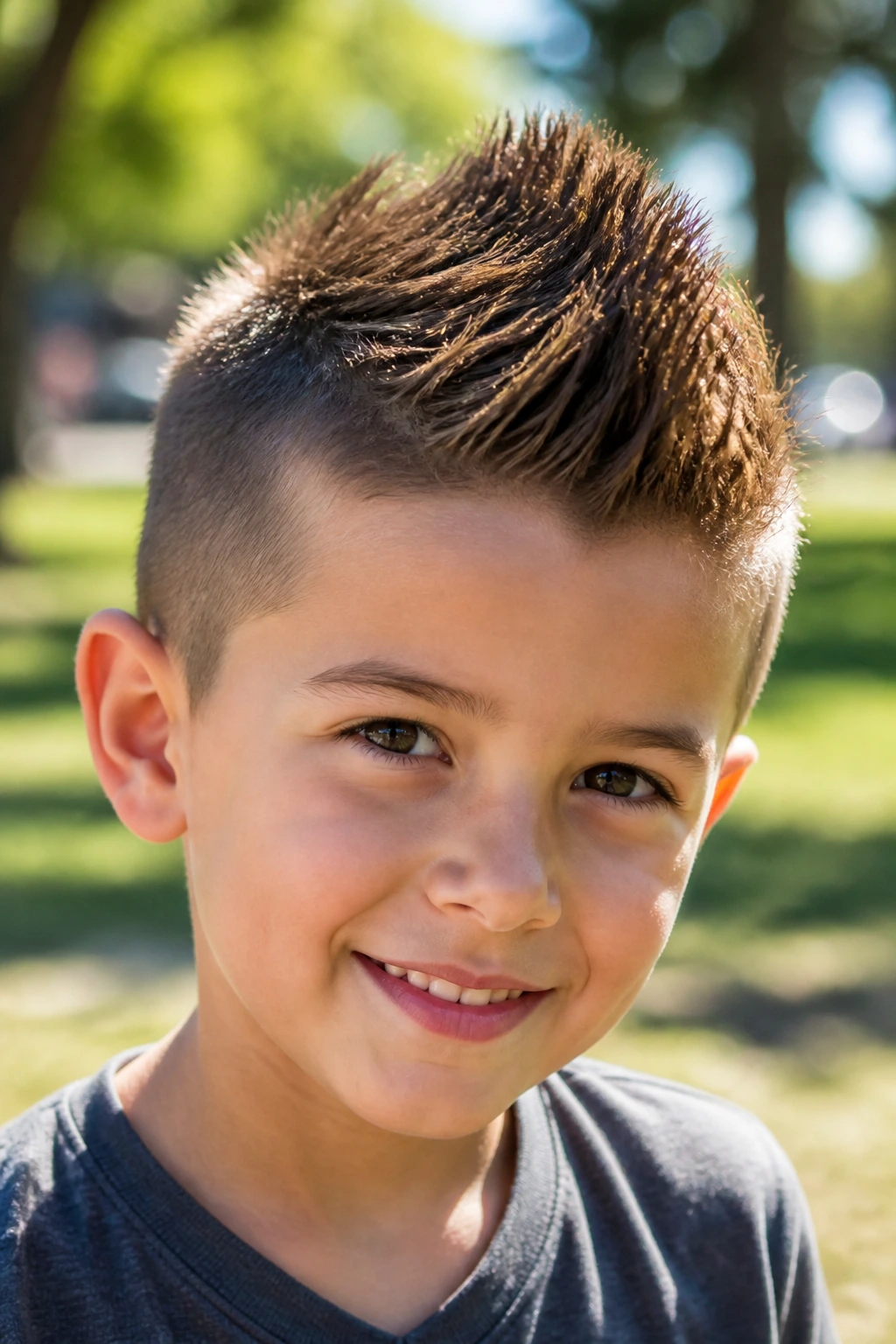
A faux hawk gives a kid a little edge without forcing a full mohawk. The sides are kept short—usually a taper or low fade—and the middle strip stays longer, often around 2 to 3 inches, so it can stand up a bit in the center. The shape is sharper than a crew cut and more playful than a standard short crop.
What makes it work on little boys is the fact that it doesn’t need perfect styling. A swipe of matte paste through the center and a quick push upward with your fingers is enough. If the hair is thick, leave the strip a little longer at the front and crown; otherwise it can collapse into a flat ridge instead of a lifted shape.
This cut looks especially good on straight or slightly wavy hair. Curly hair can wear it too, but the finish turns softer and less spiky, which is fine if that’s the goal. It’s a fun option for a kid who likes his hair to feel a little different without stepping into costume territory.
8. Ivy League Cut
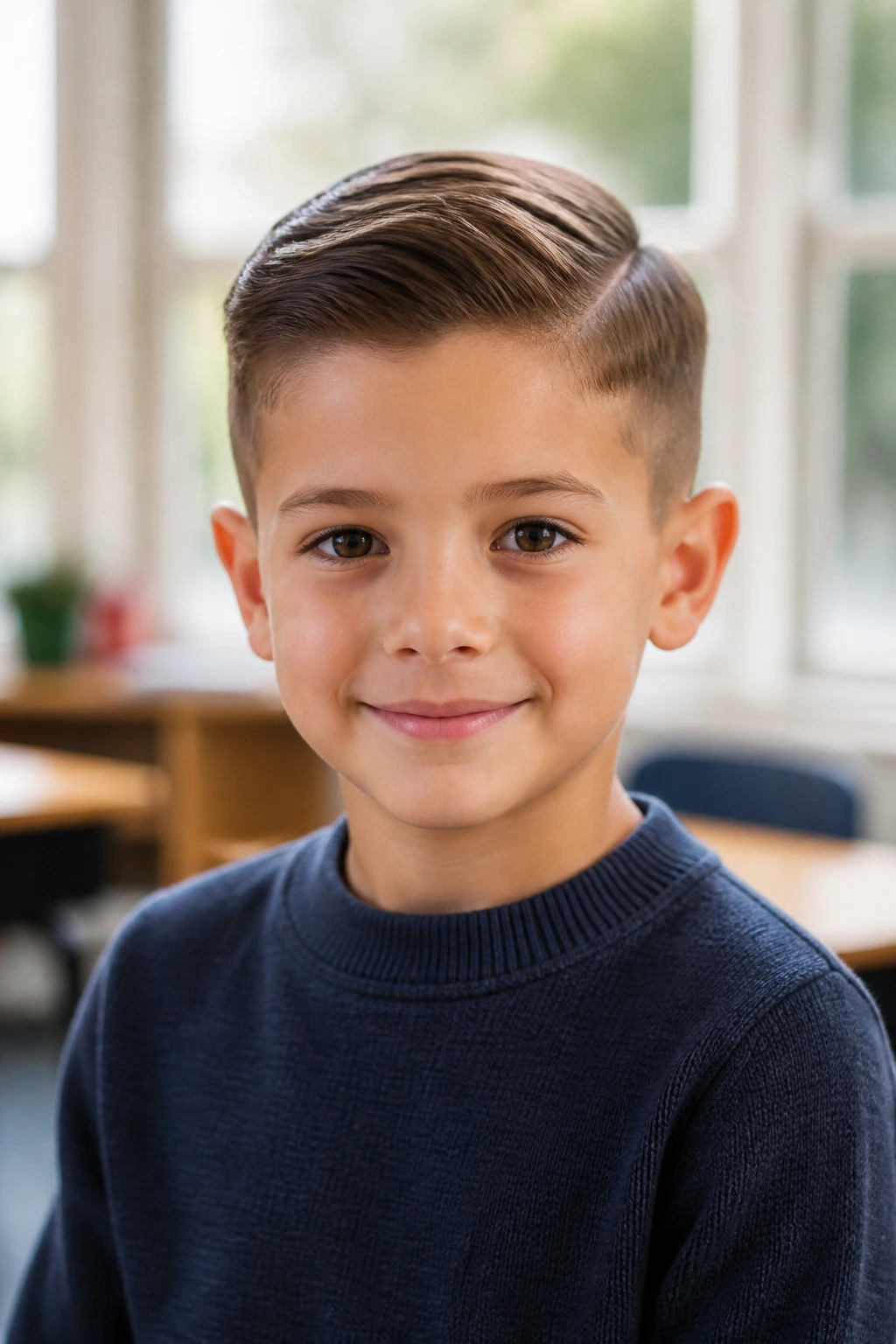
The Ivy League is basically the polished older sibling of the crew cut. The top is left long enough to part and brush over—usually 1½ to 2½ inches—while the sides are tapered short enough to stay neat. It has a clean shape without looking severe, which is why it works for school, church, family events, and any day when somebody wants a haircut that behaves.
What I like most is the balance. You get structure at the temples and neckline, but the top still moves. A comb and a pea-size amount of light pomade are usually enough to set it. If the hair is thick, ask for a little extra weight removal in the top so it doesn’t puff up when brushed.
The Ivy League grows out fairly gracefully, too. The part softens, the sides widen a touch, and it still reads as a tidy cut. That makes it one of the easiest styles to keep in rotation if you don’t want to live in the barber chair.
9. Comb Over Fade
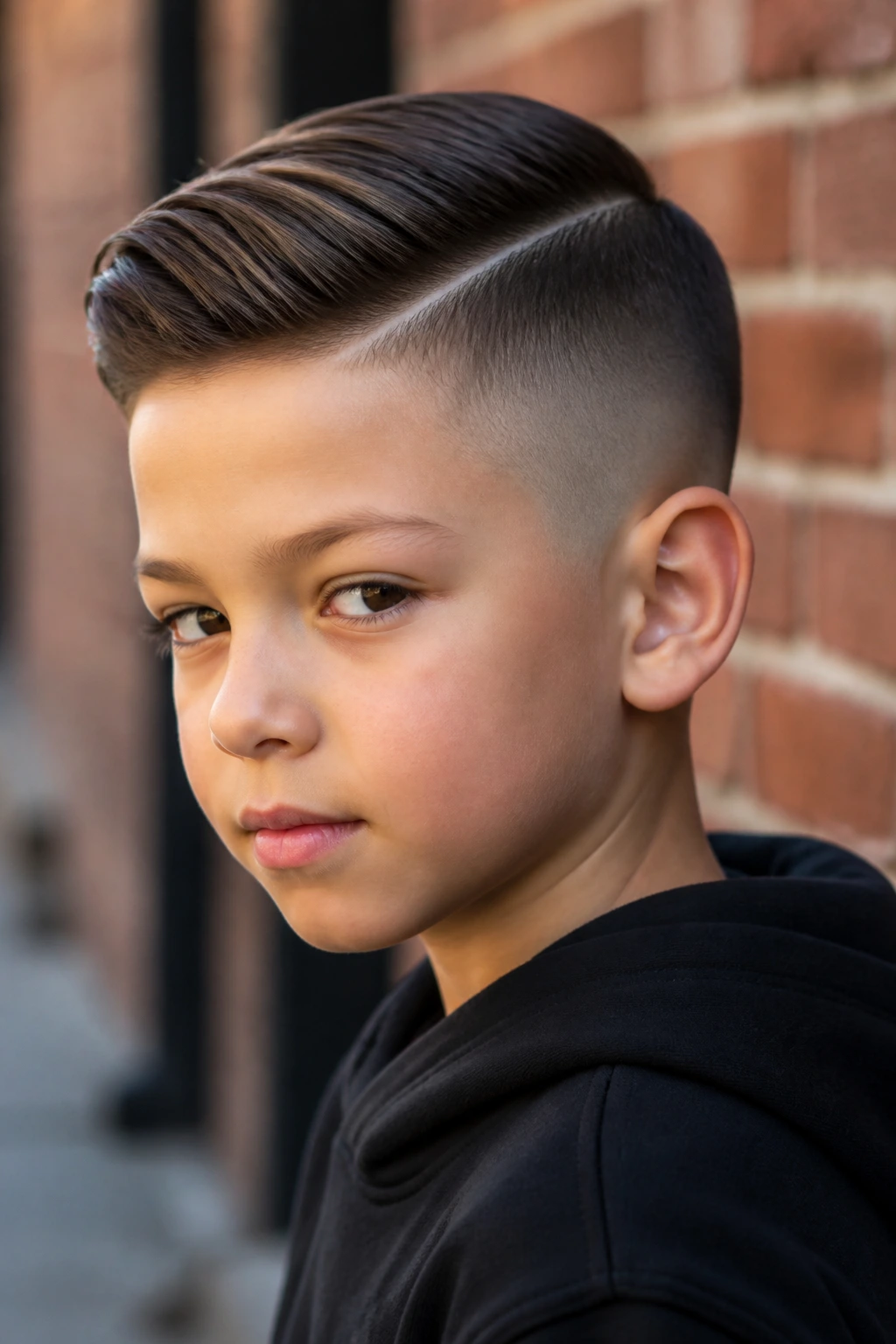
A comb over fade can look formal, but it doesn’t have to feel stiff. The fade cleans up the sides, and the top—usually 2 to 3 inches—gets directed to one side with enough length to keep a real shape. This is not the slicked-flat comb over from a wedding photo in the wrong decade. The modern version has some lift and texture.
It works best when the top isn’t over-thinned. If the barber removes too much weight, the hair loses the sweep that makes the style look full. Ask for a low or mid fade if you want contrast without making the top look disconnected. And if your child has a strong swirl near the crown, the comb over can help hide it by working with the hair’s natural direction.
A light cream or low-shine pomade is better than a wet gel here. Comb it once, then separate a few front pieces with your fingers. Too polished and it starts looking older than the kid wearing it.
10. Caesar Cut
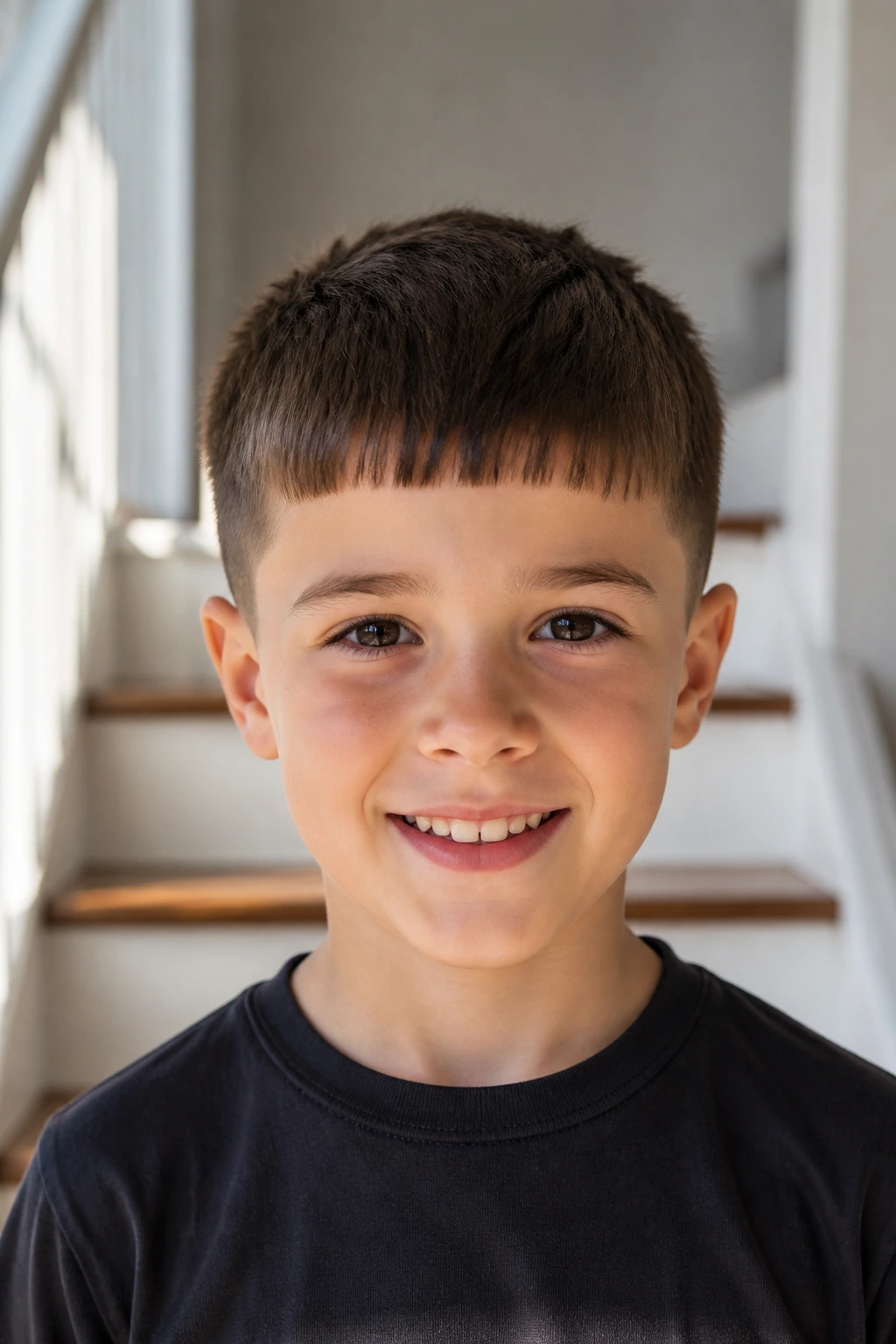
The Caesar cut is short, blunt, and useful in a way that some fancier styles aren’t. The fringe is cut forward in a straight line, while the top stays short and even across the head. Sides can be tapered close or clipped down neatly. It’s especially handy for straight hair that likes to lie flat in weird directions, because the fringe gives the hair a place to go.
On little boys, it has a practical advantage: it keeps hair out of the eyes without needing a lot of product. That matters. Nobody wants to start a school morning negotiating with a comb and a sticky forehead. If there’s a cowlick at the front, the Caesar can actually tame it better than longer styles, because the forward motion gives the growth pattern less room to kick up.
Keep the line soft rather than severe. A totally straight, boxy edge can look harsh on a child’s face. A slightly textured fringe looks friendlier and grows out better.
11. Mop Top

A mop top has that rounded, slightly shaggy shape that sits somewhere between casual and adorable in the old-fashioned sense of the word. The hair stays medium length all around, often brushing the ears a little and dropping over the forehead in soft pieces. It works best on wavy hair, but straight hair can wear it too if the barber adds layers.
This cut does not like over-styling. If you load it up with gel, the whole thing loses its charm and turns rigid. A bit of leave-in spray or light cream is usually enough to keep it from frizzing while still letting it move. If the child’s hair is thick, ask for a little weight removal around the sides so the shape doesn’t balloon outward.
It’s a good choice for boys whose hair is in that in-between stage—not short enough for a buzz, not long enough for a ponytail, and not interested in a polished part. The grow-out is forgiving, which I always appreciate.
12. Surfer Flow
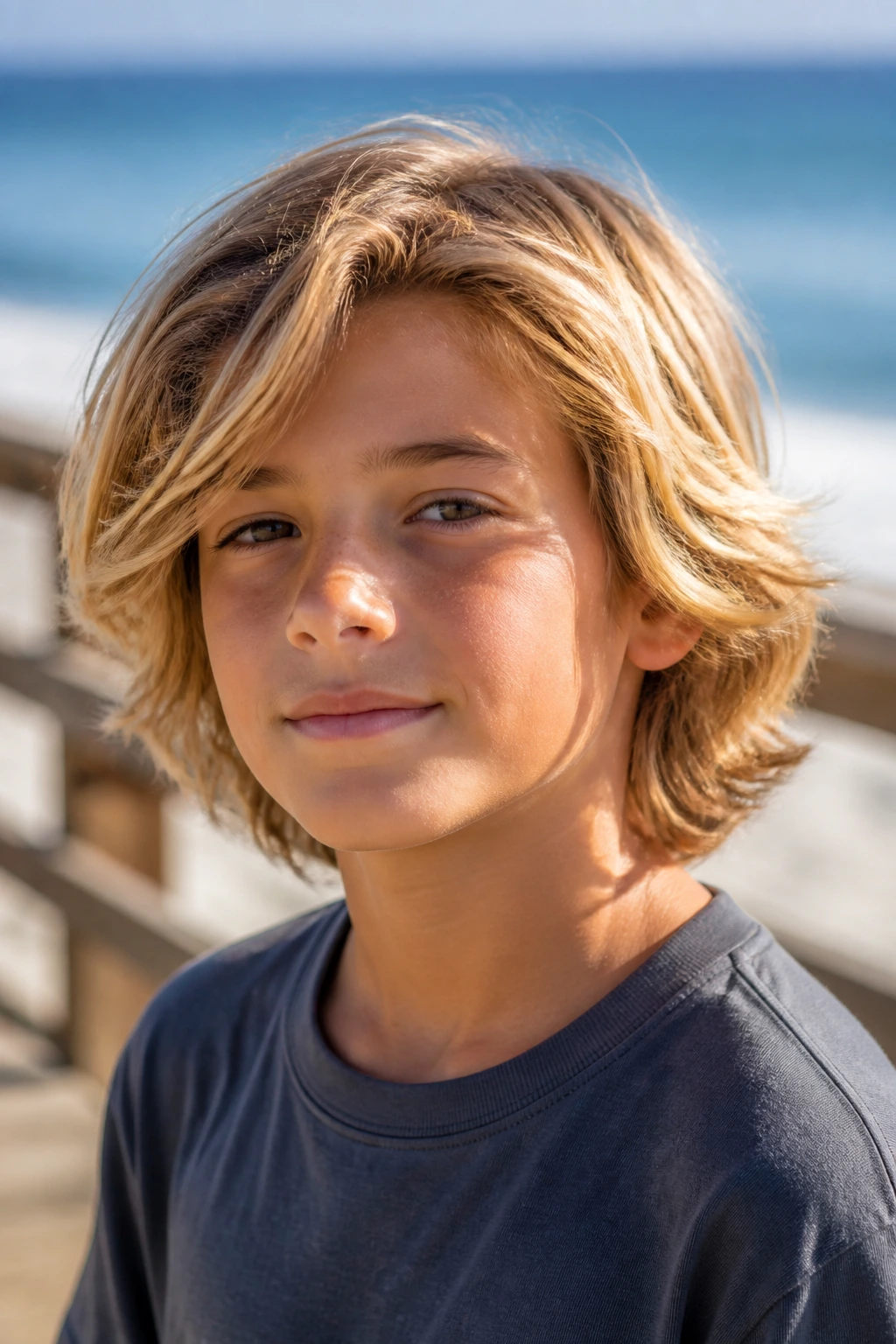
Surfer flow is the haircut equivalent of hair that just happened to fall into place, except it actually needs some shaping to look good. Think longer layers, soft movement, and enough length on the top and sides to brush back or tuck behind the ears. The cut is usually better on wavy hair, though straight hair with good texture can wear it too.
The big mistake here is cutting it all to the same length. That makes it look heavy and blocky. Layers keep the ends moving and stop the hair from hanging like a helmet. A little sea-salt spray can help, but don’t overdo it; too much dries the hair out and makes the ends feel rough. For younger boys, a leave-in conditioner is often the better call.
This style works best when the kid likes touching his hair. It’s not the shortest or neatest option on the list, but it has a relaxed shape that looks good with a sun-bleached T-shirt and messy sneakers. That’s part of the appeal.
13. Hard Part Taper
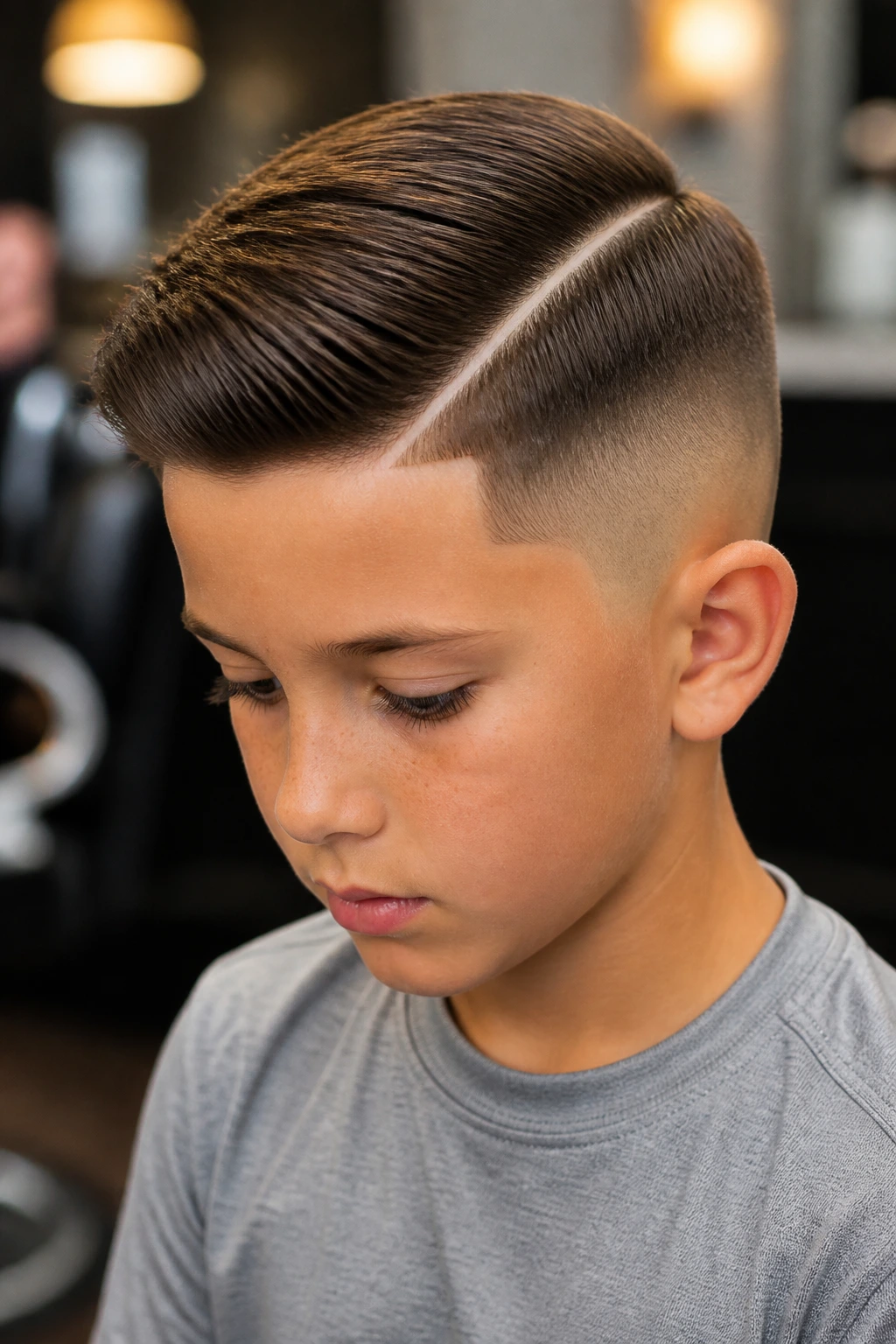
A hard part taper is for the kid who wants something crisp. The barber shaves or sharply defines a part line, then keeps the sides tapered low so the contrast stands out. The top is left long enough—usually 2 to 4 inches—to comb over the part with some direction. The result is neat, structured, and unmistakably deliberate.
The catch is upkeep. A hard part grows out faster than a soft one, and once it blurs, the whole style loses its clean edge. If you’re not ready for regular cleanup, go soft. If you are, the payoff is a haircut that looks sharp even on a plain T-shirt day. This is especially good on thick hair, because the part helps control bulk that would otherwise fight the comb.
Use a light pomade or styling cream, not a stiff gel. The line should look sharp, but the hair itself should still move a little.
14. Undercut
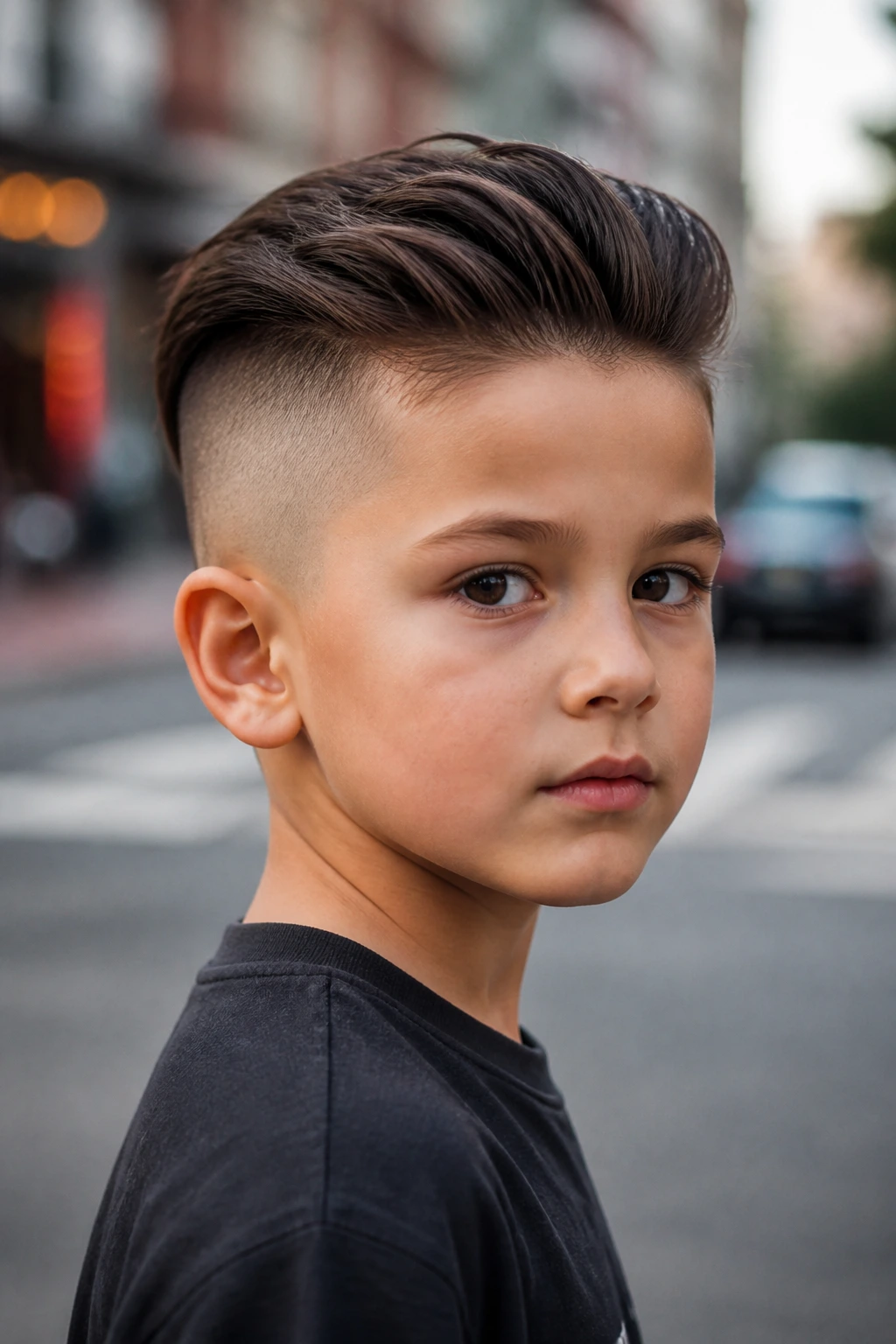
The undercut is the bold one on the rack. The sides and back are cut much shorter than the top, creating a clear disconnect between the two lengths. On a little boy, that means the top can be brushed back, pushed forward, or swept to the side while the bottom stays close and clean. It looks especially strong on straight or thick hair that wants some shape.
I’d reserve this one for kids who like a more dramatic look and won’t mind some daily styling. The contrast is the whole point. If the top is too short, the undercut loses its punch; if the sides aren’t short enough, it just turns into a regular taper with a confused attitude. Ask the barber to show you where the disconnect starts, because placement changes the feel a lot.
A matte paste usually works better than shiny product here. The hair should have shape, not helmet gloss. If school rules are strict, keep the disconnect softer so it doesn’t feel too loud.
15. Afro Taper
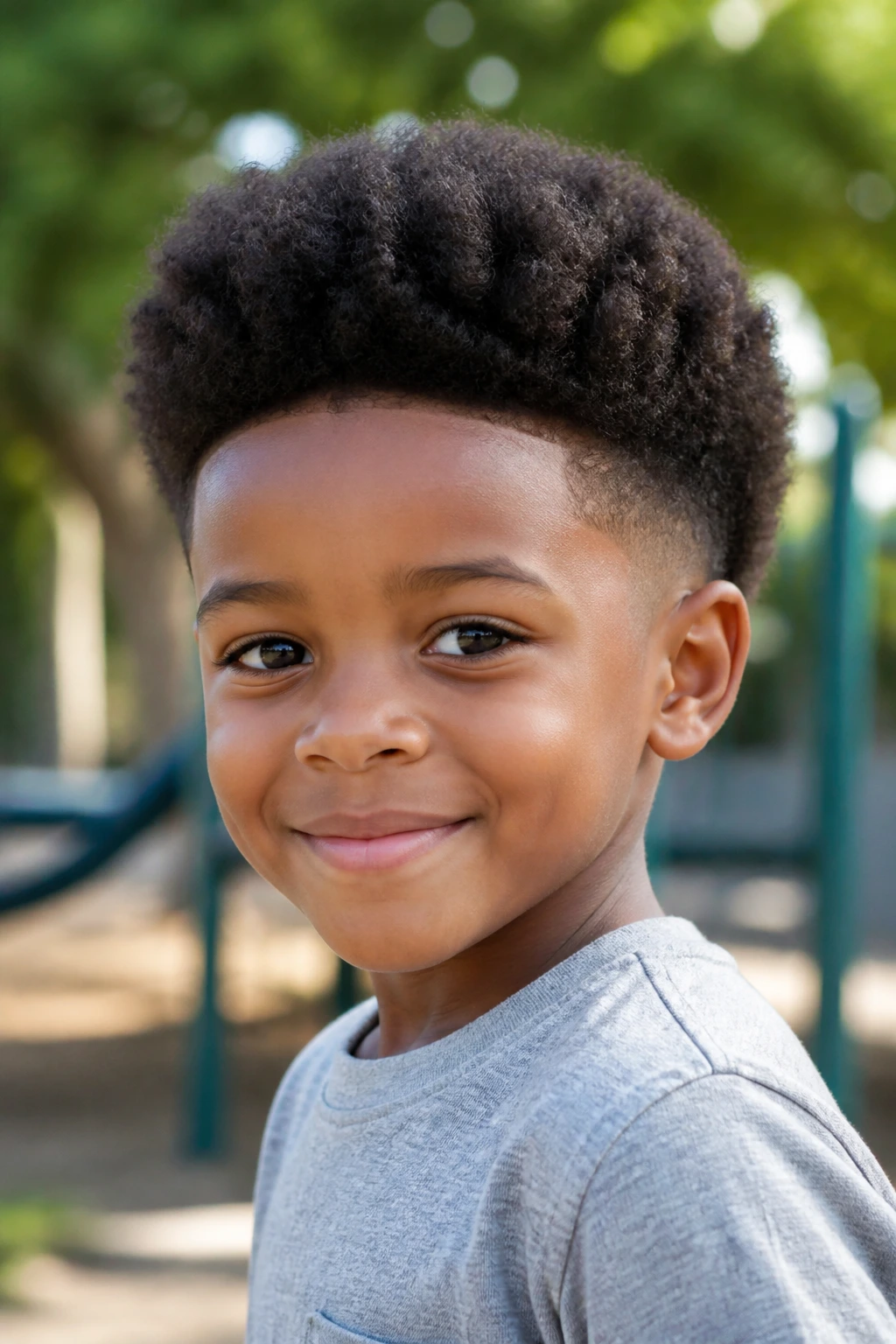
An afro taper respects the shape of coily hair instead of trying to shrink it flat. The sides and neckline are tapered neatly while the top keeps its rounded volume, usually trimmed to follow the natural head shape. That round silhouette matters. It keeps the style looking full and balanced instead of boxy.
Moisture is the whole game. A leave-in conditioner, followed by a little curl sponge or pick at the roots, can keep the hair defined without breaking up the pattern. Don’t dry-brush coily hair into submission. That’s how you get frizz, roughness, and a child who hates the comb by day three.
Ask for a clean shape-up around the edges if you want the haircut to look fresh, but keep the line soft enough that it doesn’t feel too sharp for a young kid. A good afro taper looks tidy because the outline is thoughtful, not because it’s overly carved.
16. Mini Pompadour
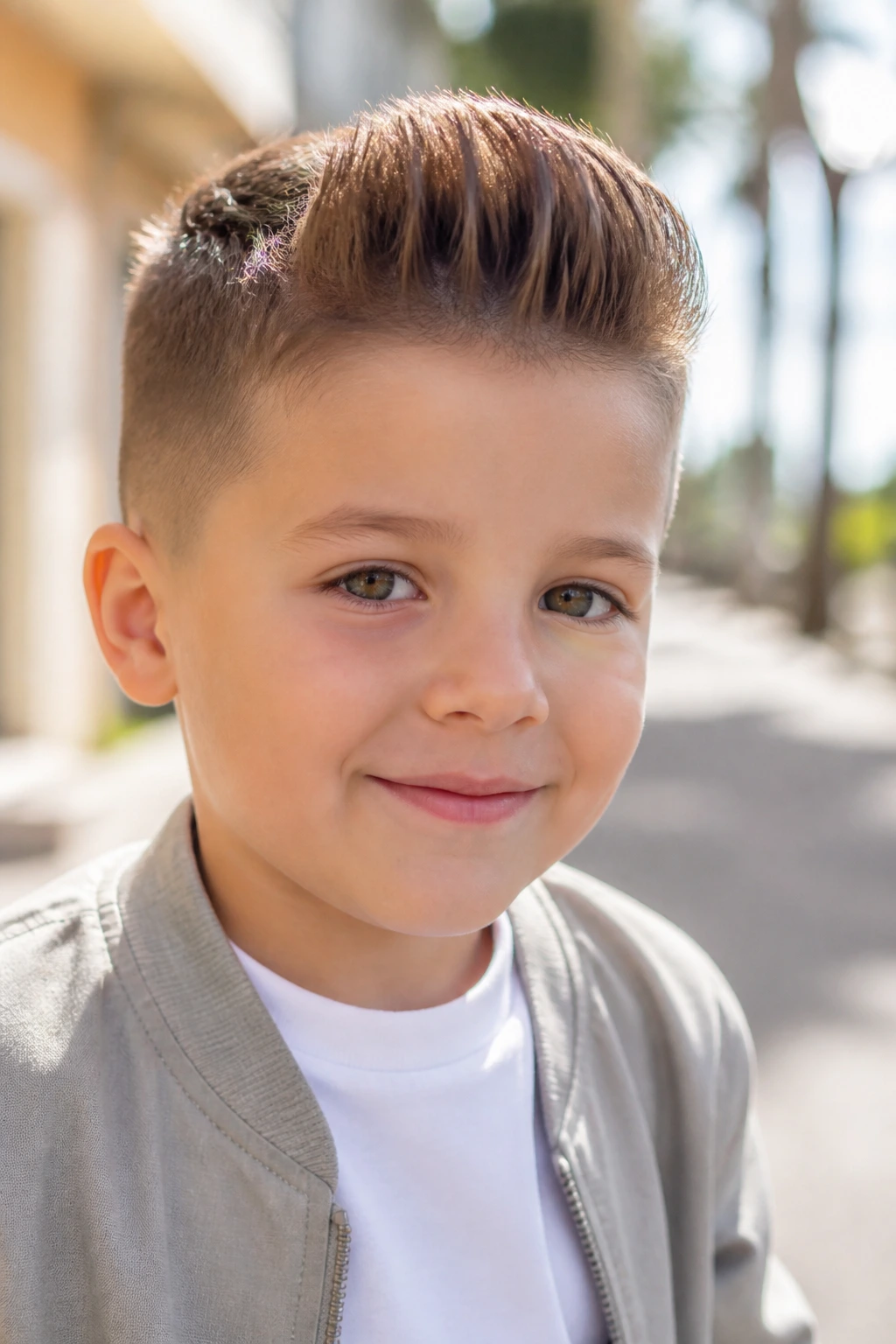
A mini pompadour gives a little lift at the front without asking for a full retro drama performance. The top is left longer in front—often around 2 to 4 inches—and brushed up and back so it makes a soft wave. The sides stay shorter, usually tapered or faded, to keep the front from looking top-heavy.
This style needs a bit of help from a blow dryer if the hair is stubborn. A quick dry while lifting the front with a brush or fingers gives the hair memory, and that memory matters more than extra product. Use a small amount of medium-hold cream or pomade, not a thick wax. The goal is shape with movement, not a stiff shell.
It’s a good cut for kids who like hair that feels styled. It also works well when you want the haircut to look special without needing a complicated routine. If the front falls flat after an hour, the top probably needs a touch more length.
17. French Crop
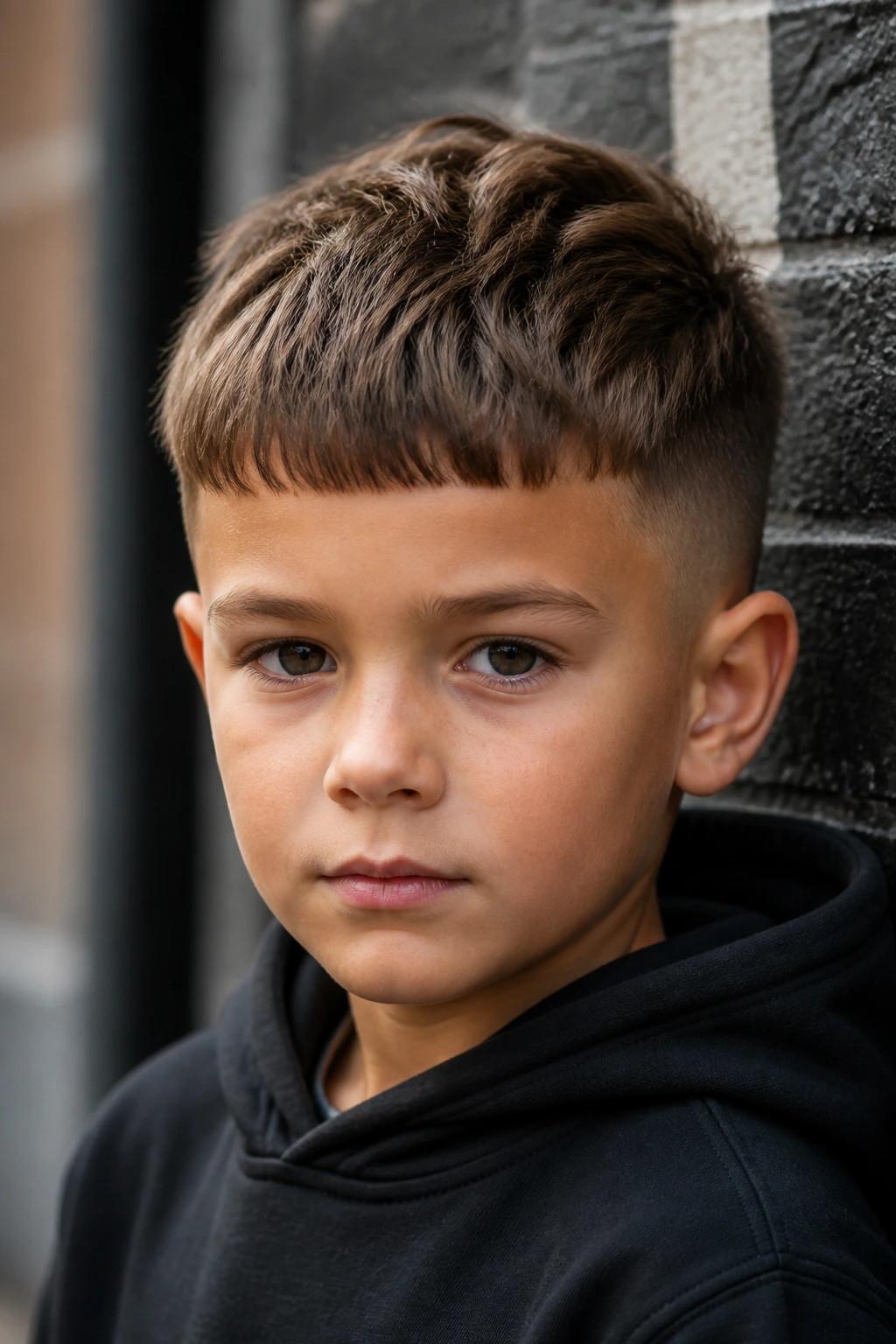
The French crop is clean, short, and easy to live with. It usually has a short textured top and a blunt or slightly broken fringe that sits forward, paired with a fade or taper on the sides. The whole thing reads modern without demanding daily effort. On straight hair, it looks crisp. On thick hair, it calms the bulk.
This cut is especially useful when a child’s forehead cowlick keeps flipping his bangs around. The forward fringe helps pin the movement into a single direction instead of fighting it. Ask the barber for texture on the top so the fringe doesn’t form a hard shelf. That little bit of irregularity is what keeps it from looking too boxy.
It’s one of my favorite low-maintenance options because it still looks shaped when it grows out. The fringe softens, the sides widen a touch, and it still lands in the neat column.
18. Shaggy Layers
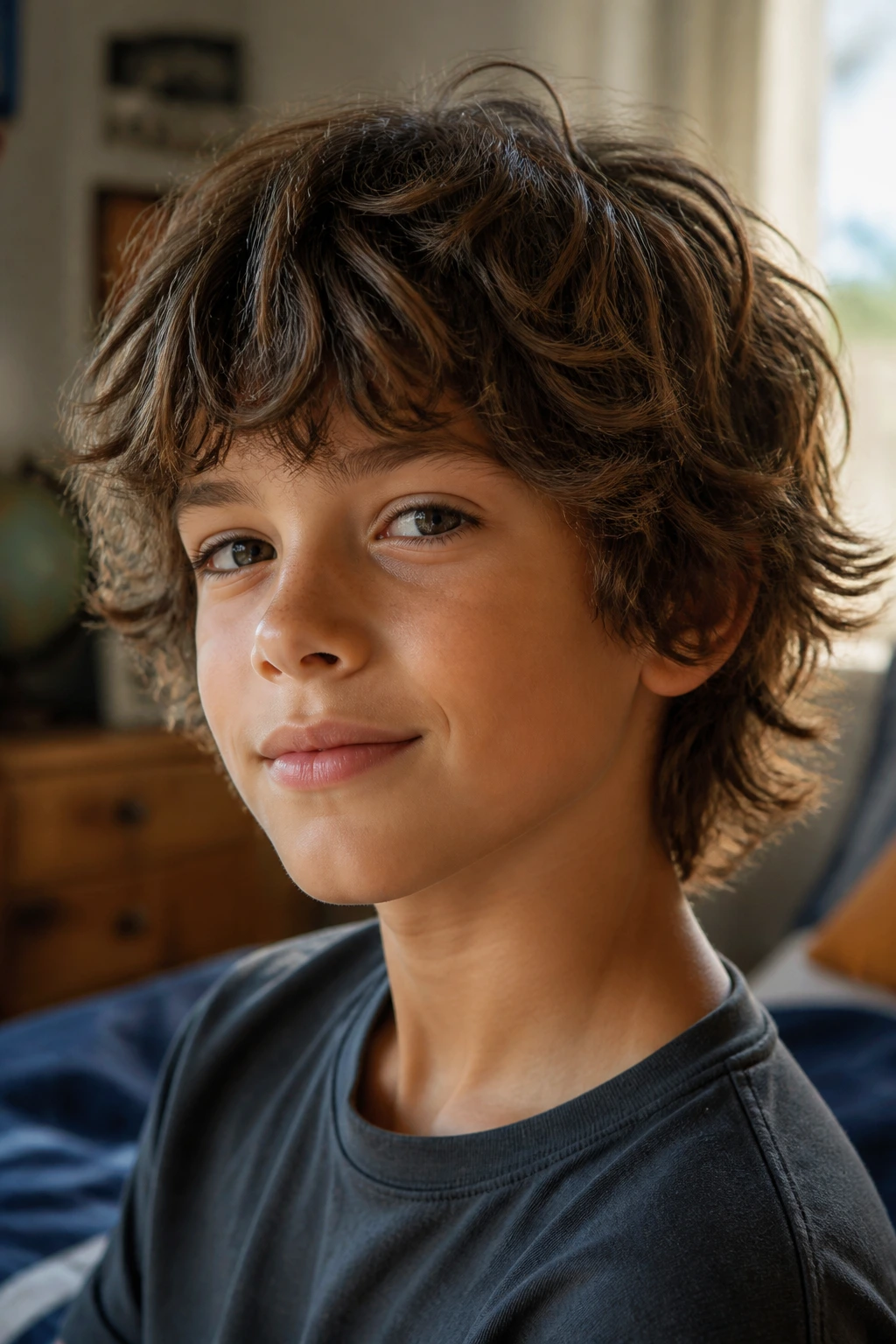
Shaggy layers are for hair that looks better with a little freedom. This cut uses length and layers to create motion through the top and sides, which is ideal for thick, wavy hair that can turn puffy if it’s cut too bluntly. The outline stays relaxed, and the ends don’t sit in one heavy line.
A good shag needs a barber who knows how to remove weight without thinning it to pieces. If the layering is too aggressive, the hair gets wispy. If it’s too blunt, it becomes triangular. The sweet spot is soft, uneven movement that lets the hair fall naturally and keeps the sides from jutting outward.
Leave-in conditioner helps, especially if the hair is dry or tangles easily. I’d avoid heavy waxes here. They flatten the layers and make the whole cut feel sticky. This is one of those styles that looks best when the hair can move a little.
19. Modern Bowl Cut
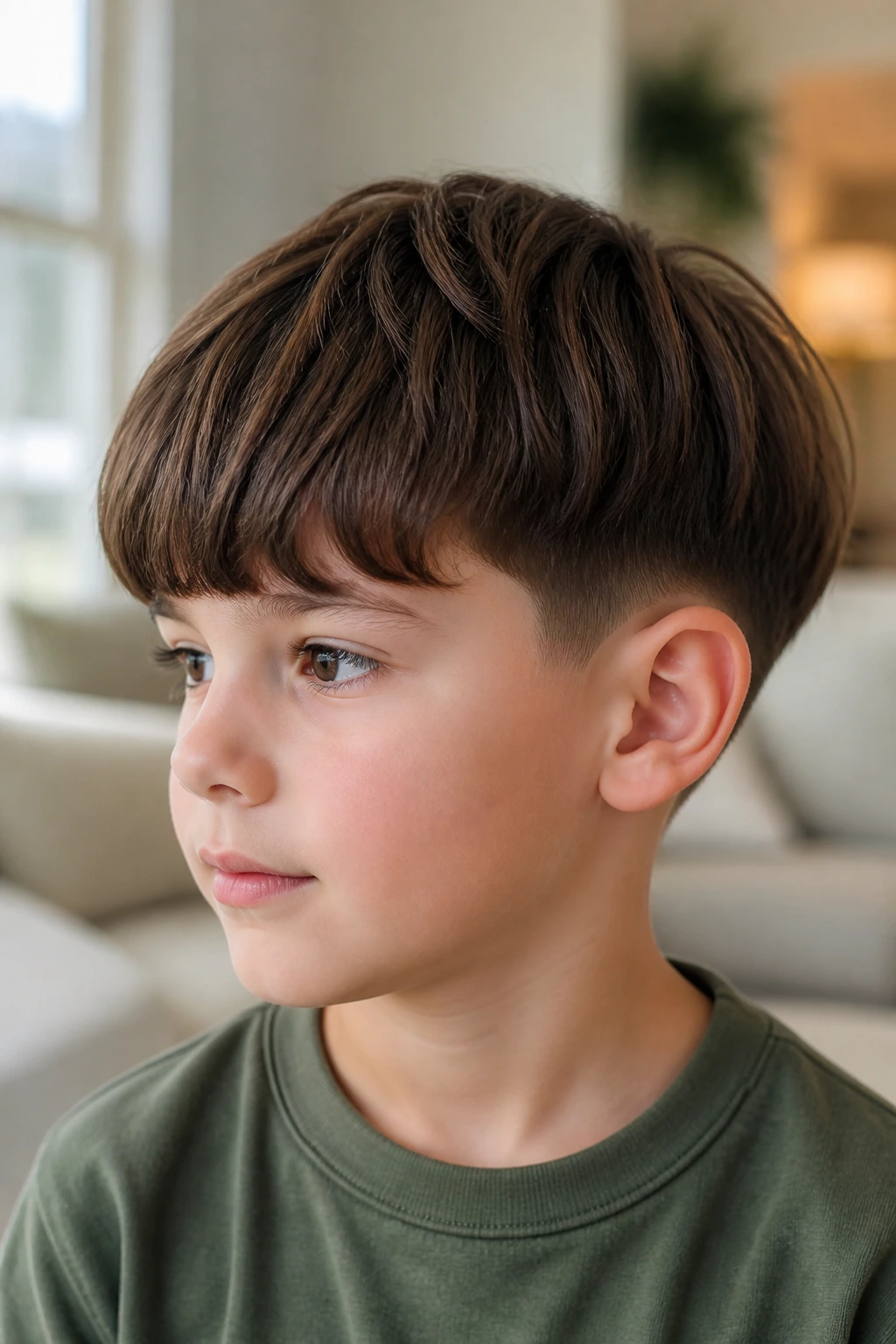
The modern bowl cut is not the same thing as the flat, blunt mushroom people picture from old school photos. The updated version keeps a rounded outline, but the top is textured and the edges are softened so it doesn’t sit like a helmet. On the right head shape, it can look sharp in a very clean, graphic way.
This cut depends on a barber who knows where to stop. The sides should blend cleanly, and the fringe shouldn’t drop into one heavy shelf. A little texture through the crown changes the entire feel. It can work on straight or slightly wavy hair, and it grows out better when the perimeter is softened instead of cut dead even.
I like it most on kids who can wear a strong shape with confidence. It isn’t subtle. But it can be surprisingly good when the rest of the outfit is simple and the hair gets trimmed before the outline turns fuzzy.
20. Burst Fade Mohawk
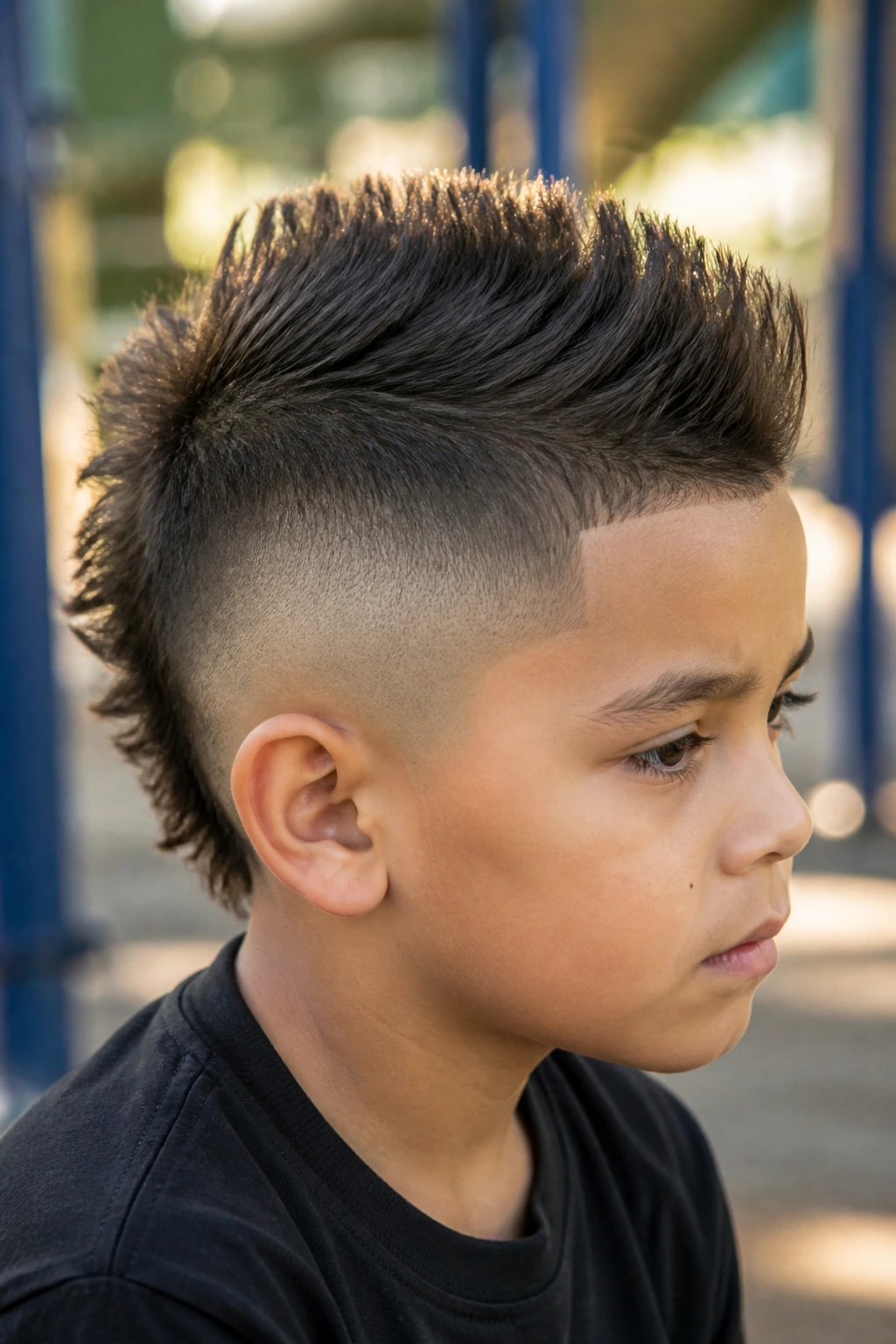
A burst fade mohawk is for a kid who likes a little volume and a little edge. The fade curves tightly around the ears, creating that burst shape, while the middle strip stays longer and runs from the front to the crown. It’s bolder than a faux hawk and more defined than a simple spiky top.
This cut works best when the central strip has enough length to stand or curl. If the hair is too short, the mohawk effect disappears and you’re left with a rounder fade. For curly or coily hair, that strip can look fantastic with very little product, because the texture already creates height. Straight hair usually needs a bit of matte paste or lightweight gel to hold the center up.
The main maintenance issue is the sides. Once the burst fade grows out, the shape loses its crispness fast. If you like the silhouette, keep the cleanup frequent.
21. Slick Back Taper
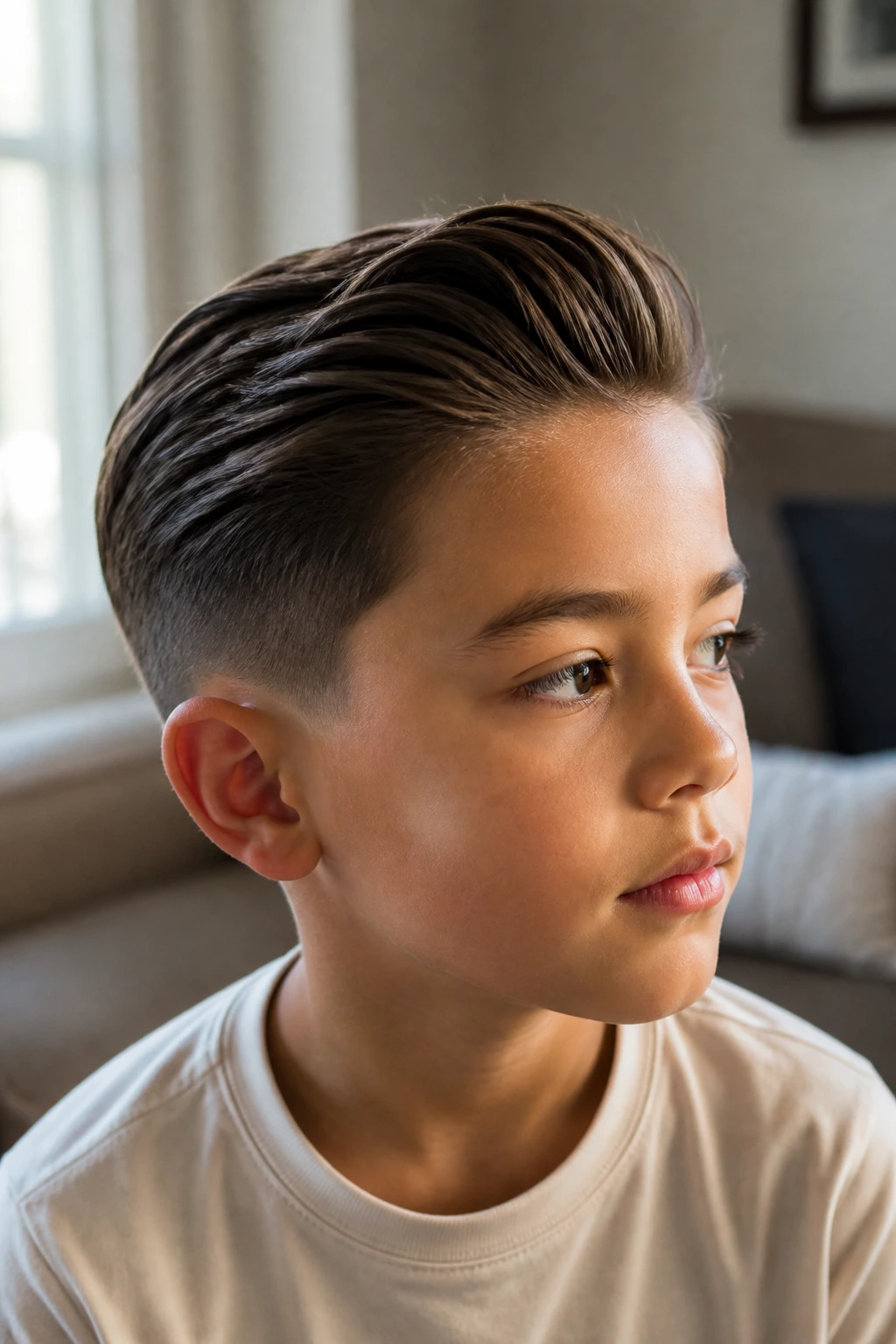
A slick back taper is a calmer, more flexible version of the classic slick-back look. The top stays longer—usually 3 to 4 inches—and the sides are tapered rather than chopped into a harsh fade. That makes the style feel cleaner and less severe on a child’s head, especially if you want polish without making him look like he’s headed to a wedding.
This haircut needs hair that can actually be moved backward without fighting every inch of the way. Straight and wavy hair do best. Use a light cream or a soft pomade on damp hair, then comb it back gently. Don’t press so hard that the hair lies completely flat; a little lift at the front keeps it from looking wet and old-fashioned.
It’s a smart option for boys who don’t mind having their hair touched in the morning. And if the day gets rough, the style still falls back into something respectable instead of collapsing into chaos.
22. Spiky Top
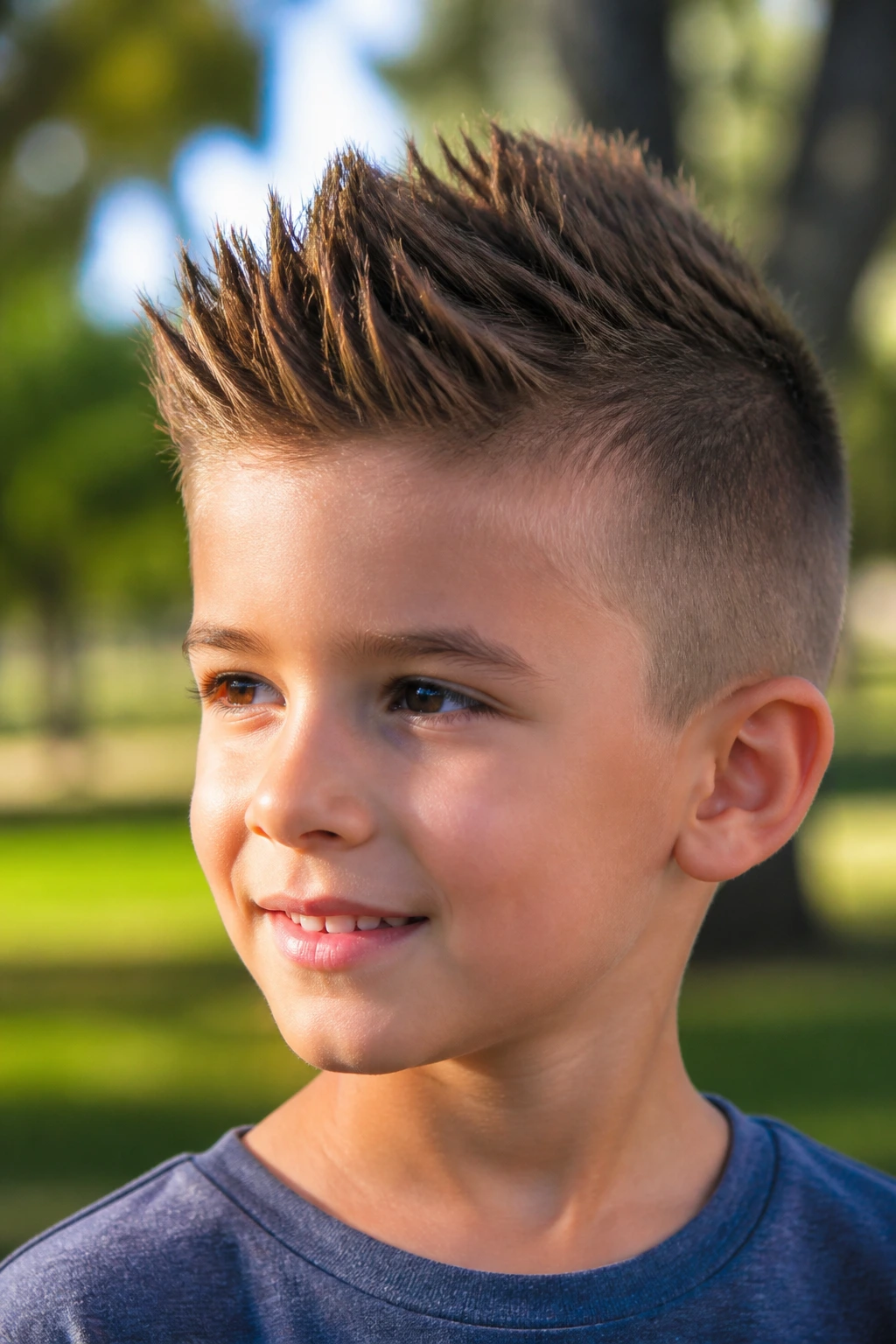
Spiky hair can still look good when it’s done with restraint. Keep the top short to medium—about 1½ to 2½ inches—and leave enough length for little peaks rather than stiff, helmet-like points. The sides should stay shorter so the texture on top has something to contrast against.
The product matters here. Matte clay gives a more natural spike with separation, while gel can make the hair crunchy and shiny in a way that feels dated fast. Work the product into dry or barely damp hair, then pinch sections upward with your fingertips. If you comb it all into one direction, you lose the lived-in texture that makes the style look modern.
This cut is best for kids with straight or thick hair that naturally wants to stand a little. It’s not the easiest style to keep in place all day, but it does give you a quick, playful shape without requiring a formal part.
23. Long Layers with Tapered Ends
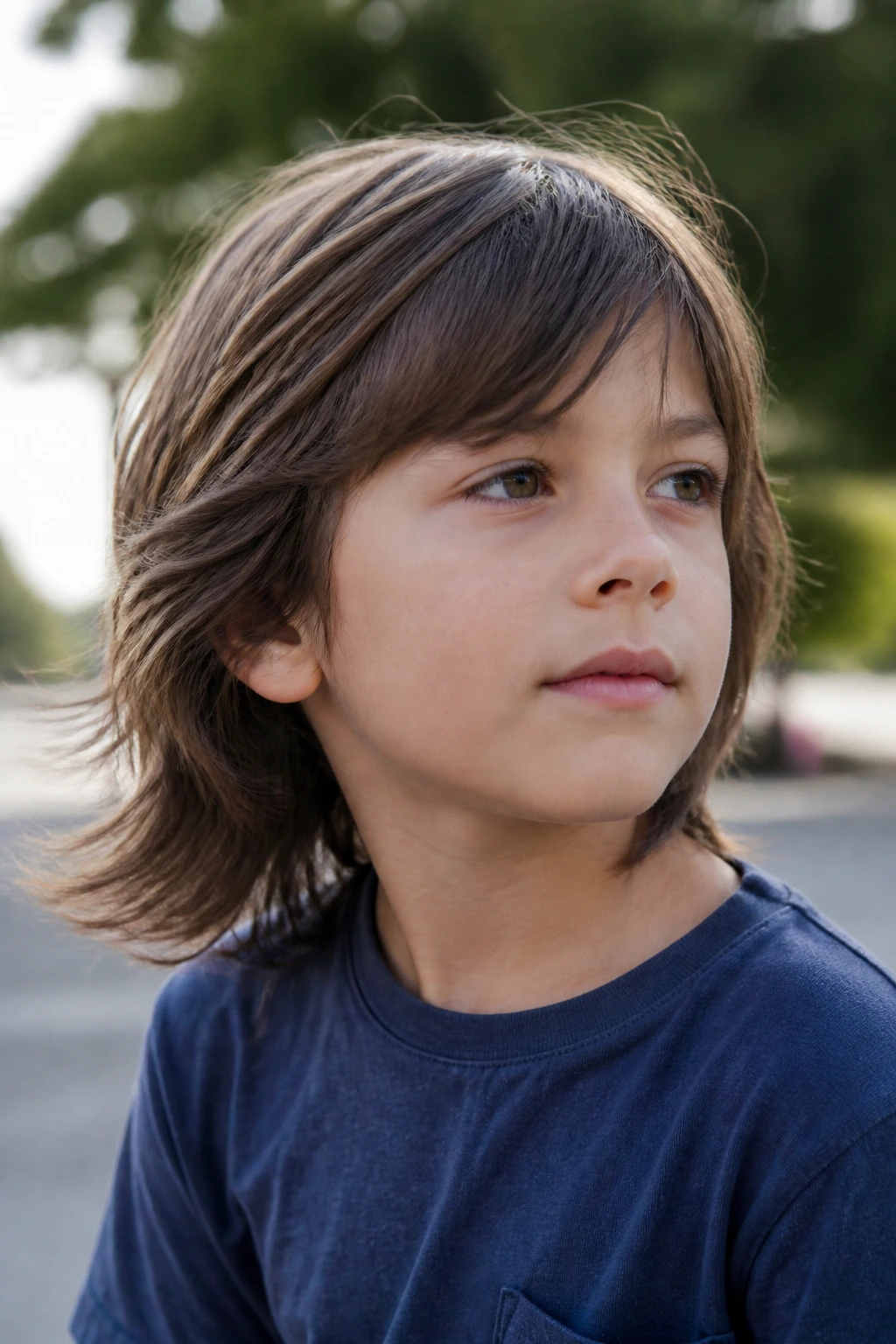
Long layers with tapered ends are the move when a little boy wants to keep his hair longer but still look like the haircut is intentional. The length can sit around the ears, collar, or a bit beyond, but the ends need shape so the hair doesn’t hang like one block. The taper at the bottom keeps the cut lighter and easier to brush through.
This is a nice middle ground for kids who aren’t ready to go short. It works on straight, wavy, and even some curly hair, though the styling changes with texture. Straight hair may need a quick blow-dry or a little cream to keep the layers from falling flat. Wavy hair usually does the nicest work on its own.
The important thing is regular cleanup. Long hair on kids can start looking fuzzy around the neckline quickly, and once the ends split into a dry-looking mess, the whole style loses its shape. Trim it before it reaches that point.
24. Toddler Curls with Shape-Up
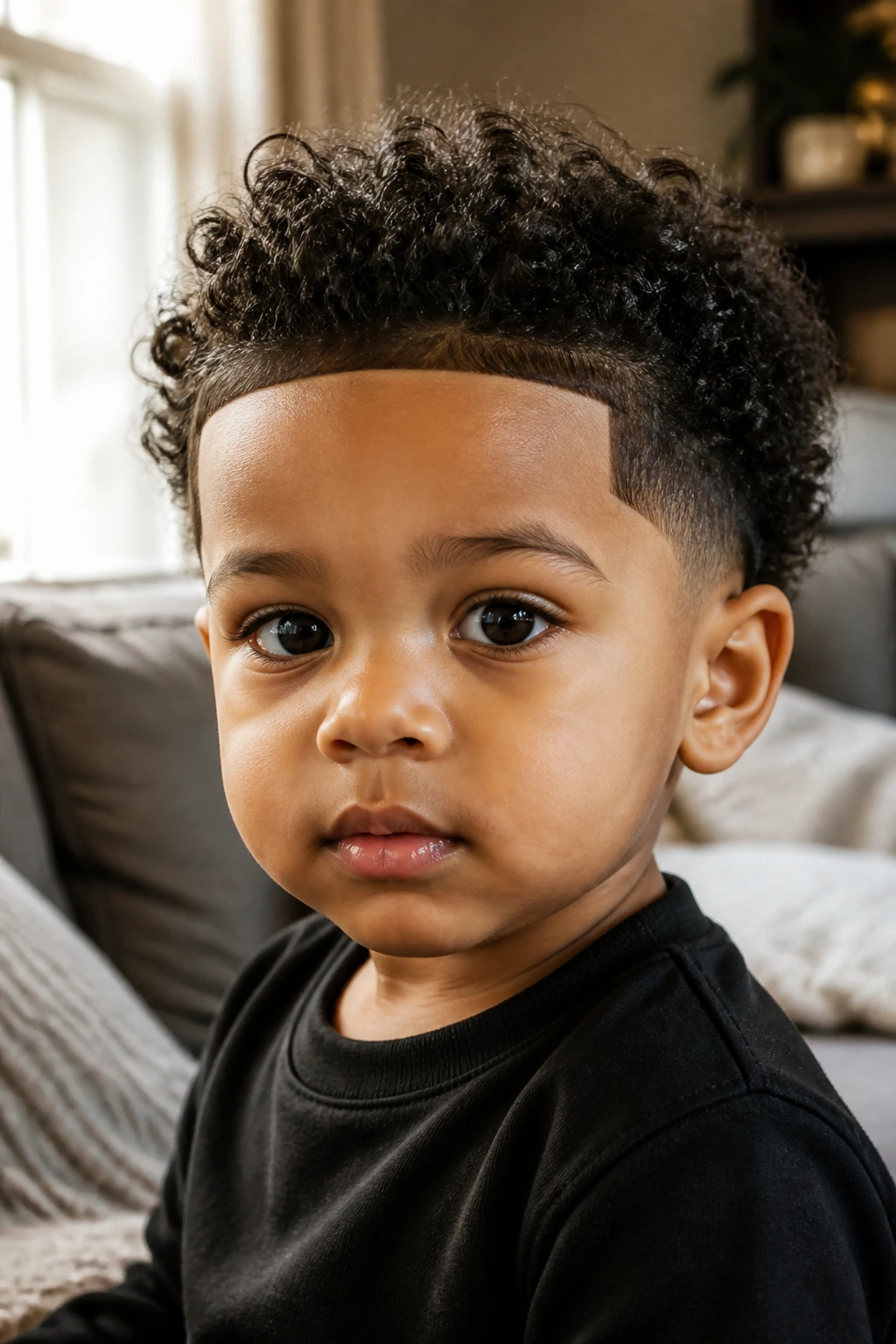
Toddler curls with a shape-up are all about keeping the natural curl while cleaning the edge around the forehead, temples, and neckline. The cut itself doesn’t need to be complicated. Leave the curls long enough to spring, then shape the perimeter so the haircut looks finished. That soft outline makes a huge difference.
For toddlers, the style needs to survive movement and not irritate the scalp. Moisturizer, a little leave-in conditioner, and gentle finger detangling go a long way. Skip hard brushing when the curls are dry; it pulls the pattern apart and can make the hair puff up. If the child’s hair shrinks a lot, keep more length than you think you need.
This is one of those styles that looks its best when it’s not overworked. The curl is the star. The shape-up is just the frame.
25. Braids with Fade
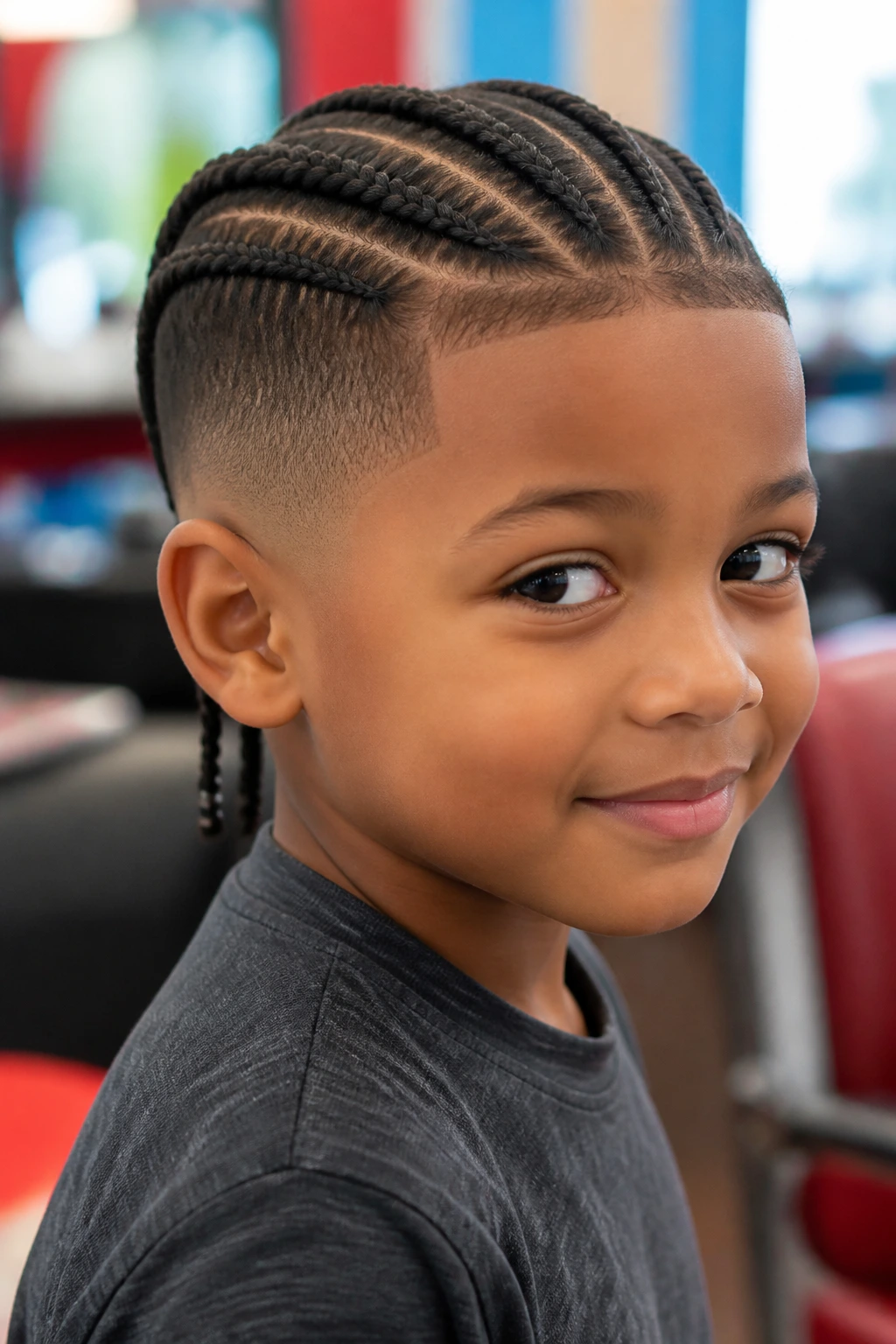
Braids with a fade combine structure on top with a clean finish on the sides. The braided section can be simple box braids, straight-back cornrows, or another neat pattern, while the sides and back fade down to keep the overall shape sharp. That contrast is what makes the look pop.
Scalp care matters here. Keep the braids clean without soaking them every day, and use a light scalp oil or moisturizer sparingly so the skin underneath doesn’t dry out. If the braids are pulled too tight, you’ll see it at the hairline first—tiny bumps, soreness, or a child who keeps reaching up to scratch. That’s your cue to loosen the style next time.
This is a stronger-maintenance look than a crew cut, no question. But it can be a great choice for kids with coily hair who want something neat, protective, and easy to wear once it’s installed.
26. Two-Strand Twists
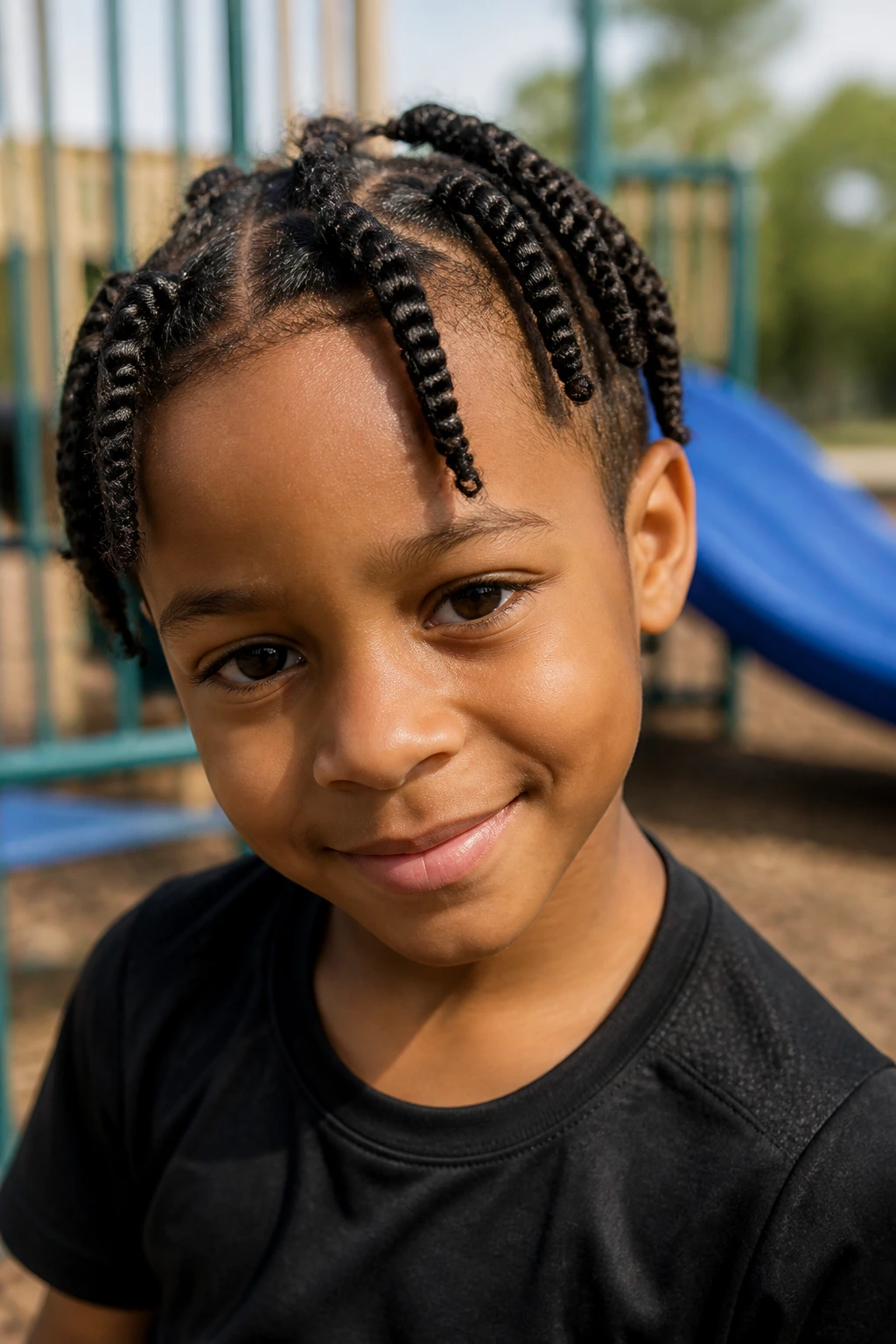
Two-strand twists are a flexible style for coily hair that can look neat without feeling stiff. The hair is sectioned and twisted in pairs, creating rope-like strands that can be worn loose, pinned, or pulled back. They’re less structured than braids and often feel softer on the scalp, which many kids prefer.
The success of the style depends on parting and moisture. Clean sections make the twists look intentional, and a good leave-in keeps them from drying out and frizzing too early. The twists can be worn fuller or a little tighter depending on how much length the child has. If the hair is very short, the twists may need more grip than usual to hold.
This style is especially handy because it can be refreshed without starting from scratch. A little re-twisting around the edges usually brings it back. For families trying to keep mornings simpler, that’s a real plus.
27. High Top Fade
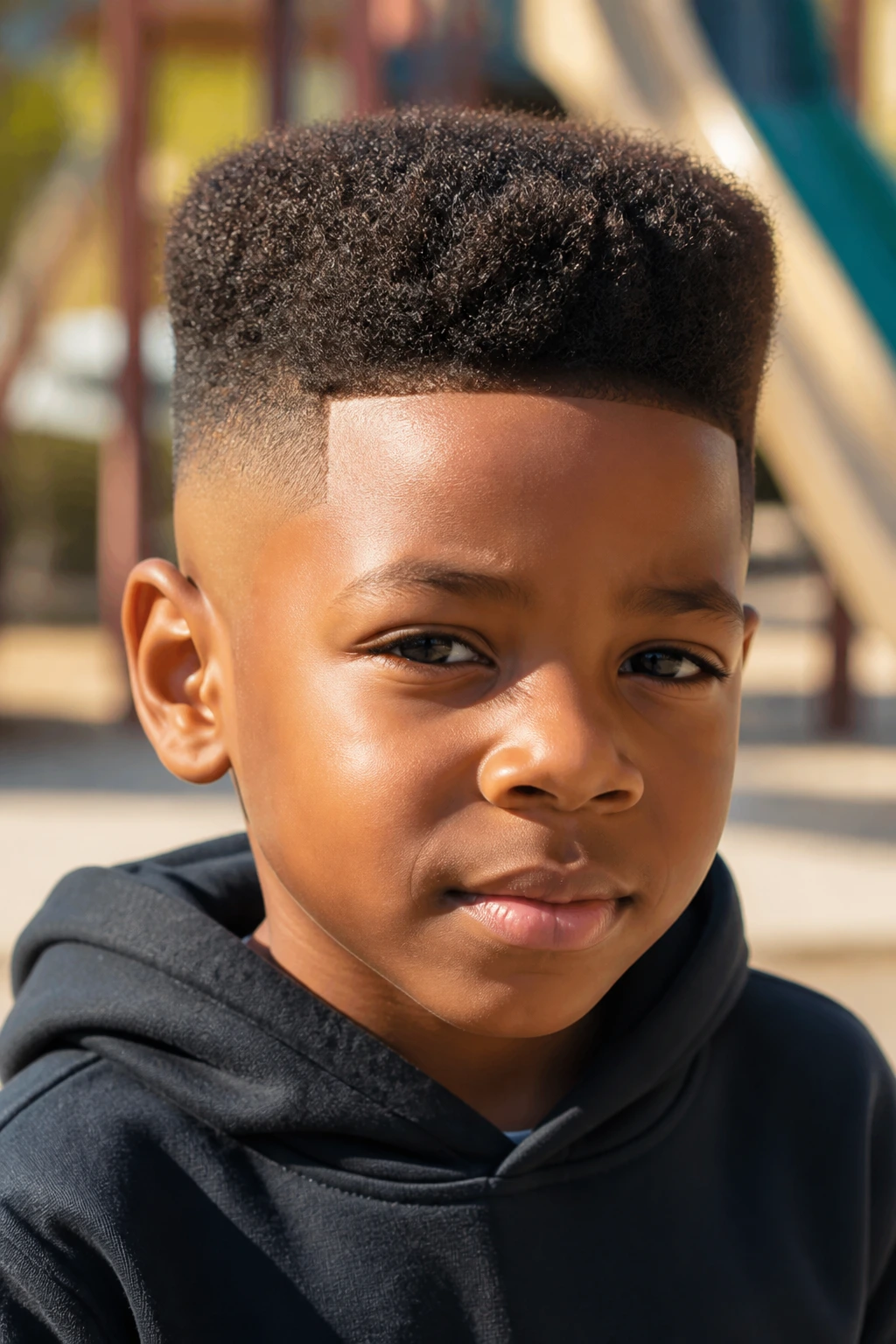
A high top fade gives coily hair a strong, shaped silhouette that holds attention from across the room. The sides drop very short, while the top stays tall and shaped—flat, rounded, or somewhere in between, depending on preference. It’s bold, sure, but it also has a clean logic to it: keep the top, clear the sides, let the shape do the talking.
This cut needs regular maintenance or the lines soften fast. The top should be kept even across the surface, and the fade has to stay crisp enough to support the contrast. If the child’s hair grows dense at the crown, the barber can shape the top into a more rounded form rather than forcing a flat plane that won’t sit naturally.
A sponge, pick, or light styling cream can help keep the top defined. Don’t overcomb it. The texture is the charm. Too much manipulation and the shape turns fuzzy at the edges.
28. Cornrows with Clean Edges
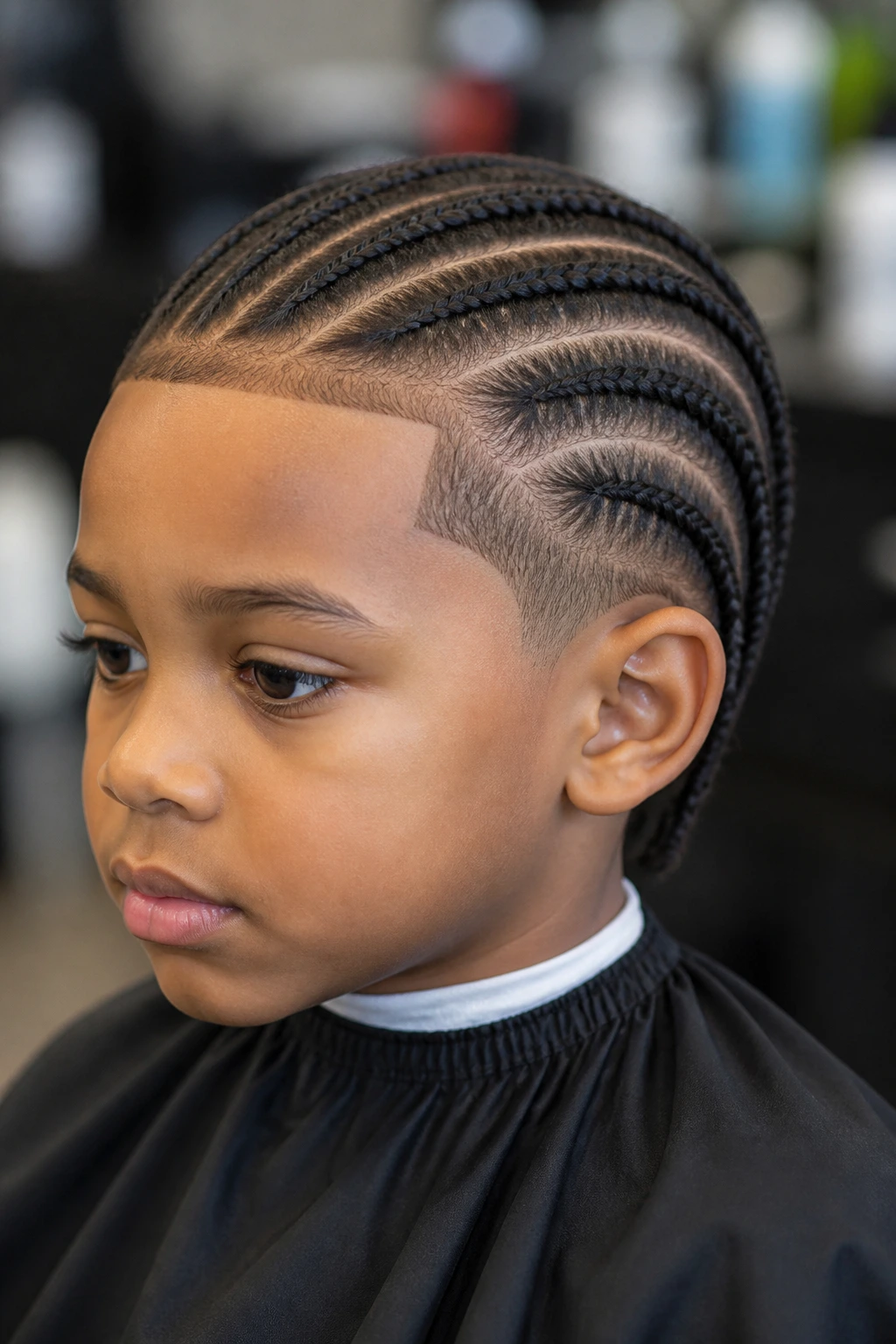
Cornrows give a child a style that can stay neat for days, sometimes longer, if the scalp care is handled well. The rows can be straight back, curved, or split into smaller sections, and a clean edge-up around the hairline keeps the whole style looking fresh. Add a fade on the sides if you want more contrast.
The biggest rule is gentle tension. Braids should feel secure, not tight. If the hairline is pulled too hard, the style stops being protective and starts causing problems. You want the scalp to sit flat and calm, not angry. A small amount of scalp oil, used sparingly, helps keep the skin from drying out.
Cornrows can be a smart choice for active kids because they stay put through sports, bed, and general chaos. They do need regular washing of the scalp, though. A style that lasts shouldn’t feel dusty.
29. Short Locs with Fade
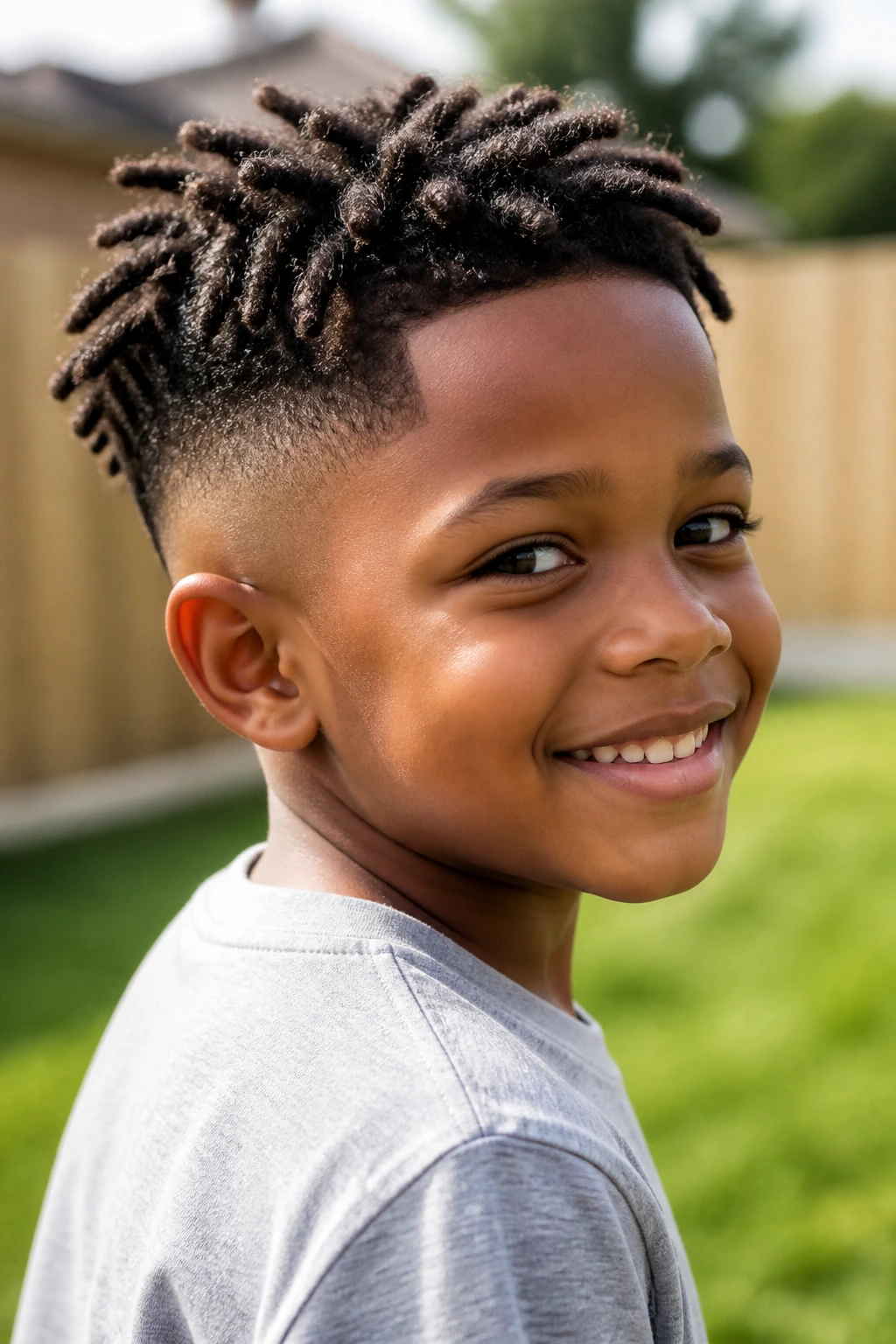
Short locs with a fade have a neat shape that feels both tidy and lived-in. The locs keep the texture and length up top, while the fade clears the sides and neckline so the silhouette stays sharp. On little boys, it reads clean without stripping away the personality of the hair.
Keeping locs separated and moisturized is the whole job. If the roots get dry or frizzy, the style starts to look untamed fast. A light oil and a soft palm roll can help maintain the shape. The fade around the sides usually needs regular touch-ups, because once it grows out, the contrast softens and the locs lose some of their punch.
I like this style when a child’s hair has a lot of natural density and the family wants structure without hiding texture. It does take commitment, though. Locs reward patience.
30. Top Knot with Undercut
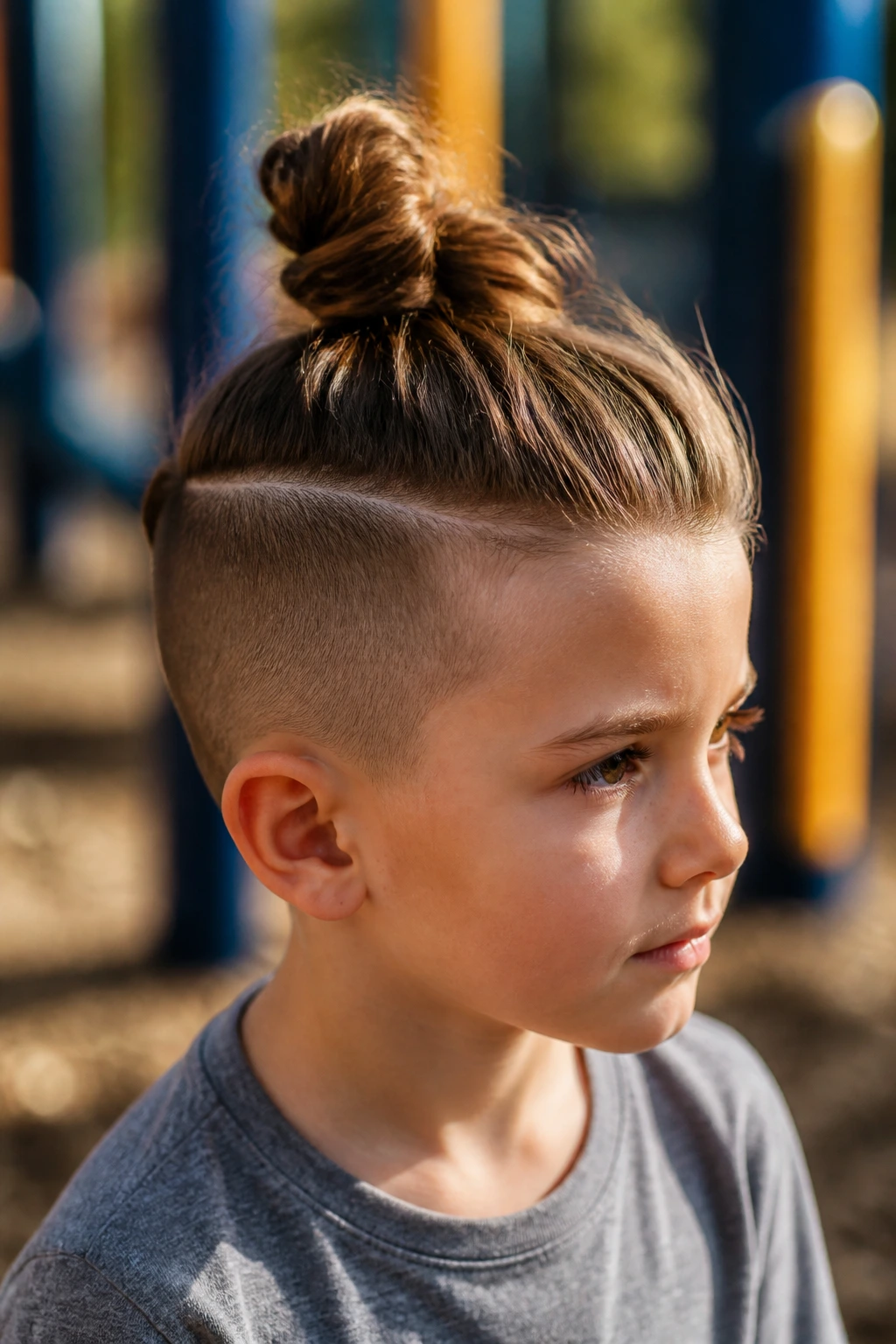
A top knot with an undercut is one of the more dramatic long-hair options for little boys, and it only works if the hair is actually long enough to gather—usually at least 5 to 6 inches on top. The sides and back are clipped short so the knot sits like a little crown. The contrast is what sells it.
It’s practical in a way that surprises people. Hair gets out of the face fast. That matters for school, play, and any child who hates having strands brush his cheeks. The undercut keeps the neck cooler and makes the bun or knot feel less bulky. If the hair is fine, use a tiny bit of cream before tying it so the knot doesn’t slip apart.
This isn’t the best pick if your child hates being touched or styled every morning. But for boys with enough length and a cooperative attitude, it can be a tidy solution that still feels playful.
31. Curtain Fringe
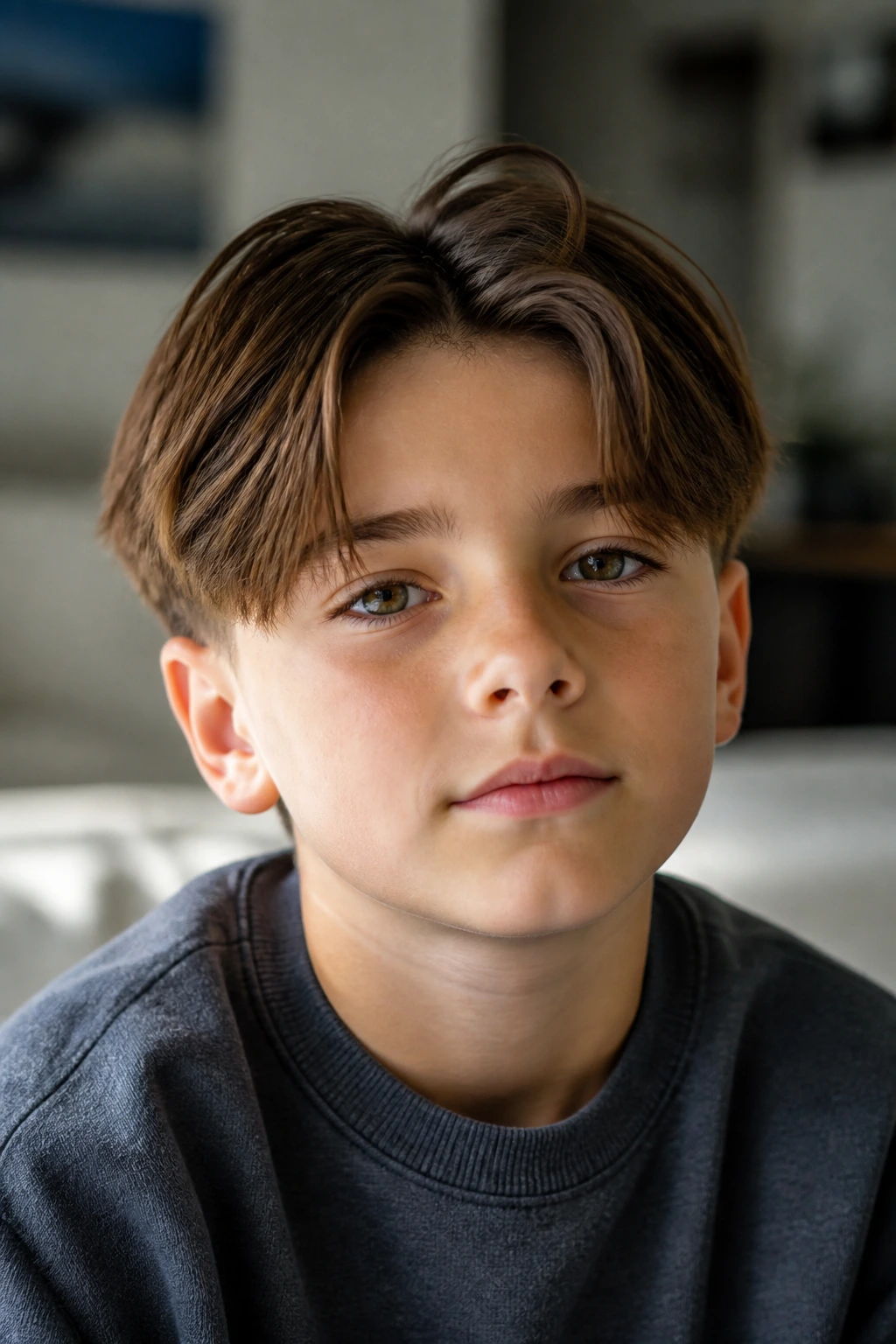
Curtain fringe has that center-parted, softer shape where the hair falls to both sides of the forehead instead of straight down. It works best when the top is left longer—often 3 to 5 inches—and the sides are trimmed to blend rather than disconnect. On straight or wavy hair, the result can look easy and slightly grown-up without turning severe.
The cut is all about balance. If the fringe is too short, it won’t drape. If the sides are too bulky, the middle gets lost. A little layer through the front helps the hair split naturally. This style can be a nice answer for boys who don’t want hair in their eyes but also don’t want a short crop.
A blow dryer on low speed, aimed downward while the hair is damp, helps set the curtain shape. Then use fingers, not a stiff comb, to separate the front just enough to keep the part relaxed.
32. Wavy Scissor Cut
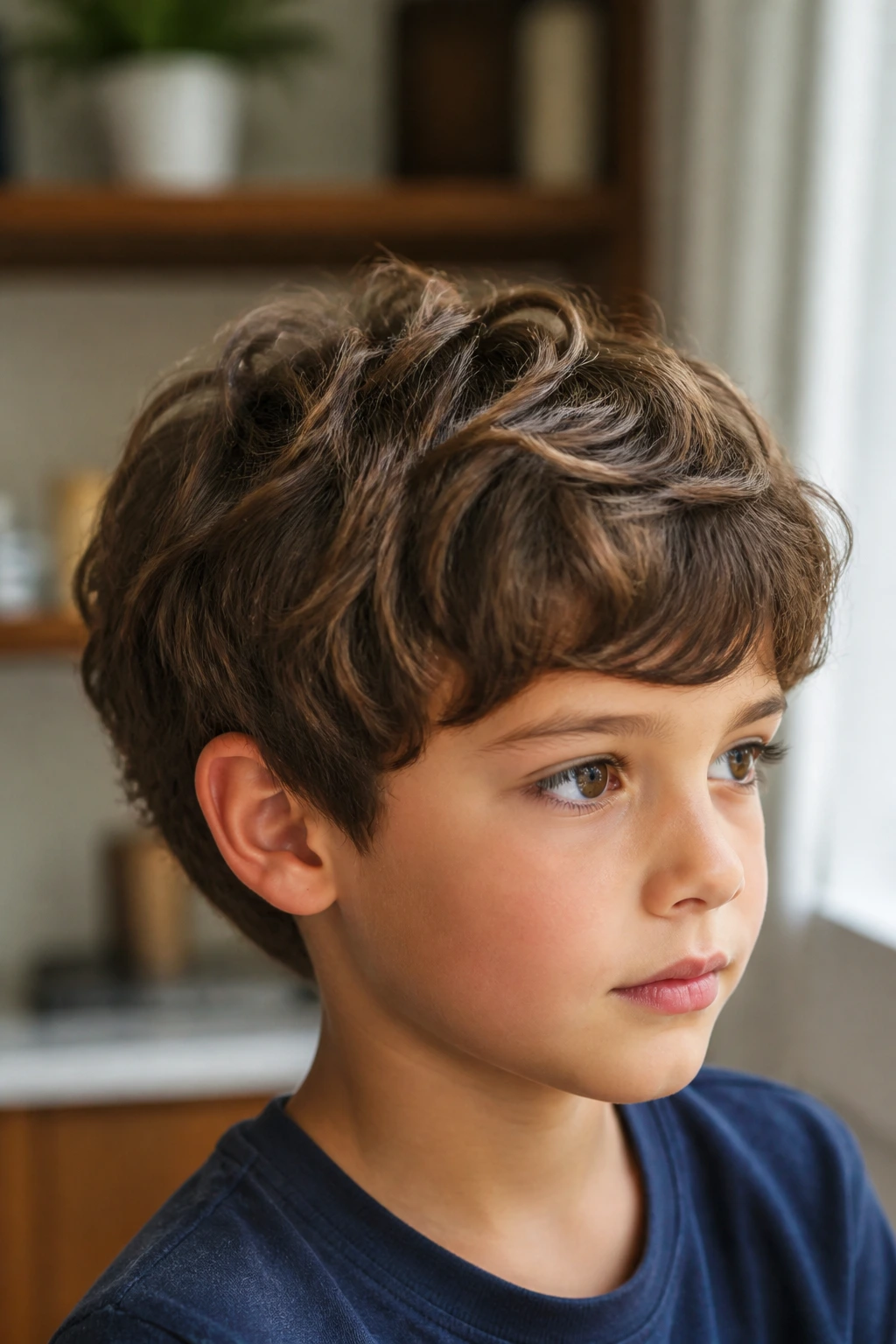
A wavy scissor cut is the quiet workhorse of the whole list. Instead of relying on clippers for most of the shape, the barber uses scissors to follow the hair’s natural wave pattern and build a softer outline. The length can stay medium-short or a bit longer, but the point is movement. No harsh helmet. No rigid block.
This cut is especially good when the hair has a natural bend that looks awkward if cut too bluntly. Scissor work keeps the waves from puffing out in odd spots. A leave-in conditioner or light cream is usually enough to keep it smooth, and a quick finger-style in the morning can bring the shape back after sleep.
If I had to pick one style that ages well between haircuts, this would be near the top. It keeps its manners. It grows out in a way that still looks deliberate instead of accidental.
Why These Styles Work So Well on Real Kids

The common thread across these little boys’ haircut ideas is simple: they respect how hair behaves in motion. A cut can look perfect in the barber chair and still fail the second a child slides into a car seat, puts on a cap, or rubs the back of his head on a pillow. The styles that hold up best leave room for that chaos. They don’t depend on one exact comb stroke staying in place all day.
That’s why fades, tapers, texture, and shape matter so much. Short sides keep the outline tidy. Texture on top keeps hair from looking flat or blocky. Longer styles work when they’re layered enough to move instead of hanging like a sheet. And for curls or coils, the haircut has to follow the hair’s natural spring rather than trying to erase it. Fight the pattern too hard, and you get puff, frizz, or a cut that needs constant repair.
The other thing these styles have in common is flexibility. A good kids’ haircut should still look like a haircut three weeks later. Maybe a little softer. Maybe a little shaggy around the neckline. Fine. But not shapeless. Not weird. Not impossible to fix before breakfast.
The Tools That Make Styling Faster
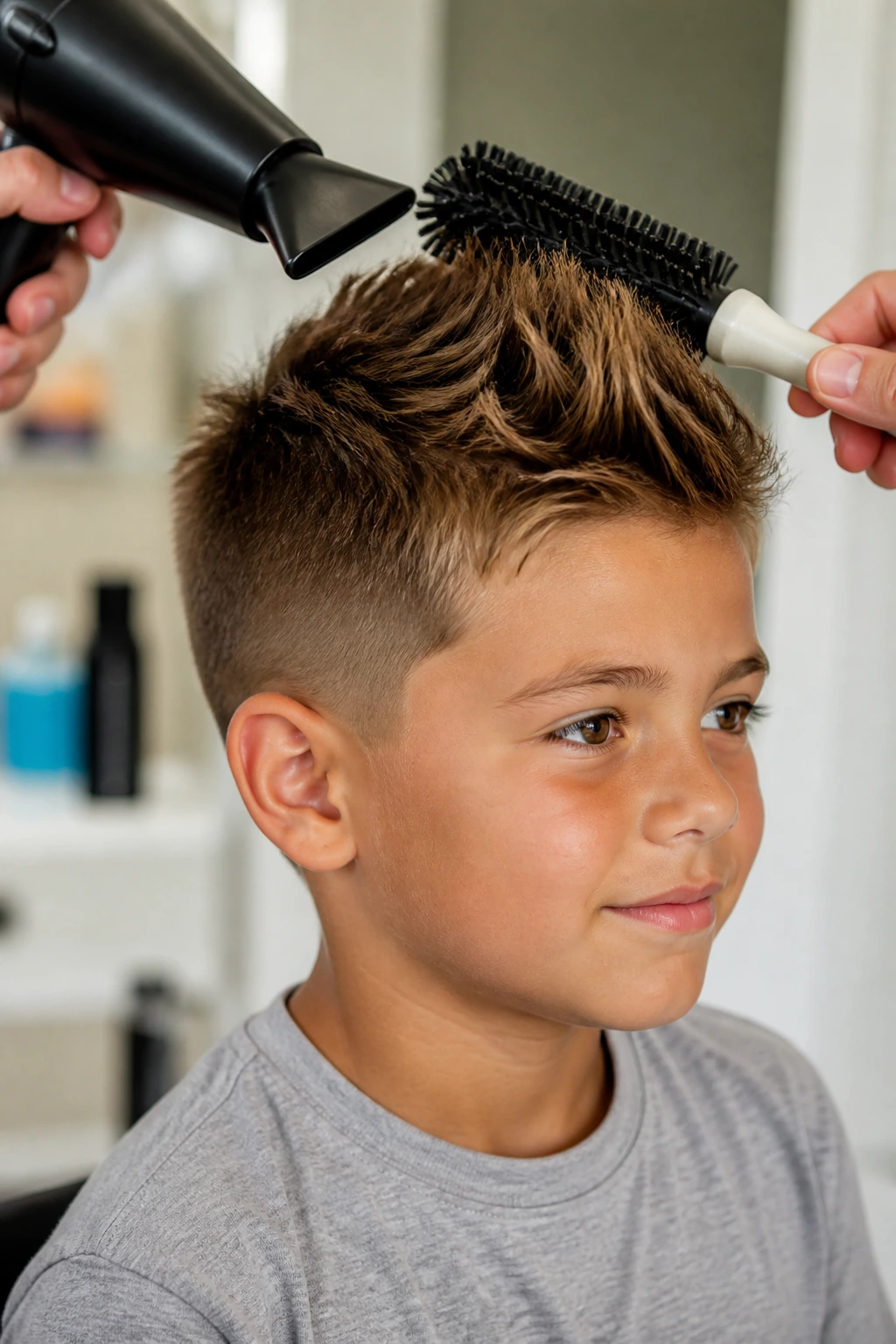
- Spray bottle: A few spritzes of water wake up flat hair and make product spread more evenly.
- Wide-tooth comb: Best for curls, waves, and detangling without tearing at the hair.
- Fine comb: Useful for clean parts, side sweeps, and neatening short cuts.
- Soft-bristle brush: Good for smoothing short hair and helping product settle without roughing up the scalp.
- Kids’ detangling brush: A flexible brush matters when hair knots easily after sleep or sports.
- Matte paste or clay: Gives short hair shape without the shiny, crunchy look of heavy gel.
- Light pomade or styling cream: Better for side parts, comb overs, and slick-back styles where you want control and a little shine.
- Leave-in conditioner: Helps curls, coils, and long hair stay soft instead of dry and puffy.
- Curl cream: Useful for defining curly styles without making them stiff.
- Clippers with guards: Handy for home cleanup on necklines and sideburns if you know what you’re doing.
- Trimmer or detail clipper: Good for tidying edges, but use a light hand around the hairline.
- Blow dryer with a cool setting: Helps set volume on pompadours, curtain fringes, and longer styles.
- Barber cape or old towel: Keeps hair from ending up down the shirt collar, which children somehow hate more than the haircut itself.
- Satin pillowcase or bonnet: Especially useful for curls, twists, braids, and locs so the style doesn’t get smashed flat overnight.
How to Ask for the Right Cut Without Guessing
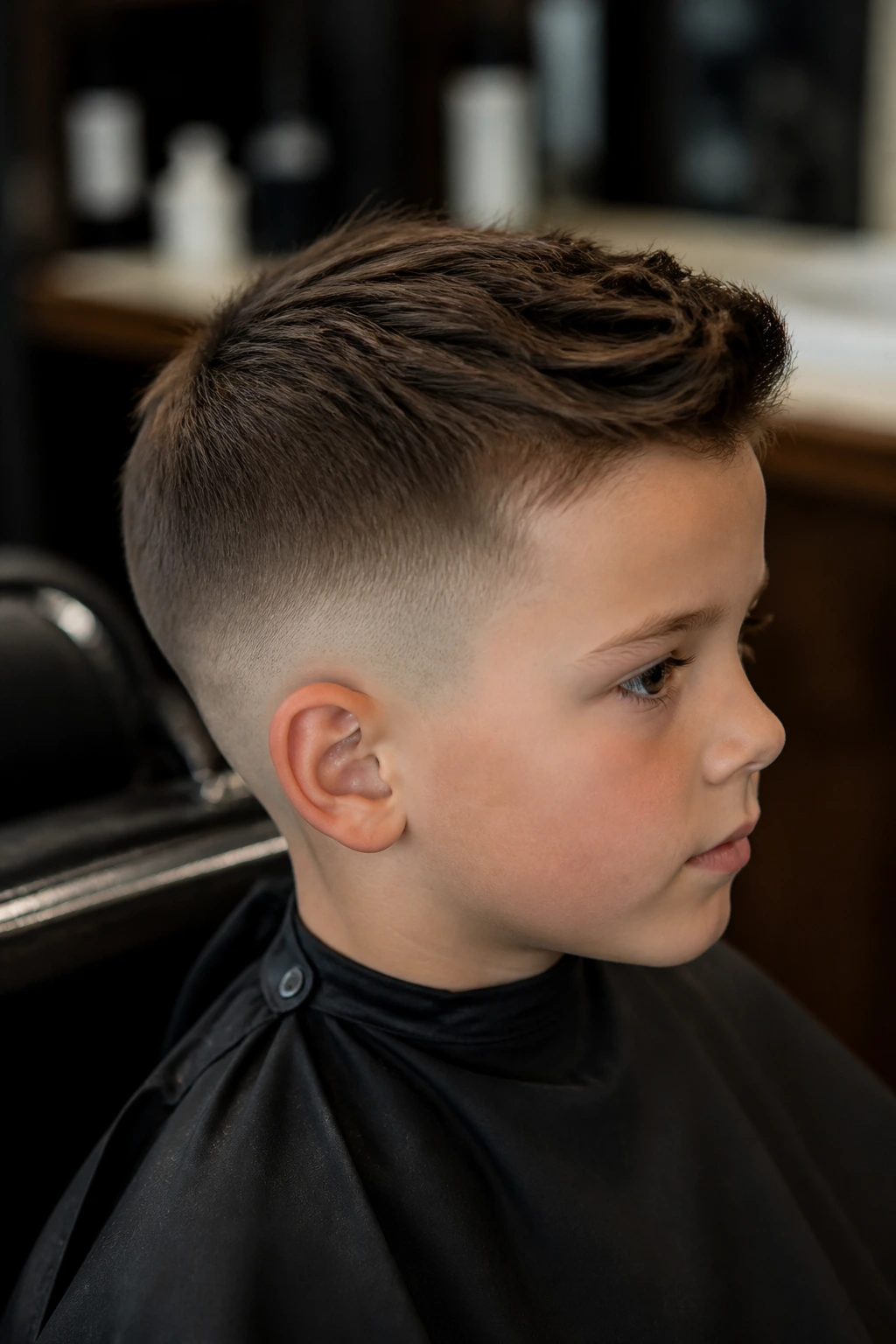
The cleanest haircut conversations use inches, guard numbers, and placement. “Short on the sides” is too vague. “A #2 on the sides with a soft taper at the neckline and about 2 inches left on top” gives the barber something real to work with. If there’s a photo, even better, but photos work best when you can say what you like about them: the fade height, the fringe length, the part, the texture.
Say something about the hair’s habits, too. A cowlick at the front. A swirl at the crown. Hair that gets puffy after the bath. Hair that falls in the eyes by lunchtime. Those details are gold because they change the cut. A barber can work around a cowlick if they know it exists. If they don’t, they’ll probably build the haircut the wrong way and you’ll both notice it later.
For curly, coily, or long hair, the request should include how much length you want to keep, not just how much you want gone. That matters more than most parents think. “Keep the curls on top, taper the sides, and don’t square off the back too hard” says more than “clean it up.” The haircut starts to behave better when the instructions are this plain.
Quick Styling Tricks for Busy Mornings
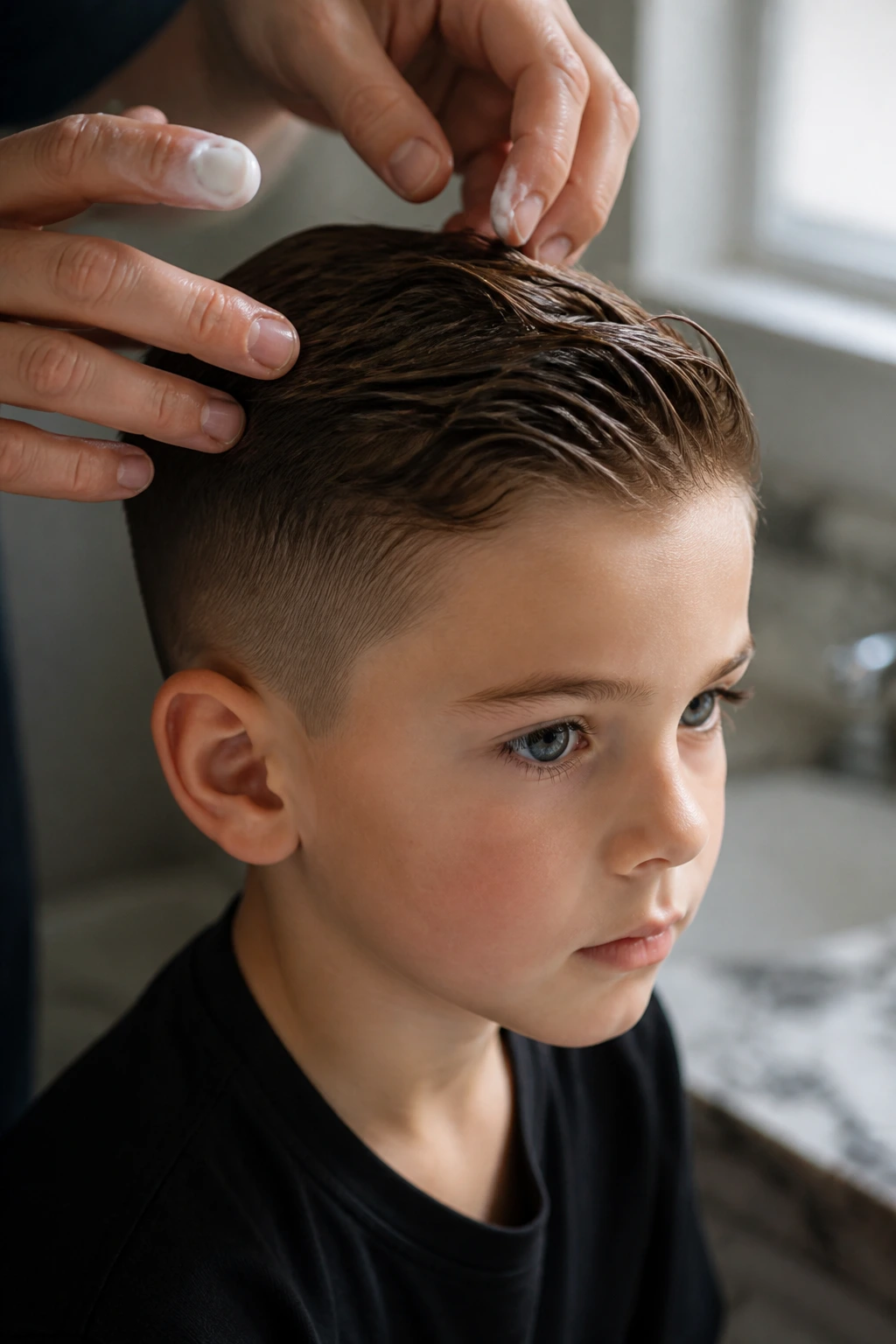
Thirty-second routine: For short cuts like crew cuts, buzz cuts, textured crops, and French crops, a damp hand over the top and a fingertip of matte product is often enough. Don’t overthink it. Shape the front, smooth the sides, and stop before the hair gets sticky.
Curly-hair move: For curly tapers, toddler curls, and afro tapers, refresh with a spray bottle, a little leave-in conditioner, and a quick scrunch. If the curls need definition, use your fingers to separate only the biggest clumps. Brushing dry curls usually creates the frizz you were trying to avoid.
Long-hair fix: For curtain fringe, surfer flow, and long layers, wake the hair up from the roots with water first. Then use fingers to place the part or sweep. A comb can help, but if it starts to make the hair look too neat, stop using it. Some of these styles are better when they stay loose.
Picture-day finish: If you need the haircut to look especially sharp, clean around the ears, wipe down the forehead, and use the smallest amount of product that still holds the shape. Too much shine can make a kid’s hair look greasy in photos, and that is a mistake you only make once.
Common Mistakes That Make a Good Cut Look Off
- Being vague about the fade: Saying “make it short on the sides” without a guard number or fade height often leads to a surprise. Fix it by naming the length and showing where you want the transition to start.
- Cutting curly hair as if it were straight: Curls shrink after they dry, and that can turn a decent trim into a too-short chop. The fix is to leave more length than feels necessary and check how the curl sits once it dries.
- Using heavy product on fine hair: Thick gel or wax can make fine hair droop, separate badly, or look greasy by noon. Use a light paste or just water for most short styles.
- Ignoring growth patterns: Cowlicks at the forehead and swirls at the crown change how hair lies. If the cut fights those patterns, it will never sit right for long.
- Waiting too long between cleanups: Fades, shape-ups, braids, and twists all lose their crispness when they grow out too far. A trim every 3 to 6 weeks keeps the style recognizable.
- Overbrushing coily or curly hair: Brushing dry texture makes frizz and soreness. Use moisture first, then shape gently with fingers or a wide-tooth comb.
Variations and Adaptations to Try
School-Rule Safe Version: Keep the sides as a low taper, skip hard parts and shaved designs, and leave the top at a modest length. This works when the haircut needs to be neat without getting too bold.
Curly-Hair First Version: Keep more length on top, use moisture-heavy products, and let the shape follow the curl pattern instead of forcing a straight silhouette. This usually looks better than trying to flatten curls into a short, blunt shape.
Easy-Grow-Out Version: Choose scissor cuts, soft tapers, and layered tops rather than sharp disconnects or tight fades. It won’t look as crisp on day one, but it ages more gracefully.
Hot-Weather Version: Go shorter around the ears, neckline, and sides so the haircut stays cooler and dries fast after a sweaty afternoon. This is where crew cuts, buzz cuts, and low tapers earn their keep.
Dress-Up Version: Add a side part, keep the neckline clean, and use a small amount of light pomade for shine. It’s a simple shift that makes the haircut look sharper without changing the cut itself.
Sensitive-Scalp Version: Avoid tight braids, heavy brushing, and overly sharp edges. A softer taper, gentle detangling, and lighter products keep the scalp calmer.
Keeping the Cut Fresh Between Haircuts
Short cuts usually need a trim every 3 to 4 weeks if you want them to stay sharp. Fades, hard parts, burst fades, and shape-ups show growth faster than a scissor cut does. Longer styles can go a little longer, but once the neckline starts to fuzz and the ears lose their clean outline, the haircut stops looking intentional.
Washing depends on hair type. Straight and fine hair may need more frequent washing if the scalp gets oily fast. Curly and coily hair usually does better with less shampoo and more conditioner or leave-in moisture, because stripping it too often leaves it dry and frizzy. Braids, twists, and locs need scalp cleaning without rough scrubbing—think gentle, not aggressive.
At night, satin helps. A satin pillowcase or bonnet keeps curls, braids, twists, and long layers from rubbing into a knotty mess. For short hair, it’s less necessary but still useful if the hair wakes up flattened on one side. A quick splash of water in the morning often does more than a whole jar of product.
Frequently Asked Questions
How often should little boys get a haircut?
Most short styles look best with a trim every 3 to 5 weeks. Fades, hard parts, and clean shape-ups need the shorter end of that range, while scissor cuts and longer layered styles can stretch a little farther.
What’s the easiest haircut to maintain?
A buzz cut is the simplest, hands down. A crew cut is the next easiest if you want a little more shape on top without a daily styling battle.
What haircut works best for a strong cowlick?
Crew cuts, Caesar cuts, and textured crops usually handle cowlicks better than blunt, heavy fringes. The hair is short enough to obey without looking forced.
What should I use on curly hair?
Start with leave-in conditioner, then add a small amount of curl cream if the curls need extra definition. A wide-tooth comb or fingers is usually better than a fine comb.
Can I style these cuts without product?
Yes, especially short cuts like the buzz, crew cut, Caesar, and French crop. Water alone is often enough to reset the hair. Product helps when you want the shape to hold longer or look more polished.
How do I know if a fade is too high?
If the fade starts above the point where the head naturally widens, it can look much bolder than expected. A low fade stays closer to the ears and grows out more gently, which is usually safer for younger kids.
What if the barber cuts it too short?
Don’t panic. Short hair grows faster than people think, and a little leave-in or a light styling cream can help it sit neatly while it grows out. The next haircut should be described in exact lengths, not just “a little longer.”
Are hard parts a bad idea for kids?
Not bad, just high-maintenance. They look sharp, but the line grows out fast and needs regular cleanup. If you want an easier version, a soft side part is the better call.
How do I keep braids or twists neat longer?
Keep the scalp moisturized lightly, sleep on satin, and avoid rough finger-pulling through the style. If the edges start frizzing early, a small touch-up around the hairline helps more than redoing the whole head.
Cuts That Grow Out Gracefully
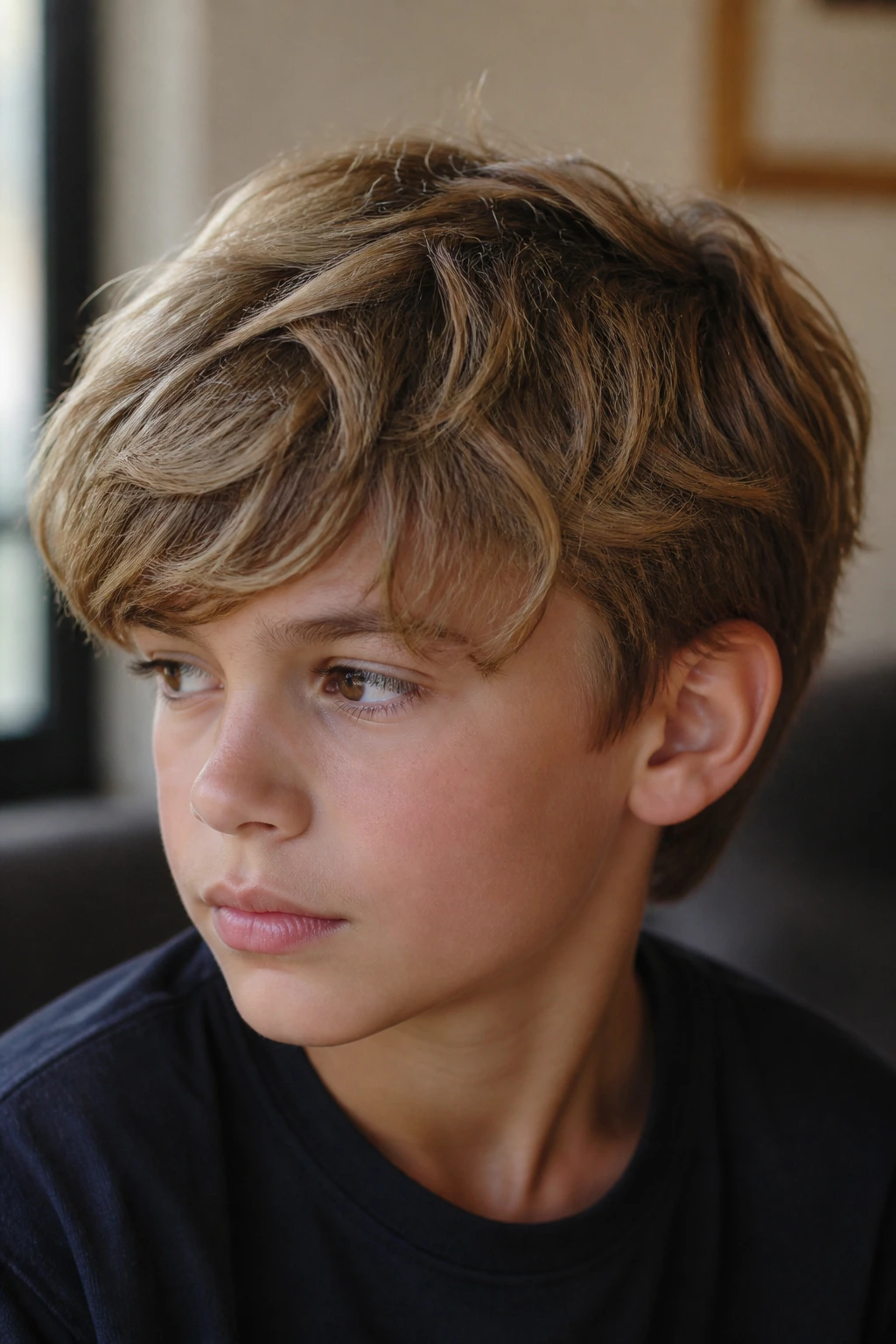
The best little boys’ hairstyles are the ones that keep their shape after the first three days of real life. That means the cut fits the hair type, the maintenance fits the family schedule, and the style still looks like a choice when it’s grown out a little. Those are the cuts worth repeating.
If you’re stuck between two options, pick the one that respects the hair’s texture and the child’s patience. A haircut that works with a cowlick, a curl pattern, or a busy morning will always beat one that looks impressive for exactly ten minutes. And once you find the right one, the whole routine gets calmer. That’s the part people forget to look for.
