



Short hair in the 1980s never meant playing it safe. It meant mousse at the roots, a blower nozzle pointed straight at the crown, and a cut that could hold its shape after a brisk walk, a crowded bar, or a humid subway ride. The best 1980s short hairstyles had attitude baked into the silhouette: lifted crowns, feathered edges, sliced bangs, and enough movement to keep the whole thing from feeling glued to the skull.
That’s why these cuts still work. They’re not just nostalgic. They solve real hair problems with a little swagger. Fine hair gets more body. Thick hair gets shape instead of bulk. Curly hair gets room to breathe. And straight hair, which can look painfully flat in a blunt crop, gets a little bend and lift where it needs it most.
The mistake people make is copying the decade too literally. A stiff helmet of hairspray? No thanks. The better version keeps one strong idea — a rounded bob, a feathered pixie, a stacked nape, a punky fringe — and lets the rest move. That balance is the whole trick, and it’s the reason these 1980s short hairstyles still look alive instead of costume-y.
Why This Collection Is Different

-
Every cut here has a shape reason: Some styles are built for lift at the crown, while others depend on sharp edges, tucked napes, or a swept fringe that changes the whole mood.
-
Texture gets treated like a feature, not a problem: Fine, thick, curly, and straight hair all show up in this list with cuts that actually suit the hair you’ve got.
-
There’s room for soft or loud styling: You can wear one of these with a little mousse and a blow-dry, or push it harder with teasing, gel, and a round brush.
-
These are not museum pieces: Each style can be worn with modern softness so you get the decade’s energy without the stiff finish that dates a haircut fast.
-
The grow-out stage matters here: A few of these shapes are smart if you want a short cut that still looks decent six weeks after the salon visit.
1. Feathered Pixie with Lift
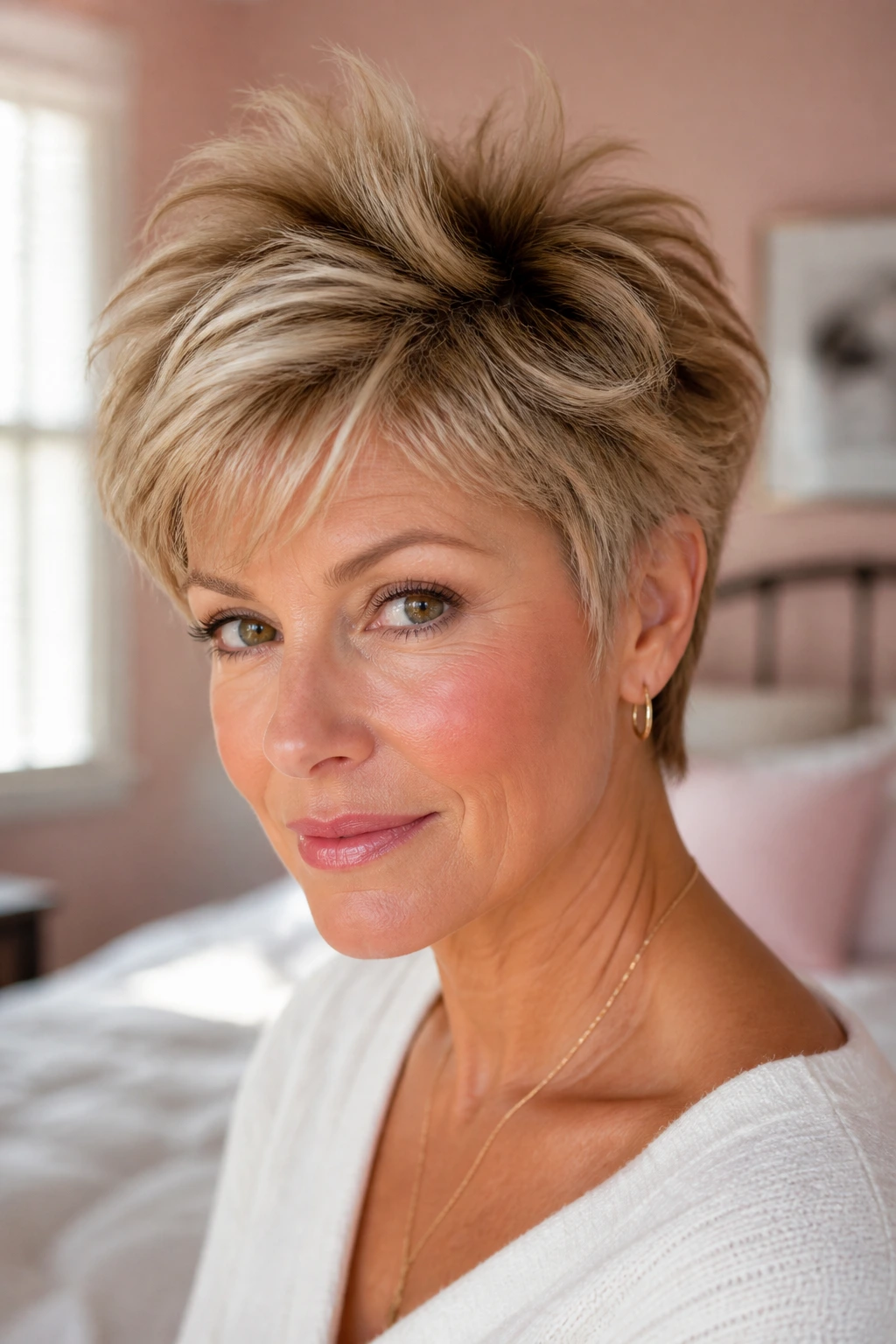
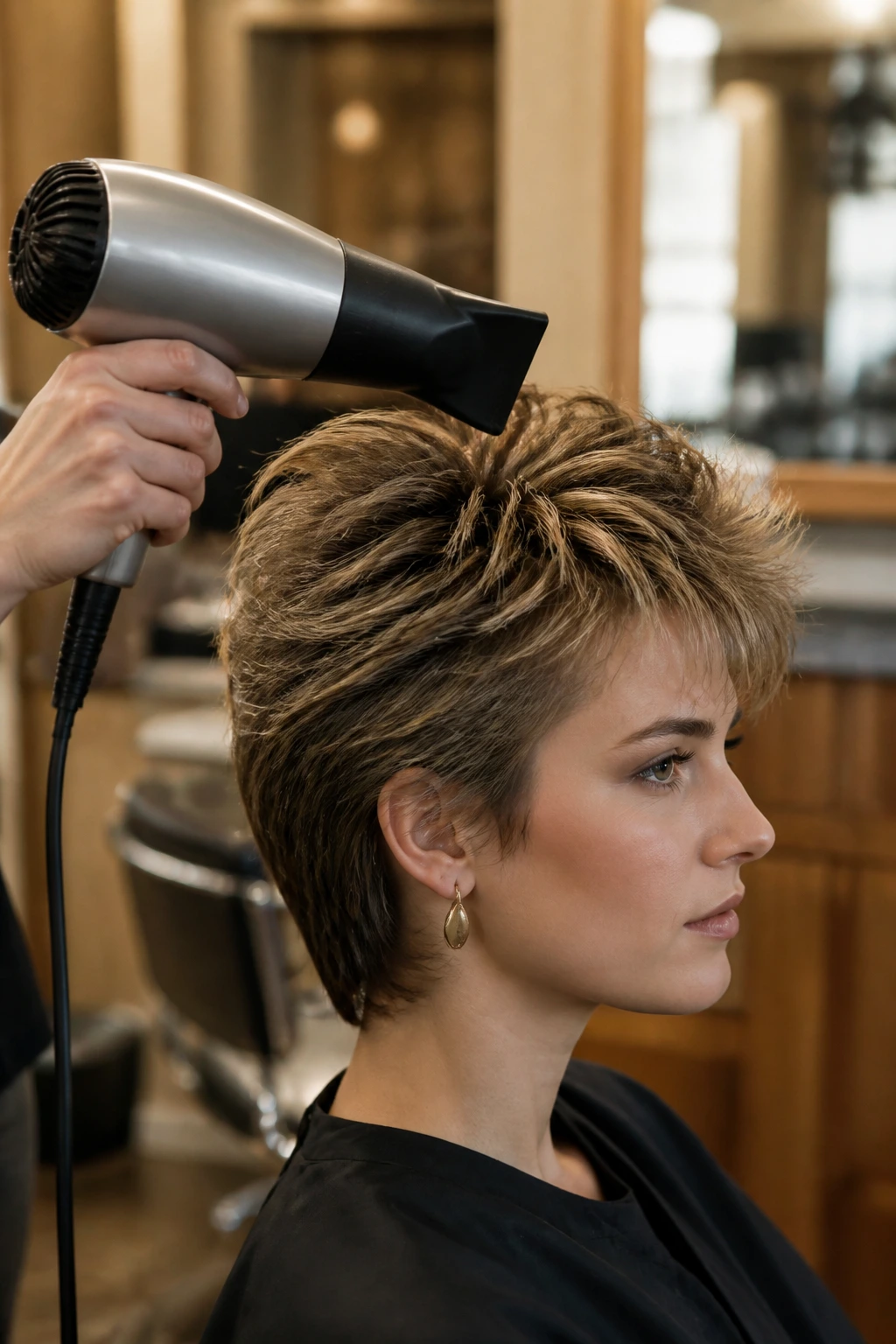
A feathered pixie with lift is the kind of cut that looks like it was designed for motion. The crown stays a little longer, the sides taper in, and the ends are sliced so they don’t sit there like little dead sticks. You want the hair to move when you turn your head. That’s the whole point.
Why it works: The shape keeps the top from collapsing, which is a gift if your hair is fine or flat at the roots. A small amount of mousse on damp hair and a round brush at the crown can make the whole cut feel bigger without making it stiff. It reads 1980s because the volume sits up, not out.
Best for: Fine hair, straight hair, and anyone who hates a heavy fringe.
Styling note: Blow-dry the roots first, then bend the ends back with your fingers or a small brush. Keep the sides close and the top airy.
2. Stacked Wedge Bob
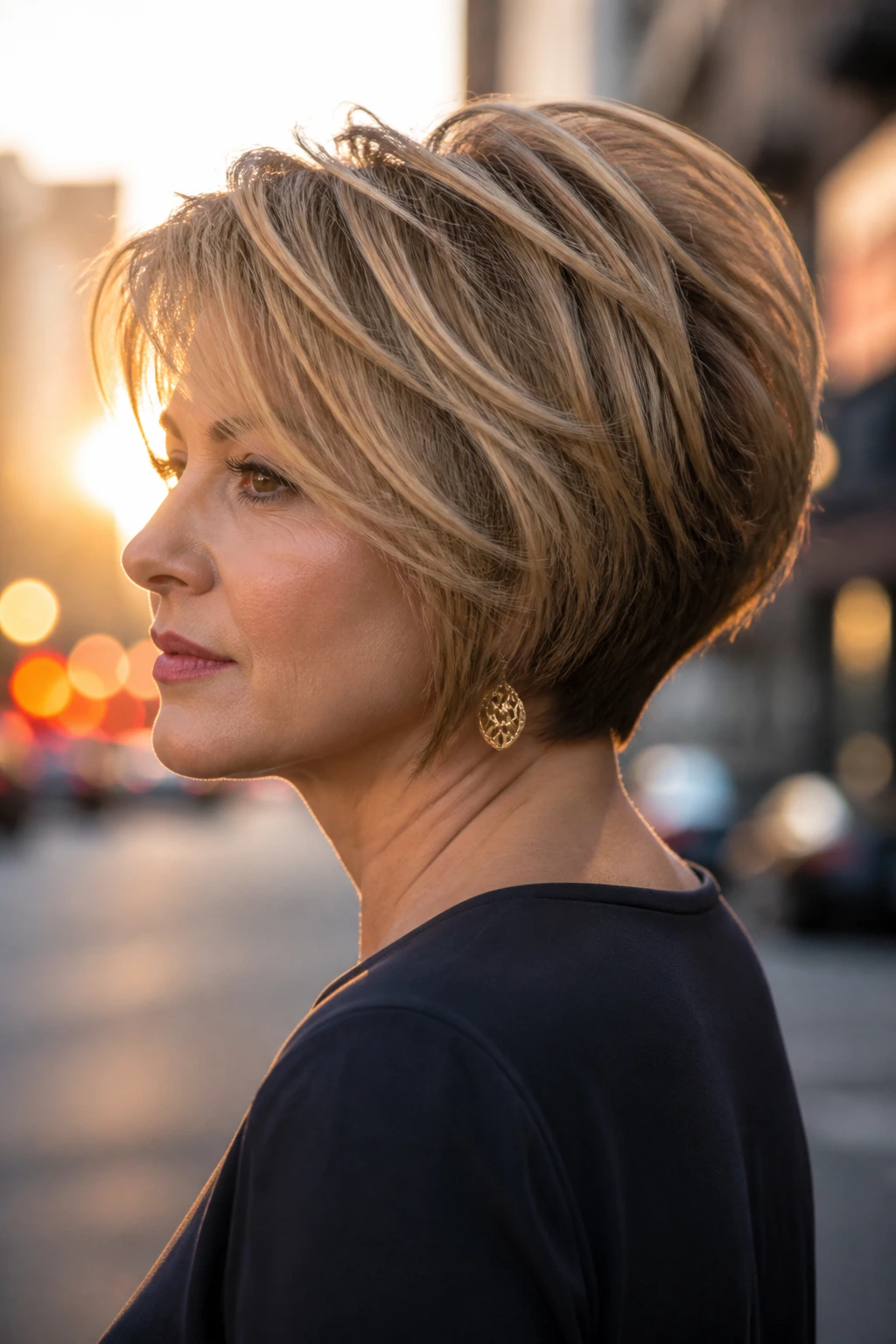
This one has that clean, architectural shape the 1980s loved: shorter at the nape, fuller through the back, and smooth around the sides. It’s a bob, sure, but the real story is the curve. The head suddenly looks more defined.
A stacked wedge bob works because it creates lift where hair usually slumps. The back builds up naturally, so you don’t have to tease the roots to get body. A medium round brush and a bit of root-lifting spray are enough to keep it from going flat by noon. I like this cut on straight and lightly wavy hair best; curls can wear it too, but the finish gets softer.
3. Chin-Length Bubble Bob

A bubble bob sits between polished and playful. The ends curve under the chin, the crown has a little height, and the whole thing feels rounded instead of blunt. It’s one of those short 1980s looks that can be sleek or fluffy depending on how hard you blow-dry it.
Why It Reads So 80s
The curve. Always the curve.
Hair that flips slightly under the jawline gives you that decade-specific shape without needing a full-on perm or huge hair spray cloud. Use a flat brush or a medium round brush and turn the ends inward while the hair is still warm. A side part makes it even more period-correct, especially if the front has a little sweep.
- Texture cue: Straight hair gives the cleanest bubble.
- Face-framing note: The curve softens sharp jawlines.
- Product tip: A light smoothing cream beats heavy serum here.
4. Side-Swept Shag Crop

If you want the messy side of the decade, this is a good place to start. The shag crop keeps the length short, but the layers are choppy enough that the hair falls in pieces instead of one block. A long side sweep across the forehead keeps it from feeling severe.
This cut is all about controlled looseness. You can air-dry it with a little mousse, scrunch it once, and walk away. Or you can rough-dry it with your fingers and a diffuser if the hair has curl or wave. The 1980s feel comes from the uneven texture and the fringe that looks deliberately lived-in, not combed to death.
5. Soft Mullet with Tapered Sides

The mullet gets a bad rap because people remember the hard version. The softer version has a better case. The sides stay tapered, the top gets a little lift, and the back length is kept tidy enough that it feels intentional, not accidental.
What makes this one useful is the balance. You get shape around the face and a little movement at the nape, which is why it works on hair that needs visual interest. Keep the transition from top to back gentle. If the cut jumps too suddenly, it veers into novelty territory fast. I’d wear this with texture paste, not with glossy pomade.
6. Permed Micro Bob
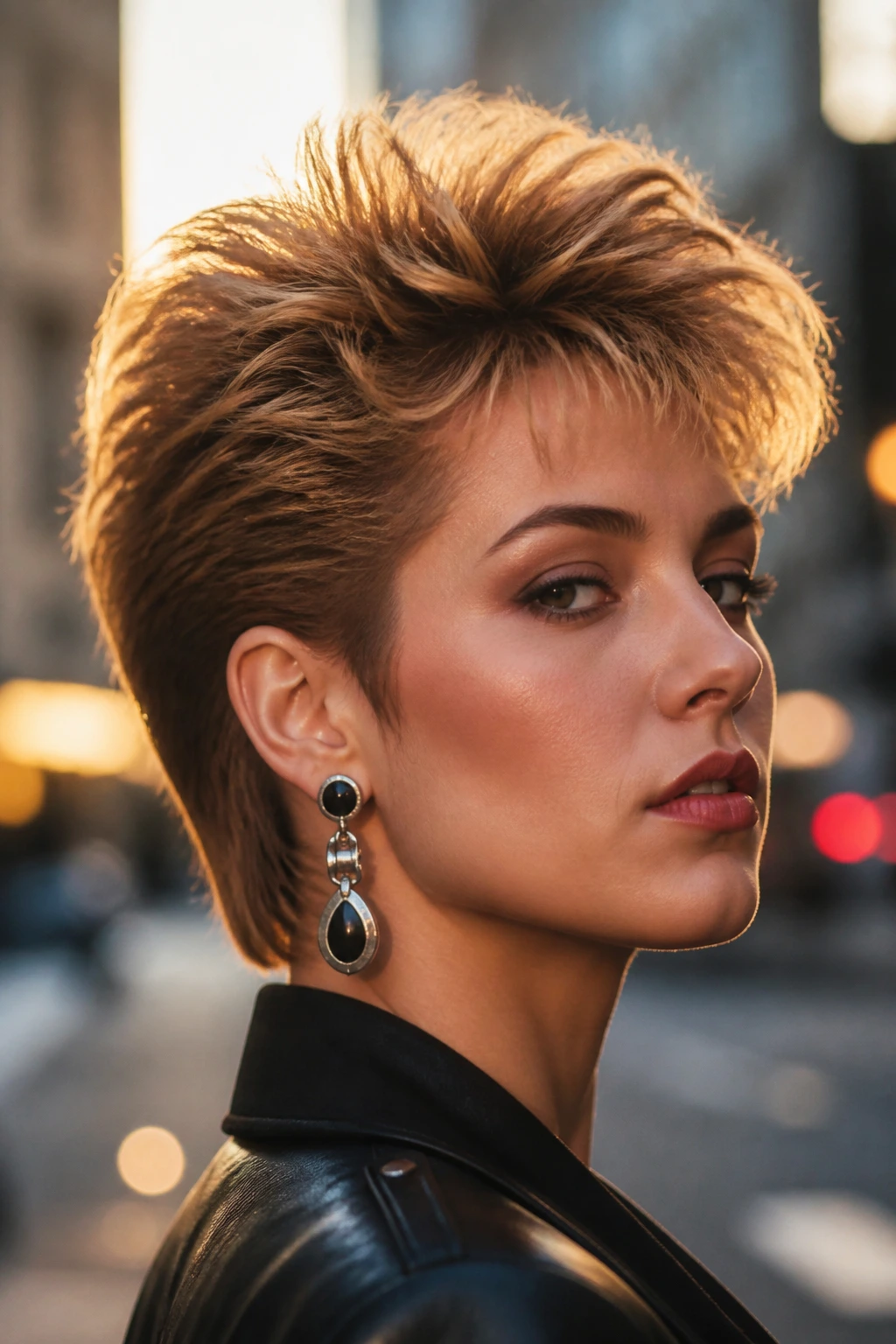
A permed micro bob is tiny, lively, and unapologetically bouncy. The length usually sits around the jaw or a touch above it, and the curls give the shape a kind of built-in volume that a straight bob has to fake with styling.
Need something that looks finished with almost no daily work? This is it. A good perm on short hair creates a halo of movement, especially if the curl is set small enough to keep the bob from puffing into a triangle. Ask for soft, springy curls, not stiff ringlets. The hair should move when you shake your head. That’s the sweet spot.
7. Razored Boyish Crop
This is the sharp little crop with an art-school streak. The sides are close, the top is cut with a razor or point-cut so the ends look light, and the fringe can be pushed forward or brushed to the side. It’s lean, quick, and a bit cool in a way that never tries too hard.
A razored boyish crop works best when the top has some separation. That means a pea-sized amount of paste worked through dry hair, then pinched into pieces. Skip heavy cream products. They make the cut slump, and this shape needs crisp edges to keep its edge.
8. Asymmetrical Power Bob
One side longer than the other changes the whole mood of short hair. Suddenly the bob feels bolder, sharper, and more intentional. In 1980s terms, this is the haircut that walks into the room before you do.
The asymmetry works because it breaks the symmetry that short hair often falls into. One side can skim the jaw while the other lands near the chin or cheekbone. Keep the line clean, though. If both sides are too soft, the whole effect disappears. This is one of the few short styles that looks even better with a blunt blow-dry and a deep side part.
9. Curly Crop with Lifted Crown
Natural curls short enough to spring up around the face can be one of the nicest 1980s shapes going. The crown gets a little extra height, the sides stay shaped, and the curls pile into a neat rounded silhouette instead of widening all the way around.
The key is restraint. Too much layering and the cut frizzes out. Too little and it turns boxy. I’d use a curl cream on soaking-wet hair, then diffuse just until the roots set. After that, leave it alone. Hands in the hair too early will flatten the very lift you’re trying to keep.
What to Ask For
- Short layers that follow the head shape
- More room at the crown than the sides
- A fringe only if your curls are loose enough to sit there
- Dry cutting, if your stylist works that way, because curls shrink
10. Curved Pageboy
The pageboy gets interesting when the ends curve under cleanly and the line sits right around the jaw. It can look prim, retro, or surprisingly sharp depending on how polished you wear it. Add a straight fringe and the whole thing leans harder into the decade.
This cut is about shine and direction. Blow-dry with a nozzle and a paddle brush if you want a smoother finish, or use a round brush if you want more bend. It’s a good choice for hair that likes order. Wild texture fights it; neat texture loves it.
11. Softened Mushroom Cut
People hear “mushroom cut” and think of a hard, bowl-shaped cap. That version can be rough. The softened version keeps the rounded outline but adds feathering through the ends so the cut doesn’t feel helmet-like.
The shape is strong, and that strength is why it still has a place. Short sides, a rounded crown, and light layering make it feel a little playful instead of severe. This works well on straight hair that refuses to stay fluffy on top. A bit of root spray gives the crown a lift, and a tiny amount of wax can keep the fringe from clinging too flat to the forehead.
12. Tapered Afro with Temple Shape
A tapered afro with clean temples and a shaped nape is one of the smartest short cuts from the decade. It respects the texture instead of forcing it into something it isn’t. The silhouette stays rounded, but the edges are neat enough to keep the style crisp.
This cut needs regular shape-ups, because the outline matters. Leave the top full and let the sides taper softly into the head. A pick at the roots can refresh the volume, but don’t over-pick the ends or you’ll lose the shape. The best version looks intentional from every angle. No puff, no fuzz, no confusion.
13. Flicked-Under Bob
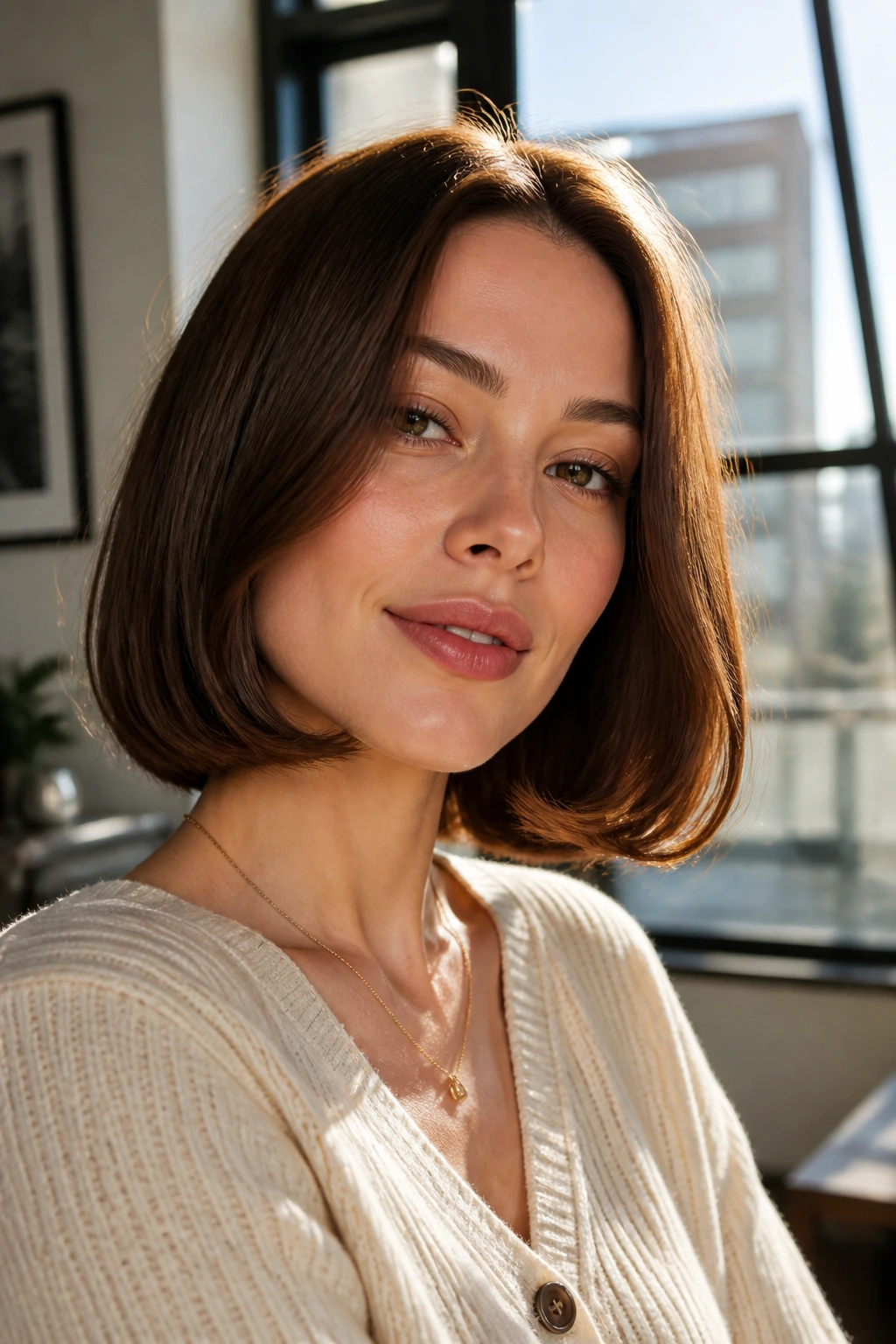
A flicked-under bob is exactly what it sounds like: the ends turn in just enough to give the haircut that tidy, polished swing the 1980s loved. It’s not fussy. It’s directed. And that direction makes the style look expensive even when the styling is dead simple.
The trick is brush tension. Use a blow-dryer and a round brush to curve the last inch of hair under, then let it cool in place. If the ends are too blunt, the shape goes stiff. If they’re too layered, the flick disappears. This is a nice one for straight hair that wants movement without looking shaggy.
14. Punky Spiky Crop
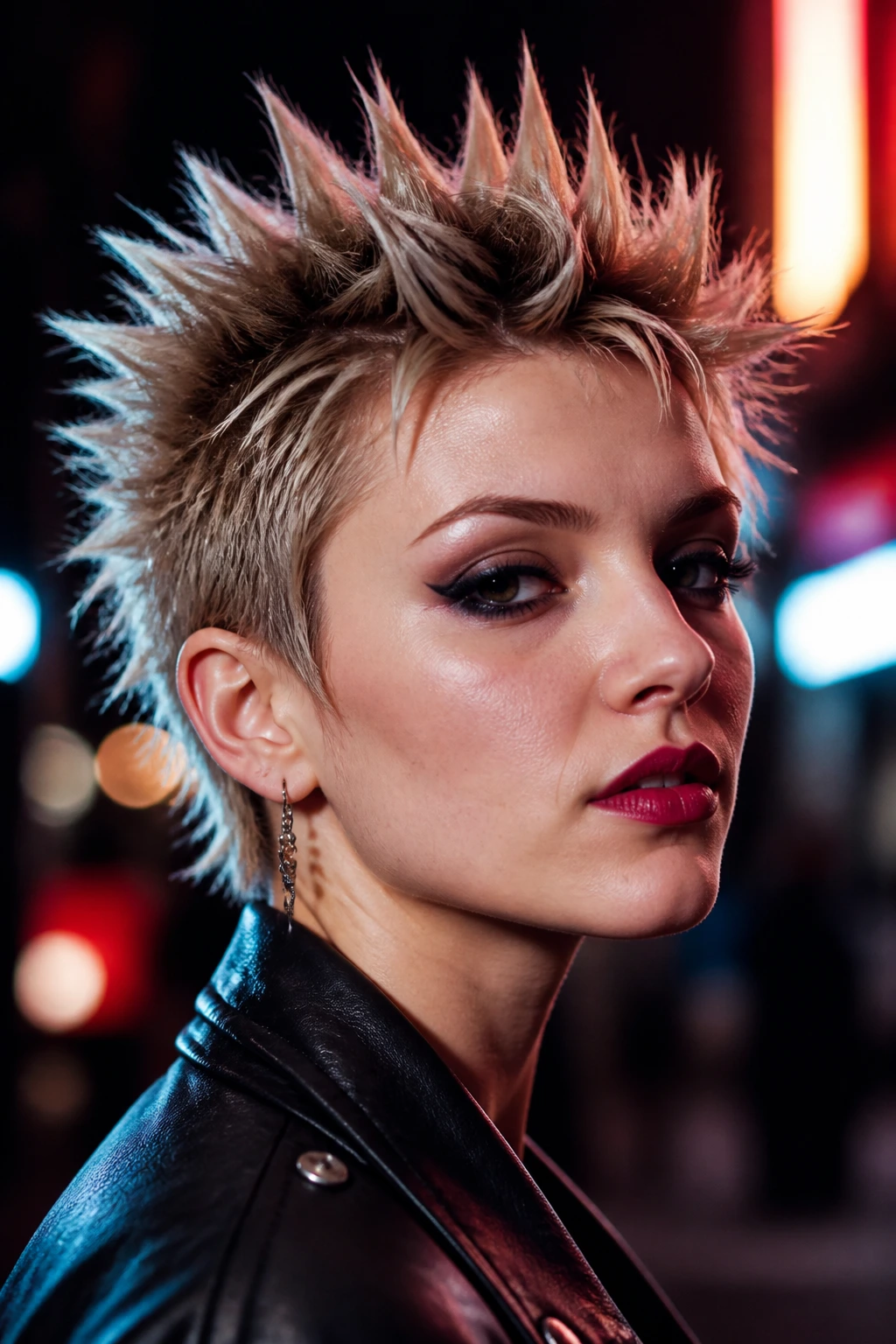
Some short 1980s cuts wanted polish. This one wants attitude. The hair is cut close and choppy, then pushed upward or forward with gel or wax so it stands in little sharp pieces. It’s not a big look. It’s a pointy look.
You do have to respect the product balance. Too much gel and the spikes turn wet and crunchy. Too little and the style falls flat before you leave the house. Start with a small amount, work it through dry hair, and piece out the front with your fingers. If you want a softer version, use matte paste instead of glossy gel.
15. Disco Shag Pixie
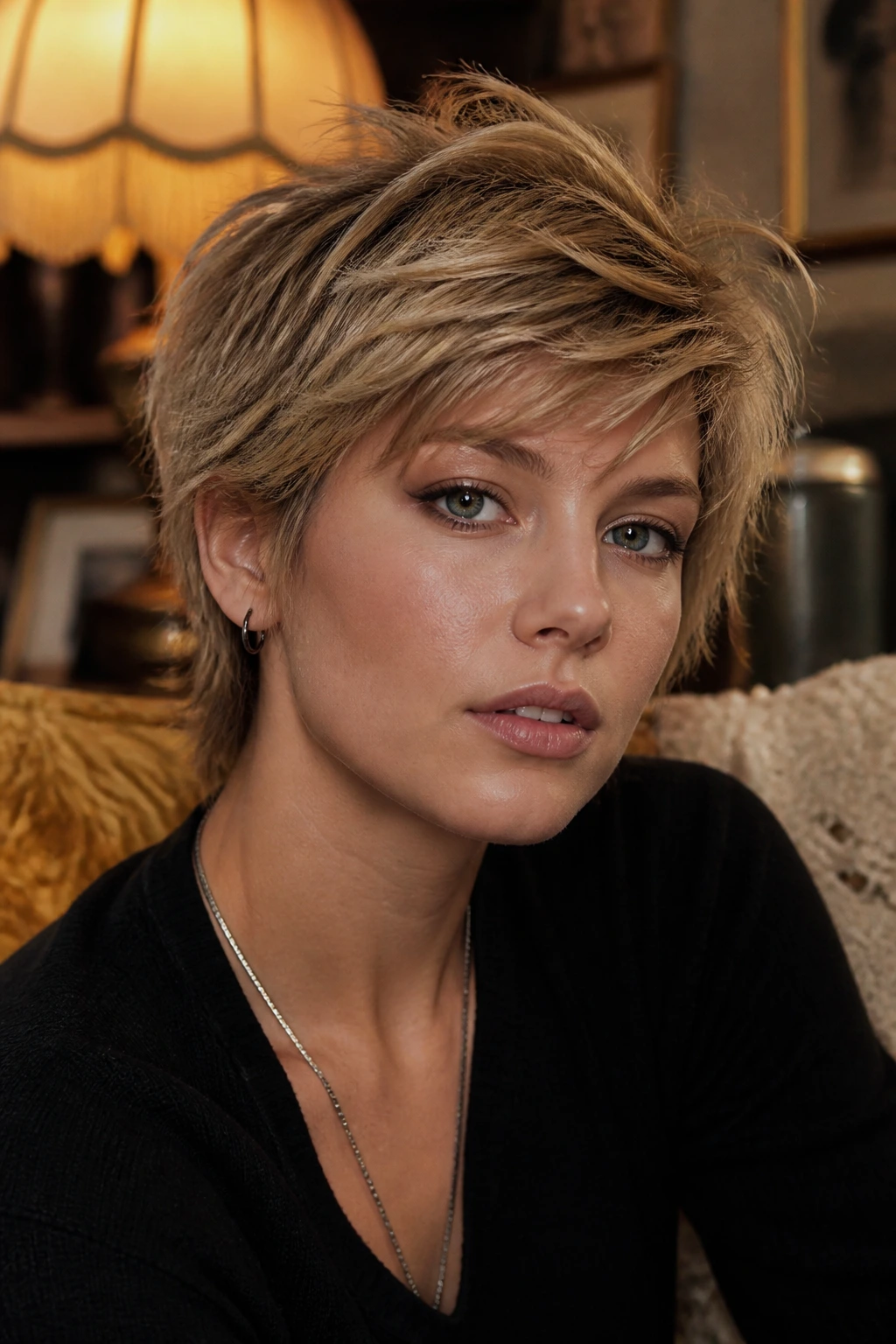
This is the one that feels a little feathered, a little flirtier, and a little less serious than a standard pixie. The top is layered for movement, the fringe sweeps, and the nape stays short enough to keep the whole head looking light.
What gives it that 1980s energy is the shaping around the face. Pieces sit forward, then flip away in different directions. A diffuser can help if the hair has wave, but I’d still rough it up with fingers and a touch of styling cream. The goal is softness with edges, not a perfect helmet of curls.
16. Short Cut with Long Fringe
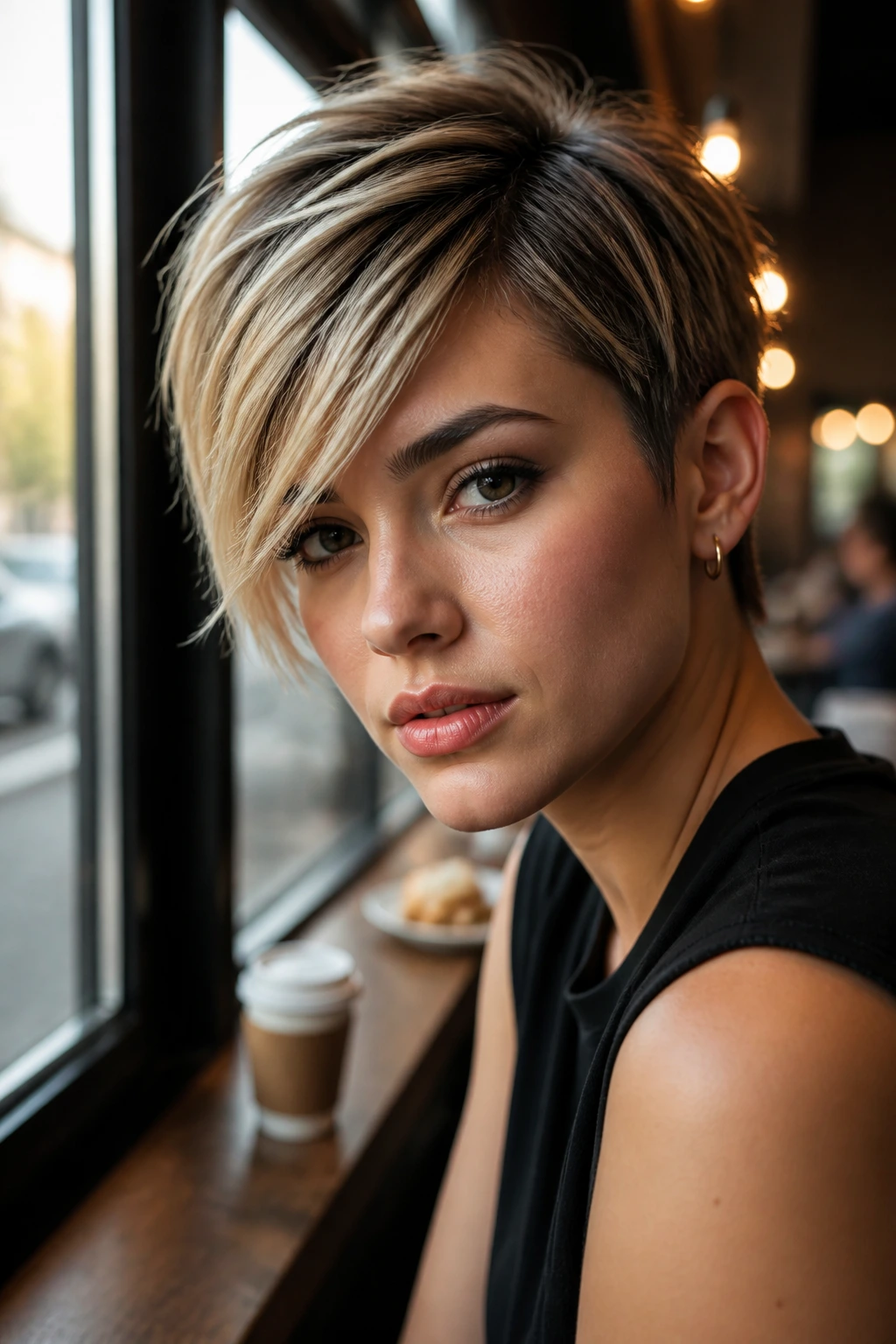
A short cut with a long fringe is one of the easiest ways to keep a cropped style from feeling too severe. The fringe does most of the work, falling to one side or sweeping across the forehead while the back stays clean and short.
This shape is good when you want the confidence of a pixie but not the exposure of a fully cropped front. It also buys you a little grow-out time, which is never a bad thing. Style the fringe with a round brush if you want bend, or tuck it behind one ear if you want the cut to look sharper. Either way, the front makes the statement.
17. Spiral Perm Crop
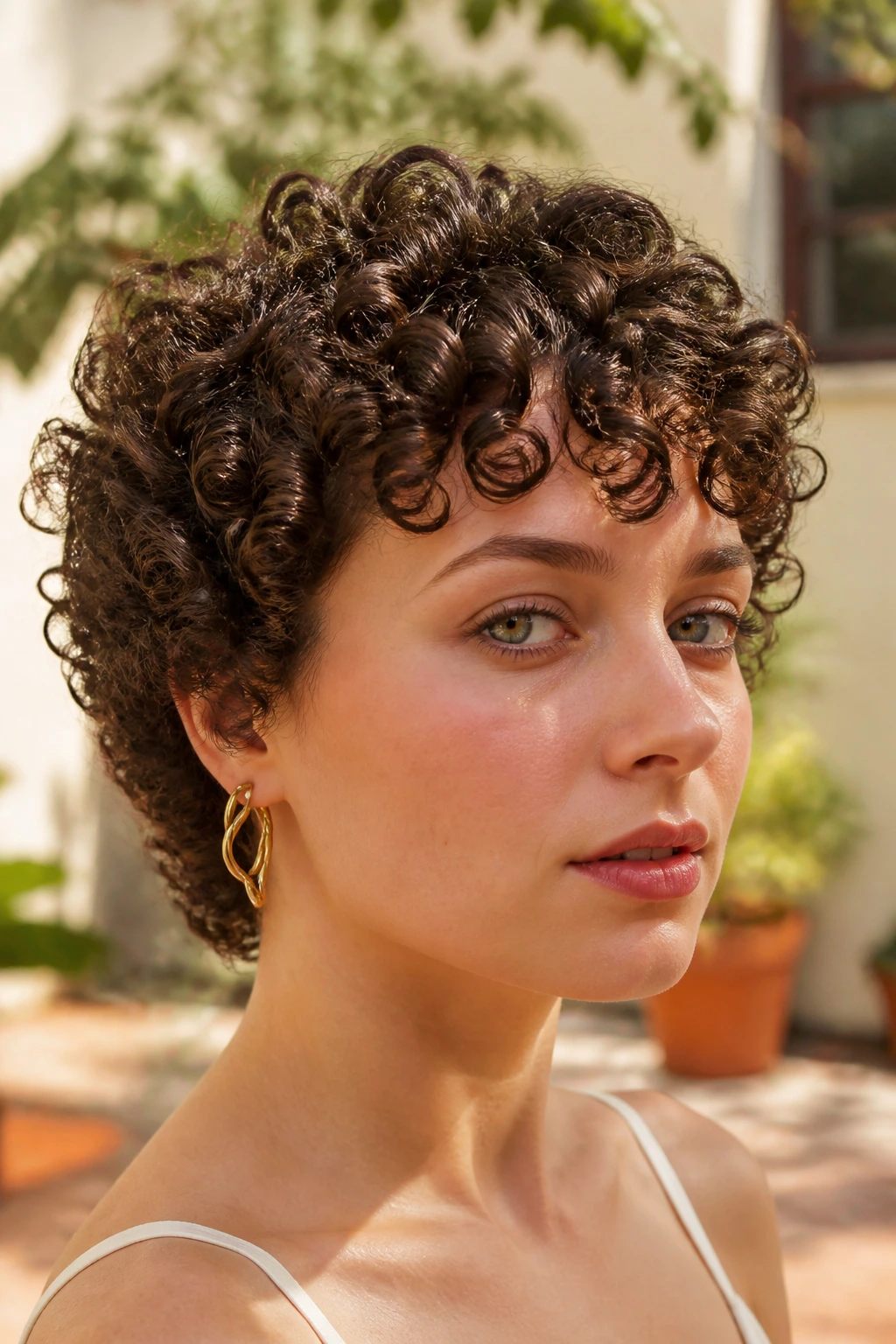
Small curls on short hair have a very specific kind of bounce. They sit up, they separate, and they give the haircut a lively little halo. A spiral perm crop leans hard into that shape, which is why it lands so well in 1980s territory.
The main thing to ask for is curl size. Tight spirals can shrink a lot, so keep the length a touch longer than you think you need. Use a cream that defines curl without dragging it down, and don’t brush it out unless you want a much bigger, softer finish. This style loves humidity less than it loves a diffuser.
18. Jaw-Length Bob with Teased Crown
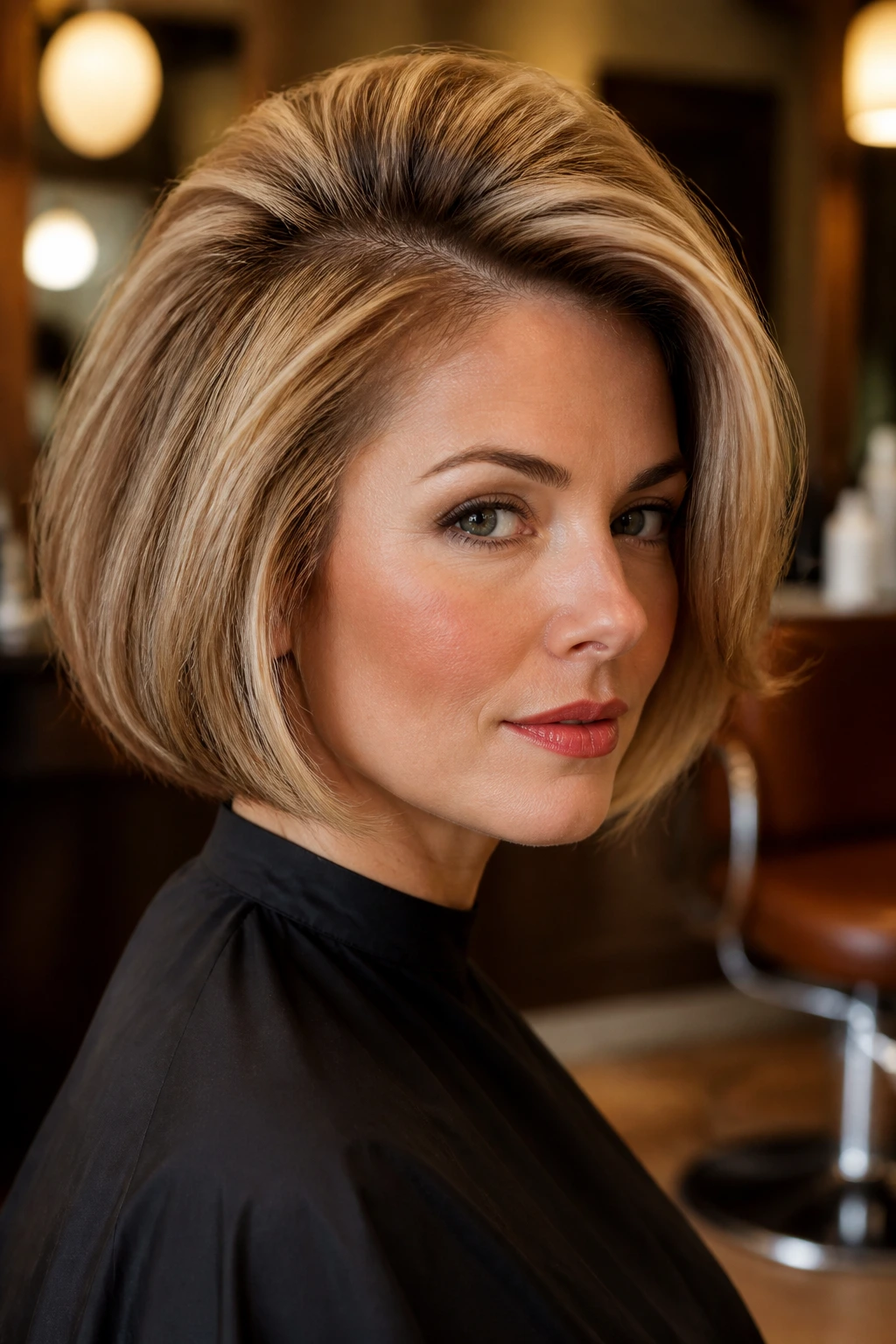
A bob that lands at the jaw already has a strong line. Add a teased crown and the shape starts to feel unmistakably 1980s: lifted at the top, controlled at the sides, and a little bigger than life without going full pageant.
This is a good cut for someone who likes structure but still wants body. Tease lightly under the top layer, not all the way through the head, or the hair gets frizzy and mean-looking. The outer layer should stay smooth enough to hide the work underneath. A side part can make the whole thing look more elegant, while a center part pushes it toward harder glam.
19. Mini Shag Mullet
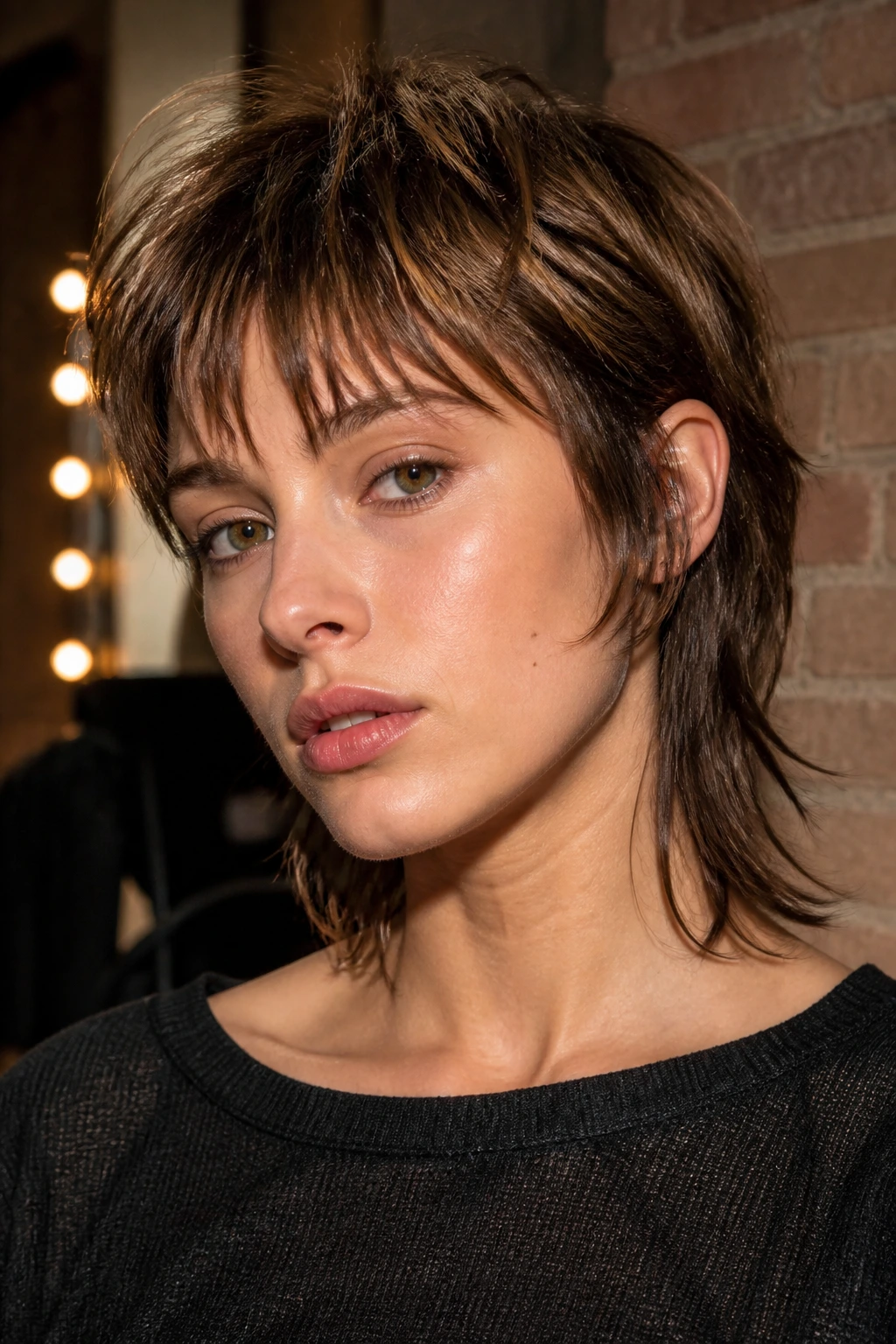
If you like the shag but want a little tail at the back, this is the sweet spot. The layers stay uneven through the crown, the fringe stays piecey, and the back keeps enough length to move when you walk. It’s messy in a good way.
This cut is one of the most forgiving on wavy hair because it doesn’t need perfect symmetry. You can air-dry it, scrunch it, and call it done. If you want more control, a dab of paste on the ends keeps the pieces separated. The shape reads 1980s because it refuses to be neat everywhere at once.
20. Ear-Length Flip Cut

The ear-length flip cut is playful without being fussy. Hair skims the ears, then turns out at the ends in a little flick that feels very much of the decade. It’s the haircut version of a quick grin.
The flip matters. If the ends stay straight, the cut loses half its personality. A small round brush or even a curling iron with a wide barrel can bend the ends away from the neck and cheek. Keep the root volume soft. Too much root lift turns this into a different haircut entirely.
21. Slicked-Back Taper
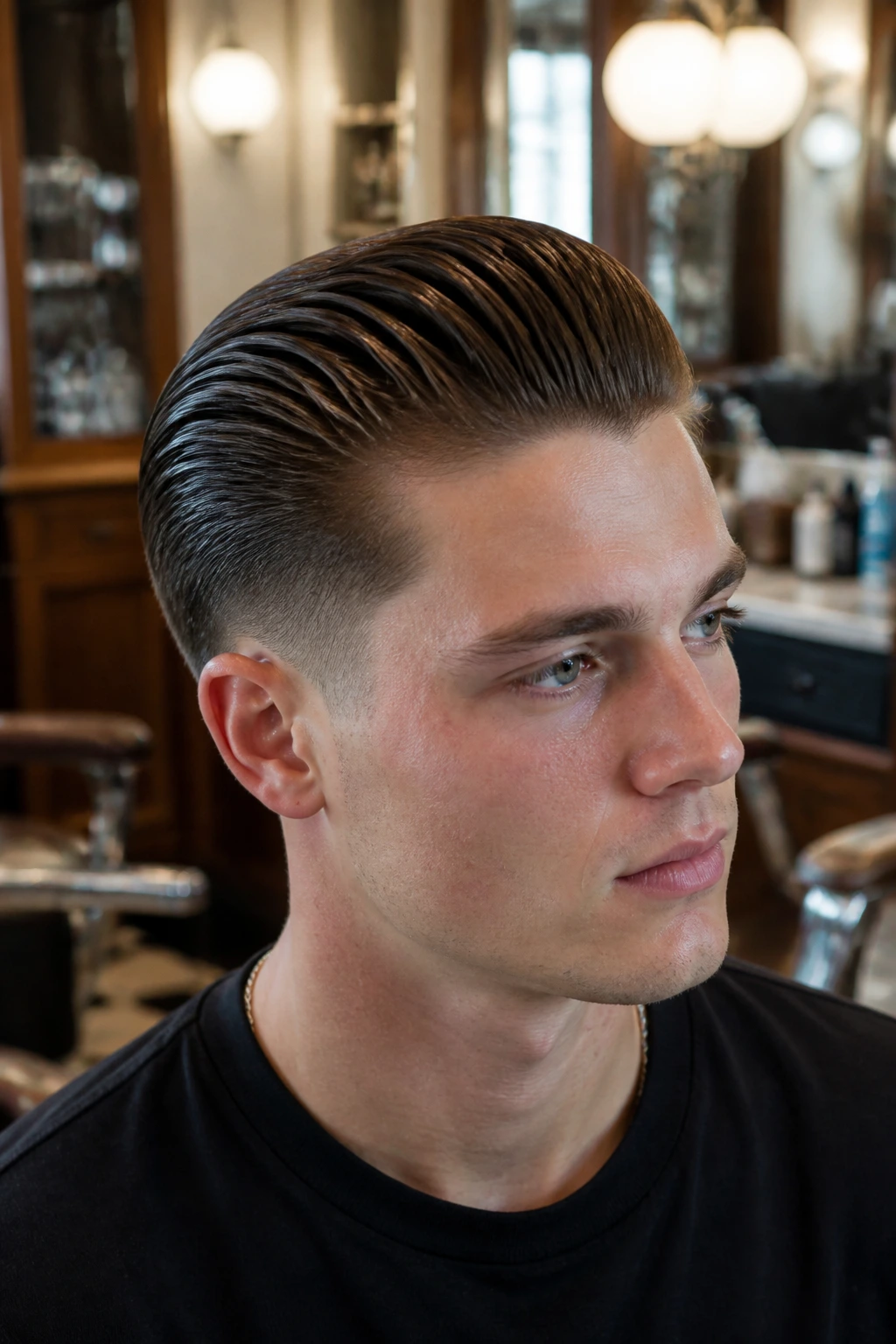
This is the cleanest, sharpest entry on the list. The sides taper close, the top is brushed back, and the finish can be glossy or matte depending on how much product you use. It looks deliberate from the first second.
Slicked-back short hair only works if the cut underneath has good shape. You want clean lines around the ears and nape, because the hair has nowhere to hide. A comb, a little gel, and a fine mist of hairspray are enough. I’d use this when you want the 1980s mood without fluff or curl. Straightforward. Strong. Done.
22. Curly Bob with Side Part

A side part changes curly hair fast. It breaks the width, lifts one side, and gives the bob a lean that feels less round and more styled. The shape sits around the jaw or just above it and keeps the curl soft, not ballooned.
This cut is especially good if your curls are medium to loose and you want the hair to stay lively instead of shrinking into a tight halo. Use a side part when the hair is wet, then scrunch in a lightweight cream. The old mistake is using too much product, which makes the curl droop. A small amount goes a long way.
Best Move
Pin one side behind the ear while the hair dries. It gives the part a little commitment and keeps the volume from spreading evenly on both sides.
23. Rounded Helmet Bob
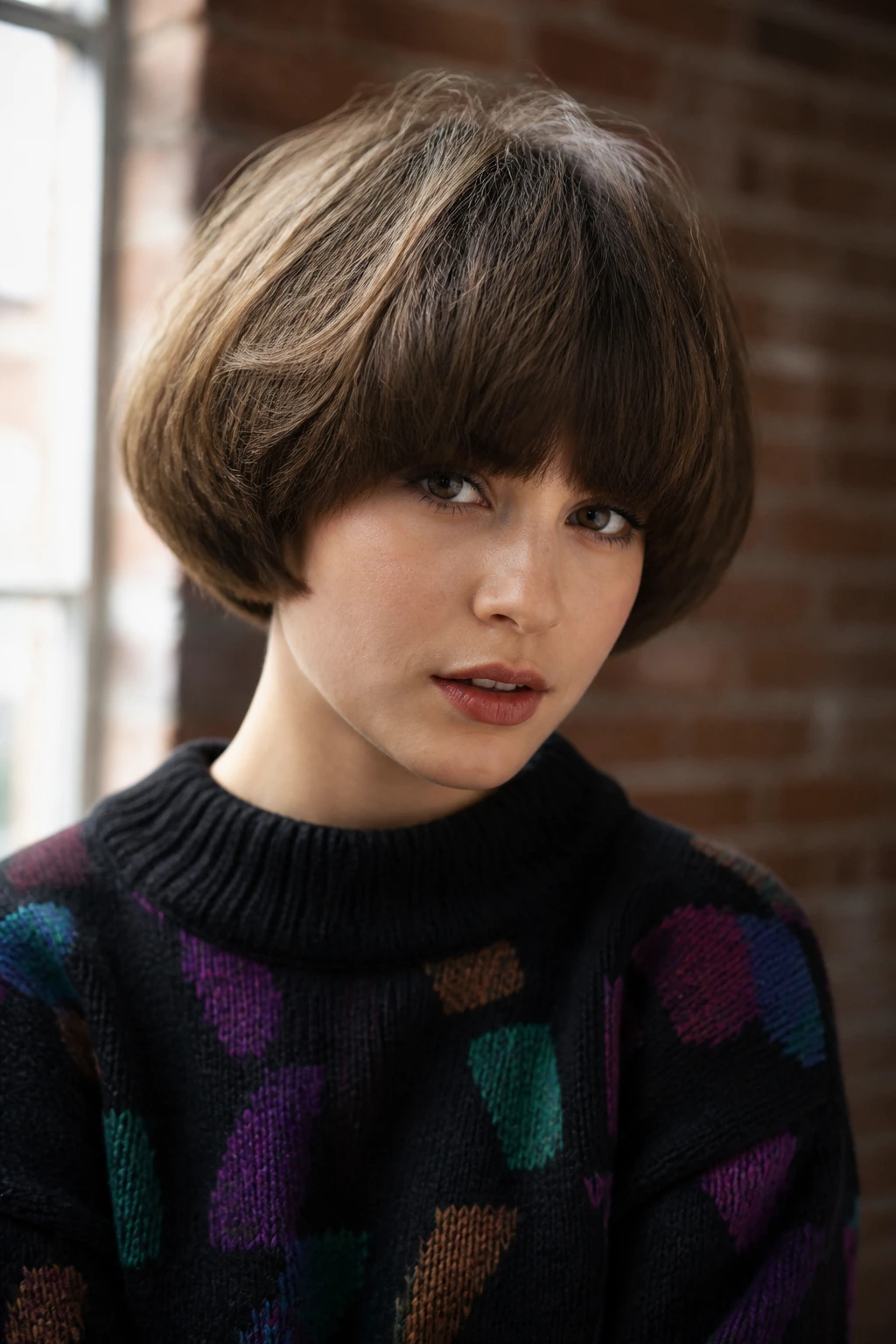
A rounded helmet bob sounds severe, and it can be — if you leave it too blunt. The better version keeps the oval shape but softens the perimeter just enough that it doesn’t feel like a hard shell. Think rounded, not rigid.
This cut is for people who like strong lines and don’t mind a little drama. The volume sits around the crown and sides, then curves back in toward the neck. It’s the kind of style that looks best when the surface is smooth and the shape is precise. If you have thick hair, ask for internal thinning rather than aggressive shortening. That keeps the silhouette without the bulk.
24. Airy Razor Bob
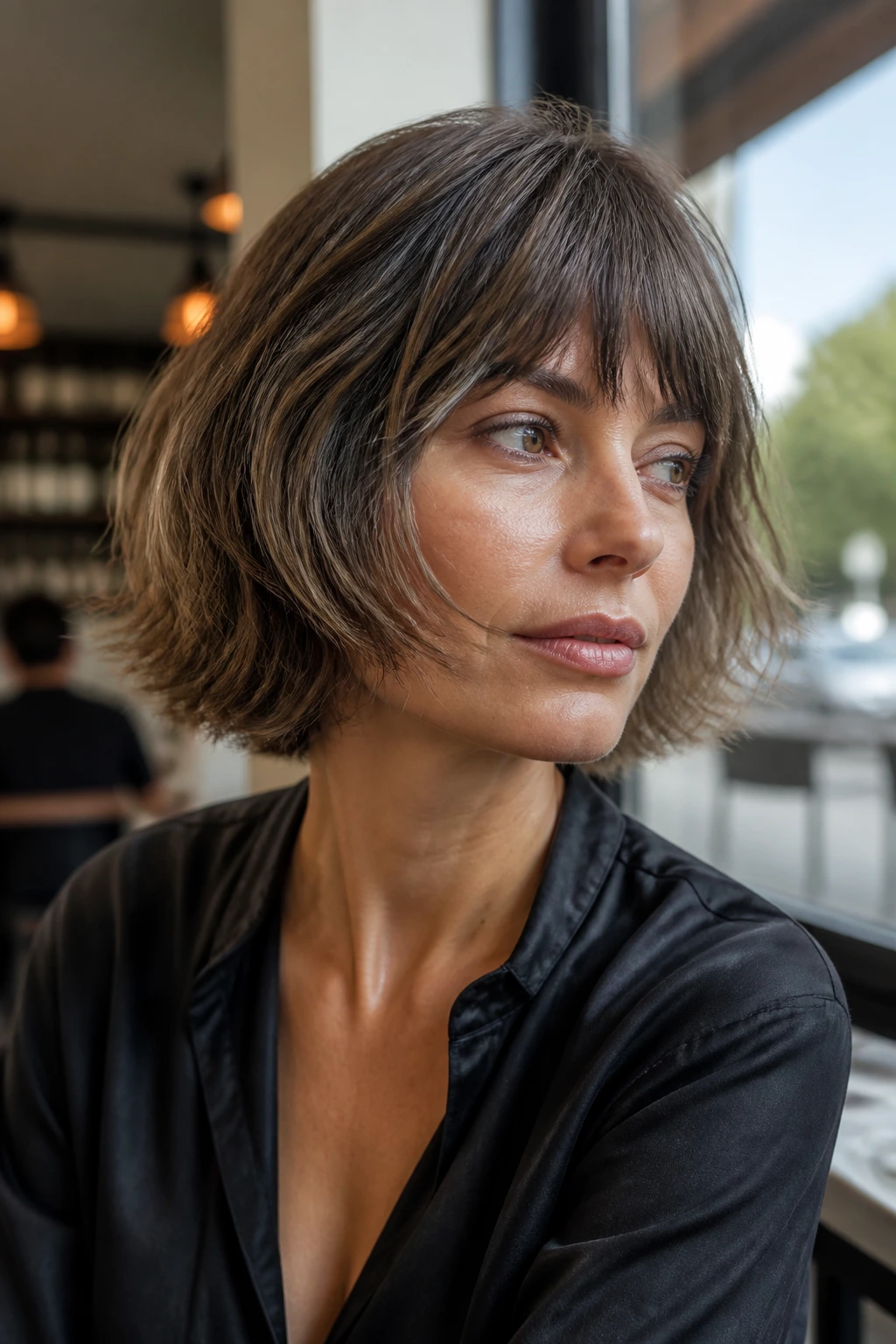
A razor bob can turn into a shag if you’re not careful, but that’s part of the charm here. The ends are sliced for movement, the body stays short, and the overall effect is lighter than a blunt bob with the same length.
This is a good option if your hair falls heavy and you want it to move instead of sit. A razor bob needs a little texturizing spray at the ends and not much else. It works with a side part, a center part, or a slightly messy blow-dry. The 1980s reference comes through in the layered energy, not in the stiffness.
25. Short Cut with Full Volume Bangs
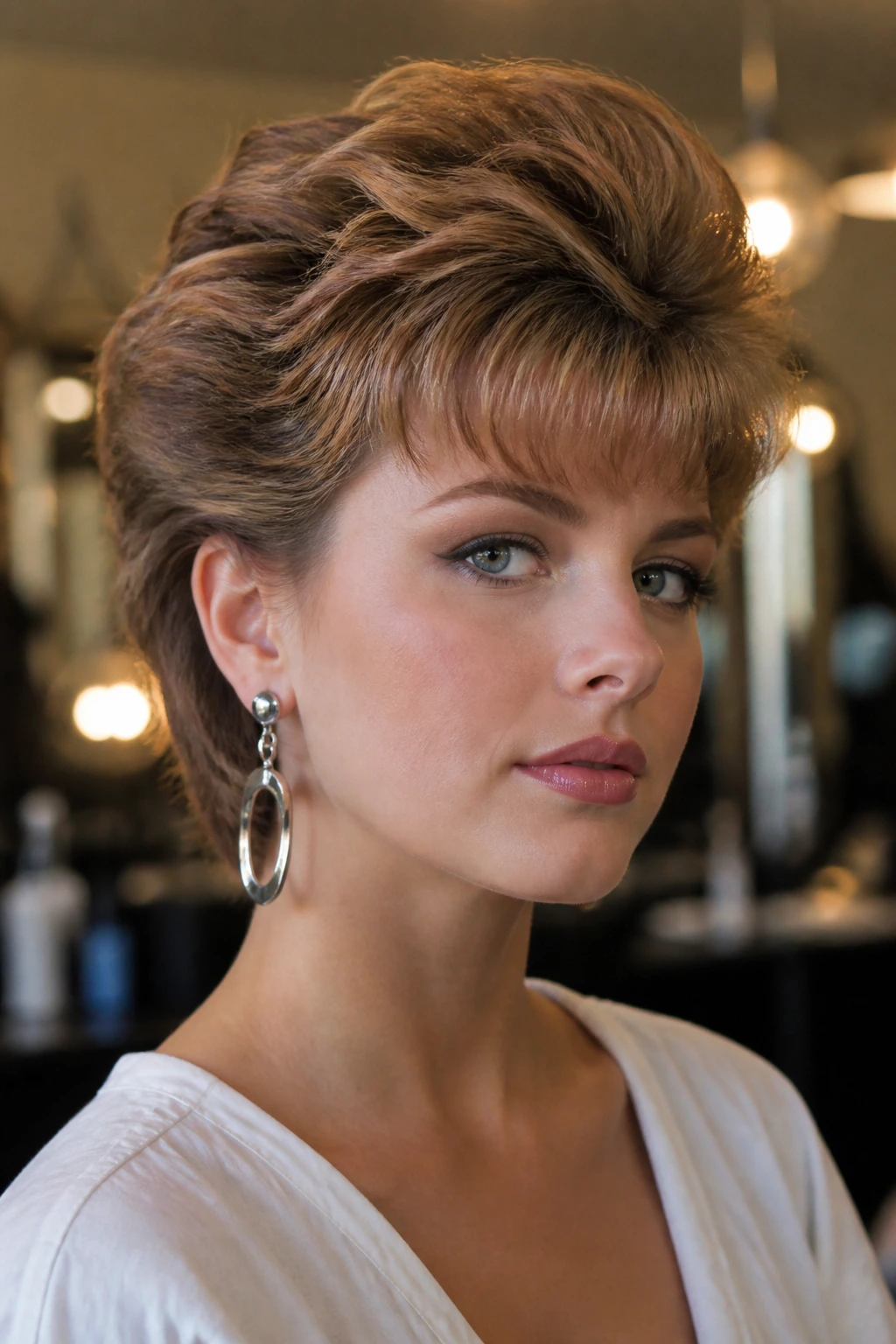
Bangs can make a short haircut feel bigger than the rest of the style. Here, the fringe is the star: full, lifted, and styled so it arches rather than hangs. The sides and back stay short enough to keep the focus where it belongs.
This look needs a round brush or roller at the front. The bangs should have body, but they should still move when you touch them. If they sit in a solid wall, the cut gets heavy fast. Keep the rest of the hair a little quieter so the fringe can do the loud part without competing with itself.
26. Layered Crop for Thick Hair
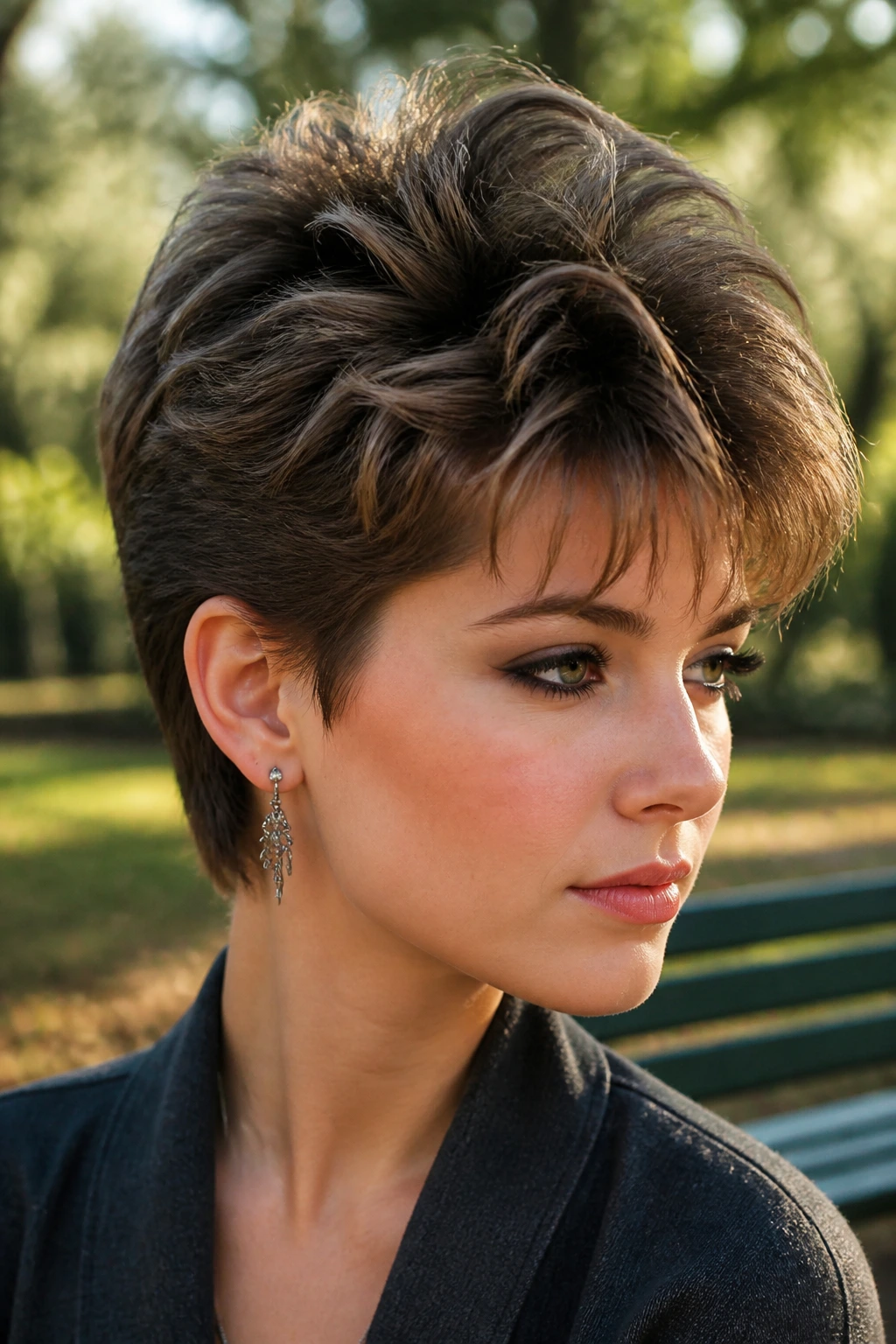
Thick hair is where short 1980s cuts can get tricky, because the shape can turn bulky in a hurry. A layered crop removes weight while still letting the hair hold a short, lively shape. The layers are the whole job here.
Ask for internal layering, especially through the crown and back. You want room for the hair to move without puffing out into a triangle. A bit of cream on damp hair and a rough dry with fingers can be enough. If you like more polish, finish the ends with a small brush so the shape stays clean.
27. Swoopy Side-Part Pixie
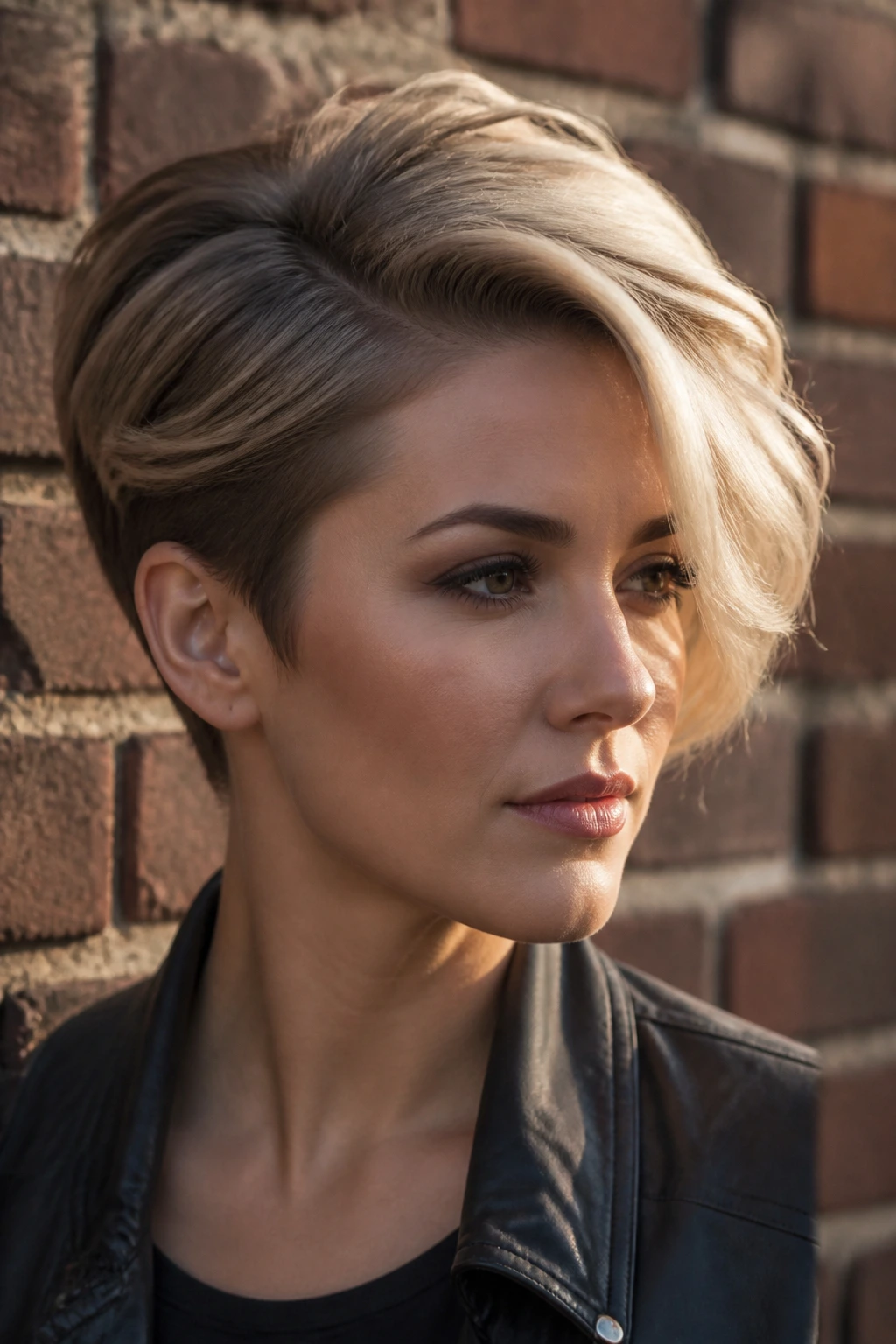
This pixie keeps the back and sides neat, but the top is long enough to sweep across the forehead in one dramatic motion. It’s softer than a spiky crop and less formal than a classic bob. The swoop gives it personality.
The side part is the engine. Blow-dry the top in the direction you want it to fall, then tuck the shorter side down and let the longer side curve across the face. A tiny amount of styling cream helps the fringe stay together without hardening. This is one of those cuts that looks a little different every time you wear it, which is a good thing.
28. Sculpted Short Afro
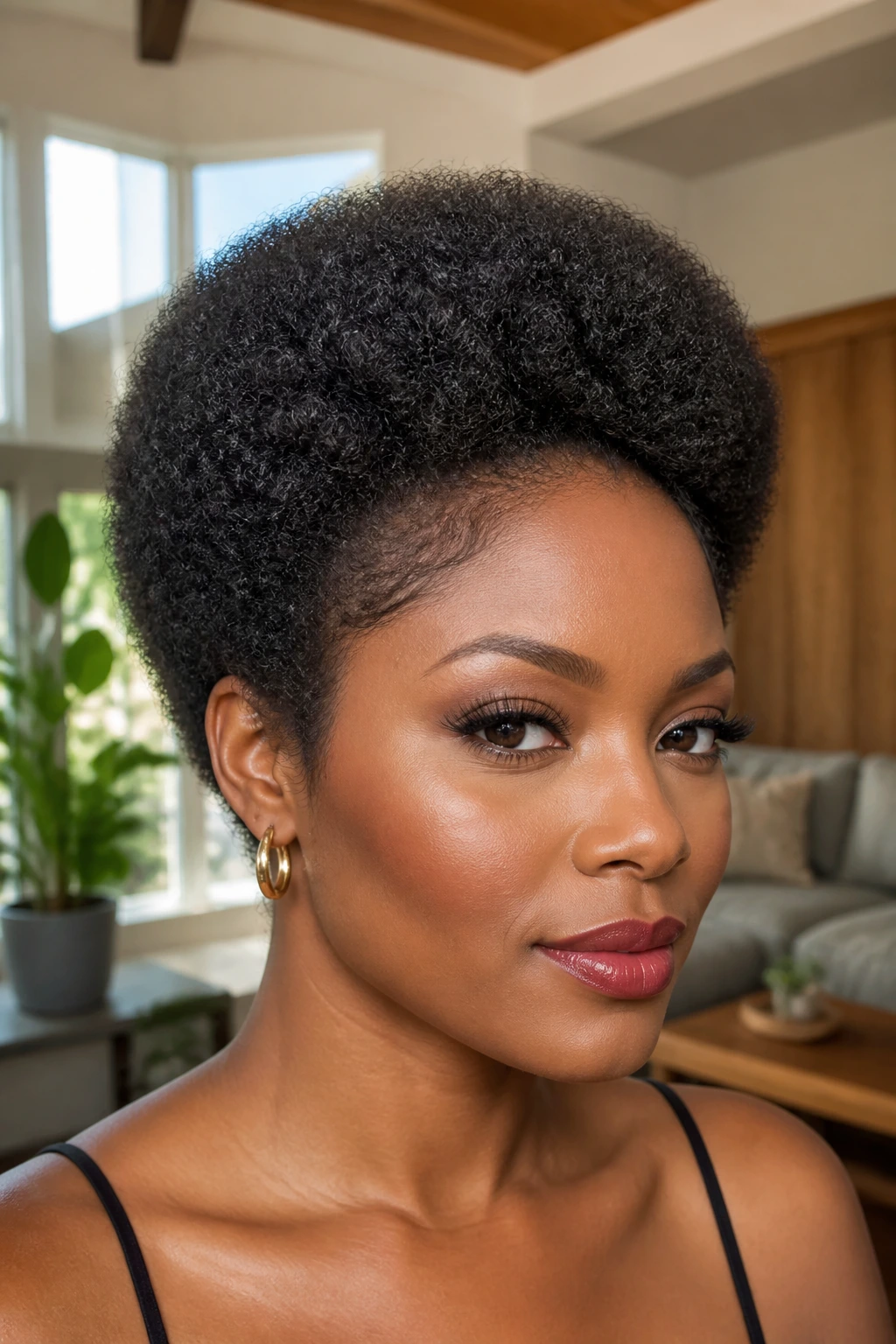
A sculpted short afro keeps the natural texture short, rounded, and shaped around the head. The outline is clean, the crown stays full, and the edges are trimmed so the hair feels intentional from every angle. It’s a classic for a reason.
What makes it feel 1980s is the shape control. The hair is allowed to be big, but not random. A pick at the roots, a little moisturizing cream, and regular line-ups at the nape and temples keep the style looking crisp. If the top grows too far out, the shape loses its clean roundness fast.
29. Feathered Bowl Cut
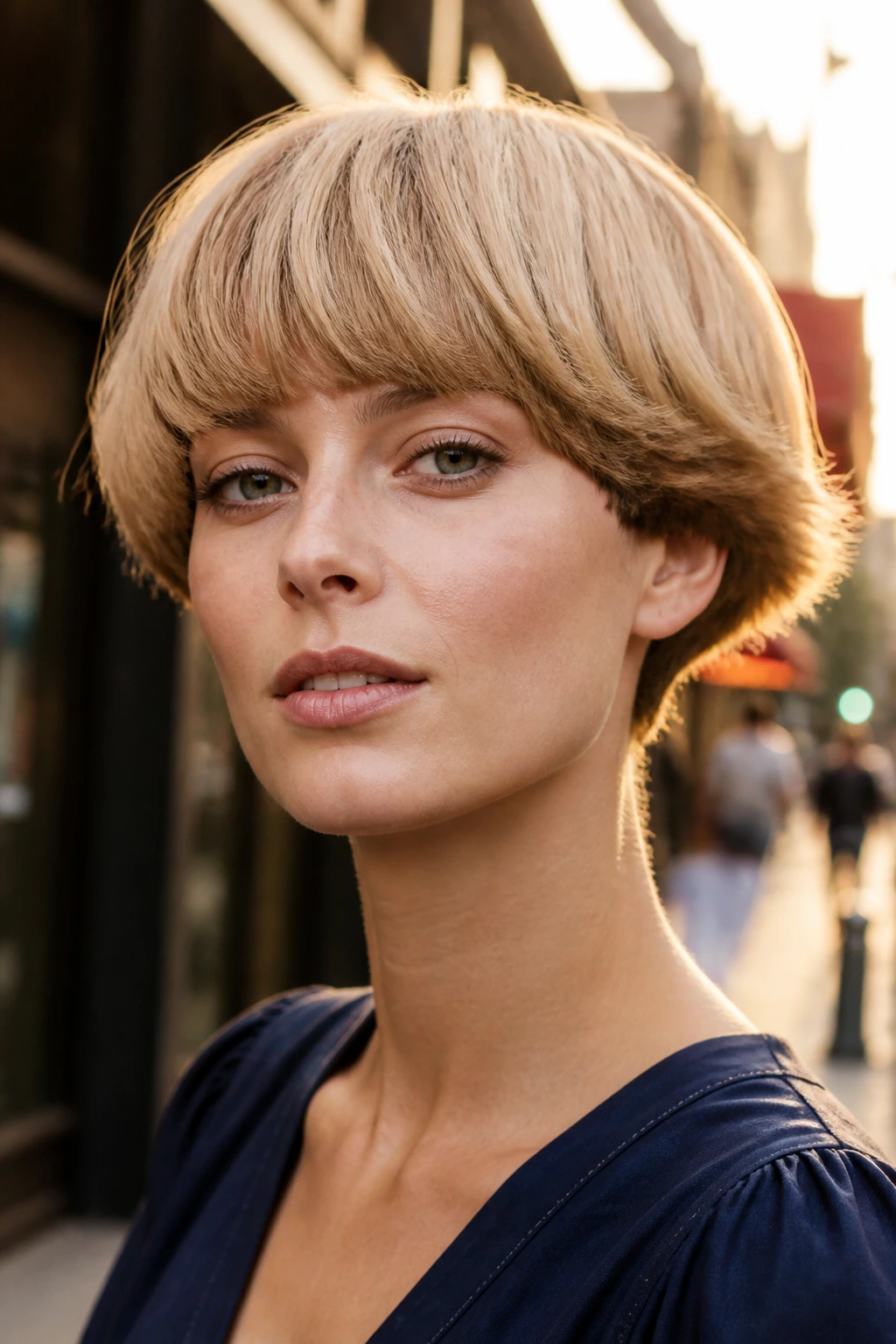
A hard bowl cut can look severe. A feathered bowl cut is much better. The outline still has that rounded 1980s geometry, but the ends are softened with texture so the shape doesn’t sit there like a helmet.
This cut is best when you want structure with a weird little edge. Straight hair shows it off best, but soft waves can make it feel less rigid. Keep the fringe light and the perimeter feathered. If the line is too blunt, the haircut turns into a dare. If the line is softened, it becomes one of the most interesting shapes on the list.
30. Choppy Razor Mullet
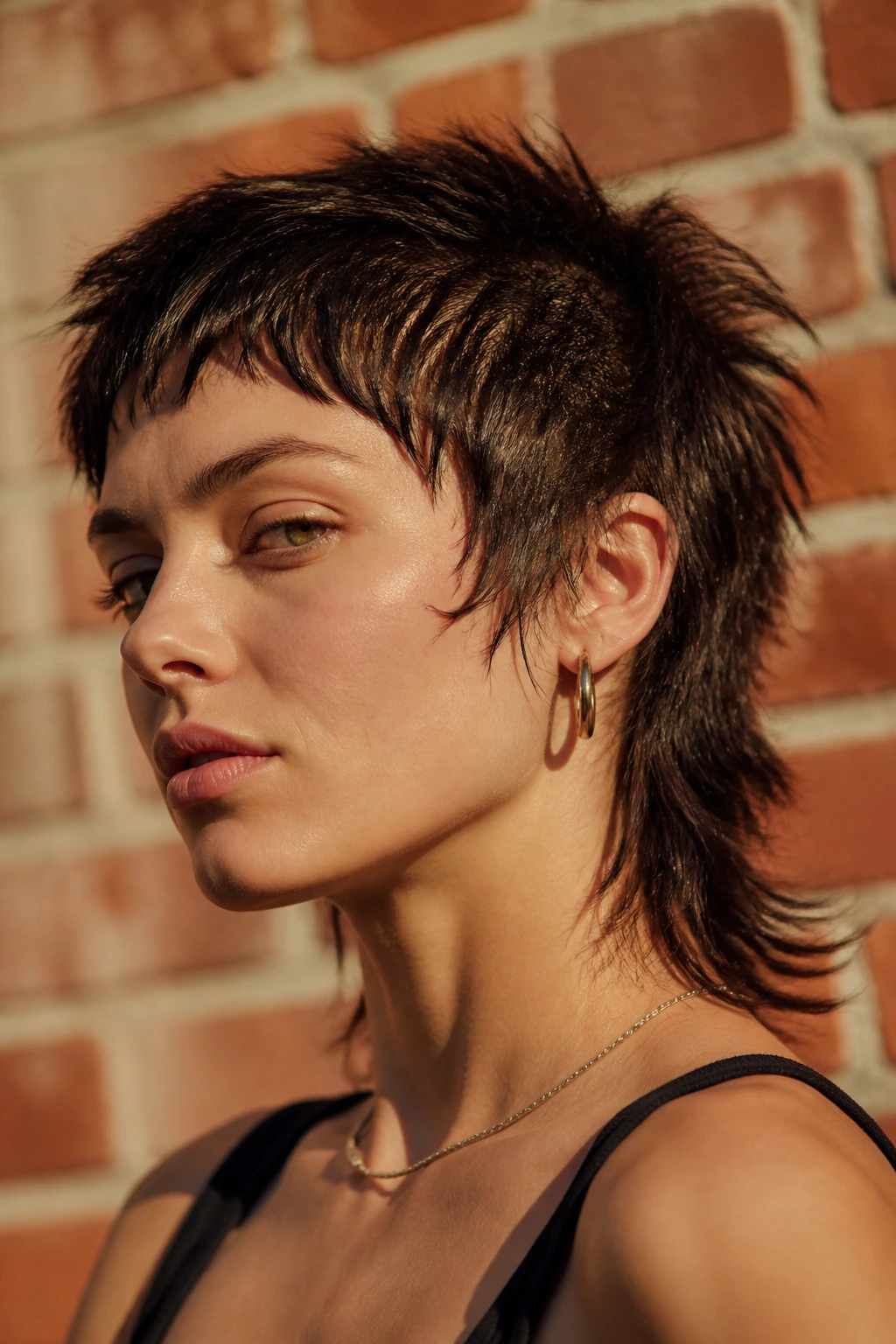
This is the rougher cousin of the soft mullet. The layers are more broken up, the ends are more sliced, and the back has a little attitude instead of a neat finish. It’s for people who want texture first and polish second.
A choppy razor mullet works best when the product stays minimal. Too much cream closes up the separation between layers. A touch of paste or salt spray is enough to show the cuts. The front can be swept, spiked, or left messy. That flexibility is part of the charm.
31. Tousled Wet-Look Crop
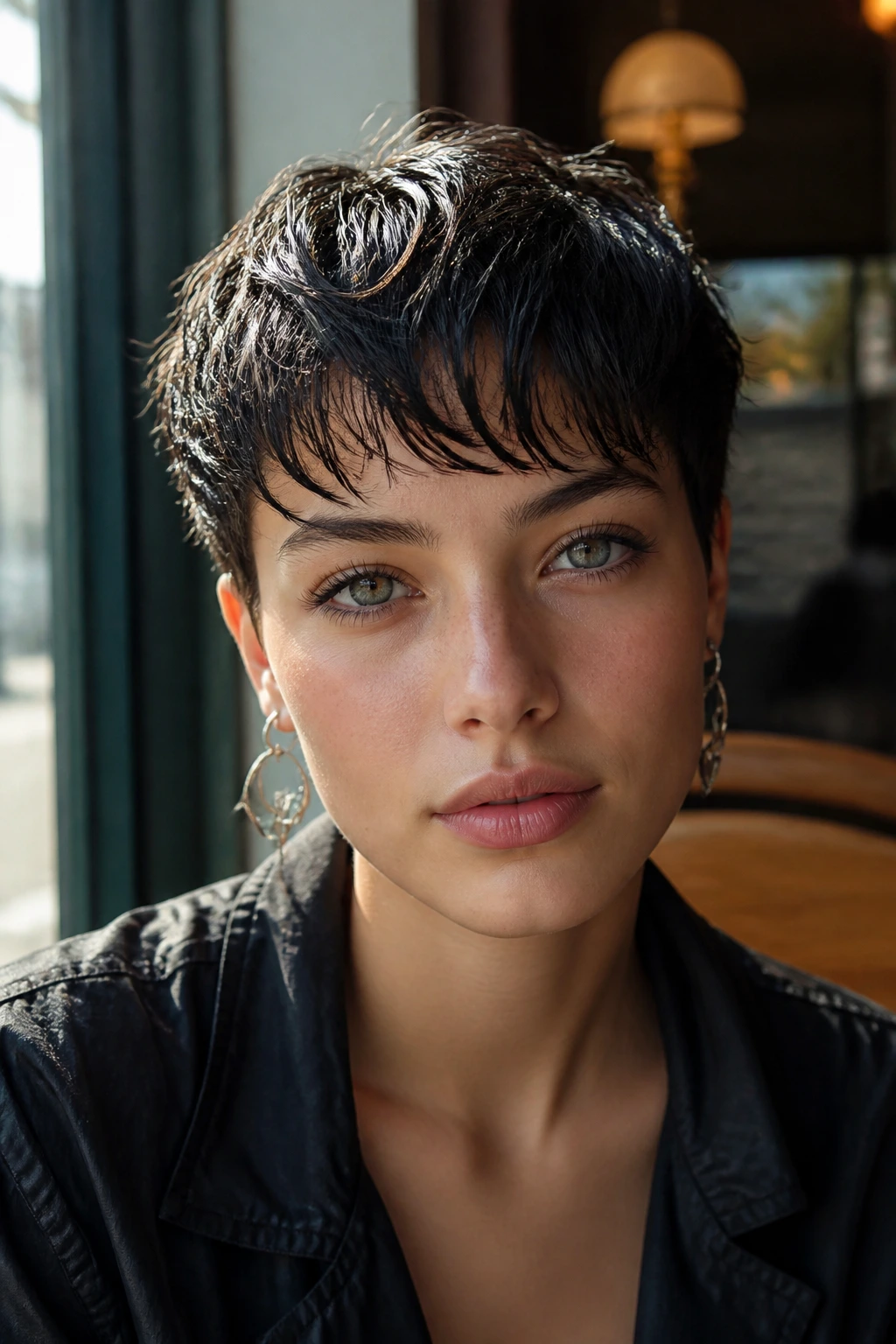
A wet-look crop can get tacky fast if you overdo the gel. The better version stays glossy through the top and fringe while still keeping some movement in the ends. It gives the haircut a sleek, slightly clubby feel that sits right in the decade.
Use gel on damp hair, then comb it into place and let it air-dry or diffuse lightly. Don’t touch it while it sets. Once dry, you can break the surface a little with your fingers if you want a less hard finish. This style is a reminder that short hair can look dressed up with almost no length at all.
32. Princess Diana Crop
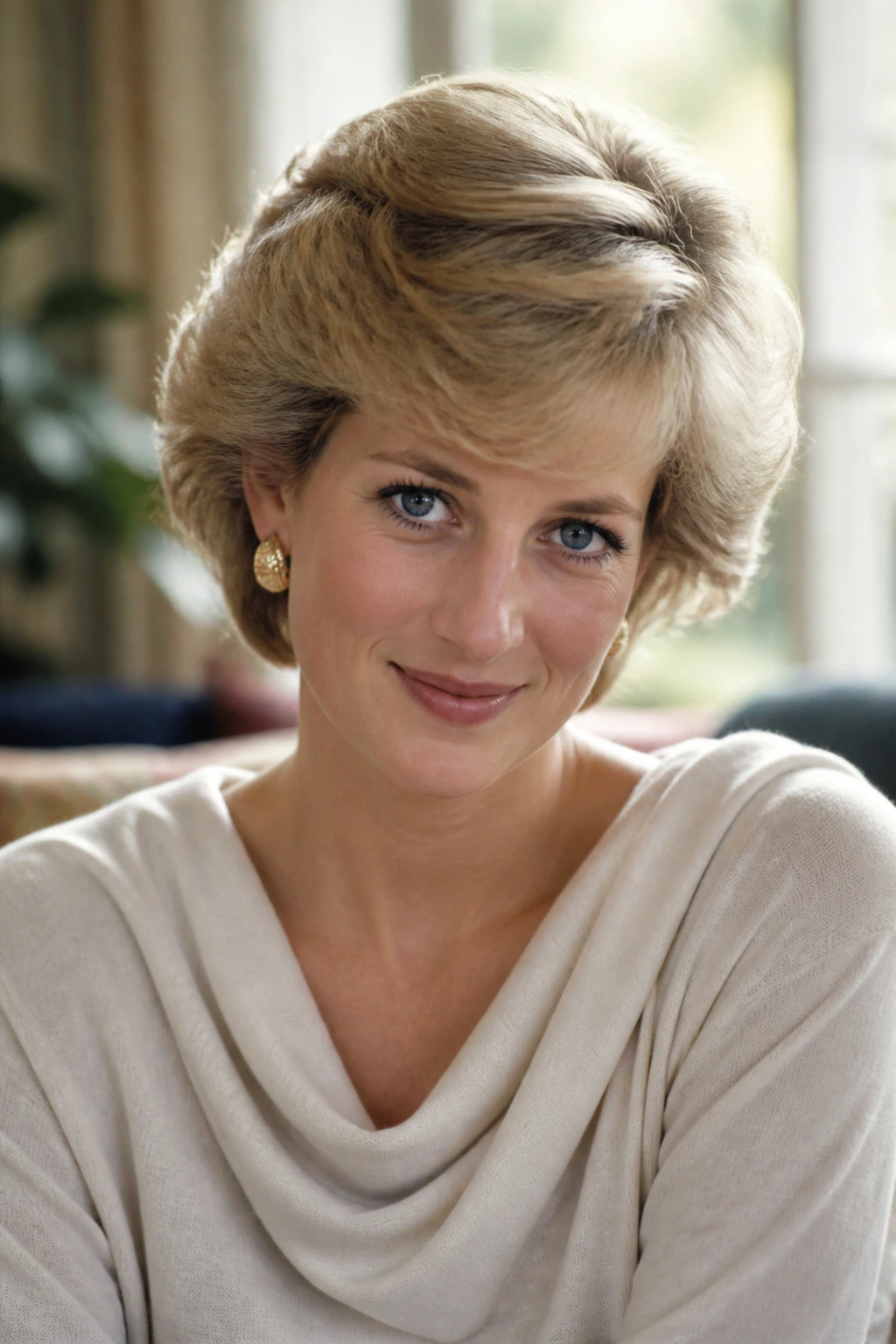
This is the softer face of 1980s short hair. The cut is short, but the layers are brushed and curled away from the face so the whole shape feels airy rather than severe. The fringe sweeps, the crown has lift, and the ends float a bit.
What makes this style work is the brush-out. You want a set, then a gentle comb-through so the curls become soft curves instead of tight ringlets. It’s elegant, but not fussy. If the front gets too perfect, it loses the charm. A little looseness keeps it alive.
33. Razor-Sharp Nape Bob
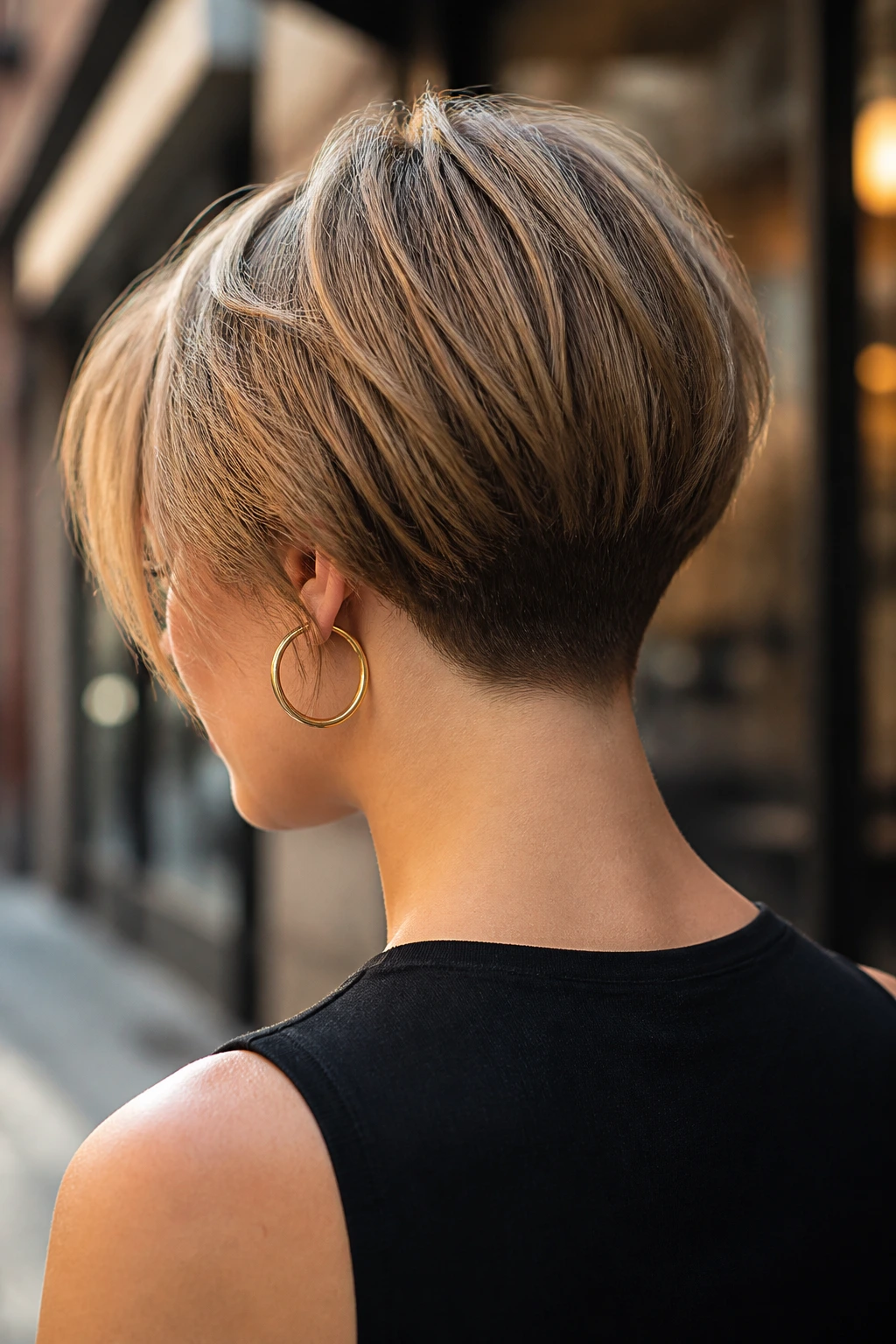
A clean nape changes a bob more than people expect. The back line looks crisp, the neckline feels bare in a good way, and the top suddenly has more presence because the eye has somewhere clean to land.
This cut looks best when the top and sides hold a bit of fullness. The nape should be snug, not shaved to the bone. A smoothing serum or light cream helps the back lie flat, but don’t drown it in product. You want the line to stay visible, and too much shine can blur it.
34. Pin-Curled Short Cut
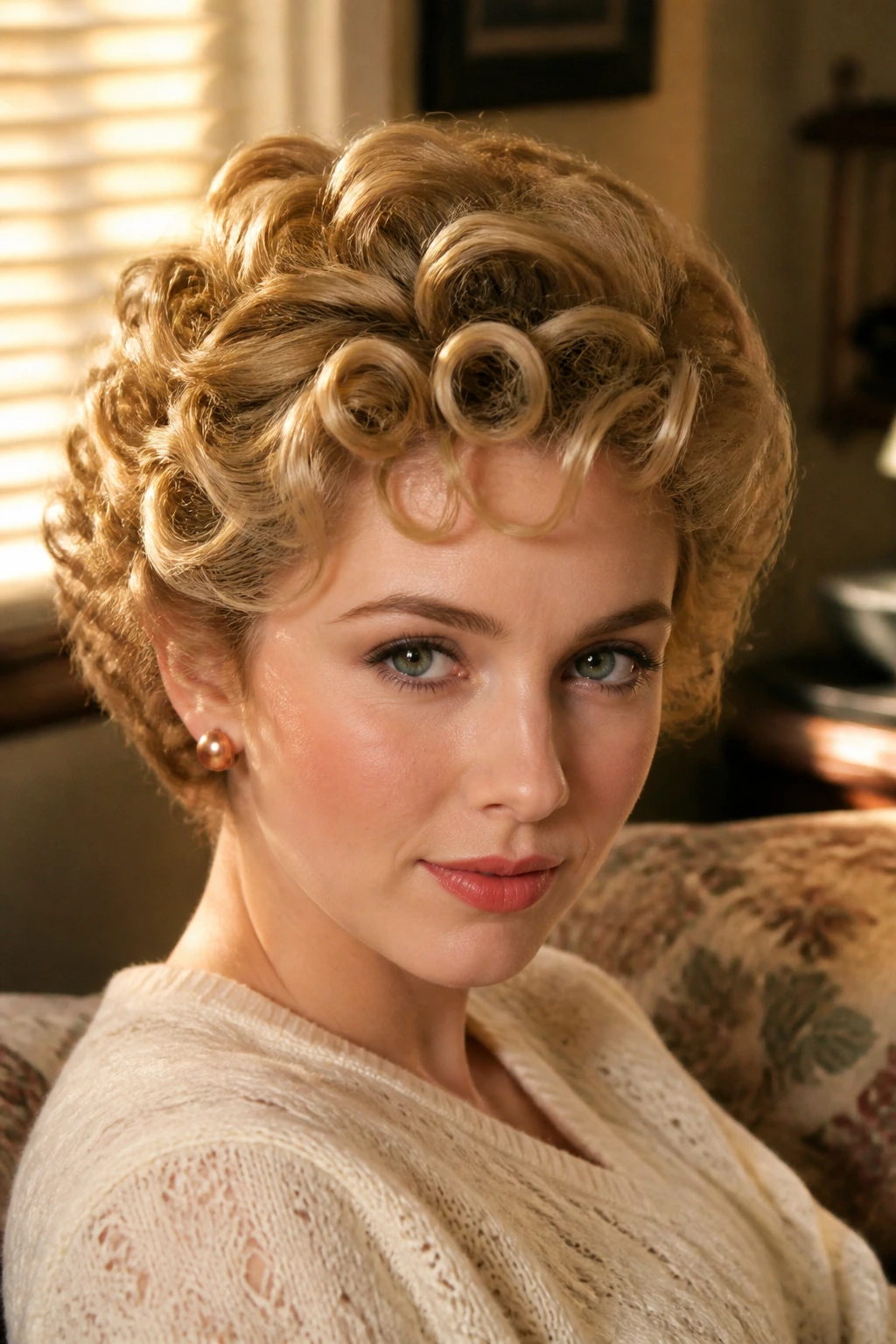
Pin curls on short hair sound old-fashioned because they are, and that’s the point. Set the hair in small rolls or clipped curls, let it cool completely, then brush or finger-shape it into a soft, rounded style. The result feels neat, bouncy, and a little glamorous.
This works best when you don’t rush the setting time. Let the hair cool all the way before you take the pins out, or the curl will collapse. A light hairspray during the set helps, but use enough only to hold shape, not enough to turn the hair stiff. It’s a good style when you want the 1980s reference to feel polished rather than loud.
35. Half-Soft, Half-Punky Crop

This one is for the people who can’t choose between feathered and sharp. One side can stay soft and swept, while the top or front gets a little spike, bend, or slice. It’s a small rebellion, not a full one.
The charm is in the mismatch. A softly tapered nape keeps the shape wearable, while a more textured top gives it bite. You can wear it with mousse for a gentler finish or with wax for a rougher one. If you’ve ever wanted a short cut that can switch moods without changing length, this is the one to watch.
Why These 1980s Short Hairstyles Still Hold Up
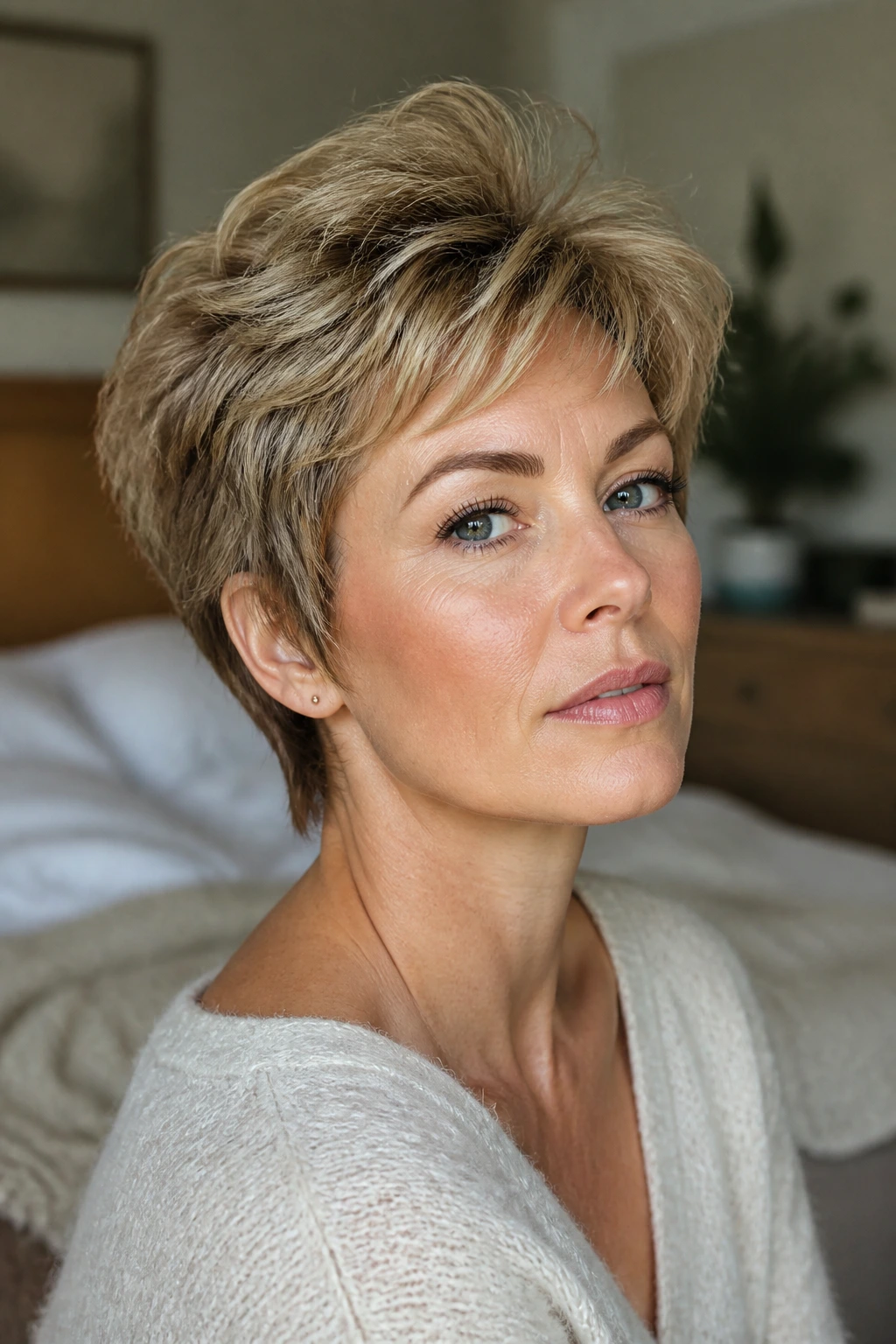
The best part of these cuts is that they solve shape problems before they start. Fine hair gets lift. Thick hair gets structure. Straight hair gets movement. Curly hair gets a frame that doesn’t fight the curl pattern, which is half the battle with short styles.
What makes the decade’s short hair still useful is the silhouette-first thinking. These cuts don’t depend on one exact styling trick. A feathered pixie can be soft or sharp. A wedge bob can be sleek or brushed out. A mullet can be punky, gentle, or somewhere in between. That flexibility is why the look keeps coming back, even when the styling products change.
I also think people secretly like short hair that has a little opinion. Long hair can sometimes hide. These cuts do not hide. They show the face, the neck, the jaw, the ears — all the stuff that makes a haircut feel personal instead of generic. That’s a pretty good reason to keep coming back to them.
Essential Tools for These Looks
-
Blow dryer with a nozzle attachment: The nozzle helps direct the air at the roots so you can lift or smooth without blasting every strand sideways.
-
Small and medium round brushes: Use the small one for fringe and short layers, the medium one for bobs and crown lift.
-
Fine-tooth rat-tail comb: Good for parting, teasing the crown lightly, and setting cleaner sections.
-
Vent brush or paddle brush: Handy for quick drying and straightening the surface without overworking the shape.
-
Curling iron, 1/2-inch to 1-inch barrel: Useful for bends, flips, and little 1980s-style curves on the ends.
-
Diffuser attachment: A must for curly crops, shaggy cuts, and any style you want to dry without smashing the texture.
-
Mousse or root-lifting spray: Gives fine hair body and helps short layers stay up at the crown.
-
Texturizing spray or light wax: Keeps piecey cuts separated without turning them crunchy.
-
Light-to-medium hold hairspray: The flexible kind brushes out better and keeps the style from freezing in place.
-
Clips and sectioning pins: Not glamorous, but they make teasing, setting, and blow-drying a lot easier.
Product Moves That Give You Lift Without Crunch
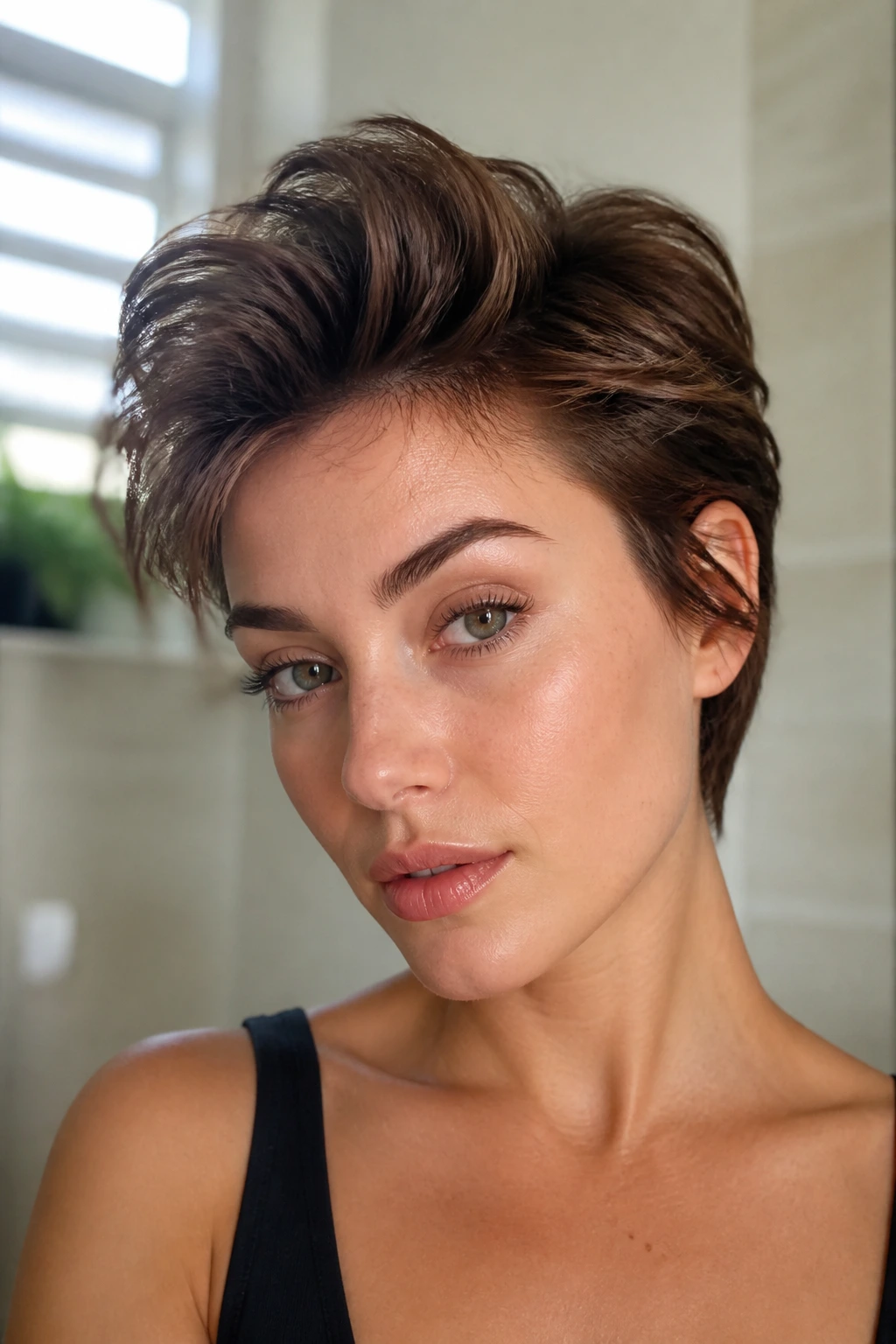
Short 1980s hair usually needs product, but it doesn’t need a lot of product. That’s where people go wrong. A feathered pixie wants lift at the roots and airy ends. A rounded bob wants control with a little movement. A punk crop wants separation. Those are three different jobs, and they shouldn’t all get the same bottle of sticky aerosol.
For fine hair, mousse is still hard to beat. Work it through damp roots and mid-lengths, then blow-dry with the head tipped back if you need more lift. For thicker hair, a light cream or smoothing lotion is better in the front and around the perimeter, because it keeps the shape from puffing out where you don’t want it. Curly cuts usually do best with a cream or gel-cream that defines without sealing the hair into a hard shell.
Heat tools matter, too. A round brush gives you the bend that makes short hair look styled instead of merely dried. A curling iron on a short bob can flip the ends in or out by an inch, and that inch changes the whole haircut. If you want the 1980s mood without the crunch, stop styling before every strand looks identical. A little unevenness reads human. A lot of uniformity reads plastic.
How to Make an 80s Short Cut Feel Modern
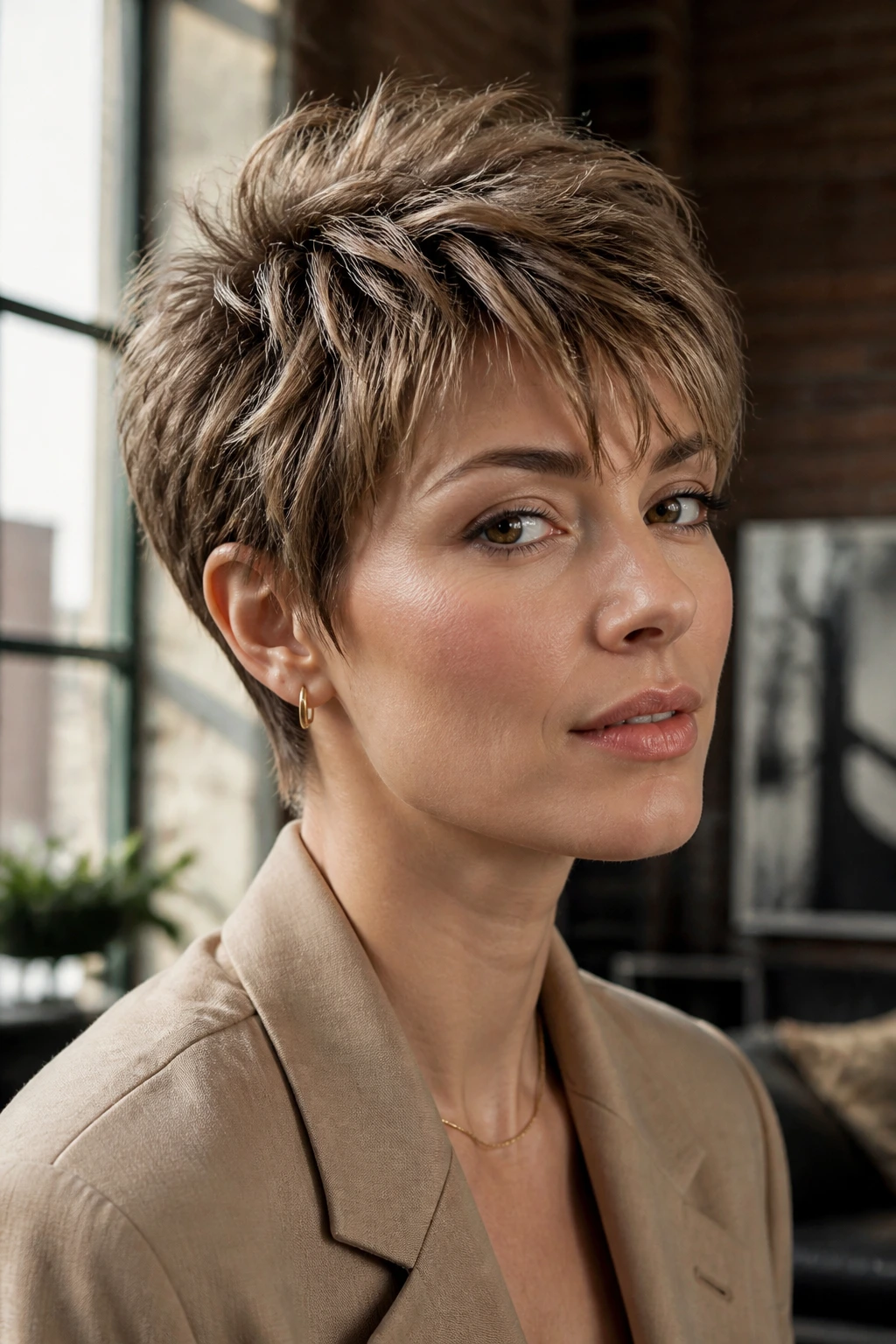
Keep one strong feature. A cut can be feathered, bobbed, mulled, or spiky, but it doesn’t need every retro cue at once. If the fringe is the star, keep the rest quieter. If the nape is sculpted, let the top move a little.
Soften the finish. A little texture cream, a brush-out, or a flexible hairspray keeps the style from looking frozen. I’d rather see a rounded bob with a bend than a sprayed shell that doesn’t move when you blink.
Respect your hairline. Short cuts show everything — temple shape, nape line, sideburn area, and the way your hair naturally grows. If the cut fights your growth pattern, it will need too much daily correction. That gets old fast.
Use product with restraint. One mousse too many can flatten the whole crown. One dab of wax too much can make the fringe stringy. Start lighter than you think, then add only if the hair still needs help.
Let the fringe choose the mood. A side-swept fringe softens almost anything. A blunt fringe sharpens almost anything. That one detail can drag a haircut toward glam, punk, or polished in a hurry.
Common Mistakes That Flatten the Shape
The most common mistake is overloading the hair with product before the shape is set. Heavy cream, thick gel, and too much hairspray can turn a lively short style into a helmet. The fix is boring but real: start with less, dry the hair into shape, then add a tiny amount at the end if needed.
Another problem is cutting the layers too even. 1980s short hair needs distinction — a crown that sits a little higher, a fringe that moves, a nape that tucks in. If every layer lands at the same point, the haircut loses the lift that gives it personality.
People also forget to trim the nape and sideburn areas often enough. That sounds minor, but short hair shows regrowth fast. A slightly grown-out pixie can look chic; a slightly grown-out nape often looks sloppy. You’ll see the difference in the outline before you notice it anywhere else.
And then there’s teasing. A little teasing at the crown can help. A nest of backcombed tangles can ruin the whole thing. If you tease, use a fine comb, work in small sections, and smooth the top layer over it. Otherwise, you’re building height on a shaky base.
Variations and Adaptations to Try
The Soft-Office Version: Keep the same 1980s short shape, but use a brush-out finish, a side part, and flexible hairspray. This works if you want the silhouette without the obvious retro styling.
The Punk-leaning Version: Add sharper texture, a more obvious fringe, and matte paste instead of glossy products. Good for pixies, mini shags, and choppy mullets that need a little bite.
The Curl-First Version: Choose cuts that honor natural texture — curly crops, side-parted bobs, tapered afros, and spiral perms. Let the curl pattern drive the shape instead of forcing it into a flat outline.
The Fine-Hair Version: Reach for feathered layers, crown lift, and shorter backs that keep hair from collapsing. Avoid heavy oils and long blunt sides that make the cut sit close to the head.
The Thick-Hair Version: Ask for internal layering, tapered edges, and enough removal of bulk that the shape can move. The goal is control, not thinning for the sake of thinning.
The Glossy Glam Version: Use round-brush blowouts, curved ends, and a clean side part. This is the route for bubble bobs, pageboys, and teased-crown styles that want a smoother finish.
Keeping the Cut in Shape Between Salon Visits
Short hair does not forgive neglect. That’s the deal. A pixie with a tight nape can start looking shaggy in three to five weeks, while a bob with a strong line can go a bit longer before it feels overgrown. The more precise the silhouette, the faster you’ll want a cleanup.
The easiest at-home maintenance move is a damp reset. Mist the roots lightly, work in a little mousse or styling cream, and blow-dry the front and crown back into place. If your style depends on bends at the ends, re-shape just the last inch with a brush or a small iron instead of restyling the whole head. That saves time and keeps the hair from getting cooked.
At night, a satin pillowcase helps a lot more than people admit. It cuts down on friction, which means less puffing at the crown and fewer bent-out-of-shape pieces around the ears. If the cut is especially short or textured, you may not need much beyond a quick finger-re-shape in the morning. For curls, keep a spray bottle nearby. A little water wakes the shape up fast.
Frequently Asked Questions
Which face shapes suit 1980s short hairstyles best?
Almost all of them, if the cut is chosen well. Round faces often like height at the crown or asymmetry, while square faces usually soften nicely with feathered layers, side-swept fringe, or curved ends. The real issue is balance, not a rigid face-shape rule.
Can fine hair pull off these cuts?
Yes, and some of these styles were basically made for it. Feathered pixies, stacked wedges, and bob shapes with crown lift can make fine hair look fuller without needing extensions or heavy styling. Just stay away from overly long layers that drag the hair flat.
Do these hairstyles need teasing?
Not always. Teasing helps in some crown-heavy styles, but a good cut plus mousse and a round brush often does the job better. If you do tease, keep it light and smooth the top layer over it so the hair doesn’t look frayed.
How do I keep a short retro cut from looking like a costume?
Use one strong retro cue, not five. A side part, softer fringe, or modern texture cream can bring the style into the present without wiping out the 1980s shape. The finish should move, not freeze.
What’s the best short style for curly hair?
Curly crops, tapered afros, side-parted bobs, and soft shags usually work well because they let the curl pattern set the shape. A cut that fights the curl with too much bluntness tends to swell up in odd places. Shape the curl; don’t try to flatten it into obedience.
How often should short hair be trimmed?
Pixies and sharply tapered cuts usually need a trim every 4 to 6 weeks. Bobs and softer shags can often stretch to 6 to 8 weeks, depending on how fast your hair grows and how neat you want the outline to stay.
Which product matters most for these looks?
If I had to pick one, I’d choose mousse for volume-based styles and texturizing spray for piecey, shaggy ones. Hairspray matters too, but it should be the finishing step, not the main event. The cut should still look like hair, not lacquer.
Can these cuts work on naturally straight hair that won’t hold a curl?
Absolutely. Stacked bobs, pageboys, wedge cuts, and slicked-back tapers are especially good because they rely more on shape than curl. Use a round brush and a setting product, then let the shape cool before you touch it again.
How do I grow one of these cuts out without hating every stage?
Choose styles with a little length on top or a soft fringe if you know you’ll grow it out later. As the cut gets longer, shift to more texture on the ends and less at the crown. A grow-out that keeps a good side part or nape line tends to look intentional longer.
Still Sharp
The best 1980s short hairstyles were never just about nostalgia. They were about shape, speed, and personality — the kind of haircut that can look neat at 8 a.m. and a little defiant by dinner if you push it with your fingers. That’s a useful thing to know when short hair starts feeling too ordinary.
If you pick one of these cuts, pay attention to the silhouette first and the product second. A good line at the nape, a crown with some lift, or a fringe that bends the right way will do more for the style than any cloud of hairspray ever could. And that’s the fun of it: a short cut from that decade still has room to surprise you.
