



Curly hairstyles with a vintage vibe work because they do one thing modern hair often forgets: they give curls a shape, a part, and a clear point of view. A deep side sweep, a brushed wave, or one neat victory roll can make the same curl pattern look polished instead of random. That’s the whole trick, and it’s a satisfying one.
The best retro styles aren’t frozen in time. They borrow the parts that still look good in real life — the glossy curve of old Hollywood waves, the tight front set of finger waves, the tucked elegance of a Gibson roll — and leave the rest loose enough to move. That balance matters. Too much stiffness and the hair starts looking like a costume wig. Too little structure and the vintage reference disappears.
A good vintage curl style usually starts with one simple decision: where the hair wants to fall. Side part, center part, front roll, tucked nape, brushed-out wave. After that, everything else is about direction and hold. Pins, combs, setting spray, a little shine. Nothing mystical. Just enough control that the curl pattern looks deliberate from every angle.
Why These Retro Curl Looks Stand Out
-
They give curls a shape, not just volume: A side part or front roll changes the whole silhouette, even when the curl pattern stays the same.
-
They work with different lengths: Some looks need long hair for a true Hollywood sweep, but plenty of these styles adapt beautifully to bobs, lobs, and short cuts.
-
They lean on details that matter: Shine, pin placement, and curl direction do more work here than heavy product ever will.
-
They can read glamorous or casual: The same base curl set can feel dressed up with a comb and pins or relaxed with a scarf and softer brush-out.
-
They flatter real texture: You do not need pin-straight hair to pull these off. In fact, a little texture often makes them look less staged.
1. Veronica Lake Side Sweep
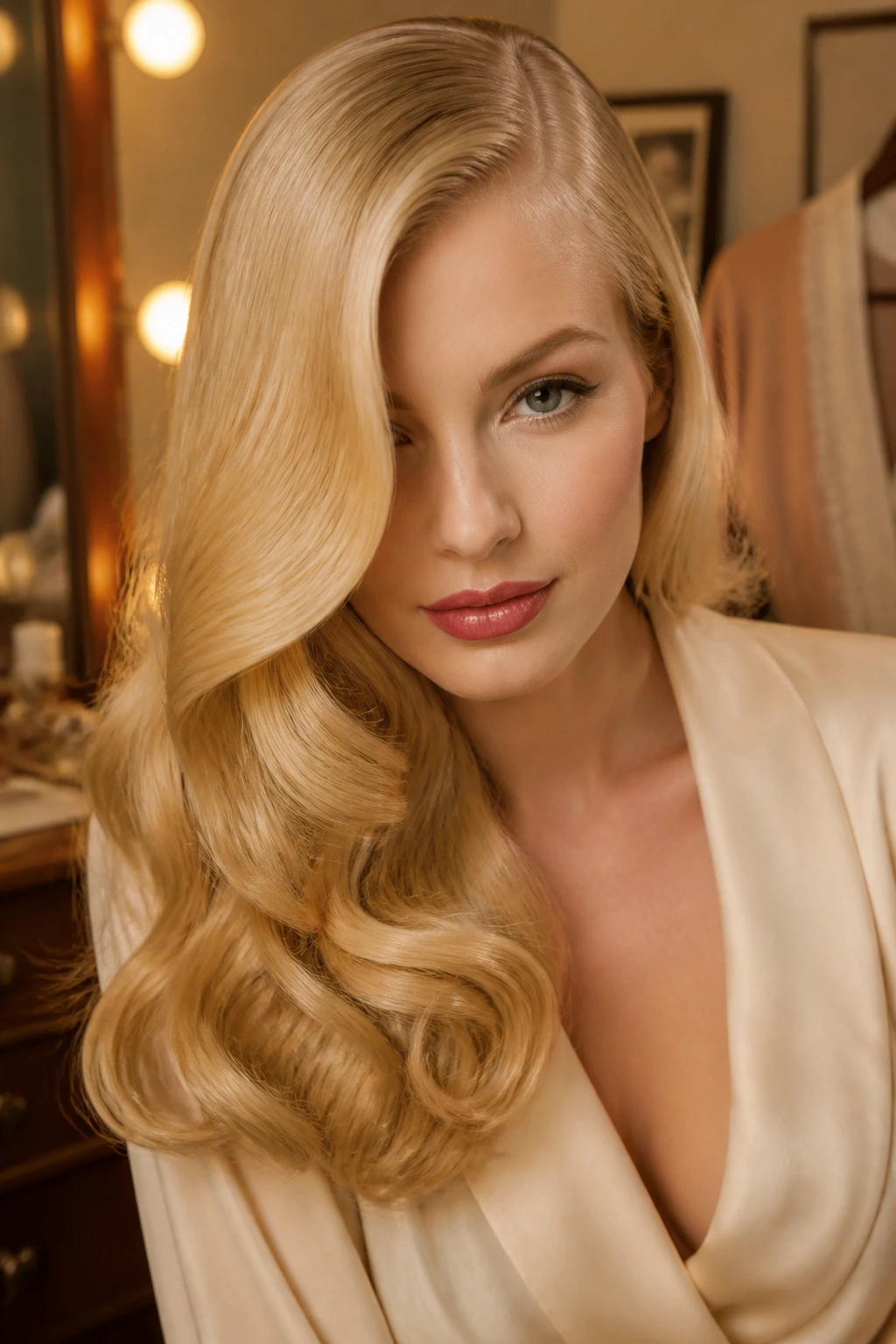
A long side sweep with one eye partly covered never really goes out of style. It’s the kind of shape that makes curls feel expensive without making them feel stiff. The hair falls in a soft sheet over one shoulder, and the curve near the cheekbone does most of the work.
What matters here is the part. Keep it deep, then curl the sections away from the face with a 1¼-inch iron or large rollers. Brush the surface lightly, pin the back side tight, and let the front wave sit smooth. If the ends look too uniform, leave the last inch out of the iron for a looser finish.
2. Finger Waves with Soft Curls
This is the look people think of when they picture true vintage hair, and for good reason. The waves sit close to the head and move in little S-shapes that feel almost sculpted. Then the lower lengths loosen up into curls, which keeps the style from looking severe.
It works best when the front is damp enough to shape and the rest has more body. Use setting lotion, a tail comb, and clips. Press the ridges into place, let them dry fully, then leave the ends with soft curls instead of brushing everything out. That contrast — sleek at the top, looser below — is what gives the style its bite.
3. Victory Rolls and Curled Ends
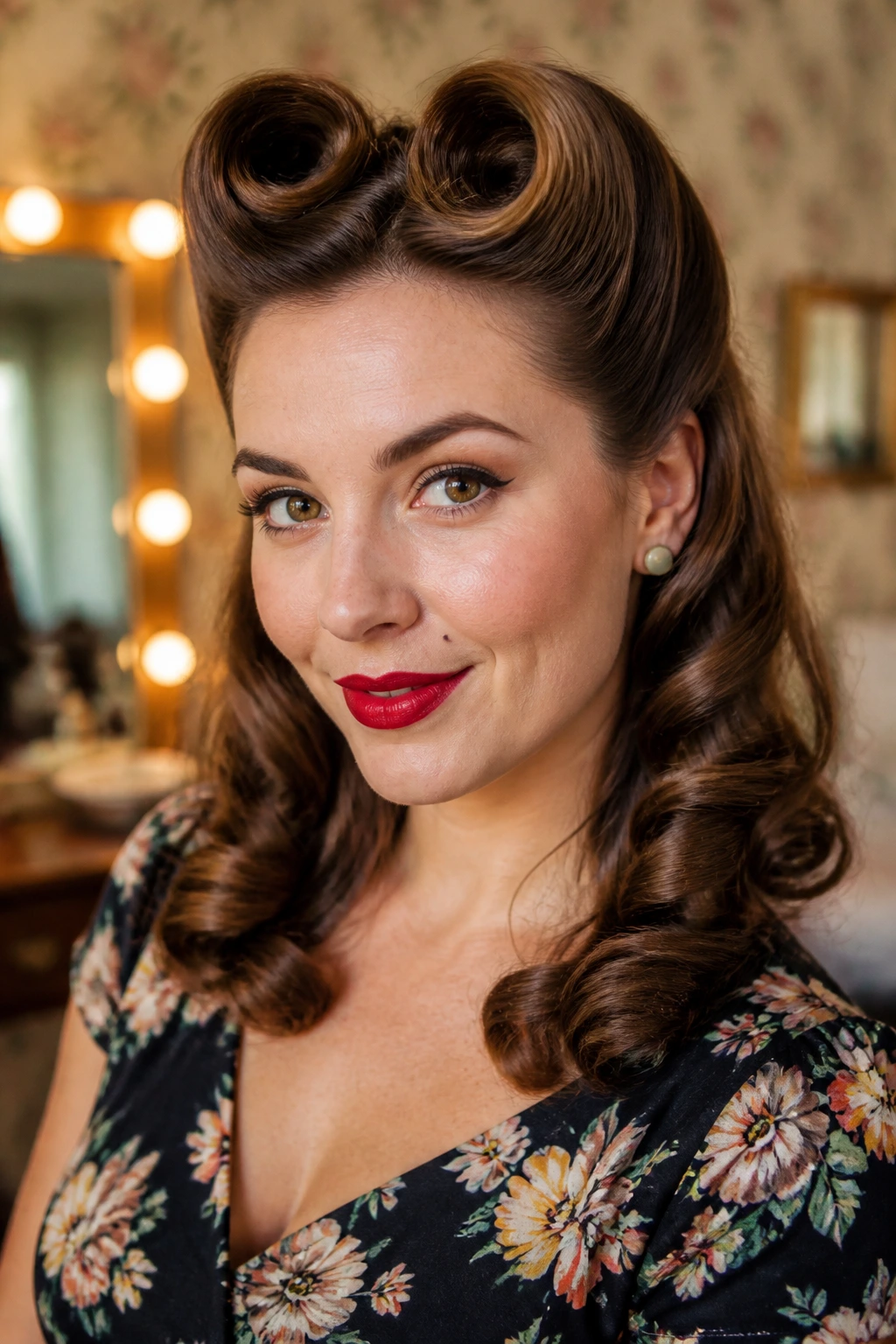
Victory rolls are pure confidence. Two front rolls, set high and slightly outward, instantly create that pin-up shape that reads vintage from across a room. The rest of the hair can stay curled and loose, which keeps the style from feeling too formal.
The key is balance. If the rolls are huge and the bottom is flat, the whole look tips awkwardly. Pin the rolls first, then curl the remaining hair in medium sections and let the ends stay touchable. A little hairspray at the roots helps the front hold its lift without turning the crown into a helmet.
4. Pin Curls with a Deep Side Part
Pin curls are the quiet overachiever of retro styling. They take time, yes, but they also give you that old-set, soft-ribbon texture that brushed curls alone never quite match. A deep side part adds shape before the hair even starts moving.
If you want the curls to feel authentic, set them in small sections and let them cool fully before unpinning. Don’t rush the brush-out. That’s where the magic happens — the curls loosen into a wave pattern that looks airy but still controlled. Leave a few face-framing pieces a little more defined, and the style suddenly feels lived-in instead of formal.
5. Sculpted Faux Bob
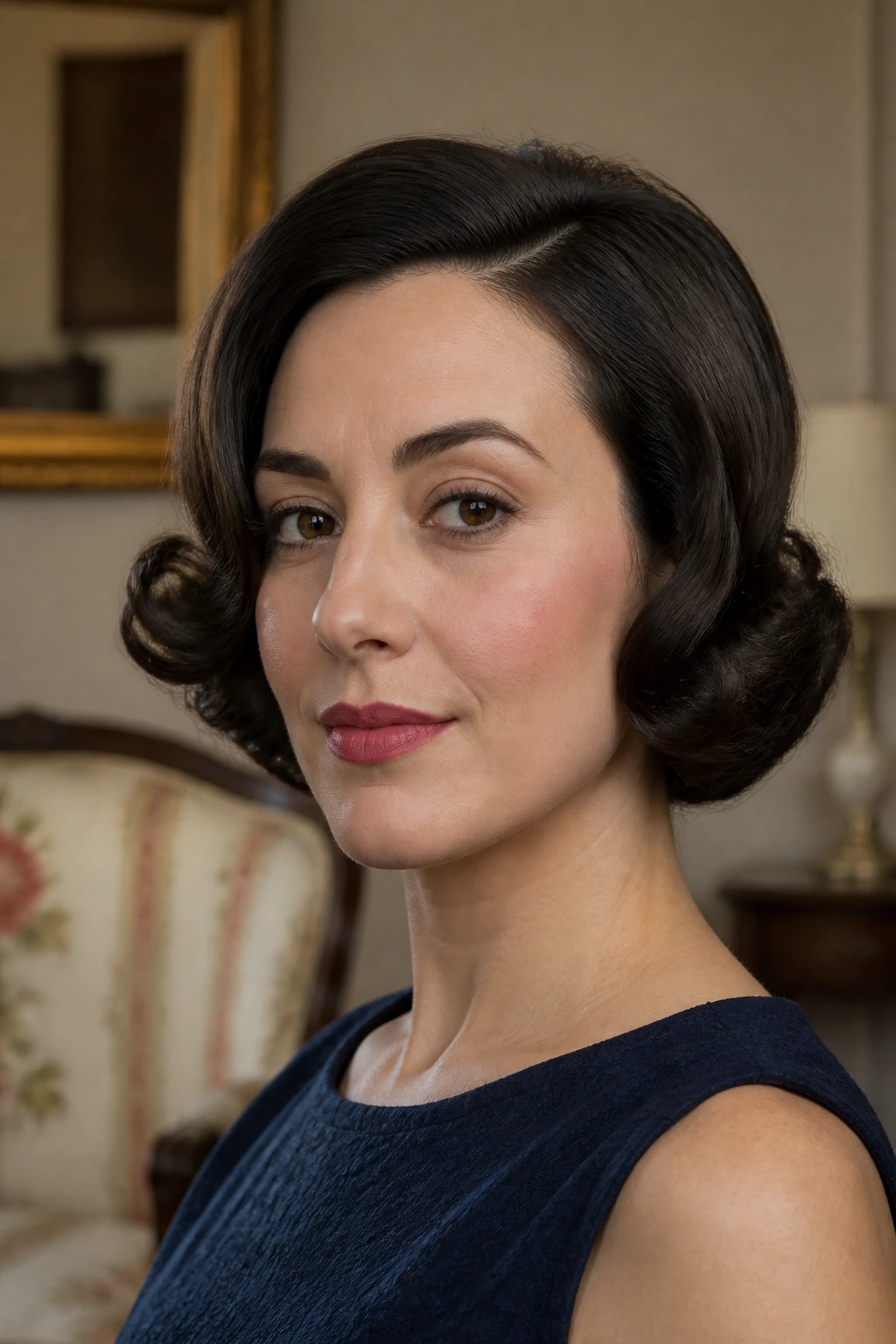
A faux bob is one of those styles that looks far harder than it is. Long hair gets tucked under and pinned so it appears to stop at the jawline, which creates a 1920s or 1930s silhouette without needing an actual haircut. It’s clever hair. A little sneaky, too.
The trick is building the ends first. Curl them under, pin them flat at the nape, then smooth the top layers over the tuck. If the crown is bulky, the illusion falls apart. Keep the top sleek, and let a few soft bends sit near the cheeks so the style doesn’t look too rigid.
6. Brushed-Out Hollywood Waves
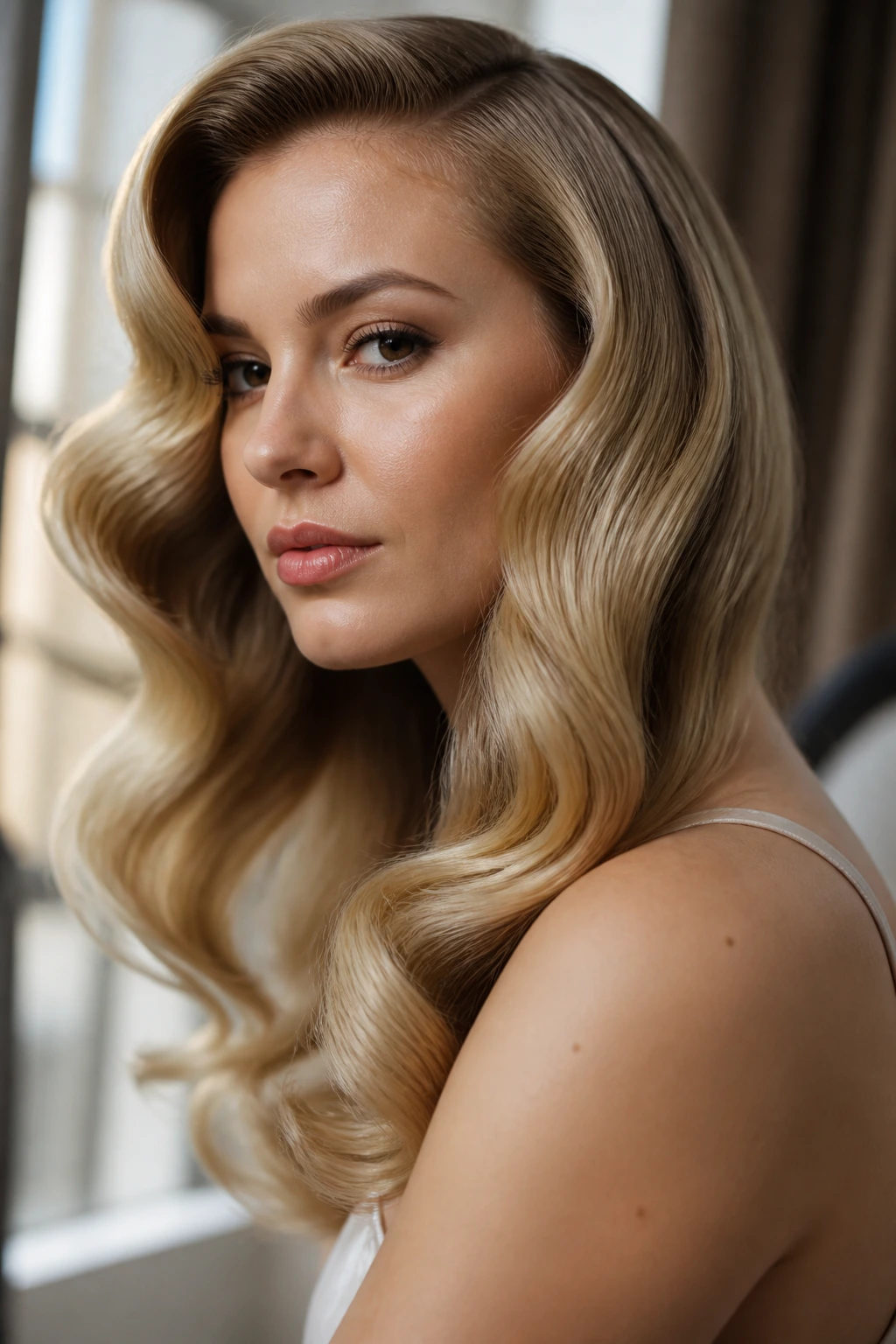
Brushed-out Hollywood waves are glamorous in a way that still feels wearable. The wave pattern is broad, polished, and almost liquid-looking, especially when the light catches the curve along the cheek and shoulder. It’s one of the few styles that looks better after the curls settle a bit.
Set the hair with a curling iron or rollers, let it cool, then brush with a soft boar-bristle brush or cushioned paddle brush. The goal is one flowing wave, not a pile of separate curls. Finish with a tiny amount of shine serum on the surface only. Too much product at the roots will flatten the shape fast.
7. Curly Bob with Rolled Under Ends
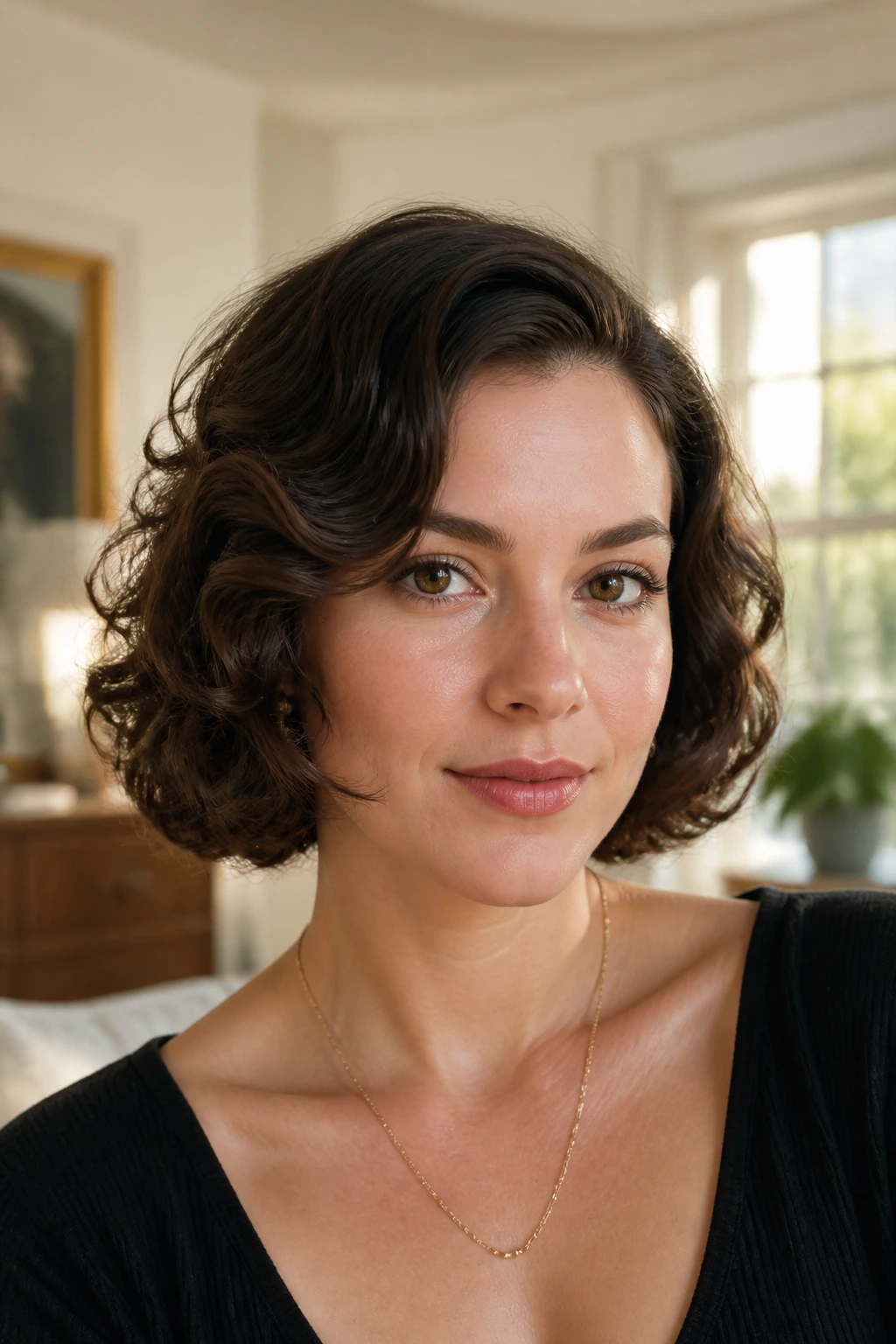
A curled-under bob has a neatness that feels straight out of a salon poster. The ends tuck inward around the jaw, which gives the cut a tidy frame and keeps the neckline clean. It’s especially good when you want retro style without a lot of height on top.
This look works nicely on blunt bobs and softly layered ones. Use a round brush or a one-inch iron to guide the ends under, then add a side part and a little bend near the front. If the bob starts puffing out instead of curving in, the sections are too large. Smaller pieces solve that problem fast.
8. 1940s Pageboy With Face-Framing Bends
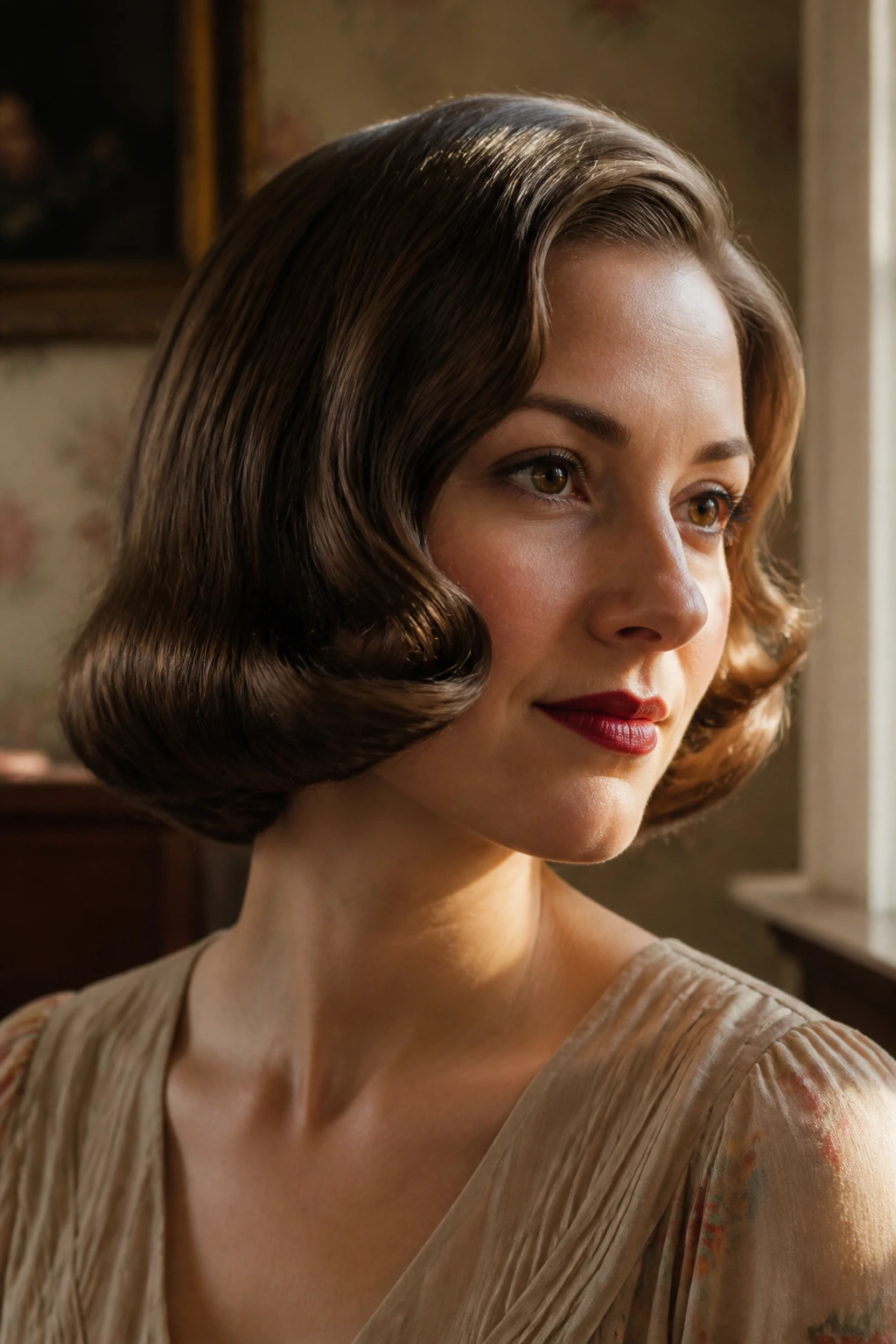
The pageboy has a different mood from the curled-under bob. It’s smoother through the crown, then turns under around the jaw and neck with a touch more volume at the sides. That shape gives the face a neat frame without making the hair feel flat.
A pageboy loves a clean blowout or roller set. Build the bend around the face first, then curve the back under so the line stays deliberate. If your hair has a little wave already, even better. The natural texture adds life under the polished outline.
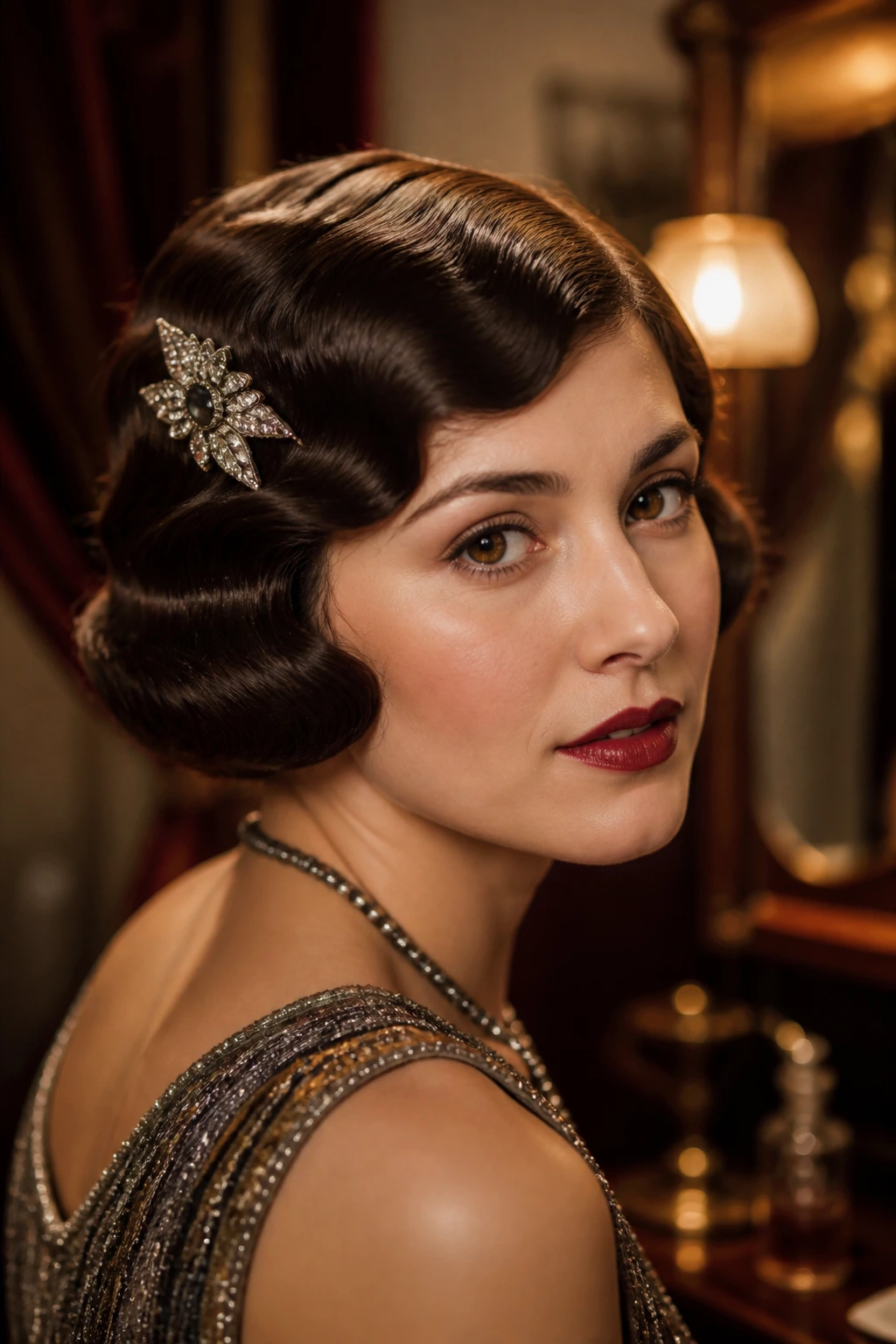
9. 1920s Flapper Bob with Tucked Waves
A true flapper bob is short, sleek, and a little sharp. The waves sit close to the head, the part is usually strong, and the overall shape looks compact rather than fluffy. Add a jeweled clip and the whole thing changes character immediately.
If your hair is longer, don’t fight it. Tuck it under, pin it flat, and keep the surface smooth. The important thing is the outline: clean at the jaw, wave at the sides, shine at the top. A lot of people miss that and pile on curls when the style really wants a flatter, sleeker read.
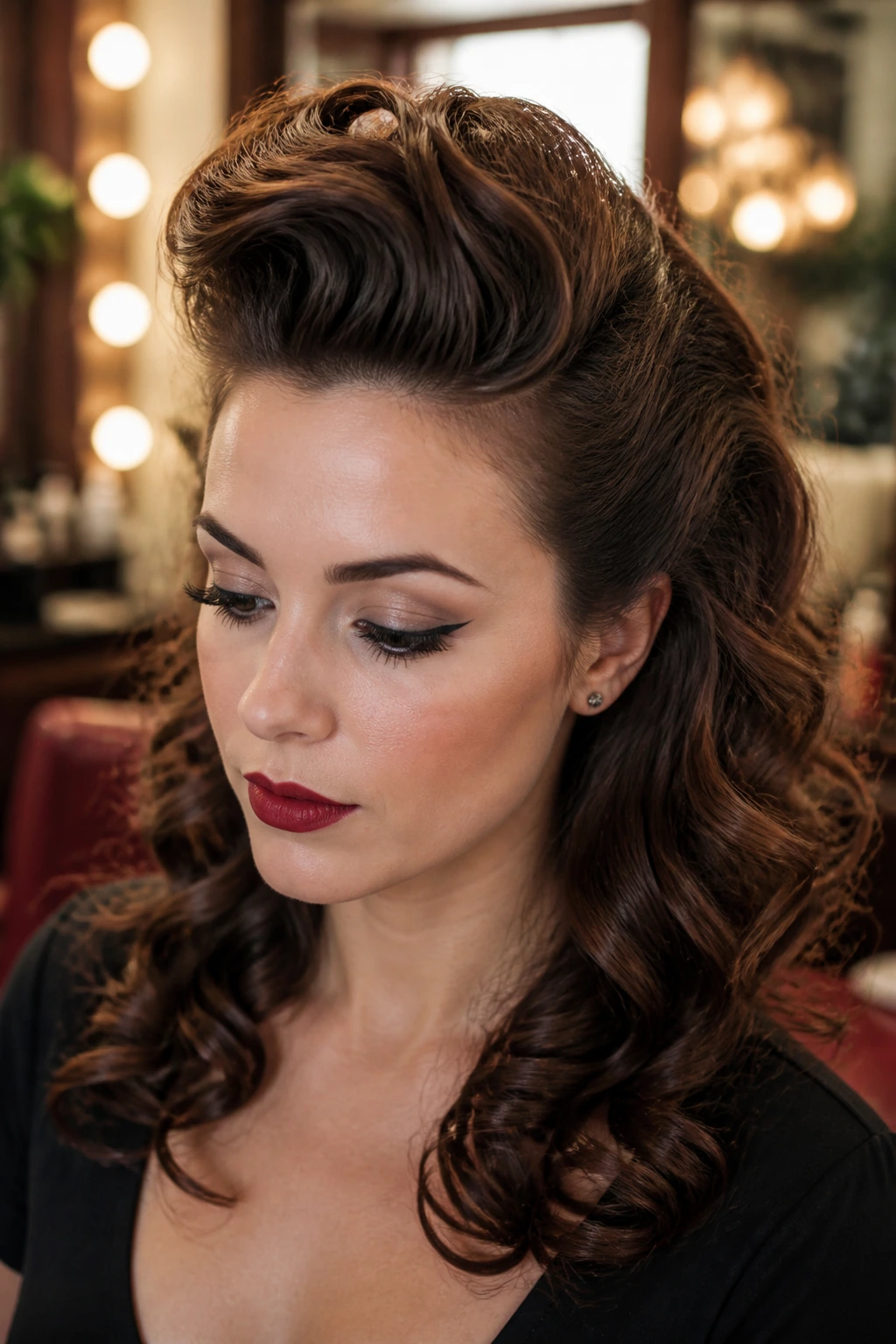
10. Pompadour Crown with Loose Curls
A pompadour crown brings height to the front and leaves the rest of the curls freer. That contrast gives the style a rockabilly edge, but it still pulls from old glam shapes. The lift at the front is what makes it feel vintage; the curls below keep it soft enough to wear.
Backcomb the crown lightly, smooth the top layer, and pin the lift in place before touching the lengths. Loose curls or brushed waves underneath keep the style from looking top-heavy. This one loves strong pins and a little patience. If the front collapses, the whole mood disappears.
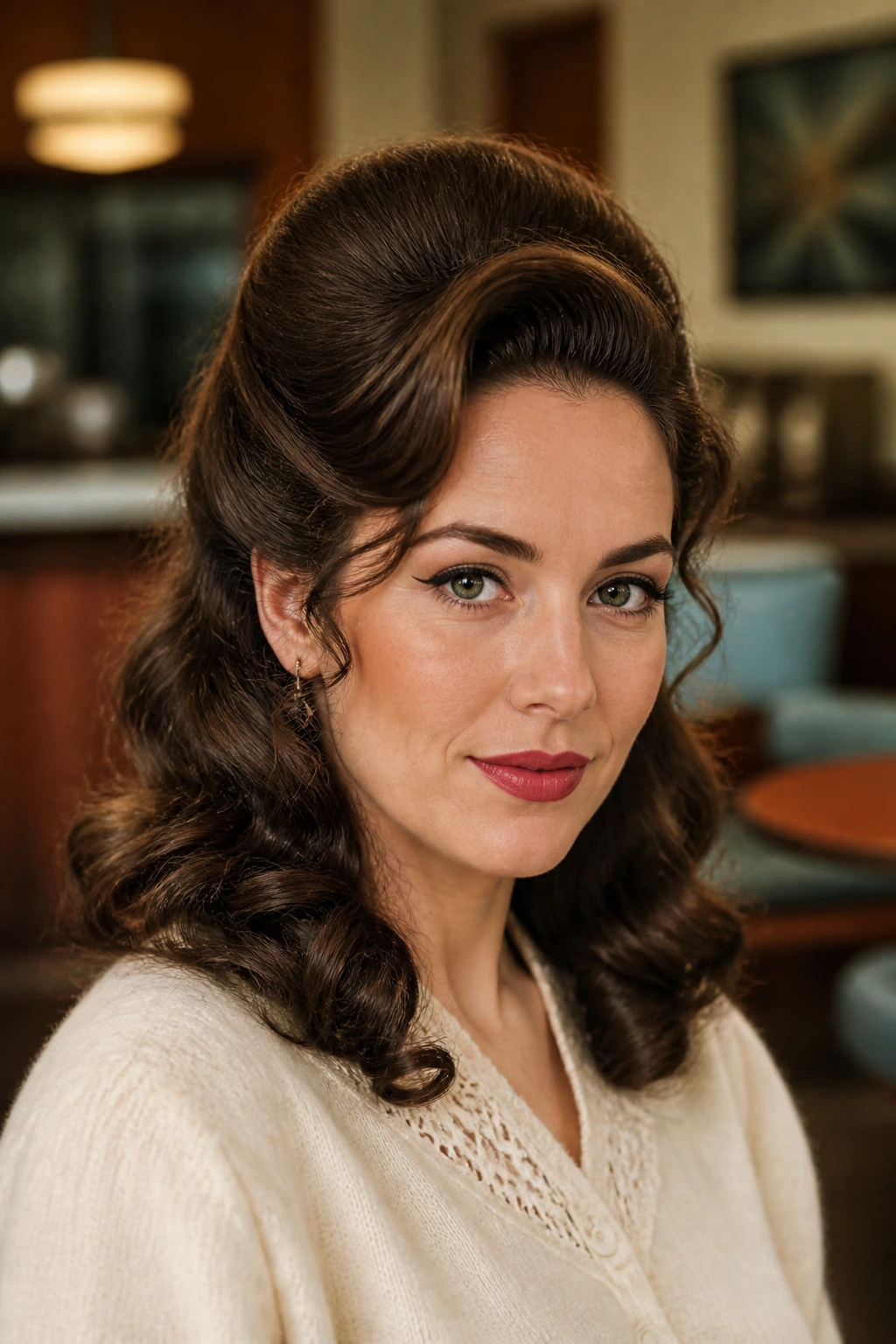
11. Retro Half-Up Bouffant
Half-up bouffants are useful because they add height without taking all the hair away from your face. The top section gets teased or rolled into a soft bump, while the lower curls stay visible and full. That shape reads a little 1960s, a little bridal, and a little cocktail-hour polished.
Keep the crown lifted, but not overdone. A subtle bouffant looks richer than a huge one, especially on curly hair, where the natural body already does some of the work. Secure the back with hidden pins, then tuck one small curl over the fastening so the finish looks clean.
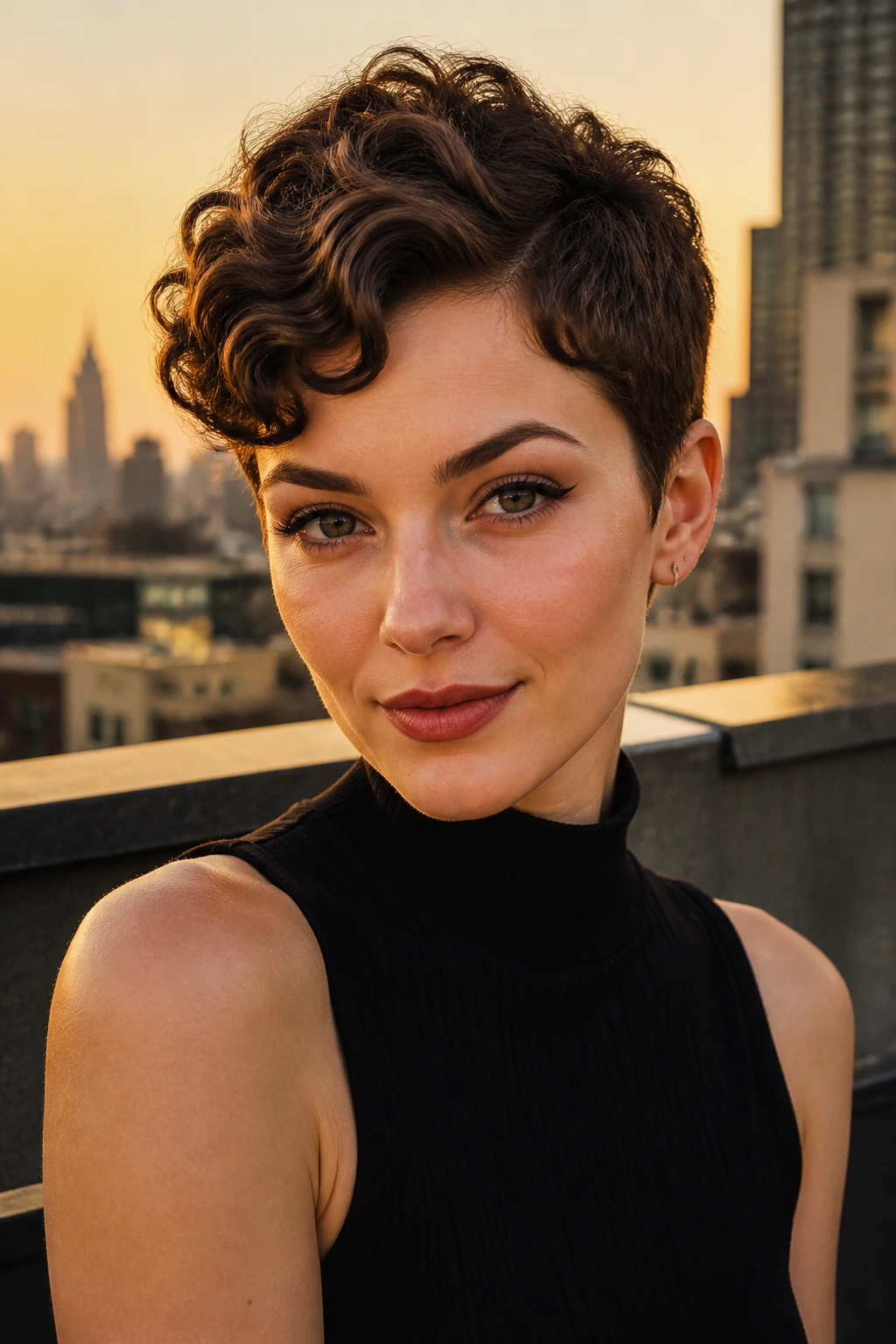
12. Gamine Crop with S-Shaped Curls
Short curls can still carry serious vintage energy. A gamine crop with sculpted S-shaped pieces around the front gives you that sleek, almost editorial feel that sits somewhere between a classic pixie and a 1930s screen star.
The shape matters more than the length here. Define the fringe with a small iron or finger shaping, keep the sides neat, and let the top remain softly curved. If the whole cut is puffing outward, the silhouette goes from chic to messy in a hurry. A touch of pomade or gel on the front pieces keeps the line crisp.
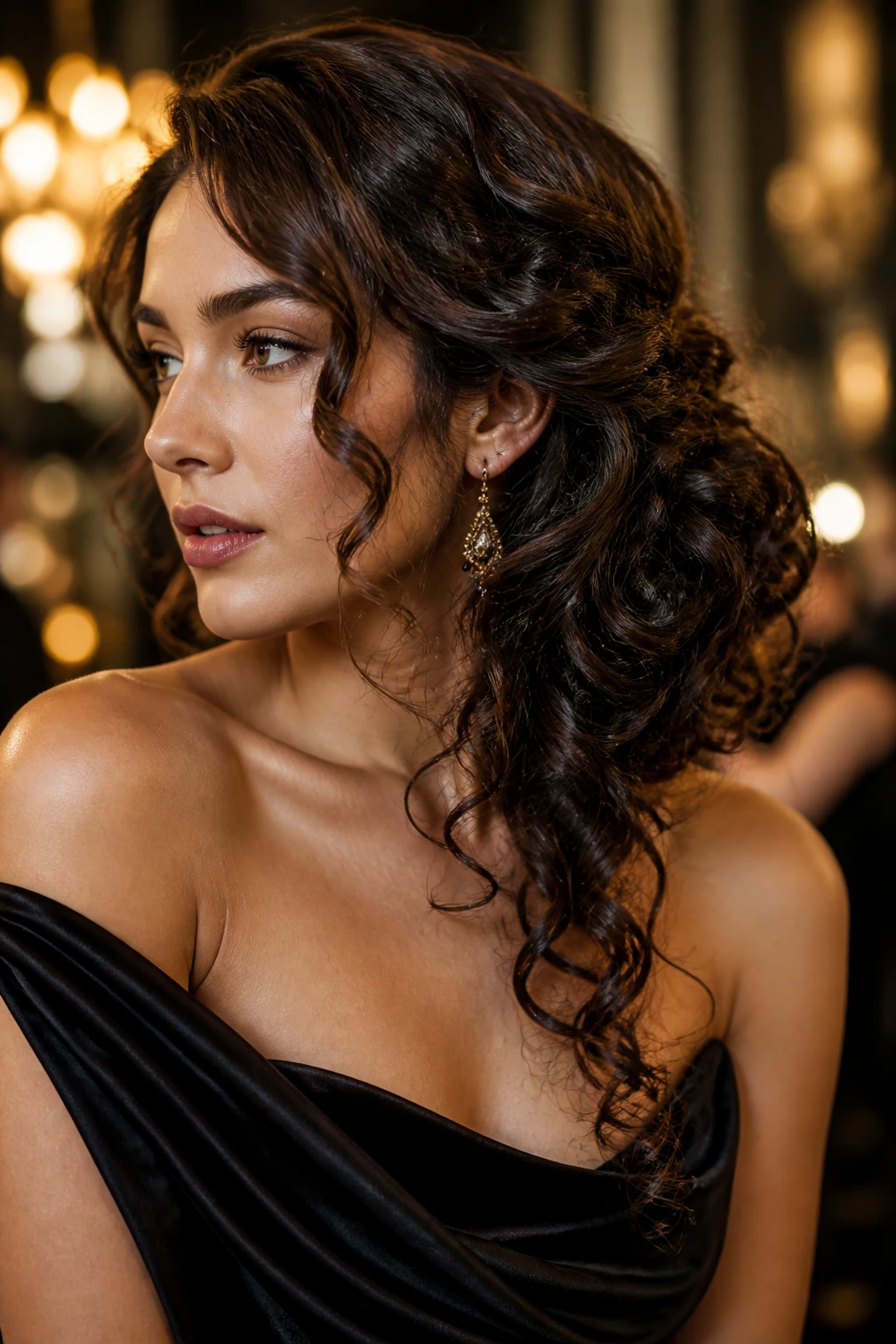
13. Glam Side Bun with Curl Cascades
A low side bun with curls spilling from one side has a rich, old-film quality. It feels dressed up, but not overworked. The bun anchors the style, and the loose curled tendrils soften everything around the face and neckline.
Smooth the upper half first, then gather the bun slightly off-center at the nape. Curl the leftover lengths in sections and pin them so they fall in a controlled cascade. It’s a good style when you want the back to look interesting, not just the front. Earrings help, too.
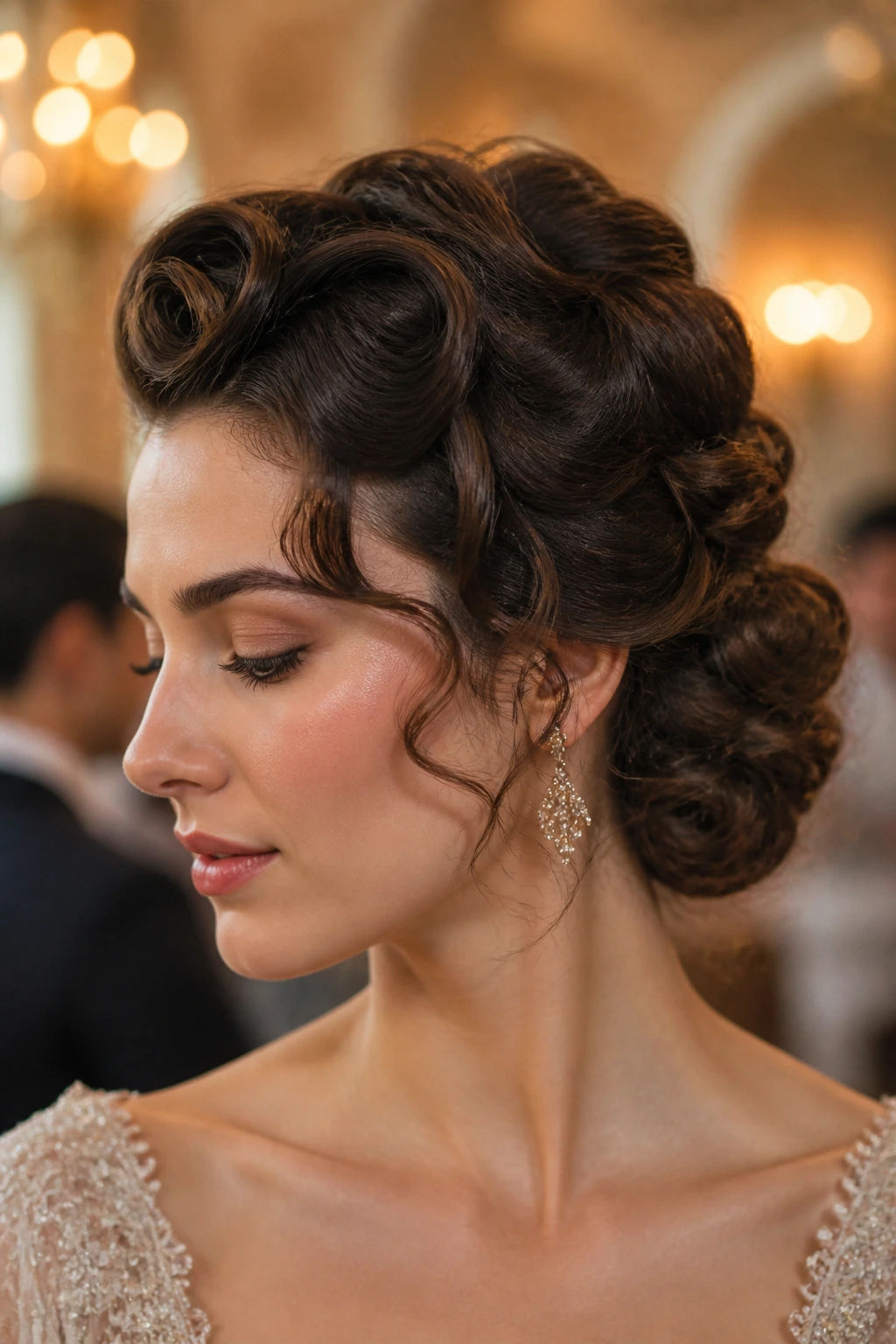
14. Curly Chignon with a Soft Roll
A chignon can be severe if you pull it too tight. The vintage version works better with a soft front roll or a gentle side sweep that eases the hair back instead of yanking it straight. The result feels elegant, but not frozen.
This is one of the nicer options for weddings, dinner events, or any setting where you want the neckline clear. Keep a few curls loose near the temples and around the ears. They stop the style from looking too formal. A polished chignon with movement is the sweet spot.
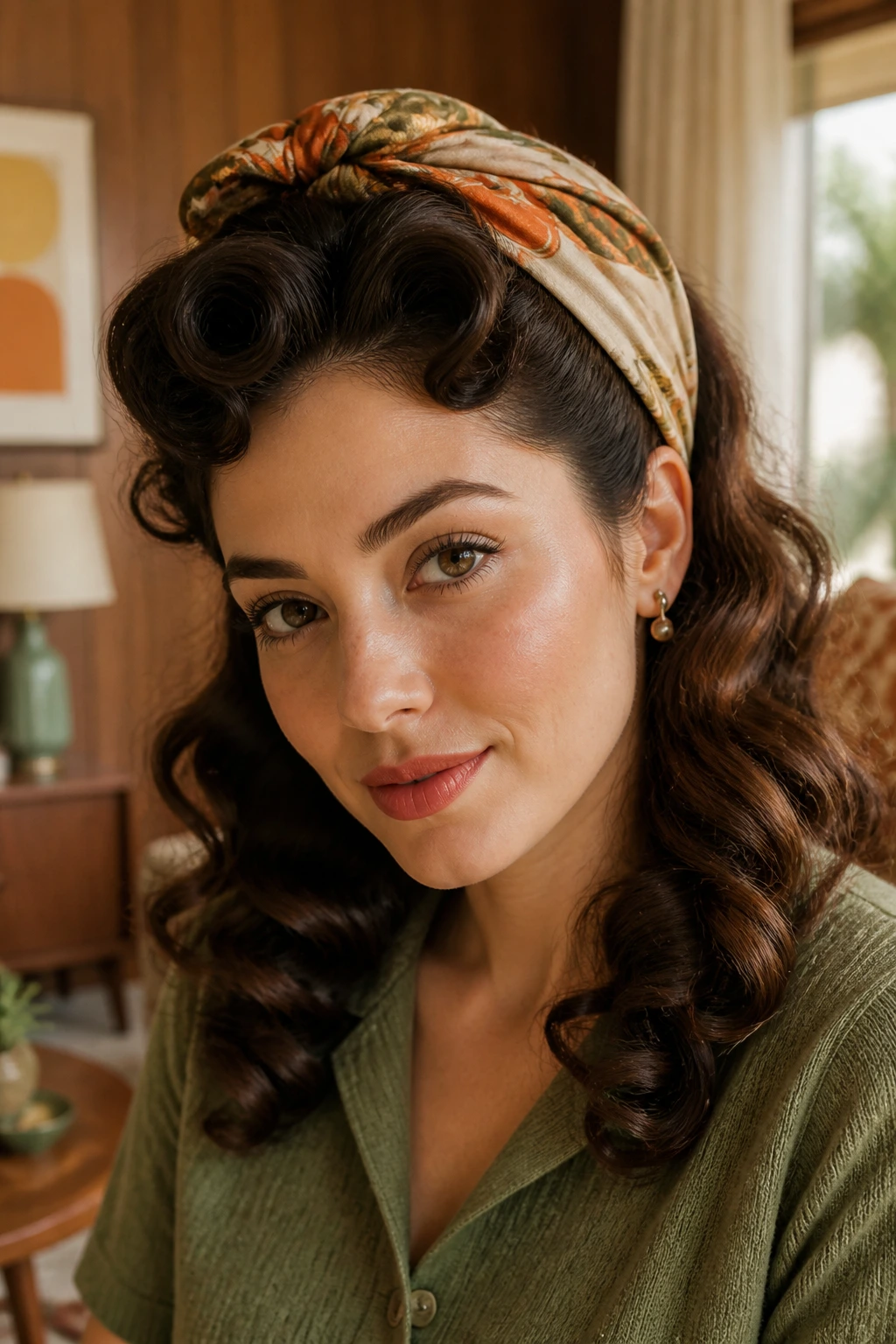
15. Retro Scarf-Tied Curls
A scarf changes the whole tone. Suddenly the curls feel like a real hairstyle from a real day, not a red-carpet invention. Tie it over loose curls, a half-up set, or a pin-up roll, and the look shifts toward casual mid-century charm.
Choose a scarf with enough width to show a little shape, not so much bulk that it swallows the hairstyle. Silk or satin sits neatly; cotton feels more relaxed. This is one of the easiest ways to make vintage curls feel wearable with jeans, a simple top, or a cardigan.
16. Victory Roll Ponytail
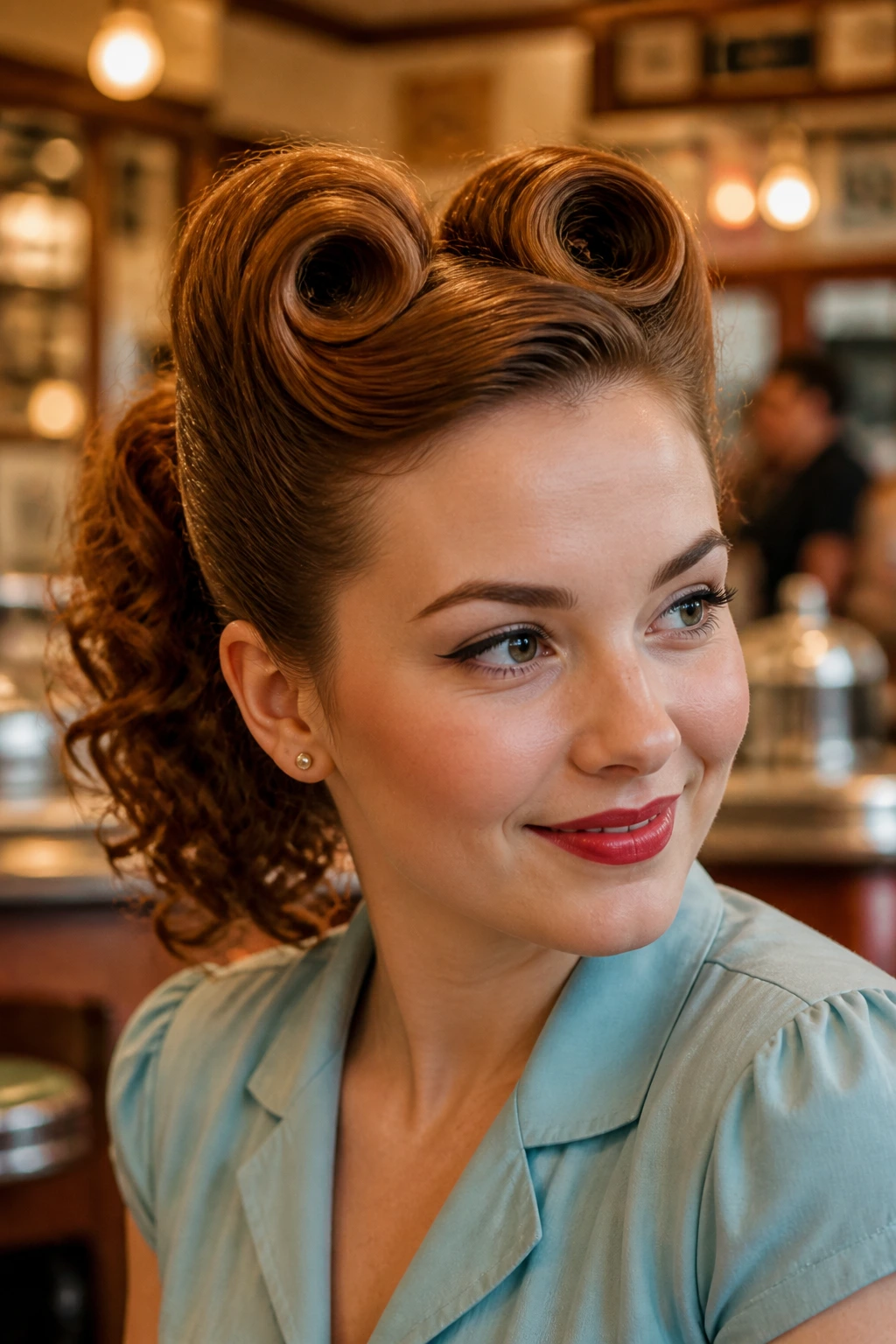
A ponytail sounds plain until the front starts talking. Add two victory rolls or even one strong roll at the hairline, then pull the rest back into a curly ponytail, and the whole thing takes on a pin-up mood. It’s practical and playful.
The ponytail can sit high or mid-height, depending on how much lift you want. Curled lengths at the tail keep it from looking too sporty. If the front rolls are neat, the style reads polished. If they’re a little softer, it feels easier and less theatrical.
17. Side-Swept Curly Lob
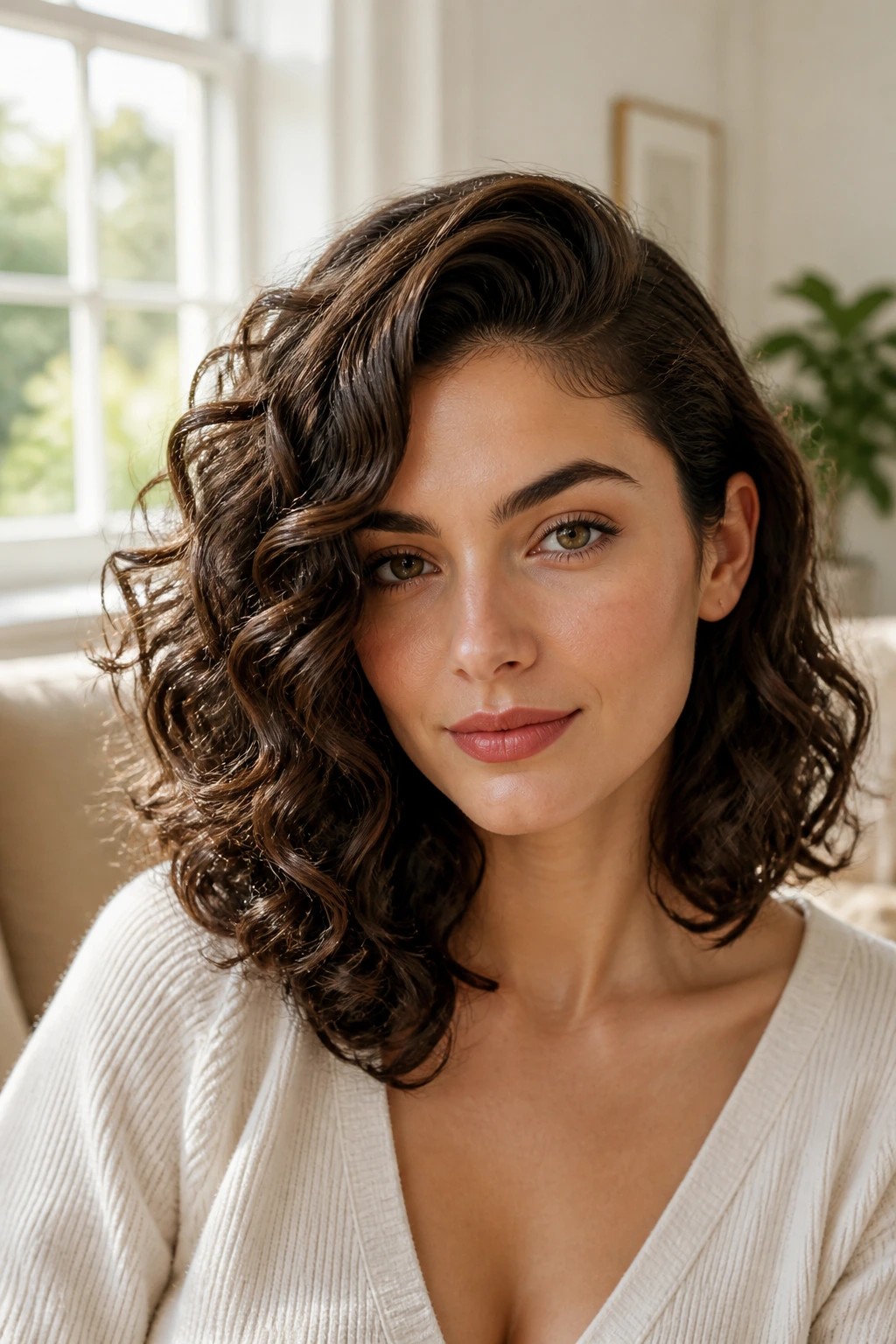
The side-swept lob is the bridge between vintage and modern, which is exactly why it works so well. It keeps the shoulder-grazing length people wear every day, but the deep side part and brushed-over front make it feel rooted in old glam styling.
You do not need a hard set for this one. Soft bends, a smooth top, and a defined front curve are enough. This is the style for someone who wants the retro reference without committing to a full set of rolls or a lot of teasing. It’s polite on the surface, but the shape is doing real work underneath.
18. Marilyn-Inspired Midlength Curls
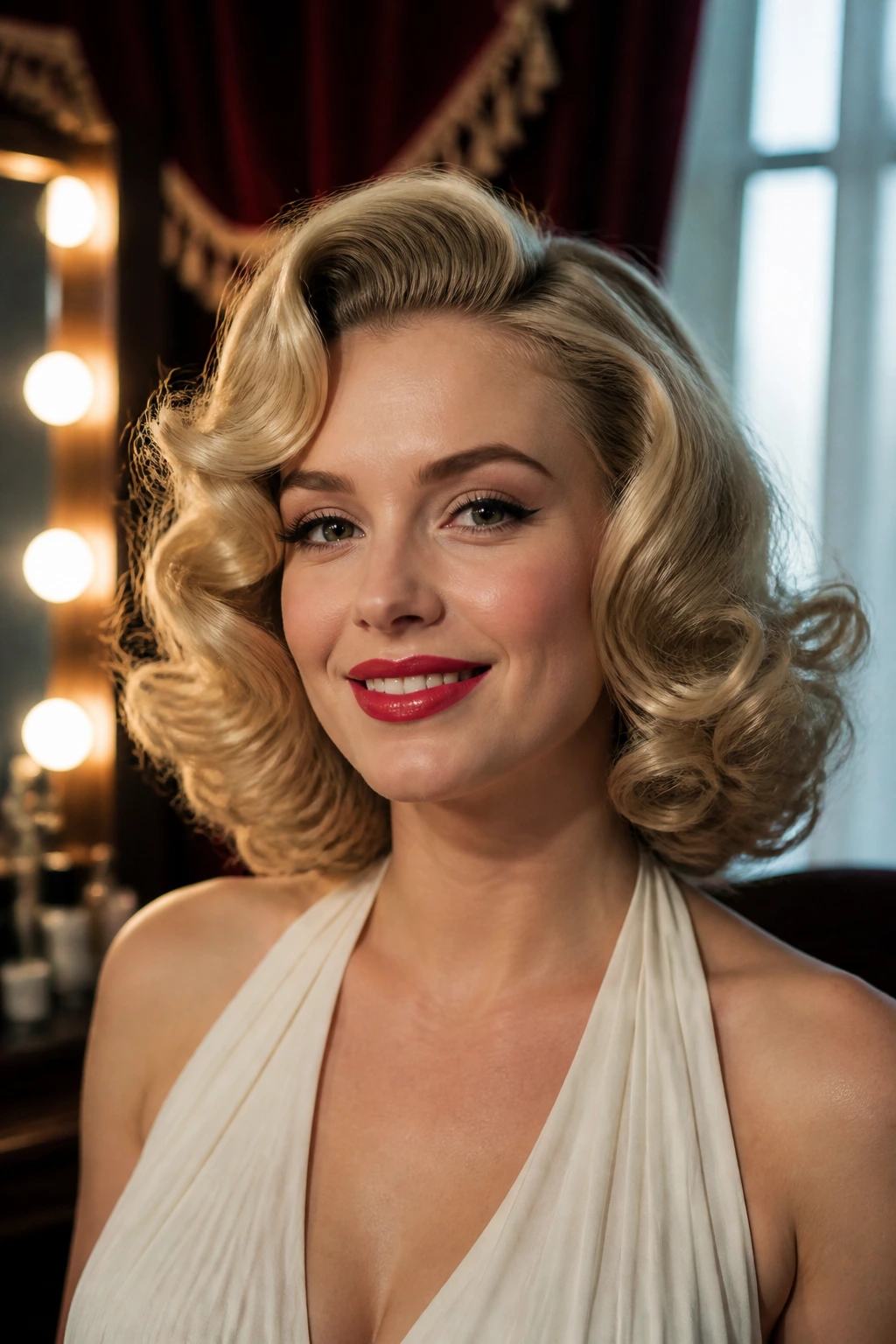
Midlength curls with a lot of shine and bounce still carry that unmistakable screen-star energy. The look usually depends on a side or off-center part, round fullness through the mid-lengths, and ends that curve rather than frizz outward.
The key is keeping the curls springy, not crunchy. Use medium sections, let them cool, then separate with your fingers instead of a brush if you want more definition. If you brush too soon, the shape can go flat around the ends. A little volume at the crown gives the whole style some lift.
19. Soft Barrel Curls with Curtain Bangs
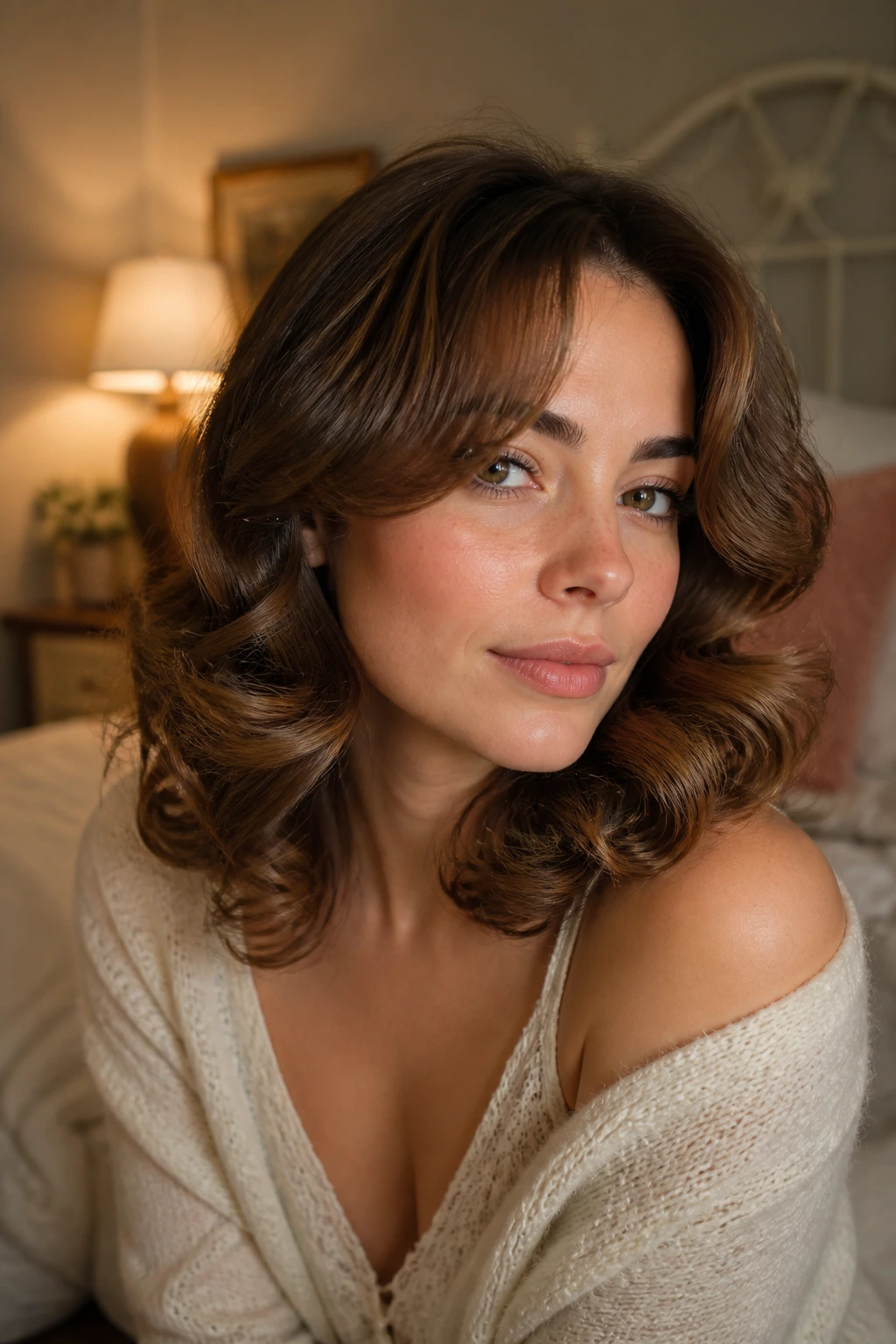
Barrel curls give the hair a broad, smooth bend that feels softer than tight spirals. When you add curtain bangs, the style picks up a very wearable retro note without leaning too hard into costume territory. It’s a good compromise for anyone who likes movement.
The bangs should curve away from the face, not sit like a blunt curtain. That angle changes the whole read. Keep the rest of the curls loose and glossy, and the style lands somewhere between old Hollywood and a polished everyday blowout. Nice place to be.
20. Gibson Tuck with Curled Tendrils
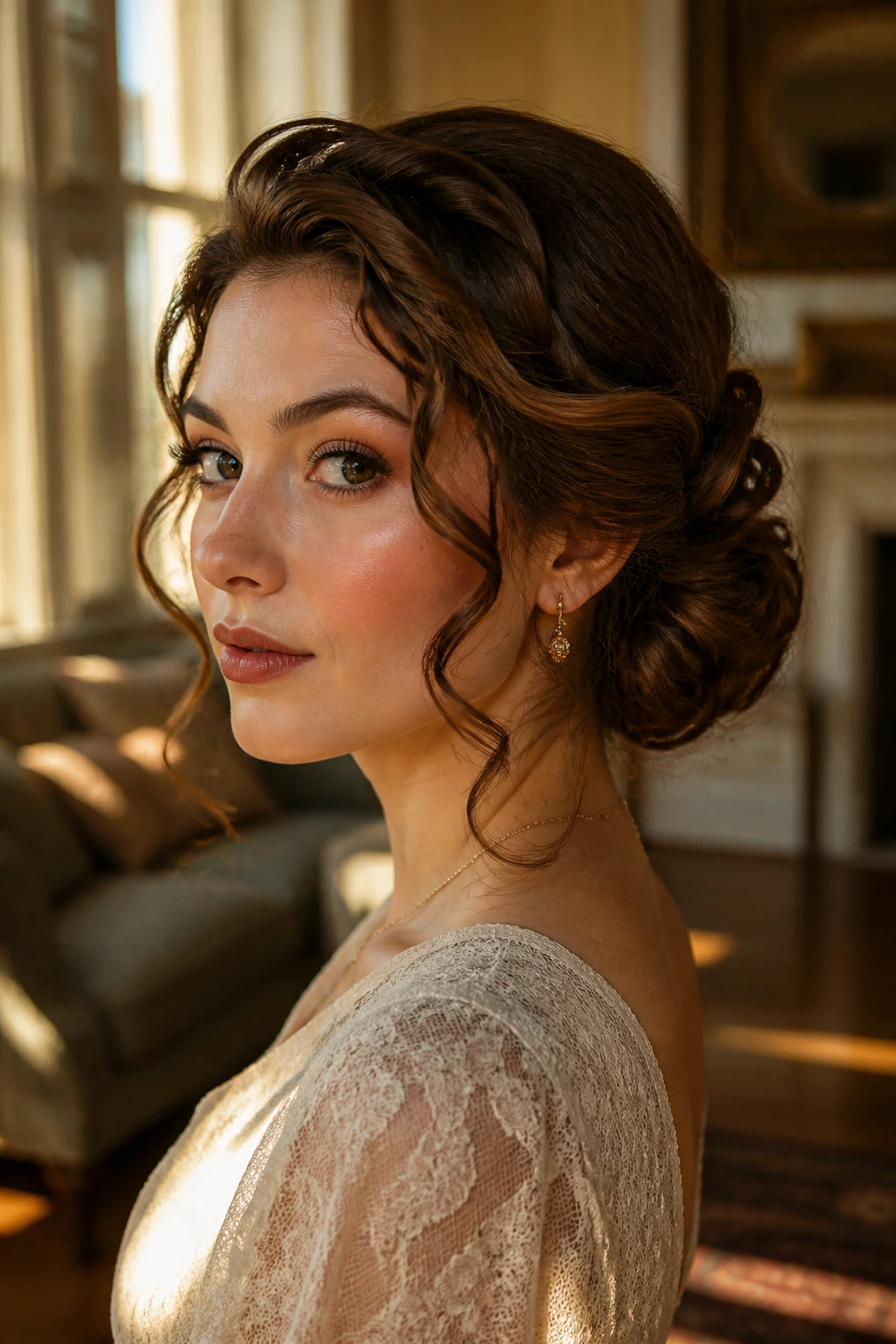
The Gibson tuck is one of those styles that looks fussy until you see it done well. Then it looks easy, graceful, and strangely modern. The hair gets rolled up at the back, tucked into itself, and softened with a few curled tendrils around the face.
It’s a strong choice for medium to long hair because the rolled shape needs enough length to build the tuck. Curl the loose front pieces first, then tuck the rest low and secure it well. If the nape feels bulky, you’ve probably left too much hair out of the roll.
21. Old-School Beehive with Curly Ends
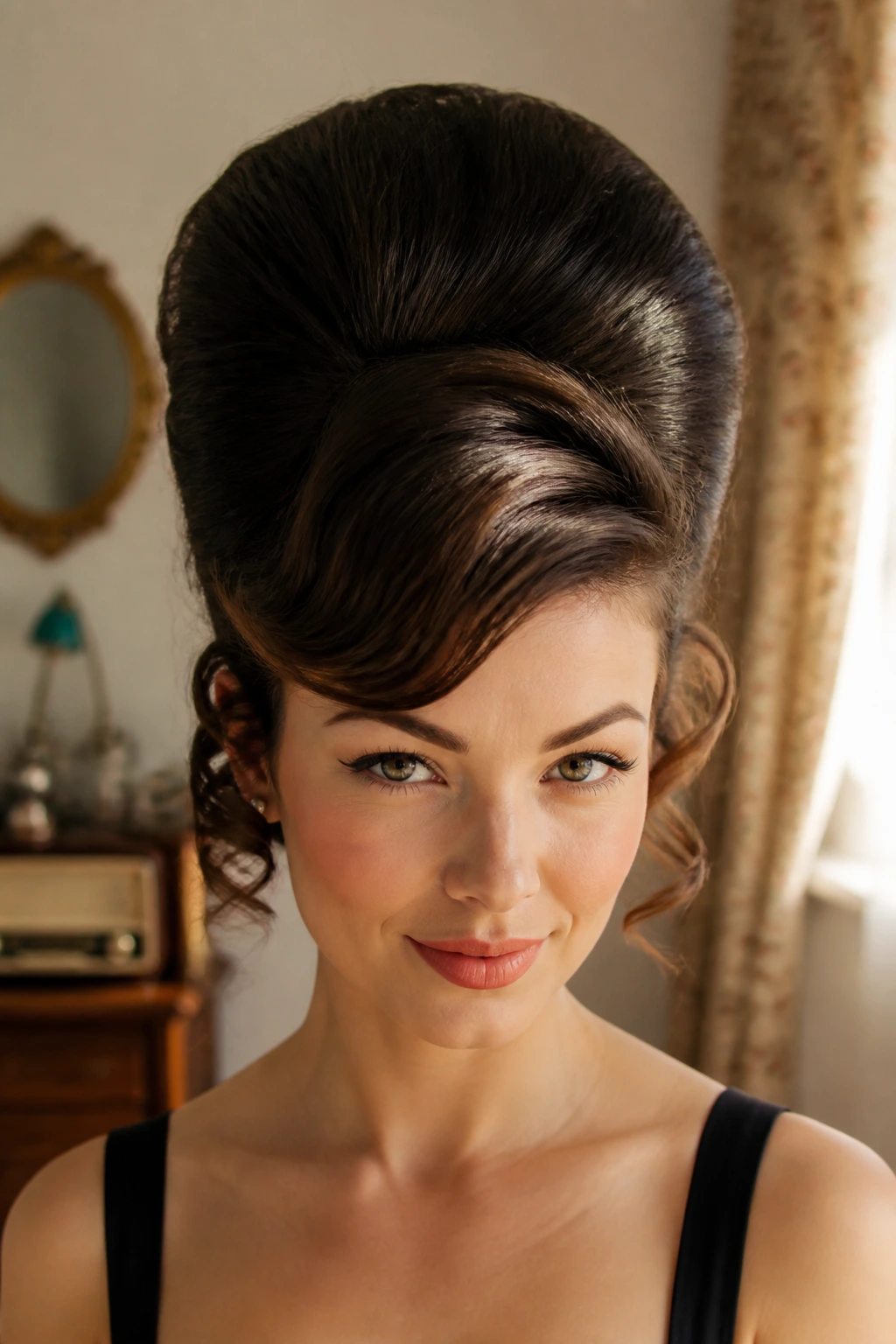
A beehive carries instant attitude. The crown rises high, the shape narrows toward the top, and the ends can either be pinned in or left curled for a softer finish. It’s a dramatic style, no sugarcoating that, but the right version still feels chic rather than cartoonish.
The trick is to keep the outer surface smooth while the inside gets the lift. Tease in small sections, then smooth the top layer over the structure. Curls at the ends make the style less rigid. Without them, the whole thing can feel a little too severe for real life.
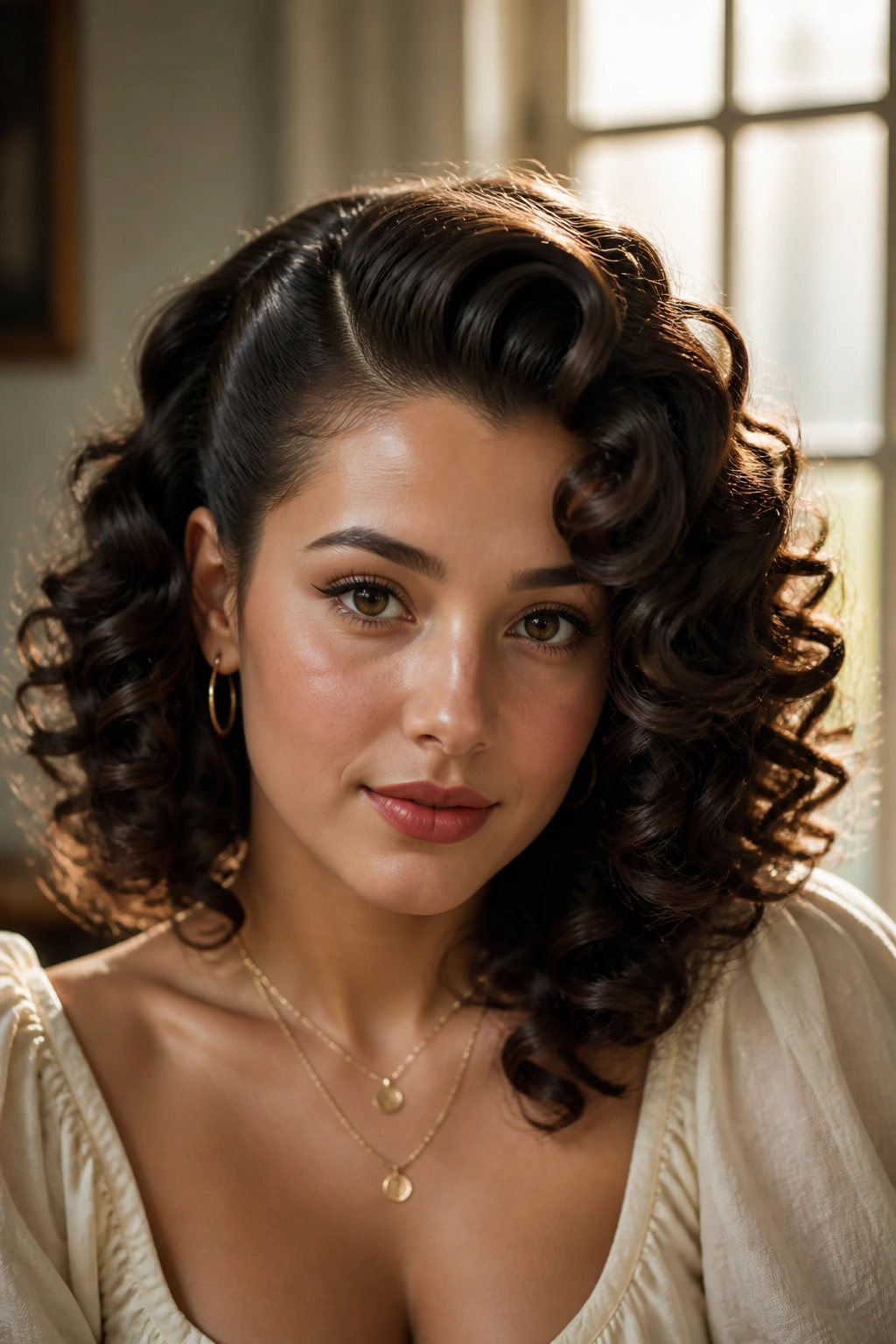
22. Swept-Back Curly Afro with Vintage Shape
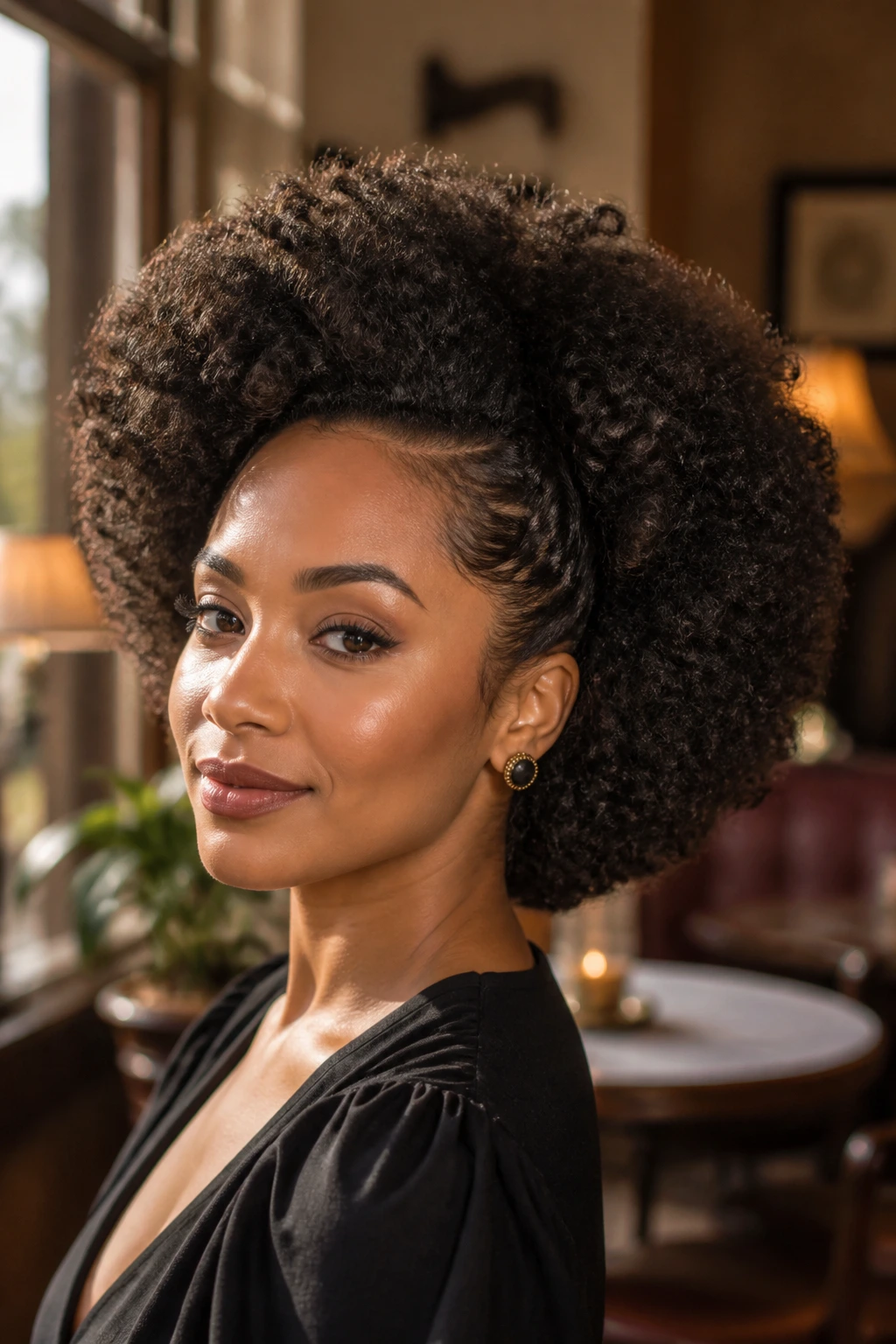
Vintage styling doesn’t belong to one curl pattern, and this shape proves it. A swept-back curly afro can use a side roll, a sculpted front, or a wide rounded silhouette that nods to retro glamour without flattening natural texture. It’s elegant because the hair keeps its own voice.
Shape matters more than forcing the curls into something else. Define the outline, smooth the front where you want it, and let the rest keep its body. A scarf, comb, or clip can add that vintage note without making the style feel borrowed. This is one of the most interesting looks in the whole group.
23. Faux Bangs and Pin-Up Curls
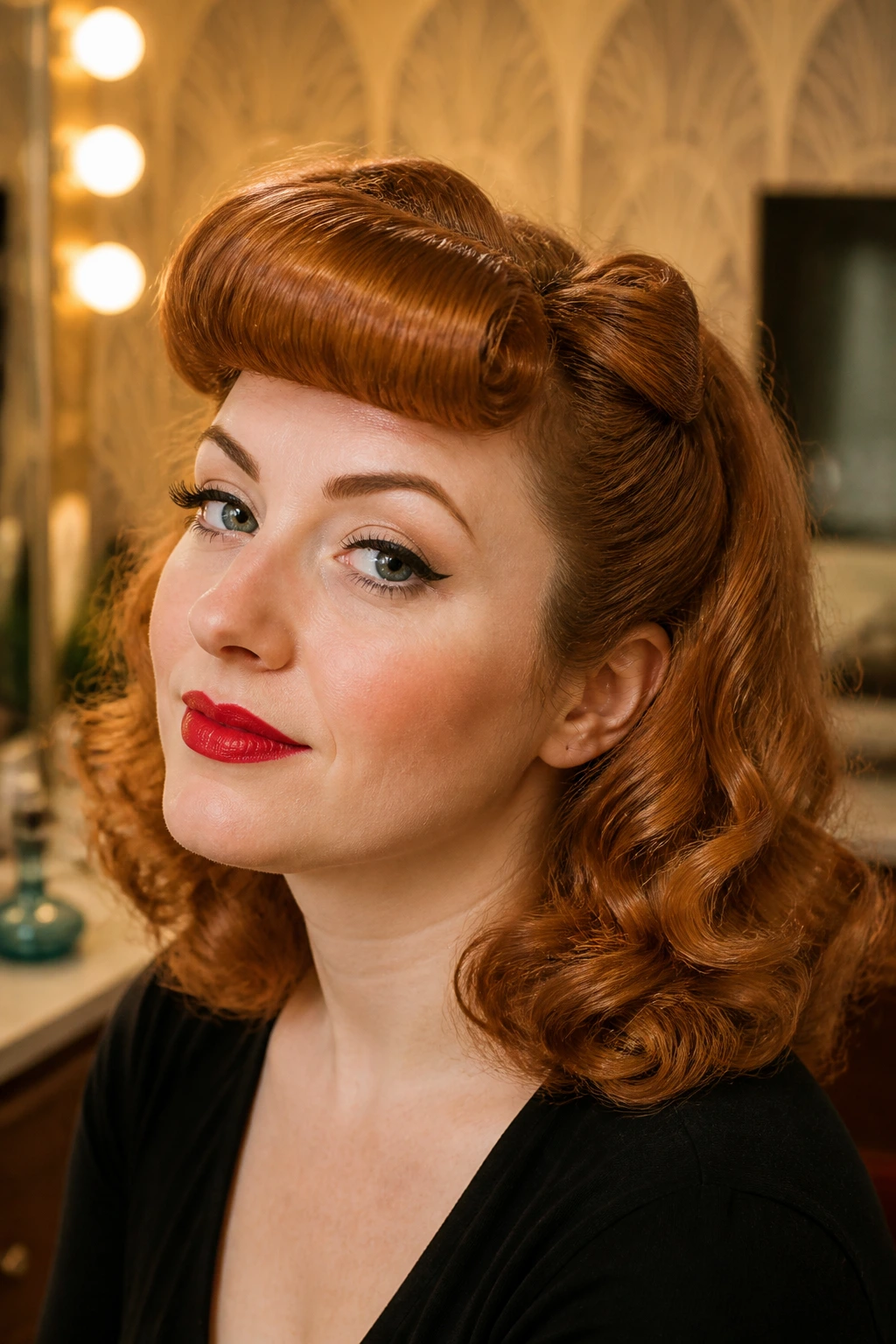
Faux bangs are a clever little trick when you want a pin-up feel without cutting fringe. The front sections get rolled forward or pinned into a curved bang shape, and the rest of the curls stay loose or clipped back in sections. It’s flirty. A little cheeky, too.
Because the bang illusion sits so close to the face, the rest of the hair should stay clean and controlled. Too much volume everywhere and the front loses its shape. Add a bold lip or a pair of small earrings, and the whole style suddenly reads like a deliberate nod to the past instead of a random curl arrangement.
Why Vintage Curl Shapes Hold Their Line
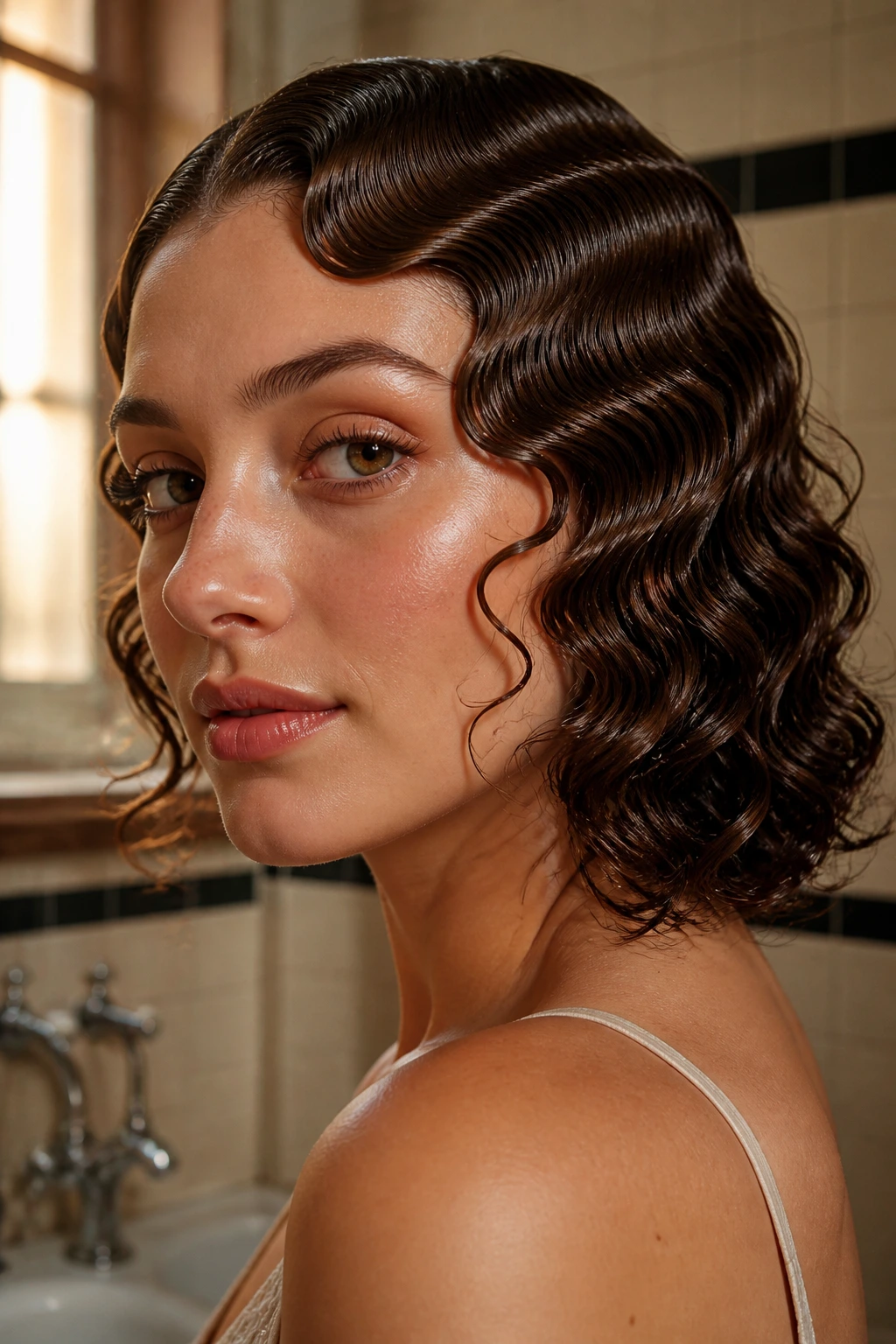
The reason these styles look like they belong together is simple: they rely on structure more than chaos. A clean part, a controlled bend, a pinned roll, or a brushed wave changes how the eye reads the hair before it even notices the texture. That’s why a single front roll can make an ordinary curl set feel dressed up.
Vintage curls also work because they respect the face. Some styles widen the cheek area, some sharpen the jawline, and some build height where the silhouette needs it. That makes them easier to choose than people expect. You are not just picking a look; you are adjusting line, balance, and movement.
What to Notice Before You Style
-
Parting changes everything: A deep side part reads softer and more dramatic, while a center part leans cleaner and more symmetrical.
-
Cool-down time matters: Curls that are pinned until fully cool hold their shape far better than curls brushed out warm.
-
Shine changes the decade: More shine leans old Hollywood; a softer, matte finish feels a little more casual and day-to-day.
Essential Tools for Retro Curls and Rolls
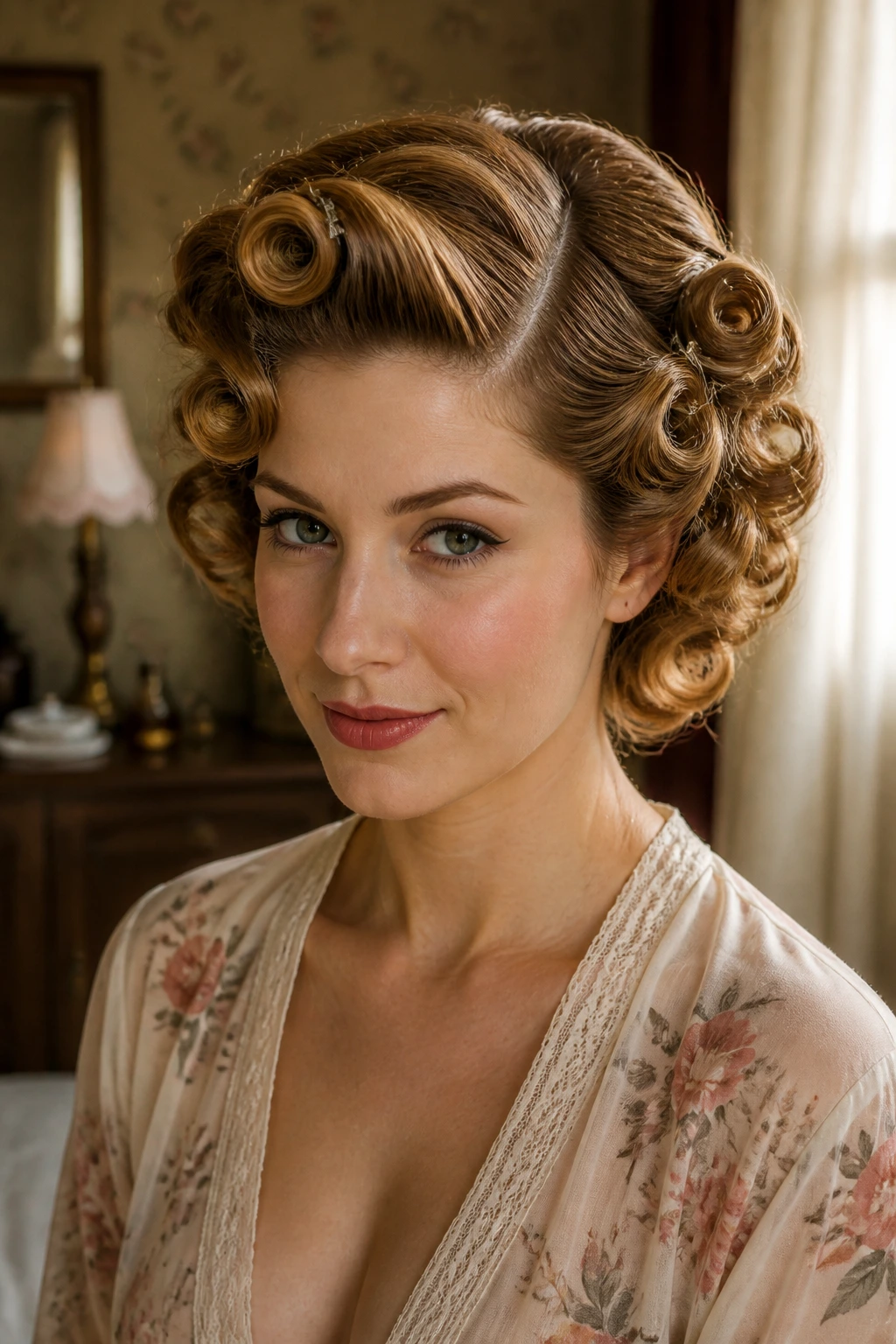
A vintage set does not need a whole drawer of fancy gear, but the right tools make a visible difference. A fine tail comb is non-negotiable for clean parts and finger-wave shaping. Duckbill clips help hold waves flat while they cool, which is the difference between a wave that stays put and one that melts by noon.
You’ll also want at least two kinds of bobby pins: regular ones for hidden support and stronger pins for rolls and buns. A 1-inch iron makes tighter, more period-true curls, while a 1¼- to 1½-inch barrel gives you those broader Hollywood bends. Add strong-hold hairspray, setting lotion or mousse, a soft brush, and a silk scarf or bonnet for overnight wear. A diffuser helps if you’re working with natural curls and want shape without frizz. It’s a short list. Still, every one of those tools earns its spot.
Smart Product Picks for Curly Hairstyles With a Vintage Vibe
Product choice matters more here than people think. If your curls are fine, heavy creams can flatten the crown before you even start pinning. A lightweight mousse or setting foam gives you grip without turning the hair greasy. For thicker hair, a firmer setting lotion or gel can help the shape survive brushing and pinning.
Shine products need a light hand. A pea-sized amount of serum warmed between your palms is enough for most styles; any more and you start losing separation at the surface. If you’re doing finger waves or a slicked crown, look for products that dry with some flexibility, not a brittle shell. Heat protectant belongs in the mix if you’re using irons or hot rollers, and a small mist bottle of water can rescue sections that need reshaping. Simple. Practical. Useful.
How to Wear These Looks Without Looking Costumed
Presentation: The most convincing vintage curls usually keep one part of the style highly intentional — a side sweep, a roll, a tucked nape, or a shaped bang — while the rest stays a little softer. If every strand is controlled, the look can turn stiff fast.
Outfit Pairings: Sleek necklines, boat necks, sweetheart cuts, and collars with a clean edge tend to work well because they give the hair room to frame the face. Big earrings and glossy lips can push a style toward evening; a scarf or cardigan pulls it back into daywear territory.
Occasions: Loose brushed waves can handle brunch, office wear, or a dinner out. Victory rolls, pompadours, and beehives lean stronger and usually suit events where you want the hair to make a statement instead of sitting quietly in the background.
Accessories: Pearl pins, combs, ribbons, headscarves, and decorative clips all make sense here, but one good piece is usually enough. Too many and the hair starts fighting itself.
Extra Shine, Height, and Softness
Shine Enhancement: Smooth a drop of serum over the outer layer only after the style is fully set. That keeps the curls reflective without collapsing the roots.
Customization: If the style feels too polished, tug out one face-framing curl or soften the part by half an inch. If it feels too casual, add one more pin at the crown or tighten the front section slightly.
Serving Suggestions: A side comb, a ribbon tied at the nape, or one pearl clip can give the whole look a stronger vintage read. Small details matter more than piling on accessories.
Make-It-Yours: Fine hair usually benefits from a little teasing and a stronger setting spray. Thick hair often looks better with smaller sections, more pins, and less brushing. Natural curls can keep more of their texture if you shape around the pattern instead of fighting it.
How to Keep Curly Hairstyles With a Vintage Vibe Fresh Overnight
The longer these styles stay set before brushing, the better they look. Pin curls, roller sets, and shaped waves often hold for two to three days if you protect them well, while brushed-out Hollywood waves are usually strongest on day one. A silk scarf or bonnet keeps friction down overnight, and a silk pillowcase helps when you can’t keep the scarf on.
If you need to refresh the next day, mist the flat area lightly with water or a leave-in spray, then reclip it until dry. Don’t soak the whole head. That just makes the waves frizzy and the rolls soft in the wrong places. For curls that have lost shape, re-curl just the front pieces or the outer ends rather than starting over. The oldest salon trick still works: fix the part and the surface, and a lot of the style comes back with surprisingly little effort.
Variations and Modern Tweaks for Vintage Curls
Heatless Pin-Set Drama: Use damp hair, setting lotion, and pin curls or foam rollers overnight. It gives you a softer, more authentic curve and skips the hot tool altogether.
Soft Everyday Retro: Keep the deep side part and one brushed wave, then leave the rest of the curls loose. This works when you want a nod to the era without a full costume feel.
Rockabilly Edge: Add a stronger front roll, a tighter ponytail, or a high crown. A red lip and winged liner fit naturally here, but the hair still carries the show.
Natural Curl Tribute: Shape the outline with pins and a scarf, then let the curl pattern stay visible. That approach respects the texture instead of flattening it into another decade’s idea of beauty.
Short-Hair Vintage Fix: Use finger waves, side bends, and jeweled clips. Short cuts can hold a lot of attitude with very little length.
Common Mistakes That Flatten Retro Hair
Using the wrong section size: Too much hair in each curl or wave makes the shape collapse before it sets. Work in smaller pieces, especially around the face and crown.
Brushing too soon: Warm curls are easy to wreck. Let them cool fully first, or the wave pattern will disappear into frizz.
Overloading with product: Heavy cream or too much serum makes the surface slip and the roots sag. Start with less than you think you need, then add only if the hair still feels dry.
Ignoring the silhouette: Vintage hair is about shape, not just texture. If the crown is flat and the sides are puffy, the style loses its line. A little pinning fixes that fast.
Skipping support pins: Rolls and tucks need hidden anchors. If the style keeps slipping, the pins are probably too few or placed in the wrong direction.
Frequently Asked Questions
Can I do these styles on naturally curly hair without straightening first?
Yes, and in many cases you should. Styles like a side-swept lob, a shaped afro, a curly chignon, or a pin-up roll often look better when they keep some of the natural curl pattern intact. You’ll usually need more pinning and a little surface smoothing, but not a full heat pass.
Which of these works best on short hair?
Finger waves, the flapper bob, the gamine crop, and soft side bends are the strongest short-hair options. If your hair barely reaches the jaw, focus on the front and crown; those areas do the visual heavy lifting in retro styling.
What barrel size gives the most authentic vintage curl?
A 1-inch barrel creates tighter, more period-true curls, while a 1¼-inch barrel gives you softer Hollywood waves. If you want brushed-out glamour, the slightly larger barrel usually feels easier to work with because it leaves room for brushing.
How do I keep victory rolls from falling flat?
Set the front section first, pin it while it’s still warm but not hot, and use more pins than you think you need. A little teasing under the roll helps too. The roll should feel anchored at the base before you even worry about the shape.
Can these styles hold in humid weather?
They can, but the set needs more structure than usual. A stronger setting spray, smaller sections, and a silk scarf overnight all help. Brushed-out waves are the most likely to soften in humidity, so if the air is damp, choose a pinned style instead.
What if my curls go frizzy after brushing them out?
That usually means the hair wasn’t fully cool or it needed a different brush. Try a softer brush, brush in fewer strokes, and finish with a tiny bit of serum on the outer layer. Sometimes the answer is not more product — it’s less brushing.
Do these looks work for fine hair?
Yes, but fine hair usually needs support at the root. A light mousse, smaller sections, and hidden pins make a big difference. Styles with crown height, side sweeps, or structured rolls tend to flatter fine hair more than loose, all-over volume.
How can I make a vintage style look modern instead of theatrical?
Keep one vintage element and soften the rest. A deep side part with loose curls, a scarf over brushed waves, or a low roll with a few flyaways feels more current than a fully lacquered set from front to back.
The Last Pin
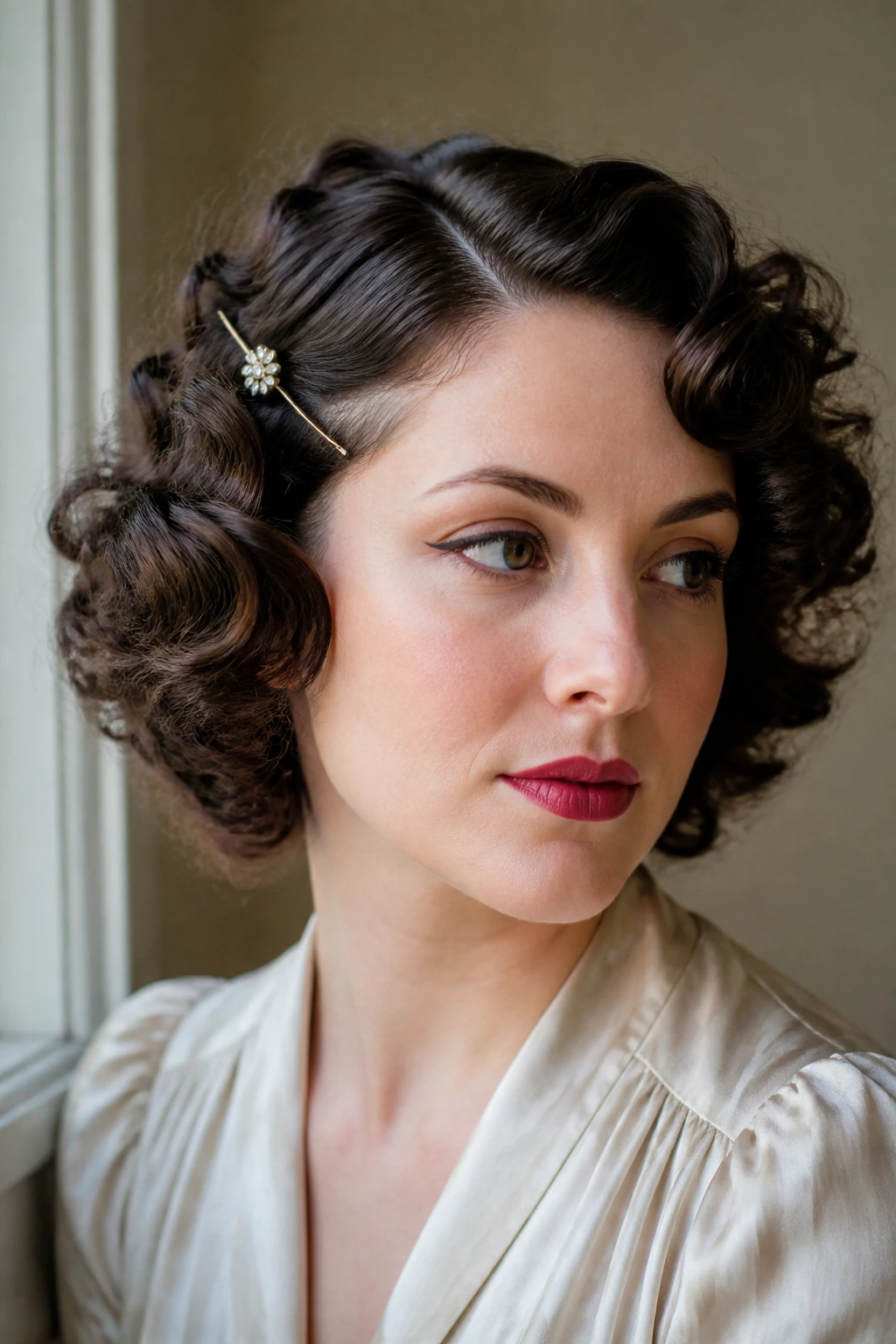
The nicest thing about vintage curly hairstyles is that they don’t all ask for the same personality. Some want shine and polish. Some want height. Some need only a side part and one clean wave to feel finished. That range is why these styles keep showing up again and again.
If you start with shape — not just curl — the whole process gets easier. Choose one detail that carries the era, then let the rest breathe a little. That’s where the good looks live, and it’s the part worth coming back to the next time you want your curls to say something sharper than “I washed my hair and hoped for the best.”
