



1990s hairstyles for long wavy hair have a built-in advantage: the bend is already doing half the styling. You do not need a stiff curl or a shellacked finish to get the era right. A center part, a butterfly clip, a scrunchie, a few loose pieces around the face—that’s often enough to shift the whole mood.
Long waves also keep the shapes honest. A lot of 90s hair looked good because it moved when the head moved. The ends swung. The front pieces softened the face. The crown had a little lift, but not so much that the whole thing turned into pageant hair. If you start with long wavy hair, you already have the texture that those looks were trying to fake with hot tools and product.
The mistake people make is going too neat. Too much straightening. Too much spray. Too much symmetry. The best versions here are slightly imperfect on purpose, with a strand that falls free, a part that isn’t ruler-straight, or a clip that sits a little off-center. That’s the charm. And once you know which shape you want, the rest gets easier fast.
Why This Collection Works on Long Wavy Hair
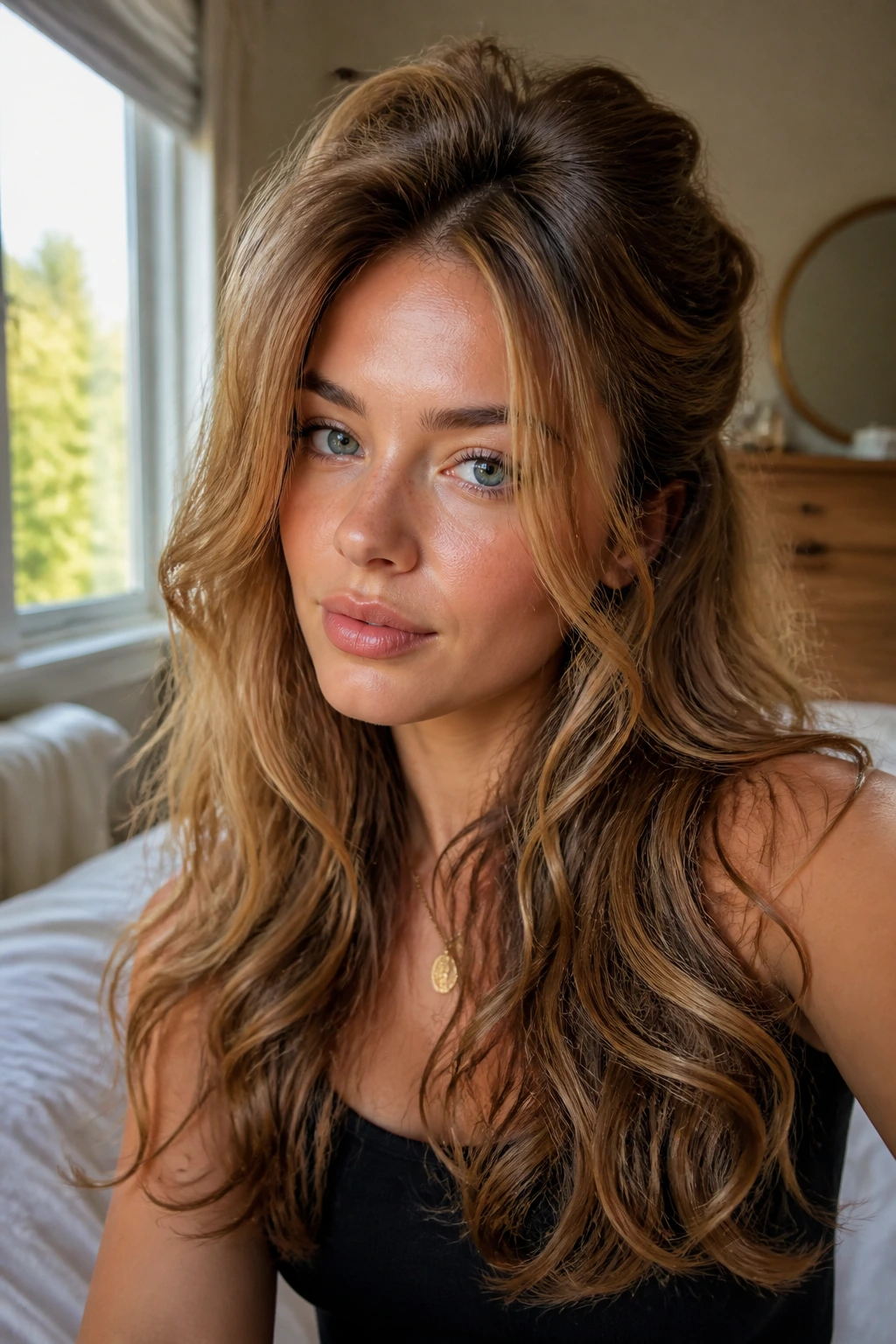
- The root lift is already halfway there: Long waves keep a little body at the crown, which makes 90s parts, ponytails, and clips hold their shape without looking stiff.
- Accessories carry more weight than heat: Butterfly clips, scrunchies, claw clips, and barrettes change the silhouette fast, even if you only spend five minutes styling.
- Face-framing pieces do the flattering work: Curtain bangs, tendrils, and side-swept pieces soften the line around the cheekbones and keep long hair from hanging in one heavy block.
- Day-two texture is a bonus, not a problem: A little grit helps braids, twisted sections, and half-up styles stay put instead of sliding out by lunch.
- The mood can swing in two directions: Add shine spray and a round brush for glossy, magazine-style hair, or lean on dry shampoo and rougher ends for grunge.
1. Center-Part Supermodel Waves
A clean center part and brushed-out waves are the 90s hair reference that never really left the room. On long wavy hair, this look works because the length gives the ends weight while the wave keeps the shape from going flat at the sides.
How to Wear It
Part the hair cleanly down the middle with a tail comb, then use a 1.25-inch iron only on the front sections if they need smoothing. Brush the curls out once they cool so the wave becomes broad and soft instead of tight and springy. Finish with a small amount of shine serum from the ears down, not at the roots.
Best detail: tuck one side behind the ear and leave the other side loose. That tiny asymmetry keeps it from looking posed.
2. Curtain Bangs with Long Face-Framing Layers
Curtain bangs are one of those 90s cuts that can change the whole haircut without making it look overdone. On long wavy hair, they split the face in half just enough to soften the forehead, then drift back into the length instead of stopping abruptly.
The best version hits around the cheekbone and opens near the brows. Blow-dry the bangs forward first, then round them away from the face so they curve softly instead of flipping into a hard curl. If your waves are strong, a quick pass with a flat iron on the front two inches can keep the shape smooth without erasing the texture everywhere else.
This one is especially good if you wear glasses or have a longer face. The bangs create width where you want it, and the layers keep the hair from feeling heavy at the chin.
3. Half-Up Butterfly Clip Twist
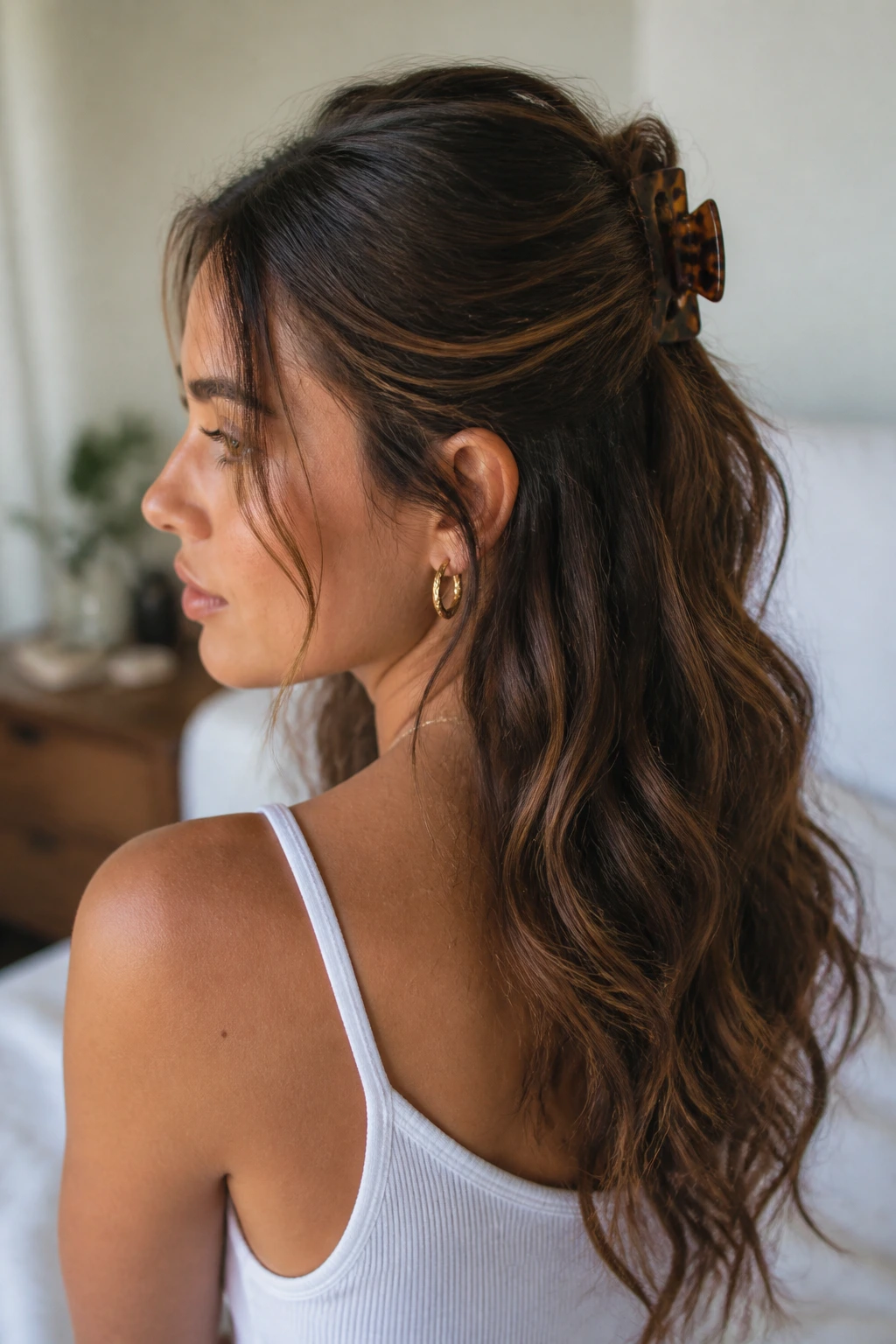
A butterfly clip makes long hair feel instantly more 90s than a dozen perfectly hidden pins ever could. The charm is in the easy lift at the crown: enough height to show the face, enough length left down to keep the style soft.
Gather the top third of the hair from temple to temple, twist it once, and secure it with a medium butterfly clip at the back of the head. Don’t pull the twist tight. You want the clip to sit with a little curve so the crown stays airy and the waves below can still move.
Small detail that matters
Leave two face pieces out before you clip. They break up the line and keep the half-up section from feeling too severe. This is one of the quickest looks in the bunch, and that’s probably why it keeps winning.
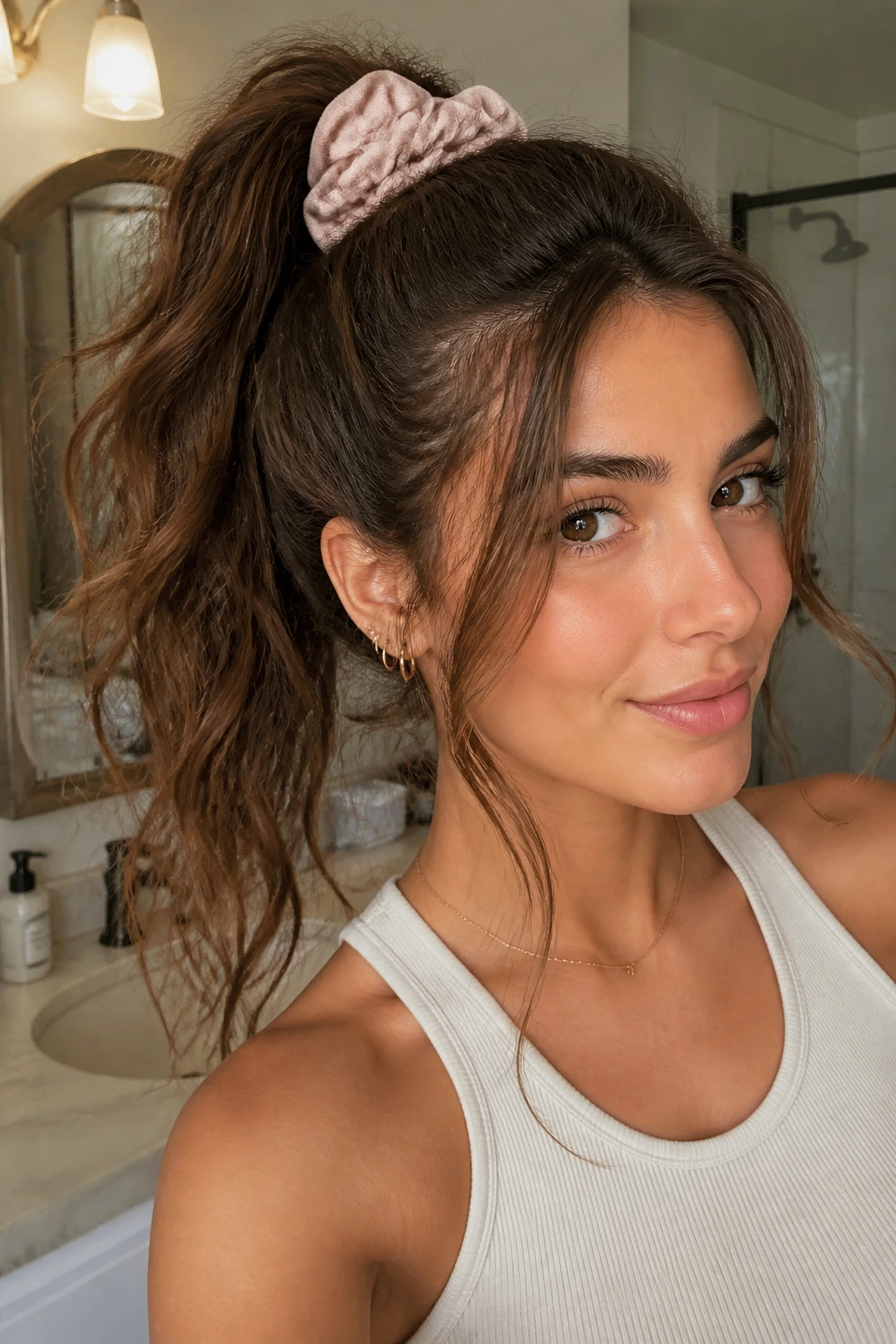
4. High Scrunchie Ponytail
A high scrunchie ponytail has a very specific 90s energy: slightly sporty, slightly flirty, never precious. On long wavy hair, it looks best when the roots have some lift and the tail is left loose rather than brushed into a hard rope.
Flip your head upside down, gather the hair high on the crown, and secure it with a soft scrunchie. Pull a few strands at the front if you want that easy, face-softening shape. If the tail looks too tidy, wrap a small section of hair around the scrunchie and pin it underneath so the elastic disappears a little.
This style is good on second-day hair, especially if the waves have fallen into a relaxed bend. It needs motion, not polish. A little texture spray at the tail makes the hair swing instead of hanging straight.
5. Zigzag Part with Loose Waves
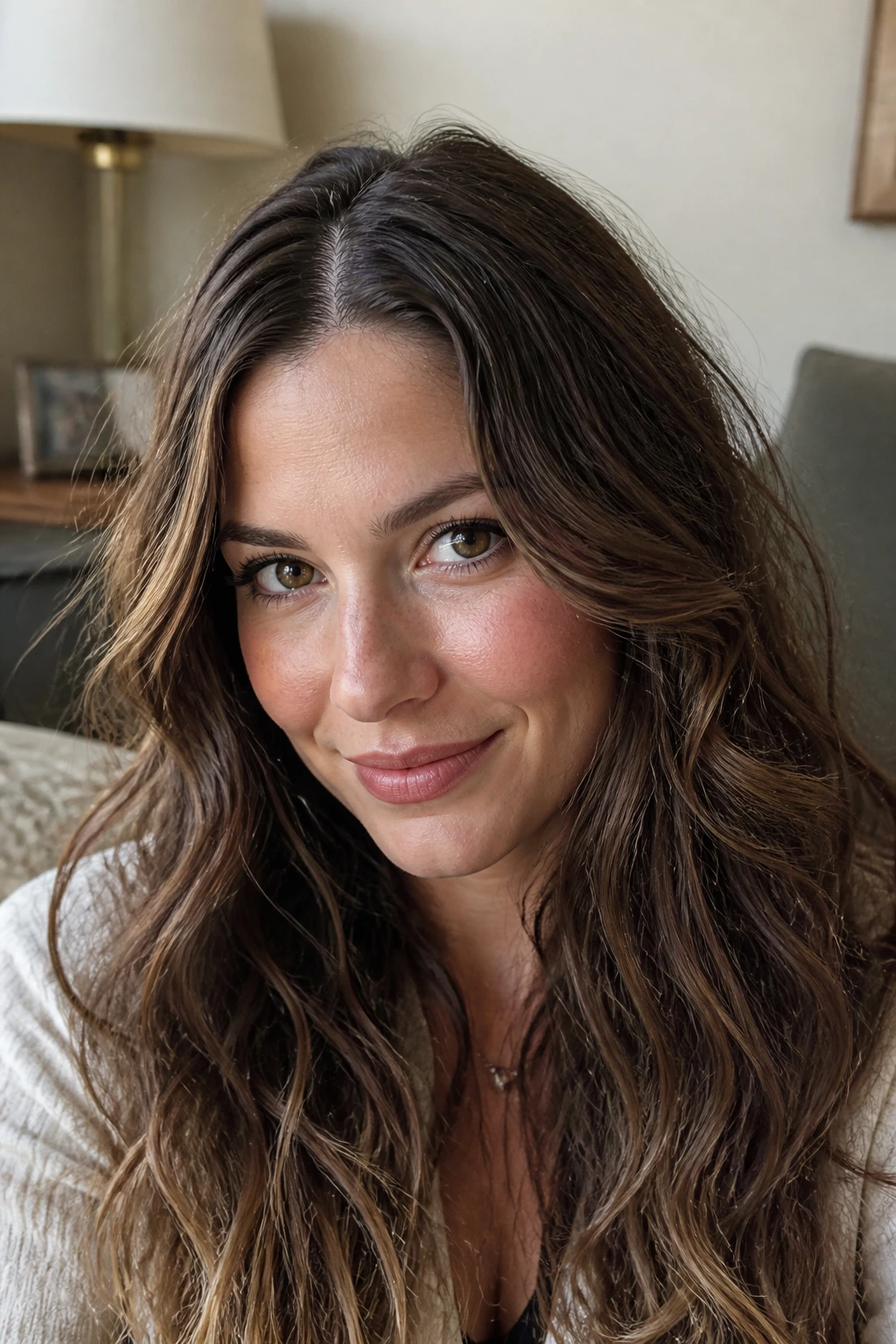
The zigzag part is a tiny move with a loud personality. It does not need big styling or heavy product; the shape itself is the point, and on long wavy hair it feels playful without tipping into costume.
Use the tail of a comb to create the zigzag from the front hairline back toward the crown, then let the rest fall in loose waves. If the roots are flat, mist a little dry shampoo at the part and tap it in with your fingers so the lines stay visible. The zigzag works especially well with hair that already has some bend, because the texture keeps the part from looking too sharp.
Why it lands
A straight center part can feel sleek. This one feels alive. The little breaks in the line give the eye something to follow, which is exactly what you want when the rest of the hair is soft and flowing.
6. Front Tendrils with a Clipped Crown
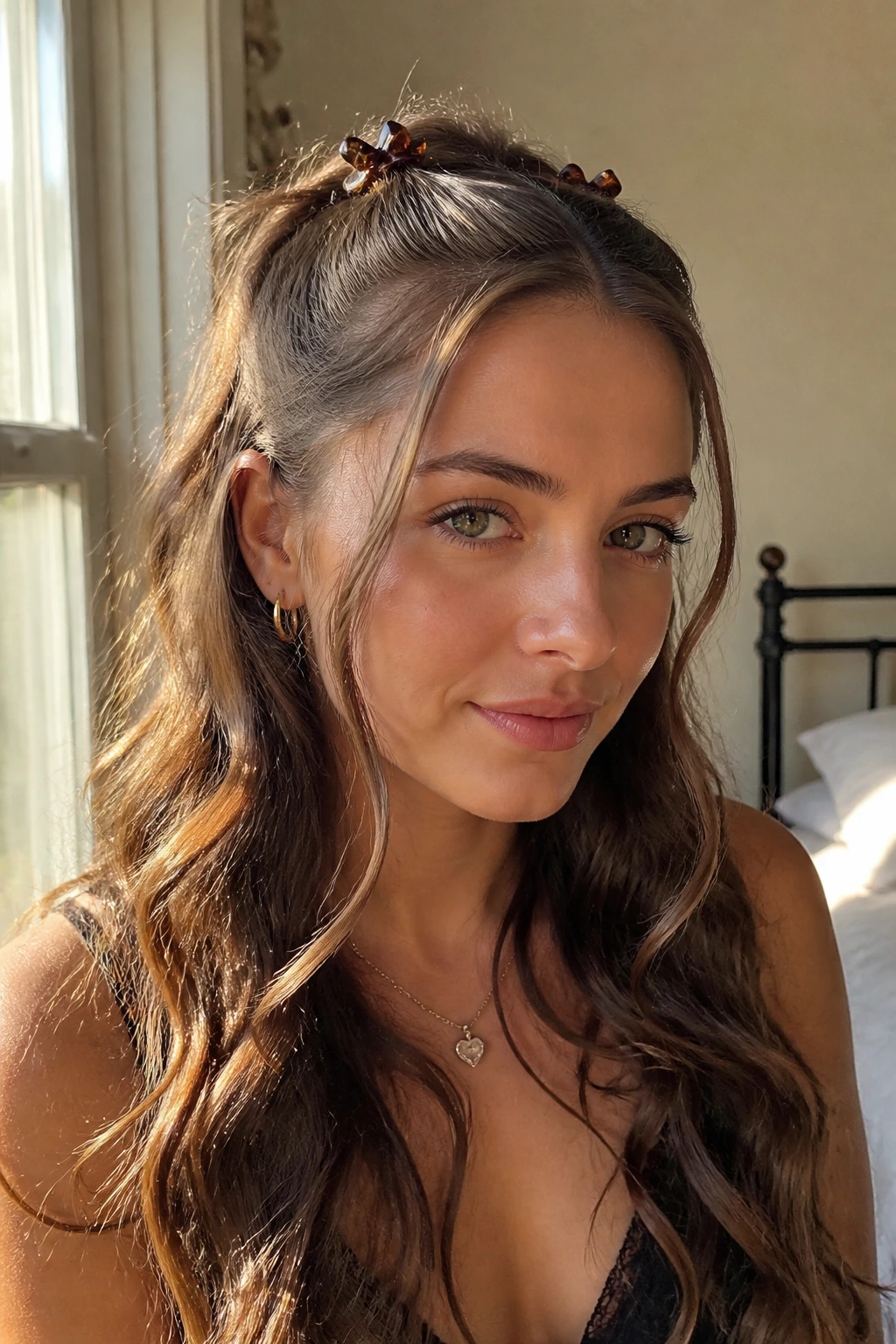
Two thin front tendrils can change the whole face. They pull this look straight into the 90s, especially when the rest of the hair is clipped back at the crown and left loose through the lengths.
Take the hair from just above each ear, twist or clip it back lightly, and leave the narrow front pieces free. A pair of tiny barrettes works well here, but a small claw clip can do the job if you want a more casual finish. Keep the tendrils slim. Thick front pieces start to look heavy, and that ruins the line.
This one is nice when you want the hair off your face but still want movement around it. The clipped crown gives a little lift, the tendrils soften the edges, and the waves below keep the style from reading too formal.
7. Crimped Mid-Length Panels
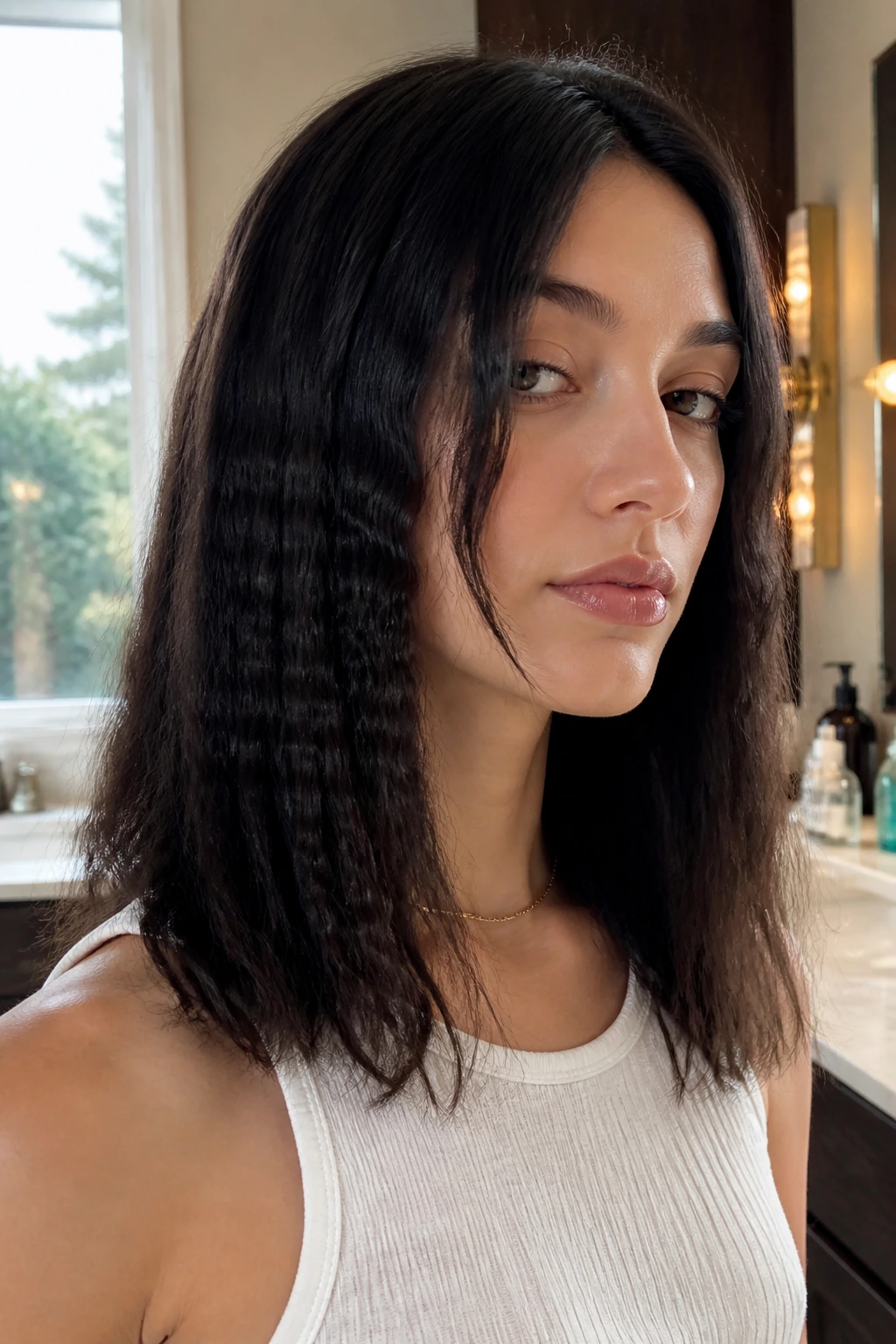
Crimping the entire head is a lot. Crimping just the mid-length panels, though, gives long wavy hair that unmistakable 90s texture without making it feel like a themed costume.
Work in narrow sections and crimp only the middle third of the hair, leaving the roots smoother and the last inch or two more relaxed. Once the hair cools, rake your fingers through it lightly so the crimp breaks up into a denser, more wearable texture. This is one of the best styles for adding body to fine hair because the texture builds grip fast.
If you want the effect to look intentional, keep the top layer a little cleaner than the underneath sections. That contrast keeps the crimp from taking over the whole head.
8. Feathered Blowout with Flipped Ends
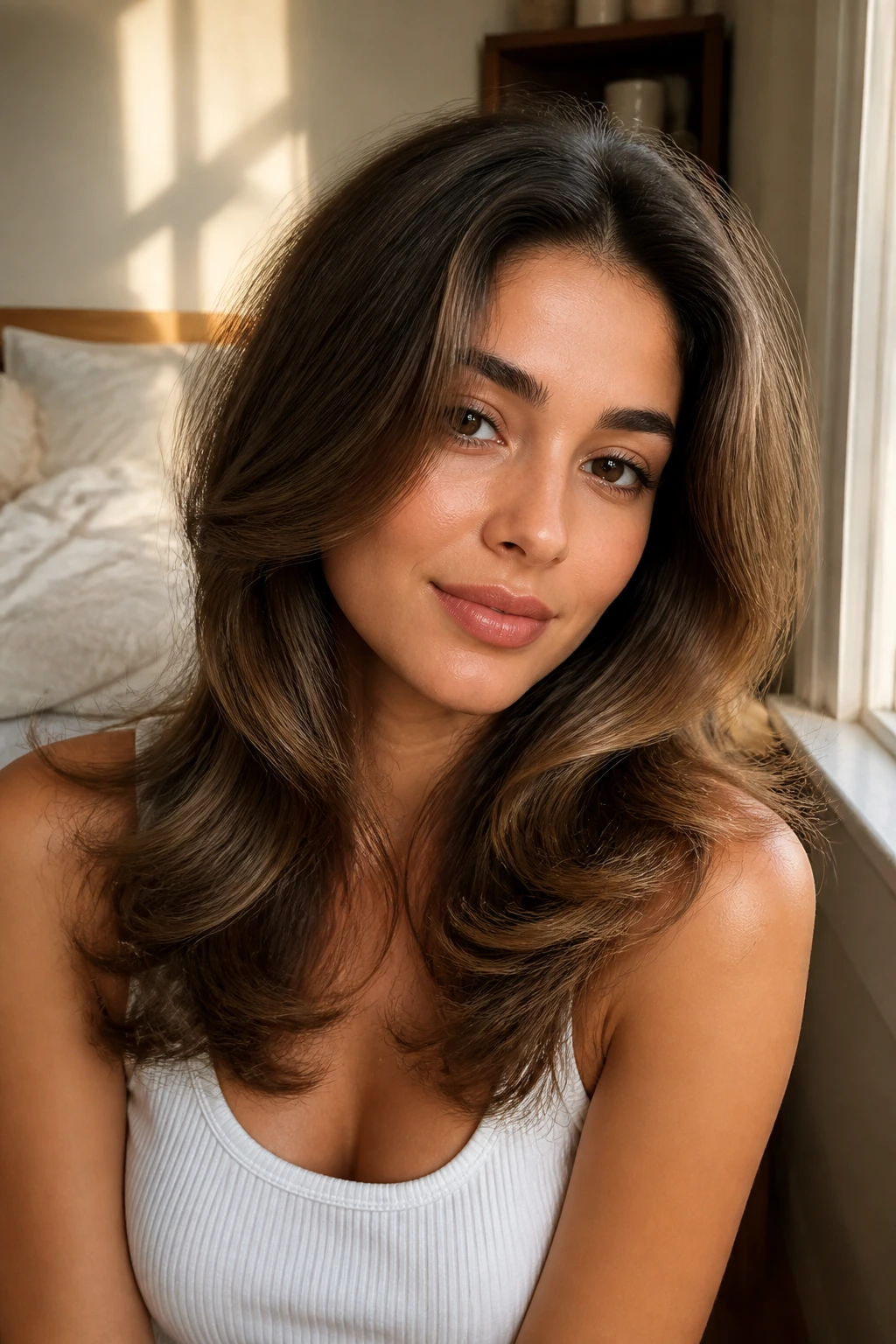
The feathered blowout is the style that turns long wavy hair into something that looks like it had an appointment. It lives on volume at the crown, airy movement through the lengths, and ends that flick out just enough to catch the eye.
Use a round brush while blow-drying the front sections away from the face, then flip the ends out with a curling brush or flat iron. Don’t curl the whole length under. That’s too neat. The best version has a little bend near the cheekbone and a visible flick at the bottom, almost like the hair decided to stop trying so hard halfway through.
A side part can make this feel more dramatic, but a center part keeps it softer. Either way, keep the roots lifted and the ends light.
9. Deep Side-Part Glam Waves
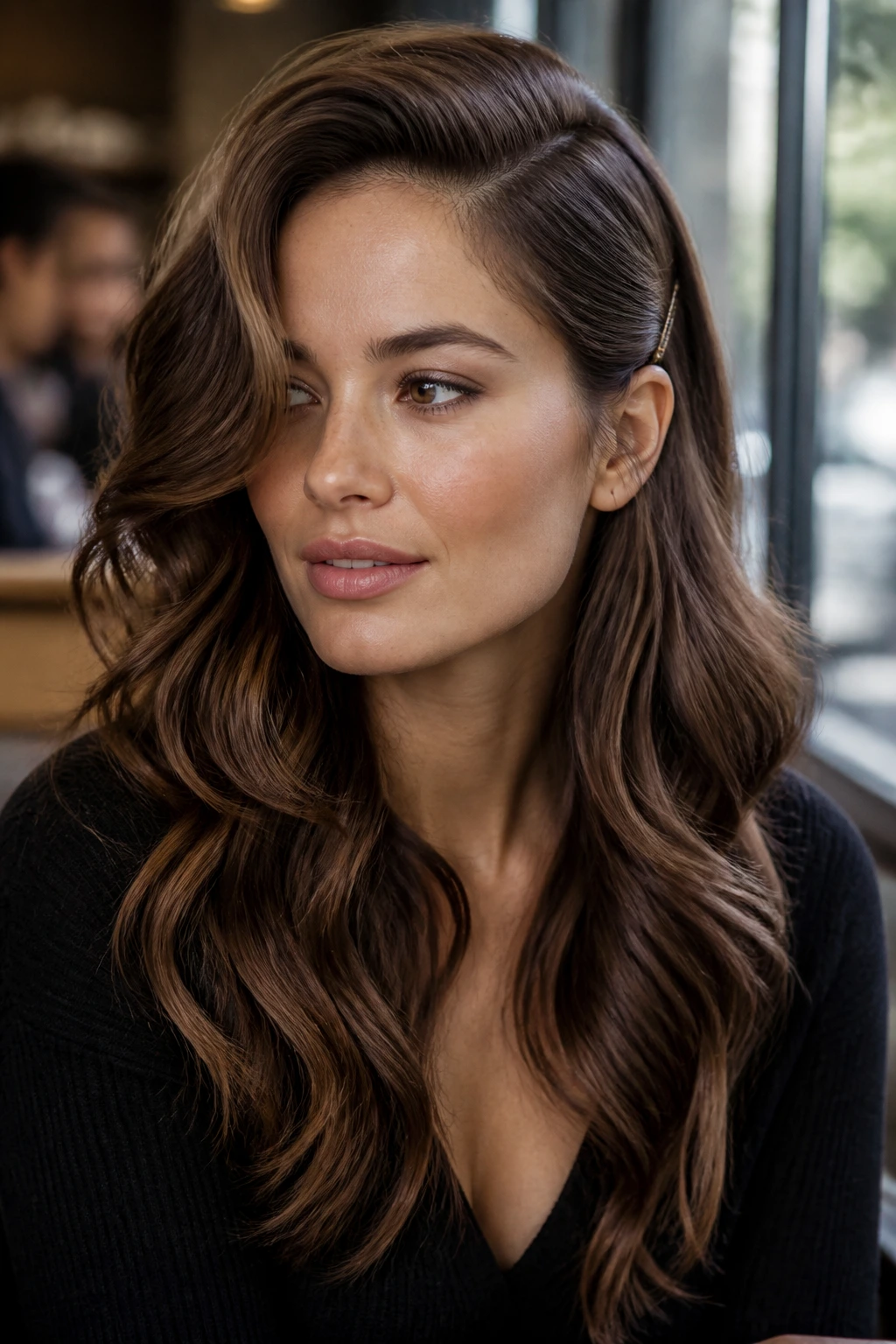
A deep side part is one of the easiest ways to make long wavy hair feel dressed up. It changes the balance of the head, gives one side more volume, and leaves the other side tucked or brushed back for contrast.
Start the part just above the arch of one eyebrow and sweep the heavier side across the forehead. Then let the waves fall loosely, with a little more polish near the top and more movement through the ends. A single barrette or a tucked-behind-the-ear finish is enough to keep it from looking like it slipped by accident.
This style is a strong choice if your face is long or narrow. The side part creates width, and the loose wave keeps the whole thing from feeling sharp.
10. Claw-Clip French Roll
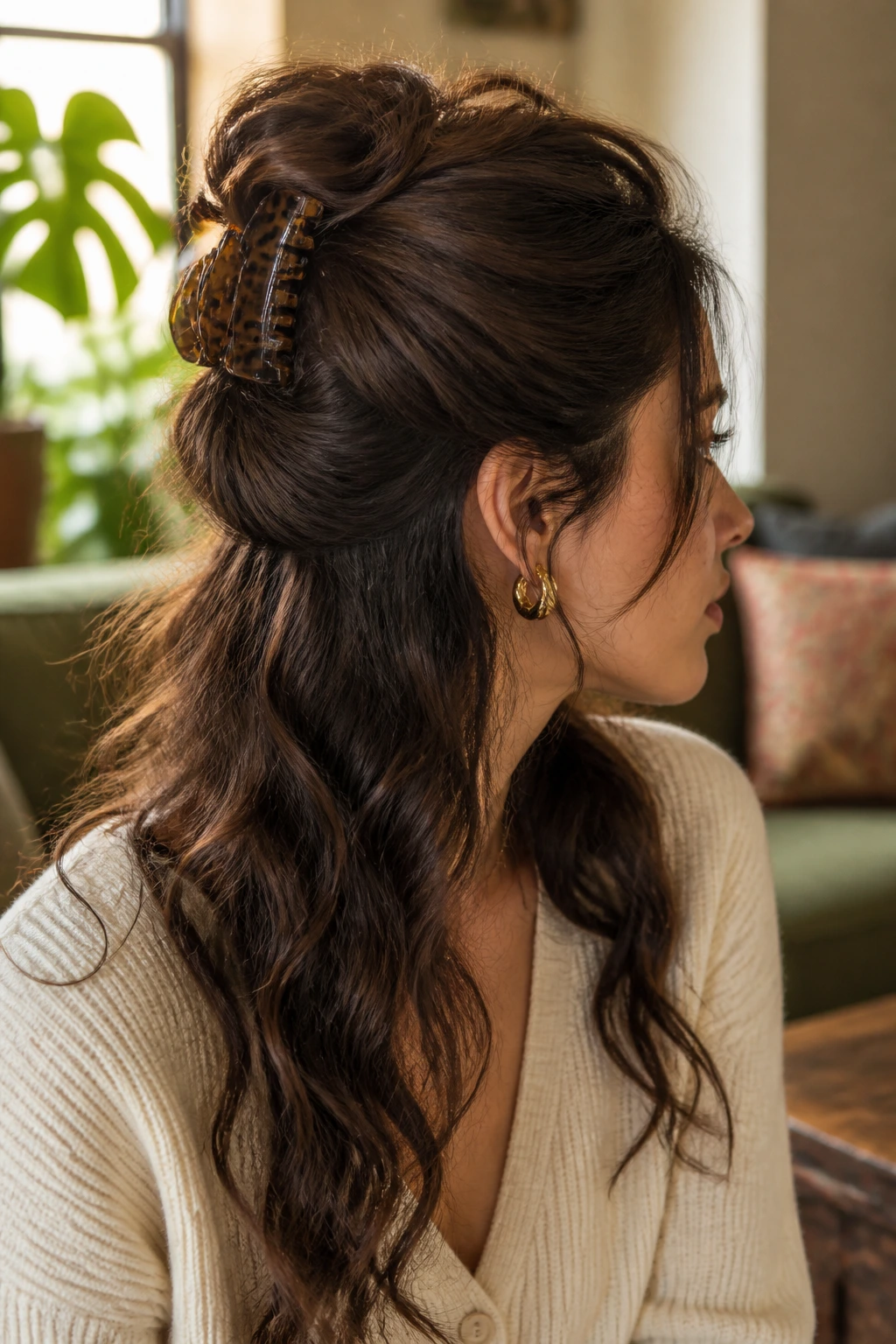
A claw clip can do more than hold a messy bun. In a French roll or half-up twist, it gives long wavy hair that lazy-but-careful 90s shape that always looks better than it sounds on paper.
Gather the top half of the hair, twist it upward, and clip it vertically so the ends fan out slightly or tuck in depending on the clip size. Leave the lower half loose and wavy. The trick is not to smooth the crown flat before you clip it; a little lift at the roots makes the whole style feel fuller and more deliberate.
What to watch for
Use a clip with a strong spring. Cheap clips slide, especially if your hair is dense. If your hair is very long, anchor the twist with one hidden pin underneath so the clip is doing less of the heavy lifting.
11. Low Pony with a Wrapped Strand
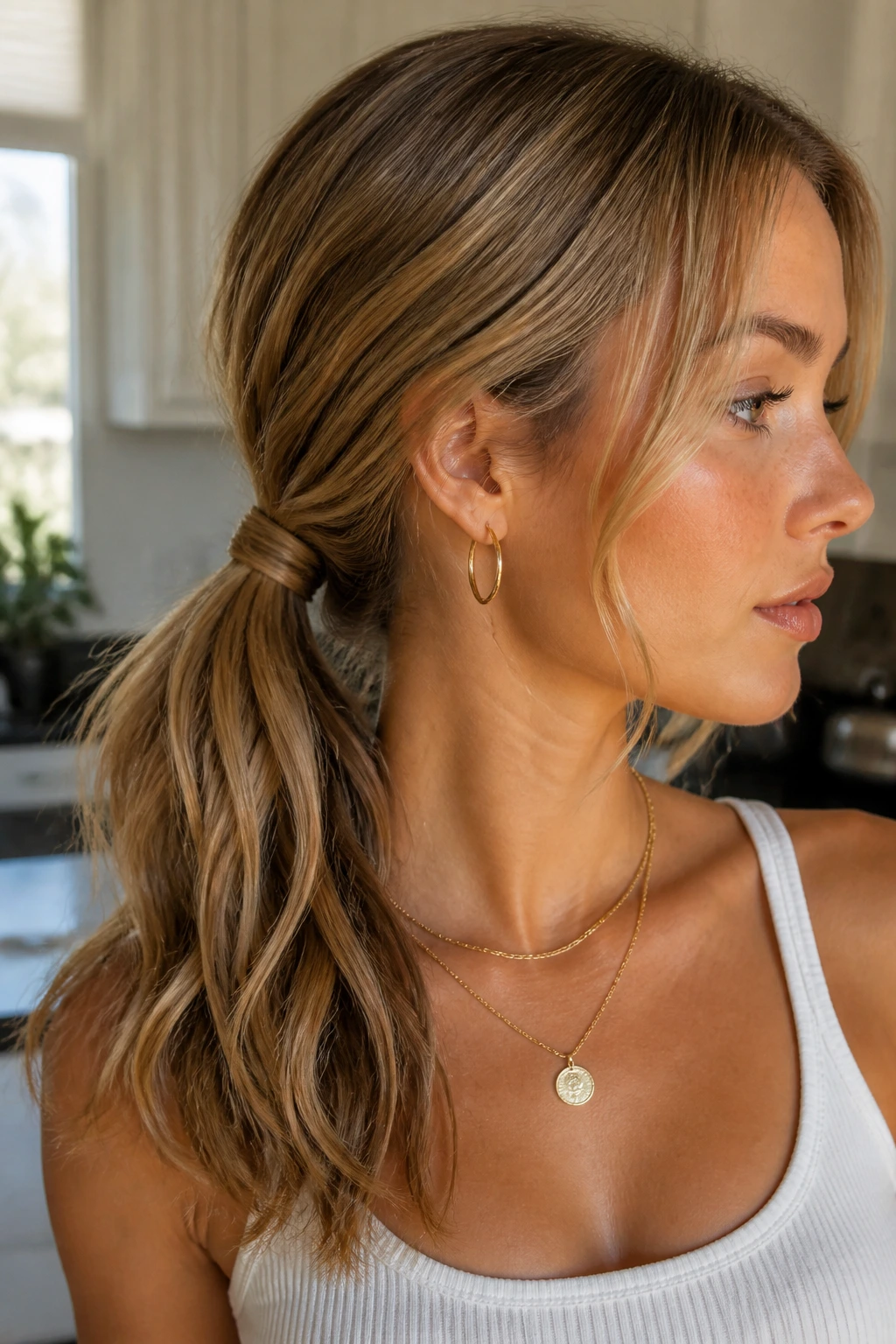
This is the most polished option in the bunch, but it still reads 90s because the shape is simple and the finish is soft. A low ponytail sits at the nape, keeps the length visible, and works especially well when the hair has loose bends rather than tight curls.
Smooth the top layer with a brush, tie the pony low with a clear elastic, then wrap a small strand around the base and pin it underneath. Leave the tail wavy and slightly separated with your fingers. If the pony feels too severe, pull a few thin pieces free around the temples. That one move makes the whole thing breathe.
This is the style I’d pick for a dinner, an interview, or any day when you want the hair to behave without losing the era.
12. Bandana-Headwrap Waves
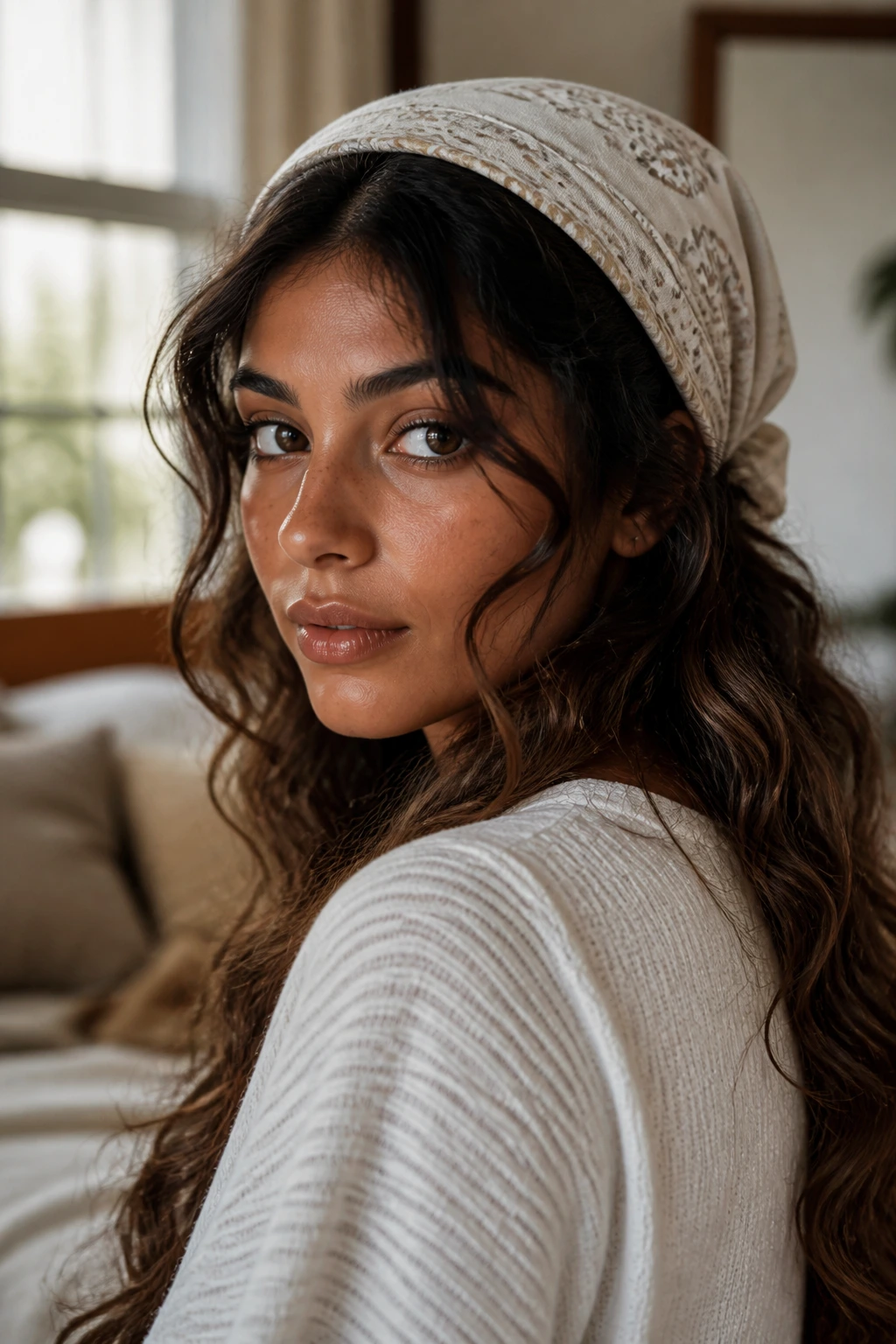
A bandana can make long wavy hair feel casual in a way a plain headband never quite does. Fold it into a narrow strip, place it across the hairline or just behind it, and tie it at the nape or under the hair, depending on how visible you want the knot to be.
The best part is that the bandana can tame the roots while leaving the waves free. That contrast gives the look shape. If the fabric is too stiff, it can push the hair too flat, so choose something soft enough to bend with the head. Cotton works. Slick synthetic fabric usually does not.
This is a good style for hot weather, travel days, or hair that has gone a little too puffy at the crown. It looks best with a little looseness around the face.
13. Mini Space Buns with Length Down
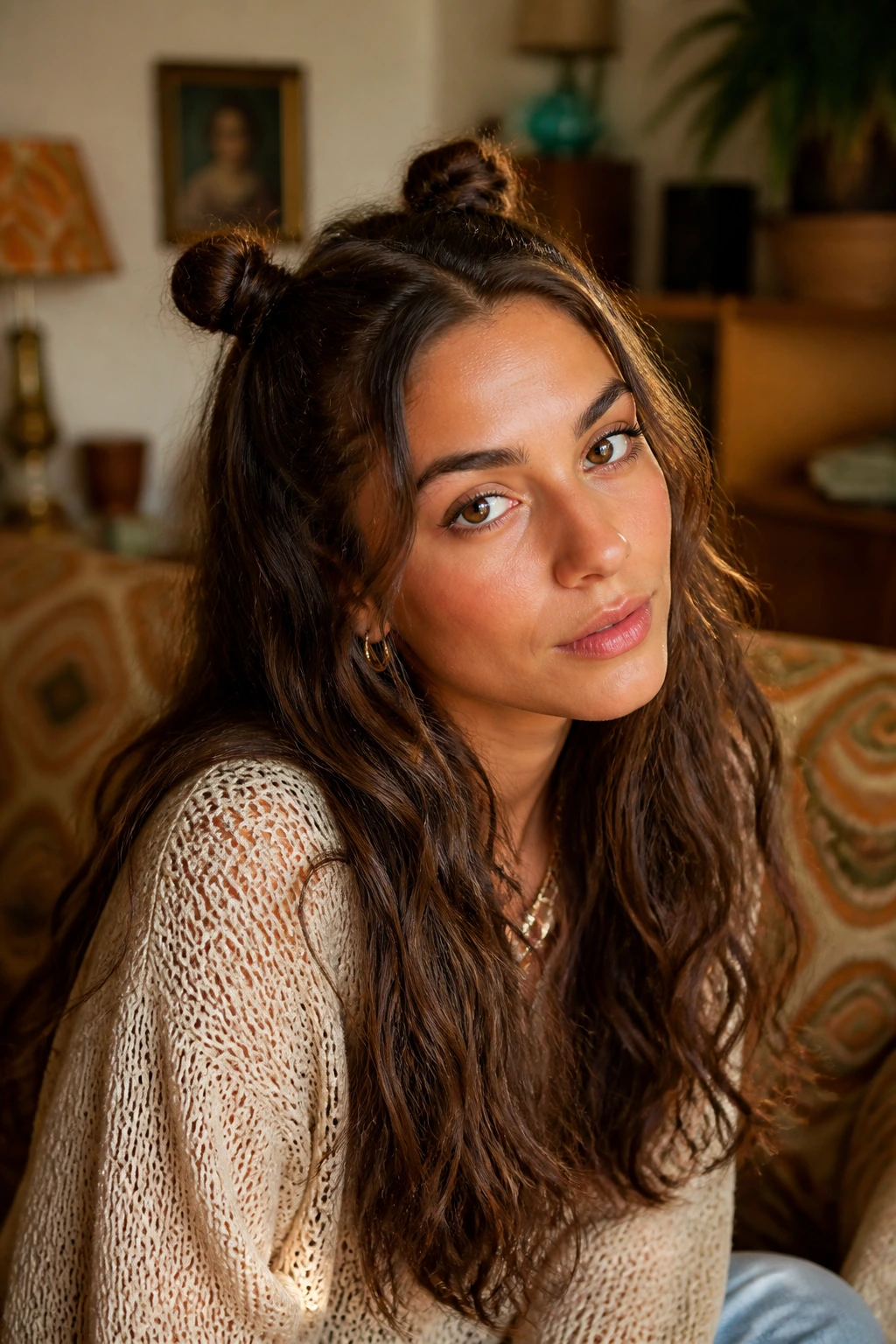
Tiny space buns on long hair are a very specific kind of 90s fun. The key is keeping the buns small and the rest of the length down, so the style reads playful rather than theatrical.
Split the top section into two parts, twist each one into a small bun, and secure them with elastics or pins. Leave the bottom half of the hair loose and wavy. If the buns get too big, they start overpowering the look. Small buns sit more like accents. That’s the sweet spot.
This style works especially well if your waves have some texture already. The hair below the buns keeps the look grounded, and the buns give you a little lift without pulling all the attention upward.
14. Braided Crown with Loose Ends
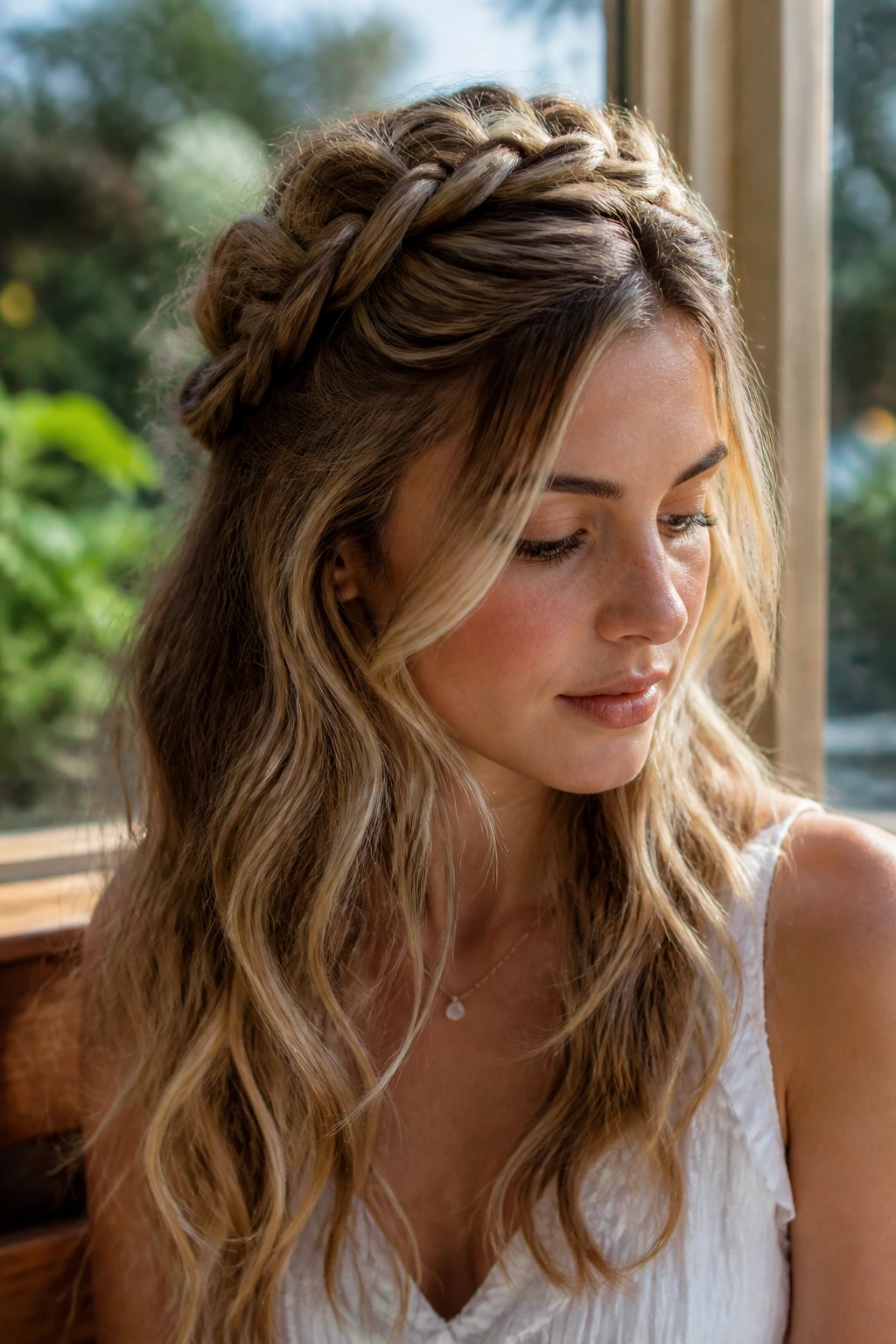
A braided crown keeps the front of the hair neat while leaving the lengths free, which is a nice balance for long wavy hair. It feels part sweet, part practical, and it has that soft 90s-girl energy that never looks forced.
Take a section from one temple, braid it across the top of the head, and pin it near the opposite ear. Leave the rest of the hair down. If the braid looks too tight, gently pull it apart with your fingers so it gets broader and less school-uniform. That tiny looseness makes it fit the rest of the hair better.
This one is good when you want the hair away from the face but do not want a full updo. It also keeps the top from puffing up in humidity.
15. Bubble Ponytail
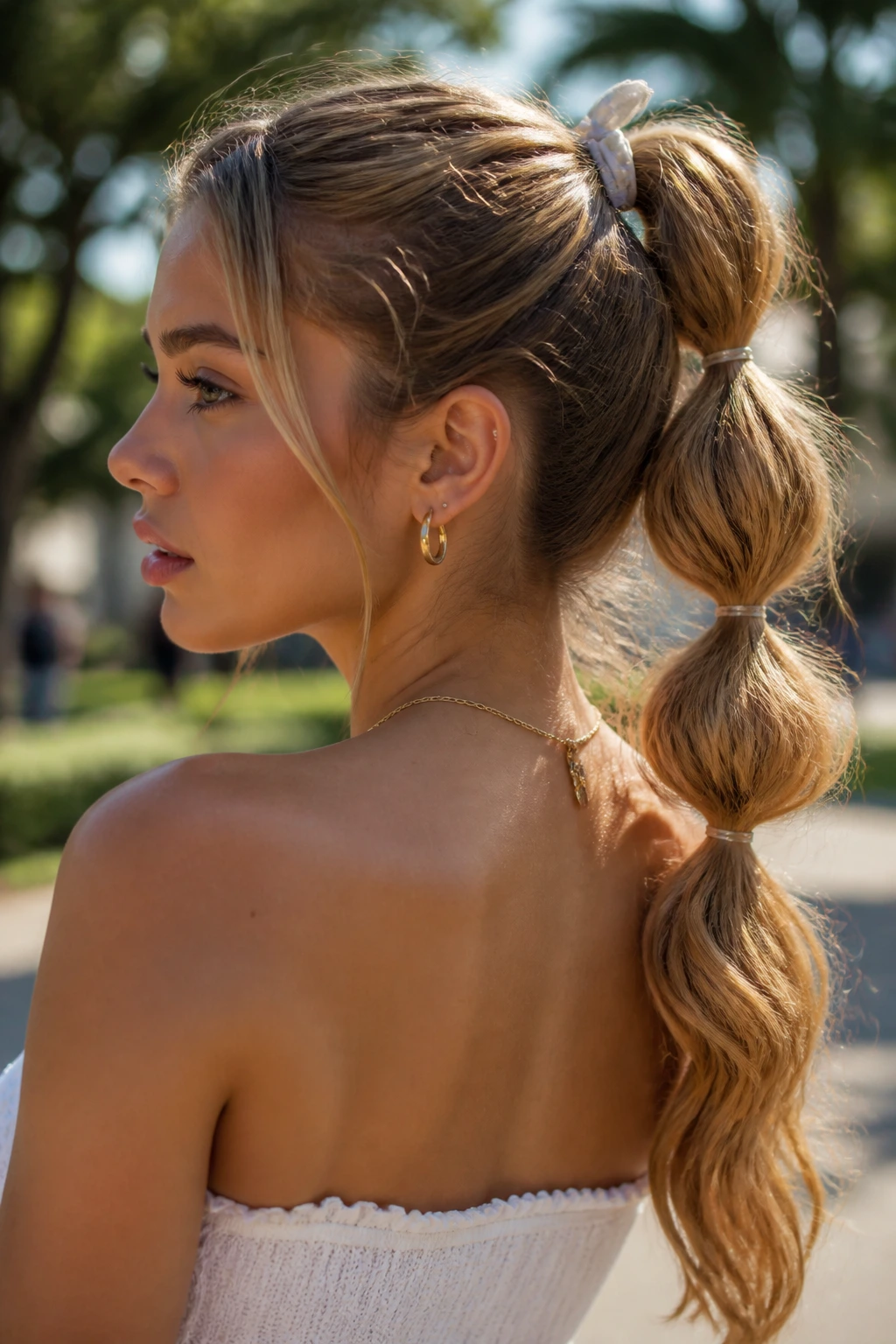
A bubble ponytail gives long hair structure without hiding its length. The 90s version is slightly playful and a little glossy, especially when the sections are puffed out between elastics.
Tie the hair into a mid or high ponytail, then add clear elastics every 2 to 3 inches down the length. Gently tug each section to make a rounded “bubble” shape. Don’t overdo the puffing, or the ponytail starts looking cartoonish. The bubbles should be distinct, but not stuffed.
This style looks best on hair with a bit of texture, because the waves help the sections hold their shape. A small ribbon or scrunchie at the base can make it feel less plain, but the pony itself is the main event.
16. Sleek Roots and Wavy Ends
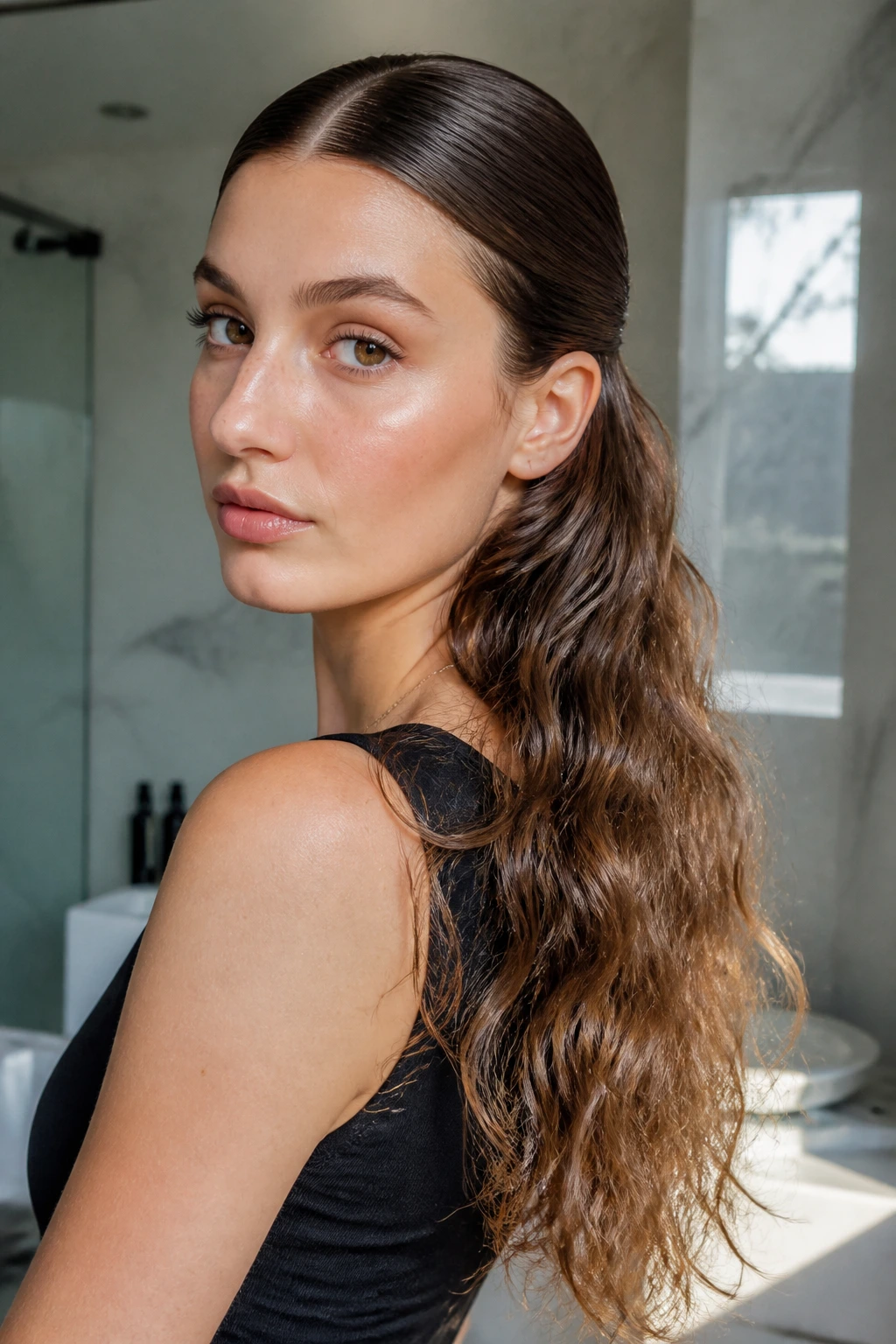
This one is all about contrast. The roots stay smooth and close to the head, while the lengths keep their wave and movement. That split is what makes it feel sharply 90s instead of overly romantic.
Use a brush and a light cream or serum to calm the top layer, then leave the ends alone or give them a tiny bend with a large barrel. The last few inches should still look lived-in, not ironed flat. If the crown gets too slick, the whole style loses its shape, so keep the smoothing limited to the top and sides.
The line to draw
Stop at the ears. Below that, let the hair have its own life. That boundary keeps the style clean at the top and loose at the bottom, which is exactly the tension that makes this look interesting.
17. Half Pony with Face-Framing Pieces
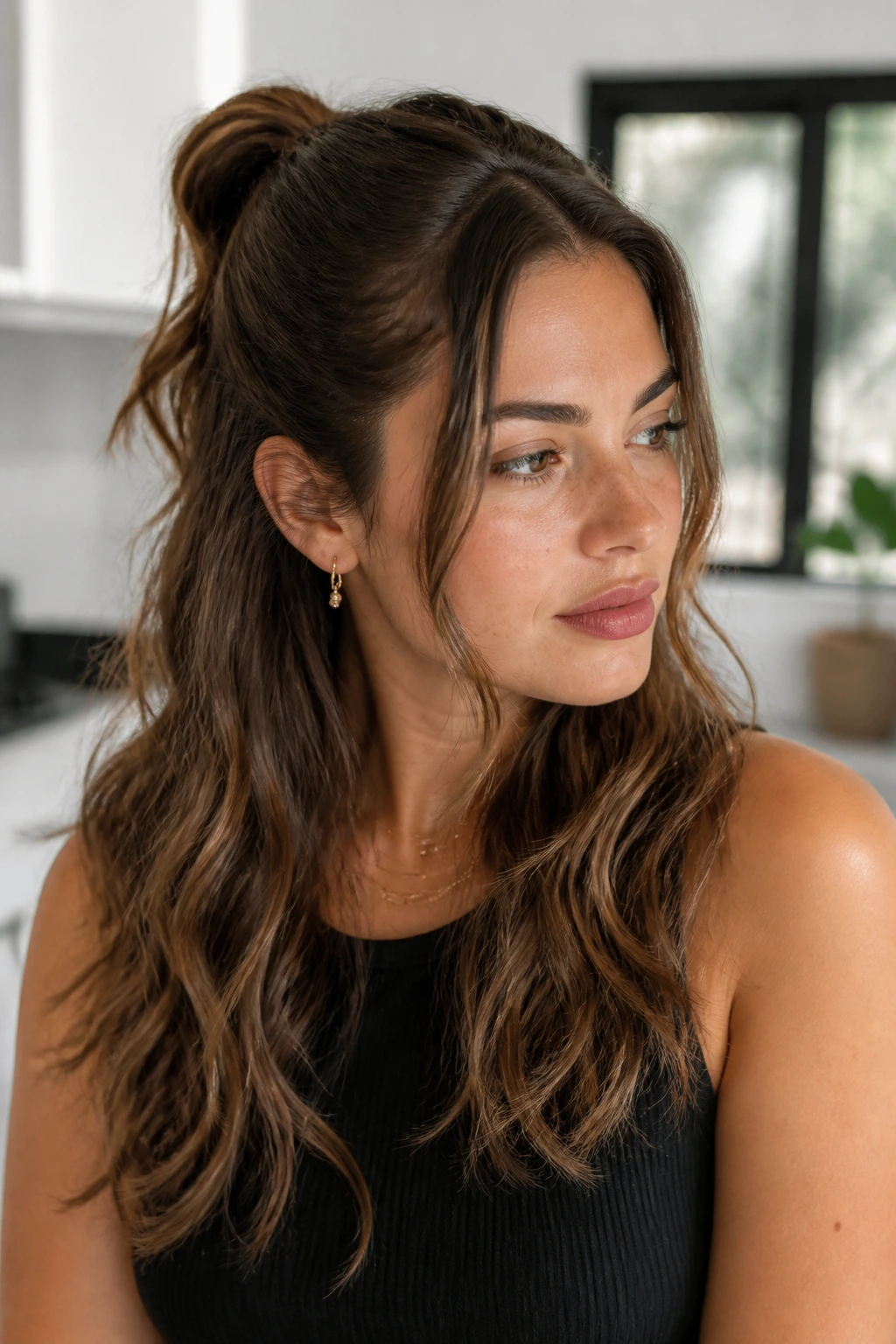
A half ponytail is the 90s middle ground between wearing it all down and tying it all back. On long wavy hair, it gives a little lift at the crown and keeps the length on display, which is a useful combination.
Gather the top half of the hair into a small pony at the back of the crown, but don’t pull it tight. Pinch the base a little after tying it to create lift. Then leave two front pieces loose so the face stays soft. If the pony looks too neat, tug the sides outward slightly. The shape should feel buoyant, not rigid.
This style works for school, errands, or anything that needs the hair out of the way without losing the wave pattern. It is simple, but it never reads plain when the proportions are right.
18. Rope-Braid Low Pony
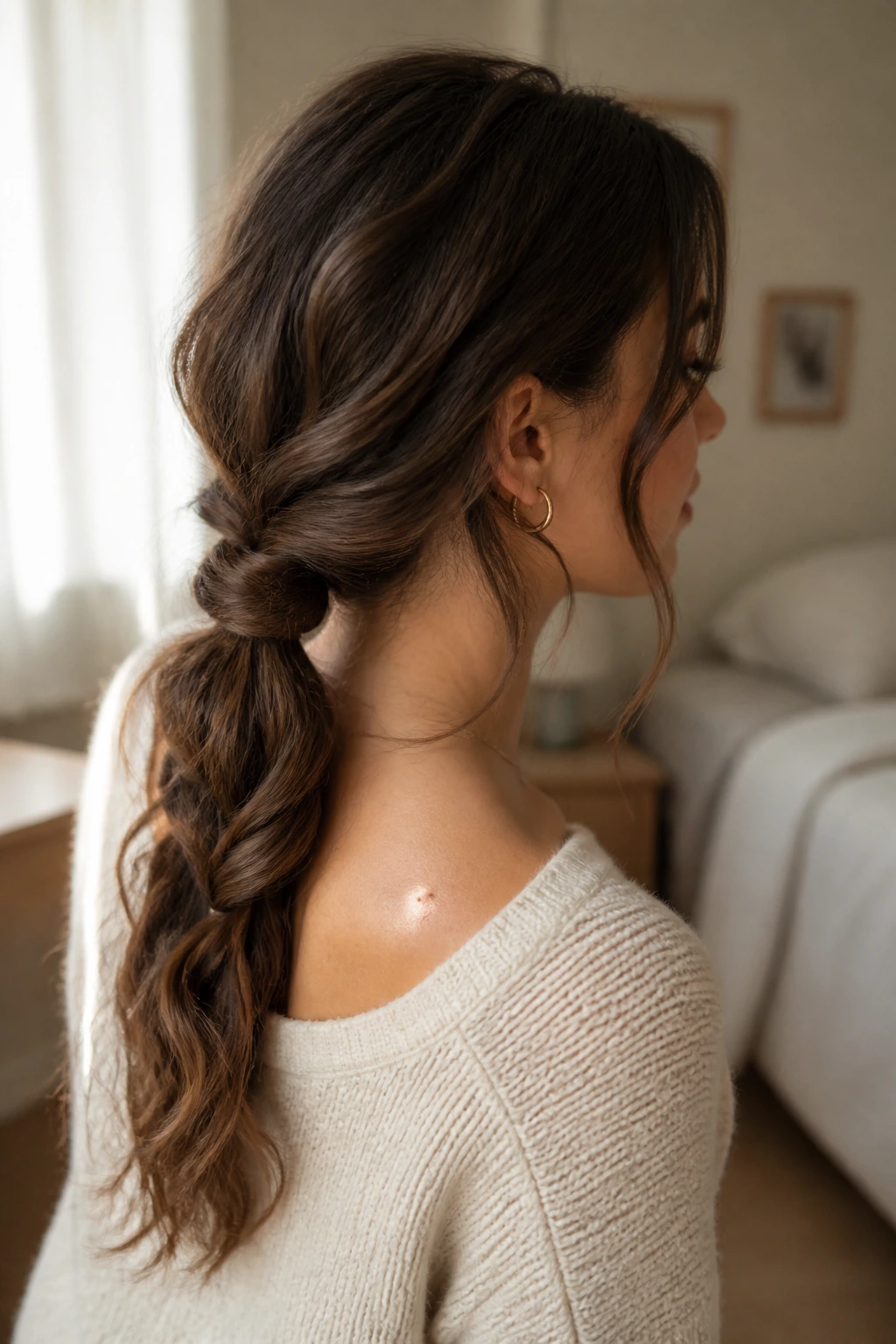
A rope braid takes half the time of a full braid and still gives long wavy hair that tidy 90s finish. It starts with a low ponytail, then turns into a twist that keeps the tail from tangling or puffing out too much.
Secure the pony at the nape, split the tail into two sections, twist each one in the same direction, then wrap them around each other in the opposite direction. Tie the end with a small elastic. The braid should sit firm but not tight, and a few loose strands around the face can stop it from feeling severe.
This style is a good pick if your waves are thick and want to spread out. The rope braid reins them in without flattening them into a rope that feels too serious.
19. 90s Blowout with Curtain Fringe
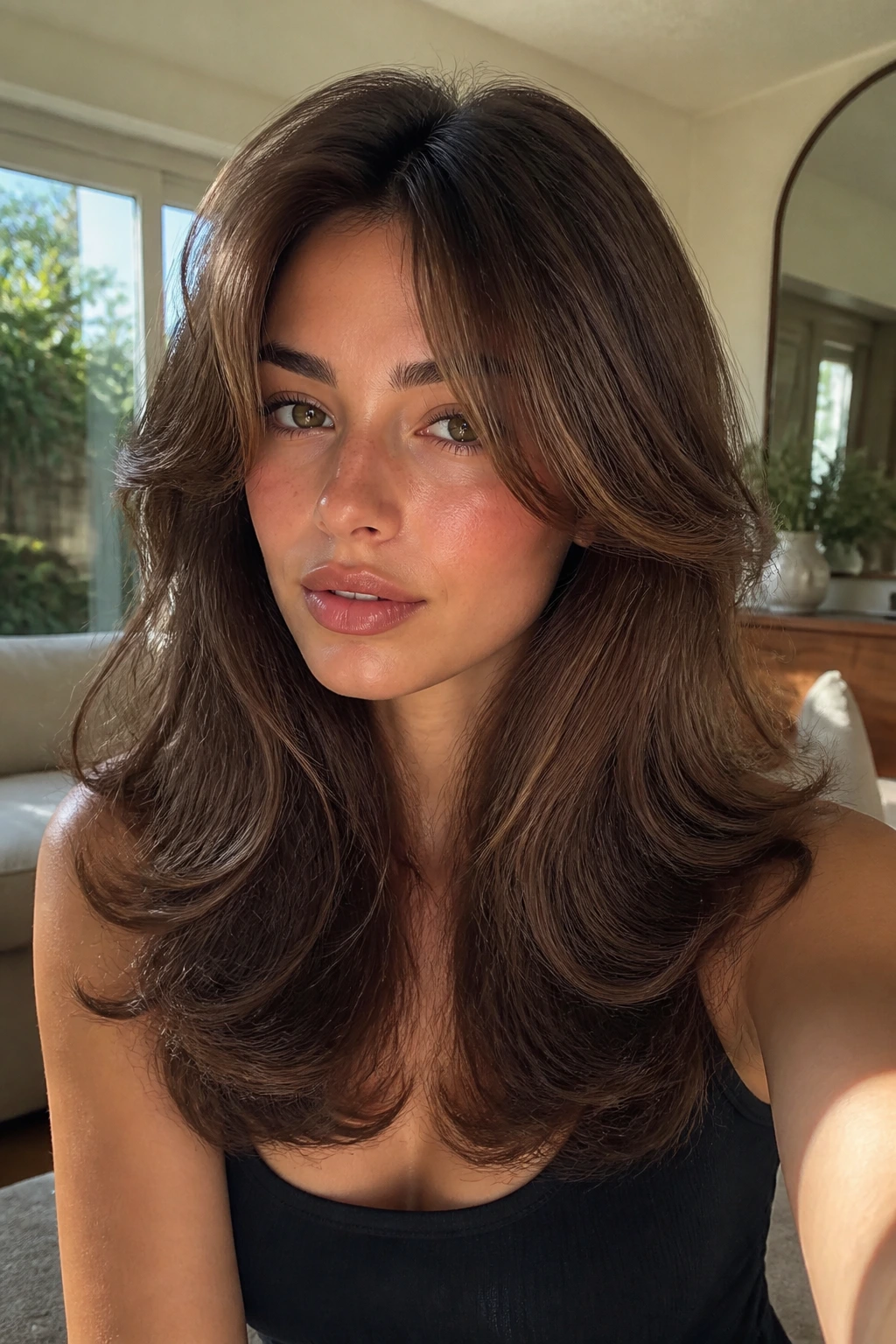
This is the closest thing to a salon-fresh 90s head of hair. Big root lift, soft curtain fringe, rounded movement through the sides, and ends that turn under just enough to frame the shoulders.
Use a round brush and blow-dry the fringe away from the face, then lift the roots at the crown with the brush or velcro rollers while they cool. The lengths can stay smoother than the other looks here, but they should still keep a little bend. If the blowout gets too polished, it starts losing the lived-in shape that makes it feel right.
This style is the one to choose when you want volume without chaos. It takes more time, yes. It also gives the strongest 90s silhouette in the whole set.
20. Double Mini Braids Around the Face
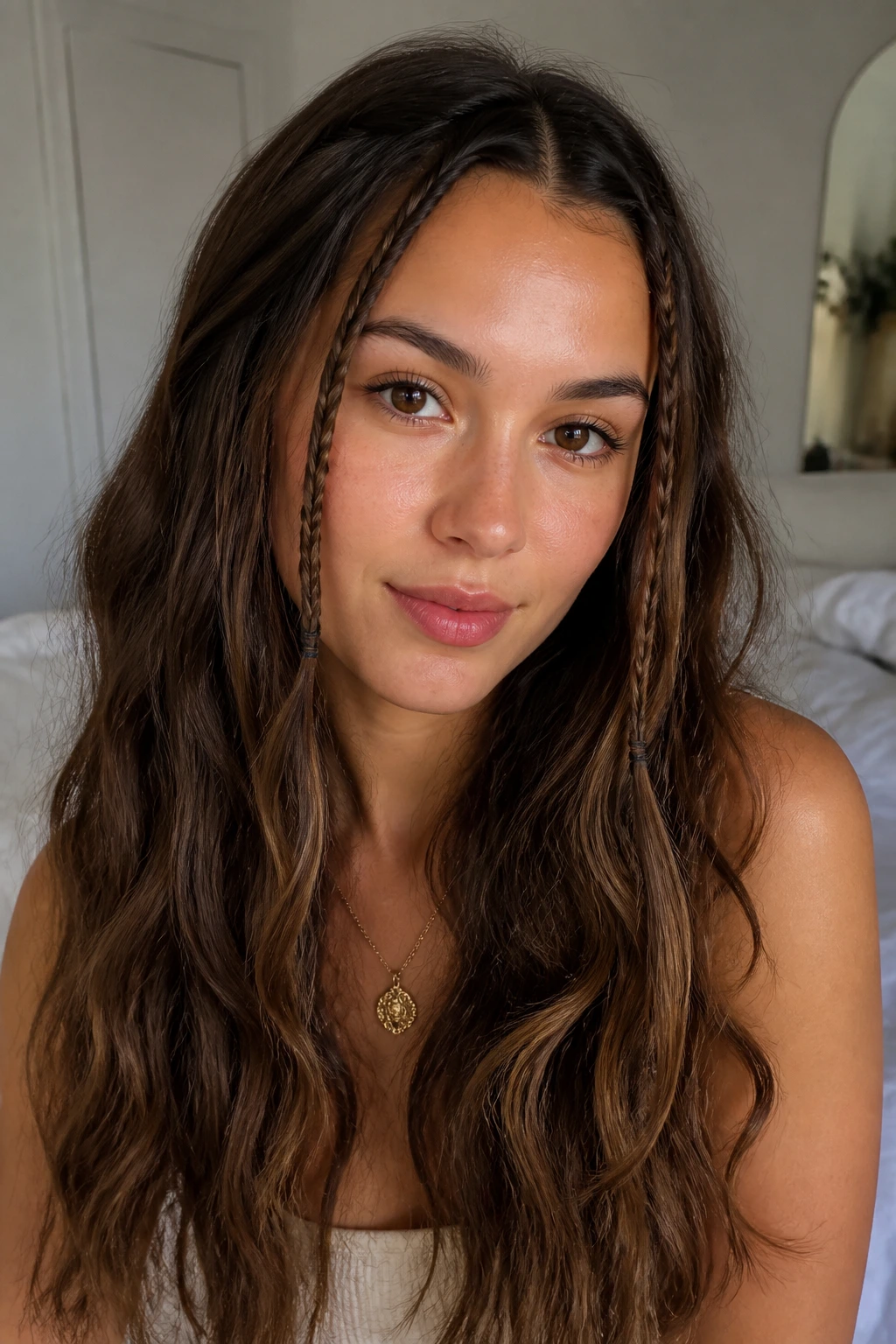
Two thin braids near the temples can do a lot without taking over the haircut. They keep the front pieces off the face, add a little structure, and bring the hair right back to that decade where small details mattered.
Braid just the front sections on each side and secure them behind the ears or near the nape with tiny elastics. Leave the rest of the hair loose and wavy. If the braids are too thick, they start fighting the length. Thin braids read cleaner and feel more 90s because they sit like a detail, not a statement.
This one is easy to wear with a middle part or a soft side part. It also mixes well with other styles on this list, especially loose waves and half-up shapes.
21. Headband Tuck with Volume at the Crown
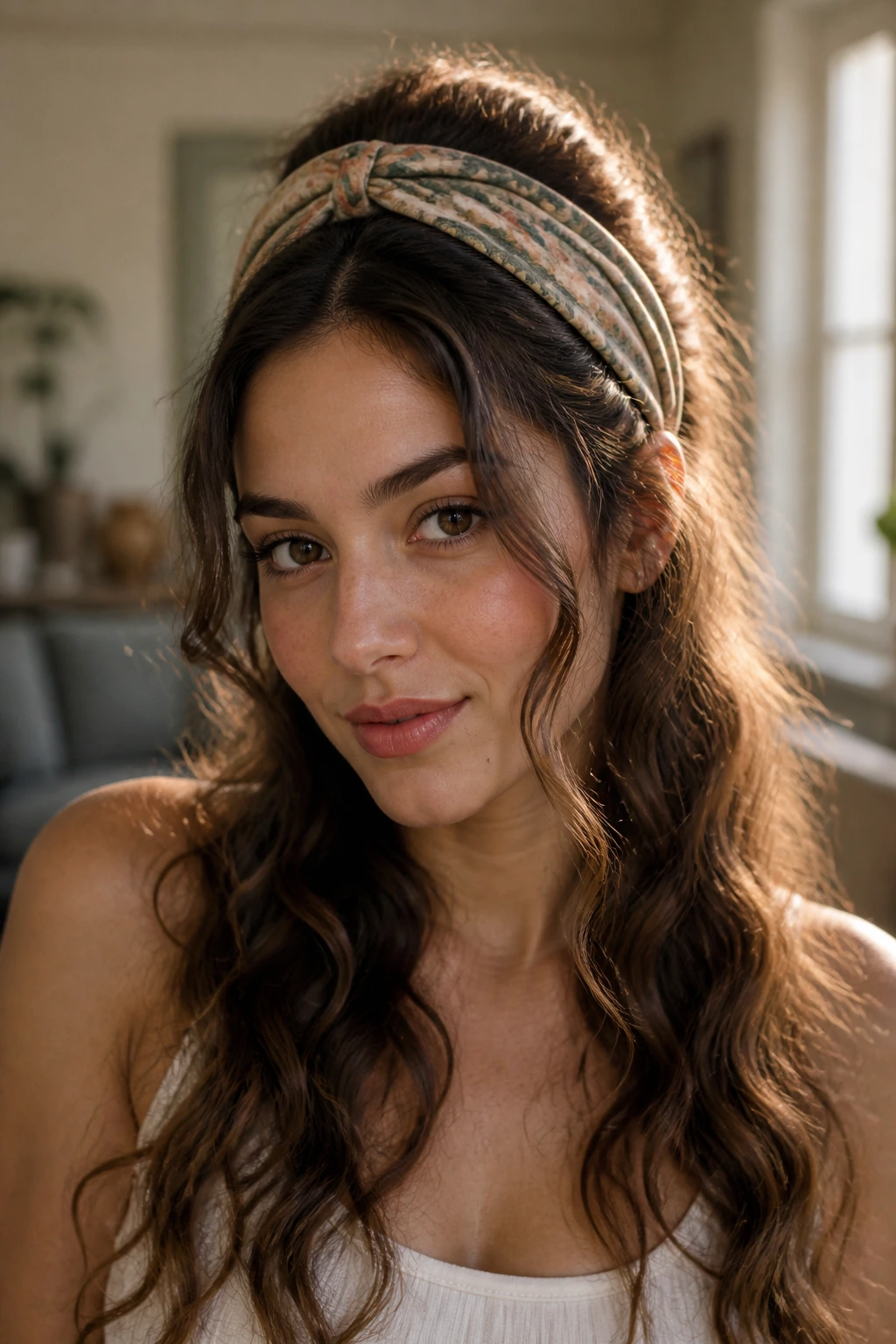
A fabric headband can make long wavy hair look intentional in under five minutes. The important part is keeping the crown a little lifted so the band does not flatten everything down.
Place the headband an inch or so back from the hairline, then gently pull a bit of hair forward over it at the crown. That soft puff gives the style shape. Leave the lengths loose and wavy, and let a few pieces escape near the temples. If the band is too tight, the face starts to look pinched. A softer fit sits better and feels more 90s.
This is a strong choice for busy mornings because it gives structure without much effort. It also works when the front pieces are not cooperating.
22. Twisted Half-Up Knot
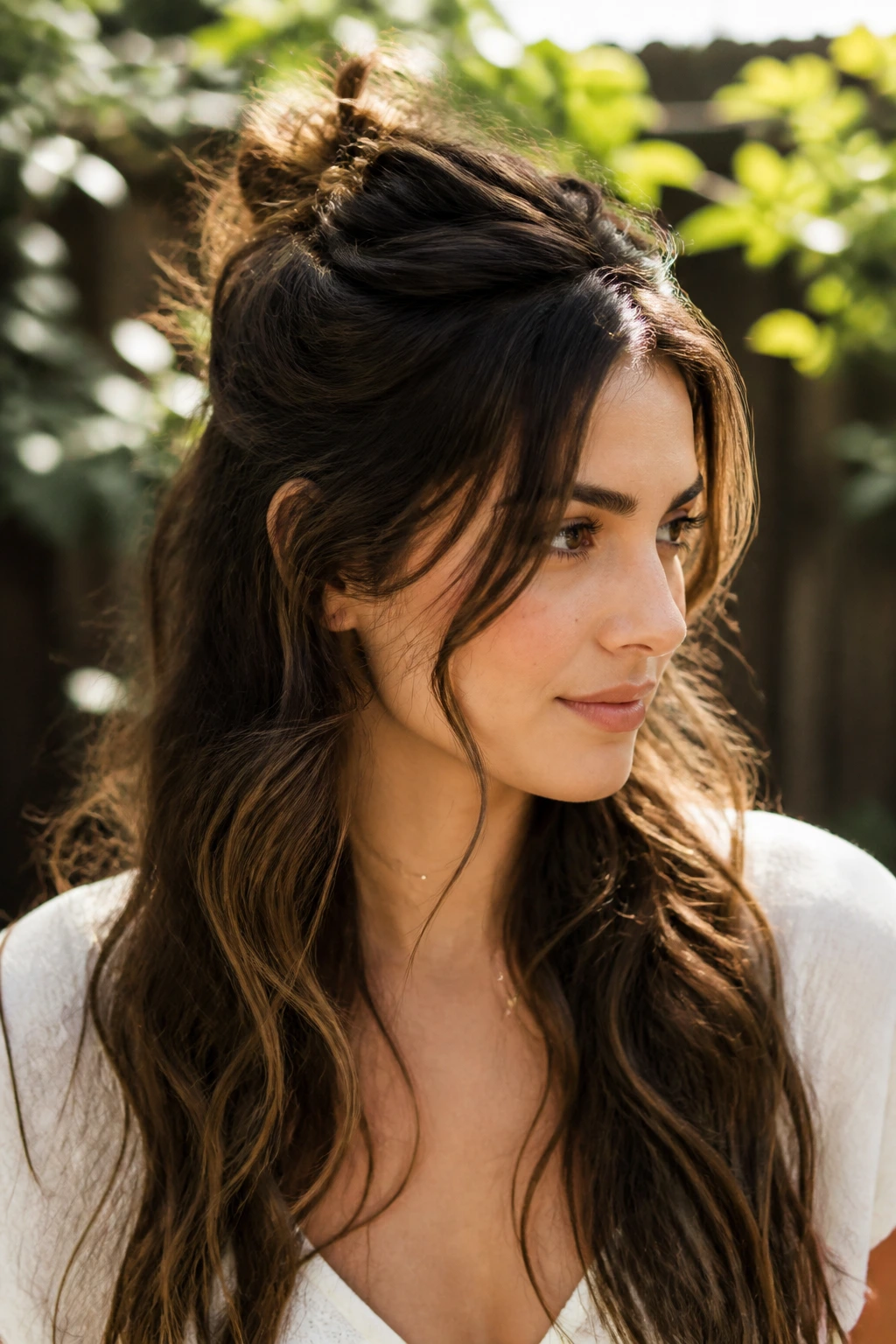
If you want something softer than a clip and faster than a braid, this is the one. It takes the upper half of the hair, twists it into a knot, and leaves the lower waves untouched.
Pull back the temples, twist the gathered section once or twice, and secure the knot with a pin or small elastic tucked underneath. Keep the twist loose enough that it has a little body. A tight knot looks flat and loses the easy mood the style needs. The knot should sit like a casual finish, not a knot you would use to hold a bundle of rope.
This is especially good for long waves that need a little order at the top. The lengths stay soft, and the knot adds just enough shape to keep the hair from drooping.
23. French Braid into Wavy Tail
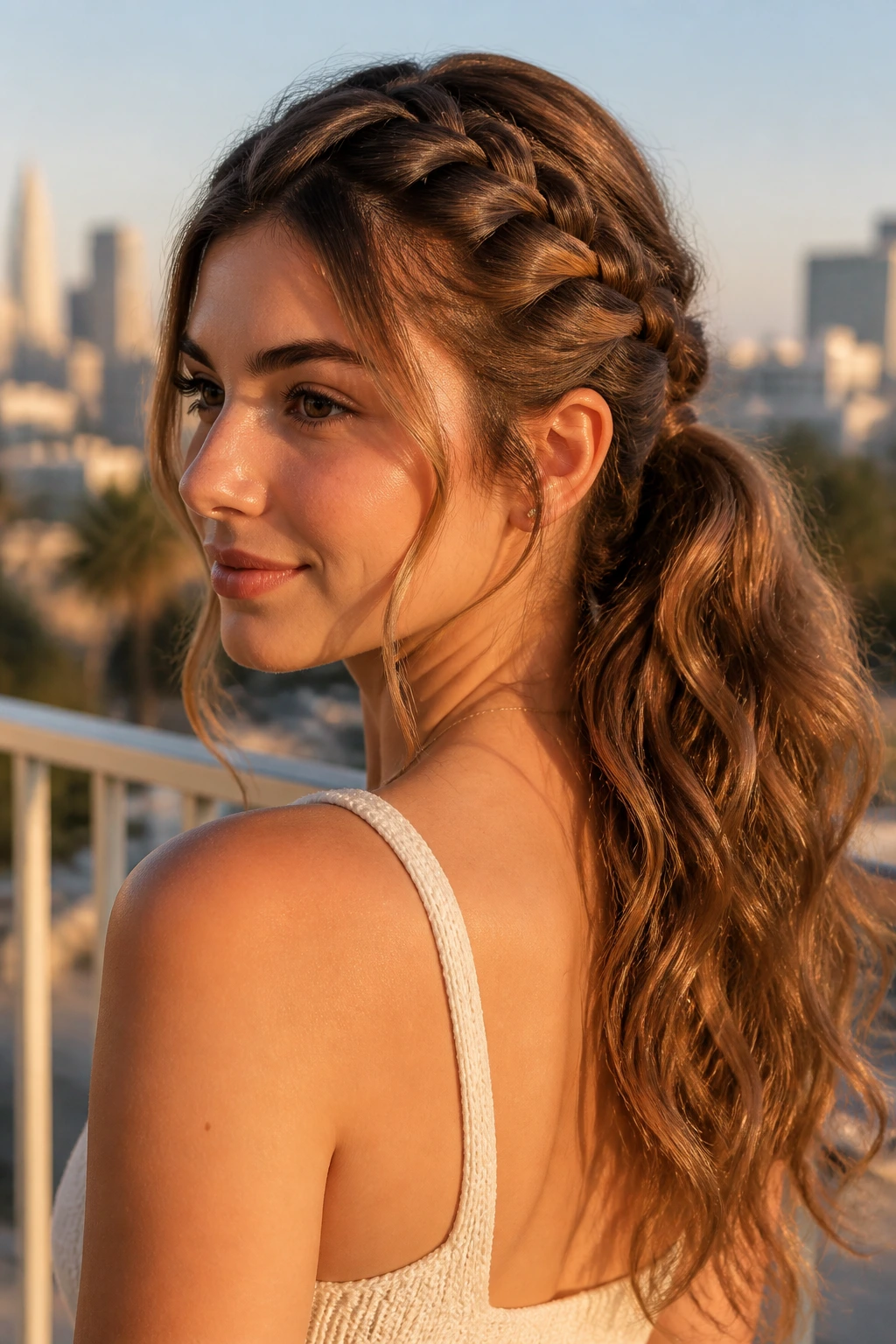
A French braid at the crown gives the top half of long hair a tidy backbone, then the loose tail keeps the style from feeling too fixed. That balance is what makes it fit the 90s so well.
Start the braid near the hairline, keep it loose enough to show texture, and stop once you reach the back of the crown. Then let the rest of the hair fall in waves. If the braid is too tight, the style turns stiff and loses its softness. A slightly looser braid looks broader and sits better against wavy hair.
Best use case
This is the style to reach for when you want the hair under control but still want the length visible. It holds up well, too. A little dry shampoo at the roots gives the braid something to grip.
24. Soft Pin-Curl Set Brushed Out
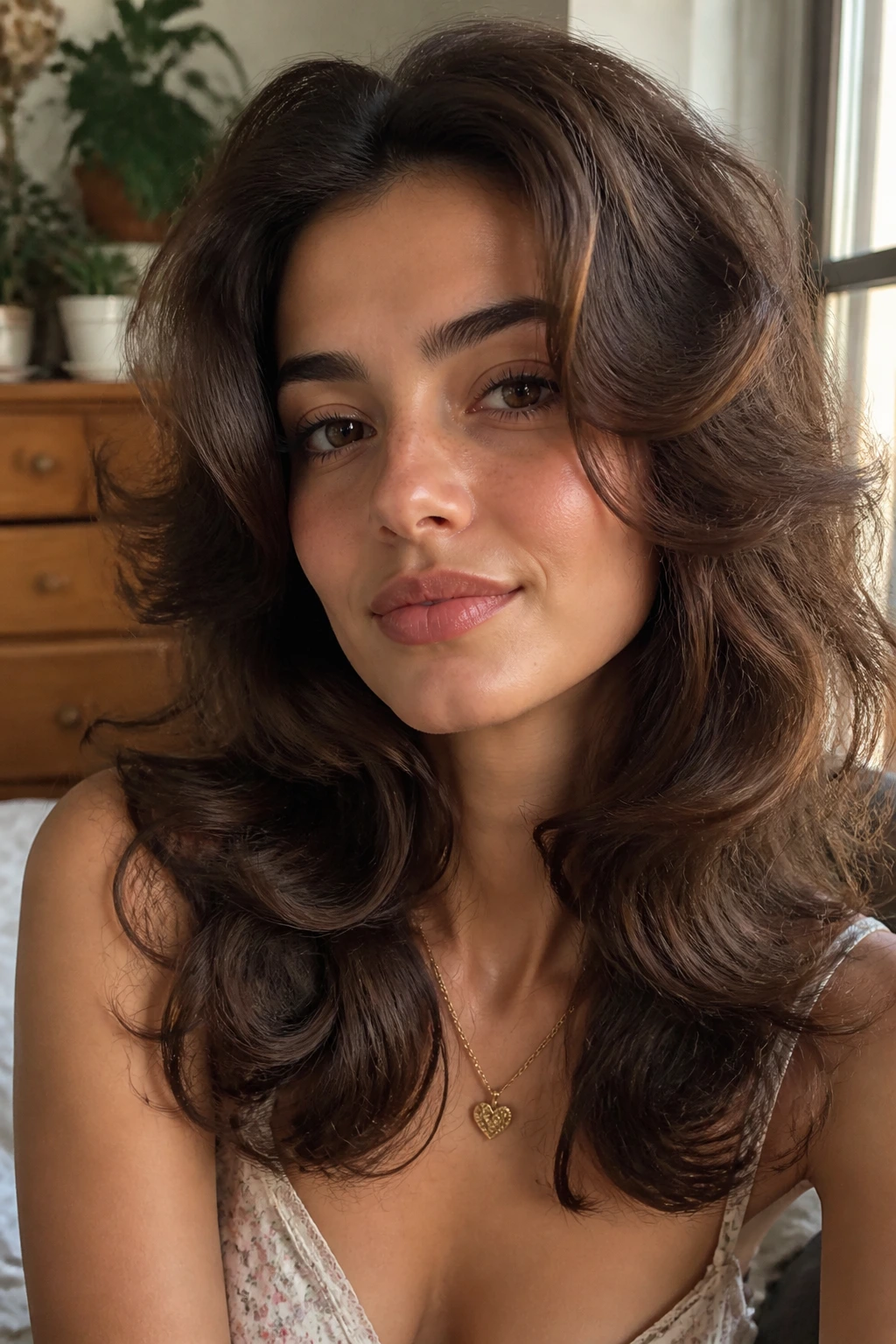
This is the most old-school move in the set, and it still works because long wavy hair takes to a brushed-out set so well. Pin curls cool into shape, then get brushed into wide waves that sit somewhere between glam and casual.
Wrap small sections around your fingers, pin them flat, let them cool completely, and brush them out only after they’ve set. The goal is not a tight curl. It is a broad wave with body at the root and movement in the middle. Once the pins come out, use a paddle brush or your fingers to separate the wave.
This look is especially nice when you want soft volume without a lot of visible tools or accessories. It takes patience, but not much skill, which is a pleasant combination.
25. Messy Top Knot with Long Tendrils
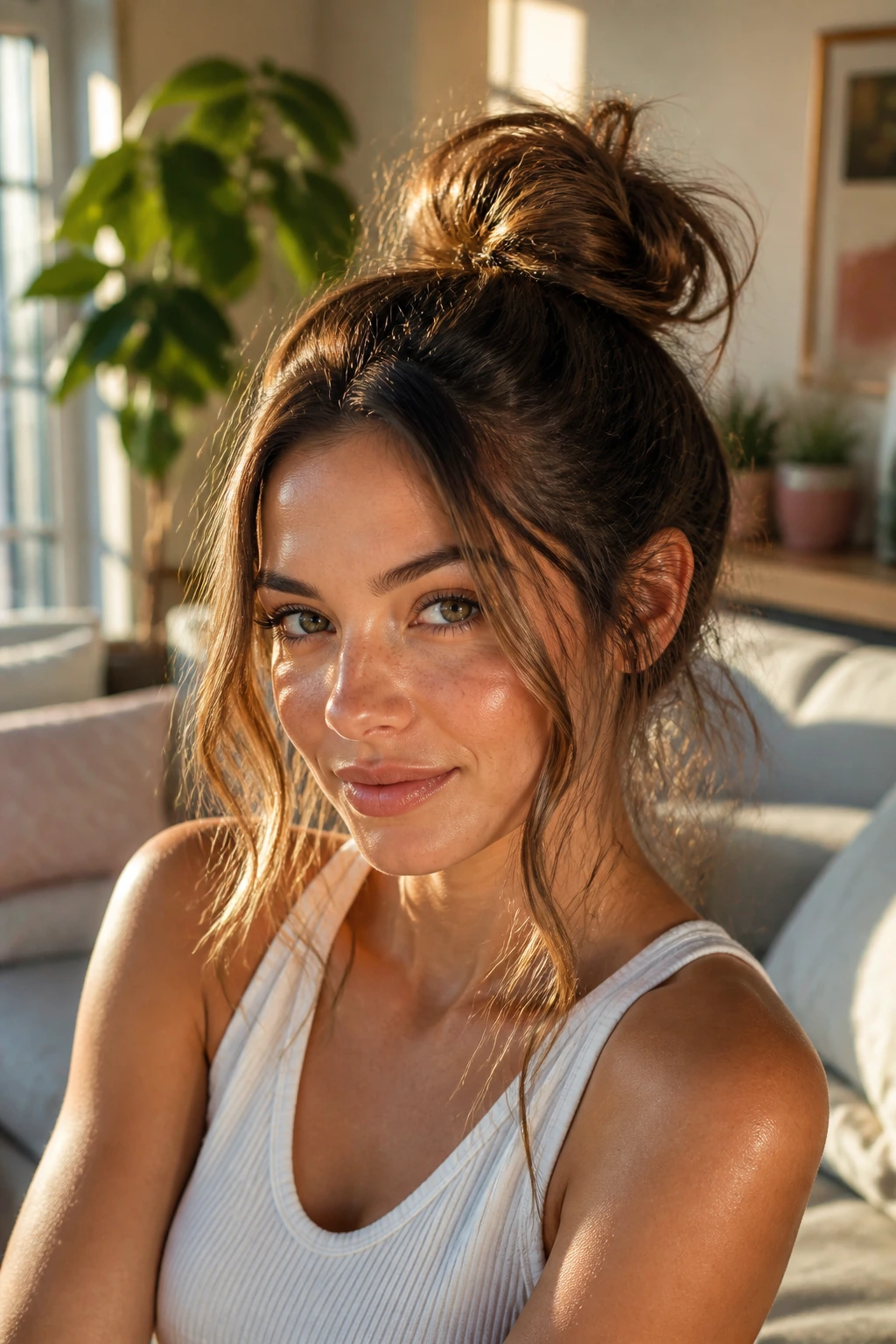
A top knot can still live in the 90s if you keep the knot high and the face pieces loose. The style is less about perfection and more about that quick, tossed-up shape that leaves a few things hanging on purpose.
Pull the top section into a loose bun on the crown, secure it lightly, and let two long tendrils fall around the face. The lower hair can stay down or be gathered loosely into the knot depending on how much length you want visible. If the bun sits too neat, loosen it with your fingers. You want the edges soft.
This is a good late-day style because it hides flat roots without erasing the wave pattern. It looks better when it is not overworked.
26. Big Side Clip Sweep
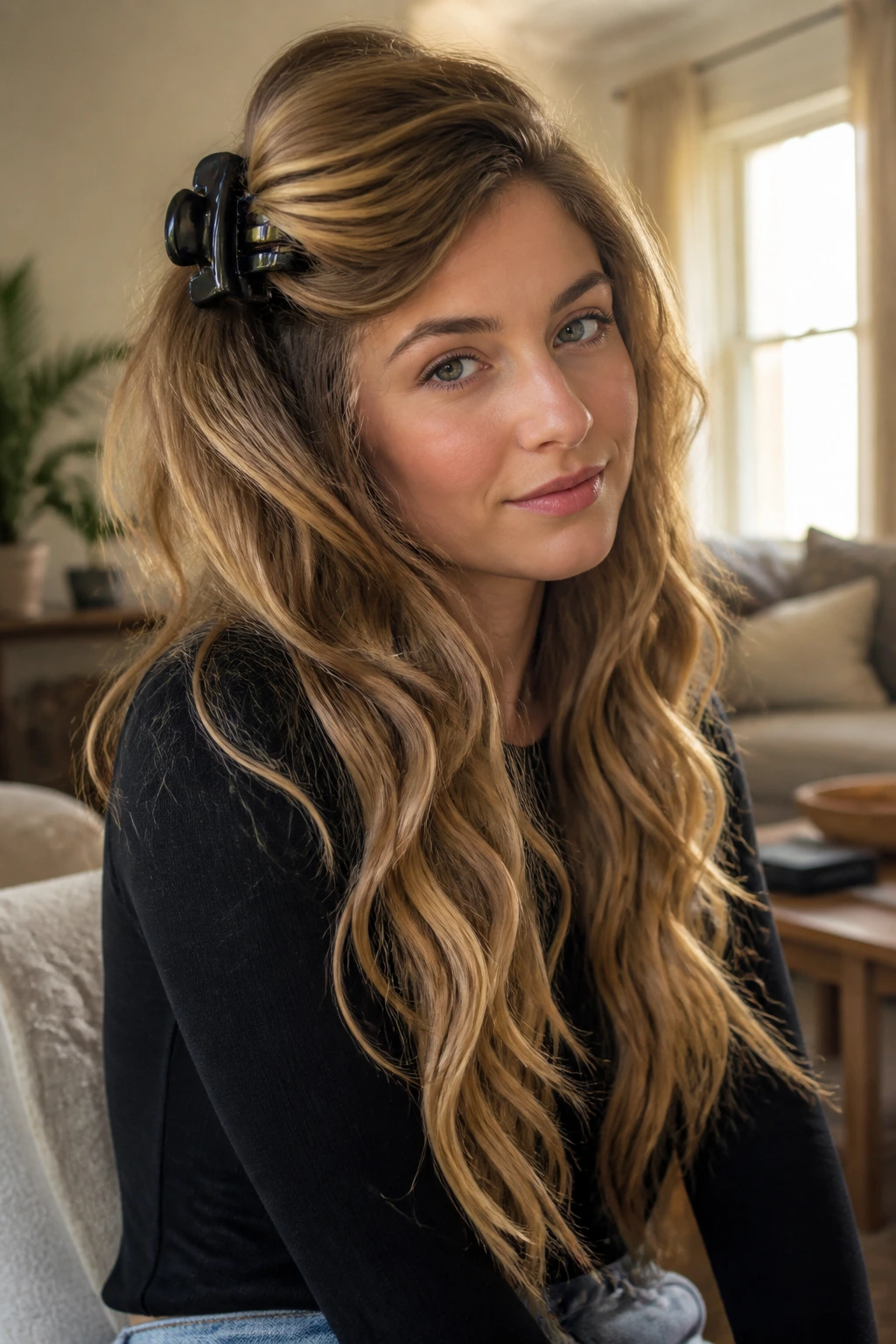
One oversized barrette or rectangular clip can do more than a whole row of tiny pins if you place it right. Sweep a large front section to one side, clip it back, and let the rest of the hair flow down in waves.
This style works best when the clip is visible. Hiding it defeats the point. Choose a matte or slightly translucent finish if you want the look to feel closer to the decade and less like a costume accessory. Keep the side you clip back smooth enough to stay in place, but not so smooth that the rest of the hair looks disconnected from it.
The side clip gives you asymmetry fast. That alone can make long wavy hair feel more styled without changing the whole head.
27. Grunge Center Part with Undone Texture
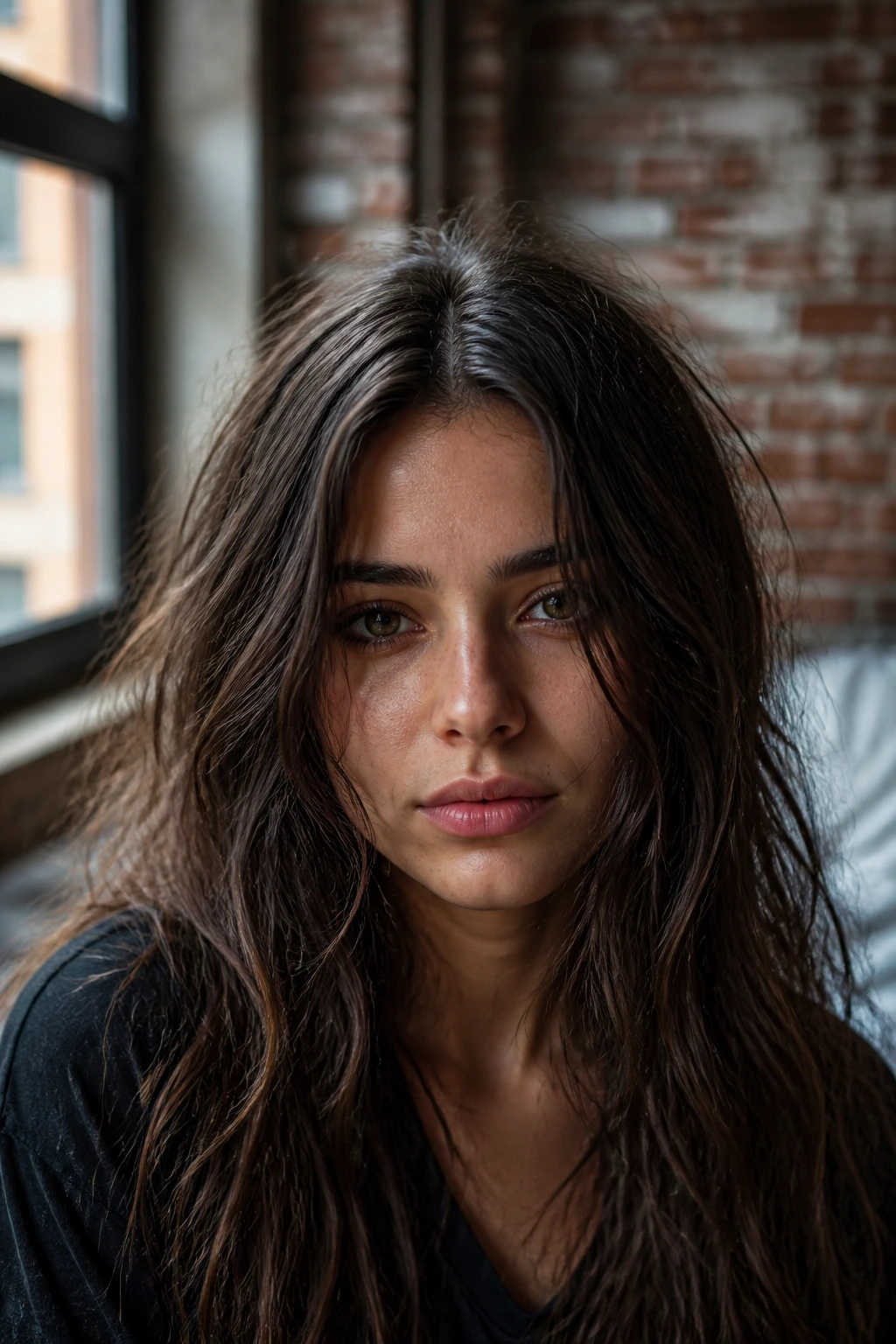
This is the messier cousin of the glossy center part. It keeps the middle line, but the finish is rougher, drier, and more lived-in, which is exactly why it feels right on long wavy hair.
Work in a little dry shampoo at the roots, rough-dry the hair with your fingers, and leave the waves a bit broken instead of brushing them into one smooth pattern. If you need to redefine a few front sections, use a wide barrel and stop before the ends get too polished. The goal is texture with shape, not a frizzy cloud.
This is the one for people who do not want shiny hair. It is blunt, a little moody, and very 90s in the best way.
28. Outflipped Ends and Full Volume
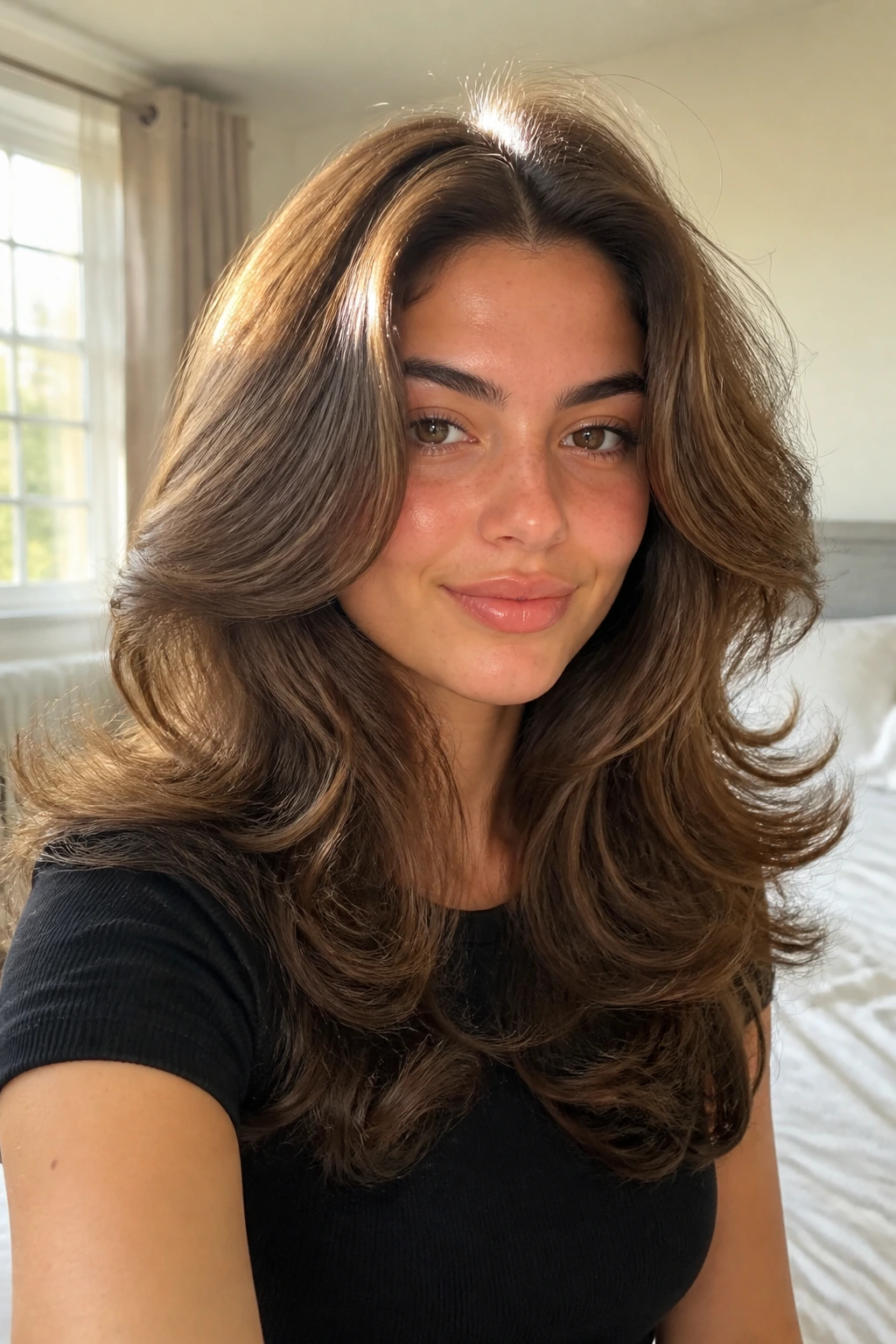
If you want the version people usually picture when they say 90s blowout, this is it. Big volume at the roots, soft body through the lengths, and ends that flip outward with enough movement to look deliberate.
Use a round brush or large barrel to push the ends away from the neck, then lift the crown and side sections so the hair sits away from the scalp. A side part can give it more drama, while a center part keeps it glossy and balanced. The best versions still let a few waves show through the mid-lengths, because that keeps the style from getting too stiff.
The final shape
Leave the ends slightly feathered, not curled into identical ringlets. That last bit of movement is what keeps the whole look from becoming a hard-edged blowout. It should feel full. Not frozen.
Why the 1990s Still Make Sense on Long Wavy Hair
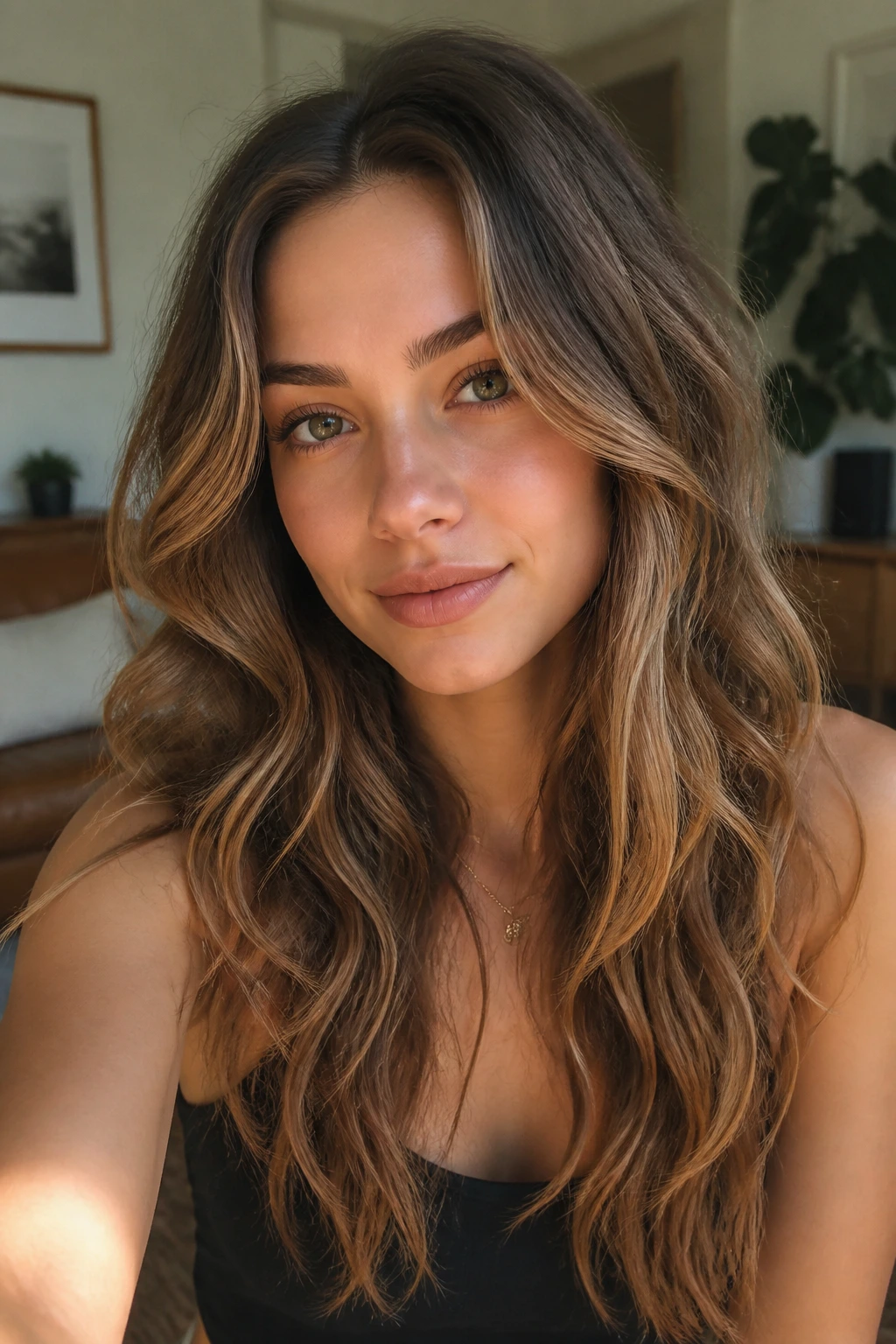
The 90s were obsessed with shape, and long wavy hair already gives you the right raw material. The wave carries body through the length. The length keeps clips, braids, and ponytails from collapsing. The front pieces can soften the face without needing much heat at all.
That is why these styles still feel useful instead of costume-like. They are not asking for perfect symmetry or ironed-out strands. They want a good part, some thoughtful volume, and one detail that changes the mood—maybe a scrunchie, maybe a side clip, maybe a few loose tendrils at the temples. Small moves. Real payoff.
And there is a practical reason they hang around: they survive real life. You can wear a half-up twist in the morning, loosen it by lunch, and turn it into a low pony or a clipped-up crown by evening. Long wavy hair makes that kind of shape shifting easier than straight hair does. The texture is already helping.
The Brushes, Clips, and Sprays That Matter Most
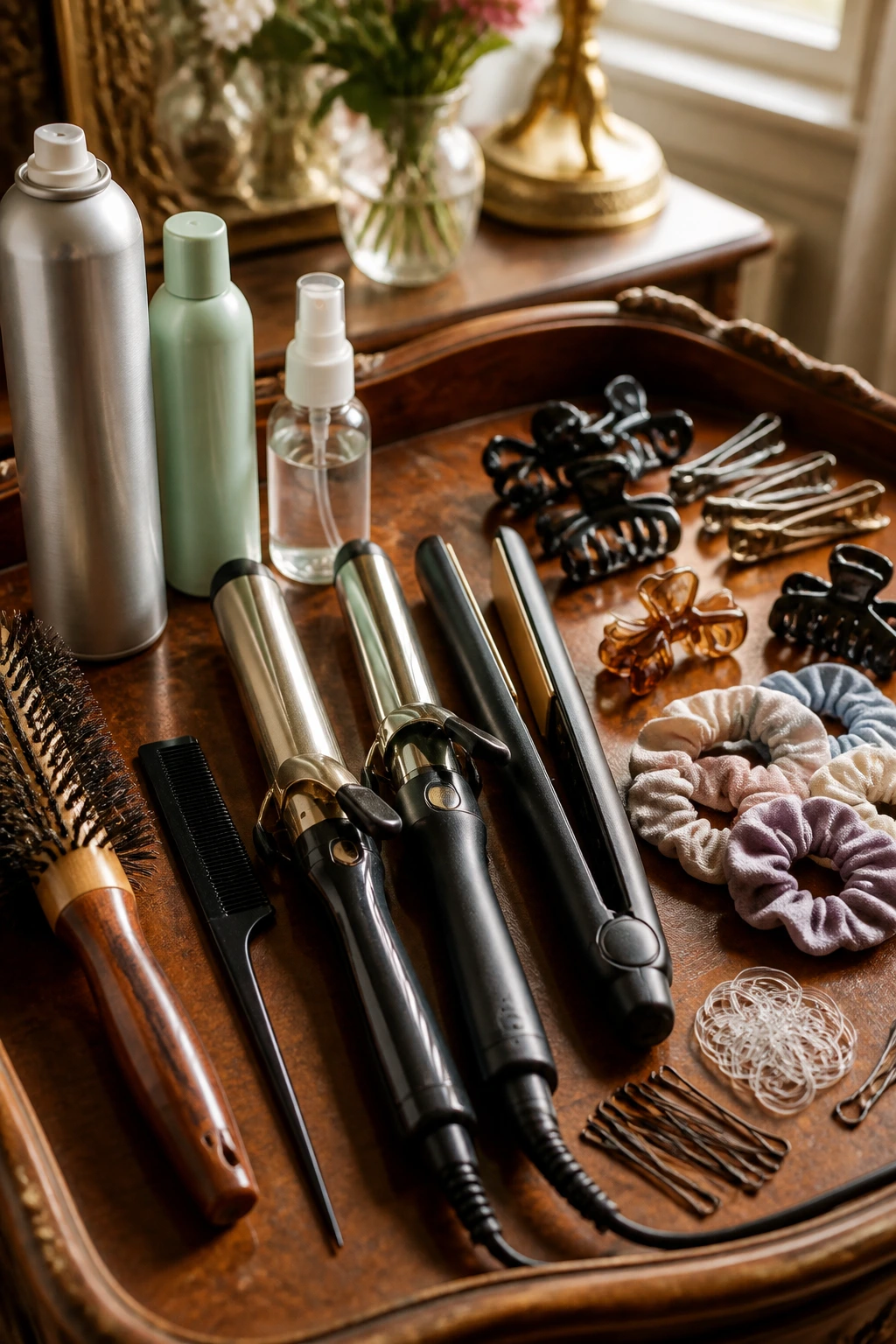
- Tail comb: Clean parts, zigzag parts, and neat sectioning all start here. The pointed end is worth having.
- 1-inch curling iron: Best for front tendrils, tighter bends near the face, and quick touch-ups.
- 1.25-inch curling iron or wand: A better match for long lengths when you want a softer, broader wave.
- Flat iron: Handy for flipping ends out, smoothing the top layer, or bending curtain bangs away from the face.
- Round brush: This is the tool behind feathered blowouts and lifted fringe. Bigger barrels create looser movement.
- Duckbill clips: Keep sections out of the way while you build height or set pin curls.
- Butterfly clips and claw clips: The era’s quickest half-up and twist styles need these.
- Scrunchies: Pick soft fabric or satin. Tight elastic bands leave hard dents that fight the look.
- Bobby pins and small clear elastics: Necessary for hidden anchor points, braid ends, and wrapped ponytails.
- Flexible-hold hairspray: Keeps the style moving. Hard-shell spray freezes waves in a way that looks wrong here.
- Dry shampoo: Useful for roots, grip, and second-day texture. Dark hair may do better with a clear formula.
- Heat protectant: Non-negotiable if you use a curling iron or flat iron, even for quick touch-ups.
What to Buy If You Want the Shape to Hold
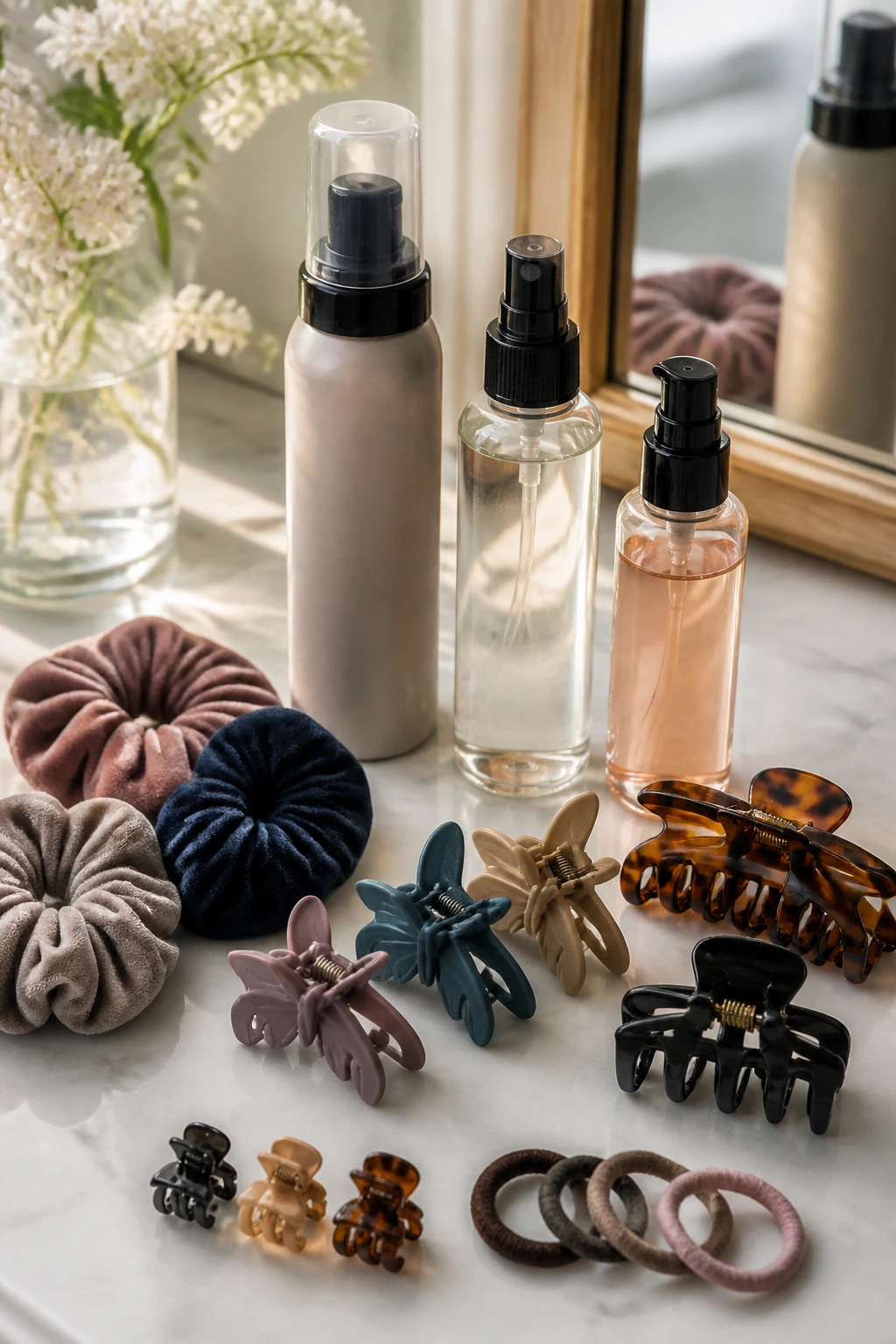
The product shelf matters here, but not in a fussy way. You want items that create grip without sanding the hair down to straw. A light mousse at the roots, a flexible spray, and a small amount of serum at the ends will get you farther than a heavy cream smeared through the whole head.
Accessories deserve the same kind of care. Matte butterfly clips feel more believable than shiny plastic when you want the style to read 90s instead of costume party. Scrunchies with a soft fabric finish sit better on long hair because they do not dig in and flatten the ponytail. If your hair is thick, choose clips with a stronger spring. If your hair is fine, choose smaller clips and lighter elastics so the style does not slide under its own weight.
One thing I would skip: oily styling creams near the crown. They make the top collapse fast. Put them only on the last few inches if the ends need smoothing.
Picking the Right 90s Style for Your Face and Wave Pattern
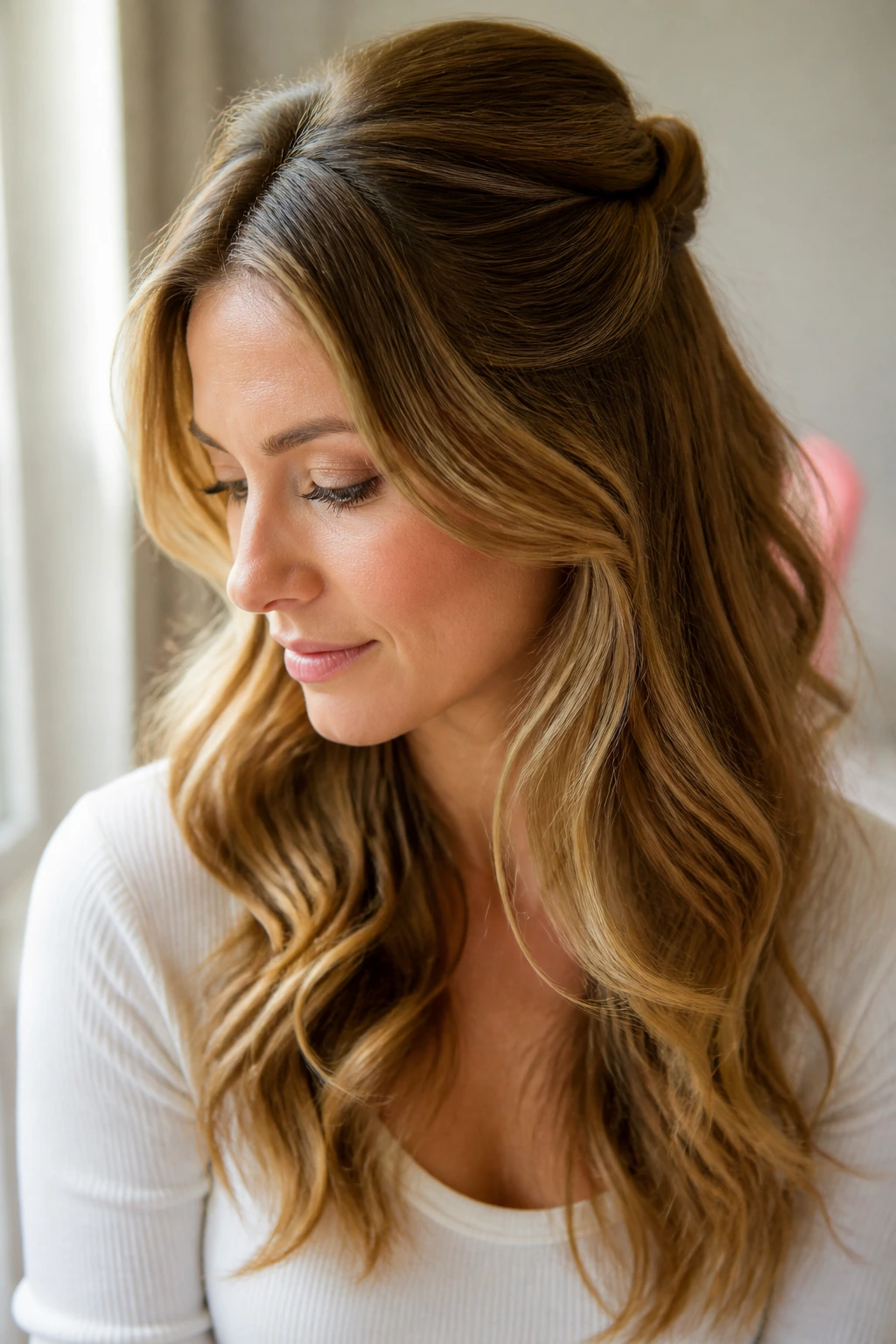
Loose waves and finer hair
Go for half-up styles, side clips, headbands, and low ponies with wrapped strands. These shapes give the hair a little lift without demanding too much density. A bubble ponytail can also help because the tied sections create the illusion of more body.
Stronger waves and thicker hair
Choose braid-based styles, claw clips, low ponies, and sleeker root sections. Thick waves can hold more structure, but they also puff faster, so keeping the crown controlled makes the shape read cleaner. The rope braid and French braid into a tail are especially good here.
Longer faces
Side parts, curtain bangs, and wide blowouts are your friends. They add width and keep the hair from pulling the face straight down. Avoid ultra-sleek top sections with no front pieces; they can make the face look longer than you want.
Rounder faces
Center parts can work, but give the crown some height and leave narrow tendrils around the cheeks. Half-up twists and feathered blowouts are useful because they build vertical shape while still softening the face.
If you wear layers or bangs
Use them. Seriously. Long layers make feathered blowouts and brushed-out waves look better because they keep the lengths from sitting like one heavy sheet. Bangs, especially curtain bangs, can carry a whole 90s look on their own.
How to Prep Long Wavy Hair So the Style Lasts
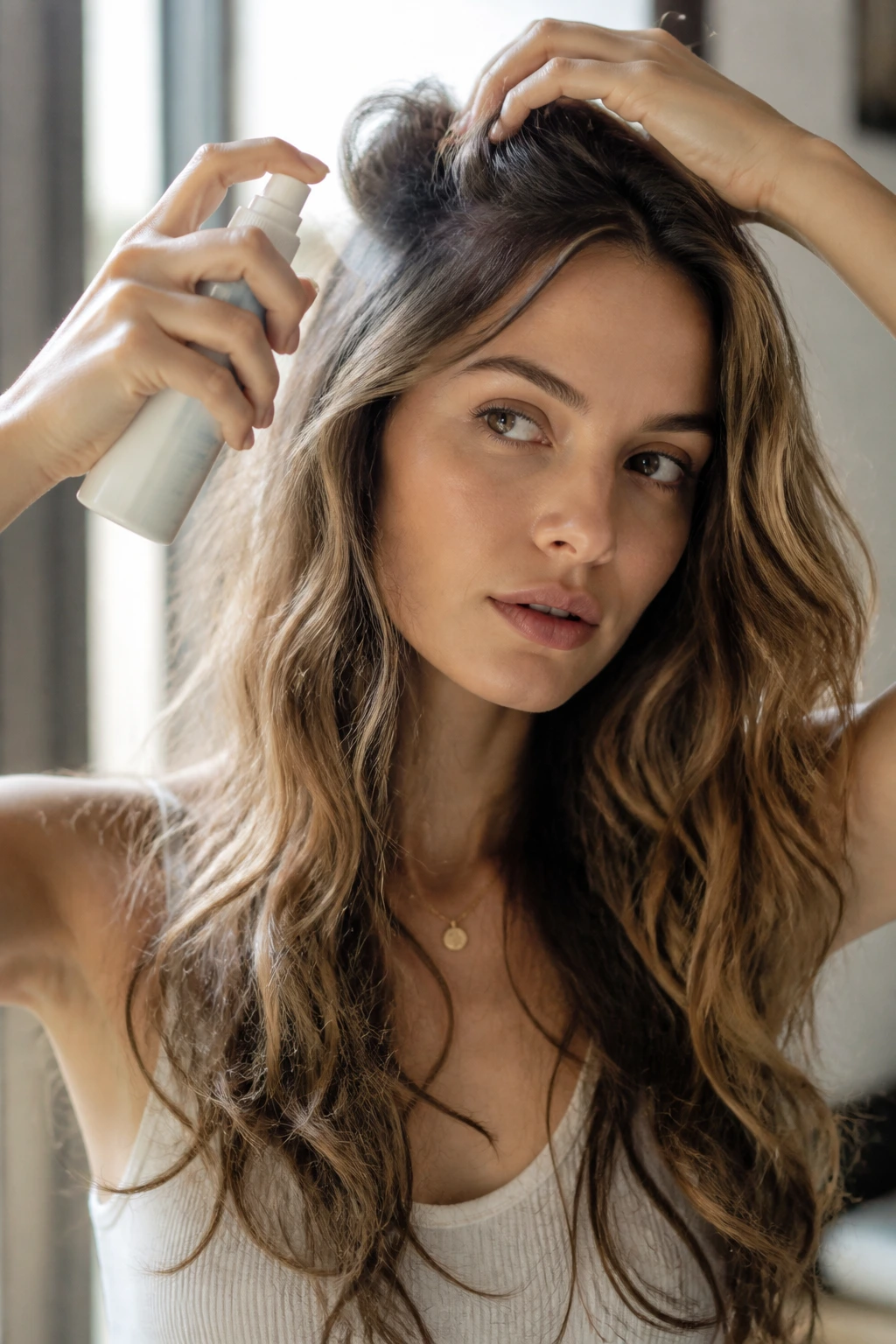
The best 90s styles do not start with squeaky-clean hair. They start with hair that has some grip. If you wash right before styling, the roots can be too soft and the clips slide. If the hair is day-two or day-three, it usually holds shape better and needs less product.
Begin with heat protectant on dry hair, then add a light mousse or root spray at the crown if you need lift. Blow-dry the roots first. That matters more than most people think. Once the roots are flat, the rest of the style spends the day trying to rescue them. Use a round brush only where you need shape, not on every strand.
If your waves are frizzing, smooth the outer layer with a paddle brush and keep the ends somewhat textured. Over-smoothing is where long wavy hair starts to lose its personality. One firm pass is enough. After that, the hair should still look like hair, not a polished surface.
Small Tweaks That Make the Look Feel Intentional
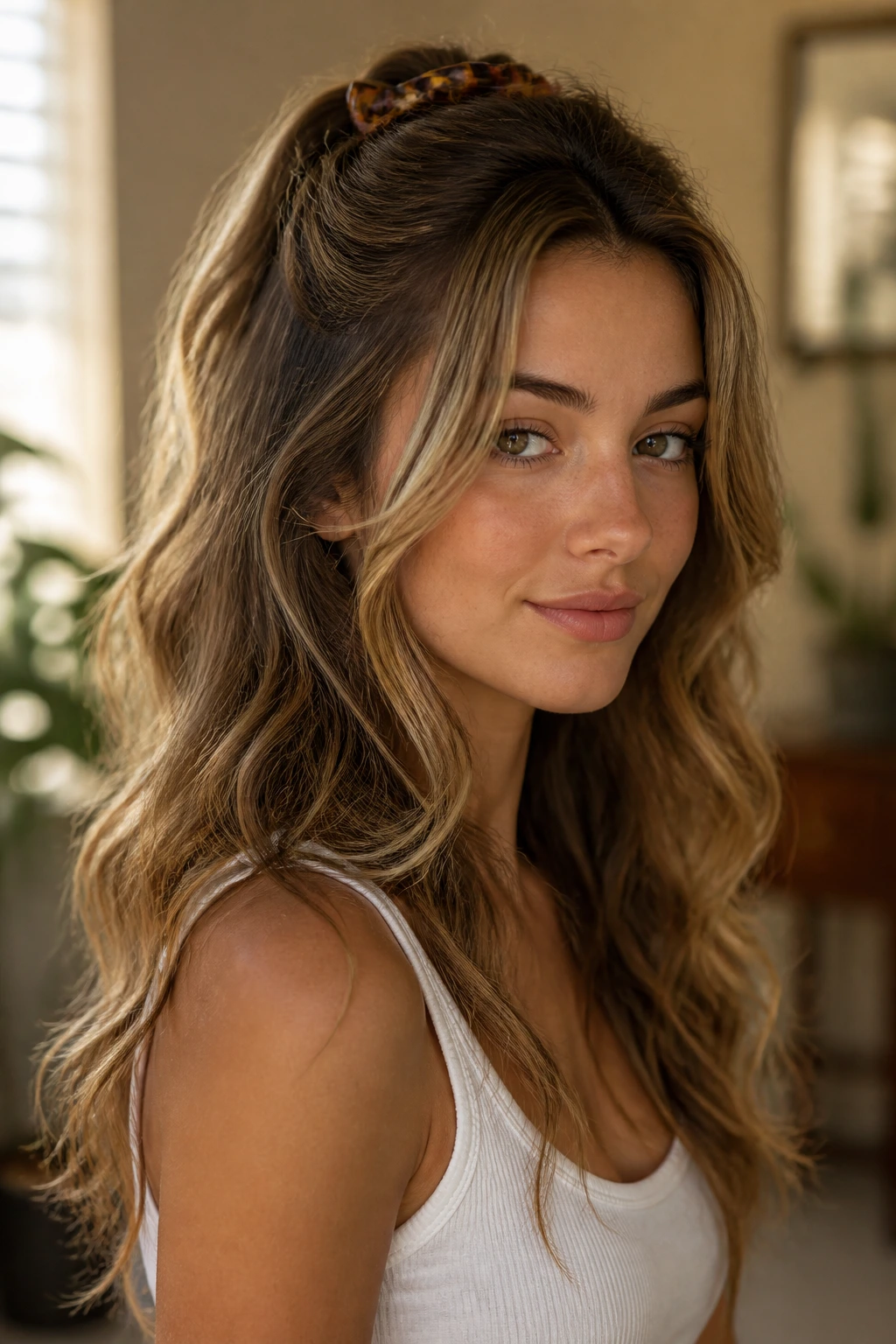
- Root lift: Lift the crown with a round brush or a blast of cool air before you put the accessory in. Flat roots make even the cutest clip look lazy.
- Controlled mess: Break up the wave with fingers, not a brush, once the shape is set. A brush can wipe out the bends you just spent time creating.
- Accessory placement: Butterfly clips and barrettes usually sit best one to two inches above the ear or at the back of the crown. Too low and they look accidental.
- Finish choice: Use shine spray for the glossy looks and dry shampoo or texture spray for the grunge ones. Mixing both at full strength usually makes the hair confused.
- Front pieces: Leave a few pieces out near the temple or cheekbone. That small detail keeps the style from feeling pulled tight.
Common Mistakes That Flatten the 90s Mood
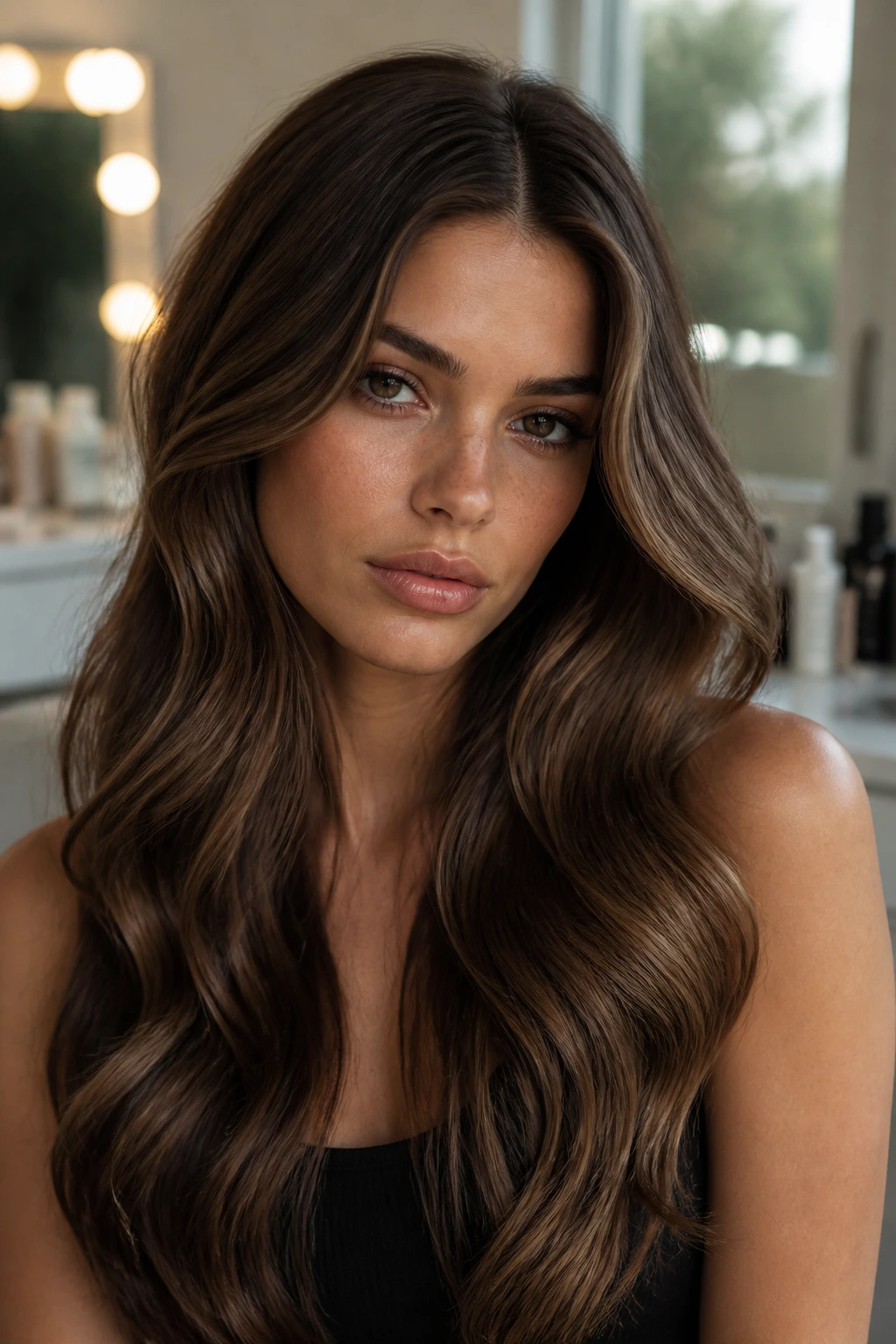
- Making the hair too straight: If you iron every wave out, the style loses the softness that gives it shape. Leave some bend in the mid-lengths and ends, even on the sleek versions.
- Using too much hairspray: Heavy spray makes the hair stiff and crunchy. Use flexible-hold spray in short bursts, then stop when the style can still move.
- Choosing tiny elastics for heavy hair: Small bands cut into thick waves and create a strained look. Use stronger clear elastics or a fabric tie when the section is dense.
- Pulling half-up styles too tight: If the crown is yanked back flat, the whole look goes severe. Loosen it slightly after securing so the roots keep a little height.
- Ignoring the front pieces: The hair around the face is doing a lot of emotional labor here. If it’s left harsh or flat, the style loses its 90s softness.
- Overloading with shiny oil: A little on the ends is fine. A lot near the scalp makes the roots collapse and the style look greasy before the day is half over.
Easy Variations and Adaptations
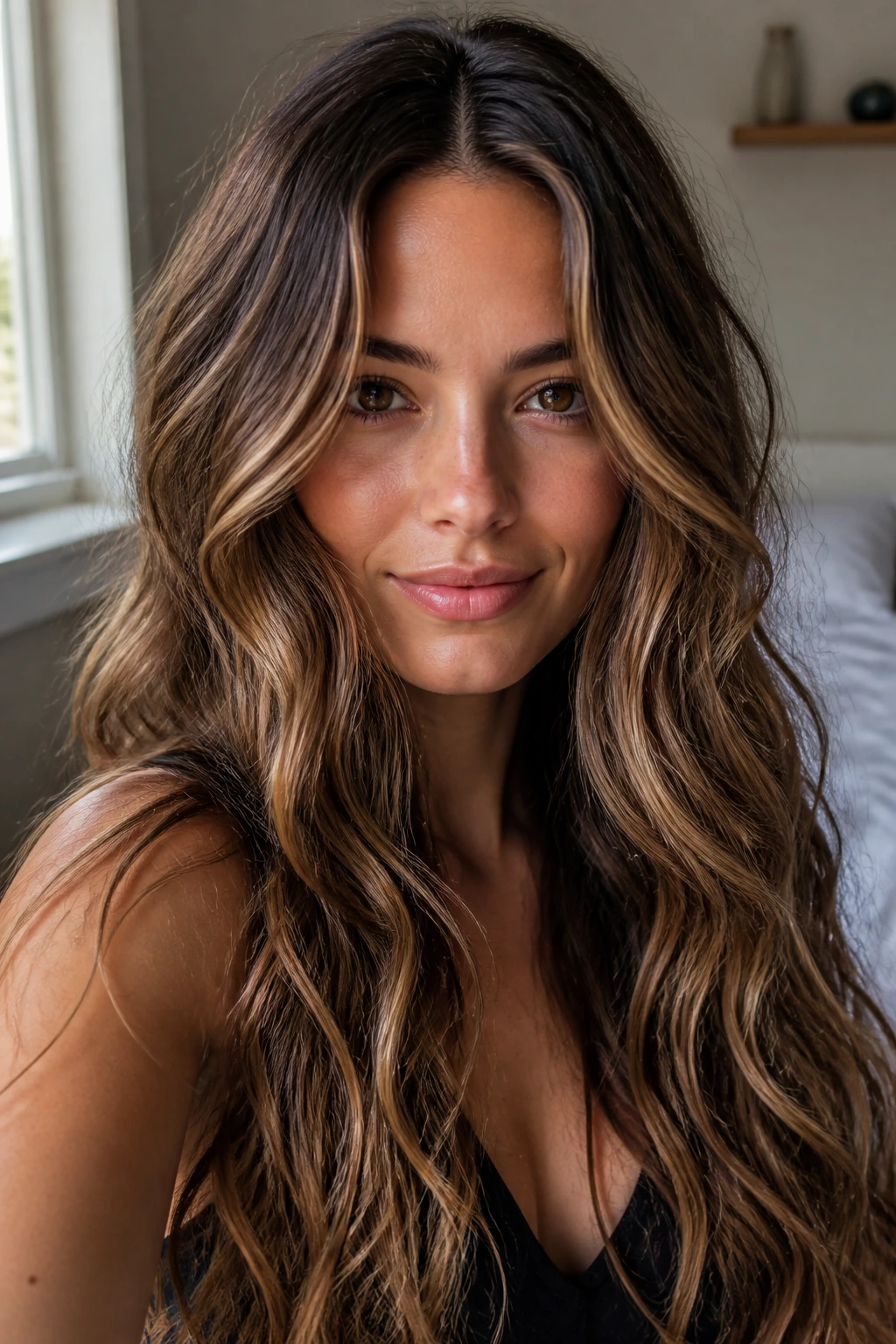
Glossy Magazine Version
Keep the center part, smooth the crown, and finish with a light shine spray. This version works best for straight-to-wavy hair that needs a little polish without losing movement.
Grunge Drawer Version
Use dry shampoo, rough texture, and slightly uneven parts. Pick the zigzag part, the clipped crown, or the front tendrils and keep the finish matte.
Heatless Weekend Version
Use overnight braids, pin curls, or a loose twist to create shape without heat. The result is softer and a little sleepier, which fits the decade better than you’d think.
Fine-Hair Version
Choose half-up styles, side clips, and low ponies with wrapped strands. These give the illusion of fullness without asking the hair to hold a shape it cannot support on its own.
Thick-Hair Version
Lean into braid crowns, rope braids, claw clips, and sleek-root looks. Thick waves can take more structure, so keep the top controlled and let the length stay loose.
Keeping the Style Fresh on Day Two
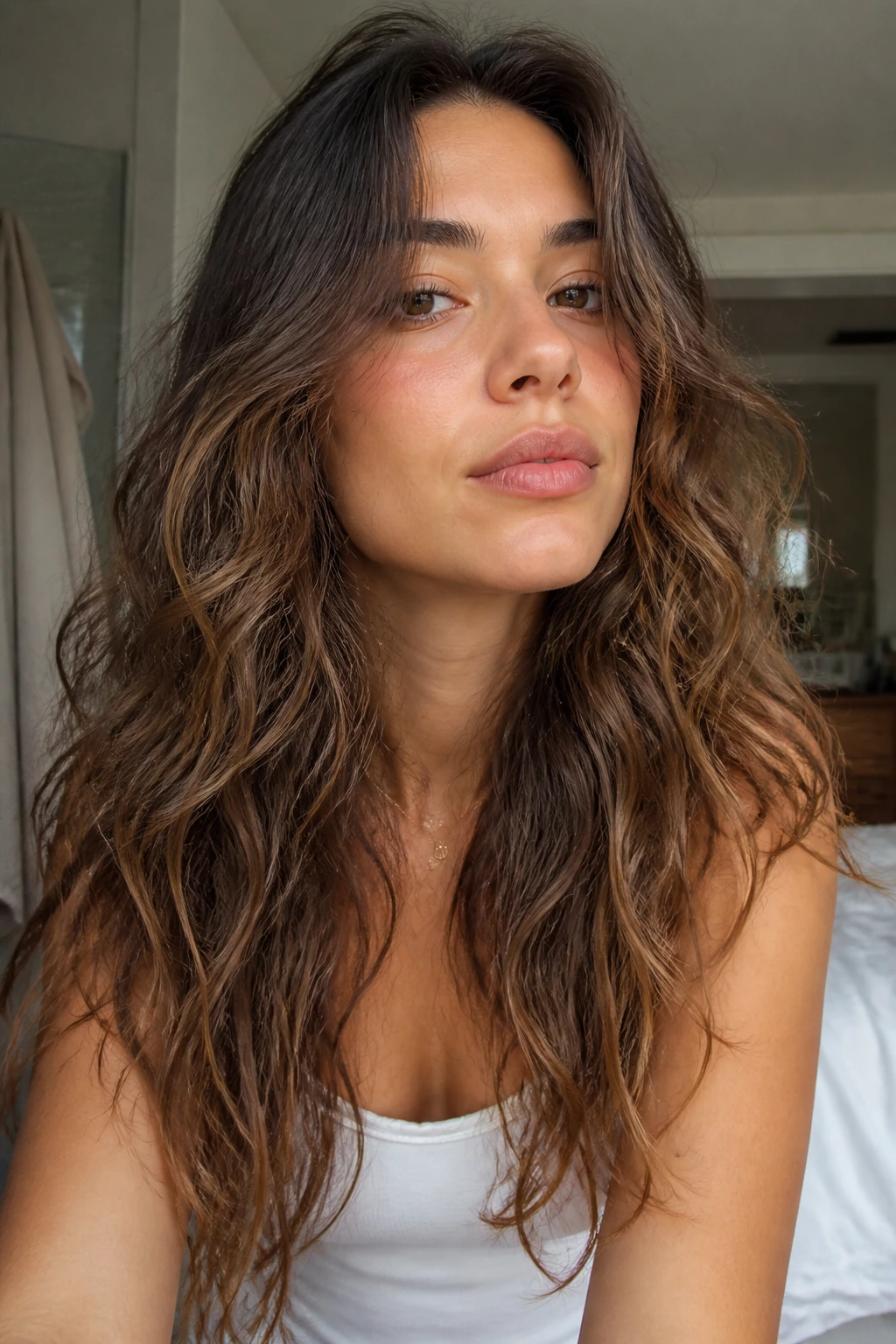
Most of these styles get easier on the second day, not harder. A little natural oil and leftover texture help the hair hold clips, braids, and ponytails without sliding. If you sleep on loose waves, put the hair into a soft braid or a loose pineapple and use a silk pillowcase if you have one.
In the morning, refresh the roots with dry shampoo first, then shake the hair out before you add more product. If the front pieces have gone flat, mist them lightly with water, twist them around your finger, and give them a quick pass with a low-heat iron or blow-dryer. The goal is to revive the bend, not start over.
Accessories need care too. Remove clips and elastics before sleep so they do not crease the hair or bend the pins. If a style feels tired by late afternoon, switch the part, add a clip, or gather only the top section back. That one move can buy you another day.
Frequently Asked Questions
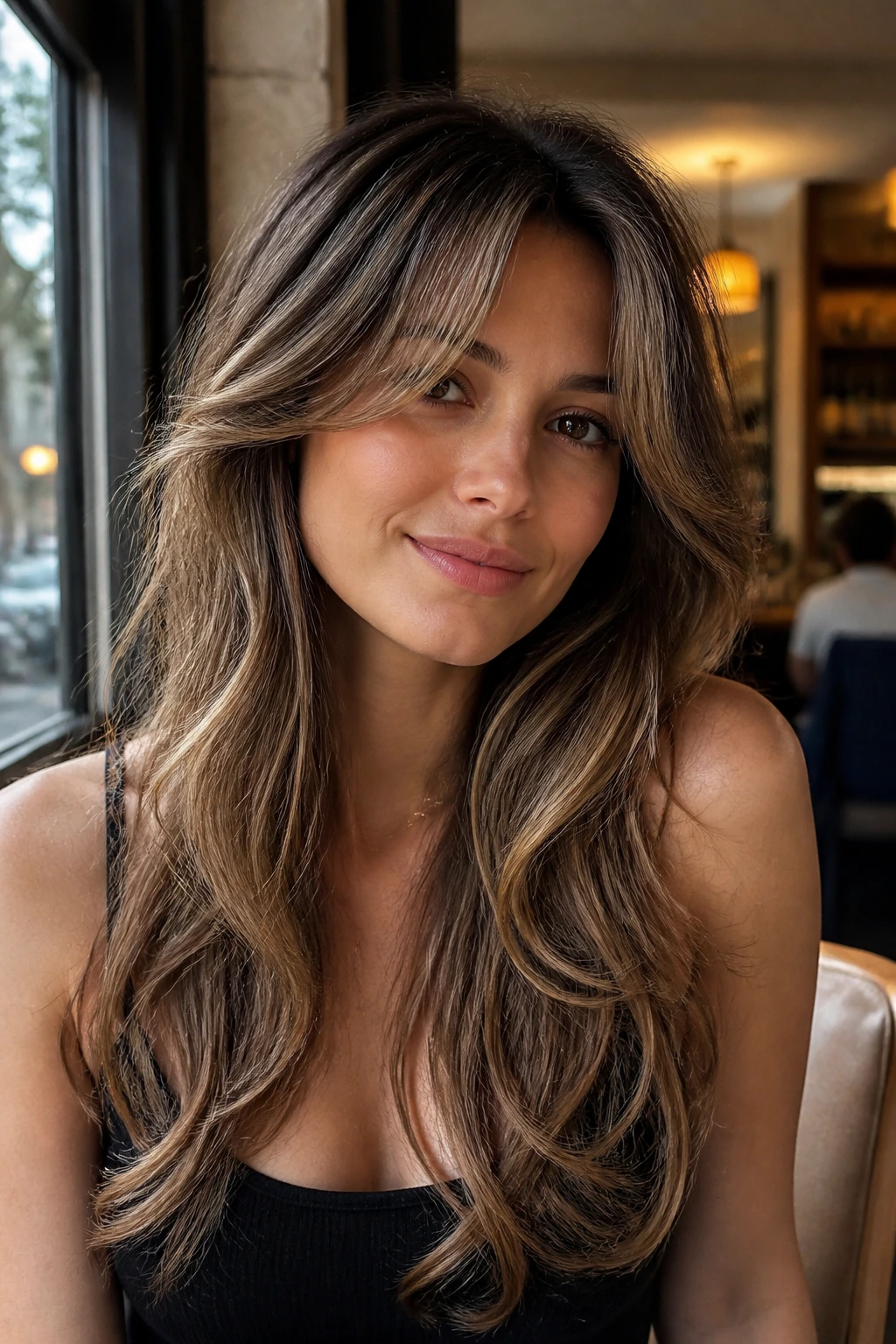
Can long wavy hair pull off the 90s center part without looking flat?
Yes, as long as you give the crown some lift and leave the lengths soft. A little root spray and a brushed-out wave through the front sections keep the part from looking severe.
What if my waves are more loose than curly?
Lean into styles that need shape, not tight texture: butterfly clips, side parts, low ponies, and headbands. Loose waves can look even better here because they read glossy and soft without much effort.
Do curtain bangs matter for these looks?
No, but they help. Curtain bangs make several of these styles easier because they create that soft frame around the face, especially with blowouts, side parts, and half-up styles.
How do I keep clips from sliding out of thick hair?
Use a little dry shampoo at the roots first, then choose clips with a stronger spring or add one hidden bobby pin under the twist. Thick hair needs grip before the accessory goes in.
Which styles are best if I do not want heat?
The headband tuck, braided crown, double mini braids, twisted half-up knot, and loose scrunchie ponytail all work with little or no heat. Start with hair that has a bit of texture so the shape holds.
Can I make these looks feel more polished for work or dinner?
Absolutely. Swap the scrunchie for a wrapped elastic, choose a low pony or side part, and smooth the top layer while leaving the ends soft. That balance keeps the style clean without making it stiff.
What should I do if the style looks too costume-like?
Take away one thing. Remove the extra clip, soften the part, or leave out a few face pieces. The best 90s hair usually has one strong feature, not five competing ones.
How often should I refresh a 90s-inspired style?
Most of the looser looks can go one full day with a quick dry shampoo touch-up. Blowout styles and brushed-out waves usually need a minor refresh the next morning, especially at the front and crown.
A Final Word on Long 90s Waves
The reason these looks keep working is simple: long wavy hair already carries the shape the decade wanted. You can go glossy, grunge, playful, or polished without changing the whole head. A middle part and brushed-out blowout give one mood. A scrunchie or butterfly clip gives another. Tiny front pieces can tilt the whole style from sweet to cool in about ten seconds.
Start with the version that matches your mood, not the one that looks hardest on paper. Once the part, the lift, and the front pieces are right, the rest is just restraint. That’s the real trick with 1990s hair: know where to stop, and the shape starts doing the work for you.
