



Bridesmaid bun hairstyles earn their keep on a wedding day because they do not spend the ceremony slipping off one shoulder, catching in a bouquet ribbon, or falling into the neckline every time someone leans in for a hug. A good bun keeps the shape close to the head, which means the dress, earrings, and makeup get to do their jobs without hair barging in and hogging the frame.
I also like buns for bridesmaids because they solve a very ordinary problem that fancy wedding photos tend to hide: people move. A lot. They laugh, they dance, they step outside for air, they help bustle a dress, they fix a lipstick, they turn their heads to listen, and the style has to survive all of that without turning into a cloud of flyaways by dessert.
The best part is how many directions a bun can go. Smooth and polished, soft and undone, braided, twisted, pearl-pinned, glossy, curly, side-swept, low-slung, high and architectural — the range is wide enough to suit a black-tie ballroom, a garden ceremony, or a small backyard party with no hard dress code at all. What matters is choosing the right shape for the dress, the hair type, and the amount of movement the day is going to ask for.
Why Bridesmaid Bun Hairstyles Make the Whole Lineup Look Cohesive
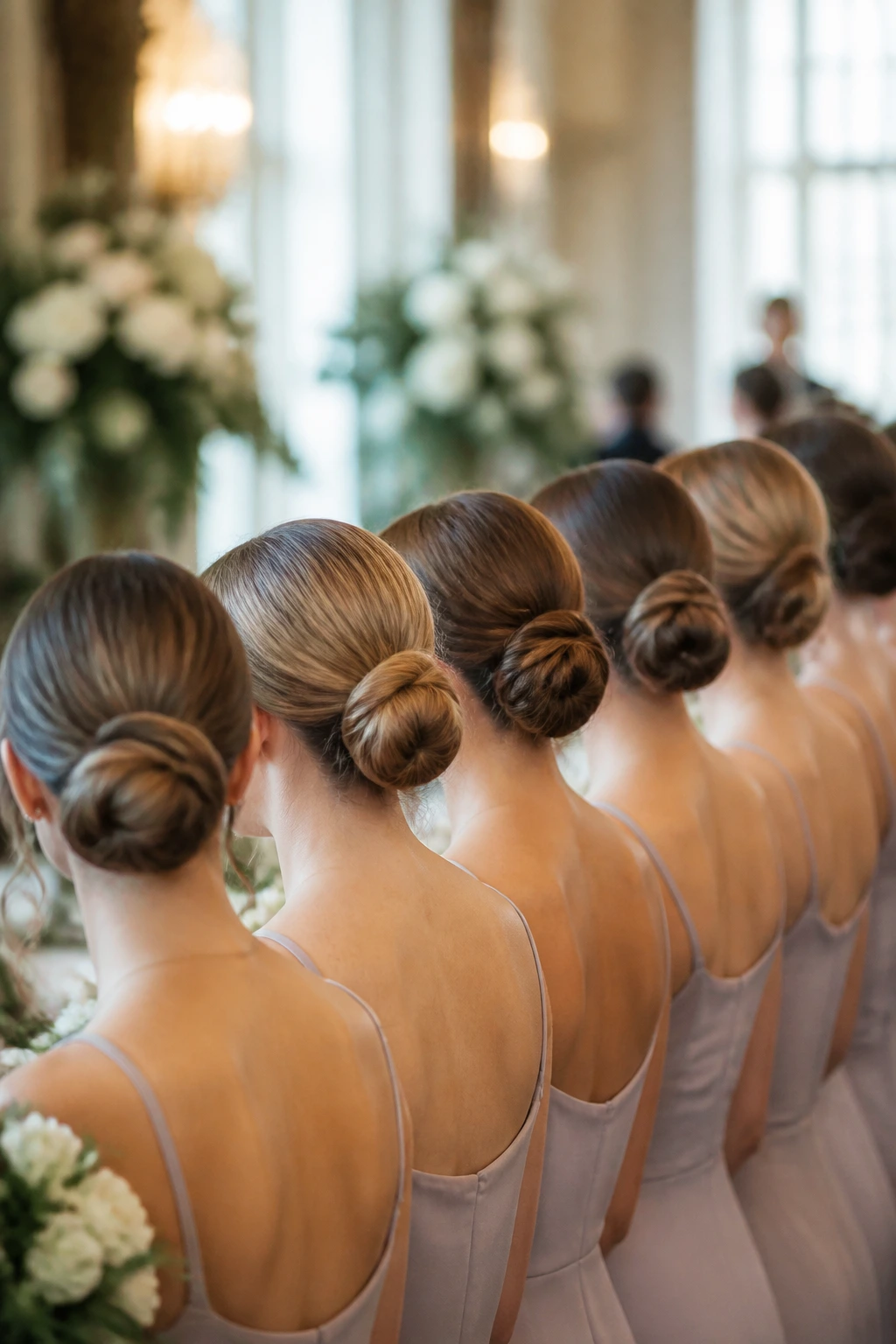
Easy visual harmony: A row of buns creates a clean line in photos, even when the bridesmaids have different hair lengths, textures, and face shapes.
Neckline-friendly: Strapless, halter, one-shoulder, and high-neck dresses all look sharper when the hair stays up and off the collarbone.
Better staying power: A bun keeps the weight of the style close to the head, so it usually lasts longer than loose curls that start to droop after the first round of pictures.
Accessory room: Earrings, hair combs, veils, and floral pins get space to show up instead of disappearing into layers of hair.
Easy to individualize: You can keep the same general bun shape across the bridal party and still change the part, braid detail, or softness around the face for each person.
1. The Low Chignon With a Side Sweep
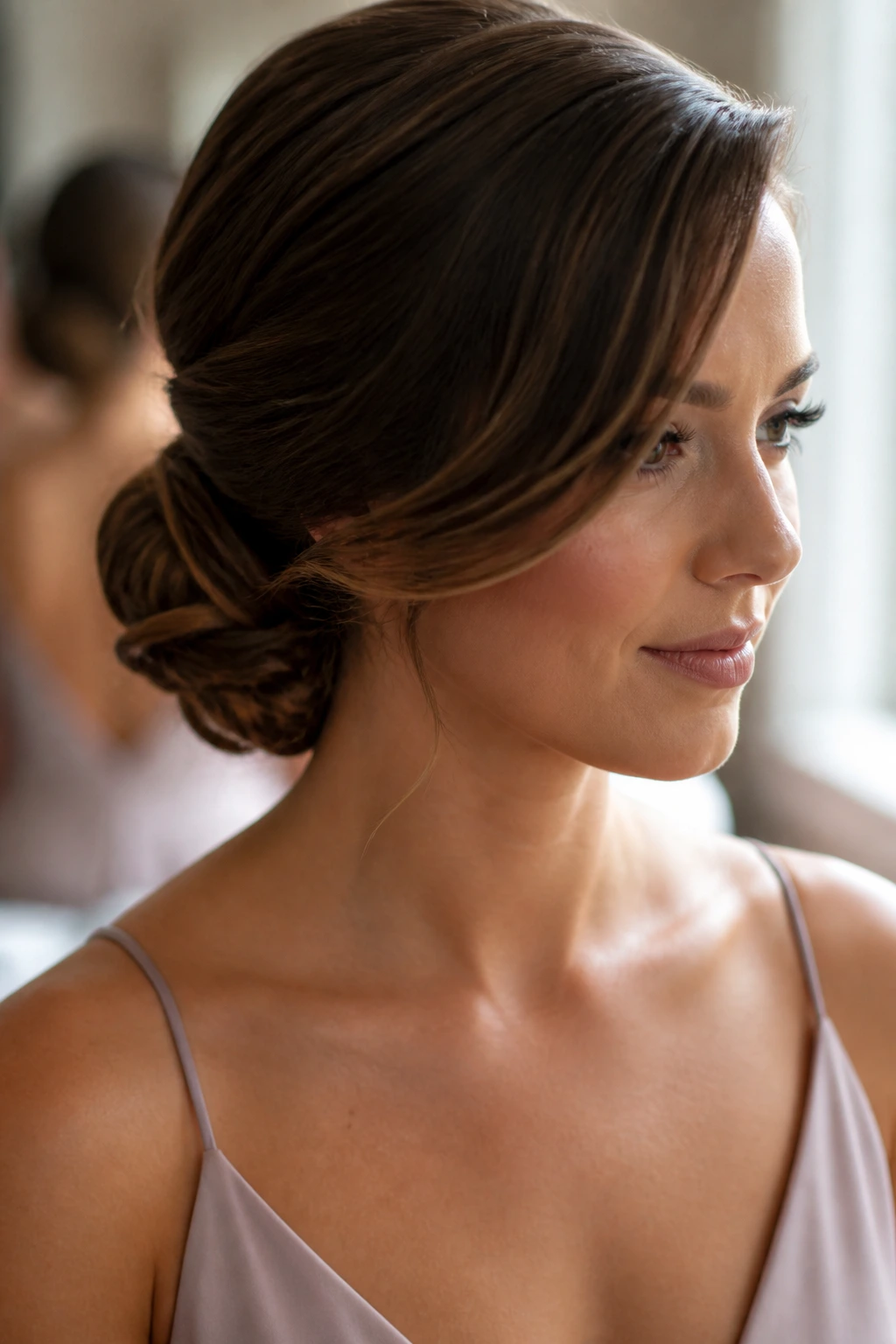
A low chignon with a side sweep is the bridesmaid bun I reach for when the dress already has enough personality on its own. The bun sits at the nape, tucked and secure, while the side sweep keeps the front from looking stiff or overdone.
The trick is in the balance. Pull one side a little smoother, let the other side soften just enough to move, then coil the ends into a compact bun that sits slightly off-center. It looks intentional without feeling precious, which is exactly what you want when everyone is trying to get dressed on time.
A few pins hidden underneath the roll will do more than a mountain of spray. Use a fine-tooth comb for the sweep, not a brush that fluffs the whole front into frizz.
2. Braided Crown Bun
A braided crown bun brings detail to the top of the head before the hair disappears into the bun, and that little bit of texture is gold in photos. The braid acts like a built-in frame, especially if the bridesmaids are wearing simple dresses and need something extra near the face.
Why It Works
The braid gives the style grip. Hair that is a little slippery — especially freshly blow-dried hair — tends to stay put better once it’s been woven and pinned. That matters if the ceremony is outdoors or the day runs long.
This style also hides transition points nicely. You can braid from the temples or from a deep side part, then fold the rest into a low bun or a mid-height knot. The braid is the decoration, so you do not need ten accessories fighting for attention.
Best with medium to long hair, and even better if the ends are tucked cleanly so they don’t poke out around the bun. A single pearl pin near the base is enough.
3. Sleek Ballet Bun
The sleek ballet bun is the one that says, “We know exactly what we’re doing here.” Center part, brushed smooth, glossy finish, tight shape at the back. No fluff. No guessing.
I like this style for modern bridesmaid looks because it handles strong necklines and statement earrings without competing. A little styling gel at the roots and a boar-bristle brush go a long way here, especially if the hair tends to frizz at the crown.
The catch? It asks for prep. You cannot make a sleek bun look good in a rush if the roots are fuzzy and the ends are uneven. Smooth it first, then twist, and finish with a light mist of flexible hairspray instead of a cement-like shellac that flakes when someone laughs too hard.
4. Soft Twisted Knot
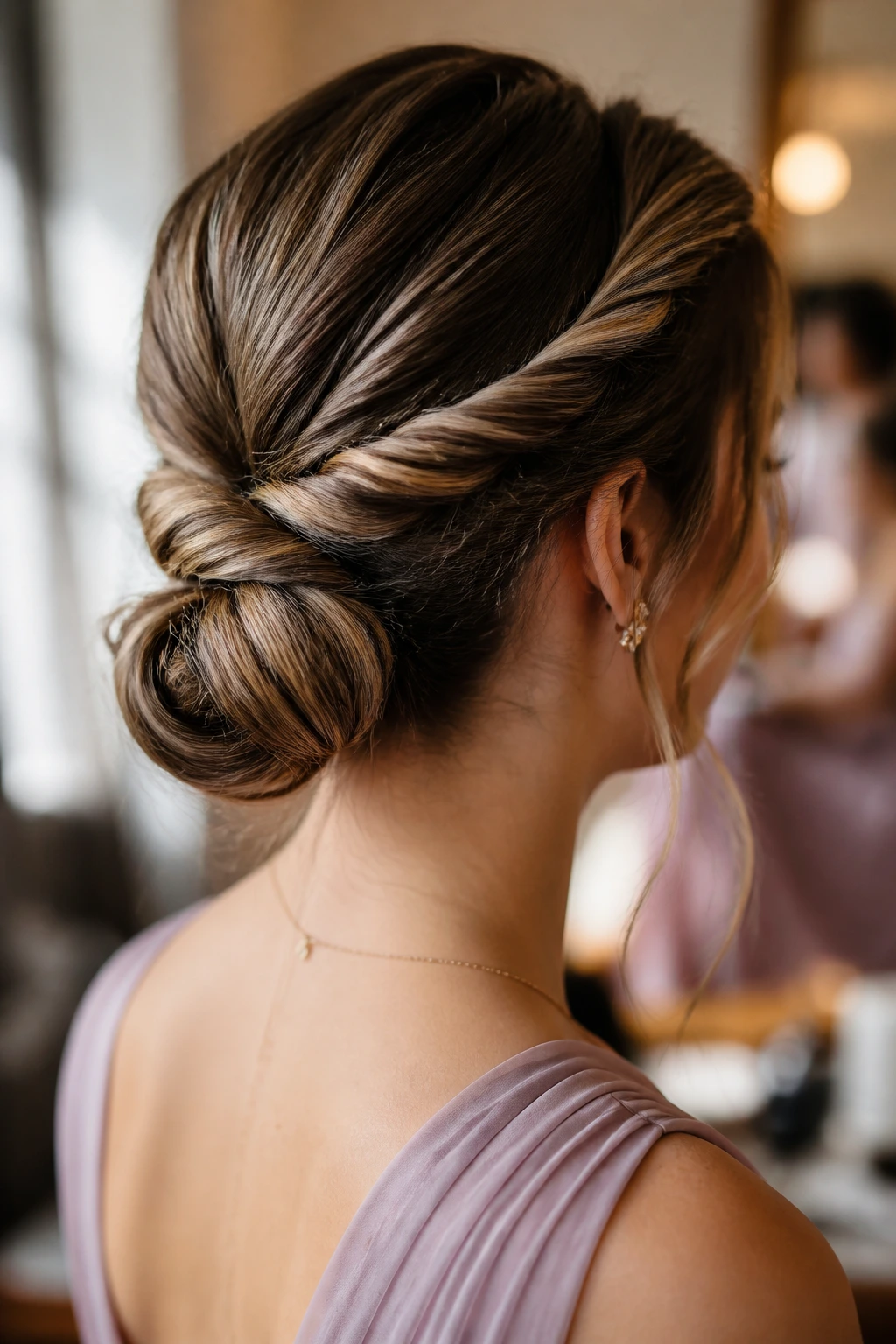
A soft twisted knot has the neatness of an updo without the hard edges that can make a whole bridal party look a little too formal. Two sections twist back from the temples or ears, then meet in a low knot that sits gently at the nape.
Best For
Medium-density hair, because there’s enough material to build shape without the bun turning bulky. It also works well on layered cuts that need a few hidden pins to keep shorter ends tucked in.
I prefer this style when the dresses are romantic but not fussy — chiffon, satin, simple lace, that sort of thing. The twists give the style a sense of movement, and that matters when the rest of the outfit is soft and drapey.
Keep the twists loose enough to show texture, but not so loose that they unravel before the first dance. A small elastic and four to six pins usually handle it.
5. Textured Messy Bun With Face-Framing Pieces
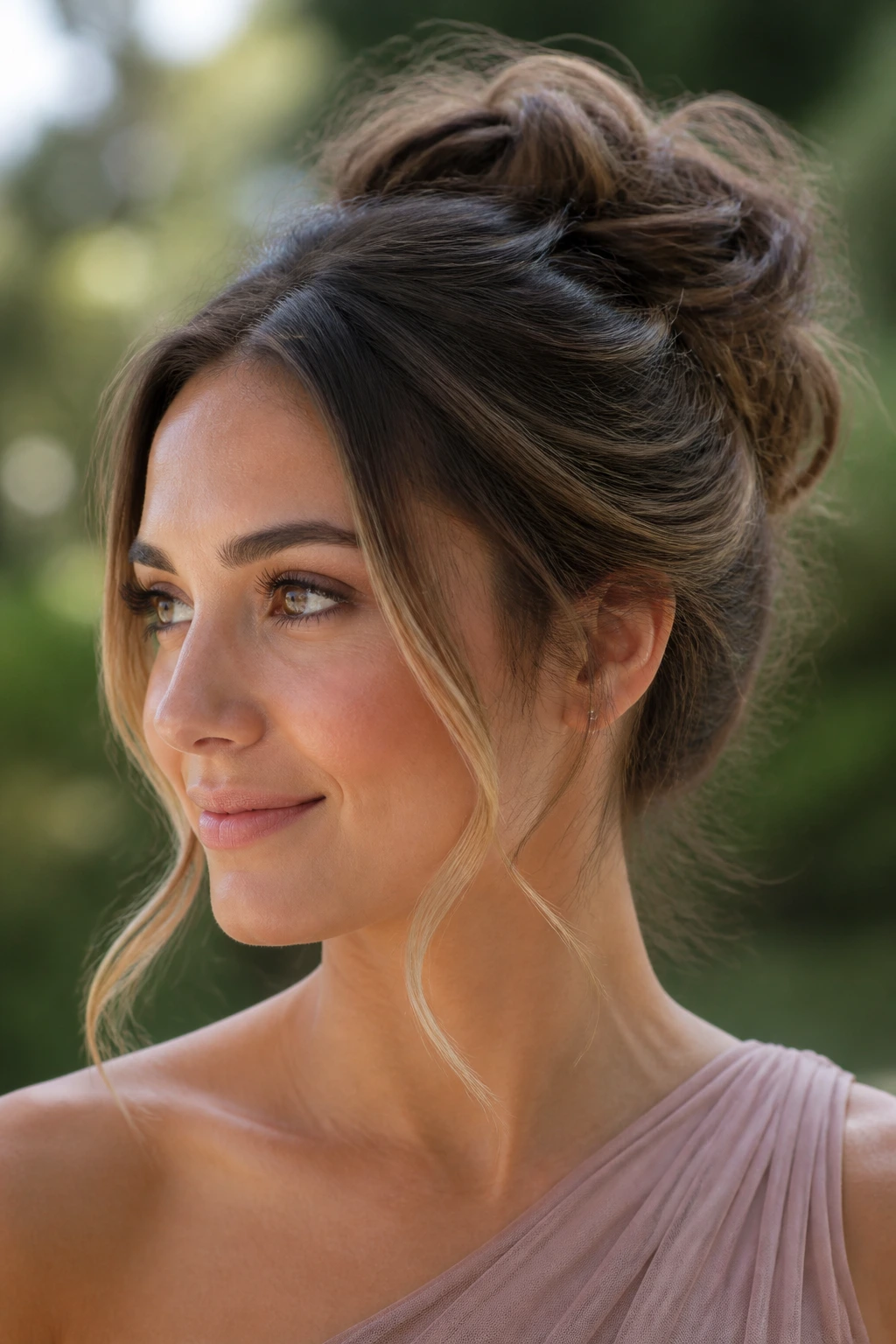
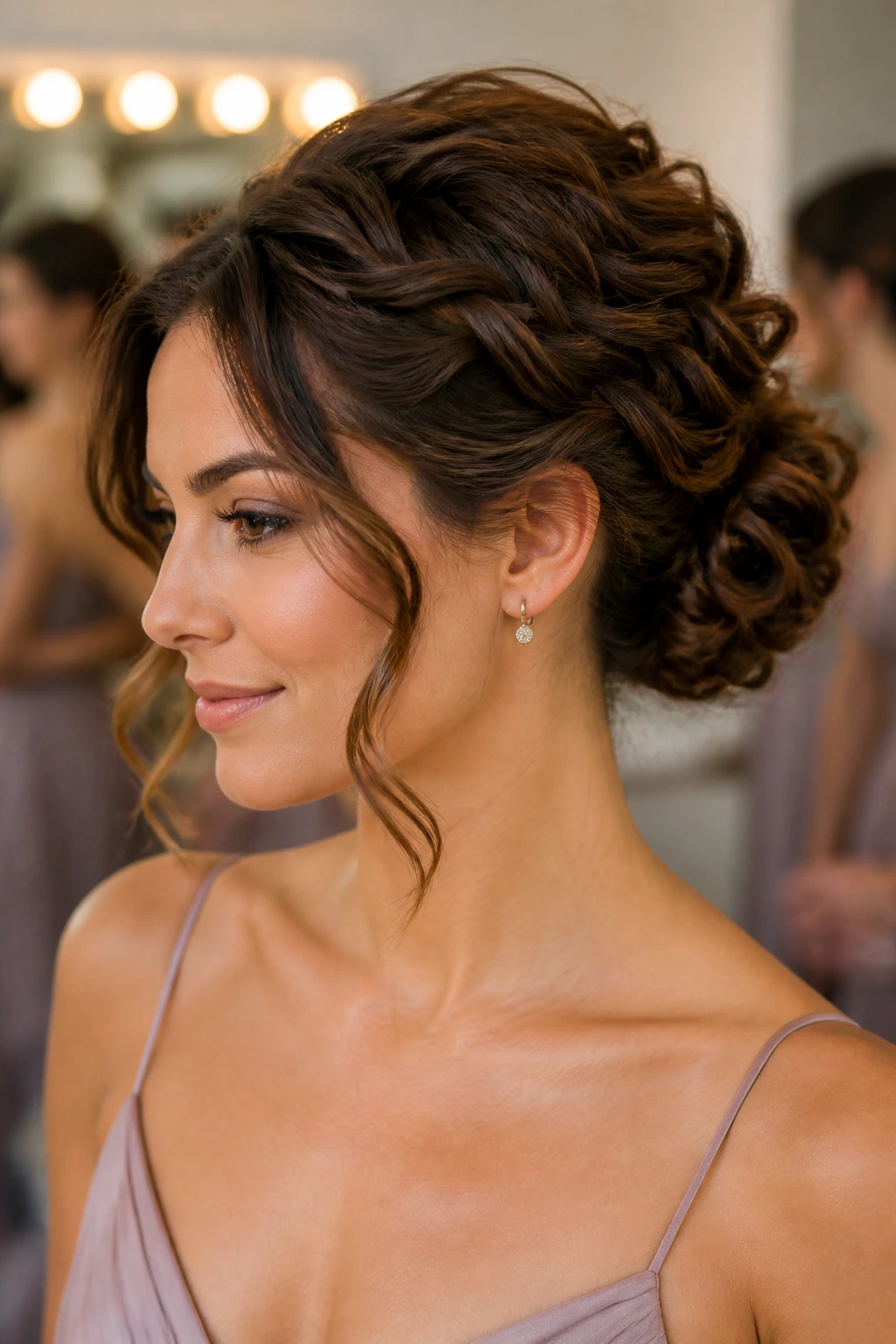
A textured messy bun sounds casual, but done well it reads as soft and deliberate. The bun itself is loose, with a few teased sections and a couple of face-framing pieces that skim the jaw rather than hanging like undone leftovers.
This one is ideal for bridesmaids who look best with a little softness around the face. The trick is to create texture before the hair goes up — use dry shampoo or texture spray at the roots, then roughen the mid-lengths with your fingers so the bun doesn’t collapse into a flat lump.
The face-framing pieces should be chosen, not accidental. Pull out two slim sections, curl them once or twice away from the face, and stop. If you keep fussing with them, they start to look thin and stringy. Leave them alone once they land in the right place.
6. Double-Twist Low Bun
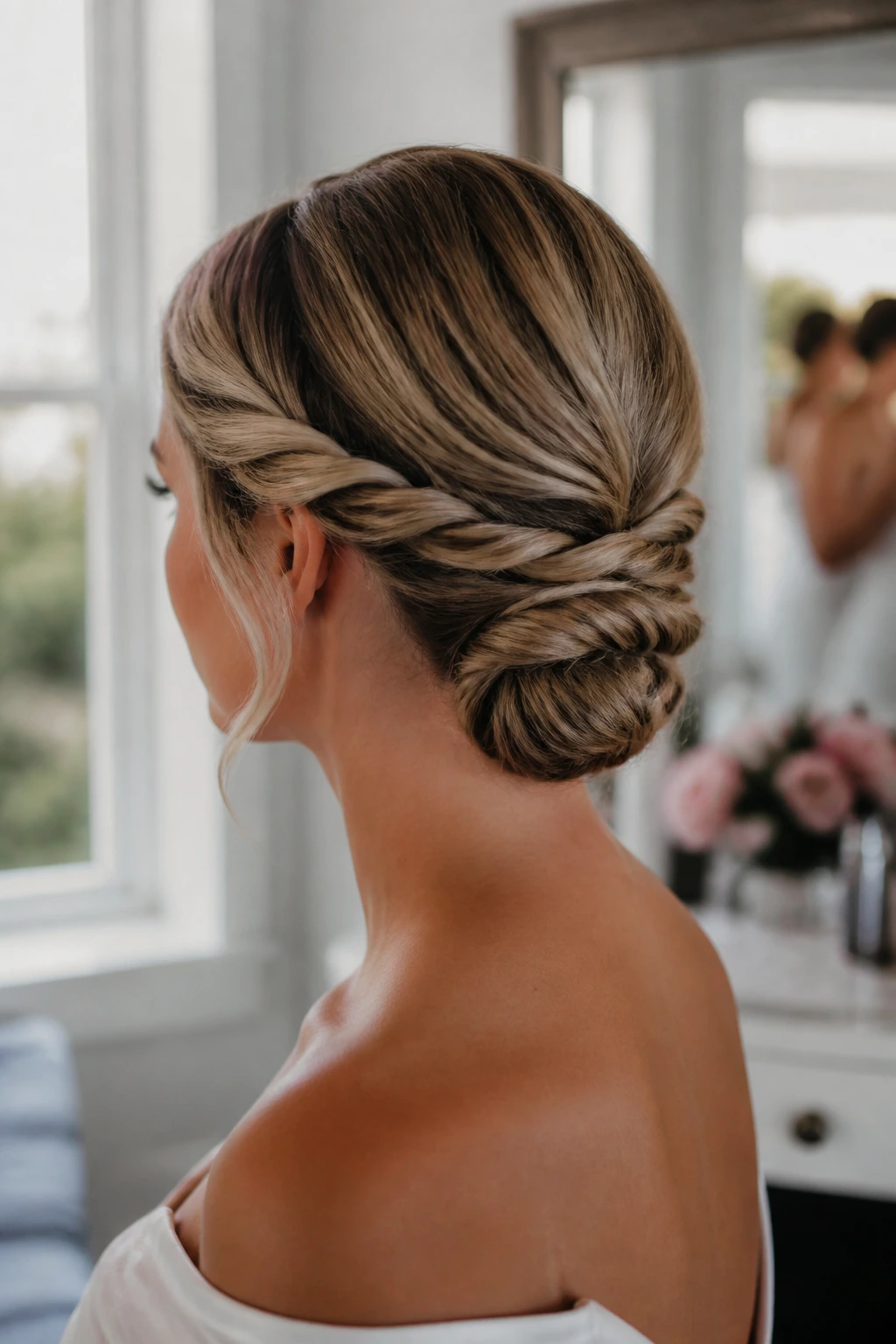
The double-twist low bun is one of those styles that looks more intricate than it is. Two twisted sections cross at the back and tuck into a compact bun, which gives the whole style a woven look without needing a braid.
It’s a good choice for bridesmaids with fine-to-medium hair because the twist creates the impression of thickness. If you backcomb the base lightly before pinning, the bun gets a little lift without turning lumpy.
This is also a useful style when you want uniformity across the bridal party but not sameness. Change the part, make one side tighter, let another be softer around the hairline — the structure stays the same, yet nobody looks copy-pasted. That’s the sweet spot for bridesmaid hair.
7. Rope-Braid Bun
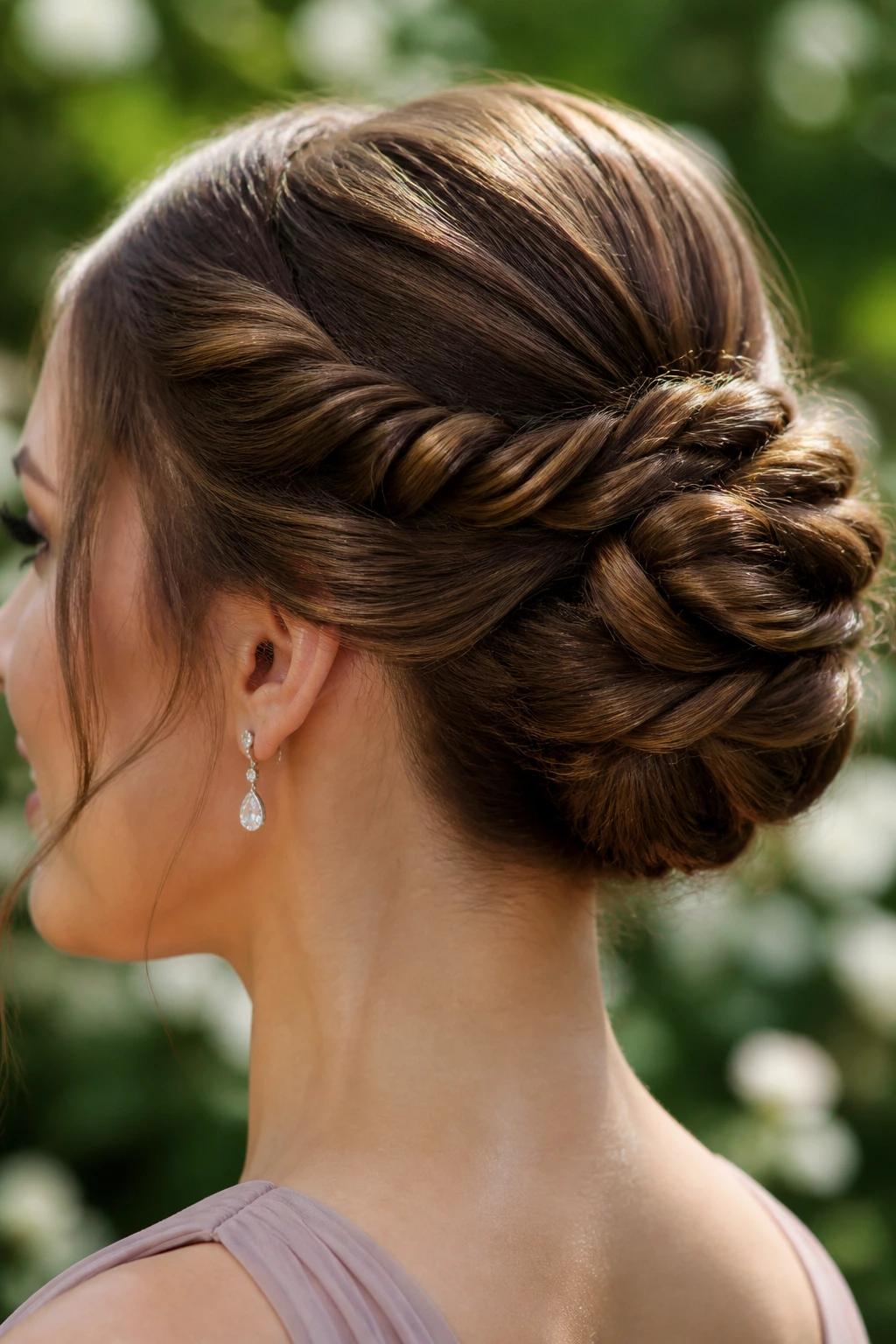
A rope-braid bun brings strong lines and a neat finish, which is a nice change from the softer bridal looks that show up everywhere. Twist two sections in the same direction, wrap them in the opposite direction, then coil the rope into a bun.
The texture is tighter than a regular three-strand braid, so it holds shape well and can survive long photography sessions. It also works with long hair that tends to slip out of loose styles by noon.
I like rope braids for bridesmaids with thick hair because they control volume without flattening everything. If the hair is very smooth, add a little grit with styling powder at the roots first. Rope braids love grip; if the hair is too slippery, they loosen faster than you’d expect.
8. Wrapped Ponytail Bun
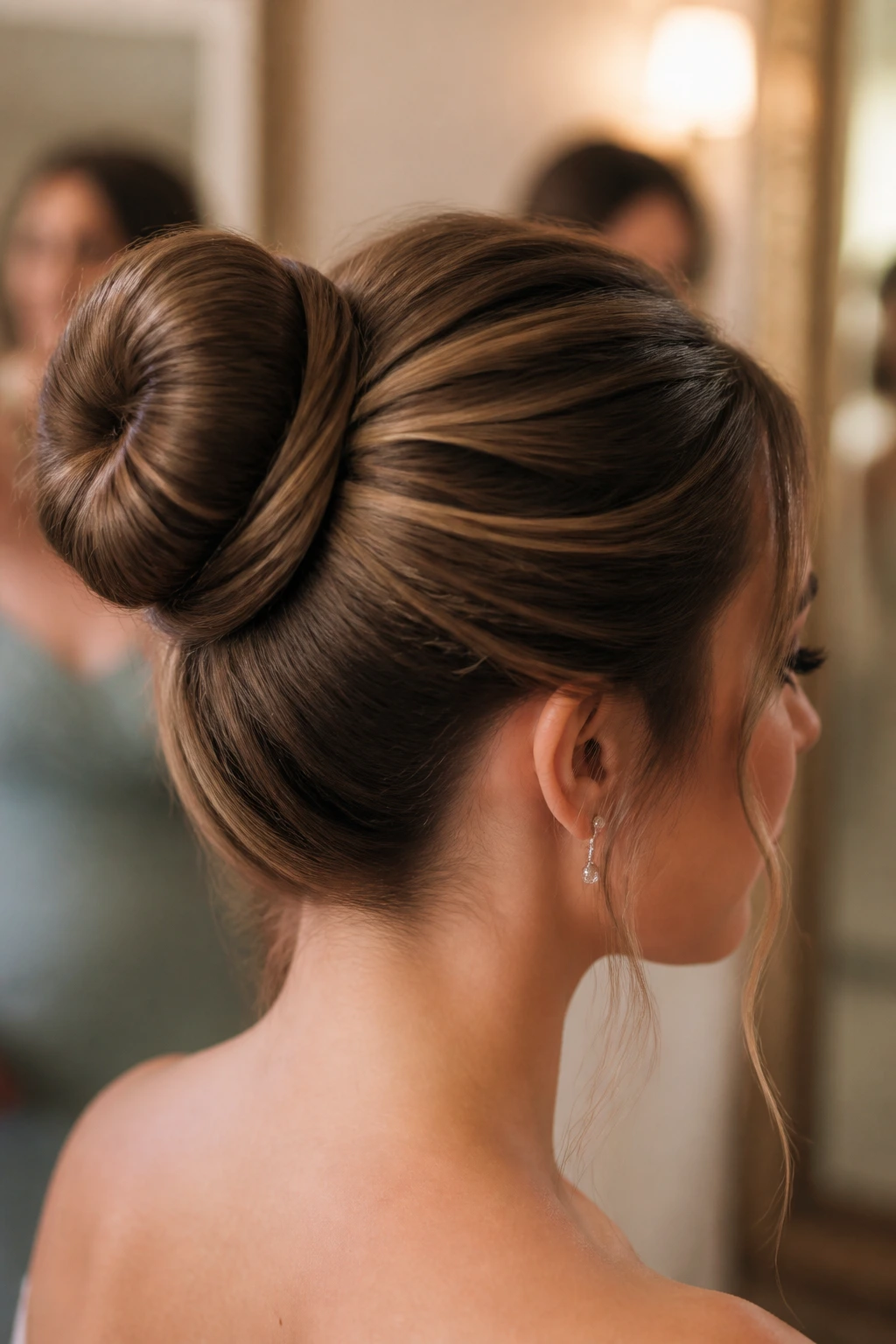
A wrapped ponytail bun starts with a ponytail, which sounds simple because it is. That simplicity is the point. Build a secure ponytail first, then wrap the lengths around the base until the shape turns into a bun.
This style gives a cleaner lift than a low bun and often looks better with taller necklines or dresses that need a little extra height in the profile. It also gives you more control over the finished shape, since the ponytail acts like a base anchor.
If the bridesmaids have different hair densities, this is a forgiving option. One person can have a smaller wrapped knot, another a fuller one, and the overall effect still reads as coordinated. The base matters more than the size of the bun.
9. Side-Swept Romantic Bun
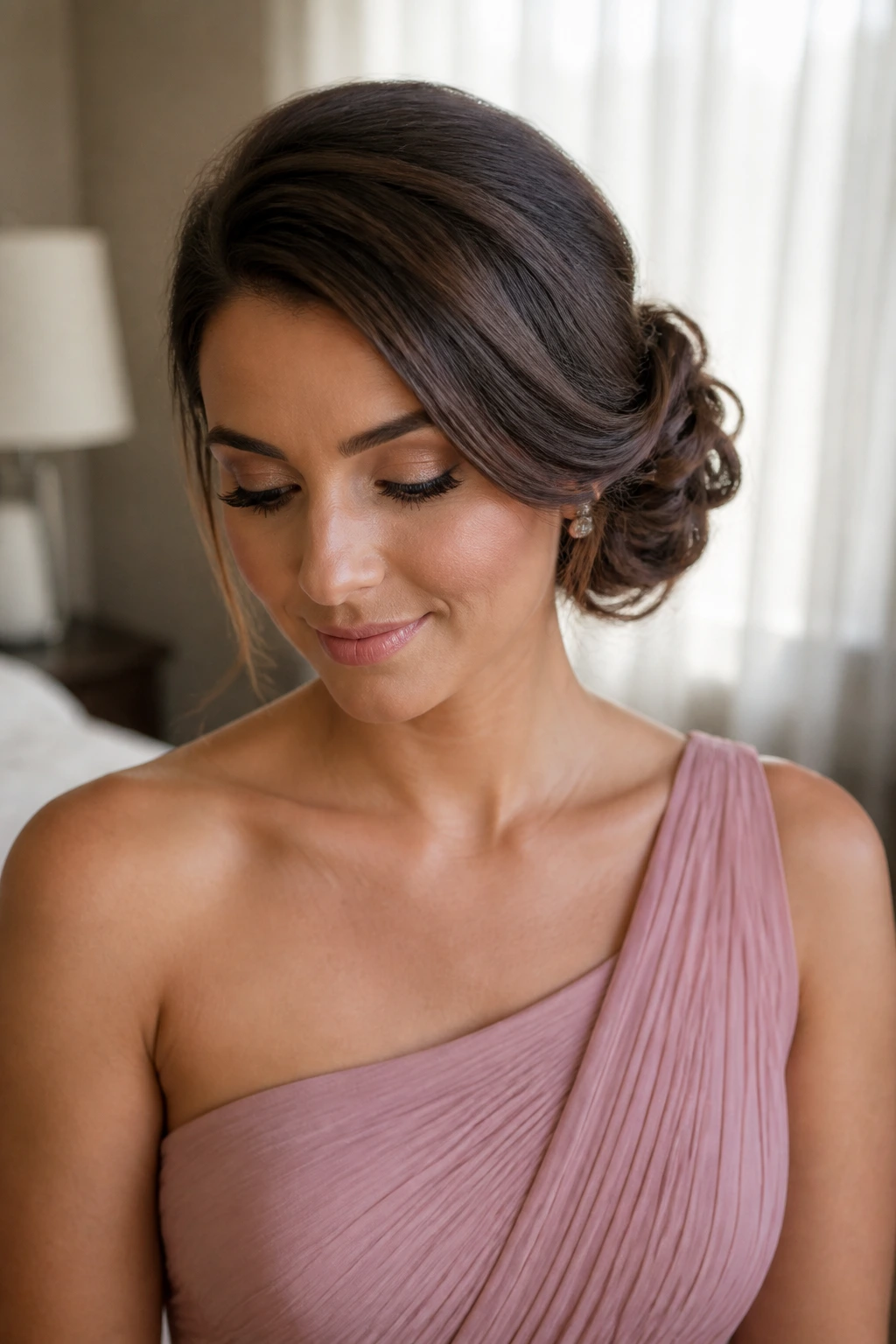
A side-swept romantic bun sits just off-center and feels softer than a perfectly centered nape knot. The front is brushed in a gentle arc, then pinned low so the bun lands a little to one side.
That slight asymmetry helps a lot with one-shoulder dresses and necklines that already lean visually. Instead of fighting the cut of the dress, the hair follows it. That’s the whole point.
Leave a little air around the bun rather than compressing it into a tight ball. Softness here is not laziness; it’s shape language. A side-swept bun looks expensive when it moves a little and still keeps its structure.
10. Knotted Top Bun
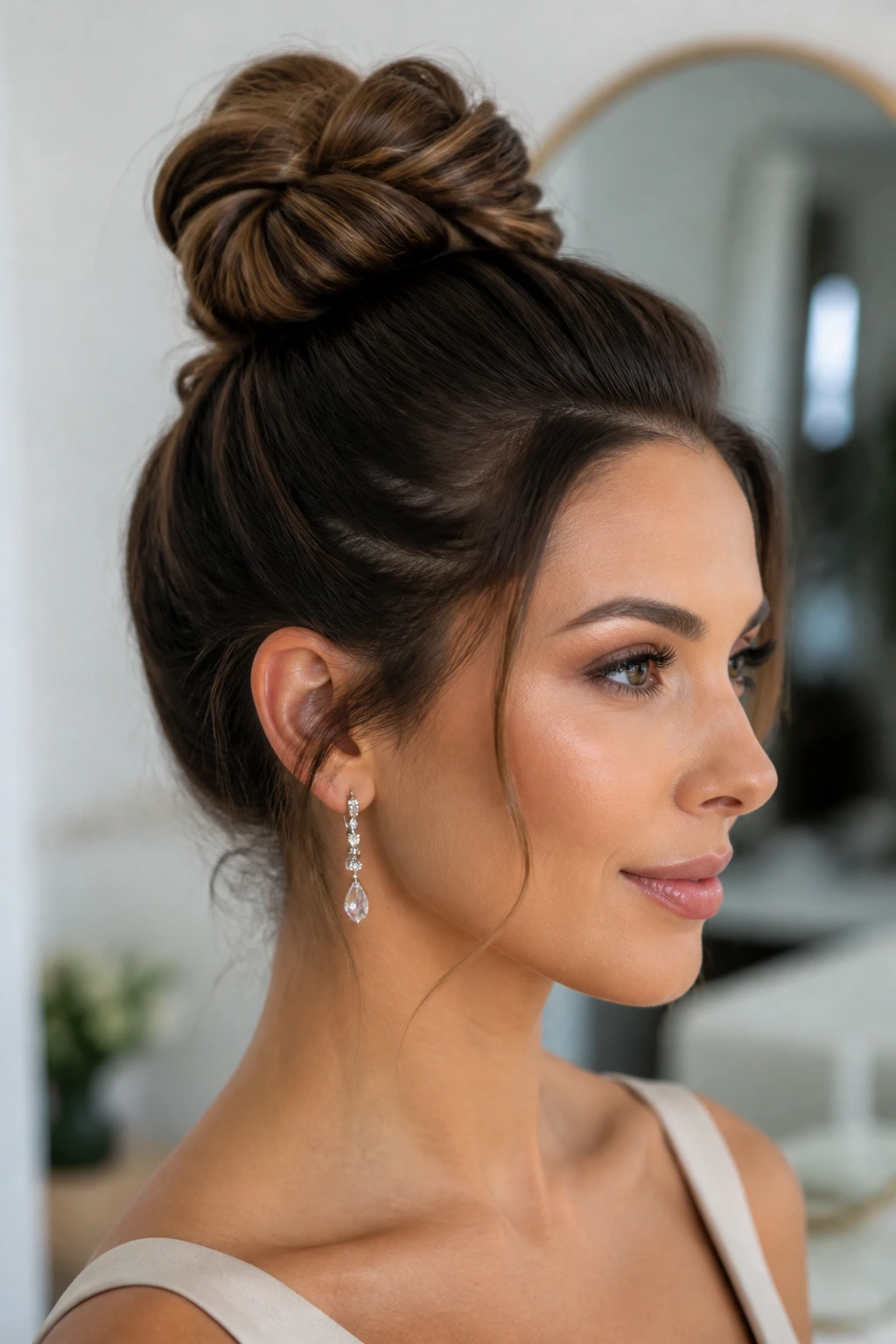
A knotted top bun works best when the bridesmaids need a more fashion-forward look and the dress code can handle it. It sits higher than a classic chignon, which lifts the face and gives the silhouette a sharper edge.
This style has a cleaner feel than a messy top knot. Twist the hair into a knot, tuck the ends, and pin underneath so the finish stays deliberate. For long hair, a small padding piece can help the bun look full without over-teasing the base.
I would use this one when the bridal party is wearing minimalist dresses or modern shapes. It has enough attitude to carry a simple look, but not so much height that it starts reading like a club hairstyle. Keep the volume controlled, and it stays wedding-friendly.
11. Fishtail Bun
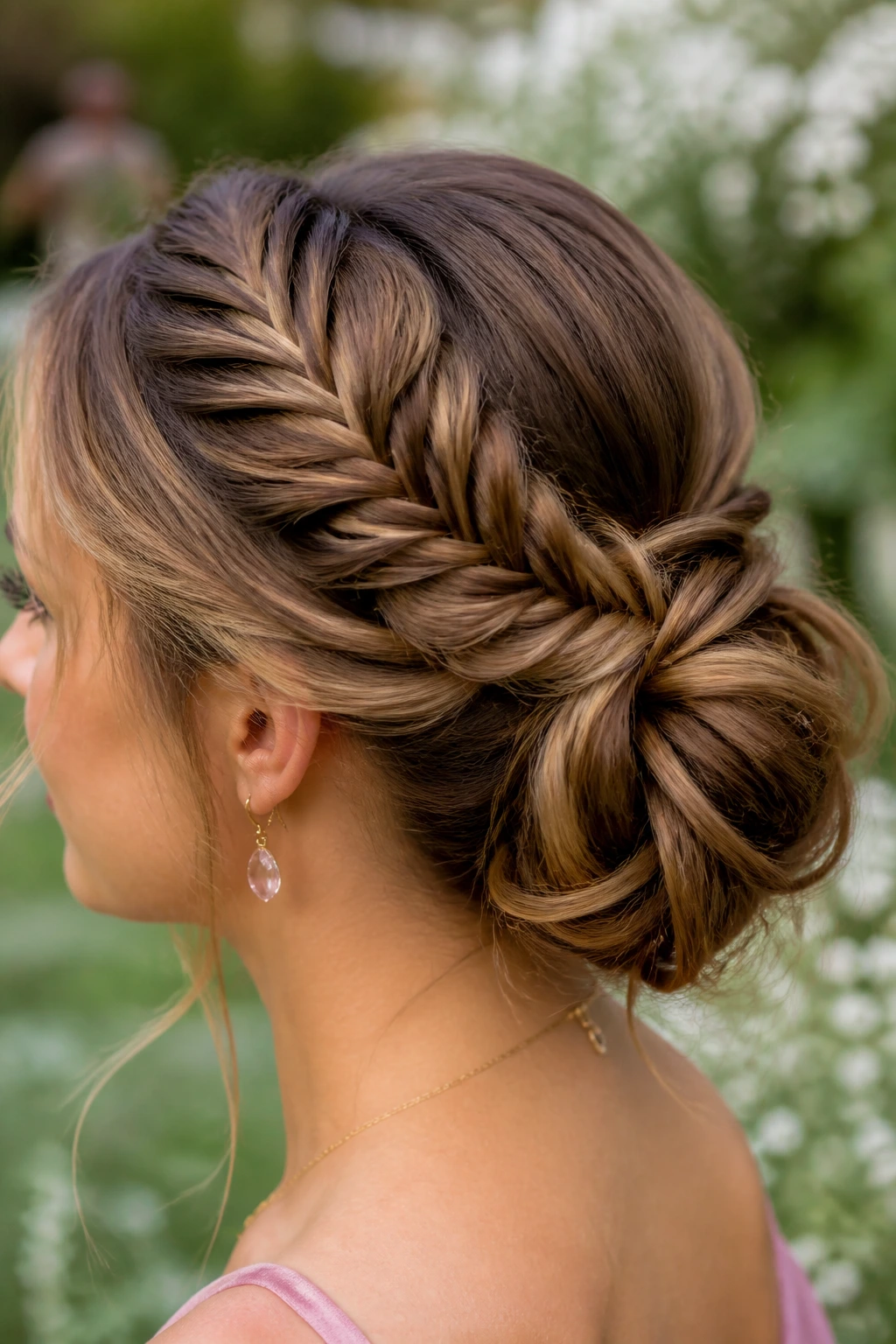
A fishtail bun gives you texture that looks detailed from a distance and even better up close. The fishtail braid feeds into the bun and adds a woven pattern that holds interest without needing decorative clips everywhere.
The braid itself takes a little more time, so this is a smart option when the hair is long and someone is willing to sit still for ten extra minutes. The payoff is that the bun looks layered and textured, not slapped together at the end of a rushed styling session.
It’s especially good for outdoor weddings, where movement and breeze can make plain buns feel flat. The fishtail texture catches the eye without turning chaotic. A few pins matched to the hair color keep the seam tidy at the base.
12. Minimalist Center-Part Bun
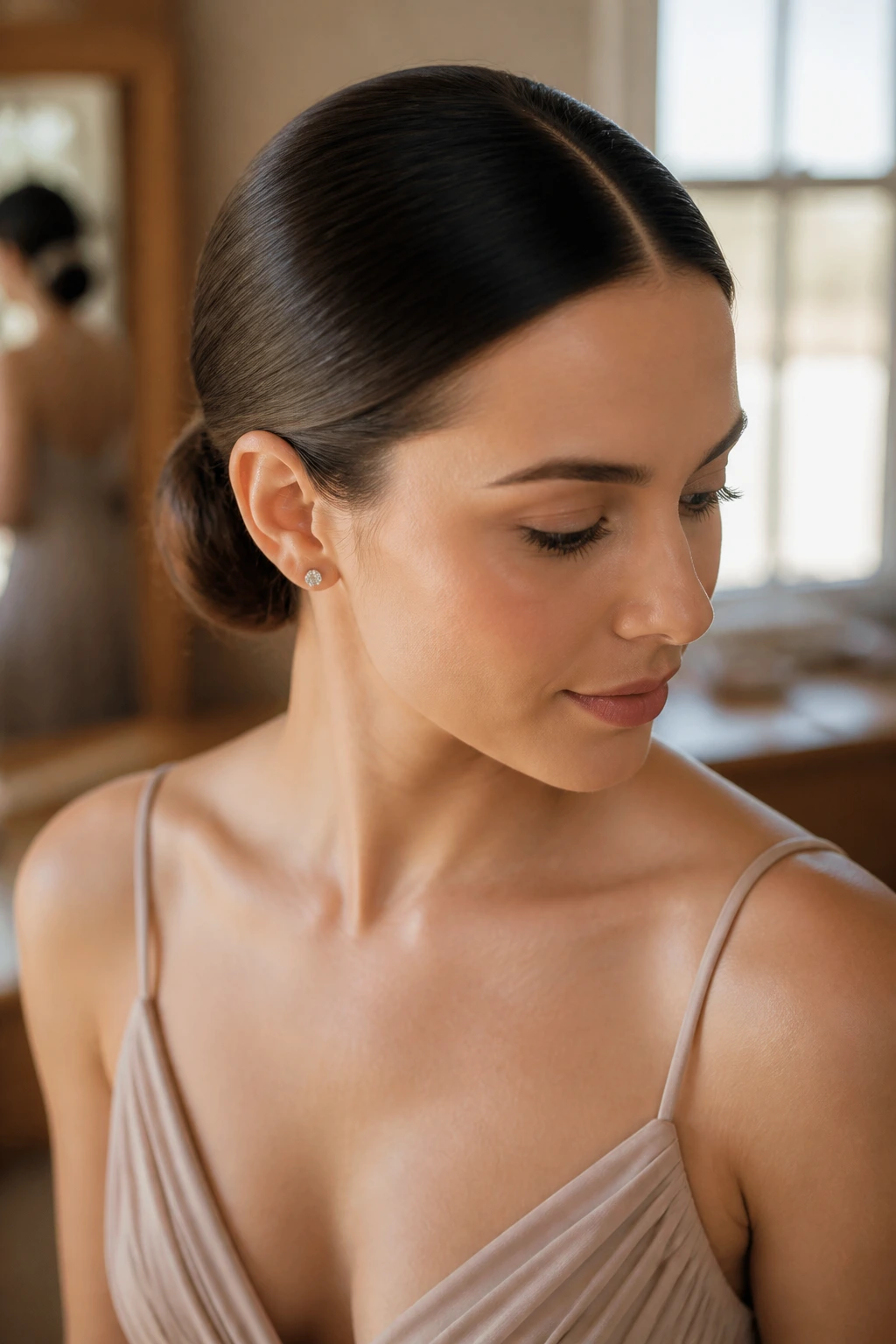
A minimalist center-part bun is the quietest style on this list, and I mean that as a compliment. Straight center part, smooth crown, low bun, no braid, no twist circus.
This works when the dresses are the statement. Think satin slip silhouettes, square necklines, or structured gowns that already carry the look. The bun keeps the hair disciplined so the whole outfit stays clean from top to bottom.
A middle part is unforgiving, so the scalp line has to be tidy. Use a tail comb to keep the part sharp and a touch of serum on the top layer to tame flyaways. If the front is neat, the whole bun feels sharper.
13. Bubble-Braid Bun
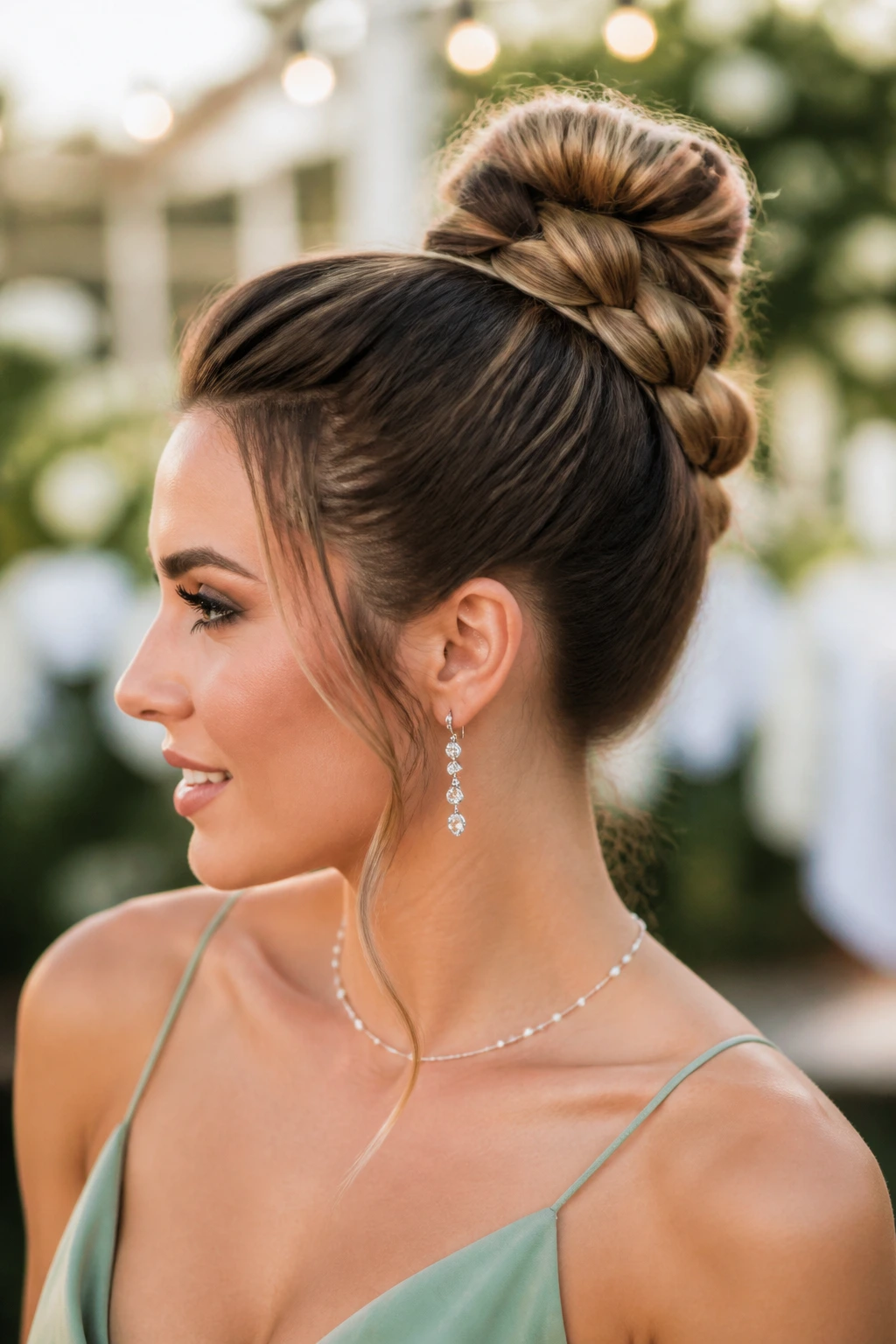
A bubble-braid bun is a fun place to land when the bridal party wants something a little more playful but still polished. You create a braid or ponytail with small elastic sections, puff each segment into a rounded bubble, then wrap the finish into a bun.
It’s not the most traditional wedding bun, and that’s exactly why it works for younger bridal parties or less formal celebrations. The texture gives the style depth without needing heavy accessories.
Use clear elastics if the hair is light, or match the elastic color closely if the hair is darker. The bubbles should look intentional, not overstuffed. Pull them out evenly, or the shape gets lopsided fast.
14. Gibson-Tuck-Inspired Bun
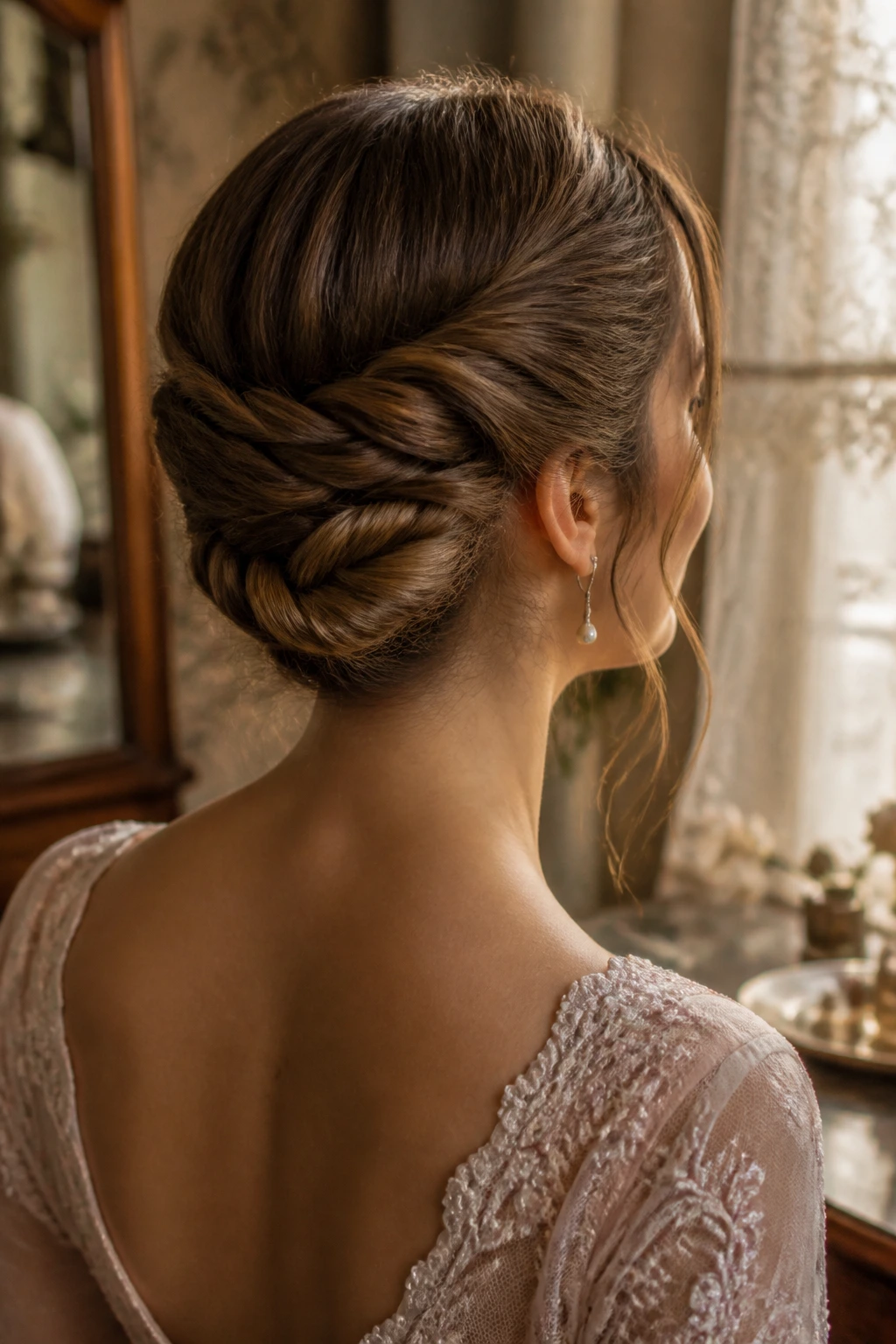
A Gibson-tuck-inspired bun has a vintage spine to it. The hair is rolled upward and tucked into itself, which creates a soft ridge at the back instead of a round knot.
This style is lovely with dresses that lean a little old-fashioned — high lace necks, modest satin, tea-length hems. It also suits bridesmaid groups that want a little retro polish without going full period drama.
The tuck has to be secure at the base, so use more pins than you think you need. Then stop touching it. The beauty of a Gibson tuck is the line it makes, not a mountain of visible hardware.
15. Halo Braided Bun
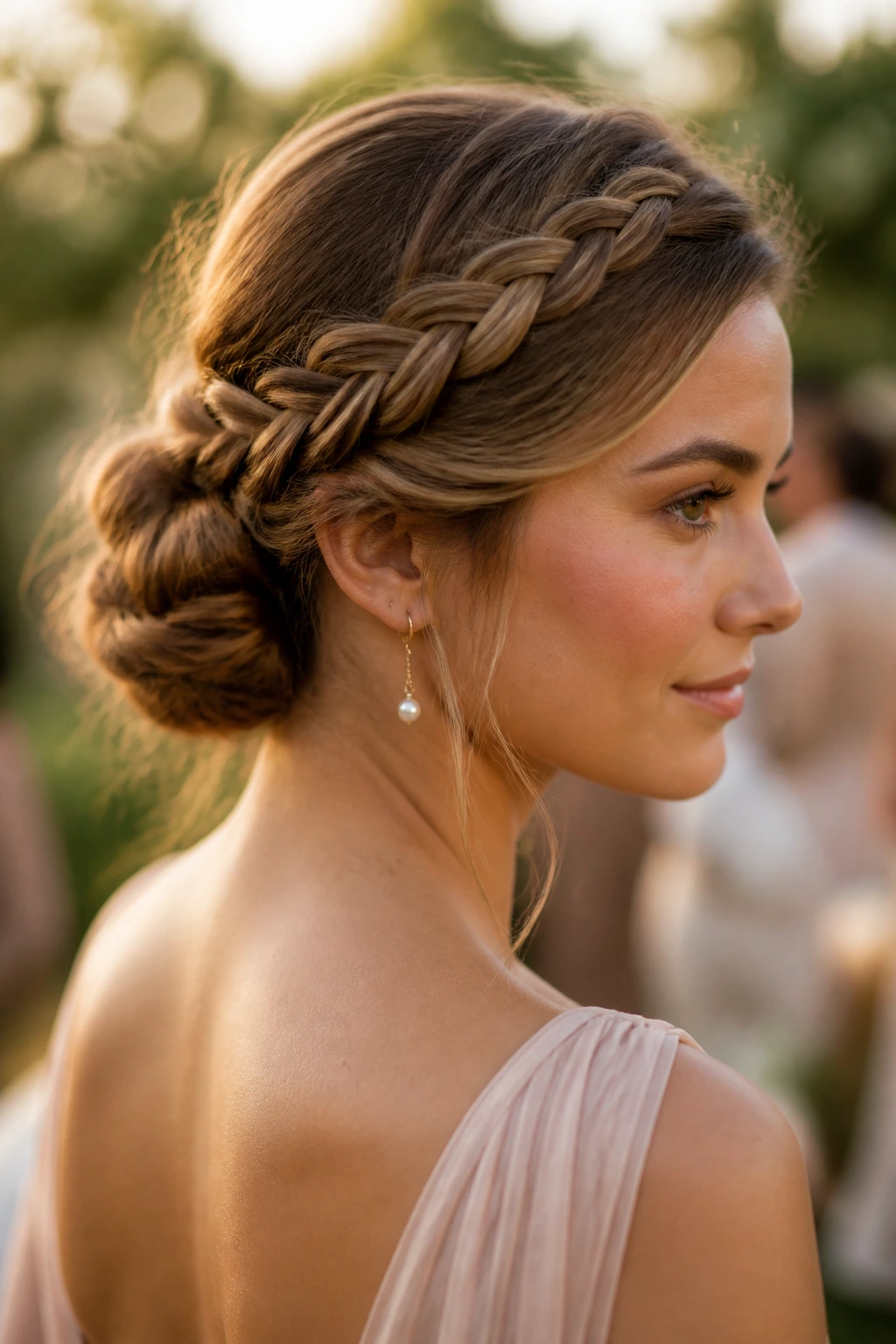
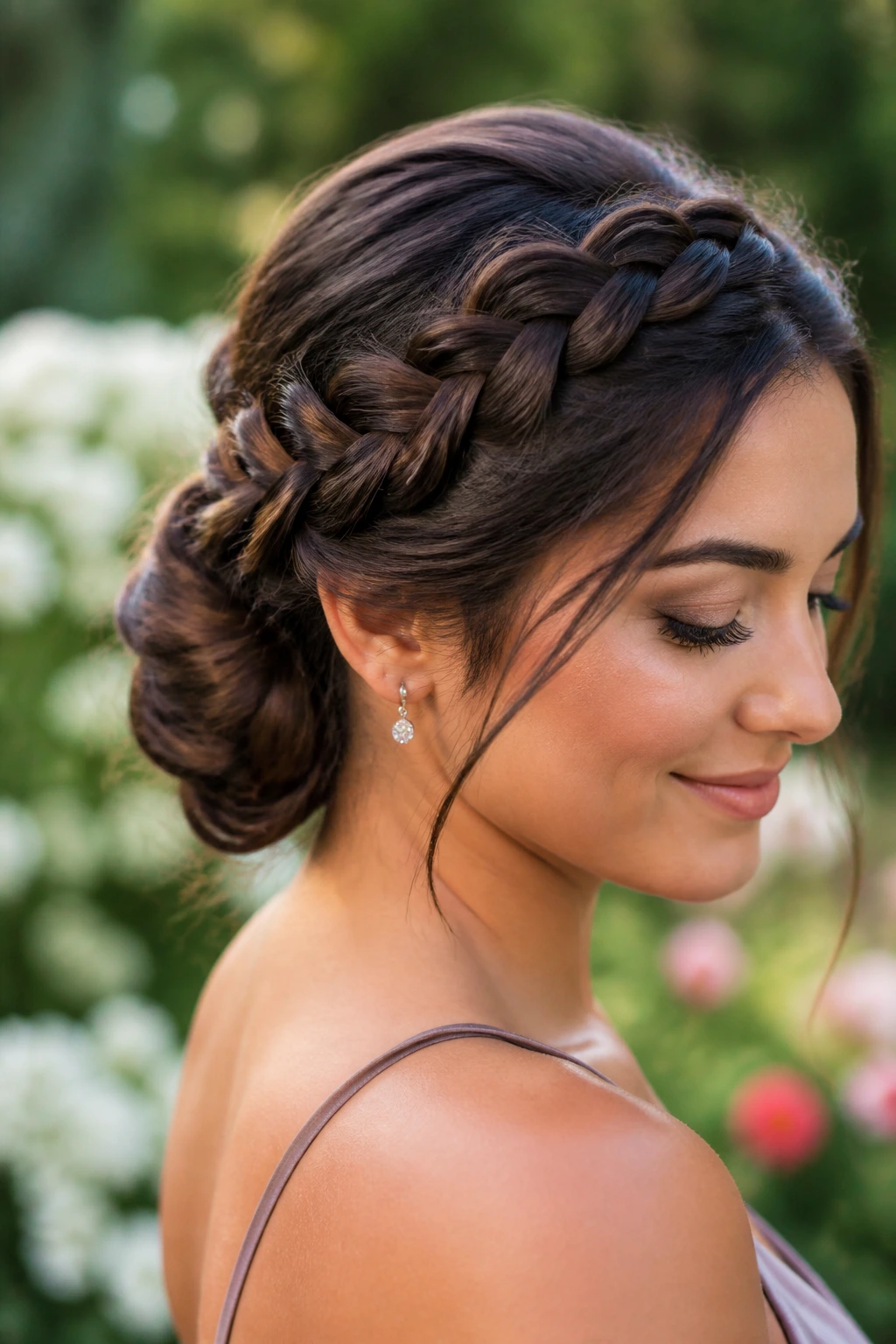
A halo braided bun gives the head a wrapped frame before the bun even shows up, and that makes it one of the prettiest choices for bridesmaids with longer hair. The braid travels around the crown or the sides, then feeds into a low or mid bun.
This style feels especially at home in outdoor settings, garden ceremonies, or dresses with soft sleeves and textured fabric. It has enough detail to stand alone, so you do not need much else on top.
If the hair is very layered, keep the braid slightly looser so shorter pieces can disappear into the weave. Too tight, and the halo starts to fight the hairline. Too loose, and it loses the clean frame that makes it work.
16. Pinned-In Waves Bun
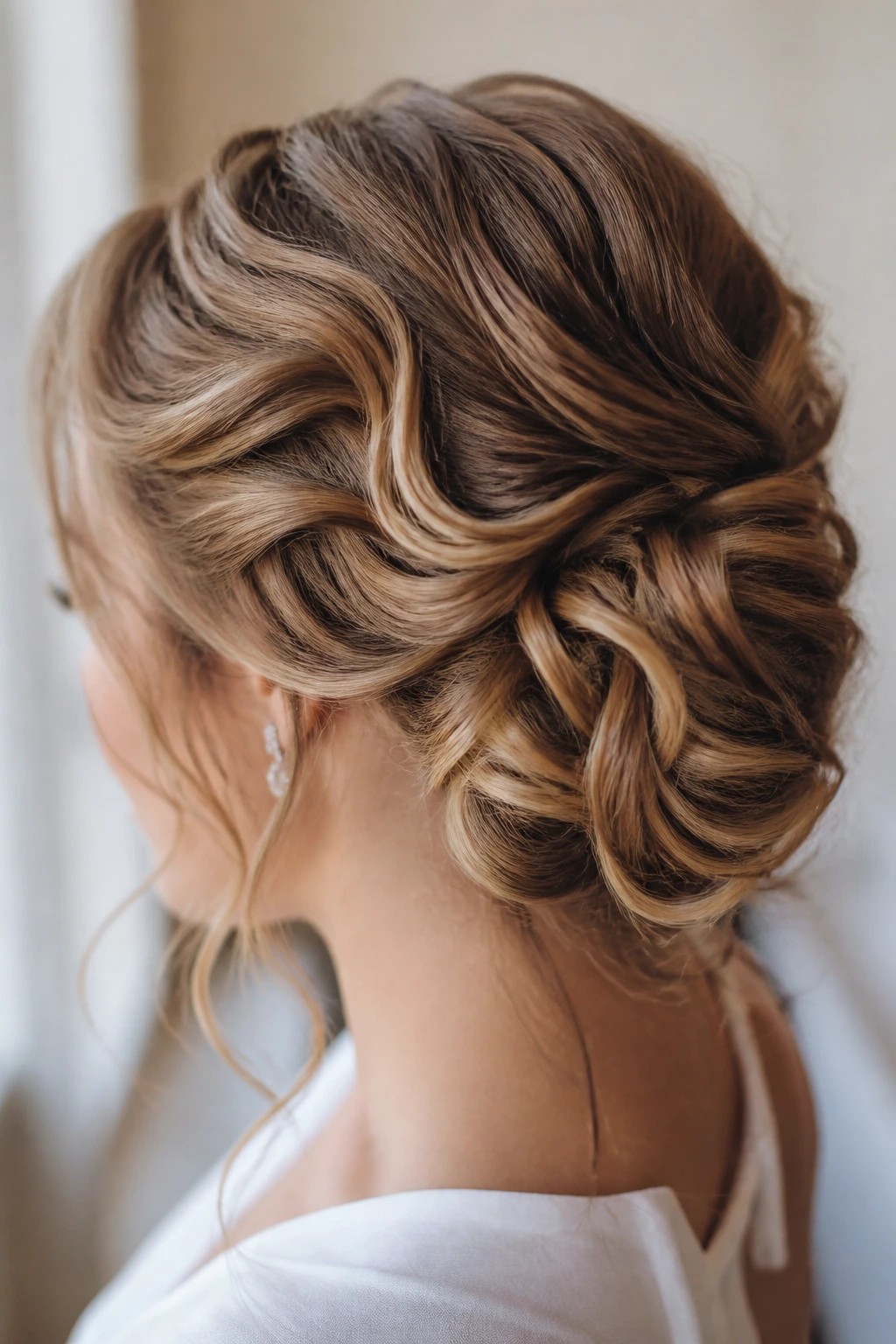
Pinned-in waves give you a little softness before the bun takes over. You curl or wave the lengths first, then pin them in overlapping sections so the bun has movement and shape, not just a wrapped exterior.
This is one of the better choices for fine hair because waves add the illusion of bulk. The bun itself doesn’t have to be huge; the overlapping texture does the visual work. That matters when the bridal party wants fullness without padding that feels obvious.
Use a medium curling iron or hot rollers, then let the curls cool before pinning. Hot hair collapses faster. Cool hair keeps the bend, and that bend is what gives the bun its shape.
17. Low Bun With Pearl Pins
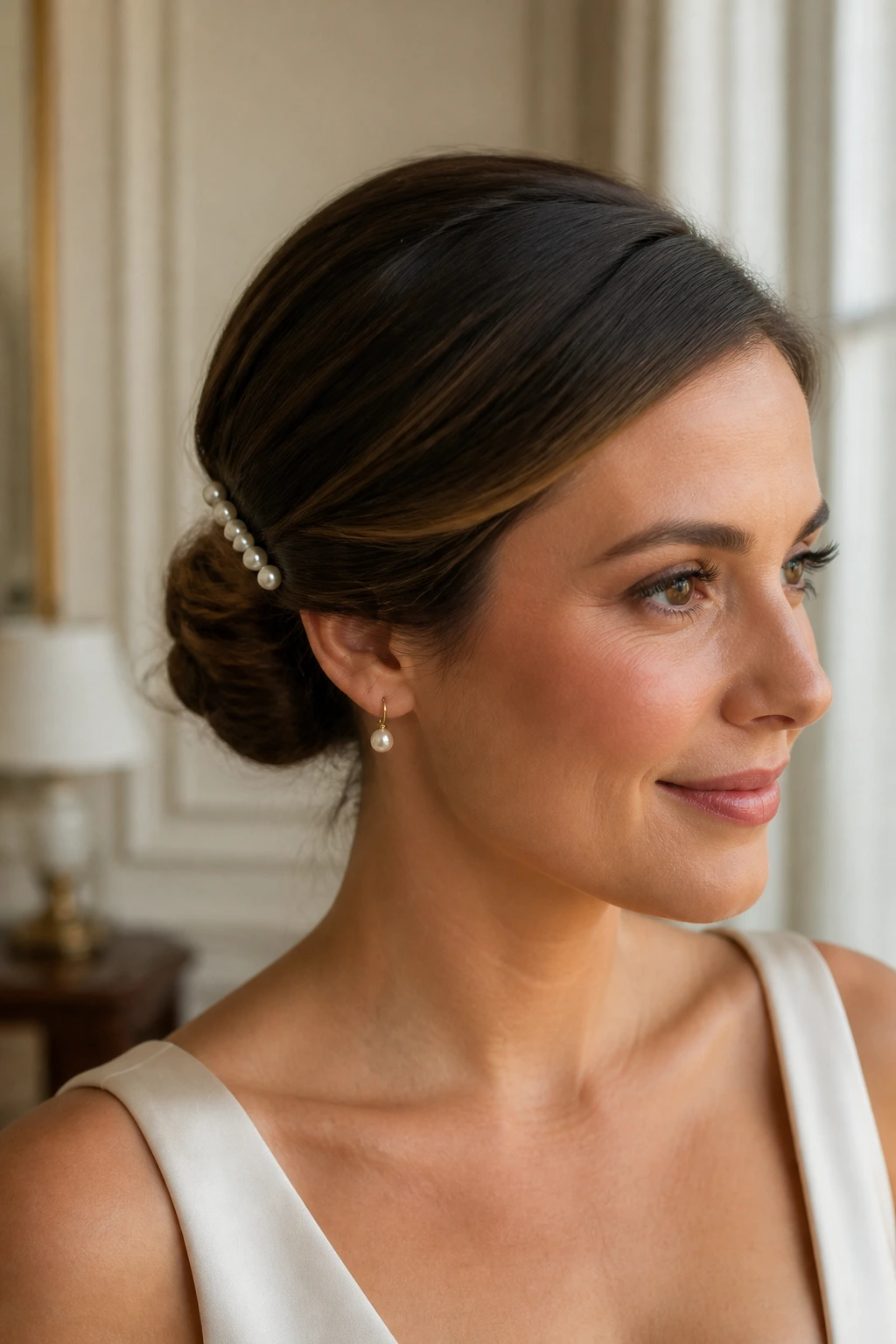
A low bun with pearl pins keeps the bun itself simple and lets the accessories do the talking. The style is clean, low, and classic, but the pearls lift it out of plain territory fast.
I like this look when the wedding has soft, formal details and the bridesmaid dresses are understated. One line of tiny pearl pins, placed where the bun curves, can make the whole style feel finished.
Don’t scatter pearls everywhere. That turns into craft-store chaos. One cluster, one side, one visible idea — that’s enough.
18. Tucked Braided Bun
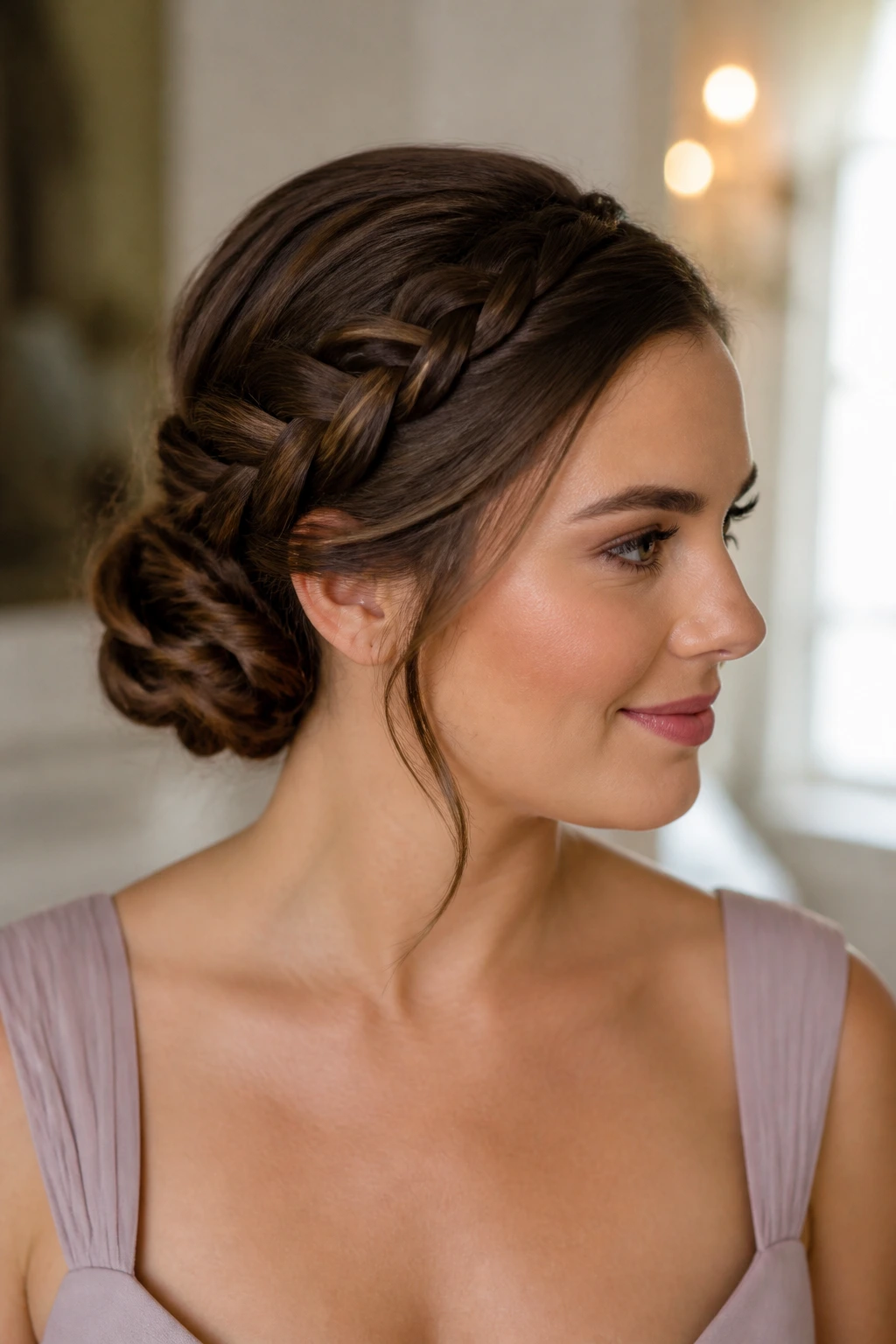
A tucked braided bun is one of the smartest options for shoulder-length hair that needs a little extra help reaching bun territory. Braid the lengths, fold the braid under itself, then pin the tuck so the ends disappear.
The braid gives grip, and the tuck keeps the shape compact. That combination is why this style shows up so often in bridal parties with mixed hair lengths. It disguises the fact that not everyone has waist-length hair.
If you want the finish to look fuller, pancake the braid gently before tucking it. A lightly pulled braid looks softer and fills space better. Don’t tug so hard that it turns into a lace ribbon.
19. Dutch-Braid Into Bun
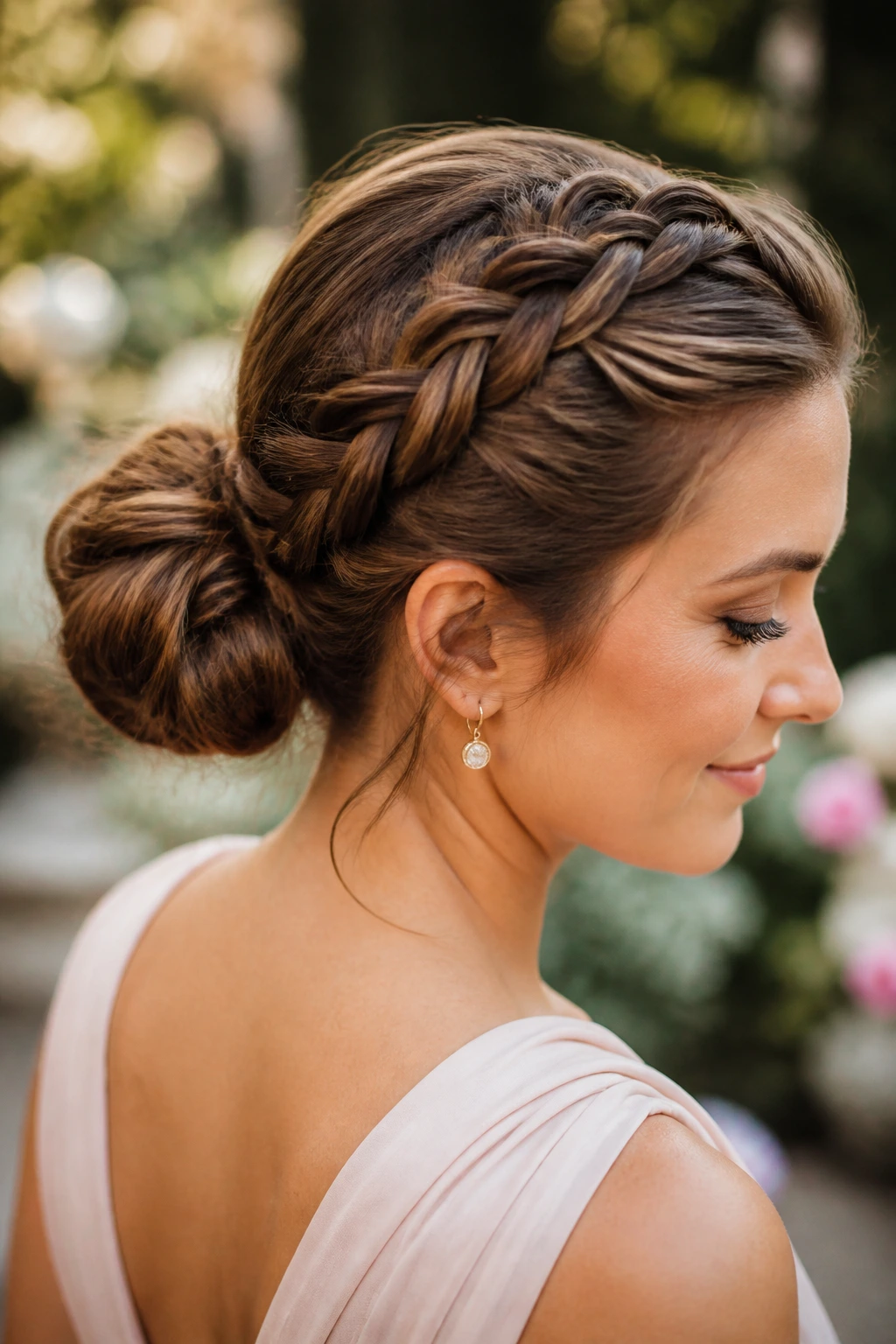
A Dutch-braid into bun has a stronger, more graphic look than a regular braid because the braid sits on top of the hair instead of sinking into it. That raised texture makes the style easy to see from the back row and in profile shots.
It’s a solid pick for long hair that needs a long-wearing structure. The braid feeds into the bun and acts like a built-in anchor, which means fewer loose sections and less panic halfway through cocktail hour.
This is one of the styles I’d trust for a windy venue. The braid locks the path down early, so the rest of the bun does not have to work as hard. Add a few hidden pins at the braid’s base and you’re set.
20. Soft French Twist Bun
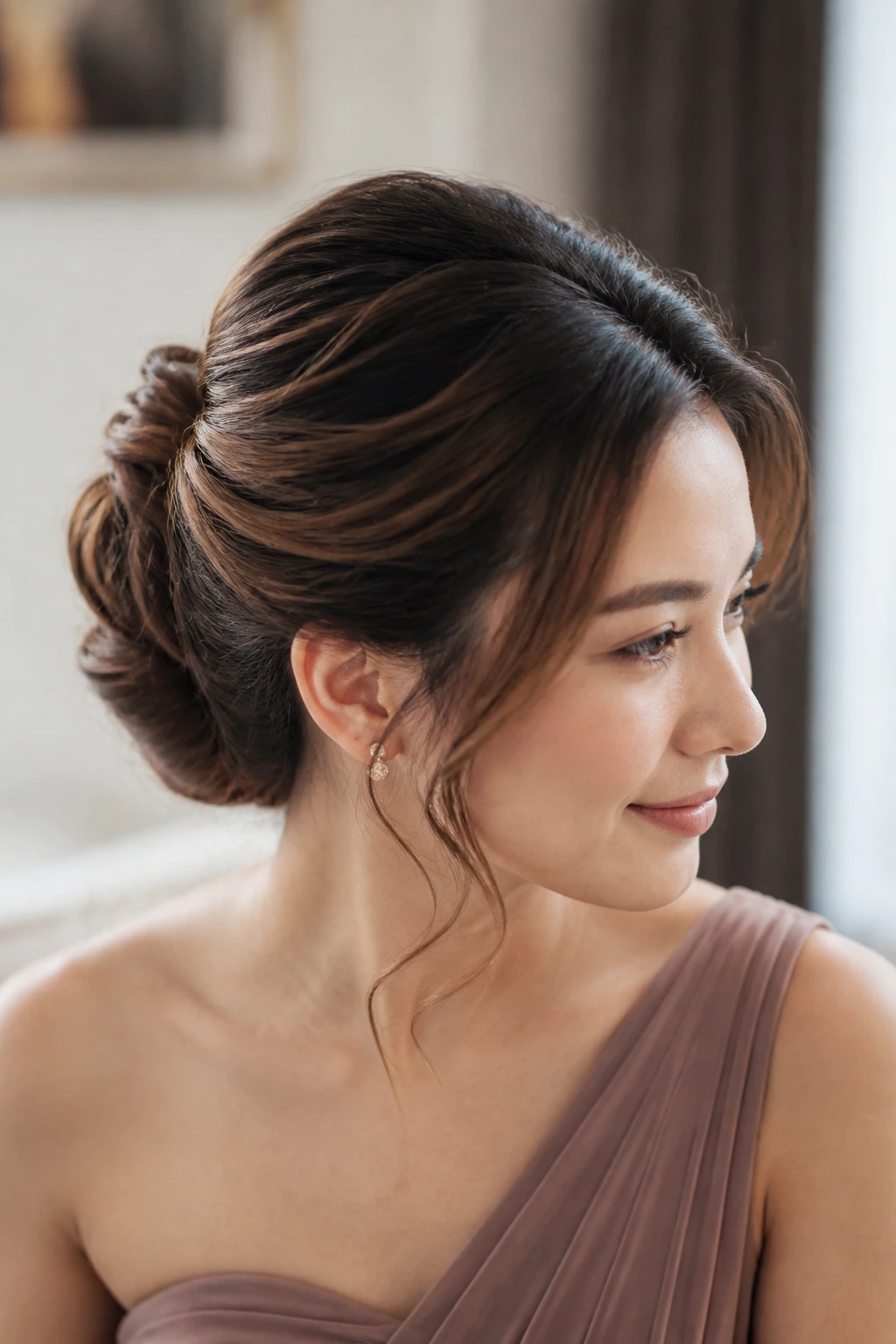
A soft French twist bun brings a little old-school polish without crossing into severe territory. Instead of a razor-straight, ultra-sleek twist, the hair is rolled loosely and pinned so the shape stays gentle.
That softness helps if the bridesmaid dresses are romantic or if the wedding leans more formal than trendy. It also flatters hair with some natural body, because the twist can hold its curved line without collapsing.
A French twist asks for control near the crown and a looser finish near the top of the roll. Tight at the base, soft at the top. That’s the formula. Too loose everywhere, and it slides. Too tight everywhere, and it looks dated in a bad way.
21. Voluminous Sock Bun
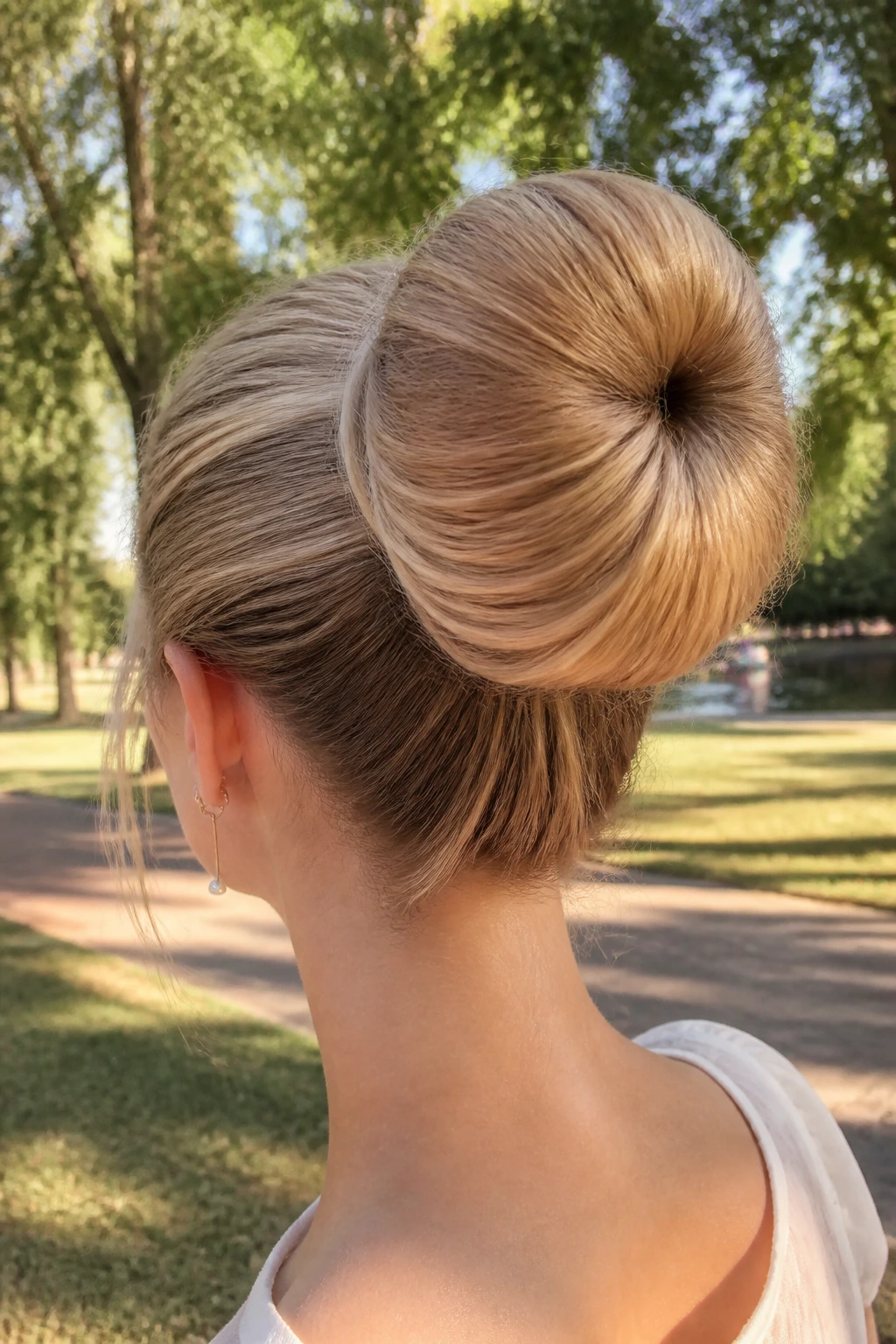
A voluminous sock bun is the practical answer when a bridal party wants a full, even bun without depending on naturally thick hair. The padding gives the bun shape, and the hair wraps around it smoothly.
This is one of the easiest ways to make fine hair look more substantial in photos. It also keeps the bun symmetrical, which is useful if the bridesmaids need a consistent look from person to person.
If you use a bun donut or padding insert, hide it well under the outer layer. The padding should support the style, not announce itself. Wrap the hair evenly and check the profile from both sides before you call it done.
22. Ribbon-Wrapped Bun
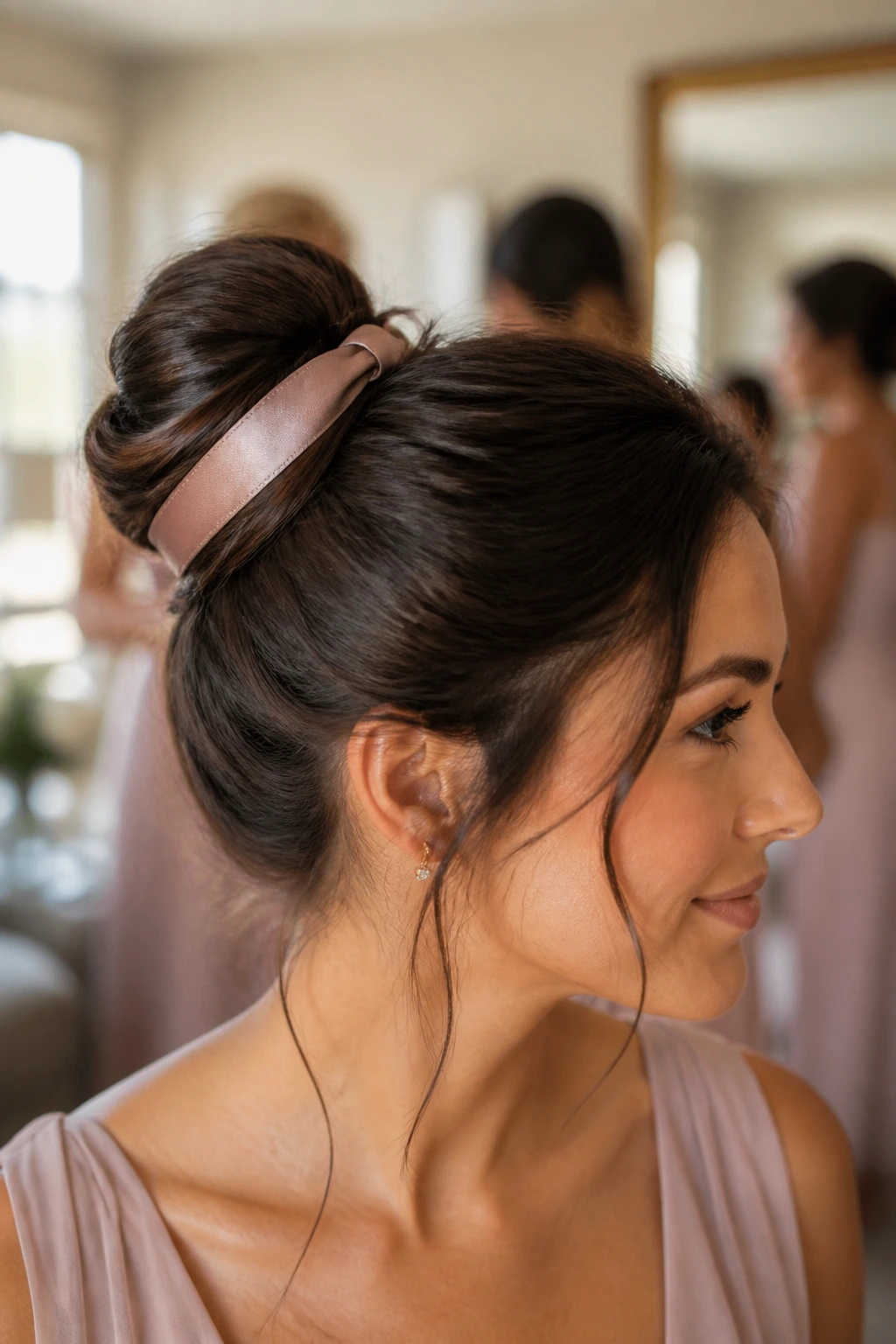
A ribbon-wrapped bun is for the bridal party that wants one coordinated detail without plastering the same accessory on everyone’s head. A satin or silk ribbon woven around the bun base adds color and softness fast.
This style works especially well if the wedding palette includes a signature shade that you want echoed in the hair. The ribbon can match the dresses, the flowers, or the bridesmaids’ bouquets without taking over the look.
Keep the ribbon narrow, not bulky. Wider ribbon starts to dominate the bun and can make the back of the head look heavy. A thin ribbon is enough to read in photos.
23. Curly Pineapple Bun
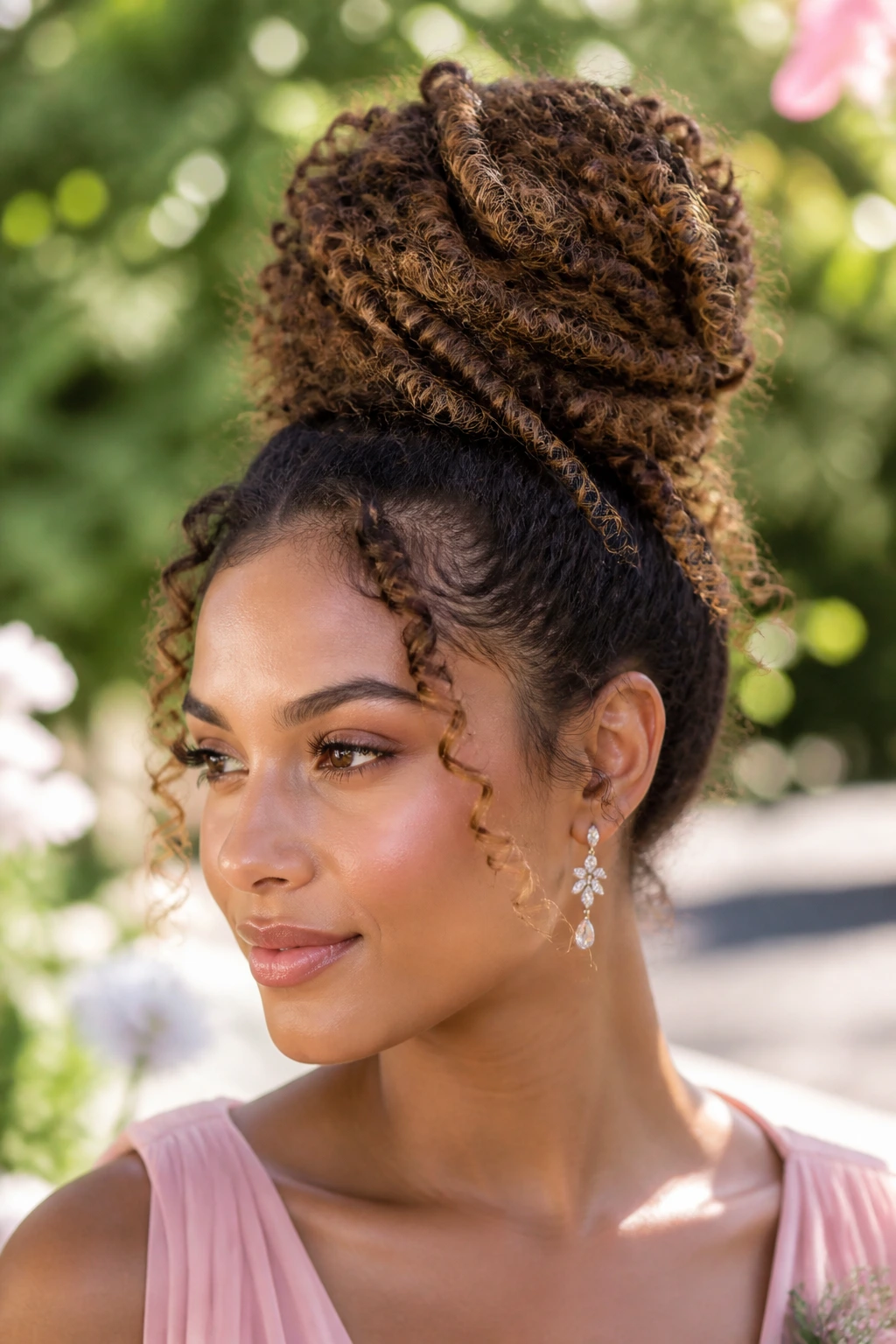
A curly pineapple bun celebrates natural curls and coils instead of flattening them into a generic shape. Gather the hair loosely, preserve the curl pattern where it matters, and pin the bun in a way that keeps texture visible.
This style is especially good for bridesmaids who do not want their curls blown out into submission for the sake of uniformity. The bun can sit high, mid, or low, depending on the volume of the curls and the neckline of the dress.
Use curl cream or a light-hold gel before styling, then avoid over-brushing. You want definition, not fuzz. A few curl-friendly pins and a shaped edge around the front go further than heavy spray ever will.
24. Sleek Knot With a Deep Side Part
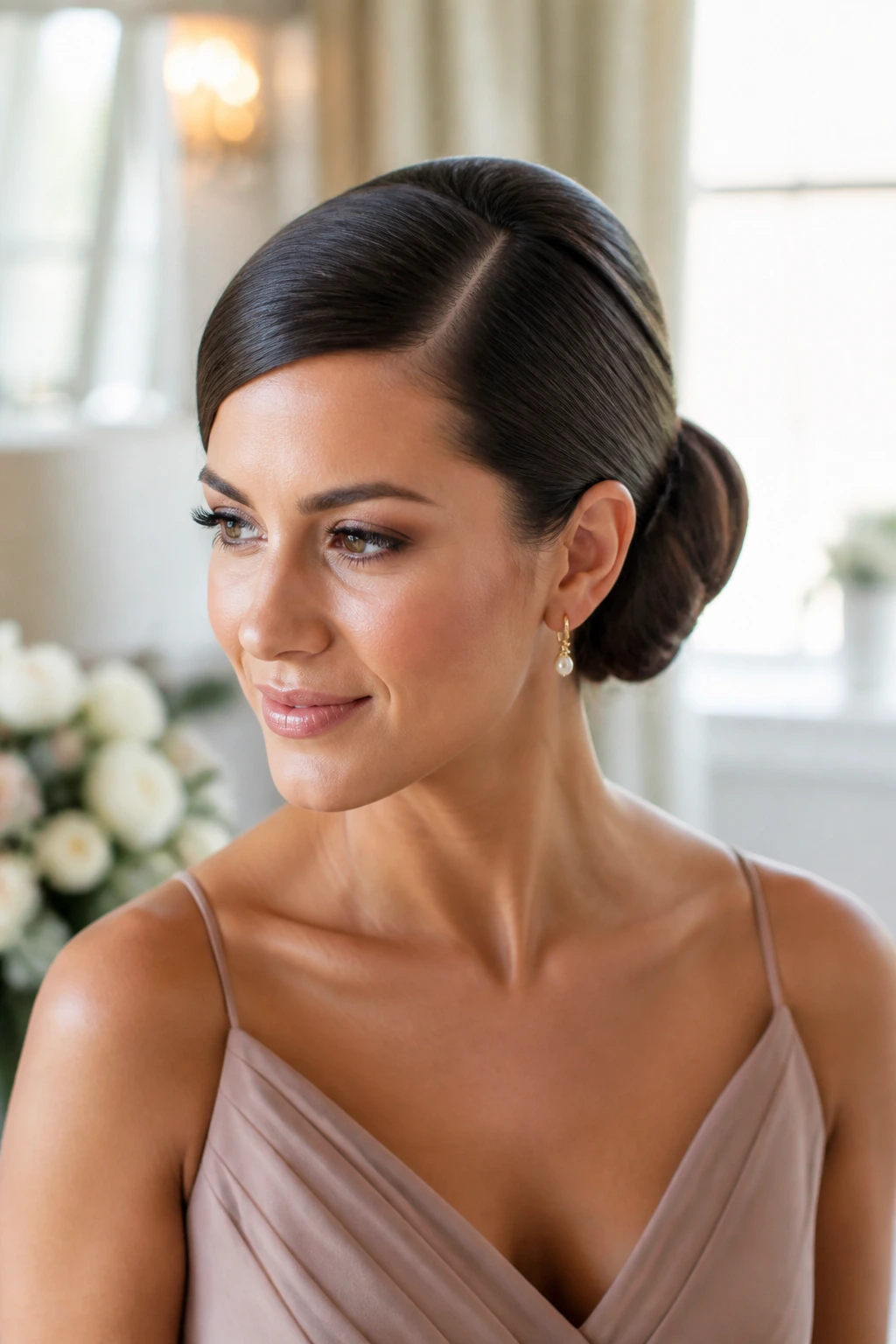
A sleek knot with a deep side part gives a bridesmaid look a little more drama without going theatrical. The side part creates a long line across the crown, then the knot sits low and smooth at the back.
This style is excellent for dresses with asymmetric cuts or a one-shoulder shape that already wants a little movement. The deep part adds interest up front, while the knot keeps the back quiet.
It also flatters a lot of face shapes because the part softens one side and opens the other. The asymmetry does the styling work for you. Don’t crowd it with too many flyaway pieces; this bun is at its best when the front line stays crisp.
25. Loose Floral Bun
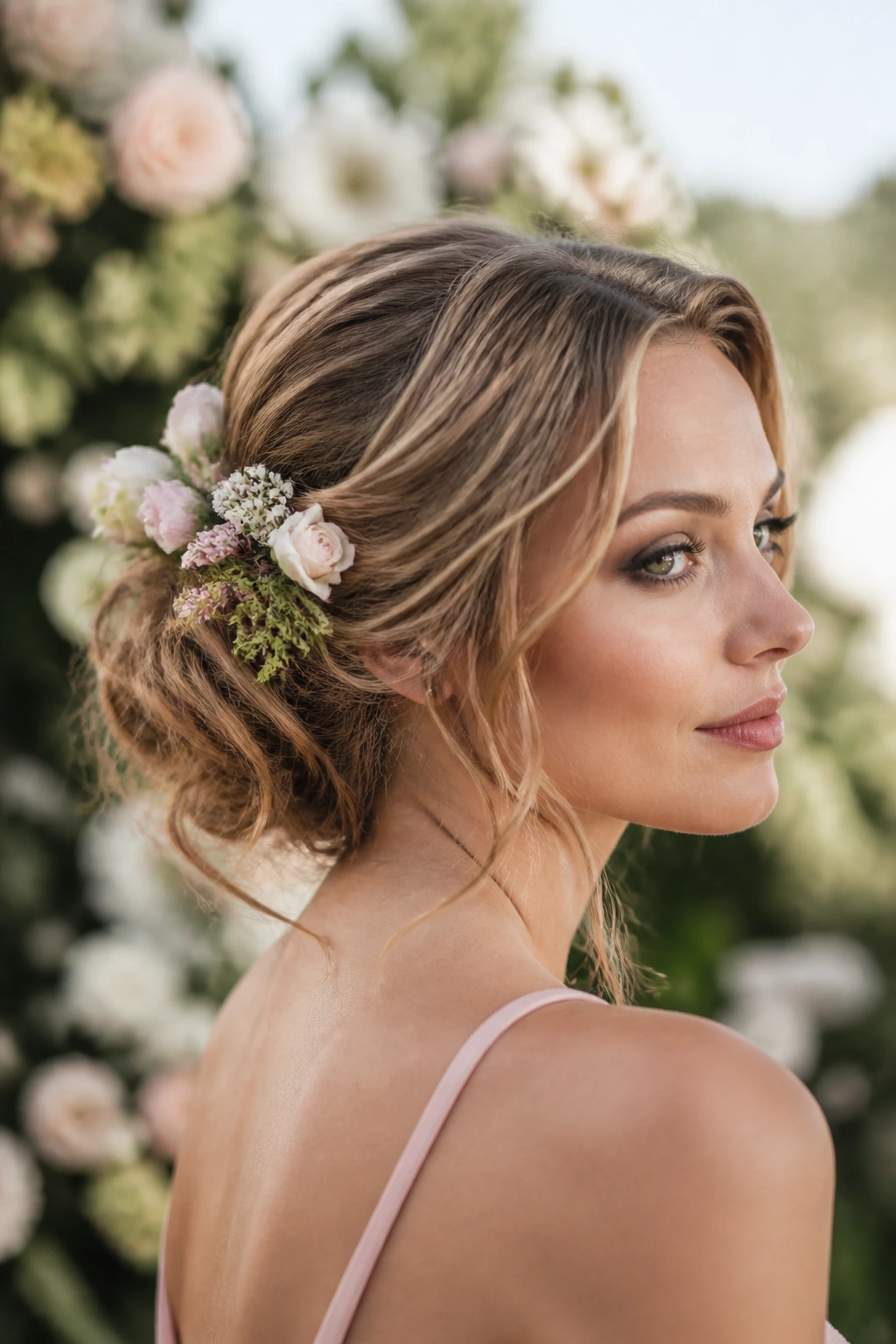
A loose floral bun is the one bridesmaids ask for when the wedding has that fresh, garden-cut feeling and the flowers are part of the whole story. The bun stays soft and slightly undone, while small blooms or greenery tuck into the shape.
Fresh flowers can be gorgeous here, but they need to be chosen carefully. Thin stems and hardy blooms work better than anything fragile or heavy, because the bun has to support the weight without sagging.
Keep the floral placement small and clustered rather than spreading flowers all over the head. A few well-placed stems look richer than a bouquet jammed into the hair. The bun should still be the bun, with the flowers acting like punctuation.
What Makes Bridesmaid Buns Hold Up from First Toast to Last Dance
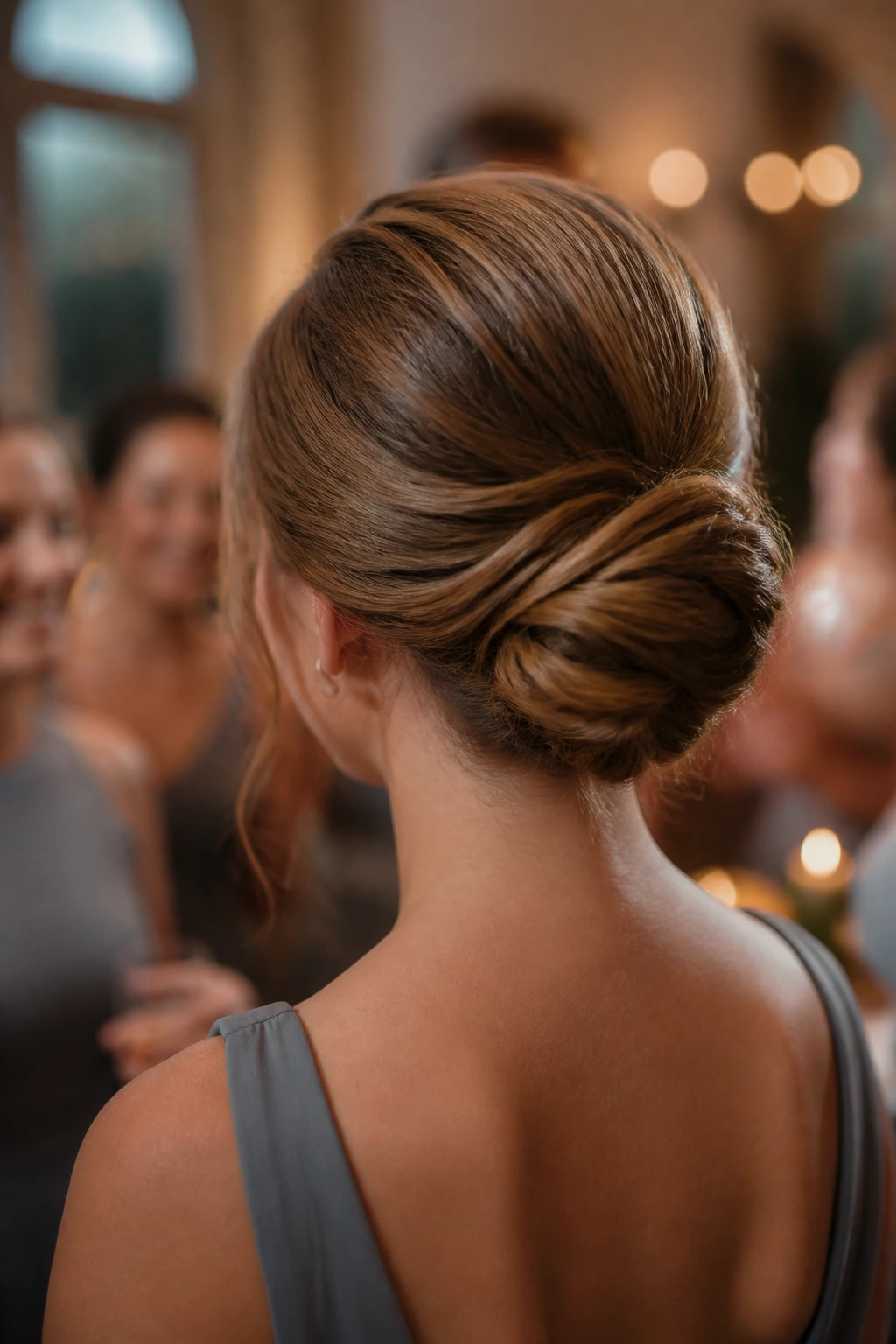
The secret is not magic. It’s weight, placement, and a little bit of restraint.
A bun sits close to the scalp, which means it is less likely to swing around, snag on straps, or flatten under a jacket. That’s a small thing until the room gets warm, somebody starts hugging, and the photographer asks for one more group shot in direct sun. Loose hair often starts looking tired by then. A bun usually still looks like it meant to be there.
Another reason buns work so well for bridal parties is that they can be made tighter or softer depending on the hair type. Fine hair needs more structural help. Thick hair needs better anchoring. Curly hair needs respect, not flattening. Once those pieces are handled, the bun becomes one of the few styles that can keep a whole group looking coordinated without making everyone look identical.
And yes, the shape matters in pictures. A bun opens the face, shows the earrings, and keeps the dress neckline visible. That alone makes it worth the effort.
Essential Tools for Bridesmaid Buns
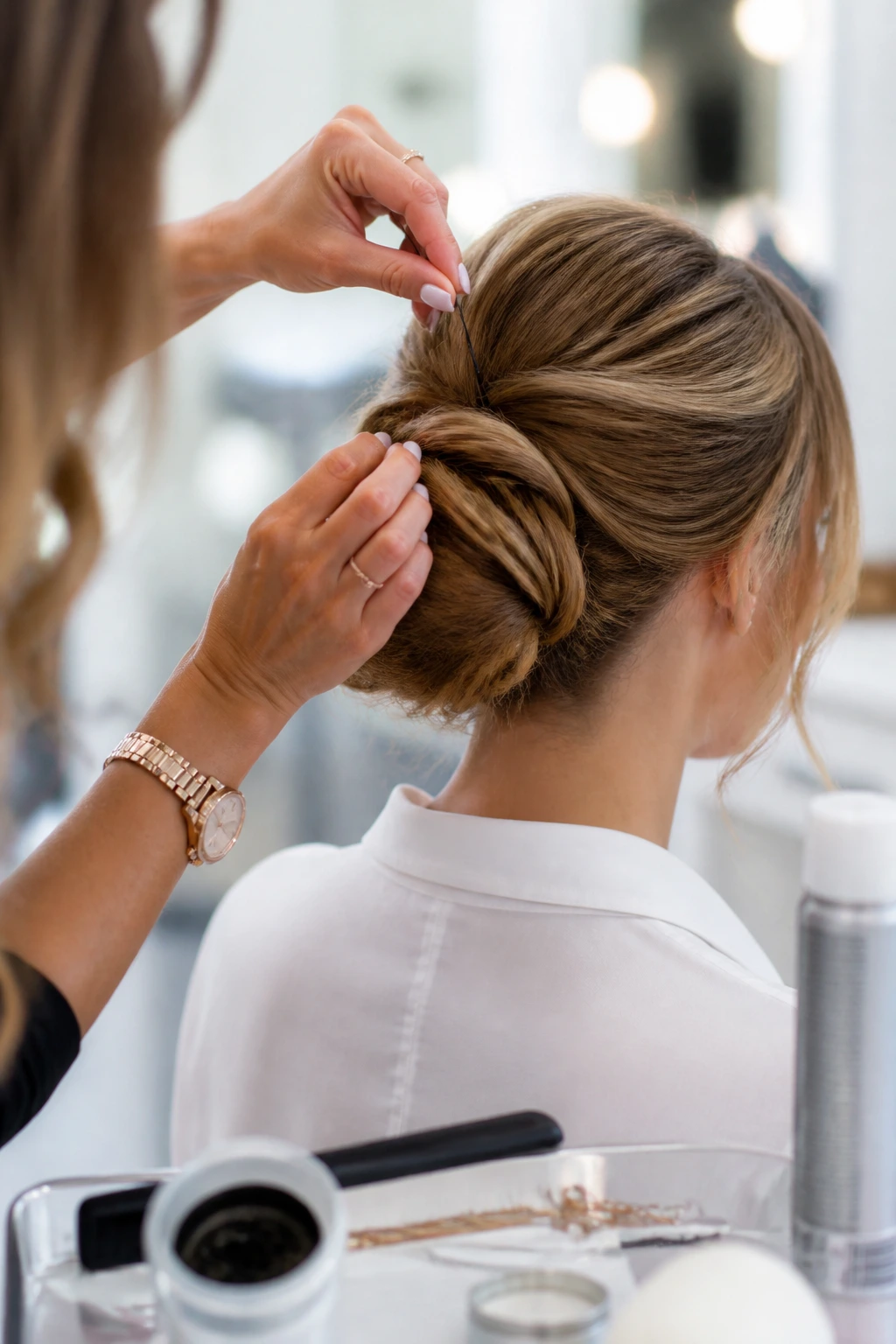
- Tail comb: Best for clean parts, neat sectioning, and smoothing the crown without wrecking texture.
- Boar-bristle brush: Helps flatten flyaways and polish sleek styles without making the hair look puffed up.
- Bobby pins in two sizes: Small pins for detail work and larger ones for anchoring heavier buns.
- U-pins: Useful for securing loose, textured buns without crushing the shape.
- Clear elastics: Good for hidden ponytails, braid bases, and styles where the tie should disappear.
- Texturizing spray: Gives grip to silky hair and helps braided or twisted styles hold.
- Flexible-hold hairspray: Keeps the style in place without turning the bun stiff or flaky.
- Heat protectant: Non-negotiable if curls, waves, or hot tools are part of the prep.
- Curling iron or wand: A 1-inch barrel works well for adding bend before pinning hair into a bun.
- Bun donut or padding insert: Optional, but useful for fine hair or if the bridal party wants a more even shape.
- Shine serum: Best used sparingly on the top layer for sleek buns; keep it away from the roots.
- Pearl pins, combs, or floral accents: Use one focal piece, not all three at once.
Choosing the Right Bun for the Dress, Hair Texture, and Bridal Party Mood
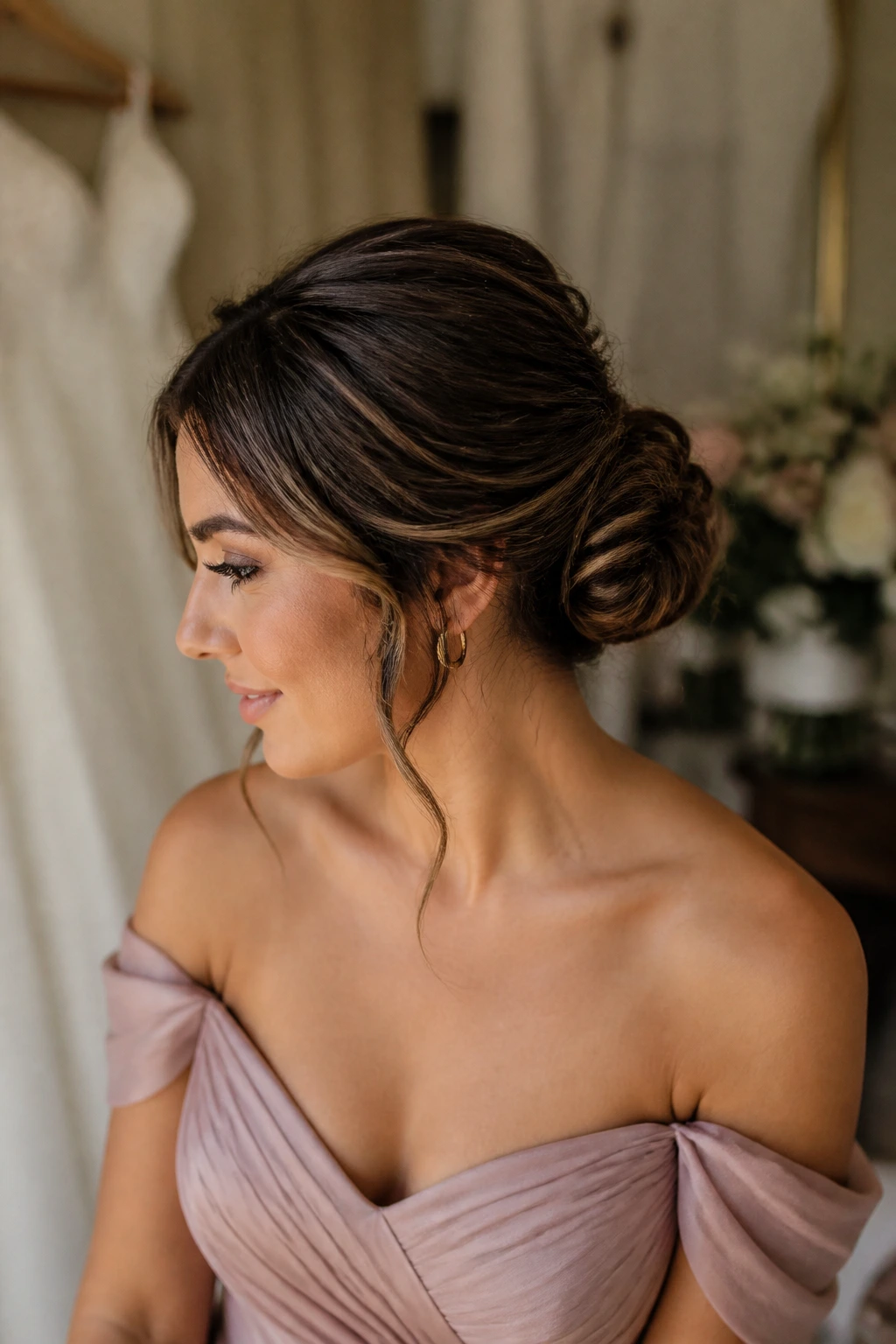
A bridesmaid bun should match the dress before it matches the mirror. That sounds obvious, but it’s the mistake people skip straight past. A stiff, high-shine bun can look brilliant with a modern satin gown and a square neckline. Put the same bun with soft chiffon and lace, and it can feel too sharp.
Neckline first: low buns suit halters, off-the-shoulder dresses, and high necks because they leave the upper body clean. Higher buns can help with strapless dresses when you want more vertical lift. One-shoulder dresses usually look best with a side-swept shape or a bun that sits just off-center.
Texture second: fine hair tends to benefit from braids, padding, or a donut base. Thick hair usually needs stronger pins and better sectioning, not more spray. Curly hair often looks best when the curl pattern stays visible in at least part of the style, instead of being brushed into a blur.
Mood third: if the wedding is formal, lean sleek or polished. If it’s garden or beach-adjacent, soften the bun and let a few pieces move. The bridesmaids do not need to wear the same exact bun to look coordinated. They need the same feeling.
How to Match the Bun to the Wedding Party Look
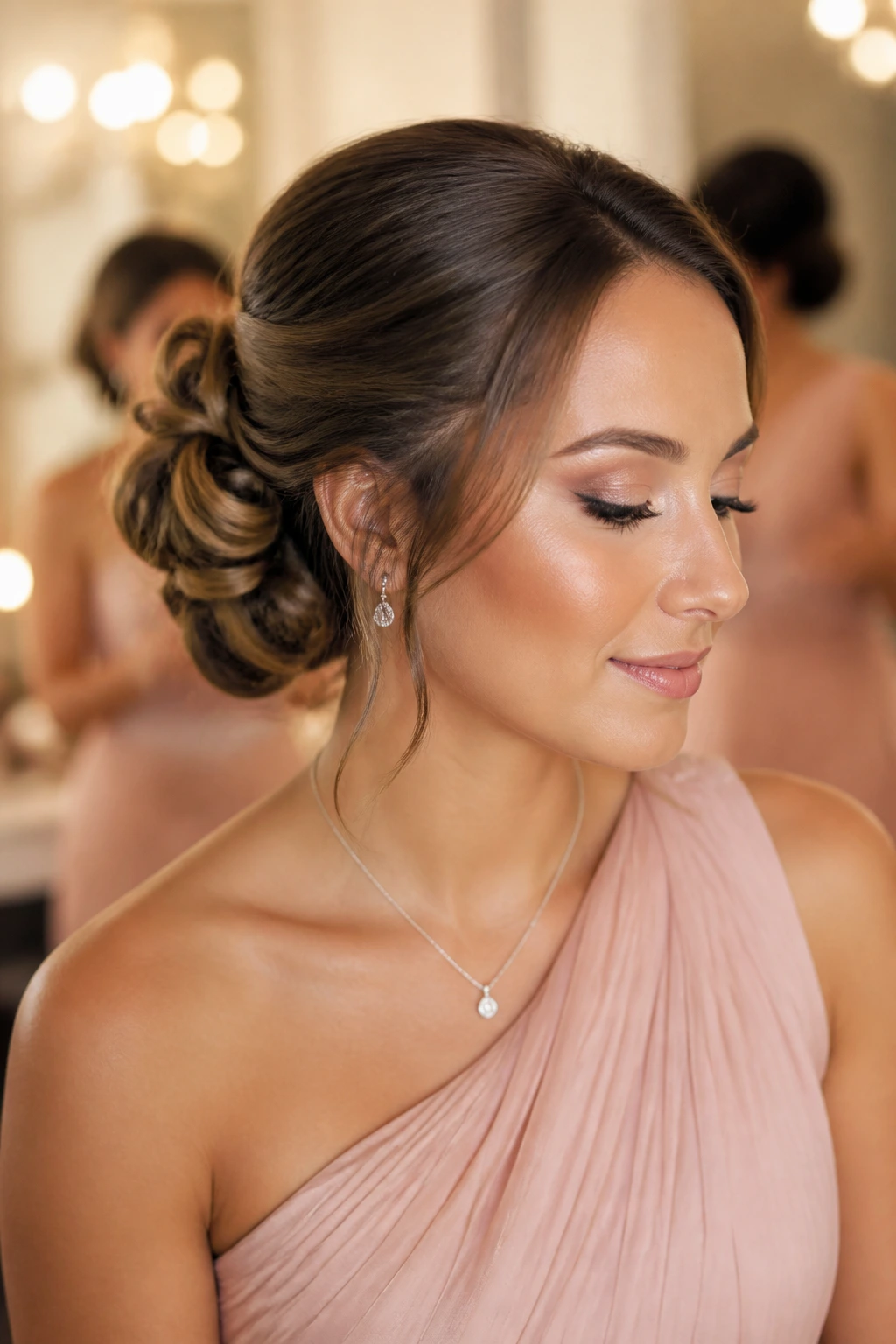
Silhouette: A clean, low chignon works best with strong neckline shapes, while a fuller bun can balance simple A-line dresses or minimalist gowns. Keep the bun lower if the back of the dress has detail you want to show off.
Jewelry: If the bridesmaids are wearing statement earrings, keep the bun tidy and the sides smoother so the earrings stay visible. If the jewelry is delicate, a textured bun or braided detail can provide the visual weight that the accessories lack.
Group cohesion: Match the part, the bun height, or the accessory rather than forcing every head into the same exact shape. One person can wear a braided bun, another a twisted knot, and the bridal party can still look unified if the finish and accessory language stay consistent.
Setting: Outdoor ceremonies need sturdier pins and less fragile texture than indoor ballroom hair. Humid air, wind, and late-day heat all punish styles that depend on perfection. Pick the version that can survive a little weather and a lot of hugging.
Smart Product and Accessory Tips
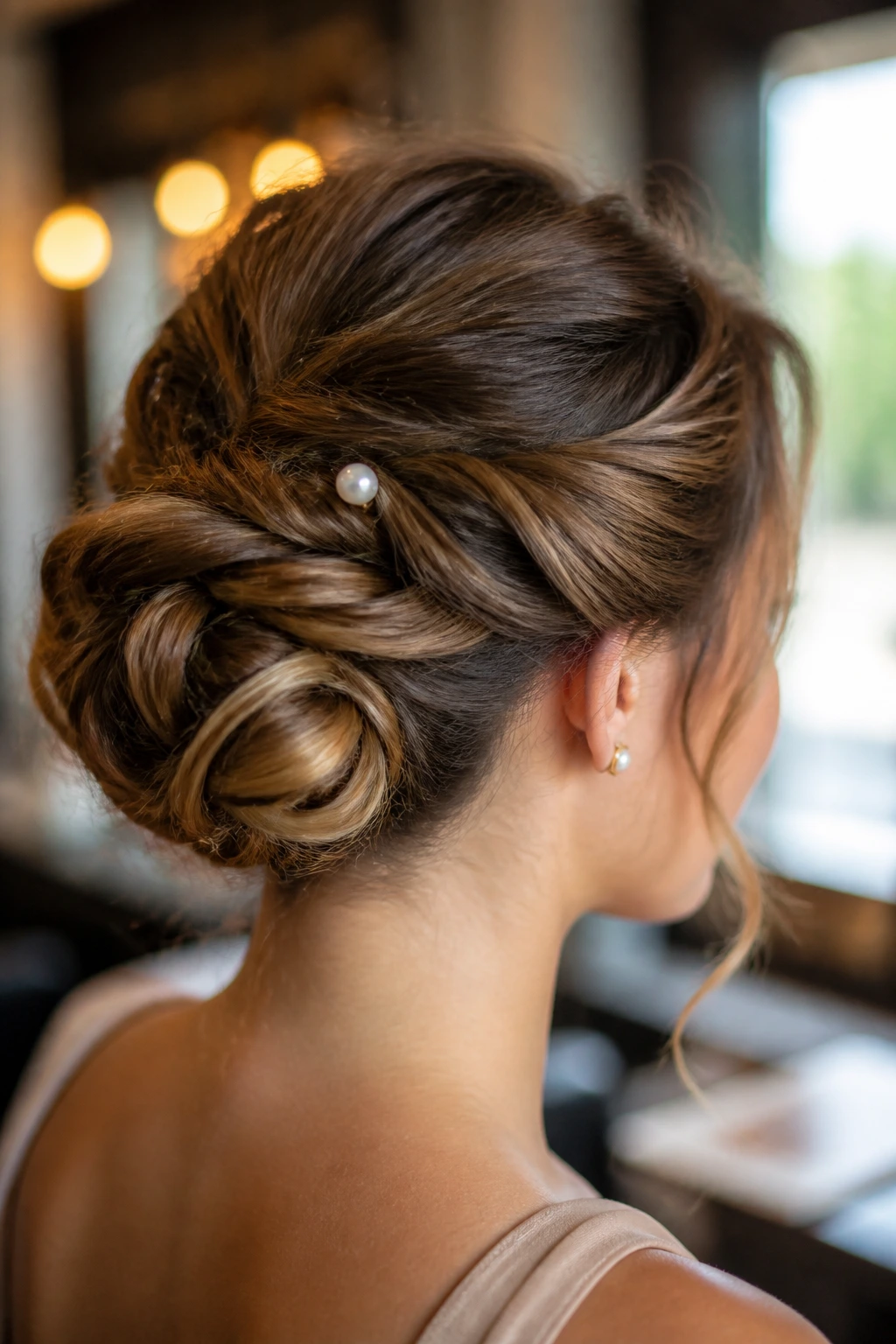
If the hair is slippery, start with grip, not spray. A light mousse on damp roots or a texturizing spray on dry hair gives pins something to catch. Straight, glassy hair usually needs that first layer of friction; otherwise the bun starts shifting by the time makeup is done.
Use bobby pins that match the hair color, or go one shade darker. Light-colored pins in dark hair flash in photos, and the reverse is just as annoying. U-pins work better for some soft buns because they hold shape without squeezing the style flat.
For accessories, choose one main accent and let it breathe. A pearl comb, a floral pin cluster, or a slim ribbon is enough. If you add all three, the back of the head starts looking cluttered, and clutter is the enemy of a good bun.
For shine, use a small amount of serum only on the outer layer. Put it too close to the roots and the style gets greasy fast. Put it on the ends, though, and the bun starts looking finished instead of dry. That tiny difference matters more than most people think.
Common Mistakes That Flatten or Frizz a Bridesmaid Bun
Starting with hair that’s too clean: Freshly washed hair can be too soft and slippery, especially if it has no product in it. The bun slides around and needs more pins than the stylist planned. A little prep the day before usually helps.
Overloading with spray: Too much hairspray can leave the bun crunchy, dull, or flaky. It also makes the style harder to touch up later, which is a pain when the reception runs long. Use light layers and build only where the hair is loose.
Pinning only the outer shell: A bun that looks fine from the back but caves in after an hour usually wasn’t secured through the middle. Anchor the structure underneath, not just around the outside edge.
Ignoring the neckline: A bun can be well made and still feel wrong if it sits at the wrong height for the dress. If the neckline is already busy, keep the bun lower or cleaner. If the dress is plain, you can afford more texture.
Trying to force every hair type into the same finish: Curly hair, fine hair, and thick wavy hair do not all want the same amount of smoothing. When the styling fights the texture, the style puffs, frizzes, or goes limp at the crown. Work with the hair you have.
Variations and Adaptations to Try
Humidity-Proof Bridesmaid Buns: Add mousse at the roots, rough-dry the hair, and finish with flexible-hold spray instead of a stiff shell. This version is worth using when the ceremony, photos, and reception all happen in open air.
Fine-Hair Padding Magic: Build the bun over a donut or small padding insert, then hide it with a smooth outer layer. The goal is not a fake-looking puff; it’s enough body to keep the style from collapsing into the scalp.
Curly-Hair Celebration Bun: Leave some curl definition visible at the front and around the bun edges, then pin the rest without brushing it into frizz. This keeps the texture honest and gives the style a rich, lived-in shape.
Short-Hair Illusion Bun: Tuck the ends tightly, use hidden pins, and add a small padded base or clip-in pieces if needed. Shoulder-length hair can make a convincing bun when the seam is hidden and the finish is clean.
Matching-But-Not-Matching Party: Keep one detail consistent across the bridal party — a middle part, a pearl pin, or the same bun height — then let each person’s texture and face shape guide the rest. The result looks coordinated without feeling forced.
Prepping the Hair the Day Before and Refreshing It on the Day
The day before matters more than the last five minutes in the mirror. If the hair is too soft or newly washed, it’s harder to grip, harder to pin, and more likely to loosen under heat. A little bit of texture from the previous day gives pins something to hold onto.
For many bridesmaids, the best prep is clean hair that has had time to settle. If the hair is freshly washed, use a lightweight mousse or texture spray and let it cool completely before styling. If the hair is already day-old, a quick root refresh and a little dry shampoo can wake it up without making it dusty.
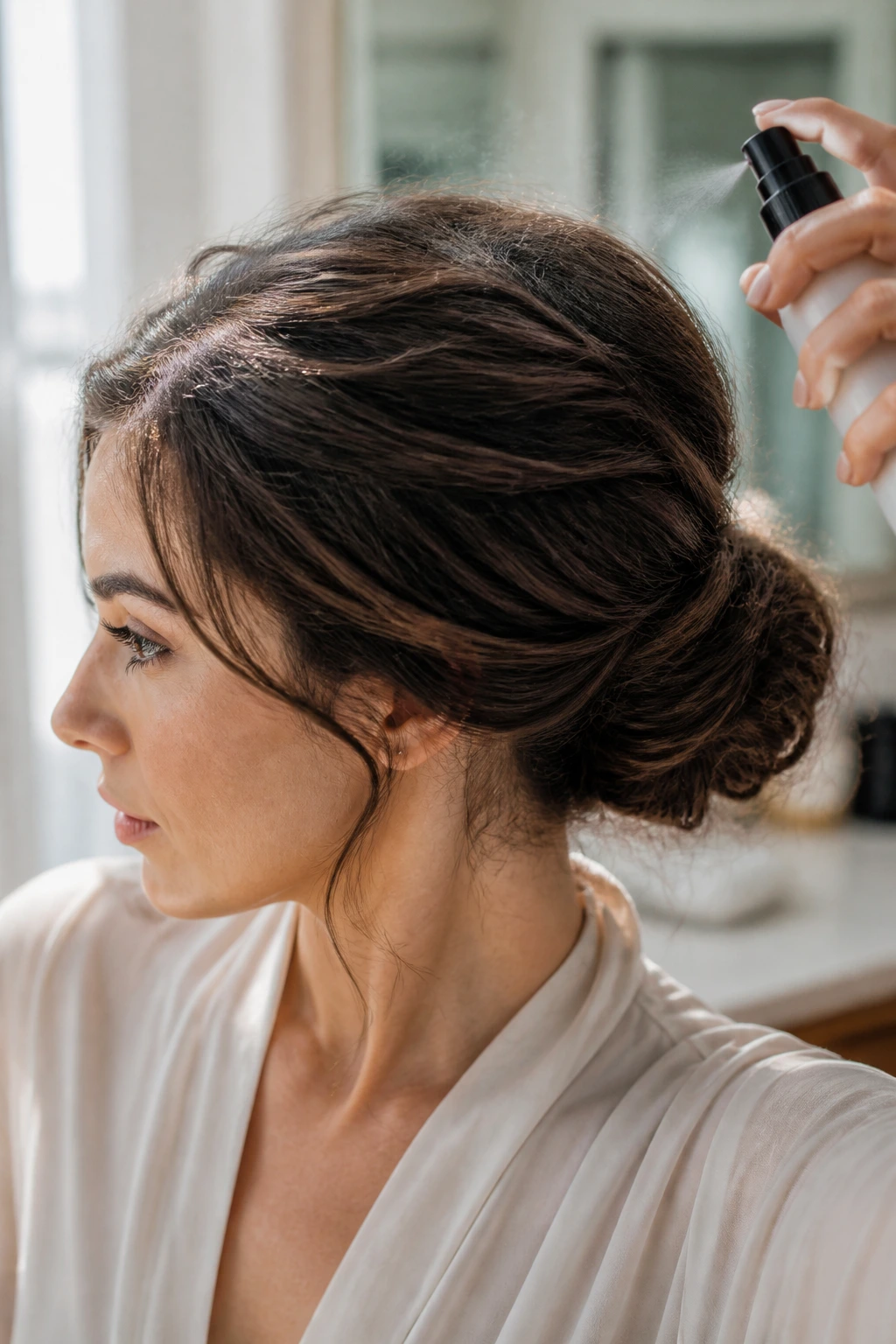
On the day itself, touch up the bun with a light mist of spray and a few pins only where the shape starts to soften. Do not keep rebuilding the whole style every hour. That’s how buns get messy in the wrong way. Small fixes beat full restyles. If the front starts slipping, pin the anchor point at the crown or nape first, then tidy the surface after.
Frequently Asked Questions
Which bridesmaid bun lasts the longest?
Sleek low buns, rope-braid buns, and Dutch-braid styles usually hold up well because the hair is anchored tightly from the start. If the day will be long and warm, a style with a braided base tends to outlast a purely smooth knot.
Can fine hair hold a bun all day?
Yes, but it usually needs structure. A bun donut, texturizing spray, and a few hidden pins at the base make a huge difference. Fine hair often fails when it’s left too soft, not because it lacks length.
Should the hair be clean or a little dirty?
A little lived-in texture usually helps more than squeaky-clean hair. Freshly washed strands can slip apart, while hair that’s been washed the day before tends to hold pins better and keeps the bun shape steadier.
How many pins does a bridesmaid bun usually need?
There’s no fixed number, but most buns need more than people expect. A small, neat style might hold with six to eight pins, while a fuller or braided bun may need ten or more. The real test is whether the bun feels anchored when you gently tug the base.
What if a bridesmaid has bangs or short layers?
Leave the bangs styled on purpose instead of forcing them into the bun. Curtain bangs, side-swept fringe, or a soft face-framing bend often looks better than trying to hide every short piece. Short layers can be pinned flat with tiny clips or tucked under the bun’s outer wrap.
Can bridesmaid buns work with curly hair?
Absolutely, and they often look better when the curl pattern is preserved. A curly bun should not be brushed flat unless the style is specifically sleek. Let the curl texture show at the edges so the finish still looks like that person’s hair.
How do you keep the bun from sagging during dancing?
Anchor the base tightly, use pins that cross each other in different directions, and avoid overloading the bun with heavy accessories. If the bun starts to slip, a few well-placed U-pins at the underside usually fix it faster than more hairspray.
Should all bridesmaids wear the same bun?
Not necessarily. A shared part, accessory, or finish can look more elegant than identical buns on every head. Matching the energy of the style matters more than forcing the exact same shape across different hair textures and lengths.
A Last Mirror Check
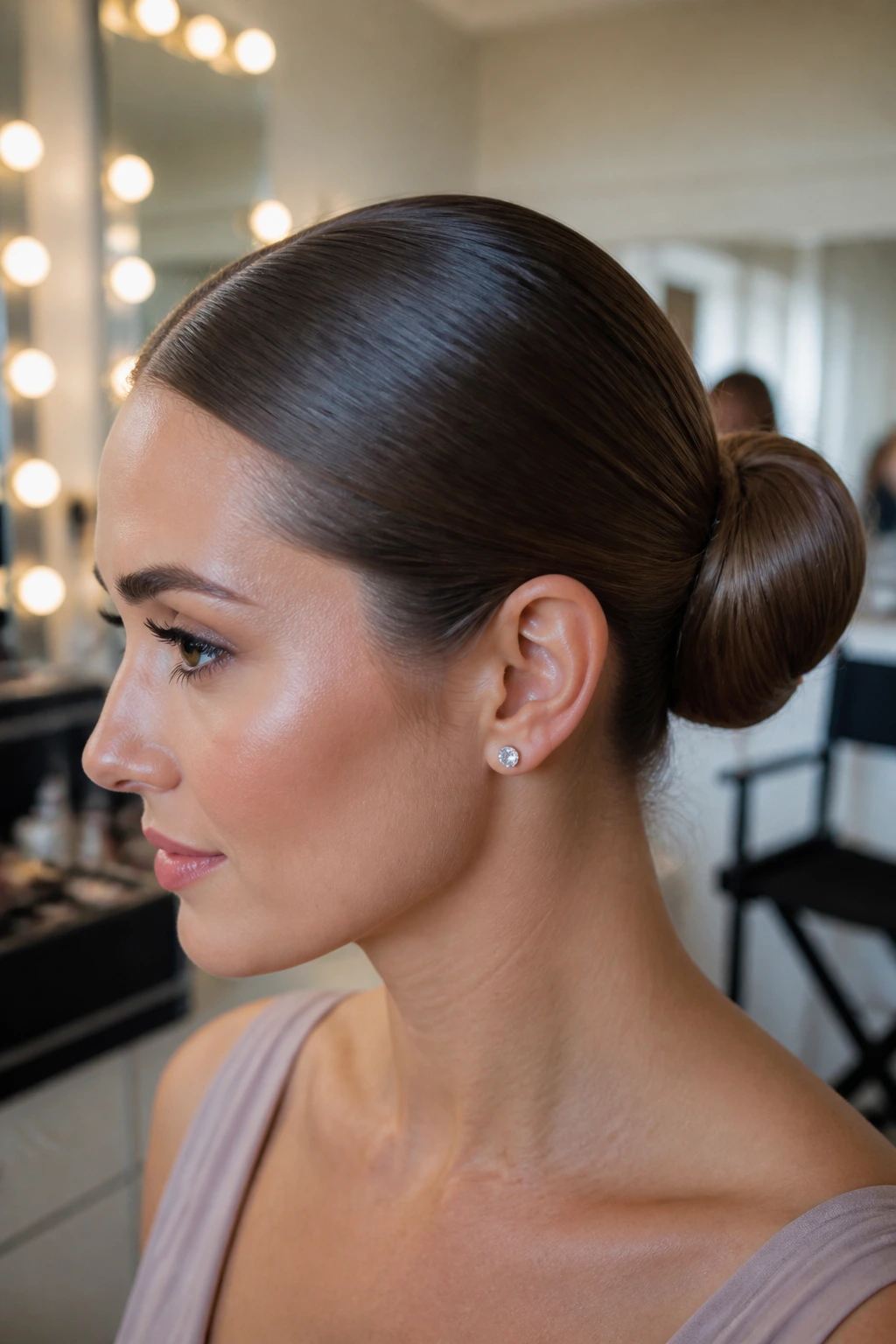
The best bridesmaid bun is the one that still looks tidy after a hug, a head turn, and one of those tiny chaotic moments when somebody says, “Wait, can we do one more photo?” If the style stays put through all of that, it’s doing its job.
Keep the shape simple, anchor the base properly, and choose the version that works with the dress instead of fighting it. That’s the real trick with bridesmaid bun hairstyles: they should feel calm in the middle of a busy day, and they should still look like themselves when the reception lights come up.
