



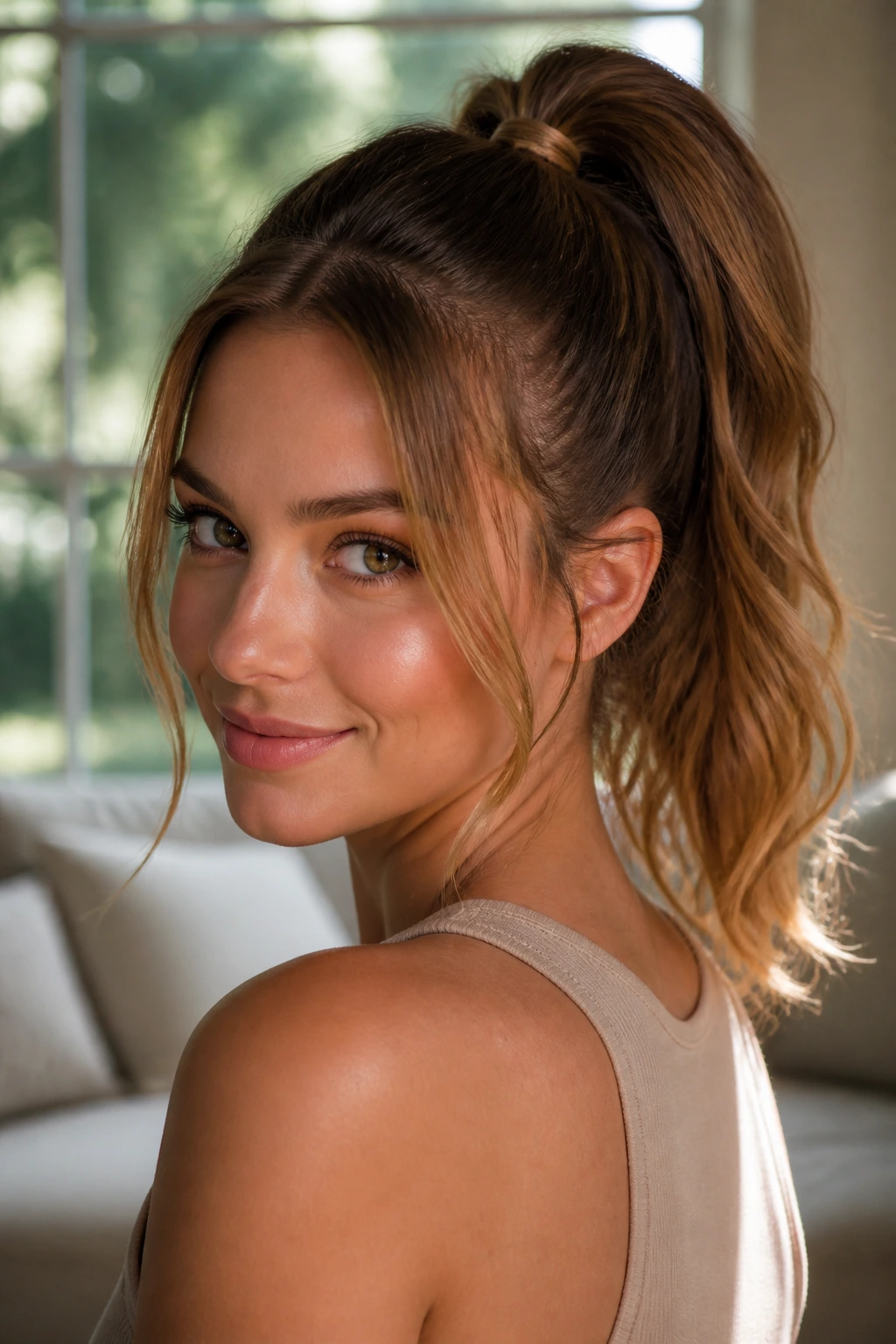
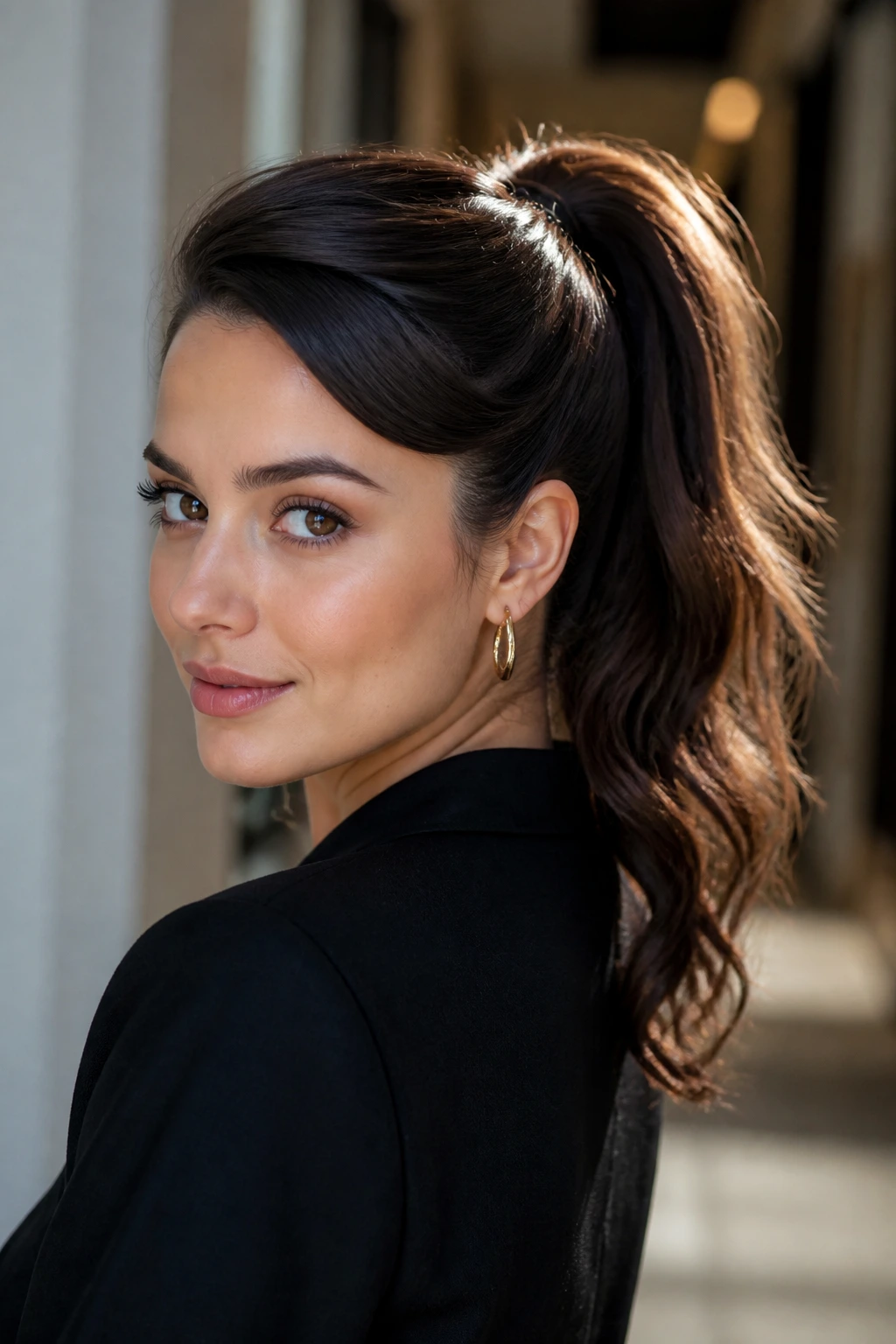
A high ponytail can do two things at once: lift the face and clean up the whole silhouette, or expose every rushed brush stroke if you rush it. That’s why high ponytail hairstyles for a soft polished look are never really about height alone. The best versions have a little movement at the ends, a little lift at the crown, and just enough smoothness to feel deliberate. Too tight, and the style starts looking severe. Too loose, and the whole thing collapses into gym-hair territory.
The trick is balancing control with softness. A good high ponytail sits high enough to open the cheekbones, but it still leaves room for a side part, a face-framing strand, a wrapped base, or a bend through the tail. That’s the difference between “pulled back” and styled. And yes, it matters. A lot.
What I like about this category is how forgiving it can be once you understand the shape. Fine hair needs a little root lift. Thick hair needs better sectioning. Curly and coily textures need a different kind of polish altogether—one that respects the pattern instead of sanding it down. Once you see the options side by side, the whole look stops feeling fussy and starts feeling useful.
Why These 25 High Ponytail Looks Earn Their Place
-
They lift the face fast: A high ponytail clears the jawline and creates a small visual lift at the cheeks, which is why the style looks sharp even when the rest of the outfit is simple.
-
They can stay soft: Face-framing pieces, curved ends, and a little crown volume keep the style from looking hard or over-tight.
-
They work across hair textures: Straight, wavy, curly, coily, fine, thick, and short-to-medium hair all have a version here that actually holds.
-
They move between settings easily: The same base style can read office-clean, wedding-ready, or casual depending on the finish and accessories.
-
They’re easier on second-day hair: Slight grit gives the elastic something to grip, which helps the ponytail stay up without a fight.
-
They look intentional with very little extra effort: A clean part, a neat wrap, and one good finishing spray do most of the heavy lifting.
1. The Clean-Wrapped Silk Press Ponytail
This is the version I reach for when I want the hairline to look crisp but not stiff. The top stays smooth, the base is wrapped with a narrow strand, and the tail hangs with that glossy, straight swing that makes the whole style feel expensive without trying too hard. It’s a strong choice for a silk press, flat-ironed hair, or any texture you’ve smoothed with heat and want to keep sleek.
Why it works: The eye reads the clean base first, then the length. That wrapped strand hides the elastic and makes the finish look more tailored. Keep the tension firm at the crown, but not so tight that the part starts to separate. A light mist of shine spray at the surface—not the roots—keeps the finish controlled.
2. The Side-Part Crown-Lift Ponytail
A deep side part changes everything. It softens the forehead, gives the crown a little built-in lift, and keeps the ponytail from sitting too flat against the head. This one feels especially good when you want polish but not severity.
The best version uses a boar-bristle brush or a smoothing brush to guide the hair over the part, then a little root-lifting spray at the crown before the ponytail is secured. I like this shape on round and heart-shaped faces because the diagonal line creates movement before the eye lands on the tail. Keep the front sweep smooth, then let the length stay relaxed.
3. The Face-Framing Blowout Ponytail
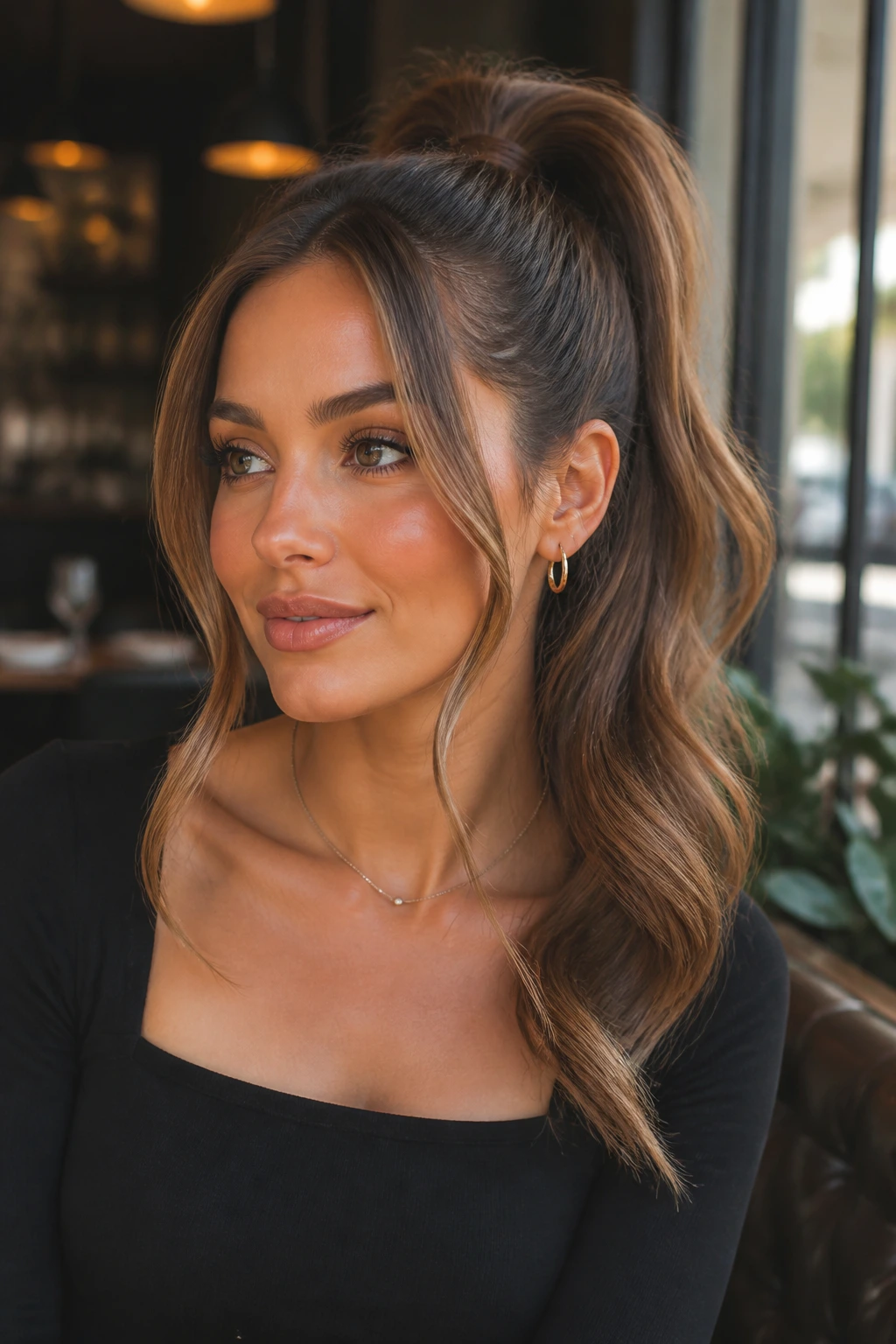
If you like a little bounce, this is the move. The roots are controlled, the ponytail sits high, and the ends have that blown-out bend that keeps the style from looking too rigid. Two loose face-framing pieces make the whole thing feel softer right away.
What makes this version work is the contrast: sleek at the base, airy through the tail. Use a round brush or a large-barrel curling iron to shape the ends away from the face. Don’t overdo the curl. A soft curve at the bottom looks better than a spiral, and it’s easier to keep from tangling as the day goes on.
4. The Curled-Ends Soft Glam Ponytail
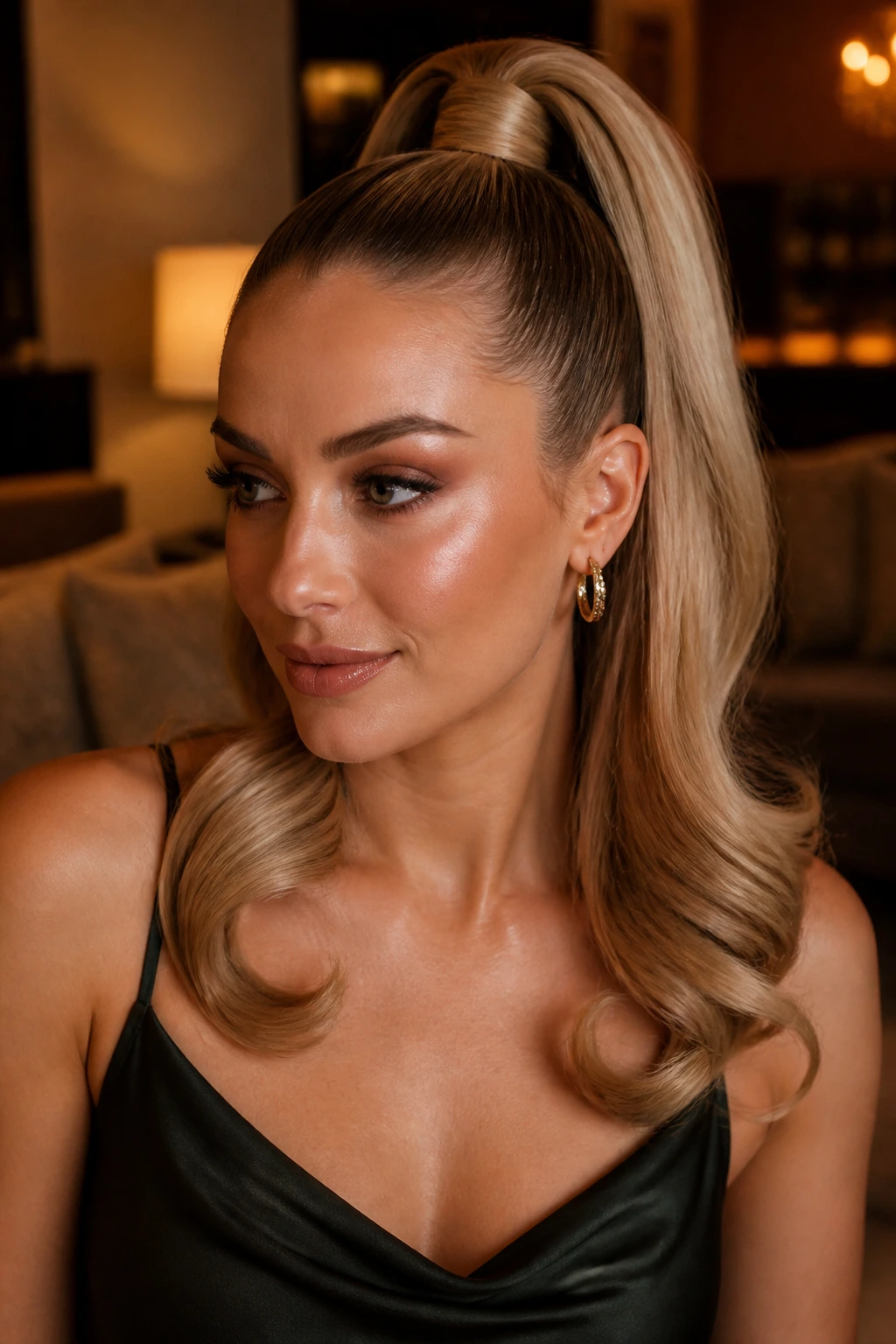
This is the ponytail I’d put on for a dinner, a party, or any event where you want the hair to look finished from every angle. The root area stays smooth, but the tail is curled in two or three large sections so it has body and movement.
My favorite detail: the ends should look touched, not shellacked. Use a 1-inch or 1.25-inch iron, curl away from the face, and brush the curls out once they’ve cooled. That takes the edge off and gives you the soft, expensive shape people always ask about. If your hair is fine, clip the curls to cool before brushing. They’ll hold better.
5. The Crown-Teased Volume Ponytail
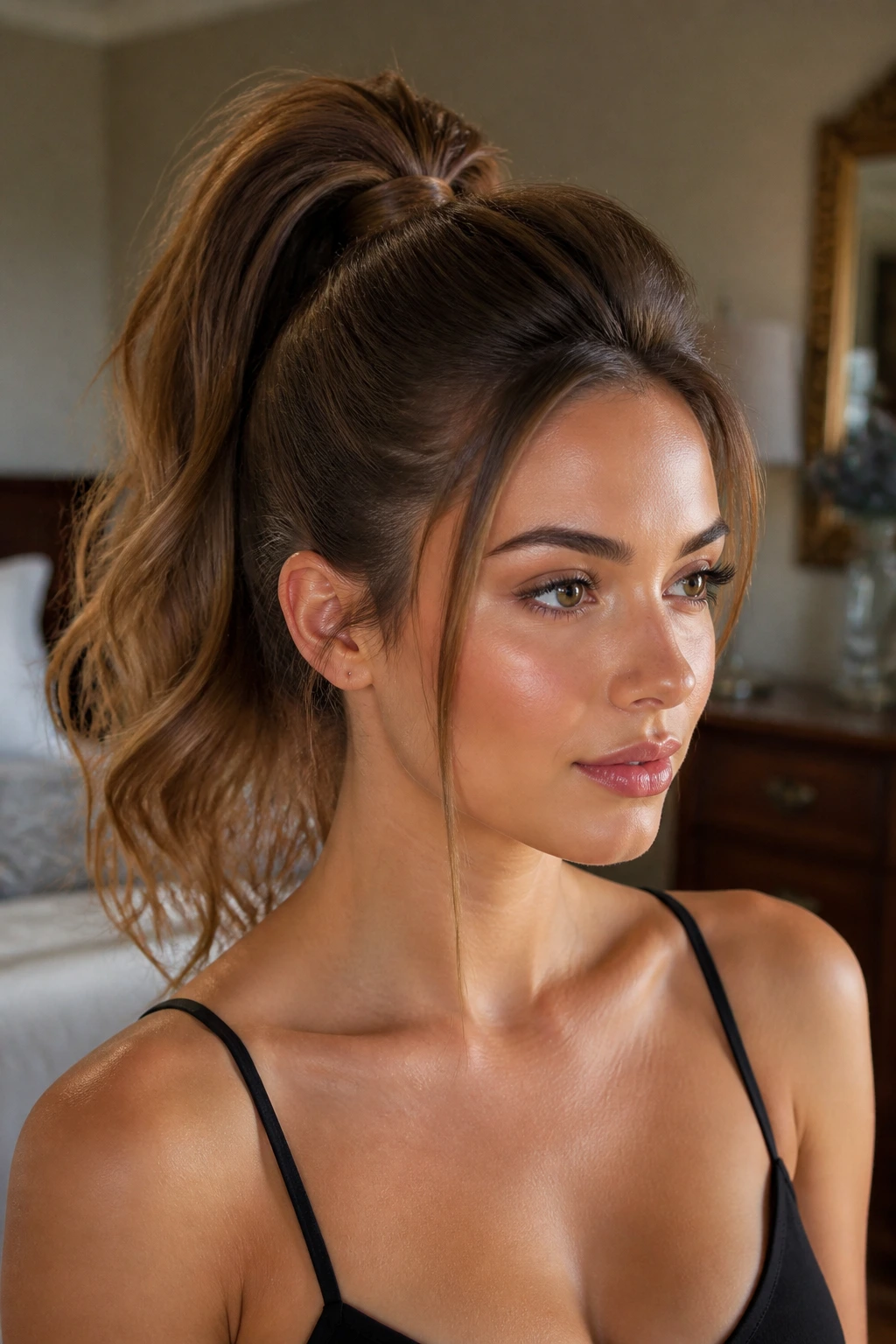
Need lift at the top without a lot of visible product? Teasing the crown by a half-inch gives the ponytail enough structure to sit high and stay there. The surface still looks smooth, but underneath there’s a little support that keeps the shape from falling flat by lunch.
Backcomb only the area that will be hidden under the top layer. That part matters. If you tease the whole crown, the style starts looking fuzzy instead of polished. Smooth the top layer back over the lifted section with a brush, then secure with a strong elastic. A tiny amount of flexible hairspray is enough; don’t drown it.
6. The Bubble Ponytail with Satin Sections
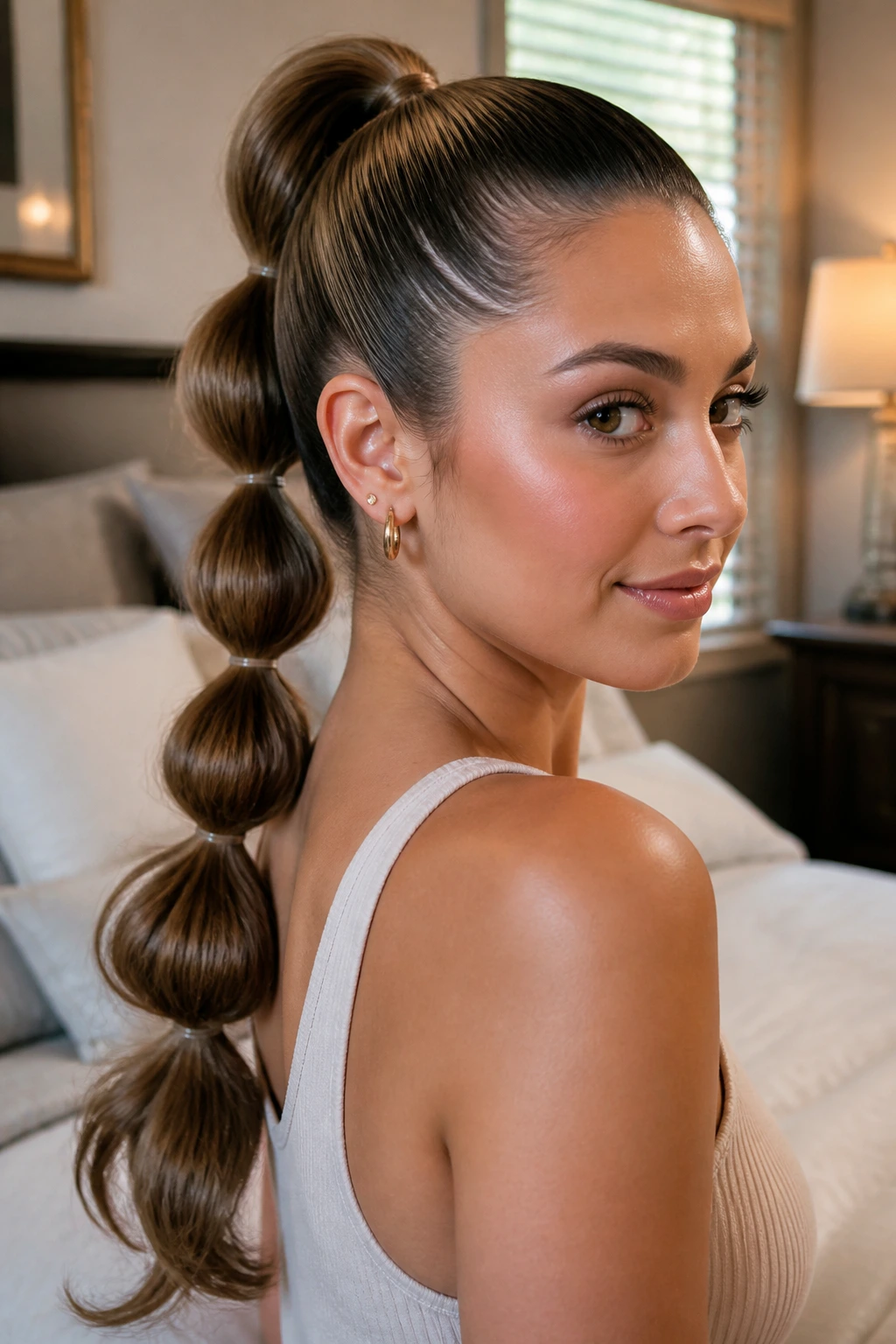
Bubble ponytails can look playful, but this version stays neat by keeping the spacing even and the sections gently rounded. It’s especially good if your hair is medium to long and you want something that reads styled without needing curls at every inch.
Why the bubble shape works
The elastic points create built-in structure, so the ponytail keeps its shape even when the rest of the hair is soft. Use clear elastics or thin black ones every 2 to 3 inches, then tug each section outward with your fingers until it forms a round bubble. A light smoothing cream on the top keeps the crown clean. The important part? Each bubble should be puffy, not hard.
7. The Braided-Base Ponytail
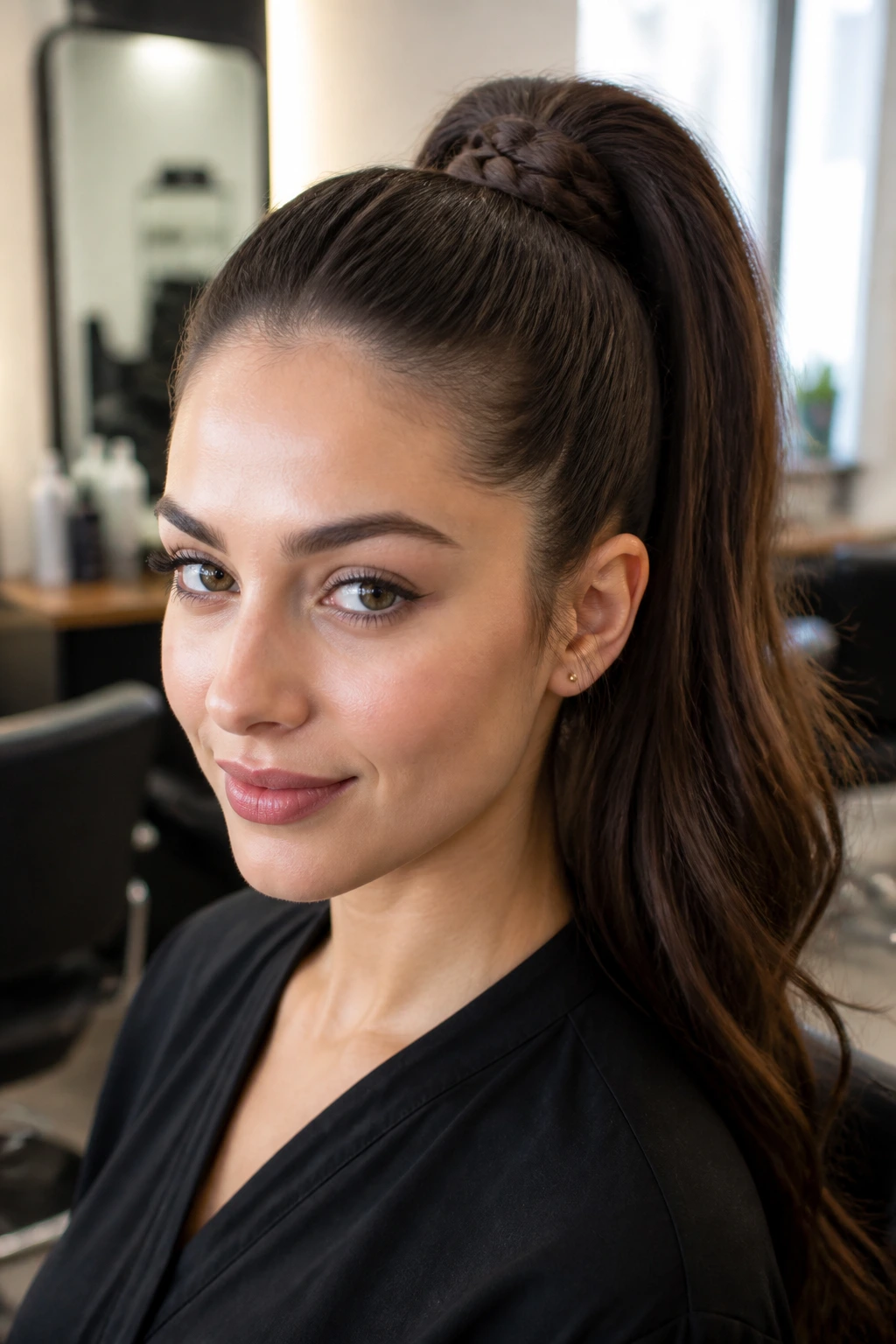
A small braid at the base is one of those details that makes people think you spent much longer on your hair than you did. It hides the elastic, adds texture right where the ponytail starts, and keeps the style from looking too plain.
You can use a three-strand braid, a rope twist, or even a tiny Dutch braid if you want a little more detail. Keep it narrow. The goal is not to turn the whole ponytail into a braided style; the braid should just act like a neat little frame around the base. The rest of the tail can stay straight, waved, or curled.
8. The Half-Slick High Ponytail
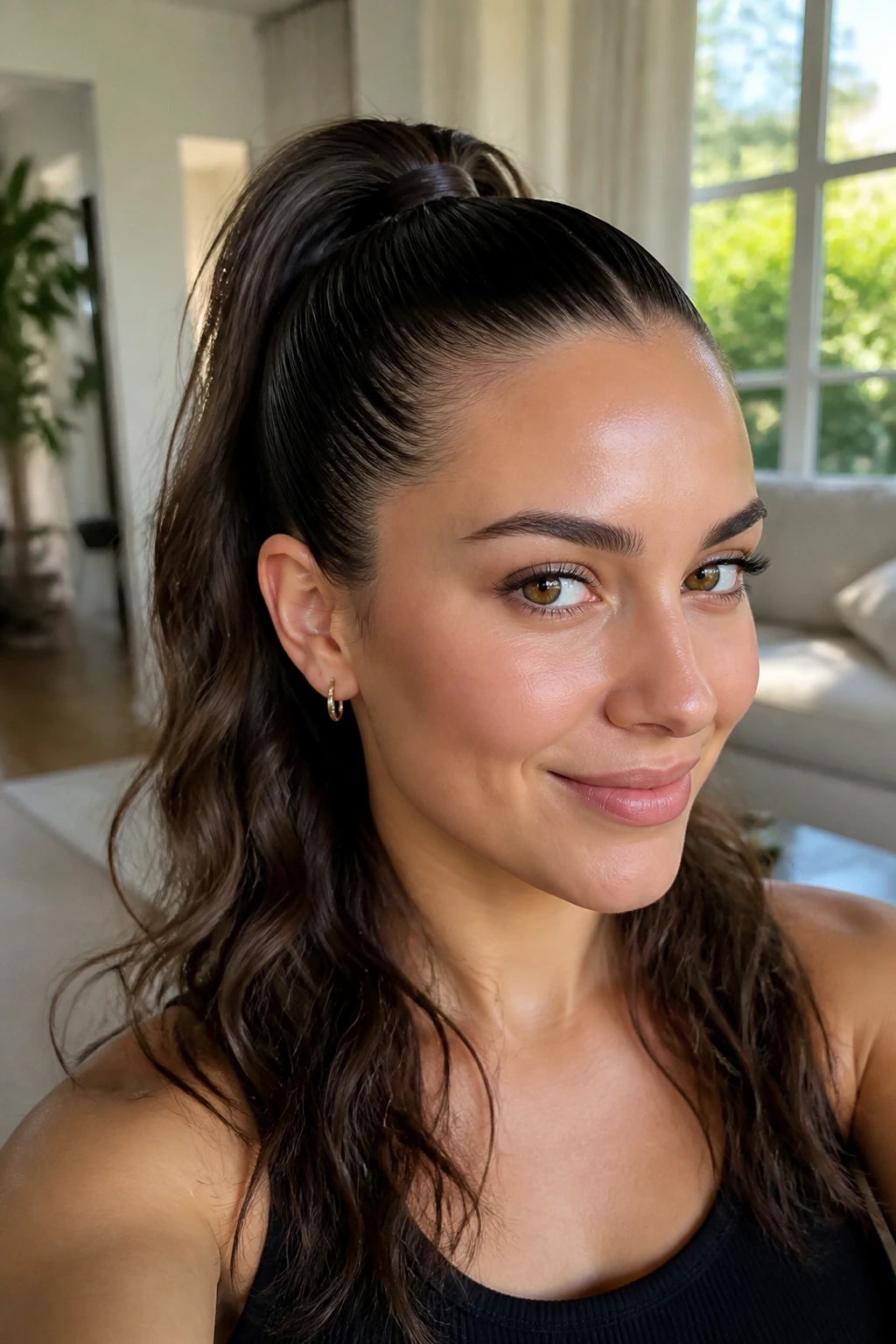
This is the ponytail for hair that doesn’t want to be completely tamed. The top half is smoothed back with control, while the lower lengths keep their natural texture, bend, or wave. That contrast makes the style feel softer and less formal.
I like this look on hair that has some movement already, because it lets the texture do half the work. A curl cream or light gel through the top keeps flyaways in place, but the tail should stay touchable. If the whole thing gets too polished, it loses the charm. Let the ends breathe a little.
9. The Curtain-Bang Ponytail
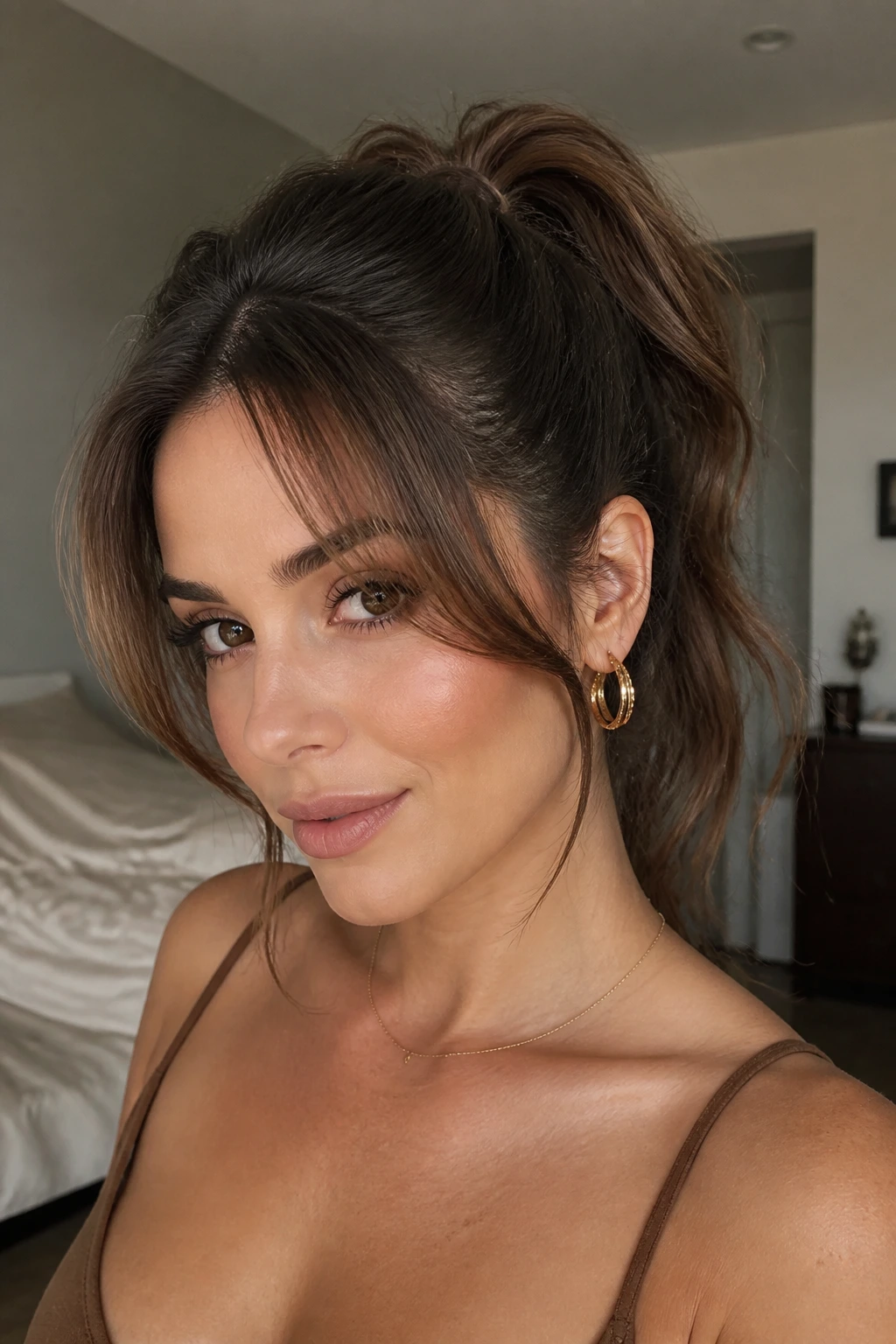
Curtain bangs and a high ponytail are a smart pairing because the bangs soften the face while the ponytail gives everything a lifted shape. The result feels polished, but not pinned down. There’s enough movement at the front to keep the style from looking too tight.
The ponytail itself should sit a little behind the crown rather than directly on the highest point of the head. That gives the bangs room to fall naturally. If your bangs are newly cut, blow-dry them with a round brush first so they curve away from the eyes. A hard bend right at the front can make the whole style look fussy.
10. The Ribbon-Tied Ponytail
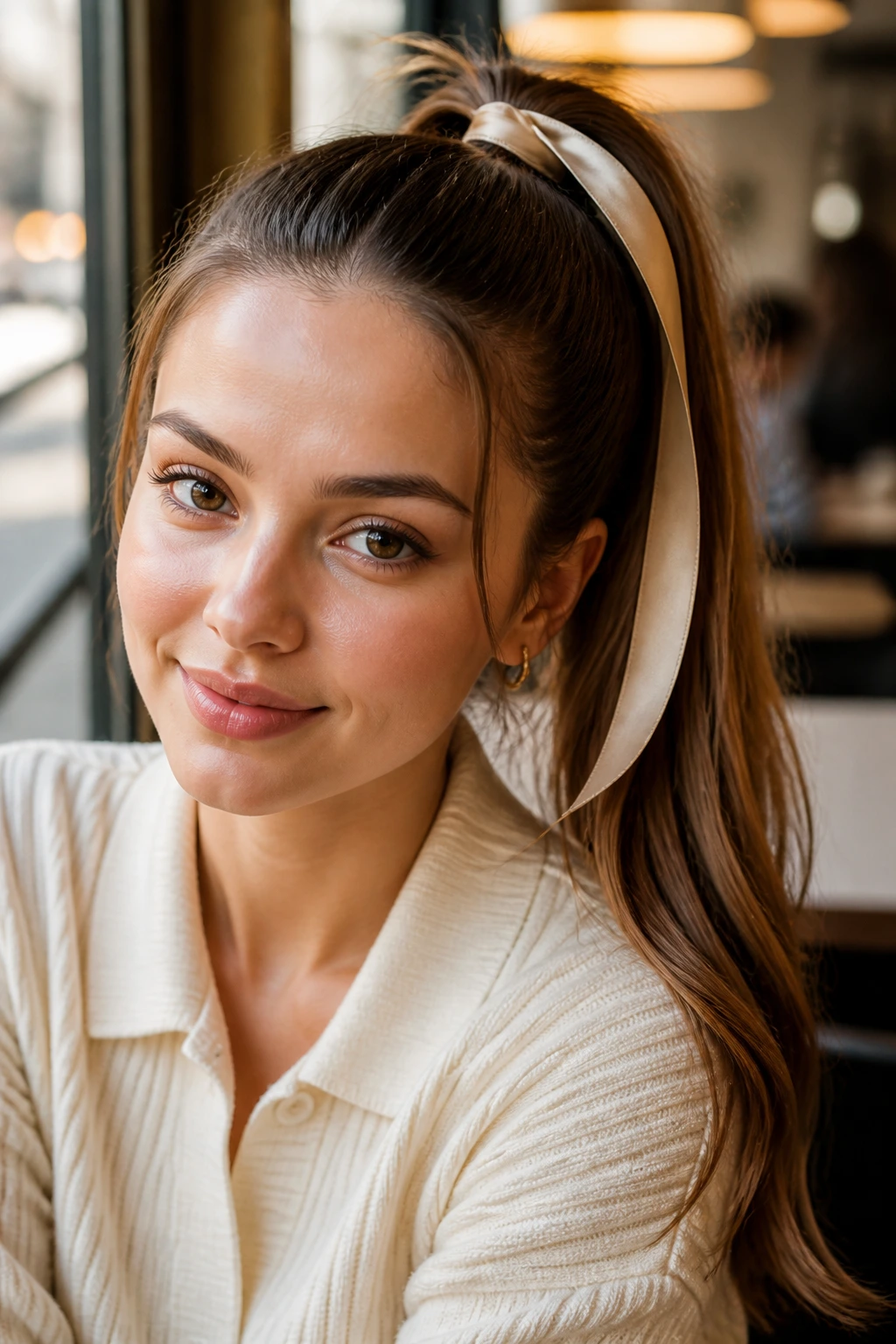
A ribbon changes the mood fast. Satin looks dressier, grosgrain feels a little more structured, and velvet has a heavier, wintery feel if that’s what you want. The ponytail underneath can be simple; the ribbon does the talking.
Tie it around the base after the elastic is secure, then let the tails fall down with the hair. If the bow keeps slipping, anchor it with two crossed bobby pins under the knot. I like this best when the hair itself is smooth and the ribbon brings in the softness. It’s one of the easiest ways to make a high ponytail look intentional without extra heat styling.
11. The Twisted-Base Ponytail
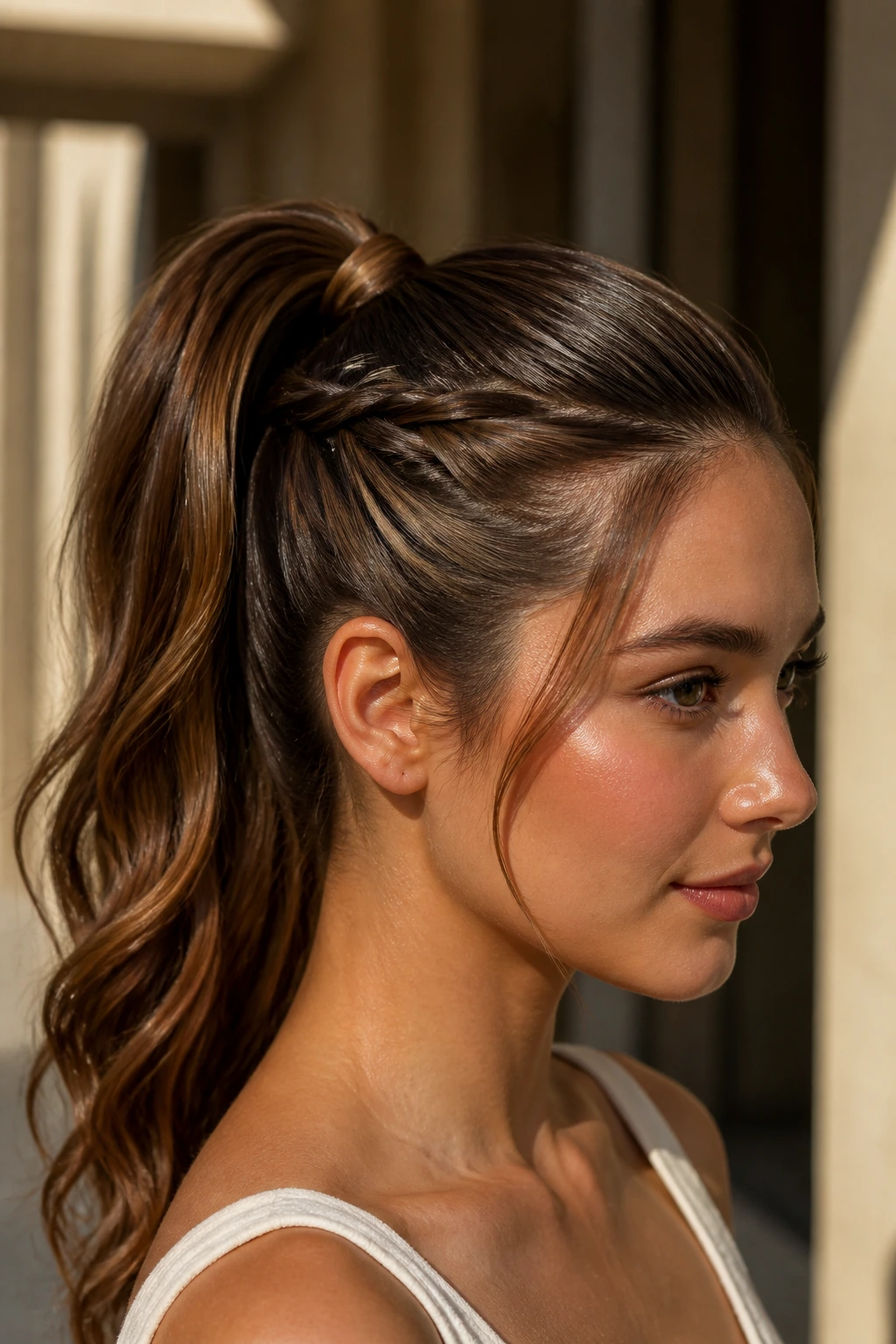
Twists at the temples pull the hair back in a softer way than a straight-back slick. They create a little contour along the sides of the head, which is useful if you want polish but don’t love how a severe pullback feels.
Take a front section from each side, twist it back toward the crown, and pin or gather it into the ponytail. Keep the twists flat and narrow. If they’re too thick, the head starts to look crowded. This version works especially well when you want a high ponytail that still leaves some shape near the face.
12. The Wavy Length Ponytail
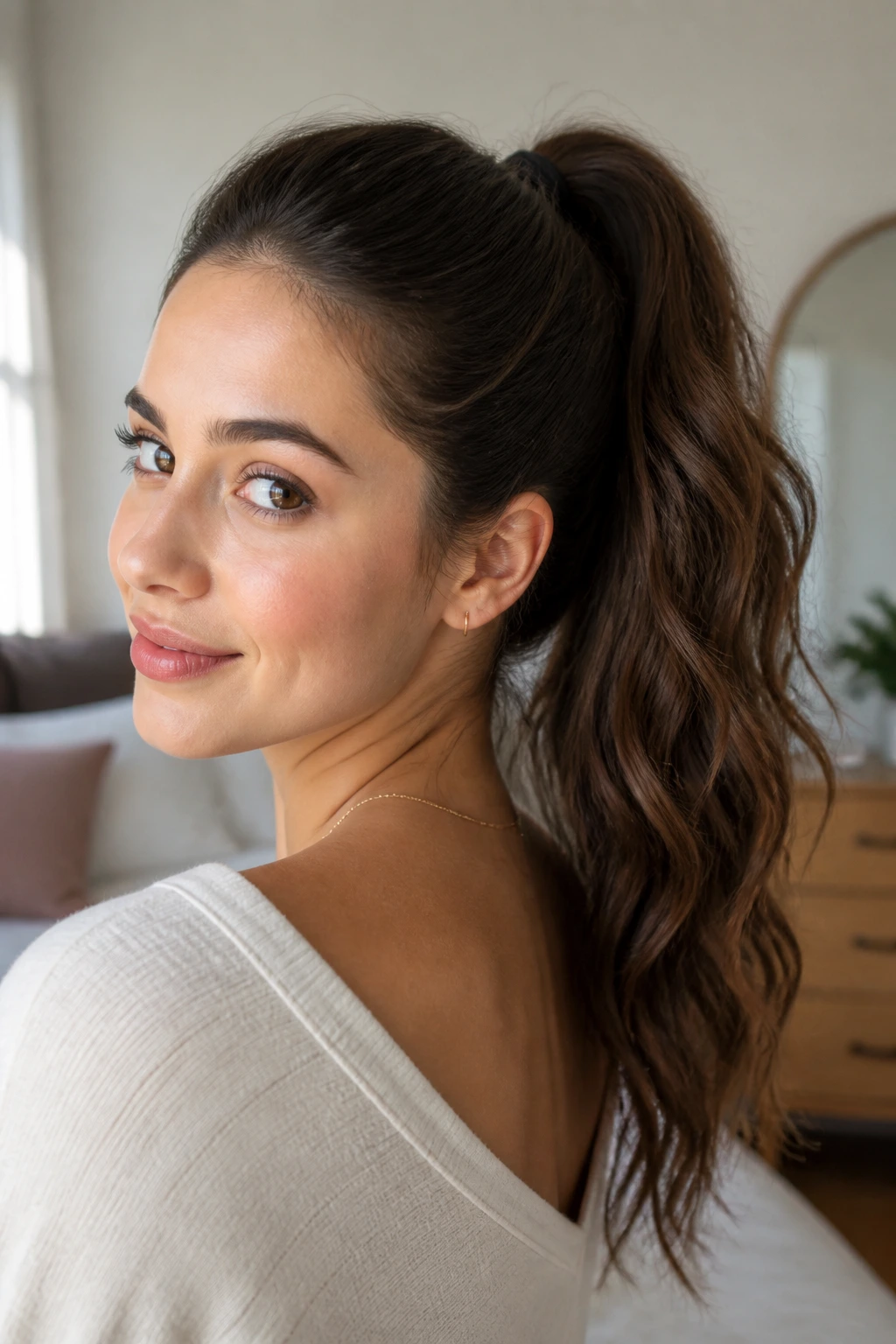
This is the simplest high ponytail on the list, and honestly, one of the most wearable. The crown stays smooth, the tail has a soft wave, and the whole thing reads relaxed without looking messy. It’s a good everyday style when you want movement, not stiffness.
Use a curling iron or flat iron to add bends through the tail after the ponytail is secured. Don’t curl every section the same direction. Alternating the direction gives the wave a looser fall. Brush the tail once lightly if you want it to sit softer and less structured. Too much brushing, though, and the waves disappear fast.
13. The Soft Coily Ponytail
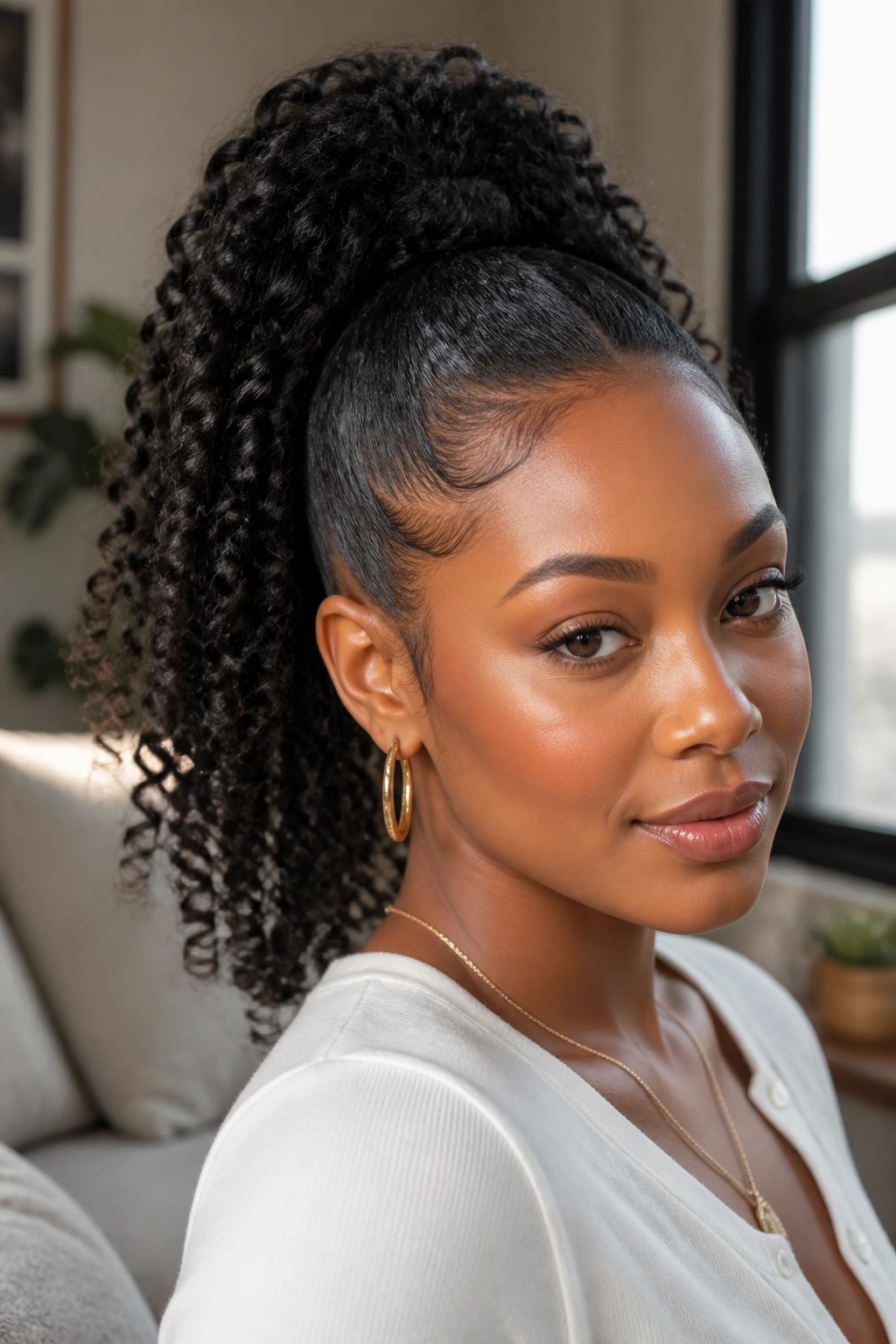
Coily hair looks stunning in a high ponytail when the edges are smooth and the coils keep their shape. The trick is not to fight the texture. Let the puff or tail stay full, and focus your effort on the base and the front hairline.
Why texture matters more than shine here
A glossy finish can look lovely, but a heavy layer of product can crush the coil pattern. Use enough gel or styling cream to control flyaways, then stop. Gather the hair at the crown with a strong elastic, fluff the tail by hand, and let the natural spring do the rest. If you want extra polish, wrap a small section around the base or use a decorative cuff. The style should feel lifted, not flattened.
14. The Fine-Hair Padded Ponytail
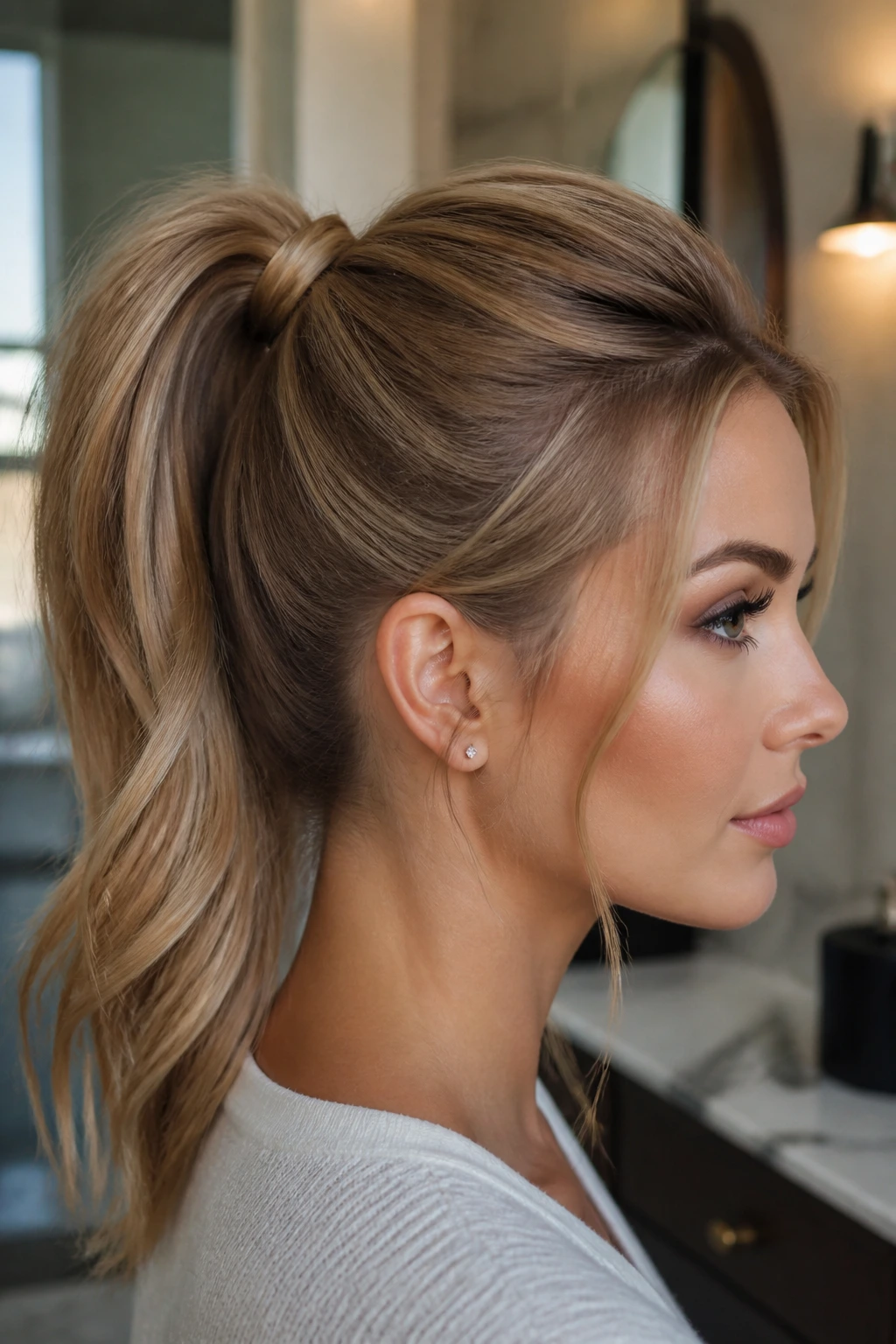
Fine hair needs help from structure, not just product. A tiny bit of root lift, a lightly padded crown, and a narrower ponytail base can make the style look fuller without making it obvious what you’ve done.
A volumizing mousse at the roots before blow-drying helps, but the real trick is restraint. Use a small teasing comb or a volumizing powder near the crown, then smooth the surface layer over it. If the ponytail looks too tiny, wrap a small piece of hair around the elastic and gently fan the tail with your fingers. That little extra lift makes the style look softer and more balanced.
15. The Thick-Hair Wrapped Ponytail
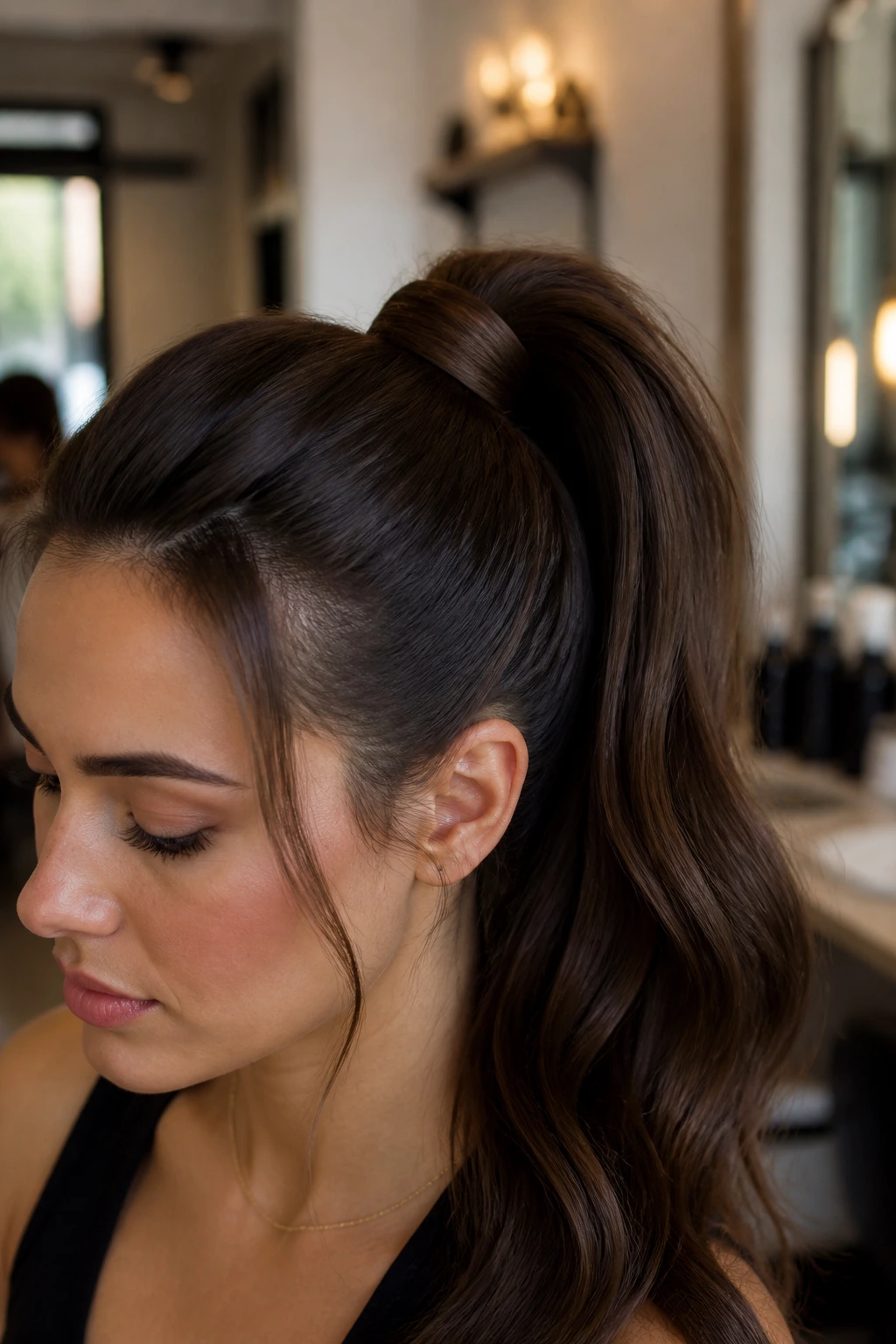
Thick hair can pull a ponytail down if you try to gather it all at once. Sectioning makes this easier. I split the hair into two or three parts, secure them together, then clean up the outside with a brush so the finish stays smooth.
A sturdy elastic is non-negotiable here. Thin ones snap or slide. Once the ponytail is in place, wrap a section of hair around the base and pin it underneath with a bobby pin. This version holds shape well because the fullness of the hair does the visual work. You don’t need much else.
16. The Short-Hair Mini High Ponytail
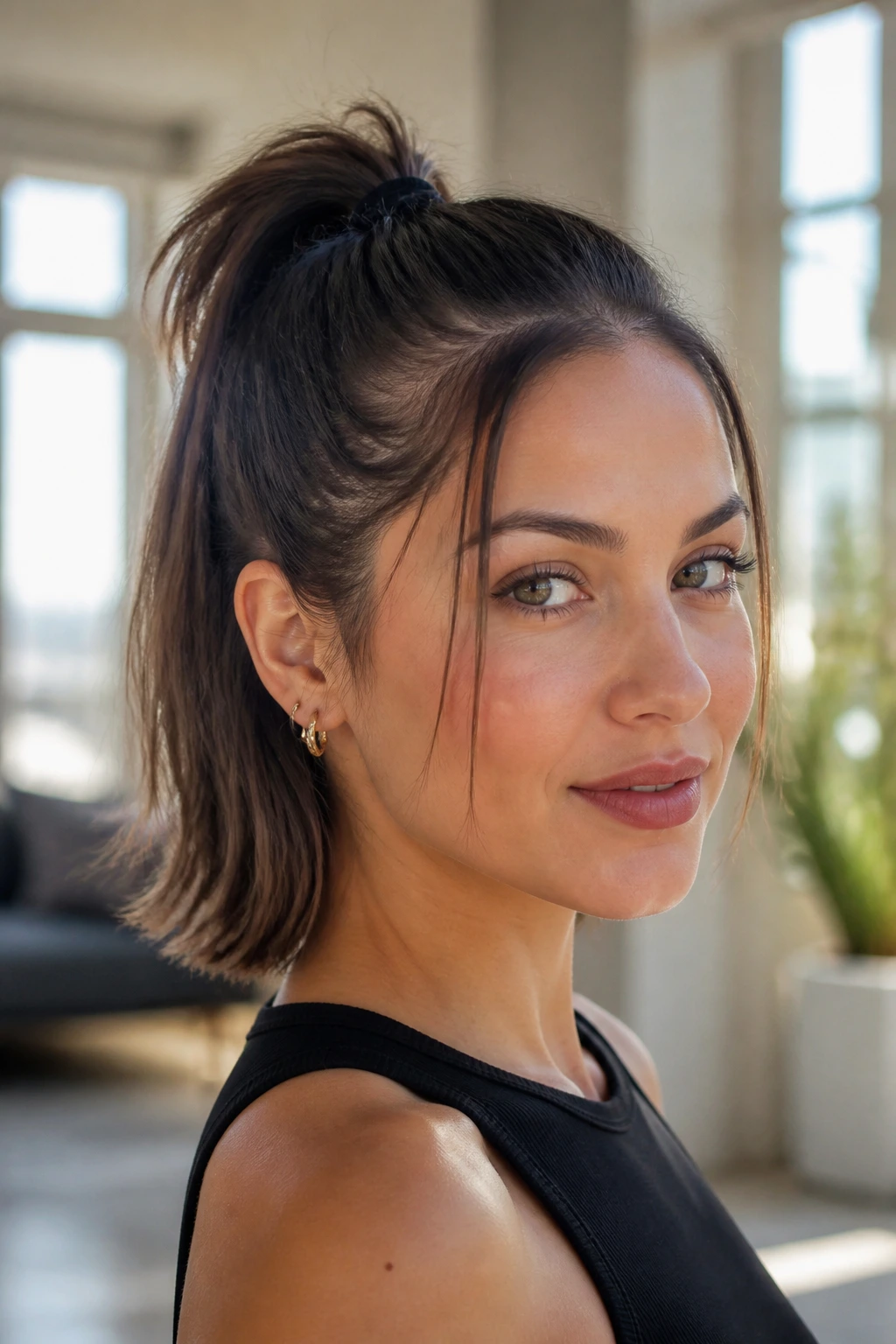
A lob or shoulder-length cut can still do a high ponytail, but the shape needs a bit more patience. The tail will be shorter and lighter, which actually makes it cute in a different way. The crown can still look polished if you smooth the top and keep the base neat.
Use a small elastic and gather the hair higher than you think. Shorter lengths have a habit of dropping after they’re secured. If a few shorter pieces fall loose around the face, that’s fine. They soften the look. I’d rather see a tidy mini ponytail with movement than a strained one that fights the cut.
17. The Sleek Wet-Look Ponytail
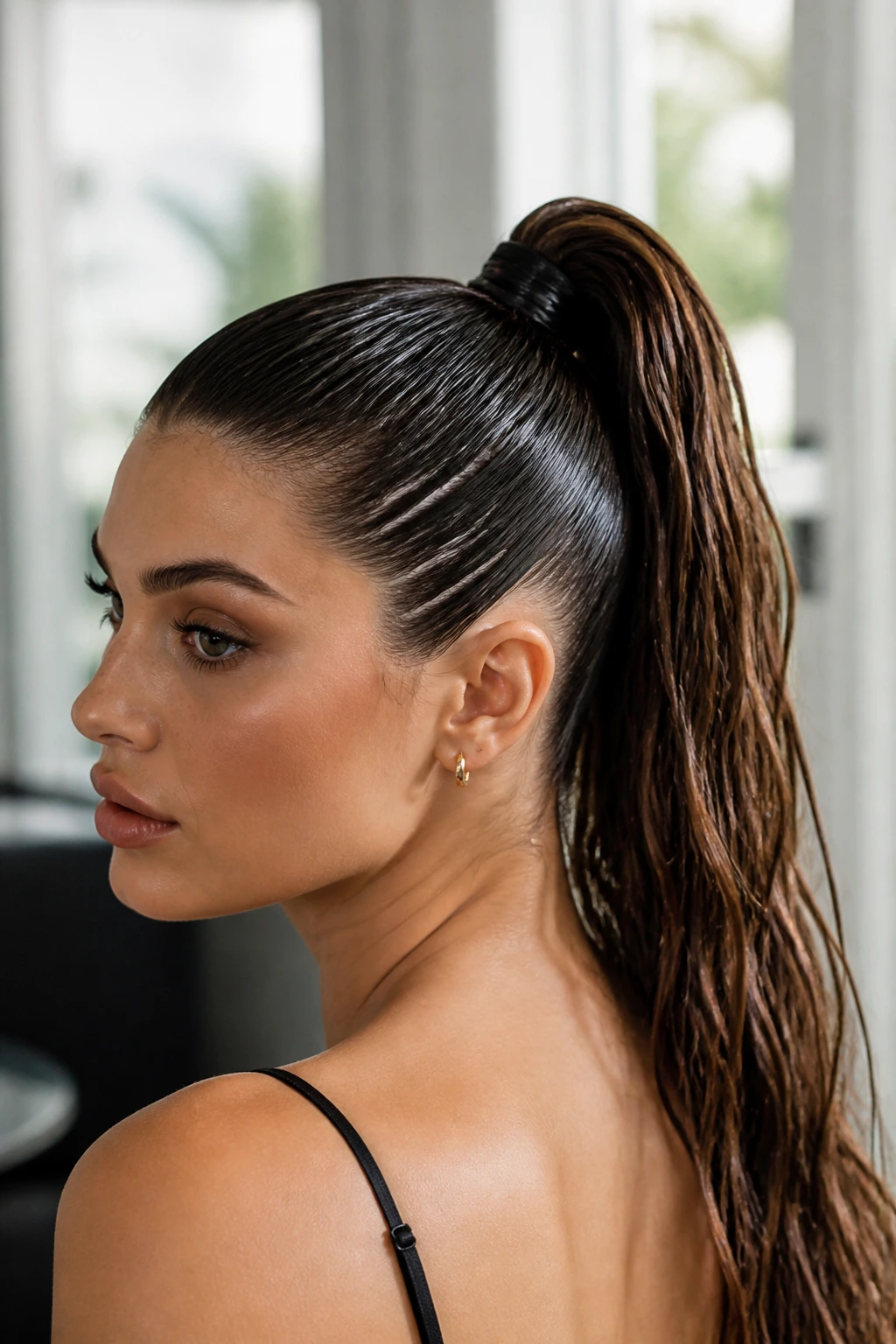
This one has more shine and more attitude, but it can still look soft if you keep the crown controlled and the tail smooth. The finish should look damp, not greasy. That’s a narrow line, and it’s easy to cross if you use too much gel.
Keep it glossy, not heavy
Apply gel to the roots and top section in thin layers, then brush it through until the surface lies flat. Use a little shine serum only on the tail after the ponytail is secured. If you want a softer edge, leave a few face pieces out and smooth them with the same product. The style should catch light in a clean way, not look coated.
18. The Softly Flipped Ponytail
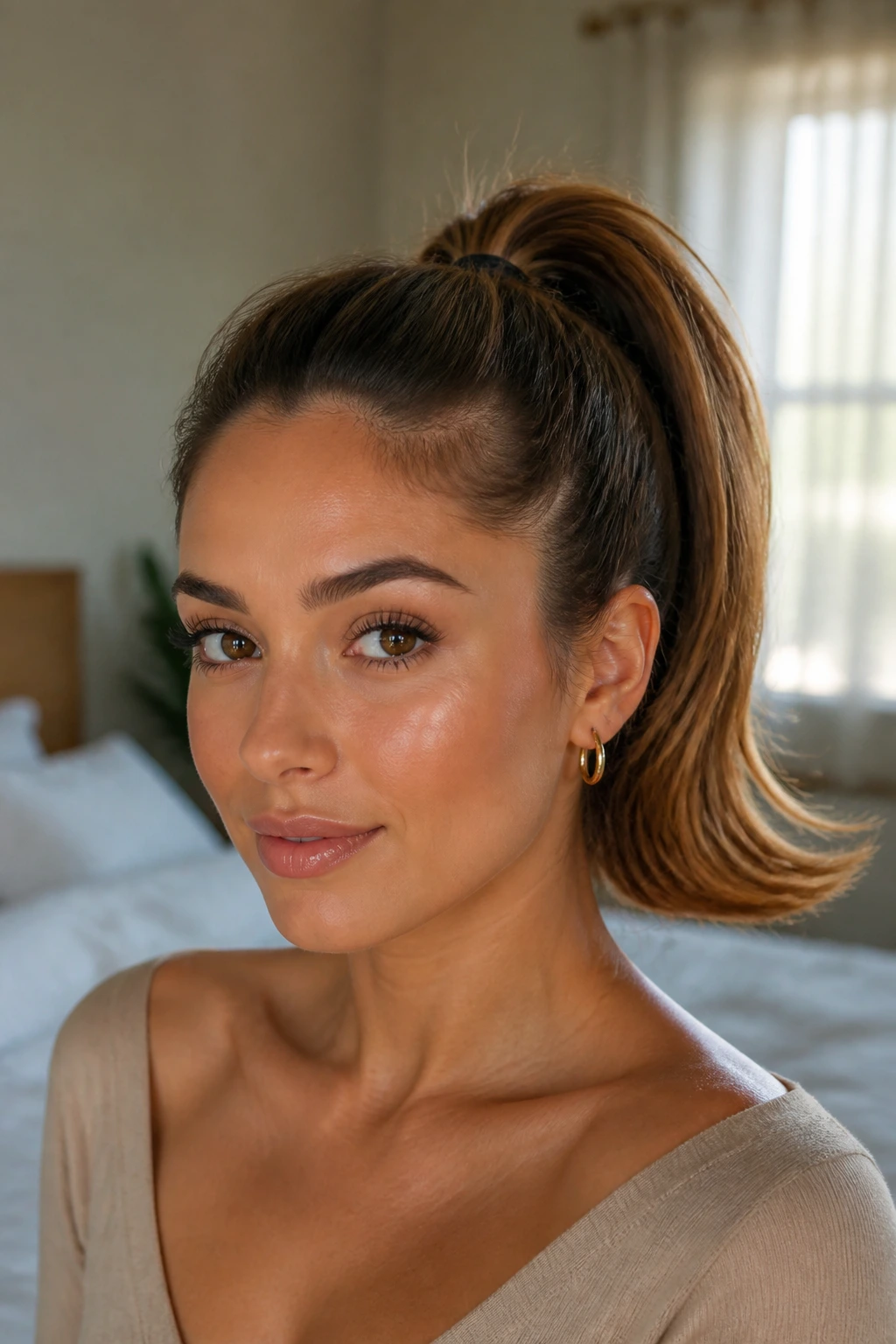
A flipped end gives the ponytail a gentle shape that feels a little retro without becoming costume-like. The roots stay smooth, the tail stays light, and the finish curves out or under at the bottom depending on the mood you want.
Use a flat iron or a round brush to bend the ends after the ponytail is tied. One small flip is enough. If every section flips hard, the style starts looking dated. I like this on medium-length hair because the shape is visible without needing a ton of length. It’s a quiet detail, but it changes the whole silhouette.
19. The Side-Swoop Glam Ponytail
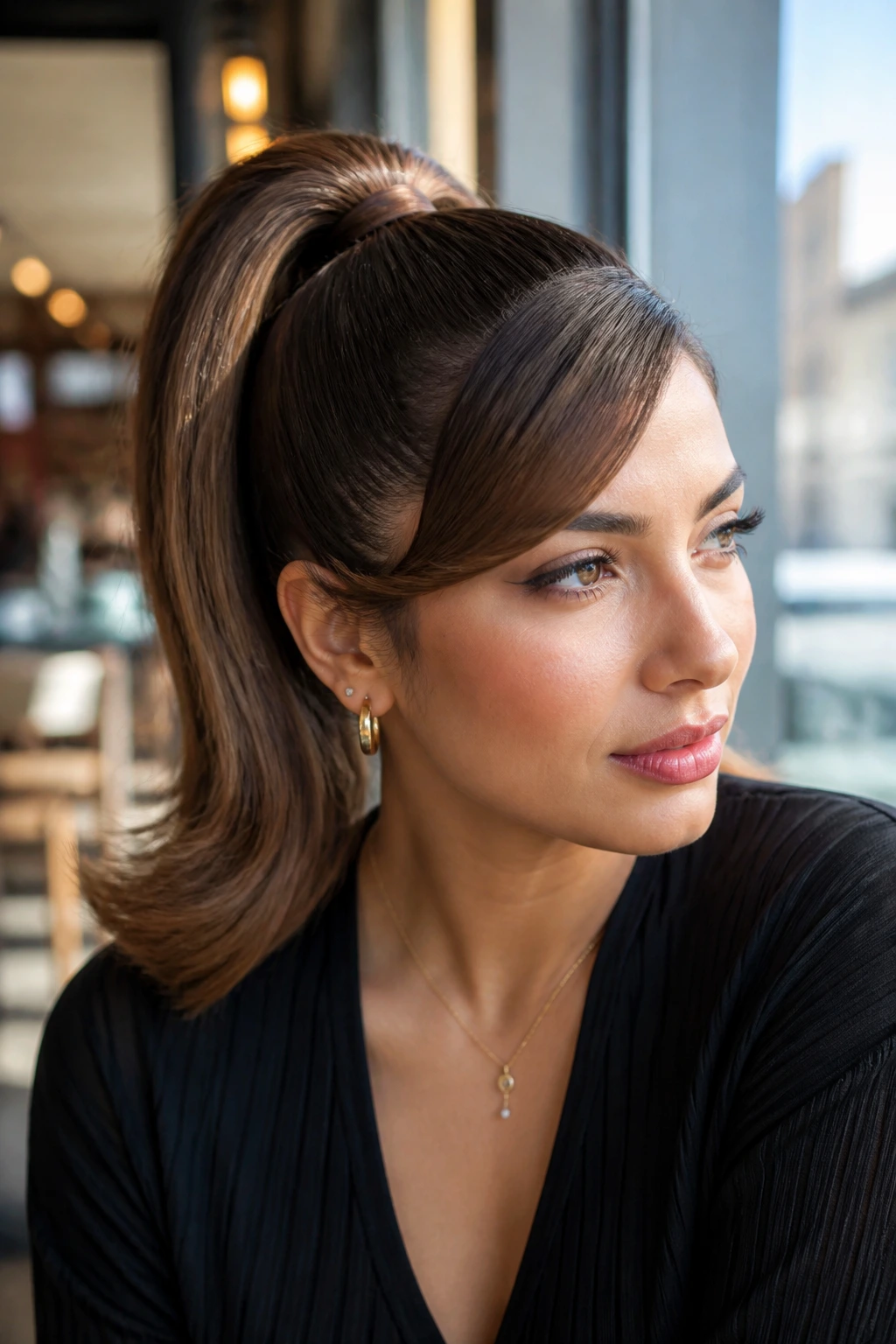
A side-swooped front section changes the balance of the ponytail. It makes the style feel more deliberate, and it’s useful when you want a little softness across the forehead without going full curtain bang. The ponytail itself stays high and tidy.
Sweep one front section across the forehead and pin it just under the ponytail base if needed. Keep the swoop smooth, but not helmet-flat. A tiny bit of bend at the ends gives it life. This version looks best when the side sweep and the tail feel like they belong to the same hairstyle, not two separate ideas.
20. The Braided Crown Ponytail
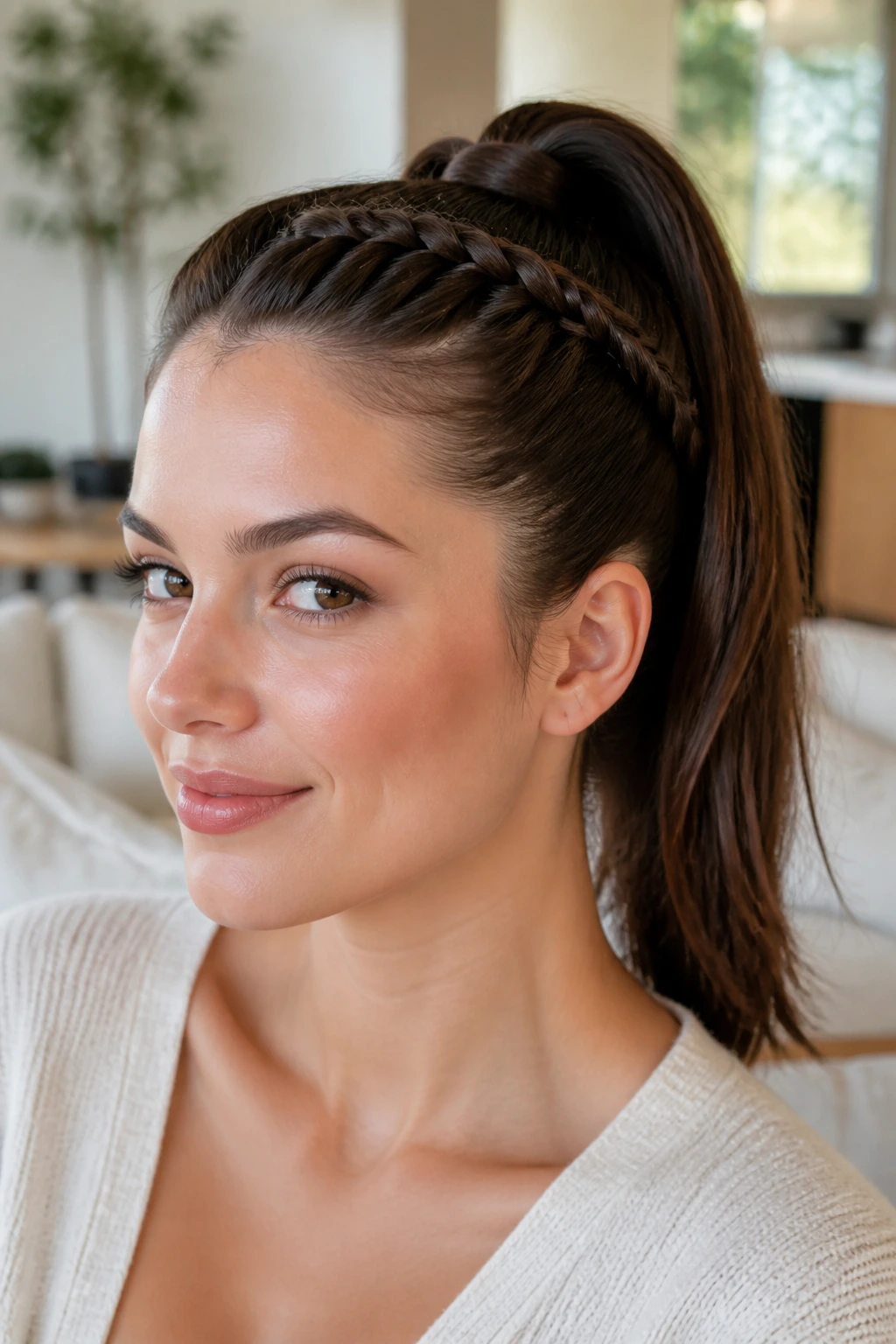
A narrow braid along the hairline adds just enough detail to make the style feel finished. The rest of the hair can stay smooth, which is exactly why this version works. It looks more intricate than it is.
Keep the braid close to the head and move it back into the ponytail rather than letting it float off to the side. That keeps the silhouette clean. If you make the braid too wide, the top starts looking busy. Small, neat, and deliberate is the sweet spot here. This is a good option when you want the ponytail to do double duty: polished and a little romantic.
21. The Accessory-Led Ponytail
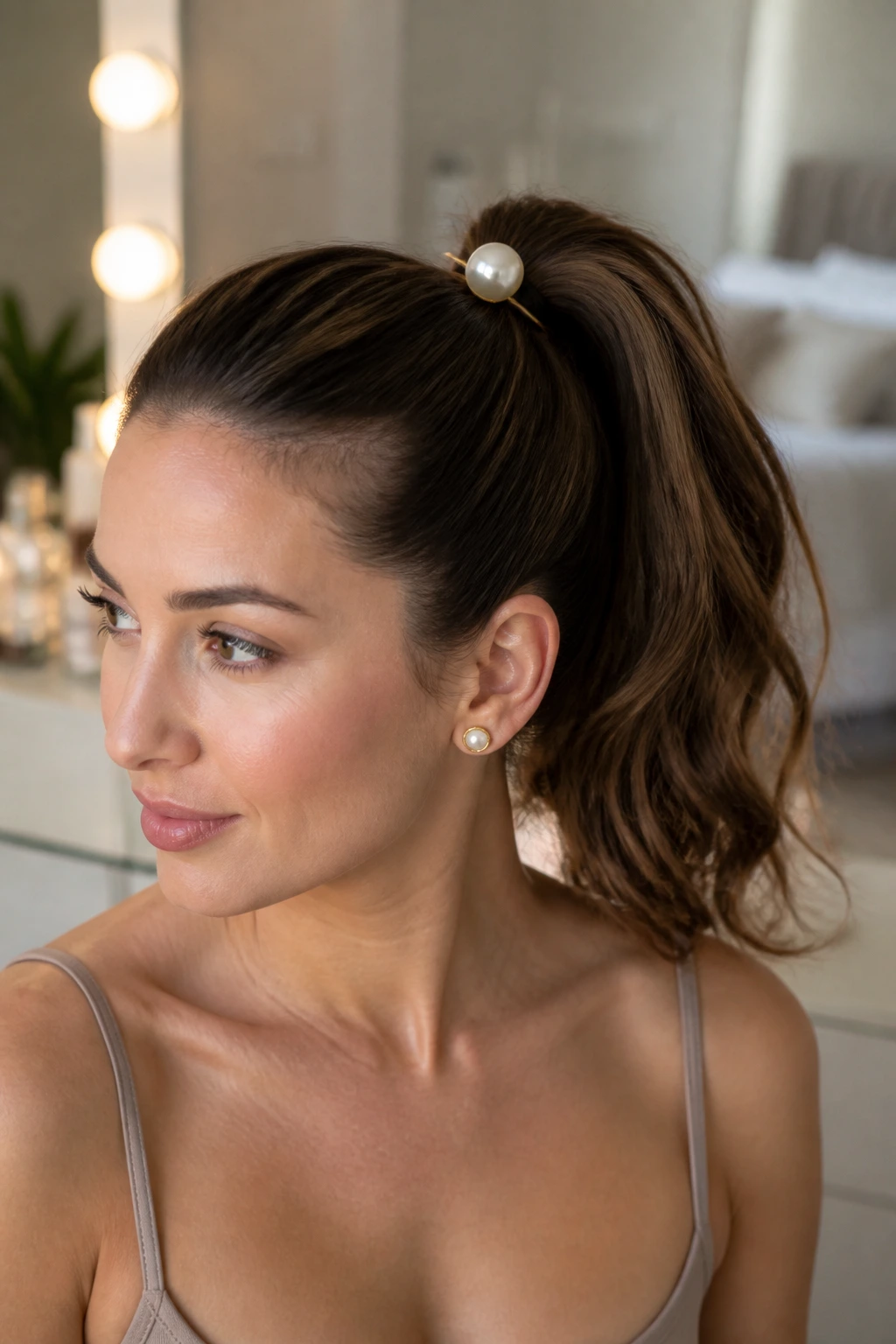
Sometimes the best ponytail is the one with one strong detail. A pearl clip, metallic cuff, silk scarf, or even a simple barrette can turn a plain high ponytail into something much sharper. The hair itself can stay minimal if the accessory does the visual lifting.
Choose one piece and let it lead. Two or three small accessories can start feeling cluttered fast. If you’re using a scarf, tie it around the elastic first so the knot sits low and neat. If you’re using a cuff, make sure the base is smooth enough that it doesn’t bunch. The ponytail should support the accessory, not compete with it.
22. The Textured Matte Ponytail
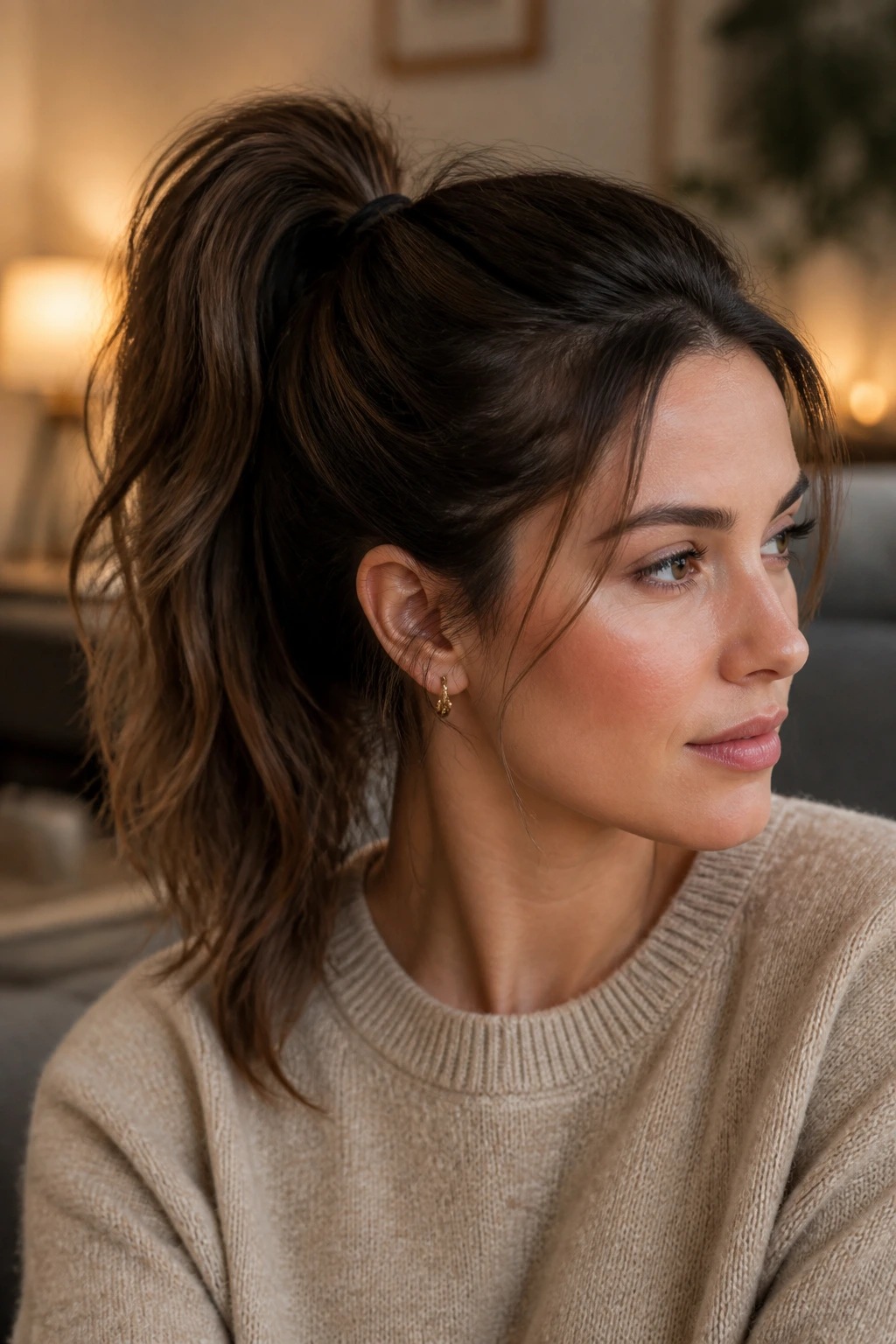
This is the opposite of the glassy, high-shine version. It works best on second-day hair or hair that’s been misted with dry texture spray and brushed just enough to stay controlled. The effect is softer, airier, and a little more casual.
The matte finish gives the tail some grip, which makes it easier to shape with your hands. That’s useful if your hair slips out of elastics or if you want the ponytail to hold a little bend without looking rigid. I like this style when I want polish but not a formal shine. It feels lived-in in a good way.
23. The Low-Elastic Lifted Ponytail
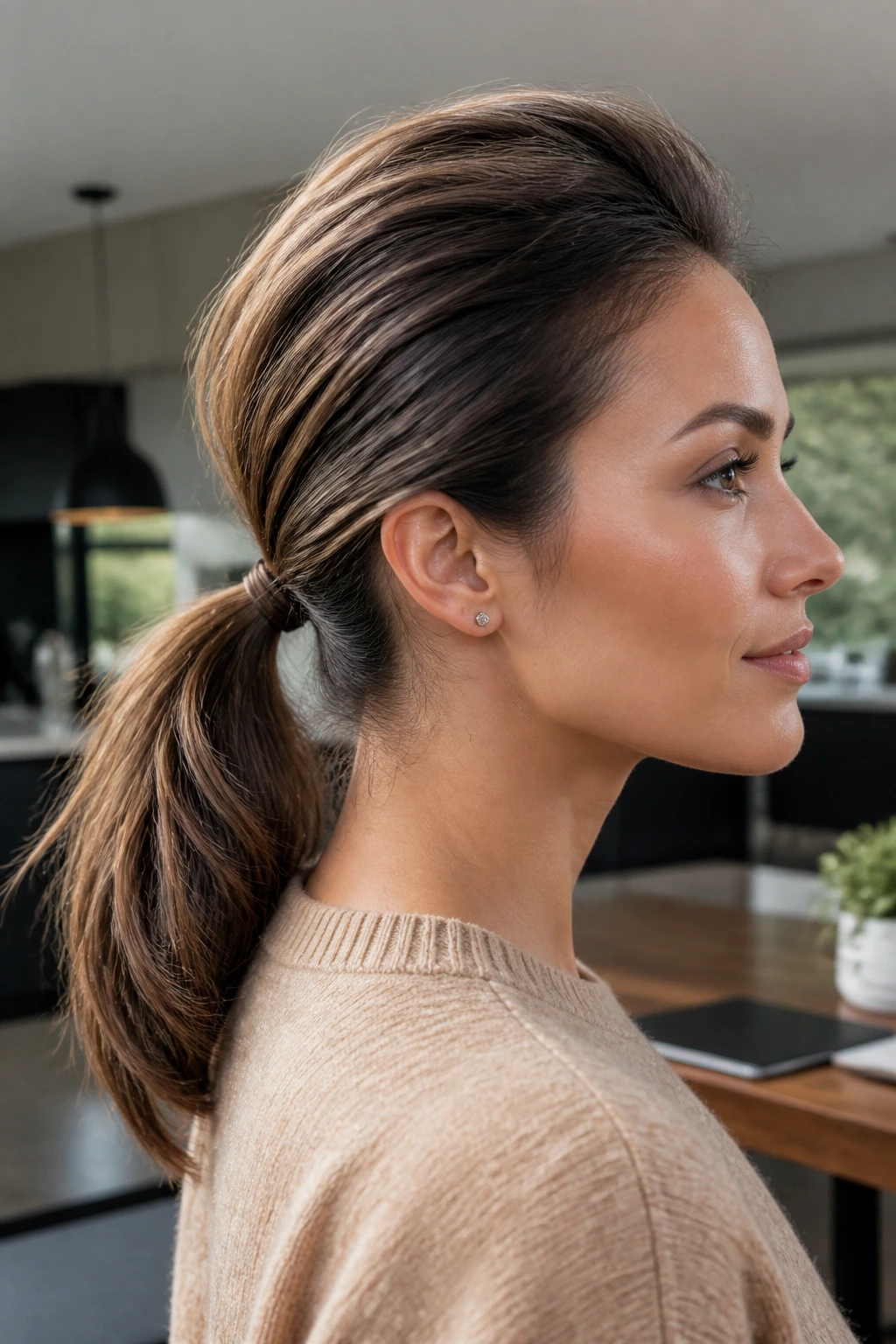
Here’s a smart trick: place the elastic low enough to grip securely, then lift the ponytail upward once it’s fastened so the root area sits higher on the head. That creates a taller shape with less tugging at the hairline.
This version can be kinder to sensitive scalps because the tension is spread differently. It’s useful when your hair is long and heavy, or when you want height without pulling every strand tight. Smooth the top, secure the base, then gently push the ponytail upward and pin the underside if needed. A little engineering. Not much drama.
24. The Party-Ready High Ponytail
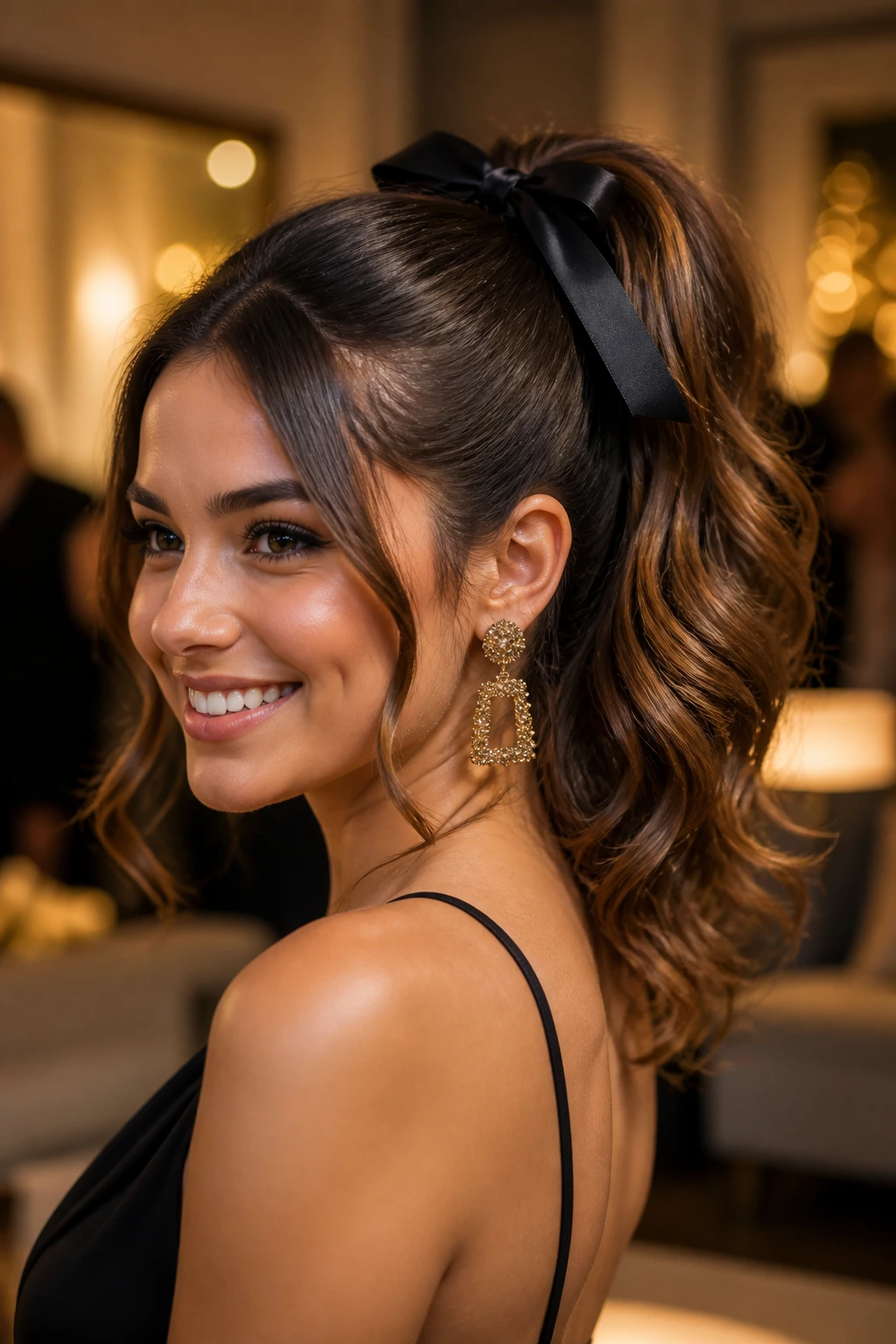
This is the one with the most movement. The crown stays clean, the tail has bounce, and the finish can handle curls, a ribbon, statement earrings, or all three if you stop before it gets crowded. It’s the high ponytail version of putting on your favorite earrings and actually wanting people to notice them.
I’d build this from the ends up: shape the tail first, then refine the base. Large curls or soft waves keep it from looking stiff, and a shine spray through the mid-lengths gives it that dressed-up finish. Skip the crunchy hairspray. You want the ponytail to swing when you turn your head.
25. The Minimal Makeup Polished Ponytail
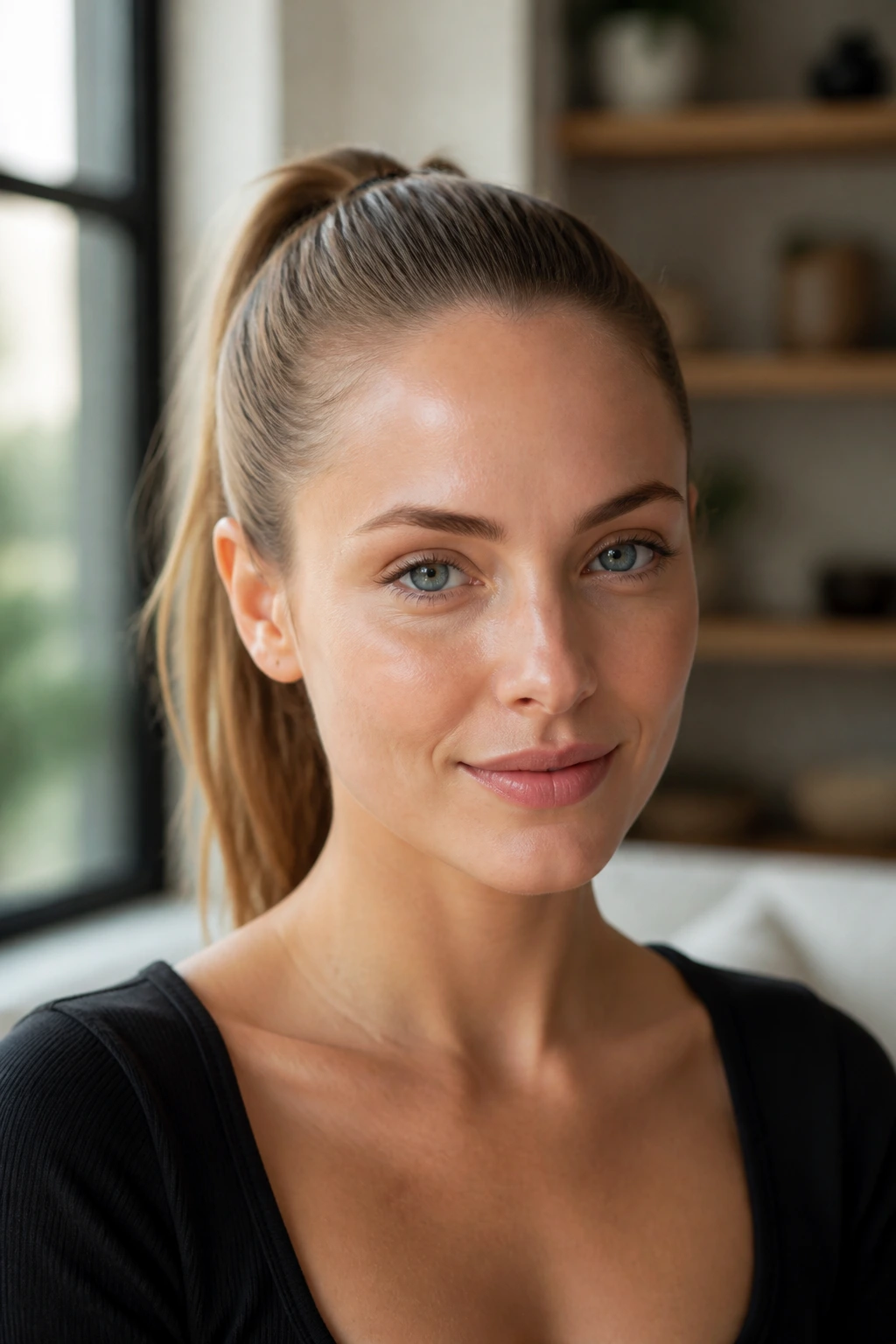
This one is about clean lines. No dramatic swoop, no heavy teasing, no extra accessories unless you want them. Just a tidy high ponytail, a smooth crown, and a finish that makes the whole face look more awake.
It’s a good answer for days when you don’t want your hair to do too much talking. A neat part, a brushed surface, and a small wrapped base are enough. The beauty of this style is that it reads calm. Not plain. Calm. If you like clothes with sharp tailoring or simple earrings, this ponytail fits right in.
Why a High Ponytail Looks Softer When the Crown Has Shape
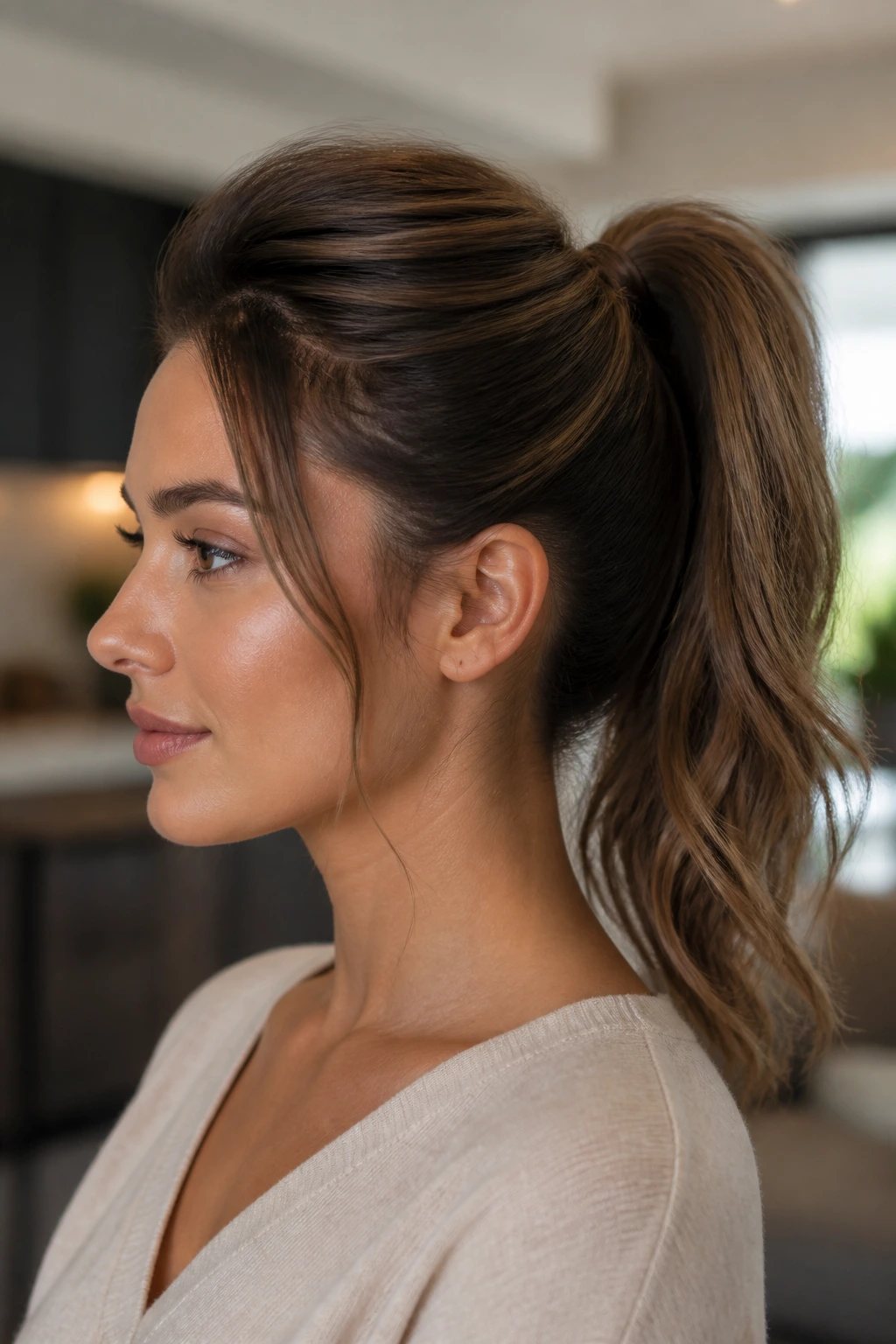
A high ponytail can go harsh fast if the crown is scraped flat and the elastic is yanked too tight. The softer versions leave a little lift at the root, a little bend through the tail, and a clean edge at the hairline instead of a pulled-back shine strip. That tiny bit of air around the crown changes the whole face shape.
I also pay attention to where the ponytail sits. A ponytail that’s too high can look animated in a way that fights the rest of the hair. One that sits just behind the highest point of the head usually reads more balanced. The same goes for the front pieces: a narrow face-framer or a side sweep adds just enough movement to keep the style from feeling sealed shut.
Texture matters. So does finish. Straight, glossy hair gives a sharp line, while waves, curls, or a matte spray pull the look back toward softness. Neither is better. They just solve different problems.
Tools That Make the Style Easier
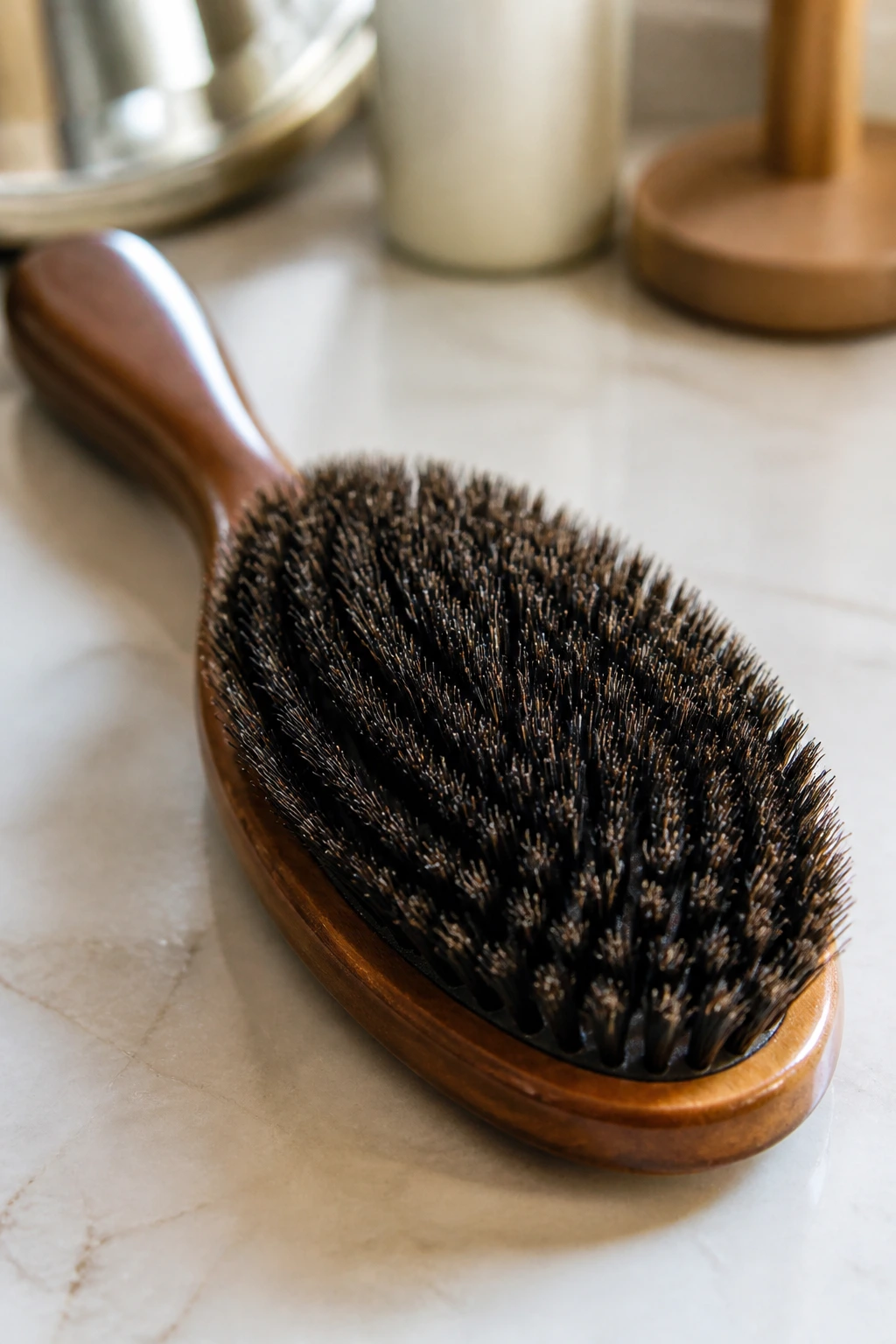
- Boar-bristle brush: Helps smooth the top layer without leaving obvious brush marks.
- Fine-tooth comb or rat-tail comb: Best for clean parts and sectioning the crown.
- Strong elastics: Clear or snag-free elastics hold better than flimsy soft ones, especially on thick hair.
- Bobby pins: Useful for wrapping hair around the base, anchoring ribbons, or hiding short flyaways.
- Texturizing spray: Gives fine or slippery hair enough grip to stay put.
- Smoothing cream or light gel: Tames flyaways on the top section without making the ponytail feel coated.
- Heat protectant: Non-negotiable if you’re curling, flipping, or pressing the lengths.
- 1-inch to 1.25-inch curling iron or wand: Best for soft bends and curled ends.
- Mini claw clips: Handy for holding sections while you work through the crown.
- Hand mirror: Worth it. The back of a ponytail tells the truth.
Picking the Right Finish for Your Hair
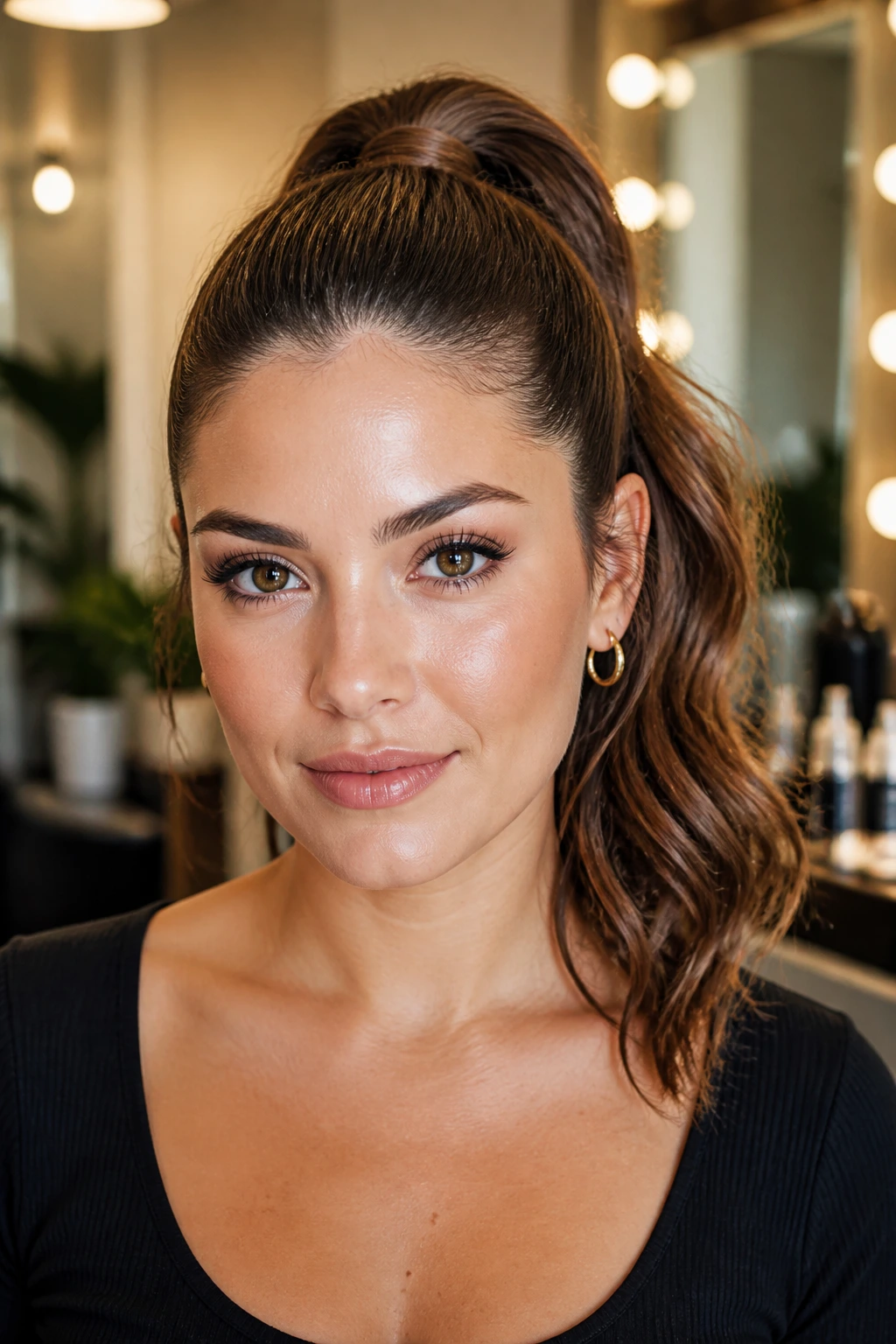
Fine hair usually needs root lift more than product. Too much serum will make it slide, and that’s annoying fast. Use mousse, a little teasing, and a smaller tail shape so the ponytail doesn’t droop before you leave the house.
Thick hair likes structure. Sectioning, stronger elastics, and a wrapped base keep the weight under control. If the ponytail feels heavy, split the tail into two internal sections before smoothing the outside. It sounds fussy. It isn’t. It saves time.
Curly and coily hair look best when the texture is treated as the point, not a problem to erase. Smooth the front, protect the pattern in the tail, and choose accessories that don’t fight the shape. If you’re stretching or straightening the hair first, use heat protectant and don’t chase perfection at the hairline. A few small soft pieces can make the whole style feel more natural.
Shorter cuts need slightly more patience, and that’s fine. You’re building shape, not pretending the length is different. A smaller ponytail with a neat base often looks better than a strained one that tries to do too much.
How to Wear These Ponytails With Clothes and Makeup
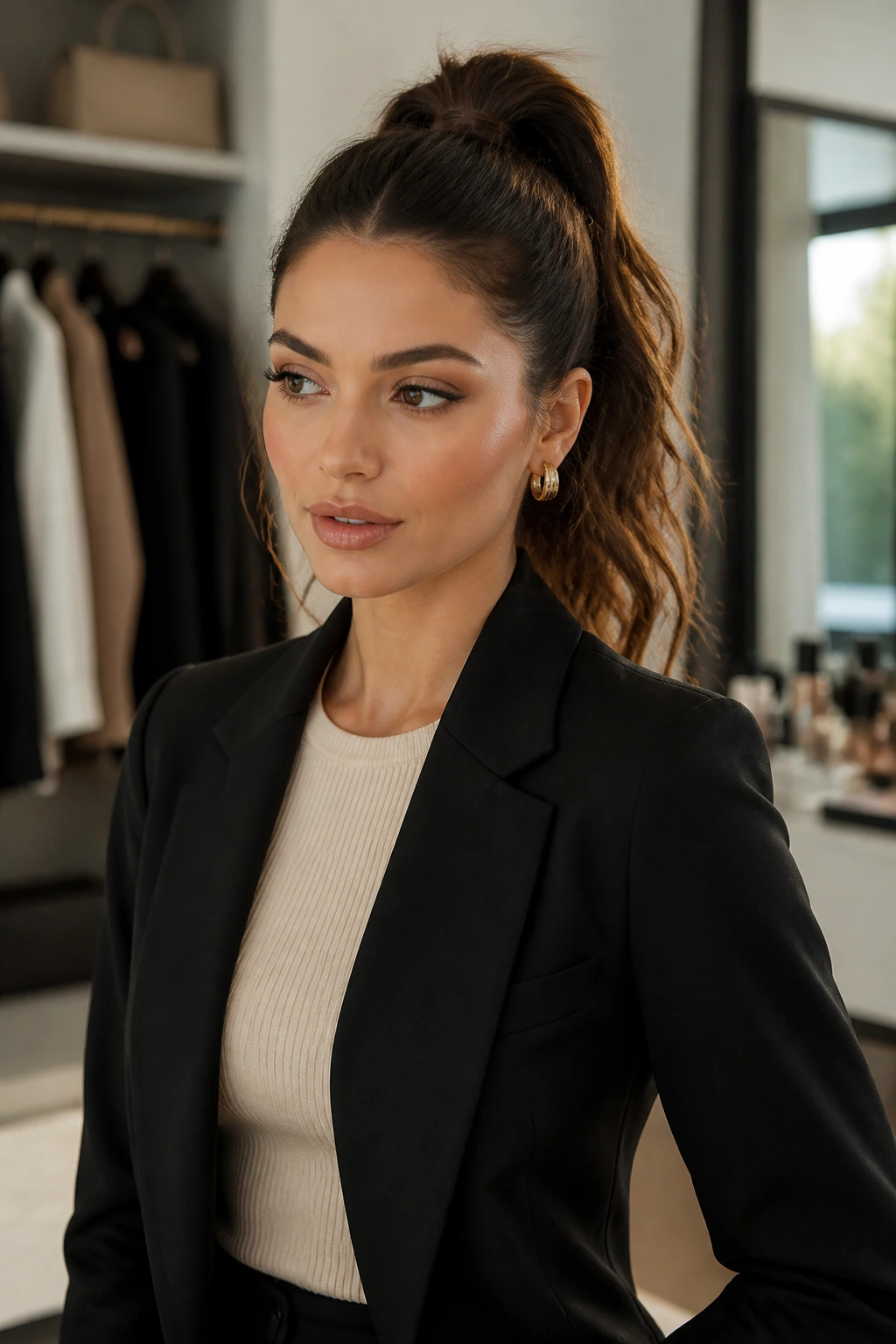
Presentation: A sleek wrapped ponytail pairs well with a blazer, a boatneck, or anything with a clean neckline. A wavier or face-framing version looks better when the outfit has a little softness too—think knitwear, satin, or an open collar. The ponytail should match the mood of the clothes, not fight them.
Accompaniments: Earrings matter here. Hoops, drops, and studs all change the feel of the style, especially when the hair is pulled clear of the face. A side-part ponytail leans nice with a little eyeliner and a soft lip; a shiny party pony can carry a bolder makeup look without getting noisy.
Scale: If your face is petite, keep the crown lift moderate and the tail slimmer. If you have a larger frame or thicker hair, a fuller tail and a bit more height often look better because the silhouette has room to breathe. The ponytail should sit in proportion to the shoulders and collar, not float awkwardly above them.
Finish: Use the same finish twice in your outfit and hair, and the look can feel too tidy. I usually like one point of contrast—a glossy ponytail with matte clothes, or a textured ponytail with a clean, structured top.
Little Styling Boosters That Change the Result
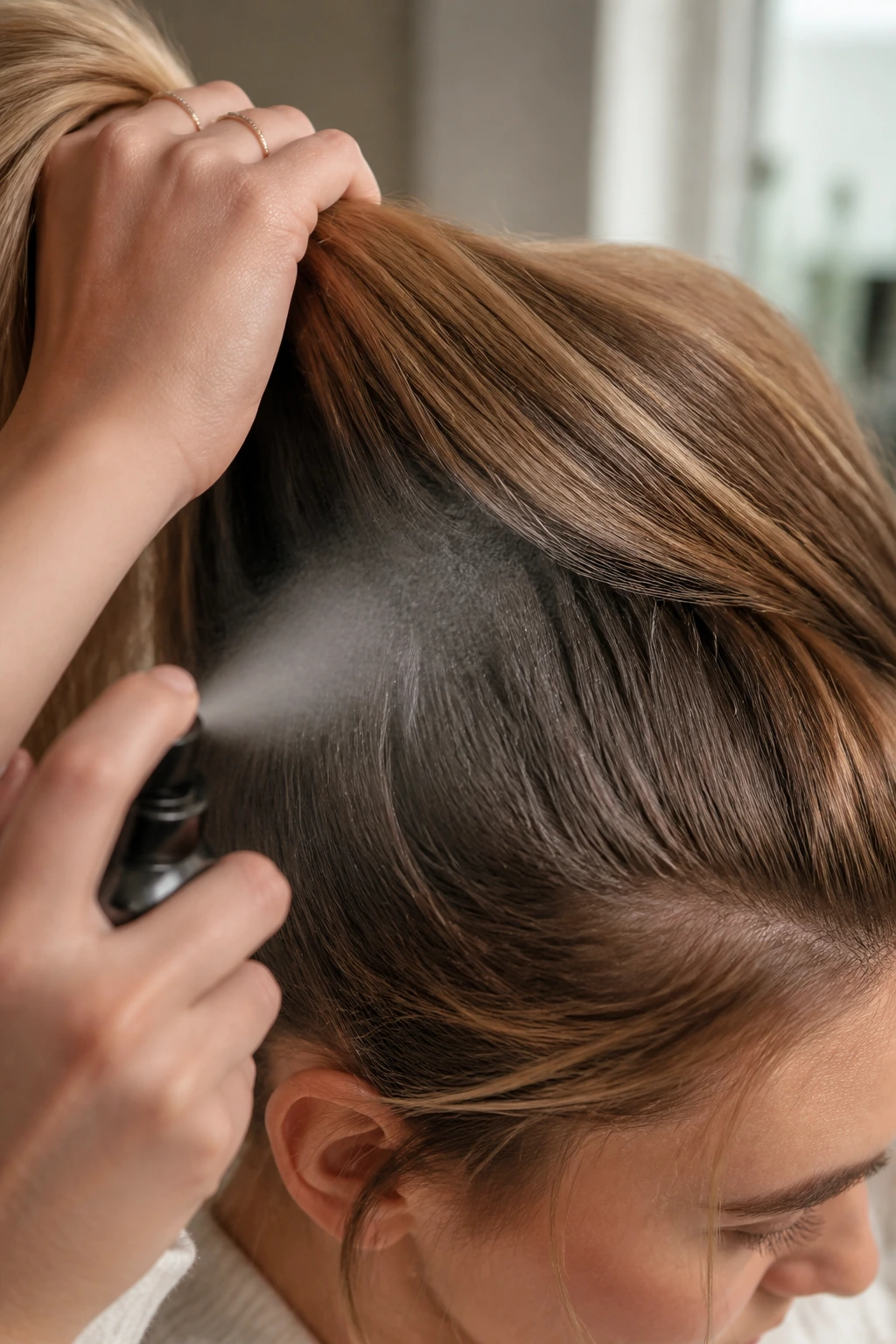
Texture Boost: A small dusting of texturizing spray at the roots gives the ponytail more hold, especially on clean hair that’s a little too slippery. Focus on the underside of the crown so the finish stays smooth on top.
Customization: Swap the base wrap for a braid, a ribbon, or a metal cuff depending on how dressed up you want the style. A braid reads more handmade. A ribbon softens the whole look. A cuff brings a sharper edge.
Serving Suggestions: If you want the ponytail to look softer around the face, leave two thin strands out and curl them away from the cheeks with a 1-inch iron. If you want more polish, tuck everything back and keep the front pieces tight to the hairline.
Make-It-Yours: Fine hair benefits from extra root lift; thick hair benefits from better sectioning; curly hair benefits from control at the front and freedom in the tail. For a more relaxed finish, stop one step earlier than you think you should. For a sharper finish, smooth the top one more time with a brush and a pea-sized amount of cream.
How to Keep the Style Fresh All Day
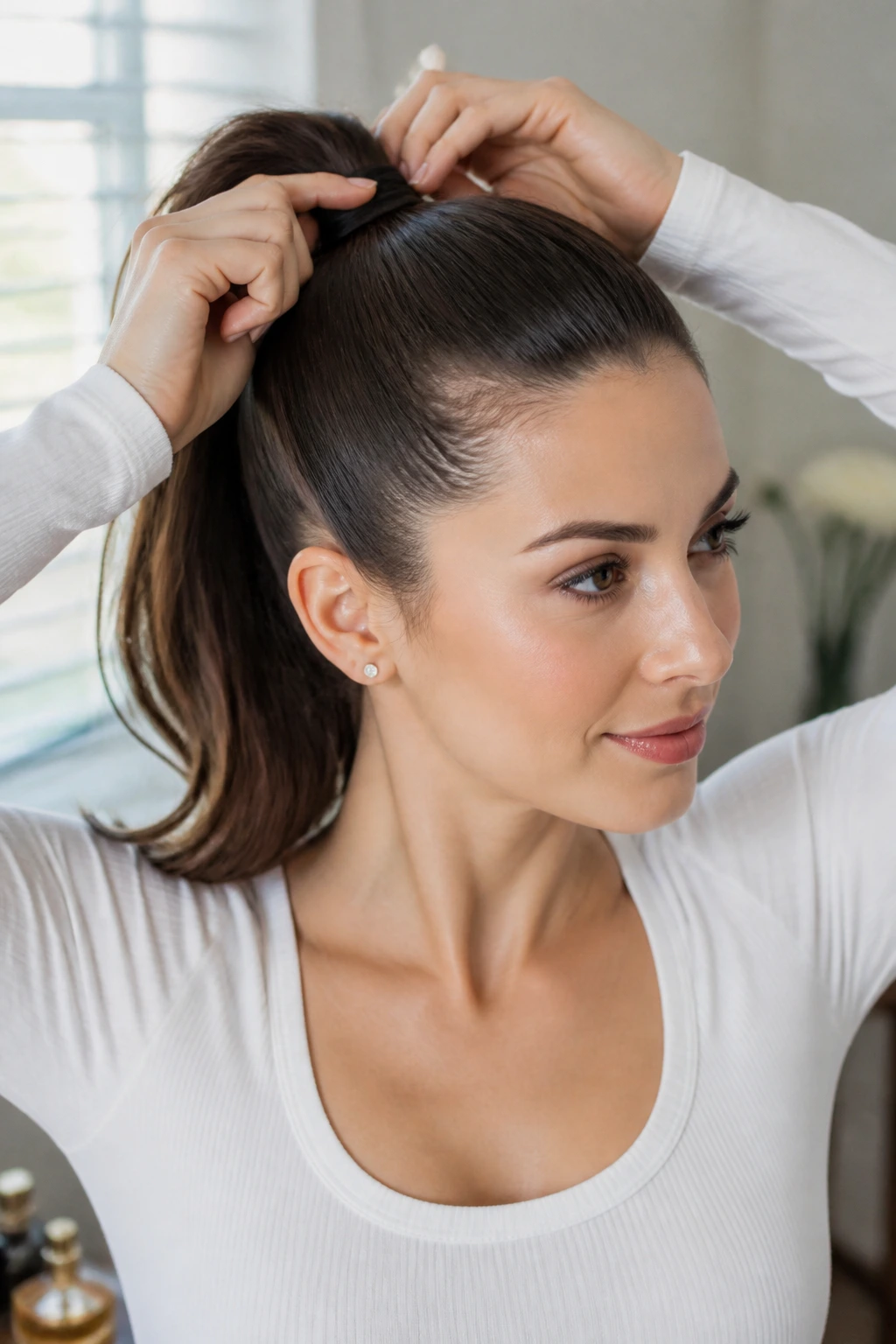
A high ponytail stays cleaner when you start with the right amount of product. Too little, and the flyaways rise immediately. Too much, and the crown starts to look coated by midafternoon. That middle ground matters more than people think.
If the base loosens, don’t just yank it tighter. That makes the hairline sore and can flatten the whole shape. Remove the elastic, brush the section back into place, and secure it again with a new tie. Keep a spare elastic and two bobby pins in your bag if the style matters for the day.
Sleeping on the ponytail is not the move unless you want creases. If you need to wear it overnight, tie it lower and looser, then wrap the lengths in a silk scarf or use a silk pillowcase. In the morning, refresh the crown with a tiny mist of water or leave-in spray and smooth the top with your hands, not a heavy brush.
Variations and Adaptations to Try
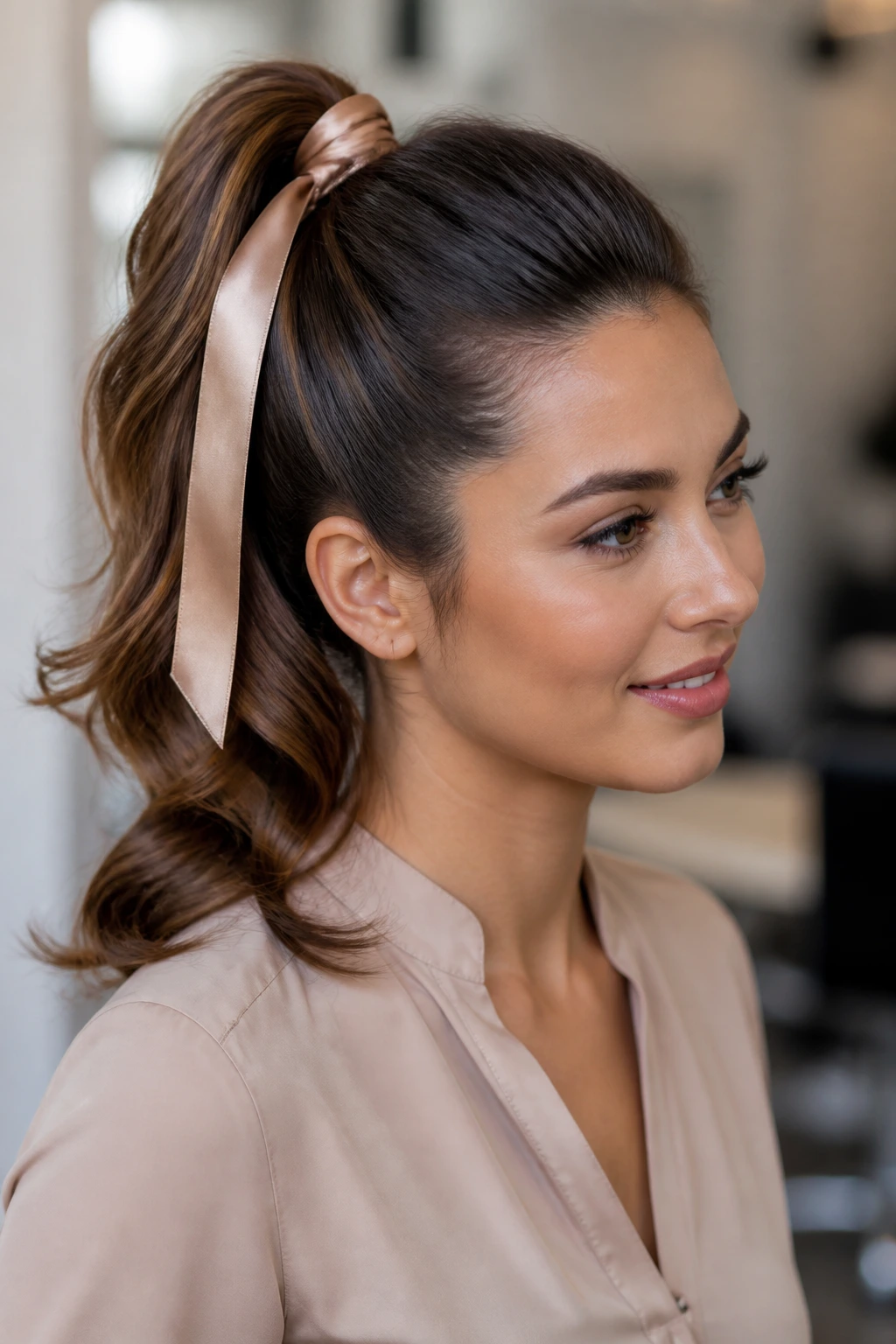
Soft Office Ponytail: Keep the crown clean, the tail straight, and the base wrapped. This version works with a button-down, a knit dress, or a blazer because it looks calm without feeling strict.
Wedding-Guest Ponytail: Add curled ends, a ribbon, or a jeweled pin just above the elastic. The goal is movement and a little shine, not a frozen shape.
Curly-First Ponytail: Gather the hair high, smooth only the front, and let the curls stay full in the tail. This is the easiest way to keep the style polished without flattening the texture.
Protective-Style Ponytail: Use a satin scrunchie or soft elastic, avoid over-tight tension, and keep the base as gentle as possible. The finish can still be neat without pulling at the edges.
Gym-to-Dinner Ponytail: Start with a textured base, then smooth the front and wrap the elastic with a small strand. It’s fast, practical, and looks more pulled together than the usual post-workout tie-back.
Short-Hair Faux Ponytail: For bob-length hair, gather the top section into a mini ponytail and let the ends flip out. It’s not the same as a long ponytail, but it scratches the same itch.
Common Mistakes That Flatten the Whole Look
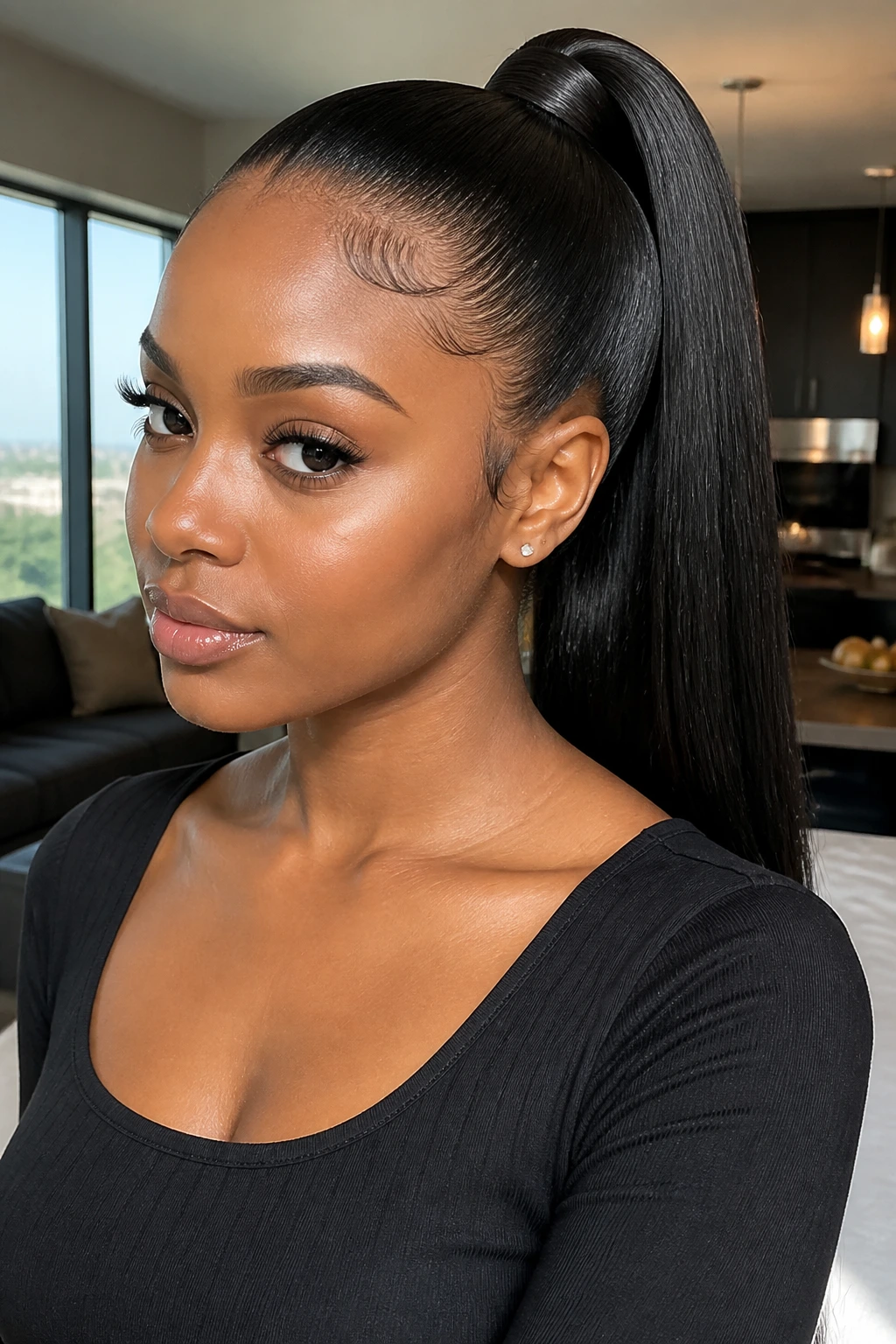
One mistake shows up fast: pulling the hair too tight at the hairline. The ponytail may stay in place, but the style starts looking severe, and the scalp will complain. Leave a little give at the front, smooth the surface, and stop as soon as the crown looks neat.
Another one is using too much product. Thick gel, heavy oils, and sticky sprays can turn a soft ponytail into a helmet. Use the smallest amount that controls the flyaways, then build only if you need more.
People also forget to match the elastic to the hair’s weight. A thin tie on thick hair will slip. A heavy-duty tie on fine hair can over-compress the base and make the ponytail droop. Pick the elastic to suit the hair, not the other way around.
And please don’t skip cooling time if you’re curling the lengths. Brushing warm curls out too soon leaves you with limp waves that collapse in an hour. Let them cool, even if it’s only a few minutes. That small wait pays off.
Frequently Asked Questions
How high should a high ponytail sit?
Usually just above the crown or at the highest point of the head, but the exact spot depends on your face shape and hair length. A ponytail placed too high can look stiff; one placed a little behind the crown often feels softer.
What makes a high ponytail look polished instead of messy?
The base has to be clean, the elastic needs to be hidden or neat, and the top section should be brushed smooth without crushing the shape. A small wrapped piece, a side part, or a face-framing strand usually makes a big difference.
Can I do a high ponytail on second-day hair?
Yes, and honestly, second-day hair often holds better because it has a little grip. If the roots feel oily, use dry shampoo at the crown and brush it through before you gather the ponytail.
How do I keep the ponytail from sagging?
Use a strong elastic, secure the base tightly enough to hold, and avoid overloading the tail with too much product or water. If the hair is very heavy, sectioning before you gather it helps more than tugging harder.
What’s the best way to hide the elastic?
Wrap a thin strand of hair around the base and pin it underneath with a bobby pin. If the hair is short, use two crossed pins and tuck the ends into the base so they don’t poke out.
Can curly or coily hair look soft in a high ponytail?
Absolutely. The softness comes from controlled edges, a balanced shape at the crown, and a tail that keeps its pattern. You do not need to flatten the texture to make the style look polished.
What if my ponytail keeps slipping?
Your hair is probably too smooth or the elastic is too weak. Add a little texture spray or mousse at the roots, switch to a stronger tie, and try gathering the hair in two stages so the base grips better.
How do I make the ponytail feel less harsh around my face?
Leave out a narrow face-framing piece, use a side part, or soften the front with a bent section near the temples. Even a tiny bit of movement near the hairline changes the mood.
A Ponytail With Some Give
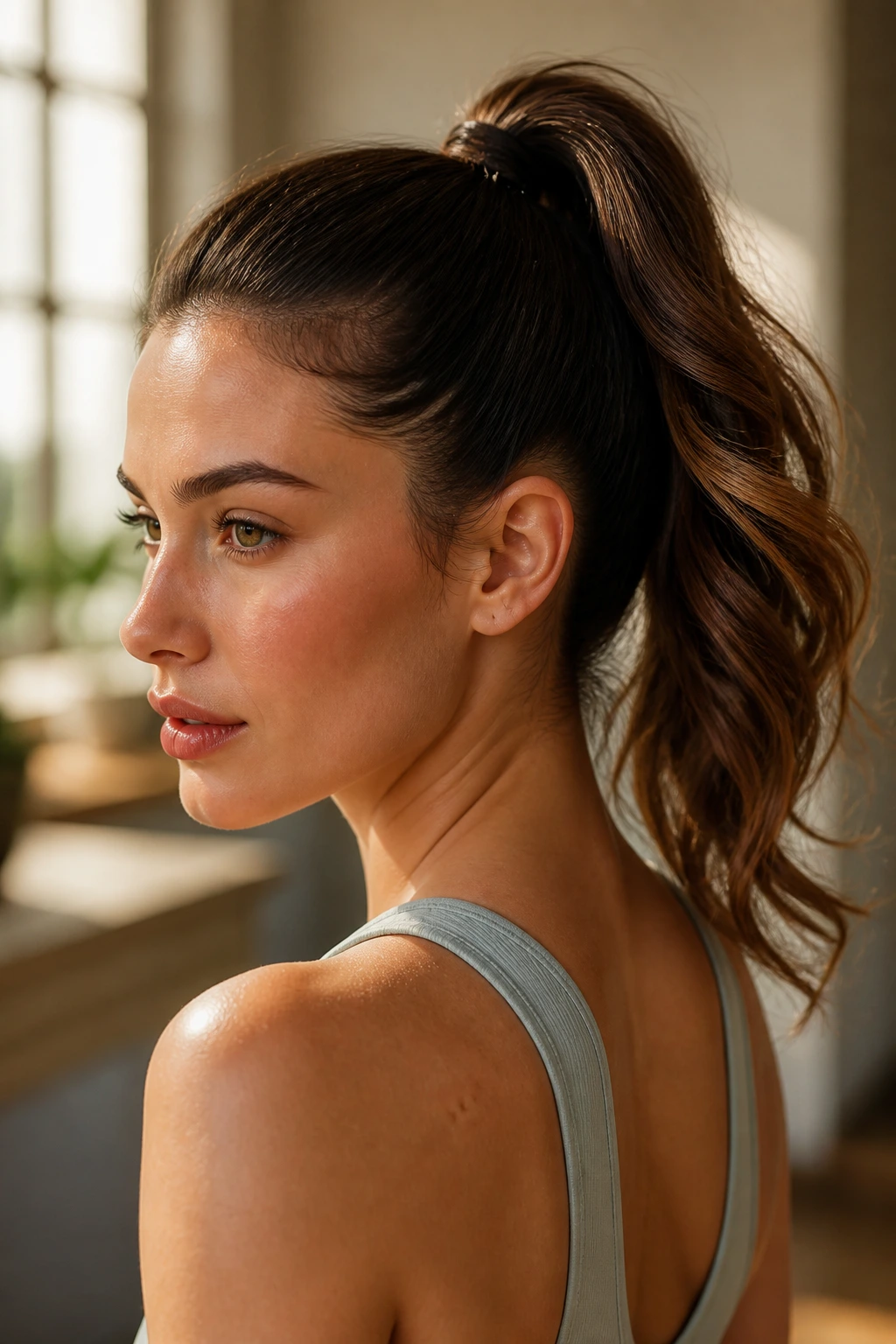
A good high ponytail doesn’t need to look severe to feel finished. The best versions have a little lift, a little bend, and a base that looks handled instead of grabbed. That’s what gives the whole style its soft polished look—clean enough for sharp clothes, loose enough to feel human.
I keep coming back to the same idea because it matters: the ponytail should work with your hair, not against it. Once you match the finish to the texture and pick the right amount of tension, the style gets much easier. The details stop feeling fussy. They start feeling obvious, which is always a good sign.
If you’re only trying one version first, start with the one that matches your hair’s natural behavior on a decent day. Then adjust the crown, the base, or the tail from there. That’s usually where the best ponytail lives.
