



Long hair and buns have a complicated relationship. One minute the style looks polished and heavy in the best way; the next, a few loose pins later, it starts sliding south like it’s been promised lunch money. That’s why bun hairstyles for long hair are worth knowing well. The length gives you shape, thickness, and a built-in sense of drama, but it also means the bun has to carry more weight and more texture than a short-hair version ever would.
I’ve always liked buns for long hair because they show the hair’s personality instead of hiding it. A glossy low chignon reads completely differently from a loose knot with piecey ends, and a braided bun can go from office-neat to event-ready with one ribbon or a single pearl pin. Long hair gives you enough material to make the bun look intentional instead of tiny and apologetic. That’s the good part.
The catch? Long hair can also be slippery, bulky, and annoyingly eager to unwind at the temple first and the nape second. So the styles that work best are the ones that respect weight, use the right anchoring points, and don’t fight your texture. Some of the looks below are crisp and sculpted. Others lean soft, messy, and a little undone. That range is the point.
Why These Bun Looks Earn Their Keep
-
They handle extra length without looking cramped: Long hair gives these buns enough bulk to look full even when the shape is tight and neat, which is why a low chignon on shoulder-length hair and the same style on waist-length hair feel completely different.
-
They work with second-day texture: A little grit from dry shampoo or light texturizing spray gives long strands something to grip, so these styles often sit better after the hair has had a day to calm down.
-
They move from casual to formal fast: Swap a scrunchie for a clear elastic, or add a ribbon and pearl pin, and a basic bun can jump from errands to evening without a full redo.
-
They keep the oldest ends tucked away: Long hair tends to fray at the very bottom, and a bun hides that while also reducing tangles from scarves, coats, and chair backs.
-
They’re easier to customize than most updos: Height, parting, braid detail, and smoothness all change the mood. Small changes do the heavy lifting here.
1. Sleek Low Chignon
A sleek low chignon sits at the nape and looks best when the front is brushed smooth and the bun itself is tucked tight, almost like a folded knot. On long hair, the extra length gives the chignon a richer coil, so it doesn’t disappear into the back of the head.
Why It Works
The charm is in the clean line from crown to bun. Long hair lets you wrap enough length around the base to make the shape look deliberate, not pinched. If your hair is thick, split the ponytail in two before coiling; it keeps the bun flatter and easier to anchor.
Best Use
This one likes a center part, a side part, or no part at all. It’s the style I’d reach for when I want the outfit to do the talking and the hair to stay out of the way.
Tip: Smooth flyaways with a pea-sized amount of styling cream on your palms, not directly on the bun.
2. Loose Low Messy Bun
A loose low messy bun has that soft, slightly undone look that never seems overworked. The shape sits low and relaxed, with a few end pieces allowed to peek out instead of being hidden like evidence.
What Makes It Different
Long hair gives this bun enough length to create loose loops instead of a tiny ball at the nape. Pull the bun apart gently after pinning, then stop. If you keep fussing, it goes from relaxed to droopy fast.
How to Wear It
Leave a few face-framing pieces out if you want the style to feel softer, especially around a sharp jawline or a strong blazer collar. It’s one of the better bun hairstyles for long hair when you want shape without stiffness.
3. High Ballet Bun
The high ballet bun sits at the crown and draws everything upward, which makes long hair look tidy in a way that feels almost architectural. It’s neat, centered, and a little unforgiving if your sectioning is sloppy.
Why It Works
Long hair gives the bun enough mass to stay visible from every angle. The trick is to make the ponytail first, brush it smooth, then twist the length around the base in one direction before pinning. A second elastic over the bun’s base can help if your hair is heavy.
Best for: straight or lightly wavy hair that can be smoothed without too much product.
Pro move: Pin the bun in an X pattern with two bobby pins at the base. It holds better than scattering pins all over the place.
4. Braided Low Bun
A braided low bun has more texture than a plain knot, and that detail matters. The braid builds a tidy rope of hair first, then that rope gets wrapped into a bun at the nape.
Why It Works
Long hair is made for this look because the braid can be full and thick instead of skinny and limp. Start the braid slightly loose if you want the finished bun to look larger; start it tight if you want cleaner edges and better control.
What It Feels Like
It’s the kind of bun that stays interesting even when the rest of the outfit is plain. The braid gives the style a little pattern, and that’s often enough.
5. Twisted Rope Bun
Two rope twists make this style look more complicated than it is. You split the hair, twist each side, then wrap the twists together into a bun that sits low or mid-height.
Why It Works
Rope twists grip well on long hair because the strands naturally tighten as you twist. That makes the bun less prone to puffing out in the humidity. If your hair is silky, mist the lengths with texture spray before you start.
Style note: This bun looks especially good when the twists are visible from the side, not hidden flat against the scalp.
6. Side-Swept Bun
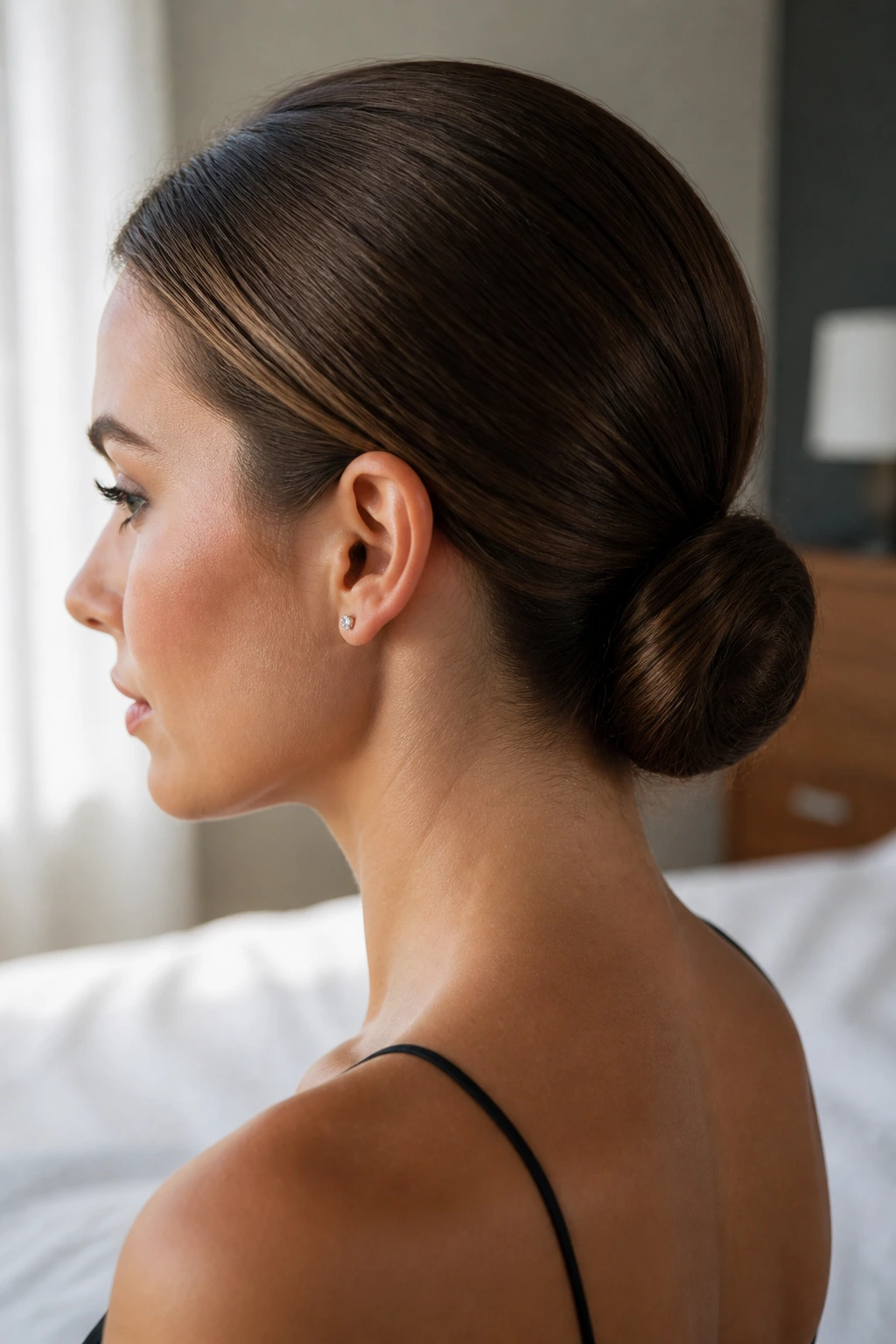
A side-swept bun sits just off-center and instantly softens the whole face. It’s the bun version of a tilted hat brim — a little less strict, a little more interesting.
Why It Works
Long hair gives the side sweep enough weight to stay in place instead of sliding back to the middle. Bring the hair over one shoulder first, twist loosely, and pin at the side nape before wrapping the bun.
Best For
It flatters long necks and high necklines especially well. If your face shape feels long, the off-center placement adds width without making the style bulky.
7. Dutch Braid Bun
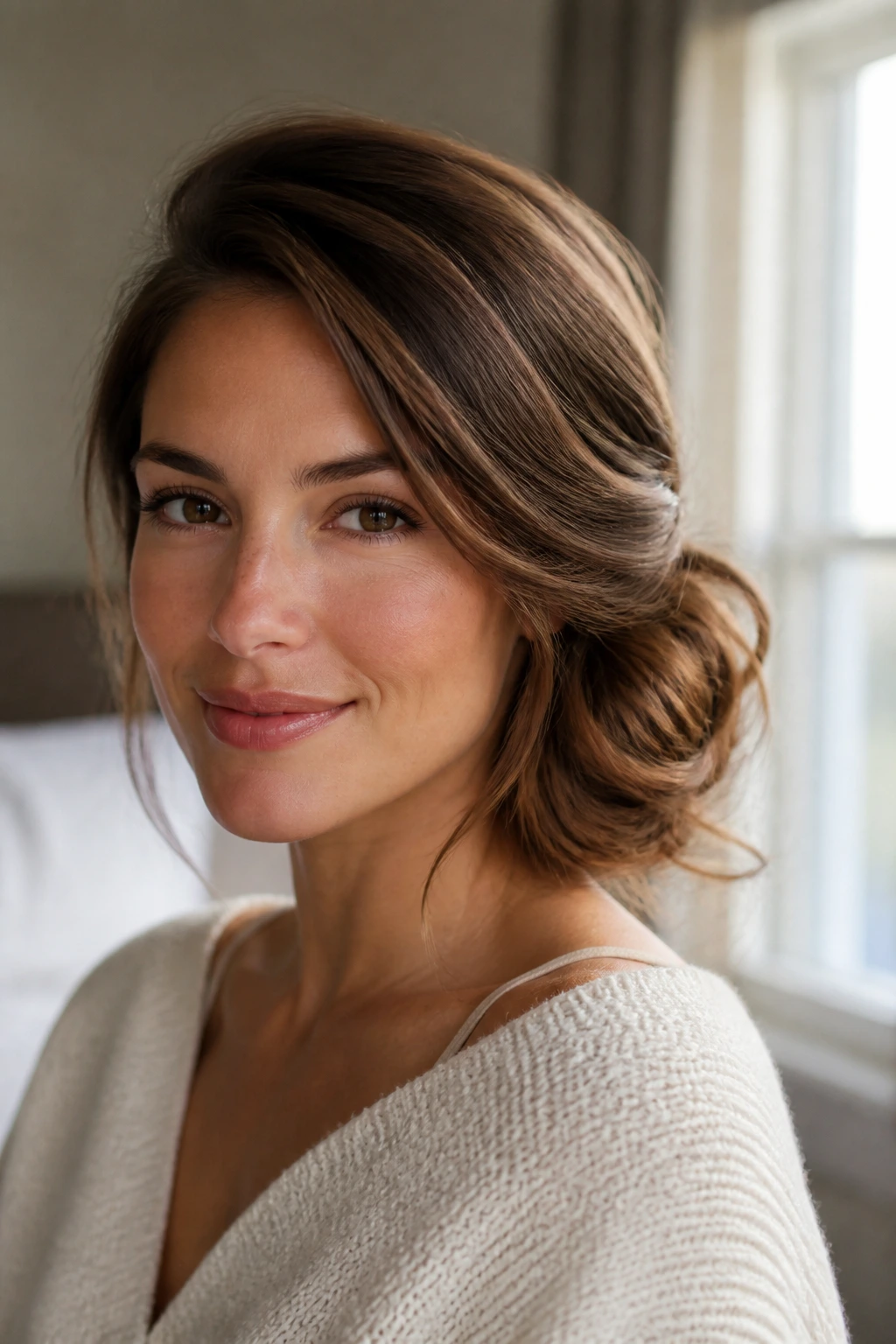
A Dutch braid bun starts with a braid that rises off the scalp, then disappears into a bun at the back. The braid detail gives the whole style some height and a bit of grip before the bun even begins.
Why It Works
Long hair makes the braid look bold instead of skimpy. The raised braid also helps the style survive a full day better than a loose twisted bun, because the structure is built in from the start.
A Practical Note
Keep the braid snug at the roots and looser through the tail. That balance keeps the top tidy while giving the bun enough softness to avoid looking helmet-like.
8. Sock Bun
The sock bun is the polished, rounded cousin in this family. A bun donut or rolled sock gives long hair a smooth, even ring that looks fuller than it would on its own.
Why It Works
Long lengths can wrap around the donut multiple times, which gives you that full, uniform curve. It’s especially useful if your hair is fine but long, because the tool supplies shape while the hair supplies coverage.
Quick caution: Don’t overload the bun with product here. Too much cream or oil makes the hair slide right off the donut.
9. Knotted Bun
A knotted bun looks like a knot first and a bun second, which is exactly why it feels a little more modern than the classic coil. You tie the hair into itself, then tuck and pin the ends.
Why It Works
Long hair gives the knot enough length to hold its shape without needing a dozen pins. If you want it softer, leave the knot slightly open. If you want it clean, cinch the center firmly before tucking the ends.
Best Use
It’s a good choice for medium-thick long hair that already has some natural bend. Straight, slippery hair can do it too, but it needs more pinning than most people expect.
10. French Roll Bun
The French roll bun runs vertically instead of round, which changes everything. It’s more sculpted than a traditional bun and works beautifully when you want the back of the head to look tall and narrow.
Why It Works
Long hair gives the roll enough substance to feel complete from top to bottom. Use a comb, not your fingers, to smooth the hair into place, then tuck the length inward as you roll upward.
Best for: formal dinners, suits, or any outfit with a clean neckline.
11. Top Knot with Face-Framing Pieces
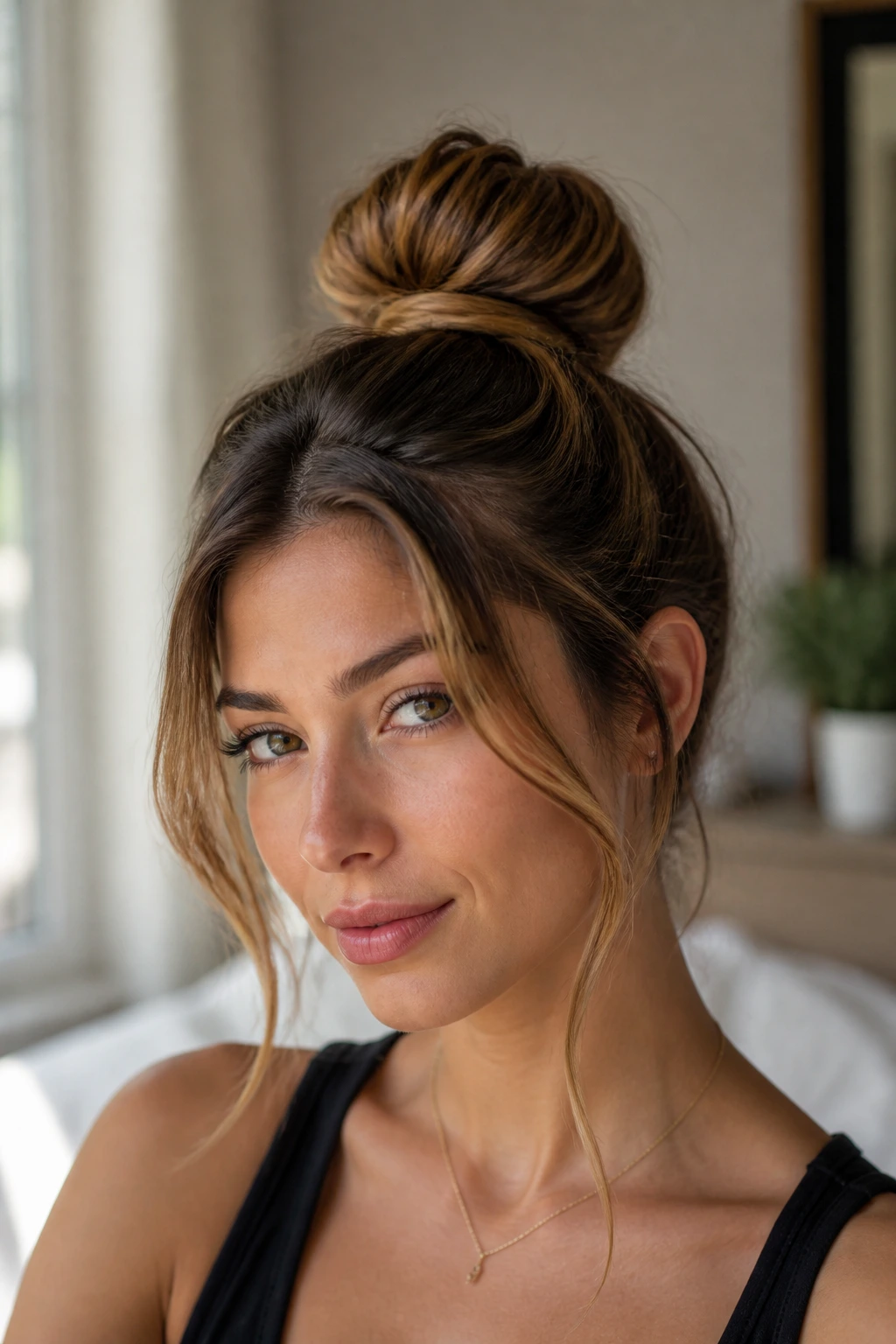
A top knot with face-framing pieces is the laid-back sibling in the bun family. The hair is gathered high, twisted into a knot, and softened with a few loose strands near the cheeks or temples.
Why It Works
Long hair gives the knot enough heft to look intentional instead of tiny. The face-framing pieces break up the height, which keeps the style from feeling too severe.
How to Wear It
Leave the front pieces slightly curved, not poker-straight. A quick bend with a curling iron or flat iron makes the whole look feel more finished.
12. Half-Up Bun
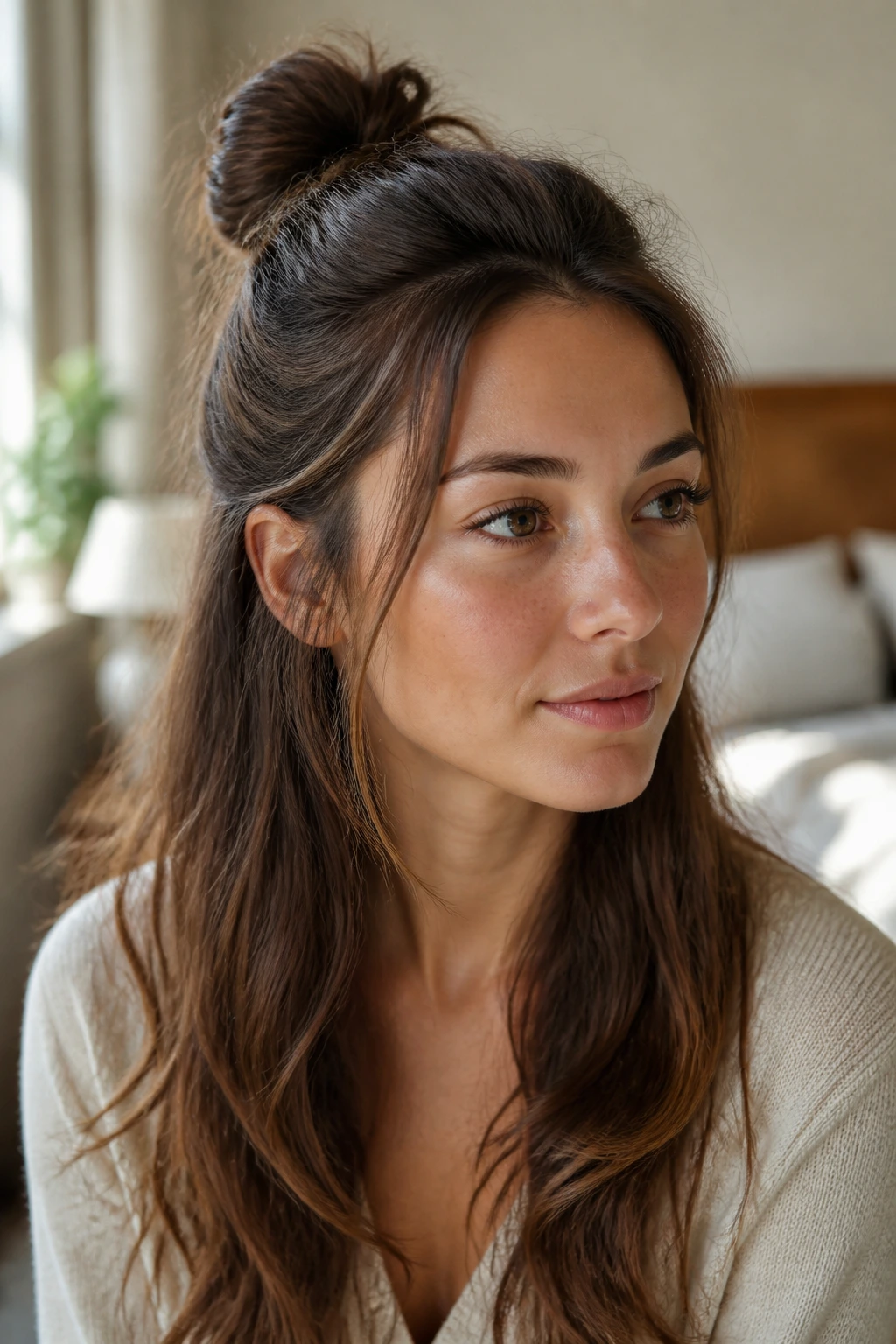
A half-up bun is the style I reach for when I want the length visible but still need the front out of my face. Only the top section goes into the bun, which makes this one lighter and quicker than a full updo.
Why It Works
Long hair gives the half-up bun enough top volume to look balanced against the loose lengths below. It’s a good option for layered hair because the bun helps corral the shorter top pieces that would otherwise fall around the face.
Tip: Don’t over-tighten the top section. A little lift at the crown makes the style look fuller and less school-photo stiff.
13. Double Space Buns
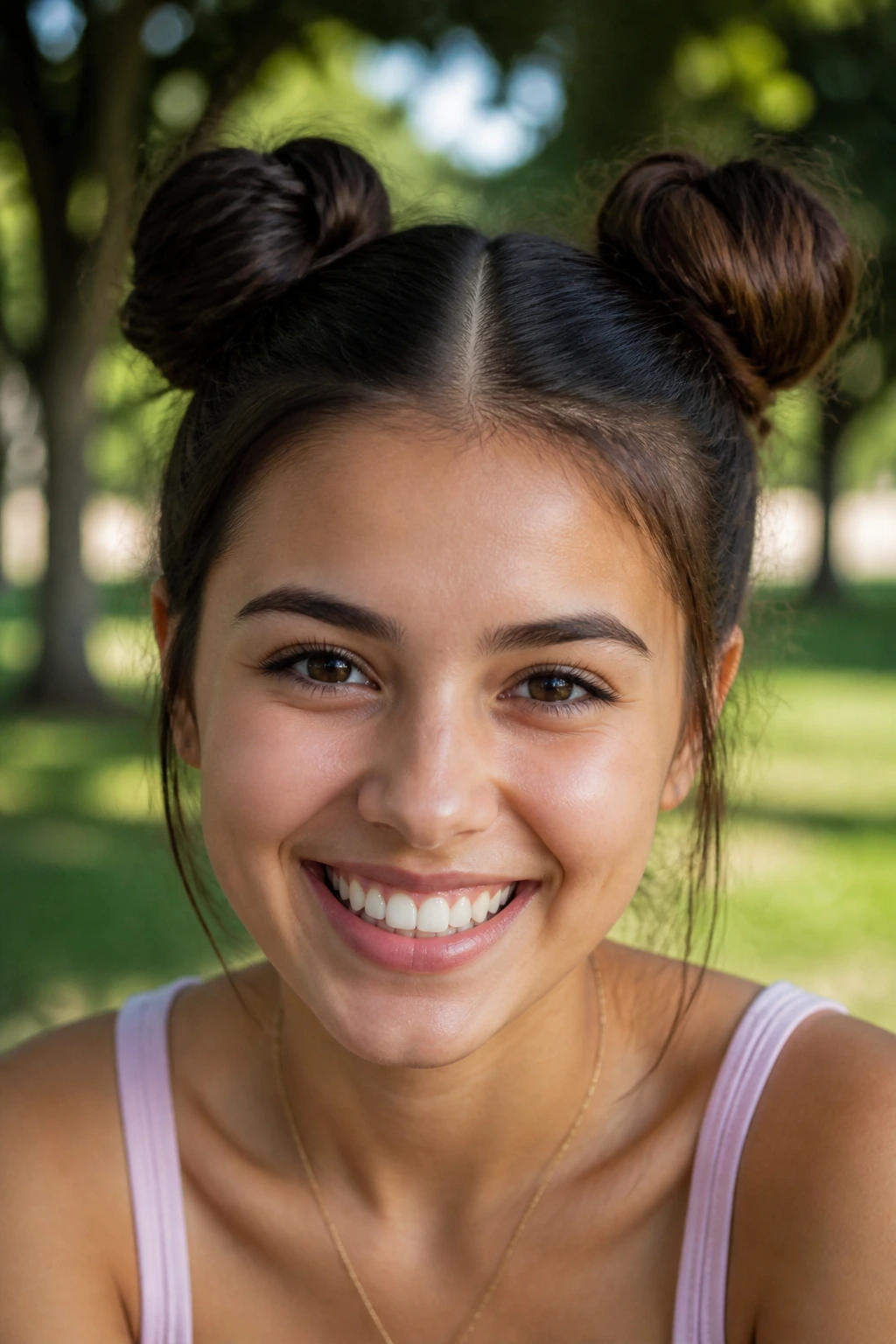
Double space buns bring a playful, symmetrical shape that long hair handles surprisingly well. Each side gets its own bun, so the style feels balanced and a little cheeky instead of heavy.
Why It Works
Long hair gives each bun enough material to hold shape without looking stubby. Part the hair cleanly down the center, then make two high ponytails before twisting each one into a compact bun.
Best For
Festival days, casual weekends, or any time you want a style that doesn’t take itself too seriously. If your hair is very long, keep the buns tighter than you think so they don’t start drooping outward.
14. Infinity Braid Bun
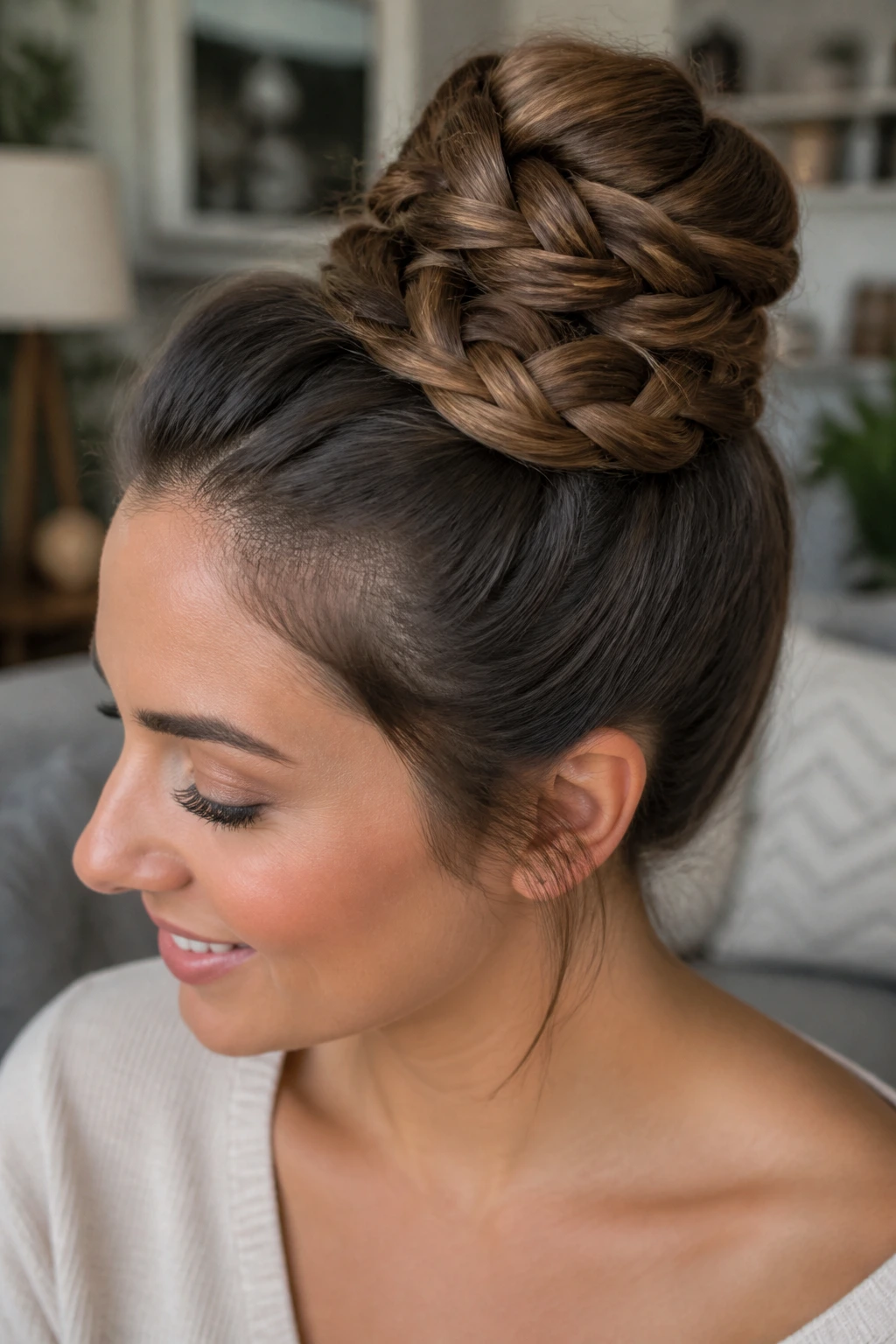
The infinity braid bun sounds fancier than it is, but it does take a little patience. The braid loops around in a figure-eight pattern before being tucked into a bun shape.
Why It Works
Long hair is one of the few hair types that gives this style enough length to look elegant instead of crowded. The looping braid adds visible detail even if the bun itself stays compact.
A Small Warning
If your sections are too thick, the loops get bulky and the shape loses its clean line. Use smaller sections than you think you need.
15. Floral Bun
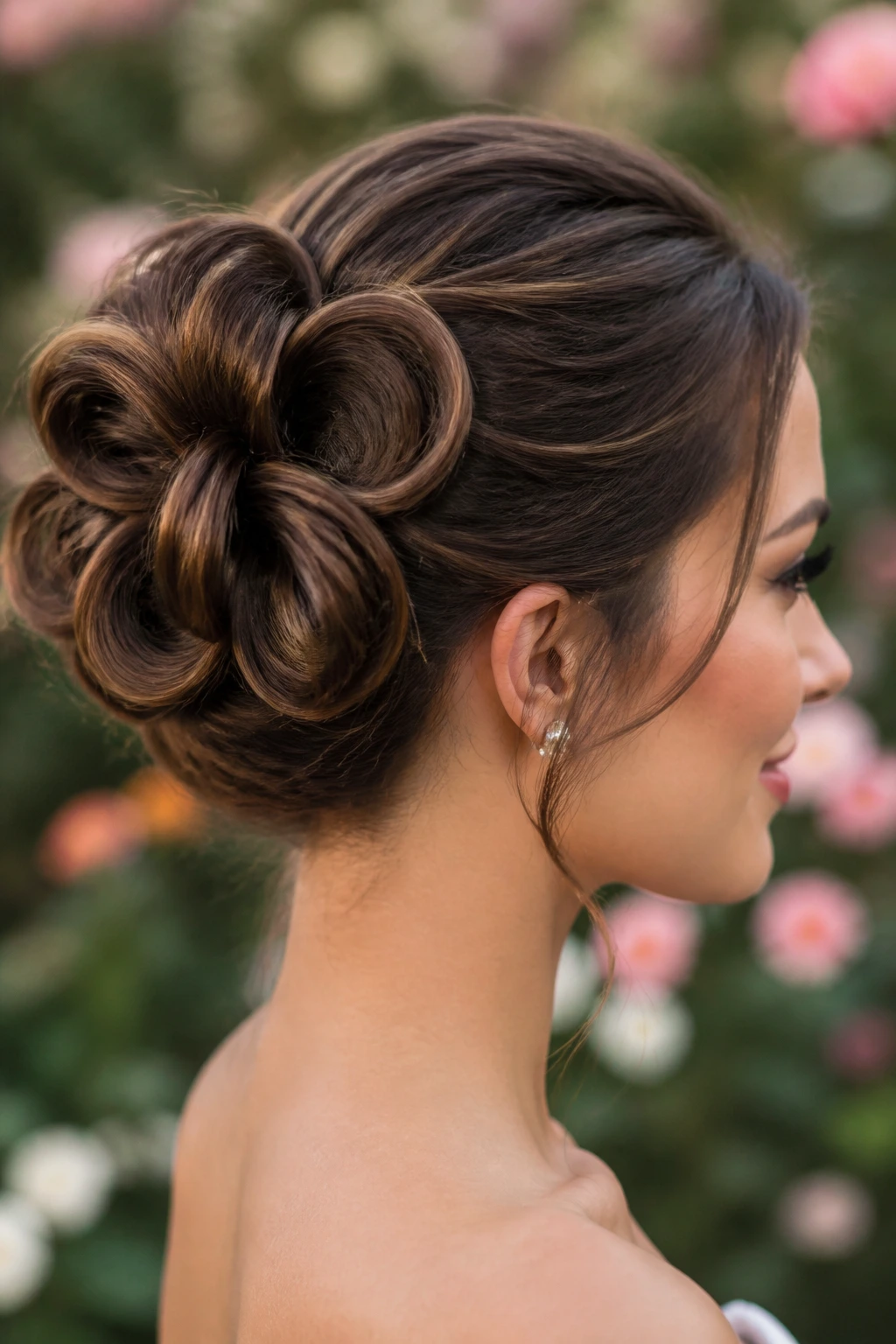
A floral bun arranges the hair so the loops and twists resemble petals around a center. It looks decorative, but the trick is simply careful pinning and a bit of patience.
Why It Works
Long hair gives you more loops to work with, which makes the flower effect possible without fake pieces. Pull each loop slightly outward after pinning so the petals are visible from the side.
When it shines: weddings, graduations, or any event where a plain bun feels too plain.
16. Gibson Tuck Bun
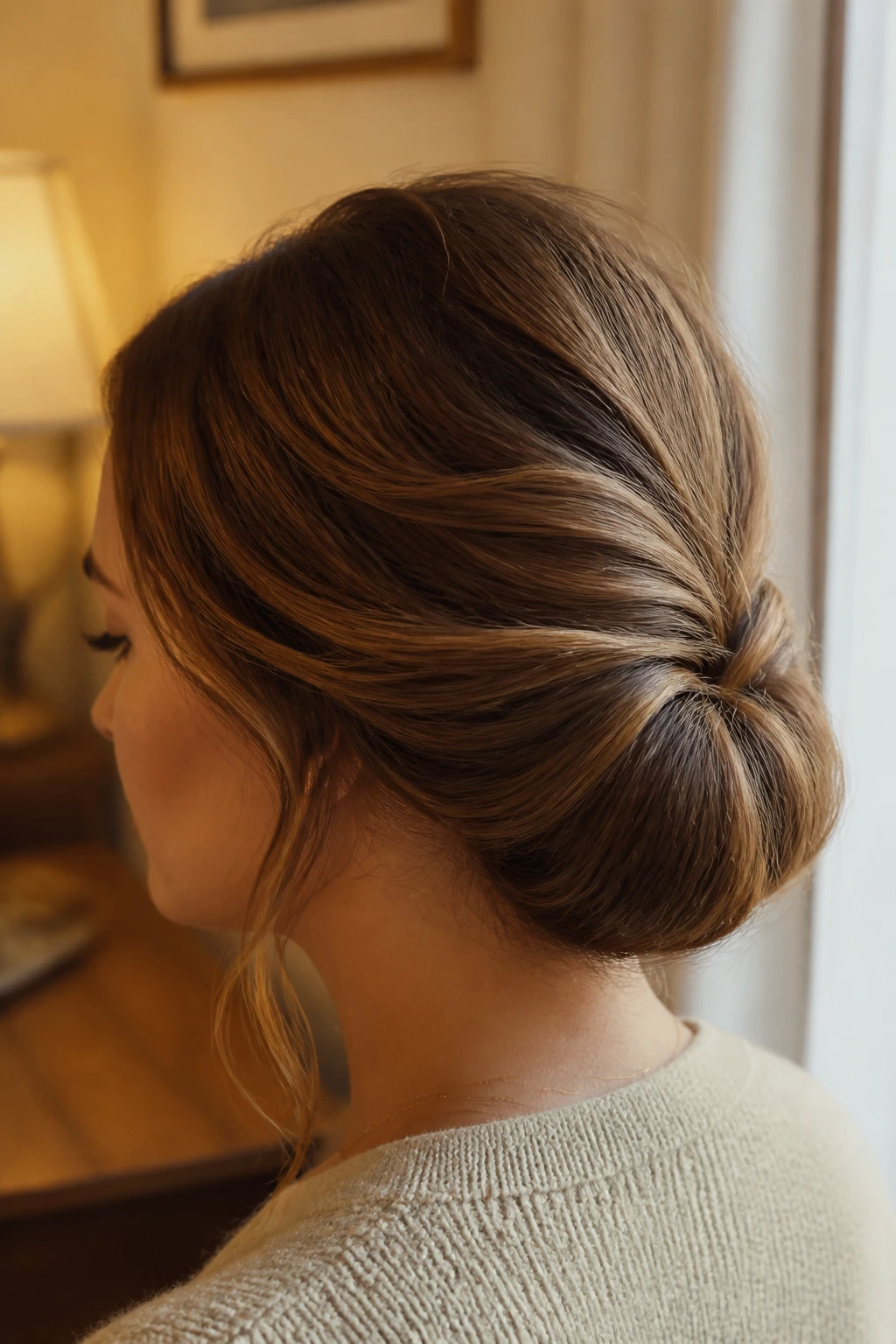
The Gibson tuck bun has a soft, rolled-under shape that feels vintage in the best way. Hair is gathered low, tucked inward, and secured so the ends disappear into the fold.
Why It Works
Long hair creates a fuller tuck and a smoother fold, especially if the hair has some wave. It’s one of those styles that looks calm even when the rest of life is not.
How to Style It
Use a clear elastic first, then fold the tail upward and inward. The fold should feel snug but not painful; if it’s pulling, the tuck is too tight.
17. Scarf-Wrapped Bun
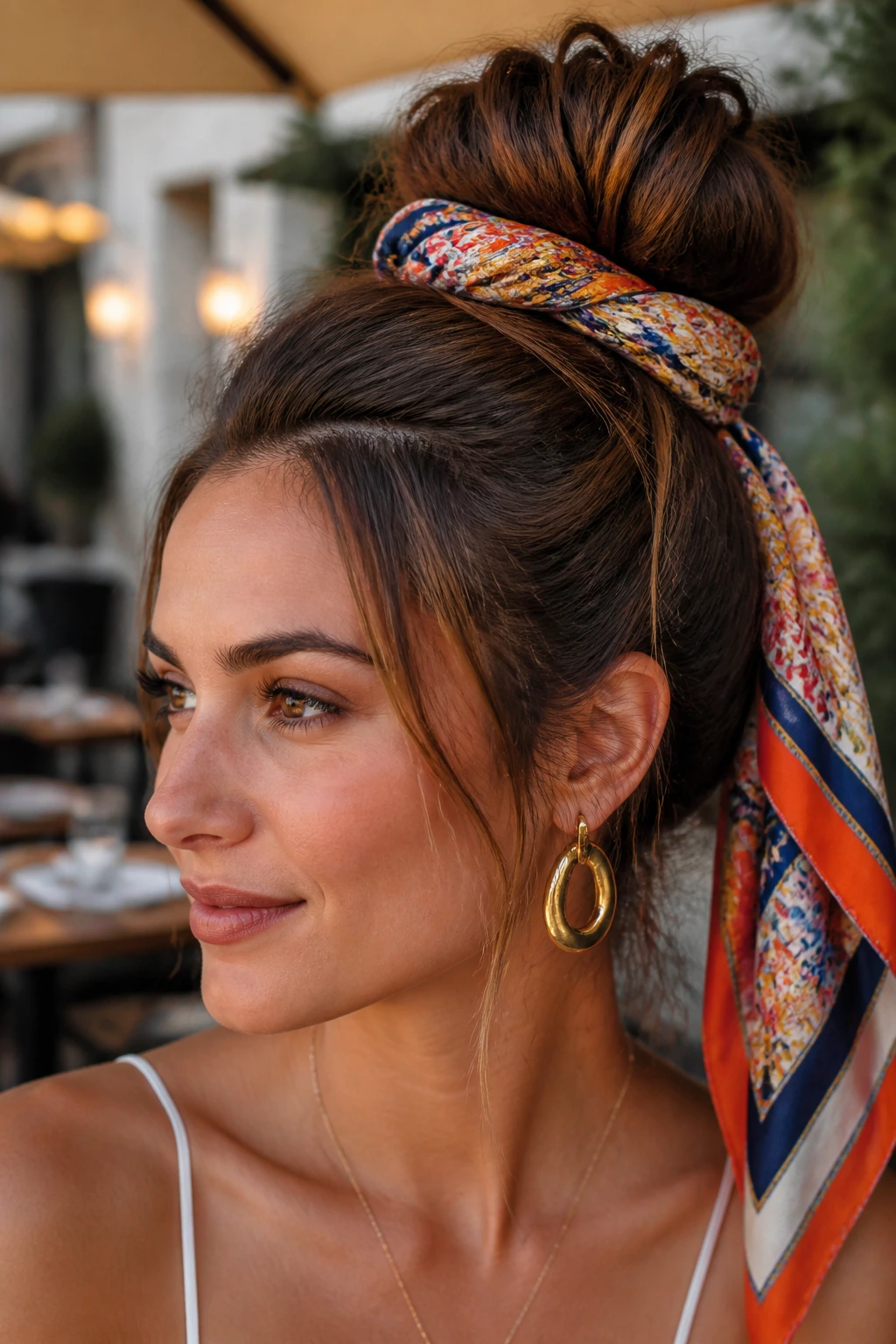
A scarf-wrapped bun uses fabric as both decoration and support. Wrap a silk or cotton scarf around the base of the bun, then tie or knot it so the ends fall where you want them.
Why It Works
Long hair gives the bun enough size for the scarf to sit on top instead of drowning in the shape. It also helps hide pins and elastics, which is a nice bonus when your bun isn’t perfectly symmetrical.
Good match: plain tees, linen shirts, and anything that needs one easy focal point.
18. Bubble Bun
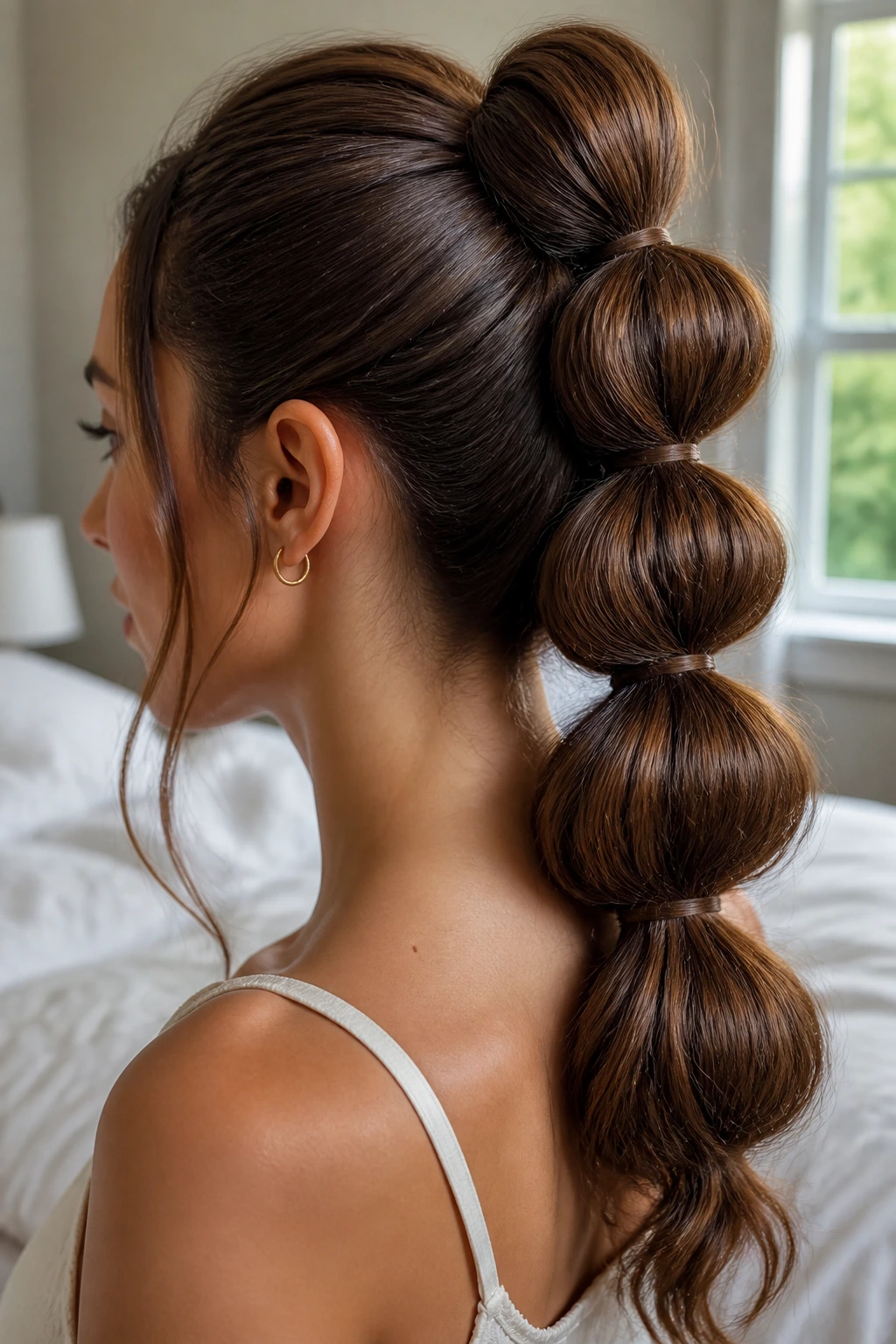
The bubble bun builds shape in segments, so it looks more structured than a plain coil. Small elastics create the “bubbles,” then the bottom section gets tucked into a bun.
Why It Works
Long hair makes the bubbles visible, which is the whole point. On shorter hair, they can disappear; on long hair, they stack into a strong visual line.
Pro Tip
Gently tug each bubble outward after securing it. Stop before the section looks messy. You want roundness, not puffiness.
19. Ballet Bun with a Ribbon
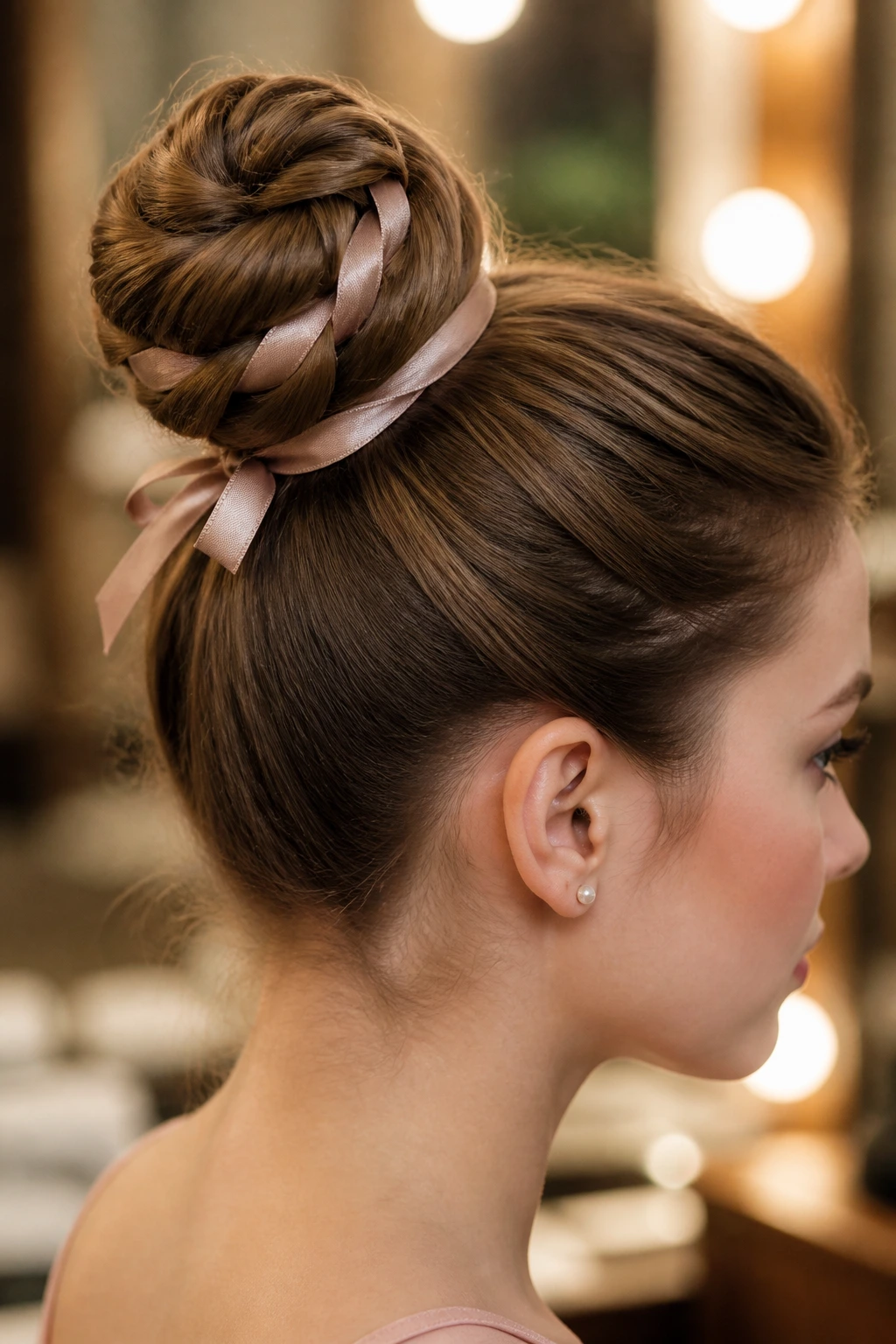
A ballet bun with a ribbon is a clean bun dressed up with a slim ribbon tied around the base or woven through the coil. It’s a tiny change, but it changes the mood fast.
Why It Works
Long hair provides the fullness that makes the ribbon feel intentional instead of delicate and lost. Choose satin for a dressier finish, or matte grosgrain if you want the look to feel less formal.
My take: this is one of the easiest ways to make a simple bun look thoughtful without piling on more pins.
20. Low Center-Part Bun
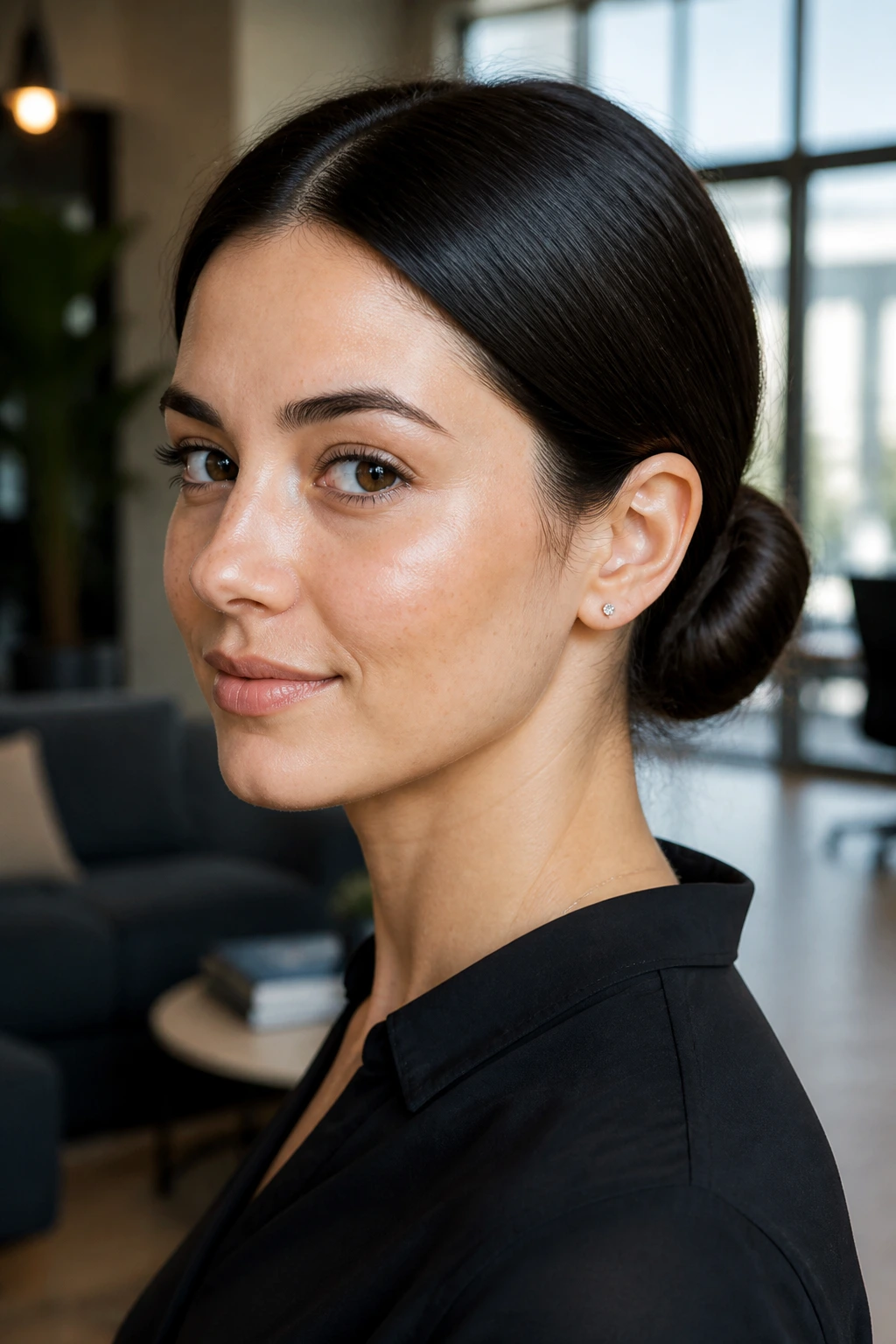
A low center-part bun leans on symmetry. The hair is split down the middle, brushed smooth, and gathered into a low bun that sits close to the nape.
Why It Works
Long hair carries the straight lines beautifully here. The center part gives the style a clean frame, and the bun keeps the back compact rather than wide.
Best For
Sharp collars, structured jackets, and earrings that need a little space to show. If the bun feels too severe, loosen a strand on each side just enough to soften the line.
21. Curly Pineapple Bun
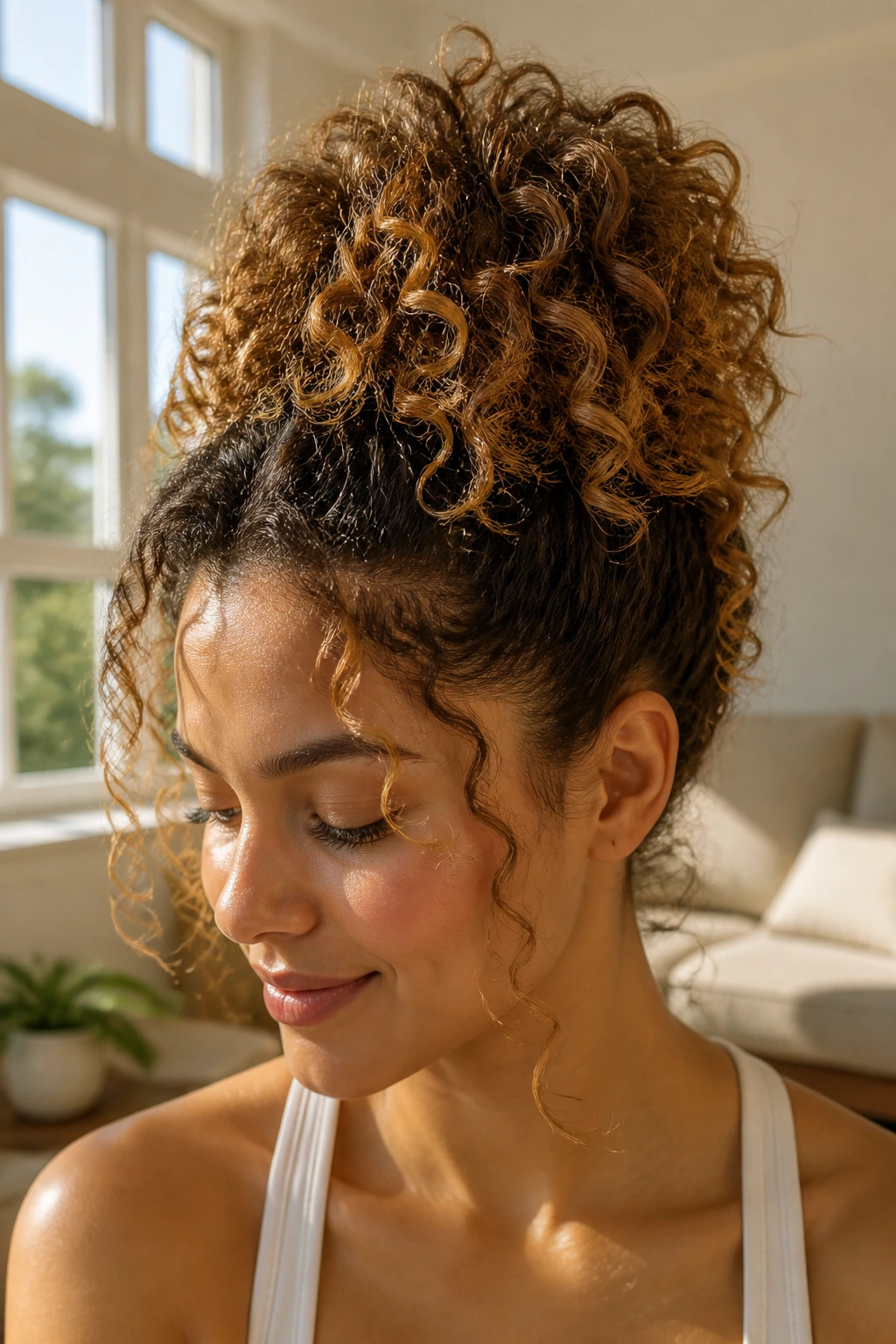
A curly pineapple bun works with the curl pattern instead of flattening it out. The hair is gathered high and loosely, letting curls pile on top in a soft, rounded shape.
Why It Works
Long curly hair has enough length to make this style look full and airy. The loose gathering protects the curl pattern better than dragging everything into a tight elastic.
Keep in Mind
Use a soft scrunchie or fabric tie. Tight elastics can leave a harsh line that’s hard to hide once the curls settle.
22. Wet-Look Bun
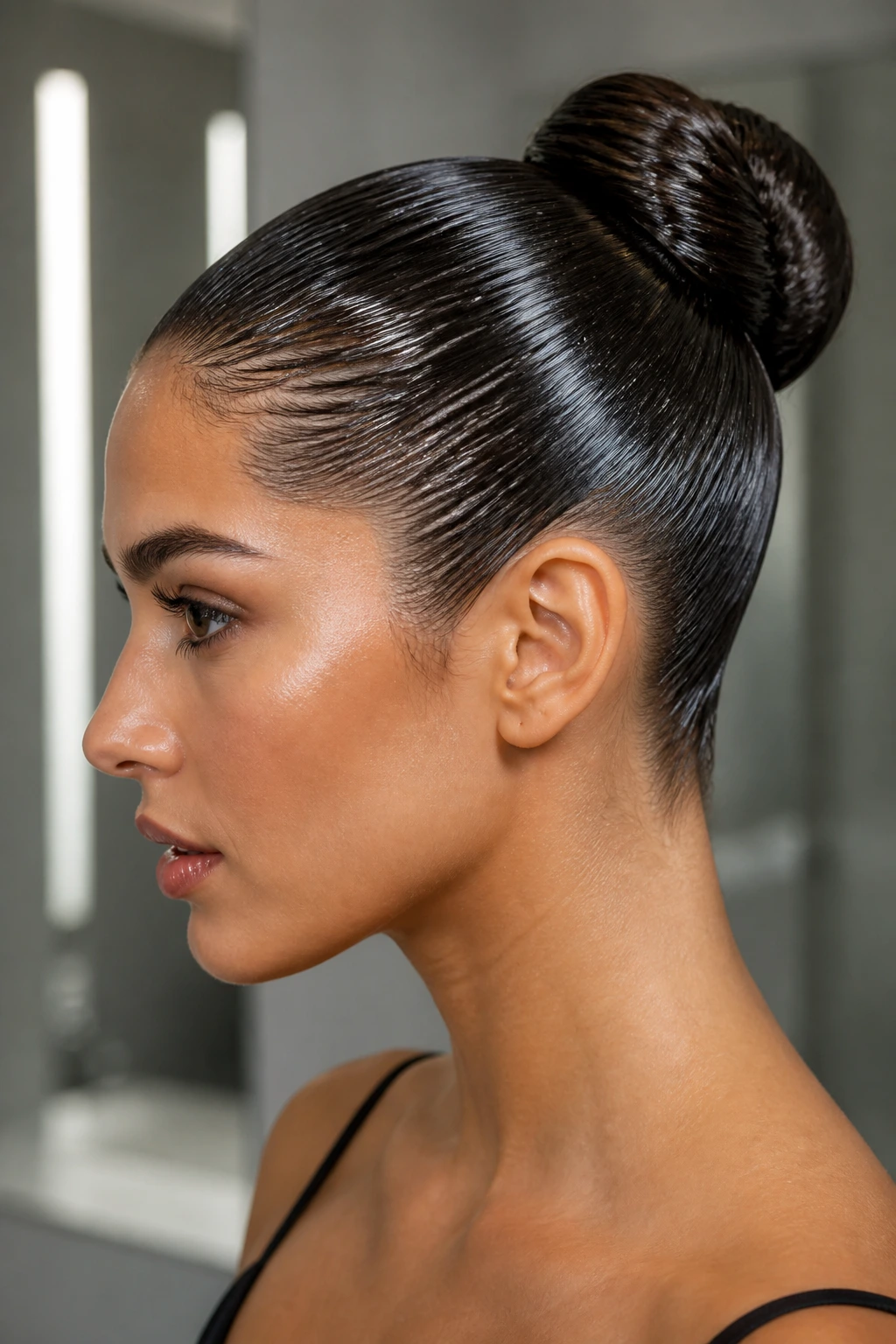
The wet-look bun is all about shine and control. Hair is smoothed back with gel or a strong styling cream, then shaped into a bun with clean edges and almost no flyaways.
Why It Works
Long hair gives the style a glossy surface to work with, so the finish reads intentional rather than greasy. It’s a strong choice when you want a sharp profile and a little edge.
Small Caution
Less product is usually better than more. Once the front is slicked down, you do not need to drench the lengths or the bun will feel sticky instead of polished.
23. Rope-Braid Crown Bun
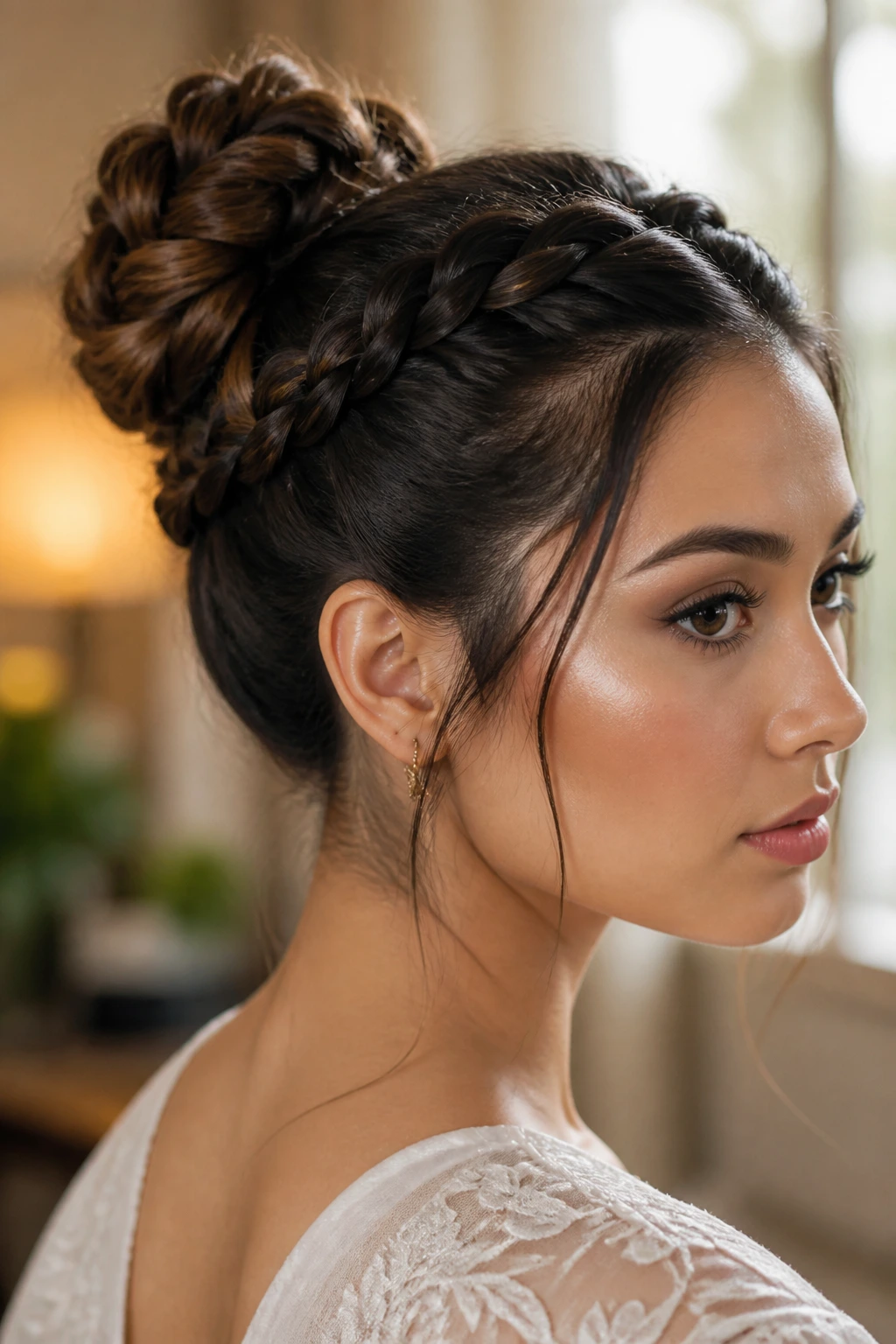
This style starts with rope braids or twists along the crown and finishes in a bun at the back. It looks involved, but the effect comes from repeating the same twist on both sides.
Why It Works
Long hair gives the crown braids more length and makes the bun at the back fuller. The twist detail also helps keep shorter layers tucked where they belong.
Best use: when you want something that feels dressed up but still secure enough to last through a long day.
24. Double Braided Bun
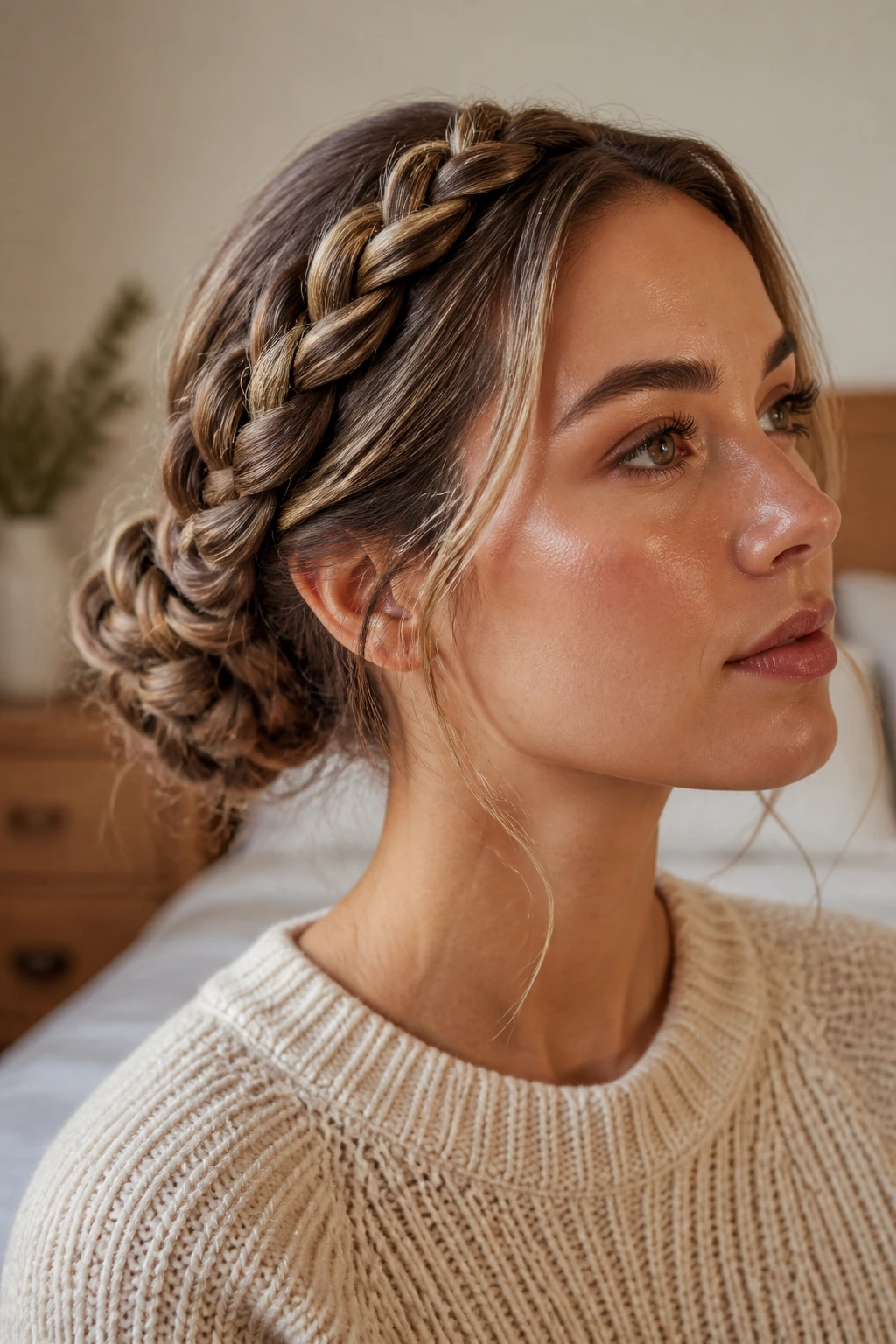
The double braided bun uses two braids, usually from each side or from the front sections, then wraps them into a single bun. It has more surface texture than a standard braided bun.
Why It Works
Long hair gives the braids enough length to show off the pattern before they disappear into the coil. It’s a strong option for thick hair because the braids distribute bulk instead of stuffing it all into one knot.
Quick note
If your hair is very layered, braid a little tighter at the ends so the shorter pieces don’t slip out and fray the shape.
25. Wrapped Ponytail Bun
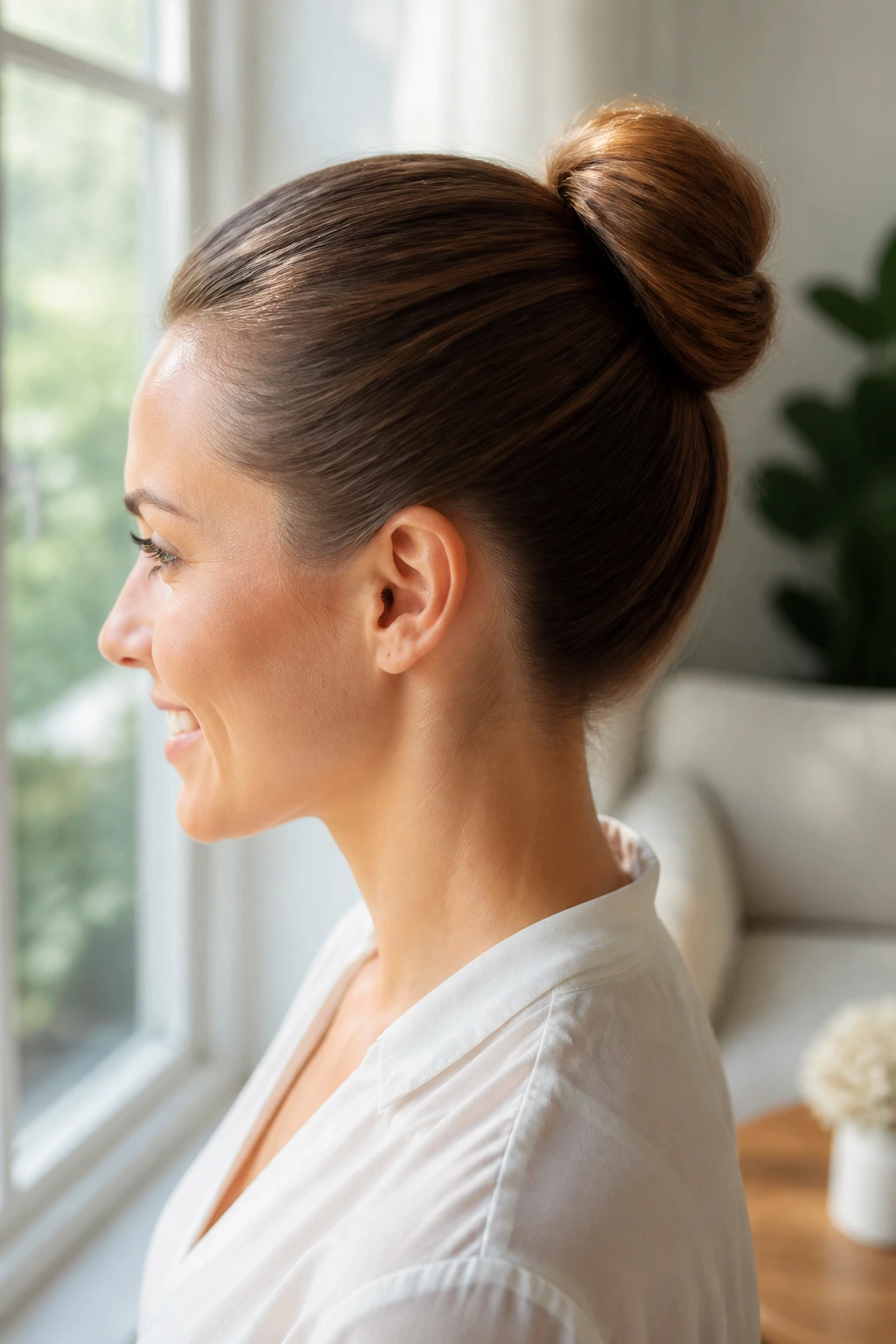
A wrapped ponytail bun is exactly what it sounds like: make a ponytail, wrap the length around the base, and pin it in place. No donut, no special tool, just hair and pins.
Why It Works
Long hair gives you enough wrap to build a substantial bun without needing filler. It’s one of the cleanest styles in the whole bunch because the shape depends on the hair itself, not a prop.
Tip: twist the ponytail once before wrapping if your hair is very straight. That little twist helps the bun hold its roundness.
26. Claw-Clip Bun
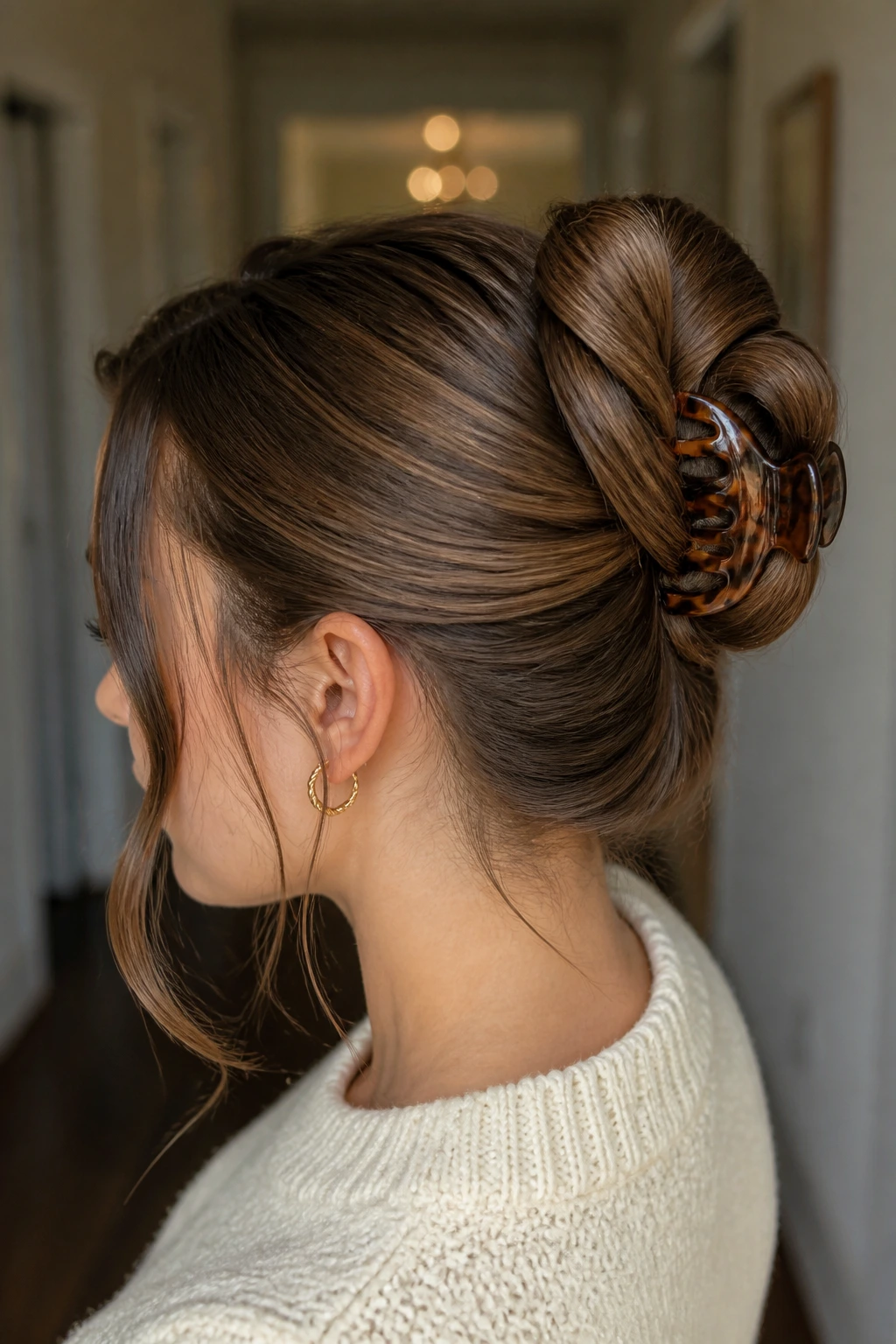
A claw-clip bun is the easiest style here, and honestly, sometimes that matters more than elegance. Twist the hair upward, fold the ends under, and clip it in place.
Why It Works
Long hair tends to make claw-clip buns look fuller than they do on shorter lengths. The clip catches the twist, while the hair length gives the style enough bulk to look like a real bun instead of a temporary fix.
Best for
Busy mornings, desk days, and any time your hands are already full. It’s casual, sure, but a good claw-clip bun can still look clean.
27. Fishtail Bun
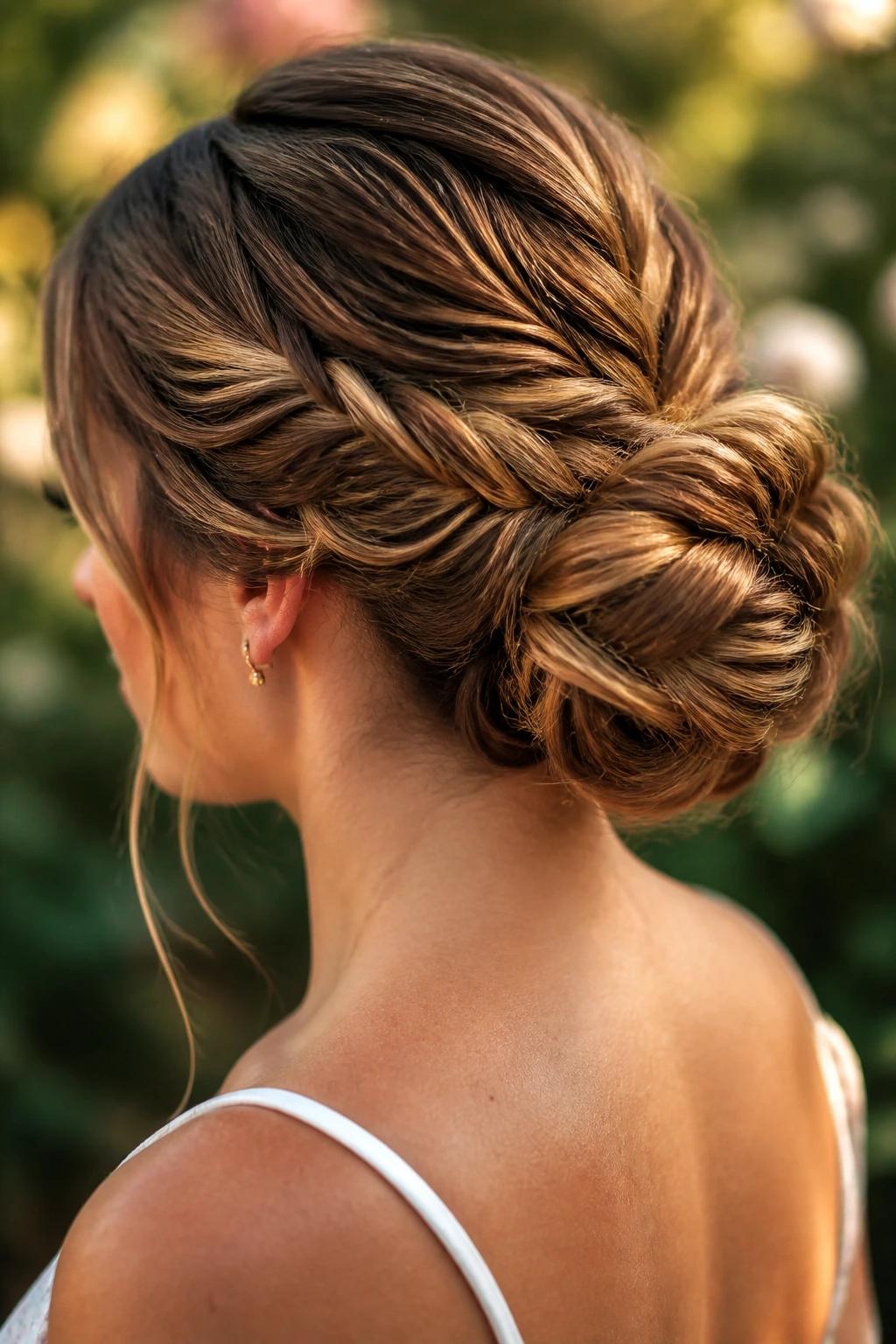
A fishtail bun has a woven texture that looks detailed even from across the room. Start with a fishtail braid, then coil it into a bun and pin the edges down.
Why It Works
Long hair is especially good here because the fishtail braid needs length to show its pattern. If you pull the braid apart after tying it off, the bun gets a thicker, softer finish.
The tradeoff
It takes a little more time than a simple twist. The pay-off is that the bun looks built, not just gathered.
28. Twisted Halo Bun
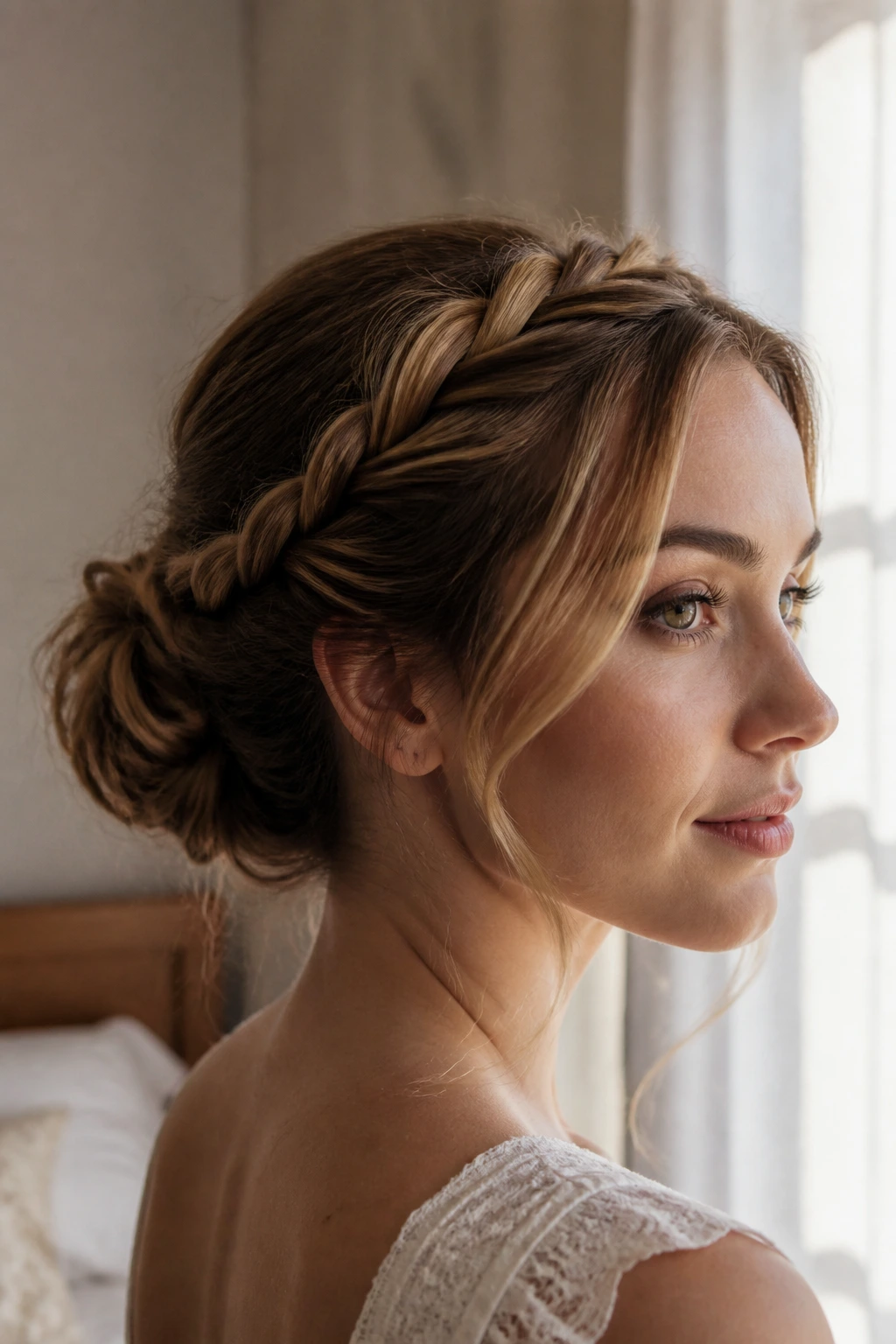
The twisted halo bun wraps the hair around the head in a halo-like twist and finishes with the ends tucked into a bun. It gives you lift around the crown and softness around the perimeter.
Why It Works
Long hair gives the twist enough length to stay visible all the way around. It also helps the bun at the back feel connected to the rest of the style instead of sitting there like a separate object.
Good match: soft makeup, loose sleeves, and anything with a romantic neckline.
29. Bubble-Detail Low Bun
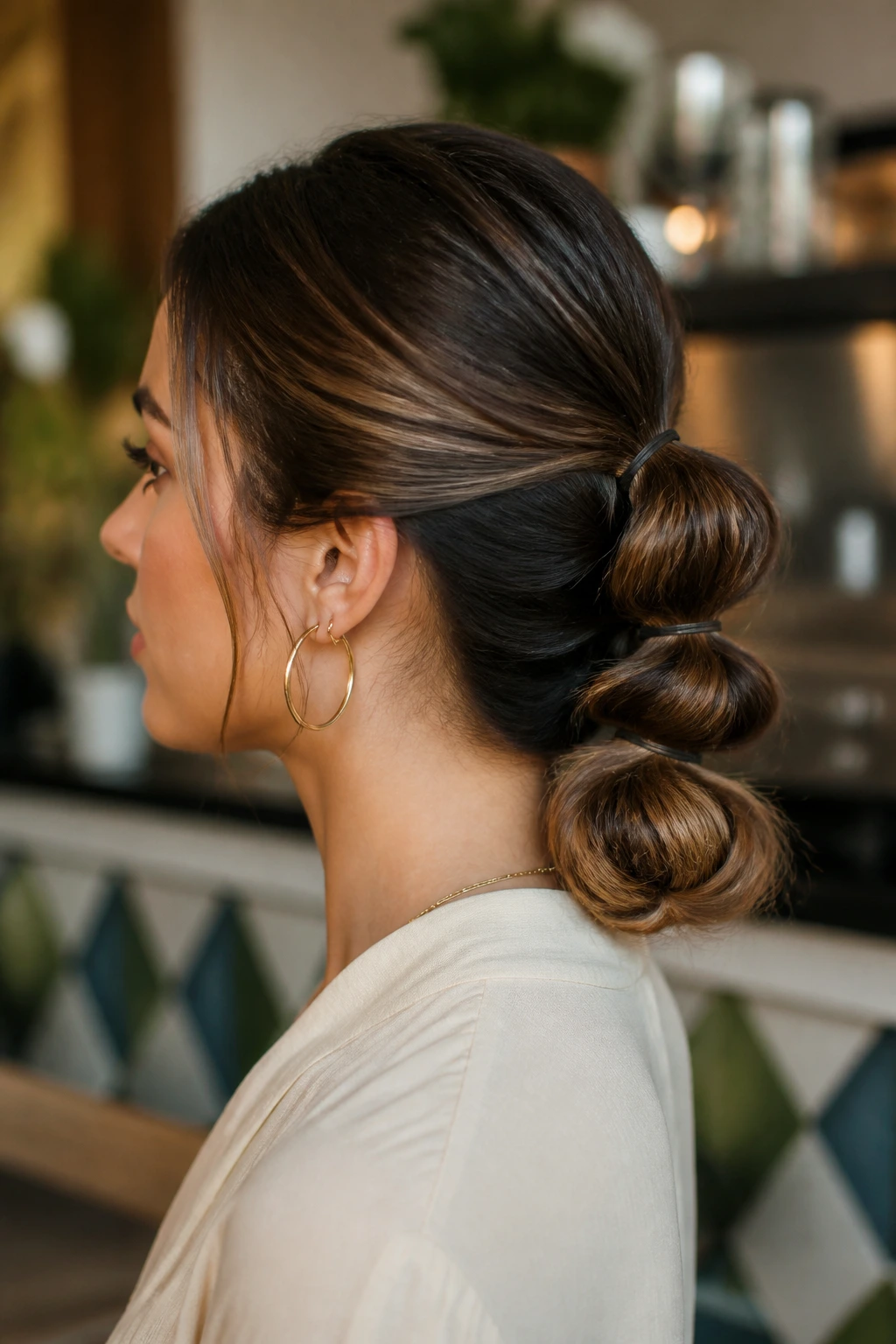
A bubble-detail low bun starts with segmented elastics down the tail, then turns that length into a bun. It’s a little graphic, a little playful, and much more interesting than a plain coil.
Why It Works
Long hair makes each bubble distinct, which matters. If the segments are too short, the detail disappears; with long hair, the pattern becomes the point.
Styling tip
Keep the bubbles even, then tuck the tail into the bun only after you’ve shaped the segmentation. If you build the bun first, you lose the whole effect.
30. Messy Bun with Bangs
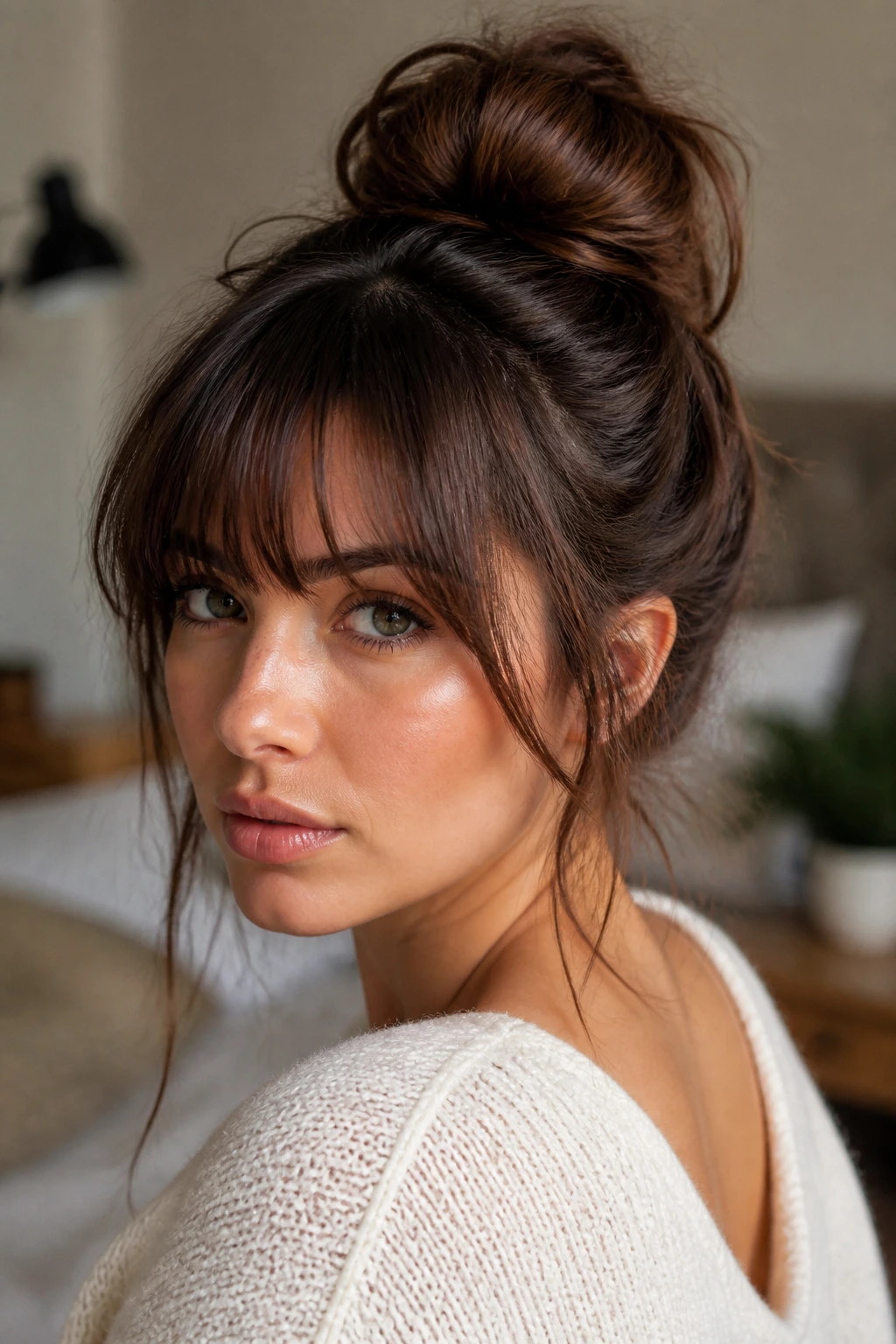
A messy bun with bangs is a cheat code for softness. The bun can be as loose as you like because the fringe or curtain pieces keep the front looking finished.
Why It Works
Long hair gives the bun enough mass to sit high or low without looking thin. Bangs — blunt, curtain, or grown-out — add shape around the face so the bun doesn’t have to do all the work.
My opinion
If your hair feels a little too heavy for a full slick-back style, this is the easier answer. It gives the face shape without forcing the rest of the hair to behave like it went to etiquette school.
31. Side Bun with Deep Part
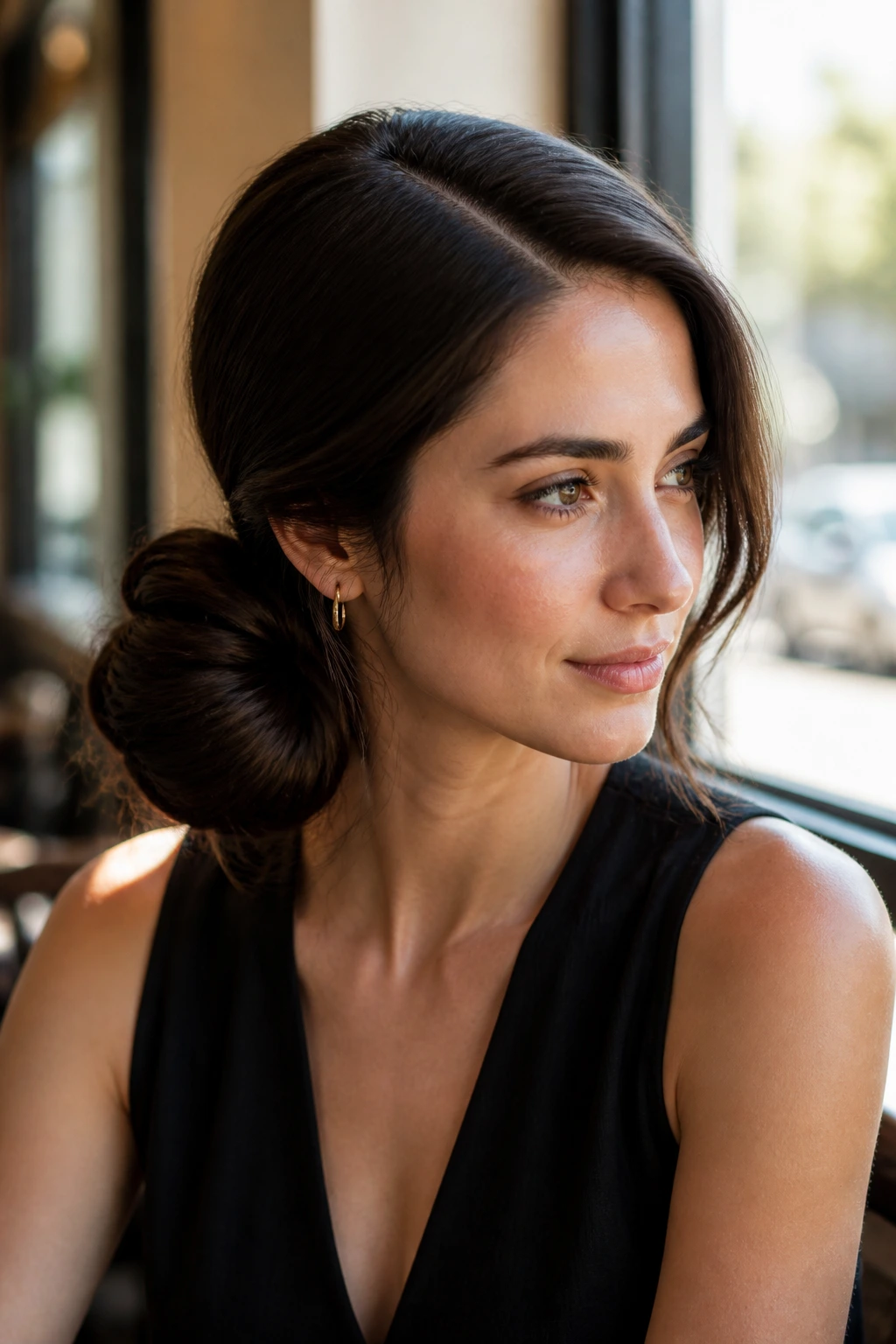
The side bun with a deep part leans into asymmetry in a way that feels deliberate, not accidental. The part adds drama first, then the bun anchors the shape low and to one side.
Why It Works
Long hair helps the side sweep travel cleanly across the head before it gets pinned. That longer line gives the bun a bit of old-Hollywood polish without needing a curling iron circus.
Best For: long earrings, soft waves, and dresses or tops with an off-shoulder shape.
32. Ballerina Bun with Braided Base
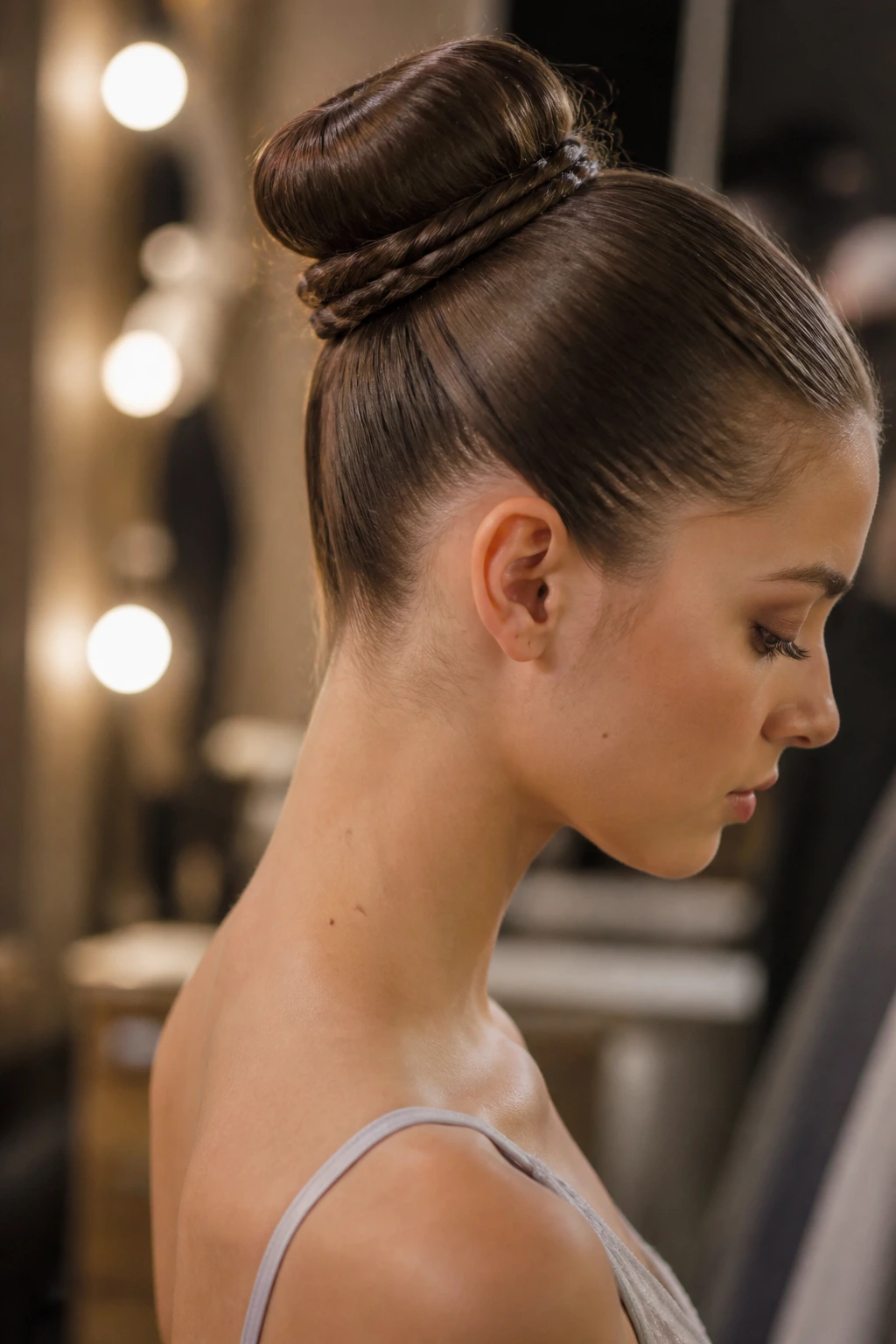
This version takes the classic ballet bun and adds a braid around the base, which is a small change with a big visual payoff. The braid hides the elastic and gives the bun a more finished edge.
Why It Works
Long hair makes the braided base thick enough to read clearly. Without enough length, the braid disappears; with long hair, it frames the bun like trim on a coat.
Practical note
If your bun is already bulky, keep the braid slim. You want the detail around the base, not a second bun trying to steal the show.
33. Rolled Banana Bun
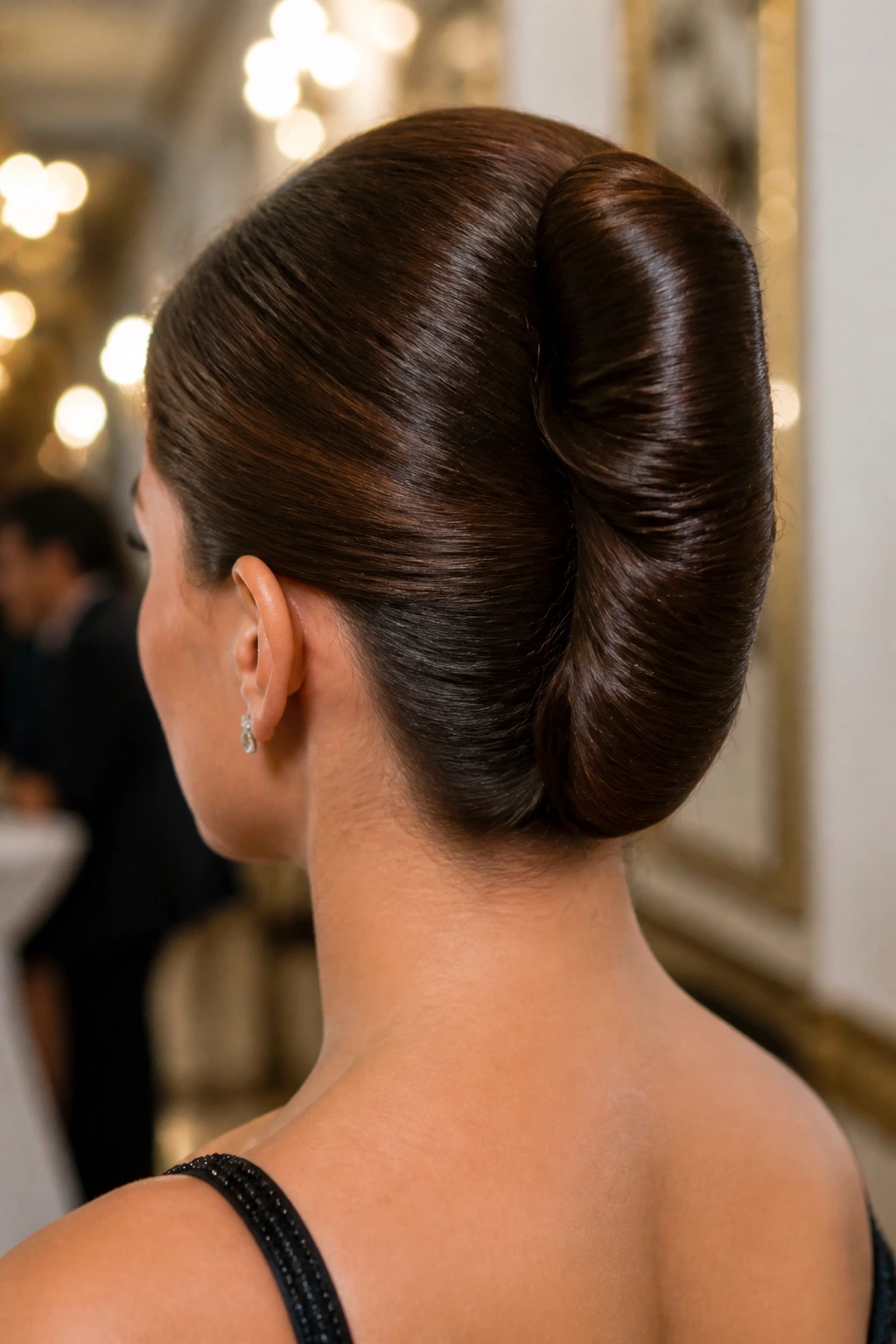
The rolled banana bun is a vertical shape, longer and narrower than the usual round bun. Hair is twisted or folded upward and tucked into that upright roll.
Why It Works
Long hair gives the roll enough length to look smooth instead of patchy. It’s a style that likes patience and a handful of pins placed where the roll naturally wants to open.
When it shines
Formal events, evening looks, and outfits with a narrow back line. It feels elegant without being fussy.
34. Nautical Knot Bun
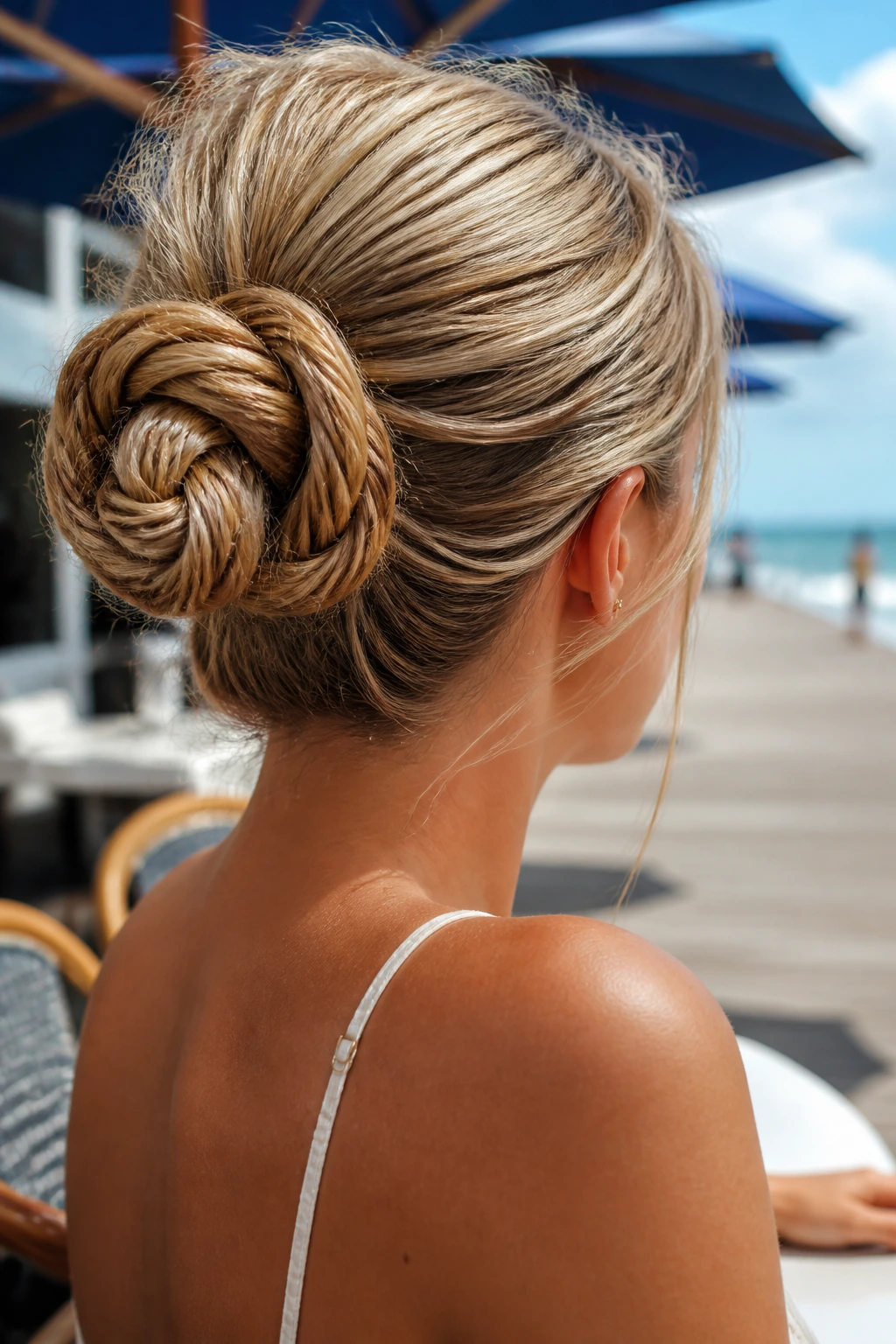
The nautical knot bun has rope-like twists and a knot-centered shape that feels clean and slightly coastal. It’s not literal ship-rope hair, but it borrows the logic: twist, cross, tuck, secure.
Why It Works
Long hair creates the thick, ropey sections that make this style believable. The knot shape also holds better than a lot of people expect because the twists lock into each other before the pins even go in.
Tip: keep the sections uniform. Uneven sections make the knot lopsided in a way that’s hard to rescue.
35. Infinity-Twist Bun
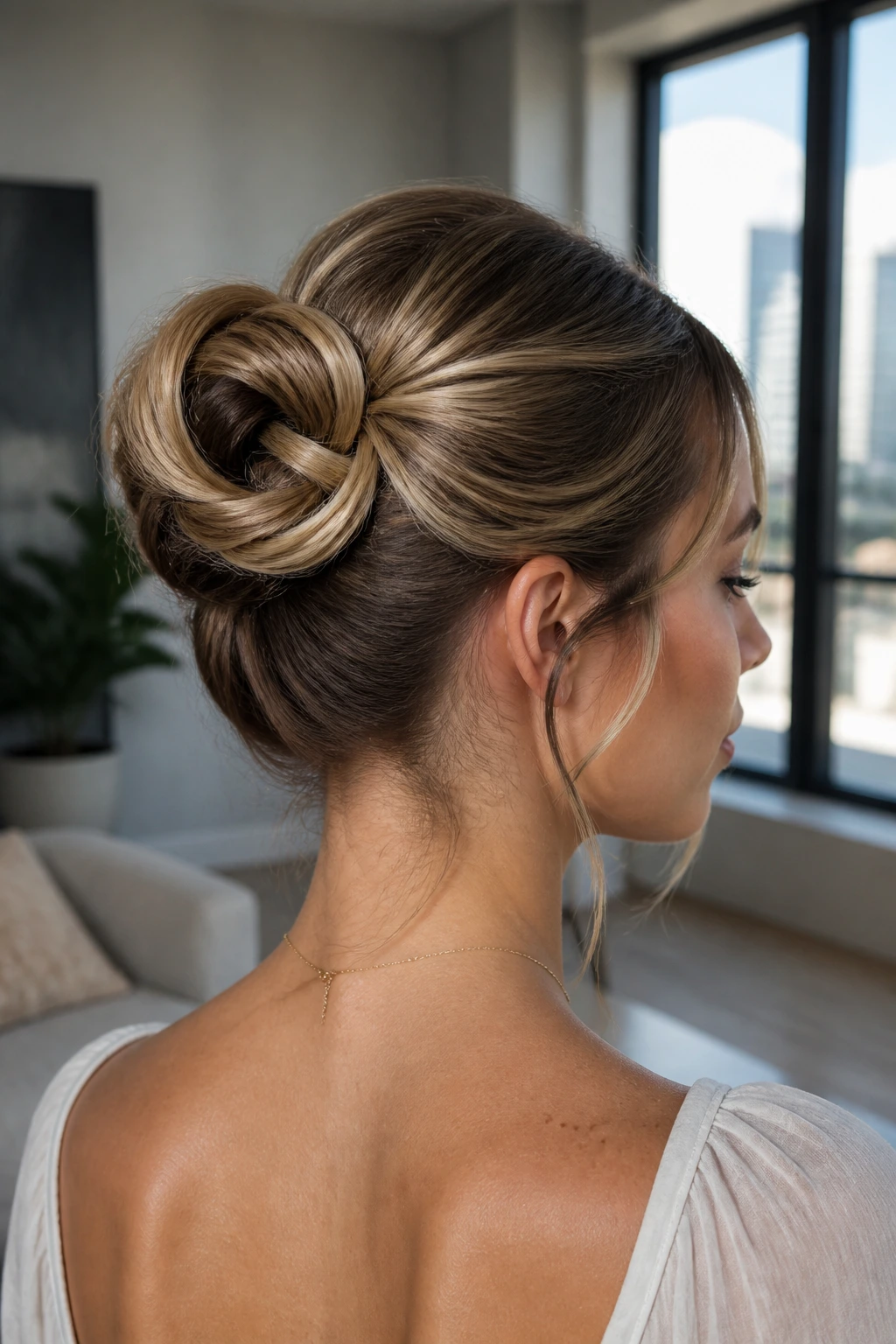
An infinity-twist bun loops two twisted sections into a figure-eight shape before tucking them down. It has a controlled, almost graphic feel to it.
Why It Works
Long hair gives the twists enough reach to overlap without forcing the shape. That overlap is what makes the bun look intentional instead of just wound up.
Best For
Straight or lightly wavy hair that can stay smooth through the twist. If your hair is very layered, secure the ends before you loop them so the shorter pieces don’t poke out.
36. Accessorized Pearl Bun
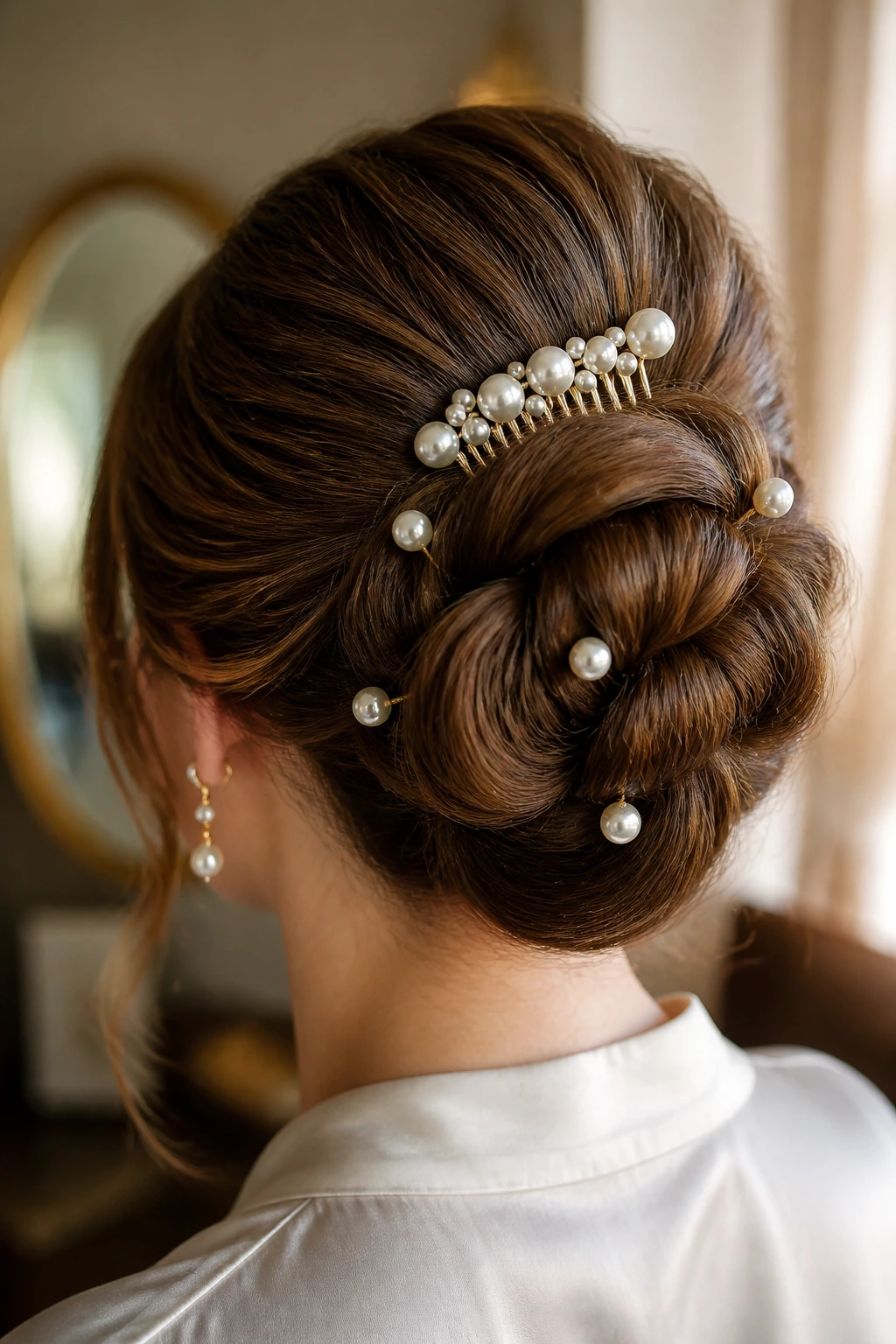
An accessorized pearl bun is less about the base shape and more about the finish. Start with a neat bun — low, mid, or high — then add pearl pins, a comb, or scattered clips.
Why It Works
Long hair gives the bun enough body to hold decorative pieces without them looking oversized. The accessory does not need to do all the work; it just needs to land on a stable surface.
Good choice: for occasions where a plain bun feels too bare but a full braided updo would be overkill.
37. Sculpted Knot Bun
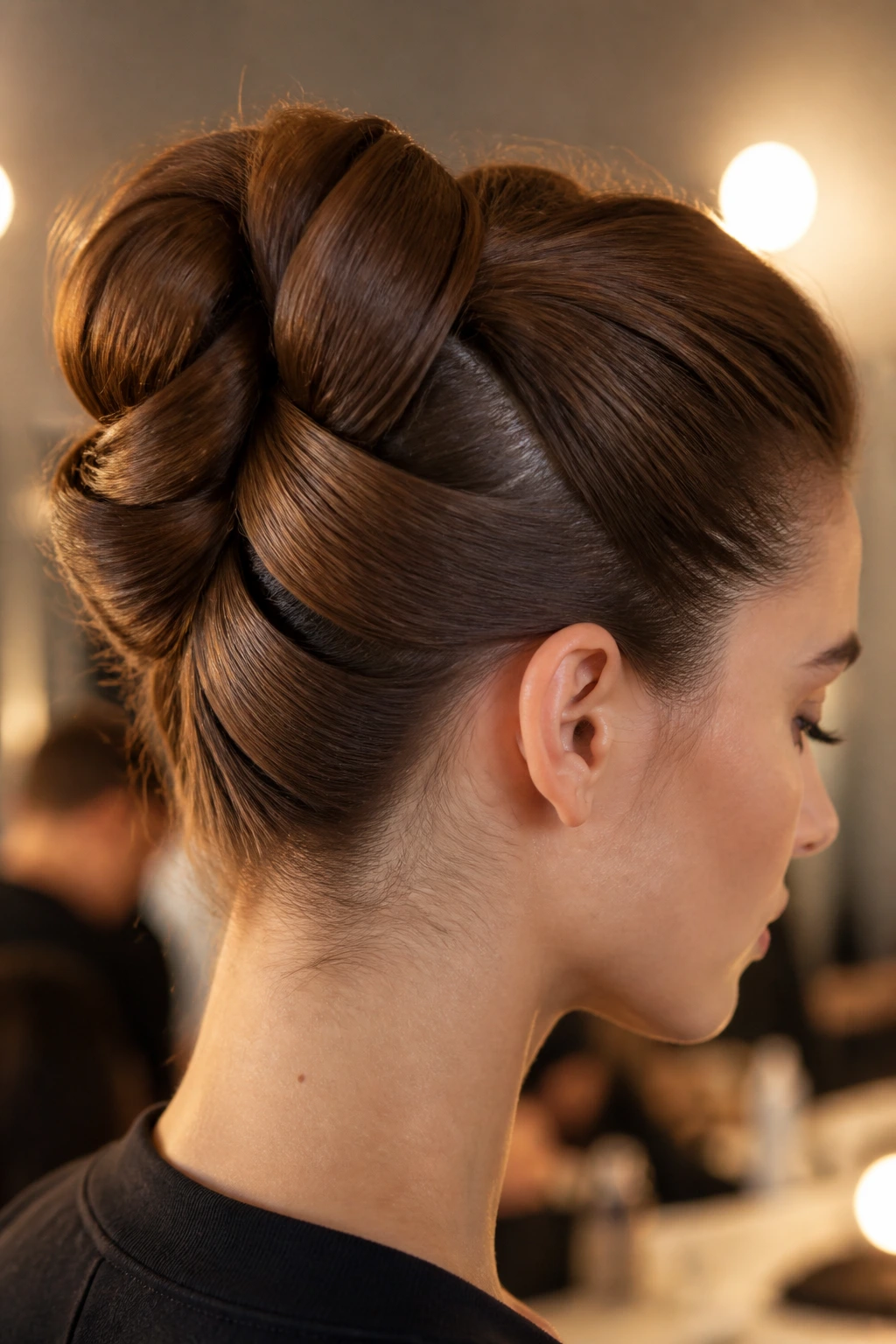
The sculpted knot bun has a deliberate, almost editorial shape. Instead of fluffing it into a loose coil, you shape the hair into clear folds and tucked lines.
Why It Works
Long hair offers enough material to create those folds without making the bun bulky. It’s one of the few bun hairstyles for long hair that looks stronger when the lines are a little sharper.
A note of caution
Don’t chase perfection so hard that the style turns stiff. One visible bend or tuck gives it life. Ten perfect bends start to look copied and pasted.
38. Low Braided Bun with Loose Ends
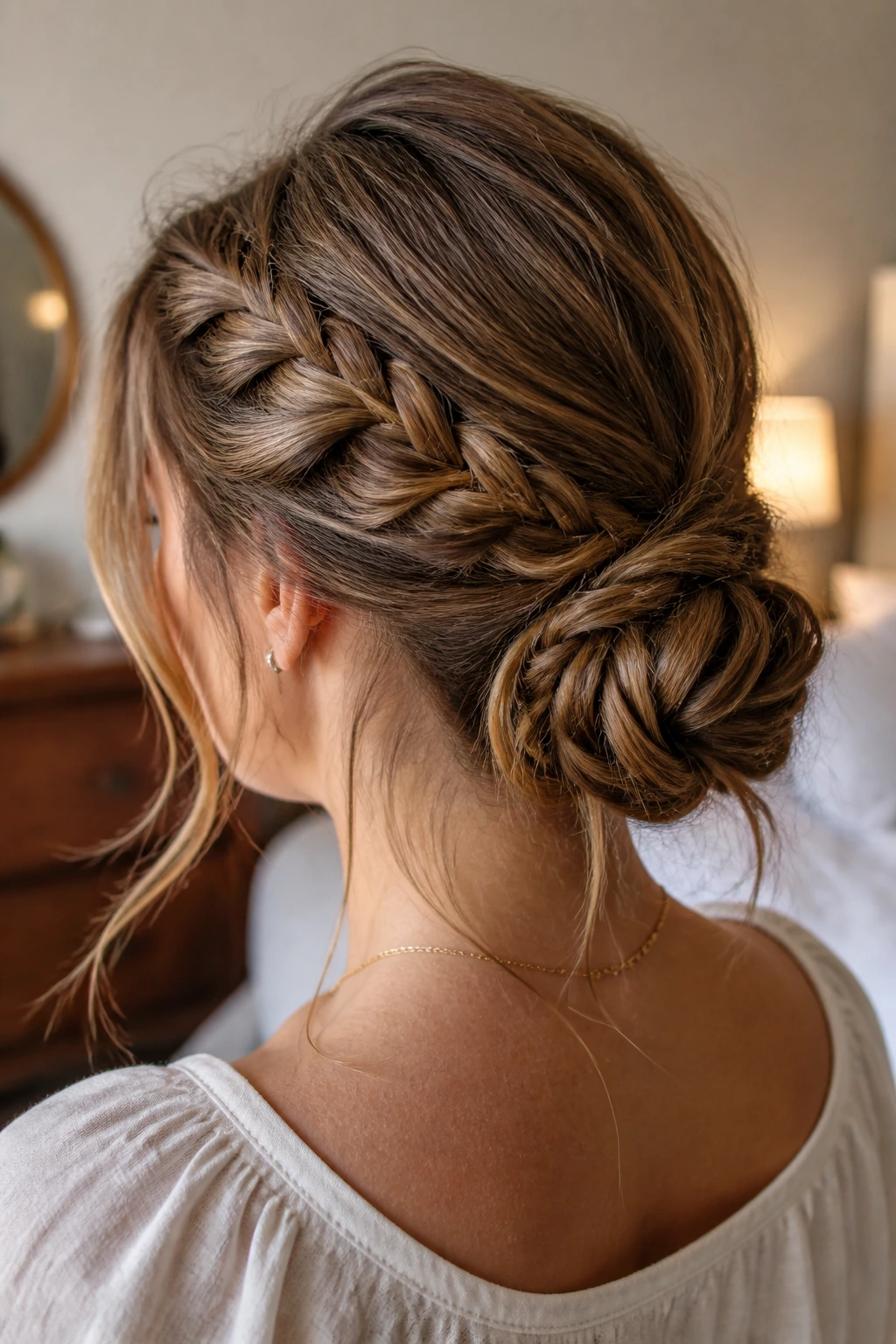
A low braided bun with loose ends keeps the braid visible, then lets a few ends hang or soften around the bun. It feels a touch more relaxed than the fully tucked braided bun.
Why It Works
Long hair makes the braid substantial enough to matter, and the loose ends keep the style from feeling sealed shut. It’s a nice bridge between polished and undone.
Best for: thick hair, layered hair, or days when you want the bun to look touched rather than staged.
Why Long Hair Changes the Bun Equation
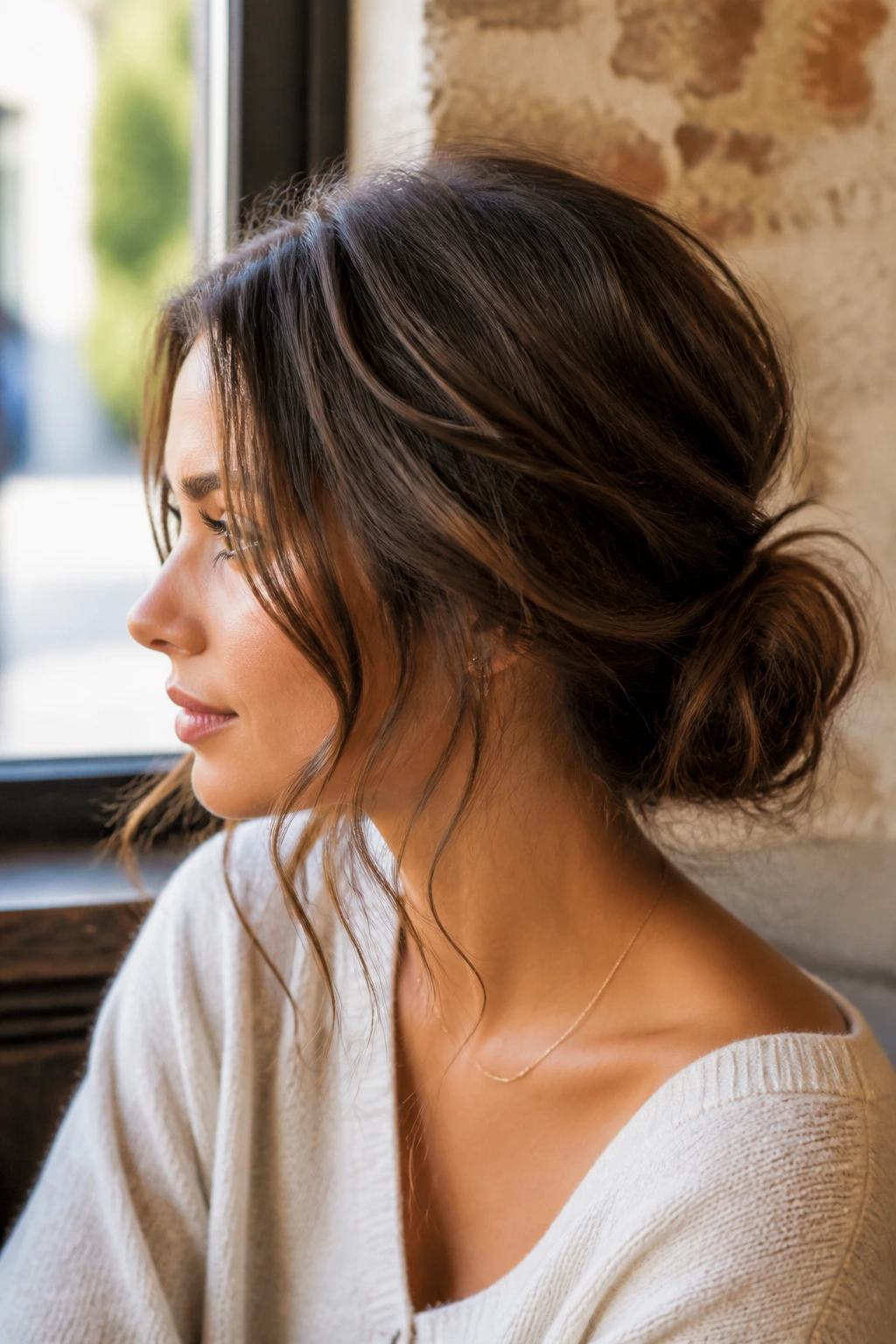
Long hair doesn’t behave like medium-length hair in an updo, and pretending otherwise leads to floppy buns, head-heavy knots, and a lot of useless pinning. The extra length gives you more shape, sure, but it also adds weight. That weight wants gravity on its side.
The best bun hairstyles for long hair respect that. They use the hair’s length as structure, not decoration. A good bun on long hair usually starts with a firm anchor at the ponytail base, then a second point of support where the hair wraps around itself. Two anchors. That’s the trick people skip.
Texture matters too. Freshly washed hair can slide out unless you rough it up a little, while day-two hair often holds beautifully because the natural oils have settled. If your ends are dry, tuck them in first; if your roots are silky, give them a bit of grit with dry shampoo. Long hair is generous, but it needs a little cooperation.
Essential Tools for These Styles
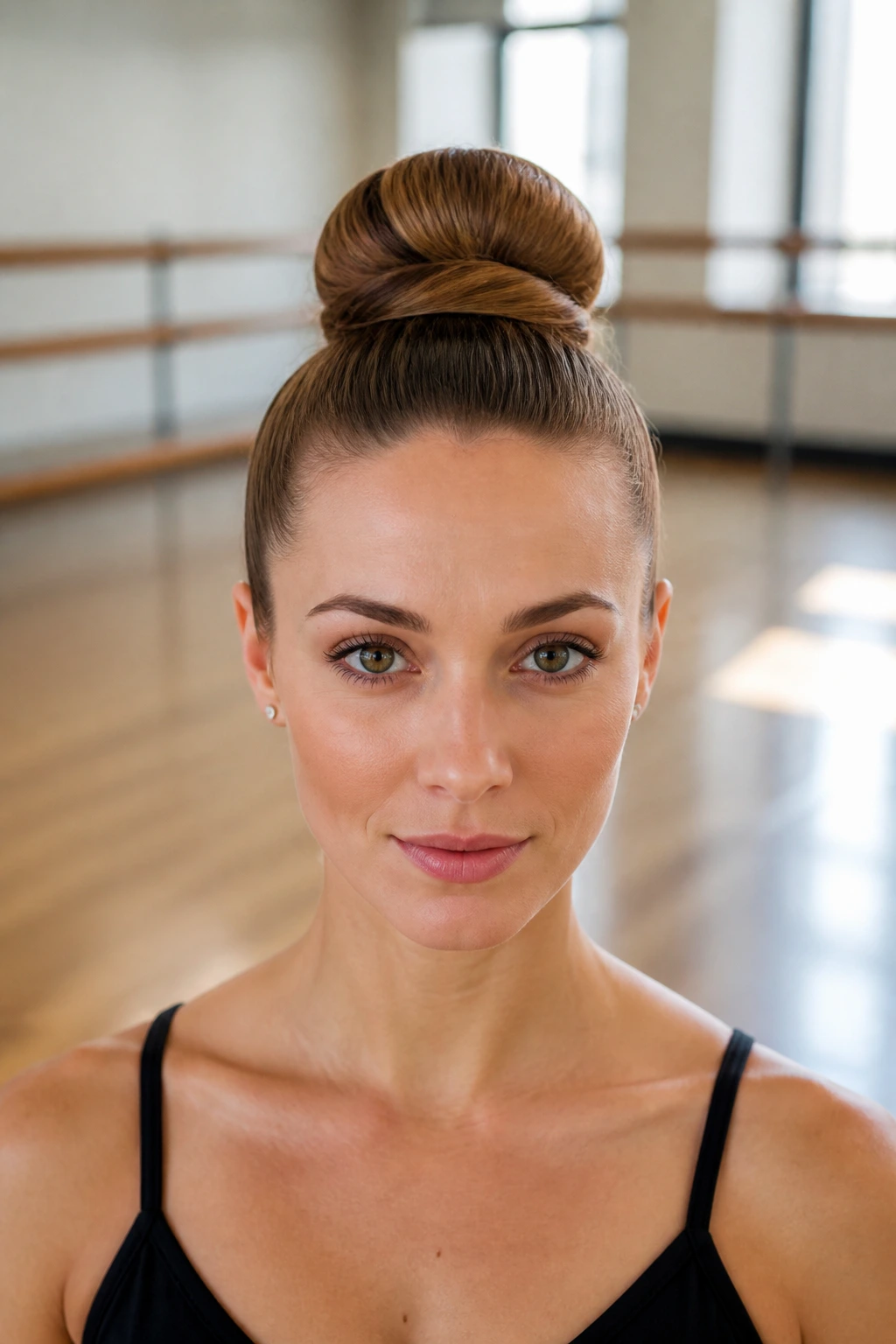
- Paddle brush: Best for smoothing the crown and taming flyaways before you twist anything up.
- Fine-tooth comb: Useful for center parts, sleek sections, and that clean low chignon line.
- Elastic ties in two strengths: Use clear elastics for thin sections and sturdier fabric ties for heavier buns.
- Bobby pins and U-pins: Bobby pins lock the edges; U-pins hold round buns and chignons without flattening them.
- Texturizing spray or dry shampoo: Adds grip on fresh hair and helps long strands stop slipping.
- Styling cream or light pomade: Keep it for the hairline and top layer, not the whole head.
- Hair donut or bun form: Optional, but handy for sock buns and fuller ballet buns.
- Silk scarf or satin scrunchie: Good for softer finishes and overnight protection.
- Claw clip: A quick fix for casual buns when time is not on your side.
Prep, Texture, and Grip Before You Start
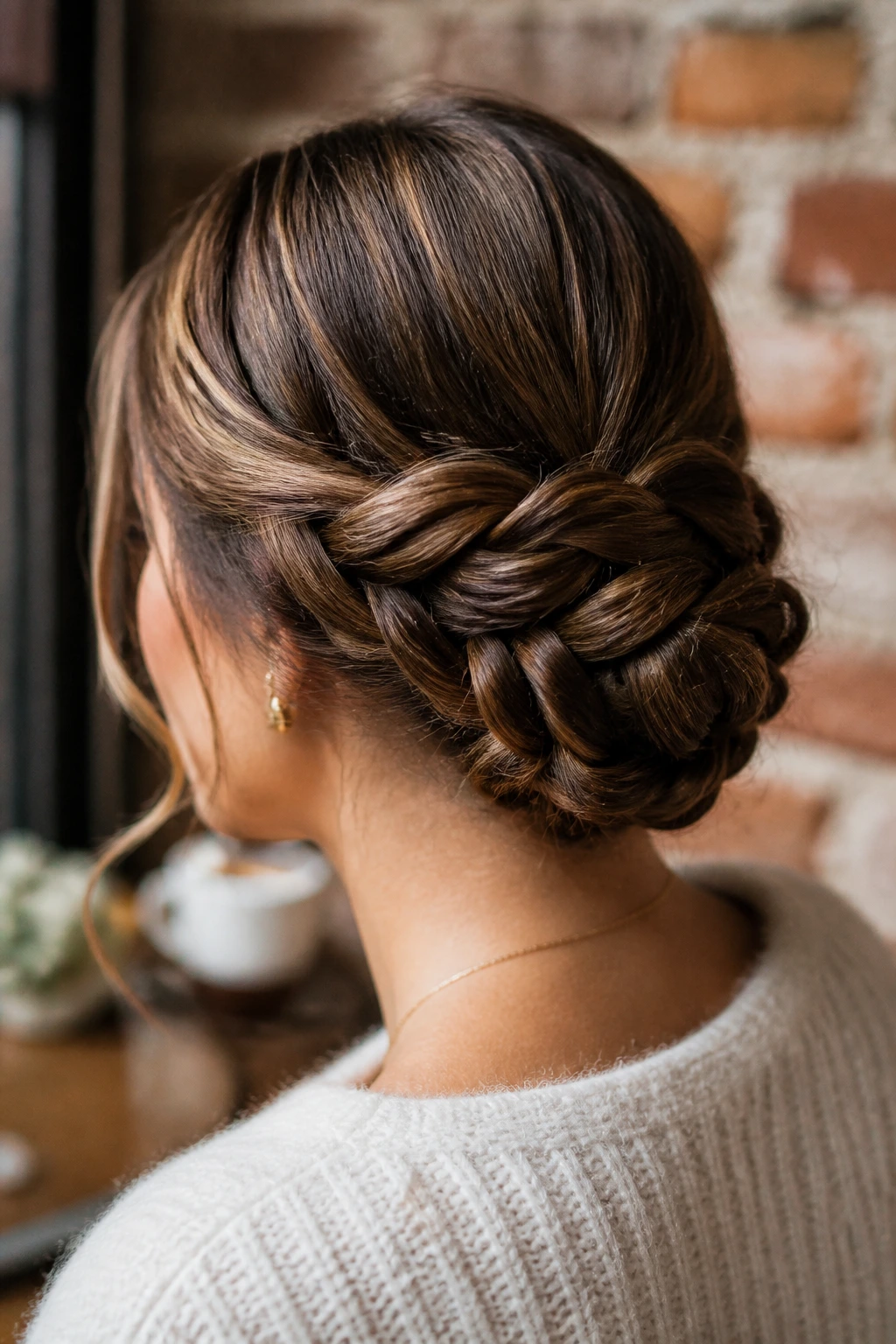
Long hair usually decides the success of a bun before the first pin goes in. If the hair is too clean, too slippery, or too soft around the roots, even a beautifully wrapped bun can start to sag by lunch. A light mist of dry shampoo at the roots and a few seconds of rough drying can change that.
For sleek styles, brush the top smooth and keep product light. For messy buns and braided buns, use texture spray through the mid-lengths so the strands have a little tooth. That extra grip is the difference between a bun that stays styled and one that slowly loosens into a sad knot.
Curly and coily hair needs a gentler hand. Don’t flatten the curl pattern unless the style asks for it. A loose pineapple bun, rope twist, or side bun often works better than forcing the hair into a sleek shape it does not want to hold.
How to Wear These Buns for Different Moments
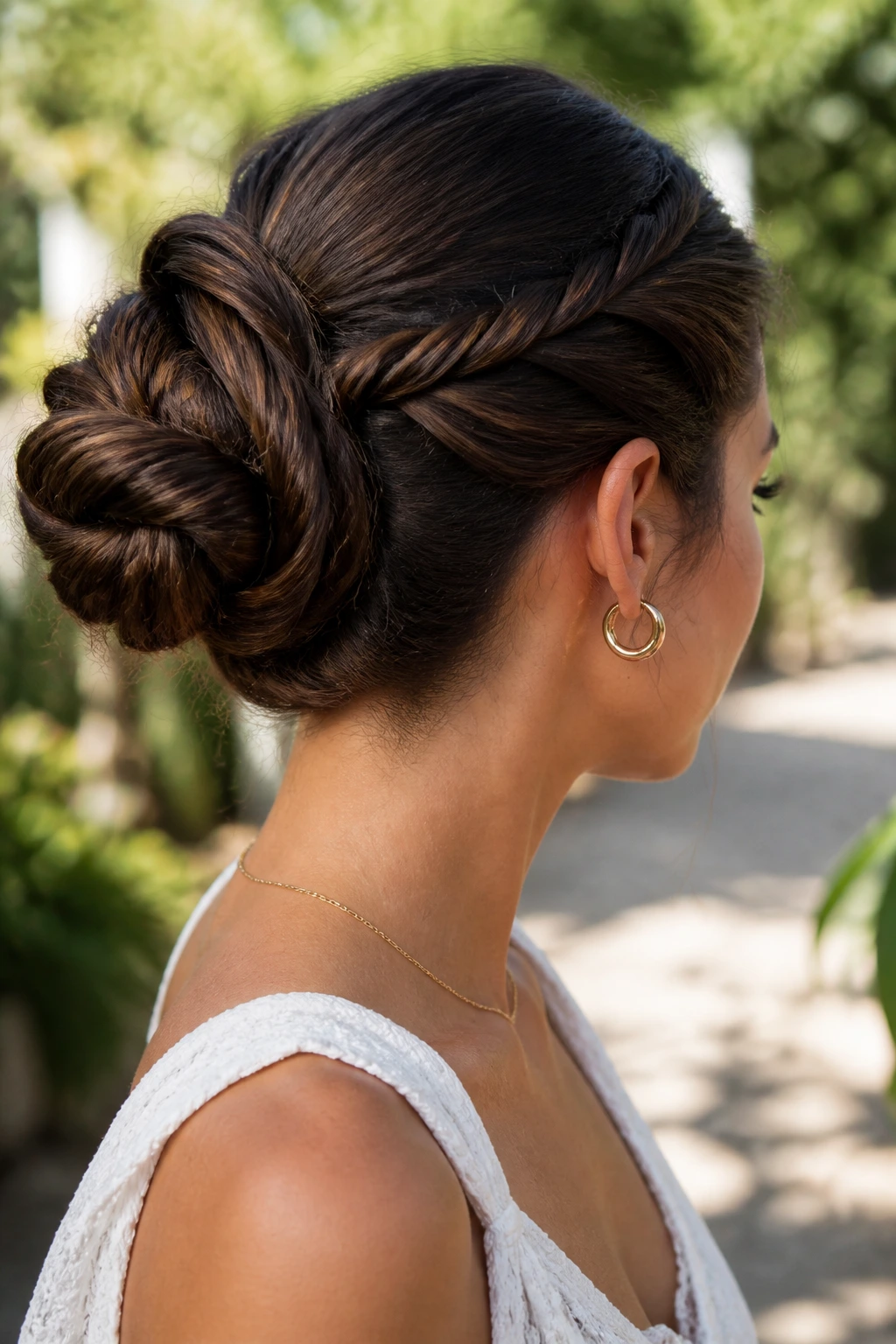
Presentation: Go glossy and tight for a sharp finish, or leave a few soft loops if you want movement around the face and ears. A bun looks most polished when the crown is smooth and the base is hidden.
Accompaniments: Hoop earrings, studs, ribbon ties, pearl pins, and even a plain scarf all change the mood fast. High necks work well with higher buns; open necklines usually look better with low or side buns.
Portions: For thick long hair, divide the ponytail into two wraps before pinning so the bun doesn’t sit like a lump. For finer long hair, a donut or a few strategically placed pins can make the bun feel fuller without turning it into a helmet.
Beverage Pairing: If you want the vibe to match, a slick low bun looks good with a strong coffee and a crisp shirt. A soft messy bun feels more at home with iced tea, a knit sweater, and a day where you’re not trying too hard.
Small Tweaks That Change the Whole Mood
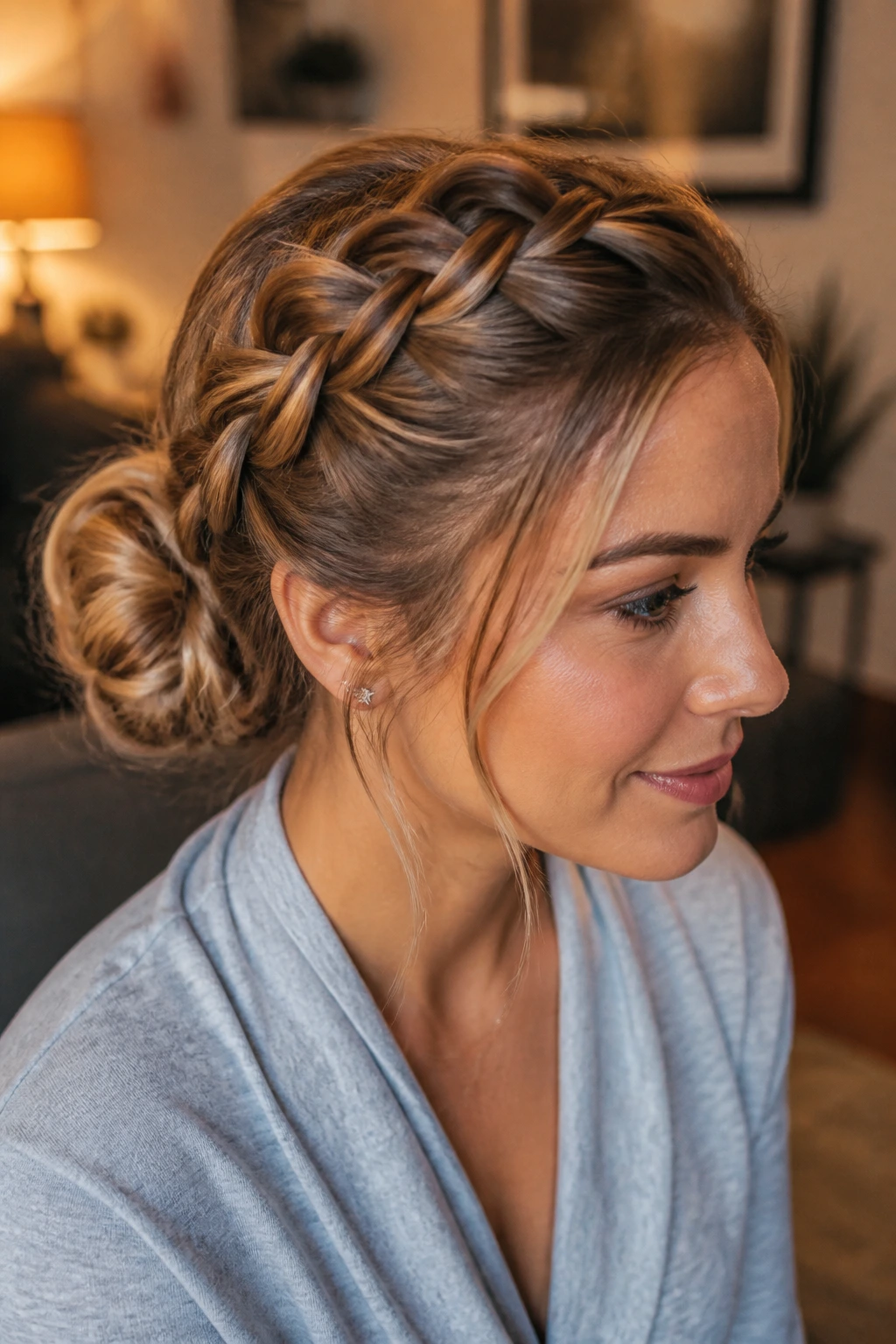
Sleek Finish: Use a comb and a tiny bit of styling cream only on the outer layer. The bun itself should stay touchable, not greasy.
Softness: Tug two or three tiny loops from the bun after it’s pinned, especially near the nape or temples. Tiny, not dramatic. The style should breathe, not unravel.
Accessories: A single pearl pin, a narrow ribbon, or a scarf knot can make a basic bun look fully considered. You do not need three accessories fighting each other.
Make-It-Yours: If you have very long hair, change the bun position instead of the whole style. Move it higher for a sharper look, lower for calm, or to one side if you want the shape to feel more relaxed.
Common Mistakes That Make Long-Hair Buns Sag
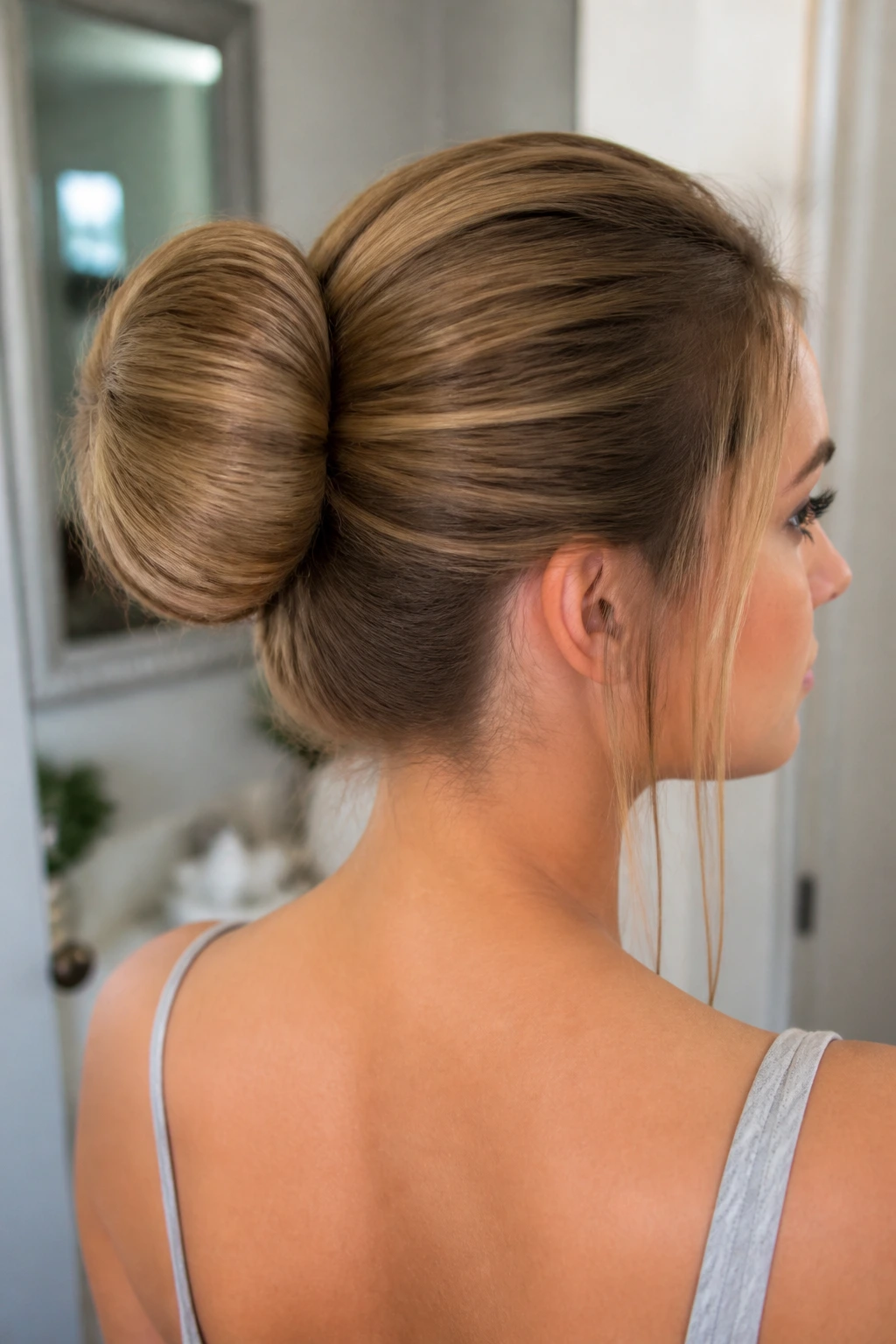
A bun that slides is usually not a mystery. It’s usually one of four things: too much slip, too little anchoring, the wrong height, or too many layers doing their own thing.
The most common mistake is overloading the hair with cream or oil before styling. Hair needs some control, not a slip hazard. Another one is using only one elastic and hoping for magic. Pin the bun at the base, then anchor the wrapped section into the scalp area. That second hold is what saves the style when your hair is long and heavy.
People also make the bun too high for the amount of hair they have. A very high bun on very long hair can pull forward or lean backward. If that happens, move it slightly lower or use two smaller wraps instead of one giant coil.
Make-Ahead, Overnight Wear, and Next-Day Refresh
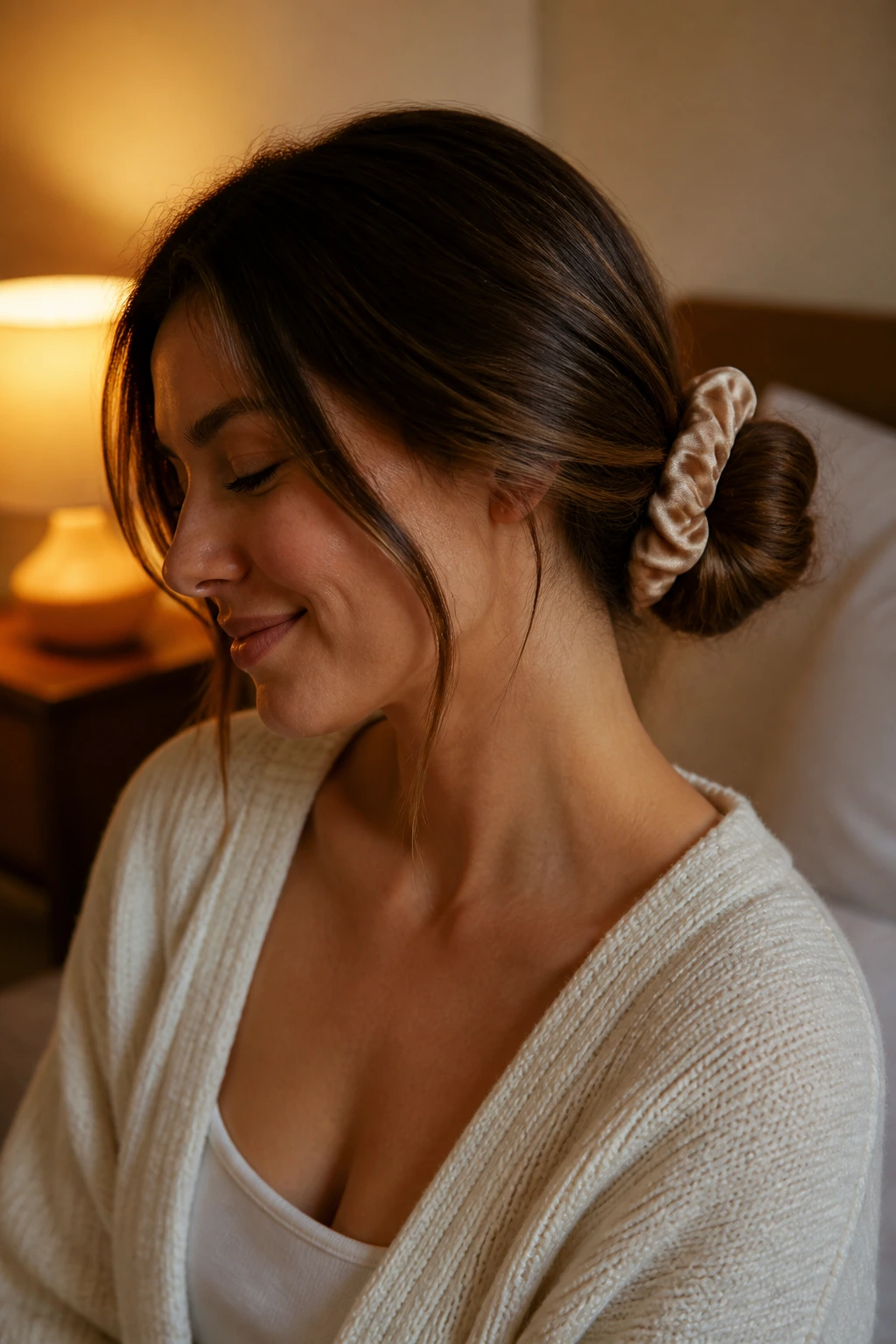
Most bun styles for long hair hold their best shape for a full day, sometimes longer if you’ve used enough pins and the right amount of texture. For overnight wear, choose a low loose bun or a soft chignon rather than a tight top knot. Tie it with a silk scrunchie if you can. A hard elastic at the nape is a fast route to a kinked line in the morning.
If you’re setting a bun ahead of an event, do the structure first, then leave a few finish pieces — face-framing strands, accessory placement, a ribbon — for the final five minutes before you leave. That way the shape stays intact, and you don’t have to rebuild the whole thing after getting dressed.
The next-day refresh is simple: mist lightly, smooth the surface with your palms, and replace any bent pins. If the bun has gone flat, take it apart just enough to re-wrap the outer layer. Don’t start from zero unless the whole style has collapsed.
Frequently Asked Questions
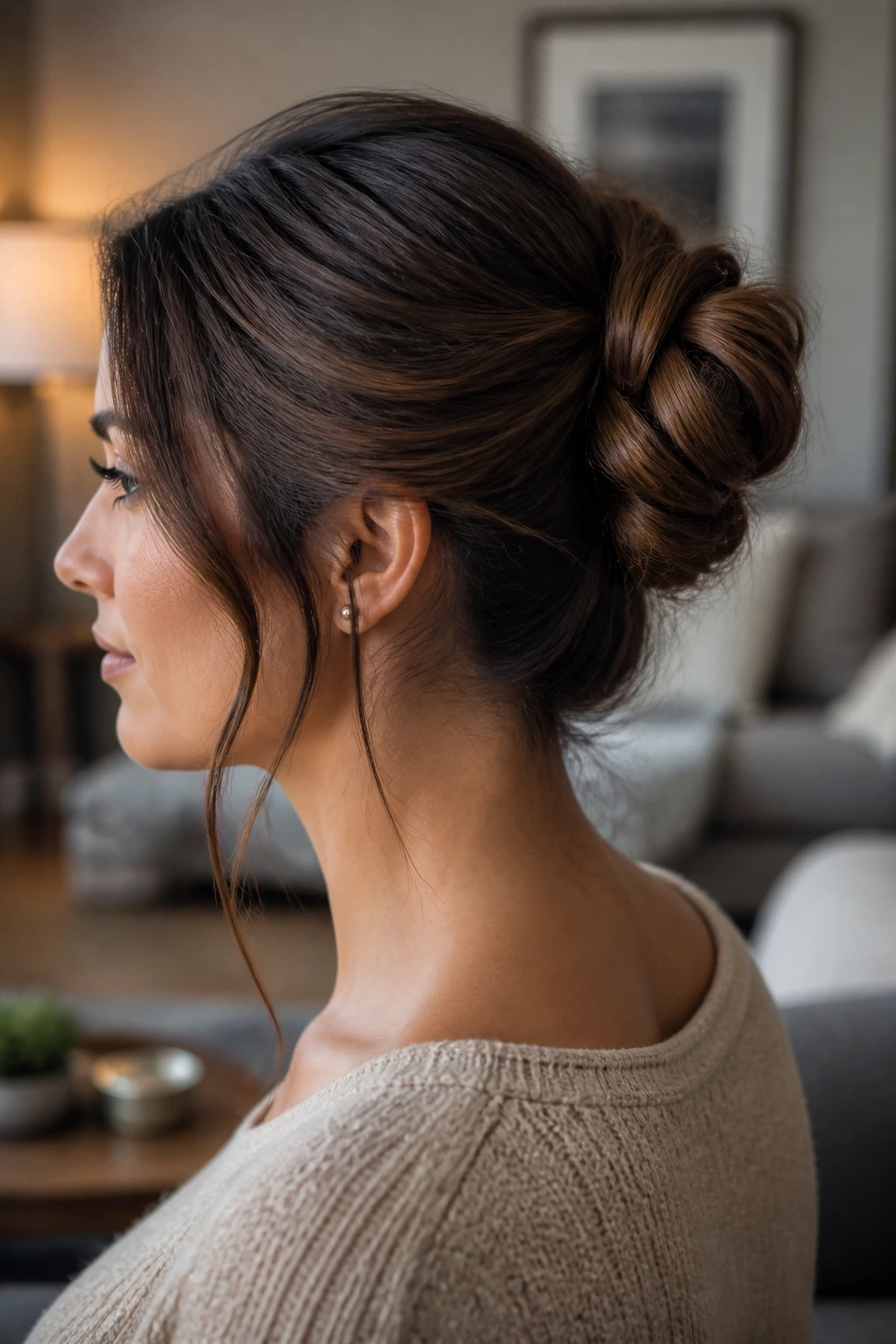
Which bun hairstyles for long hair hold the best?
Sleek low chignons, braided buns, Dutch braid buns, and low center-part buns usually stay put longest because they build in more grip and anchor points. If your hair is slippery, braided or twisted styles tend to outlast plain coils.
How do I keep a bun from sliding down during the day?
Start with texture at the roots, then secure the bun in at least two places: the ponytail base and the wrapped section. Bobby pins should cross in an X or angle into the scalp, not just sit in the hair like tiny decorations.
Can I do these styles on freshly washed hair?
Yes, but the hair needs help. Use dry shampoo, mousse, or texture spray first, and avoid heavy conditioner near the roots if you know you’re styling it up the same day.
What if my hair is layered and the ends keep escaping?
Use small clear elastics on the ends before wrapping, or tuck the ends under the bun and pin them separately. Layers often need one extra hidden pin more than you think they do.
Are buns bad for long hair?
Not when they’re done with moderate tension and sensible pinning. The problem is tight, repeated pulling at the same spot. Rotate your bun position, loosen it at night, and don’t crank the elastic so hard that the roots ache.
How do I make a bun look fuller without adding fake hair?
Use a bun donut, tease the ponytail lightly before wrapping, or gently fan out the outer loops after pinning. A little width at the edges creates more shape than piling product onto the whole style.
Which bun works best for thick, heavy hair?
Braided low buns, rope-twist buns, and wrapped ponytail buns tend to behave better because they divide the weight before the final pinning. Very high buns can work too, but they need more anchoring and usually more pins.
Can I sleep in a bun and still look decent the next day?
A soft low bun with a silk scrunchie can survive the night if you keep it loose. A tight bun usually wakes up bent, dented, or sore, and that’s not a trade I’d make unless you have no other choice.
The Bun That Holds Its Shape
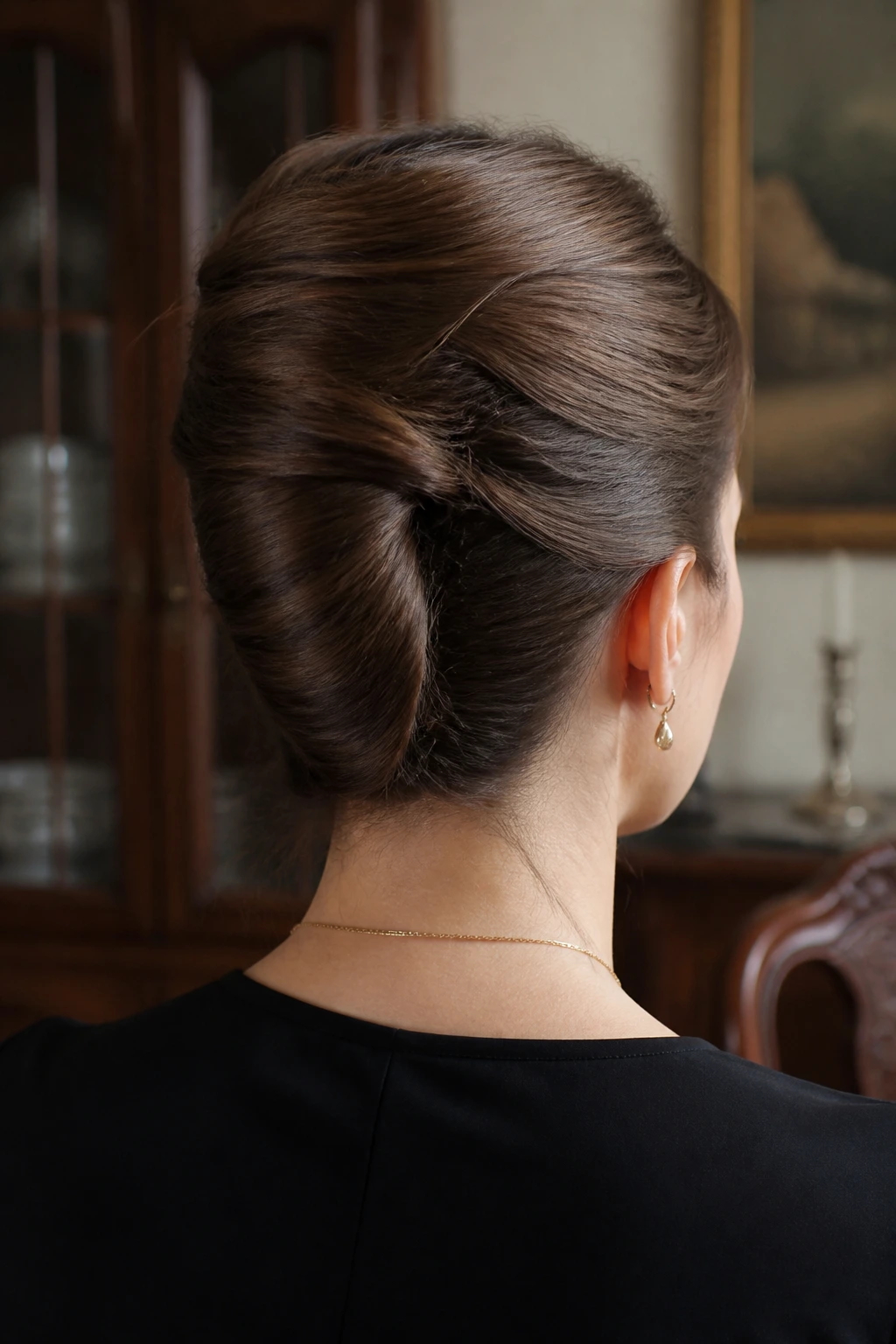
A good bun on long hair does more than remove the length from your face. It shows that the hair has structure, movement, and a plan. That’s why the best versions here are never random knots thrown together at the last minute. They use the weight of long hair on purpose.
Pick the shape that matches your texture and your day. Sleek when you want control. Loose when you want softness. Braided when you want the style to stay in place a little longer than seems reasonable. Long hair gives you all of that, and on a good day, it gives you more than one way to wear the same idea.
