



An asymmetrical bob has a funny way of looking both neat and a little unruly at the same time. That’s the charm. One side grazes the jaw or collarbone, the other side sits a touch shorter, and suddenly the whole cut has movement even when the hair is dead still.
What I like about a good asymmetrical bob is that the shape does some of the work for you. Straight hair gets a cleaner line. Wavy hair gets a built-in bend. Curly hair gets a silhouette that feels deliberate instead of bulky. If the balance is cut well, the haircut doesn’t just sit there looking “different.” It changes how the face reads.
And there’s a wide spread between subtle and dramatic. Some versions whisper. Others walk in and take over the room. The best part is that the difference between them comes down to a few inches, a part shift, a little stacking in the back, or a blunt edge at the front. Tiny choices. Big effect.
Why These Asymmetrical Bobs Keep Showing Up in Good Salons
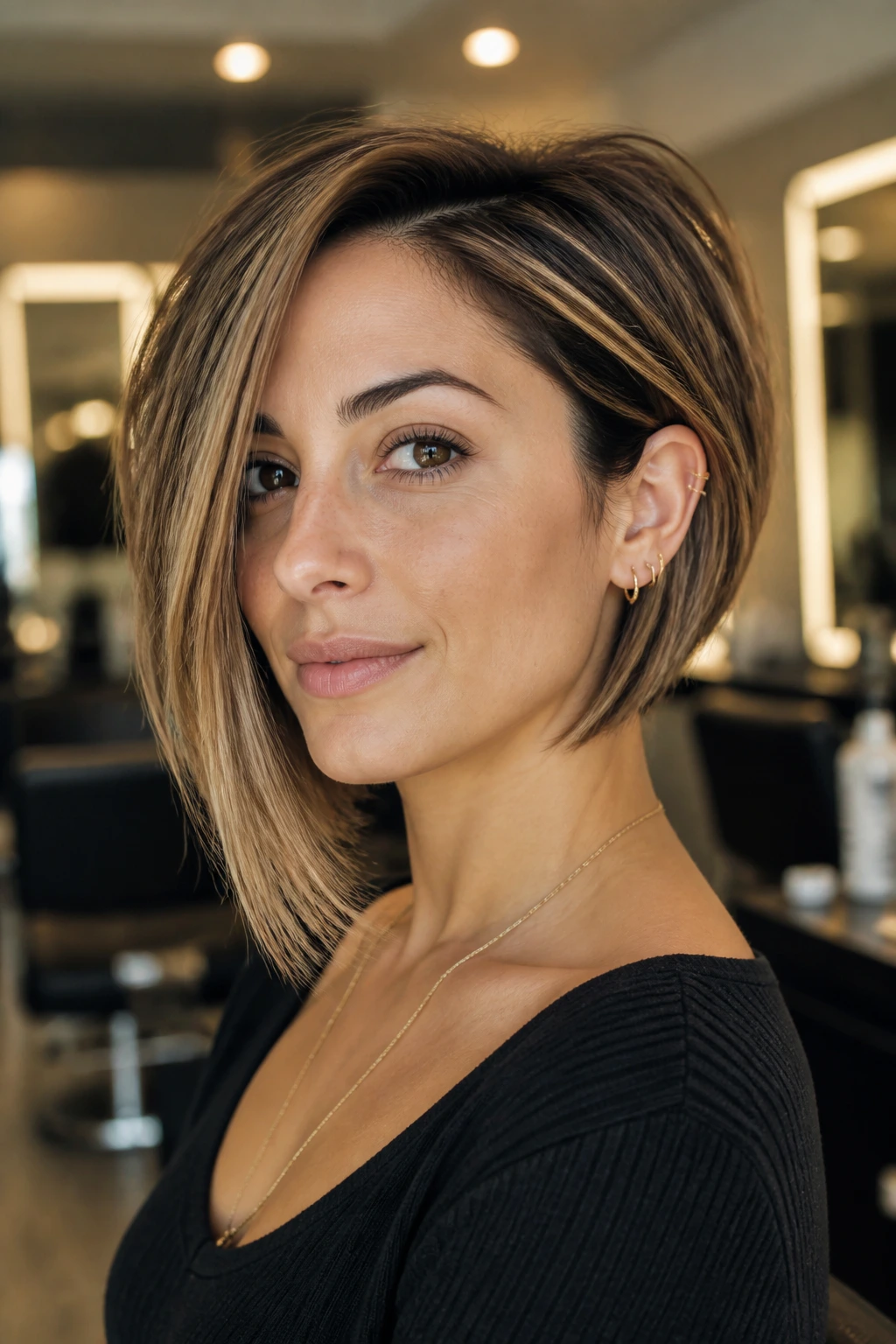
-
They sharpen the outline: A longer front corner can slice through roundness at the cheek or jaw, which is why the cut often looks crisp even when the styling is loose.
-
They flatter different textures: A bob with an angle can be cut sleek for straight hair, layered for waves, or shaped around shrinkage for curls without losing its identity.
-
They grow out in a useful way: A slightly uneven bob turns into a lob more gracefully than a hard, blunt chin-length cut, so the awkward phase usually lasts less time.
-
They move the eye on purpose: That diagonal line pulls attention where you want it—eyes, cheekbones, neckline—rather than letting the cut sit flat across the face.
-
They can be quiet or bold: A one-inch difference is subtle. A three-inch drop on one side reads as statement hair. Same family, different mood.
What Makes the Angle Look Chic Instead of Accidental
A good asymmetrical bob is not just one side being longer. That’s the bare minimum. The real difference comes from where the weight sits, how the nape is cleaned up, and whether the longer side feels like part of a plan.
If the cut has a clean perimeter, the angle looks expensive-looking without trying too hard. If the ends are soft but the line is still clear, the haircut gets movement without turning wispy. And if the shorter side is too short, the whole thing can start to look like a correction instead of a choice.
The sweet spot is usually a visible difference that still feels balanced in motion. On some heads, that means the longer side falls just below the chin while the shorter side hugs the jaw. On others, the longer side nearly reaches the collarbone. The best version depends on density, neck length, and how much of the face you want the cut to frame.
The part matters more than people think
A side part deepens the diagonal and makes the angle louder. A softer off-center part keeps the shape calmer. If you have straight, dense hair, moving the part even half an inch can change the whole read of the cut. Tiny adjustment. Huge payoff.
How to Choose the Right Version for Your Face Shape and Hair Texture
The same asymmetrical bob can look sharp on one person and awkward on another, and the reason is usually proportion. Not fashion. Proportion.
Round faces usually do well with a longer front corner and a little extra length below the chin, because that vertical line pulls the eye down. Square faces often look best with a soft edge or light bend at the ends so the cut doesn’t sit like armor around the jaw. Oval faces can take a stronger angle, a blunt line, or a tucked look with very little trouble.
Texture matters just as much. Fine hair likes cleaner shapes and less layer chaos. Thick hair usually needs internal weight removal so the cut doesn’t puff out at the wider side. Curly and coily hair need the angle cut with shrinkage in mind, which is a boring sentence and a very real issue; ignore it and one side can spring up much higher than the other.
1. Sleek Asymmetrical Bob With a Deep Side Part
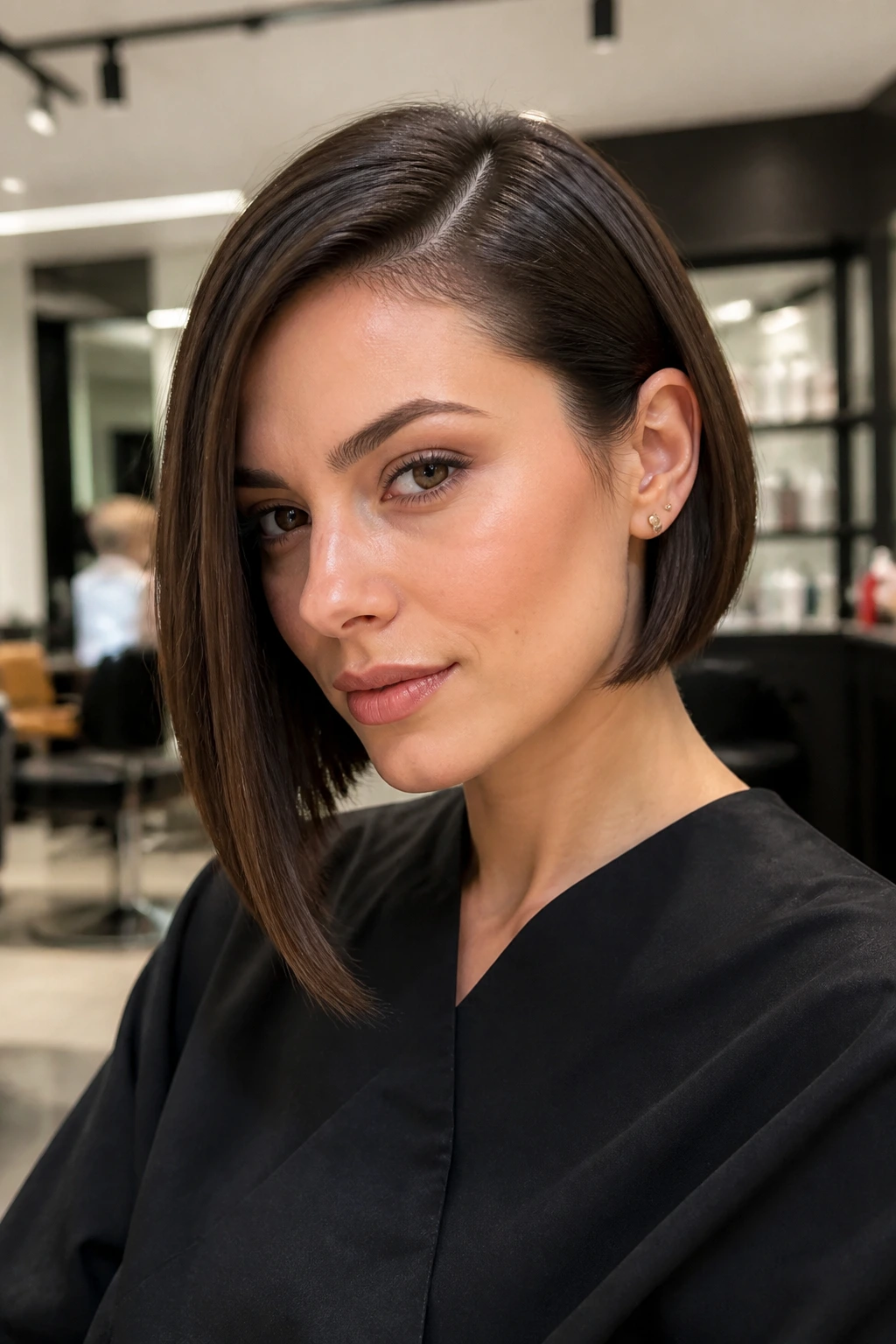
This is the polished version most people picture first. One side skims the cheekbone, the other side drops lower and stays sharp, and the deep part gives the whole shape a clean diagonal line. It’s the kind of cut that looks especially good when the ends are flat-ironed straight and tucked behind one ear.
What makes it work is the contrast. The line is precise, so the asymmetry reads immediately instead of disappearing into the rest of the hair. If you have straight or lightly wavy hair, this bob can look almost architectural.
For styling, I like a heat protectant, a paddle brush for tension, and a tiny amount of serum just on the ends. Too much product makes the shorter side collapse. Too little and the line looks dry. The balance is delicate, which is part of the appeal.
2. Soft A-Line Bob That Grazes the Collarbone
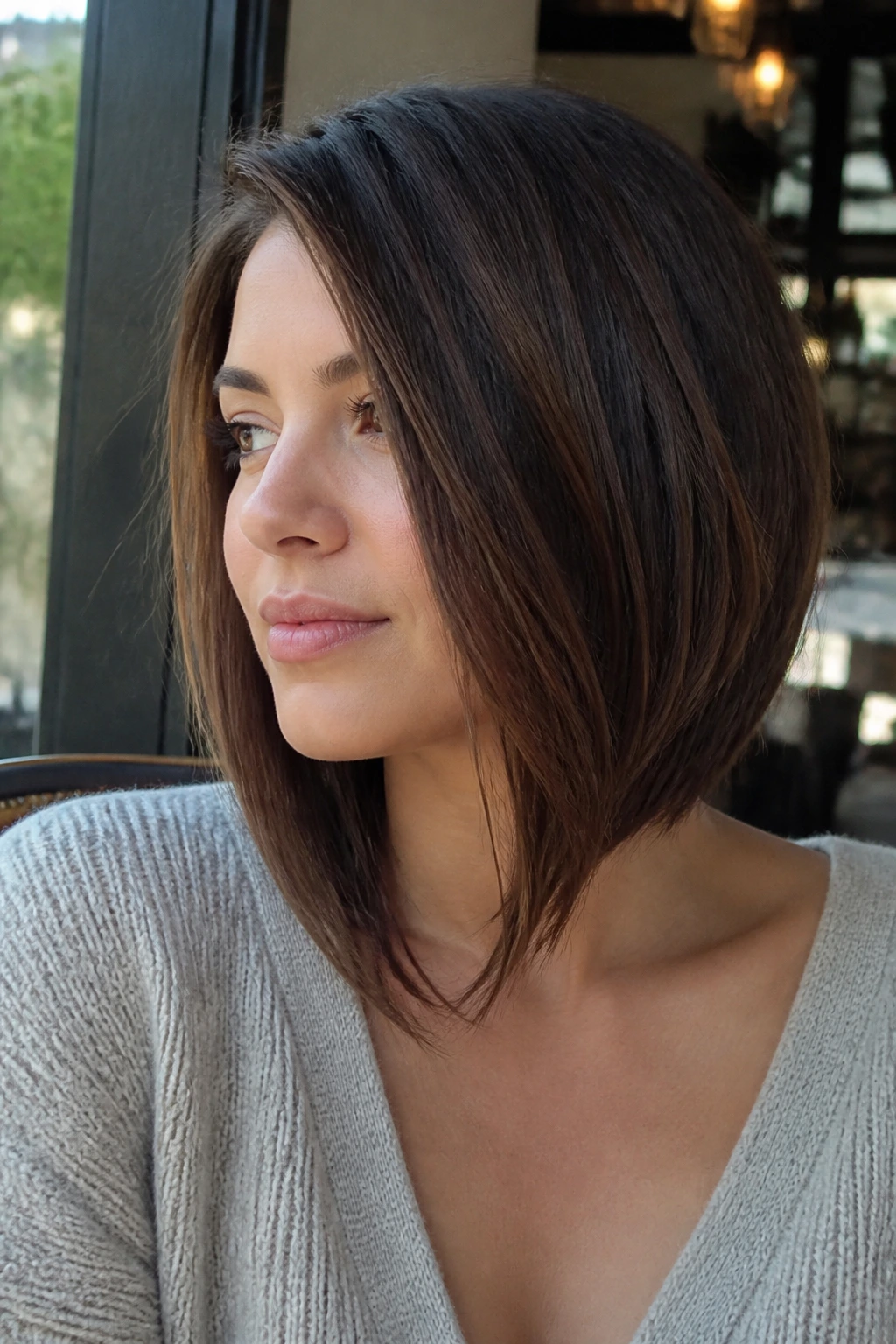
This version keeps the asymmetry gentle. The back sits a little shorter, then the front slides longer on one side until it just brushes the collarbone. It’s less severe than a hard angle, which makes it easier to wear if you want the idea of asymmetry without the sharp edge.
Why it stays flattering
The collarbone length gives the cut some swing, especially when the hair moves across a coat collar or sweater neckline. That motion keeps it from feeling blocky. It also gives you a little more room to wear it curled, waved, or straight.
If you want a bob that can slip between casual and dressed-up without much effort, this is a good lane. A blunt finish makes it feel clean. Soft bends make it feel easier. Either way, the longer side does the framing work.
3. Stacked Asymmetrical Bob With Built-In Lift
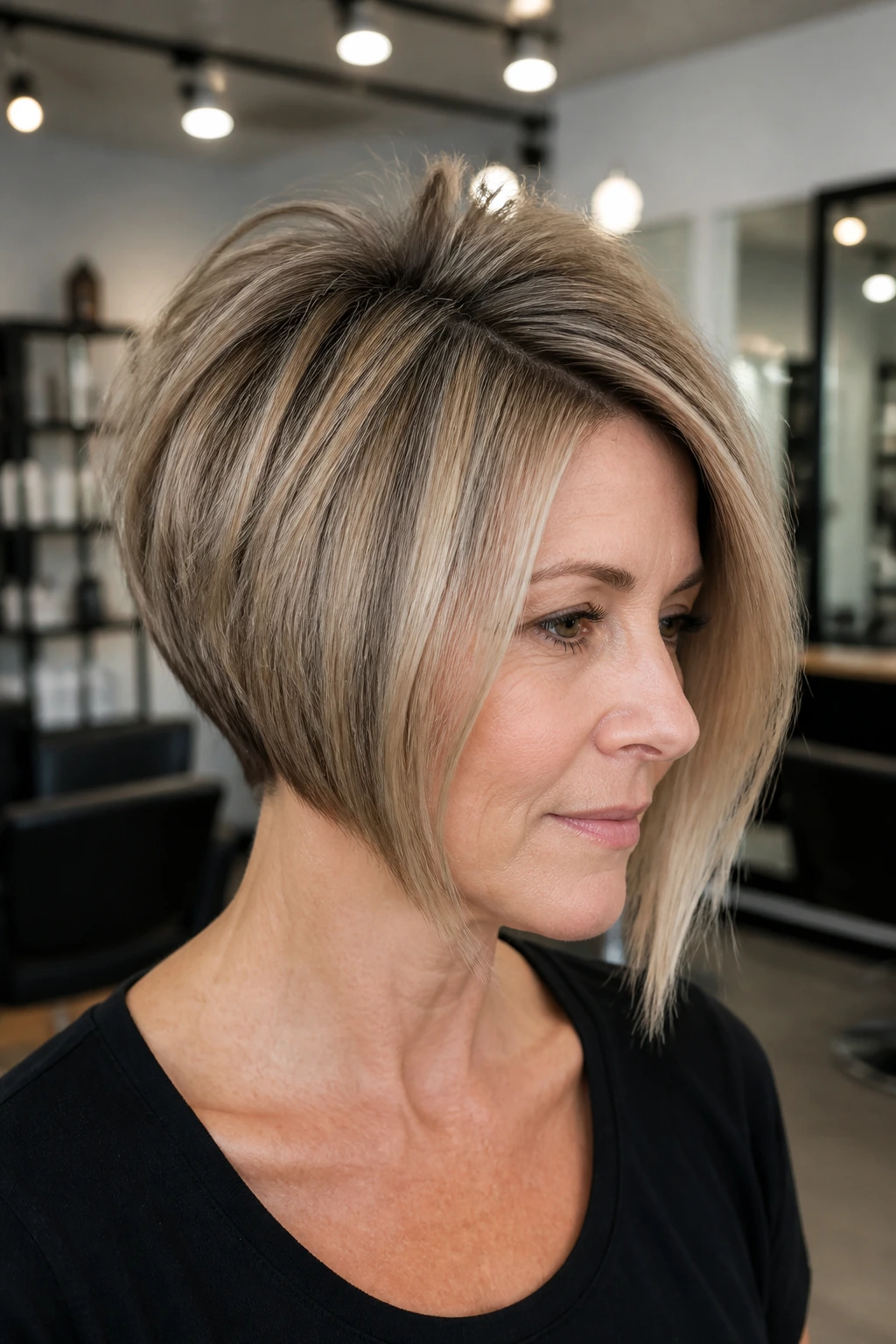
A stacked bob already has height through the back, so when you make it asymmetrical, the silhouette gets much more interesting. The nape is shorter and slightly fuller, while the front drops longer on one side. That shape gives the hair a lifted look at the crown without a ton of styling.
This cut is especially useful if your hair tends to lie flat at the back of the head. The stacking creates that slight curve that makes the neck look longer and the profile cleaner. It can be a very crisp haircut, or it can be softened with a round brush and a bend at the front.
- Best for: fine to medium hair that needs body
- Watch for: a too-steep angle, which can make the front feel disconnected
- Style with: a volumizing mousse at the roots and a round brush through the back
4. Blunt Asymmetrical Bob With Razor-Sharp Ends
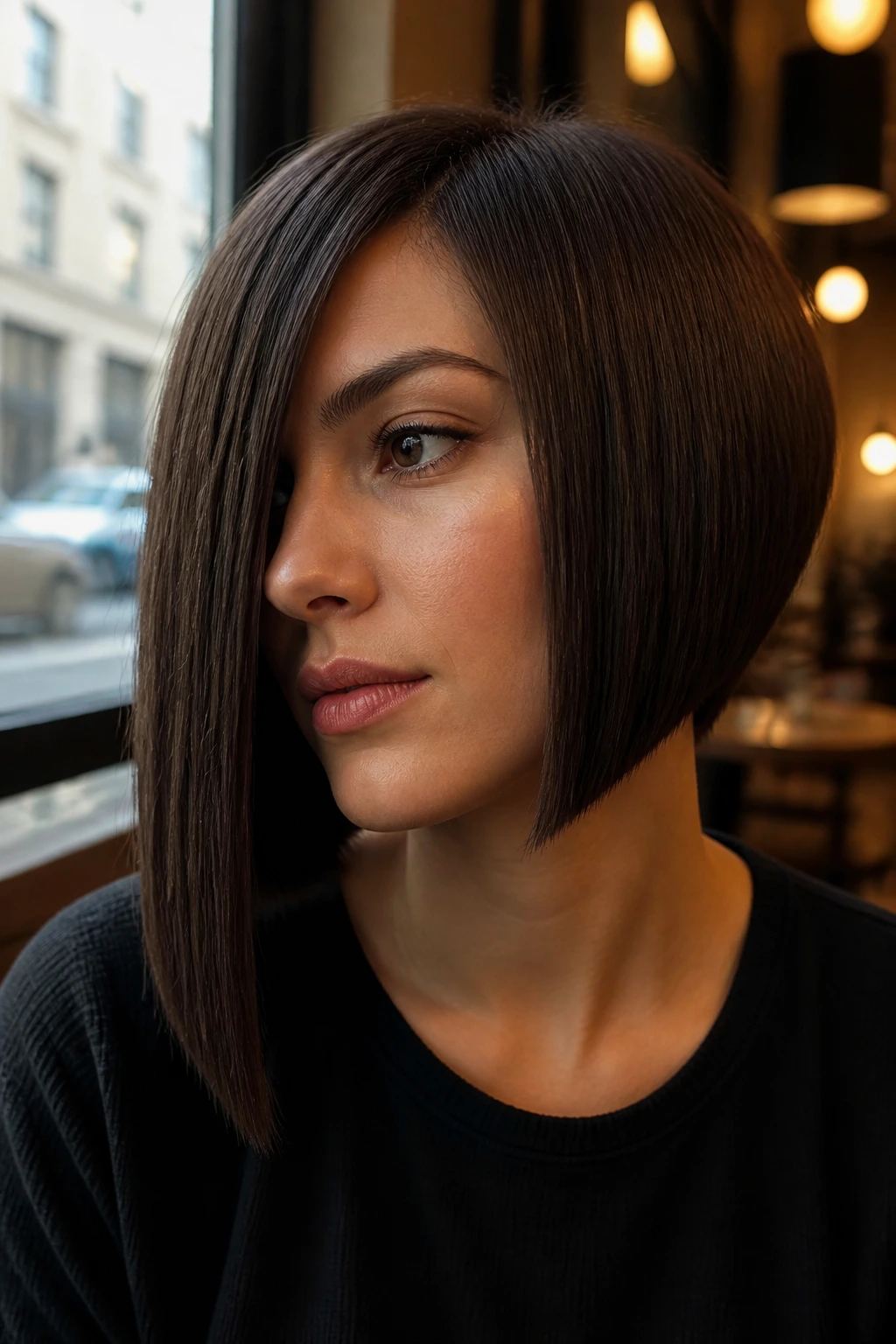
This one has attitude, but not the loud kind. The line is blunt, the ends are sealed off rather than feathered, and the difference in length is obvious enough to read from across a room. It works because the crisp ends make the geometry feel intentional.
Blunt cuts do their best work on hair that has some density. Thin hair can wear this look, too, but the line needs to be clean or the ends may look stringy. On thick hair, a blunt asymmetrical bob can look rich and glossy, especially if the surface is smoothed well.
I prefer this version with a neutral makeup look and simple clothes. Let the haircut do the talking. If you go too soft everywhere else, the line loses its punch.
5. Wavy Asymmetrical Bob With Air-Dried Texture
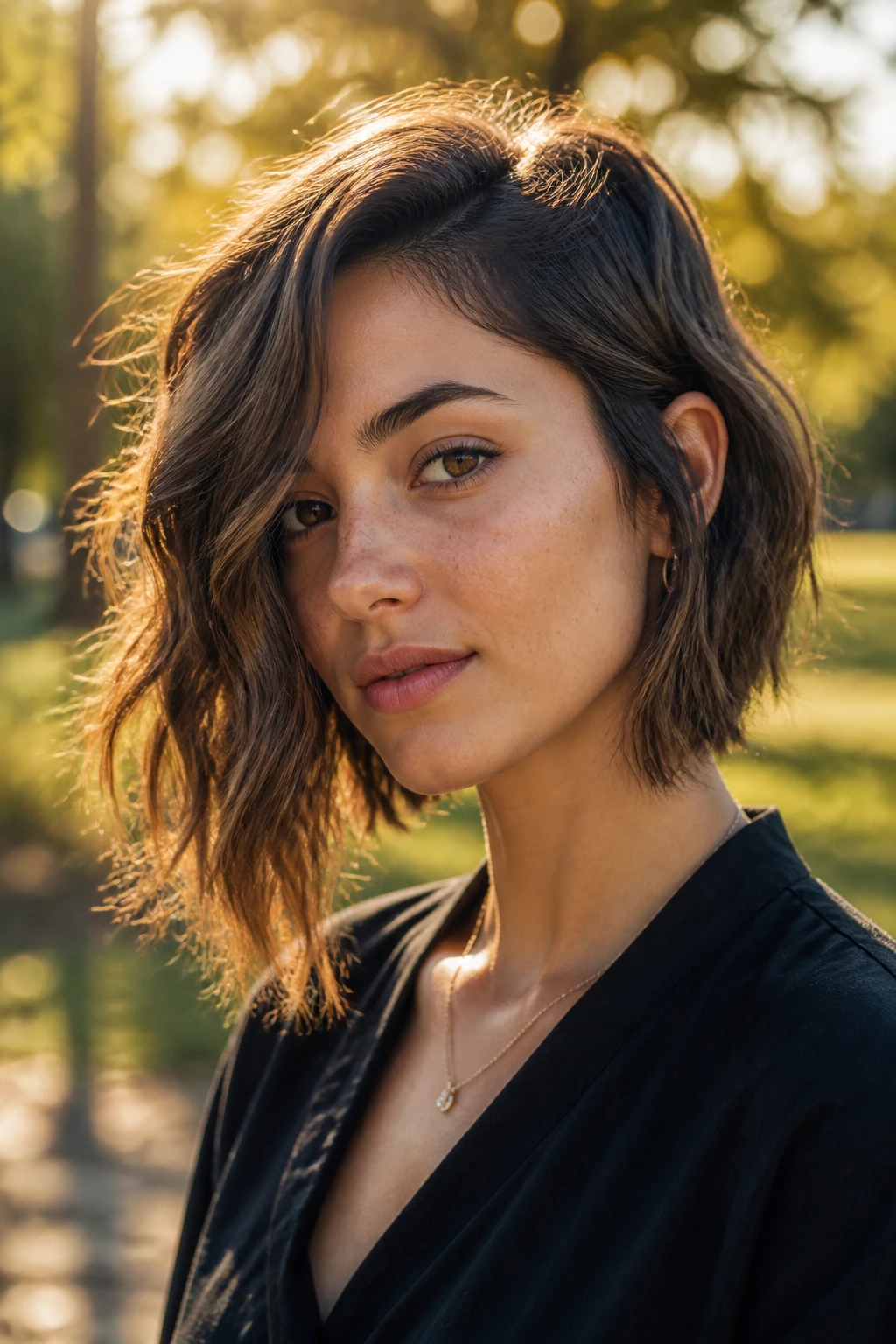
Not every asymmetrical bob has to look pressed into place. On wavy hair, the angle can bend and move in a way that feels loose but still controlled. The longer side catches the wave pattern and creates a little swing near the chin or neck.
The trick is not to overwork it. Scrunch in a lightweight cream, part the hair off-center, and let the wave pattern settle before you touch it again. If you keep trying to “fix” every bend, the cut can lose the easy shape that makes it worth wearing.
What gives it that lived-in feel
A few pieces can be left slightly longer around the front, then the ends can be point-cut so they don’t look too blunt. The result is a bob that looks like it dried with intention, not like you fought it into shape. That’s a better look anyway.
6. Curly Asymmetrical Bob That Keeps One Side Fuller
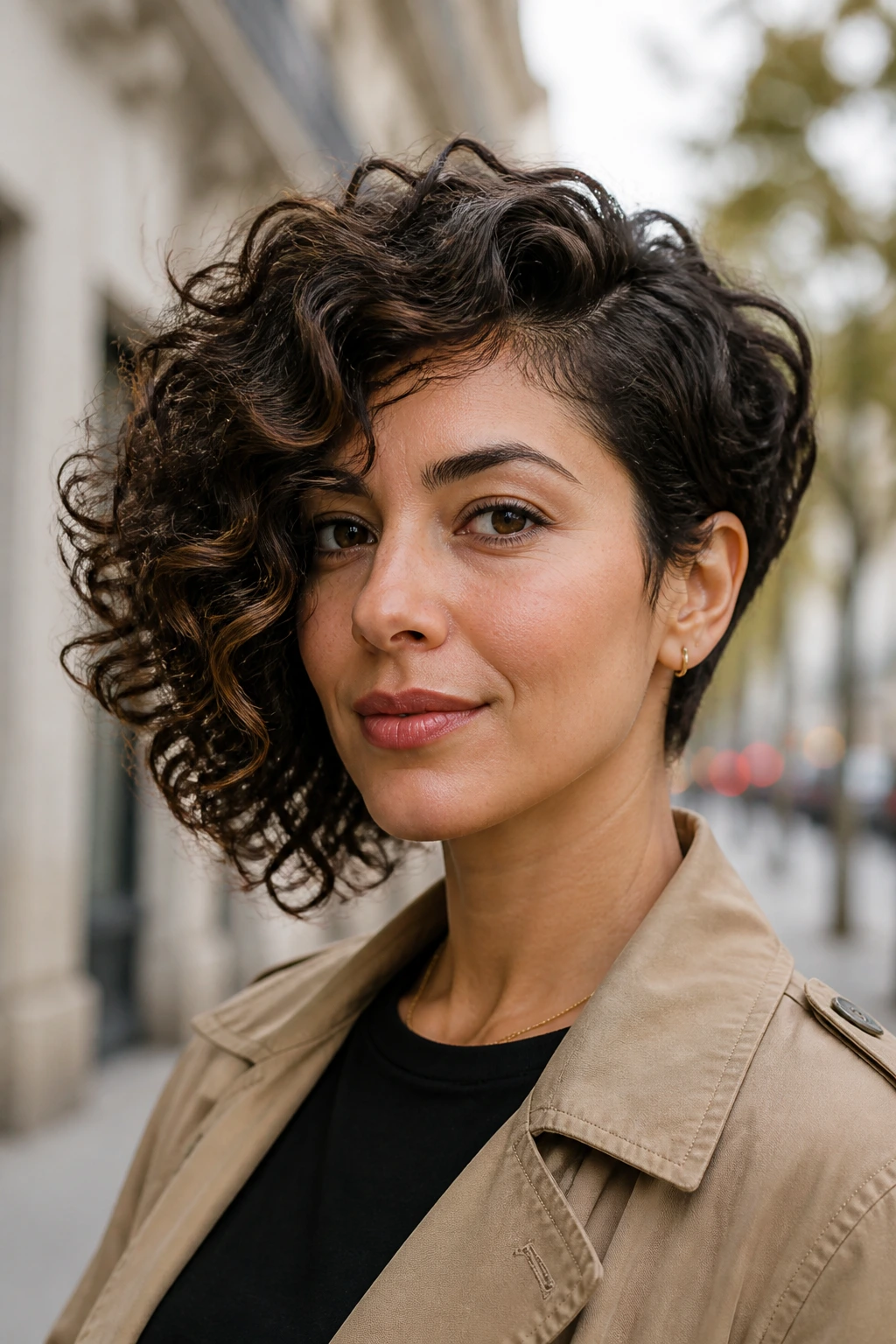
Curly hair makes asymmetry interesting because curl pattern adds its own drama. One side can appear fuller, springier, or slightly higher depending on how the curl clumps. A good curly asymmetrical bob respects that instead of trying to iron it away.
This cut usually works best when it’s shaped dry or diffused into its natural state. The longer side should be long enough to keep a visible diagonal after shrinkage. If the shape is cut too short, the asymmetry can disappear the second the hair dries.
For curls, I’d rather see a gentle, deliberate angle than a forced severe one. Let the texture do some of the work. It’s more flattering, and frankly, less annoying to style.
7. Inverted Asymmetrical Bob With a Shorter Back
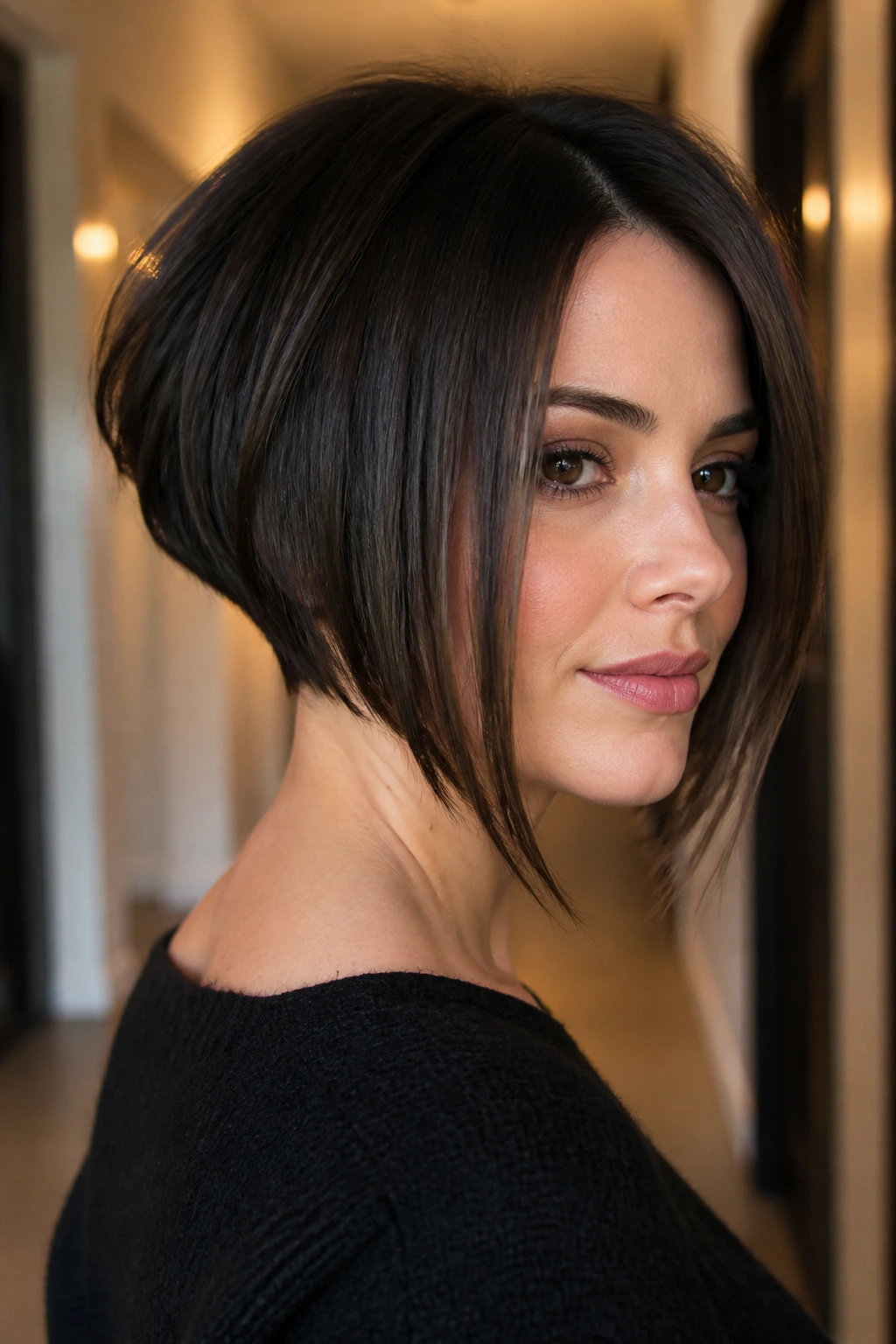
An inverted bob gives you a short nape and longer front corners, so the asymmetry feels built into the structure. The back rises cleanly, while one side drops lower and frames the face in a neat line. It’s a little sharper than a soft A-line and a little more polished than a shaggy bob.
This shape is useful if you want the neck to look longer and the head to look more lifted from the side. It can be particularly good with straight or smooth blowouts, where the change in length is easy to see. On thick hair, the back needs to be thinned carefully or it can mushroom.
The best versions keep the front long enough to swing. If the front is too short, you lose the contrast that makes the cut feel special.
8. Side-Shaved Asymmetrical Bob for a Harder Edge
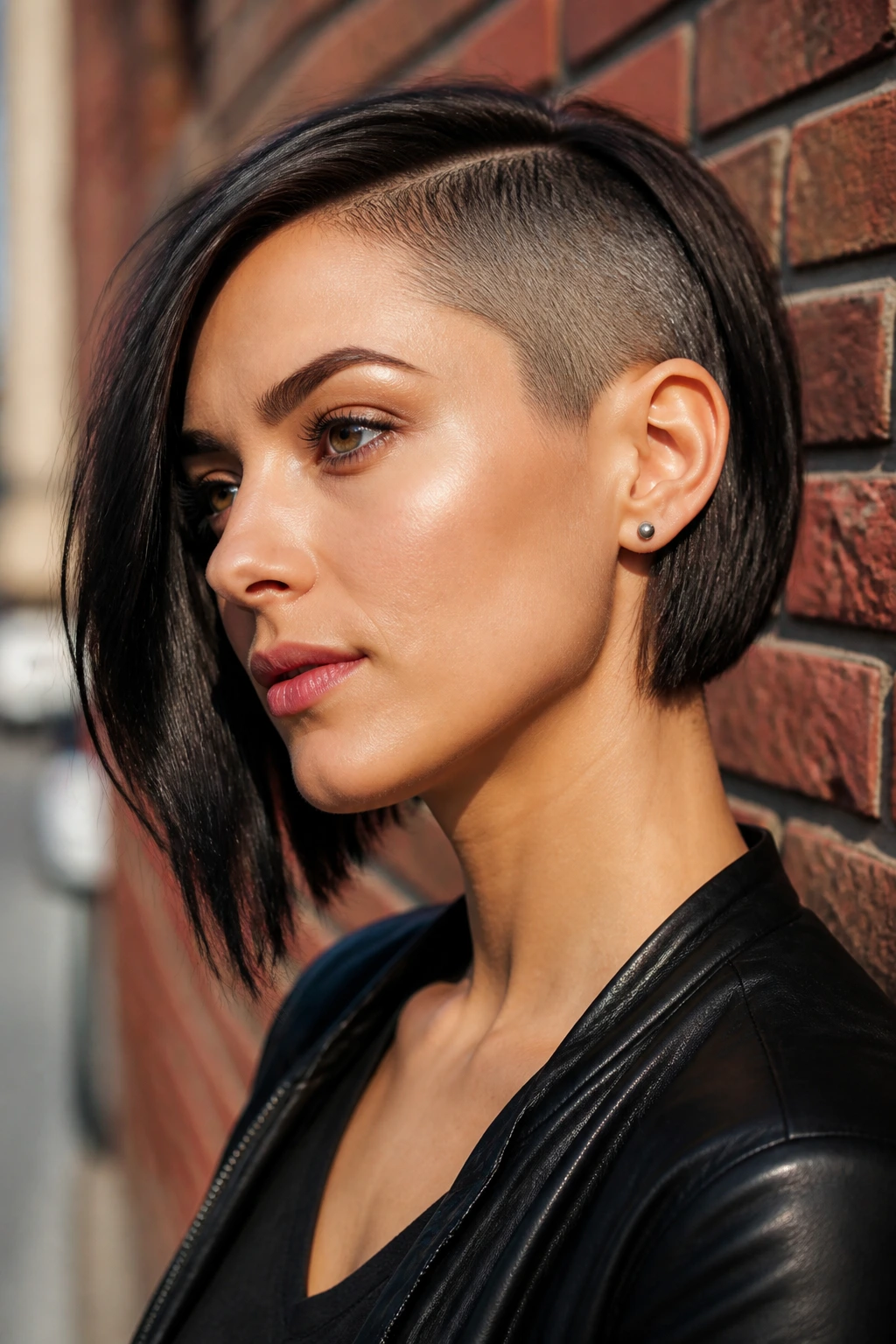
This is the bold one. One side stays bob-length, while the other side has a shaved temple or undercut panel that makes the difference impossible to miss. It’s a clean, graphic look that works best when the rest of the cut is sharp and the lines are tidy.
The nice thing about a side shave is that it changes the balance without adding bulk. If you have thick hair, that can feel like a relief. If you have fine hair, the contrast can make the shape look stronger than the density actually is.
Best way to wear it
Keep the longer side sleek or lightly waved, and avoid too many competing layers around the face. The haircut already has a loud point of view. It doesn’t need help from every direction.
9. Asymmetrical Bob With Curtain Bangs

Curtain bangs can soften a sharp bob without flattening it. They open through the middle, skim the cheeks, and give the face a little softness before the eye drops into the longer side of the cut. That makes the whole look feel less severe.
This works especially well if you want asymmetry but don’t want the haircut to feel edgy in a hard, graphic way. The bangs break up the forehead area, and the long side keeps the shape moving around the jaw. It’s a good middle ground.
The bangs need to sit long enough to blend into the front pieces. If they’re too short, the cut starts fighting itself. Nobody wants a bob that looks like two separate haircuts arguing in the mirror.
10. French-Inspired Bob With a Piecey Fringe
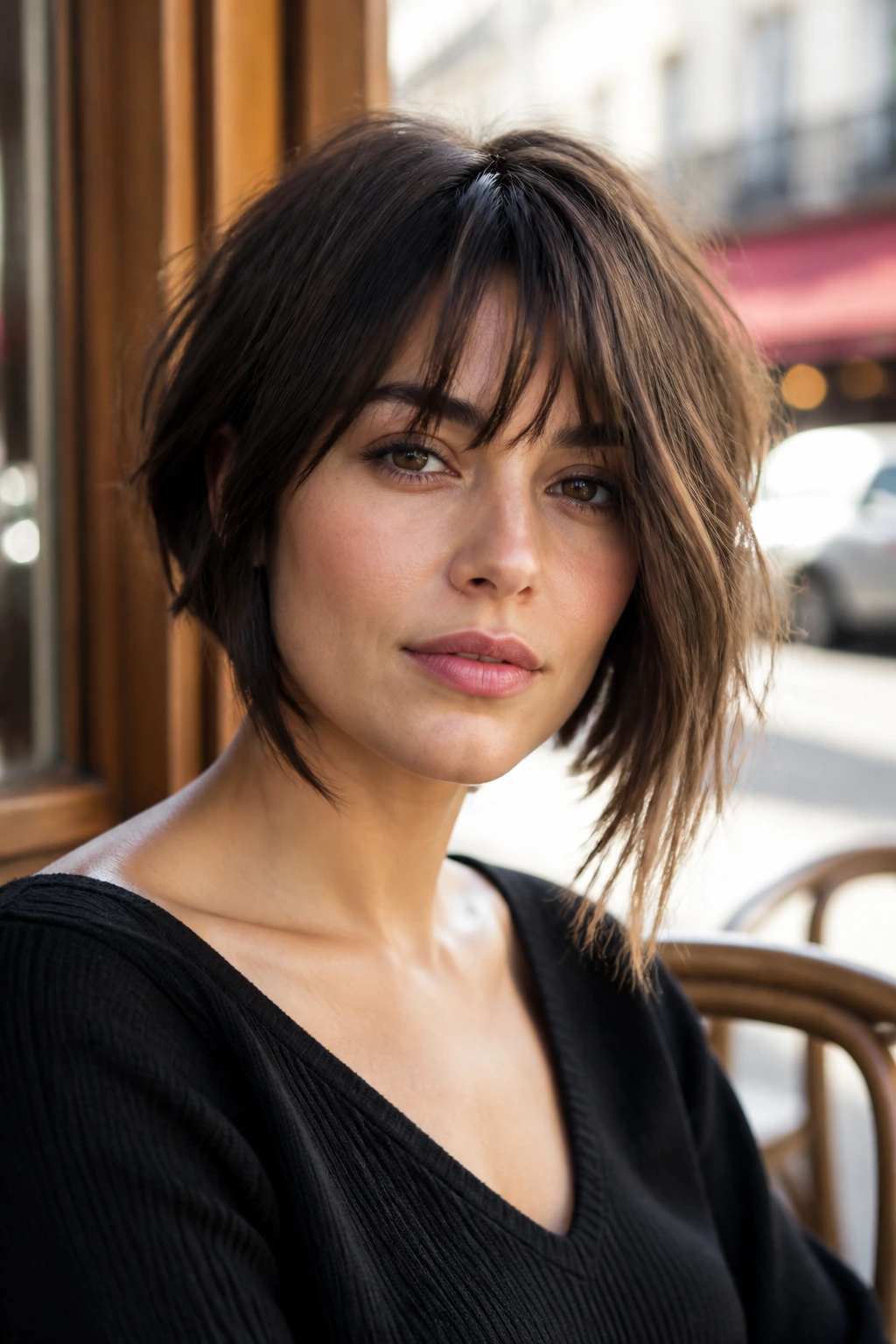
The French version is shorter, cooler, and a little less tidy. The fringe is piecey rather than heavy, and the asymmetry feels subtle until you notice how the front falls longer on one side. It’s a very good cut when you want style without too much hair hanging around your face.
This bob tends to look best around jaw length or slightly below. That gives the fringe room to sit without making the face look crowded. A dry texture spray or a tiny bit of pomade through the fringe can keep it from looking too perfect, which would ruin the point.
It’s chic in the way a well-worn jacket is chic. A little lived-in. A little sharp. Not fussy.
11. Textured Asymmetrical Bob for Fine Hair

Fine hair needs a clean plan. Too many layers and it goes see-through; too little and it lies flat like a sheet. A textured asymmetrical bob for fine hair usually keeps the base line intact while using light internal movement near the ends.
That means the angle still reads, but the hair gets enough lift to avoid looking pinched on the shorter side. A root spray at the crown and a round brush through the front can make a huge difference. No need to overcomplicate it.
What to ask for
Ask for soft texture, not aggressive thinning. There’s a difference. Aggressive thinning can make fine hair fray at the edges, while soft point-cutting gives movement without stripping out the body you need.
12. Thick-Hair Asymmetrical Bob With Hidden Weight Removal
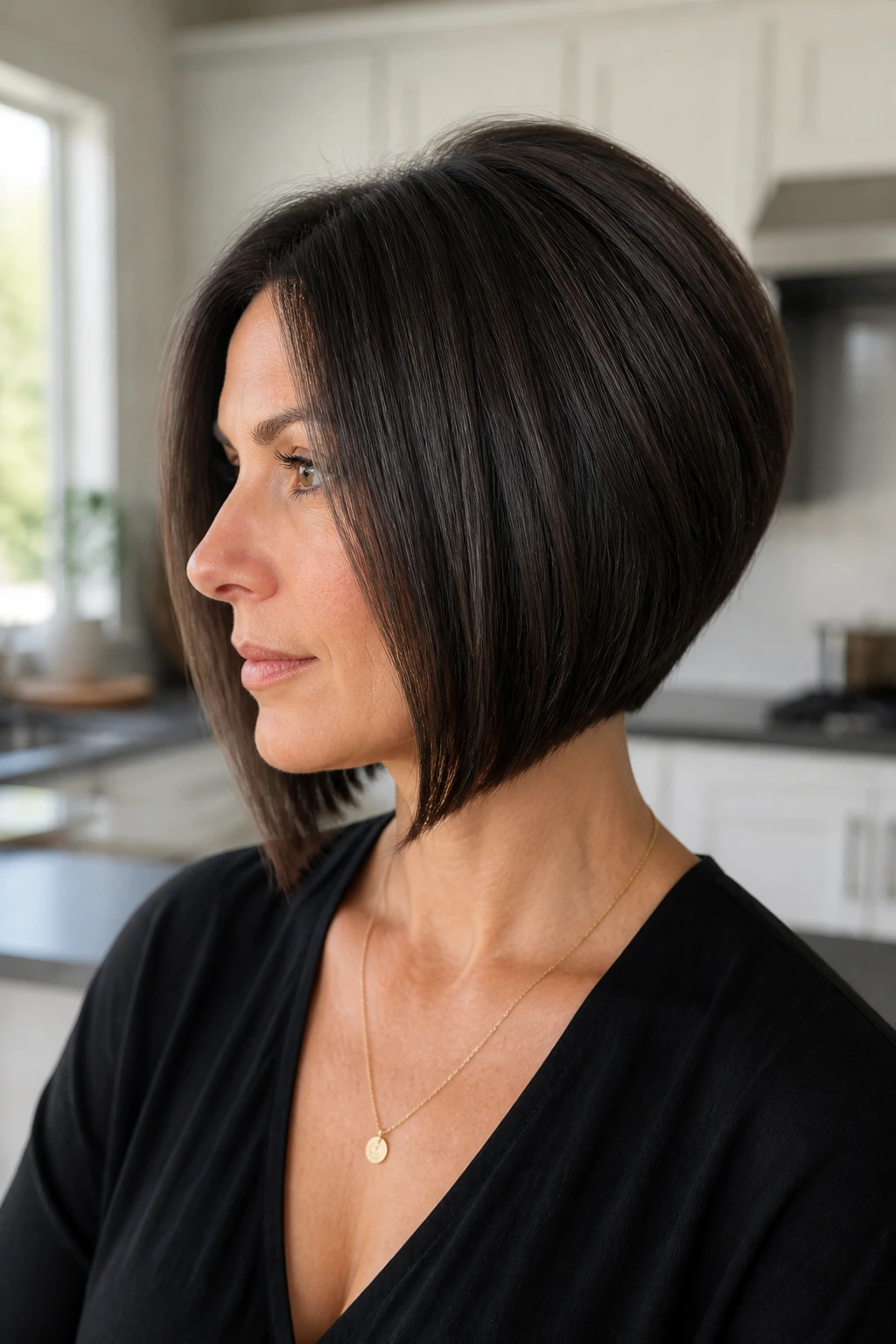
Thick hair can wear an asymmetrical bob beautifully, but the inside of the haircut has to be handled well. If not, the shorter side can puff up and the longer side can drag. The result is volume in the wrong places.
A good thick-hair version uses internal weight removal and careful shaping at the nape. The outside line stays clean, while the inside loses some bulk so the hair can move. That gives you a bob that sits close to the head without feeling helmet-like.
I prefer this cut with a smooth blowout or a soft bend at the ends. Thick hair already has presence; the point is to shape it, not fight it.
13. Jaw-Length Asymmetrical Bob That Snaps Into Place
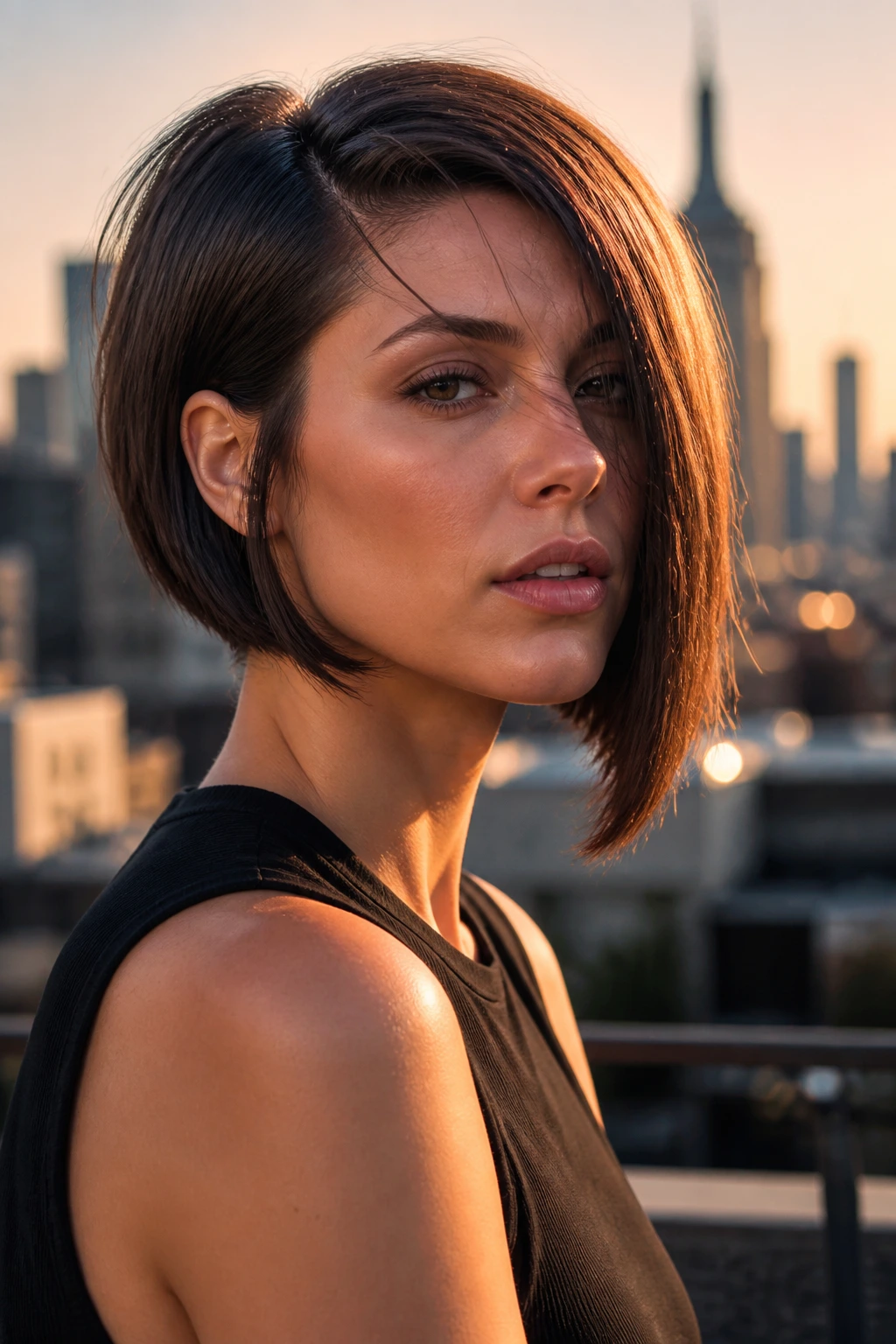
Jaw-length is where the haircut starts to feel very direct. Short enough to show the line, long enough to still frame the face. On the right person, it can make cheekbones look stronger and the jaw look more defined.
This version doesn’t leave much room for lazy cutting. The line has to be accurate, because there isn’t a lot of extra length to hide mistakes. That’s also why it looks so crisp when it’s done well.
If you like a bob that looks precise with minimal styling, this is a strong choice. A little bend at the ends and a clean part are often enough.
14. Long Asymmetrical Lob for Low-Maintenance Length

If you want asymmetry but you’re not ready to lose much length, the lob is the safest place to start. One side can skim the collarbone while the other sits a bit shorter, and the whole thing still feels easy to wear in a ponytail or clip.
This cut is useful for people who want the line of a bob without the constant upkeep of a very short shape. It also grows out in a useful way. When the angle softens, you still have a flattering lob instead of an awkward half-in-between cut.
It’s the version I’d suggest to someone who says, “I want something different, but I need to keep my hair.” That sentence comes up a lot.
15. Razored Asymmetrical Bob With Feathered Ends

A razor finish softens the edge and gives the bob a lighter, airier feel. Instead of blunt ends, you get feathering through the perimeter, which can be lovely on hair that feels heavy or one-note.
The risk with razoring is overdoing it. Too much and the ends can look shredded. Done carefully, though, the cut gains movement without losing the asymmetrical line. That’s the sweet spot.
This style likes texture spray, not greasy serum. Keep the finish clean and a little dry. A polished razor bob can look expensive; an over-textured one can look like a haircut that gave up halfway through.
16. Asymmetrical Bob With an Undercut Nape
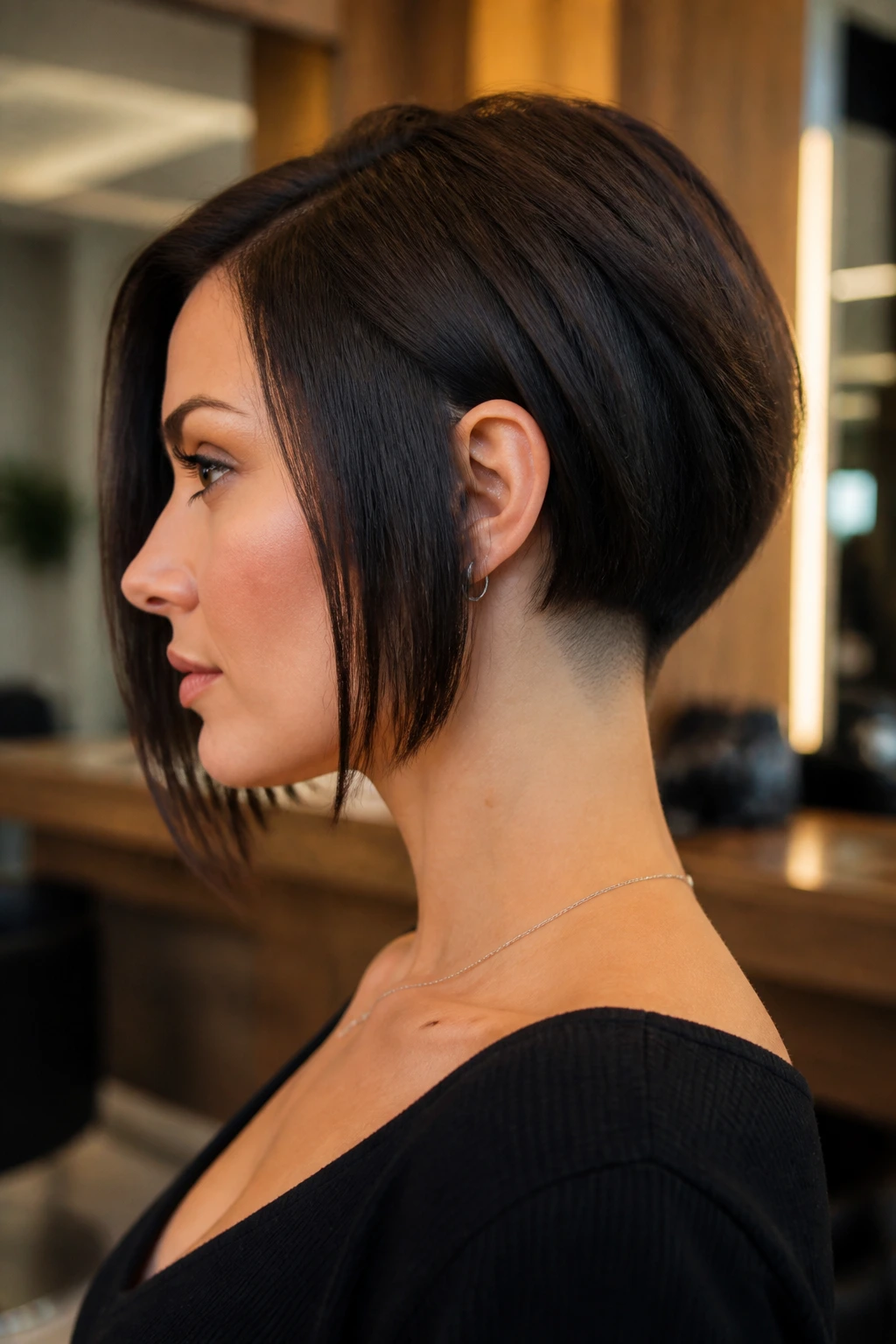
The undercut nape is one of those details you don’t always see at first, but you feel it in how the hair sits. Removing hair underneath makes the back flatter and the front more mobile, which helps the asymmetrical shape show up more clearly.
This is a smart choice for dense hair, especially if you hate the triangle effect at the back of the neck. The undercut lightens the base without making the outer shape look thin. That’s the part people often miss.
It’s not the most forgiving maintenance choice. You’ll need trims to keep the nape clean. But if you like a sharp silhouette, it’s worth the extra salon visit.
17. Glass Hair Asymmetrical Bob
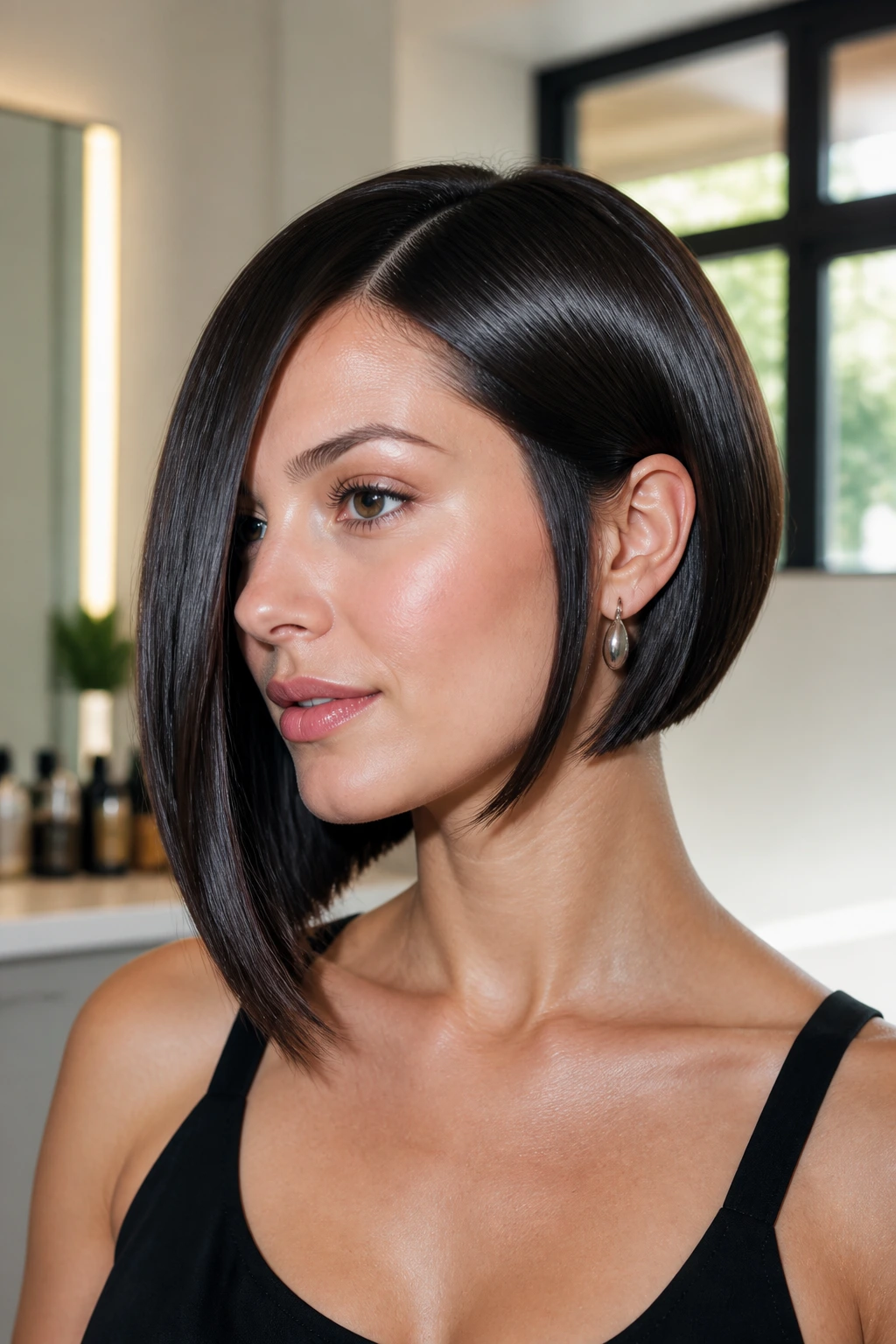
Glass hair is all about shine and smoothness. The asymmetrical cut gives the shape; the finish gives the attitude. One side gleams over the cheek while the other sits a touch shorter and cleaner, so the line looks almost reflective.
To get there, you need a strong blow-dry, heat protectant, and a flat iron only if necessary. The hair should look smooth, not fried. The ends need to stay sealed and tidy, which means regular trims matter more with this style than with a messier bob.
I love this look with simple makeup and a clean neckline. It reads very deliberate, and that’s exactly why it works.
18. Tousled Asymmetrical Bob With Choppy Layers
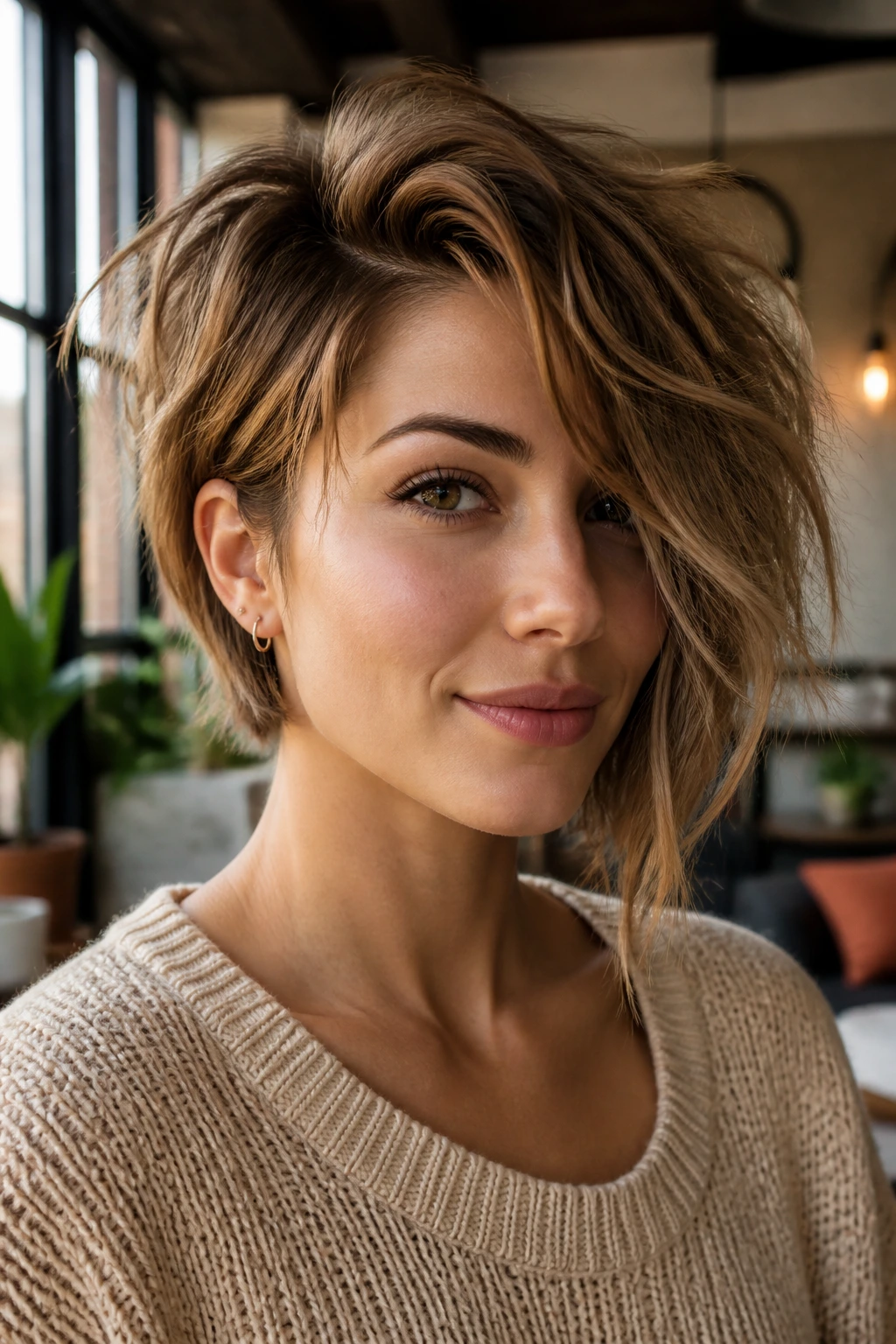
This is the bob for people who want texture without losing the shape. Choppy layers break up the perimeter a little, while the angle keeps the silhouette from turning into a shapeless cloud. It has edge, but not in a severe way.
The layers need to be chosen carefully. Too many and the asymmetry fades into the texture. Too few and the hair can sit too heavy on one side. The right cut gives you movement that still follows the line.
A matte texturizing spray works better here than a glossy cream. You want separation. You want the pieces to move when you turn your head.
19. Asymmetrical Bob With a Long Side Fringe
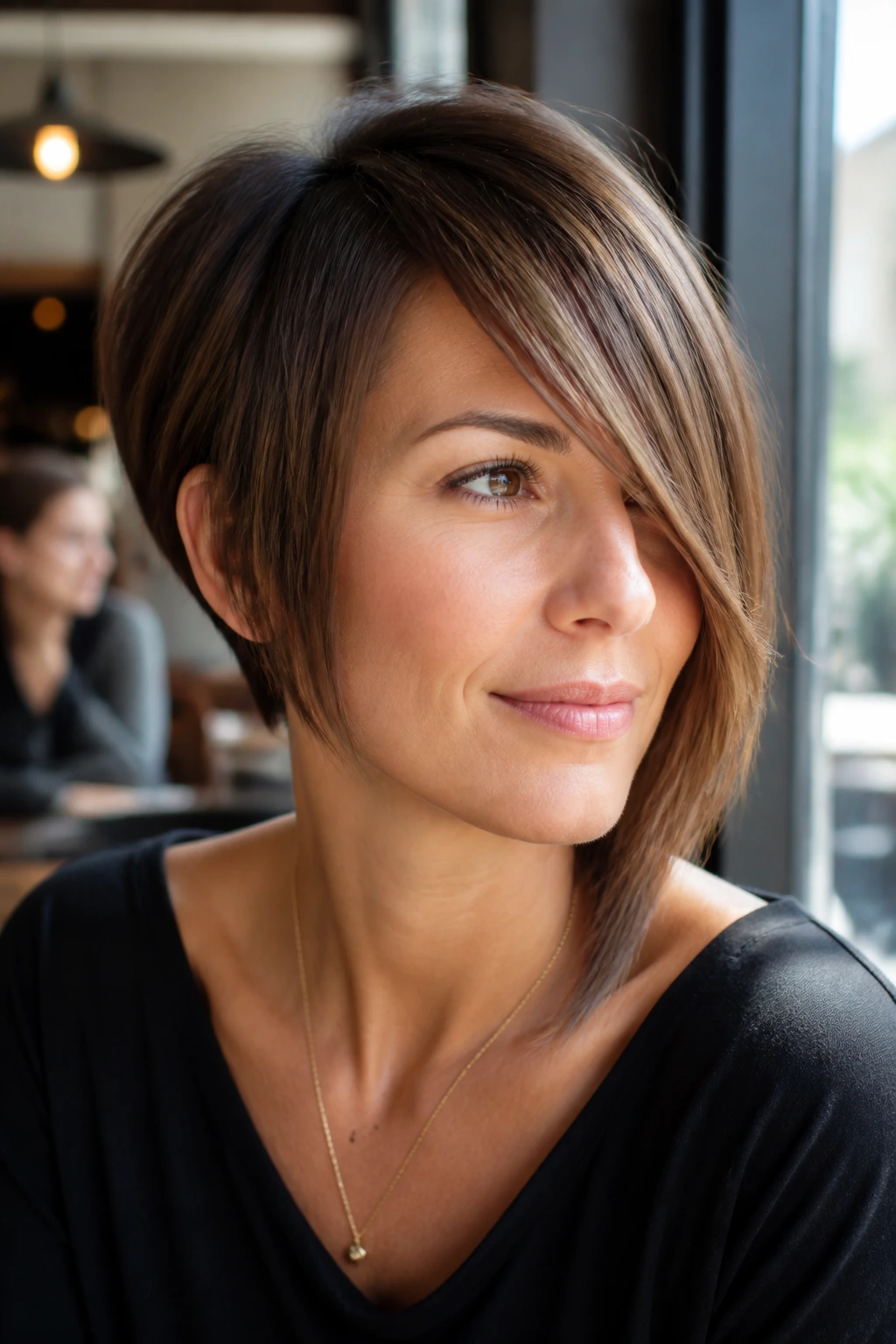
A long side fringe is a nice way to exaggerate the angle without shortening the whole bob. It sweeps across the forehead, then blends into the longer side of the cut, which creates a smooth visual line from brow to jaw.
This is one of the most face-framing options on the list. It can soften a broader forehead, pull focus to the eyes, and keep the haircut from feeling boxy around the face. The fringe should be long enough to tuck or part back, though, because too-short side bangs get annoying fast.
If you want a cut that feels slightly romantic rather than severe, this is a good direction. It has movement built in.
20. Asymmetrical Bob With Micro Bangs

Micro bangs change the whole mood. The bob becomes sharper, more graphic, and a little less sweet. With an asymmetrical shape underneath, the short fringe creates a second focal point, which can be brilliant if you like a strong haircut.
This version works best when the bob itself stays fairly clean. If both the fringe and the perimeter are too busy, the haircut starts to compete with itself. A blunt or lightly textured bob usually handles micro bangs well.
You do need to be honest about upkeep. Micro bangs grow fast, and they’re the kind of thing you notice when they’re off by half an inch. Not a casual commitment.
21. Tucked-Behind-Ear Asymmetrical Bob
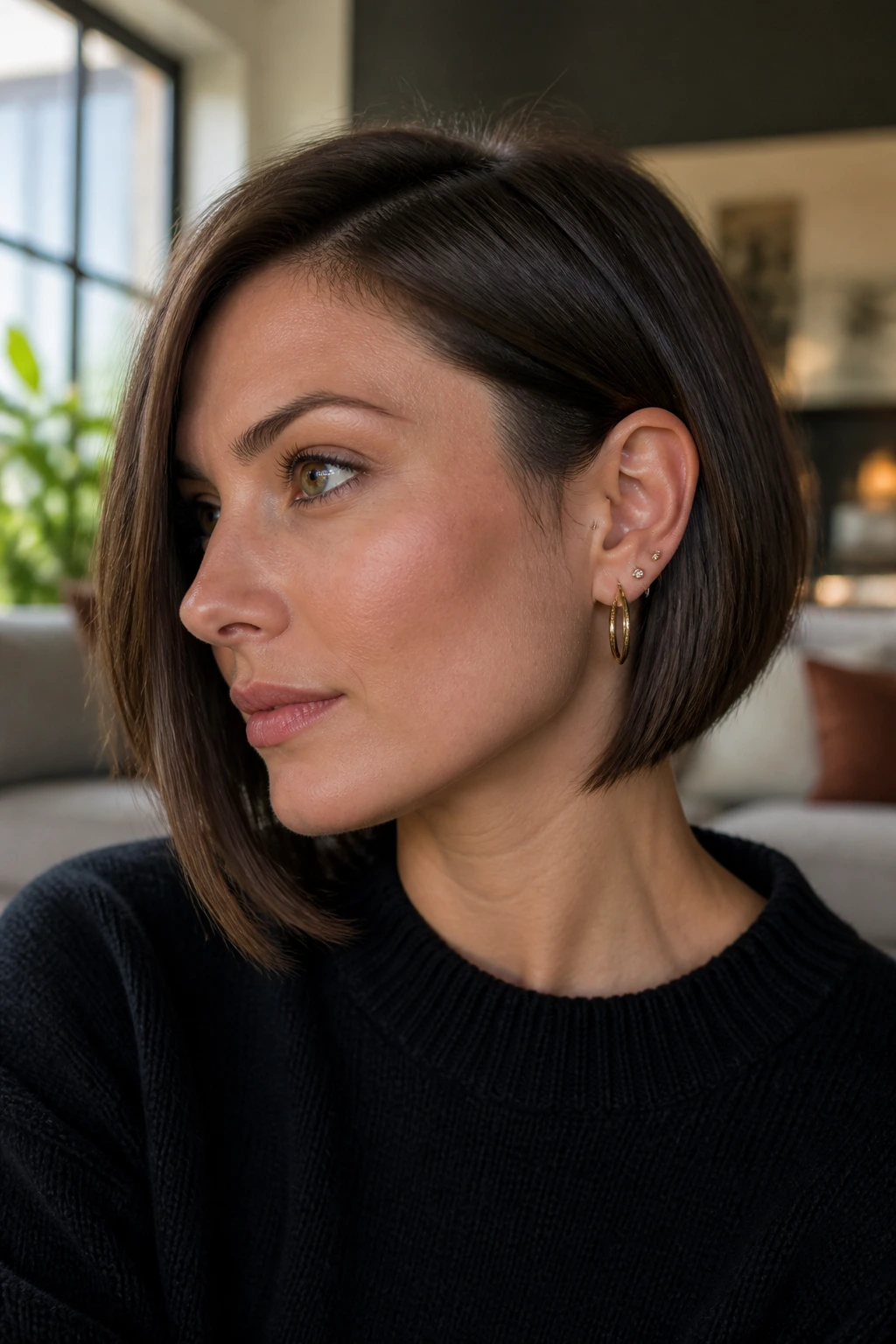
This is less about the cut itself and more about how you wear it. The longer side gets tucked behind the ear, which leaves the shorter side open and makes the angle visible in a quiet, elegant way. It’s one of my favorite low-effort styling tricks for an asymmetrical bob.
The tuck exposes the jawline and gives the haircut room to breathe. It also keeps the longer side from swallowing the face, which is easy to do with this shape if the hair is dense. A little ear tuck can change the whole mood.
If the bob has a clean edge, the tuck makes it look sharper. If it has soft texture, the tuck gives it a bit of attitude. Easy move. Good payoff.
22. Balayage Asymmetrical Bob With Depth at the Ends
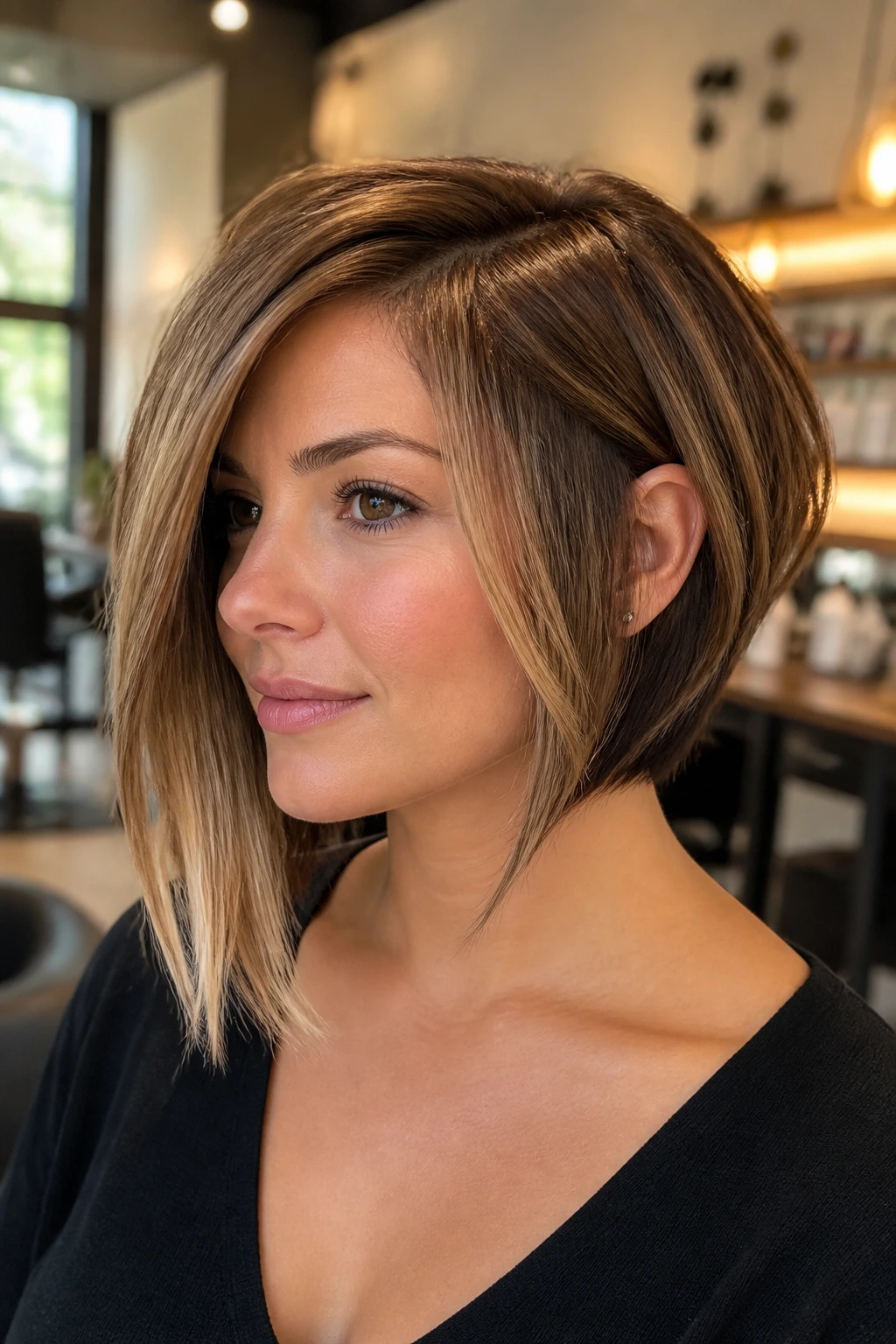
Color can make the angle easier to read. Balayage placed a little darker underneath and lighter through the face-framing pieces gives the eye a path to follow, so the asymmetry feels stronger without changing the cut itself.
This is especially useful on medium-length bobs where the angle might be subtle in a single tone. Highlights near the front can make the longer side pop, while shadow at the nape keeps the back from disappearing. That contrast helps the silhouette.
Ask for placement that respects the cut, not random bright streaks. The best color on an asymmetrical bob should support the shape, not fight it.
23. Two-Tone Asymmetrical Bob
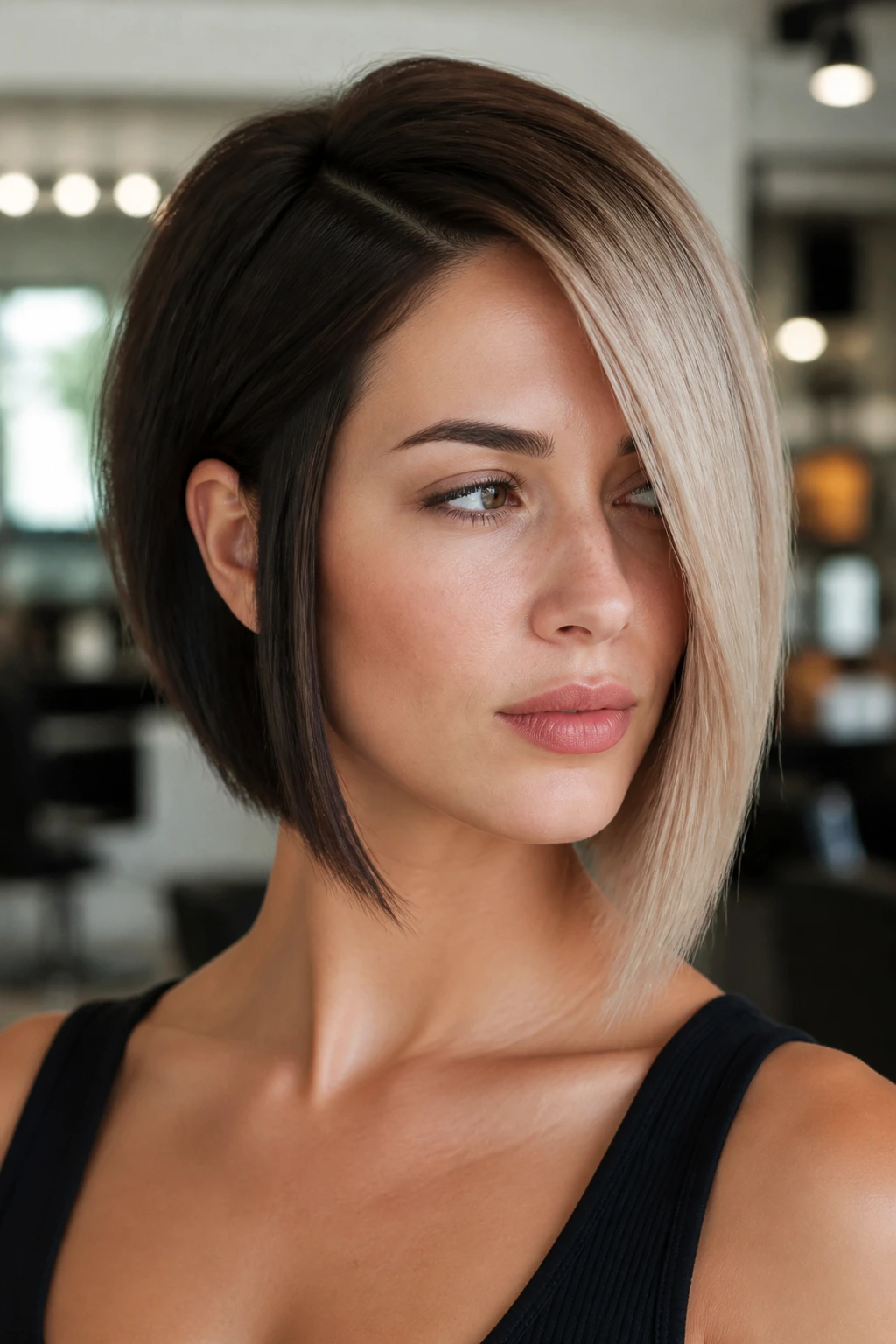
Two-tone color is bolder than balayage and a lot more graphic. One side might carry a deeper shade while the other side shows a lighter panel, or the top might stay dark while the ends shift lighter. On an asymmetrical bob, that contrast can be seriously effective.
What matters here is clean sectioning. If the cut is off-center, the color should follow the same logic instead of scattering everywhere. This style looks best when the tones have a reason to be where they are.
It’s a good match for people who want the haircut to look like a statement, not just a shape. A plain color can be lovely. A two-tone bob can be memorable.
24. Copper Asymmetrical Bob With Warm Shine
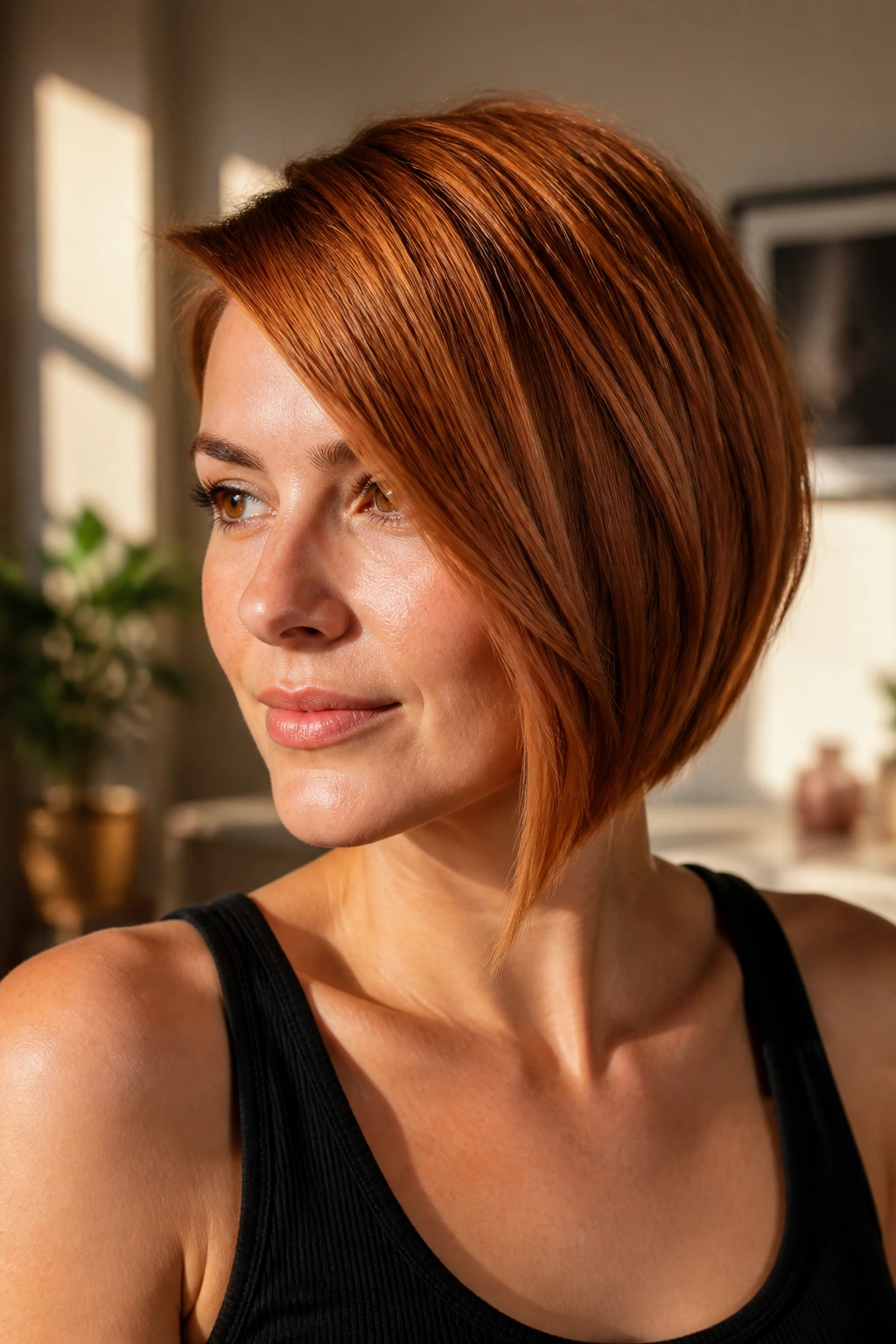
Copper hair and asymmetrical lines get along especially well because warm color draws the eye toward the face. The angle catches the light, the sheen makes the cut look richer, and the whole thing reads as polished without being stiff.
This works with blunt, layered, or softly textured bobs. Copper has enough energy on its own to carry a simpler shape, which means you don’t need a complicated cut if the color is doing the heavy lifting. I like it with a slightly longer front corner and a smooth finish.
Maintenance can be a little fussy if you want the tone to stay bright. But even when it fades, copper usually keeps a nice warmth rather than going dull and flat.
25. Ash-Blonde Asymmetrical Bob With Cooler Contrast
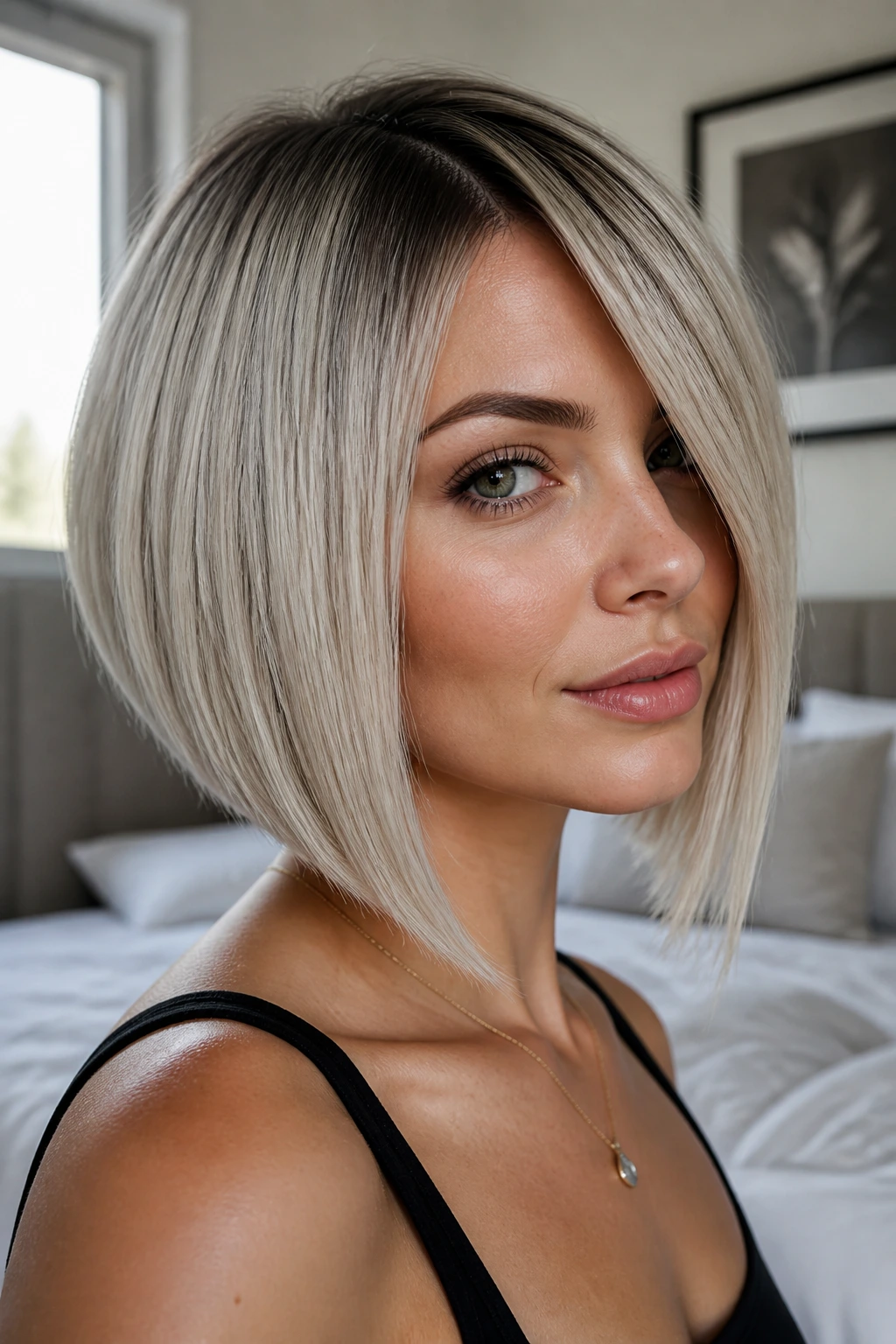
Ash blonde gives the asymmetrical bob a cooler, cleaner edge. The angle stands out more when the color doesn’t add warmth, and that can make the whole haircut feel sleeker. It’s especially nice on straight hair where the line can stay visible from root to tip.
The trick is keeping the blonde from turning flat. A touch of depth at the root or underneath helps the angle stay readable. If the whole thing is one pale note, the shape can get washed out.
This is a smart choice if you like a crisp finish and don’t mind regular toning. Cool shades are beautiful, but they need attention. No shortcuts there.
26. Asymmetrical Bob for Round Faces
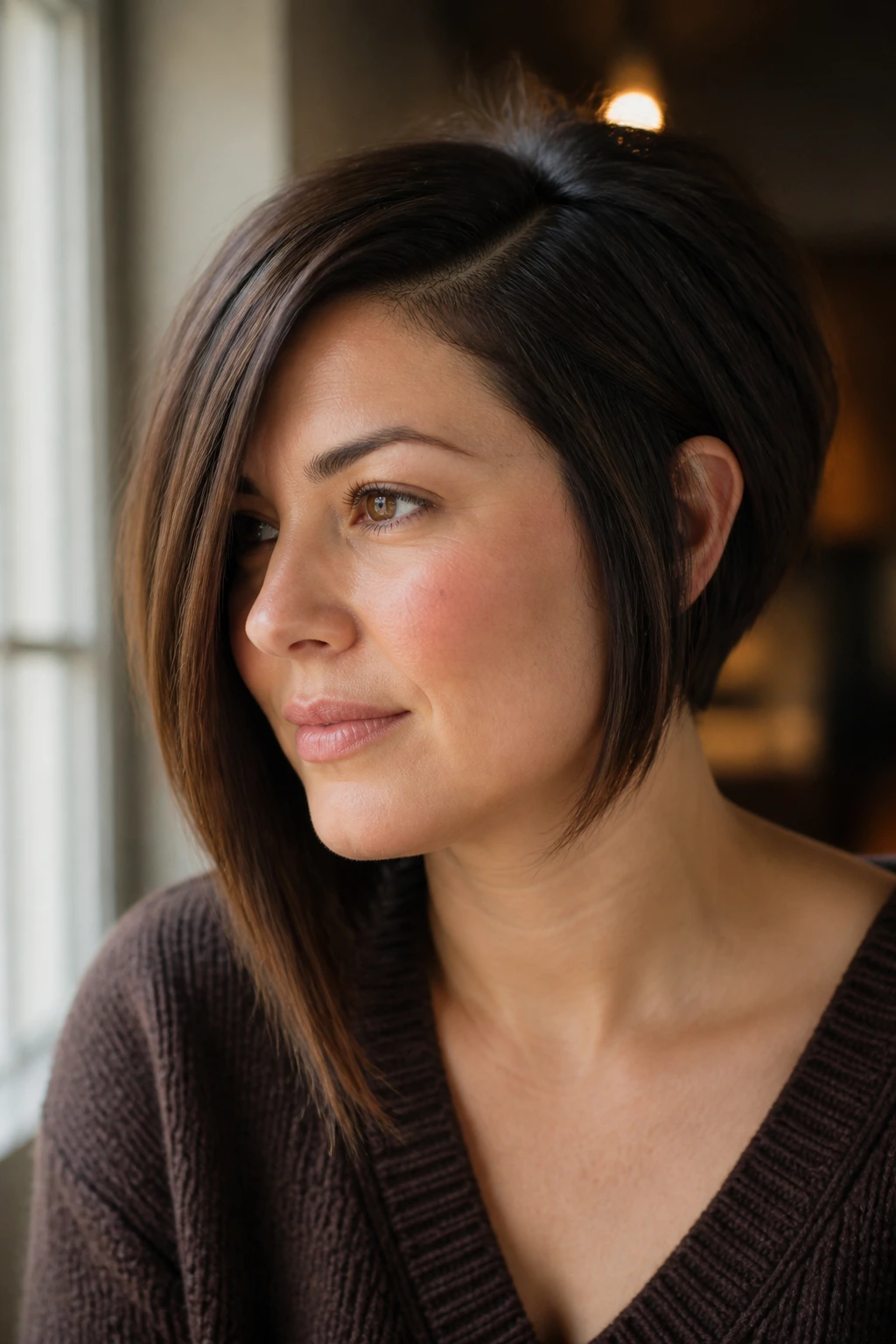
For round faces, the goal is usually a little vertical lift and a little diagonal movement. A longer front piece helps pull the eye down, and a side part can keep the cut from sitting too evenly across the cheeks.
I’d avoid a version that stops exactly at the widest part of the face. That can make the shape feel stuck there. Better to let the longer side drop below the chin, even if the shorter side stays just at the jaw.
Layers can help, but keep them controlled. You want the line to slim and lengthen, not turn poofy. That’s the mistake people make when they chase volume in the wrong spot.
27. Asymmetrical Bob for Square Faces

Square faces often look excellent with a bob that softens the jaw just a little. A curved front, a piecey fringe, or a textured edge can stop the haircut from feeling too boxy. The asymmetry helps because it breaks up symmetry around a strong jawline.
The shape does not need to be floppy. It just needs some give. A hard blunt edge right at the jaw can look severe in a way that feels more like a helmet than a haircut, which is not the goal.
A soft bend through the front pieces often works better than tight curls. Keep the perimeter crisp enough to stay intentional. Soft, not fuzzy.
28. Asymmetrical Bob for Oval Faces
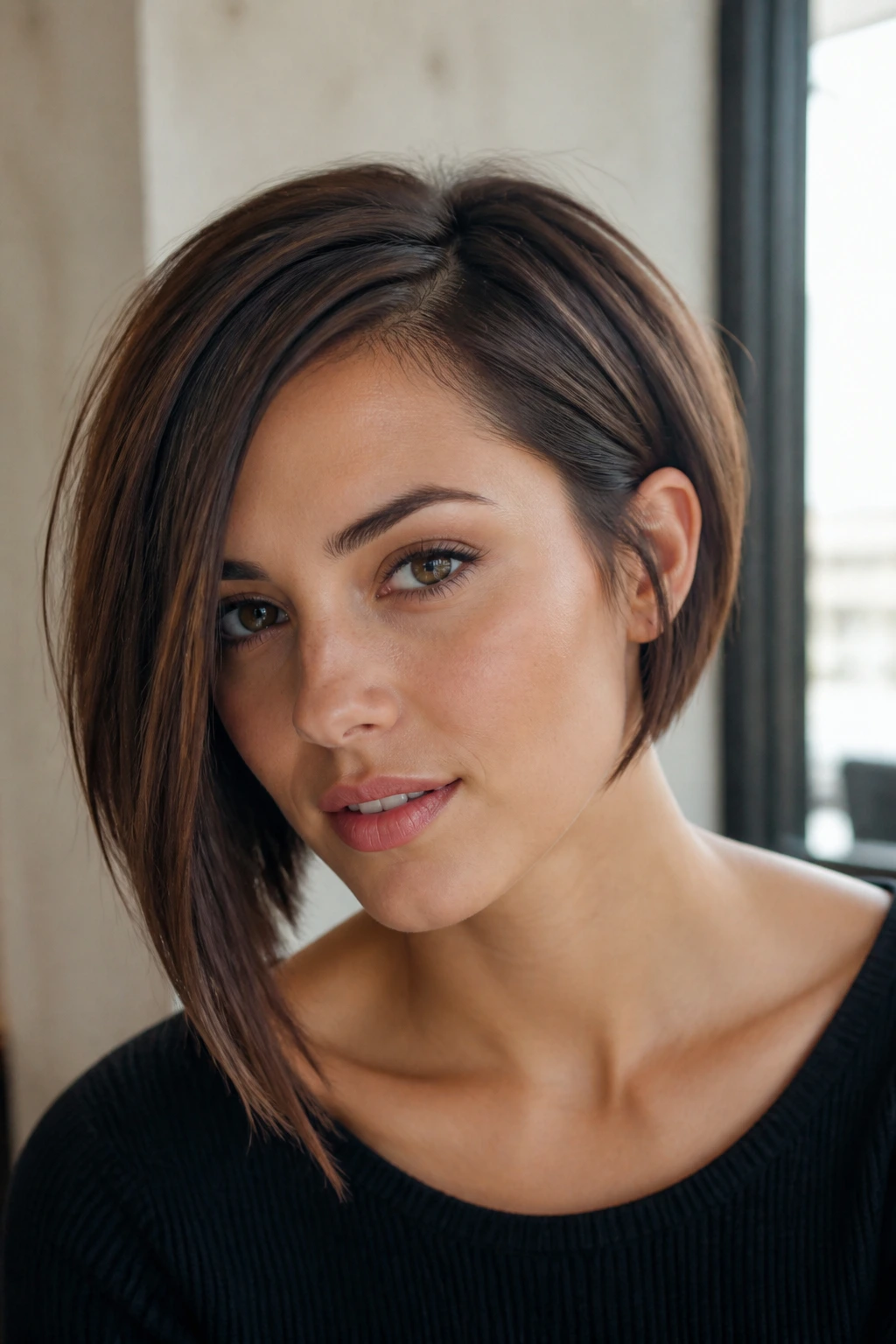
Oval faces can wear almost any version of this cut, which is both a blessing and a trap. Because so many shapes work, it’s easy to end up with something generic. Don’t do that. Oval faces can handle more dramatic angles, sharper fringes, or a deeper side part.
If your face shape is already balanced, use the haircut to create a mood. Go sleek, blunt, shaggy, or tucked. The asymmetry doesn’t have to correct anything; it can simply give the style some personality.
That freedom is nice, but it also means the cut should match your hair texture and daily routine. If you never heat-style your hair, a high-maintenance glass bob may sound good and behave badly.
29. Asymmetrical Bob for Heart-Shaped Faces

Heart-shaped faces often benefit from a little extra fullness around the jaw so the chin area doesn’t feel too light compared with the forehead. A longer side that lands near the jaw or collarbone can help balance that out.
Side-swept bangs or curtain bangs also work well here because they soften the top of the face before the eye reaches the length of the bob. That gives the haircut a more even visual spread. I’d avoid a version that’s too narrow at the ends.
A gentle A-line or a softer lob usually works better than an extreme short-back, long-front shape. The goal is balance, not drama for its own sake.
30. Asymmetrical Bob for Natural Curls
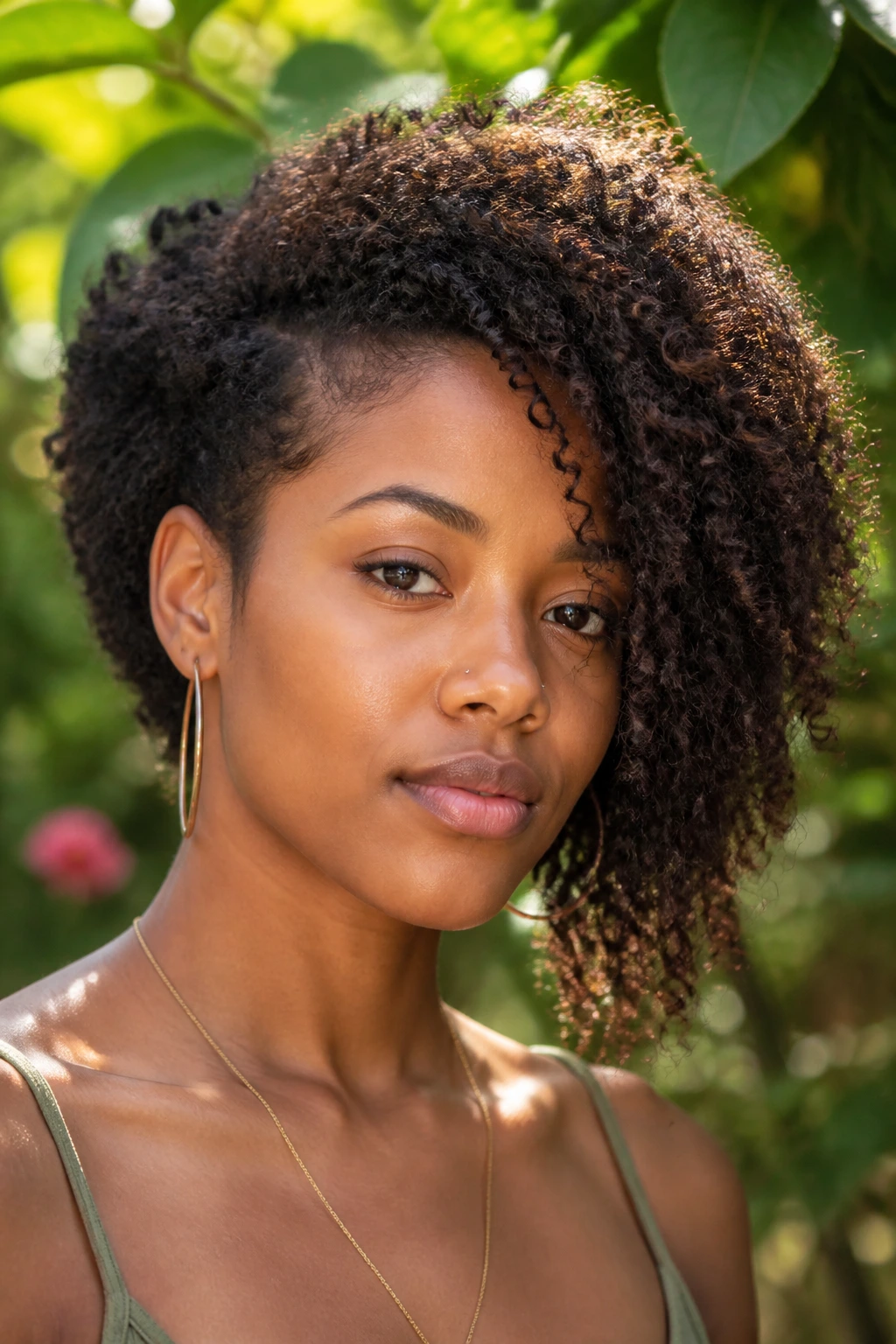
Natural curls need the angle cut with the shape of the curl in mind, not just a straightened outline. A curl pattern can spring up an inch or two, sometimes more, which means the longer side has to be long enough to survive that shrinkage and still read as longer.
A curl-friendly asymmetrical bob usually has a stronger perimeter and controlled shaping through the interior. Too much layering can make the shorter side puff out, which ruins the line. Cut dry, or at least dry enough to know where the curls actually sit.
This cut can be gorgeous on curls because it gives structure without taking away bounce. The silhouette feels intentional, and the texture gets to be itself.
31. Asymmetrical Bob for Coily Hair
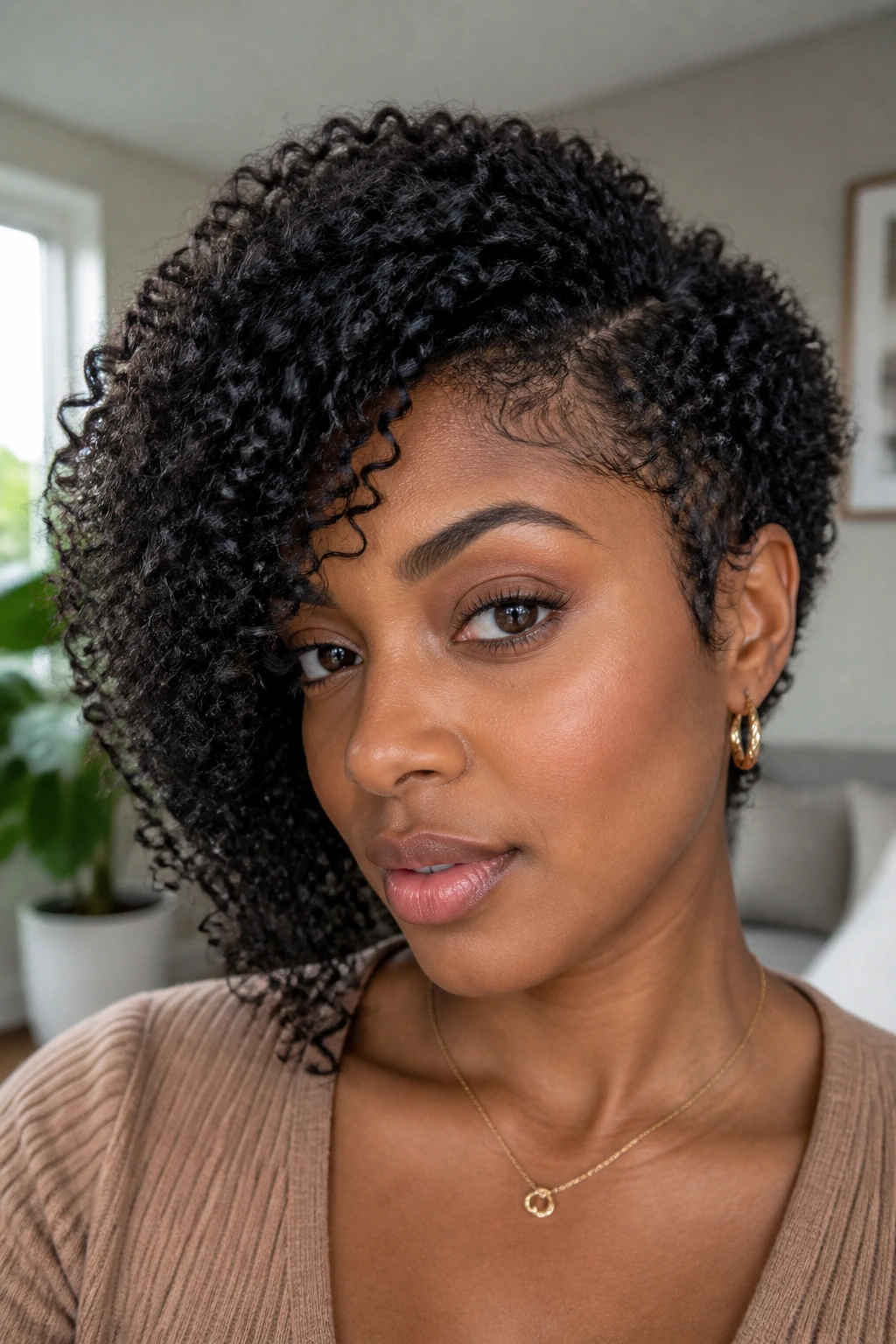
Coily hair brings the same shrinkage issue, only louder. The haircut has to be designed around the natural spring of the coils, or the asymmetry will disappear into the texture. That doesn’t mean you need to flatten anything. It means the shape has to be smarter.
The best coily asymmetrical bobs keep a strong silhouette at the ends and let the interior do its own thing. A little more length on the longer side can help preserve the visual angle after drying. Moisture matters too; dry coils can lose definition and make the cut look fuzzier than it is.
A good leave-in and a diffuser or air-dry routine can keep the shape coherent. The haircut is only half the story here.
32. Flipped-End Asymmetrical Bob
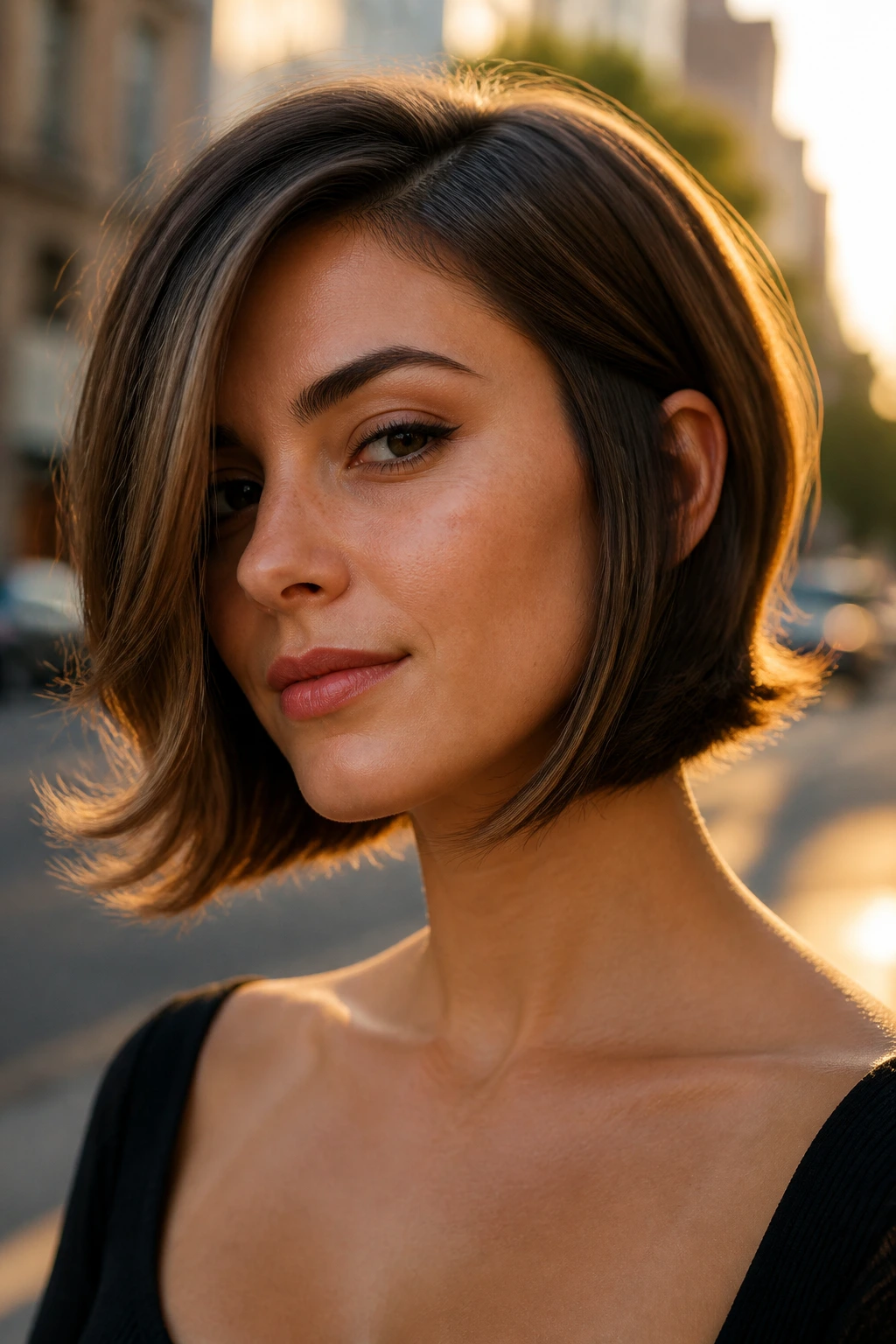
Flipped ends bring a little retro energy to the cut. The longer side can curl outward at the tips while the shorter side stays cleaner, which makes the asymmetry feel playful instead of severe.
This works best with a round brush or a slight pass of the flat iron at the ends. You don’t want a full curl. Just a bend. A hard flip looks dated in a hurry; a soft flip feels modern and a little cheeky.
It’s a good option if you want movement but don’t want beach waves every single day. The ends do enough talking on their own.
33. Wet-Look Asymmetrical Bob
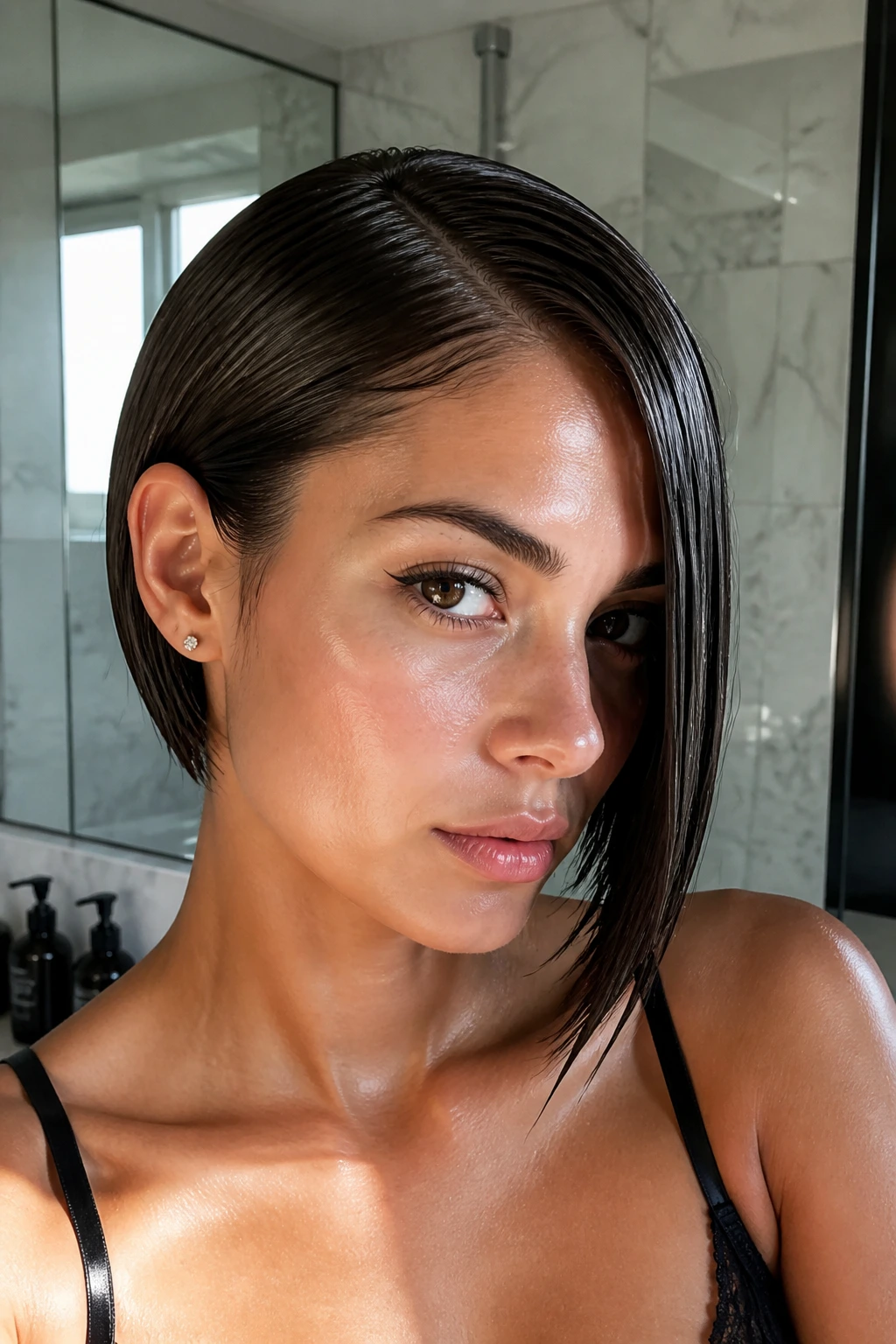
Wet-look styling makes the bob feel sleek, directional, and a bit dramatic. The asymmetry shows through because the hair is smoothed tightly to the head, and the longer side often looks even more pronounced when the product is high-shine.
This is more of an occasion style than an everyday one for most people, but it’s useful to know how it behaves. Gel, cream, and a fine-tooth comb can create that lacquered surface, while the diagonal line of the cut keeps it from looking too simple.
Don’t pile on too much product. The finish should look controlled, not crunchy. There’s a difference, and you can see it from across the room.
34. Grow-Out Friendly Asymmetrical Bob

If you know you’re likely to grow the cut into a lob, start here. The shorter side should still feel purposeful, but the longer side can sit closer to the collarbone so the shape doesn’t turn awkward the moment it grows a half inch.
This is the version for people who like the idea of asymmetry but don’t want to chase a salon appointment every four weeks. It softens over time in a decent way. That matters more than people admit.
A grow-out friendly bob usually works best with softer layering and a slightly less aggressive angle. It keeps its shape longer and asks less of you between trims.
35. Polished Blowout Asymmetrical Bob
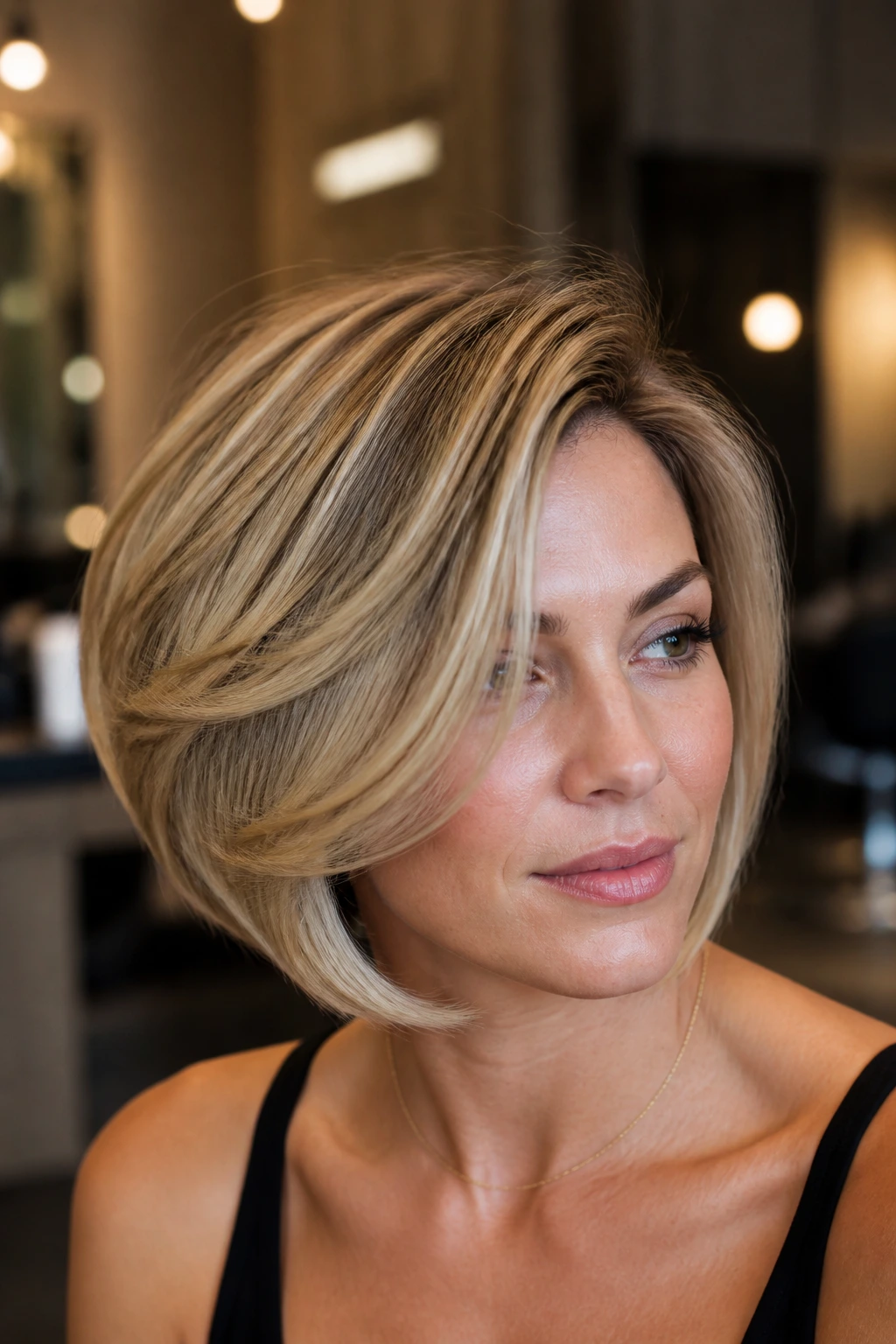
A round-brush blowout gives the asymmetrical bob bounce, body, and that slightly curved finish that makes the hair look handled, not overdone. The longer side swings. The shorter side lifts. The whole cut moves like it has a built-in fan under it.
This version works especially well on medium-density hair and on any bob that needs a little softness around the face. The blowout can smooth the line without flattening it, which is the whole challenge with this haircut. Flat is boring. Puffy is worse. The good blowout sits right in the middle.
A medium round brush, a nozzle on the dryer, and patience at the roots make a bigger difference than fancy products. Dry each section until it’s fully set, then let it cool before touching it. That cooling step matters more than most people realize.
Styling an Asymmetrical Bob So the Short Side Does Not Collapse
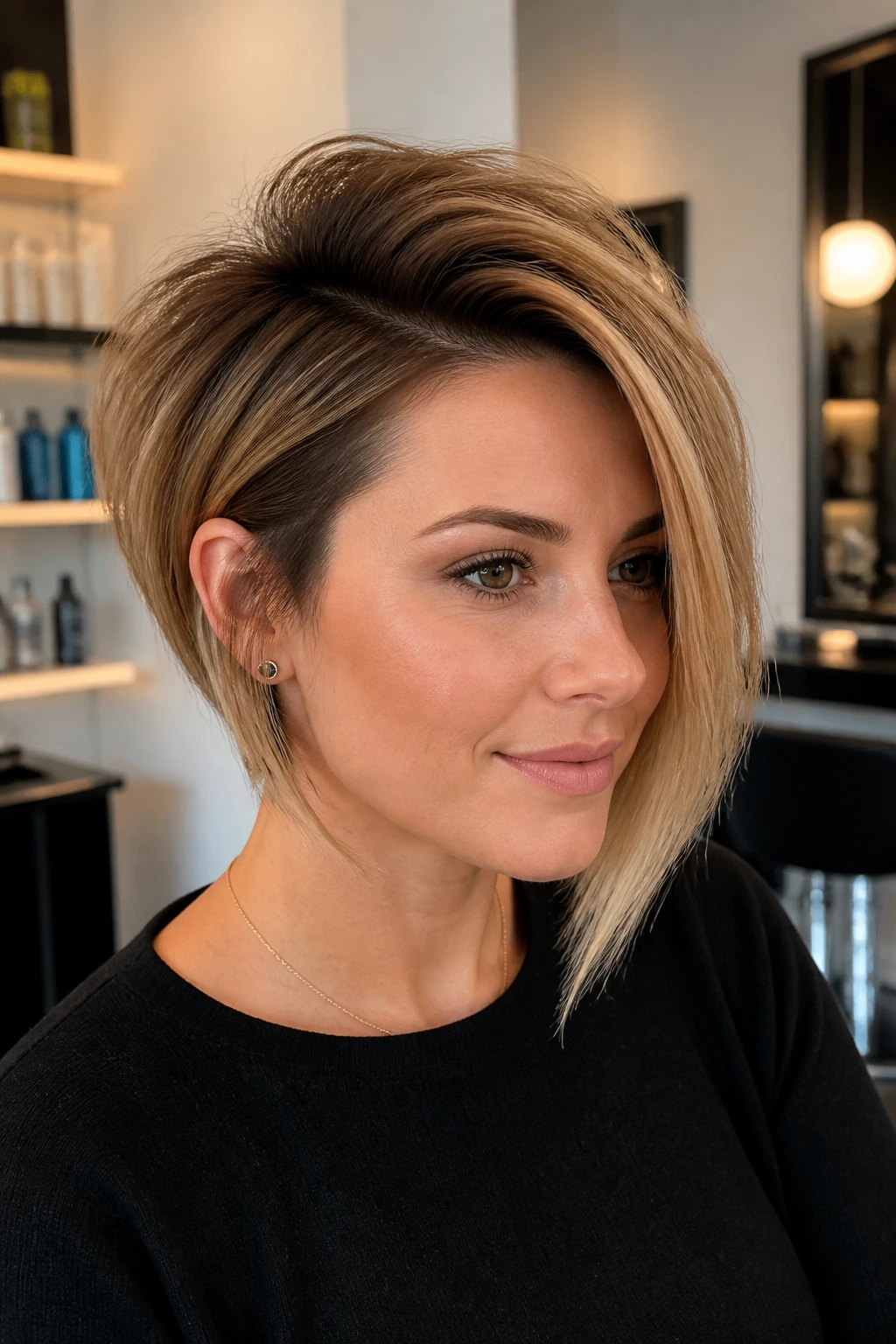
The short side of an asymmetrical bob usually needs more root support than the long side. That’s normal. It sits higher, so it has less hair weight helping it stay lifted. If you ignore that, the cut can start leaning flat on one side by lunchtime.
A blow-dryer with a nozzle is the easiest fix. Aim the air at the roots first, then smooth the mid-lengths. Don’t blast the ends from every direction like you’re trying to start a small fire. You want shape, not chaos.
Root lift: Use mousse or root spray at the crown and the shorter side before drying. It keeps the front from sagging.
Direction: Blow the shorter side slightly away from the face, then set it with a cool shot. That little bend helps the line sit up.
Finish: Use a light serum only on the ends, and keep it away from the roots unless you want the style to go limp.
Common Mistakes That Make the Cut Look Off

The most common mistake is making the angle too extreme for the hair density. On paper, a dramatic difference sounds fun. In real life, if one side is five inches longer and the hair is fine or curly, the balance can collapse fast. Start with a smaller difference unless you know your texture can carry more.
Another problem is over-layering the entire cut. When every section gets thinned out, the bob loses its clean outline and turns fuzzy at the edges. The asymmetry should be the main event. Texture should support it, not erase it.
Cutting the front too short is another one. If the longer side barely clears the jaw, you lose the frame that makes the haircut feel intentional. Give the front enough length to create a line, even if the rest is compact.
And yes, the part matters. A center part can blunt the effect on some faces, while a deeper side part can sharpen it up in a second. Tiny change. Big difference. Annoying, but true.
Variations Worth Saving for Later

Soft and subtle: Ask for a barely-there angle with a one-inch difference between sides. It’s a good entry point if you want the shape without the statement.
Sharp and graphic: Go for a blunt perimeter, a deep side part, and a clear drop from the shorter side to the longer side. This version reads modern and clean.
Texture-forward: Keep the bob asymmetrical but add waves, bends, or soft layers. The cut stays visible, but the mood gets looser.
Curly and sculpted: Shape the bob around natural curls or coils, then keep the longer side long enough to survive shrinkage. That’s the key.
Color-led: Pair the angle with balayage, copper, or a two-tone panel so the line is easier to see from every angle.
Tools, Brushes, and Products That Matter
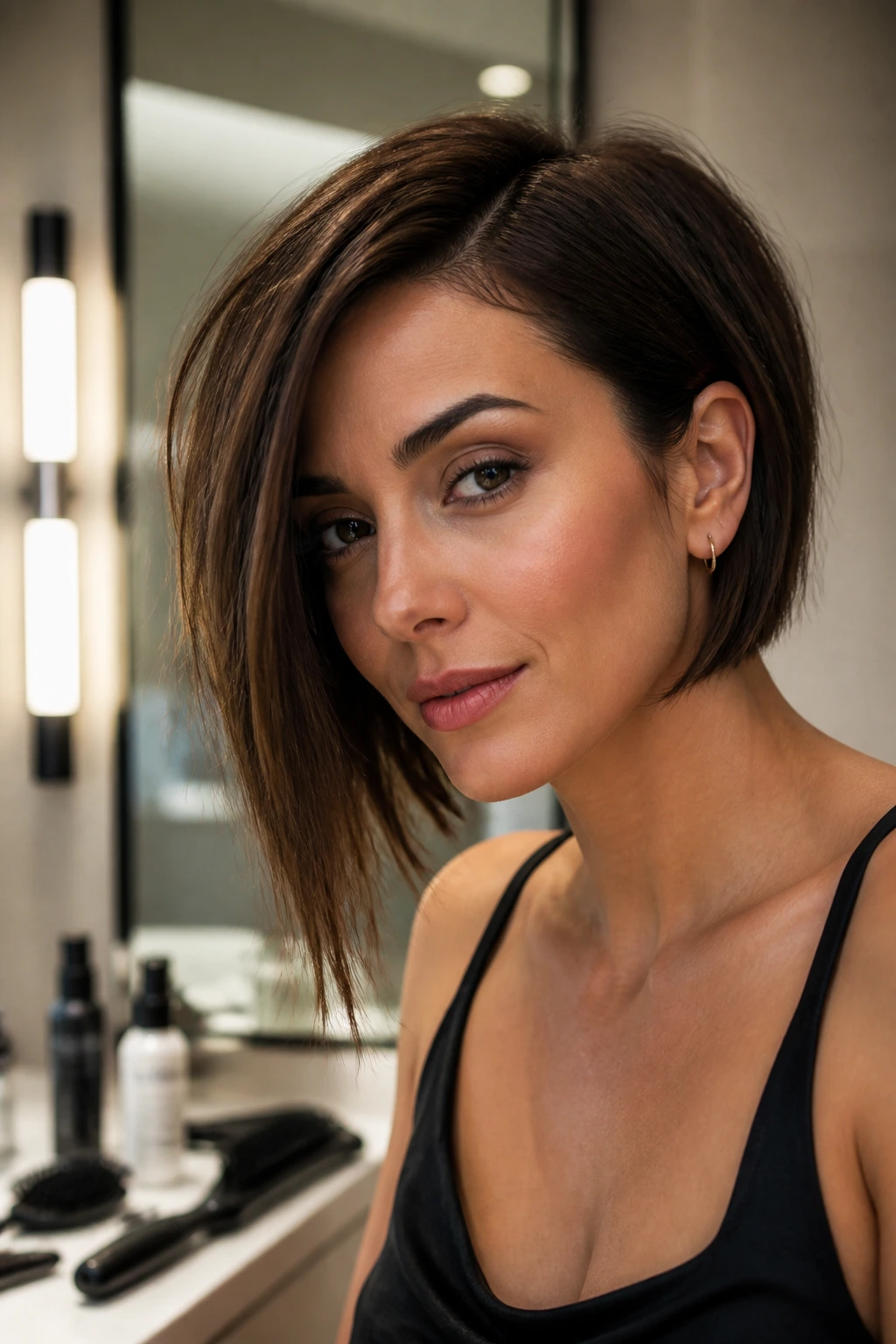
-
Sharp haircutting shears: Needed for a clean perimeter; dull scissors chew up the ends and make the line look frayed.
-
Fine-tooth tail comb: Useful for accurate parts and sectioning before blow-drying or styling.
-
Blow dryer with a nozzle: Directs the airflow so the shorter side can be lifted without puffing out.
-
Round brush, 1 to 1.5 inches: Best for beveling the ends under or flipping them out with control.
-
Flat iron, 1 inch: Helpful for sleek versions and glass-hair finishes, especially on blunt asymmetrical bobs.
-
Heat protectant spray: Keeps polished looks from getting fried, which matters more than people like to admit.
-
Texturizing spray: Good for tousled, piecey, or choppy versions where you want separation.
-
Light serum or smoothing cream: A tiny amount keeps the ends from looking dry on straight styles.
-
Diffuser: Worth having if your bob is curly or coily and you want the angle to hold.
Keeping the Shape Sharp as It Grows Out
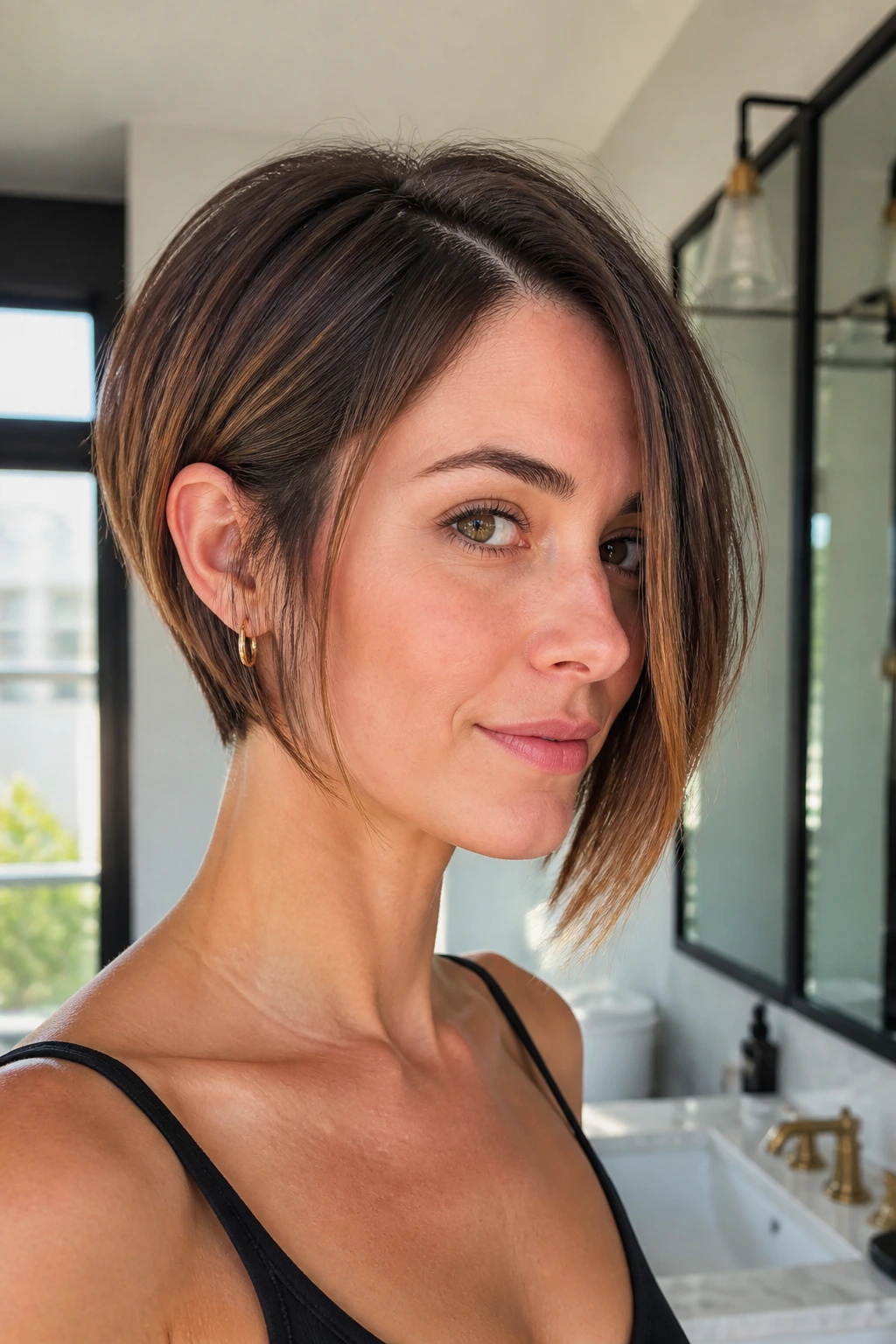
An asymmetrical bob usually needs trims every 6 to 8 weeks if you like it crisp. If you wear a longer, softer version, you can sometimes stretch that to 8 to 10 weeks. The more dramatic the angle, the faster it shows growth.
At home, sleeping on a smooth pillowcase can help the style hold its shape a little longer. Not magic. Just less friction. A quick dry shampoo at the roots on day two or three can also keep the shorter side from collapsing under oil.
If you want to grow it out, ask the stylist to soften the asymmetry gradually instead of chopping it off in one round. That keeps the transition into a lob from looking lopsided. Very small trims. Very useful.
Frequently Asked Questions
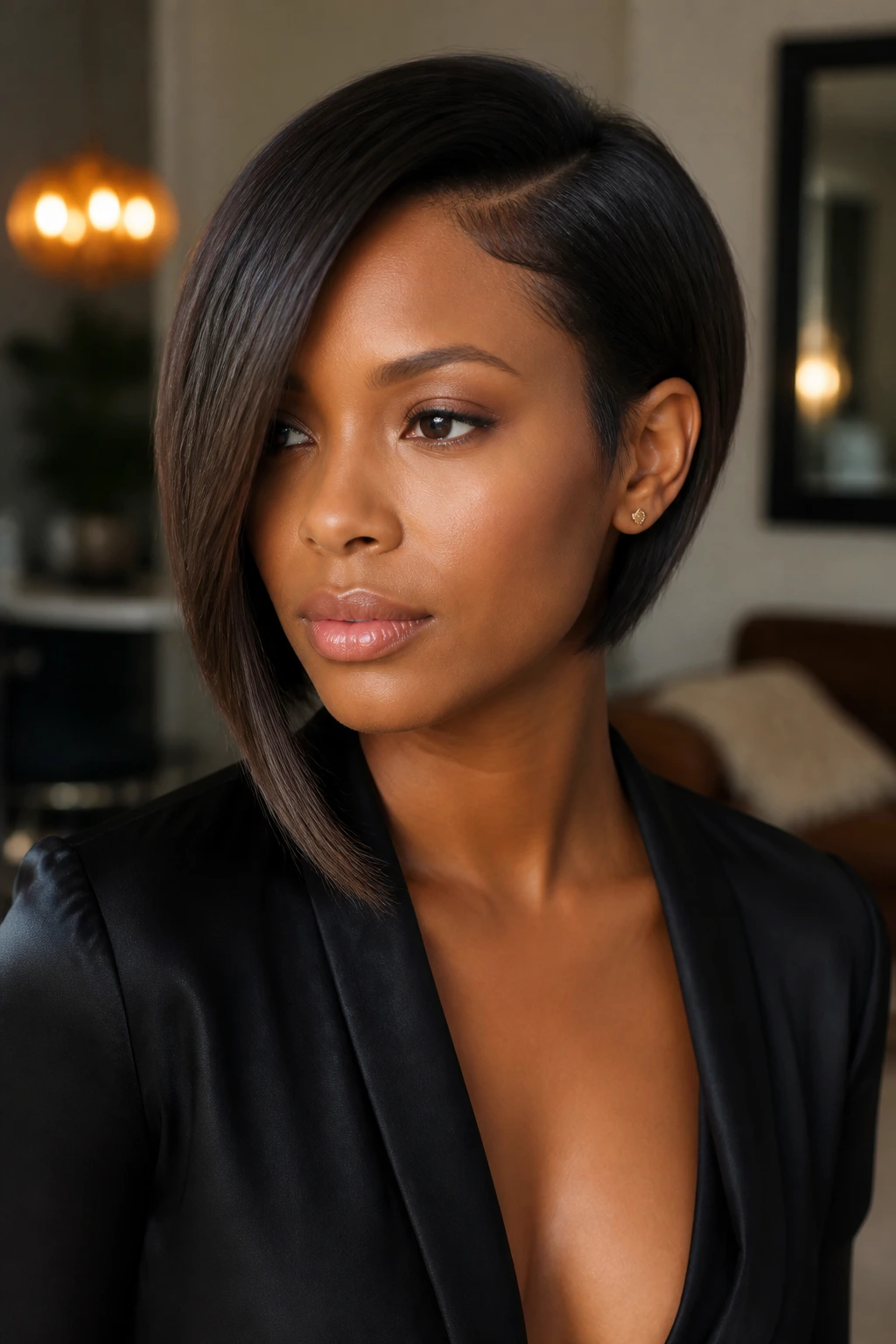
Will an asymmetrical bob work on thick hair?
Yes, but the inside of the haircut has to be handled carefully. Thick hair usually needs weight removal and a clear perimeter so the shorter side doesn’t puff out and the longer side doesn’t drag.
Can I wear an asymmetrical bob with curly hair?
Absolutely. The cut just has to be shaped with shrinkage in mind. Curly and coily hair usually looks best when the bob is cut dry or at least partially dry so the real length is easy to judge.
What face shape suits an asymmetrical bob best?
A lot of them do, but round and square faces often benefit from the diagonal line the most. Round faces get a longer visual line, and square faces get a softer frame around the jaw.
How short should the shorter side be?
That depends on how dramatic you want the cut to feel. A subtle version might differ by about an inch; a bolder version can run several inches shorter on one side. If you’re unsure, start smaller.
Does this haircut need a lot of styling every day?
Not always. Sleek versions need more blow-drying or flat ironing, while textured and wavy versions can be air-dried with a little product. The cleaner the line, the more the styling matters.
What if one side starts flipping out weirdly?
That usually means the brush direction or the cut angle is fighting the natural bend of your hair. Try drying the shorter side with tension and a nozzle first, then cool it in place. If the problem keeps happening, the cut may need a softer edge.
How often should I trim it?
Every 6 to 8 weeks is the safest window for keeping a sharp angle. If the style is long and soft, you can often go a little longer before it loses its shape.
Can I grow an asymmetrical bob into a lob?
Yes, and it usually grows out better than a blunt bob. Ask for softening trims as it lengthens so the angle stays intentional while the overall shape gets longer.
The Shape That Stays Sharp
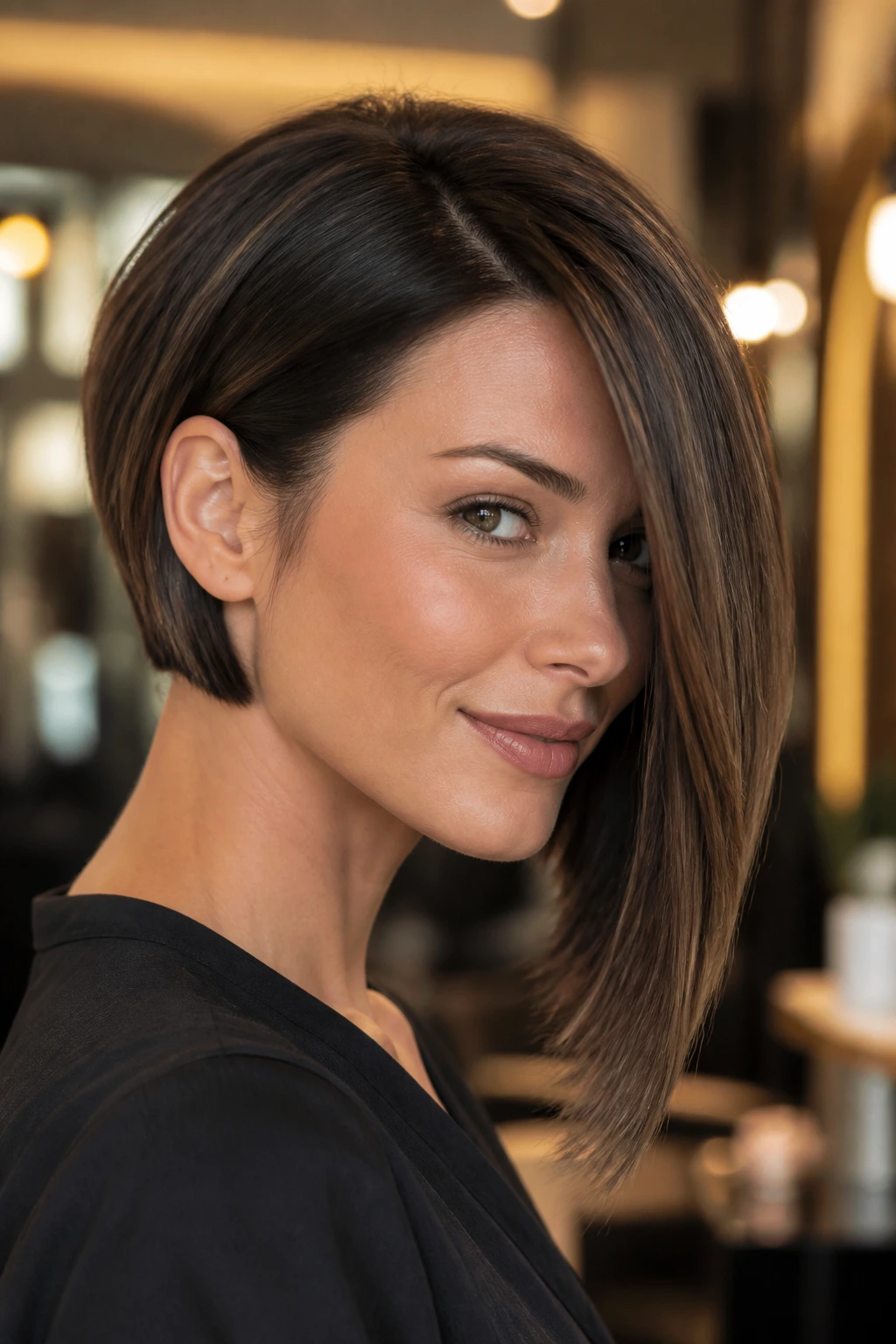
An asymmetrical bob works because it gives hair a direction. That’s the real trick. Even the softer versions have a line to follow, and once that line is in place, the whole haircut starts doing more than one job at a time.
The best version for you is the one that fits your texture, your part, and your tolerance for upkeep. Keep the angle clean, keep the styling honest, and don’t let the cut lose its outline to too many layers or too much fuss. A bob like this looks best when it knows exactly what it is.
If you’re saving ideas for your next salon visit, start with the version that feels closest to your daily routine, then push the angle a little if you want more shape. That tiny shift is usually where the haircut gets interesting.
