



Cornrows can look razor-neat or soft and playful, and the difference usually lives in the details: where the part sits, how the braid curves, how much hair gets fed in at the root, and whether the hairline is being respected instead of bullied. A good set of cornrow styles for Black women does more than sit pretty for a photo. It gives the scalp a break, keeps the hair organized, and can make getting dressed in the morning feel oddly civilized.
I’ve always liked cornrows when they solve a real problem. Hair that needs a rest. Mornings that are too busy for loose curls and hot tools. A style that can survive a scarf, a workout, a long commute, or a day spent leaning over a laptop without turning into a frizz halo by lunch. Cornrows do that well, but only when the braid pattern fits the hair and the head shape instead of forcing both into a shape they don’t want.
The other thing people forget is that cornrows are not one look. Straight-back rows can feel clean and calm. Curved rows feel softer. Stitch braids look sharp enough to draw a second glance. Beads, cuffs, thread, and curly ends change the mood fast. If you’ve been wearing the same braid pattern over and over, the styles below should give you a few good reasons to switch it up.
Why These Cornrow Styles Work So Well
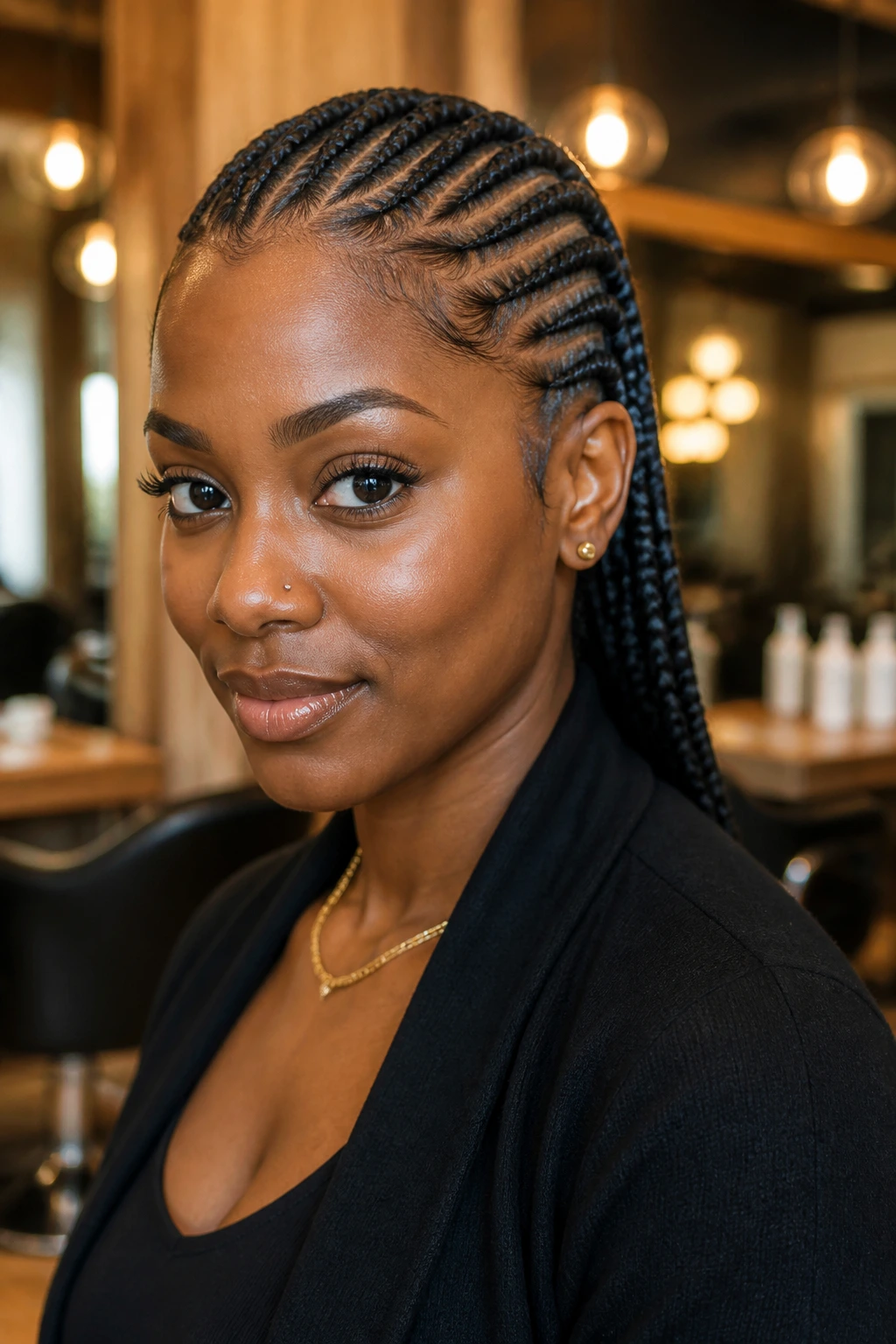
- Low-manipulation styling: Cornrows keep the hair close to the scalp, which cuts down on daily combing, stretching, and twisting that can wear hair out fast.
- Shape does the talking: A center part, side sweep, or curved row can change the whole face frame without changing the basic braid size.
- Easy to dress up: Beads, cuffs, thread wraps, and curly ends can turn plain rows into a finished look with one small detail.
- Short or long hair friendly: Some styles work on a few inches of natural hair, while others look fuller with feed-in hair or extension hair.
- Salon or at-home range: Straight-back rows and simple ponytail cornrows are realistic for many hands; stitch braids and spiral parts usually reward a more practiced braider.
- Wearable past day one: The styles that last best usually start with clean parts, a gentle grip at the hairline, and a finish that is not overloaded with product.
1. Classic Straight-Back Cornrows
Straight-back cornrows are the style people picture first for a reason. They’re clean, easy to read, and they let the parting line do the work without any extra drama. If you want a style that looks neat in a headscarf, a hoodie, or a blazer, this is the one I’d put at the front of the line.
What matters here is spacing. Ask for even rows from the front hairline to the nape, with the first half-inch kept gentle so the style doesn’t pull at the temples. On tighter textures, a little stretch before braiding helps the rows lie flatter and keeps the finished look from puffing up too fast.
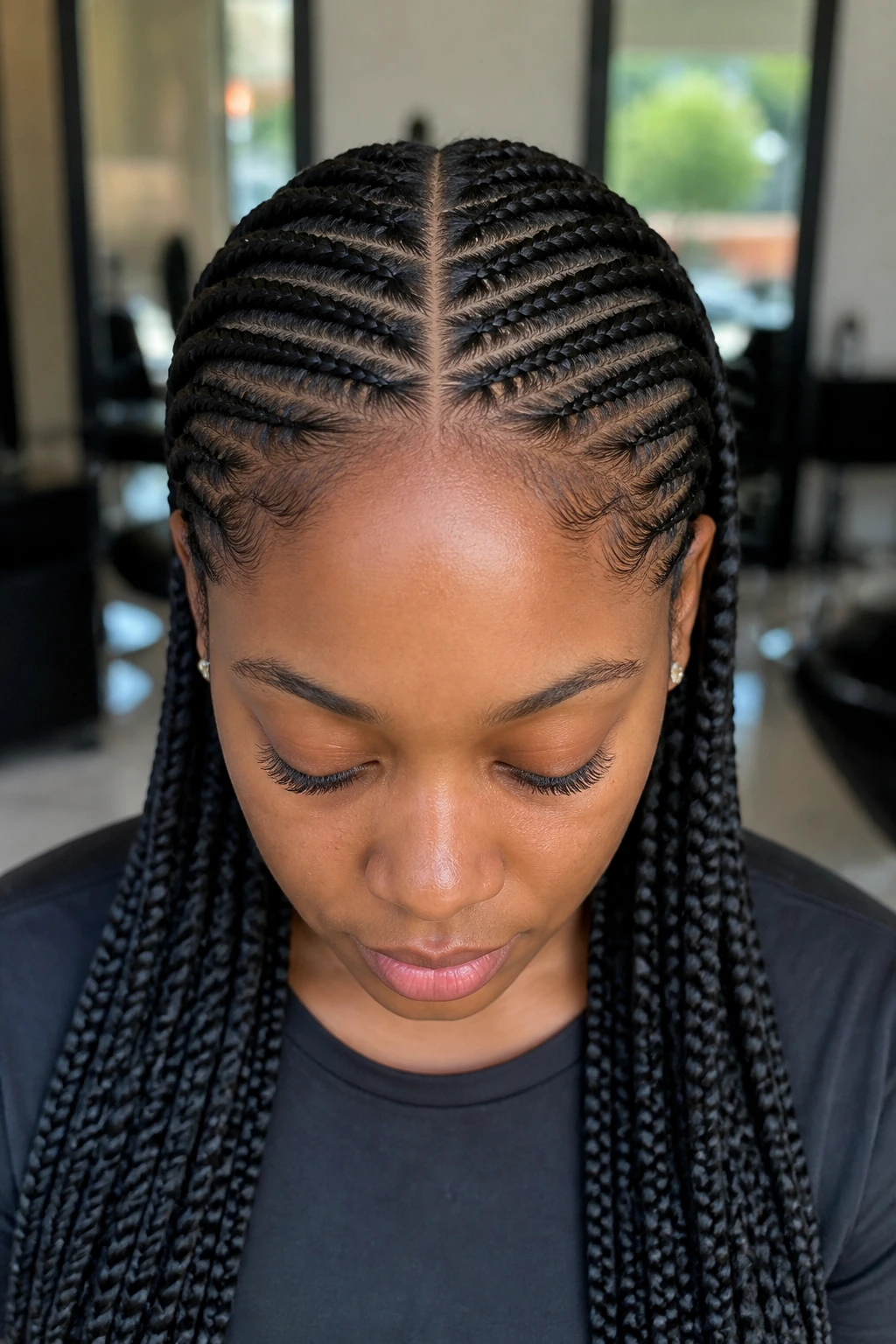
2. Center-Part Feed-In Rows
A sharp center part changes everything. It gives the face symmetry and makes the braid rows feel balanced, even when the hair itself is thick or uneven in density. Feed-in braids work especially well here because the braid starts slim and builds gradually, which keeps the root area from looking bulky.
This style has a neat, sleek edge without feeling stiff. It’s one of those cornrow styles for Black women that works just as well with hoop earrings and gloss as it does with a bare face and a sweatshirt. If your face reads best with balance, this pattern is a very safe bet.
3. Side-Swept Lemonade Braids
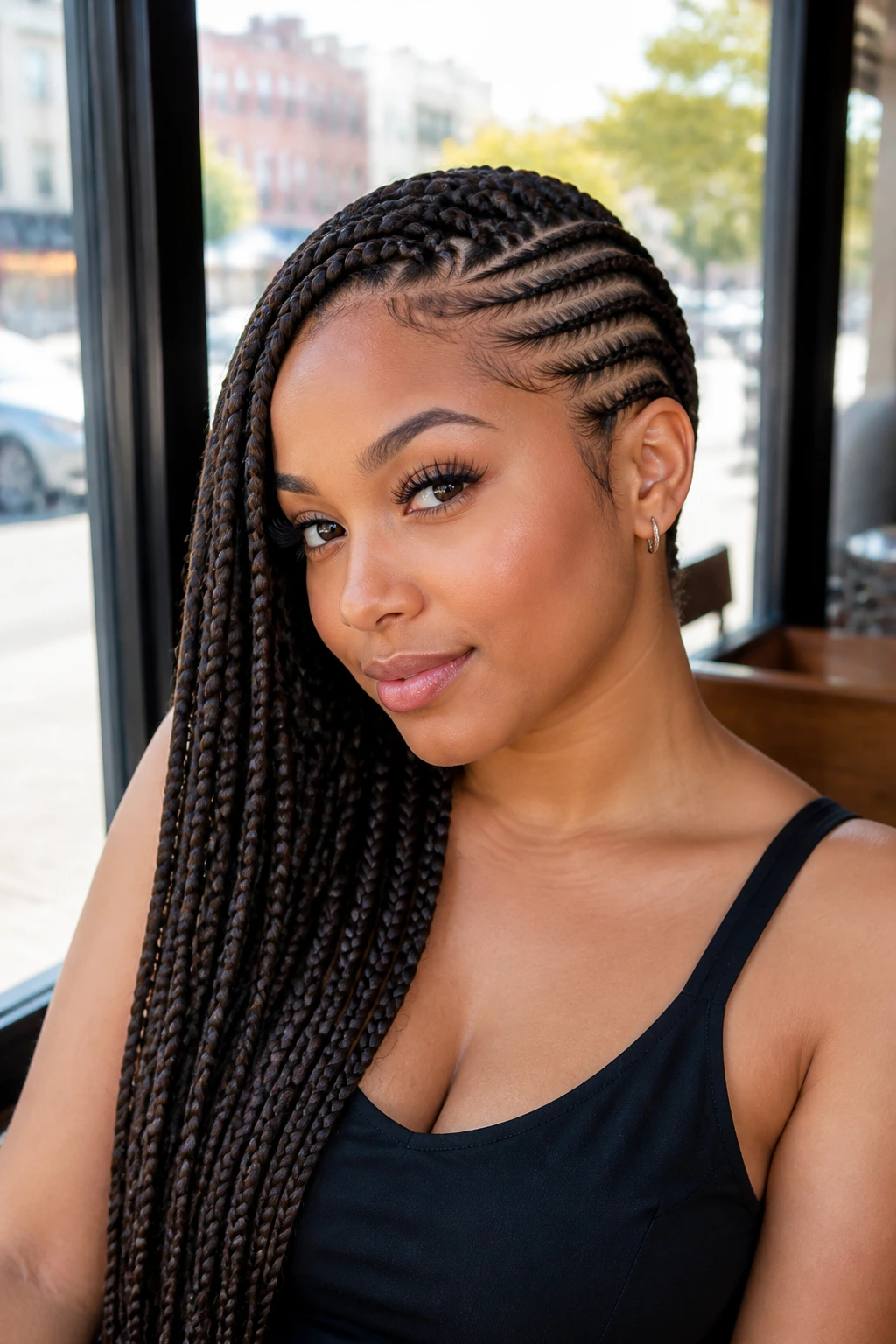
Side-swept cornrows change the whole mood of a braid set. Instead of running straight back, the rows angle across the scalp and fall toward one side, which gives the face a softer frame and a little movement. It’s a good choice when you want something more styled than straight-back rows but not fussy.
The side sweep also helps if one side of your hairline is fuller than the other. The braid direction pulls attention across the head instead of locking the eye into the center. That can be a small mercy on days when you want the style to look intentional from across the room and not too symmetrical to feel alive.
4. Curved C-Shape Cornrows
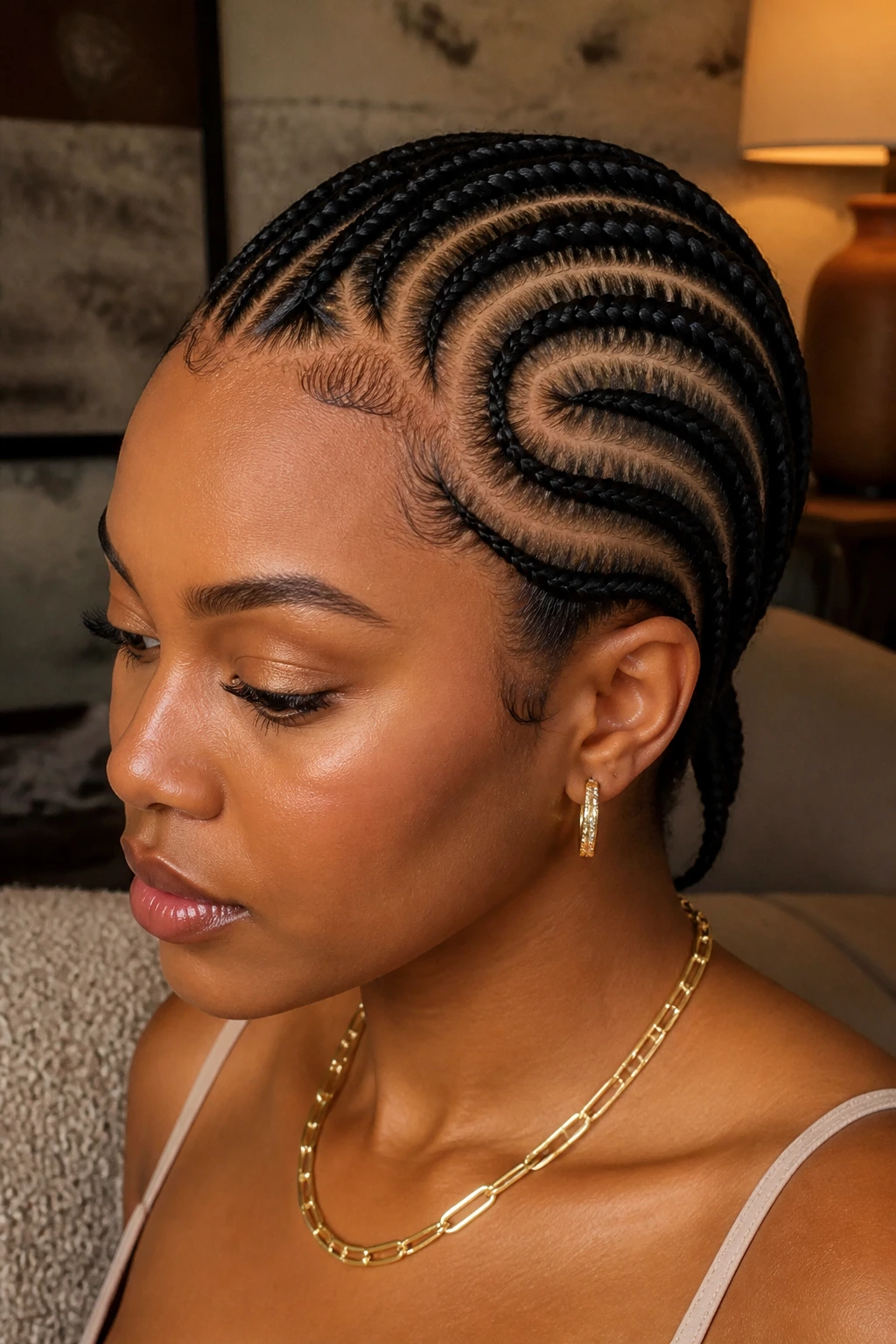
Curved cornrows are for when you want the braid pattern to feel fluid instead of rigid. The rows bend in soft arcs, often wrapping around the head in a C-shape that makes the scalp itself look patterned. It’s a beautiful option if you like styles that show off parting work.
A good curved set needs a braider who can keep the spacing even through the bend. If the curve gets tight or jagged, the whole effect falls apart. When it’s done well, though, the style has a smooth, sculpted look that feels a little more polished than straight lines.
5. Stitch Braids With Crisp Parts
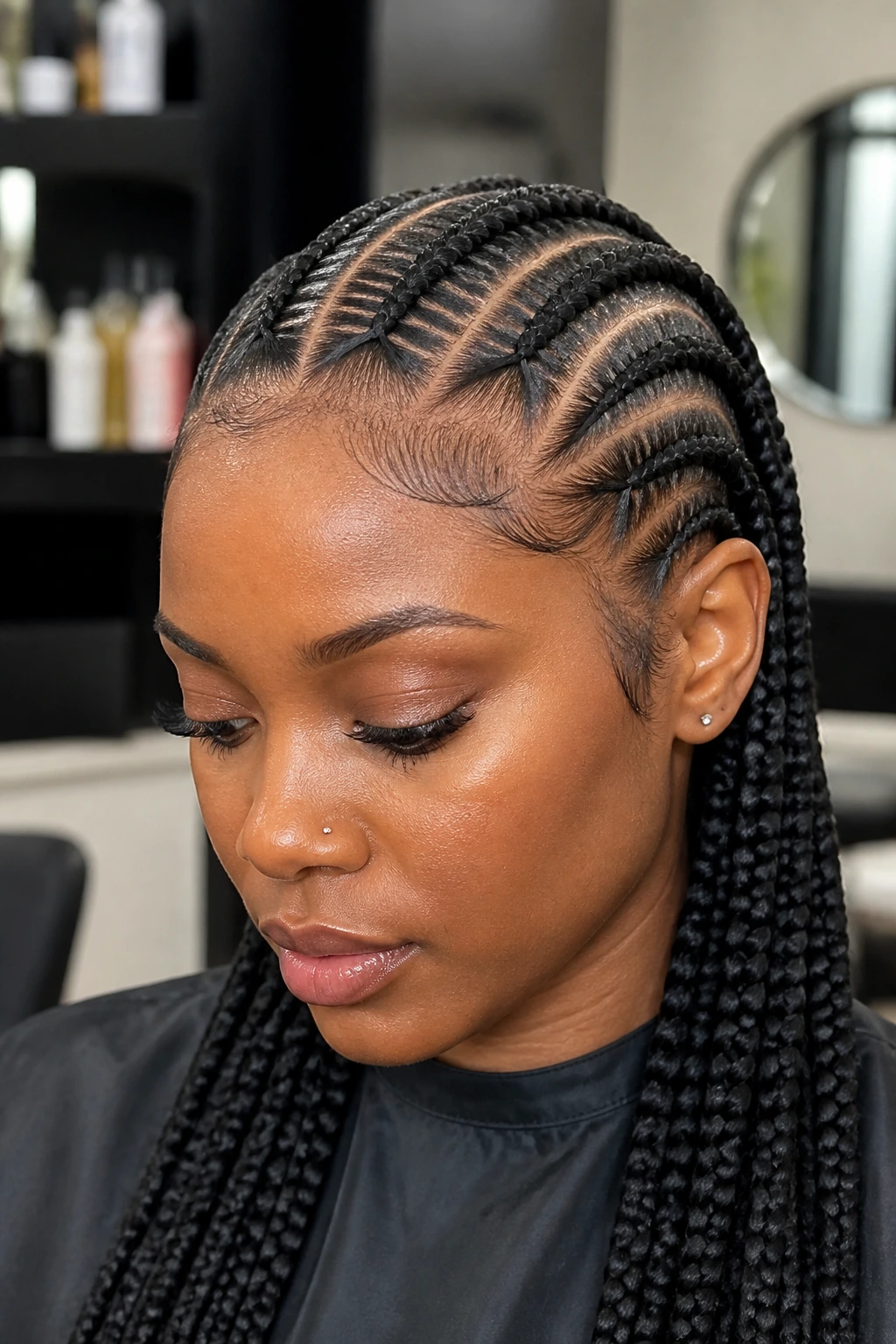
Stitch braids are the cousins that show up dressed better than everyone else. The parts look almost drawn on, with clean little “stitch” sections feeding into each braid. It’s a sharper, more detailed version of a cornrow look, and it loves precision.
This style takes a steady hand and a rat-tail comb. The lines need to stay clean from front to back, and the feed-in sections should be small enough to keep the braid flat at the base. If you like a braid pattern that looks deliberate from three feet away, stitch braids are hard to beat.
Best for a sharper finish
If you wear simple makeup, gold hoops, or a plain black tee and still want the hair to carry the look, stitch braids do that beautifully. They make the parting the feature.
6. Jumbo Cornrows With A Low Bun
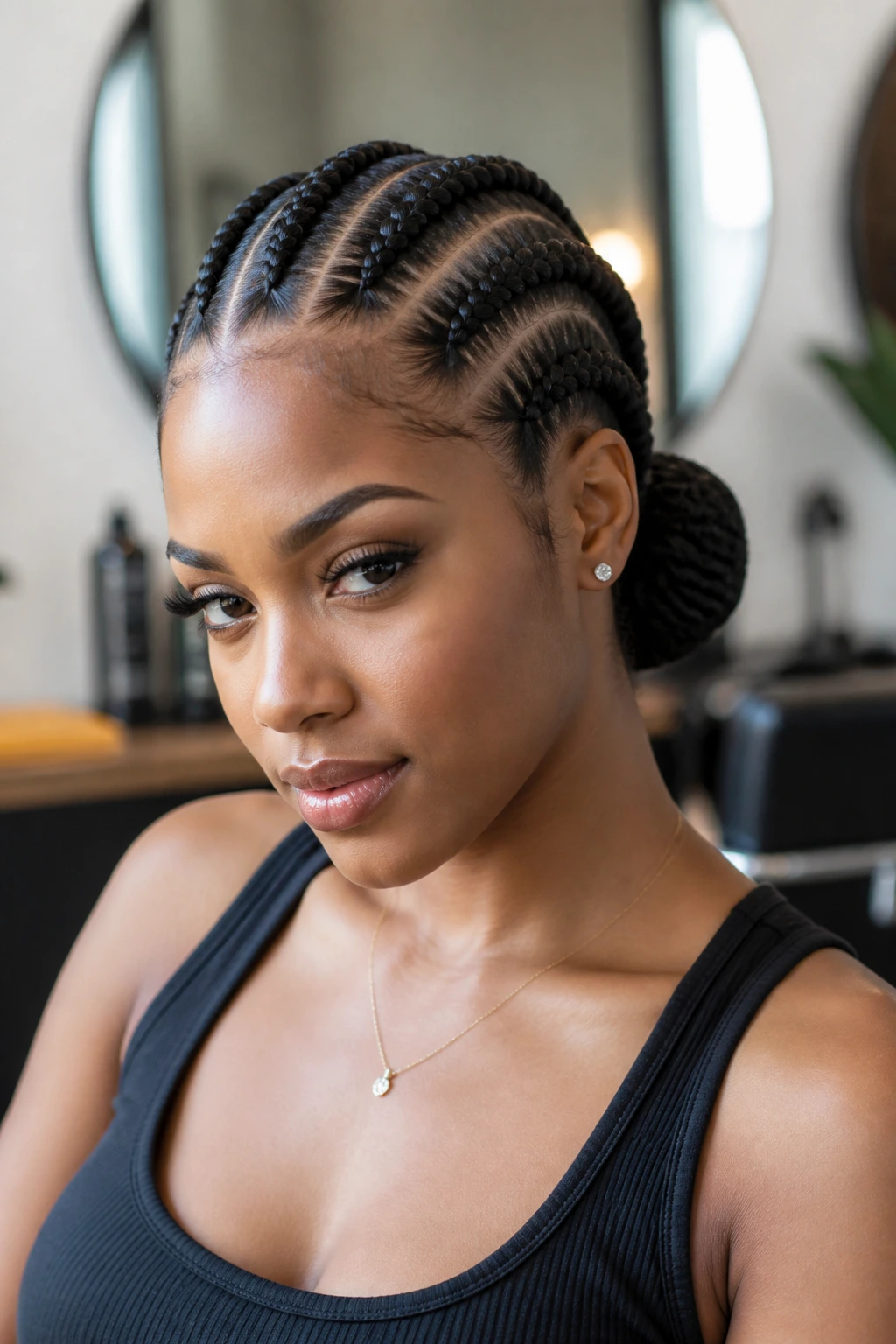
Jumbo cornrows are the blunt instrument of the cornrow world, and I mean that in the best way. Fewer rows, larger sections, faster install. The style reads bold without asking for a dozen tiny parts, which is helpful when your scalp wants less tension and your schedule wants fewer hours in the chair.
Pull the rows into a low bun at the nape if you want a tidy finish. That keeps the length off the neck and makes the style feel grounded. A low bun also gives the braid pattern a clean end point, which helps the whole look feel finished instead of floating.
7. Tiny Micro Cornrows
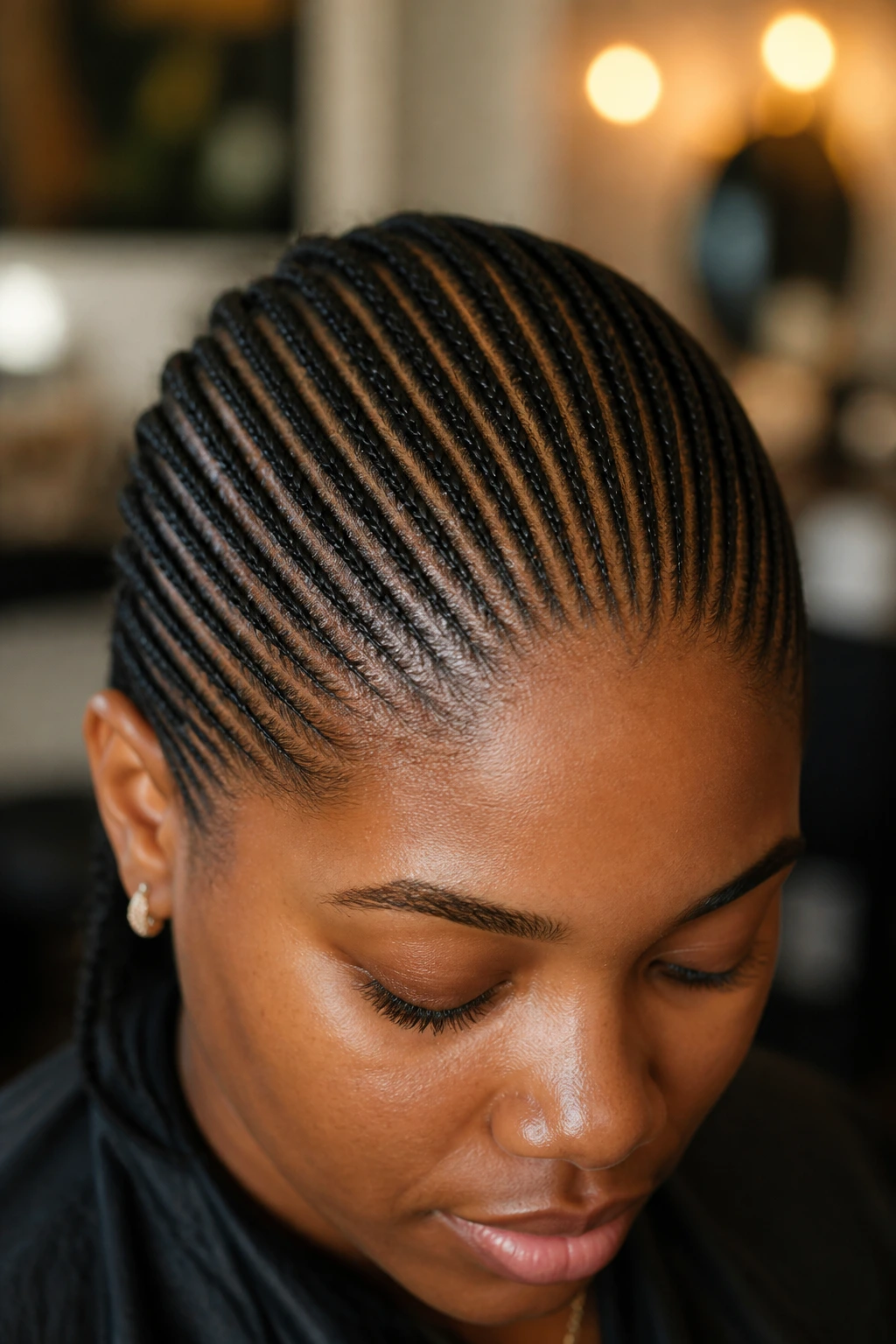
Micro cornrows are tiny, patient, and a little dramatic. They take time, yes, but they can stay neat for a good stretch and give the scalp a detailed, almost textured look that larger rows can’t match. The effect is especially pretty when the parts are straight and the rows sit close together.
These work well if you like a lighter feel on the head and don’t mind the install time. They’re also a smart option when you want flexibility later, because tiny rows can be gathered, pinned, or braided into other styles more easily than thick ones. They do, however, need a gentle hand. Small rows pulled too tight will complain.
8. Heart-Part Cornrows
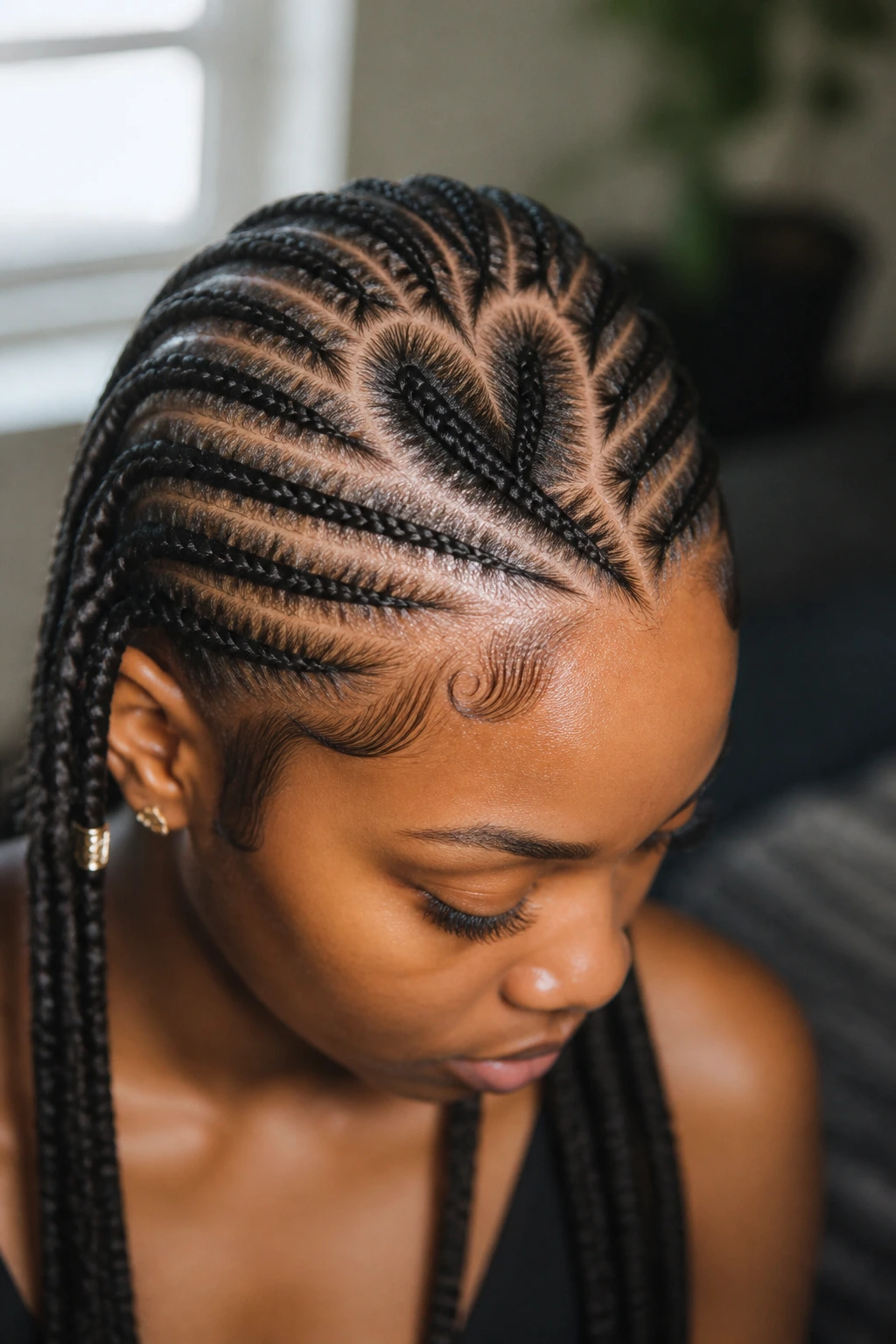
A heart part is the kind of detail people notice before they notice the braid count. It’s playful without turning the whole style into costume hair, which is a fine line to walk and not every braider gets it right. The heart usually sits near the front or crown, where the shape can be seen clearly.
This works best on clean, stretched hair, because a fuzzy root makes the shape blur. Ask for the heart to be centered with enough negative space around it so it reads as a heart, not just a random curve. It’s a sweet option for birthdays, school photos, or any day you want the parting to do a little extra work.
9. Triangle-Part Cornrows
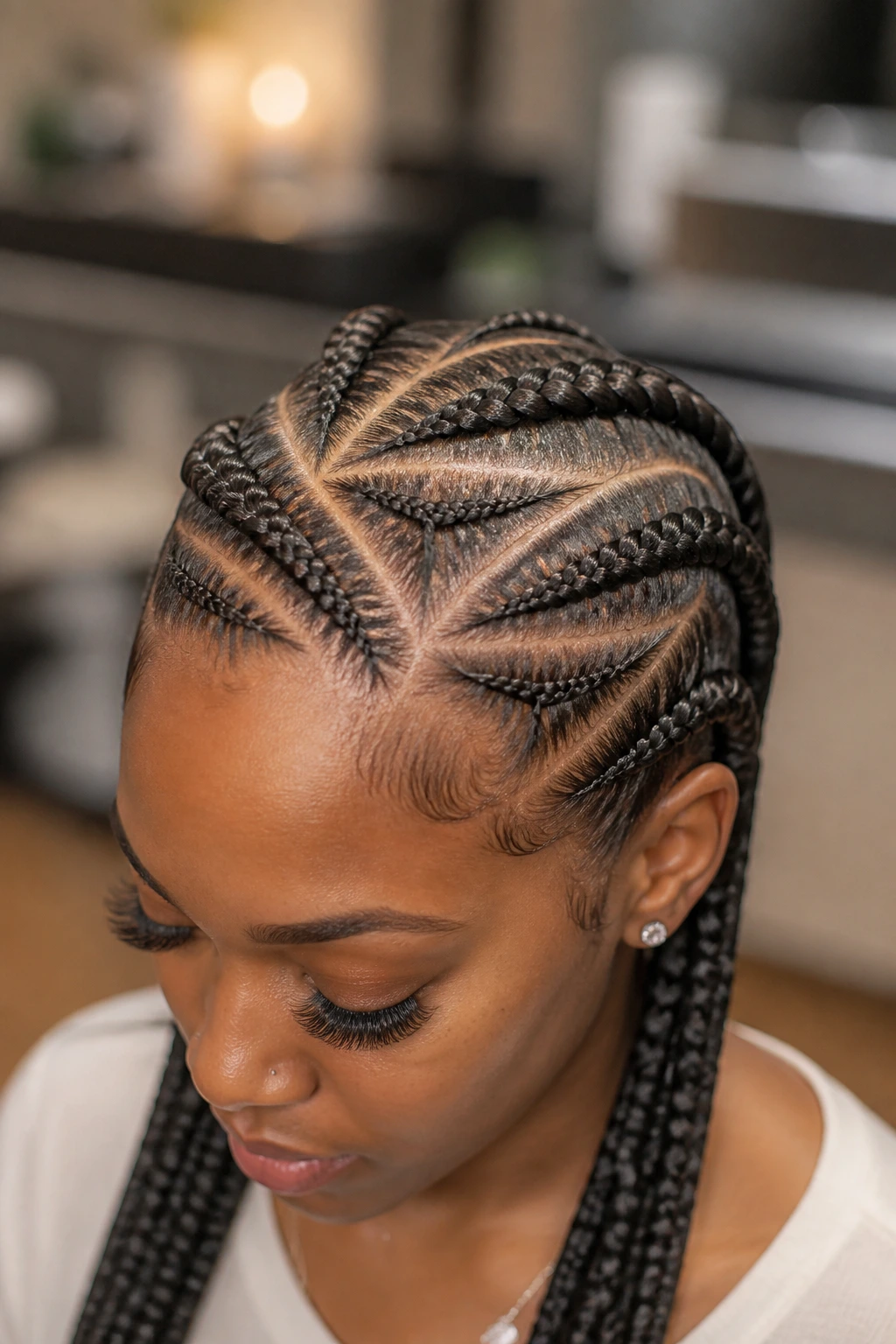
Triangle parts bring geometry into the style without making the braids themselves complicated. Instead of squares or straight lines, the sections fan out in little triangles that create their own rhythm across the scalp. It gives a standard cornrow set a sharper visual edge.
I like triangle parts because they make medium-sized cornrows look more interesting without adding much weight. They also help the head feel less boxy, especially if your hair density is high and straight-back rows can sometimes look too regular. A good triangle set depends on clean corners. Soft corners look lazy. Sharp ones look intentional.
10. Zigzag-Part Cornrows
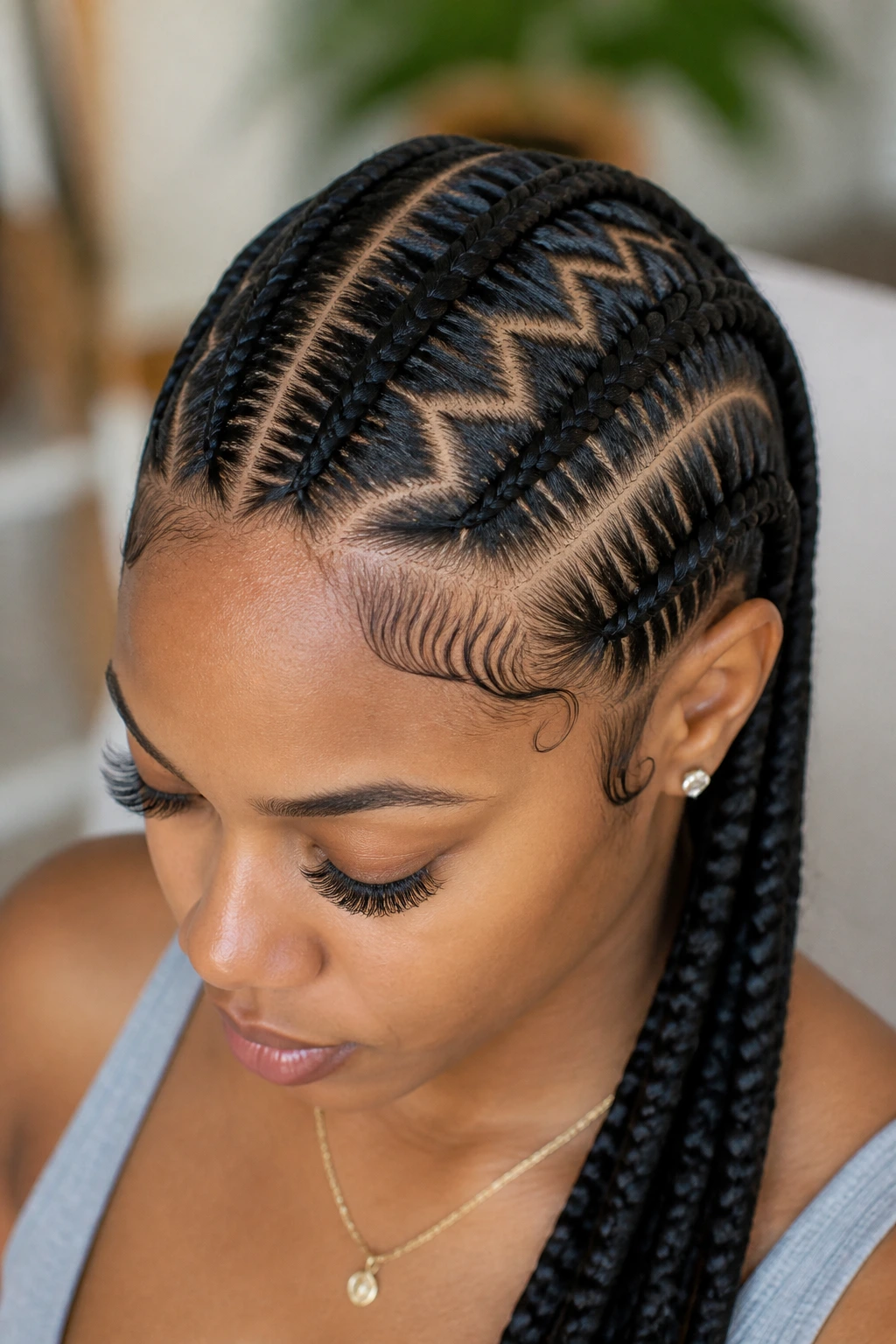
Zigzag parts are the playful cousin in the room. They break up the scalp pattern right away, which makes even simple rows feel more styled. The trick is spacing the zigzags evenly so the shape looks crisp and not accidental.
This is a strong choice when you want the parting to carry the look, especially if the braids themselves are medium or small. Zigzags also work nicely with colorful braiding hair because the part line and the color both get to show off. If you like your hair with a little edge, this one gives it to you without needing a full mohawk or a pile of accessories.
11. Cornrows Into A Sleek Low Ponytail
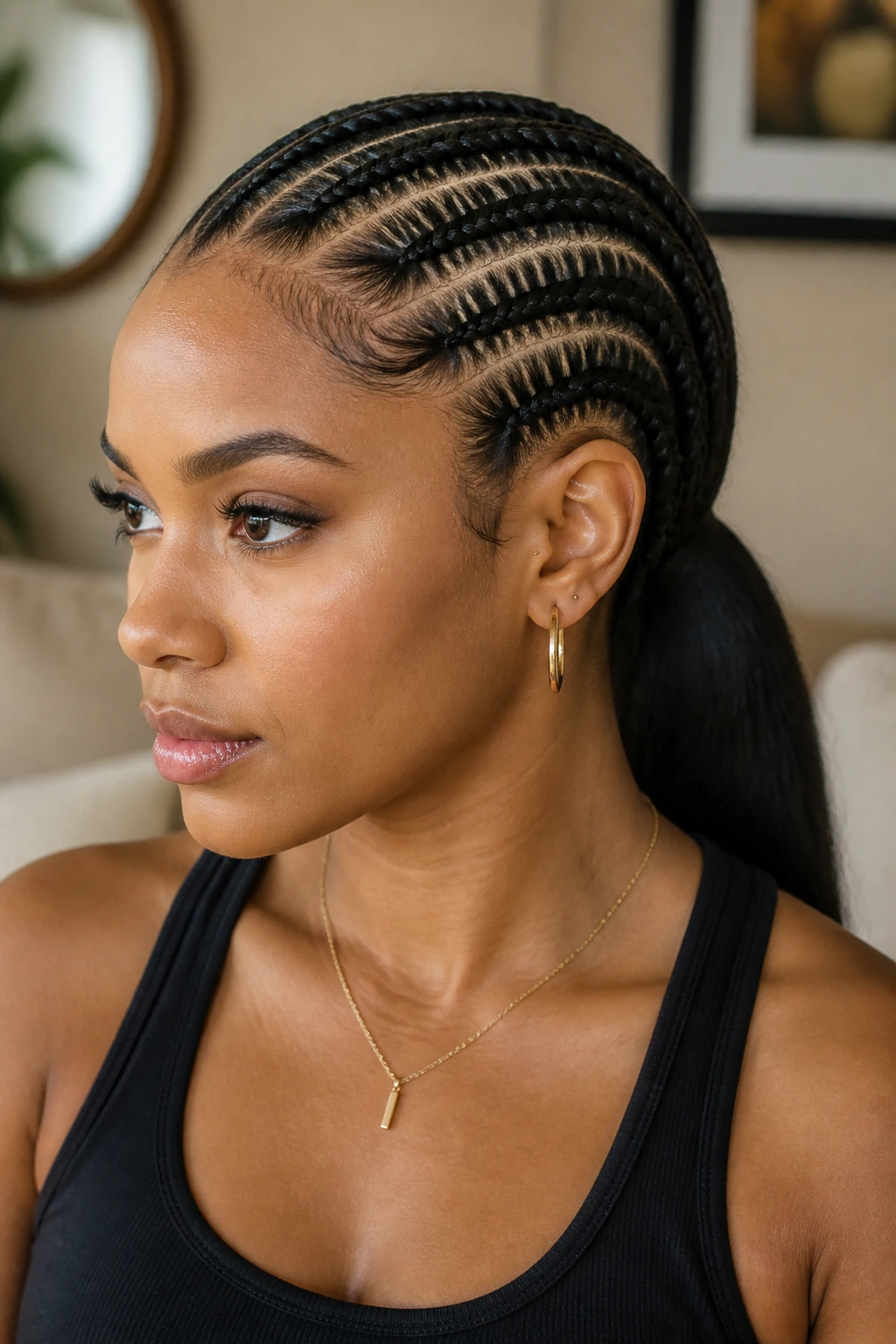
A low ponytail changes the whole mood of a cornrow set. Instead of letting the rows stop at the nape, they gather into a neat ponytail that sits low and steady against the back of the head. It feels tidy, grown, and easy to wear with coats, collars, and earrings.
This is one of my favorite practical styles because it keeps the hair out of the way without flattening the look. If you want more length, feed in braiding hair through the ponytail section so the tail drops with weight instead of puffing out. Keep the base smooth, though. A lumpy ponytail anchor ruins the line.
12. Cornrows Into A High Ponytail
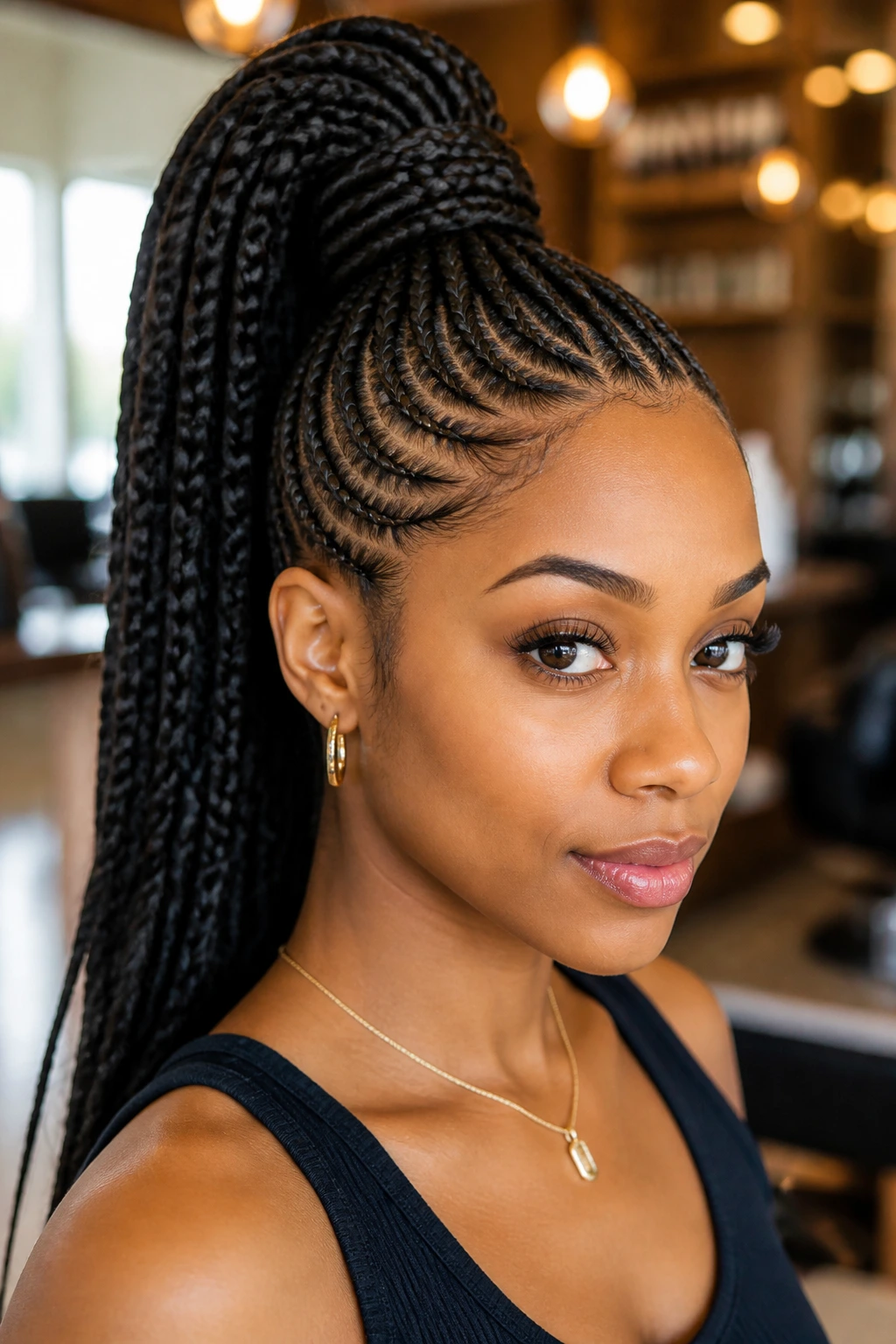
High ponytail cornrows bring lift. The braid rows draw the eye upward, which can sharpen the face and make the whole style feel more energetic. It’s a great option if you like your hair pulled away from the neck but still want the braid pattern to show.
The tension has to be right here. A high ponytail that yanks at the front hairline will look good for exactly ten minutes and then become a headache. Ask for the crown to be smooth, the base to be secure, and the ponytail to sit high enough to show the shape without pulling the edges thin.
13. Braided Space Buns
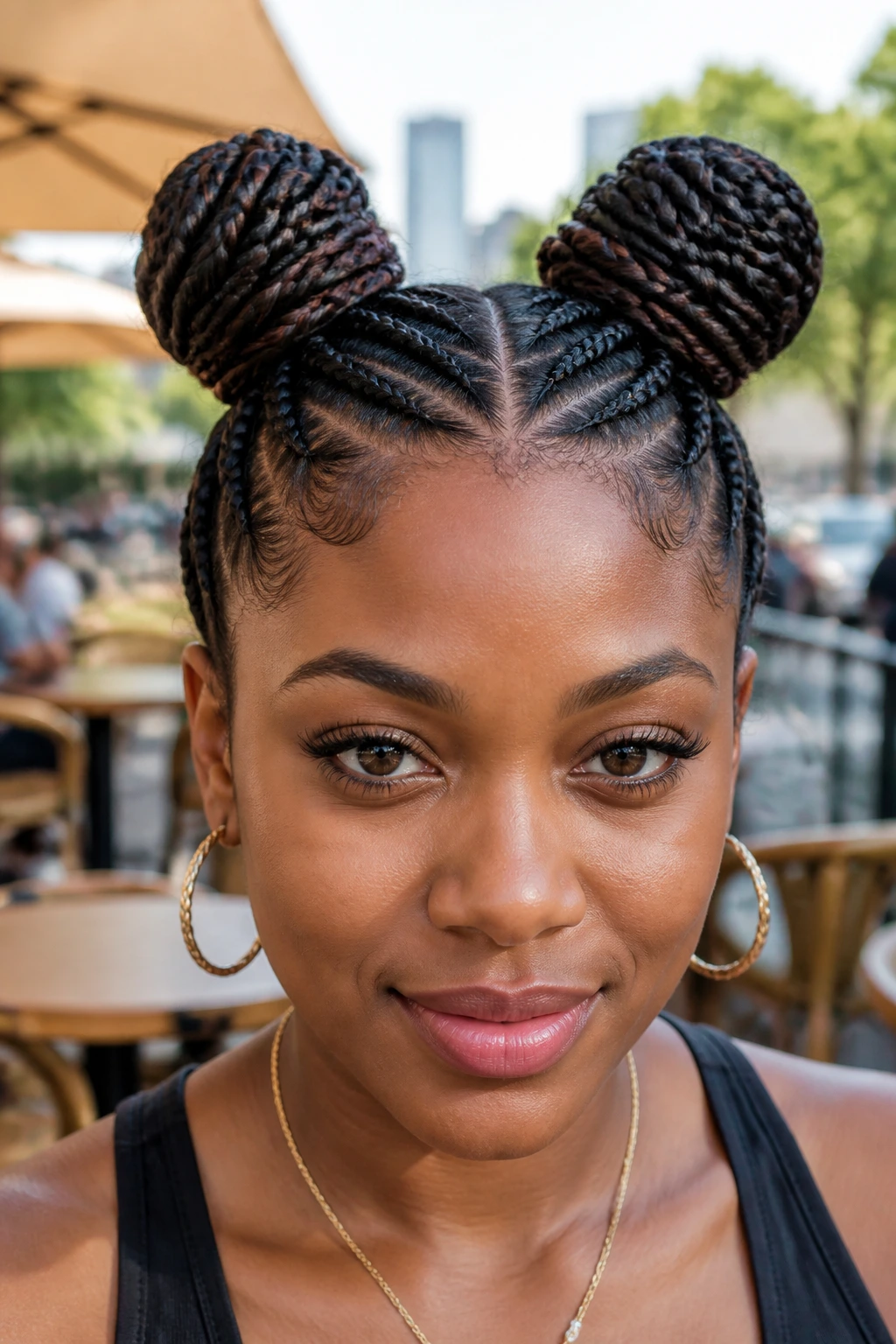
Space buns are fun in a way that still feels wearable. Once the cornrows are gathered into two buns, the style reads playful, balanced, and a little bit cheeky. It’s one of those looks that can move from casual day wear to a dressed-up evening style with almost no effort.
The parting matters more than people think. Two buns only look right when the center section is neat and the rows feed cleanly into both sides. If you want the buns to sit evenly, ask the braider to mirror the braid direction carefully. Uneven buns are charming in theory and irritating in a mirror.
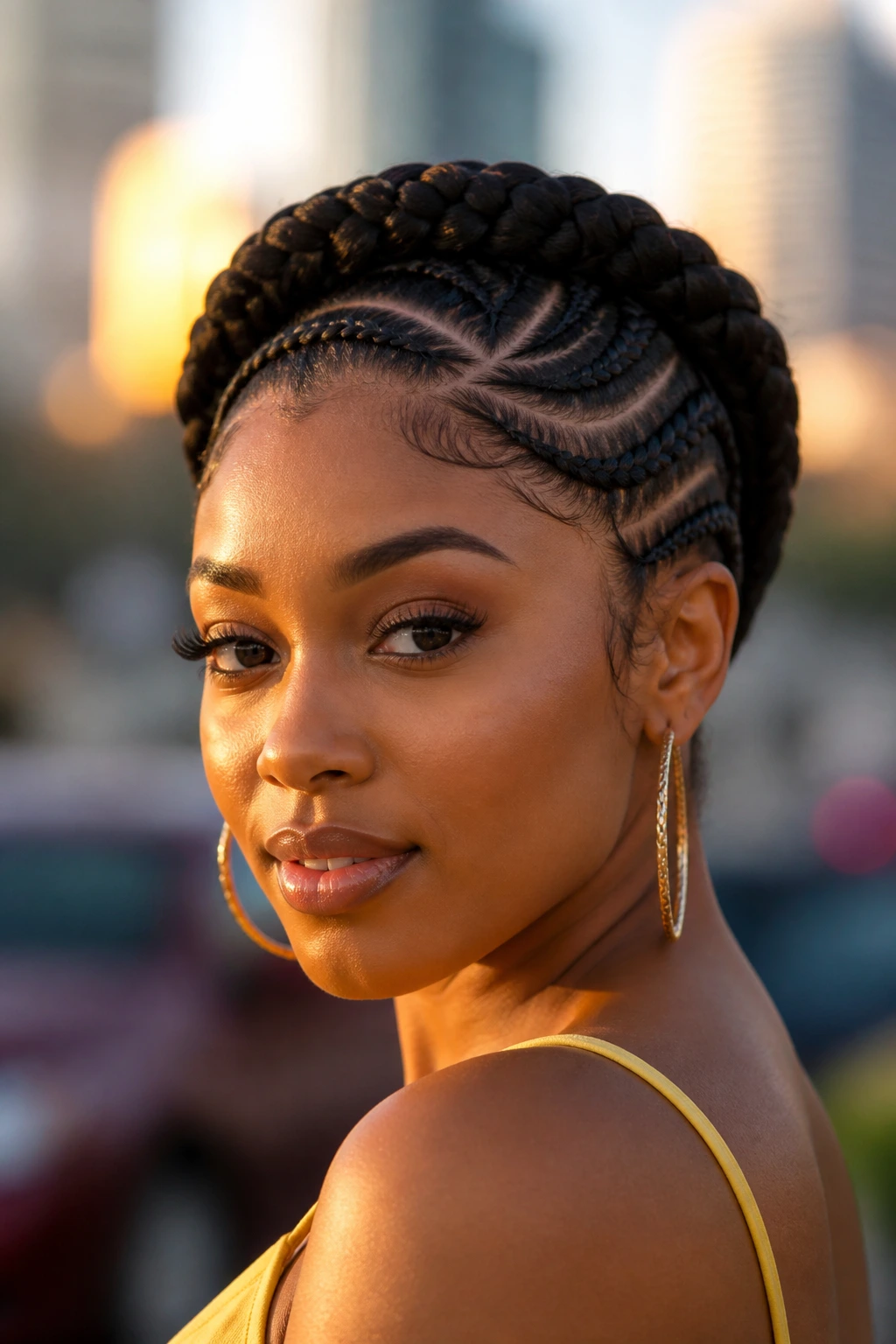
14. Crown Cornrows Around The Hairline
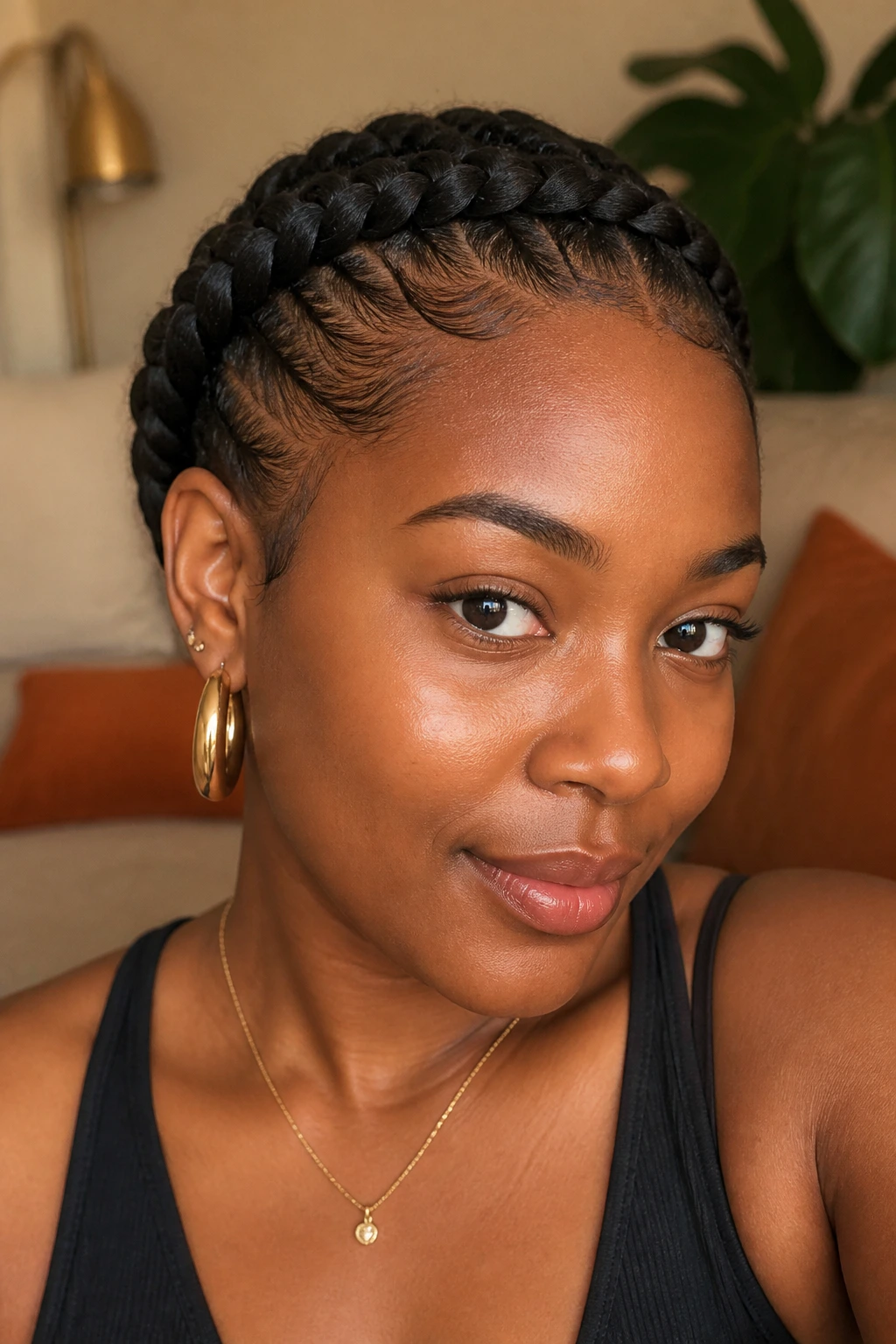
A crown style wraps around the head like a halo, tracing the hairline and bringing the eye back to the face. It feels soft, deliberate, and a little romantic without being syrupy. I like it for events where you want the hair to look polished but not loud.
Because the rows circle the perimeter, the edges need special care. The braid line should sit close enough to look clean but not so close that the hairline feels stripped. A crown braid with a gentle tension level can be one of the prettiest cornrow styles for Black women when you want something that frames the face instead of fighting it.
15. Cornrow Mohawk Down The Center
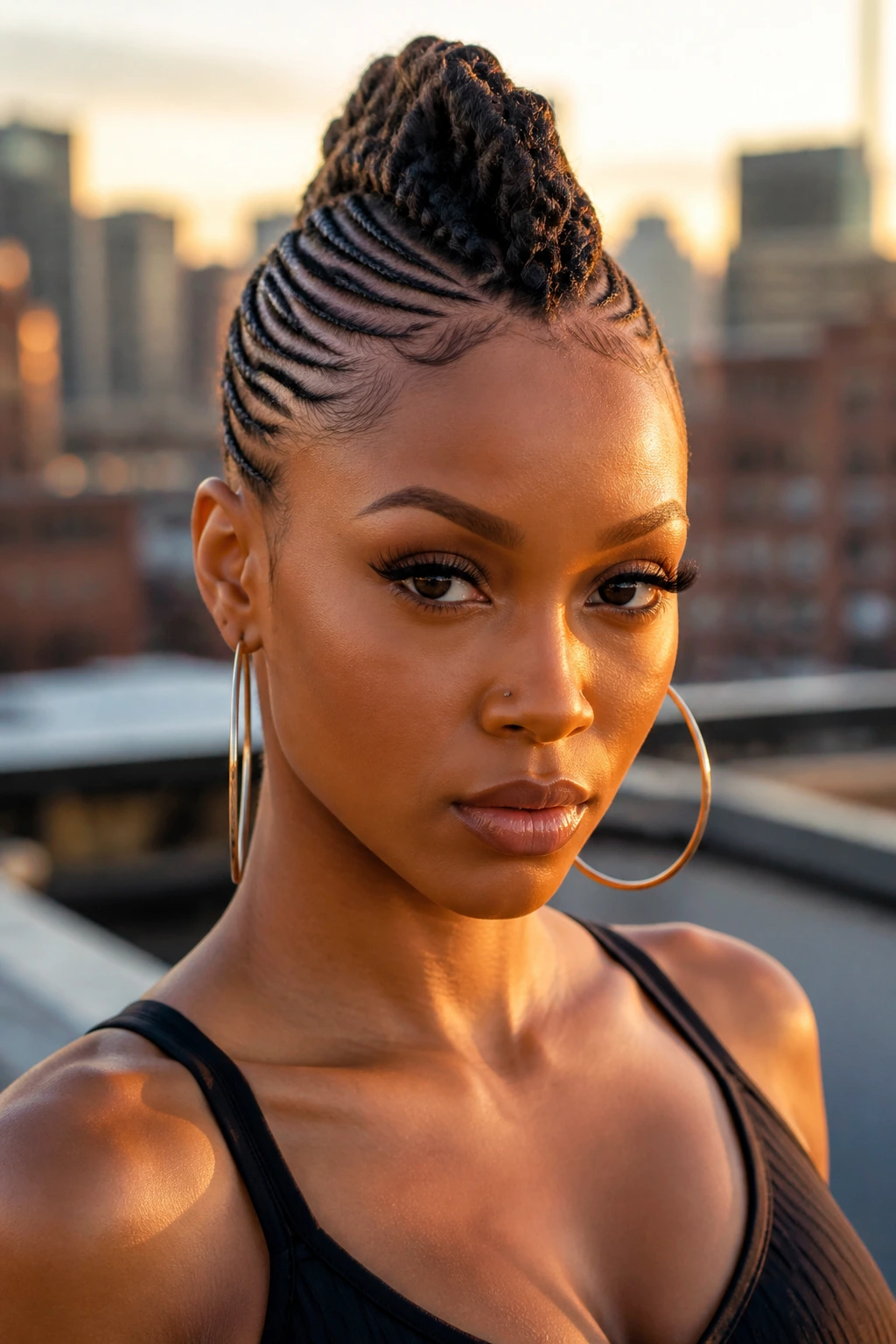
A cornrow mohawk makes a statement fast. The sides stay sleek or braided down tight, while the middle section stands up or gathers into a raised ridge that runs from forehead to nape. It’s bold, angular, and impossible to mistake for anything else.
What keeps it from looking too severe is texture. A little height through the center softens the shape, especially on natural hair with a bit of stretch. If you want a stronger finish, pair it with clean side rows and leave the center section fuller. If you want it less intense, keep the ridge smaller and smoother.
Best if you like face-framing drama
This style flatters strong cheekbones and clean jawlines, but it also works on rounder faces because the vertical center line pulls the eye upward. That’s the magic.
16. Fulani Cornrows With Beads
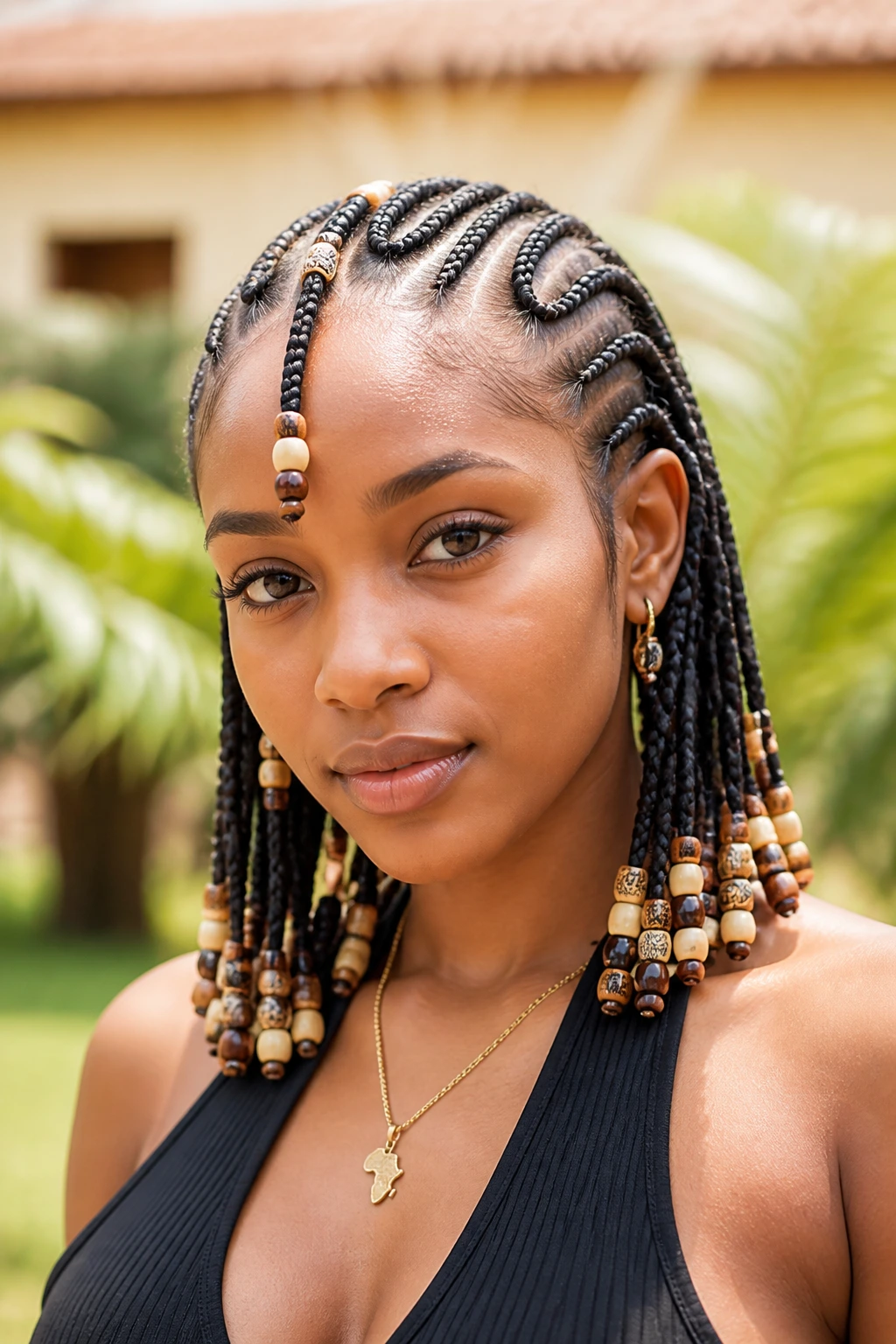
Fulani-inspired cornrows bring movement and adornment into the style at once. The center braid, the side rows, and the bead accents all work together, so the hair doesn’t feel flat or one-note. The beads give the ends a little weight and sound, which is part of the charm.
This style carries a lot of visual detail, so the parts need to be clean and the bead placement should feel balanced, not random. I’d keep the front rows neat and let the beads do the talking. Too many extras in the wrong place can crowd the face; one or two good rows with beads usually look better than trying to decorate every inch.
17. Goddess Cornrows With Loose Curls
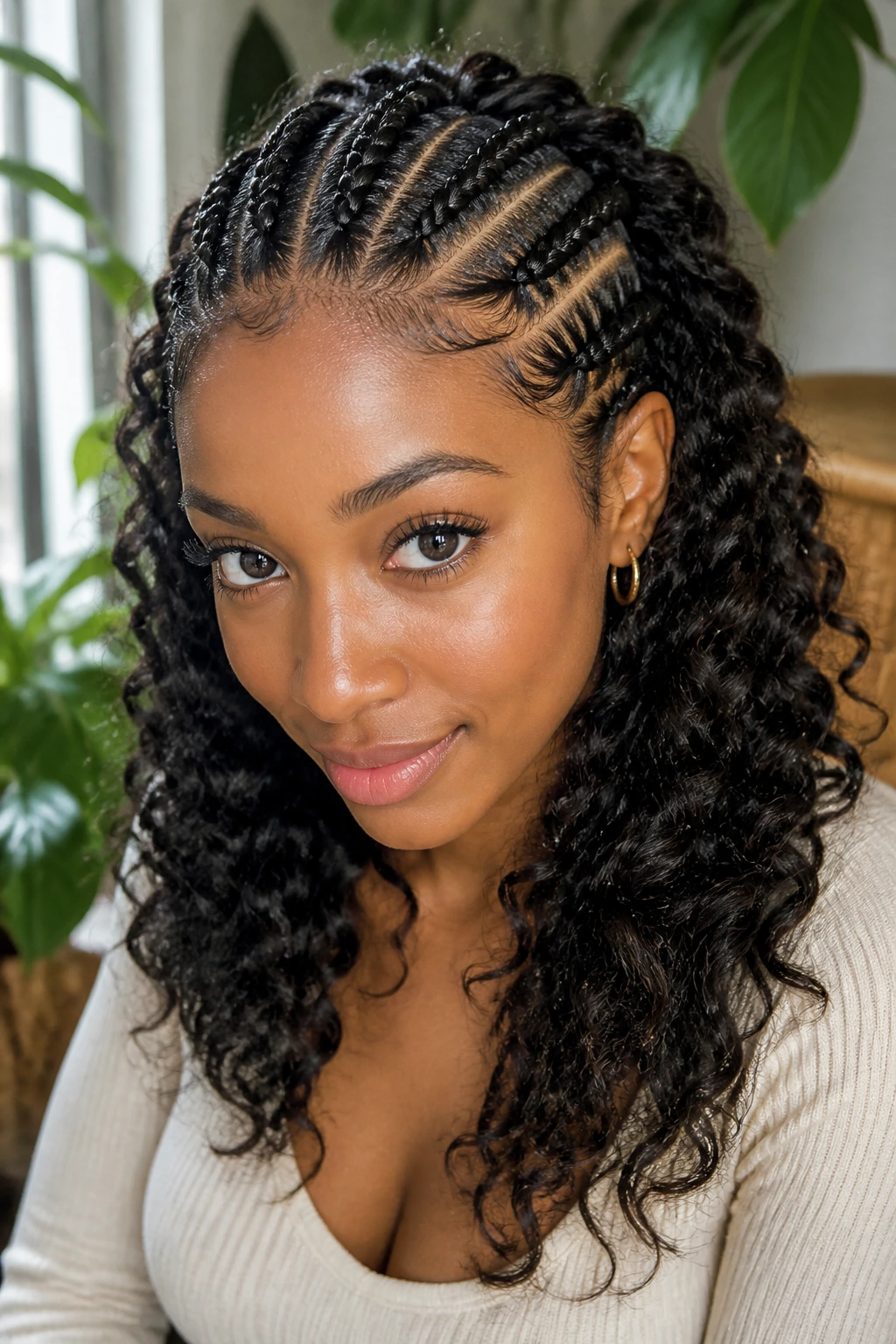
Goddess cornrows soften the hard lines of a braid set by leaving curly pieces or loose ends woven into the look. The result is less strict, more airy, and honestly easier on the eye if you don’t love a fully tight finish. The curls add motion the second you turn your head.
This version works especially well when you want the scalp pattern and a softer silhouette at the same time. It’s a nice bridge between braids and loose hair, and it can keep a cornrow style from feeling too severe. Keep the curls hydrated and shaped with mousse or wrapping foam so they don’t turn into a fuzzy cloud by day three.
18. Thread-Wrapped Cornrows
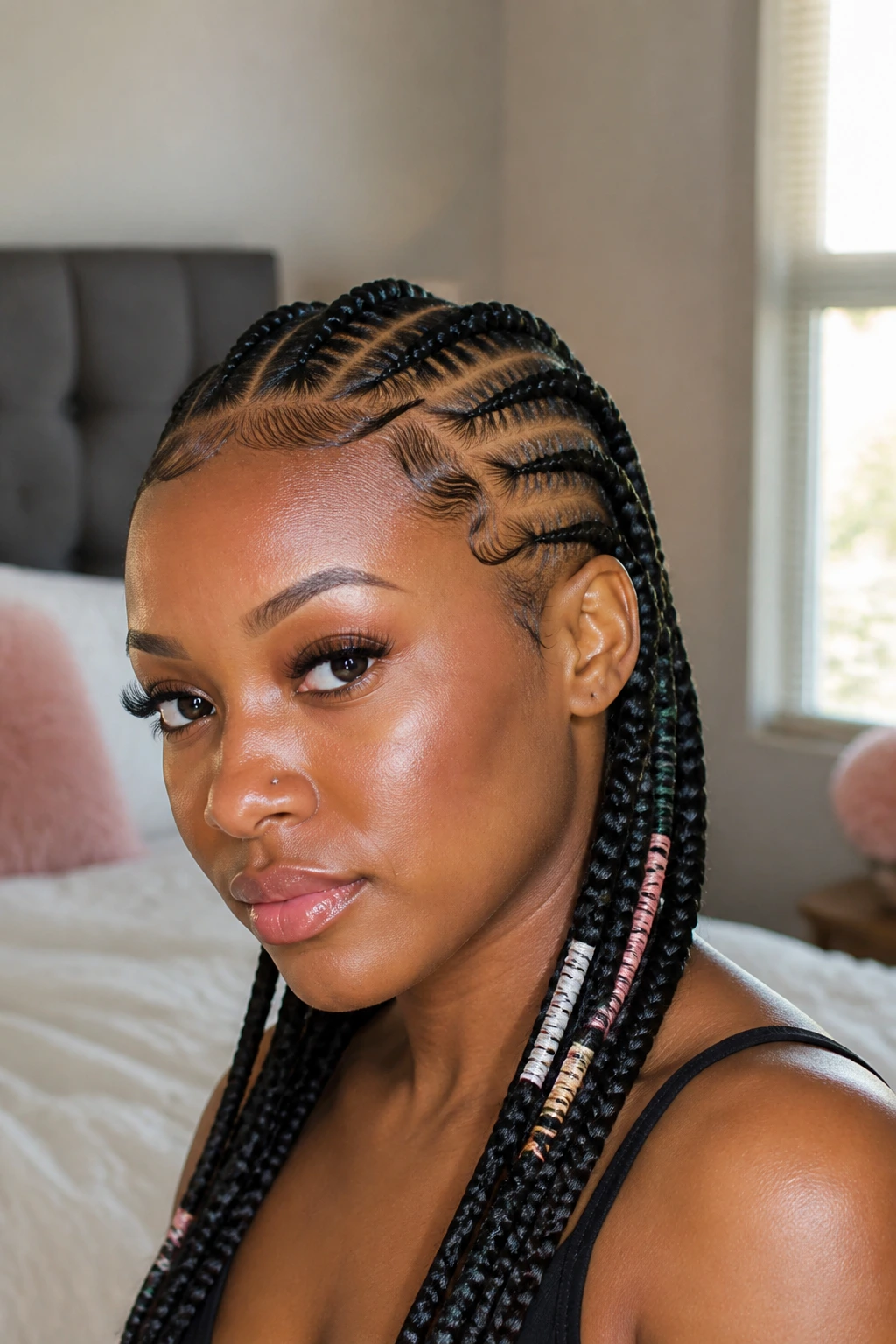
Thread-wrapped cornrows feel artsy in a way that beads sometimes don’t. A few sections wrapped with colored thread can change the mood of the whole style, especially if the base braids are simple and clean. It’s a small detail that carries more visual weight than you’d expect.
I like thread most when it’s used with restraint. One color on a few braids looks thoughtful. Three colors on every braid can start to feel busy fast. If you want the pattern to stay readable, keep the wraps near the ends or on just one side of the head. Less noise, better line.
19. Cornrows With Metal Cuffs
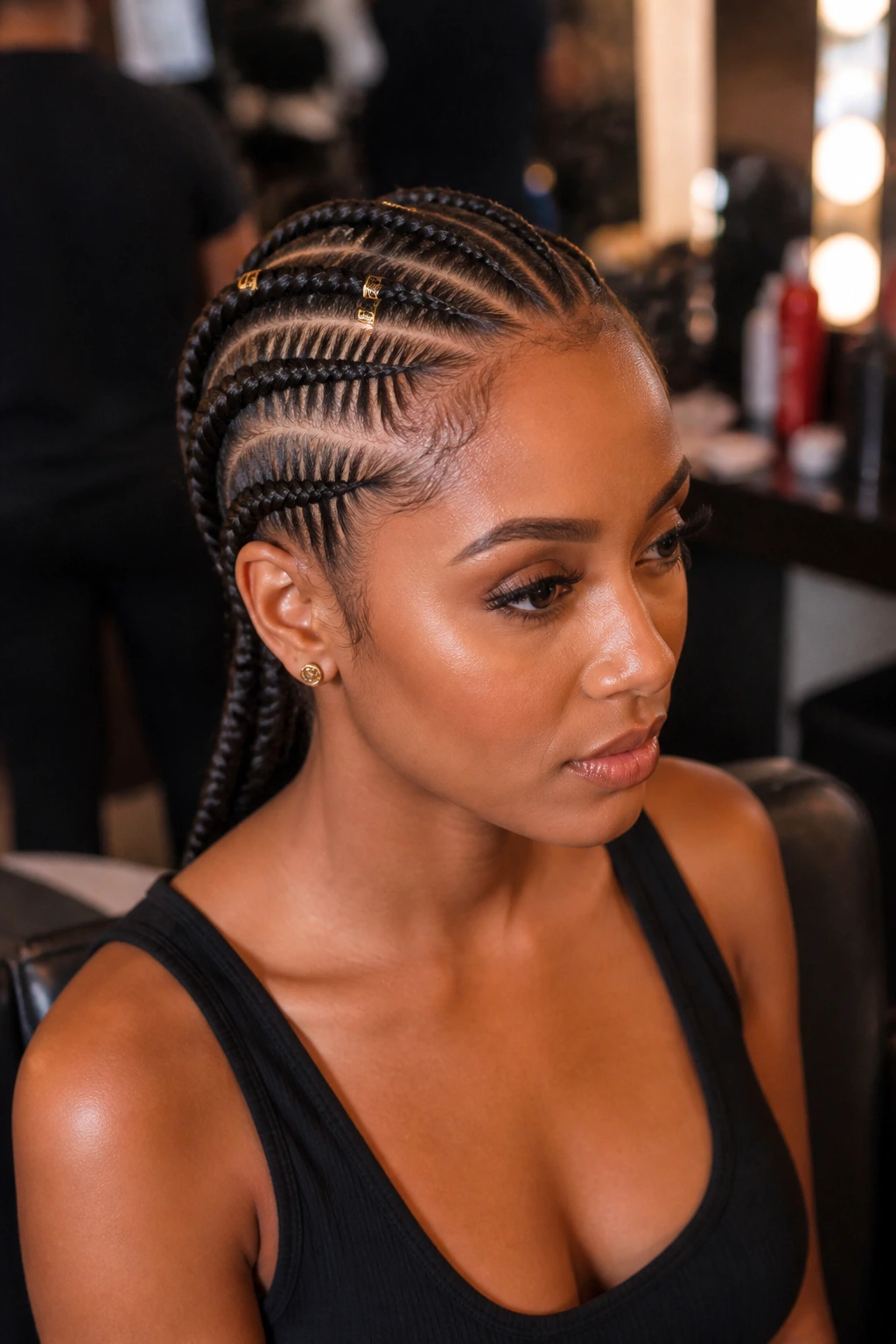
Metal cuffs are the fastest way to make a plain braid set look finished. Slip them on a few select rows and the whole style picks up shine without needing a full redesign. They work well on straight-back rows, side sweeps, and ponytail styles.
The key is placement. Put cuffs where they can catch the eye, not everywhere at once. Two or three well-placed cuffs often look cleaner than a whole row of them. If the braids are thin, use lighter cuffs so the hair doesn’t get dragged down at the ends. Tiny details. Big difference.
20. Mixed-Size Cornrows For Extra Texture
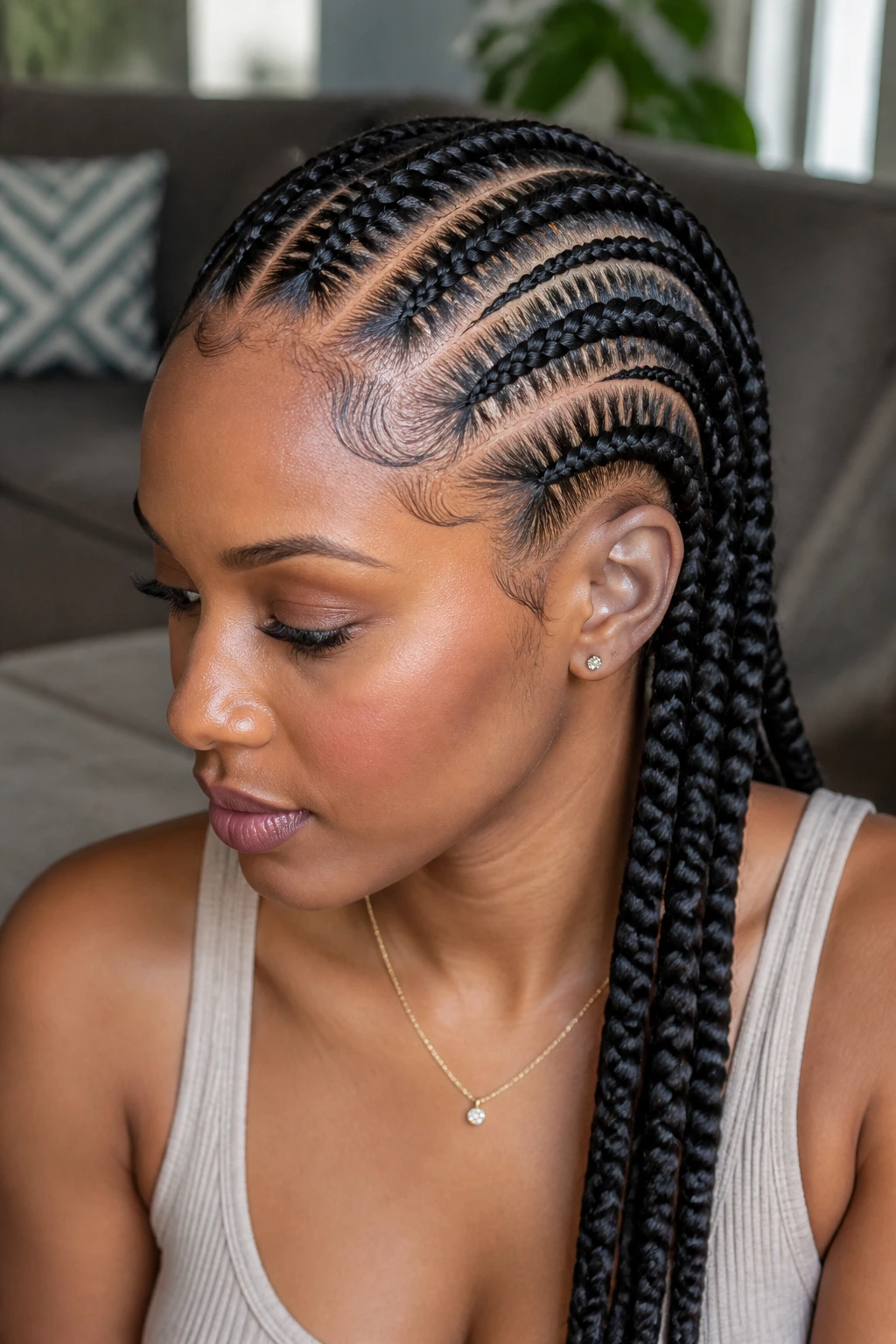
Mixed-size cornrows keep the style from feeling too uniform. One jumbo row next to two medium rows, then a few smaller ones near the crown — that contrast gives the head shape and stops the style from reading like a grid. It’s a good choice when you want more visual depth without fancy parting.
This works especially well on thicker hair because the varying braid widths can balance density better than one repeated size. It also lets a braider play with the structure of the head instead of forcing everything into the same width. The result feels more handmade, which I prefer.
21. Diagonal Cornrows That Sweep To One Side
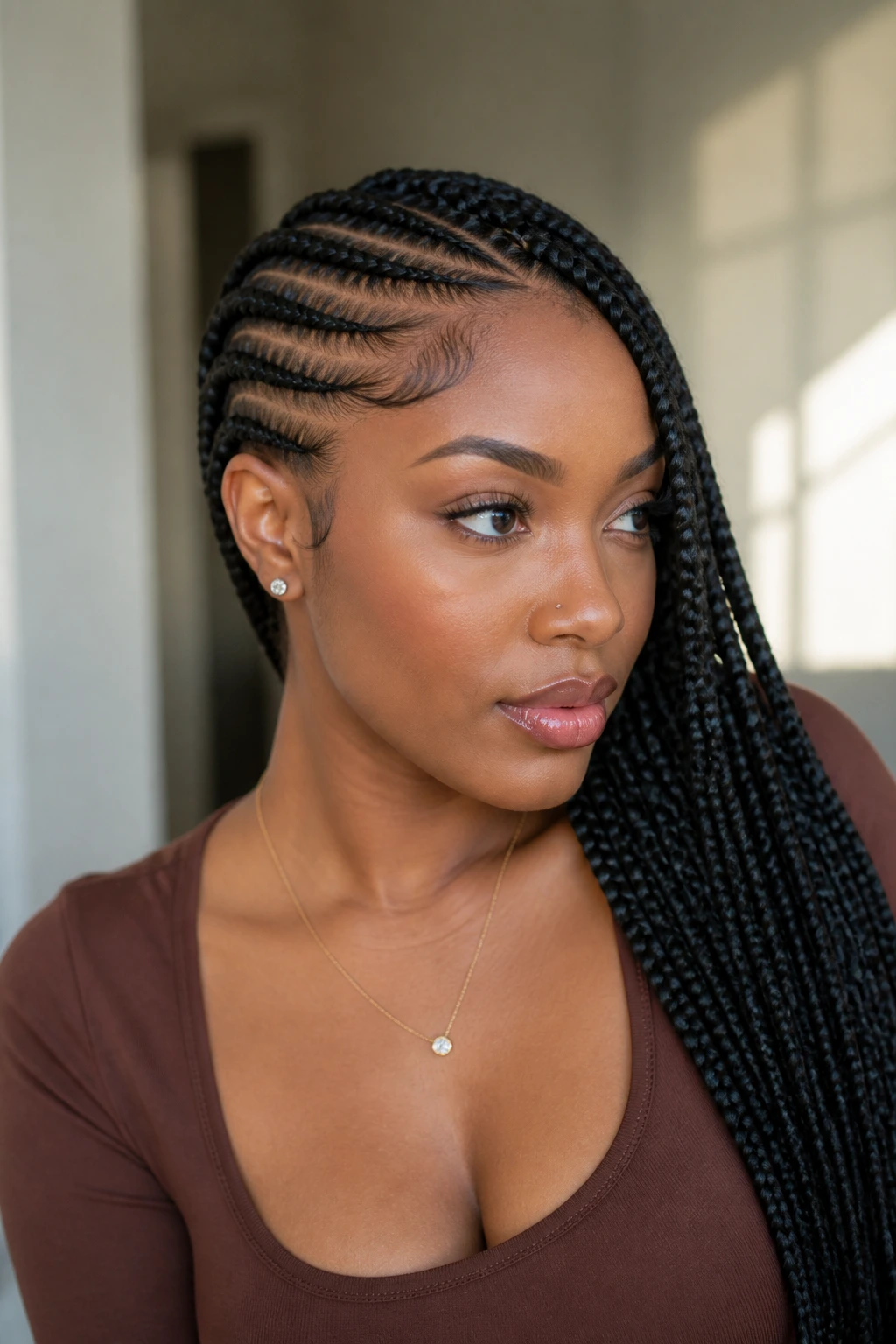
Diagonal cornrows stretch the face in a nice way. The rows angle from one side of the front hairline down toward the opposite nape, which makes the head shape look longer and the style feel a little more dynamic. It’s subtle, but the angle changes the whole read of the hairstyle.
These rows also work well if you want the braid pattern to look intentional without a lot of added decoration. A diagonal set with clean parts and no extras can be enough. If the side sweep looks too steep, the style can feel lopsided, so the angle should be gentle, not exaggerated.
22. Half-Up, Half-Down Cornrows
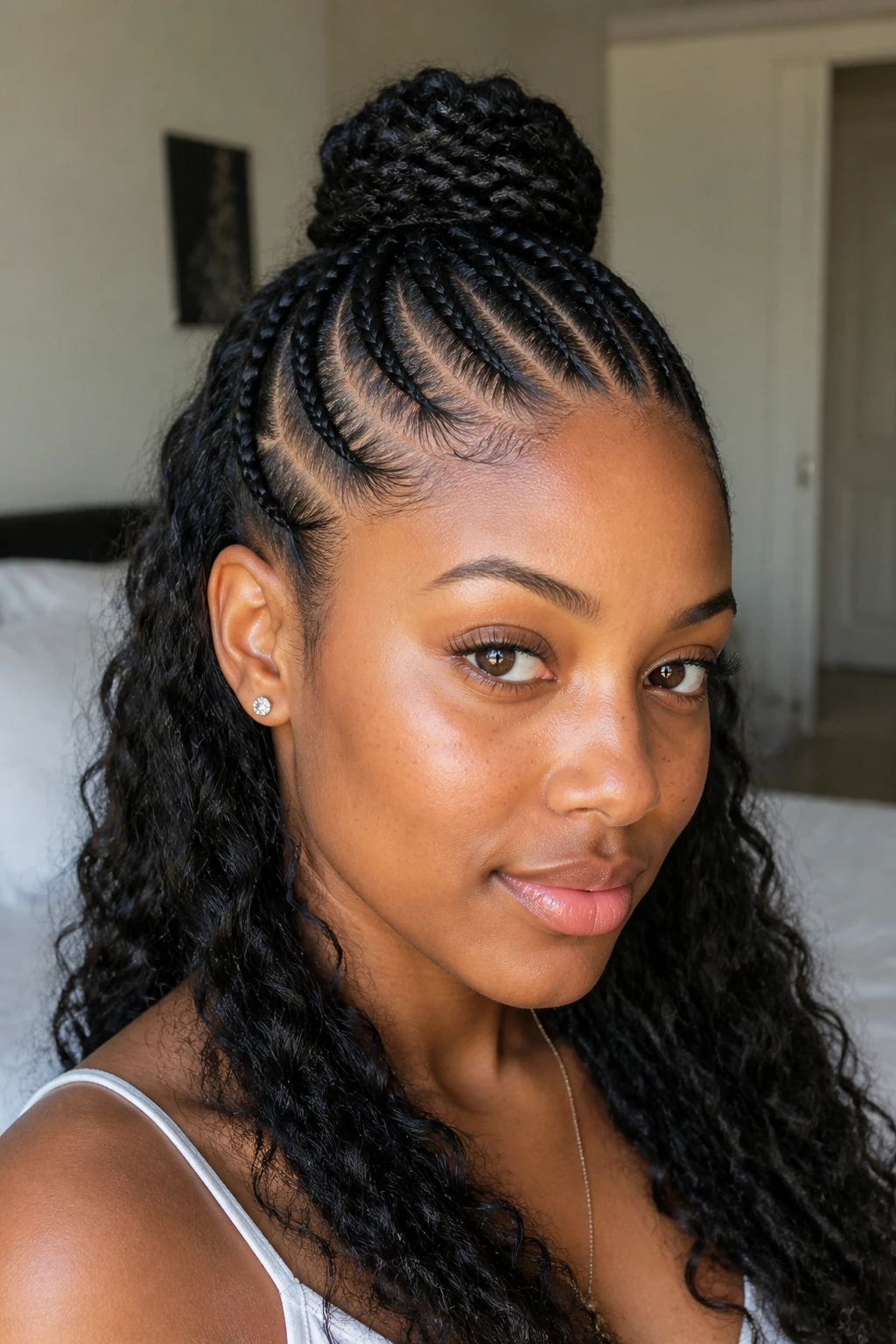
Half-up, half-down cornrows give you the relief of hair pulled back and the softness of length left out. The top rows can be braided into a knot, ponytail, or bun, while the lower section stays loose or braided differently. It’s a nice compromise when you don’t want a fully updo look.
This style works because it changes the balance on the head. The top gets structure. The bottom keeps movement. If your hair is dense, the half-up section can keep the crown neat without making the whole style feel too tight. It’s also one of the easier ways to make a cornrow set look styled without adding a lot of accessories.
23. Braided Bob Cornrows
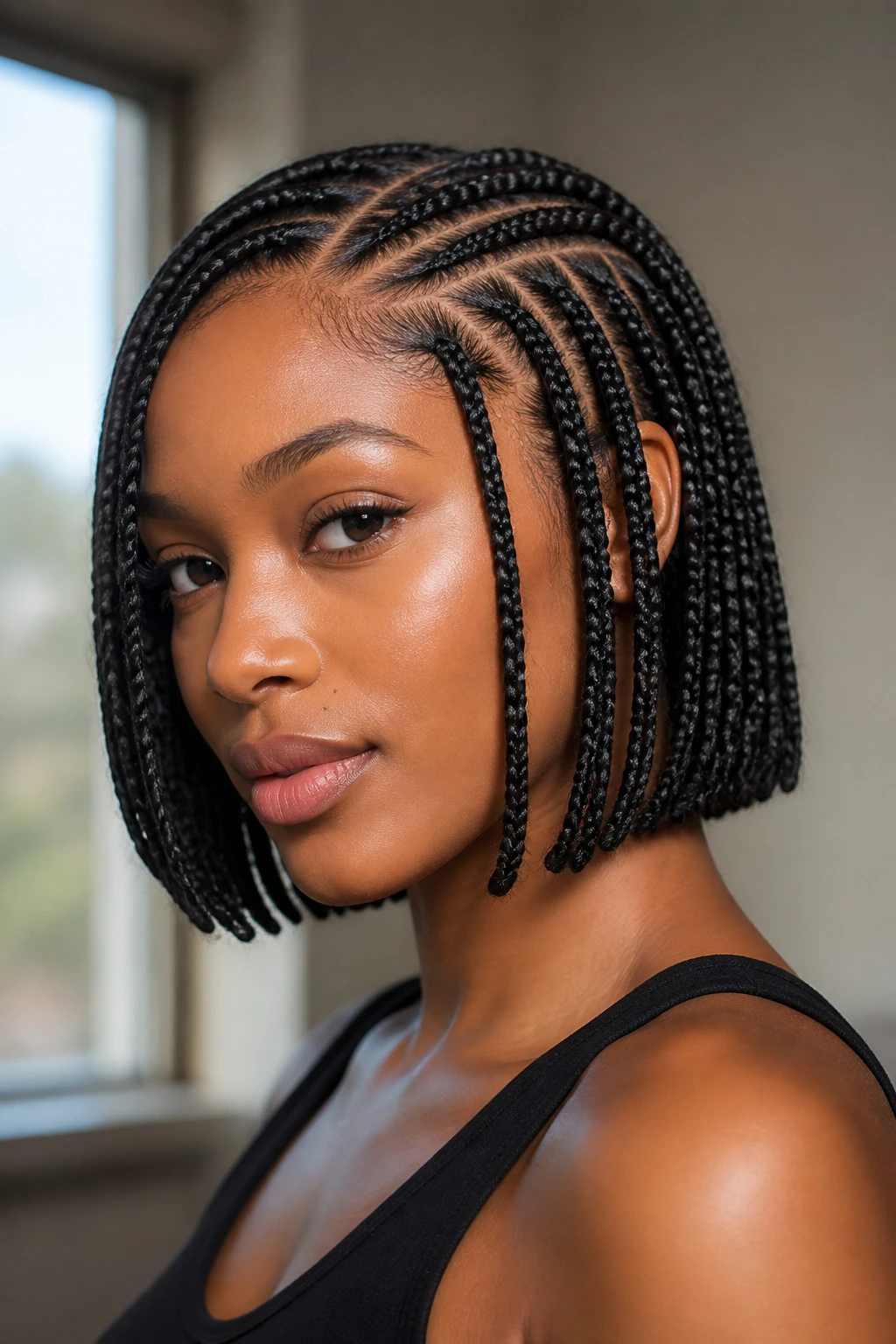
Braided bob cornrows are neat, sharp, and a little bit chic in the old-fashioned sense of the word. The ends stop around the chin, jaw, or shoulder, which keeps the neck clear and makes the whole style feel compact. A good bob shape can look especially clean with straight parts.
The finish matters here. Ends should be even, and the bob line should sit where it flatters your face rather than just where the braids happened to land. If you want the style to feel fuller, add a touch of extension hair; if you want it lighter, keep it natural and let the rows settle close to the neck.
What makes the bob shape work
It gives the scalp pattern enough space to show, but it doesn’t drown the face in length. That balance is why it keeps coming back.
24. Cornrows Ending In A Fishtail Tail
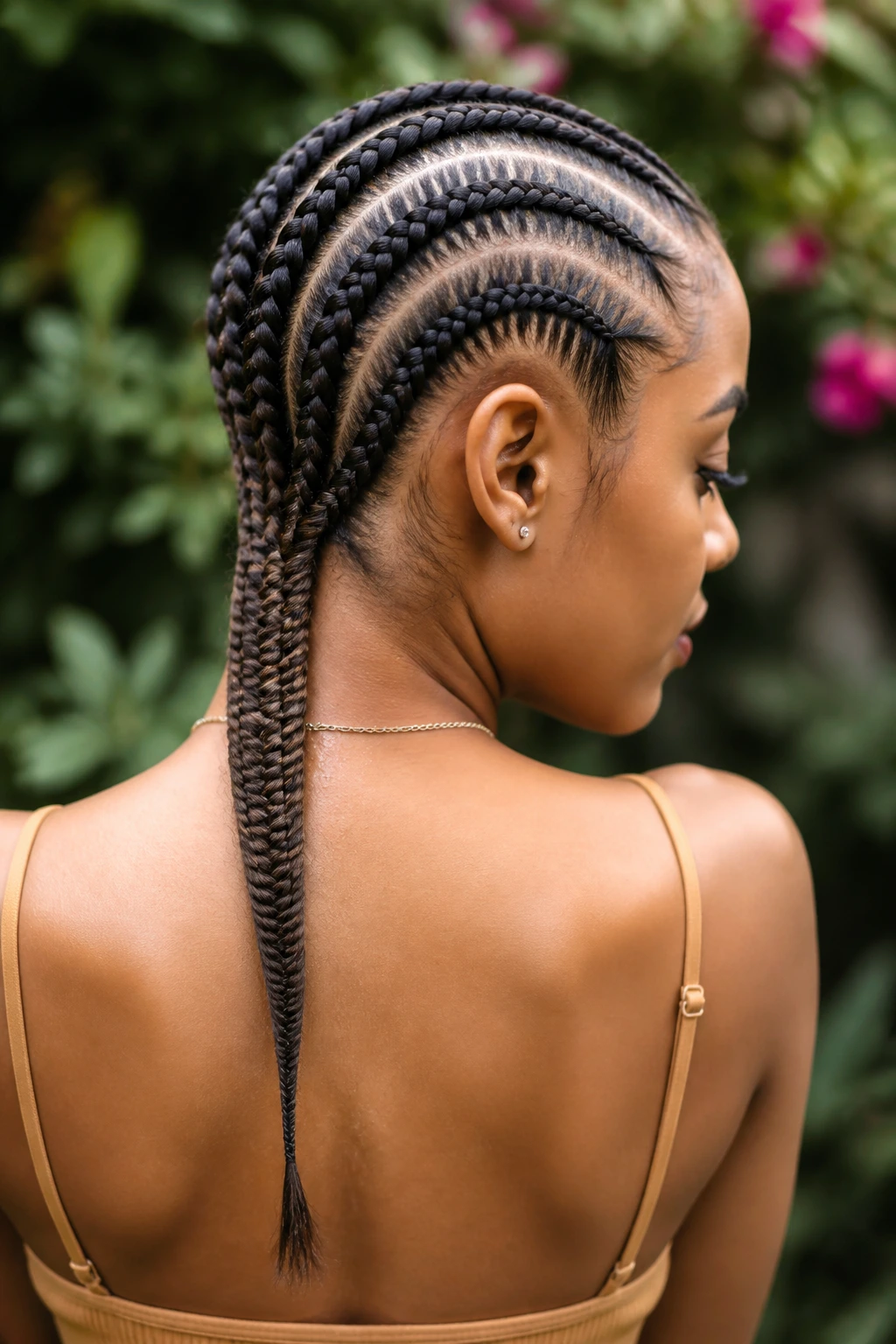
A fishtail tail gives cornrows a softer, more detailed finish at the back. Instead of stopping in a plain braid, the rows feed into one longer fishtail braid that narrows and widens in a woven pattern. It’s a nice way to finish a style if you want the end to look as considered as the front.
This works best when the rows are neat enough to hold the eye until the tail starts. The fishtail itself doesn’t need to be huge. In fact, a slimmer one often looks cleaner. If you’ve got length to show off, this is a good way to finish without just letting the hair hang there.
25. Cornrows With Curly Ends
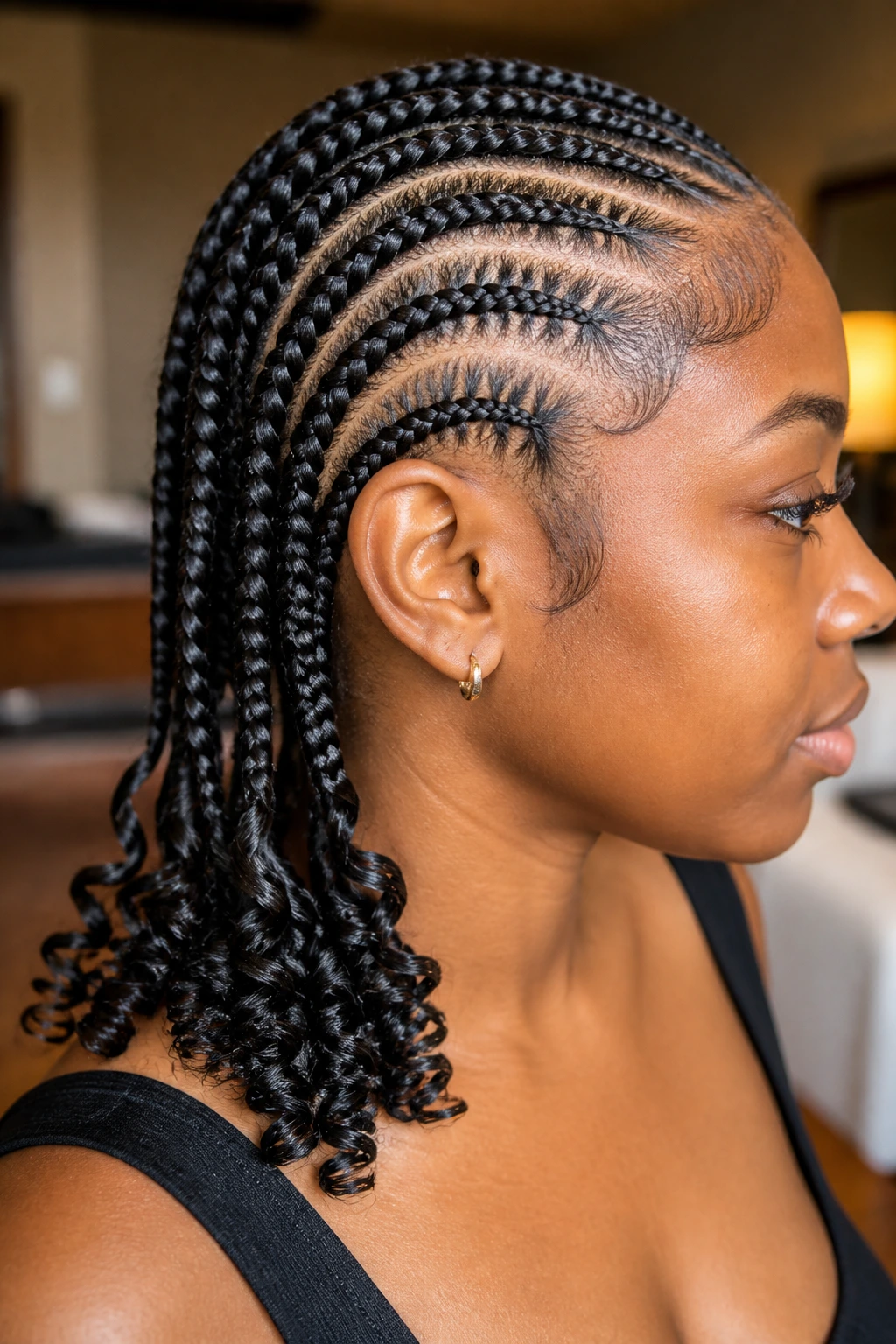
Curly ends change the tone of cornrows fast. Instead of ending bluntly or in a sealed braid tail, the style finishes with spiral curls that bring softness and movement. It’s one of the easiest ways to make a braid set look less severe.
Set the curls properly, though. If the ends are rolled too loosely, they’ll fall flat fast and look unfinished. Foam, flexi rods, or perm rods can help the shape hold. This style is best when you want the scalp pattern to stay neat but still want a bit of swing at the bottom.
26. Hidden Side-Part Cornrows
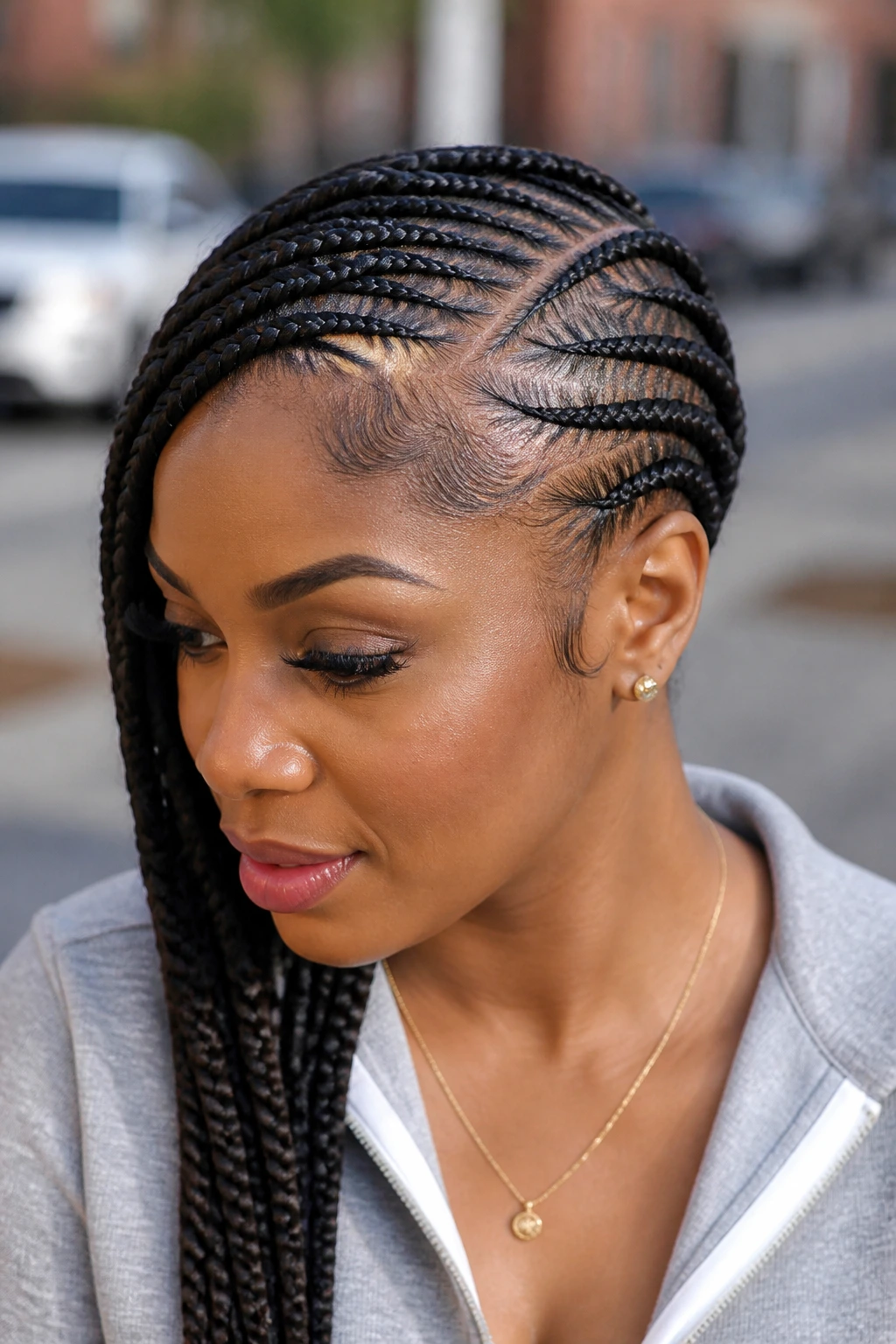
A hidden side part is a small change that changes the whole silhouette. Instead of a visible center line, the parts begin slightly off to one side, which makes the style feel a little softer and less expected. It’s a quiet detail, but it matters.
This is a good move if your face looks better with asymmetry or if you want a braid style that feels less formal. It also works when the hairline is fuller on one side than the other, because the offset part can create balance. Tiny adjustment. Big payoff.
27. Feed-In Cornrows Into A Ponytail
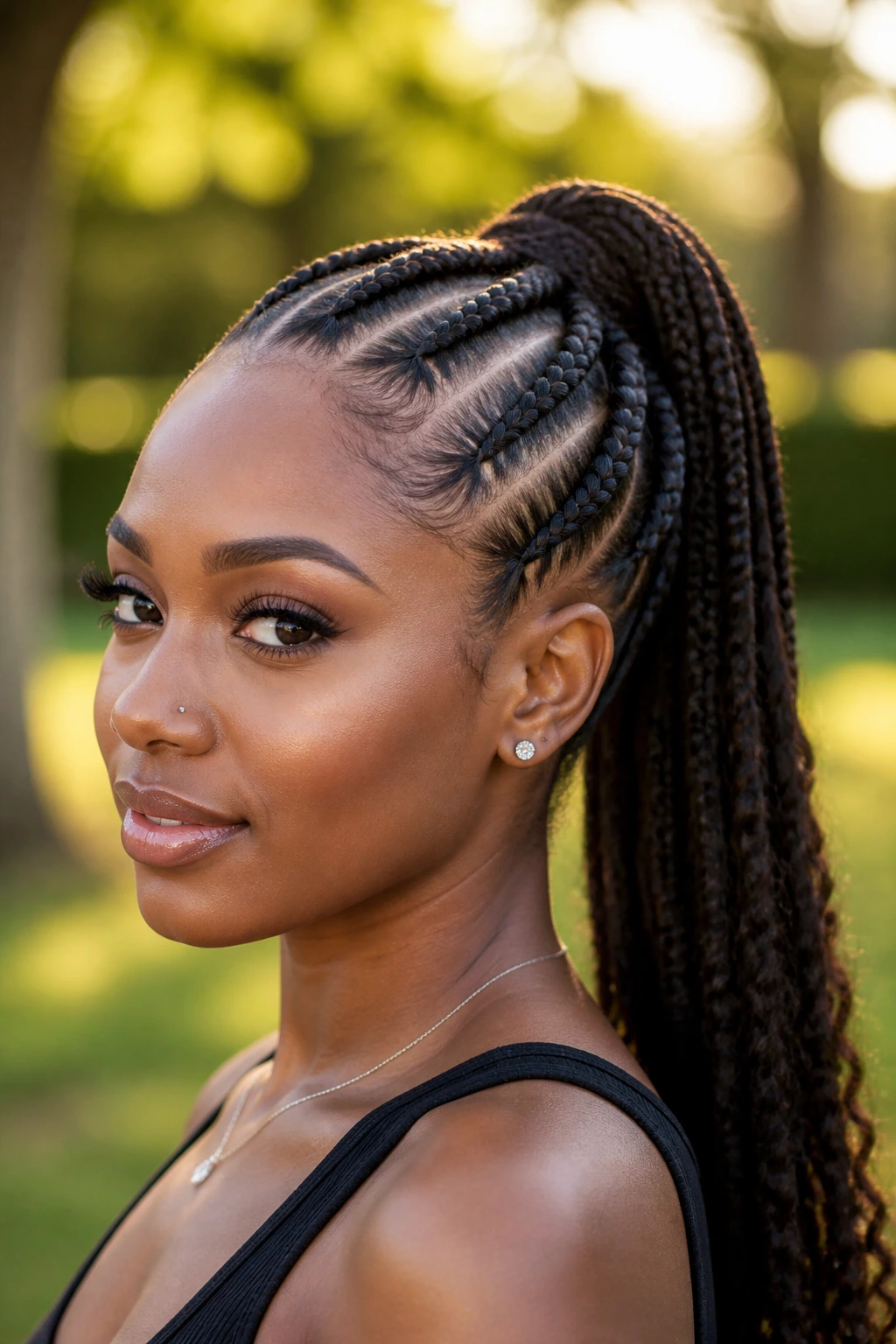
Feed-in ponytail cornrows build fullness at the crown and then gather into a ponytail that can sit high, mid, or low depending on the mood. The feed-in technique keeps the base slim and the growth of the braid gradual, which looks smoother than a blunt start.
This style is a favorite when you want the head to feel light but still want a lot of hair to show in the tail. The ponytail can be braided, curled, or left long, which gives you a lot of room to change the mood. It’s one of those styles that looks neat in motion.
28. Cross-Back Cornrows
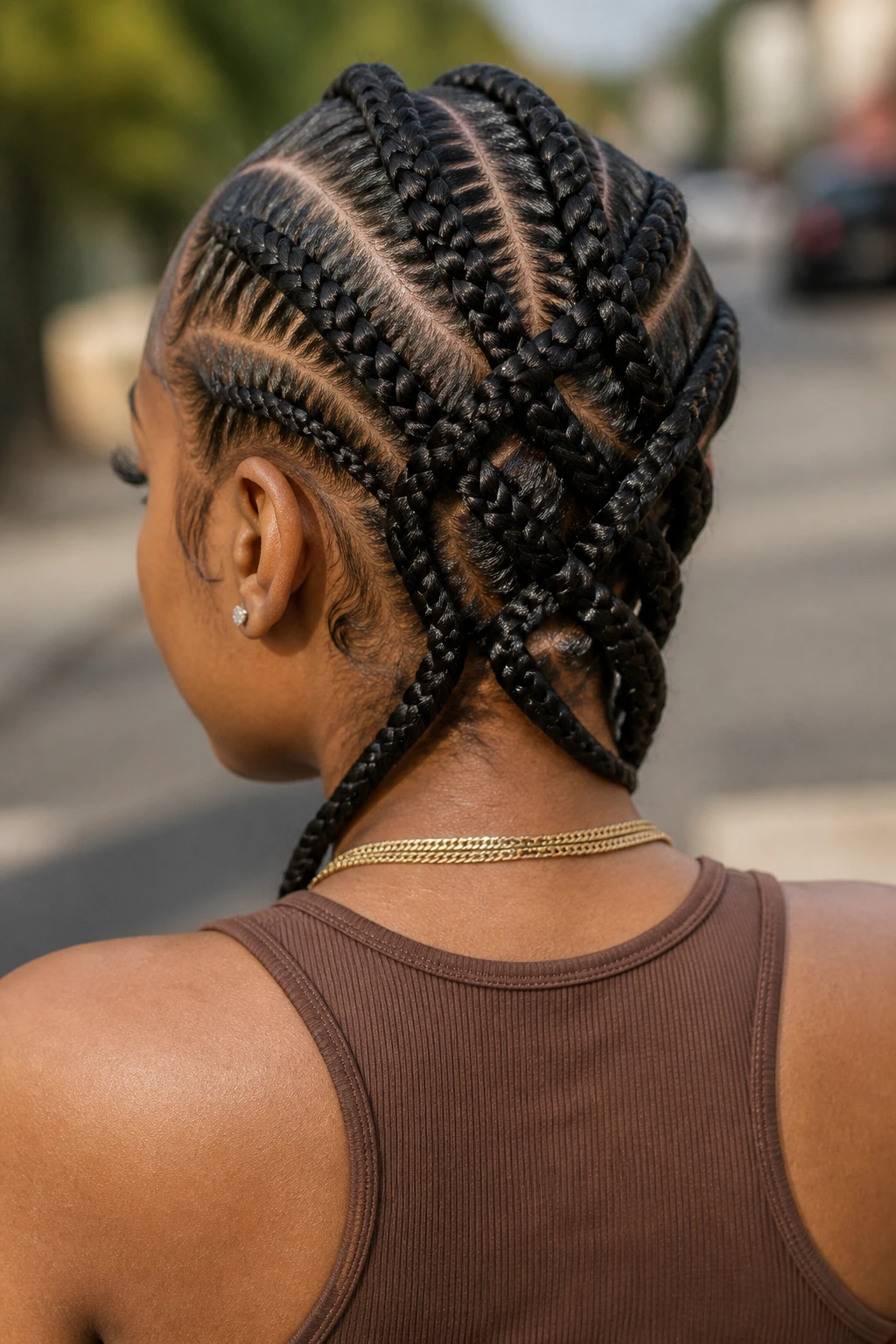
Cross-back cornrows turn the back of the head into the feature. Instead of running in tidy parallel rows, some braids cross over each other and create an interlaced effect that feels more intricate than it first sounds. It’s the sort of style people notice when you turn around.
This pattern needs clean separation and a calm hand. If the crossings are uneven, the whole back section can look messy fast. When it’s done right, though, it adds a bit of surprise to an otherwise simple braid set. I like it on thicker hair because the crossing lines stay visible better.
29. Spiral Cornrow Pattern
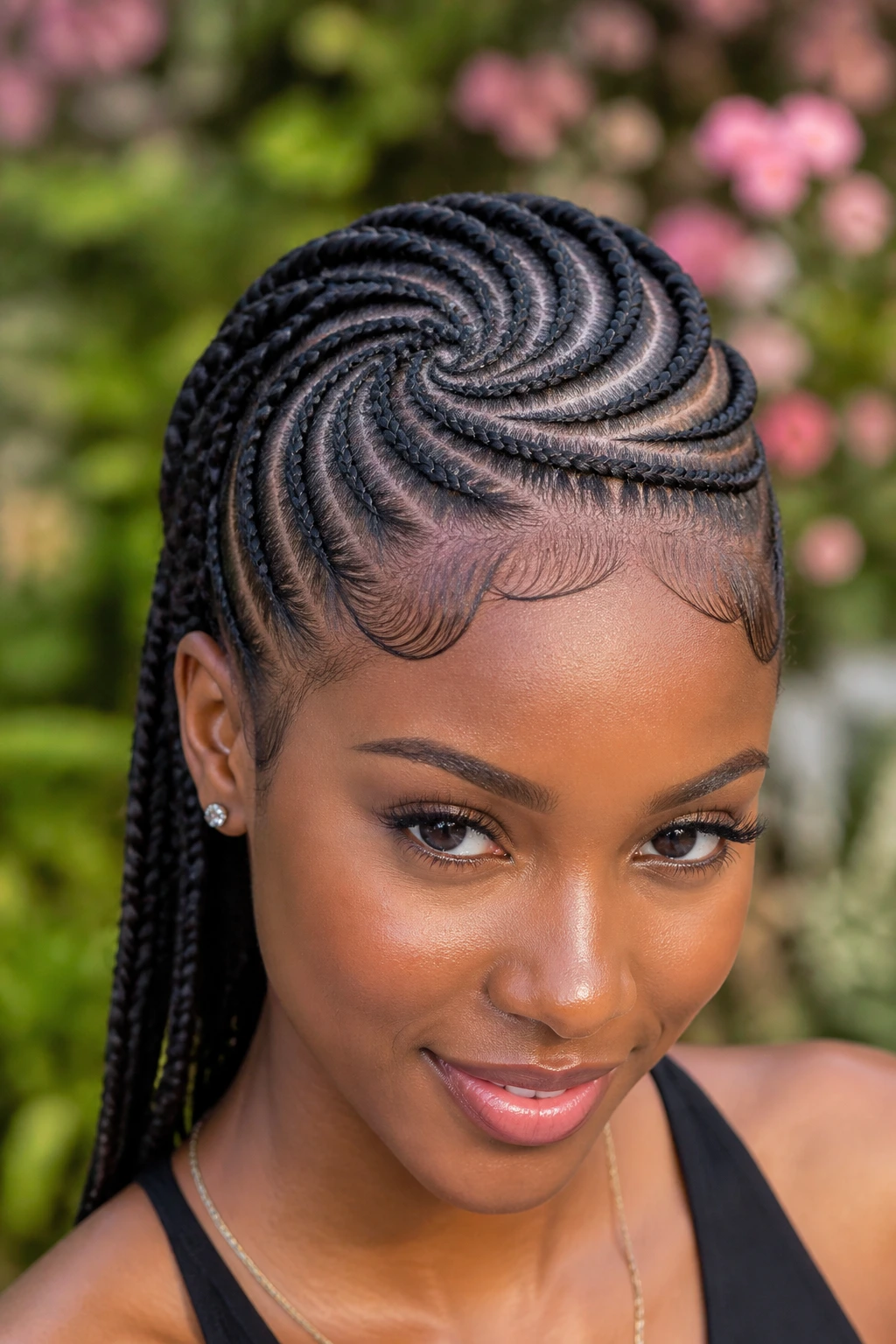
Spiral cornrows are for when you want the pattern to move in a circle instead of a straight line. The braids wrap around the crown or shift outward in a pinwheel shape, which gives the scalp a graphic look that feels almost architectural. It’s not a quiet style.
This is the kind of set that benefits from a braider who is patient with the parting. One uneven spiral throws the whole thing off. On the right head shape, though, a spiral pattern can look striking without needing beads, color, or any other extras. The braid line itself becomes the decoration.
Best for a strong centerpiece
If you like styles where the scalp art matters as much as the braids, this one delivers. It’s detailed without becoming fussy.
30. Low-Bun Cornrows
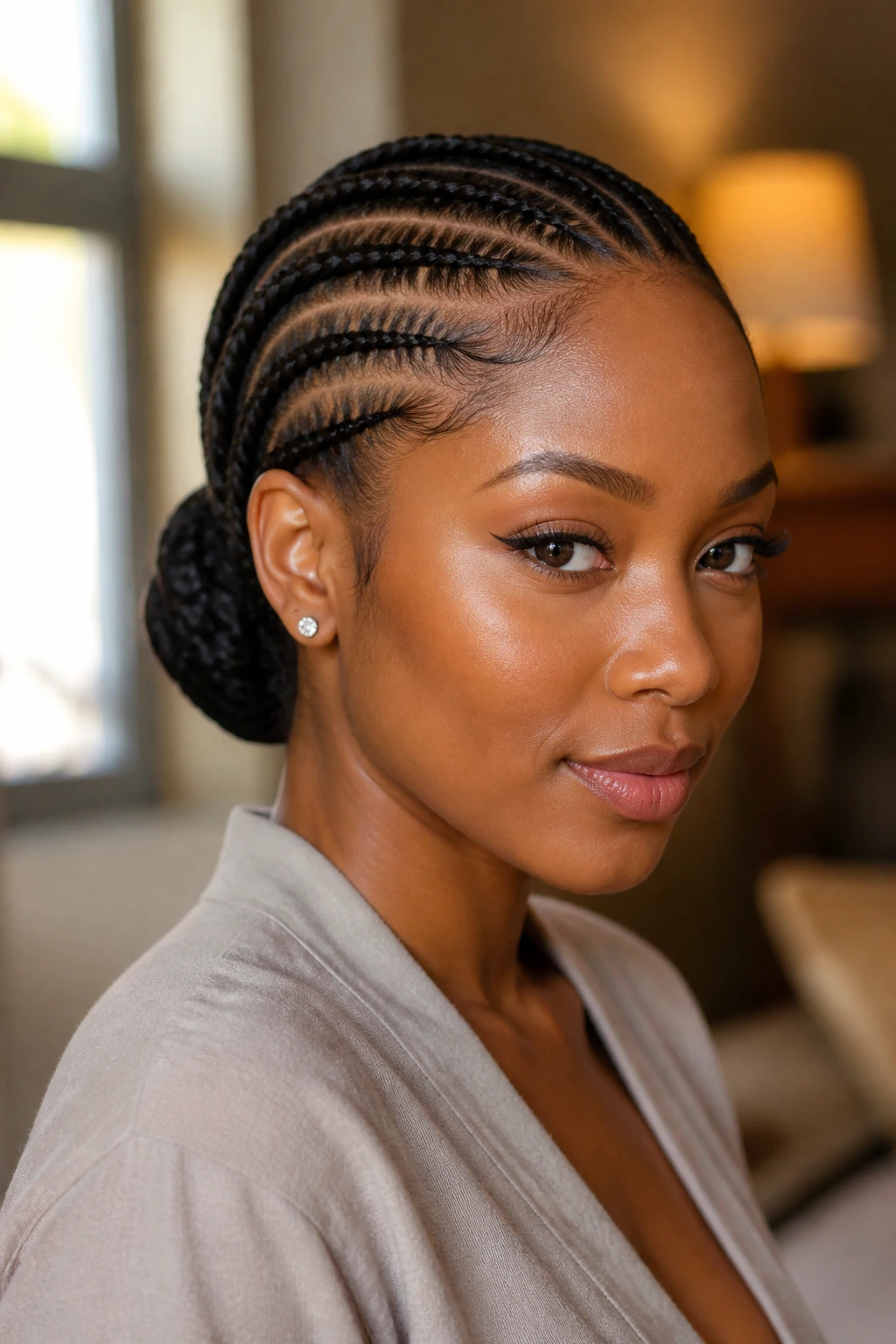
Low-bun cornrows are practical and polished at the same time. The rows stay close to the scalp and gather at the nape into a bun that keeps the whole style compact. It’s especially useful when you want your hair off your neck and out of your face without giving up the structure of cornrows.
The bun should sit snug, not mashed. A low, smooth finish usually looks better than a huge bun that pulls the lines apart. This style can lean office-ready, church-ready, or everyday-ready depending on how sharp the parts are and whether you add cuffs or keep it plain.
31. Two Oversized Feed-In Braids
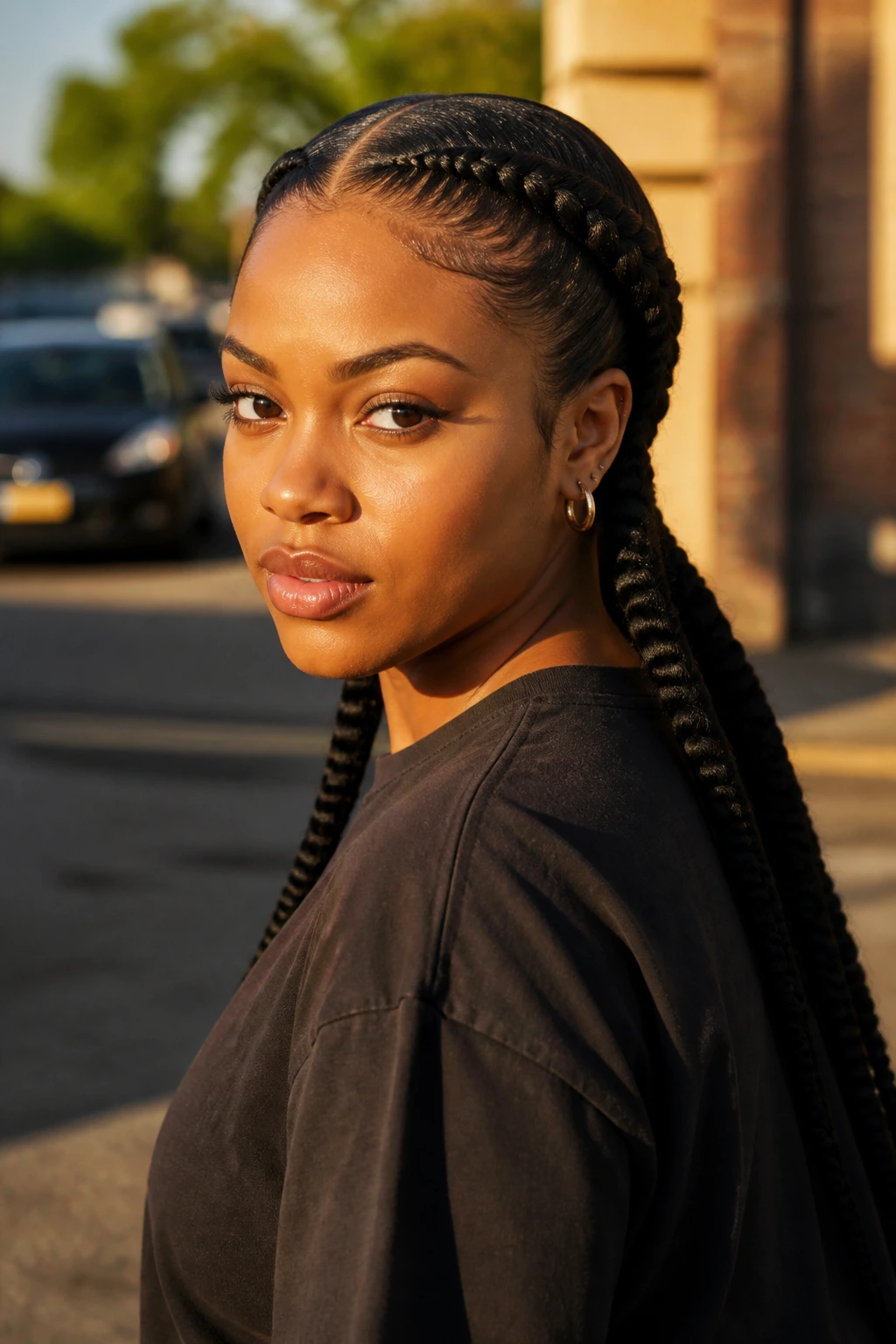
Two oversized feed-in braids are simple at first glance, which is why I like them. There’s no confusion about the shape. Just two bold rows, clean parts, and a strong finish that can sit behind the shoulders or drape forward like long ropes.
The style works because the size gives the face room. Tiny braids can sometimes feel busy; two larger feed-ins let the parts breathe. If you want a look that’s fast enough to wear often but still reads deliberate, this one hits a good middle point. Add braiding hair only as much as needed. Too much weight turns sleek into heavy.
32. Cornrows With Swooped Baby Hairs
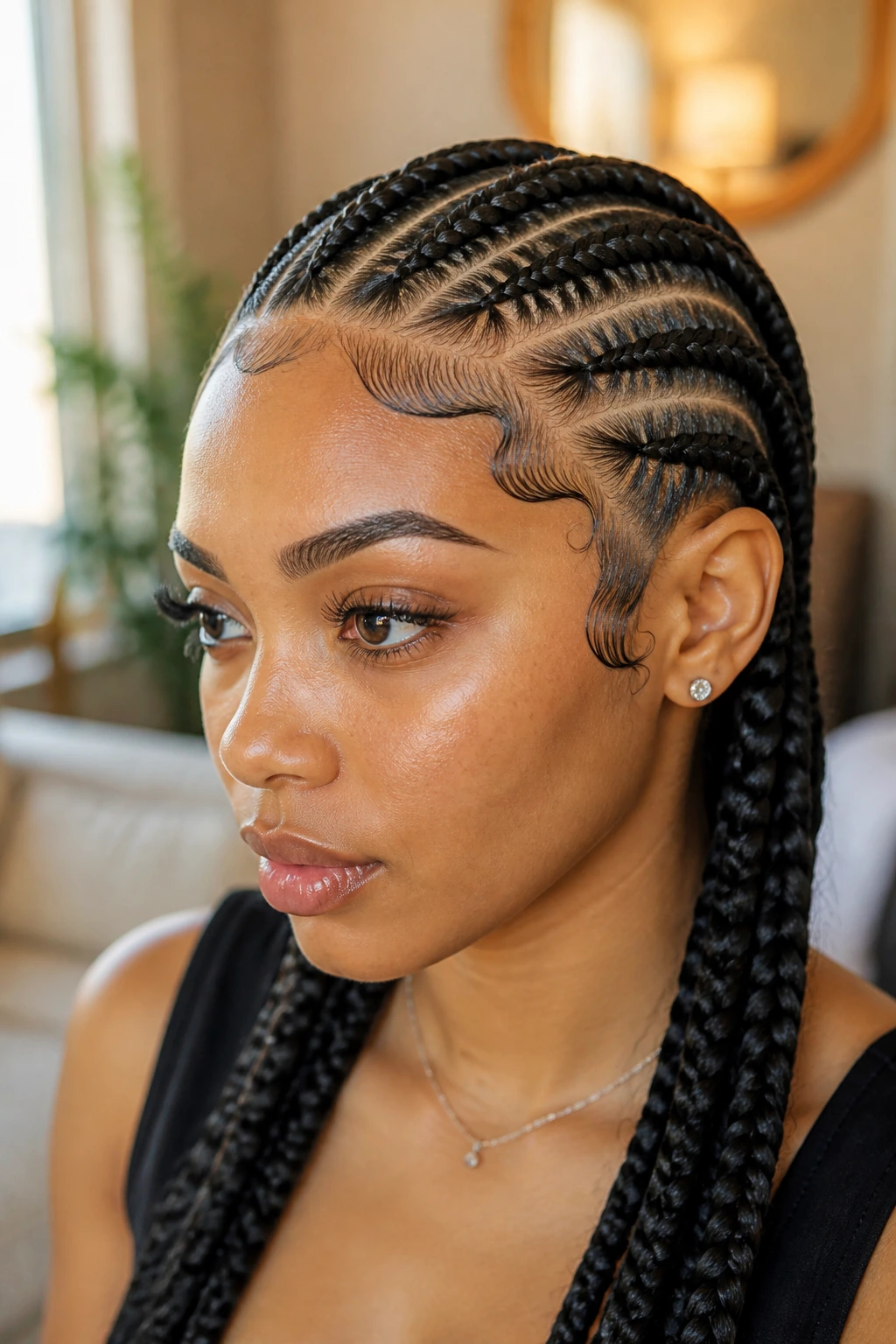
Swooped baby hairs can soften a strong braid line, but they work best when kept light. A few smooth edges around the front can round out the style and keep straight-back or center-part cornrows from feeling too severe. The trick is restraint.
I’m not a fan of overdrawn edges on every look. A small swoop here and there often does more than a thick layer of gel and a dramatic swirl. If the braids themselves are already detailed, the baby hair work should support them, not compete. A little frame. Not a whole border.
33. Pop-Of-Color Cornrows
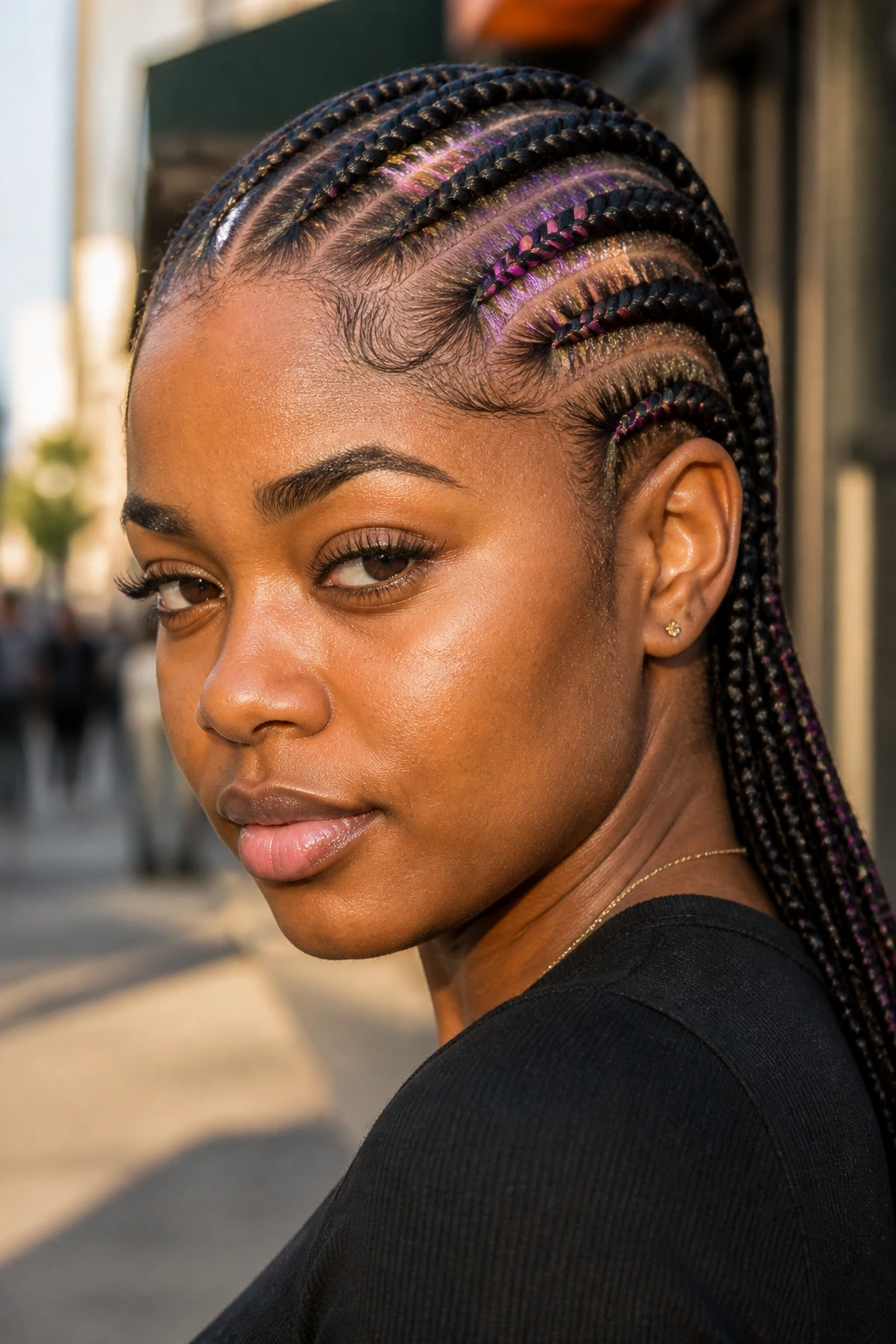
Color accents do the talking before the braid pattern does. A few burgundy, honey-blonde, copper, or deep red feed-in pieces can change a simple cornrow style from plain to striking without needing a full head of color. It’s one of the easiest ways to wake up a braid set.
If you want the color to feel grown rather than costume-like, use it sparingly. One or two accent braids near the face, crown, or ponytail can do the job. Full-head color braiding hair can be beautiful too, but the smaller color streaks are easier to wear if you’re testing the waters.
34. Side Crown Cornrows
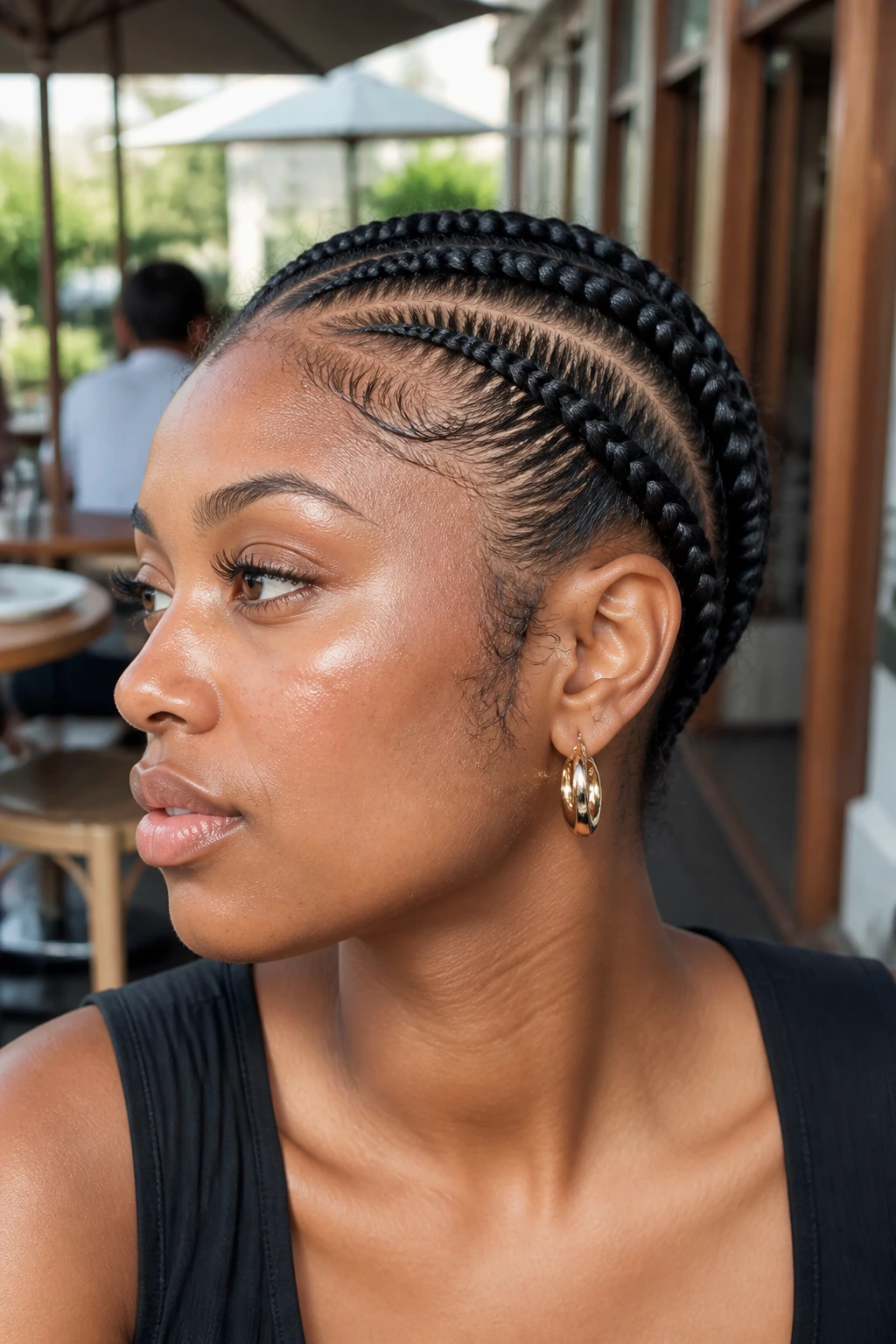
A side crown gives you the softness of a halo braid with a little asymmetry. Instead of wrapping fully around the head, the braid arcs from one side and frames the face before tucking back behind the ear or into a low finish. It feels romantic without getting sugary.
This style suits anyone who likes a braid that moves the eye toward the cheekbones and jawline. It’s also a smart choice when you want to keep one side of the head more visible for earrings or makeup. The line should stay smooth. If the crown pinches in the middle, the shape loses its grace.
35. Ladder Stitch Cornrows
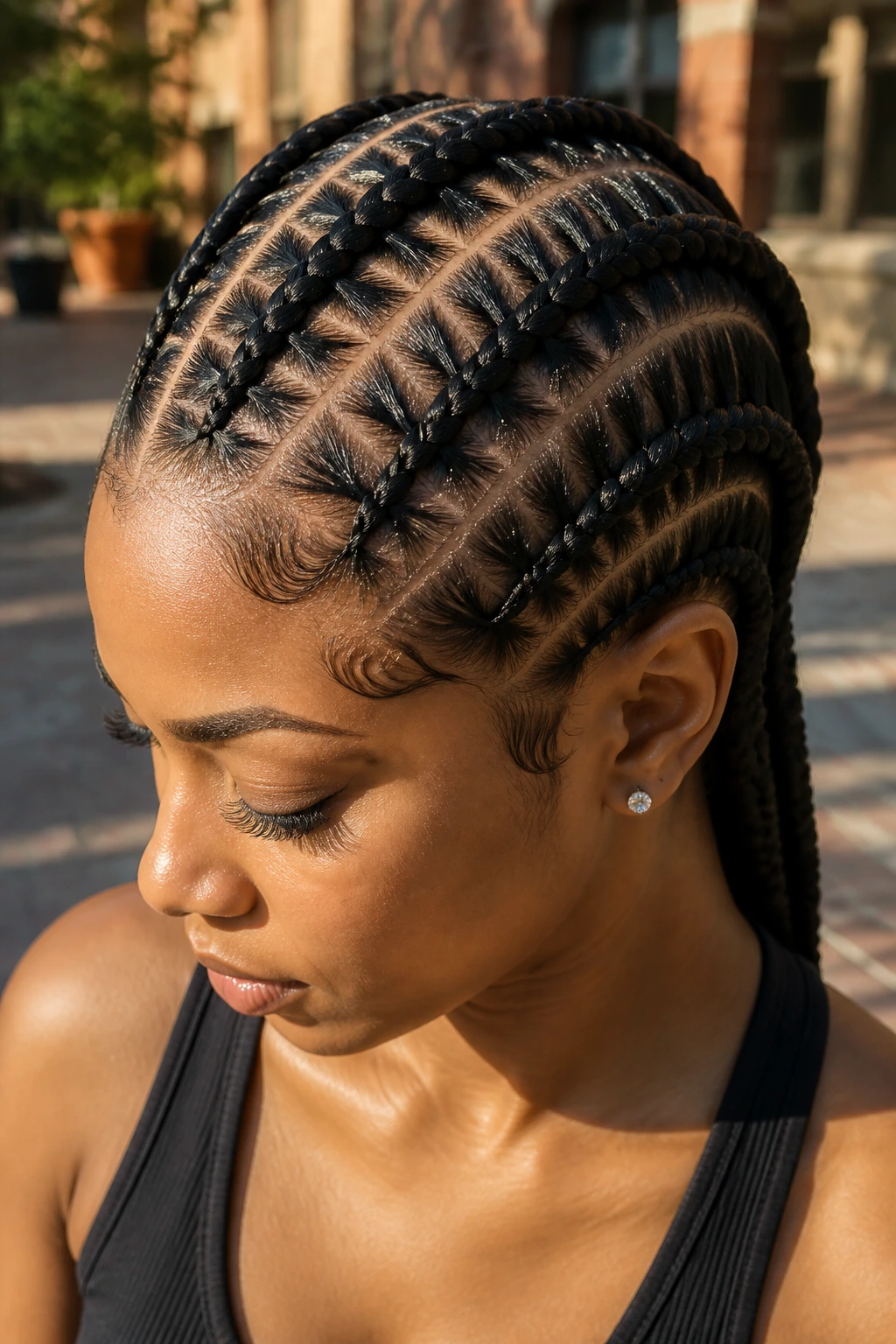
Ladder stitch cornrows look especially good when the parting is clean and evenly spaced. The sections run in a pattern that resembles rungs or stepped lines, giving the scalp a layered look that feels detailed but still wearable. It’s a strong choice when you want the braid pattern itself to feel like the design.
This style takes patience and a precise comb hand. The spacing between the “rungs” has to stay consistent, or the ladder effect gets muddy. On the right hands, though, it’s one of the most interesting cornrow hairstyles in the bunch because it reads as structured without becoming stiff.
The Pattern Behind A Good Cornrow Set
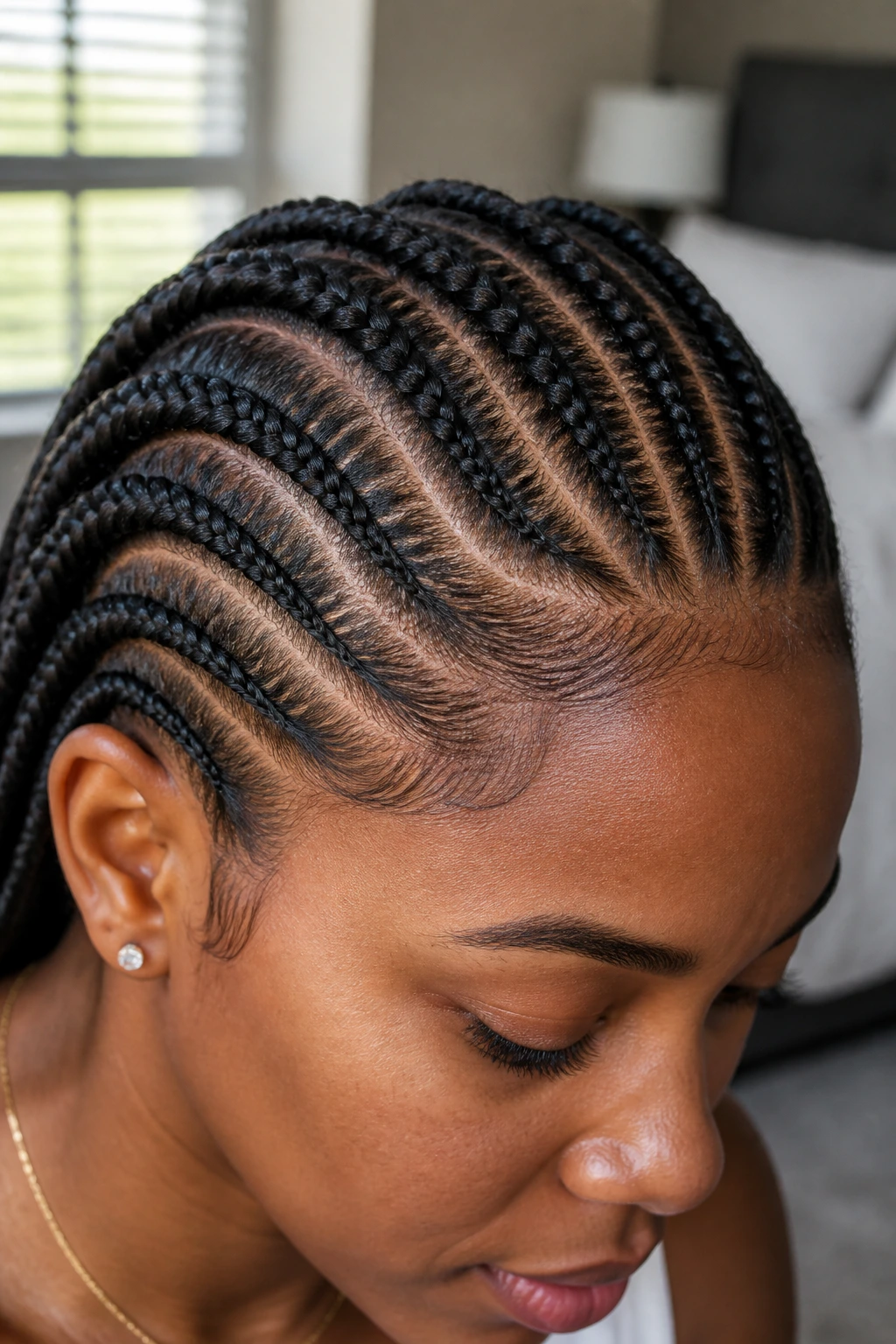
Cornrows last longer and look better when the style works with the hair instead of fighting it. That sounds obvious, but plenty of bad installs ignore it. The braid lines should match the density at the roots, the direction of the growth pattern, and the amount of tension the scalp can actually tolerate. If the front rows are yanked tight just to make them look neat, the style may look sharp for an hour and feel awful for the rest of the week.
The other reason cornrows keep showing up in protective styling is simple: they give you options. You can keep them plain or decorate them. You can go straight back, sweep to one side, build into a ponytail, or finish with curls. That makes them useful for school, work, travel, and everything in between.
And they’re honest. A good braid set shows the parting. A messy one shows the parting too. Cornrows don’t hide sloppiness well, which is why the best styles depend on clean sectioning, good section size, and a calm hand at the hairline.
The Tools That Make Braiding Day Easier
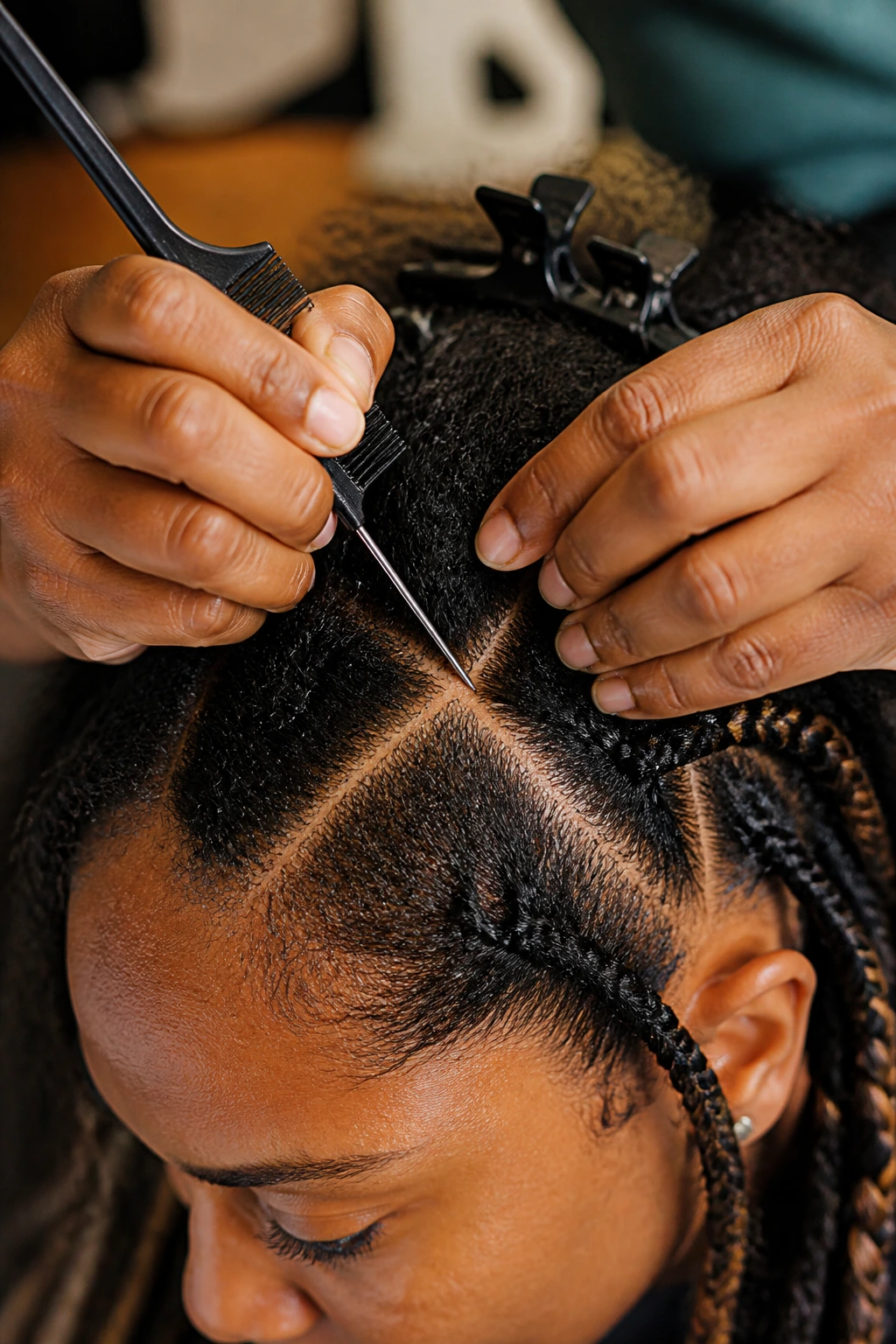
- Rat-tail comb: The pointy tail is what gives you clean parts, especially for center lines, triangles, and zigzags.
- Sectioning clips: These keep the hair divided so you are not chasing loose strands while braiding.
- Pre-stretched braiding hair: If you’re adding length or fullness, this saves time and gives the braid a smoother start.
- Braiding gel or strong-hold styling gel: Use a thin layer at the roots for grip, not a thick cap that flakes later.
- Edge brush: Good for laying baby hairs lightly without scraping the skin.
- Spray bottle with water or leave-in mix: Helps with detangling and keeps natural hair from feeling dry during parting.
- Mousse or wrapping foam: Useful for setting the finished style and calming frizz at the roots.
- Small scissors: Handy for trimming extension hair, thread ends, or stray pieces that escape the braid.
- Satin scarf or bonnet: Necessary if you want the style to stay neat overnight and avoid lint.
- Hair beads, cuffs, or thread: Optional, but useful when you want to personalize the finish without changing the whole braid pattern.
Small Details That Change The Whole Finish
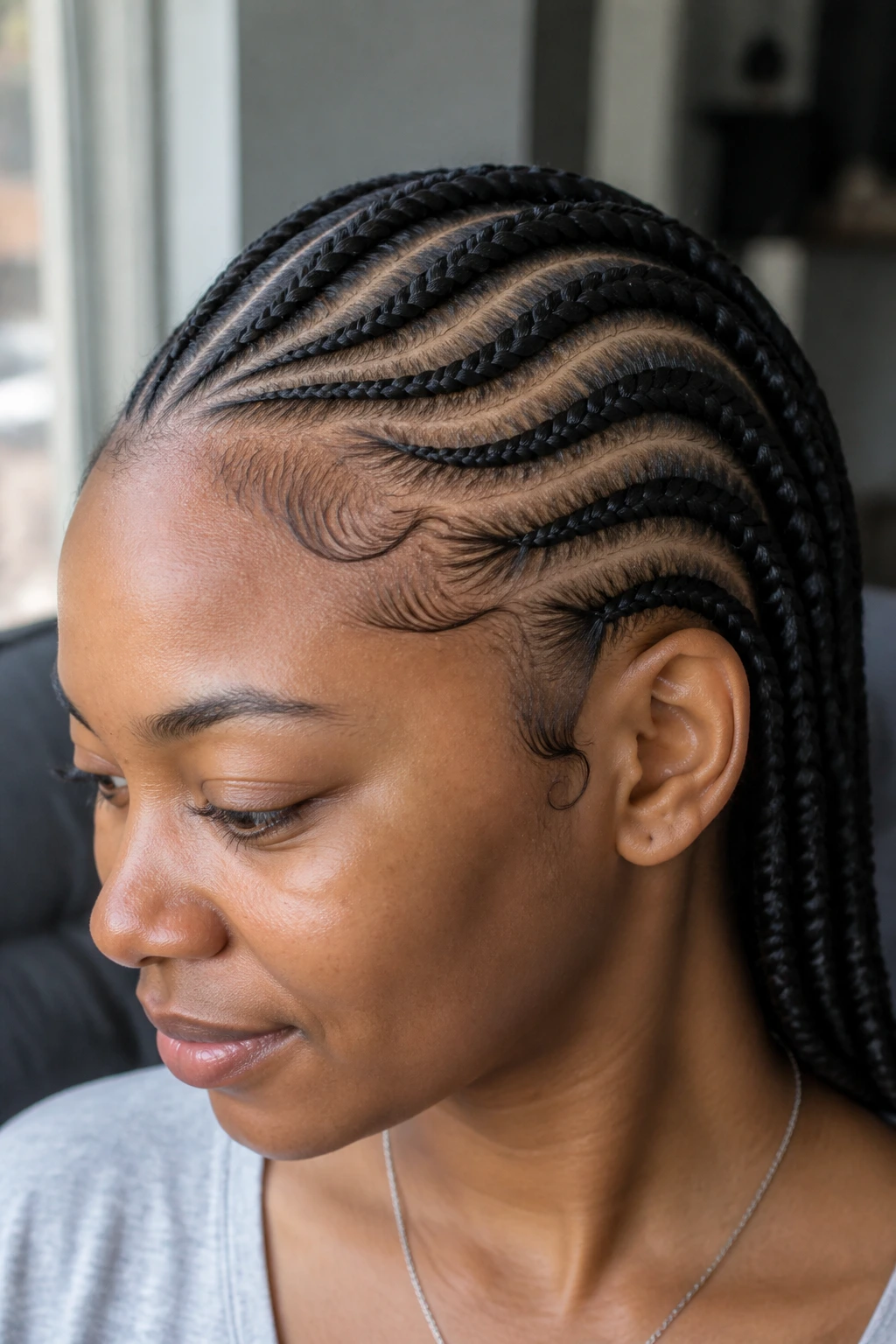
Clean parting: The part line matters more than people think. On stretched, detangled hair, a rat-tail comb glides cleanly and the style starts looking finished before the first braid even gets made.
Tension check: The front rows should feel secure, not stabbing. If your forehead aches, your temples throb, or you see little white bumps along the line, the style is too tight and needs to be redone.
Accessory choice: Heavy beads belong on stronger rows or on longer ends. Tiny braids at the hairline should not be dragged down by bulky hardware. Light cuffs and small beads usually look better near the front.
Face-framing: Side parts, curved rows, and a few baby hair swoops can soften a braid set fast. If the style feels a little severe, that’s the easiest place to adjust.
Make-it-yours: For a softer look, keep the ends curly or loose. For a sharper one, keep them sealed and neat. For a bolder mood, add one color streak near the front instead of coloring everything.
Common Mistakes That Make Cornrows Fall Flat
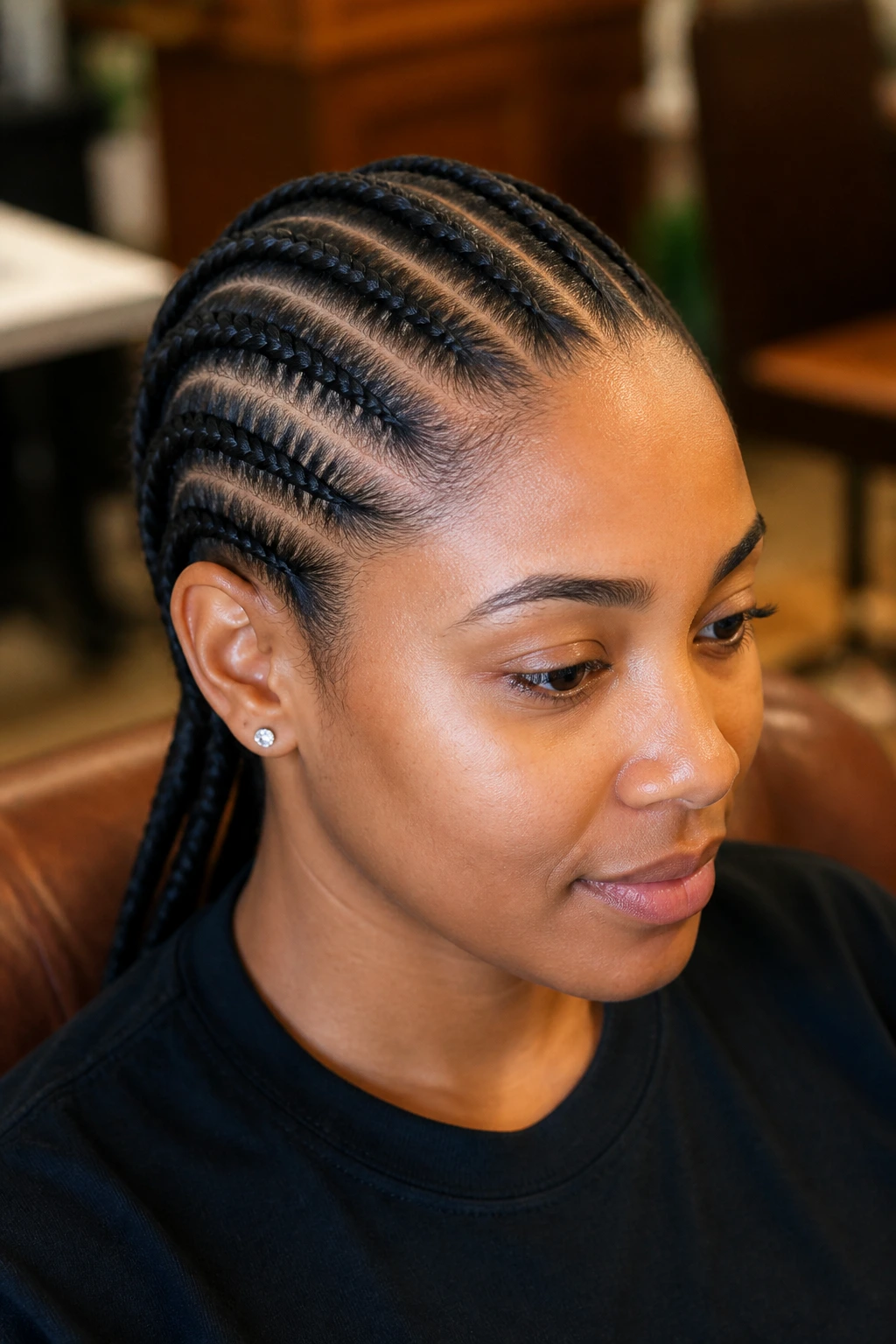
- Braiding too tight at the hairline: The symptom is pain, headaches, or raised bumps along the front. The fix is a looser start, smaller feed-ins, and a braider who keeps the first section gentle.
- Starting on dry, tangled hair: Parts look messy, the braid base feels bulky, and the style frizzes faster. Detangle thoroughly, stretch the hair if needed, and braid on hair that has some slip.
- Using too much gel: You get white flakes, hard buildup, or a crusty look around the roots. Use a thin layer, not a scoop, and set the finished style with foam instead of more gel.
- Leaving the style in too long: New growth gets puffy, the scalp starts itching, and the roots can strain. Most styles should come down once the base is clearly grown out, not after the hair starts complaining.
- Loading the front with heavy accessories: Beads and cuffs can pull on fine sections near the temples. Keep the front lighter and save the weight for the stronger rows.
- Choosing a style that doesn’t fit the hair length: Some patterns need added hair to sit right; others look better on natural hair alone. Match the style to the amount of length and density you actually have.
Ways To Change The Look Without Starting Over
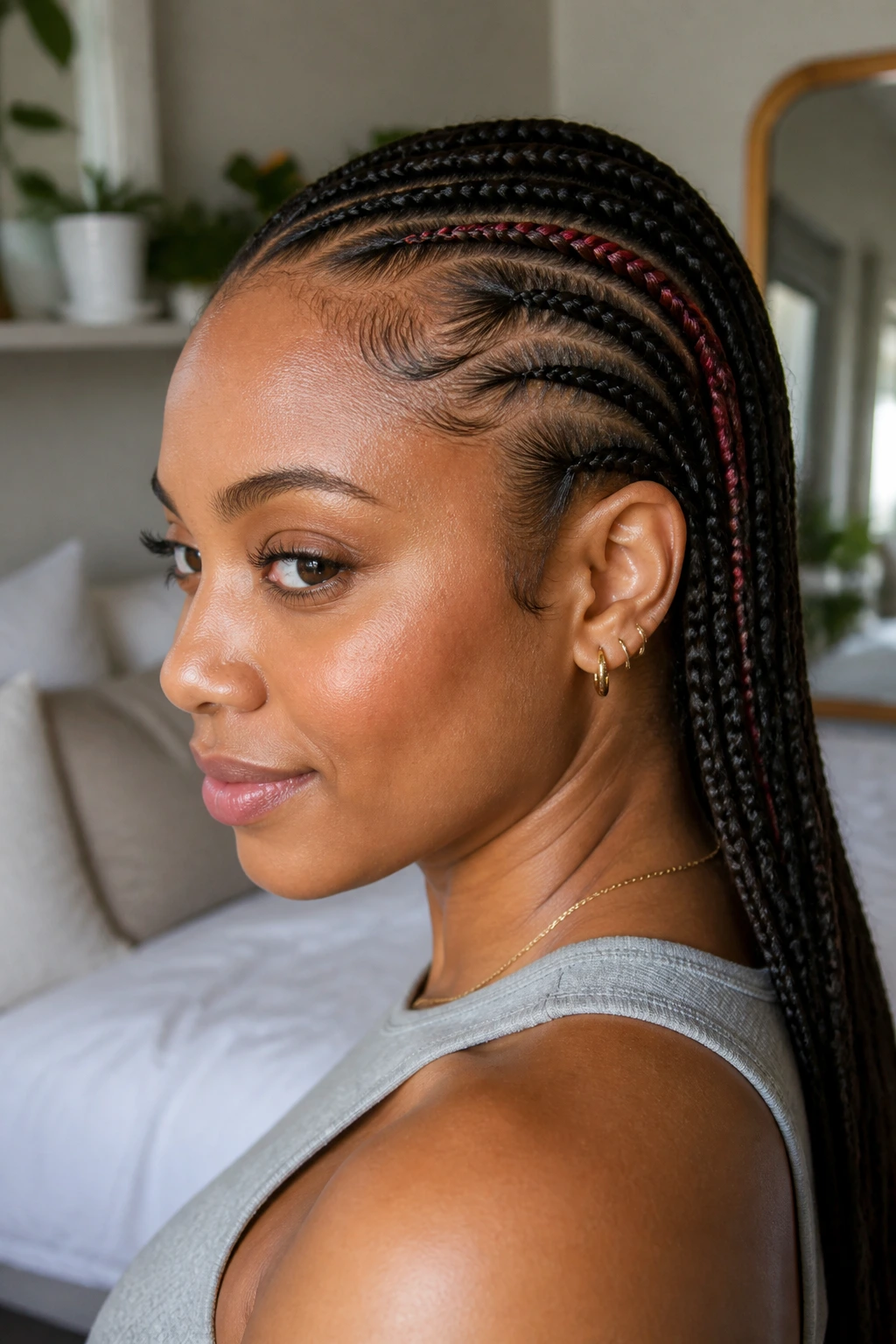
Short-Hair Friendly Mini Rows: Keep the rows slim and stop them at the nape or tuck the ends neatly under. This works when the hair is too short for heavy feeding but still long enough to braid.
Low-Tension Feed-Ins: Start with tiny pieces at the root and build fullness slowly. It gives you a smoother base and is kinder to a sensitive hairline.
Accessory-Heavy Finish: Add beads, cuffs, or thread only after the braid shape is done. Use this when the structure is simple and you want the finish to do more of the talking.
Office-Quiet Version: Stick to straight-back, center-part, or low-bun shapes with no extra decoration. Clean parts and a smooth finish carry the look on their own.
Color-Streaked Variation: Thread in one or two colored braiding pieces near the face or ponytail. That gives you a pop without committing to a full-color install.
Softened Edge Version: Skip heavy baby hairs and keep the front rows a little rounder. This is the move when you want the style to feel less sharp and more relaxed.
How To Keep Cornrows Fresh Between Washes
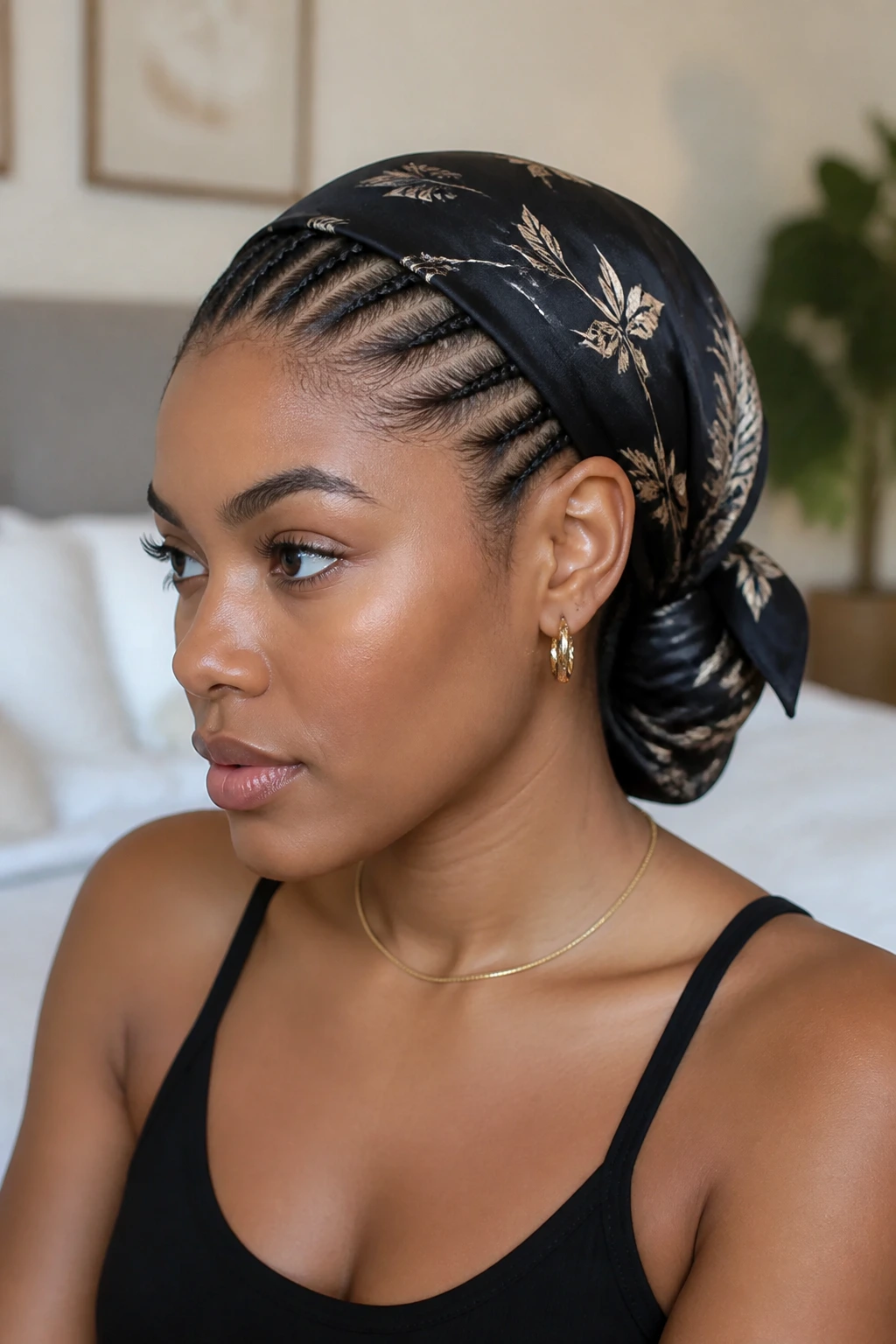
Cornrows look best when the scalp stays clean enough to breathe. If you use a lot of gel or mousse, a gentle scalp cleanse every 7 to 10 days helps keep buildup from sitting at the roots. A nozzle bottle makes this easier; aim the diluted shampoo or cleansing mix along the part lines, massage lightly with the pads of your fingers, and rinse carefully so the hair does not stay damp for hours.
Night care matters just as much. Wrap the hair with a satin scarf, then use a bonnet if the style is long enough to rub against your pillow. That cuts down on lint, frizz, and the little fuzzy halo that shows up around day four when nobody has time for it.
If you work out often, dry the roots after sweating. A cool blow-dryer on low speed or even a clean towel pressed gently at the scalp can keep the style from smelling stale. Freshness is mostly about small habits.
Most cornrow sets with added hair last about 4 to 6 weeks if the scalp is comfortable and the parts are still neat. Natural-hair-only styles often need a redo sooner, sometimes after 2 to 3 weeks, because the roots puff faster. If the style starts feeling tight, itchy, or sore, that is your cue. Do not wait for it to become a problem you can feel in your sleep.
Questions People Actually Ask About Cornrow Styles
How long do cornrow styles last on Black hair?
That depends on the size of the rows, whether you use added hair, and how fast your roots puff up. Natural-hair-only styles often stay neat for 2 to 3 weeks, while feed-in or extension styles can last 4 to 6 weeks if the scalp is comfortable.
Can you get cornrows on short natural hair?
Yes, but the style choice matters. Short hair usually does better with smaller rows, tighter sectioning, or added braiding hair for length and grip. A style that needs long ends, like a fishtail tail or curly finish, may need extensions to sit right.
Do cornrows damage edges?
They can if the hairline is pulled too tight or the style is left in too long. A good install should feel secure, not painful. If your temples hurt or you see bumps along the front, the tension is too high.
How often should you wash cornrows?
A light wash every 1 to 2 weeks works for many people, especially if there’s product buildup or scalp sweat. Use diluted shampoo or a gentle cleanser, focus on the scalp, and dry the roots well so moisture does not sit trapped under the braids.
What style is best if I want something low-key for work?
Straight-back rows, a low bun, or a simple center-part feed-in set usually look clean without drawing too much attention. Keep the parts neat and skip heavy accessories at the front if you want the style to stay quiet.
What if my braids start frizzing at the roots after a few days?
That is normal to a point. A little mousse, a scarf at night, and a quick touch-up on the roots can smooth things down. If the frizz is paired with looseness or discomfort, the style may need to come down sooner.
Can I keep cornrows in after a workout-heavy week?
Yes, if you dry the scalp after sweating and avoid piling on heavy oils. Sweat by itself is not the enemy. Leaving it damp under the braids is where things get unpleasant.
Which cornrow styles flatter round faces?
Side sweeps, diagonal rows, high ponytails, and styles that add height through the crown tend to work well. They pull the eye upward or across the face instead of widening the middle.
Braids Worth Repeating
The best cornrow styles do two things at once: they look good, and they make life a little easier. That’s the real test. A style can be cute on day one and still fail if it tugs the hairline, sheds gel everywhere, or needs daily rescue work. The styles that stay in rotation usually have clean parts, sensible tension, and a finish that fits the rest of your week.
Pick the version that matches your hair, your face, and your patience. Straight-back rows, curved parts, beadwork, ponytails, curls, and crown shapes all have their own mood. The good ones don’t just decorate the head — they make the whole look feel settled, and that’s the part people remember.
