



Curly hairstyles for men with long hair work best when the haircut stops fighting the curl pattern. That sounds obvious, but you can spot the opposite from across a room: a blunt grow-out that blooms at the sides, collapses at the roots, and turns into a triangle by noon. Curls want a shape, not a battle.
The good versions have a few things in common. They keep weight where the hair needs it, remove bulk where it starts to puff, and give the front enough room to fall without hanging in your eyes like a curtain you keep swatting away. A strong long-curly look can be loose and rough, polished and tidy, or somewhere in the middle, but it still needs a decision behind it.
If your hair springs up two inches when it dries, that’s not a problem. That’s the feature. The real work is deciding whether you want to wear the length down, half-up, tied back, layered into a shag, or shaped into something cleaner around the ears and neckline. The styles below cover that whole range, and the useful part is not just how they look in a photo — it’s how they behave when you leave the house, sweat a little, and run your hands through them five times before lunch.
Why These Curly Looks Hold Up Better Than a Random Grow-Out
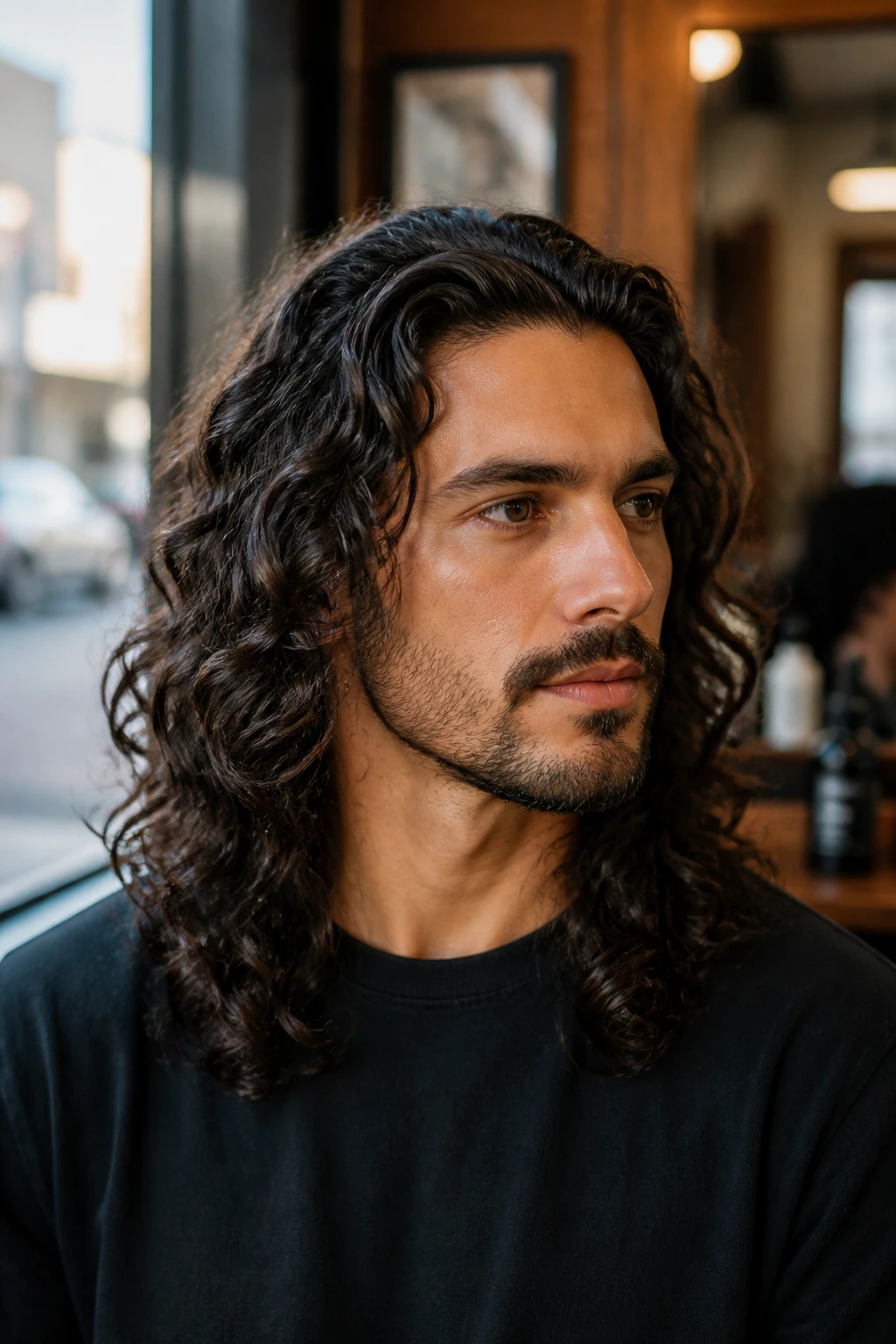
-
Less Triangle, More Shape: The best long curly hairstyles for men with long hair keep the sides from ballooning by using layers, tapering, or simple tie-back styles that redirect the width.
-
Built for Real Curl Patterns: Loose waves, springy ringlets, and dense coils do not sit the same way, so these styles give you options that respect shrinkage instead of pretending it does not exist.
-
Easy to Wear on Busy Days: A man bun, low ponytail, or half-up style gets hair off the neck fast, which matters when humidity, exercise, or a long commute turns curls into a halo.
-
Better Barber Conversations: Each style can be described with plain language — keep the length, clean the neckline, add layers, leave weight at the bottom — so you do not need haircut jargon to get the point across.
-
Works With or Without Product: Some looks need curl cream and diffuser work. Others look best with almost nothing at all, which is good news if you dislike a bathroom shelf full of bottles.
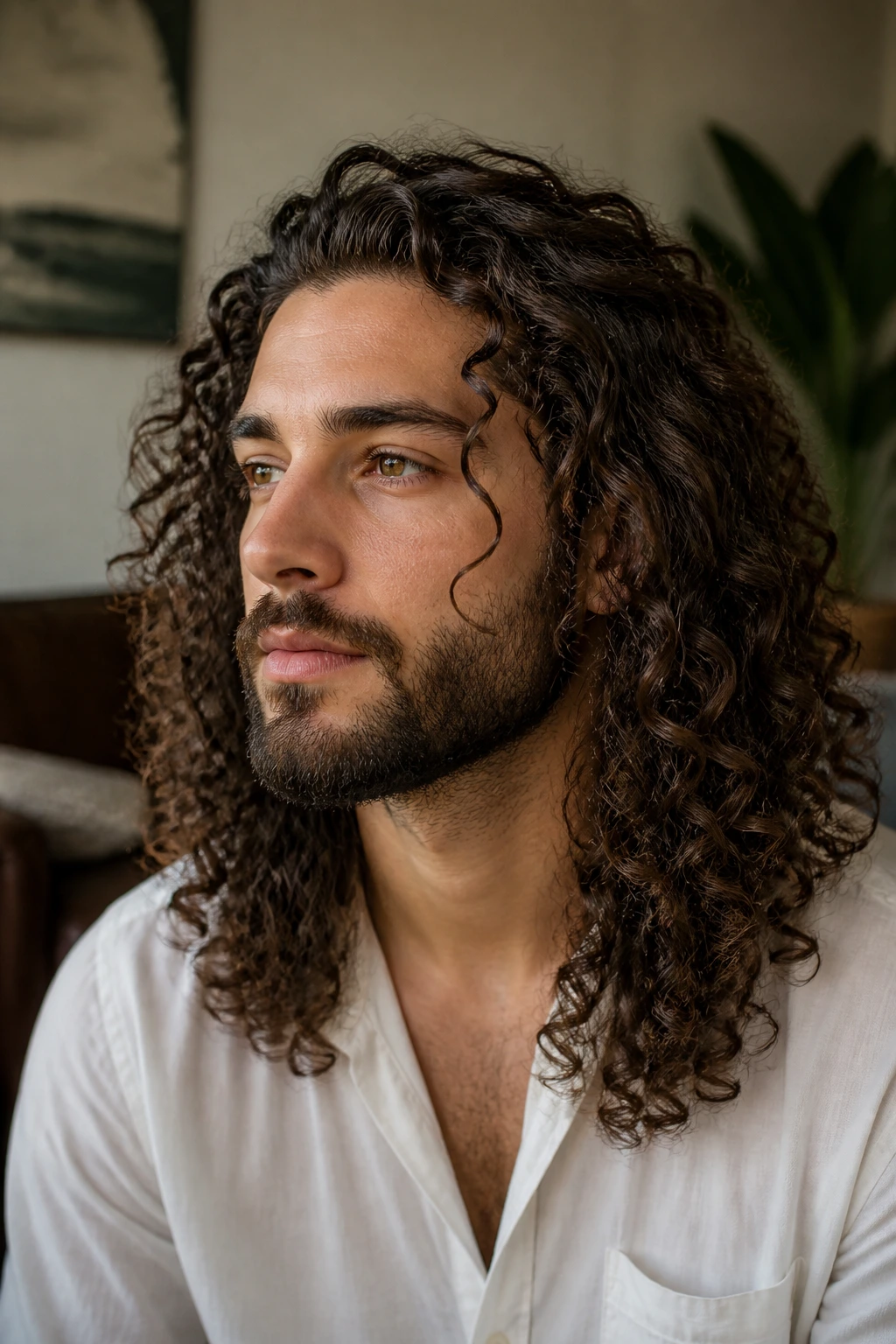
1. Shoulder-Skimming Free Curls
Shoulder-skimming curls have a way of looking relaxed without looking accidental, and that balance is harder to get than people think. Once the hair lands just above the shoulders, it starts to show its shape in a different way — the curls fall in bigger sections, the jawline gets a frame, and the whole cut feels less like a grow-out and more like a decision. The trick is keeping the ends from getting blunt and boxy.
Why it works: Long curls need room to move, and this length gives them that room without dragging everything down. A few soft layers through the crown and cheekbones keep the shape from puffing outward, especially if your hair is thick. I like this look on men who want something low-key but still present. It holds up well when air-dried, and it does not need much product to look finished.
Best on: 2C to 3B curls, medium to thick density, and faces that can handle a little width at the sides.
Watch for: The dreaded triangle. If the bottom is too blunt, the hair spreads instead of falling.
Barber note: Ask for long layers, not heavy thinning. Thinning shears can make the ends fray if they’re used too aggressively.
A little leave-in conditioner on damp hair is usually enough. Scrunch once, leave it alone, and let the curls settle into their own rhythm.
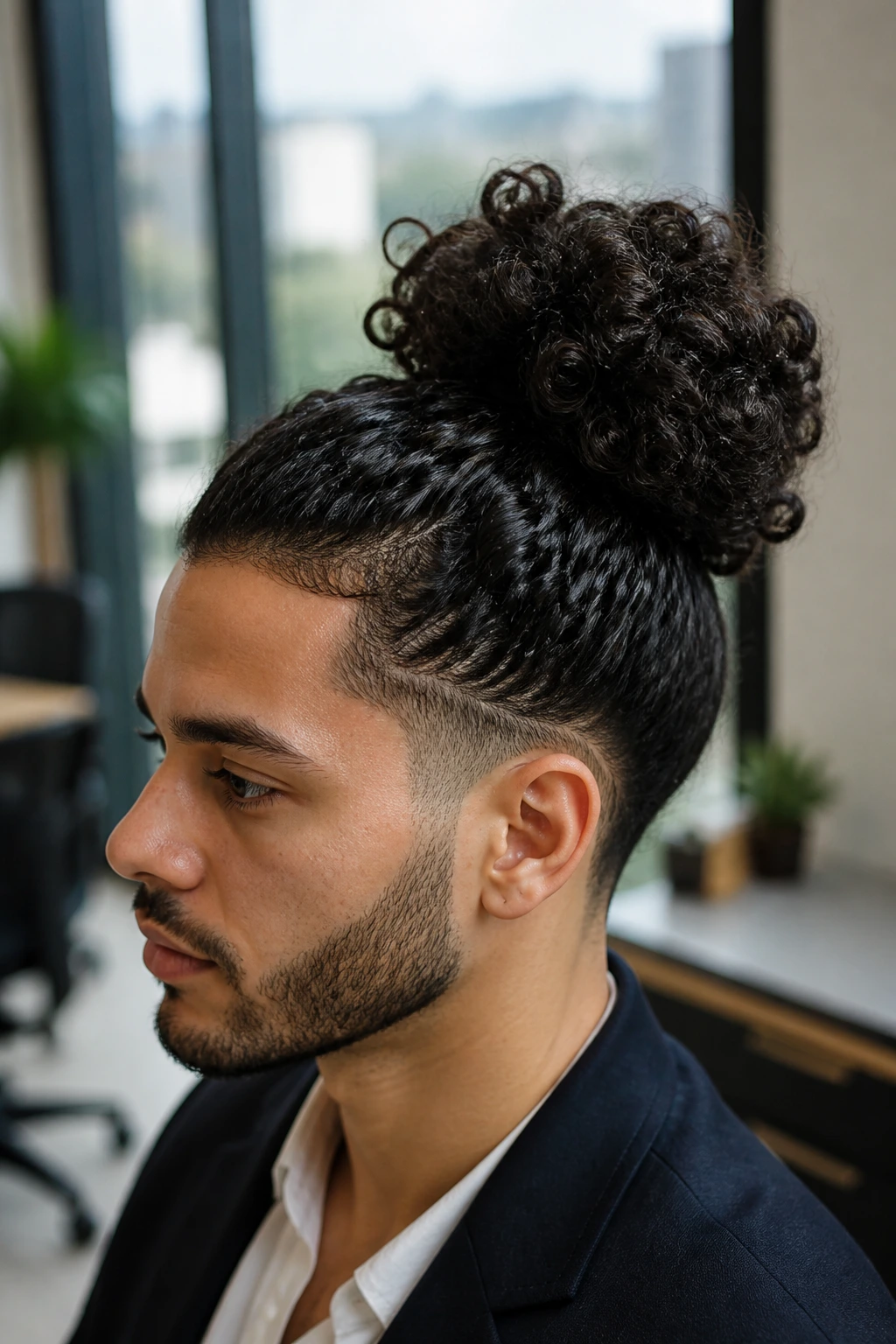
2. The Curly Man Bun
A curly man bun only looks good when it stays a little loose. Pull it too tight and the front hairline starts looking strained, the bun turns into a hard knot, and the whole thing feels more like a chore than a style. Keep it low or mid-height, gather the curls without crushing them, and let a few pieces escape around the temples if they want to.
Why it works: The bun clears the neck fast, which is useful on warm days or when you do not want hair touching your collar. It also keeps the curl pattern protected from constant friction. On very thick hair, a bun can stop the top from expanding like a cloud by afternoon. That matters more than vanity; it changes how the cut sits all day.
What makes it better:
- Use a fabric tie or spiral coil, not a thin elastic that bites into the hair.
- Twist just once or twice before looping, so the bun stays soft.
- Don’t make it perfectly centered every time; a slightly lower knot looks calmer and avoids pulling from the same spot daily.
If your hair is still damp, wait. Tying wet curls into a bun can leave them flat in the middle and frizzy at the edges. Dry or nearly dry hair handles the tension much better. And if the bun feels like it gives you a headache after two hours, it is too tight. Easy fix. Loose is the point.
3. Half-Up, Half-Down Curls
Half-up styles hit a sweet spot that full-up buns can’t quite match. You get hair off the face, but the length still falls around the shoulders and back, which keeps the style from looking severe. On long curly hair, that split matters. It shows the curl pattern where it looks good and tames the parts that usually end up in your eyes.
The cleanest version starts at the temples or just above the ears, then gathers the top section back into a small knot, clip, or tie. If you grab too much hair, the style loses its shape. If you grab too little, it looks like a last-minute fix. The middle ground is where it works.
Best for: Men who like wearing their hair down but want the front under control by noon.
Looks strongest when: The top section has a little lift at the crown and the lower curls are still defined, not brushed out.
Small detail that helps: Leave two front curls loose near the face. That tiny bit of slack softens the whole look.
This is one of the more forgiving curly hairstyles for men with long hair because it handles second-day texture well. If the roots are slightly flatter and the ends are a little piecey, the style still looks deliberate. That’s a nice change from the usual all-or-nothing hair day.
4. The Curly Shag With Feathered Layers
The shag is the haircut that makes curly hair look like it knows exactly what it’s doing. Not neat. Not stiff. Just shaped. Feathered layers break up the bulk through the crown and sides, while the longer lengths keep the whole thing from turning into a puffball. If your curls are thick and your current grow-out feels heavy, this is one of the smartest cuts you can make.
Why the layers matter
Curly hair does not sit evenly. The root area often wants volume, while the ends can look stretched or stringy. A shag balances that by removing weight in the middle, not just at the perimeter. That keeps the silhouette from widening at the cheekbones and lets the curls stack in a more natural way.
Ask for layers that are visible but not choppy to the point of frizzing out. The best shags on men keep enough length at the ends so the cut still feels masculine and grounded. Too many short bits around the face, and the style can go fuzzy fast.
This one likes a diffuser. Low heat, low airflow, head tilted slightly to one side, then the other. If you rake product through the hair while it’s half-dry, the curls can separate into weird ribbons. Scrunch instead. The whole point is movement, not control.
5. The Curly Wolf Cut
The wolf cut is the shag’s rougher cousin. More edge. More contrast. Shorter around the top, longer in the back, and intentionally a little wild around the ears. On curly hair, that shape works better than people expect because the curl pattern softens the sharpness. The result is not a costume. It is a cut with attitude.
What separates a good wolf cut from a messy grow-out is the transition. The back needs to stay long enough to read as length, but the top should be visibly layered so the shape rises and falls instead of hanging in one block. If the sides are left too heavy, the whole thing goes triangular. If they’re cut too short, it loses the long-hair point altogether.
This style suits men who like texture and do not mind a little shape shifting through the day. It can look especially good on dense curls that need some weight removed. Fine curls can wear it too, but the layers need to be gentler, or the hair starts looking sparse at the crown.
A wolf cut does not need perfect styling. A curl cream, a quick scrunch, and a diffuser pass usually get you most of the way there. And if you like the look of hair that moves when you turn your head, this one earns its keep.
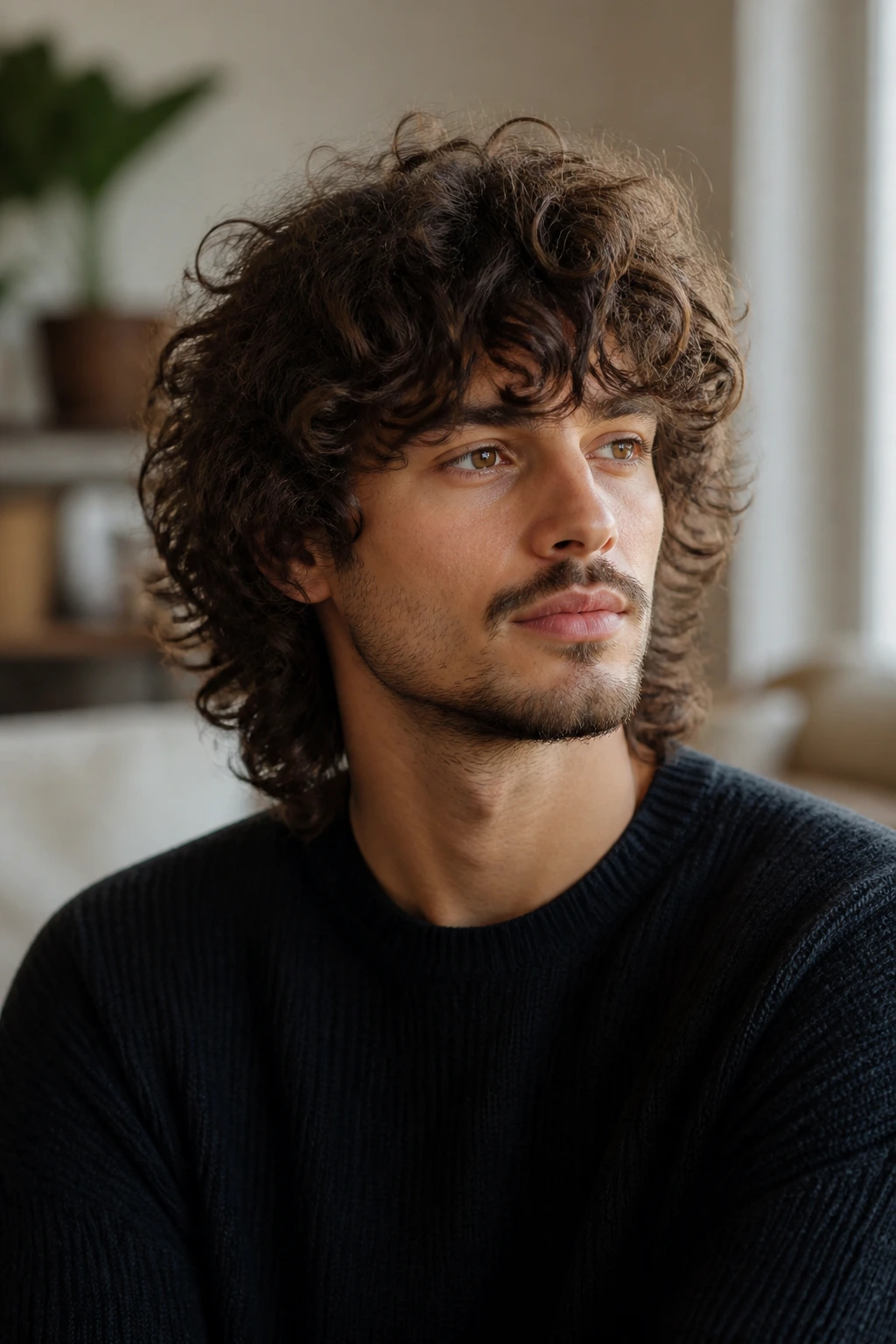
6. Curtain Curls With a Center Part
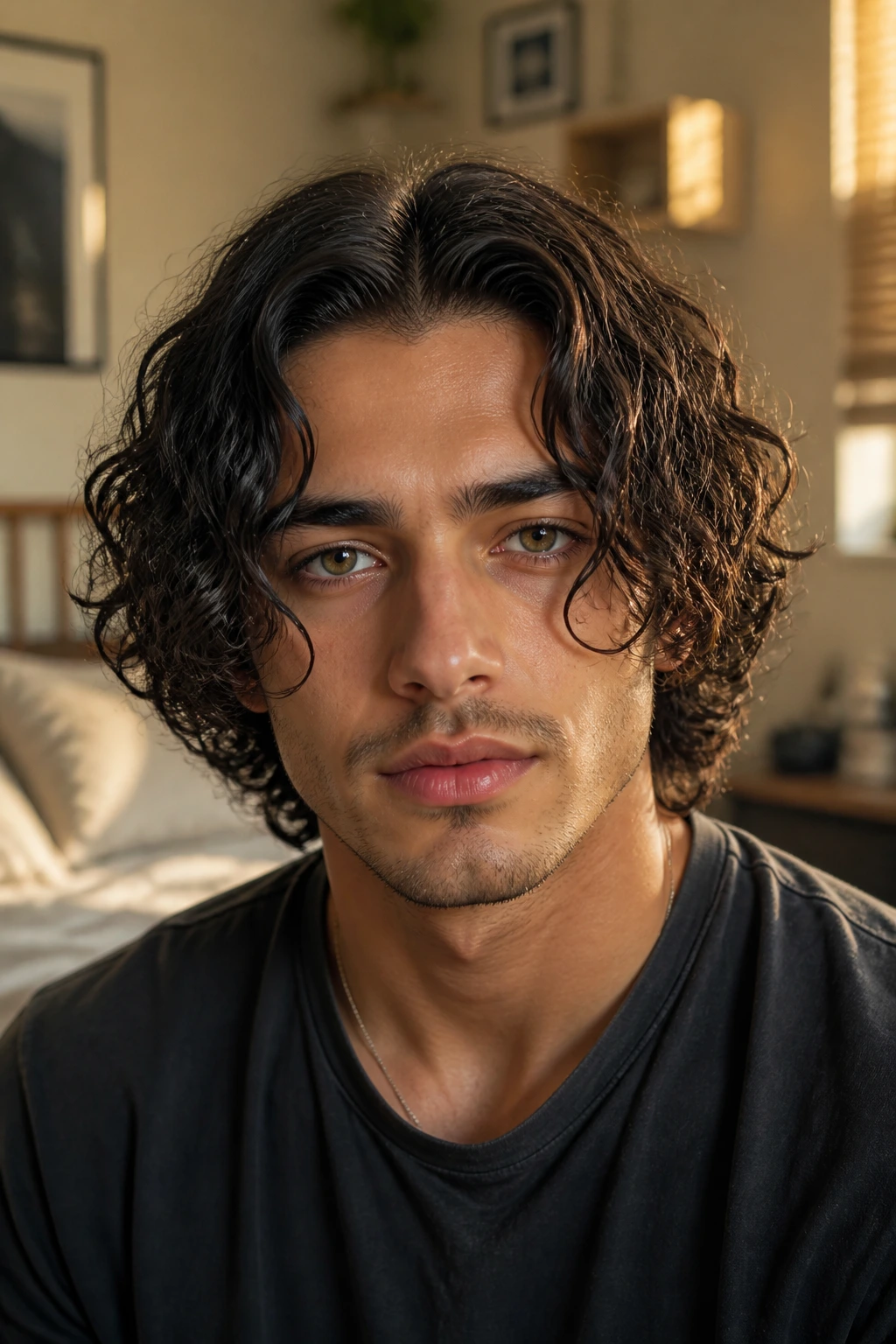
Curtain curls only work when the front length is real, not wishful thinking. If the front pieces reach the cheekbones or jaw, they can fall like soft panels on either side of the face. If they stop at the eyebrows, you will spend your day pushing them back. That’s the part people skip over.
The center part changes the whole mood of the haircut. It opens the face, stretches the shape a little, and makes the curls read in two clean streams instead of one big mass. On round faces, that vertical line helps. On square faces, the soft fall of the curls takes the edge off the jaw.
A little product goes a long way here. Too much cream and the middle part collapses into a greasy strip. Too little, and the front pieces split unevenly and frizz out in different directions. I like this look best on hair that’s been finger-combed when damp, then left alone. No brushing. That only makes the part too neat and the curls too puffy.
If you want something that feels current without chasing a trend, curtain curls are a solid choice. They have structure, but not stiffness. And when the curls are strong enough to bend around the face on their own, the style does a lot of work for you.
7. Bro Flow With Weight at the Ends
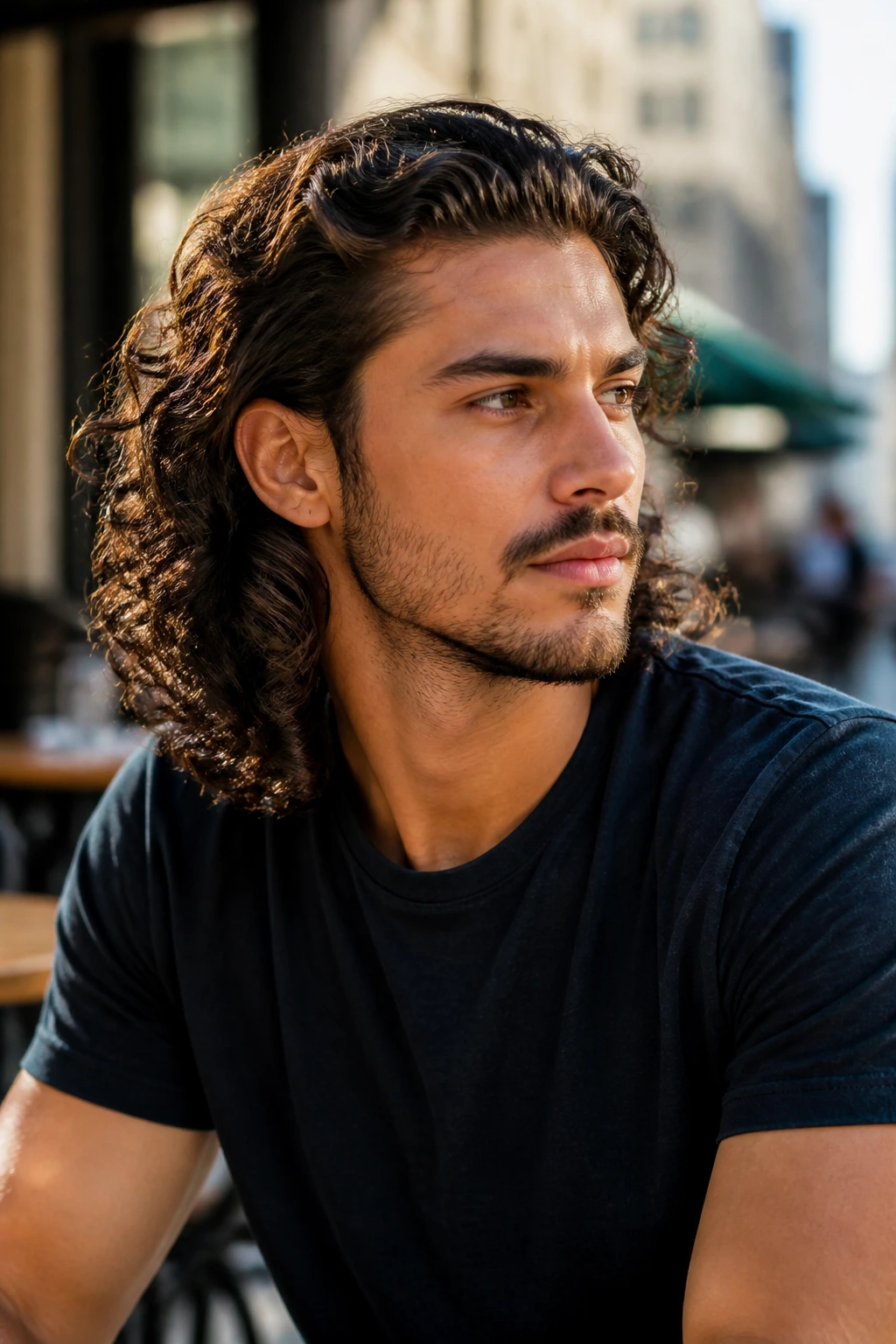
The bro flow can look lazy if the cut is lazy. When it’s done well, it has long, clean movement from the forehead to the shoulders and a slightly heavier finish at the bottom so the hair does not fan out. The whole style depends on the weight line. If the haircut is thinned too hard from the mid-lengths down, the ends lose their swing and the style falls flat.
This is a good option if you want long curly hair that still feels a little athletic or casual. The hair is usually brushed or combed back from the face, then allowed to drop behind the ears and over the collar. It’s less about sculpting the curls and more about letting them travel in the same direction.
A small practical note: the bro flow looks best when the neckline and sideburns are tidy. You do not need a fade for it, but you do need a clean outline or the shape starts drifting toward “forgot to get a haircut.” That’s a real line, and a very short one.
If you like the idea of wearing your hair down but still want it to read as intentional, this style is hard to beat. It’s one of the few long curly looks that can go from coffee shop to meeting without much adjustment.
8. The Low Curly Ponytail
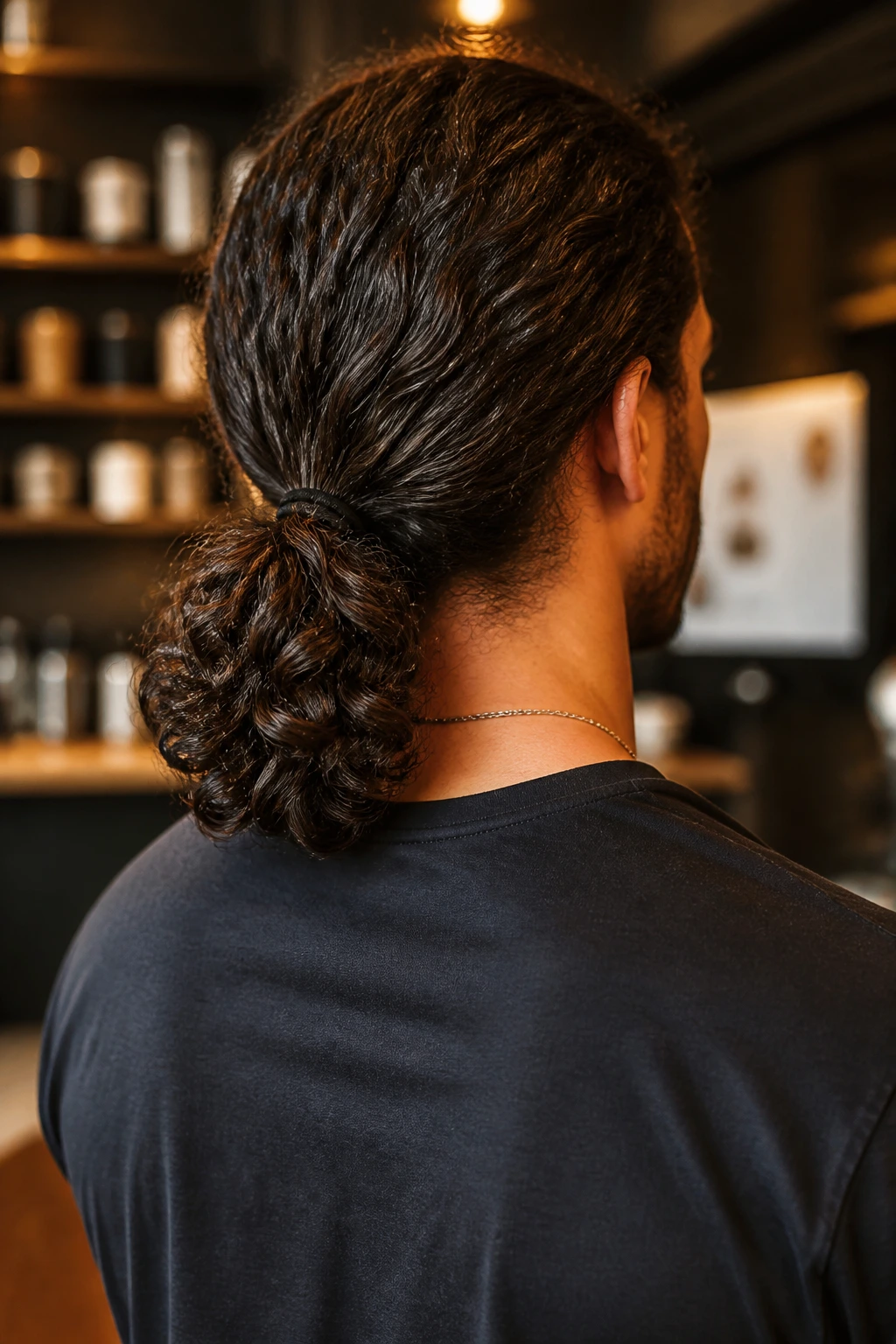
The low ponytail is the quiet workhorse of long curly hair. It doesn’t try to impress anyone. It just gets the job done while keeping the length in one place. At the nape of the neck, it sits flatter than a bun and puts less stress on the scalp, which is helpful if your hair is dense or past your shoulders.
Keep the ponytail loose enough that the curls still have shape. A tight pull can stretch the front and leave the back looking compressed. If your hair is very thick, separate it into two sections before gathering it. That makes the tie easier on the roots and keeps the lump at the base from getting too bulky.
Keep the knot low
A ponytail that sits too high starts to compete with the face. Low is calmer. It also works better with jackets, collars, and headrests in cars, which sounds boring until you spend a day with hair catching on everything you own.
This is a good style for travel, gym sessions, or days when you want long hair out of your way but do not want the more obvious shape of a bun. A little curl cream on the loose ends keeps the ponytail from turning into a frayed rope by late afternoon.
9. The Curly Top Knot
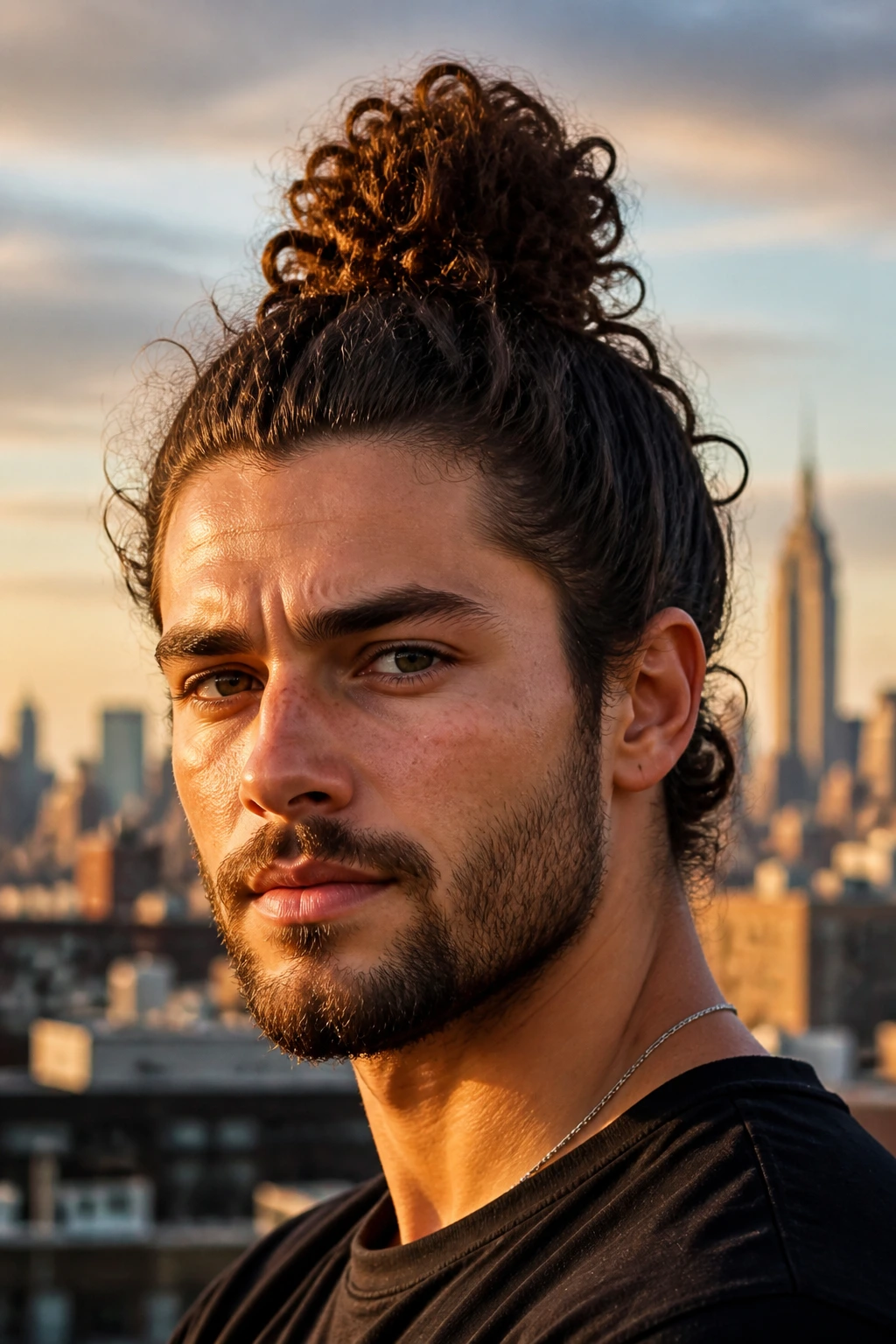
A top knot changes the energy fast. The knot sits higher than a bun, which pulls attention upward and exposes more of the face and neck. On curly hair, that lift can look sharp, especially if the sides are clean and the knot itself stays compact instead of ballooning outward.
The catch is tension. A top knot demands more from the hairline than a low bun does, so it should not be your default every single day. Rotate it with lower ties or half-up styles, or the same spot on your scalp starts to feel tender. Hair should not hurt to look tidy. That’s a bad trade.
This look works best when the hair is long enough to loop cleanly, not just stuffed into a ball. Curls with a bit of stretch can do it. Very tight coils can too, but they need enough length to avoid constant tugging. If the knot keeps slipping, that usually means the hair is too short for the style rather than that you’re bad at tying it.
A top knot can look almost formal when the outline is clean. It can also look gym-ready and quick. That range is the appeal, and it’s why so many men keep coming back to it once their hair gets long enough.
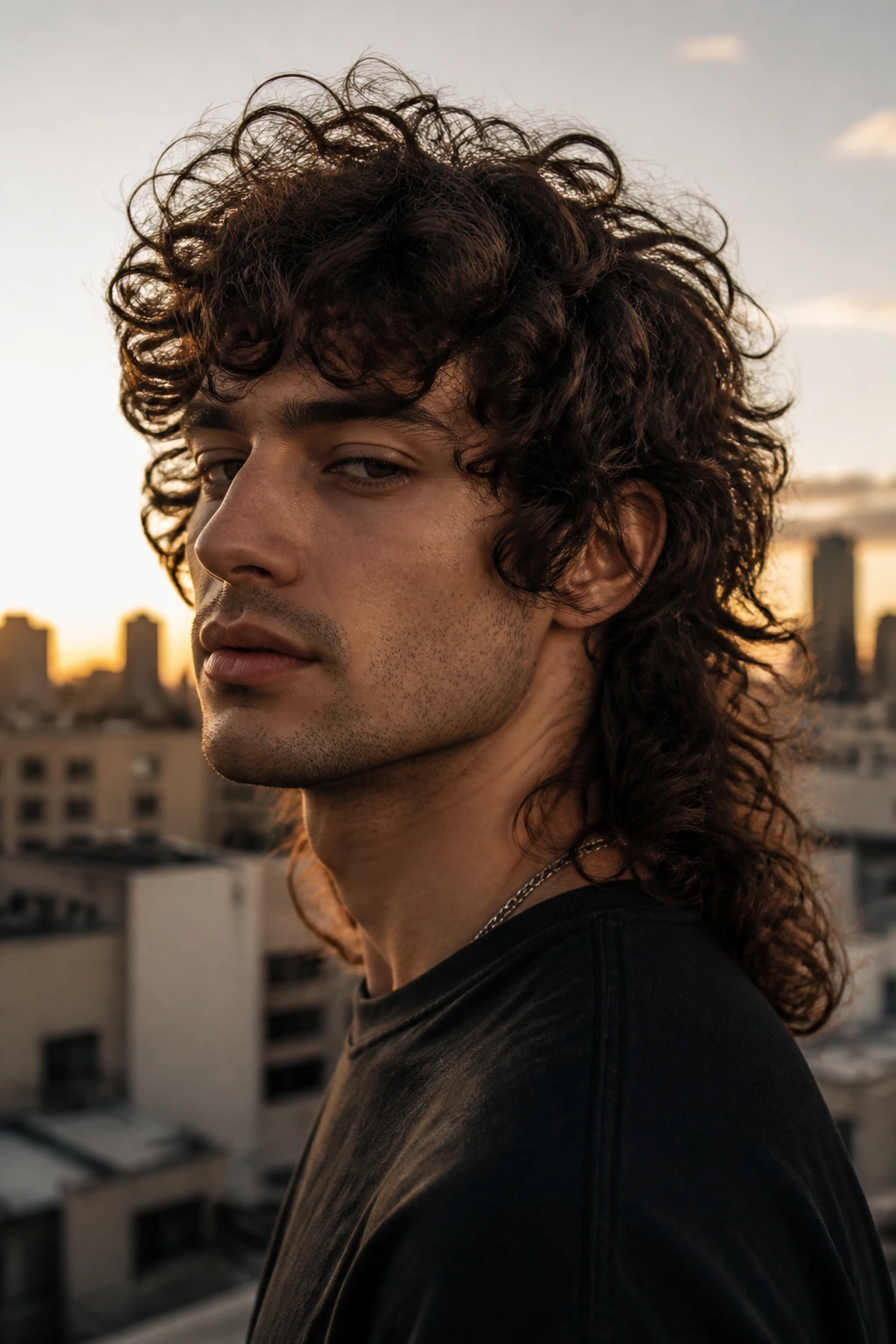
10. The Curly Mullet
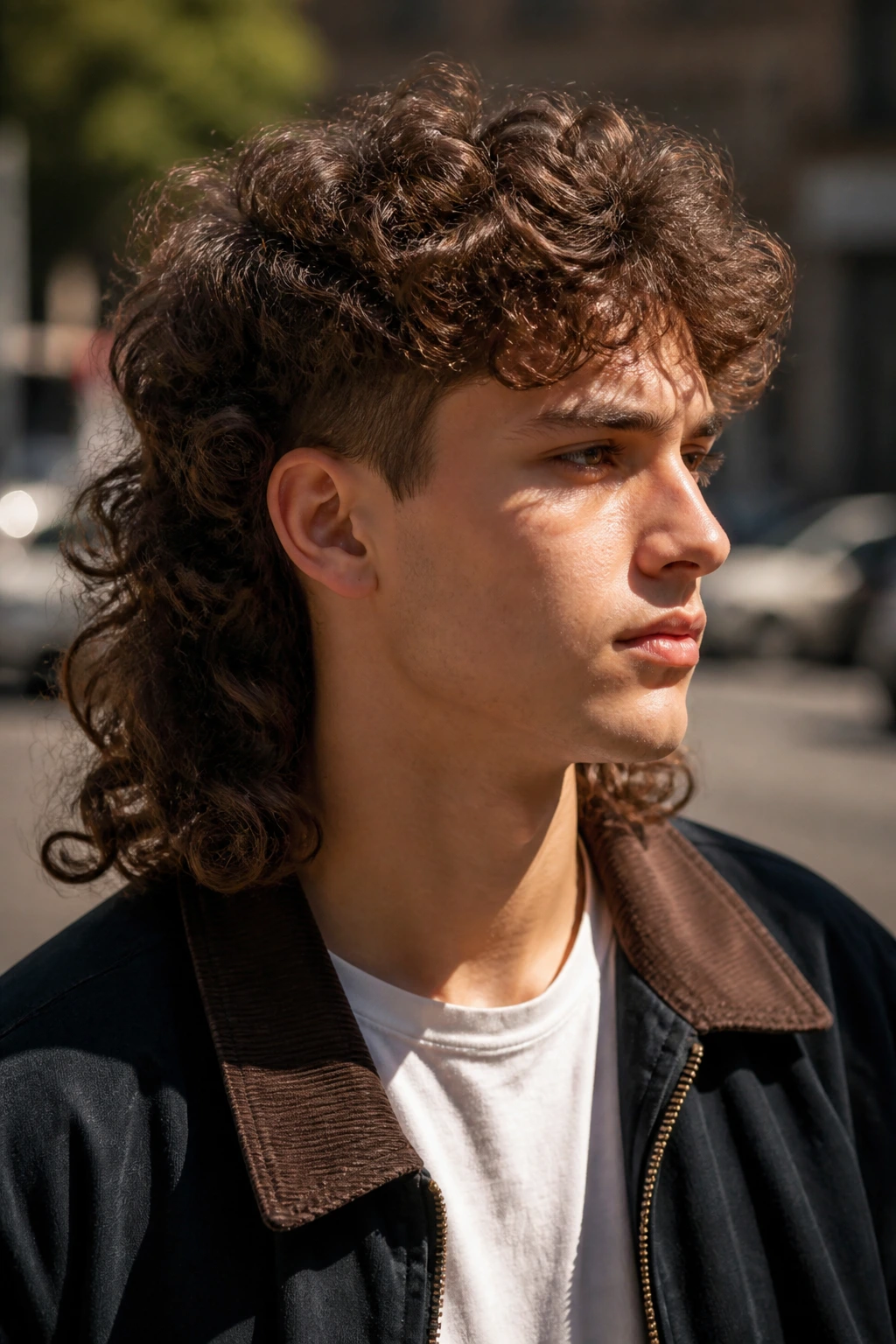
A curly mullet is one of those styles that works better in real life than in theory. The curl pattern softens the old-school sharpness, so the back can stay long without screaming about it. What matters is the blend: short enough in front to control the frame, long enough behind to keep the attitude.
The sides should not be shaved into oblivion unless you want the mullet to read very hard. A softer taper or layered transition lets the cut feel modern and wearable. On curly hair, that softness is the difference between a shape and a joke. Nobody wants the haircut to look like a dare.
This style likes movement. If the curls are stiff or over-packed with product, the whole thing loses its charm. A light cream or mousse is usually enough. If you can shake your head and the back falls back into place, you’re in the right zone.
I like the curly mullet for men who want length but don’t want the usual long-hair silhouette. It has a little edge, a little humor, and enough structure that it can still look neat around the ears and neckline. That mix is rare.
11. Long Curls With a Taper Fade
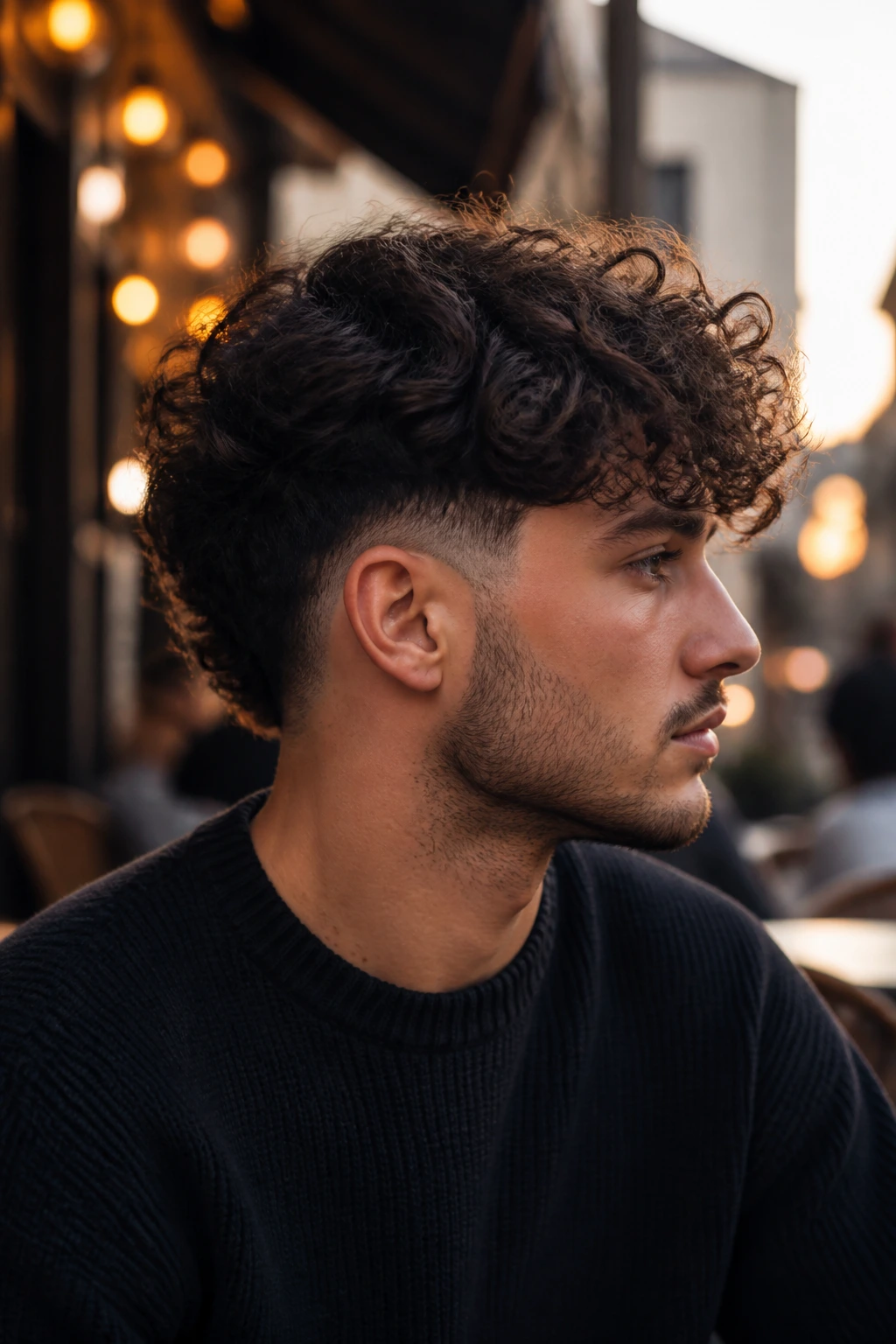
A taper fade is the cleanest way to give long curls a sharper outline without making the whole haircut feel disconnected. The faded areas around the ears and neckline clear away bulk, while the longer curls on top stay soft and visible. I prefer a taper to a high skin fade on long curls because it lets the hair keep its shape instead of floating above a bare stripe.
The smartest taper fades do not climb too high. Keep the fade low enough that the long hair still looks like the main event. If the fade takes over the sides, the top starts looking isolated, and long curls need balance more than drama.
This is also one of the easiest styles to maintain if you hate looking fuzzy at the edges. A quick cleanup around the neckline every couple of weeks keeps the cut from blurring. That small detail makes a bigger difference than most people think.
If your hair is thick, a taper fade can be the thing that stops the sides from puffing out around your ears. If your hair is looser, it gives the curls a cleaner frame. Either way, the cut does a lot of the shape work before you even touch a product.
12. Side-Parted Long Curls
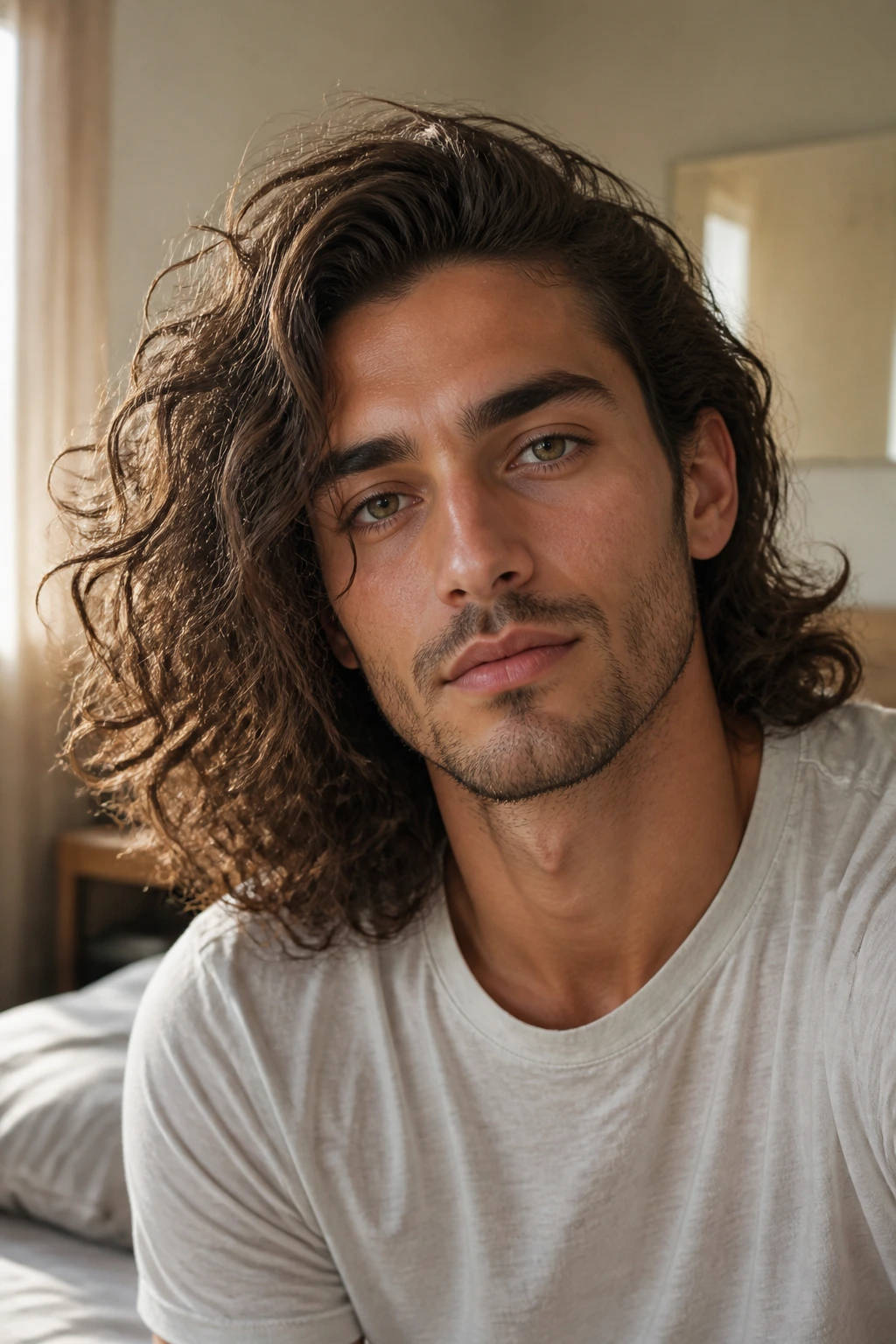
A soft side part gives long curls a little discipline without forcing them into a stiff pattern. The hair falls over one side of the forehead, drops along the cheek, and keeps enough movement to avoid looking frozen in place. It’s a good middle ground for men who want to look put together without wearing a slick style.
The part should be visible, but not carved in like a line from a razor. Curly hair already has enough texture; a hard part can look too sharp unless the rest of the cut is very controlled. I’d keep the part soft and let the curls decide where they want to bend.
This works especially well if the front is long enough to sweep across the forehead and tuck just behind one ear. That tiny asymmetry changes the whole look. It feels less formal than a center part and less casual than wearing everything straight back.
If your face is round, a side part can add a little length. If it’s long, keep the front fuller so the haircut doesn’t stretch your face even more. That kind of detail is what separates a decent cut from one that actually suits the person wearing it.
13. Brushed-Back Volume
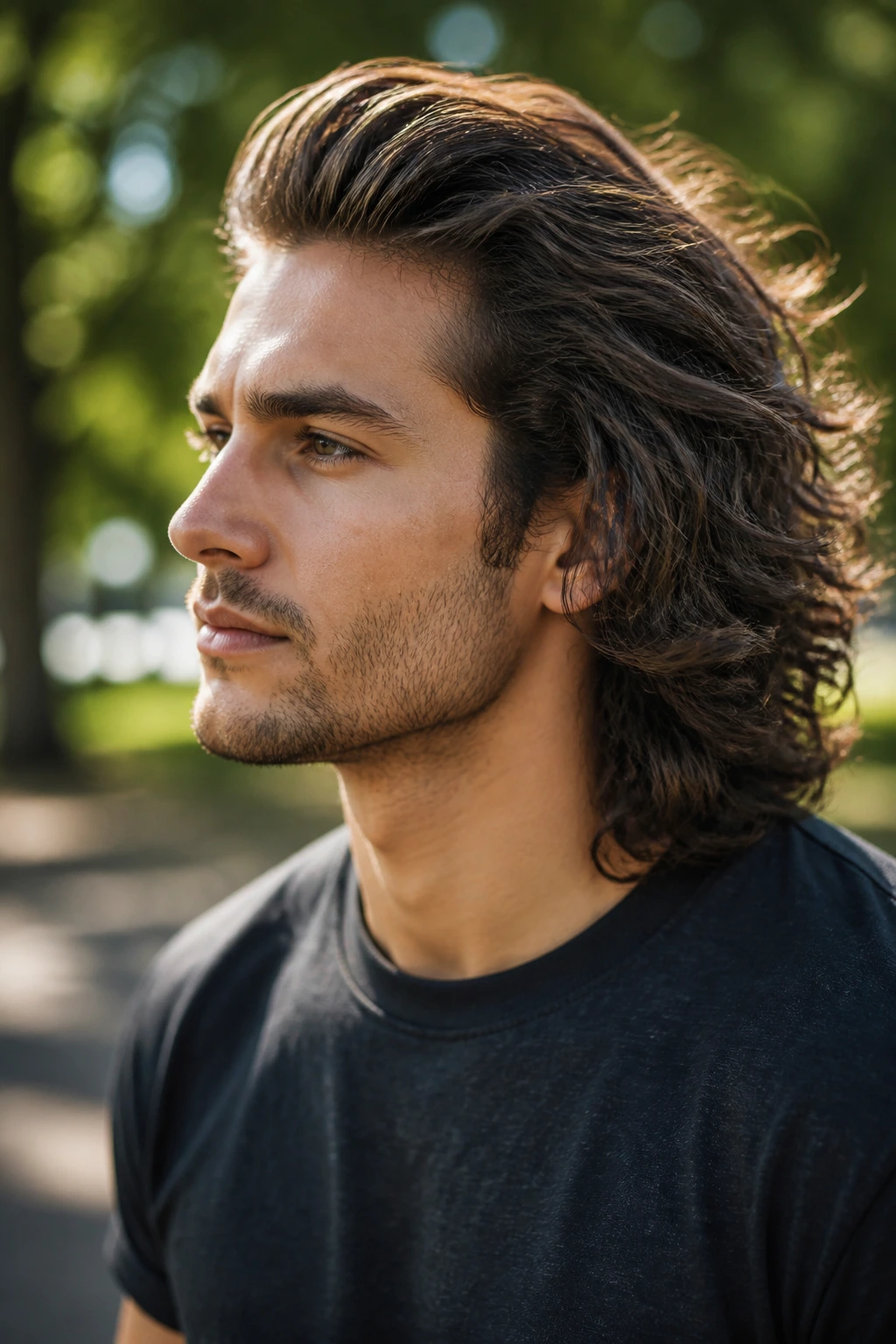
Brushed-back volume is for men who want their curls off the face but still want the top to feel full. The best version starts at the roots. If the front lies flat, the style becomes ordinary fast. A little lift at the hairline keeps it from looking like a wet comb-back.
This look needs a decent amount of length on top, because curls naturally want to fold forward or sideways before they go back. A diffuser helps. So does drying with your head tilted back for a few minutes at the front. That gives the roots a chance to set upward instead of collapsing straight away.
I like this style when the rest of the haircut is kept clean around the ears and neck. The brushed-back top is all about volume and direction, so the sides should not fight it. A low taper or simple clean-up keeps the attention where it belongs.
It’s a good choice if you want something a little more polished than a shag but less tied-down than a bun. The shape is strong. The effort is moderate. That’s a useful combination.
14. Long Curly Fringe
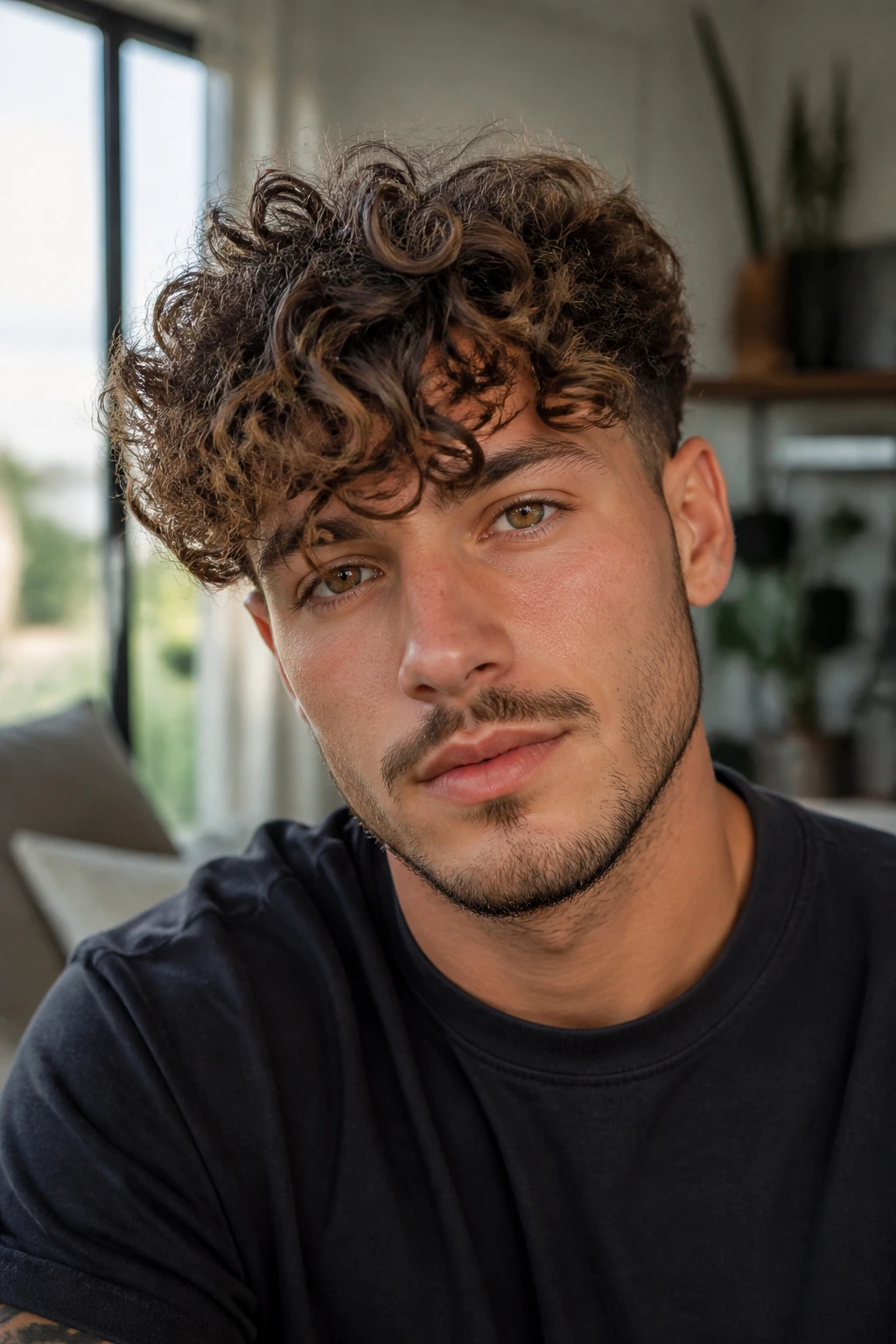
A long curly fringe is one of the easiest ways to make long curls feel younger and more face-framing. The front falls forward a little, the sides stay blended, and the fringe bends across the forehead instead of sitting in one rigid sheet. When it’s cut right, the hair moves as a loose curtain, not a shelf.
The key is keeping the front long enough to curve. If the fringe is too short, it sits awkwardly above the brows and frizzes at the edges. Too much product and it clumps. Too little and it expands. You want a soft bend that still lets individual curls show.
This style is useful if you have a higher forehead or simply like hair that comes forward a bit. It can also soften a strong jaw because the eye goes to the front first. That’s a subtle trick, but it changes how the whole haircut reads.
A fringe like this does not need perfect symmetry. In fact, a little irregularity makes it better. Curls are not supposed to behave like bangs on straight hair, and the sooner people accept that, the cleaner the result usually looks.
15. Loose Braid Down the Back
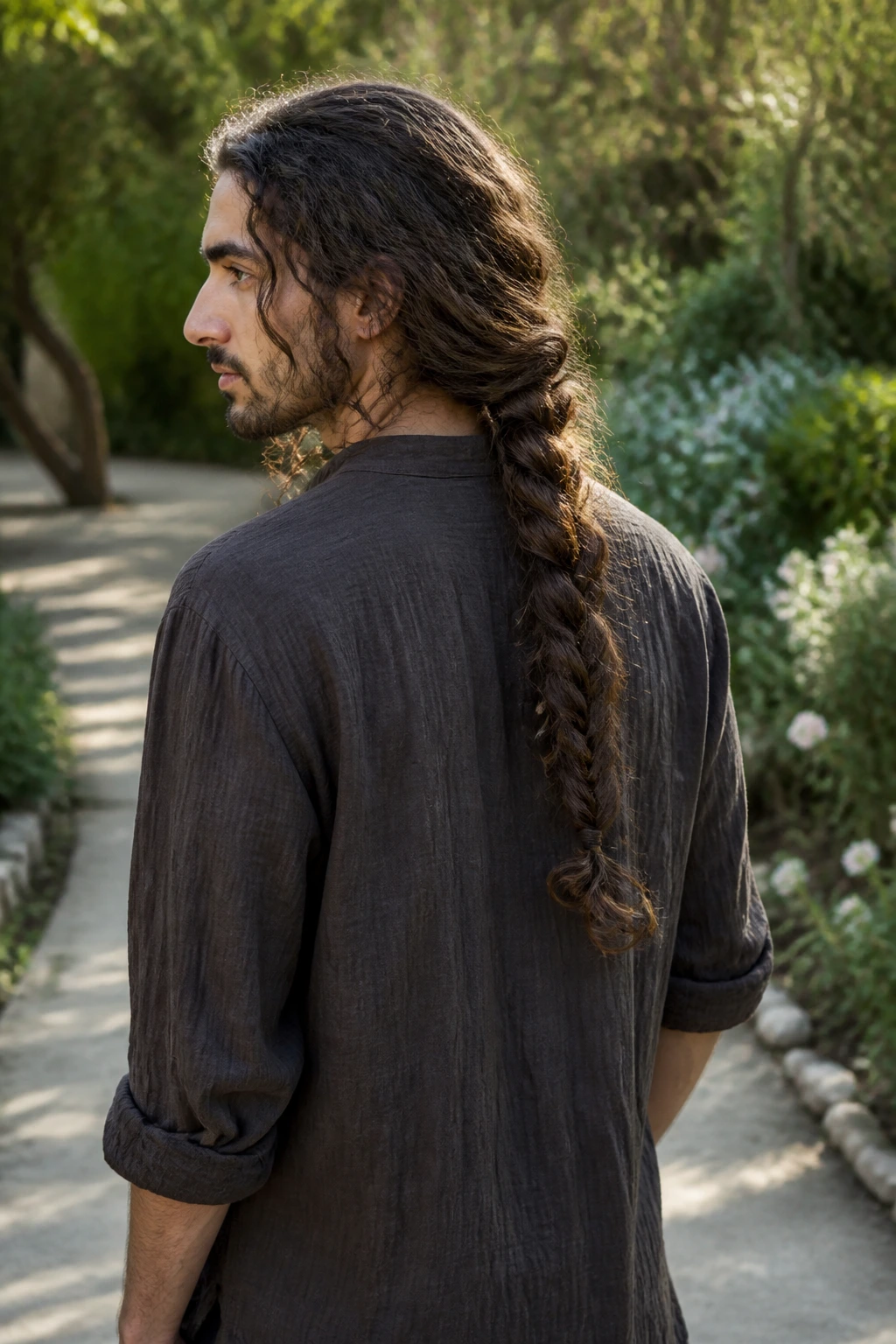
A loose braid is not the most obvious curly hairstyle for men with long hair, which is exactly why it works. It keeps the length controlled, protects the strands from rubbing everywhere, and still looks like hair instead of a tucked-away problem. Done loosely, it leaves enough shape that the curl pattern doesn’t disappear completely.
You can go with a single braid, a rope braid, or two loose sections depending on how thick the hair is. The important part is tension. A tight braid pulls the scalp and can flatten the curls so hard that they take hours to recover. Loose is the smarter move.
Why I like it: It’s practical, but not boring. Wear it to train, travel, or sleep with, then undo it in the morning and you get soft waves or stretched curls. That makes it useful even when you do not want the braid itself to be the final look.
A braid also keeps long curls from tangling into the back of a jacket or car seat. That sounds like a small thing until you spend a week with long hair and discover how often it catches on everything.
16. Twisted Half-Up Style
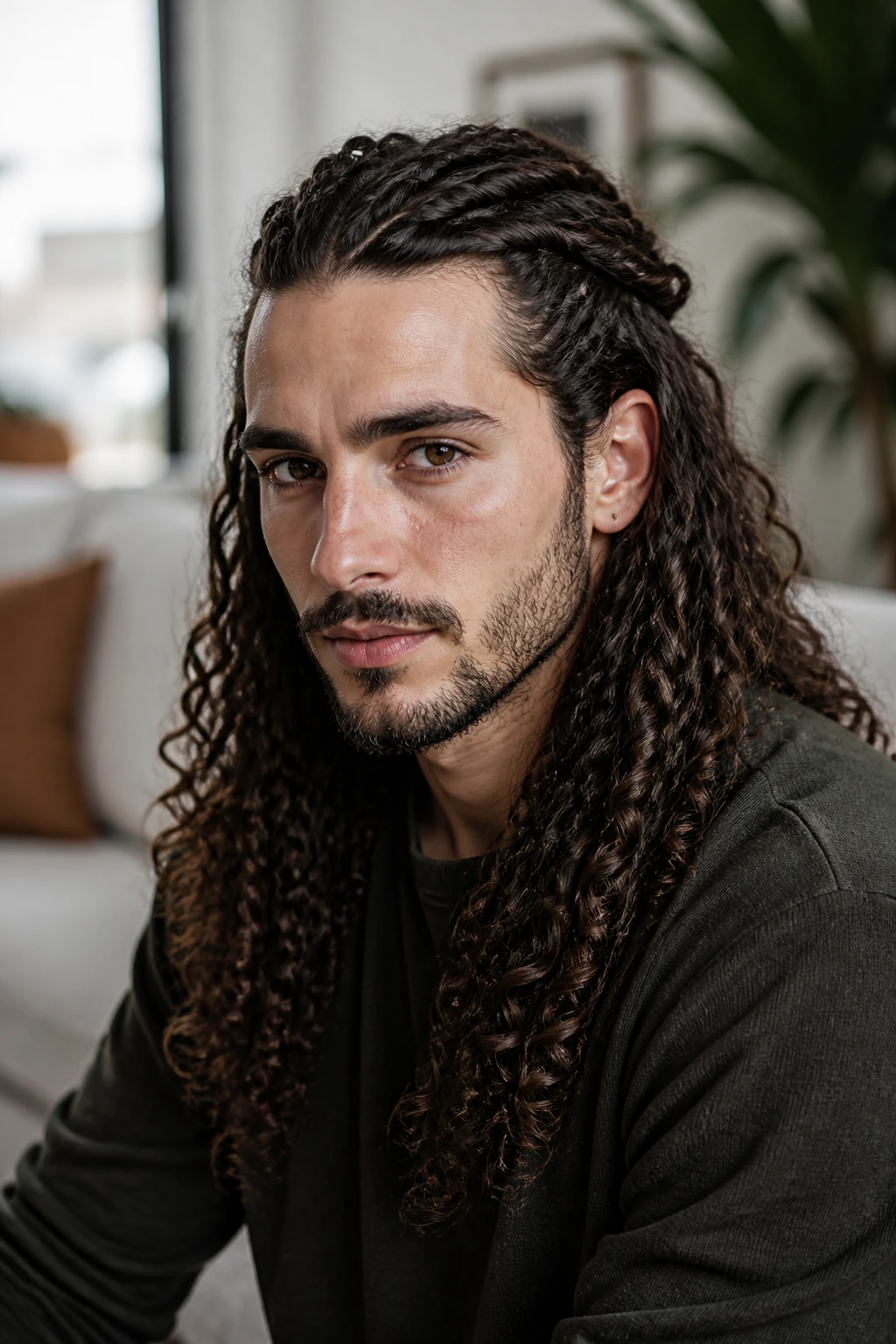
The twisted half-up style sits between a bun and a ponytail, and that middle ground is the point. Instead of gathering all the hair in one lump, you twist each side back from the temples or just above the ears, then secure the sections at the back of the crown. The result keeps the face open while leaving most of the length down.
This is one of the better options for second-day curls. The hair has already settled a bit, which makes the twists hold better and keeps the style from looking too loose. If your curls are dense, this can also reduce the amount of hair falling into your eyes without flattening the whole head.
The twist should not be so tight that it drags at the scalp. Two or three turns is enough in most cases. If you need more hold, use small clips or a pair of snag-free ties instead of tightening the twist itself. The style looks better when it retains some softness.
There’s also a nice side effect: when you let the hair back down, the front pieces usually have a bit more bend and shape. Not magic. Just a useful little trick.
17. Tucked-Behind-the-Ears Natural Curls
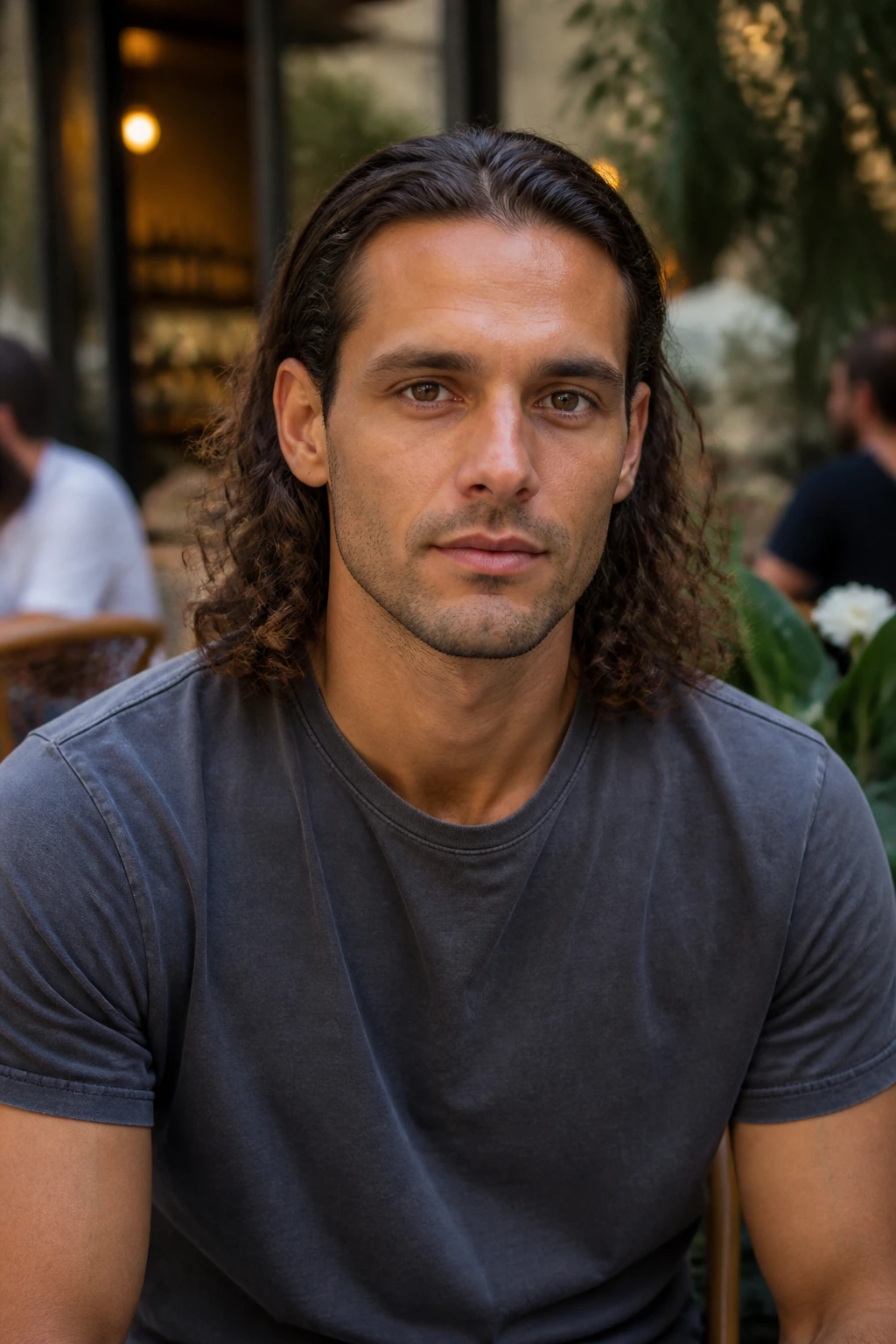
This is the cleanest look on the list, and maybe the one that depends most on a good haircut. If the layers are balanced and the neckline is tidy, tucking the sides behind the ears can be enough. No knot. No braid. No visible styling gymnastics. Just curls that sit where they’re supposed to sit.
The style works because it uses the shape of the face instead of hiding it. Hair tucked behind the ears opens the cheekbones and shows off the curl pattern through the lengths. On days when your hair is cooperating, this takes almost no effort. On days when it isn’t, it still looks better than forcing it into submission.
A small amount of leave-in on the ends helps keep the tucked pieces from fraying out. The trick is not to overdo it. Too much product around the ears can make the style greasy fast, and greasy curls around the face are a quick way to ruin the effect.
If you want a low-drama option that still reads clean, this is one of the strongest choices. It’s simple. It’s honest. And when the cut is right, it looks better than something more complicated.
18. Wet-Look Defined Curls
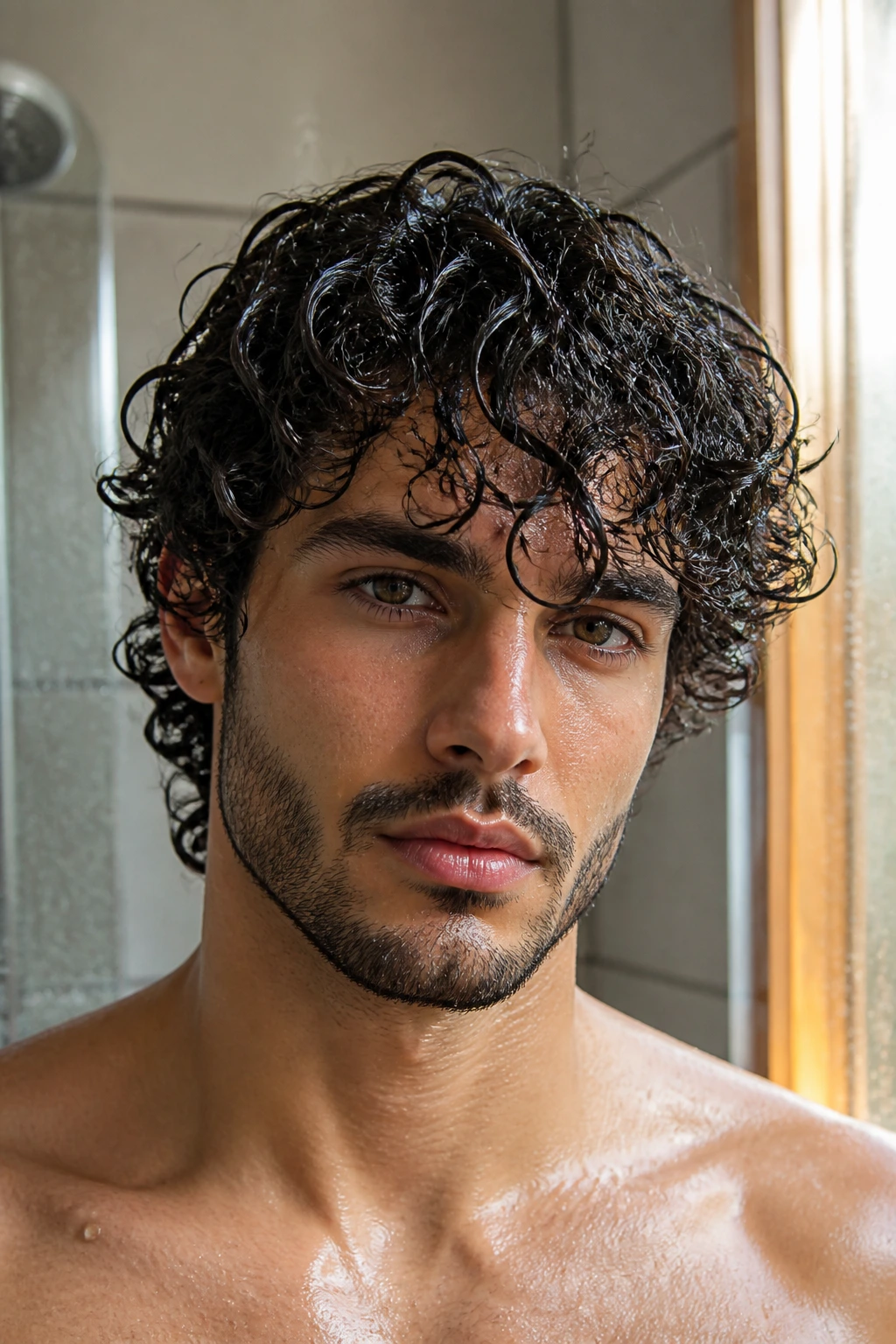
Wet-look curls are for days when you want shine, separation, and a little more control. The style works by applying gel or a stronger curl cream to soaking-wet hair, then letting the curls dry into neat sections with a glossy finish. It’s a sharper look than air-dried curls, and it can look especially good on ringlets and looser coils.
The big mistake here is using too much product or touching the curls while they dry. That leads to flaking, fuzz, or weird flat spots. Apply product evenly, then leave the hair alone until it’s set. If you want less crunch, scrunch out the cast gently once the hair is fully dry.
What to keep in mind
- Use enough gel to coat the curls, not drown them.
- Apply it section by section if your hair is very dense.
- Diffuse on low heat if you want more volume at the roots.
- Avoid heavy oils before the gel; they can block hold.
This is a good choice for events, nights out, or any time you want the curls to look more defined than casual. It has a little polish to it, but it still keeps the natural texture visible.
19. Layered Freefall Afro Curls
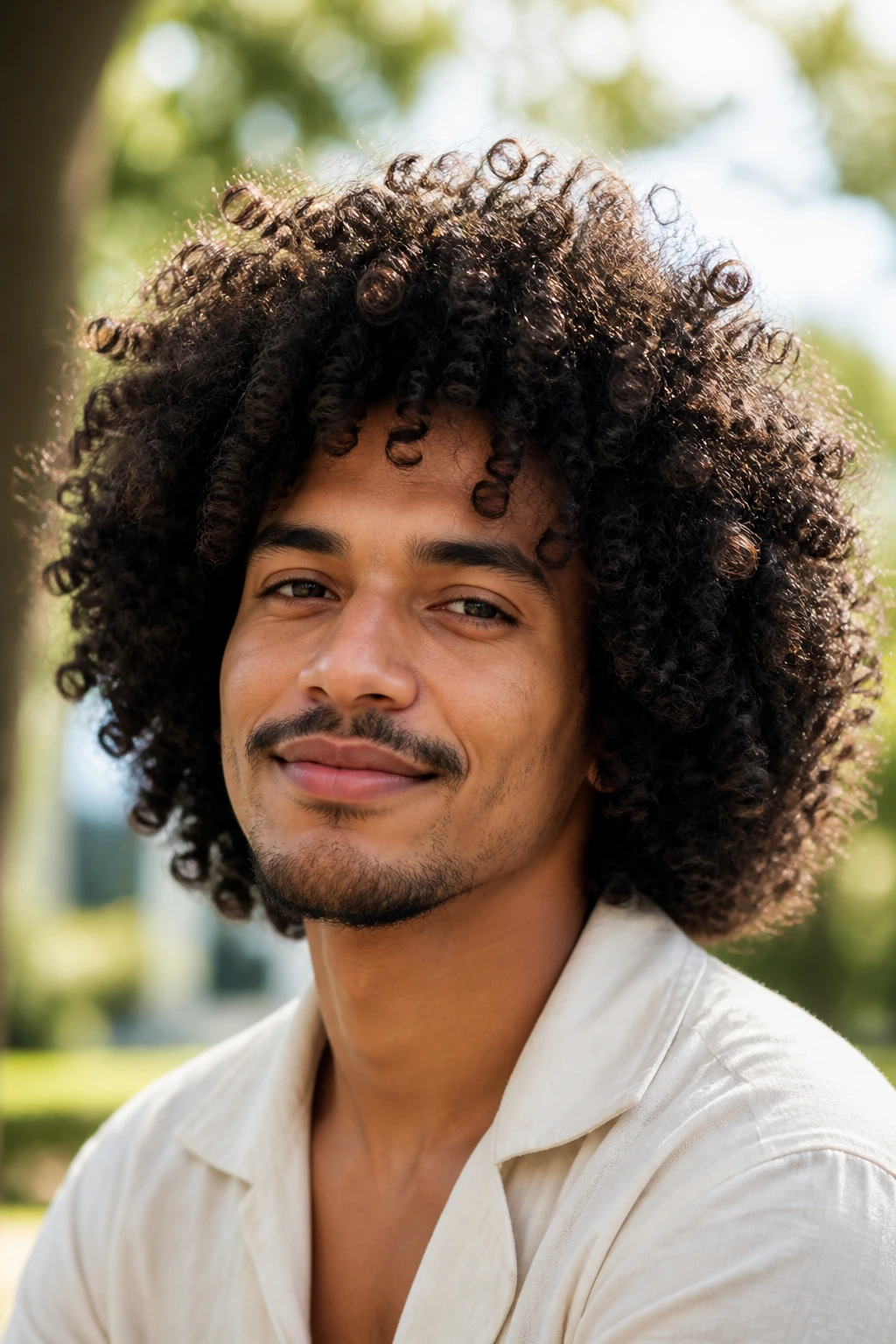
Layered freefall curls are all about shape. The hair is worn out and full, but the outline stays rounded instead of spreading sideways. On dense coily or very curly hair, that shape matters more than almost anything else. Without it, the silhouette can feel wide at the temples and heavy at the bottom. With it, the whole head reads balanced.
A good layered freefall cut removes bulk from the interior while preserving the outside shape. That lets the curls stack naturally and keeps the ends from dragging too much. Dry cutting is especially useful here because shrinkage can be dramatic, and what looks like a modest trim when wet can turn into a major chop once the hair dries.
This style looks strongest when the neckline is cleaned up and the outline around the ears is deliberate. You do not need a fade. You do need edges that tell the eye where the shape begins and ends. That’s the difference between volume and sprawl.
If your curls are dense and you like wearing your hair out, this is one of the most flattering ways to do it. The length stays visible, the texture gets room, and the shape feels like it belongs to the head instead of floating away from it.
How to Choose Curly Hairstyles for Men With Long Hair
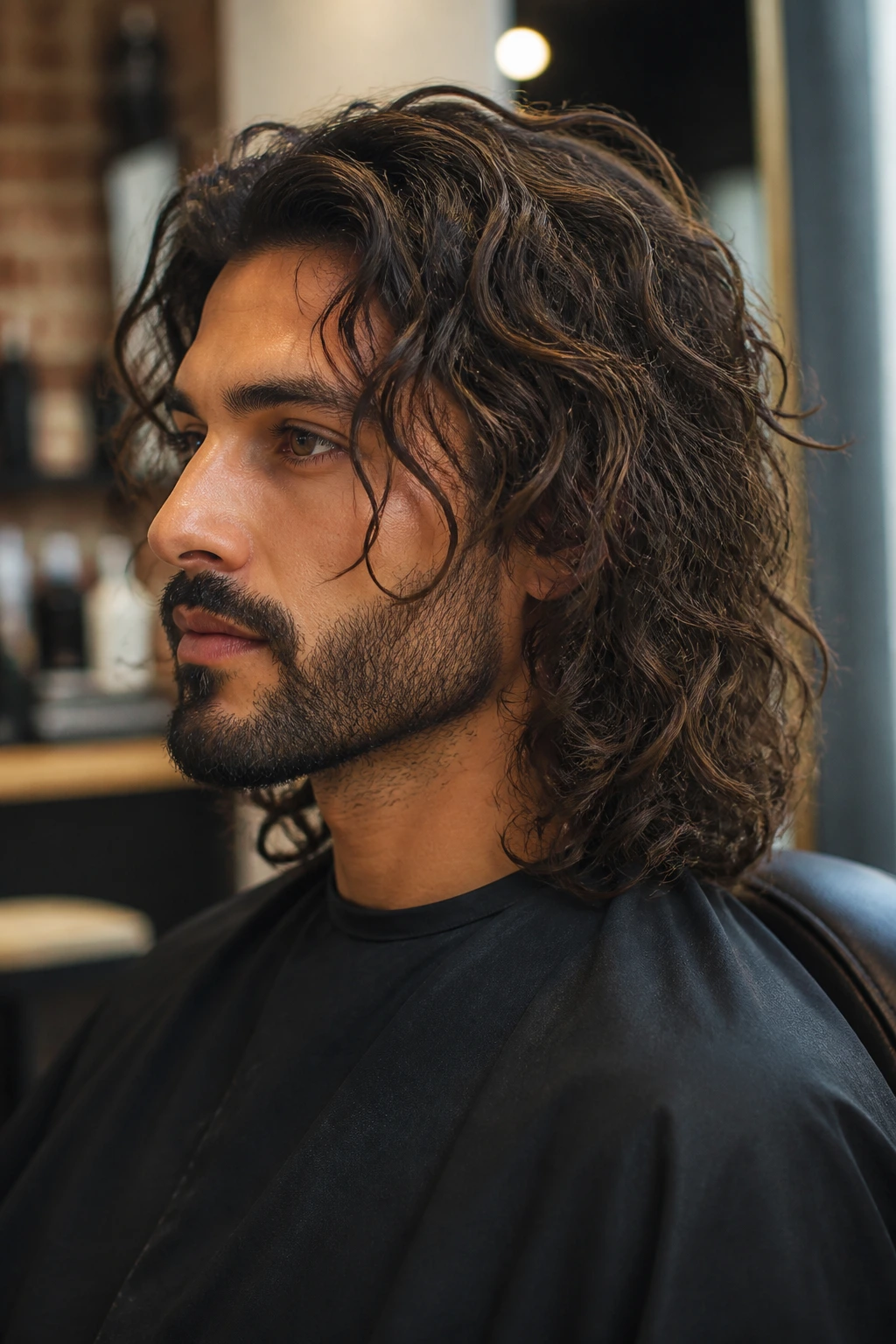
The best choice usually comes down to three things: your curl pattern, your face shape, and how much time you want to spend on your hair in the morning. Skip any one of those and the style can still work, but it will probably work against you a little.
Curl pattern first
Loose curls and soft waves can handle center parts, brushed-back volume, and curtain styles with less effort. Stronger ringlets and dense coils usually benefit from layers, controlled tie-back looks, or cuts that leave some bulk at the ends so the hair doesn’t puff out. If your curls shrink a lot, assume you need more length than you think.
Face shape matters more than people admit
Round faces usually look better with height at the top or some forward fall that creates a vertical line. Long faces need width at the sides or some fringe so the whole thing doesn’t stretch even more. Square faces can wear sharper shapes, but soft layers around the temples and jaw make long curls sit easier. Oval faces get away with nearly everything, which is unfair but true.
Match the style to your routine
If you hate styling, pick a bun, low ponytail, or tucked-behind-the-ears look and get a better cut underneath it. If you don’t mind a diffuser and a little product, shag, fringe, or wet-look curls open up more shape. Hair that looks great for ten minutes and falls apart every afternoon is not a win. It is a task.
How to Explain the Look to Your Barber
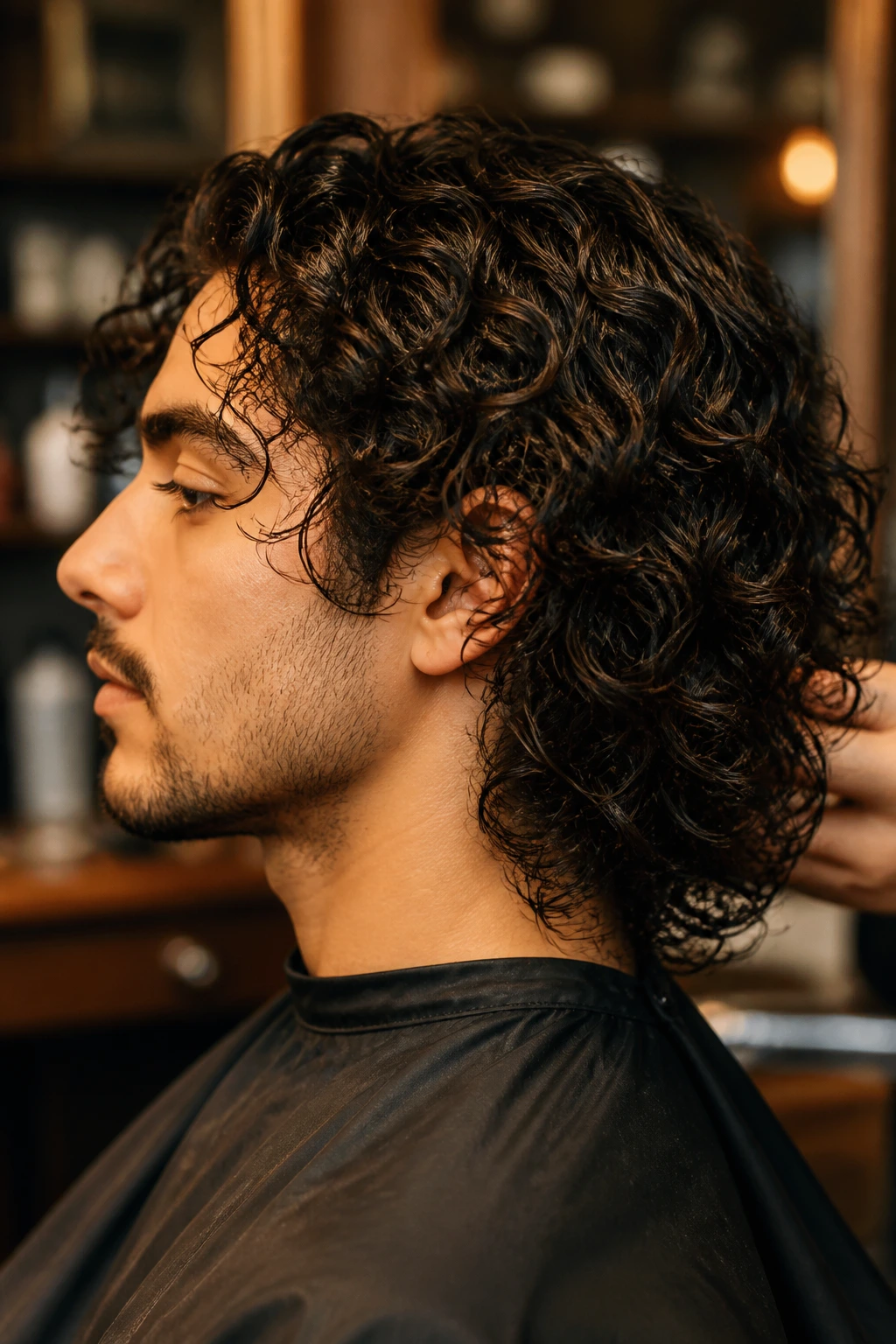
Men with long curly hair often ask for the wrong thing. They say “clean it up,” and that can mean almost anything. A better haircut conversation is about where the weight should live, where the curls should fall, and what should happen around the ears and neckline.
Bring two reference photos if you can. One should show the overall shape you want. The other should show the side view or back view. That second angle saves a lot of guesswork, because long curls can look completely different from the side than they do from the front.
Use plain language:
- “Keep the length, but take bulk out around the sides.”
- “Leave the front long enough to sit at the cheekbones.”
- “Clean the neckline and around the ears.”
- “I want layers, not a blunt block.”
- “Cut it dry or mostly dry if possible.”
That last line matters. Dry-cutting lets the barber see how the curls actually spring, which is often the only way to judge shape accurately. Wet curls lie. They shrink. They collapse. They flatter everyone in the chair and betray them the next morning.
If you want a bun or ponytail, tell the barber where the tie usually sits. If you want a fringe, say how far forward it should fall. If you want a taper, say low, mid, or high. The clearer the target, the better the result.
Products and Small Habits That Keep the Shape
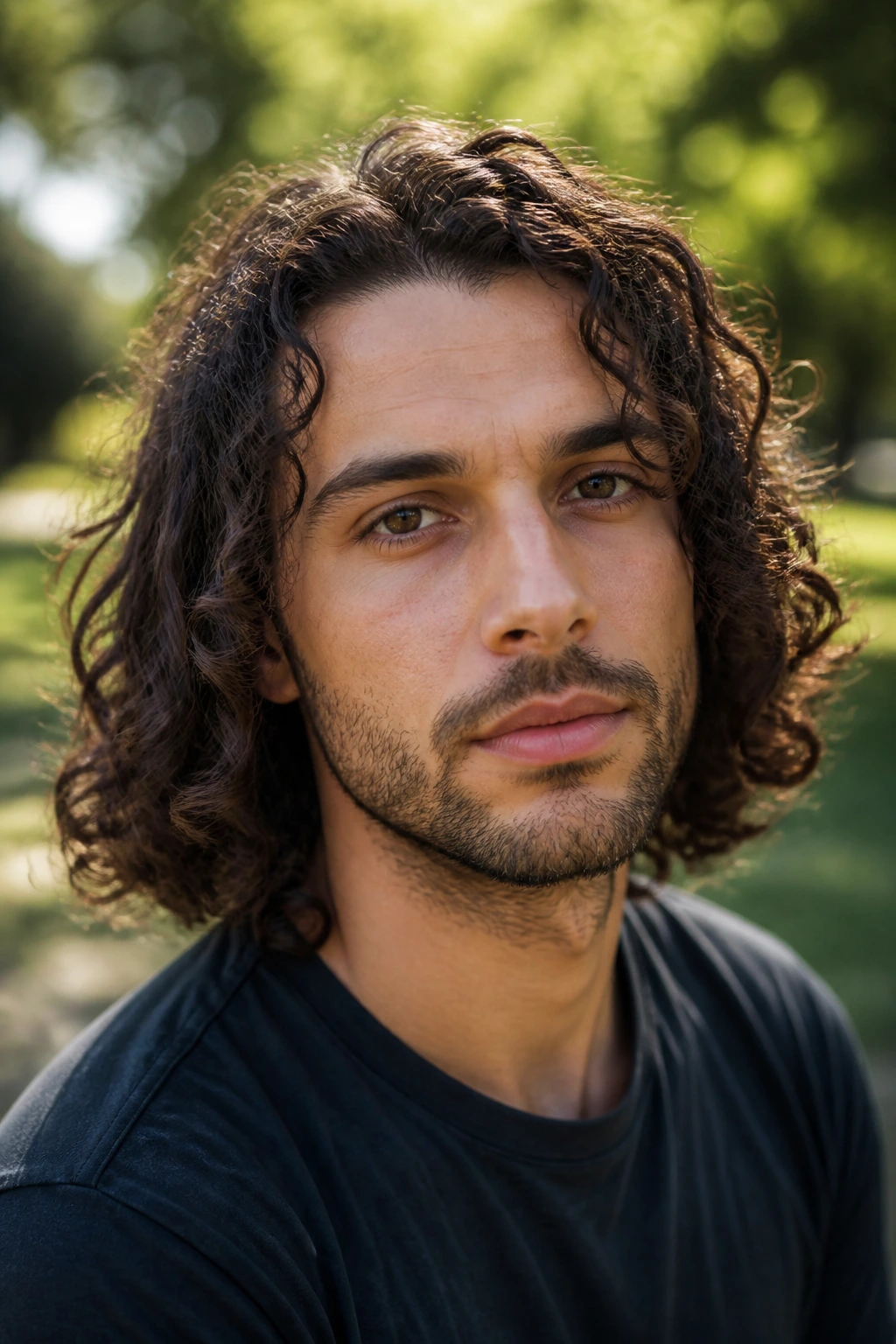
You do not need a shelf full of products to wear long curly hair well. You need a few that do their jobs without smothering the texture. For most men, that means a leave-in conditioner, a curl cream or mousse, and a gel with a hold level that matches the style. That’s enough to cover most of the looks above.
The biggest mistake is loading on heavy cream or oil because the hair feels dry. Dry curls often need moisture, yes, but too much weight can flatten the root and make the ends limp. If your hands feel coated after you apply product, you may already have gone too far. The curls should feel soft, not greasy.
A good basic routine is simple: wet hair, add leave-in, add styling product, scrunch, and let it dry without too much touching. If you want more definition, diffuse on low heat. If you want more volume, lift the roots with your fingers while it’s drying. Same cut, different finish. That’s the part many people miss.
One more thing. The neckline and sideburns need regular cleanup even when the top is long. A neat edge makes almost every curly style look more deliberate. Messy length can be a choice. Messy edges usually are not.
Daily Care for Long Curly Hair That Still Looks Intentional
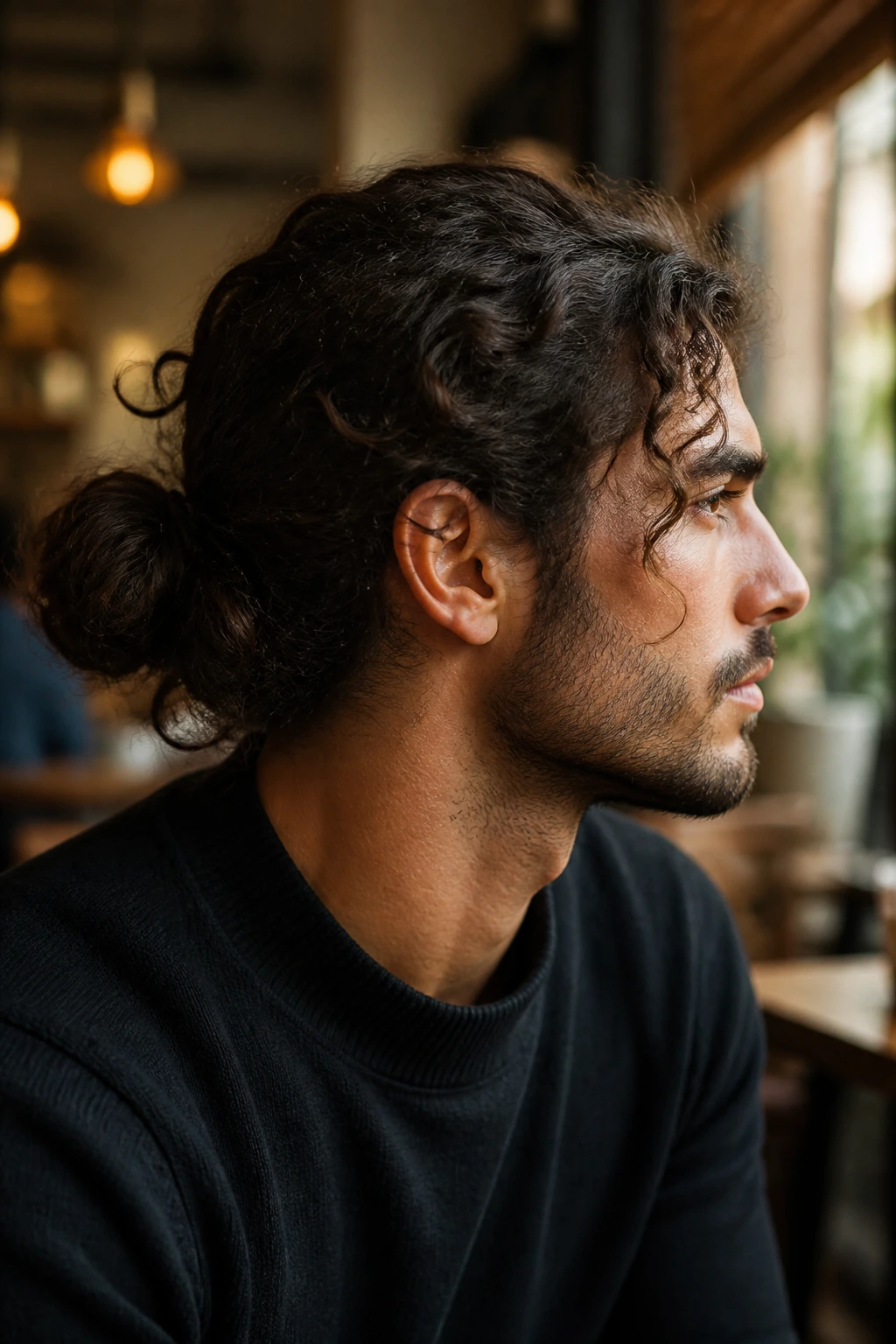
Long curly hair usually looks best when it’s handled in a rhythm instead of a panic. Wash too often and you strip the curl. Wash too rarely and the roots can feel heavy. For many men, a wash every 2 to 4 days works, with water-only refreshes or a light misting on the off days. If your scalp gets oily fast, shorten that window. If it runs dry, stretch it a little.
Morning resets are easier than people make them. A spray bottle, a few pumps of leave-in, and a quick scrunch can wake up flattened curls without restarting the whole routine. If the front pieces are bent weird from sleep, wet your hands and reshape just that section. No need to soak the whole head.
At night, a satin pillowcase or bonnet saves more trouble than most styling products. It cuts down on friction, which means fewer frizzy ends and less tangling at the nape. If you wear the hair down, a loose pineapple or a soft tie at the top of the head can keep the curls from getting crushed.
Trims matter too. Every 8 to 12 weeks is a reasonable range if you want the shape to stay clean. Go longer, and the bottom can get scraggly while the top loses balance. Long hair doesn’t mean no maintenance. It means maintenance with a better payoff.
Common Mistakes That Make Long Curls Look Sloppy
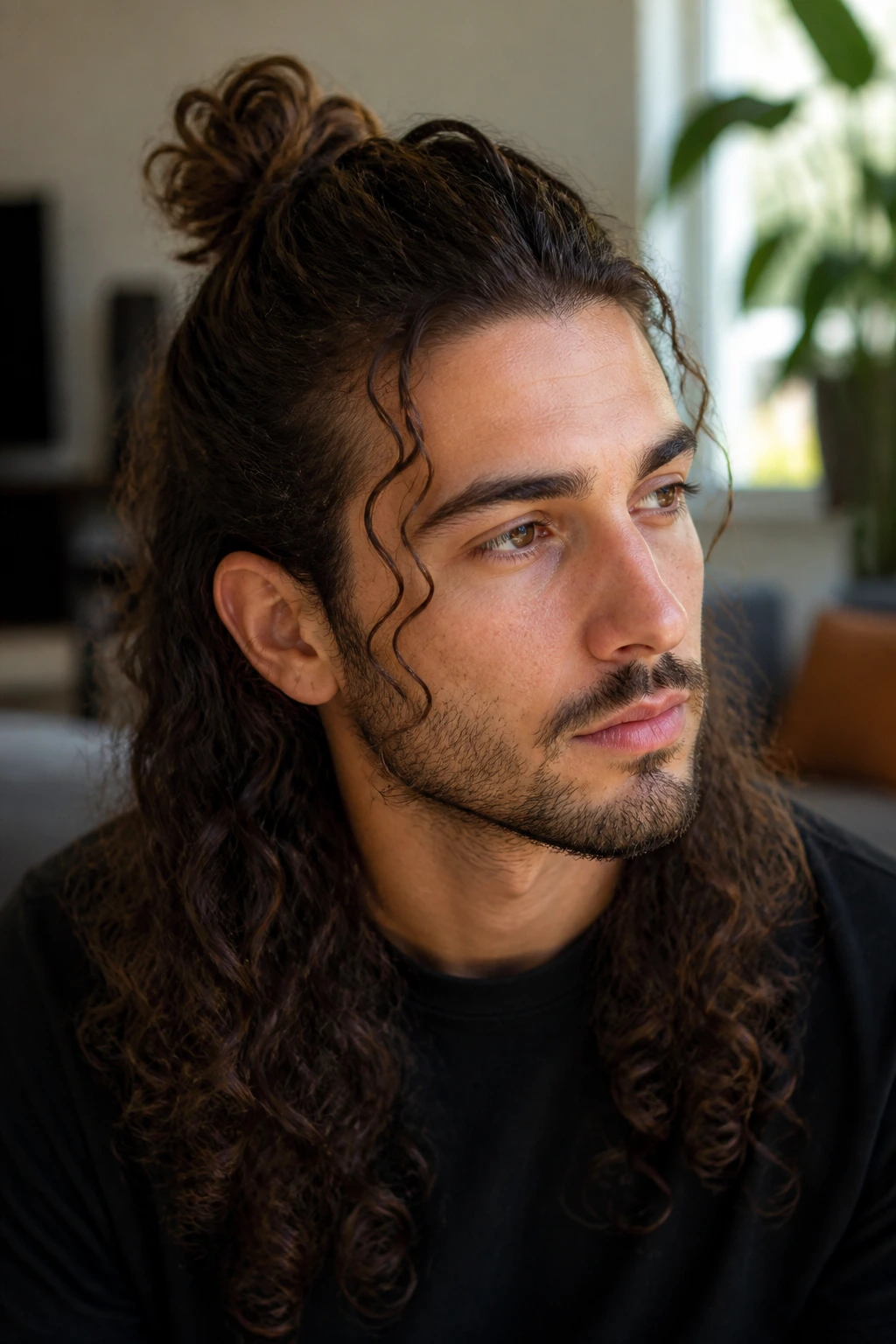
The first mistake is cutting too much off the wrong place. When a barber takes weight out too high on curly hair, the sides can puff while the ends lose their anchor. The symptom is a round, airy top with no shape at the bottom. The fix is to ask for interior layers or a lower taper instead of random bulk removal.
The second mistake is brushing dry curls hard. That usually turns defined curls into a frizzy cloud, especially around the crown and sides. Use a wide-tooth comb or your fingers when the hair is wet and coated with conditioner. Once dry, hands only. Maybe a tiny bit of reshaping with water if needed.
Heavy products cause trouble too. Thick wax, greasy pomade, and too much oil can weigh the curls down and make the whole cut look limp by afternoon. If the hair feels coated or sticky, wash it out and start lighter. Long curls need slip, not sludge.
Another common one: tying the hair in the same tight spot every day. That can tug the hairline and flatten one area of the scalp. Switch between low ponytail, bun, and half-up styles so the tension moves around.
Then there’s the grow-out problem. Many men let long curly hair get longer and longer without trims, then wonder why it looks wider but less interesting. Shape disappears before length does. Regular cleanup prevents that.
Variations for Work, Heat, and Heavy Density
Office Clean-Up: If you need a more restrained look, the low ponytail or tucked-behind-the-ears style is the safest bet. Keep the edges neat, use a light cream, and let the length stay the focus. It reads calm without turning stiff.
Heatwave Knot: A high bun or top knot gets the neck clear fast when the temperature climbs or you are moving around a lot. The trick is not to yank the hair too tight at the crown. Leave enough slack that the roots do not ache after an hour.
Dense-Curl Shape Control: If your hair is thick and puffs out fast, ask for more internal layers and a cleaner outline around the ears. This works especially well with shag, taper fade, or shoulder-skimming free curls. Heavy density needs structure or it will own the room.
Stretch-It-Out Braids: For coily or very shrink-prone hair, loose braids or twists can stretch the length overnight or on off days. They also help the curl pattern settle in a more manageable shape after you undo them. Keep the braid loose enough to avoid dents.
Low-Tension Grow-Out: If you are trying to grow your hair longer, rotate between half-up styles, low ponytails, and free curls. That keeps the same spot from getting stressed every day and helps the hairline stay happier. Boring? Maybe. Effective? Yes.
What to Keep on the Bathroom Shelf
- Wide-tooth comb: Good for detangling wet curls without tearing through the pattern.
- Detangling brush: Useful on dense hair when conditioner has already softened the knots.
- Spray bottle: The fastest way to revive flattened sections without rewashing the whole head.
- Microfiber towel or T-shirt: Cuts down on frizz better than rough bath towels.
- Leave-in conditioner: Adds slip so long curls don’t snag while drying or styling.
- Curl cream or mousse: Gives shape and a little hold without the stiffness of heavy wax.
- Medium-hold gel: Best for wet-look curls or any style that needs the curls to stay put.
- Snag-free hair ties or scrunchies: Better for buns, ponytails, and half-up styles than thin elastics.
- Diffuser attachment: Worth it if you want faster drying and more root lift.
- Satin pillowcase or bonnet: Cheap insurance against frizz and morning tangles.
Questions Men Ask Before Growing It Out
How long does curly hair need to be before these styles work?
Most of the tied styles start making sense once the hair reaches the nape or lower neck, but that depends on curl tightness. Loose curls can fake length sooner; tighter curls need more actual inches because shrinkage steals so much visible length.
Should curly hair be cut wet or dry?
Dry or mostly dry is better for many curly cuts because it shows the true shape. Wet hair stretches, which can trick the barber into removing too much length. If the cut is done wet, leave more length than you think you need.
What style is easiest if I hate doing my hair in the morning?
The low ponytail, man bun, and tucked-behind-the-ears look are the least demanding. They rely more on the cut than on daily styling. A good base shape makes all three easier.
Can I wear a bun every day?
You can, but I would not put all the stress in the same spot every single day. Rotate bun height, use soft ties, and give the hairline a break with down styles or a low ponytail now and then.
How do I stop humidity from turning long curls into puff?
Use enough hold product to define the curls before they dry, then avoid touching the hair once it’s set. A gel or mousse often handles humidity better than a rich cream alone. The cut matters too; layers and clean sides help reduce the bulk bloom.
Which styles work best for thick curly hair?
Shags, wolf cuts, taper fades, and low ponytails tend to handle density well. Thick hair usually needs shape removal inside the cut, not just at the ends. If it’s all one length, the volume can get big fast.
How often should I trim long curly hair?
Every 8 to 12 weeks is a solid range if you want the shape to stay clear. If you let it go much longer, the outline tends to drift and the curls can start hanging in uneven clumps.
What if one side curls more than the other?
That happens all the time. Part of it is growth pattern, part of it is sleeping position. Use the side that sits flatter as the anchor when choosing a part or tie-back style, and ask the barber to balance the shape without forcing both sides to look identical.
Long Curls With a Shape, Not a Guess
The best long curly hair on men usually looks like someone made a series of small, sensible choices. A little length kept here. A little bulk removed there. A cleaner neckline than you expected. That’s how the haircut stops fighting the curls and starts making them look like a plan.
Pick the style that matches your mornings, not just your mirror. If you want simple, wear a bun, ponytail, or tucked-back look with a better cut underneath. If you want more character, the shag, wolf cut, or curtain style gives you that shape without sanding off the texture.
Long curls get better when you stop treating them like a problem to solve. Give them a shape worth wearing, and they’ll do the rest.
