



A bridesmaid hairstyle has one brutal job: it has to survive car doors, champagne hugs, a windy walk from the hotel to the venue, and a camera pointed at the back of someone’s head for hours. If it falls apart by cocktail hour, everybody notices. If it feels tight by the ceremony, everybody remembers that too. The sweet spot is somewhere in the middle — polished enough to look planned, soft enough to let people still feel like themselves.
The smartest hairstyle ideas for bridesmaids do not all look the same. They look related. A low chignon, a braided half-up, and a glossy ponytail can all sit in the same bridal party without fighting each other, as long as the finish is coordinated. That is the part most people miss. Matching the vibe matters more than cloning the exact same style on every head.
I also have a bias here: I like styles with a visible shape from the back. A bun that sits cleanly at the nape, a braid that has a clear line, or a twist that holds its own in profile will read better in photos than loose curls that have already started to droop. The back of the head is where the ceremony, the reception, and the dance floor all leave their fingerprints. You want a style that can take the hit.
Why These Bridesmaid Hairstyles Work on a Real Wedding Day
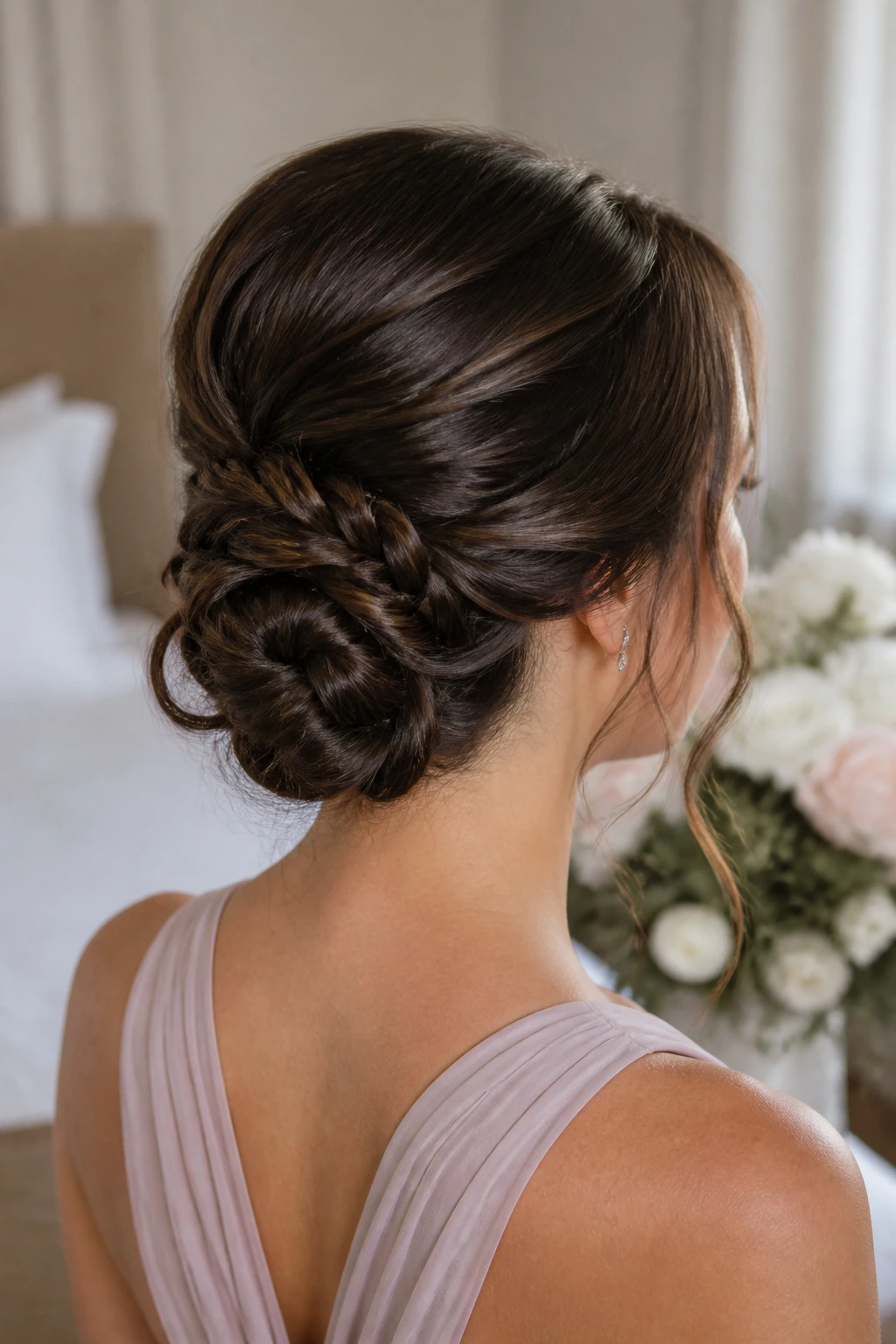
They hold their shape from every angle. The best bridesmaid hair has a back view, not just a front view, so the style still looks finished when someone turns for photos or leans in for a hug.
They work with different textures instead of fighting them. Fine hair needs grip and a tighter pin pattern; thick hair needs room to move; curls usually look better when they’re guided, not flattened.
They can survive a long day. Ceremony heat, flash photography, dinner, and dancing all stress hair in different ways. A style with pins at the nape or crown usually lasts longer than something that depends on a single smooth curl pattern.
They leave room for accessories. Pearl pins, combs, slim ribbons, and fresh flowers sit better on a style that already has structure.
They let the bridal party look connected, not copied. One bridesmaid can wear a low bun, another can wear waves pinned back on one side, and the whole group still looks cohesive if the finish is consistent.
1. Soft Low Chignon with Face-Framing Pieces
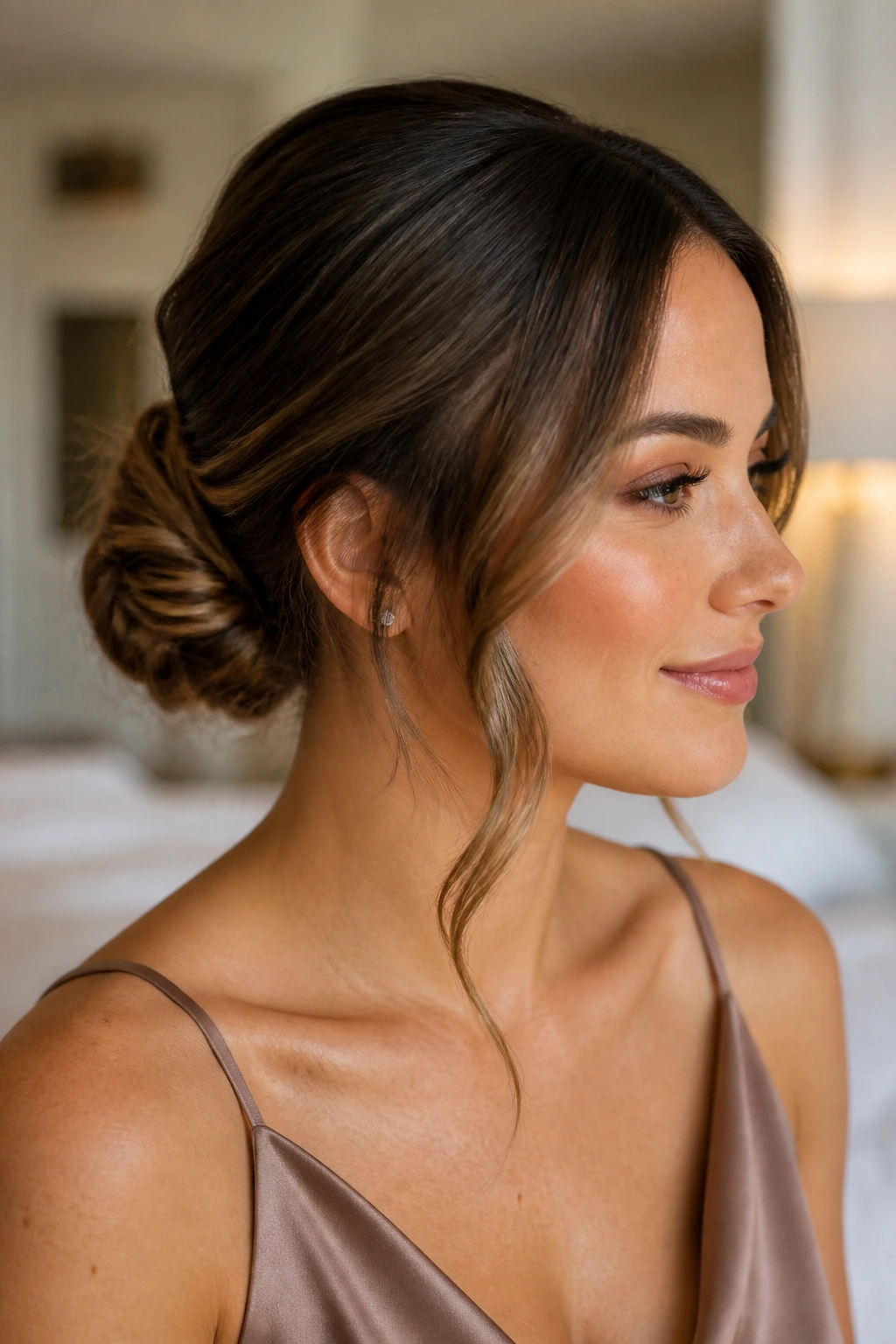
A soft low chignon sits low at the nape and keeps the neck line clean, which is why it works on so many dress shapes. The face-framing pieces should be curled away from the cheeks, not left floppy; that little bend keeps the whole style from looking like a last-minute knot.
I like this one for bridesmaid dresses with satin, crepe, or lace bodices because the bun doesn’t fight the fabric. A few hidden U-pins and a light mist of flexible-hold spray are enough if the hair was prepped on dry, second-day hair.
2. Braided Half-Up with Loose Waves
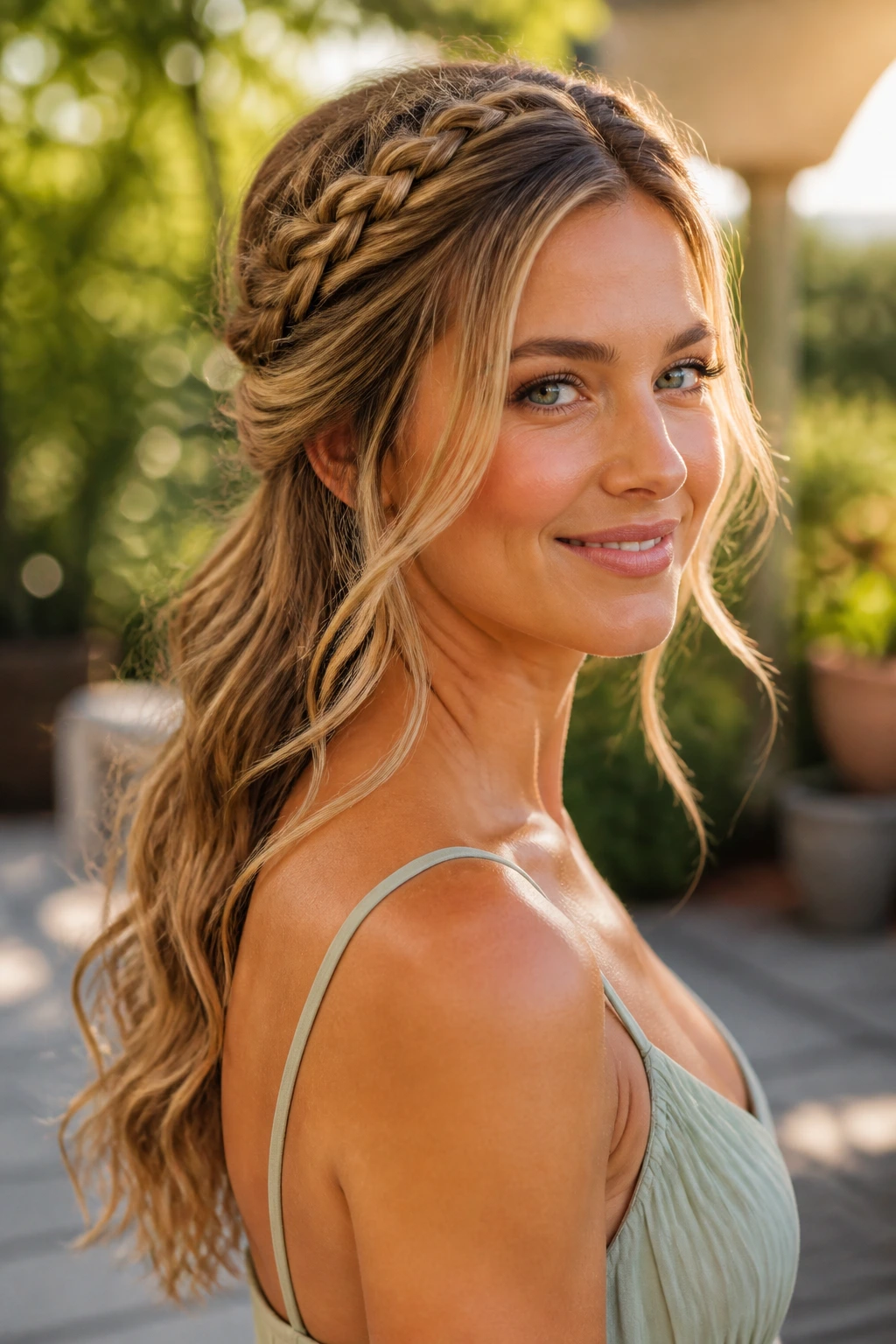
This is the style for a bridal party that wants softness without giving up structure. A braid across the crown anchors the top, while the rest of the hair falls in loose waves that still move when someone walks.
It works especially well on medium to long hair and on dresses with square or sweetheart necklines. The braid gives the top of the head some visual weight, which keeps the style from disappearing in photos.
3. Sleek Middle-Part Low Bun
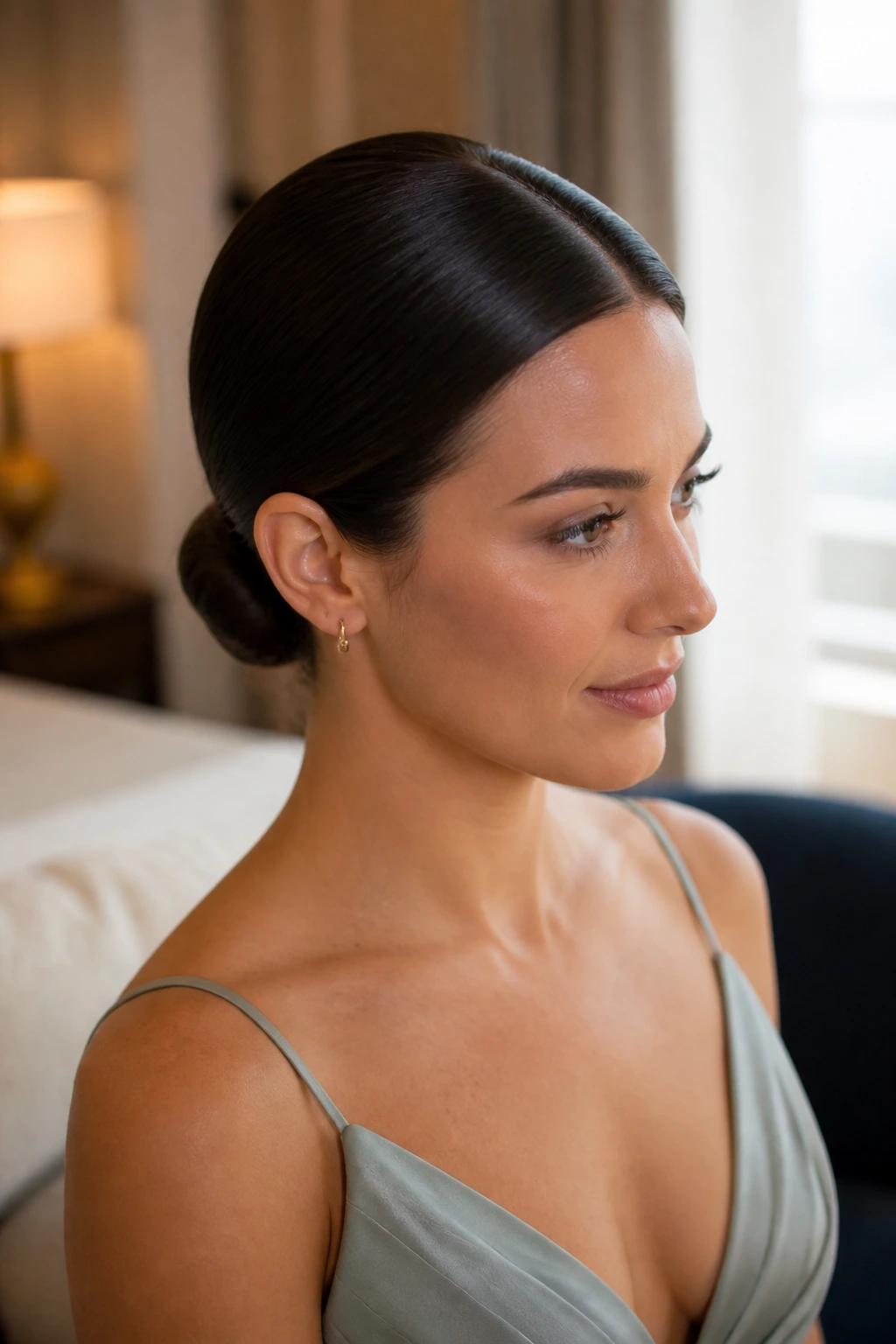
A middle-part low bun looks crisp in a way that reads expensive without trying hard. The part should be straight and clean, the crown should lie flat, and the bun should sit centered just above the nape.
This one loves statement earrings. It also gives beaded or high-neck bridesmaid dresses a little breathing room, because the hair stays out of the collar line instead of crowding it.
4. Twisted Crown Half-Up
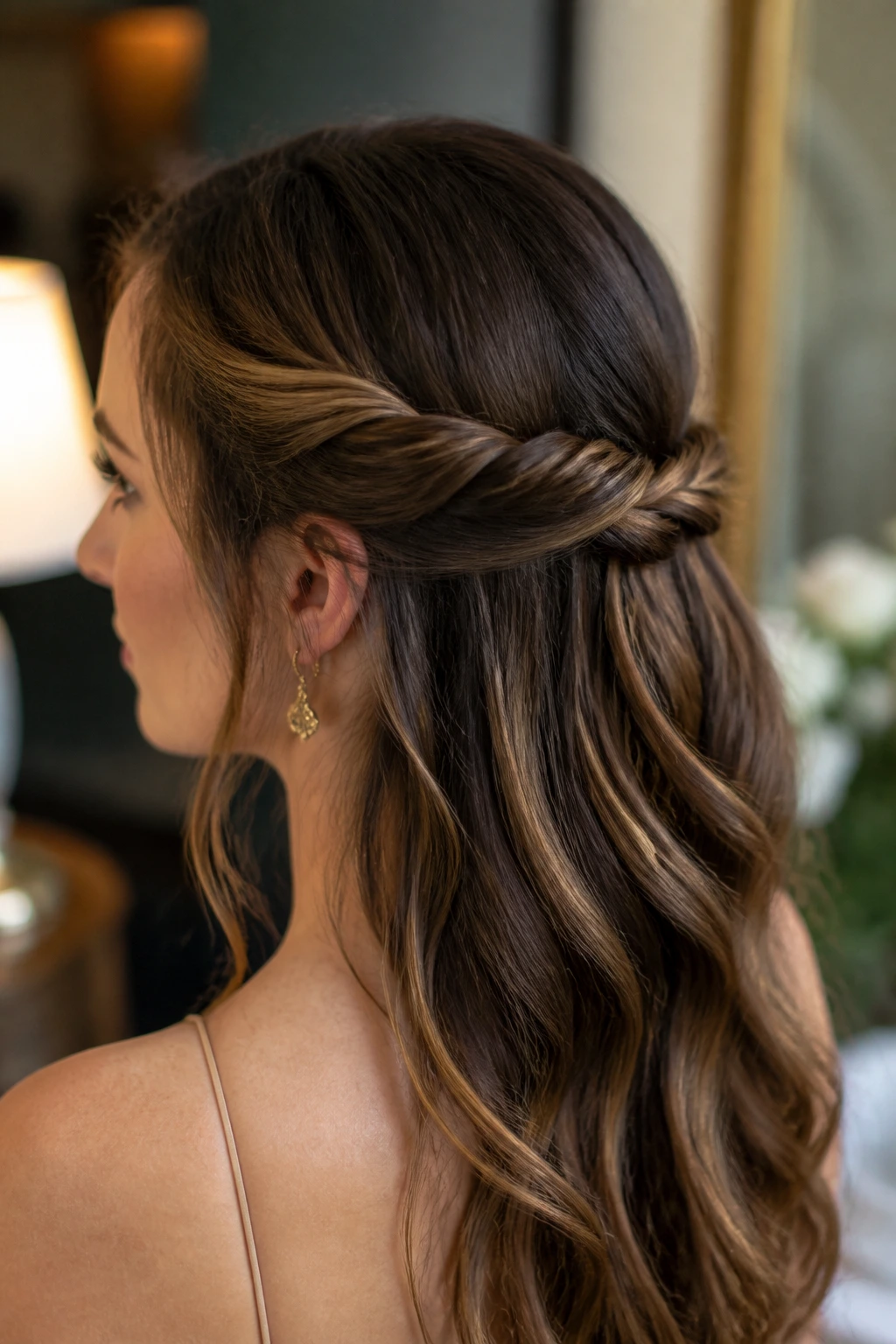
Two twisted sections from the temples make this look softer than a braid but more secure than loose waves. The twists should be pinned just behind the ears, then blended into the back section so they look intentional rather than pasted on.
I prefer this for layered hair, because layers can slip out of a braid and still look pretty when twisted. A dab of texture spray at the roots helps the twists stay put without making the crown stiff.
5. Glossy Old Hollywood Waves
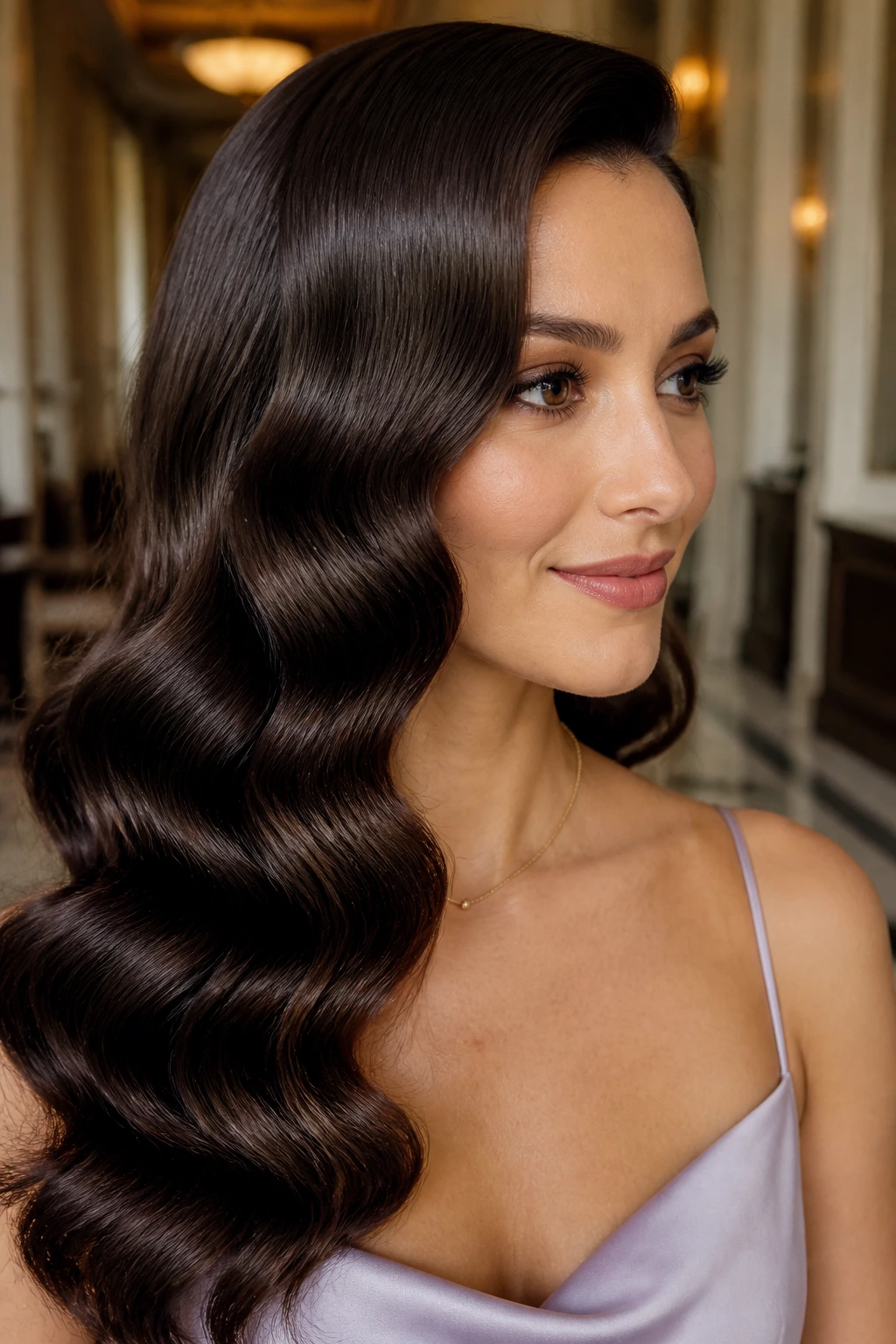
If the bridal party wants polish, this is the look that never looks half-finished. Use a 1.25-inch curling iron, set each curl, let it cool, then brush the waves into that smooth S-shape that sits close to the head and opens toward the ends.
The secret is patience. Hot curls brushed too soon go flat and fuzzy. Cool them first, pin them for a few minutes, then brush gently from the bottom up with a soft bristle brush.
6. Bubble Ponytail with Wrapped Sections
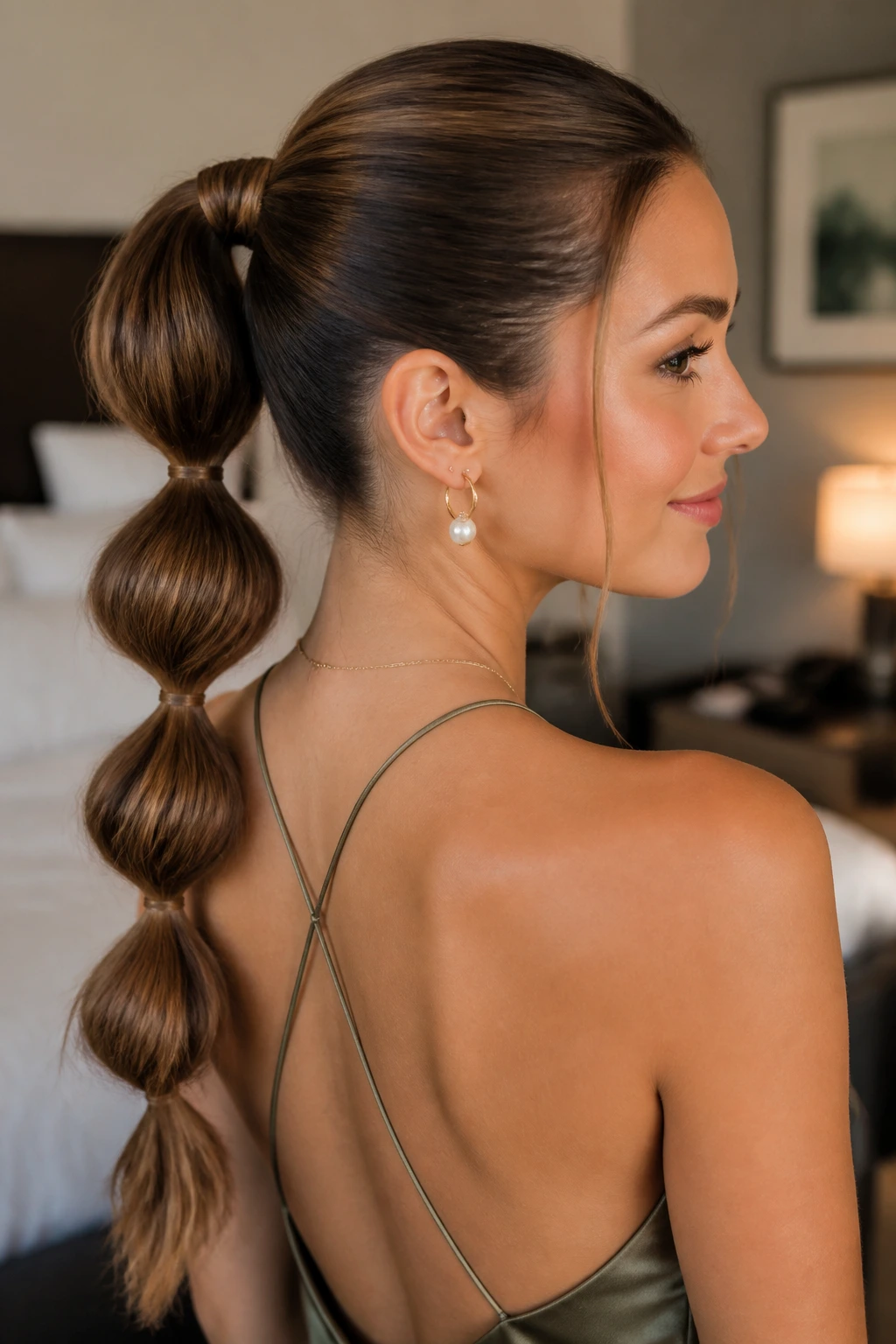
A bubble ponytail gives long hair shape without making it feel heavy. Secure the ponytail, add clear elastics every 2 to 3 inches, then gently pull each section outward so each bubble looks round, not saggy.
This is one of my favorite ideas for bridesmaids with thick hair, because it controls the length without hiding it. Wrap a small strand around the base elastic, and the whole thing reads more formal immediately.
7. Textured Messy Bun
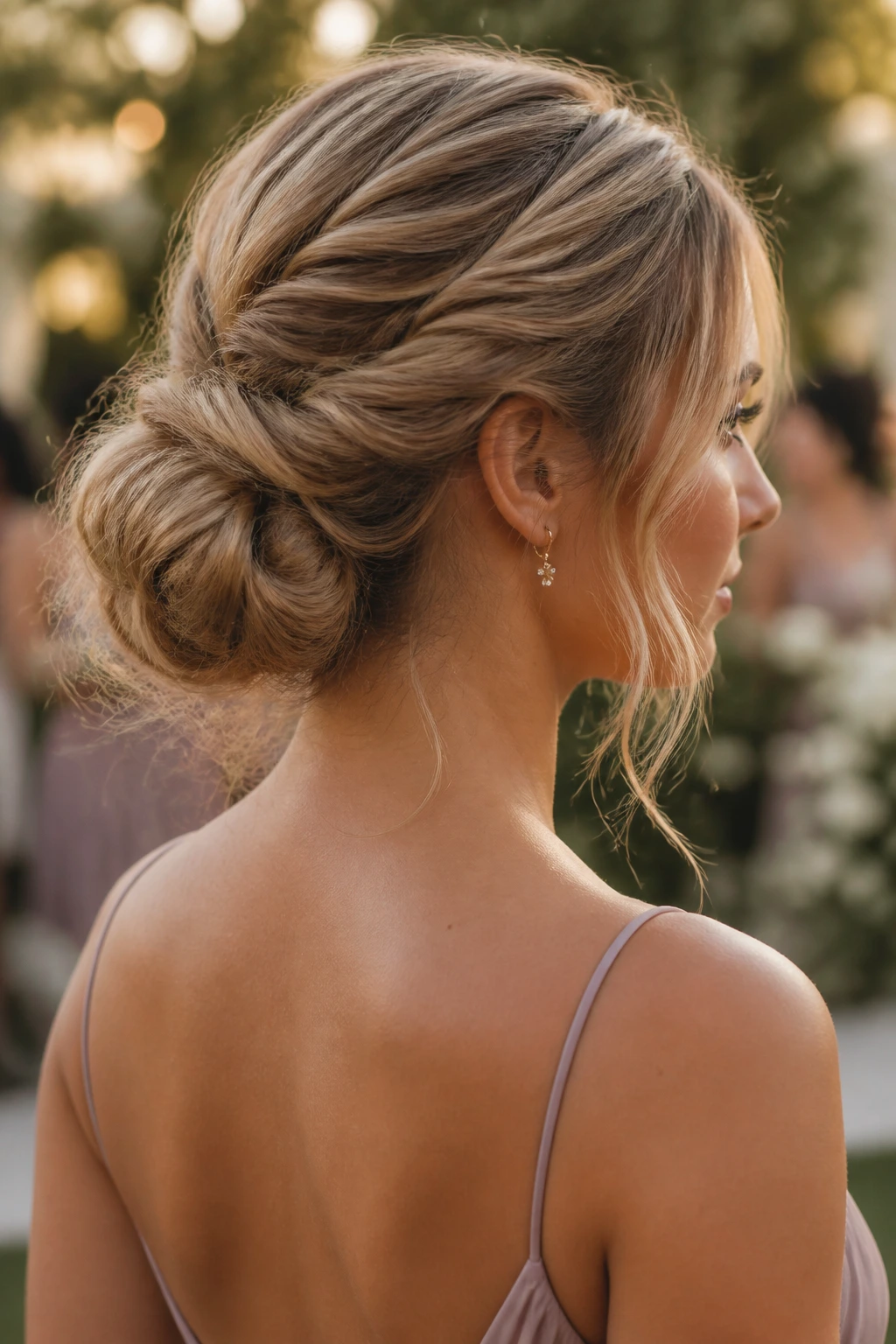
A textured messy bun is only good when it has structure under the looseness. Build a little bend into the hair first, twist it into a low knot, then leave a few pieces near the temples and nape so it looks soft instead of accidentally undone.
This style earns its keep at outdoor ceremonies. Wind moves it less than loose curls, and the texture keeps the bun from looking like a hard ball at the back of the head.
8. Rope-Braid Low Ponytail
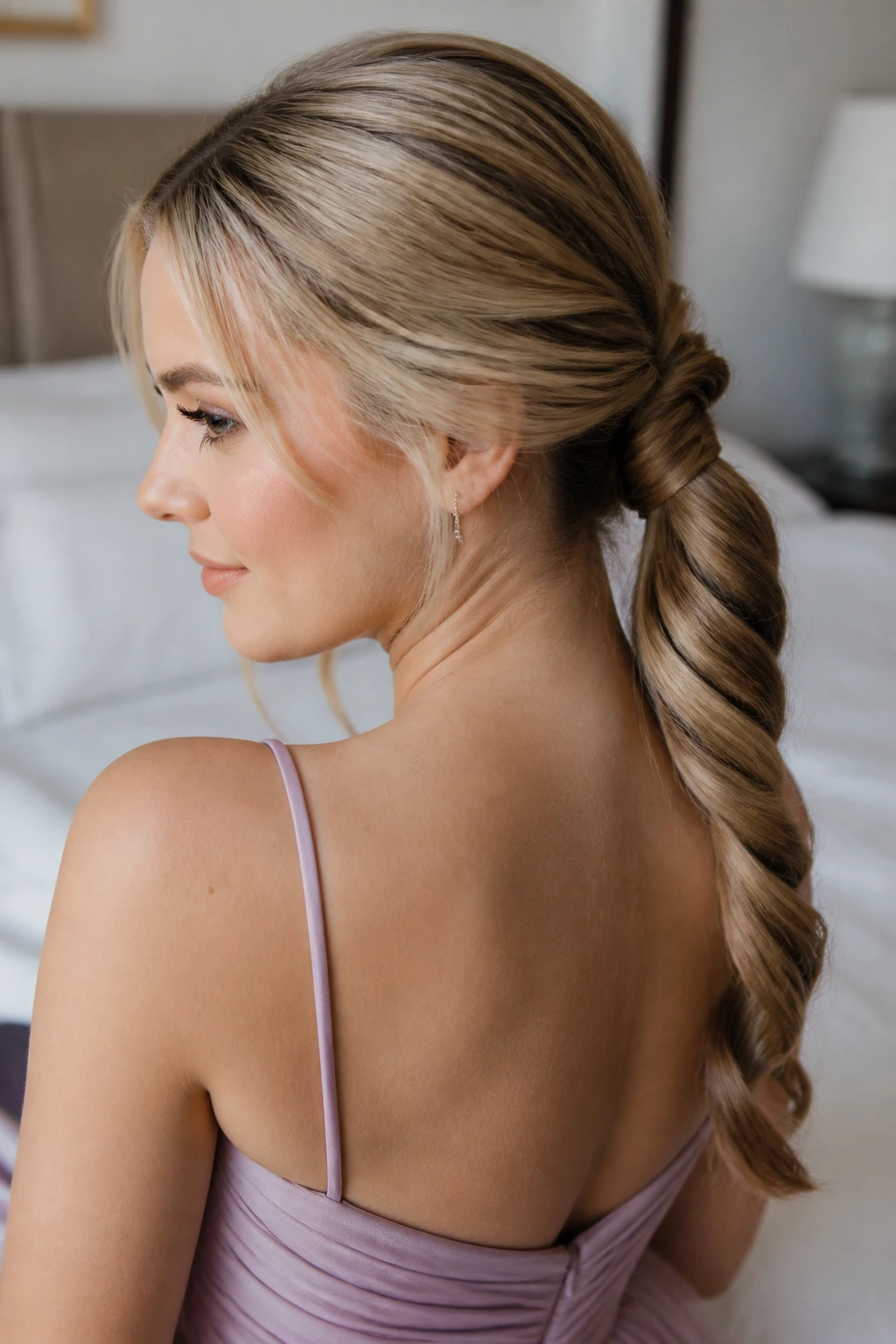
A rope-braid ponytail is one of those styles that looks more complicated than it is. Split the ponytail into two sections, twist each one in the same direction, then wrap them around each other in the opposite direction so the braid tightens on itself.
It’s tidy, but not stiff. That makes it useful for long hair that gets frizzy at the ends, because the braid keeps the length controlled while the face stays open and clean.
9. Side-Swept Curls
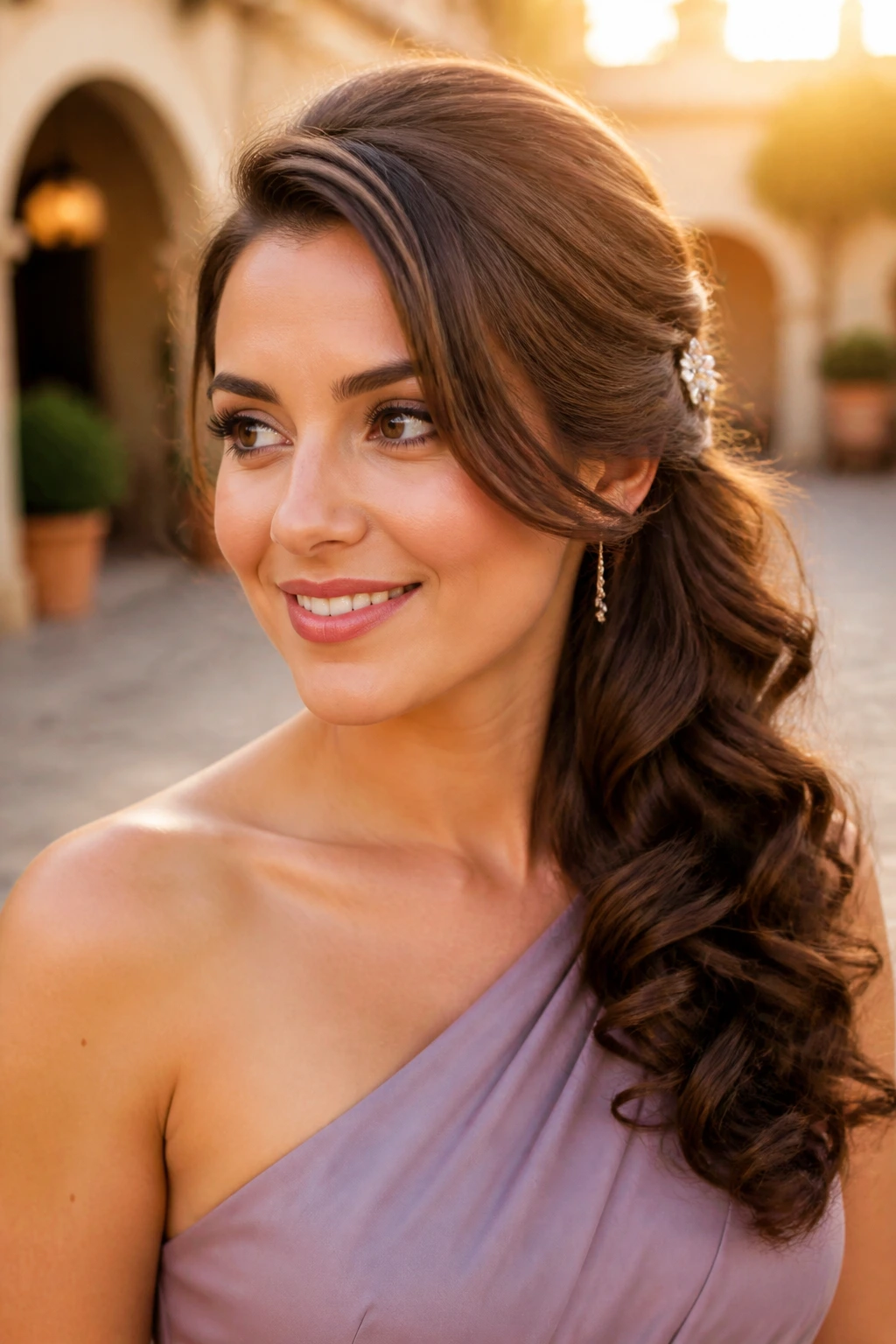
Side-swept curls have a little drama without tipping into full glam. Curl the hair away from the face, build volume at the crown, then pin one side behind the ear with a concealed bobby pin or a small decorative clip.
This works well with asymmetric necklines and one-shoulder dresses. It also gives bridesmaids with medium-length hair a way to look finished without having enough length for a full updo.
10. Waterfall Braid with Loose Ends
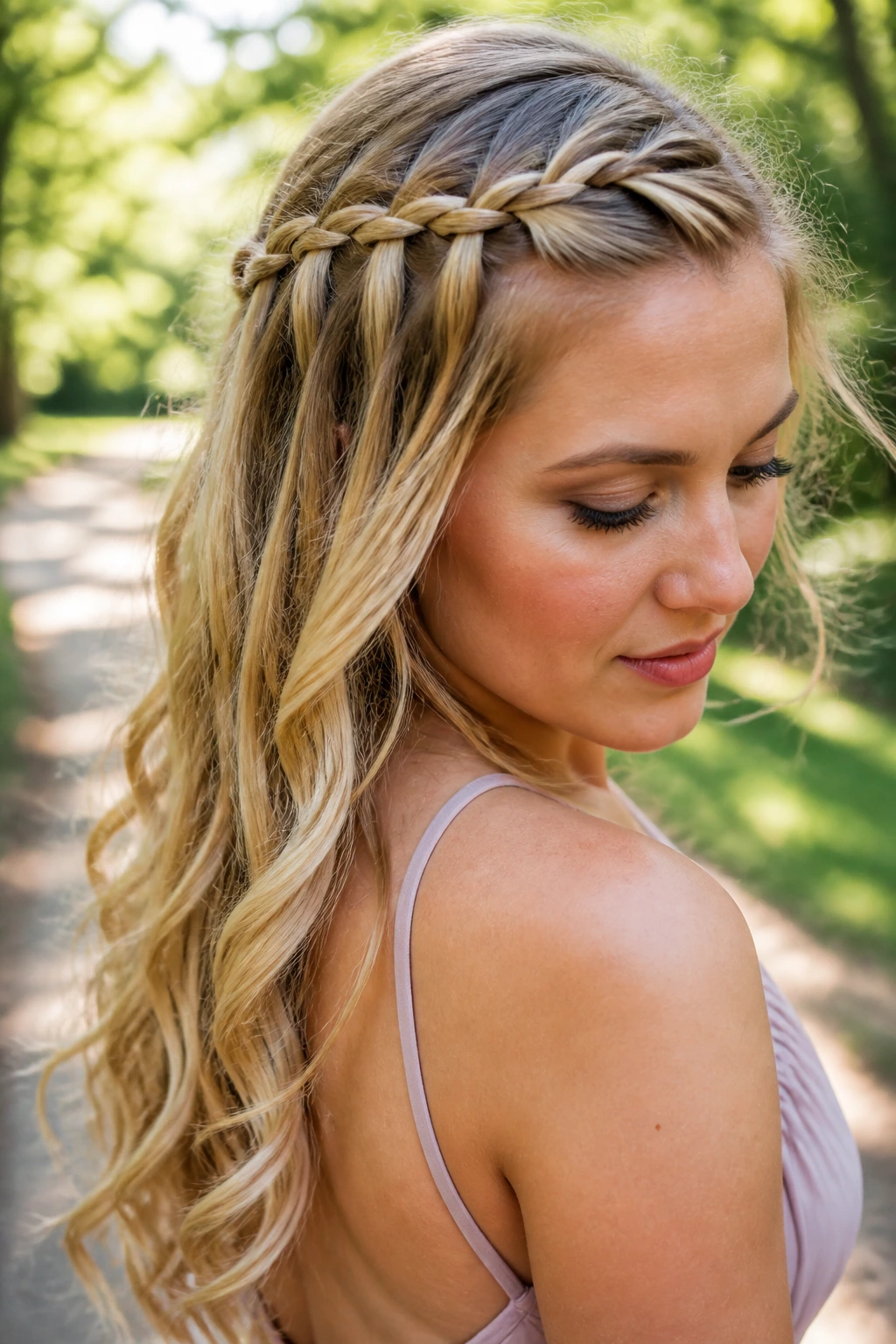
A waterfall braid is what I reach for when someone wants movement and structure at the same time. The braid creates a soft line across the head, while the dropped sections keep the rest of the hair loose and airy.
It’s especially pretty on hair that holds a curl. Keep the braid pieces small and even, or the pattern gets messy fast and loses that clean, ribbon-like look.
11. French Twist with a Soft Edge
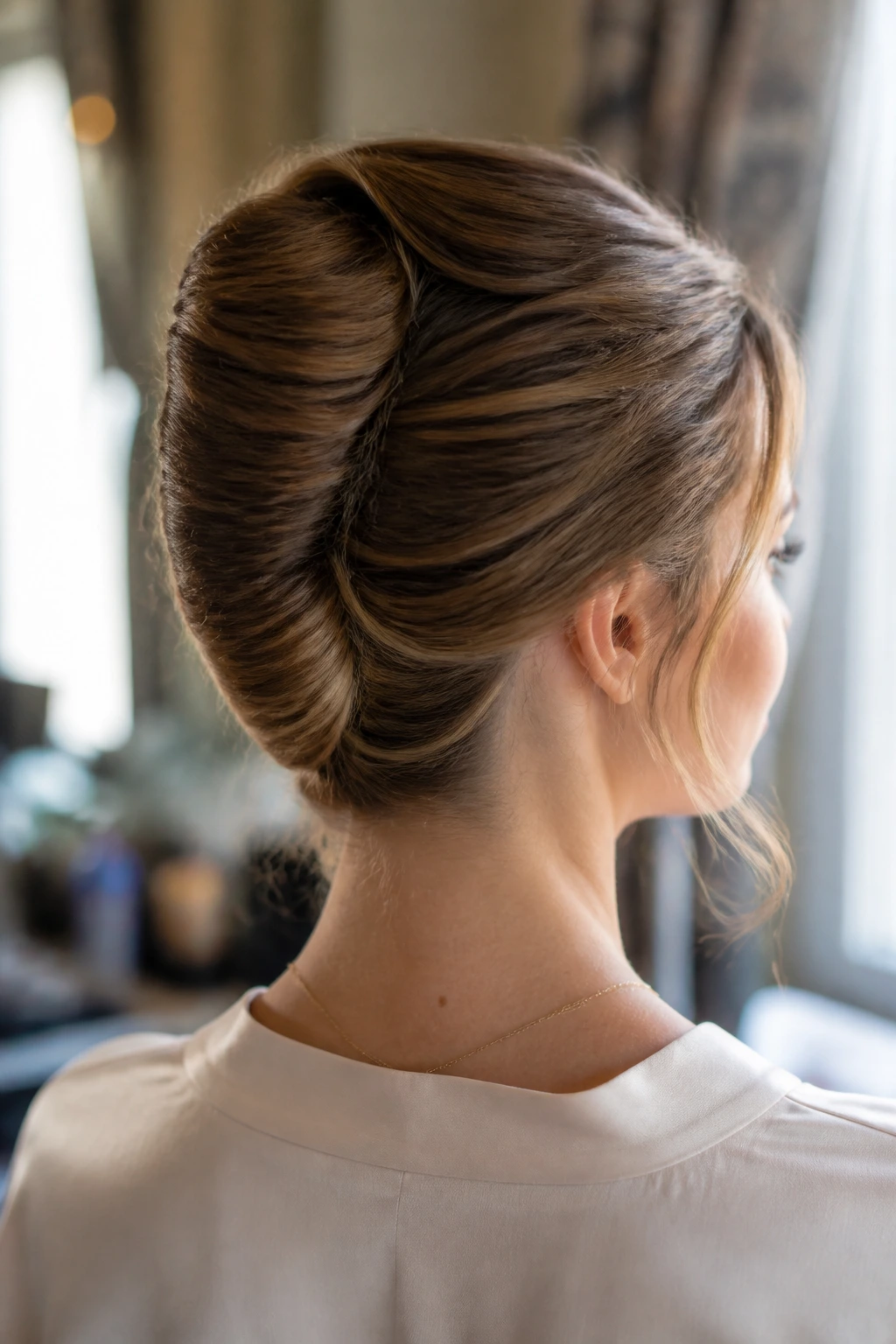
A French twist has proper ceremony energy. Pin the hair vertically, tuck the ends inward, and keep the top slightly soft so it doesn’t feel severe or too formal for a bridesmaid.
This style sits nicely with high necklines, structured gowns, and simple drop earrings. If the hair is slippery, lightly tease the roots first; otherwise the twist can slide while everyone is still taking pre-ceremony photos.
12. Curly Halo Updo
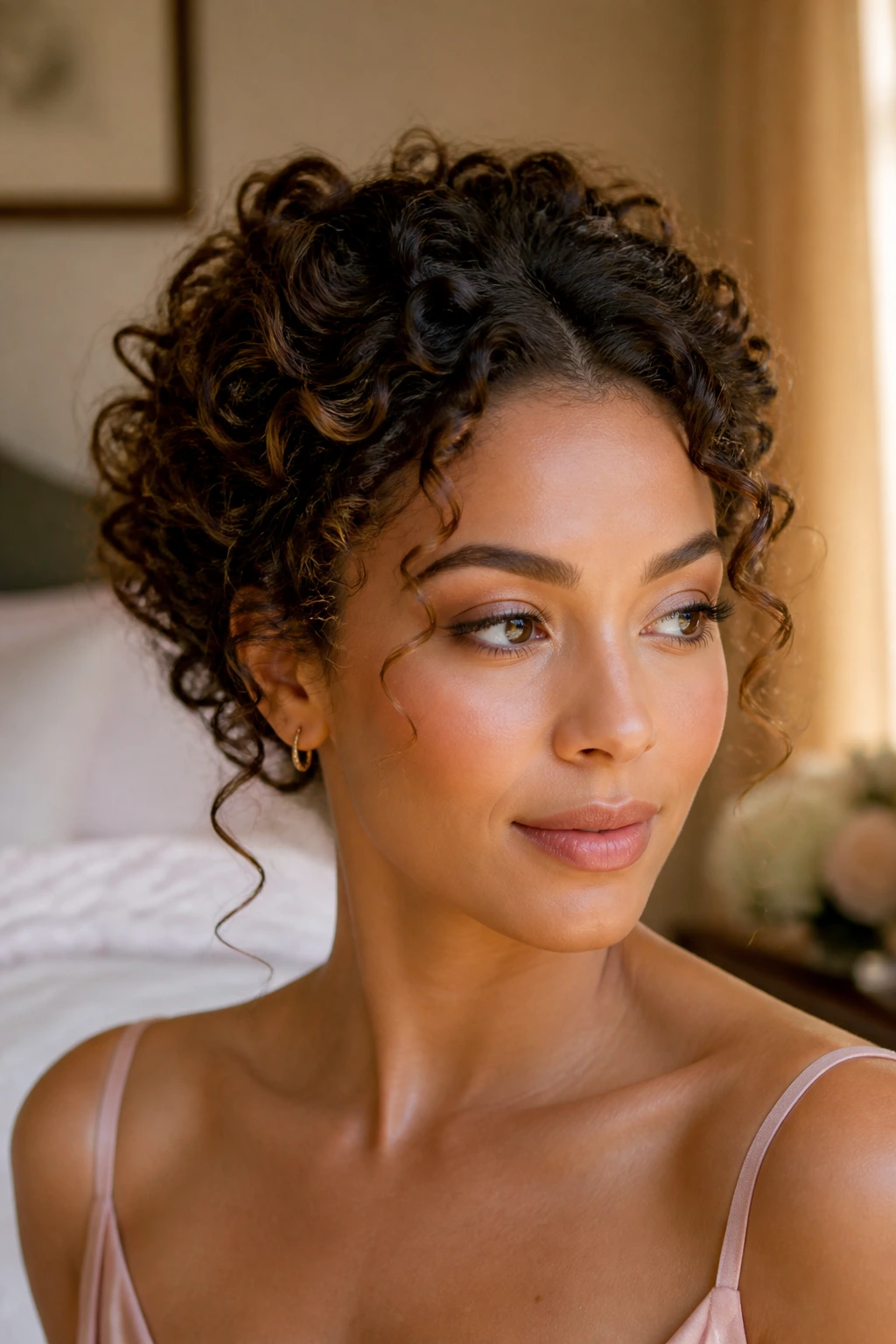
Natural curls can look fantastic in an updo when the shape respects the curl pattern instead of forcing it into a shell. Pin the sides upward, leave the top and crown rounded, and let the curls form a halo around the face.
This is one of the better bridesmaid hairstyles for textured hair because it doesn’t fight volume. Use curl cream and a little gel at the edges, not a heavy layer of product that makes the hair look wet or crunchy.
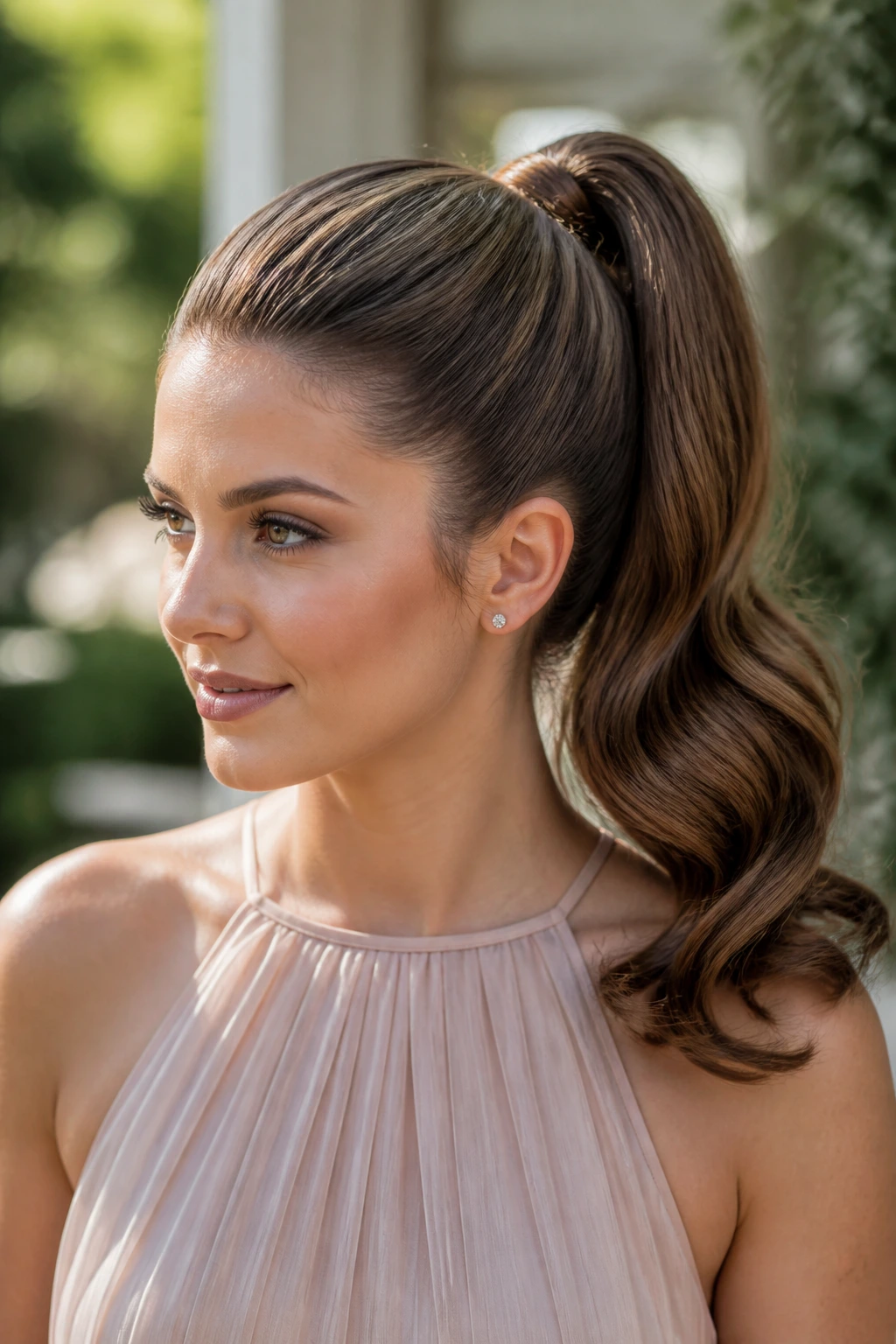
13. Polished High Ponytail
A high ponytail sounds casual until it’s smoothed, wrapped, and curled in the right places. The crown should be sleek, the ponytail should sit high enough to lift the face, and the ends should have enough bend to move.
I like this for modern dresses and bridesmaids who want something sharp. It can also be a relief on a warm day because it keeps the neck clear and doesn’t collapse the way loose styles often do.
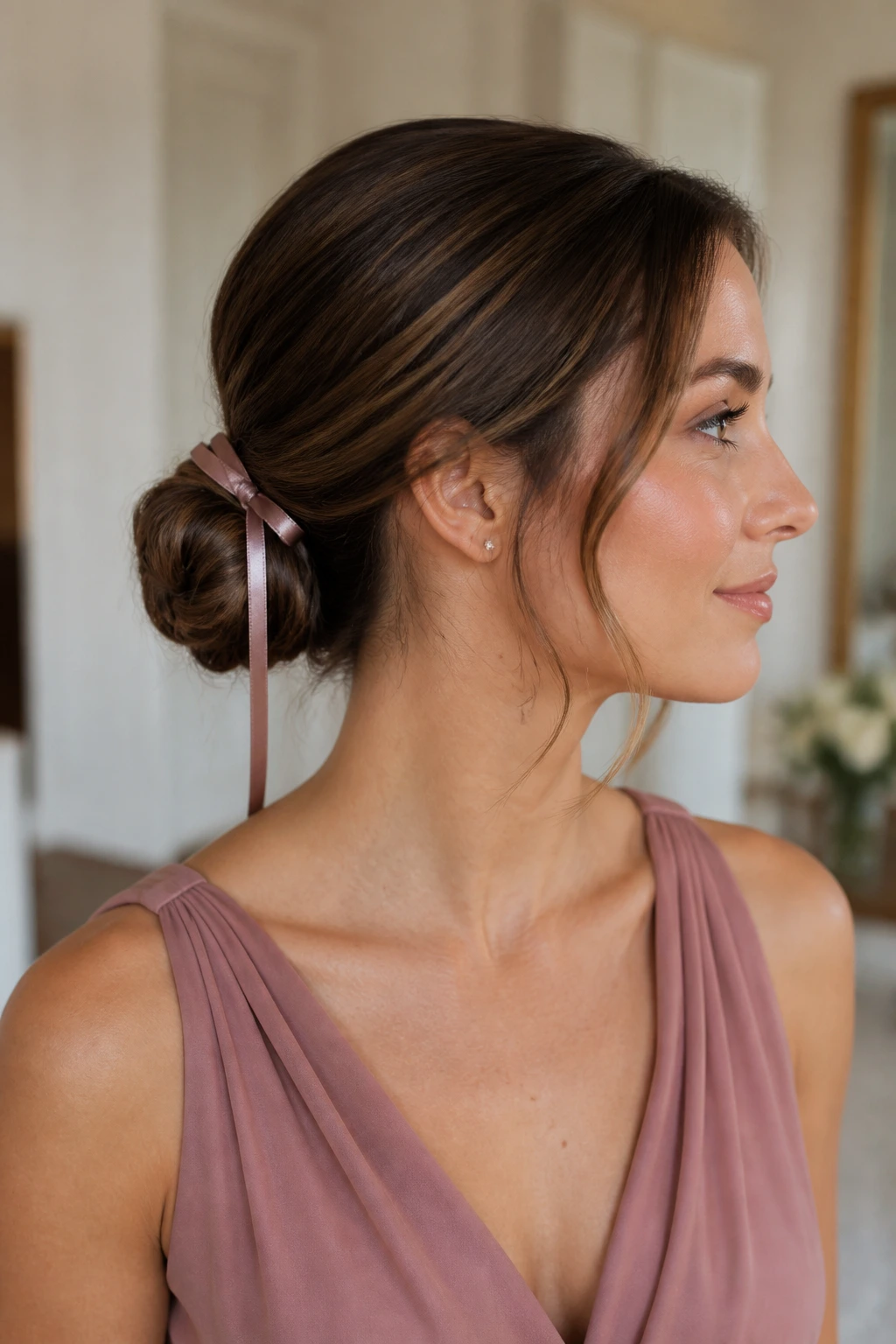
14. Low Knot with a Satin Ribbon
A low knot gets a softer finish when a satin ribbon is tied or wrapped through the base. The ribbon should be narrow and color-matched to the dress or bouquet, not a giant bow that steals the whole show.
The shape itself should stay compact. Leave the knot neat, let the ribbon supply the romance, and the result feels more deliberate than a plain elastic-and-pin bun.
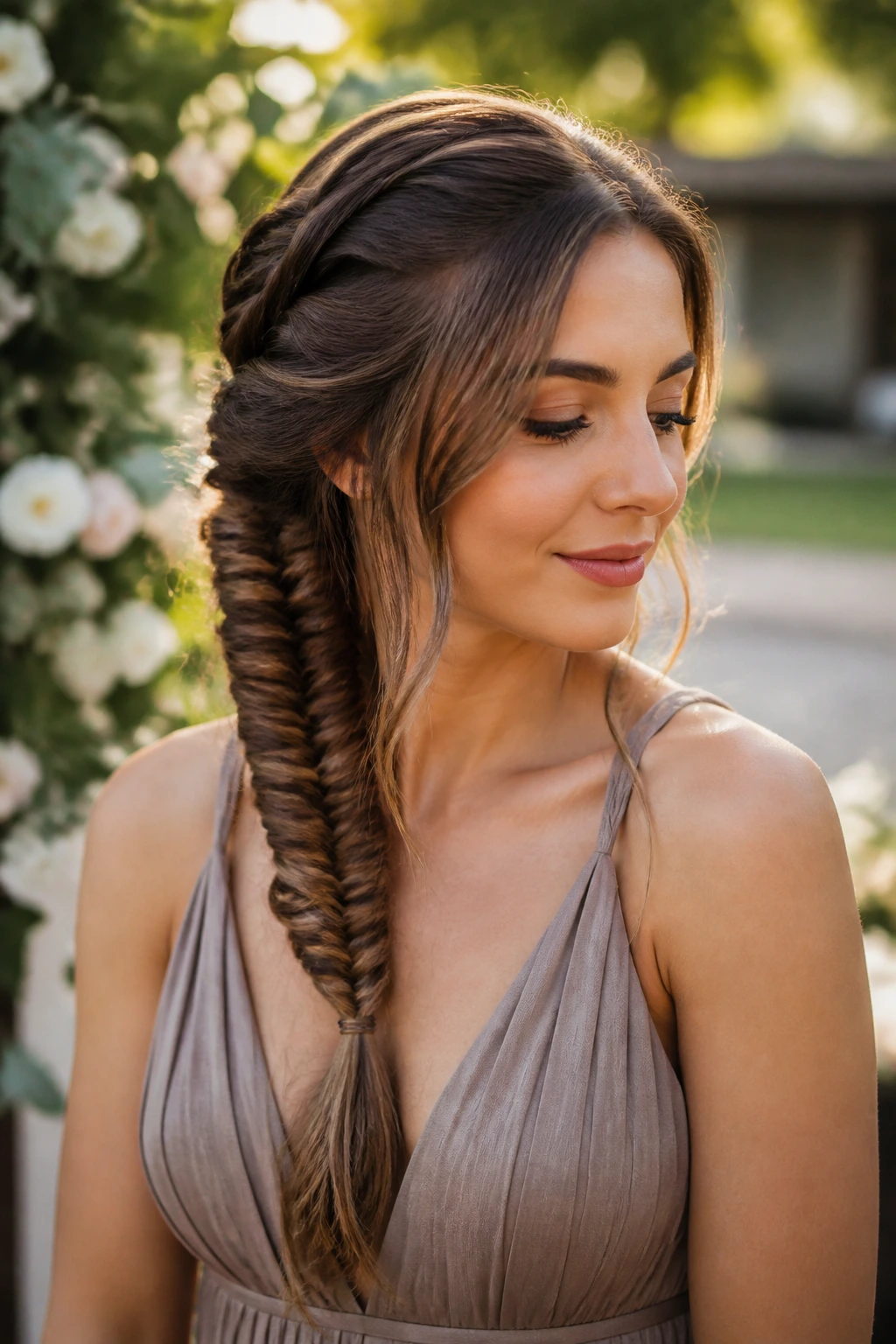
15. Fishtail Braid
A fishtail braid has more texture than a standard three-strand braid, which is why it looks good even when the dress is simple. Pancake it gently by pulling at the outer edges after braiding, but do not flatten it too much or the detail disappears.
This is a strong choice for long hair, especially for rustic or outdoor settings. A little texturizing spray before braiding gives the sections enough grip to stay clean.
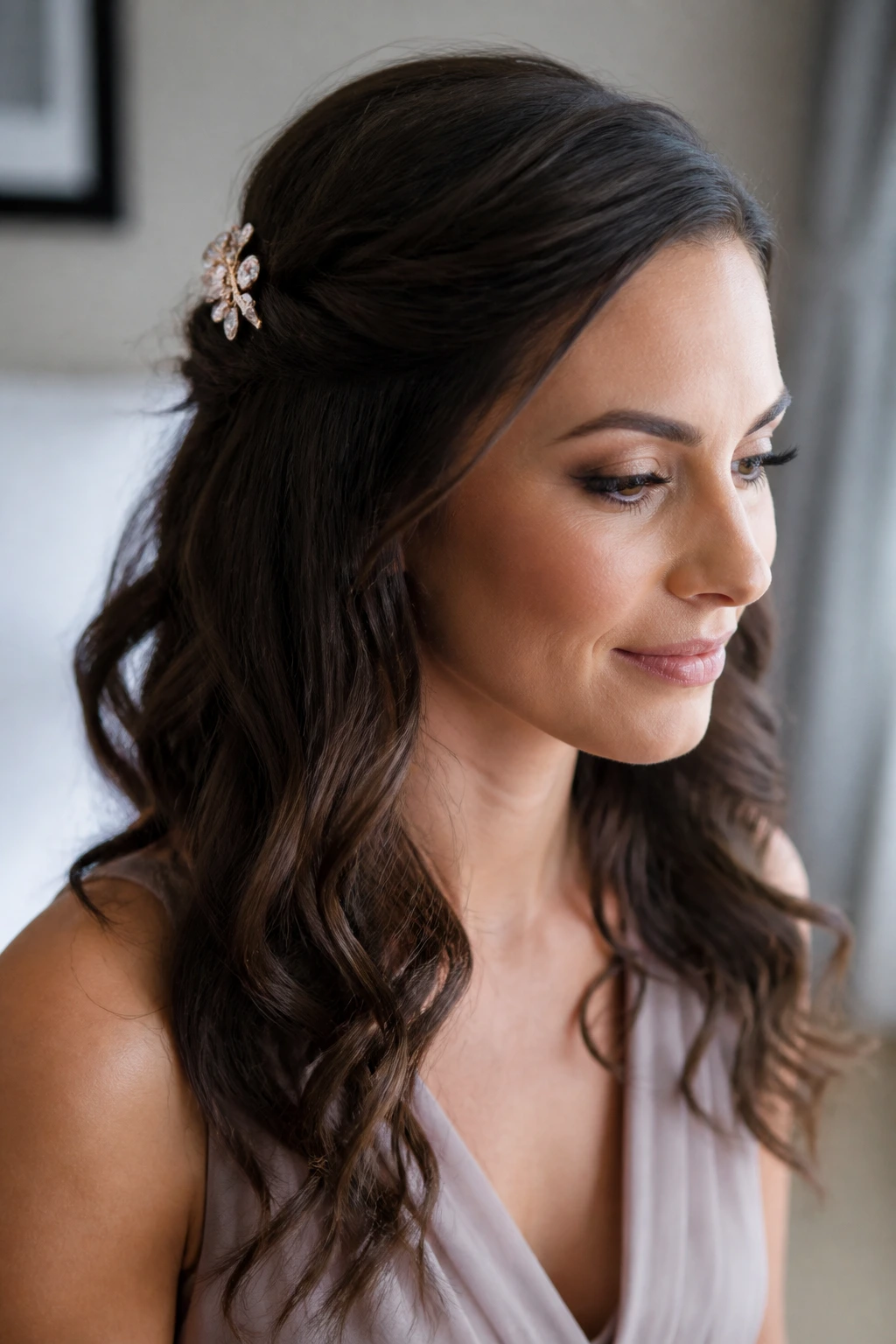
16. Pinned-Back Waves with a Decorative Barrette
Not every bridesmaid wants a full updo, and that is fine. Pin back both temples, let the rest of the waves fall, and anchor the gathered section with a barrette that has enough weight to stay put.
This style is useful when the bridal party has mixed hair lengths. It keeps the front of the face open for photos, and it doesn’t require the same amount of time as a braided bun or twist.
17. Knotted Half-Up
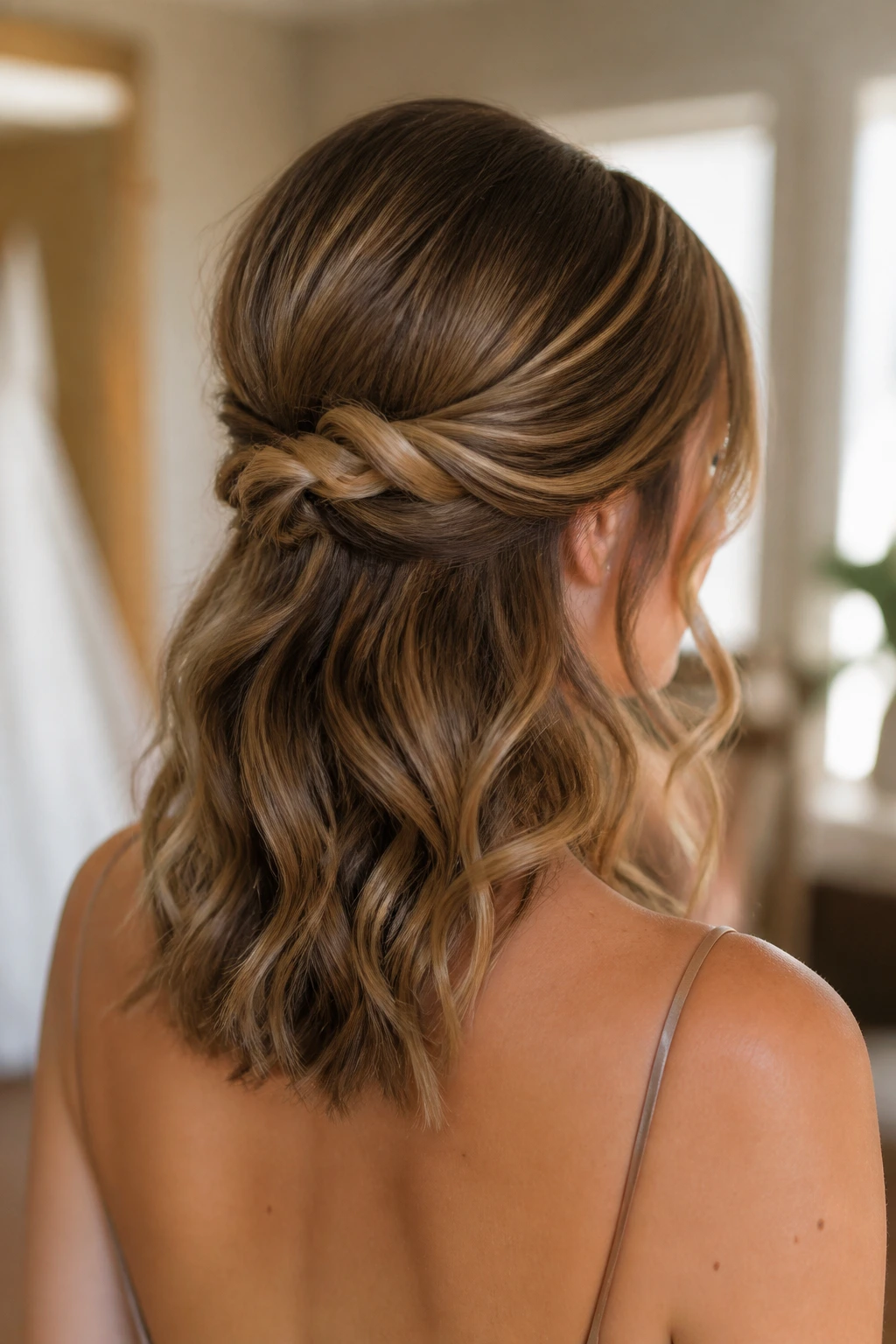
A knotted half-up style feels more special than a basic half ponytail because the section is tied, not just clipped. Take two pieces from each side, knot them once or twice at the back, then pin the knot under itself so the hardware disappears.
It works well on medium hair that has a little slip. If the strands are too clean, the knot can unravel; a touch of texture powder at the roots fixes that fast.
18. Double Dutch Braids into a Bun
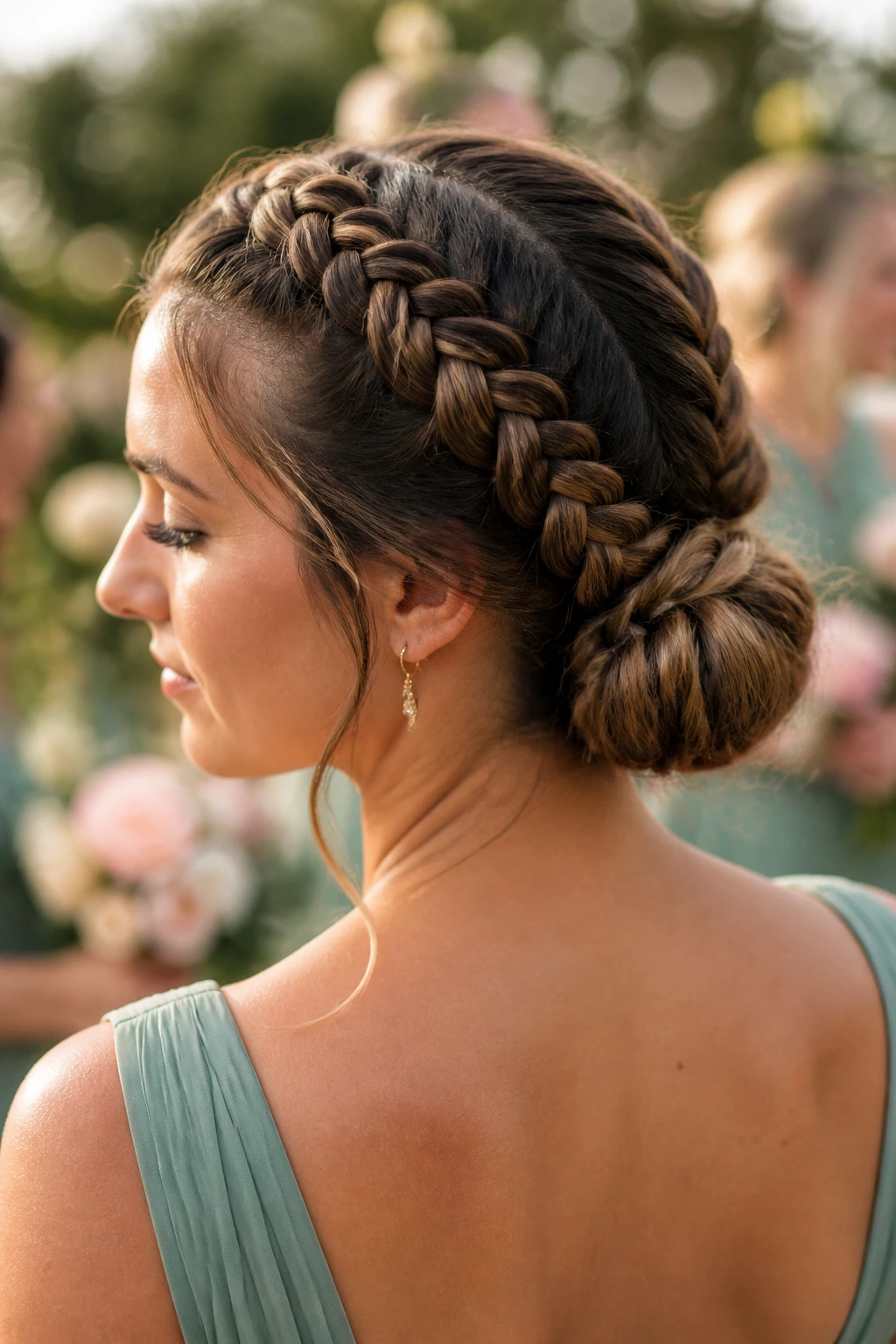
This one has a stronger shape than most half-up styles, and that is the appeal. Two Dutch braids feed into a low bun, which keeps the head visually balanced and the hair from puffing at the crown.
It’s a smart option for windy venues or thick hair that wants to expand on its own. The braids give the style grip, and the bun keeps the ends from wandering by the time dinner starts.
19. Romantic Side Bun
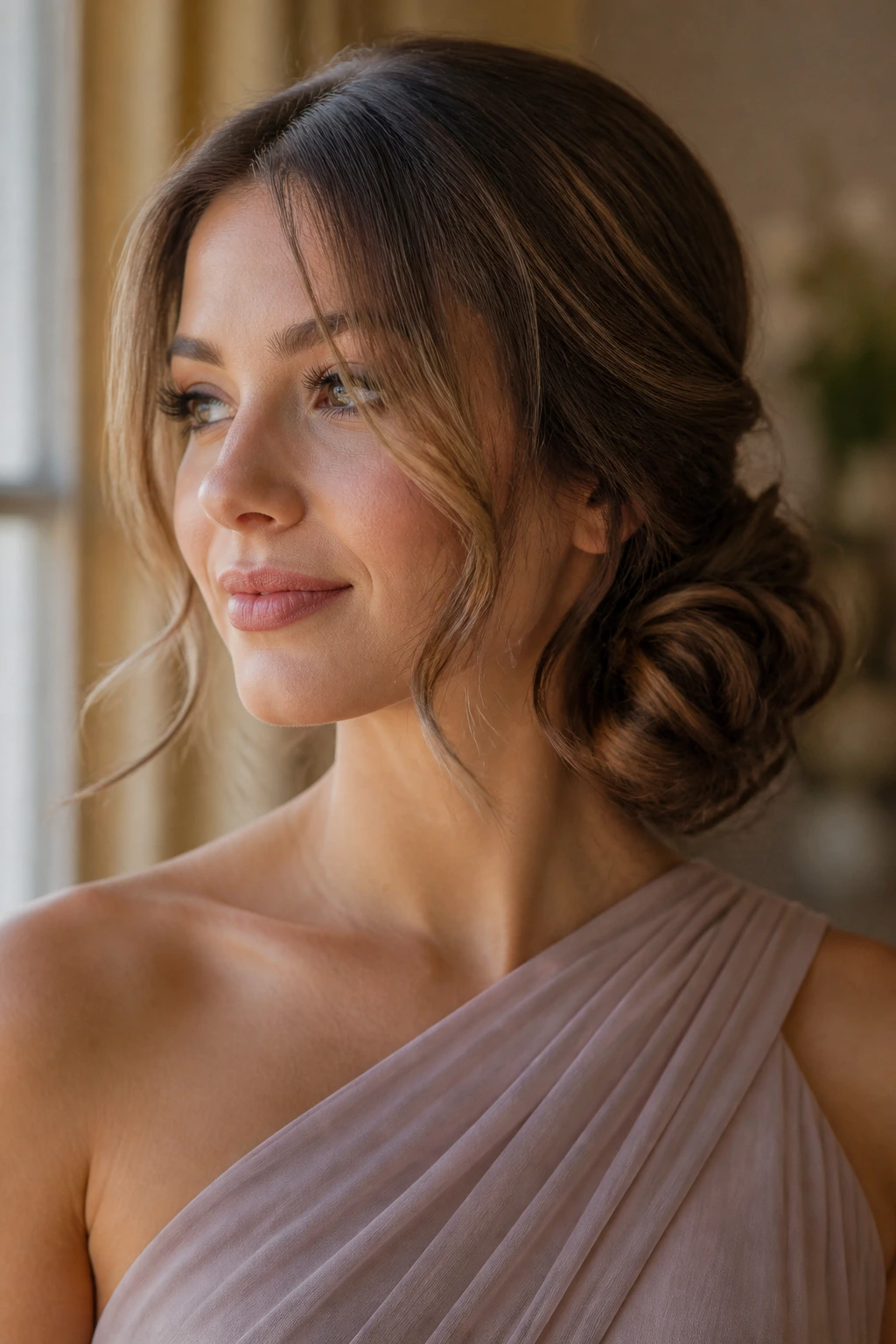
A side bun softens the profile and works especially well with one-shoulder or asymmetrical dresses. The bun should sit just low enough to rest near the jawline, not so low that it gets lost against the shoulder.
I like a few loose face-framing strands here, curled away from the face. Too many and the style looks busy; too few and it can feel stern.
20. Sleek Ballerina Bun
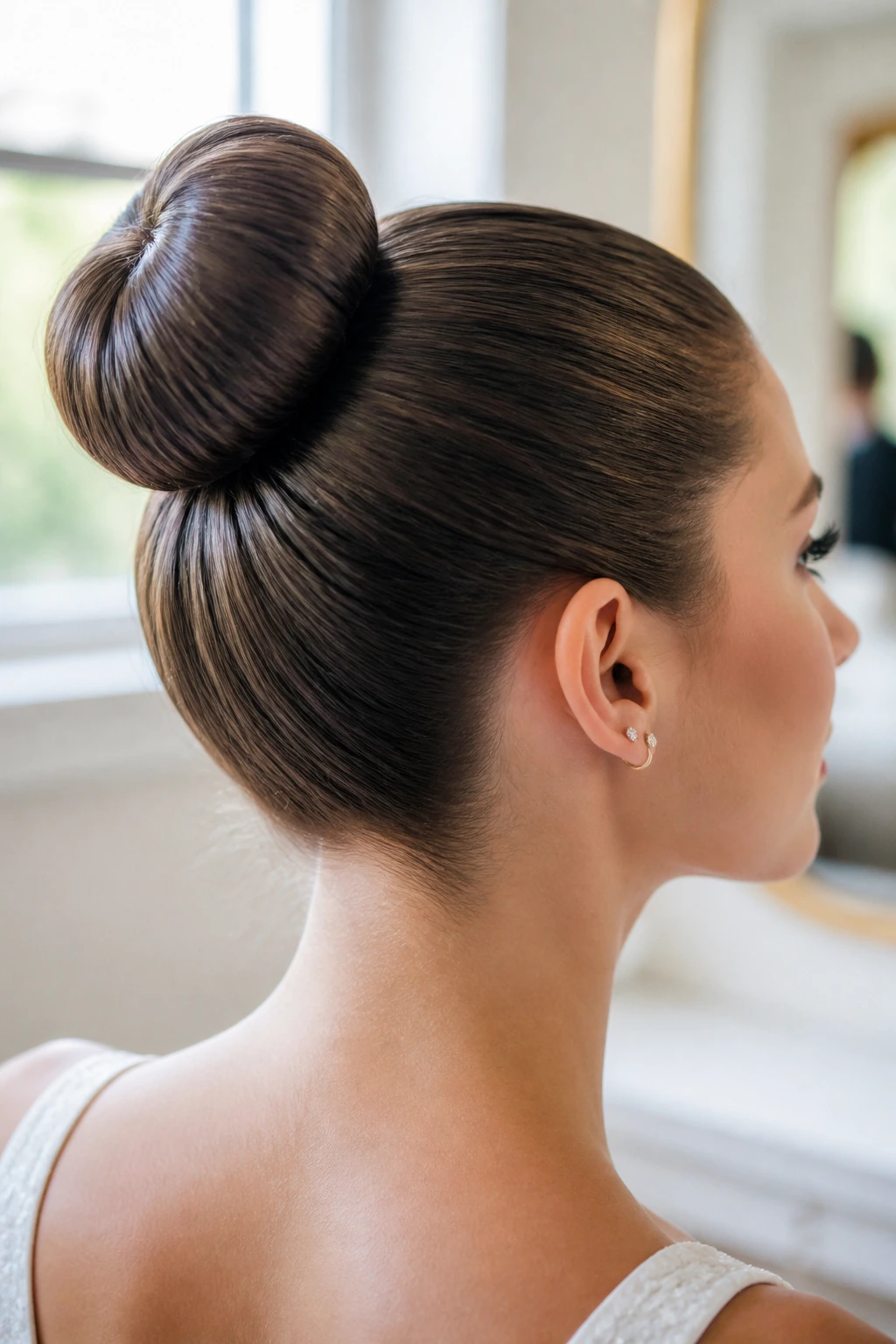
A ballerina bun has to be smooth all the way to the base or it loses the point. Brush the hair high, secure it tightly, then wrap or shape it into a clean bun with enough spray to keep the crown glossy.
This style is ideal when the dresses are detailed and the hair needs to stay out of the way. It also gives a very clear neckline, which is useful when the bridesmaid gown has beading or a high back.
21. Layered Blowout with Soft Bends
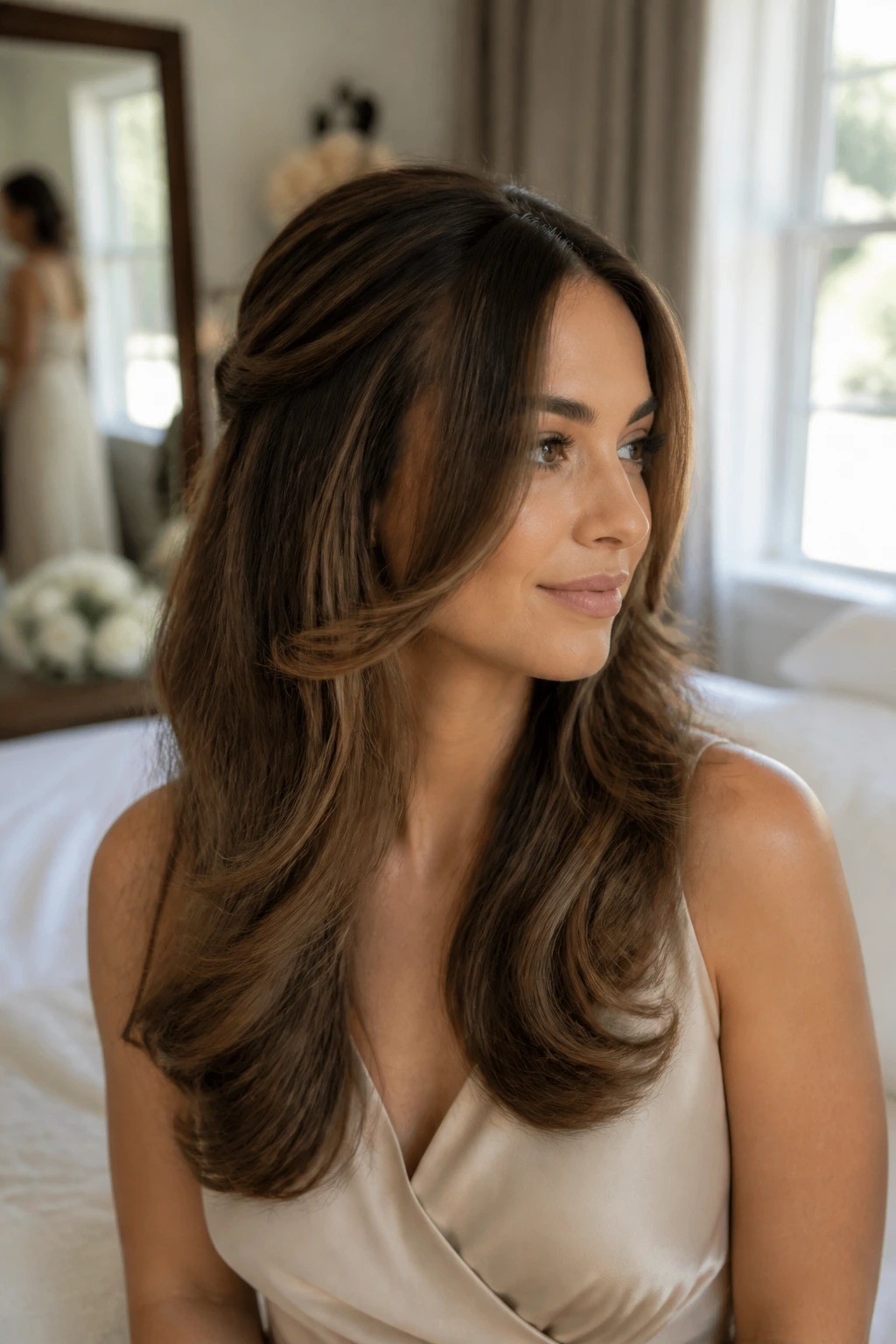
Not every wedding hair moment has to be pinned. A layered blowout with soft bends gives movement, shine, and a polished shape that works beautifully when the hair itself is part of the outfit.
The trick is to keep the ends smooth and the layers intentionally curved, not puffy. Use a round brush at the crown and a larger iron or brush at the ends so the movement looks expensive instead of blown around.
22. Braided Bun with Pearl Pins
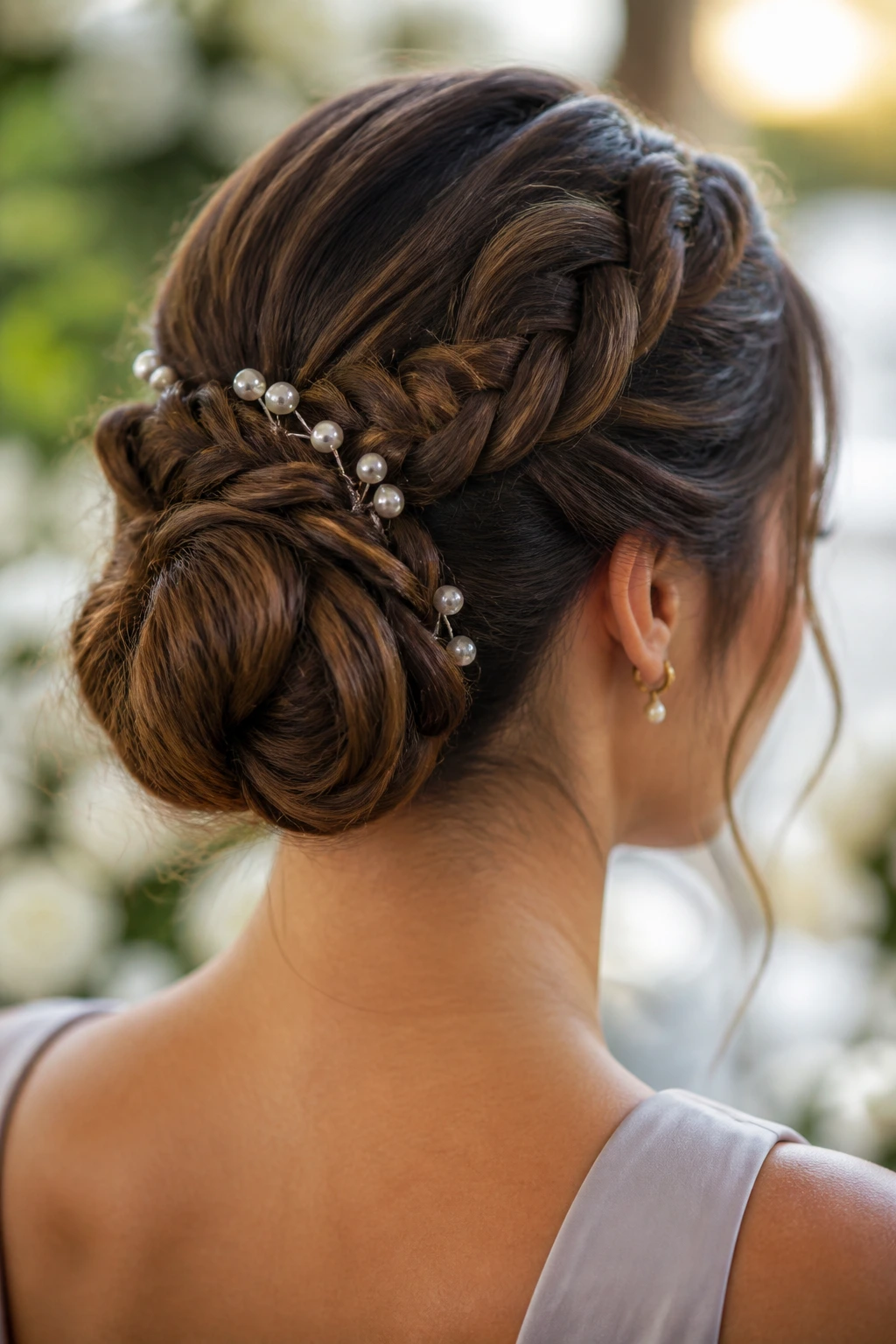
A braided bun gives the classic shape, and pearl pins give it a finish that feels ceremonial without becoming fussy. Braid a section before wrapping it around the bun, then place the pins where the braid changes direction so they look embedded rather than scattered.
This style is dependable on medium to long hair and suits dresses with soft detail. If the pearls are too large, the bun starts to look heavy, so keep the adornment slim.
23. Satin Scarf Braid
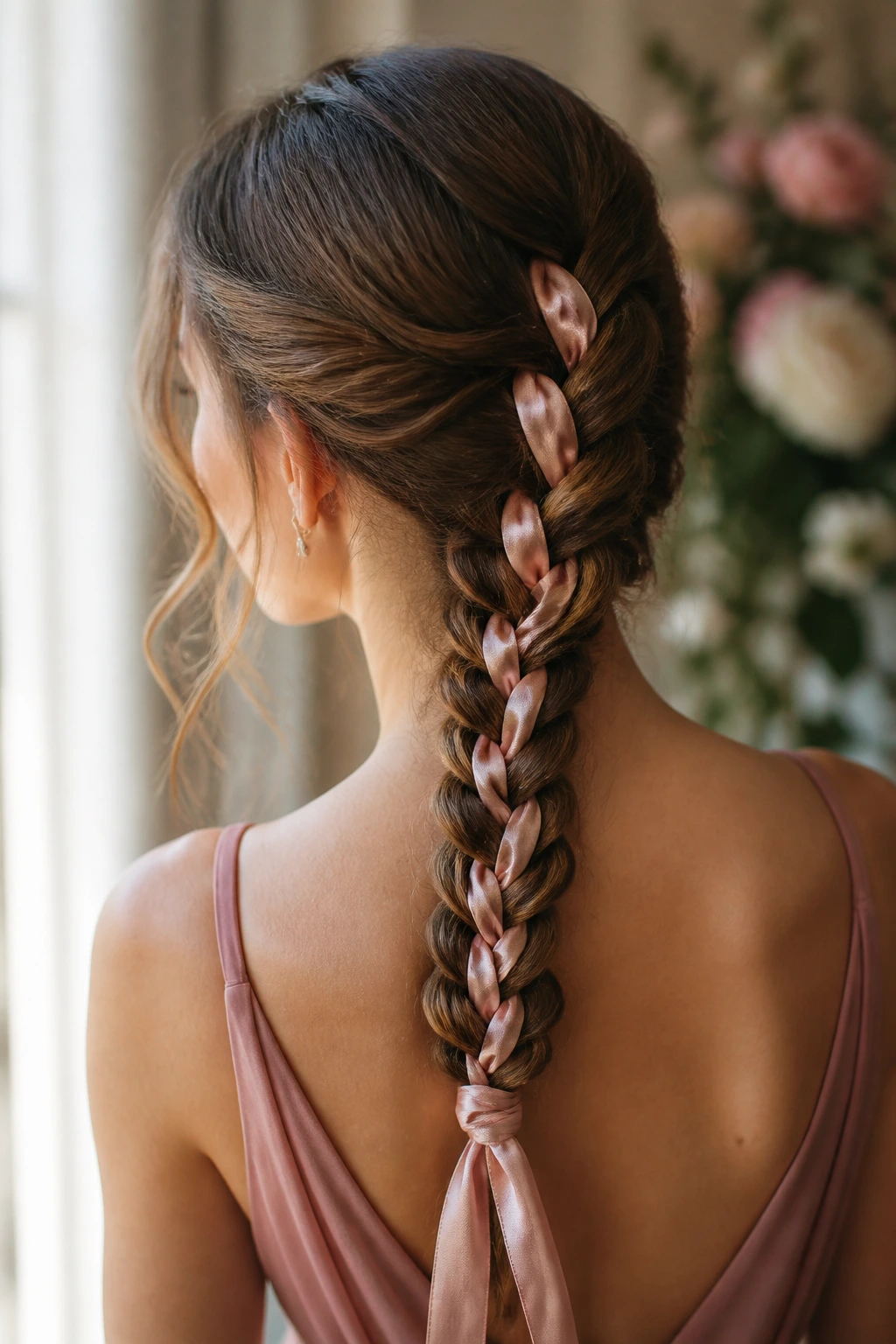
A narrow satin scarf woven into a braid or wrapped around a low ponytail can tie the bridal party together through color. Keep the scarf smooth and narrow; a thick scarf adds bulk in the wrong places and makes the braid harder to manage.
This one feels fresh without being loud. It’s a nice option when the dresses are simple and the group needs one repeated element to make the hairline look coordinated in photos.
24. Natural Curls with a Side Part and Pins
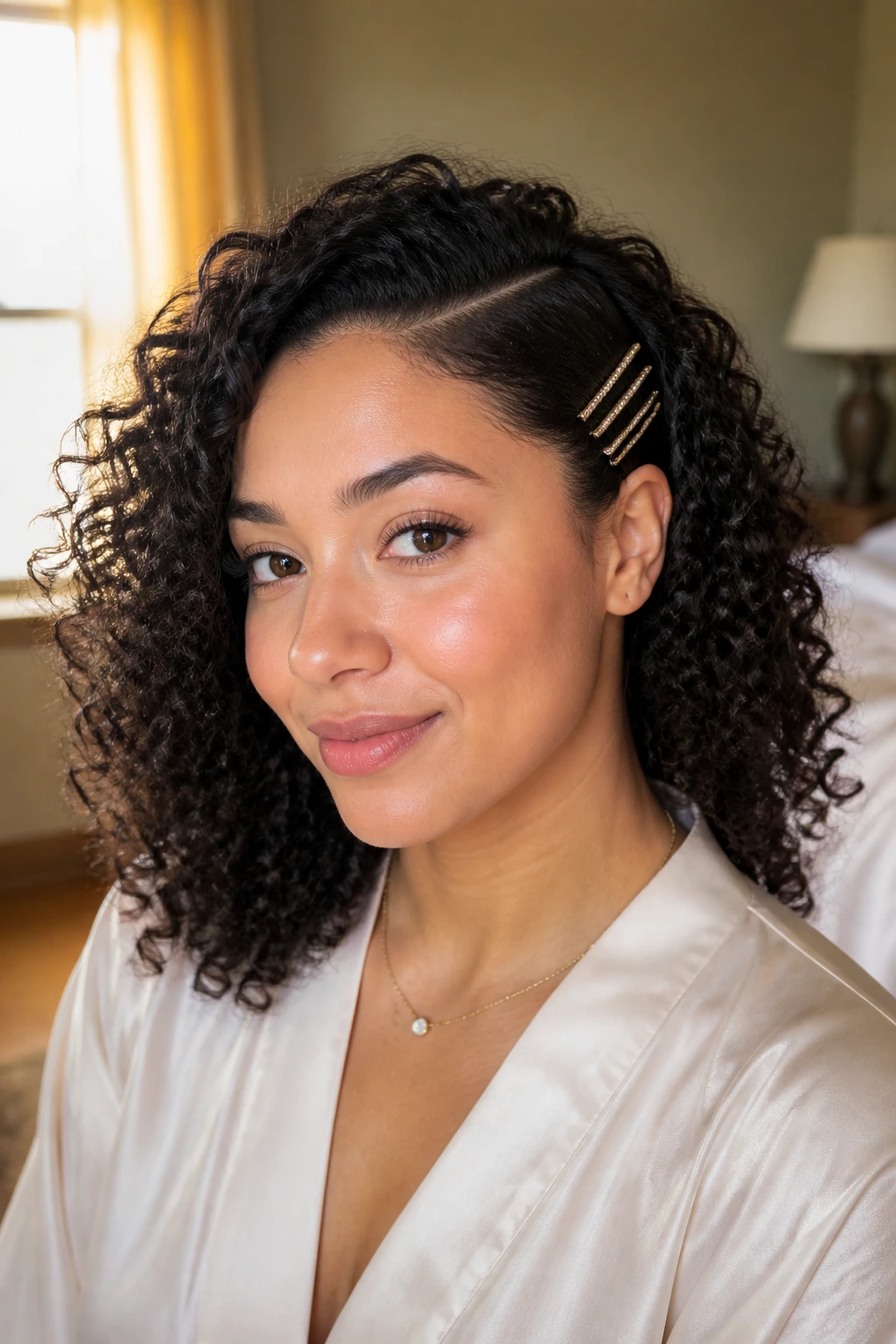
Natural curls look best when they are shaped, not flattened. A side part gives the curls a clear direction, and two or three pins at one temple keep the front from drifting into the face.
I like this approach because it respects the curl pattern. Use a diffuser, a curl cream that defines without crunch, and a little oil only on the ends if they look dry.
25. Short Bob with Tucked Waves
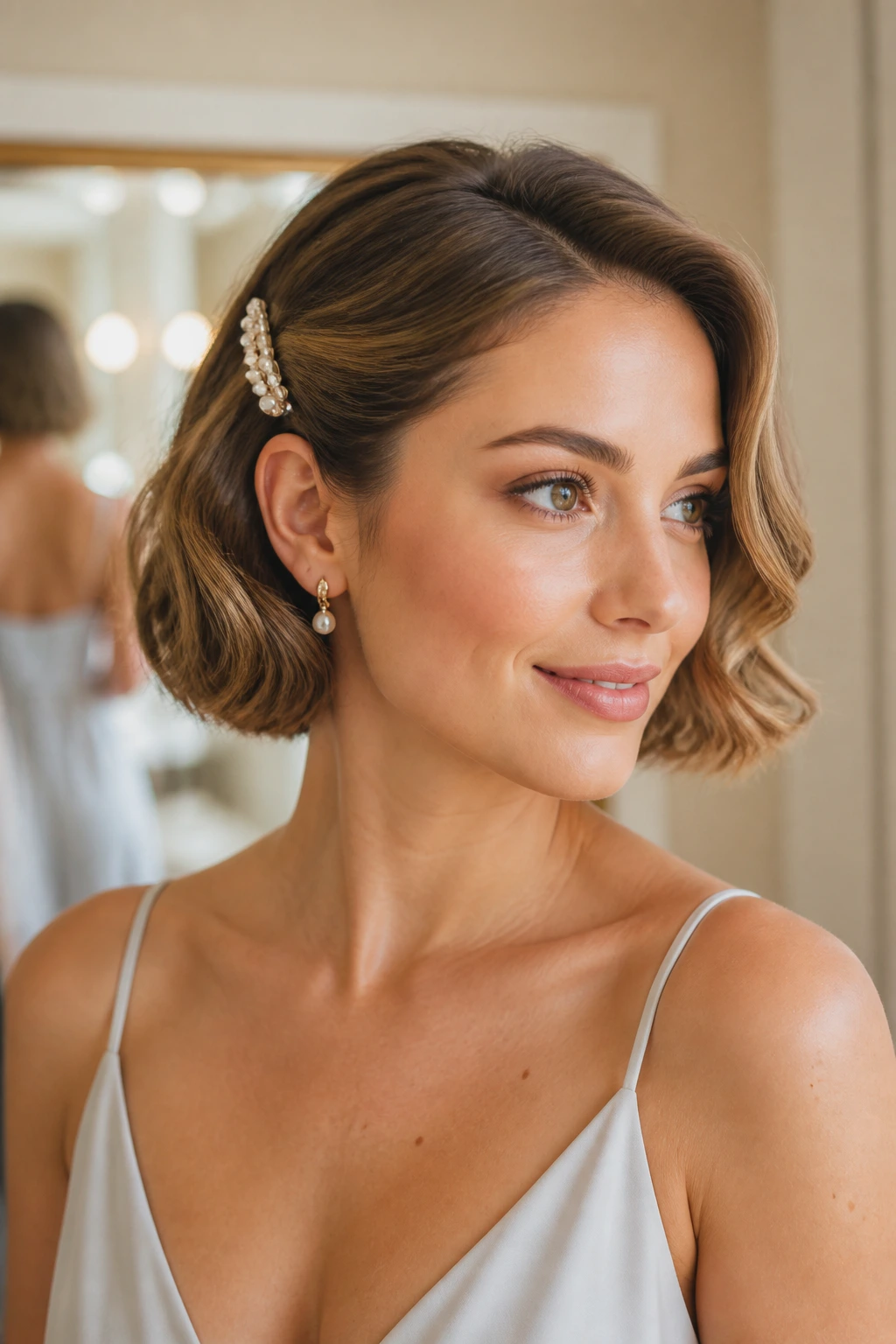
A bob can look every bit as formal as long hair when the shape is intentional. Curl the ends under or outward, tuck one side behind the ear, and let the cut show off the jawline instead of trying to fake extra length.
This works especially well for chin-length and jaw-length hair. A small barrette or pearl clip can keep the tucked side in place without cluttering the silhouette.
26. Pixie with a Jeweled Clip
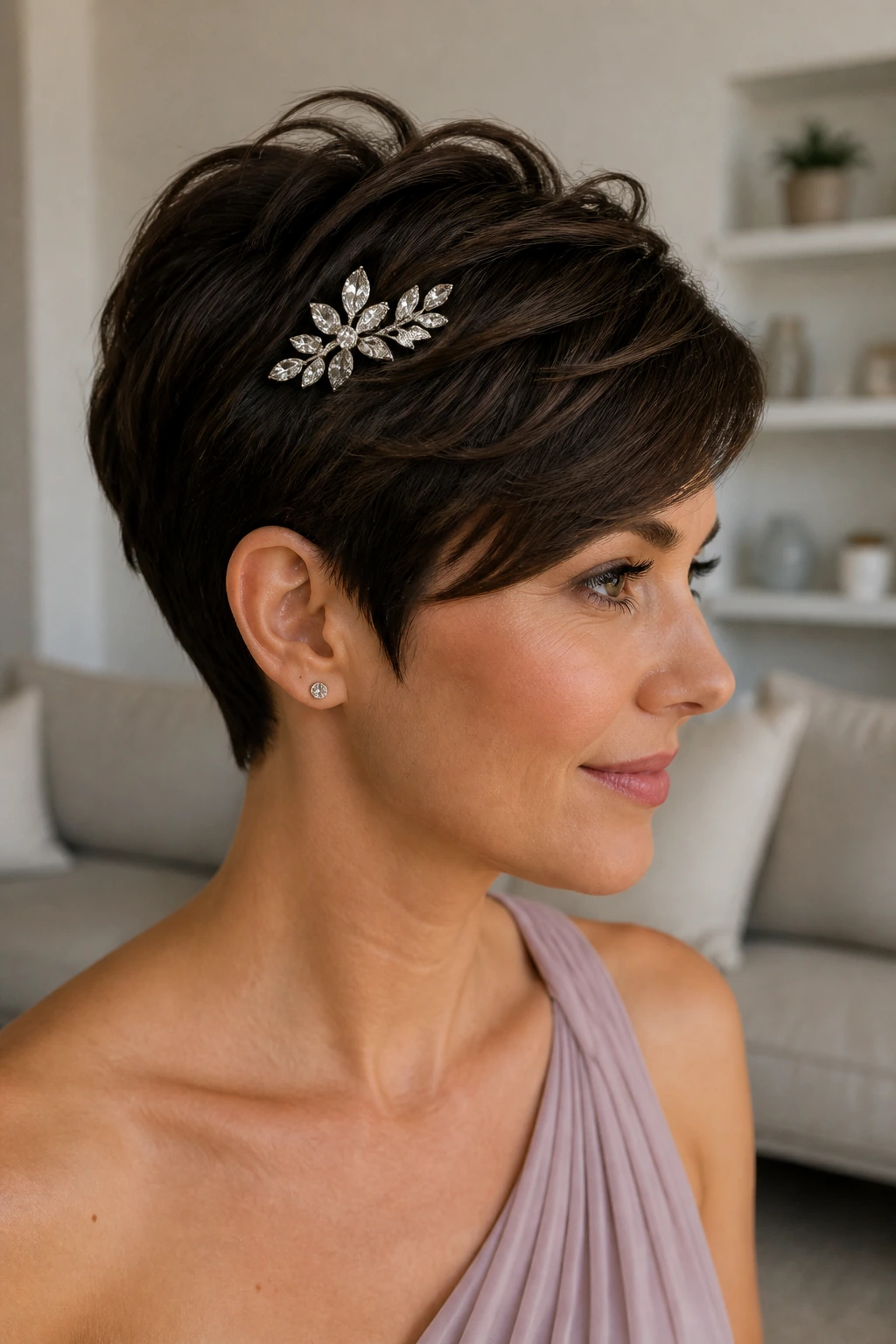
A pixie cut only needs one smart move to look dressy: a strong clip. Sweep the bangs or front section to the side, add a jeweled pin near the temple, and let the rest of the cut keep its natural shape.
The danger here is trying to over-style short hair into something it is not. Don’t fight the cut. Short hair looks elegant when it looks crisp, not crowded.
27. Loc Updo with a Wrapped Base
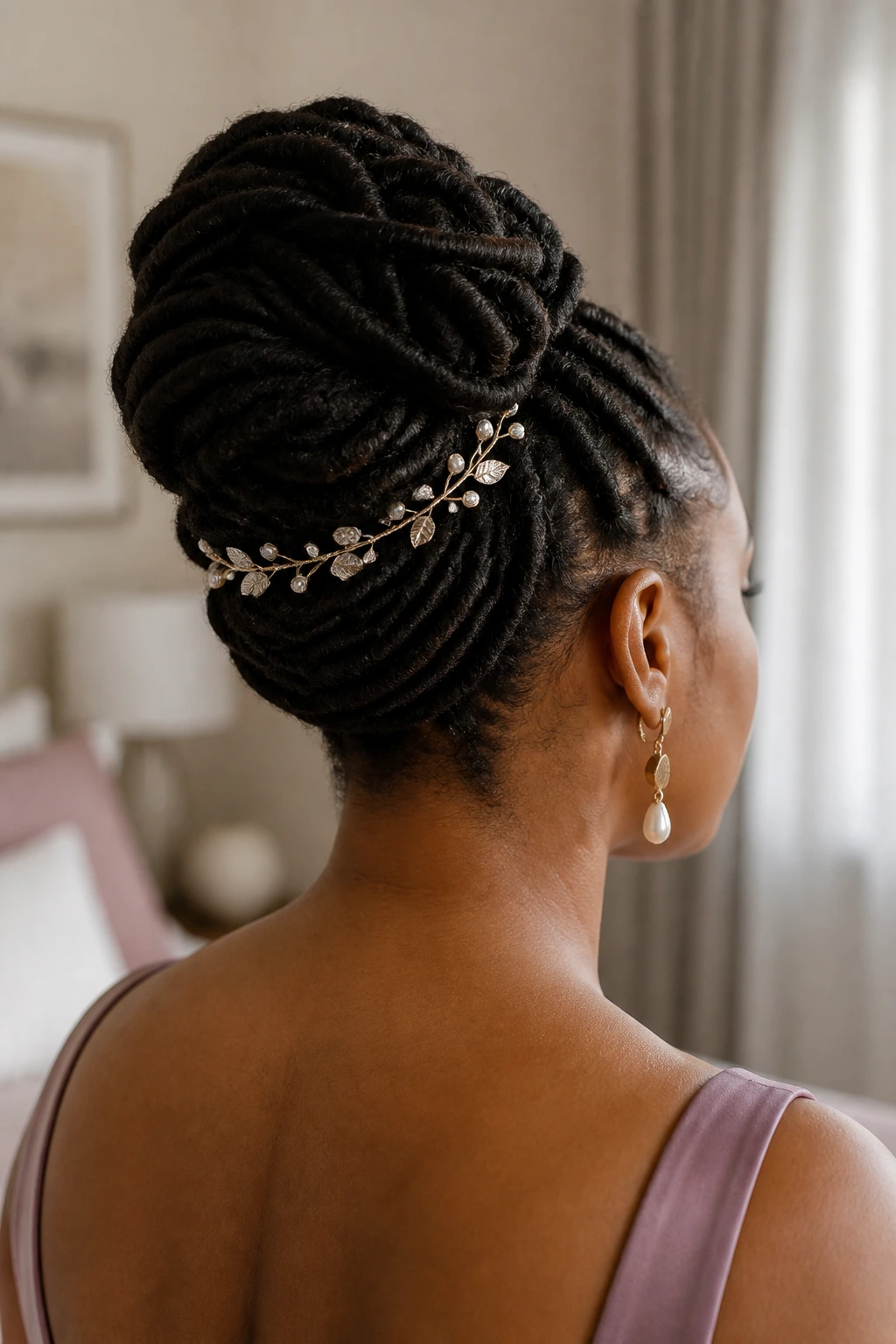
Locs can be shaped into a clean updo or gathered into a sculpted bun with a wrapped base. The key is keeping the edges neat and the silhouette clear so the style reads polished from the back and the side.
This is a beautiful choice for bridesmaids who want a protective style that still feels formal. Decorative cuffs or a slim hair vine can sit right on the wrapped base without pulling the locs down.
28. Claw-Clip French Twist
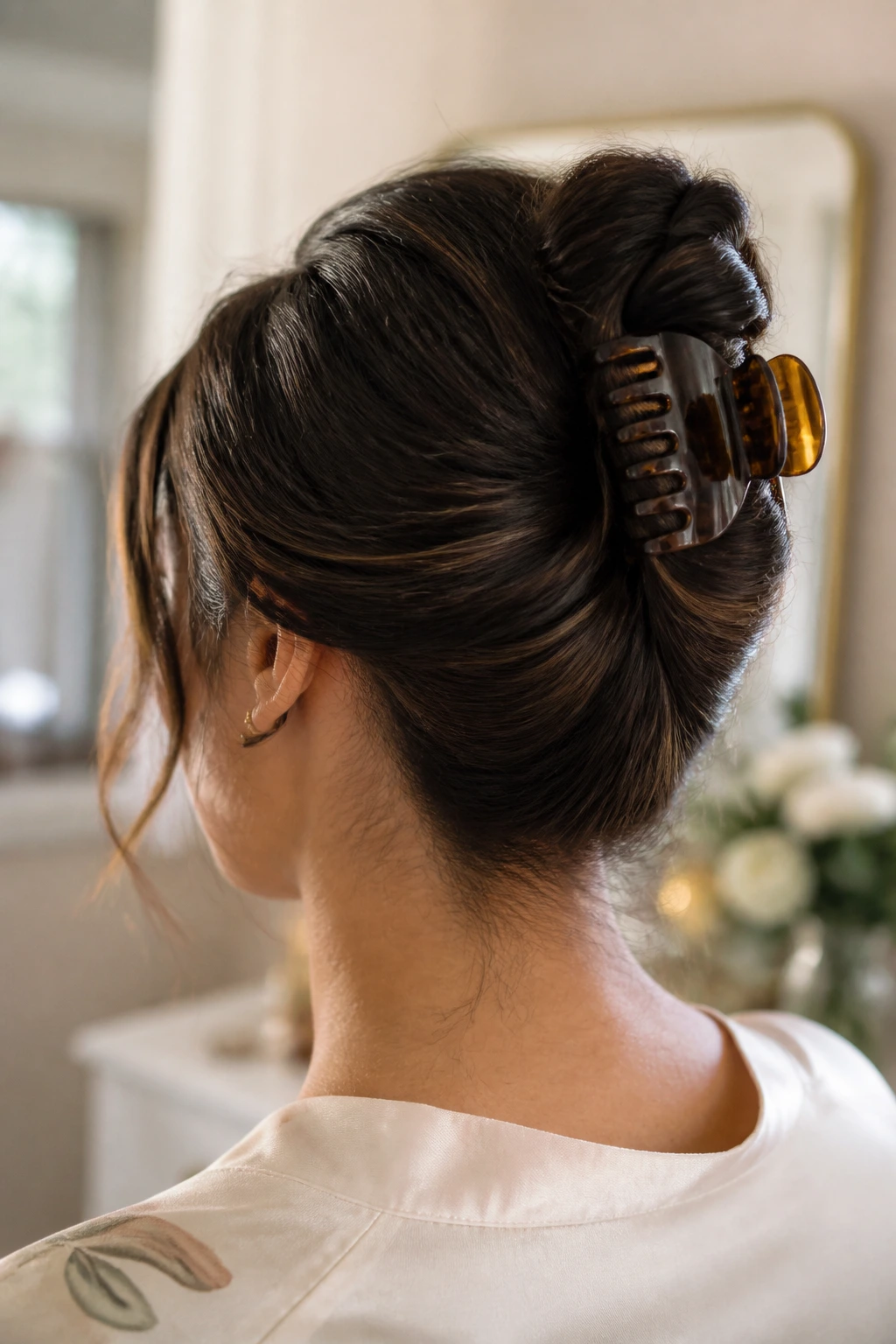
A claw-clip twist can be wedding-appropriate if the clip is strong, clean, and not oversized. Twist the hair upward like a French twist, tuck the ends, then let the clip hold the shape while a few hidden pins do the real work underneath.
I would use this only when the bride wants a relaxed, modern party look. It’s faster than a pinned twist, but it needs a very good clip or it starts slipping at the crown.
29. Low Ponytail with Face-Framing Pieces
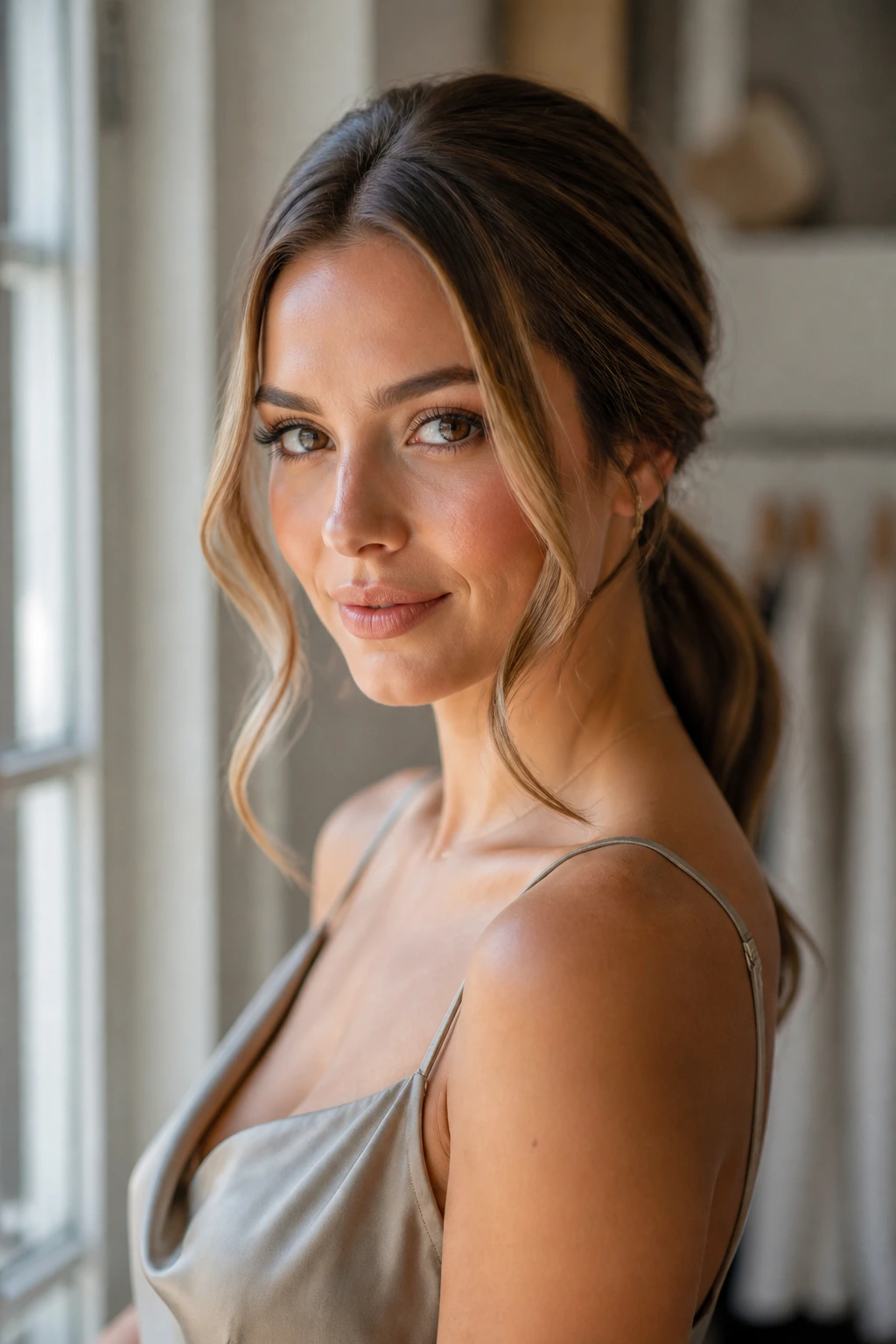
A low ponytail is one of the most underrated bridesmaid hairstyles because it’s calm and easy to keep looking clean. Wrap the base with a strand of hair, leave a few pieces loose at the front, and curl the ends so the tail has movement.
It works with high-neck dresses, beading, and simple silhouettes. The shape is plain in the best way, which leaves room for makeup, earrings, and fabric detail to do their job.
30. Crown Braid for Thick Hair
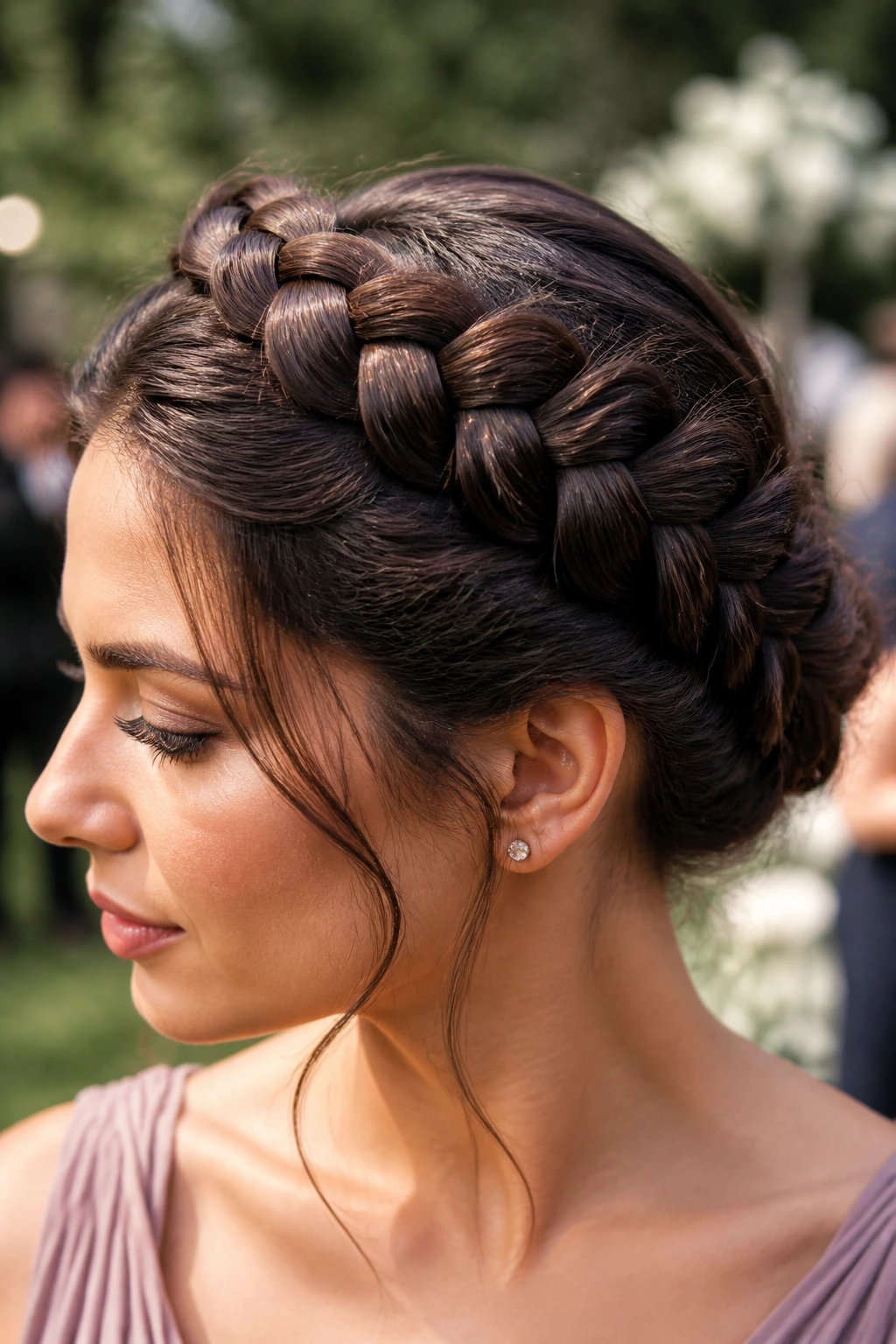
A crown braid gives thick hair a job to do. Instead of letting all that volume expand outward, the braid wraps it around the head and keeps the shape controlled without flattening it.
This is especially useful in humid weather or outdoor ceremonies. Use a little texturizing powder at the roots, then braid with firm, even tension so the braid stays close to the head and doesn’t sag.
31. Finger Waves
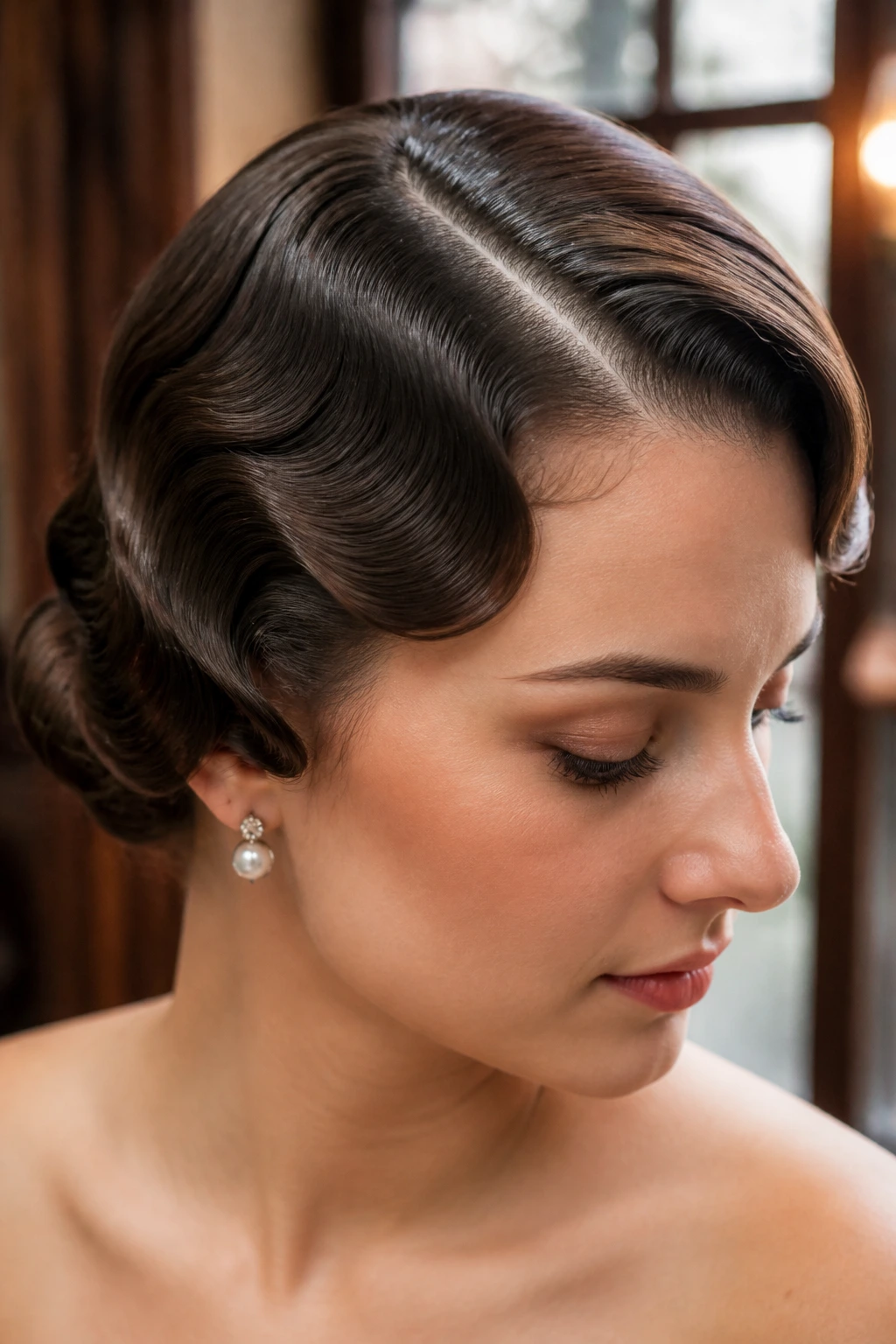
Finger waves have that old-school glamour that a lot of bridesmaids avoid because they assume they’re too complicated. They are more work, yes. But the result is sharp, sculpted, and very good on short or bob-length hair.
They need gel, a fine comb, and patience while they set. Once dry, the waves hold a crisp line that looks stunning with pearl earrings and a side part.
32. Curtain-Bang Blowout with Loose Bends
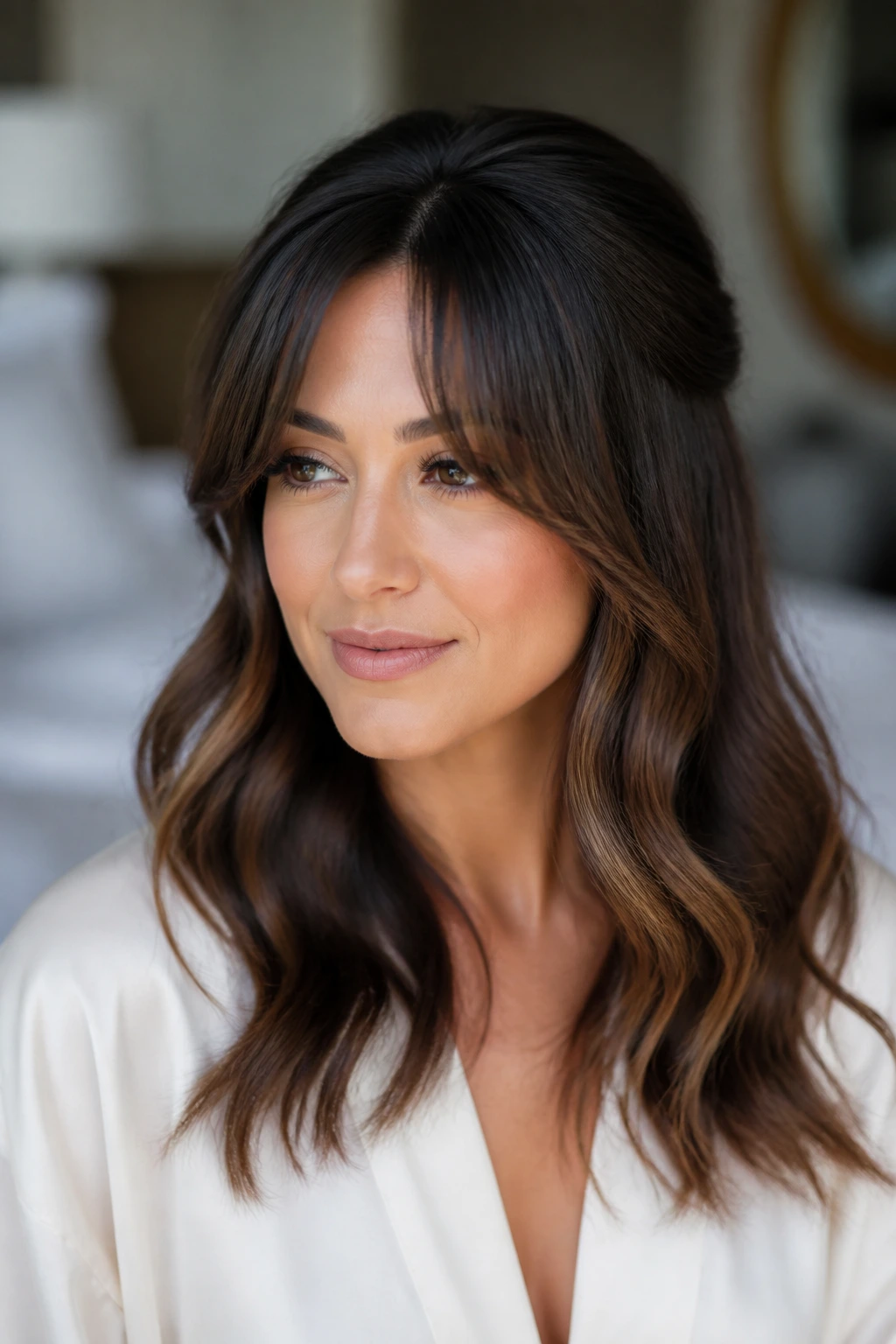
If someone in the bridal party wants hair down but still special, this is one of the easiest wins. The curtain bangs frame the face, the blowout builds lift at the crown, and the loose bends keep the lengths from hanging flat.
It suits layered cuts and medium-length hair especially well. Use a large round brush and a 1.5-inch iron, then keep the finish soft with just enough spray to stop flyaways.
33. Twisted Halo Bun
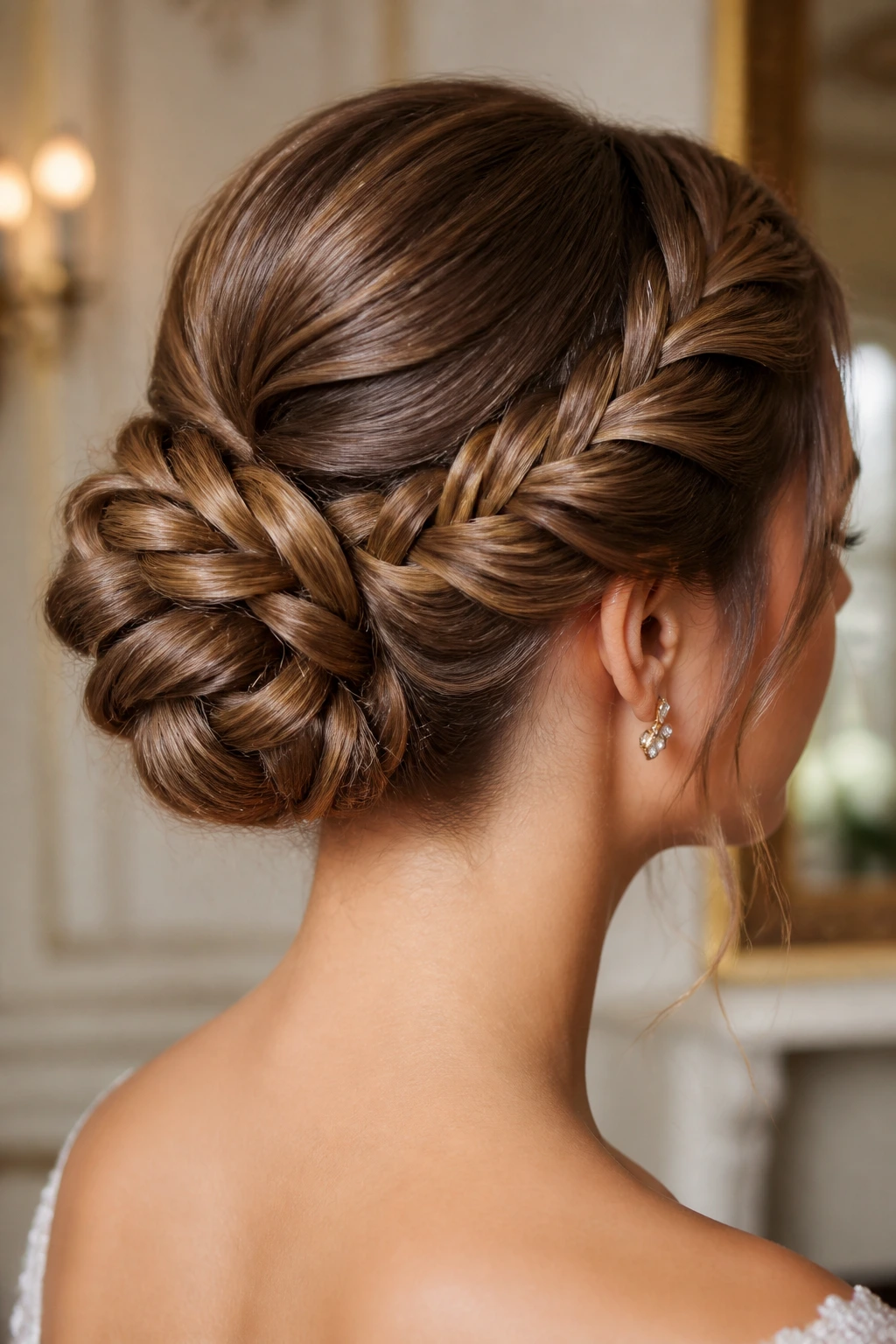
A twisted halo bun circles the head with soft twists before tucking into a low bun, which gives it more shape than a simple knot. It’s elegant without looking severe, and the twisted path creates a natural line for pins or tiny flowers.
This style is a solid choice for thick or medium hair because the twists help control volume. Keep the bun compact; if the base gets too large, the halo effect gets muddy.
34. Wet-Look Side Part
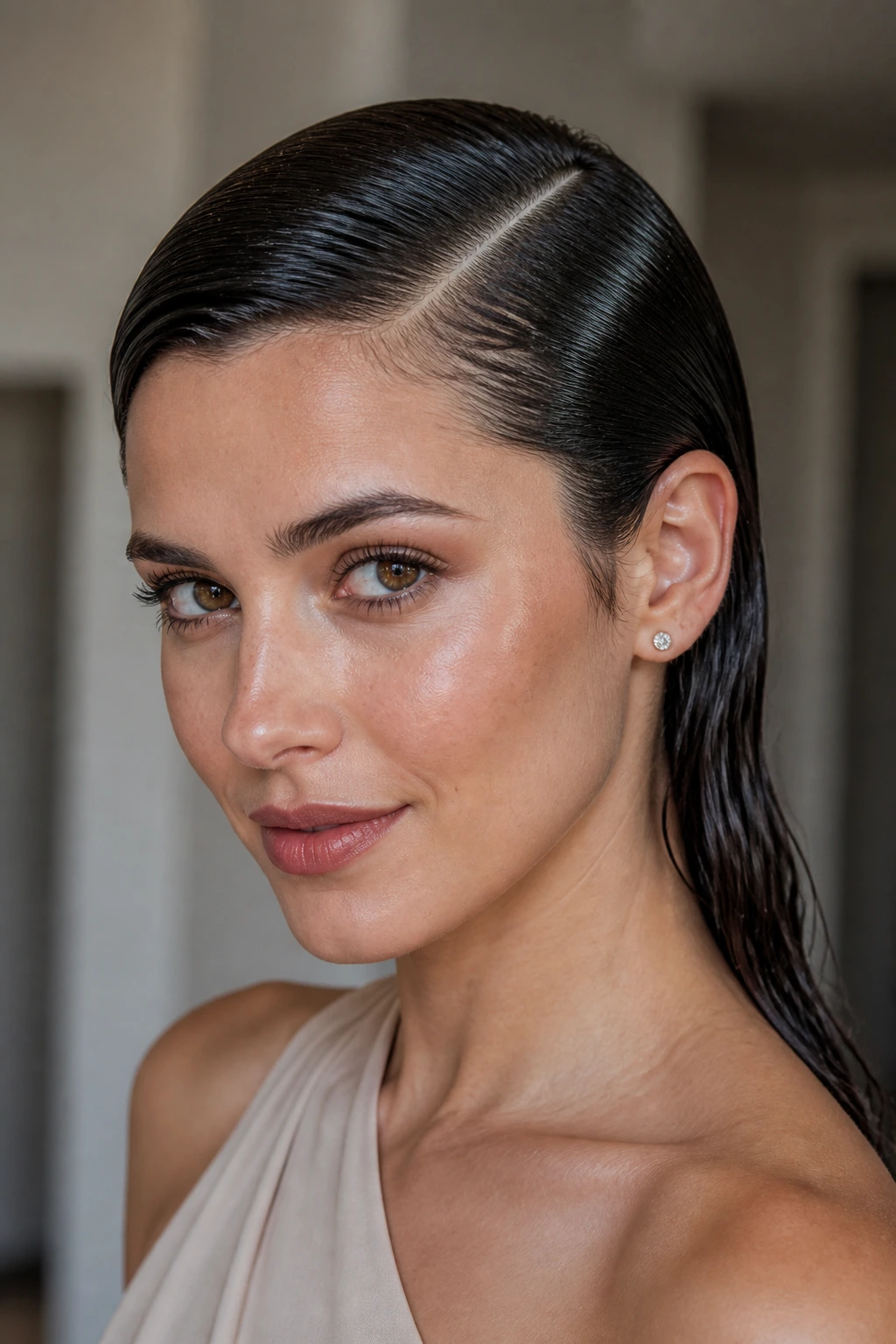
A wet-look side part is not for every wedding, and that’s exactly why it works when the event leans fashion-forward. The hair is sculpted close to the head with shine gel or cream, then guided into a deep side part that stays clean and deliberate.
It’s bold, sharp, and best used when the dresses are simple or the venue is modern. If the product is applied too heavily, it looks greasy instead of glossy, so keep the finish controlled.
35. Tucked Bob with Veil-Friendly Lift
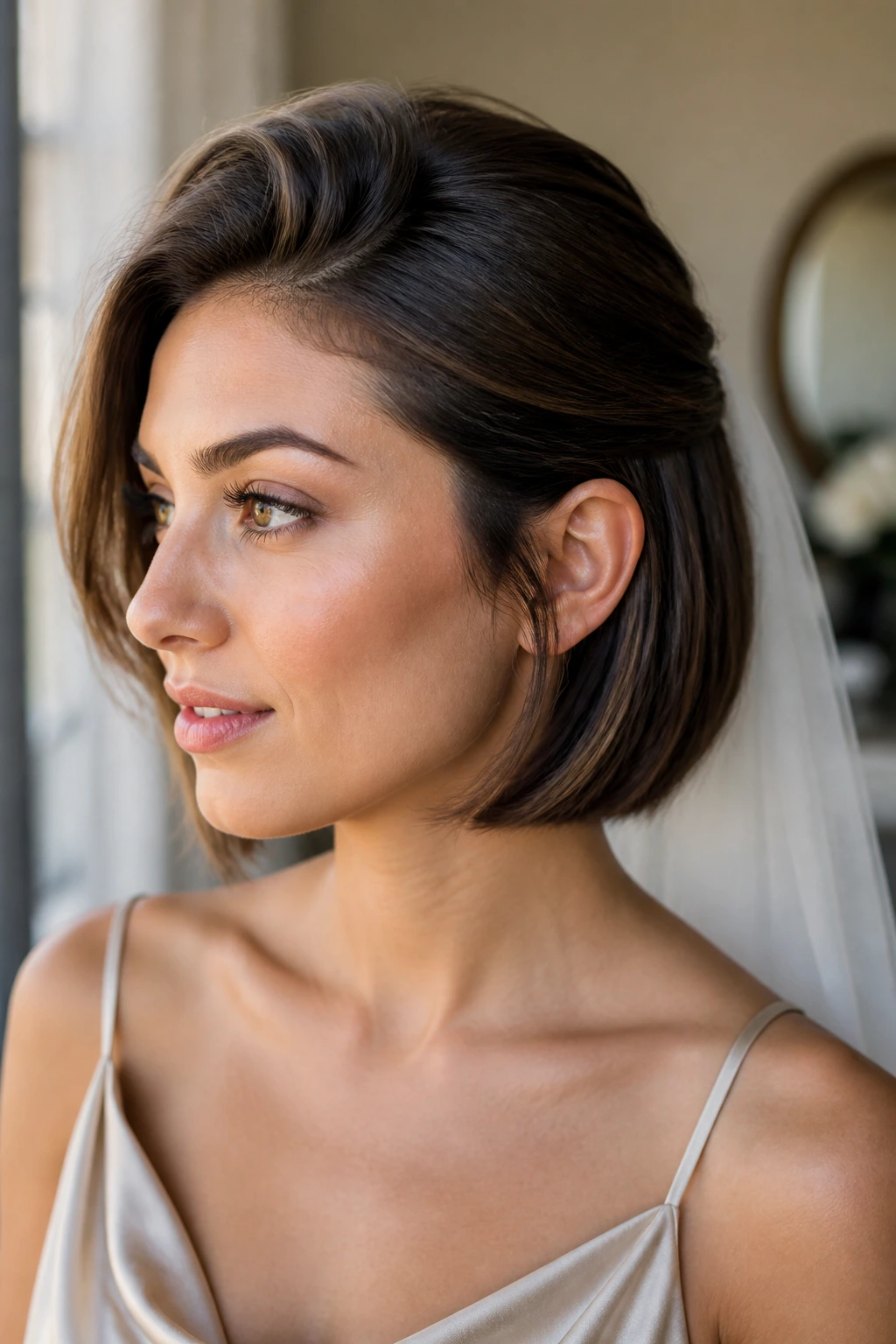
A tucked bob can look formal if the crown has a little lift and the ends are tucked inward with purpose. The shape should leave room for a comb, clip, or veil without flattening the whole head against the scalp.
This is one of my favorite answers for short-haired bridesmaids who still want a polished line. A side part, a little root volume, and one clean tuck behind the ear can do more than a pile of curling iron work ever will.
What Makes Bridesmaid Hairstyles Hold Their Shape Better Than Loose Curls
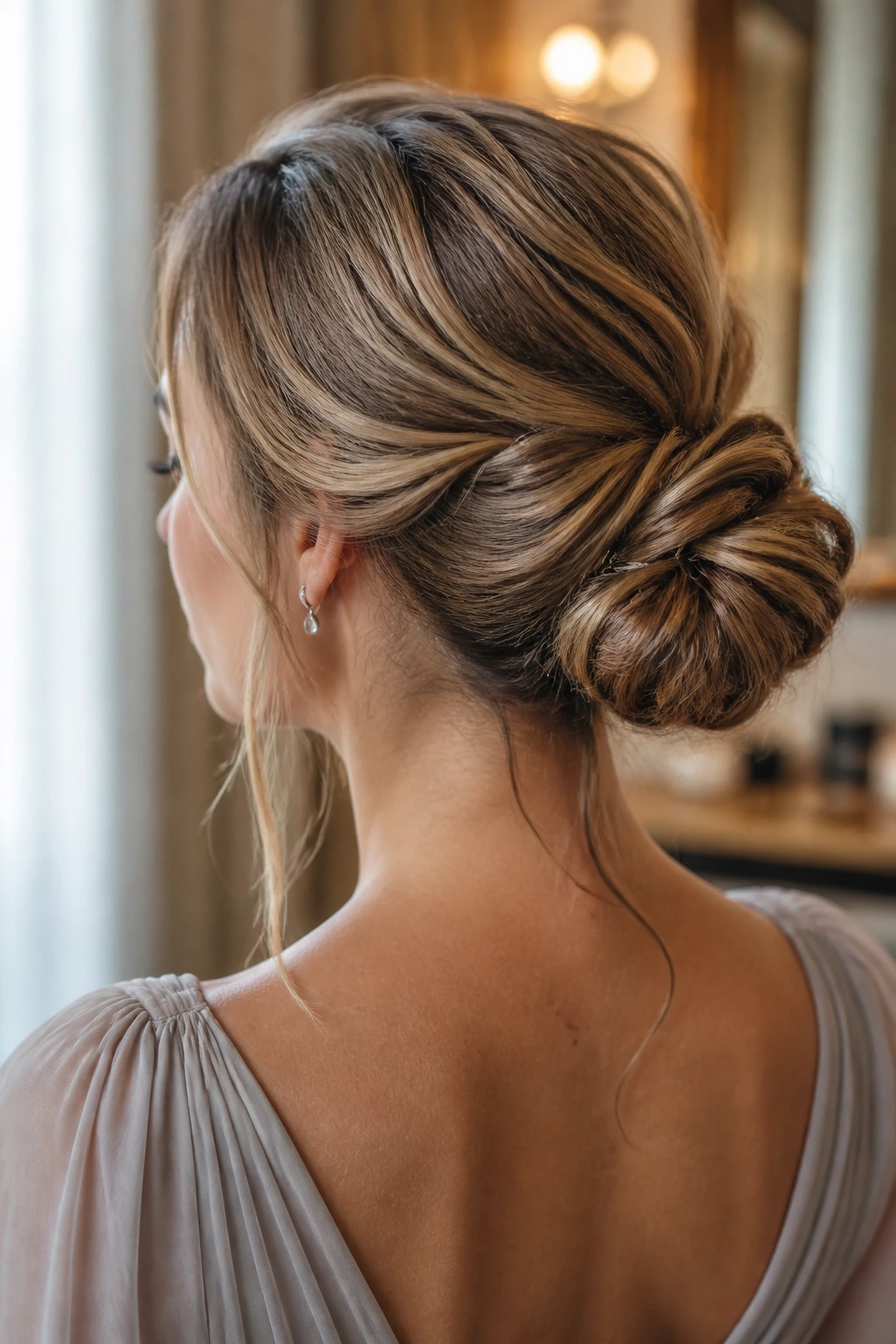
Loose curls are fine until the room gets warm, the wind picks up, or a few hugs start knocking pieces out of place. Structured bridesmaid hairstyles solve that by distributing weight across pins, twists, braids, or a wrapped base, so the whole style is supported instead of hanging from one weak point.
The best trick is not more spray. It’s better prep. Hair that’s fully dry, lightly textured, and cooled after heat styling holds shape longer than hair that was rushed, over-conditioned, or brushed before it had time to set. A style with a clear anchor at the nape or crown almost always outlasts one that depends on the ends behaving nicely.
I also prefer styles that leave the face soft but the back secure. That balance matters in photos. The camera catches the front first, yes, but the back of the head is what shows the actual construction, and you want that construction to look deliberate, not improvised with six extra pins five minutes before the ceremony.
Essential Tools for These Bridesmaid Hairstyles
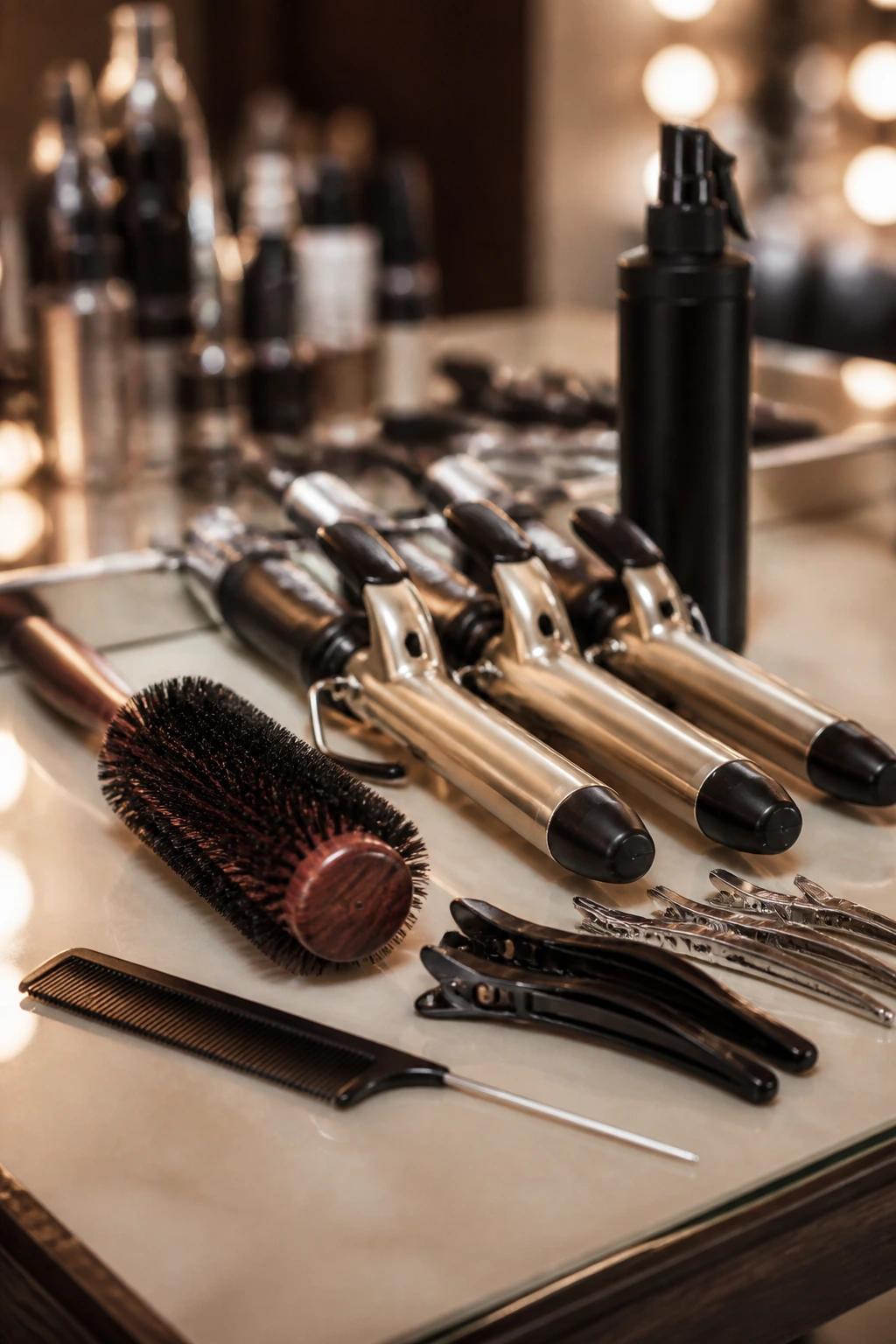
- Tail comb: Useful for clean parts, sectioning, and lifting small pieces without frizzing the hair.
- Sectioning clips: Keep curls and braids separated while you work, especially if more than one person is styling at once.
- 1-inch curling iron: Best for tighter curls, face-framing bends, and styles that need a firmer set.
- 1.25- to 1.5-inch curling iron: Better for soft waves and longer hair that needs movement instead of tight ringlets.
- Boar-bristle brush: Helps smooth waves into polished finishes without making them fluffy.
- Texturizing spray: Gives grip for braids, buns, and twists, especially on clean hair.
- Flexible-hold hairspray: Holds shape without turning the style stiff or helmet-like.
- Bobby pins in hair-matching shades: The color match matters more than most people think; dark pins vanish in dark hair, and blond pins disappear in lighter hair.
- U-pins: Excellent for buns and chignons because they anchor without flattening everything.
- Clear elastics: A must for ponytails, bubble styles, and braid bases you want to hide.
- Heat protectant: Keeps curling iron work from drying the hair out before the reception even starts.
- Small finishing brush or toothbrush: Handy for smoothing flyaways and edges without disturbing the rest of the style.
Smart Product and Accessory Picks for Bridal Party Hair
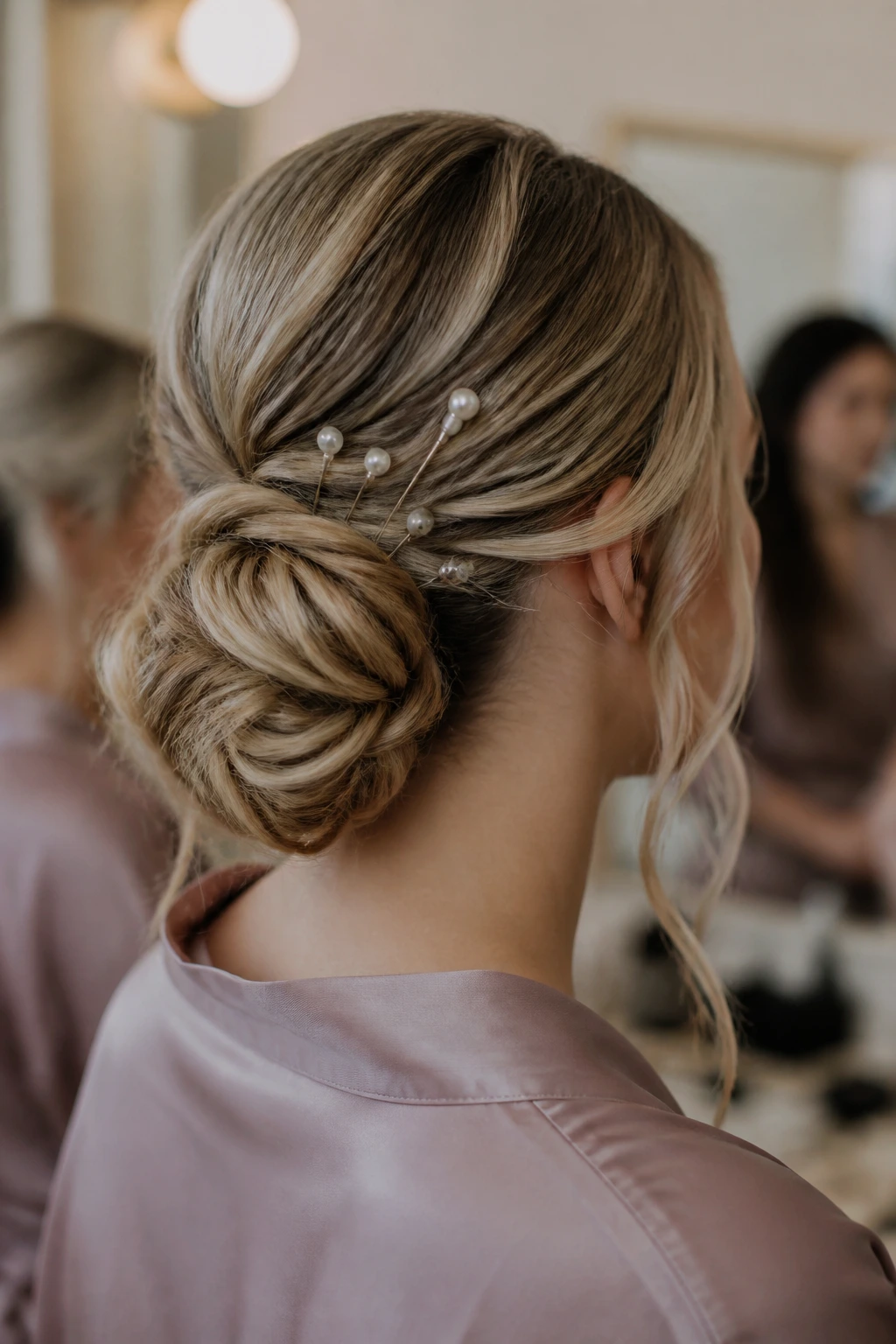
Start with the product that gives grip, not the one that gives shine. A little mousse, texture spray, or root-lift product at the start usually does more for longevity than a heavy coat of spray at the end. Shine can be added later, and it should be added lightly; too much on fine hair makes it collapse.
Accessories should follow the shape of the hairstyle, not bury it. Slim pearl pins disappear into braids and buns, while a heavy comb can pull down soft waves and make the crown droop. If the dresses already have a lot of detail, I’d keep the hair accessories small and use repetition instead of size — three tiny pins in the same metal finish often look better than one oversized piece.
For color coordination, pick one or two metals and stop there. Gold, rose gold, silver, or pearl all work, but mixing five finishes makes the whole group look pieced together in a rush.
How to Match Bridesmaid Hairstyles to Dresses, Venue, and Hair Texture
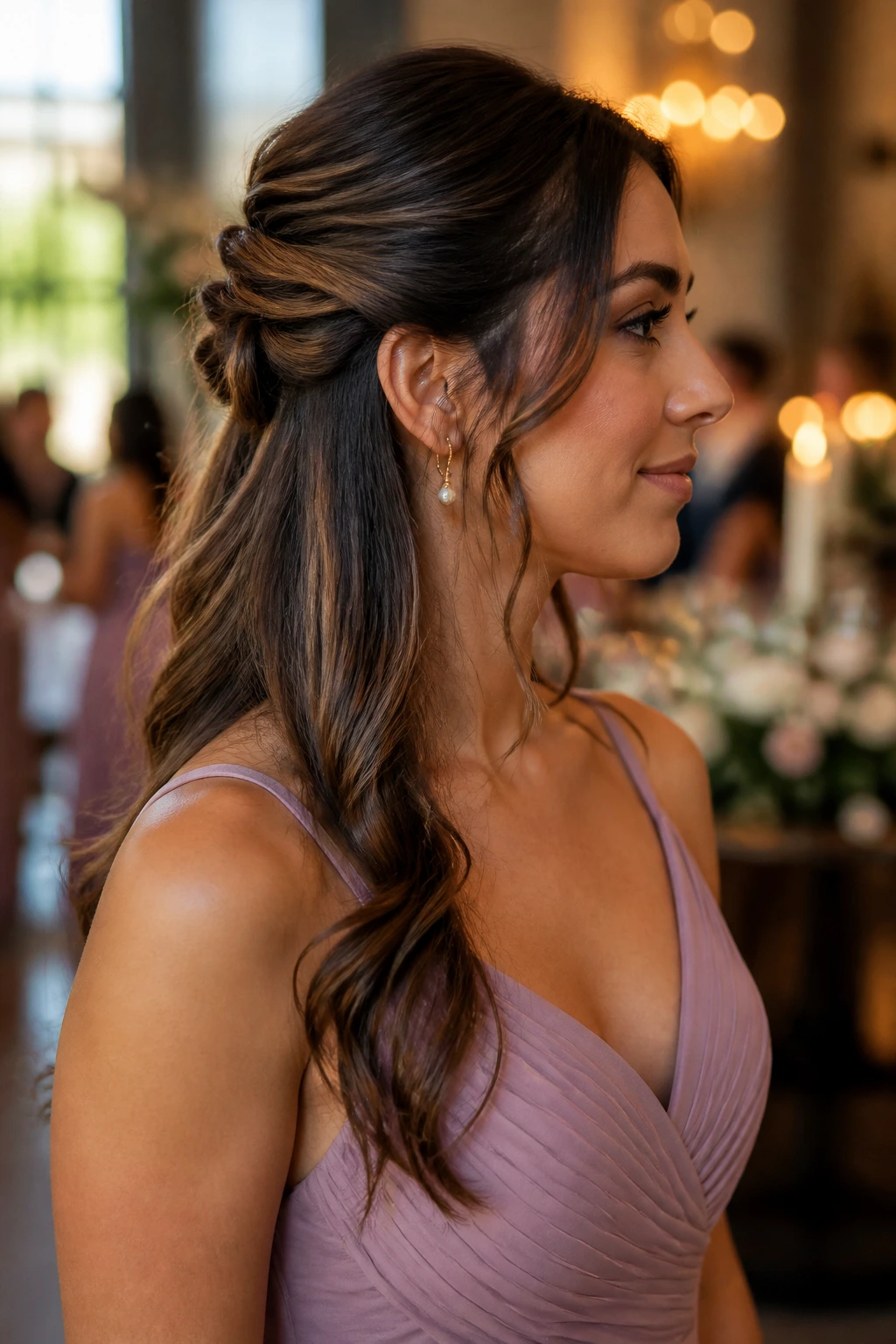
Neckline: High necks and halters usually look cleaner with low buns, French twists, or tucked ponytails. Sweetheart, square, and strapless dresses can handle half-up shapes or softer waves because the hair has room to sit without crowding the neckline.
Venue: Outdoor spaces ask for more structure. Braids, low knots, and pinned styles hold better in wind, humidity, and long photo walks. Ballrooms and indoor settings can support looser waves, glossy blowouts, and styles with more movement.
Hair texture: Let curls stay curls if they want to. Forcing textured hair into a flat iron look often takes longer, uses more product, and lasts less time. Fine hair usually needs texture spray or a light tease at the crown; thick hair usually needs stronger pinning and smaller sections.
Comfort: If someone will wear earrings, a comb, or a veil, leave room for those things to sit. A style that looks pretty but pinches behind the ear or pushes into the neck will get touched all evening, and that never ends well.
Additional Tips and Finishers That Make the Whole Party Look Polished
Root Lift: A small amount of lift at the crown helps almost every bridesmaid hairstyle read better in photos. Tease only the top inch or two, then smooth the surface so the volume lives underneath.
Frizz Control: Put serum or cream on the mid-lengths and ends, not the roots. Roots need grip; roots coated in oil go limp fast.
Accessory Balance: Repeat the same metal, pearl tone, or ribbon color across the bridal party instead of forcing identical hairstyles. That keeps the group tied together without flattening everyone into the same silhouette.
Touch-Up Kit: Keep 8 to 10 bobby pins, a mini hairspray, a tail comb, and a couple of clear elastics in one pouch. A loose twist or side piece is easy to fix in 20 seconds if the tools are nearby.
Photo Check: Before the ceremony, have someone look at each style from the back, the side, and slightly above. Hair that looks fine from the mirror can show a gap, a bump, or a crooked pin in a photo.
Common Mistakes That Make Bridesmaid Hair Fall Flat
Starting with hair that is too clean. Freshly washed hair can be slippery, especially for braids and buns. If the style keeps sliding, the fix is a little texture spray or second-day hair, not more pins jammed in at random.
Using too much hairspray too early. A heavy spray before the style is fully set locks in frizz and can make the hair crunchy. Build the shape first, let it cool, then finish with a light mist.
Choosing the same style for every head. Fine hair, thick hair, curls, and short hair do not all behave the same way. A cohesive bridal party looks better when the styles are related, not identical.
Forgetting the back of the head. Front-facing curls can look lovely while the back is hanging loose or split at the center. Always check the silhouette from behind; that’s where the pins and planning show.
Placing accessories too low or too heavy. A clip that sits too far down can drag the whole style out of shape. Keep decorative pieces near a secure anchor point — a braid, twist, or bun base — so they stay where you put them.
Variations and Alternatives Worth Trying
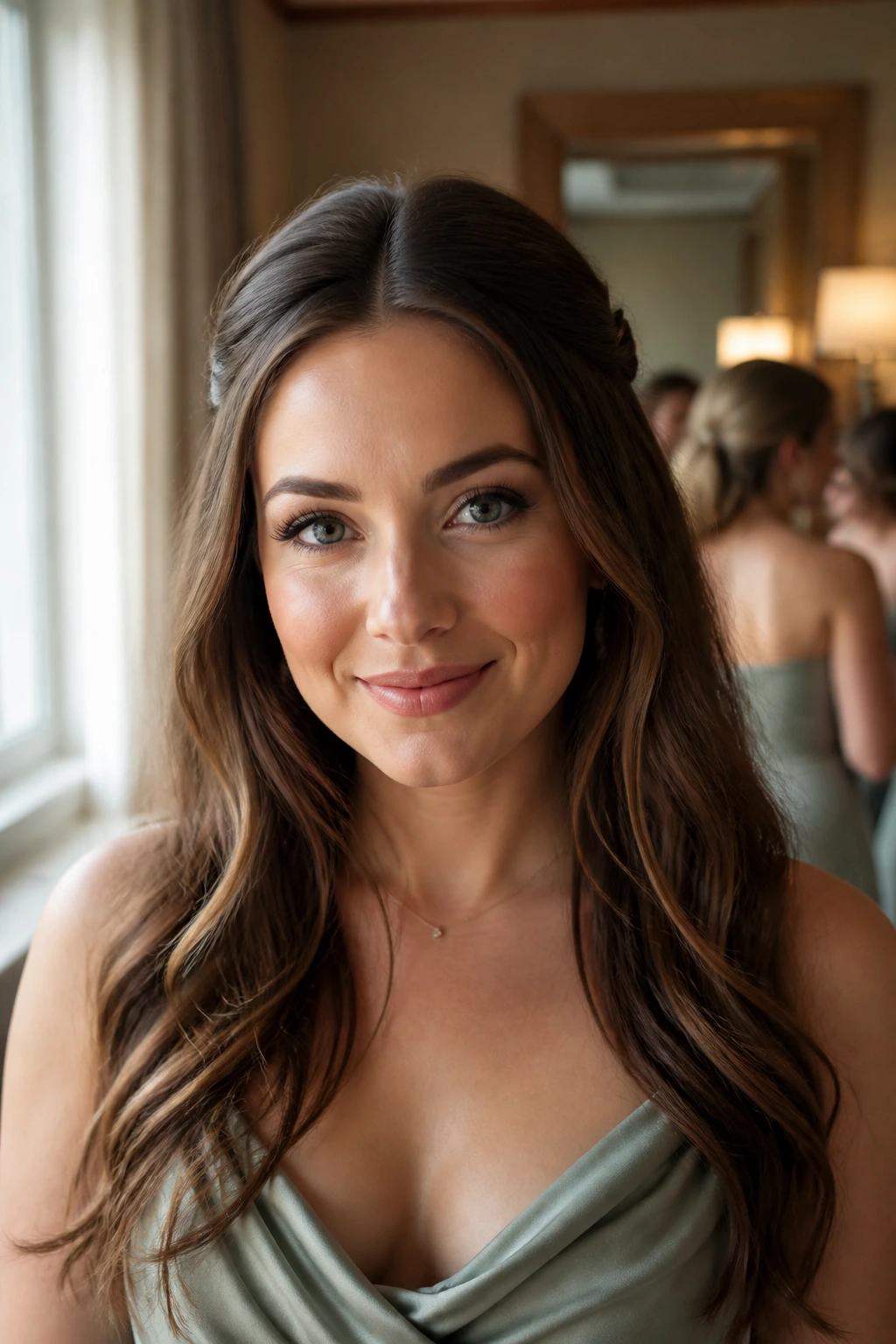
All-Down but Controlled: Keep the hair down, but add a center part, a bend at the ends, and pinned-back sides. It’s a good compromise for bridesmaids who hate updos but still want to look arranged.
Texture-First Party Hair: Let curls, coils, or natural waves lead the shape. Add pins, cuffs, or a side part instead of ironing everything flat. The result feels more alive and usually lasts better.
Matching Accessories, Different Structures: Use the same pearl pins or ribbon color across the group, but let each bridesmaid choose the style that fits her hair length. That keeps the visual thread without forcing bad fits.
Short-Hair Celebration: Use bob tucks, pixie clips, finger waves, and side parts so shorter cuts feel formal instead of overlooked. Short hair can look razor-clean in photos when the finish is sharp.
Humidity-Proof Lineup: Choose lower shapes, tighter braids, and stronger anchors for outdoor or warm-weather events. Save the softest, loosest styles for indoor spaces where the air won’t fight back.
Keeping Bridesmaid Hair Fresh from First Photo to Last Dance
A style lasts longer when the prep starts before the styling chair. Hair that has been over-conditioned, smoothed with too much oil, or curled without heat protectant tends to fall faster and frizz sooner. The best base is usually clean enough to move, dry enough to hold, and textured enough to grip.
Once the style is done, don’t keep brushing at it. That’s the fastest way to loosen a braid, puff up a wave, or flatten a bun. If a piece slips, pin it back with a matching bobby pin and leave it alone. A tiny emergency kit is worth its weight in gold here: pins, mini spray, a small comb, and one mirror.
For longer events, the best touch-up trick is to warm the shape back up with your hands. Pinch the wave, twist the piece back into place, smooth the frizz at the crown. No drama. No redoing the whole head in the bathroom.
Frequently Asked Questions
Should all bridesmaids wear the same hairstyle?
No, and forcing that usually makes the whole party look more rigid than coordinated. It works better to match the finish, the accessory color, or the level of formality while letting each person wear a shape that suits her hair.
What bridesmaid hairstyle lasts longest in humidity?
Low buns, braids, twisted updos, and sculpted ponytails usually hold up better than loose curls. They rely on structure and anchor points, not on every strand staying perfectly smooth.
Can short hair still look formal enough for bridesmaids?
Absolutely. A bob with tucked waves, a pixie with a jeweled clip, or finger waves can look very polished if the finish is intentional. Short hair often photographs better when it’s shaped rather than over-styled.
What if one bridesmaid has very fine hair?
Fine hair usually needs texture spray, a little root lift, and a style with less weight hanging off the back. A low knot, pinned-back waves, or a soft chignon often works better than a loose braid that slips apart.
How far in advance should bridesmaid hair be styled?
Most styles should be finished about 30 to 45 minutes before photos so the shape settles but doesn’t have time to collapse. If the style is a polished wave or blowout, it helps to let it cool fully before any final brushing.
Do accessories have to match exactly?
No. They just need to feel related. Pearls, gold pins, ribbon color, or floral accents can coordinate without every bridesmaid wearing the same clip in the same spot.
What’s the safest option for a bridesmaid who hates hair in her face?
A sleek bun, French twist, high ponytail, or pinned-back waves will keep the front clear. The worst choice for her would be a style that looks soft at the front but needs constant touching.
How do you keep curls from falling flat before the reception?
Set them fully, let them cool, and don’t brush them too much. A little flexible-hold spray on the finished wave and a quick finger refresh before dinner usually works better than piling on product from the start.
A Bridal Party That Looks Like It Belongs Together
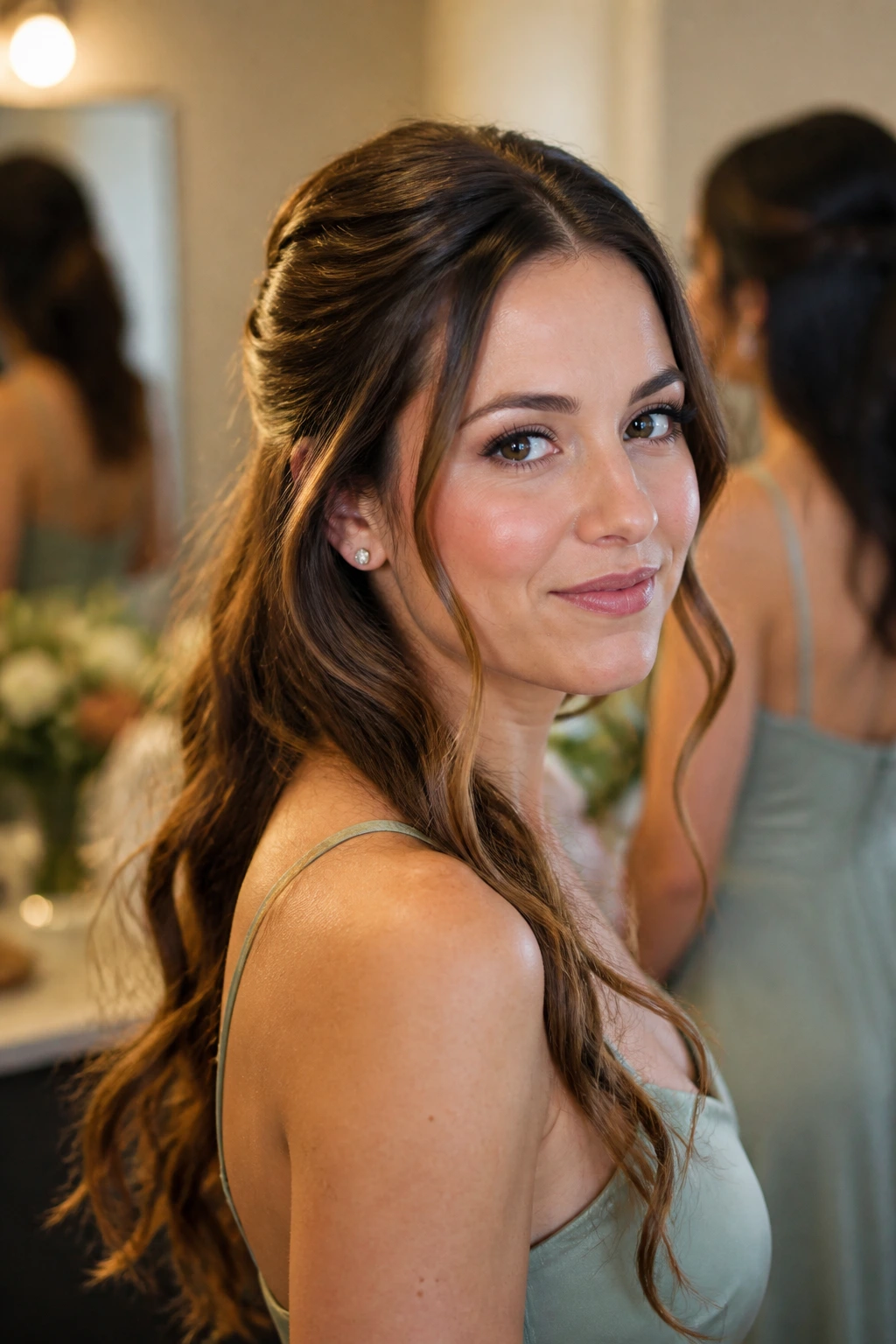
The nicest bridesmaid hair always seems calm. Not boring. Calm. The shape makes sense, the back looks finished, and nobody spends the evening hunting for a loose pin under the table.
That is what these hairstyle ideas for bridesmaids are really about: giving each person a style that fits her hair, her dress, and her comfort level while still making the whole group read as one unit. Keep the structure clear, the accessories disciplined, and the finish a little softer than you think you need.
The best bridal party hair does not shout. It holds.
