



Purple hair has a way of changing the whole read of a face. A cool lilac can make skin look brighter; a deep plum can sharpen a bob; a smoky violet can turn a plain ponytail into something with a pulse. The phrase purple hair looks for women covers a lot more ground than most people expect, and that range is exactly why the color keeps showing up in salons, on street style feeds, and on women who want color with some personality behind it.
The big mistake is treating purple like one shade. It isn’t. Violet, amethyst, orchid, mauve, mulberry, grape, eggplant — each one behaves differently depending on the starting level, the warmth left in the hair after lightening, and how porous the ends are. A lilac that looks crisp on a level 10 blonde can go chalky fast on a level 8 base. A plum that looks rich on dark brown hair can read flat if the gloss is too opaque.
I like purple best when it has a plan. Dark roots keep a lavender bob from feeling fragile. A money piece gives the face some lift without flooding the whole head. Balayage lets the color bend with movement instead of sitting like paint. The looks below range from whisper-soft to full-throttle, and each one has a different attitude. Some are easy to live with. Some are for the days you want your hair to do the talking.
Why This Collection Feels So Wearable
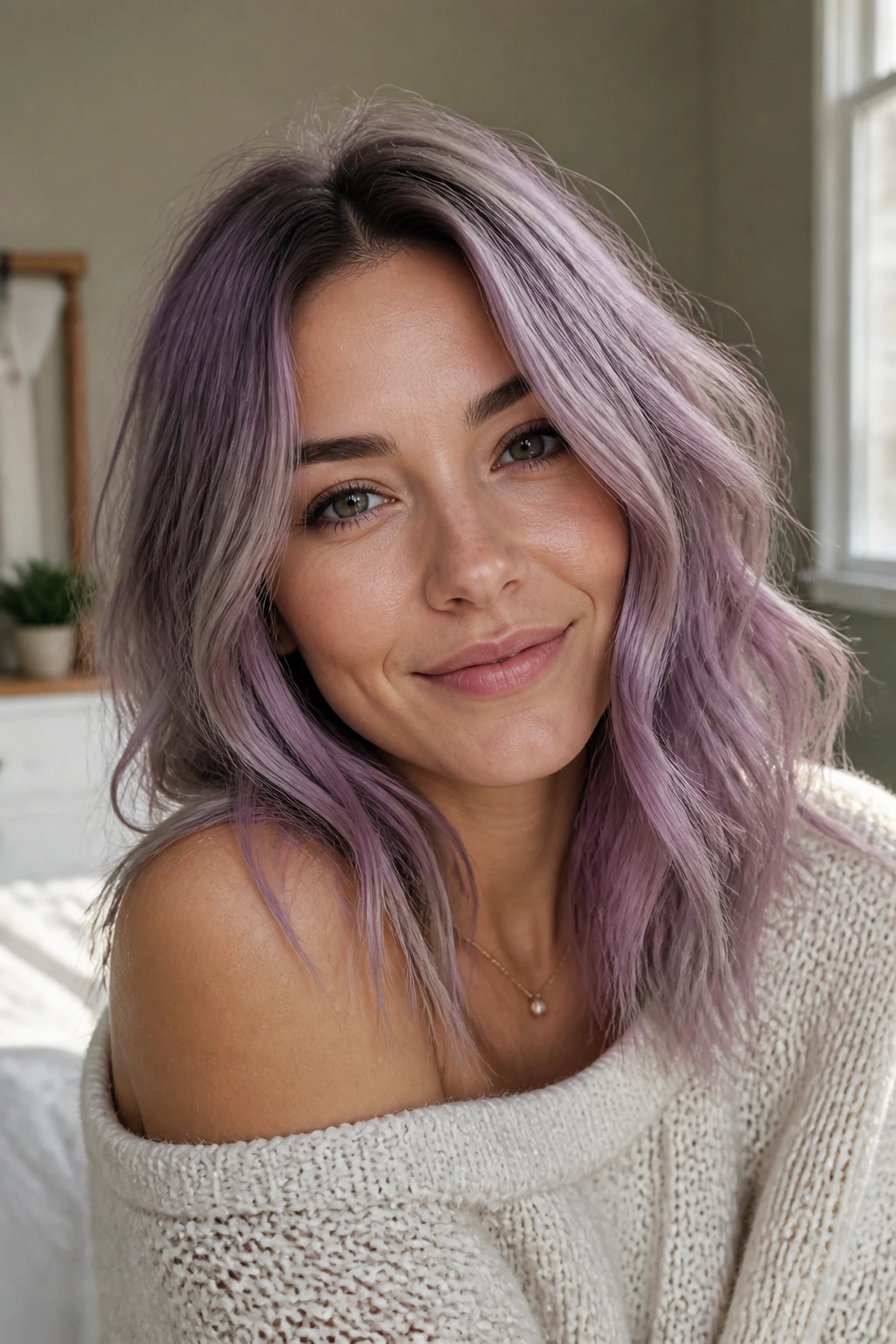
- Range of intensity: These looks go from faint lilac ribbons to full plum and eggplant, so you can pick a shade that matches your comfort level instead of jumping straight to neon.
- Texture-friendly choices: Curls, waves, braids, and straight cuts all show purple differently, and the styles here are built around that fact instead of fighting it.
- Salon and DIY options: Some looks need a colorist and foils; others can be built with a gloss, a direct dye, or a few face-framing panels.
- Low-commitment choices included: Hidden highlights, money pieces, and tip-only color give you purple without repainting the whole head every four weeks.
- High-impact ideas too: If you want something that reads immediately in a mirror or a photo, there are saturated shades, split dyes, and block-color ideas that do the job.
- Base-color flexibility: Dark brunettes, blondes, and curl patterns each get a place in this set, which matters more than people think when purple is the goal.
1. Smoky Amethyst Bob
Smoky amethyst on a blunt bob has a clean, tailored look that makes purple feel grown-up instead of costume-y. The shade sits between violet and charcoal, so it catches light in thin ribbons rather than shouting from across a room. On a chin-length cut, that effect is sharp in the best way.
Why It Works
The blunt line gives the color somewhere to land. Without that clean edge, smoky amethyst can get lost in layers and start looking muddy. On straight hair, it reads sleek; on a slight bend, the purple shows up as a soft metallic sheen.
Best On
- A level 8 to 10 blonde base for a truer violet finish
- A level 6 to 7 brunette base if you want a deeper, moodier result
- Fine to medium hair, where the blunt edge gives extra density
A bob like this also grows out with grace. The root area stays dark enough to hide the line, and the ends keep the interest. If you want purple that doesn’t feel precious, this is one of the easiest places to start.
2. Deep Plum Waves
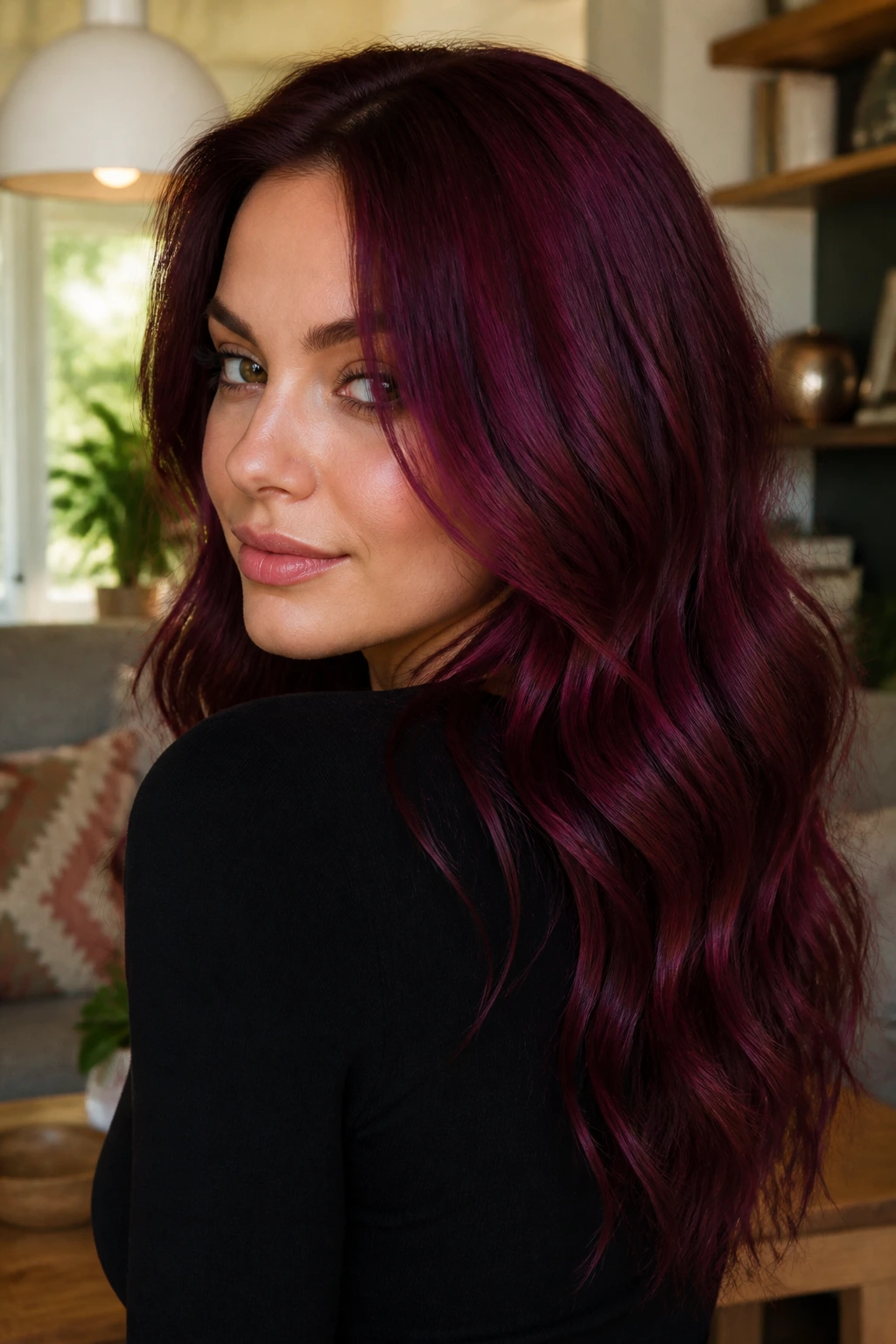
Deep plum waves have a little drama, but not the brittle kind. The color sits in the red-violet lane, which gives the hair warmth and depth that cool purple sometimes misses. On loose waves, the darker tones shift as the hair moves, and that matters more than people admit.
This look is strongest on medium to long hair because the curve of the wave gives the plum somewhere to break apart. Flat ironed to death, it can read one-note. With a 1-inch curling iron and brushed-out bends, it turns richer. I’d call it one of the most flattering purple shades for women who want color that feels plush rather than icy.
If your base is dark brown, you can get away with a glossed plum that never touches pastel territory. If you’re blonde, the same shade can lean brighter and more ruby. That flexibility is the whole point.
3. Lilac Balayage on Brown Hair
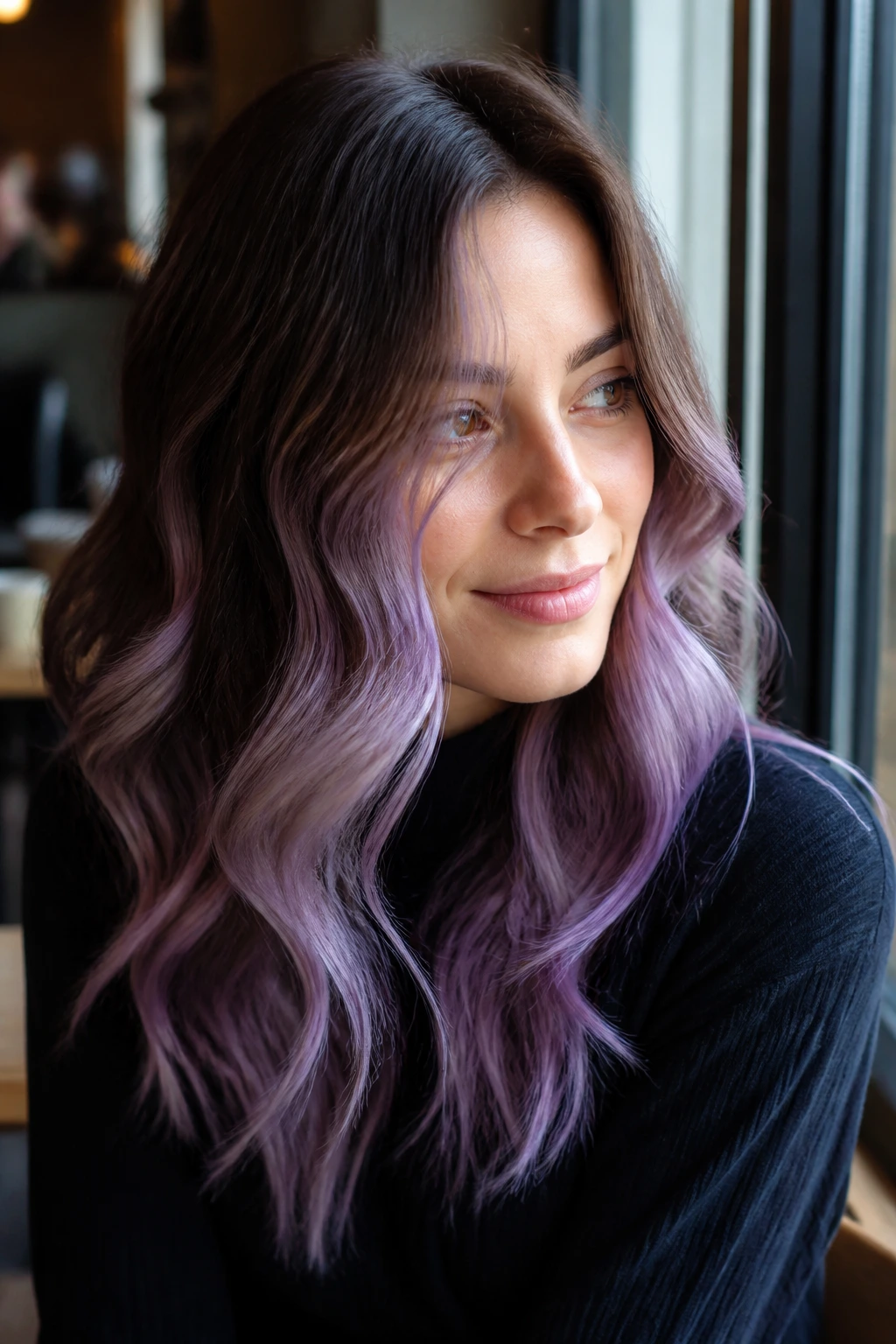
Can brown hair wear lilac without looking harsh? Yes — if the lightening is done with restraint. Lilac balayage works best when the purple is painted in airy ribbons from mid-length to ends, leaving enough brunette at the root to keep it grounded. The contrast is what gives the style its shape.
What Makes It Read Soft
Balayage keeps the color from feeling boxed in. The hand-painted placement means the lilac shows up where the hair moves, not in one flat stripe. That matters on brown hair, where too much saturation can turn the whole thing muddy.
How to Wear It
- Ask for pieces lifted to a pale yellow, not orange
- Keep the root area deeper for a softer grow-out
- Style with loose bends so the highlights scatter
On curls, this look gets even better. The lilac catches along the outer ring of the curl pattern and gives the hair a light, airy edge. On straight hair, it looks more graphic. Both versions work.
4. Violet Money Piece
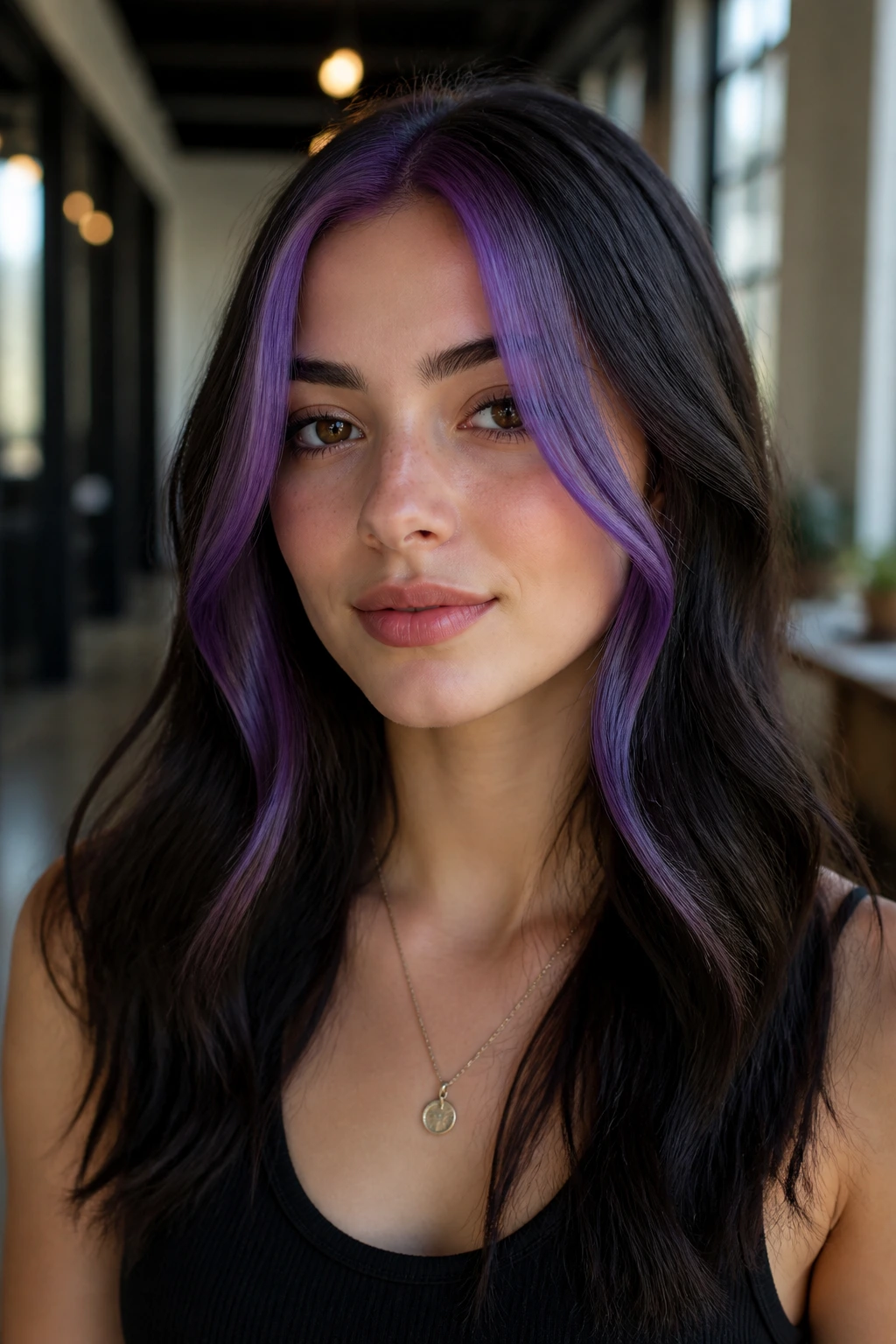
A violet money piece is the fastest way to make purple hair feel intentional without committing to a full head of color. Two bright front sections, lifted enough to hold the tone, can change the whole face frame. That little strip of color draws the eye straight to the eyes and cheekbones.
This is one of my favorite options for women who keep the rest of their hair dark. You can leave the back in a brunette, black, or soft brown base and let the violet do the heavy lifting up front. It looks especially good with curtain bangs, because the color peeks through instead of sitting rigidly on the surface.
If your hair is curled away from the face, the money piece gets a second job: it breaks the outline. That tiny shift makes a simple style look edited.
5. Blackberry Curly Lob
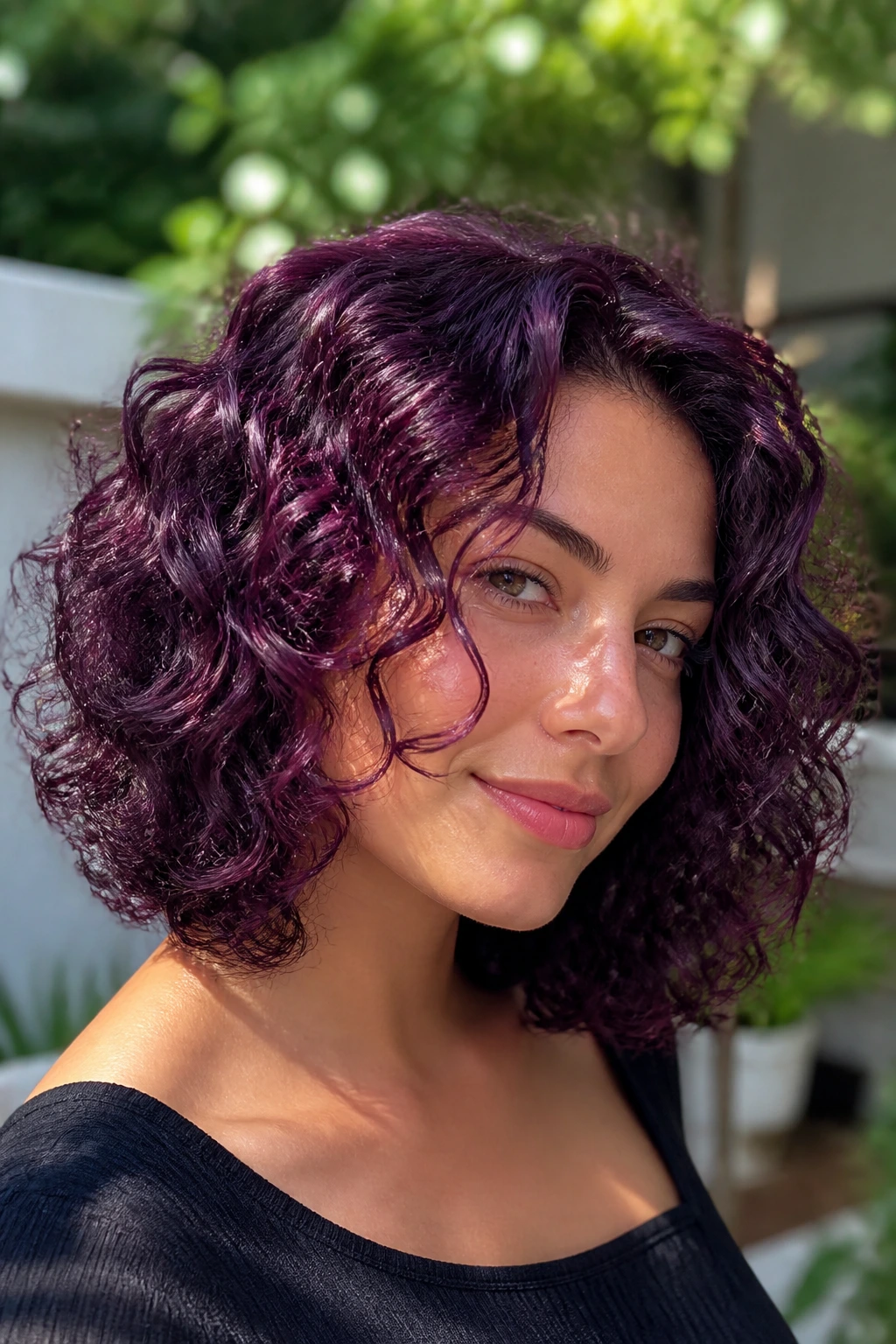
Blackberry curls are what happen when purple gets a little darker and a little juicier. The shade leans toward berry and plum, which makes it perfect for a lob that hits just above the shoulders. Curls and coils show off blackberry beautifully because the color changes on every bend.
This look is best when the ends are healthy. Damaged ends suck the depth out of dark violet shades, and you can see it right away. On a curly lob, the goal is shine first, then saturation. A gloss or color-depositing mask helps more than heavy product ever will.
The color also pairs well with a side part. That single change gives the blackberry tone room to gather and show off its darker side. It’s a quiet trick, but it works.
6. Purple Peekaboo Highlights
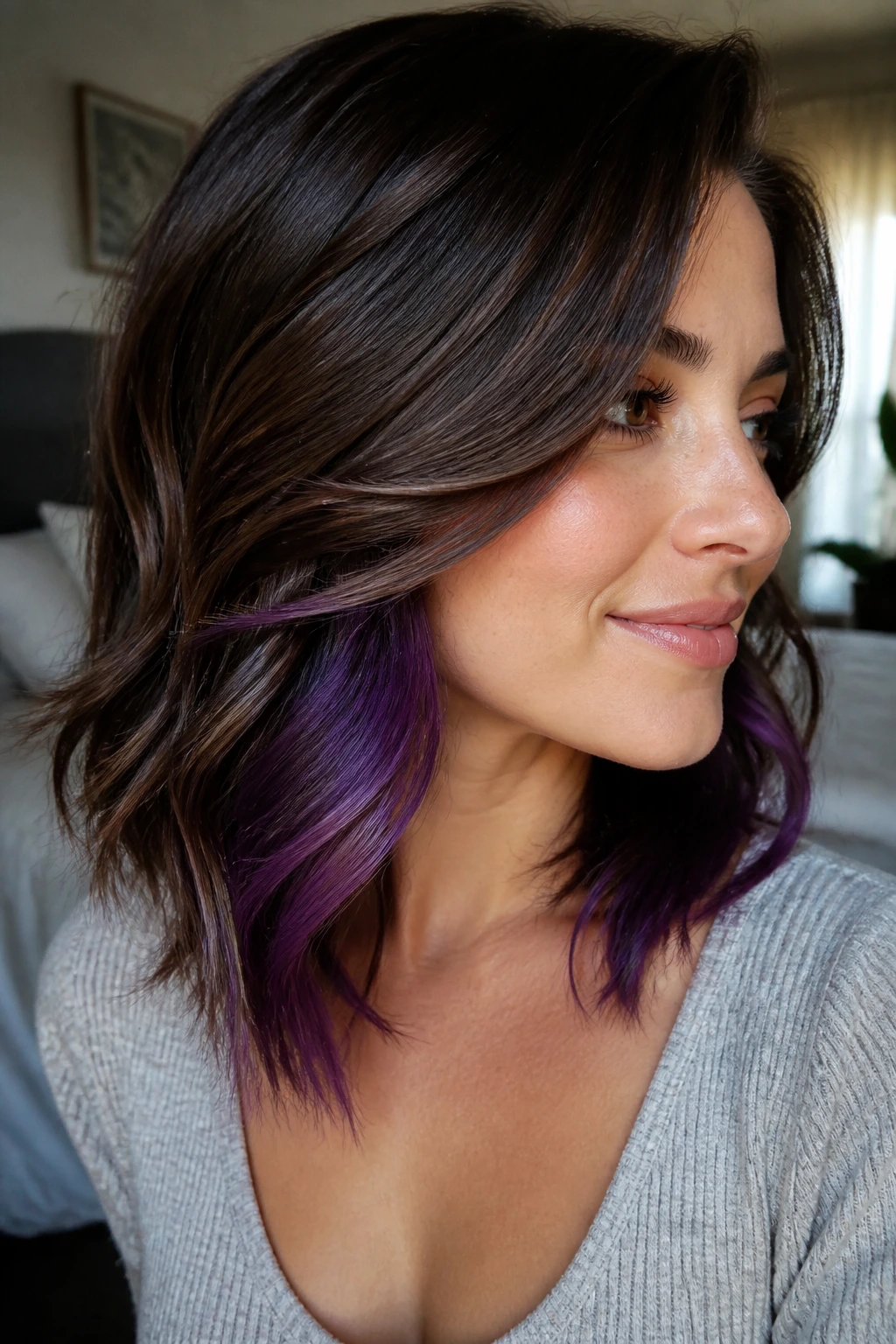
Peekaboo highlights are the sane person’s purple. The color hides under the top layers and shows only when the hair moves, gets tucked behind the ear, or is twisted into a half-up style. That little reveal keeps the look playful without forcing it into every mirror moment.
Why This Placement Helps
Because the top layer stays natural or toned close to the base, the purple fades less visibly. It also gives you more time between touch-ups. If you’re testing whether purple hair suits your life, peekaboo panels are a smart entry point.
Best Ways to Wear It
- Under a bob for a flash of color at the neck
- Through long layers so the tone appears when the hair swings
- In braids, where the hidden pieces suddenly become the star
I like this look for women who need the hair to behave at work and still want a bit of edge on the weekend. It has range, and not the fake kind.
7. Orchid and Black Split Dye
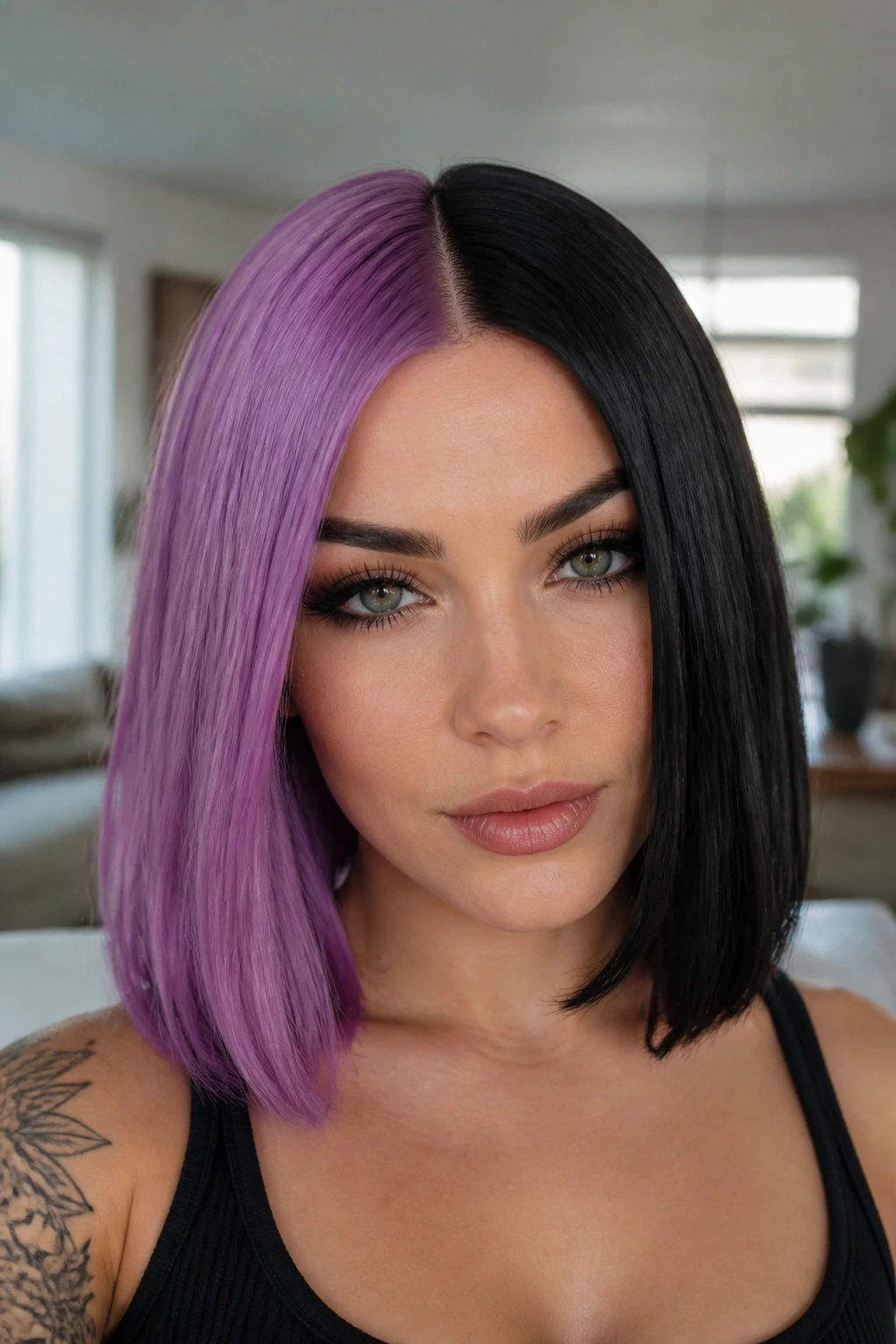
Split dye can go wrong fast, but when orchid and black are placed with a clean center part, it feels graphic rather than chaotic. One side stays inky and glossy. The other carries a bright orchid tone that reads almost electric against the dark half.
This look works because the contrast is honest. There’s no pretending the two colors belong to the same family. They don’t. That tension is the point. On medium-length hair, the split is easy to see at a glance, which is why the cut should stay simple — blunt ends, a sharp bob, or straight lengths keep the color doing the talking.
If you want something dramatic without stacking on layers, this is it. The trick is precision. Ragged parting ruins the whole effect.
8. Lavender Pixie Cut
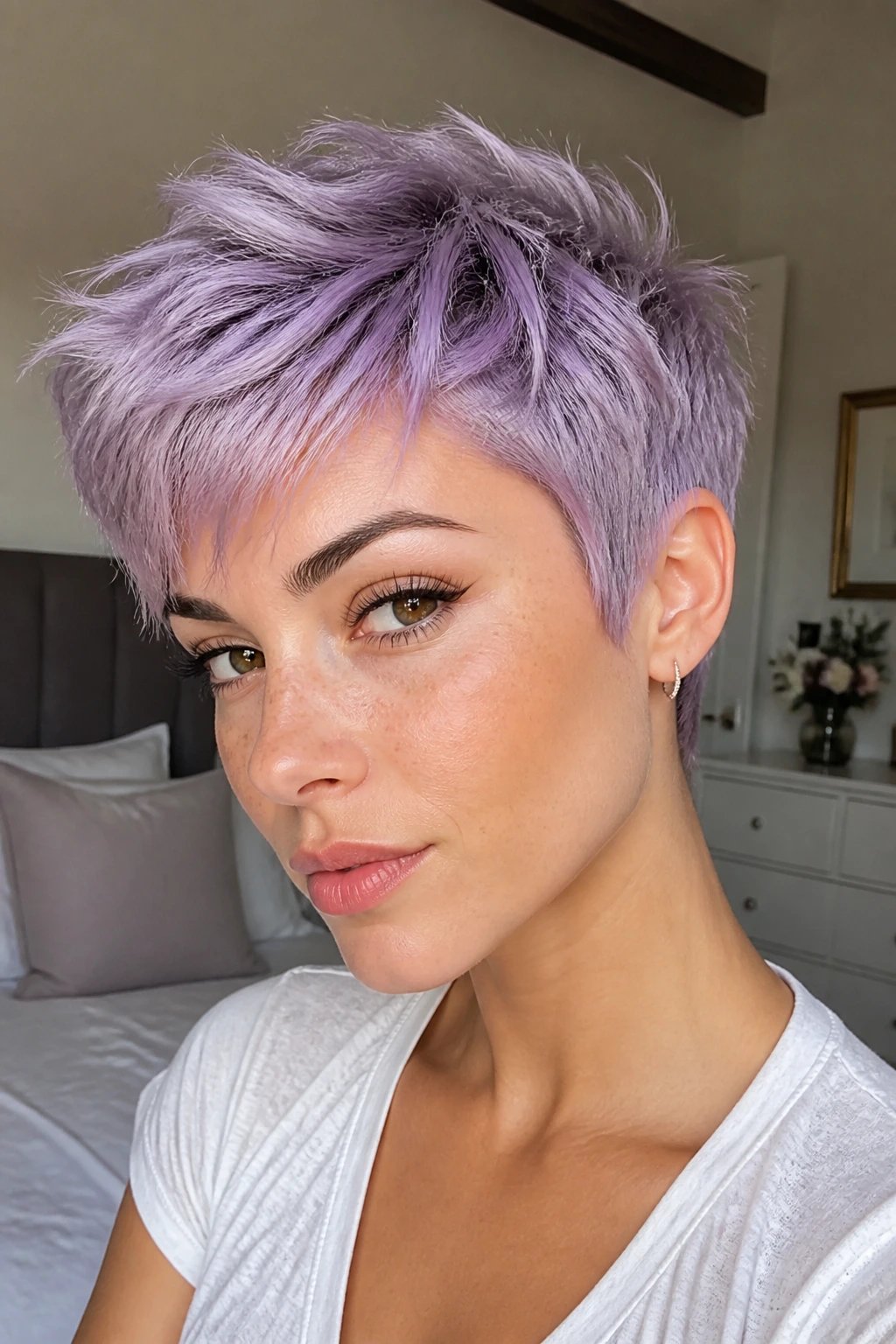
A lavender pixie is tiny in length and big in attitude. Because there’s less hair to cover, the color can go pastel without swallowing the face. That makes it one of the most forgiving purple looks for women who want softness with some bite.
The cut matters as much as the color here. A pixie with piecey texture lets lavender settle into the edges and around the crown. Too smooth, and it can look flat. A little separation around the fringe and temples gives the tone more movement.
Quick Details
- Best on level 9 to 10 hair for a true lavender
- Works well with root shadow if you want less maintenance
- Needs lightweight styling cream, not heavy wax
This is one of the few purple looks that feels almost airy. That’s rare. And useful.
9. Mulberry Gloss on Straight Layers
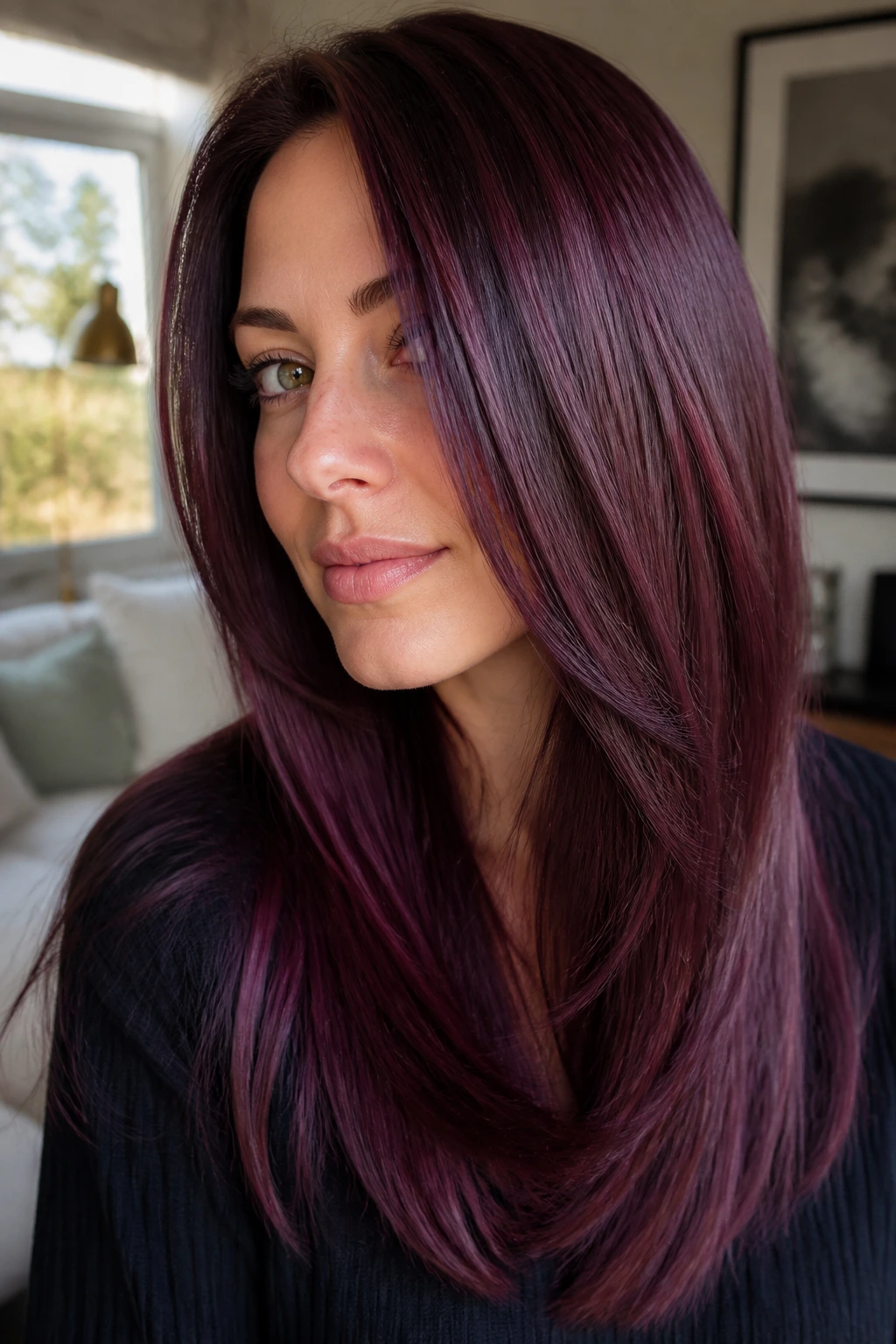
Mulberry on straight layers is a color you notice in reflection before you notice it head-on. The tone sits between red-purple and wine, so it has depth without going dark enough to disappear. Straight layers give the shine a long runway, which is where mulberry really earns its keep.
What I like here is the polish. A smooth blow-dry or flat iron pass makes the color look expensive, but the haircut does most of the work. Long layers keep the ends from looking heavy, and the color moves in bands rather than one flat sheet. That’s what separates mulberry from ordinary burgundy.
If your natural hair is brunette, this shade can often be done with a rich gloss or demi-permanent color. On blond hair, it lands brighter and more saturated. Either way, it’s one of the most wearable purple-leaning options in the whole set.
10. Galaxy Purple Curls
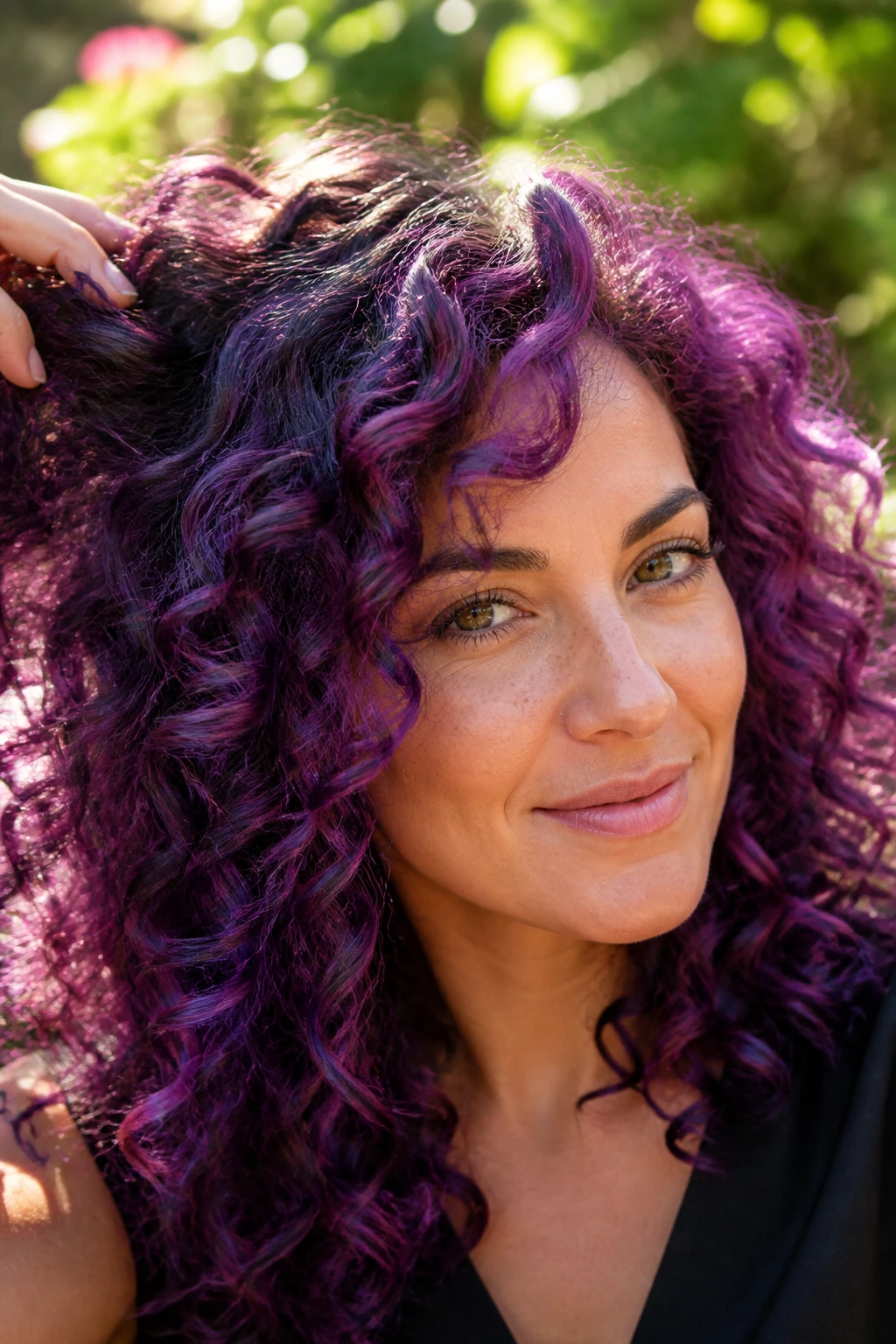
Galaxy purple curls take several shades and make them behave like one moody universe. You get violet, indigo, plum, and a few flashes of magenta woven through the curl pattern. On textured hair, that mix looks better than a single flat color because every coil catches light a little differently.
This style lives on dimension. If the curls are separated with fingers instead of brushed out, you can actually see the color placement. That matters. When purple is applied in thin ribbons through a curl set, it looks richer than it does on a smooth blowout. It also gives the hair a changing surface, which is half the fun.
I’d keep the roots slightly deeper here. It keeps the whole look from turning frothy. A darker crown makes the brighter pieces underneath feel deliberate.
11. Rooted Amethyst Melt
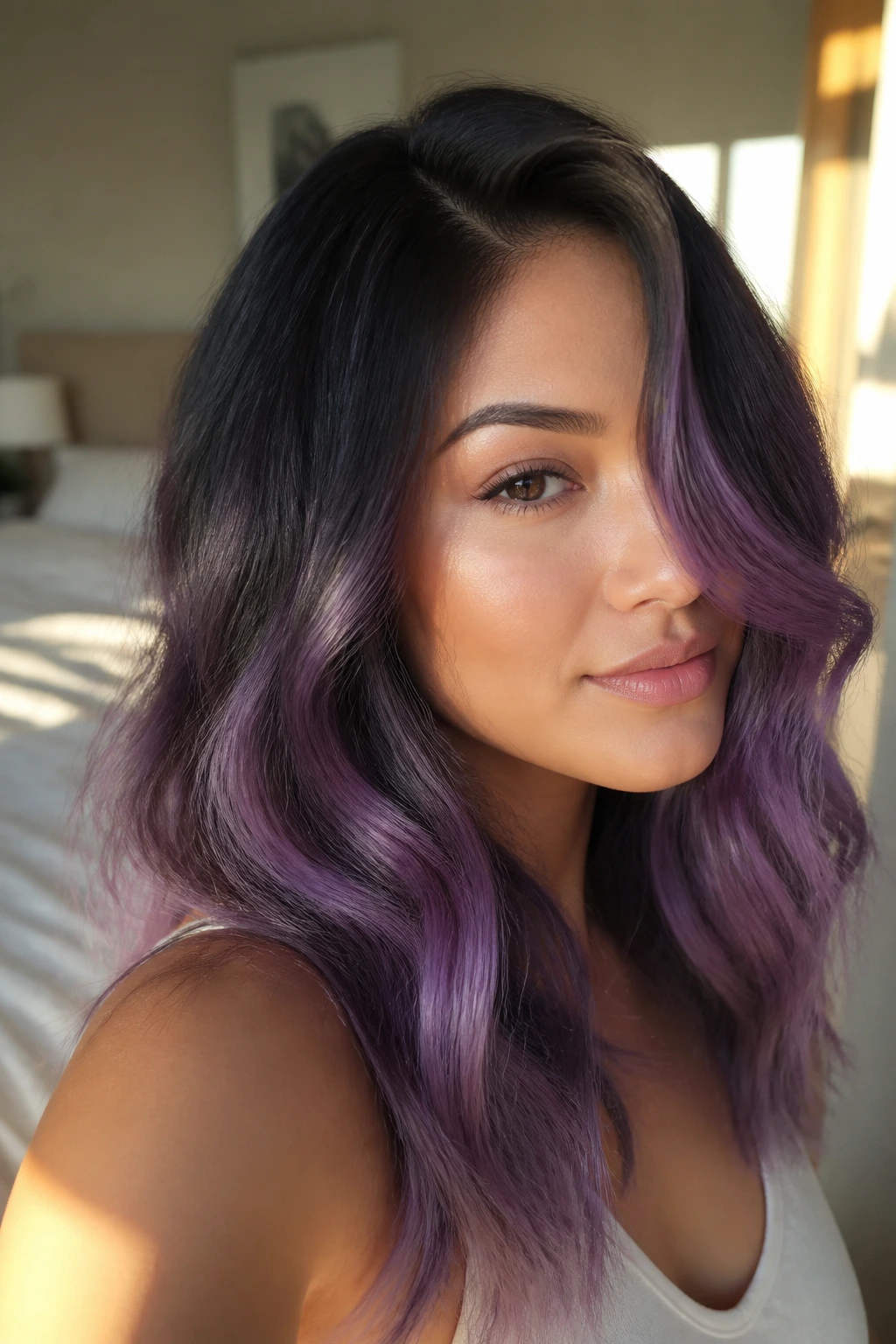
A rooted amethyst melt is one of those styles that looks expensive even when the color plan is fairly simple. The root stays deeper — brown, smoky violet, or charcoal — and the amethyst gets gradually lighter through the mids and ends. The result is a slow color shift, not a hard line.
Why It Feels So Balanced
The root shadow does the maintenance work for you. It buys time between salon visits and stops the lighter purple from looking like it was dropped on top of the hair. On longer lengths, that fade from dark to light gives the eye a path to follow.
Good For
- People who don’t want obvious regrowth
- Wavy or straight hair, where the melt can be seen clearly
- Medium to long cuts with movement in the ends
If you like the idea of purple but hate high-contrast roots, this is the safer bet. It still reads bold. It just does it with more control.
12. Electric Purple Undercut
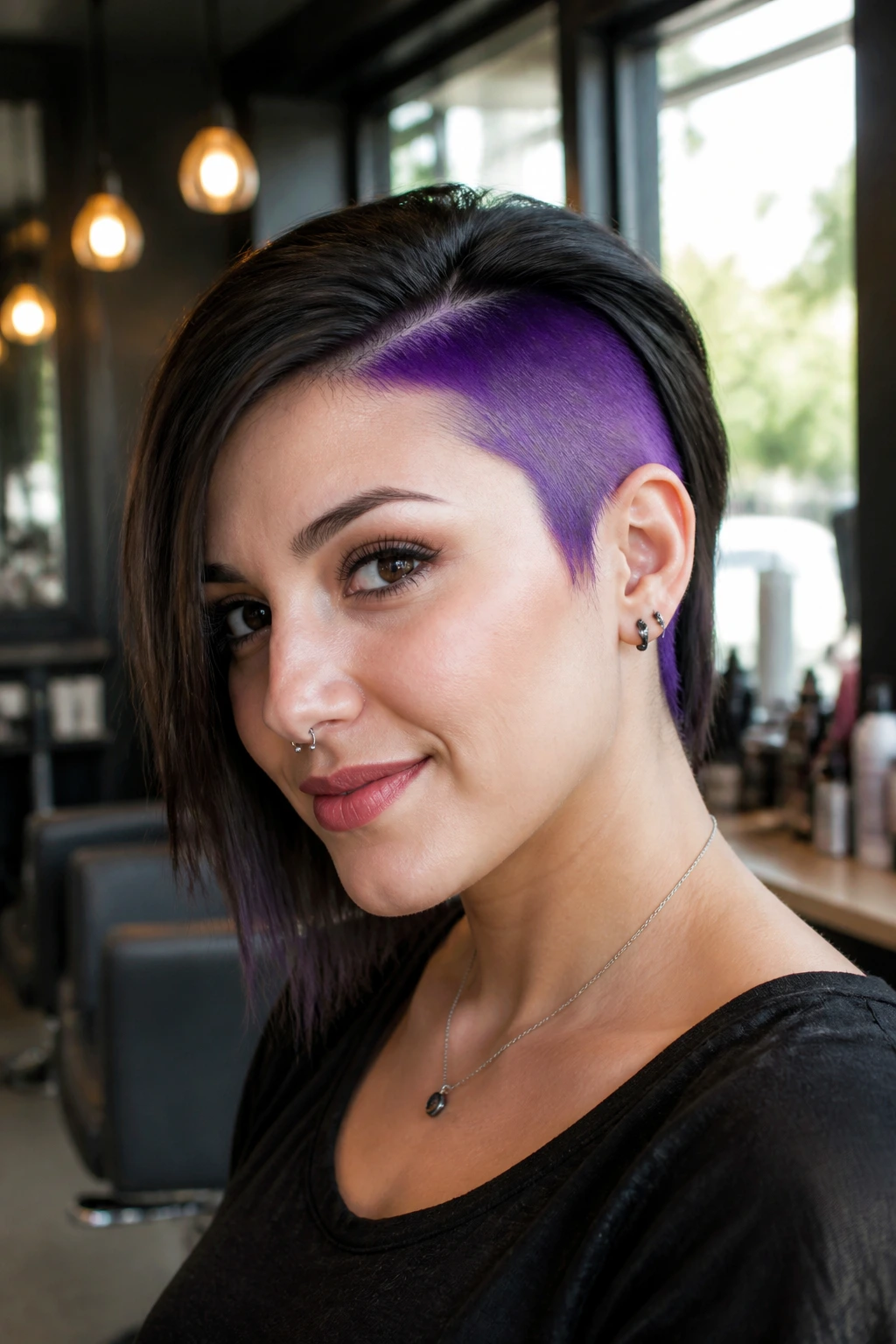
An electric purple undercut is pure contrast. The top layer can stay dark, natural, or even neutral blond, while the shaved or closely clipped section underneath gets blasted with a saturated violet. It’s the kind of color move that only works if the cut is precise.
The practical benefit is this: you can hide most of the color when you want to, then expose it with a tucked side, a bun, or a half-up twist. That gives you two lives in one haircut. The undercut also takes direct dye beautifully because the short hair holds saturation well and doesn’t need much product.
I wouldn’t blur this one with too many tones. The cleaner the purple, the sharper the whole shape feels.
13. Pastel Lilac Champagne Blonde
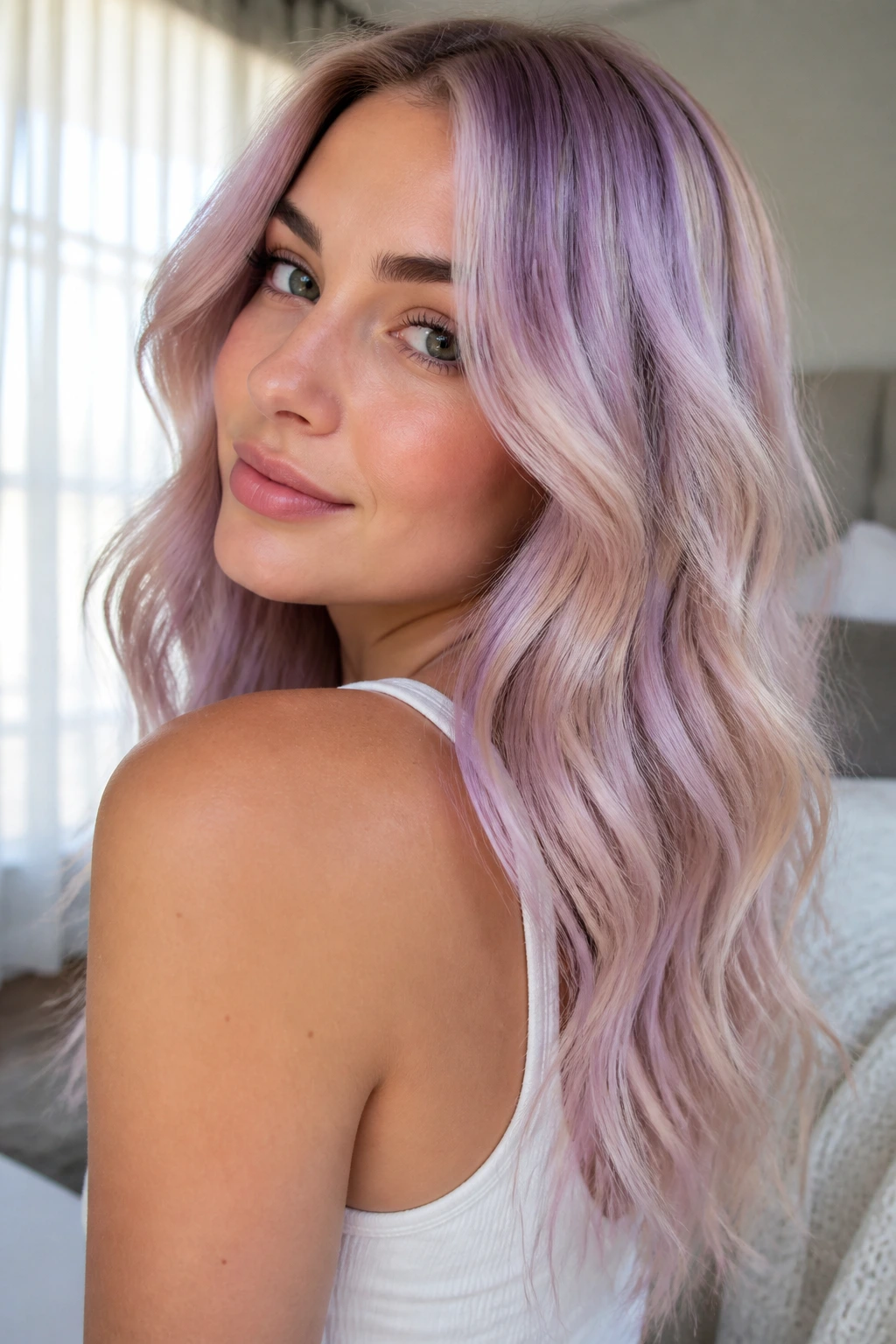
Pastel lilac on champagne blonde hair is softer than it sounds. Champagne blonde has a warm, creamy base, and lilac cools it down just enough to keep the result from going yellow. The blend lands somewhere between airy and polished.
This look depends on the blonde being lifted evenly. Any leftover orange or brassy patch will tug the lilac sideways and make it look peachy in spots. On clean blonde, though, the effect is almost hazy. That’s what makes it so pretty with soft waves or a loose blowout.
If you want purple that still reads light in natural daylight, this is one of the few shades that gives you that. It’s not loud. It’s not trying to be. That restraint is the point.
14. Jewel-Tone Purple Box Braids
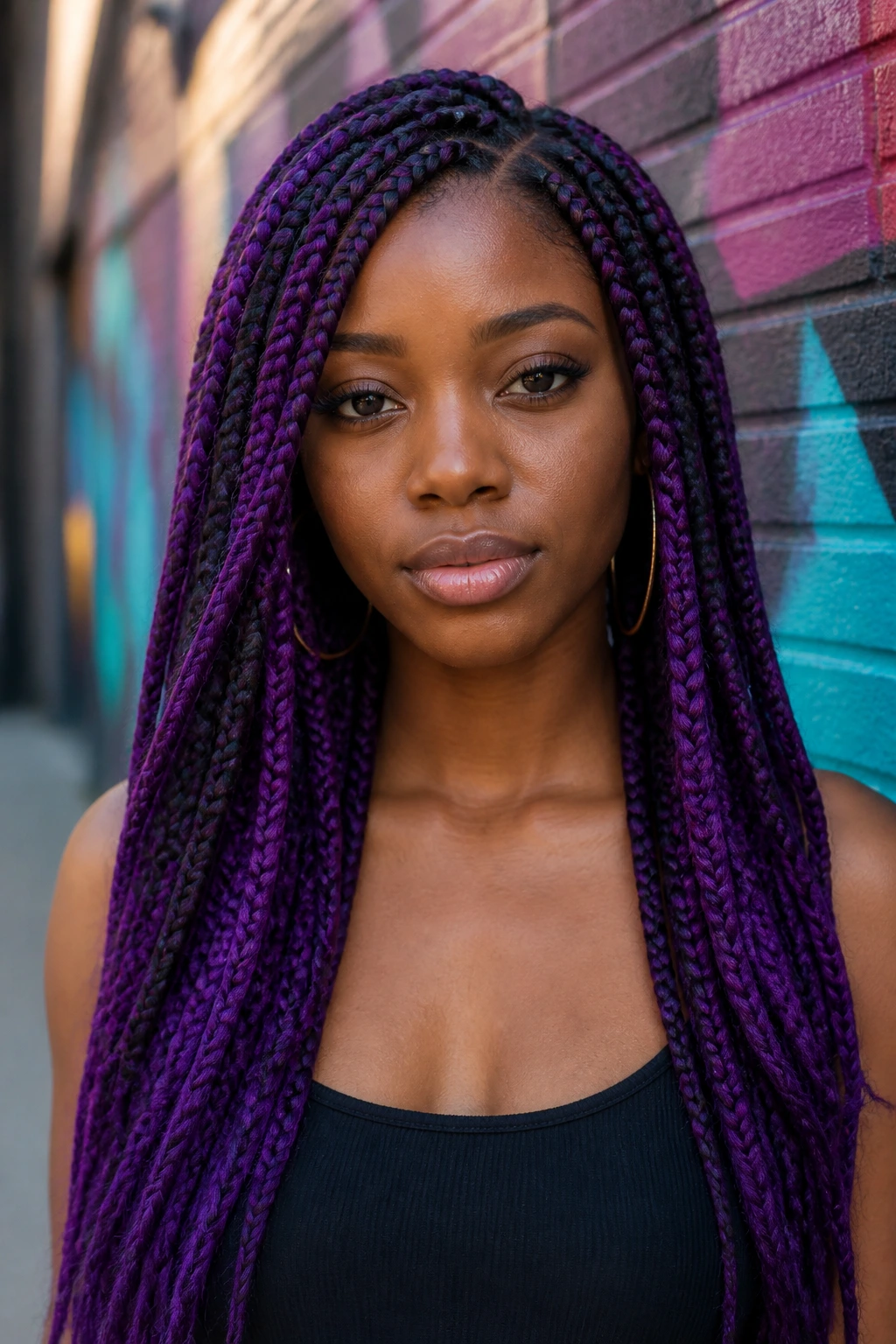
Purple box braids are a whole different animal. The color gets built into the braid itself, so the shade shows in bands and twists instead of sitting on a flat surface. Jewel-tone purple — think amethyst, grape, or royal violet — has enough depth to look good even from a distance.
Braids make maintenance easier, too. You’re protecting the natural hair underneath while getting a strong color story up top. Just keep the scalp clean and the roots moisturized. Purple synthetic braiding hair or colored extensions can do the job if you don’t want to dye your own hair.
A small thing matters here: the braid length changes the feel of the color. Shoulder-length braids read playful. Waist-length braids feel more dramatic. Same color. Different story.
15. Mauve Shoulder-Length Shag
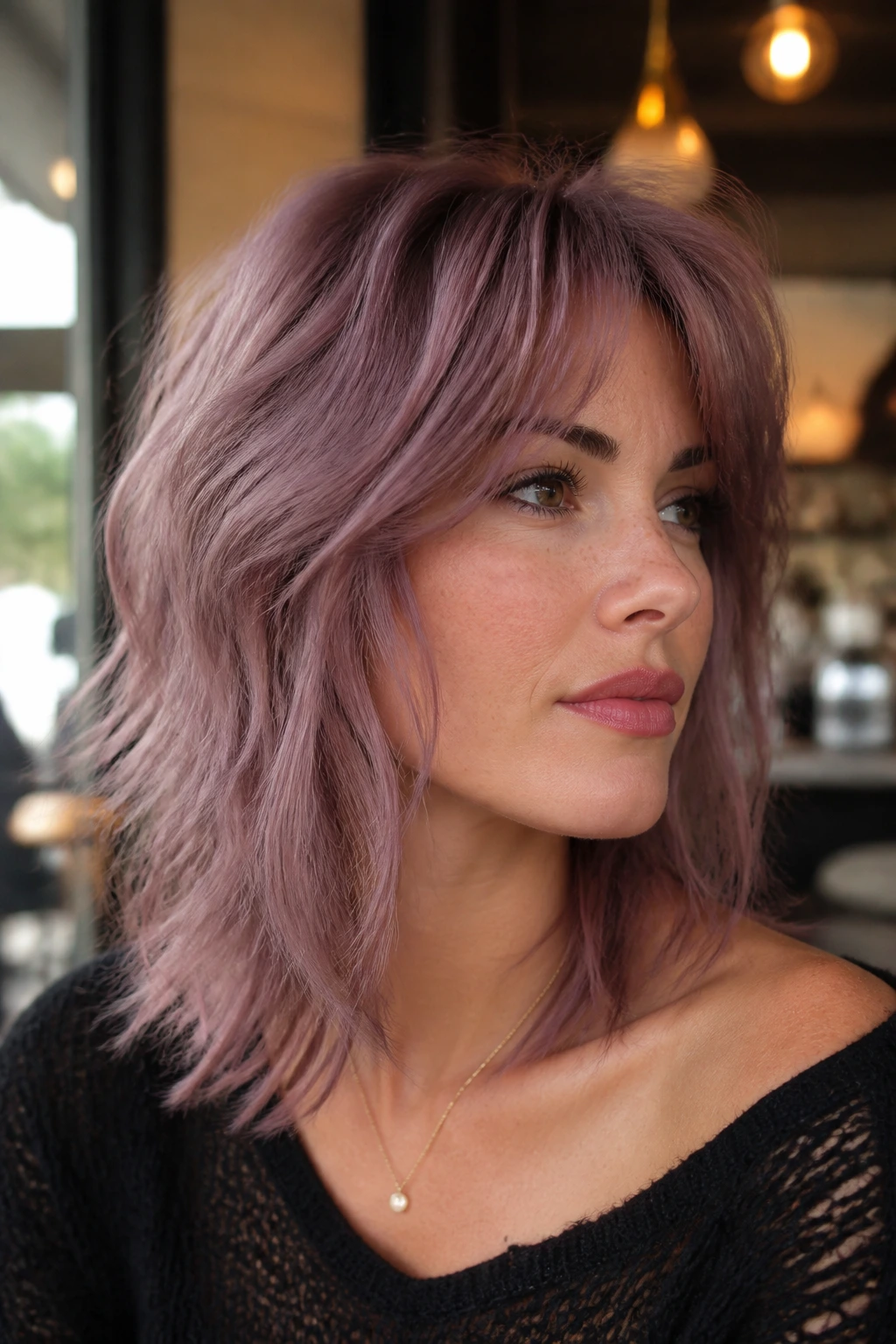
A mauve shag is for women who like movement in the cut and don’t want their color to sit still either. Mauve has a dusty rose note inside the purple, which softens the whole look. On a shag, that softness gets broken up by the layers and fringe.
The cut does a lot of work here. A shag has built-in edges and texture, so the mauve color never looks too neat or too flat. That’s useful when the tone is pastel-ish, because pastels can lose shape fast. The messiness is a feature, not a problem.
A round brush on the fringe and a little scrunching through the ends is enough. No need to overstyle it. The color is already doing enough.
16. Midnight Violet Straight Lob
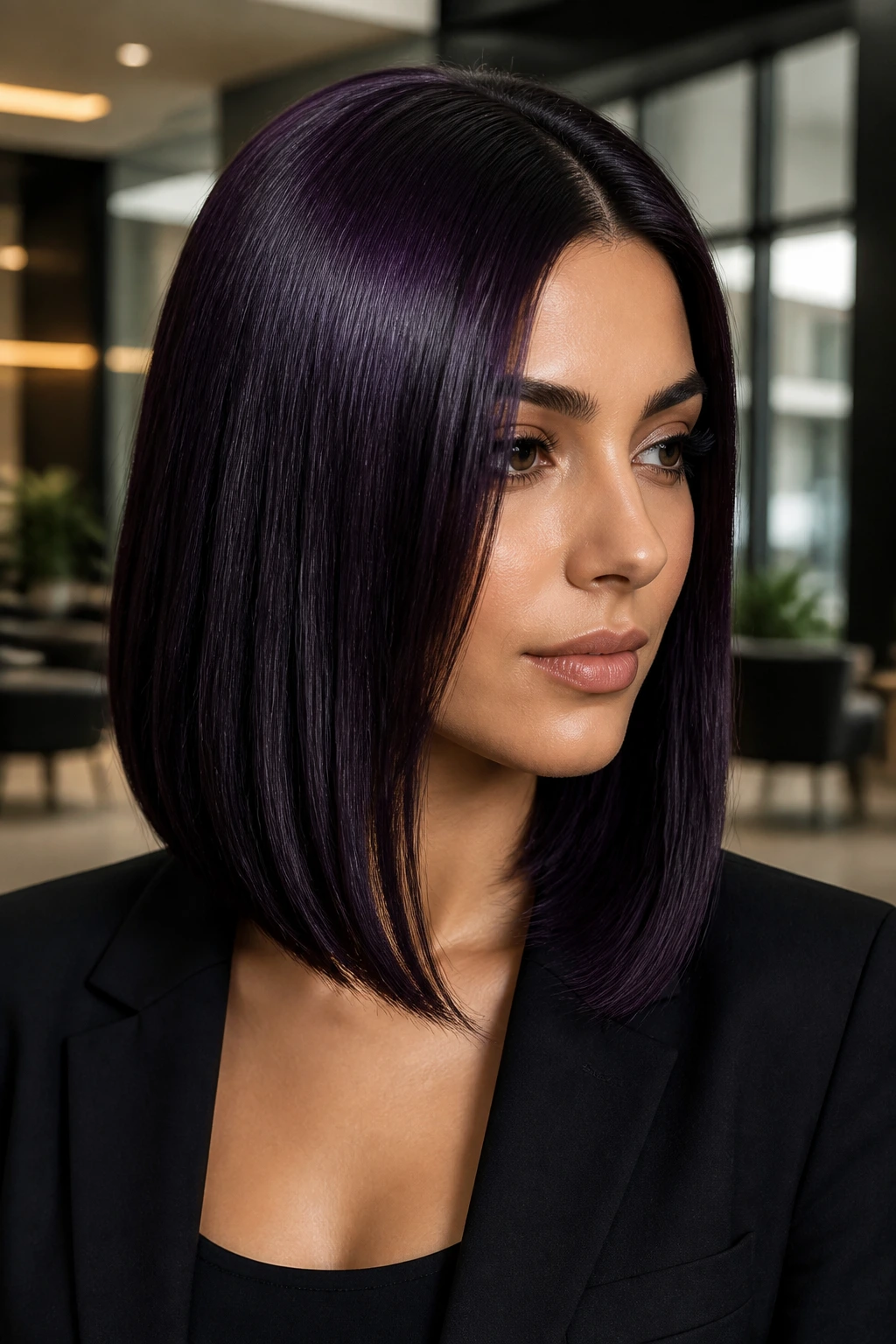
Midnight violet is what I recommend when someone wants purple but doesn’t want the hair to look purple at first glance. The tone is deep, inky, and close to black until the light hits it from the side. On a straight lob, that creates a reflective surface that keeps changing as the head turns.
This style is especially good if your wardrobe runs dark, neutral, or tailored. It doesn’t fight the clothes. It just adds a little depth. The lob length keeps the shape sharp, while the midnight tone keeps it from feeling severe.
If your hair is naturally dark, you may not need much lightening for this one. That’s the appeal. Less bleaching, more sheen.
17. Purple Curtain Bangs
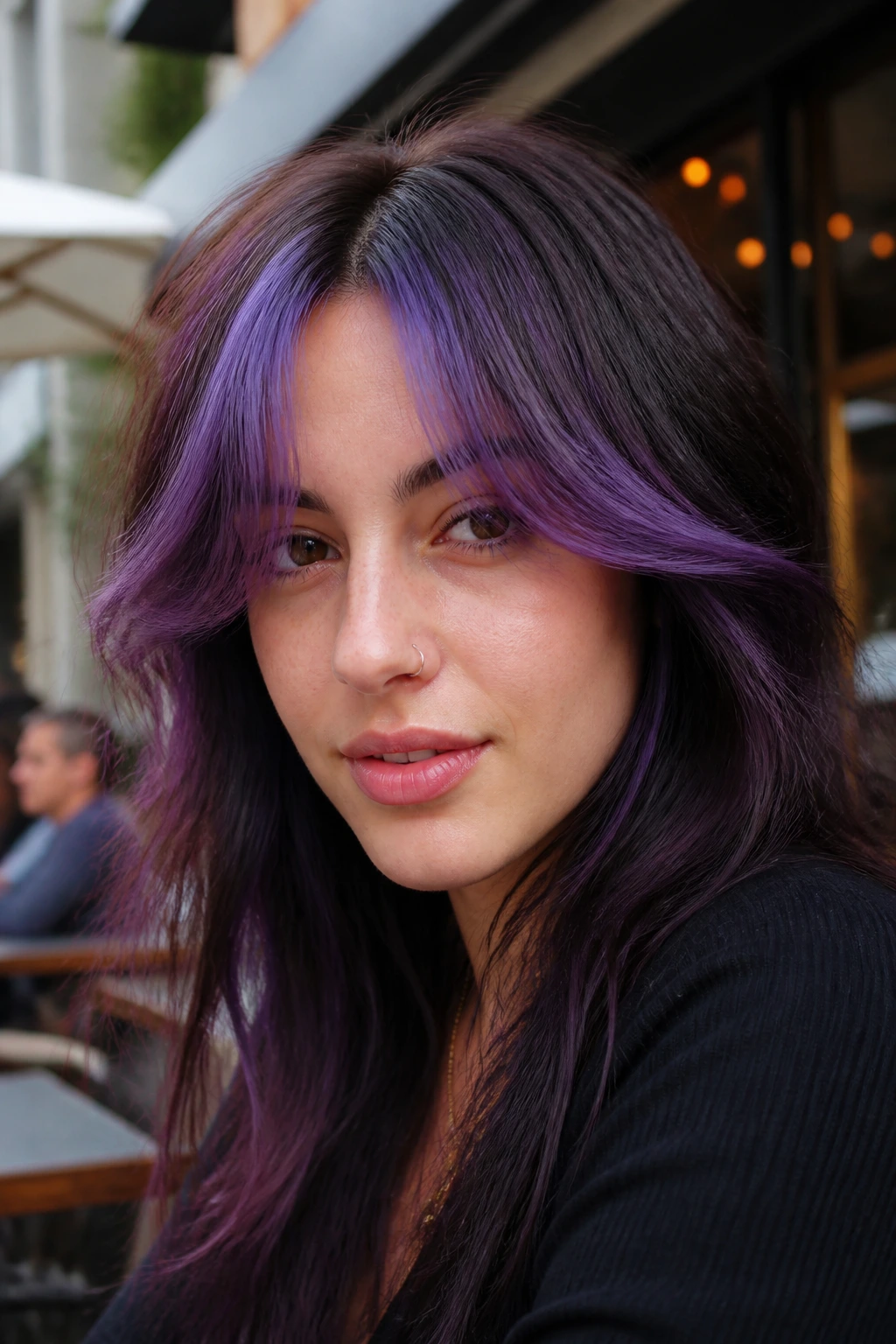
Curtain bangs are one of the best places to use purple because they sit so close to the face and move constantly. A violet or orchid tint through the bangs can change the whole haircut without requiring a full-head color job. That tiny area becomes a frame.
Why This Works So Well
Bang color hits where people look first. It also fades faster than the rest of the head, which is useful if you like to rotate shades. You can keep the lengths brunette or blond and refresh the fringe with a direct dye when it starts to look washed out.
Good Combinations
- Curtain bangs with a rooted balayage
- Bangs over a shag or wolf cut
- Soft violet on a darker base for a shadowed effect
I like purple bangs because they feel playful in motion. Still. Even a slight bend in the hair changes how much color you see.
18. Smoky Orchid Ombré
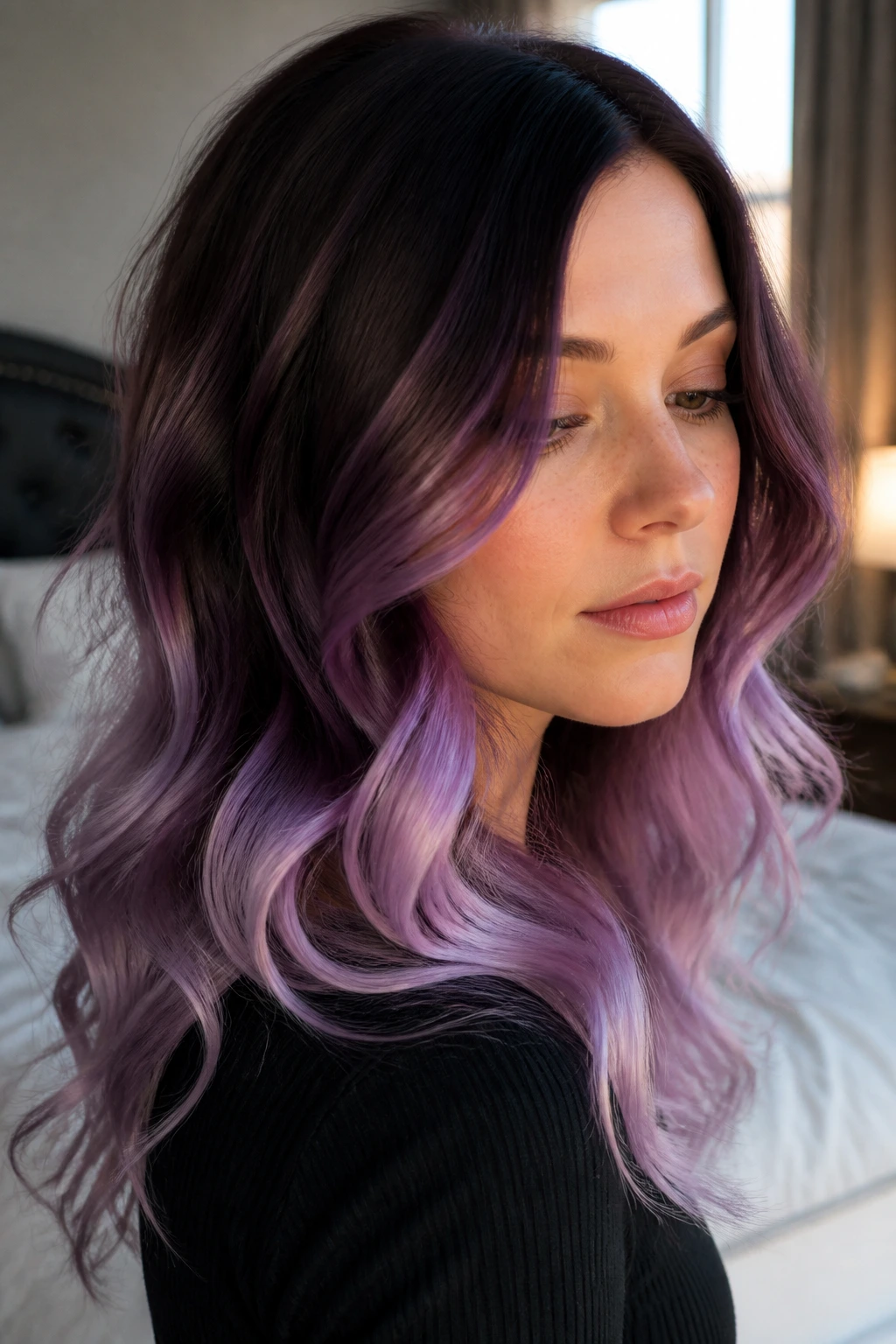
Smoky orchid ombré starts with depth at the root and slowly floats into a light floral purple through the mid-lengths and ends. It’s a gentler version of the usual dark-to-light transition because the tones stay in the same family. No harsh switch. No cartoon edge.
The orchid note keeps the color from turning dull, while the smoky base keeps it from looking sugary. That balance is why ombré still works on longer hair when a single-tone pastel would fall flat. The eye has somewhere to travel.
This is one of the looks that benefits from curled ends. The gradient shows up more clearly when the hair bends, and the bottom section can feel lighter without being washed out.
19. Grape Color Block Bob
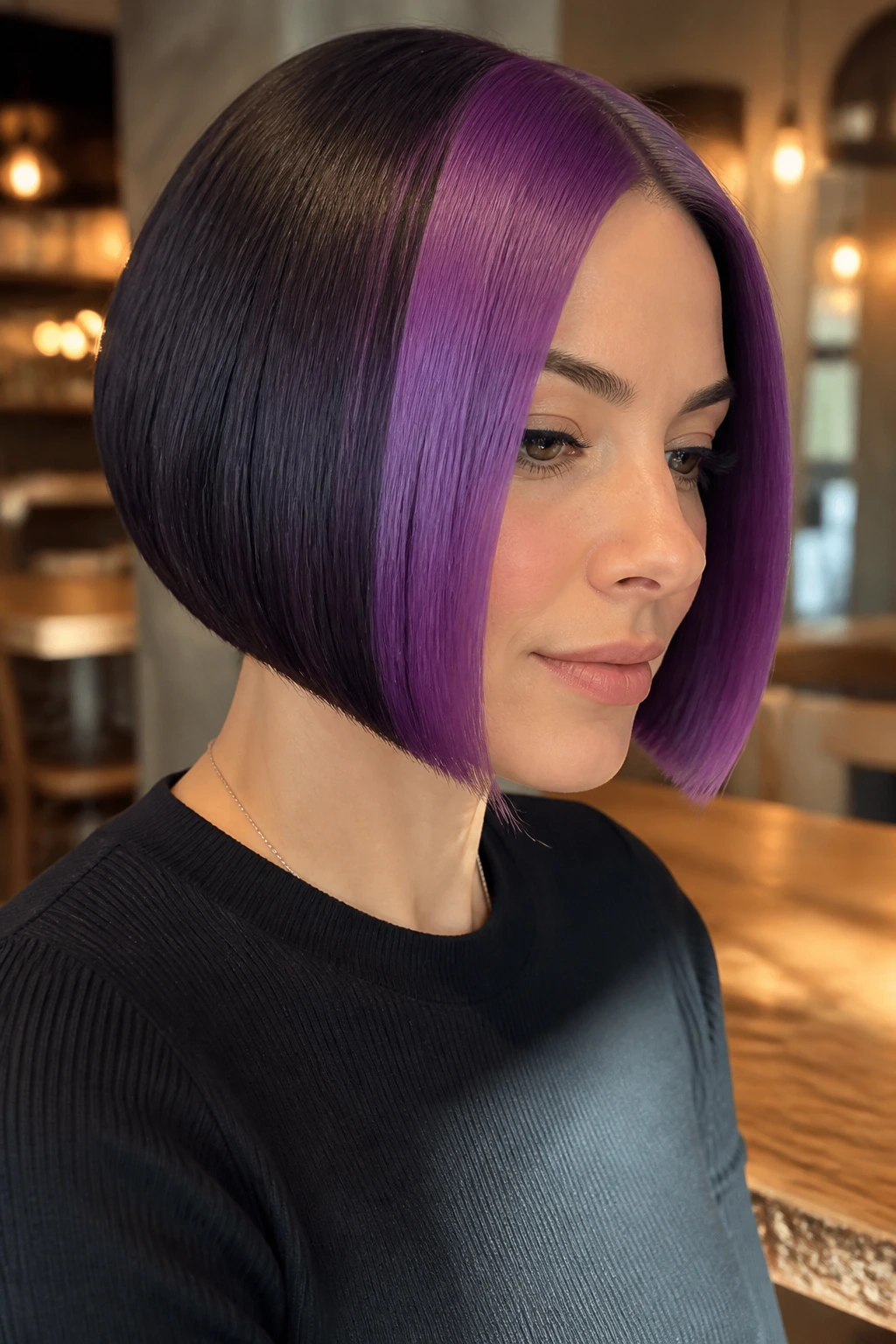
Color blocking gives purple a clean, modern edge. Instead of scattered highlights, you get a solid section of grape tone placed against a contrasting base — often black, brunette, or a lighter blonde panel. On a bob, the block reads bold without needing much length.
What makes this work is the geometry. The bob has a defined shape, so the color block can line up with the cut. If the placement is off, the whole thing loses its snap. But when it’s done right, the result looks deliberate in a way random streaks never do.
This is a strong choice for anyone who likes architecture in hair. Sharp line. Sharp color. Nothing fussy.
20. Holographic Purple Balayage
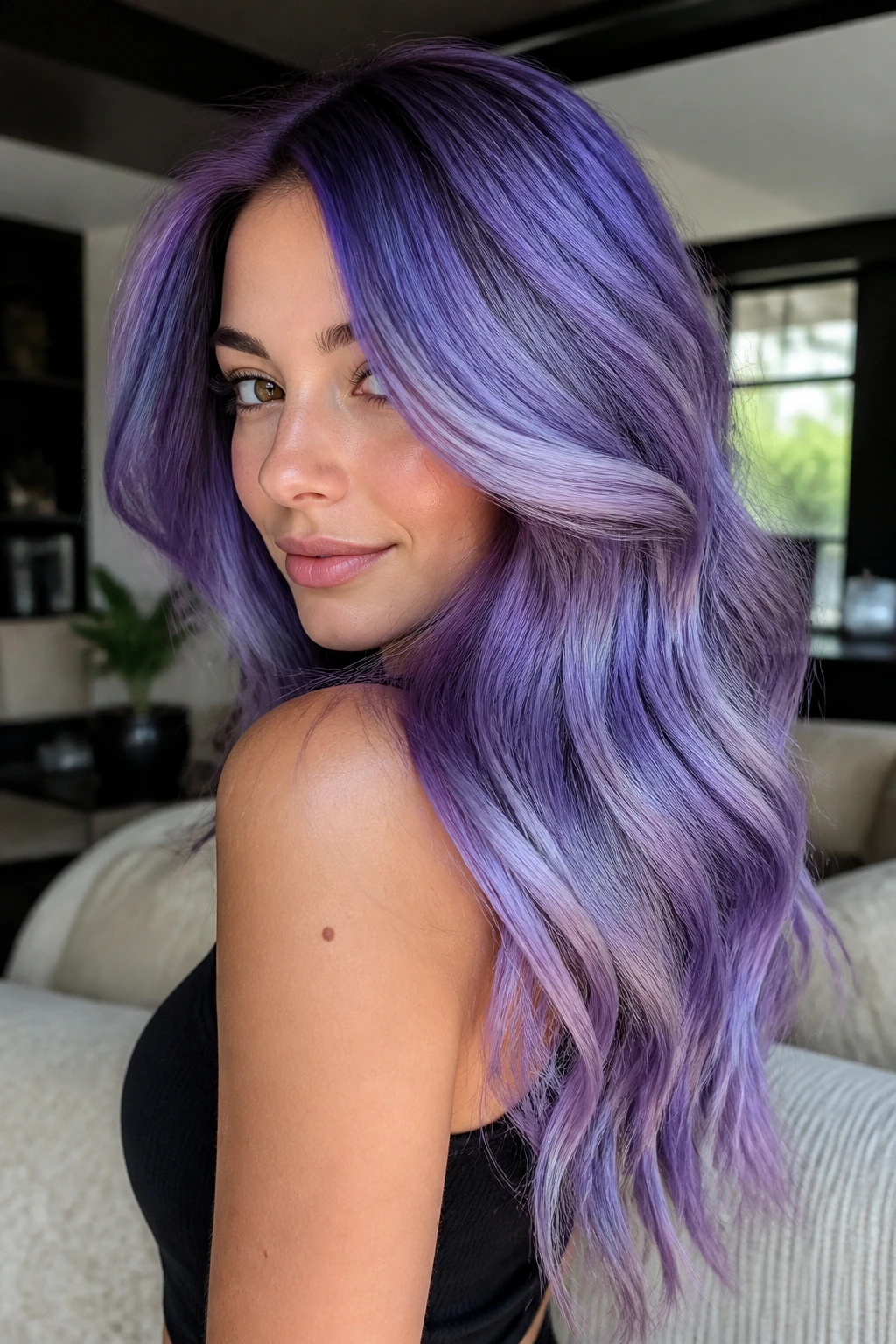
Holographic purple balayage is all about the shift. You’re not looking for one flat shade; you’re looking for a spread of violet, silver-lilac, and deeper indigo tones that change as the light moves. It works best on hair that’s been lifted evenly and toned cleanly, because the dimension disappears fast if the base is patchy.
I like this look on waves because the bend in the hair makes the different tones catch at different points. Straight hair can wear it too, but the color has to be very clean or it reads like three unrelated shades. On waves, the placement forgives more.
This is one of the more editorial purple looks in the set. If you want something that feels a little futuristic but still hair-like, not wig-like, this is the lane.
21. Eggplant Sleek Ponytail
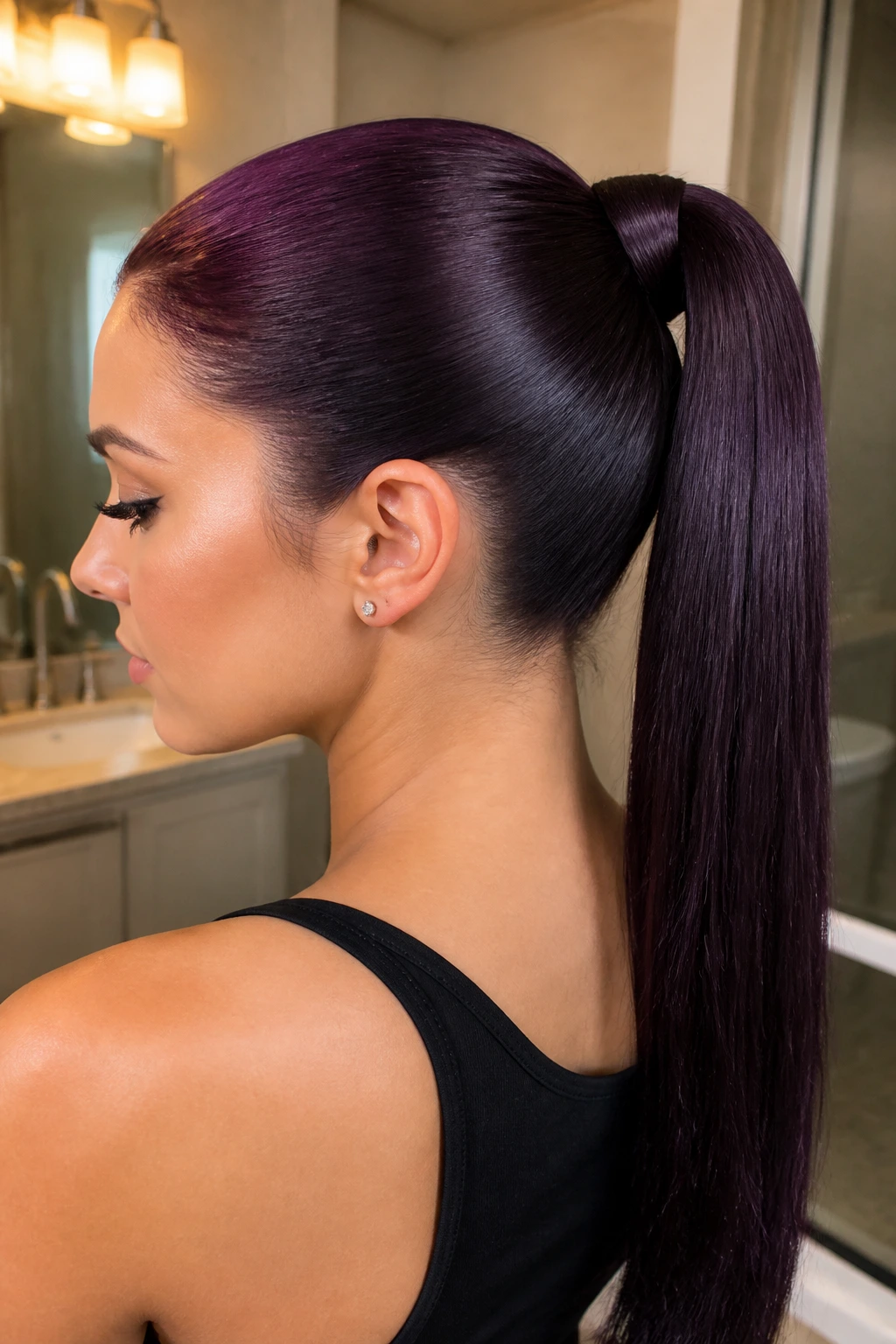
Eggplant is a smart shade because it’s dark enough for everyday wear and rich enough to look expensive when you pull the hair back. A sleek ponytail makes the color even better. All that shine exposes the depth in the tone, especially around the base and along the lengths.
A polished ponytail also gives the color a clean silhouette. There’s nowhere for flyaways to hide, so the shade has to carry the whole look. Eggplant does. On long hair, the purple leans almost black until it catches a little sun or indoor light, and that shift is half the appeal.
If you usually wear your hair up, this is a strong option. It doesn’t ask for much styling, and it still looks thought through.
22. Violet Tipped Waves
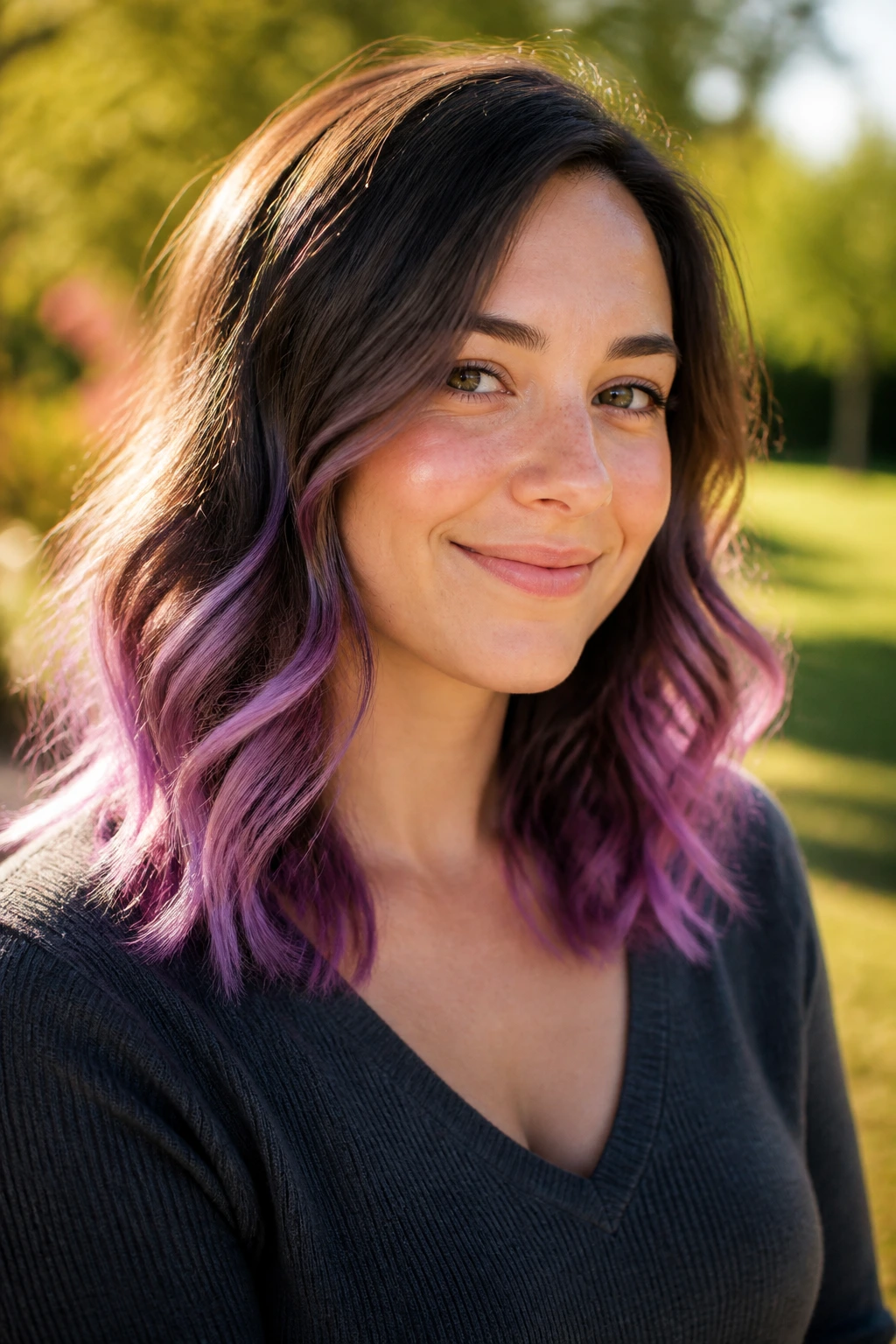
Violet tips are the easiest way to borrow purple without changing your whole head. Keep the roots natural, let the mids stay brunette or blonde, and paint the ends with a saturated violet. On waves, the tips pick up the most movement, so the color shows up where the eye naturally lands.
That placement also makes the grow-out less stressful. If you get bored, the ends can be trimmed off. If you love it, you can push the color a little higher on the next appointment. Simple. Flexible. Nice to live with.
The trick is to keep the transition soft. A blunt line of violet at the ends can look harsh. Feathered application keeps it wearing like a deliberate fade.
23. Plum-to-Pink Gradient
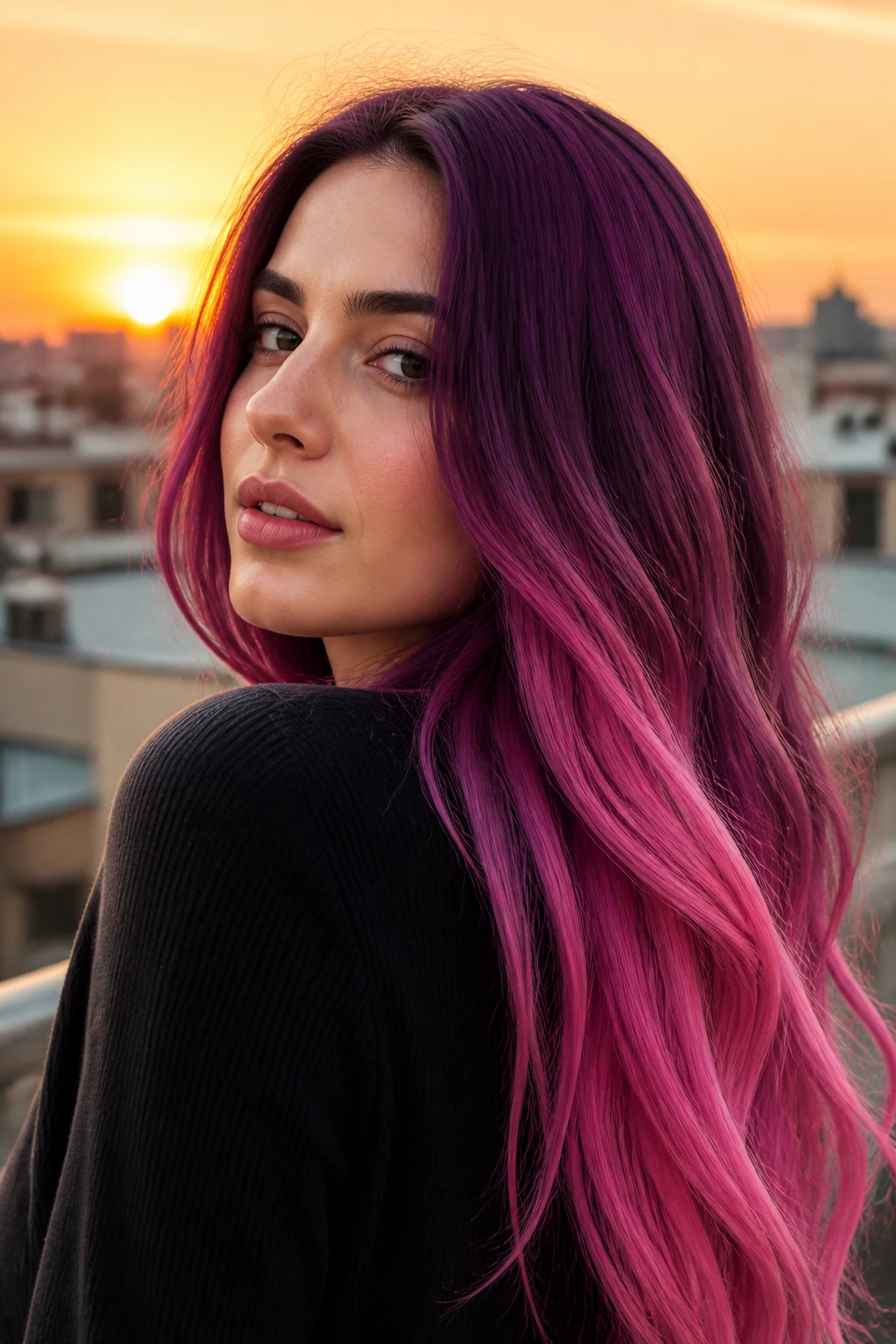
A plum-to-pink gradient has a bit of mischief in it. The darker plum at the root melts into berry pink through the mid-lengths and ends, which gives the hair a stained-glass feel when it moves. It’s not subtle. It doesn’t need to be.
This look works best when the color shift is long and gradual. If the transition happens too quickly, the two shades fight each other. Spread them out over a few inches and the gradient starts to look intentional. On long waves, it’s especially strong because the bend separates the shades naturally.
I’d keep the pink on the cooler side. Too much warmth can flatten the whole thing. A blue-based pink holds the purple line better.
24. Soft Lavender Face-Framing Pieces
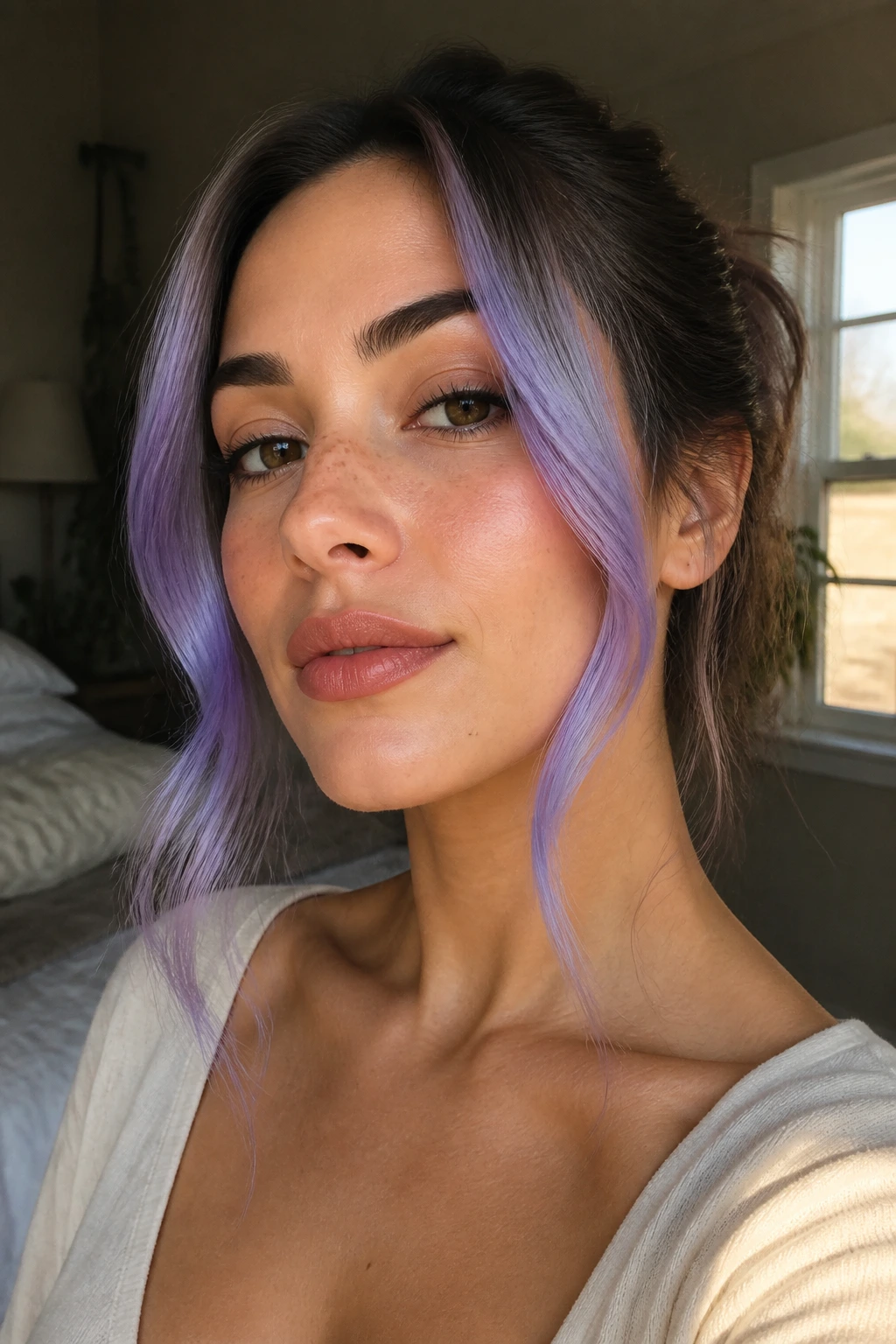
If you want a purple look that whispers instead of shouts, face-framing lavender pieces are hard to beat. They brighten the front of the hair, soften the outline, and leave the rest of the length alone. That makes them one of the easiest ways to test color without signing up for a full head of maintenance.
The placement matters more than the amount. A few clean panels near the cheekbones can pull the focus upward and make the hairline feel lighter. On a middle part, the color can be hidden behind the ears. On a side part, it becomes more obvious. Same dye. Different mood.
This is a smart choice for fine hair, too, because it doesn’t overload the cut with too much pigment.
25. Royal Purple Afro
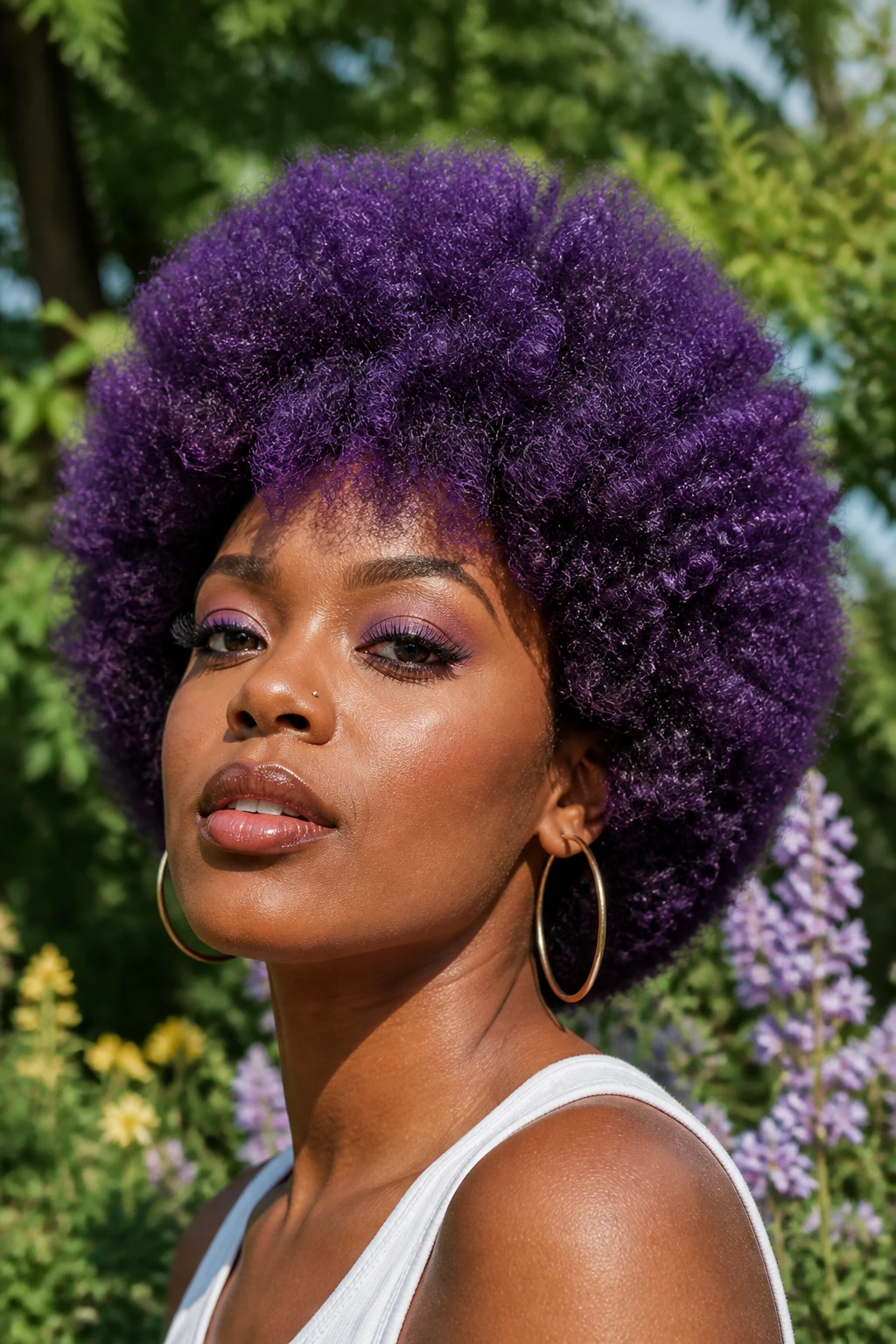
A royal purple afro is bold because the shape already has presence. Add saturated purple to that texture and the whole style gets a crown-like feel. The coils make the color look even richer because the light lands differently on every curve.
This look rewards moisture. Dry coils can make royal purple look dusty, and nobody wants that. A rich leave-in, a satin bonnet, and a gloss or color mask when needed keep the tone from dulling out. The goal is shine along with saturation.
If you want purple that feels powerful without needing a lot of styling tricks, this is one of the clearest choices. It doesn’t need much else.
26. Amethyst Money-Piece Layers
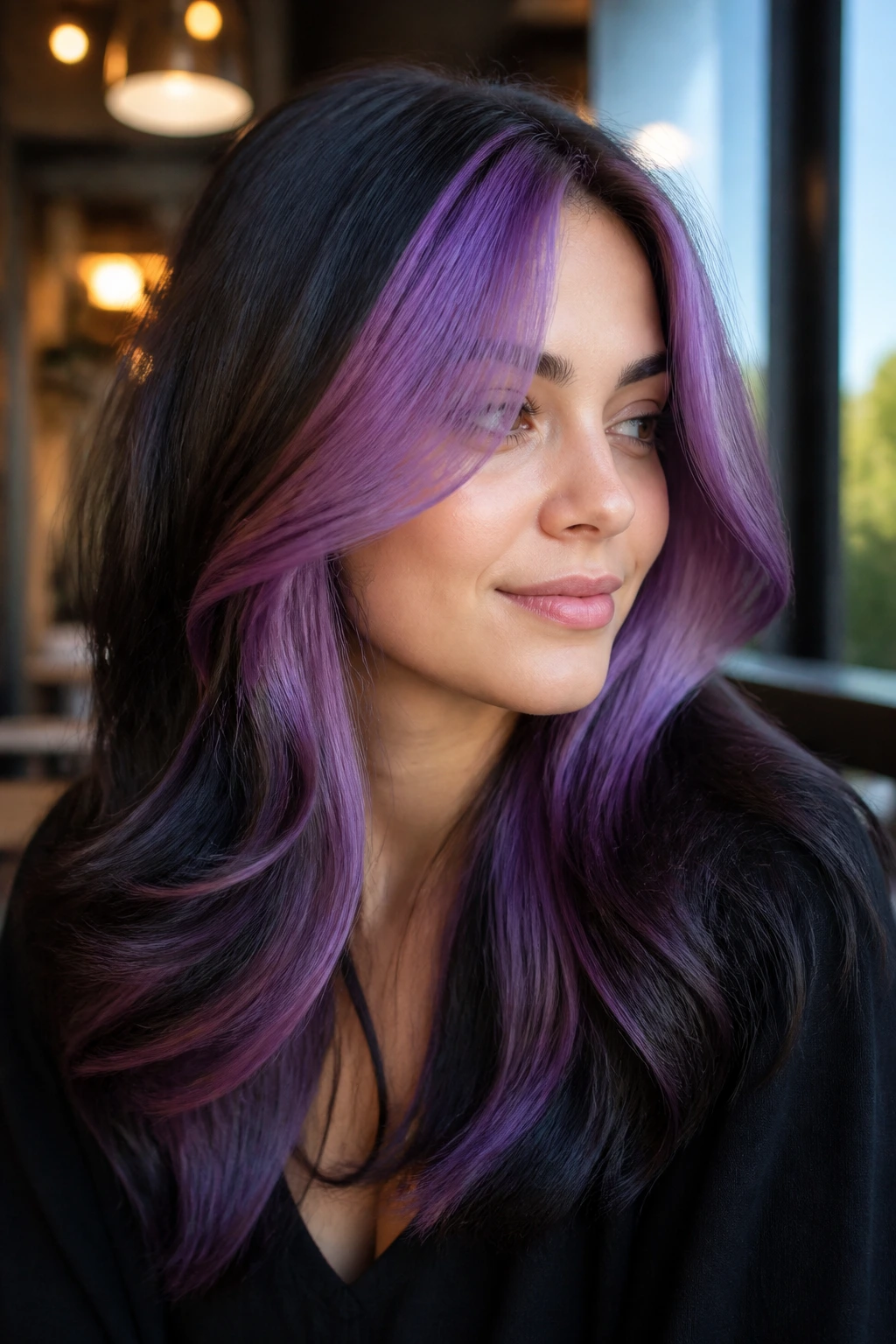
A money piece looks different on layered hair than it does on a blunt cut. The amethyst front panels slip into the layers and create movement around the face instead of a static stripe. That makes the color feel more integrated and less like it was added for shock value.
The best part is the framing. A darker base with bright amethyst near the front can lift the whole haircut. It’s a small color investment with a big visual payoff. If the layers are long enough to curl away from the face, the purple shows in flashes rather than one constant block.
This is a smart middle ground for women who want noticeable color but still need the haircut to work in plain clothes, plain light, plain life.
27. Purple Mermaid Lengths
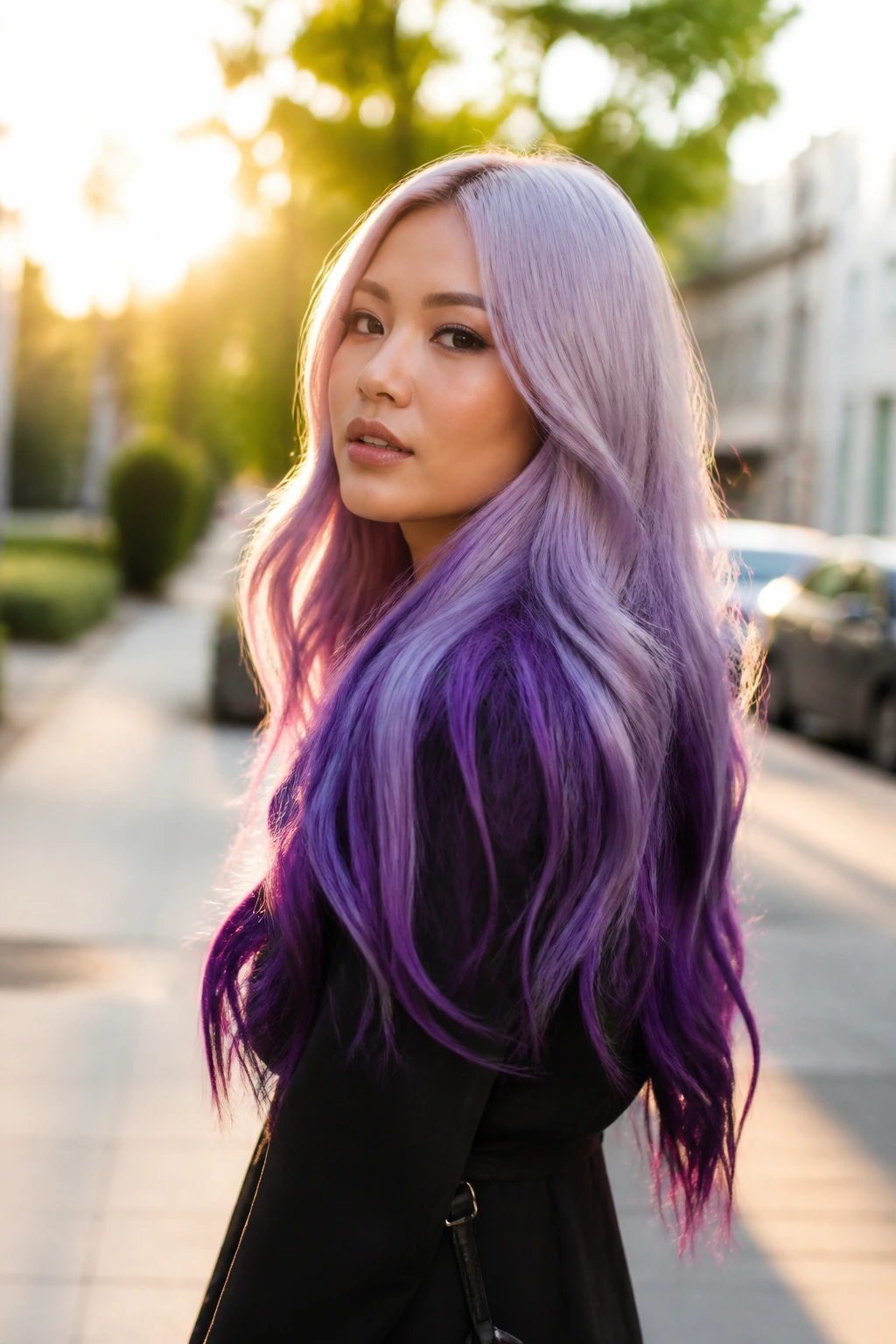
Long purple hair can go cinematic fast, so the shade has to do a lot of lifting. Mermaid lengths work best when the color travels through several purple notes — lilac at the top, orchid through the middle, deeper violet near the ends — rather than sitting as one giant slab of dye.
The length gives the tones room to breathe. That matters. On shorter hair, too many shades can look busy. On long hair, they read as motion. Braids, twists, and loose waves all make the color move in different ways, which is half the fun of having hair this long in the first place.
A small warning: long purple hair needs better conditioning than most people think. The ends are older, drier, and more likely to mute the shine.
28. Velvet Violet Blunt Cut
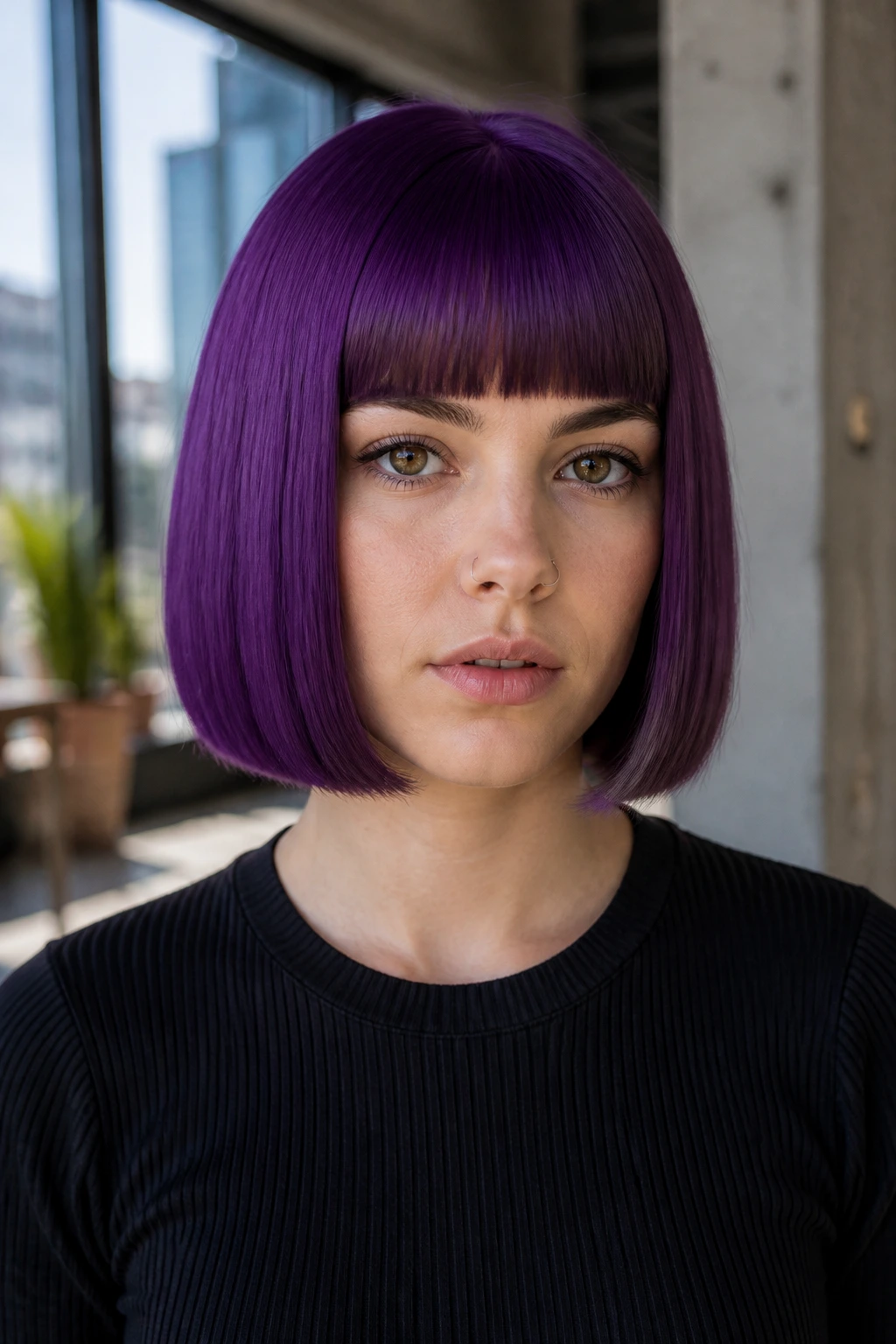
Velvet violet on a blunt cut has a dense, plush look that I love on straight or slightly beveled ends. The color sits so evenly that the shape almost feels upholstered. That’s not a bad thing. It gives the hair weight.
Because the cut is blunt, every millimeter of unevenness shows. That means the color has to be smooth, too. Patchy violet on a blunt line looks careless. Rich violet on a clean edge looks controlled. The difference is obvious in person, especially when the hair swings.
This is one of the strongest choices for women who like precise hair. Nothing wispy. Nothing overworked. Just a sharp line and a saturated tone.
29. Berry-Purple Texture Pixie
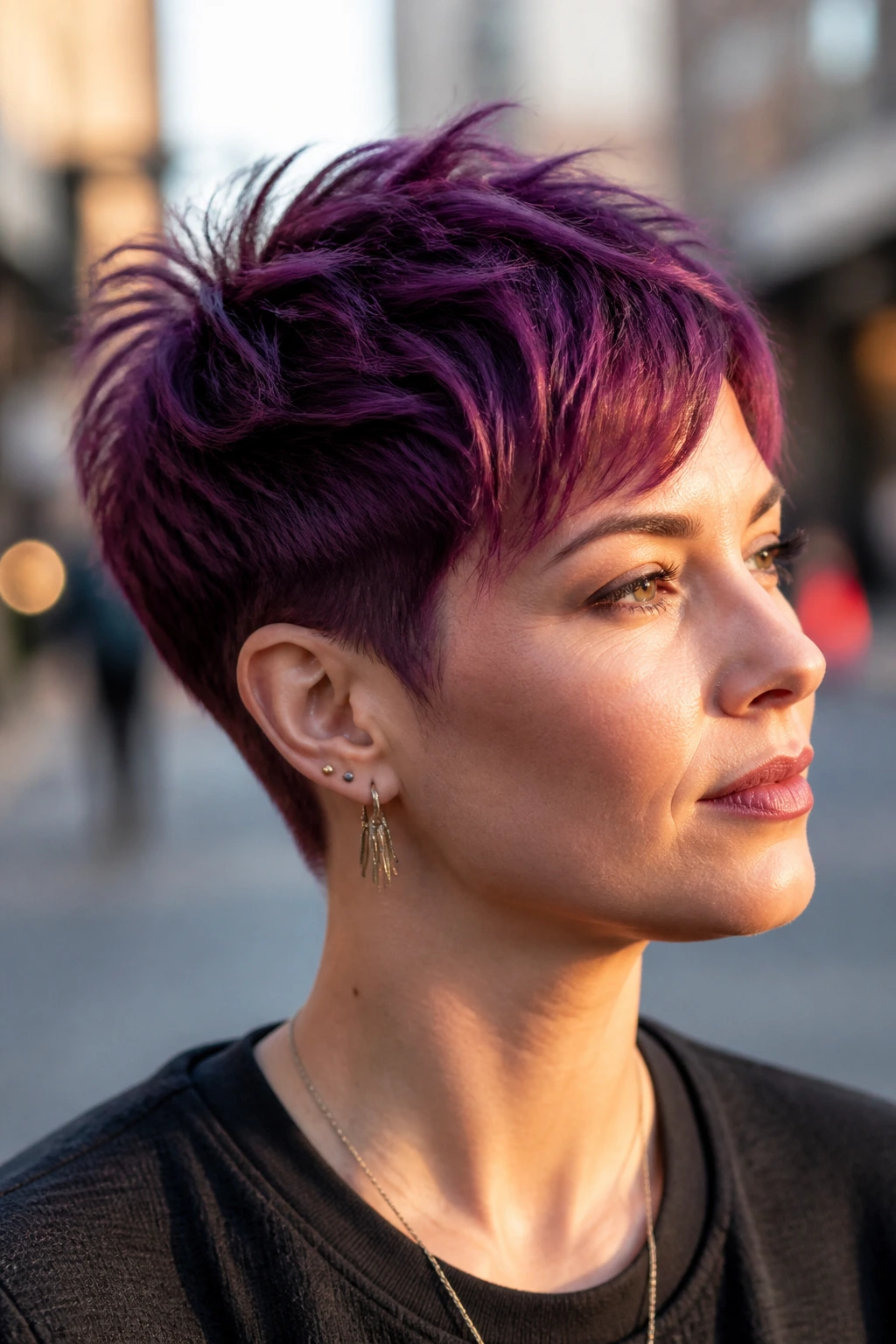
A textured pixie in berry-purple territory is small, quick, and full of movement. The shorter the cut, the more the color sits on top of the hair, which is why berry-purple can look so vivid here. A bit of piecey texture around the crown keeps it from feeling flat.
What I like most is the ease. Short hair takes direct color well, and the roots can stay darker without ruining the look. The berry note makes the purple warmer and more flattering around the face than a stark blue-violet would be. It’s a good choice if you want a short cut that still feels feminine without leaning delicate.
Add a little texture cream, then stop. Too much product weighs the whole thing down.
30. Purple Ribbon Highlights on Brunette Hair
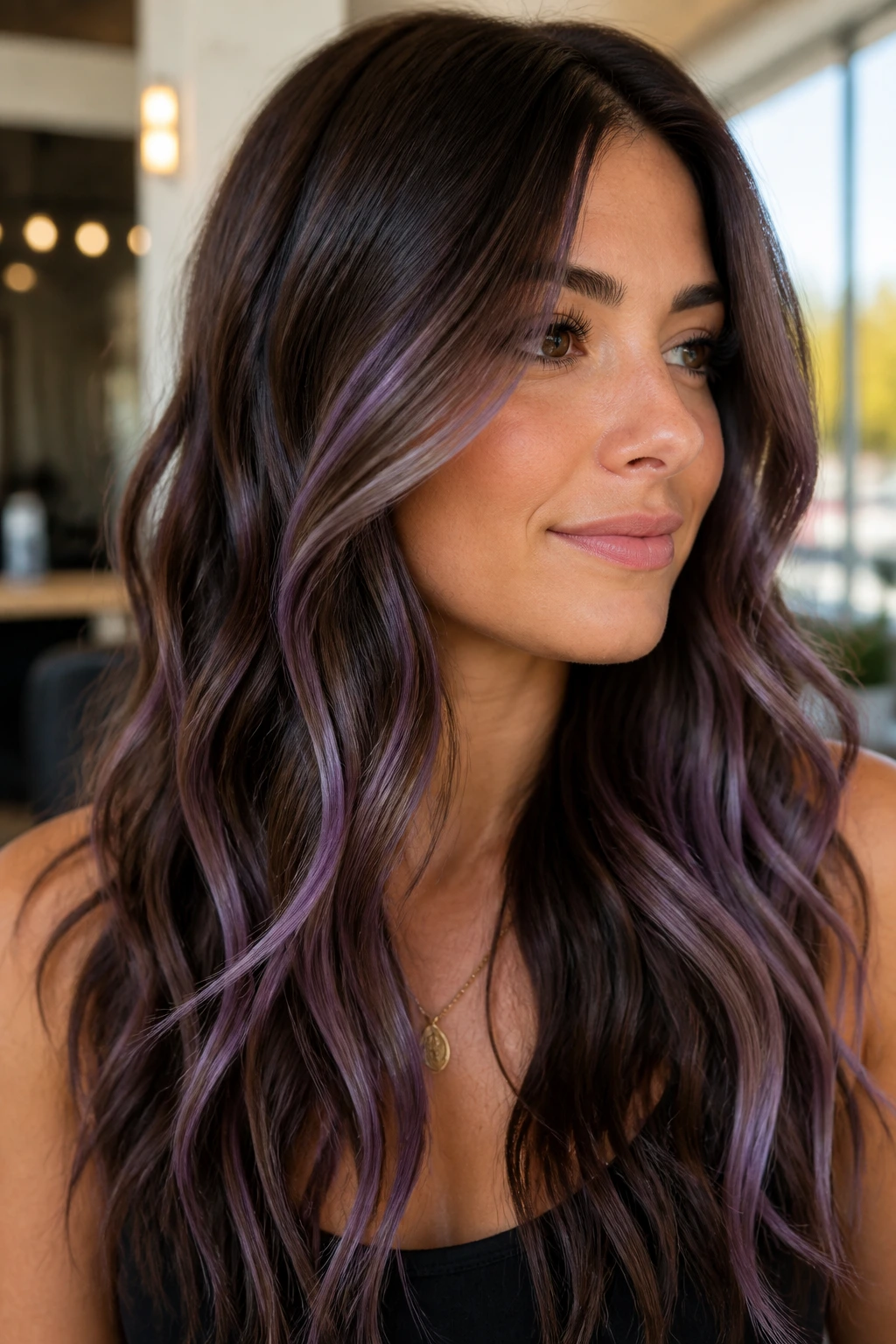
Ribbon highlights are a clever way to wear purple on brunette hair because the color gets woven through in thin, visible strips rather than thick panels. The brunette base keeps things grounded, and the purple shows up where the hair bends, which makes the whole look feel alive.
This style works especially well on layers or long waves, where the ribbons can disappear and reappear as the hair shifts. On straight hair, the placement reads more graphic. On curls, it becomes softer and more blended. That flexibility is why ribbon highlights keep working when bigger color blocks feel too loud.
If you’re nervous about looking too bright, start here. It gives you a purple story without forcing a full conversion.
31. Iridescent Purple Curls with Silver
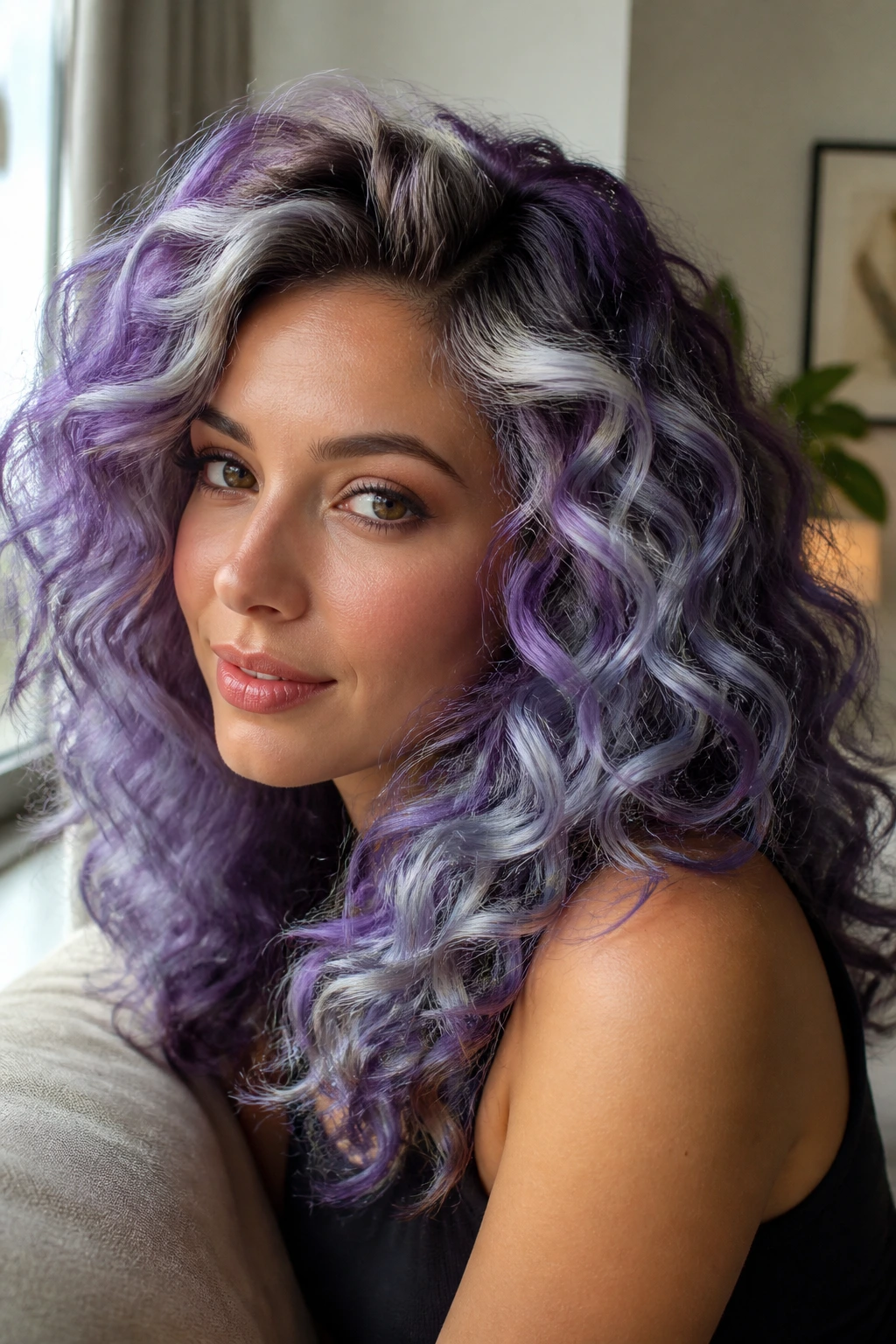
Iridescent purple curls with silver are for women who like a little shine with their color. The silver pieces cool down the violet and make the curls look dimensional from the root out. The result can feel almost pearly when the light hits it right.
This look needs careful placement. Too much silver and the purple loses its grip. Too much purple and the silver disappears. The balance is what makes it work. On curls, the different tones rise and sink into the pattern, which creates a lot of movement without needing a complicated cut.
I’d keep the styling soft — diffused drying, a light hold gel, and fingers instead of a brush. The curl shape should stay intact enough for the shimmer to show.
32. Dark Plum Low-Maintenance Lob
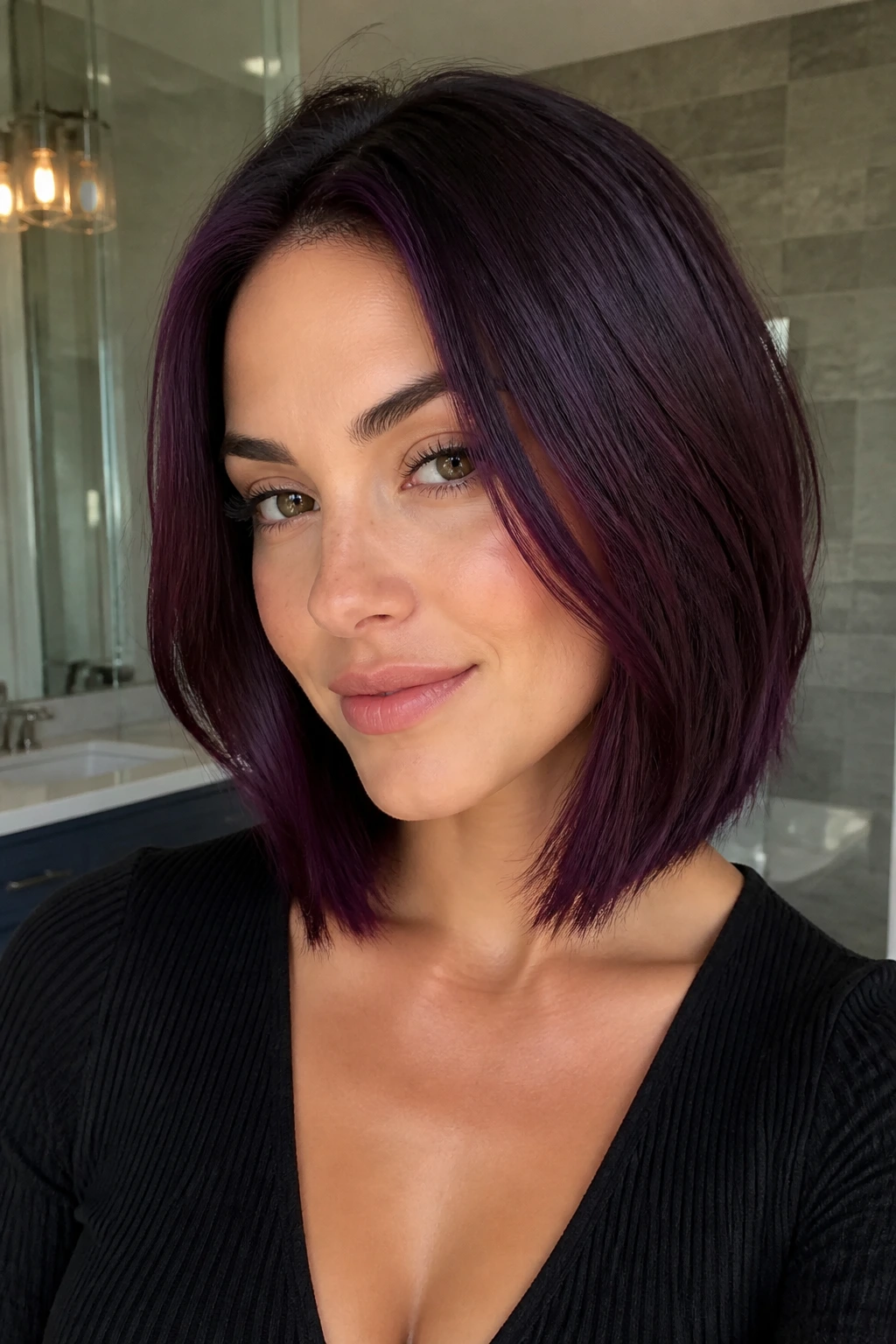
Dark plum on a lob is the practical answer to purple hair. It’s rich, flattering, and far less needy than pale lilac or high-lift violet. Because the tone lives in the darker range, regrowth is easier to hide and fading is less obvious between appointments.
A lob gives the plum enough length to feel feminine but not so much that maintenance becomes a second job. The cut can be straight, waved, or tucked behind one ear; the color still reads. That’s the appeal. You get the mood of purple hair without the constant upkeep of pastel tones.
If someone asked me for one purple look that could survive a real schedule, I’d start here. It’s the least fussy option in the set, and sometimes that’s the smartest one.
Why Purple Undertones Change the Whole Finish
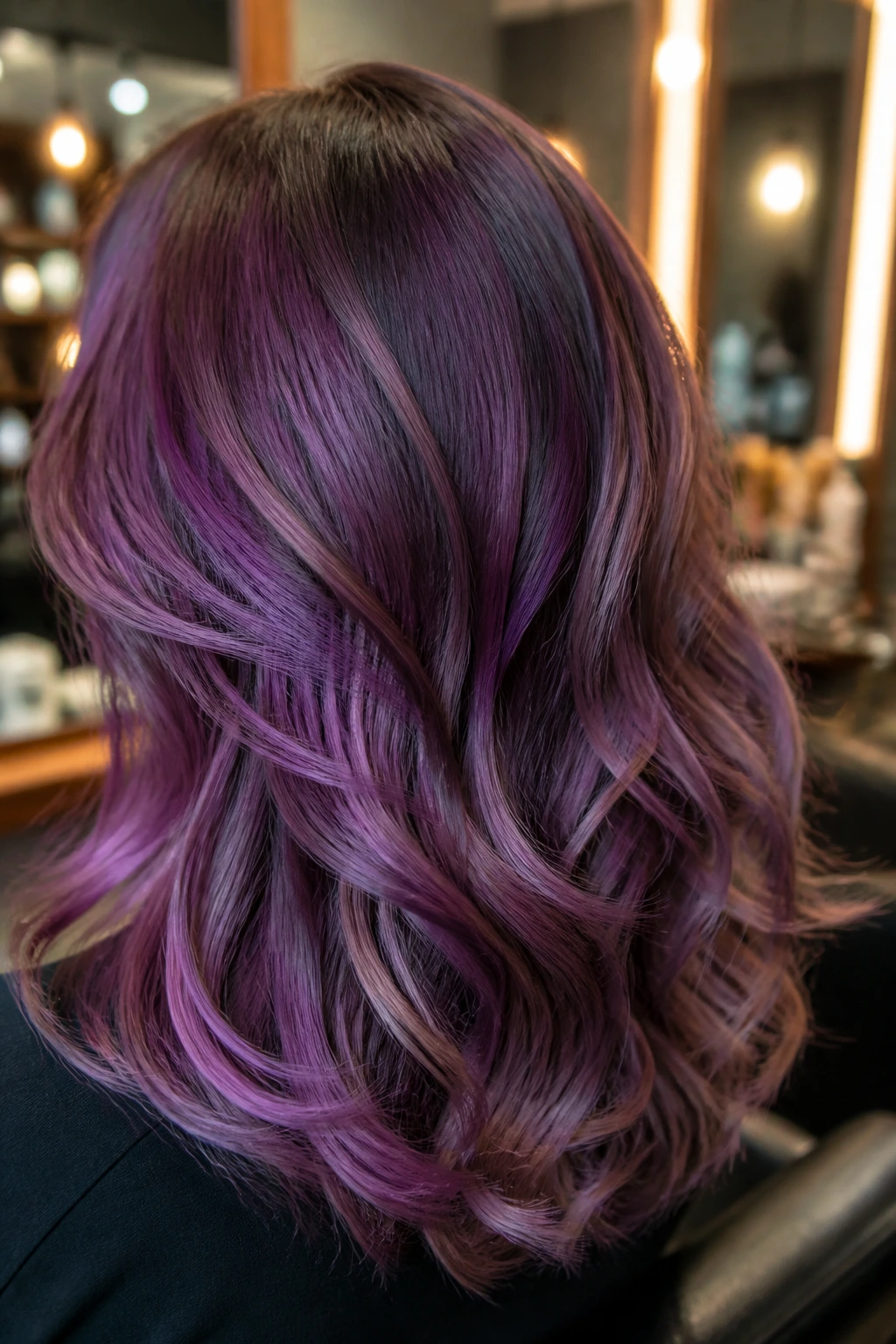
Purple is not one note. Cool violet pulls the hair toward blue, which makes it look crisp and modern. Plum brings red into the mix, which softens the edge and adds depth. Mauve and orchid sit somewhere in between, but they still behave differently once they hit porosity, light, and texture.
That’s why two women can wear the same tube of dye and get two different outcomes. One head of hair might go smoky and elegant. Another might lean bright and candy-like. The starting level matters, and so does warmth left behind after lightening. If the hair still has orange in it, cool purple can turn weird fast.
I prefer purple shades with a little strategy behind them. The right undertone can make a bob look denser, a long wave look shinier, or a curl pattern look more defined. The wrong one can make expensive color look flat. It’s a small detail on paper. In real life, it changes everything.
Matching Purple Hair to Your Base Color and Skin Tone
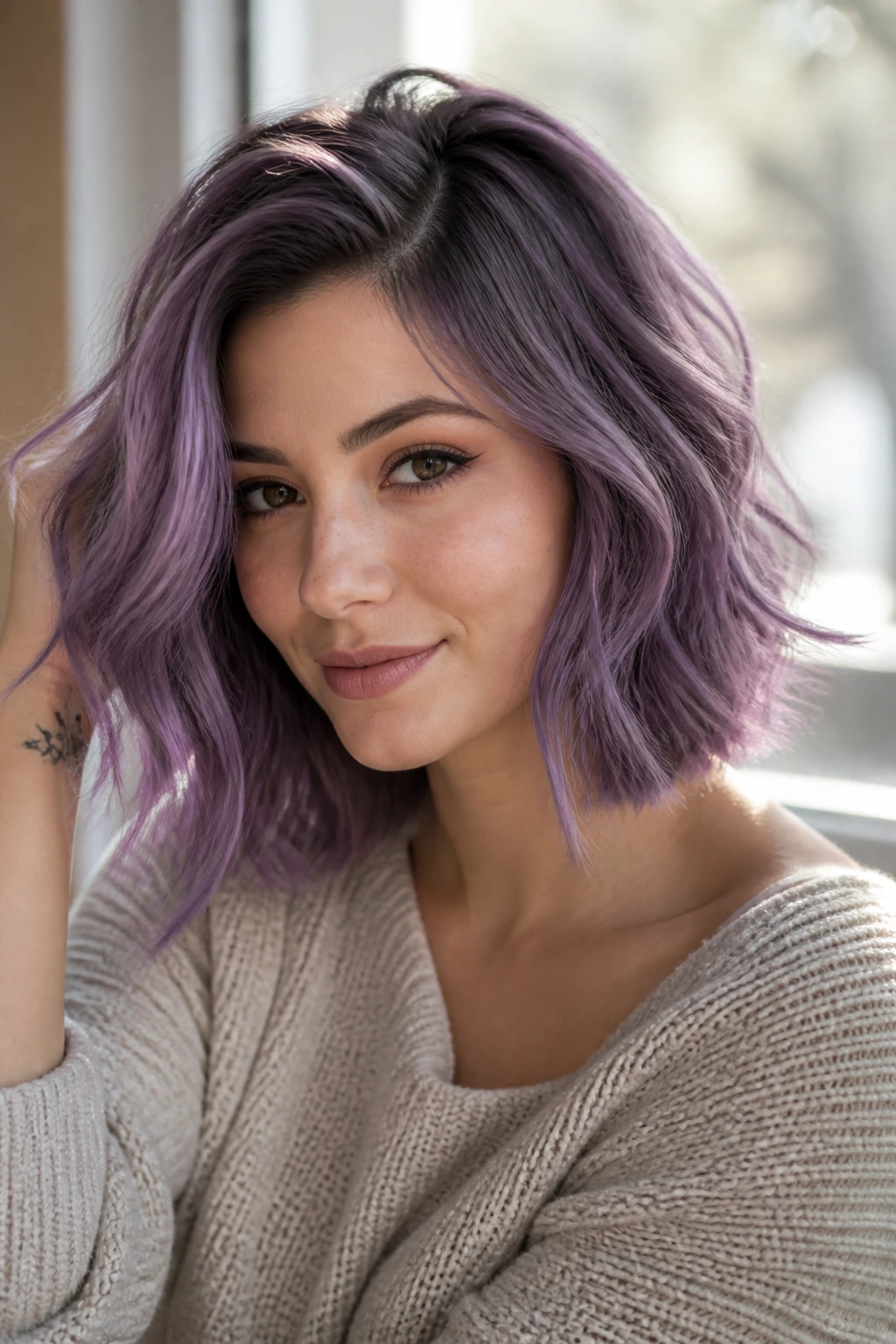
Brunettes usually do best with plum, mulberry, or deep violet because those shades hold their shape without needing a full bleach job. On darker bases, a muted purple can look richer than a pastel ever will. Blondes have more room to play, but they also need cleaner toning or the result goes yellow and the purple starts drifting.
Skin tone matters less than people pretend and more than they think. Cool-toned skin often likes violet, orchid, and smoky lilac because the shades echo the undertone. Warm skin can look fantastic in berry-purple, plum, and mauve because the red in the color keeps the face from going gray. Neutral skin gets the easy pass — most shades can work if the depth is right.
A good rule: if the hair color feels too icy, add red-violet. If it feels too muddy, add cleaner blue-violet. That tiny shift can rescue a whole appointment.
What to Tell Your Colorist Before the Foils Come Out
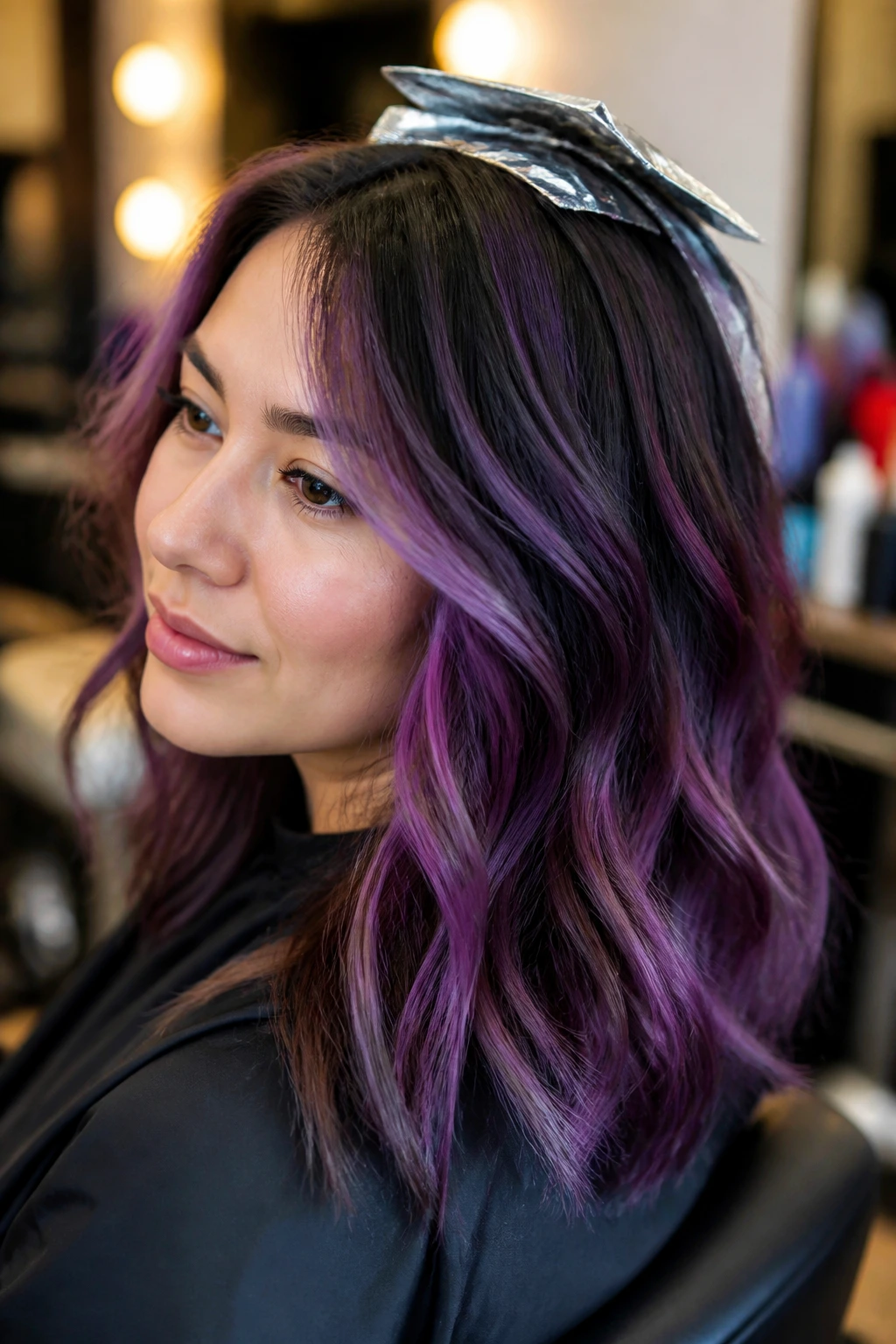
Bring photos, yes, but bring ones that show the color in daylight and indoor light. Those two views tell a much better story than a filtered selfie. If you want lilac, say whether you want dusty lilac or bright candy lilac. If you want plum, say whether you mean wine-dark or true violet. Color words get sloppy fast.
Tell your colorist how much maintenance you’ll actually tolerate. A full pastel head can ask for refreshes every 2 to 4 weeks, while a rooted plum melt can survive much longer. That detail changes the formula, the placement, and even the cutting plan.
And say what your hair has already been through. Old box dye, metallic black dye, repeated bleach, hard water buildup — all of it matters. A purple result is only as clean as the base underneath it.
How to Shop for Purple Dye and Care Products Without Guessing
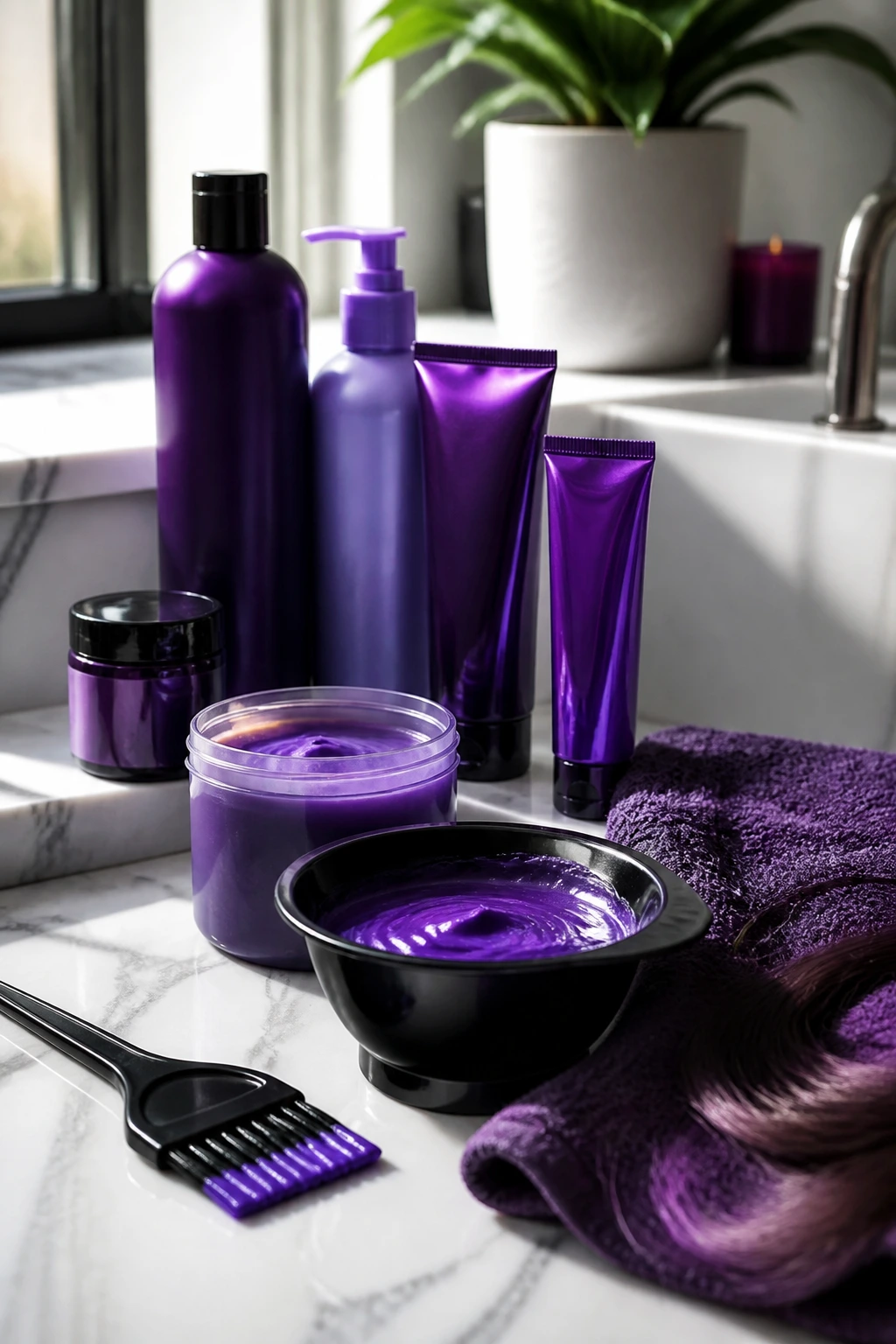
Purple color shopping goes smoother when you know which category you need. Direct dyes and semi-permanent colors sit on the cuticle and fade with washing, which makes them ideal for vivid violet, lilac, and orchid. Demi-permanent glosses are better when you want shine, softer plum, or a toned brunette with a purple cast. Permanent color belongs in a salon plan, especially if you’re lightening first.
Look at the base level on the box or product description. If your hair is level 5 or darker, pastel purple will not magically show up without lift. If your hair is already pale yellow, a pastel direct dye can take beautifully. That gap between your base and your goal is where most at-home mistakes happen.
For care, skip the bargain shampoo that leaves hair squeaky and stripped. You want a color-safe, sulfate-free shampoo, a rich conditioner, and a mask or color-depositing conditioner that matches the tone you’re trying to keep. If you’re bleaching, a bond-building treatment is worth the cabinet space. It does not fix damage, but it can help hair hold together better between lightening sessions.
Essential Tools for These Looks
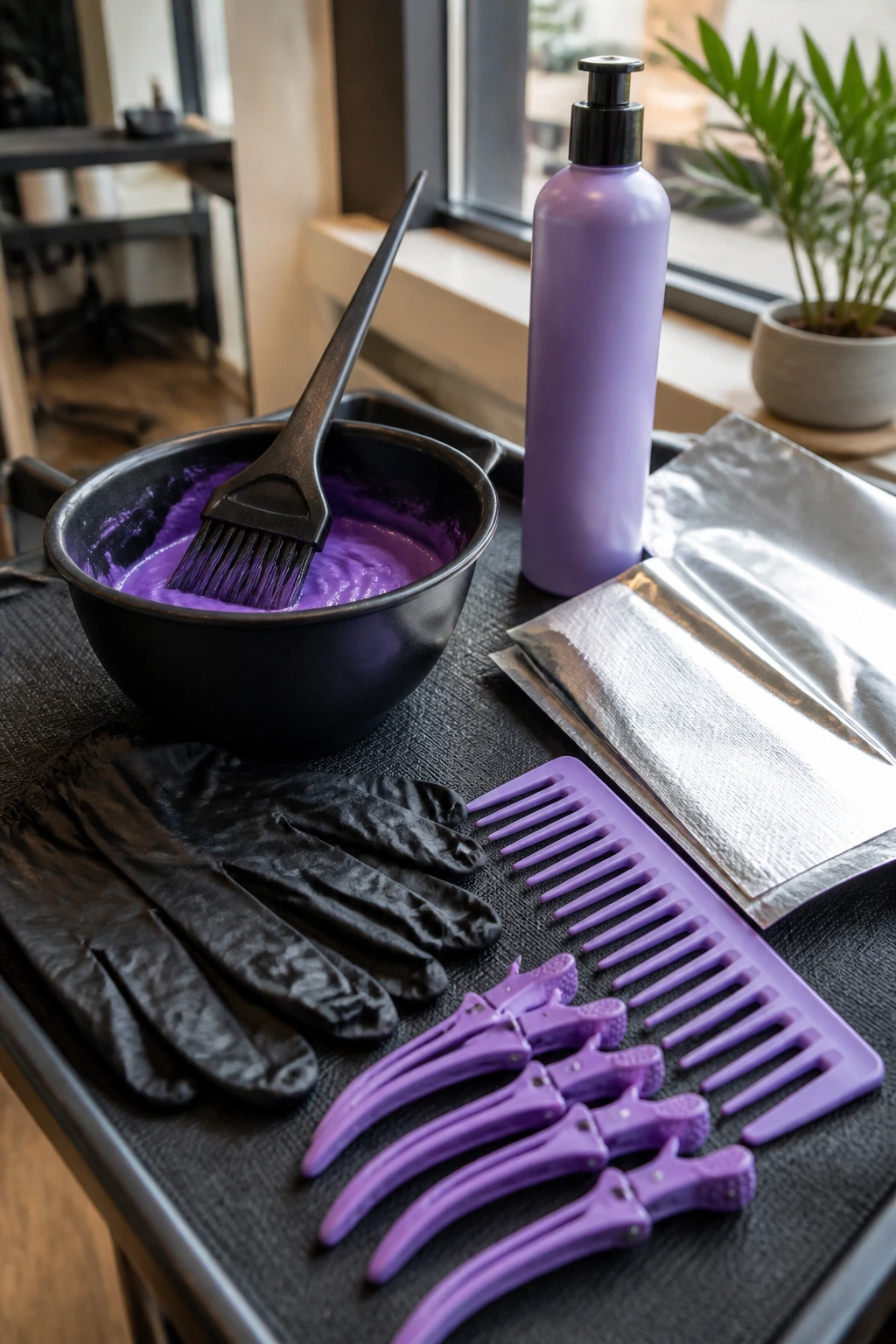
- Tint bowl and tint brush: Useful for direct dye, root shadow, and face-framing pieces.
- Gloves: Purple pigment stains everything, including the backs of your hands.
- Sectioning clips: Clean parting makes balayage, money pieces, and split dye much easier.
- Wide-tooth comb: Better than a fine comb for distributing color through curls or coils.
- Foils or balayage board: Helpful when you want crisp placement instead of a blended haze.
- Color-safe shampoo and conditioner: These keep the tone from disappearing too fast.
- Bond-building treatment: Handy if the hair has been lightened and needs some support.
- Heat protectant: Purple fades faster under repeated heat styling.
- Satin pillowcase or bonnet: Reduces friction and helps preserve color on textured styles.
- Clarifying shampoo: Use sparingly, only when product buildup is blocking the tone.
How Purple Hair Changes the Way You Style Everything Else
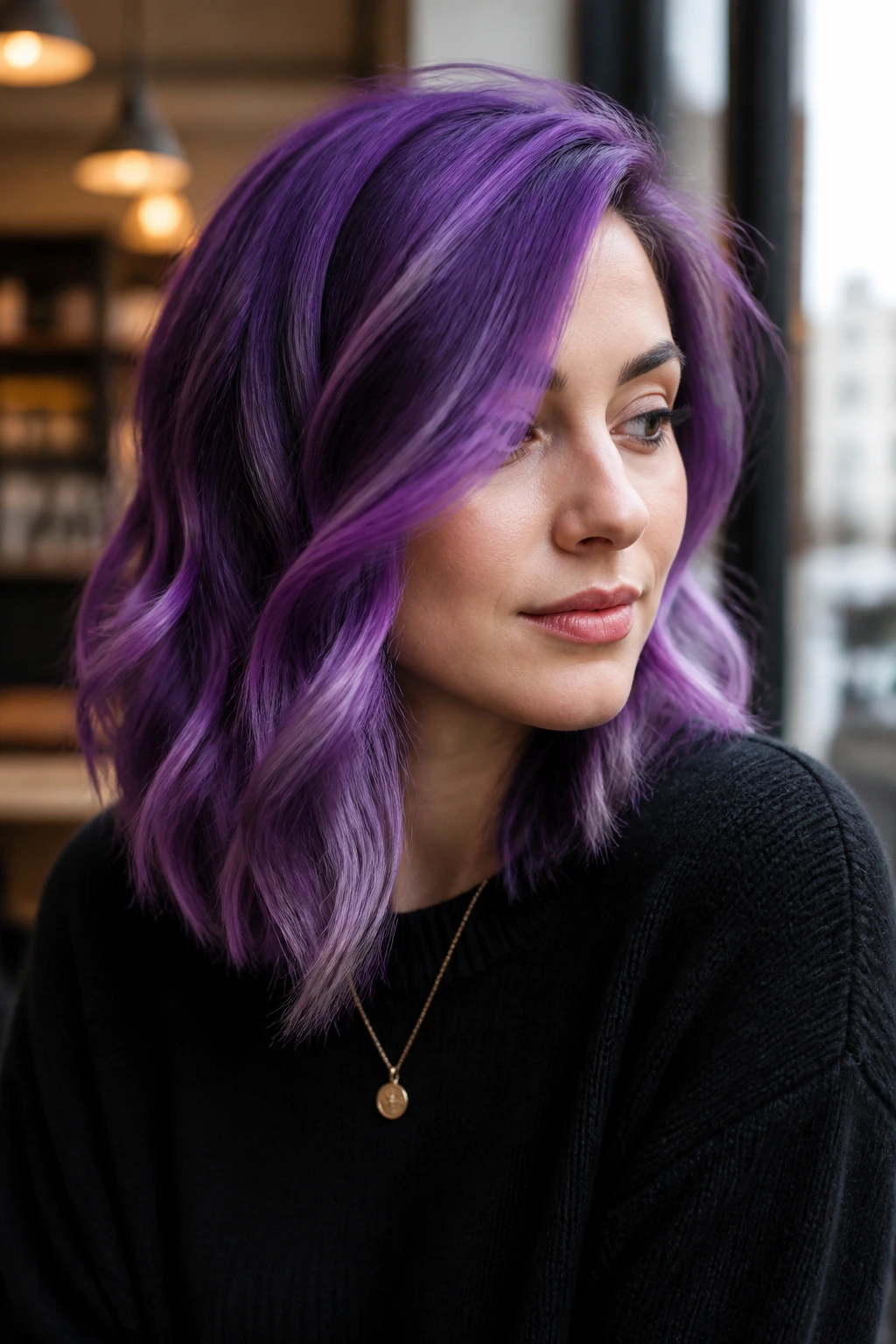
Presentation: Wear the color with a part that shows the tone you paid for. A deep side part gives plum more weight; a center part makes split dyes and money pieces look more graphic. If the cut is blunt, keep the styling smooth. If the cut is layered, let the texture move.
Pairings: Purple hair plays nicely with black, cream, denim, silver jewelry, and makeup that has one matching note — a violet liner, a berry lip, or a soft mauve blush. You do not need to match the hair exactly. That gets old fast. Better to echo the tone once and let the rest stay clean.
Intensity: If the color is loud, keep the makeup simpler. If the purple is muted, you can push the eyes or lip a little harder. The hair already has opinion; the rest of the look can decide how much to join in.
Occasions: Deep plum, eggplant, and smoky violet slip into daily life more easily than many people expect. Pastel lavender and split dye ask for a little more confidence, sure, but they’re still wearable once the outfit stops fighting them.
Additional Tips for Richer Purple and Cleaner Fade-Out
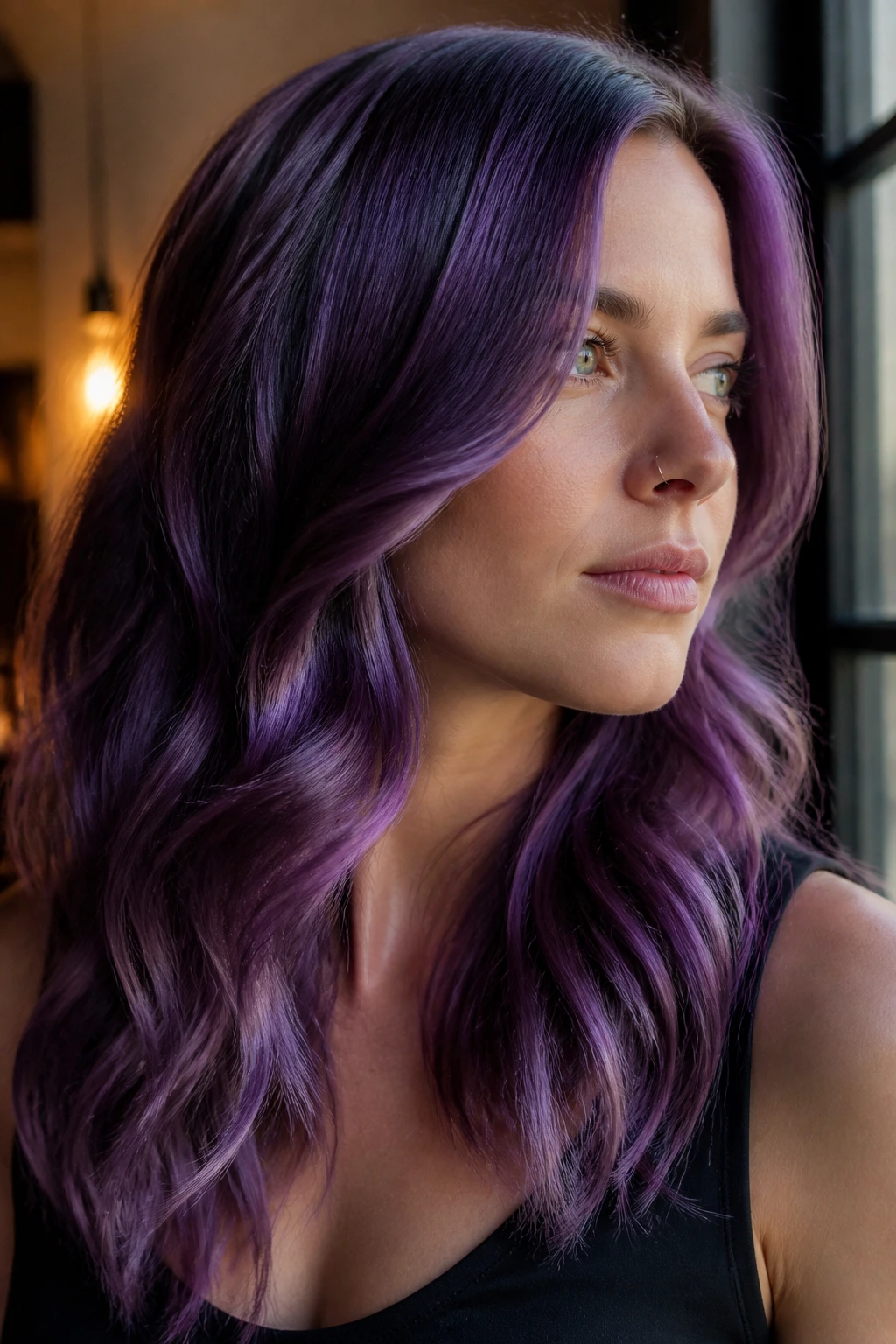
Gloss Boost: A clear or tinted gloss can keep plum, amethyst, and violet looking shiny between full color appointments. On dark purple hair, gloss matters almost more than the dye itself because dull ends kill the effect.
Customization: Add a little blue-violet to cool down orchid, or a touch of red-violet to warm up lilac. That one shift changes whether the result feels frosty or plush. It’s the difference between hair that looks painted on and hair that looks like it belongs on your head.
Serving Suggestions: Soft waves show the color better than stiff curls on most purple looks. For straight styles, tuck one side behind the ear or clip the bangs back for a second and let the face-framing pieces show. Small moves. Big payoff.
Make-It-Yours: If you need low maintenance, keep the root darker and place the purple only through the mids and ends. If you want bolder impact, push the violet closer to the face and add a money piece. If your hair is textured, let the color follow the curl pattern instead of fighting it.
Maintenance, Fading, and Re-Toning
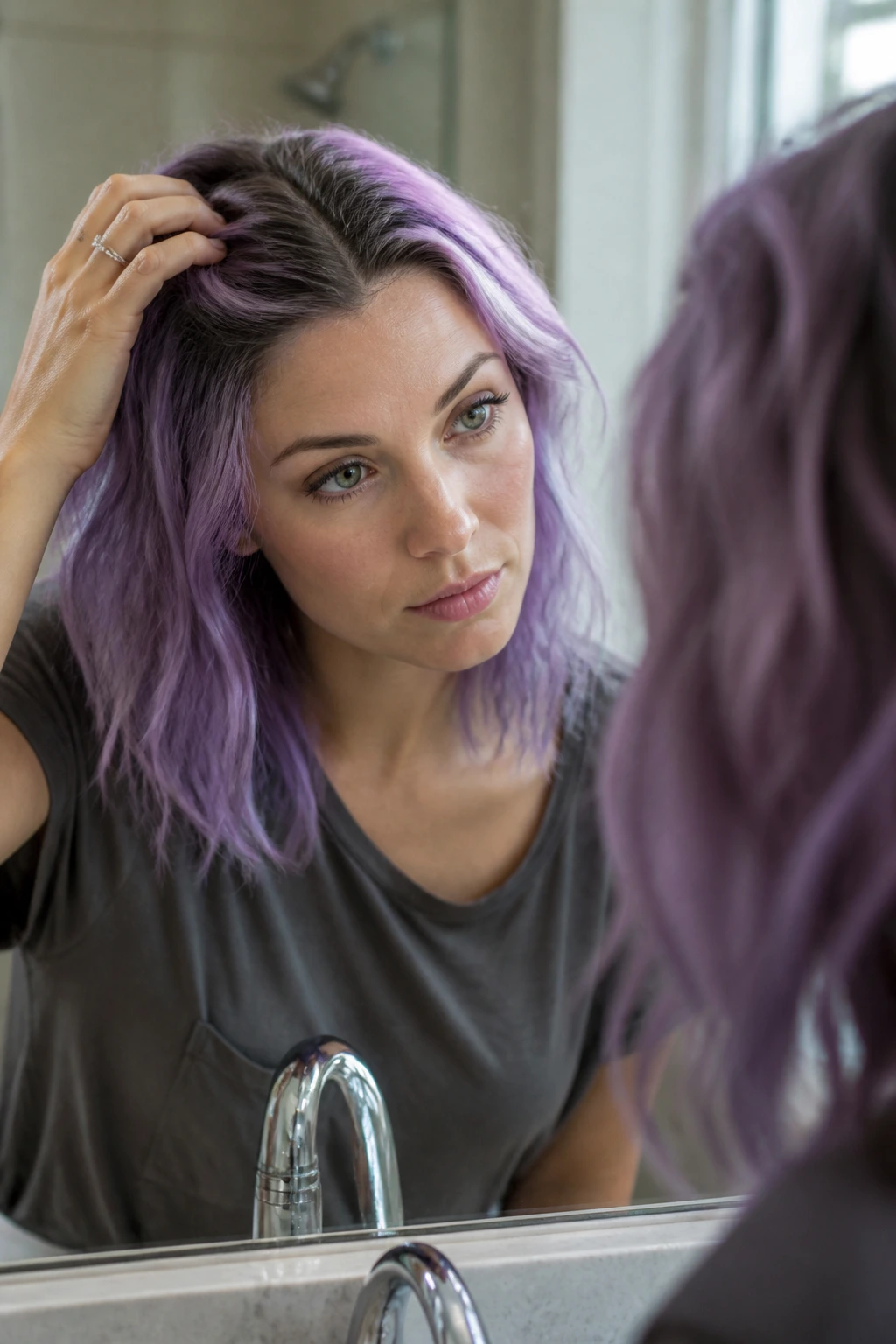
Purple fades faster than brown, and faster still on porous, pre-lightened hair. That isn’t a flaw. It’s the deal you make when you choose a pigment with this much personality. On semi-permanent color, expect the brightest tone to soften after a few washes, especially if you wash with hot water or use shampoo every day.
A good routine is simple: wash 2 to 3 times a week, use cool or lukewarm water, and keep shampoo on the scalp rather than dragging it through the ends. A color-depositing mask every 1 to 2 weeks can extend lilac, orchid, or violet without a full redye. Deep plum and eggplant can usually go longer between refreshes because the fade is less obvious.
If you bleach first, plan for root touch-ups and toning on a schedule that matches your chosen look. Pastels may need refreshing every 2 to 4 weeks. Darker purple melts can stretch longer, sometimes 6 to 8 weeks or more, depending on the hair and how often you heat-style it.
Common Mistakes That Flatten Purple Hair
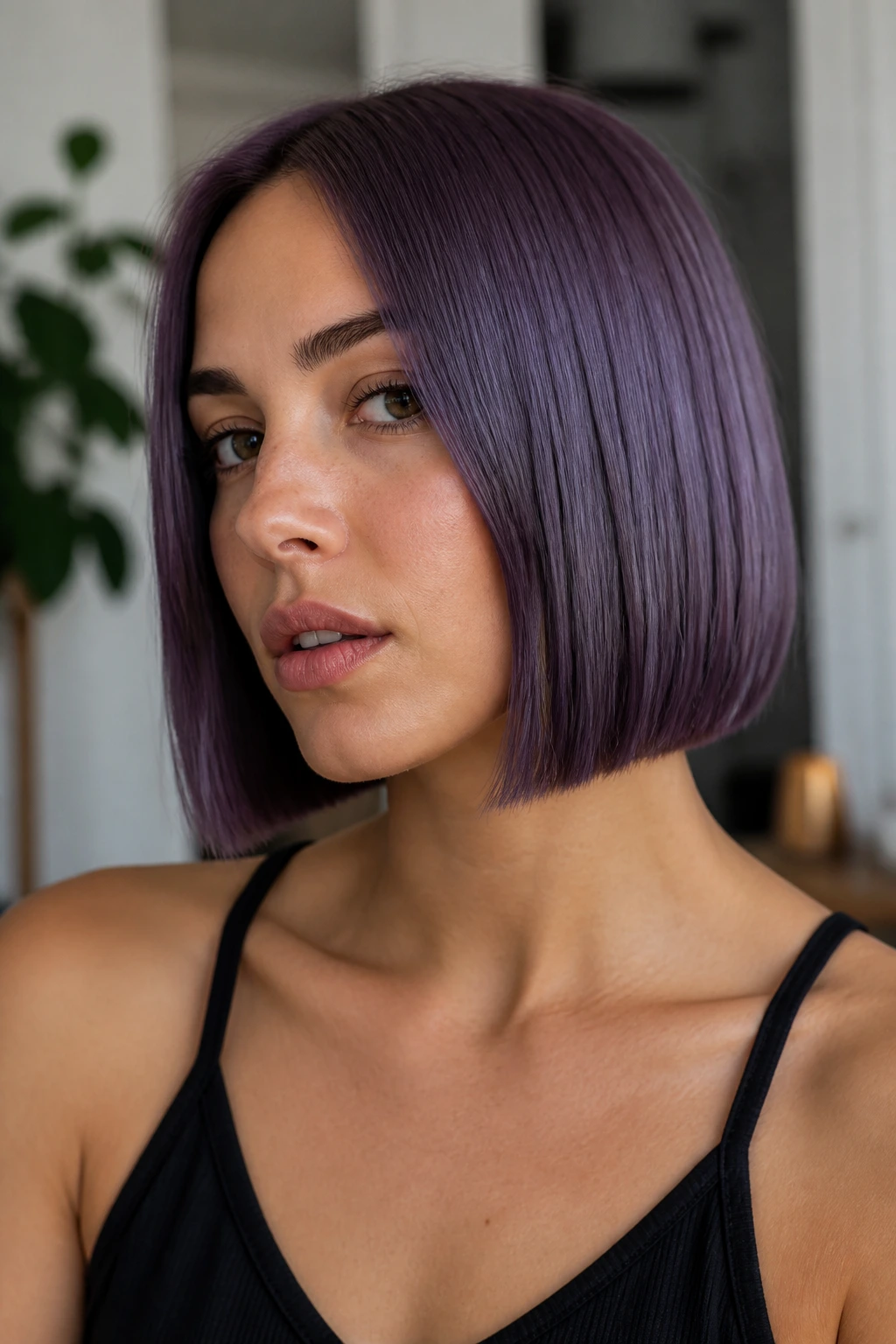
- Using the wrong base level: Lilac over orange hair turns muddy fast. Fix it by lifting to the right level first or choosing a deeper plum that can handle warmth.
- Picking one purple for every head of hair: A violet that looks sharp on a level 10 blonde can look bruised on brown hair. Match the shade to the starting color, not the photo.
- Washing too hot and too often: Hot water opens the cuticle and drags pigment out sooner. Cool rinses and fewer wash days keep the tone intact longer.
- Using heavy purple shampoo on already-purple hair: That can skew the color gray or dusty. Use color-safe cleansing instead, and save toning shampoos for blond bases.
- Skipping the root plan: A full pastel head with no shadow root grows out hard and looks tired fast. A little depth at the scalp makes the whole style easier to live with.
- Styling damaged ends to death: Purple shows damage fast. If the ends are fried, they’ll go dull and transparent. Trim them or tone them darker.
Frequently Asked Questions
Can you get purple hair without bleaching it first?
Yes, if you want a deeper plum, eggplant, or mulberry tone on brunette hair. Pastel lilac and bright violet usually need a lighter base, because the pigment needs room to show.
What purple shade looks most natural on dark hair?
Plum, blackberry, and midnight violet tend to look the most natural because they sit close to brunette depth. They still read as purple, but they don’t scream for attention in harsh light.
Will purple hair fade into an ugly color?
It can fade into a muted lavender, dusty mauve, or soft gray-violet if the base was clean. If the hair was too warm underneath, it may go muddy or brownish. The prep matters more than the dye bottle.
How often do purple roots need touch-ups?
That depends on the shade. Pastels and bright lilacs may need work every few weeks, while rooted plums and dark violets can stretch much longer. A darker root shadow makes growth less obvious either way.
Can I go from purple back to blonde easily?
Not easily. Purple pigments can stain porous hair, especially lighter ends. A color remover, several rounds of gentle cleansing, or a salon correction may be needed before blonding again.
What’s the best purple look for curly hair?
Multitone shades like galaxy purple, blackberry, or amethyst highlights tend to look strongest on curls because the pattern shows off different tones at once. Flat, one-note purple can disappear more quickly in dense texture.
Does purple hair work on a corporate haircut?
Yes, if you choose a deeper shade and a controlled placement. A plum bob, violet money piece, or dark rooted melt can look polished rather than wild, especially with a clean cut.
How do I stop purple from bleeding onto clothes and pillowcases?
Rinse very well after coloring, keep the hair dry before sleep, and use a satin pillowcase. The first few washes are the messiest, so dark towels and old tees are smart for a while.
Purple Hair That Feels Intentional
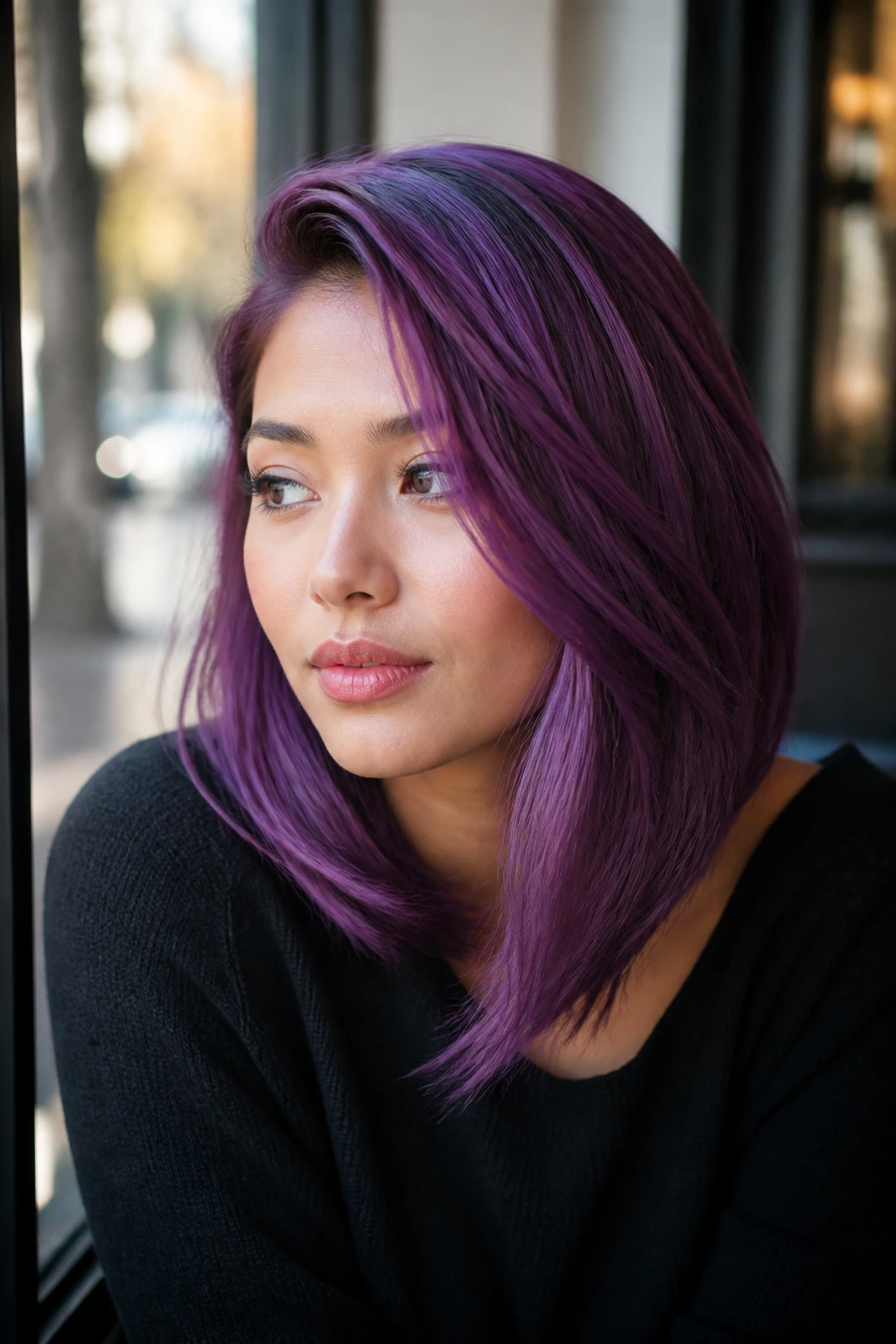
Purple hair works best when the shade, the cut, and the maintenance plan agree with each other. A smoky bob wants precision. A lilac balayage wants lightness. A deep plum lob wants shine and a little restraint. When those parts line up, the color stops looking like a risk and starts looking like a choice.
That’s the difference between hair color that fades into the background and hair color that gives a person shape. Purple has range. Pick the version that fits your base, your texture, and the amount of upkeep you’ll actually do, and the whole thing gets easier from there.
