



Thick hair doesn’t sit still for long. It stacks, swells, and pushes back the second a blunt cut runs out of structure. A good pixie bob for thick hair works with that behavior instead of fighting it. The nape gets cleaned up, the crown gets room to breathe, and the ends stop sitting there like one heavy shelf.
That’s the difference between a short haircut that feels cute for one week and a short haircut that actually keeps its shape. With dense hair, the trick is not removing everything. It’s removing the right things: bulk around the ears, excess weight in the back, and that puffy triangle that shows up when the layers are too cautious.
The 25 shapes below lean in different directions—sharp, soft, curly, polished, piecey, grown-out, and a little messy on purpose. Some keep more length at the jaw. Some carve the nape short and clean. All of them give thick hair somewhere to go.
Why These Cuts Work So Well on Dense Hair
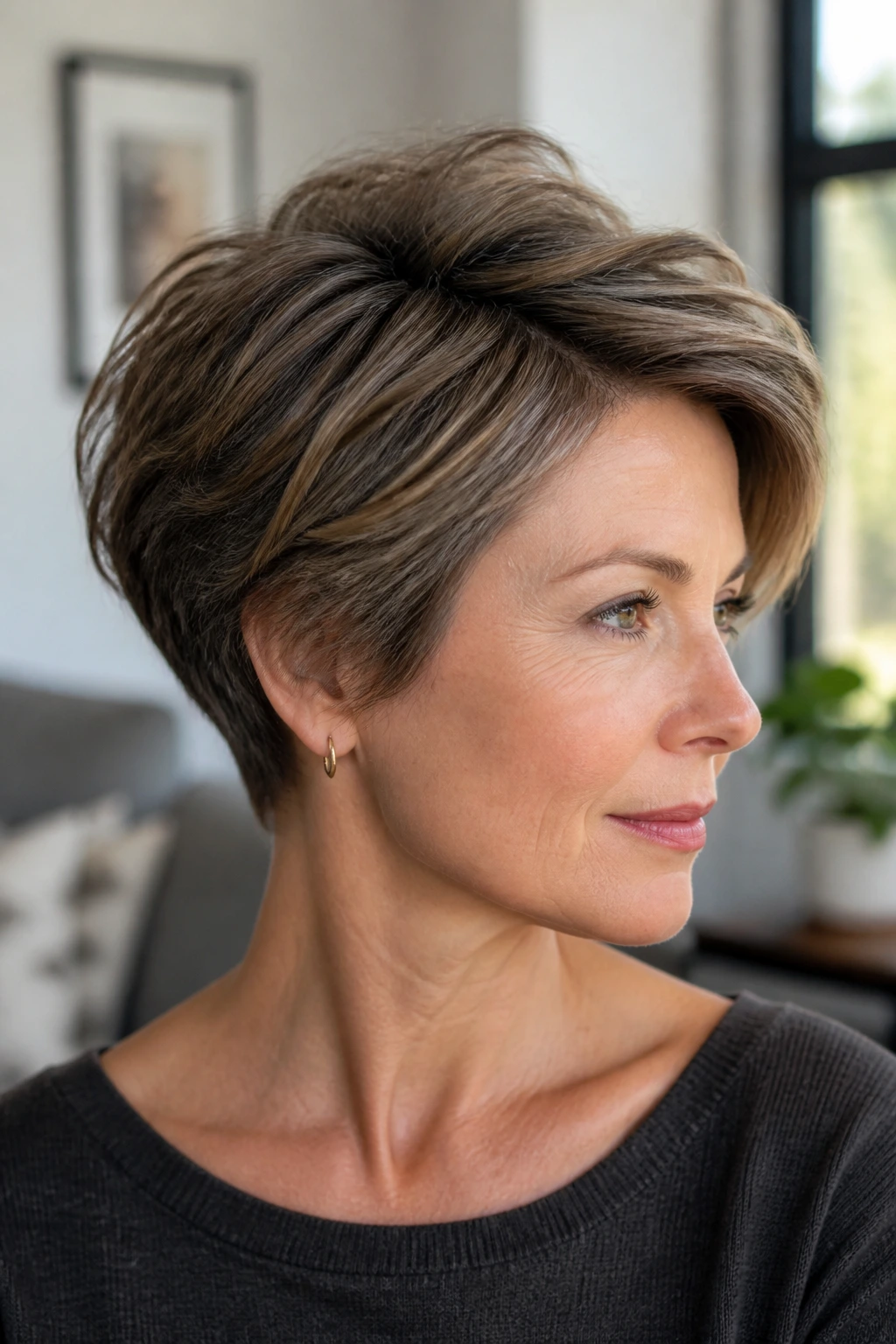
- They control bulk without flattening the head: Thick hair needs movement in the mid-lengths, not a blunt shelf that kicks out at the sides.
- They keep the crown from collapsing: A little shorter length up top gives lift, which matters more on dense hair than people think.
- They grow out with structure: The best pixie bob shapes still look intentional when the salon visit is a few weeks behind.
- They work with texture instead of against it: Straight, wavy, and curly hair all get a different finish, but the same cut logic holds.
- They make the neckline look clean: That tidy nape is the part that keeps the cut from looking heavy.
1. Choppy Crown Pixie Bob
A choppy crown pixie bob is the one I reach for when thick hair feels too broad through the top. The crown is cut with a little more lift, the ends are sliced into irregular pieces, and the whole shape reads light without going wispy. It’s not precious. It has some edge.
Why It Flatters Dense Hair
The choppiness breaks up the visual mass that thick hair can create, especially at the top and through the upper sides. Instead of one solid block, you get little shifts in length that let the hair sit down with more movement. A matte paste or light texturizing cream keeps the crown separated; a heavy balm will drag it flat by lunch.
- Ask for point cutting through the top so the ends don’t look blunt.
- Keep the nape a touch shorter than the crown.
- Style with a pea-sized amount of paste, not a palmful.
- Blow-dry with the dryer pointed up at the roots for 30 to 45 seconds.
If your hair has a lot of body and tends to flare outward, this shape is a very good place to start. It gives thick hair a little attitude without asking you to fight the texture every morning.
2. Stacked Nape Pixie Bob
This is the cleanest-looking version in the group. The back rises in soft layers, the neckline stays tucked in, and the front can stay a little longer so the cut doesn’t feel too severe. On thick hair, that stacked back does real work. It keeps the silhouette from turning boxy.
The best stacked nape versions don’t overdo it. You want a gentle curve, not a mushroom cap. A good stylist will remove weight under the top layer and leave enough length at the crown so the shape slopes instead of puffing. It’s a quiet cut, but it has manners.
Styling note
Use a round brush only at the back if you need polish. The rest can air-dry or get a rough blow-dry with a nozzle. The point is to keep the back snug, not helmet-smooth. A little separation at the ends makes the layers look intentional.
3. Side-Swept Fringe Pixie Bob
If your thick hair grows in a way that makes the forehead feel heavy, a side-swept fringe can save the whole haircut. It shifts attention off the center line and gives the front some movement without committing to a full bang.
The fringe should be long enough to bend, not so long that it drops into your lashes all day. On dense hair, the wrong fringe gets bulky fast. I like this shape best when the hairline has a slight bend or cowlick, because the side sweep can work with it instead of arguing.
What to ask for
- A fringe that starts around the eyebrow and angles down toward the cheekbone.
- Light internal layering through the front, not a hard razor carve.
- Enough length near the temple to tuck behind the ear.
This one is especially good if you wear glasses. The sweep keeps the frames from fighting the haircut, and the whole face opens up a bit.
4. Feathered Ends Pixie Bob
Feathered ends change the entire mood of a pixie bob. Instead of a blunt edge that can sit heavy on thick hair, the ends taper softly and move when you turn your head. The cut still has shape, just not that dense little shelf some bobs end up with.
I like feathering on hair that has a lot of natural body but not much curl. It takes the weight off the ends without making the cut look shredded. A light styling cream and a quick blow-dry with fingers is often enough. No need to fuss.
If you want the haircut to feel softer around the jawline, this is one of the better choices. It blurs the outline in a controlled way. That matters more than people think.
5. Shaggy Pixie Bob
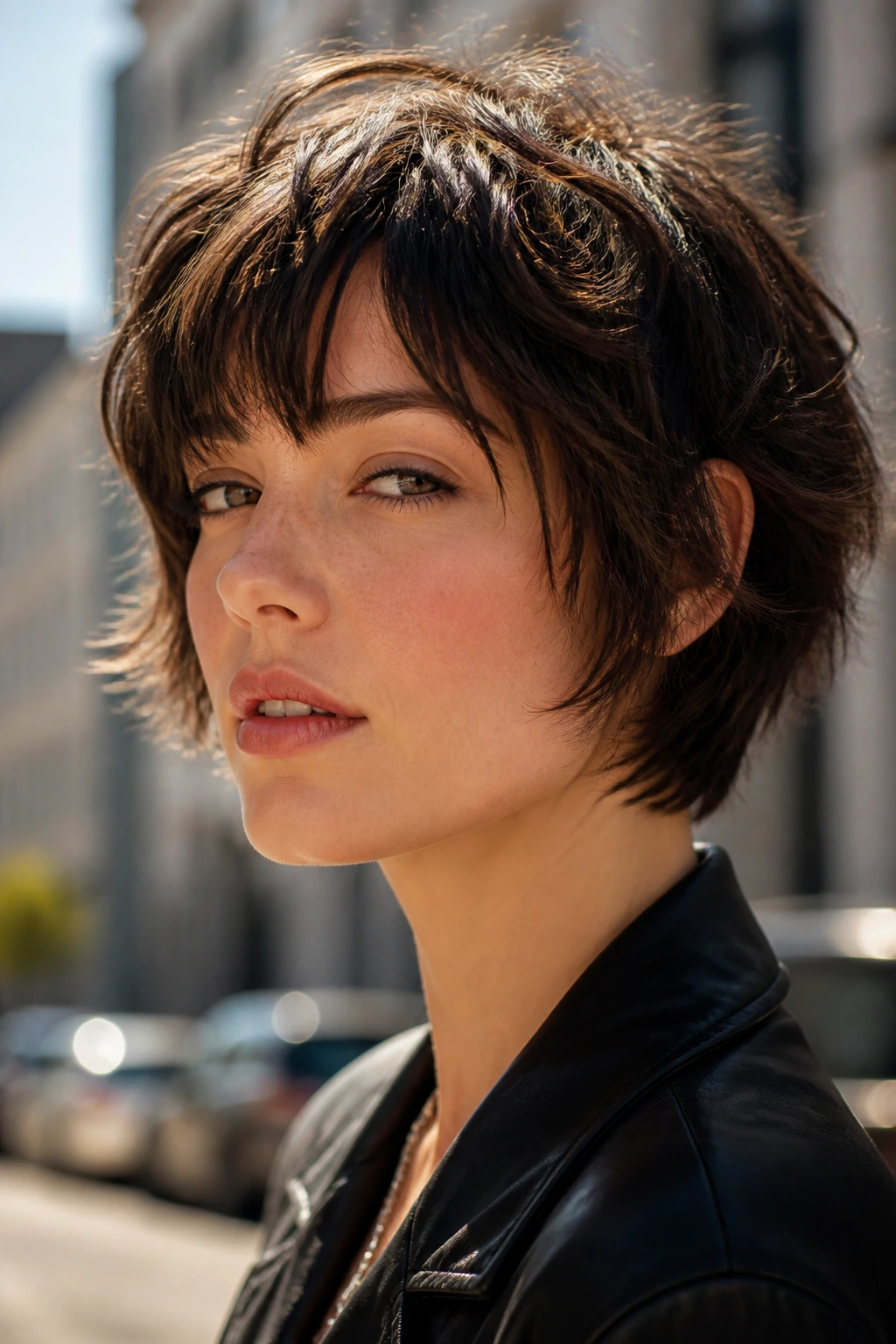
A shaggy pixie bob is for thick hair that already has some attitude and doesn’t need a perfect edge. The layers are a little rougher, the fringe can be piecey, and the overall shape feels lived-in instead of crisp. I prefer this when the goal is movement first, polish second.
The shag effect works because it removes weight in uneven places. Thick hair often needs that imbalance. If every layer is the same length, you get bulk. If the lengths are staggered, the hair breaks up into soft ridges and bends.
Best styling move
Scrunch in a small amount of mousse on damp hair, then dry with a diffuser or just air-dry and finger-comb once. Stop touching it. Seriously. The more you rake through it, the more the thick pieces clump in odd ways.
6. Undercut Pixie Bob
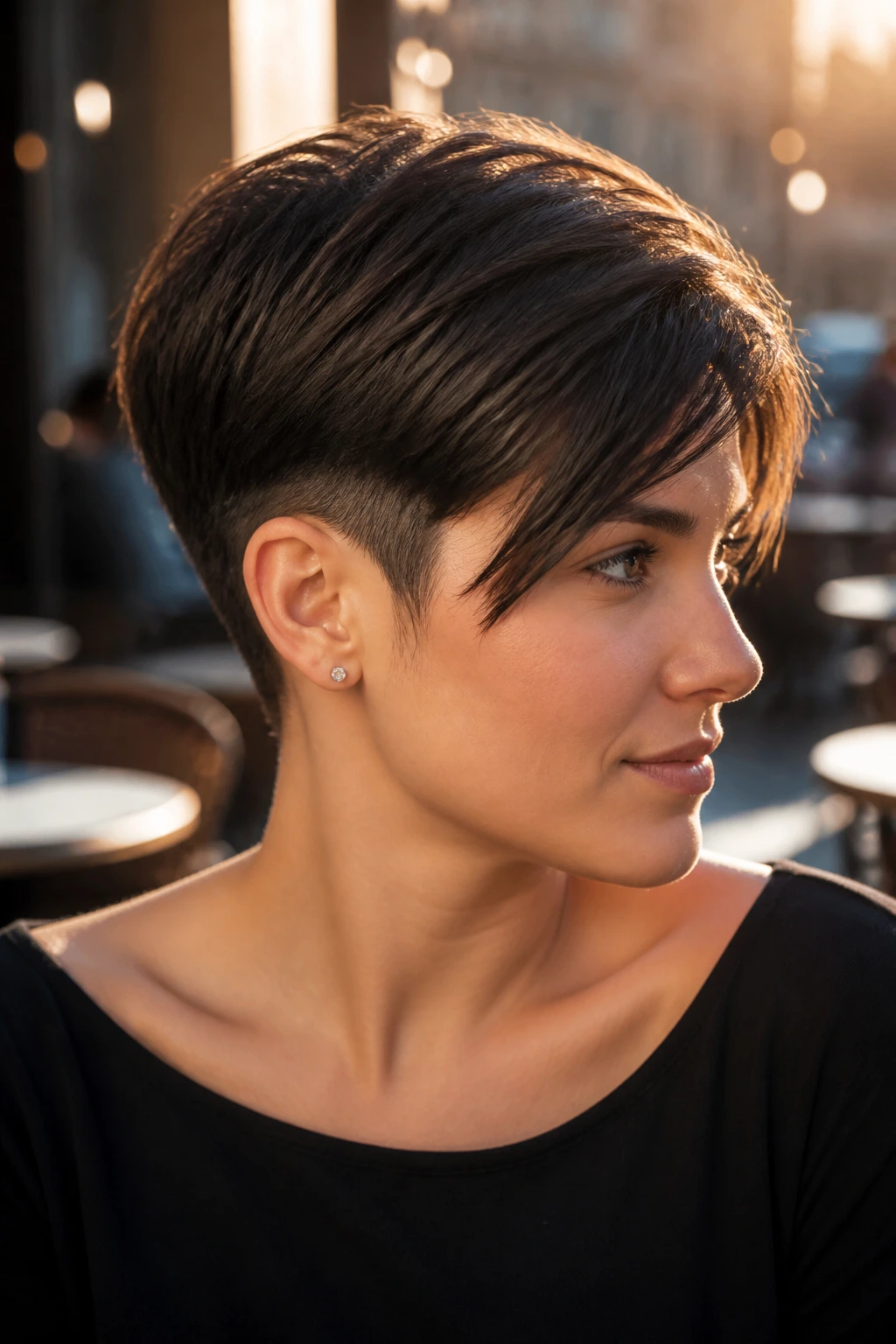
This is the blunt instrument of the group, and I mean that in a good way. An undercut pixie bob removes real bulk from the lower back or under the sides, which can be a relief if your hair is so dense that regular layering barely dents it.
You do need a good stylist for this one. The visible top layer has to be long enough to cover the undercut cleanly, or the cut starts to feel choppy in a bad way. When it works, though, it works hard. The shape looks lighter, and the back lies down instead of flaring.
- Best for very thick, heavy, or coarse hair.
- Good if your nape gets sweaty and puffy fast.
- Not ideal if you want a super soft grow-out.
The maintenance is higher, but the payoff is real. Less bulk. More neck.
7. Curly Pixie Bob
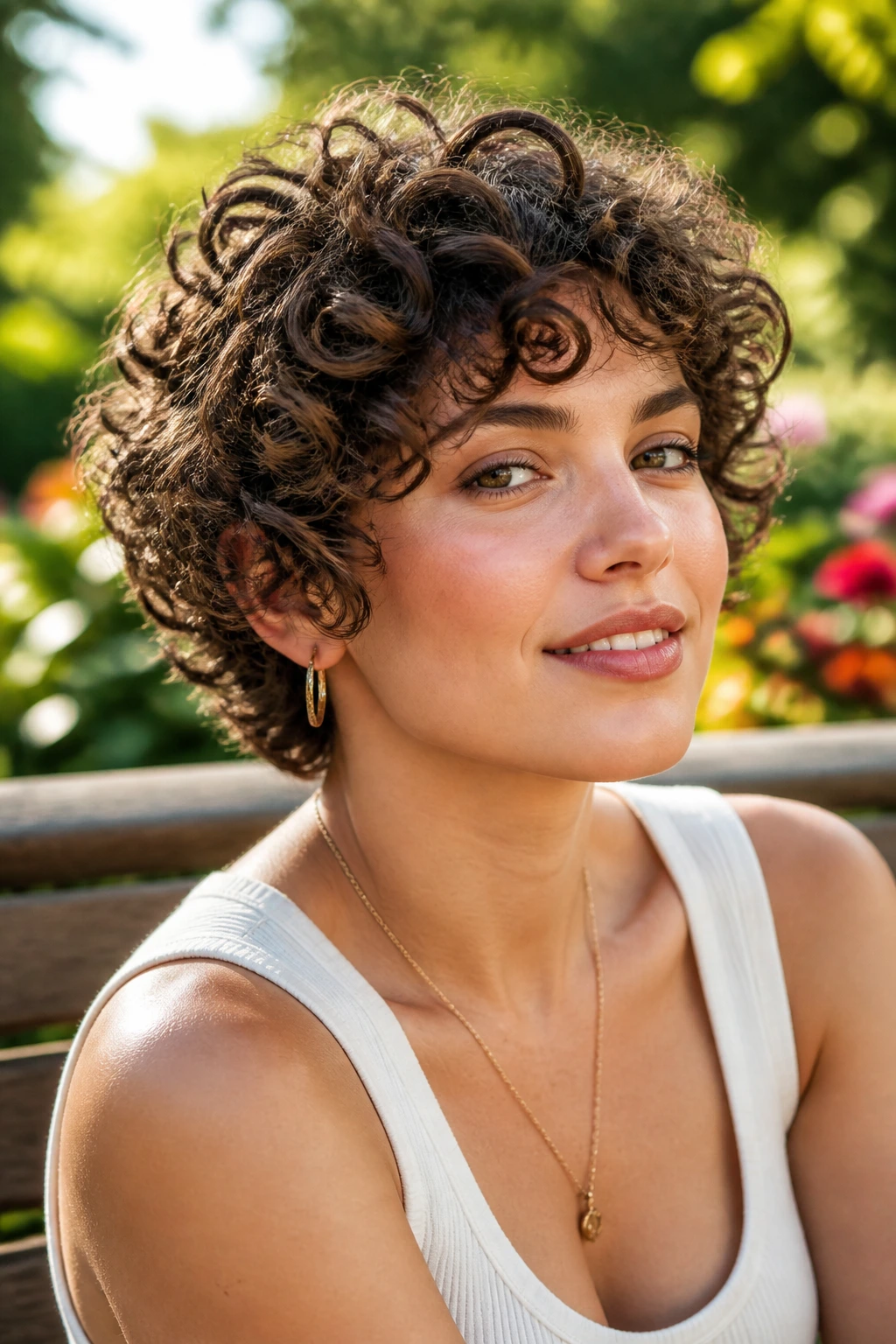
Curly thick hair can wear a pixie bob better than almost any other short cut, because the curl pattern hides the seams. The shape becomes about control, not perfection. A good curly pixie bob keeps enough length to show the curl but trims the sides and nape so the head doesn’t balloon.
The best versions are cut dry or mostly dry so the stylist can see how each curl lands. If you cut curly dense hair wet and too short, you can lose half the shape when it springs up. That’s how people end up with a little puffball they did not order.
Use a light gel or cream-gel mix and let the curls set on their own. Don’t over-diffuse. Don’t over-handle. Curly thick hair wants room and a clean outline, not a fight.
8. Asymmetrical Pixie Bob
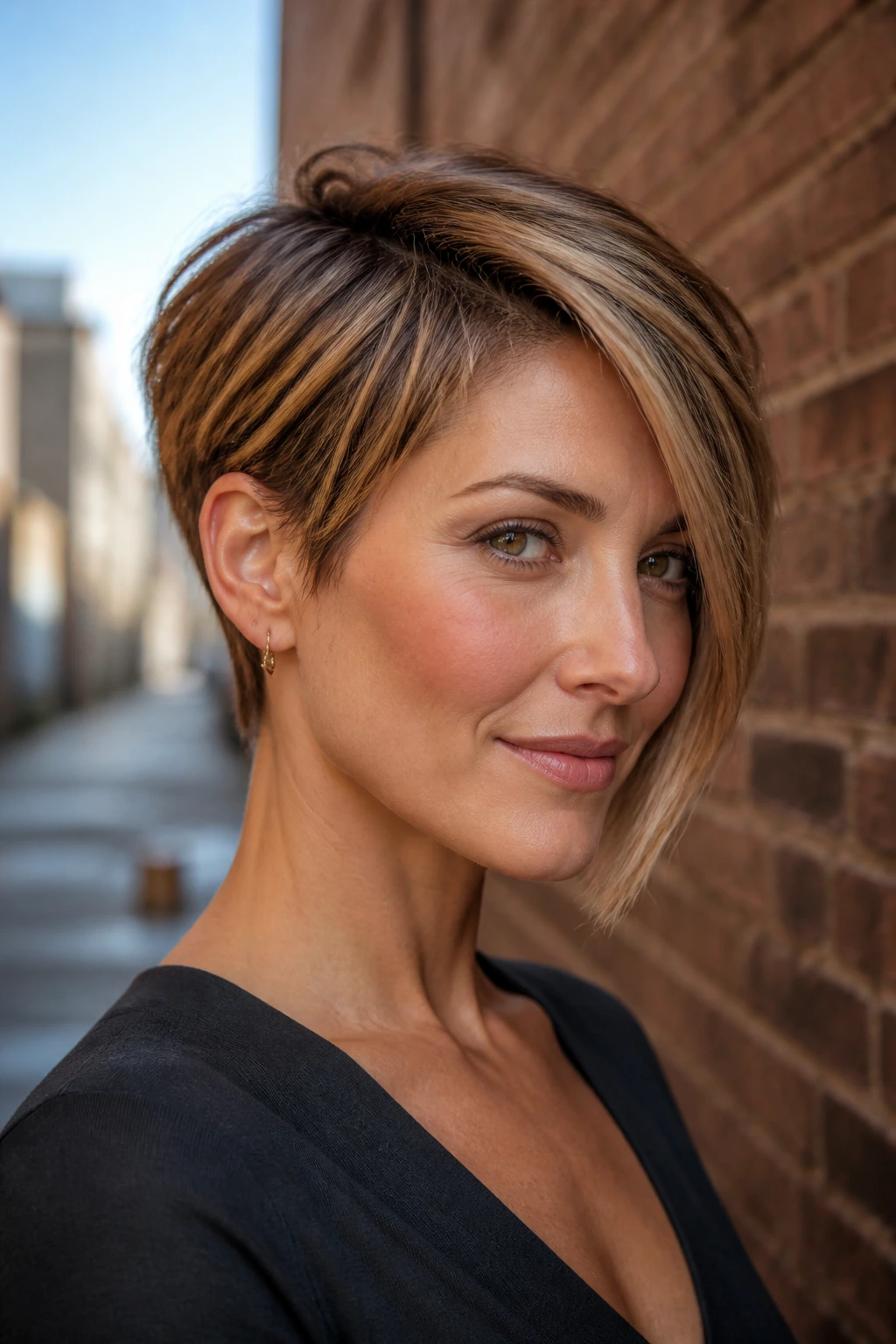
One side a little longer. The other side a little tighter. That small imbalance does a lot for thick hair, because symmetry can make dense hair look heavier than it is. An asymmetrical pixie bob gives the eye something to follow, so the cut feels slimmer without losing substance.
I like this shape when the jawline is strong or the face is rounder and needs a little length through one side. The longer side can skim the cheek, while the shorter side keeps the whole cut from getting too broad. It’s a sharp look, but not a harsh one.
A useful detail
Ask for the longer side to be just a few inches longer, not drastically different. If the gap is too wide, the style starts looking accidental. A small angle is enough.
9. Razor-Piecey Pixie Bob
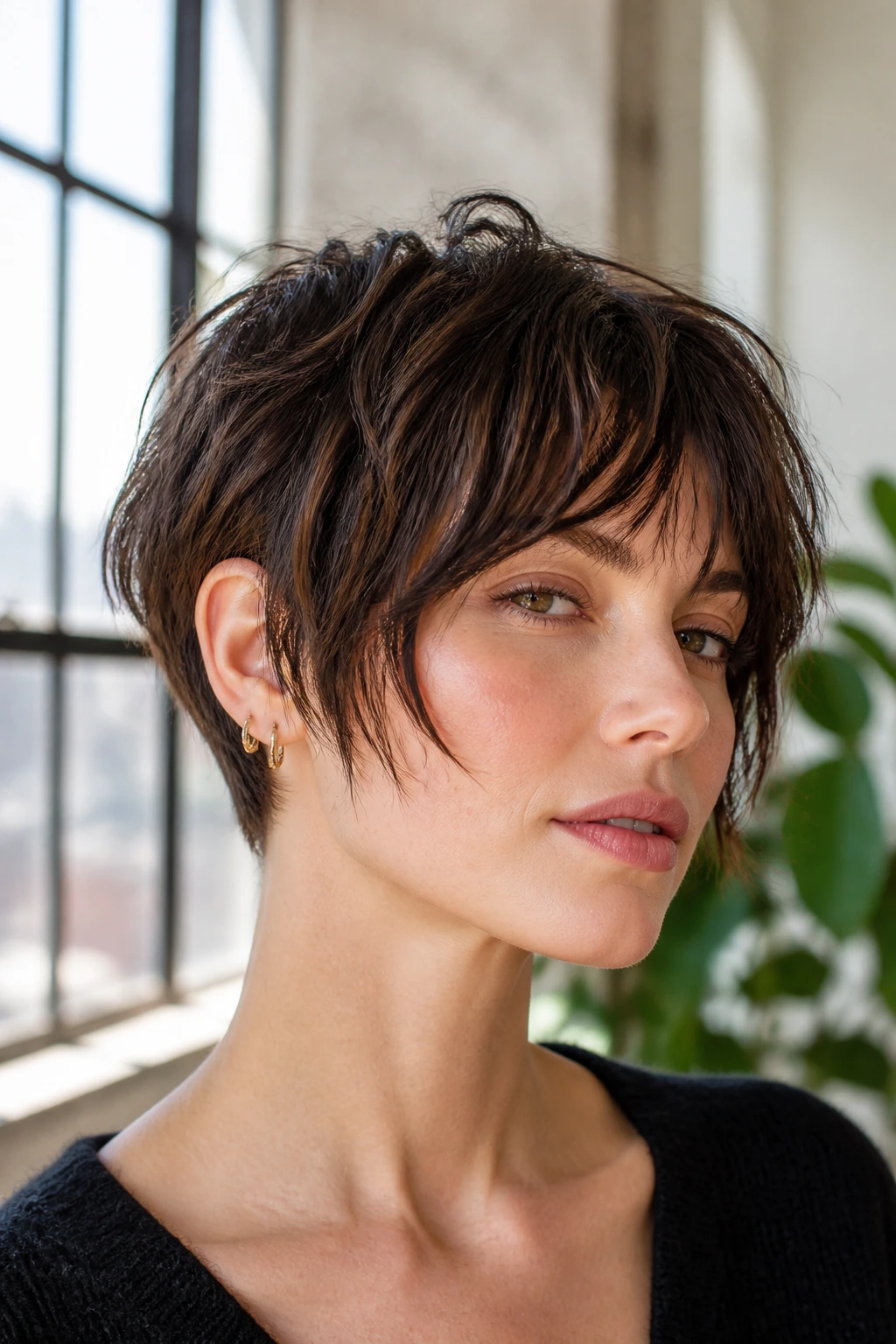
This one lives on separation. The ends are carved into soft, irregular pieces with a razor or slide-cutting technique, which keeps thick hair from forming one dense mass. The result is airy, but still controlled.
Razor work is not for every head of hair. On very coarse texture, it can fray the ends if it’s done badly. But when the stylist knows how much to remove, the cut looks modern and a little undone in the best way. The pieces around the face can flip outward a bit, which keeps the haircut from feeling too neat.
A dab of styling cream on the tips is enough. You want the ends separated, not crunchy. If they look too finished, the cut loses the whole point.
10. Tucked-Ear Pixie Bob
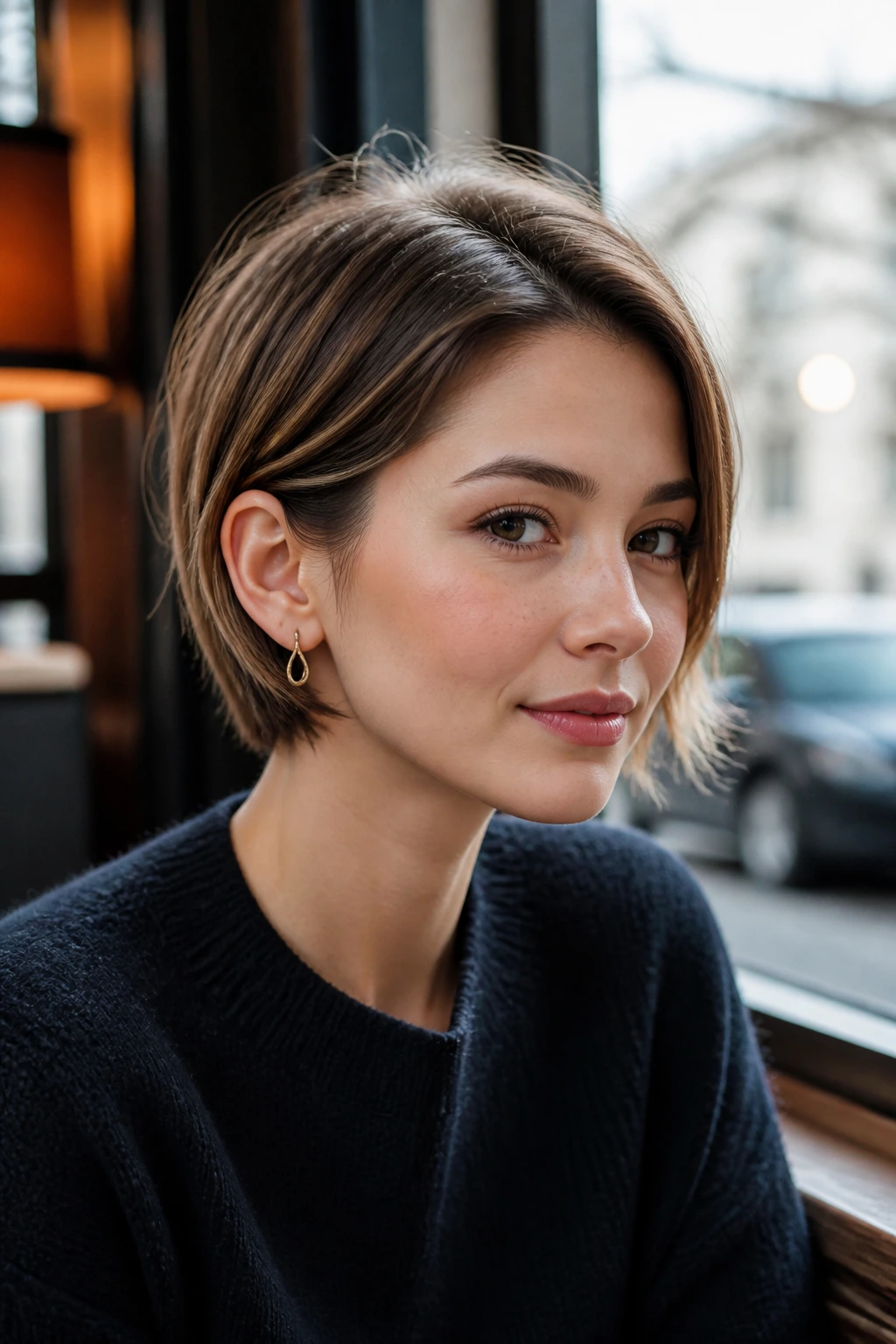
Sometimes the smartest thing a cut can do is leave room for the ears. A tucked-ear pixie bob keeps enough length to brush behind them, which instantly makes thick hair feel less boxy around the face. It’s a small move with a big effect.
This shape is especially nice when the front has a little bit of length at the cheekbone. Thick hair can cast a heavy shadow there if the sides are too full. Letting the hair slip behind the ear opens the face and makes earrings part of the look, not an afterthought.
Good pairing
- Small hoops
- Flat studs
- Glasses with thin or medium frames
The cut looks best when the ends are not too blunt. A soft bevel keeps the tucked shape from looking stiff.
11. French Crop Pixie Bob
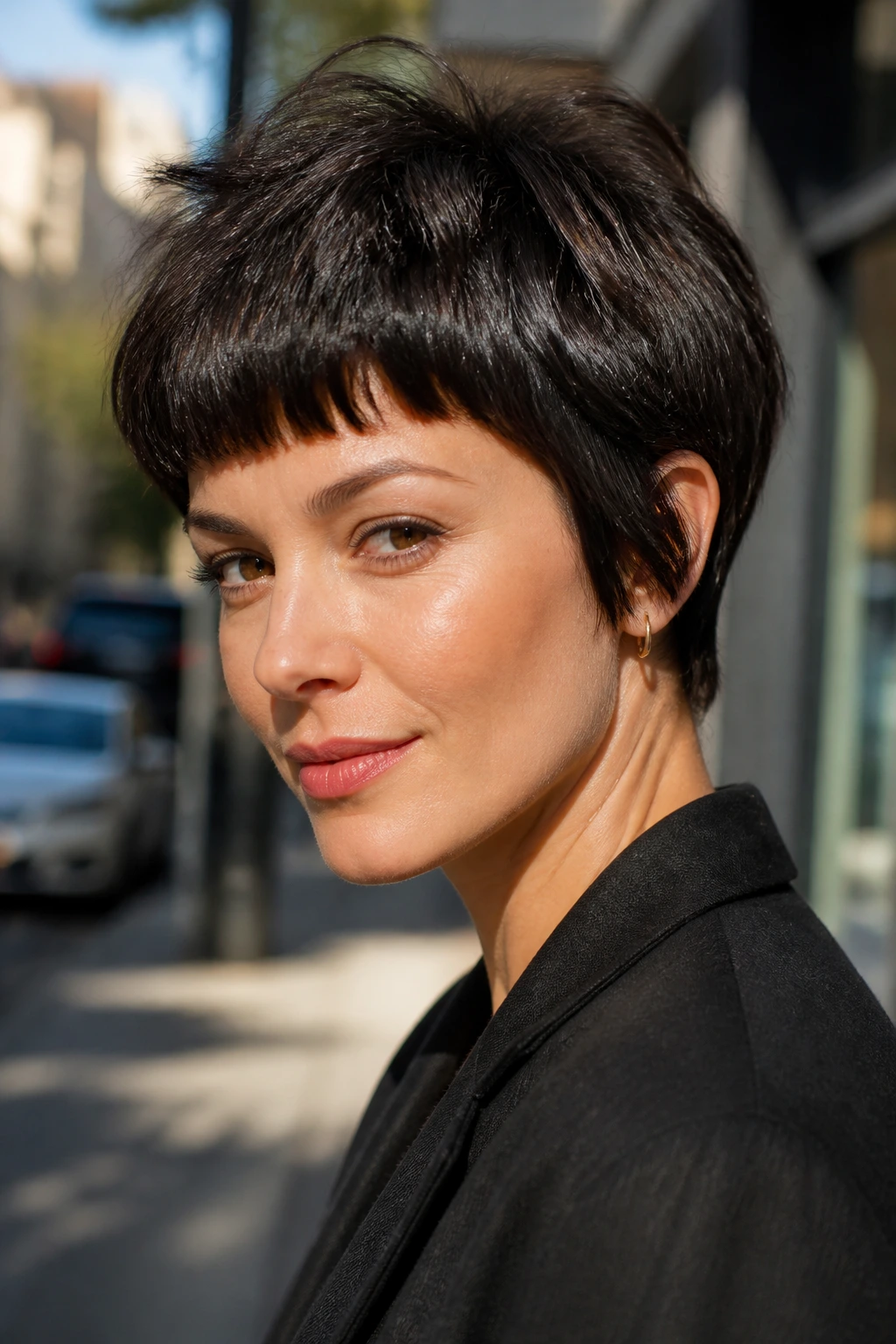
A French crop pixie bob is shorter through the fringe and tighter around the edges, but it still keeps enough body through the top to feel like a bob rather than a boyish crop. Thick hair gives this shape a lot of structure, which is half the fun.
What I like here is the balance. The fringe can sit straight or slightly textured, while the crown holds a little height. That means you can have a compact silhouette without losing the dense, plush look that thick hair naturally gives. It’s tidy, but not flat.
If your hairline is strong and your forehead is on the smaller side, this shape can look especially sharp. Keep the styling product light. Too much wax and the fringe turns sticky fast.
12. Rounded Halo Pixie Bob
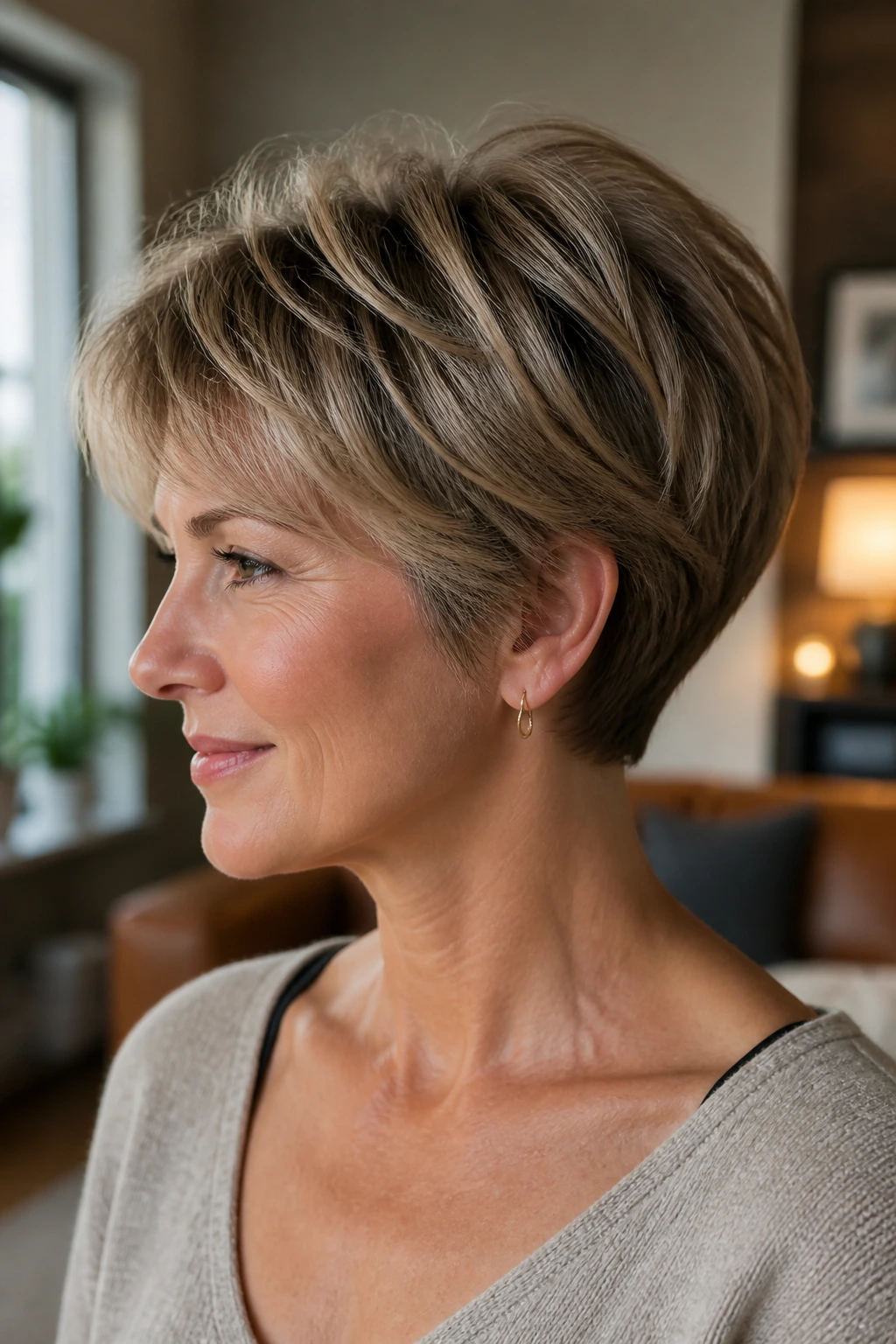
A rounded halo pixie bob uses the natural volume of thick hair instead of trying to smash it down. The silhouette curves gently around the head, with enough lift at the crown and sides to feel soft but controlled. It’s one of the easiest ways to keep dense hair from looking angular.
This cut leans feminine without being fussy. The shape is most flattering when the perimeter is soft and the ends are lightly beveled. Heavy blunt lines can make the roundness feel too full, so I’d keep the edges airy.
What makes it work
The top is slightly shorter, the sides are blended, and the nape is snug. That trio creates a clean dome of shape instead of a big triangle. On thick hair, triangle is the enemy.
13. Long-Bang Pixie Bob
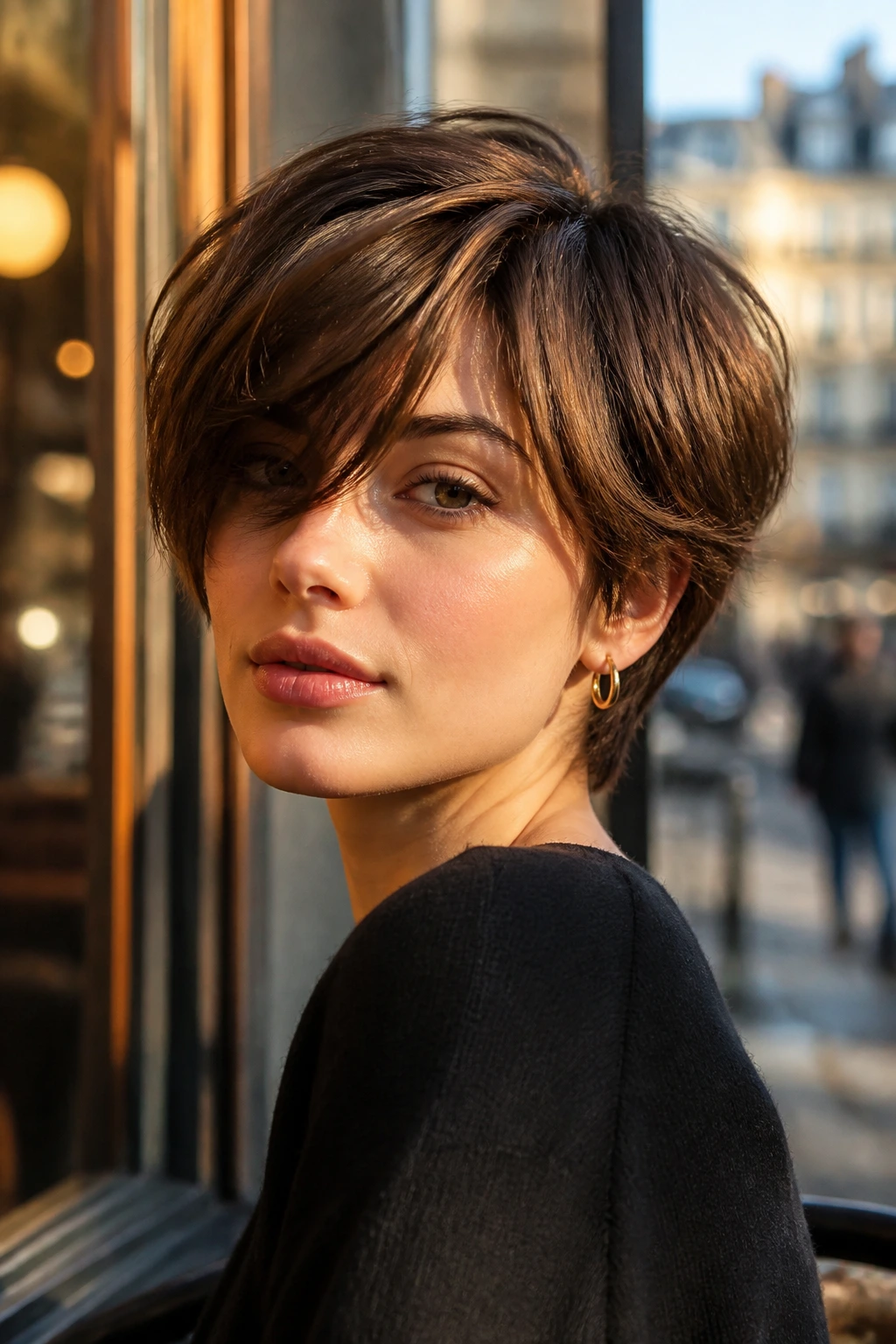
Long bangs are useful because they buy you options. Sweep them aside. Part them in the center for a beat. Pin them back when you’re tired of hair on your forehead. On thick hair, long bangs also help balance the weight of the rest of the cut.
The key is keeping the bangs long enough to move. If they’re cut too short, they can stick straight up or sit in a chunk. If they’re too heavy, they swallow the face. The sweet spot usually falls somewhere between the brow and the cheekbone, depending on your face shape.
A practical detail
Dry the bangs first, on their own, with a small brush or your fingers. Thick bangs hold onto moisture, and if you leave them for last, they’ll set wrong while the rest of the hair is already done.
14. Micro Fringe Pixie Bob
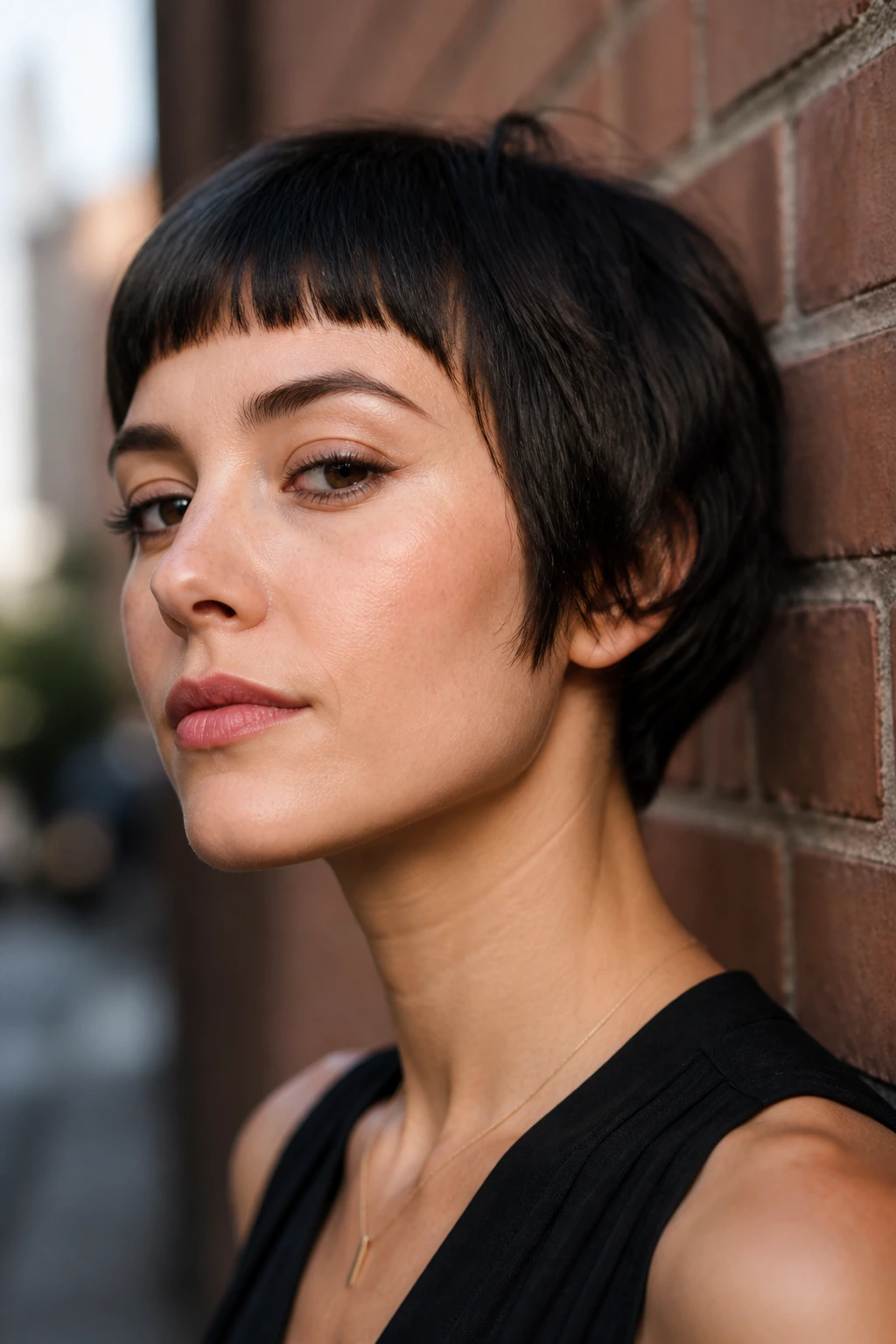
A micro fringe is a bold little thing. It opens up the face, shows off the brows, and keeps the rest of the pixie bob from feeling too soft or too safe. On thick hair, it can be a great counterweight to all that body through the sides and back.
This one works best when the fringe is cut clean and the rest of the cut is slightly textured. The contrast keeps the style from looking doll-like. If your hair is very coarse, the fringe may need a tiny bit of thinning at the ends so it doesn’t stick out like a shelf.
Not for everyone. But if you like a haircut with some bite, it’s a strong choice.
15. Deep Side-Part Pixie Bob
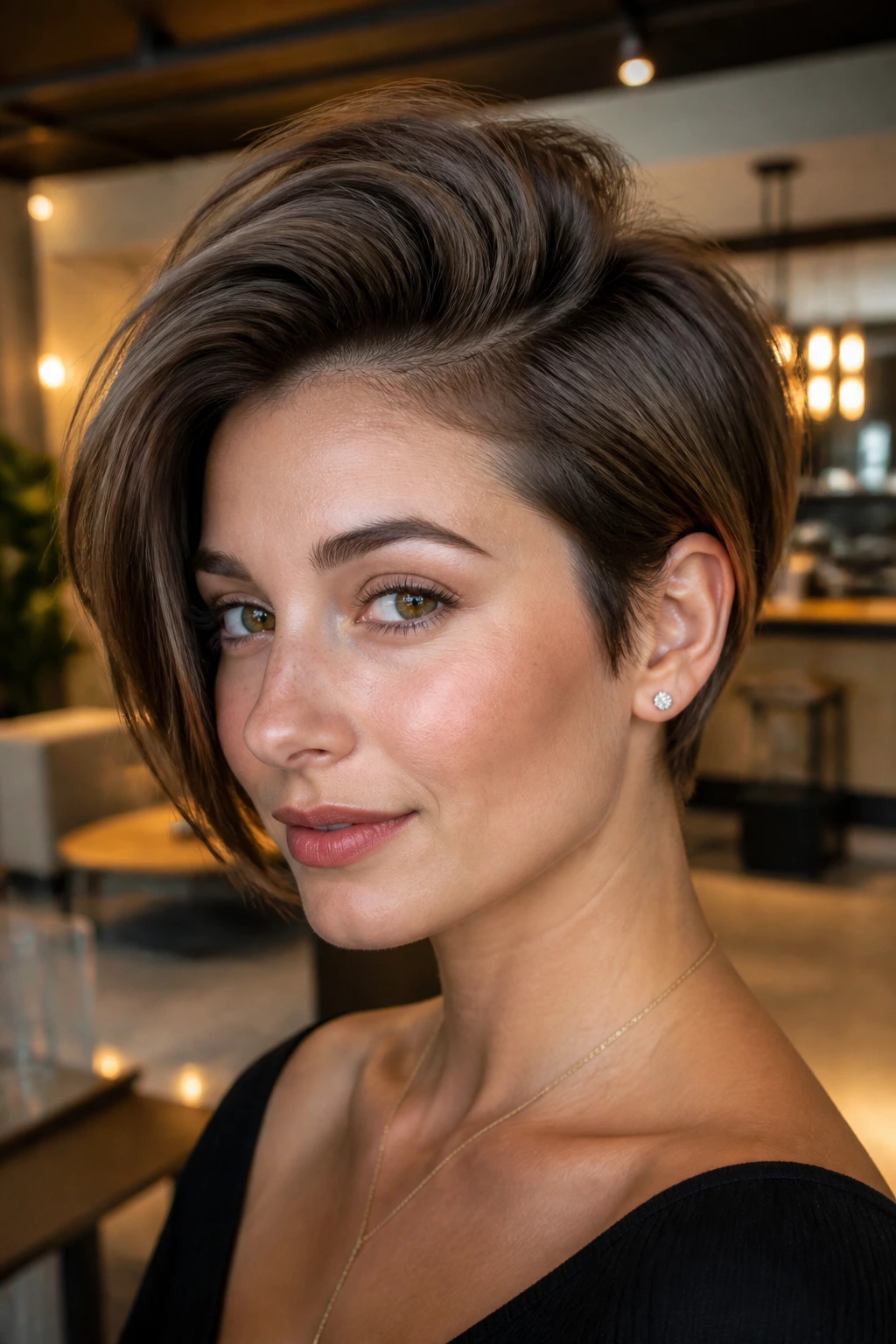
A deep side part changes the whole architecture of a thick pixie bob. The larger side gets more sweep and height, while the smaller side lies closer to the head. That asymmetry trims the visual width without cutting the hair any shorter.
This is one of my favorite fixes for hair that tends to puff at the temples. The part interrupts the bulk before it builds too much. If your crown wants to split in one direction anyway, work with it. Fighting a natural part usually ends badly.
Styling tip
Blow-dry the part first and clip the heavier side away from the face for a minute while it cools. That helps the lift hold without spraying on half a can of product.
16. Tapered Neckline Pixie Bob
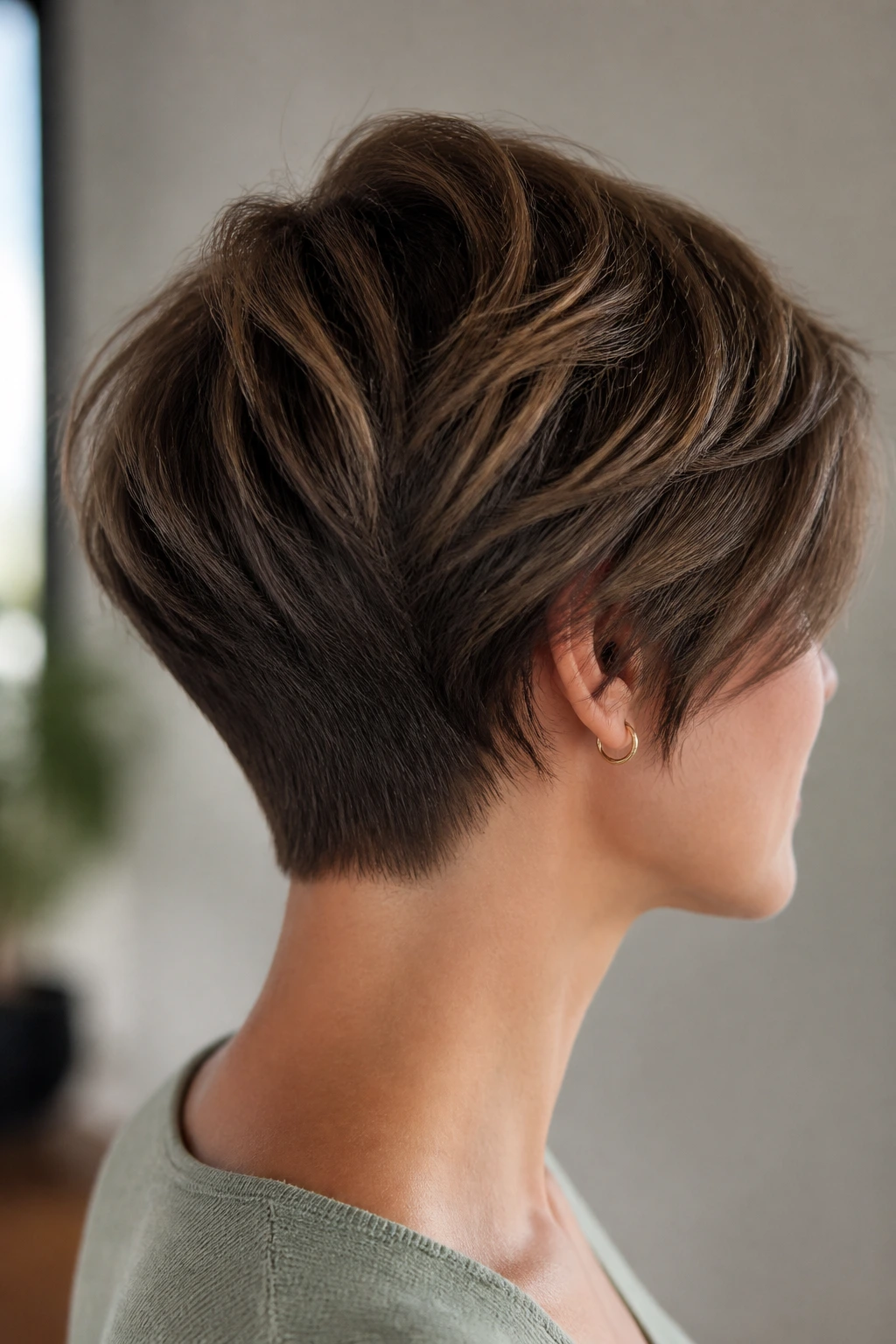
A tapered neckline makes thick hair look expensive, even when the rest of the cut is simple. The lower back is gradually reduced so the shape hugs the neck instead of spreading out. On a dense head of hair, that taper is not decoration. It’s engineering.
This cut is good if you like a neat outline and don’t want the back of your hair to announce itself every time you put on a jacket. The front can be soft or layered. The back just needs to stay disciplined.
If you wear collars often, this version is especially clean. It sits well with crewnecks, button-ups, and higher necklines because the hair doesn’t fight the fabric.
17. Swoopy Layered Pixie Bob
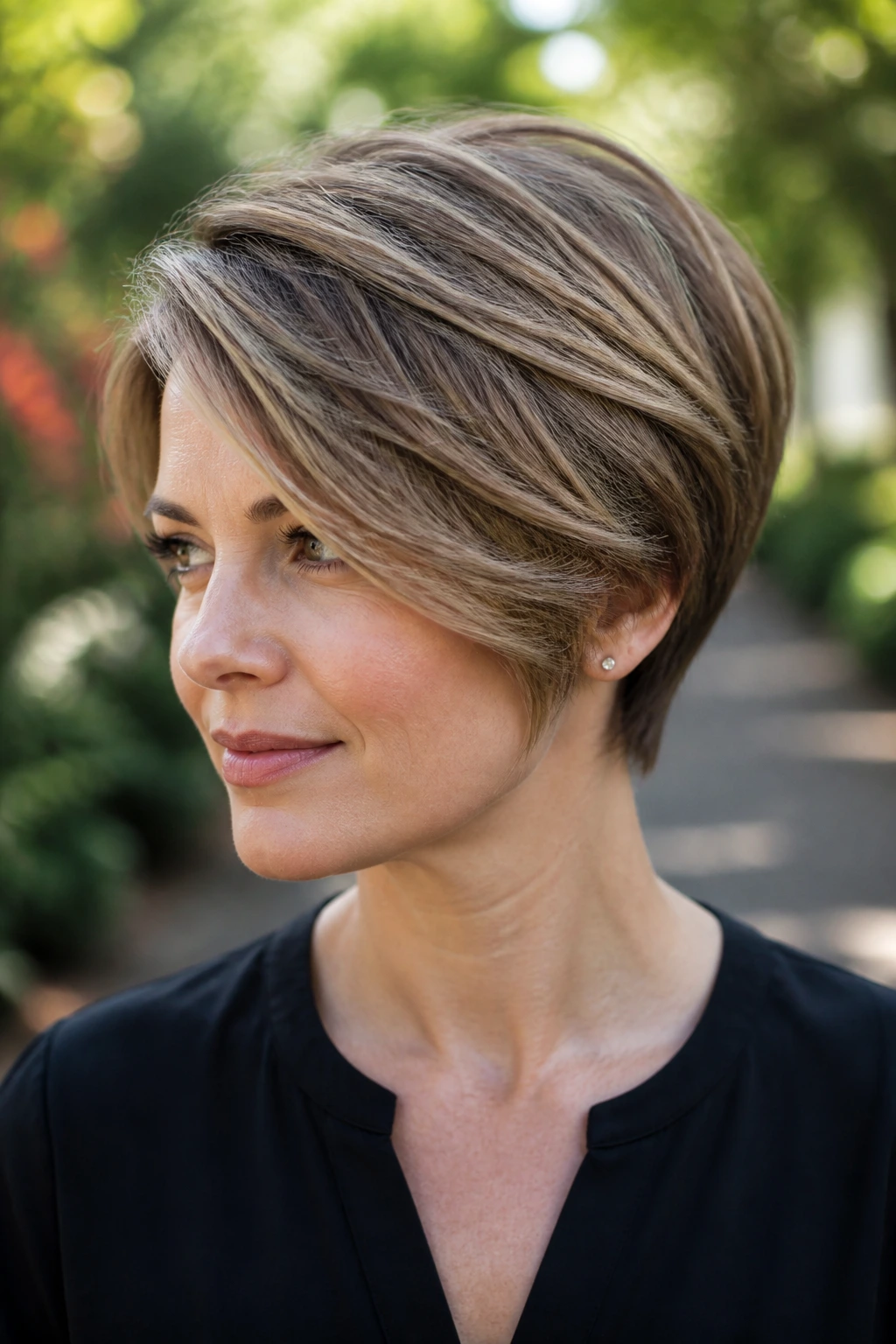
Think of this one as movement with a bit of flourish. The layers are longer and sweep in one direction, usually from crown to side, so thick hair doesn’t sit in flat blocks. The whole thing feels breezy, but there’s enough weight left to keep it grounded.
The swoop is useful for faces that need length. It draws the eye upward and diagonally, which is kinder than a blunt horizontal line when the hair is dense. A round brush or a quick bend with a blow-dryer nozzle helps, but you do not need a full styling session.
Best for
- Softening a square jaw
- Balancing a wide forehead
- Giving straight thick hair some curve
I’d keep the ends lightly feathered. Too blunt and the swoop loses its softness.
18. Air-Dried Natural Pixie Bob
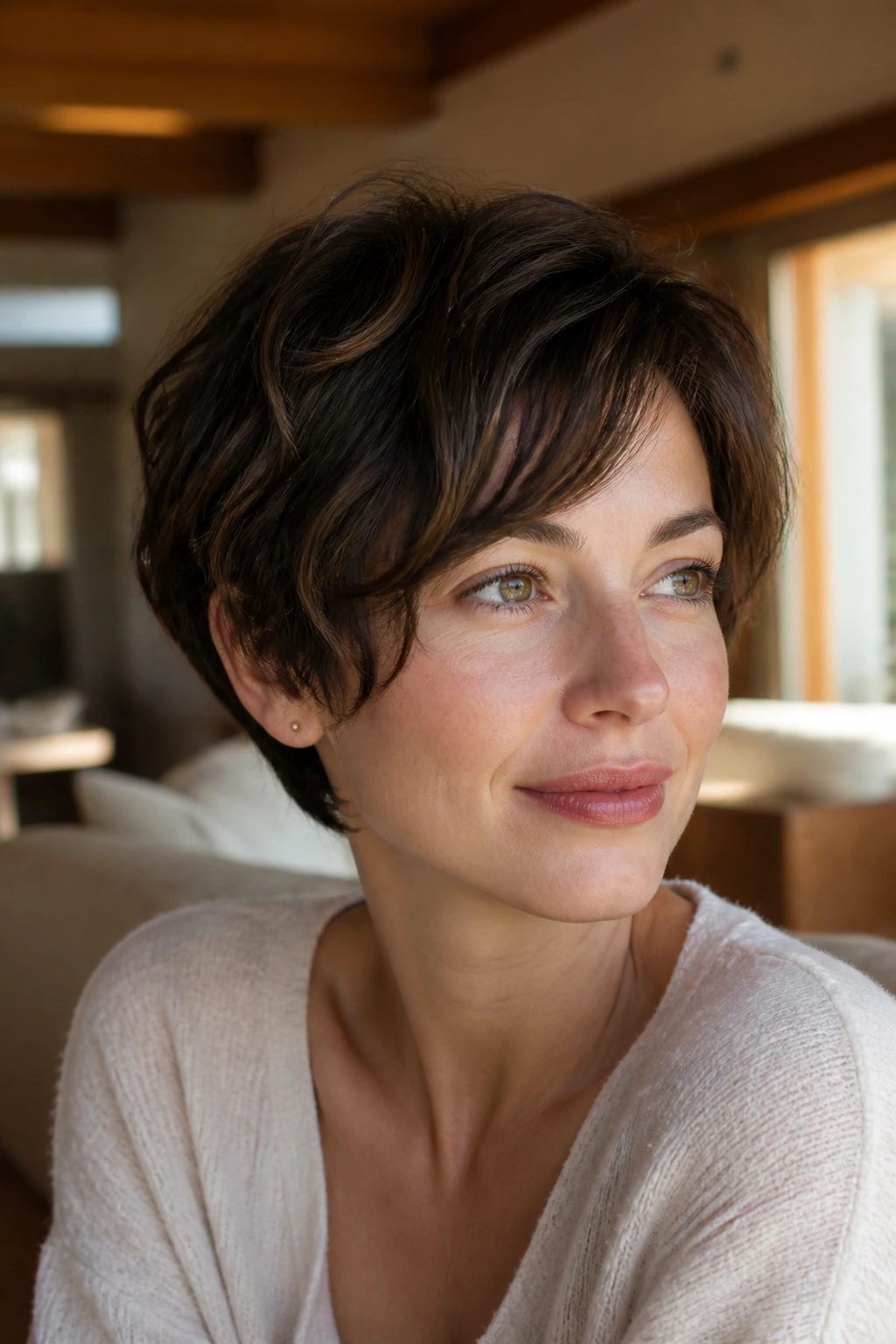
Some cuts only look good when they’re overstyled. This is not one of them. An air-dried pixie bob lets thick hair do its own thing while still holding a shape around the head. The trick is to cut it so the natural bend lands in the right place.
I like this for wavy or slightly curly dense hair. A little leave-in cream, a quick scrunch, and then hands off. The ends can dry into soft bends that feel relaxed but not sloppy. If you try to force too much polish, you’ll usually just puff the sides.
A real-world note
Towel-dry gently with a T-shirt or microfiber towel. Regular terry cloth can rough up the surface and make the cut expand more than you want.
19. Sleek Glassy Pixie Bob
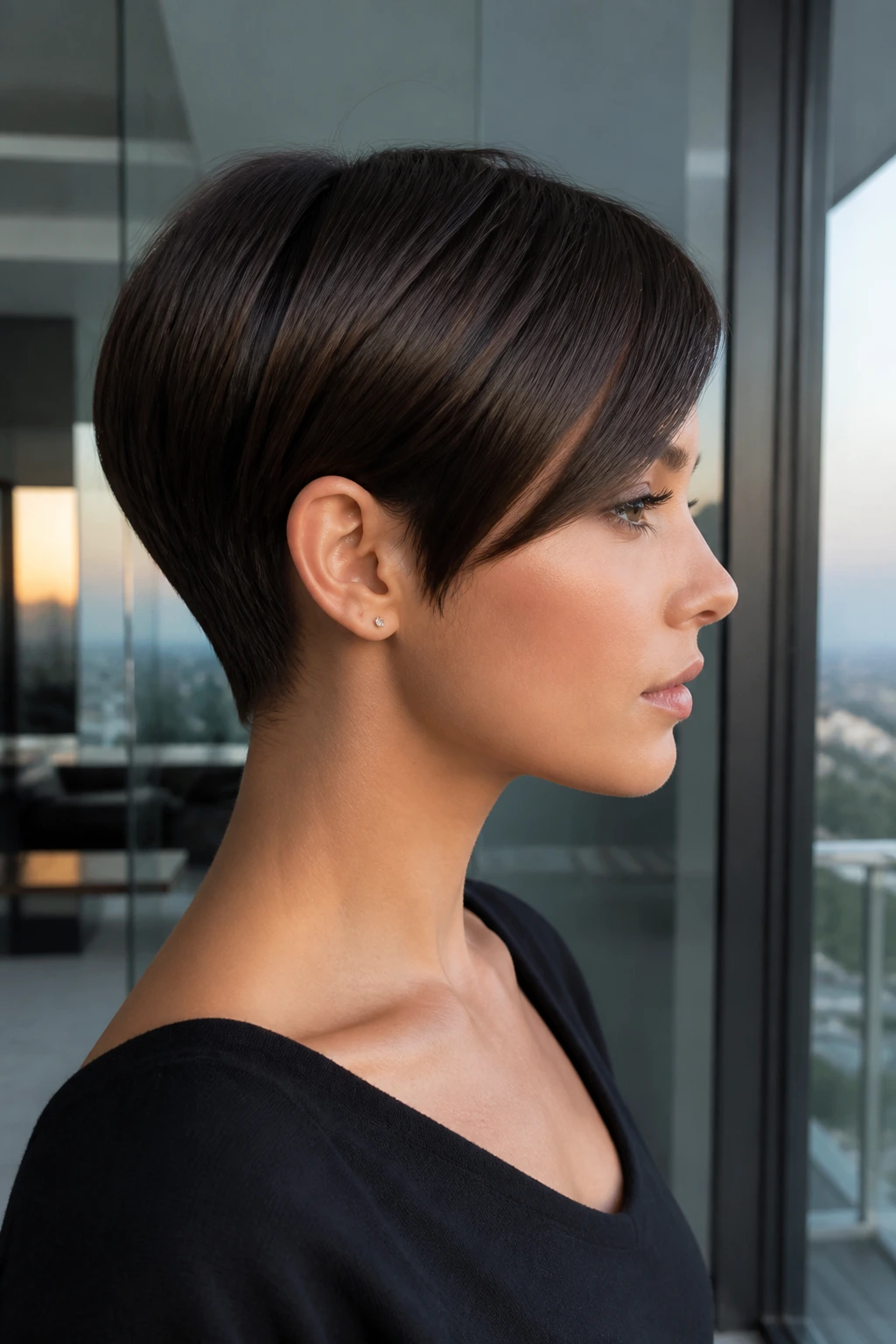
Yes, thick hair can go sleek. It just needs a cut that respects the bulk first. A glassy pixie bob keeps the silhouette close to the head, with smooth edges and a polished finish that shows off shine instead of texture.
This works best on straight or mostly straight hair. The strands lie in neat layers, and the nape stays tidy. The look can be surprisingly sharp on dense hair because the heaviness becomes part of the shine rather than a problem to solve.
Use a heat protectant, a nozzle, and a flat brush. Then stop. Too much product makes the finish greasy, and too much pass-over with the flat iron flattens the movement at the crown.
20. Bedhead Texture Pixie Bob
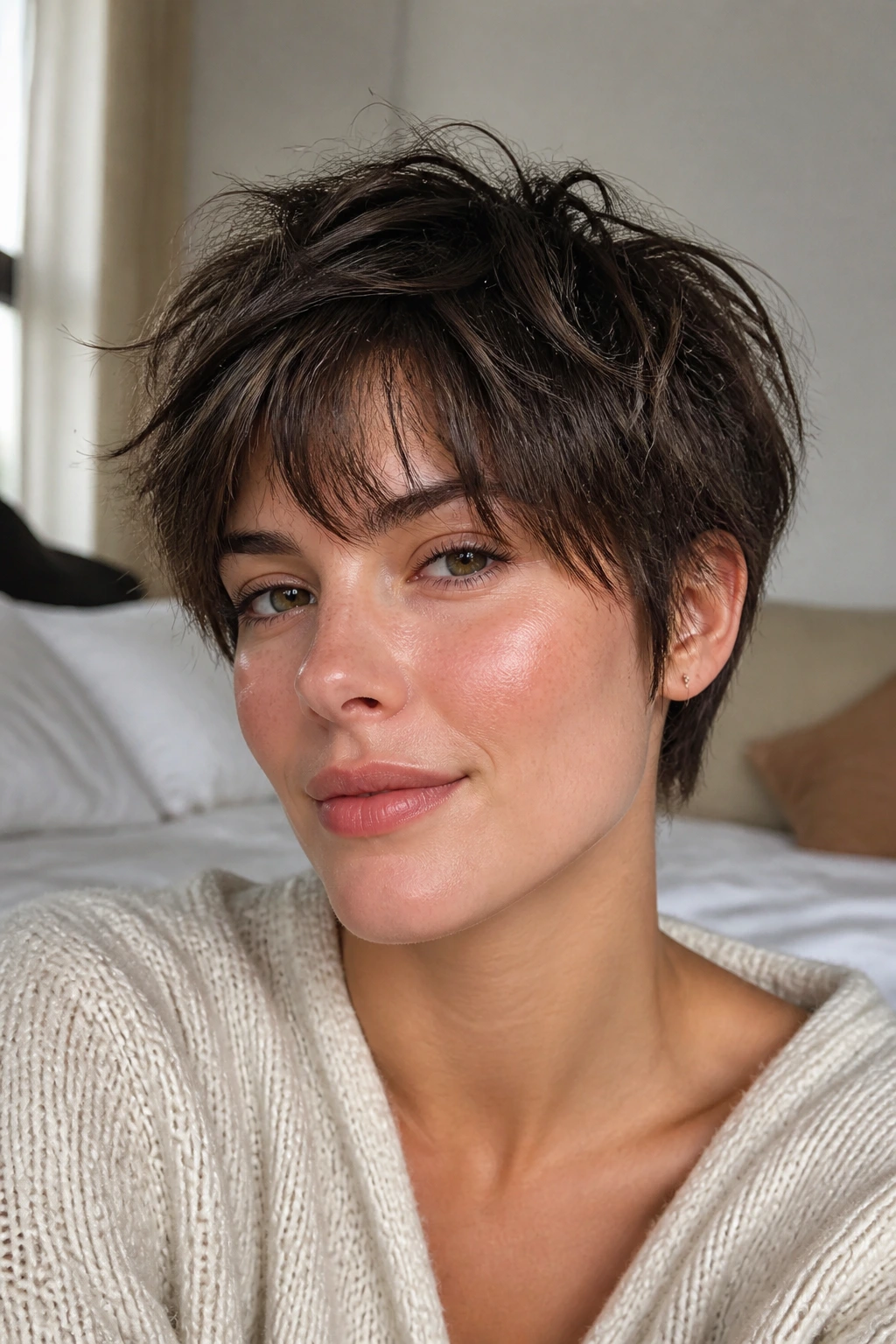
This is the cut for people who want texture that looks casual but still deliberate. The layers are irregular, the fringe may fall a little piecey, and the whole shape has that slightly slept-in quality that thick hair can handle better than fine hair.
The reason it works is simple: density keeps the cut from looking stringy. You can rough it up a little and it still reads full. A dry texture spray at the roots and mid-lengths gives the hair grip without making it stiff.
Don’t overthink this one. If it starts to look too polished, you probably used too much cream.
21. Mullet-Leaning Pixie Bob
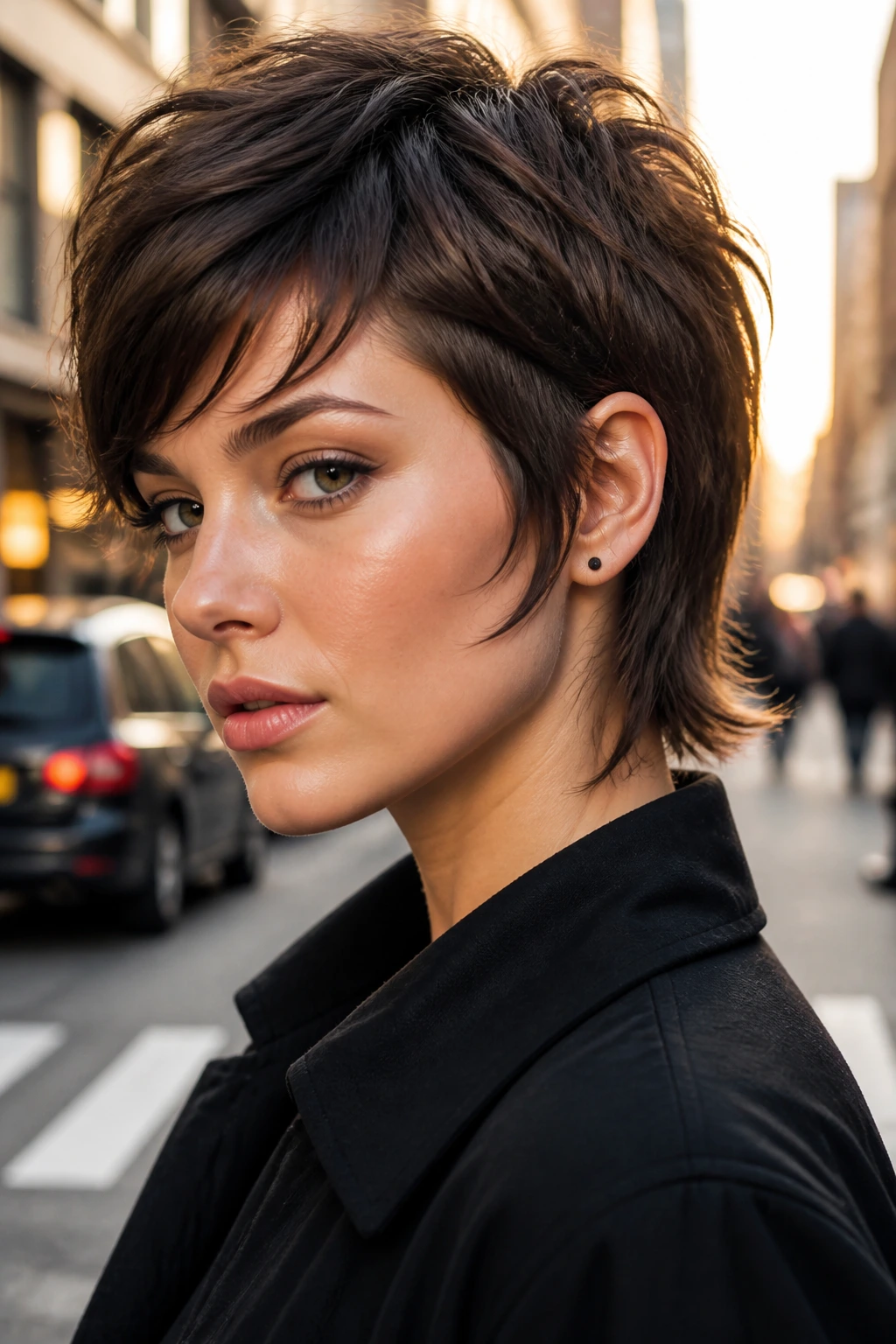
This one has a little more edge in the back. The nape is left slightly longer, the crown is trimmed shorter, and the side pieces connect the two in a way that feels modern rather than retro-costumed. Thick hair carries this shape well because the layers need substance to look right.
The important part is restraint. If the back is too long, you lose the pixie bob part. If the top is too short, the balance goes off. The best versions keep the transition soft and the perimeter still clean.
Who it suits
- People who like a little rebellion in the haircut
- Thick hair that needs built-in movement
- Faces that can handle a longer back without getting dragged down
It’s a sharp shape. Not a safe one. That’s the appeal.
22. Curl-Enhanced Pixie Bob
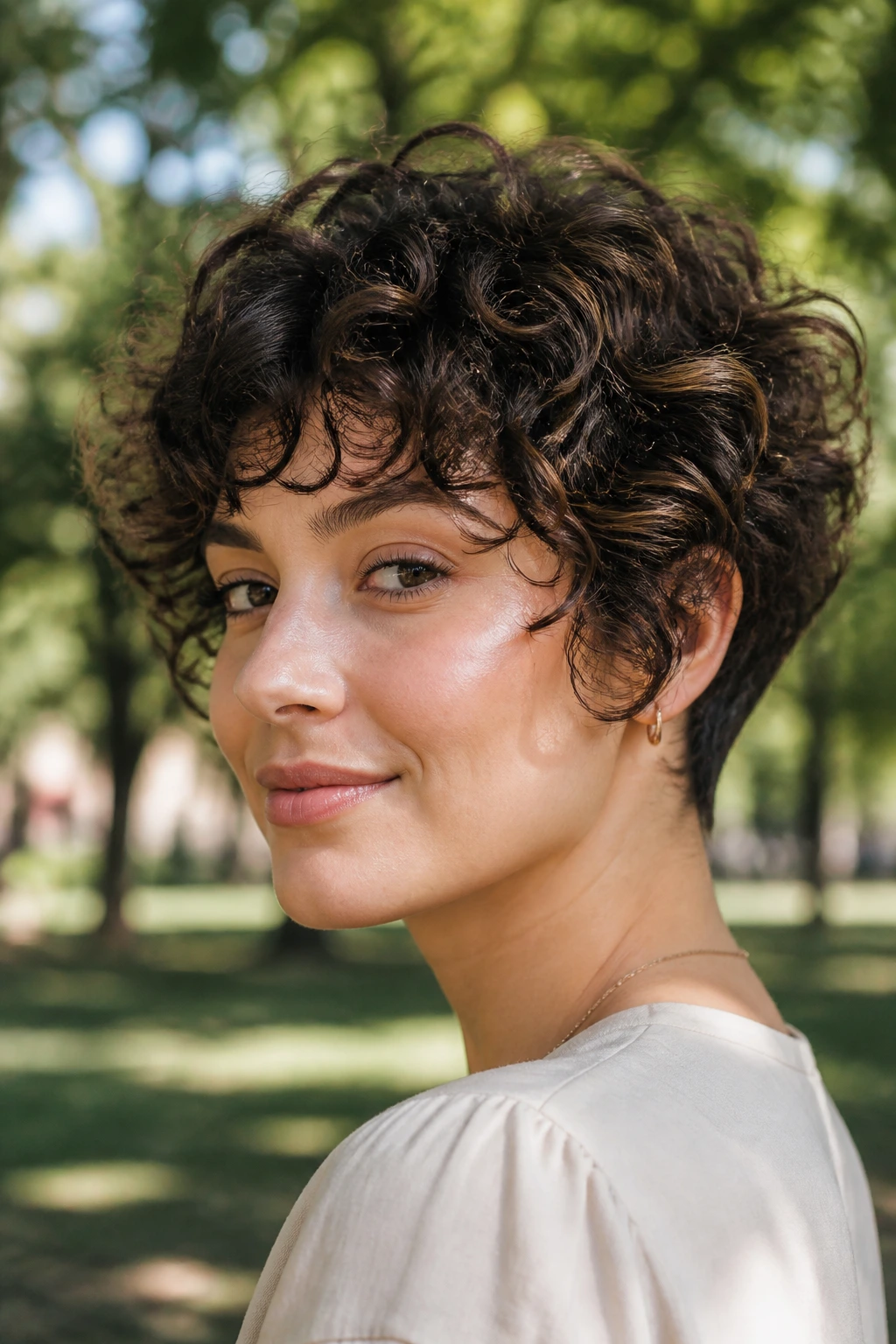
A curl-enhanced pixie bob is built to show off curl pattern rather than compress it. The sides are shaped to avoid width, the top keeps enough length to define the curls, and the nape stays neat so the whole thing doesn’t balloon.
This is a good cut if your curls have strong spring but also some weight. You want enough length to keep the curl from turning into a little helmet, but not so much that it collapses. The right styling cream and a scrunched gel cast can make the cut hold through the day without needing a lot of touch-up.
Let it dry fully before you break the cast. That part matters. If you mess with it too soon, the curl definition drops and the shape gets fuzzy.
23. Jawline-Grazing Pixie Bob

The jawline-grazing pixie bob is one of the most flattering shapes for thick hair because it gives the face a clean frame without crowding it. The front pieces skim the jaw, the back stays shorter, and the overall silhouette feels deliberate.
I like this length when a shorter crop feels too exposed but a full bob feels too heavy. It sits in the middle. That middle ground is useful. You keep the comfort of a shorter cut and the softness of a longer edge.
Quick visual check
When it’s right, the front should touch or just miss the jawline, not sit halfway down the neck. That small difference changes the whole balance.
24. Boxy Contour Pixie Bob
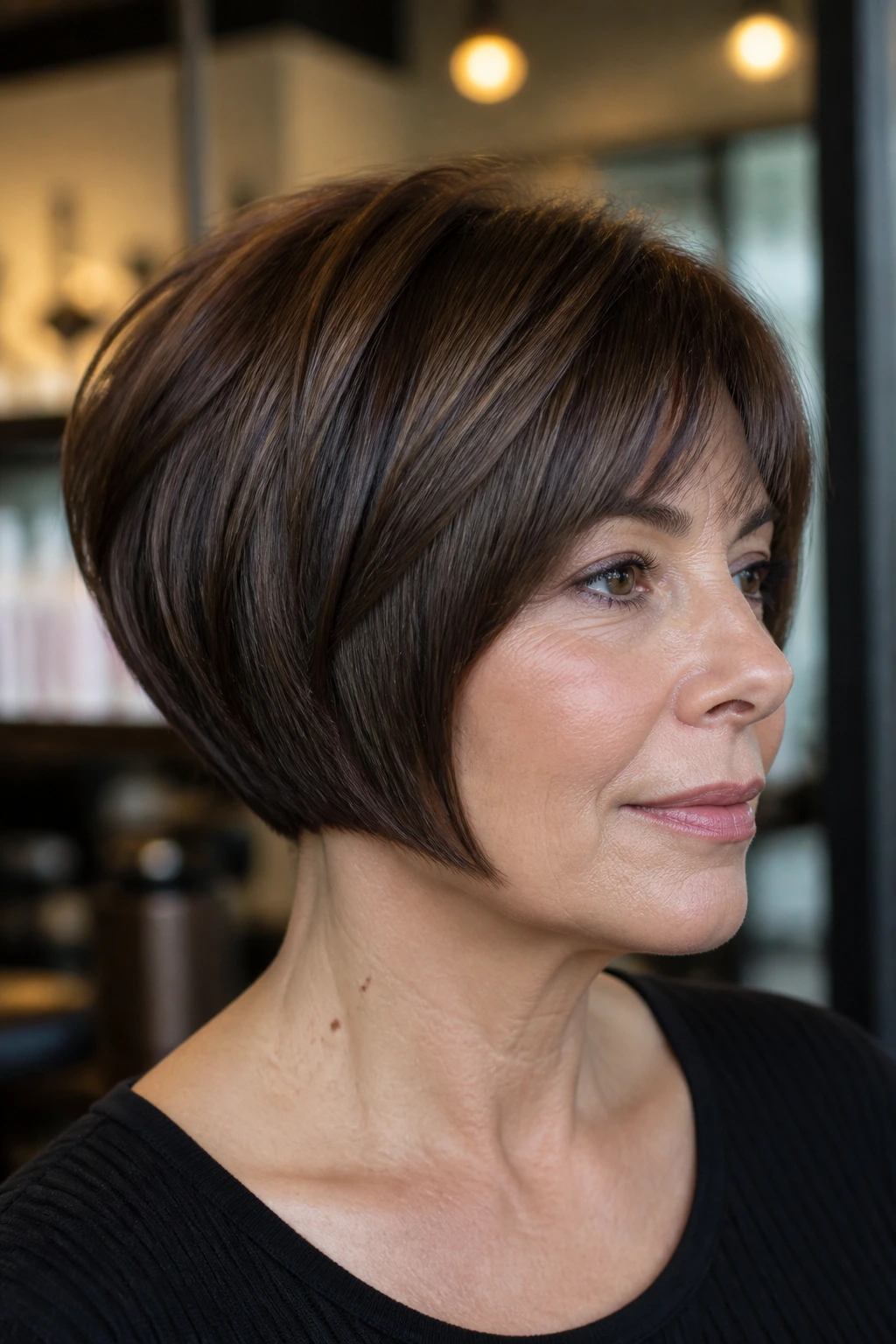
Boxy can sound unflattering, but in this case I mean a strong contour around the face with squared-off edges that are softened just enough to avoid looking rigid. Thick hair can hold a boxier outline better than fine hair because the density supports the shape.
This cut works if you like structure. The top and sides are shaped so the edges stay visible, but there’s still some movement at the tips. It’s especially good on straight hair with a bit of body, where the outline can read crisp without much product.
If your hair tends to swell in humidity, ask for subtle internal layering so the shape stays controlled instead of puffing out at the corners. Corners are where this style lives or dies.
25. Grow-Out Friendly Pixie Bob
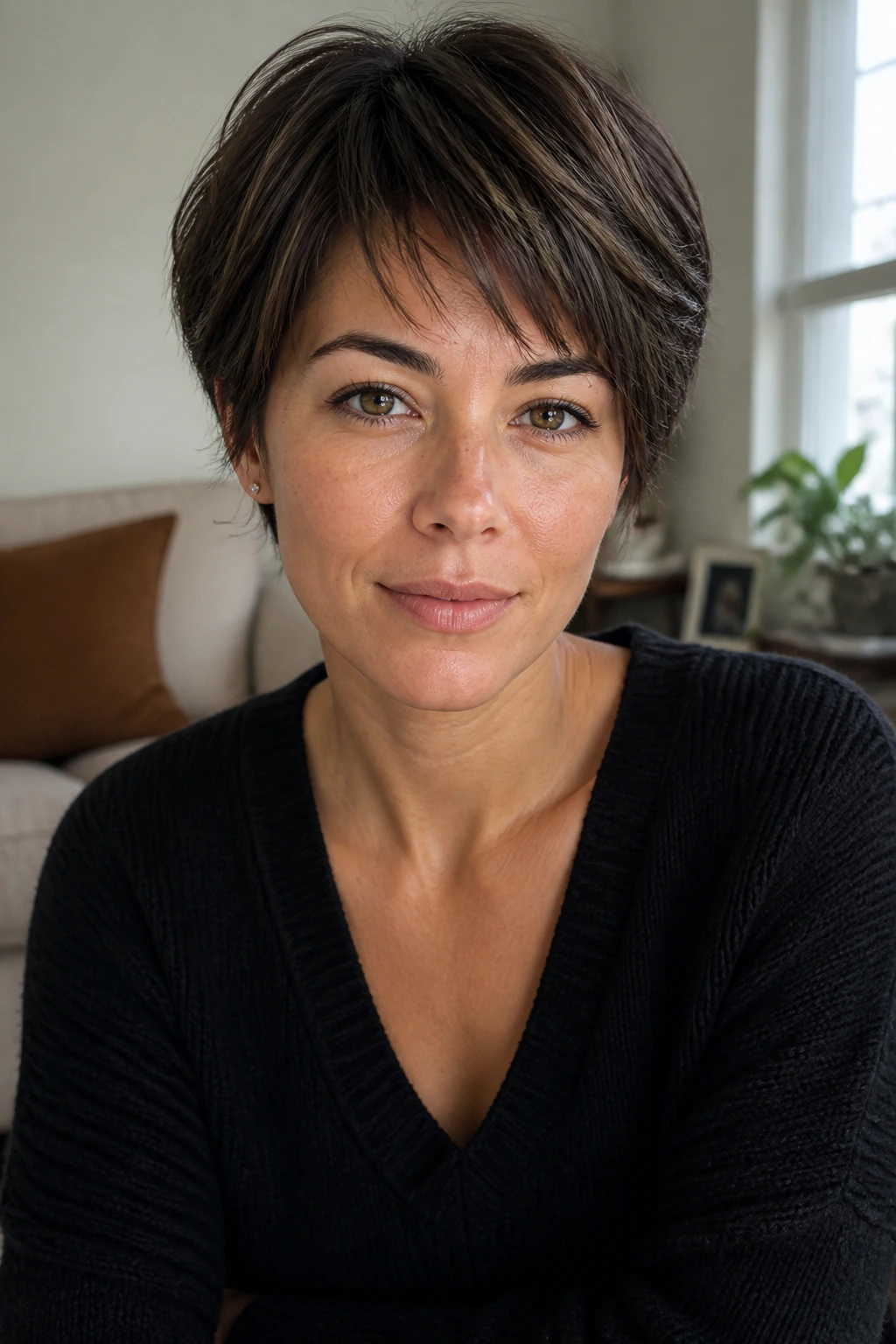
Not every short cut needs to be a commitment trap. A grow-out friendly pixie bob keeps enough softness through the sides and enough length at the crown that the haircut still looks decent six, eight, even ten weeks later. Thick hair is good at expanding, so this shape uses that to its advantage.
The front stays a little longer, the nape is clean but not shaved tight, and the layers blend instead of stack hard. That means you can move through the awkward stages without hating your mirror. If you’re not ready for constant salon visits, this is the one I’d pick first.
A few side clips, a bit of texturizing spray, and the cut can survive a stretched-out appointment schedule. That matters more than people admit.
Why the Pixie Bob Wins When Hair Has Real Weight
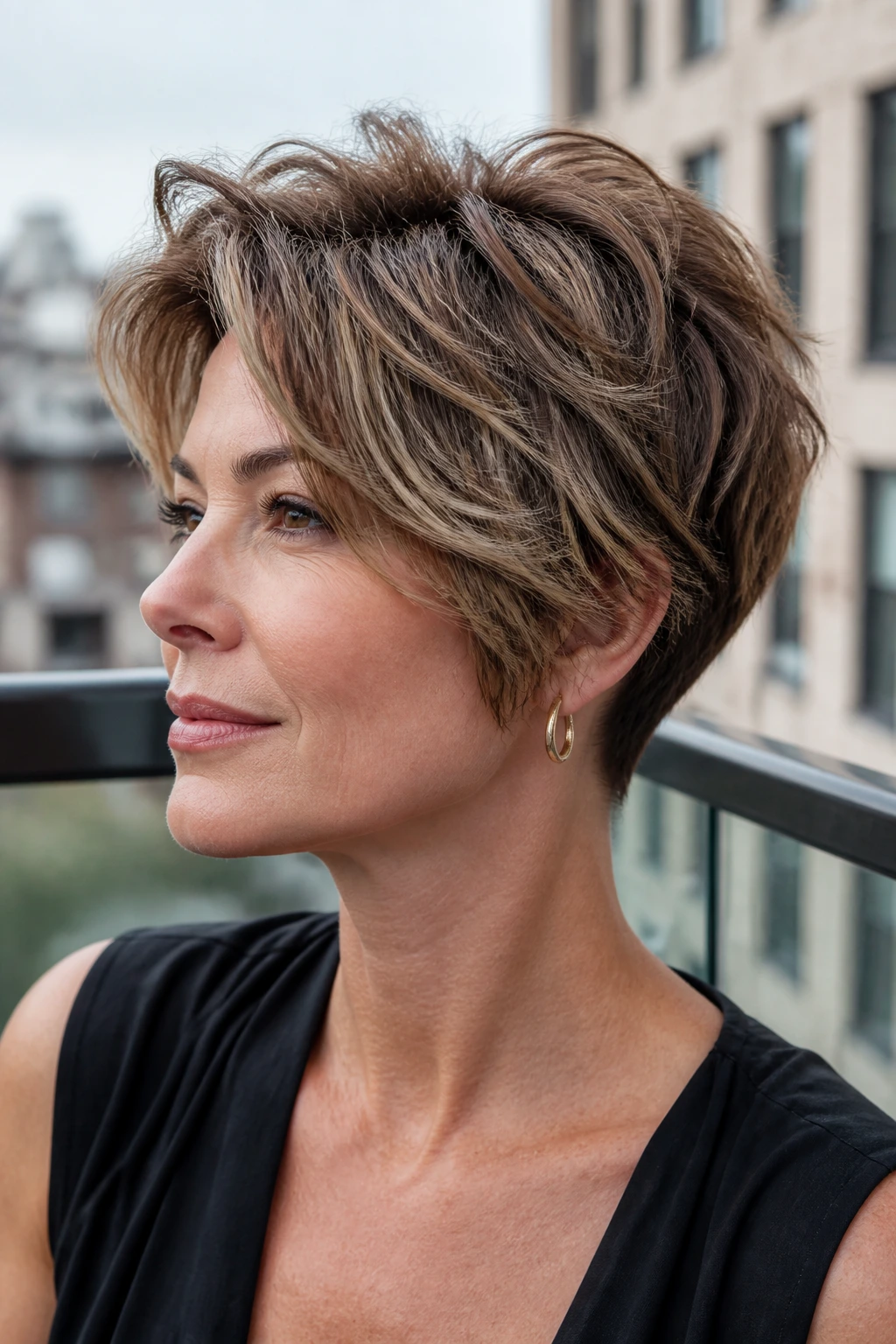
Thick hair needs direction. That’s the whole story. Without it, the shape spreads outward, especially around the ears and nape, and the cut starts reading as heavy even if the length is short. A pixie bob gives that density a place to go: some height at the crown, a cleaner back, and just enough length near the face to keep the silhouette from feeling severe.
The nicest thing about this haircut is how different it can look depending on where the weight is removed. Take bulk out of the crown, and the style looks softer. Take it from the sides, and the face opens up. Clean up the nape, and suddenly the whole cut looks more expensive, which is a silly word, but you know what I mean.
I also like that thick hair can carry a little imperfection in this shape. A few bent pieces, a touch of separation, a side part that isn’t ruler-straight—those details make the cut feel alive instead of shellacked.
The Tools That Make Styling Easier
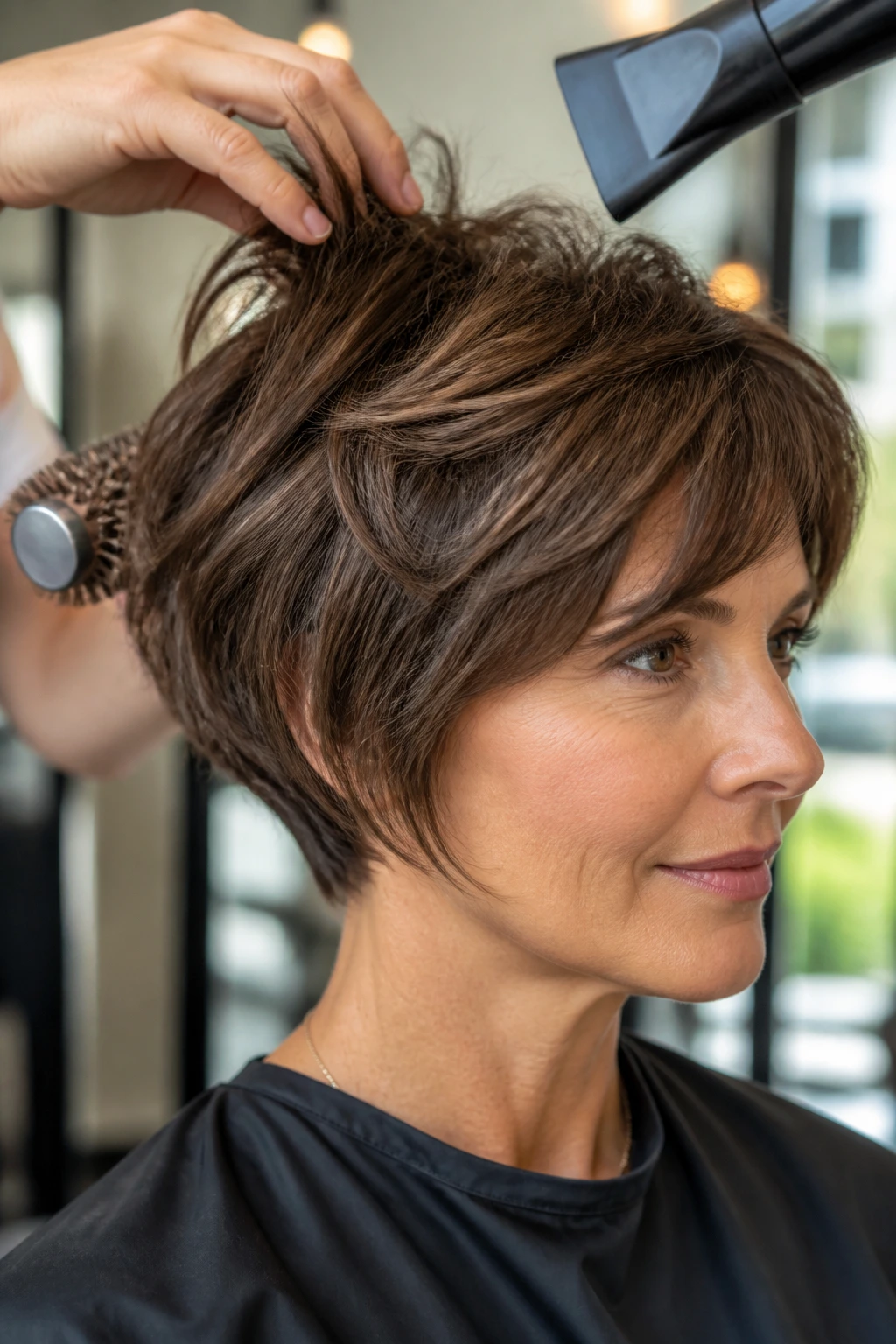
A pixie bob on thick hair is easier when the tools match the job. You do not need a drawer full of gadgets, but the wrong brush or product can make a good cut behave badly.
- Blow dryer with a nozzle: Directs air to the roots and keeps the shape from puffing sideways.
- Small round brush: Useful for lifting the crown and smoothing the front pieces.
- Paddle brush or vent brush: Good for fast drying on straight or wavy thick hair.
- Fine-tooth comb: Helpful for clean parts and fringe control.
- Texturizing spray: Adds grip to piecey shapes without heavy buildup.
- Light mousse or root lift foam: Better than thick cream when you need volume control.
- Styling paste or clay: Works well for choppy, shaggy, or bedhead finishes.
- Heat protectant: Non-negotiable if you use a dryer, brush, or flat iron.
- Sectioning clips: Keep the crown, fringe, and sides separate while styling.
A salon note matters too. Ask for internal layering, point cutting, or a light debulk through the midsection if your hair is especially dense. Those words tell the stylist you want shape, not just length removed.
Smart Product and Salon Tips That Save You Trouble
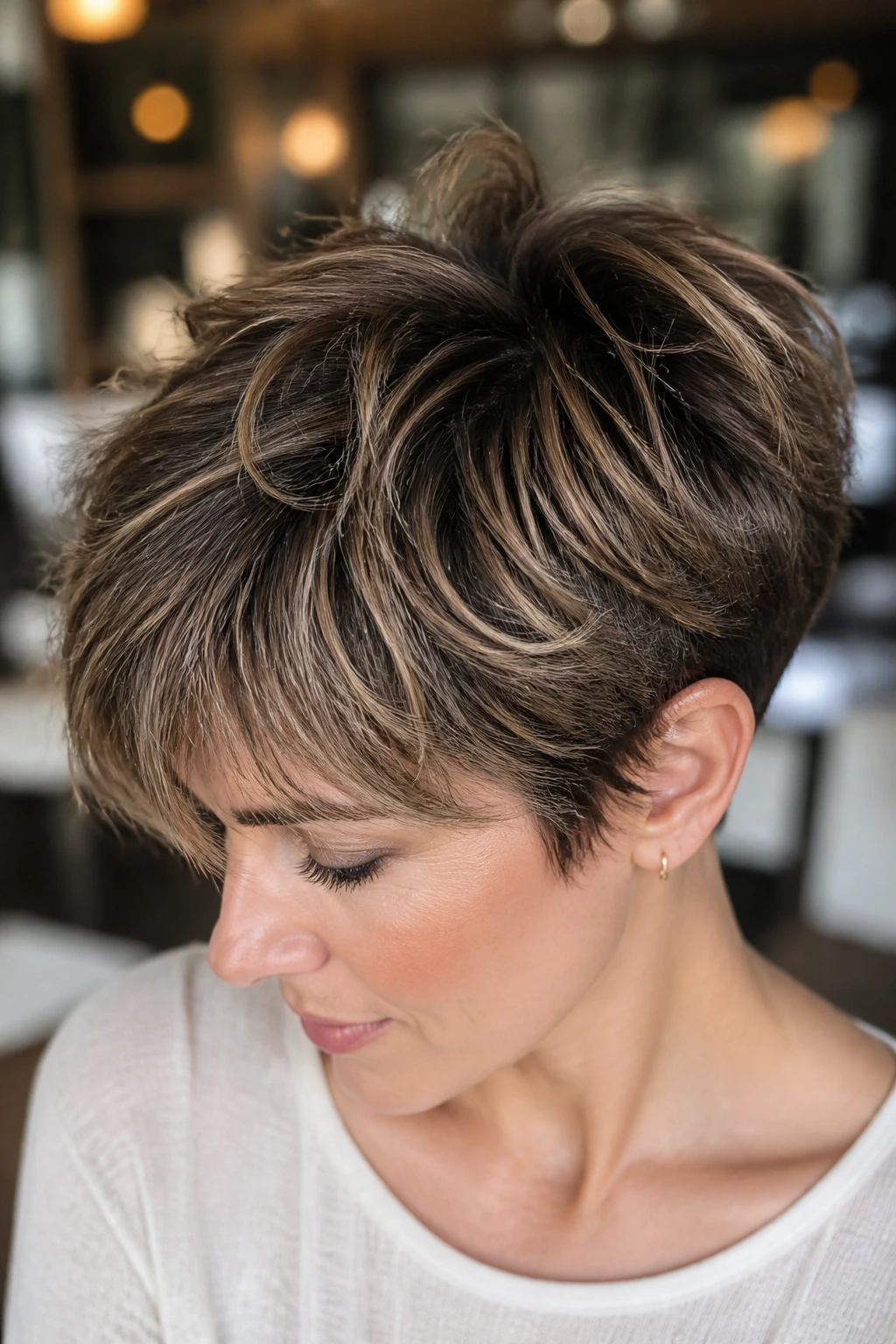
Heavy hair products can make a pixie bob sink fast. Thick hair already has enough weight; the last thing it needs is a rich cream that turns the roots greasy and the ends sticky. Choose products for the finish you want, not the scent or the marketing. If you want lift, go with mousse or root spray. If you want separation, use a paste or clay in a tiny amount. If you want curl definition, a gel cream or foam usually behaves better than oil.
When you book the cut, bring a few photos that show the silhouette from the front and the back. Thick hair changes shape from every angle, and the back matters more than people think. A photo that only shows the face can hide a blunt nape or a bulky corner behind the ear.
If your hair is coarse, ask how the stylist plans to remove weight. Thinning shears can help in the wrong place and wreck the shape in another. I prefer point cutting, slide cutting, or internal layering over aggressive thinning near the crown, because those techniques keep the top from looking see-through while still reducing bulk.
And one more thing: if you know your hair flips out at the nape, say so before the scissors come out. That tiny warning can save you from a neckline that refuses to lie flat.
How to Wear These Pixie Bobs Day to Day
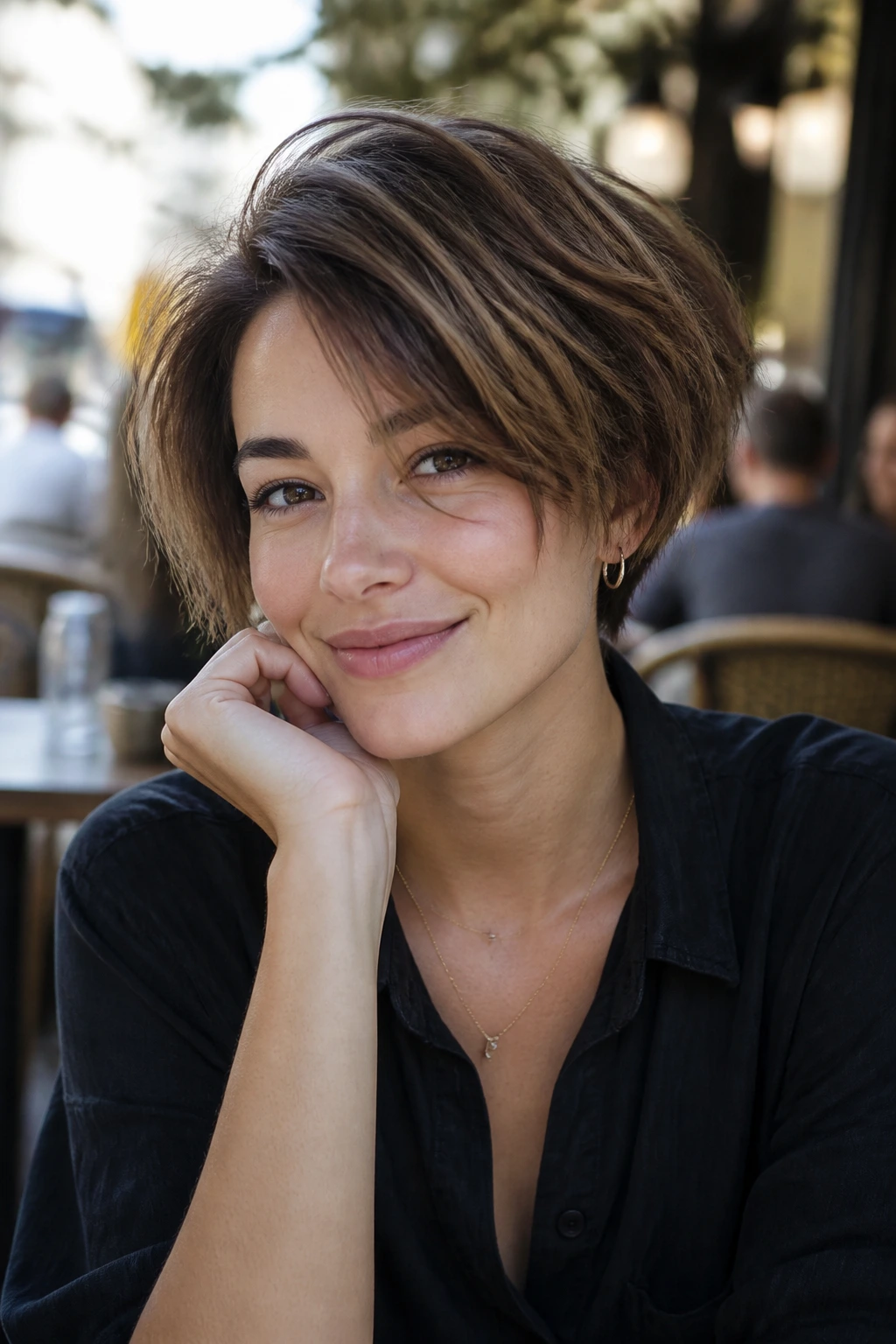
Shape: Keep the front pieces where they do the most work. A cheek-skimming side, a jawline-grazing edge, or a fringe that bends across the forehead changes the whole read of the haircut.
Styling: Dry the crown first if you want lift. Dry the nape first if you want it smooth. Thick hair tends to set where you leave it, so sequence matters more than product count.
Accessories: Glasses, small earrings, clips, and headbands all play differently with a pixie bob. A tucked ear and a narrow frame can make the face look sharper; a wide headband can fight the volume unless the cut is very short.
Finish: Matte paste makes the cut look piecey and modern. A light cream smooths the ends. A shine spray on the surface only—not at the roots—can make straight thick hair look polished without making it limp.
Portions: If you want less bulk, ask for shorter layers at the nape and around the ears. If you want more softness, keep the perimeter a little longer and let the weight stay near the jaw.
Small Styling Upgrades That Change the Mood
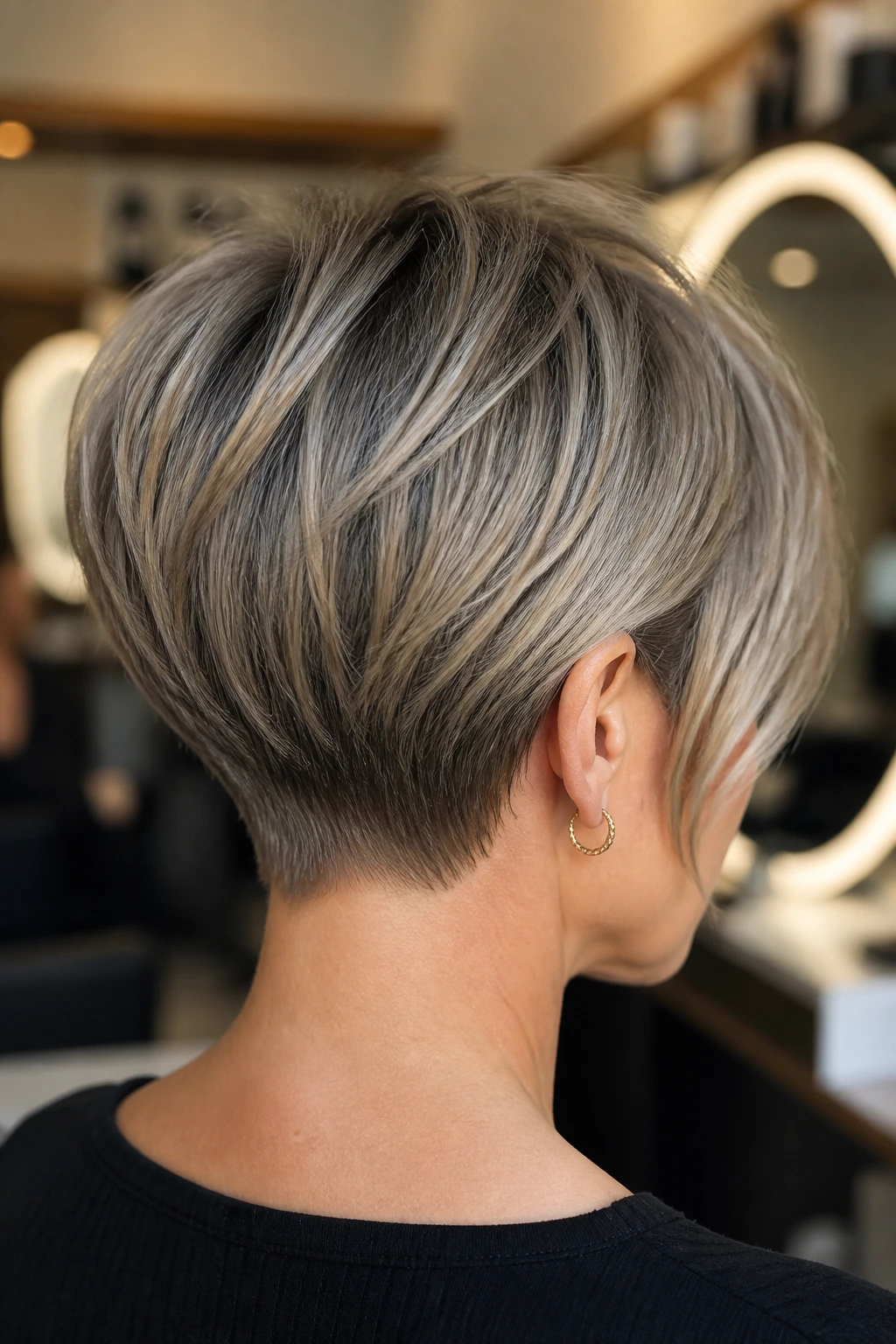
Root Lift: A dab of mousse at the crown before blow-drying gives thick hair a clean push upward, and you usually only need a walnut-sized amount. Focus it where the head starts to flatten, not everywhere.
Texture: If the cut feels too neat, mist a little dry texture spray through the mid-lengths and squeeze the ends with your hands. That one move can turn a tidy pixie bob into something with a little grit.
Face-Framing: Tuck one side behind the ear, leave the other side loose, and the cut suddenly reads more relaxed. It’s a tiny choice, but it changes the whole face shape.
Finish Touch: A drop of shine serum on the very ends helps sleek versions stay glossy. Keep it off the roots. Thick hair can go oily-looking fast if you overdo this part.
Make-It-Yours: If you want a softer look, leave the fringe longer. If you want a sharper look, shorten the nape and keep the front angular. The same haircut can swing both ways.
Mistakes That Make Thick Hair Look Bigger Instead of Better
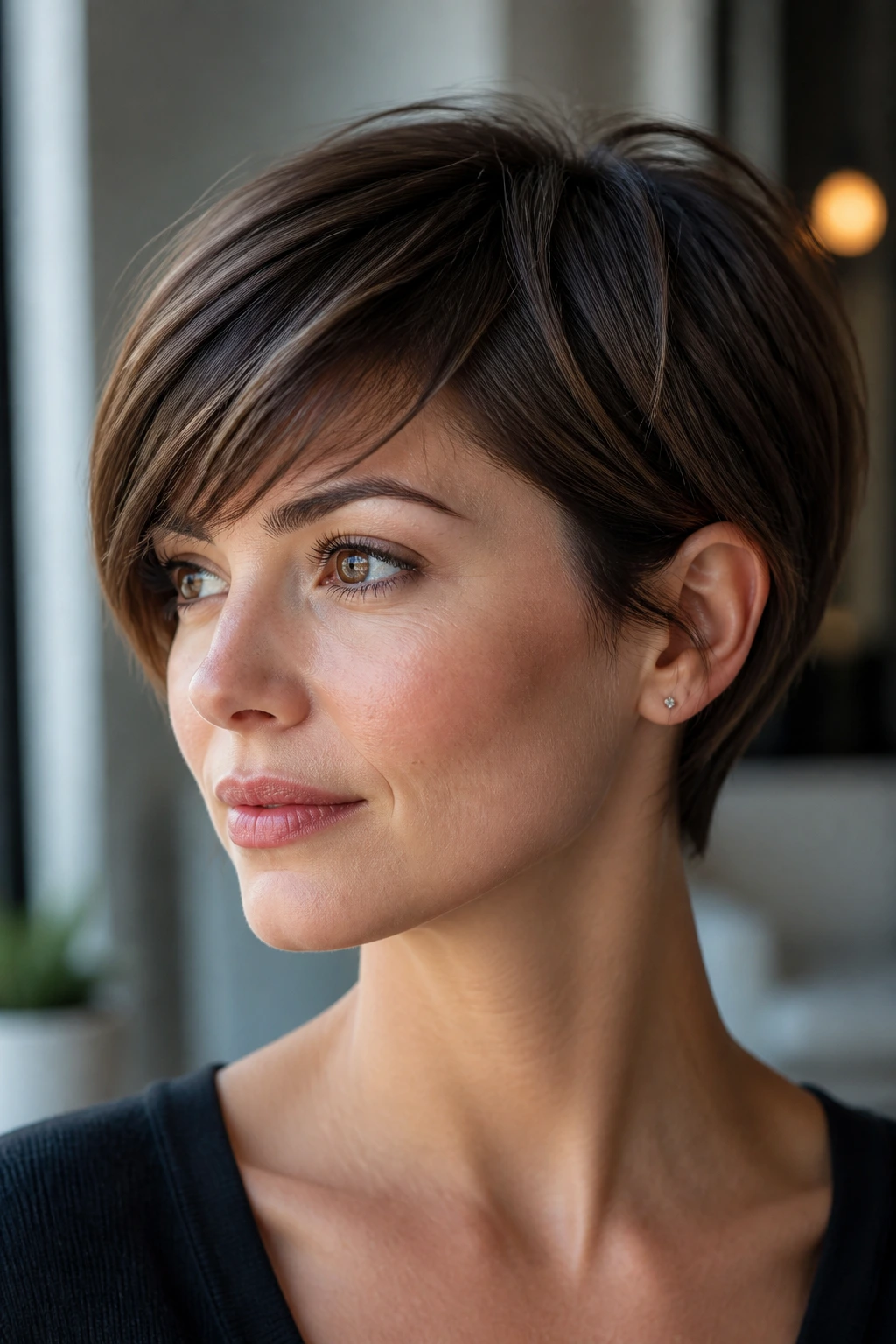
The first mistake is asking for too much thinning near the crown. It sounds logical, but over-thinning can make the top go fluffy while the bottom stays heavy. The fix is internal layering and careful weight removal, not random thinning shears up top.
Another one is leaving the sides too full. Thick hair piles up around the ears fast, and that’s where a pixie bob can start looking round in the wrong way. If the haircut seems broad from the front, the sides probably need more reduction or a better tuck behind the ear.
Heavy product is a sneaky problem. Thick hair can handle a little more than fine hair, but cream overload still makes short layers collapse. If the hair looks dull, sticky, or separated in hard clumps, use less product and start again with damp hands.
Skipping the neckline cleanup is a mistake too. The nape is the part people overlook, then wonder why the cut looks overgrown two days later. A tapered or neatly cropped neckline keeps the whole shape believable.
And finally, don’t ignore your cowlicks. Thick hair with a strong swirl at the crown or front needs the cut shaped around that motion. If not, you spend every morning trying to beat your own head into submission.
Ways to Twist the Same Cut Into Something Different
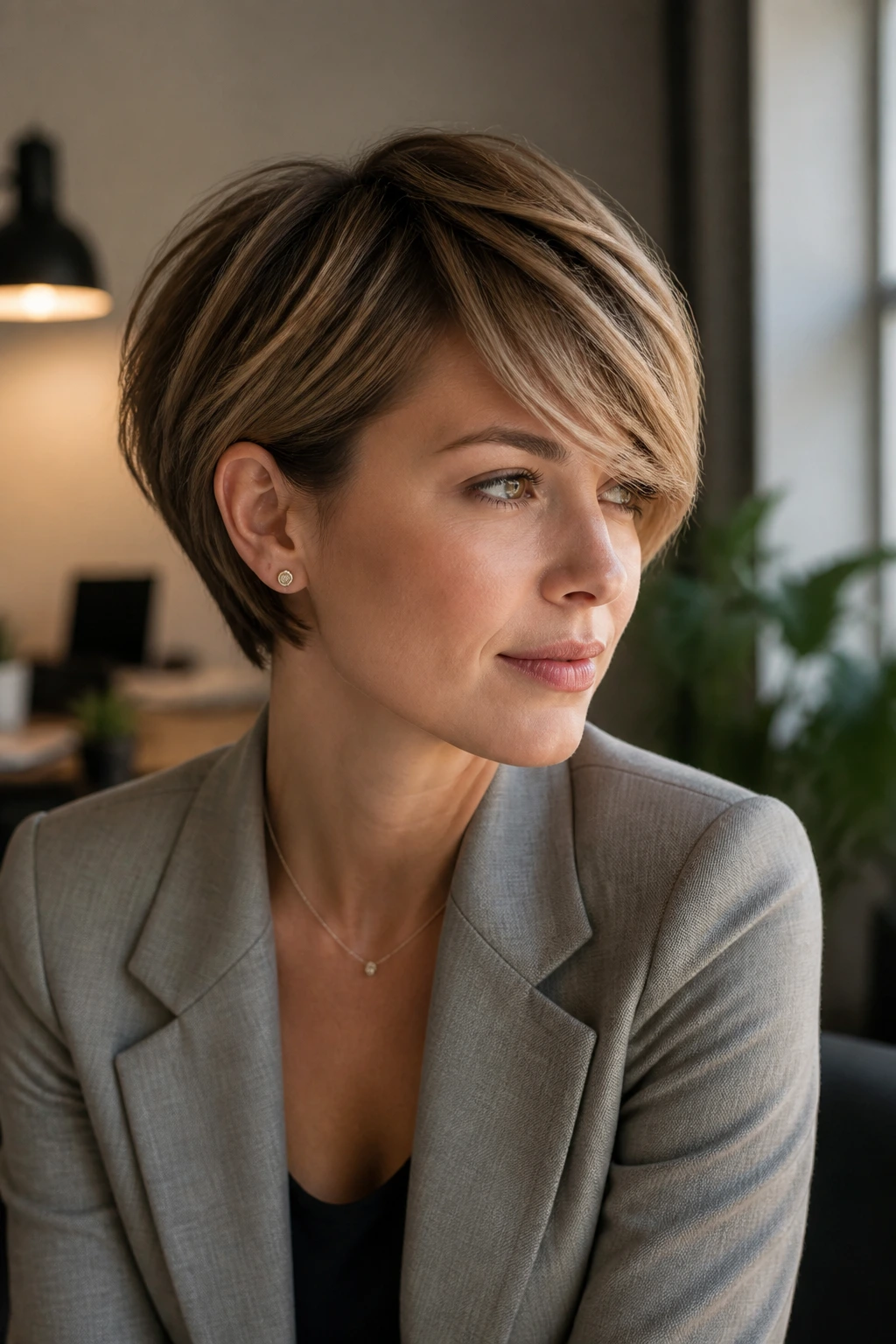
The Soft Office Version: Keep the layers longer, the fringe side-swept, and the ends beveled. It stays neat without feeling severe, which is useful if you want a short cut that still reads polished.
The Edgy Weekend Version: Add more texture, shorten the nape, and let the fringe sit piecey across the forehead. This version likes paste and a quick tousle, not careful brushing.
The Curly Air-Dry Version: Leave enough length for the curls to spring, then shape the sides just tight enough to stop width at the temples. A curl cream or gel-cream mix handles the finish.
The Low-Commitment Grow-Out Version: Keep the crown slightly longer and the neckline soft. It won’t need constant rescue when the trim stretches past schedule.
The Glassy Straight Version: Smooth the top, keep the edges clean, and use a flat brush with a dryer nozzle. A tiny amount of serum on the ends is enough.
Keeping the Shape Between Salon Visits
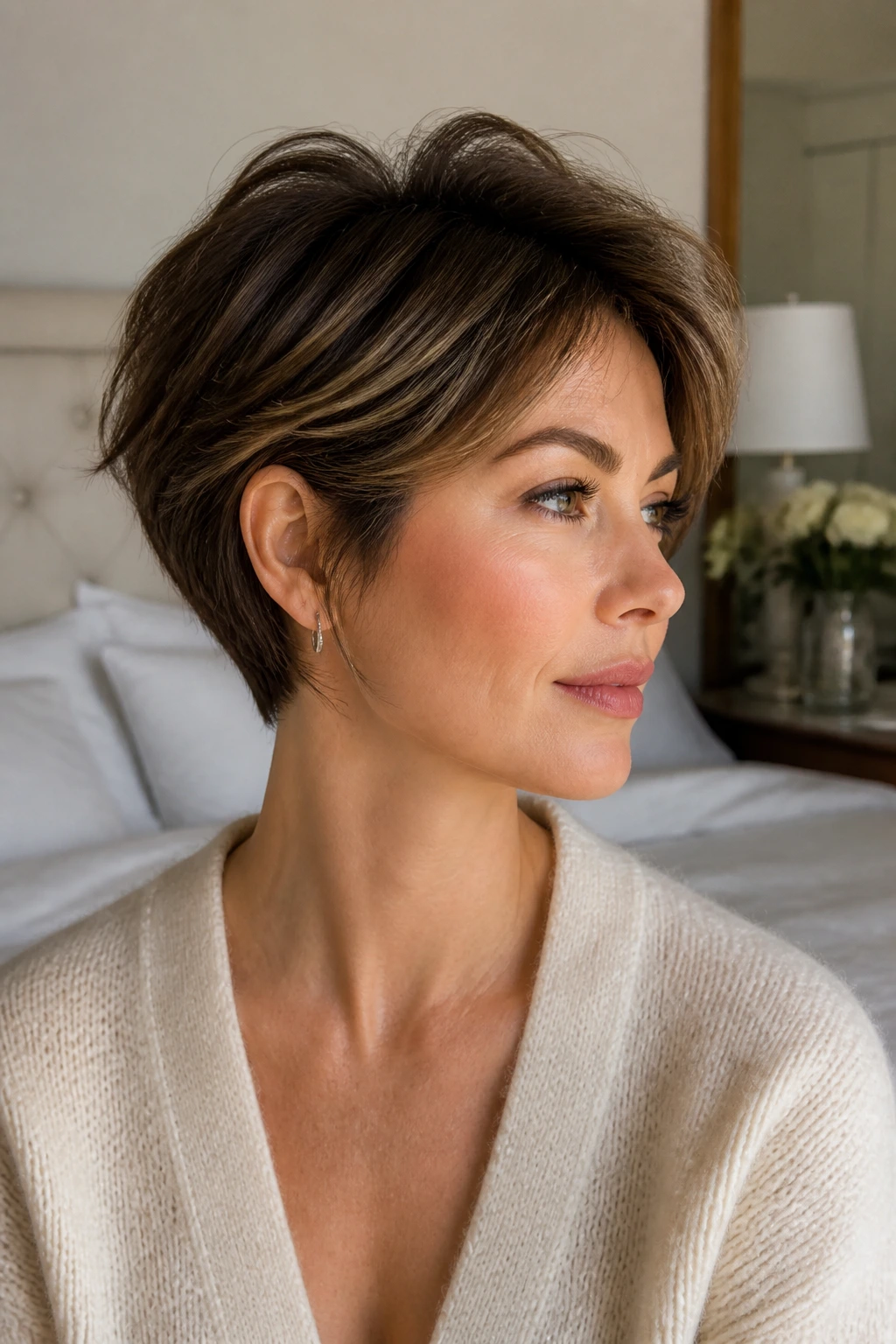
Thick hair grows out with confidence, which is another way of saying it can get unruly fast. For a pixie bob, I like a trim every 4 to 7 weeks if you want the neckline clean and the outline sharp. If you prefer a softer, grown-out look, you can push that longer, but the shape will lose some of its definition.
Wash frequency depends on your scalp, not the haircut, but most thick-haired pixie bob wearers land somewhere around 2 to 4 days between washes. Dry shampoo helps at the roots, though it should be applied lightly. A dusting at the crown is enough. If your hair starts feeling chalky, you’ve gone too far.
At night, a satin pillowcase or a loose wrap keeps the front pieces from bending into awkward angles. In the morning, a mist of water and a touch of product is usually enough to wake the cut back up. Thick hair doesn’t usually need a full restyle unless you slept on one side and flattened the crown.
If the nape starts puffing before the next appointment, ask for a quick neckline cleanup rather than a whole reshape. That tiny maintenance visit can keep the cut looking deliberate.
Questions People Ask Before They Cut Their Hair This Short
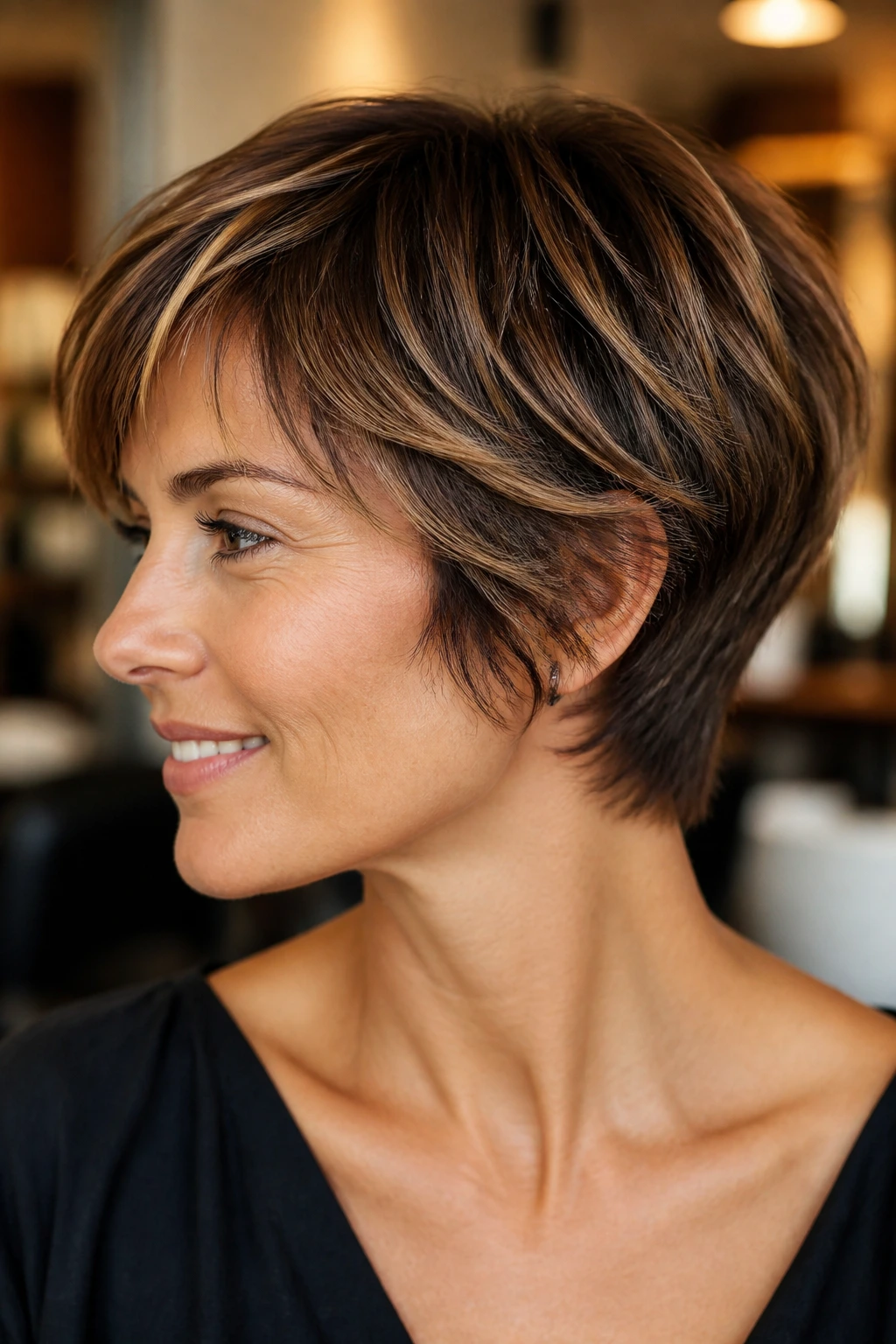
Will a pixie bob make thick hair look wider?
Not if the cut is shaped correctly. The width comes from leaving the sides too heavy, not from the length itself. A clean nape and internal layering usually solve most of that.
Is this cut good for curly thick hair?
Yes, and often better than a blunt bob. Curly density benefits from a shorter outline and a little length left where the curls need room to spring.
How much styling does it need each morning?
A lot less than a shoulder-length thick cut, but more than a wash-and-go crop. Most versions need 3 to 10 minutes, depending on whether you want polish, texture, or curl definition.
Can I wear this if I have a strong cowlick?
You can, but the cut should respect the cowlick instead of trying to erase it. A good stylist will leave length where the swirl needs weight and shape the fringe or crown around the natural bend.
What if I don’t want to look too severe?
Keep the front longer, soften the ends, and avoid a super-short nape. The cut can still be short without reading sharp or boyish.
Does thick hair need thinning shears?
Sometimes, but not everywhere. Internal layering and point cutting usually do the heavy lifting; thinning shears are best used with restraint.
Can I grow this out without an awkward stage?
If the layers are blended well, yes. The grow-out friendly versions are built for that, especially if you keep the crown and neckline softly shaped.
What’s the fastest way to refresh it after sleep?
Mist the roots lightly, blow-dry the crown for a minute or two, and rework the front with a small amount of paste or cream. That usually brings the shape back without a full wash.
A Cut That Holds Its Shape
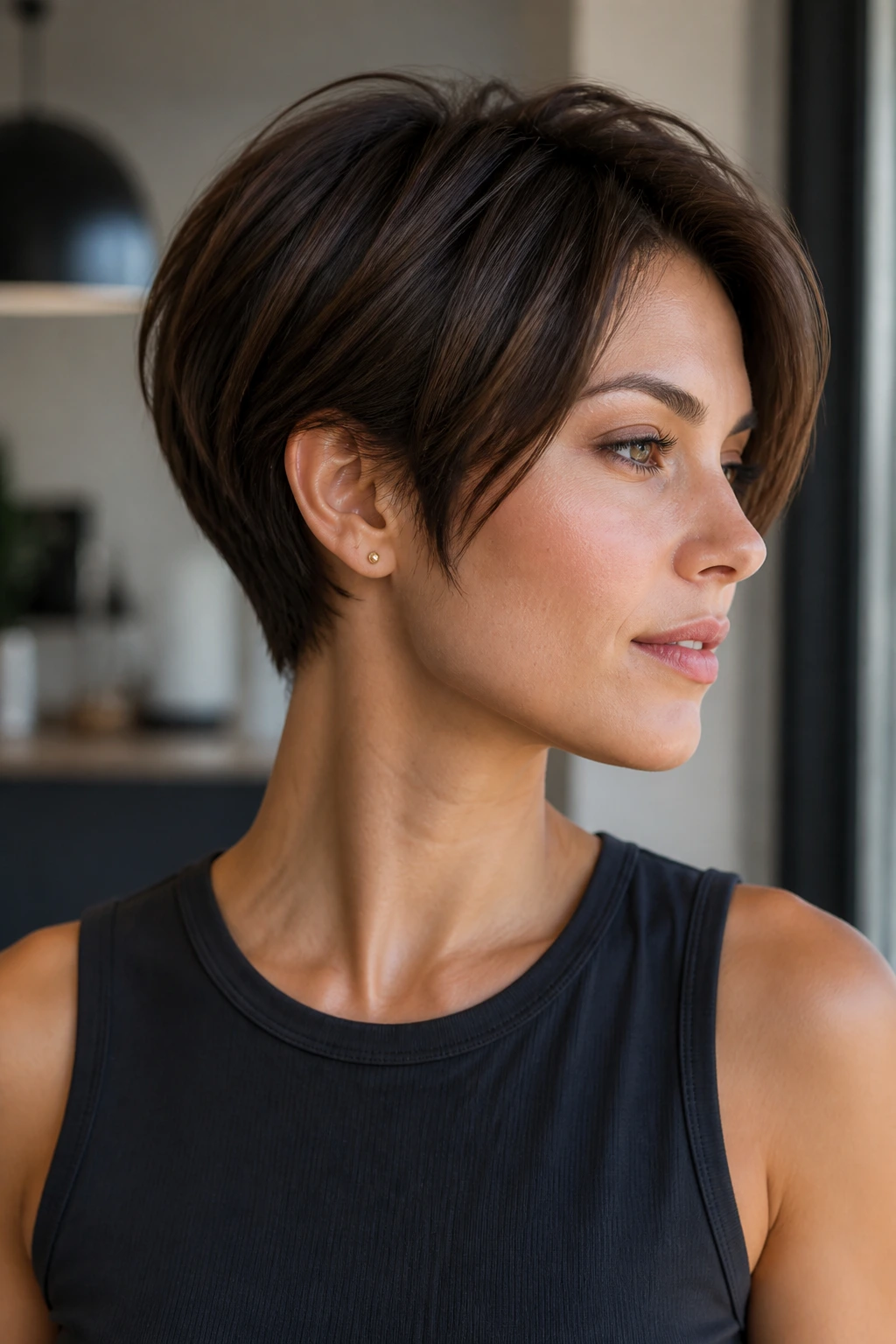
Thick hair does not need to be hidden. It needs direction. A pixie bob gives you that direction without chopping away the character that dense hair naturally brings to the room.
The best version for you is the one that respects your growth pattern, your cowlicks, and how much time you’re willing to spend in front of a mirror. Pick the shape that fits your texture, not the one that looks easiest in a photo, and the haircut will do its job long after the salon cape comes off.
