



A pixie cut can be the sharpest thing in a room—or the saddest five-week grow-out if the shape is wrong. The difference usually lives in the neckline, the crown, and how the front falls around the eyes.
That is why pixie cuts for women stay interesting. They can read polished, tomboyish, soft, editorial, or almost old-Hollywood, all from the same short length. The right version doesn’t just shorten hair; it changes how light lands on the cheekbones, where the eye goes first, and how much work you do with your hands before the day starts.
Some cuts need a blow-dryer. Some need nothing more than a finger through a dab of paste. If you’ve ever looked at a pixie on someone else and thought hers looked expensive while yours looked chopped, the answer is almost always shape.
Why These 28 Pixie Cuts Work So Well
-
Shape does the heavy lifting: A few careful inches at the nape or crown can change the whole face balance, which is why a pixie is more architectural than people expect.
-
Texture changes the mood fast: The same length can look sleek, spiky, soft, or piecey depending on whether the ends are blunt, point-cut, or lightly razored.
-
Short hair is not one-note: A close crop can look severe, pretty, edgy, or relaxed depending on fringe length and the way the sides are carved.
-
Growth matters from day one: Some pixie cuts blur into a bob with almost no drama; others need regular trims or they balloon out at the ears.
-
Texture beats trend-chasing: Thick, fine, curly, or straight hair all need a different cut line, and the smart version respects that instead of fighting it.
1. The Classic Tapered Pixie
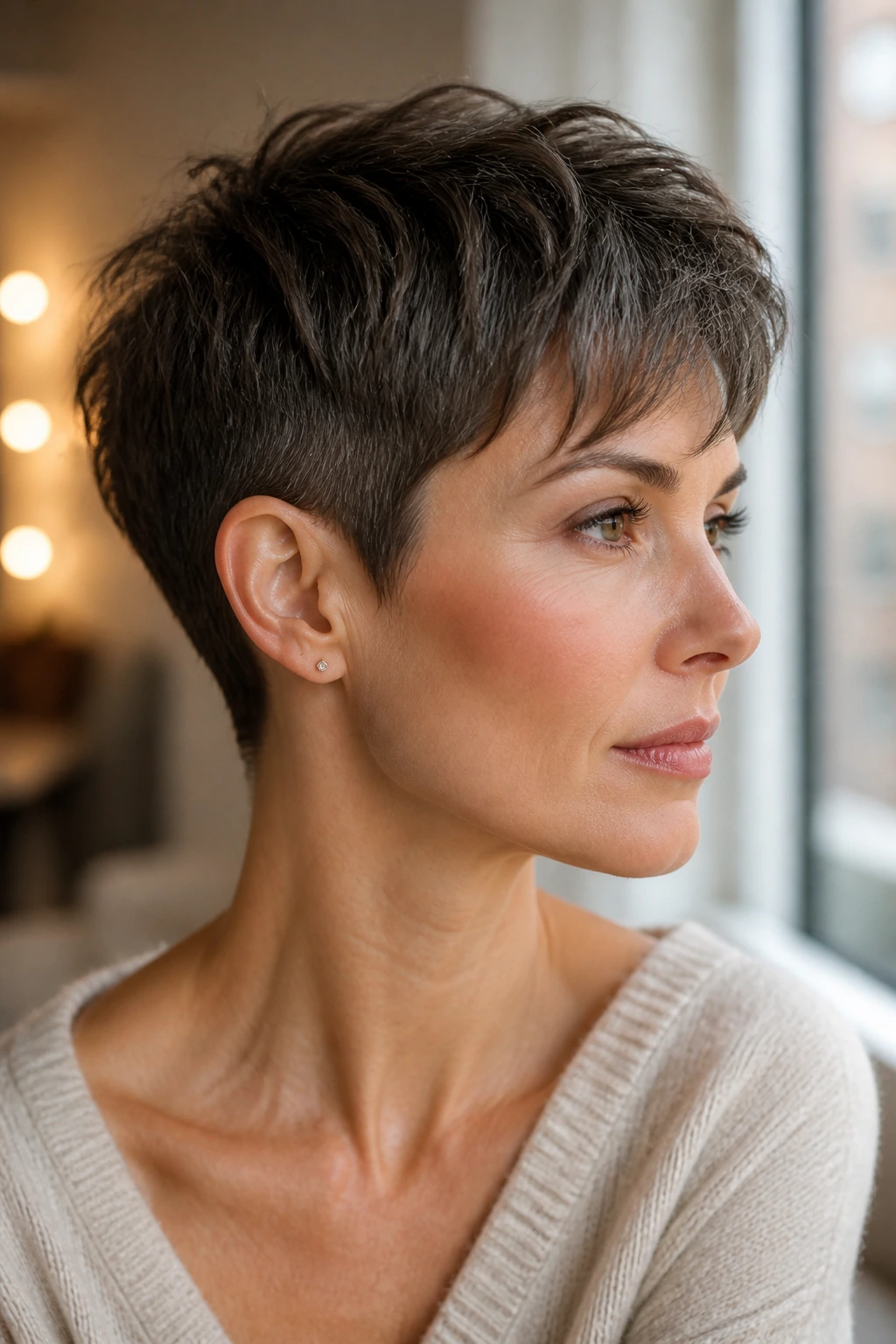
A classic tapered pixie is the clean white shirt of short hair. The nape sits close to the neck, the sides hug the head, and the crown keeps just enough length—usually around 2 to 3 inches—to move when you run your fingers through it.
Why It Works
This cut gives you structure without looking hard. The taper at the back keeps the silhouette neat, while the slightly longer top stops the shape from turning into a helmet. It’s the kind of pixie that makes earrings and jawline do more work, which is exactly the point.
A pea-sized bit of matte paste is usually enough. Warm it in your palms, press it into the ends, and leave the roots alone unless they need a quick lift.
- Best on straight to softly wavy hair.
- Great if you want a cut that grows out neatly.
- Ask for a tighter nape if your hair puffs at the neck.
2. The Choppy Textured Pixie
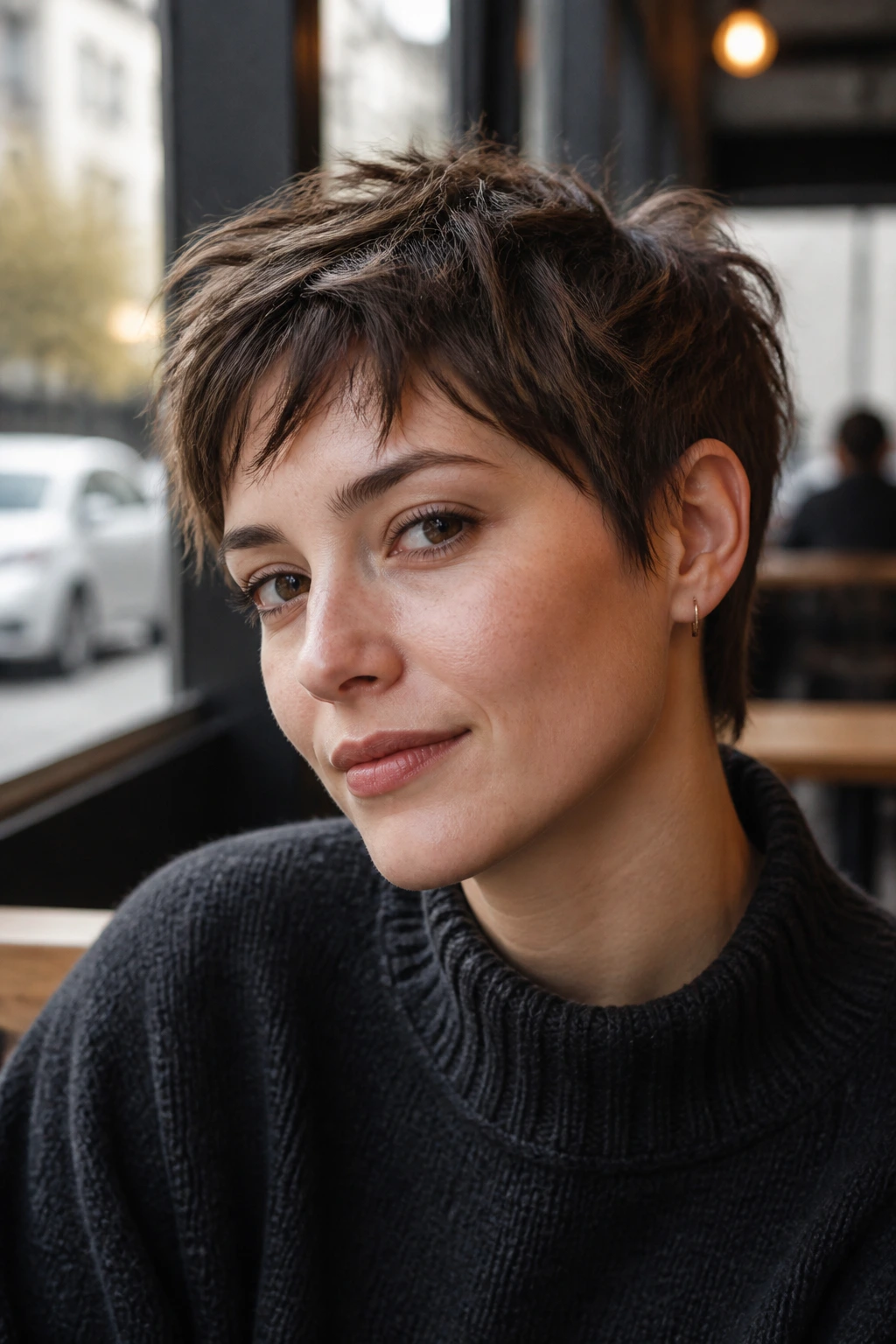
This one lives on movement. The ends are point-cut so they separate instead of sitting in one solid block, and the fringe usually has a little irregularity that makes the whole thing feel alive.
It’s the version I recommend when someone says they want short hair but not a stiff short haircut. A little texture spray at the roots, a pinch of clay through the top, and you’re done. No glossy shell. No overthinking. The point is that it looks hand-tousled, not lacquered.
If your hair is thick, this shape removes bulk without making the cut feel skinny. If your hair is fine, the choppiness creates the illusion of more pieces and more density.
3. The Side-Swept Fringe Pixie
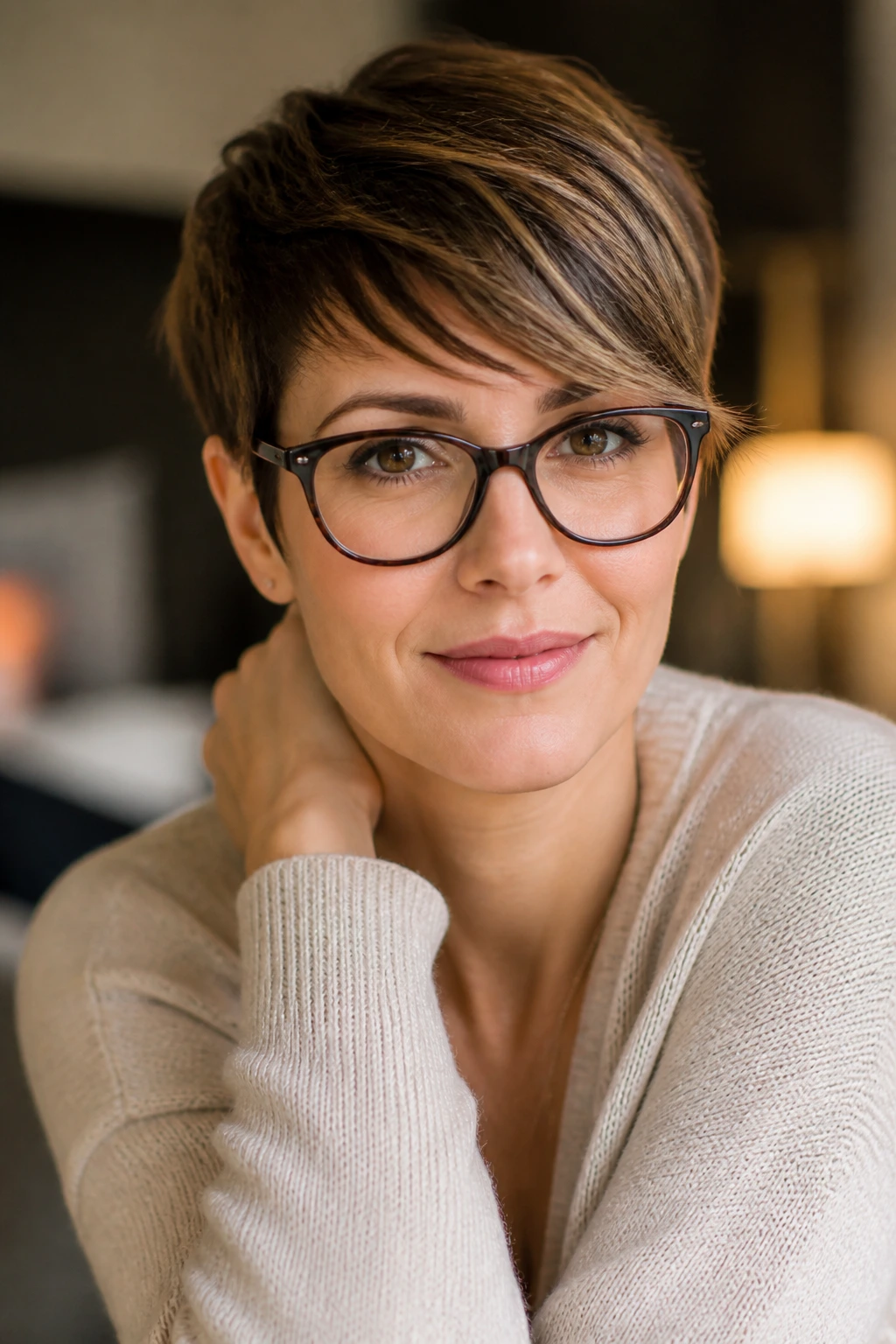
Want something softer around the forehead? Start here. The fringe is left long enough to sweep diagonally across the face, often grazing the brow or the top of the cheekbone, while the sides stay neat so the front can do the talking.
That angled front line is flattering for a lot of faces because it breaks up width and brings the eye inward. It also works well with glasses. The front doesn’t fight the frames; it frames them.
A small flat brush or a 1-inch round brush helps the fringe bend in the right direction. I like this cut with a clean side part, not a vague middle part pretending to be a side part.
4. The Undercut Pixie for Thick Hair
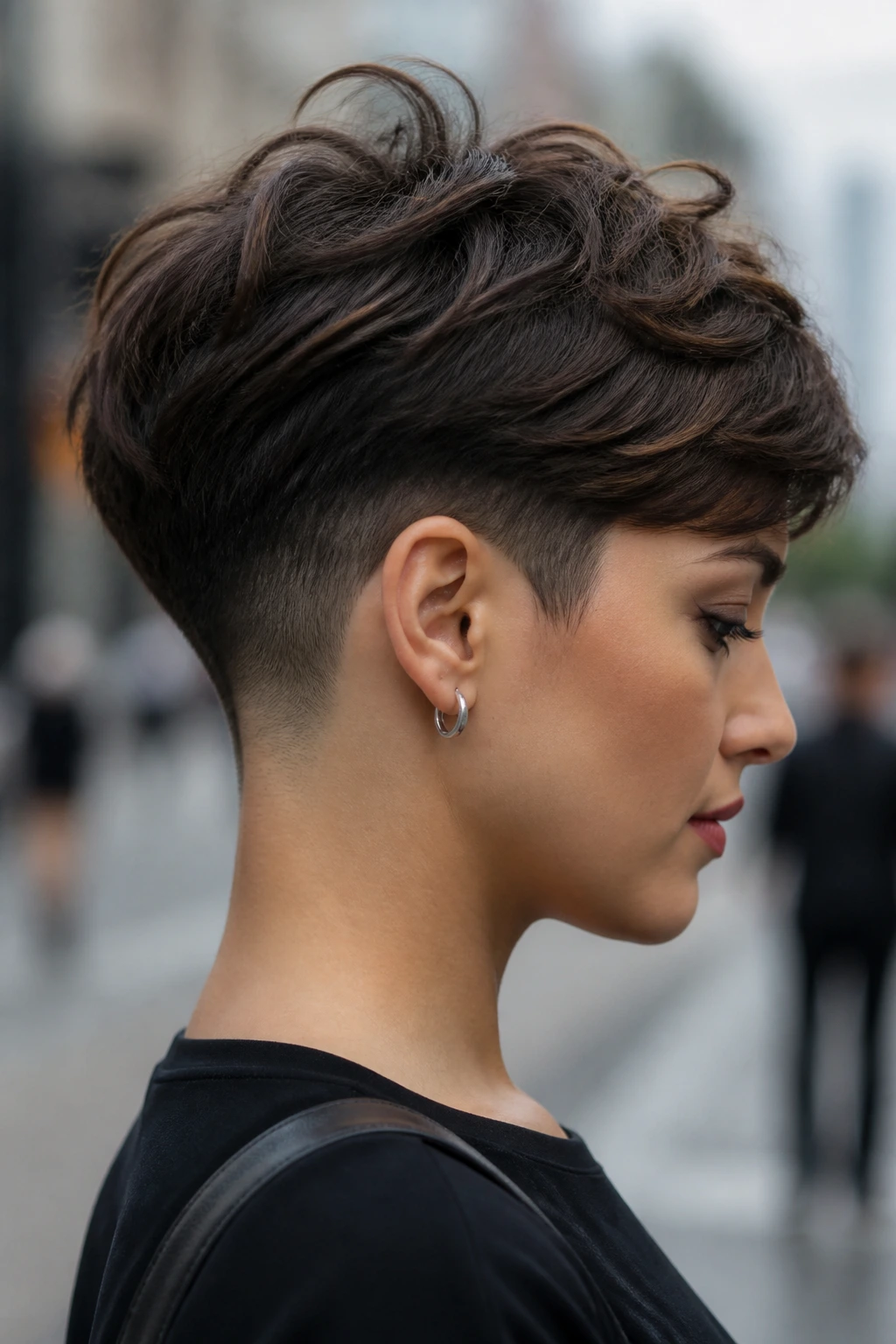
An undercut pixie handles density in a smart way. The bottom section—usually the nape and sometimes the temples—gets clipped shorter or buzzed, which takes weight out of the cut without taking away shape.
Thick hair loves this move. It stops the sides from flaring out and keeps the top from sitting like a dense block. The contrast also gives the style a little edge, even if the top is soft.
If you have fine hair, go easy on the undercut. Too much removal can make the cut look sparse rather than chic. For thick hair, though, this is one of the best ways to keep short hair from feeling bulky by noon.
5. The Curly Natural Pixie
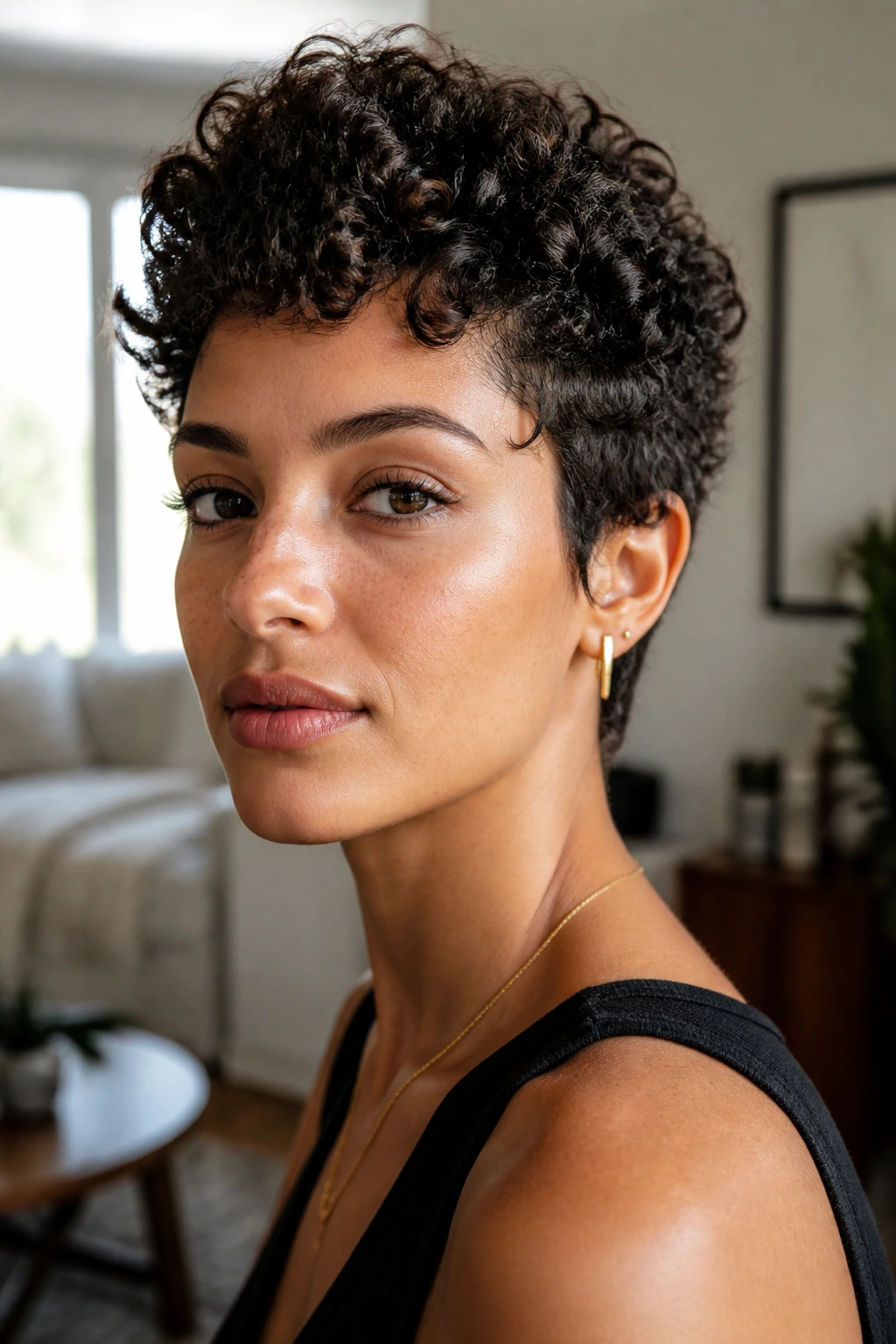
A curly pixie is not a straight pixie that accidentally met humidity. It’s built for spring, shrinkage, and movement. The top usually stays a little longer so the curls have room to stack instead of sticking straight out.
Dry cutting helps here. Curly hair behaves differently when it’s wet, and if the cut ignores that spring, the result can land much shorter than planned. Leave-in conditioner and a light gel can define the curls without turning them crunchy.
This shape works because it lets the curl pattern be the decoration. You do not need much else. A clean neckline, shaped sides, and one good curl cream often finish the whole job.
6. The Long Pixie with Tucked Sides
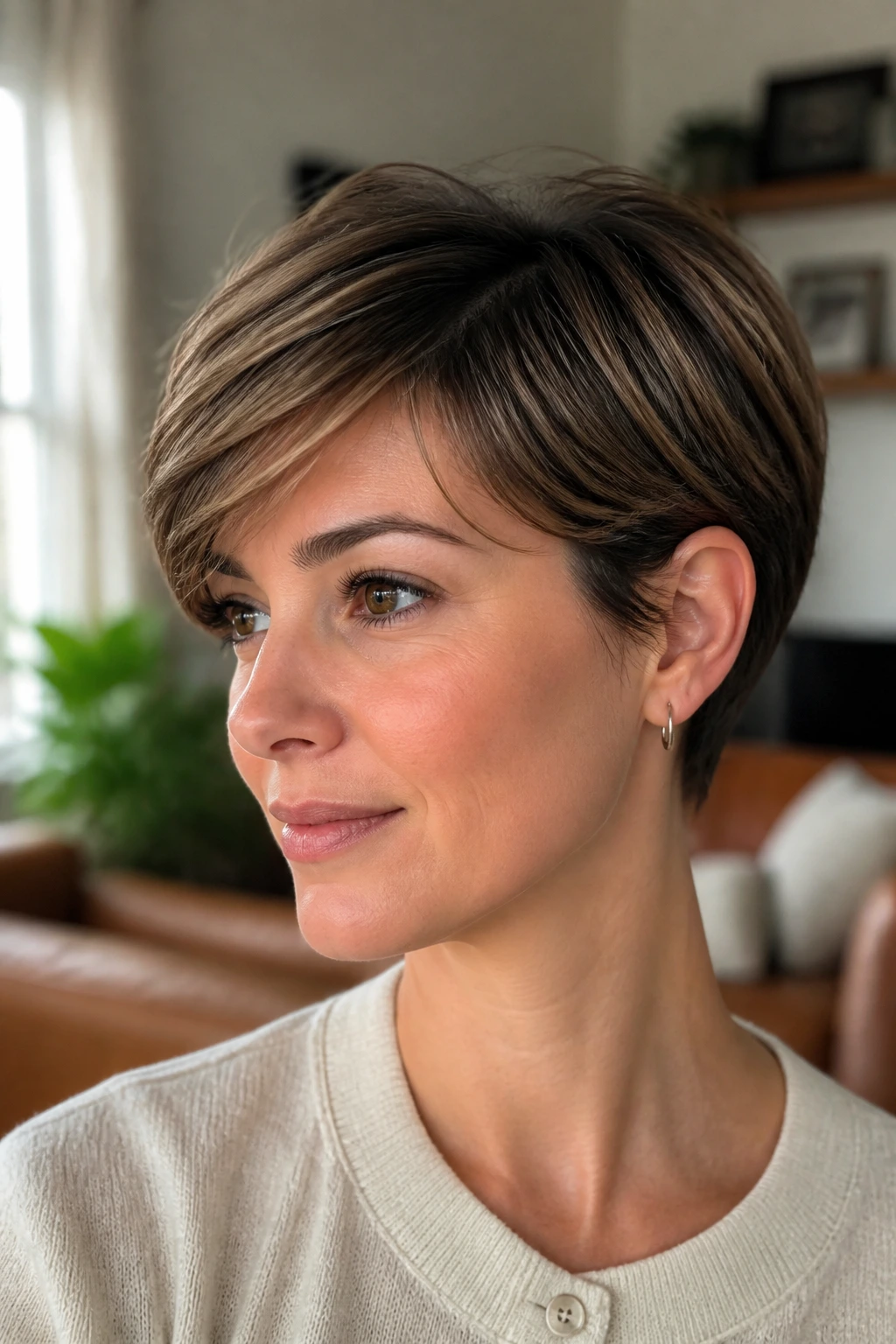
This is the soft landing for anyone nervous about going short-short. The sides are kept long enough to tuck behind the ears, while the top and fringe stay roomy enough to move around a little.
It feels especially good if you wear earrings, glasses, or scarves. The hair can disappear behind the ear one minute and fall forward the next, which gives you options without making you grow it all the way to a bob.
I like this version when someone wants a pixie but also wants a little face-framing security blanket. It’s shorter than a bob, but it doesn’t have the bluntness that can make first-time short hair feel like a shock.
7. The Micro Pixie
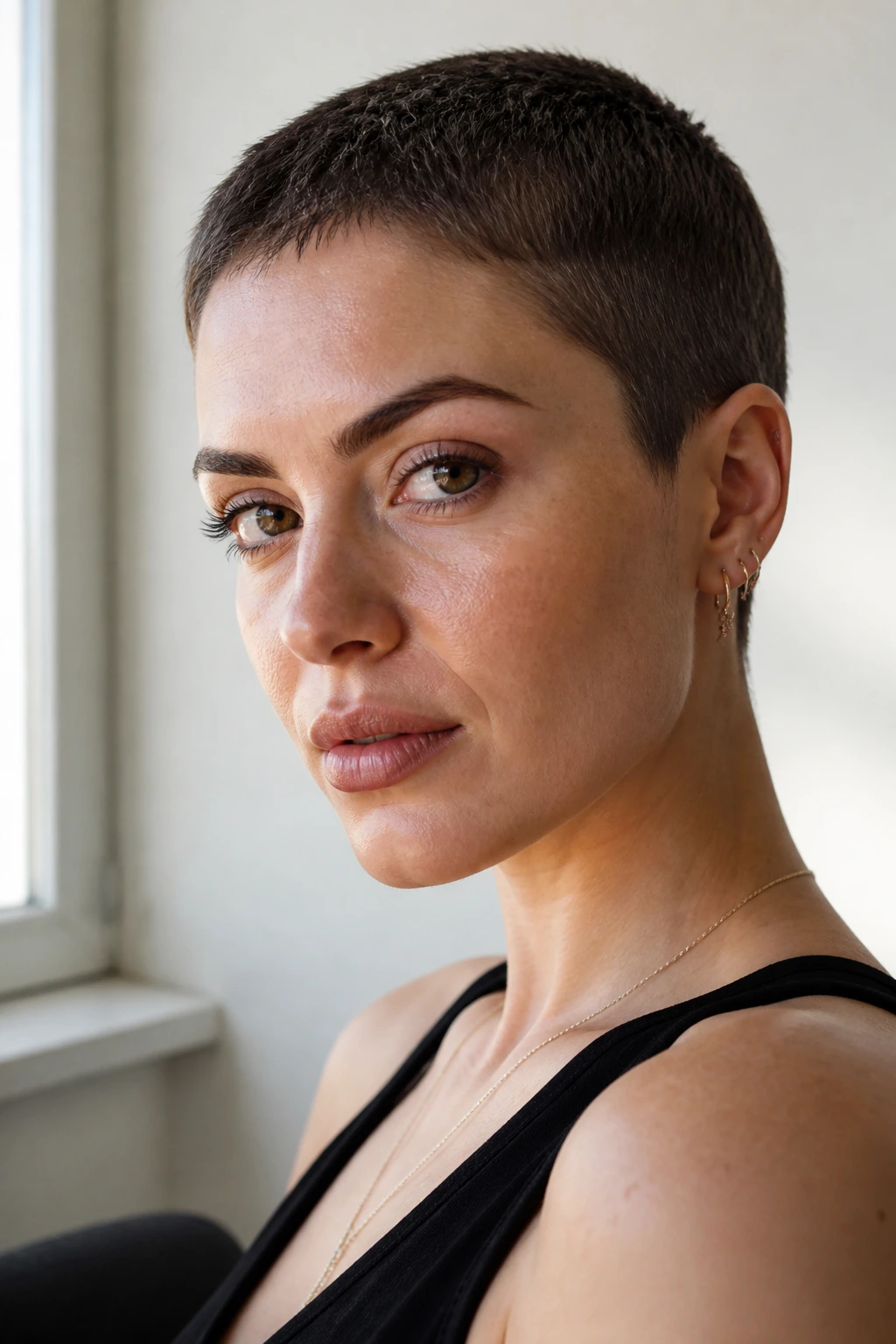
This is the shortest chic version, and it works because there is nowhere for bad shape to hide. The hair sits close to the scalp, the outline is crisp, and the whole cut depends on proportion rather than length.
It can look sleek and expensive when the neckline is clean and the top is cut with intention. It can also go wrong fast if the sides are left bulky. On a micro pixie, every millimeter matters.
Best for strong brows, clear cheekbones, or anyone who wants a bold line with almost no styling. A tiny bit of balm is enough. More than that and the hair starts looking greasy instead of polished.
8. The Feathered Pixie
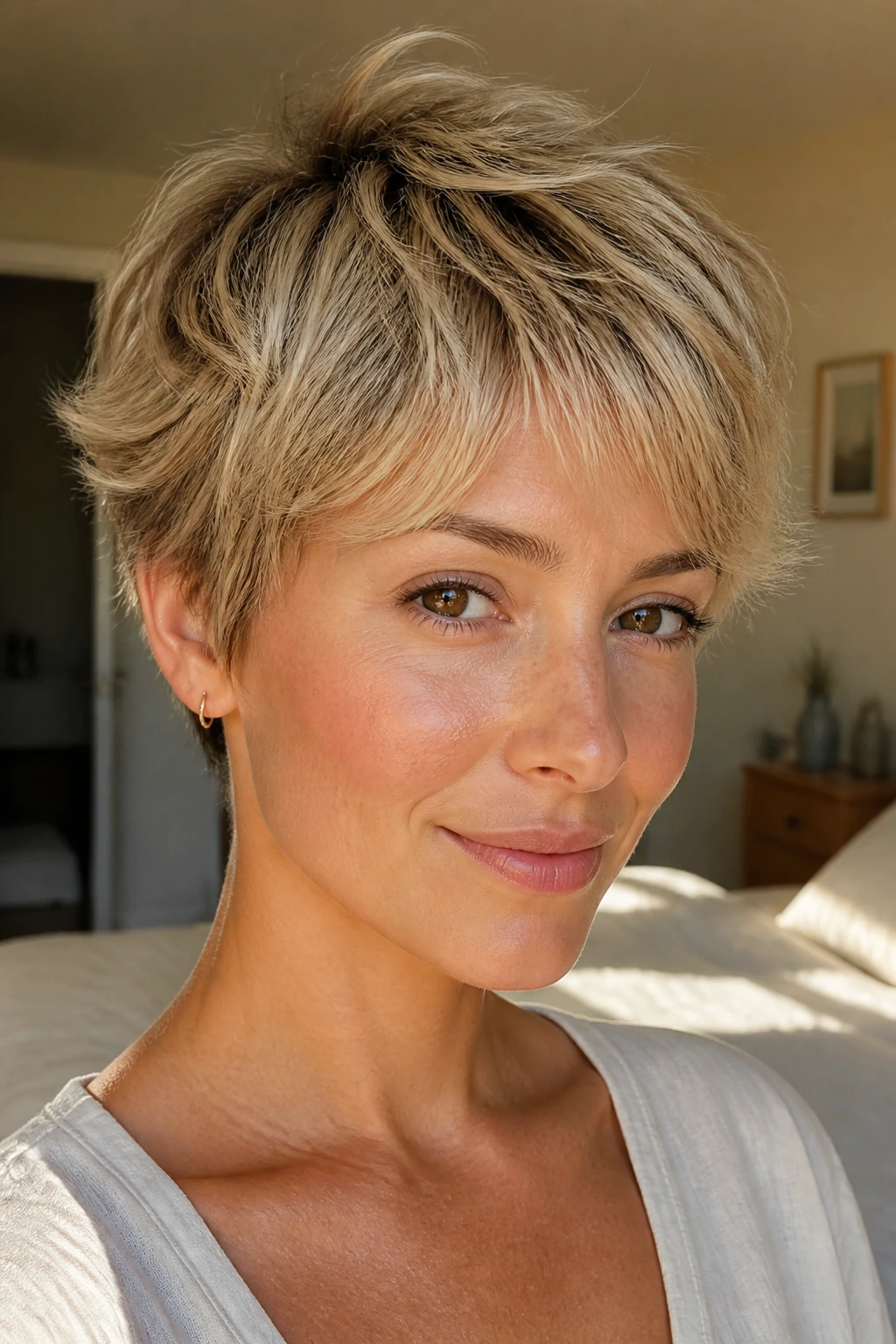
The feathered pixie carries the best part of a 70s cut into a short shape. The layers are light, the ends flick away from the face, and the top has a soft lift that feels airier than a blunt crop.
A round brush makes this cut sing. Blow-dry the fringe and crown away from the face, then let the ends settle where they want. You’re not building hard edges here; you’re building movement.
It’s a good choice if you want short hair that still feels gentle. Feathering takes the severity out of a pixie without dragging it into bob territory, and that balance is harder to get than it looks.
9. The Asymmetrical Pixie
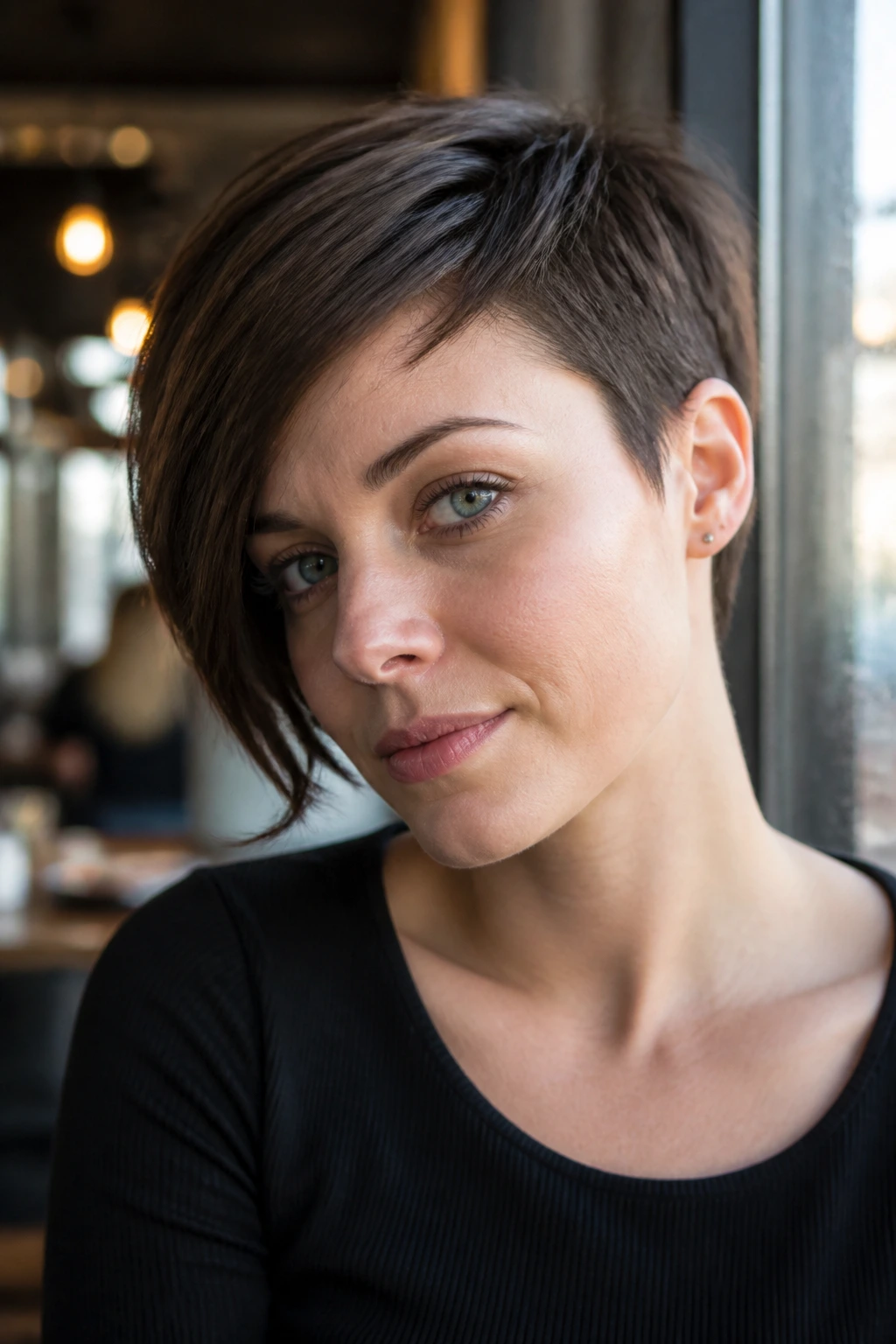
One side longer. One side shorter. That’s the whole trick, and it works because the eye always has somewhere to land. The longer side can skim the cheekbone or jaw, while the shorter side keeps the cut from feeling heavy.
This shape adds drama without requiring wild styling. A side part and a little smoothing cream are often enough. If you want more edge, tuck the shorter side behind the ear and let the longer side fall forward.
I like this on square or round faces because the diagonal line softens the width. It’s also a good move if you’re bored by symmetry. Hair does not need to behave like a spreadsheet.
10. The Shaggy, Air-Dried Pixie
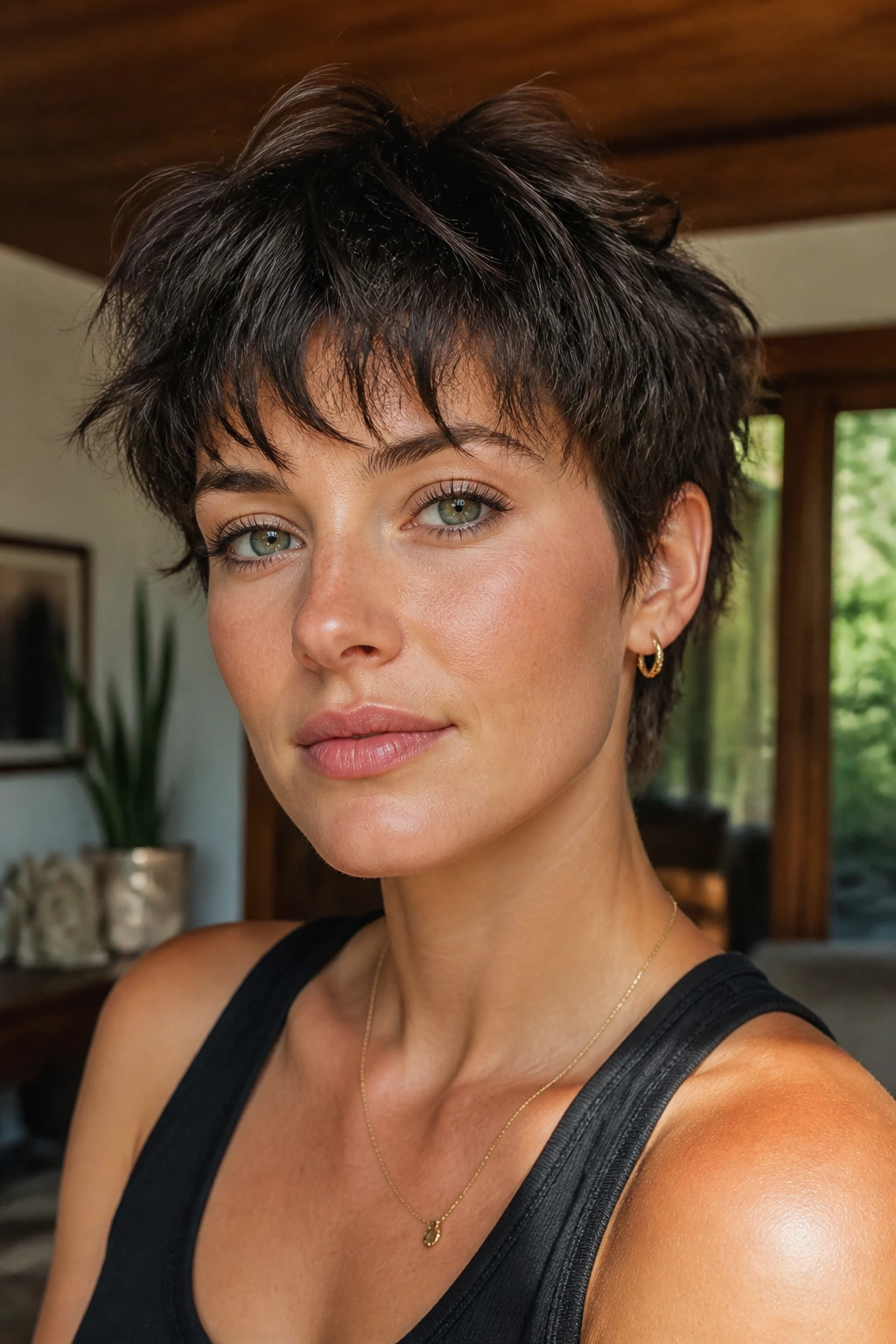
This one is for the person who wants short hair with a bit of bedhead energy. The layers are uneven on purpose, the fringe is broken up, and the overall shape looks better with a little mess in it.
Mousse works well before air-drying. Scrunch it into damp hair, twist a few pieces around your fingers, and leave the crown alone if you want some lift. Trying to smooth this cut too much defeats the point.
It suits wavy hair especially well. Straight hair can wear it too, but the cut has to be textured enough that it doesn’t fall flat by lunchtime.
11. The Slicked-Back Pixie
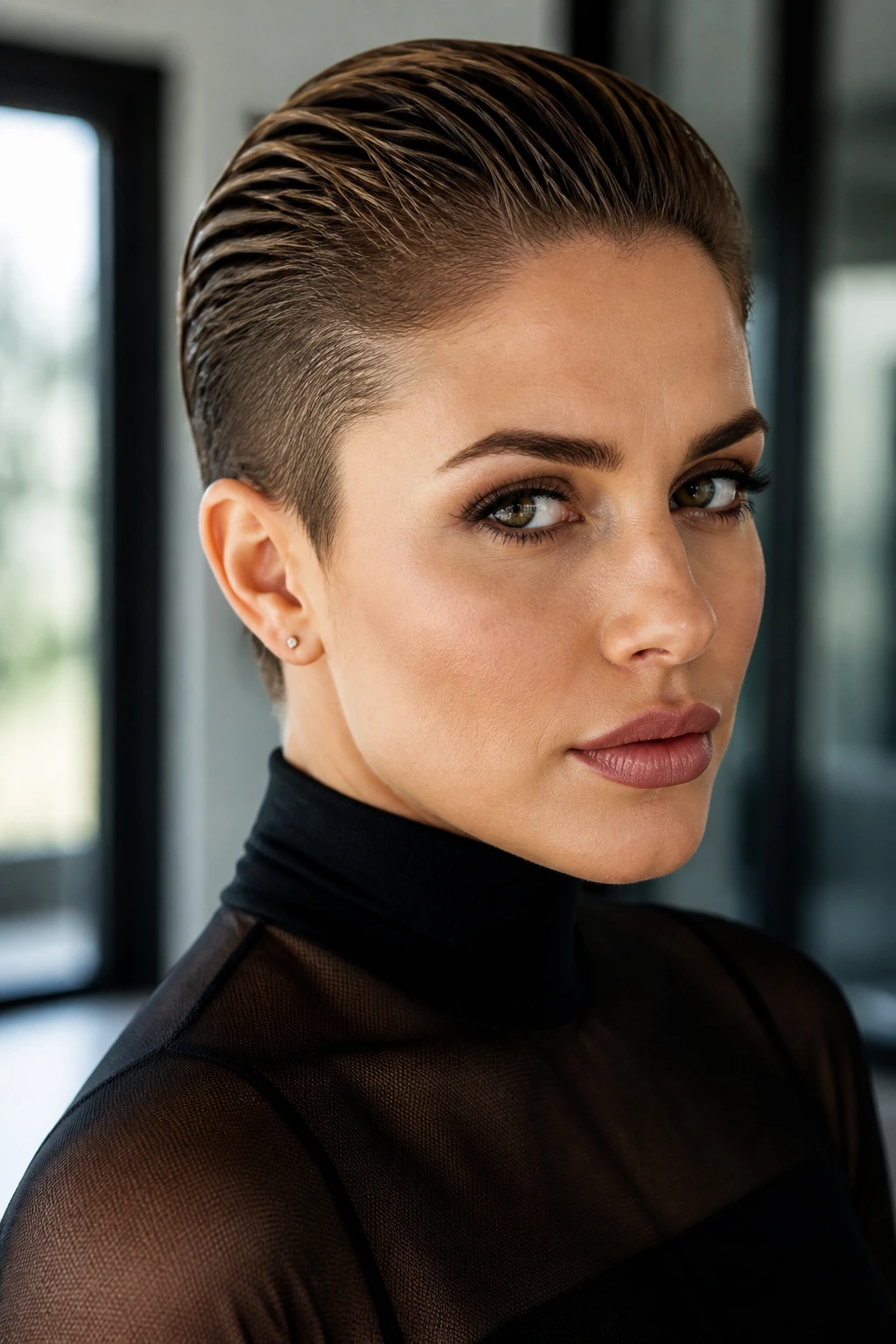
A slicked-back pixie is one of those cuts that changes personality depending on the product. Dry it smooth, add gel, and suddenly the same hair reads sharp, formal, and a little bit dangerous in the best way.
The sides should stay tight enough to support that swept-back shape. If the top is too long or too heavy, the style collapses and starts looking wet in a sloppy way. Shape matters more here than shine.
Use gel on damp hair, comb it straight back or slightly off-center, and let it dry without touching it. A clean ear and a strong brow line do a lot of work with this one.
12. The Soft Wispy Pixie
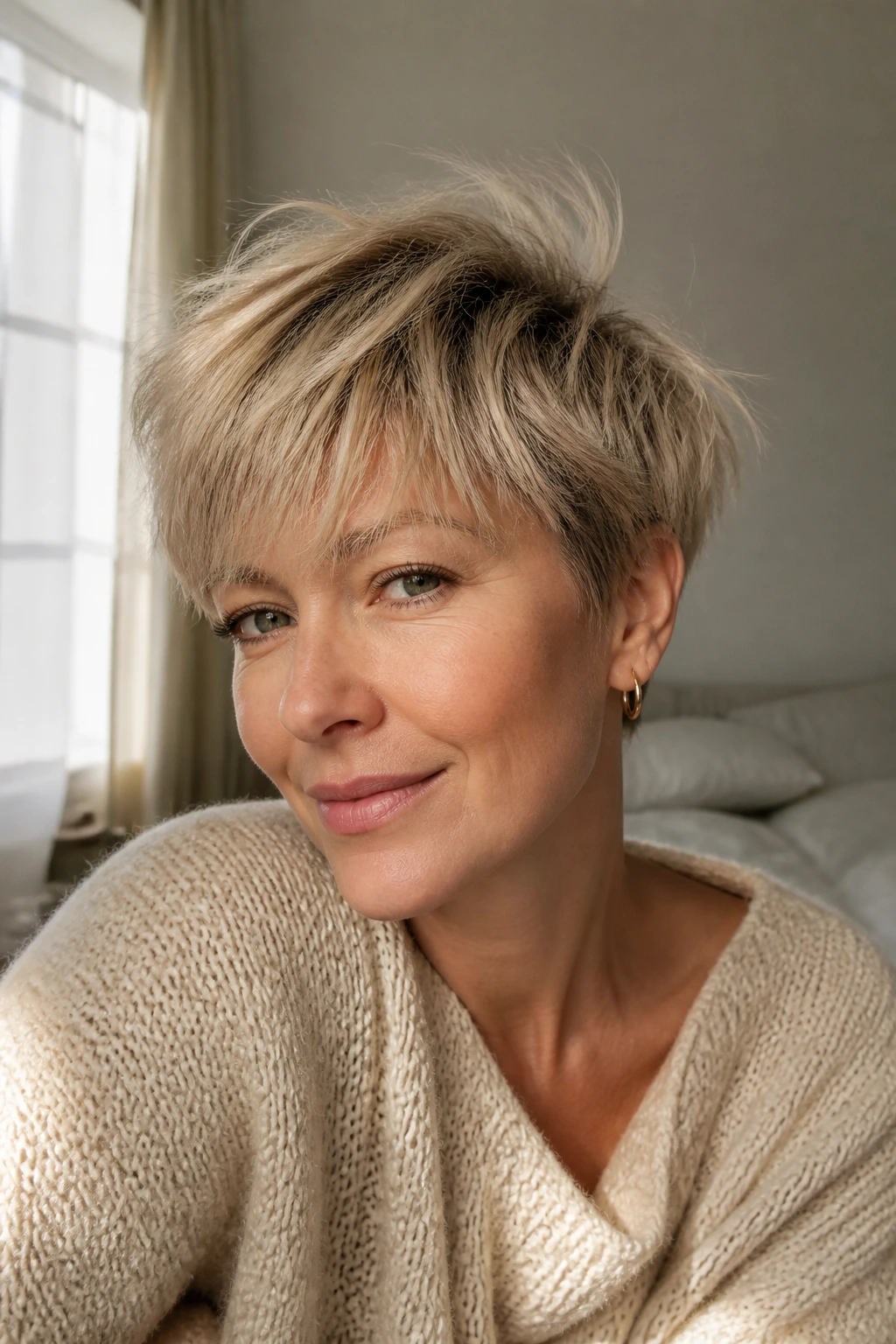
This is the pixie for people who want short hair without a hard edge. The ends stay airy, the fringe is light, and the whole cut has a bit of lift around the temples and crown.
It works beautifully on fine hair because the wispy finish makes the hair move instead of hanging in one line. It can also soften sharper features, which is handy if your jaw or nose already does plenty of talking.
I’d keep the product light here. A touch of mousse or a loose cream is plenty. Heavy wax kills the softness and makes the cut feel smaller than it should.
13. The Platinum Blonde Pixie
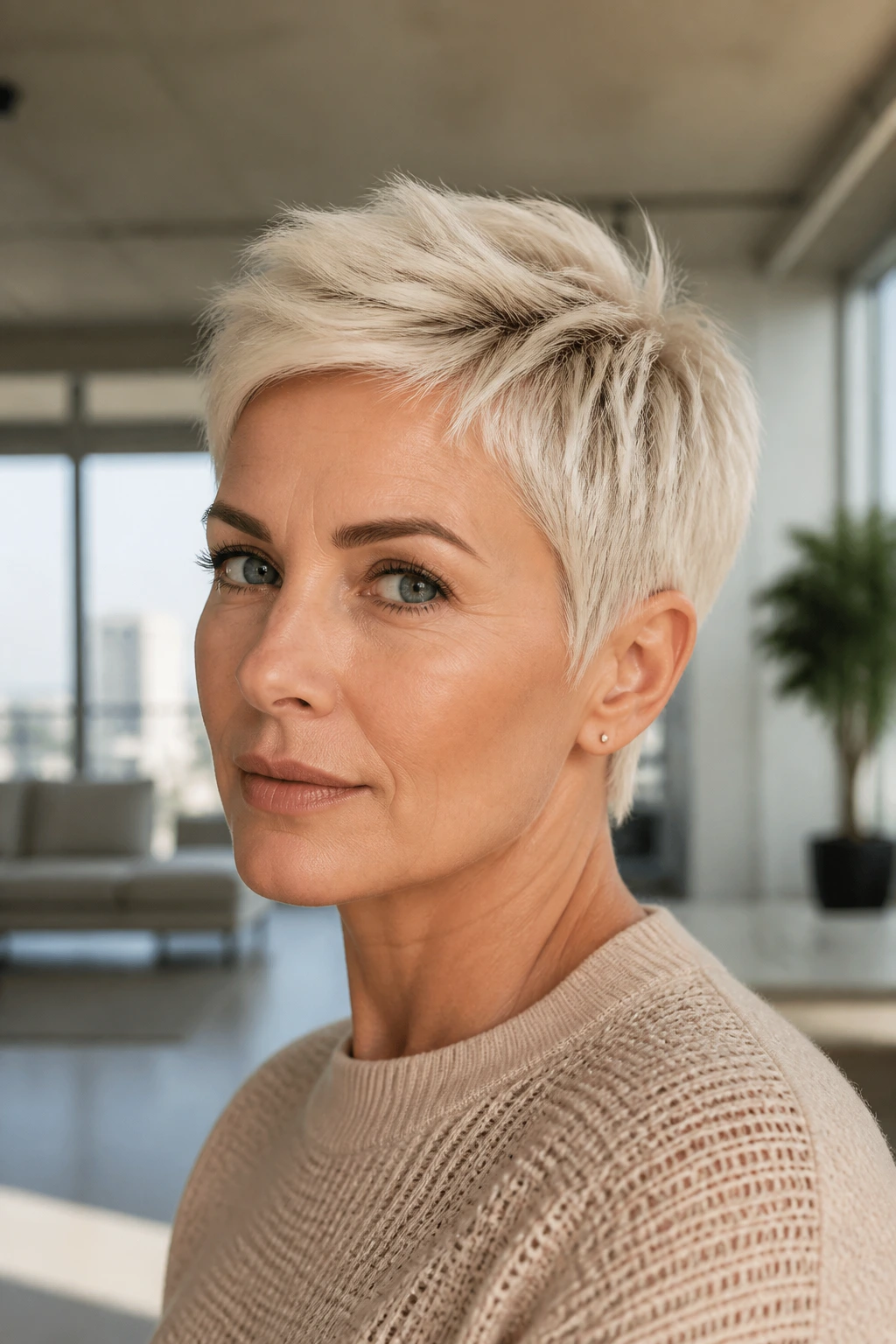
Blonde changes everything on a pixie. The color makes the cut line louder, so the shape has to be crisp. A platinum pixie looks best when the perimeter is tidy and the top has enough texture to keep it from looking like a single white block.
The upkeep is real. Toning shampoo helps keep the yellow out, and a lightweight conditioner matters because bleached hair can get dry at the ends fast. Still, the payoff is strong: the short length and pale color create a very clear silhouette.
If you’re going this light, keep the cut in good condition. A sloppy blonde pixie looks much sloppier than a sloppy brunette one.
14. The Pixie Bob Hybrid
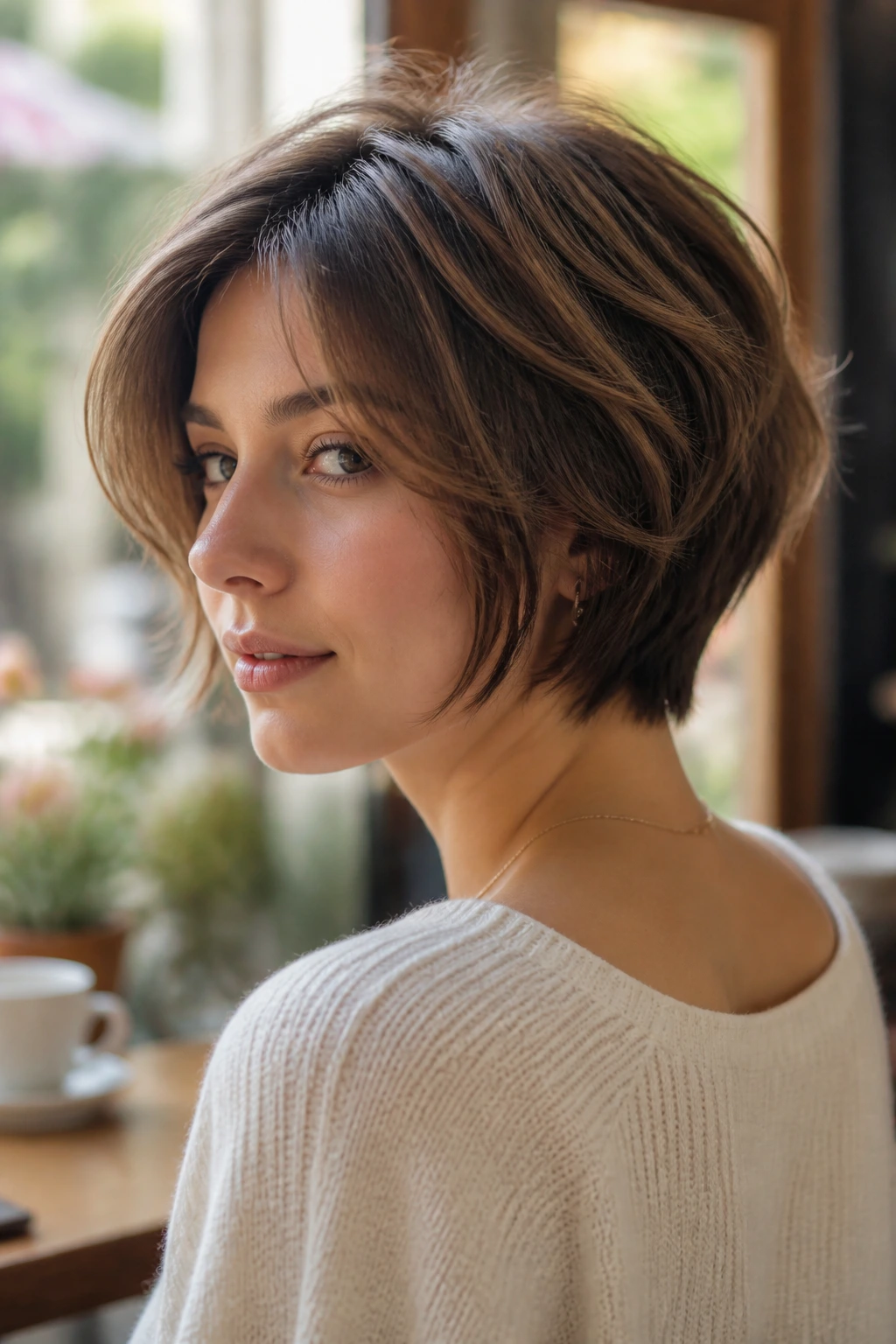
This is the in-between cut for people who want a pixie shape without fully committing to a crop. The back stays short, the sides stay longer, and the front can slide into bob territory if you let it.
It’s a smart cut if you like to grow your hair out a bit between salon visits. The shape still feels intentional at six or seven weeks, which is more than I can say for a lot of short cuts.
If your hair flips out at the ends, ask for soft layering rather than blunt panels. That little adjustment makes the transition from pixie to bob much less awkward.
15. The Baby Bangs Pixie
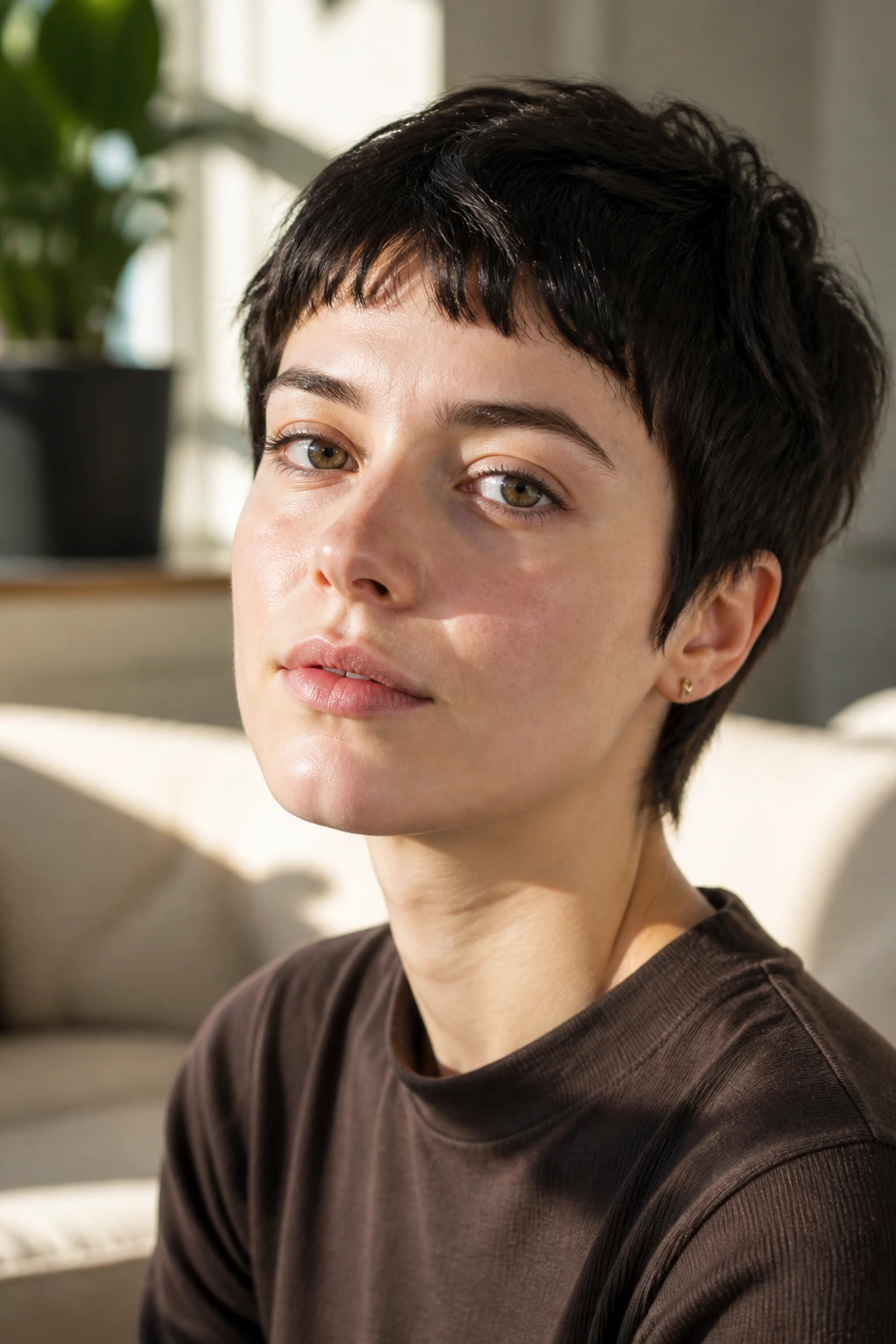
Baby bangs make a short cut feel deliberate. The fringe sits above the brows, sometimes much higher, and the rest of the pixie is usually kept soft so the bangs don’t take over the whole face.
This is a bold move on straight hair because the fringe line stays visible and clean. On wavy hair, it can get unpredictable fast unless the stylist accounts for shrinkage and bend.
Keep the rest of the cut quiet if you choose this one. When the bangs are short, the top, sides, and neckline should support them rather than compete for attention.
16. The Faux Hawk Pixie
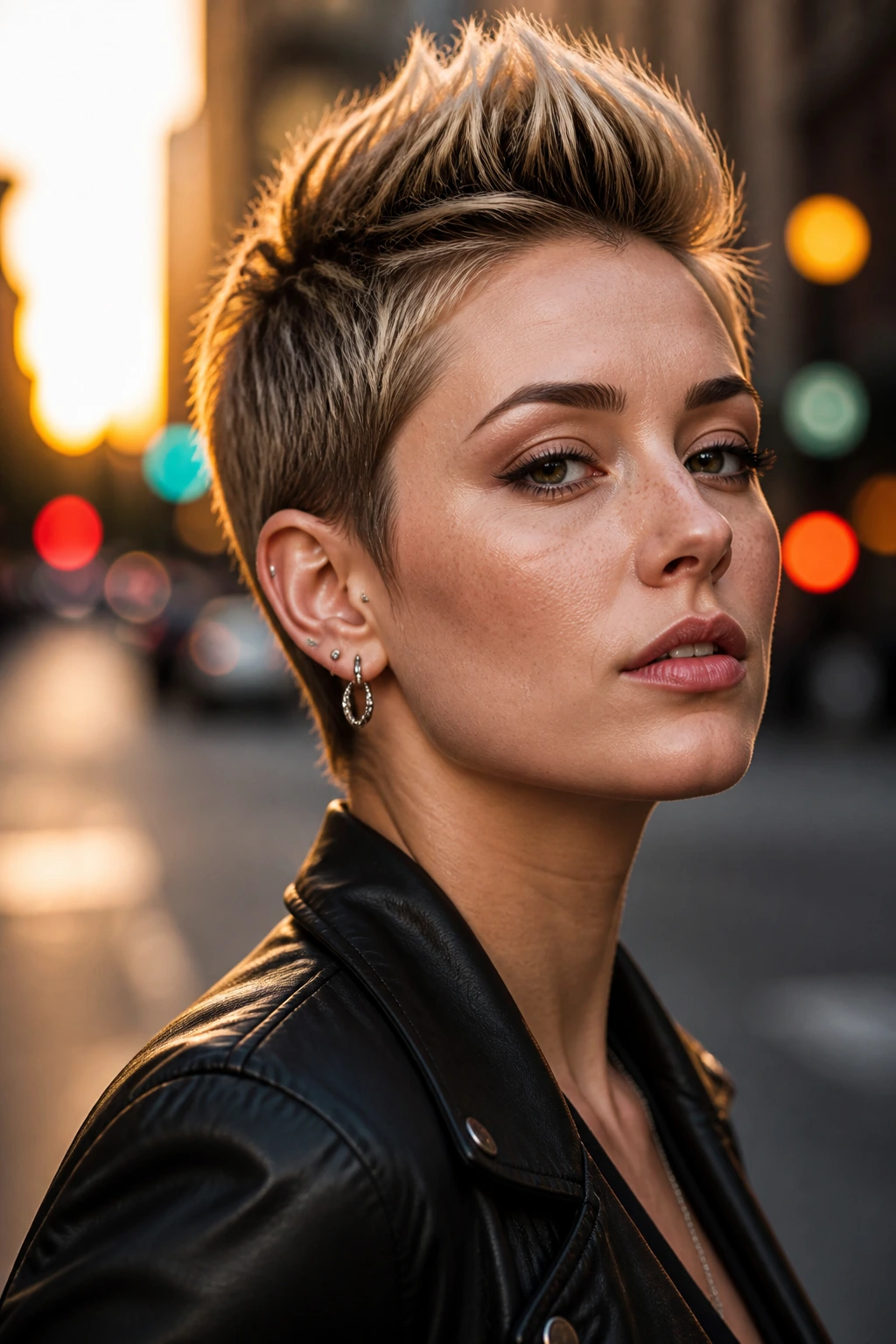
A faux hawk pixie builds height through the middle and keeps the sides compressed. It gives you the attitude of a mohawk without shaving the whole thing down, which is exactly why it stays wearable.
This shape likes a little grit. A root-lifting mousse or texturizing spray helps the center stand up, and a matte paste gives the tips some direction. The look should feel edgy, not helmeted.
If your face is narrow, this cut can add welcome width through the crown. If your hair is very thick, it also gives you a place to remove bulk without flattening the whole shape.
17. The Tapered Nape Pixie
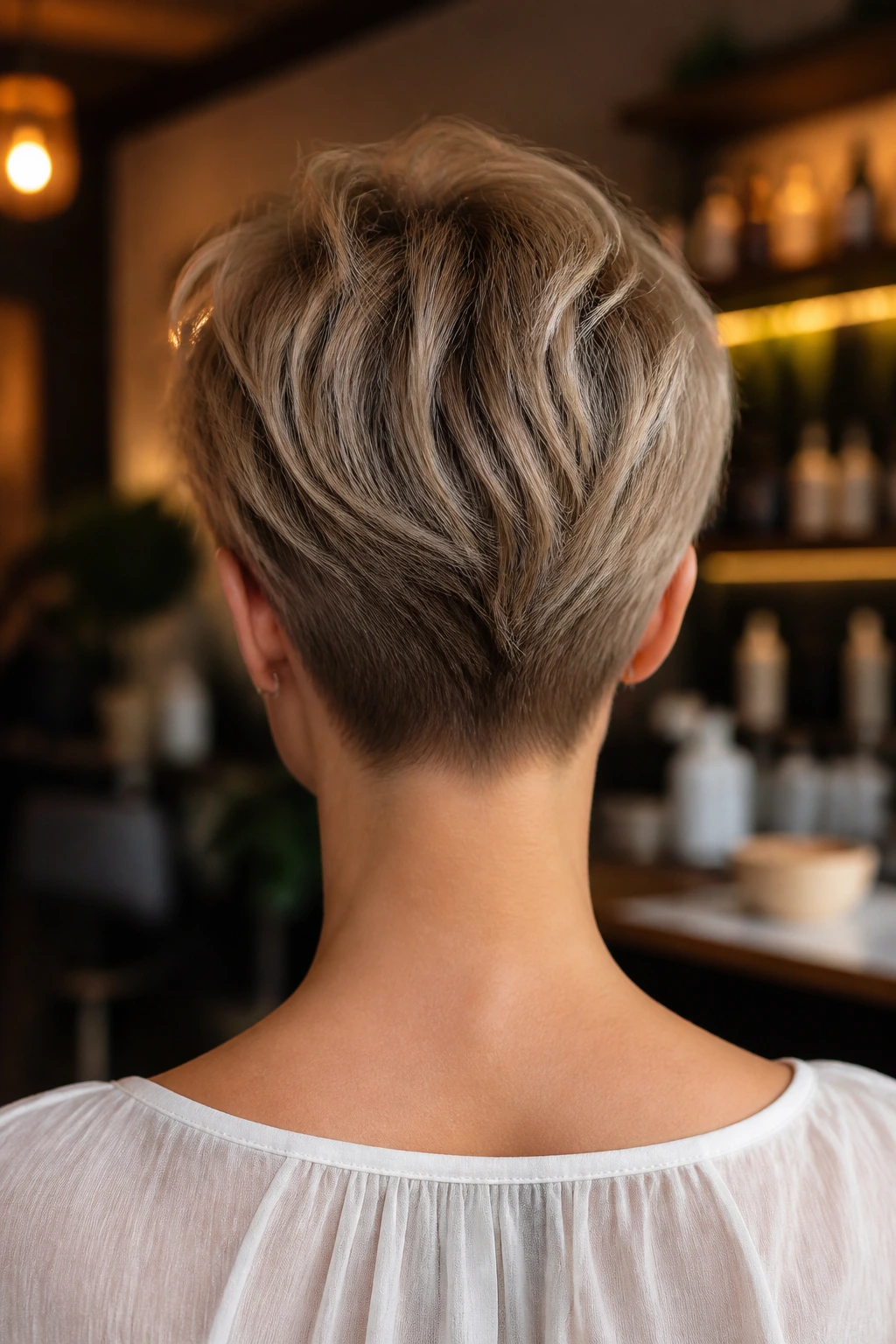
Some pixies make the front the star. This one makes the neckline the quiet hero. The nape is carved close and clean, which gives the whole cut a finished back view—the part people forget until they wear something backless or tuck their hair up.
The top can stay soft and slightly longer, but the back has to be precise. When that line is clean, the haircut looks much more expensive than it really is. Bad napes show immediately. Good ones almost disappear, which is the point.
This is the cut I’d choose if you wear collars, chains, or scarves often. It keeps the hair from bunching at the neck and makes the whole silhouette look tidy from every angle.
18. The Deep Side-Part Pixie
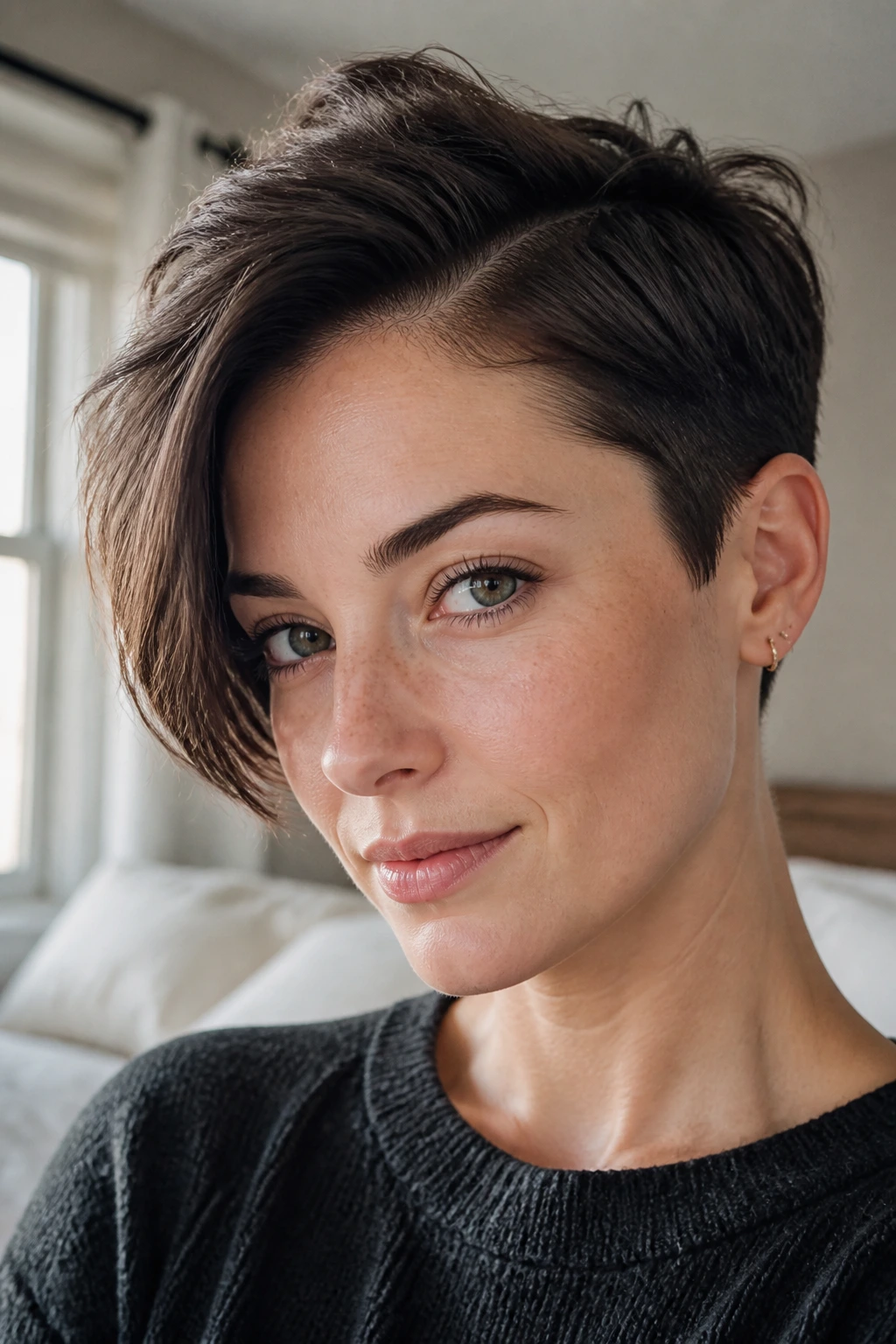
A deep side part changes a pixie fast. One side gets lifted, the other side stays close, and the front sweeps across the forehead in a way that gives instant glamour without extra length.
I like this because it brings height where you want it and softness where you need it. It can slim the face a bit, especially if the part starts near the arch of the eyebrow rather than sitting in the middle of the scalp.
A root spray and a quick blow-dry in the opposite direction of the part can give the lift enough grip to stay put. After that, a comb and a light cream are usually enough.
19. The Silver Fox Pixie
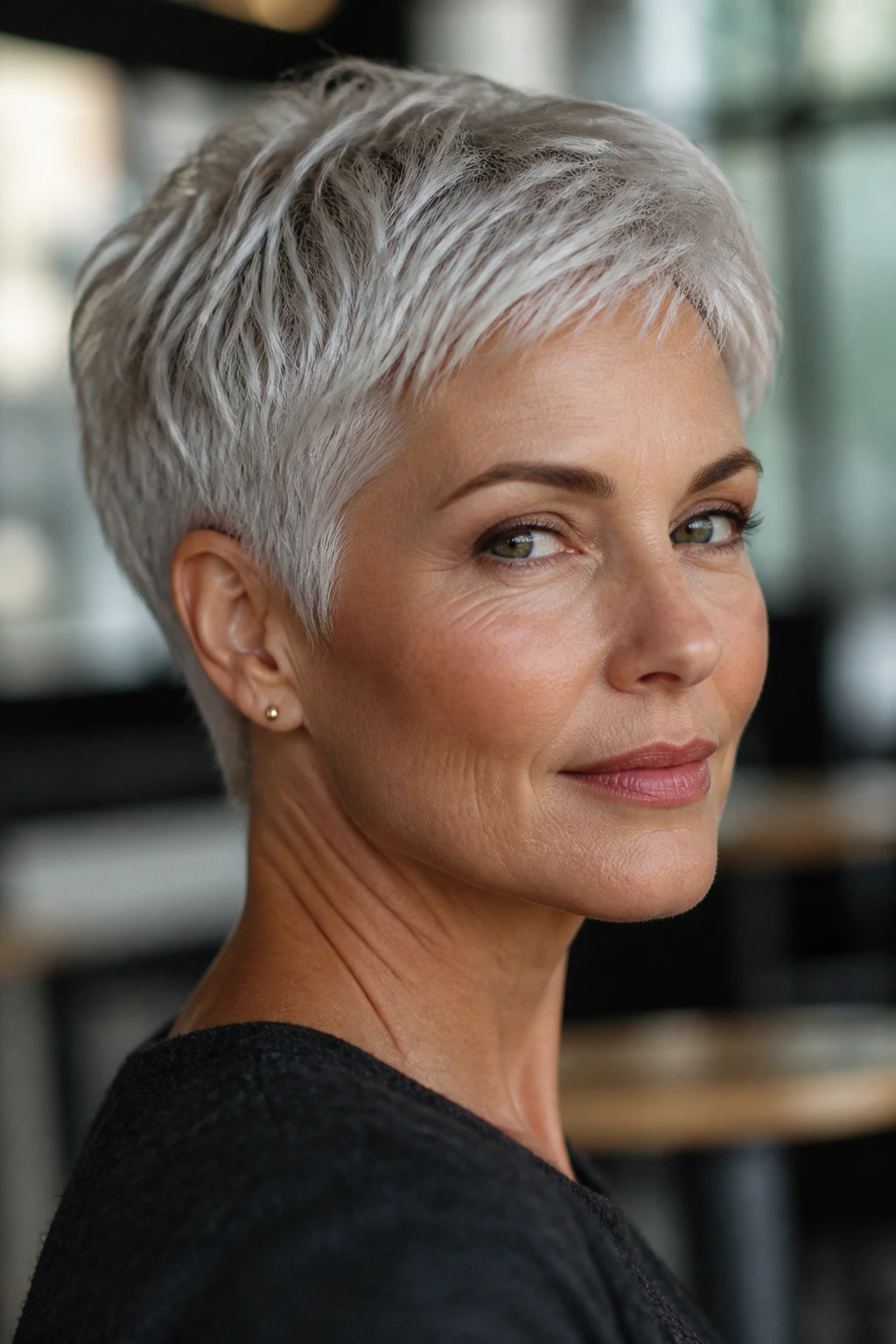
Gray and silver hair often has a coarser feel than people expect, and that texture can make a pixie look fantastic. The short shape lets the shine show, and the cut line keeps the color from reading flat.
A silver pixie looks strongest when the edges are tidy. A little polish near the temples and nape helps the color do what it does best—catch light in clean, sharp ribbons instead of fuzzy clouds.
Purple shampoo can help if the silver is drifting yellow, but do not overdo it. Too much toner can leave the hair dull. A small amount of lightweight oil on the ends usually gives better payoff than heavy cream.
20. The Piecey Fringe Pixie
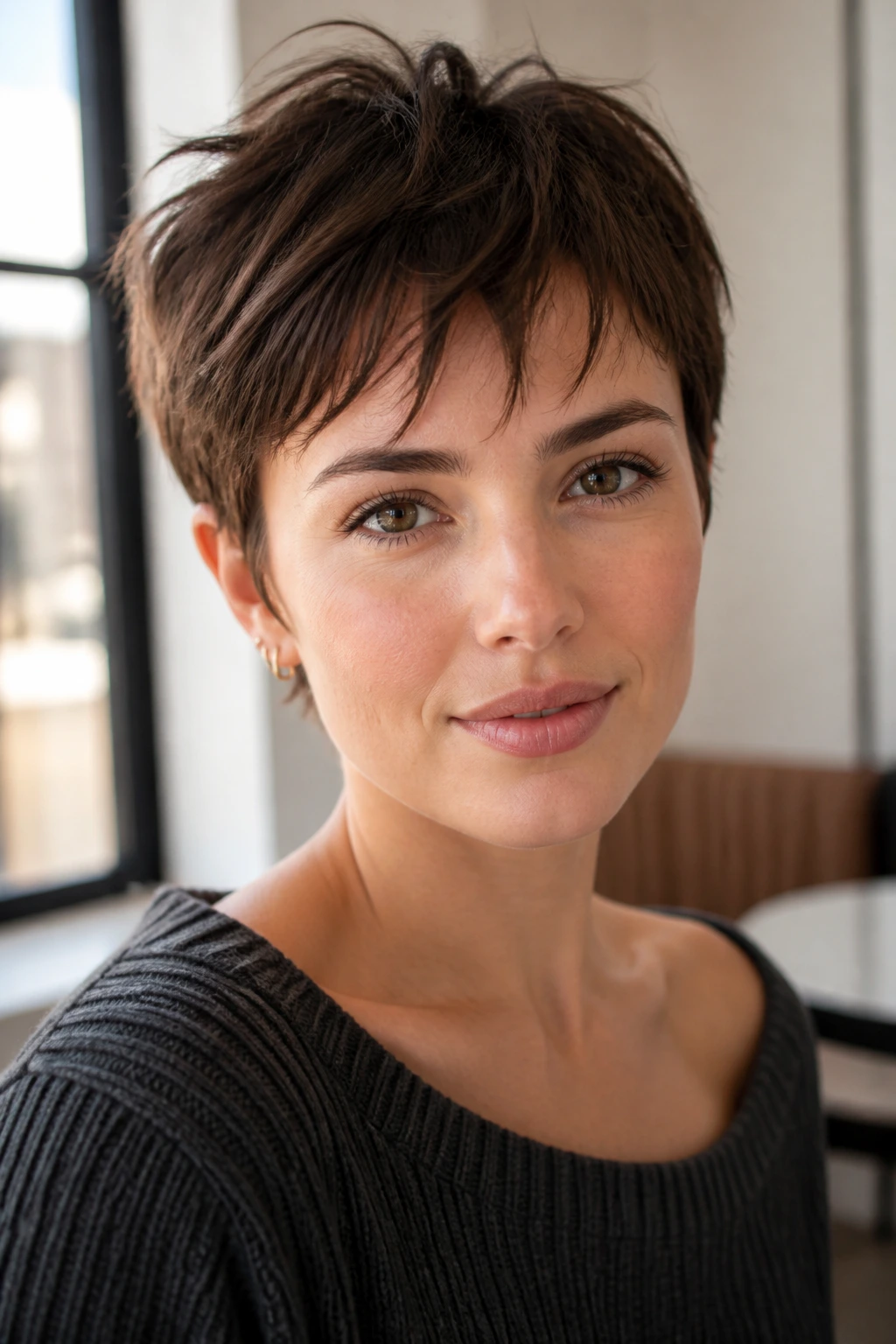
This is the pixie for anyone who wants the forehead softened without a heavy bang. The fringe breaks into separated little pieces, which keeps the front lively and stops it from forming one solid curtain.
I prefer this on straight or lightly wavy hair because the separation shows up fast. A little wax on the fingertips is enough; you pinch and separate, not smooth and compress.
It’s also handy if you hate committing to a blunt fringe line. Piecey bangs grow out more forgivingly, and they let you change the direction of the cut from day to day.
21. The Buzzed Temple Pixie
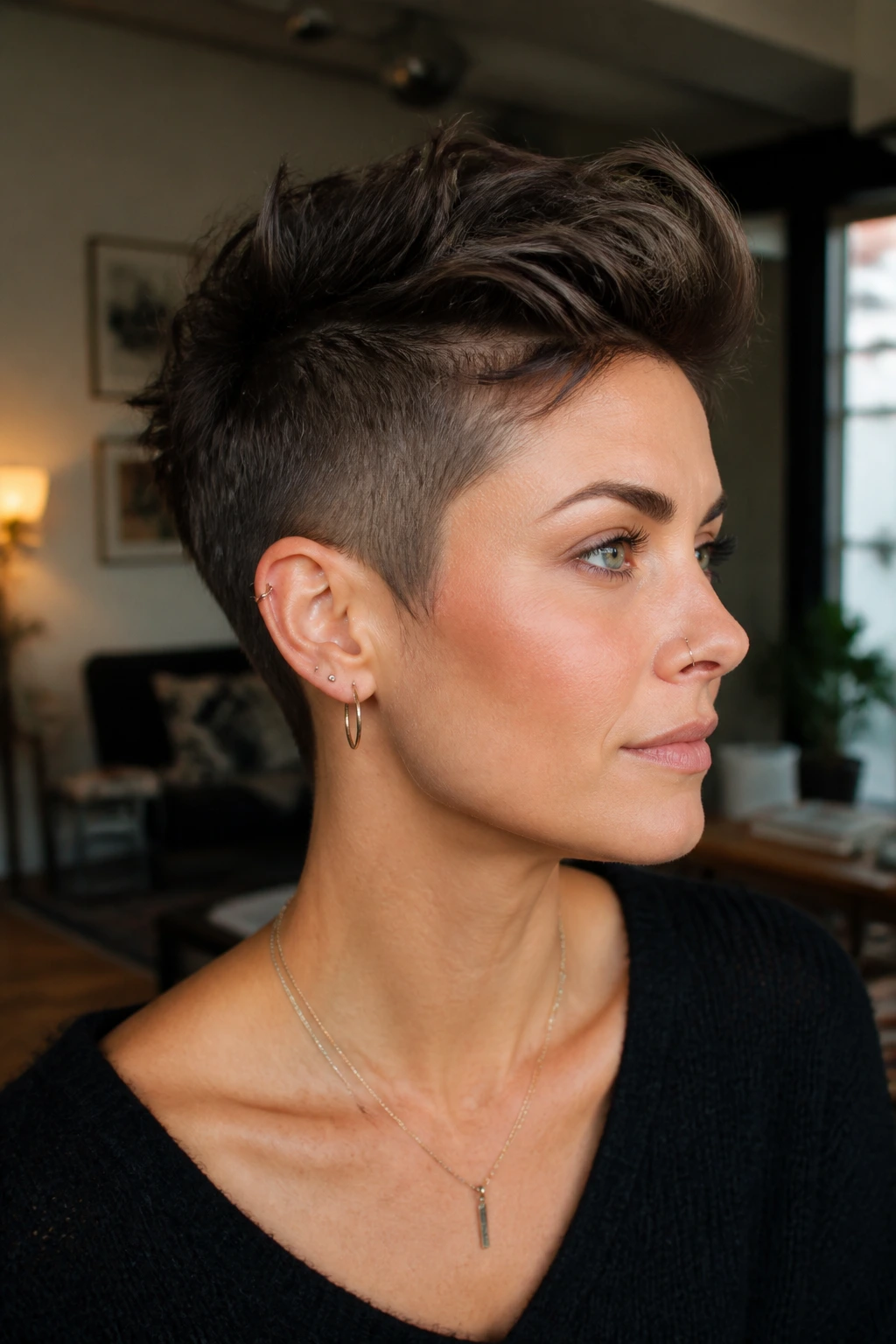
Buzzing just the temples changes the mood more than people expect. It creates a narrow, sharp frame near the face while leaving the crown and back soft enough to keep the cut feminine, if that’s the word you want for it.
This is a good compromise when you want edge but do not want to go full undercut. The buzzed bits take away width at the sides, which is useful if your hair tends to puff there.
Keep the top a little longer so the contrast has room to show. If everything is cut too short, the detail disappears and you lose the whole point.
22. The Rounded Crown Pixie
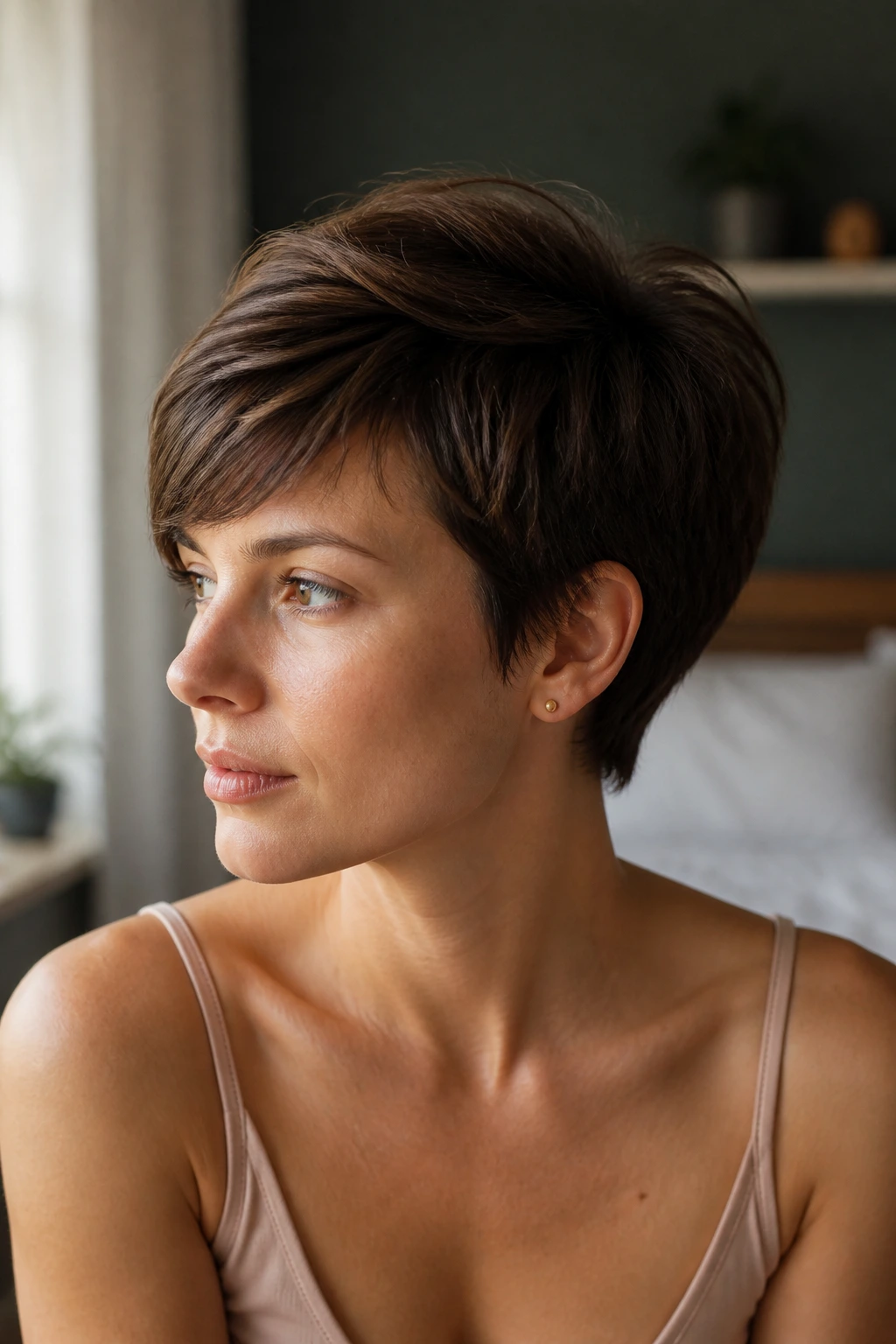
A rounded crown pixie builds fullness at the top without making the head look tall in a sharp, spiky way. The silhouette curves softly, which gives the cut a more balanced and often more flattering profile.
This one is excellent if your face is long or your hair lies flat at the roots. The rounded shape creates a bit of width through the crown and upper sides, which makes the face feel more proportional.
A small roller, a round brush, or even a quick blow-dry with lift at the root can make a big difference. The goal isn’t height for its own sake. It’s a rounded shape that feels intentional.
23. The Wet-Look Pixie
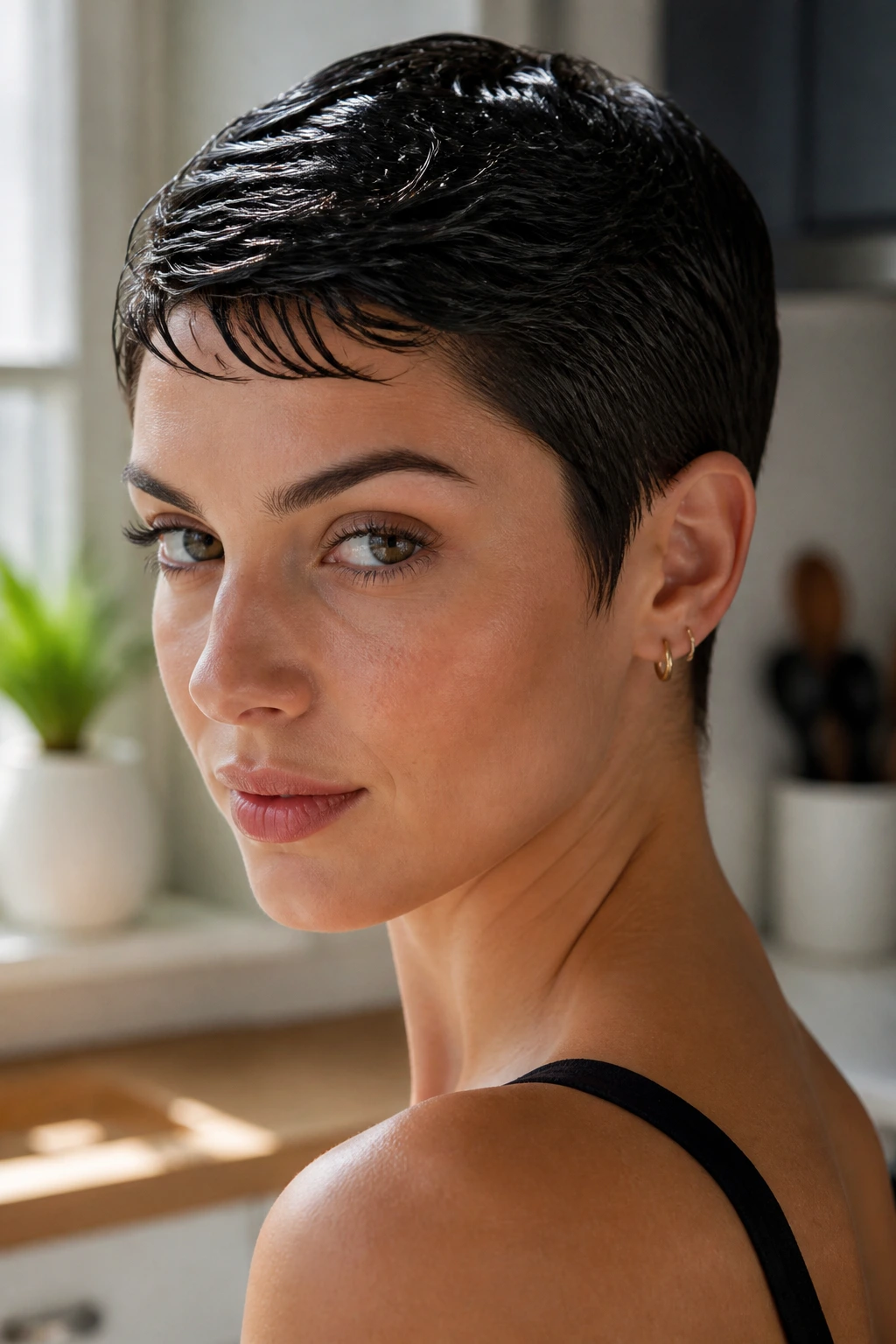
A wet-look pixie is all about shine and direction. The hair gets combed into place with gel or a strong cream, and the final result should look sleek, controlled, and slightly reflective.
This style works best when the cut underneath is already clean. If the perimeter is messy, wet styling only highlights the problem. With a tidy shape, though, the shine reads sharp instead of greasy.
Use the product on damp hair and comb through once. Then stop touching it. The less you fuss, the cleaner it dries.
24. The Layered Pixie for Thick Hair
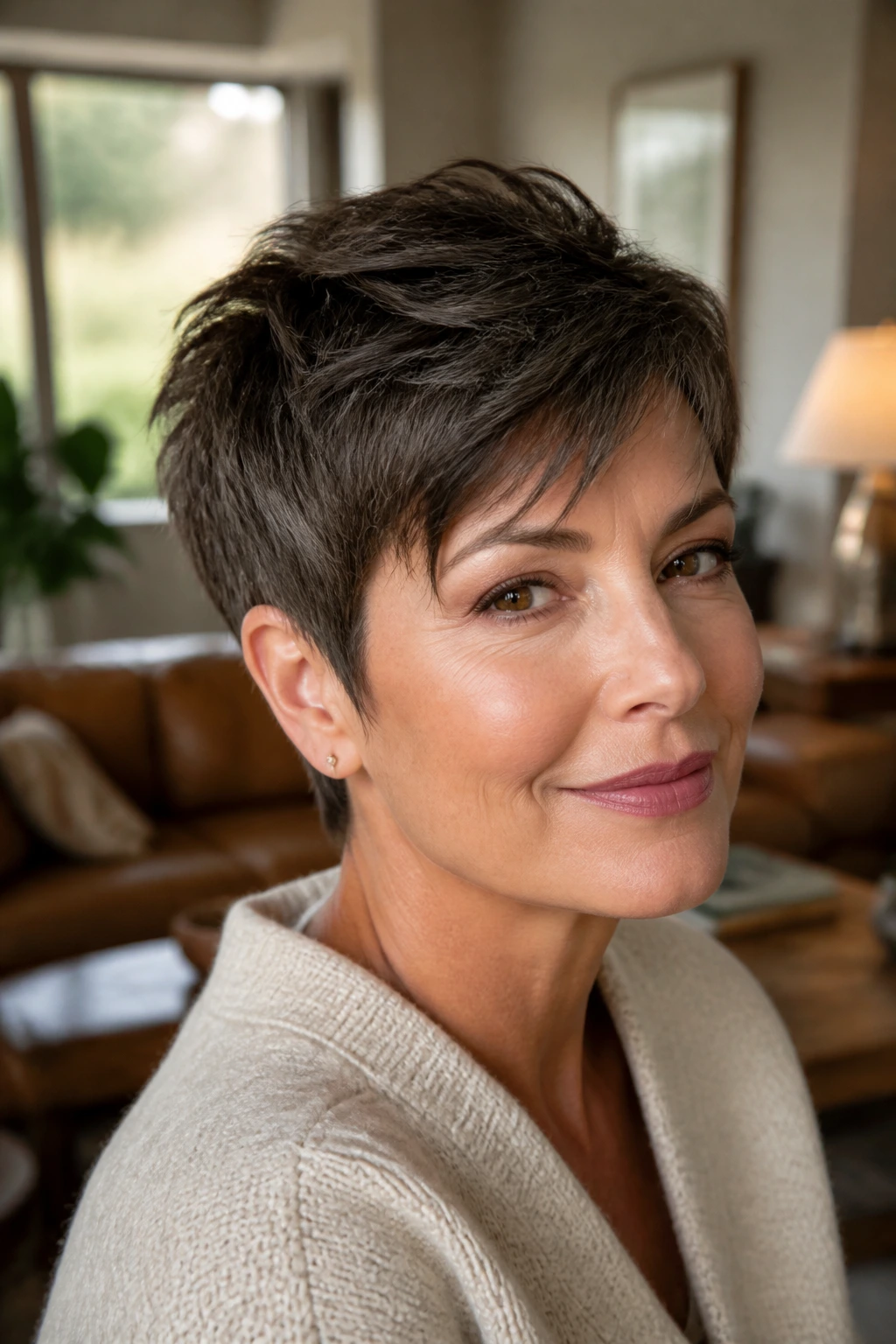
Thick hair needs room to breathe, and this cut gives it that. Internal layers remove weight from the crown and sides, while the outline stays controlled so the cut doesn’t puff out like a triangle.
Point-cutting helps here. It breaks up the mass without leaving obvious holes. If the hair is very dense, a stylist may also remove bulk near the nape so the neckline sits close instead of ballooning.
I like this cut because it solves a real problem: thick hair can look heavy even when it’s short. The right layers make it look deliberate instead of crowded.
25. The Lifted Pixie for Fine Hair
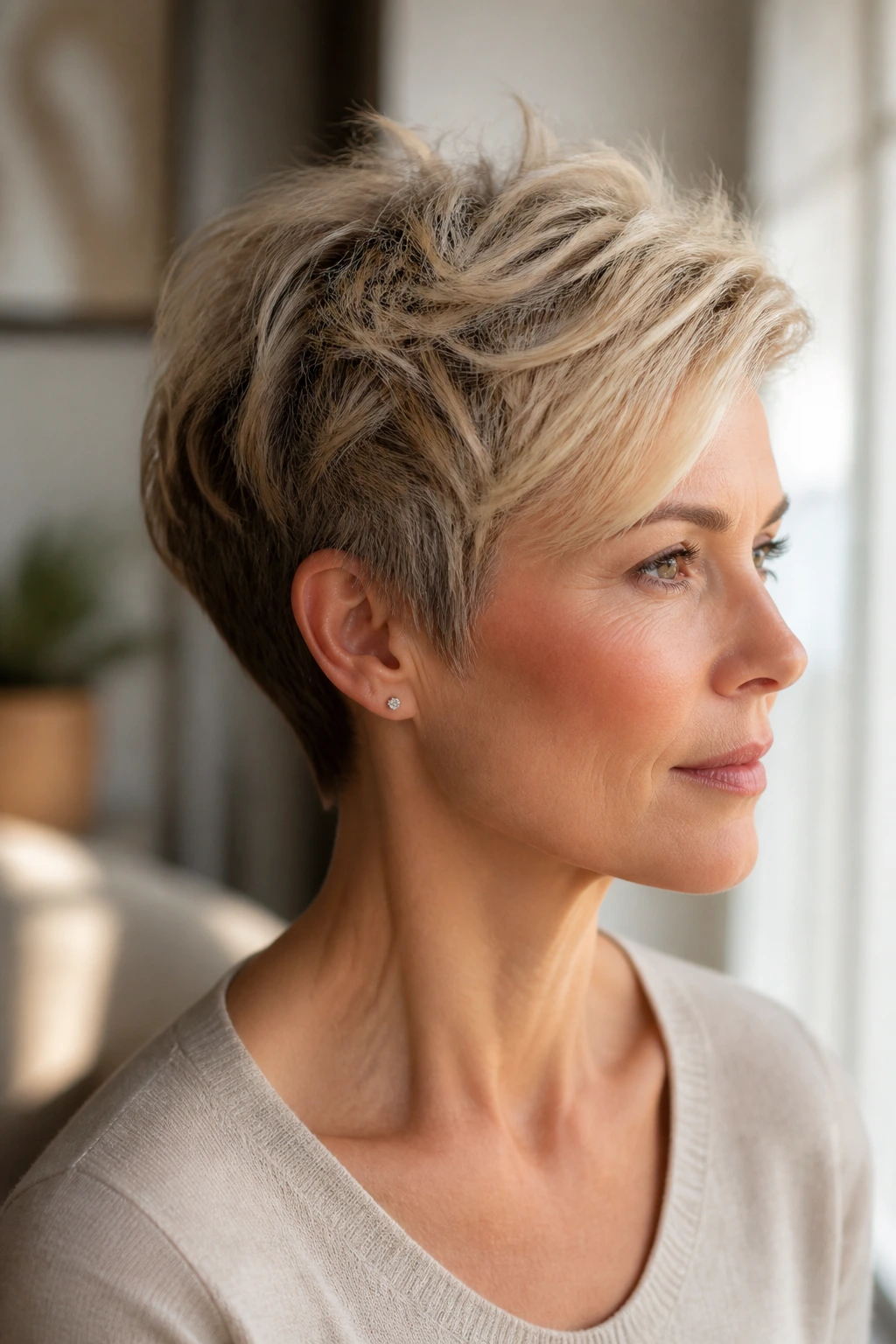
Fine hair often needs shape more than it needs length. A lifted pixie keeps the crown a little shorter, the roots light, and the ends soft enough that the hair doesn’t collapse against the scalp.
The trick is not to over-thin it. Fine hair can lose body fast if the scissors are too aggressive. A smart stylist will keep some density through the perimeter and use a root-lifting mousse or foam to help the top stand up.
This cut is one of the reasons pixies can be flattering on fine hair. Shorter hair means less weight, and less weight means more lift. Simple, and worth repeating.
26. The Curly Bangs Pixie
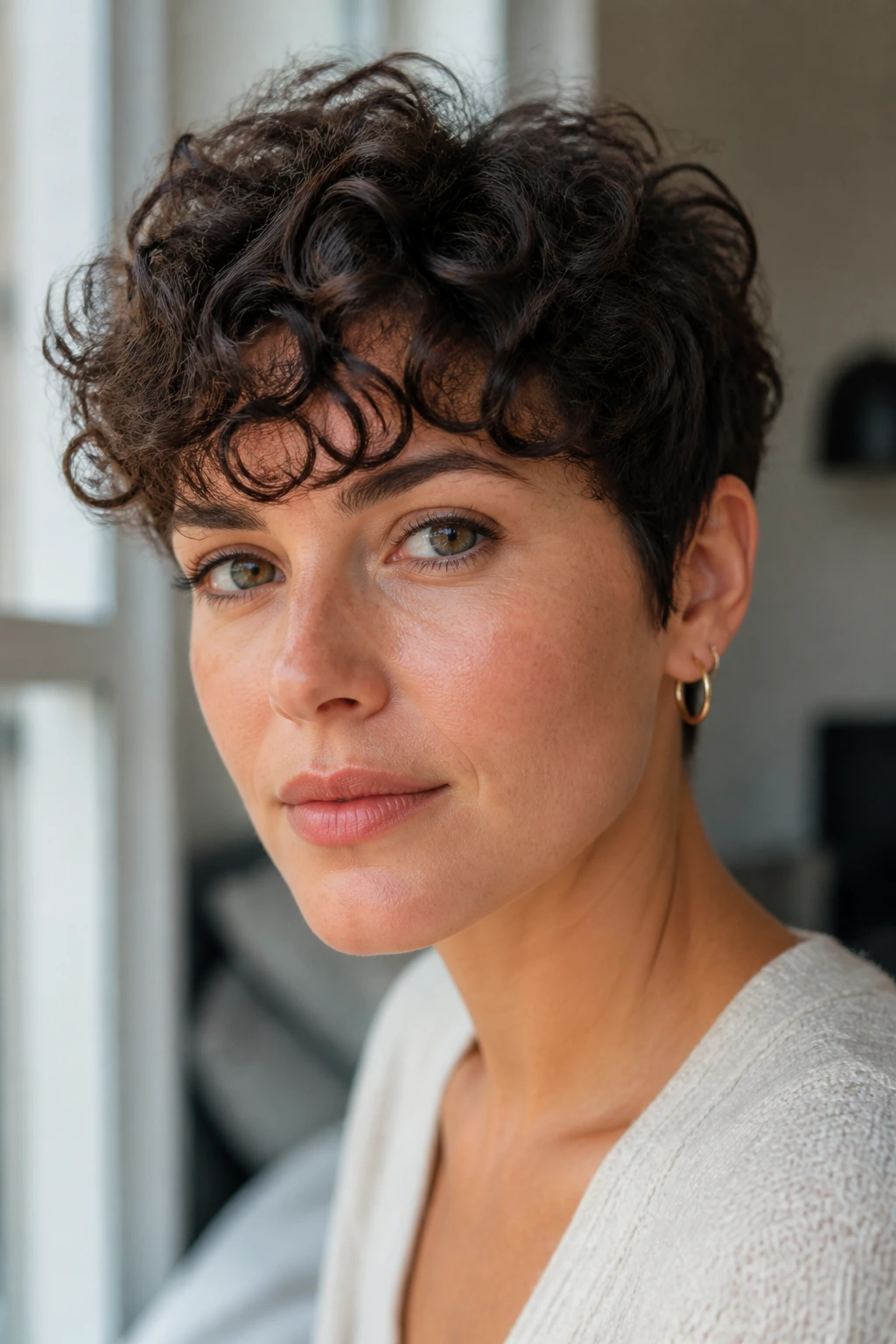
Curly bangs make a pixie feel playful right away. Instead of a flat fringe, you get little curls or bends falling across the forehead, which softens the face in a way straight bangs never quite do.
The cut has to leave room for shrinkage. If the bangs are cut too short while wet, they can bounce up and sit far higher than planned. A dry or nearly dry cut is safer for this shape.
Use a curl cream or light gel, then scrunch the bangs gently so they keep their pattern. The rest of the hair can stay neat and short, which gives the curls all the attention they need.
27. The Spiky Punk Pixie
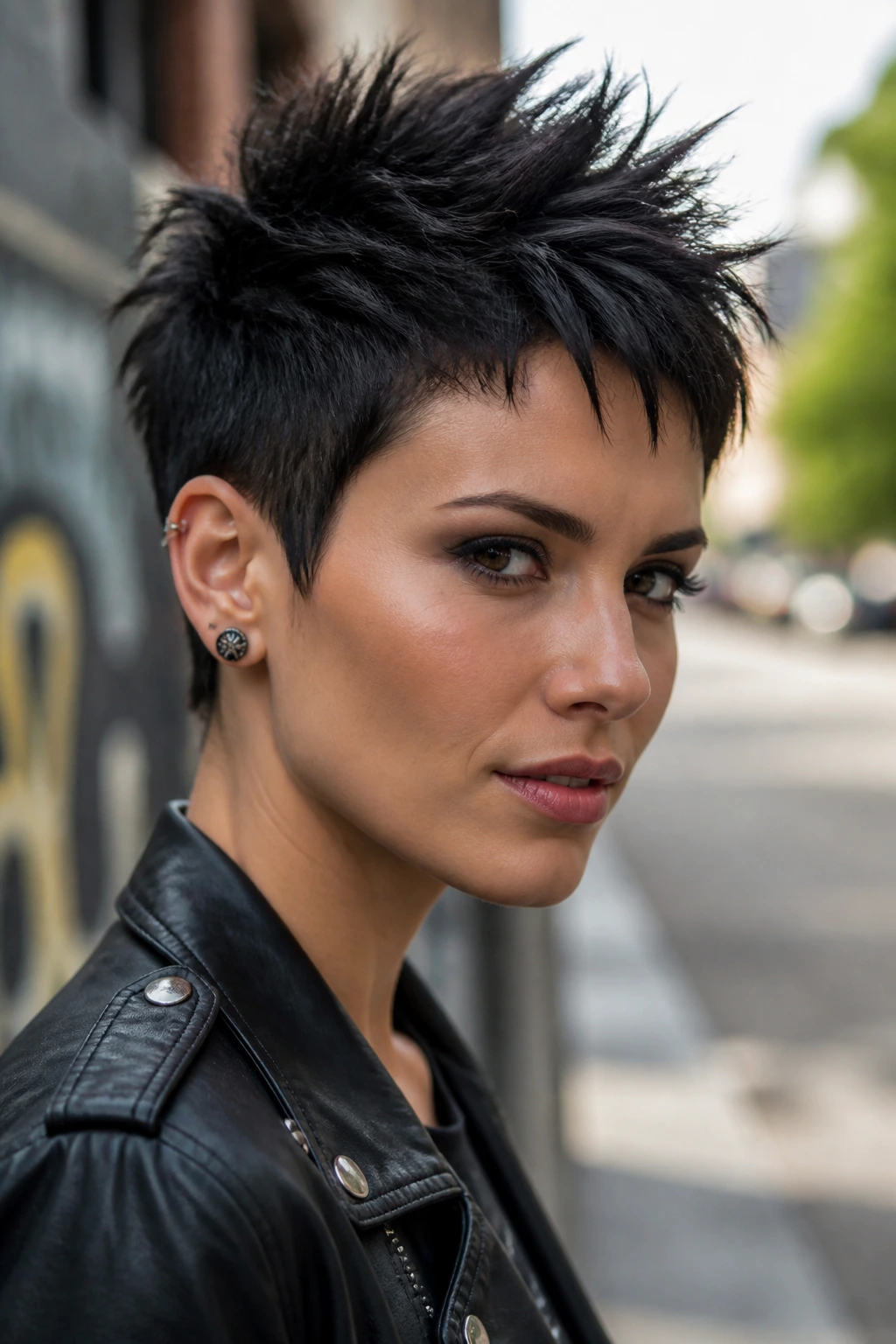
This is the cut that says it out loud. The top gets short enough to stand up with a matte paste, the sides stay tight, and the overall finish leans sharp rather than soft.
It works best when the top layers are cut with purpose. Random short hair won’t stand up in a useful way. You need shape, and you need a little density through the crown so the spikes have something to hold.
I like this on strong features and clean necklines. It can look fierce, but it can also look playful if you keep the spikes small and uneven instead of building a uniform ridge.
28. The Romantic Ear-Tucked Pixie
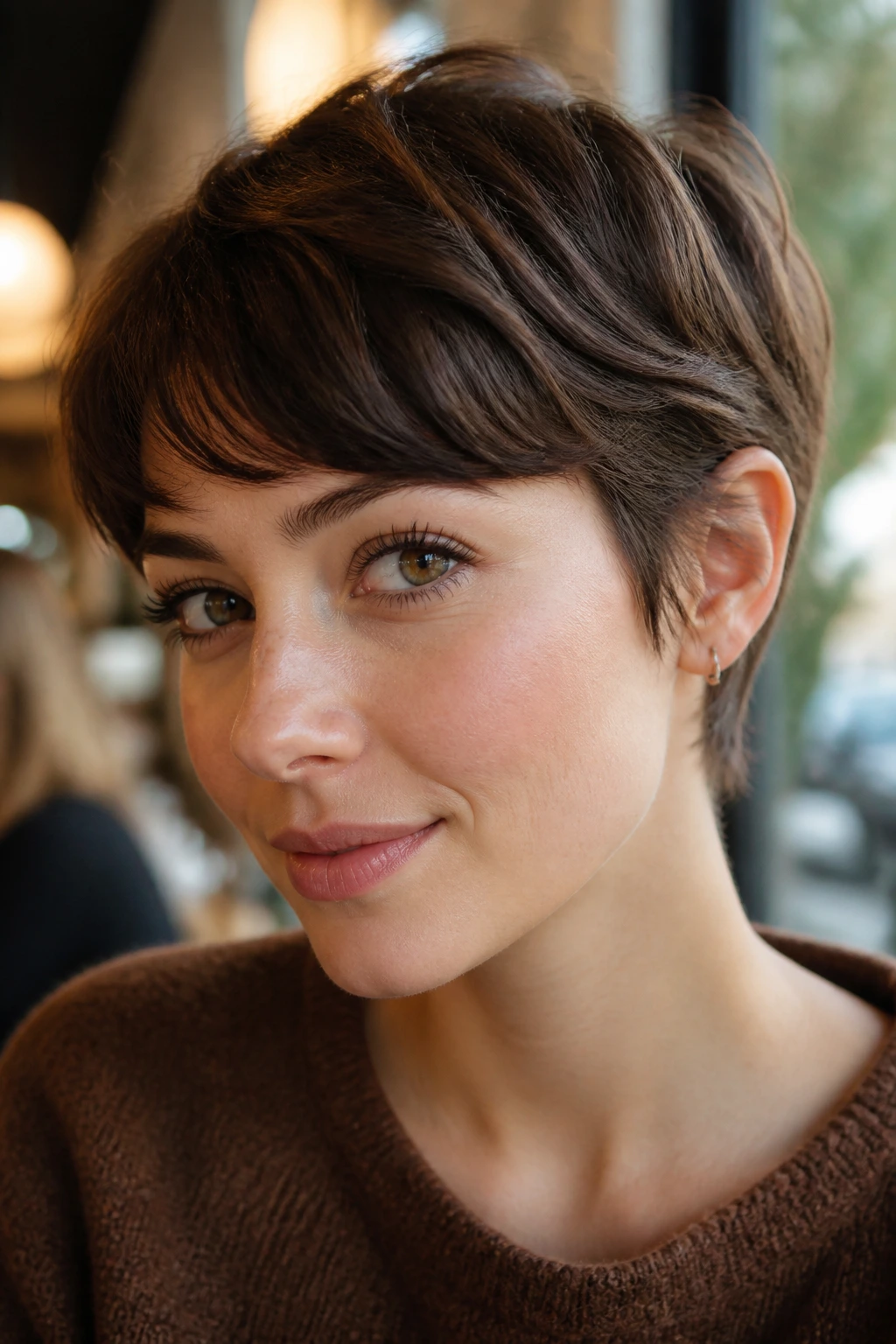
This pixie keeps its softness on purpose. The top is long enough to tuck behind the ear, the sideburns stay a touch wispy, and the front pieces fall with a little bend instead of a hard line.
It feels gentler than a micro crop and less structured than a classic taper. That makes it a good choice if you want short hair that still moves with the face. The shape looks especially nice with earrings or a soft neckline.
A little cream through the ends and a side part are often enough. The charm comes from the way it sits near the ear—quiet, neat, and not trying too hard.
How to Choose the Right Pixie Shape for Your Face and Hair Texture
Face shape matters, but not in the cartoonish way people talk about it online. Your hairline, cowlicks, density, forehead height, and even whether you wear glasses matter just as much. A round face can wear a pixie beautifully if the crown has a little lift and the sides do not flare. A long face often does better with side volume and a fringe that breaks up the length.
Hair texture is the other half of the equation. Thick hair usually needs an undercut, internal layers, or a tapered nape so the cut doesn’t balloon at the ears. Fine hair often looks best when the cut keeps some density at the perimeter and avoids too much thinning. Curly hair wants room to spring, and straight hair often needs point-cut texture so it doesn’t sit like a solid block.
If you wear glasses, think about the front line. If your earrings are part of your daily uniform, think about the sideburns and how much hair should tuck cleanly behind the ear. Haircuts are personal in the real, practical sense. The right pixie is the one that fits the way your face moves through a day.
The Styling Tools That Actually Earn Counter Space
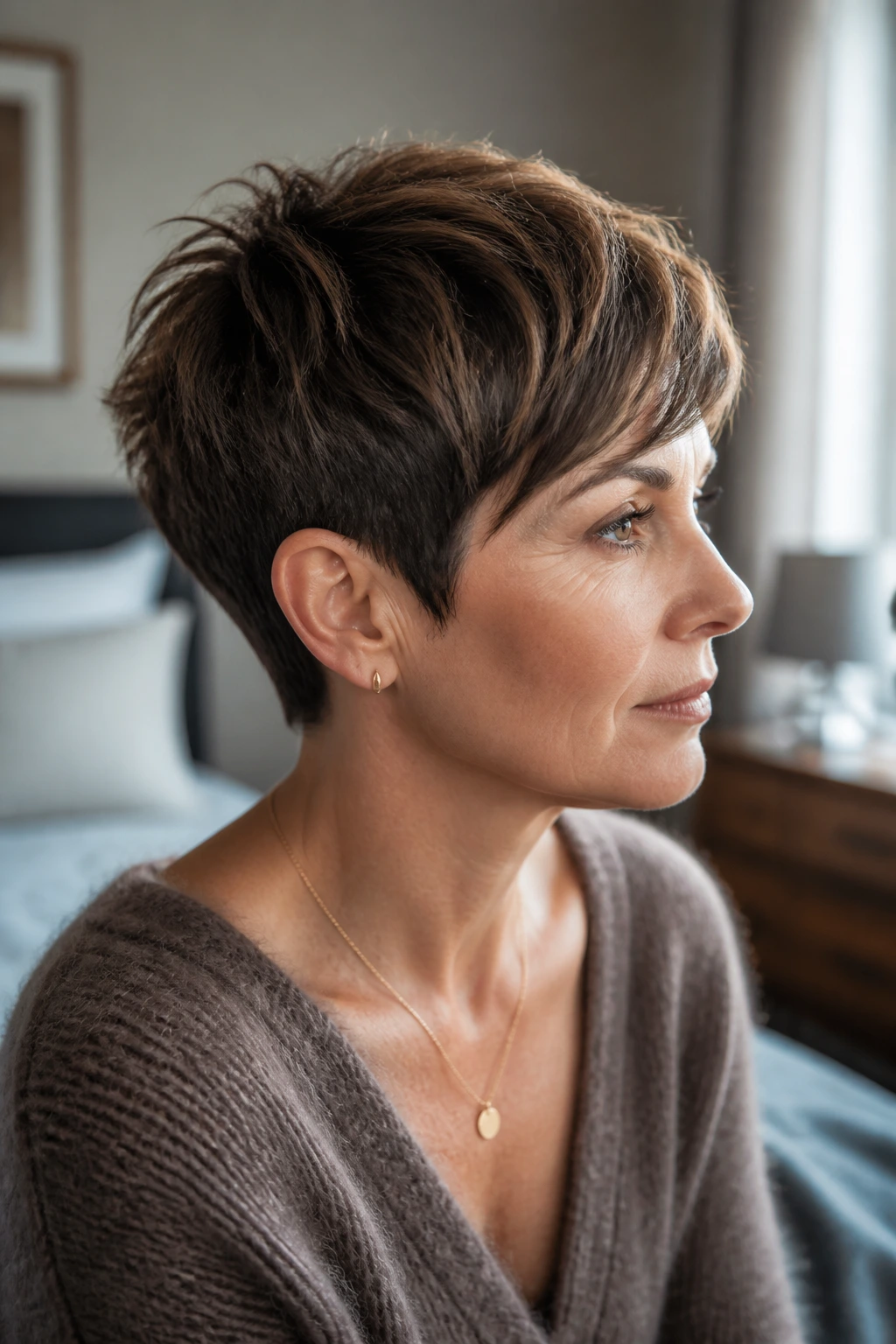
You do not need a bathroom shelf full of products for a pixie cut. A small, smart set of tools does more than a crowded drawer of things you’ll never open.
- Blow-dryer with a concentrator nozzle: Directs air at the roots so the crown lifts instead of puffing everywhere.
- Small round brush, 1 to 1.5 inches: Useful for bending fringe and softening the sides near the ears.
- Tail comb: Helps make a clean part and smooth the front without dragging product through everything.
- Matte paste or clay: Good for piecey texture, especially on choppy, spiky, or shaggy pixies.
- Light mousse: Works well on fine hair or curls that need shape before drying.
- Texturizing spray: Gives the top grip on day two or three.
- Dry shampoo: Saves a pixie when the roots get shiny sooner than the ends.
- Flat iron with narrow plates: Handy for a fringe that needs a quick bend, not a full straightening session.
One more thing. A tiny jar of product lasts longer on short hair than people think, so buy for texture, not size.
How to Ask Your Stylist for the Cut You Actually Want
Bring photos. Not one photo—three. Short hair changes a lot from angle to angle, and a side view tells your stylist more than a front-facing glamour shot ever will. If you love the fringe in one photo, the nape in another, and the sideburns in a third, say that out loud.
Then get specific about length. Say how much hair you want left on top, how short you want the nape, whether your ears should show, and whether you want the fringe to sweep, sit blunt, or fall piecey. A stylist can work with words like “leave the crown around two and a half inches” or “keep the sides long enough to tuck.”
Your daily routine matters too. If you want to spend three minutes on your hair, say so. If you wear it air-dried, say that. If you heat-style every morning, say that. A beautiful pixie that needs a 25-minute blowout is not a small detail. It is the whole game.
Extra Tips for Making Pixie Cuts Look Intentional
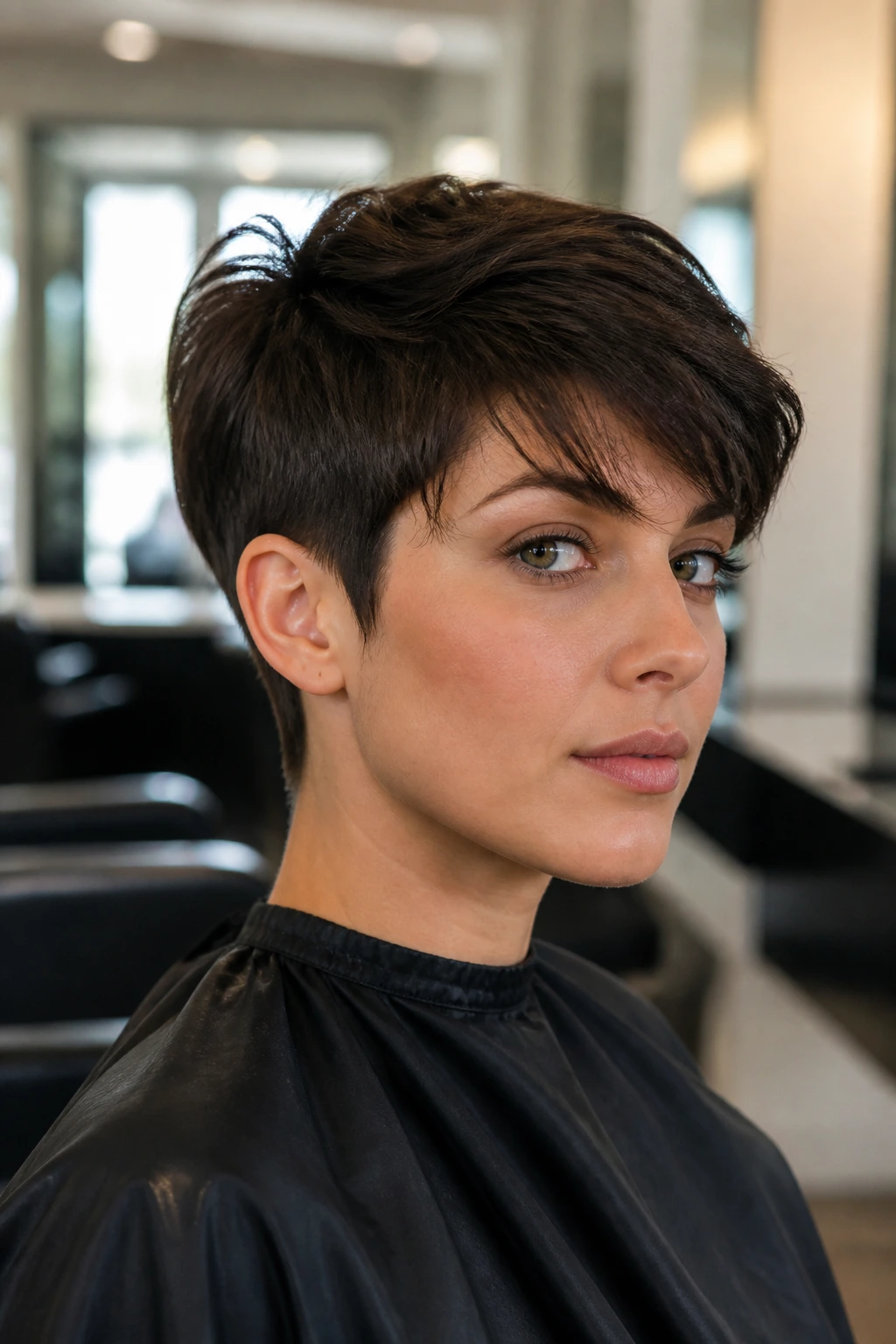
Root Lift: Blow-dry the crown first, before the rest dries. Short hair takes direction fast when it’s warm and damp.
Texture: Warm a small amount of paste between your fingers and pinch the ends. Do not smear it into the roots unless the cut needs grip at the scalp.
Finish: A drop of lightweight oil at the very tips can make a cropped cut look finished, especially on color-treated hair.
Day-Two Rescue: Mist the hair with water, shake it loose, and reactivate yesterday’s product. Adding more and more paste usually makes the hair look dull.
Color: If you go blonde, silver, or copper, keep the cut tidy. Strong color makes the outline more visible, which is lovely when the shape is clean and unforgiving when it is not.
Mistakes That Make a Pixie Cut Miss the Mark
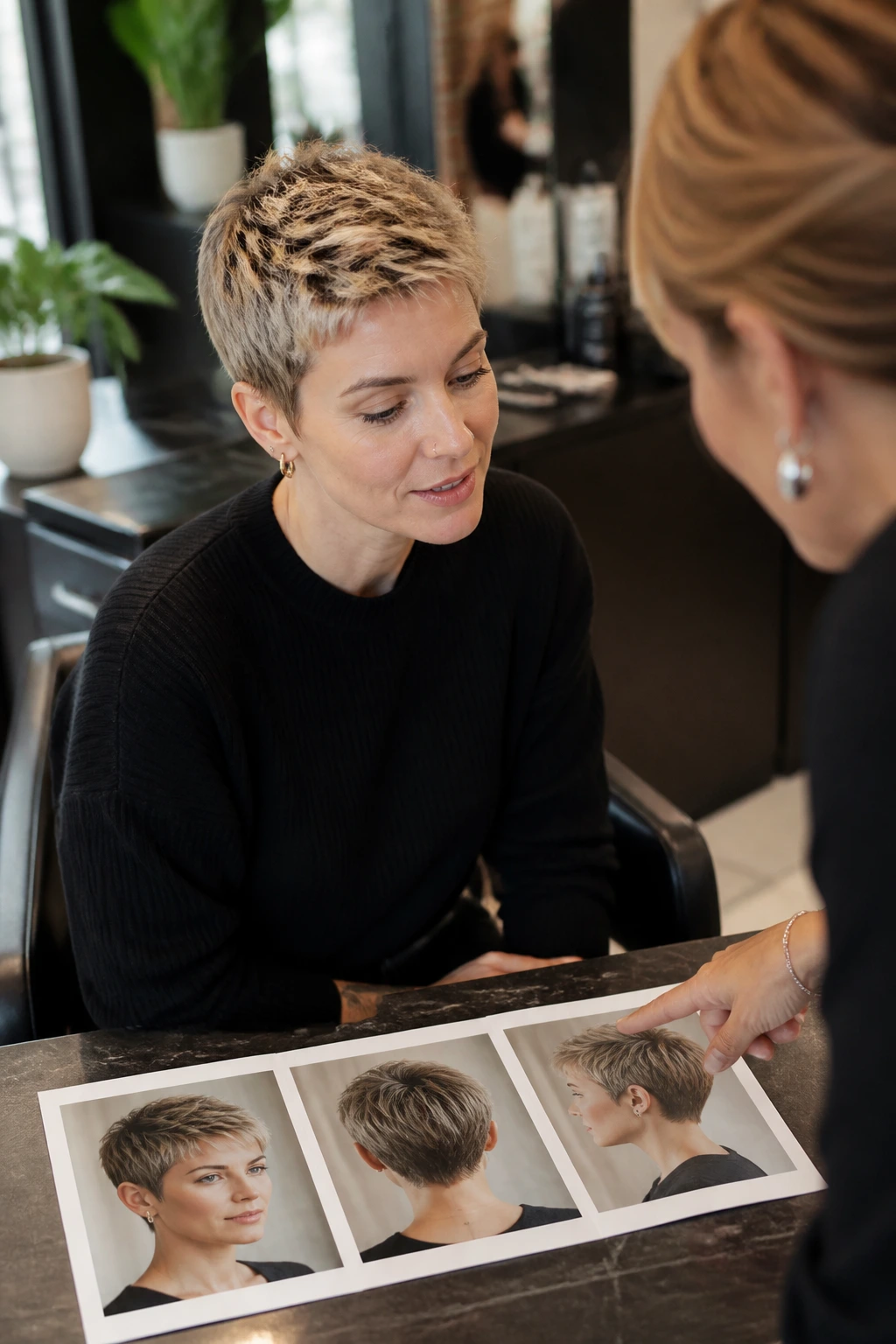
Not talking about the neckline: A lot of bad pixies look bad because the nape was never discussed. If you want a clean, tapered back, say it plainly. If you want softness, say that too. Silence gets you a guess.
Over-thinning fine hair: Fine hair needs shape, not a shredder. Too much texturizing leaves gaps and makes the cut look weaker than it is. Ask for light, controlled layering instead.
Copying a photo with different texture: A pixie on straight hair will not sit the same way on curls or coils. The lengths and angles have to change with the hair, or the reference photo becomes a trap.
Using too much product: Short hair gets greasy fast. A little paste goes a long way, and heavy cream near the roots can make the whole cut collapse by noon.
Skipping trims: A pixie that goes too long without a trim starts to puff at the ears and lose its line. Sharp short hair needs maintenance, not hope.
Ignoring your cowlicks: A stubborn front swirl can split a fringe or make one side stick up. A good stylist will cut around it instead of pretending it does not exist.
Variations and Adaptations to Try
The Office-Soft Pixie: Keep the fringe side-swept, the nape tapered, and the top long enough to tuck. This version looks polished in meetings and still dries fast after a shower.
The Curl-First Pixie: Let the curls lead the shape, not the scissors. Leave more length on top, cut dry, and use a diffuser or air-dry cream so the curl pattern stays visible.
The High-Contrast Color Pixie: Pair a short cut with platinum, copper, or silver so the lines stand out. This works best when the cut itself is neat enough to carry a strong color.
The Grow-Out Pixie: Leave the sideburns and top a little longer than you think you need. It buys you extra weeks before the cut starts turning awkward, which is worth a lot.
The Low-Drama Pixie: Choose soft edges, a longer fringe, and no undercut. This one is for people who want short hair without a high-maintenance schedule.
The Bold Edge Pixie: Add a temple buzz, undercut, or faux-hawk ridge. A small hard edge changes the whole mood without requiring a full commitment to a dramatic crop.
Maintenance, Trims, and At-Home Refreshes
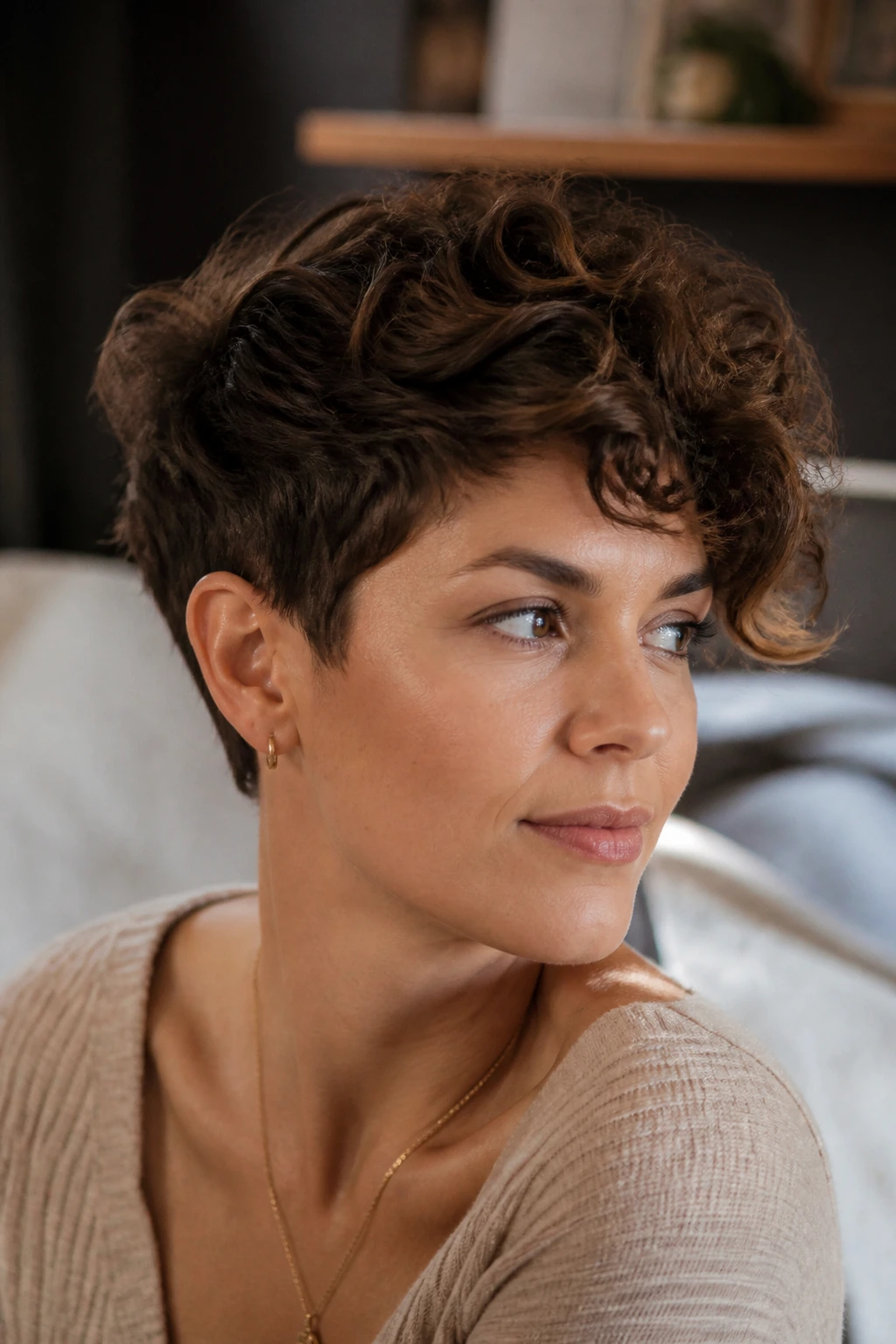
Short hair needs more frequent trims than long hair because every millimeter changes the shape. A micro pixie or undercut often needs attention every 3 to 4 weeks. A longer pixie bob hybrid can go 6 to 8 weeks if the lines are soft and the top has room to grow.
Shampoo frequency depends on scalp and product use. If you’re using clay, paste, or gel every day, a scalp-focused wash schedule matters more than the ends. A clarifying shampoo every 2 to 4 weeks helps clear buildup without stripping the hair dry. If you color your hair blonde or silver, a toning shampoo once a week may keep brass from sneaking in.
Night care is simple. A silk or satin pillowcase helps the shape last, and a quick finger-comb in the morning is usually enough to revive it. If the cut starts to puff or flip, a mist bottle plus a dab of product at the ends usually fixes more than another full wash.
When you’re growing a pixie out, ask for tidy trims around the neck and ears while the top gains length. That keeps the shape from turning shaggy in an unhelpful way.
Frequently Asked Questions
Will a pixie cut suit a round face?
Yes, if the shape adds a little height at the crown and some movement across the forehead. A deep side part or side-swept fringe usually keeps the cut from widening the cheeks.
How often does a pixie need trimming?
Most pixies need a trim every 4 to 6 weeks, and shorter versions need it even sooner. Once the nape and sides lose their line, the whole cut changes character fast.
Can curly hair work in a pixie cut?
Absolutely. Curly hair can make a pixie look fuller and more dimensional, but it needs to be cut with shrinkage in mind. Dry cutting or near-dry cutting helps the final length land where you expect.
What if I have a stubborn cowlick at the front?
Tell the stylist before the cut starts. A cowlick often needs extra length or a different fringe direction, and fighting it usually creates a gap or a split at the hairline.
Does a pixie make fine hair look thicker?
Often, yes. Shorter hair loses weight, which gives fine strands more lift at the root. The trick is to avoid over-thinning the ends, which can make the hair look wispy in a weak way.
How do I style a pixie in under five minutes?
Towel-dry, add a little mousse or paste, blow-dry the crown for 30 to 60 seconds, then shape the fringe with your fingers. Short hair rewards quick decisions. It does not like fuss.
Can I grow out a pixie without hating the middle stage?
You can, if you plan the shape with the grow-out in mind. Keep the top a little longer, clean up the neck regularly, and shift to a bob-like perimeter before the sides get unruly.
Is a pixie cut high maintenance?
Styling can be fast, but the trims matter. Short hair is often low-effort each morning and moderately high-maintenance at the salon, which is a trade worth making if you like the look.
The Pixie Worth Keeping
A chic pixie cut is not about proving anything. It is about lines, weight, texture, and the small decisions that make short hair look deliberate instead of accidental. When those pieces line up, the haircut does more than shorten hair—it gives your face a cleaner frame and your mornings a little less noise.
The best part is that there is no single pixie. There are neat ones, messy ones, curly ones, glossy ones, sharp ones, and soft ones that tuck behind the ear and quietly steal the room. Pick the shape that works with your texture, keep the outline fresh, and the cut will keep paying you back every time you catch your reflection.
