



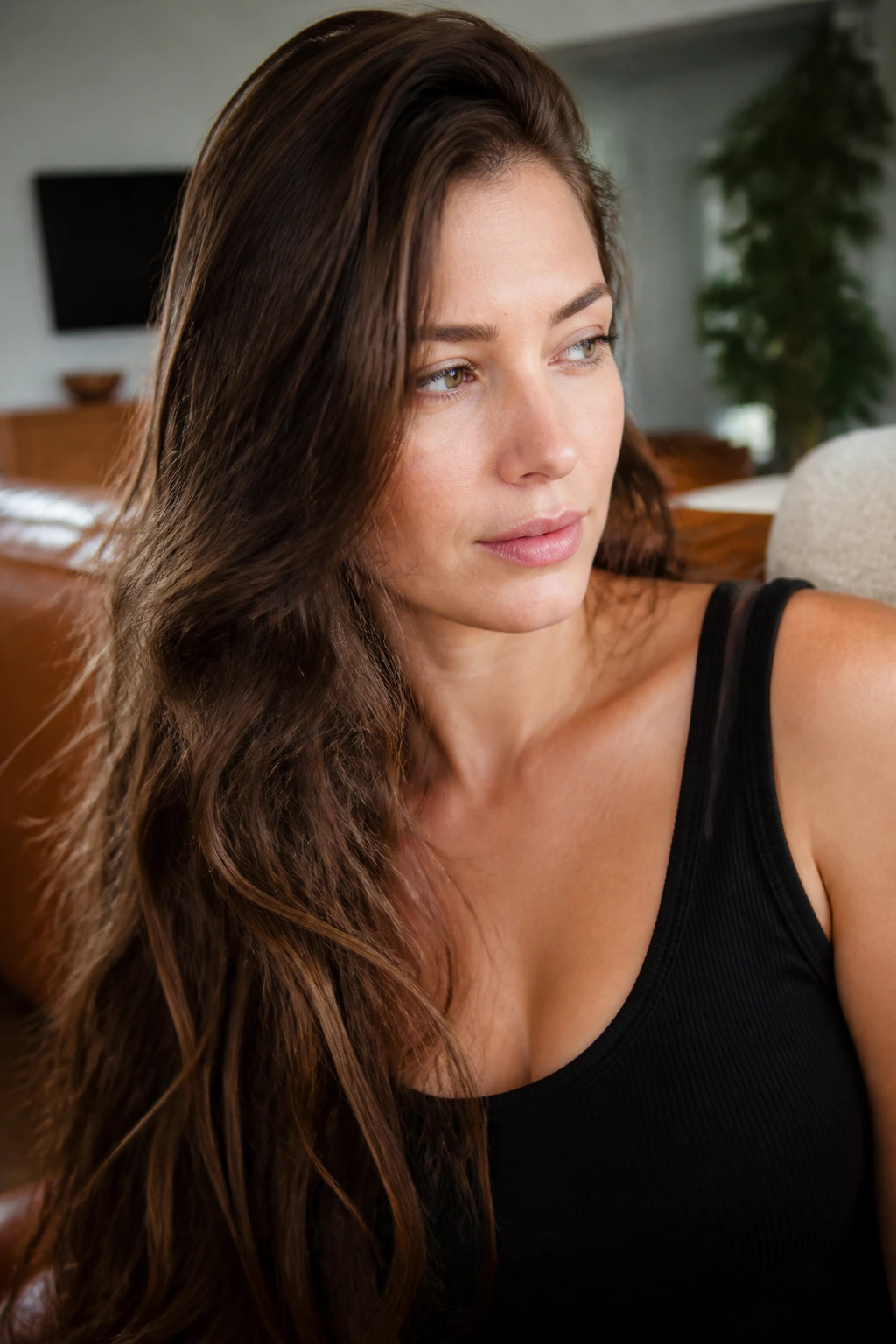
Long hair does not have to be surrendered in one dramatic snip for a pixie to work. The smartest pixie cuts for long hair keep some length where it matters — through the crown, around the temples, or in a fringe that can be brushed aside when the mood shifts — so the haircut still feels like yours, not borrowed from a stranger’s album cover.
The mistake I see most often is treating a pixie like one flat shape. It isn’t. A good one is a little architecture project: weight removed at the nape, softness at the hairline, enough top length to bend with a round brush or a dab of paste, and enough restraint that the whole thing doesn’t balloon the second humidity shows up.
That balance is why the best pixie cuts for long hair are less about bravery and more about choosing where the length should live. Some versions look polished with a side part; others are happier rumpled and air-dried; a few need a clipper at the nape and a lot of patience on top. The options are wider than people think, and the good ones give you room to grow into the shape instead of spending weeks regretting a blunt, too-short chop.
Why These Pixie Cuts Work on Long Hair
-
They keep a safety net: A longer crown, fringe, or sideburn gives you a buffer, which makes the first short haircut feel less severe when you catch yourself in the mirror.
-
They use weight on purpose: Long hair usually has more density, so a pixie that removes bulk at the nape and leaves length on top can sit closer to the head instead of puffing out.
-
They grow out better: A cut with soft layers and a little movement around the ears usually turns into a bob-like shape instead of the lopsided helmet that blunt chops can become.
-
They work with your texture, not against it: Straight hair can be crisp and graphic, wavy hair can get airy and piecey, and curly hair can keep a rounded top without losing shape.
-
They change your styling load: Some versions need ten seconds of finger styling. Others need a blow-dryer, a brush, and a small amount of paste. Knowing which camp you’re in saves time and frustration.
1. Soft Transition Pixie
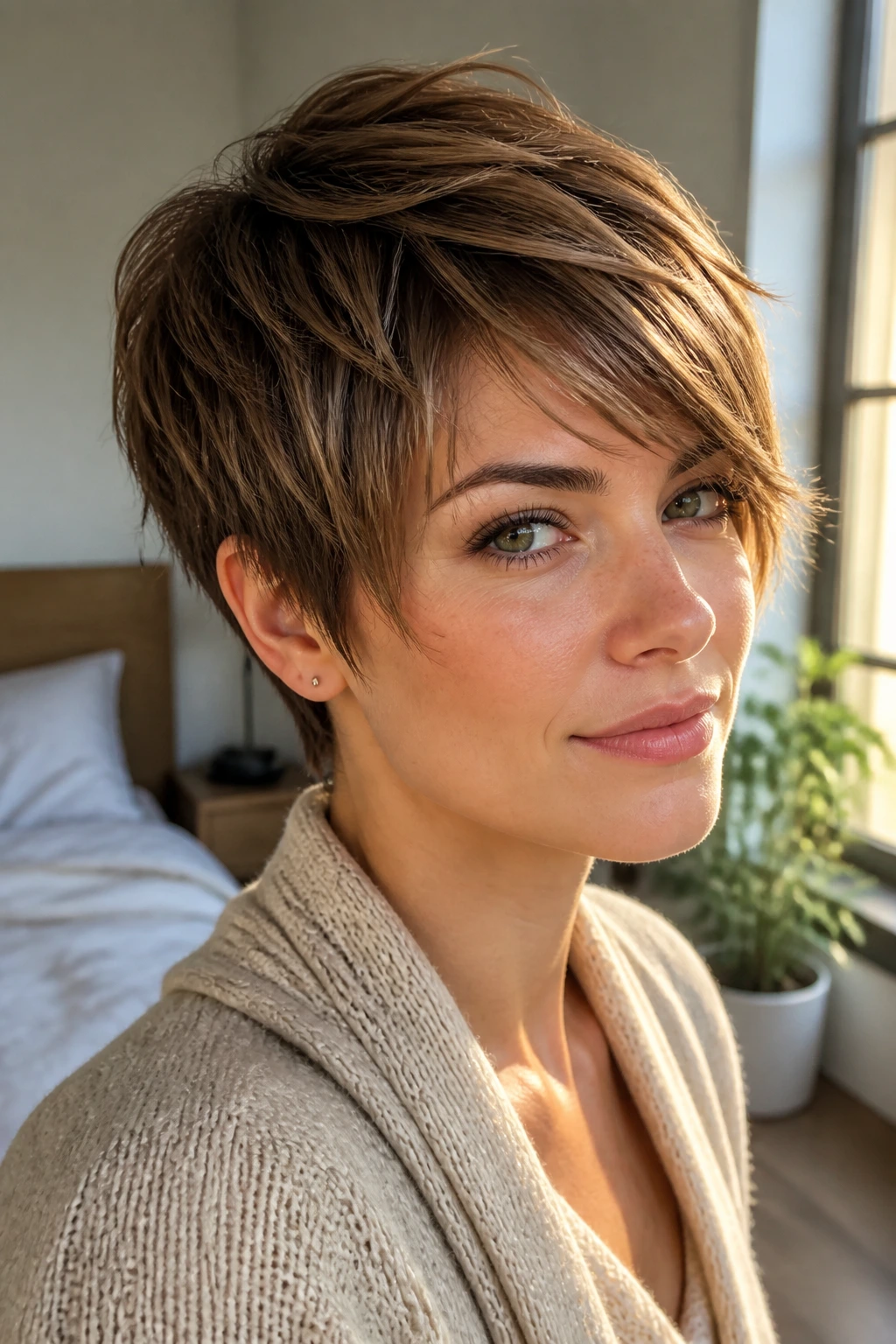
This is the one I recommend to people who are nervous about losing their length. The top stays soft and touchable, the sides taper gently, and the nape is cleaned up just enough to show the shape without making the cut feel abrupt.
Why It Works on Long Hair
The whole point here is easing from long to short without the shock of a hard line. Ask for point-cutting through the fringe and crown so the ends don’t look chopped, and keep enough length around the face to tuck behind one ear on bad hair days.
- Best feature: Longest pieces sit around the temples and fringe.
- Styling note: A pea-sized amount of cream is enough.
- Who it suits: Anyone cutting off a lot of length for the first time.
Tip: If you have a strong cowlick at the front, leave the fringe a touch longer than you think you need.
2. Tapered Nape Pixie With a Long Crown
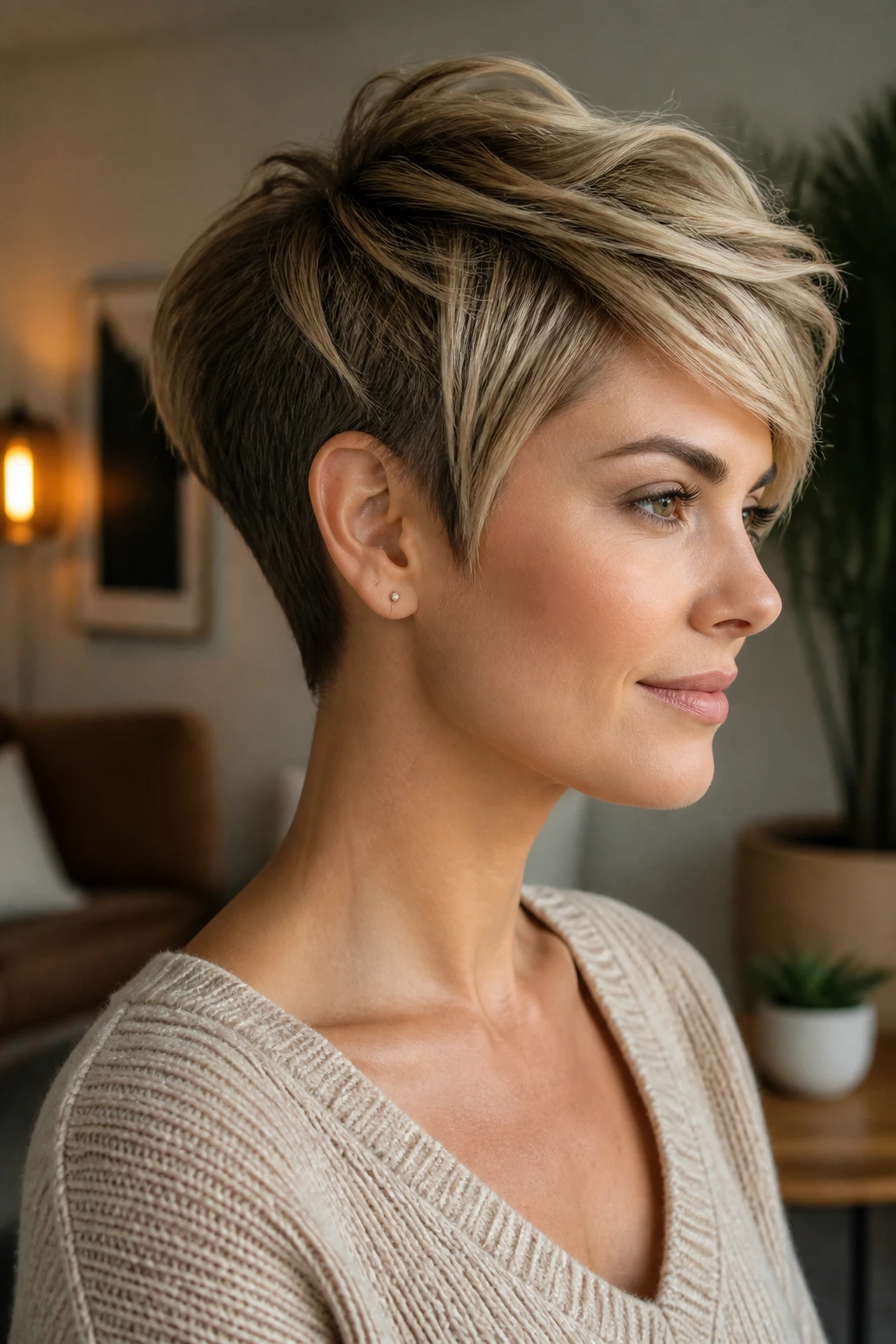
This cut is all about contrast. The neckline is narrow and neat, while the crown keeps real length so you can push it forward, sweep it back, or let it fall in a loose bend.
The result feels crisp, not severe. It’s a smart pick for thick hair because the shorter nape removes bulk fast, but the longer top keeps the cut from looking flat or overly sporty. Ask your stylist for a tapered clipper clean-up at the nape and soft layering through the crown, not a blunt shelf.
3. Side-Swept Fringe Pixie
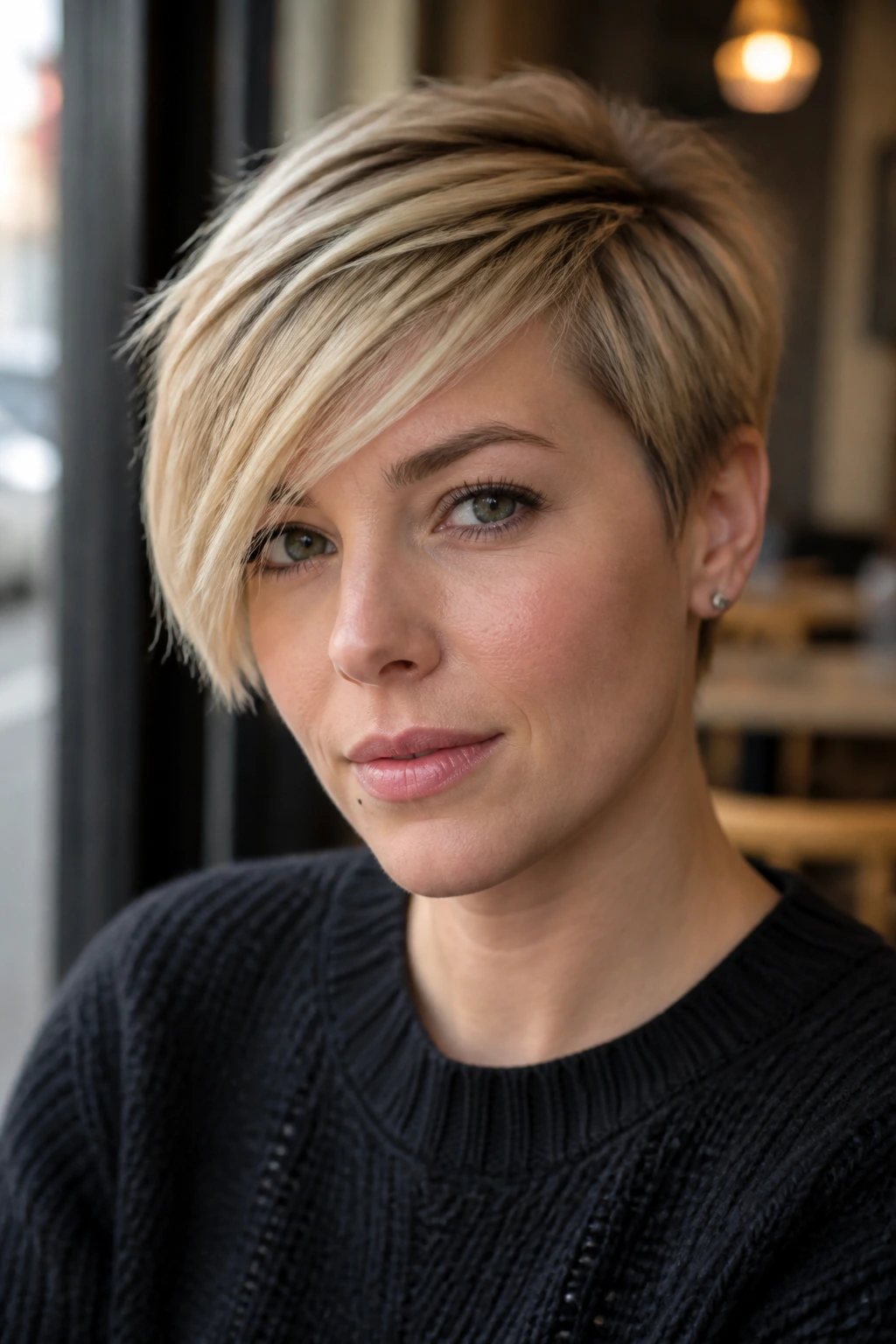
Does your forehead do all the talking? Then let the fringe handle it. This version leaves the front long enough to sweep diagonally across the face, which softens the cut and gives you a little styling flexibility.
How to Wear It
Blow-dry the fringe in the direction you want it to live, then finish with a lightweight paste just at the ends. A deep side part makes the whole cut feel polished; a looser part makes it look casual.
If your hair falls straight and stubborn, ask for the fringe to be cut slightly longer on the heavy side. That keeps it from springing too high once it dries.
4. Shaggy Textured Pixie
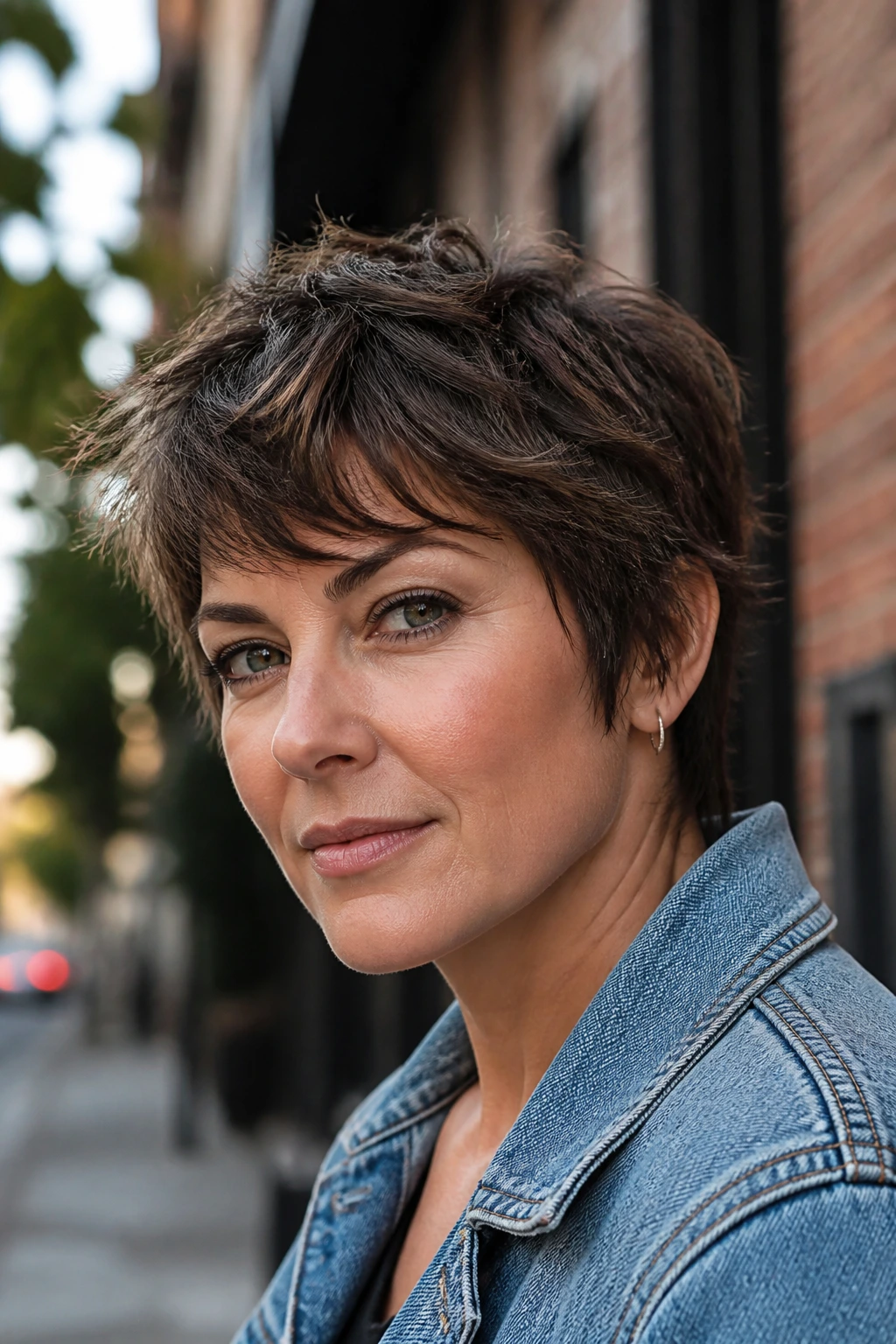
This is the slightly messy one with a beat-up denim jacket energy. Layers are cut through the crown and sides so the hair breaks into little pieces instead of sitting in one smooth block.
It’s especially kind to wavy hair, because the texture does half the work for you. If your hair gets puffier when it’s short, this shape helps because the movement is built in; the trick is leaving enough weight at the bottom so the ends don’t go frizzy and triangular.
- Good for: Wavy, thick, or slightly unruly hair.
- Product match: Salt spray or light mousse.
- Avoid: Heavy oils near the roots.
5. Asymmetrical Pixie
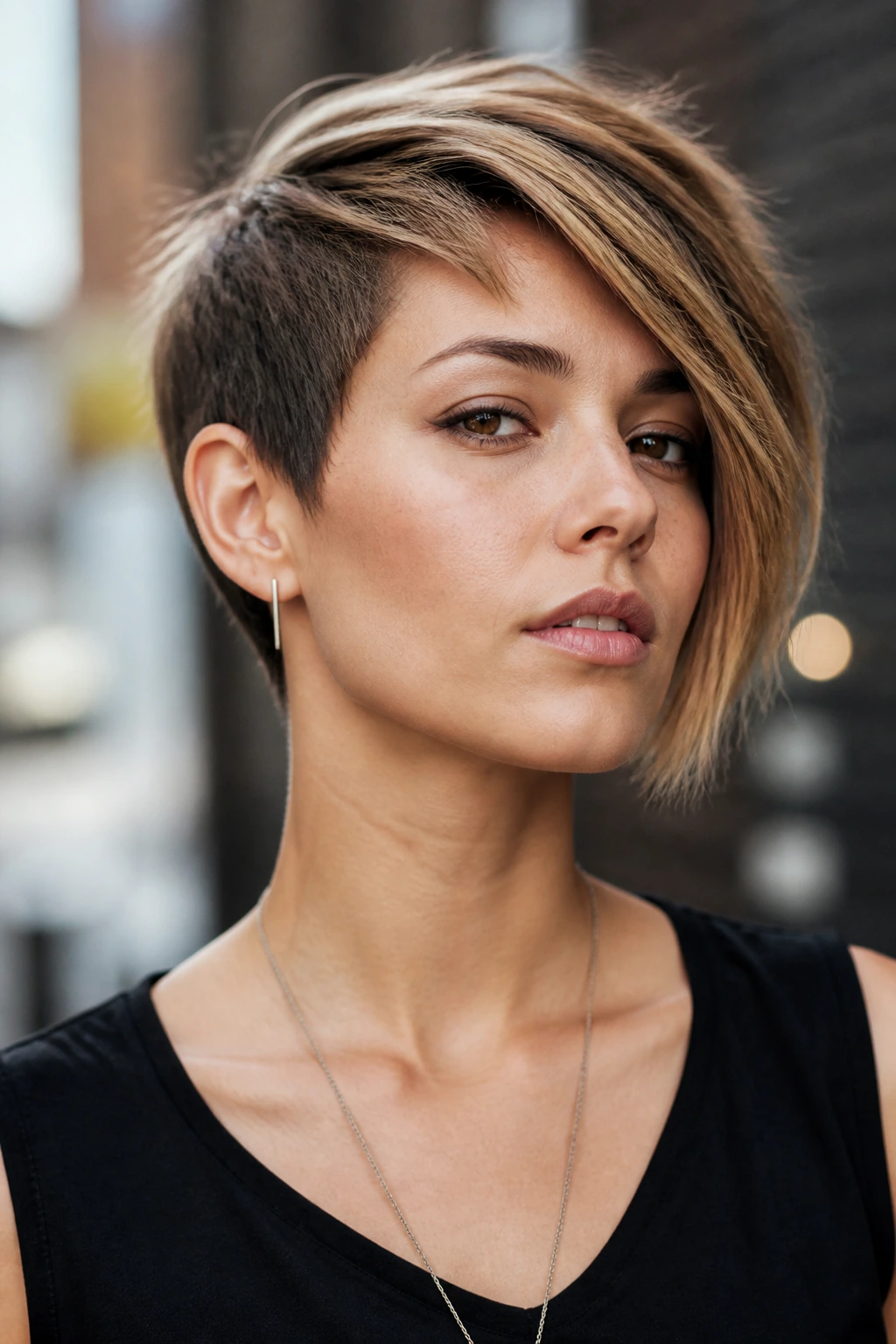
One side stays longer. The other side gets tighter and cleaner. That simple split gives the haircut a little tension, and it keeps the shape from feeling too neat or too sweet.
What I like about this version is how much face it changes. The longer side can skim the cheekbone or jawline, which makes a strong feature look intentional instead of accidental. It also grows out with more grace than you’d expect, because the unevenness is already part of the design.
6. Undercut Pixie
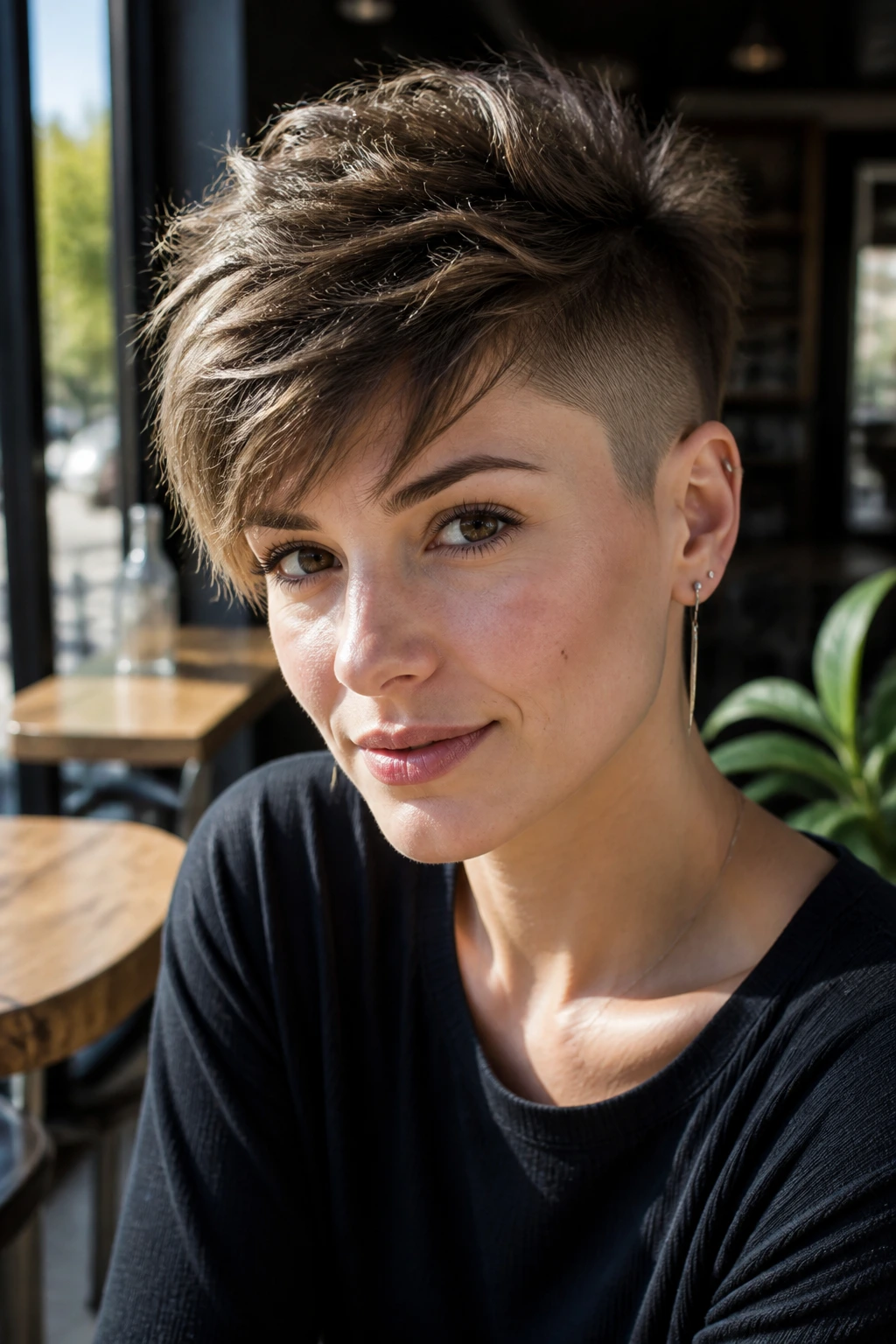
If you’ve got dense hair or a stubborn halo of volume behind the ears, an undercut can feel like cheating in the best way. The top stays full, but the hidden or visible sides are clipped short so the haircut sits close to the scalp.
Compared with a standard pixie, this one looks sharper and needs less bulk management. It’s especially useful if you hate that triangle shape thick hair can make when it’s cut too conservatively. Ask for the undercut to be blended only as high as you want to maintain softness; too much shaving can make the grow-out annoying.
7. Curly Pixie With Length on Top
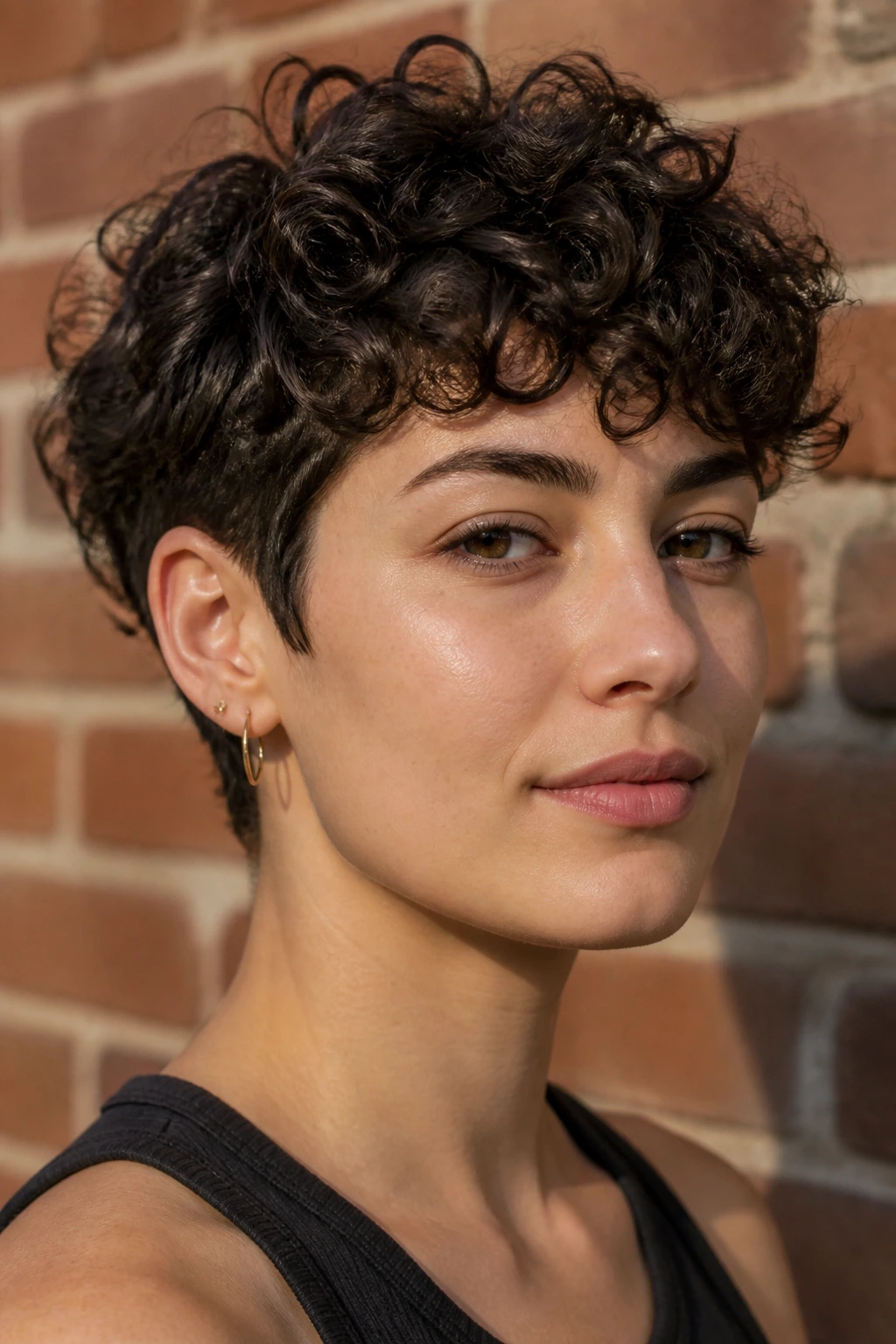
Curly hair should not be bullied into a flat little helmet. Leave more length on top, keep the sides and nape trimmed in a way that respects the curl pattern, and let the shape round out instead of collapsing inward.
What Makes It Different
The best version of this cut is usually shaped dry or at least partially dry, because curls shrink in their own unpredictable way. If a stylist cuts curly hair too wet and too short, the top can spring up far more than planned.
- Ask for: Curl-by-curl or dry shaping if possible.
- Style with: Leave-in conditioner and a curl cream.
- Skip: Heavy waxes that turn curls sticky.
8. Feathered Crown Pixie
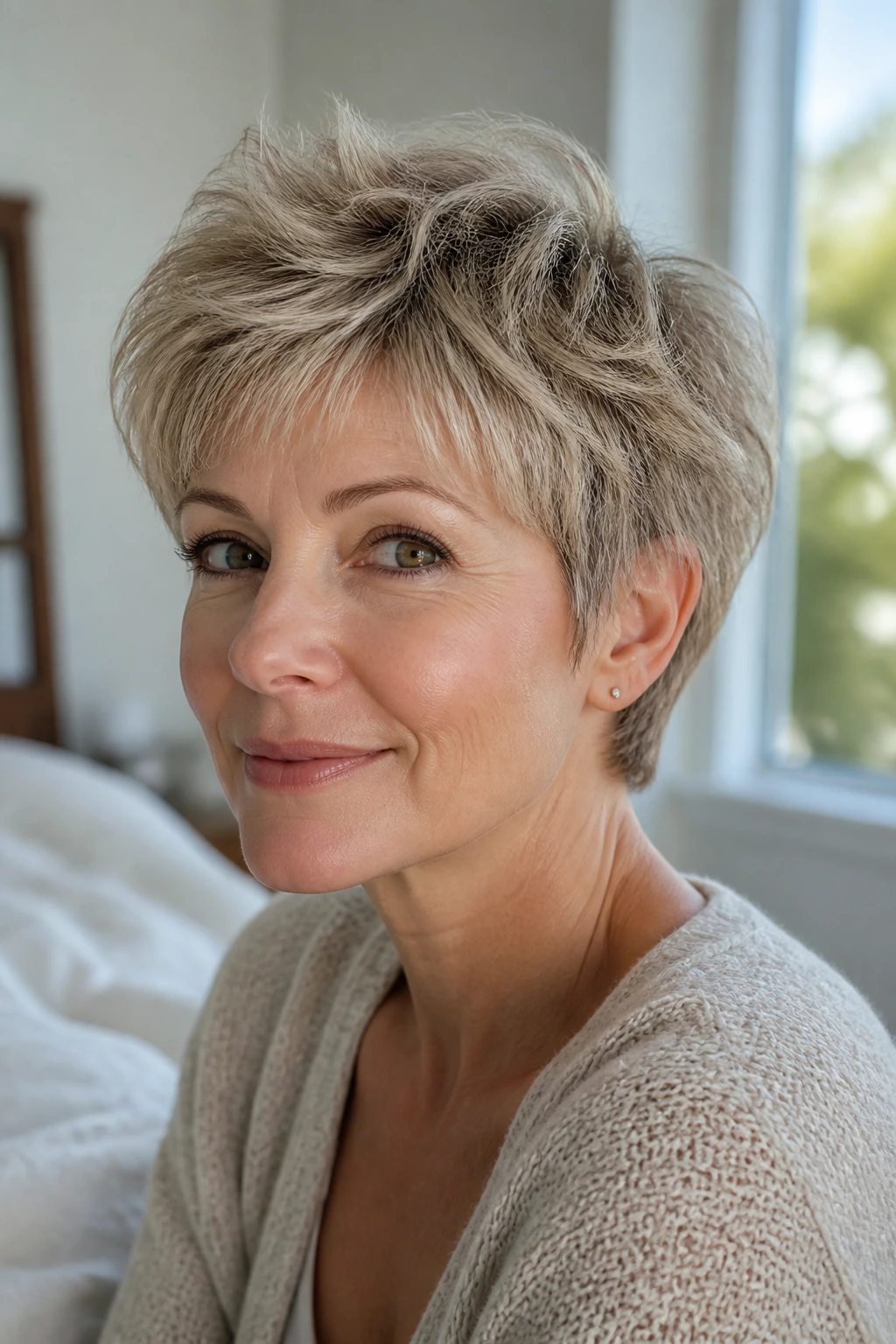
This cut keeps the crown lifted with soft, feathered layers, which makes it a quiet hero for fine hair. The top looks airy, not thin, because the layers are cut to move instead of hang in one limp sheet.
A round brush and a quick blow-dry at the roots do the heavy lifting here. If the ends are razor-cut too aggressively, the feathering can turn wispy in a bad way, so I prefer point-cutting and careful internal layering. It feels lighter, but it still has shape.
9. Piecey Razored Pixie
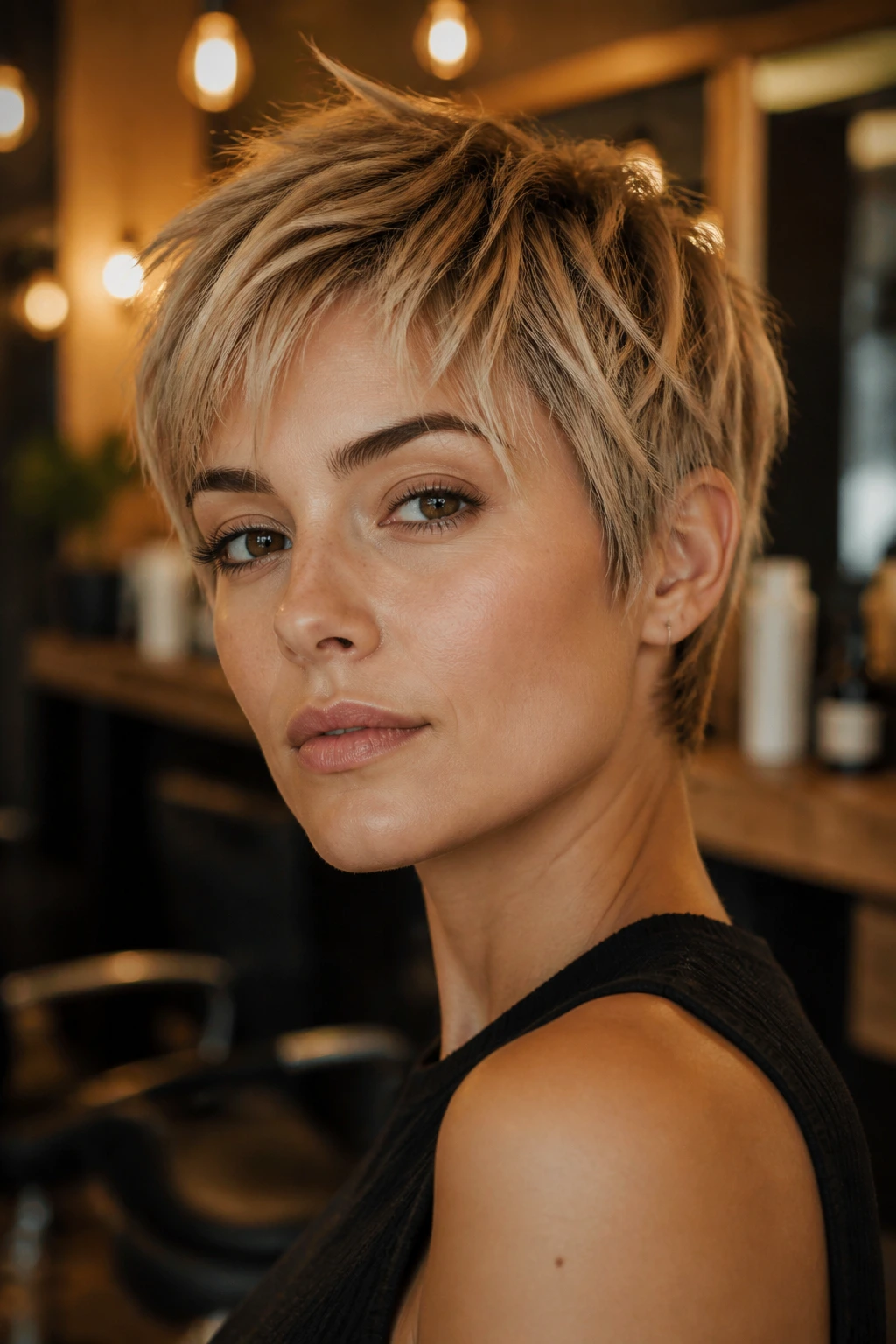
This one has edges that separate on purpose. Instead of one smooth surface, the hair breaks into little pieces, which gives the cut a slightly sharper, more modern look.
It works best when the stylist uses a razor with control, not enthusiasm. You want definition, not frayed ends. A tiny amount of matte paste rubbed between the fingertips and tapped into the ends brings out the separation without making the hair greasy or stiff.
How to Style It
Push the pieces in different directions with your fingers, then stop. That’s the whole point. If you over-comb this cut, it loses the charm.
10. Slicked-Back Pixie
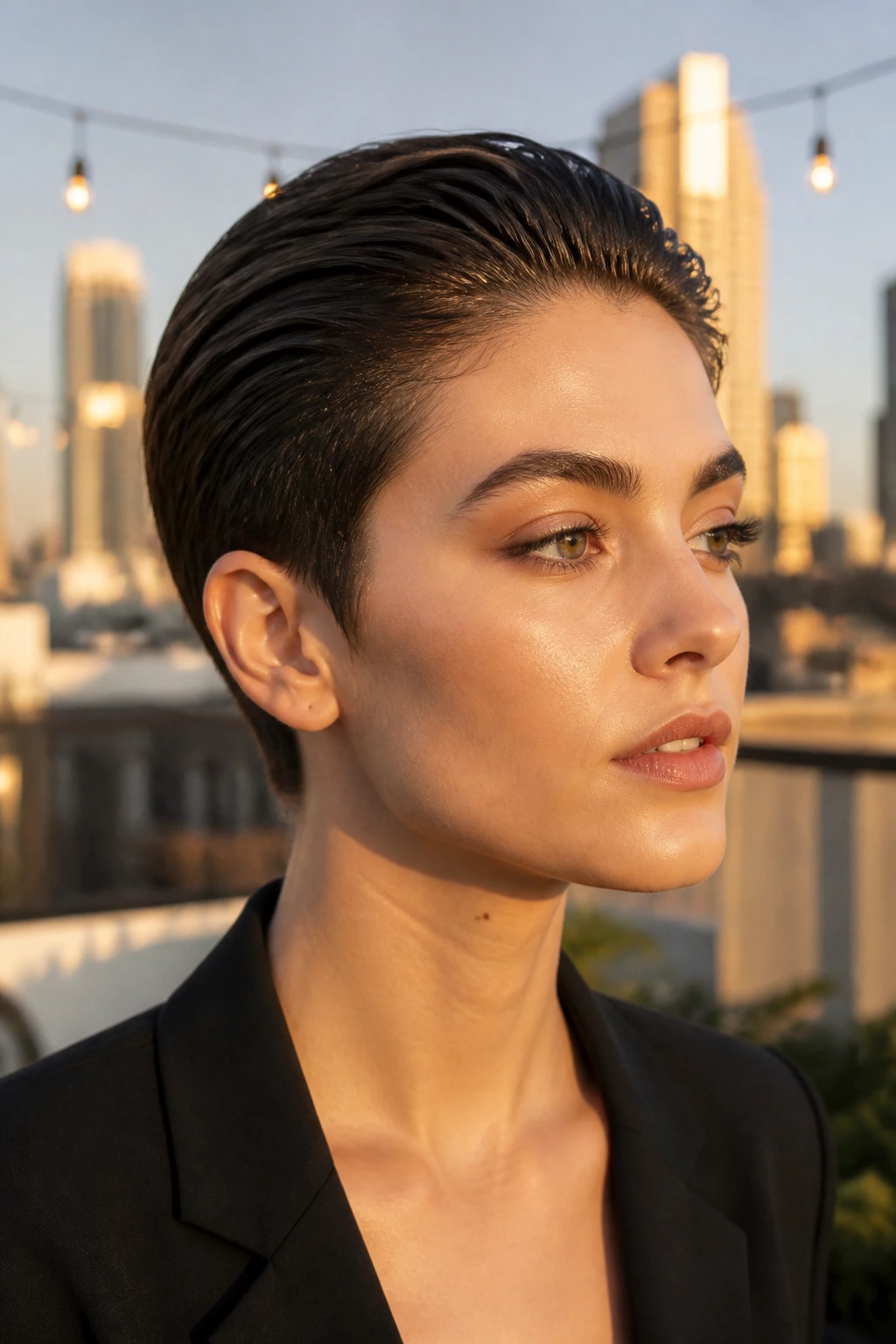
Short hair with a slicked-back finish can look surprisingly elegant because the face is fully open and the shape becomes all about the head and jawline. This cut usually keeps enough length on top to comb straight back with gel or pomade.
The trick is keeping the sides neat and the crown long enough to lie back without popping up. If the hair is very thick, a small amount of internal debulking helps it sit flat instead of forming a mini helmet. This one is not shy. It makes a statement fast.
11. Bixie Bridge Cut
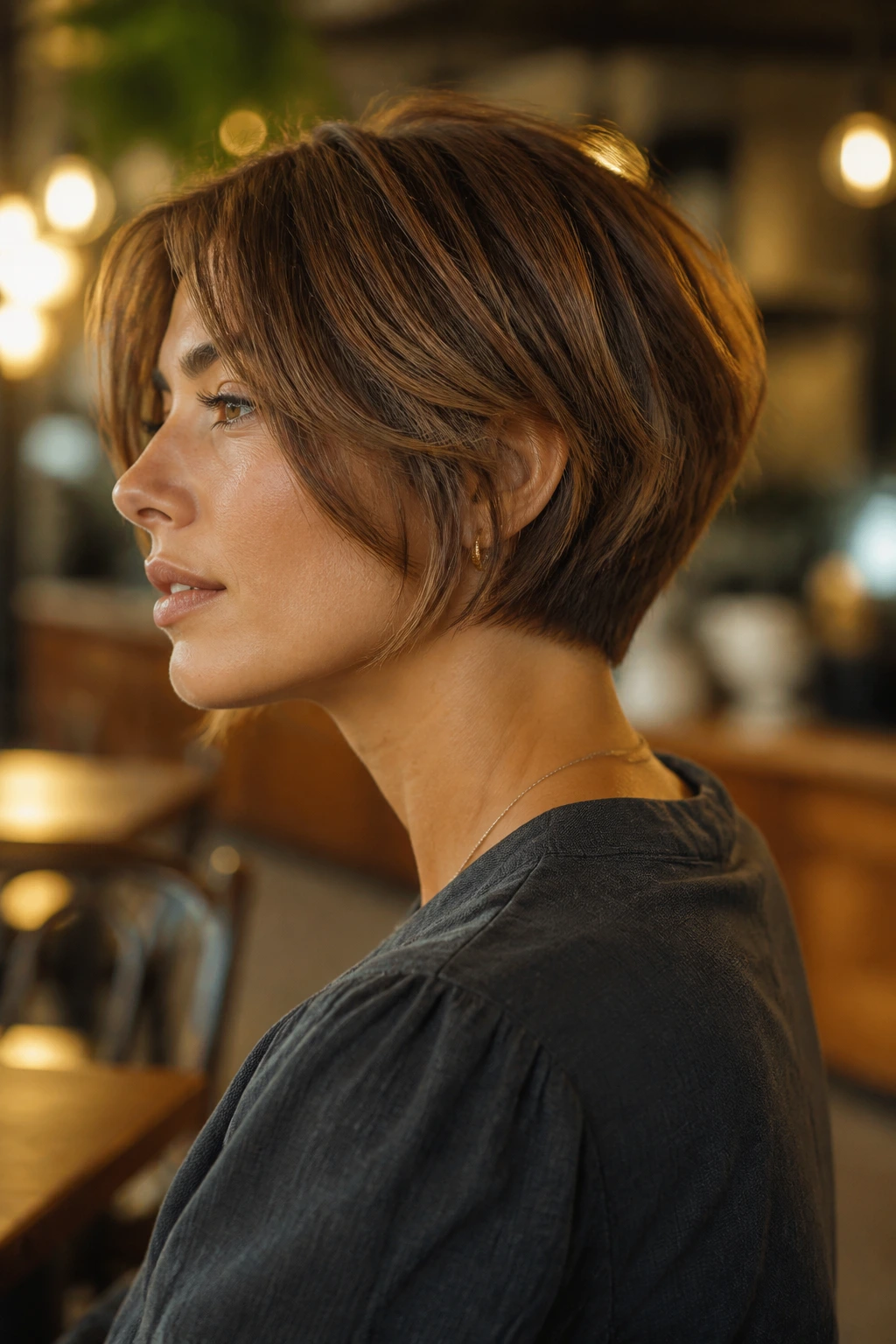
The bixie lives between a bob and a pixie, and that middle ground is exactly why so many people like it. You keep a little more length at the front and sides, but the nape gets the short, close-cut feeling that makes a pixie feel fresh.
It’s the best choice if you want to go short without losing the sense that you still have “hair hair,” not just a cropped silhouette. The shape is forgiving, the grow-out is civilized, and it plays nicely with both straight and wavy textures.
12. Micro-Bang Pixie
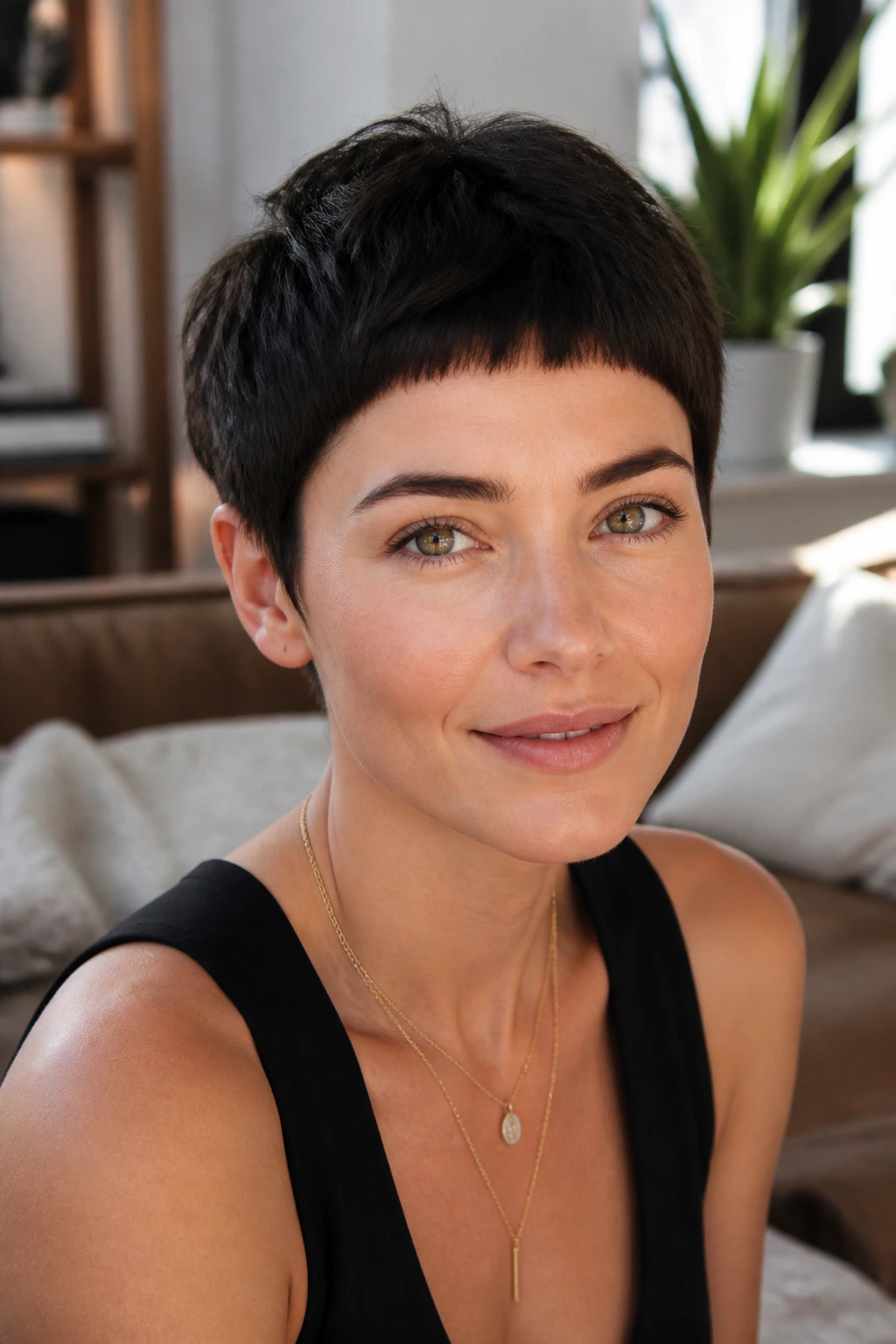
Tiny bangs change the whole mood of a cut. They draw attention to the eyes, sharpen the forehead area, and make the rest of the style feel cleaner and more deliberate.
Who Should Try It
This cut looks strongest when the rest of the pixie is kept tidy, because the bangs do enough work on their own. If your forehead cowlick is aggressive, ask for the micro-bang to be slightly longer in the center and lighter at the temples.
Recommendation: Great with bold glasses, short brows, and simple makeup.
Caution: Not the one to choose if you hate frequent trims.
13. Choppy Crop Pixie
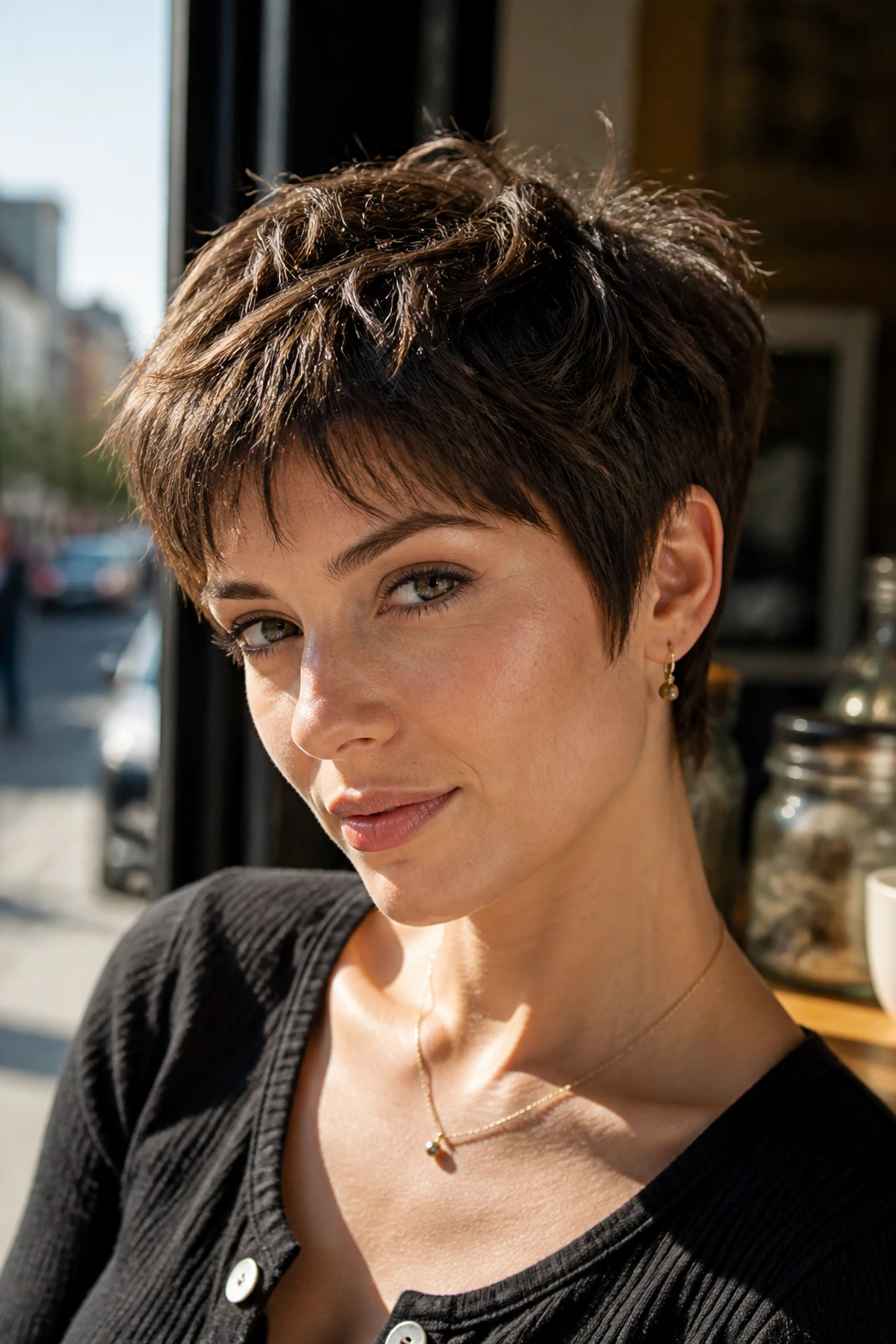
This is the rougher-edged cousin of the classic pixie. Ends are cut unevenly, layers land in little steps, and the whole thing has a more casual, broken-up feel.
It’s especially useful if your hair has a lot of body and tends to puff out in a cleaner cut. The choppiness interrupts that bulk. A dab of texture cream near the ends and a quick squeeze with the hands gives it the right amount of separation, which is to say: enough to see the shape, not enough to look crunchy.
14. Tousled Bedhead Pixie
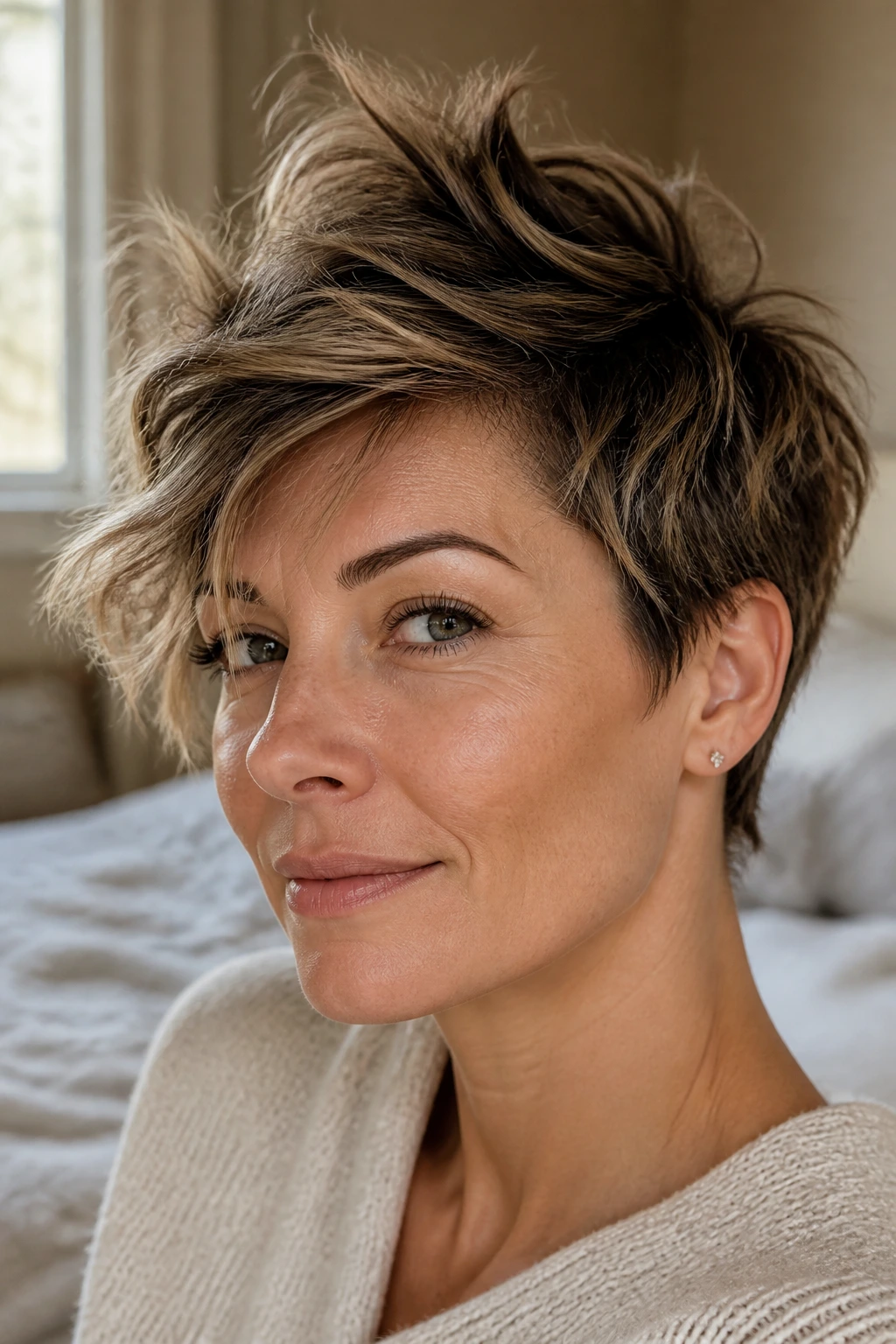
If you like hair that looks as if it settled itself while you drank coffee, this is the cut. It relies on movement, not polish, with layers that fall in different directions and a finish that’s meant to be a little messy.
The best part is how little you need to do. Rough-dry the roots, mist in a bit of texture spray, and use your fingers to lift the front and flatten the spots that want to stand up too much. This works best on hair that already has some bend.
15. Nape-Tapered Pixie With Long Sideburns
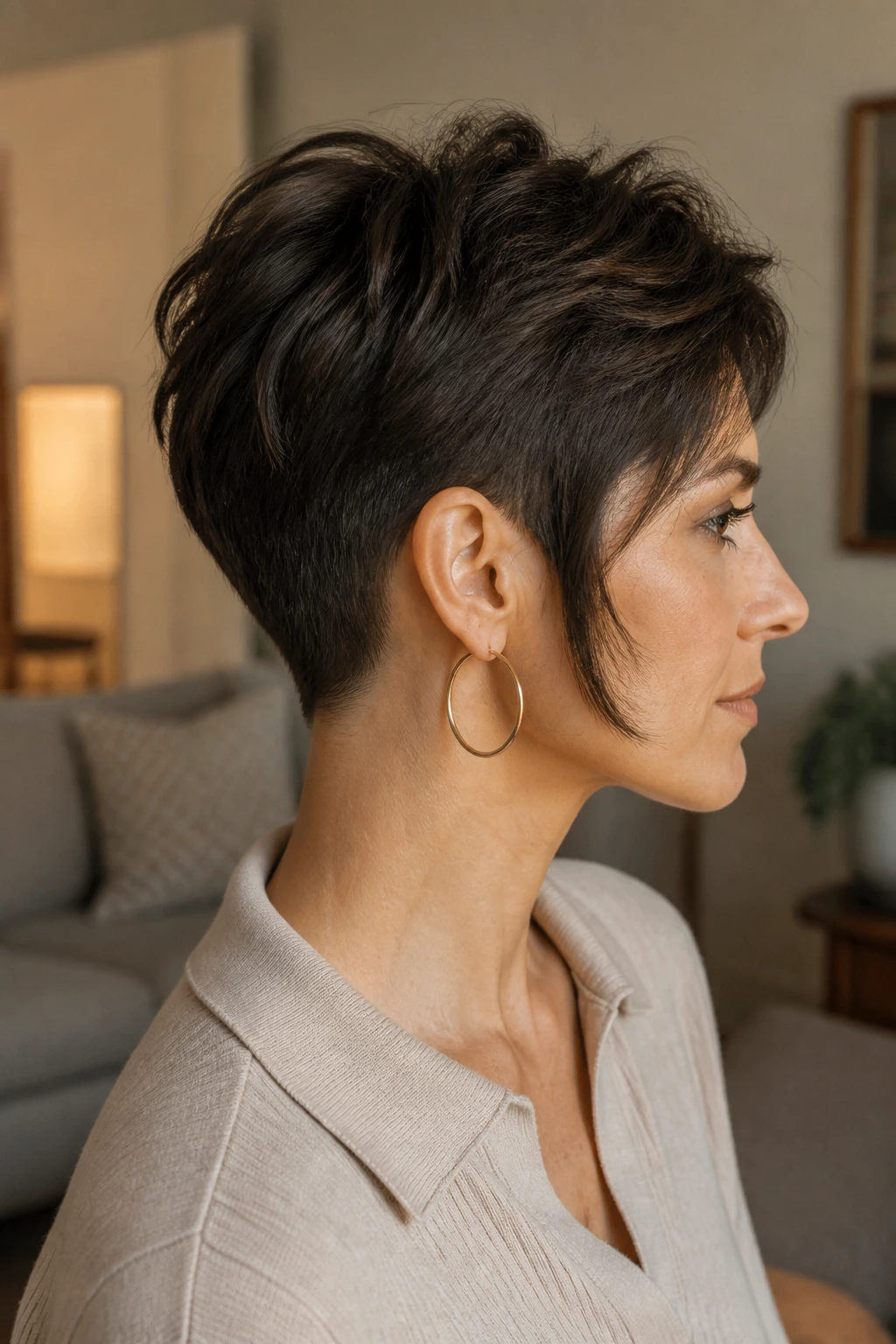
The nape is clipped close, but the sideburns stay long enough to soften the line around the jaw and ears. That contrast keeps the cut from feeling too boxy, especially on faces that need a little softness at the sides.
A cut like this is one of my favorites for people who wear earrings often. The sideburn length frames hoops and studs in a way that feels deliberate. It also helps during the grow-out phase, because the longer side pieces can be tucked, pinned, or brushed forward when the back starts to spread.
How to Wear It
Keep the sideburns narrow, not bulky. They should frame, not fuzz out.
16. Faux Hawk Pixie
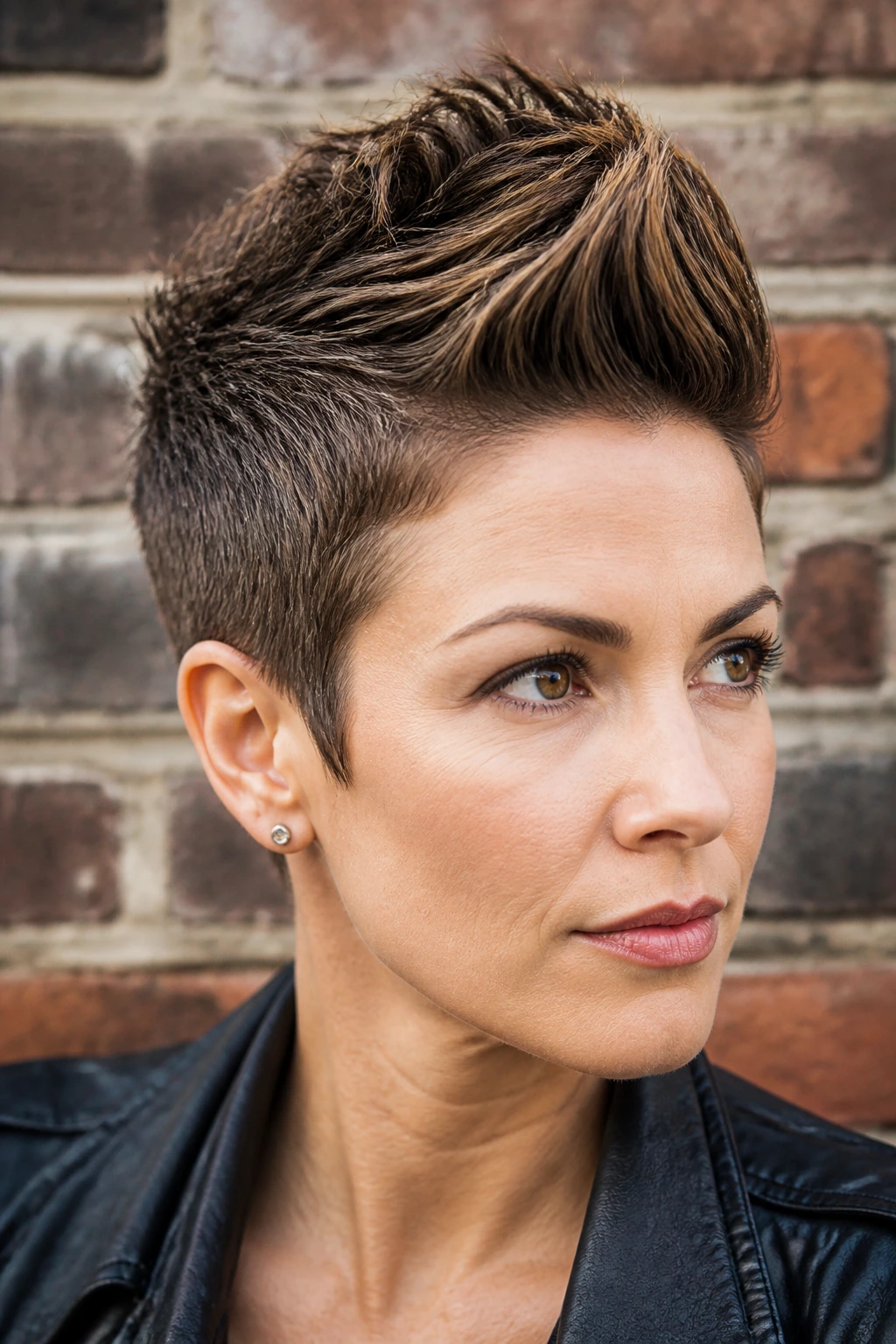
The center ridge stays longer, while the sides are tightened enough to make the middle stand up on its own. It sounds edgy because it is, but it can be worn much softer than the name suggests.
If your hair is thick, this cut is a release valve. It removes weight from the sides and lets the top carry the shape. A little matte paste and a quick push upward at the crown give it that lifted line without making it look spiky in a club-kid way unless that’s what you want.
17. Classic Side-Part Pixie
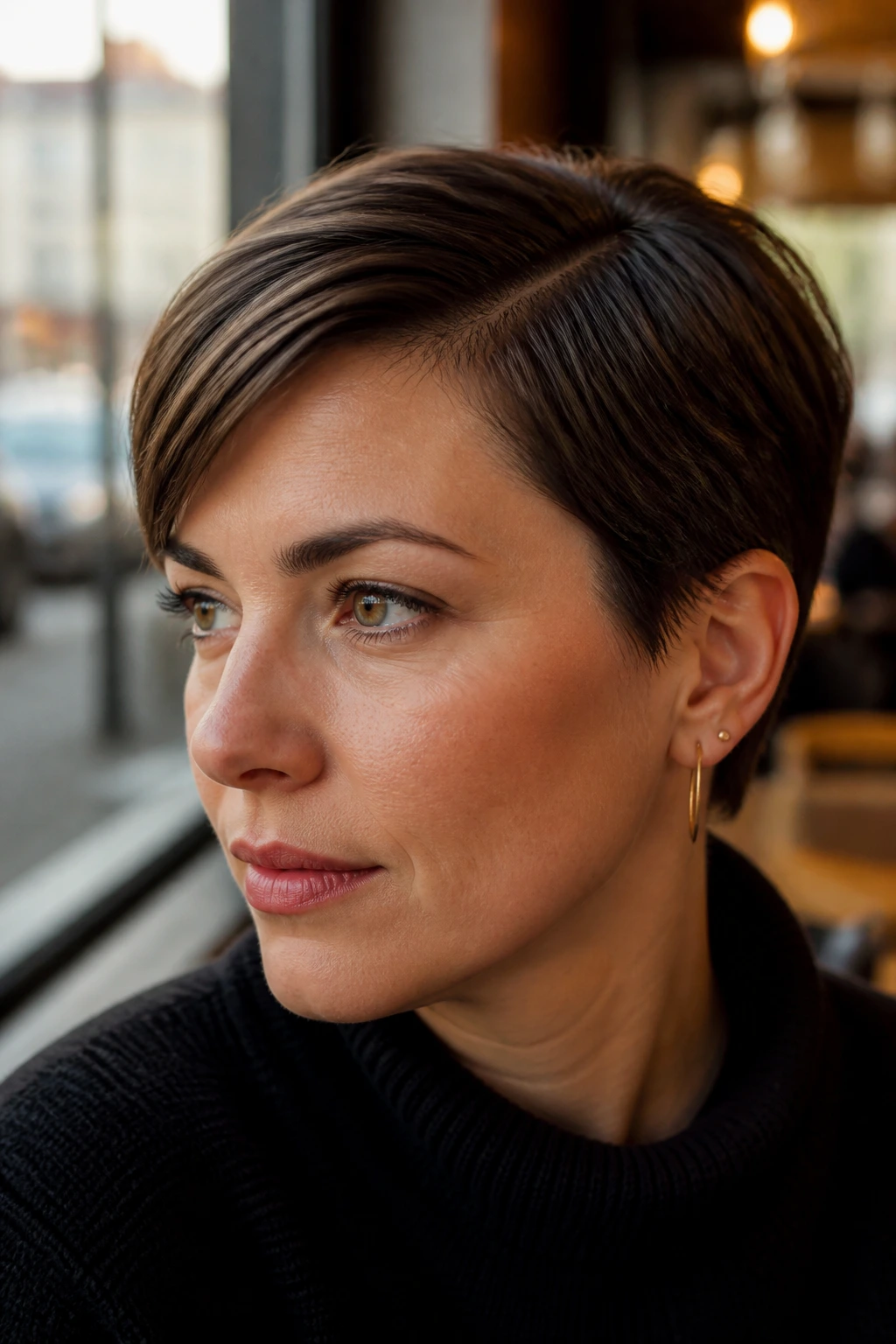
This is the version that slips into almost any setting without drawing a fuss. The side part adds structure, the layers sit close to the head, and the fringe can be tucked neatly or brushed across the forehead.
It’s not flashy, which is exactly why it lasts. If you like your hair to look clean with very little effort, this cut is a workhorse. Keep the part consistent for a week or two, and the hair will learn the direction; then you can shift it a little when you want more lift.
18. Curtain Fringe Pixie
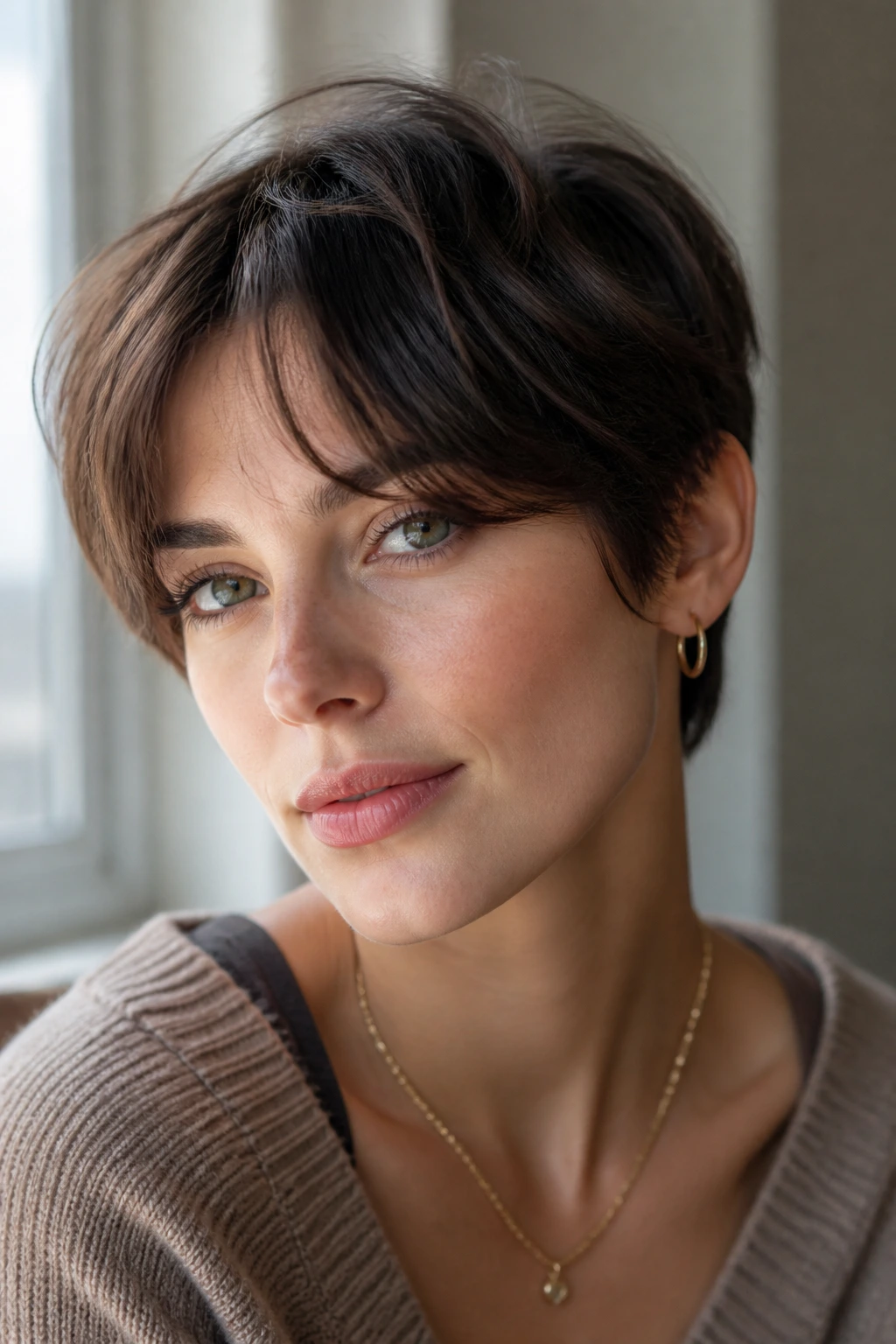
Curtain bangs on a pixie make the face feel open in the center and softly framed at the sides. That split fringe is especially useful if you want a short cut but don’t want a hard line across the forehead.
This style needs a little room at the front, so don’t let the fringe get chopped too high. The length should graze the brows or sit just above them, then bend away from the face. It’s a nice choice if you like a bit of softness around the cheekbones without losing the cropped feel.
19. Platinum Pixie
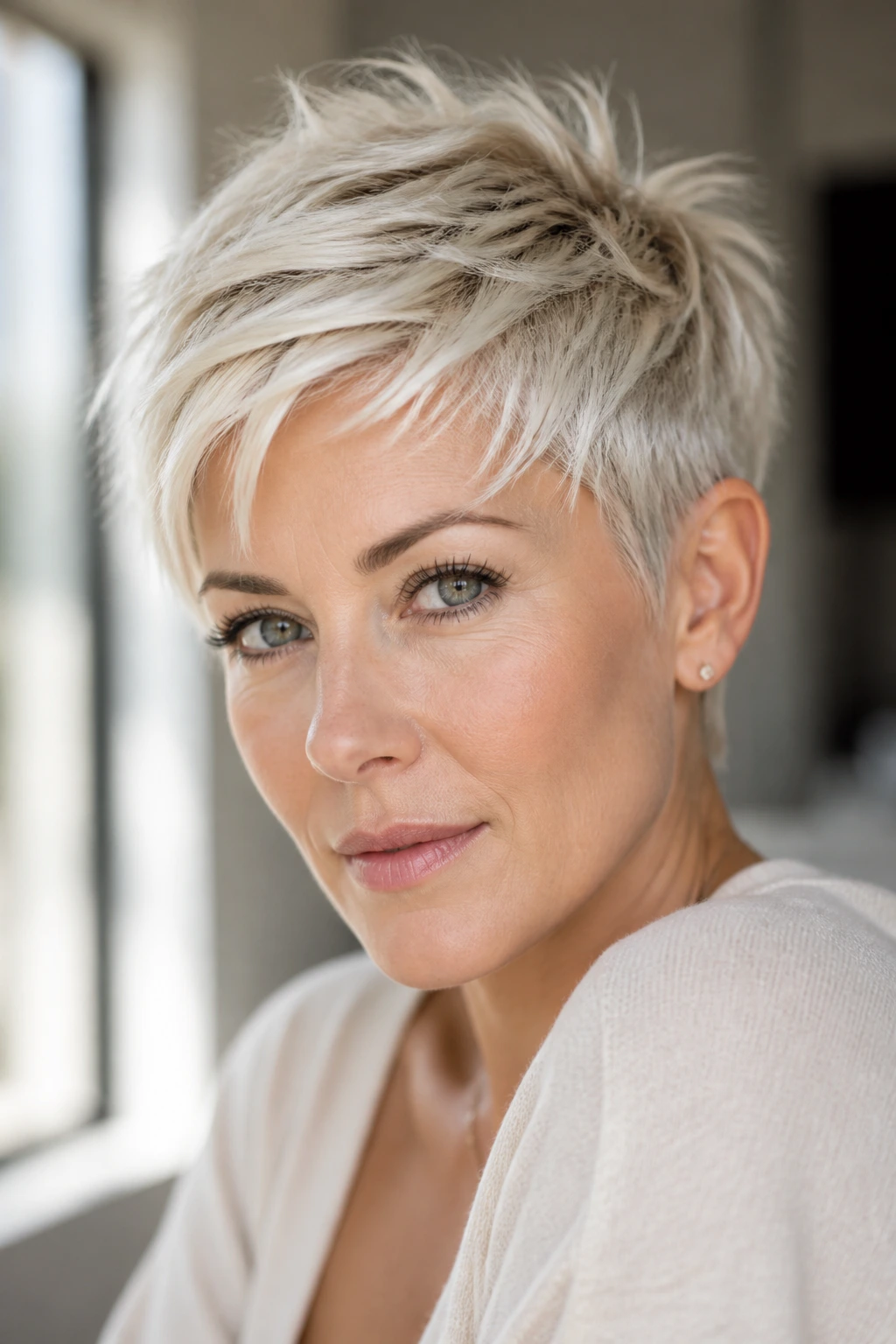
The cut itself gets sharpened by the color. Platinum highlights every layer, every edge, every taper, which means even a simple pixie suddenly looks more graphic and intentional.
It also asks for a bit more care, because lightened hair can get dry fast and dry hair shows blunt mistakes more easily. Keep the shape soft at the tips and use a lightweight conditioner so the ends don’t turn fluffy. A platinum pixie looks best when the texture is crisp, not fried.
What to Watch For
If your hair is already fragile, this look is a commitment. The color makes the cut sing, but it also makes poor condition visible.
20. Glossy Brunette Pixie
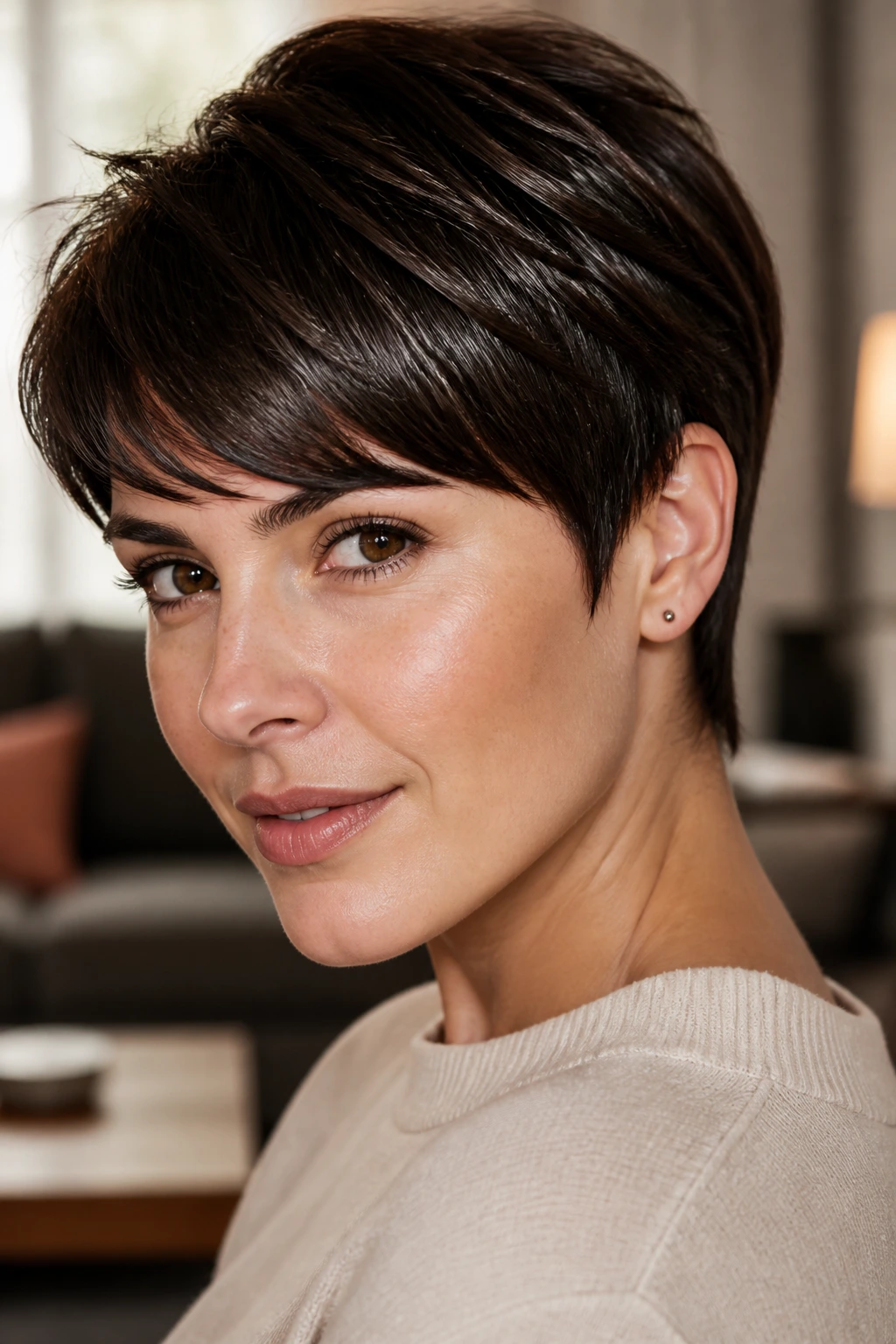
Deep brunette hair gives a pixie a smoother, richer outline. The shine catches the layered edges, so even a simple shape looks expensive in the plain, honest sense of the word: the line is clean and the finish is healthy.
This is one of those cuts that rewards good blow-drying. A little root lift and a round brush at the crown keep the top from collapsing, while a glossing serum on the mid-lengths brings out the darker tones. It’s low drama in the best way.
21. Copper Pixie
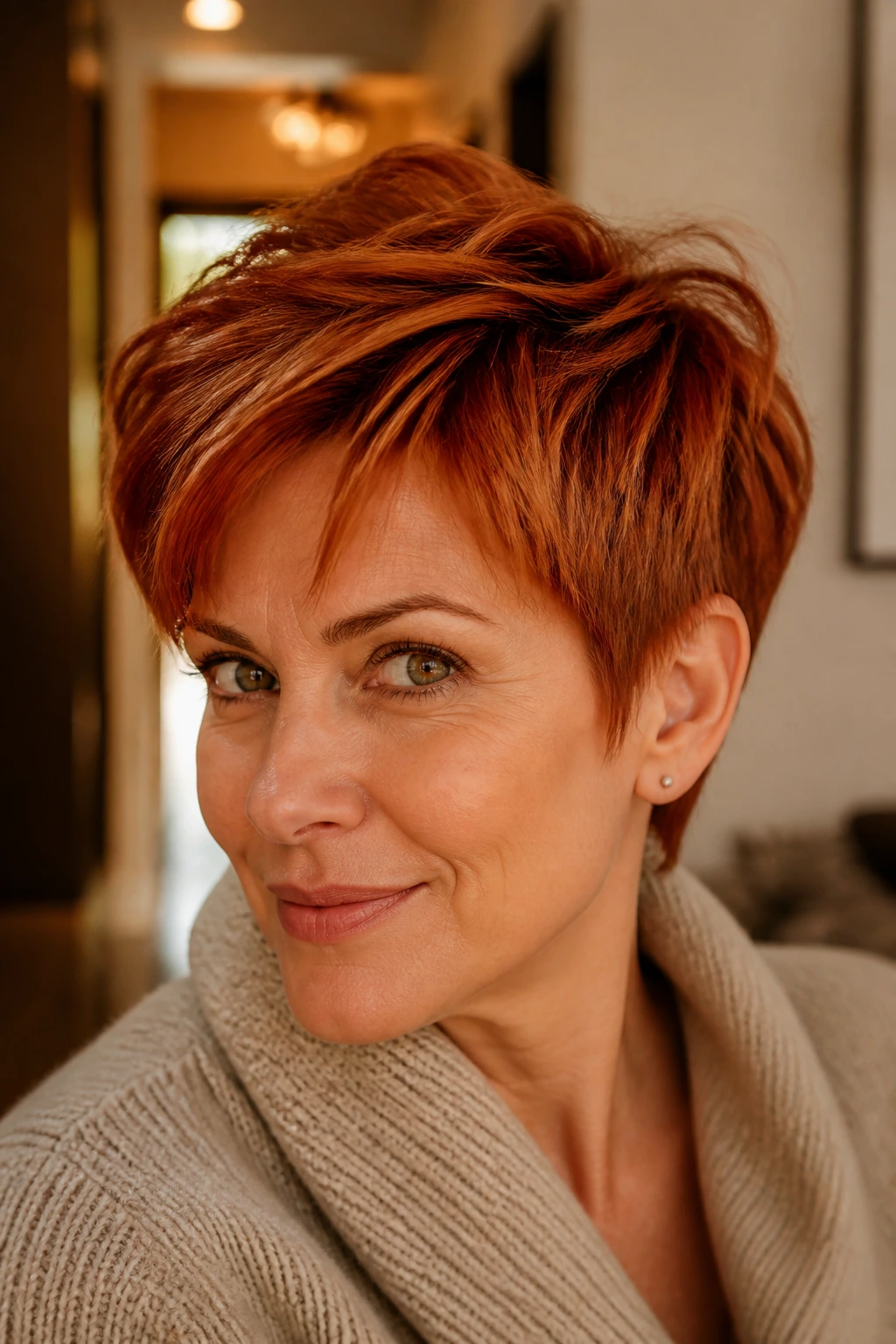
Copper makes short hair feel alive. The color warms the face, throws light across the layers, and turns a plain crop into something with a pulse.
The cut that goes with copper should have enough texture to catch the shade changes, so ask for soft layering rather than one blunt shape. If the ends are too heavy, the color can look flat; if the cut has movement, the same color looks brighter and more dimensional. You can see that from across a room.
22. Wavy Air-Dry Pixie
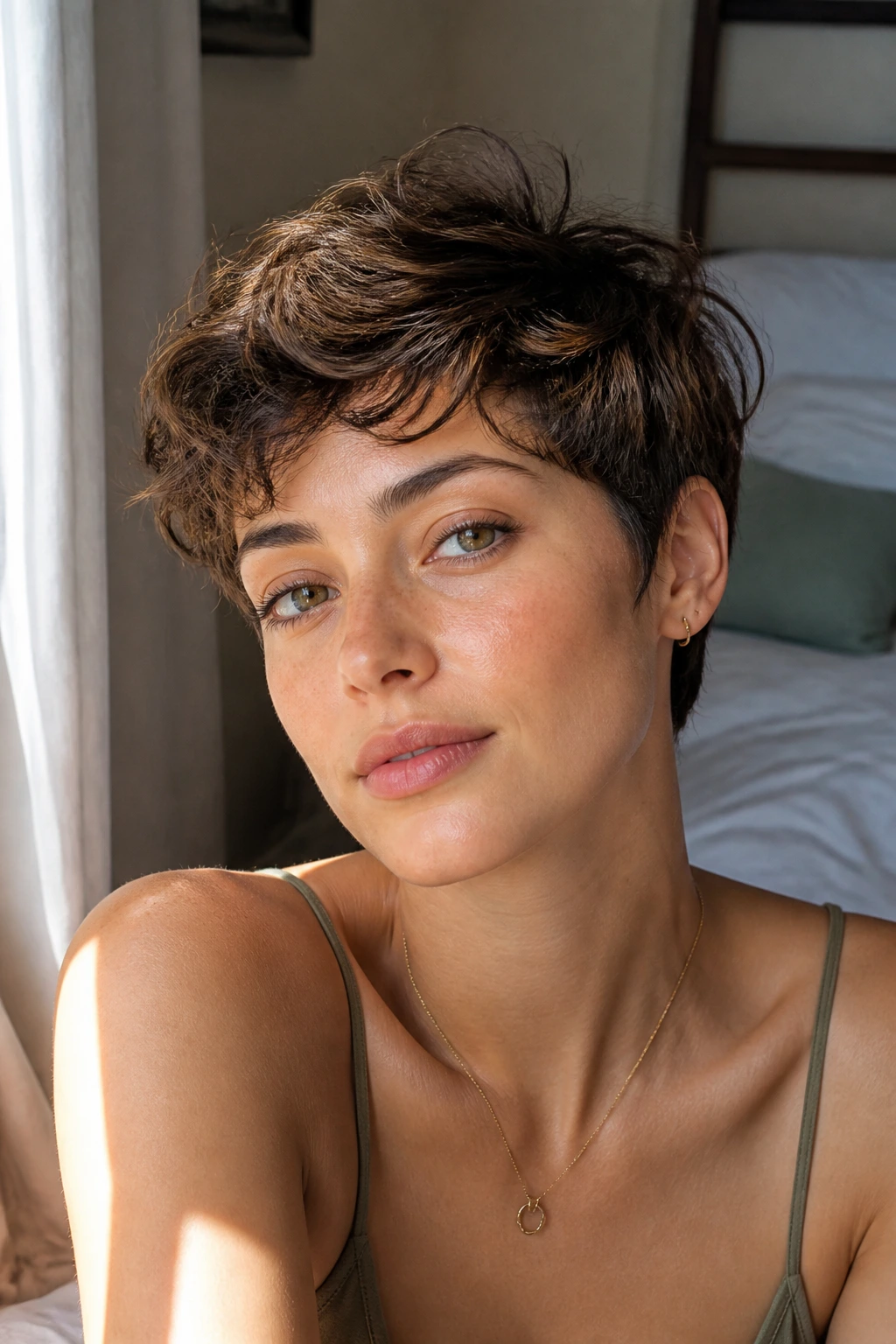
This one is for people who want the haircut to do some of the work after the shower. Wavy hair at pixie length can be gorgeous when the cut respects the natural bend and doesn’t force everything into one pattern.
Scrunch in a light cream, let the hair dry without constant touching, and break up the crown with your fingers once it’s about 80 percent dry. That’s usually enough. The shape should feel loose and a little coastal, but not beachy in the overused sense — just soft, bendy, and easy.
Best Detail to Ask For
Leave the top slightly longer than the sides so the wave has somewhere to live.
23. Wet-Look Pixie
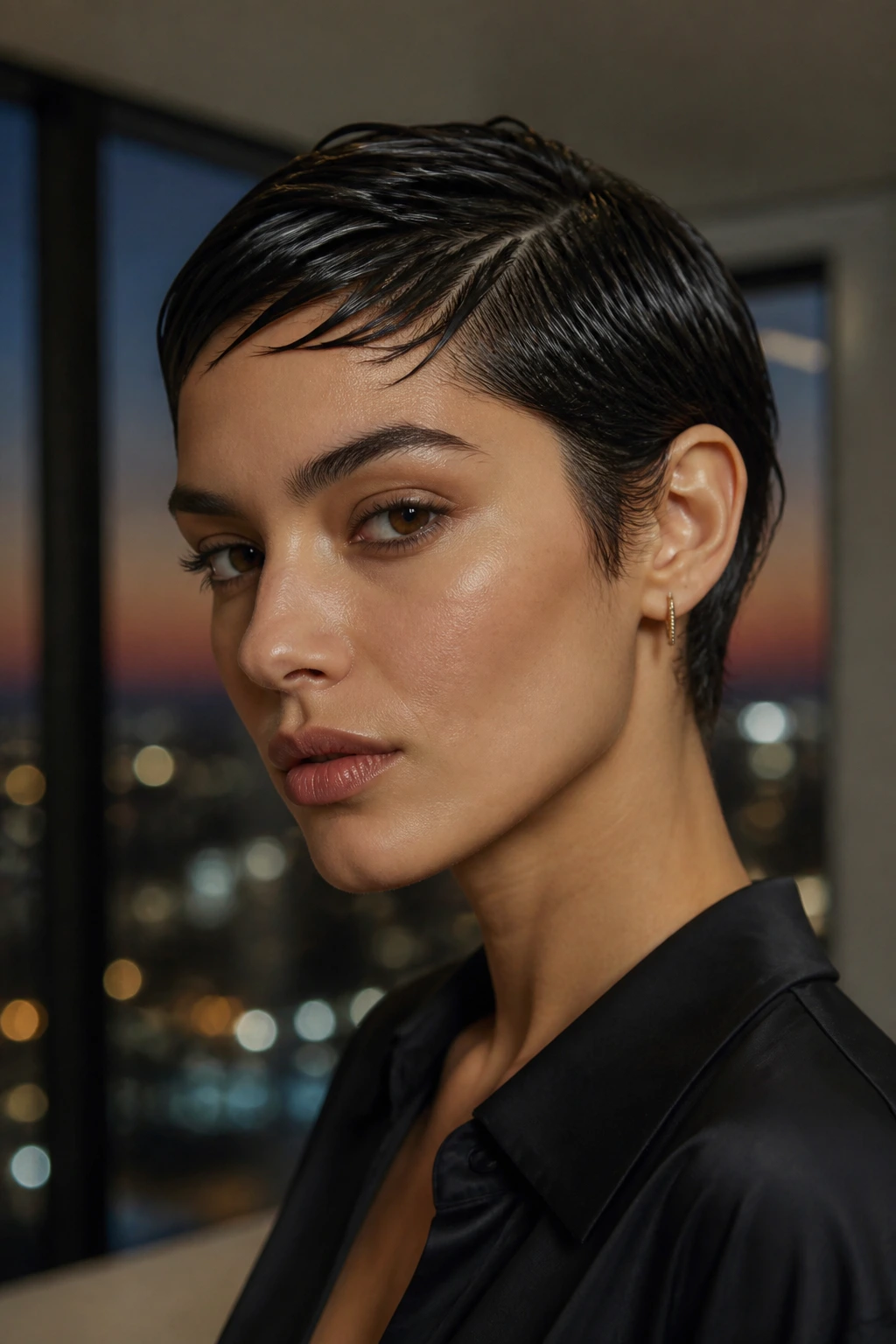
A wet-look finish turns a short cut into something sleek and deliberate. The hair is combed close to the head, usually with gel or a shine cream, and the result is sharp enough for evening but still simple enough to wear with a plain T-shirt.
This version makes the cut’s bones visible. That means your taper, part, and fringe have to be clean. If the shape underneath is sloppy, the wet finish only makes it louder. If the cut is good, though, the slick surface is very satisfying.
24. Rounded French Pixie
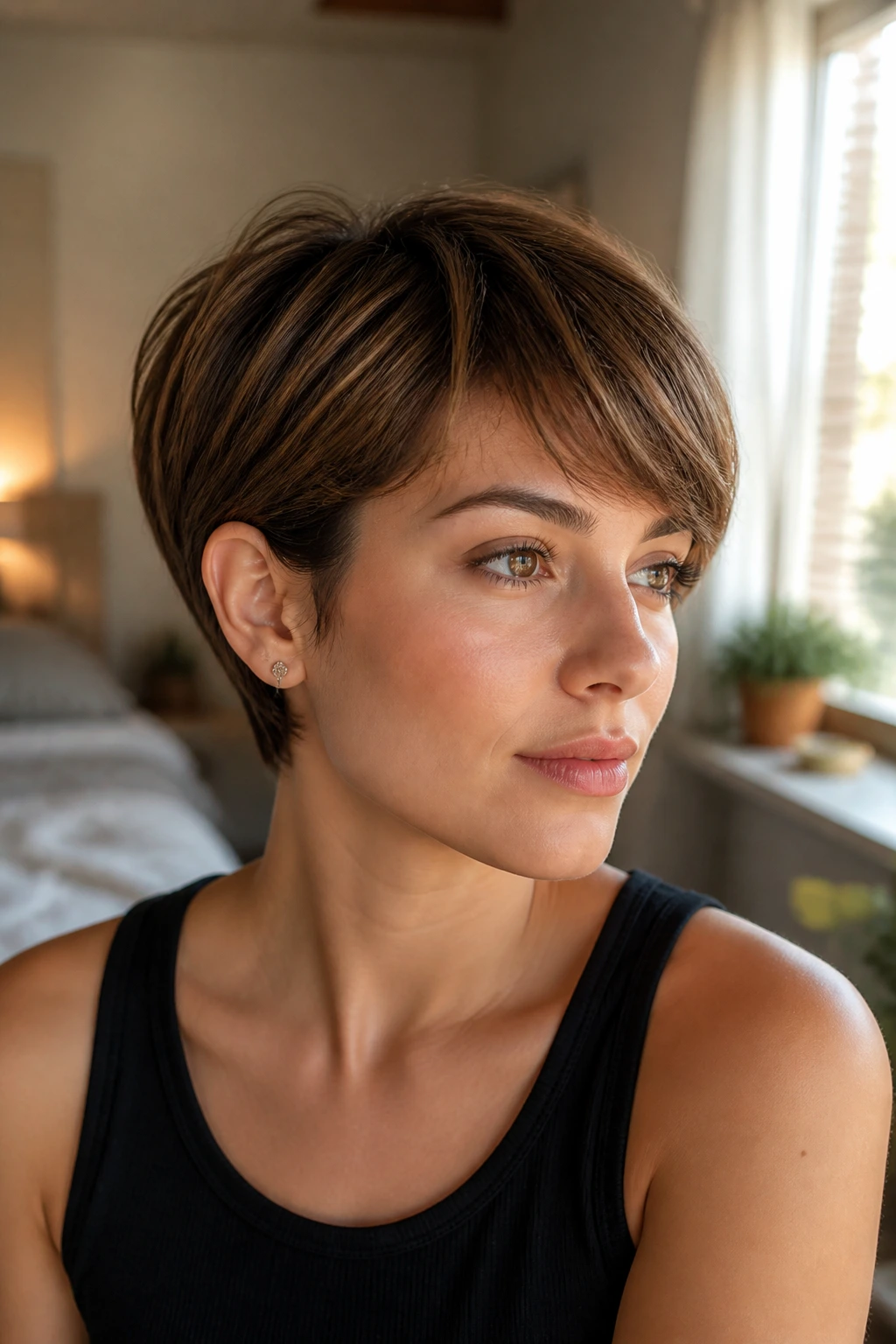
This style curves gently around the head instead of standing up in sharp pieces. The silhouette feels softer and a little more old-school, especially when the fringe is brushed to one side and the nape is tucked close.
I like this cut for people who want short hair but not a sharp, spiky finish. It has a kind of quiet polish to it, and it sits well with earrings, scarves, and collar-heavy clothes. Keep the layers blended so the outline stays round rather than square.
25. Disconnected Pixie
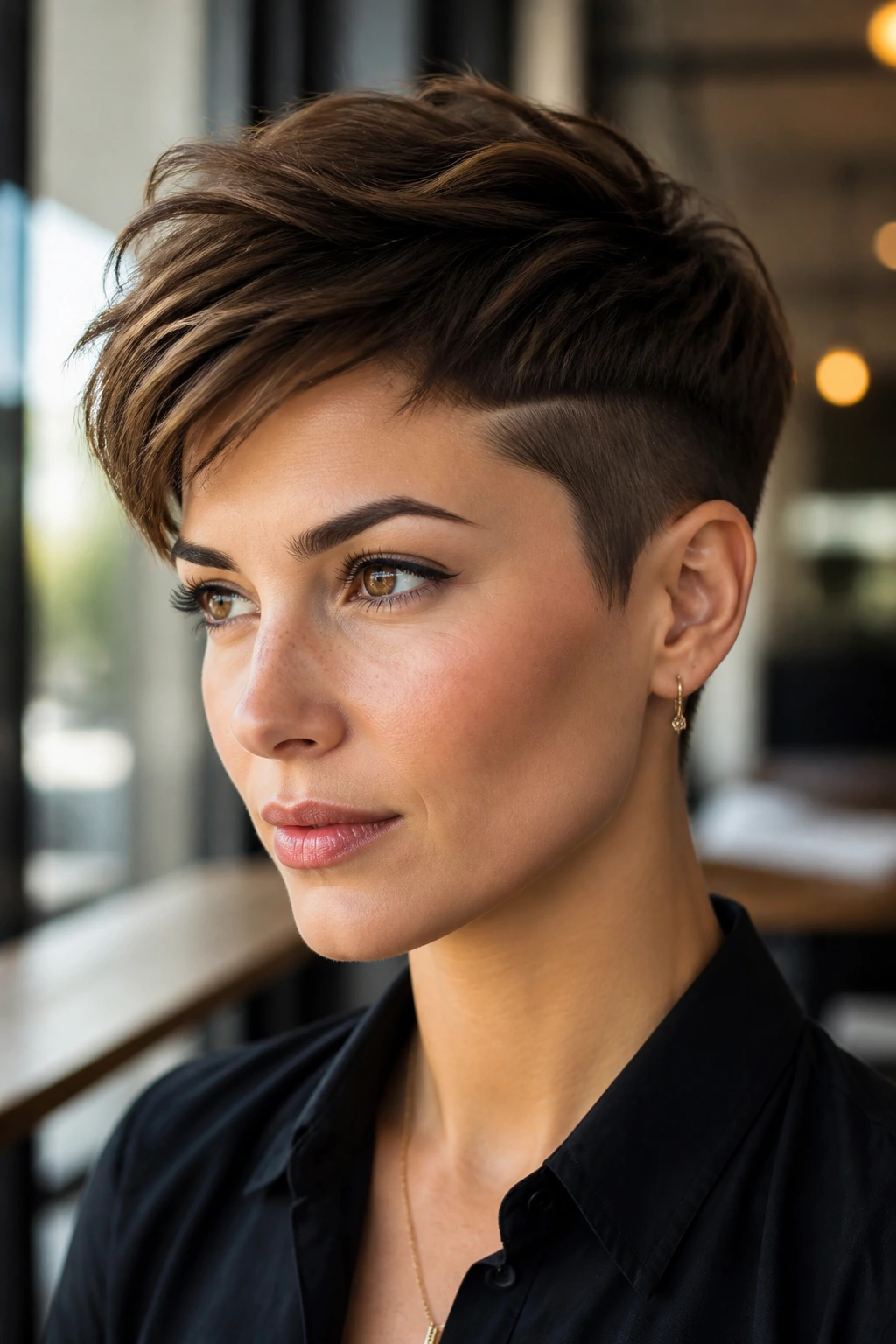
The disconnect is the point here. The top is kept visibly longer than the sides, and instead of blending the whole thing into one smooth slope, the haircut lets you see the shift.
That separation gives the style edge. It’s not for people who want a hidden short cut; it’s for people who like the haircut to look designed. Ask for a clear difference in length but a clean finish through the edges, because if the disconnect is sloppy, the result can look unfinished instead of purposeful.
26. Brush-Forward Pixie
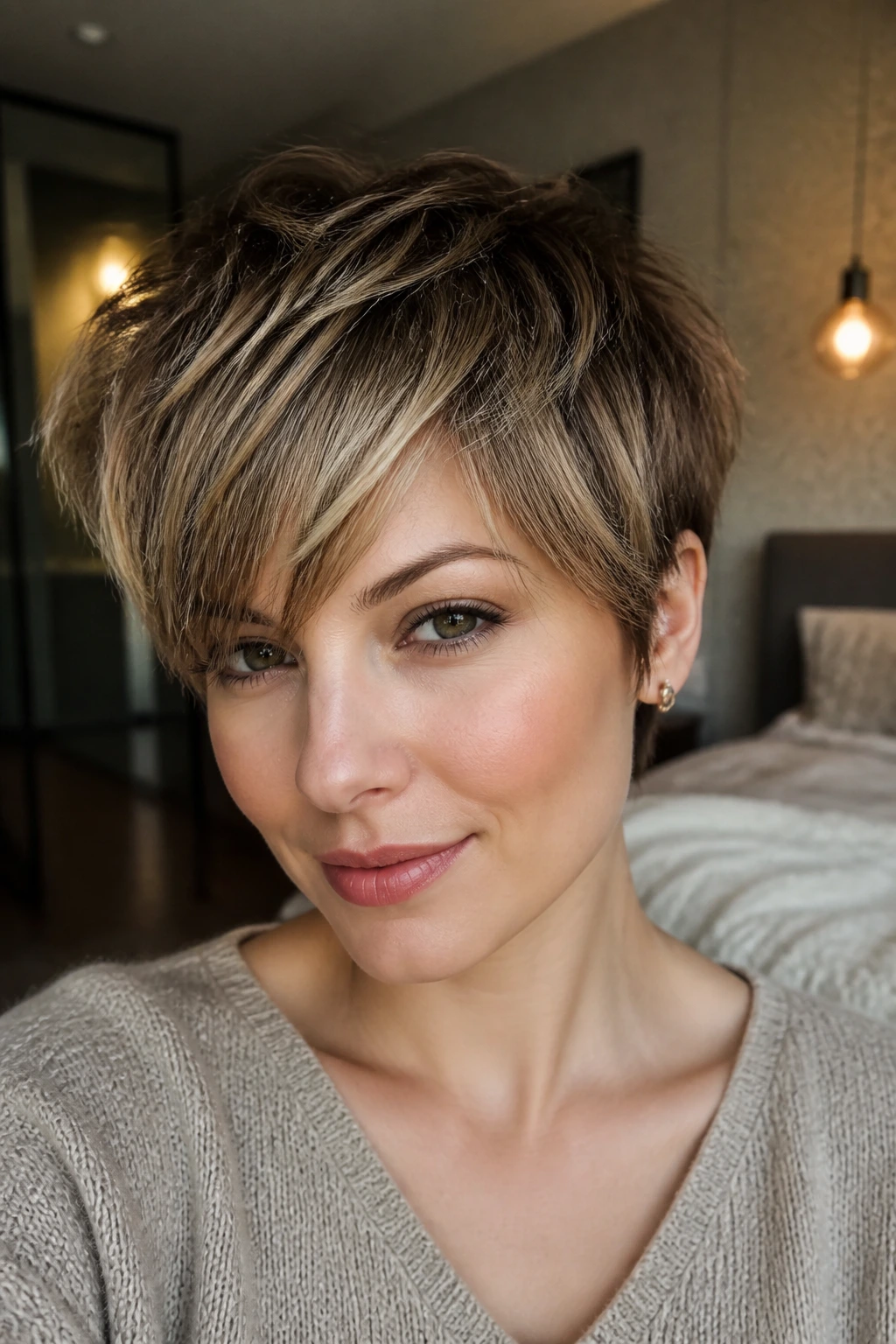
Push the hair toward the face and the whole cut changes. The fringe and crown move forward, the sides stay compact, and the silhouette feels fuller around the eyes and cheekbones.
This is a good fix for people who want forehead coverage without a heavy bang. It works especially well when the hair is cut with soft layers that can fall forward instead of splitting awkwardly. A little root spray at the crown helps keep the front from lying flat against the scalp.
27. Airy Feathered Pixie
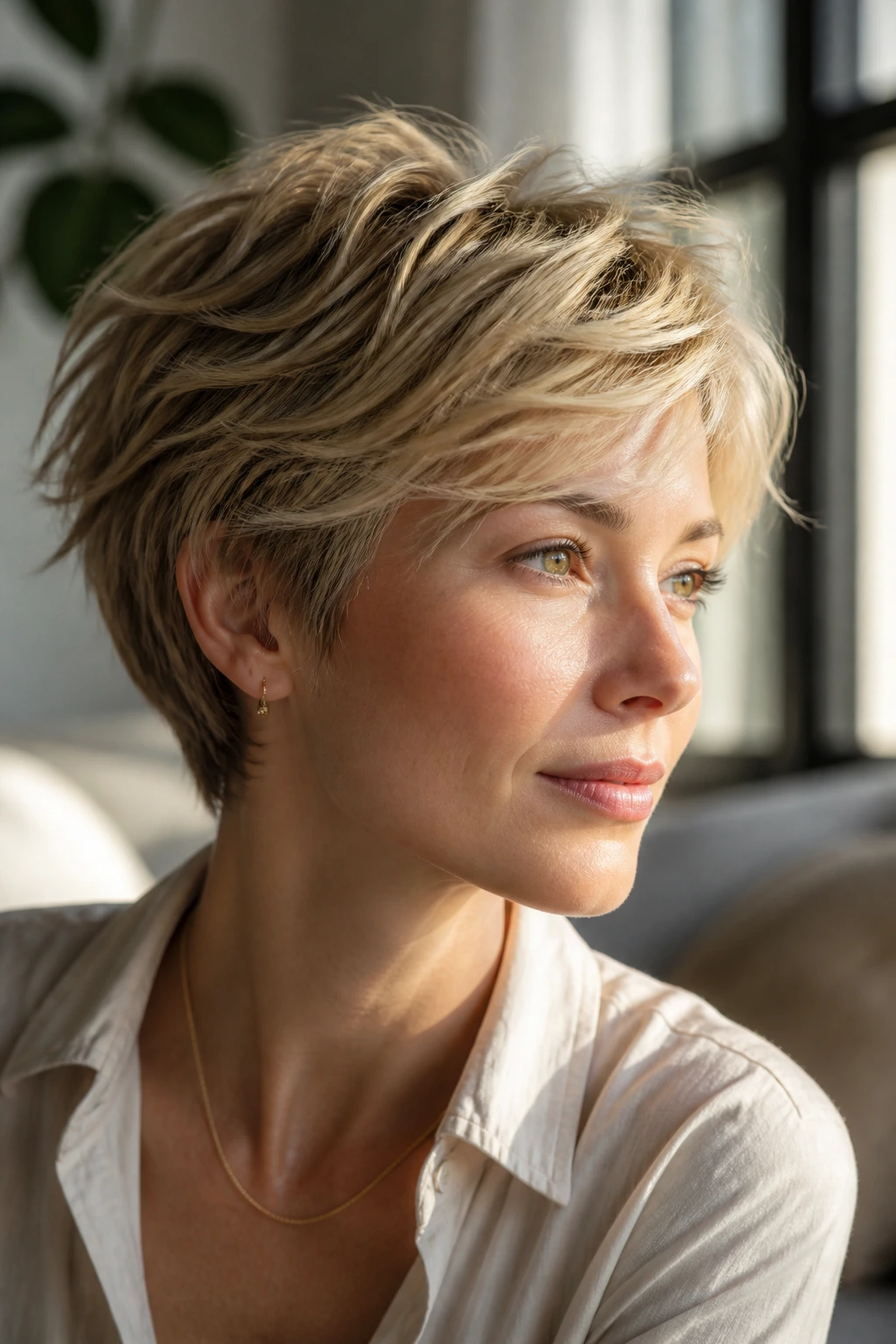
Lightness is the whole point here. The layers are feathered so the ends blur instead of sitting in chunky blocks, which keeps the cut soft and breathable.
The danger is over-thinning. If the stylist goes too far, the hair can look see-through at the ends. A better version keeps enough substance to hold shape but uses careful point-cutting to remove the hard edges. It’s a lovely option for finer hair that needs movement without losing body.
Why It Stands Out
The cut moves when you move. That sounds small, but on short hair it makes a huge difference.
28. Grown-Out Pixie
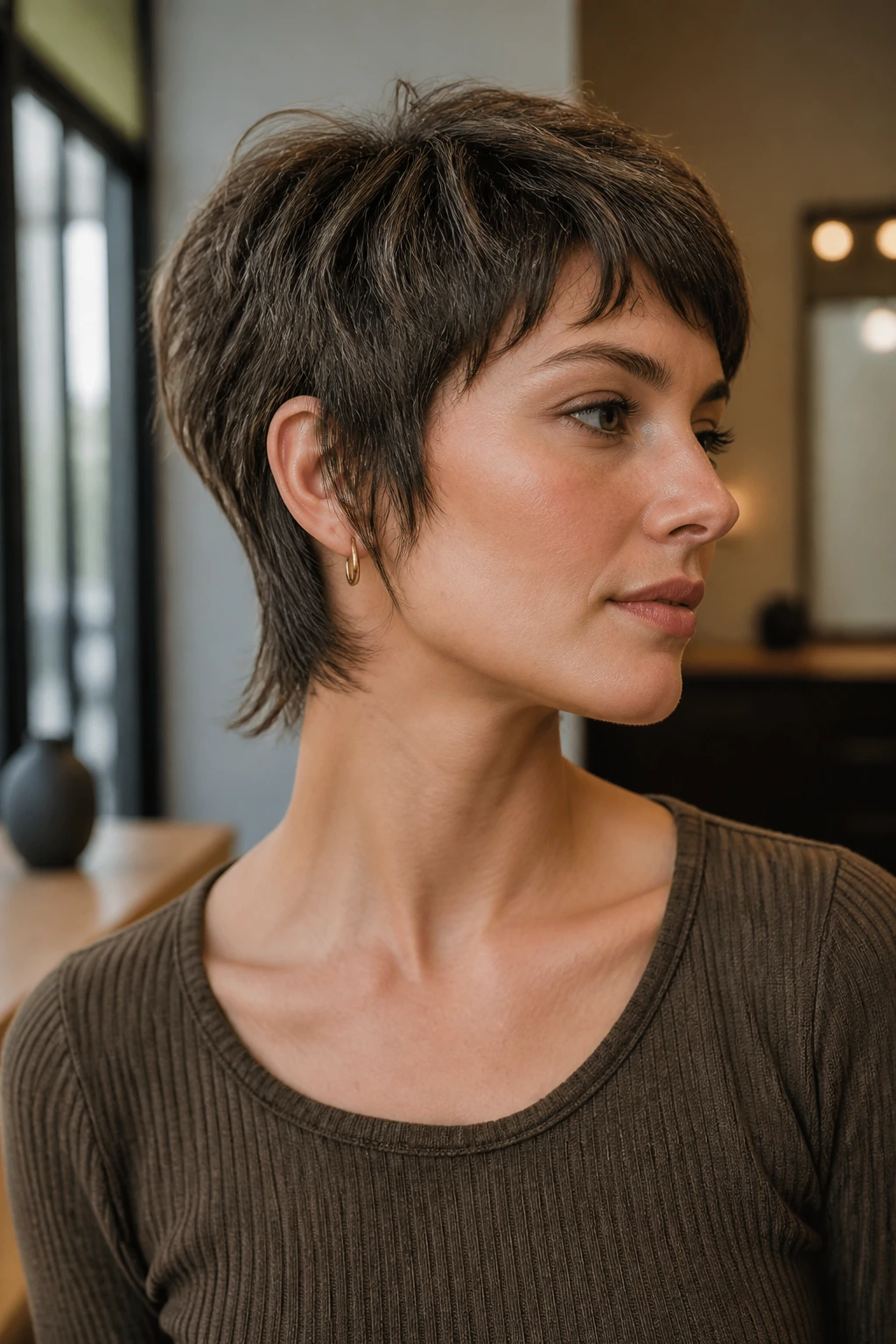
This is not a “messy” cut by accident. It’s a pixie designed to live through the awkward middle stage, with enough length at the nape and sides that the shape still looks deliberate as it grows.
If you know you’ll want a bob later, this is the smart route. Keep the perimeter softer, leave a little extra around the ears, and avoid over-thinning the crown. A grown-out pixie can still look polished at six or eight weeks past the trim, which saves you from feeling trapped by your own haircut.
29. Coily Pixie With Defined Top
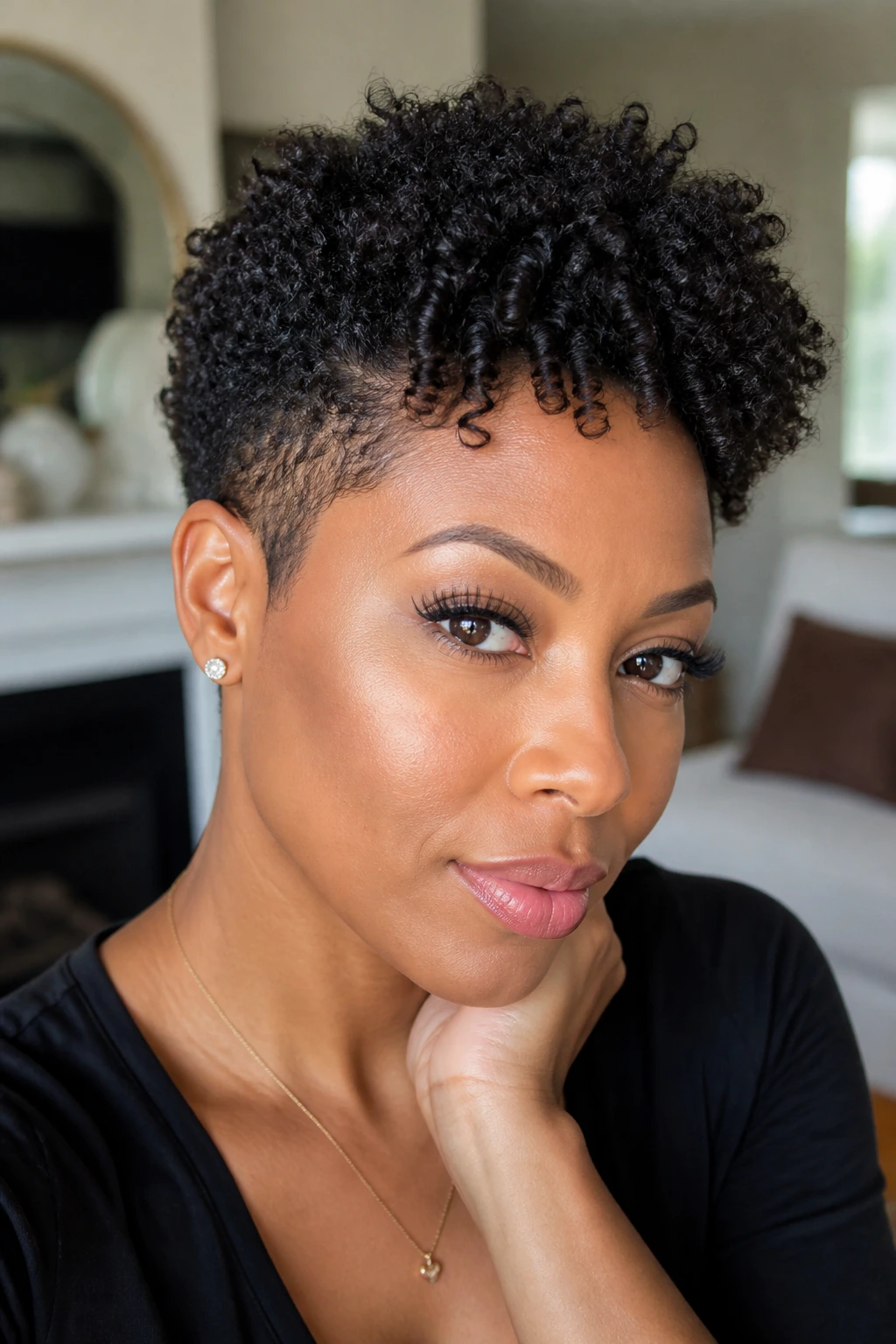
Coily hair can look fantastic in a pixie when the top keeps enough length for the coil pattern to show. The sides and nape are trimmed close, while the top is shaped so the curls sit in a compact, rounded crown.
Dry shaping matters here. Coils shrink hard, and a wet cut can hide what the hair will actually do. Use a leave-in and a light cream, then let the curls form their own topography instead of pulling them into a flat direction. The result is sculptural.
30. Swept-Back Volume Pixie
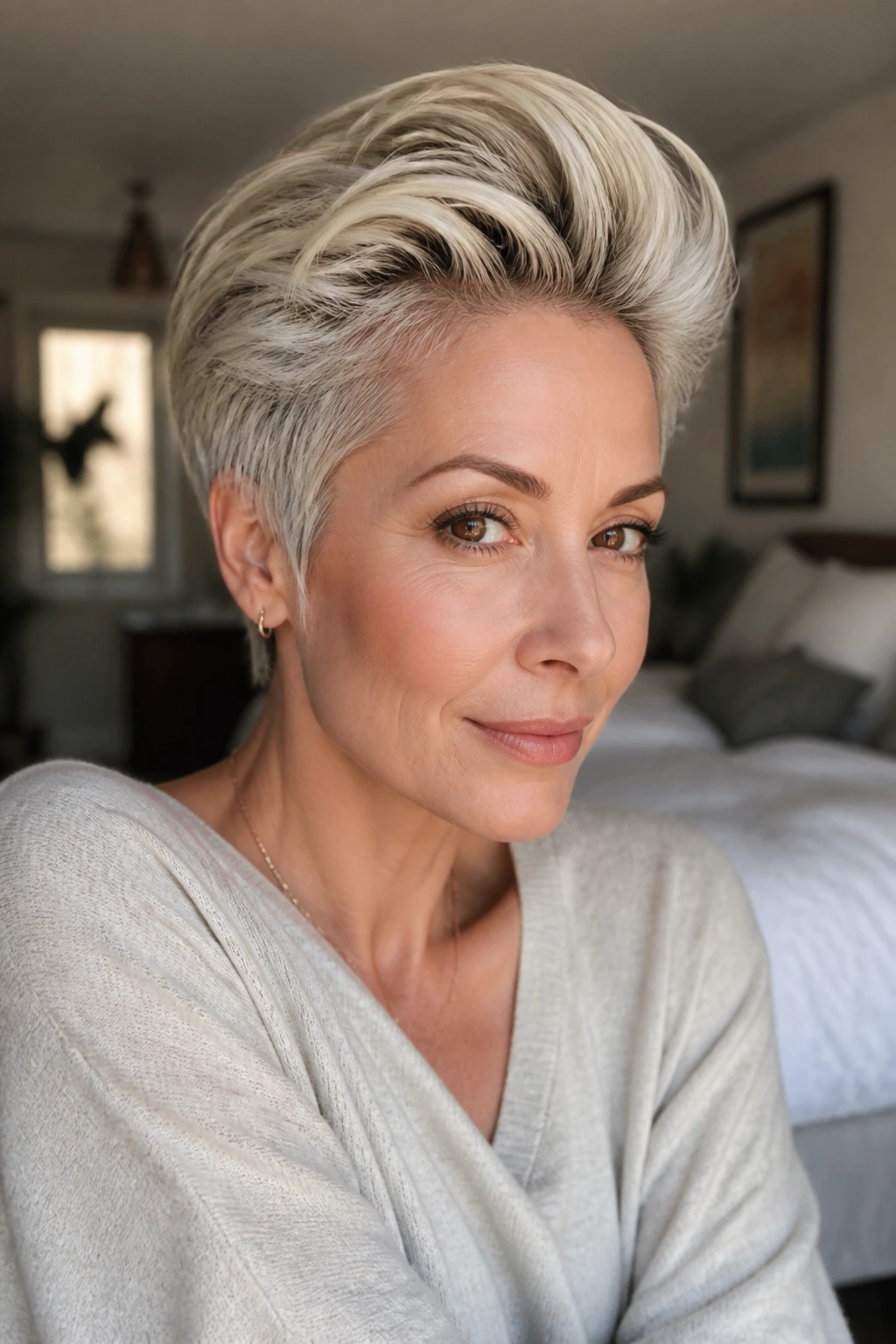
This cut builds height in the front and crown, then sweeps the hair backward so the shape lifts away from the forehead. It can look soft or dramatic depending on how much hold product you use.
The haircut needs some internal layering so the front doesn’t collapse under its own weight. A blow-dryer pointed up at the roots, followed by a dab of cream or paste, is enough for most days. If you want a little more polish, use a small round brush at the hairline and let the front curve back.
31. Softly Framed Pixie With Wispy Temples
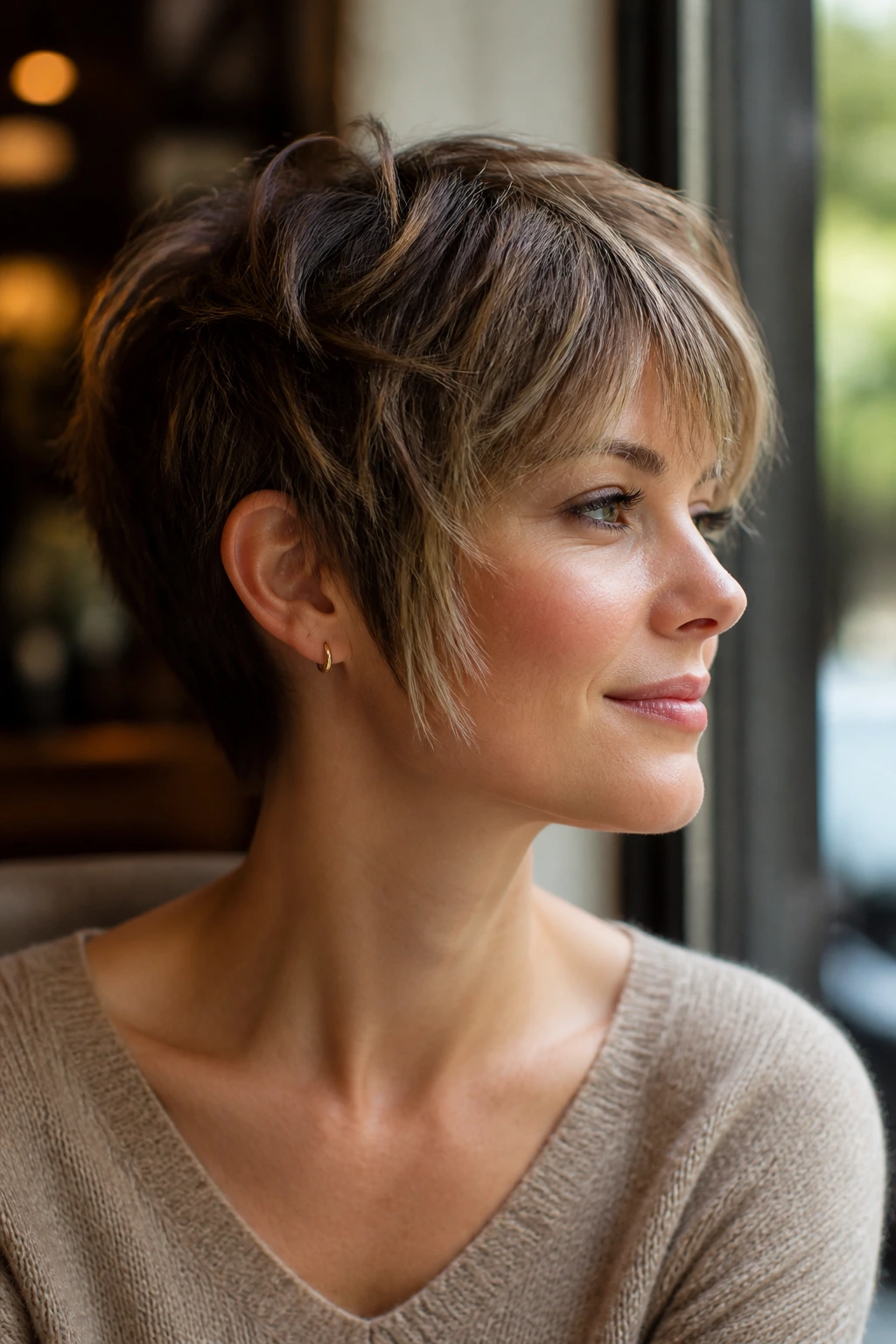
This version keeps the outline gentle. The temples stay wispy, the fringe lands in light pieces, and the rest of the cut stays short enough to keep the silhouette neat.
It’s a good answer if you like pixies but worry about looking too severe. The wispy temple pieces soften glasses, strong brows, and angular jawlines without making the style look fussy. Ask for those front pieces to be cut with movement, not a blunt corner, and the whole haircut relaxes.
How It Feels
Less hard edge. More room around the face. That’s the whole point.
32. Edgy Spiky Pixie
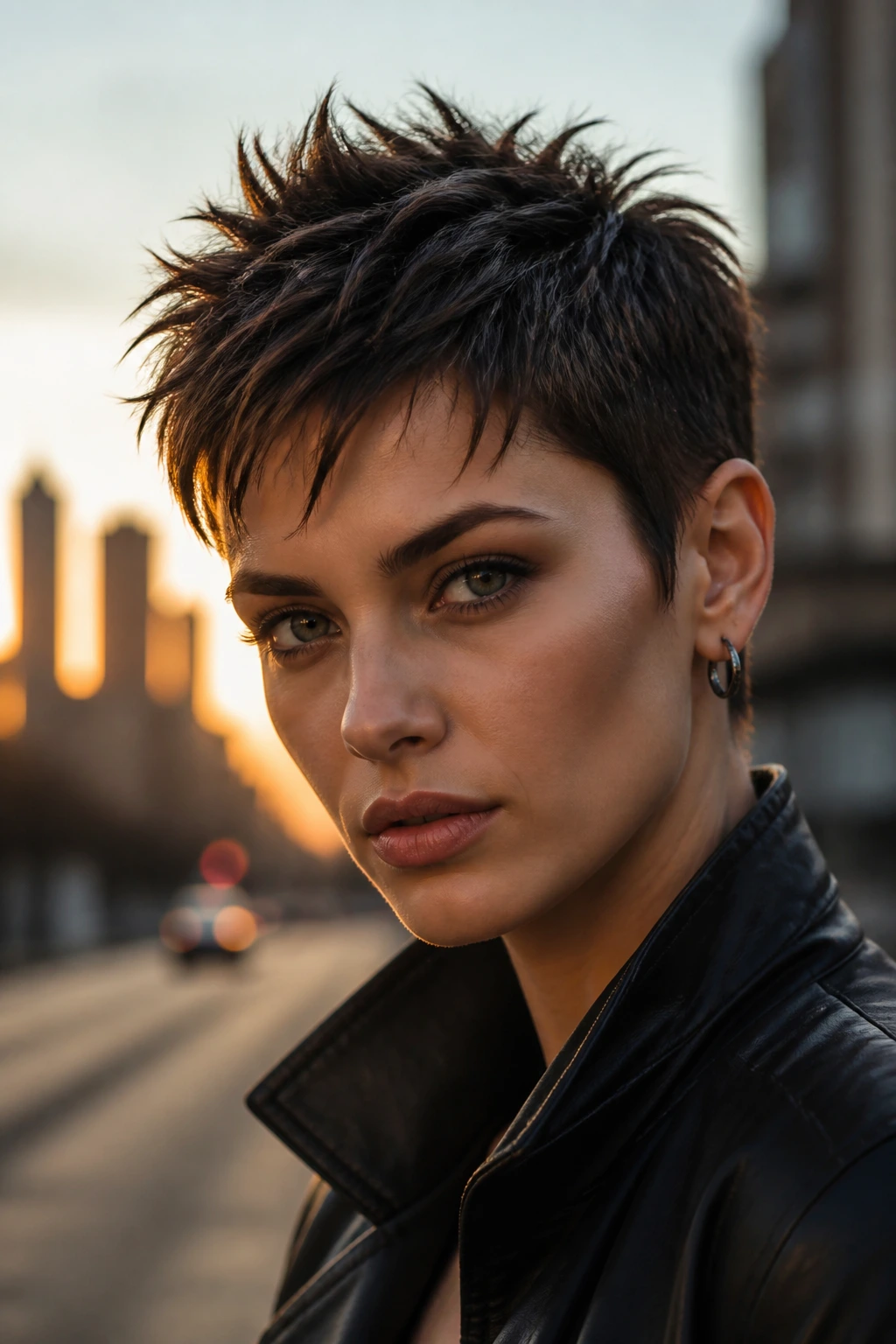
Some pixies want polish. This one wants attitude. The top is cut into short, separated pieces that can be pushed upward or forward, and the finish is matte rather than shiny.
This works best on straight or slightly wavy hair that can hold direction. Use a small amount of fiber paste and pinch the ends into place instead of smoothing everything down. If the sides are kept tight, the spikes on top feel sharp without turning cartoonish.
33. Long-Crown Pixie With Tapered Temples
The crown stays longer, the temples get narrower, and the silhouette ends up balanced in a way that flatters a lot of faces. This is one of the easiest pixies to wear if you want shape without a lot of drama.
It’s especially useful if you’re moving from longer hair and want some of that familiar weight on top. The long crown gives you styling options — forward, side-swept, brushed back — while the tapered temples keep the sides neat. If I had to pick one cut for someone who wants choices without daily fuss, this would be high on the list.
Why Long Hair Changes the Pixie Equation
Long hair brings weight, and weight changes everything. A pixie on fine, shoulder-length hair behaves differently from a pixie on dense hair that used to sit past the collarbone. The longer the hair has been, the more likely it is to have habits: a stubborn part, a crown cowlick, a bend where it was always tied up. A good cut works with those habits instead of pretending they don’t exist.
That’s why the best pixies are built in sections. The nape can be clipped close, the crown can stay longer, and the fringe can be cut for movement rather than one locked position. If your hair is thick, internal layering matters more than people think; if it’s fine, too much thinning can leave the ends wispy and weak. The shape has to respect the weight you’re carrying.
There’s also the emotional side, which nobody talks about enough. Long hair can feel like armor. A pixie can feel like a fresh shirt with the tags still on. The cuts that work best make the change feel intentional — not like a dare, not like a rash decision, but like a haircut that knows where it wants to sit on your head.
What to Show Your Stylist Before the Shears Come Out
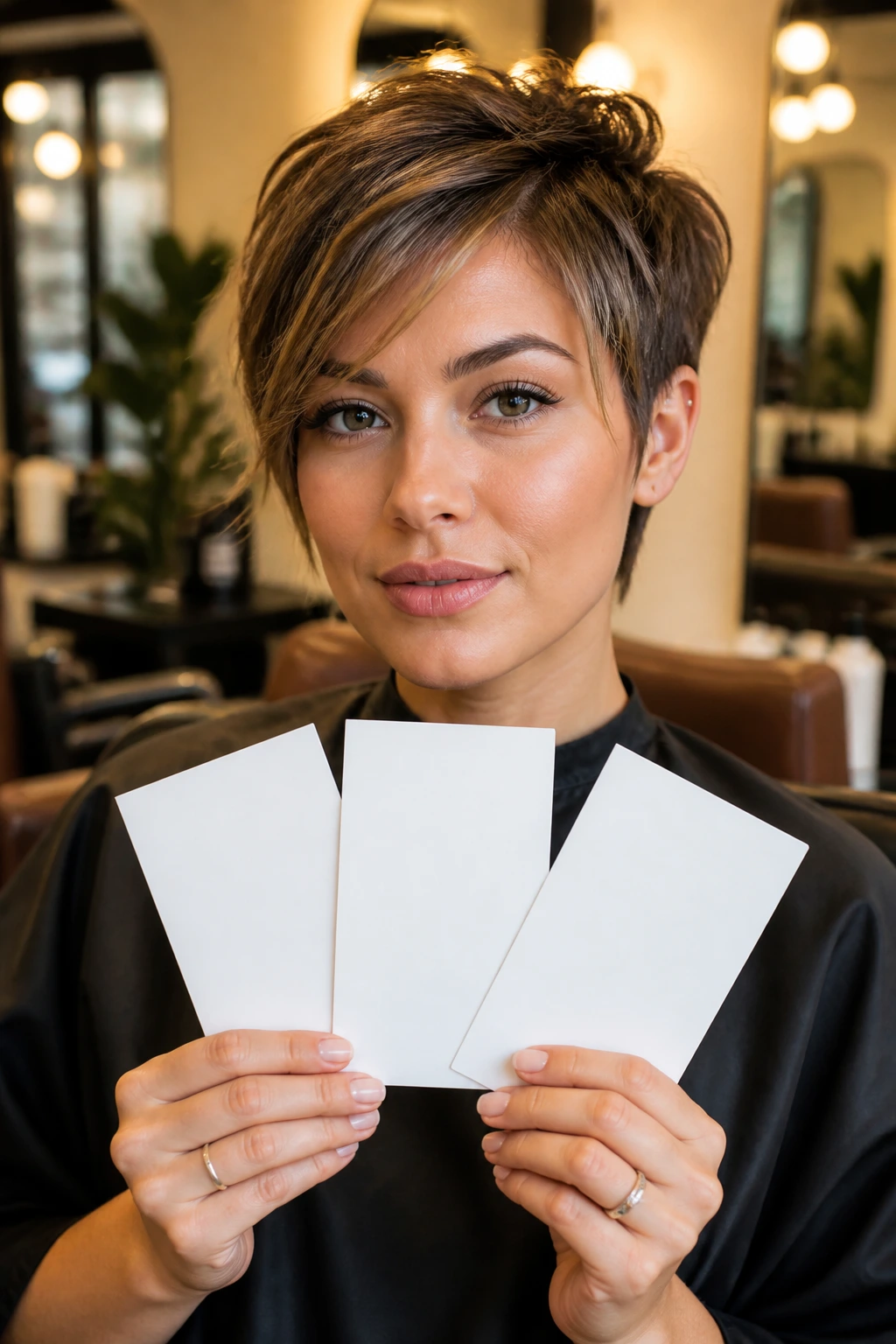
Bring photos, yes, but bring the right kind. One picture from the front is not enough. A good reference set has the front, the side, and if possible the back, because pixies live or die by the nape and temple shape. Say what you like in each photo: the fringe, the taper, the volume, the ear line. Don’t assume the stylist can read your mind from a single saved image.
Then talk in plain shape language. Say whether you want the ears mostly covered, half-exposed, or fully visible. Say if the nape should be tight or soft. Say how much styling you’re willing to do on a weekday morning, because that answer changes everything. A high-maintenance shaggy pixie and a low-maintenance side-part pixie are not cousins; they’re different neighborhoods.
If your hair is dense, ask how much weight needs to come out with internal layering. If your hair is fine, ask them to protect the ends so the cut doesn’t look see-through. If your hair grows fast, say that out loud too. A pixie that looks perfect for two weeks and then turns into a mushroom is not a good result, no matter how cute it was in the chair.
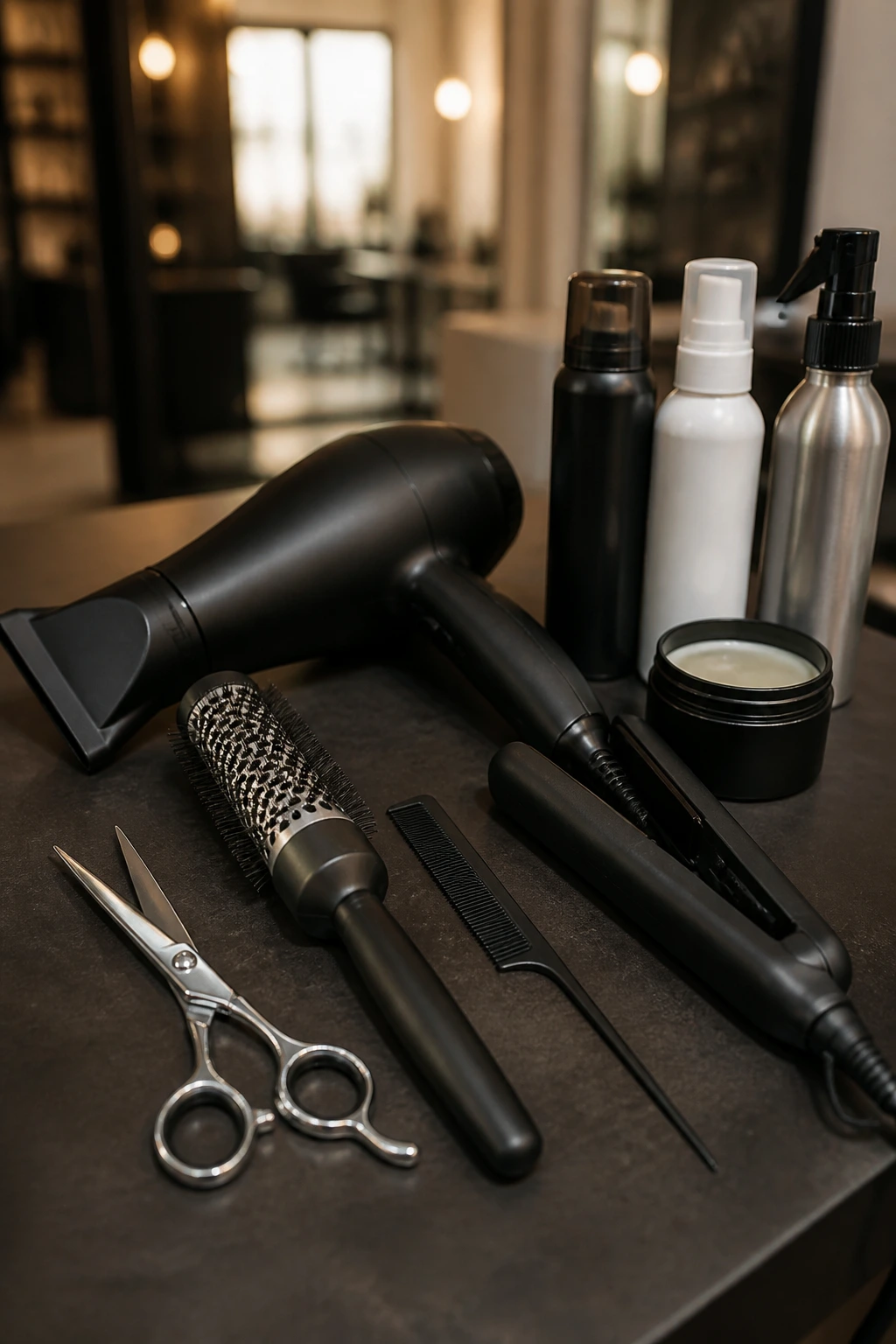
Essential Tools for Styling and Cleanup
-
Sharp hair shears: Blunt scissors chew the ends; sharp shears give cleaner lines and a better grow-out.
-
Small round brush: Useful for lifting the crown and bending the fringe without making it puffy.
-
Blow dryer with a nozzle: The nozzle aims airflow where you want it, which matters on short hair more than people expect.
-
Tail comb: Helps create a clean side part and lift the roots at the crown.
-
Matte paste or fiber cream: Best for piecey, textured pixies that need separation without shine.
-
Lightweight mousse or root spray: Gives body to fine hair without coating it in heavy product.
-
Texture spray: Handy for shaggy, bedhead, or razored cuts that need grip.
-
Small flat iron: Optional, but useful for taming a fringe or smoothing a stubborn kink near the hairline.
-
Clips: Sectioning clips make crown work and fringe work much easier than trying to wing it with one hand.
-
Hand mirror: Helpful for checking the nape and sideburns so the back doesn’t drift into weird territory between trims.
How to Ask for the Right Shape at the Salon
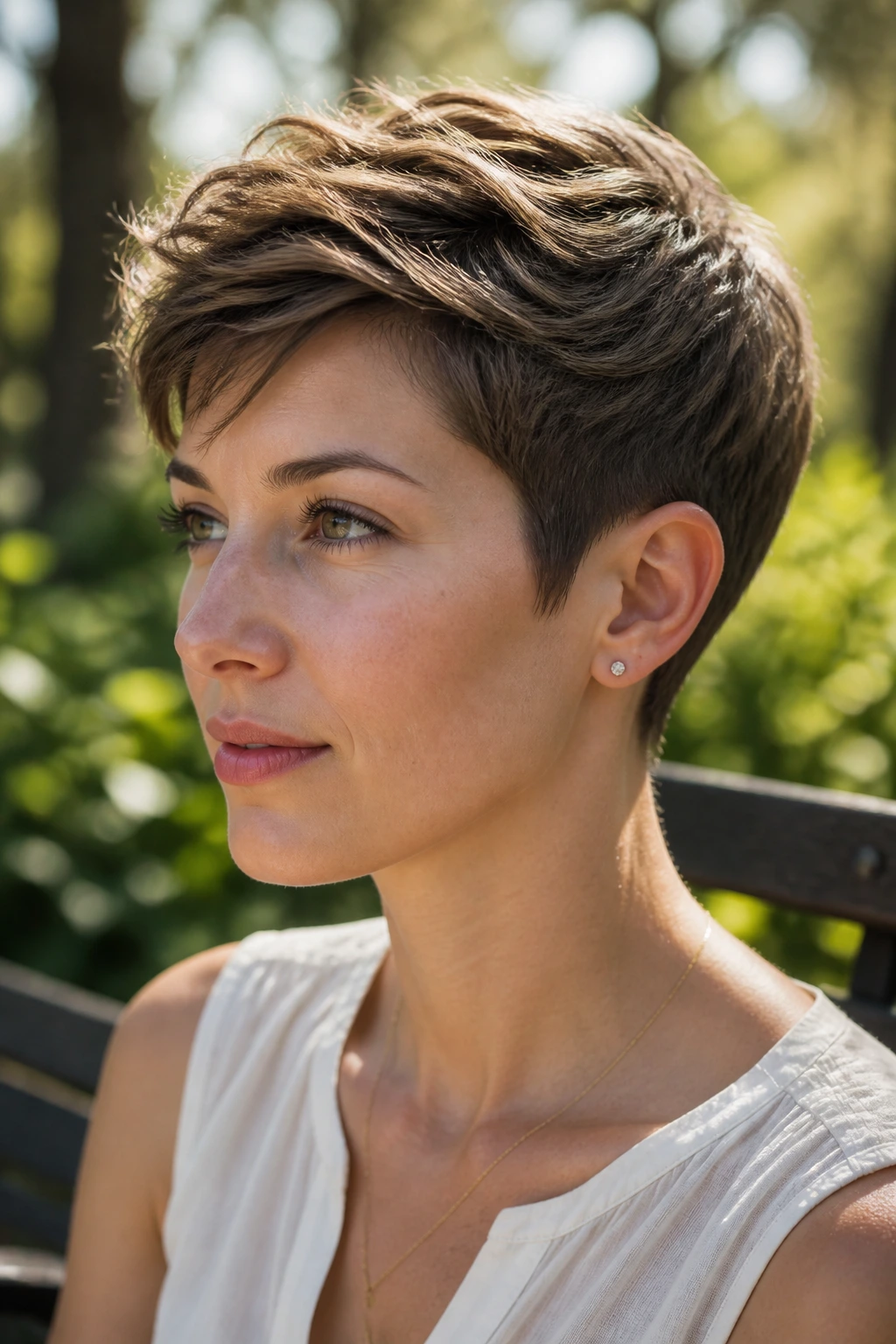
Tell the stylist the shape you want, not just the name of the cut. “Pixie” is a broad word. One person hears a neat, side-parted crop. Another hears a razored, spiky top with shaved sides. Say which parts should stay longer: the fringe, the crown, the sideburns, or the nape. That tells the person in the chair more than the label ever will.
Bring a maintenance schedule into the conversation. If you want to see the stylist every four weeks, they can cut sharper and shorter. If you’d rather stretch visits to six or eight weeks, ask for softer edges and a little more length at the temples and back. That small choice changes the haircut from a sprint to a jog.
Also, talk about your morning routine. If you hate heat styling, say so. If you’re happy with a blow dryer but won’t use a flat iron, say that too. A pixie cut that matches your actual habits will look better on day twelve than a fussy cut that only works in salon lighting.
The 5-Minute Routine That Keeps the Shape Visible
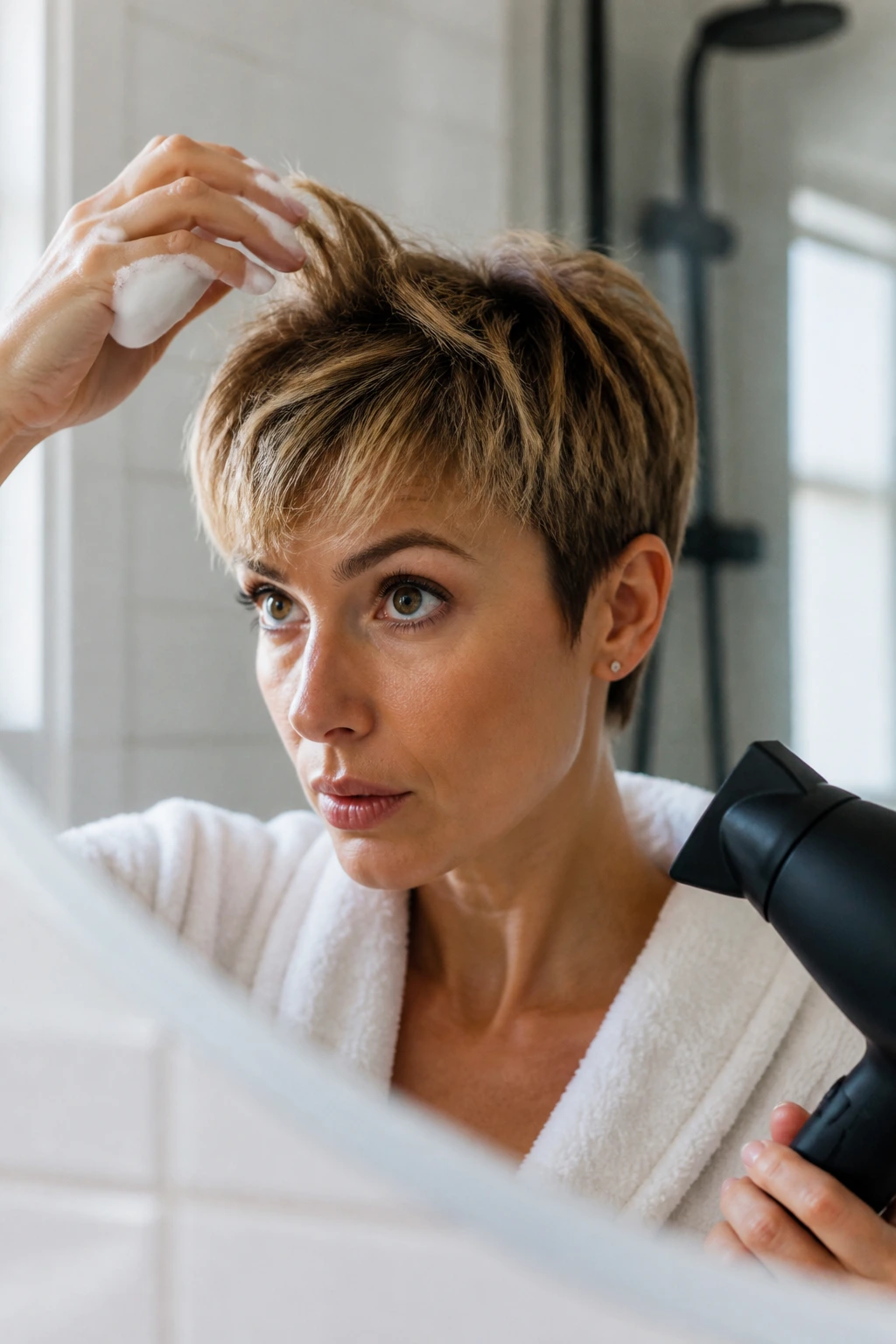
Start on damp hair, not dripping wet hair. Squeeze out extra water with a towel, then use a small amount of mousse or root spray at the crown and the front hairline. Short hair dries fast, so you don’t need much product to get lift. Too much only makes the top collapse into a heavy strip.
Blow-dry the direction you want the hair to live. If the fringe goes left, aim the nozzle left. If the crown needs lift, use your fingers or a small brush to pull the roots up for the first minute or two. That’s where the shape lives. Once the root is dry, the rest of the styling usually behaves.
Finish with paste, cream, or a touch of shine product depending on the cut. Piecey styles like matte texture. Sleeker cuts want a little gloss. Curly pixies usually need leave-in and curl cream more than anything else. And if the cut starts to flatten by afternoon, wet your hands, wake up the roots, and move on. Short hair responds fast.
Maintenance and Grow-Out Timing
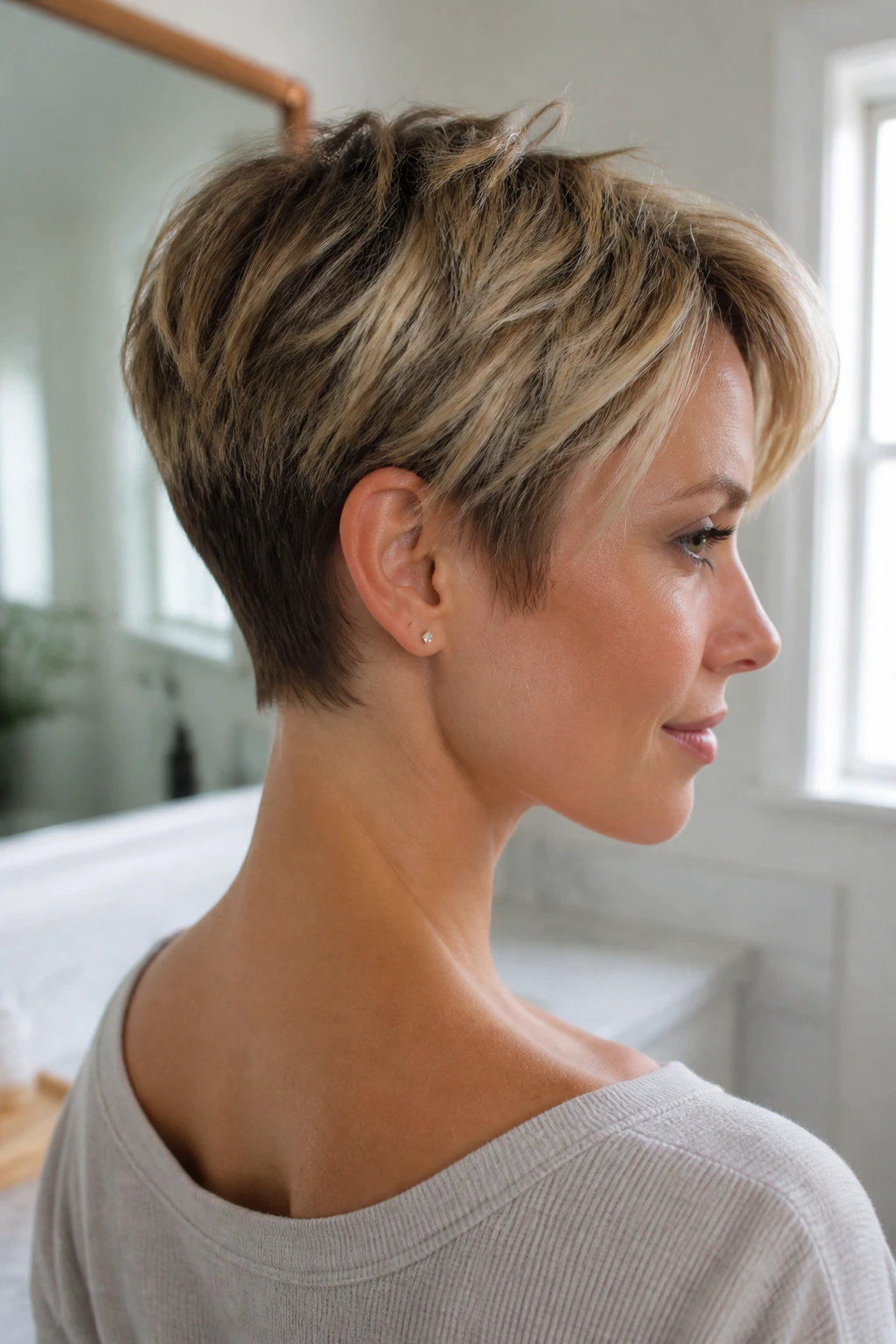
A crisp pixie usually needs a trim every four to five weeks if you want it to keep its outline. Softer versions can stretch to six or even eight weeks, but the nape and sideburns will tell on you first. That’s where the haircut starts to feel fuzzy before the rest of it looks overdue.
If you’re growing the cut out, protect the top length. Ask for small cleanups around the ears and neckline, not full reductions everywhere. That keeps the shape from turning into a blob while the rest catches up. A grow-out that passes through a tidy bob stage is easier to live with than one that all but gives up halfway there.
The awkward phase is real. So is the fix. A headband, a couple of bobby pins, and a side part can carry you through the period when the sides hit your cheekbones and refuse to cooperate. Don’t panic and chop again too soon. Most pixies need a little patience before they become a different cut.
Additional Tips and Texture Boosters
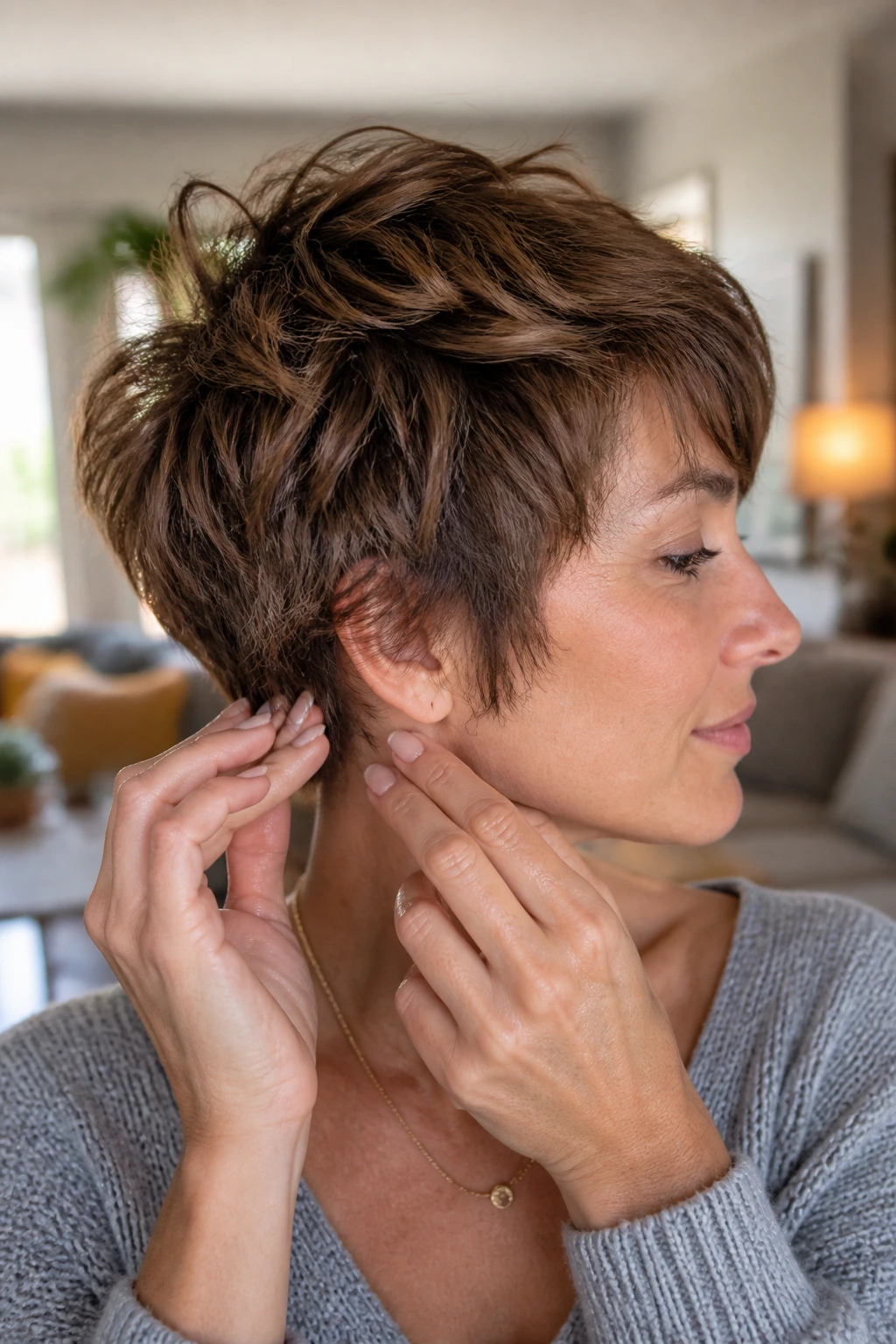
Flavor Enhancement: A drop of styling wax warmed between the palms can tame the ends around the nape and ears without flattening the crown. Use less than you think. Short hair punishes overuse fast.
Customization: Want more softness? Leave the fringe longer and keep the sideburns wispy. Want more edge? Tighten the temples and ask for stronger separation through the top. One haircut can lean five directions if the length is placed well.
Serving Suggestions: Small hoops, bold earrings, or a clean eyebrow shape can make a pixie feel finished without extra hair work. If the cut is simple, let the accessories do some of the talking. That’s not cheating.
Make-It-Yours: For a gentler look, brush the front diagonally and keep the sides rounded. For a sharper look, use a side part and push the crown back. For a low-effort routine, choose a cut that looks fine when you tuck one side behind your ear and walk out the door.
Common Mistakes to Avoid
-
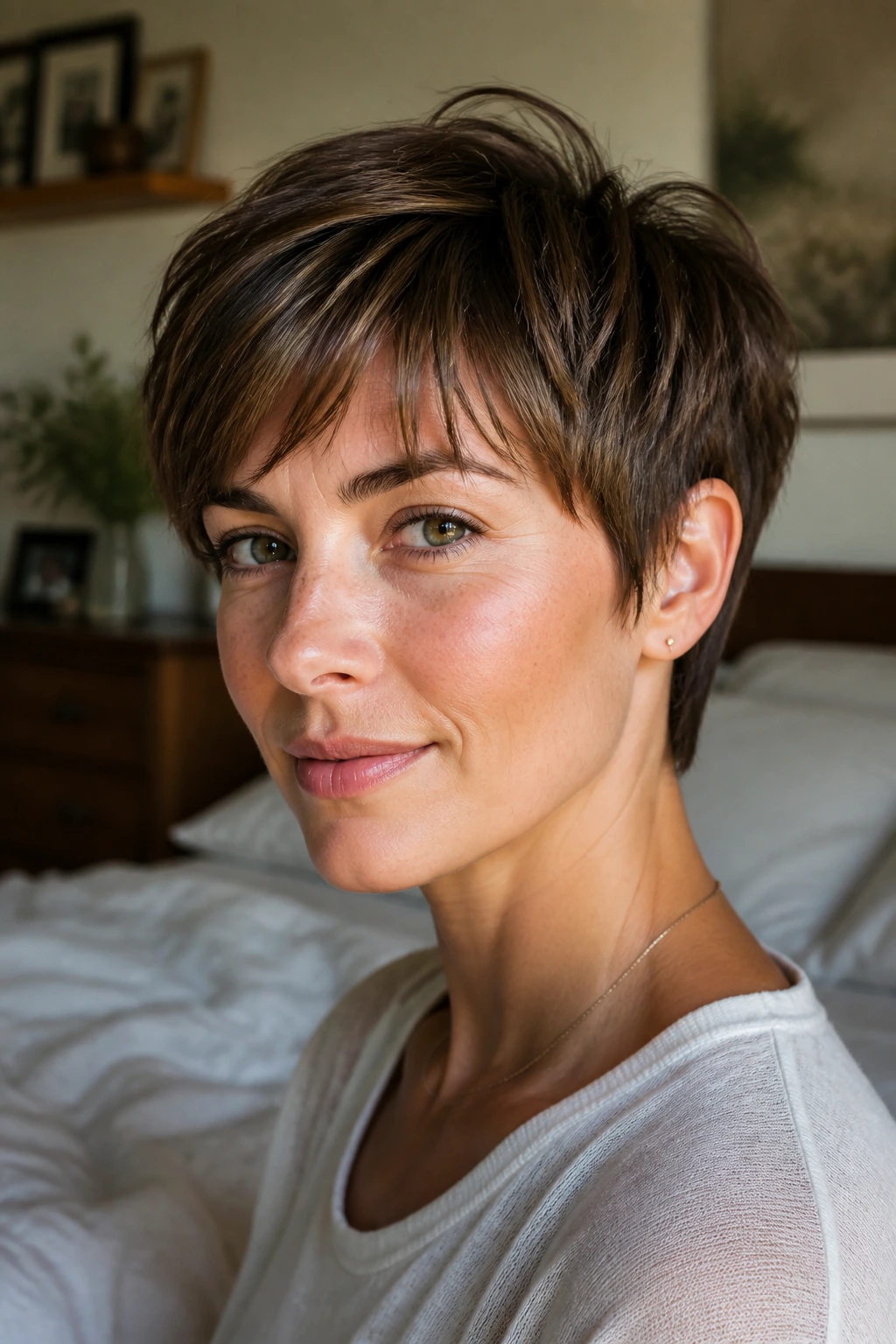
Going too short at the nape on the first pass: The back can end up looking exposed before you’re ready for it. Leave a little more length there if this is your first short cut.
-
Cutting the top and sides to the same length: A pixie needs contrast. If everything is one length, the shape turns boxy and loses the lift that makes it feel modern.
-
Over-thinning thick hair: Too much texturizing can leave the cut frizzy at the ends and patchy near the crown. Remove bulk with intention, not enthusiasm.
-
Ignoring your cowlicks: A stubborn swirl at the front can kick bangs in odd directions. Cut around it, not against it.
-
Using heavy product on fine hair: Wax and pomade can flatten the crown in minutes. If the hair is fine, start with mousse or spray first.
-
Skipping trims too long: A pixie doesn’t “just grow out gracefully” on its own. The temples and nape need cleanup before the whole silhouette goes fuzzy.
Variations and Adaptations to Try
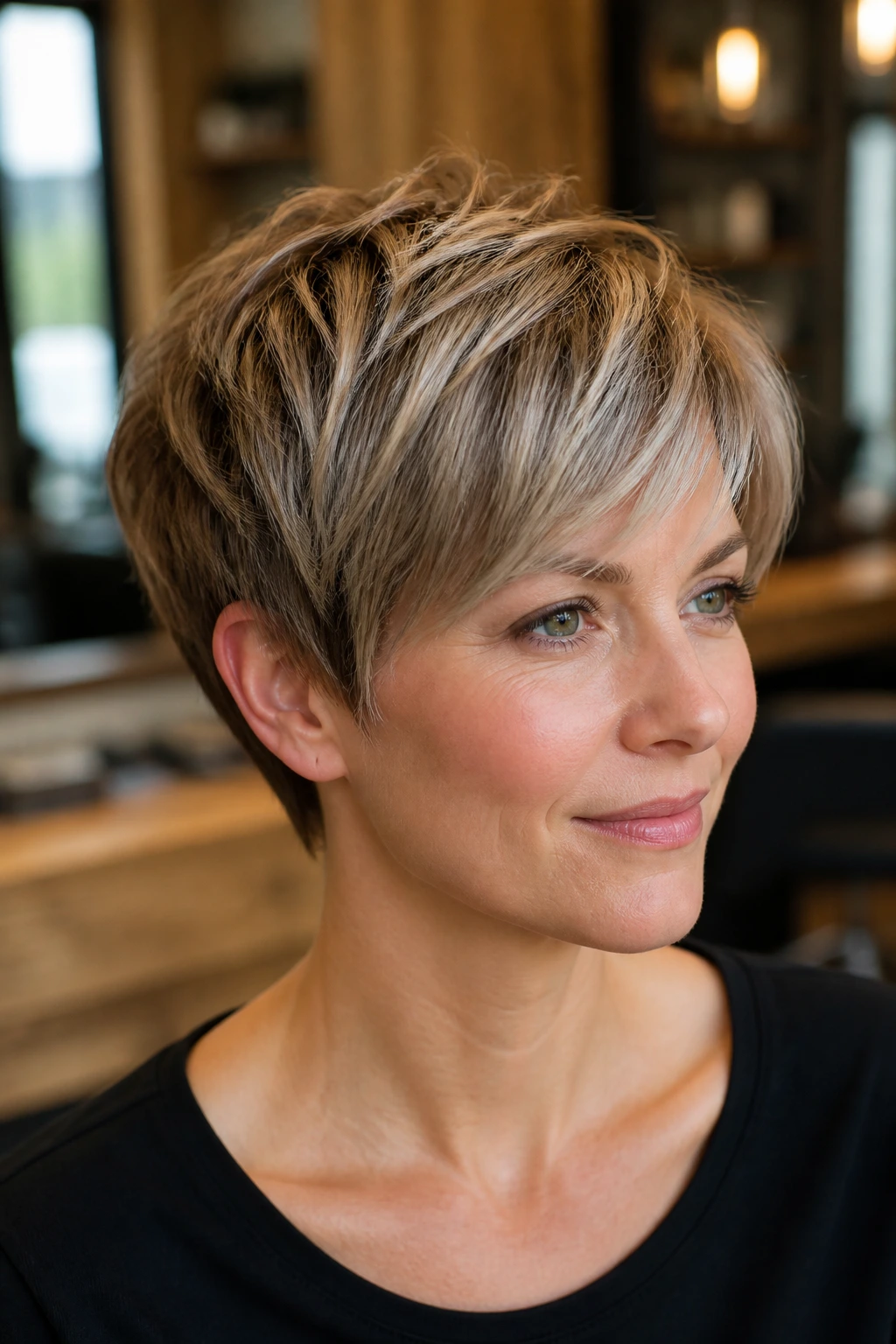
The Fine-Hair Lift Cut: Keep the crown slightly longer, but ask for careful layering that preserves density at the ends. This version depends on root spray and a quick blow-dry, not heavy product. It works because it builds the illusion of fullness without overworking the hair.
The Thick-Hair Debulked Pixie: This one uses undercutting or internal removal of weight so the shape sits close to the head. It’s the smartest choice if your hair tends to mushroom when it gets shorter. The clean-up at the nape matters as much as the top.
The Curly Dry-Cut Version: Curls should be shaped where they live, not forced into a wet guess. A dry or partially dry cut keeps the shrinkage honest and the top rounded. Leave the fringe longer than you think you need.
The Glasses-Friendly Pixie: Open the temples, keep the fringe soft, and avoid too much width at the sides. Glasses already add a frame; the haircut should cooperate with that, not fight it. Wispy pieces around the ear usually help.
The Easy Grow-Out Version: Leave the sideburns and nape softer, with enough length to tuck or pin. This version looks polished at short length, then keeps looking intentional as it moves toward a bob.
Frequently Asked Questions
Can long hair be cut into a pixie without going super short?
Yes. Ask for a longer crown, some fringe to play with, and softness around the temples or sideburns. That gives you a pixie shape without losing every bit of length at once.
What face shapes suit pixie cuts best?
Almost any face shape can wear one if the fringe and side lengths are adjusted well. Round faces often like height at the crown, square faces often do well with softness at the temples, and longer faces usually benefit from fringe or a side sweep.
Will a pixie work if my hair is thick?
It can, and thick hair often takes a pixie very well because it has enough body to hold shape. The trick is reducing bulk in the right places, especially at the nape and around the ears, so the cut doesn’t puff outward.
What if I have curly hair?
Curly hair can look fantastic in a pixie, but the cut should respect shrinkage. Dry shaping or curl-by-curl cutting helps keep the top balanced and keeps the sides from getting too short once the curls spring up.
How often will I need trims?
For a sharp pixie, plan on about every four to five weeks. Softer, more grown-out versions can go longer, but the nape and sideburns usually need cleanup first.
Can I still style a pixie with bangs?
Absolutely. Bangs are one of the easiest ways to make a pixie feel softer or more wearable. Side-swept, curtain, and micro-bang versions all change the mood of the cut without adding bulk.
What if I hate it after the cut?
Pin the front to the side, use a little texture cream, and try a different part before panicking. Tiny shifts in direction can change the whole look. If the nape is too short, that’s harder to fix, which is why a cautious first cut matters.
Is a pixie high maintenance?
The trimming schedule can be, but the daily styling does not have to be. A well-cut pixie with the right texture often takes less time than a long blowout, especially if you pick a shape that works with your hair’s natural movement.
The Short Cut That Keeps Its Shape
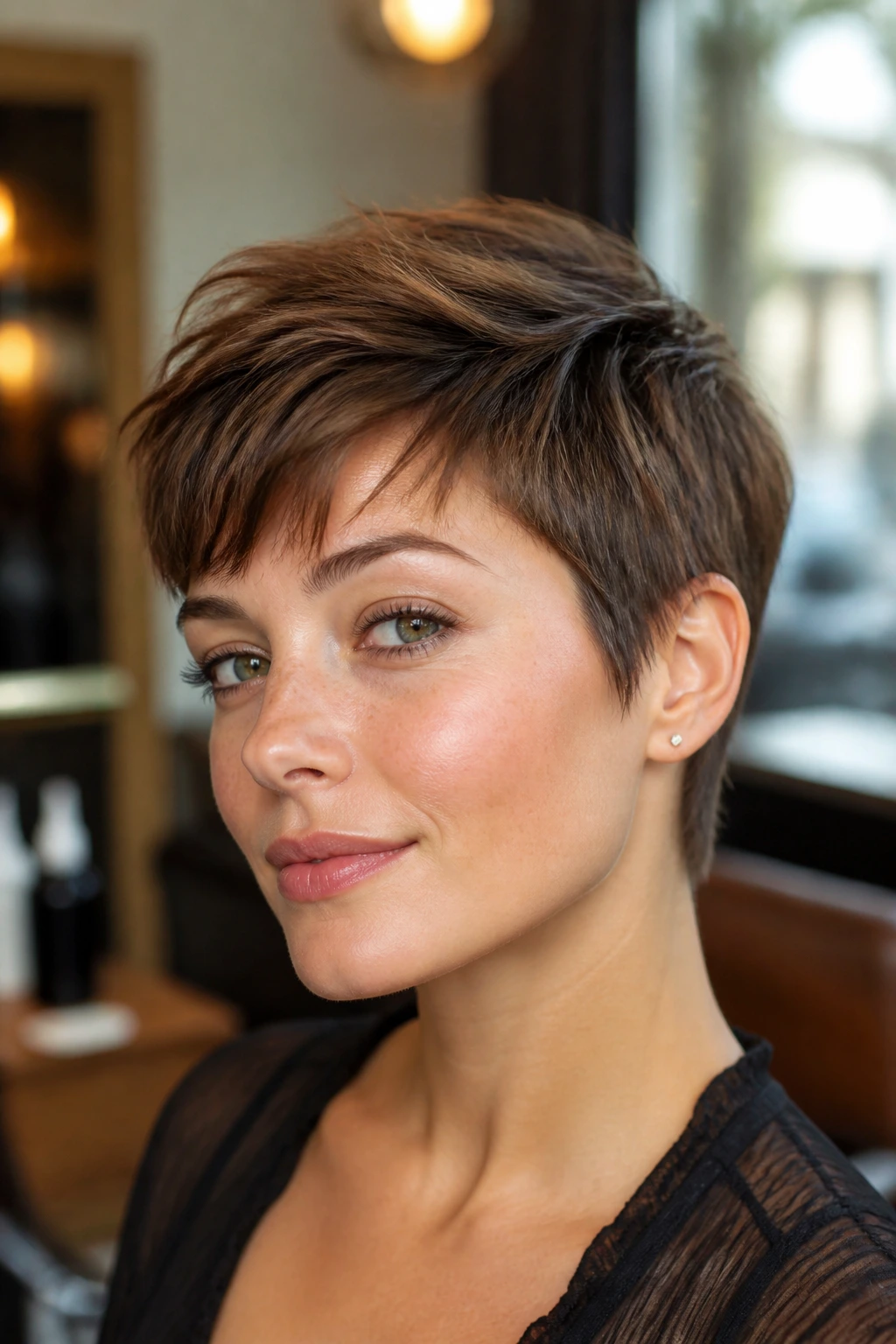
A good pixie cut on long hair does not feel like a loss. It feels like a decision. The best versions keep a trace of length where the eye wants it — around the fringe, through the crown, or soft at the temples — so the haircut still looks like it belongs to your face when you leave the chair.
If you’re choosing among these styles, start with the one that matches your daily habits, not the one that looks the flashiest in a photo. The right pixie is the one you can style on a dull Tuesday morning and still recognize as yours.
