



Thick hair and a pixie cut can be a stunning match when the cut is built for density instead of fought against it. The trouble starts when someone chops long, heavy hair into a short shape without changing the internal structure. Then the sides puff, the crown collapses, and the whole thing can turn into a helmet with opinions.
That’s why pixie cuts for long thick hair need a different kind of thinking. You are not just removing length. You are editing weight, changing balance, and deciding where the eye should land first — at the fringe, the nape, the crown, or the cheekbone. With the right shape, thick hair does something I always love: it holds a line. It keeps a piecey bend, or a strong sweep, or a clean taper, instead of flopping the second the humidity walks into the room.
And yes, long thick hair can go short without losing its personality. The trick is picking the right silhouette, the right amount of interior layering, and the right amount of bravery. Some of these cuts are soft and wearable. Some are sharp enough to make a plain T-shirt look intentional. All of them work because they respect density rather than pretending it isn’t there.
Why These Pixie Cuts Are Worth Considering
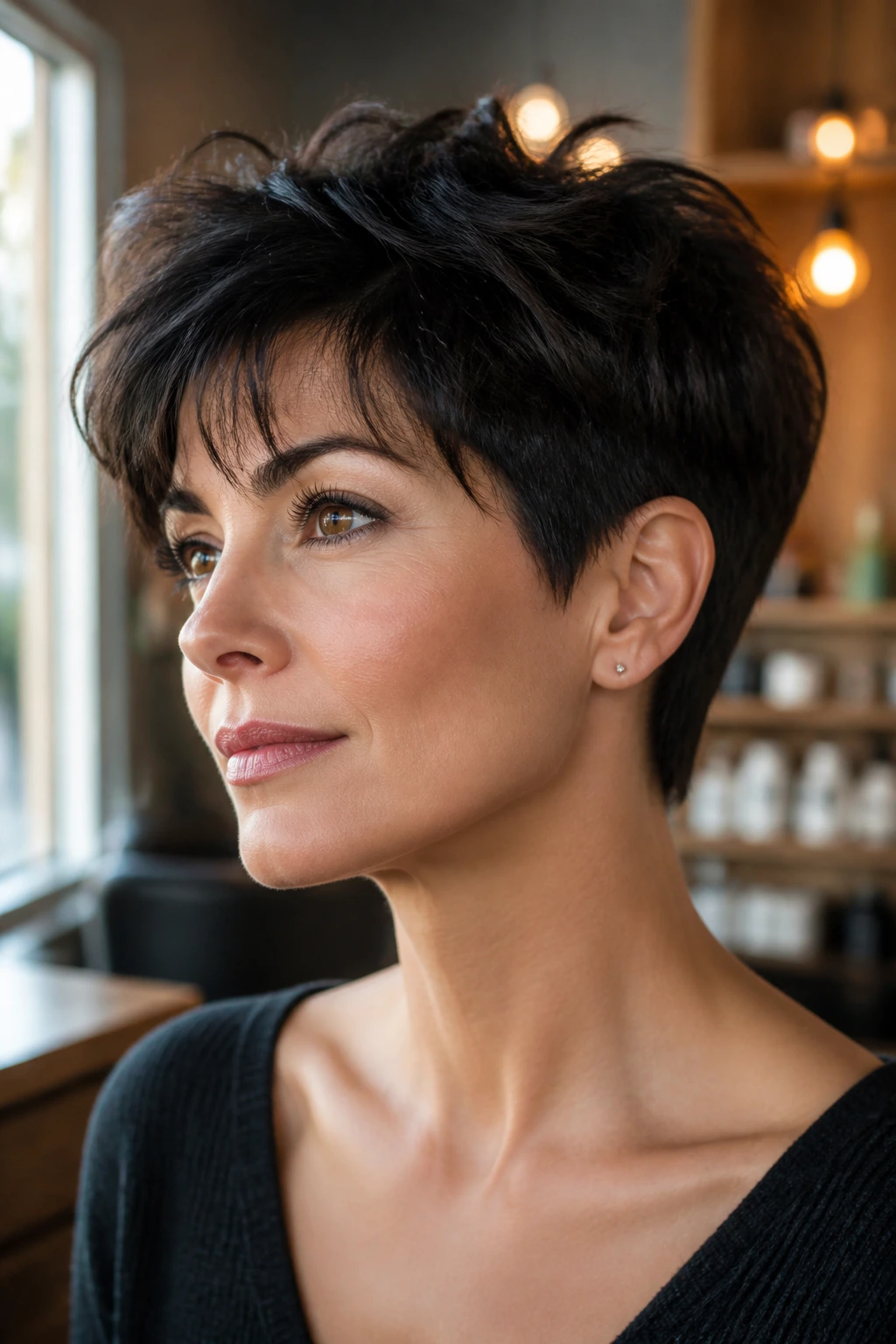
- Bulk moves first: Thick hair needs its weight removed from the inside, not just the outline, or the shape swells at the cheeks and behind the ears.
- Short doesn’t mean flat: A good pixie keeps 2 to 4 inches somewhere on top so the cut still has lift, direction, and a place for styling product to live.
- The nape matters more than people think: When the neckline is tapered cleanly, the whole haircut looks lighter and sharper from the side.
- Texture gets to do the work: Waves and curls often look better in shorter lengths because the movement becomes visible instead of buried.
- Grow-out can be graceful: The strongest pixies on thick hair are built so they can slide into a bixie or short shag without an awkward, boxy middle stage.
- Styling gets faster: Once the shape is right, a blow-dry takes less time because you are working with a compact head of hair, not a cape of it.
1. The Long-Top Pixie That Keeps the Front to 4 Inches
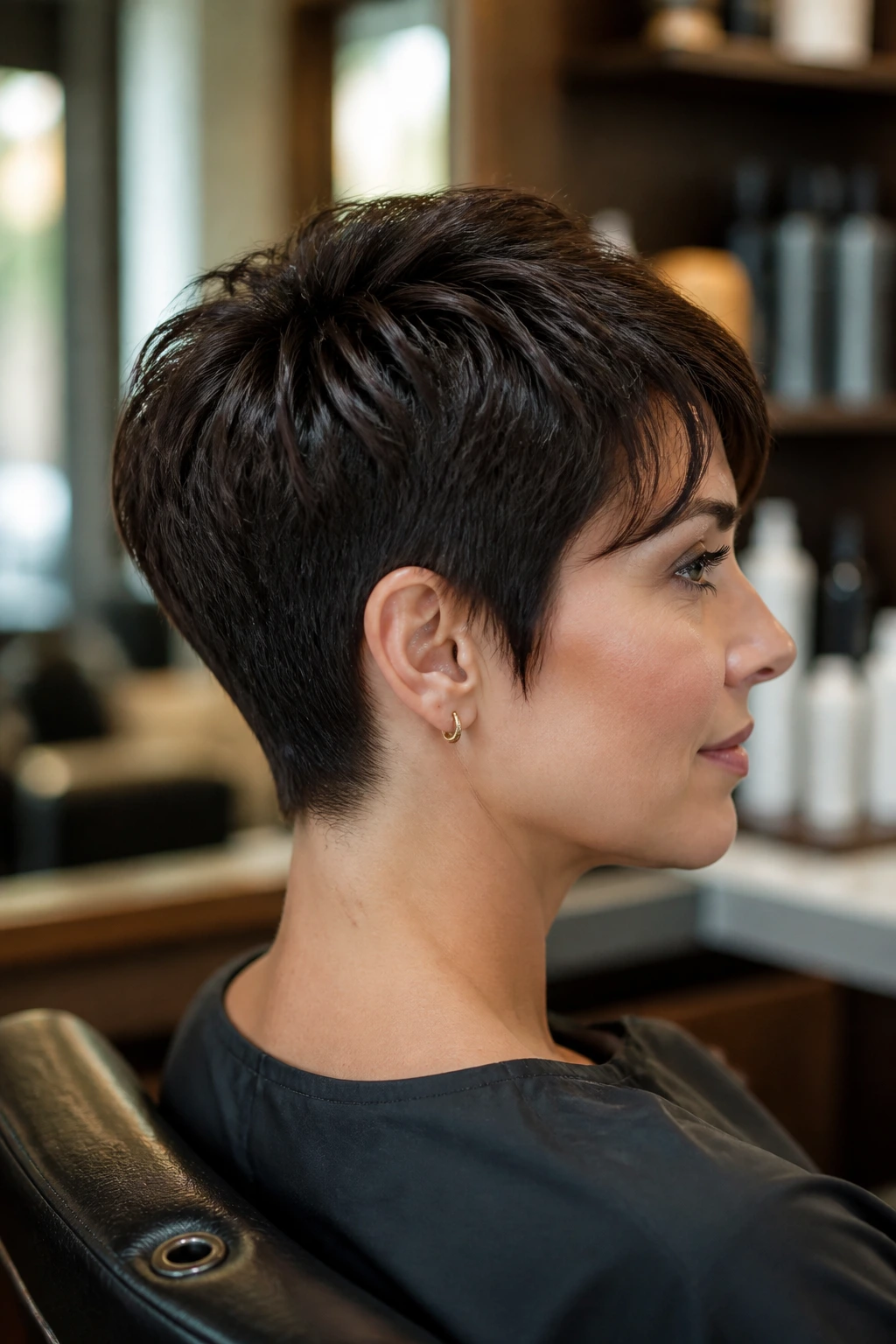
This is the one I reach for when someone wants short hair but is not ready to give up the feeling of hair around the face. The top stays long enough to sweep, bend, or tuck, while the back and sides are cut in much tighter so the bulk has somewhere to go. On thick hair, that contrast matters. Without it, the cut just expands.
Why It Works on Dense Hair
The long top gives thick hair a place to move without building width at the temples. It also keeps the cut flexible; you can wear it forward on tired mornings and lift it back when you want more shape. Ask for 3 to 4 inches through the fringe and crown, with a tapered nape that sits close to the neck.
- Keep the fringe long enough to brush across the brow.
- Leave the top layered lightly, not chopped into crumbs.
- Tighten the sides so the silhouette stays slim.
- Finish with a pea-sized matte paste for separation.
Best for: people who want a first pixie that still feels like hair, not a crop.
2. A Tapered Nape Pixie That Clears the Neck Without Losing Shape
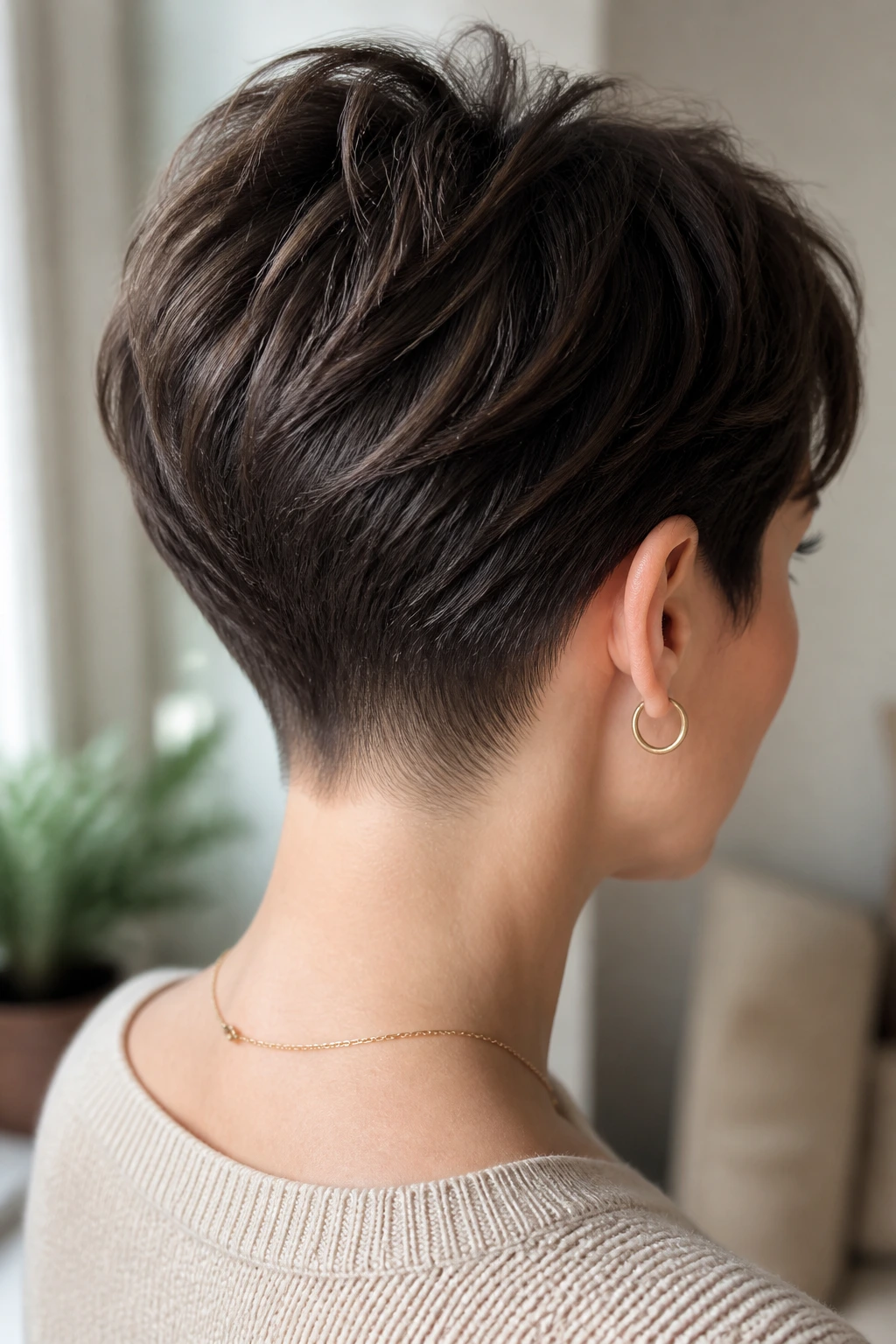
The nape is doing the heavy lifting here. If your thick hair tends to sit like a shelf at the back, a clean taper solves more than one problem at once. It opens the neckline, makes the head look more lifted, and stops the cut from ballooning under sweaters and collars.
Thick hair loves to pile up where it meets the neck. A tapered nape removes that visual weight, but it should never be cut so aggressively that the back looks shaved and the top looks stranded. I like a soft graduation — close at the bottom, slightly fuller just above it — because it gives the style a smoother fall.
This version is especially good if you wear earrings, collared shirts, or glasses. The clean neck gives the face room to breathe. And if you hate the feeling of hair brushing your collar all day, this cut fixes that in one move.
3. Feathered Crown Layers That Lighten a Dense Head of Hair
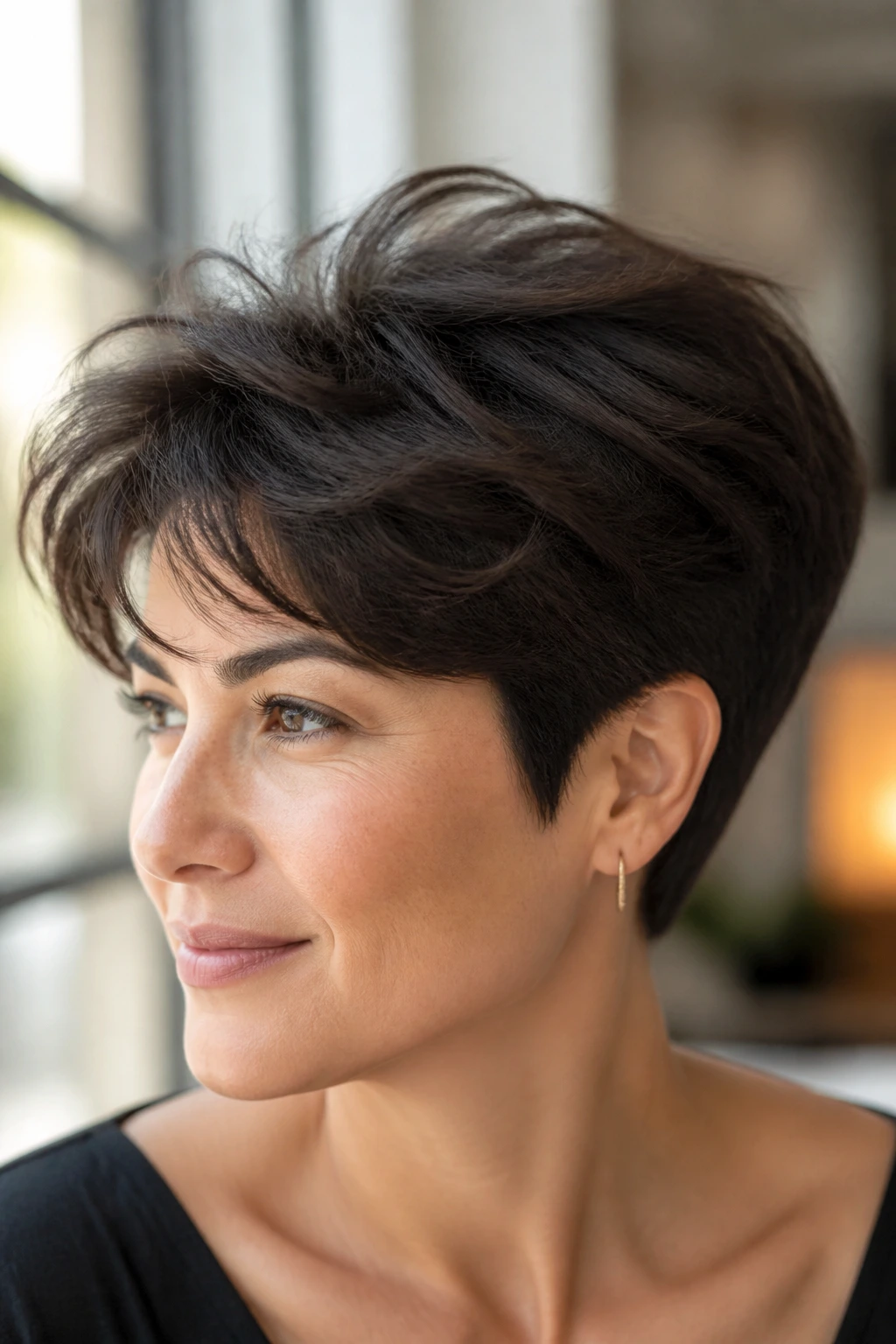
Why do some thick-haired pixies look airy while others look like a mushroom? Usually, the answer is in the crown. Feathered layers remove mass from the interior and break up the vertical bulk that makes short hair puff upward.
What to Ask For
Tell your stylist you want feathering through the crown, not random thinning on the surface. Point cutting or controlled slide cutting works better than hacking out big chunks, because thick hair can turn frizzy fast if the ends are shredded too much.
- Ask for soft crown layers that release weight without exposing gaps.
- Keep the side lengths blended, not blunt.
- Let the top sit a little longer than the crown so it can lie over the head instead of standing away from it.
- Use a light mousse and blow-dry with the nozzle aimed downward.
This one is smart if your hair has a lot of natural body but tends to feel bulky in short shapes. The feathering gives it room to breathe.
4. A Side-Swept Fringe Pixie That Softens Strong Angles
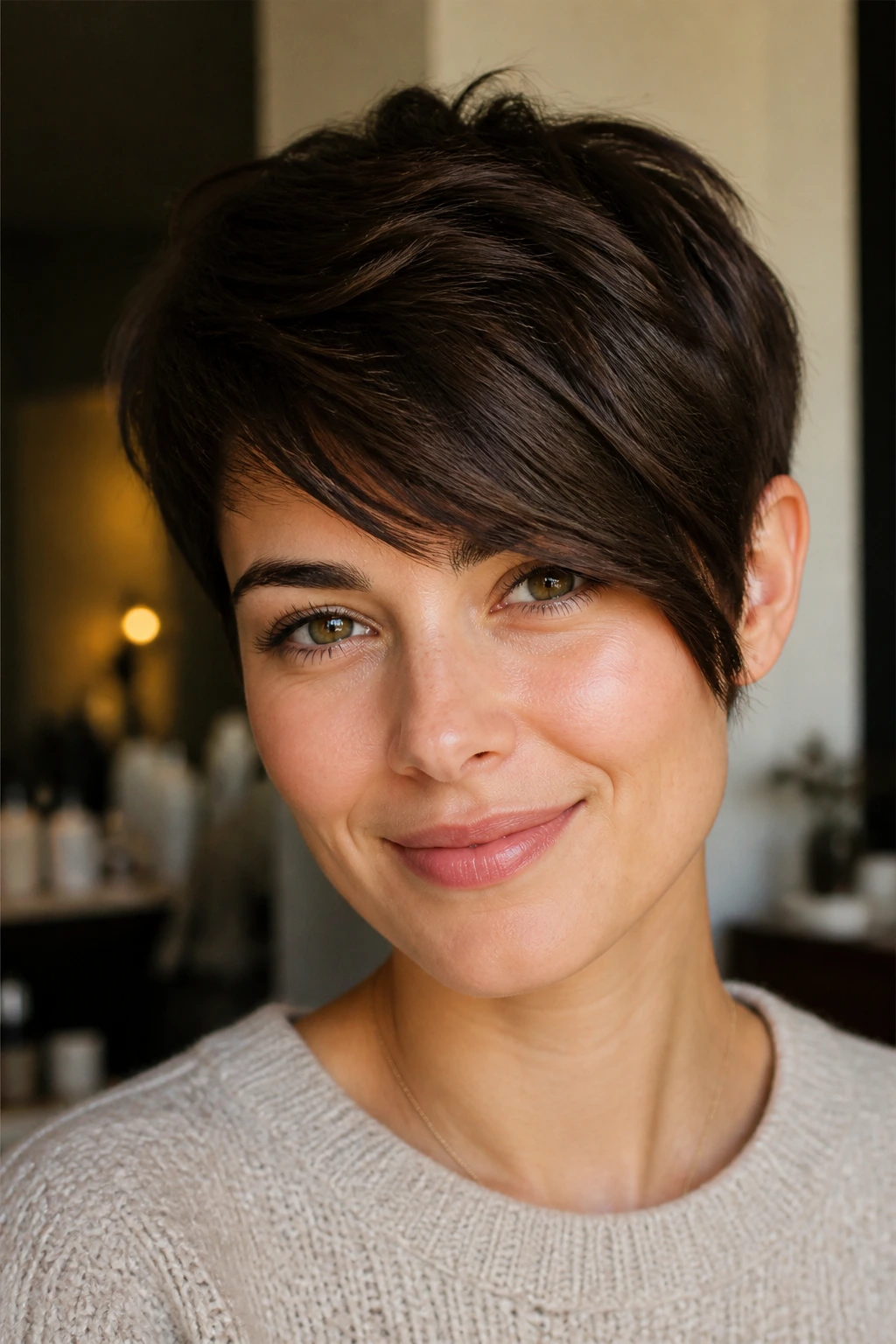
Picture thick hair with a hard part and a blunt front. It can look severe fast. A side-swept fringe changes the whole mood by moving weight diagonally across the face, which softens the forehead, the jawline, and even the widest part of the haircut.
A long diagonal fringe also gives thick hair somewhere to fall when it wants to misbehave. Instead of puffing straight out, the front bends over one eye or skims the cheekbone. That slight slant makes the haircut feel less boxy and more tailored.
If your face is square, heart-shaped, or long, this cut is worth a close look. Keep the fringe long enough to push behind the ear on one side, because thick hair likes options. A little root lift at the part and a satin-finish cream on the ends are usually enough.
5. The Undercut Pixie for Serious Bulk Removal
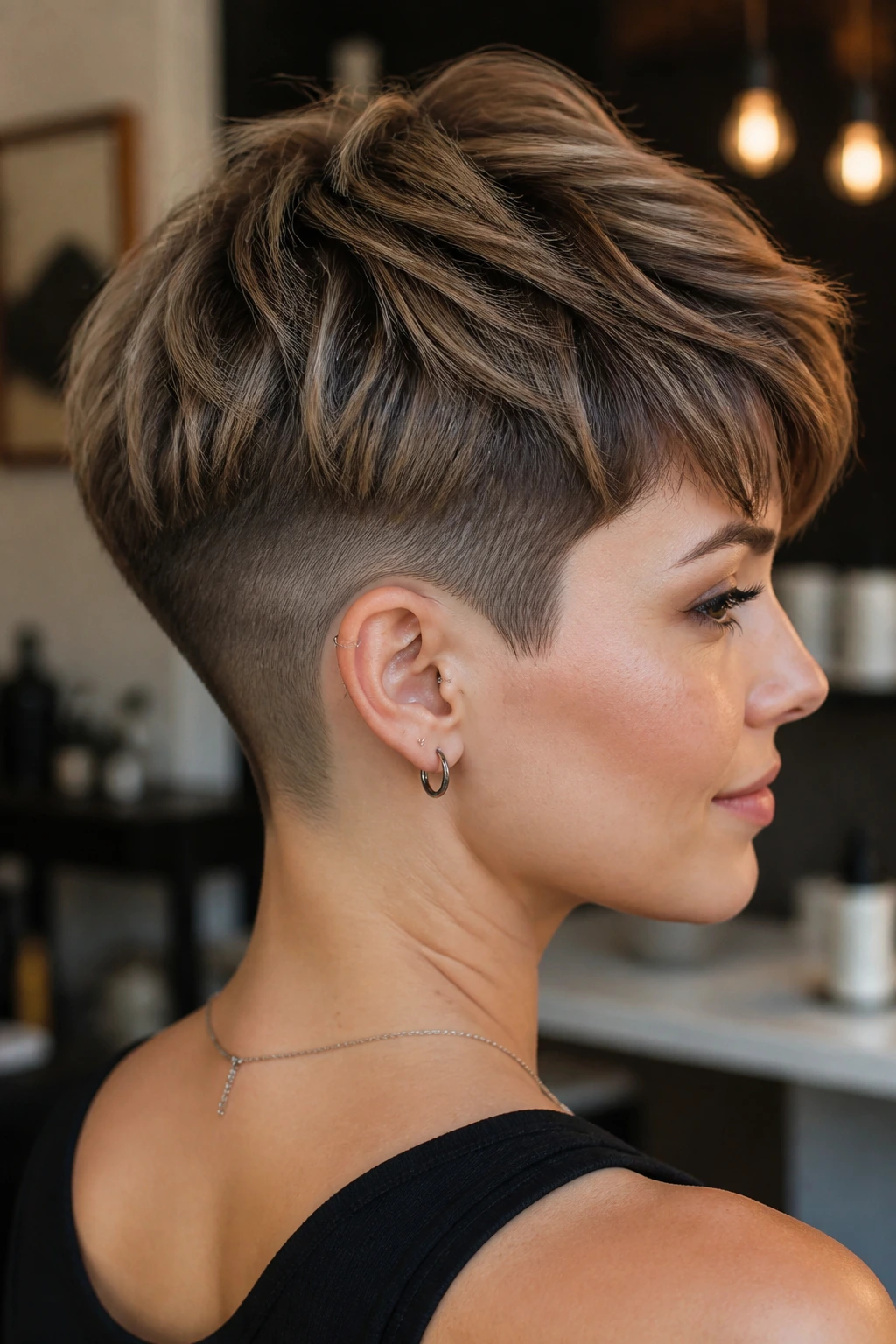
This is the blunt tool in the box. If your hair is dense enough to keep trying to expand no matter what you do, an undercut can be the cleanest answer. Hidden under the top layers, it removes weight from the lower sections so the surface hair can sit flatter and move more easily.
You do not need a dramatic shaved strip to make this work. A concealed undercut at the nape or behind the ears can take out enough bulk to change the entire silhouette. That said, this cut does ask for maintenance. Once the regrowth pushes in, the shape starts to lose that neat, compact look.
I like this version for people who are tired of fighting thickness with product. It gives you a shorter, cooler feel without forcing the entire pixie to go ultra-short.
6. A Shaggy Pixie That Looks Better a Little Undone
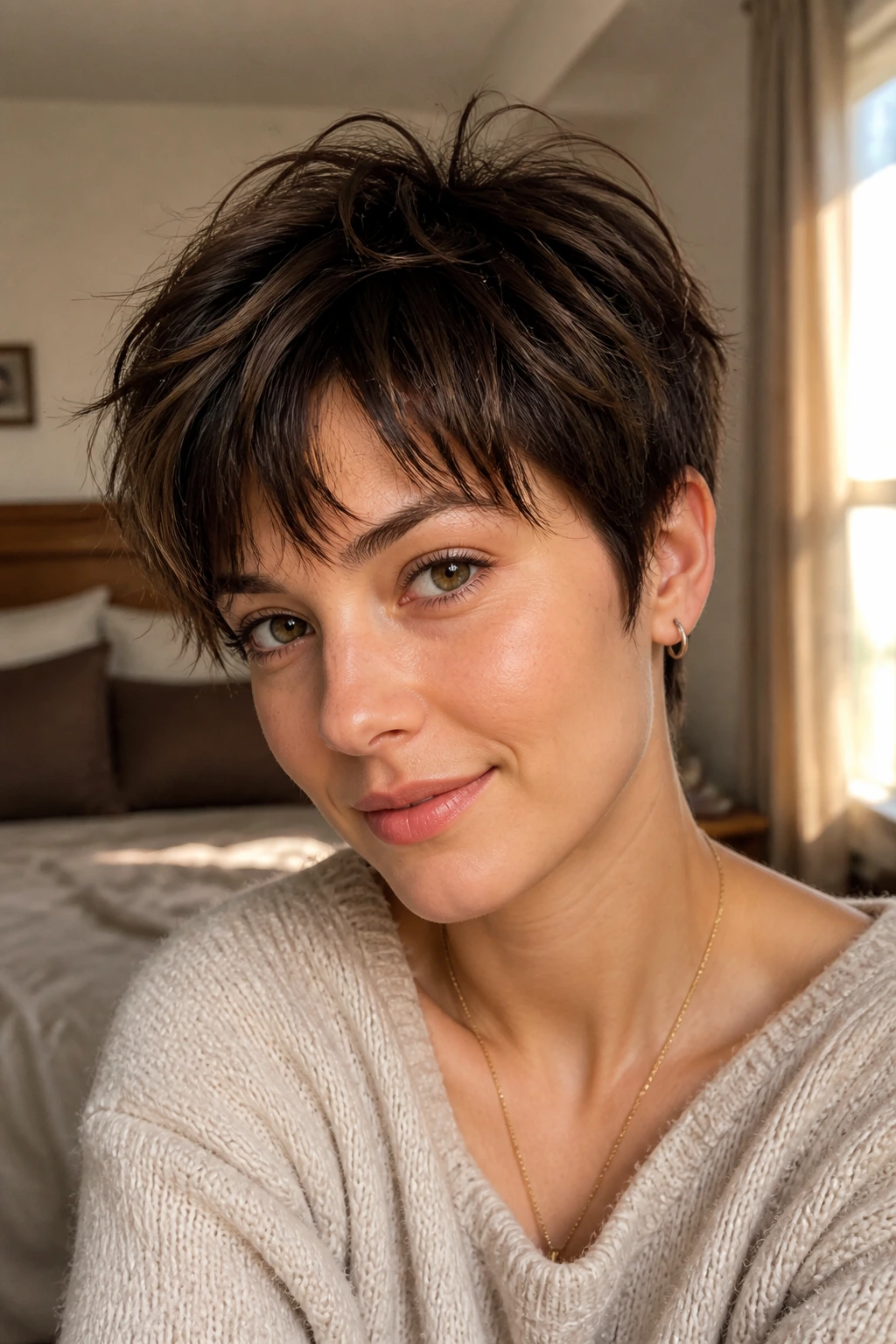
Shaggy pixies and thick hair get along in a way that feels almost unfair. The layers create separation, the ends kick out a little, and the overall shape has enough roughness to stay interesting on day two or day three. If you hate polished hair, this is your lane.
The key is not to over-blend it. Thick hair needs some intentional broken edges so the shape doesn’t turn into one solid block. Ask for short-to-medium layers through the top and crown, with slightly jagged ends at the perimeter. A bit of sea-salt spray or styling cream on damp hair brings out the movement.
This cut works especially well if your hair has wave or a loose curl pattern. It reads relaxed, not messy. And there’s a difference.
7. An Asymmetrical Pixie With One Longer Side
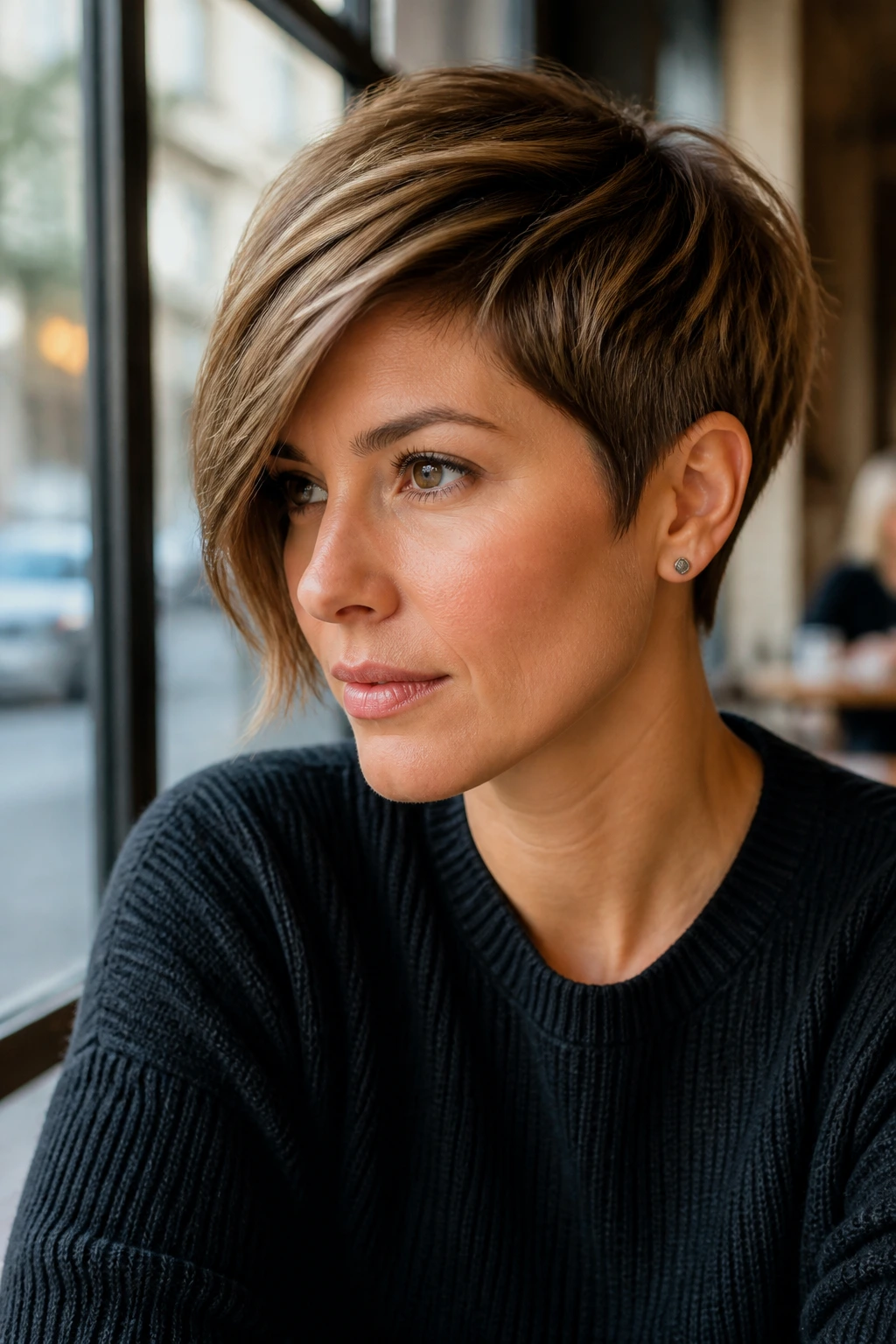
One longer side changes everything. Thick hair can feel heavy when both sides are the same length, but an asymmetrical cut breaks the weight visually and makes the style feel deliberate. The longer side also gives you something to tuck, twist, or sweep forward.
I like this cut when someone wants a little edge without going full undercut. Keep one side close around the ear and leave the other side a little longer — often an inch or so difference is enough to read clearly. The top should bridge the two lengths so the cut feels shaped, not chopped in half.
It’s a good move for round or square faces because the diagonal line pulls the eye across the face. And if you are the kind of person who gets bored with one parting, this style gives you something to play with every morning.
8. The Bixie That Sits Between Pixie and Bob
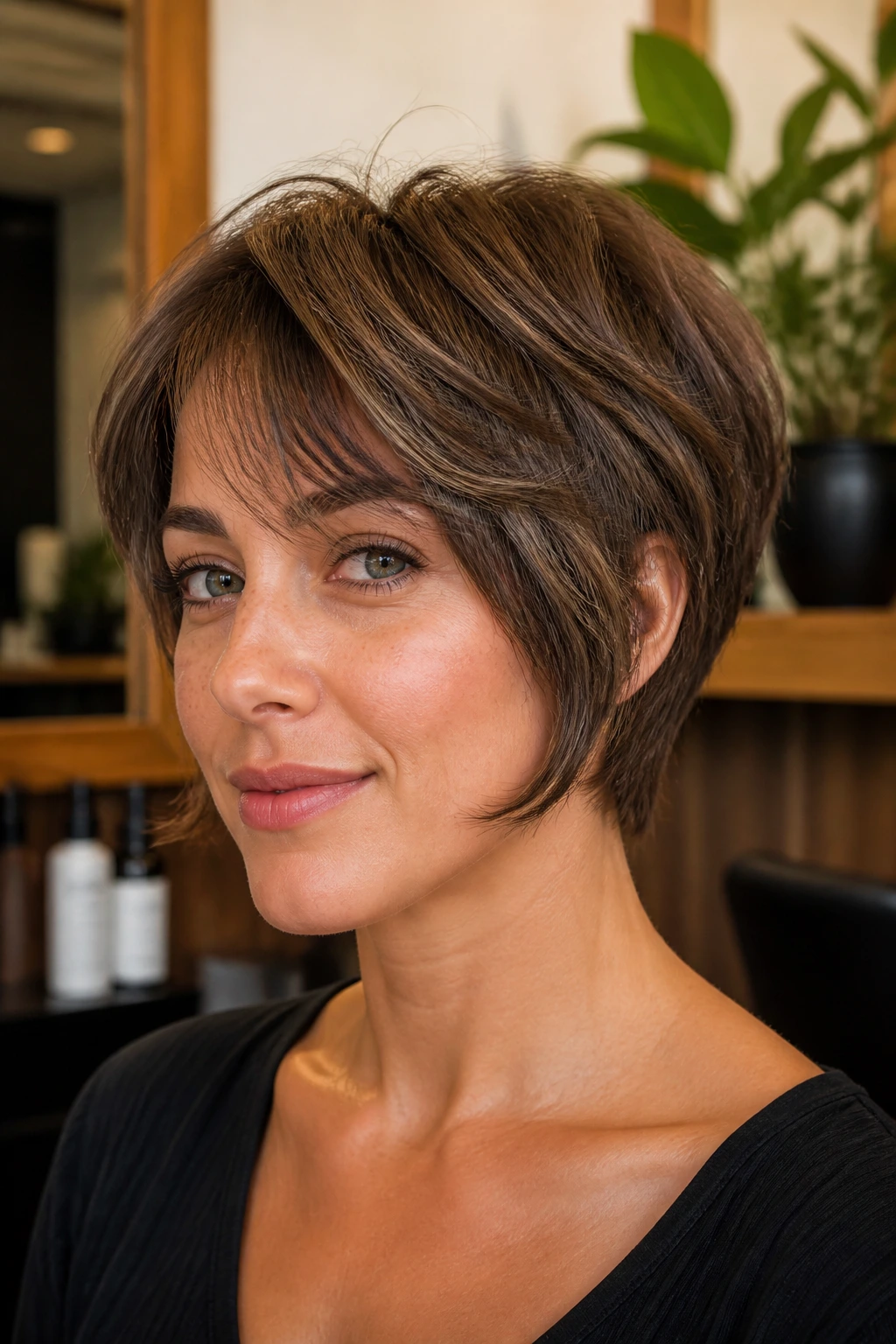
The bixie is the soft landing spot for anyone who wants the ease of short hair without losing the idea of length. On thick hair, it can be a relief, because the extra inches at the front and sides keep the shape from feeling too abrupt. It’s also one of the easiest transitions from shoulder-length hair.
How It Reads on Thick Hair
The front usually brushes the cheek or jaw, while the back sits shorter and tidier. That keeps the silhouette from puffing up at the sides and gives thick strands a better place to fall. Ask for soft layering rather than blunt perimeter lines; sharp edges can make dense hair look wider than you want.
The bixie is a sneaky cut. It lets you live in short hair while still having enough length to tuck behind the ears, bend with a brush, or grow into something else later. That flexibility is the whole point.
9. A Choppy Crop With Razor-Soft Ends
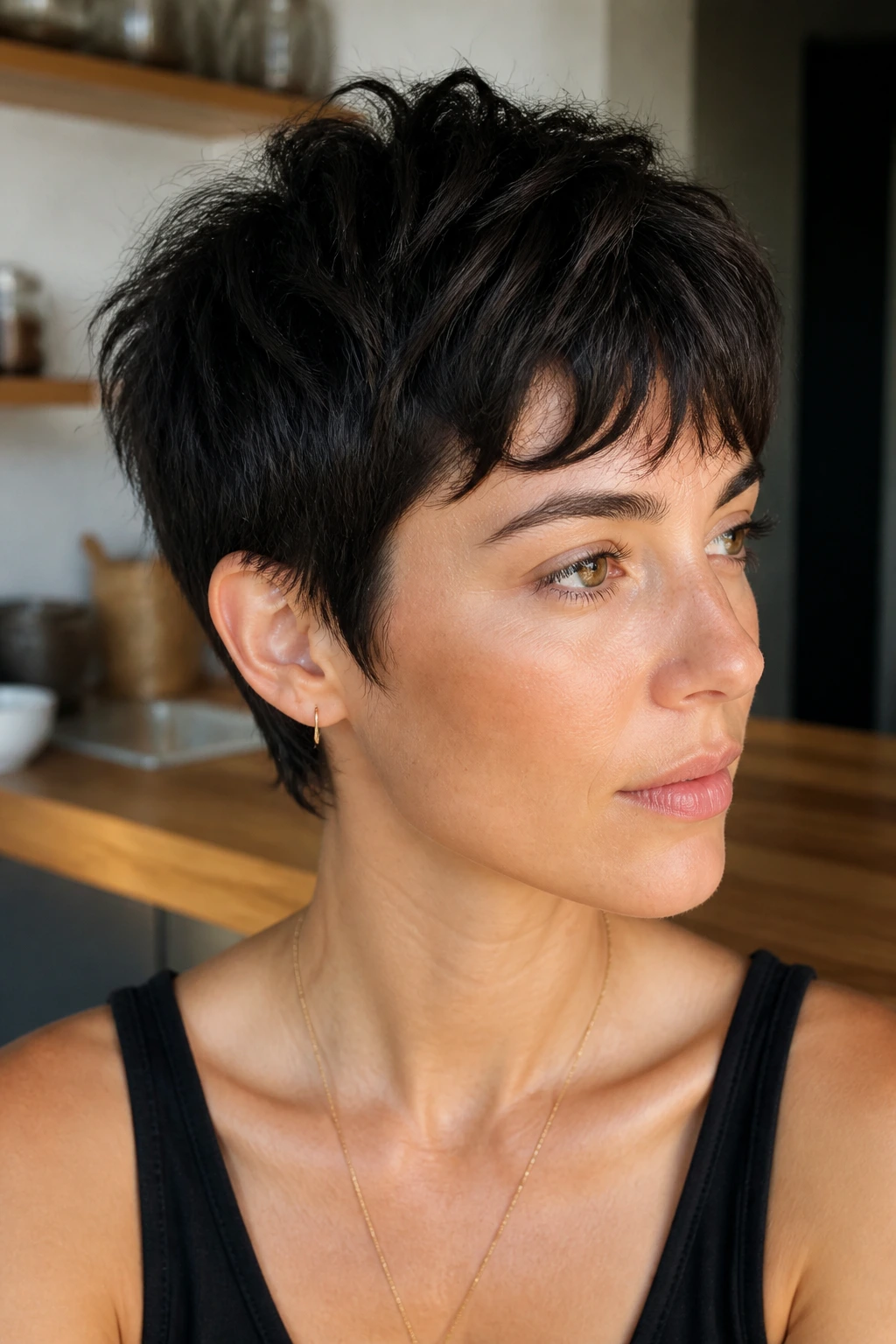
Here’s the thing about thick straight hair: if you cut it blunt and short, it can look like a helmet in a very honest way. A choppy crop avoids that by breaking the ends into pieces, so the shape looks lighter and more lived-in. It’s a good cut when you want short hair with some bite.
The texture matters more than precision here. Ask for point-cut layers and a softly broken fringe, then finish with a matte paste rubbed between your palms and pressed into the ends. Too much shine will make the crop look heavier; dry texture keeps it crisp.
This cut suits people who like hair with some attitude. Not loud. Just a little unapologetic.
10. A Curly Pixie That Keeps the Coil Pattern Intact
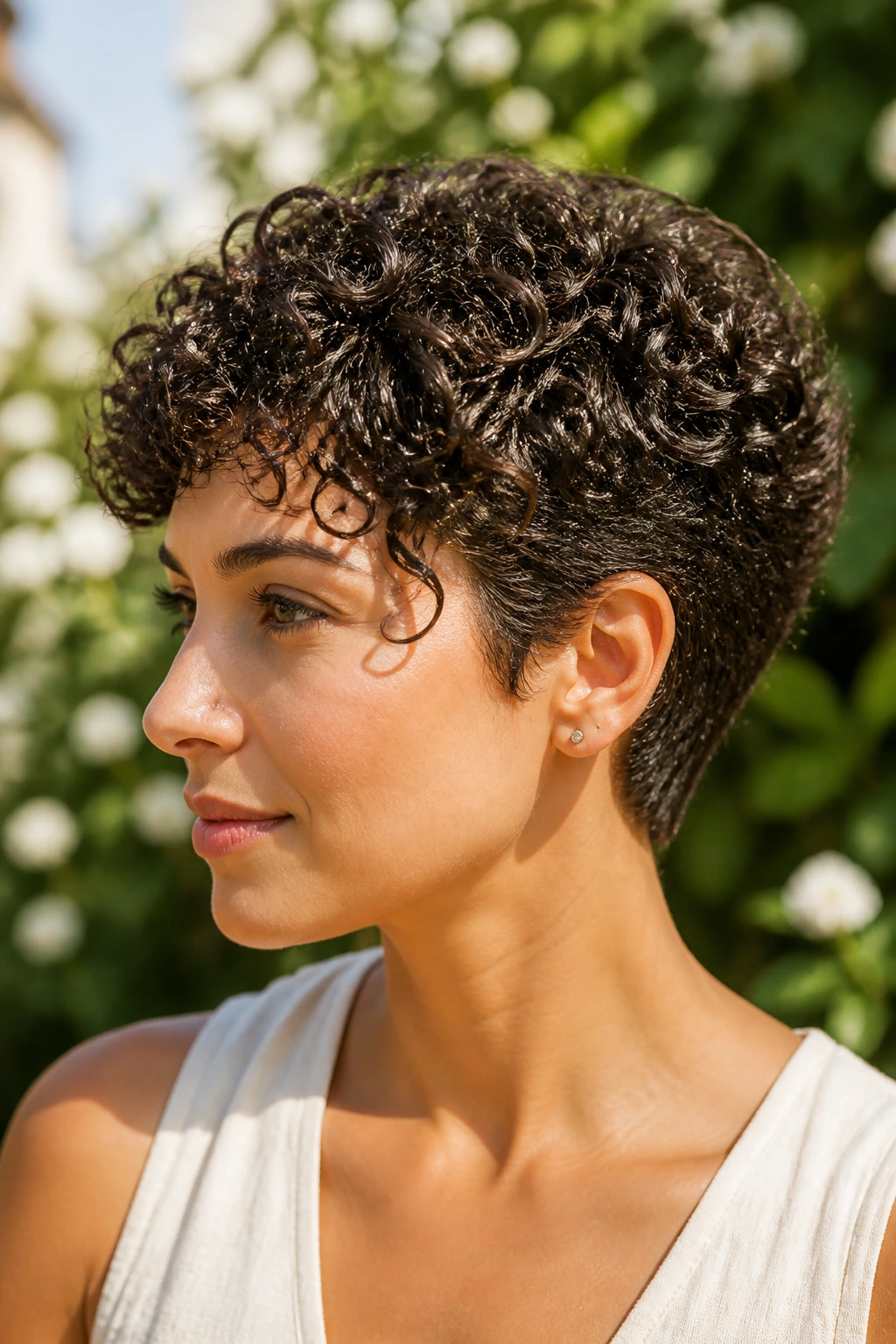
Curly thick hair should not be forced into a straight-haired pixie shape. That’s a fast route to triangle head, frizz, and disappointment. A curly pixie works when the top is left long enough for the curls to spring and the sides are cut shorter so the silhouette stays compact.
The big mistake is over-blending the curl. Curly hair needs pockets of length, not one flat layer that collapses when it dries. Ask for curl-by-curl shaping if your stylist knows how to work that way, or at least dry-cutting around the natural curl pattern so the shape is based on how the hair actually lives.
A small amount of curl cream or gel on soaking-wet hair usually does more than heavy styling products. The goal is to let the curl stack, not crush it.
11. A Wavy Air-Dry Pixie That Never Needs Much Brushing
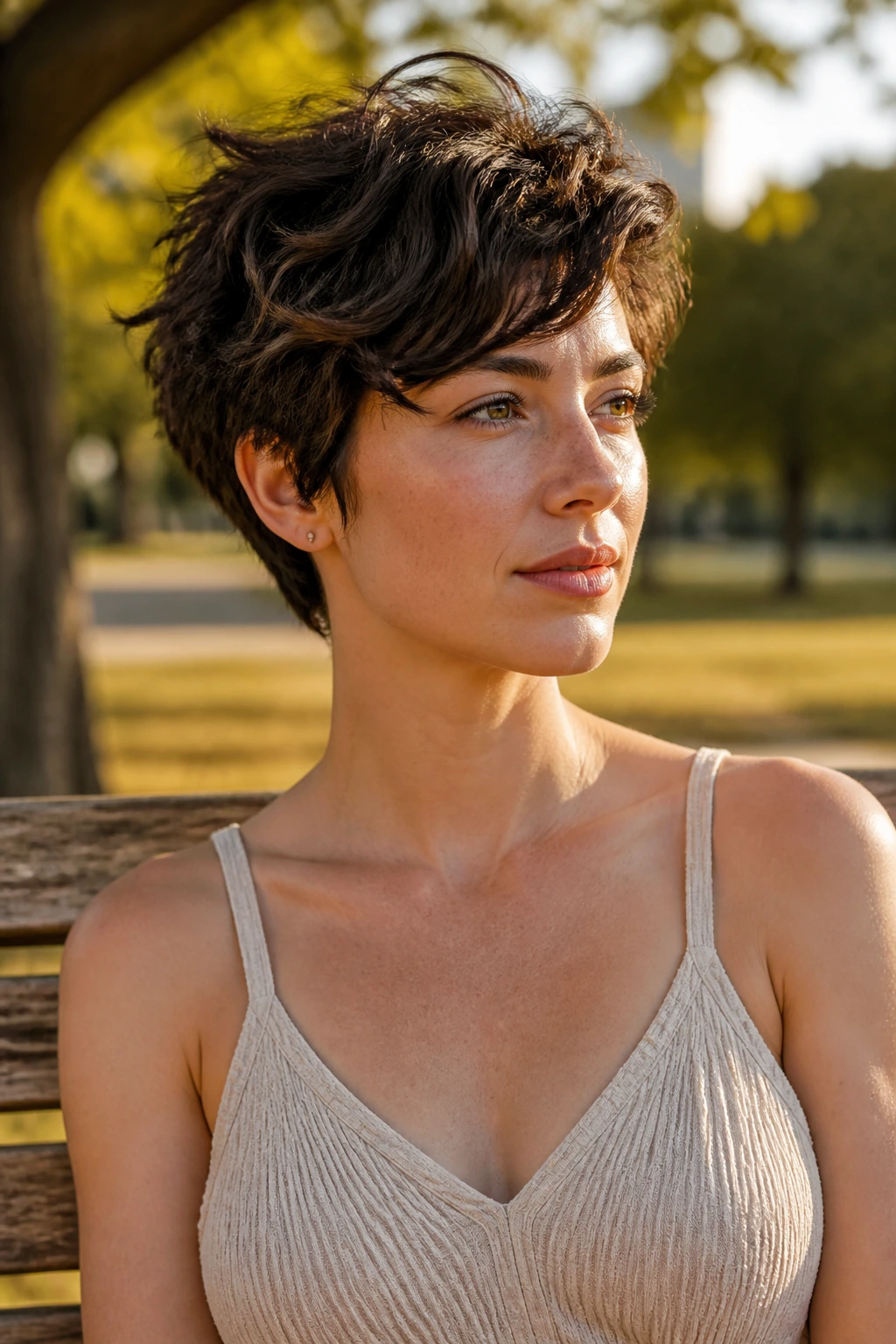
Wavy thick hair has its own ideas, and this cut lets it keep them. The layers are soft enough to encourage bends, but not so chopped that the wave gets frizzy and scattered. It’s the kind of pixie that looks better when you stop touching it.
Why It Works
The length through the top should be left just long enough to catch a bend — usually around 2 to 3 inches — while the sides stay neat and close. After washing, a light foam or cream and a quick scrunch are usually enough. If you blow-dry this one too aggressively, you can flatten out the wave and make the cut look ordinary.
I like this style for busy mornings because it doesn’t need a perfect finish. It needs a haircut that already knows what to do.
12. The Pompadour Pixie With Height at the Front
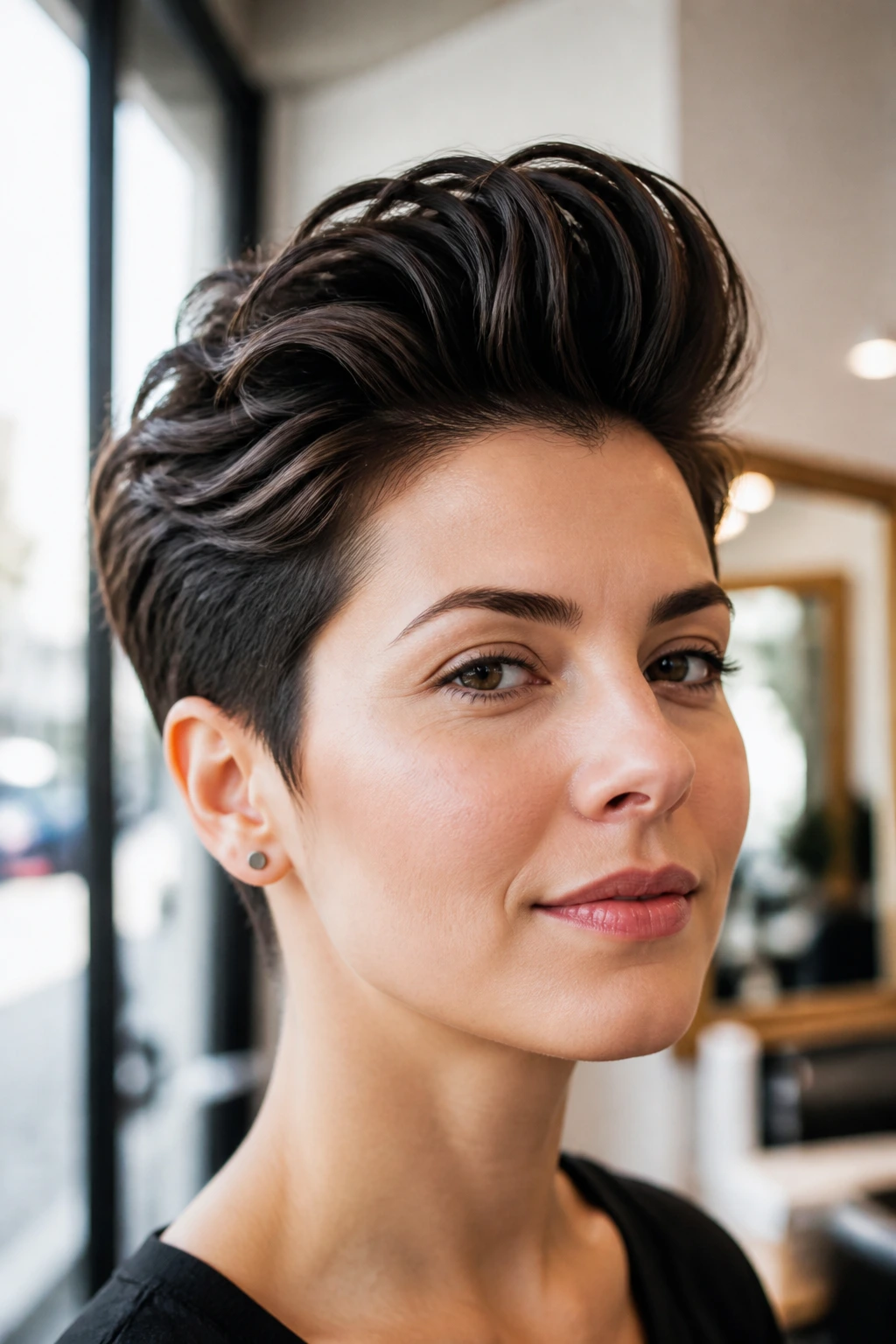
If your thick hair needs lift instead of width, this is a smart fix. The pompadour pixie pushes volume up and back at the front, which draws the eye vertically and keeps the sides from spreading out. It can look sharp, elegant, or a little rebellious depending on the product you use.
The front length usually stays long enough to brush upward with a round brush or fingers, while the back and sides are cut tighter. Root-lift spray, a blow dryer, and a dab of flexible paste at the base are usually enough to hold it. The trick is not to overload the front with heavy cream, because thick hair will collapse under its own weight.
This shape is especially good if your face needs a little length through the top. It creates it without making the haircut look stiff.
13. A Micro-Fringe Pixie for a Sharp Forehead Line
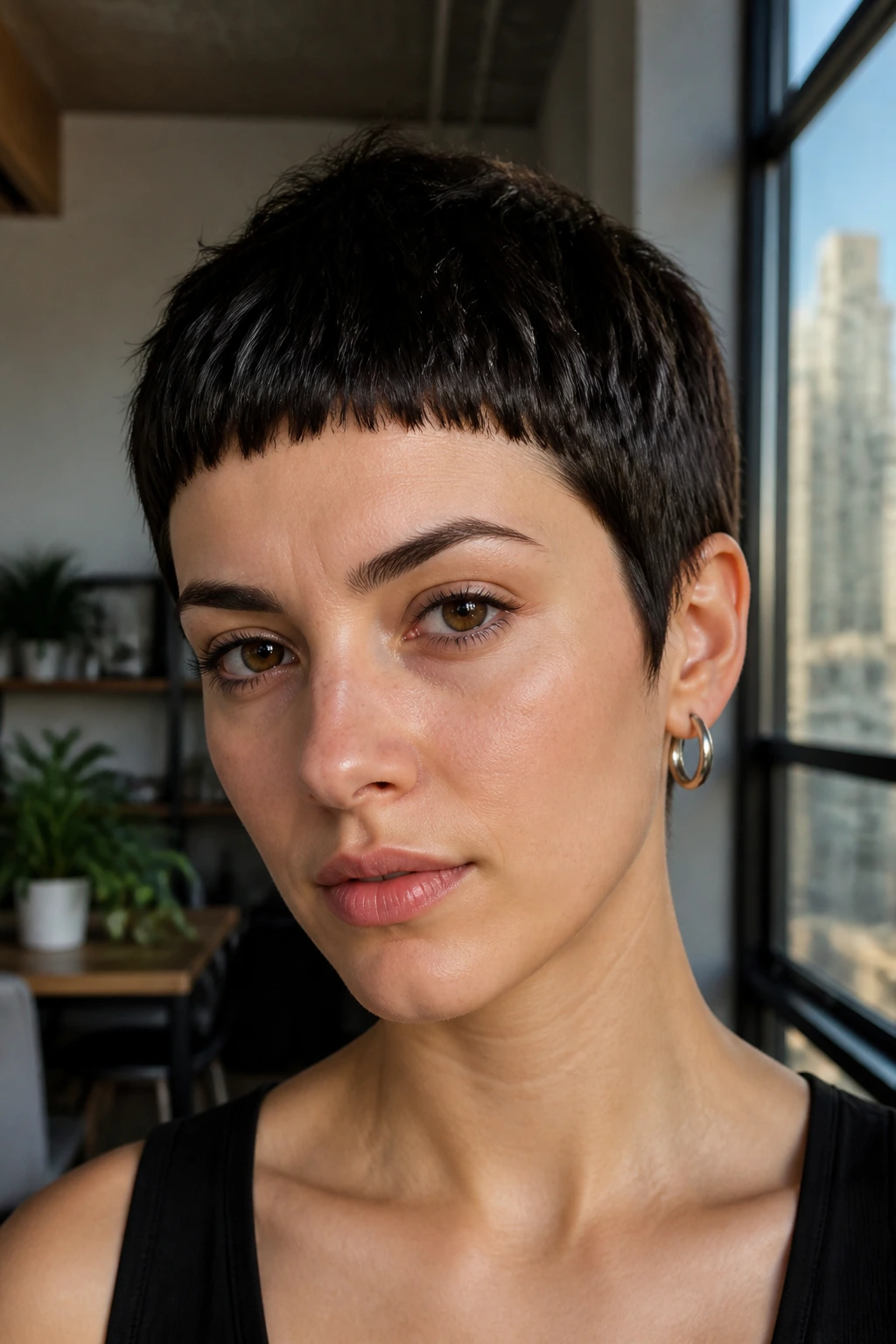
Why does a tiny fringe work so well on dense hair? Because thick hair already has enough body to hold a crisp line. A micro-fringe gives you that graphic edge without needing much styling, and the shortness keeps the front from competing with the rest of the cut.
What to Ask for
The fringe should sit well above the brows, usually cut straight or with a tiny bit of texture so it doesn’t sit like a ruler. The sides can stay close, but the top needs enough length to balance the short bangs. If you have a cowlick at the hairline, be honest about it. A micro-fringe is unforgiving if the growth pattern wants to split apart.
- Works best when you like a defined, fashion-forward shape.
- Needs regular trims to stay above the eyes.
- Can make strong brows or glasses stand out.
- Looks especially clean on thick straight hair.
This is not a low-maintenance fringe. It is, however, a very sharp one.
14. Long Layers on Top With Short Sides
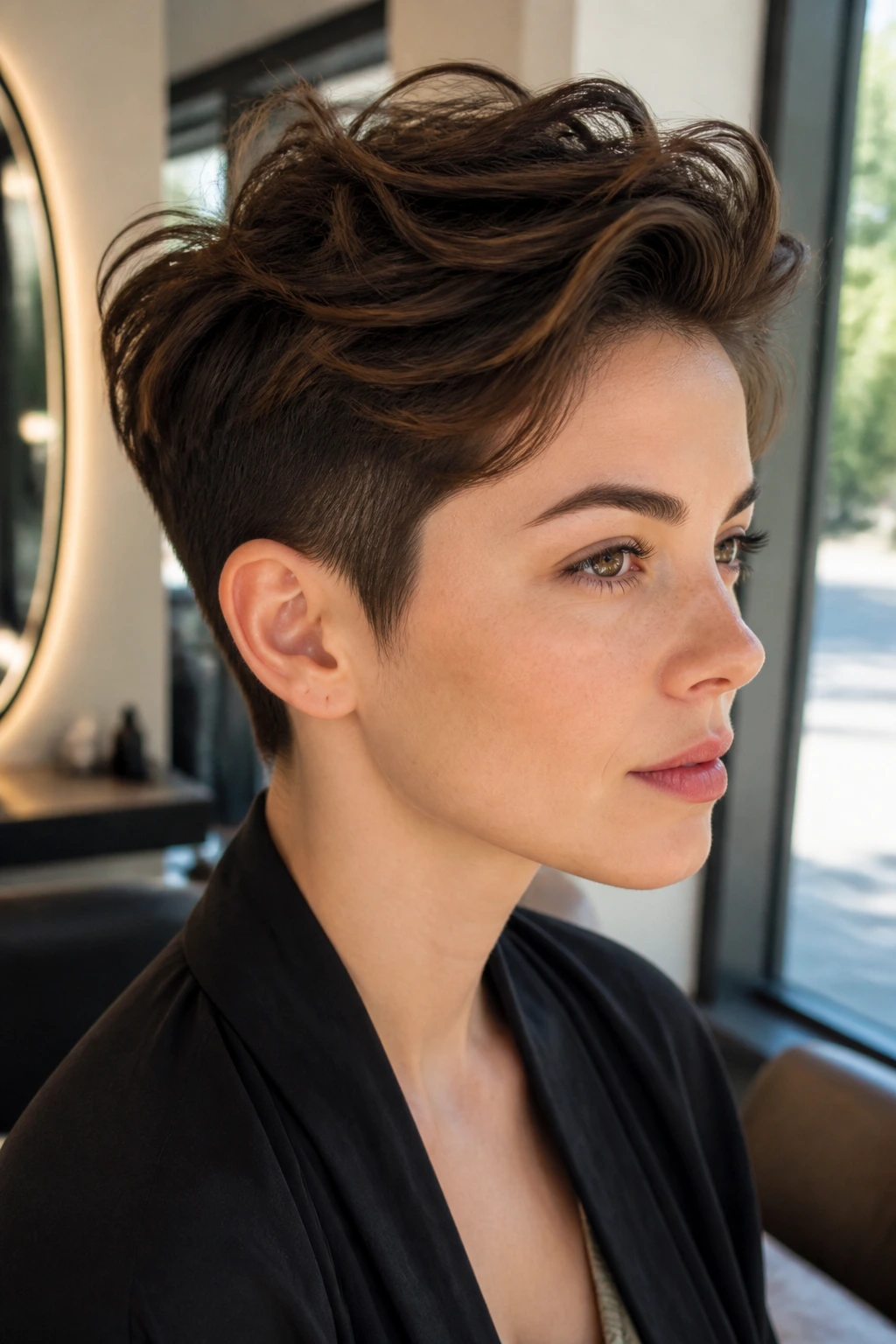
Some pixies try to blend everything into one soft mound. I prefer contrast on thick hair. Long layers on top with short sides give the haircut a clear structure, and structure is what stops heavy hair from becoming shapeless the minute you step outside.
The longer top can be swept, spiked, or finger-combed, while the sides stay trimmed close enough to keep the profile neat. This is the version to choose if you want styling room at the crown but don’t want bulk around the ears. It’s also one of the easier shapes to grow out because the top already has a head start.
A light blow-dry at the roots and a small amount of paste through the ends usually finishes it. If the ends are too perfect, the cut can look helmet-like. A little mess helps.
15. A Piecey Textured Pixie That Splits into Separated Bits
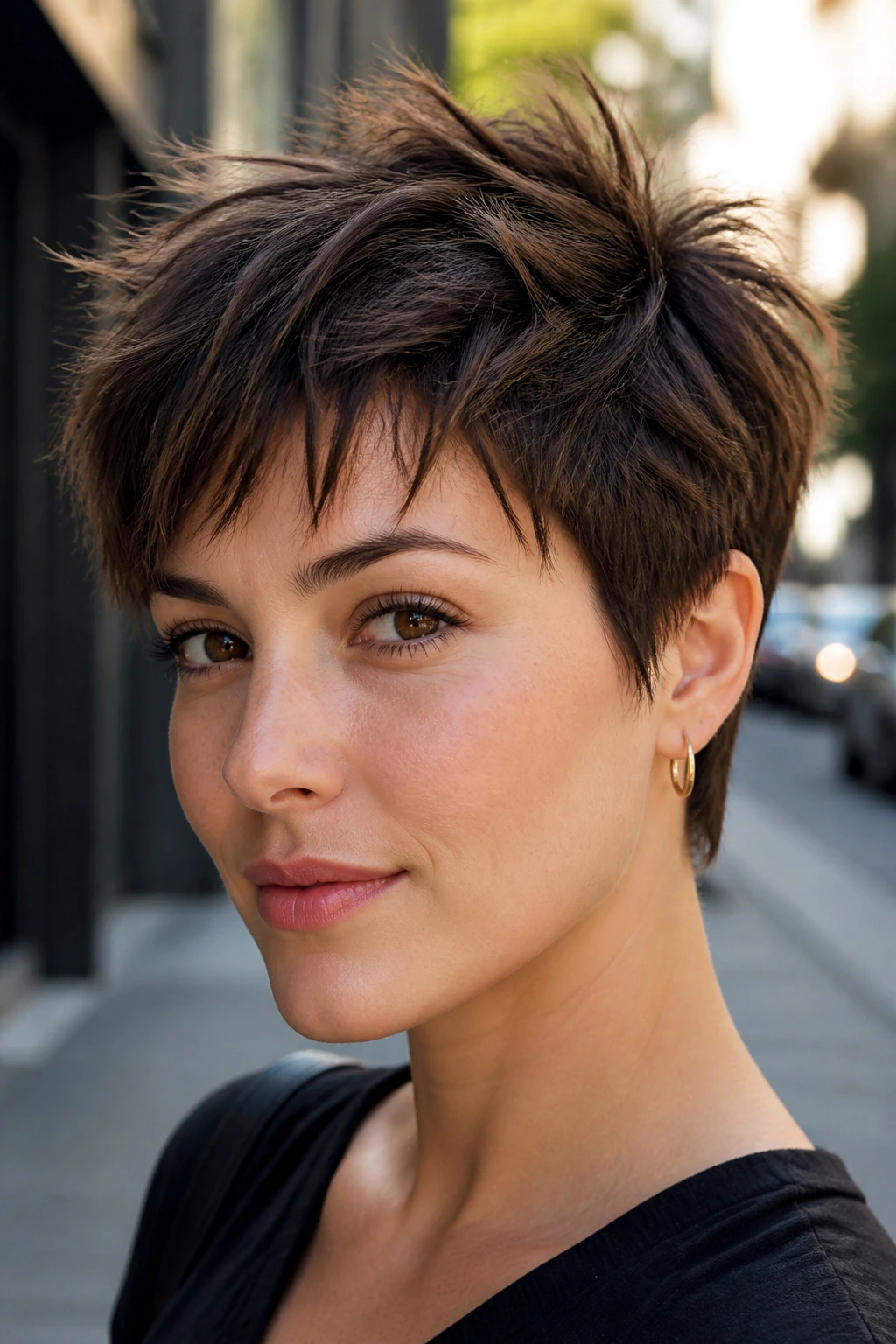
Piecey texture is where thick hair can look expensive without trying too hard. The cut itself needs soft, broken layers so the pieces can separate cleanly instead of fusing into one heavy sheet. This is the shape that looks best when your fingers have been through it once and then left alone.
Use a matte clay or paste on dry hair, not wet, and work it mostly through the mid-lengths and ends. Thick hair can gobble up product, so start with a pea-sized amount and build only if the strands need it. Too much product makes the separation stick together in clumps.
It’s a good option if you want movement without a lot of curl or wave. The piecey finish does the talking.
16. The Soft Bowl Pixie With Rounded Perimeter
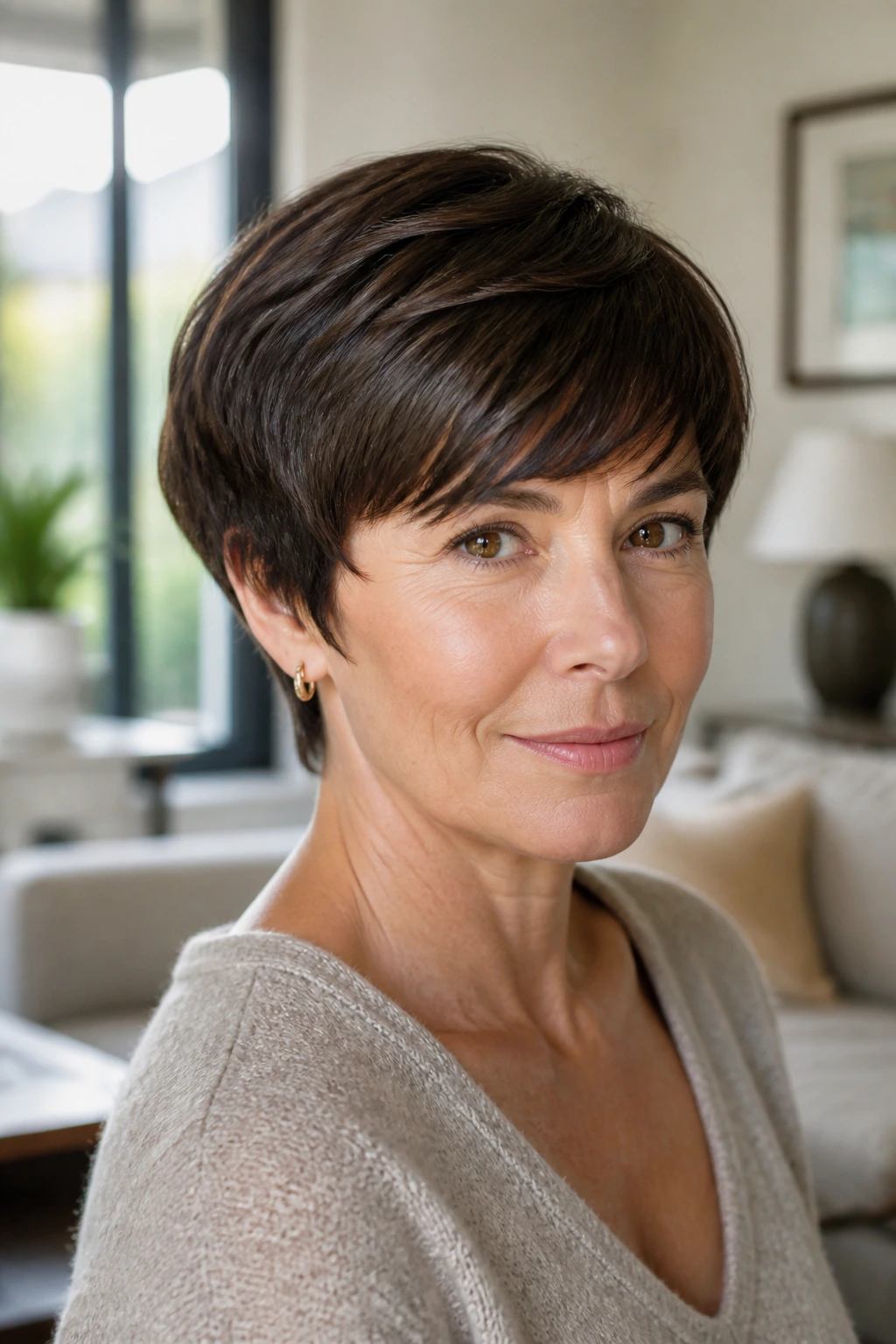
A bowl-ish pixie sounds odd until you see how well it behaves on thick hair. The round perimeter keeps the silhouette close to the head, which is a gift when your hair likes to puff outward at the corners. The trick is softness — not a blunt helmet, but a curved outline with a little air inside it.
The Shape Matters
Ask for a rounded line around the head with soft layering inside, especially through the crown. The fringe can be curved or slightly side-swept, depending on your face shape. This cut works best when the ends are not over-thinned, because thick hair needs enough edge to keep the shape looking deliberate.
I like this version for straight or slightly wavy hair that tends to go wide. It feels modern without screaming for attention.
17. A Stacked Nape Pixie That Lifts the Back
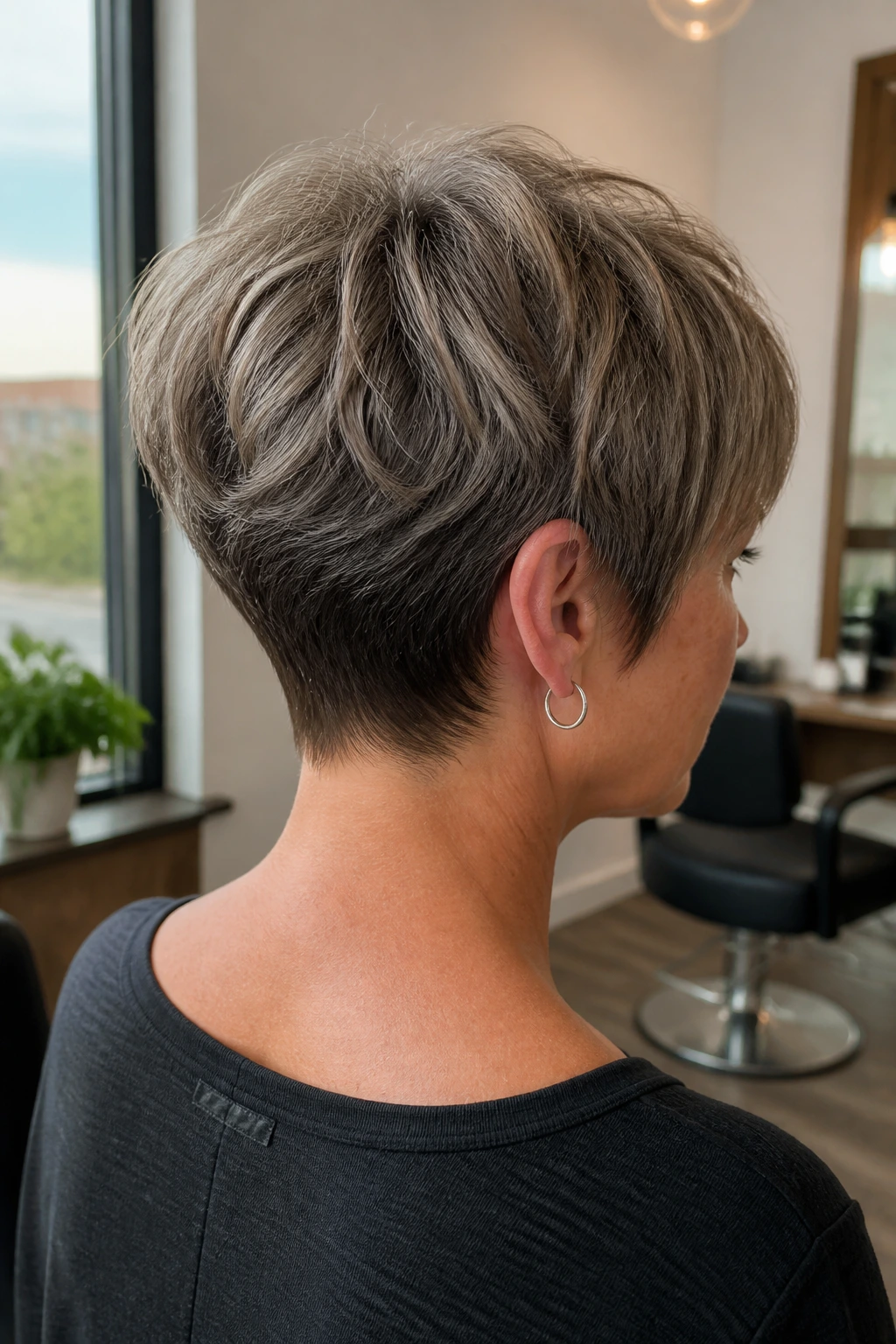
If the back of your head feels flat, this is the fix. Stacking the nape means building short, graduated layers that create lift at the back and make the silhouette look more sculpted. Thick hair often has enough body to hold this shape without a ton of styling, which is why the cut works so well.
The back should rise in a clean curve, with the top blending into it instead of dropping suddenly. That curve keeps the haircut from feeling like a hard shelf. A quick round-brush blow-dry at the crown can make the stack stand up nicely, but the cut should do most of the work.
This style looks especially good from the side. And that’s no small thing.
18. A Soft Mullet Pixie With Length at the Neck
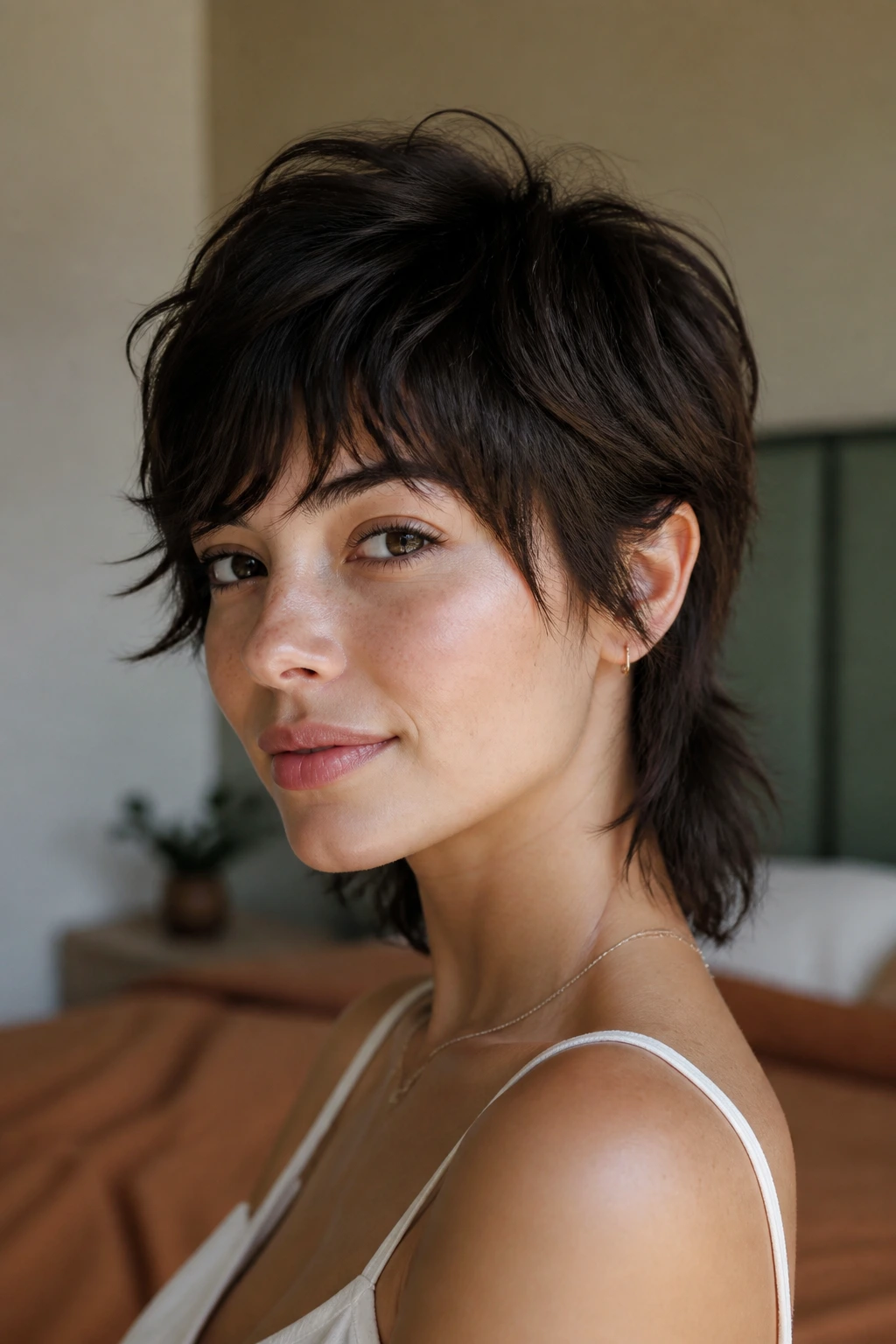
The soft mullet pixie is not trying to be polite. It leaves some length at the nape and through the sides while keeping the crown short and airy, which gives thick hair a little swagger without making it unmanageable. The result feels modern, but not precious.
What Makes It Different
The back is longer than a classic pixie, sometimes brushing the upper neck, and the front can be textured or swept. That extra length keeps the cut from looking too severe on dense hair. It also helps if you want to tuck one side behind the ear and leave the other side looser.
If you like hair that moves when you turn your head, this is one of the more interesting ways to do it.
19. A Mohawk-Inspired Pixie That Keeps the Center Line High
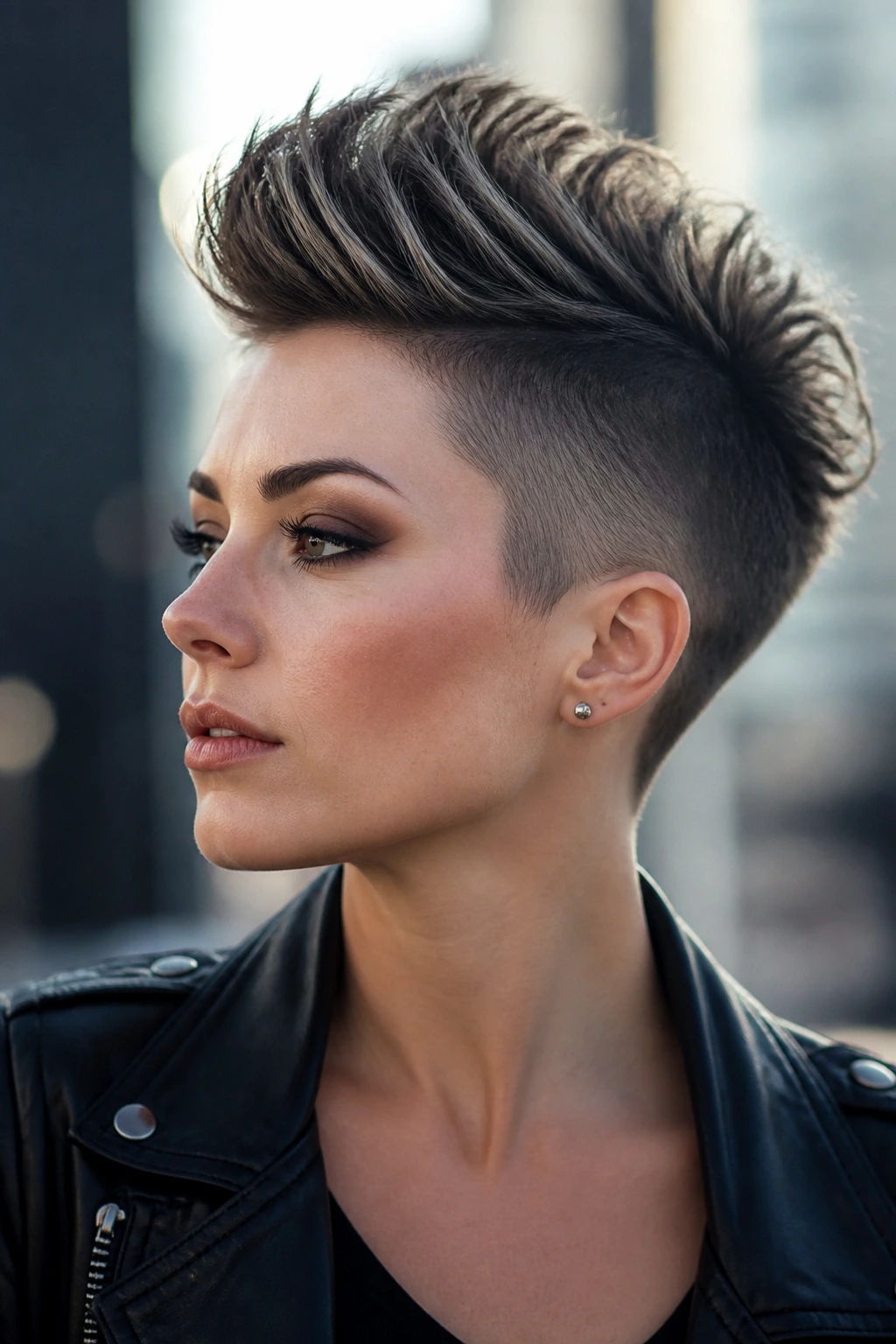
Picture the bulk stripped from the sides and the center ridge left to stand on its own. That is the basic idea here. On thick hair, a mohawk-inspired pixie can be surprisingly wearable because the density supports height in the middle without collapsing.
The sides should be close and neat, but not so short that the grow-out feels harsh. The center can be textured upward with a bit of gel, or pushed forward for a softer version. It’s a strong silhouette, and strong silhouettes are a gift when thick hair starts to feel too broad.
This cut is for someone who likes a little edge and is happy letting the haircut speak first.
20. A Romantic Soft Pixie With Swept Ends and Movement
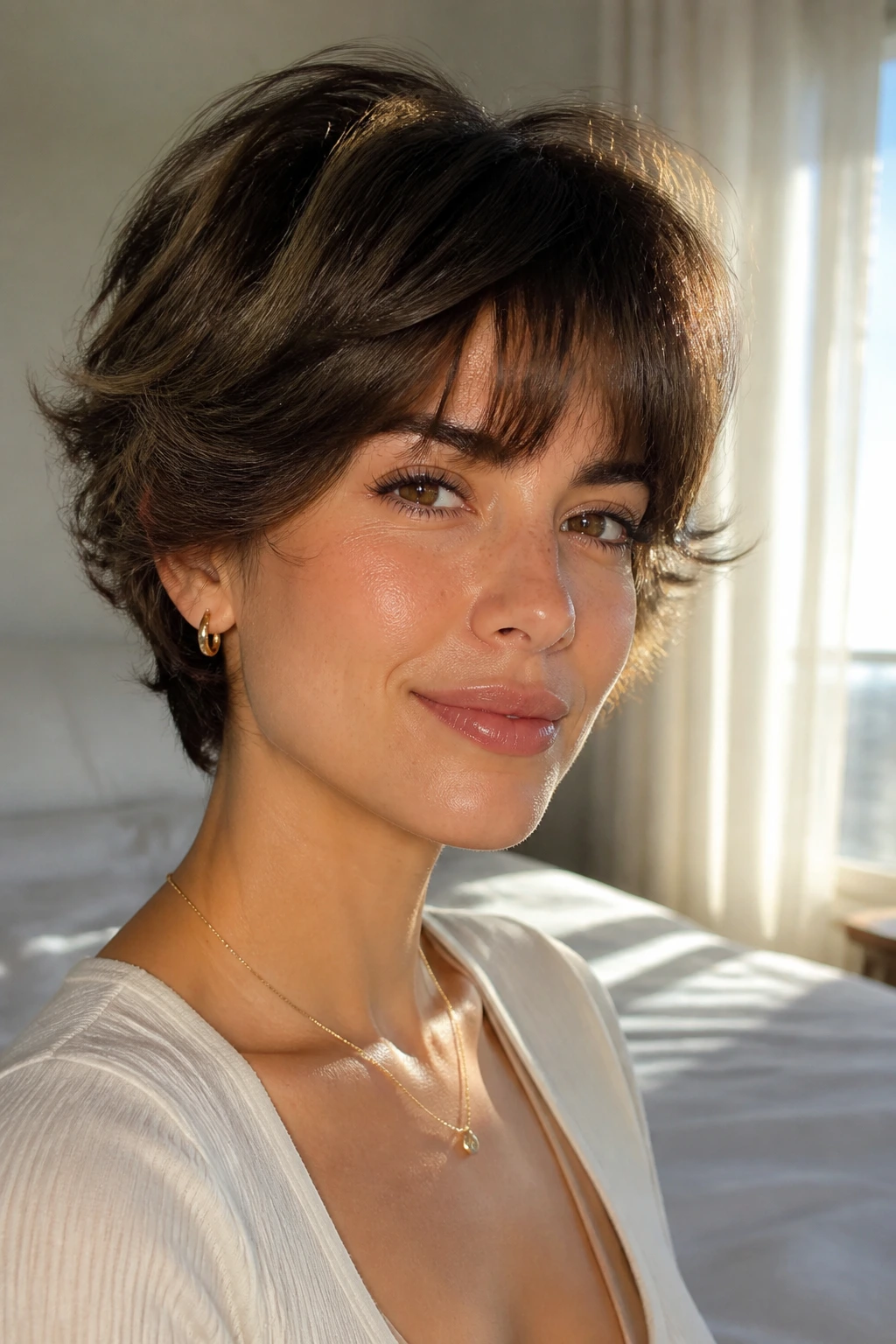
A romantic pixie is all about softness at the edges. Instead of sharp corners, you get wispy ends, a gentle fringe, and movement that seems to float around the face. Thick hair makes this look easier to keep full, which is half the reason it works so well.
Use scissors, not aggressive razoring, so the ends stay plush rather than frayed. A small amount of smoothing cream keeps the silhouette from frizzing out, especially if your hair has some wave. This is one of the rare pixies that can look especially nice if you want it a little undone but not messy.
It suits people who like feminine movement without long hair dragging everything down.
21. The Classic Polished Pixie With Clean Lines
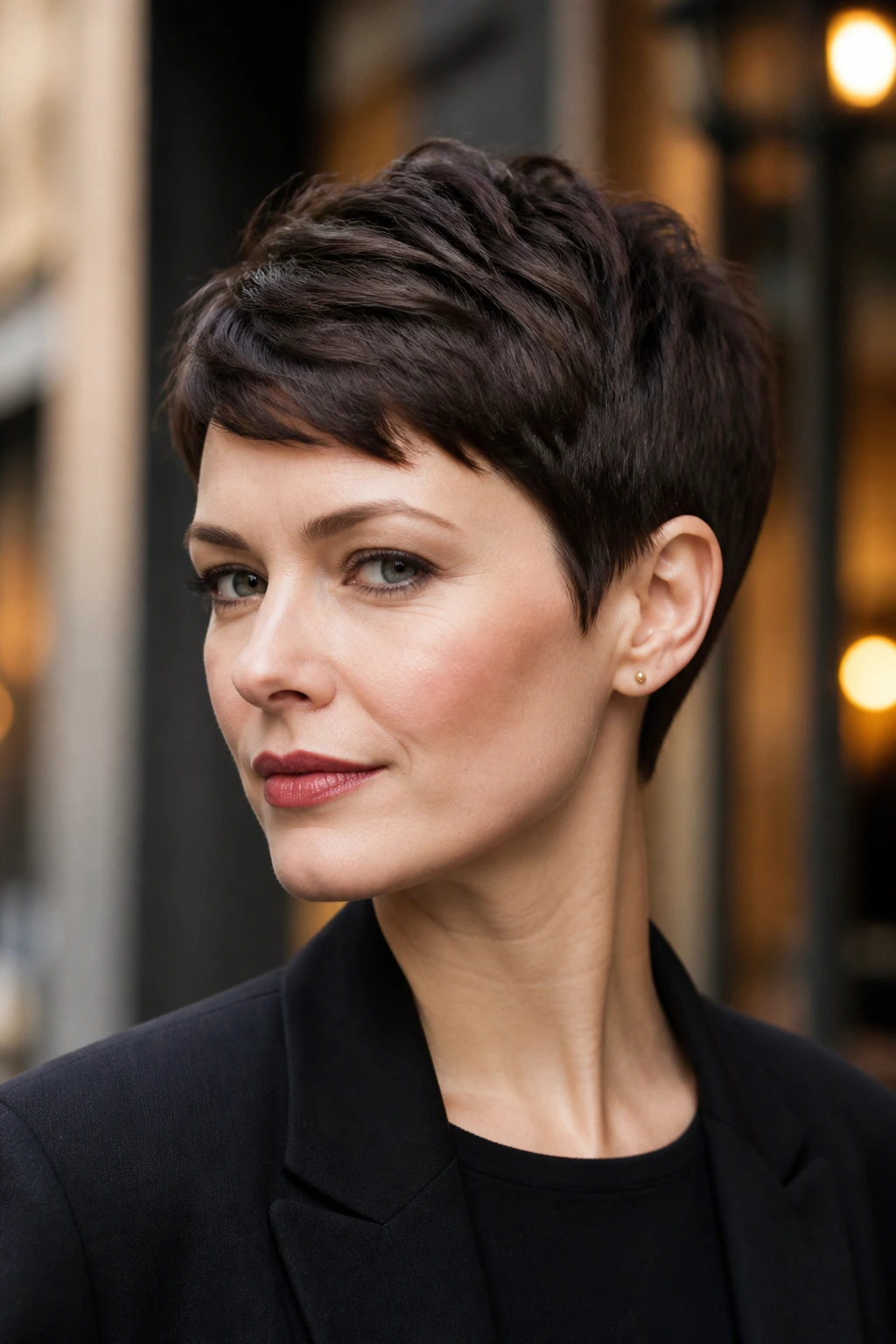
Clean lines are underrated on thick hair. When the cut is tidy around the sideburns, ears, and nape, the density reads as lush rather than bulky. A classic polished pixie is the old reliable choice for people who want short hair that still feels composed.
Why It Stays Sharp
The sides should be tight enough to prevent puffiness, while the top stays just long enough to comb or brush into place. A smoothing cream or light serum helps the cut lie flat, but the real work is done by the shape itself. If the outline is sloppy, no product will rescue it.
This is the one I’d suggest to someone who likes hair that looks deliberate on day one and day three.
22. A Fringe-Forward Pixie That Makes the Bangs the Focus
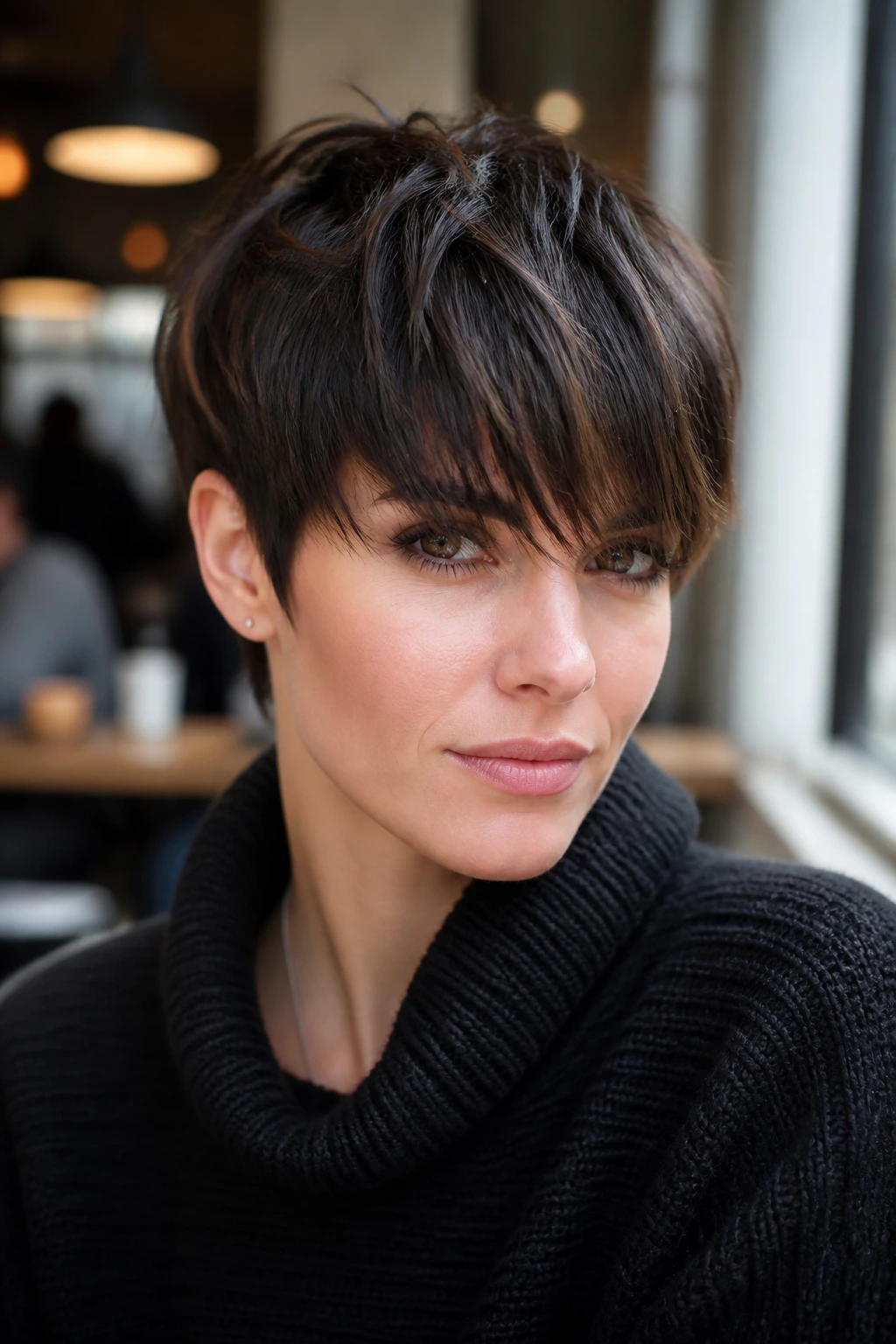
Sometimes the fastest way to make thick hair feel lighter is to concentrate the shape in the front. Fringe-forward pixies keep the bangs or front section longer and give the rest of the haircut a quieter role. That draws attention to the eyes and reduces the boxy feeling some short cuts have.
The fringe can be straight, piecey, or slightly curved, but it should be strong enough to stand on its own. If the bangs are too wispy, thick hair tends to swallow them. I like this cut when someone wants a real style choice every morning — push it forward, split it, or sweep it to one side.
It’s especially good if your forehead is a feature you want to play with rather than hide.
23. An Ear-Tucked Pixie for a Neat, Open Face
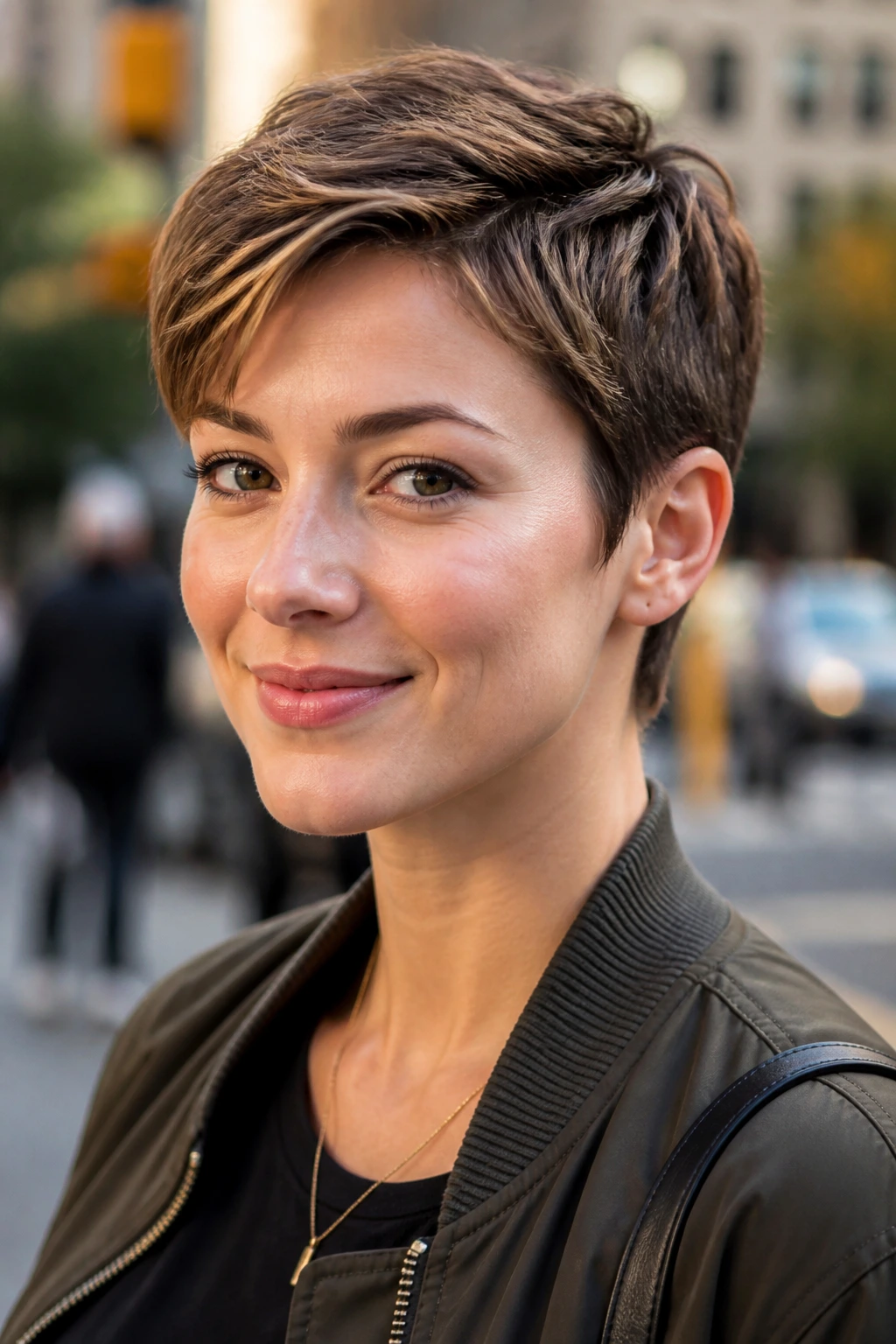
If you like seeing your face clearly, this shape is quietly excellent. The sides are cut short enough to tuck behind the ears without fighting the hairline, while the top keeps a little length for movement. Thick hair can look surprisingly sleek here because the tuck creates a clean break at the cheek.
The cut works best when the temple area is tapered smoothly. If those side sections are too bulky, the ears never sit cleanly and the style loses its open feel. I’d choose this one for glasses wearers, anyone with strong earrings, or people who like a tidy look that still has personality.
It’s not flashy. That’s the point.
24. A Deep Side Part Pixie With Instant Asymmetry
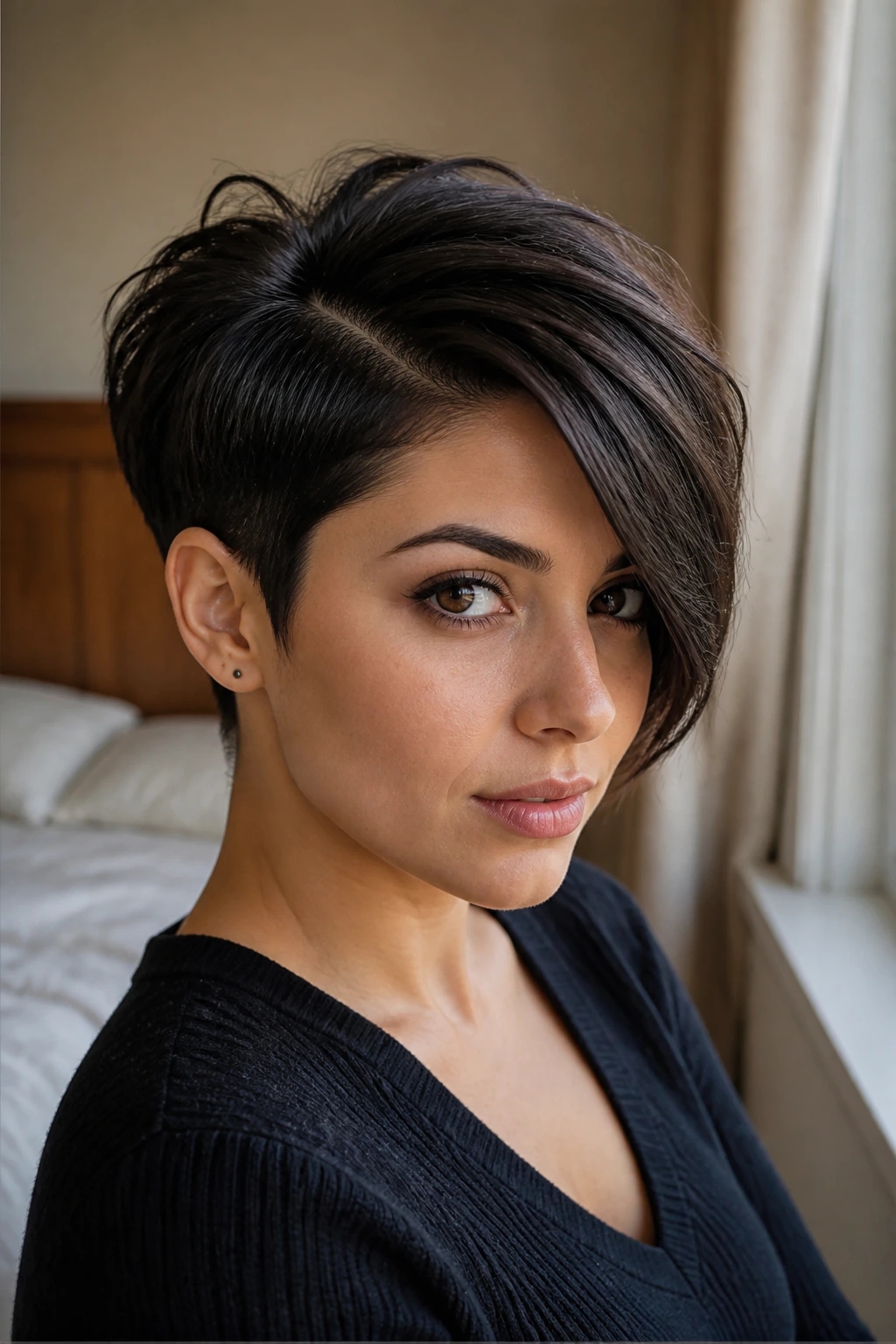
A deep side part can rescue thick hair from looking wide in a hurry. It shifts mass to one side, creates lift at the root, and gives the whole haircut a more dramatic line without adding length. It’s one of the easiest ways to make a pixie feel styled even on a plain day.
The part should be set where the hair naturally wants to separate, or close to it. Fight the crown swirl too hard and the style will keep wandering back. A root spray or a little mousse at the part helps it stay put, and a quick blast with the dryer on the opposite side adds extra lift.
This version is good if you want short hair that doesn’t settle into a predictable shape.
25. A Curly Fringe Pixie That Lets the Bangs Curl Up
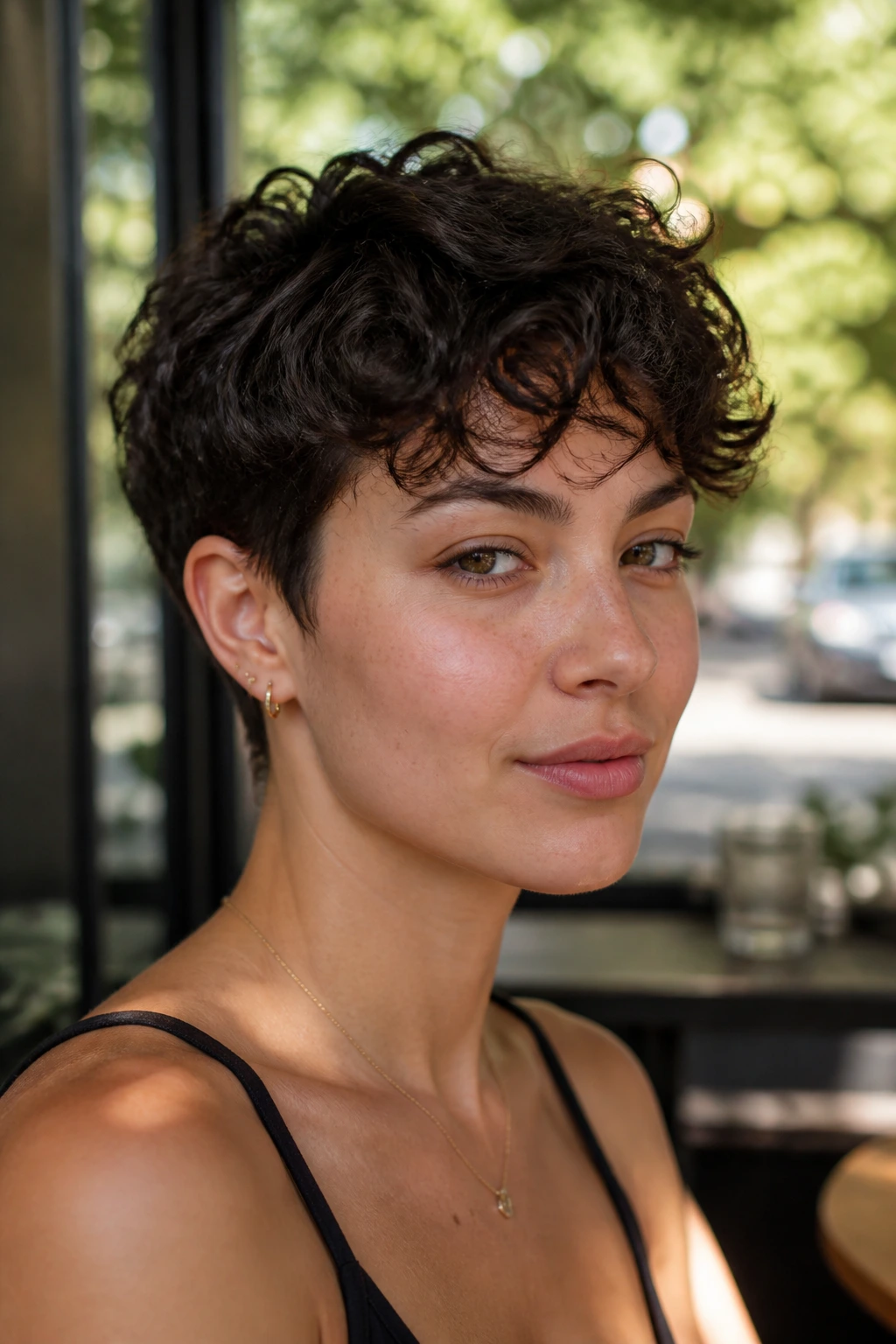
Curly fringes can be brilliant. They also can be weird if they are cut too short or too blunt. The trick is to leave enough length for the curl to spring up and make a fringe that feels soft instead of chopped off.
The Sweet Spot
For thick curls, the fringe often needs to be a little longer than you think at first cut, because it will bounce upward as it dries. The sides should stay controlled so the front remains the focus. That contrast keeps the cut from puffing out at the temples.
If you hate straightening your bangs every morning, this is a satisfying way to let the curl do the work.
26. A Disconnected Pixie That Leaves Intentional Gaps in Length
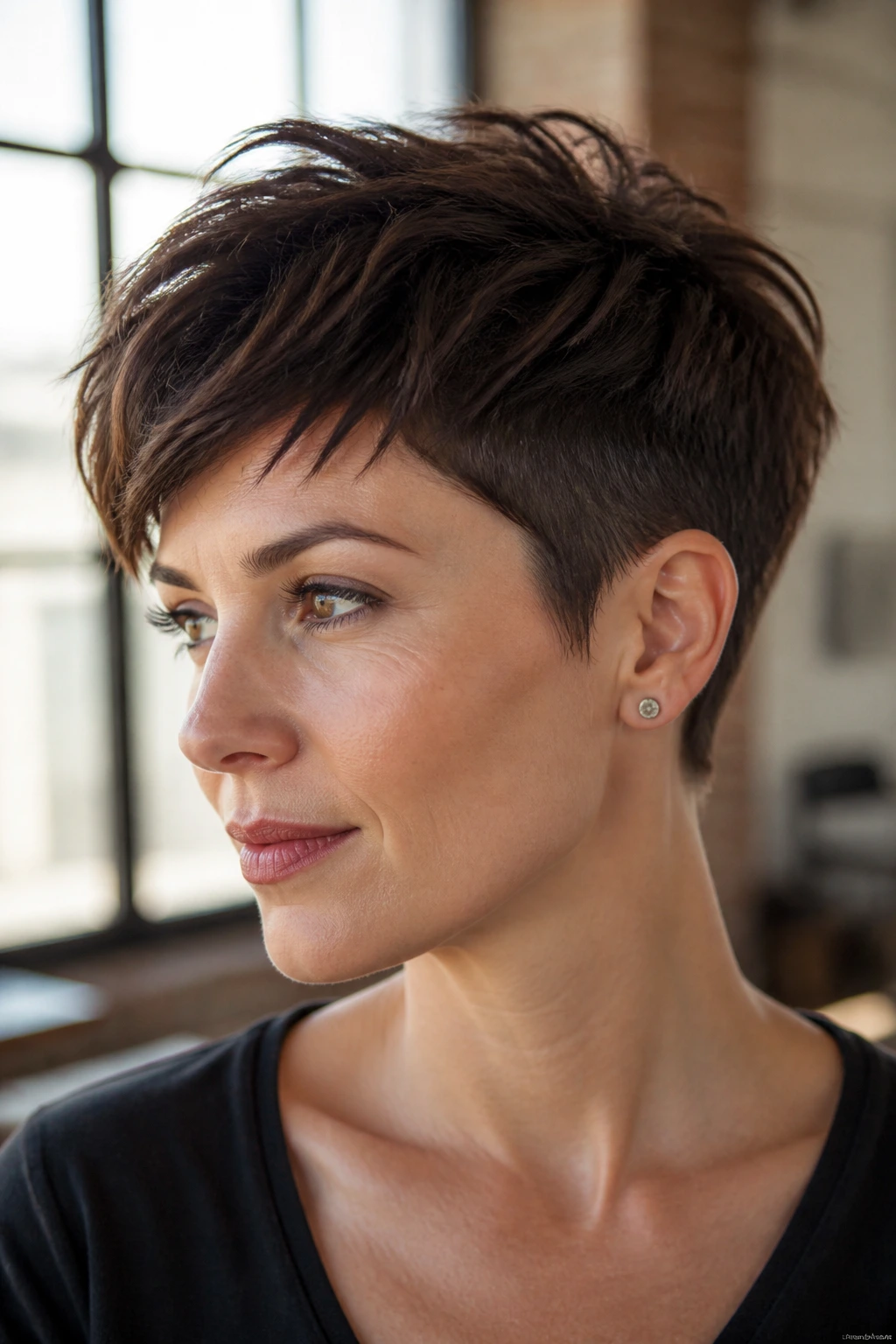
Disconnection can be a good thing. Instead of blending every section into a smooth transition, this cut keeps the top and sides visibly different. On thick hair, that helps reduce bulk and gives the style a sharper shape with less puffiness.
The top can be left several inches longer than the sides, and the transition between them can be abrupt on purpose. That might sound harsh, but it reads clean when the lines are controlled. It’s especially useful if your hair is so dense that softer blending just makes the whole head look bigger.
This is not the cut for someone who wants invisible shaping. It is for someone who wants structure.
27. A Crescent-Shaped Pixie That Curves Around the Head
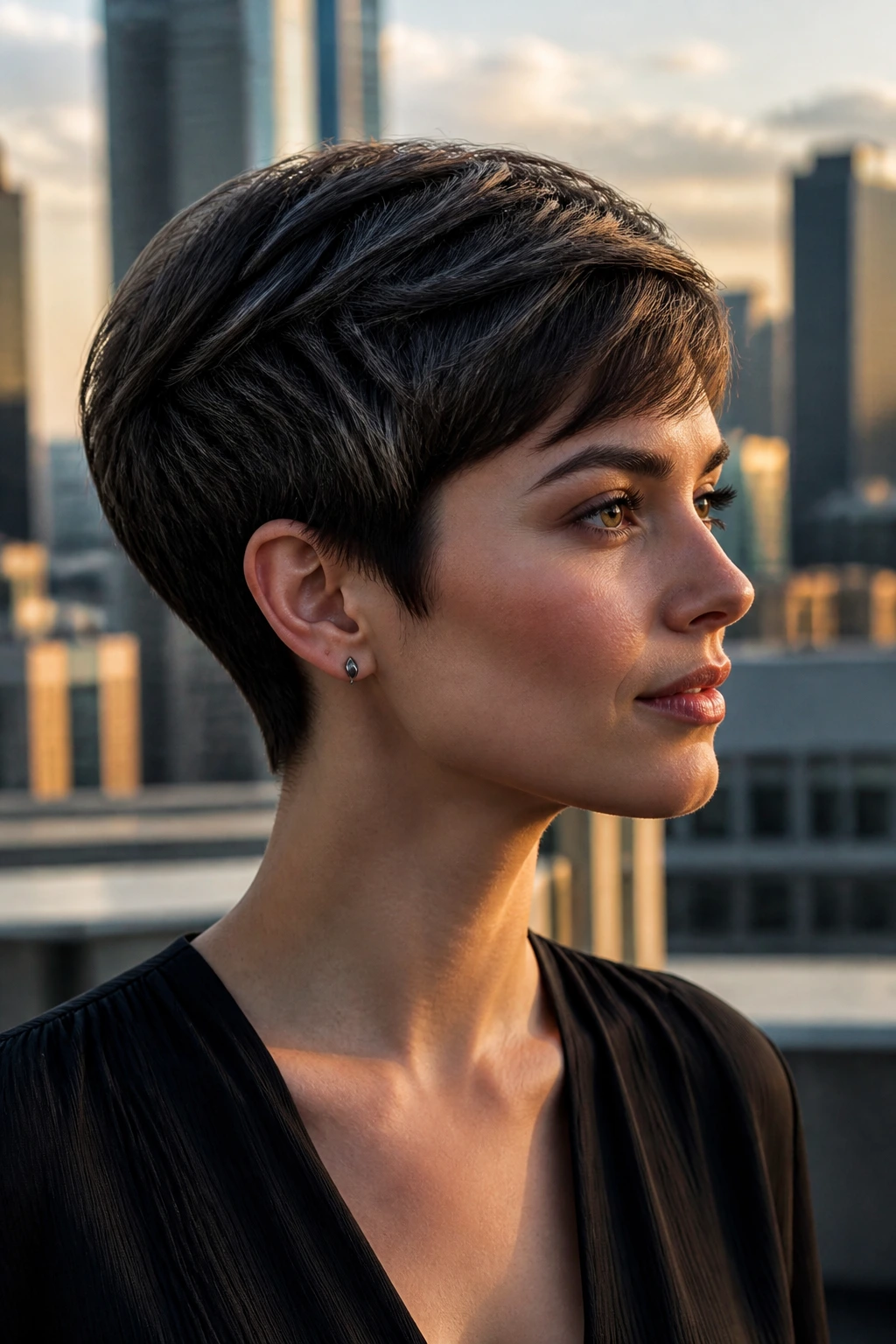
This is one of the prettiest shapes for thick hair when it’s done well. The line curves around the skull like a crescent, which keeps the silhouette close and sculpted instead of wide. The result feels smooth from every angle.
The layering has to follow the head shape carefully, or the curve breaks and the haircut starts pushing out at the sides. Ask for a shape that hugs the head, especially around the occipital area and the temples. It works particularly well with strong cheekbones because the curve frames the face instead of competing with it.
You can wear this one sleek or slightly tousled. Either way, the shape stays readable.
28. A Tousled Air-Dry Pixie With Bends and Flicks
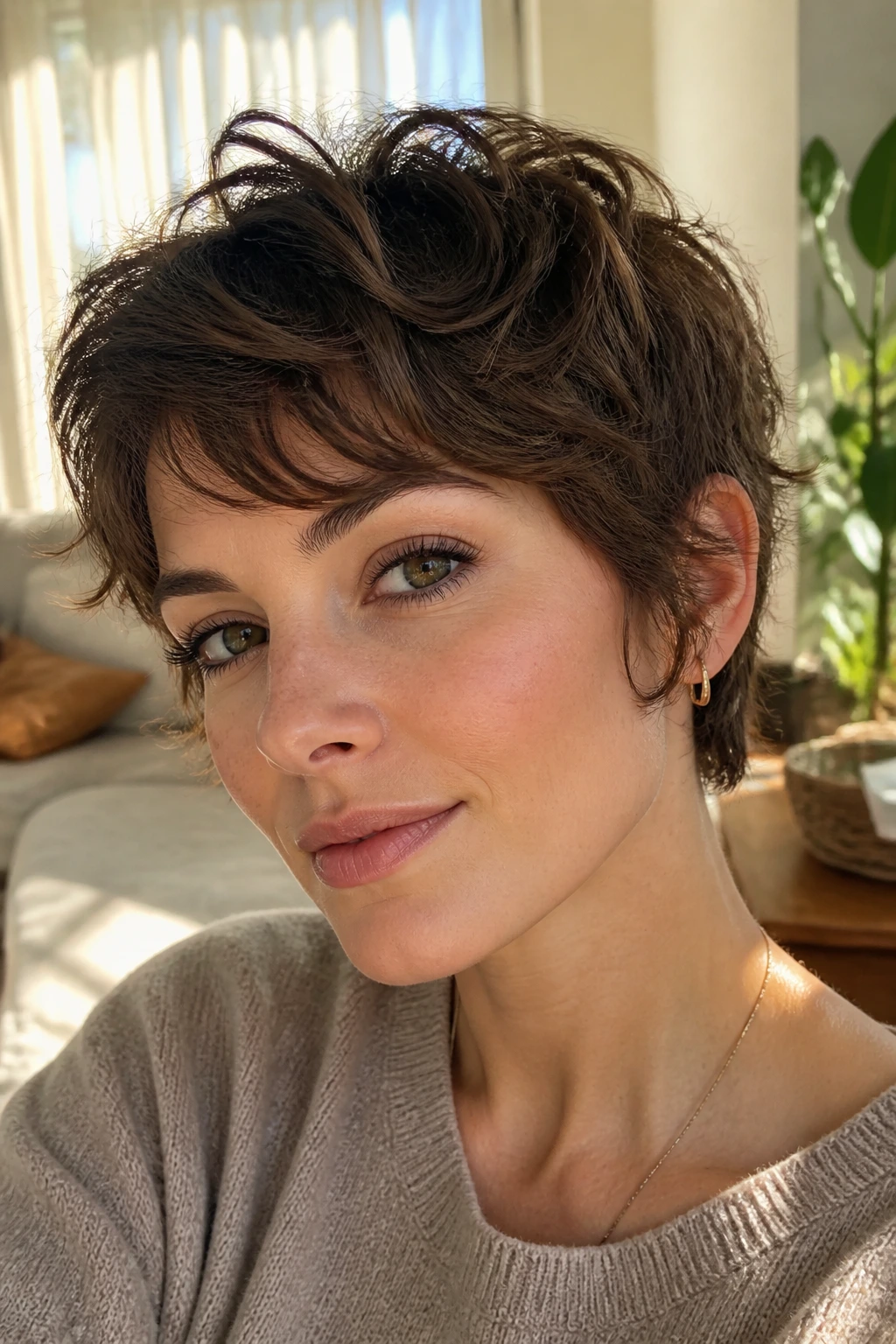
Thick wavy hair gets a lot of mileage from this cut. The layers are short enough to keep the silhouette compact, but long enough that the hair can dry into bends, flicks, and little kicks around the ears. It looks better when it isn’t overworked.
Apply a lightweight cream or spray to damp hair, scrunch once or twice, and let it dry with your fingers out of it. If you keep brushing while it dries, you’ll flatten the wave and create fuzz at the ends. The whole point is to let the haircut make the texture visible.
This is one of the easiest ways to wear a pixie if you hate hot tools.
29. A Sleek Wet-Look Pixie for Glassy Finish
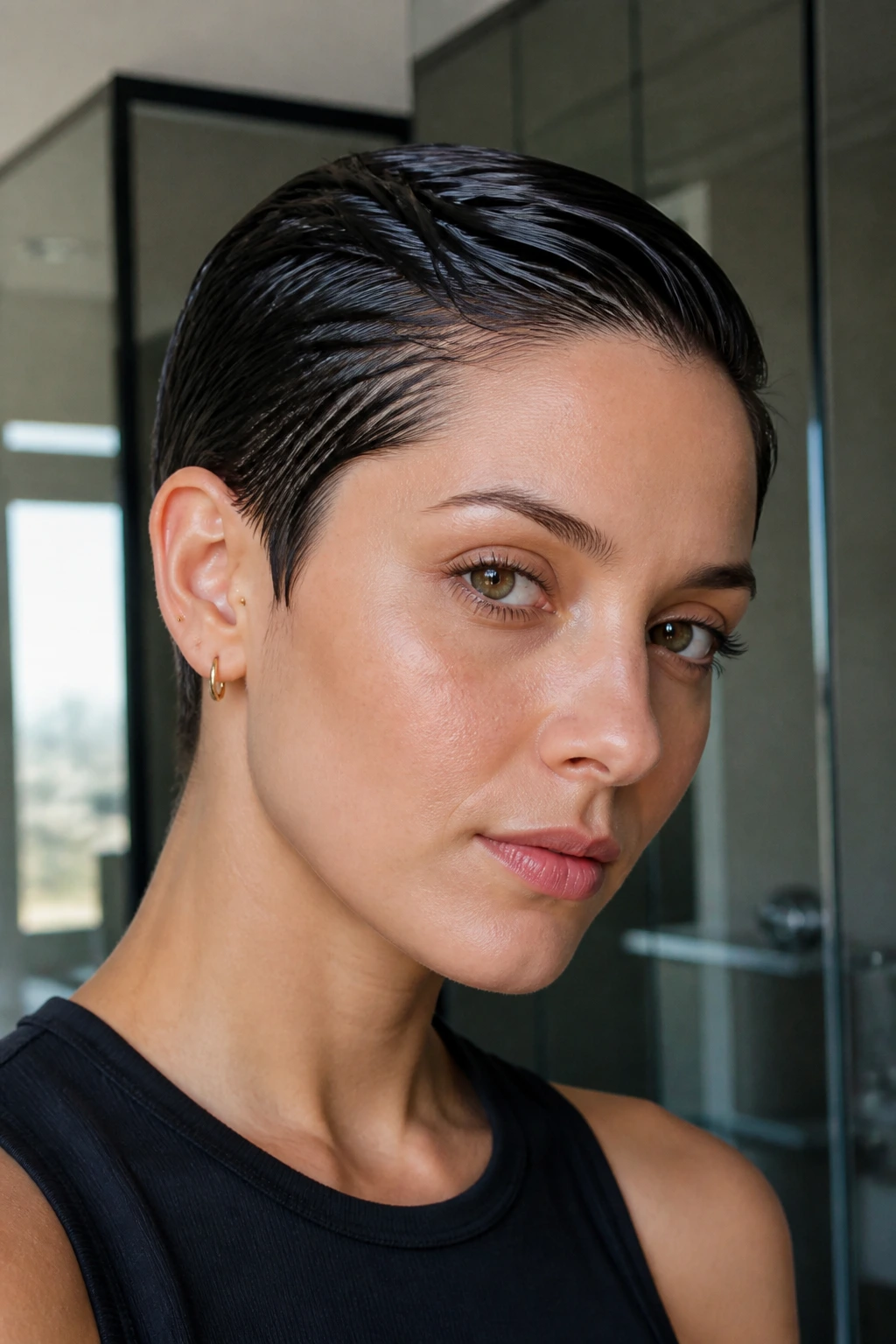
A wet-look pixie on thick hair can look expensive in the plainest, least showy way. The hair is slicked close to the head with a glossy gel or styling cream, and the dense texture helps the style hold that shape without sagging too fast. It is a strong evening look, but it can also work as a daytime style if you keep the product clean and the lines neat.
The sides and crown should be smoothed back with a comb, then softened with fingers so the finish doesn’t look pasted on. Too much product at the roots will make thick hair look greasy rather than sleek, so start light and build only where needed.
It’s a good choice when you want the haircut to read as intentional, not casual.
30. A Wash-and-Go Pixie That Plays Nice With Natural Texture
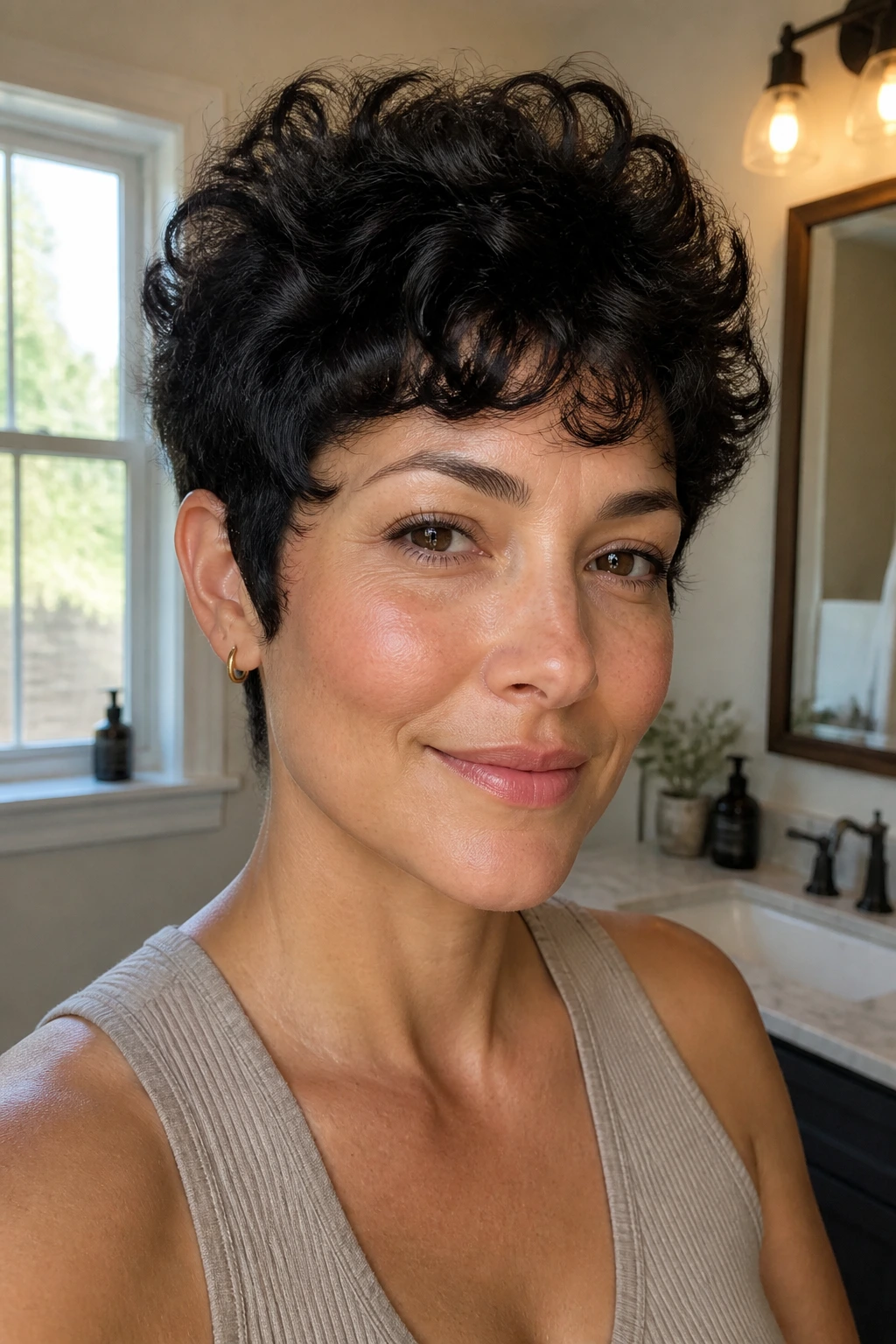
Some pixies need a round brush, a dryer, a few pins, and a small act of faith. This one doesn’t. A wash-and-go pixie works because the cut itself is built around your natural pattern — thick hair, wave, curl, cowlicks, and all. The shape should fall into place with little more than a dab of cream or mousse.
The key is keeping the layers soft enough that the texture can move, but controlled enough that it doesn’t puff out. If your hair lives somewhere between straight and wavy, this can be a very low-fuss option. If it’s coarse and dense, it still works, but only when the interior weight has been removed properly.
This is the cut for people who want hair that can leave the house without a performance.
31. A Rounded Pixie That Keeps the Profile Soft
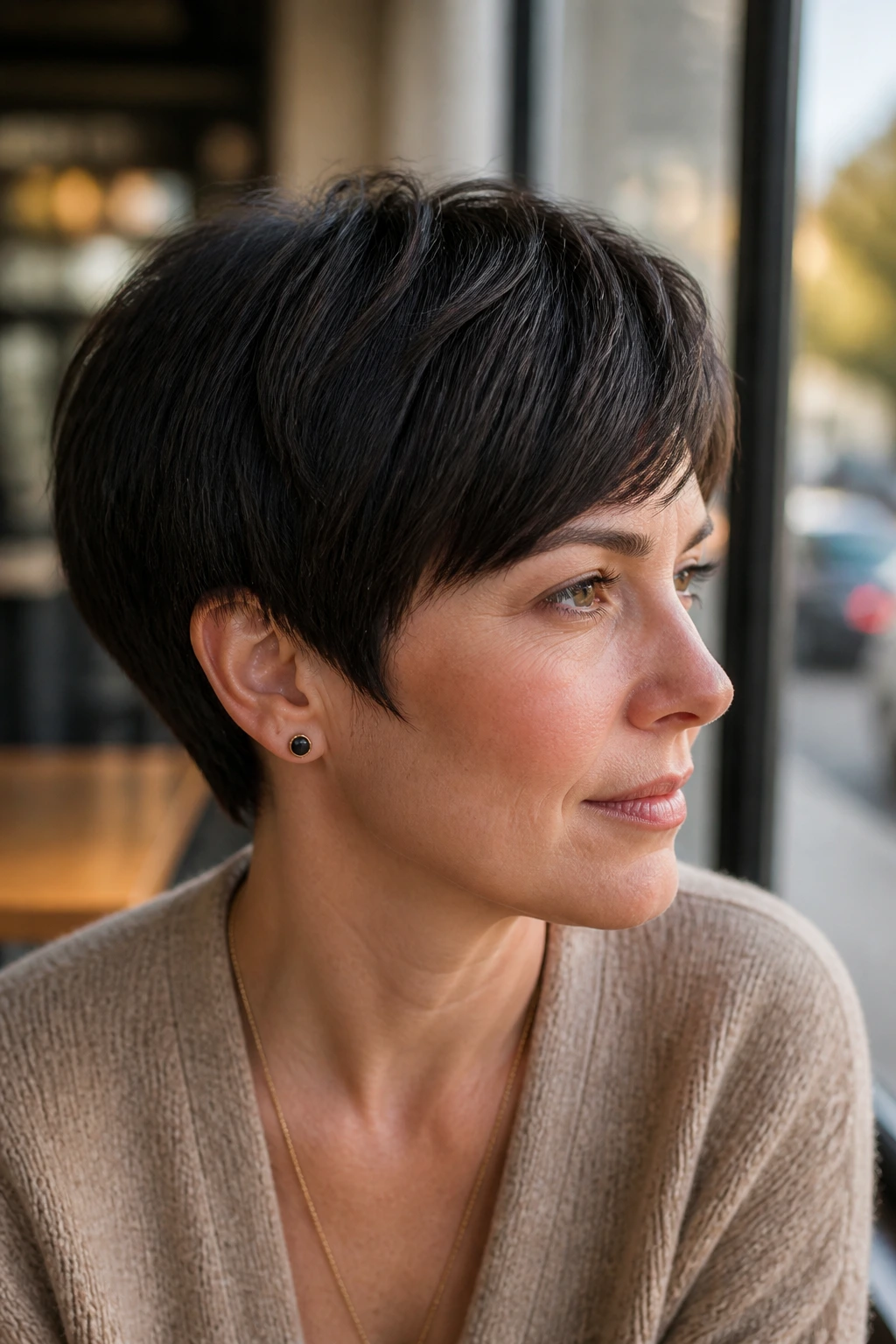
A rounded profile can be a mercy on thick hair. Instead of sharp corners at the sides and crown, the shape follows a gentle curve that keeps the haircut from looking boxy. It’s one of the most flattering choices when the hair wants to expand at the temples.
Why It Helps
The top should be lightly layered to avoid flatness, and the sides should taper in gradually. That creates a smooth outline from front to back. I like this version for people who want the strength of short hair without a hard edge around the face.
The rounded pixie is quiet, but not boring. It just knows where to sit.
32. A Temple-Length Pixie That Holds on to the Sideburn Area
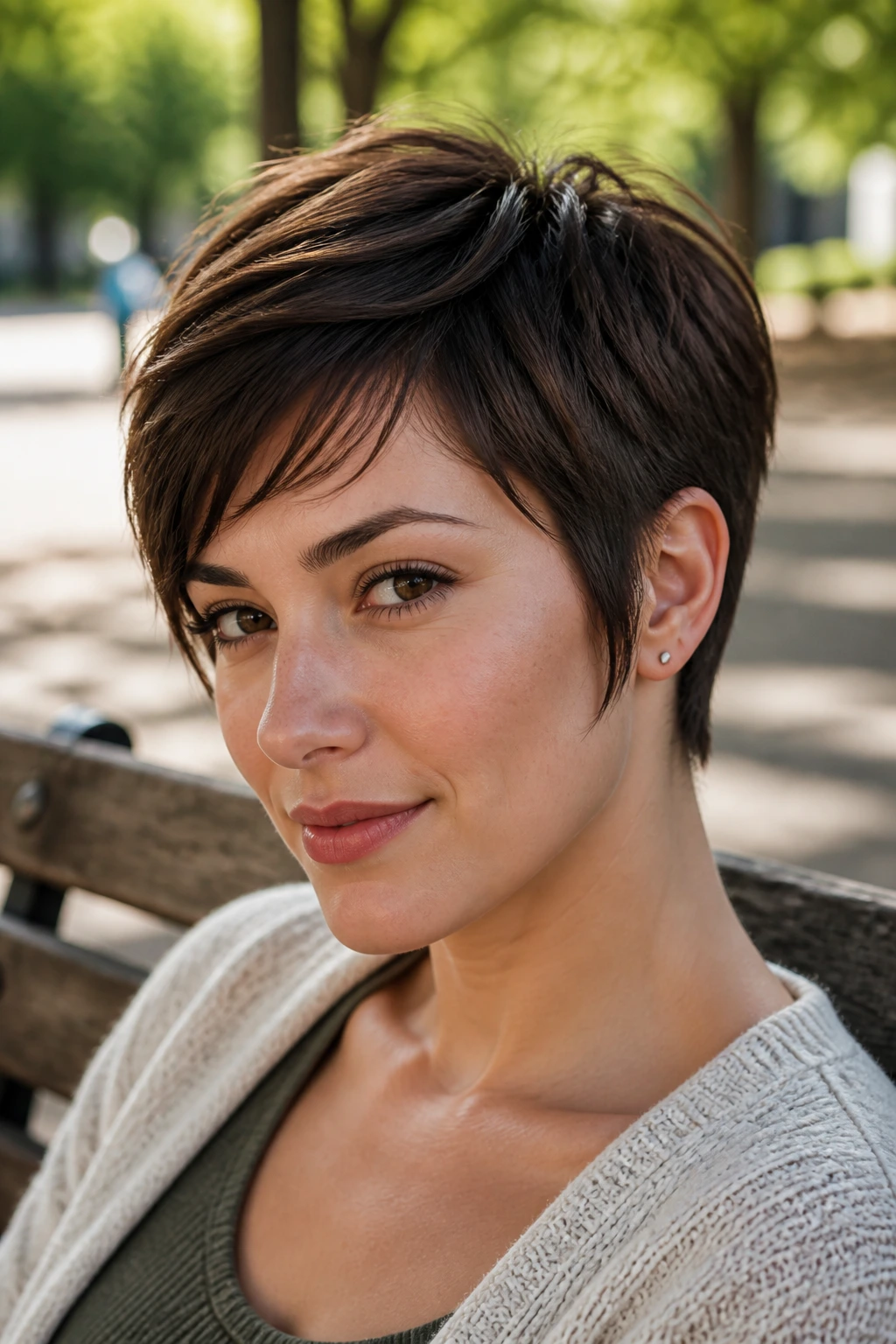
Temple length sounds like a small detail until you see what it does. Leaving a little more hair around the temples and sideburns gives thick hair a place to soften around the face, which can make the cut feel less abrupt. It also helps if you wear glasses or prefer to tuck the hair back without exposing too much skin at the sides.
The rest of the pixie can stay short and tight, but that temple length keeps the silhouette from feeling bare. It’s a good compromise if you want the neck and crown to feel light while the face still gets some framing.
This version grows out nicely, too. The extra length buys you time.
33. A Long Layered Pixie That Still Brushes the Eyebrows
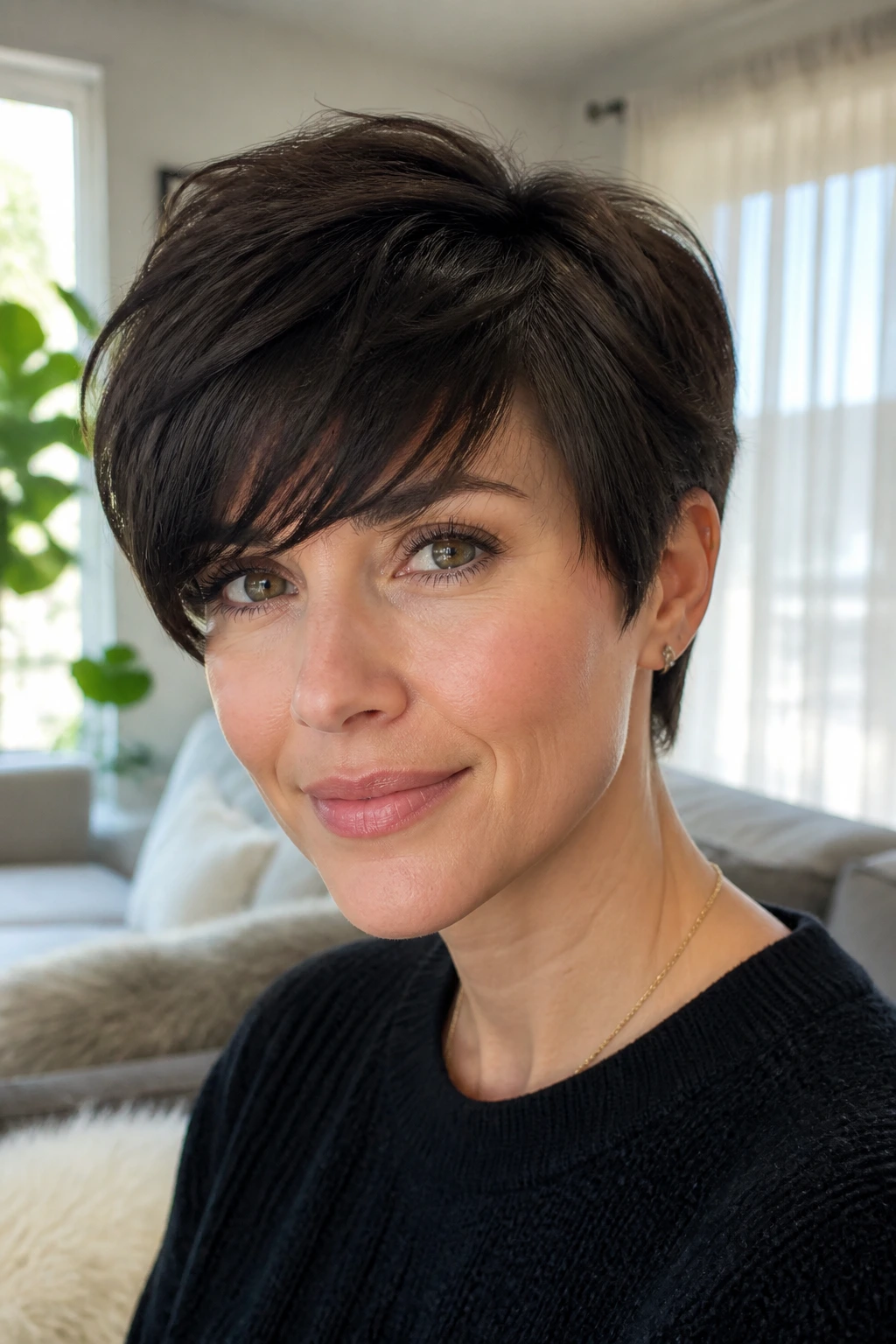
This is the pixie for people who are not ready to lose the front entirely. The top layers stay long enough to brush the brows, while the sides and back are trimmed into a shorter support shape underneath. Thick hair gives this style a lot of body, which keeps it from falling limp.
The layers should be soft, not choppy, so the front can move easily from forward to side-swept. A round brush or even a quick flat-iron bend at the ends can create a more finished look. If the front is left too heavy, the cut starts reading as a grown-out bob, so balance matters.
It’s a good bridge haircut. Not too short. Not pretending to be long.
34. A Razor-Soft Pixie With Wispy Ends
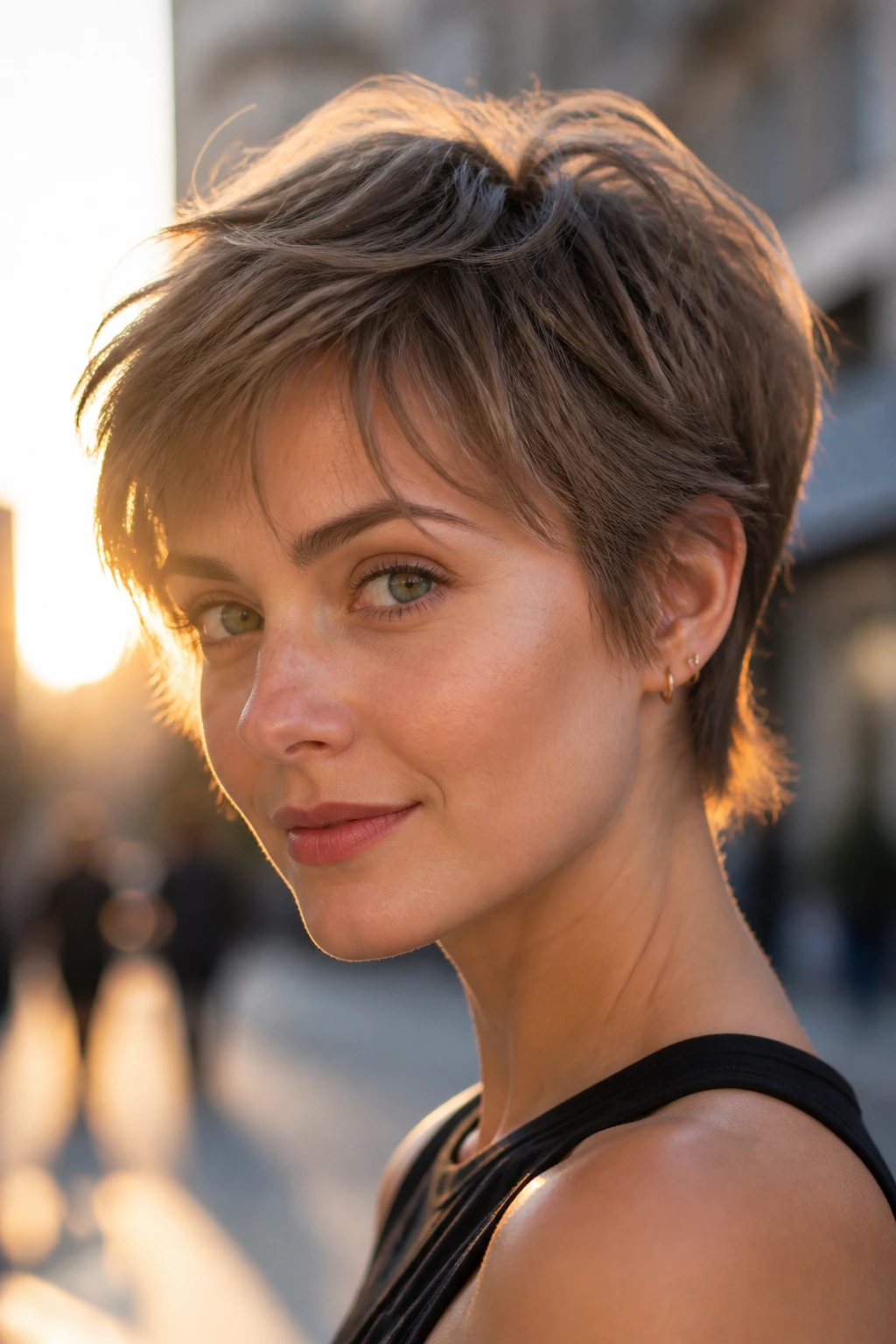
Razor work can be lovely on thick hair when it’s controlled. The point is to soften the ends so the cut doesn’t feel blunt or blocky. Wispy edges let dense hair breathe a little, especially around the ears and nape where bulk tends to gather.
What to Watch For
A razor should be used sparingly. Too much of it and thick hair can fray, especially if the strands are coarse or dry. The best version has softness at the perimeter and enough structure underneath to hold the shape.
I like this cut for people who want movement and a little air around the edges without going full shag.
35. A Grow-Out-Friendly Pixie That Stays Cute Between Cuts
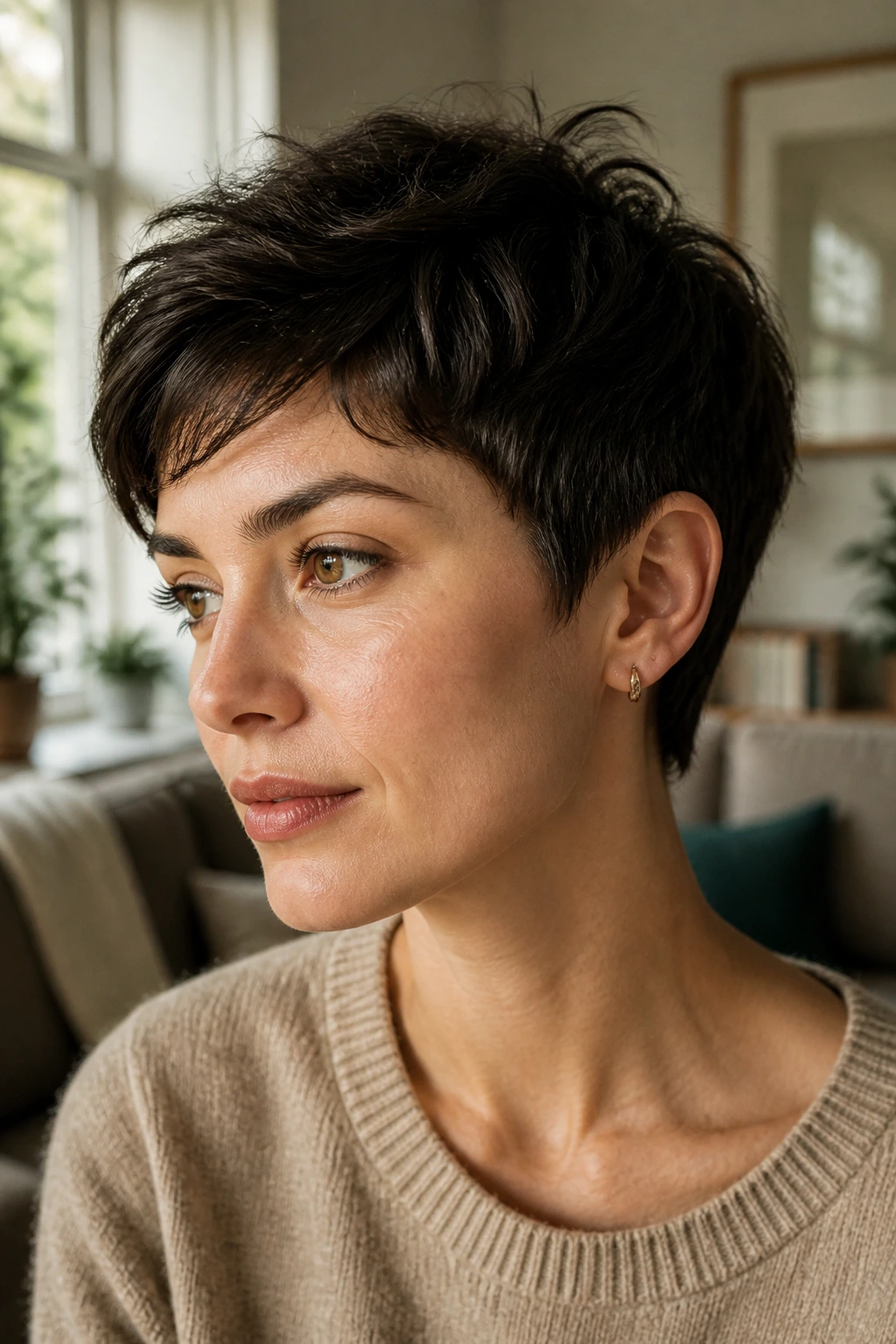
The smartest short haircut is the one that still looks good when life gets busy. A grow-out-friendly pixie is built with that in mind: a slightly longer top, a soft nape, and sides that don’t turn into hard shelves after three weeks. Thick hair actually helps here, because the density keeps the shape full while it lengthens.
You can take this cut into a bixie, a short shag, or even a longer layered crop without that ugly in-between stage that makes people swear off short hair forever. If you know you won’t make it to the salon every month, ask for a shape with soft transitions and no ultra-short corners.
That little bit of planning saves you a lot of annoyance later.
Why Thick Hair Changes the Pixie Conversation
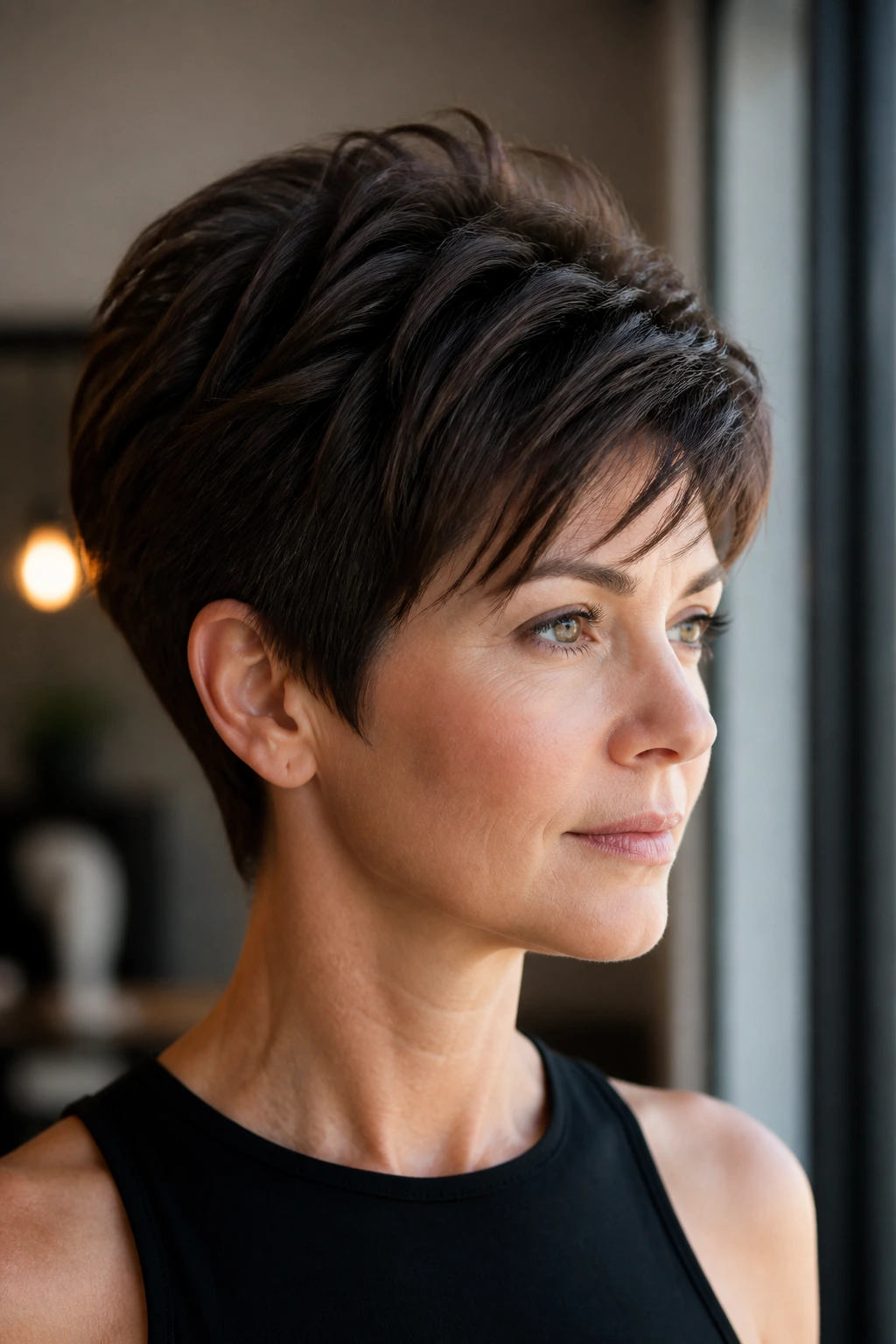
Thick hair is not harder to cut short. It just demands a different blueprint. The weight sits differently, the crown can puff up faster, and the sides can feel broader than they look on the floor. If the haircut ignores that, the result is usually a heavy outline with a short top — a shape that looks unfinished by lunch.
What works instead is balancing the mass. A strong pixie on thick hair usually has a shorter nape, controlled temple length, and enough lift at the crown to stop the head from looking flat. Interior layers matter more than surface texture. They take the pressure off the outer line, which is where the bulk tends to show first.
And this is the part people forget: thick hair often gives you better structure when it’s shorter, not worse. The shape can hold. The line can stay crisp. The trick is getting a stylist who understands that a pixie on long thick hair is a sculpting job, not a simple chop.
Essential Tools for Styling and Trimming These Pixies
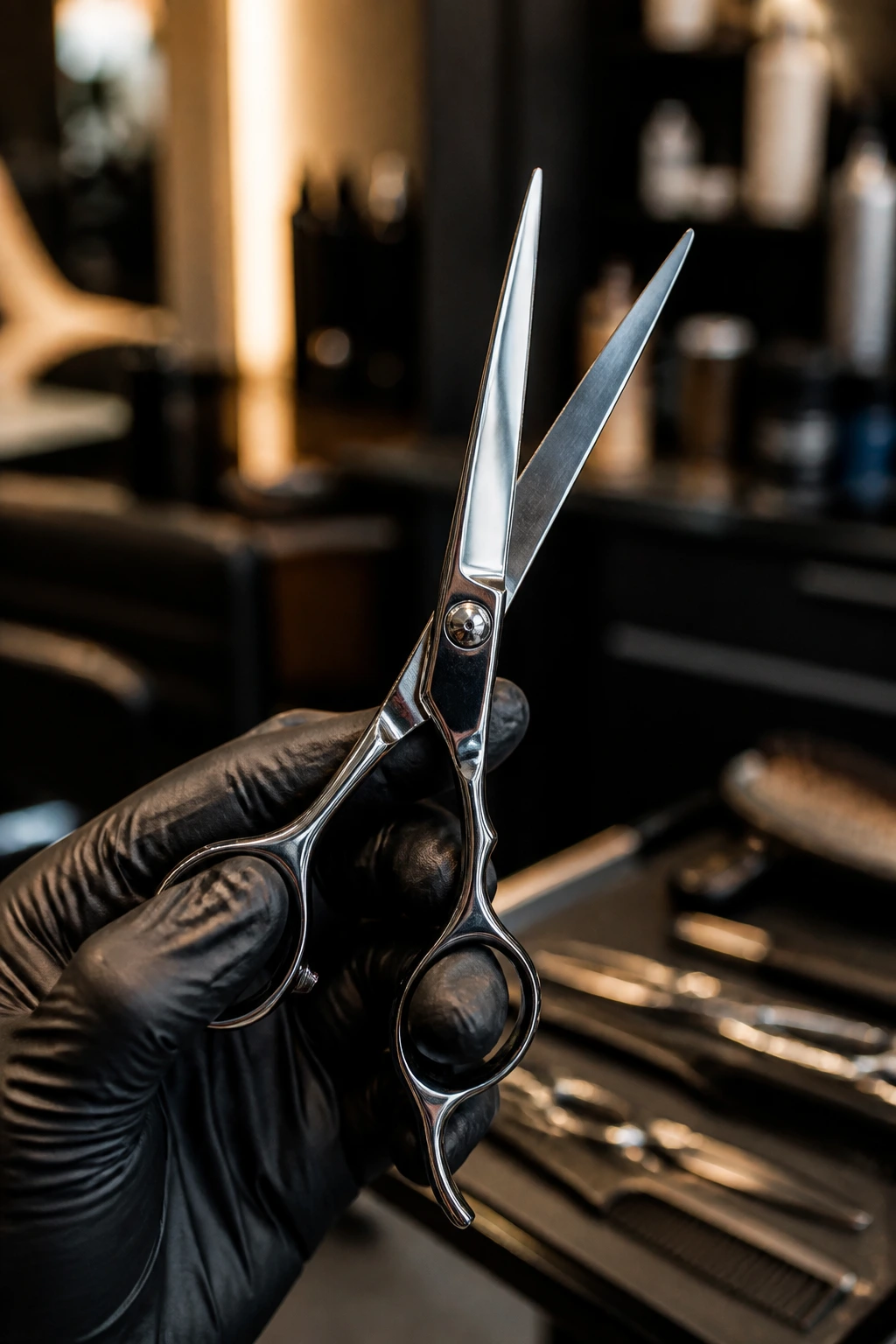
- Sharp haircutting shears: Dull shears chew thick hair and leave fuzzy ends that stick out at the temples.
- Texturizing shears or a razor, used carefully: Helpful for reducing bulk, but they should be used sparingly on coarse hair.
- Blow dryer with a nozzle: Directs the airflow so the crown can be lifted without blasting the whole cut wide open.
- Small round brush: Useful for directing the front, especially on long-top or pompadour shapes.
- Vent brush or denman-style brush: Helps pull thick strands into the right shape while drying.
- Light mousse or root spray: Gives root support without making the haircut stiff.
- Matte paste or clay: Best for piecey, choppy, or shaggy versions where separation matters.
- Light smoothing cream or serum: Good for polished pixies and sleek finishes, but use a tiny amount.
- Water spray bottle: Essential for resetting second-day hair and reworking a fringe.
- Salon clips: Handy for sectioning thick hair during styling so you don’t lose control of the crown.
How to Talk to Your Stylist Before the Chop
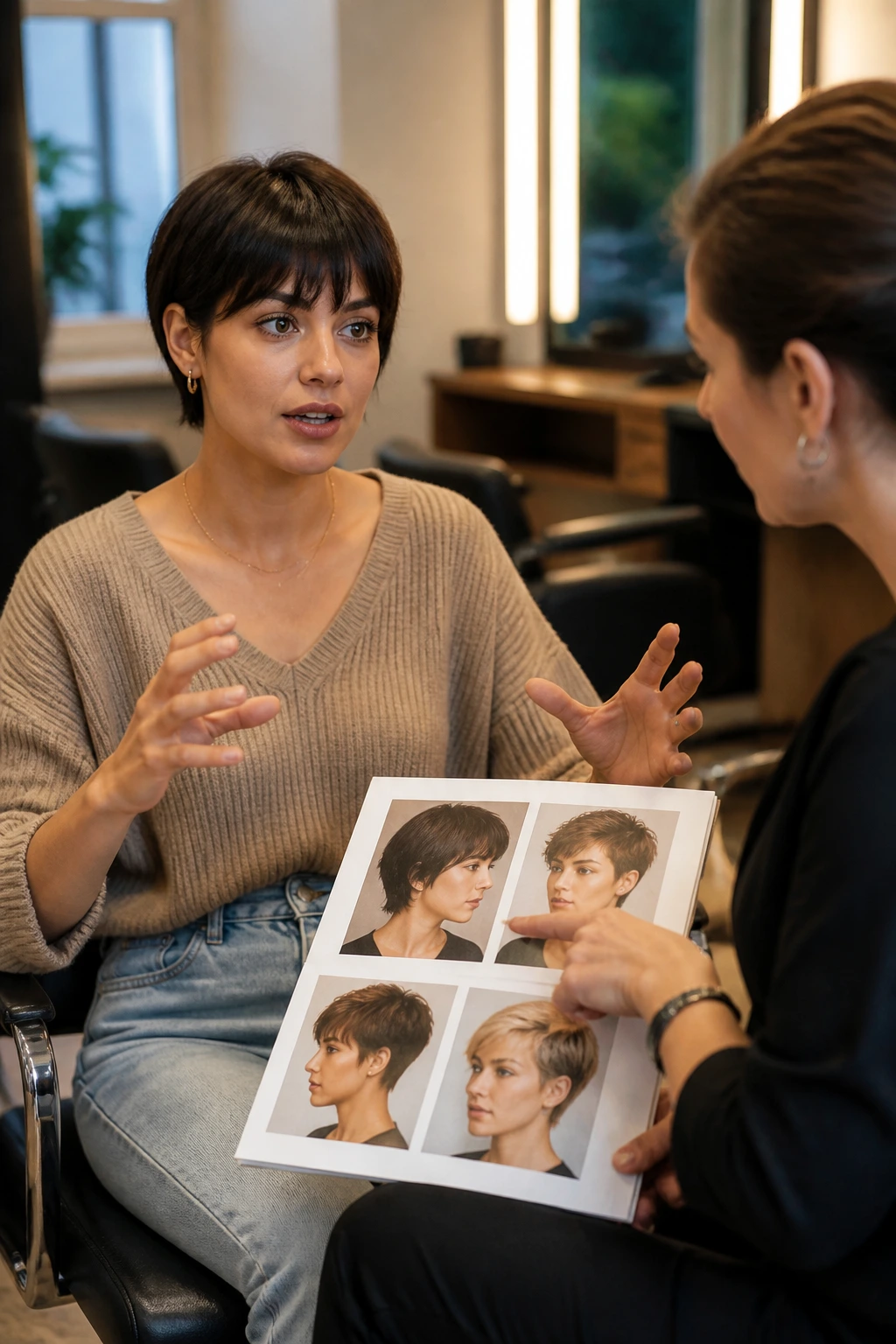
Bringing photos helps, but not in the lazy “I like this vibe” way. Bring three or four angles: front, side, and back. Thick hair changes the shape so much that a front photo alone can be misleading. A style that looks airy on fine hair may look far denser on your head unless the outline is planned for it.
Say where your weight lives. Is it at the nape, behind the ears, or at the crown? That tells the stylist where to remove bulk first. Also say how much styling time you’re willing to spend. A polished pixie and a wash-and-go pixie are not the same haircut pretending to be different.
Be specific about the parts you want to keep longer. Maybe you want the fringe to brush the eyebrows, the sideburns to reach the middle of the ear, or the nape to sit tight against the neck. Those small length decisions matter more than people think, especially on dense hair. A quarter inch can be the difference between “sharp” and “too much.”
How to Style These Pixies Without Fighting the Cut
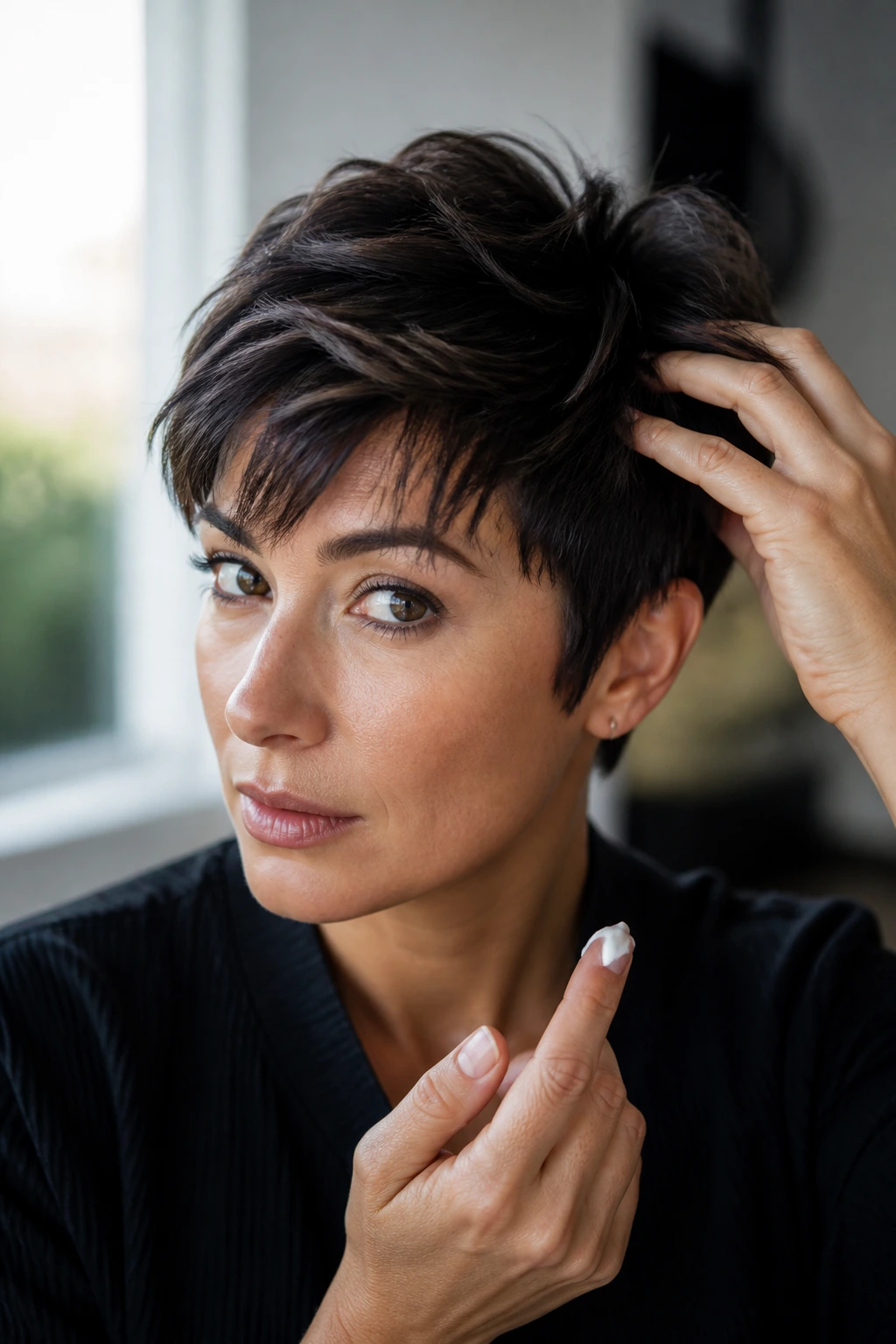
Root Lift:
If the top collapses, flip the crown in the opposite direction while blow-drying for the first 30 seconds. Thick hair often sets in the direction you train it, so that quick change makes a real difference.
Piecey Finish:
Use a pea-sized amount of matte paste on dry hair and pinch only the ends. If you work product through the roots, thick hair can clump and lose the shape you paid for.
Air-Dry Shortcut:
On wavy or curly pixies, apply foam or cream to soaking-wet hair, scrunch once, and stop touching it. Every extra rake of the fingers can create frizz at the perimeter.
Polished Finish:
For sleek versions, blow-dry with tension at the brush and keep the nozzle pointed downward. That smooths the cuticle and helps the outline sit close.
Second-Day Reset:
Mist the fringe and crown lightly, then rework the shape with damp hands rather than starting from scratch. Thick hair usually responds well to a small refresh, not a full redo.
Common Mistakes That Make Thick Hair Look Bulky or Fussy
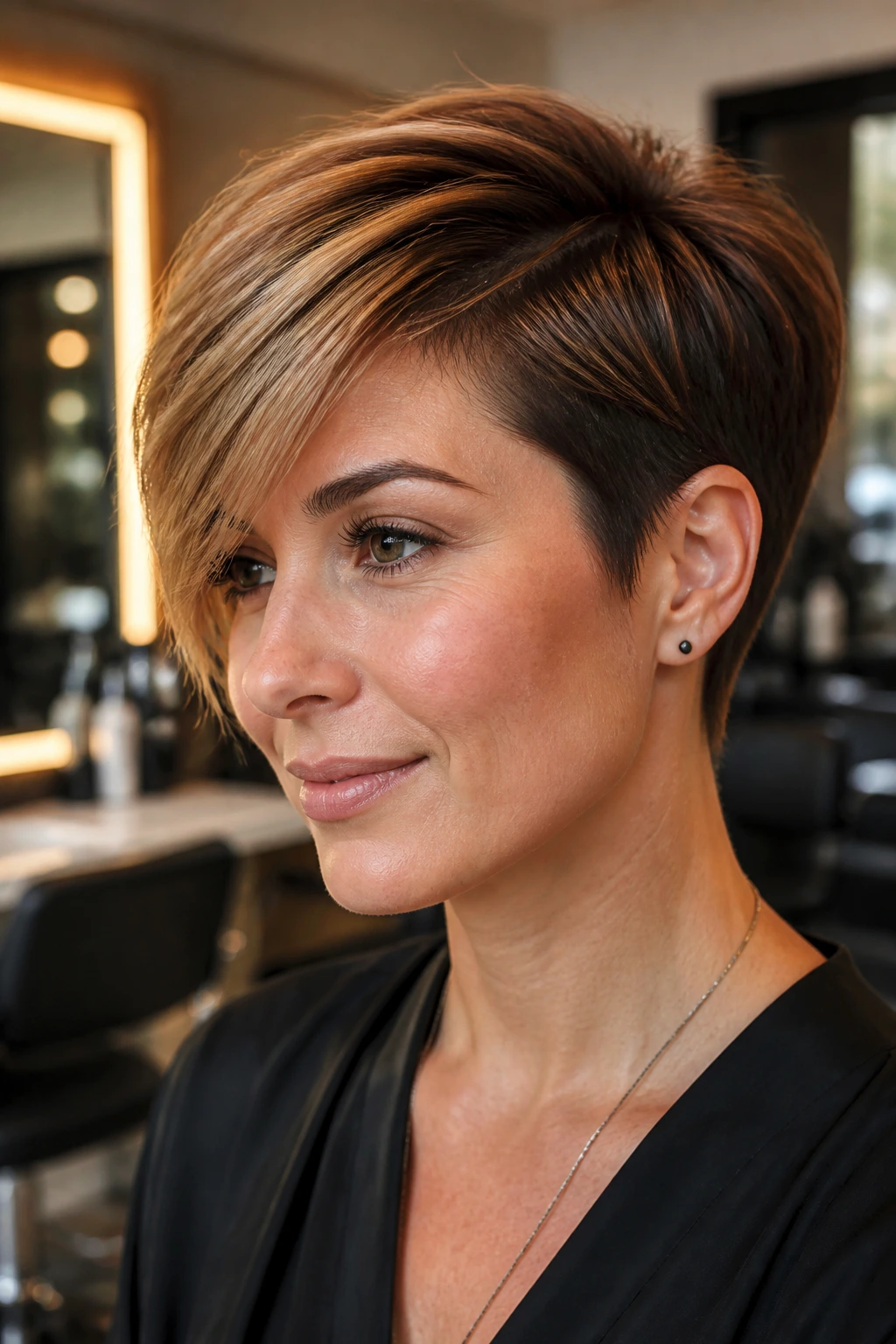
- Leaving too much weight at the sides: The haircut starts to spread at the cheekbones and makes the head look wider than it is. The fix is a tighter taper around the ears and a cleaner line through the temple area.
- Over-thinning the ends: Hair gets frizzy, see-through, and hard to control. Interior weight removal is safer than shredding the surface with thinning shears.
- Cutting the fringe too short on the first pass: Thick hair can spring up after it dries, especially if it has wave or a cowlick. Leave the bangs longer than you think, then adjust once the hair has settled.
- Ignoring the crown swirl: If the cut fights a natural cowlick, the top will split and puff. Build the shape around the growth pattern instead of pretending it isn’t there.
- Using heavy cream products everywhere: Thick hair already has body; too much product just drags it down and makes the ends look greasy. Start tiny and add only where the hair actually needs control.
- Trying to make the whole cut equally short: A pixie on thick hair needs contrast. If every section lands at the same length, the style loses shape and turns into one dense block.
Variations and Adaptations to Try
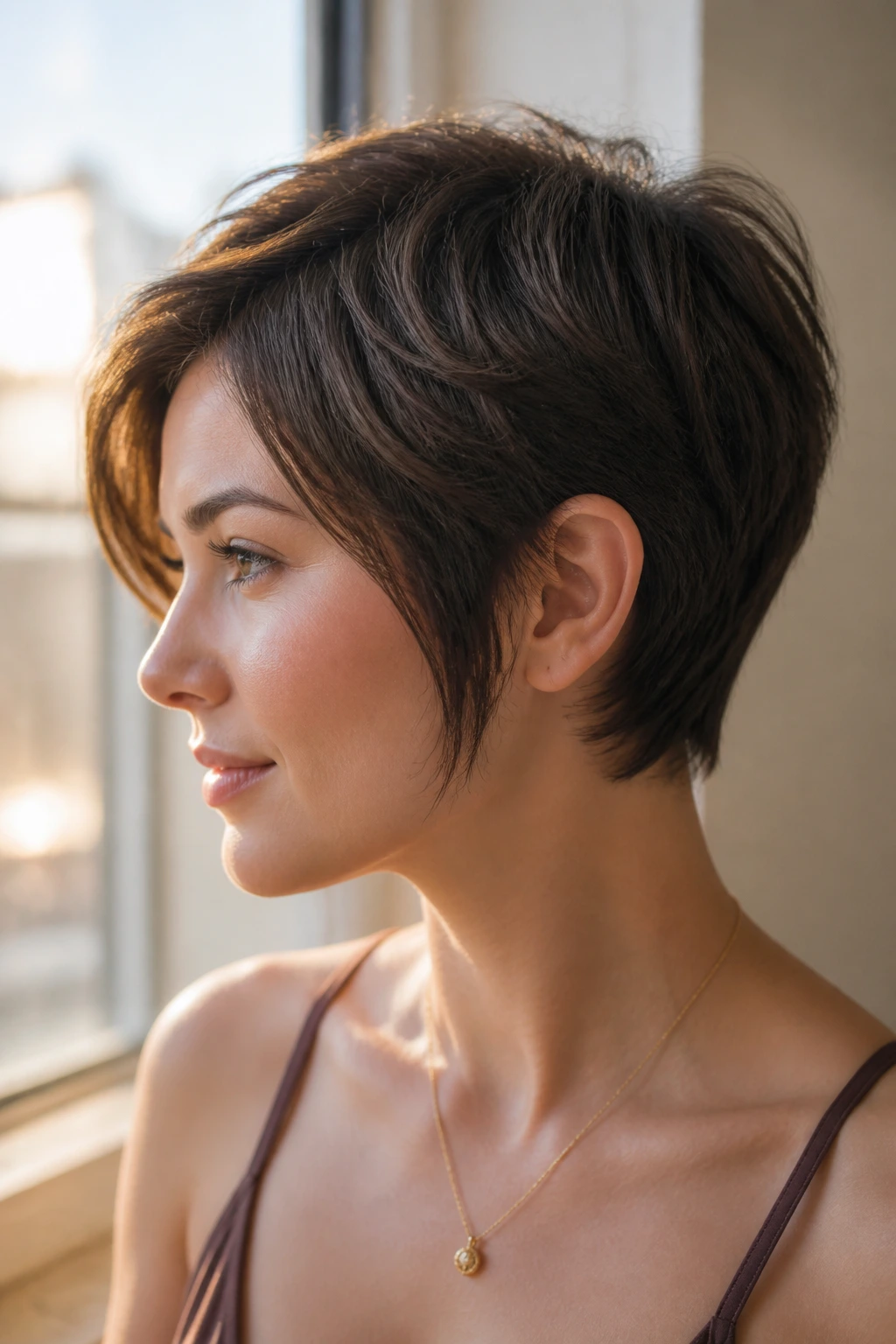
- The Soft Landing Bixie: Keep the front and crown longer and taper the back into a bixie shape. This is the one to try if you want to test short hair without losing the feeling of length around your face.
- The Edgy Hidden Undercut: Remove bulk only under the top layers at the nape or behind the ears. You get a cleaner silhouette without advertising the undercut from the front.
- The Curl-First Crop: Leave the top slightly longer and let the curls build their own shape. This works when you want movement more than polish.
- The Glassy Sleek Version: Pair a classic pixie shape with smoothing cream and a straight blow-dry. It sharpens the outline and suits thick straight hair that tends to puff.
- The Soft Grow-Out Shape: Keep the top and fringe long enough to slide into a short shag later. This one is smart if you want a pixie now and flexibility later.
- The Temple-Framing Version: Leave the sideburns and temple area longer for glasses, cheekbones, or a softer face frame. It’s an easy adjustment that changes the whole mood of the cut.
Maintenance, Trims, and Grow-Out Planning
Thick hair shows regrowth faster than people expect because the shape changes as soon as the sides and nape start to fill in. For very short pixies, plan on a trim every 4 to 6 weeks if you want the outline to stay crisp. Longer pixies, bixies, and grow-out-friendly versions can usually stretch to 6 to 8 weeks, but the nape and temple corners still need attention.
Between appointments, the most important thing is not to panic and cut at home with random scissors. Use a spray bottle, a little product, and your fingers to restyle before you declare the haircut “wrong.” Thick hair often needs re-direction more than it needs more length removed.
When you want to grow it out, ask your stylist to protect the top and fringe first. That extra length can carry you through the awkward middle stretch and soften the transition into a bixie or short shag. If the nape is left too blunt, grow-out gets annoying fast, so a softly tapered back is worth insisting on.
Frequently Asked Questions
Can long thick hair really be cut into a pixie without looking puffy?
Yes, but the cut has to remove weight from the interior and around the nape. If the sides are too full, the style spreads outward instead of sitting close to the head.
What pixie cut is easiest if I have a cowlick at the crown?
A longer top pixie or a shaggy pixie usually behaves better than a super-short crop. The extra length gives the swirl somewhere to land instead of splitting the hair apart.
Should thick hair be thinned before cutting it short?
Not automatically. Heavy-handed thinning can fray the ends and make the cut look fuzzy, so interior debulking and smart layering are usually safer than aggressive texturizing.
What if I want short hair but I’m scared of losing too much length?
Start with a bixie or a long-top pixie. Those shapes keep length around the face and give you a cleaner short-hair feel without jumping straight to a very cropped silhouette.
Do pixie cuts work on thick curly hair?
Absolutely, as long as the cut respects the curl pattern. Leave enough length on top for the curls to spring, and keep the sides tidy so the shape doesn’t turn wide.
How often will I need trims?
Very short pixies usually need attention every 4 to 6 weeks. Longer versions can go a bit longer, but thick hair tends to change shape fast at the nape and temples.
What should I bring to the salon?
Bring photos from more than one angle and be ready to point out where your hair feels heaviest. Tell your stylist how much styling time you want to spend in the morning; that answer changes the cut more than people think.
Can I air-dry a pixie if my hair is thick?
Yes, especially if your hair has wave or curl. The cut needs to be shaped for air-drying, though, or the volume can sit in the wrong places and make the head look wider.
Short Hair, Better Shape
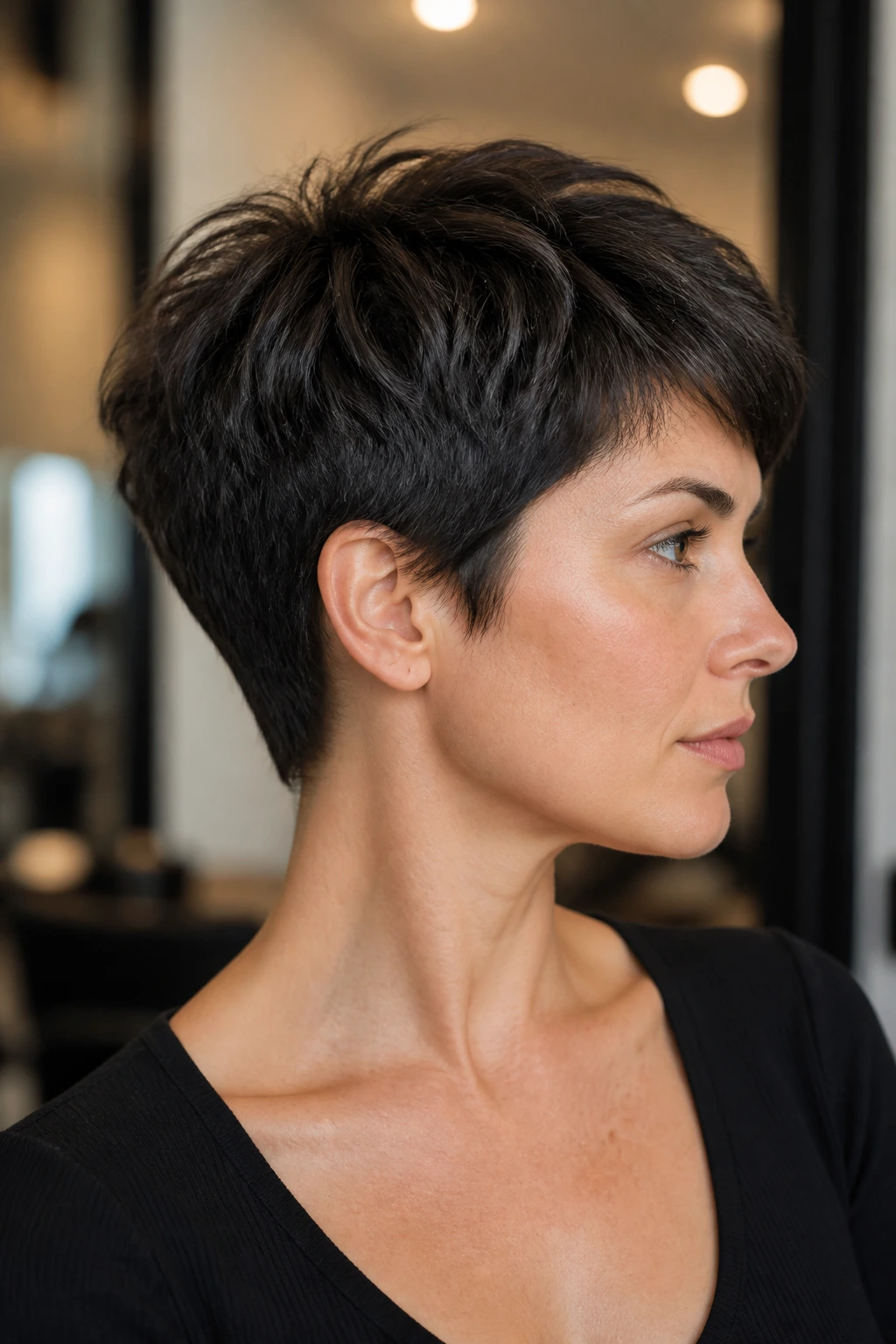
The best pixie cuts for long thick hair are the ones that understand mass. They remove bulk where it collects, keep length where you want movement, and build a silhouette that still makes sense three weeks after the salon visit. That’s the difference between a short haircut and a short haircut with shape.
If your hair has been sitting in a ponytail because the idea of going short feels risky, start with the cut that leaves you room to breathe — a long-top pixie, a bixie, a tapered nape, something with a bit of grace built into it. Thick hair can take the chop. It just wants a plan first.
