



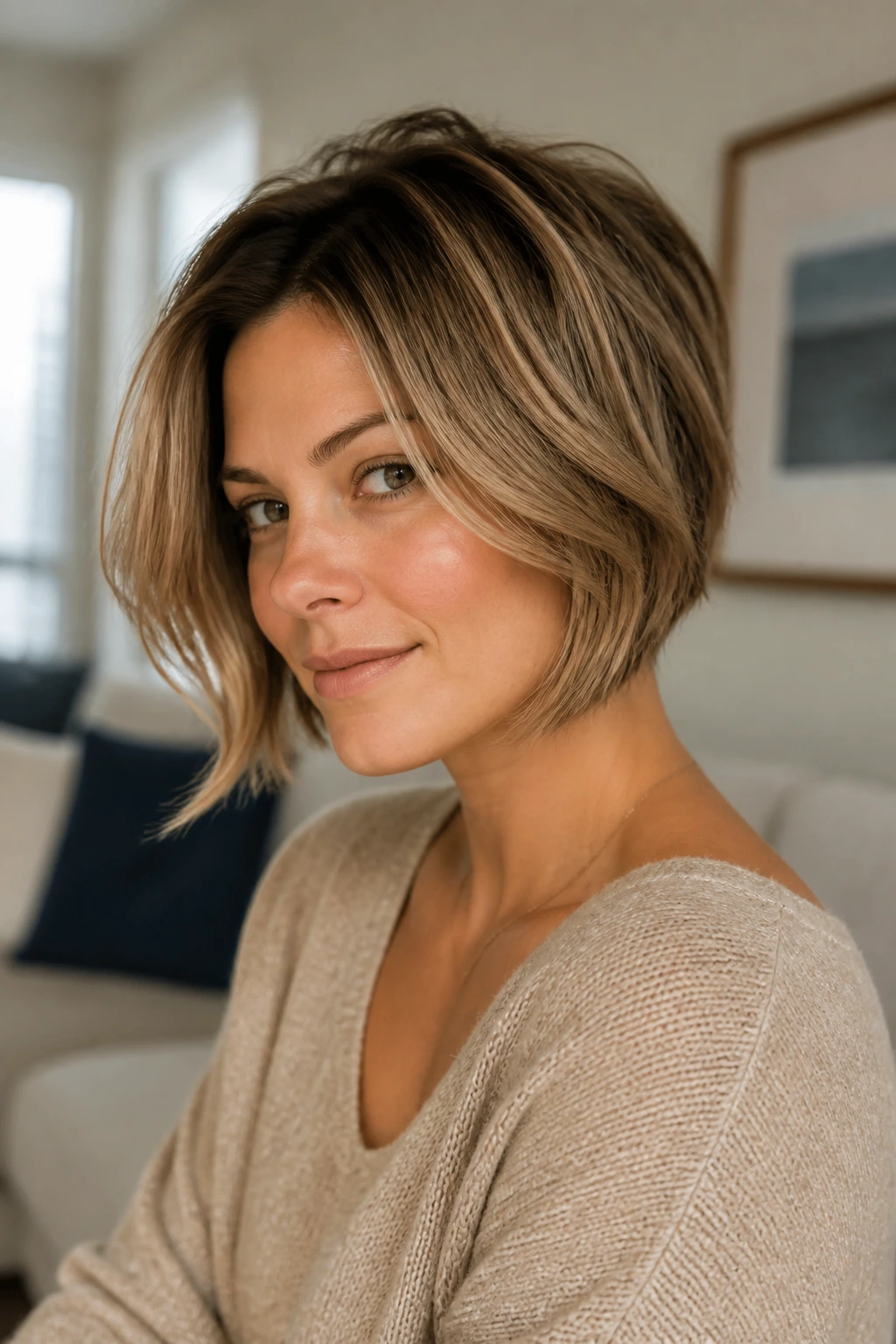
Pixie bobs for long hair sit in that narrow, lovely space between “I want it off my neck” and “I am not ready for a full crop.” That’s the magic. You get the lift, the swing, the open neckline, and that little bit of attitude around the cheekbones — without giving up the front length that lets you tuck a side behind your ear or sweep fringe across your face when you want some softness.
What makes this haircut interesting is that it isn’t one haircut. It’s a whole family of cuts built around the same idea: shorten the back, lighten the crown, keep enough length at the front to flatter the face. On long hair, that balance matters even more. Go too blunt and it can feel heavy. Go too short in the wrong place and the grow-out gets awkward fast. Get the shape right, though, and it looks deliberate from every angle.
The 23 ideas below cover that range from polished to piecey, from soft transition cuts to sharper, bolder shapes. If your hair is thick, fine, straight, wavy, curly, or somewhere in between, there’s a version here that will make more sense than the usual “just cut it short” advice.
Why These Pixie Bobs Earn Their Place
-
They keep some face-framing length: A pixie bob can still brush the jaw, cheekbone, or sideburn area, which keeps the cut from feeling severe on the first day.
-
They grow out in a usable shape: A cleaner nape and a little extra length through the front mean the haircut still reads as intentional at five, seven, even nine weeks.
-
They work with more hair types than people expect: Straight hair can look crisp, wavy hair gets movement, and curly hair can lose bulk without losing personality.
-
They make texture and color visible: Layers, highlights, silver strands, and lowlights all show better when the cut has air between the sections.
-
They can be softened or sharpened fast: A side part, fringe, undercut, or stacked back changes the mood without starting from scratch.
What Makes a Pixie Bob Feel Right on Longer Hair
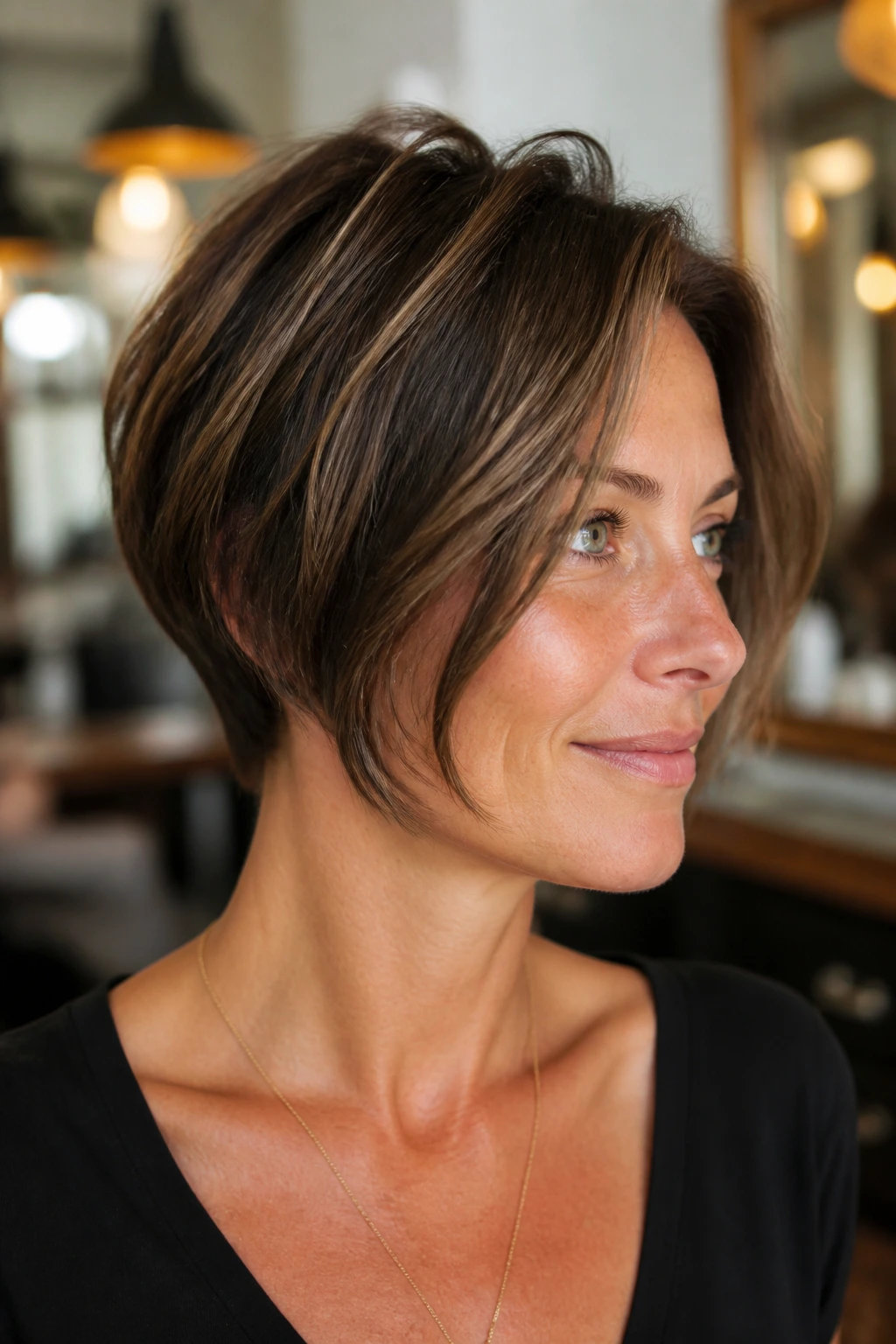
The shape works because it has three jobs at once. The nape clears the neck and stops the haircut from dragging downward. The crown removes enough weight that the top doesn’t collapse after an hour. The front keeps a little length so the cut still feels familiar if you’ve lived with long hair for years.
That front piece is the part people underestimate. Keep it a touch longer, and the whole haircut feels easier to wear. Let it skim the jawline or sit just below the cheekbone, and you get a soft frame that can be tucked, pushed back, or left loose without looking stiff.
A good pixie bob also respects growth patterns. Hair at the hairline, around the ears, and at the crown doesn’t all move the same way. When a stylist cuts with those patterns in mind — instead of just carving off length — the result sits better on the head and needs fewer heroic styling efforts later.
1. Soft-Drape Pixie Bob
This is the easiest place to start if you’re coming down from long hair and don’t want shock value. The back is trimmed close enough to free the neck, but the front keeps a soft drape that brushes the jaw and falls forward a little when you move. It’s the kind of cut that looks friendly on day one and still behaves at week six.
Why it works: The softness comes from keeping the perimeter slightly feathered instead of blunt. That means the lines blur just enough to avoid a hard helmet effect. If your hair has a little natural bend, this cut lets it do the work for you.
A light point-cut around the face keeps the ends from sticking out in odd little shelves. Ask for that if your hair tends to puff at the sides. It matters more than people think.
2. Tucked-Behind-Ears Pixie Bob
If you like the feeling of hair off your face but don’t want it clipped back, this one makes the simple tuck look intentional. The sides stay a little longer than a classic pixie, so when you sweep them behind the ears, the shape still looks clean and relaxed.
Best for: straight or slightly wavy hair that falls flat when it gets too long. The tucked side creates a nice contrast between the sleek ear area and the fuller crown.
You can wear one side tucked and let the other stay loose for a casual imbalance that works especially well with hoops or a strong brow. It’s a small thing, but it changes the whole mood. Very little effort. Big payoff.
3. Crown-Lifted Choppy Pixie Bob
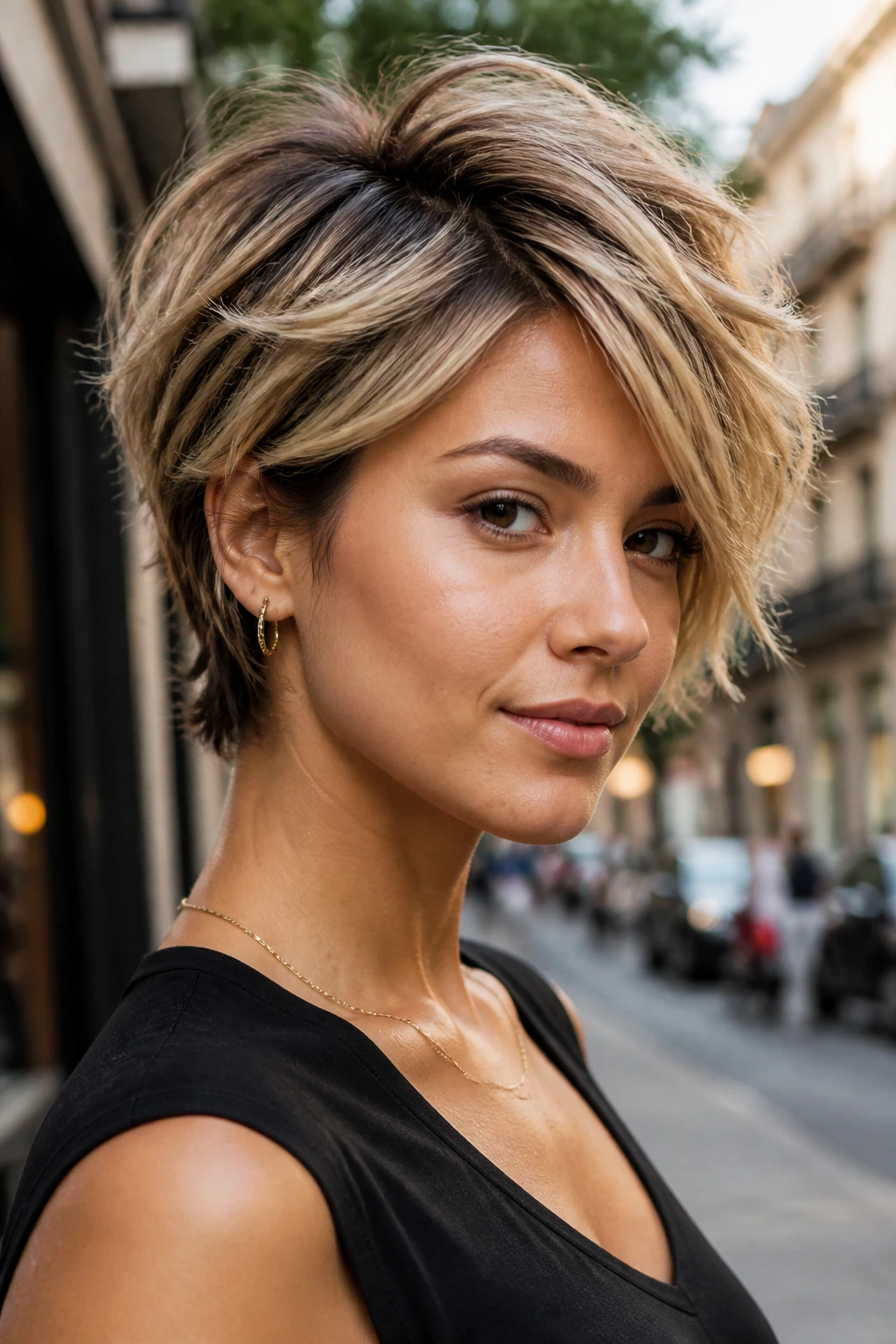
The crown should feel light enough to move when you run your fingers through it. That’s the whole point here. Choppy layers at the top break up heaviness, so the style doesn’t sit like one thick block.
What Makes It Different
This version leans into texture. The ends are snipped with more irregularity, and the top is left airy rather than polished. On dense hair, that texture keeps the cut from becoming boxy by the second week.
Ask for short internal layers at the crown and a softer perimeter around the ears. If the stylist over-thins the ends, it can look wispy in a bad way, so the key is controlled choppiness, not shredding.
4. Asymmetrical Long-Front Pixie Bob
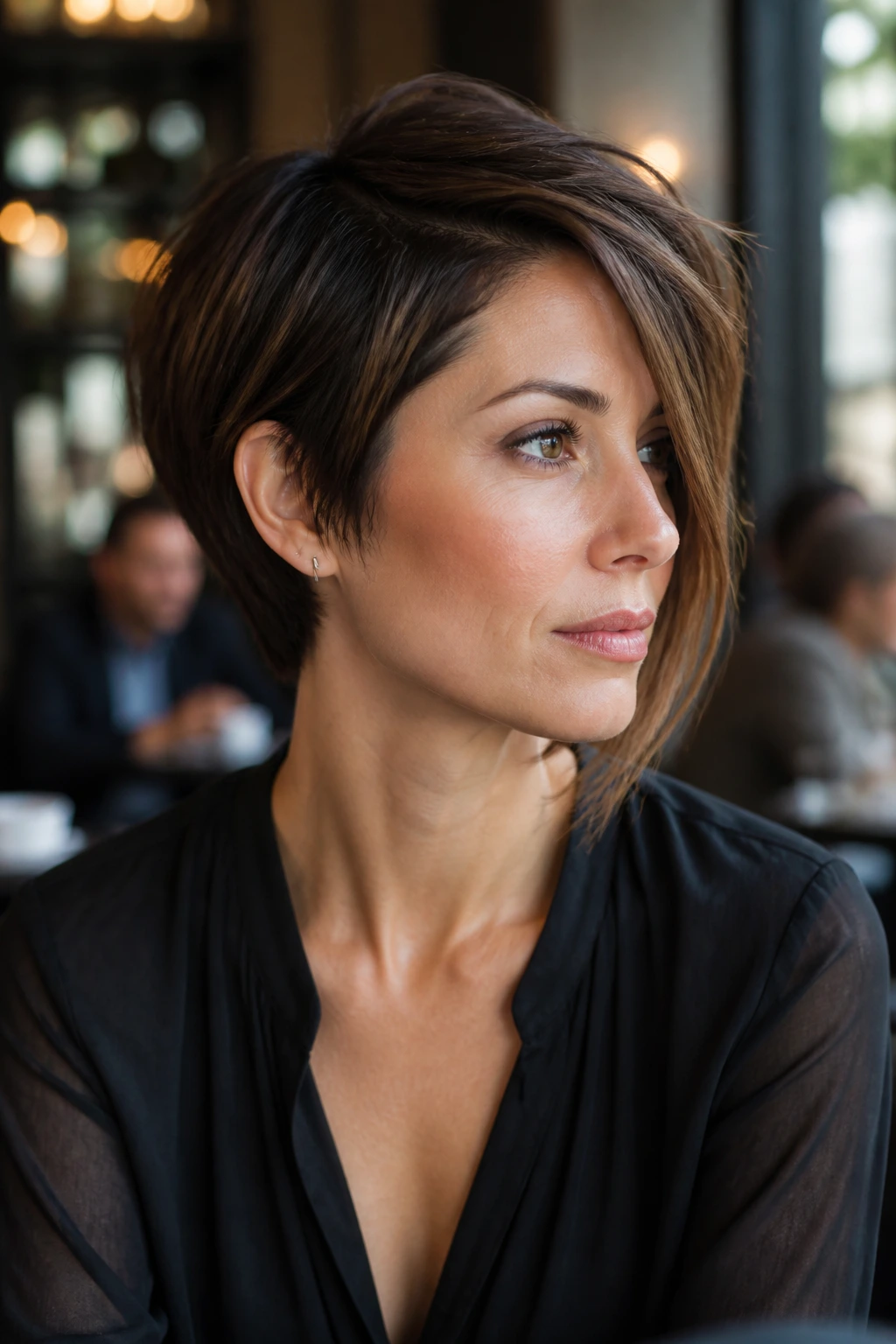
One longer side changes the whole haircut. The eye goes straight to the diagonal line, and suddenly the cut feels sharper, more modern, and a little less predictable.
A longer front on one side also helps if you’re nervous about going short. The asymmetry gives you a face-framing piece to hold onto while the back and opposite side stay neat and close. That bit of contrast is doing a lot of work.
This one looks best when the part is clean and the longer side has movement, not just dead length. If your hair is very thick, keep the long side light at the ends so it doesn’t drag the whole shape down.
5. Feathered Curtain-Bang Pixie Bob
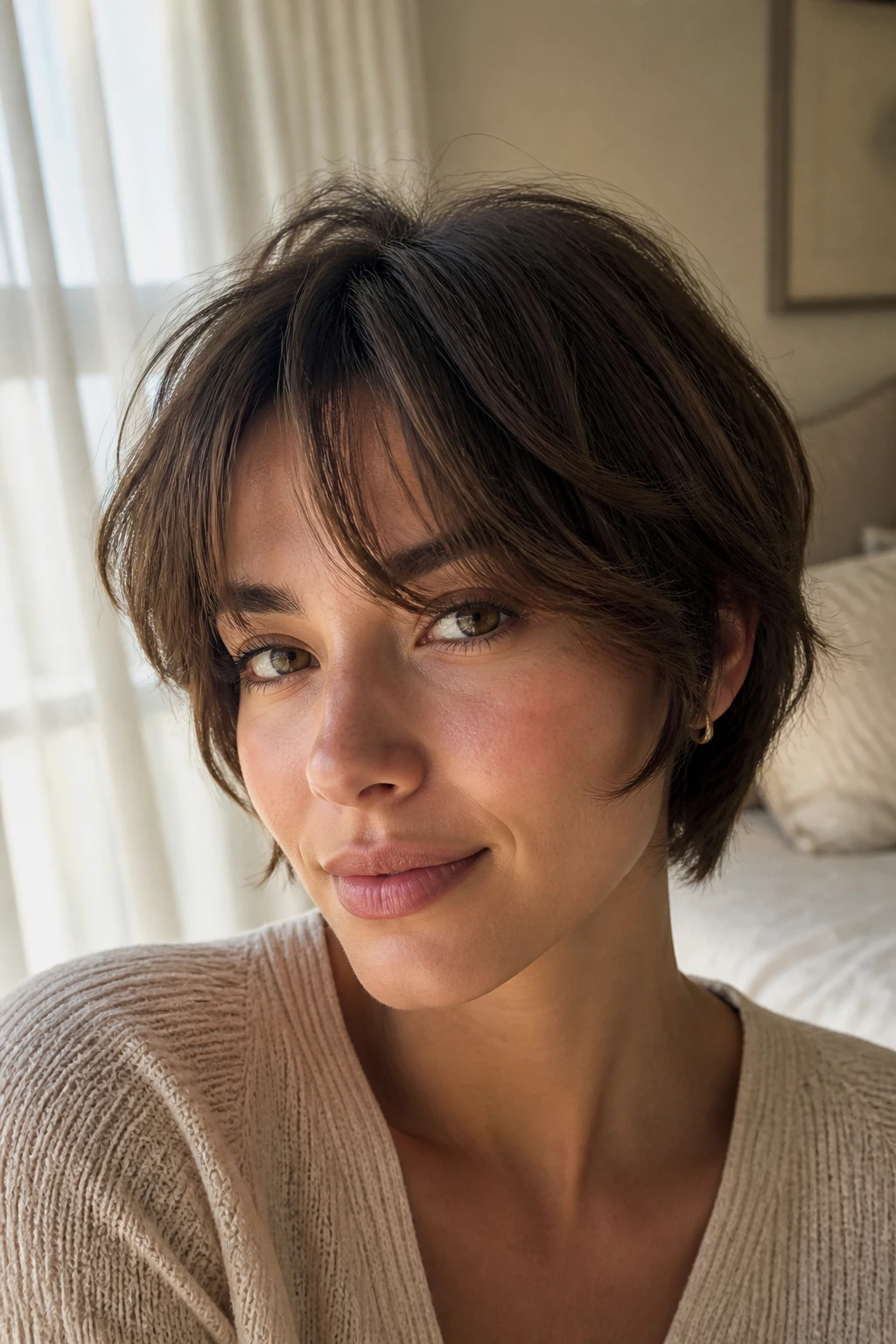
Curtain bangs don’t have to live on long shags and shoulder cuts. On a pixie bob, they soften the forehead and make the front feel less abrupt, which is useful if your long hair usually hides your face.
The feathering matters. A heavy bang across a short cut can feel like a curtain dropped in the wrong room. Feathered curtain pieces, parted slightly off center, open the face without making the style feel too exposed.
This cut works especially well when the hair around the temples is left with a little bend. A round brush or a quick pass of a blow dryer is enough. No need to overwork it.
6. Stacked Nape Pixie Bob
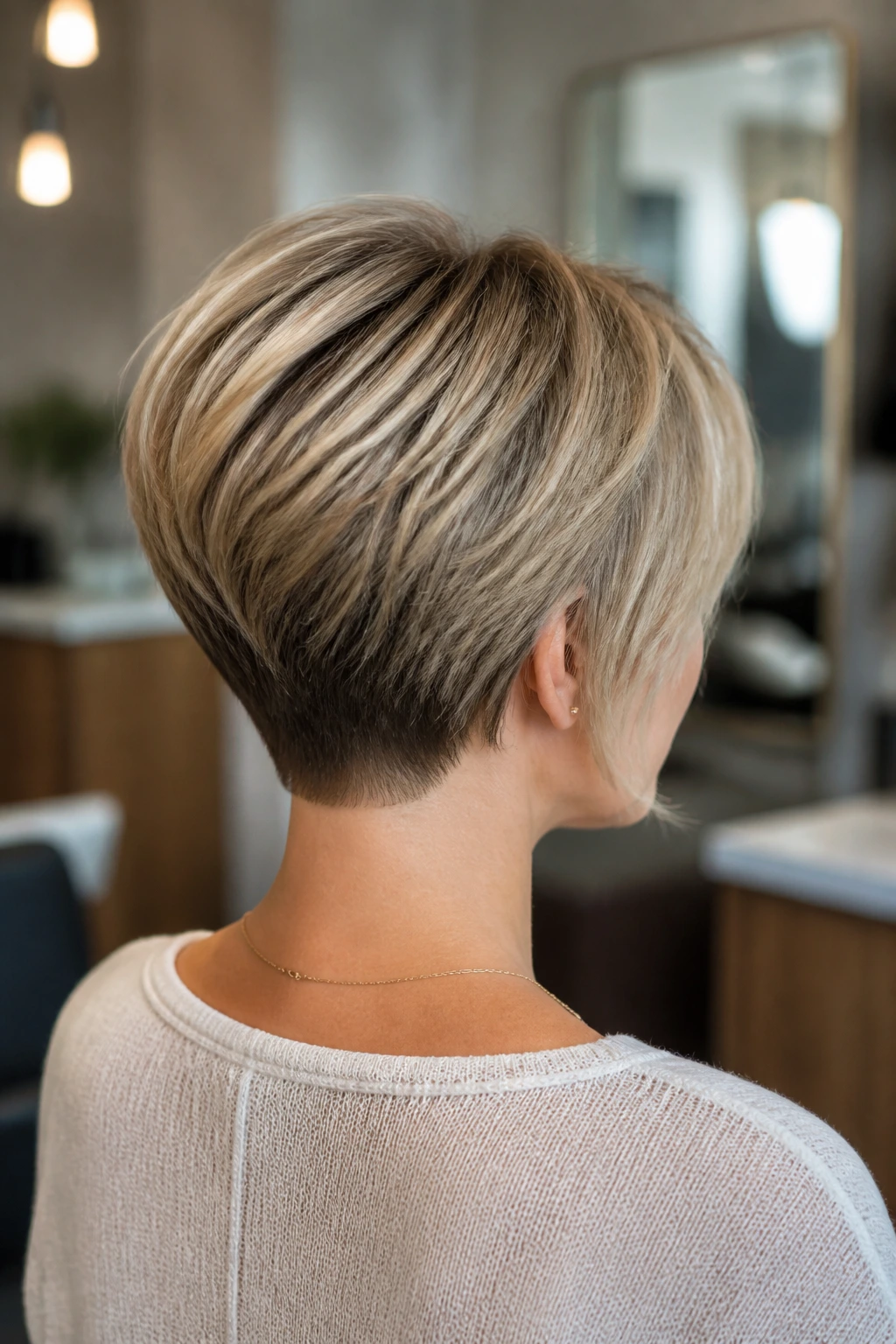
A stacked nape gives the silhouette backbone. The back rises gently, which makes the head shape look cleaner and keeps the cut from sinking into the neck.
Ask for: a tapered, stacked back with enough graduation to support the crown. The front can still stay soft, but the back needs that lift or the whole thing loses definition.
This is one of the smartest choices for hair that naturally grows heavy at the nape. The haircut gains shape even on the days you barely style it. That’s not glamorous, but it’s useful. And useful haircuts get worn more.
7. Curly Cloud Pixie Bob
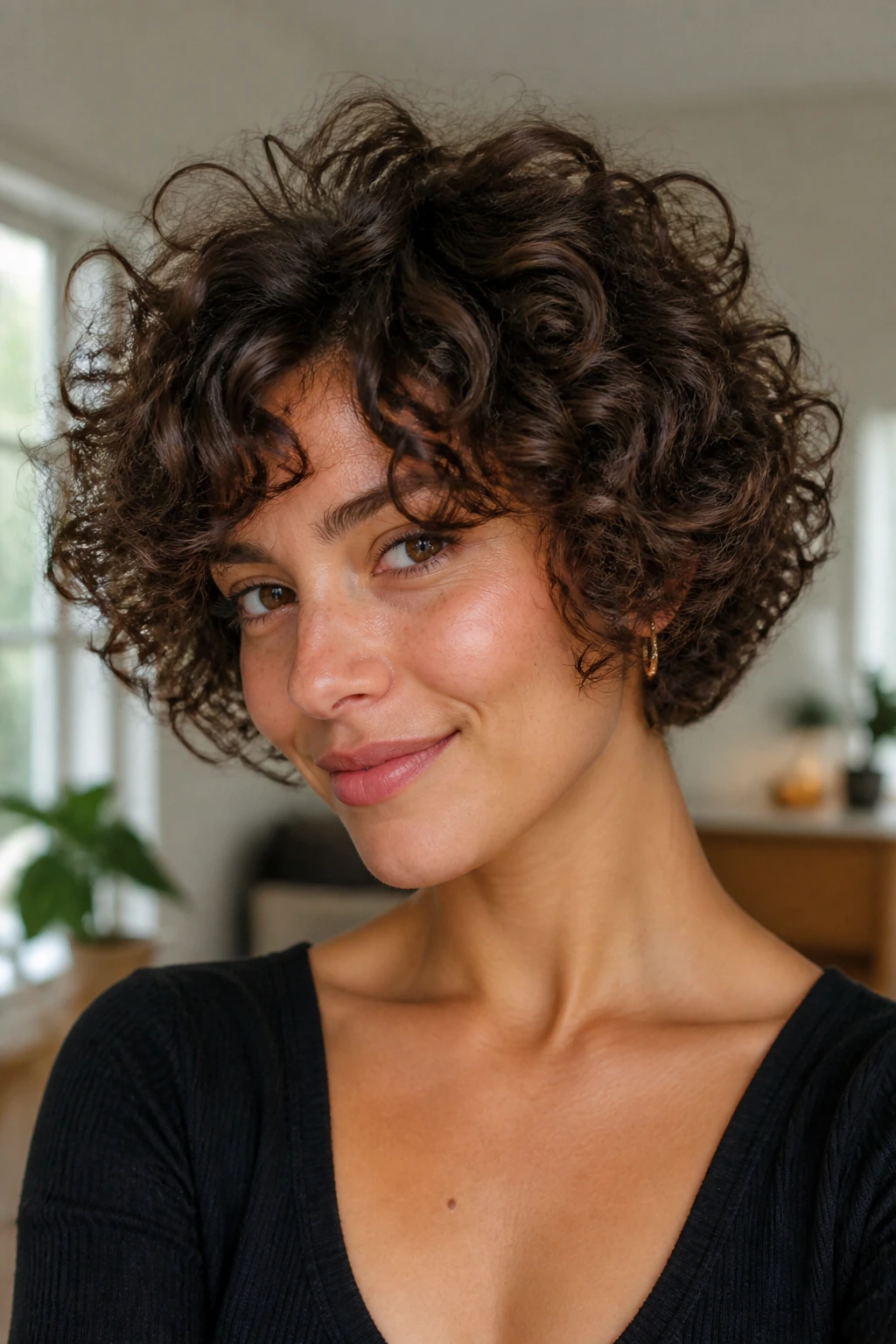
Curls need room. Not too much room, not a triangle, and definitely not a slice-and-pray situation. A curly pixie bob keeps enough length for the curl pattern to spring, but removes the bulk that makes short curly cuts balloon out.
The best version follows the curl instead of cutting against it. That usually means dry cutting or cutting in a controlled state, so the stylist sees where the curl lands. If your curls shrink hard, leave a little extra length at the front and around the crown.
This cut can look airy and expensive when the curls are hydrated and defined. It can also look oddly fuzzy if the ends are too blunt or the layers are too aggressive. With curls, restraint beats bravado.
8. Shaggy Grown-Out Pixie Bob
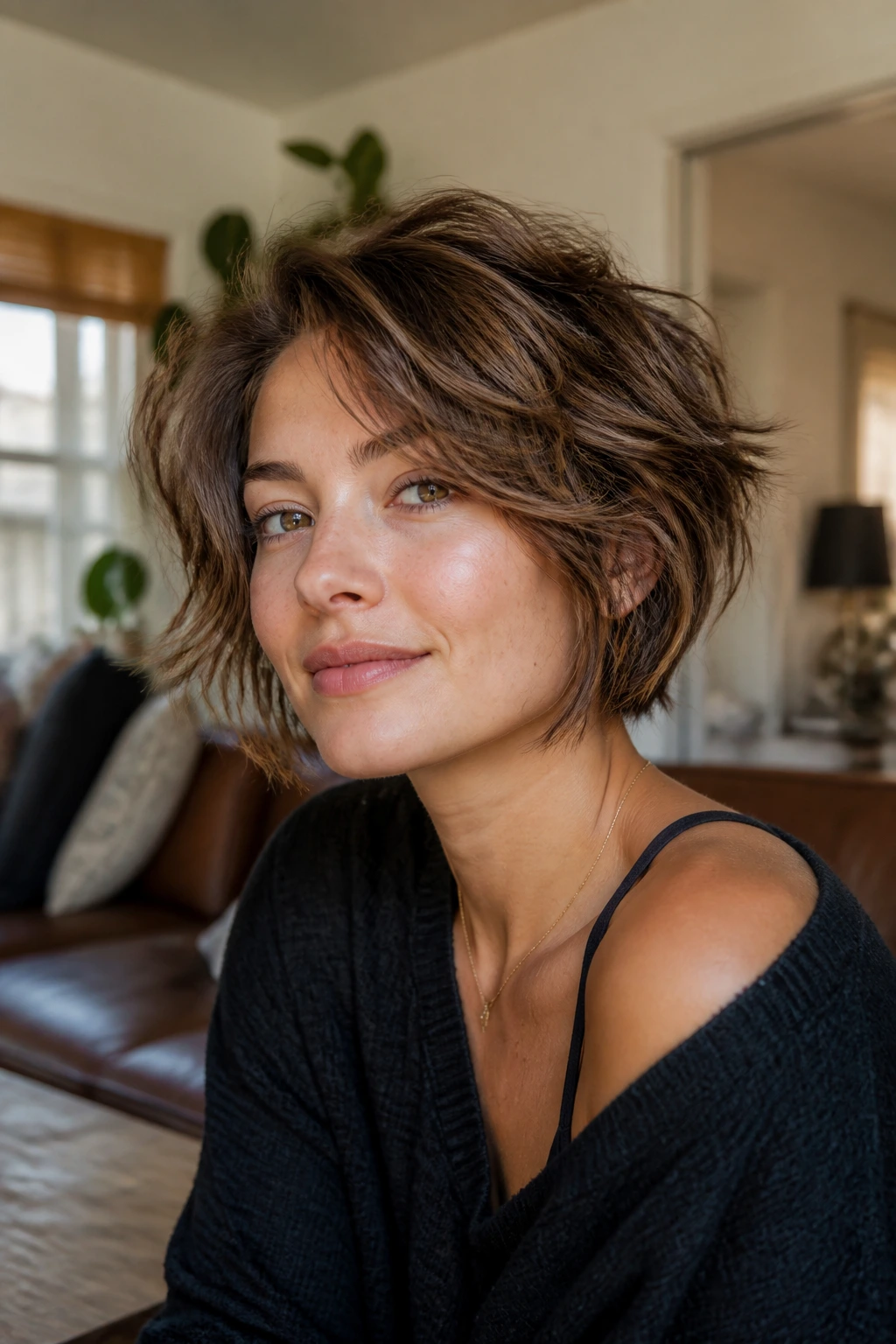
Some cuts are meant to look perfect. This one isn’t. The shaggy pixie bob is for hair that wants a little mess, a little swing, and no hard promises.
The shape relies on broken-up layers and a soft edge around the perimeter. That gives the haircut movement even when you air-dry it. If your old long layers were already doing something close to this, the transition can feel surprisingly natural.
A little styling cream at the ends and a quick scrunch is often enough. It’s one of the few short cuts that gets better when it isn’t overcontrolled.
9. Hidden Undercut Pixie Bob
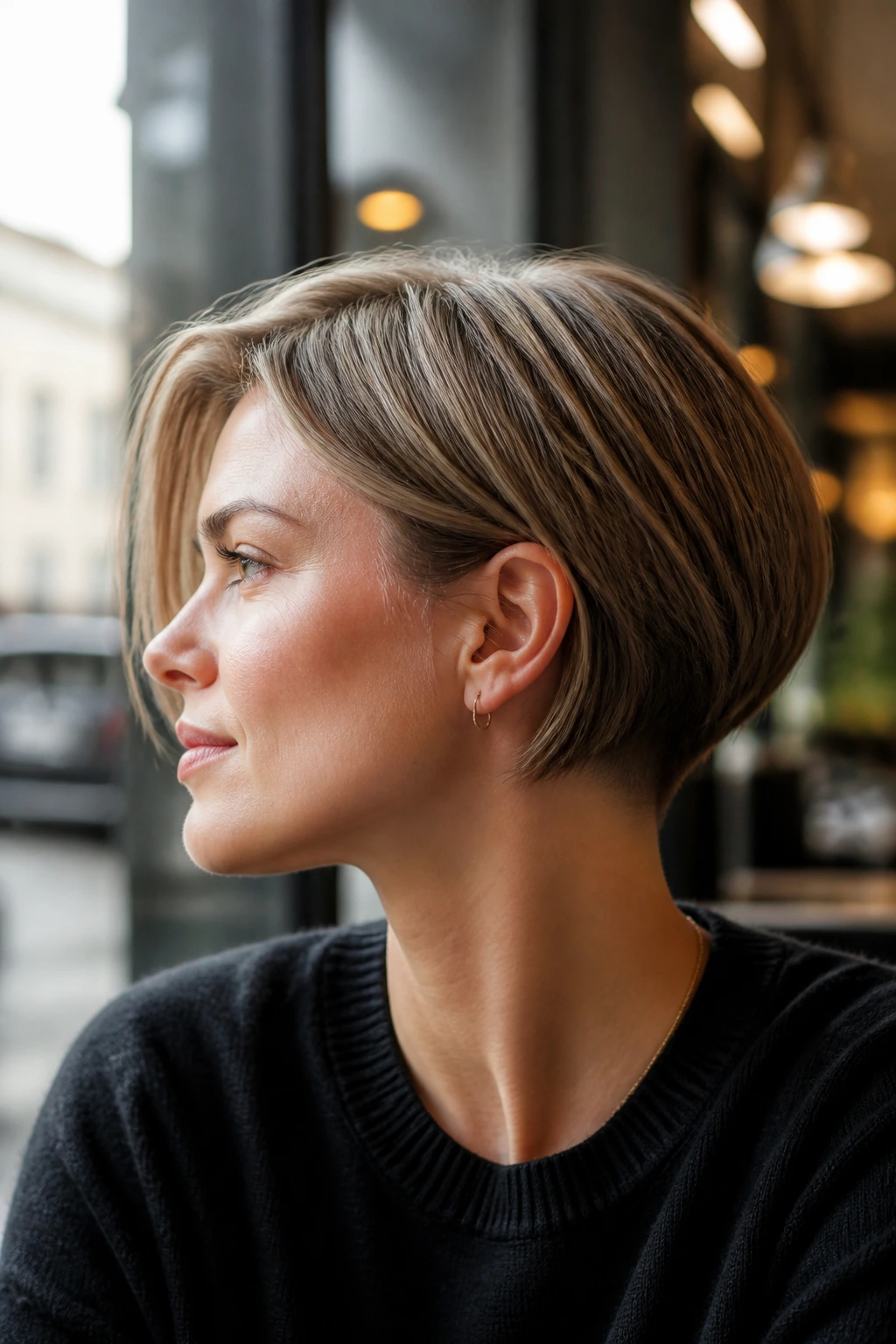
A hidden undercut is the quiet fix for dense hair. You keep the top and outer shape intact, but remove a slab of weight underneath so the head doesn’t feel padded.
That matters if your hair has always been heavy at the nape or behind the ears. The cut looks almost normal from the surface, then suddenly feels lighter when you move it. Good trick. Very practical.
Keep the undercut concealed unless you want the edge to show. If you like wearing the hair down most of the time, this is a smart compromise. If you want the option to pin it up and reveal a sharper line, even better.
10. Side-Part Pixie Bob with Dimension
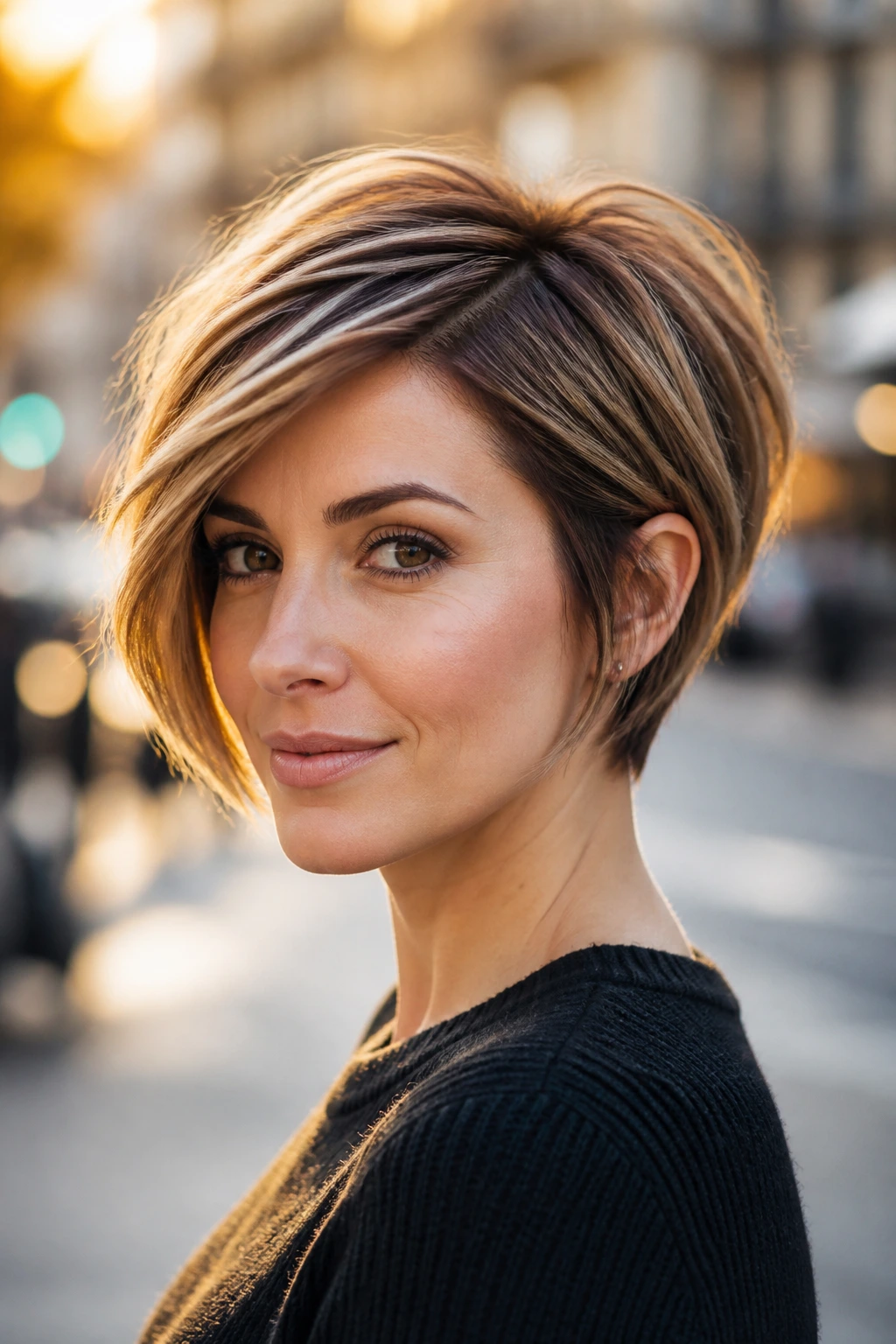
A side part does more than move hair to one side. It changes the distribution of weight, which makes short hair look longer on one side and fuller on the other.
This is also the cut where color matters. Subtle highlights around the fringe and crown make the part stand out, and lowlights underneath keep the haircut from going flat. On darker hair, a few lighter pieces near the face can do a lot with very little.
If your hair falls limp at the roots, the deep side part gives you a natural lift without having to tease the crown. That’s the good kind of cheat.
11. French-Girl Pixie Bob
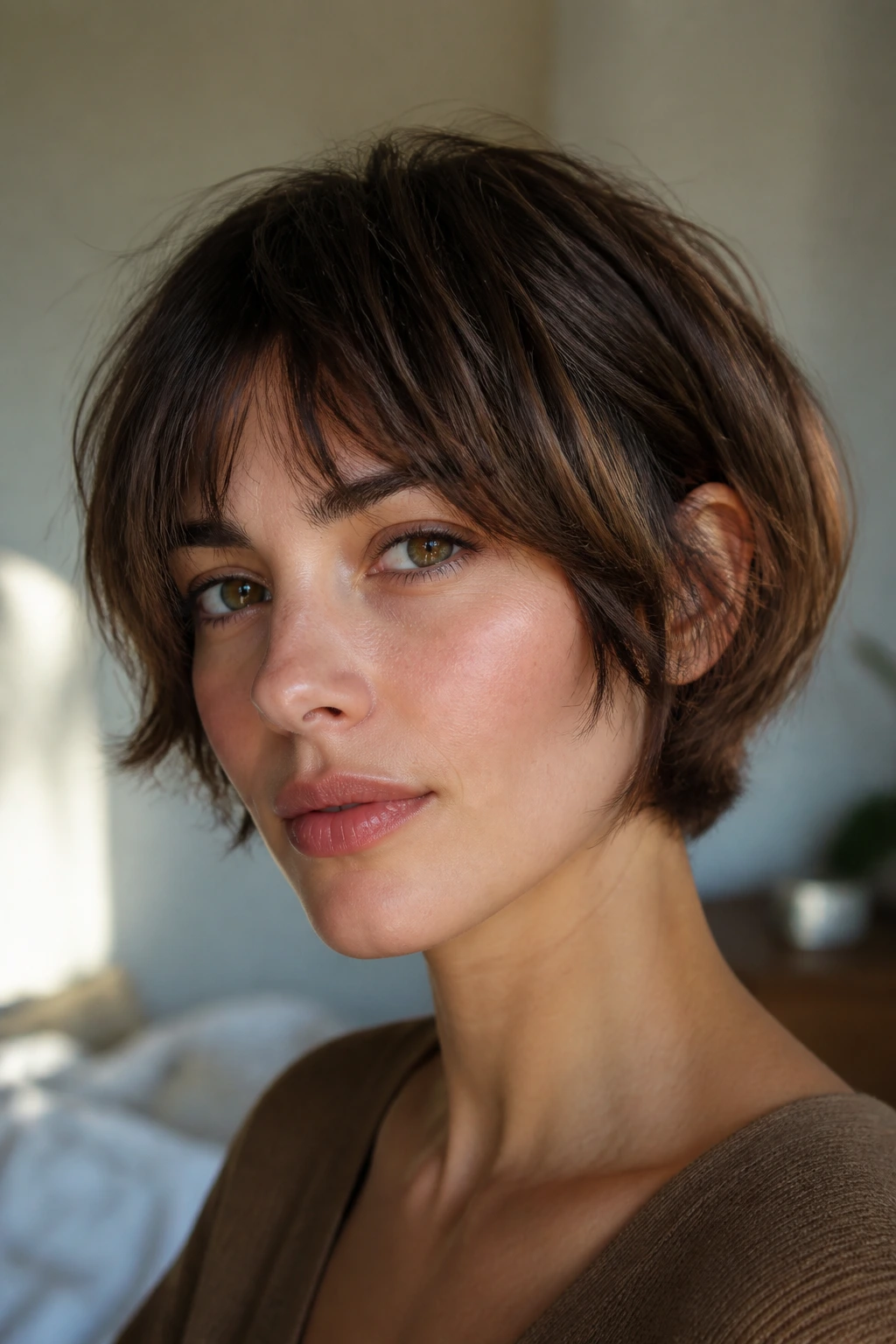
This one sits in that soft, effortless lane people keep trying to describe and usually overcomplicate. The cut is short, but it isn’t severe. The front brushes the cheekbones, the fringe stays light, and the edges are never too crisp.
The appeal is in the looseness. A French-girl pixie bob looks better when it’s a little tousled, a little imperfect, and not blown into a statue. If your hair has natural texture, that’s a gift here.
It’s a strong choice if you want your short hair to feel lived-in rather than engineered. Keep the ends airy and let the silhouette round slightly at the sides. Sharp geometry would ruin the whole point.
12. Blunt-Edge Pixie Bob
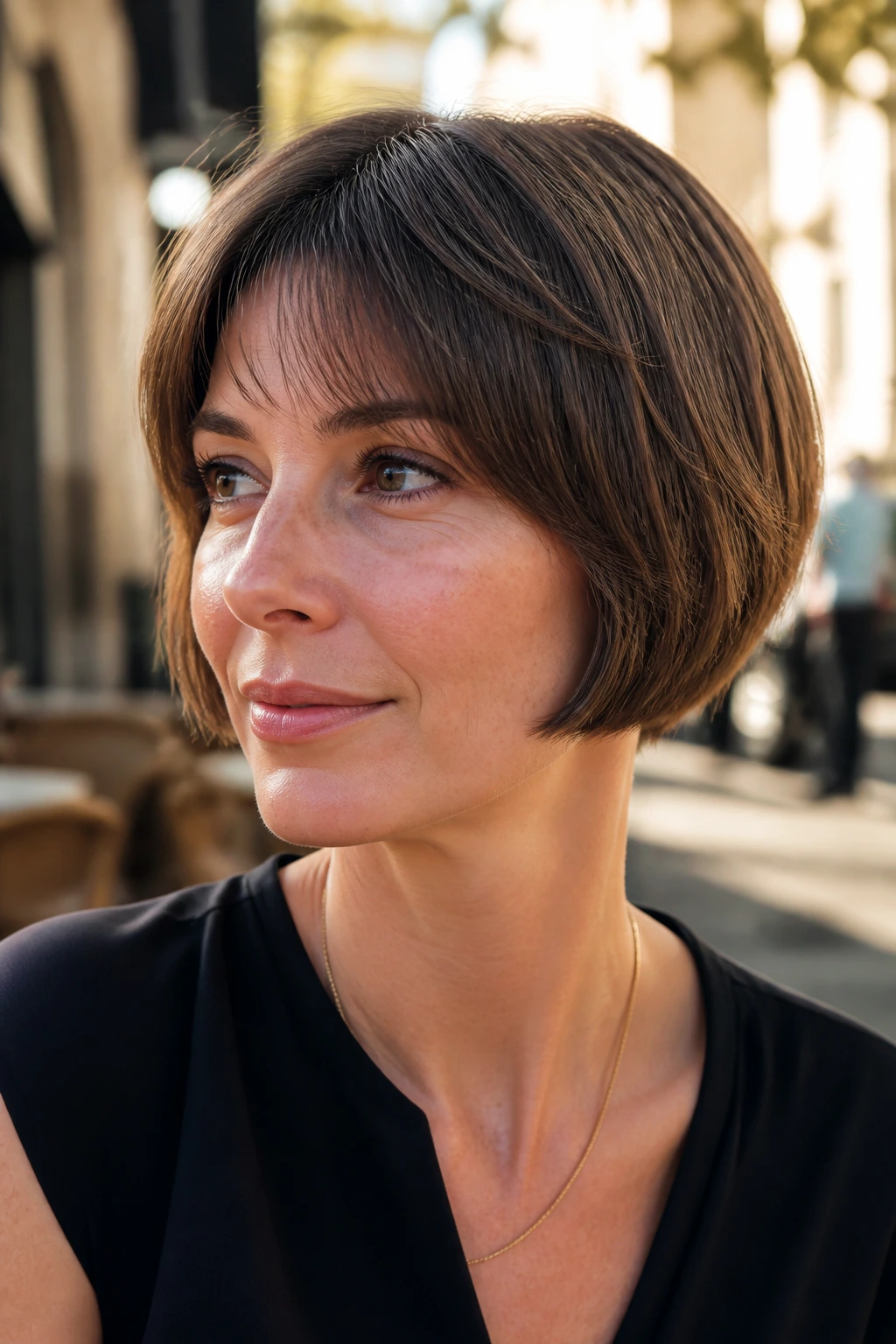
Blunt ends sound strict, but on the right hair they look clean in the best way. This version keeps the outline tidy, which makes fine or straight hair appear denser at the edge.
What saves it from feeling too blocky is the length. The front should still skim the jaw or just below it, and the interior needs enough softness that the cut doesn’t build a hard shelf around the face.
This is the pixie bob for people who like a clear line. No frills. No fluff. Just a neat shape that makes good bone structure stand out.
13. Razor-Cut Pixie Bob
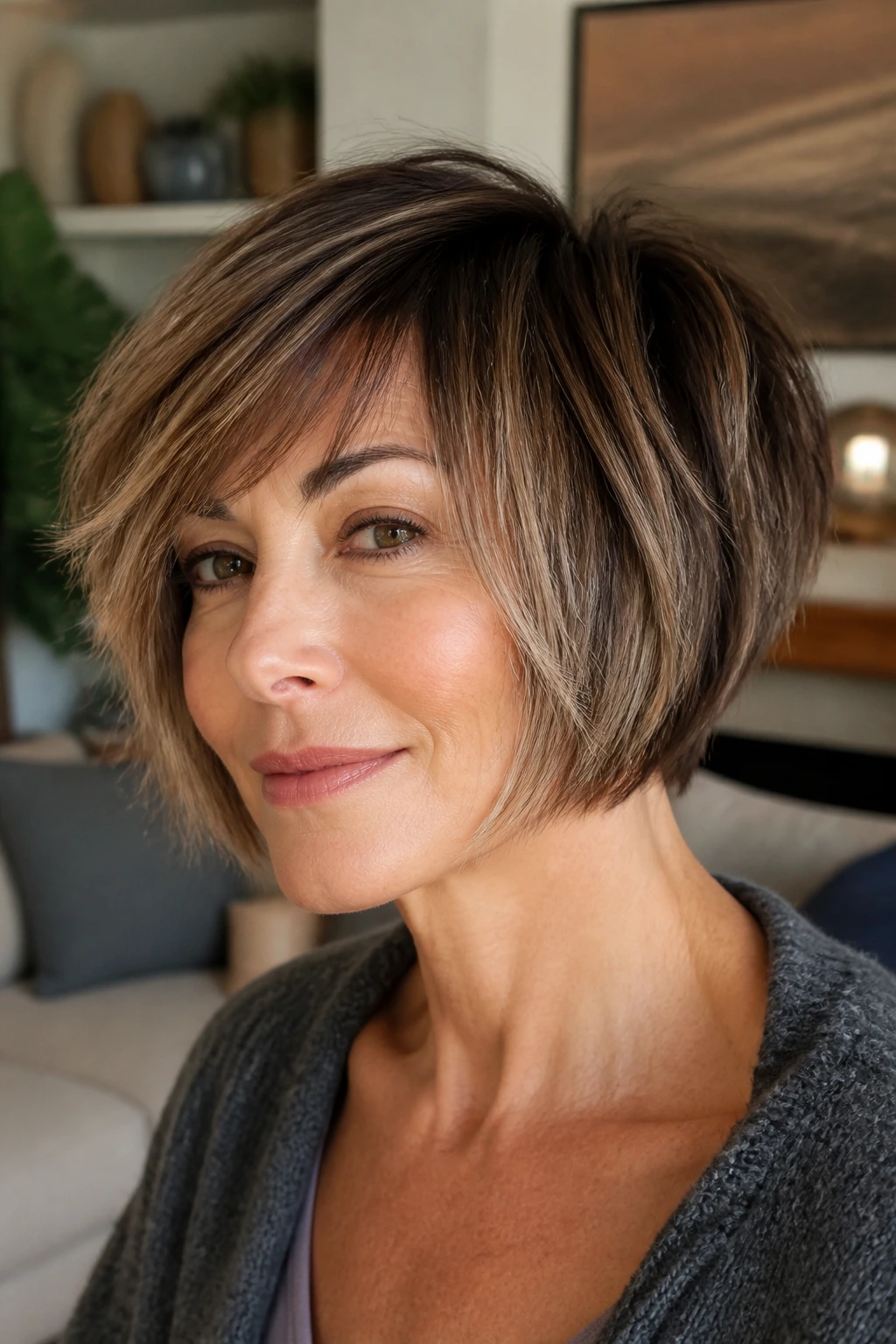
A razor cut changes the texture more than the length. The ends get sliced into a softer, lighter finish, which helps the haircut move instead of sitting like a cap.
This is especially useful on thick or stubborn hair that resists shape. A razor can reduce bulk fast, but it has to be handled well. Too much and the ends fray; too little and the cut stays heavy.
The best razor-cut pixie bob has a slightly broken edge and a lot of swing. It’s not for every hair type, but when it works, it gives that piecey, lived-in movement people usually spend too long trying to fake with product.
14. Deep-Side-Part Pixie Bob
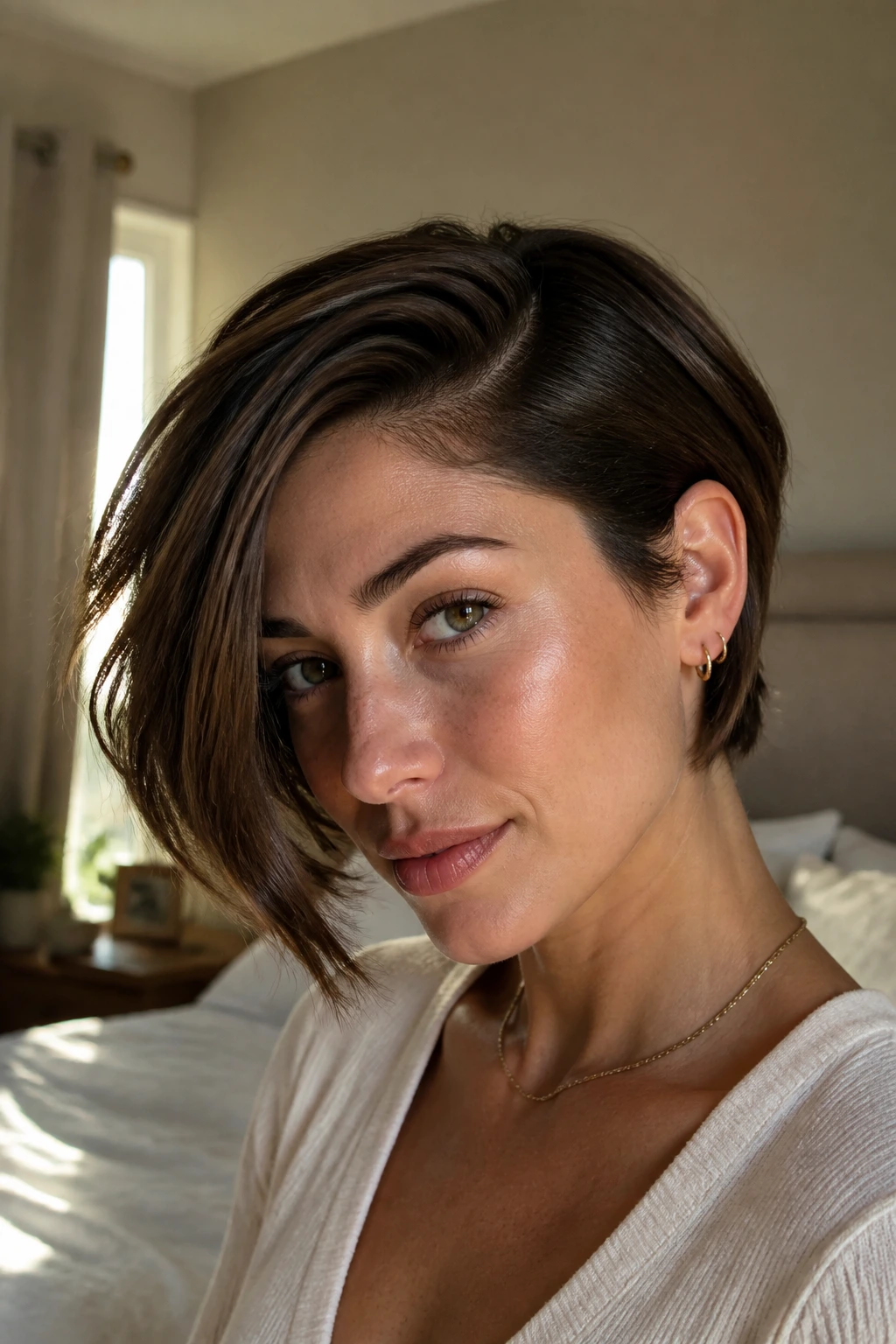
A deep side part changes the balance immediately. It creates a strong diagonal, gives one side more volume, and puts the front piece right where the eye wants to land.
This style is one of the easiest ways to soften a square jaw or shorten a long face visually. The part does the shaping before the scissors even matter. That’s why I like it so much.
How to Wear It
Use a root-lift spray at the heavier side and a small round brush at the crown. Then tuck the lighter side behind the ear or let it skim the cheek. The cut should feel dramatic in a quiet way, not costume-y.
15. Swept-Back Pixie Bob
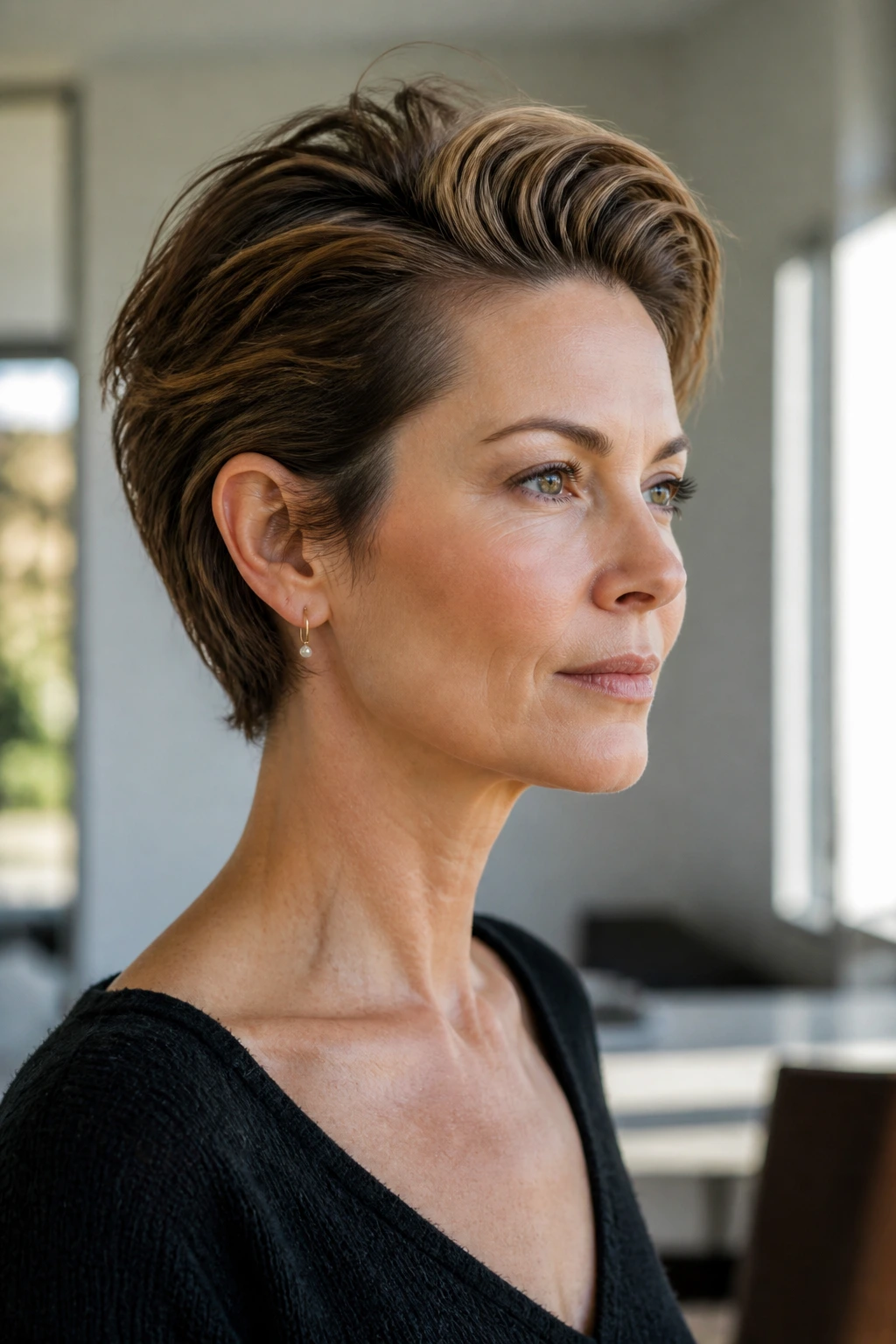
Sweeping the hair back can make a short cut feel almost dressy. The forehead opens up, the cheekbones show more, and the whole profile looks cleaner.
The trick is not to slick it down. Keep enough texture through the top so the hair moves backward instead of plastering itself to the scalp. A little mousse at the roots and a touch of paste at the ends usually does the job.
This version is excellent if you wear bold earrings or glasses. The face gets space to breathe. And sometimes that’s all a haircut needs to do.
16. Micro-Fringe Pixie Bob
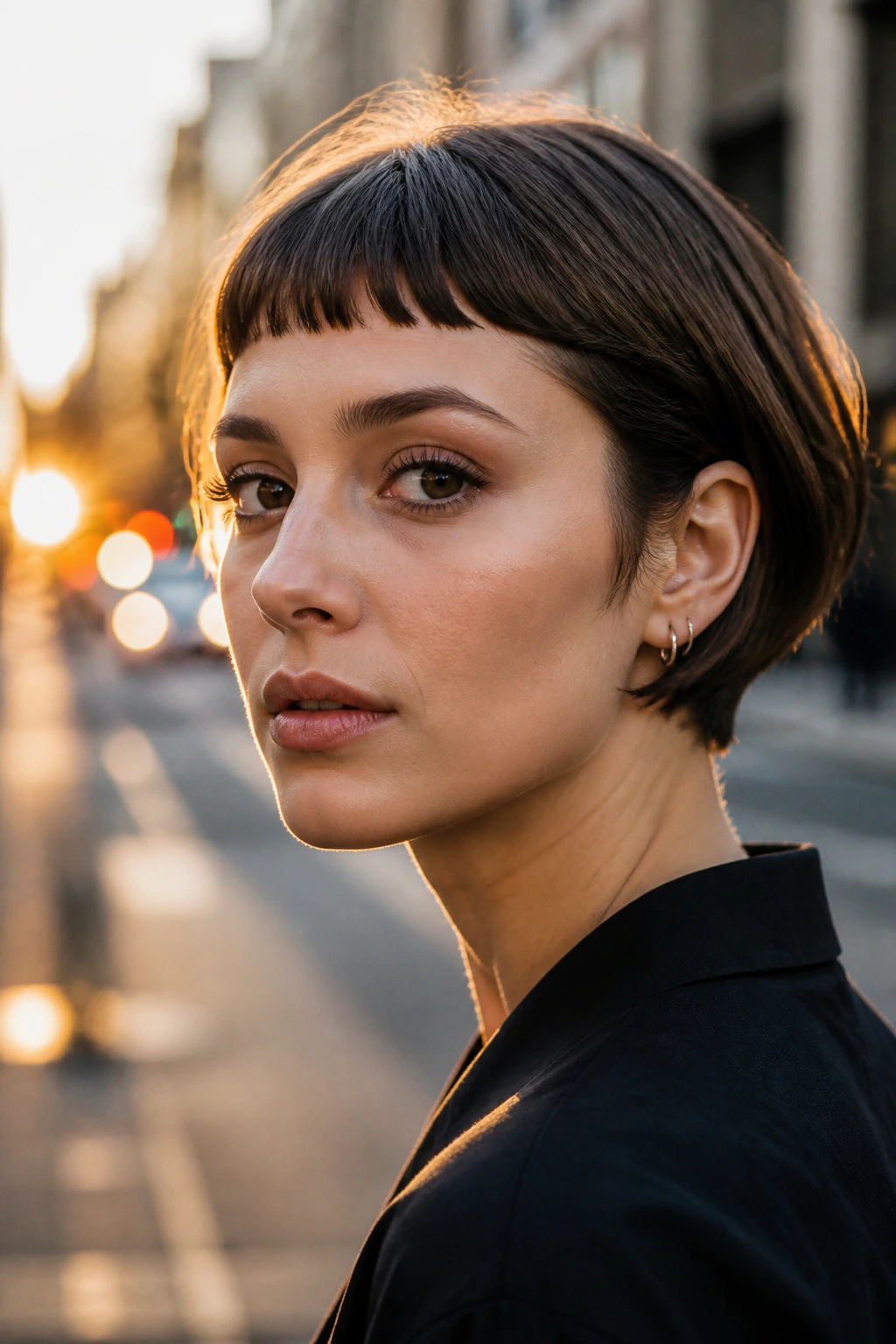
A micro fringe is not shy. It changes the mood fast and gives the cut a sharp little punch right at the front.
This works best when the rest of the shape stays simple. Too many busy layers plus a short fringe can start to look fussy. Keep the sides clean and the back tidy, and let the fringe be the statement.
It’s a good fit for strong brows, small foreheads, or anyone who wants the haircut to do something specific on purpose. No pretending. No softening it into nothing.
17. Face-Framing Layered Pixie Bob
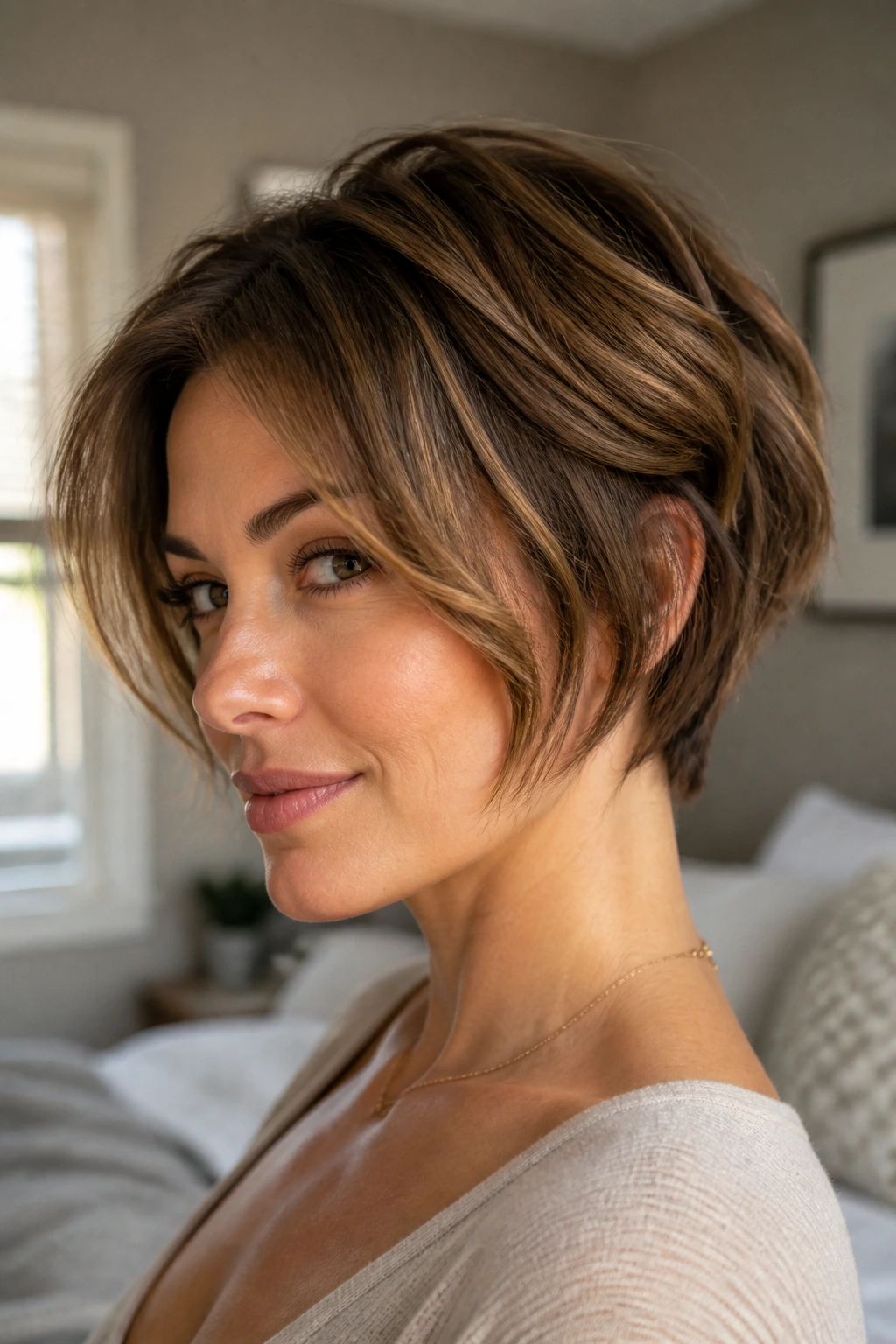
If you’re coming from long layers, this is the most natural bridge. The front stays longer, the cheek pieces are cut to follow the face, and the back is cleaned up without feeling abrupt.
That layered framing is the part that keeps the cut wearable. It gives you enough movement to flip the ends, hide a forehead, or soften the line of the jaw. A lot of people think short hair has to be blunt to be strong. It doesn’t.
Ask the stylist to keep the longest front piece where it flatters you most — cheekbone, jaw, or just under the chin. That one decision changes the whole result.
18. Piecey Bedhead Pixie Bob
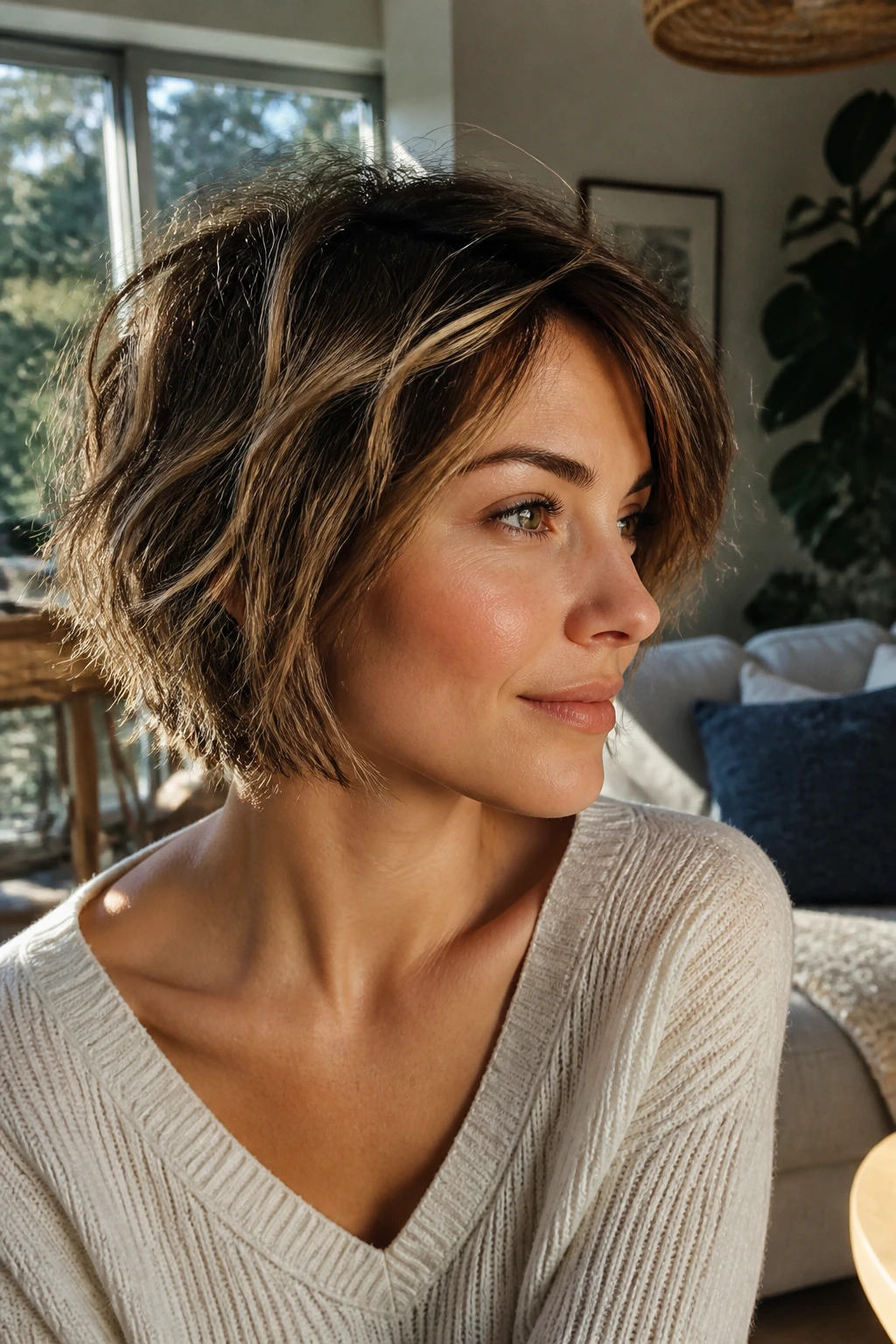
This is the cut for hair that looks better when it’s a little undone. The layers are separated enough to show off movement, and the styling aims for touchable, not polished.
A matte paste or texturizing cream goes a long way here. Rub a tiny amount between your palms, then pinch the ends and crown rather than smoothing everything down. If the hair starts to look greasy, you used too much. That happens fast with short cuts.
It’s casual, but not lazy. There’s a difference, and this haircut knows it.
19. Silver-Light Pixie Bob
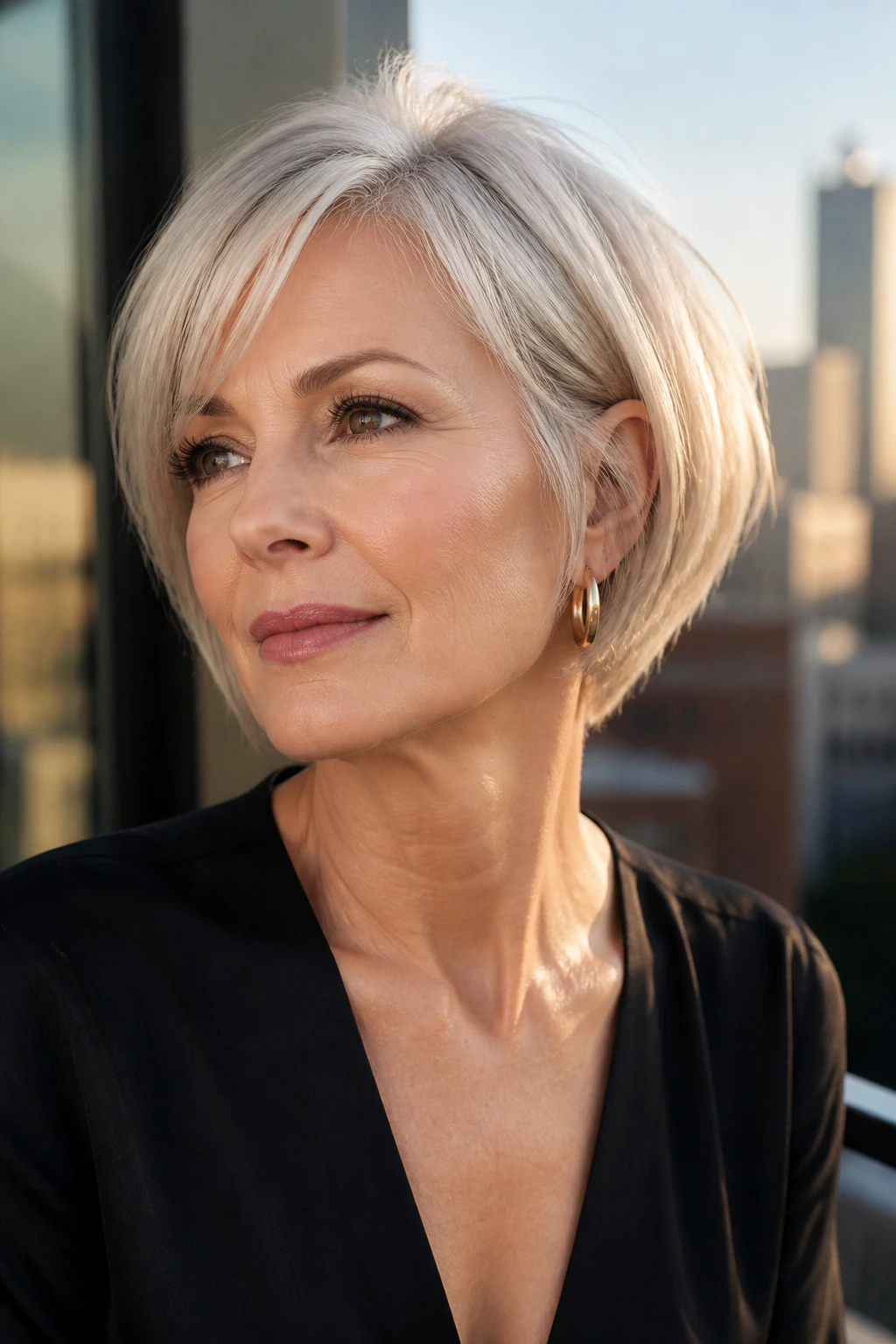
Silver or gray hair shows every line, which means the shape has to earn its place. Luckily, a pixie bob can do that beautifully when the edges are clean and the crown has a little lift.
The lighter color makes the layers visible, so even a small change in cutting can read clearly. If the hair is coarse, soft texturizing around the ends helps keep the style from feeling puffy. If it’s fine, the right nape taper keeps the silhouette from dropping.
This is one of those cuts that looks polished without trying to look young. Better move, honestly. Let the color and the shape work together.
20. Bridge-Length Pixie Bob
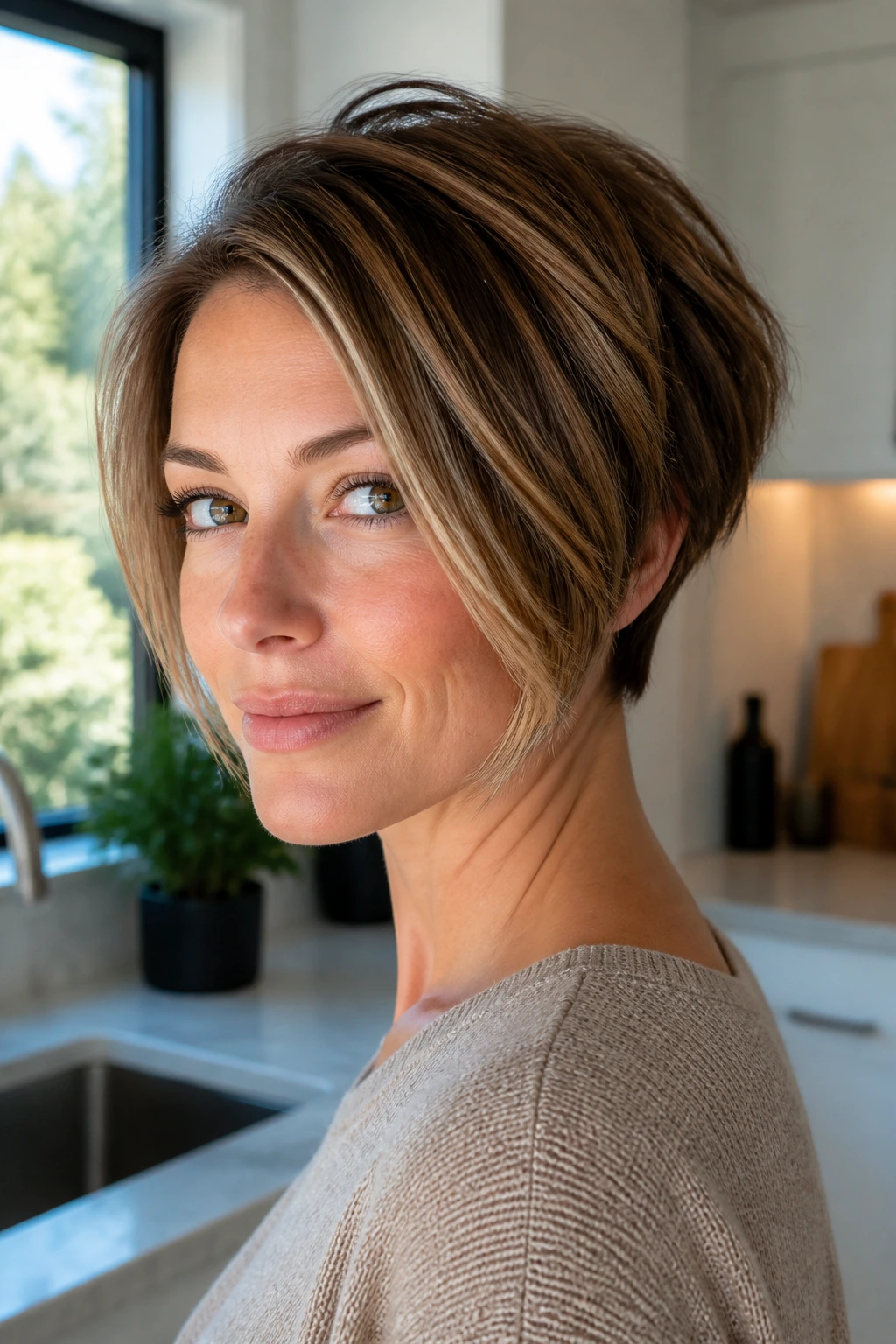
This is the one for people who want a real change but don’t want to jump straight from long hair to a whisper of a crop. The front is left long enough to feel familiar, while the back and crown are trimmed into a leaner shape.
That middle ground is useful. You still get movement around the jaw and ears, but the overall weight is gone. If you’ve been carrying heavy ends for a while, that first wash after the cut can feel almost suspiciously light.
The bridge-length pixie bob is also a smart starting point if you’re unsure how short you want to go. It buys you time. Not forever, but enough.
21. Thick-Hair Debulked Pixie Bob
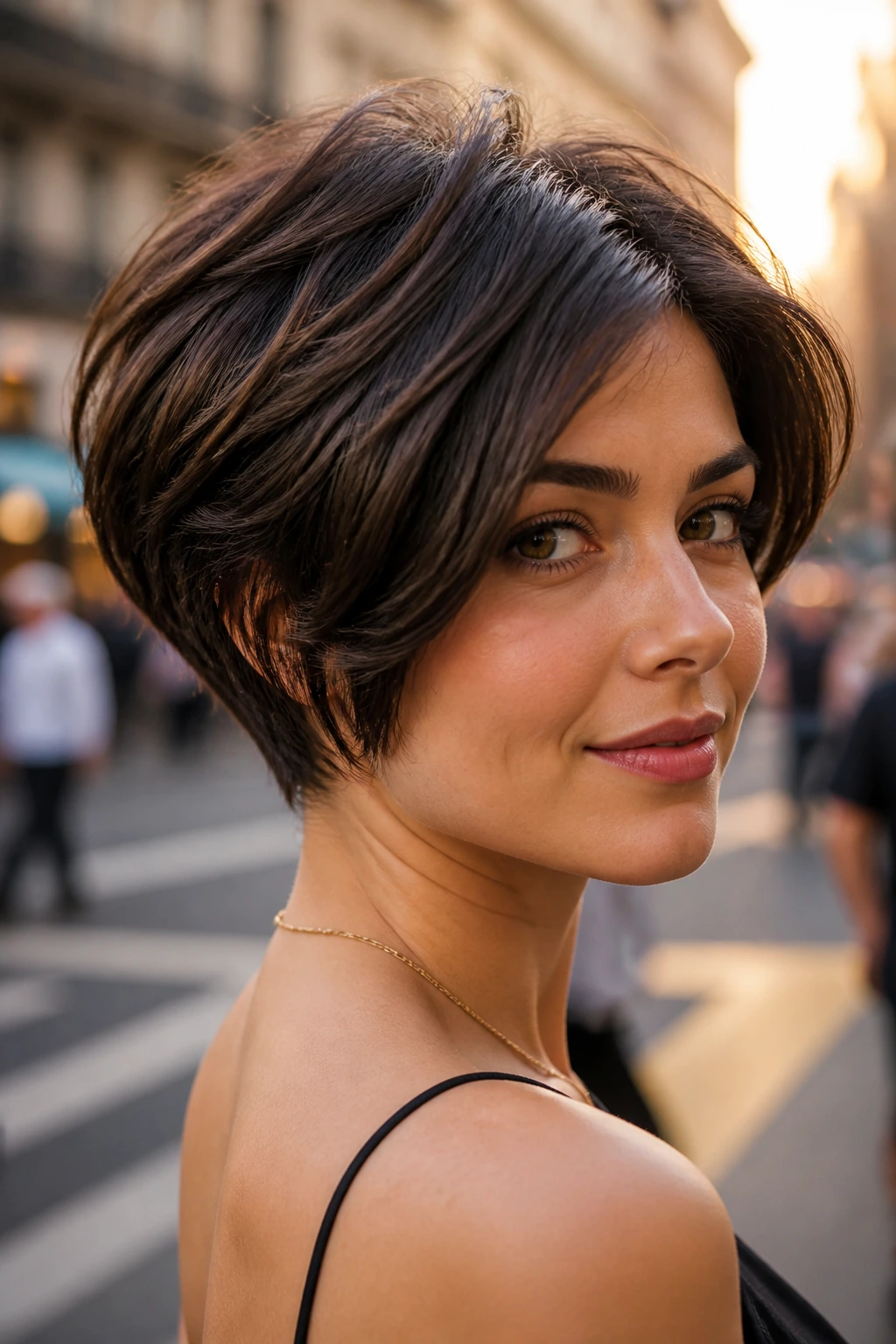
Thick hair needs subtraction before it needs style. Otherwise the cut swells outward and sits there like a padded helmet, which is nobody’s friend.
This version uses internal layering, careful thinning only where needed, and a tapered outline around the ears and nape. The goal isn’t to make the hair look sparse. It’s to let the shape sit closer to the head without losing density on the surface.
If your hair is naturally heavy, this is the difference between “cute short cut” and “why did I do this?” A lot rides on those hidden layers.
22. Fine-Hair Lifted Pixie Bob
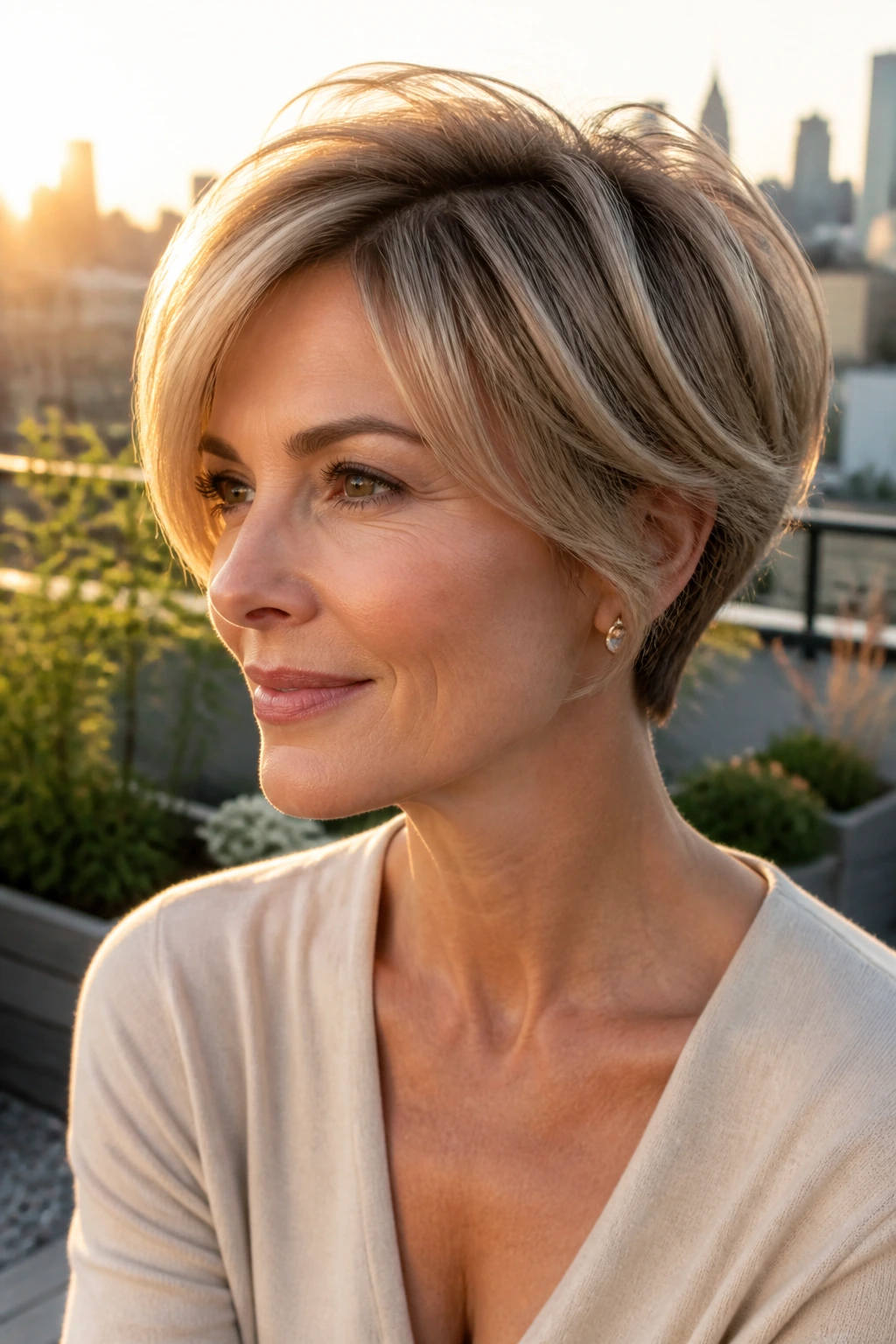
Fine hair needs lift at the roots and discipline at the ends. If the cut gets too shaggy, it can look thin fast. If it stays too blunt, it can collapse and expose every little strand.
The answer is controlled layering. Keep enough length on top for body, but don’t chop the perimeter into wisps. A root spray, a quick blow-dry with a round brush, and a light finish are usually enough to make the shape look fuller.
This cut is proof that short hair doesn’t have to mean flat hair. It just has to be cut with a little restraint.
23. Grow-Out Pixie Bob
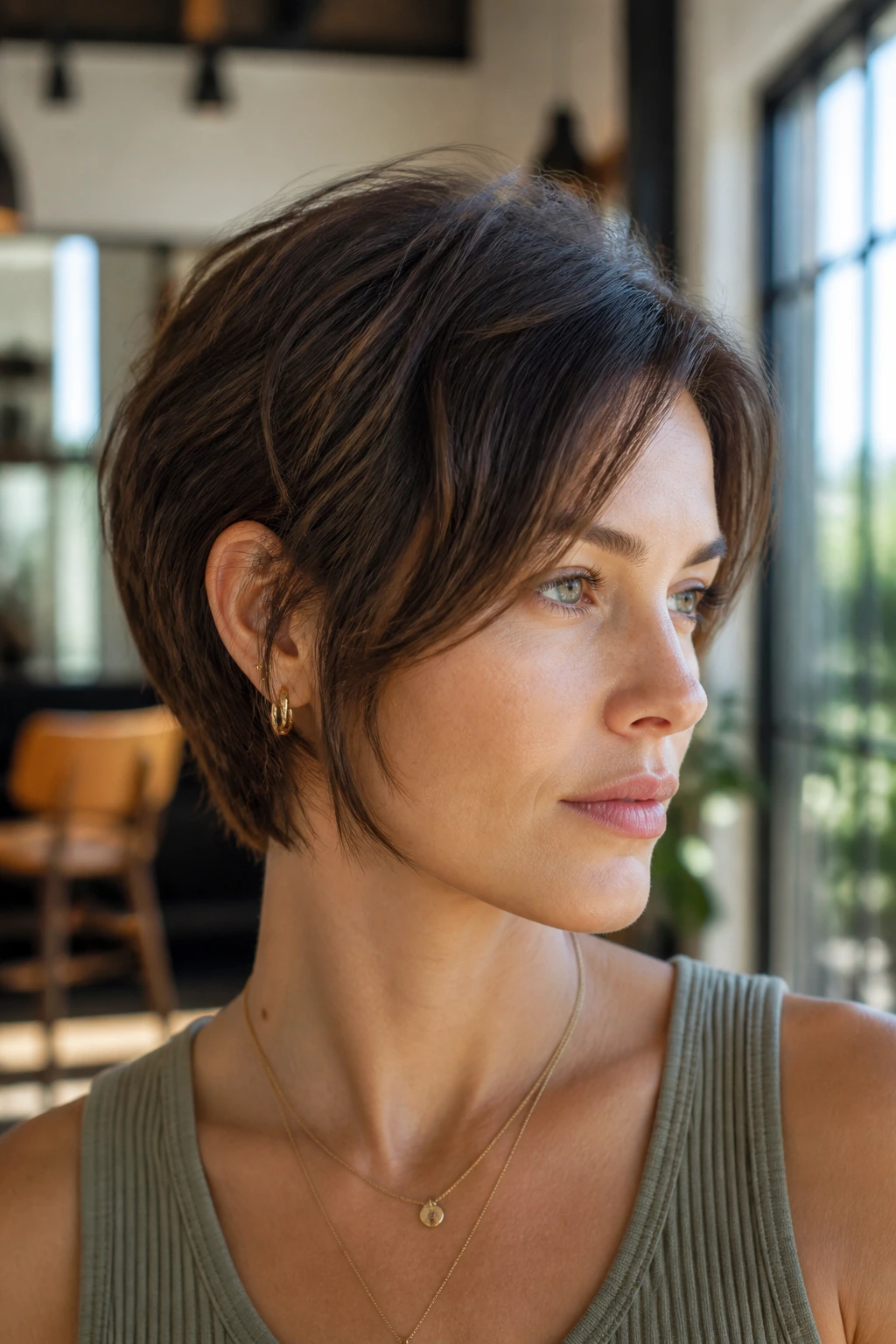
A good grow-out cut should still look like a haircut at week eight. That’s the real test.
This version is trimmed so the edges soften gracefully as they lengthen. The nape stays neat, the crown has some lift, and the front pieces are left long enough to keep framing the face even after a few weeks of growth.
If you know you’re not going to run back to the salon every month, choose this one. It forgives a missed trim, and that’s worth a lot. Especially when your hair has a habit of doing its own thing by the second week.
How to Ask for the Cut Without Losing Control
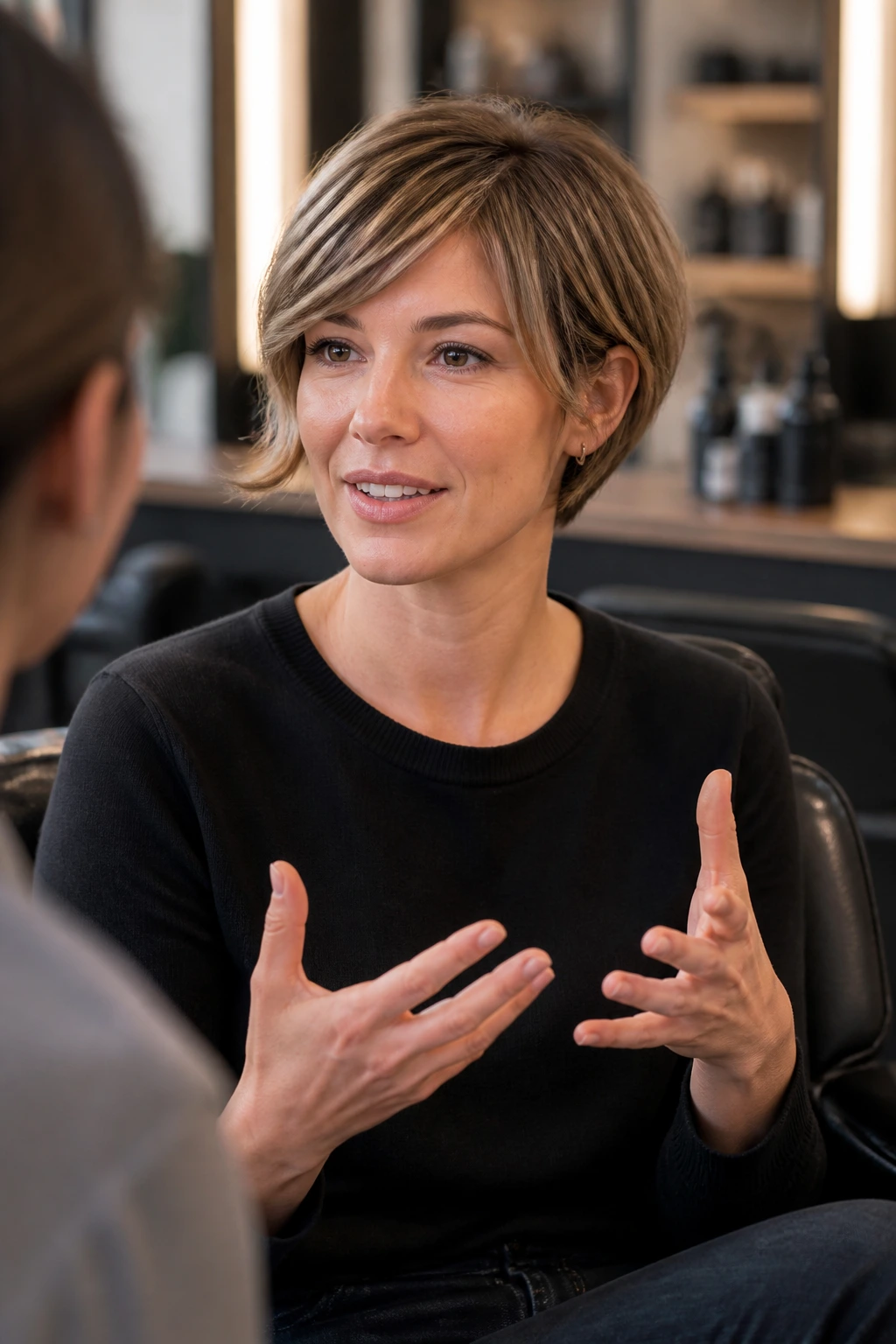
Bring pictures, yes, but do not bring only pictures. Say what you like in each one. Is it the short nape, the longer front, the softness around the temples, the shape of the fringe? Those details matter more than the photo itself, because two pixie bobs can look similar on a screen and behave very differently on your head.
The safest wording is plain. Tell the stylist how much length you want to keep at the front, where you want the nape to sit, and whether you want the edges blunt, feathered, or piecey. If you’ve had long hair for years, say that too. It helps the stylist avoid taking too much off too quickly.
Bring one more note: how you actually wear your hair. If you always tuck one side behind your ear, say so. If you never heat-style, say that too. A pixie bob should fit your life, not just the mirror.
Which Pixie Bob Fits Your Face Shape and Hair Texture
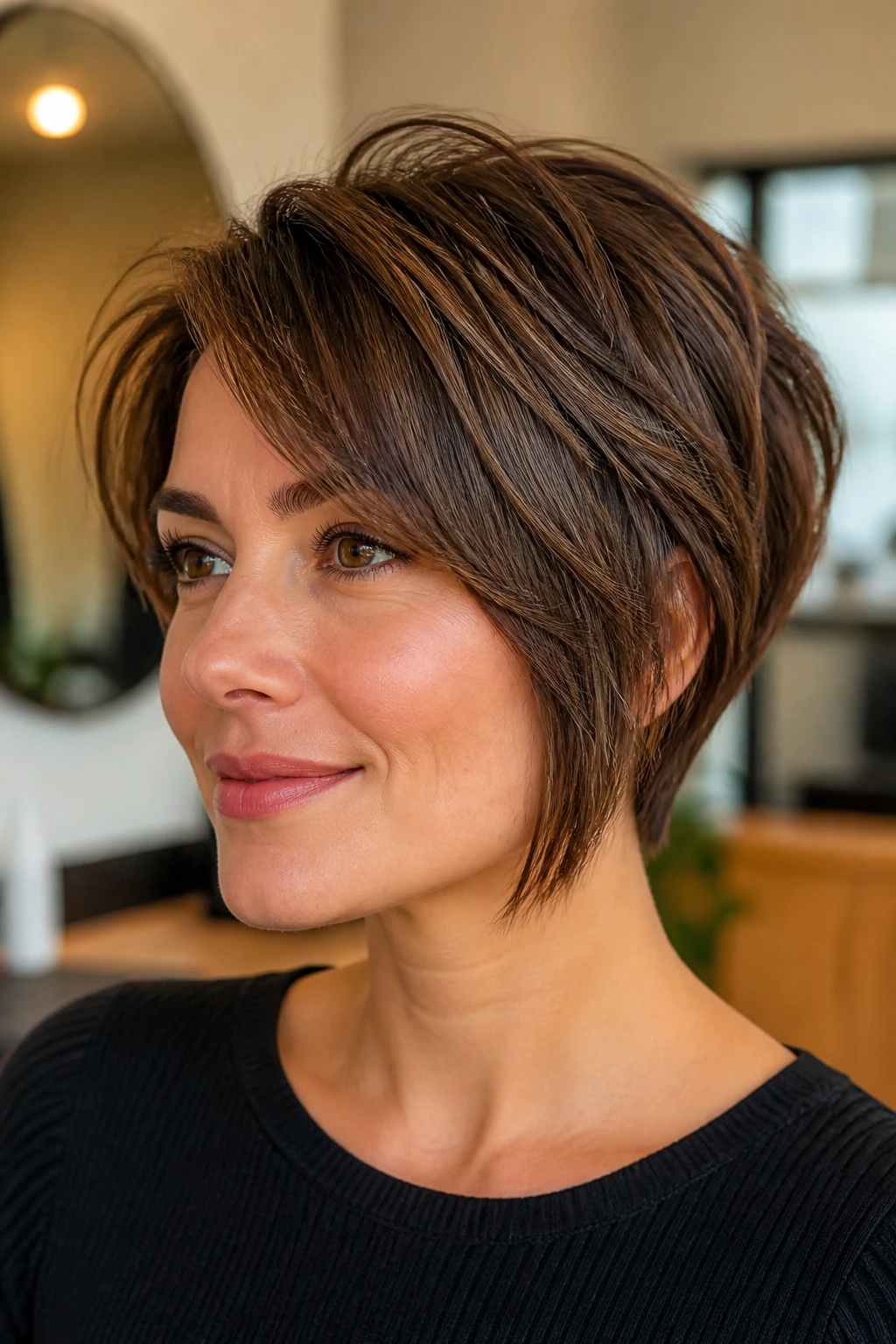
A pixie bob is one of those cuts that looks easy until you line it up against a real face and a real head of hair. Then the details matter. A round face usually needs a little height at the crown or length through the front to keep the shape from feeling too compact. A long face often looks better with a side part, fringe, or some width at the cheeks.
Square jaws can handle a softer edge around the temples and a bit of feathering near the face. Heart-shaped faces often like a fuller nape with controlled volume near the top so the forehead doesn’t take over. Oval faces get away with almost everything, which is irritating but true.
Texture changes the rules again. Straight hair shows every line, so the cut has to be clean. Wavy hair is forgiving and often looks better with a bit of broken-up layering. Curly hair needs enough length to spring, while thick hair needs weight removed from underneath. Fine hair wants lift, not a ton of slicing. That’s the real map.
The Tools That Keep the Shape Looking Intentional
-
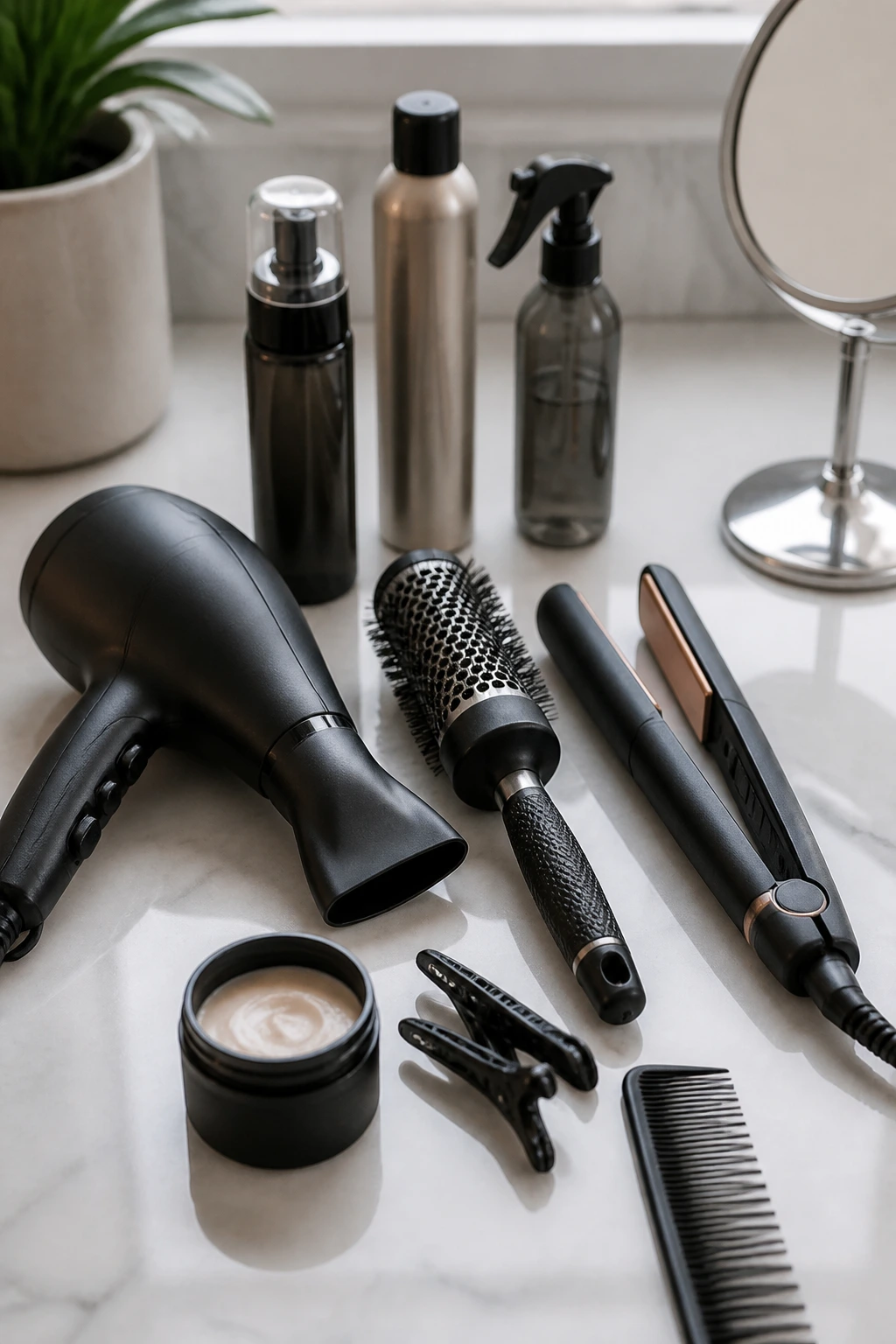
Blow dryer with a nozzle: The nozzle directs air at the roots and helps keep the crown from puffing in random directions.
-
1- to 1.5-inch round brush: Small enough to work around the face and crown, which matters more on short cuts than a giant barrel does.
-
Light mousse or root-lift spray: Gives the top some memory without turning it stiff.
-
Texturizing spray: Useful for piecey ends and second-day movement, especially on softer pixie bobs.
-
Matte paste or light pomade: Best for defining the fringe, side pieces, or a tucked-behind-ear shape.
-
Flat iron with narrow plates: Optional, but handy if your hair flips out at the ends and needs one quick pass.
-
Clips: Make sectioning easier when you’re drying the crown and sides separately.
-
Wide-tooth comb: Better than yanking a brush through damp curls or waves.
-
Hand mirror: Non-negotiable if you care what the nape is doing. The back can lie to you from the front.
Styling a Pixie Bob When You Don’t Want a Whole Routine

The fastest version starts at the roots. Dry the crown first, lifting it with your fingers or a small brush so the top doesn’t flatten while the ends are still damp. That one move changes the whole silhouette. If you only have three minutes, spend them there.
For a softer finish: work a pea-sized amount of cream through the ends and let the cut air-dry the rest of the way.
For a sharper finish: use a touch of paste on the fringe and tuck one side behind the ear.
For second-day hair: mist the roots with water or dry shampoo, then push the hair in the direction you want and let it settle.
For heat-free days: twist the front away from the face while it’s damp, clip it for ten minutes, then release.
Short hair does not need a full blowout to look done. It needs a little direction. That’s a different thing.
The Mistakes That Make the Cut Look Off
-
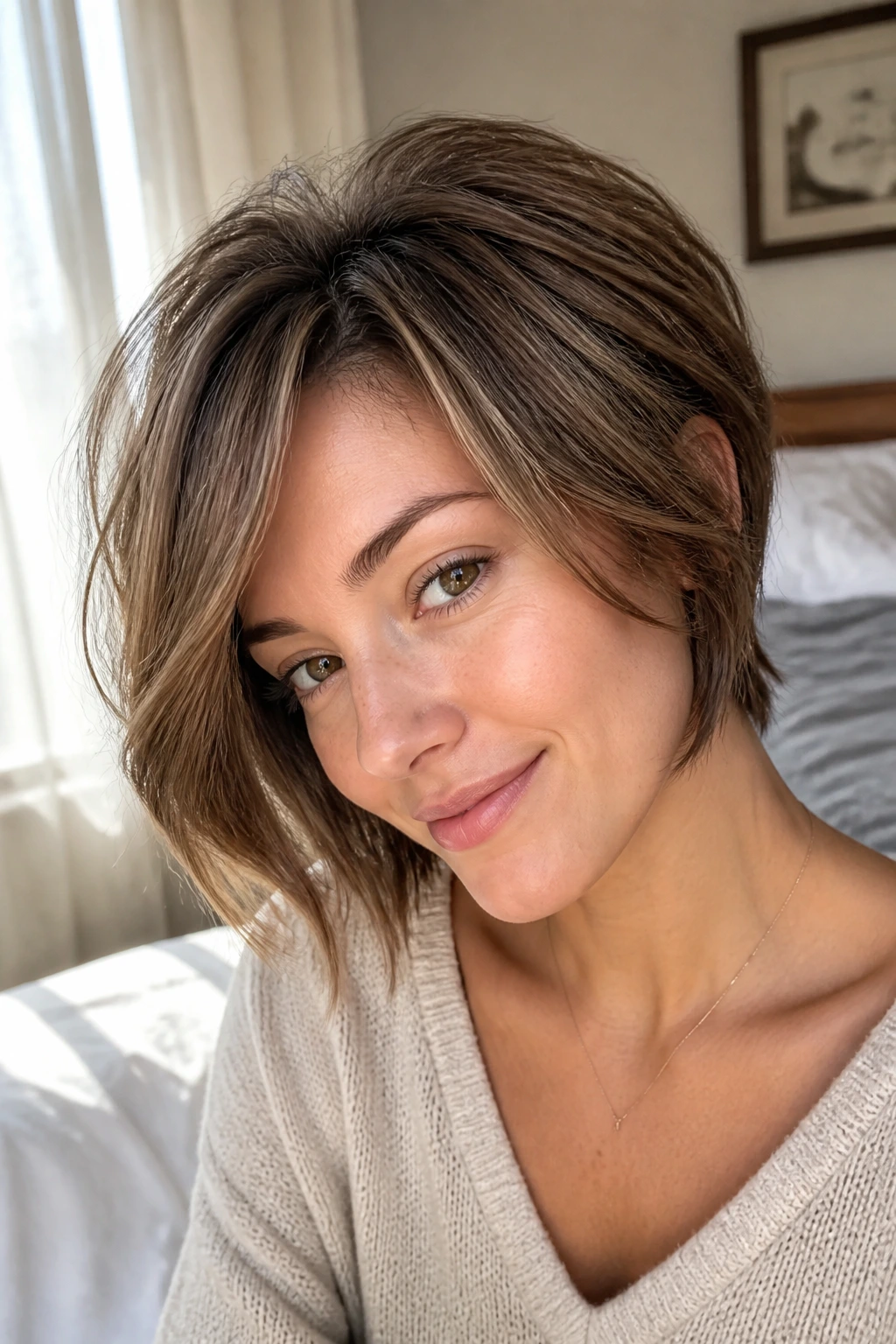
Going too short at the crown: The top ends up flat and boxy. Keep enough length for lift, or the cut loses its shape fast.
-
Leaving bulk at the nape: The back starts to kick out and sit heavy on the neck. A clean taper solves that before it starts.
-
Using too much product: Short hair shows buildup fast. If the strands look greasy by noon, cut your product amount in half.
-
Ignoring your growth pattern: Cowlicks around the crown or a strong bend at the nape can throw the whole cut off. The stylist needs to see them dry, not guess.
-
Keeping every layer the same length: That creates a round blob instead of a shaped pixie bob. The front, crown, and nape need different jobs.
-
Skipping regular cleanups: A pixie bob loses its edge faster than a long cut. Letting it go too long turns a tidy shape into a grown-out compromise.
Variations That Shift the Mood Without Changing the Cut
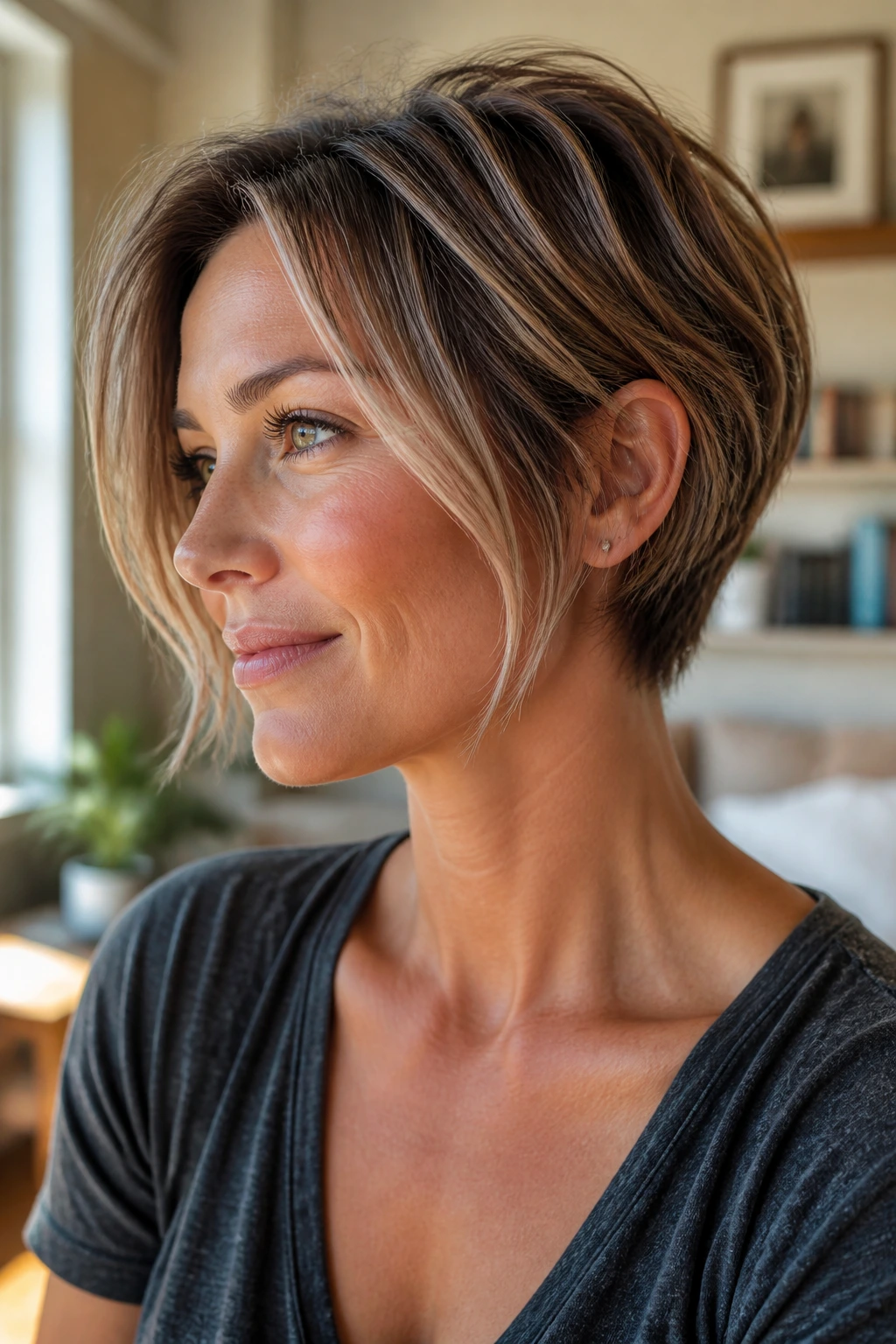
Soft Bixie Blend: If you want a little more length and less contrast, keep the back only slightly shorter than the front. It lands between a bob and a pixie without looking indecisive.
Sharper Undercut Version: Add a hidden or visible undercut when the hair is thick enough to fight every day. The top still looks full, but the underside stops swelling outward.
Curly Airy Version: Leave more length through the curl pattern and cut with the curl’s shrinkage in mind. This works best when the goal is bounce, not precision.
Glossy Sleek Version: Use blunt edges, a side part, and a bit of smoothing serum for a cleaner line. It’s good for straighter hair and a more tailored feel.
Shaggy Texture Version: Keep the layers broken and the fringe soft. This is the one to choose if you like movement more than symmetry.
How to Keep a Pixie Bob Looking Good Between Trims

Most pixie bobs need a cleanup every 5 to 7 weeks if you want the shape to stay crisp. If you like a softer grow-out, you can stretch that a bit longer, but the nape and sideburn area will usually show the change first.
The daily maintenance is less dramatic than people fear. Sleep on a silk or satin pillowcase if your hair frizzes easily, and use a tiny amount of dry shampoo at the roots when the crown starts to collapse. A quick mist of water in the morning can reset the front faster than trying to rewash everything.
If the style is growing past its original shape, keep the front pieces intentional. A little tuck behind the ear or a side part can buy you another week or two before you feel the need to cut it again. That’s the whole game with short cuts. Stay ahead of the sloppy stage.
Frequently Asked Questions
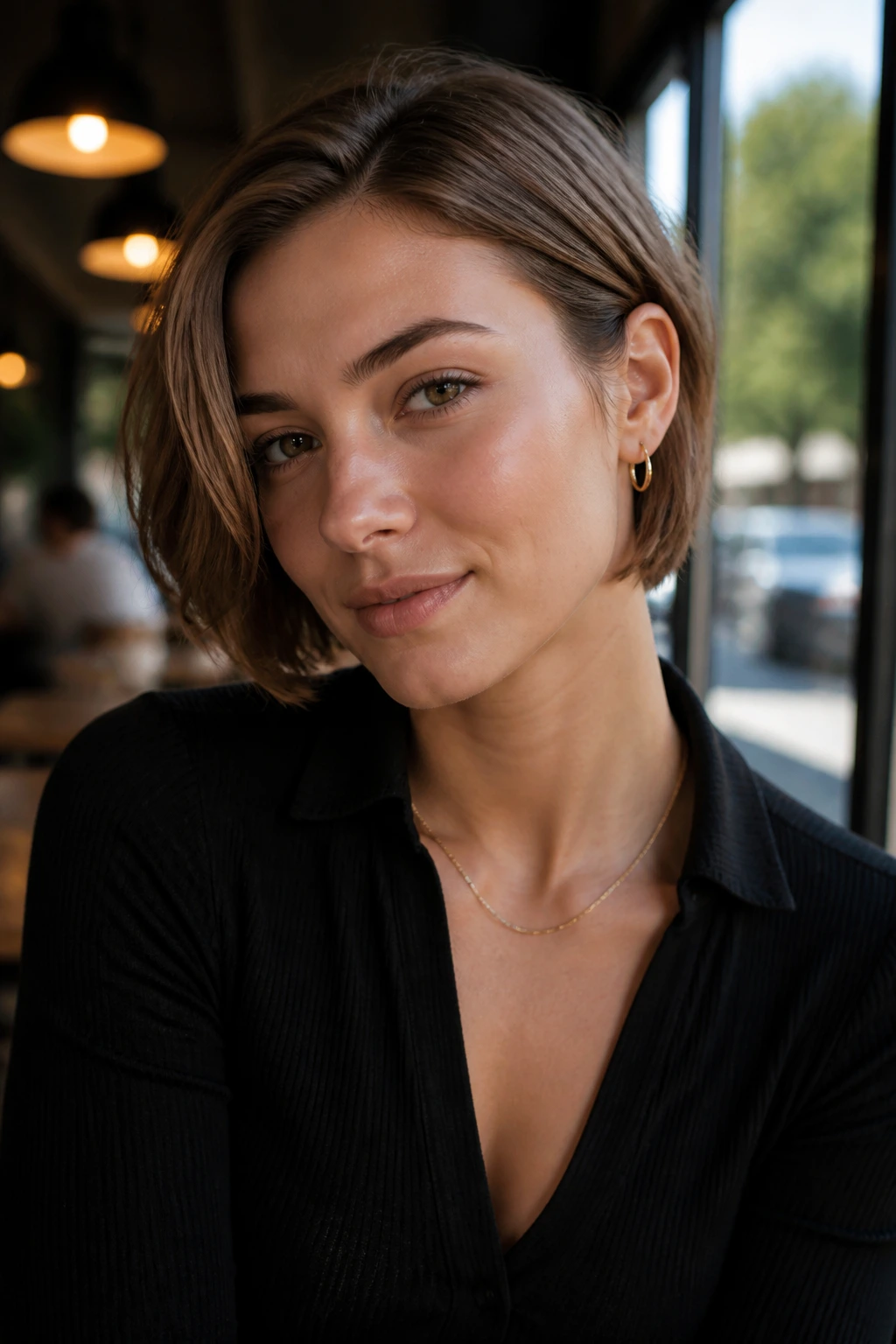
Can long hair really transition into a pixie bob without looking shocking?
Yes, if the cut keeps enough length through the front and a soft enough nape. The shock usually comes from taking too much off at once, not from the shape itself. A pixie bob gives you a middle step that still feels like hair you can style.
Will a pixie bob work on thick hair?
It can work very well, but thick hair needs internal removal of weight. If the stylist only shortens the outside, the cut will puff up. Ask for controlled layering and a tapered back so the style sits close to the head.
What if my hair is fine and flat?
Then the crown matters more than ever. Fine hair usually needs shorter internal layers at the top, a root-lift product, and a perimeter that doesn’t get too wispy. Keep the ends honest and don’t over-thin them.
Can I still tuck it behind my ears?
Often, yes. That’s one of the reasons pixie bobs are so workable. Keeping a little extra length around the side pieces lets you tuck one side without losing the shape completely.
How often should I get it trimmed?
If you want a neat outline, think 5 to 7 weeks. If you like it softer and a little grown out, you can go longer, but the neckline and sides will start to widen. That’s the first place the shape goes.
Is this cut hard to style if I air-dry only?
Not if the cut is built for your texture. Wavy and curly hair usually do fine with a little cream or mousse. Straight hair may need a finger-dry or a quick pass with a brush to keep the top from lying too flat.
What should I ask for if I want to keep it soft, not severe?
Say that you want feathered edges, longer front pieces, and a gentle nape taper. Those words matter. They tell the stylist you want movement and softness, not a hard geometric line.
Can a pixie bob grow into a bob later?
Yes, and that’s one of its smartest features. The front length and softened crown give the grow-out a path instead of a weird in-between stage. You may need one or two shaping trims, but it usually grows forward more gracefully than a true cropped pixie.
A Cropped Shape That Still Leaves Room to Play
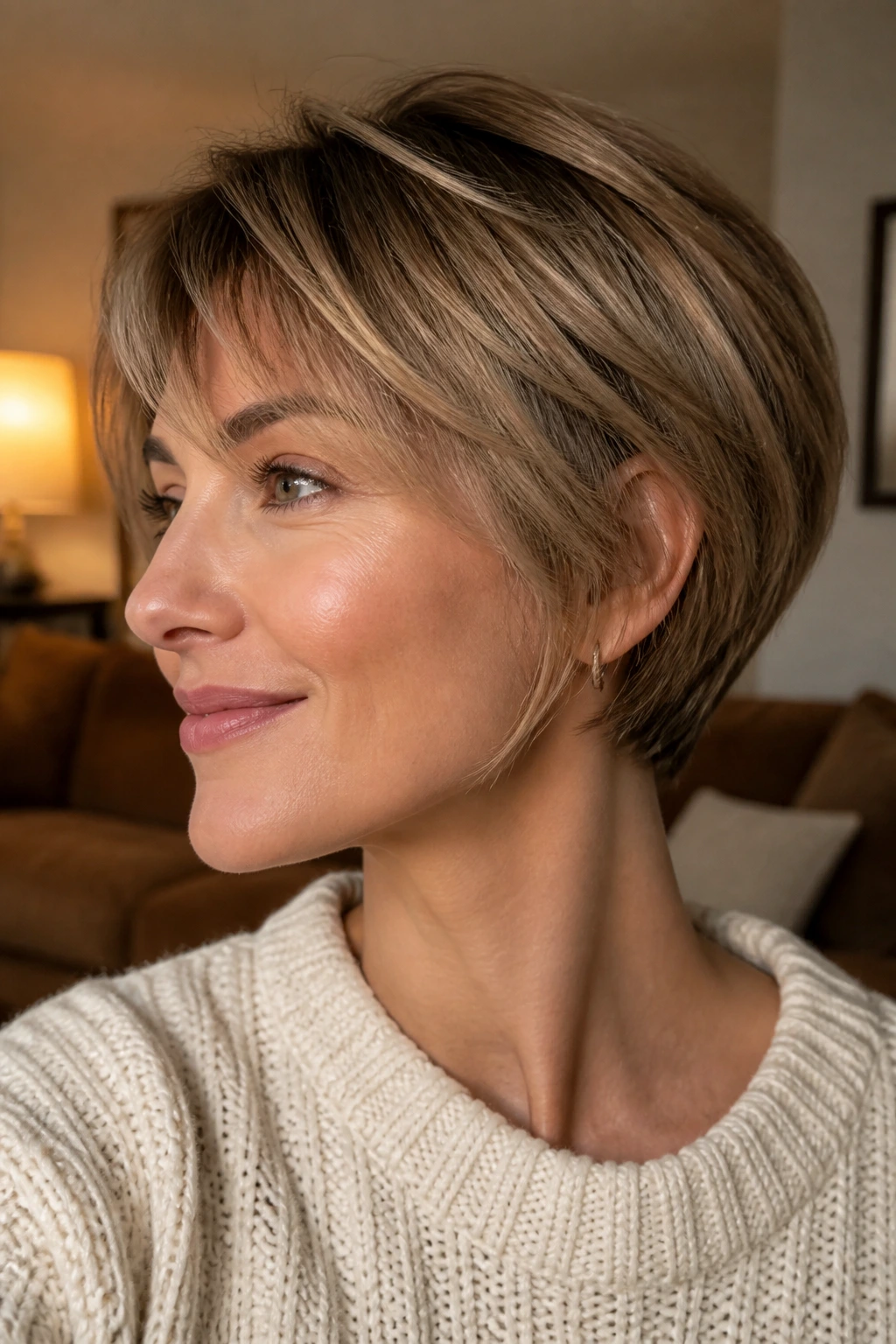
The nicest thing about a pixie bob is that it gives you shape without boxing you in. You can go soft, sharp, tucked, shaggy, polished, or curly and still keep the same basic haircut underneath. That flexibility is why it works so well on long hair — it respects the hesitation without looking timid.
If you’re taking the leap, bring photos that show the front, side, and back, not just one flattering angle. A good pixie bob depends on all three views, and the back of the haircut is where the truth usually lives. Keep that part honest, and the rest tends to fall into place.
