

A round face does not rule out a pixie. It rules out the wrong pixie.
The styles that work best on softer face shapes do a few very specific things: they lift the eye upward, trim bulk at the widest points, and keep the silhouette moving instead of sitting in one blunt little halo. That’s why pixie cuts for round faces are so much more about shape than length. A half-inch in the wrong place can widen the face. A little extra height at the crown can change the whole read of the haircut.
The tricky part is that a lot of short-hair inspiration looks gorgeous in photos and falls flat in real life. A cut that’s too even around the cheeks, too fluffy at the sides, or too blunt through the fringe can make the face look broader. The better pixies know where to be short, where to leave length, and where to let a few pieces fall forward. That’s the whole game. Small decisions. Big difference.
Why These Pixie Cuts Earn Their Place
-
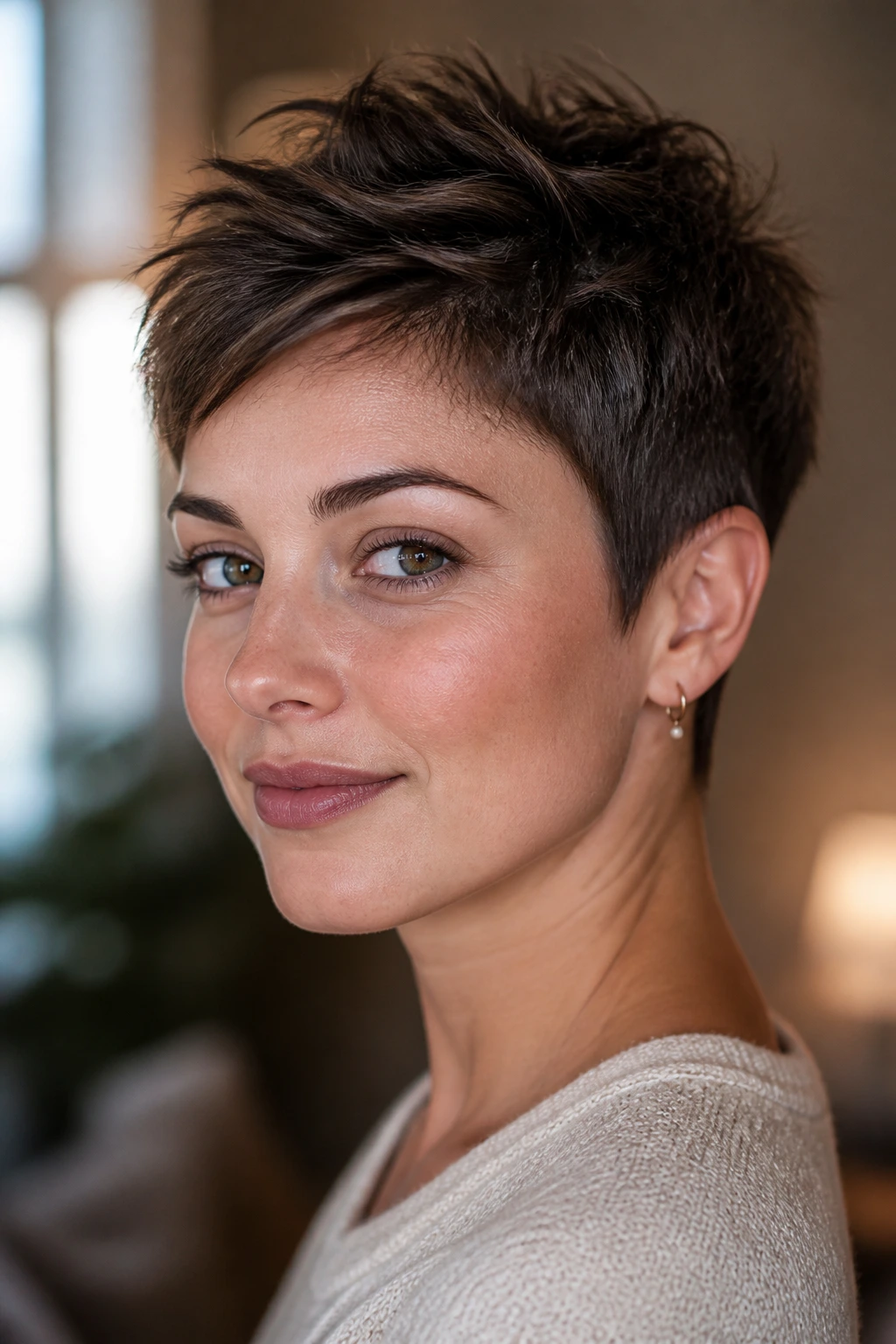
Height beats width: A crown with a little lift pulls the eye upward, which is the fastest way to stretch a round face without changing the haircut into something fussy.
-
Diagonal lines do the heavy lifting: Side-swept bangs, deep parts, and asymmetrical pieces create movement across the face instead of a flat horizontal line that stops it.
-
Tapered sides keep the cheek area clean: When the hair hugs the temples and narrows at the nape, the face gets room to breathe instead of being boxed in.
-
Texture is better than bulk: Choppy ends, feathering, and piecey layers give short hair shape without puffing out at the cheeks.
-
There’s a version for every texture: Fine hair, thick hair, curls, coils, straight strands, and grow-out phases all have a pixie that behaves if the cut is tailored properly.
-
The maintenance window is manageable: Most of these cuts stay sharp with trim appointments every 4 to 6 weeks, which is a lot easier to live with than a precision bob that loses its line after ten minutes of sleeping on it.
1. Tapered Micro Pixie
This is the shortest look in the bunch, and it works because it’s disciplined. The sides and nape are tight, the top stays just long enough to create a whisper of lift, and the whole cut reads clean instead of puffy. On a round face, that compact outline keeps the cheek area from feeling visually crowded.
Why It Flatters
A tapered micro pixie adds contrast. Short sides make the face look slimmer, while a touch of length on top creates a vertical line that stretches the silhouette. If your hair grows in dense or your head shape is rounder in the back, this cut keeps everything neat without adding width where you do not want it.
Ask For This
- Clipper-short nape and sideburns
- Soft, longer top with point-cut texture
- No bulk sitting at the cheekbone
- A little extra height near the crown
Best for: Fine-to-medium hair that needs structure.
Watch out: If your cowlick is strong, leave a little more length at the front so the top doesn’t kick up in a weird direction.
2. Side-Swept Fringe Pixie
A side-swept fringe is one of the easiest ways to soften a round face without making the haircut look overworked. The fringe starts longer on one side, drapes diagonally, and breaks up the width across the forehead. That diagonal line matters. It gives the eye somewhere to go.
Why It Works
The fringe creates asymmetry, and asymmetry is your friend here. A round face can feel broad when everything is balanced too evenly, but a sweeping bang interrupts that symmetry in a good way. Keep the sides close and the fringe airy, not heavy. Heavy bangs land like a curtain. Airy bangs land like movement.
Styling Note
Blow-dry the fringe in the direction it naturally wants to fall, then bend the ends with a small round brush or fingers. A pea-sized amount of lightweight cream is enough. More than that and the fringe goes stringy.
3. Long-Top Short-Sides Pixie
If you like the idea of short hair but want a little more security up top, this is the safe bet. The sides stay short and narrow, while the top keeps enough length to be brushed up, over, or slightly forward depending on the day. It’s the classic “short on the sides, taller on top” formula for a reason.
Why It Works
Round faces look sharper when the haircut has a clear top-and-side difference. This style does exactly that. The eye reads the height first, then moves down the face along the slimmer sides. It is also one of the easiest cuts to adapt for work, weekends, and that awkward in-between stage when you want to grow it out but not lose the shape.
Good to Know
Tell your stylist to leave enough top length for motion, not just standing texture. If the top is cut too short, the whole thing turns into a helmet. You want lift. Not stiffness.
4. Choppy Layered Pixie
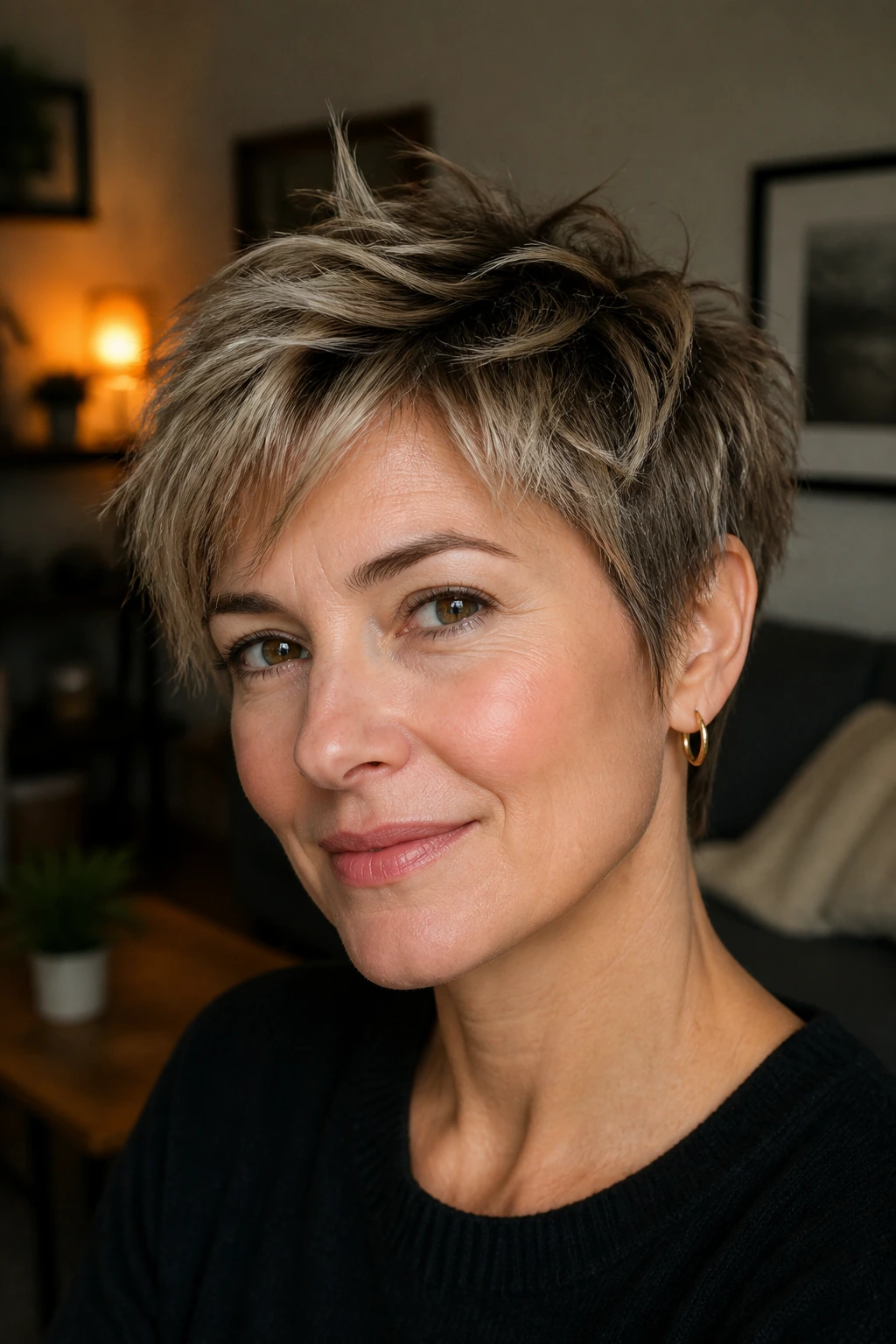
A choppy pixie is all about broken edges. Nothing sits in one solid line, which is exactly why it suits a round face so well. The layers create tiny shifts in direction, and those shifts keep the cut from looking wide or heavy.
Why It Works
Blunt ends can visually widen short hair. Choppy layers do the opposite. They scatter the silhouette, especially around the front and crown, so the cut feels lighter. This is a strong choice if your hair is thick and tends to balloon at the sides. A good choppy pixie removes that puff without making the cut look thin or over-razored.
What To Ask For
- Soft interior layers
- Piecey ends, not blunt corners
- A little extra height at the crown
- Thinning only where the hair truly needs it
Pro tip: On thick hair, ask for debulking from inside the shape, not from the surface. Surface thinning can create frizz and weird flyaways fast.
5. Asymmetrical Pixie
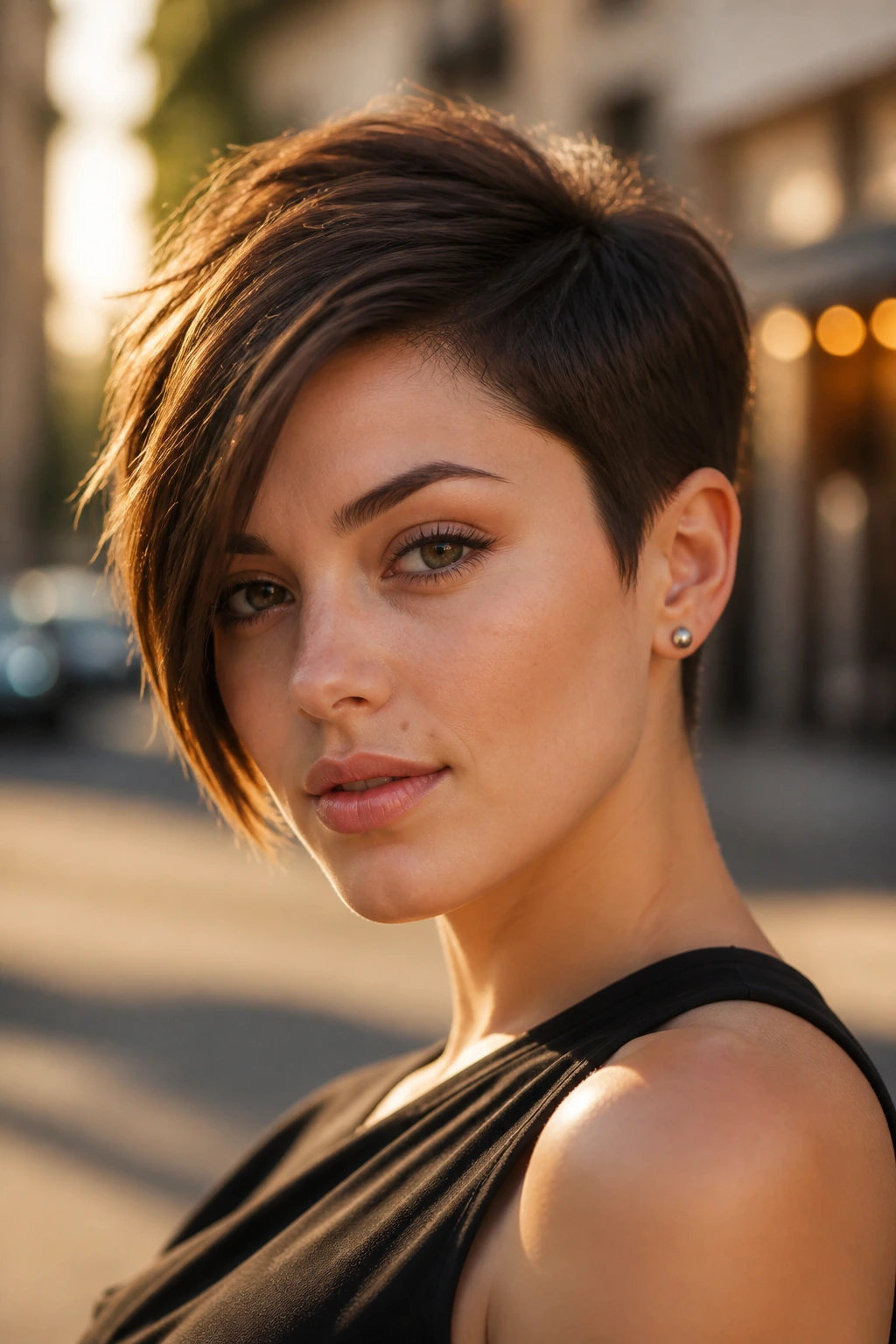
One side longer, one side shorter. Simple idea, strong payoff.
An asymmetrical pixie makes a round face look more angular because it gives the eye a slanted path to follow. That uneven balance can be subtle or dramatic. Either way, it keeps the haircut from sitting evenly across the face like a cap.
Why It Works
The longer side acts like a built-in contour line. It narrows one side of the face and breaks the circular outline. If you have soft cheeks and want the haircut to feel a little sharper, this is one of the best shapes to ask for. It also looks good tucked behind one ear, which gives the cut a second life when you’re bored of the first version.
Styling Tip
Use a flat iron only on the longer side if you want that clean sweep. Keep the shorter side closer to the head. The contrast is the point, and the contrast gets lost if both sides are styled the same way.
6. Curly Pixie With Height
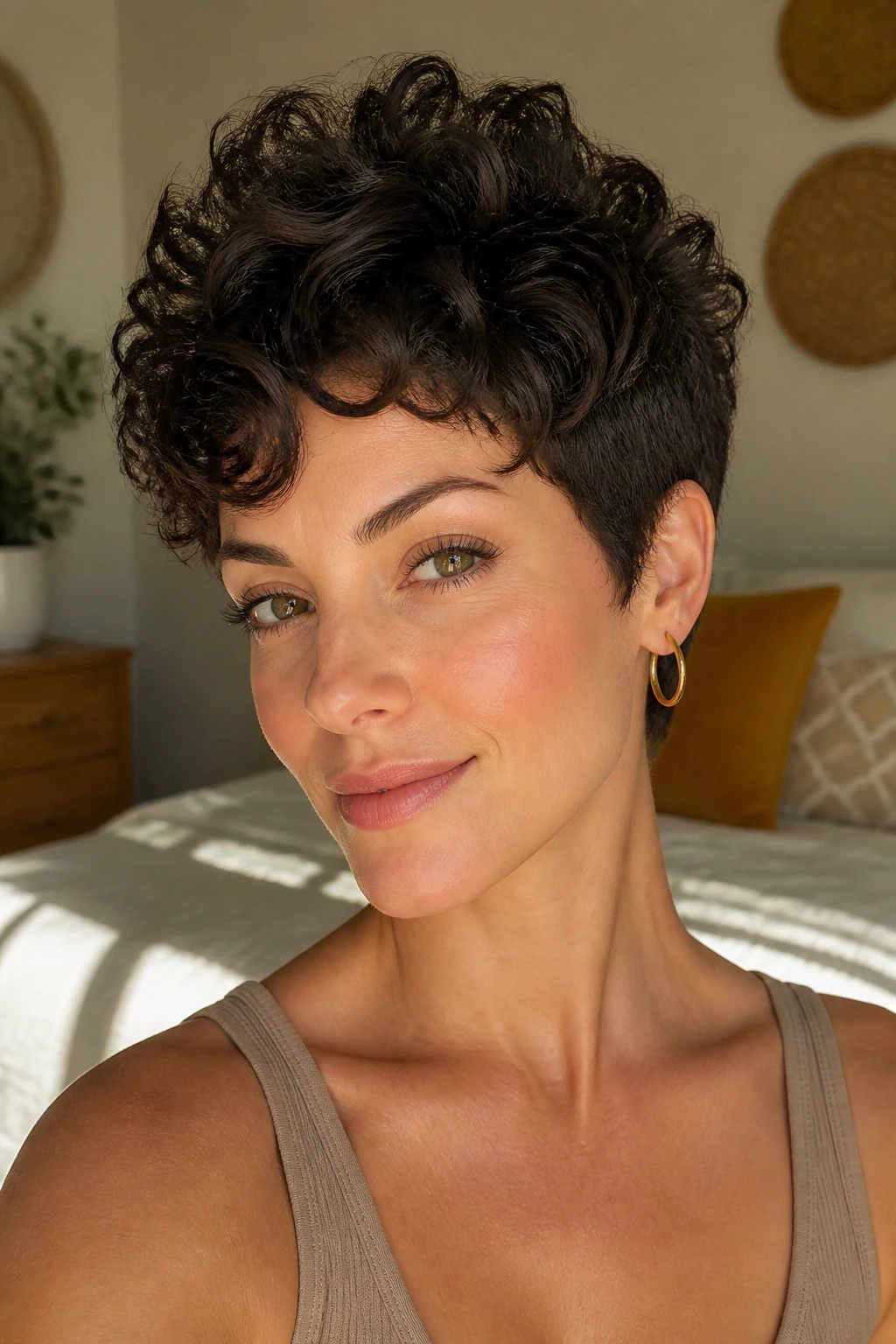
Curly hair and round faces can work together beautifully in a pixie, but the curls need room to rise. The mistake is letting the curl cluster at cheek level, where it adds width. The fix is shaping the cut so the volume sits higher and the perimeter stays neat.
Why It Works
Curls already have dimension. You do not need to force more shape into them. A curly pixie with height uses the curl’s natural spring to lift the eye upward, while tapered sides stop the sides from fanning out. It’s one of the few short cuts where a little controlled messiness actually looks better than perfection.
How To Style It
Use This Routine
- Work in leave-in conditioner on damp hair.
- Scrunch in a lightweight mousse.
- Diffuse on low heat, lifting at the roots.
- Stop drying when the curls are about 90% set, then let them air-finish.
A hard-dried curl can go frizzy or flat. Stop before that point.
7. Feathered Pixie
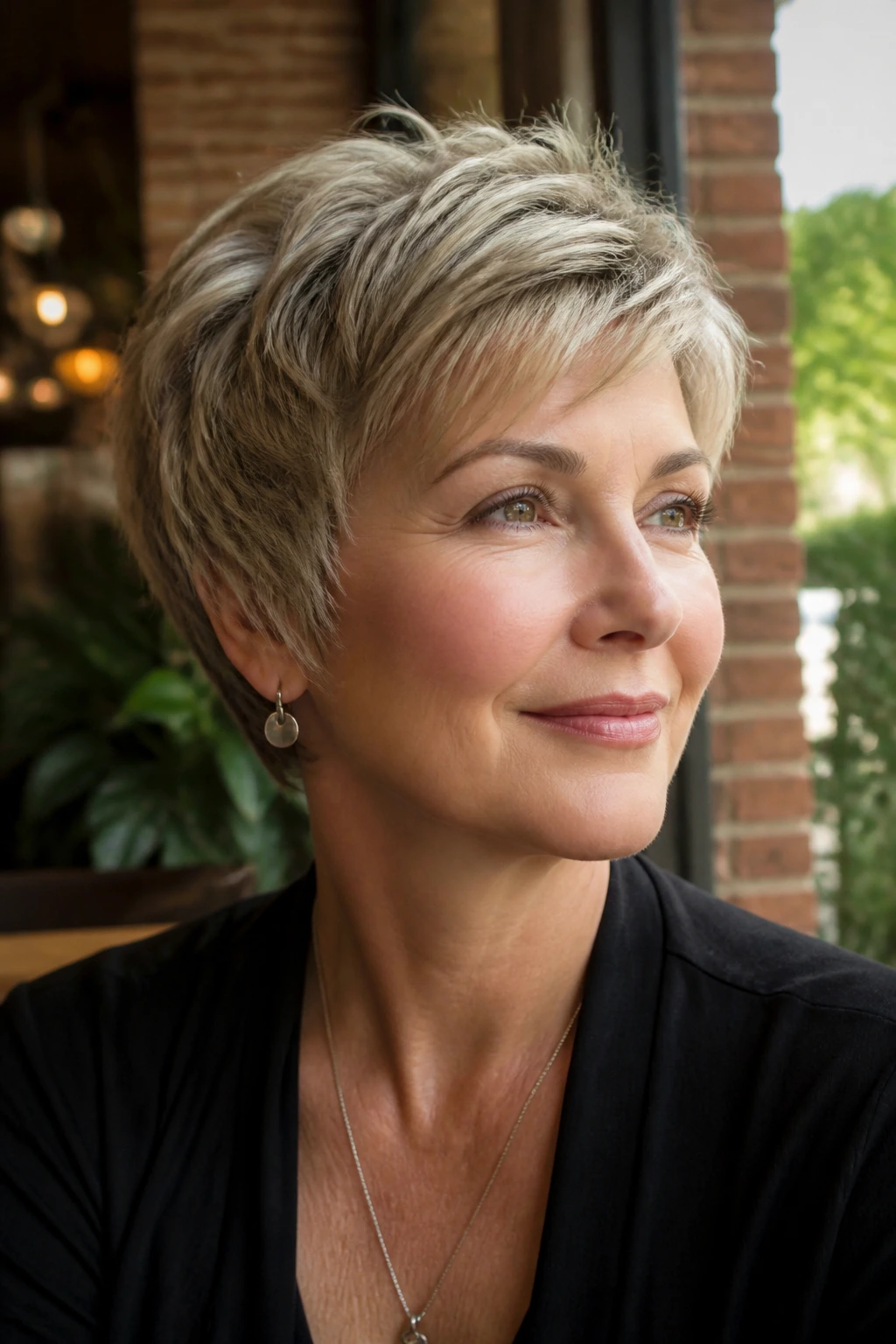
Feathering gives short hair a softer edge, and on a round face that softness keeps the cut from looking blocky. The layers are sliced so the ends move away from the head instead of sticking out in one thick line. It feels airy. Not wispy in a weak way. Airy in a controlled way.
Why It Works
Feathered layers create light at the perimeter, which helps the haircut skim the face rather than sit on it. That’s useful if your cheeks are full and you want the hair to float around them instead of crowding them. Fine hair especially likes this shape, because feathering creates movement without requiring a lot of product.
Best Use Case
If your hair tends to lie flat, feathering gives it life without making it explode into volume. That’s a useful balance. The style looks especially good with a soft side part and a little lift near the crown.
8. Textured Crop Pixie
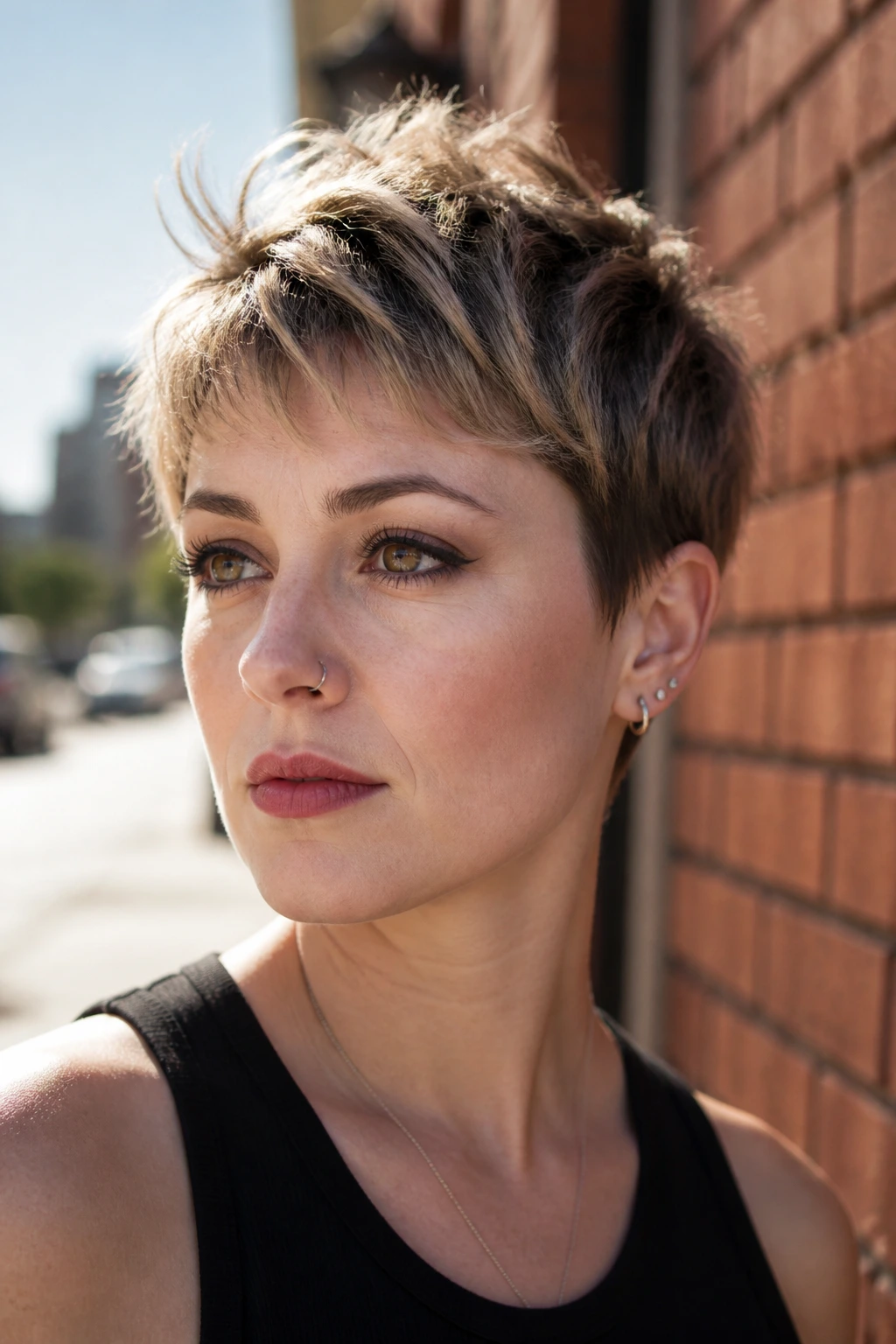
This one sits somewhere between a pixie and a cropped French-inspired cut. The top is short but broken up, the sides are lean, and the fringe is usually piecey rather than blunt. It has a modern, slightly undone feel that works well on round faces because it creates vertical texture.
Why It Works
The shape is compact, but the surface is busy in a good way. Those tiny bits of texture pull attention upward, and the tight sides keep the face from looking wider. If you want something that looks polished without looking precious, this is a good lane.
Styling Cue
Dry the hair forward first, then push it slightly off-center with your fingers. A matte paste works better than shiny gel here. You want separation, not a wet shell.
9. Undercut Pixie
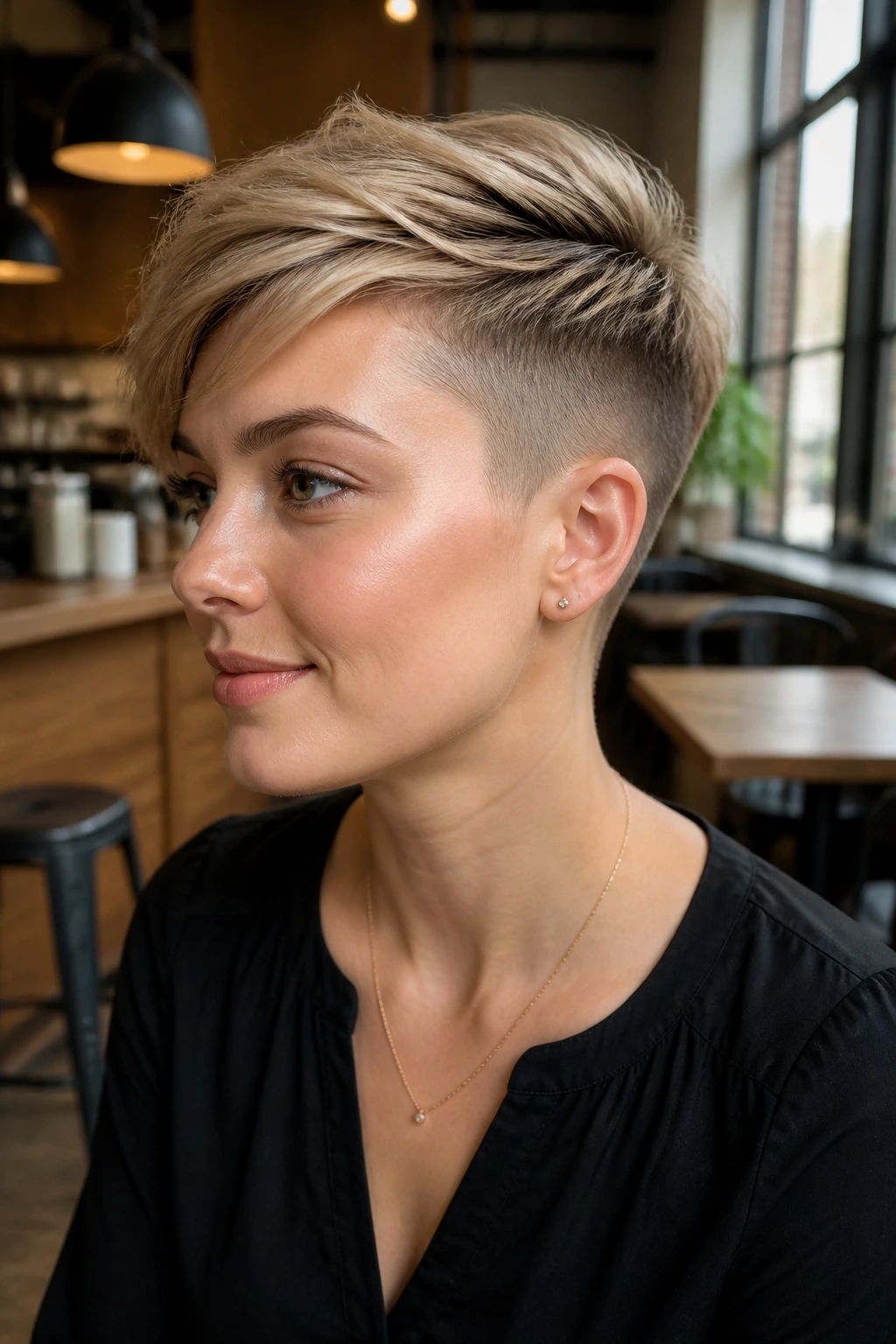
An undercut removes bulk where round faces least need it: the sides and lower back. That alone makes the style worth a look. You can keep the top longer and more playful while the hidden underlayer does the quiet work of narrowing the outline.
Why It Works
The top can be styled up, over, or tousled without the sides competing for attention. That contrast helps the face look longer and the haircut look cleaner. It is a very good choice if your hair is thick and you’re tired of feeling like every short cut turns into a mushroom after a week.
Honest Note
This is not the easiest grow-out. If you like changing your mind a lot, keep the undercut soft rather than shaved tight. A soft undercut buys you more flexibility later.
10. Slicked-Back Pixie
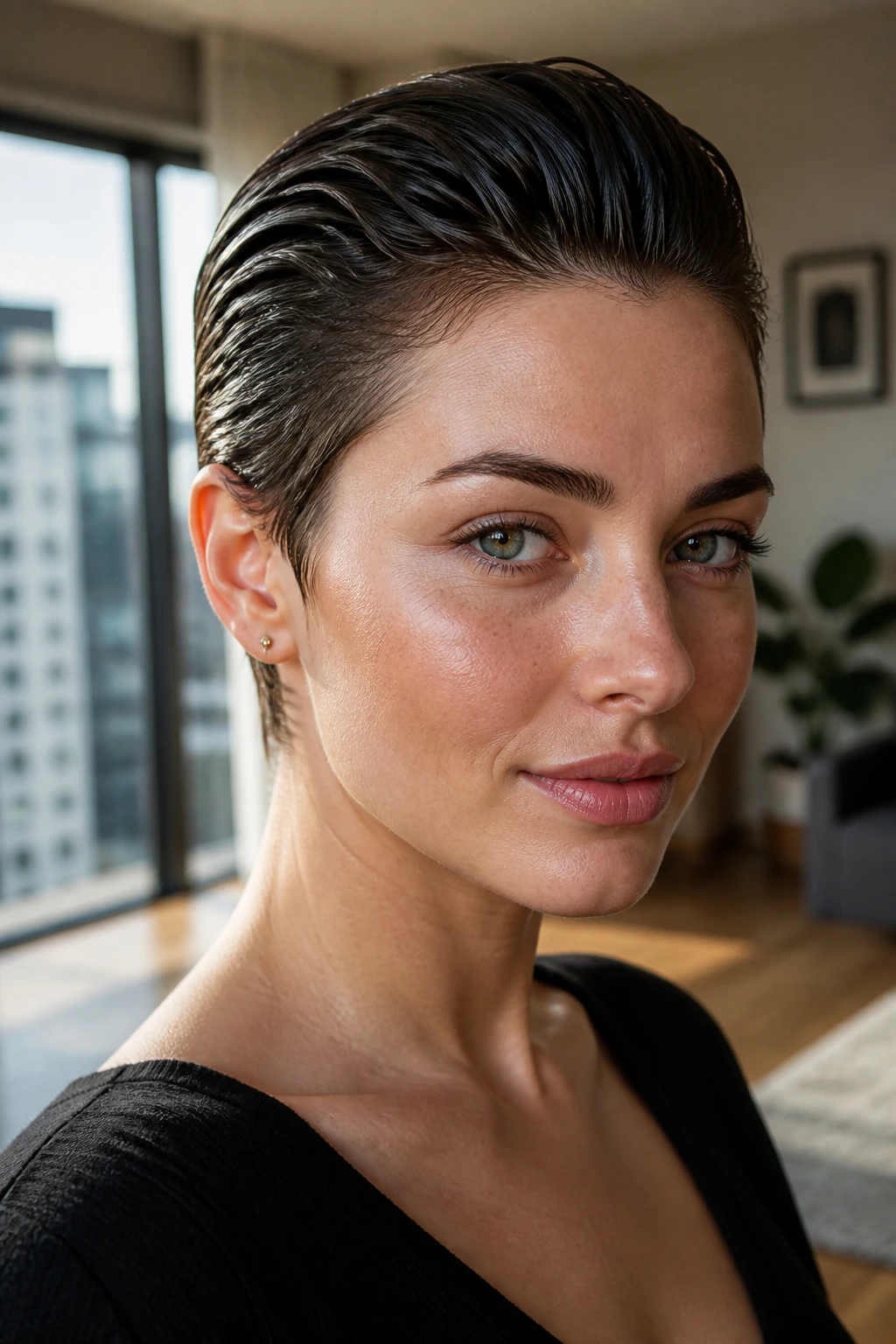
A slicked-back pixie is one of the sharpest options for a round face because it removes the framing around the cheeks entirely. When the hair is combed back with a bit of shine, the face becomes the focus and the haircut becomes the outline. It’s clean. Very clean.
Why It Works
Back-swept hair creates a vertical line from the forehead through the crown. That lengthens the face and makes the cheek width less noticeable. This style looks especially good with strong brows, earrings, or a structured collar because the whole look feels intentional instead of accidental.
How To Wear It
Use a light gel or styling cream on damp hair, comb everything back, then let it dry with a little lift at the roots. If you flatten the top too hard, the cut loses its shape. A tiny bit of air at the crown keeps it from looking slicked to the scalp.
11. Pixie Bob Hybrid
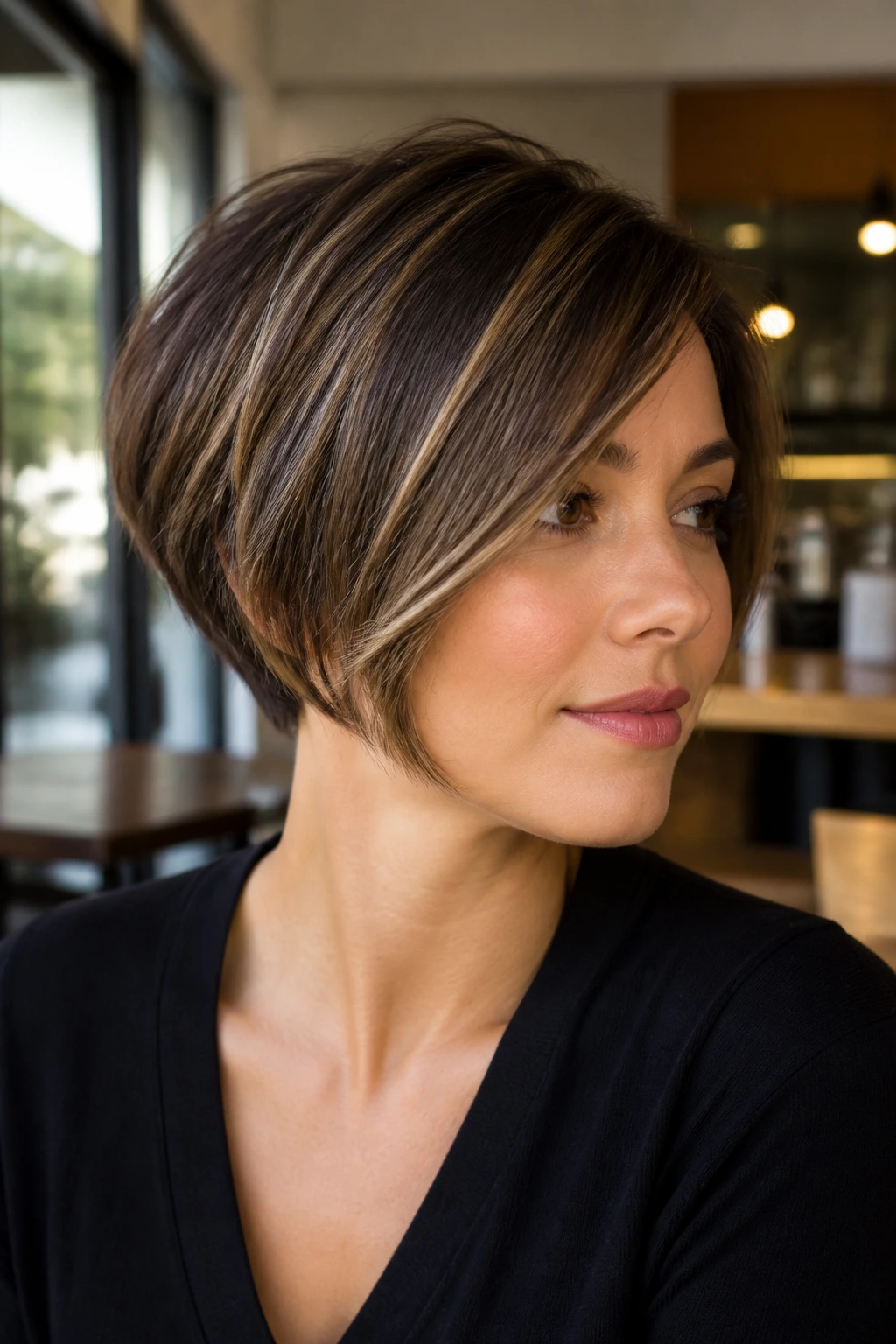
A pixie bob is for the person who wants to flirt with short hair but not jump straight into a cropped cut. The nape stays shorter, the front carries more length, and the outline leans soft rather than severe. On a round face, that extra front length helps create a narrowing frame.
Why It Works
This shape gives you the face-lengthening perks of a pixie with a little more movement around the jaw. If you’re nervous about full exposure at the ears or temples, this is a smart halfway point. It also wears well when tucked behind one ear, which gives the face a nice diagonal line.
Who It Suits
People growing out a bob, people with medium-thick hair, and anyone who wants a short cut that still brushes the cheekbones in a gentle way. It is less edgy than a micro pixie, but easier to live with if you still want some softness.
12. Shaggy Pixie
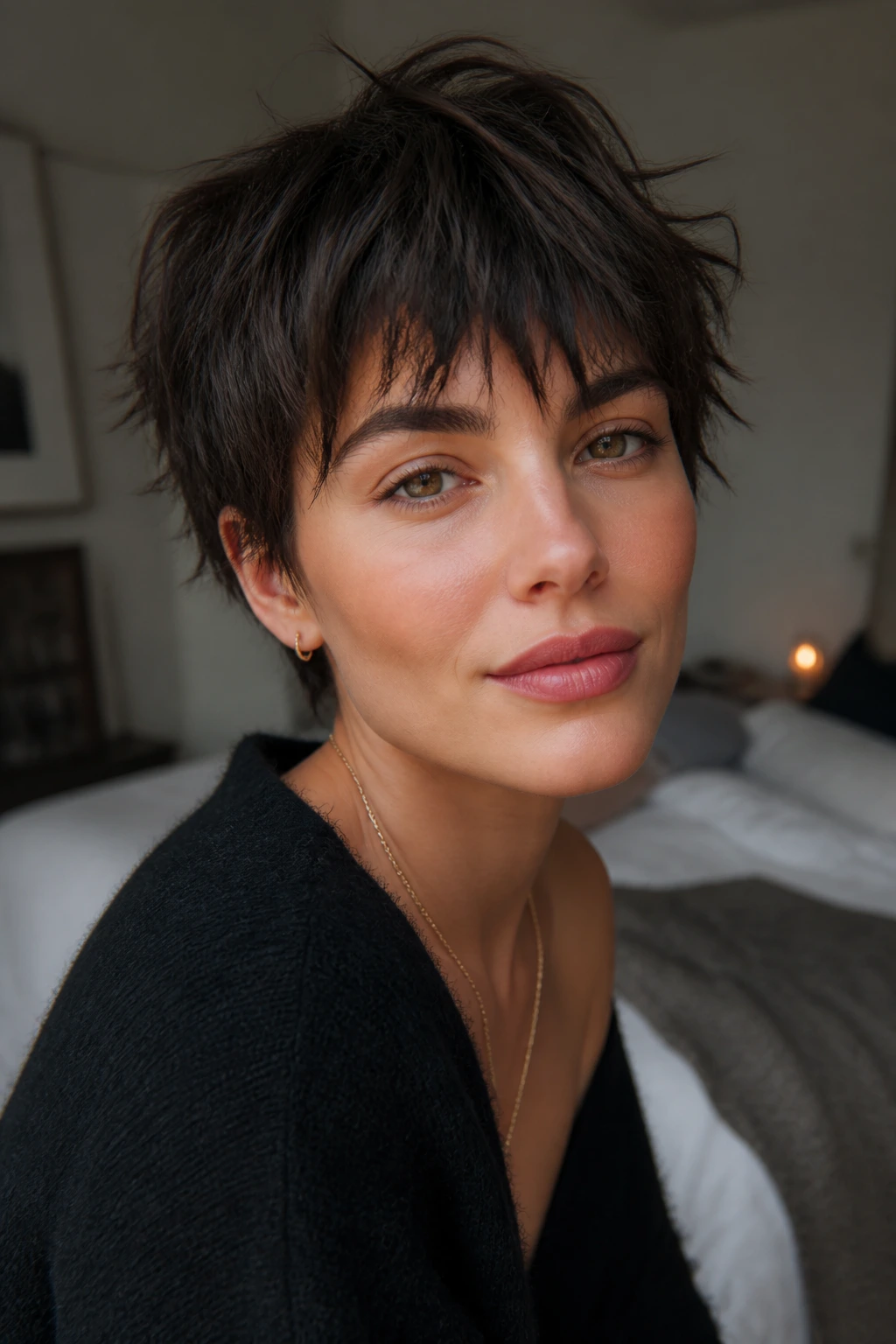
A shaggy pixie is the messy sibling of the more polished versions, and that looseness is the charm. The layers are uneven in a deliberate way, the fringe is broken up, and the whole thing feels light around the face. Round faces benefit when the cut looks lived-in instead of perfect.
Why It Works
The irregular layers keep the outline from turning circular. Instead, the haircut has little peaks and dips that interrupt the width. This is a strong option if you want something casual and a little rock-and-roll without going full punk.
Styling Tip
Use salt spray sparingly. Too much, and the hair can swell at the sides. A few sprays at the roots and crown, then finger-tousle the rest.
13. Piecey Fringe Pixie
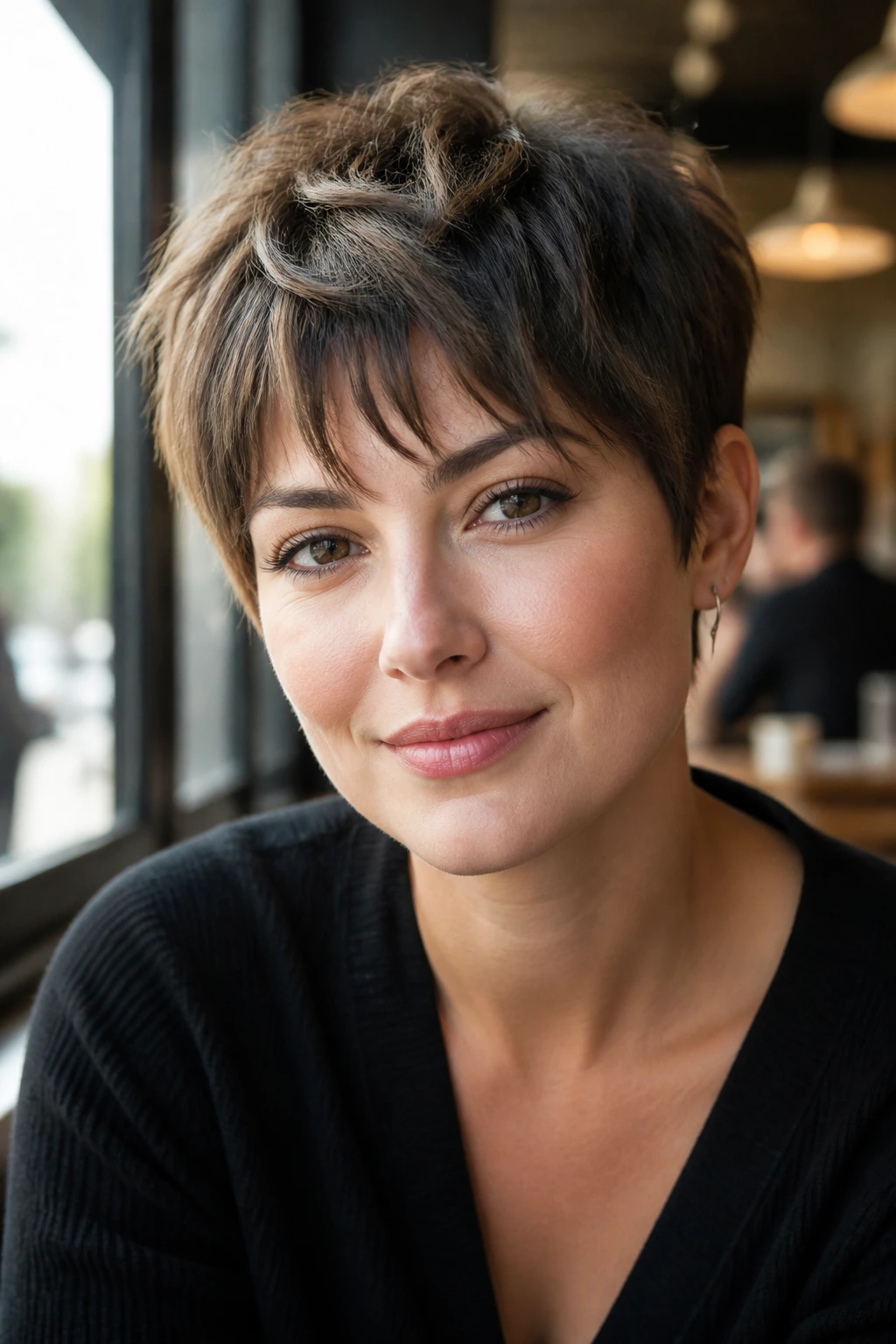
A piecey fringe is one of those tiny details that changes the whole haircut. Instead of one solid bang, the front breaks into small separated pieces that fall across the forehead in a loose pattern. That scattered look makes the face appear narrower.
Why It Works
A round face can get lost under a blunt straight fringe. A piecey fringe keeps the forehead visible in small sections, which stops the haircut from feeling boxed in. It also lets you adjust the mood of the cut day to day. More separation feels edgy. Less separation feels softer.
Styling Move
Warm a dab of wax between your fingers and pinch a few pieces at the front. Don’t coat the whole fringe. The point is to create gaps, not a helmet of texture.
14. Deep Side-Part Pixie
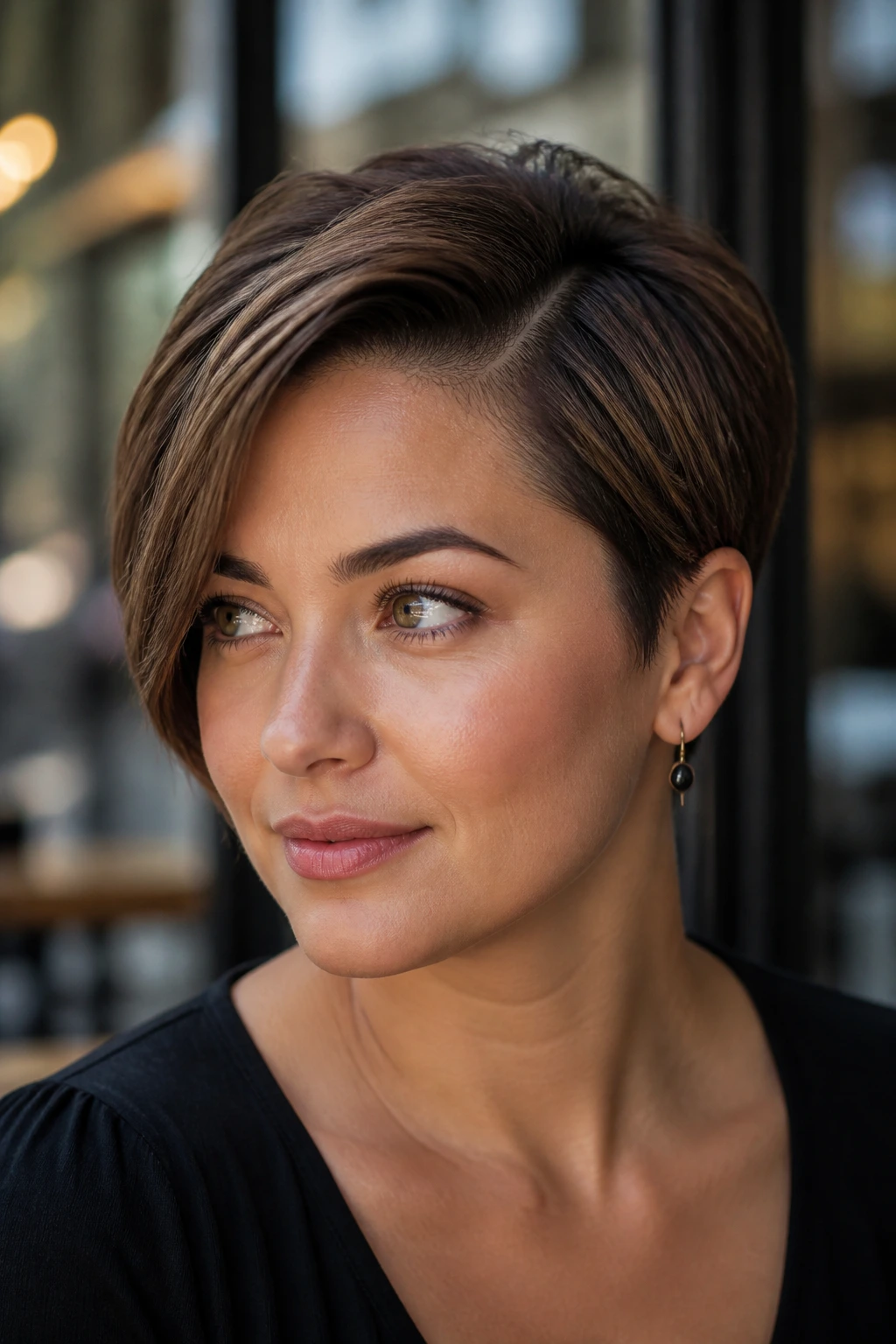
A deep side part is one of the quickest tricks in the book, and I still think it’s underrated. It shifts the weight of the cut to one side, adds height at the front, and gives the face a longer line without asking for a dramatic haircut change.
Why It Works
The deeper part lifts the roots on one side and creates asymmetry across the forehead. That alone can make a round face look more oval. If you want a subtle change rather than a bold makeover, this is a smart place to start.
A Small Warning
If your hair naturally resists being parted deeply, don’t fight it every morning. Train it gradually after washing by clipping it in place while it dries. The shape will hold better that way, and you won’t need half a can of spray.
15. Tapered Nape Pixie
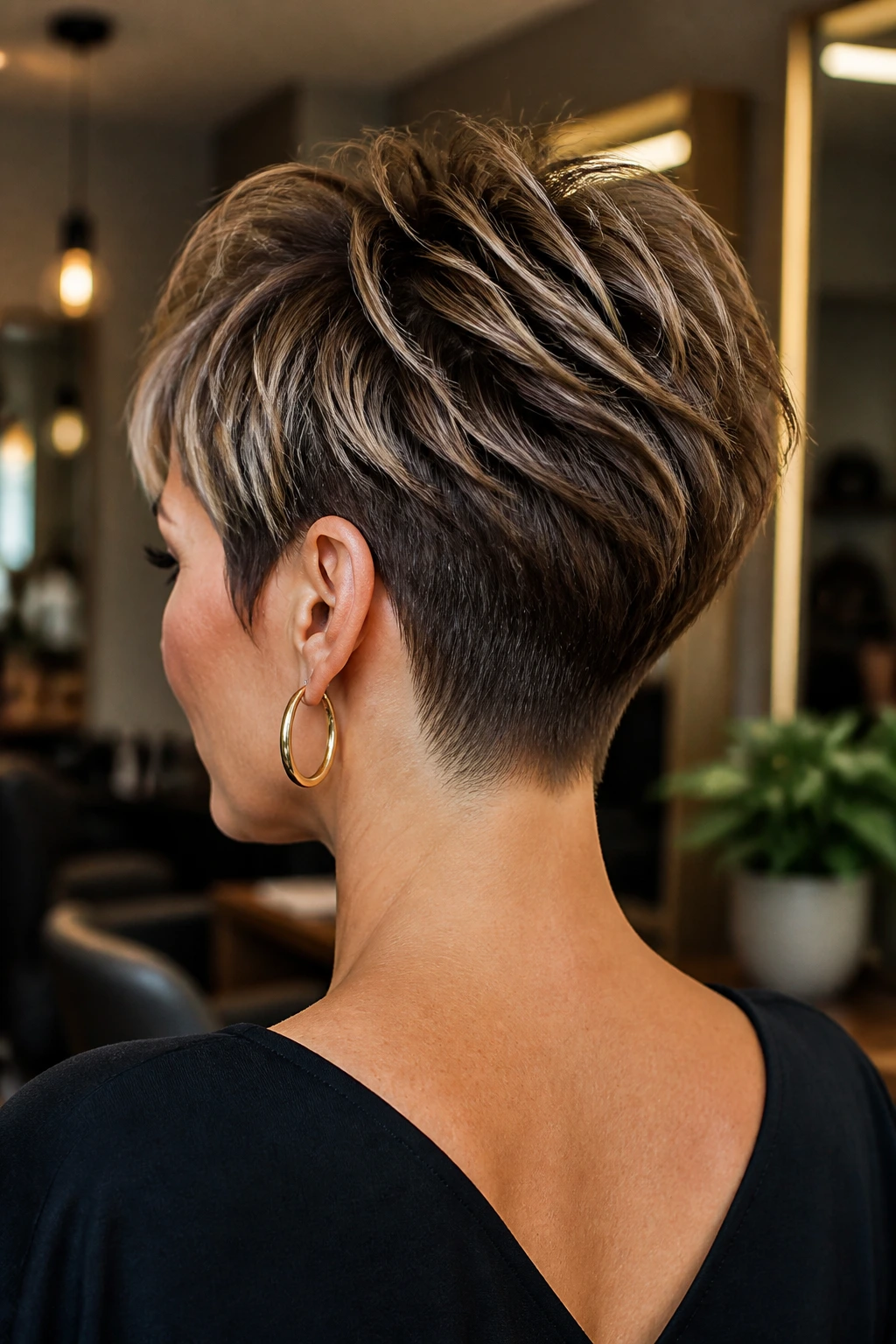
A tapered nape does quiet work, and quiet work matters. By narrowing the back of the haircut close to the neck, it makes the whole silhouette look leaner and more lifted. The front can stay soft, but the back needs to be tidy.
Why It Works
Round faces look better when the haircut has a slim base. A tapered nape gives that base without stealing volume from the crown. It also keeps the neckline crisp, which helps the haircut look fresh longer between trims.
Styling Note
This cut needs regular cleanup if you want the taper to stay visible. Once the nape starts growing out, the shape can get boxy fast.
16. Spiky Pixie
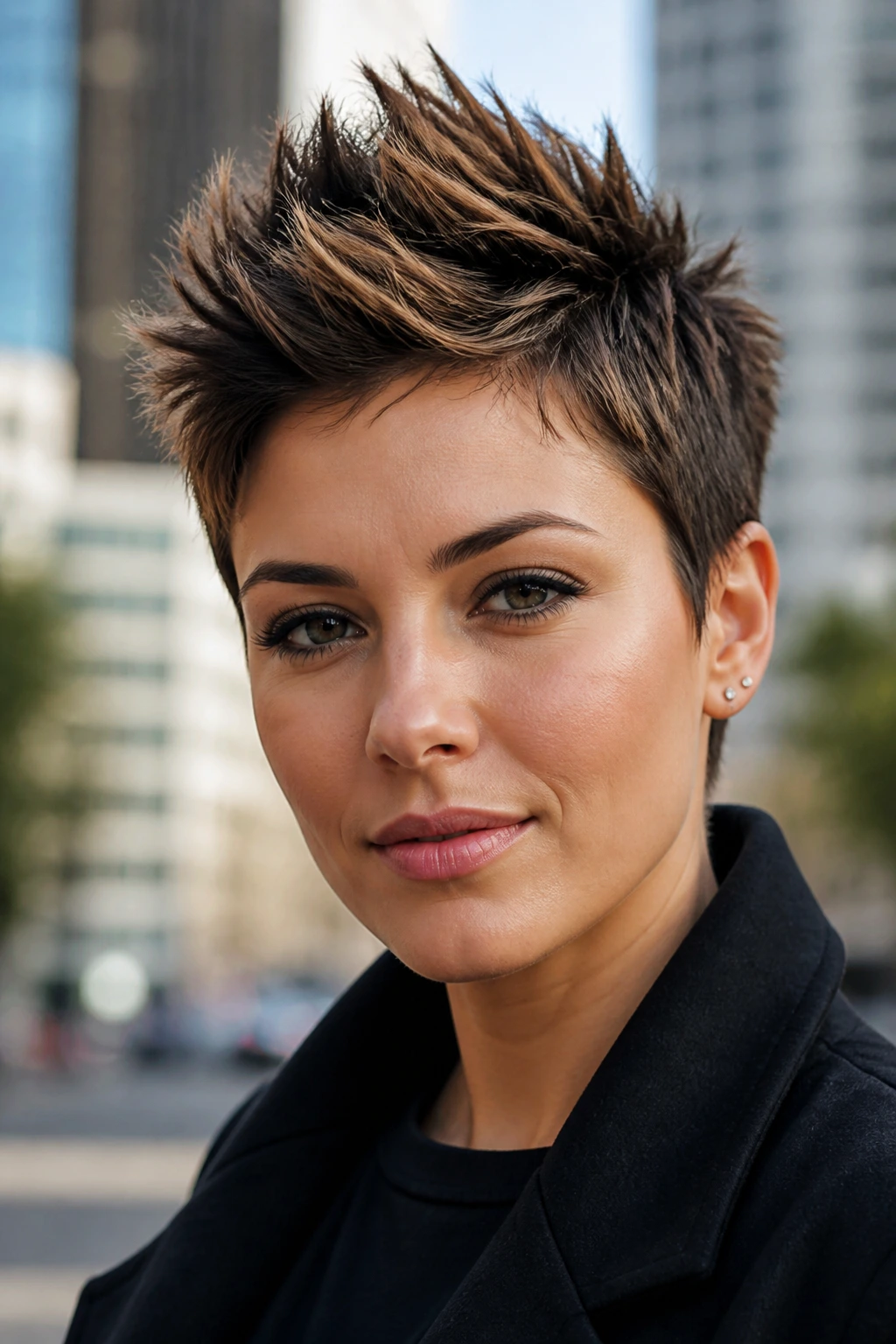
Spiky does not have to mean crunchy or dated. Done right, a spiky pixie is just a piecey, lifted shape with direction. For round faces, the vertical texture is the point. It stretches the profile and keeps the haircut from collapsing into a soft puff.
Why It Works
Spikes pull the eye upward. That’s the main reason this style flatters softer face shapes. You don’t need full-on punk gel. A matte paste and a few flicked sections at the crown are enough to create that lifted effect.
Best For
Short hair that naturally stands up a bit, thick hair that needs direction, or anyone who likes a cut with a little edge. It’s not the most forgiving choice if you hate doing your hair. But if you like a quick five-minute style, it pays off.
17. Brushed-Up Quiff Pixie

This one borrows from menswear shapes and turns them softer. The front and top are brushed upward and slightly back, creating a little quiff-like lift that lengthens the face. It feels bold without being harsh.
Why It Works
The quiff adds height where a round face needs it most. Unlike a flat fringe, this front section creates a strong vertical line. Keep the sides close and the top airy, and the face gets more definition fast.
Styling Tip
Blow-dry the front upward with a small brush while the roots are still damp. A touch of root-lifting spray helps, but don’t overload it. Too much product and the front turns stiff, which kills the movement.
18. Soft Mullet Pixie
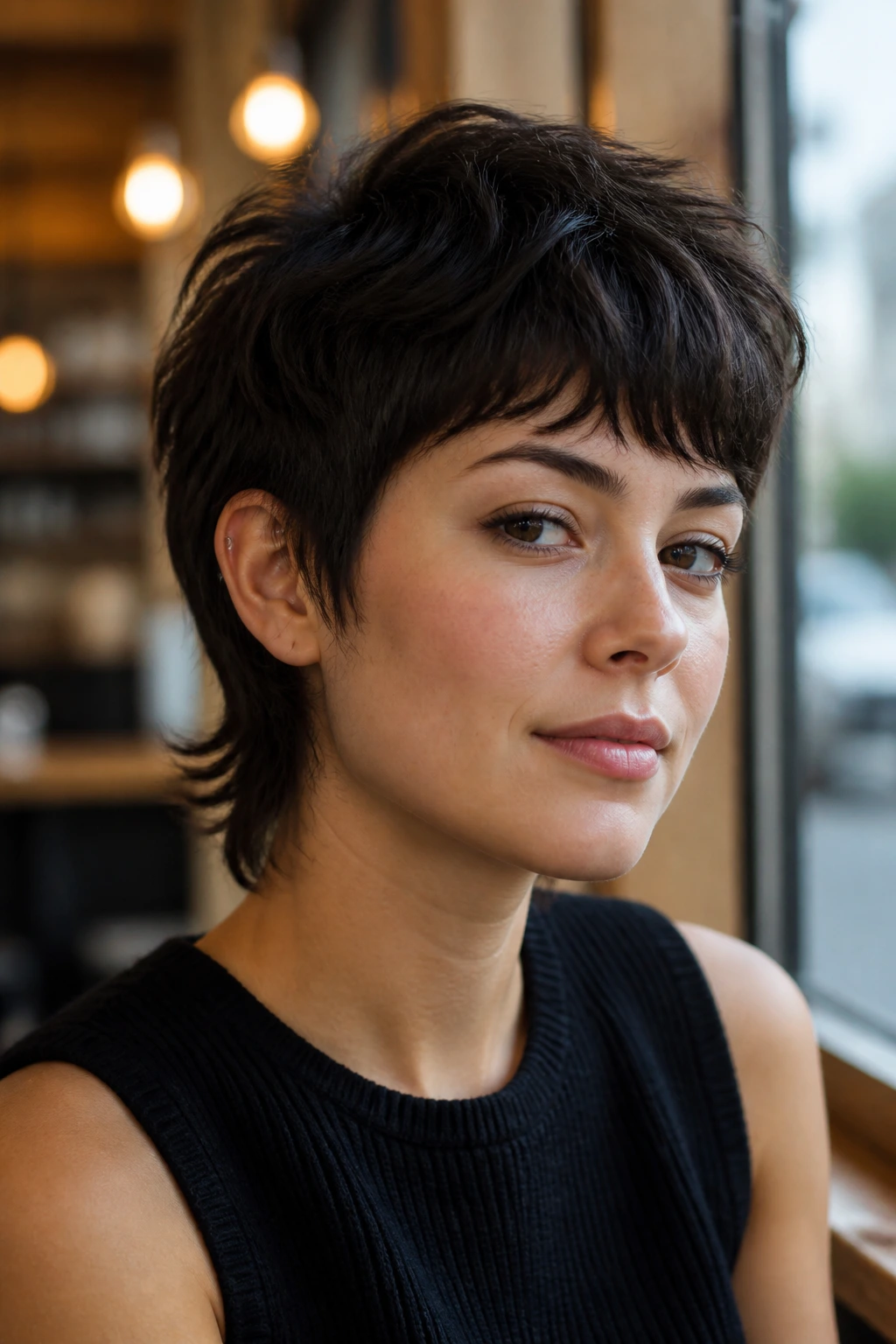
A soft mullet pixie sounds more dramatic than it feels. The front and sides stay cropped, while the back keeps a little extra length. The result is a narrow frame around the face and a tail of length at the nape that keeps the haircut interesting.
Why It Works
The longer back draws the eye downward, which helps balance a round face. It also keeps the shape from looking too boxy. If you like short hair but want a little attitude, this is a strong middle ground.
What To Watch
The back length needs to stay intentional. If it grows out unevenly, the cut can look forgotten instead of styled. A trim around the nape keeps it deliberate.
19. Crown-Lift Pixie
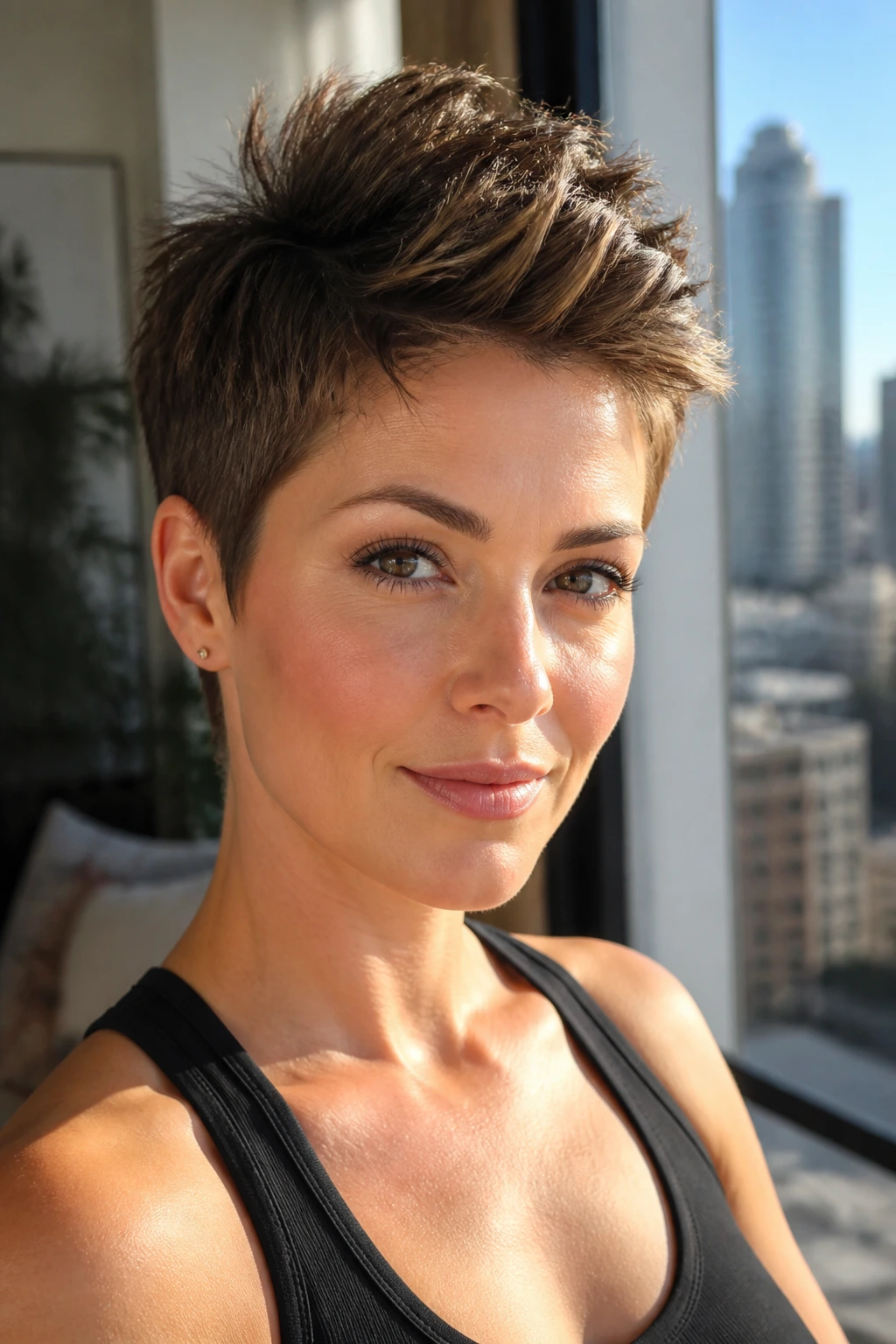
If your face is round and your hair lies flat, crown lift is not optional. It’s the whole point. This pixie keeps the sides controlled and sends the volume up top, where it lengthens the profile instead of widening it.
Why It Works
The crown creates a little vertical architecture. That’s a fancy way of saying the haircut stands up in the right place. The lift does not need to be dramatic. Even a half-inch of height at the crown can make the cheeks feel less dominant.
Styling Move
Flip the head upside down for a few seconds while drying, then smooth the sides back down with your hands. You want the roots lifted, not the whole head puffed out.
20. Sleek Ear-Tucked Pixie
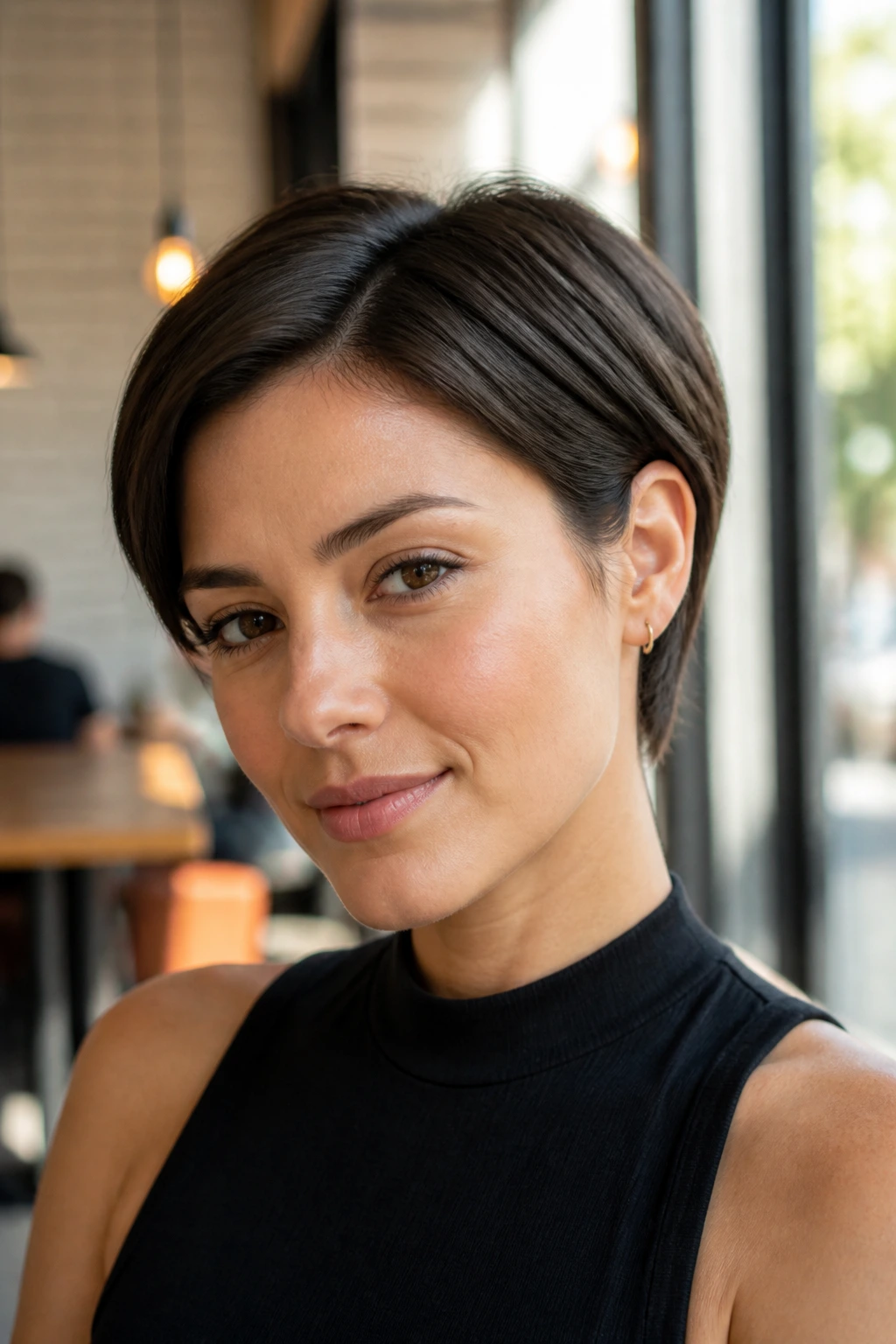
A sleek ear-tucked pixie is all about clean edges. The hair sits close to the head, but the front pieces stay long enough to tuck behind the ears and open the face. That controlled sweep can make a round face look leaner and more elegant.
Why It Works
Tucking hair exposes more cheek and jaw, which sounds risky until you see the line it creates. When the rest of the cut is narrow and the top has a little lift, the open ear area acts like a frame, not a spotlight. The shape feels neat instead of severe.
Styling Note
Use a smoothing cream if your hair frizzes around the temples. Those tiny flyaways matter here. They can soften the line, but too many of them make the look lose its polish.
21. Temple-Length Pixie
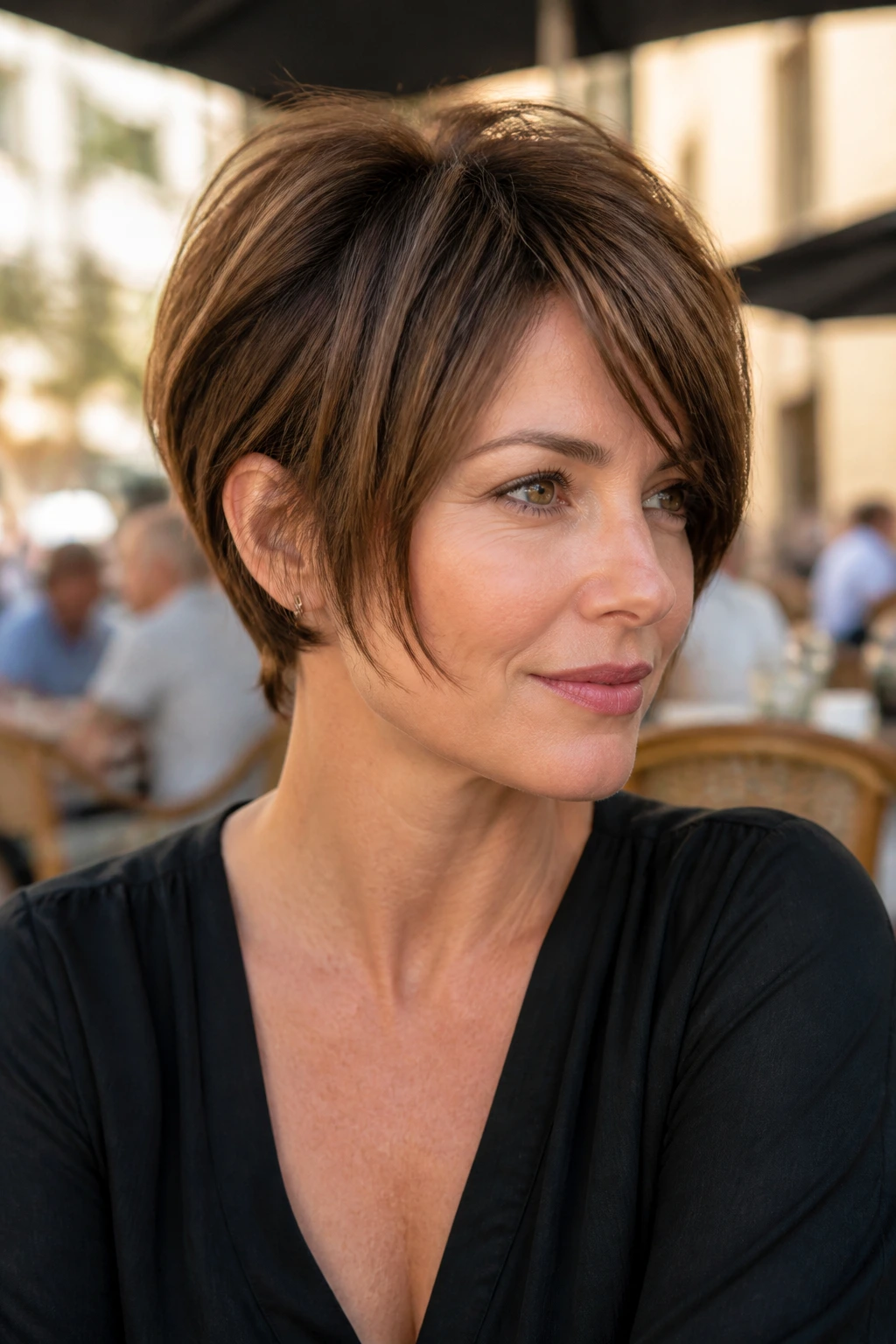
Temple-length pieces are one of my favorite tricks for round faces because they quiet the widest part of the head without hiding the whole face. The hair stays short everywhere else, but the bits at the temples and around the front are left long enough to skim the cheeks.
Why It Works
Those side pieces create a slimming curtain without becoming a bob. They are especially helpful if you wear glasses, because the lengths work around the frames rather than fighting them. The cut stays light, but it has enough side movement to stop the face from reading too open.
A Useful Detail
Ask for those temple pieces to be soft and tapered, not blunt. A blunt side piece can look like a shelf. Softness wins here.
22. Curly Undercut Pixie
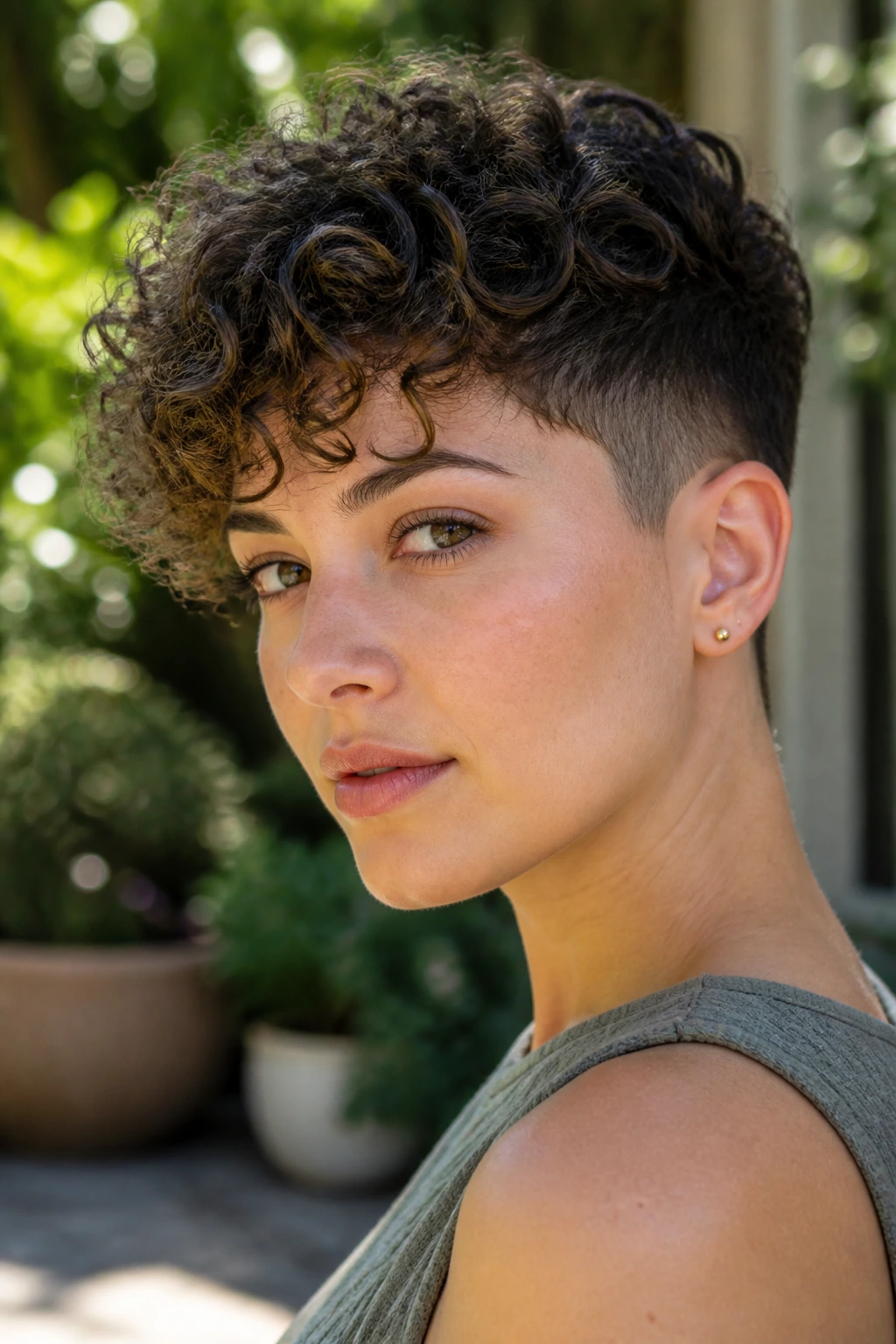
Curly undercuts are one of the smartest ways to handle density. The undercut removes the bulk underneath, while the curls stay free on top where they can build height instead of width. The result is airy, not bulky.
Why It Works
Round faces and curly hair do best when the silhouette rises from the scalp rather than spreading sideways. An undercut lets the curls spring up and forward without adding a wide shelf around the cheek area. It is a strong option for thick curls that usually need to be pinned back just to behave.
Styling Cue
Use a diffuser and keep your hands off the curls until they’re mostly dry. Over-touching creates frizz, and frizz at the sides is the enemy here.
23. Wedge-Inspired Pixie
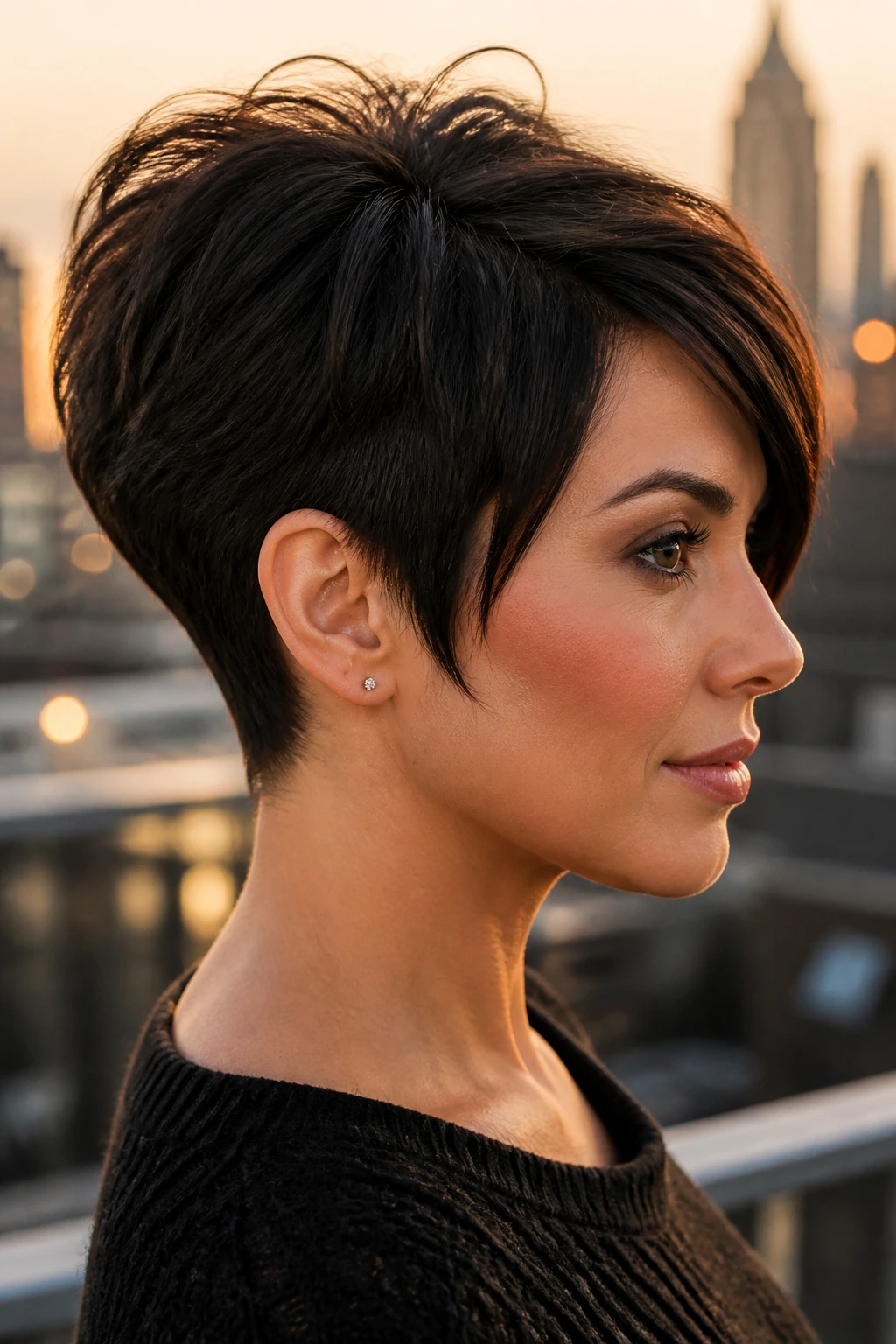
A wedge-inspired pixie borrows the stacked shape from a wedge bob and shrinks it down. The back is fuller and slightly lifted, while the front stays tighter and longer. That built-in angle helps a round face look more elongated.
Why It Works
The cut creates a visual slope from back to front. That slope is subtle, but it matters. It makes the head look taller and more sculpted without relying on a lot of styling every morning.
Best For
Straight or slightly wavy hair that holds a clean line. If your hair is very curly, the wedge shape can blur unless the haircut is built around that texture from the start.
24. Airy Tousled Pixie
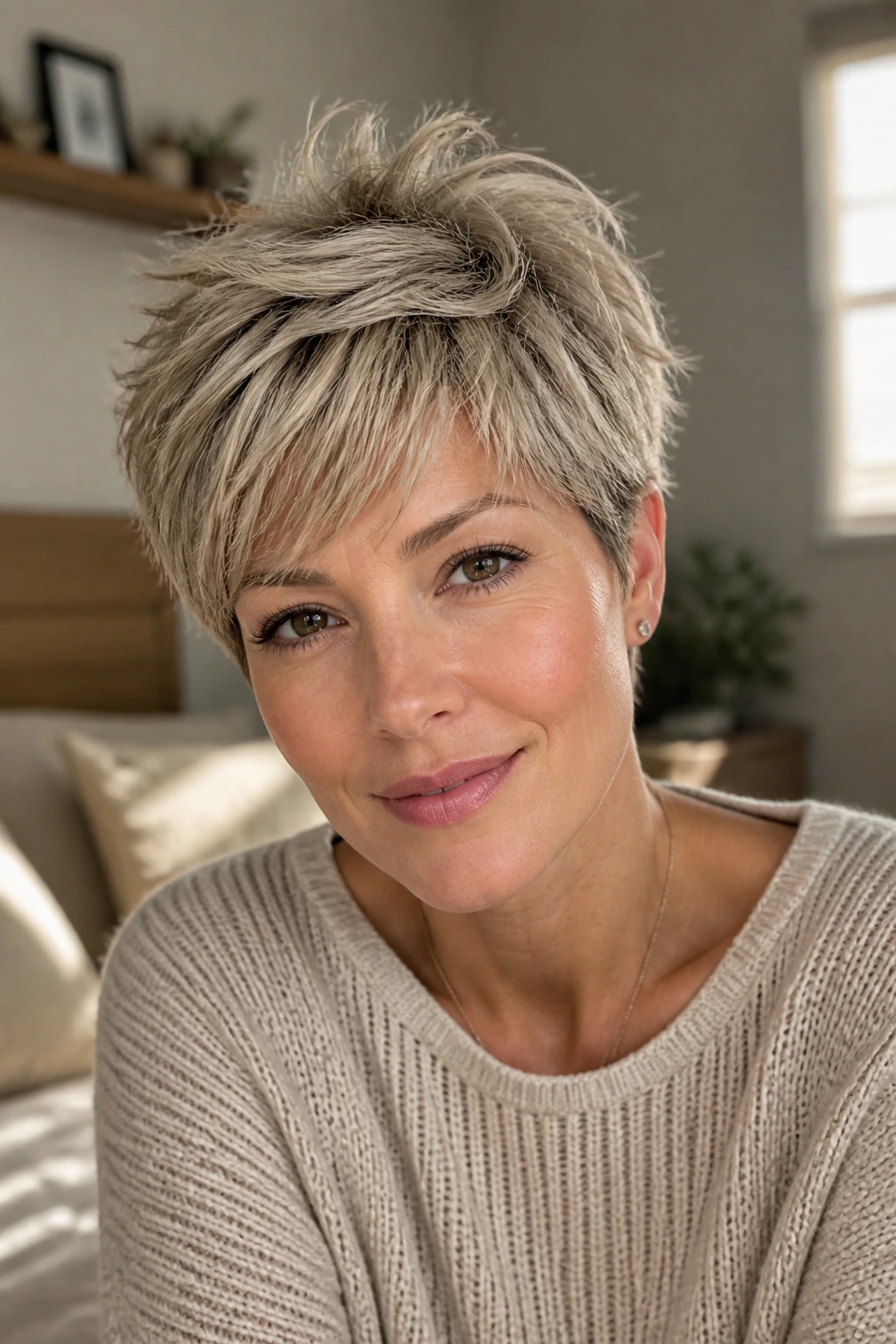
This is the pixie that looks like you ran your fingers through it and somehow got the proportions right. The texture is soft, the pieces are light, and the overall shape avoids heaviness at the cheeks. Round faces do well with that kind of movement.
Why It Works
Tousled texture interrupts the outline of the face. Instead of one solid shape, you get little bits of separation that keep the eye moving. The key is to keep the tousle controlled. Too much scrunching and the sides puff out. A little movement at the top and front is enough.
Styling Tip
A mist of texturizing spray at the roots and a few twists with your fingers are usually enough. If you need more hold, use a matte paste on the ends only.
25. Two-Tone Contrast Pixie
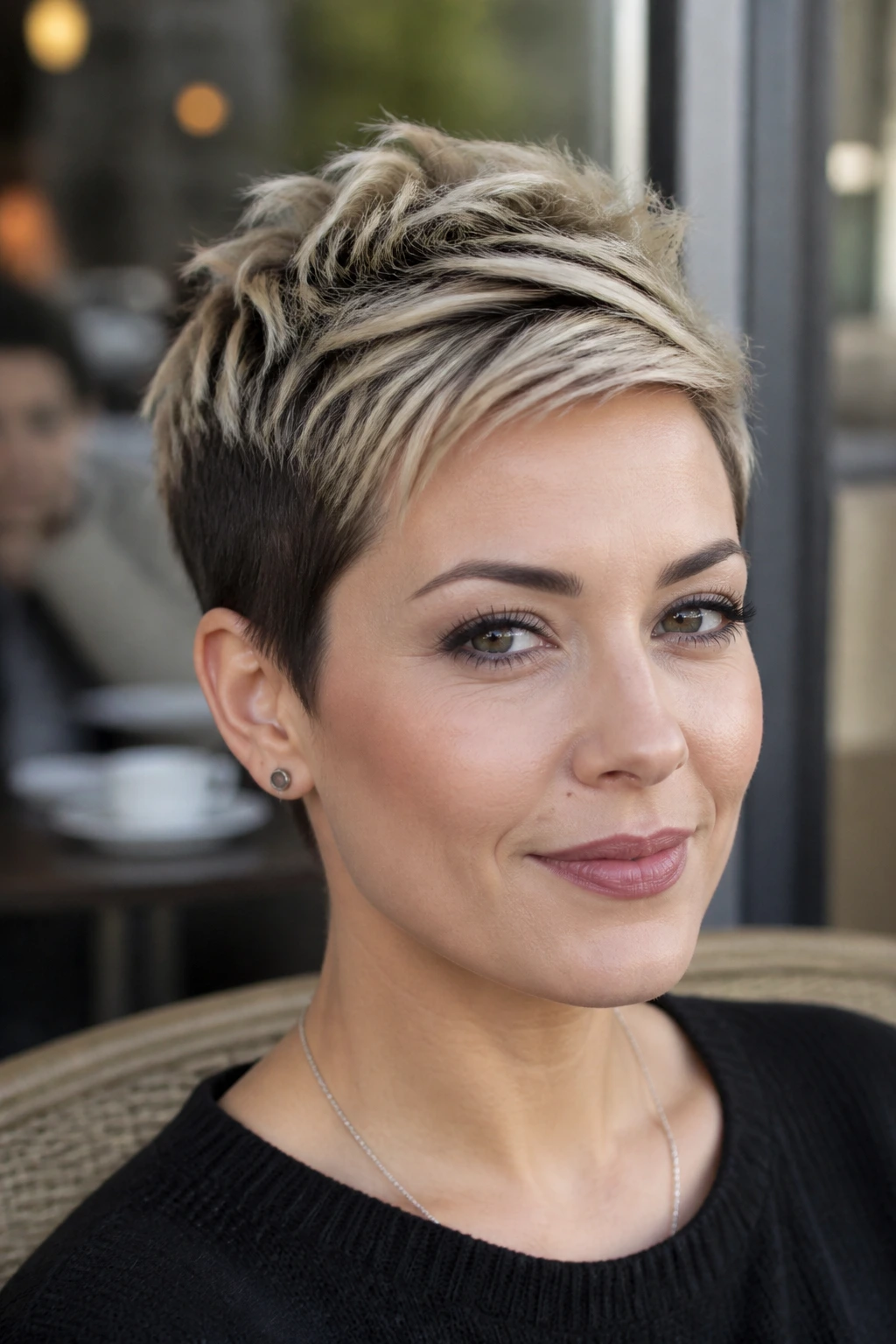
Color can shape a haircut almost as much as cutting can. With a two-tone pixie, a darker underside or sides and a lighter top create visual lift. The face sees contrast, and contrast pulls the eye upward.
Why It Works
A round face benefits when the haircut reads narrower at the edges and brighter at the top. The color contrast does some of that work for you. It’s a good option if you want the cut to look sharper without changing the basic length much.
How To Wear It
Keep the placement intentional. A lighter crown and fringe, with deeper sides or a shadow root, gives the best face-lengthening effect. Random streaks can muddy the shape.
26. Glossy Side-Sweep Pixie
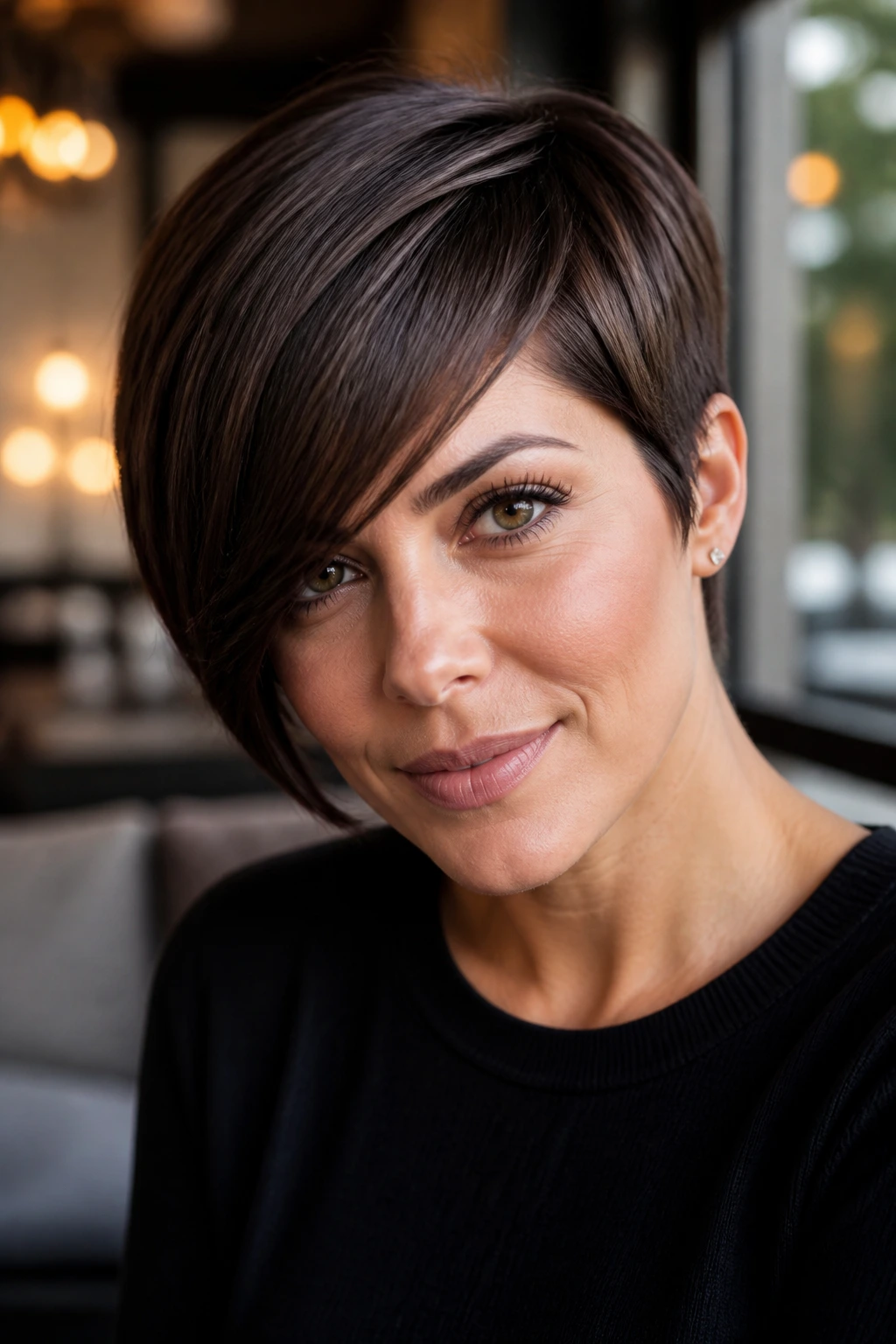
This is the polished cousin of the shaggy side-swept style. The hair is smooth, the sweep is deliberate, and the finish has a little shine to it. It’s elegant, yes, but the real reason it works is the long diagonal line across the face.
Why It Works
Gloss keeps the style from frizzing outward, which matters on round faces because fluff at the sides can make the haircut feel wider. A controlled side sweep makes the face look longer and the cheek area less dominant. It’s an excellent choice for formal settings or anyone who likes hair that looks neat by default.
Styling Note
Use a light serum on the mid-lengths and ends. Keep it away from the roots, or the top will go flat and lose the lift that makes this shape work.
27. Softly Graduated Pixie
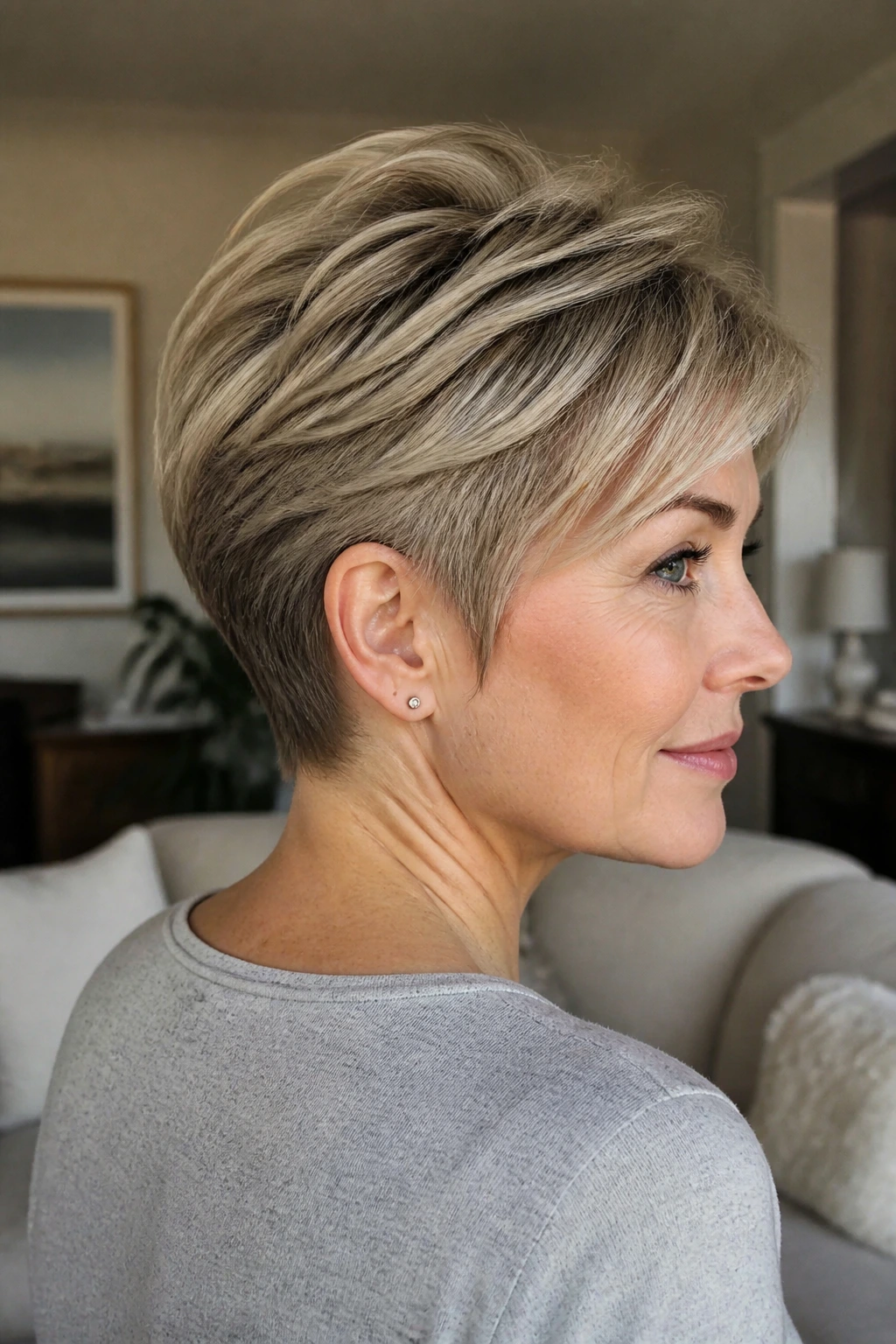
Graduation is about stacking the back in a smooth way so the shape rises gently from the nape. On a round face, that soft lift gives structure without making the haircut look hard or severe. It’s one of the most wearable pixies for people who want shape first and edge second.
Why It Works
The graduated back narrows the lower part of the cut, and the top can stay a little longer for balance. The face gets the benefit of vertical movement, while the haircut keeps a rounded softness that still feels modern. It’s especially good if you like neat hair but hate anything too stark.
Who It Suits
This is a smart cut for straight, wavy, or fine hair that needs a shape built into the cut itself. You do not have to fight it every morning.
28. Angled Pixie With Long Temple Pieces
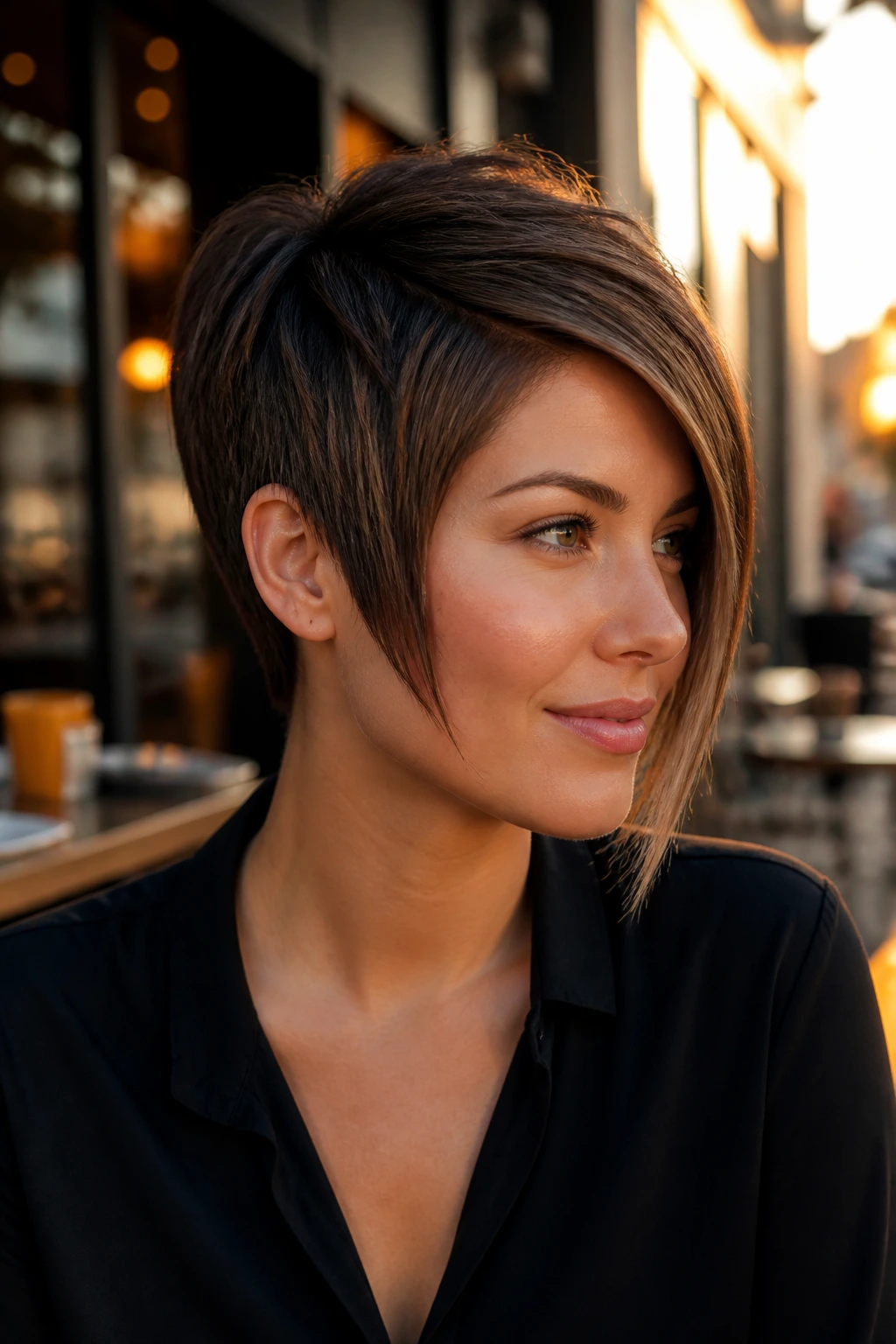
Angle matters. This cut leans shorter in the back, longer near the face, and the temple pieces are left with enough length to move diagonally across the cheeks. That shape makes a round face look less circular without turning the haircut into a bob.
Why It Works
The front angle creates a line from the temple toward the jaw, which visually narrows the face. It’s a softer version of asymmetry, so it works if you want shape without a dramatic difference from side to side.
Styling Cue
Tuck one side behind the ear and let the longer temple piece fall forward on the other. That small shift changes the whole read of the cut.
29. Wispy Bang Pixie
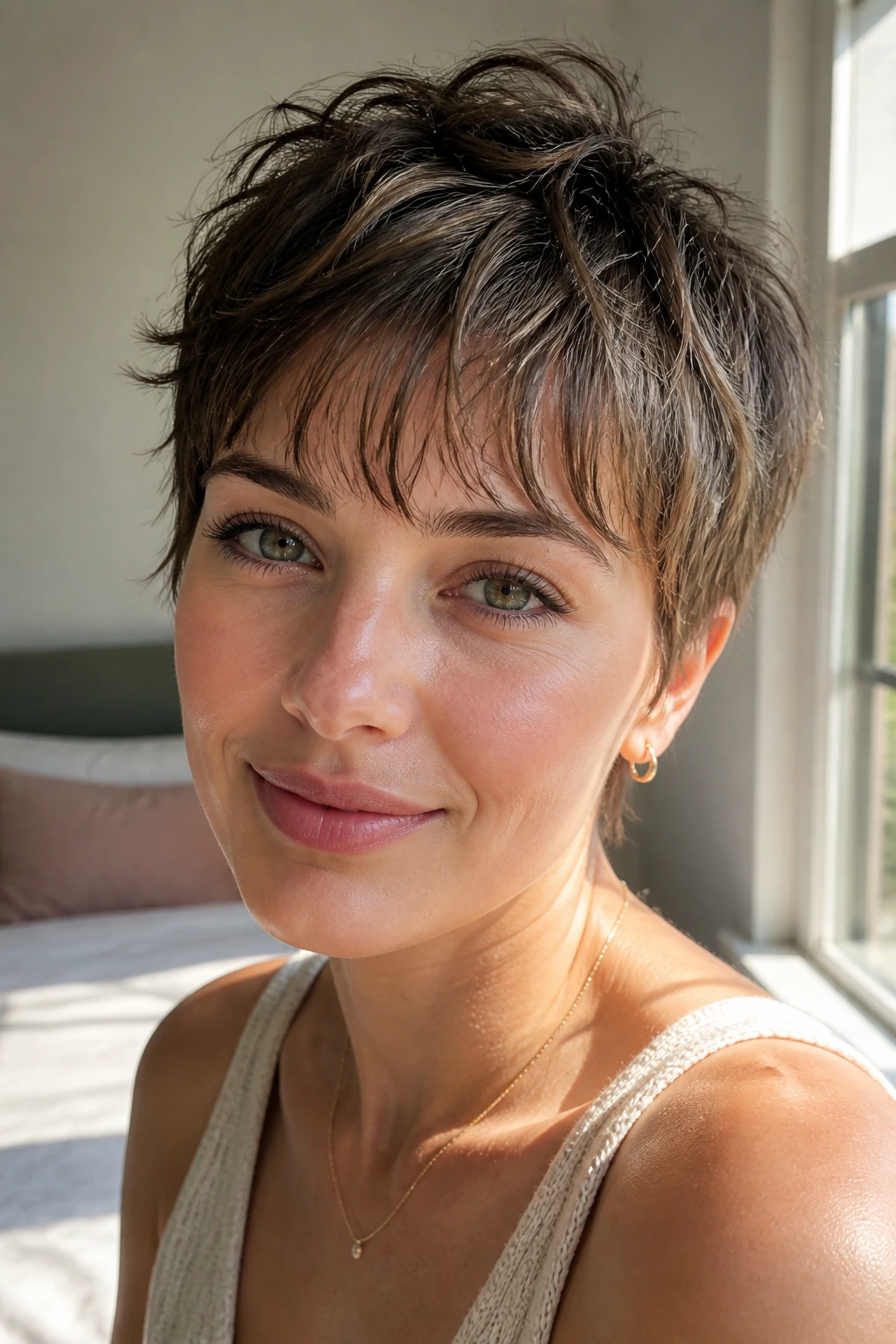
Wispy bangs are the answer to anyone who wants fringe without the heaviness. The pieces are light, separated, and short enough to show some forehead. That little bit of openness stops the face from looking boxed in.
Why It Works
Blunt bangs can cut a round face across the middle. Wispy bangs soften that line. They create a broken, airy front that keeps the haircut from feeling too dense at eye level. This style is especially good if you have a high forehead or if full bangs make you feel crowded.
A Tiny Warning
Wispy does not mean sparse and uneven. Ask for soft pieceing, not accidental gaps. There’s a difference.
30. Short Frohawk Pixie
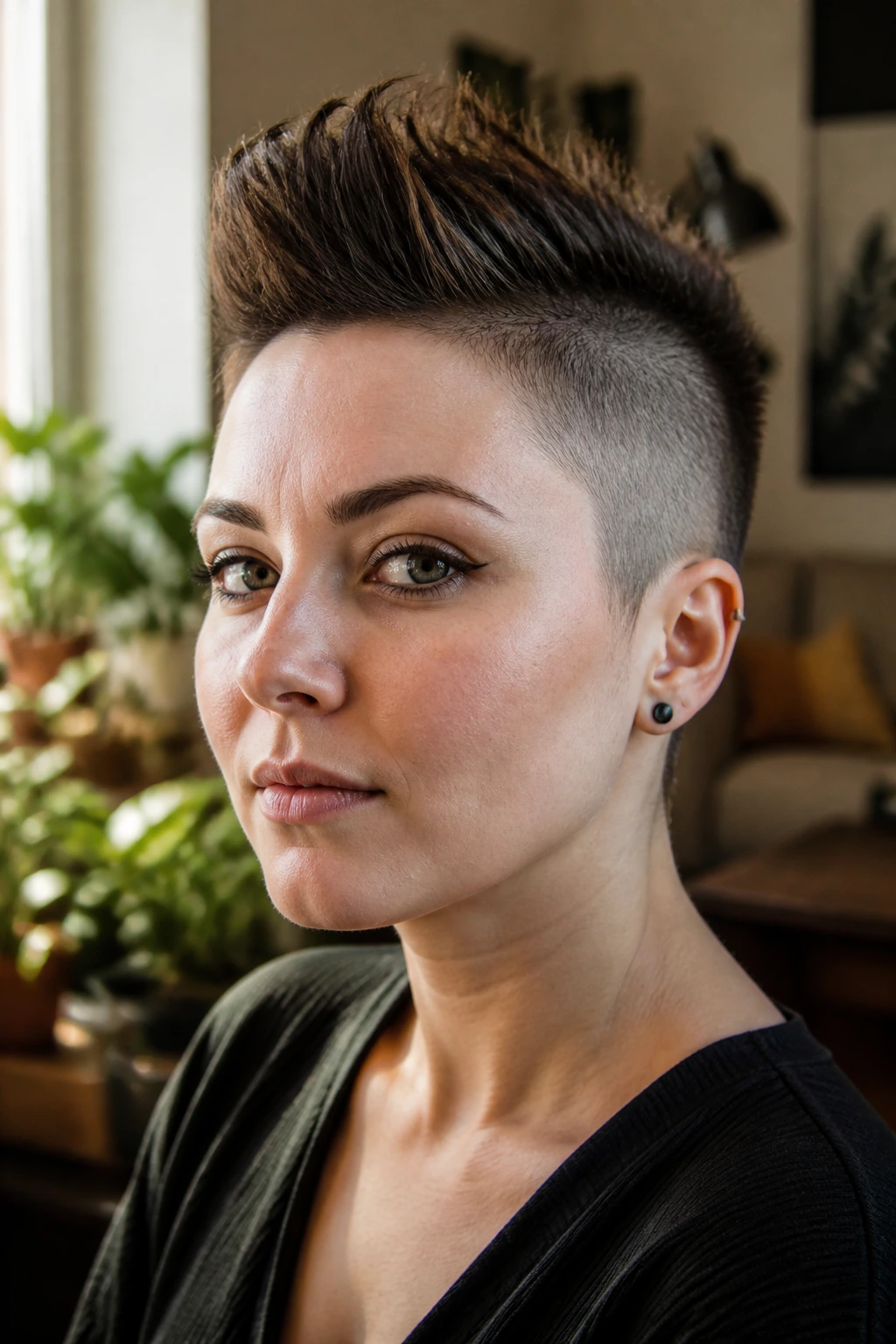
A short frohawk keeps the sides close and the center strip lifted, which is a smart shape for round faces, especially on textured hair. The middle line pulls the eye upward. The sides stay narrow. It’s dramatic, but the geometry does the flattering work.
Why It Works
The frohawk line stretches the face vertically in a way few cuts can match. It also lets curls or coils keep their natural bounce without spreading too wide. If you want a cut with presence, this is the one that doesn’t make the face feel wider.
Styling Note
Shape the center strip with a curl cream or flexible gel, then keep the sides clean and brushed down. The contrast is the haircut.
31. Platinum Textured Pixie
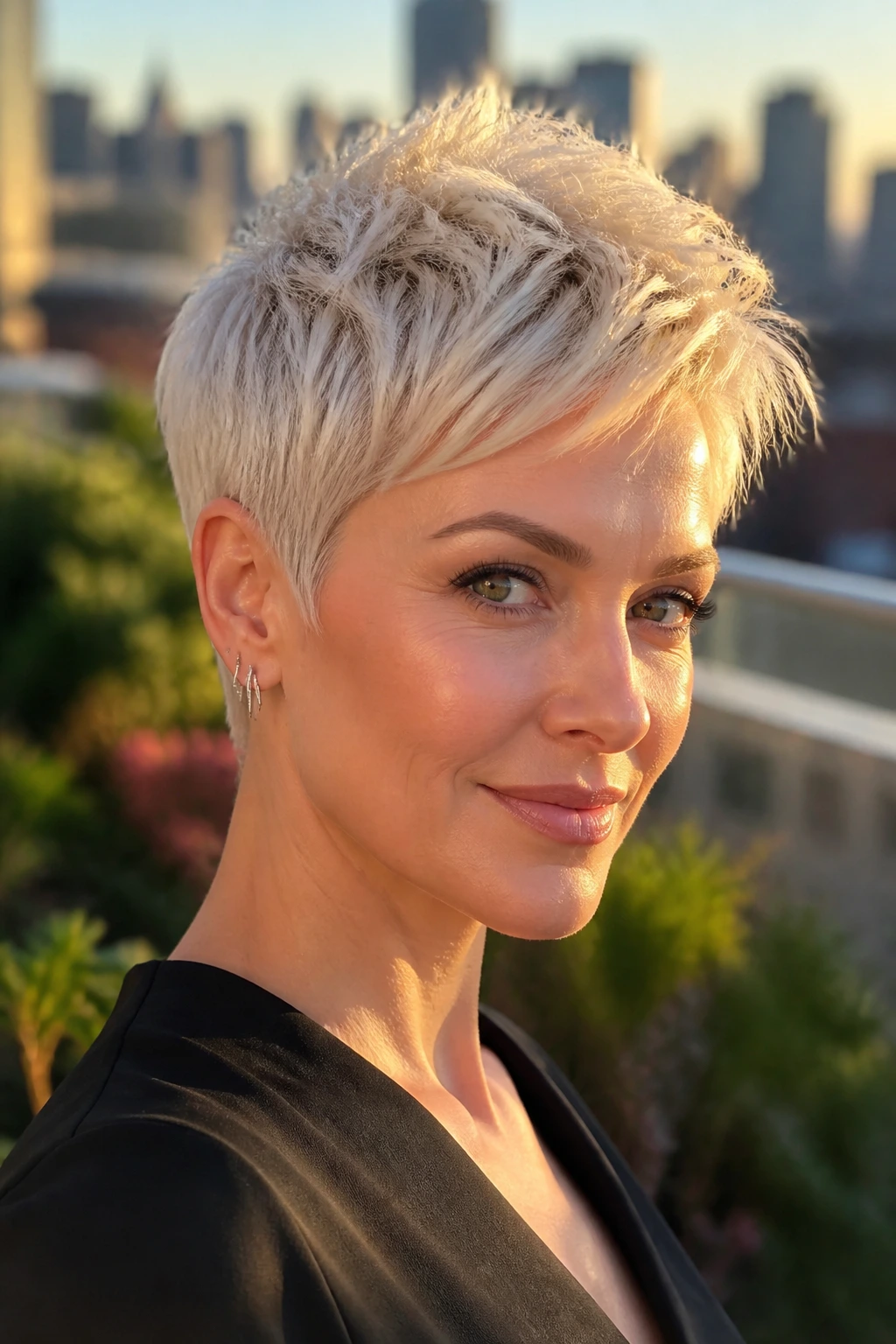
Color can be a shape tool, and platinum is proof. On a textured pixie, the lightness of the color makes every layer and edge easier to see, which gives the haircut more lift. Round faces often benefit when the eye is drawn to the top and front, not the sides.
Why It Works
Platinum reflects light at the crown and fringe, which makes those areas stand out. That extra visual interest helps elongate the face. The cut itself still needs good structure, though. Color cannot save a bad shape.
Honest Note
Platinum demands upkeep. Roots show fast, and the hair needs care to stay soft. If you want low effort, pick a different shade.
32. Grown-Out Soft Pixie
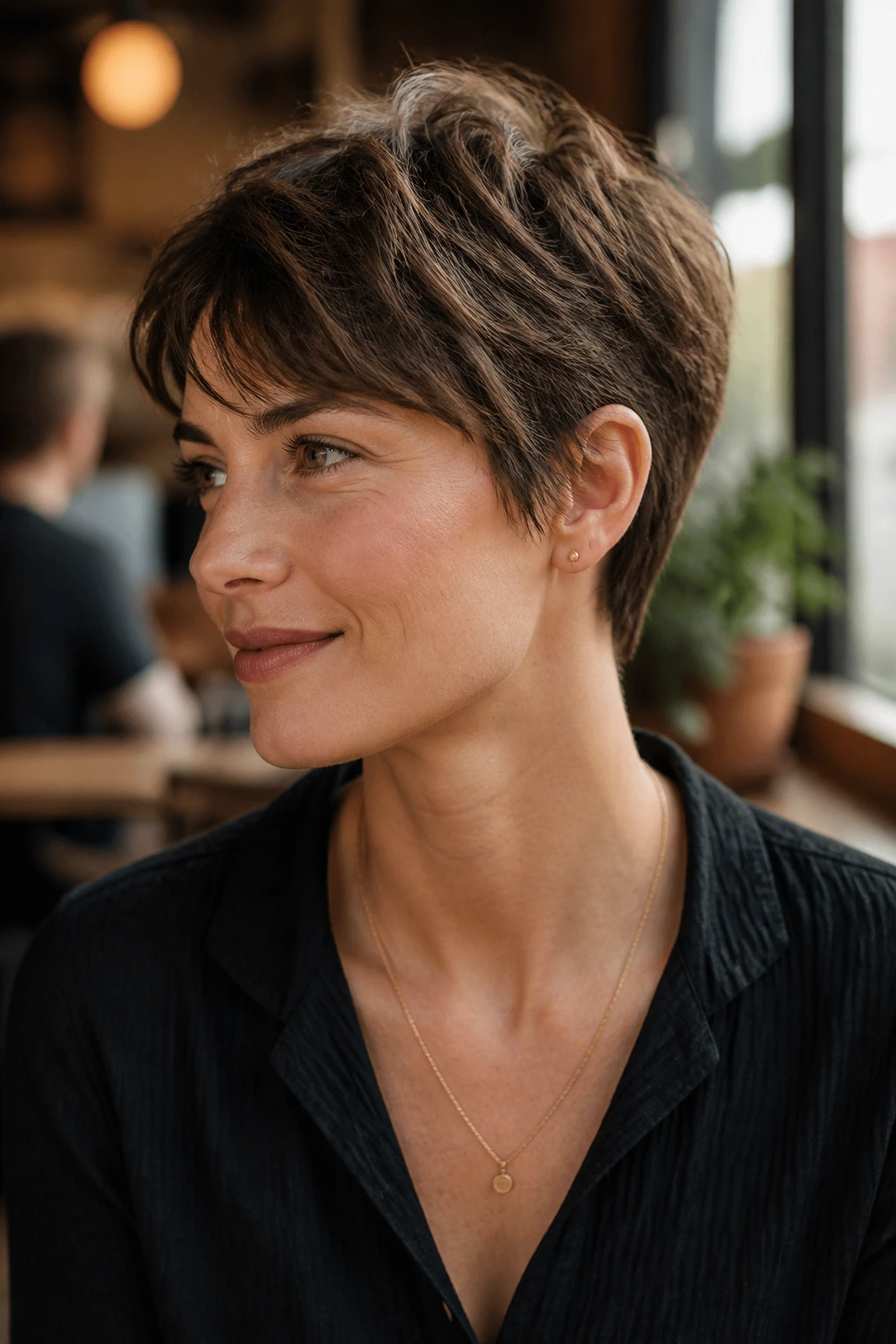
Not every great pixie starts fresh from a salon chair. Sometimes the best version is the one that has lived a little. A grown-out soft pixie keeps the nape clean enough to look intentional while the top and front drift into a looser, more relaxed shape.
Why It Works
The softness keeps the haircut from drawing a hard line across the face. On a round face, that relaxed movement can be flattering because it avoids the boxy edge that some short cuts pick up as they grow. It’s also the friendliest option if you want something you can stretch a bit between appointments.
Best For
People who hate rigid maintenance and like a cut that can shift from neat to messy without falling apart. It’s not the sharpest look in the set. It may be the easiest to live with.
Why the Right Pixie Shape Changes Everything
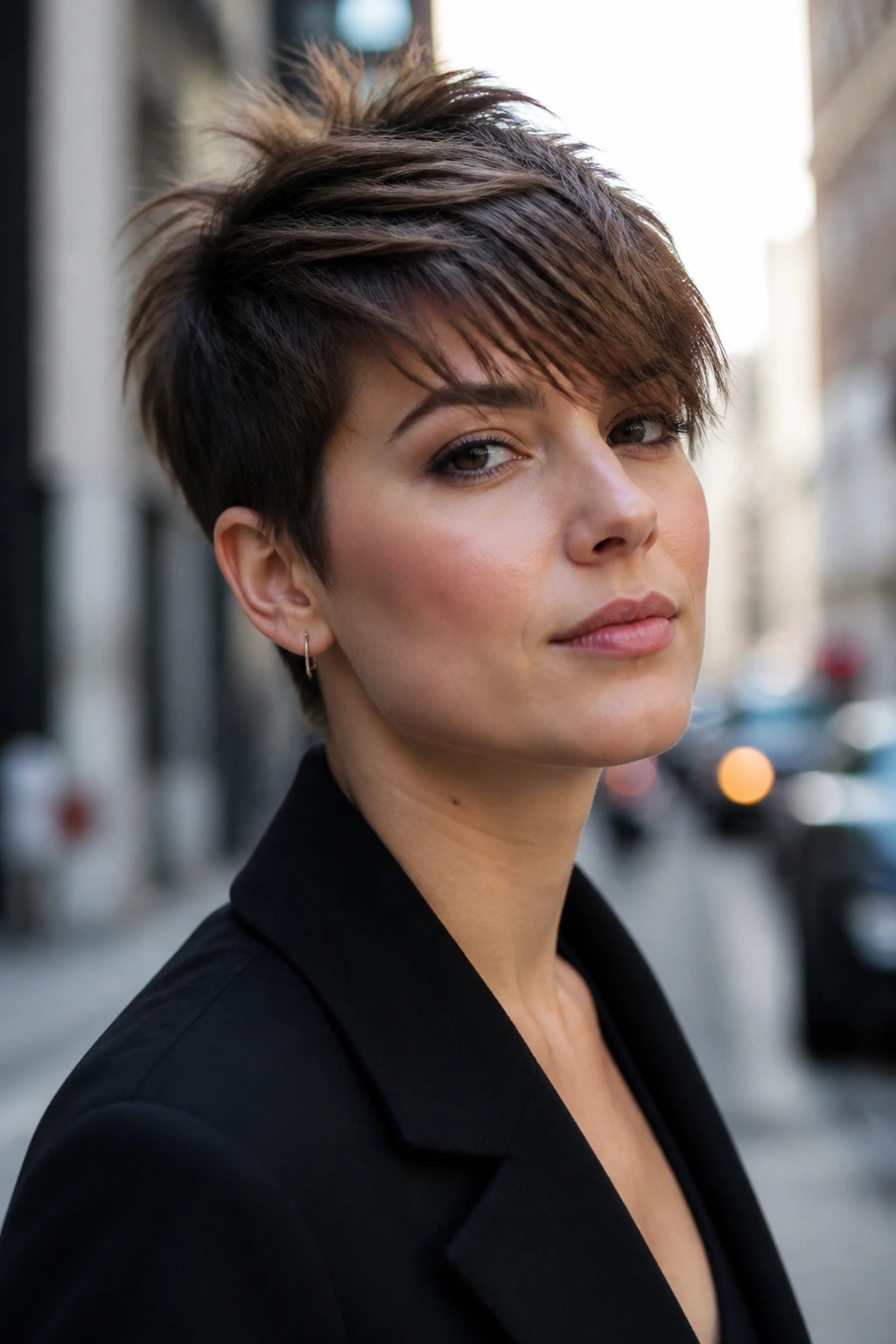
A pixie cut on a round face is not about hiding the face. It’s about giving it better lines.
The difference usually comes down to three things: where the height sits, how the sides taper, and whether the fringe moves on a diagonal or sits flat across the forehead. If those pieces are working together, the haircut looks deliberate. If they are fighting each other, the style starts to balloon at the cheeks or flatten at the crown. I keep coming back to that because it matters more than any one trend or salon photo.
The other thing people miss is texture. A round face does not need more bulk. It needs cleaner edges, a little air, and a shape that knows where to stop. That is why some of the best pixie cuts for round faces look so simple from the outside. The cut is doing a lot of quiet work underneath.
Tools and Products That Make Short Hair Behave
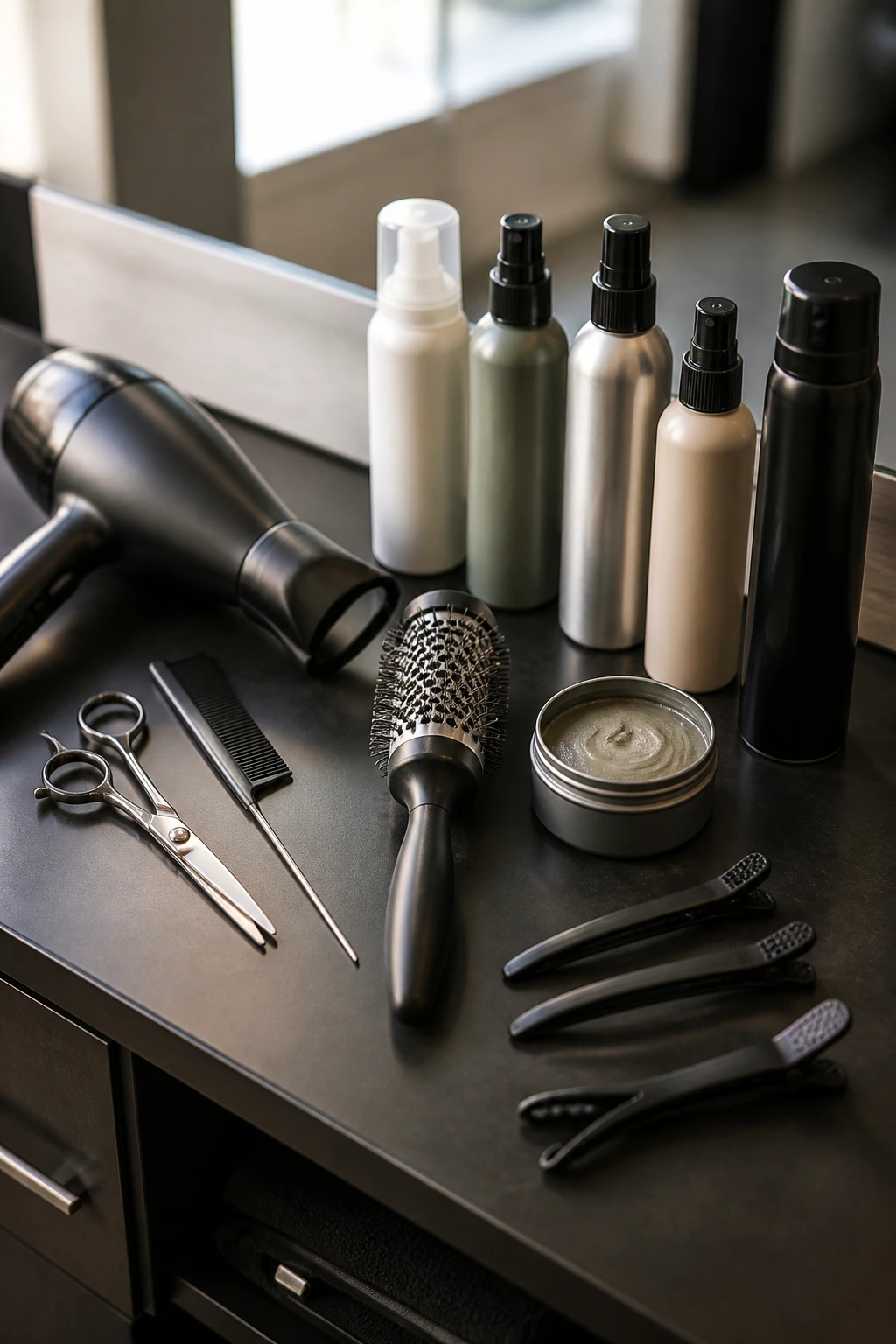
Short hair can look low-maintenance, but the truth is more annoying: it asks for the right tools. Not many. The right ones.
-
Hair-cutting shears: If you trim at home, use actual shears, not kitchen scissors. Dull blades chew the ends and make short hair frizz faster.
-
Rat-tail comb: Clean parts matter on pixies. A tail comb gives you a sharp side part and helps separate the crown from the sides.
-
Blow dryer with a nozzle: The nozzle directs air upward at the roots, which is exactly how you get crown lift without blowing the whole shape apart.
-
Small round brush: Useful for bending side-swept bangs or adding a little curve to the front pieces.
-
Matte paste or clay: Best for piecey, choppy, or spiky pixies. Use a pea-sized amount and build slowly.
-
Lightweight mousse: Good for fine hair and curls that need body without grease.
-
Texturizing spray: Adds grip to airy pixies and shaggy cuts. Don’t drown the hair in it.
-
Heat protectant: If you use a dryer or flat iron, this is not optional. Short hair burns just as easily as long hair.
-
Flexible-hold hairspray: Keeps lift in place while still letting the hair move a little.
-
Section clips: Handy for side parts, temple pieces, and anything with crown detail.
How to Ask for the Right Pixie at the Salon
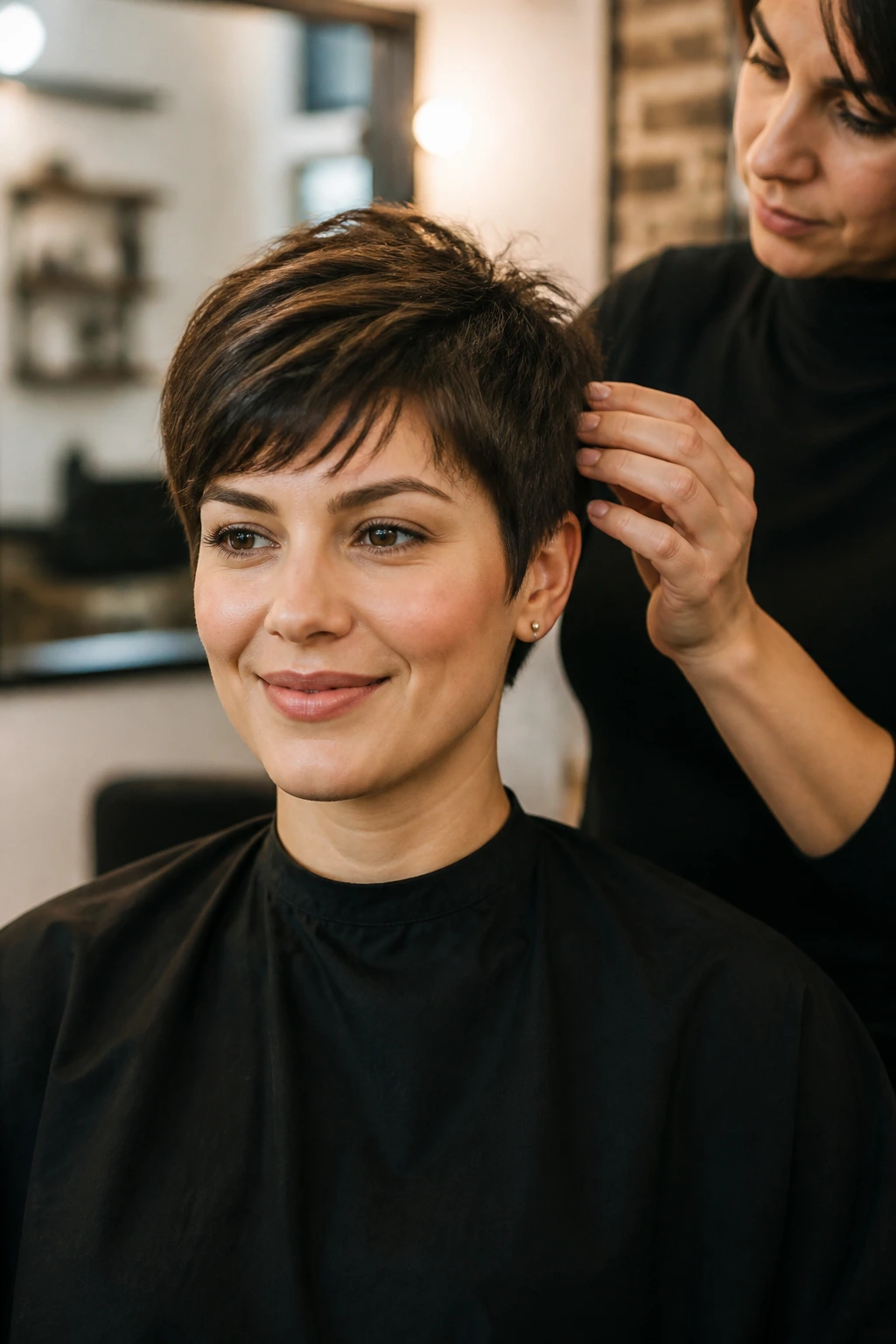
Bring photos, yes. But bring the right photos.
The best reference pictures show the front, side, and back of the cut, not just one flattering angle taken with perfect lighting. Tell the stylist how much time you want to spend styling, where your cowlicks live, and whether you want the ears shown or partially covered. Those details matter more than the name of the haircut.
Be specific about the shape. Say you want height at the crown, not width at the sides. Say if you want a side-swept fringe, a tapered nape, or a longer temple piece. If your hair is thick, ask where they plan to remove bulk. If your hair is fine, ask how they’ll keep the top from collapsing by lunchtime. That conversation saves a lot of regret later.
Daily Styling Moves That Keep the Shape Sharp
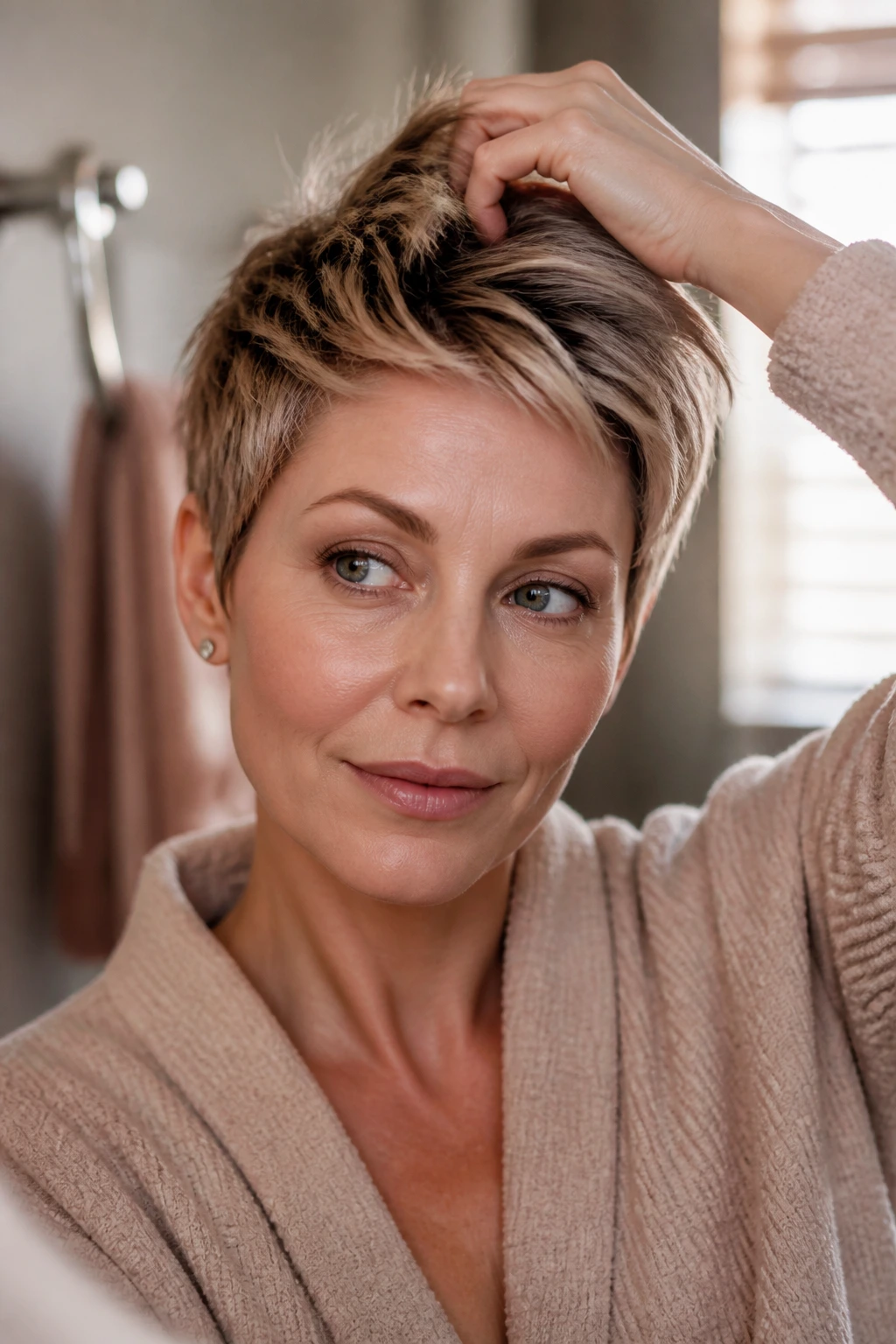
The fastest way to ruin a pixie is to style every section the same way. The crown, fringe, sides, and nape have different jobs. Treat them that way.
Lift the crown first. Dry the roots upward with your fingers or a small brush. If the crown falls flat, the face looks wider.
Keep the sides close. A little smoothing cream at the temples goes a long way. Too much product there creates puff.
Choose one focal point. Maybe it’s the fringe. Maybe it’s the side sweep. Maybe it’s a quiff at the front. Do not try to make every inch of hair loud at once.
Refresh, don’t rebuild. On day two or three, mist the hair lightly with water, add a small dab of paste to the ends, and rework only the pieces that have gone limp. Starting from scratch every morning is a waste of time.
Common Mistakes That Make a Pixie Look Wider
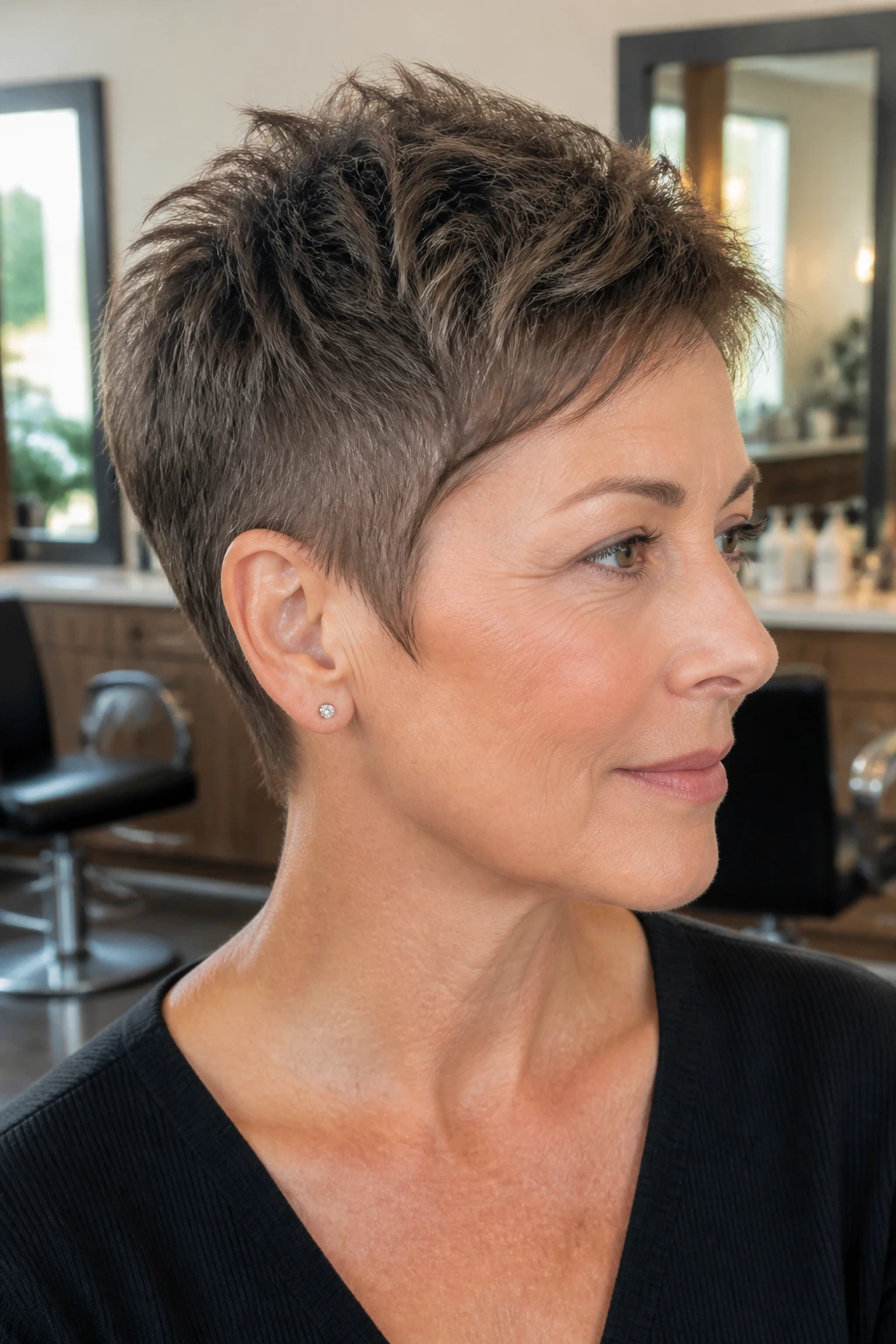
The most common problem is side bulk. If the hair expands at the cheeks, the face reads rounder. The fix is simple but not always intuitive: remove weight from the sides, keep length on top, and use movement that travels diagonally instead of straight across.
Another mistake is blunt fringe. A heavy straight bang can carve the face in half and make the lower part look wider by comparison. A softer side-sweep or wispy front usually works better. The fringe should guide the eye, not block it.
People also overdo texturizing spray and paste. Then the pixie gets sticky, puffy, or crunchy. That’s not texture. That’s clutter. Use less product than you think you need, then add a touch more only where the shape is falling flat.
Finally, don’t ignore your cowlicks and growth patterns. A pixie is shaped around them, not against them. If your hair wants to split at the front or kick out at the nape, plan the cut with that in mind. Fighting it every morning gets old fast.
Variations and Alternatives to Try
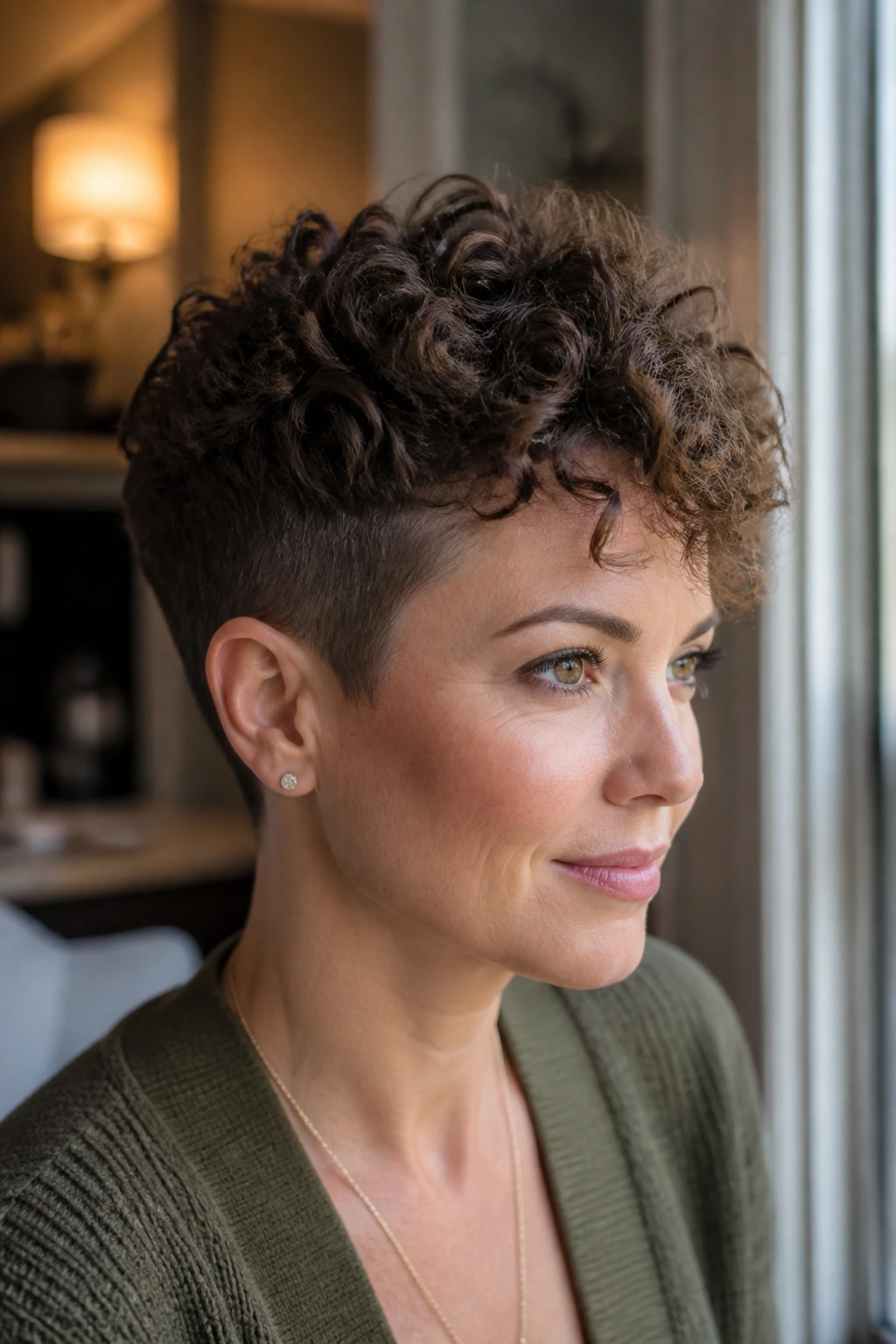
Curly Crown Pixie: Keep the sides narrow and let curls build height at the top. This version works when your curl pattern is loose enough to spring upward without spreading into a wide halo.
Fine-Hair Feather Pixie: If your hair is thin, ask for feathering and soft interior layers instead of heavy thinning. The goal is movement, not see-through ends.
Thick-Hair Tapered Pixie: For dense hair, a tight nape and controlled sides keep the cut from puffing out after one blow-dry. This version often needs the cleanest salon shaping.
Low-Drama Grow-Out Pixie: Leave the temples and fringe a little longer so the cut stays wearable for 6 to 8 weeks between trims. It’s the best choice if you don’t love frequent appointments.
Bold Color Pixie: Platinum, copper, inky black, or a two-tone panel can change how the haircut reads around the face. Color won’t fix the shape, but it can sharpen the visual line once the cut is right.
Keeping the Cut Fresh Between Trims

Short hair grows fast in the wrong places. The nape starts looking fuzzy first. Then the temples lose their clean line. Then the crown collapses just enough to make the whole thing feel tired.
For very short pixies, a trim every 4 to 5 weeks keeps the shape crisp. Longer pixie bobs and grown-out versions can usually stretch to 6 to 8 weeks, but the neckline still benefits from a quick cleanup if your stylist offers it. Between visits, dry shampoo at the roots can buy you an extra day or two, but it is not a substitute for shape.
At home, sleep on a silk or satin pillowcase if your hair frizzes easily. It reduces friction at the sides and saves the fringe from waking up with a hard bend. If you have curls, pineapple the top loosely or clip the front away from your face before bed. That tiny habit keeps a lot of morning chaos from happening.
Frequently Asked Questions About Pixie Cuts for Round Faces
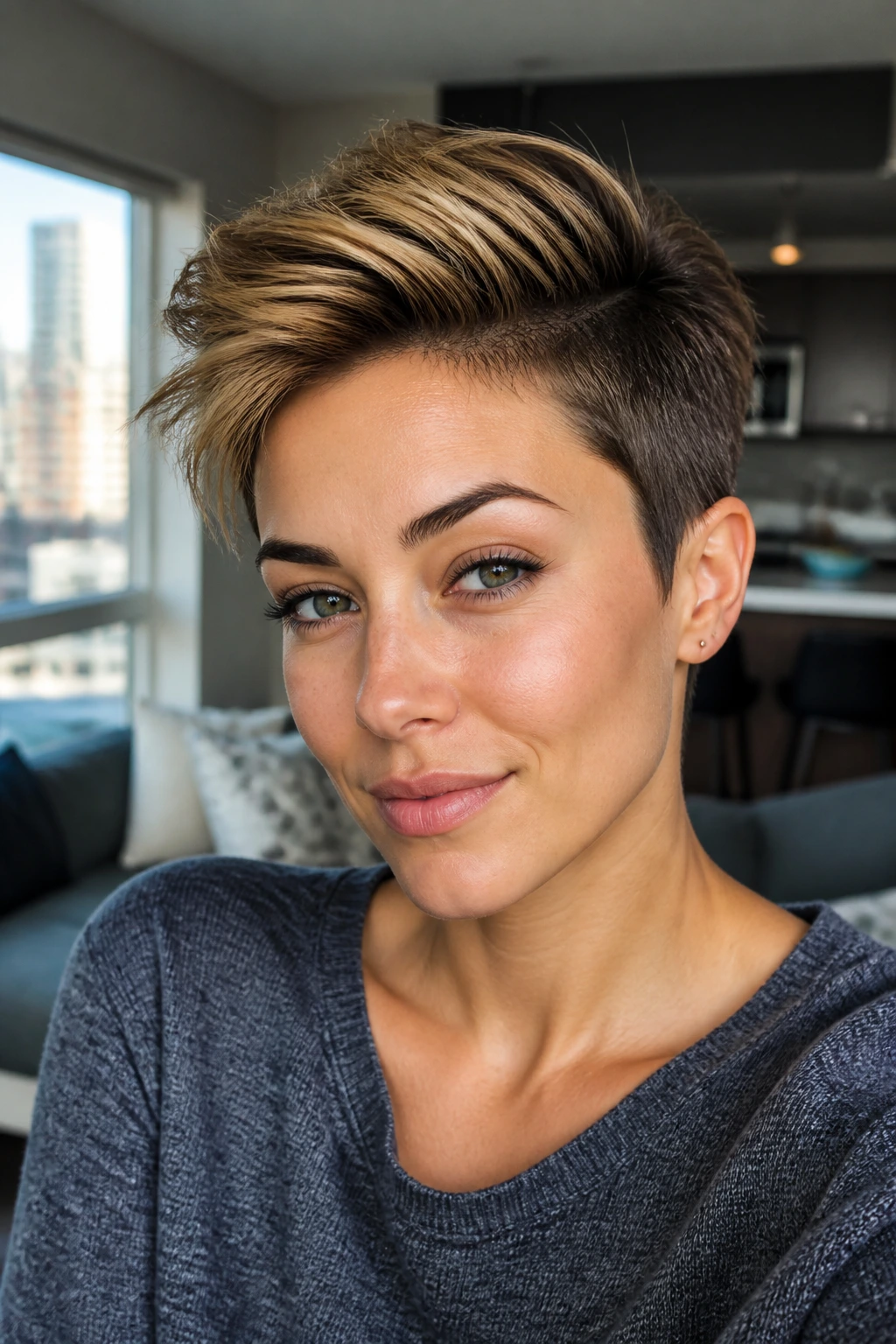
What pixie cut makes a round face look slimmer?
A cut with height on top, tapered sides, and a side-swept or asymmetrical front usually gives the best slimming effect. The vertical lift and diagonal lines matter more than how short the hair is overall.
Should round faces avoid bangs with a pixie?
Not at all. The issue is the type of bang. Heavy blunt bangs can widen the face, while wispy, side-swept, or piecey bangs usually flatter it much better.
Are pixie cuts good for curly round faces?
Yes, if the curls are shaped to sit higher rather than wider. A curly pixie with a tapered side and crown lift can look sharp and balanced instead of bulky.
Can I wear a very short pixie with a round face?
You can, as long as the cut is tapered and there’s some visual lift at the top. A super-short pixie that’s equally full all the way around is the one that tends to widen the face.
How often do pixie cuts need trims?
Most short pixies need shape maintenance every 4 to 6 weeks. Longer pixie bobs and soft grow-out versions can last a bit longer, but the neckline and sideburns still need attention.
What should I tell my stylist if I’m nervous?
Say exactly how much ear, cheek, and neck you want visible. Then point out whether you want volume on top, a side-swept fringe, or a more cropped, edgy shape. Specific words beat vague requests every time.
Will a pixie make my face look more round?
It can, if the sides are too wide or the fringe is too blunt. The fix is shape control: narrow the sides, lift the crown, and keep the front moving diagonally.
What if my hair grows out awkwardly fast?
Choose a cut with a softer perimeter and longer temple pieces. Those details give the haircut a more forgiving grow-out so it still looks deliberate between appointments.
Small Adjustments That Make the Cut Work Harder
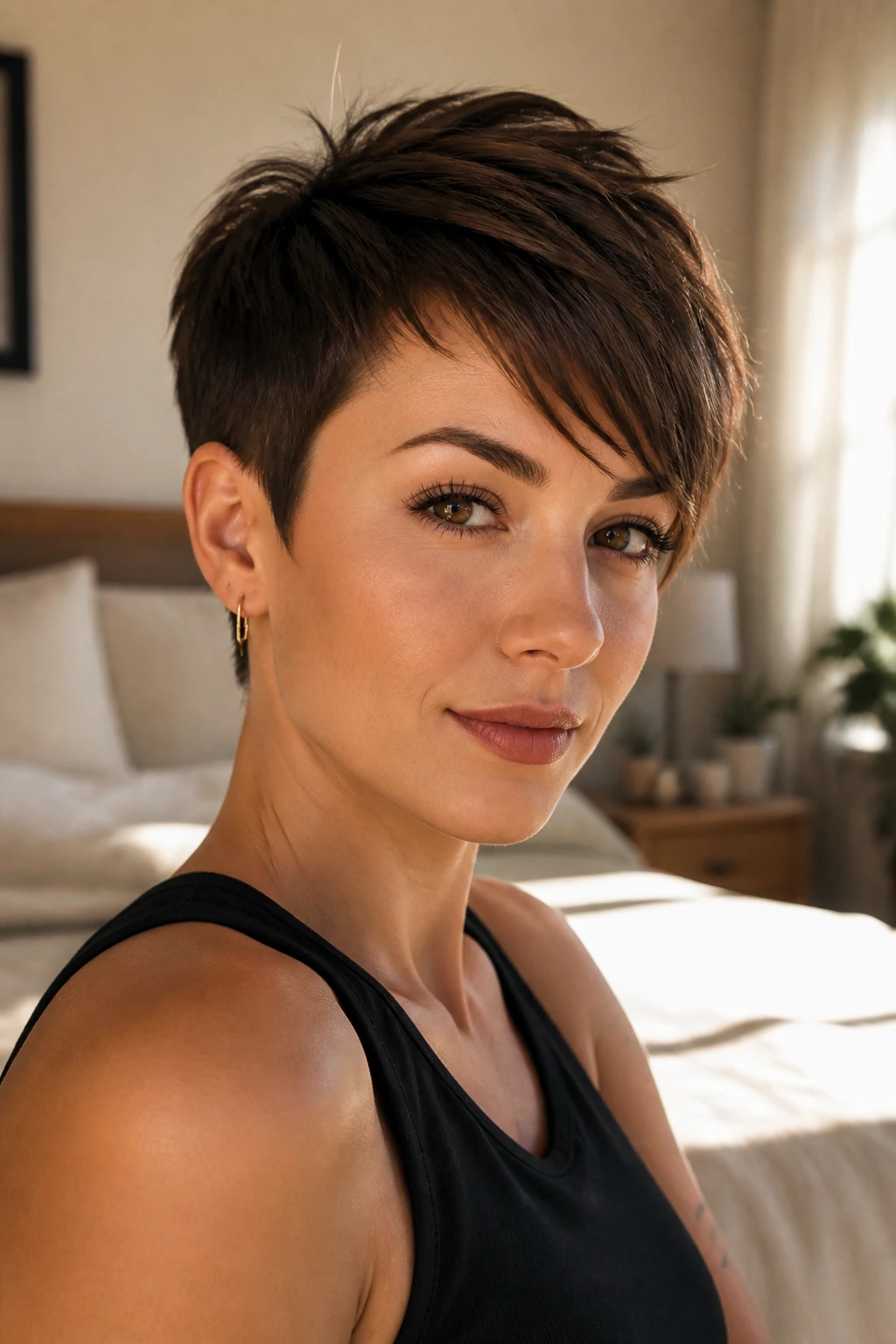
A few tiny choices can change the whole haircut. They sound minor. They are not.
Crown lift: Ask for enough length at the top to create visible height when you blow-dry. Even a small bump at the crown makes a round face look longer.
Side control: Keep the sides close enough that they don’t balloon at cheek level. That’s the place where many pixies go wrong.
Fringe direction: If your face feels widest through the temples, use a diagonal fringe or a deep side part. Straight-across cuts usually stop the eye too abruptly.
Product choice: Matte paste gives edge, mousse gives volume, serum gives polish. Pick the one that fits the cut, not the one sitting nearest your sink.
Hair texture honesty: Straight hair needs different shaping than curls do. Thick hair needs different debulking than fine hair does. That sounds obvious, but I see people ignore it all the time and then blame the haircut.
Why These Cuts Age Well Between Appointments
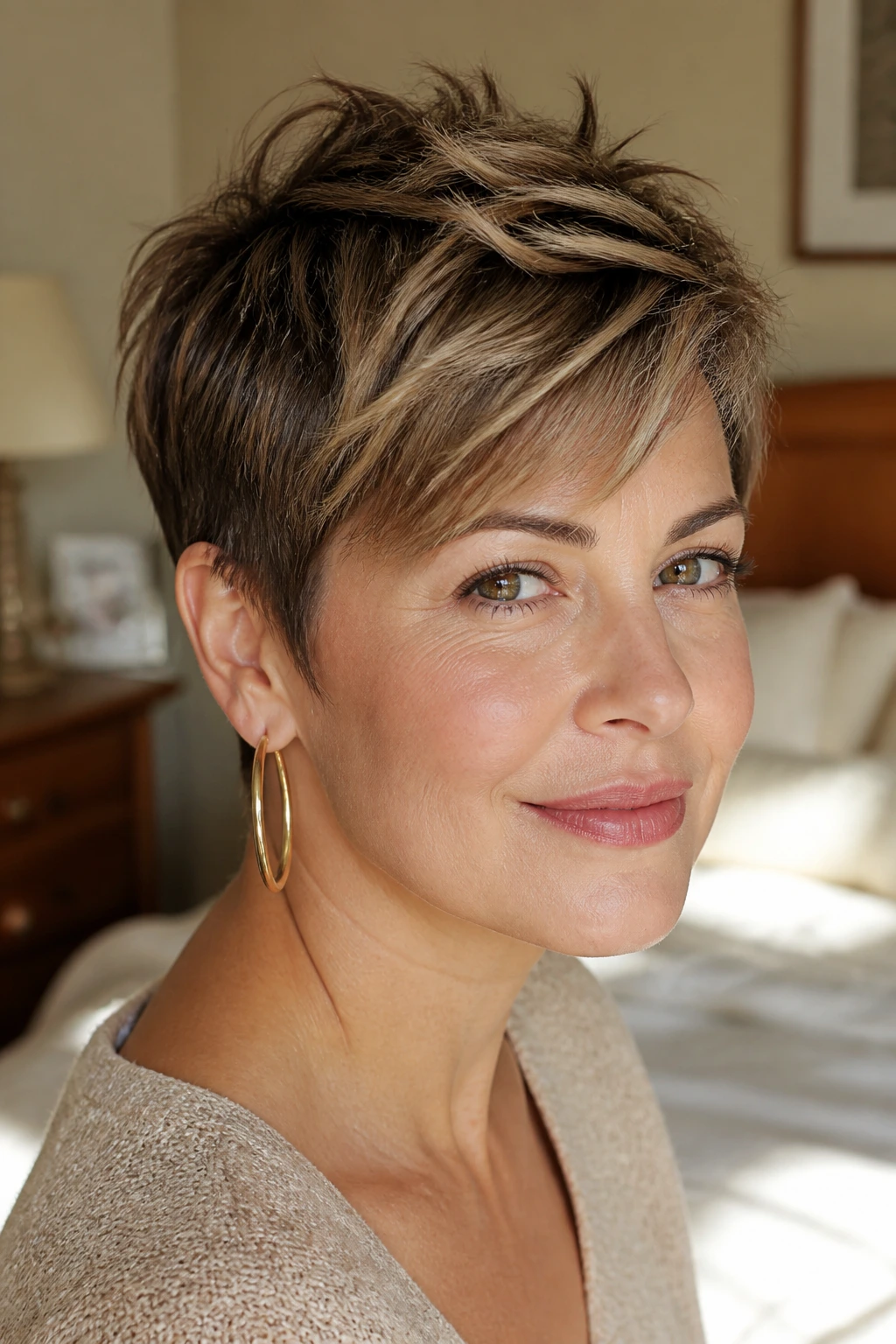
A good pixie does not need to look perfect every day. It needs to hold its shape long enough that a little mess still looks intentional.
That is why the best styles for round faces usually have some combination of taper, height, and movement. Those three things age better than one blunt shape. When the sides grow a little, the crown still has room. When the fringe drops, the part can be shifted. When the nape softens, the overall outline can still read clean. Short hair forgives nothing at first, then suddenly forgives almost everything if the original cut was strong.
If you’re sitting on the fence, start with a softer pixie rather than the most severe one on the mood board. You can always go shorter next time. Growing back patience is slower than growing out hair.
A Short Cut With a Lot of Payoff
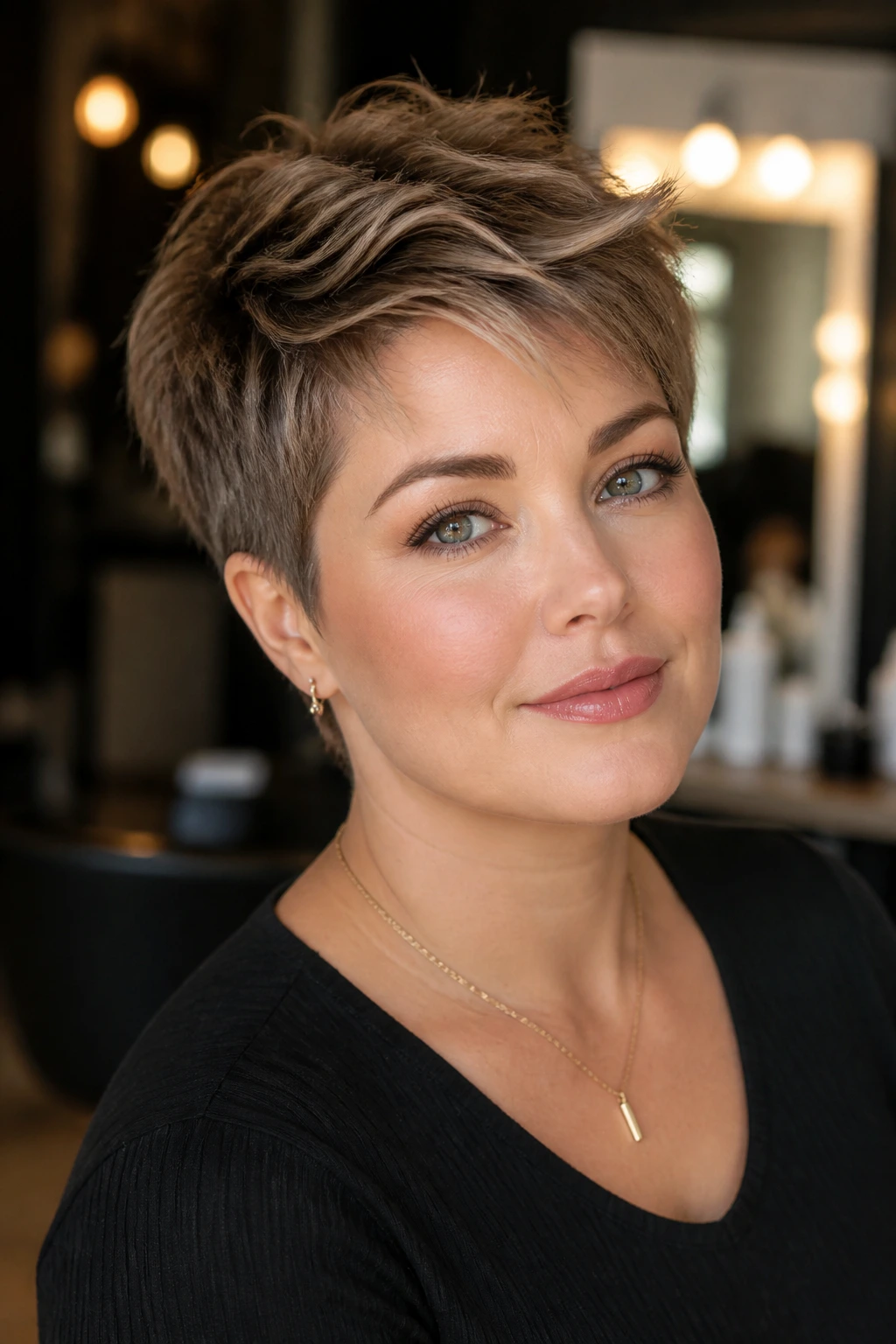
The best pixie for a round face is not the shortest one or the trendiest one. It’s the one with the right geometry. Height at the crown, narrowness at the sides, and movement in the front do more for the face than any styling trick you’ll find in a product aisle.
That’s the part worth holding onto. Once you start looking at pixie cuts through that lens, the options stop feeling random. A cut either stretches, slims, and angles the face, or it doesn’t. The right one makes the face look more open, more defined, and a little more interesting from every angle.
If you’re taking photos to the salon, choose the ones that show shape from front and side. The best result almost always comes from a haircut with intention, and these 32 styles give you plenty of room to find it.