



Ponytail styles for work earn their place when you need hair that can sit through a commute, a desk fan, a meeting, and the odd moment when you tuck one side behind your ear and realize you still want it to look intentional. A good office ponytail is not a fallback. It’s a shape choice. One elastic, one brush, maybe a ribbon, a braid, or a wrapped base, and suddenly your hair looks deliberate instead of hurried.
The small details matter more than the general idea. A ponytail that sits one inch lower, hides the elastic, or keeps the crown smooth reads differently from one that was yanked together in the elevator mirror. Fine hair, thick hair, curls, shoulder-length layers, grown-out bangs — all of them can work here, but each one wants a slightly different structure.
I like work ponytails because they solve the day without asking for a big production. They keep collars clean, make earrings visible, and give you a break from hair falling into your face when you’re typing. Some of the styles below are sharp enough for client-facing days. Others are softer and better for long desk stretches, when you want polish without scalp tension.
Why These 35 Ponytail Styles Belong in a Workweek
- Fast setup: Most of these styles need one brush, one elastic, and a few pins, so the morning routine stays under 10 minutes.
- Desk-friendly shape: Low and mid-height ponytails sit clear of chair backs and don’t get crushed the moment you lean back.
- Cleaner neckline: Swept-up hair keeps collars, scarves, and blazers from fighting with your ends.
- Accessory room: Wrapped bases, ribbons, and slim barrettes add interest without looking fussy under office lighting.
- Hair-type flexibility: There are straight, curly, braided, and waved versions here, so you don’t have to force one texture into one shape.
- Meeting-ready finish: A smooth crown and hidden elastic do a lot of heavy lifting, even when the rest of the style is simple.
1. Sleek Center-Part Low Ponytail
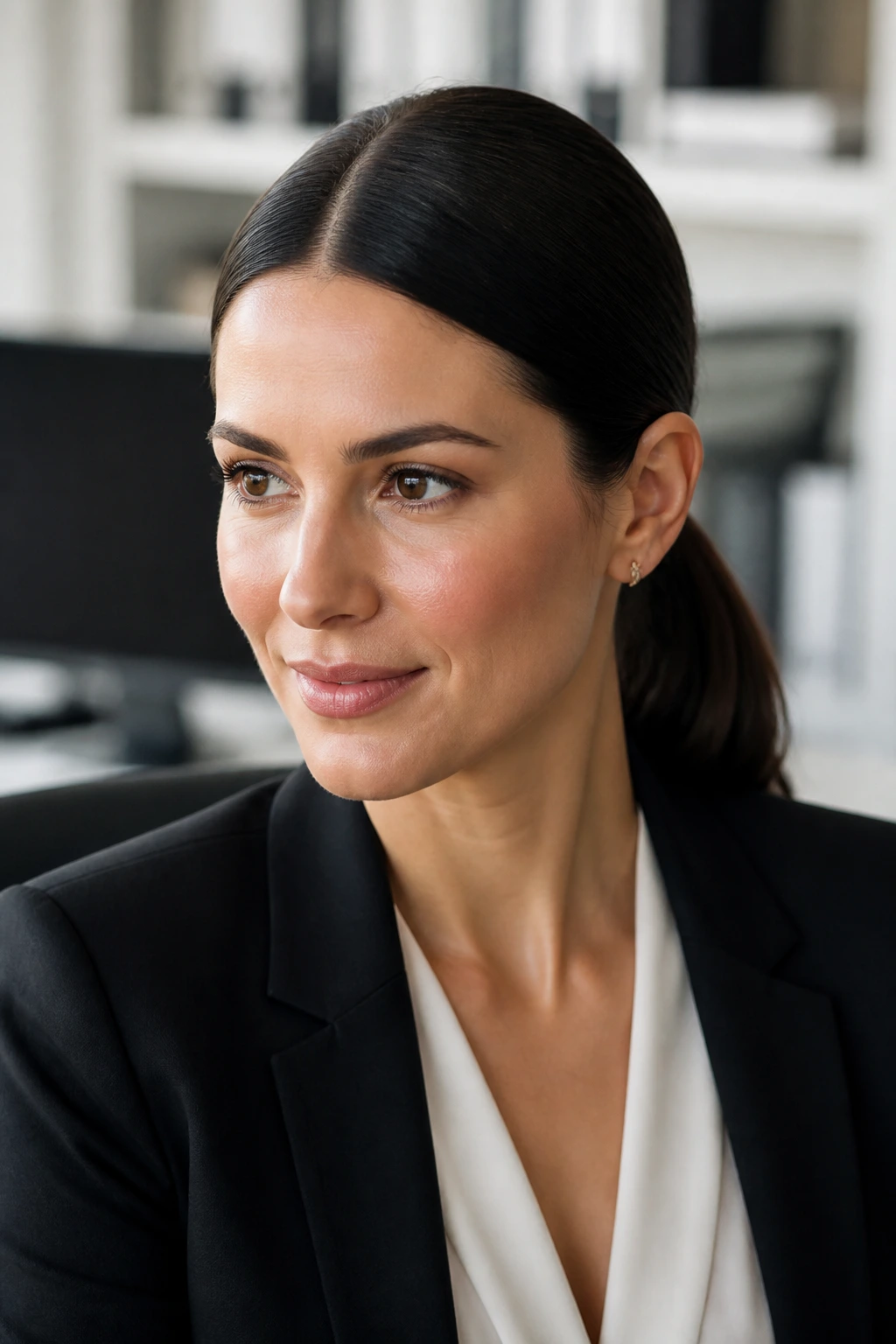
A clean center part and a low anchor at the nape make this the quietest kind of polish. It’s the style I reach for when the outfit already has enough going on and the hair should get out of the way without disappearing.
Why It Works
The straight middle line draws the eye down, which makes the face look balanced and the ponytail look deliberate. A little smoothing cream at the crown keeps flyaways from popping up under overhead lights.
- Tools: tail comb, boar-bristle brush, snag-free elastic, light serum.
- Best for: straight to slightly wavy hair that holds a smooth finish.
- Watch out for: placing the elastic too low; it can make the style slump.
Pro tip: Leave the very ends a touch curved instead of ironing them pin-straight. It keeps the style from looking severe.
2. Deep Side-Part Low Ponytail
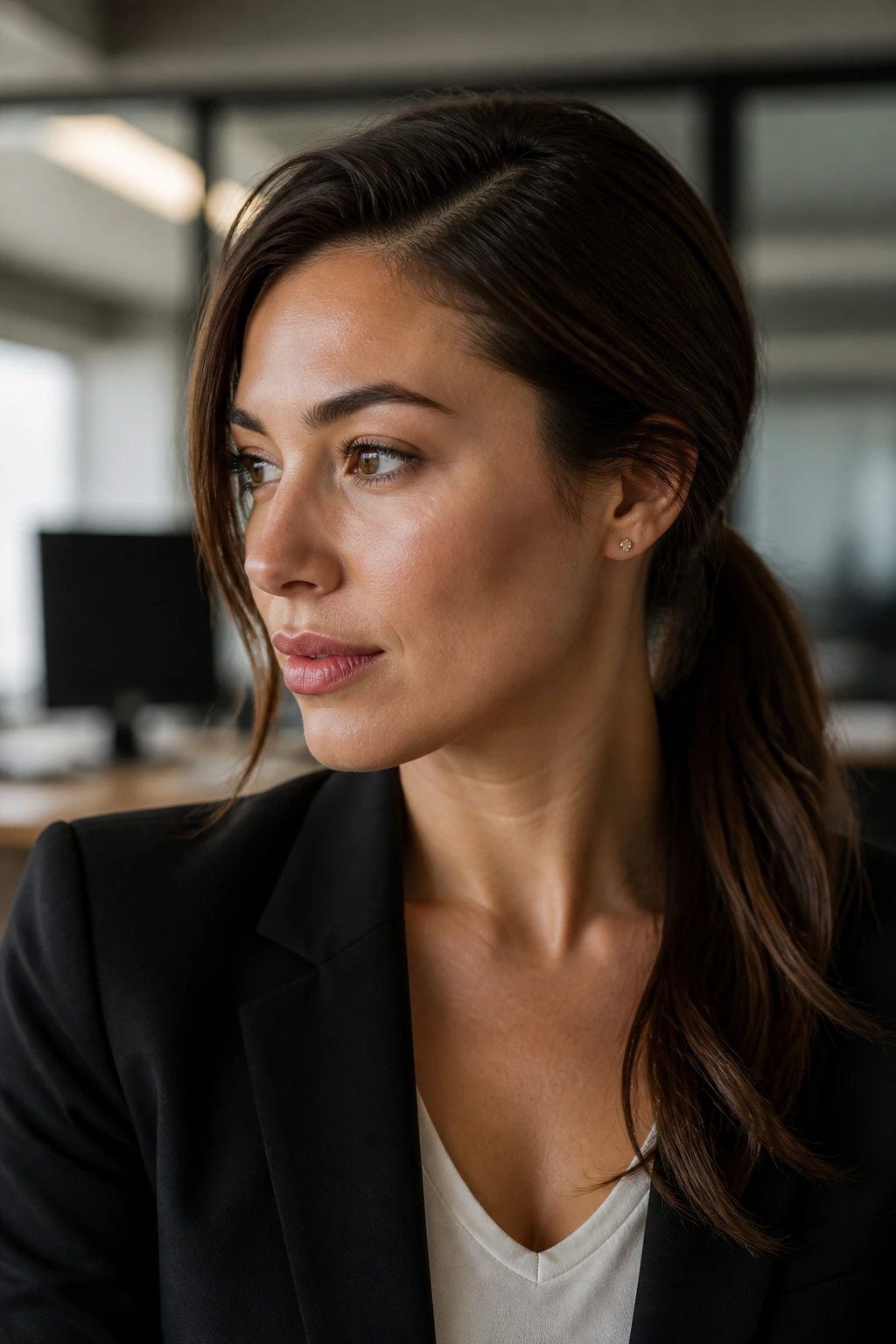
This one has more personality than a center part, but it still reads office-clean. The deep side part softens the face and gives the ponytail a little swing when you turn your head.
What Makes It Sharper
The side part adds shape at the crown, which helps if your hair tends to fall flat by noon. A wrapped elastic keeps the base tidy, and one tucked bobby pin near the part can stop the front from collapsing.
How to style it: brush the hair toward the lower side of your head, secure it just under one ear line, then wrap a small strand around the band. Smooth the top with a pea-sized amount of cream, not a handful.
Good with: button-downs, V-necks, and any collar that sits close to the throat.
3. Wrapped Low Ponytail
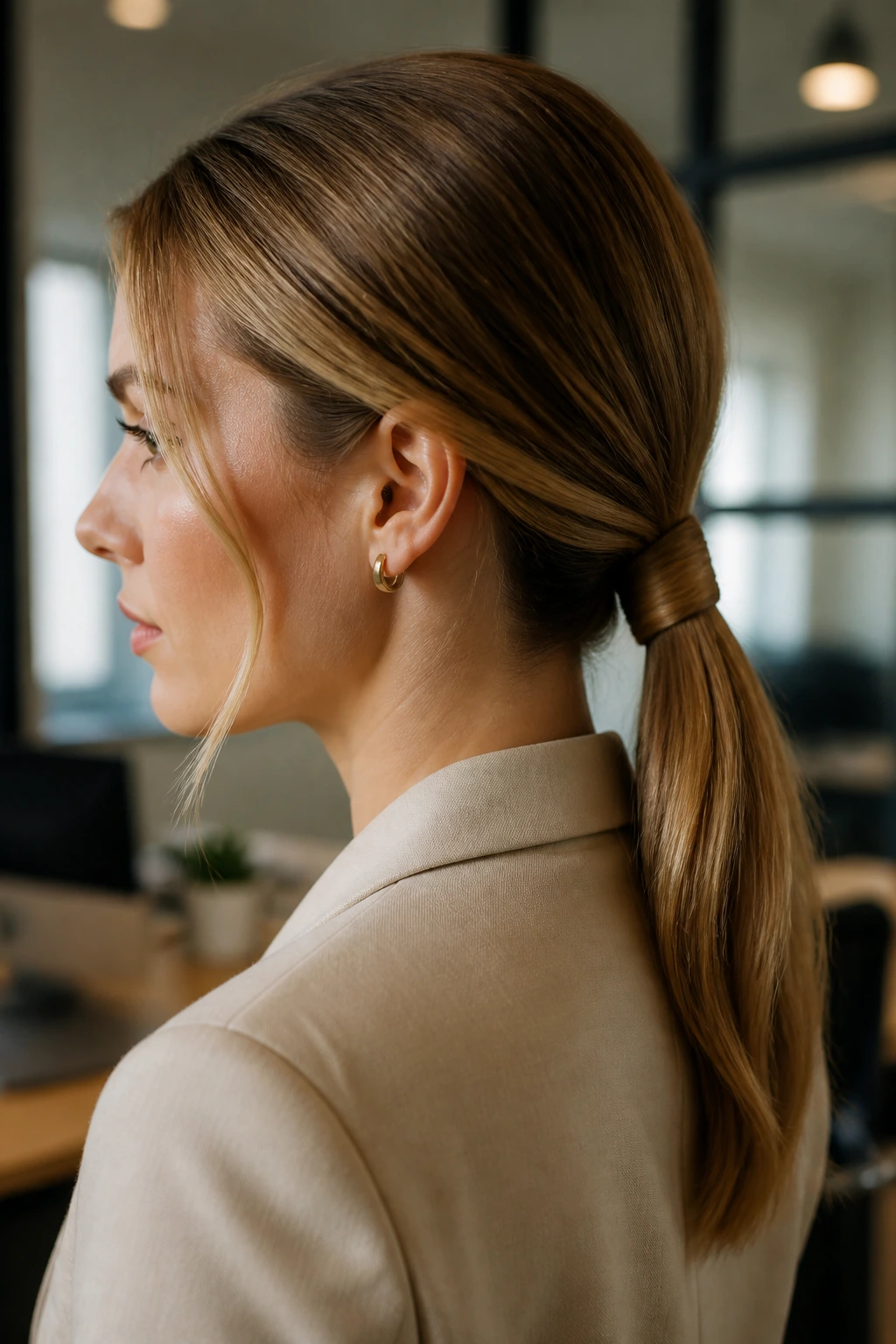
The wrapped base does half the work here. It hides the elastic, gives the ponytail a finished edge, and makes the whole style look like you spent longer on it than you did.
Quick Build
Pull the hair into a low pony, secure it, then take a slim strand from underneath and wind it around the base until the band disappears. Pin the end underneath with one bobby pin. That’s the whole trick.
- Need: elastic, 1 bobby pin, smoothing brush.
- Best for: medium to thick hair.
- Avoid: wrapping too much hair; a fat wrap looks bulky.
Best for meetings: It stays neat even when you’re taking off a coat or sliding a headset on and off all day.
4. Twisted Nape Low Ponytail
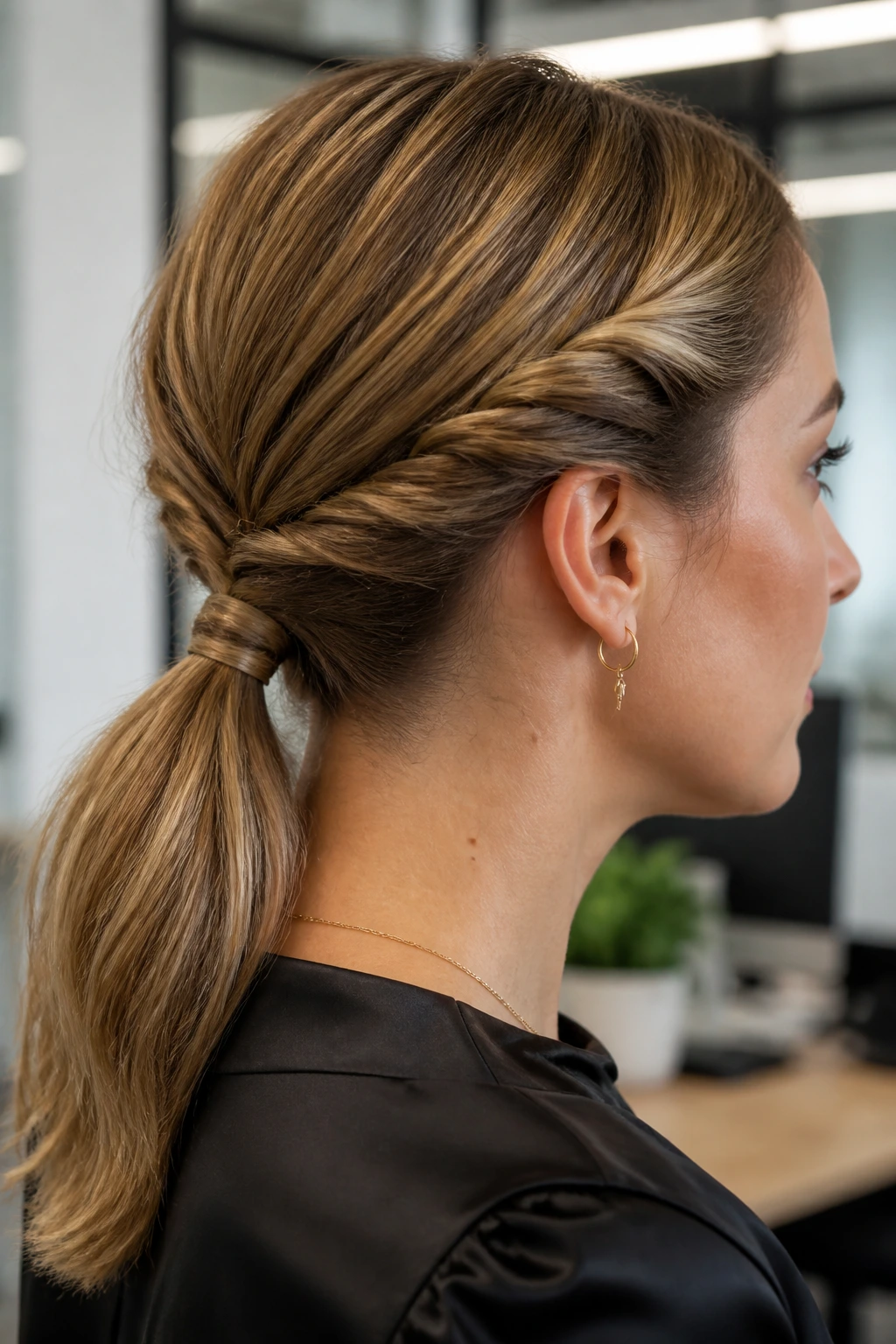
If braids feel like too much and a plain pony feels too plain, this twist sits right in the middle. Two side sections twist back toward the nape before they join the ponytail, so the front stays neat and the base has detail.
Why It Works
Twists give the illusion of effort without requiring tight tension. They also help shorter layers behave because the sides are anchored before the elastic goes in.
Best for: shoulder-length hair, growing-out bangs, and hair that slips out of regular elastics.
Watch out for: twisting too hard. If the sides pull, the style gets a headache-fast feel.
A dab of texture spray at the roots gives the twists something to hold onto.
5. Bubble Ponytail
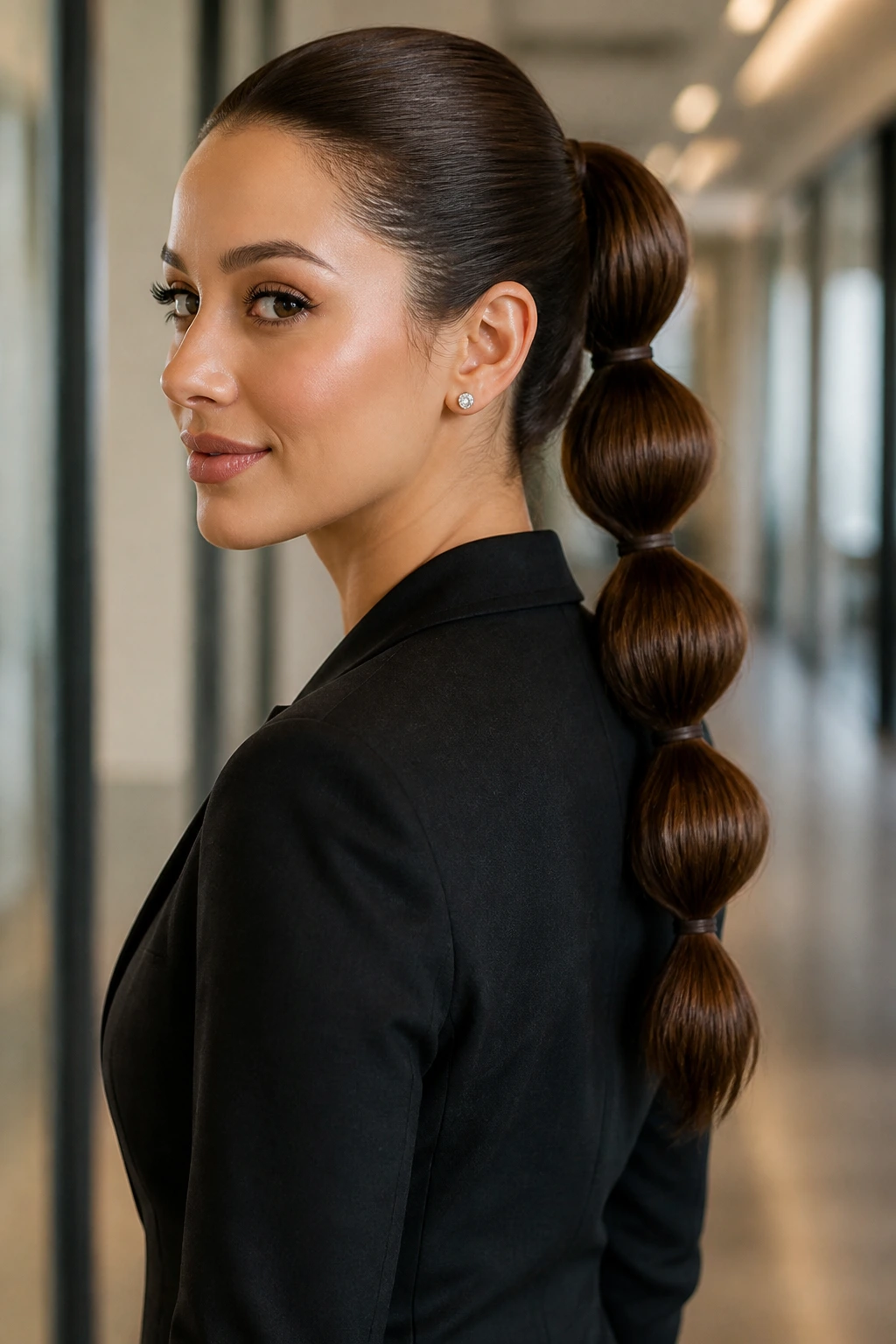
Bubble ponytails look playful, but in a work setting they land best when the bubbles are spaced evenly and kept slim. Use clear elastics or tiny matching bands every 2 to 3 inches down the tail.
Why It Works
The sectioned shape adds volume without teasing, which is useful if your hair is fine and disappears into a standard pony. It also stays put better than loose curls on humid days.
- Needs: 4 to 8 mini elastics, tail comb, light-hold spray.
- Best for: longer hair and medium density.
- Tip: gently tug each section outward after banding for a rounder shape.
Keep the crown sleek. That contrast is what keeps this from looking like gym hair.
6. High Ponytail with a Smooth Crown
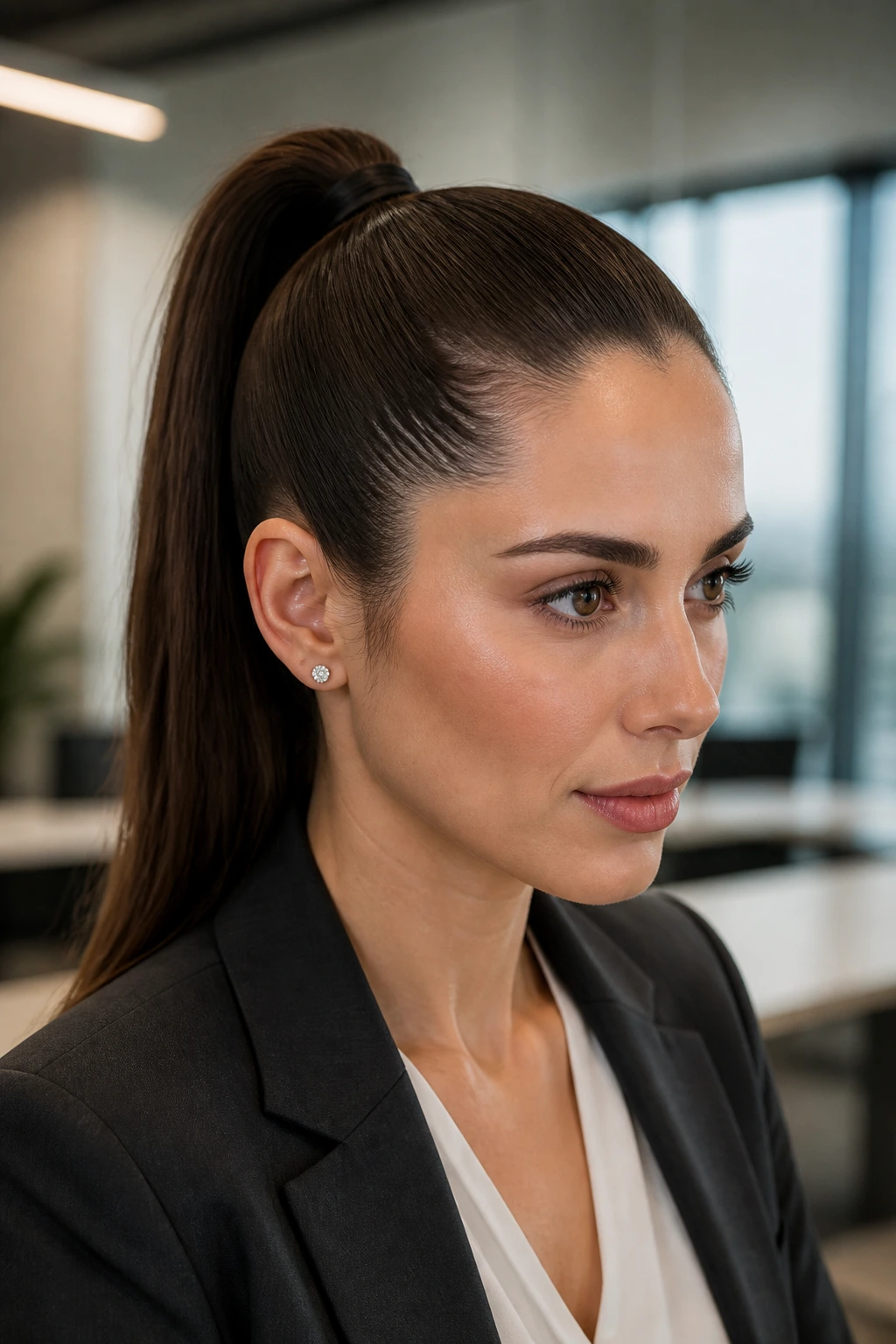
This version is more lifted and more energetic, which can be useful on days when you want your face open and your posture to look sharper. The crown needs to be smooth, though. No half-hearted bumps.
Bold Claim
A high ponytail can look more polished than a low one when the top is flat and the base is tight. It frames the face, clears the neck, and works especially well with structured tops.
Brush everything up from the temples first, then the back, so you don’t trap bumps near the crown. If your hair is slippery, mist the roots with a little dry texture spray before the elastic goes in.
Best with: blazers, sleeveless tops, and statement earrings. A low bun says quiet. This says awake.
7. Rope-Twist Ponytail
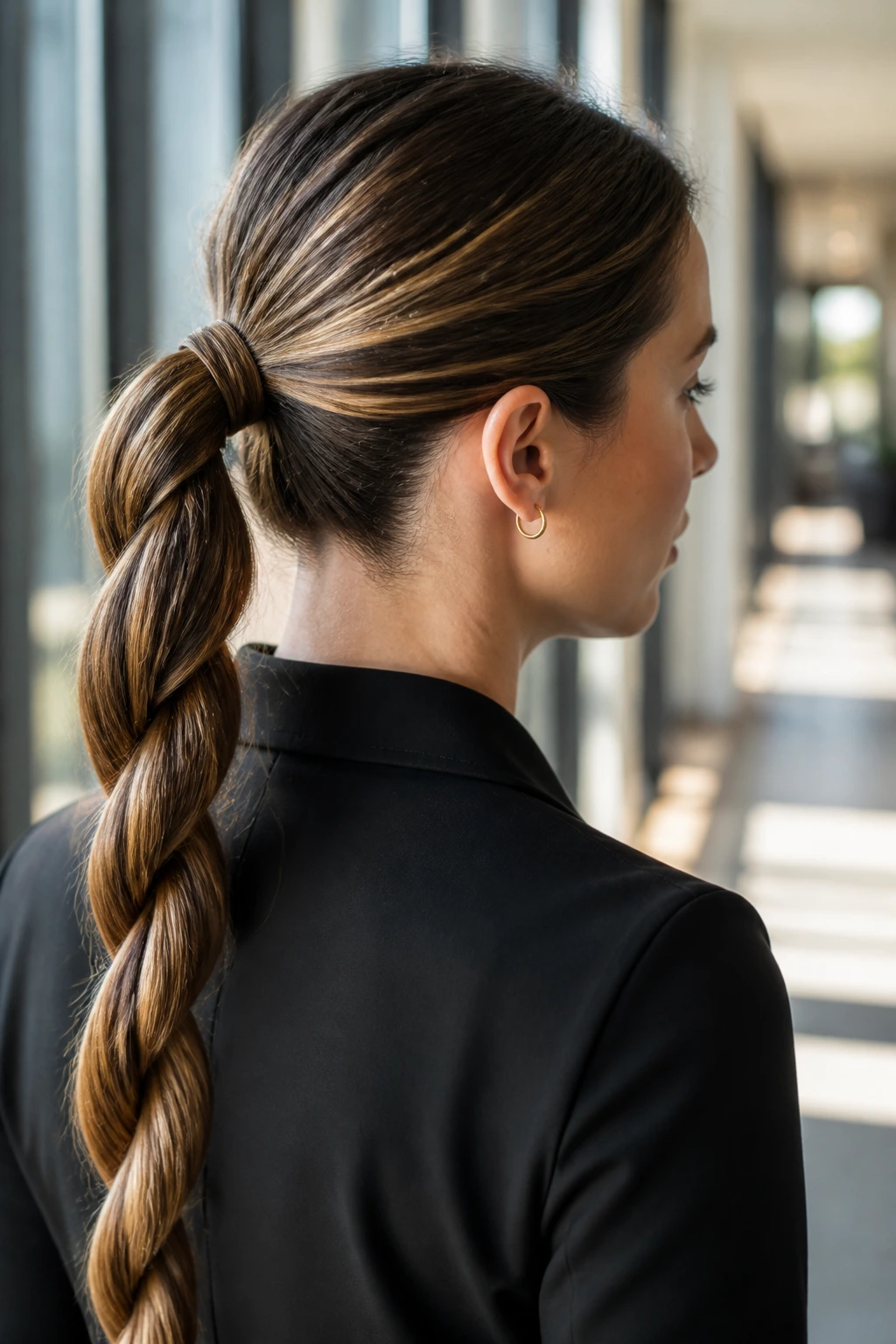
A rope twist gives you movement without the loose fray of a braid. Two sections twist around each other down the length of the ponytail, and the result looks neat in motion.
How to Style It
Secure a low or mid pony, split the tail into two sections, twist each section in the same direction, then wrap them around each other in the opposite direction. That opposing motion keeps the twist tight.
- Good for: smooth or slightly layered hair.
- Tools: elastic, small clear band at the end.
- Watch out for: twisting both sections the same way at the finish; it falls apart faster.
A rope twist is one of those styles that looks more precise than it is. Handy.
8. Inside-Out Ponytail
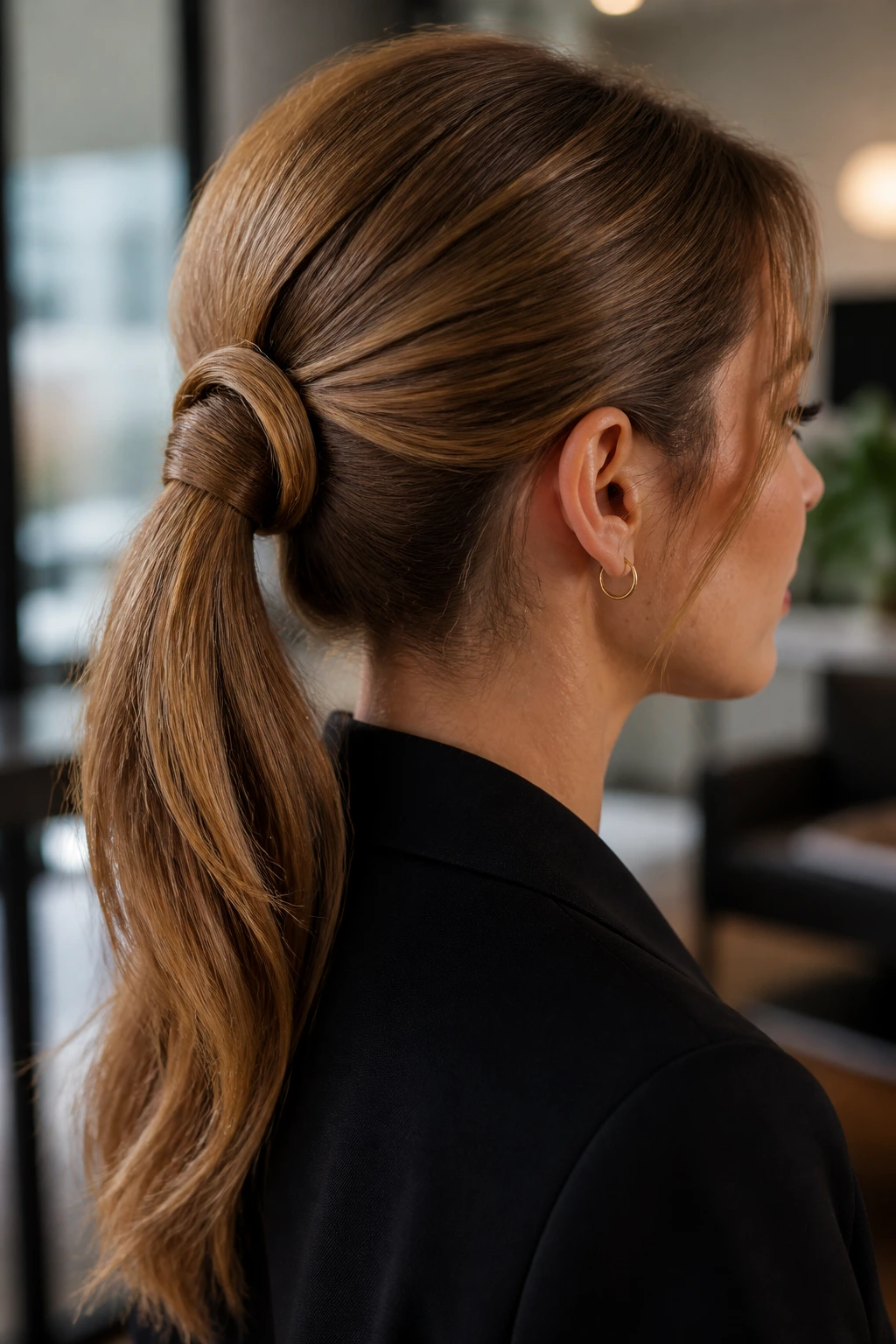
Also called a flip-through ponytail, this one creates a tucked loop at the base. It’s neat, a little clever, and easier than it looks once you’ve done it twice.
Why It Works
The flipped section creates volume right at the anchor point, which helps thinner hair look fuller without teasing. It also keeps the tail from hanging too flat against the back.
Take a low pony, split the hair just above the elastic, and pull the tail up and through the gap. Tighten gently so the loop sits clean. That’s it.
Best for: medium-length hair that needs a little lift at the base.
Avoid: doing it over very slick conditioner or oil, which makes the flip slide.
9. Braided Base Ponytail
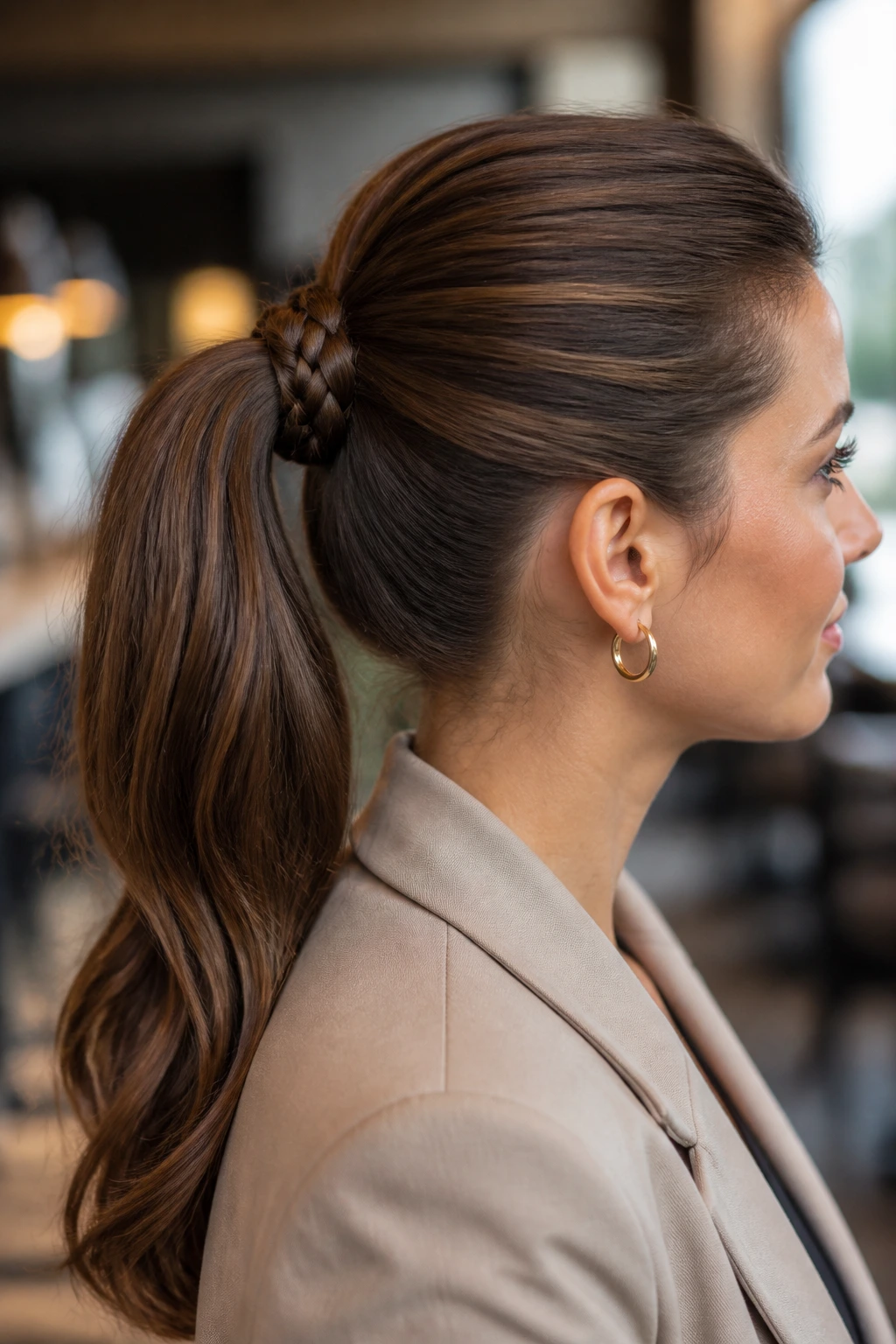
A braid at the crown or just before the elastic gives the whole style a built-in anchor. It’s a smart move on busy days because it keeps the top from puffing out as the hours pass.
A Small Braid, Big Payoff
The braid can be tiny — three passes is enough — and still make the ponytail feel more composed. The tail itself can stay straight, wavy, or curled.
How to style it: braid a narrow section from one side or from the center back, then gather the rest into a ponytail at the nape. Wrap a strand around the elastic if you want a cleaner finish.
This one is a favorite for layered hair. The braid gives the shorter pieces something to cling to.
10. Half-Up Ponytail
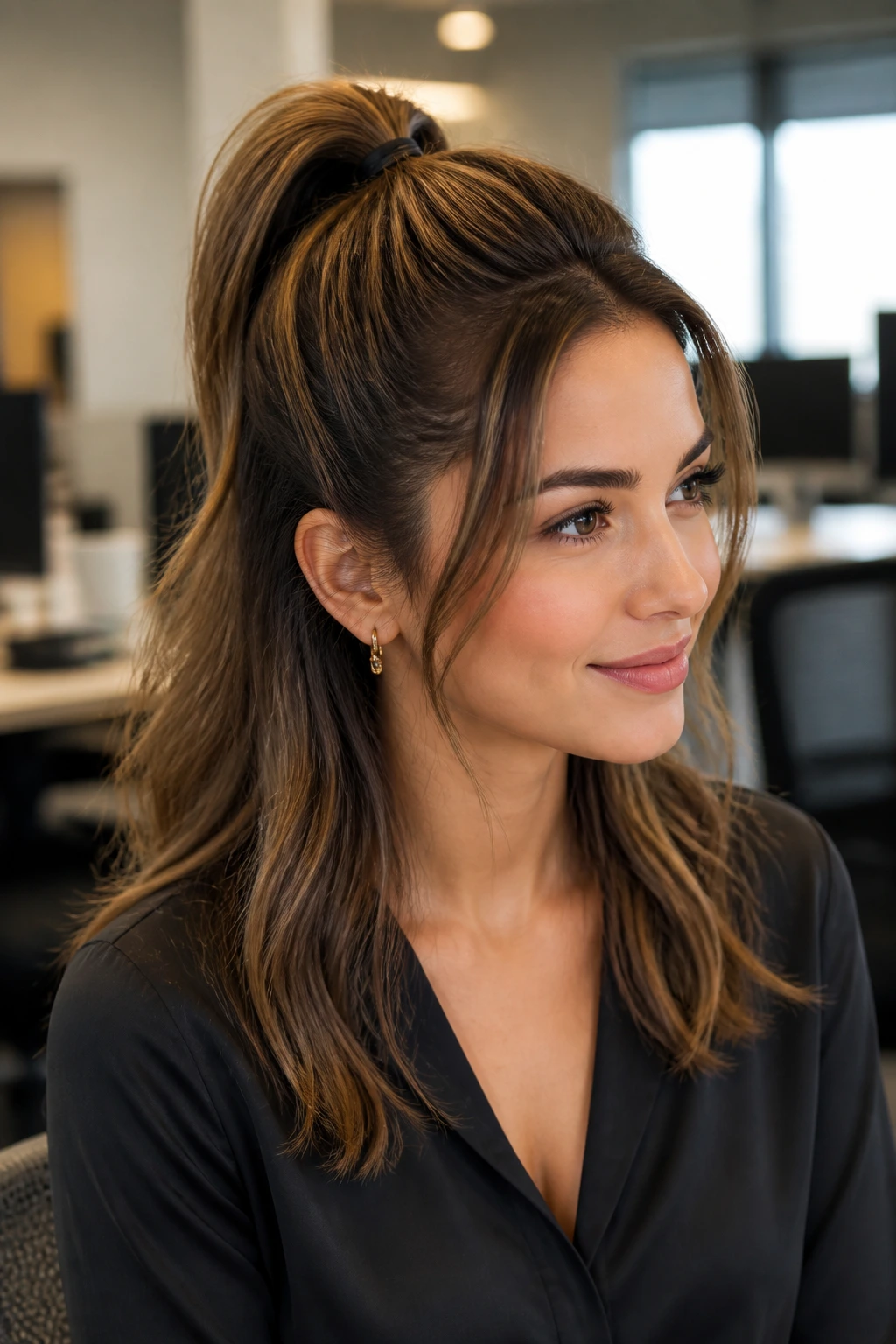
Half-up ponytails are underrated for office wear. They keep hair off the face, leave length down for softness, and work well when you want a little volume without committing to a full-up style.
What It Solves
If the front pieces are getting in your eyes but you don’t want a tight full pony, this is the middle ground. It also plays nicely with waves or second-day texture.
Use the top third of the hair, not half in the mathematical sense. Too much hair and the style starts to sag. Too little and it loses the point.
Good with: square necklines, simple tops, and days when you’ll be on camera.
11. Soft Wavy Low Ponytail
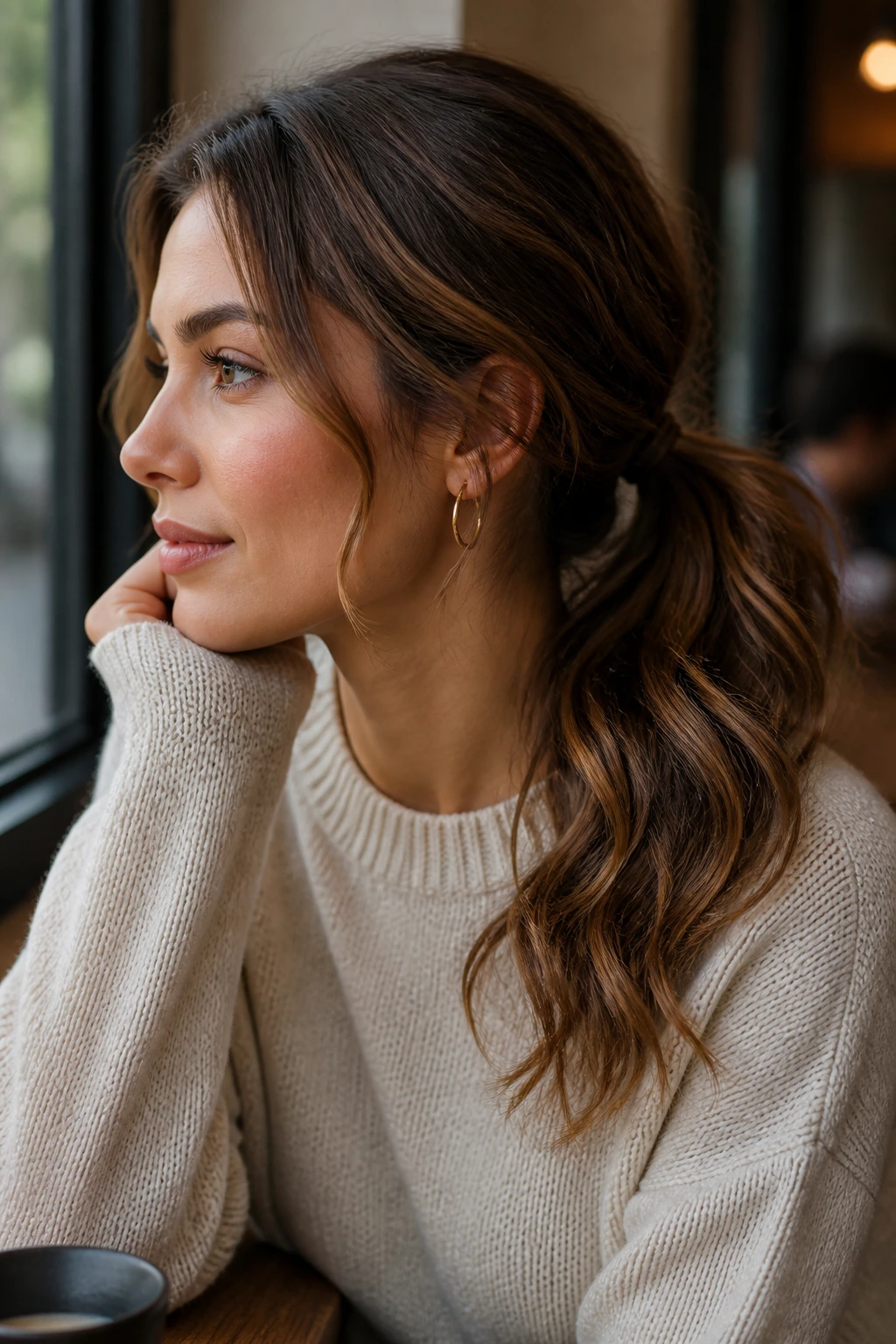
A low pony with loose waves feels easier than a sleek version, but still controlled enough for work. The texture keeps it from looking flat, especially if your hair is long and tends to hang heavy.
Why It Works
Waves add movement around the shoulder line, which stops the style from feeling severe. If the front is smoothed and the tail is softly bent, the whole thing looks relaxed in a deliberate way.
Tip: curl just the mid-lengths and ends with a 1-inch iron, then brush the waves apart once they cool. Don’t overdo the curl. You want bends, not ringlets.
This is one of the best styles for days when you want your hair to look like it has volume even if the truth is more complicated.
12. Scarf-Wrapped Ponytail
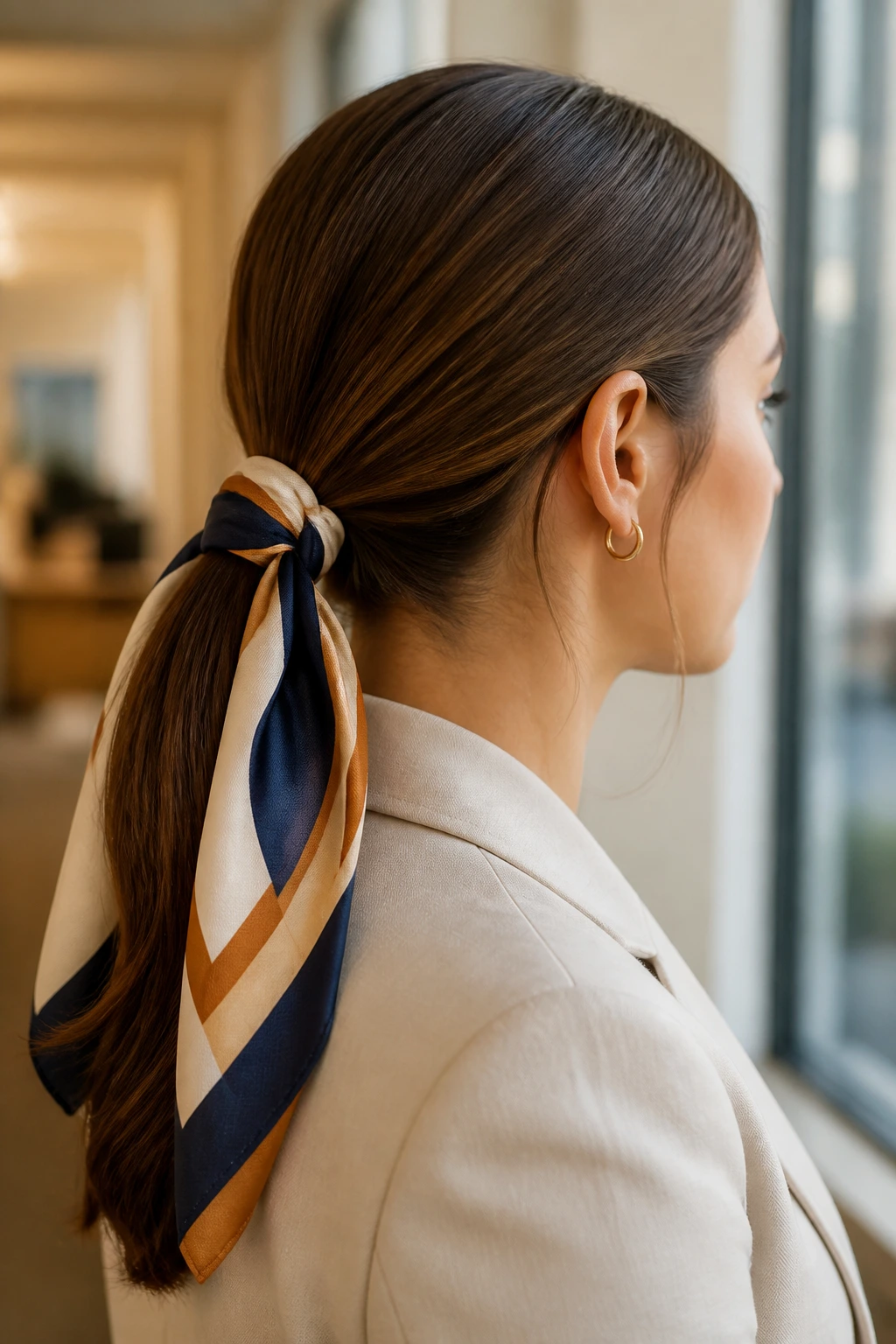
A scarf changes the tone immediately. Choose silk, satin, or a matte printed square, tie it around the base, and let the ends hang with the ponytail or knot them neatly.
Why It Works
The scarf draws attention away from any imperfect elastic placement and gives you a color point near the face. It also works well with low ponies because the knot doesn’t fight collars.
- Best for: plain outfits, monochrome clothes, or simple knit tops.
- Tools: small scarf, elastic, bobby pin.
- Watch out for: slippery fabric on fine hair; pin the knot if needed.
A scarf is not the whole look. It’s the punctuation mark.
13. Barrette-Stack Ponytail
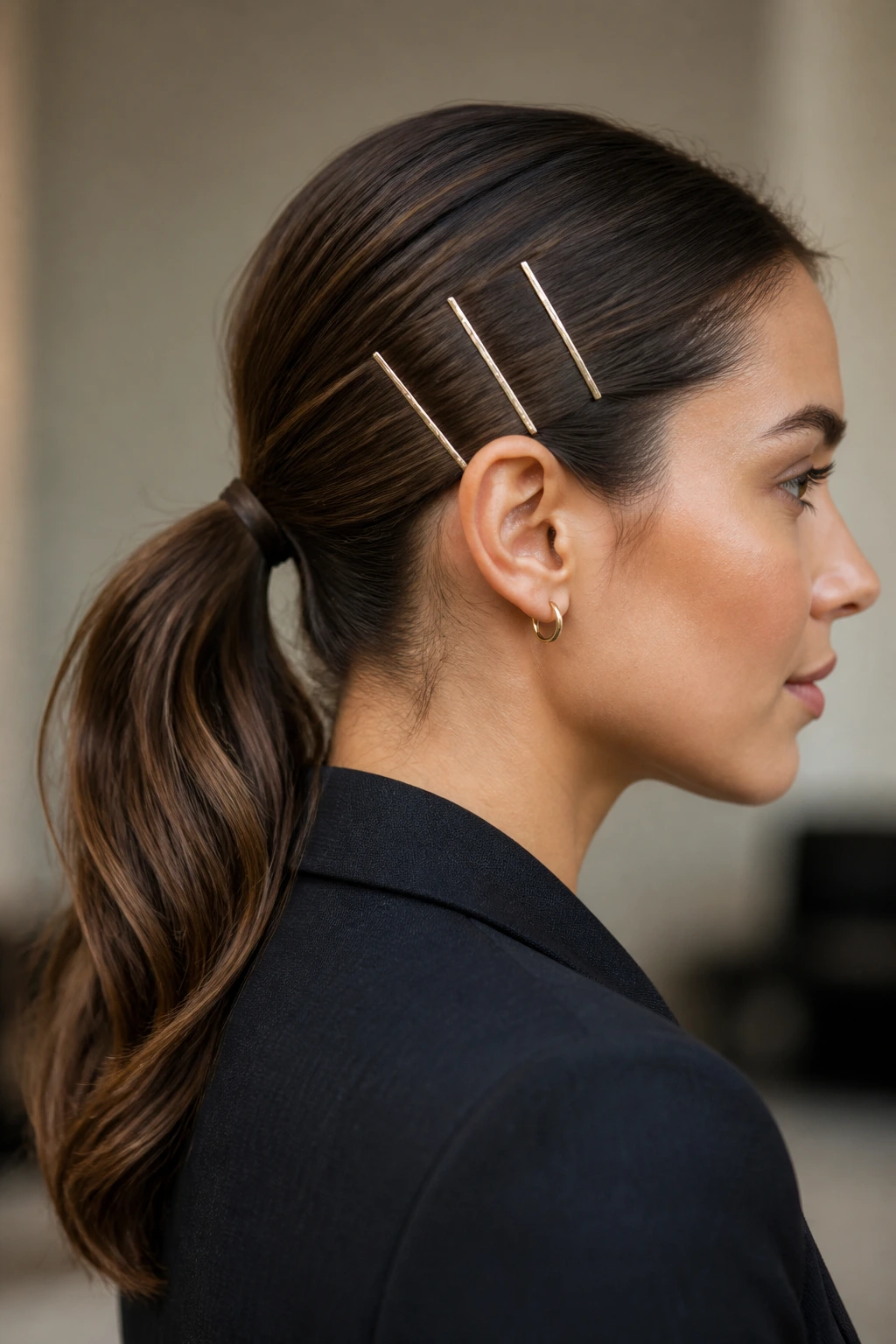
Two or three slim barrettes lined along one side can turn a plain ponytail into something sharper. The trick is spacing them evenly and keeping the rest of the style clean.
What Makes It Work
The barrettes give shape near the temples, which is useful if your hairline tends to look fuzzy by midday. They also create a nice line that works under office lighting.
How to style it: make a low or mid pony, smooth the sides back, then clip the barrettes one above the other, or fan them slightly if you want a softer finish.
If the clips are too chunky, the style starts to read more weekend than workday. Go slim.
14. Criss-Cross Ponytail
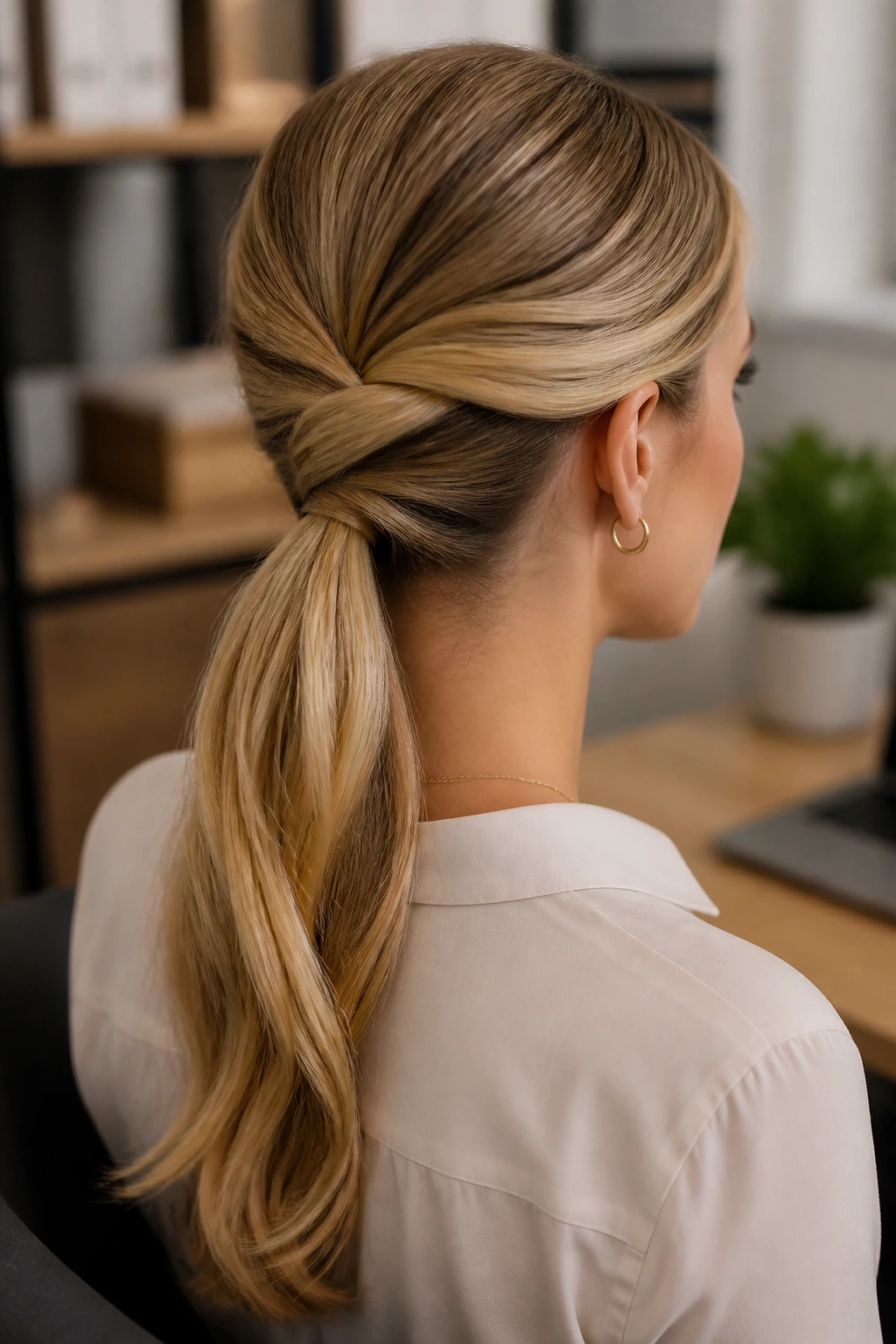
This one looks more technical than it is. Two front sections cross over each other at the back before joining the ponytail, which makes the crown look neatly arranged.
Brief Scenario
You’re late, the front of your hair keeps splitting, and the ponytail needs to look better than “I got dressed in the dark.” Criss-crossing the side sections fixes that fast.
Secure the first cross with a pin before you gather everything else. If you skip that, the shape loosens as soon as you turn your head.
Best for: straight or lightly wavy hair with shorter front pieces.
Avoid: crossing too low, where the shape gets hidden by your shoulders.
15. Fishtail-Accent Ponytail
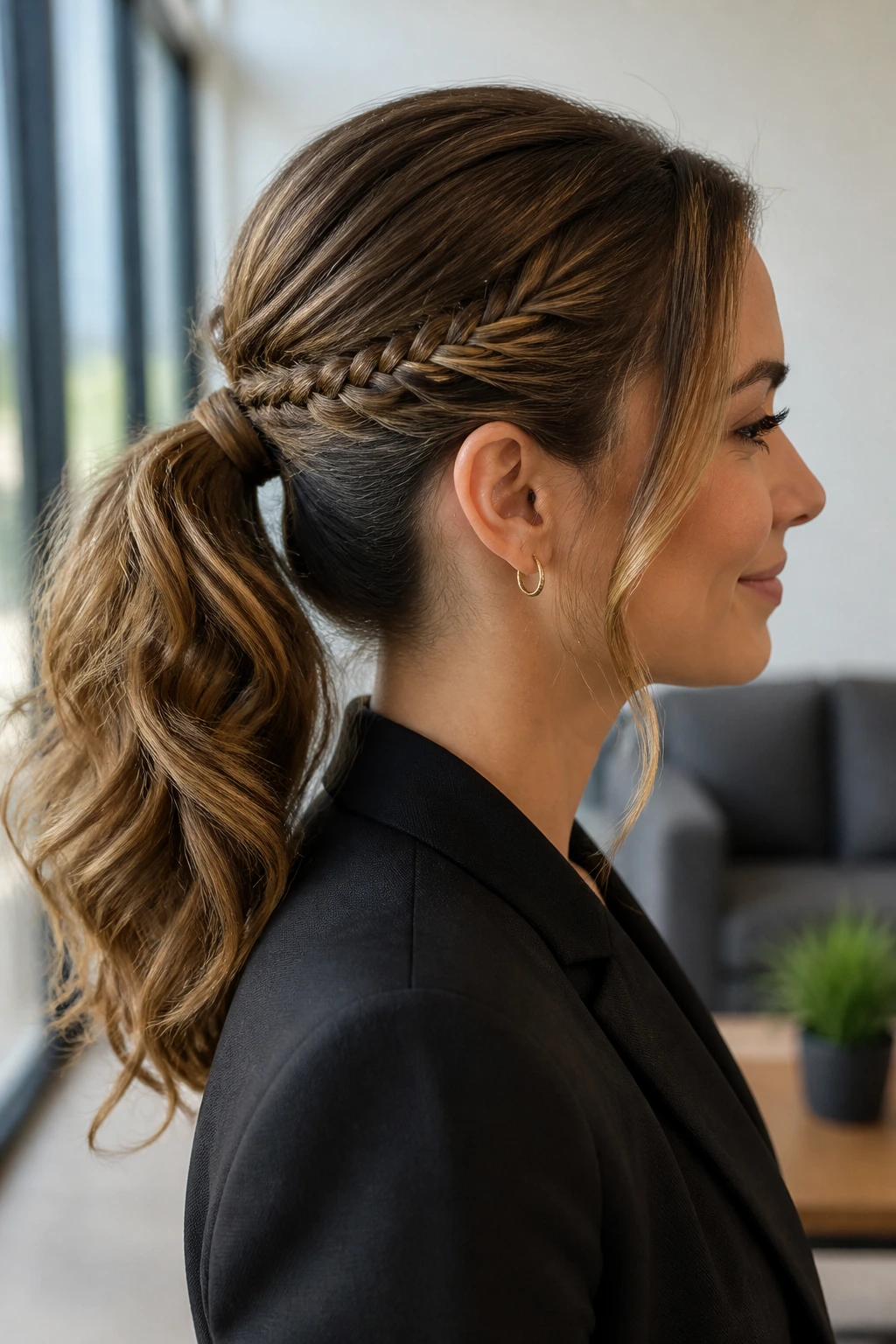
A full fishtail can be a lot for the office. A small fishtail section feeding into a ponytail is the better move. It gives texture without taking over the whole head.
How to Style It
Take a narrow section from one side, fishtail braid it for a few inches, then blend it into the ponytail. Leave the rest smooth or lightly waved so the braid stays the detail, not the entire event.
A tiny fishtail is enough. Seriously. If you make it too broad, the style starts pulling the eye downward and loses that crisp office feel.
Good with: medium to long hair and simple tops that need a little texture near the face.
16. Dutch-Braid Into Ponytail
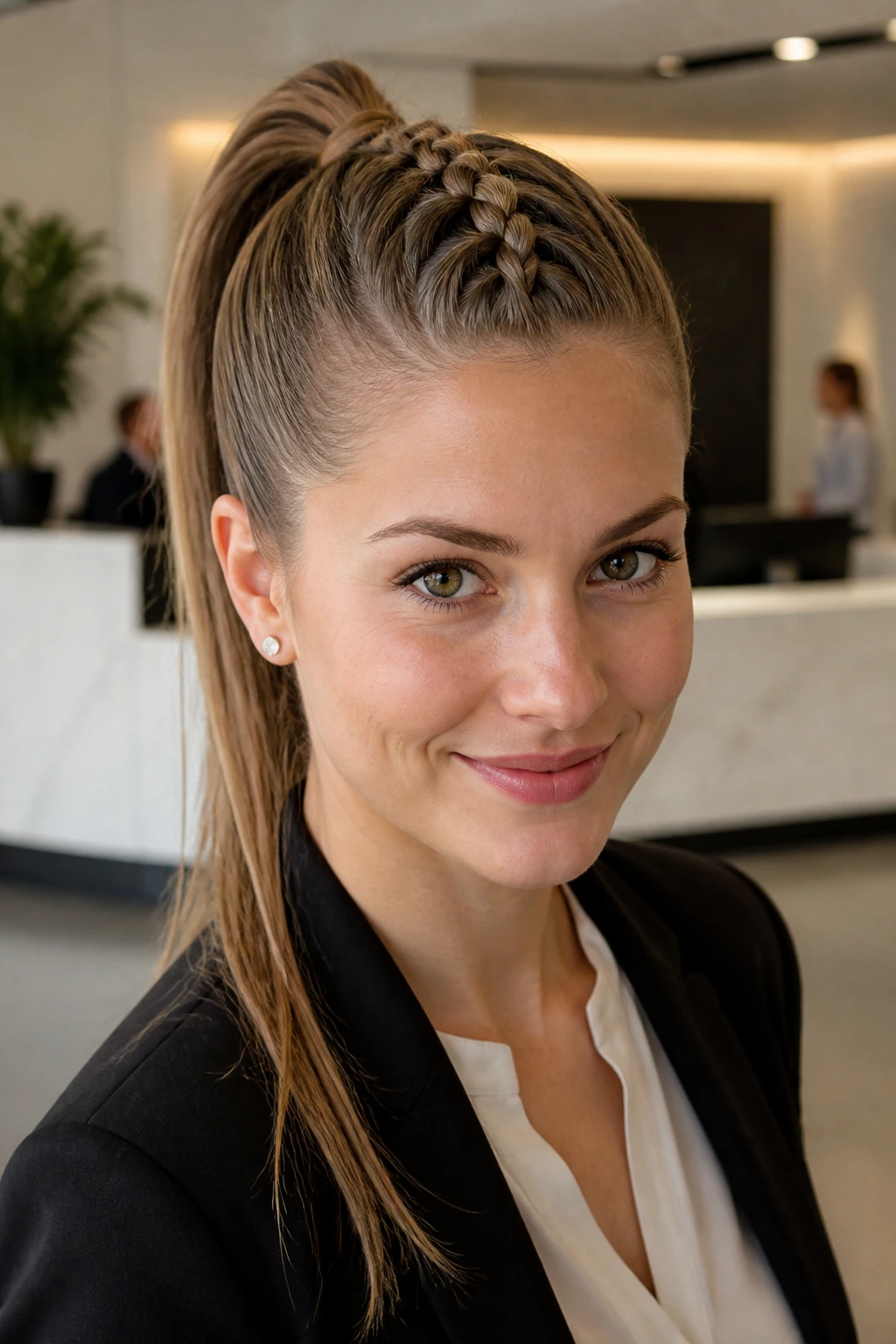
A Dutch braid sits raised on the scalp, which gives the top of the style some structure and makes the ponytail feel more anchored. It’s a strong choice when your hair is thick and likes to puff out.
Why It Works
The braid holds the crown in place before the elastic goes in, so you don’t spend the day smoothing the same section back down. It also looks sharp from the front and side.
Best for: long hair, active days, and humid commutes.
Watch out for: starting the braid too wide; it can take over the whole style.
Leave the tail smooth for contrast. That difference between braided top and sleek tail is what makes it work.
17. French-Braid Into Ponytail
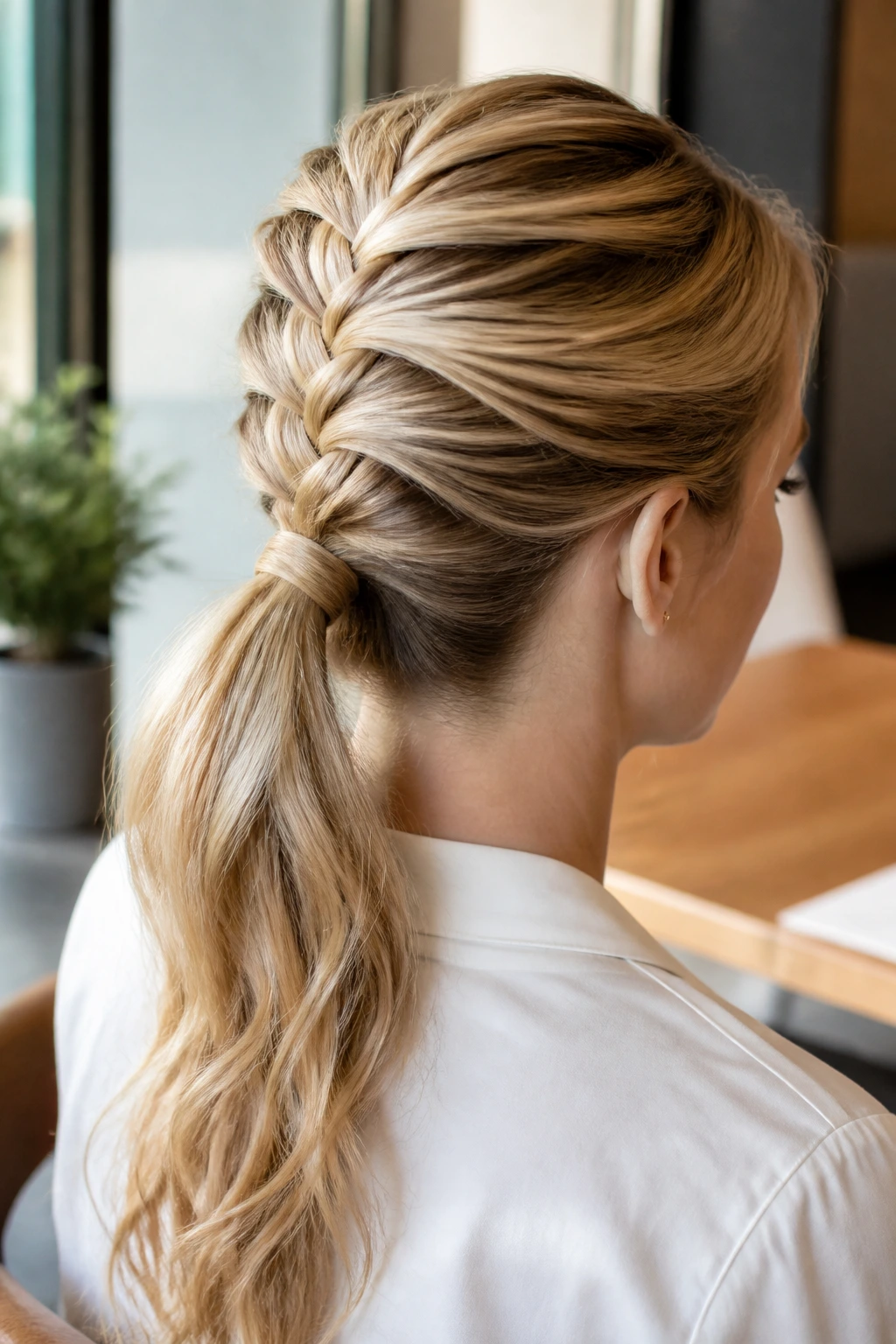
This is the softer cousin of the Dutch-braid version. The braid sinks into the scalp instead of sitting on top, so it reads a little more traditional and a little less sporty.
What Makes It Different
French braids keep the top smooth while building a neat path into the ponytail. If your hair is layered, the braid helps hold the shorter pieces in place before they escape.
- Best for: medium to long hair.
- Useful when: you need a style that survives wind and a long commute.
- Tip: stop the braid where you want the ponytail to sit; don’t drag it too low.
The tail can stay straight or get a quick bend at the ends. Either works.
18. Tucked-Under Low Ponytail
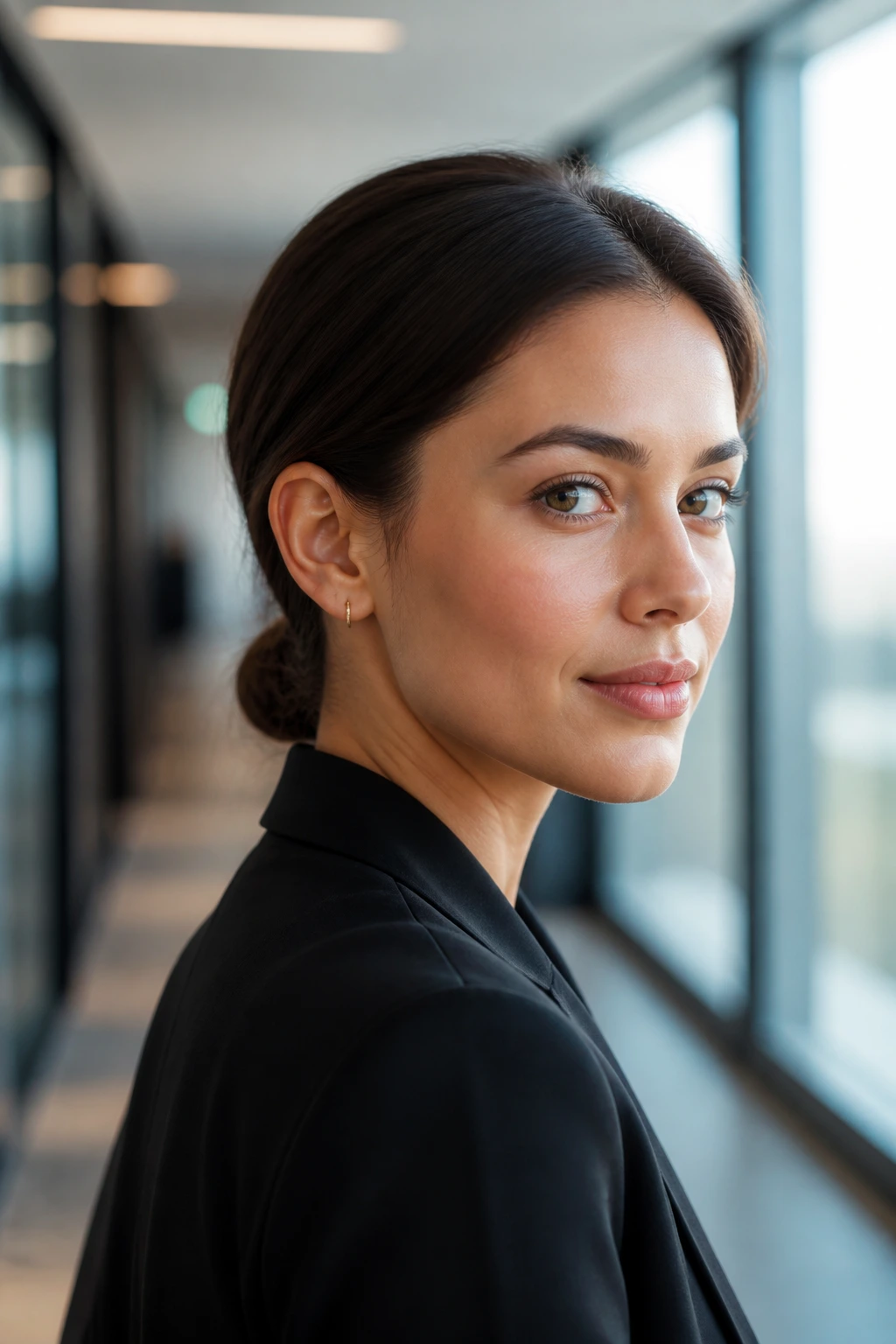
Tucking the ends under gives the ponytail a compact shape that sits close to the neck. It’s clean, especially with coats and blazers, and it won’t swing into your face when you lean forward.
A Neat Little Trick
After securing the ponytail, loop the ends under and pin them loosely so the tail folds into itself. You get a fuller-looking base and a tidier silhouette.
This style is better than it sounds on fine hair. The tucked ends create a denser shape, which makes the ponytail look thicker than it is.
Pro move: leave one very small strand out to wrap around the elastic before tucking. The finish looks much smoother.
19. Mid-Height Ponytail with Face-Framing Pieces
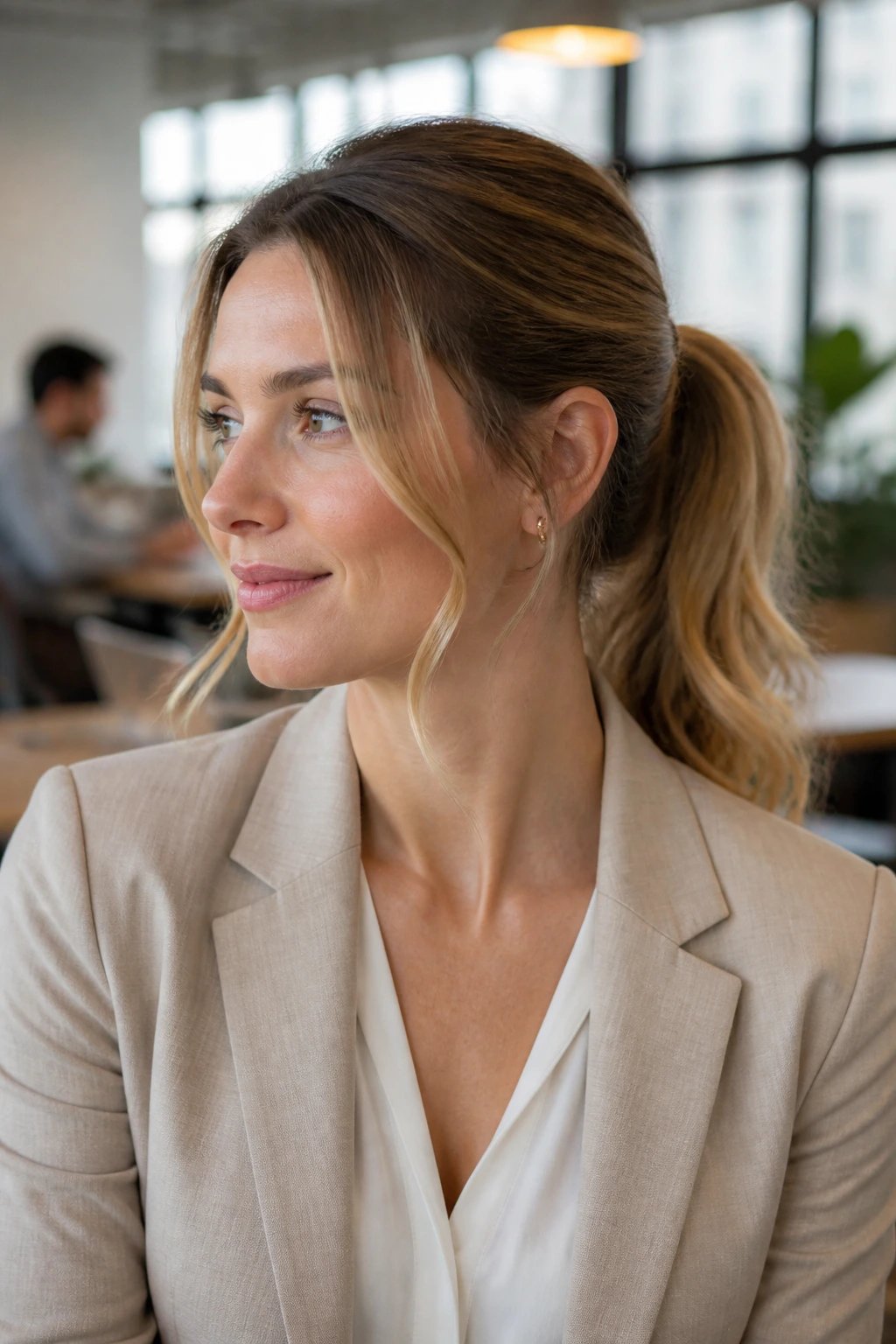
A mid-height ponytail is the useful middle ground between low and high. It clears the neck, doesn’t flatten as much as a low pony, and leaves room for a couple of face-framing pieces.
Why It Works
The height sits in the zone that flatters most collar shapes and most hair lengths. The loose pieces soften the face, which helps if you don’t want the style to feel too severe.
Good with: round or square face shapes, simple tops, and second-day hair.
Avoid: too many loose pieces; two strands are enough, four starts to look unfinished.
Curl the framing pieces away from the face if you want a softer edge. A quick bend at the ends is enough.
20. Sleek High Ponytail with Wrapped Base
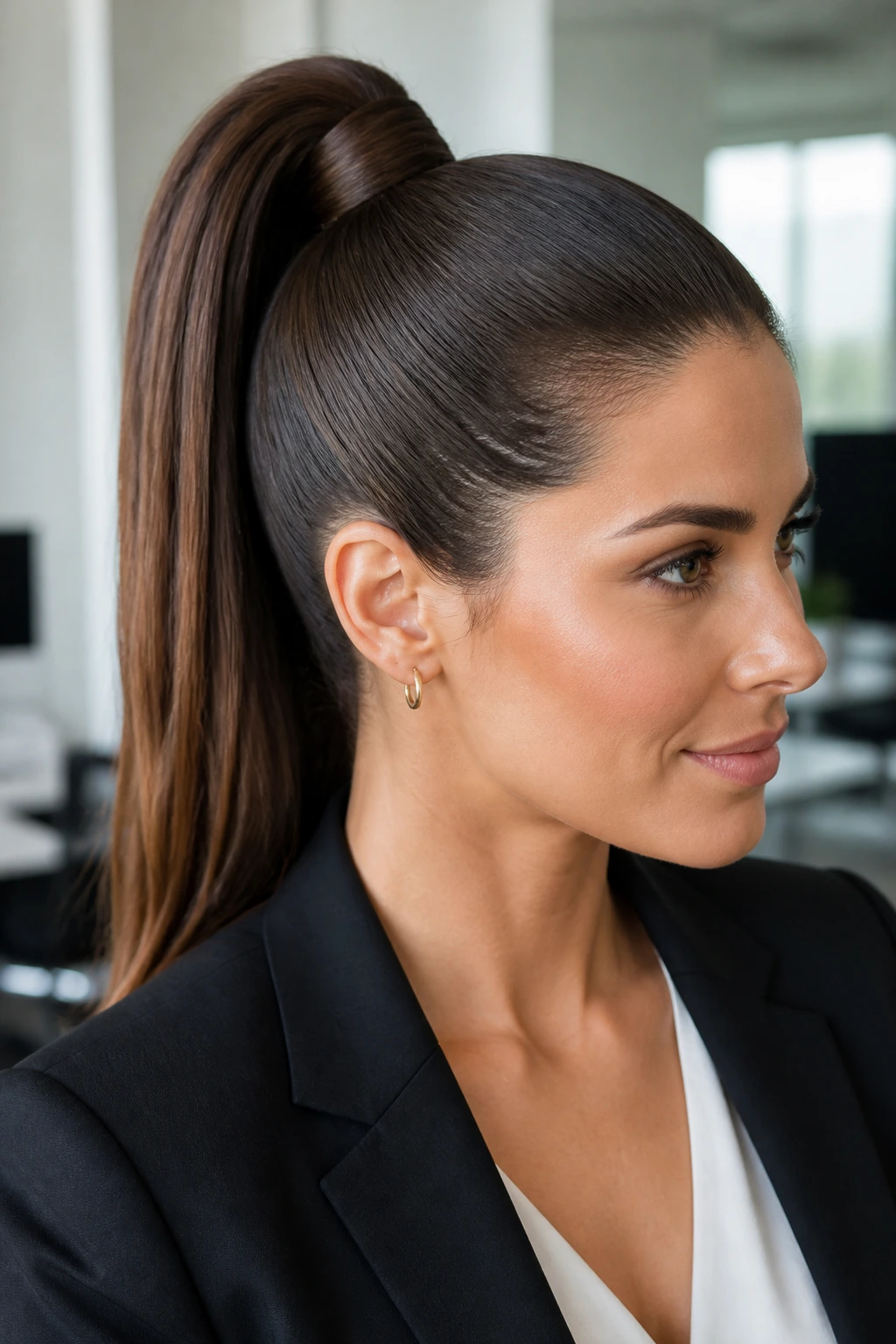
This is the sharpest ponytail in the group. It pulls the face up, opens the neckline, and gives the whole head a lifted shape that reads strong under office lighting.
Bold Claim
When the crown is smooth and the base is wrapped, a high ponytail can look more controlled than a low one. It’s a style that works when the outfit is simple and you want the hair to carry some of the structure.
Brush upward in sections so you don’t trap bumps at the back of the head. Then wrap a thin strand around the elastic and pin it underneath.
Best for: straight hair, thick hair, and days when you want a sharper silhouette.
21. Pin-Straight Ponytail with Blunt Ends
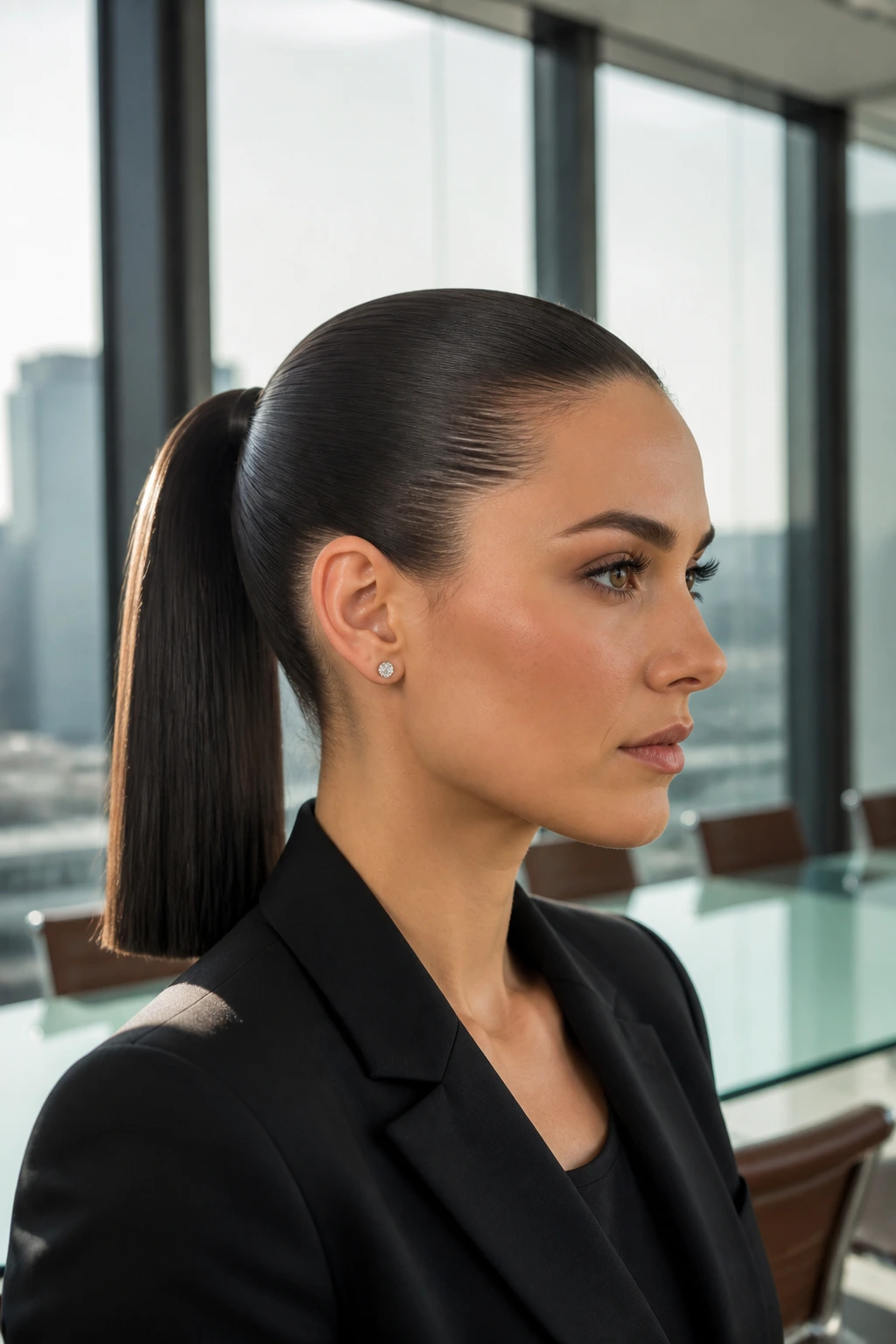
Straight hair doesn’t need much help, but the blunt end makes this style feel finished. The key is polish from the elastic to the tip, not extra volume.
What to Watch
If the ends are frayed or dry, the whole ponytail looks older than it is. A light pass with a flat iron on the last 3 to 4 inches keeps the line clean.
- Tools: flat iron, smoothing serum, brush.
- Best for: medium to long hair with minimal layers.
- Avoid: too much serum at the root; it flattens the crown.
This is a good day for a crisp blouse or a structured jacket. The hair matches the clothes instead of competing with them.
22. Curly Ponytail with Defined Front Pieces
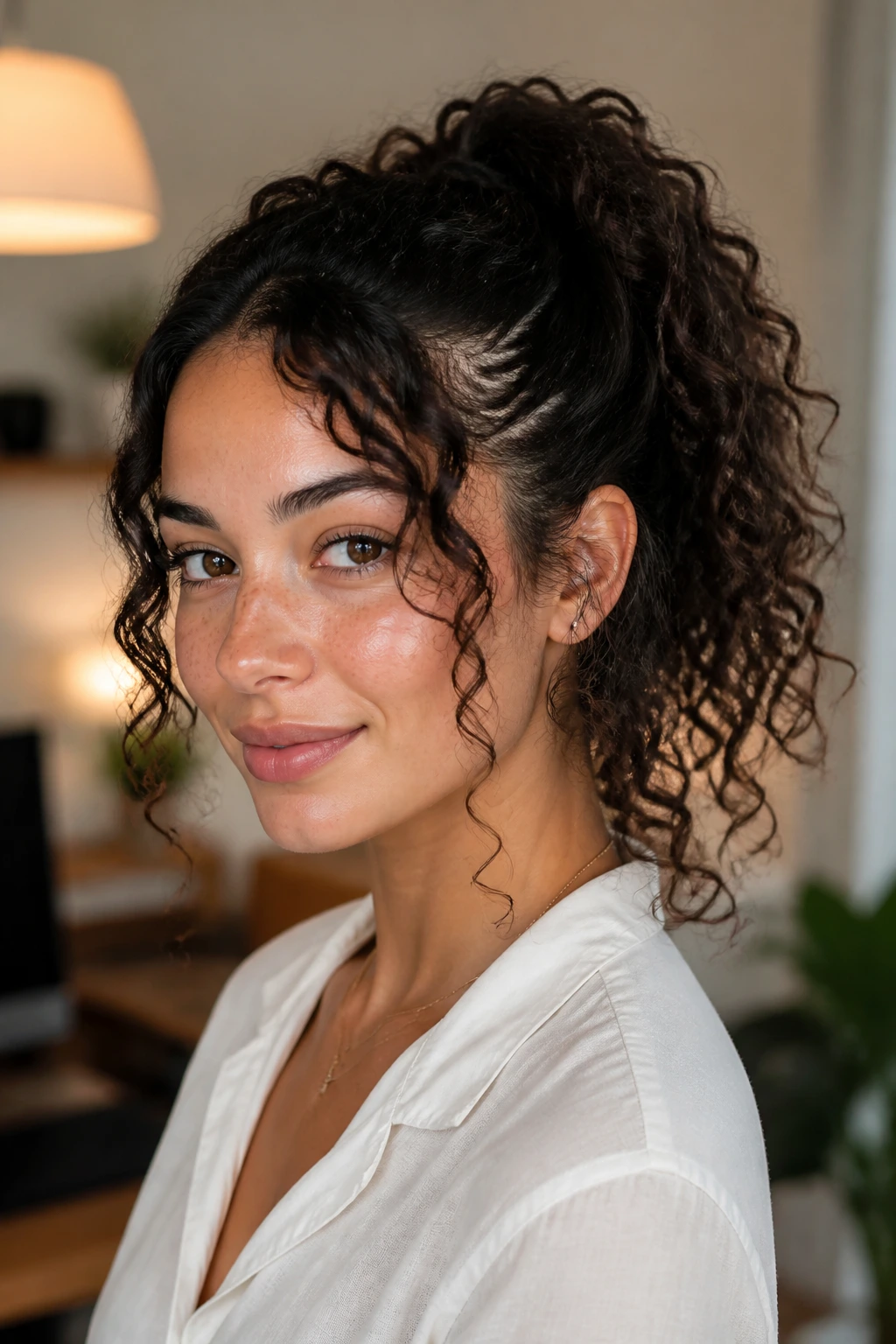
Curly hair in a ponytail does not need to be smoothed into something else. Keep the curl pattern intact, define the front pieces, and let the texture do the work.
Why It Works
A defined curly ponytail looks polished because the curls stay shaped instead of puffing into a loose cloud. A little gel at the hairline and a satin scrunchie at the base make a big difference.
Best for: natural curls, coils, and textured hair that looks best with shape intact.
Tip: smooth the roots with a brush dipped in a small amount of styling gel, then leave the lengths alone.
The front pieces can sit softly on the cheekbones. That detail keeps the style from feeling pulled back too hard.
23. Bow-Tied Low Ponytail
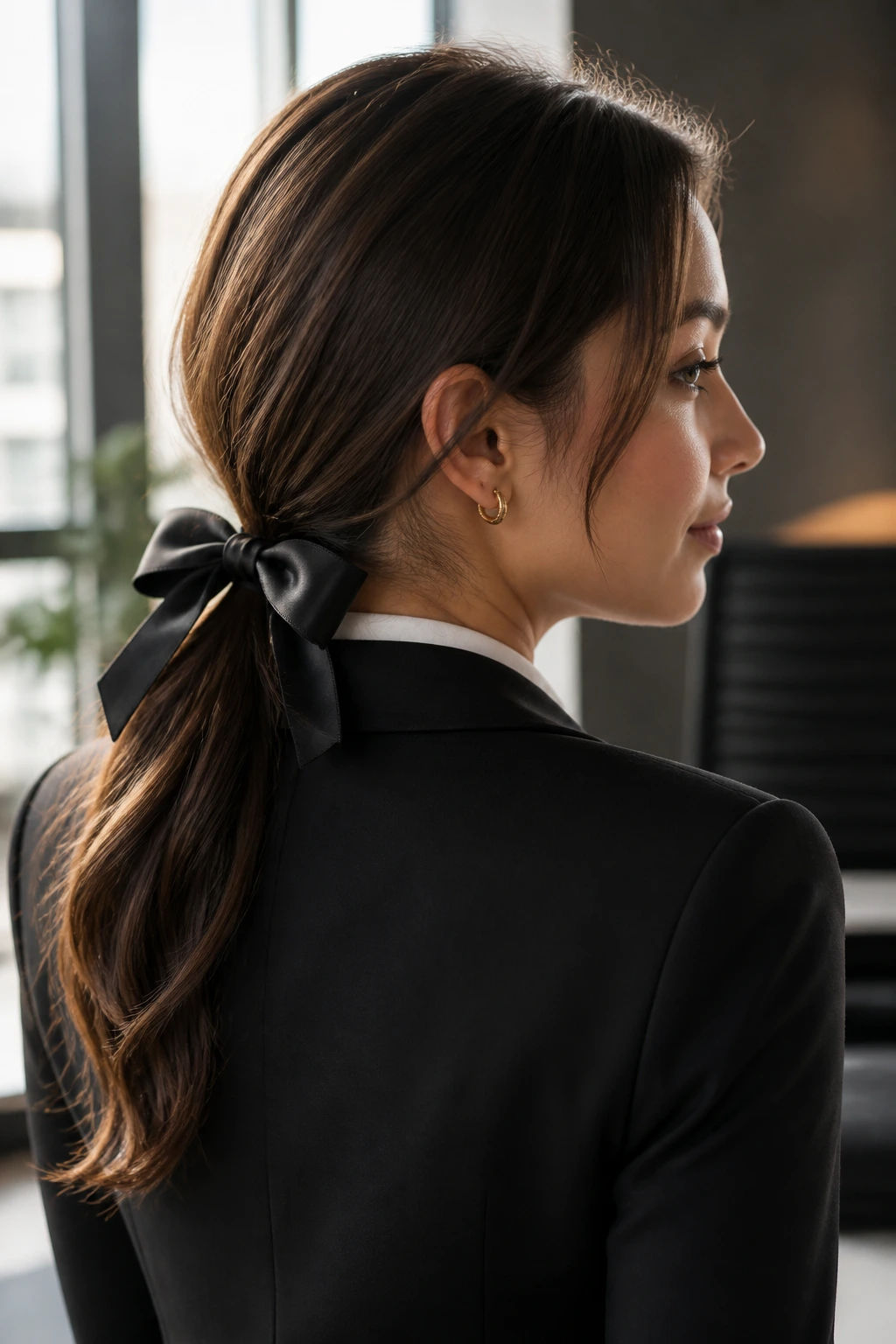
A bow tied at the base can be sweet or sharp depending on the fabric. Satin looks more dressed up. Grosgrain looks a little more structured. Cotton reads casual.
How to Style It
Keep the ponytail low and smooth so the bow is the focal point. If the hair is thick, use a narrow ribbon so the knot doesn’t swallow the base.
A bow is easiest when the rest of the style is plain. Do not pile on other details. One accent is enough.
Good for: lighter office dress codes, presentation days, and anyone who likes a softer finish near the collar.
24. Double-Elastic Volume Ponytail
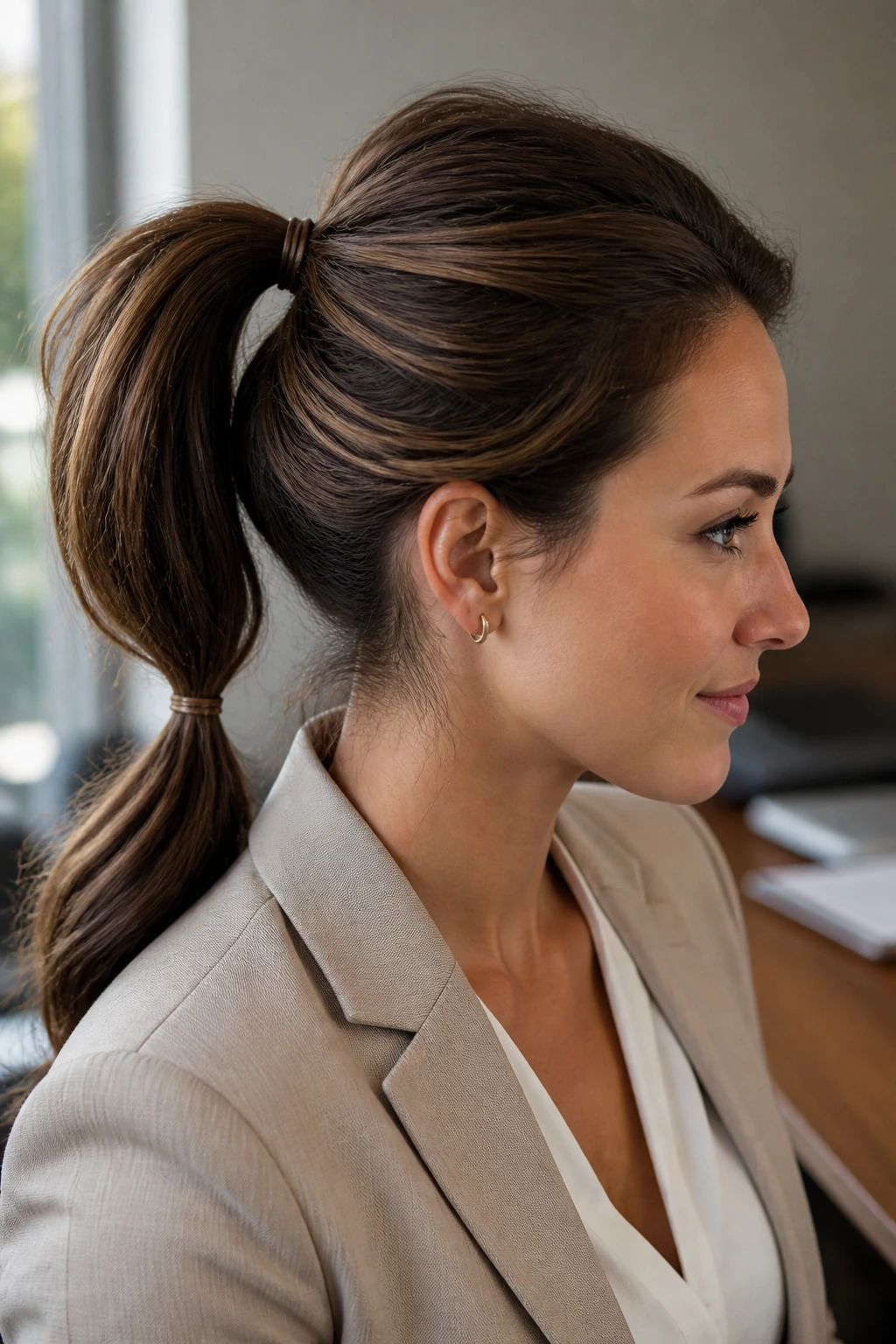
This is the secret weapon for fine or medium hair. One elastic creates a mini pony at the crown, a second elastic gathers the lower section underneath, and the result looks fuller from the side.
Why It Works
The upper section supports the lower one, so the ponytail sits higher and heavier without teasing. That extra structure helps the style survive a long workday.
- Best for: hair that collapses in a single ponytail.
- Tools: 2 elastics, brush, optional wrapping strand.
- Watch out for: placing the upper pony too high; it can look lumpy.
This is one of those styles that sounds fussy and turns out to be a time saver.
25. Claw-Clip Accent Ponytail
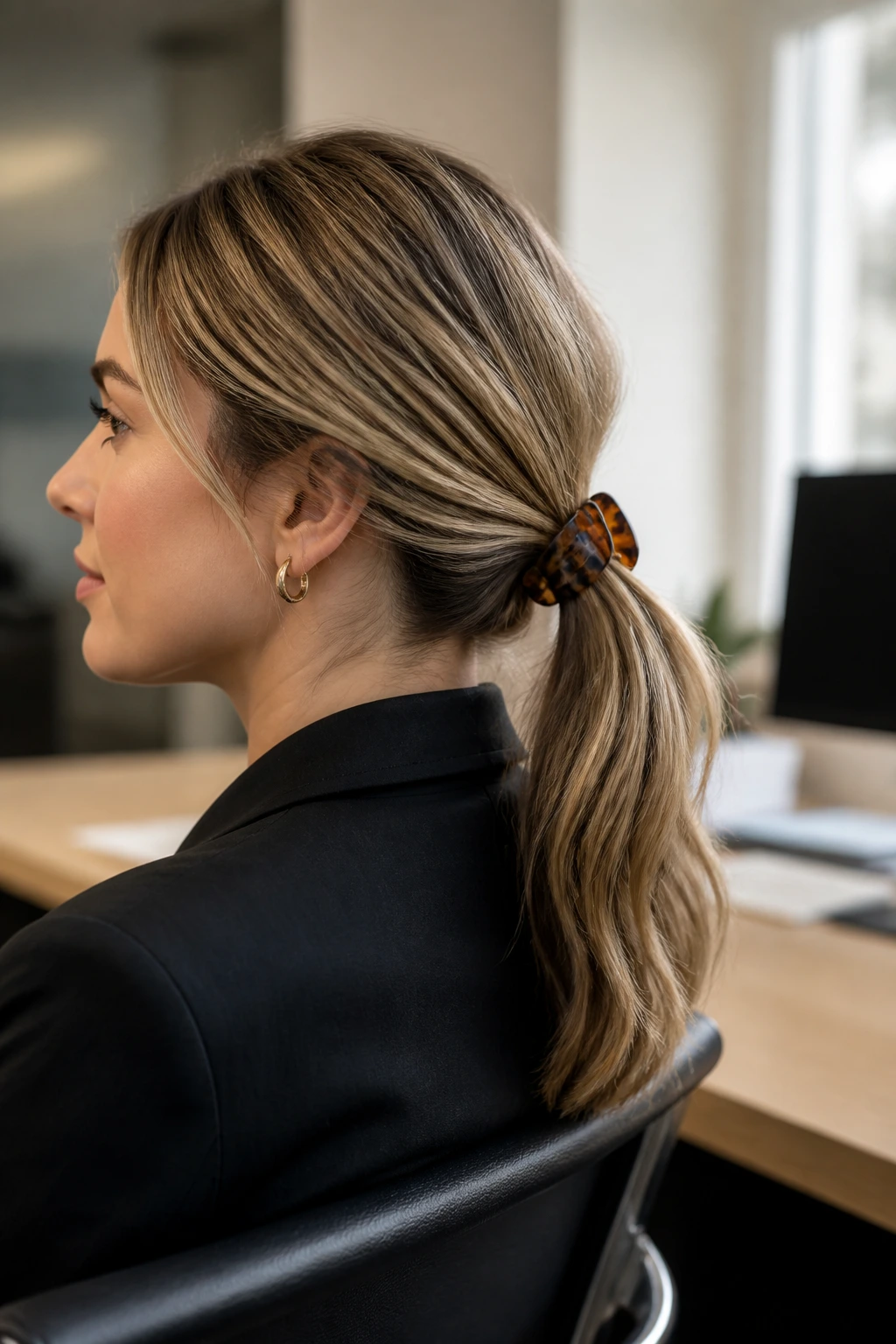
A small claw clip at the base or just above the elastic changes the tone fast. It turns a plain ponytail into something a little more editorial without asking for extra heat.
Scenario
You already made the ponytail. It looks fine. But it needs one more detail so it doesn’t disappear into the room. A slim clip fixes that.
Use a neutral clip if the office is conservative; use tortoiseshell or matte black for a cleaner finish. Keep the clip small enough that it supports the style instead of sitting on top of it.
Best with: low or mid ponytails and medium-thick hair.
26. Mini-Bubble Ponytail
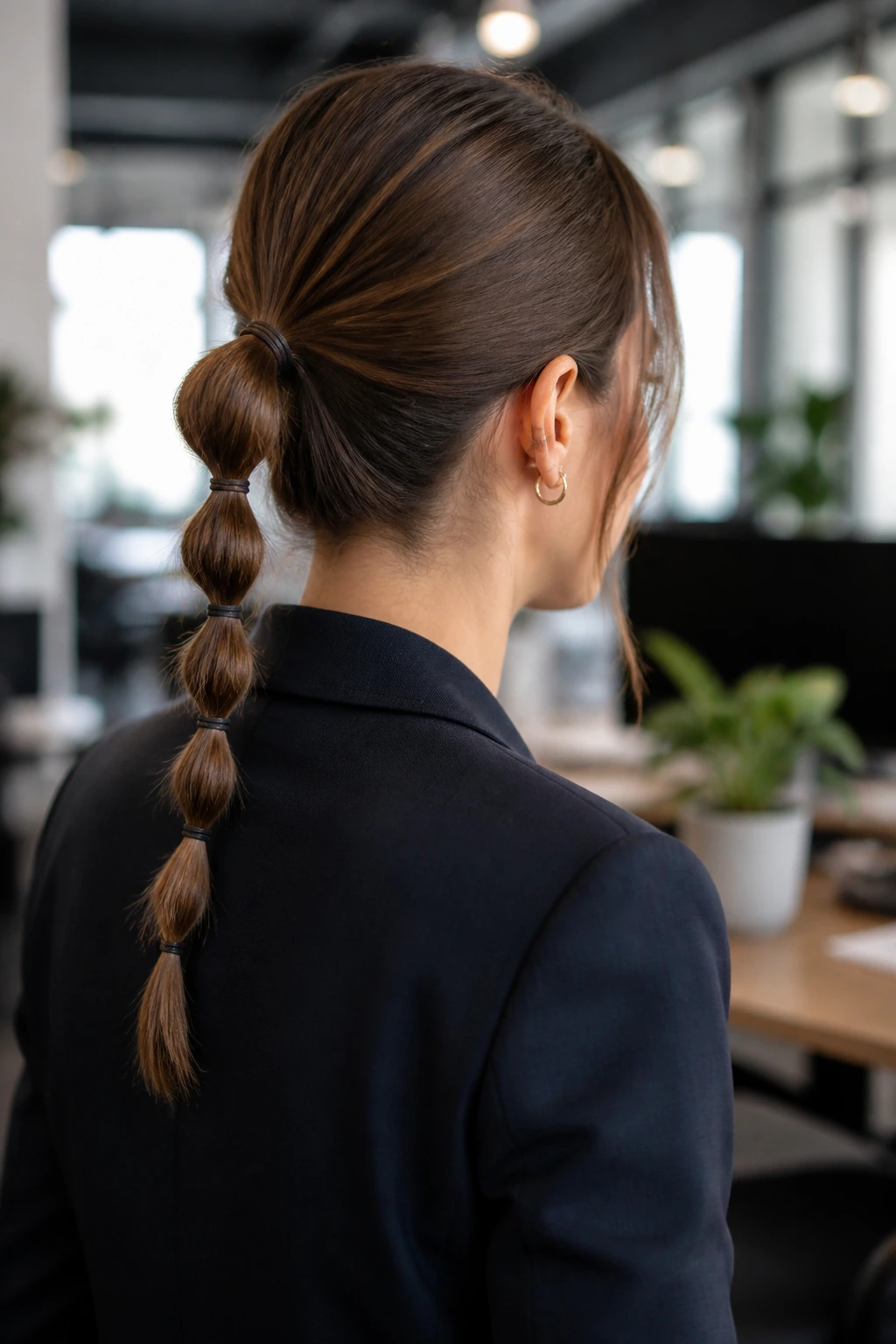
Think of this as the smaller, tidier cousin of the bubble ponytail. The sections are shorter, the bubbles are tighter, and the whole shape is easier to wear at a desk.
Why It Works
Smaller bubbles feel less playful and more precise. They also keep the tail from tangling as quickly, which matters if you wear headphones a lot.
How to style it: secure the ponytail, place tiny elastics every 1.5 to 2 inches, then gently puff each section. Keep the crown sleek so the shape looks intentional.
It’s a useful option for long hair that needs some structure but not a braid.
27. Side-Swept Ponytail
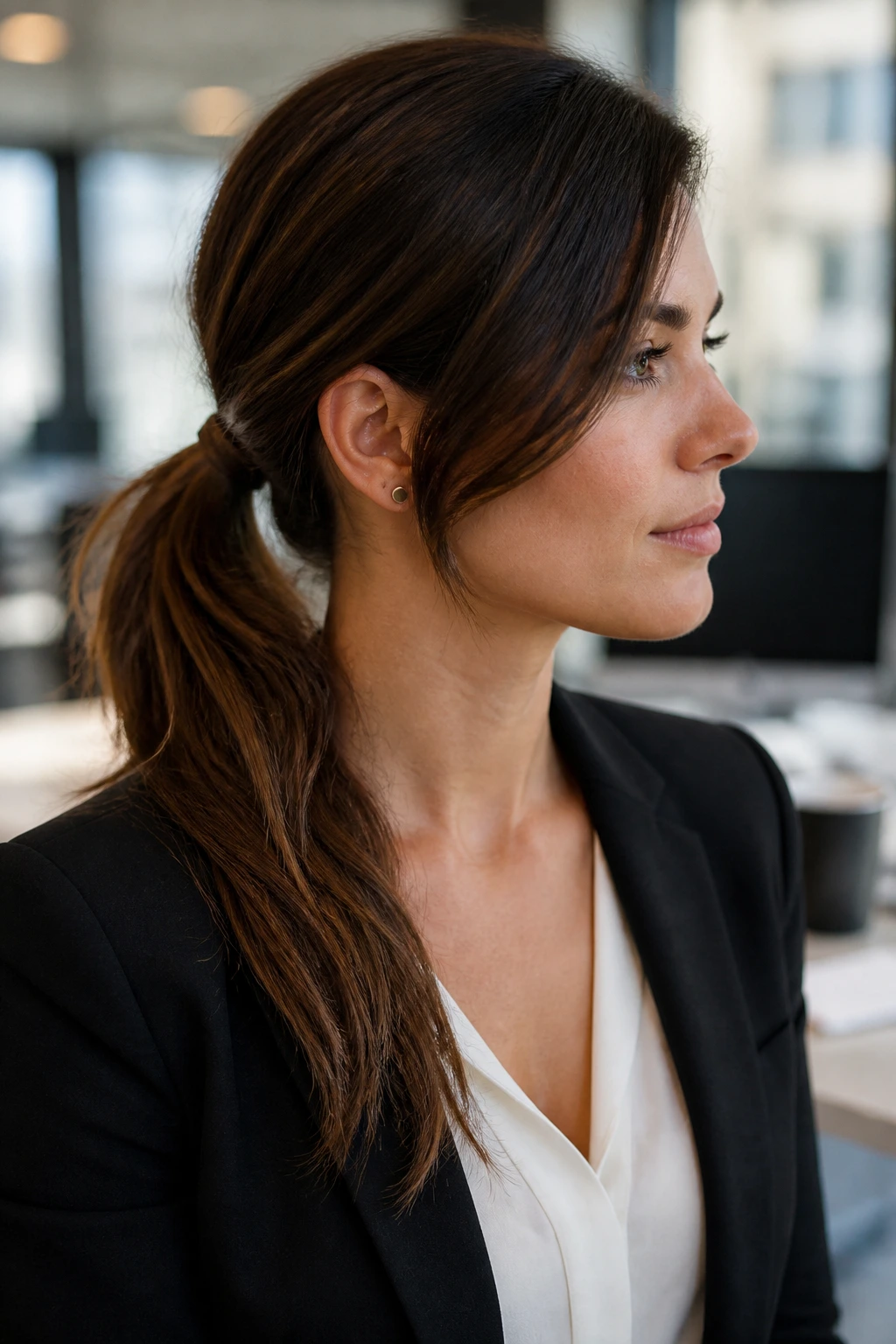
A side-swept ponytail moves the whole shape off center, which softens the profile and gives the style some motion. It feels a little less formal than a straight-back pony, but still tidy.
Why It Works
The diagonal line across the head breaks up a heavy silhouette. If your hair naturally parts off-center, this style cooperates instead of fighting it.
Best for: longer hair, soft waves, and days when you want a slightly relaxed edge.
Tip: keep the base just behind the ear rather than at the jawline; too low starts to feel slumped.
A side-swept pony can look especially good with a boat neck or open collar.
28. Flipped-End Ponytail
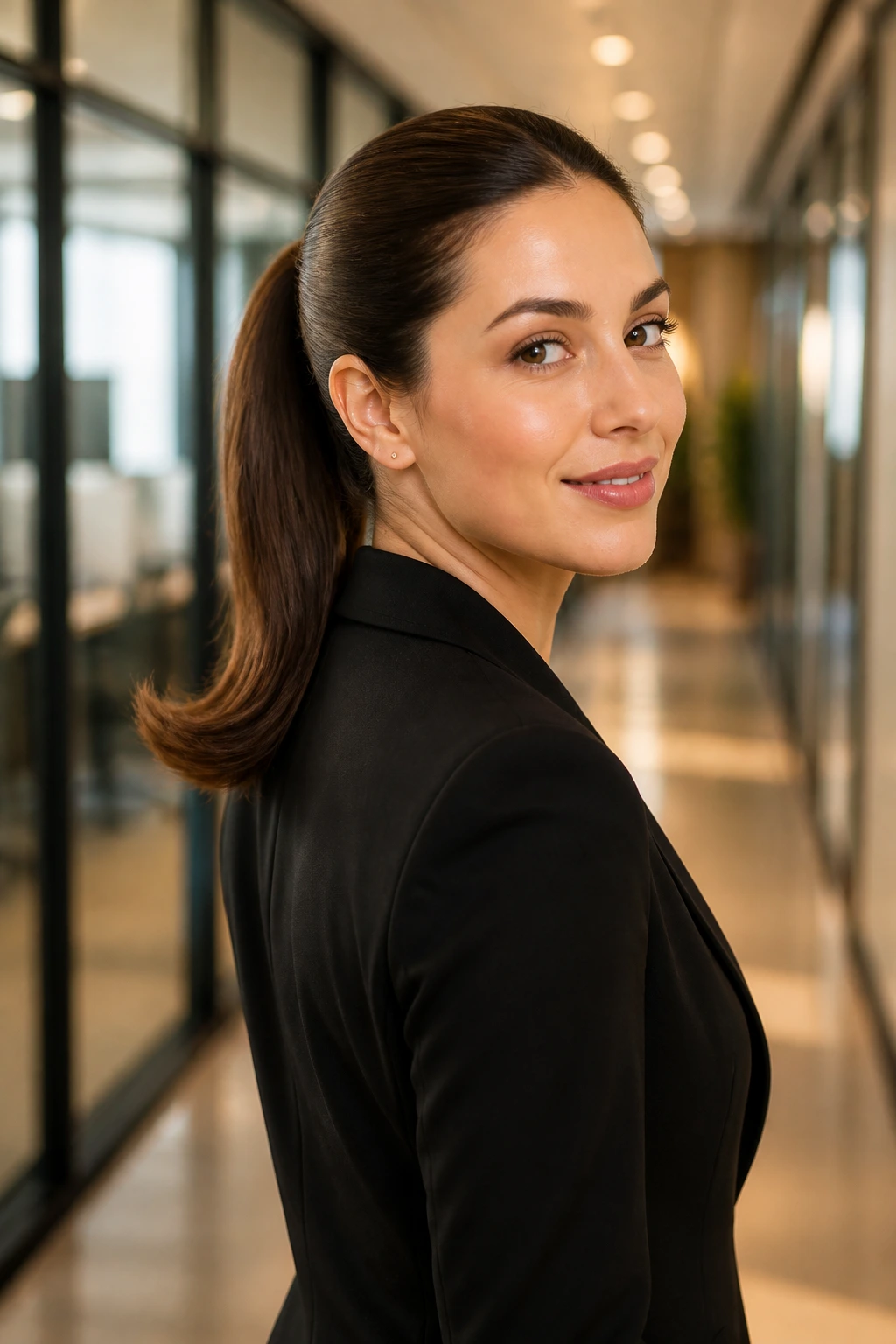
The ends turn outward here, which gives a subtle retro nod without going full costume. It’s polished in a way that feels a little unexpected in an office setting.
How It Works
The flicked ends create shape at the bottom of the ponytail, so the style does not hang like one straight line. Use a round brush or a flat iron to bend the last few inches outward.
- Good for: shoulder-length to long hair.
- Useful when: you want movement without curls.
- Avoid: overflipping; one clean curve is enough.
This is a nice change on days when your clothes are simple and the hair can carry a little personality.
29. Soft Bouffant Ponytail
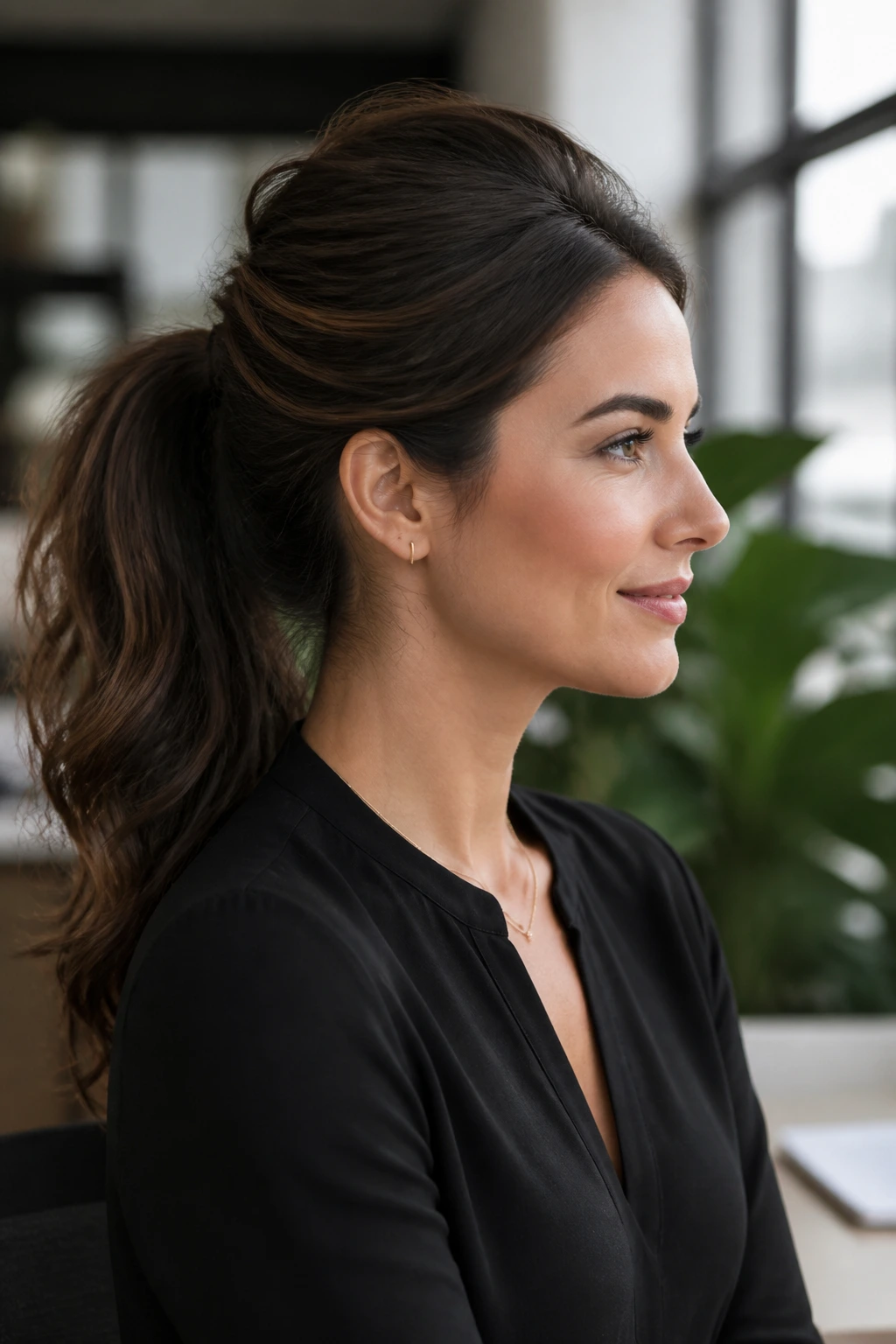
The bouffant at the crown gives height, then the ponytail keeps the rest of the shape grounded. It’s a little more styled, but still office-appropriate if the lift stays soft.
Bold Claim
A small bouffant is often better than trying to force volume through the whole head. One controlled lift at the crown can make the face look more open without making the hair look stiff.
Backcomb only the crown section, smooth the surface lightly, and anchor the pony lower than the bump. Too much teasing and the style turns brittle.
Best for: fine hair, round faces, and days when you want a touch more presence.
30. Low Ponytail with Braided Tail
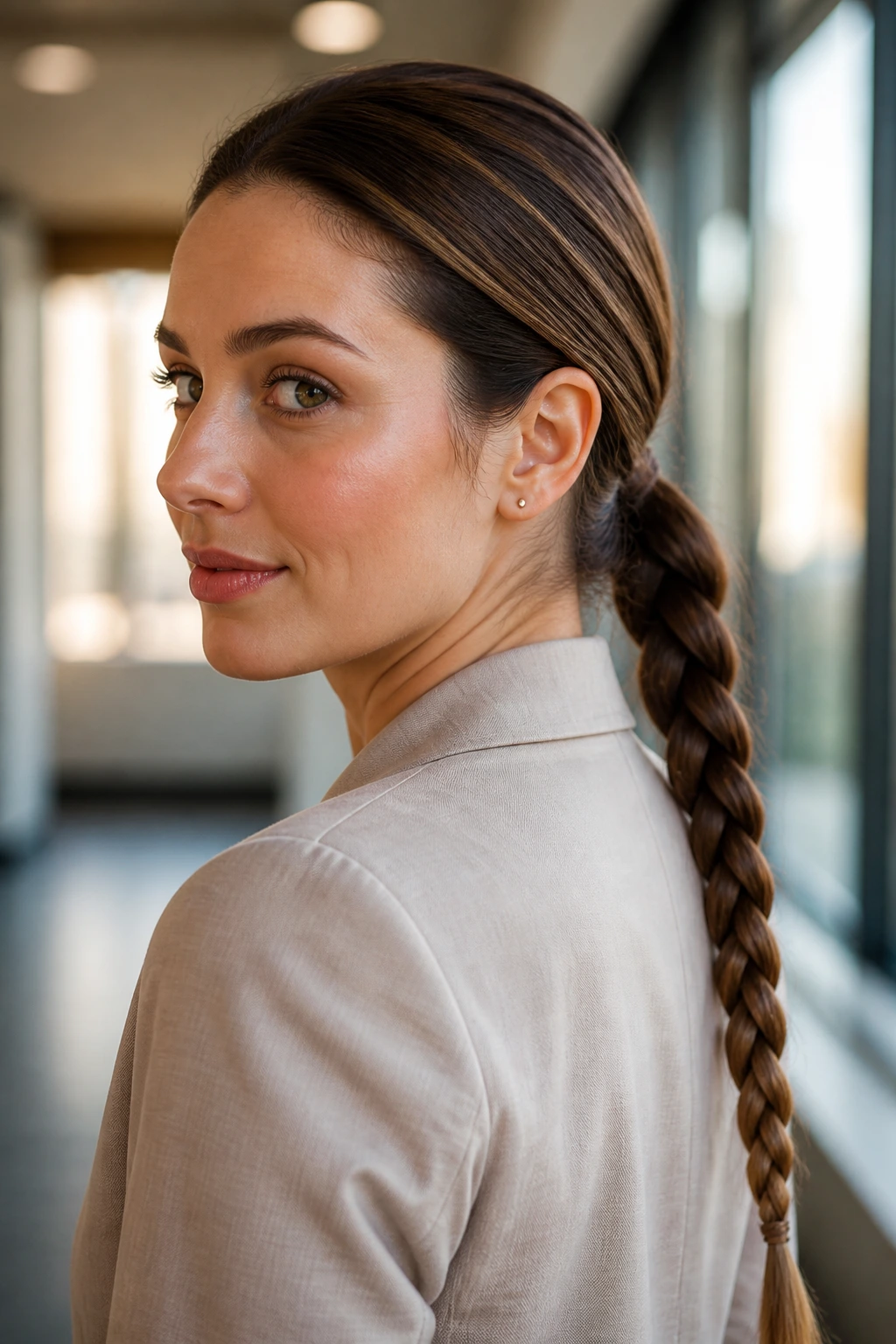
Instead of braiding the base, braid the tail itself. That keeps the top simple and adds detail where the eye lands after the first glance.
Why It Works
The braid gives the ends a finished shape, which is useful if your hair frays at the tips or tangles easily. It also holds up well under scarves and coat collars.
Tools: elastic, regular three-strand braid technique, small clear band at the end.
Tip: start the braid a few inches below the elastic so the base stays smooth.
This is one of the easiest ways to make a plain ponytail feel more complete.
31. Knotted Ponytail
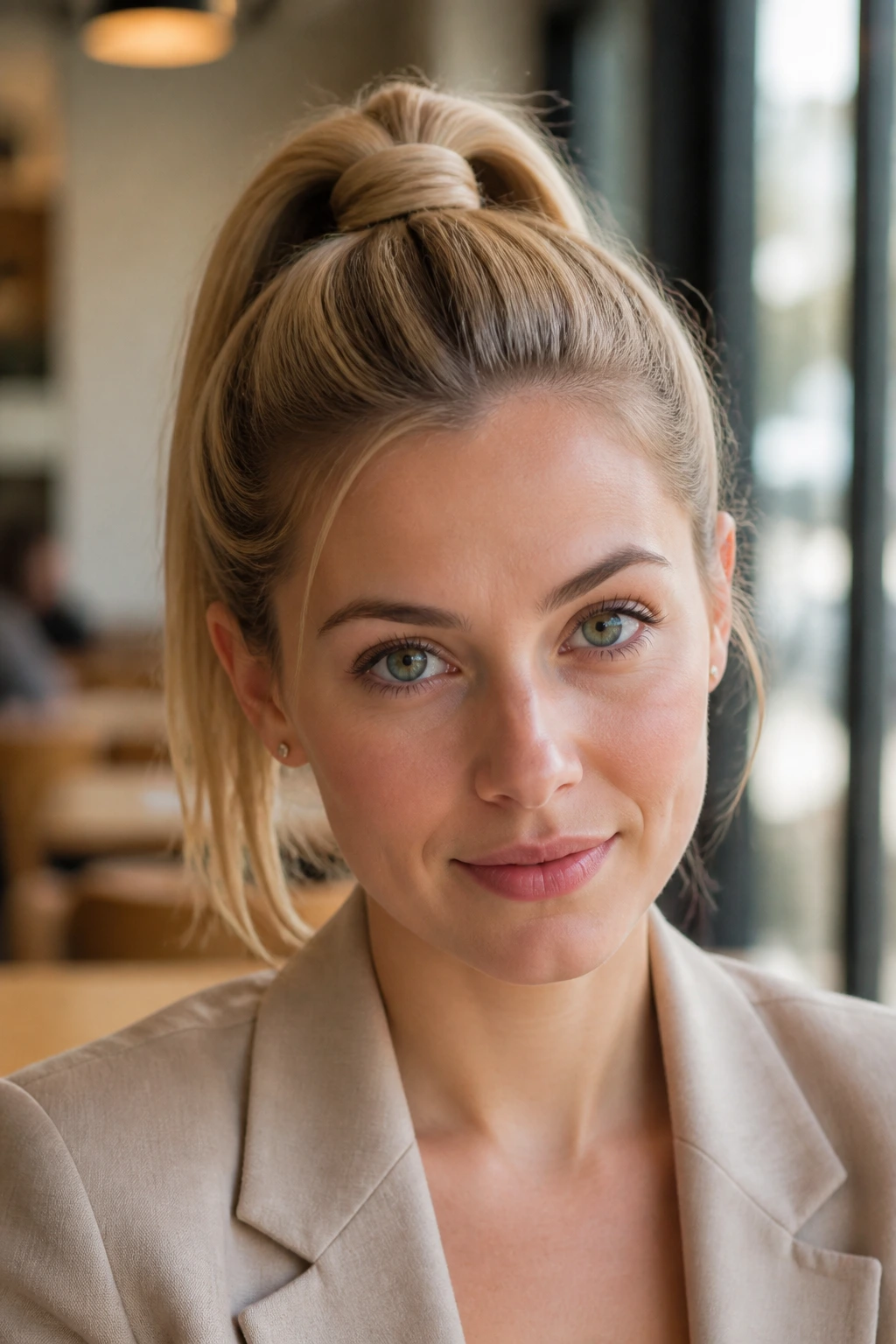
A knotted ponytail uses two sections tied over one another before they join at the base. It looks like a neat little detail from the front and side, and it does not take long.
Why It Works
The knot creates a built-in focal point near the nape or crown, depending on where you place it. That means you don’t need a clip or ribbon if you want the style to look finished.
- Best for: medium to long hair.
- Watch out for: knotting too tightly; it can pull at the hairline.
- Good with: straight or lightly waved hair.
The rest of the tail can stay smooth or get a soft bend. Both work.
32. Low Ponytail with Curtain Bangs

Curtain bangs soften a low ponytail fast. The bangs give movement around the face, while the rest of the hair stays controlled at the back.
What Makes It Work
This style is good when you want the face-framing pieces to do some of the visual work. The ponytail itself can stay simple because the bangs already break up the shape.
Tip: keep the bangs airy, not greasy. A little dry shampoo at the roots is better than heavy cream, which makes them stick together.
If you have grown-out layers, this is a forgiving style. The bangs and longer pieces can mingle a little without looking sloppy.
33. Satin-Ribbon Ponytail
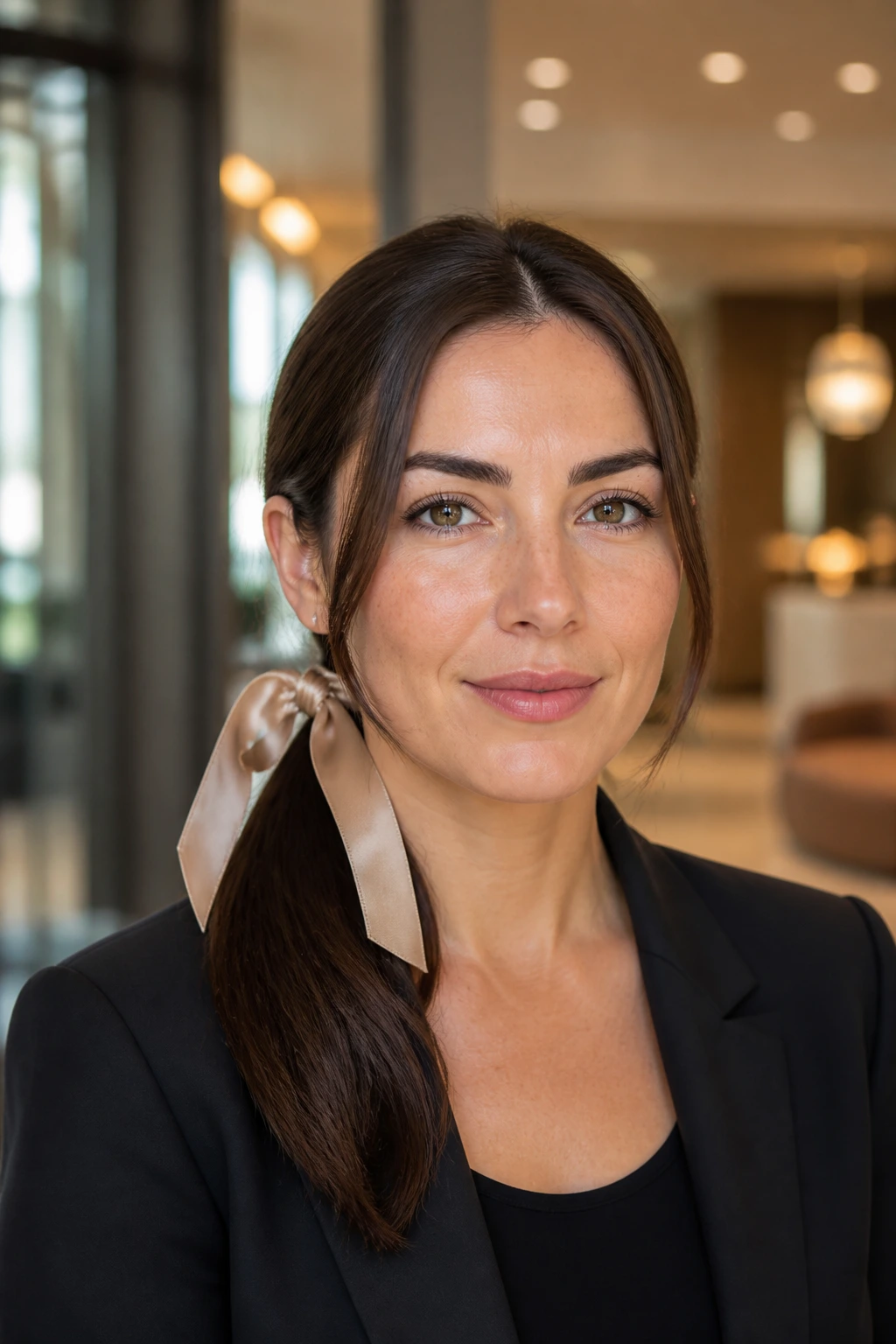
A satin ribbon gives the ponytail a smoother, dressier feel than a standard elastic. It’s a clean way to make a low pony look finished without adding bulk.
Brief Scenario
Your outfit is plain, the hair is clean, and you want one detail that says “done” without fuss. Tie in a ribbon and stop there.
Choose a narrow ribbon for fine hair and a wider one for thicker hair. If the ribbon slips, secure the elastic first and then tie the ribbon around it, instead of relying on the ribbon to do the holding.
Best for: low ponytails, soft waves, and lighter office dress codes.
34. Wavy Mid-Ponytail with Tucked Ends
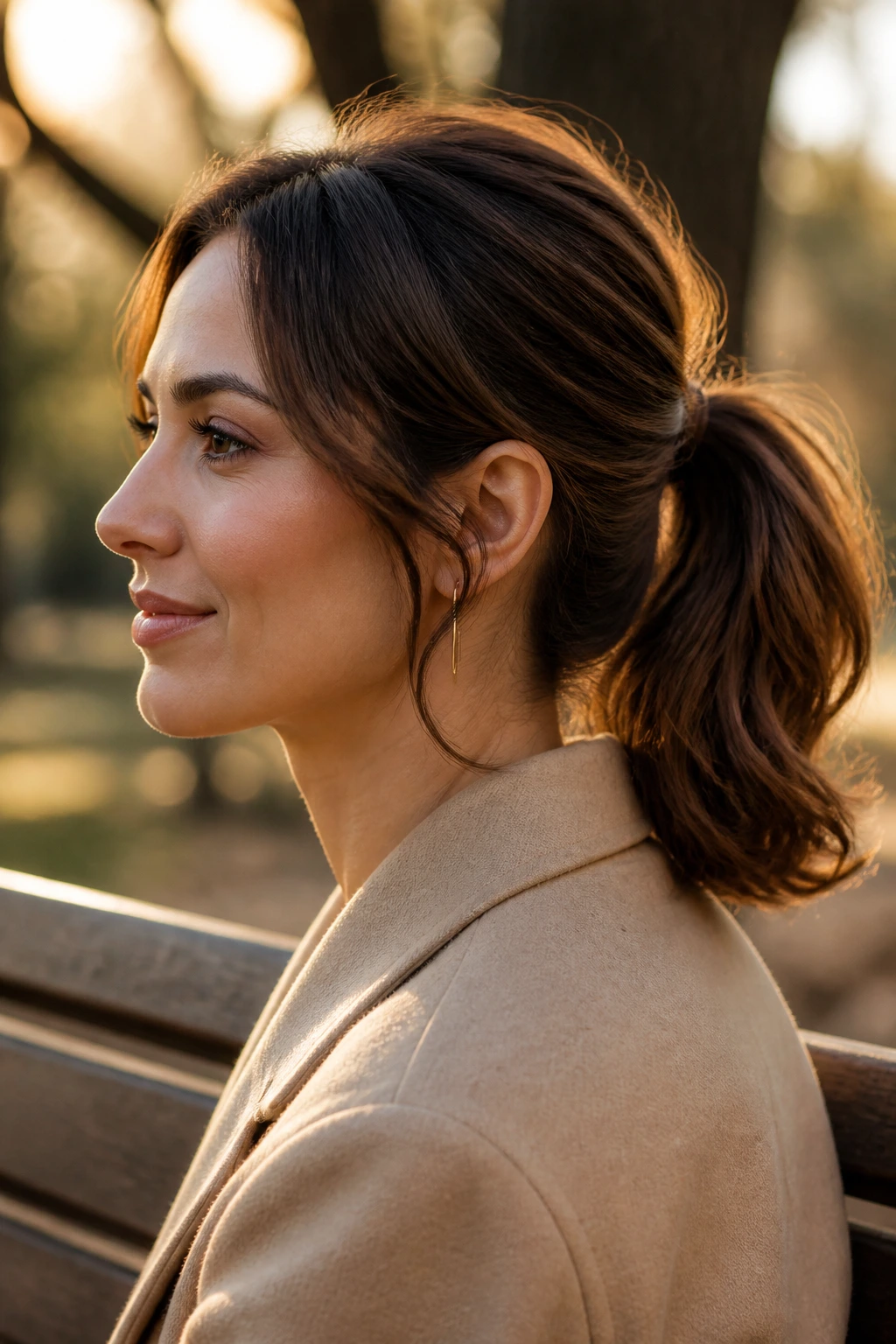
This one sits in the middle height-wise, with enough wave to keep the shape from going stiff and enough tuck at the ends to keep it tidy. It’s a good compromise when high feels too bouncy and low feels too formal.
Why It Works
The waves add body through the tail, while the tucked ends keep the outline clean. That balance matters if your hair is long enough to tangle but not long enough to swing neatly on its own.
How to style it: make a mid pony, wave the tail lightly, then tuck the ends inward and pin them if needed. Keep the crown smooth. That’s the part people notice first.
35. Low Ponytail with Soft Tendrils
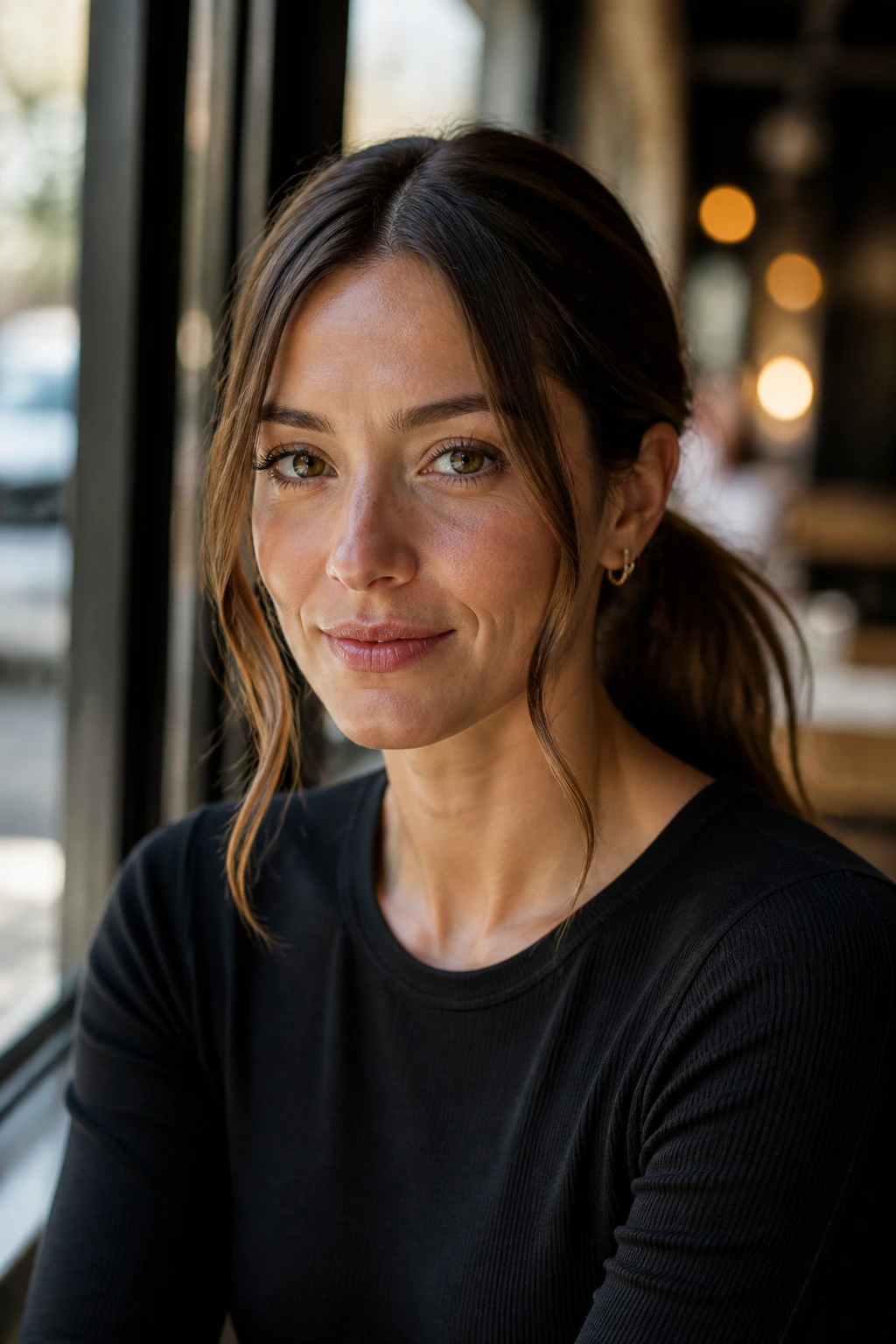
A low pony with a couple of soft tendrils around the face is one of the easiest ways to make a simple style look more finished. It’s gentle, flattering, and not fussy if you keep the tendrils intentional.
Why It Works
The loose pieces soften the outline of the face, while the low anchor keeps the rest of the hair under control. This is especially useful if a fully pulled-back look feels too severe for your features or your outfit.
- Best for: medium to long hair, wavy texture, and days when you want a softer frame.
- Tip: curl the tendrils away from the face, then let them cool before touching them.
- Avoid: leaving too many pieces out; two is elegant, six is chaos.
What Makes a Ponytail Feel Office-Ready
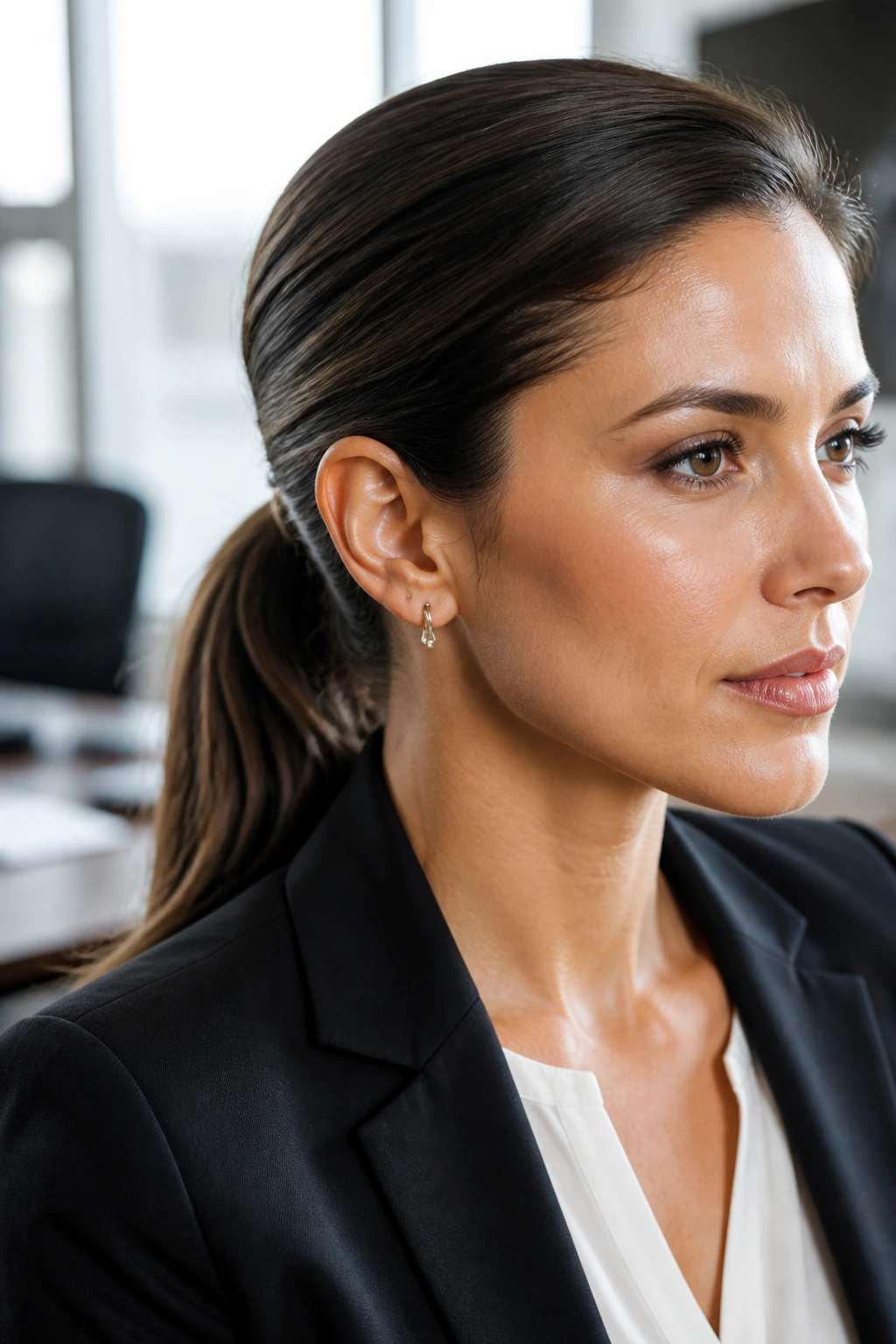
A work ponytail is less about height and more about control. The crown should look smoothed, not shellacked. The elastic should be hidden or at least quiet. And the base needs to sit where it won’t fight a collar, a scarf, or the back of a chair.
The biggest shift happens in the first inch of hair near the scalp. If that section is brushed flat and held in place, almost any ponytail can look more intentional. If it’s puffy, crooked, or broken into little dents, the rest of the style has to work twice as hard to recover.
Texture matters, too. Straight hair can look too plain unless you add a bend or a wrap. Curly hair can look too loose unless you define the roots or give the front pieces a shape. Fine hair benefits from small tricks like double elastics or bubble sections. Thick hair usually needs stronger anchors and a little less product. Those are small adjustments, but they decide whether the style makes it to lunch.
Essential Tools for These Styles
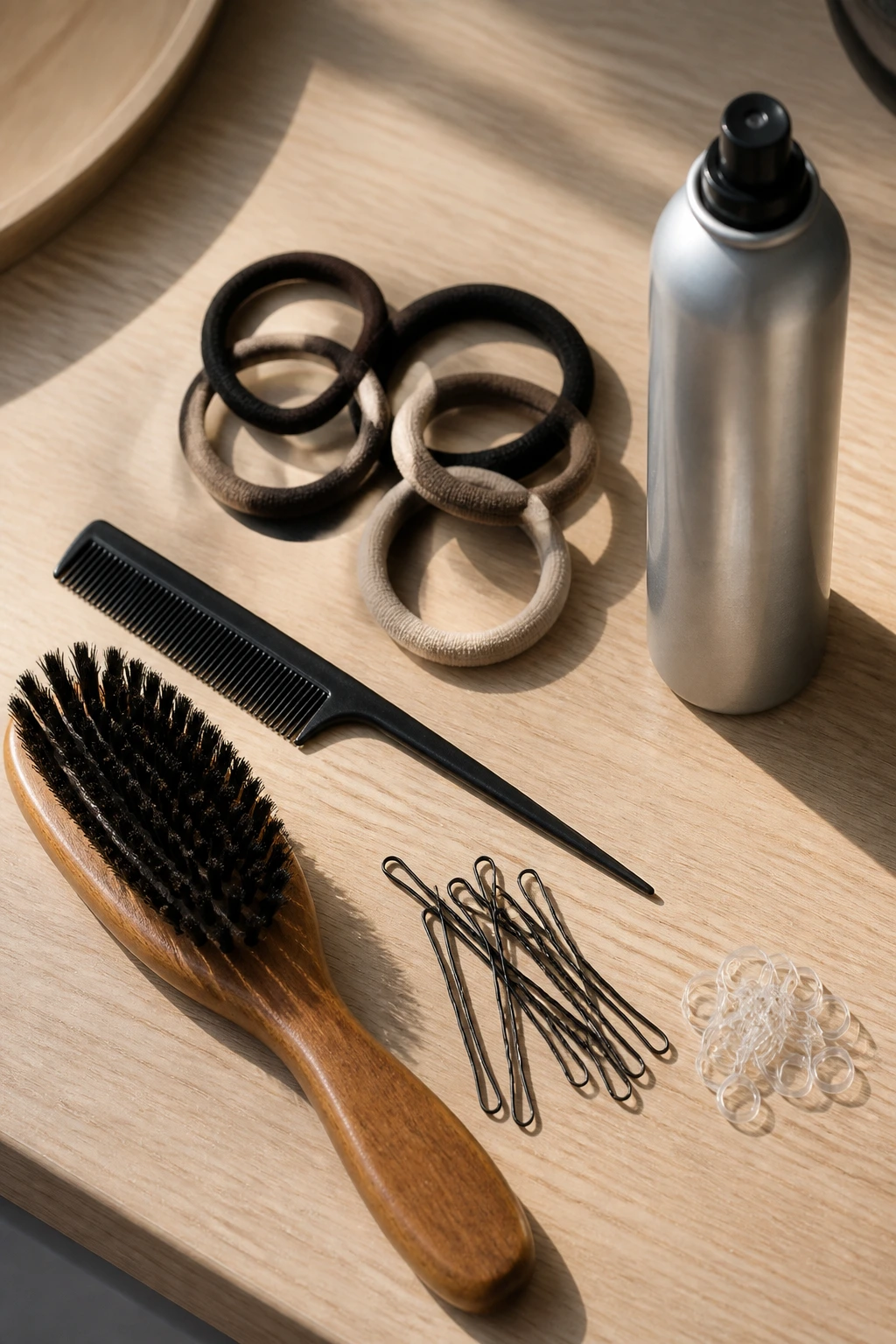
- Snag-free elastics: Soft, coated ties are gentler on the hair and make the base look cleaner.
- Tail comb: The pointed end is useful for making clean parts and lifting small sections.
- Boar-bristle or smoothing brush: This helps press the crown flat without making it look scraped.
- Bobby pins: Keep a few on hand for wrapped bases, twists, and hidden tucks.
- Mini clear elastics: These are useful for bubbles, braids, and accent sections.
- Light hairspray: A flexible spray keeps flyaways in place without turning the hair stiff.
- Dry shampoo or texture spray: Fine hair usually needs a little grip before it’s gathered.
- Flat iron or 1-inch curling iron: Only if you want straight ends, soft bends, or face-framing pieces.
- Ribbon, scarf, or slim barrette: Optional, but handy when the outfit needs one more finished detail.
Smart Shopping for Bands, Brushes, and Styling Products
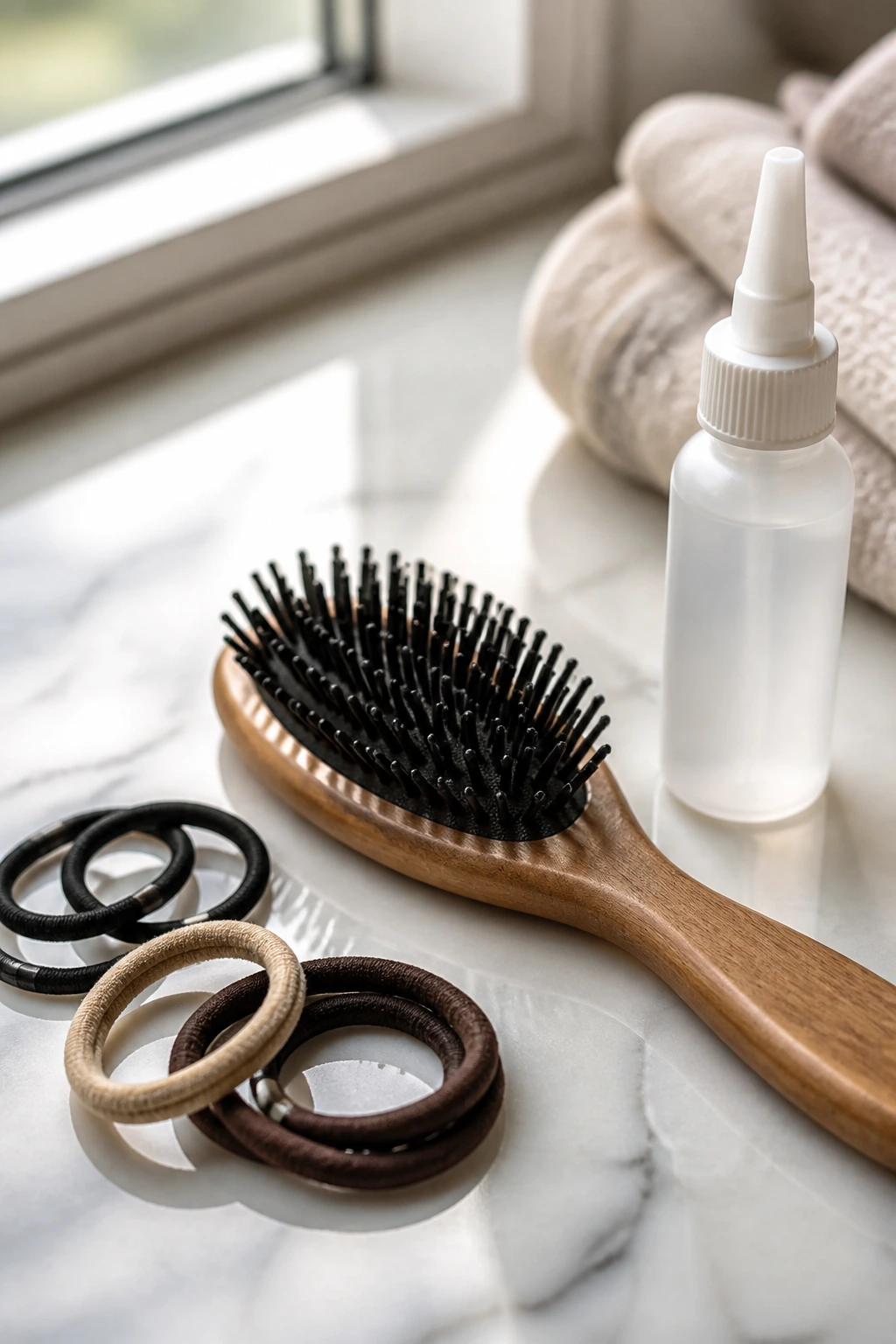
A good work ponytail starts with accessories that disappear into the hair instead of fighting it. Grab elastics that match your hair color or sit close to it; black works for dark hair, brown for medium shades, and clear bands are helpful for braids and bubbles. If you’ve got fine hair, skip the rough rubber ties. They tug, and they leave dents that show up on camera.
Brushes matter more than people admit. A dense smoothing brush is useful for sleek styles, while a tail comb helps build neat parts and sectioned looks. If your hair frizzes easily, a small anti-frizz cream or serum is worth keeping nearby, but use it sparingly. Too much and the ponytail looks wet instead of polished.
For finishers, think light. Flexible-hold hairspray, texture spray, and a dry shampoo that doesn’t leave a chalky film are the best workhorse products here. If your hair is thick or slippery, a matte texture spray at the roots gives the elastic something to hold onto. If your hair is curly, a curl cream or gel at the front can keep the crown from puffing up by midmorning.
How to Wear These Styles With Different Dress Codes

Presentation: Keep the crown smooth and the base neat when the office leans formal. Wrapped elastics, low ponies, and braided details work best with jackets, collared shirts, and anything that sits close to the neck.
Outfit Pairings: Sleek low ponytails look strongest with button-downs and blazers. Wavy or side-swept versions soften knit tops, simple dresses, and wide-neck blouses. High ponytails pair well with sharper silhouettes and statement earrings, since they open up the face.
Hair Length: Shoulder-length hair usually behaves best in mid-height or low styles with tucked ends. Longer hair can carry braids, bubbles, and ribbon accents without losing shape. Fine hair tends to need lift or sectioning; thick hair usually needs tighter anchors and fewer accessories.
Finish: A light mist of hairspray and one final check at the crown is usually enough. If the style looks good from the front but messy from the back, the elastic placement is off — move it, don’t just spray it harder.
Additional Tips and Finishers
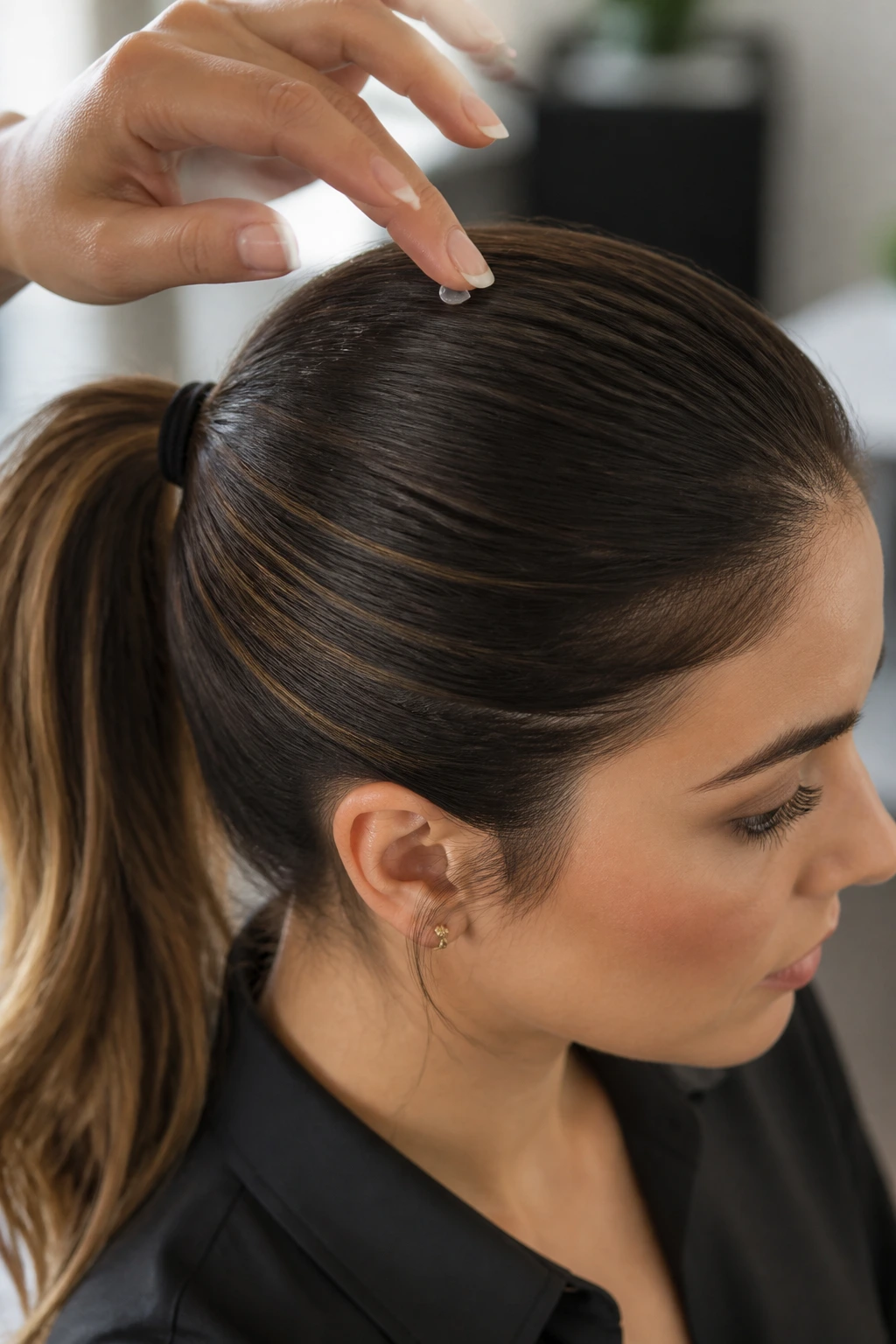
Shine Control: A pea-sized amount of serum rubbed between the palms and swept only over the top layer keeps the ponytail from looking fuzzy. Stay away from the roots unless your hair is very dry.
Texture Balance: If the top is sleek, the tail can be wavy, braided, or bubble-shaped. That contrast keeps the style from looking flat under office lights.
Accessory Upgrade: Swap a plain elastic for a ribbon, slim barrette, or matte scrunchie when the outfit feels too plain. One accent is enough. Two usually starts to look busy.
Make-It-Yours: If you wear glasses, keep the sides tighter so the frames don’t compete with stray hairs. If you prefer earrings, pick a lower pony so the neckline stays open. If your hair is curly, leave more texture in the tail and focus on a clean front instead of forcing everything smooth.
Make-Ahead, Overnight Care, and Refreshing
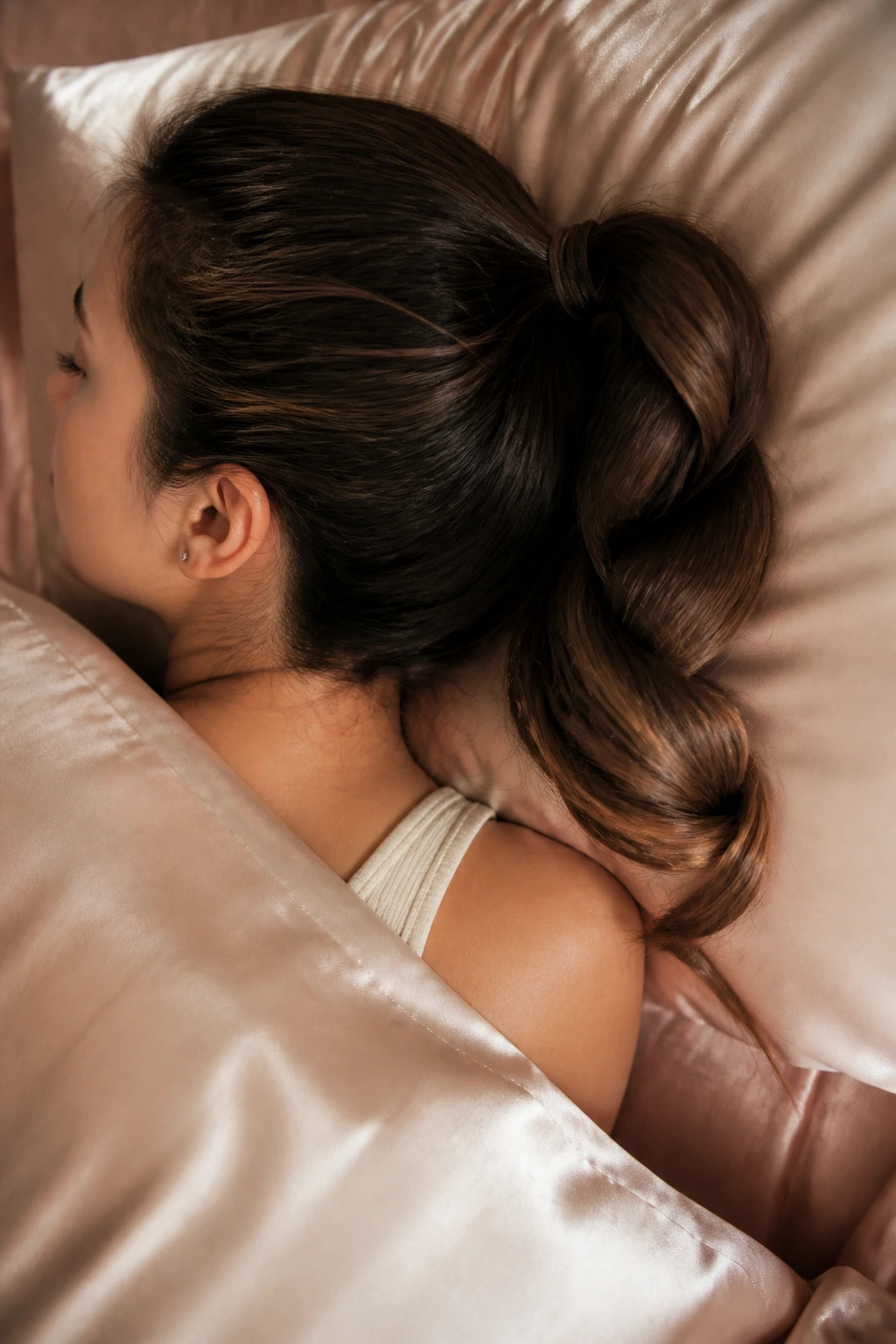
Some ponytail styles hold for a full workday with almost no help. Sleek low ponies, wrapped bases, braids, and bubble styles usually stay tidy for 8 to 12 hours if the elastic is secure and the crown is smoothed well. Curly styles and waved styles can last into the next day, but they need a little revival in the morning — a quick scrunch, a touch of water, or a 1-inch iron on the pieces that have gone limp.
Overnight, the goal is to avoid dents and breakage. If you know you’ll wear the style again, loosen the elastic before bed and secure the length in a soft coil or silk scrunchie. A silk scarf or pillowcase helps keep the crown smoother, especially if you’ve used dry shampoo or texture spray. Ribbons and scarves should come off before sleep unless they’re tied loosely enough to stay comfortable.
For a next-day refresh, the fastest move is to take the ponytail down, brush the roots lightly, and rebuild the shape instead of trying to patch the old one. That sounds slower. It isn’t, once you’ve fought with a collapsed base. A fresh elastic and a clean part usually beat five rounds of finger-combing.
Common Mistakes to Avoid
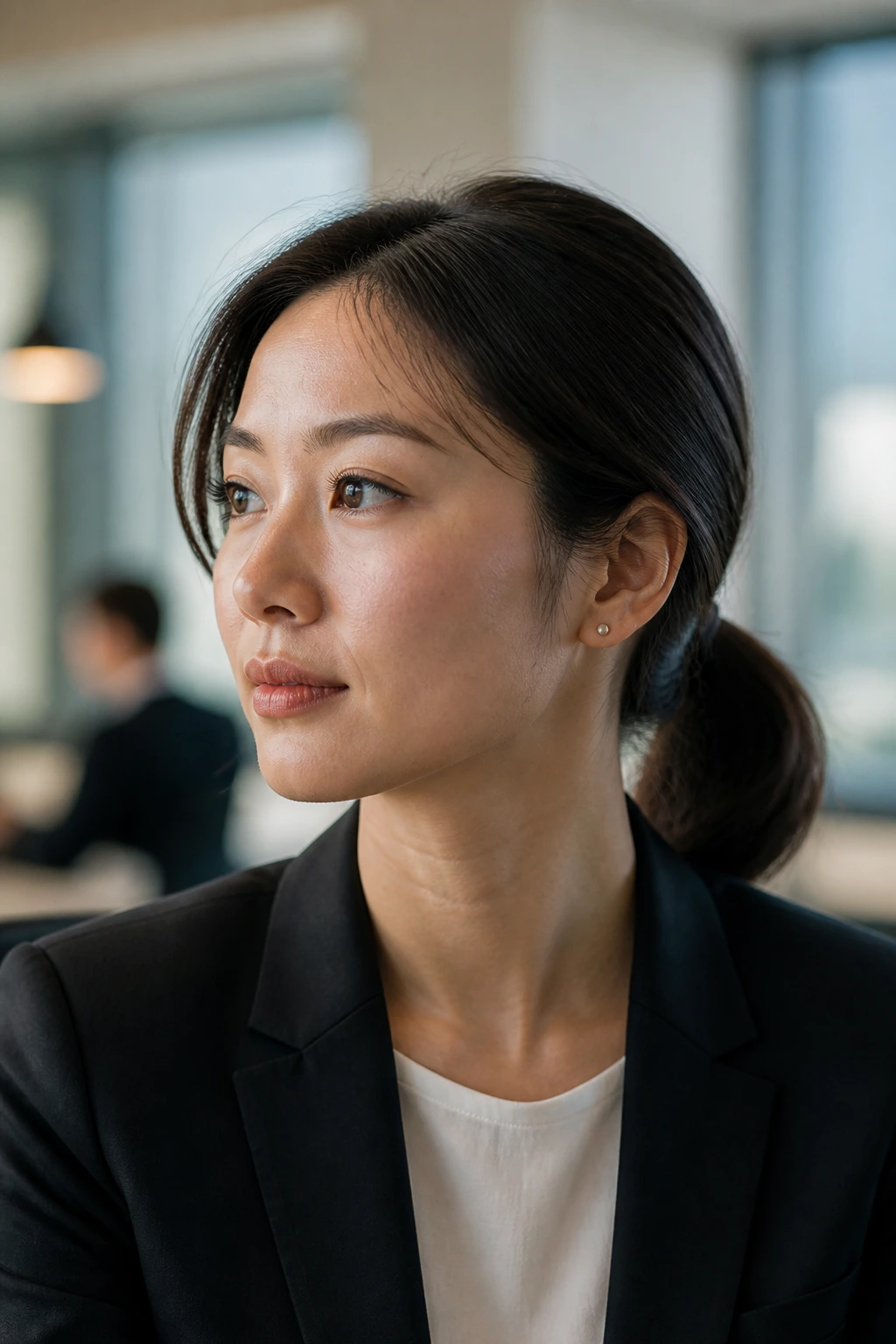
- Pulling the ponytail too tight: If your scalp feels sore by lunchtime or the front goes shiny and flat, the elastic is too snug. Loosen it one notch and move the base a fraction lower.
- Skipping the crown smooth-down: A ponytail can look unfinished if the top is puffed or dented. Brush the roots in sections before you secure anything.
- Using too much product: Heavy serum or cream makes fine hair look oily and collapses volume fast. Start with less than you think you need.
- Choosing the wrong height for the outfit: A high pony can fight with a tall collar; a very low pony can disappear under a chunky sweater. Match the height to the neckline.
- Letting the elastic show when it should not: If the style depends on polish, wrap it or hide it. A visible old elastic can drag the whole look down.
- Ignoring hair type: Thick hair needs stronger pins and sturdier ties. Fine hair needs grip. Curly hair needs shape at the front, not a war against texture.
Variations and Adaptations to Try
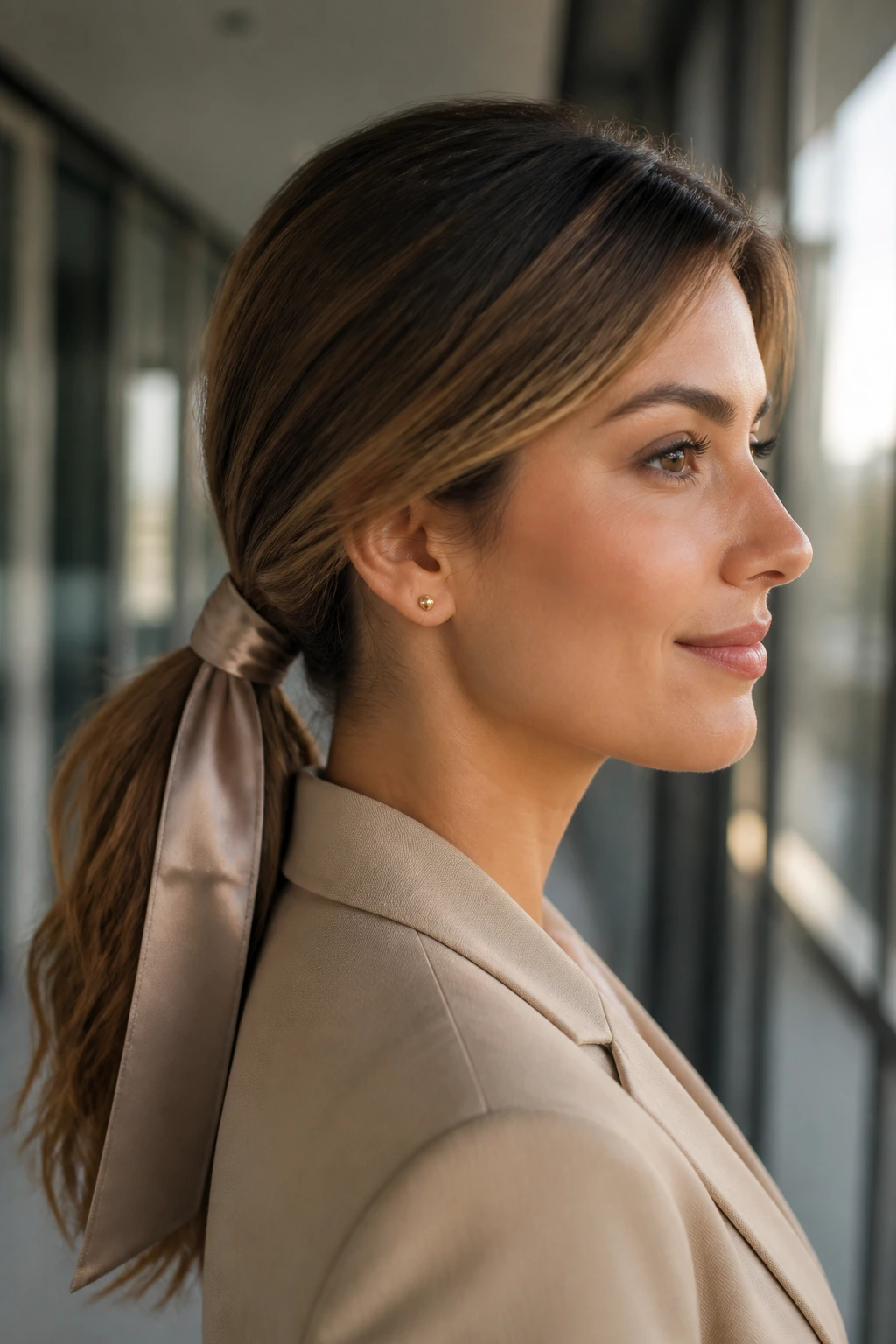
The Commute-Proof Version: Start with dry shampoo at the roots and a low wrapped base. It holds better when you’re dealing with humidity, hats, or a long walk outside.
The Fine-Hair Fix: Use a double-elastic setup or a bubble ponytail so the style reads fuller. A tiny amount of texture spray before gathering helps the hair grip the band.
The Curly-Texture Version: Keep the curls visible and focus on a smooth hairline. A defined front and a satin scrunchie usually beat trying to flatten everything.
The Client-Meeting Version: Choose a low or mid pony, hide the elastic, and keep the part clean. Add one polished accessory, like a slim barrette or ribbon, and stop there.
The Five-Minute Version: Use a low ponytail, a wrapped strand, and a quick bend at the ends. It looks finished without heat tools or extra sections.
The Low-Tension Version: For days when your scalp is tired, keep the ponytail lower and loosen the crown slightly. The shape still looks neat, but it won’t feel like a tug-of-war.
Frequently Asked Questions
How do I keep a work ponytail from falling flat by midday?
Use a little texture spray or dry shampoo at the roots before you gather the hair, then secure the elastic a touch higher than your usual low pony. A wrapped base or a double-elastic setup also helps the style hold its shape longer.
What ponytail style is best for fine hair at work?
Double-elastic volume ponytails, bubble ponytails, and wrapped low ponytails usually work well because they build the look of thickness without relying on teasing. Fine hair often does better with structure than with a lot of loose movement.
Can I wear a ponytail to a formal office?
Yes, if the crown is smooth and the base is hidden or neatly wrapped. A sleek low ponytail, deep side-part ponytail, or French-braid-into-pony style usually reads the most polished.
How do I stop flyaways without making my hair look greasy?
Use a tiny amount of serum on the top layer only, or spray a little hairspray onto a toothbrush or clean spoolie and smooth the hairs down. Heavy product at the roots tends to make the style collapse.
What if my hair is layered and keeps slipping out?
Choose styles that anchor the sides first, like twists, braids, criss-cross sections, or a half-up ponytail. Bobby pins tucked under the elastic can hold the shorter layers in place without changing the look much.
Are ponytails bad for your hair if I wear one often?
They can be if the elastic is too tight or always sits in the same spot. Switch up the height, use snag-free ties, and loosen the style when you can. That goes a long way.
Can curly hair make these styles look too casual?
Not if the front is clean and the shape is intentional. A curly ponytail with defined roots, a satin scrunchie, or a braid at the base can look every bit as polished as a straight one.
What’s the fastest style here when I’m running late?
A wrapped low ponytail or a sleek mid-height ponytail is usually the quickest. Brush, secure, wrap, pin. Done.
The Ponytail You’ll Reach For First
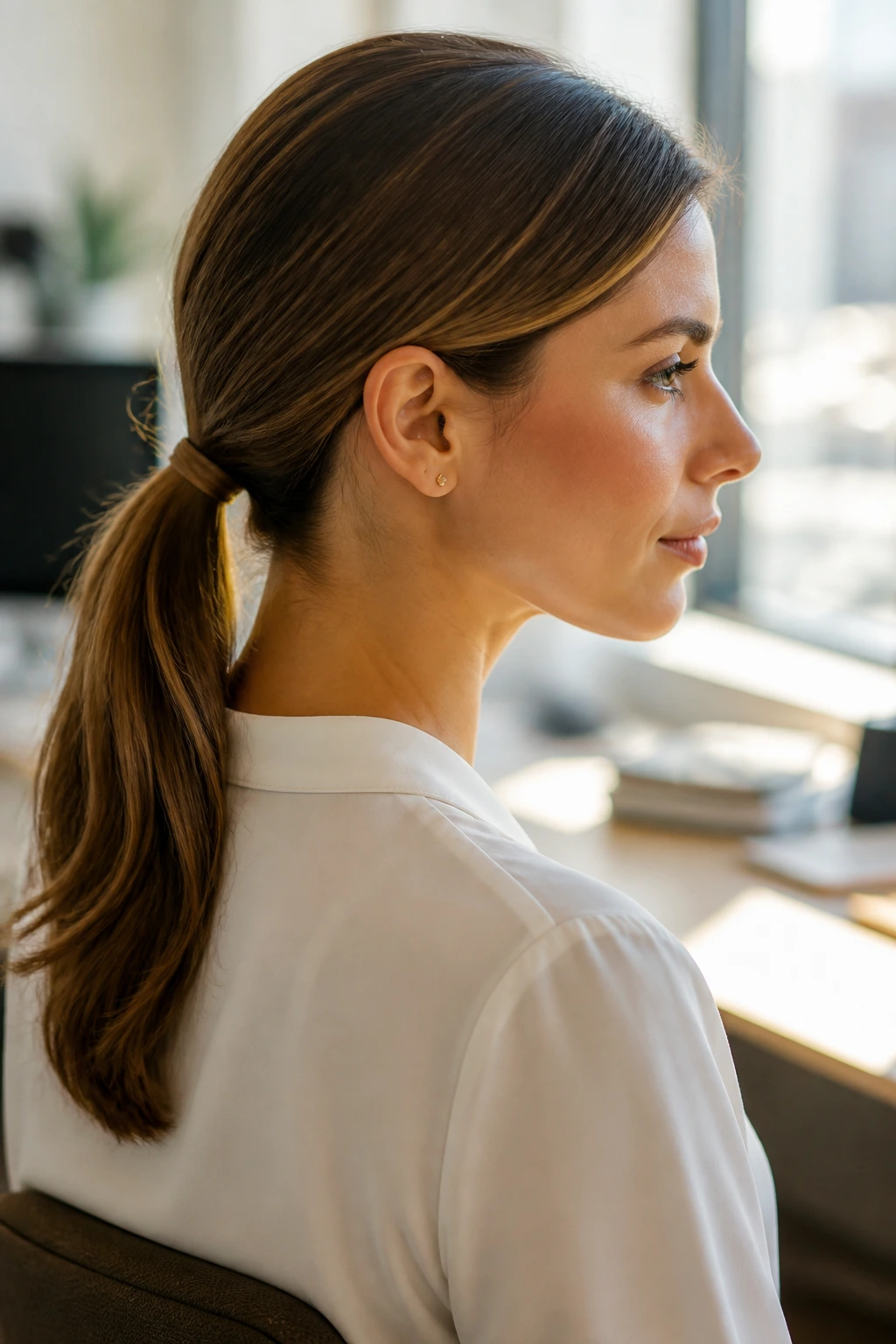
A good work ponytail does not need to be complicated. It needs to sit in the right place, hold through the day, and look like you made a choice instead of grabbing the nearest elastic and hoping for mercy. That’s the real appeal of these styles: they solve the practical problem first, then add just enough shape to make the result feel finished.
The best part is how adjustable they are. The same low pony can look sharper with a wrapped base, softer with tendrils, more current with a scarf, or sturdier with a braid. Once you know which shape fits your hair, your clothes, and your office, the whole routine gets easier.
Pick three to start with, not thirty-five. One for formal days. One for fast mornings. One for when the weather turns on you. That’s usually enough to build a rotation you’ll actually use.
