



Straight hair can make a ponytail look almost too clean, which is part of the appeal and part of the problem. Every section line shows. Every bump shows. Even the elastic at the base can feel like it’s shouting for attention if the finish isn’t thought through.
That’s why ponytail styles for straight hair are such a good playground. The surface is already smooth, so a tiny shift in height, a tighter part, a wrapped base, or a few inches of segmentation can change the whole mood. You don’t have to fight texture the way someone with coarse waves or heavy curls might. You get a crisp canvas. Use it.
The best straight-hair ponytails don’t try to hide that flatness. They build around it. A sleek high pony can look razor-sharp. A low wrapped pony can look expensive without trying too hard. A bubble ponytail can turn thin-looking lengths into something graphic and deliberate. And once you know which styles hold up on your own hair, you stop doing the same tired mid-height pony every day and start using your hair the way a good tailor uses a clean seam.
Why These 23 Ponytail Styles Earn Their Keep
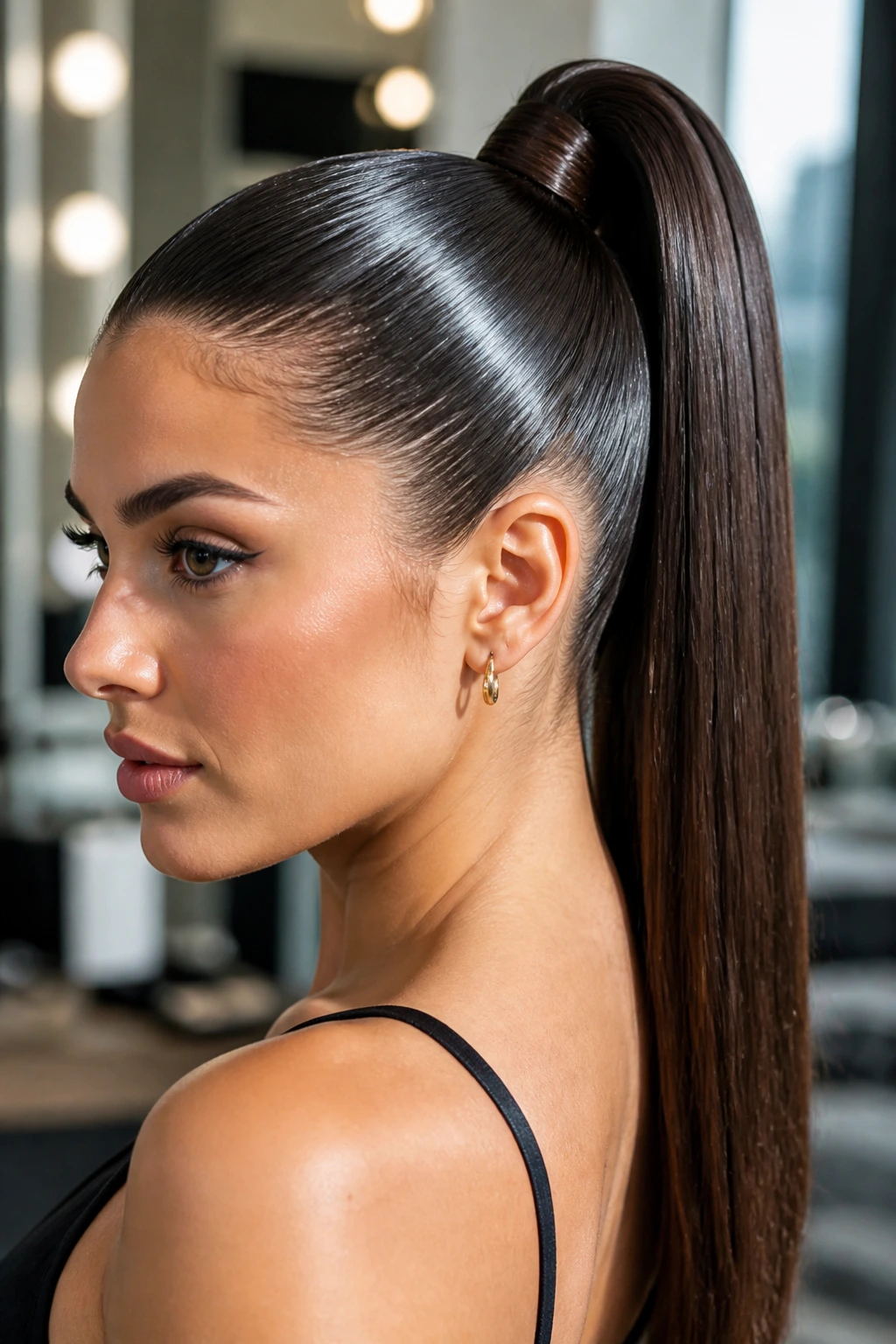
- Straight hair shows shape fast: A small change in parting or height reads instantly, which means these styles give you a visible result with very little fuss.
- The base stays smooth: Straight strands lie flat against the head, so wraps, braids, and twists keep their lines instead of getting swallowed by texture.
- Most styles need less product than you think: A pea-sized amount of cream, gel, or shine spray is usually enough; overloading the roots is what makes straight hair slip.
- Accessories behave better here: Ribbons, cuffs, scarves, and bows sit neatly on a smooth surface instead of fighting a bunch of flyaway texture.
- You can go polished or relaxed: The same basic ponytail can look office-ready, gym-ready, or party-ready just by shifting the height and finish.
- Day-old hair helps, but it isn’t required: Clean hair can work too, as long as you give the roots a little grip and don’t brush out every bit of hold.
1. Glass-Sleek High Ponytail
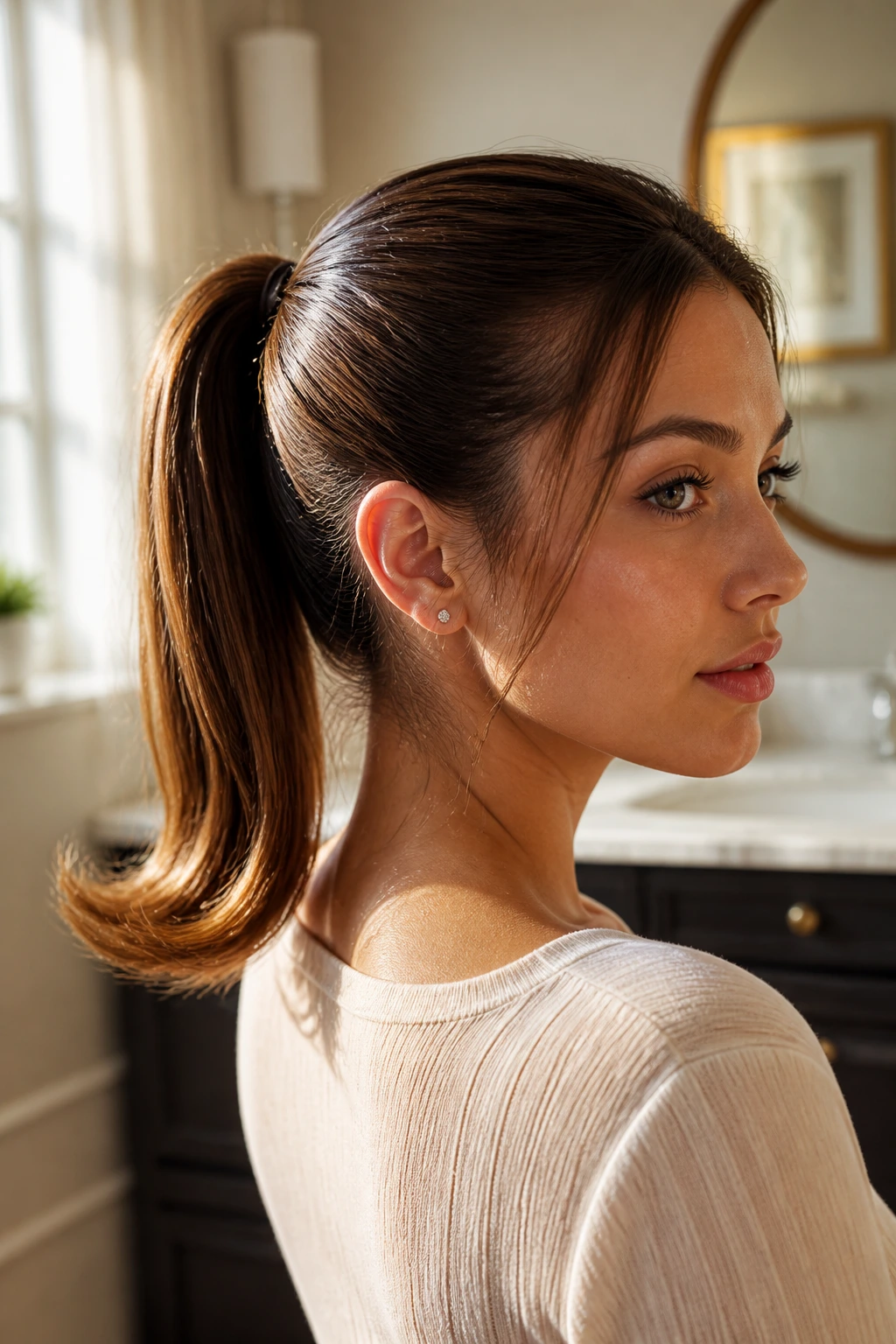
A glass-sleek high ponytail on straight hair is the one that makes people look twice, because there’s nowhere for sloppiness to hide. The crown is brushed back so tightly that the hairline becomes part of the design, not an afterthought. The tail itself hangs clean and glossy, with the kind of shine you only get when the surface has been smoothed properly from root to tip.
This look works because straight hair already wants to lie flat. You’re not forcing it into submission; you’re just directing it. Use a tail comb, a boar-bristle brush, and a small amount of smoothing cream at the crown. If your roots are slippery, dust a little dry shampoo at the base first. Do not pile serum onto the scalp or the elastic will slide before lunch.
Best for: fine to medium straight hair that needs a sharper silhouette.
Tiny detail that matters: wrap a 1/2-inch strand around the elastic and pin it underneath the ponytail. That one move takes the style from “pulled back” to finished.
2. Low Wrapped Ponytail
Why does a low wrapped ponytail feel so composed? Because the nape placement gives straight hair a long, clean line, and the wrapped base hides the only part that usually looks practical instead of pretty. It’s the kind of style that works with a blazer, a knit dress, or a plain tee that needs a little structure.
The trick is the wrap. Take a narrow section from the underside of the ponytail, about 1/2 inch wide, and wind it around the elastic in a tight spiral. Pin the end underneath the pony or slide in a small U-pin if your hair is thick. If the ends of your ponytail look too blunt, bend the last 1 to 2 inches under with a flat iron so the tail doesn’t hang like a ruler.
When to wear it
- Work days: It sits flat against the head and won’t fight collars or jackets.
- Dinner plans: Add a side part and a small earring, and the whole look shifts.
- Second-day hair: The slight grit makes the elastic hold better than freshly washed hair.
3. Bubble Ponytail
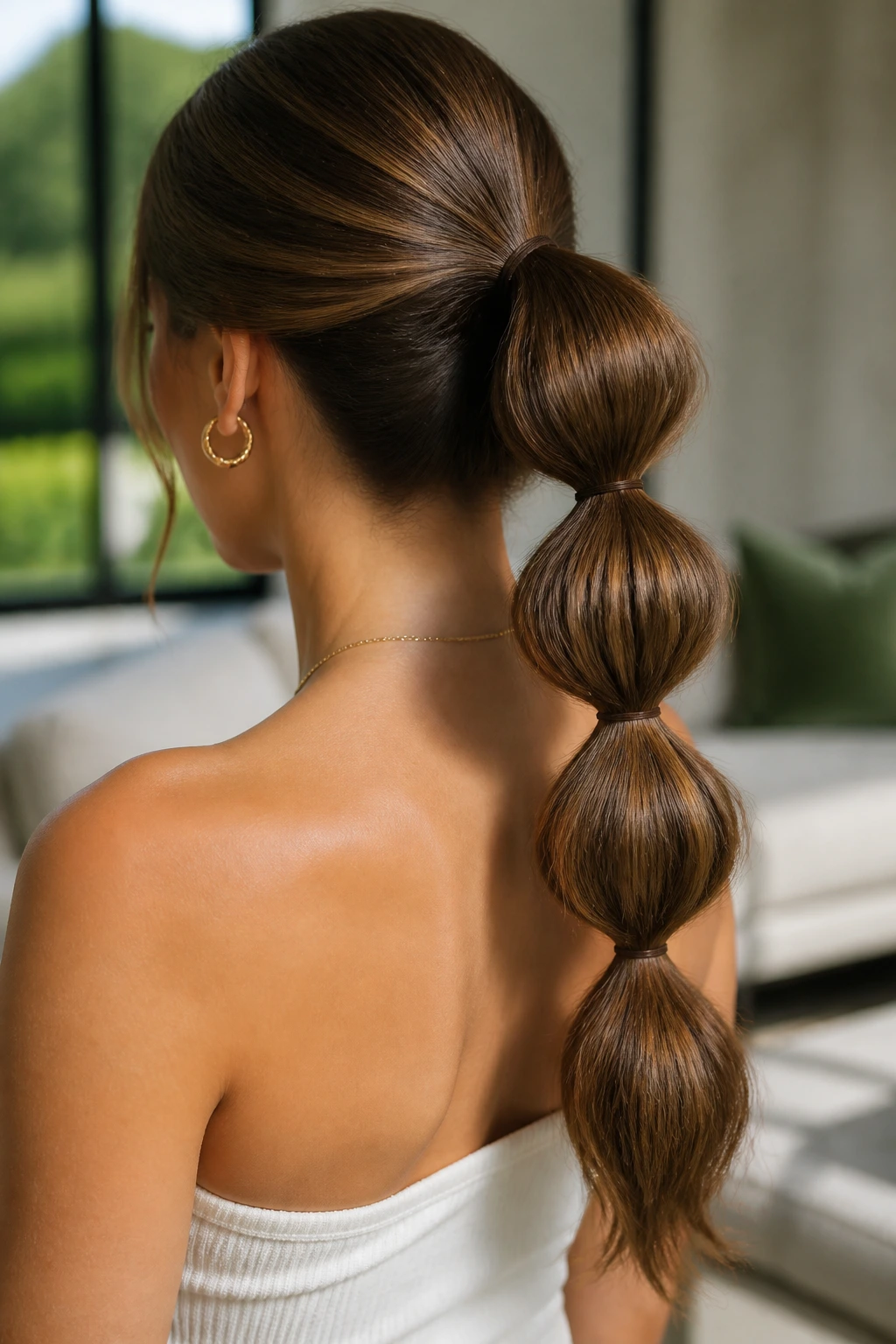
The bubble ponytail is the style that makes straight hair look intentional in a slightly playful way. Instead of one long uninterrupted tail, you create a chain of rounded sections with clear elastics every 2 to 3 inches, then gently tug each segment outward until it puffs into a bubble. Straight hair is especially good at this because the edges of each segment stay defined.
I like this style best on longer straight hair, because the shape needs enough length to repeat without getting cramped. Spritz the tail with texture spray before you begin, then set the elastics from the base down. Pull each bubble evenly, not randomly. If you yank one side harder than the other, the shape gets lopsided fast. And yes, it can look too cute if you overdo it. Keep the bubbles round, not balloon-like.
Best for: long straight hair, ponytail extensions, or anyone bored with a plain tail.
Pro move: add small hair cuffs between segments if you want the style to look more dressed up.
4. Center-Part Mid Ponytail
A center-part mid ponytail is the quiet one in the group, but it’s not bland. The part runs straight down the middle, the pony sits at mid-head, and the whole shape feels balanced in a way that straight hair handles beautifully. There’s no chaos to tame, so the styling reads crisp from the first glance.
This one is especially good when you want your face to stay open without going all the way up into a high ponytail. It keeps both sides even, which is flattering if you like symmetry or if your hair is naturally dense around the front. Use a tail comb to set the part first, then smooth each side back with your fingers before brushing. Fingers, then brush. That order matters. If you brush first, you often drag the part off-center by accident.
A mid pony works well with hoops, a clean neckline, and a little shine spray on the tail only. Leave the roots matte if your hair is fine; glossy roots can make the style slip.
5. Side-Part Low Ponytail
A side-part low ponytail is softer than the center-part version, and on straight hair that difference matters more than people think. The side part gives the style a little motion before the ponytail even begins, and the low placement keeps it elegant instead of severe. It’s the straight-hair ponytail I reach for when I want polish without the sharpness of a high pull.
The part can be deep or mild. Deep side parts create more drama; a slight off-center part looks less dramatic and usually sits better on finer hair. Brush the hair back toward the nape, then secure it just under the ear line or at the base of the skull. If your crown tends to flatten out, lift the top layer with a light tease under the part before smoothing the surface back over it.
This style loves a tucked ear on one side and an earring on the other. Small contrast. That’s the whole trick.
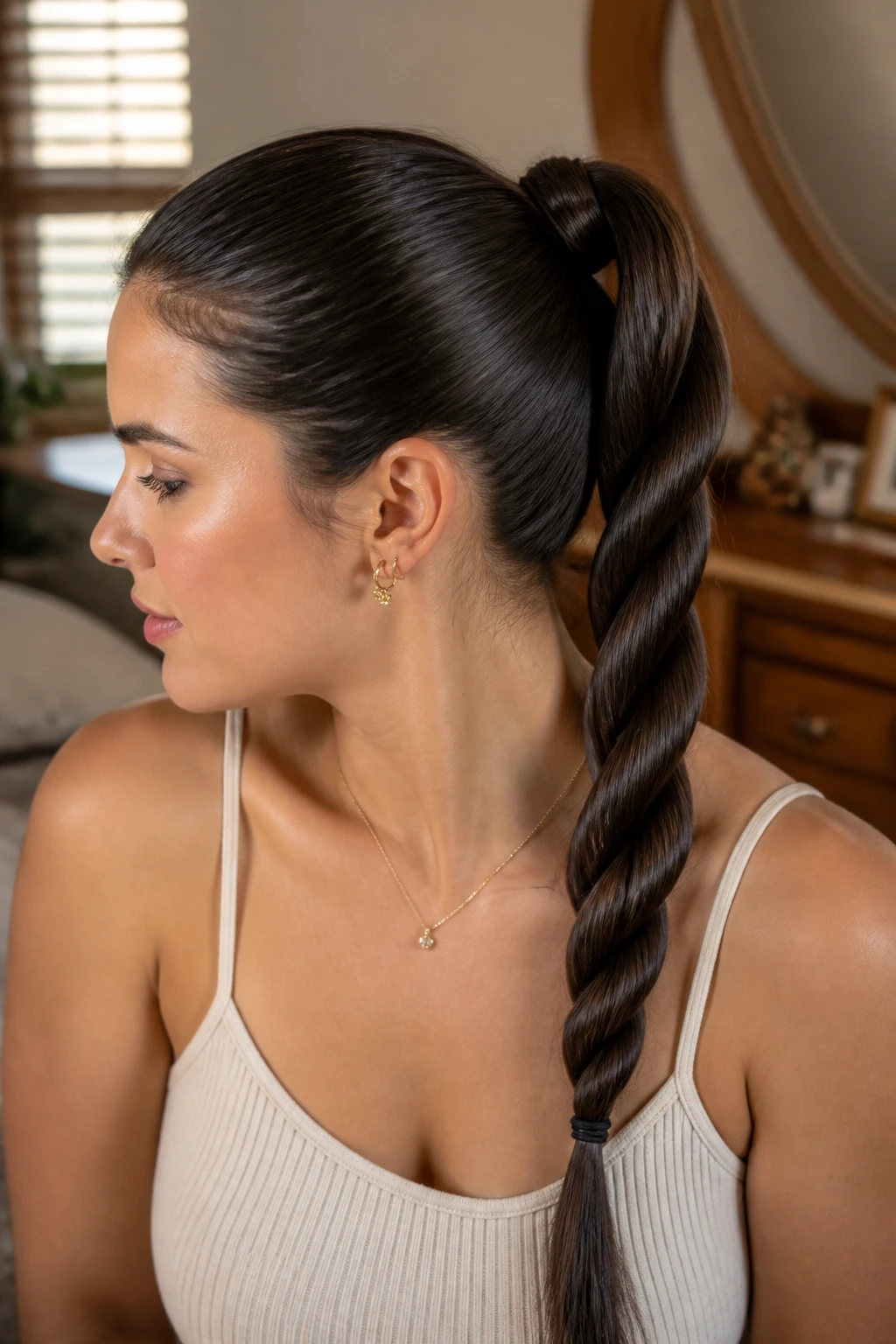
6. Rope-Twist Ponytail
A rope-twist ponytail gives straight hair something to do. Instead of lying there, the tail gets twisted into a tight, spiraling rope that shows off shine and length at the same time. Because straight strands are smooth, the twist looks neat rather than fuzzy, which is exactly why this style works so well on this hair type.
Secure the base first, then split the ponytail into two equal sections. Twist each section clockwise until it starts to coil back on itself, then wrap the two twisted sections around each other counterclockwise. That opposing motion keeps the rope from unraveling. Finish with a small elastic at the end. If your hair is slippery, mist the lengths with texturizing spray before you twist or the rope will relax faster than you want.
How to keep it neat
- Start with hair that isn’t freshly coated in oil.
- Keep the two sections the same thickness.
- Hold tension from the base, not just the ends.
- Pin the final wrap if the pony feels loose after twisting.
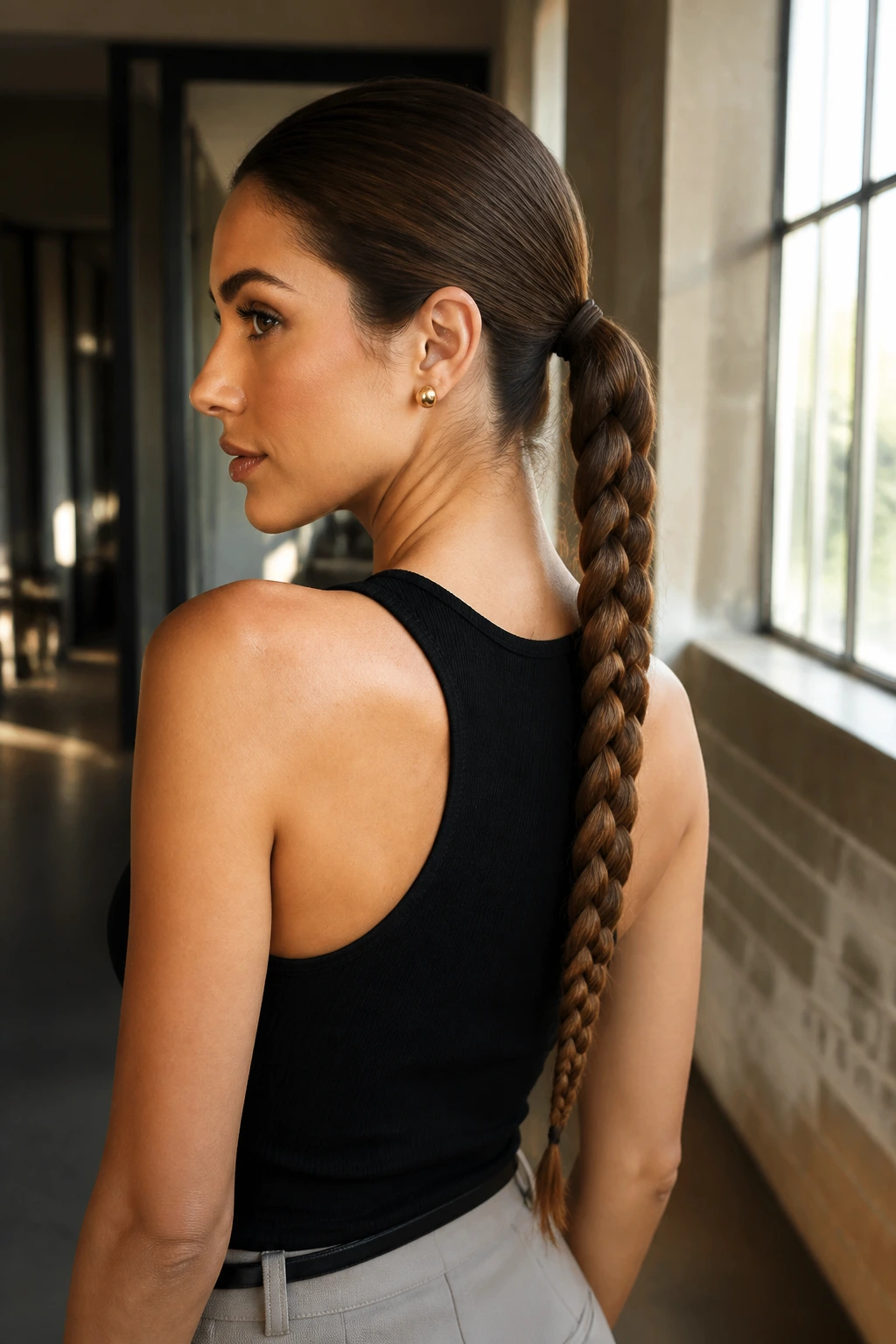
7. Braided-Length Ponytail
A braided-length ponytail has that clean, exact look straight hair does so well. You gather the hair into a ponytail first, then braid the tail itself, which keeps all the length contained and gives the style a tidy line from the crown to the end. It’s practical, sure, but it doesn’t have to read practical. A good braid can look deliberate and sharp.
A classic three-strand braid is enough, though a fishtail braid gives the tail more visual detail if your hair is long enough to show it. Keep the braid slightly loose and pancake the outer edges with your fingertips by about 1/4 inch if you want a fuller finish. Straight hair can make braids look skinny if you pull too hard, and that’s the one thing that drains the style of life.
This is the ponytail I’d wear when I want the hair secured but still want the tail to feel like part of the outfit. The braid does the talking.
8. Flicked-Out Ponytail
You know that moment when the ponytail ends get bent just enough to look styled instead of dead straight? That’s the entire point of a flicked-out ponytail. On straight hair, those turned-up ends read clearly, which makes the style feel retro in the best way. It’s one of those looks that sounds tiny and ends up changing everything.
Keep the base simple—mid-height or low works best—then bend the last 1 to 2 inches of the ponytail outward with a flat iron or a round brush while the hair is warm. Not curled. Flicked. The difference is in the angle. You want a soft outward turn, not a full wave. If your ends are blunt from a recent trim, this style is especially good because the flick gives them shape.
This one pairs nicely with a center part and a glossy finish. It also happens to be one of the easiest ways to make straight hair look styled when you’re short on time.
9. Half-Up Ponytail
A half-up ponytail is the answer when you want some lift but don’t want to put all your hair up. Straight hair makes this style look especially clean because the top section sits smooth while the rest falls loose underneath. You get contrast without having to fight your texture.
Take the section from temple to temple, or a little wider if you want more crown volume, and gather it at the back of the head. Secure it at mid-height for a softer read or higher up for more attitude. The lower section should stay sleek and loose. If it’s too flat, bend the very ends under with a flat iron so the loose hair doesn’t look unfinished. A small barrette or ribbon can make the upper pony feel more intentional, but the shape works on its own.
This is one of the easiest styles to wear with straight hair because there’s no pressure to make every strand obey. Half up, half down. Clean and done.
10. Crown-Teased High Ponytail
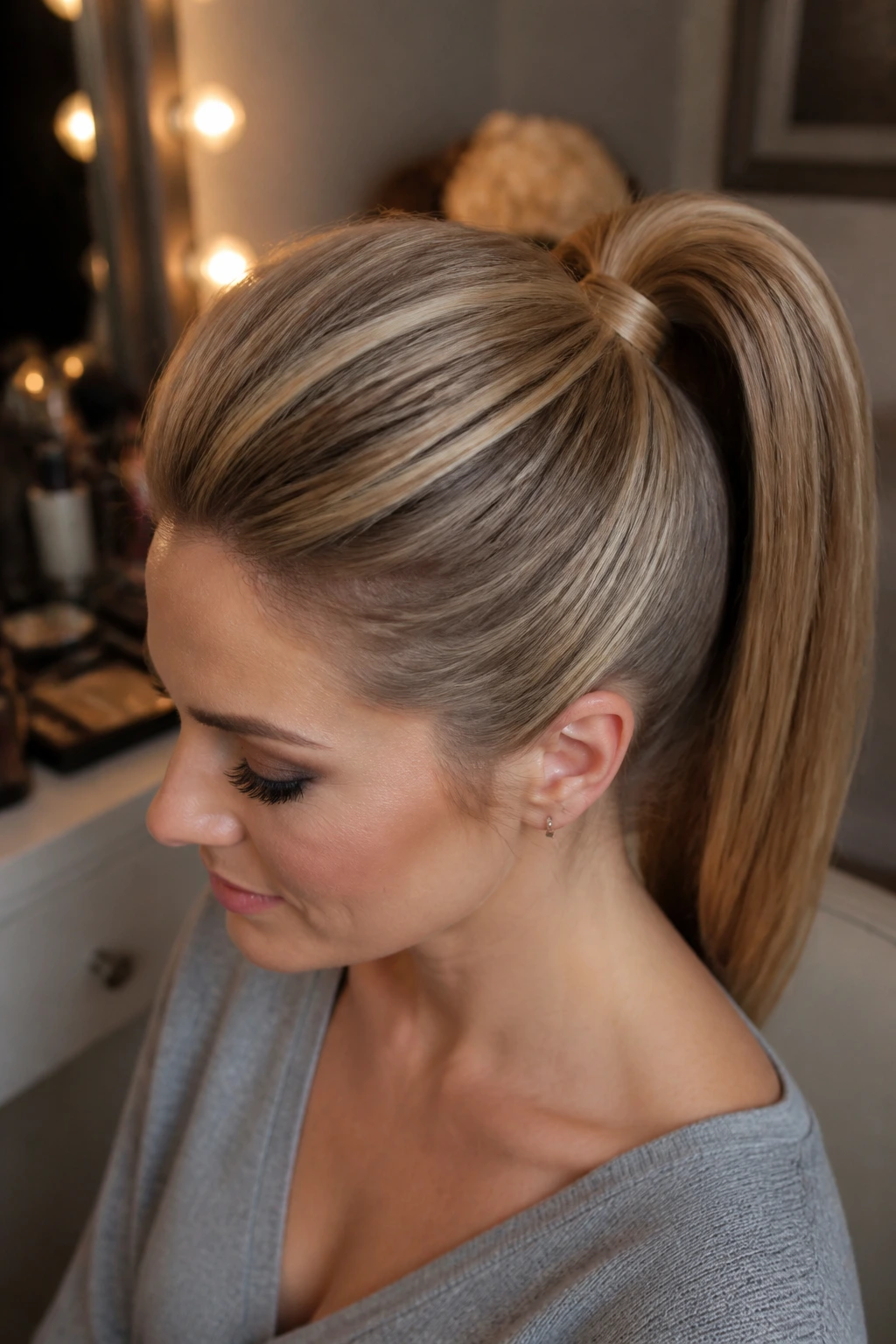
A crown-teased high ponytail is the opposite of the glass-sleek look, and that’s why it deserves a place here. Straight hair often needs a little hidden lift at the crown if you want a high ponytail to sit proud instead of collapsing backward. Teasing gives that height, but only if you keep it controlled.
Section off a 1- to 1 1/2-inch panel at the crown, backcomb it at the roots two or three strokes, and smooth the top layer over it with a brush. Then pull the rest of the hair up to that boosted spot and secure it firmly. The crown should feel supported, not puffy. If you can see the tease, you went too far. If the pony falls flat again five minutes later, you didn’t go far enough.
This version is a strong pick for finer straight hair, because the lift makes the ponytail look fuller without adding extra product. It’s a little more work, but it pays off.
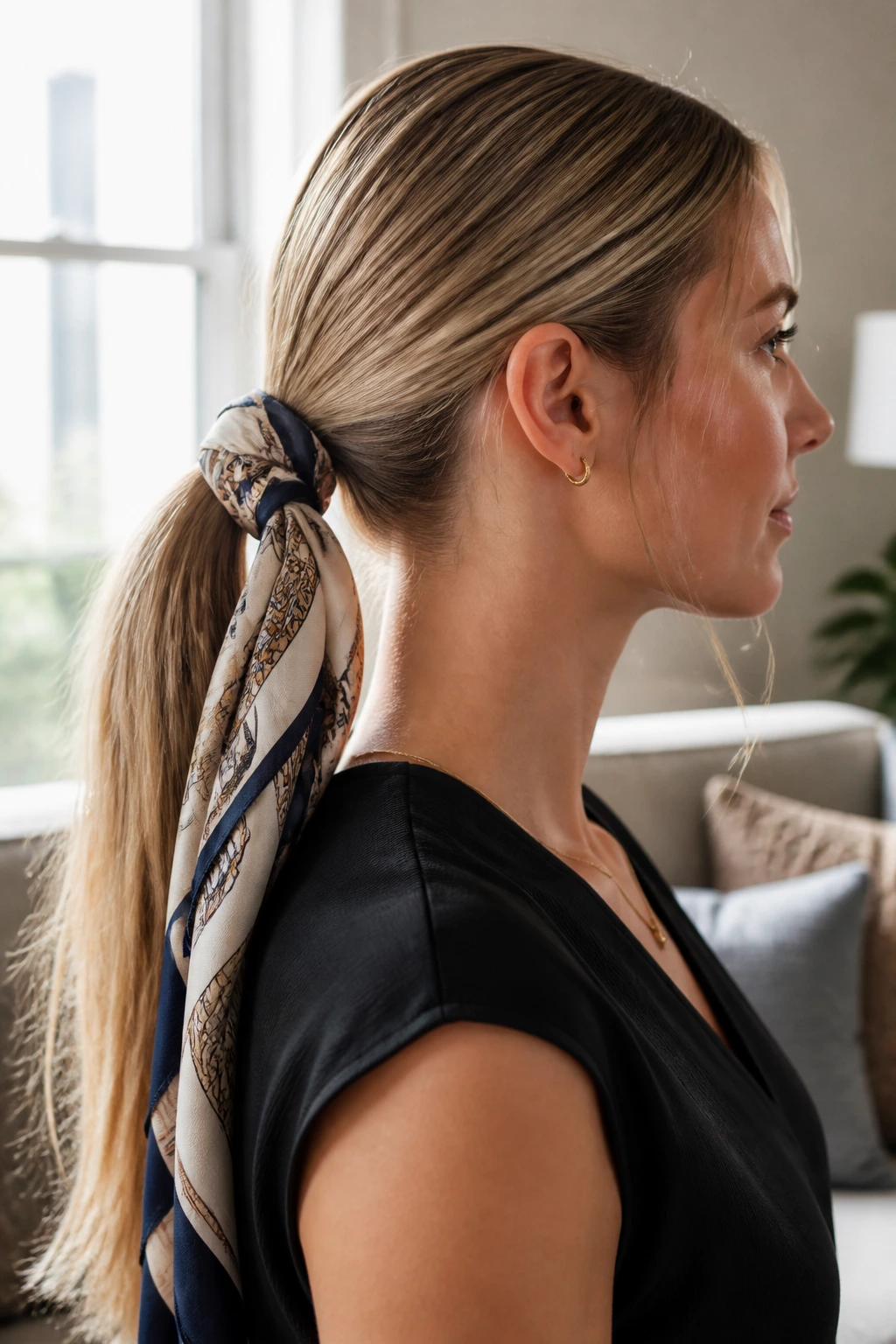
11. Scarf-Wrapped Ponytail
A scarf-wrapped ponytail changes the whole shape of straight hair in one move. The scarf adds color, motion, and a softer finish around the base, while the hair itself stays smooth and tidy. It’s the kind of style that looks more considered than it is, which is never a bad thing.
Choose a narrow silk or satin scarf if you want the base to stay neat, or a longer cotton scarf if you want the ends to trail. Tie the ponytail first, then wrap or knot the scarf around the elastic so it sits snugly. If your hair is very slippery, pin the scarf underneath where the knot rests. Otherwise it can slide around, especially on freshly brushed hair.
What makes it work
- Straight hair gives the scarf a flat, clean anchor.
- The scarf replaces the need for extra volume at the base.
- A printed scarf can carry the whole style when the rest of the outfit is plain.
12. Bow-Tied Ponytail
A bow tied around a straight-hair ponytail can look sweet, but it can also look sharp and grown-up if the rest of the style stays clean. That’s why this one works. The hair itself stays smooth and spare, and the bow becomes the focal point instead of decoration slapped on top.
Use a ribbon that has enough body to hold a shape—grosgrain is the easiest to work with—then tie it around a low or mid ponytail. Satin bows look softer. Velvet bows feel heavier and work well in colder weather. Keep the ponytail sleek so the bow doesn’t compete with flyaways and loose texture. If the ribbon slips, make a tiny hidden knot underneath the elastic first, then tie the visible bow on top of that.
This style is a nice change when you want something less severe than a wrapped base. It still reads tidy. It just has a little more personality.
13. Double-Elastic Long Ponytail
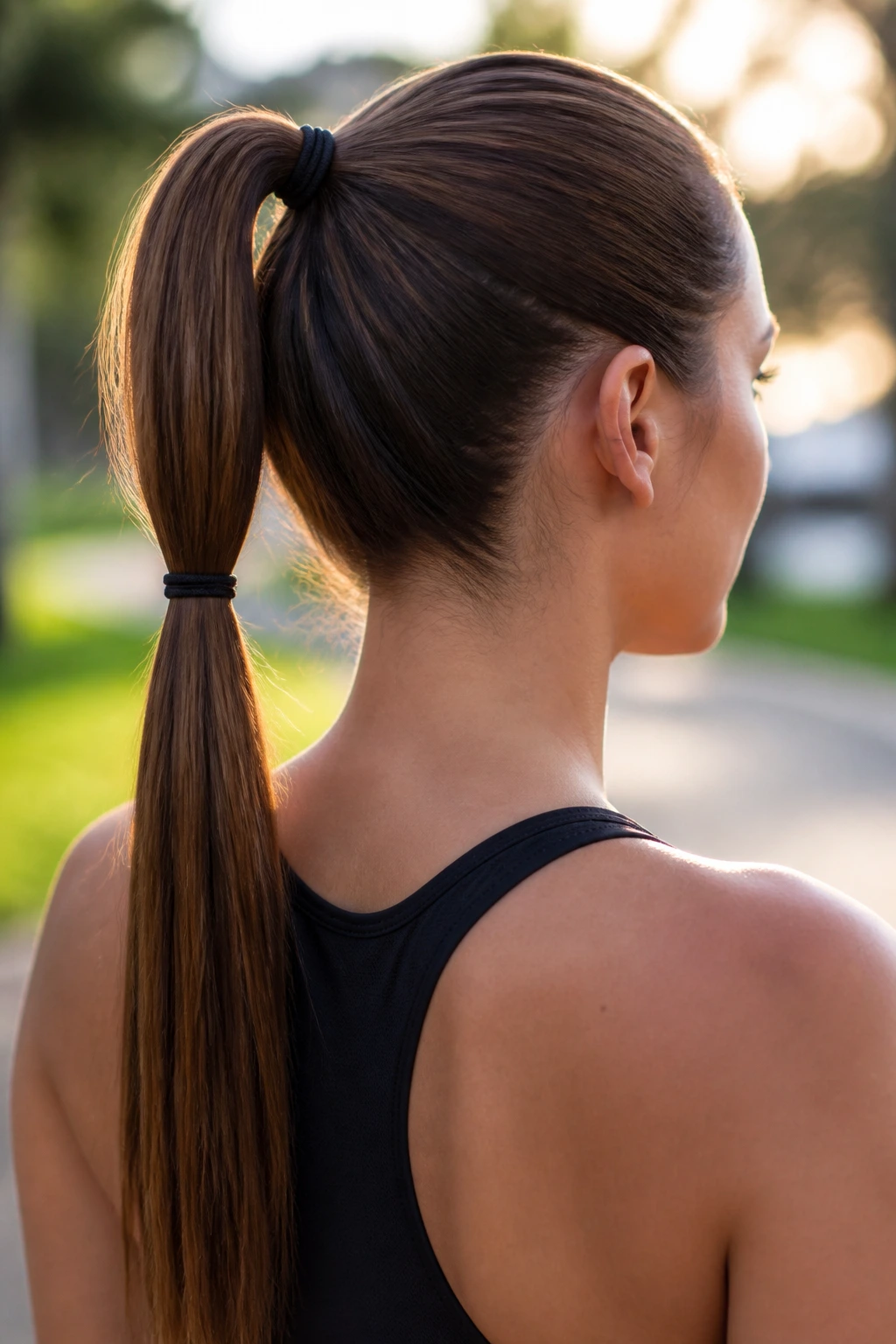
A double-elastic long ponytail is a practical fix for heavy straight hair that keeps dragging itself down. One elastic holds the crown or upper section, and a second one farther down supports the length so the whole tail looks lifted instead of collapsing into your neck. It’s especially useful if your hair is long and pin-straight, because straight hair tends to expose gravity faster than textured hair does.
Start by securing the top section where you want the pony to sit. Then add a second elastic 2 to 3 inches below the first, letting the tail flow from there. The result isn’t flashy, but it holds. And on long hair, hold matters. If the style feels too obvious, wrap a strand around the top elastic so the support system disappears visually.
This is one of those styles I trust on busy days, because the base stays put while the tail still swings normally. No fussy shaping required.
14. Knotted Low Ponytail
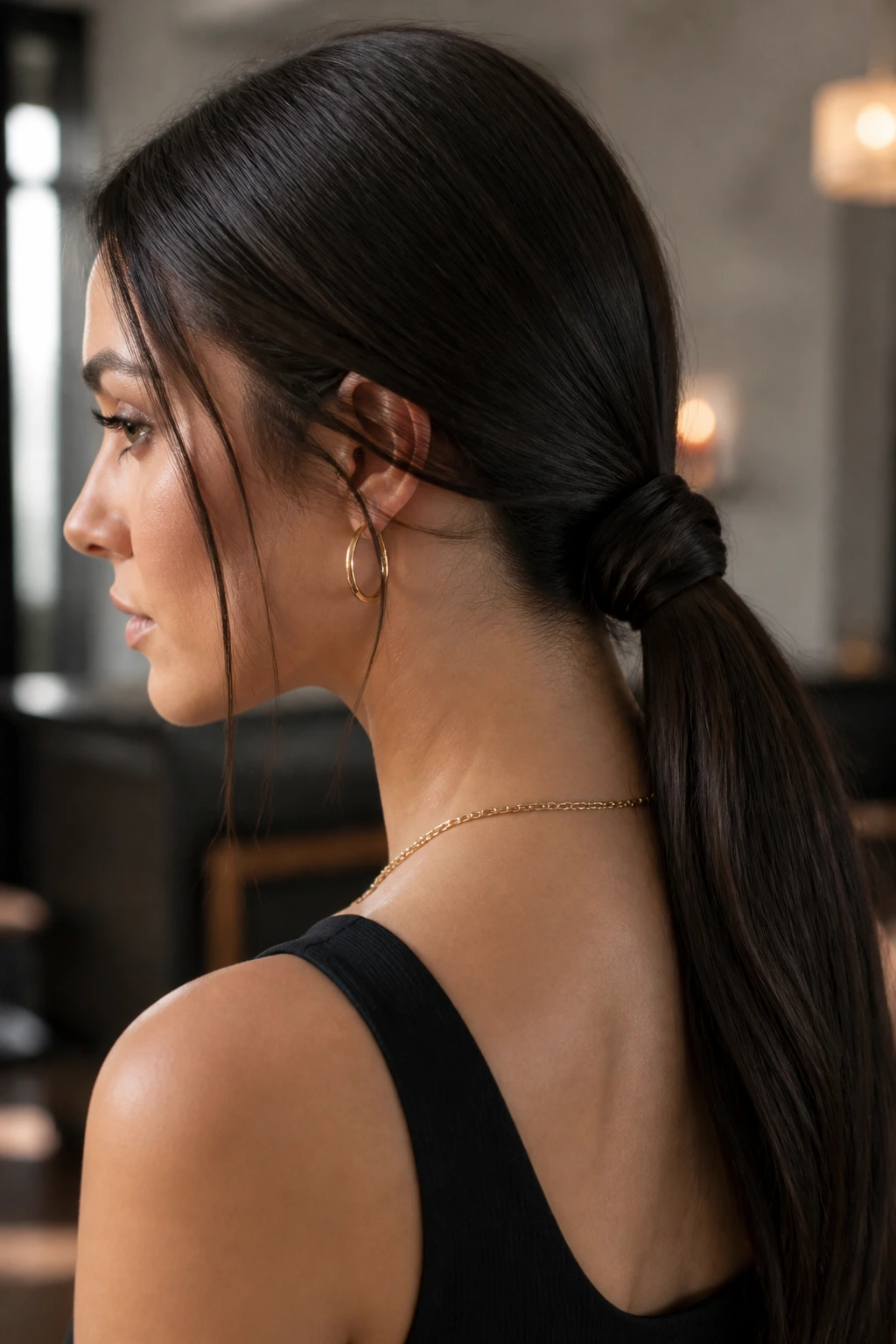
A knotted low ponytail looks almost like you spent more time on it than you did. The knot sits at the base of the pony and gives straight hair a bit of sculptural interest, which is exactly what flat, smooth hair needs sometimes. It’s less about accessories and more about shape.
To do it, split a small section from the front or side into two pieces, cross them over each other once, and pin them over the ponytail base. Then secure the rest of the hair underneath so the knot sits cleanly at the nape. The key is keeping the knot compact. If it’s loose and floppy, the style loses its edge. Straight hair makes the knot line visible, which is why it works so well here.
This one feels a little more editorial than the average low pony. It doesn’t need anything else. No bow, no scarf, no extra clip. Just the knot.
15. Wet-Look Ponytail
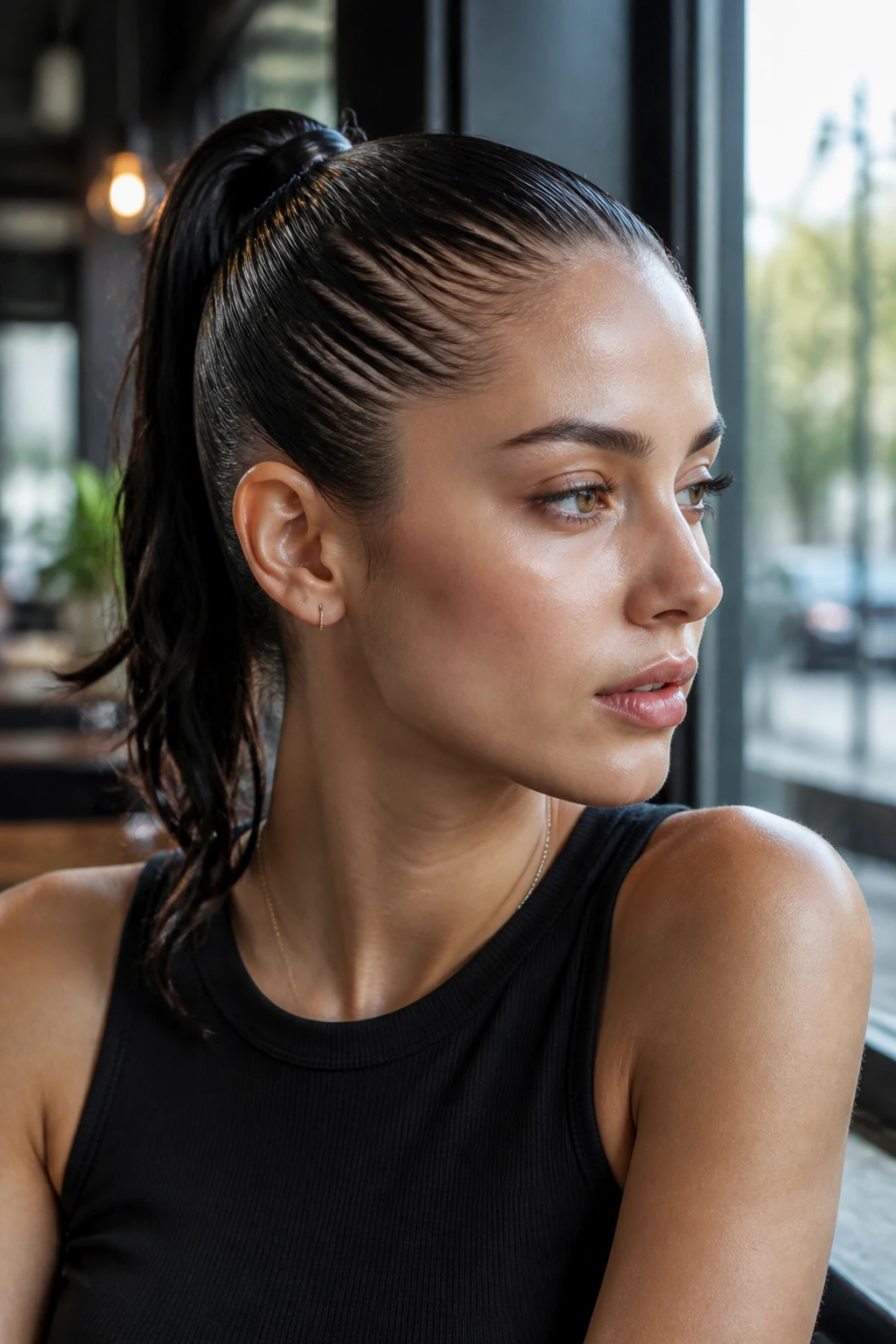
The wet-look ponytail is all shine and tension. Straight hair is almost unfairly good at this style because the smoother the surface, the more convincing the effect. When the hair is brushed back with gel and set close to the scalp, it looks glossy instead of stiff, provided you keep the product under control.
Apply a strong-hold gel to damp hair, working it through the roots and the top layer with a brush or fine-tooth comb. Gather the ponytail where you want it and smooth the tail with a touch of serum, but keep the ends from getting saturated. That’s the line people miss. Too much product on the tail turns shine into grease. You want reflection, not drip.
This style works best when the outfit has some clean lines of its own—square necks, simple tops, sharp earrings. It’s blunt, in a good way.
16. Side-Swept Ponytail

A side-swept ponytail changes the whole geometry of straight hair. Instead of sitting dead center, the pony is pulled over to one shoulder or tucked just behind one ear, which gives the shape movement without needing curls or waves. It’s a strong choice when you want something softer than a high pony but more styled than a basic low one.
Set a side part, brush the hair across the head, and anchor the ponytail low at one side of the nape. The tail should drape naturally over the shoulder or across the upper back. If your hair keeps slipping back to center, pin a hidden bobby pin at the base before you secure the elastic. That extra anchor makes a difference on smooth straight hair.
This style plays well with off-the-shoulder tops and asymmetric earrings. It’s a simple shift, but it changes the line of the whole outfit.
17. Sport-Tight Ponytail
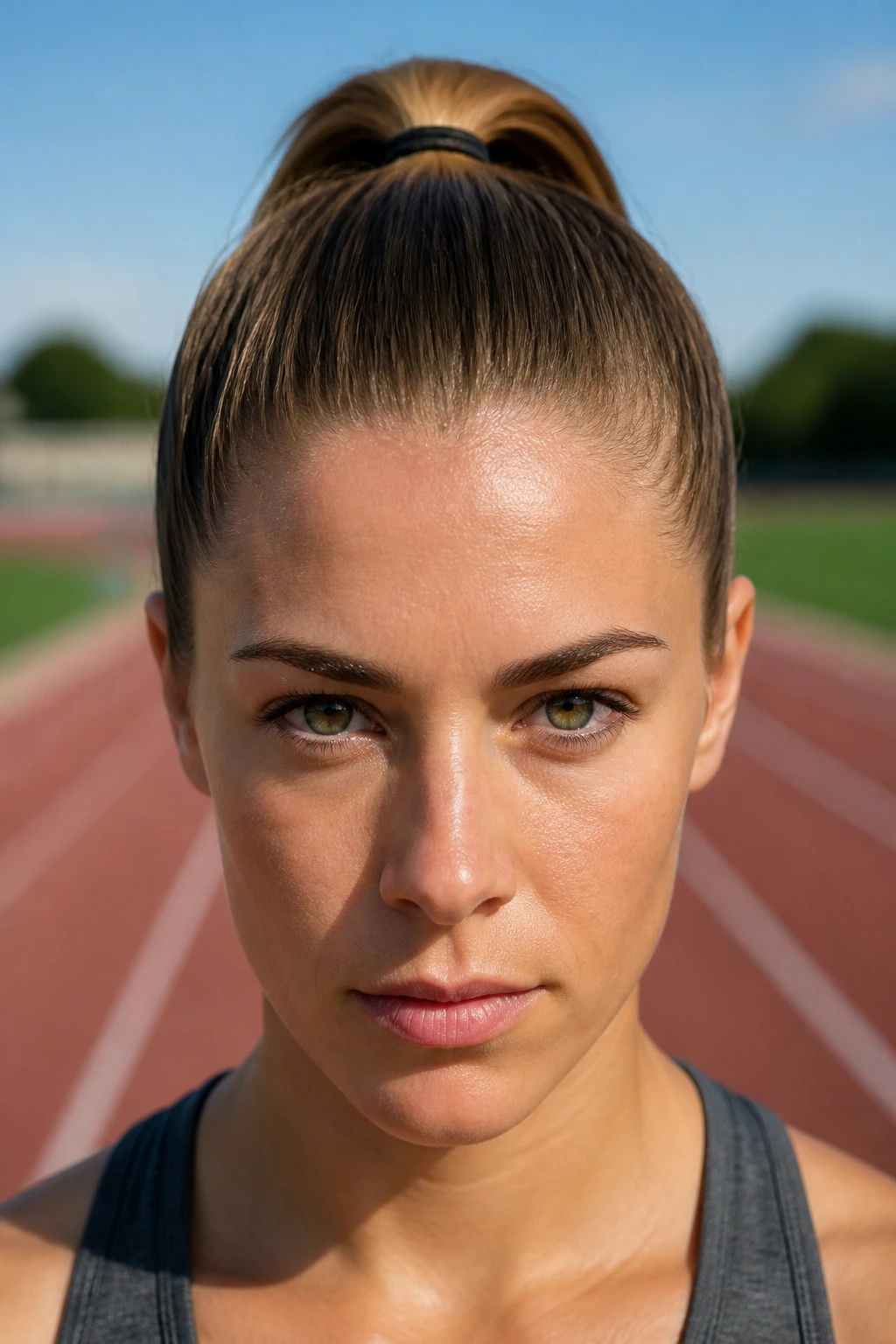
A sport-tight ponytail is the kind of style that says, “I need this off my face and I need it to stay there.” Straight hair makes the clean lines easy, which is helpful, because the point here is function first. The good news is that it doesn’t have to look sloppy to be practical.
Brush the hair up into a high or mid pony, smooth the hairline with a tiny bit of gel or water-based edge product, and secure the elastic firmly. For heavier straight hair, a second elastic can keep the base from drooping during the day. Keep the tail simple. No fluff, no teasing, no extra shaping. This is the ponytail for workouts, travel, long errands, and days when your hair needs to behave while the rest of your life gets messy.
If you want to dress it up later, a second elastic or wrapped strand changes the mood in thirty seconds. Useful. Very useful.
18. Faux-Hawk Ponytail
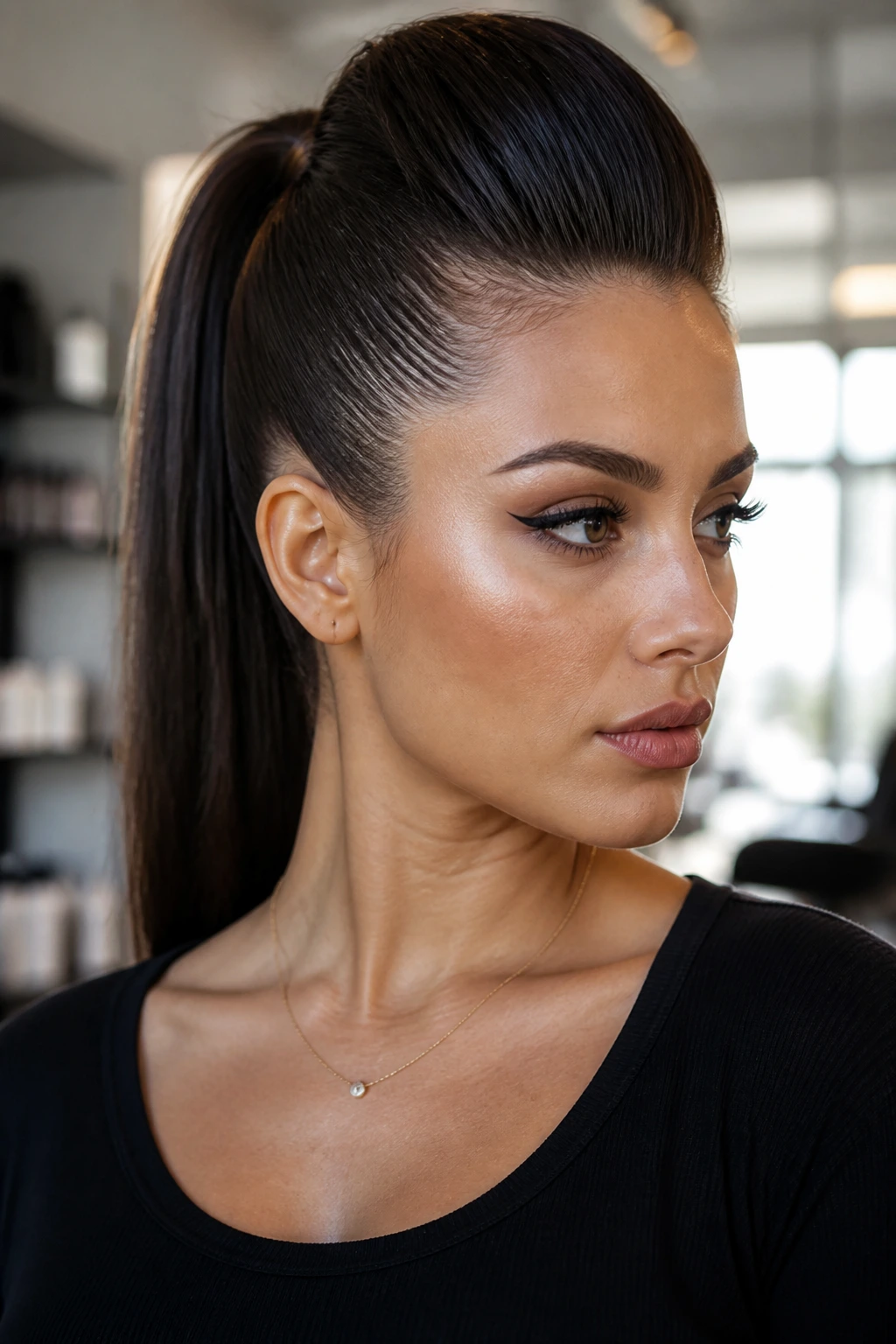
A faux-hawk ponytail gives straight hair some attitude without asking you to braid half your head. The center section is pulled up and back into a ponytail, while the sides are smoothed close to the scalp. That contrast—height in the middle, flatness on the sides—is what makes the shape work. On straight hair, it looks especially sharp because the lines stay clear.
Use the tail comb to section a strip from forehead to crown, then brush the side sections back tightly and pin or smooth them into place. Secure the center pony higher than you normally would. A little root spray or dry texture spray in the middle helps keep the lift from sagging. If the style feels too severe, leave a few short front pieces loose.
This one is bolder than the others, but straight hair handles that boldness well. The smoother the sides, the cleaner the effect.
19. Mini Ponytail With Face-Framing Pieces
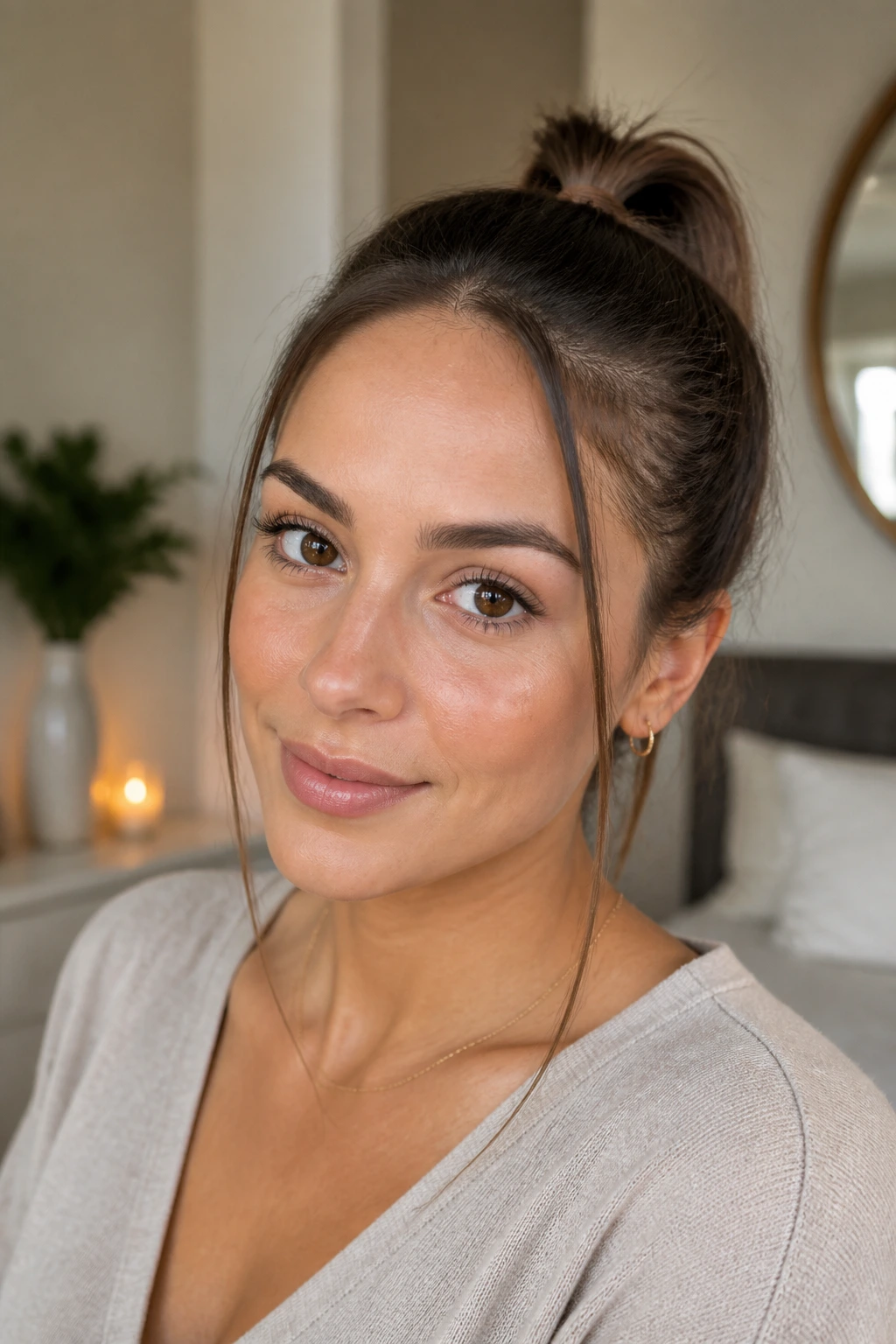
A mini ponytail with face-framing pieces is the easy answer for straight hair that starts to feel severe when it’s pulled straight back. The ponytail can sit high, mid, or half-up, but the key is leaving two thin pieces loose at the front. Not chunky strips. Thin. Enough to soften the face without looking accidental.
The style works because the contrast is part of the design. Straight hair often looks strongest when you give it one deliberate break in the line, and those front pieces do exactly that. Curl the pieces under slightly if they’re too stiff at the ends, or let them hang pin-straight for a sharper effect. Either way, keep the rest of the pony clean so the loose pieces feel intentional.
This is a good option when you want a ponytail but don’t want every strand pulled into the same tight frame. Little details matter here.
20. Loop-Through Ponytail
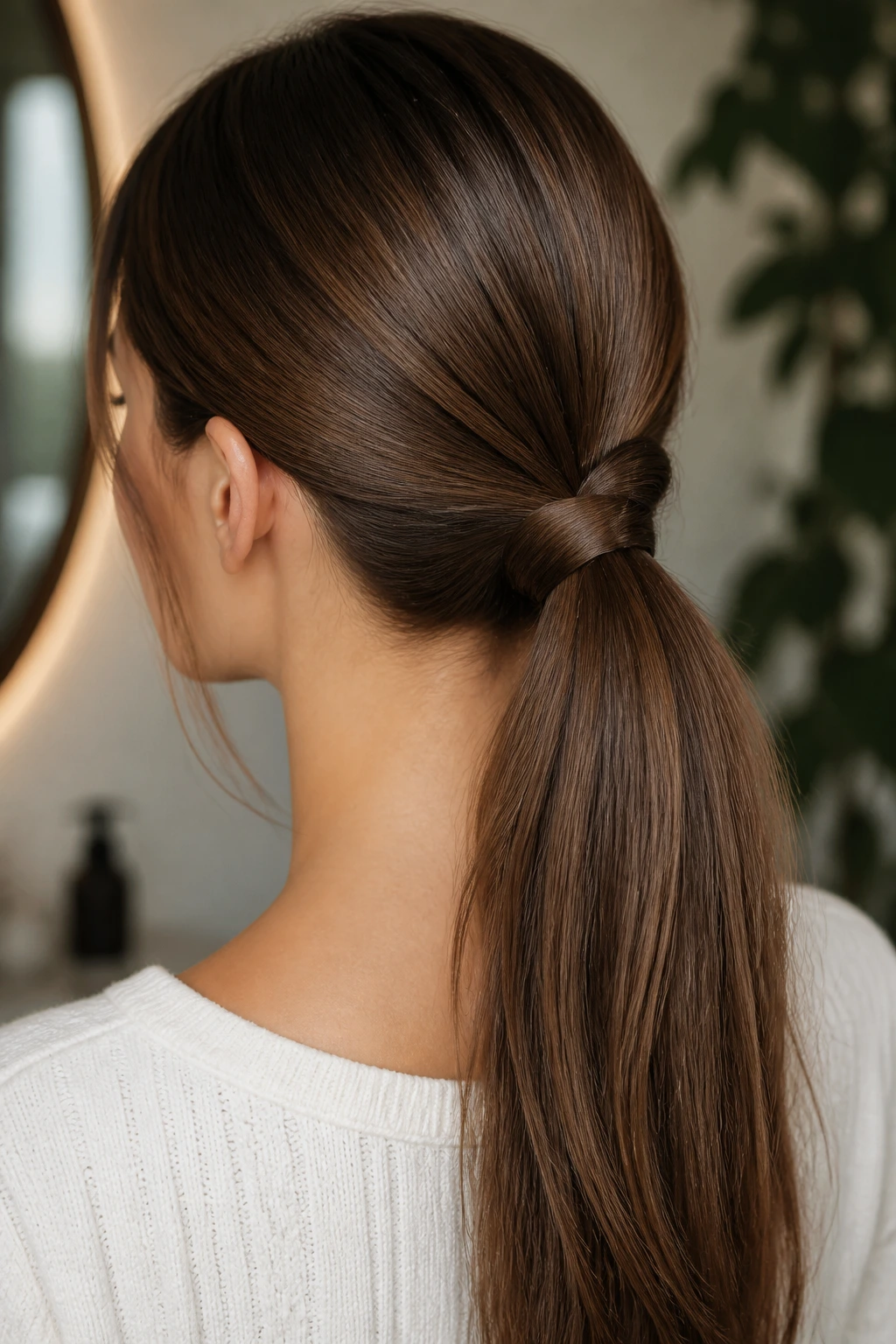
A loop-through ponytail is the classic topsy tail effect, and on straight hair it reads with a kind of quiet neatness that I always like. You gather the hair into a low or mid pony, make a small opening above the elastic, and flip the tail through the gap. That one twist gives the ponytail shape without needing a braid or accessory.
The clean line of straight hair makes the loop visible, which is half the point. Use a snug elastic, but don’t cinch the hair so tightly that the opening becomes awkward to make. A little smoothing cream on the top layer helps the loop stay crisp. If the tail is very long, you can stop after one pass. If it’s medium length, the loop itself carries the style, so keep the base tight and simple.
It’s a nice alternative when you want something tidy that isn’t a standard wrap or braid. Understated, but not boring.
21. Crown-Braid Ponytail
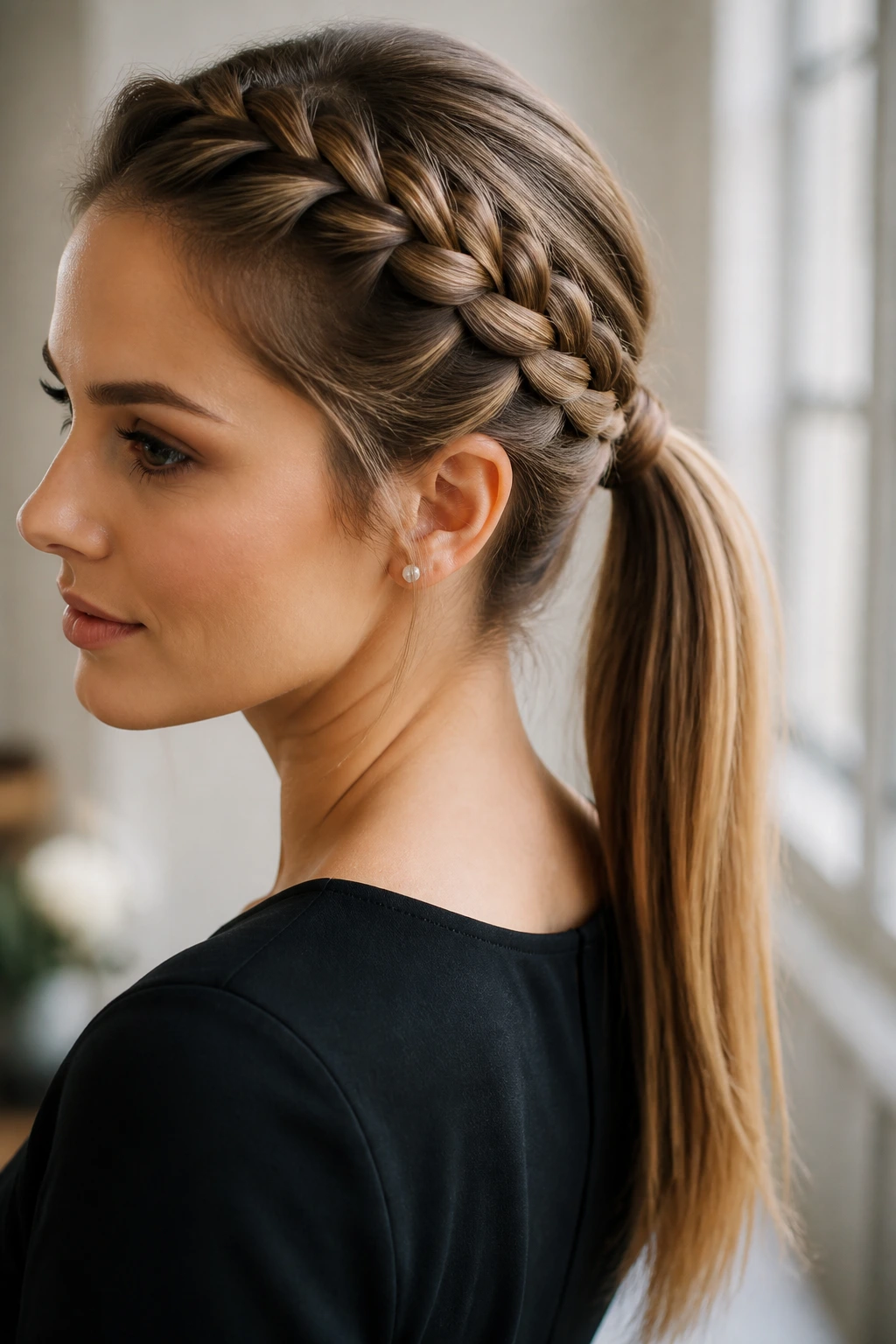
A crown-braid ponytail gives straight hair a built-in frame. You braid along the hairline or across the crown, then gather the remaining hair into a ponytail so the braid feeds into the base. Straight strands are perfect for this because the braid lines stay clean and visible instead of blending into a fuzzy halo.
You can do a single braid from one temple to the other, or two small braids that meet at the back. Either way, keep the braid close to the head and secure it tightly before you gather the rest into the ponytail. If your hair is very smooth, a touch of texture spray at the roots helps the braid hold better. This style is a little more involved than a standard pony, but the shape is worth it because it gives the whole look more structure.
It’s especially good when you want the front of your hair controlled and the tail left simple. That balance keeps it from feeling fussy.
22. Segmented Ribbon Ponytail
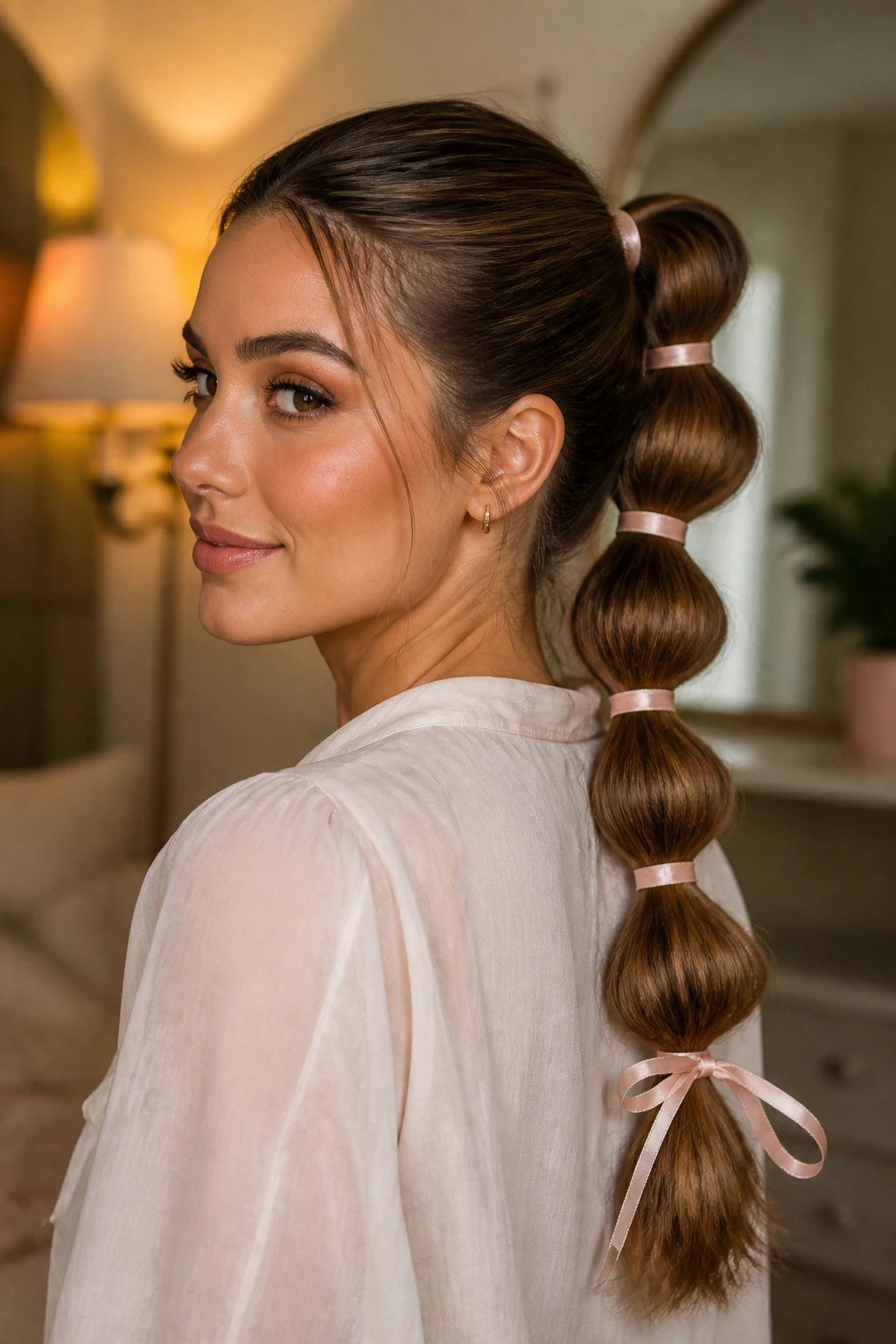
A segmented ribbon ponytail is the bubble ponytail’s more tailored cousin. The structure is still segmented with elastics every 2 to 3 inches, but ribbon is threaded through or tied around each section so the style has more color and polish. Straight hair loves this kind of precision because every band and every segment stays visible.
Use clear elastics for the base structure, then wrap a narrow ribbon around the first section or weave it through the lengths as you go. Keep the segments even. Uneven spacing makes the ribbon look random instead of designed. If you’re working with very long hair, this style can carry a lot of visual weight without needing volume at the crown, which is useful if your roots lie flat no matter what you do.
This is a good one for events, but it doesn’t have to be formal. Choose the ribbon carefully and it can lean soft, polished, or a little playful.
23. Clip-In Extension Ponytail
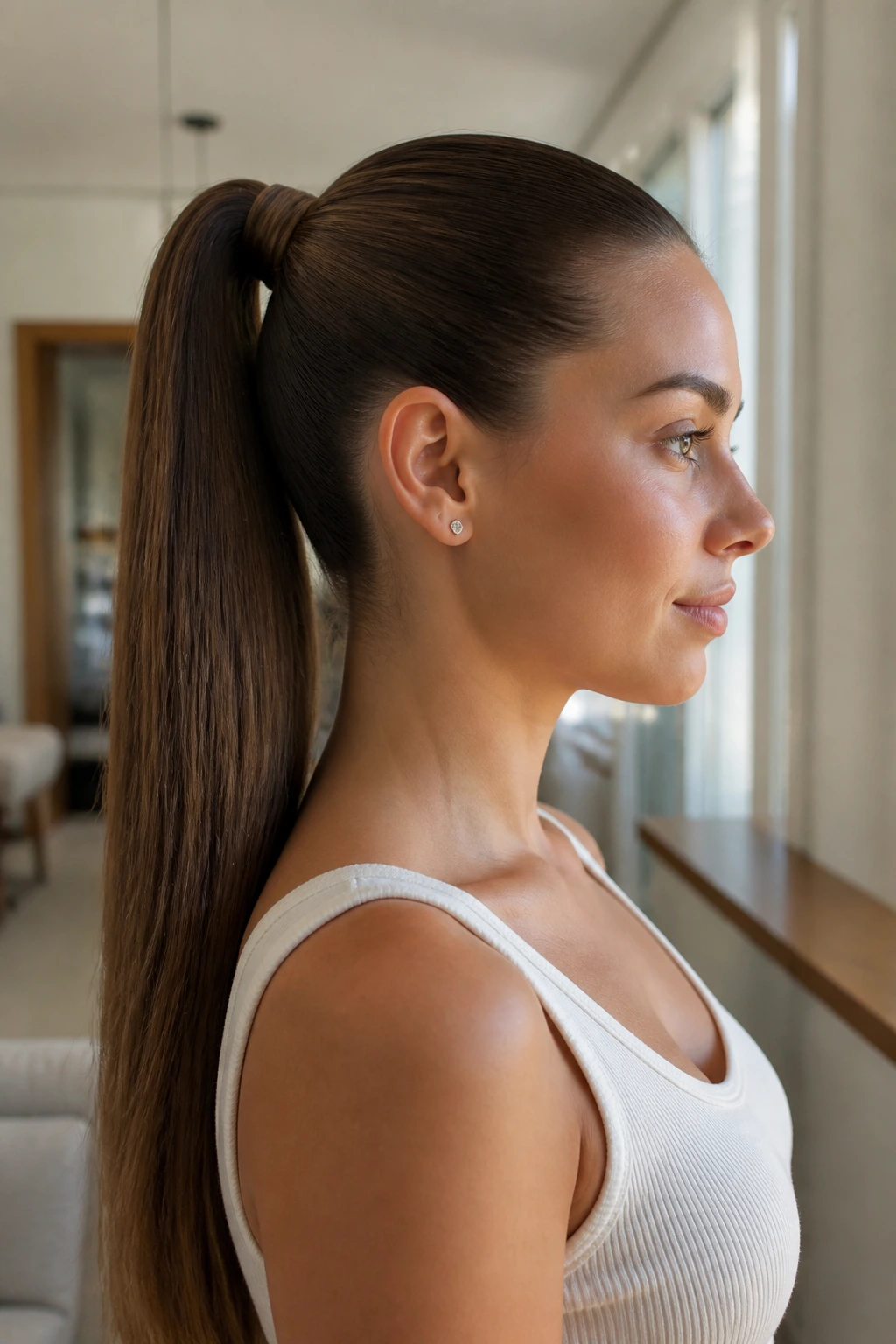
A clip-in extension ponytail is the style you reach for when your own straight hair wants to look fuller than it naturally does. The base can stay sleek, but the added piece gives the tail length, thickness, and swing. Straight hair actually blends well with extensions because the surface is already smooth, so the seam tends to hide better than it would on rougher texture.
Match the color carefully and choose a texture that isn’t too glossy or the extension will look separate from your own hair. Secure your natural pony first, then attach the extension and wrap a small section of hair around the join to hide it. If the result feels too heavy, place the pony a little lower so the weight doesn’t pull at the crown.
This isn’t cheating. It’s shape control. And if your natural ponytail has always felt a little thin, this is the style that gives you a better silhouette without asking the rest of your hair to work overtime.
Why Straight Hair Makes Ponytails Look Sharper
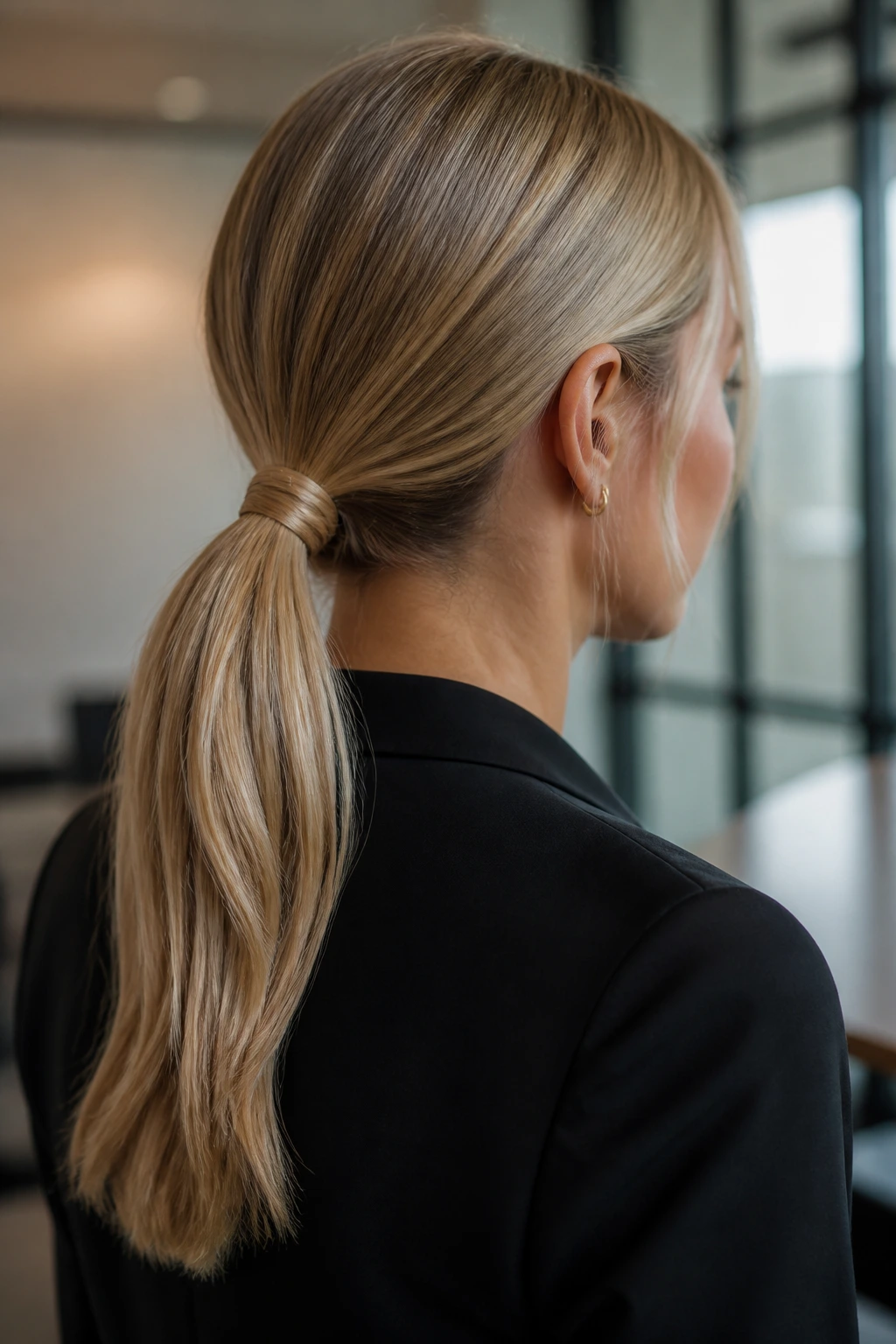
Straight hair gives ponytails a kind of clean outline that textured hair has to fight for. That is the whole advantage. The hair sits flatter at the scalp, the elastic reads more clearly, and the tail itself usually falls in a tidy line instead of breaking into layers of curl or bend. If you want graphic shapes, straight hair is your friend.
The catch is that every little thing shows. A crooked part shows. A sloppy elastic shows. A product-heavy root shows. So the goal is never to load the hair up with more and more stuff. It’s to create grip in the right places and leave the rest alone. Dry shampoo at the roots, a brush that doesn’t puff the surface, and one secure wrap around the base usually get you farther than a pile of styling cream ever will.
Straight hair also responds well to contrast. A slick crown with a braided tail. A low base with a big scarf. A bubble pony with narrow sections. Those shifts read more clearly on straight hair than they do on hair with built-in texture, which is why these ponytail styles stay useful long after the novelty wears off.
Essential Tools for These Styles
- Tail comb: Best for clean parts, section lines, and little adjustments at the crown.
- Boar-bristle brush: Smooths the top layer without roughing up the cuticle.
- Detangling brush: Handy for long lengths before braids, loops, or segmented styles.
- Clear elastics: The workhorse for bubble ponytails, loop-through styles, and ribbon looks.
- Snag-free fabric elastics: Better for heavy or very long straight hair that needs extra support.
- Bobby pins and U-pins: Useful for wraps, scarf knots, and hidden anchors.
- Dry shampoo: Gives grip at the roots, especially on freshly washed hair.
- Texturizing spray: Helps rope twists, braids, and bubble sections hold their shape.
- Strong-hold hairspray: Use it sparingly on flyaways and the hairline.
- Flat iron with rounded plates: Useful for flicked ends, soft bends, and smoothing the tail.
- Mini clips or sectioning clamps: Keep top layers separate while you shape the base.
- Ribbon or silk scarf: Optional, but they change the finish fast and do not require much skill.
Choosing Elastics, Brushes, and Finish Sprays
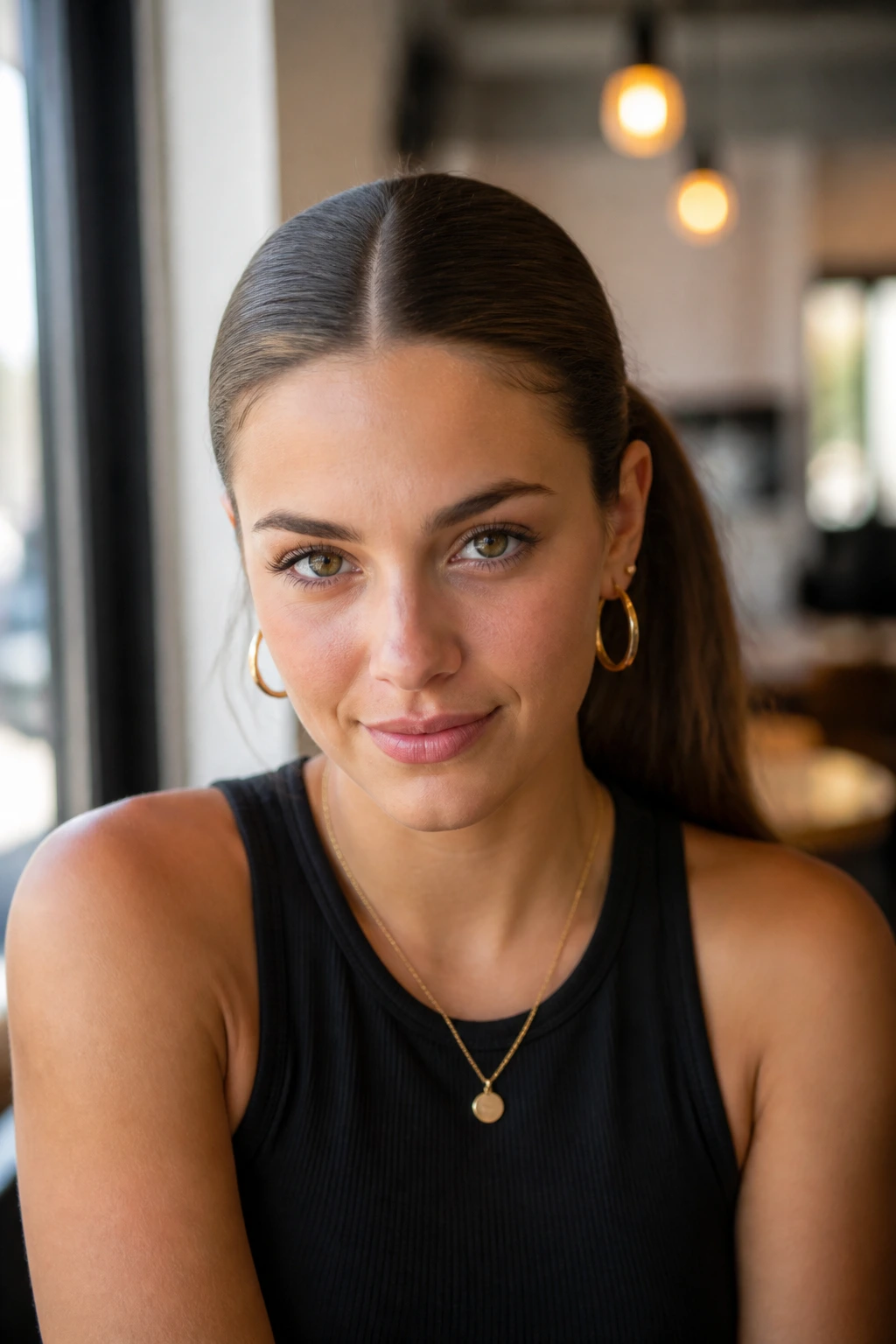
The elastic matters more than people want to admit. On straight hair, a weak elastic gives up early because there’s less natural texture helping it cling. For sleek looks, clear elastics or coated bands are usually enough. For thick or heavy hair, fabric-covered elastics hold better and don’t slice into the base as fast. If the ponytail slips, the problem is often the band, not your technique.
Brushes matter too. A boar-bristle brush smooths the top layer and helps the hair lie together at the crown, which is useful for polished styles. A denser detangling brush is better for long tails before braiding or looping, because it moves through the lengths without making them puff. A tail comb earns its place when you want a part that stays where you put it. Straight hair shows part lines in a way wavy hair sometimes forgives.
As for products, keep them matched to the style. Use dry shampoo or texture spray when you need grip. Use gel or edge control when the line near the hairline matters. Use shine spray only on the mid-lengths and ends if you want reflection without a greasy base. If your hair is fine and slippery, avoid pouring oil through the crown. If it’s dry and static-prone, a tiny amount of smoothing cream on the outer layer can calm the flyaways without flattening the style. Tiny amount. That’s the whole point.
How to Wear Them With Different Outfits and Face Shapes
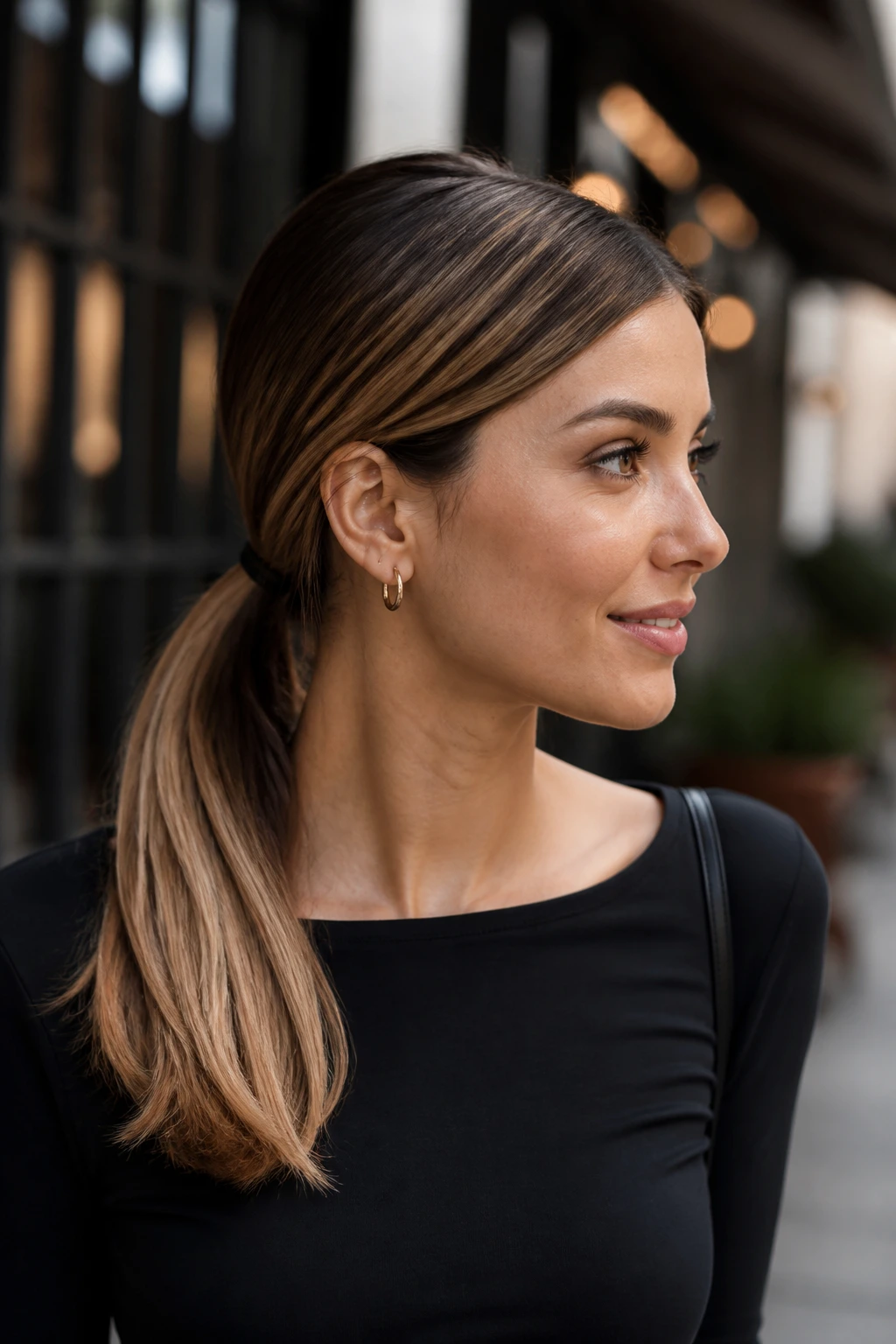
Presentation: High ponies read sharper with strong necklines, like crew necks and square necks, because the line of the hair keeps the face open. Low wrapped styles and side-swept ponies sit better with collars, knits, and coats because they don’t crowd the neck. A ribbon or cuff changes the mood faster than a second accessory ever will.
Face Shape: If you want lift through the cheekbones, go higher. If you want to soften a stronger jawline, stay lower and let the ponytail sit to one side. Straight hair doesn’t hide the silhouette, so the placement really does the work here.
Hair Length: Longer straight hair can handle bubbles, braids, and segmented styles without losing shape. Shoulder-length hair often looks better in low wrapped, half-up, or loop-through styles because the tail doesn’t need much length to feel finished.
Occasion: Glass-sleek and wet-look ponytails lean sharp and deliberate. Scarf, bow, and mini-face-framing styles feel looser and more casual. Sport-tight belongs to movement. The rest are somewhere in between, which is honestly where most real life lives.
Extra Texture, Height, and Finish Tricks
Root Lift: Put dry shampoo or texture spray at the roots before you brush the hair back, not after. If you wait until the ponytail is already tied, the product sits on top instead of giving the base grip.
Elastic Coverage: A 1/2-inch strand wrapped around the elastic is enough for most straight hair. Anything wider starts looking bulky, and bulk defeats the point of a clean ponytail.
Flyaway Control: Spray a little hairspray onto a toothbrush or spoolie and brush it lightly over the hairline. That gives you control without drenching the scalp in product. Works especially well around the temples and nape.
Length Cheat: If the tail feels thin, use a clip-in ponytail piece or a hidden extension on the inside of the base. You do not need to wear it on top like a costume. Blend the seam and let the rest drop naturally.
Make-It-Yours: A matte cuff makes the style look modern, a satin ribbon makes it softer, and a narrow scarf can hide a band while adding color. Pick one accent, not three. Straight hair already gives you enough clean lines.
Common Ponytail Mistakes on Straight Hair
The first mistake is overloading the roots with oil or smoothing cream. Straight hair doesn’t need much help staying shiny, and too much product makes the base slide. If your ponytail loosens after an hour, this is usually why. Fix it by using dry shampoo at the roots and keeping the shine product on the tail only.
Another common one: pulling the hair too tightly from the start. That creates tension bumps and a headache before the style even has a chance. Smooth the hair in sections instead of yanking from one grab point, then secure the elastic once the shape looks clean. You want control, not a scalp argument.
People also forget to support heavy lengths. One elastic at the base can be enough for a short pony, but long straight hair pulls hard. If your pony sits low by noon, add a second elastic farther down or wrap the base more tightly with a hidden strand.
The last mistake is letting the ends go limp and untreated. Straight ponytail ends can look blunt in a way that feels unfinished. Add a tiny bend, a braid, a bubble, or a ribboned finish so the tail has a reason to exist. Otherwise it’s just a line of hair hanging there.
Smart Variations and Adaptations to Try
Fine-Hair Lift-Off: Use dry shampoo at the roots, then choose styles that build shape at the crown, like the teased high pony or the loop-through. Fine straight hair looks better with a little lift and a little tension than with heavy product. A second elastic often helps more than another spray.
Thick-Hair Anchor: If your hair is dense, split the ponytail into two support points or use a stronger fabric elastic. Thick straight hair can overpower flimsy bands fast, especially in high styles. A wrap or braided base also helps the style stay intentional instead of drooping.
Shorter-Length Shortcut: Half-up ponytails, mini ponytails, and side-swept low ponies work better on shorter straight hair than bubble chains or long braids. A few styles depend on length for the shape to show, and it’s better to choose the ones that actually sit right than to fight a style that wants more inches.
Heat-Free Smooth Finish: Skip the flat iron and use a small amount of smoothing cream on damp hair, then brush it back and let it dry in the ponytail shape. It won’t be glassy, but it will be controlled. Good if you want less heat and a softer edge.
Dress-Up Edit: Swap the regular elastic for a scarf, ribbon, or metal cuff. That one change can move a ponytail from weekday-basic to event-ready without changing the structure underneath.
Gym-to-Errand Switch: Start with a sport-tight ponytail, then loosen the crown slightly and wrap the base with a strand before heading out. You keep the secure feel, but the style stops looking like it belongs only in a workout room.
Keeping a Ponytail Fresh From Morning to Night

Straight hair often tells on you by the end of the day, so a little maintenance goes a long way. If the style is slick and polished, let the hair cool and settle before you start touching it. That sounds small, but warm hair shifts more easily and the ponytail can loosen while you’re still getting dressed. Once it cools, the shape holds better.
For overnight wear, a satin pillowcase or a loose satin scarf helps keep the crown smooth and the tail from getting crushed. If the style uses a wrap, scarf, or ribbon, remove anything that can crease the hair before sleep. A low wrapped pony or loop-through style can survive into the next morning if it’s secured gently and protected from friction. A bubble ponytail usually needs a full reset.
If the roots collapse, don’t rewash unless you have to. A little dry shampoo, finger-lifting at the crown, and a quick rewrap of the base usually fixes the problem. For wet-look or glass-sleek styles, a damp brush with a trace of product is enough to smooth the hairline again. Overbrushing makes things worse, not better. Once the pony starts sliding, chasing every strand tends to loosen the whole thing.
Questions Readers Ask About Ponytails on Straight Hair
How do I keep a ponytail from slipping on very straight hair?
Start with a dry shampoo or texture spray at the roots before you tie it back. Then use a band that grips the hair—clear elastics work for light styles, but thick fabric bands or a second support elastic help if your hair is heavy.
What ponytail height looks best on straight hair?
High ponytails show off shine and make the face look more lifted, while low ponytails look calmer and more controlled. If your hair is fine, a mid-height pony often gives the best balance because it doesn’t weigh the crown down.
Is clean hair or day-old hair better for these styles?
Day-old hair usually holds better because it has a little natural grip. Clean hair can still work if you add a small amount of texture spray or dry shampoo at the roots. If your hair is very dry, though, freshly washed hair may smooth more easily for wet-look or glass-sleek styles.
How do I hide the elastic without making the ponytail bulky?
Use a narrow strand from underneath the ponytail and wrap it once or twice around the base. Pin the end from the underside, not the top, so the wrap disappears. Wide wraps can look clunky on straight hair because there’s no texture to break them up.
Can I make a bubble ponytail if my hair isn’t very long?
Yes, but keep the spacing shorter—about 1 1/2 to 2 inches between elastics—and use fewer segments. If the tail is too short, one or two bubbles can still give the effect without trying to force a full chain.
What should I do about flyaways without making the hair crunchy?
Use a tiny bit of hairspray on a spoolie or toothbrush and smooth only the hairline. That gives control in the spots that matter without freezing the whole head. If the crown still frizzes, the problem is often too much brushing after the style is finished.
Are clip-in ponytail extensions hard to blend with straight hair?
They’re usually easier to blend on straight hair than on textured hair, as long as the color match is close. Keep the base sleek, hide the seam with a wrapped strand, and avoid overly shiny extension hair if your own hair has a softer finish.
Which styles work best for school or work?
Low wrapped ponytails, side-part low ponytails, center-part mid ponytails, and loop-through styles are the easiest to wear in conservative settings. They stay neat, don’t take up much space at the back of the head, and don’t fight collars, headphones, or jackets.
The Version Worth Repeating
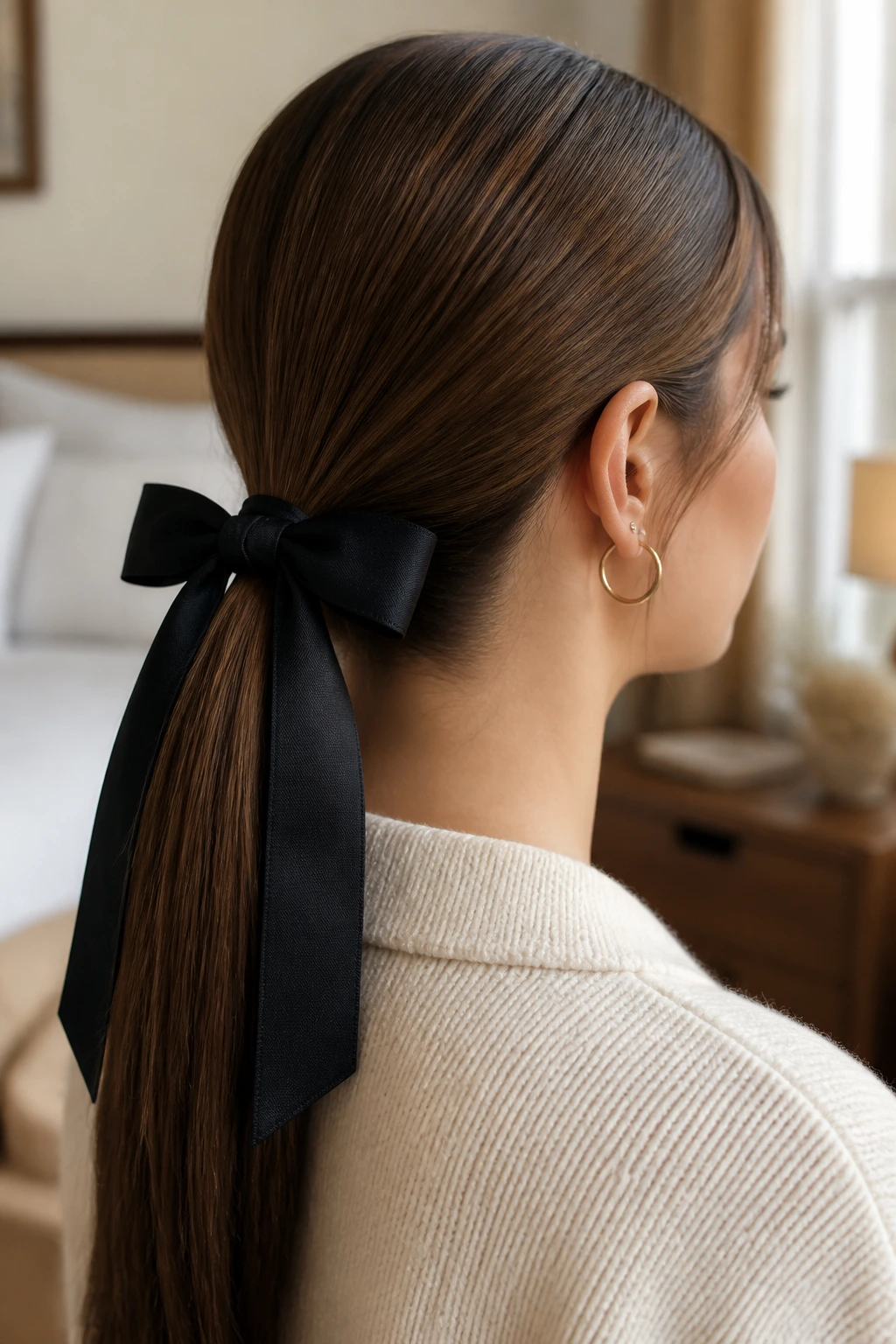
A good ponytail on straight hair is never just “hair tied back.” It’s line, tension, placement, and finish. Get those four things right, and even the simplest style starts looking deliberate instead of rushed.
The nice part is that you do not need a pile of products or some elaborate routine to get there. Most of the work is in the base: the part, the grip, the elastic, the wrap. Once that’s handled, the rest is mostly taste.
And taste is the fun part. One day it’s a clean high pony. Another day it’s a ribbon, a braid, or a bubble chain spaced every 2 inches. Once you start treating straight hair like a shape you can design, not a problem to fix, the ponytail gets a lot more interesting.
