



The best bouffant hairstyles have a way of making a simple outfit look deliberate. Not fussy. Not frozen in place. Just lifted at the crown, balanced at the sides, and shaped so the face gets a little more room to breathe.
That lift matters more than people think. A good bouffant changes the whole silhouette of the head: the hairline looks cleaner, the profile looks softer, and even a basic ponytail can suddenly feel like it belongs at a formal dinner instead of a gym bag. The trick is not towering height. It’s controlled height. Too much teasing and you get a stiff helmet. Too little and the style collapses before you leave the house.
There’s also a nice range here that gets ignored. Bouffant hair does not have to mean a full retro beehive with lacquered ends and heavy makeup. It can be a soft bump at the crown, a polished low bun with lift, a half-up style with brushed waves, or a sleek ponytail with enough root volume to keep the shape interesting. That flexibility is why these styles keep showing up for weddings, parties, photos, and any moment when flat roots feel like the wrong answer.
Why These Bouffant Hairstyles Earn Their Keep
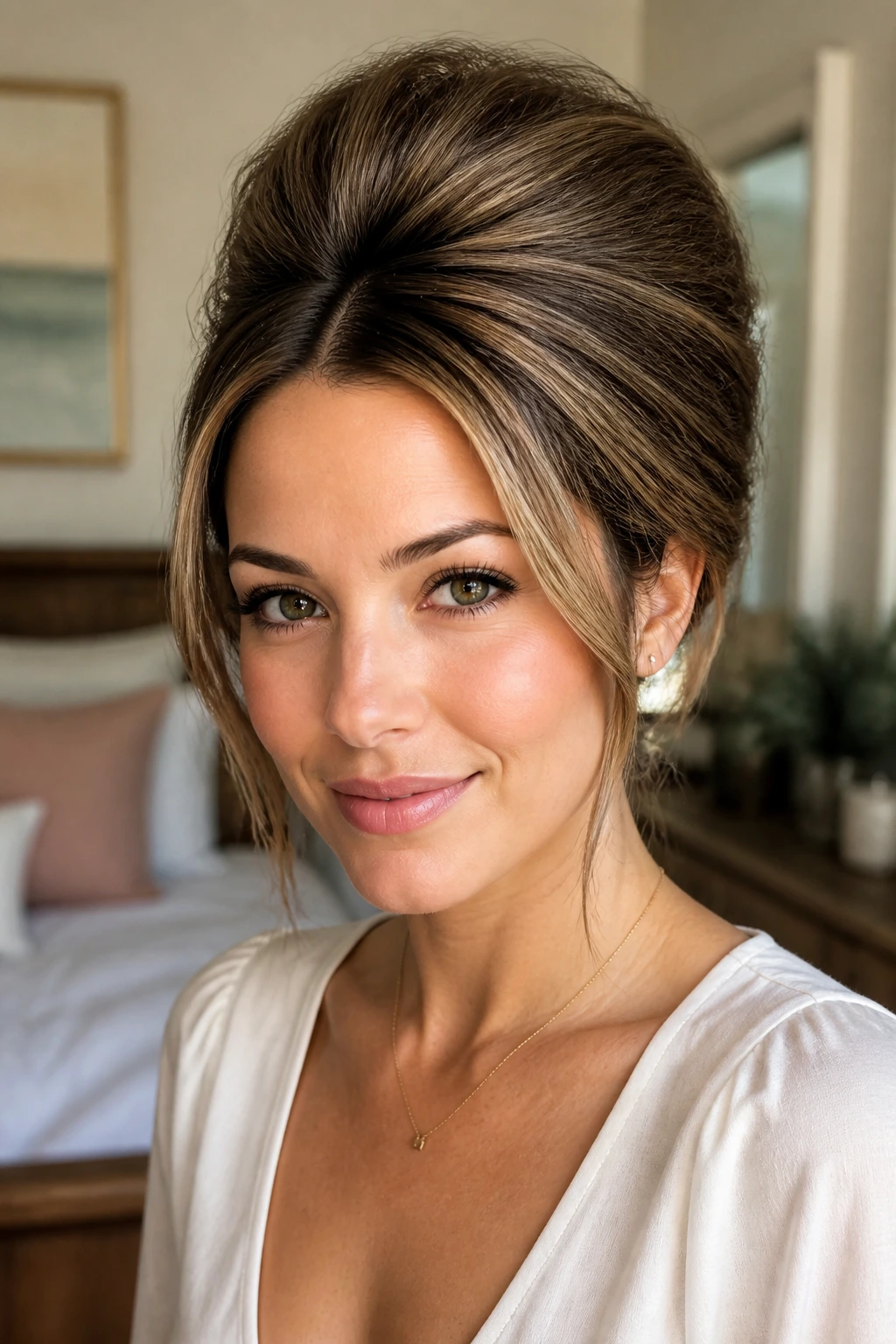
-
The crown gets structure fast: A little teasing at the roots or a hidden pad can change flat hair into something with shape in under 15 minutes.
-
They suit more than one mood: Some versions lean old-Hollywood and smooth, while others keep the texture soft and touchable instead of rigid.
-
They flatter the face without heavy styling: The extra height pulls the eye upward and gives cheekbones, earrings, and necklines more room to show.
-
They work with second-day hair: A bit of dry shampoo and a root lift often make bouffant styles easier to build when the hair is not freshly washed.
-
They hold up under accessories: Pins, combs, ribbons, pearls, and veils all sit better when the crown has a little base to anchor them.
-
They translate across hair lengths: Long hair, shoulder-length hair, and even shorter cuts can all get a bouffant effect with the right sectioning and pinning.
1. Soft Crown Bouffant With Side Sweep
This is the bouffant for people who want lift without looking like they borrowed a costume wig. The crown has a gentle bump, the front is brushed into a side sweep, and the ends stay smooth enough to feel polished.
It works especially well on medium-to-long hair that has some natural bend. A light mist of texturizing spray at the roots gives the teasing something to grip, and a side part helps the volume look intentional instead of puffy. Keep the bump centered slightly behind the hairline, not way back on the head, or the style starts to look dated fast.
Why it works
The side sweep softens the height, which matters if you want elegance instead of drama. It also gives fine hair a little more visual density, since the brushed-front section hides the teasing underneath. A few bobby pins tucked in a crisscross pattern are enough to keep the shape from sliding.
Best on
- Straight or lightly wavy hair
- Oval and round faces
- Evening events where you want polish, not severity
A narrow curling iron on the front pieces can help the sweep sit in place. Don’t make the wave too tight. That changes the whole mood.
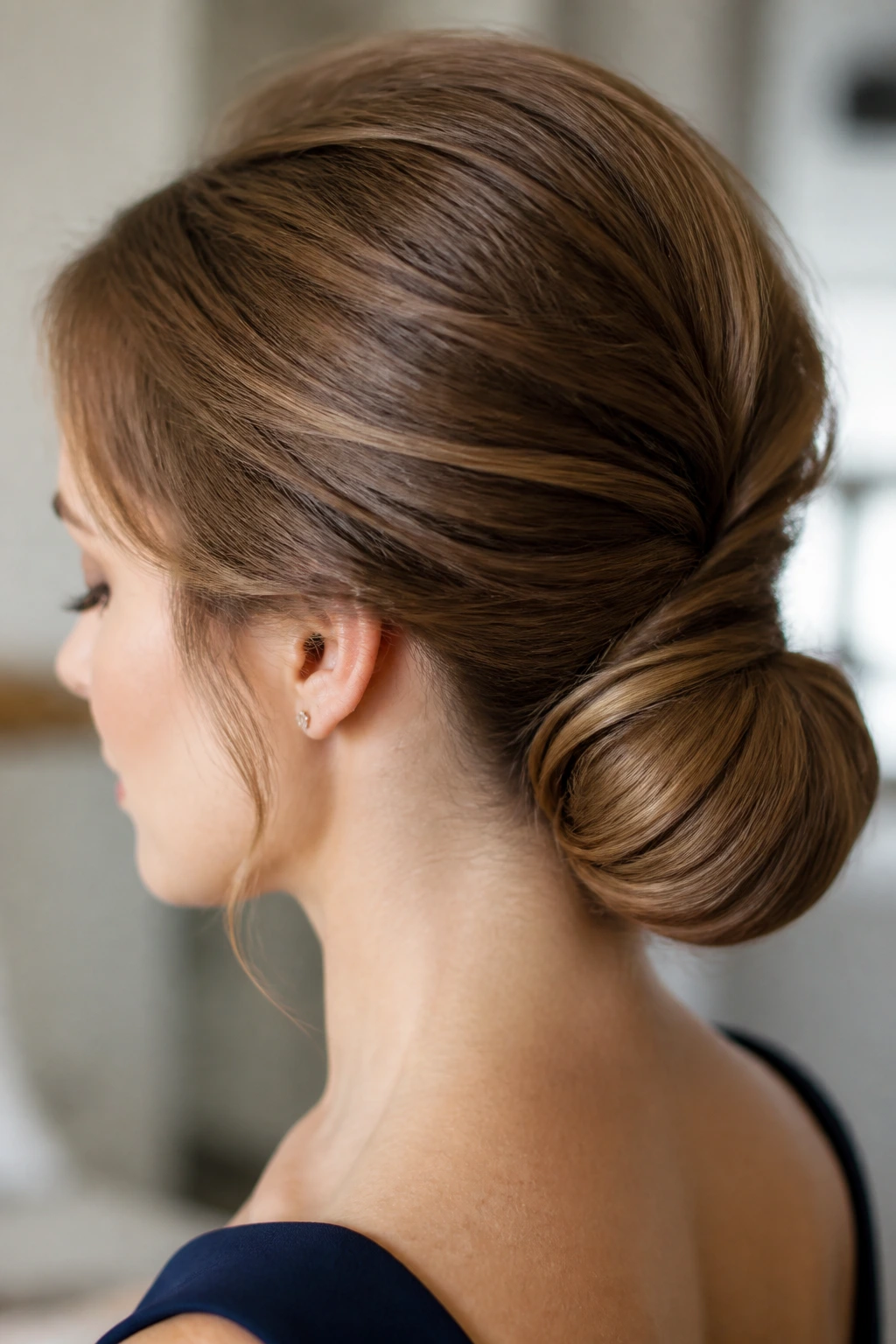
2. Low Bouffant Chignon With a Hidden Wrap
A low chignon gets much more interesting when the crown has height first. The bouffant keeps the top from going flat against the scalp, and the bun at the nape reads neat instead of severe.
The cleanest version starts with a small tease at the crown, then the hair is brushed over just enough to hide the lift. From there, twist the length into a low knot and wrap a section around the base so the pins disappear. It’s one of those styles that looks expensive because nothing shouts for attention.
What makes it stand out
The lift at the crown creates a graceful line from forehead to bun, which matters if you’re wearing earrings or an open neckline. It also keeps the back from looking too tight against the head, which is a common problem with low buns.
Style note
Use a smoothing cream only on the surface. If you put it near the roots, the bouffant loses grip and slides.
3. Half-Up Bouffant With Loose Waves
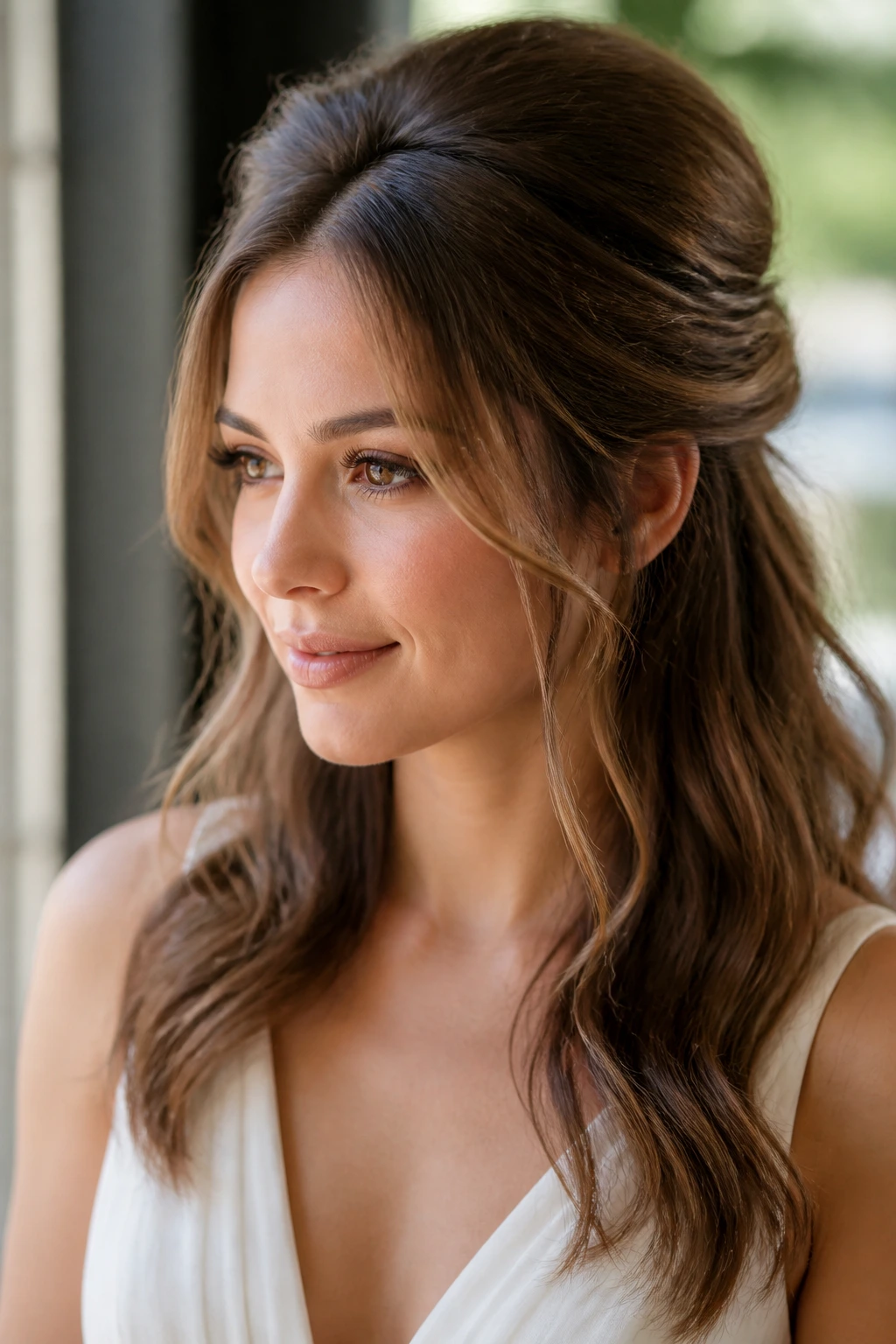
Half-up styles can go limp quickly, which is why the bouffant part earns its place here. The crown gets lifted and pinned, then the lower half falls in soft waves that move instead of sitting stiffly.
This is a good option when you want hair off your face but still want length around the shoulders. It’s especially flattering on layered cuts, where the waves show off the shape without needing a heavy curl pattern. If the top section is too small, though, the style will barely register. Take enough from the sides and crown to create a proper lifted panel.
How to get it right
- Curl the lower section first, then clip it while you build the crown
- Backcomb only the root area, about 2 inches deep
- Smooth the outer layer gently with a brush so the teasing stays hidden
A few face-framing pieces left out at the temples keep the shape softer. They also stop the bouffant from feeling overworked, which is a real risk with half-up styling.
4. Sleek Bouffant Ponytail
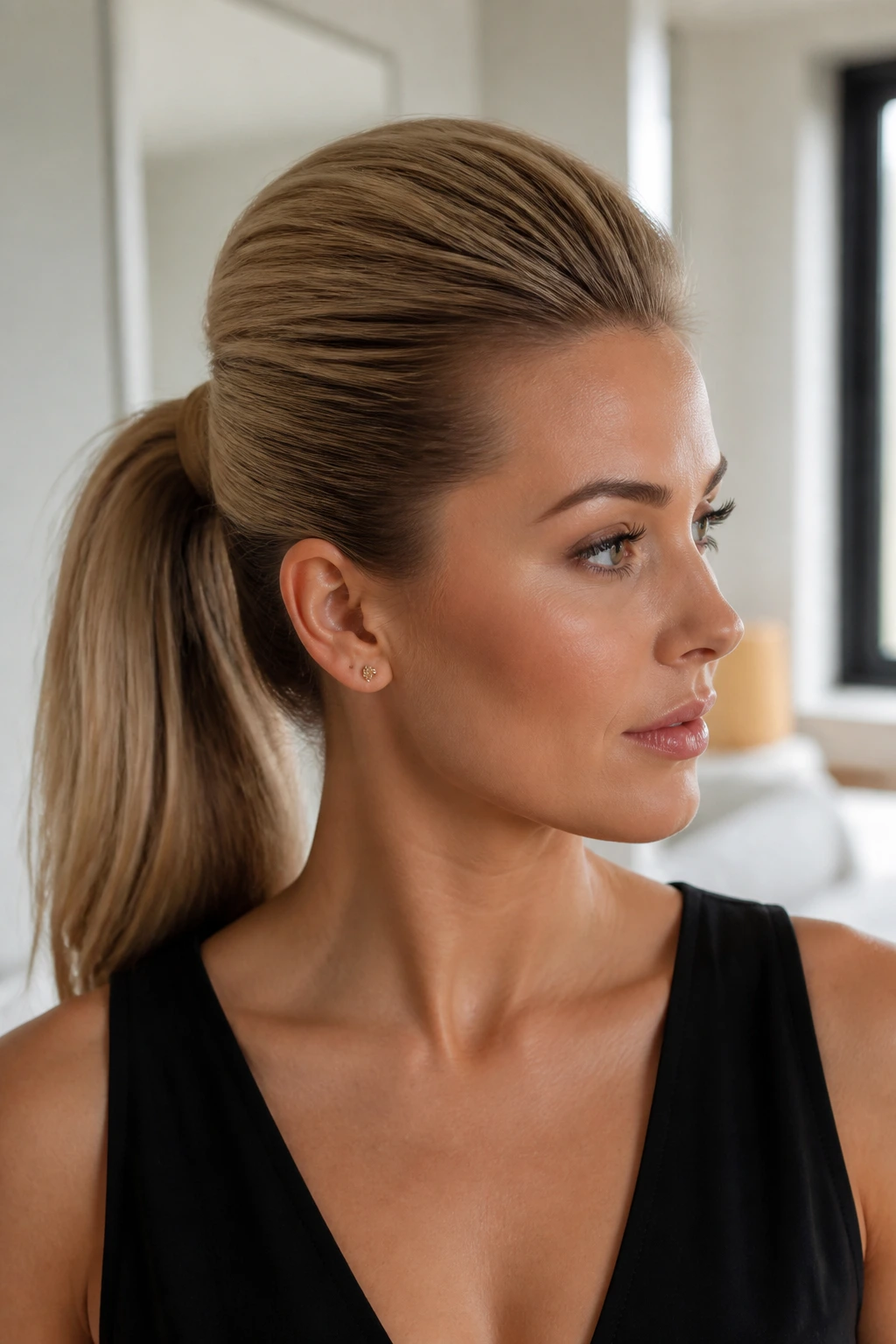
A ponytail sounds plain until you give the crown a little lift. Then it becomes crisp, elegant, and far more flattering than a flat tie at the nape.
The key is balance. The front and crown should be smoothed, not lacquered, and the ponytail itself should sit cleanly with a wrapped section hiding the elastic. This version works best when the volume stays modest—enough to shape the head, not enough to look like a separate section bolted on top.
You can wear it high for a sharper effect or medium-high for something more classic. Either way, the bouffant makes the ponytail feel finished instead of casual.
5. Modern Beehive Bouffant
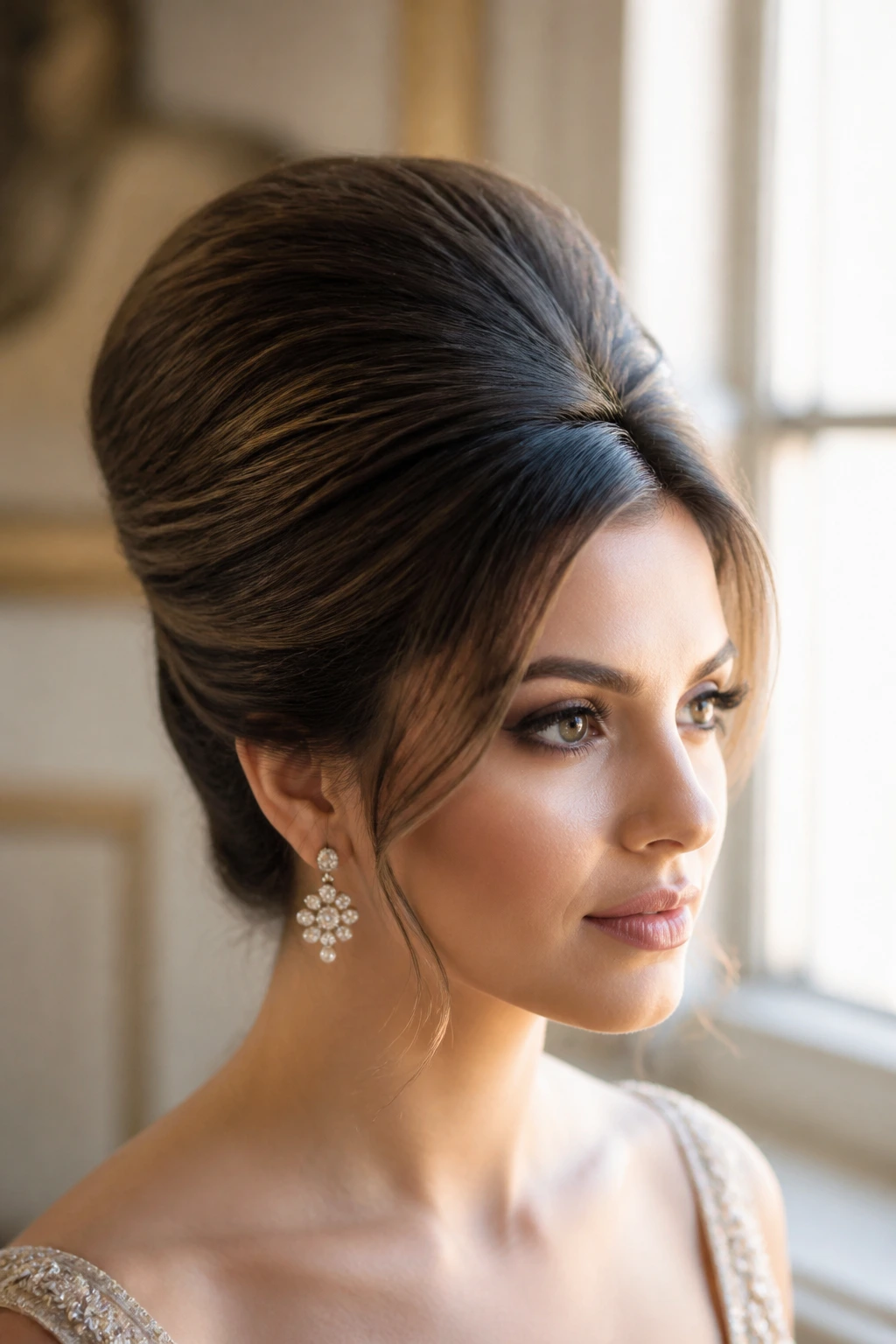
A beehive is still a beehive, even when you make it softer. The silhouette is fuller at the back of the crown, and the edges are brushed smooth so the shape looks sculpted rather than teased into chaos.
The modern version is less about height for its own sake and more about a rounded profile. A tail comb, section clips, and a strong-hold hairspray make the job easier, but the real difference comes from restraint. Leave the front clean, add lift at the center crown, then secure it with pins before you shape the outer layer.
What to watch for
If the beehive sits too far back, it can drag the whole face down. Keep the lift anchored closer to the hairline and let the back build gradually.
It’s a formal look. No question. But when the edges are brushed properly, it still feels polished rather than theatrical.
6. Braided Crown Bouffant
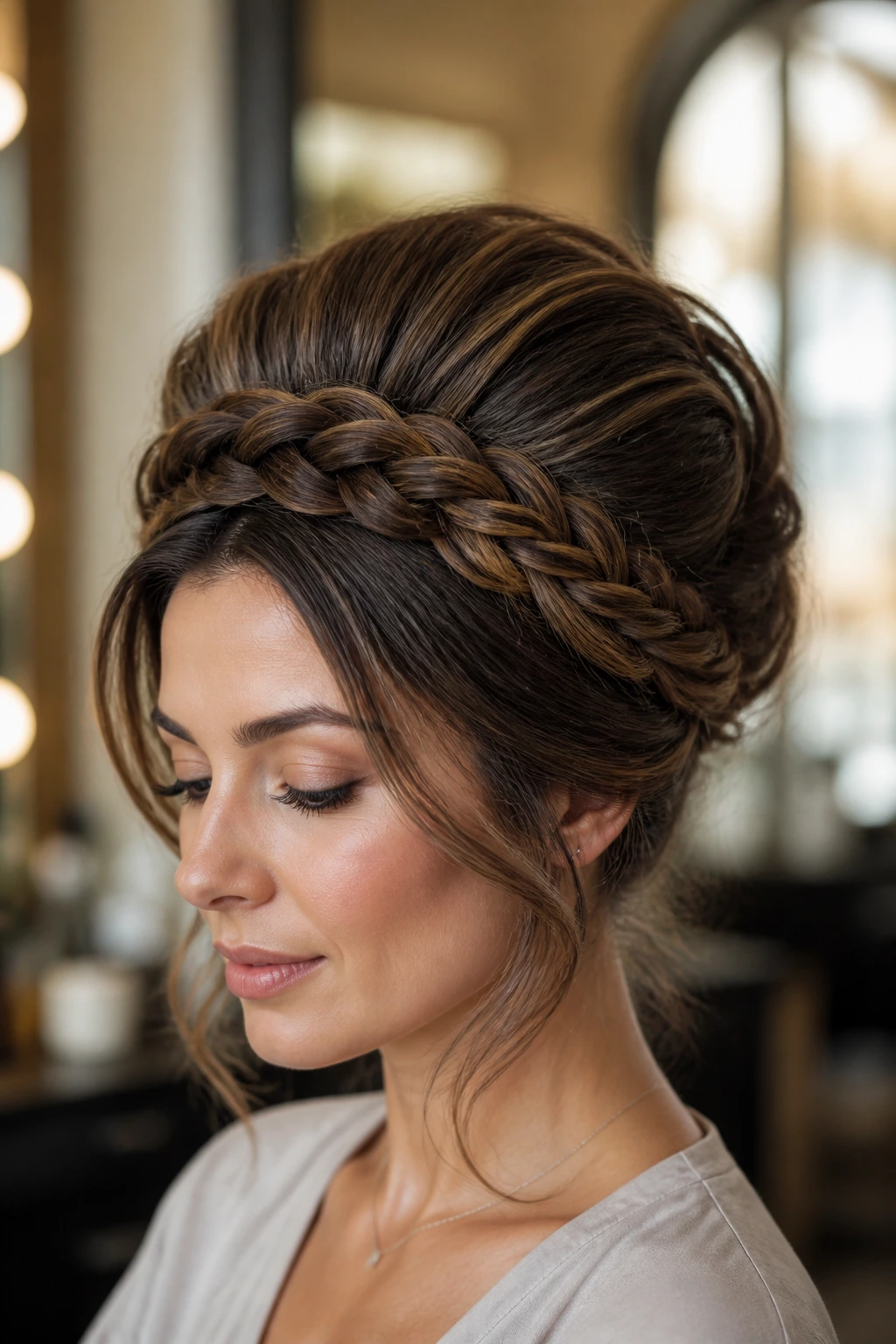
Braids and bouffant height belong together more often than people admit. The braid gives the style texture and visual detail, while the teased crown keeps the top from flattening under the braid’s weight.
A halo braid, side braid, or even a thin braid feeding into the updo all work here. The volume should be built first, then the braid placed around it so the shape stays lifted. That order matters. If you braid first and try to force height later, the top tends to feel squashed.
This style is especially useful for thicker hair because the braid controls the bulk. It also hides pins beautifully, which is half the battle with formal updos.
7. French Twist Bouffant
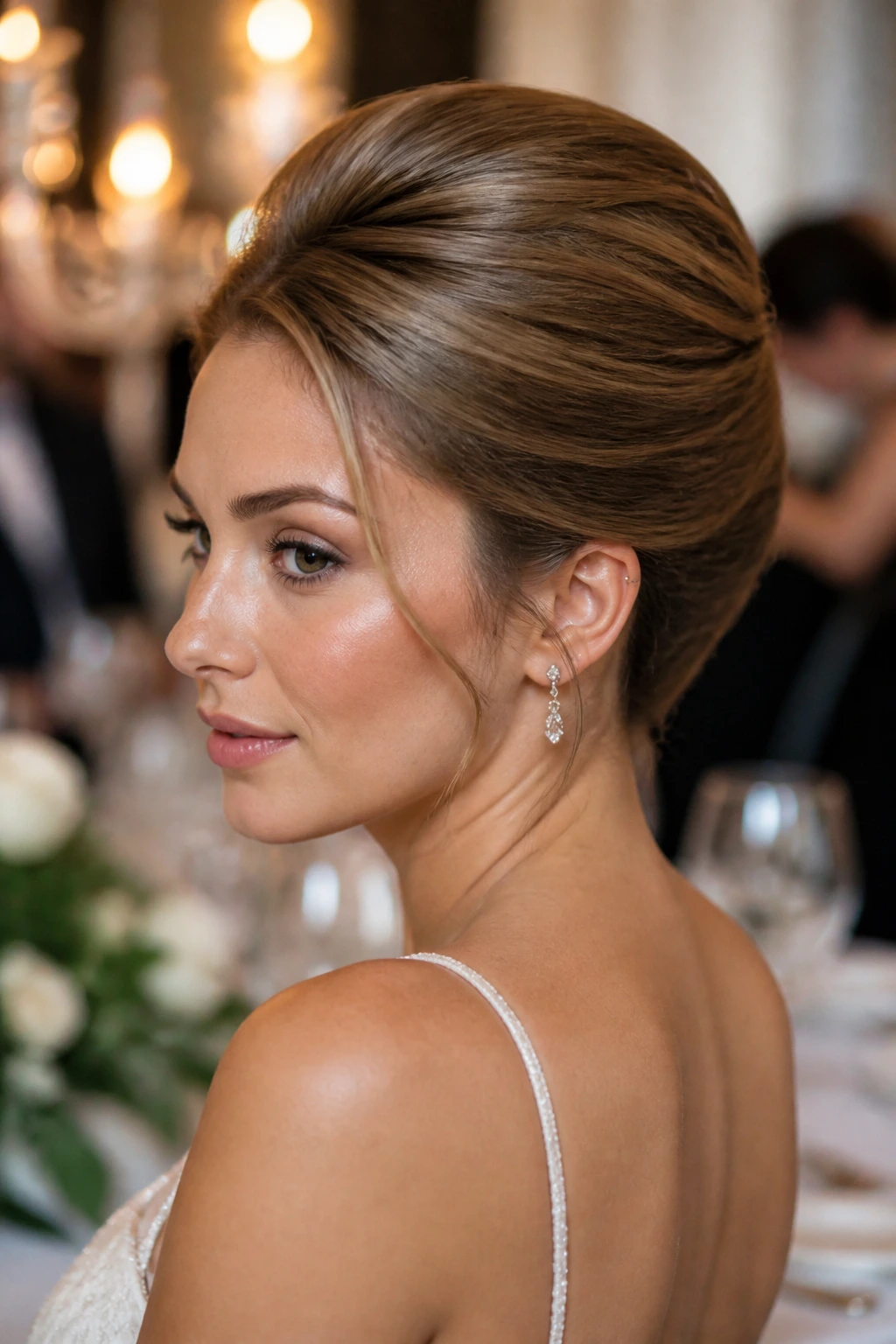
A French twist becomes much more flattering when the crown has some space in it. Without that lift, the style can look pulled too tight against the head. With it, the whole shape becomes longer, cleaner, and more graceful.
The trick is to create a little cushion at the crown, smooth the outer layer, then twist the length upward with your hands rather than forcing every strand into place at once. A few loose wisps near the ears can soften the line, but don’t overdo that part or the twist loses its sharpness.
Best use
- Formal dinners
- Weddings
- Any event where you want a controlled profile
If your hair is slippery, sprinkle a touch of texture powder at the roots before you start. It gives the twist more hold without making it gritty.
8. Side-Swept Bouffant Updo
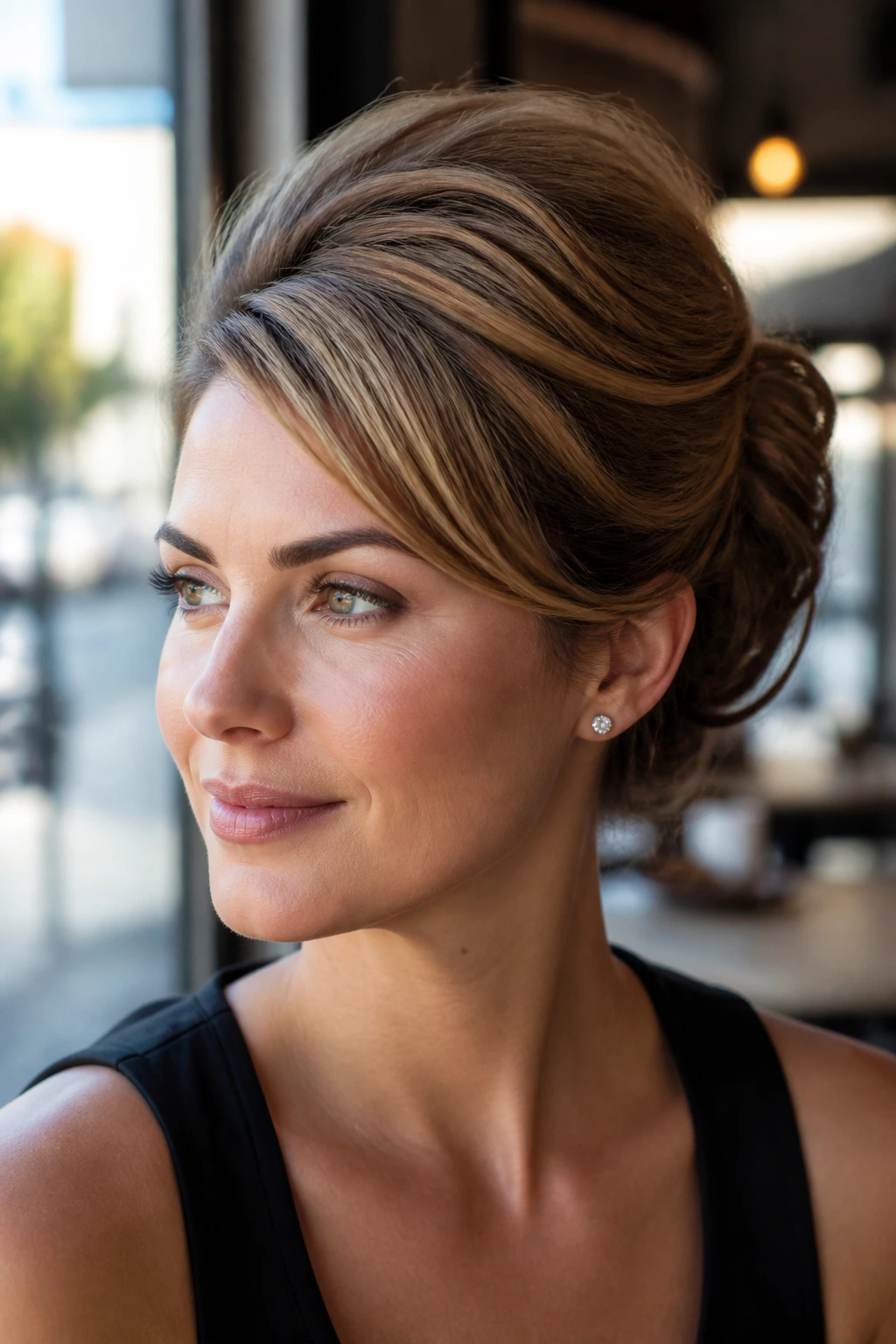
Side-swept styles are kind to most face shapes because they break the symmetry just enough. Add a bouffant at the crown, then direct the top section toward one side and pin the rest into a low-to-mid updo.
The result feels romantic without becoming messy. It also gives you an easy way to show off one ear, which is useful if the earrings are part of the plan. A side sweep works best when the volume at the crown stays soft and the ends are tucked with a little curve instead of flattened hard against the head.
A touch of shine spray on the surface can help the style look finished. Keep it off the roots. Again, roots need grip, not gloss.
9. Voluminous Bouffant Bun
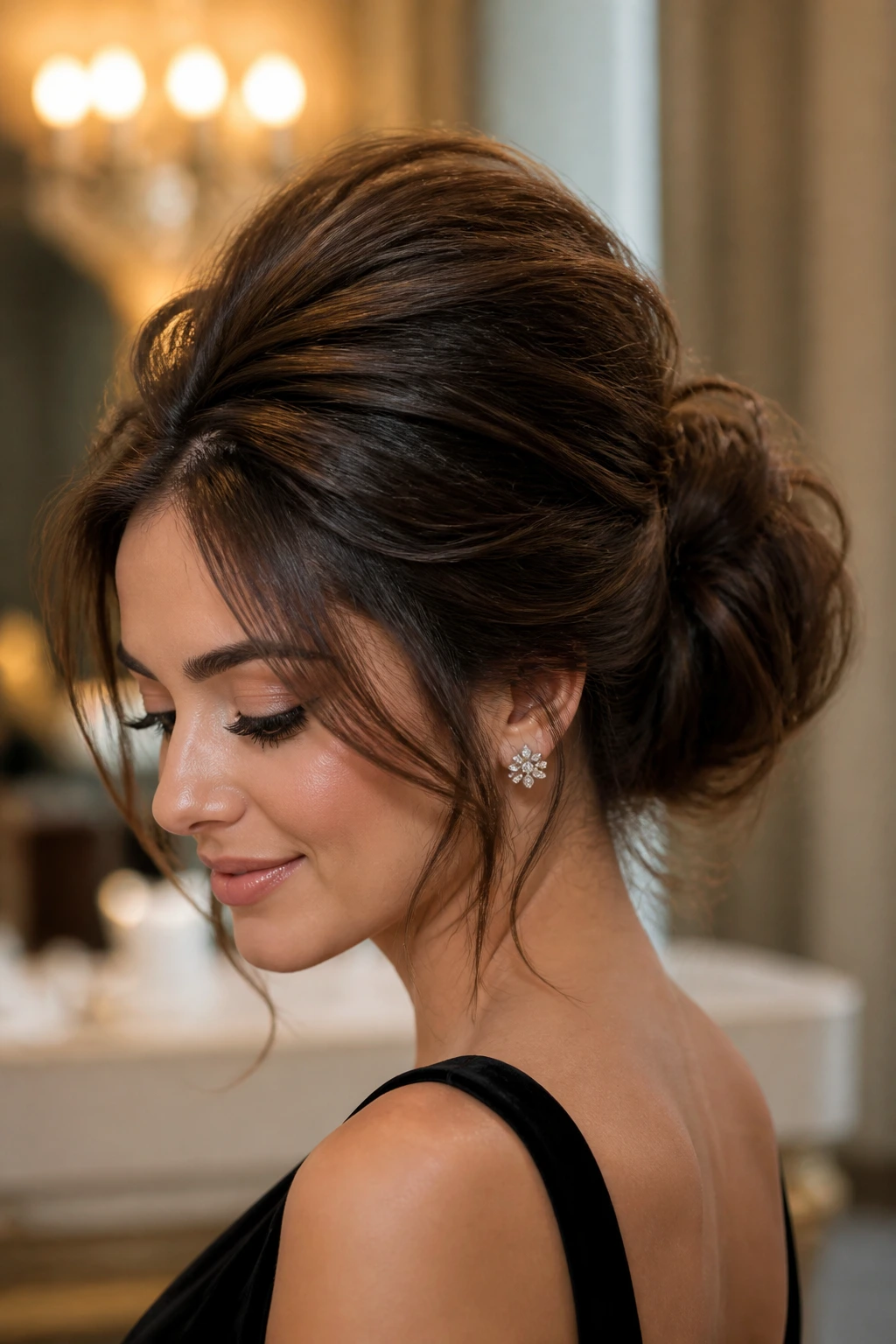
This one has presence. The bun sits low or mid-level, but the crown is lifted enough that the profile reads fuller and more refined than a standard bun.
The easiest version is built in sections: crown teased first, top brushed back, length gathered into a bun, and the bun pinned in a slightly rounded shape so it does not look like a tight coil. Leave the bun a little airy. A perfectly compressed bun can feel harsh when paired with a bouffant.
This is a strong choice for thick hair because it controls the weight without flattening the top. Fine hair can do it too, but a donut or padding will help the bun look substantial enough to match the crown.
10. Retro Roll Bouffant With Loose Ends
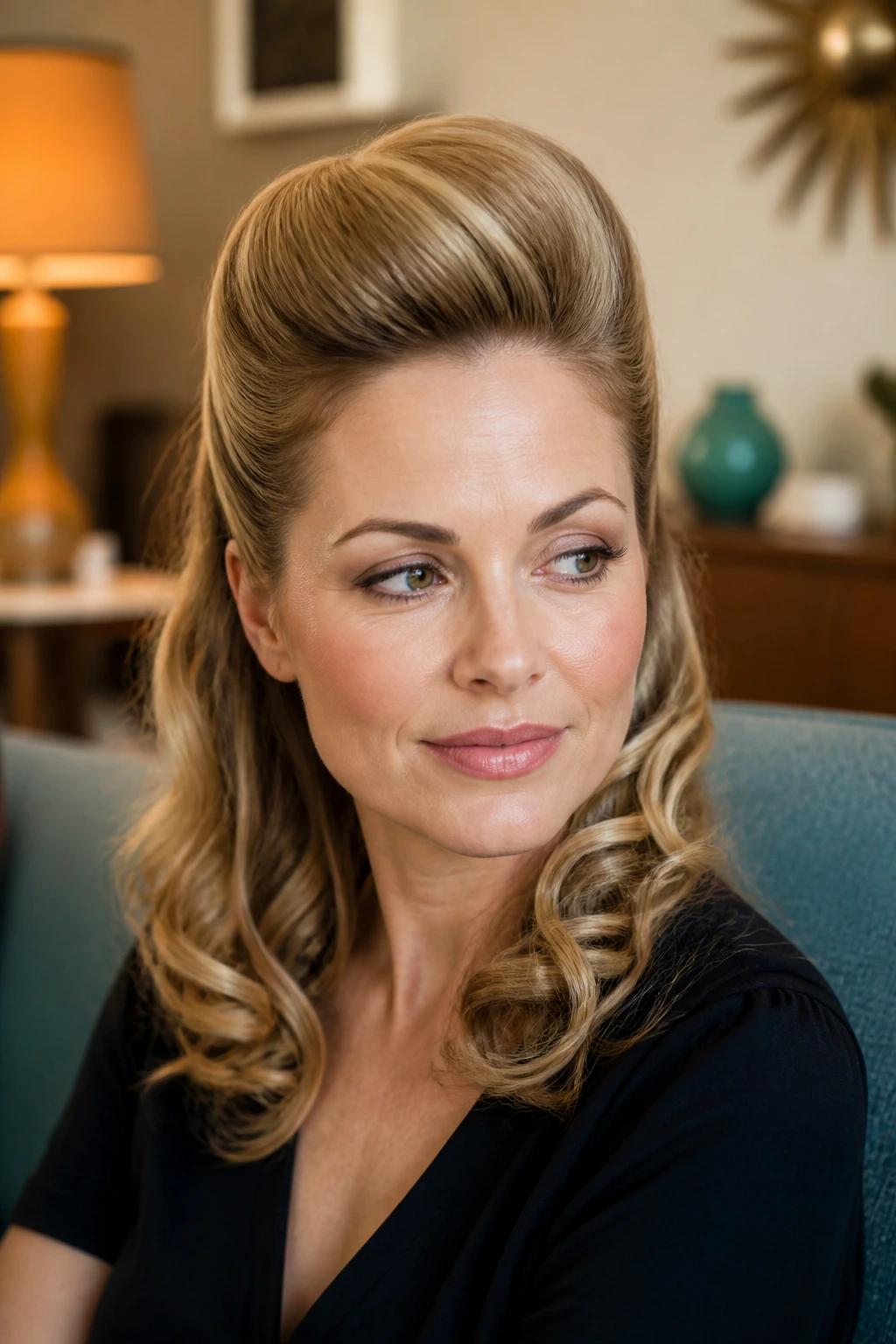
A rolled front with soft ends gives the bouffant a bit of vintage charm without turning it into a full retro costume. The front section is rolled back over the crown, then the remaining hair is left loose, curled, or tucked in a low arrangement.
That contrast is the whole point. The top feels shaped and neat, while the length stays airy. It’s a nice answer when you want something old-school but not overly formal.
The roll should be smooth enough to show the curve. If it starts looking lumpy, the section is too wide or the pins are placed too close together. Use smaller sections and a pin hidden inside the roll rather than piling everything in from the outside.
11. Low Knot Bouffant With Face-Framing Pieces
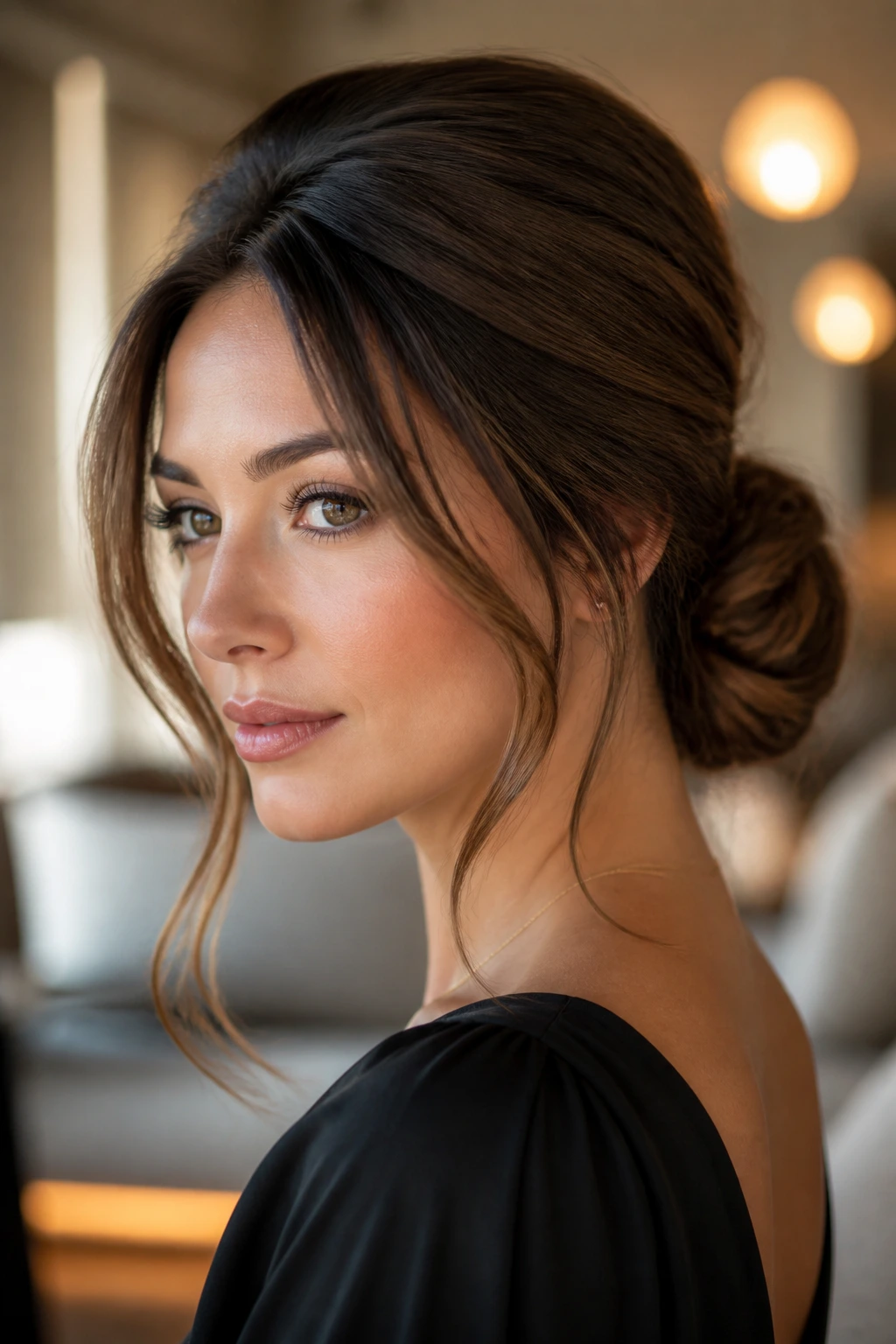
There’s something good about a low knot that starts with a lifted crown. The shape gets more dimension, and the face-framing pieces give it a little movement around the jawline.
This style works best when the front sections are deliberately left out before you gather the rest. Don’t yank them free at the end; that usually makes the pieces look accidental. Shape them with a curling iron or flat iron first, then let them fall naturally.
A low knot can be neat or slightly undone. Either way, the bouffant helps it read as a complete style instead of a knot you threw together when you were in a hurry.
12. Old-Hollywood Waves With a Teased Crown
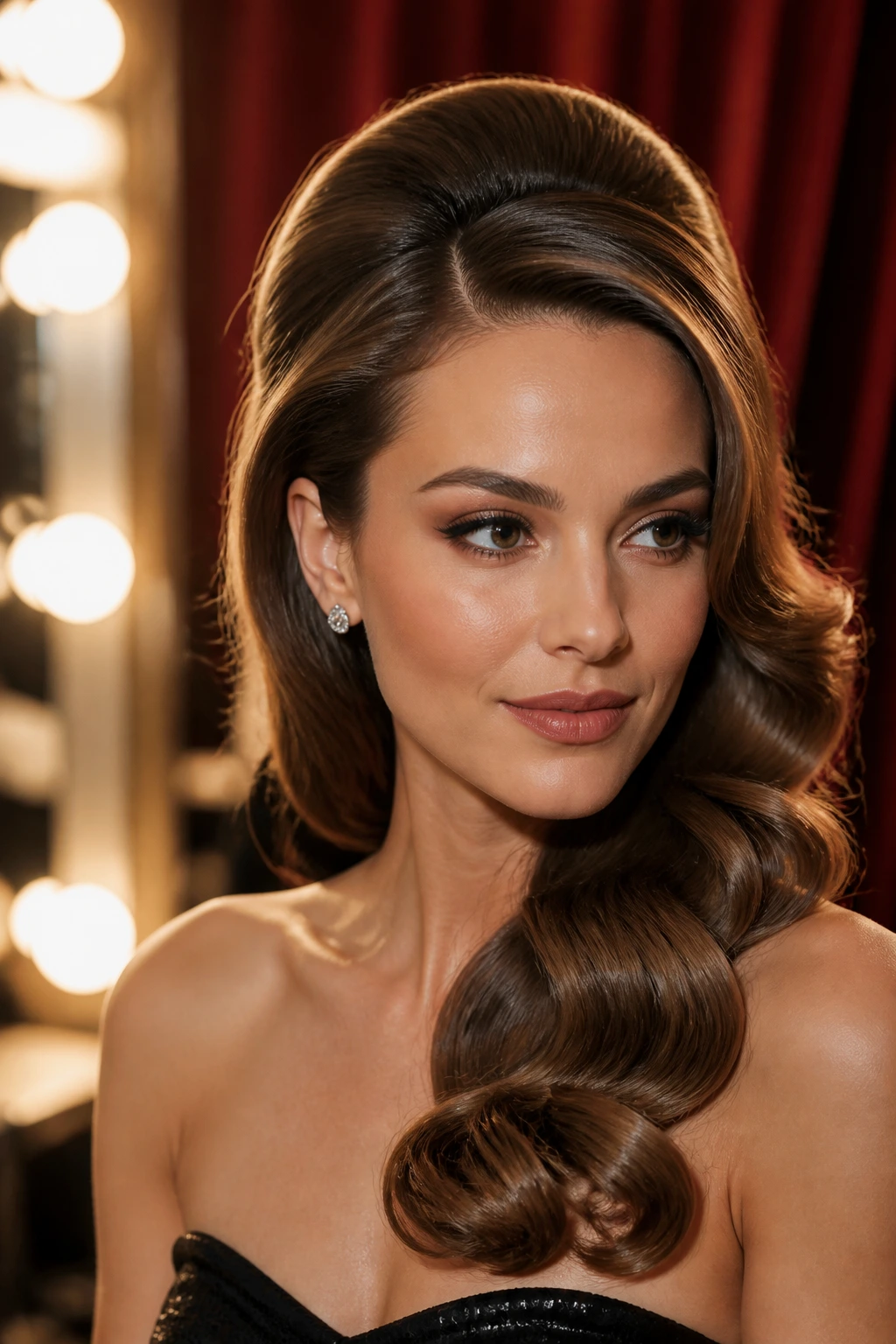
The crown lift gives these waves their red-carpet shape. Without that little bump, the side part and smooth wave pattern can sit too flat, especially on fine hair.
The length should be brushed into broad, glossy waves rather than tight curls. Think soft bends and a clean sweep over one shoulder. The bouffant is subtle here, but it matters more than it looks, because it keeps the upper shape from collapsing under the weight of the waves.
A deep side part is the usual choice, though a softer off-center part can work if you want a less dramatic profile. Keep the front smooth, not shellacked.
13. Bubble Ponytail Bouffant
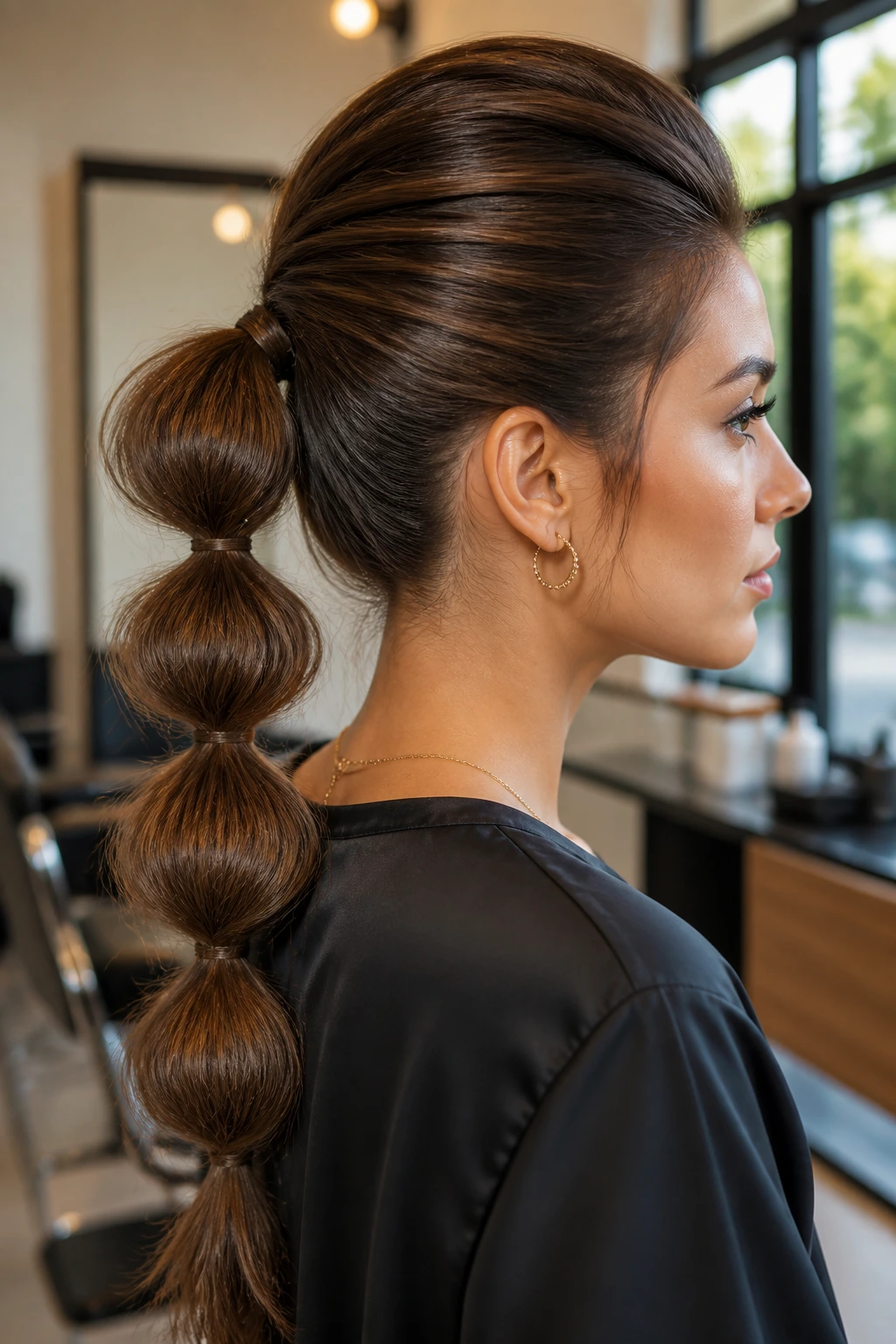
A bubble ponytail gets more interesting when the crown has lift. The bouffant gives the ponytail a strong starting point, and the elastic sections down the length turn it into something sculptural.
This is one of the more playful styles in the group, but it can still look polished if the top is sleek and the bubbles are evenly spaced. Use small clear elastics or wrap tiny strands of hair around each one if you want a cleaner finish. The style is easier to pull off on medium-to-long hair, though shorter lengths can get a similar effect with fewer sections.
The trick is not to flatten the root area while building the bubbles. That first lift is what keeps the whole thing from reading like a school-day ponytail.
14. Pearl-Pin Bouffant Bun
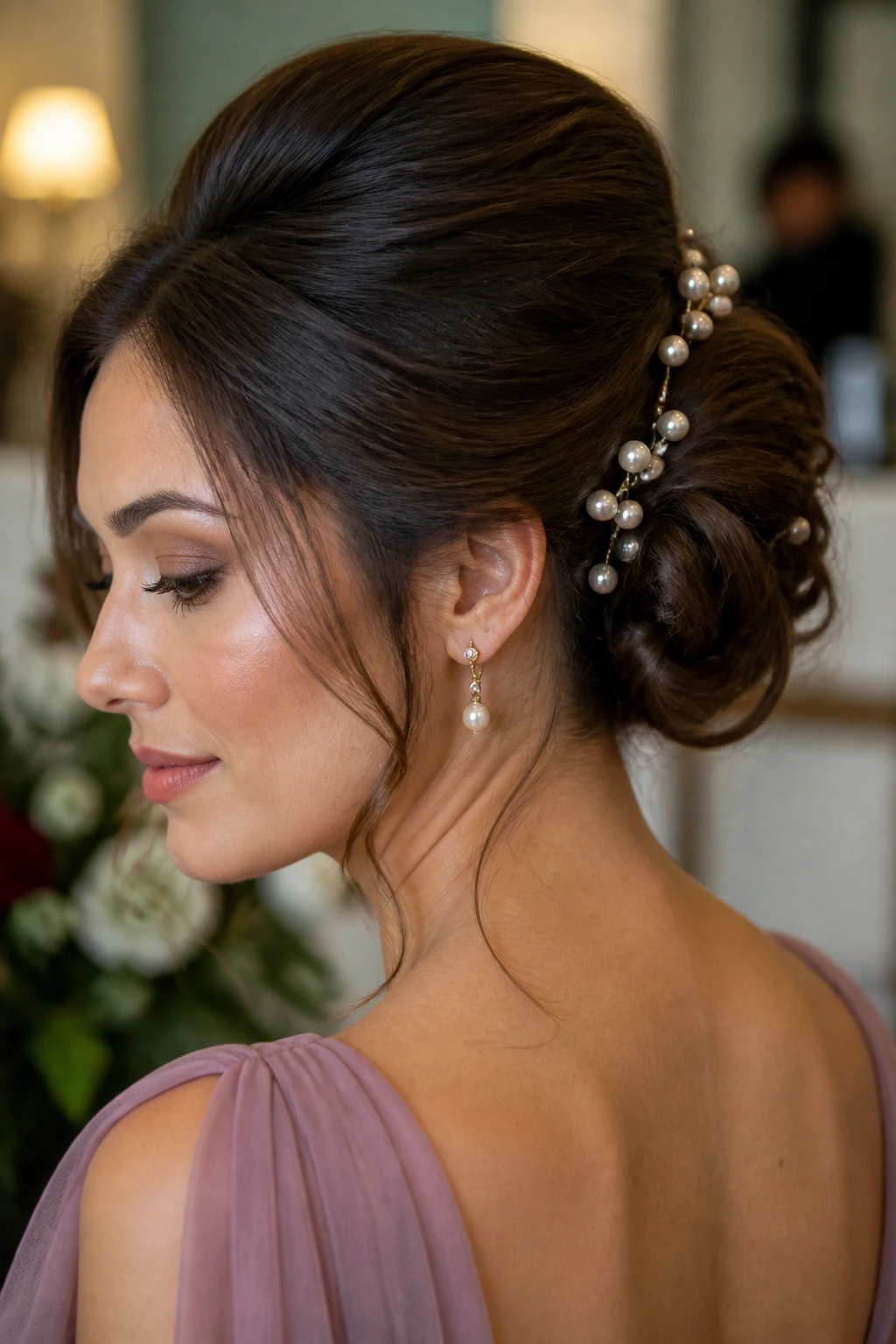
Pearl pins and bouffant height belong in the same sentence. The volume gives the accessories a base to sit on, and the pins add just enough sparkle to keep the look from feeling plain.
A low bun or mid bun works best here, especially if the crown is softly teased and brushed smooth. Place the pearls where the eye naturally lands: near the twist, around the bun, or at one side of the lifted crown. Too many pins can feel crowded. Three or five well-placed pieces usually beat a scattershot approach.
This is a smart choice for wedding guests and formal events because it photographs cleanly under indoor light. The pearls reflect light gently, which helps the hair shape show up.
15. Soft Bouffant Bob Styling
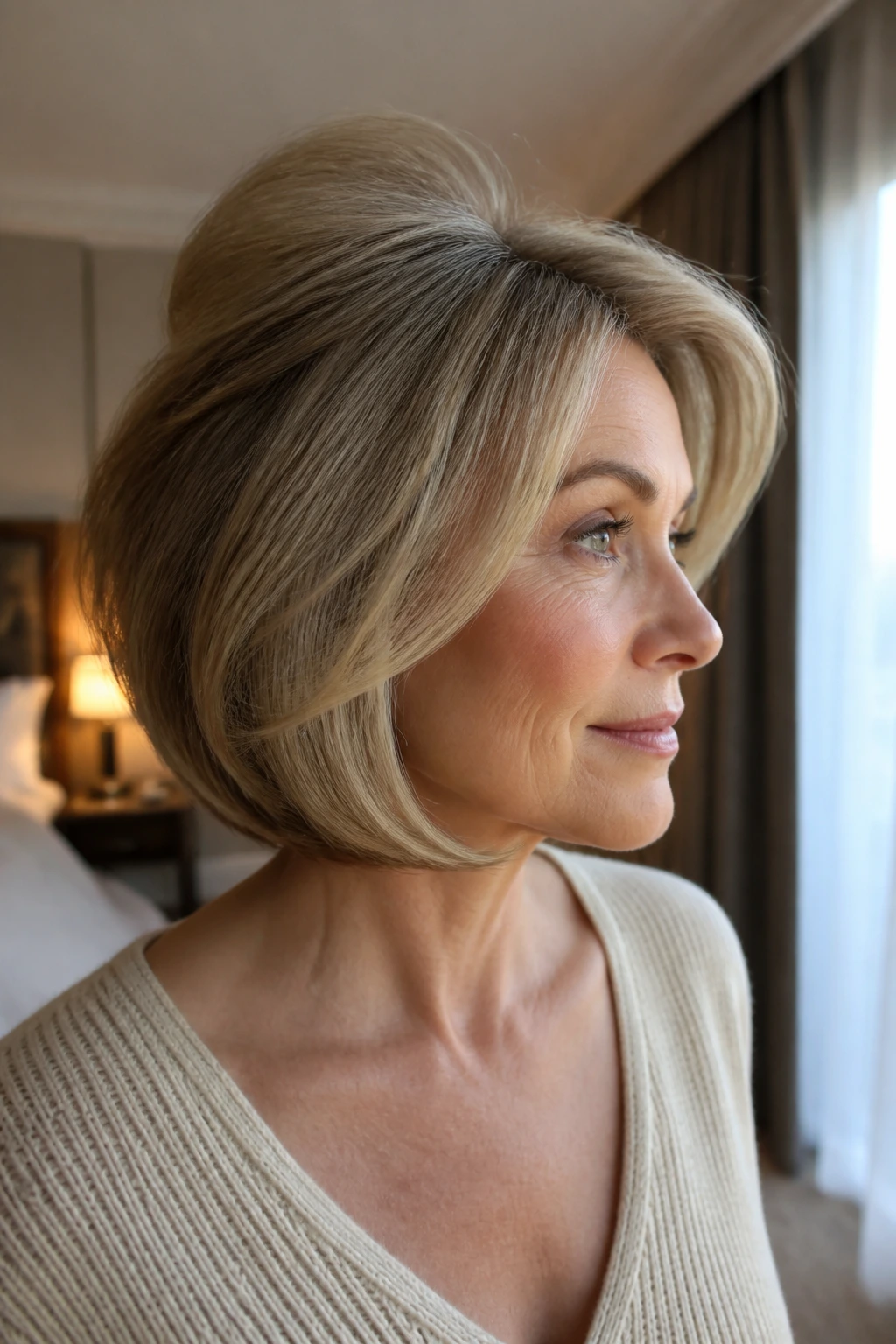
Shorter hair can absolutely pull off bouffant volume. The shape is smaller, sure, but that does not make it less elegant. A bob with root lift at the crown suddenly looks deliberate instead of tucked-down.
The styling usually starts with a round brush at the roots and a little teasing at the top section only. Then the upper layer is smoothed over so the bump looks seamless. The ends can stay tucked under for a polished finish or flip slightly outward if you want a lighter touch.
This is one of the easiest ways to make a bob feel event-ready. And yes, it works on lobs too. The crown lift does most of the visual work.
16. Wrapped-Base Bouffant Ponytail
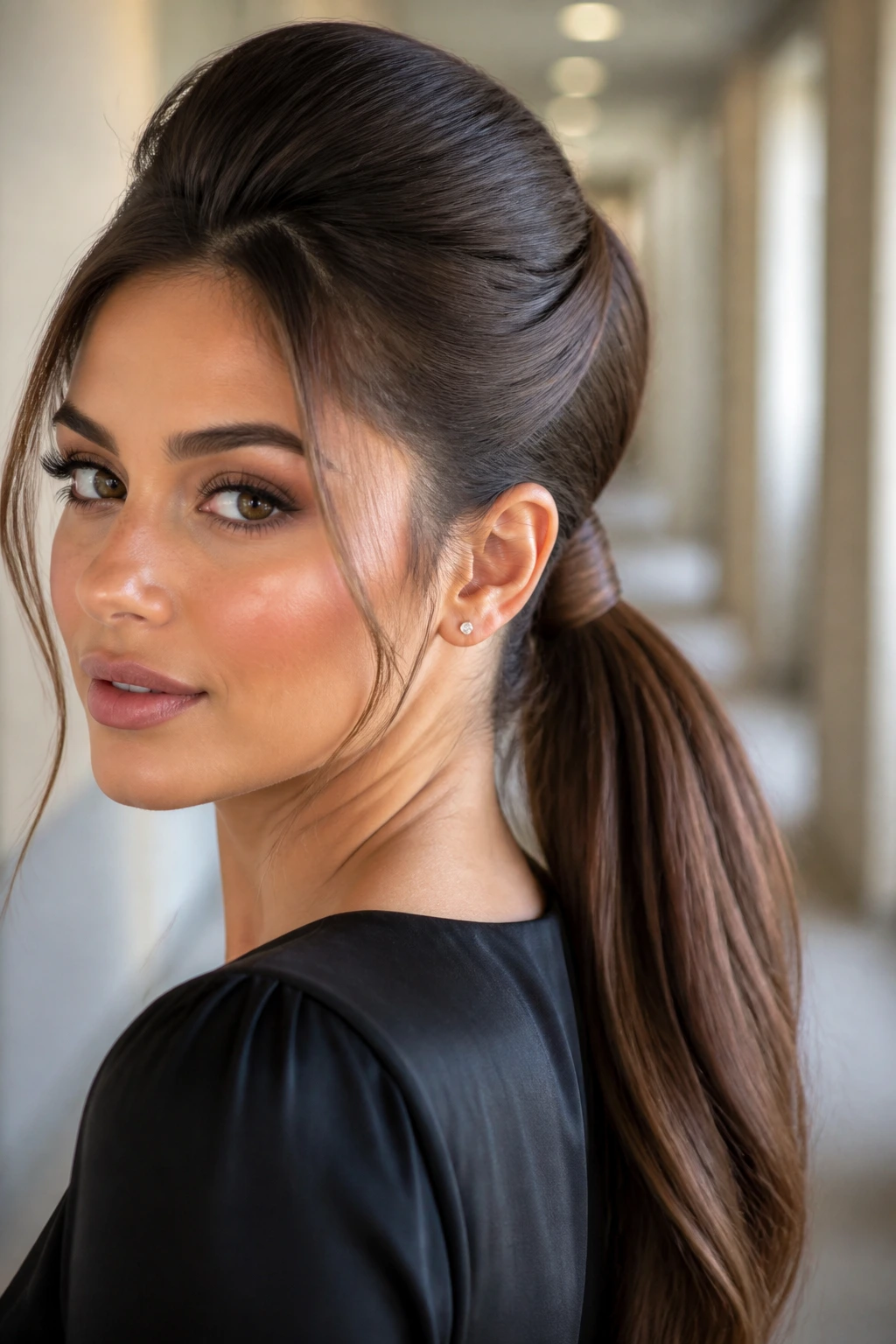
A wrapped-base ponytail is clean on the surface, but the bouffant at the crown gives it the lift it needs to feel finished. That combination is harder to beat than people expect.
The ponytail can sit low, medium, or high, but the base should stay neat. A wrapped section of hair hides the elastic and gives the style that neat, salon-done feeling. If your roots are too sleek, the crown can look lifeless. A small amount of teasing and some root spray fix that fast.
This is a nice compromise style when you want practicality and shape in the same look. It’s also one of the better options for long workdays that end in dinner.
17. Floral Bouffant Updo
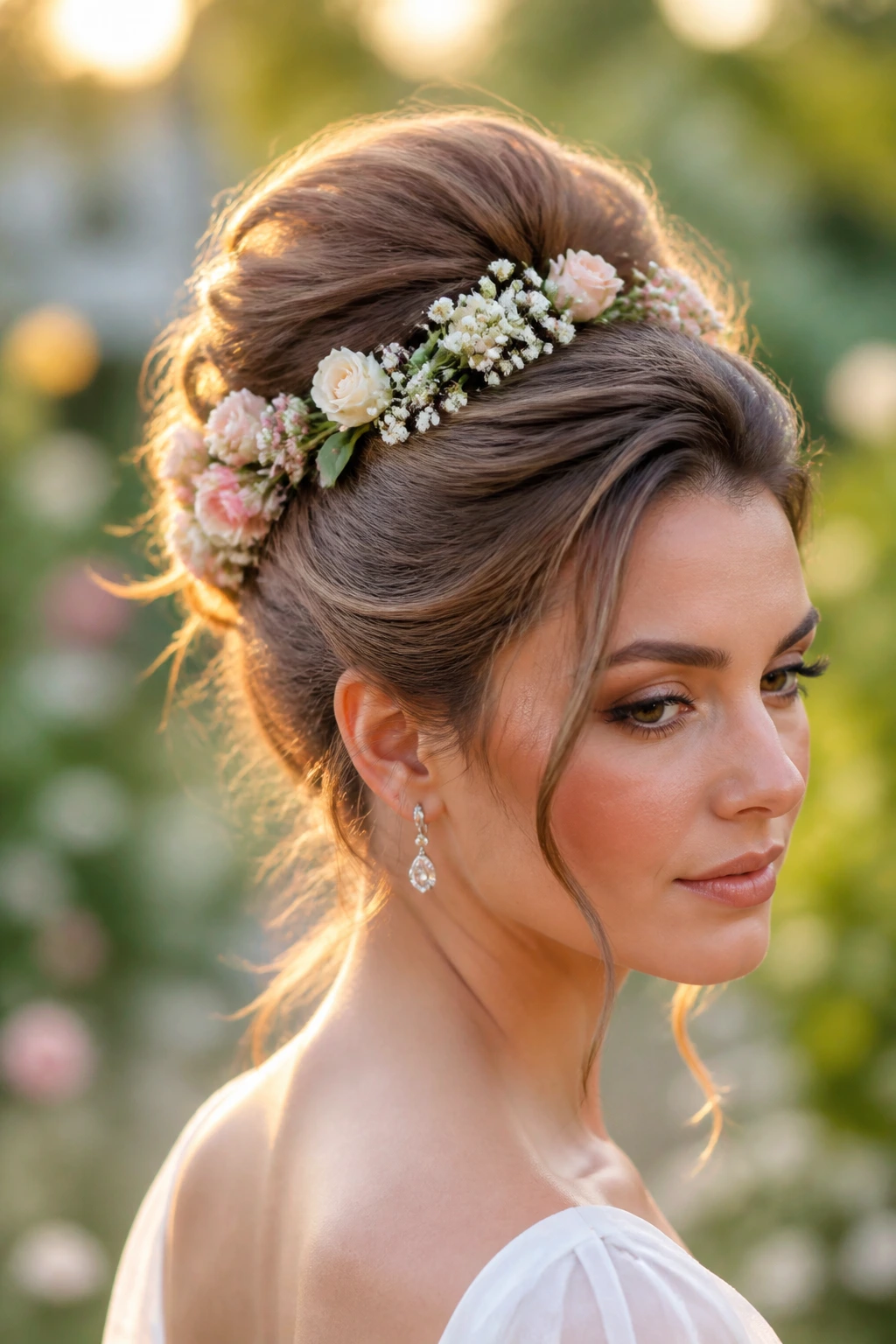
Flowers and bouffants work because the lift keeps the floral placement from swallowing the hair. You get a proper updo shape, then the blossoms sit where they can be seen instead of disappearing into the style.
Fresh flowers, silk flowers, or tiny hair vines can all work here. The crown lift should be built first so the flowers don’t flatten the top. Choose blooms that are small enough to sit neatly—sprigs, buds, or a few medium flowers rather than a heavy cluster. Too much weight will pull the style down.
This version feels romantic in a way that still has structure. That balance is the whole appeal.
18. Textured Bouffant With Tousled Ends
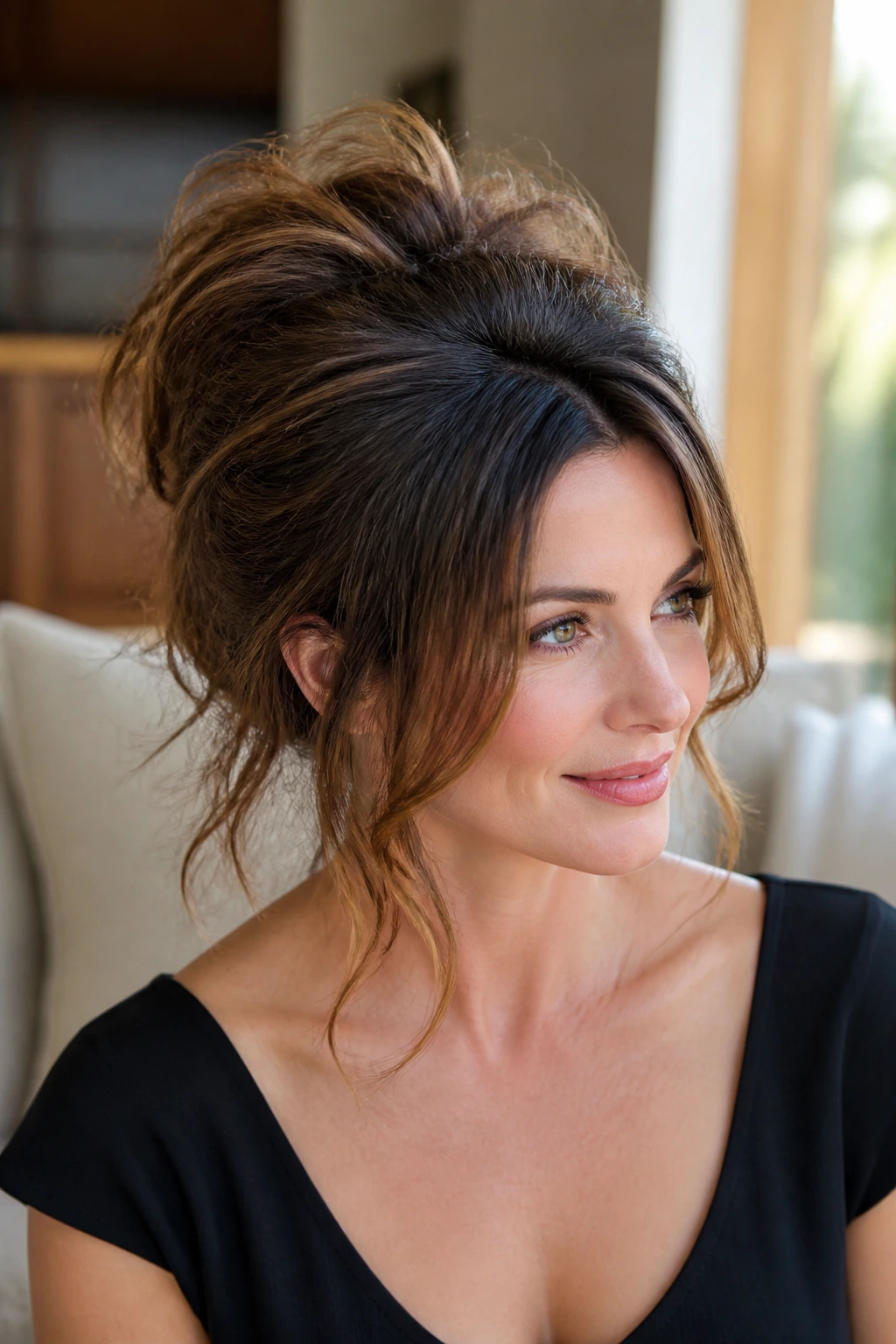
Not every bouffant needs to be smooth. A little texture through the lengths can make the crown lift feel modern, especially if the ends are softly tousled rather than curled into a strict pattern.
This style is a good fit for hair with a bit of natural wave. Start by rough-drying with mousse, then add volume at the roots and leave the ends loose. The result should look airy, not messy. If the ends get too frizzy, twist them around a large-barrel iron for a few seconds instead of overworking the whole head.
It’s a useful choice when you want elegance with a little edge. Clean crown, imperfect lengths. That contrast gives the style its energy.
19. Headband Bouffant
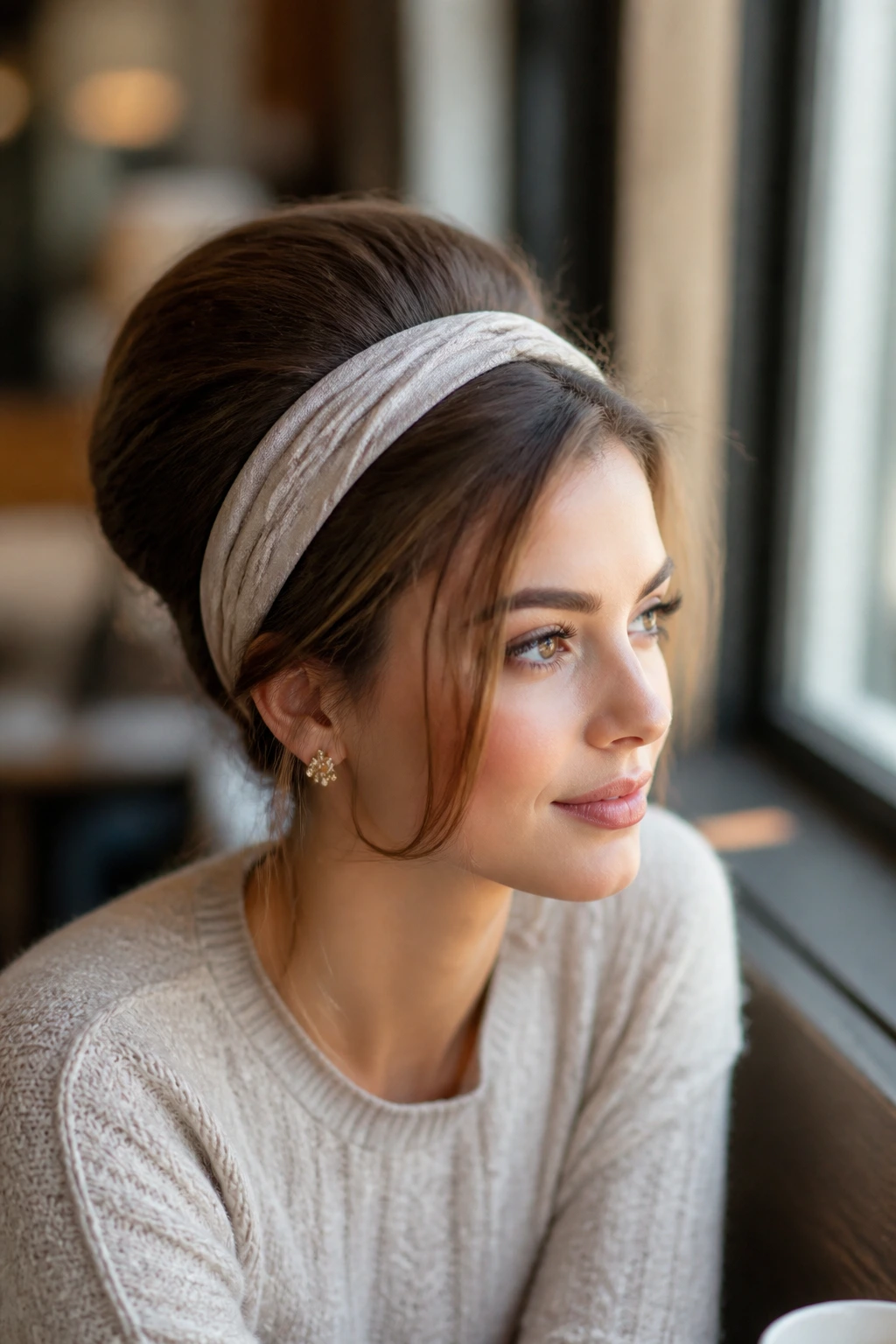
A headband can help or ruin a bouffant, depending on where the volume sits. The best versions keep a bit of height behind the band so the hair doesn’t look flattened in front.
Fabric headbands, jeweled bands, and slim metallic bands all work differently. Fabric gives softness; metal reads sharper. Either way, the lift at the crown should happen first, then the band goes on after the shape is set. If you put the band on too early, you’ll crush the volume before it has a chance to hold.
This style is good when you want a finished look with less pinning. It also saves time on days when you don’t feel like building a full updo.
20. Braided Low Bouffant Bun
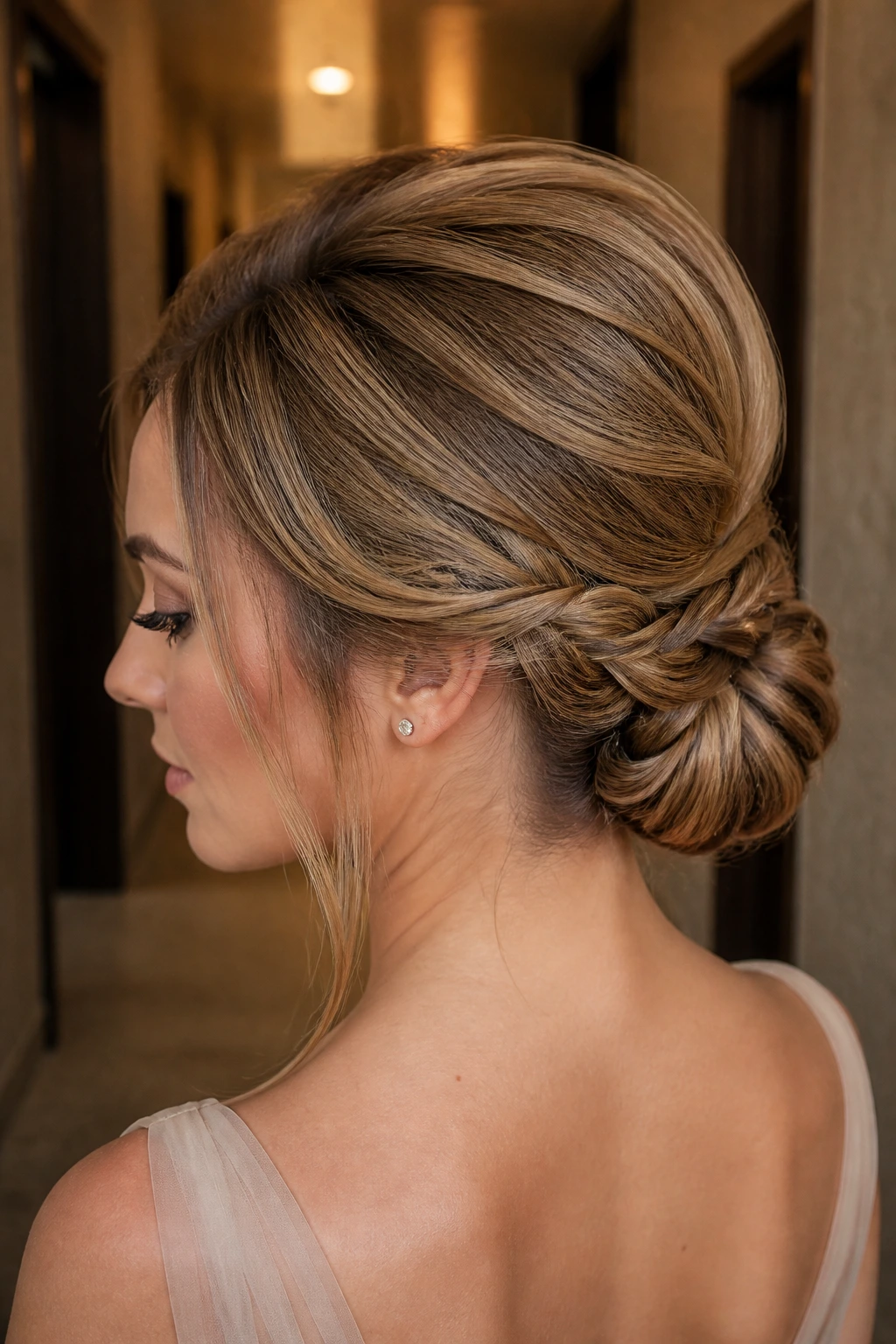
Braiding the lower section gives the bun a stronger, more detailed base. The bouffant above it keeps the top lifted, so the whole style has a clearer silhouette.
A single braid, two loose braids, or a braided twist can all lead into the bun. The lift at the crown should stay soft so the braid remains the visual focal point. If the crown gets too tall, the braid can disappear into the shape and the style loses its balance.
This is a strong choice for thick hair, since braids help contain the weight. It also holds accessories well if you want pins or combs placed near the bun.
21. Center-Part Bouffant With Curtain Pieces
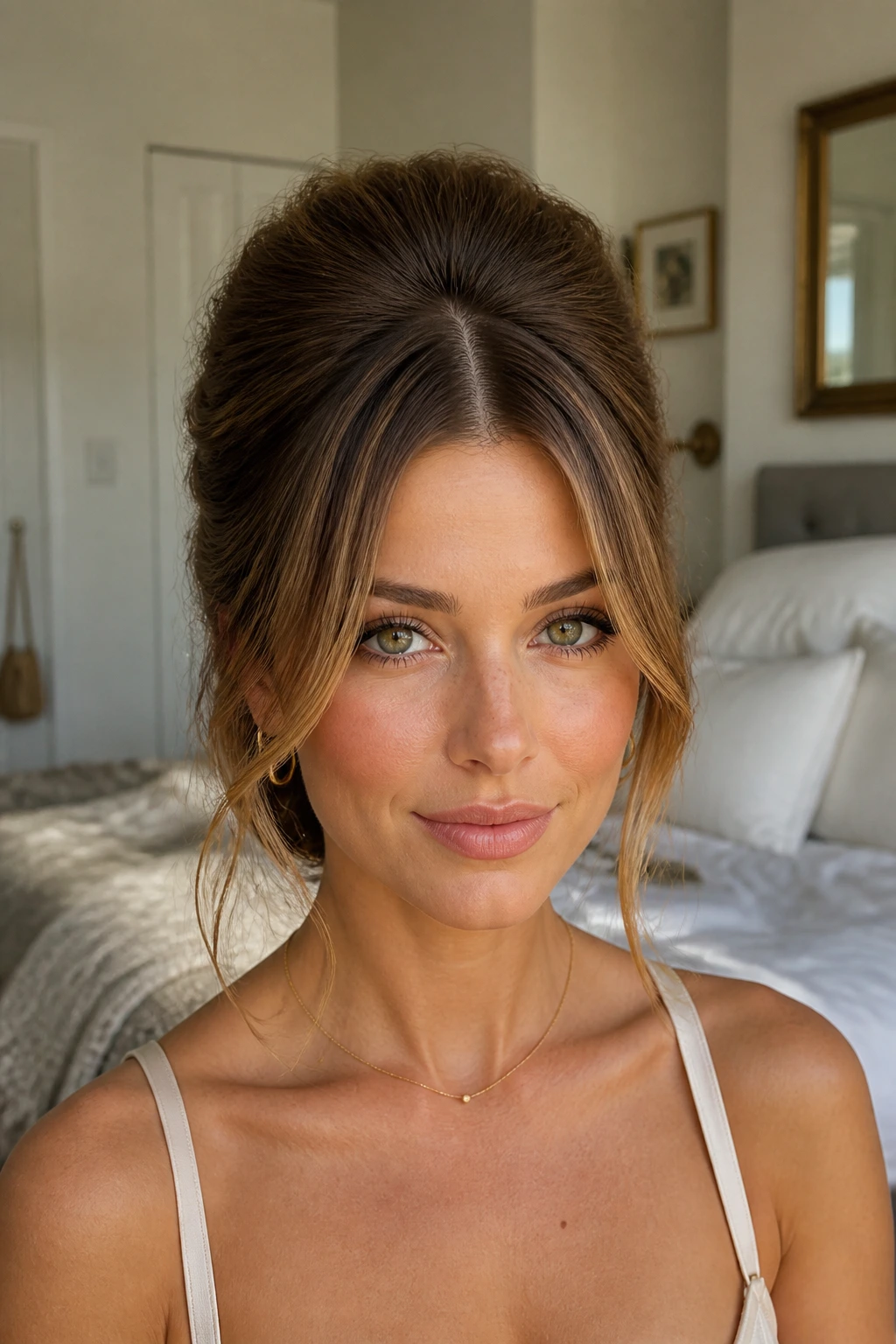
A center part and bouffant do not cancel each other out. Done right, the center part makes the lift at the crown look even more deliberate, because the volume is framed on both sides.
Curtain pieces are the softening move here. They keep the face from feeling boxed in by height at the top. Use a round brush or flat iron to bend those front pieces outward very slightly. You don’t want ringlets. You want movement.
This is a nice style for someone who likes symmetry but still wants lift. It also works when the hairline is a little uneven, because the center part helps everything read balanced.
22. Top Half-Bun Bouffant
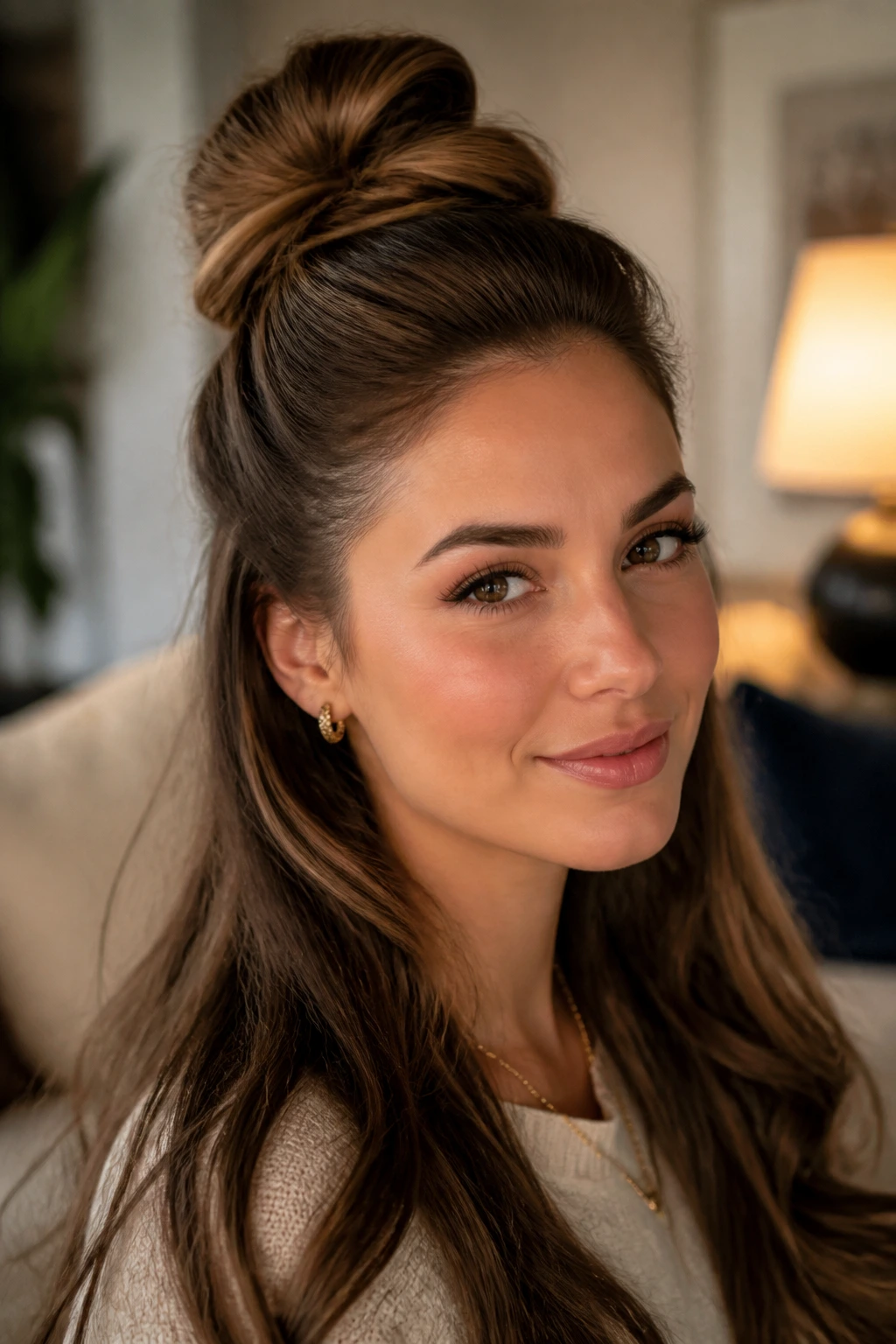
A half-bun gets a cleaner shape when the crown is lifted first. The top section has enough height to keep the bun from sitting flat against the head, and the lower half stays loose for contrast.
This style is easy to dress up or down. With soft waves below, it feels relaxed. With smoother lengths, it reads a bit more refined. The half-bun should not be tiny. If it is too small, the bouffant above it looks disconnected.
A few hidden pins under the bun will keep it anchored. That’s the part people skip, then spend the evening touching up a style that keeps slipping.
23. Sleek Side Bouffant With Tucked Ends
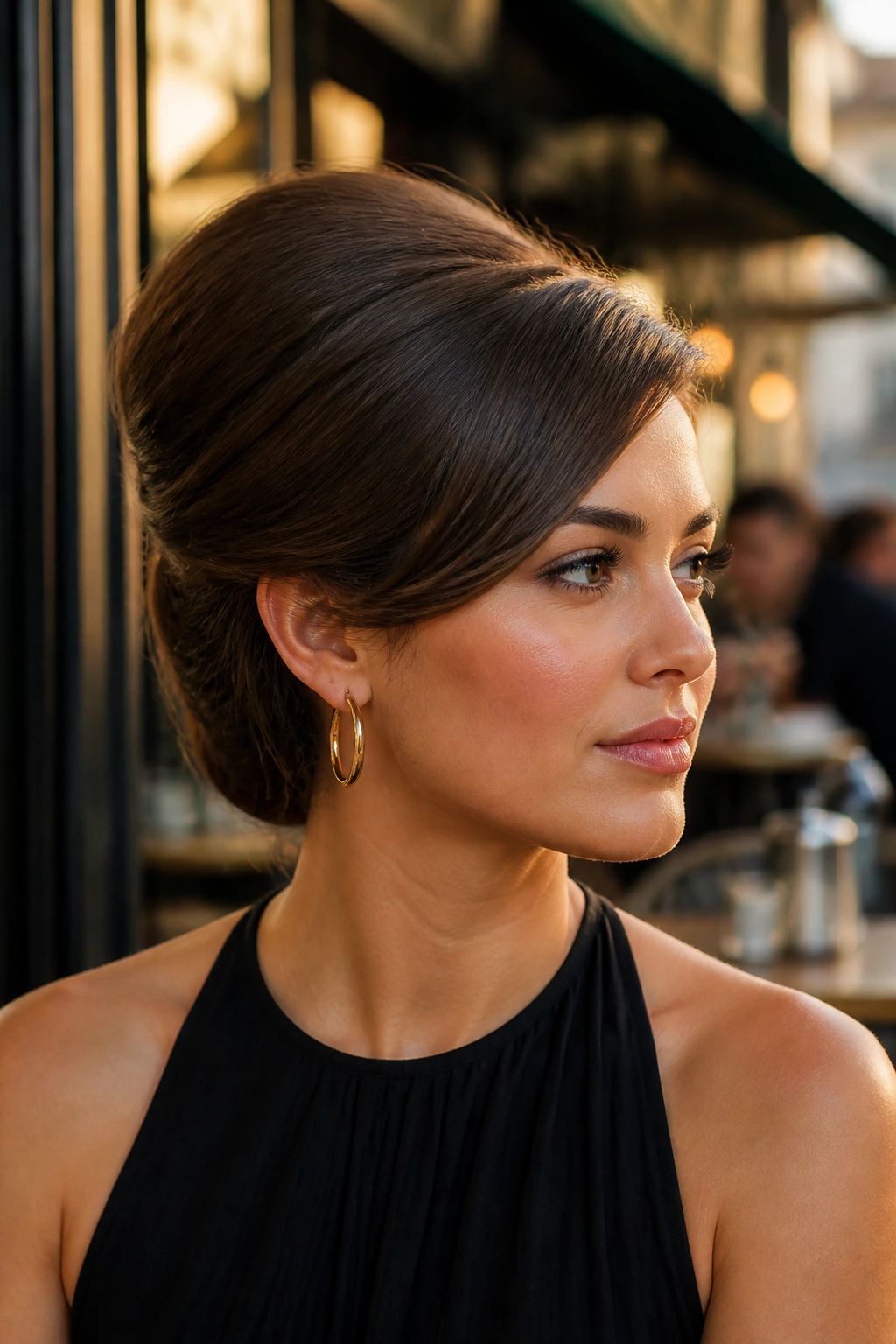
This is one of the cleaner bouffant looks in the bunch. The side-swept crown gives the shape, and the ends are tucked so the finish stays sharp.
It works especially well when you want a strong neckline or detailed earrings to show. Keep the surface smooth, but don’t flatten the root area into nothing. The side sweep should sit with enough volume to create a line across the top, not a ridge that looks pressed in with a hot iron.
A tucked finish suits medium and long hair best. If your hair is especially thick, a little hidden pinning at the nape will keep the tuck from bulking up.
24. Teased Crown Bun
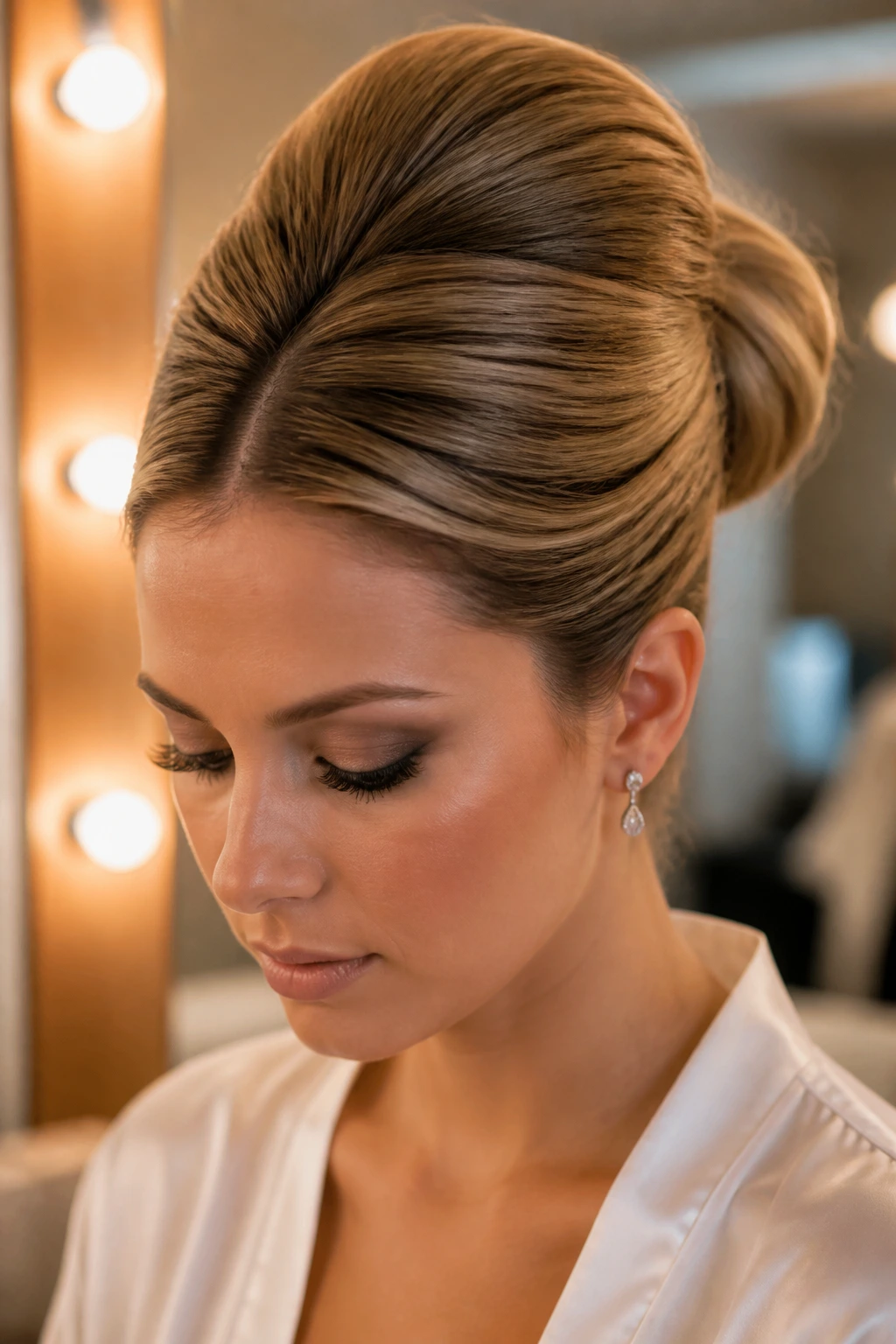
This is the classic bouffant-bun pairing in its cleanest form. The teased crown provides the shape, then the bun is built just below it so the whole head has a more lifted profile.
The bun can be round, folded, or softly twisted, but the crown should stay smooth on top of the teasing. That’s where the elegance comes from. You want height and polish, not visible backcombing. If you can see the tease, brush lightly over the surface and pin the lower layer tighter.
This style is one of the most reliable options for formal events because it stays balanced from the front, side, and back. There’s no awkward flat spot to catch your eye in photos.
25. Wavy Bouffant With Side-Swept Fringe
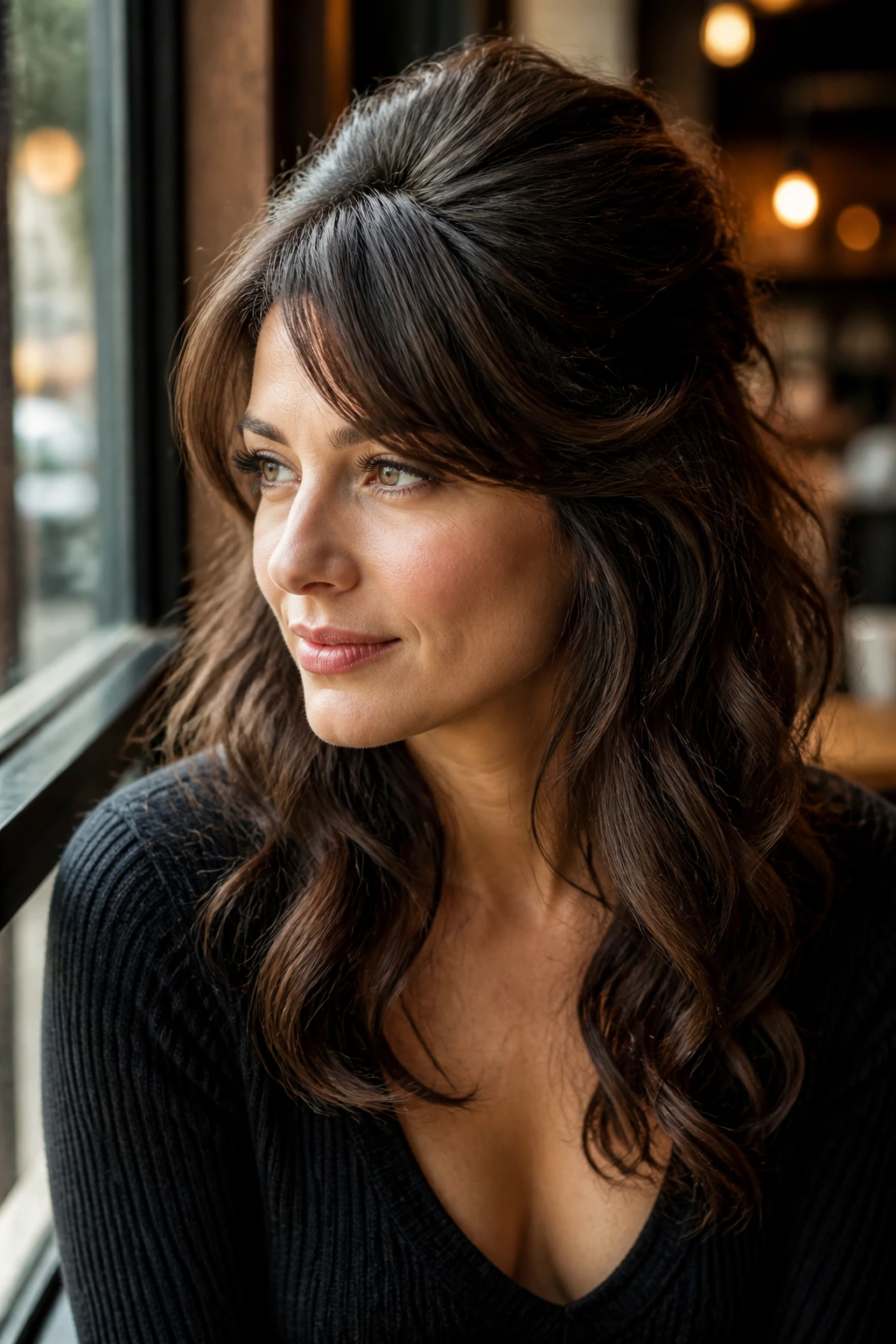
Waves plus a side-swept fringe give the bouffant a softer, more romantic edge. The height at the crown keeps the top from sinking, while the fringe adds movement near the eyes.
The fringe should be light and shaped, not heavy enough to cover the forehead completely. A large curling iron or hot brush can bend it into place with a gentle curve. The waves through the rest of the hair should be loose enough to move but not so relaxed that the style turns shapeless.
This is a strong choice if you usually avoid overly formal hair. The fringe makes the look feel approachable.
26. High Bouffant Ponytail
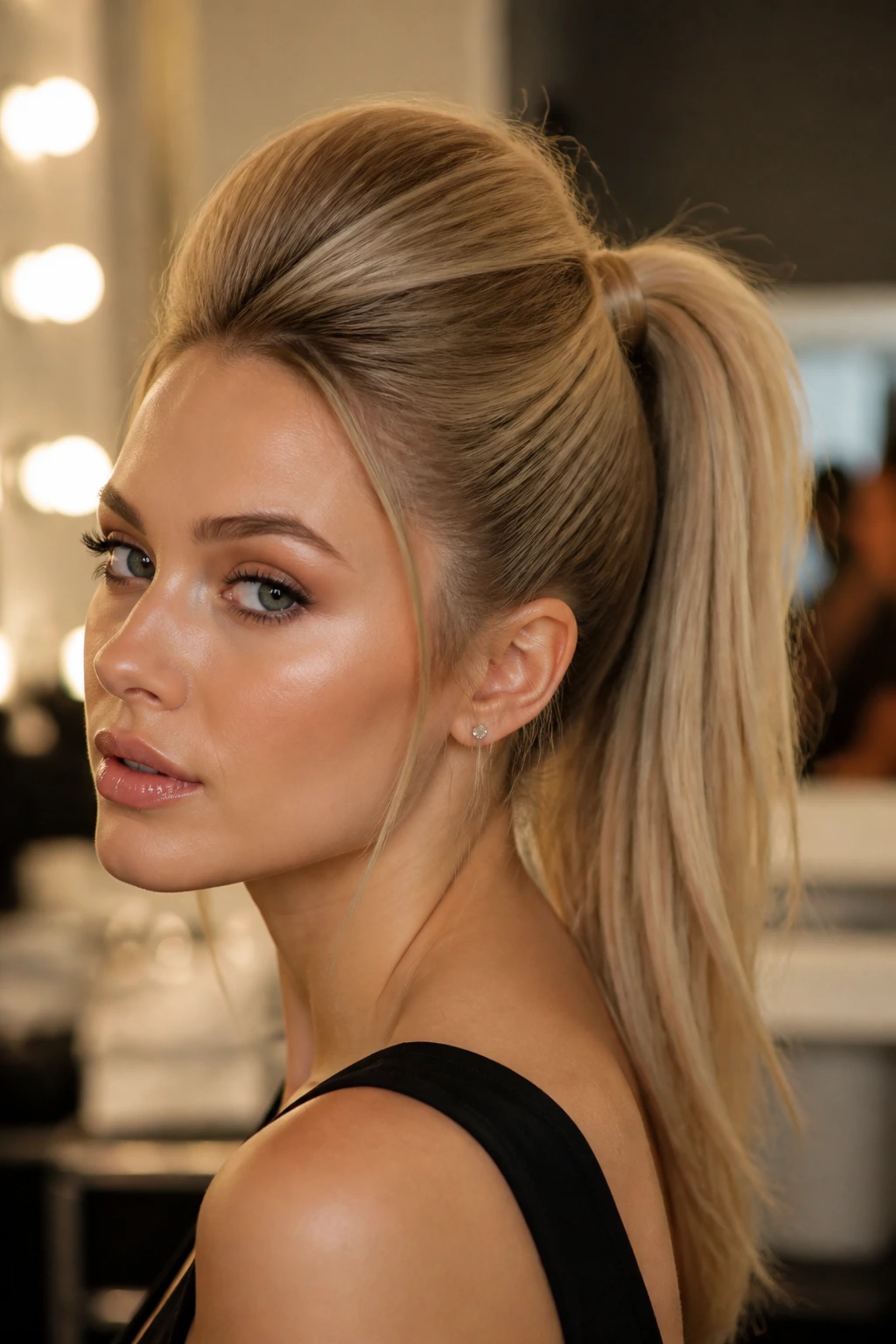
A high ponytail gets much better when the crown rises first. The lift creates a smoother transition into the ponytail and prevents that harsh “pulled back too tightly” feeling.
This version is sharper than the lower ponytail styles. It gives height both at the crown and at the ponytail base, which can be fantastic for long hair. The trick is keeping the top smooth enough to look polished while still leaving space in the roots. Too much gel makes it severe; too little and the shape falls apart.
Wrap a section of hair around the elastic for a cleaner finish. It’s a small move, but it changes the whole look.
27. Bouffant Crown With Soft Pin Curls
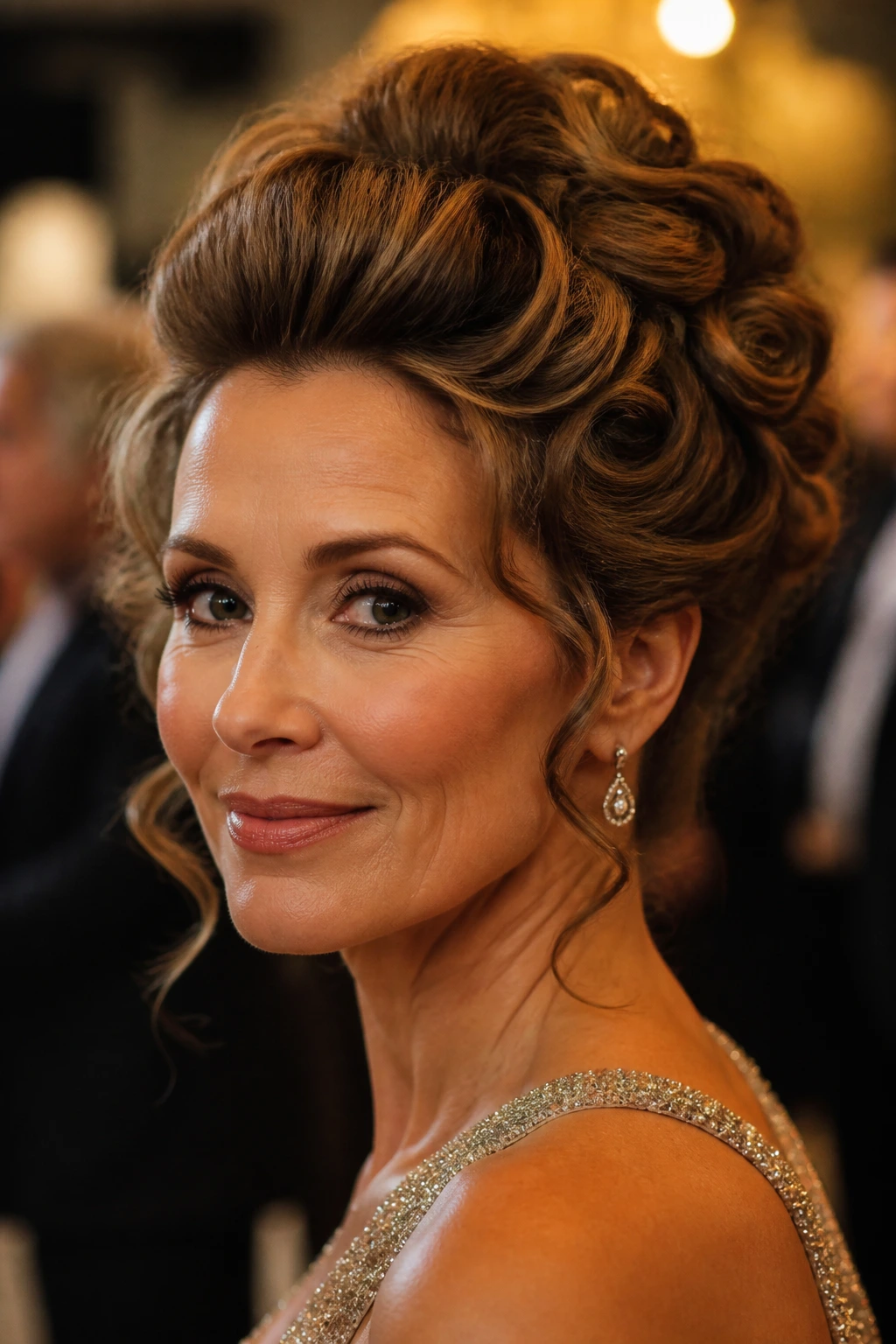
Soft pin curls around a lifted crown give you a very graceful silhouette. The curls keep the length controlled, while the crown height keeps the whole style from dropping flat.
This one rewards patience. Set the curls first, let them cool completely, then brush them just enough to soften the shape without erasing the pattern. The bouffant should sit like a small cushion above the forehead, not a hard ridge. That balance is what keeps the style classy.
It’s a lovely choice for evening wear, especially if the dress or neckline has a bit of shine or structure. The hair does its own framing work.
28. Messy-Luxe Bouffant Updo
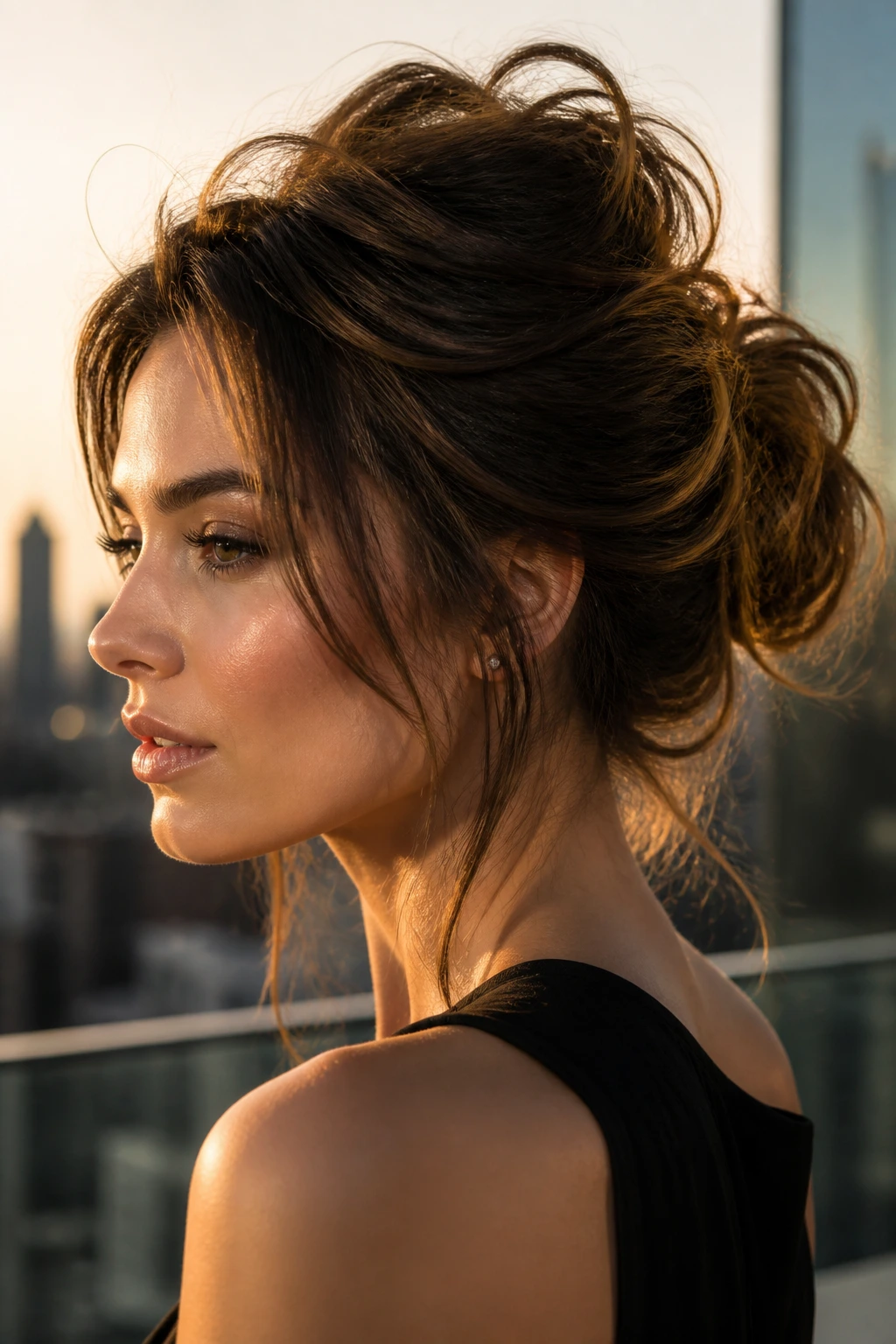
Messy does not mean careless. A messy-luxe bouffant keeps the crown lifted and the bun or twist loose enough to show some texture, but the shape still feels planned.
This style is especially useful when you don’t want every strand pinned into submission. Leave a few edges soft, let some pieces bend free, and keep the volume centered at the crown so the whole look still feels anchored. If the top gets too loose, it stops reading luxe and starts reading unfinished.
It’s one of the best options for hair with natural movement. The style works with the texture instead of fighting it.
29. Ribbon-Tied Bouffant Ponytail
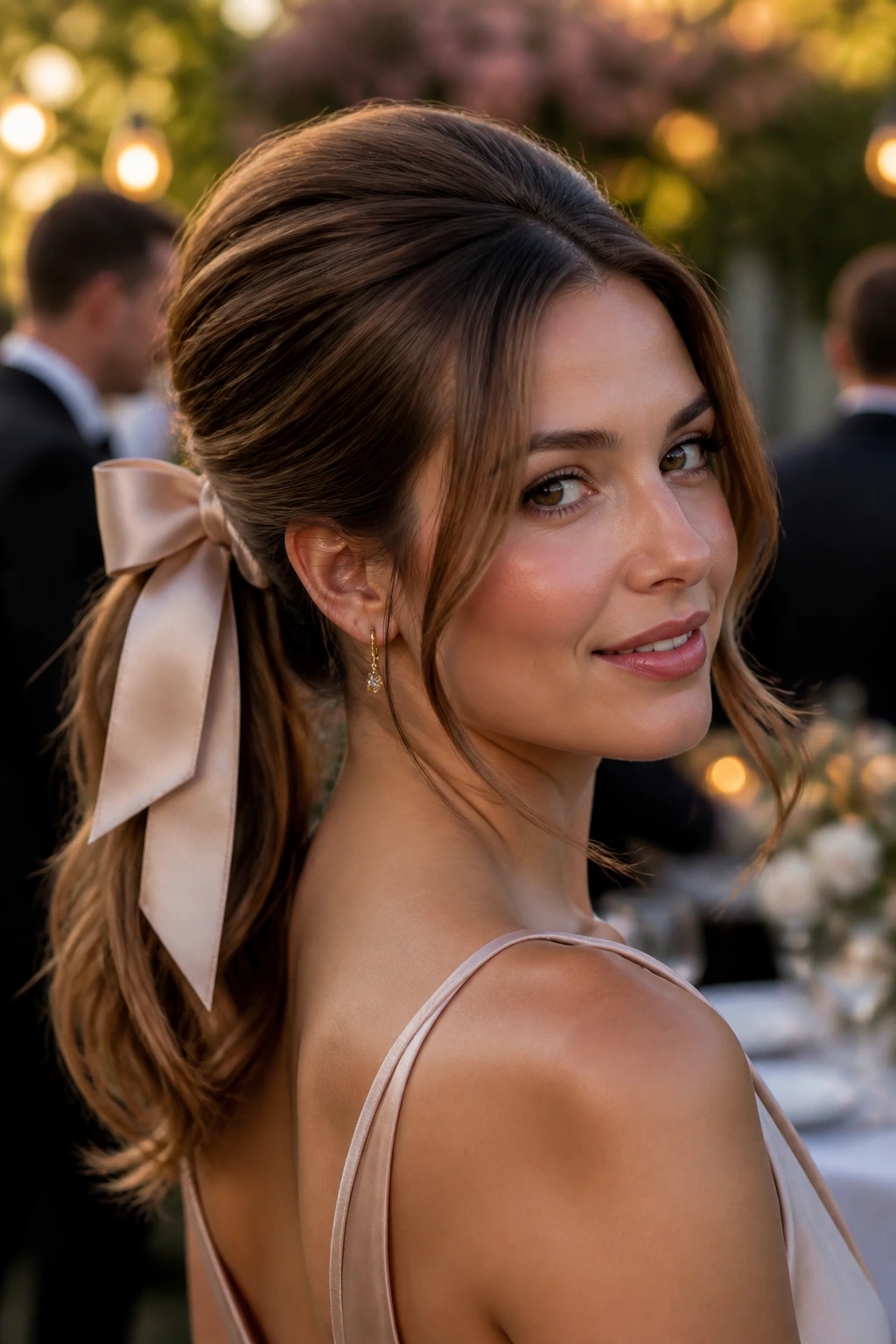
A ribbon gives the ponytail a softer finish, and the bouffant keeps the overall shape from sinking. That combination feels polished without being severe.
Choose ribbon that has enough body to hold a bow or simple tie. Satin looks dressier, velvet adds weight, and grosgrain gives a neater edge. The crown volume should be modest here, because the ribbon already adds visual detail. Too much height plus a big bow can tip the style toward costume territory.
This is a charming option when you want a little femininity in the finish. It works especially well with smooth hair and understated makeup.
30. Low Bouffant With Wrapped Lengths
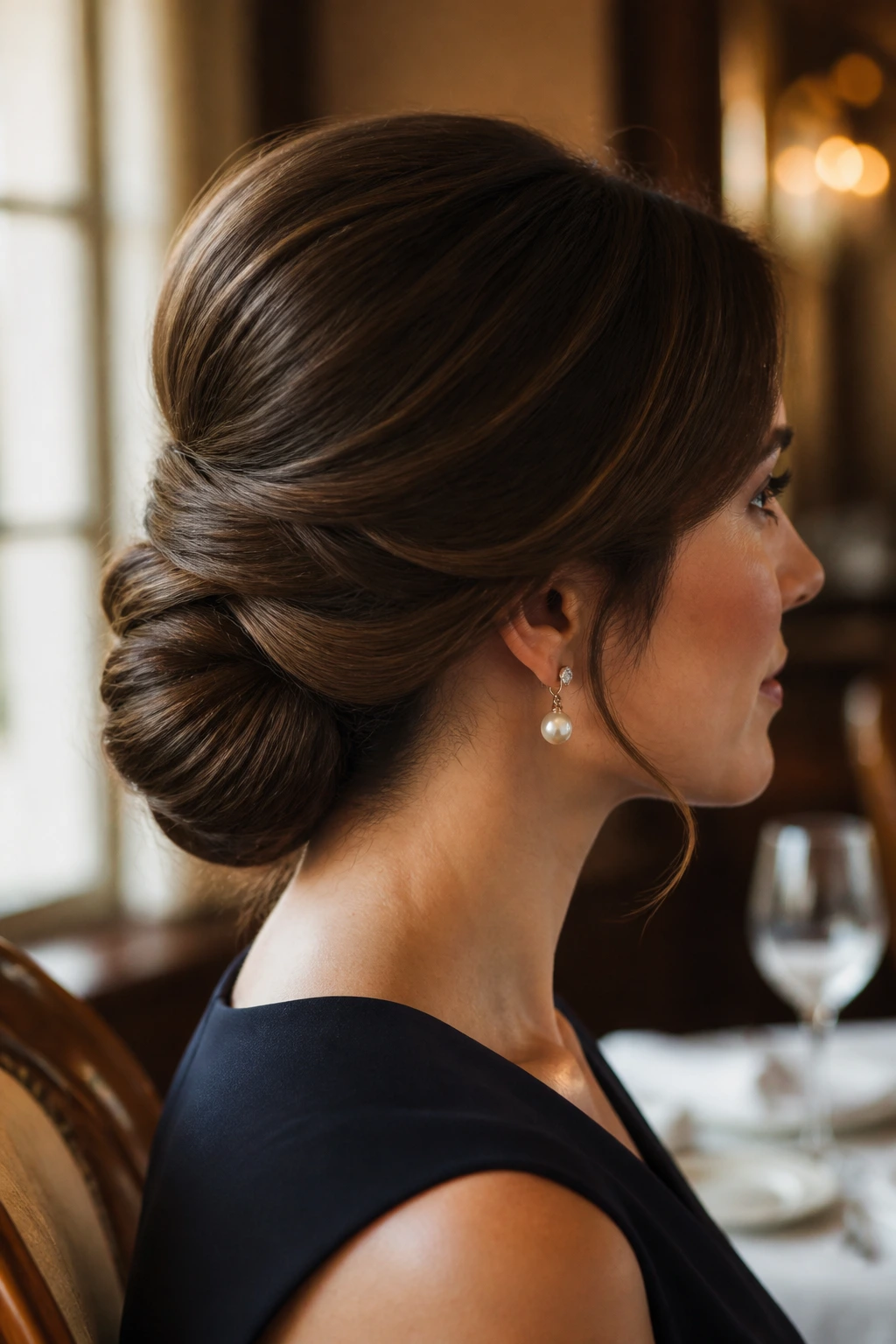
The wrapped lengths give this style a hidden elegance. You see the lift at the crown, a neat base at the nape, and then a folded or wrapped length that keeps the silhouette compact.
It’s a strong pick if you like low styles but want them to feel more deliberate than a simple tucked bun. The wrapped section can be pinned under itself, coiled, or folded in layers depending on how much hair you have. Keep the crown shape soft and rounded; if it gets too tall, the low finish no longer feels balanced.
This one is especially useful for formal dinners and seated events because it sits close to the head and stays out of the way.
31. Bouffant Twist With a Smooth Nape
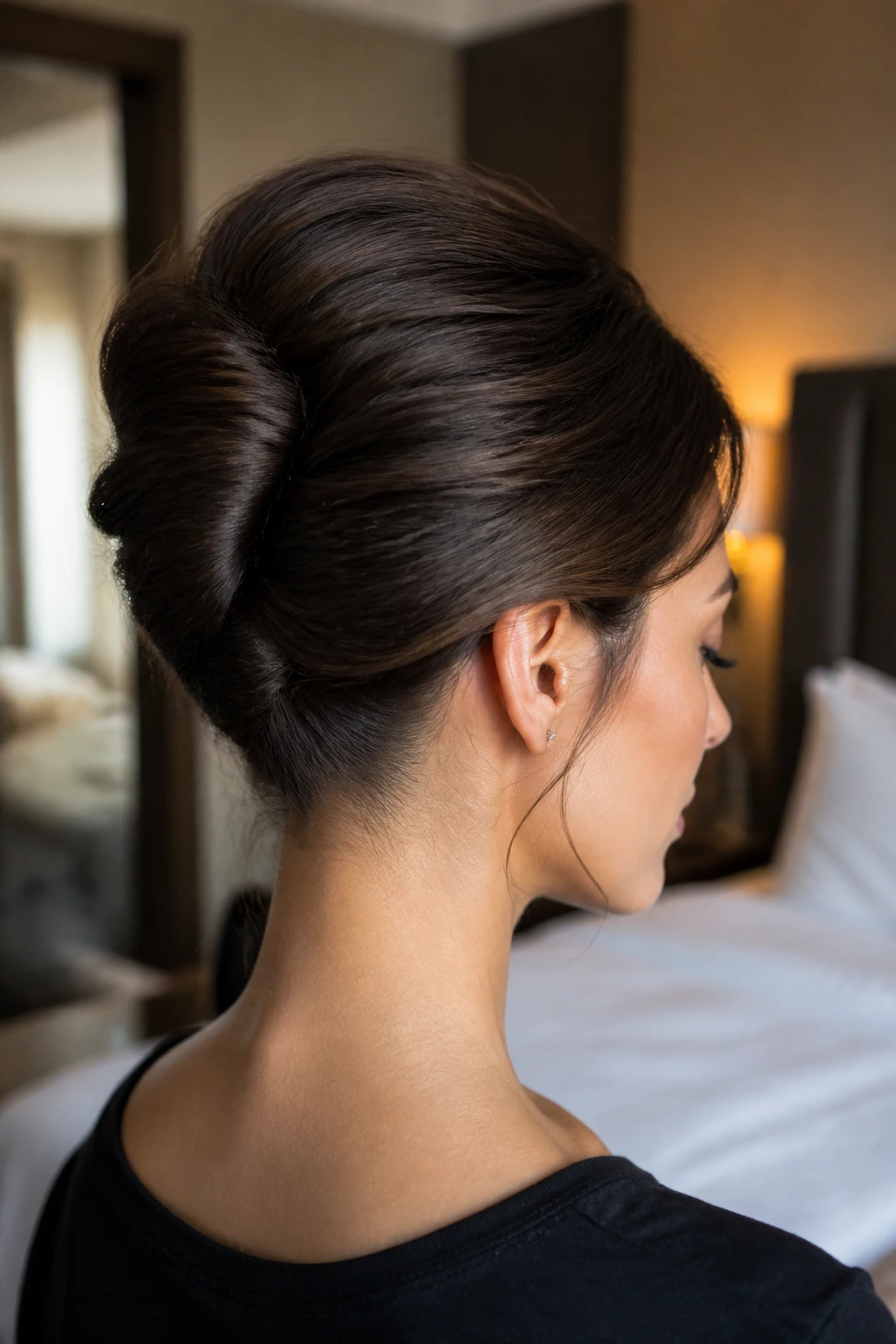
A twist becomes much cleaner when the crown has lift. The top looks fuller, the back stays neat, and the nape area has a smooth finish that keeps the style elegant from every angle.
The twist can sit slightly off-center or directly down the middle. Either way, secure it with pins hidden inside the fold rather than at the edges. That keeps the outside smooth. A light shine cream on the nape helps the finish look tidy, but don’t get any near the teased section.
This is one of those styles that works better the more carefully it’s built. Rushed twists tend to sag. A little patience pays off.
32. Curly Bouffant Puff
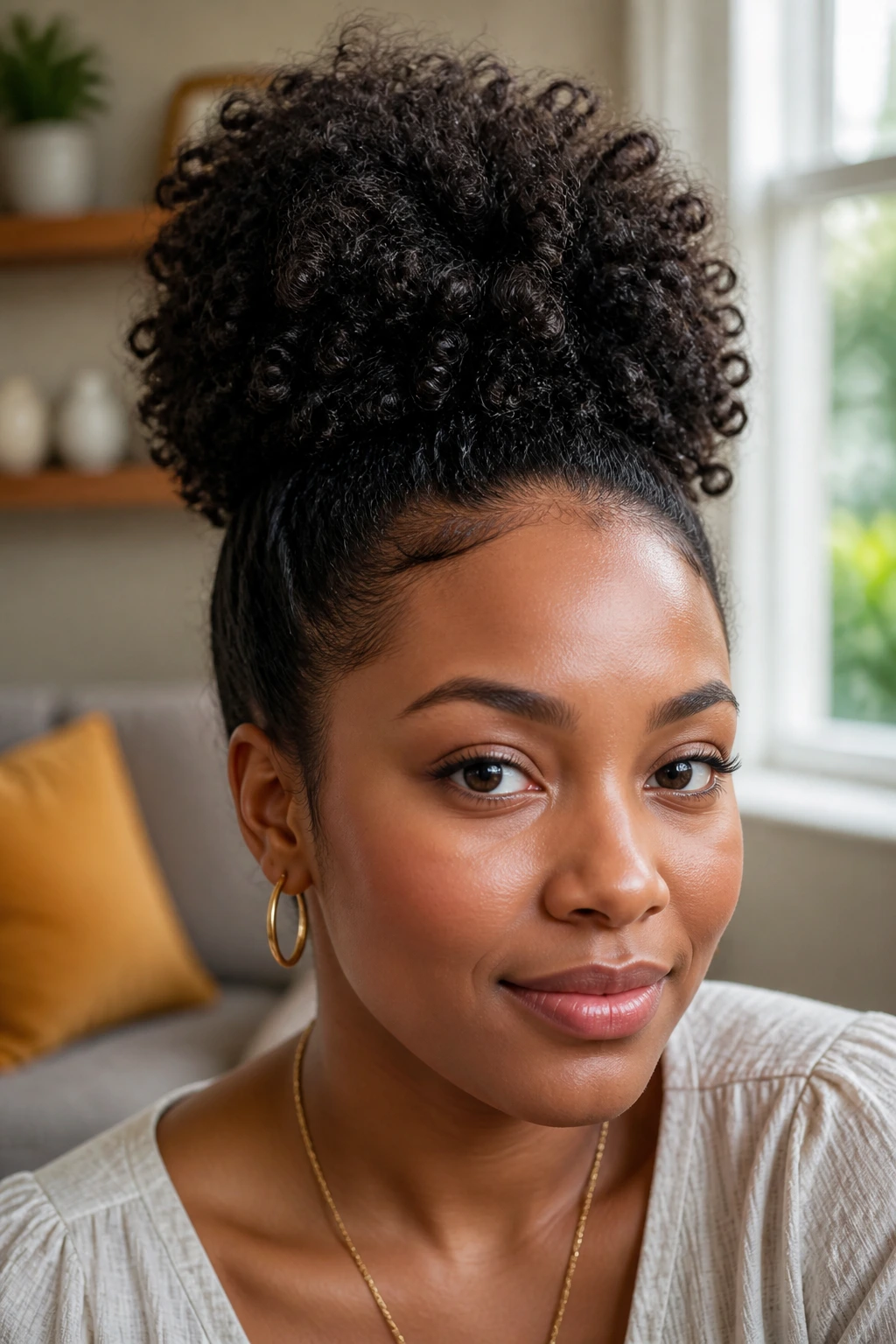
Curly hair can take a bouffant beautifully because the natural texture already gives you body. The goal here is not to fight the curl pattern. It’s to lift the crown and shape the puff so it feels elegant instead of bulky.
Start with stretched curls or a defined natural texture, then gather the length loosely while keeping the crown raised. The shape can be rounded and full, or pulled slightly back with side pieces left out. Edge control or a light gel at the hairline helps keep the front clean.
This style is lovely when you want volume that belongs to the hair itself. No fake stiffness. No flat crown.
33. Minimal Bouffant for Fine Hair
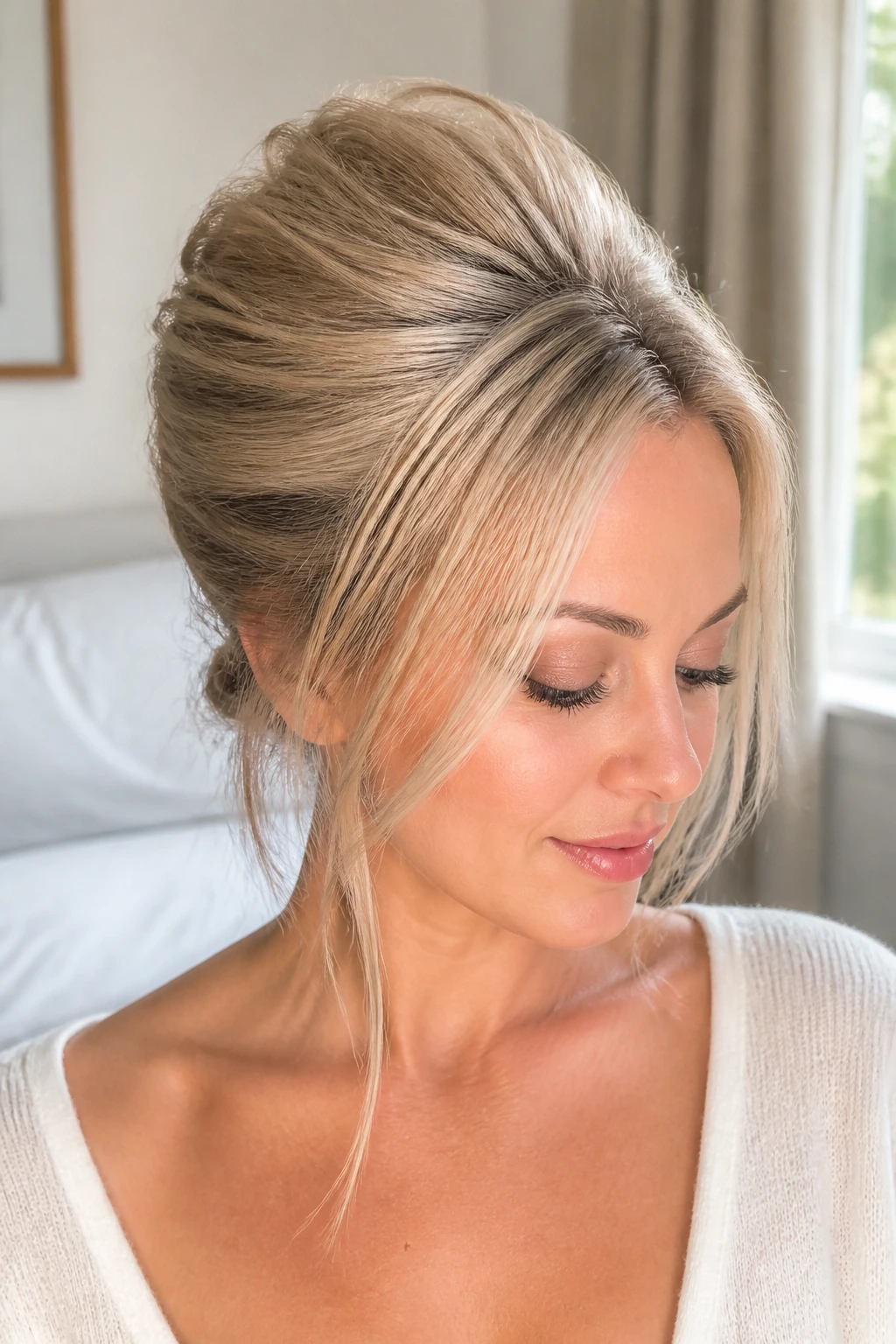
Fine hair often needs the most strategic bouffant, not the biggest one. A small, carefully placed lift at the crown can make the whole style look fuller without using half a can of hairspray.
The secret is controlled sectioning. Take only the top layer, tease the roots lightly, and smooth the surface over with a soft brush. A little root spray or powder makes a big difference here because the hair needs grip more than height. If the bump gets too large, it can separate from the rest of the style and look pasted on.
This is the version to choose when you want a subtle boost rather than a showpiece. Clean, simple, and useful.
34. Braided Mohawk Bouffant
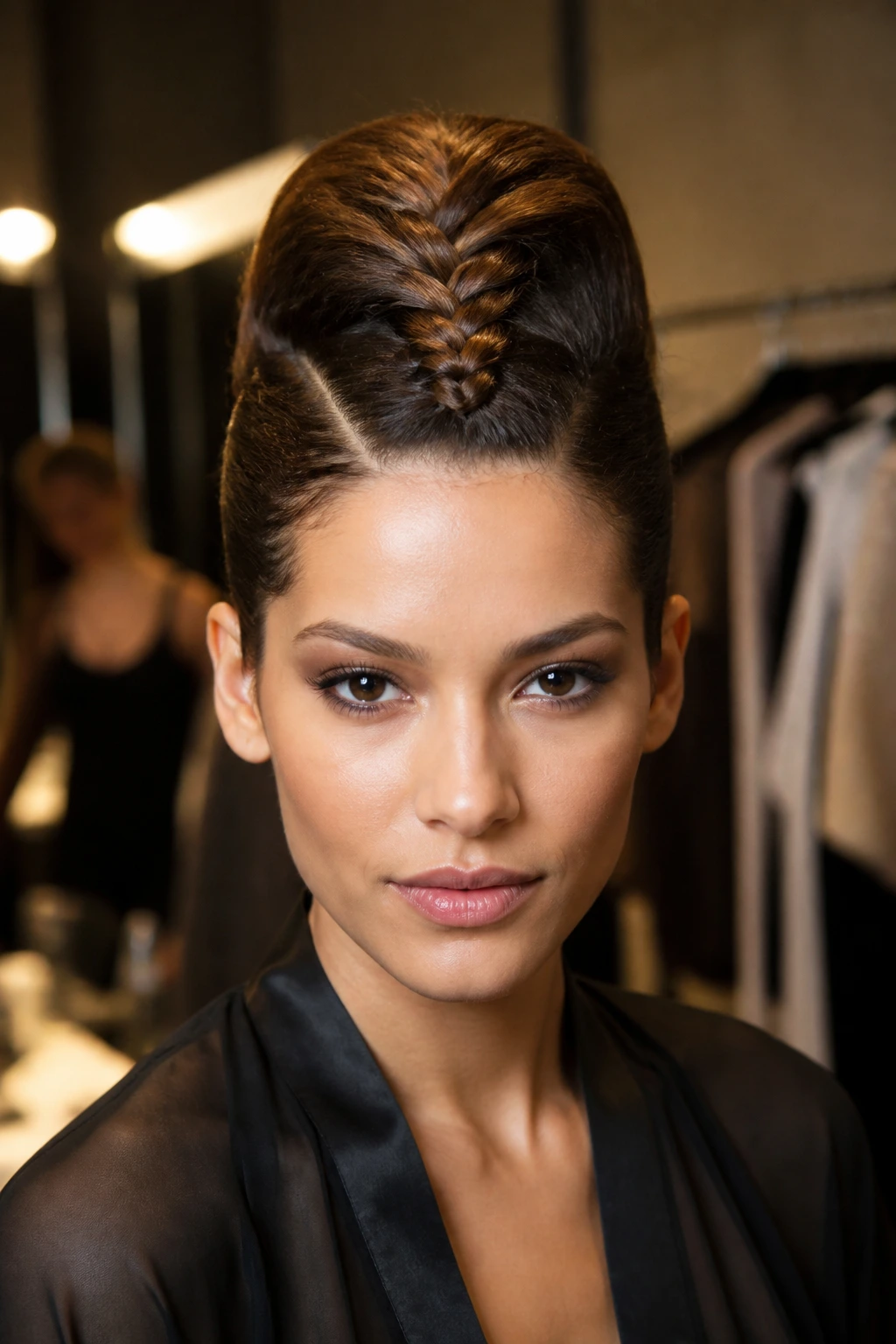
This one has a little edge, but it can still read elegant if the braid is neat and the crown volume is clean. The center strip gets height, while the sides stay smoother and more contained.
A French braid or Dutch braid can run along the center or feed into the lifted crown. The sides should be controlled tightly enough to emphasize the top section. If the braid is messy and the crown is huge, the style loses its polish. Keep one element dominant.
It’s a good pick for someone who wants bouffant shape without softness everywhere. Strong lines, clear center, tidy sides.
35. Sleek Black-Tie Bouffant Chignon
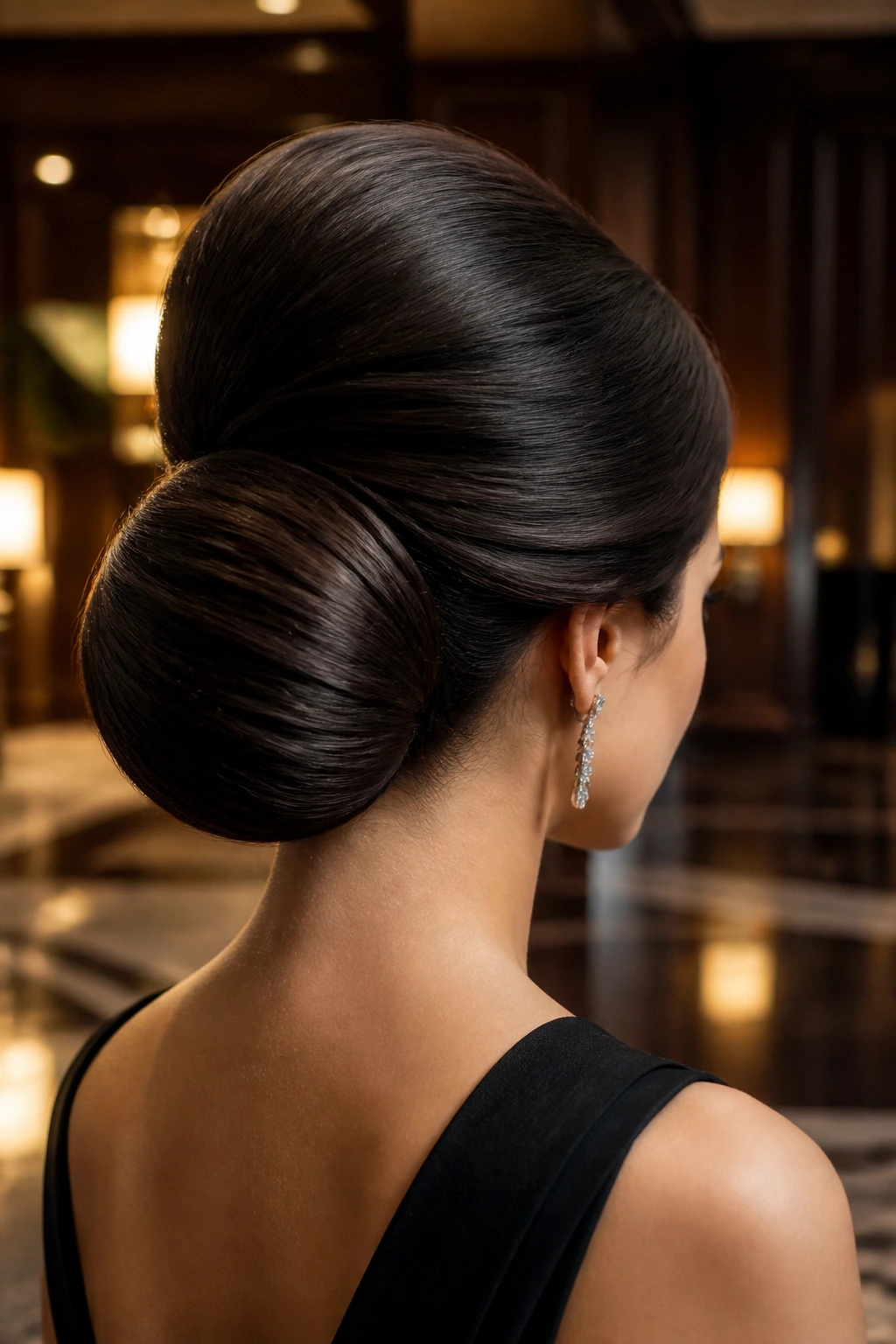
This is the polished end of the spectrum. The crown has enough lift to shape the head, but the chignon and surface are so smooth that the whole style feels formal and precise.
It works best with hair that can hold a clean part and a strong pin set. The chignon sits low, the top is brushed back, and the lift is hidden under a smooth outer layer. That hidden volume is the thing that makes the style memorable. You feel the height even when you do not see it.
If there’s one bouffant that can handle a black-tie dress without competing with it, this is it. Strong, neat, and quietly dramatic.
Why Bouffant Height Looks Better When It Is Controlled
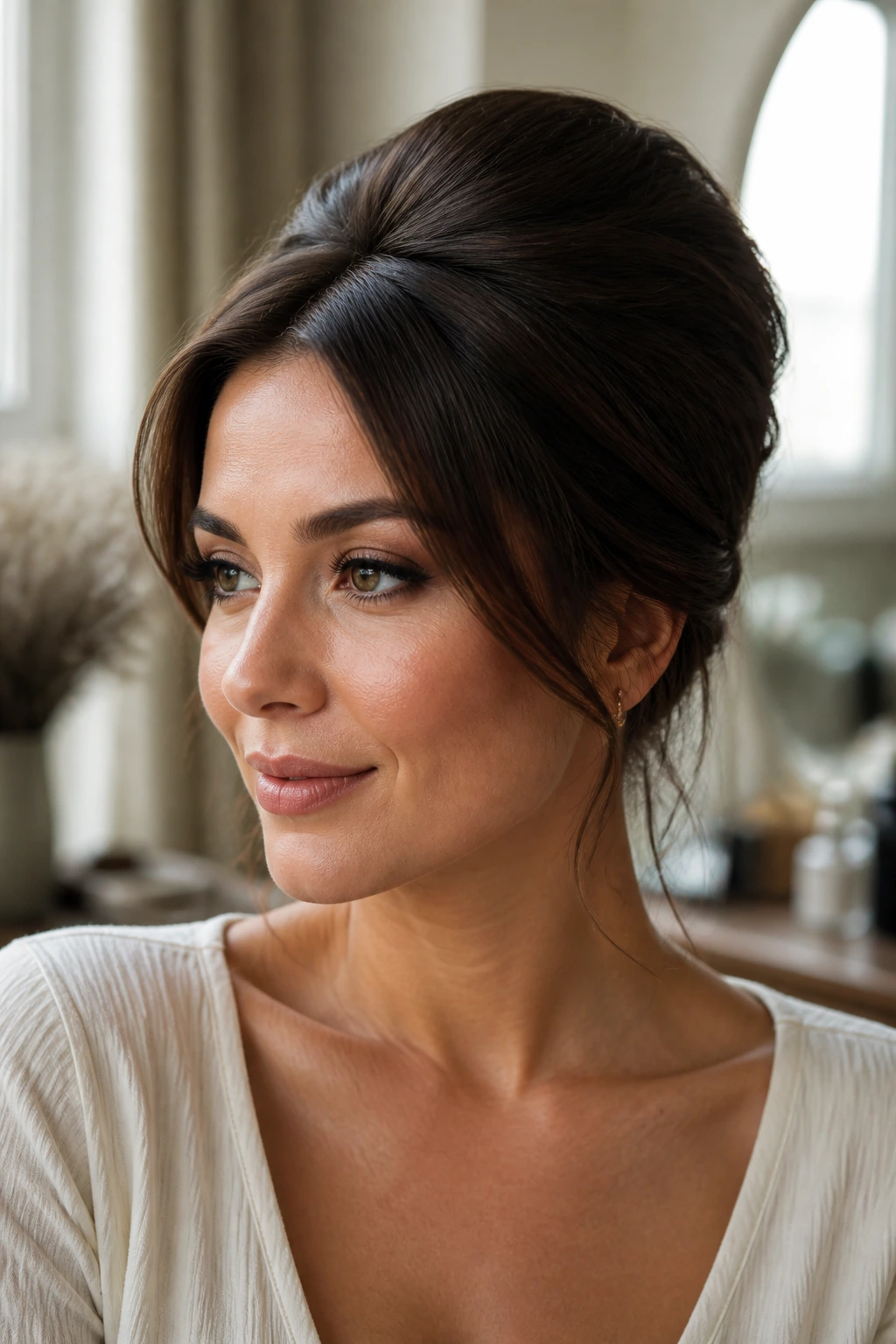
The bouffant works because it changes proportion, not because it screams for attention. A little height at the crown can lengthen the face, soften the jawline, and make earrings or a neckline stand out more cleanly. That is the part a lot of people miss. They chase volume for its own sake and end up with something heavy on top and flat everywhere else.
Controlled height is cleaner. It gives the head a shape. It also makes the rest of the style easier to manage, because the crown becomes the anchor point instead of an afterthought. That’s why a tiny bouffant on a ponytail or bun often looks more finished than a huge tease job that starts to sag by dinner.
The other thing going for it is versatility. A bouffant can be dressed up with pearls, ribbons, or curls, or kept spare and sharp with a side part and a hidden wrap. Same idea. Different mood. That’s a useful thing to have in your back pocket.
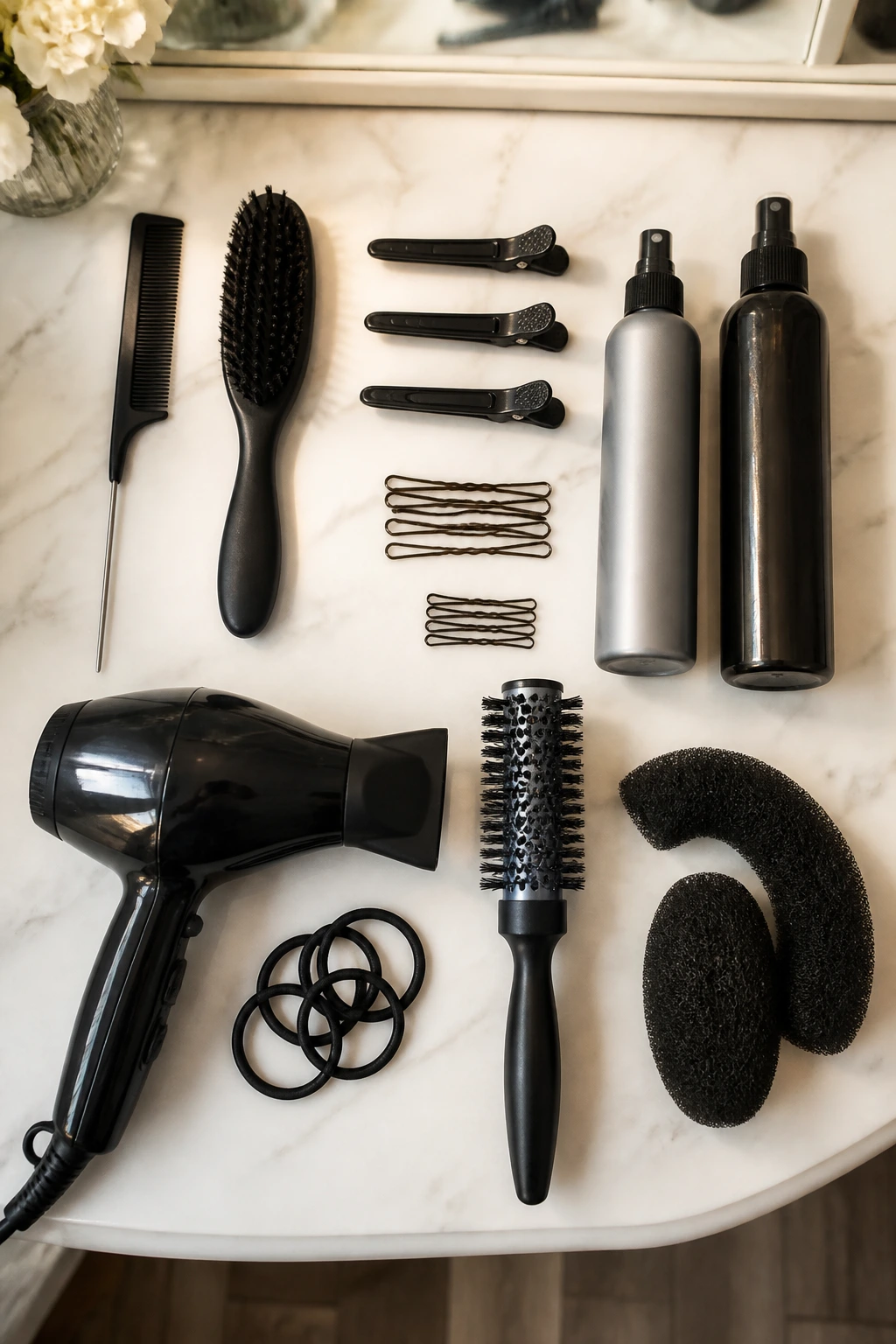
Essential Tools for Bouffant Hairstyles
-
Rat-tail comb: This is the cleanest tool for sectioning the crown and teasing only the roots you actually need.
-
Boar-bristle or smoothing brush: Use it to smooth the outer layer after backcombing so the style looks polished, not fuzzy.
-
Sectioning clips: These keep the rest of the hair out of your way while you build the volume in layers.
-
Bobby pins in two sizes: Small pins disappear better, while longer pins help anchor buns, twists, and side sweeps.
-
Texturizing spray: A few sprays near the roots give the teasing grip and help slippery hair hold shape.
-
Flexible-hold hairspray: You want hold that can be brushed and reshaped a little, not a shell that cracks the first time you move.
-
Hair elastics: Clear or matching elastics are best for ponytails and half-up styles where the base should stay hidden.
-
Blow dryer with a concentrator nozzle: Useful for setting volume at the roots, especially if your hair starts out flat.
-
Round brush: Good for lifting the crown and shaping front pieces into a smooth sweep.
-
Optional hair padding or a small bump insert: Handy for very fine hair or when you want a more even bouffant shape without over-teasing.
How to Prep Hair So the Crown Actually Holds
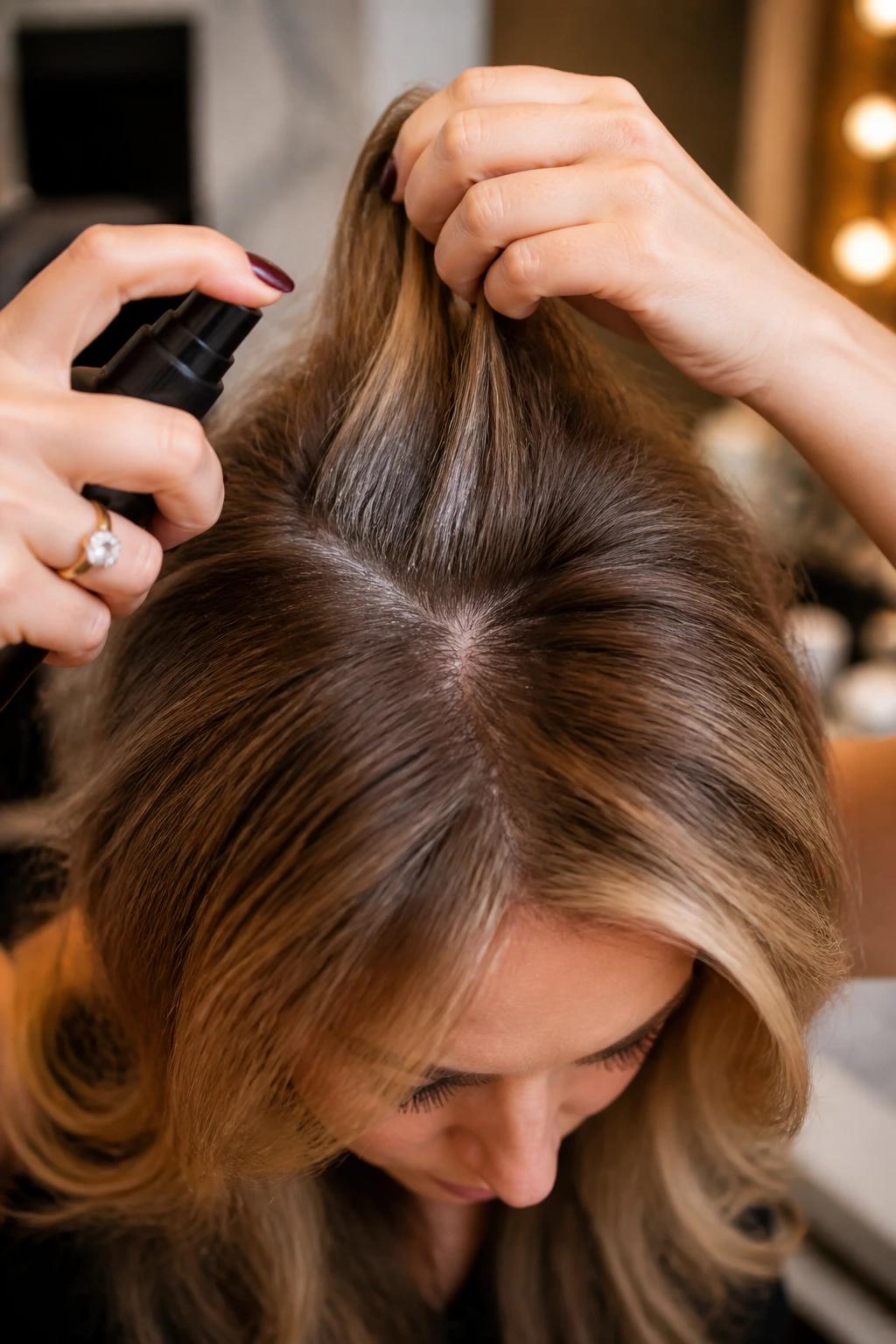
The bouffant starts before the teasing does. If the hair is too clean and slippery, the crown will slide. If it’s too coated with heavy conditioner, it will do the same thing. The sweet spot is hair that has some texture and not too much weight at the roots.
Second-day hair is often easier to work with. If you’ve just washed it, rough-dry the roots with a little mousse or root-lifting spray and let the hair cool before you shape it. A warm root will collapse faster than one that has been set with a bit of tension and time. That part matters.
Sectioning is where people get sloppy. Take the crown in a clear triangle or horseshoe section, clip the rest away, and tease only the underside near the scalp. Then smooth the top layer gently. You don’t need to destroy the hair to create lift. You only need enough friction to keep the shape from sliding.
How to Keep Bouffant Hairstyles Comfortable All Night
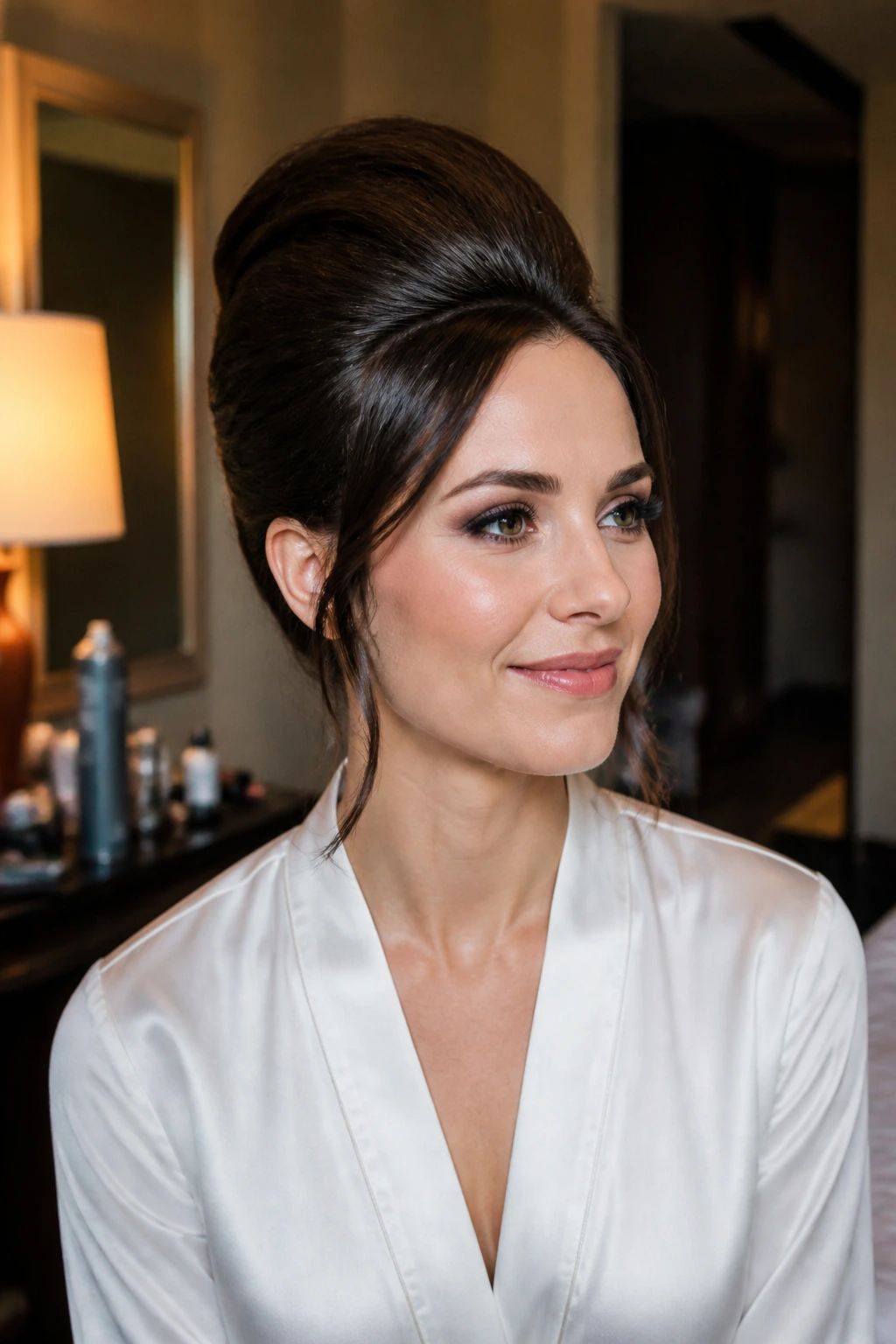
A bouffant should feel secure, not like it’s pinching your scalp. If the pins are stabbed straight in and the teasing is packed too tightly, you’ll know within an hour. The style gets itchy, then headachy, then impossible to ignore.
Work in layers. Anchor the crown first, pin the main shape, then check the profile from the side before spraying. If the style feels too tight at the roots, loosen one section before you leave the mirror. It is much easier to fix then than after an event starts.
For longer wear, small hidden pins beat a few large obvious ones. Cross them in place where sections overlap, and keep some flexible-hold spray nearby if the event runs long. A quick lift with fingertips at the crown can revive the style without making it look rebuilt from scratch.
Common Mistakes That Flatten or Freeze the Shape
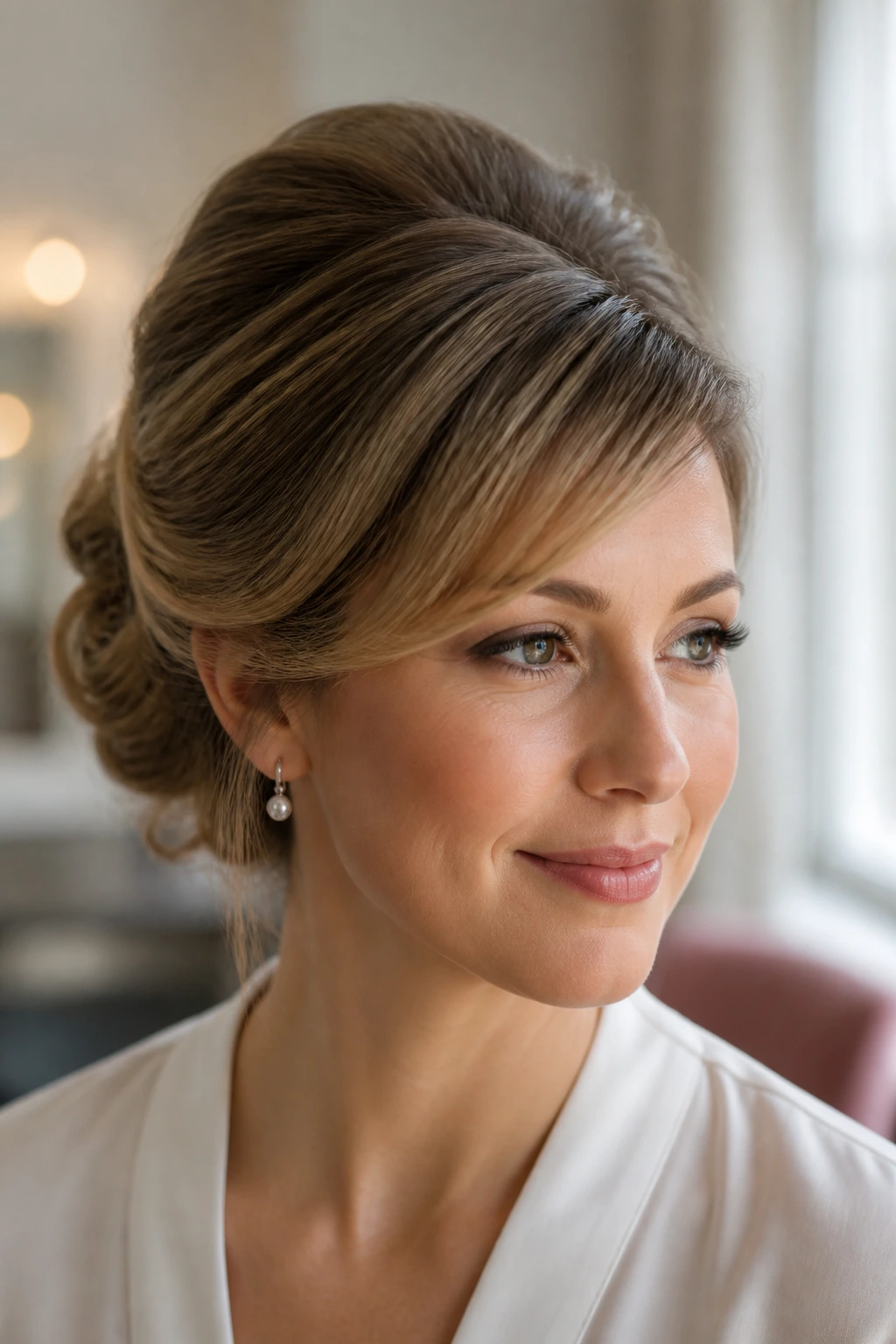
The most common mistake is teasing the wrong area. People attack the outer layer, then wonder why the crown still collapses. Teasing should happen underneath, close to the roots, where it creates real support. If you rough up the surface too much, the style looks frizzy instead of full.
Another problem is over-smoothing. A lot of people brush the crown until it’s so slick that all the lift disappears. The finish should be smooth, yes, but not pressed flat. Leave a little air in the section or the bouffant goes dead before it’s even pinned.
Heavy product causes trouble too. Too much oil, serum, or shine spray at the roots makes the hair slide. Save glossy products for the ends. The crown needs grip, not slip.
And then there’s pin placement. If the pins sit only on the surface, the style loosens fast. Hide them inside the structure, where they can anchor two sections at once. That detail alone can buy you hours of wear.
Variations and Adaptations to Try
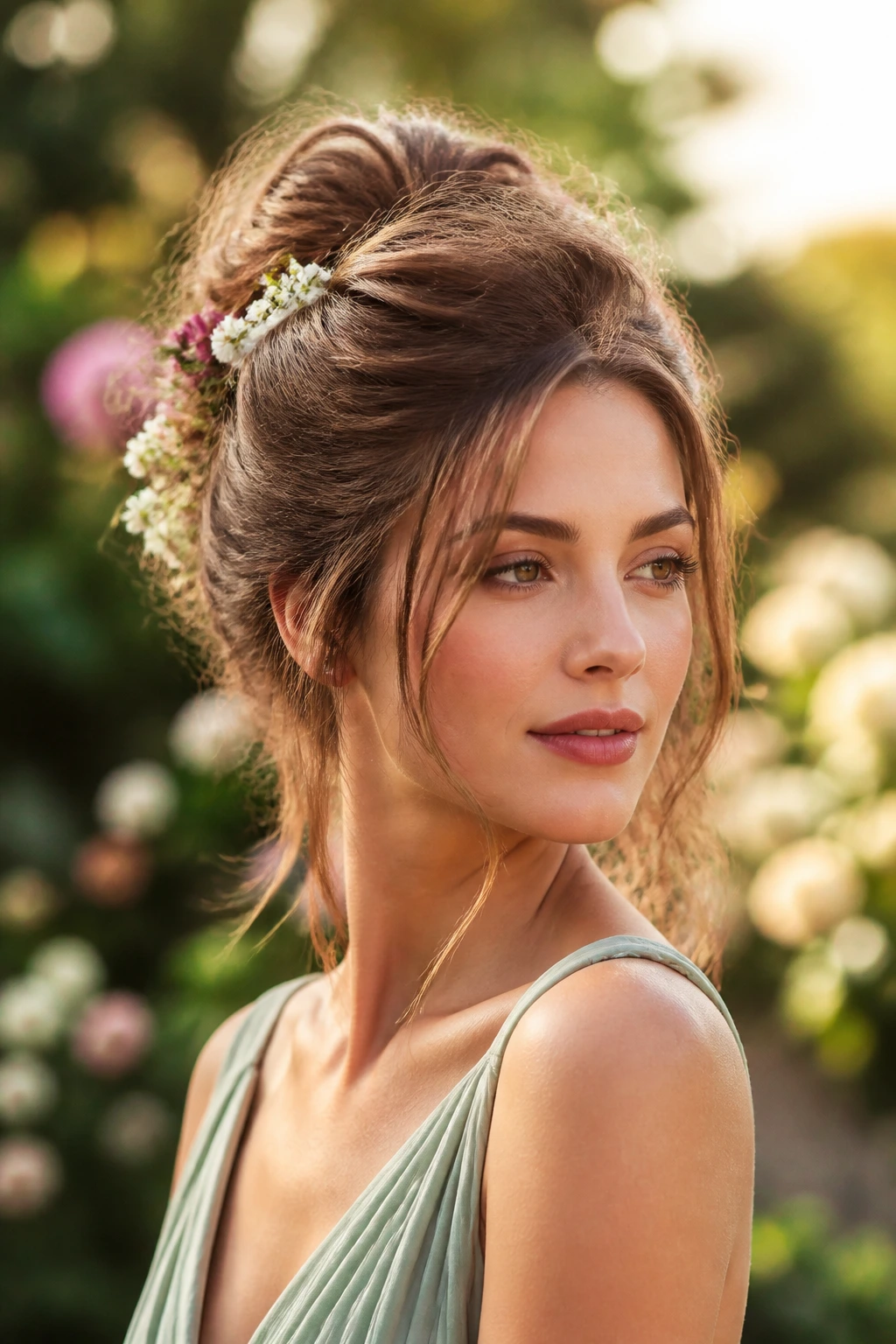
Soft Garden Bouffant: Add a few loose tendrils, small flowers, or a vine comb for a lighter romantic feel. This works best for weddings and outdoor events where you want the lift to feel airy instead of sharp.
Sleek Power Bouffant: Keep the crown smooth, the part crisp, and the rest of the hair pulled into a low ponytail or knot. It has a sharper profile and suits structured clothing, especially with a strong neckline.
Curly Texture Bouffant: Let the natural curl pattern do part of the work and lift only the crown. This version keeps the style rich and full without forcing the hair into a shape that fights its texture.
Fine-Hair Padding Bouffant: Add a small insert or use a padded base under the crown section before smoothing the outer layer over it. Fine hair often looks best with help from an internal structure rather than too much teasing.
Short-Hair Mini Bouffant: Use a smaller crown section and keep the shape compact. A lob or chin-length cut can still get height, and the result often looks modern because the proportions stay neat.
How to Keep the Style Fresh Overnight
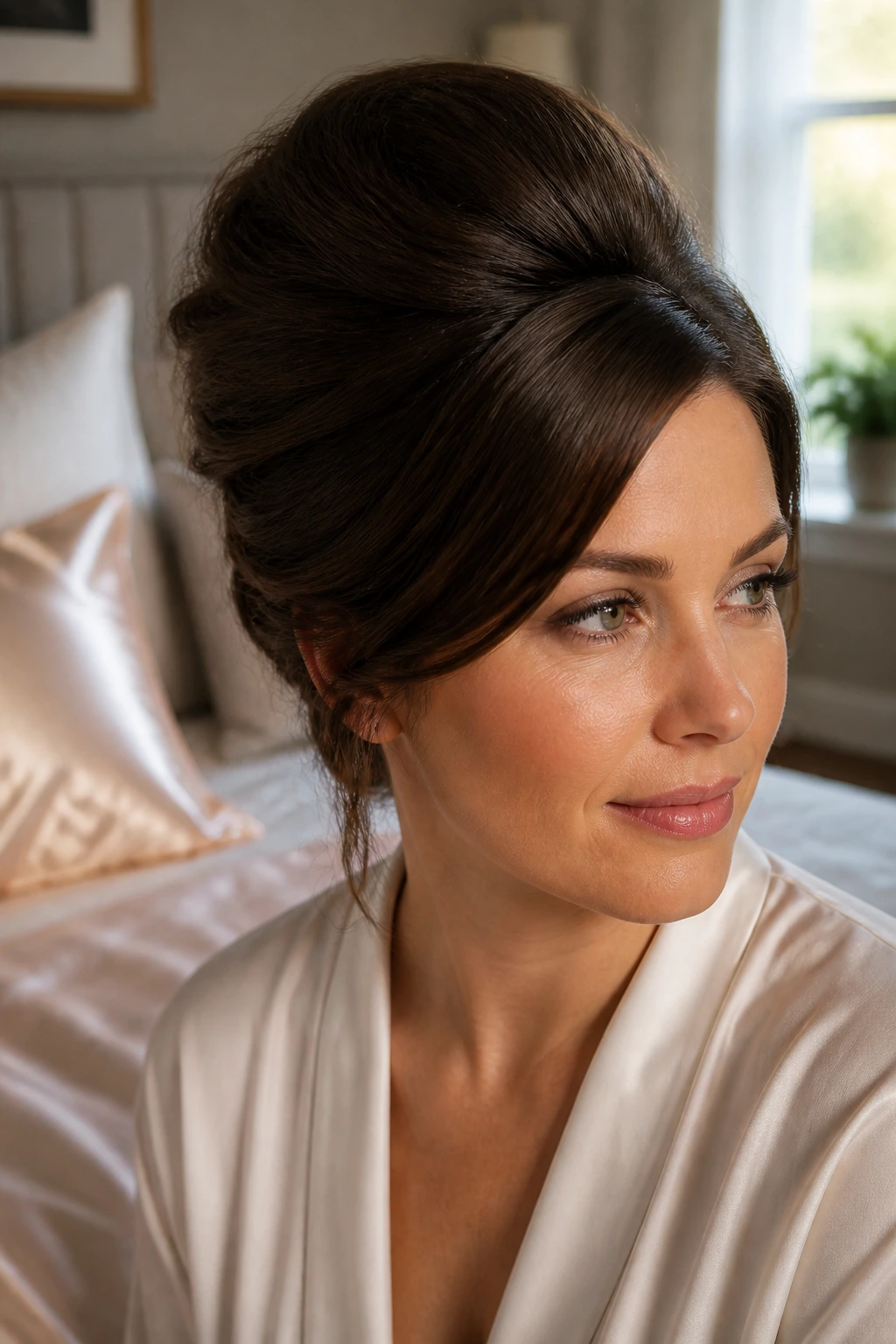
A bouffant usually looks best the day you wear it, but you can keep the shape alive if you treat it gently. The biggest enemy is friction. Pillowcases flatten the crown and rough up the surface, so a silk or satin pillowcase helps more than people expect.
If you want to preserve the style, pin the crown loosely before bed or wrap it in a soft scarf. Don’t crush it into a tight knot. The goal is to protect the lift, not lock the whole head in place. In the morning, use your fingers to lift the roots, then mist a tiny bit of water or root spray only where the shape has gone soft.
For styles with buns or twists, the nape can be refreshed separately from the crown. That’s useful. You do not need to rebuild everything if only one part has slipped a little. Small repairs usually beat full redoing.
Frequently Asked Questions
Can you make bouffant hairstyles work on fine hair?
Yes, and fine hair often benefits the most from a controlled bouffant. The trick is using smaller sections, a little root spray, and possibly a padding insert so you do not have to over-tease the hair.
Do bouffant styles work on curly hair?
They do, especially when the curl pattern is left intact through the lengths. Lift the crown, shape the top, and let the natural texture do the rest instead of trying to force every curl flat.
How much teasing is enough?
Usually less than people think. Start with the underside of the crown section, tease in short strokes, then smooth the top layer over it. If the hair looks fuzzy before it’s pinned, you’ve probably gone too far.
What if my bouffant falls flat before the event is over?
Lightly lift the crown with your fingertips, add a touch of texturizing spray at the roots, and re-pin the section nearest the collapse. Most of the time the problem is one loose anchor point, not the entire style.
Can I do a bouffant without hairspray?
You can, but it will be less secure, especially on silky hair. If you want a softer finish, use flexible-hold spray only at the crown and avoid soaking the front layers.
Is a bouffant better on freshly washed hair or second-day hair?
Second-day hair usually holds better because it has more grip. Freshly washed hair can still work, but you’ll probably need mousse, root spray, or a bit of texture powder to keep it from sliding.
How do I make a bouffant look modern instead of retro?
Keep the height modest, choose a smooth side part or soft center part, and pair the lift with a clean ponytail, bun, or loose wave rather than a very rigid finish. The crown can still have shape without pushing the whole style into costume territory.
A Bouffant That Still Feels Fresh
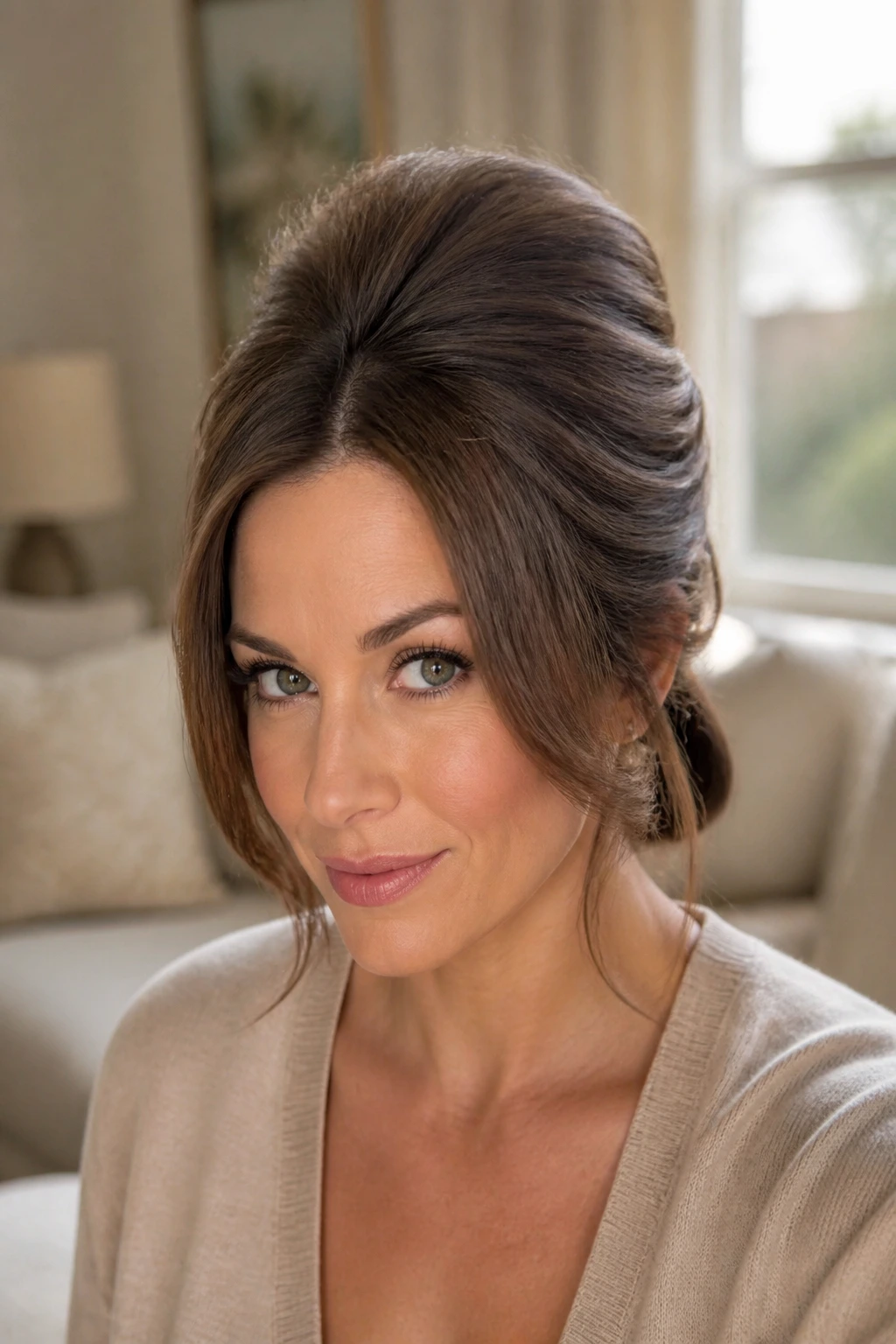
The smartest bouffant hairstyles do one thing well: they give the hair shape without turning it into a sculpture. That is the sweet spot. Enough lift to open the face, enough polish to look deliberate, and enough softness that you can still move your head without worrying about the whole thing shifting.
If you are trying one for the first time, start with a soft crown bouffant, a low ponytail, or a half-up style. Those are the easiest places to learn how much volume your hair will actually hold. After that, the bigger buns, twists, and black-tie shapes make a lot more sense.
The styles above cover a wide lane, from subtle and wearable to full formal. Pick the one that matches your hair texture and the event, then leave a little room for the shape to breathe. That is usually where the good version lives.
